window.__IS_SSR__=true
window.__INITIAL_STATE__={
"attachmentsReducer": {
"audio_0": {
"type": "attachments",
"id": "audio_0",
"imgSizes": {
"kqedFullSize": {
"file": "https://ww2.kqed.org/news/wp-content/themes/KQED-unified/img/audio_bgs/background0.jpg"
}
}
},
"audio_1": {
"type": "attachments",
"id": "audio_1",
"imgSizes": {
"kqedFullSize": {
"file": "https://ww2.kqed.org/news/wp-content/themes/KQED-unified/img/audio_bgs/background1.jpg"
}
}
},
"audio_2": {
"type": "attachments",
"id": "audio_2",
"imgSizes": {
"kqedFullSize": {
"file": "https://ww2.kqed.org/news/wp-content/themes/KQED-unified/img/audio_bgs/background2.jpg"
}
}
},
"audio_3": {
"type": "attachments",
"id": "audio_3",
"imgSizes": {
"kqedFullSize": {
"file": "https://ww2.kqed.org/news/wp-content/themes/KQED-unified/img/audio_bgs/background3.jpg"
}
}
},
"audio_4": {
"type": "attachments",
"id": "audio_4",
"imgSizes": {
"kqedFullSize": {
"file": "https://ww2.kqed.org/news/wp-content/themes/KQED-unified/img/audio_bgs/background4.jpg"
}
}
},
"placeholder": {
"type": "attachments",
"id": "placeholder",
"imgSizes": {
"thumbnail": {
"file": "https://cdn.kqed.org/wp-content/uploads/2024/12/KQED-Default-Image-816638274-2000x1333-1-160x107.jpg",
"width": 160,
"height": 107,
"mimeType": "image/jpeg"
},
"medium": {
"file": "https://cdn.kqed.org/wp-content/uploads/2024/12/KQED-Default-Image-816638274-2000x1333-1-800x533.jpg",
"width": 800,
"height": 533,
"mimeType": "image/jpeg"
},
"medium_large": {
"file": "https://cdn.kqed.org/wp-content/uploads/2024/12/KQED-Default-Image-816638274-2000x1333-1-768x512.jpg",
"width": 768,
"height": 512,
"mimeType": "image/jpeg"
},
"large": {
"file": "https://cdn.kqed.org/wp-content/uploads/2024/12/KQED-Default-Image-816638274-2000x1333-1-1020x680.jpg",
"width": 1020,
"height": 680,
"mimeType": "image/jpeg"
},
"1536x1536": {
"file": "https://cdn.kqed.org/wp-content/uploads/2024/12/KQED-Default-Image-816638274-2000x1333-1-1536x1024.jpg",
"width": 1536,
"height": 1024,
"mimeType": "image/jpeg"
},
"fd-lrg": {
"file": "https://cdn.kqed.org/wp-content/uploads/2024/12/KQED-Default-Image-816638274-2000x1333-1-1536x1024.jpg",
"width": 1536,
"height": 1024,
"mimeType": "image/jpeg"
},
"fd-med": {
"file": "https://cdn.kqed.org/wp-content/uploads/2024/12/KQED-Default-Image-816638274-2000x1333-1-1020x680.jpg",
"width": 1020,
"height": 680,
"mimeType": "image/jpeg"
},
"fd-sm": {
"file": "https://cdn.kqed.org/wp-content/uploads/2024/12/KQED-Default-Image-816638274-2000x1333-1-800x533.jpg",
"width": 800,
"height": 533,
"mimeType": "image/jpeg"
},
"post-thumbnail": {
"file": "https://cdn.kqed.org/wp-content/uploads/2024/12/KQED-Default-Image-816638274-2000x1333-1-672x372.jpg",
"width": 672,
"height": 372,
"mimeType": "image/jpeg"
},
"twentyfourteen-full-width": {
"file": "https://cdn.kqed.org/wp-content/uploads/2024/12/KQED-Default-Image-816638274-2000x1333-1-1038x576.jpg",
"width": 1038,
"height": 576,
"mimeType": "image/jpeg"
},
"xxsmall": {
"file": "https://cdn.kqed.org/wp-content/uploads/2024/12/KQED-Default-Image-816638274-2000x1333-1-160x107.jpg",
"width": 160,
"height": 107,
"mimeType": "image/jpeg"
},
"xsmall": {
"file": "https://cdn.kqed.org/wp-content/uploads/2024/12/KQED-Default-Image-816638274-2000x1333-1-672x372.jpg",
"width": 672,
"height": 372,
"mimeType": "image/jpeg"
},
"small": {
"file": "https://cdn.kqed.org/wp-content/uploads/2024/12/KQED-Default-Image-816638274-2000x1333-1-672x372.jpg",
"width": 672,
"height": 372,
"mimeType": "image/jpeg"
},
"xlarge": {
"file": "https://cdn.kqed.org/wp-content/uploads/2024/12/KQED-Default-Image-816638274-2000x1333-1-1020x680.jpg",
"width": 1020,
"height": 680,
"mimeType": "image/jpeg"
},
"full-width": {
"file": "https://cdn.kqed.org/wp-content/uploads/2024/12/KQED-Default-Image-816638274-2000x1333-1-1920x1280.jpg",
"width": 1920,
"height": 1280,
"mimeType": "image/jpeg"
},
"guest-author-32": {
"file": "https://cdn.kqed.org/wp-content/uploads/2025/01/KQED-Default-Image-816638274-1333x1333-1-160x160.jpg",
"width": 32,
"height": 32,
"mimeType": "image/jpeg"
},
"guest-author-50": {
"file": "https://cdn.kqed.org/wp-content/uploads/2025/01/KQED-Default-Image-816638274-1333x1333-1-160x160.jpg",
"width": 50,
"height": 50,
"mimeType": "image/jpeg"
},
"guest-author-64": {
"file": "https://cdn.kqed.org/wp-content/uploads/2025/01/KQED-Default-Image-816638274-1333x1333-1-160x160.jpg",
"width": 64,
"height": 64,
"mimeType": "image/jpeg"
},
"guest-author-96": {
"file": "https://cdn.kqed.org/wp-content/uploads/2025/01/KQED-Default-Image-816638274-1333x1333-1-160x160.jpg",
"width": 96,
"height": 96,
"mimeType": "image/jpeg"
},
"guest-author-128": {
"file": "https://cdn.kqed.org/wp-content/uploads/2025/01/KQED-Default-Image-816638274-1333x1333-1-160x160.jpg",
"width": 128,
"height": 128,
"mimeType": "image/jpeg"
},
"detail": {
"file": "https://cdn.kqed.org/wp-content/uploads/2025/01/KQED-Default-Image-816638274-1333x1333-1-160x160.jpg",
"width": 160,
"height": 160,
"mimeType": "image/jpeg"
},
"kqedFullSize": {
"file": "https://cdn.kqed.org/wp-content/uploads/2024/12/KQED-Default-Image-816638274-2000x1333-1.jpg",
"width": 2000,
"height": 1333
}
}
},
"news_12092195": {
"type": "attachments",
"id": "news_12092195",
"meta": {
"index": "attachments_1716263798",
"site": "news",
"id": "12092195",
"found": true
},
"title": "20260722_ELAINEFORBESARRAIGNMENT_GC-4-KQED",
"publishDate": 1784753511,
"status": "inherit",
"parent": 0,
"modified": 1784762658,
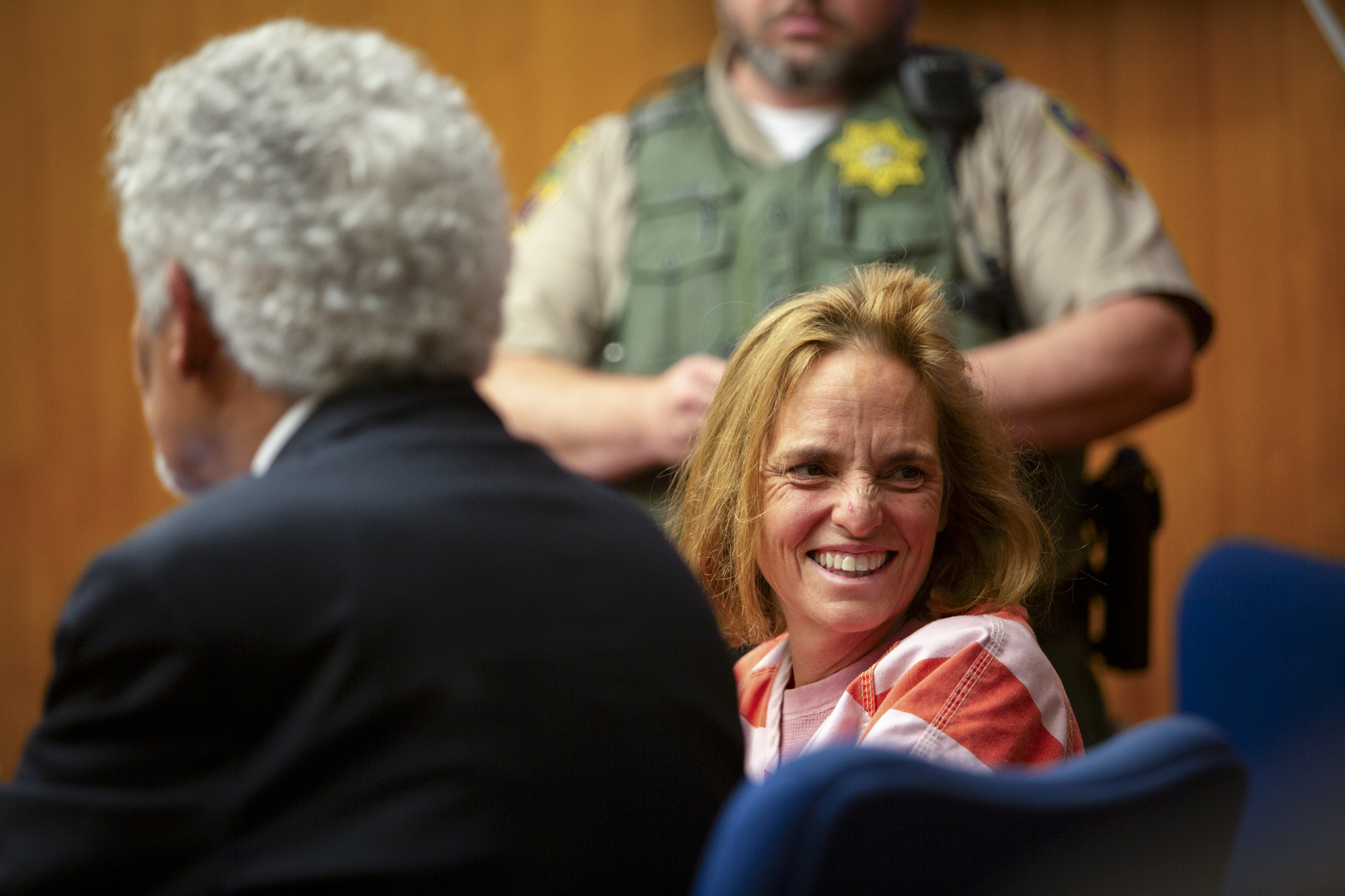
"caption": "Elaine Forbes, Sausalito City Manager, appears for her arraignment at the Marin Superior Court in San Rafael on July 22, 2026. Forbes faces multiple misdemeanor charges after she was accused of trespassing on boats over the weekend.",
"credit": "Gina Castro for KQED",
"altTag": null,
"description": null,
"imgSizes": {
"thumbnail": {
"file": "https://cdn.kqed.org/wp-content/uploads/sites/10/2026/07/20260722_ELAINEFORBESARRAIGNMENT_GC-4-KQED-160x107.jpg",
"width": 160,
"height": 107,
"mimeType": "image/jpeg"
},
"1536x1536": {
"file": "https://cdn.kqed.org/wp-content/uploads/sites/10/2026/07/20260722_ELAINEFORBESARRAIGNMENT_GC-4-KQED-1536x1024.jpg",
"width": 1536,
"height": 1024,
"mimeType": "image/jpeg"
},
"post-thumbnail": {
"file": "https://cdn.kqed.org/wp-content/uploads/sites/10/2026/07/20260722_ELAINEFORBESARRAIGNMENT_GC-4-KQED-672x372.jpg",
"width": 672,
"height": 372,
"mimeType": "image/jpeg"
},
"twentyfourteen-full-width": {
"file": "https://cdn.kqed.org/wp-content/uploads/sites/10/2026/07/20260722_ELAINEFORBESARRAIGNMENT_GC-4-KQED-1038x576.jpg",
"width": 1038,
"height": 576,
"mimeType": "image/jpeg"
},
"npr-cds-wide": {
"file": "https://cdn.kqed.org/wp-content/uploads/sites/10/2026/07/20260722_ELAINEFORBESARRAIGNMENT_GC-4-KQED-1200x675.jpg",
"width": 1200,
"height": 675,
"mimeType": "image/jpeg"
},
"npr-cds-square": {
"file": "https://cdn.kqed.org/wp-content/uploads/sites/10/2026/07/20260722_ELAINEFORBESARRAIGNMENT_GC-4-KQED-600x600.jpg",
"width": 600,
"height": 600,
"mimeType": "image/jpeg"
},
"kqedFullSize": {
"file": "https://cdn.kqed.org/wp-content/uploads/sites/10/2026/07/20260722_ELAINEFORBESARRAIGNMENT_GC-4-KQED.jpg",
"width": 2000,
"height": 1333
}
},
"isLoading": false,
"fetchFailed": false
},
"news_12052911": {
"type": "attachments",
"id": "news_12052911",
"meta": {
"index": "attachments_1716263798",
"site": "news",
"id": "12052911",
"found": true
},
"title": "Sausalito",
"publishDate": 1755648329,
"status": "inherit",
"parent": 12052774,
"modified": 1755648373,
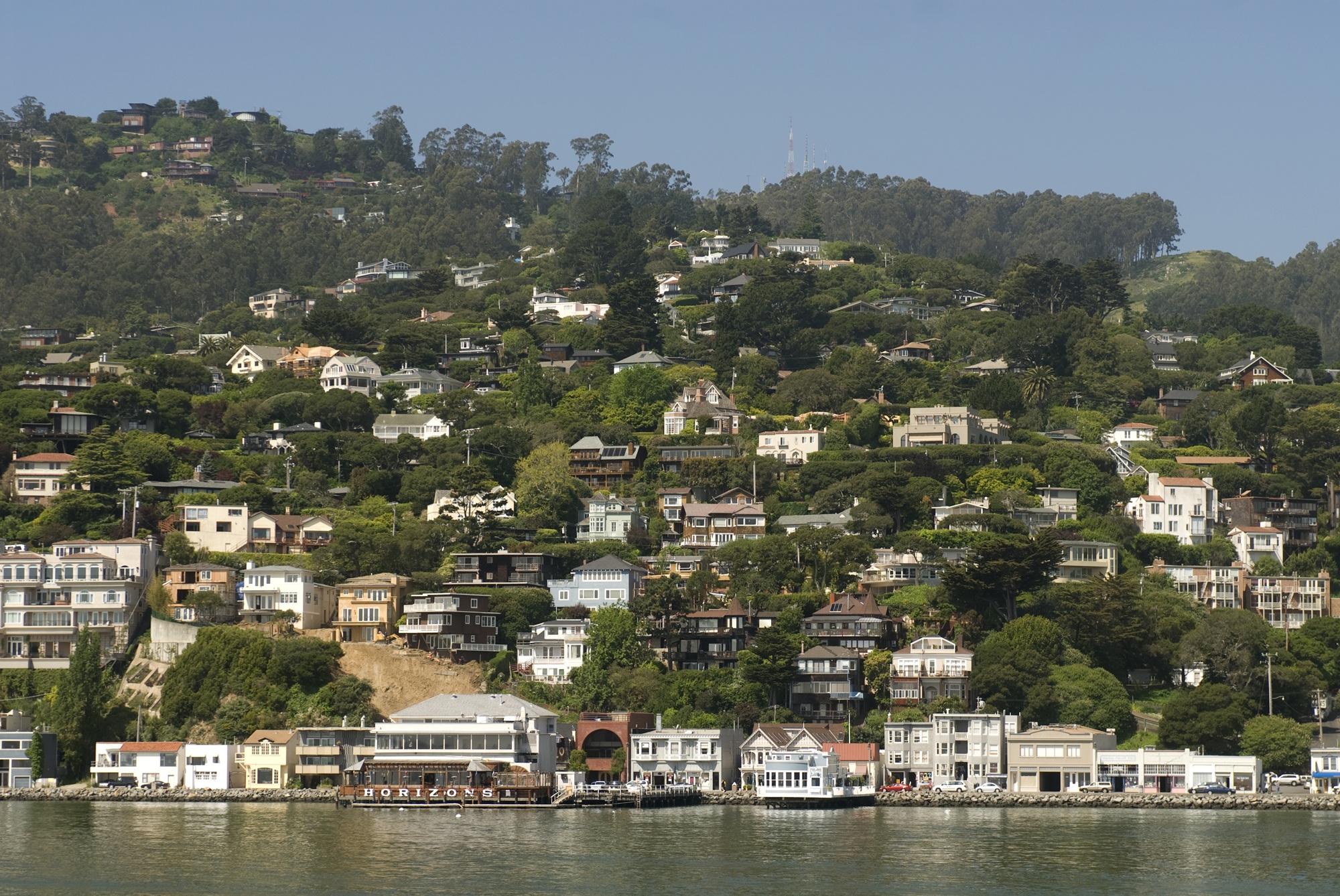
"caption": "Sausalito on May 10, 2006.",
"credit": "Nik Wheeler/Getty Images",
"altTag": null,
"description": null,
"imgSizes": {
"thumbnail": {
"file": "https://cdn.kqed.org/wp-content/uploads/sites/10/2025/08/SausalitoGetty-160x107.jpg",
"width": 160,
"height": 107,
"mimeType": "image/jpeg"
},
"1536x1536": {
"file": "https://cdn.kqed.org/wp-content/uploads/sites/10/2025/08/SausalitoGetty-1536x1028.jpg",
"width": 1536,
"height": 1028,
"mimeType": "image/jpeg"
},
"post-thumbnail": {
"file": "https://cdn.kqed.org/wp-content/uploads/sites/10/2025/08/SausalitoGetty-672x372.jpg",
"width": 672,
"height": 372,
"mimeType": "image/jpeg"
},
"twentyfourteen-full-width": {
"file": "https://cdn.kqed.org/wp-content/uploads/sites/10/2025/08/SausalitoGetty-1038x576.jpg",
"width": 1038,
"height": 576,
"mimeType": "image/jpeg"
},
"kqedFullSize": {
"file": "https://cdn.kqed.org/wp-content/uploads/sites/10/2025/08/SausalitoGetty.jpg",
"width": 2000,
"height": 1338
}
},
"isLoading": false,
"fetchFailed": false
},
"news_12091851": {
"type": "attachments",
"id": "news_12091851",
"meta": {
"index": "attachments_1716263798",
"site": "news",
"id": "12091851",
"found": true
},
"title": "Sausalito City Hall on July 13, 2026.",
"publishDate": 1784568049,
"status": "inherit",
"parent": 0,
"modified": 1784568079,
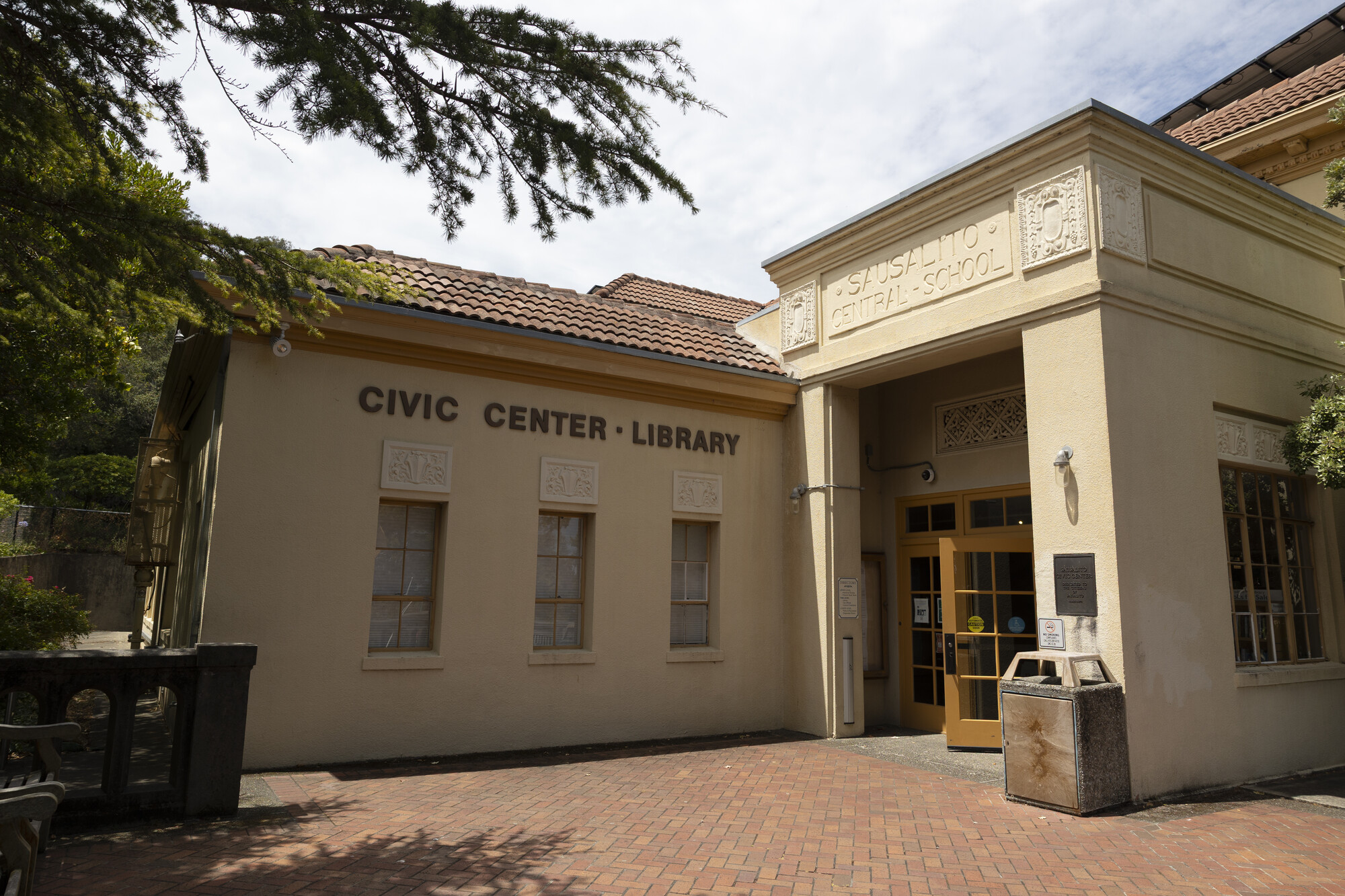
"caption": "Sausalito City Hall in Sausalito on July 13, 2026.",
"credit": "Nina Glick/KQED",
"altTag": null,
"description": null,
"imgSizes": {
"thumbnail": {
"file": "https://cdn.kqed.org/wp-content/uploads/sites/10/2026/07/071326-SausalitoMillValleyPDCityHall-NG-27_qed-160x107.jpg",
"width": 160,
"height": 107,
"mimeType": "image/jpeg"
},
"1536x1536": {
"file": "https://cdn.kqed.org/wp-content/uploads/sites/10/2026/07/071326-SausalitoMillValleyPDCityHall-NG-27_qed-1536x1024.jpg",
"width": 1536,
"height": 1024,
"mimeType": "image/jpeg"
},
"post-thumbnail": {
"file": "https://cdn.kqed.org/wp-content/uploads/sites/10/2026/07/071326-SausalitoMillValleyPDCityHall-NG-27_qed-672x372.jpg",
"width": 672,
"height": 372,
"mimeType": "image/jpeg"
},
"twentyfourteen-full-width": {
"file": "https://cdn.kqed.org/wp-content/uploads/sites/10/2026/07/071326-SausalitoMillValleyPDCityHall-NG-27_qed-1038x576.jpg",
"width": 1038,
"height": 576,
"mimeType": "image/jpeg"
},
"npr-cds-wide": {
"file": "https://cdn.kqed.org/wp-content/uploads/sites/10/2026/07/071326-SausalitoMillValleyPDCityHall-NG-27_qed-1200x675.jpg",
"width": 1200,
"height": 675,
"mimeType": "image/jpeg"
},
"npr-cds-square": {
"file": "https://cdn.kqed.org/wp-content/uploads/sites/10/2026/07/071326-SausalitoMillValleyPDCityHall-NG-27_qed-600x600.jpg",
"width": 600,
"height": 600,
"mimeType": "image/jpeg"
},
"kqedFullSize": {
"file": "https://cdn.kqed.org/wp-content/uploads/sites/10/2026/07/071326-SausalitoMillValleyPDCityHall-NG-27_qed.jpg",
"width": 2000,
"height": 1333
}
},
"isLoading": false,
"fetchFailed": false
},
"news_12052835": {
"type": "attachments",
"id": "news_12052835",
"meta": {
"index": "attachments_1716263798",
"site": "news",
"id": "12052835",
"found": true
},
"title": "American Suburban Houses",
"publishDate": 1755634807,
"status": "inherit",
"parent": 12052774,
"modified": 1755634886,
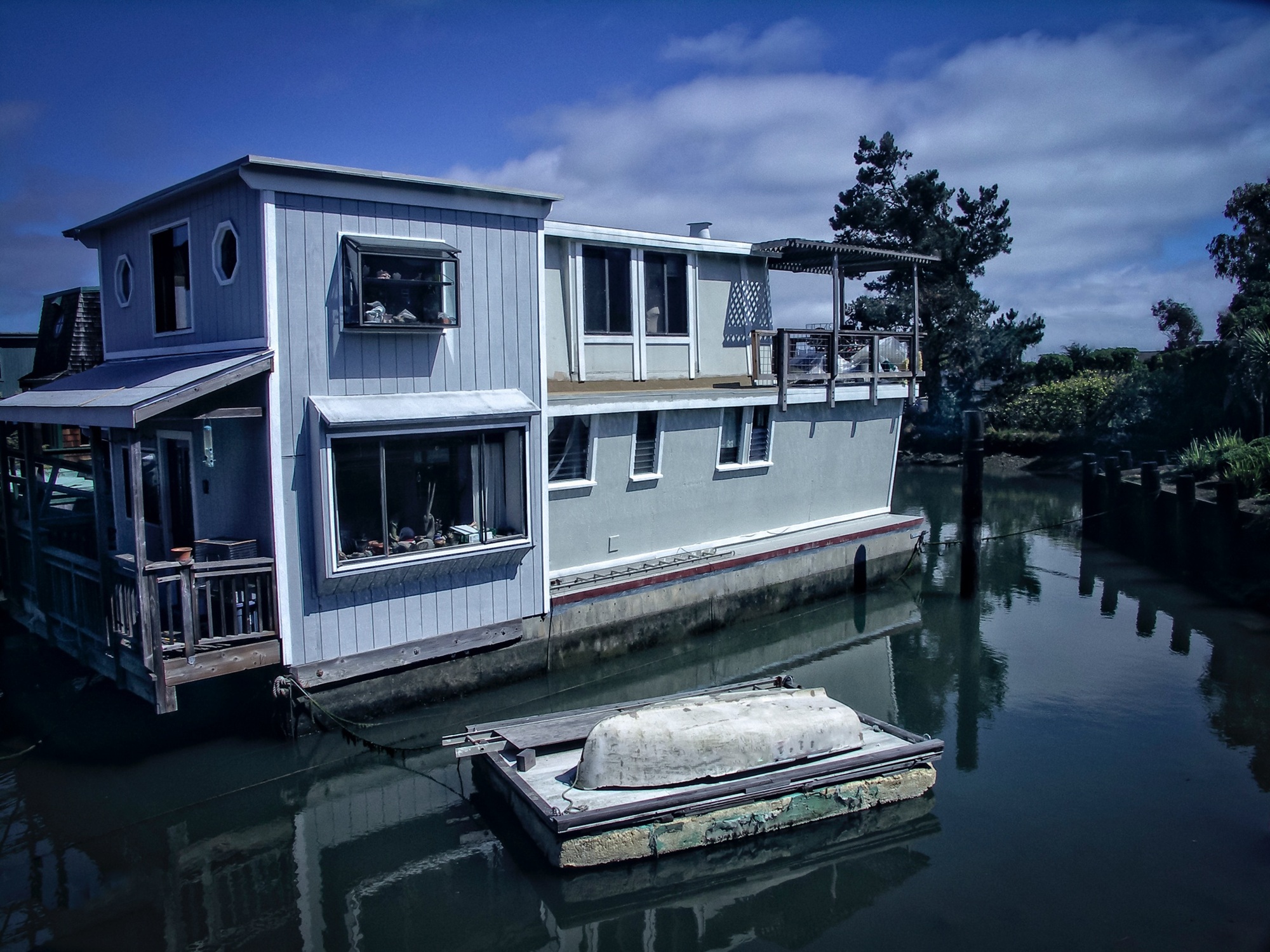
"caption": "One of over 400 houseboats in the Sausalito marina on Jan. 30, 2014.",
"credit": "Mardis Coers/Getty Images",
"altTag": null,
"description": null,
"imgSizes": {
"thumbnail": {
"file": "https://cdn.kqed.org/wp-content/uploads/sites/10/2025/08/MarinCountyHouseBoatGetty-160x120.jpg",
"width": 160,
"height": 120,
"mimeType": "image/jpeg"
},
"1536x1536": {
"file": "https://cdn.kqed.org/wp-content/uploads/sites/10/2025/08/MarinCountyHouseBoatGetty-1536x1152.jpg",
"width": 1536,
"height": 1152,
"mimeType": "image/jpeg"
},
"post-thumbnail": {
"file": "https://cdn.kqed.org/wp-content/uploads/sites/10/2025/08/MarinCountyHouseBoatGetty-672x372.jpg",
"width": 672,
"height": 372,
"mimeType": "image/jpeg"
},
"twentyfourteen-full-width": {
"file": "https://cdn.kqed.org/wp-content/uploads/sites/10/2025/08/MarinCountyHouseBoatGetty-1038x576.jpg",
"width": 1038,
"height": 576,
"mimeType": "image/jpeg"
},
"kqedFullSize": {
"file": "https://cdn.kqed.org/wp-content/uploads/sites/10/2025/08/MarinCountyHouseBoatGetty.jpg",
"width": 2000,
"height": 1500
}
},
"isLoading": false,
"fetchFailed": false
},
"news_11988324": {
"type": "attachments",
"id": "news_11988324",
"meta": {
"index": "attachments_1716263798",
"site": "news",
"id": "11988324",
"found": true
},
"title": "240530-BrownPelicans-10-BL",
"publishDate": 1717108347,
"status": "inherit",
"parent": 0,
"modified": 1717115100,
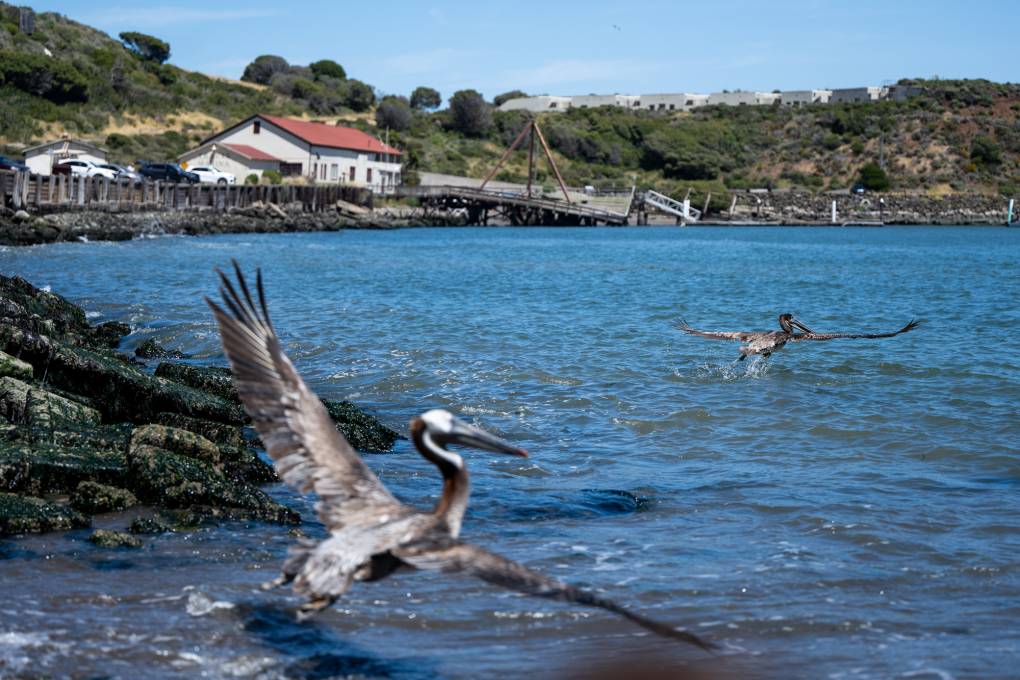
"caption": "International Bird Rescue members released eight rehabilitated brown pelicans, the first group to be returned to the wild, at Fort Baker in Sausalito on May 30, 2024, after they had been treated for starvation.",
"credit": "Beth LaBerge/KQED",
"altTag": null,
"description": null,
"imgSizes": {
"medium": {
"file": "https://cdn.kqed.org/wp-content/uploads/sites/10/2024/05/240530-BrownPelicans-10-BL-800x533.jpg",
"width": 800,
"height": 533,
"mimeType": "image/jpeg"
},
"large": {
"file": "https://cdn.kqed.org/wp-content/uploads/sites/10/2024/05/240530-BrownPelicans-10-BL-1020x680.jpg",
"width": 1020,
"height": 680,
"mimeType": "image/jpeg"
},
"thumbnail": {
"file": "https://cdn.kqed.org/wp-content/uploads/sites/10/2024/05/240530-BrownPelicans-10-BL-160x107.jpg",
"width": 160,
"height": 107,
"mimeType": "image/jpeg"
},
"1536x1536": {
"file": "https://cdn.kqed.org/wp-content/uploads/sites/10/2024/05/240530-BrownPelicans-10-BL-1536x1024.jpg",
"width": 1536,
"height": 1024,
"mimeType": "image/jpeg"
},
"post-thumbnail": {
"file": "https://cdn.kqed.org/wp-content/uploads/sites/10/2024/05/240530-BrownPelicans-10-BL-672x372.jpg",
"width": 672,
"height": 372,
"mimeType": "image/jpeg"
},
"twentyfourteen-full-width": {
"file": "https://cdn.kqed.org/wp-content/uploads/sites/10/2024/05/240530-BrownPelicans-10-BL-1038x576.jpg",
"width": 1038,
"height": 576,
"mimeType": "image/jpeg"
},
"full-width": {
"file": "https://cdn.kqed.org/wp-content/uploads/sites/10/2024/05/240530-BrownPelicans-10-BL-1920x1280.jpg",
"width": 1920,
"height": 1280,
"mimeType": "image/jpeg"
},
"kqedFullSize": {
"file": "https://cdn.kqed.org/wp-content/uploads/sites/10/2024/05/240530-BrownPelicans-10-BL.jpg",
"width": 2000,
"height": 1333
}
},
"isLoading": false,
"fetchFailed": false
},
"news_11978681": {
"type": "attachments",
"id": "news_11978681",
"meta": {
"index": "attachments_1716263798",
"site": "news",
"id": "11978681",
"found": true
},
"parent": 11978670,
"imgSizes": {
"twentyfourteen-full-width": {
"file": "https://cdn.kqed.org/wp-content/uploads/sites/10/2024/03/GettyImages-139404582-1038x576.jpg",
"width": 1038,
"mimeType": "image/jpeg",
"height": 576
},
"thumbnail": {
"file": "https://cdn.kqed.org/wp-content/uploads/sites/10/2024/03/GettyImages-139404582-160x120.jpg",
"width": 160,
"mimeType": "image/jpeg",
"height": 120
},
"post-thumbnail": {
"file": "https://cdn.kqed.org/wp-content/uploads/sites/10/2024/03/GettyImages-139404582-672x372.jpg",
"width": 672,
"mimeType": "image/jpeg",
"height": 372
},
"kqedFullSize": {
"file": "https://cdn.kqed.org/wp-content/uploads/sites/10/2024/03/GettyImages-139404582.jpg",
"width": 2272,
"height": 1704
},
"2048x2048": {
"file": "https://cdn.kqed.org/wp-content/uploads/sites/10/2024/03/GettyImages-139404582-2048x1536.jpg",
"width": 2048,
"mimeType": "image/jpeg",
"height": 1536
},
"large": {
"file": "https://cdn.kqed.org/wp-content/uploads/sites/10/2024/03/GettyImages-139404582-1020x765.jpg",
"width": 1020,
"mimeType": "image/jpeg",
"height": 765
},
"1536x1536": {
"file": "https://cdn.kqed.org/wp-content/uploads/sites/10/2024/03/GettyImages-139404582-1536x1152.jpg",
"width": 1536,
"mimeType": "image/jpeg",
"height": 1152
},
"full-width": {
"file": "https://cdn.kqed.org/wp-content/uploads/sites/10/2024/03/GettyImages-139404582-1920x1440.jpg",
"width": 1920,
"mimeType": "image/jpeg",
"height": 1440
},
"medium": {
"file": "https://cdn.kqed.org/wp-content/uploads/sites/10/2024/03/GettyImages-139404582-800x600.jpg",
"width": 800,
"mimeType": "image/jpeg",
"height": 600
}
},
"publishDate": 1709926237,
"modified": 1709942332,
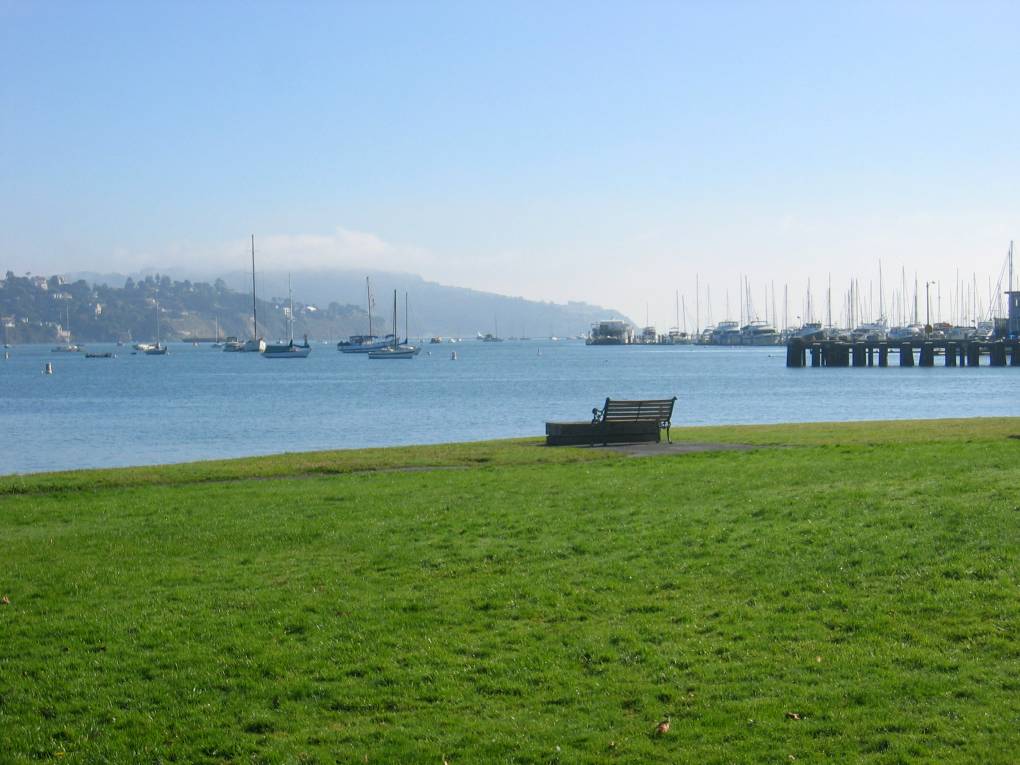
"caption": "As part of the agreement with the state, a small number of vessels will be allowed to remain anchored if they are deemed 'seaworthy,' at least through October 2026. After that, all boats and vessels will be allowed only 72-hour anchorage, according to the San Francisco Bay Conservation and Development Commission. ",
"description": null,
"title": "Sausalito Marina",
"credit": "iStock/Getty Images",
"status": "inherit",
"altTag": "To the left, boats scattered in bay, while to the right, a pier is seen. In the foreground, a bench sits in a field of green grass.",
"isLoading": false,
"fetchFailed": false
},
"news_11898298": {
"type": "attachments",
"id": "news_11898298",
"meta": {
"index": "attachments_1716263798",
"site": "news",
"id": "11898298",
"found": true
},
"parent": 11898287,
"imgSizes": {
"thumbnail": {
"file": "https://ww2.kqed.org/app/uploads/sites/10/2021/12/SS_John_W_Brown-160x95.jpg",
"width": 160,
"mimeType": "image/jpeg",
"height": 95
},
"post-thumbnail": {
"file": "https://ww2.kqed.org/app/uploads/sites/10/2021/12/SS_John_W_Brown-672x372.jpg",
"width": 672,
"mimeType": "image/jpeg",
"height": 372
},
"kqedFullSize": {
"file": "https://ww2.kqed.org/app/uploads/sites/10/2021/12/SS_John_W_Brown.jpg",
"width": 794,
"height": 471
}
},
"publishDate": 1638905371,
"modified": 1640912541,
"caption": "SS John W. Brown on the Great Lakes in 2000. John W. Brown is one of only two surviving World War II liberty ships, the other being the SS Jeremiah O'Brien.",
"description": null,
"title": "SS_John_W_Brown",
"credit": "\u003ca href=\"https://commons.wikimedia.org/wiki/File:SS_John_W_Brown.jpg\">Wikimedia Commons\u003c/a>",
"status": "inherit",
"altTag": "Large ship with grey hull and a red strip at water level takes up the entire frame. Blue sky and clouds behind.",
"isLoading": false,
"fetchFailed": false
},
"news_11893465": {
"type": "attachments",
"id": "news_11893465",
"meta": {
"index": "attachments_1716263798",
"site": "news",
"id": "11893465",
"found": true
},
"parent": 11893463,
"imgSizes": {
"twentyfourteen-full-width": {
"file": "https://ww2.kqed.org/app/uploads/sites/10/2021/10/Kevin-Merida3_1660x1067-1038x576.jpg",
"width": 1038,
"mimeType": "image/jpeg",
"height": 576
},
"thumbnail": {
"file": "https://ww2.kqed.org/app/uploads/sites/10/2021/10/Kevin-Merida3_1660x1067-160x107.jpg",
"width": 160,
"mimeType": "image/jpeg",
"height": 107
},
"post-thumbnail": {
"file": "https://ww2.kqed.org/app/uploads/sites/10/2021/10/Kevin-Merida3_1660x1067-672x372.jpg",
"width": 672,
"mimeType": "image/jpeg",
"height": 372
},
"kqedFullSize": {
"file": "https://ww2.kqed.org/app/uploads/sites/10/2021/10/Kevin-Merida3_1660x1067.jpg",
"width": 1600,
"height": 1067
},
"large": {
"file": "https://ww2.kqed.org/app/uploads/sites/10/2021/10/Kevin-Merida3_1660x1067-1020x680.jpg",
"width": 1020,
"mimeType": "image/jpeg",
"height": 680
},
"1536x1536": {
"file": "https://ww2.kqed.org/app/uploads/sites/10/2021/10/Kevin-Merida3_1660x1067-1536x1024.jpg",
"width": 1536,
"mimeType": "image/jpeg",
"height": 1024
},
"medium": {
"file": "https://ww2.kqed.org/app/uploads/sites/10/2021/10/Kevin-Merida3_1660x1067-800x534.jpg",
"width": 800,
"mimeType": "image/jpeg",
"height": 534
}
},
"publishDate": 1634939607,
"modified": 1634939607,
"caption": null,
"description": null,
"title": "Kevin Merida3_1660x1067",
"credit": null,
"status": "inherit",
"altTag": null,
"isLoading": false,
"fetchFailed": false
},
"news_11892350": {
"type": "attachments",
"id": "news_11892350",
"meta": {
"index": "attachments_1716263798",
"site": "news",
"id": "11892350",
"found": true
},
"parent": 11892023,
"imgSizes": {
"twentyfourteen-full-width": {
"file": "https://ww2.kqed.org/app/uploads/sites/10/2021/10/Queen-Calafia-and-her-entourage-1038x576.jpg",
"width": 1038,
"mimeType": "image/jpeg",
"height": 576
},
"thumbnail": {
"file": "https://ww2.kqed.org/app/uploads/sites/10/2021/10/Queen-Calafia-and-her-entourage-160x107.jpg",
"width": 160,
"mimeType": "image/jpeg",
"height": 107
},
"post-thumbnail": {
"file": "https://ww2.kqed.org/app/uploads/sites/10/2021/10/Queen-Calafia-and-her-entourage-672x372.jpg",
"width": 672,
"mimeType": "image/jpeg",
"height": 372
},
"kqedFullSize": {
"file": "https://ww2.kqed.org/app/uploads/sites/10/2021/10/Queen-Calafia-and-her-entourage.jpg",
"width": 1600,
"height": 1068
},
"large": {
"file": "https://ww2.kqed.org/app/uploads/sites/10/2021/10/Queen-Calafia-and-her-entourage-1020x681.jpg",
"width": 1020,
"mimeType": "image/jpeg",
"height": 681
},
"1536x1536": {
"file": "https://ww2.kqed.org/app/uploads/sites/10/2021/10/Queen-Calafia-and-her-entourage-1536x1025.jpg",
"width": 1536,
"mimeType": "image/jpeg",
"height": 1025
},
"medium": {
"file": "https://ww2.kqed.org/app/uploads/sites/10/2021/10/Queen-Calafia-and-her-entourage-800x534.jpg",
"width": 800,
"mimeType": "image/jpeg",
"height": 534
}
},
"publishDate": 1634250925,
"modified": 1634335302,
"caption": "Queen Calafia and her entourage arrive at Dunphy Park in Sausalito, in a theatrical production performed on Oct. 3, 2021.",
"description": null,
"title": "Queen Calafia and her entourage",
"credit": "Herman Privette of Photography By Privette",
"status": "inherit",
"altTag": null,
"isLoading": false,
"fetchFailed": false
},
"news_11767052": {
"type": "attachments",
"id": "news_11767052",
"meta": {
"index": "attachments_1716263798",
"site": "news",
"id": "11767052",
"found": true
},
"parent": 11767037,
"imgSizes": {
"apple_news_ca_landscape_5_5": {
"file": "https://ww2.kqed.org/app/uploads/sites/10/2019/08/sausalitomarincity_081219_final-1044x783.jpg",
"width": 1044,
"mimeType": "image/jpeg",
"height": 783
},
"apple_news_ca_square_4_0": {
"file": "https://ww2.kqed.org/app/uploads/sites/10/2019/08/sausalitomarincity_081219_final-470x470.jpg",
"width": 470,
"mimeType": "image/jpeg",
"height": 470
},
"twentyfourteen-full-width": {
"file": "https://ww2.kqed.org/app/uploads/sites/10/2019/08/sausalitomarincity_081219_final-1038x576.jpg",
"width": 1038,
"mimeType": "image/jpeg",
"height": 576
},
"thumbnail": {
"file": "https://ww2.kqed.org/app/uploads/sites/10/2019/08/sausalitomarincity_081219_final-160x129.jpg",
"width": 160,
"mimeType": "image/jpeg",
"height": 129
},
"post-thumbnail": {
"file": "https://ww2.kqed.org/app/uploads/sites/10/2019/08/sausalitomarincity_081219_final-672x372.jpg",
"width": 672,
"mimeType": "image/jpeg",
"height": 372
},
"kqedFullSize": {
"file": "https://ww2.kqed.org/app/uploads/sites/10/2019/08/sausalitomarincity_081219_final.jpg",
"width": 1920,
"height": 1547
},
"apple_news_ca_landscape_4_7": {
"file": "https://ww2.kqed.org/app/uploads/sites/10/2019/08/sausalitomarincity_081219_final-632x474.jpg",
"width": 632,
"mimeType": "image/jpeg",
"height": 474
},
"large": {
"file": "https://ww2.kqed.org/app/uploads/sites/10/2019/08/sausalitomarincity_081219_final-1020x822.jpg",
"width": 1020,
"mimeType": "image/jpeg",
"height": 822
},
"complete_open_graph": {
"file": "https://ww2.kqed.org/app/uploads/sites/10/2019/08/sausalitomarincity_081219_final-1200x967.jpg",
"width": 1200,
"mimeType": "image/jpeg",
"height": 967
},
"apple_news_ca_landscape_4_0": {
"file": "https://ww2.kqed.org/app/uploads/sites/10/2019/08/sausalitomarincity_081219_final-536x402.jpg",
"width": 536,
"mimeType": "image/jpeg",
"height": 402
},
"apple_news_ca_portrait_12_9": {
"file": "https://ww2.kqed.org/app/uploads/sites/10/2019/08/sausalitomarincity_081219_final-1122x1496.jpg",
"width": 1122,
"mimeType": "image/jpeg",
"height": 1496
},
"medium": {
"file": "https://ww2.kqed.org/app/uploads/sites/10/2019/08/sausalitomarincity_081219_final-800x645.jpg",
"width": 800,
"mimeType": "image/jpeg",
"height": 645
},
"apple_news_ca_portrait_4_0": {
"file": "https://ww2.kqed.org/app/uploads/sites/10/2019/08/sausalitomarincity_081219_final-354x472.jpg",
"width": 354,
"mimeType": "image/jpeg",
"height": 472
},
"apple_news_ca_portrait_9_7": {
"file": "https://ww2.kqed.org/app/uploads/sites/10/2019/08/sausalitomarincity_081219_final-840x1120.jpg",
"width": 840,
"mimeType": "image/jpeg",
"height": 1120
},
"apple_news_ca_landscape_12_9": {
"file": "https://ww2.kqed.org/app/uploads/sites/10/2019/08/sausalitomarincity_081219_final-1832x1374.jpg",
"width": 1832,
"mimeType": "image/jpeg",
"height": 1374
},
"apple_news_ca_square_9_7": {
"file": "https://ww2.kqed.org/app/uploads/sites/10/2019/08/sausalitomarincity_081219_final-1104x1104.jpg",
"width": 1104,
"mimeType": "image/jpeg",
"height": 1104
},
"apple_news_ca_portrait_4_7": {
"file": "https://ww2.kqed.org/app/uploads/sites/10/2019/08/sausalitomarincity_081219_final-414x552.jpg",
"width": 414,
"mimeType": "image/jpeg",
"height": 552
},
"apple_news_ca_square_12_9": {
"file": "https://ww2.kqed.org/app/uploads/sites/10/2019/08/sausalitomarincity_081219_final-1472x1472.jpg",
"width": 1472,
"mimeType": "image/jpeg",
"height": 1472
},
"apple_news_ca_portrait_5_5": {
"file": "https://ww2.kqed.org/app/uploads/sites/10/2019/08/sausalitomarincity_081219_final-687x916.jpg",
"width": 687,
"mimeType": "image/jpeg",
"height": 916
},
"full-width": {
"file": "https://ww2.kqed.org/app/uploads/sites/10/2019/08/sausalitomarincity_081219_final-1920x1547.jpg",
"width": 1920,
"mimeType": "image/jpeg",
"height": 1547
},
"apple_news_ca_square_4_7": {
"file": "https://ww2.kqed.org/app/uploads/sites/10/2019/08/sausalitomarincity_081219_final-550x550.jpg",
"width": 550,
"mimeType": "image/jpeg",
"height": 550
},
"apple_news_ca_landscape_9_7": {
"file": "https://ww2.kqed.org/app/uploads/sites/10/2019/08/sausalitomarincity_081219_final-1376x1032.jpg",
"width": 1376,
"mimeType": "image/jpeg",
"height": 1032
},
"apple_news_ca_square_5_5": {
"file": "https://ww2.kqed.org/app/uploads/sites/10/2019/08/sausalitomarincity_081219_final-912x912.jpg",
"width": 912,
"mimeType": "image/jpeg",
"height": 912
}
},
"publishDate": 1565642303,
"modified": 1565642340,
"caption": null,
"description": null,
"title": "sausalitomarincity_081219_final",
"credit": null,
"status": "inherit",
"isLoading": false,
"fetchFailed": false
},
"news_11766771": {
"type": "attachments",
"id": "news_11766771",
"meta": {
"index": "attachments_1716263798",
"site": "news",
"id": "11766771",
"found": true
},
"parent": 11766733,
"imgSizes": {
"apple_news_ca_landscape_5_5": {
"file": "https://ww2.kqed.org/app/uploads/sites/10/2019/08/bayside-1044x783.jpg",
"width": 1044,
"mimeType": "image/jpeg",
"height": 783
},
"apple_news_ca_square_4_0": {
"file": "https://ww2.kqed.org/app/uploads/sites/10/2019/08/bayside-470x470.jpg",
"width": 470,
"mimeType": "image/jpeg",
"height": 470
},
"twentyfourteen-full-width": {
"file": "https://ww2.kqed.org/app/uploads/sites/10/2019/08/bayside-1038x576.jpg",
"width": 1038,
"mimeType": "image/jpeg",
"height": 576
},
"thumbnail": {
"file": "https://ww2.kqed.org/app/uploads/sites/10/2019/08/bayside-160x120.jpg",
"width": 160,
"mimeType": "image/jpeg",
"height": 120
},
"post-thumbnail": {
"file": "https://ww2.kqed.org/app/uploads/sites/10/2019/08/bayside-672x372.jpg",
"width": 672,
"mimeType": "image/jpeg",
"height": 372
},
"kqedFullSize": {
"file": "https://ww2.kqed.org/app/uploads/sites/10/2019/08/bayside.jpg",
"width": 1632,
"height": 1224
},
"apple_news_ca_landscape_4_7": {
"file": "https://ww2.kqed.org/app/uploads/sites/10/2019/08/bayside-632x474.jpg",
"width": 632,
"mimeType": "image/jpeg",
"height": 474
},
"large": {
"file": "https://ww2.kqed.org/app/uploads/sites/10/2019/08/bayside-1020x765.jpg",
"width": 1020,
"mimeType": "image/jpeg",
"height": 765
},
"complete_open_graph": {
"file": "https://ww2.kqed.org/app/uploads/sites/10/2019/08/bayside-1200x900.jpg",
"width": 1200,
"mimeType": "image/jpeg",
"height": 900
},
"apple_news_ca_landscape_4_0": {
"file": "https://ww2.kqed.org/app/uploads/sites/10/2019/08/bayside-536x402.jpg",
"width": 536,
"mimeType": "image/jpeg",
"height": 402
},
"apple_news_ca_portrait_12_9": {
"file": "https://ww2.kqed.org/app/uploads/sites/10/2019/08/bayside-1122x1224.jpg",
"width": 1122,
"mimeType": "image/jpeg",
"height": 1224
},
"medium": {
"file": "https://ww2.kqed.org/app/uploads/sites/10/2019/08/bayside-800x600.jpg",
"width": 800,
"mimeType": "image/jpeg",
"height": 600
},
"apple_news_ca_portrait_4_0": {
"file": "https://ww2.kqed.org/app/uploads/sites/10/2019/08/bayside-354x472.jpg",
"width": 354,
"mimeType": "image/jpeg",
"height": 472
},
"apple_news_ca_portrait_9_7": {
"file": "https://ww2.kqed.org/app/uploads/sites/10/2019/08/bayside-840x1120.jpg",
"width": 840,
"mimeType": "image/jpeg",
"height": 1120
},
"apple_news_ca_square_9_7": {
"file": "https://ww2.kqed.org/app/uploads/sites/10/2019/08/bayside-1104x1104.jpg",
"width": 1104,
"mimeType": "image/jpeg",
"height": 1104
},
"apple_news_ca_portrait_4_7": {
"file": "https://ww2.kqed.org/app/uploads/sites/10/2019/08/bayside-414x552.jpg",
"width": 414,
"mimeType": "image/jpeg",
"height": 552
},
"apple_news_ca_square_12_9": {
"file": "https://ww2.kqed.org/app/uploads/sites/10/2019/08/bayside-1472x1224.jpg",
"width": 1472,
"mimeType": "image/jpeg",
"height": 1224
},
"apple_news_ca_portrait_5_5": {
"file": "https://ww2.kqed.org/app/uploads/sites/10/2019/08/bayside-687x916.jpg",
"width": 687,
"mimeType": "image/jpeg",
"height": 916
},
"apple_news_ca_square_4_7": {
"file": "https://ww2.kqed.org/app/uploads/sites/10/2019/08/bayside-550x550.jpg",
"width": 550,
"mimeType": "image/jpeg",
"height": 550
},
"apple_news_ca_landscape_9_7": {
"file": "https://ww2.kqed.org/app/uploads/sites/10/2019/08/bayside-1376x1032.jpg",
"width": 1376,
"mimeType": "image/jpeg",
"height": 1032
},
"apple_news_ca_square_5_5": {
"file": "https://ww2.kqed.org/app/uploads/sites/10/2019/08/bayside-912x912.jpg",
"width": 912,
"mimeType": "image/jpeg",
"height": 912
}
},
"publishDate": 1565394212,
"modified": 1565397854,
"caption": "Attorney General Xavier Becerra said on Friday, Aug. 9, 2019, that the Bayside Martin Luther King Jr. Academy in Sausalito was created in 2013 primarily for African American and Hispanic students from Marin City, and had been intentionally starved of resources in order to benefit a nearby charter school with more white students. ",
"description": null,
"title": "bayside",
"credit": "Tiffany Camhi/KQED",
"status": "inherit",
"isLoading": false,
"fetchFailed": false
},
"news_11739992": {
"type": "attachments",
"id": "news_11739992",
"meta": {
"index": "attachments_1716263798",
"site": "news",
"id": "11739992",
"found": true
},
"parent": 11739421,
"imgSizes": {
"apple_news_ca_landscape_5_5": {
"file": "https://ww2.kqed.org/app/uploads/sites/10/2019/04/RS36515_DSC_2298-qut-1044x783.jpg",
"width": 1044,
"mimeType": "image/jpeg",
"height": 783
},
"apple_news_ca_square_4_0": {
"file": "https://ww2.kqed.org/app/uploads/sites/10/2019/04/RS36515_DSC_2298-qut-470x470.jpg",
"width": 470,
"mimeType": "image/jpeg",
"height": 470
},
"twentyfourteen-full-width": {
"file": "https://ww2.kqed.org/app/uploads/sites/10/2019/04/RS36515_DSC_2298-qut-1038x576.jpg",
"width": 1038,
"mimeType": "image/jpeg",
"height": 576
},
"thumbnail": {
"file": "https://ww2.kqed.org/app/uploads/sites/10/2019/04/RS36515_DSC_2298-qut-160x106.jpg",
"width": 160,
"mimeType": "image/jpeg",
"height": 106
},
"post-thumbnail": {
"file": "https://ww2.kqed.org/app/uploads/sites/10/2019/04/RS36515_DSC_2298-qut-672x372.jpg",
"width": 672,
"mimeType": "image/jpeg",
"height": 372
},
"kqedFullSize": {
"file": "https://ww2.kqed.org/app/uploads/sites/10/2019/04/RS36515_DSC_2298-qut.jpg",
"width": 1920,
"height": 1272
},
"apple_news_ca_landscape_4_7": {
"file": "https://ww2.kqed.org/app/uploads/sites/10/2019/04/RS36515_DSC_2298-qut-632x474.jpg",
"width": 632,
"mimeType": "image/jpeg",
"height": 474
},
"large": {
"file": "https://ww2.kqed.org/app/uploads/sites/10/2019/04/RS36515_DSC_2298-qut-1020x676.jpg",
"width": 1020,
"mimeType": "image/jpeg",
"height": 676
},
"complete_open_graph": {
"file": "https://ww2.kqed.org/app/uploads/sites/10/2019/04/RS36515_DSC_2298-qut-1200x795.jpg",
"width": 1200,
"mimeType": "image/jpeg",
"height": 795
},
"apple_news_ca_landscape_4_0": {
"file": "https://ww2.kqed.org/app/uploads/sites/10/2019/04/RS36515_DSC_2298-qut-536x402.jpg",
"width": 536,
"mimeType": "image/jpeg",
"height": 402
},
"apple_news_ca_portrait_12_9": {
"file": "https://ww2.kqed.org/app/uploads/sites/10/2019/04/RS36515_DSC_2298-qut-1122x1272.jpg",
"width": 1122,
"mimeType": "image/jpeg",
"height": 1272
},
"medium": {
"file": "https://ww2.kqed.org/app/uploads/sites/10/2019/04/RS36515_DSC_2298-qut-800x530.jpg",
"width": 800,
"mimeType": "image/jpeg",
"height": 530
},
"apple_news_ca_portrait_4_0": {
"file": "https://ww2.kqed.org/app/uploads/sites/10/2019/04/RS36515_DSC_2298-qut-354x472.jpg",
"width": 354,
"mimeType": "image/jpeg",
"height": 472
},
"apple_news_ca_portrait_9_7": {
"file": "https://ww2.kqed.org/app/uploads/sites/10/2019/04/RS36515_DSC_2298-qut-840x1120.jpg",
"width": 840,
"mimeType": "image/jpeg",
"height": 1120
},
"apple_news_ca_landscape_12_9": {
"file": "https://ww2.kqed.org/app/uploads/sites/10/2019/04/RS36515_DSC_2298-qut-1832x1272.jpg",
"width": 1832,
"mimeType": "image/jpeg",
"height": 1272
},
"apple_news_ca_square_9_7": {
"file": "https://ww2.kqed.org/app/uploads/sites/10/2019/04/RS36515_DSC_2298-qut-1104x1104.jpg",
"width": 1104,
"mimeType": "image/jpeg",
"height": 1104
},
"apple_news_ca_portrait_4_7": {
"file": "https://ww2.kqed.org/app/uploads/sites/10/2019/04/RS36515_DSC_2298-qut-414x552.jpg",
"width": 414,
"mimeType": "image/jpeg",
"height": 552
},
"apple_news_ca_square_12_9": {
"file": "https://ww2.kqed.org/app/uploads/sites/10/2019/04/RS36515_DSC_2298-qut-1472x1272.jpg",
"width": 1472,
"mimeType": "image/jpeg",
"height": 1272
},
"apple_news_ca_portrait_5_5": {
"file": "https://ww2.kqed.org/app/uploads/sites/10/2019/04/RS36515_DSC_2298-qut-687x916.jpg",
"width": 687,
"mimeType": "image/jpeg",
"height": 916
},
"full-width": {
"file": "https://ww2.kqed.org/app/uploads/sites/10/2019/04/RS36515_DSC_2298-qut-1920x1272.jpg",
"width": 1920,
"mimeType": "image/jpeg",
"height": 1272
},
"apple_news_ca_square_4_7": {
"file": "https://ww2.kqed.org/app/uploads/sites/10/2019/04/RS36515_DSC_2298-qut-550x550.jpg",
"width": 550,
"mimeType": "image/jpeg",
"height": 550
},
"apple_news_ca_landscape_9_7": {
"file": "https://ww2.kqed.org/app/uploads/sites/10/2019/04/RS36515_DSC_2298-qut-1376x1032.jpg",
"width": 1376,
"mimeType": "image/jpeg",
"height": 1032
},
"apple_news_ca_square_5_5": {
"file": "https://ww2.kqed.org/app/uploads/sites/10/2019/04/RS36515_DSC_2298-qut-912x912.jpg",
"width": 912,
"mimeType": "image/jpeg",
"height": 912
}
},
"publishDate": 1555110266,
"modified": 1555110412,
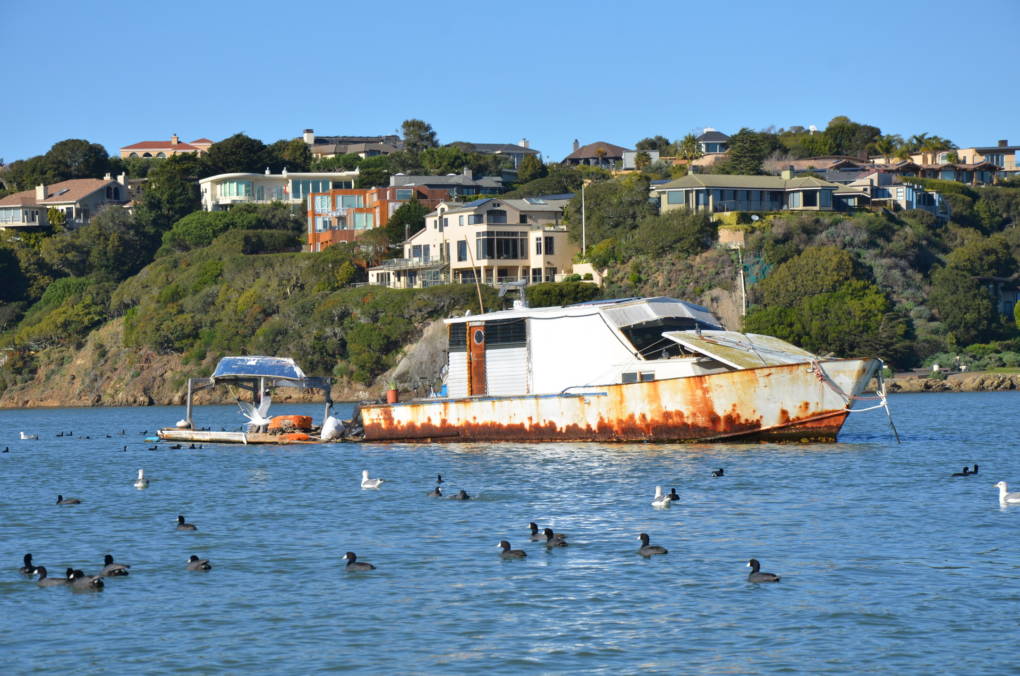
"caption": "An anchor-out sits in Richardson Bay in Marin County. At last count, there were 235 boats anchored in the bay.",
"description": "An anchor-out sits in Richardson Bay in Marin County. At last count, there were 235 boats anchored in the bay.",
"title": "RS36515_DSC_2298-qut",
"credit": "Ryan Levi/KQED",
"status": "inherit",
"isLoading": false,
"fetchFailed": false
}
},
"audioPlayerReducer": {
"postId": "stream_live",
"isPaused": true,
"isPlaying": false,
"pfsActive": false,
"pledgeModalIsOpen": true,
"playerDrawerIsOpen": false,
"liveAudioPlayStartedAt": 0,
"liveAudioPlayContext": ""
},
"authorsReducer": {
"byline_news_11978670": {
"type": "authors",
"id": "byline_news_11978670",
"meta": {
"override": true
},
"slug": "byline_news_11978670",
"name": "\u003ca href=\"https://twitter.com/BouncerSF\">Katy St. Clair\u003c/a> \u003cbr> Bay City News",
"isLoading": false
},
"byline_news_11766733": {
"type": "authors",
"id": "byline_news_11766733",
"meta": {
"override": true
},
"slug": "byline_news_11766733",
"name": "Janie Har\u003cbr>Associated Press",
"isLoading": false
},
"katrinaschwartz": {
"type": "authors",
"id": "234",
"meta": {
"index": "authors_1716337520",
"id": "234",
"found": true
},
"name": "Katrina Schwartz",
"firstName": "Katrina",
"lastName": "Schwartz",
"slug": "katrinaschwartz",
"email": "kschwartz@kqed.org",
"display_author_email": false,
"staff_mastheads": [
"news"
],
"title": "Producer",
"bio": "Katrina Schwartz is a journalist based in San Francisco. She's worked at KPCC public radio in LA and has reported on air and online for KQED since 2010. She covered how teaching and learning is changing for MindShift between 2012 and 2020. She is the co-host of the MindShift podcast and now produces KQED's Bay Curious podcast.",
"avatar": "https://secure.gravatar.com/avatar/edb4ee79070447a018538c9aae6eeecf28786515b8a0c30e43b6b7dce5aa44c8?s=600&d=blank&r=g",
"twitter": "kschwart",
"bluesky": null,
"facebook": null,
"instagram": null,
"linkedin": null,
"sites": [
{
"site": "",
"roles": [
"editor"
]
},
{
"site": "news",
"roles": [
"editor"
]
},
{
"site": "mindshift",
"roles": [
"administrator"
]
},
{
"site": "stateofhealth",
"roles": [
"author"
]
},
{
"site": "science",
"roles": [
"editor"
]
}
],
"headData": {
"title": "Katrina Schwartz | KQED",
"description": "Producer",
"ogImgSrc": "https://secure.gravatar.com/avatar/edb4ee79070447a018538c9aae6eeecf28786515b8a0c30e43b6b7dce5aa44c8?s=600&d=blank&r=g",
"twImgSrc": "https://secure.gravatar.com/avatar/edb4ee79070447a018538c9aae6eeecf28786515b8a0c30e43b6b7dce5aa44c8?s=600&d=blank&r=g"
},
"isLoading": false,
"link": "/author/katrinaschwartz"
},
"kqed": {
"type": "authors",
"id": "236",
"meta": {
"index": "authors_1716337520",
"id": "236",
"found": true
},
"name": "KQED News Staff",
"firstName": "KQED News Staff",
"lastName": null,
"slug": "kqed",
"email": "faq@kqed.org",
"display_author_email": false,
"staff_mastheads": [],
"title": null,
"bio": null,
"avatar": "https://secure.gravatar.com/avatar/ef0e801a68c4c54afa9180db14084167?s=600&d=blank&r=g",
"twitter": null,
"facebook": null,
"instagram": null,
"linkedin": null,
"sites": [
{
"site": "arts",
"roles": [
"contributor"
]
},
{
"site": "news",
"roles": [
"editor"
]
},
{
"site": "futureofyou",
"roles": [
"author"
]
}
],
"headData": {
"title": "KQED News Staff | KQED",
"description": null,
"ogImgSrc": "https://secure.gravatar.com/avatar/ef0e801a68c4c54afa9180db14084167?s=600&d=blank&r=g",
"twImgSrc": "https://secure.gravatar.com/avatar/ef0e801a68c4c54afa9180db14084167?s=600&d=blank&r=g"
},
"isLoading": false,
"link": "/author/kqed"
},
"markfiore": {
"type": "authors",
"id": "3236",
"meta": {
"index": "authors_1716337520",
"id": "3236",
"found": true
},
"name": "Mark Fiore",
"firstName": "Mark",
"lastName": "Fiore",
"slug": "markfiore",
"email": "mark@markfiore.com",
"display_author_email": false,
"staff_mastheads": [
"news"
],
"title": "KQED News Cartoonist",
"bio": "\u003ca href=\"http://www.MarkFiore.com\">MarkFiore.com\u003c/a> | \u003ca href=\"https://twitter.com/markfiore\">Follow on Twitter\u003c/a> | \u003ca href=\"https://www.facebook.com/pages/Mark-Fiore-Animated-Political-Cartoons/94451707396?ref=bookmarks\">Facebook\u003c/a> | \u003ca href=\"mailto:mark@markfiore.com\">email\u003c/a>\r\n\r\nPulitzer Prize-winner, Mark Fiore, who the Wall Street Journal has called “the undisputed guru of the form,” creates animated political cartoons in San Francisco, where his work has been featured regularly on the San Francisco Chronicle’s web site, SFGate.com. His work has appeared on Newsweek.com, Slate.com, CBSNews.com, MotherJones.com, DailyKos.com and NPR’s web site. Fiore’s political animation has appeared on CNN, Frontline, Bill Moyers Journal, Salon.com and cable and broadcast outlets across the globe.\r\n\r\nBeginning his professional life by drawing traditional political cartoons for newspapers, Fiore’s work appeared in publications ranging from the Washington Post to the Los Angeles Times. In the late 1990s, he began to experiment with animating political cartoons and, after a short stint at the San Jose Mercury News as their staff cartoonist, Fiore devoted all his energies to animation.\r\nGrowing up in California, Fiore also spent a good portion of his life in the backwoods of Idaho. It was this combination that shaped him politically. Mark majored in political science at Colorado College, where, in a perfect send-off for a cartoonist, he received his diploma in 1991 as commencement speaker Dick Cheney smiled approvingly.\r\nMark Fiore was awarded the Pulitzer Prize for political cartooning in 2010, a Robert F. Kennedy Journalism Award in 2004 and has twice received an Online Journalism Award for commentary from the Online News Association (2002, 2008). Fiore has received two awards for his work in new media from the National Cartoonists Society (2001, 2002), and in 2006 received The James Madison Freedom of Information Award from The Society of Professional Journalists.",
"avatar": "https://secure.gravatar.com/avatar/fc4e2a612b15b67bad0c6f0e1db4ca9b?s=600&d=blank&r=g",
"twitter": "MarkFiore",
"facebook": null,
"instagram": "https://www.instagram.com/markfiore/?hl=en",
"linkedin": null,
"sites": [
{
"site": "arts",
"roles": [
"contributor"
]
},
{
"site": "news",
"roles": [
"editor"
]
},
{
"site": "futureofyou",
"roles": [
"editor"
]
},
{
"site": "science",
"roles": [
"editor"
]
}
],
"headData": {
"title": "Mark Fiore | KQED",
"description": "KQED News Cartoonist",
"ogImgSrc": "https://secure.gravatar.com/avatar/fc4e2a612b15b67bad0c6f0e1db4ca9b?s=600&d=blank&r=g",
"twImgSrc": "https://secure.gravatar.com/avatar/fc4e2a612b15b67bad0c6f0e1db4ca9b?s=600&d=blank&r=g"
},
"isLoading": false,
"link": "/author/markfiore"
},
"rlevi": {
"type": "authors",
"id": "11260",
"meta": {
"index": "authors_1716337520",
"id": "11260",
"found": true
},
"name": "Ryan Levi",
"firstName": "Ryan",
"lastName": "Levi",
"slug": "rlevi",
"email": "rlevi@KQED.org",
"display_author_email": false,
"staff_mastheads": [],
"title": "KQED Contributor",
"bio": "Ryan Levi was a reporter and podcast producer at KQED News from 2016-2019. He worked on \u003ca href=\"https://www.kqed.org/news/series/baycurious\">Bay Curious\u003c/a>, \u003ca href=\"https://www.kqed.org/news/tag/the-bay/\">The Bay, \u003c/a>and \u003ca href=\"https://podcasts.apple.com/us/podcast/the-california-report-magazine/id1314750545\">The California Report Magazine\u003c/a>, as well as hosting and producing the weekly \u003ca href=\"https://www.kqed.org/news/program/qedup/\">Q'ed Up podcast. \u003c/a>He also helped inaugurate KQED's weekend news coverage in 2017 as one of two original digital producers. Ryan holds degrees in multimedia journalism and Spanish from the University of Missouri.",
"avatar": "https://secure.gravatar.com/avatar/4cb2ddd028ac8807d1adf09609c5555d?s=600&d=blank&r=g",
"twitter": "ryan_levi",
"facebook": null,
"instagram": null,
"linkedin": null,
"sites": [
{
"site": "arts",
"roles": [
"editor"
]
},
{
"site": "news",
"roles": [
"subscriber"
]
},
{
"site": "stateofhealth",
"roles": [
"editor"
]
},
{
"site": "science",
"roles": [
"editor"
]
},
{
"site": "forum",
"roles": [
"administrator"
]
},
{
"site": "perspectives",
"roles": [
"administrator"
]
}
],
"headData": {
"title": "Ryan Levi | KQED",
"description": "KQED Contributor",
"ogImgSrc": "https://secure.gravatar.com/avatar/4cb2ddd028ac8807d1adf09609c5555d?s=600&d=blank&r=g",
"twImgSrc": "https://secure.gravatar.com/avatar/4cb2ddd028ac8807d1adf09609c5555d?s=600&d=blank&r=g"
},
"isLoading": false,
"link": "/author/rlevi"
},
"abandlamudi": {
"type": "authors",
"id": "11672",
"meta": {
"index": "authors_1716337520",
"id": "11672",
"found": true
},
"name": "Adhiti Bandlamudi",
"firstName": "Adhiti",
"lastName": "Bandlamudi",
"slug": "abandlamudi",
"email": "abandlamudi@kqed.org",
"display_author_email": false,
"staff_mastheads": [
"news"
],
"title": "KQED Housing Reporter",
"bio": "Adhiti Bandlamudi reports for KQED's Housing desk. She focuses on how housing gets built across the Bay Area. Before joining KQED in 2020, she reported for WUNC in Durham, North Carolina, WABE in Atlanta, Georgia and Capital Public Radio in Sacramento. In 2017, she was awarded a Kroc Fellowship at NPR where she reported on everything from sprinkles to the Golden State Killer's arrest. When she's not reporting, she's baking new recipes in her kitchen or watching movies with friends and family. She's originally from Georgia and has strong opinions about Great British Bake Off.",
"avatar": "https://secure.gravatar.com/avatar/868129c8b257bb99a3500e2c86a65400?s=600&d=mm&r=g",
"twitter": "oddity_adhiti",
"facebook": null,
"instagram": null,
"linkedin": null,
"sites": [
{
"site": "arts",
"roles": [
"author"
]
},
{
"site": "news",
"roles": [
"editor"
]
},
{
"site": "liveblog",
"roles": [
"author"
]
}
],
"headData": {
"title": "Adhiti Bandlamudi | KQED",
"description": "KQED Housing Reporter",
"ogImgSrc": "https://secure.gravatar.com/avatar/868129c8b257bb99a3500e2c86a65400?s=600&d=mm&r=g",
"twImgSrc": "https://secure.gravatar.com/avatar/868129c8b257bb99a3500e2c86a65400?s=600&d=mm&r=g"
},
"isLoading": false,
"link": "/author/abandlamudi"
},
"adahlstromeckman": {
"type": "authors",
"id": "11785",
"meta": {
"index": "authors_1716337520",
"id": "11785",
"found": true
},
"name": "Azul Dahlstrom-Eckman",
"firstName": "Azul",
"lastName": "Dahlstrom-Eckman",
"slug": "adahlstromeckman",
"email": "adahlstrom-eckman@kqed.org",
"display_author_email": true,
"staff_mastheads": [],
"title": "Reporter",
"bio": "Azul is a reporter for KQED focusing on transportation and features. He joined KQED in 2021 as an alumna of KALW's Audio Academy radio journalism training program.",
"avatar": "https://secure.gravatar.com/avatar/9cb750298435add7815a777f55bf1f46845c1386bb8452555c60a7b820b5aba3?s=600&d=blank&r=g",
"twitter": "@zuliemann",
"bluesky": "@azul415.bsky.social",
"facebook": null,
"instagram": null,
"linkedin": null,
"sites": [
{
"site": "arts",
"roles": [
"editor"
]
},
{
"site": "news",
"roles": [
"editor"
]
},
{
"site": "science",
"roles": [
"editor"
]
},
{
"site": "liveblog",
"roles": [
"author"
]
}
],
"headData": {
"title": "Azul Dahlstrom-Eckman | KQED",
"description": "Reporter",
"ogImgSrc": "https://secure.gravatar.com/avatar/9cb750298435add7815a777f55bf1f46845c1386bb8452555c60a7b820b5aba3?s=600&d=blank&r=g",
"twImgSrc": "https://secure.gravatar.com/avatar/9cb750298435add7815a777f55bf1f46845c1386bb8452555c60a7b820b5aba3?s=600&d=blank&r=g"
},
"isLoading": false,
"link": "/author/adahlstromeckman"
},
"sjohnson": {
"type": "authors",
"id": "11840",
"meta": {
"index": "authors_1716337520",
"id": "11840",
"found": true
},
"name": "Sydney Johnson",
"firstName": "Sydney",
"lastName": "Johnson",
"slug": "sjohnson",
"email": "sjohnson@kqed.org",
"display_author_email": false,
"staff_mastheads": [
"news"
],
"title": "KQED Reporter",
"bio": "Sydney Johnson is a general assignment reporter at KQED. She previously reported on public health and city government at the San Francisco Examiner, and before that, she covered statewide education policy for EdSource. Her reporting has won multiple local, state and national awards. Sydney is a graduate of the University of California, Berkeley and lives in San Francisco.",
"avatar": "https://secure.gravatar.com/avatar/97855f2719b72ad6190b7c535fe642c8?s=600&d=blank&r=g",
"twitter": "sydneyfjohnson",
"facebook": null,
"instagram": null,
"linkedin": null,
"sites": [
{
"site": "news",
"roles": [
"editor"
]
}
],
"headData": {
"title": "Sydney Johnson | KQED",
"description": "KQED Reporter",
"ogImgSrc": "https://secure.gravatar.com/avatar/97855f2719b72ad6190b7c535fe642c8?s=600&d=blank&r=g",
"twImgSrc": "https://secure.gravatar.com/avatar/97855f2719b72ad6190b7c535fe642c8?s=600&d=blank&r=g"
},
"isLoading": false,
"link": "/author/sjohnson"
},
"kdebenedetti": {
"type": "authors",
"id": "11913",
"meta": {
"index": "authors_1716337520",
"id": "11913",
"found": true
},
"name": "Katie DeBenedetti",
"firstName": "Katie",
"lastName": "DeBenedetti",
"slug": "kdebenedetti",
"email": "kdebenedetti@kqed.org",
"display_author_email": false,
"staff_mastheads": [
"news",
"science"
],
"title": "KQED Contributor",
"bio": "Katie DeBenedetti is a digital reporter covering daily news for the Express Desk. Prior to joining KQED as a culture reporting intern in January 2024, she covered education and city government for the Napa Valley Register.",
"avatar": "https://secure.gravatar.com/avatar/6e31073cb8f7e4214ab03f42771d0f45?s=600&d=blank&r=g",
"twitter": null,
"facebook": null,
"instagram": null,
"linkedin": null,
"sites": [
{
"site": "news",
"roles": [
"author"
]
},
{
"site": "science",
"roles": [
"author"
]
},
{
"site": "liveblog",
"roles": [
"author"
]
}
],
"headData": {
"title": "Katie DeBenedetti | KQED",
"description": "KQED Contributor",
"ogImgSrc": "https://secure.gravatar.com/avatar/6e31073cb8f7e4214ab03f42771d0f45?s=600&d=blank&r=g",
"twImgSrc": "https://secure.gravatar.com/avatar/6e31073cb8f7e4214ab03f42771d0f45?s=600&d=blank&r=g"
},
"isLoading": false,
"link": "/author/kdebenedetti"
}
},
"pagesReducer": {
"news_tag_sausalito": {
"type": "terms",
"id": "news_655",
"meta": {
"index": "terms_1716263798",
"site": "news",
"id": "655",
"score": 8.795411
},
"featImg": null,
"name": "Sausalito",
"description": null,
"taxonomy": "tag",
"headData": {
"twImgId": null,
"twTitle": null,
"ogTitle": null,
"ogImgId": null,
"twDescription": null,
"description": null,
"title": "Sausalito Archives | KQED News",
"ogDescription": null
},
"ttid": 664,
"slug": "sausalito",
"isLoading": false,
"title": "Sausalito",
"pageMeta": {
"site": "news",
"WpPageTemplate": "page-topic-editorial",
"currentPage": 1
},
"blocks": [
{
"blockName": "kqed/post-list",
"attrs": {
"layout": "cardArticle2",
"query": "posts/news?tag=sausalito",
"seeMore": false,
"paginated": true,
"page": 1
}
},
{
"blockName": "kqed/ad"
}
]
}
},
"pfsSessionReducer": {},
"postsReducer": {
"stream_live": {
"type": "live",
"id": "stream_live",
"audioUrl": "https://streams.kqed.org/kqedradio",
"title": "Live Stream",
"excerpt": "Live Stream information currently unavailable.",
"link": "/radio",
"featImg": "",
"label": {
"name": "KQED Live",
"link": "/"
}
},
"stream_kqedNewscast": {
"type": "posts",
"id": "stream_kqedNewscast",
"audioUrl": "https://www.kqed.org/.stream/anon/radio/RDnews/newscast.mp3?_=1",
"title": "KQED Newscast",
"featImg": "",
"label": {
"name": "88.5 FM",
"link": "/"
}
},
"news_12092166": {
"type": "posts",
"id": "news_12092166",
"meta": {
"index": "posts_1716263798",
"site": "news",
"id": "12092166",
"score": null,
"sort": [
1784844720000
]
},
"guestAuthors": [],
"slug": "sausalito-city-manager-to-be-released-from-jail-ordered-to-seek-mental-health-evaluation",
"title": "Sausalito City Manager to Be Released From Jail, Ordered to Seek Mental Health Evaluation",
"publishDate": 1784844720,
"format": "standard",
"headTitle": "Sausalito City Manager to Be Released From Jail, Ordered to Seek Mental Health Evaluation | KQED",
"labelTerm": {
"site": "news"
},
"content": "\u003cp>\u003ca href=\"https://www.kqed.org/news/12092004/sausalito-city-manager-elaine-forbes-faces-misdemeanor-charges-over-boat-trespassing\">Sausalito City Manager Elaine Forbes\u003c/a> will be released from jail and undergo a psychological evaluation after she was arrested over the weekend for trespassing amid what her family said is a mental health crisis. \u003c/p>\n\n\n\n\u003cp>Forbes, who previously served as the director of the Port of San Francisco, agreed to voluntarily go to Marin General Hospital for a mental health assessment, according to her attorney, Randall Knox.\u003c/p>\n\n\n\n\u003cp>“Given the fact that Ms. Forbes has never been arrested [before] and the circumstances of these particular allegations, the judge agreed to release her on her own recognizance,” he told KQED after her hearing on Wednesday. \u003c/p>\n\n\n\n\u003cp>Family spokesperson Sam Singer said Forbes’ wife and family “believe that this is the right judicial move and are very pleased” with the court’s action. \u003c/p>\n\n\n\n\u003cfigure class=\"wp-block-image size-full\">\u003cimg loading=\"lazy\" decoding=\"async\" width=\"2000\" height=\"1249\" src=\"https://cdn.kqed.org/wp-content/uploads/sites/10/2026/07/20260722_sausalitofile_gc-7-KQED.jpg\" alt=\"\" class=\"wp-image-12092354\" srcset=\"https://cdn.kqed.org/wp-content/uploads/sites/10/2026/07/20260722_sausalitofile_gc-7-KQED.jpg 2000w, https://cdn.kqed.org/wp-content/uploads/sites/10/2026/07/20260722_sausalitofile_gc-7-KQED-160x100.jpg 160w, https://cdn.kqed.org/wp-content/uploads/sites/10/2026/07/20260722_sausalitofile_gc-7-KQED-1536x959.jpg 1536w\" sizes=\"auto, (max-width: 2000px) 100vw, 2000px\">\u003cfigcaption class=\"wp-element-caption\">Boats parked at the Sausalito Yacht Harbor in Sausalito on July 22, 2026. (Gina Castro for KQED)\u003c/figcaption>\u003c/figure>\n\n\n\n\u003cp>Forbes, 53, assumed the role of Sausalito city manager earlier this month, but had been on a leave of absence since Thursday. \u003c/p>\n\n\n\n\u003cp>[ad fullwidth]\u003c/p>\n\u003cp>During a special city council meeting on Tuesday night, Sausalito Mayor Steven Woodside said Forbes remains on leave, and that “no decisions were made regarding her employment.”\u003c/p>\n\n\n\n\u003cp>“I want to assure everyone that we are gathering and evaluating all of the facts surrounding this matter,” Woodside said. “This moment calls for a sensitive balance between individual privacy rights and the rights the public have for accountability. It’s not easy. But we will get through this.”\u003c/p>\n\n\n\n\u003cp>For the time being, Assistant City Manager Brandon Phipps has assumed the role of acting city manager. \u003c/p>\n\n\n\n\u003cp>Woodside said Tuesday that the city was also in negotiations to have former City Manager Chris Zapata come back to serve in an advisory capacity. If he does, it would be on a “loan” from Marin County, where he is now the assistant county executive, Woodside said.\u003c/p>\n\n\n\n\n\n\u003cp>Forbes was found aboard the Lisa Marie, a 66-foot, three-story yacht docked at the Sausalito Yacht Harbor, just after 6 a.m. Saturday morning, hours after she had been reported missing by her wife, according to Singer. He said her phone and wallet were found outside of an addiction recovery center in Sausalito that evening.\u003c/p>\n\n\n\n\u003cp>Marin sheriff’s deputies located Forbes amid empty alcohol bottles, having manipulated the boat’s controls “as if she was attempting to steal the vessel,” sheriff’s office spokesperson Lt. Domenick Yazzolino said. She was initially arrested on suspicion of felony burglary.\u003c/p>\n\n\n\n\u003cp>When deputies found Forbes on Saturday, they said she told them she was having a “bad morning” and to get off of her boat. \u003c/p>\n\n\n\n\u003cp>According to nearby boat owner Rand Siegfried, Forbes also told officers she had been on his boat, the Sea Dog, that morning.\u003c/p>\n\n\n\n\u003cp>There, they found clothes strewn around the deck and items missing, he said. \u003c/p>\n\n\n\n\u003cp>“There was a layer of clothing on every floor of the boat that was two or three garments deep,” Siegfried said. “It seems like she tried on a lot of my wife’s things, and I think she actually went to jail with one of my wife’s sweaters on.\u003c/p>\n\n\n\n\u003cp>Forbes was later charged with four misdemeanors: trespassing onto private property, petty theft less than $950 and two counts of unlawful lodging for entering the two boats.\u003c/p>\n\n\n\n\u003cp>Siegfried, who was out of town at the time, said he believes the value of the items Forbes took from the Sea Dog is likely worth more than $950, but he and his wife had not yet determined what was stolen.\u003c/p>\n\n\n\n\u003cfigure class=\"wp-block-image size-full\">\u003cimg loading=\"lazy\" decoding=\"async\" width=\"2000\" height=\"1333\" src=\"https://cdn.kqed.org/wp-content/uploads/sites/10/2026/07/20260722_sausalitofile_gc-9-KQED.jpg\" alt=\"\" class=\"wp-image-12092355\" srcset=\"https://cdn.kqed.org/wp-content/uploads/sites/10/2026/07/20260722_sausalitofile_gc-9-KQED.jpg 2000w, https://cdn.kqed.org/wp-content/uploads/sites/10/2026/07/20260722_sausalitofile_gc-9-KQED-160x107.jpg 160w, https://cdn.kqed.org/wp-content/uploads/sites/10/2026/07/20260722_sausalitofile_gc-9-KQED-1536x1024.jpg 1536w\" sizes=\"auto, (max-width: 2000px) 100vw, 2000px\">\u003cfigcaption class=\"wp-element-caption\">Boats parked at the Sausalito Yacht Harbor in Sausalito on July 22, 2026. (Gina Castro for KQED)\u003c/figcaption>\u003c/figure>\n\n\n\n\u003cp>“It didn’t seem like there’s malicious intent, but boy, it was damaging,” he said. \u003c/p>\n\n\n\n\u003cp>“I hope she seeks out help to get better, but I also hope she is responsible for what she has done,” Siegfried said.\u003c/p>\n\n\n\n\u003cp>During a court appearance on Wednesday afternoon, Judge Cindee Mayfield in Marin County Superior Court granted Knox’s request to release Forbes without posting bail.\u003c/p>\n\n\n\n\u003cp>Forbes is set to return to court on Aug. 11. During her hearing on Wednesday, Knox said it is possible he would appear on her behalf if she is in treatment.\u003c/p>\n\n\n\n\u003cp>“This is a blip,” he said Tuesday, adding that Forbes “is grateful that the city of Sausalito has been so supportive … and she has a really solid network of friends and family who are going to try to help her navigate this.”\u003c/p>\n\n\n\n\u003cp>\u003c/p>\n\u003cp>\u003cem>KQED’s \u003c/em>\u003ca href=\"https://www.kqed.org/author/jgeha\">\u003cem>Joseph Geha\u003c/em>\u003c/a>\u003cem> contributed to this report.\u003c/em>\u003c/p>\n\n",
"blocks": [
{
"blockName": "core/paragraph",
"attrs": [],
"innerHTML": "\n\u003cp>\u003ca href=\"https://www.kqed.org/news/12092004/sausalito-city-manager-elaine-forbes-faces-misdemeanor-charges-over-boat-trespassing\">Sausalito City Manager Elaine Forbes\u003c/a> will be released from jail and undergo a psychological evaluation after she was arrested over the weekend for trespassing amid what her family said is a mental health crisis. \u003c/p>\n",
"innerContent": [
"\n\u003cp>\u003ca href=\"https://www.kqed.org/news/12092004/sausalito-city-manager-elaine-forbes-faces-misdemeanor-charges-over-boat-trespassing\">Sausalito City Manager Elaine Forbes\u003c/a> will be released from jail and undergo a psychological evaluation after she was arrested over the weekend for trespassing amid what her family said is a mental health crisis. \u003c/p>\n"
],
"innerBlocks": []
},
{
"blockName": "core/paragraph",
"attrs": [],
"innerHTML": "\n\u003cp>Forbes, who previously served as the director of the Port of San Francisco, agreed to voluntarily go to Marin General Hospital for a mental health assessment, according to her attorney, Randall Knox.\u003c/p>\n",
"innerContent": [
"\n\u003cp>Forbes, who previously served as the director of the Port of San Francisco, agreed to voluntarily go to Marin General Hospital for a mental health assessment, according to her attorney, Randall Knox.\u003c/p>\n"
],
"innerBlocks": []
},
{
"blockName": "core/paragraph",
"attrs": [],
"innerHTML": "\n\u003cp>“Given the fact that Ms. Forbes has never been arrested [before] and the circumstances of these particular allegations, the judge agreed to release her on her own recognizance,” he told KQED after her hearing on Wednesday. \u003c/p>\n",
"innerContent": [
"\n\u003cp>“Given the fact that Ms. Forbes has never been arrested [before] and the circumstances of these particular allegations, the judge agreed to release her on her own recognizance,” he told KQED after her hearing on Wednesday. \u003c/p>\n"
],
"innerBlocks": []
},
{
"blockName": "core/paragraph",
"attrs": [],
"innerHTML": "\n\u003cp>Family spokesperson Sam Singer said Forbes’ wife and family “believe that this is the right judicial move and are very pleased” with the court’s action. \u003c/p>\n",
"innerContent": [
"\n\u003cp>Family spokesperson Sam Singer said Forbes’ wife and family “believe that this is the right judicial move and are very pleased” with the court’s action. \u003c/p>\n"
],
"innerBlocks": []
},
{
"blockName": "core/image",
"attrs": {
"id": 12092354,
"sizeSlug": "full",
"linkDestination": "none",
"imageCredit": "Gina Castro for KQED",
"srcset": "https://cdn.kqed.org/wp-content/uploads/sites/10/2026/07/20260722_sausalitofile_gc-7-KQED.jpg 2000w, https://cdn.kqed.org/wp-content/uploads/sites/10/2026/07/20260722_sausalitofile_gc-7-KQED-160x100.jpg 160w, https://cdn.kqed.org/wp-content/uploads/sites/10/2026/07/20260722_sausalitofile_gc-7-KQED-1536x959.jpg 1536w",
"sizes": "(min-width: 992px) min(100vw, 1536px), (min-width: 768px) min(100vw, 1280px), min(100vw, 1020px)"
},
"innerHTML": "\n\u003cfigure class=\"wp-block-image size-full\">\u003cimg src=\"https://cdn.kqed.org/wp-content/uploads/sites/10/2026/07/20260722_sausalitofile_gc-7-KQED.jpg\" alt=\"\" class=\"wp-image-12092354\" srcset=\"https://cdn.kqed.org/wp-content/uploads/sites/10/2026/07/20260722_sausalitofile_gc-7-KQED.jpg 2000w, https://cdn.kqed.org/wp-content/uploads/sites/10/2026/07/20260722_sausalitofile_gc-7-KQED-160x100.jpg 160w, https://cdn.kqed.org/wp-content/uploads/sites/10/2026/07/20260722_sausalitofile_gc-7-KQED-1536x959.jpg 1536w\" sizes=\"(min-width: 992px) min(100vw, 1536px), (min-width: 768px) min(100vw, 1280px), min(100vw, 1020px)\"/>\u003cfigcaption class=\"wp-element-caption\">Boats parked at the Sausalito Yacht Harbor in Sausalito on July 22, 2026.\u003c/figcaption>\u003c/figure>\n",
"innerContent": [
"\n\u003cfigure class=\"wp-block-image size-full\">\u003cimg src=\"https://cdn.kqed.org/wp-content/uploads/sites/10/2026/07/20260722_sausalitofile_gc-7-KQED.jpg\" alt=\"\" class=\"wp-image-12092354\"/>\u003cfigcaption class=\"wp-element-caption\">Boats parked at the Sausalito Yacht Harbor in Sausalito on July 22, 2026.\u003c/figcaption>\u003c/figure>\n"
],
"innerBlocks": []
},
{
"blockName": "core/paragraph",
"attrs": [],
"innerHTML": "\n\u003cp>Forbes, 53, assumed the role of Sausalito city manager earlier this month, but had been on a leave of absence since Thursday. \u003c/p>\n",
"innerContent": [
"\n\u003cp>Forbes, 53, assumed the role of Sausalito city manager earlier this month, but had been on a leave of absence since Thursday. \u003c/p>\n"
],
"innerBlocks": []
},
{
"blockName": "kqed/ad",
"attrs": {
"format": "fullwidth"
},
"innerBlocks": [],
"innerHTML": "",
"innerContent": []
},
{
"blockName": "core/paragraph",
"attrs": [],
"innerHTML": "\n\u003cp>During a special city council meeting on Tuesday night, Sausalito Mayor Steven Woodside said Forbes remains on leave, and that “no decisions were made regarding her employment.”\u003c/p>\n",
"innerContent": [
"\n\u003cp>During a special city council meeting on Tuesday night, Sausalito Mayor Steven Woodside said Forbes remains on leave, and that “no decisions were made regarding her employment.”\u003c/p>\n"
],
"innerBlocks": []
},
{
"blockName": "core/paragraph",
"attrs": [],
"innerHTML": "\n\u003cp>“I want to assure everyone that we are gathering and evaluating all of the facts surrounding this matter,” Woodside said. “This moment calls for a sensitive balance between individual privacy rights and the rights the public have for accountability. It’s not easy. But we will get through this.”\u003c/p>\n",
"innerContent": [
"\n\u003cp>“I want to assure everyone that we are gathering and evaluating all of the facts surrounding this matter,” Woodside said. “This moment calls for a sensitive balance between individual privacy rights and the rights the public have for accountability. It’s not easy. But we will get through this.”\u003c/p>\n"
],
"innerBlocks": []
},
{
"blockName": "core/paragraph",
"attrs": [],
"innerHTML": "\n\u003cp>For the time being, Assistant City Manager Brandon Phipps has assumed the role of acting city manager. \u003c/p>\n",
"innerContent": [
"\n\u003cp>For the time being, Assistant City Manager Brandon Phipps has assumed the role of acting city manager. \u003c/p>\n"
],
"innerBlocks": []
},
{
"blockName": "core/paragraph",
"attrs": [],
"innerHTML": "\n\u003cp>Woodside said Tuesday that the city was also in negotiations to have former City Manager Chris Zapata come back to serve in an advisory capacity. If he does, it would be on a “loan” from Marin County, where he is now the assistant county executive, Woodside said.\u003c/p>\n",
"innerContent": [
"\n\u003cp>Woodside said Tuesday that the city was also in negotiations to have former City Manager Chris Zapata come back to serve in an advisory capacity. If he does, it would be on a “loan” from Marin County, where he is now the assistant county executive, Woodside said.\u003c/p>\n"
],
"innerBlocks": []
},
{
"blockName": "kqed-v2/related-articles",
"attrs": {
"postIds": [
"news_12092004"
],
"label": "Related Articles",
"maxPosts": 1,
"showImages": false,
"heroImage": "https://cdn.kqed.org/wp-content/uploads/sites/10/2025/08/SausalitoGetty.jpg"
},
"innerHTML": "",
"innerContent": [],
"innerBlocks": []
},
{
"blockName": "core/paragraph",
"attrs": [],
"innerHTML": "\n\u003cp>Forbes was found aboard the Lisa Marie, a 66-foot, three-story yacht docked at the Sausalito Yacht Harbor, just after 6 a.m. Saturday morning, hours after she had been reported missing by her wife, according to Singer. He said her phone and wallet were found outside of an addiction recovery center in Sausalito that evening.\u003c/p>\n",
"innerContent": [
"\n\u003cp>Forbes was found aboard the Lisa Marie, a 66-foot, three-story yacht docked at the Sausalito Yacht Harbor, just after 6 a.m. Saturday morning, hours after she had been reported missing by her wife, according to Singer. He said her phone and wallet were found outside of an addiction recovery center in Sausalito that evening.\u003c/p>\n"
],
"innerBlocks": []
},
{
"blockName": "core/paragraph",
"attrs": [],
"innerHTML": "\n\u003cp>Marin sheriff’s deputies located Forbes amid empty alcohol bottles, having manipulated the boat’s controls “as if she was attempting to steal the vessel,” sheriff’s office spokesperson Lt. Domenick Yazzolino said. She was initially arrested on suspicion of felony burglary.\u003c/p>\n",
"innerContent": [
"\n\u003cp>Marin sheriff’s deputies located Forbes amid empty alcohol bottles, having manipulated the boat’s controls “as if she was attempting to steal the vessel,” sheriff’s office spokesperson Lt. Domenick Yazzolino said. She was initially arrested on suspicion of felony burglary.\u003c/p>\n"
],
"innerBlocks": []
},
{
"blockName": "core/paragraph",
"attrs": [],
"innerHTML": "\n\u003cp>When deputies found Forbes on Saturday, they said she told them she was having a “bad morning” and to get off of her boat. \u003c/p>\n",
"innerContent": [
"\n\u003cp>When deputies found Forbes on Saturday, they said she told them she was having a “bad morning” and to get off of her boat. \u003c/p>\n"
],
"innerBlocks": []
},
{
"blockName": "core/paragraph",
"attrs": [],
"innerHTML": "\n\u003cp>According to nearby boat owner Rand Siegfried, Forbes also told officers she had been on his boat, the Sea Dog, that morning.\u003c/p>\n",
"innerContent": [
"\n\u003cp>According to nearby boat owner Rand Siegfried, Forbes also told officers she had been on his boat, the Sea Dog, that morning.\u003c/p>\n"
],
"innerBlocks": []
},
{
"blockName": "core/paragraph",
"attrs": [],
"innerHTML": "\n\u003cp>There, they found clothes strewn around the deck and items missing, he said. \u003c/p>\n",
"innerContent": [
"\n\u003cp>There, they found clothes strewn around the deck and items missing, he said. \u003c/p>\n"
],
"innerBlocks": []
},
{
"blockName": "core/paragraph",
"attrs": [],
"innerHTML": "\n\u003cp>“There was a layer of clothing on every floor of the boat that was two or three garments deep,” Siegfried said. “It seems like she tried on a lot of my wife’s things, and I think she actually went to jail with one of my wife’s sweaters on.\u003c/p>\n",
"innerContent": [
"\n\u003cp>“There was a layer of clothing on every floor of the boat that was two or three garments deep,” Siegfried said. “It seems like she tried on a lot of my wife’s things, and I think she actually went to jail with one of my wife’s sweaters on.\u003c/p>\n"
],
"innerBlocks": []
},
{
"blockName": "core/paragraph",
"attrs": [],
"innerHTML": "\n\u003cp>Forbes was later charged with four misdemeanors: trespassing onto private property, petty theft less than $950 and two counts of unlawful lodging for entering the two boats.\u003c/p>\n",
"innerContent": [
"\n\u003cp>Forbes was later charged with four misdemeanors: trespassing onto private property, petty theft less than $950 and two counts of unlawful lodging for entering the two boats.\u003c/p>\n"
],
"innerBlocks": []
},
{
"blockName": "core/paragraph",
"attrs": [],
"innerHTML": "\n\u003cp>Siegfried, who was out of town at the time, said he believes the value of the items Forbes took from the Sea Dog is likely worth more than $950, but he and his wife had not yet determined what was stolen.\u003c/p>\n",
"innerContent": [
"\n\u003cp>Siegfried, who was out of town at the time, said he believes the value of the items Forbes took from the Sea Dog is likely worth more than $950, but he and his wife had not yet determined what was stolen.\u003c/p>\n"
],
"innerBlocks": []
},
{
"blockName": "core/image",
"attrs": {
"id": 12092355,
"sizeSlug": "full",
"linkDestination": "none",
"imageCredit": "Gina Castro for KQED",
"srcset": "https://cdn.kqed.org/wp-content/uploads/sites/10/2026/07/20260722_sausalitofile_gc-9-KQED.jpg 2000w, https://cdn.kqed.org/wp-content/uploads/sites/10/2026/07/20260722_sausalitofile_gc-9-KQED-160x107.jpg 160w, https://cdn.kqed.org/wp-content/uploads/sites/10/2026/07/20260722_sausalitofile_gc-9-KQED-1536x1024.jpg 1536w",
"sizes": "(min-width: 992px) min(100vw, 1536px), (min-width: 768px) min(100vw, 1280px), min(100vw, 1020px)"
},
"innerHTML": "\n\u003cfigure class=\"wp-block-image size-full\">\u003cimg src=\"https://cdn.kqed.org/wp-content/uploads/sites/10/2026/07/20260722_sausalitofile_gc-9-KQED.jpg\" alt=\"\" class=\"wp-image-12092355\" srcset=\"https://cdn.kqed.org/wp-content/uploads/sites/10/2026/07/20260722_sausalitofile_gc-9-KQED.jpg 2000w, https://cdn.kqed.org/wp-content/uploads/sites/10/2026/07/20260722_sausalitofile_gc-9-KQED-160x107.jpg 160w, https://cdn.kqed.org/wp-content/uploads/sites/10/2026/07/20260722_sausalitofile_gc-9-KQED-1536x1024.jpg 1536w\" sizes=\"(min-width: 992px) min(100vw, 1536px), (min-width: 768px) min(100vw, 1280px), min(100vw, 1020px)\"/>\u003cfigcaption class=\"wp-element-caption\">Boats parked at the Sausalito Yacht Harbor in Sausalito on July 22, 2026.\u003c/figcaption>\u003c/figure>\n",
"innerContent": [
"\n\u003cfigure class=\"wp-block-image size-full\">\u003cimg src=\"https://cdn.kqed.org/wp-content/uploads/sites/10/2026/07/20260722_sausalitofile_gc-9-KQED.jpg\" alt=\"\" class=\"wp-image-12092355\"/>\u003cfigcaption class=\"wp-element-caption\">Boats parked at the Sausalito Yacht Harbor in Sausalito on July 22, 2026.\u003c/figcaption>\u003c/figure>\n"
],
"innerBlocks": []
},
{
"blockName": "core/paragraph",
"attrs": [],
"innerHTML": "\n\u003cp>“It didn’t seem like there’s malicious intent, but boy, it was damaging,” he said. \u003c/p>\n",
"innerContent": [
"\n\u003cp>“It didn’t seem like there’s malicious intent, but boy, it was damaging,” he said. \u003c/p>\n"
],
"innerBlocks": []
},
{
"blockName": "core/paragraph",
"attrs": [],
"innerHTML": "\n\u003cp>“I hope she seeks out help to get better, but I also hope she is responsible for what she has done,” Siegfried said.\u003c/p>\n",
"innerContent": [
"\n\u003cp>“I hope she seeks out help to get better, but I also hope she is responsible for what she has done,” Siegfried said.\u003c/p>\n"
],
"innerBlocks": []
},
{
"blockName": "core/paragraph",
"attrs": [],
"innerHTML": "\n\u003cp>During a court appearance on Wednesday afternoon, Judge Cindee Mayfield in Marin County Superior Court granted Knox’s request to release Forbes without posting bail.\u003c/p>\n",
"innerContent": [
"\n\u003cp>During a court appearance on Wednesday afternoon, Judge Cindee Mayfield in Marin County Superior Court granted Knox’s request to release Forbes without posting bail.\u003c/p>\n"
],
"innerBlocks": []
},
{
"blockName": "core/paragraph",
"attrs": [],
"innerHTML": "\n\u003cp>Forbes is set to return to court on Aug. 11. During her hearing on Wednesday, Knox said it is possible he would appear on her behalf if she is in treatment.\u003c/p>\n",
"innerContent": [
"\n\u003cp>Forbes is set to return to court on Aug. 11. During her hearing on Wednesday, Knox said it is possible he would appear on her behalf if she is in treatment.\u003c/p>\n"
],
"innerBlocks": []
},
{
"blockName": "core/paragraph",
"attrs": [],
"innerHTML": "\n\u003cp>“This is a blip,” he said Tuesday, adding that Forbes “is grateful that the city of Sausalito has been so supportive … and she has a really solid network of friends and family who are going to try to help her navigate this.”\u003c/p>\n",
"innerContent": [
"\n\u003cp>“This is a blip,” he said Tuesday, adding that Forbes “is grateful that the city of Sausalito has been so supportive … and she has a really solid network of friends and family who are going to try to help her navigate this.”\u003c/p>\n"
],
"innerBlocks": []
},
{
"blockName": "kqed/ad",
"attrs": {
"format": "floatright"
},
"innerBlocks": [],
"innerHTML": "",
"innerContent": []
},
{
"blockName": "core/paragraph",
"attrs": [],
"innerHTML": "\n\u003cp>\u003cem>KQED’s \u003c/em>\u003ca href=\"https://www.kqed.org/author/jgeha\">\u003cem>Joseph Geha\u003c/em>\u003c/a>\u003cem> contributed to this report.\u003c/em>\u003c/p>\n",
"innerContent": [
"\n\u003cp>\u003cem>KQED’s \u003c/em>\u003ca href=\"https://www.kqed.org/author/jgeha\">\u003cem>Joseph Geha\u003c/em>\u003c/a>\u003cem> contributed to this report.\u003c/em>\u003c/p>\n"
],
"innerBlocks": []
}
],
"excerpt": "Elaine Forbes, who previously served as director of the Port of San Francisco, faces multiple misdemeanor charges after trespassing on two boats on Saturday. ",
"status": "publish",
"parent": 0,
"modified": 1784844724,
"stats": {
"hasAudio": false,
"hasVideo": false,
"hasChartOrMap": false,
"iframeSrcs": [],
"hasGoogleForm": false,
"hasGallery": false,
"hasHearkenModule": false,
"hasPolis": false,
"paragraphCount": 25,
"wordCount": 794
},
"headData": {
"title": "Sausalito City Manager to Be Released From Jail, Ordered to Seek Mental Health Evaluation | KQED",
"description": "Elaine Forbes, who previously served as director of the Port of San Francisco, faces multiple misdemeanor charges after trespassing on two boats on Saturday. ",
"ogTitle": "",
"ogDescription": "",
"ogImgId": "",
"twTitle": "",
"twDescription": "",
"twImgId": "",
"schema": {
"@context": "https://schema.org",
"@type": "NewsArticle",
"headline": "Sausalito City Manager to Be Released From Jail, Ordered to Seek Mental Health Evaluation",
"datePublished": "2026-07-23T15:12:00-07:00",
"dateModified": "2026-07-23T15:12:04-07:00",
"image": "https://cdn.kqed.org/wp-content/uploads/2020/02/KQED-OG-Image@1x.png",
"isAccessibleForFree": "True",
"publisher": {
"@type": "NewsMediaOrganization",
"@id": "https://www.kqed.org/#organization",
"name": "KQED",
"logo": "https://cdn.kqed.org/wp-content/uploads/2020/02/KQED-OG-Image@1x.png",
"url": "https://www.kqed.org",
"sameAs": [
"https://www.facebook.com/KQED",
"https://twitter.com/KQED",
"https://www.instagram.com/kqed/",
"https://www.tiktok.com/@kqedofficial",
"https://www.linkedin.com/company/kqed",
"https://www.youtube.com/channel/UCeC0IOo7i1P_61zVUWbJ4nw"
]
}
}
},
"primaryCategory": {
"termId": 34167,
"slug": "criminal-justice",
"name": "Criminal Justice"
},
"sticky": false,
"nprStoryId": "kqed-12092166",
"templateType": "standard",
"featuredImageType": "standard",
"excludeFromSiteSearch": "Include",
"articleAge": "0",
"path": "/news/12092166/sausalito-city-manager-to-be-released-from-jail-ordered-to-seek-mental-health-evaluation",
"audioTrackLength": null,
"parsedContent": [
{
"type": "contentString",
"content": "\u003cdiv class=\"post-body\">\u003cp>\u003cp>\u003ca href=\"https://www.kqed.org/news/12092004/sausalito-city-manager-elaine-forbes-faces-misdemeanor-charges-over-boat-trespassing\">Sausalito City Manager Elaine Forbes\u003c/a> will be released from jail and undergo a psychological evaluation after she was arrested over the weekend for trespassing amid what her family said is a mental health crisis. \u003c/p>\n\n\n\n\u003cp>Forbes, who previously served as the director of the Port of San Francisco, agreed to voluntarily go to Marin General Hospital for a mental health assessment, according to her attorney, Randall Knox.\u003c/p>\n\n\n\n\u003cp>“Given the fact that Ms. Forbes has never been arrested [before] and the circumstances of these particular allegations, the judge agreed to release her on her own recognizance,” he told KQED after her hearing on Wednesday. \u003c/p>\n\n\n\n\u003cp>Family spokesperson Sam Singer said Forbes’ wife and family “believe that this is the right judicial move and are very pleased” with the court’s action. \u003c/p>\n\n\n\n\u003cfigure class=\"wp-block-image size-full\">\u003cimg loading=\"lazy\" decoding=\"async\" width=\"2000\" height=\"1249\" src=\"https://cdn.kqed.org/wp-content/uploads/sites/10/2026/07/20260722_sausalitofile_gc-7-KQED.jpg\" alt=\"\" class=\"wp-image-12092354\" srcset=\"https://cdn.kqed.org/wp-content/uploads/sites/10/2026/07/20260722_sausalitofile_gc-7-KQED.jpg 2000w, https://cdn.kqed.org/wp-content/uploads/sites/10/2026/07/20260722_sausalitofile_gc-7-KQED-160x100.jpg 160w, https://cdn.kqed.org/wp-content/uploads/sites/10/2026/07/20260722_sausalitofile_gc-7-KQED-1536x959.jpg 1536w\" sizes=\"auto, (max-width: 2000px) 100vw, 2000px\">\u003cfigcaption class=\"wp-element-caption\">Boats parked at the Sausalito Yacht Harbor in Sausalito on July 22, 2026. (Gina Castro for KQED)\u003c/figcaption>\u003c/figure>\n\n\n\n\u003cp>Forbes, 53, assumed the role of Sausalito city manager earlier this month, but had been on a leave of absence since Thursday. \u003c/p>\n\n\n\n\u003cp>\u003c/p>\u003c/div>",
"attributes": {
"named": {},
"numeric": []
}
},
{
"type": "component",
"content": "",
"name": "ad",
"attributes": {
"named": {
"label": "fullwidth"
},
"numeric": [
"fullwidth"
]
}
},
{
"type": "contentString",
"content": "\u003cdiv class=\"post-body\">\u003cp>\u003c/p>\n\u003cp>During a special city council meeting on Tuesday night, Sausalito Mayor Steven Woodside said Forbes remains on leave, and that “no decisions were made regarding her employment.”\u003c/p>\n\n\n\n\u003cp>“I want to assure everyone that we are gathering and evaluating all of the facts surrounding this matter,” Woodside said. “This moment calls for a sensitive balance between individual privacy rights and the rights the public have for accountability. It’s not easy. But we will get through this.”\u003c/p>\n\n\n\n\u003cp>For the time being, Assistant City Manager Brandon Phipps has assumed the role of acting city manager. \u003c/p>\n\n\n\n\u003cp>Woodside said Tuesday that the city was also in negotiations to have former City Manager Chris Zapata come back to serve in an advisory capacity. If he does, it would be on a “loan” from Marin County, where he is now the assistant county executive, Woodside said.\u003c/p>\n\n\n\n\n\n\u003cp>Forbes was found aboard the Lisa Marie, a 66-foot, three-story yacht docked at the Sausalito Yacht Harbor, just after 6 a.m. Saturday morning, hours after she had been reported missing by her wife, according to Singer. He said her phone and wallet were found outside of an addiction recovery center in Sausalito that evening.\u003c/p>\n\n\n\n\u003cp>Marin sheriff’s deputies located Forbes amid empty alcohol bottles, having manipulated the boat’s controls “as if she was attempting to steal the vessel,” sheriff’s office spokesperson Lt. Domenick Yazzolino said. She was initially arrested on suspicion of felony burglary.\u003c/p>\n\n\n\n\u003cp>When deputies found Forbes on Saturday, they said she told them she was having a “bad morning” and to get off of her boat. \u003c/p>\n\n\n\n\u003cp>According to nearby boat owner Rand Siegfried, Forbes also told officers she had been on his boat, the Sea Dog, that morning.\u003c/p>\n\n\n\n\u003cp>There, they found clothes strewn around the deck and items missing, he said. \u003c/p>\n\n\n\n\u003cp>“There was a layer of clothing on every floor of the boat that was two or three garments deep,” Siegfried said. “It seems like she tried on a lot of my wife’s things, and I think she actually went to jail with one of my wife’s sweaters on.\u003c/p>\n\n\n\n\u003cp>Forbes was later charged with four misdemeanors: trespassing onto private property, petty theft less than $950 and two counts of unlawful lodging for entering the two boats.\u003c/p>\n\n\n\n\u003cp>Siegfried, who was out of town at the time, said he believes the value of the items Forbes took from the Sea Dog is likely worth more than $950, but he and his wife had not yet determined what was stolen.\u003c/p>\n\n\n\n\u003cfigure class=\"wp-block-image size-full\">\u003cimg loading=\"lazy\" decoding=\"async\" width=\"2000\" height=\"1333\" src=\"https://cdn.kqed.org/wp-content/uploads/sites/10/2026/07/20260722_sausalitofile_gc-9-KQED.jpg\" alt=\"\" class=\"wp-image-12092355\" srcset=\"https://cdn.kqed.org/wp-content/uploads/sites/10/2026/07/20260722_sausalitofile_gc-9-KQED.jpg 2000w, https://cdn.kqed.org/wp-content/uploads/sites/10/2026/07/20260722_sausalitofile_gc-9-KQED-160x107.jpg 160w, https://cdn.kqed.org/wp-content/uploads/sites/10/2026/07/20260722_sausalitofile_gc-9-KQED-1536x1024.jpg 1536w\" sizes=\"auto, (max-width: 2000px) 100vw, 2000px\">\u003cfigcaption class=\"wp-element-caption\">Boats parked at the Sausalito Yacht Harbor in Sausalito on July 22, 2026. (Gina Castro for KQED)\u003c/figcaption>\u003c/figure>\n\n\n\n\u003cp>“It didn’t seem like there’s malicious intent, but boy, it was damaging,” he said. \u003c/p>\n\n\n\n\u003cp>“I hope she seeks out help to get better, but I also hope she is responsible for what she has done,” Siegfried said.\u003c/p>\n\n\n\n\u003cp>During a court appearance on Wednesday afternoon, Judge Cindee Mayfield in Marin County Superior Court granted Knox’s request to release Forbes without posting bail.\u003c/p>\n\n\n\n\u003cp>Forbes is set to return to court on Aug. 11. During her hearing on Wednesday, Knox said it is possible he would appear on her behalf if she is in treatment.\u003c/p>\n\n\n\n\u003cp>“This is a blip,” he said Tuesday, adding that Forbes “is grateful that the city of Sausalito has been so supportive … and she has a really solid network of friends and family who are going to try to help her navigate this.”\u003c/p>\n\n\n\n\u003cp>\u003c/p>\n\u003cp>\u003cem>KQED’s \u003c/em>\u003ca href=\"https://www.kqed.org/author/jgeha\">\u003cem>Joseph Geha\u003c/em>\u003c/a>\u003cem> contributed to this report.\u003c/em>\u003c/p>\n\n\u003c/div>\u003c/p>",
"attributes": {
"named": {},
"numeric": []
}
}
],
"link": "/news/12092166/sausalito-city-manager-to-be-released-from-jail-ordered-to-seek-mental-health-evaluation",
"authors": [
"11913"
],
"categories": [
"news_34167",
"news_6188",
"news_28250",
"news_8"
],
"tags": [
"news_17626",
"news_17725",
"news_19954",
"news_3729",
"news_655"
],
"featImg": "news_12092195",
"label": "news"
},
"news_12092004": {
"type": "posts",
"id": "news_12092004",
"meta": {
"index": "posts_1716263798",
"site": "news",
"id": "12092004",
"score": null,
"sort": [
1784673855000
]
},
"guestAuthors": [],
"slug": "sausalito-city-manager-elaine-forbes-faces-misdemeanor-charges-over-boat-trespassing",
"title": "Sausalito City Manager Elaine Forbes Faces Misdemeanor Charges Over Boat Trespassing",
"publishDate": 1784673855,
"format": "standard",
"headTitle": "Sausalito City Manager Elaine Forbes Faces Misdemeanor Charges Over Boat Trespassing | KQED",
"labelTerm": {
"site": "news"
},
"content": "\u003cp>Elaine Forbes, \u003ca href=\"https://www.kqed.org/news/12091807/sausalito-city-manager-former-sf-port-director-arrested-during-mental-health-crisis\">Sausalito’s city manager\u003c/a>, is set to be arraigned Wednesday on multiple misdemeanor charges after she was accused of trespassing on multiple boats at the Sausalito Yacht Harbor over the weekend. \u003c/p>\n\n\n\n\u003cp>Marin County prosecutors charged the former Port of San Francisco director with prowling, unauthorized lodging and petty theft on Monday. Forbes, 53, was arrested on the Lisa Marie, a boat docked at the harbor, among empty alcohol bottles and strewn clothing items, on Saturday. Her family has said she was experiencing a mental health crisis. \u003c/p>\n\n\n\n\u003cp>“I hope she seeks out help to get better, but I also hope she is responsible for what she has done,” said Rand Siegfried, owner of the Sea Dog, the other boat that Forbes is accused of entering. \u003c/p>\n\n\n\n\u003cp>Forbes has been in custody since Saturday morning on a $50,000 bail. She appeared in court on Tuesday afternoon, where her attorney, Randall Knox, requested her arraignment be delayed to Wednesday. \u003c/p>\n\n\n\n\u003cp>The court will also discuss bail, which Knox said was set based on the arresting charge of felony burglary, but could be lowered. \u003c/p>\n\n\n\n\u003cp>[ad fullwidth]\u003c/p>\n\u003cp>“This is a blip,” Knox said. He said Forbes “is grateful that the city of Sausalito has been so supportive … and she has a really solid network of friends and family who are going to try to help her navigate this.”\u003c/p>\n\n\n\n\u003cp>Marin County Sheriff’s deputies located Forbes at the yacht harbor around 6 a.m. Saturday after receiving a noise complaint. There, according to Siegfried, the Lisa Marie’s captain found her on board and reported “unusual things” happening on the boat. \u003c/p>\n\n\n\n\u003cp>Sheriff’s office spokesperson Lt. Domenick Yazzolino said that Forbes had manipulated the boat’s controls “as if she was attempting to steal the vessel.” \u003c/p>\n\n\n\n\u003cp>At the time, Forbes told officials that she was having a “bad morning” and told them to get off of her boat, Yazzolino said. Siegfried said Forbes told law enforcement that she had previously been on the Sea Dog, prompting them to check on the boat. \u003c/p>\n\n\n\n\n\n\u003cp>“There was a layer of clothing on every floor of the boat that was two or three garments deep,” Siegfried said. “It seems like she tried on a lot of my wife’s things, and I think she actually went to jail with one of my wife’s sweaters on.”\u003c/p>\n\n\n\n\u003cp>Siegfried, who was out of town at the time, said that when his wife went to check on the boat, items appeared to be missing, but they hadn’t determined what exactly was stolen yet. Petty theft is defined as not exceeding $950, though Siegfried said it’s possible that the value of the missing items is higher.\u003c/p>\n\n\n\n\u003cp>“It didn’t seem like there’s malicious intent, but boy, it was damaging,” he said. \u003c/p>\n\n\n\n\u003cp>Forbes, who took over as Sausalito city manager earlier this month, has been on a leave of absence since Thursday. \u003c/p>\n\n\n\n\u003cp>Prior to the role, she led the Port of San Francisco as port director for nine years before stepping down in 2025. There, she spearheaded the effort to help the city prepare for the \u003ca href=\"https://www.kqed.org/news/11961003/san-francisco-considers-lifting-the-ferry-building-by-7-feet-to-save-it-from-the-sea\">impacts of climate change\u003c/a> on the waterfront. When she announced plans to depart from the role in 2025, she told the port commission: “I’m tired, I want a job with fewer than 280 employees, I don’t want to run a port city anymore, but I sure did these last nine years,” according to the \u003ca href=\"https://www.sfchronicle.com/sf/article/port-director-resigns-21039844.php\">\u003cem>San Francisco Chronicle\u003c/em>\u003c/a>.\u003c/p>\n\n\n\n\u003cp>Currently, Assistant City Manager Brandon Phipps has taken over as acting city manager, overseeing the day-to-day operations of city departments and staff, and implementing and enforcing city policies and laws.\u003c/p>\n\n\n\n\u003cp>“This is a difficult development for our City staff and our community,” the city said in a statement on Sunday, declining to comment on specifics of the incident or investigation.\u003c/p>\n\n\n\n\u003cp>The city council is set to discuss next steps during a special meeting on Tuesday night. \u003c/p>\n\n\n\n\u003cp>\u003c/p>\n\u003cp>\u003cem>KQED’s \u003c/em>\u003ca href=\"https://www.kqed.org/author/jgeha\">\u003cem>Joseph Geha\u003c/em>\u003c/a>\u003cem> contributed to this report.\u003c/em>\u003c/p>\n\n",
"blocks": [
{
"blockName": "core/paragraph",
"attrs": [],
"innerHTML": "\n\u003cp>Elaine Forbes, \u003ca href=\"https://www.kqed.org/news/12091807/sausalito-city-manager-former-sf-port-director-arrested-during-mental-health-crisis\">Sausalito’s city manager\u003c/a>, is set to be arraigned Wednesday on multiple misdemeanor charges after she was accused of trespassing on multiple boats at the Sausalito Yacht Harbor over the weekend. \u003c/p>\n",
"innerContent": [
"\n\u003cp>Elaine Forbes, \u003ca href=\"https://www.kqed.org/news/12091807/sausalito-city-manager-former-sf-port-director-arrested-during-mental-health-crisis\">Sausalito’s city manager\u003c/a>, is set to be arraigned Wednesday on multiple misdemeanor charges after she was accused of trespassing on multiple boats at the Sausalito Yacht Harbor over the weekend. \u003c/p>\n"
],
"innerBlocks": []
},
{
"blockName": "core/paragraph",
"attrs": [],
"innerHTML": "\n\u003cp>Marin County prosecutors charged the former Port of San Francisco director with prowling, unauthorized lodging and petty theft on Monday. Forbes, 53, was arrested on the Lisa Marie, a boat docked at the harbor, among empty alcohol bottles and strewn clothing items, on Saturday. Her family has said she was experiencing a mental health crisis. \u003c/p>\n",
"innerContent": [
"\n\u003cp>Marin County prosecutors charged the former Port of San Francisco director with prowling, unauthorized lodging and petty theft on Monday. Forbes, 53, was arrested on the Lisa Marie, a boat docked at the harbor, among empty alcohol bottles and strewn clothing items, on Saturday. Her family has said she was experiencing a mental health crisis. \u003c/p>\n"
],
"innerBlocks": []
},
{
"blockName": "core/paragraph",
"attrs": [],
"innerHTML": "\n\u003cp>“I hope she seeks out help to get better, but I also hope she is responsible for what she has done,” said Rand Siegfried, owner of the Sea Dog, the other boat that Forbes is accused of entering. \u003c/p>\n",
"innerContent": [
"\n\u003cp>“I hope she seeks out help to get better, but I also hope she is responsible for what she has done,” said Rand Siegfried, owner of the Sea Dog, the other boat that Forbes is accused of entering. \u003c/p>\n"
],
"innerBlocks": []
},
{
"blockName": "core/paragraph",
"attrs": [],
"innerHTML": "\n\u003cp>Forbes has been in custody since Saturday morning on a $50,000 bail. She appeared in court on Tuesday afternoon, where her attorney, Randall Knox, requested her arraignment be delayed to Wednesday. \u003c/p>\n",
"innerContent": [
"\n\u003cp>Forbes has been in custody since Saturday morning on a $50,000 bail. She appeared in court on Tuesday afternoon, where her attorney, Randall Knox, requested her arraignment be delayed to Wednesday. \u003c/p>\n"
],
"innerBlocks": []
},
{
"blockName": "core/paragraph",
"attrs": [],
"innerHTML": "\n\u003cp>The court will also discuss bail, which Knox said was set based on the arresting charge of felony burglary, but could be lowered. \u003c/p>\n",
"innerContent": [
"\n\u003cp>The court will also discuss bail, which Knox said was set based on the arresting charge of felony burglary, but could be lowered. \u003c/p>\n"
],
"innerBlocks": []
},
{
"blockName": "kqed/ad",
"attrs": {
"format": "fullwidth"
},
"innerBlocks": [],
"innerHTML": "",
"innerContent": []
},
{
"blockName": "core/paragraph",
"attrs": [],
"innerHTML": "\n\u003cp>“This is a blip,” Knox said. He said Forbes “is grateful that the city of Sausalito has been so supportive … and she has a really solid network of friends and family who are going to try to help her navigate this.”\u003c/p>\n",
"innerContent": [
"\n\u003cp>“This is a blip,” Knox said. He said Forbes “is grateful that the city of Sausalito has been so supportive … and she has a really solid network of friends and family who are going to try to help her navigate this.”\u003c/p>\n"
],
"innerBlocks": []
},
{
"blockName": "core/paragraph",
"attrs": [],
"innerHTML": "\n\u003cp>Marin County Sheriff’s deputies located Forbes at the yacht harbor around 6 a.m. Saturday after receiving a noise complaint. There, according to Siegfried, the Lisa Marie’s captain found her on board and reported “unusual things” happening on the boat. \u003c/p>\n",
"innerContent": [
"\n\u003cp>Marin County Sheriff’s deputies located Forbes at the yacht harbor around 6 a.m. Saturday after receiving a noise complaint. There, according to Siegfried, the Lisa Marie’s captain found her on board and reported “unusual things” happening on the boat. \u003c/p>\n"
],
"innerBlocks": []
},
{
"blockName": "core/paragraph",
"attrs": [],
"innerHTML": "\n\u003cp>Sheriff’s office spokesperson Lt. Domenick Yazzolino said that Forbes had manipulated the boat’s controls “as if she was attempting to steal the vessel.” \u003c/p>\n",
"innerContent": [
"\n\u003cp>Sheriff’s office spokesperson Lt. Domenick Yazzolino said that Forbes had manipulated the boat’s controls “as if she was attempting to steal the vessel.” \u003c/p>\n"
],
"innerBlocks": []
},
{
"blockName": "core/paragraph",
"attrs": [],
"innerHTML": "\n\u003cp>At the time, Forbes told officials that she was having a “bad morning” and told them to get off of her boat, Yazzolino said. Siegfried said Forbes told law enforcement that she had previously been on the Sea Dog, prompting them to check on the boat. \u003c/p>\n",
"innerContent": [
"\n\u003cp>At the time, Forbes told officials that she was having a “bad morning” and told them to get off of her boat, Yazzolino said. Siegfried said Forbes told law enforcement that she had previously been on the Sea Dog, prompting them to check on the boat. \u003c/p>\n"
],
"innerBlocks": []
},
{
"blockName": "kqed-v2/related-articles",
"attrs": {
"postIds": [
"news_12091807"
],
"label": "Related Articles",
"maxPosts": 1,
"showImages": false,
"heroImage": "https://cdn.kqed.org/wp-content/uploads/sites/10/2026/07/071326-SausalitoMillValleyPDCityHall-NG-27_qed.jpg"
},
"innerHTML": "",
"innerContent": [],
"innerBlocks": []
},
{
"blockName": "core/paragraph",
"attrs": [],
"innerHTML": "\n\u003cp>“There was a layer of clothing on every floor of the boat that was two or three garments deep,” Siegfried said. “It seems like she tried on a lot of my wife’s things, and I think she actually went to jail with one of my wife’s sweaters on.”\u003c/p>\n",
"innerContent": [
"\n\u003cp>“There was a layer of clothing on every floor of the boat that was two or three garments deep,” Siegfried said. “It seems like she tried on a lot of my wife’s things, and I think she actually went to jail with one of my wife’s sweaters on.”\u003c/p>\n"
],
"innerBlocks": []
},
{
"blockName": "core/paragraph",
"attrs": [],
"innerHTML": "\n\u003cp>Siegfried, who was out of town at the time, said that when his wife went to check on the boat, items appeared to be missing, but they hadn’t determined what exactly was stolen yet. Petty theft is defined as not exceeding $950, though Siegfried said it’s possible that the value of the missing items is higher.\u003c/p>\n",
"innerContent": [
"\n\u003cp>Siegfried, who was out of town at the time, said that when his wife went to check on the boat, items appeared to be missing, but they hadn’t determined what exactly was stolen yet. Petty theft is defined as not exceeding $950, though Siegfried said it’s possible that the value of the missing items is higher.\u003c/p>\n"
],
"innerBlocks": []
},
{
"blockName": "core/paragraph",
"attrs": [],
"innerHTML": "\n\u003cp>“It didn’t seem like there’s malicious intent, but boy, it was damaging,” he said. \u003c/p>\n",
"innerContent": [
"\n\u003cp>“It didn’t seem like there’s malicious intent, but boy, it was damaging,” he said. \u003c/p>\n"
],
"innerBlocks": []
},
{
"blockName": "core/paragraph",
"attrs": [],
"innerHTML": "\n\u003cp>Forbes, who took over as Sausalito city manager earlier this month, has been on a leave of absence since Thursday. \u003c/p>\n",
"innerContent": [
"\n\u003cp>Forbes, who took over as Sausalito city manager earlier this month, has been on a leave of absence since Thursday. \u003c/p>\n"
],
"innerBlocks": []
},
{
"blockName": "core/paragraph",
"attrs": [],
"innerHTML": "\n\u003cp>Prior to the role, she led the Port of San Francisco as port director for nine years before stepping down in 2025. There, she spearheaded the effort to help the city prepare for the \u003ca href=\"https://www.kqed.org/news/11961003/san-francisco-considers-lifting-the-ferry-building-by-7-feet-to-save-it-from-the-sea\">impacts of climate change\u003c/a> on the waterfront. When she announced plans to depart from the role in 2025, she told the port commission: “I’m tired, I want a job with fewer than 280 employees, I don’t want to run a port city anymore, but I sure did these last nine years,” according to the \u003ca href=\"https://www.sfchronicle.com/sf/article/port-director-resigns-21039844.php\">\u003cem>San Francisco Chronicle\u003c/em>\u003c/a>.\u003c/p>\n",
"innerContent": [
"\n\u003cp>Prior to the role, she led the Port of San Francisco as port director for nine years before stepping down in 2025. There, she spearheaded the effort to help the city prepare for the \u003ca href=\"https://www.kqed.org/news/11961003/san-francisco-considers-lifting-the-ferry-building-by-7-feet-to-save-it-from-the-sea\">impacts of climate change\u003c/a> on the waterfront. When she announced plans to depart from the role in 2025, she told the port commission: “I’m tired, I want a job with fewer than 280 employees, I don’t want to run a port city anymore, but I sure did these last nine years,” according to the \u003ca href=\"https://www.sfchronicle.com/sf/article/port-director-resigns-21039844.php\">\u003cem>San Francisco Chronicle\u003c/em>\u003c/a>.\u003c/p>\n"
],
"innerBlocks": []
},
{
"blockName": "core/paragraph",
"attrs": [],
"innerHTML": "\n\u003cp>Currently, Assistant City Manager Brandon Phipps has taken over as acting city manager, overseeing the day-to-day operations of city departments and staff, and implementing and enforcing city policies and laws.\u003c/p>\n",
"innerContent": [
"\n\u003cp>Currently, Assistant City Manager Brandon Phipps has taken over as acting city manager, overseeing the day-to-day operations of city departments and staff, and implementing and enforcing city policies and laws.\u003c/p>\n"
],
"innerBlocks": []
},
{
"blockName": "core/paragraph",
"attrs": [],
"innerHTML": "\n\u003cp>“This is a difficult development for our City staff and our community,” the city said in a statement on Sunday, declining to comment on specifics of the incident or investigation.\u003c/p>\n",
"innerContent": [
"\n\u003cp>“This is a difficult development for our City staff and our community,” the city said in a statement on Sunday, declining to comment on specifics of the incident or investigation.\u003c/p>\n"
],
"innerBlocks": []
},
{
"blockName": "core/paragraph",
"attrs": [],
"innerHTML": "\n\u003cp>The city council is set to discuss next steps during a special meeting on Tuesday night. \u003c/p>\n",
"innerContent": [
"\n\u003cp>The city council is set to discuss next steps during a special meeting on Tuesday night. \u003c/p>\n"
],
"innerBlocks": []
},
{
"blockName": "kqed/ad",
"attrs": {
"format": "floatright"
},
"innerBlocks": [],
"innerHTML": "",
"innerContent": []
},
{
"blockName": "core/paragraph",
"attrs": [],
"innerHTML": "\n\u003cp>\u003cem>KQED’s \u003c/em>\u003ca href=\"https://www.kqed.org/author/jgeha\">\u003cem>Joseph Geha\u003c/em>\u003c/a>\u003cem> contributed to this report.\u003c/em>\u003c/p>\n",
"innerContent": [
"\n\u003cp>\u003cem>KQED’s \u003c/em>\u003ca href=\"https://www.kqed.org/author/jgeha\">\u003cem>Joseph Geha\u003c/em>\u003c/a>\u003cem> contributed to this report.\u003c/em>\u003c/p>\n"
],
"innerBlocks": []
}
],
"excerpt": "Forbes, the former San Francisco port director, has been accused of boarding a yacht that wasn’t hers. ",
"status": "publish",
"parent": 0,
"modified": 1784682656,
"stats": {
"hasAudio": false,
"hasVideo": false,
"hasChartOrMap": false,
"iframeSrcs": [],
"hasGoogleForm": false,
"hasGallery": false,
"hasHearkenModule": false,
"hasPolis": false,
"paragraphCount": 20,
"wordCount": 708
},
"headData": {
"title": "Sausalito City Manager Elaine Forbes Faces Misdemeanor Charges Over Boat Trespassing | KQED",
"description": "Forbes, the former San Francisco port director, has been accused of boarding a yacht that wasn’t hers. ",
"ogTitle": "",
"ogDescription": "",
"ogImgId": "",
"twTitle": "",
"twDescription": "",
"twImgId": "",
"schema": {
"@context": "https://schema.org",
"@type": "NewsArticle",
"headline": "Sausalito City Manager Elaine Forbes Faces Misdemeanor Charges Over Boat Trespassing",
"datePublished": "2026-07-21T15:44:15-07:00",
"dateModified": "2026-07-21T18:10:56-07:00",
"image": "https://cdn.kqed.org/wp-content/uploads/2020/02/KQED-OG-Image@1x.png",
"isAccessibleForFree": "True",
"publisher": {
"@type": "NewsMediaOrganization",
"@id": "https://www.kqed.org/#organization",
"name": "KQED",
"logo": "https://cdn.kqed.org/wp-content/uploads/2020/02/KQED-OG-Image@1x.png",
"url": "https://www.kqed.org",
"sameAs": [
"https://www.facebook.com/KQED",
"https://twitter.com/KQED",
"https://www.instagram.com/kqed/",
"https://www.tiktok.com/@kqedofficial",
"https://www.linkedin.com/company/kqed",
"https://www.youtube.com/channel/UCeC0IOo7i1P_61zVUWbJ4nw"
]
}
}
},
"primaryCategory": {
"termId": 28250,
"slug": "local",
"name": "Local"
},
"sticky": false,
"nprStoryId": "kqed-12092004",
"templateType": "standard",
"featuredImageType": "standard",
"excludeFromSiteSearch": "Include",
"articleAge": "0",
"path": "/news/12092004/sausalito-city-manager-elaine-forbes-faces-misdemeanor-charges-over-boat-trespassing",
"audioTrackLength": null,
"parsedContent": [
{
"type": "contentString",
"content": "\u003cdiv class=\"post-body\">\u003cp>\u003cp>Elaine Forbes, \u003ca href=\"https://www.kqed.org/news/12091807/sausalito-city-manager-former-sf-port-director-arrested-during-mental-health-crisis\">Sausalito’s city manager\u003c/a>, is set to be arraigned Wednesday on multiple misdemeanor charges after she was accused of trespassing on multiple boats at the Sausalito Yacht Harbor over the weekend. \u003c/p>\n\n\n\n\u003cp>Marin County prosecutors charged the former Port of San Francisco director with prowling, unauthorized lodging and petty theft on Monday. Forbes, 53, was arrested on the Lisa Marie, a boat docked at the harbor, among empty alcohol bottles and strewn clothing items, on Saturday. Her family has said she was experiencing a mental health crisis. \u003c/p>\n\n\n\n\u003cp>“I hope she seeks out help to get better, but I also hope she is responsible for what she has done,” said Rand Siegfried, owner of the Sea Dog, the other boat that Forbes is accused of entering. \u003c/p>\n\n\n\n\u003cp>Forbes has been in custody since Saturday morning on a $50,000 bail. She appeared in court on Tuesday afternoon, where her attorney, Randall Knox, requested her arraignment be delayed to Wednesday. \u003c/p>\n\n\n\n\u003cp>The court will also discuss bail, which Knox said was set based on the arresting charge of felony burglary, but could be lowered. \u003c/p>\n\n\n\n\u003cp>\u003c/p>\u003c/div>",
"attributes": {
"named": {},
"numeric": []
}
},
{
"type": "component",
"content": "",
"name": "ad",
"attributes": {
"named": {
"label": "fullwidth"
},
"numeric": [
"fullwidth"
]
}
},
{
"type": "contentString",
"content": "\u003cdiv class=\"post-body\">\u003cp>\u003c/p>\n\u003cp>“This is a blip,” Knox said. He said Forbes “is grateful that the city of Sausalito has been so supportive … and she has a really solid network of friends and family who are going to try to help her navigate this.”\u003c/p>\n\n\n\n\u003cp>Marin County Sheriff’s deputies located Forbes at the yacht harbor around 6 a.m. Saturday after receiving a noise complaint. There, according to Siegfried, the Lisa Marie’s captain found her on board and reported “unusual things” happening on the boat. \u003c/p>\n\n\n\n\u003cp>Sheriff’s office spokesperson Lt. Domenick Yazzolino said that Forbes had manipulated the boat’s controls “as if she was attempting to steal the vessel.” \u003c/p>\n\n\n\n\u003cp>At the time, Forbes told officials that she was having a “bad morning” and told them to get off of her boat, Yazzolino said. Siegfried said Forbes told law enforcement that she had previously been on the Sea Dog, prompting them to check on the boat. \u003c/p>\n\n\n\n\n\n\u003cp>“There was a layer of clothing on every floor of the boat that was two or three garments deep,” Siegfried said. “It seems like she tried on a lot of my wife’s things, and I think she actually went to jail with one of my wife’s sweaters on.”\u003c/p>\n\n\n\n\u003cp>Siegfried, who was out of town at the time, said that when his wife went to check on the boat, items appeared to be missing, but they hadn’t determined what exactly was stolen yet. Petty theft is defined as not exceeding $950, though Siegfried said it’s possible that the value of the missing items is higher.\u003c/p>\n\n\n\n\u003cp>“It didn’t seem like there’s malicious intent, but boy, it was damaging,” he said. \u003c/p>\n\n\n\n\u003cp>Forbes, who took over as Sausalito city manager earlier this month, has been on a leave of absence since Thursday. \u003c/p>\n\n\n\n\u003cp>Prior to the role, she led the Port of San Francisco as port director for nine years before stepping down in 2025. There, she spearheaded the effort to help the city prepare for the \u003ca href=\"https://www.kqed.org/news/11961003/san-francisco-considers-lifting-the-ferry-building-by-7-feet-to-save-it-from-the-sea\">impacts of climate change\u003c/a> on the waterfront. When she announced plans to depart from the role in 2025, she told the port commission: “I’m tired, I want a job with fewer than 280 employees, I don’t want to run a port city anymore, but I sure did these last nine years,” according to the \u003ca href=\"https://www.sfchronicle.com/sf/article/port-director-resigns-21039844.php\">\u003cem>San Francisco Chronicle\u003c/em>\u003c/a>.\u003c/p>\n\n\n\n\u003cp>Currently, Assistant City Manager Brandon Phipps has taken over as acting city manager, overseeing the day-to-day operations of city departments and staff, and implementing and enforcing city policies and laws.\u003c/p>\n\n\n\n\u003cp>“This is a difficult development for our City staff and our community,” the city said in a statement on Sunday, declining to comment on specifics of the incident or investigation.\u003c/p>\n\n\n\n\u003cp>The city council is set to discuss next steps during a special meeting on Tuesday night. \u003c/p>\n\n\n\n\u003cp>\u003c/p>\n\u003cp>\u003cem>KQED’s \u003c/em>\u003ca href=\"https://www.kqed.org/author/jgeha\">\u003cem>Joseph Geha\u003c/em>\u003c/a>\u003cem> contributed to this report.\u003c/em>\u003c/p>\n\n\u003c/div>\u003c/p>",
"attributes": {
"named": {},
"numeric": []
}
}
],
"link": "/news/12092004/sausalito-city-manager-elaine-forbes-faces-misdemeanor-charges-over-boat-trespassing",
"authors": [
"11913"
],
"categories": [
"news_34167",
"news_28250",
"news_8"
],
"tags": [
"news_1386",
"news_17626",
"news_17725",
"news_27626",
"news_19954",
"news_3729",
"news_17968",
"news_655",
"news_4500"
],
"featImg": "news_12052911",
"label": "news"
},
"news_12091807": {
"type": "posts",
"id": "news_12091807",
"meta": {
"index": "posts_1716263798",
"site": "news",
"id": "12091807",
"score": null,
"sort": [
1784583540000
]
},
"guestAuthors": [],
"slug": "sausalito-city-manager-former-sf-port-director-arrested-during-mental-health-crisis",
"title": "Sausalito City Manager, Former SF Port Director, Arrested During ‘Mental Health Crisis’",
"publishDate": 1784583540,
"format": "standard",
"headTitle": "Sausalito City Manager, Former SF Port Director, Arrested During ‘Mental Health Crisis’ | KQED",
"labelTerm": {
"site": "news"
},
"content": "\u003cp>Elaine Forbes, the \u003ca href=\"https://www.kqed.org/news/tag/sausalito\">Sausalito\u003c/a> city manager and former director of the Port of San Francisco, arrested on suspicion of burglary over the weekend, is experiencing a “mental health crisis,” her family said. \u003c/p>\n\n\n\n\u003cp>Forbes, 53, who took over the city’s top administrative position just three weeks ago, had already been on a leave of absence since Thursday. As of Monday morning, she remained in custody in Marin County Jail on a $50,000 bail.\u003c/p>\n\n\n\n\u003cp>“As the facts become clearer and Elaine obtains legal and healthcare counsel in the coming hours and days, we hope people will respond with compassion, patience and respect for her and her family during an extraordinarily difficult time,” Sam Singer, a spokesperson for the Forbes family, said on Sunday.\u003c/p>\n\n\n\u003cdiv class=\"wp-block-image\">\n\u003cfigure class=\"alignleft size-large\">\u003cimg loading=\"lazy\" decoding=\"async\" width=\"1020\" height=\"1360\" src=\"https://cdn.kqed.org/wp-content/uploads/sites/10/2023/09/forbes_enl-20b813de4eea890de2cf11276980f71ca7a52281-1020x1360.jpg\" alt=\"\" class=\"wp-image-11961006\" srcset=\"https://cdn.kqed.org/wp-content/uploads/sites/10/2023/09/forbes_enl-20b813de4eea890de2cf11276980f71ca7a52281-1020x1360.jpg 1020w, https://cdn.kqed.org/wp-content/uploads/sites/10/2023/09/forbes_enl-20b813de4eea890de2cf11276980f71ca7a52281-800x1067.jpg 800w, https://cdn.kqed.org/wp-content/uploads/sites/10/2023/09/forbes_enl-20b813de4eea890de2cf11276980f71ca7a52281-160x213.jpg 160w, https://cdn.kqed.org/wp-content/uploads/sites/10/2023/09/forbes_enl-20b813de4eea890de2cf11276980f71ca7a52281-1152x1536.jpg 1152w, https://cdn.kqed.org/wp-content/uploads/sites/10/2023/09/forbes_enl-20b813de4eea890de2cf11276980f71ca7a52281-1536x2048.jpg 1536w, https://cdn.kqed.org/wp-content/uploads/sites/10/2023/09/forbes_enl-20b813de4eea890de2cf11276980f71ca7a52281-scaled.jpg 1920w\" sizes=\"auto, (max-width: 1020px) 100vw, 1020px\">\u003cfigcaption class=\"wp-element-caption\">Elaine Forbes, former executive director of the Port of San Francisco, pictured at the waterfront. (Spencer Whitney/KQED)\u003c/figcaption>\u003c/figure>\n\u003c/div>\n\n\n\u003cp>Forbes was arrested early Saturday morning at the Sausalito Yacht Harbor, where Marin County Sheriff’s deputies found her inside a yacht that did not belong to her. \u003c/p>\n\n\n\n\u003cp>Deputies reported to the harbor after receiving a noise complaint around 6:06 a.m. There, they located Forbes, who had apparently broken into the boat and “discarded or consumed” alcohol, according to sheriff’s office spokesperson Lt. Domenick Yazzolino. He said that she had manipulated the controls “as if she was attempting to steal the vessel.”\u003c/p>\n\n\n\n\u003cp>[ad fullwidth]\u003c/p>\n\u003cp>At the time, Forbes told officials that she was having a “bad morning” and told them to get off of her boat, Yazzolino confirmed.\u003c/p>\n\n\n\n\u003cp>“This is a difficult development for our City staff and our community,” the city said in a statement on Sunday, declining to comment on specifics of the incident or investigation. \u003c/p>\n\n\n\n\u003cp>Sausalito’s city council had previously met in closed session on Thursday to discuss Forbes and approved a leave of absence. \u003c/p>\n\n\n\n\u003cp>In the meantime, Assistant City Manager Brandon Phipps has taken over as acting city manager. \u003c/p>\n\n\n\n\u003cp>“The work of the City of Sausalito continues without interruption,” the city said. \u003c/p>\n\n\n\n\u003cp>Forbes led the Port of San Francisco as executive director for nine years before stepping down in 2025. There, she spearheaded the effort to help the city prepare for \u003ca href=\"https://www.kqed.org/news/11961003/san-francisco-considers-lifting-the-ferry-building-by-7-feet-to-save-it-from-the-sea\">the impacts of climate change\u003c/a> on the waterfront. When she announced plans to depart from the role in 2025, she told the port commission: “I’m tired, I want a job with fewer than 280 employees, I don’t want to run a port city anymore, but I sure did these last nine years,” according to the \u003ca href=\"https://www.sfchronicle.com/sf/article/port-director-resigns-21039844.php\">\u003cem>San Francisco Chronicle\u003c/em>\u003c/a>. \u003c/p>\n\n\n\n\u003cp>Sausalito’s city manager is responsible for overseeing the day-to-day operations of city departments and staff, and implementing and enforcing city policies and laws.\u003c/p>\n\n\n\n\u003cp>\u003c/p>\n\u003cp>The city council plans to discuss next steps on Tuesday.\u003c/p>\n\n",
"blocks": [
{
"blockName": "core/paragraph",
"attrs": [],
"innerHTML": "\n\u003cp>Elaine Forbes, the \u003ca href=\"https://www.kqed.org/news/tag/sausalito\">Sausalito\u003c/a> city manager and former director of the Port of San Francisco, arrested on suspicion of burglary over the weekend, is experiencing a “mental health crisis,” her family said. \u003c/p>\n",
"innerContent": [
"\n\u003cp>Elaine Forbes, the \u003ca href=\"https://www.kqed.org/news/tag/sausalito\">Sausalito\u003c/a> city manager and former director of the Port of San Francisco, arrested on suspicion of burglary over the weekend, is experiencing a “mental health crisis,” her family said. \u003c/p>\n"
],
"innerBlocks": []
},
{
"blockName": "core/paragraph",
"attrs": [],
"innerHTML": "\n\u003cp>Forbes, 53, who took over the city’s top administrative position just three weeks ago, had already been on a leave of absence since Thursday. As of Monday morning, she remained in custody in Marin County Jail on a $50,000 bail.\u003c/p>\n",
"innerContent": [
"\n\u003cp>Forbes, 53, who took over the city’s top administrative position just three weeks ago, had already been on a leave of absence since Thursday. As of Monday morning, she remained in custody in Marin County Jail on a $50,000 bail.\u003c/p>\n"
],
"innerBlocks": []
},
{
"blockName": "core/paragraph",
"attrs": [],
"innerHTML": "\n\u003cp>“As the facts become clearer and Elaine obtains legal and healthcare counsel in the coming hours and days, we hope people will respond with compassion, patience and respect for her and her family during an extraordinarily difficult time,” Sam Singer, a spokesperson for the Forbes family, said on Sunday.\u003c/p>\n",
"innerContent": [
"\n\u003cp>“As the facts become clearer and Elaine obtains legal and healthcare counsel in the coming hours and days, we hope people will respond with compassion, patience and respect for her and her family during an extraordinarily difficult time,” Sam Singer, a spokesperson for the Forbes family, said on Sunday.\u003c/p>\n"
],
"innerBlocks": []
},
{
"blockName": "core/image",
"attrs": {
"id": 11961006,
"sizeSlug": "large",
"linkDestination": "none",
"align": "left",
"imageCredit": "Spencer Whitney/KQED",
"srcset": "https://cdn.kqed.org/wp-content/uploads/sites/10/2023/09/forbes_enl-20b813de4eea890de2cf11276980f71ca7a52281-1020x1360.jpg 1020w, https://cdn.kqed.org/wp-content/uploads/sites/10/2023/09/forbes_enl-20b813de4eea890de2cf11276980f71ca7a52281-800x1067.jpg 800w, https://cdn.kqed.org/wp-content/uploads/sites/10/2023/09/forbes_enl-20b813de4eea890de2cf11276980f71ca7a52281-160x213.jpg 160w, https://cdn.kqed.org/wp-content/uploads/sites/10/2023/09/forbes_enl-20b813de4eea890de2cf11276980f71ca7a52281-1152x1536.jpg 1152w, https://cdn.kqed.org/wp-content/uploads/sites/10/2023/09/forbes_enl-20b813de4eea890de2cf11276980f71ca7a52281-1536x2048.jpg 1536w, https://cdn.kqed.org/wp-content/uploads/sites/10/2023/09/forbes_enl-20b813de4eea890de2cf11276980f71ca7a52281-scaled.jpg 1920w",
"sizes": "(min-width: 992px) min(100vw, 1536px), (min-width: 768px) min(100vw, 1280px), min(100vw, 1020px)"
},
"innerHTML": "\n\u003cfigure class=\"wp-block-image alignleft size-large\">\u003cimg src=\"https://cdn.kqed.org/wp-content/uploads/sites/10/2023/09/forbes_enl-20b813de4eea890de2cf11276980f71ca7a52281-1020x1360.jpg\" alt=\"\" class=\"wp-image-11961006\" srcset=\"https://cdn.kqed.org/wp-content/uploads/sites/10/2023/09/forbes_enl-20b813de4eea890de2cf11276980f71ca7a52281-1020x1360.jpg 1020w, https://cdn.kqed.org/wp-content/uploads/sites/10/2023/09/forbes_enl-20b813de4eea890de2cf11276980f71ca7a52281-800x1067.jpg 800w, https://cdn.kqed.org/wp-content/uploads/sites/10/2023/09/forbes_enl-20b813de4eea890de2cf11276980f71ca7a52281-160x213.jpg 160w, https://cdn.kqed.org/wp-content/uploads/sites/10/2023/09/forbes_enl-20b813de4eea890de2cf11276980f71ca7a52281-1152x1536.jpg 1152w, https://cdn.kqed.org/wp-content/uploads/sites/10/2023/09/forbes_enl-20b813de4eea890de2cf11276980f71ca7a52281-1536x2048.jpg 1536w, https://cdn.kqed.org/wp-content/uploads/sites/10/2023/09/forbes_enl-20b813de4eea890de2cf11276980f71ca7a52281-scaled.jpg 1920w\" sizes=\"(min-width: 992px) min(100vw, 1536px), (min-width: 768px) min(100vw, 1280px), min(100vw, 1020px)\" />\u003cfigcaption class=\"wp-element-caption\">Elaine Forbes, former executive director of the Port of San Francisco, pictured at the waterfront.\u003c/figcaption>\u003c/figure>\n",
"innerContent": [
"\n\u003cfigure class=\"wp-block-image alignleft size-large\">\u003cimg src=\"https://cdn.kqed.org/wp-content/uploads/sites/10/2023/09/forbes_enl-20b813de4eea890de2cf11276980f71ca7a52281-1020x1360.jpg\" alt=\"\" class=\"wp-image-11961006\" />\u003cfigcaption class=\"wp-element-caption\">Elaine Forbes, former executive director of the Port of San Francisco, pictured at the waterfront.\u003c/figcaption>\u003c/figure>\n"
],
"innerBlocks": []
},
{
"blockName": "core/paragraph",
"attrs": [],
"innerHTML": "\n\u003cp>Forbes was arrested early Saturday morning at the Sausalito Yacht Harbor, where Marin County Sheriff’s deputies found her inside a yacht that did not belong to her. \u003c/p>\n",
"innerContent": [
"\n\u003cp>Forbes was arrested early Saturday morning at the Sausalito Yacht Harbor, where Marin County Sheriff’s deputies found her inside a yacht that did not belong to her. \u003c/p>\n"
],
"innerBlocks": []
},
{
"blockName": "core/paragraph",
"attrs": [],
"innerHTML": "\n\u003cp>Deputies reported to the harbor after receiving a noise complaint around 6:06 a.m. There, they located Forbes, who had apparently broken into the boat and “discarded or consumed” alcohol, according to sheriff’s office spokesperson Lt. Domenick Yazzolino. He said that she had manipulated the controls “as if she was attempting to steal the vessel.”\u003c/p>\n",
"innerContent": [
"\n\u003cp>Deputies reported to the harbor after receiving a noise complaint around 6:06 a.m. There, they located Forbes, who had apparently broken into the boat and “discarded or consumed” alcohol, according to sheriff’s office spokesperson Lt. Domenick Yazzolino. He said that she had manipulated the controls “as if she was attempting to steal the vessel.”\u003c/p>\n"
],
"innerBlocks": []
},
{
"blockName": "kqed/ad",
"attrs": {
"format": "fullwidth"
},
"innerBlocks": [],
"innerHTML": "",
"innerContent": []
},
{
"blockName": "core/paragraph",
"attrs": [],
"innerHTML": "\n\u003cp>At the time, Forbes told officials that she was having a “bad morning” and told them to get off of her boat, Yazzolino confirmed.\u003c/p>\n",
"innerContent": [
"\n\u003cp>At the time, Forbes told officials that she was having a “bad morning” and told them to get off of her boat, Yazzolino confirmed.\u003c/p>\n"
],
"innerBlocks": []
},
{
"blockName": "core/paragraph",
"attrs": [],
"innerHTML": "\n\u003cp>“This is a difficult development for our City staff and our community,” the city said in a statement on Sunday, declining to comment on specifics of the incident or investigation. \u003c/p>\n",
"innerContent": [
"\n\u003cp>“This is a difficult development for our City staff and our community,” the city said in a statement on Sunday, declining to comment on specifics of the incident or investigation. \u003c/p>\n"
],
"innerBlocks": []
},
{
"blockName": "core/paragraph",
"attrs": [],
"innerHTML": "\n\u003cp>Sausalito’s city council had previously met in closed session on Thursday to discuss Forbes and approved a leave of absence. \u003c/p>\n",
"innerContent": [
"\n\u003cp>Sausalito’s city council had previously met in closed session on Thursday to discuss Forbes and approved a leave of absence. \u003c/p>\n"
],
"innerBlocks": []
},
{
"blockName": "core/paragraph",
"attrs": [],
"innerHTML": "\n\u003cp>In the meantime, Assistant City Manager Brandon Phipps has taken over as acting city manager. \u003c/p>\n",
"innerContent": [
"\n\u003cp>In the meantime, Assistant City Manager Brandon Phipps has taken over as acting city manager. \u003c/p>\n"
],
"innerBlocks": []
},
{
"blockName": "core/paragraph",
"attrs": [],
"innerHTML": "\n\u003cp>“The work of the City of Sausalito continues without interruption,” the city said. \u003c/p>\n",
"innerContent": [
"\n\u003cp>“The work of the City of Sausalito continues without interruption,” the city said. \u003c/p>\n"
],
"innerBlocks": []
},
{
"blockName": "core/paragraph",
"attrs": [],
"innerHTML": "\n\u003cp>Forbes led the Port of San Francisco as executive director for nine years before stepping down in 2025. There, she spearheaded the effort to help the city prepare for \u003ca href=\"https://www.kqed.org/news/11961003/san-francisco-considers-lifting-the-ferry-building-by-7-feet-to-save-it-from-the-sea\">the impacts of climate change\u003c/a> on the waterfront. When she announced plans to depart from the role in 2025, she told the port commission: “I’m tired, I want a job with fewer than 280 employees, I don’t want to run a port city anymore, but I sure did these last nine years,” according to the \u003ca href=\"https://www.sfchronicle.com/sf/article/port-director-resigns-21039844.php\">\u003cem>San Francisco Chronicle\u003c/em>\u003c/a>. \u003c/p>\n",
"innerContent": [
"\n\u003cp>Forbes led the Port of San Francisco as executive director for nine years before stepping down in 2025. There, she spearheaded the effort to help the city prepare for \u003ca href=\"https://www.kqed.org/news/11961003/san-francisco-considers-lifting-the-ferry-building-by-7-feet-to-save-it-from-the-sea\">the impacts of climate change\u003c/a> on the waterfront. When she announced plans to depart from the role in 2025, she told the port commission: “I’m tired, I want a job with fewer than 280 employees, I don’t want to run a port city anymore, but I sure did these last nine years,” according to the \u003ca href=\"https://www.sfchronicle.com/sf/article/port-director-resigns-21039844.php\">\u003cem>San Francisco Chronicle\u003c/em>\u003c/a>. \u003c/p>\n"
],
"innerBlocks": []
},
{
"blockName": "core/paragraph",
"attrs": [],
"innerHTML": "\n\u003cp>Sausalito’s city manager is responsible for overseeing the day-to-day operations of city departments and staff, and implementing and enforcing city policies and laws.\u003c/p>\n",
"innerContent": [
"\n\u003cp>Sausalito’s city manager is responsible for overseeing the day-to-day operations of city departments and staff, and implementing and enforcing city policies and laws.\u003c/p>\n"
],
"innerBlocks": []
},
{
"blockName": "core/paragraph",
"attrs": [],
"innerHTML": "\n\u003cp>The city council plans to discuss next steps on Tuesday.\u003c/p>\n",
"innerContent": [
"\n\u003cp>The city council plans to discuss next steps on Tuesday.\u003c/p>\n"
],
"innerBlocks": []
}
],
"excerpt": "Elaine Forbes was the director of the Port of San Francisco for nearly a decade before starting the new role in Marin County three weeks ago. ",
"status": "publish",
"parent": 0,
"modified": 1784583614,
"stats": {
"hasAudio": false,
"hasVideo": false,
"hasChartOrMap": false,
"iframeSrcs": [],
"hasGoogleForm": false,
"hasGallery": false,
"hasHearkenModule": false,
"hasPolis": false,
"paragraphCount": 15,
"wordCount": 486
},
"headData": {
"title": "Sausalito City Manager, Former SF Port Director, Arrested During ‘Mental Health Crisis’ | KQED",
"description": "Elaine Forbes was the director of the Port of San Francisco for nearly a decade before starting the new role in Marin County three weeks ago. ",
"ogTitle": "",
"ogDescription": "",
"ogImgId": "",
"twTitle": "",
"twDescription": "",
"twImgId": "",
"schema": {
"@context": "https://schema.org",
"@type": "NewsArticle",
"headline": "Sausalito City Manager, Former SF Port Director, Arrested During ‘Mental Health Crisis’",
"datePublished": "2026-07-20T14:39:00-07:00",
"dateModified": "2026-07-20T14:40:14-07:00",
"image": "https://cdn.kqed.org/wp-content/uploads/2020/02/KQED-OG-Image@1x.png",
"isAccessibleForFree": "True",
"publisher": {
"@type": "NewsMediaOrganization",
"@id": "https://www.kqed.org/#organization",
"name": "KQED",
"logo": "https://cdn.kqed.org/wp-content/uploads/2020/02/KQED-OG-Image@1x.png",
"url": "https://www.kqed.org",
"sameAs": [
"https://www.facebook.com/KQED",
"https://twitter.com/KQED",
"https://www.instagram.com/kqed/",
"https://www.tiktok.com/@kqedofficial",
"https://www.linkedin.com/company/kqed",
"https://www.youtube.com/channel/UCeC0IOo7i1P_61zVUWbJ4nw"
]
}
}
},
"primaryCategory": {
"termId": 34167,
"slug": "criminal-justice",
"name": "Criminal Justice"
},
"sticky": false,
"nprStoryId": "kqed-12091807",
"templateType": "standard",
"featuredImageType": "standard",
"excludeFromSiteSearch": "Include",
"articleAge": "0",
"path": "/news/12091807/sausalito-city-manager-former-sf-port-director-arrested-during-mental-health-crisis",
"audioTrackLength": null,
"parsedContent": [
{
"type": "contentString",
"content": "\u003cdiv class=\"post-body\">\u003cp>\u003cp>Elaine Forbes, the \u003ca href=\"https://www.kqed.org/news/tag/sausalito\">Sausalito\u003c/a> city manager and former director of the Port of San Francisco, arrested on suspicion of burglary over the weekend, is experiencing a “mental health crisis,” her family said. \u003c/p>\n\n\n\n\u003cp>Forbes, 53, who took over the city’s top administrative position just three weeks ago, had already been on a leave of absence since Thursday. As of Monday morning, she remained in custody in Marin County Jail on a $50,000 bail.\u003c/p>\n\n\n\n\u003cp>“As the facts become clearer and Elaine obtains legal and healthcare counsel in the coming hours and days, we hope people will respond with compassion, patience and respect for her and her family during an extraordinarily difficult time,” Sam Singer, a spokesperson for the Forbes family, said on Sunday.\u003c/p>\n\n\n\u003cdiv class=\"wp-block-image\">\n\u003cfigure class=\"alignleft size-large\">\u003cimg loading=\"lazy\" decoding=\"async\" width=\"1020\" height=\"1360\" src=\"https://cdn.kqed.org/wp-content/uploads/sites/10/2023/09/forbes_enl-20b813de4eea890de2cf11276980f71ca7a52281-1020x1360.jpg\" alt=\"\" class=\"wp-image-11961006\" srcset=\"https://cdn.kqed.org/wp-content/uploads/sites/10/2023/09/forbes_enl-20b813de4eea890de2cf11276980f71ca7a52281-1020x1360.jpg 1020w, https://cdn.kqed.org/wp-content/uploads/sites/10/2023/09/forbes_enl-20b813de4eea890de2cf11276980f71ca7a52281-800x1067.jpg 800w, https://cdn.kqed.org/wp-content/uploads/sites/10/2023/09/forbes_enl-20b813de4eea890de2cf11276980f71ca7a52281-160x213.jpg 160w, https://cdn.kqed.org/wp-content/uploads/sites/10/2023/09/forbes_enl-20b813de4eea890de2cf11276980f71ca7a52281-1152x1536.jpg 1152w, https://cdn.kqed.org/wp-content/uploads/sites/10/2023/09/forbes_enl-20b813de4eea890de2cf11276980f71ca7a52281-1536x2048.jpg 1536w, https://cdn.kqed.org/wp-content/uploads/sites/10/2023/09/forbes_enl-20b813de4eea890de2cf11276980f71ca7a52281-scaled.jpg 1920w\" sizes=\"auto, (max-width: 1020px) 100vw, 1020px\">\u003cfigcaption class=\"wp-element-caption\">Elaine Forbes, former executive director of the Port of San Francisco, pictured at the waterfront. (Spencer Whitney/KQED)\u003c/figcaption>\u003c/figure>\n\u003c/div>\n\n\n\u003cp>Forbes was arrested early Saturday morning at the Sausalito Yacht Harbor, where Marin County Sheriff’s deputies found her inside a yacht that did not belong to her. \u003c/p>\n\n\n\n\u003cp>Deputies reported to the harbor after receiving a noise complaint around 6:06 a.m. There, they located Forbes, who had apparently broken into the boat and “discarded or consumed” alcohol, according to sheriff’s office spokesperson Lt. Domenick Yazzolino. He said that she had manipulated the controls “as if she was attempting to steal the vessel.”\u003c/p>\n\n\n\n\u003cp>\u003c/p>\u003c/div>",
"attributes": {
"named": {},
"numeric": []
}
},
{
"type": "component",
"content": "",
"name": "ad",
"attributes": {
"named": {
"label": "fullwidth"
},
"numeric": [
"fullwidth"
]
}
},
{
"type": "contentString",
"content": "\u003cdiv class=\"post-body\">\u003cp>\u003c/p>\n\u003cp>At the time, Forbes told officials that she was having a “bad morning” and told them to get off of her boat, Yazzolino confirmed.\u003c/p>\n\n\n\n\u003cp>“This is a difficult development for our City staff and our community,” the city said in a statement on Sunday, declining to comment on specifics of the incident or investigation. \u003c/p>\n\n\n\n\u003cp>Sausalito’s city council had previously met in closed session on Thursday to discuss Forbes and approved a leave of absence. \u003c/p>\n\n\n\n\u003cp>In the meantime, Assistant City Manager Brandon Phipps has taken over as acting city manager. \u003c/p>\n\n\n\n\u003cp>“The work of the City of Sausalito continues without interruption,” the city said. \u003c/p>\n\n\n\n\u003cp>Forbes led the Port of San Francisco as executive director for nine years before stepping down in 2025. There, she spearheaded the effort to help the city prepare for \u003ca href=\"https://www.kqed.org/news/11961003/san-francisco-considers-lifting-the-ferry-building-by-7-feet-to-save-it-from-the-sea\">the impacts of climate change\u003c/a> on the waterfront. When she announced plans to depart from the role in 2025, she told the port commission: “I’m tired, I want a job with fewer than 280 employees, I don’t want to run a port city anymore, but I sure did these last nine years,” according to the \u003ca href=\"https://www.sfchronicle.com/sf/article/port-director-resigns-21039844.php\">\u003cem>San Francisco Chronicle\u003c/em>\u003c/a>. \u003c/p>\n\n\n\n\u003cp>Sausalito’s city manager is responsible for overseeing the day-to-day operations of city departments and staff, and implementing and enforcing city policies and laws.\u003c/p>\n\n\n\n\u003cp>\u003c/p>\n\u003cp>The city council plans to discuss next steps on Tuesday.\u003c/p>\n\n\u003c/div>\u003c/p>",
"attributes": {
"named": {},
"numeric": []
}
}
],
"link": "/news/12091807/sausalito-city-manager-former-sf-port-director-arrested-during-mental-health-crisis",
"authors": [
"11913"
],
"categories": [
"news_34167",
"news_28250",
"news_8",
"news_13"
],
"tags": [
"news_1386",
"news_17725",
"news_27626",
"news_19954",
"news_3729",
"news_17968",
"news_655"
],
"featImg": "news_12091851",
"label": "news"
},
"news_12052774": {
"type": "posts",
"id": "news_12052774",
"meta": {
"index": "posts_1716263798",
"site": "news",
"id": "12052774",
"score": null,
"sort": [
1755698457000
]
},
"guestAuthors": [],
"slug": "black-real-estate-investor-sues-marin-county-alleging-racism-through-red-tape",
"title": "Black Real Estate Investor Sues Marin County, Alleging Racism Through Red Tape",
"publishDate": 1755698457,
"format": "standard",
"headTitle": "Black Real Estate Investor Sues Marin County, Alleging Racism Through Red Tape | KQED",
"labelTerm": {
"site": "news"
},
"content": "\u003cp>A Black real estate investor filed a federal civil rights lawsuit on Monday, alleging \u003ca href=\"https://www.kqed.org/news/tag/marin-county\">Marin County\u003c/a> officials used its permitting system to racially discriminate against him when he tried to do business in two exclusive waterfront communities.\u003c/p>\n\u003cp>Dietrick Burks said he was hit with burdensome, expensive and unlawful permitting requirements when he attempted to relocate three floating homes to affluent waterfront neighborhoods in Sausalito. His experience adds to that of \u003ca href=\"https://www.kqed.org/forum/2010101891562/racial-bias-in-home-appraisals-investigated-in-lowballed\">other Black homeowners who have reported racial discrimination\u003c/a> in the North Bay.\u003c/p>\n\u003cp>“I just wanted an opportunity,” Burks said. “It was stressful, very stressful. I just couldn’t believe it — not in the world that we live in today.”\u003c/p>\n\u003cp>[ad fullwidth]\u003c/p>\n\u003cp>In an emailed statement to KQED, Marin County Director of Communications Laine Hendricks said the county had not yet been served with the lawsuit, but will carefully review it and respond through the legal process once it is received. She added that the county’s building policies “are applied uniformly and are not motivated by race.”\u003c/p>\n\u003cp>According to court documents, Burks purchased three floating homes in 2019 from the \u003ca href=\"https://www.kqed.org/news/10919489/floating-home-community-vying-for-survival-in-redwood-city\">Docktown Marina\u003c/a> in Redwood City. He had planned to relocate them to Kappas Marina and Waldo Point Harbor — two waterfront communities — in Sausalito, where he would renovate and resell them.\u003c/p>\n\u003cfigure id=\"attachment_12052911\" class=\"wp-caption aligncenter\" style=\"max-width: 2000px\">\u003cimg loading=\"lazy\" decoding=\"async\" class=\"size-full wp-image-12052911\" src=\"https://cdn.kqed.org/wp-content/uploads/sites/10/2025/08/SausalitoGetty.jpg\" alt=\"\" width=\"2000\" height=\"1338\" srcset=\"https://cdn.kqed.org/wp-content/uploads/sites/10/2025/08/SausalitoGetty.jpg 2000w, https://cdn.kqed.org/wp-content/uploads/sites/10/2025/08/SausalitoGetty-160x107.jpg 160w, https://cdn.kqed.org/wp-content/uploads/sites/10/2025/08/SausalitoGetty-1536x1028.jpg 1536w\" sizes=\"auto, (max-width: 2000px) 100vw, 2000px\">\u003cfigcaption class=\"wp-caption-text\">Sausalito on May 10, 2006. \u003ccite>(Nik Wheeler/Getty Images)\u003c/cite>\u003c/figcaption>\u003c/figure>\n\u003cp>When Burks renovated and sold his first floating home in Kappas Marina, he worked with a white business partner and did not face permitting issues, according to the suit. The home was sold at fair-market value.\u003c/p>\n\u003cp>But after the Kappas Marina and Waldo Point floating home communities learned that Burks was in charge of the homes’ relocation and renovation, he said he started to face targeted opposition.\u003c/p>\n\u003cp>The permitting process that followed, he told KQED, was “unreal.”\u003c/p>\n\u003cp>The lawsuit states that Bill Kelley, the county’s chief building official, worked with other county staff to change the building code, requiring all floating homes relocated to Sausalito marinas to be considered “new construction” and therefore subject to additional requirements.[aside postID=news_12036599 hero='https://cdn.kqed.org/wp-content/uploads/sites/10/2025/04/250409-LIVERMORE-BLACK-LAND-MD-10-KQED-1-1020x680.jpg']Owners of relocated homes would also have to provide extensive documentation about the history and origin of the floating home and would require a licensed marine surveyor or civil engineer to review and verify the home’s dimensions, among other new rules.\u003c/p>\n\u003cp>Burks said those rules were enforced on his projects before being formally approved by the Board of Supervisors.\u003c/p>\n\u003cp>Nor were they applied universally, he said. In the three years it took for him to relocate his first floating home to Kappas Marina, Burks said he made a lot of relationships with community members. Soon, some decided to purchase and relocate floating homes themselves.\u003c/p>\n\u003cp>“[The homes] were permitted in a fraction of the time I got my permit, without having to do a fraction of what I had to do,” he said. “And they were much larger in size and dimensions. It’s very disappointing.”\u003c/p>\n\u003cp>The lawsuit claims the delays in permitting added significant interest payments and operational costs, causing Burks to sell some of his floating homes at below-market rate values. He now awaits a court date for a preliminary hearing, which he expects will be set within 90 days of filing the lawsuit.\u003c/p>\n\u003cp>“Sometimes you have to touch the stove to remind yourself that it’s still hot,” said Andanté Pointer, Burks’ lawyer. “NIMBYism is alive and well, and this one has a racial animus tint to it.”\u003c/p>\n\u003cp>\u003c/p>\n",
"blocks": [],
"excerpt": "The lawsuit alleges the county’s chief building official targeted him by changing permitting requirements, which made it expensive and difficult for him to relocate his houseboats to Sausalito. ",
"status": "publish",
"parent": 0,
"modified": 1755649804,
"stats": {
"hasAudio": false,
"hasVideo": false,
"hasChartOrMap": false,
"iframeSrcs": [],
"hasGoogleForm": false,
"hasGallery": false,
"hasHearkenModule": false,
"hasPolis": false,
"paragraphCount": 16,
"wordCount": 625
},
"headData": {
"title": "Black Real Estate Investor Sues Marin County, Alleging Racism Through Red Tape | KQED",
"description": "The lawsuit alleges the county’s chief building official targeted him by changing permitting requirements, which made it expensive and difficult for him to relocate his houseboats to Sausalito. ",
"ogTitle": "",
"ogDescription": "",
"ogImgId": "",
"twTitle": "",
"twDescription": "",
"twImgId": "",
"schema": {
"@context": "https://schema.org",
"@type": "NewsArticle",
"headline": "Black Real Estate Investor Sues Marin County, Alleging Racism Through Red Tape",
"datePublished": "2025-08-20T07:00:57-07:00",
"dateModified": "2025-08-19T17:30:04-07:00",
"image": "https://cdn.kqed.org/wp-content/uploads/2020/02/KQED-OG-Image@1x.png",
"isAccessibleForFree": "True",
"publisher": {
"@type": "NewsMediaOrganization",
"@id": "https://www.kqed.org/#organization",
"name": "KQED",
"logo": "https://cdn.kqed.org/wp-content/uploads/2020/02/KQED-OG-Image@1x.png",
"url": "https://www.kqed.org",
"sameAs": [
"https://www.facebook.com/KQED",
"https://twitter.com/KQED",
"https://www.instagram.com/kqed/",
"https://www.tiktok.com/@kqedofficial",
"https://www.linkedin.com/company/kqed",
"https://www.youtube.com/channel/UCeC0IOo7i1P_61zVUWbJ4nw"
]
}
}
},
"primaryCategory": {
"termId": 8,
"slug": "news",
"name": "News"
},
"sticky": false,
"templateType": "standard",
"featuredImageType": "standard",
"excludeFromSiteSearch": "Include",
"articleAge": "0",
"path": "/news/12052774/black-real-estate-investor-sues-marin-county-alleging-racism-through-red-tape",
"audioTrackLength": null,
"parsedContent": [
{
"type": "contentString",
"content": "\u003cdiv class=\"post-body\">\u003cp>\u003cp>A Black real estate investor filed a federal civil rights lawsuit on Monday, alleging \u003ca href=\"https://www.kqed.org/news/tag/marin-county\">Marin County\u003c/a> officials used its permitting system to racially discriminate against him when he tried to do business in two exclusive waterfront communities.\u003c/p>\n\u003cp>Dietrick Burks said he was hit with burdensome, expensive and unlawful permitting requirements when he attempted to relocate three floating homes to affluent waterfront neighborhoods in Sausalito. His experience adds to that of \u003ca href=\"https://www.kqed.org/forum/2010101891562/racial-bias-in-home-appraisals-investigated-in-lowballed\">other Black homeowners who have reported racial discrimination\u003c/a> in the North Bay.\u003c/p>\n\u003cp>“I just wanted an opportunity,” Burks said. “It was stressful, very stressful. I just couldn’t believe it — not in the world that we live in today.”\u003c/p>\n\u003cp>\u003c/p>\u003c/div>",
"attributes": {
"named": {},
"numeric": []
}
},
{
"type": "component",
"content": "",
"name": "ad",
"attributes": {
"named": {
"label": "fullwidth"
},
"numeric": [
"fullwidth"
]
}
},
{
"type": "contentString",
"content": "\u003cdiv class=\"post-body\">\u003cp>\u003c/p>\n\u003cp>In an emailed statement to KQED, Marin County Director of Communications Laine Hendricks said the county had not yet been served with the lawsuit, but will carefully review it and respond through the legal process once it is received. She added that the county’s building policies “are applied uniformly and are not motivated by race.”\u003c/p>\n\u003cp>According to court documents, Burks purchased three floating homes in 2019 from the \u003ca href=\"https://www.kqed.org/news/10919489/floating-home-community-vying-for-survival-in-redwood-city\">Docktown Marina\u003c/a> in Redwood City. He had planned to relocate them to Kappas Marina and Waldo Point Harbor — two waterfront communities — in Sausalito, where he would renovate and resell them.\u003c/p>\n\u003cfigure id=\"attachment_12052911\" class=\"wp-caption aligncenter\" style=\"max-width: 2000px\">\u003cimg loading=\"lazy\" decoding=\"async\" class=\"size-full wp-image-12052911\" src=\"https://cdn.kqed.org/wp-content/uploads/sites/10/2025/08/SausalitoGetty.jpg\" alt=\"\" width=\"2000\" height=\"1338\" srcset=\"https://cdn.kqed.org/wp-content/uploads/sites/10/2025/08/SausalitoGetty.jpg 2000w, https://cdn.kqed.org/wp-content/uploads/sites/10/2025/08/SausalitoGetty-160x107.jpg 160w, https://cdn.kqed.org/wp-content/uploads/sites/10/2025/08/SausalitoGetty-1536x1028.jpg 1536w\" sizes=\"auto, (max-width: 2000px) 100vw, 2000px\">\u003cfigcaption class=\"wp-caption-text\">Sausalito on May 10, 2006. \u003ccite>(Nik Wheeler/Getty Images)\u003c/cite>\u003c/figcaption>\u003c/figure>\n\u003cp>When Burks renovated and sold his first floating home in Kappas Marina, he worked with a white business partner and did not face permitting issues, according to the suit. The home was sold at fair-market value.\u003c/p>\n\u003cp>But after the Kappas Marina and Waldo Point floating home communities learned that Burks was in charge of the homes’ relocation and renovation, he said he started to face targeted opposition.\u003c/p>\n\u003cp>The permitting process that followed, he told KQED, was “unreal.”\u003c/p>\n\u003cp>The lawsuit states that Bill Kelley, the county’s chief building official, worked with other county staff to change the building code, requiring all floating homes relocated to Sausalito marinas to be considered “new construction” and therefore subject to additional requirements.\u003c/p>\u003c/div>",
"attributes": {
"named": {},
"numeric": []
}
},
{
"type": "component",
"content": "",
"name": "aside",
"attributes": {
"named": {
"postid": "news_12036599",
"hero": "https://cdn.kqed.org/wp-content/uploads/sites/10/2025/04/250409-LIVERMORE-BLACK-LAND-MD-10-KQED-1-1020x680.jpg",
"label": ""
},
"numeric": []
}
},
{
"type": "contentString",
"content": "\u003cdiv class=\"post-body\">\u003cp>Owners of relocated homes would also have to provide extensive documentation about the history and origin of the floating home and would require a licensed marine surveyor or civil engineer to review and verify the home’s dimensions, among other new rules.\u003c/p>\n\u003cp>Burks said those rules were enforced on his projects before being formally approved by the Board of Supervisors.\u003c/p>\n\u003cp>Nor were they applied universally, he said. In the three years it took for him to relocate his first floating home to Kappas Marina, Burks said he made a lot of relationships with community members. Soon, some decided to purchase and relocate floating homes themselves.\u003c/p>\n\u003cp>“[The homes] were permitted in a fraction of the time I got my permit, without having to do a fraction of what I had to do,” he said. “And they were much larger in size and dimensions. It’s very disappointing.”\u003c/p>\n\u003cp>The lawsuit claims the delays in permitting added significant interest payments and operational costs, causing Burks to sell some of his floating homes at below-market rate values. He now awaits a court date for a preliminary hearing, which he expects will be set within 90 days of filing the lawsuit.\u003c/p>\n\u003cp>“Sometimes you have to touch the stove to remind yourself that it’s still hot,” said Andanté Pointer, Burks’ lawyer. “NIMBYism is alive and well, and this one has a racial animus tint to it.”\u003c/p>\n\u003cp>\u003c/p>\n\u003c/div>\u003c/p>",
"attributes": {
"named": {},
"numeric": []
}
}
],
"link": "/news/12052774/black-real-estate-investor-sues-marin-county-alleging-racism-through-red-tape",
"authors": [
"11672"
],
"categories": [
"news_31795",
"news_6266",
"news_8"
],
"tags": [
"news_3921",
"news_1386",
"news_18538",
"news_1775",
"news_25329",
"news_3729",
"news_28180",
"news_655"
],
"featImg": "news_12052835",
"label": "news"
},
"news_11988320": {
"type": "posts",
"id": "news_11988320",
"meta": {
"index": "posts_1716263798",
"site": "news",
"id": "11988320",
"score": null,
"sort": [
1717156805000
]
},
"guestAuthors": [],
"slug": "california-pelicans-released-back-into-the-wild-after-hundreds-found-starving",
"title": "California Pelicans Released Back Into the Wild After Hundreds Found Starving",
"publishDate": 1717156805,
"format": "standard",
"headTitle": "California Pelicans Released Back Into the Wild After Hundreds Found Starving | KQED",
"labelTerm": {
"site": "news"
},
"content": "\u003cp>A group of \u003ca href=\"https://www.kqed.org/science/1992713/sick-brown-pelicans-are-turning-up-along-the-coast-and-we-dont-know-why\">California brown pelicans found starving\u003c/a> off the Northern California coast are returning to the wild following weeks of rehabilitation.\u003c/p>\n\u003cp>Wildlife rescue crews have taken in hundreds of emaciated brown pelicans up and down the coast since April, including in Bay Area roosting grounds like Alameda Point. On Thursday, bird rescuers brought eight pelicans to the base of the Golden Gate Bridge at Fort Baker in Sausalito. There, the pelicans spread their 7-foot wingspans and took off to the skies.\u003c/p>\n\u003cp>“With these releases, we’re sending them home to the ocean healthy and in great condition to fly wherever they need to go,” said Dr. Rebecca Duerr, director of research and veterinary science at International Bird Rescue, in a press release.\u003c/p>\n\u003cp>[ad fullwidth]\u003c/p>\n\u003cp>Over the last two months, International Bird Rescue in Sausalito has been helping take nearly 340 brown pelicans — a fully protected species — discovered between Monterey and Santa Cruz to the organization’s wildlife rescue centers. Of the eight birds released Thursday, the longest stay in Bird Rescue’s care was 39 days, and the shortest was 15.\u003c/p>\n\u003cp>“The birds come in with a variety of challenges. The one thing they all have in common is starvation and anemia,” JD Bergeron, chief executive officer of International Bird Rescue, told KQED. “Some birds require medication; some require veterinary surgical interventions because of injuries they’ve endured from trying more desperate attempts to find food.”\u003c/p>\n\u003cfigure id=\"attachment_11988343\" class=\"wp-caption aligncenter\" style=\"max-width: 2560px\">\u003cimg loading=\"lazy\" decoding=\"async\" class=\"size-full wp-image-11988343\" src=\"https://cdn.kqed.org/wp-content/uploads/sites/10/2024/05/240530-BrownPelicans-31-BL-scaled.jpg\" alt=\"\" width=\"2560\" height=\"1707\" srcset=\"https://cdn.kqed.org/wp-content/uploads/sites/10/2024/05/240530-BrownPelicans-31-BL-scaled.jpg 2560w, https://cdn.kqed.org/wp-content/uploads/sites/10/2024/05/240530-BrownPelicans-31-BL-800x533.jpg 800w, https://cdn.kqed.org/wp-content/uploads/sites/10/2024/05/240530-BrownPelicans-31-BL-1020x680.jpg 1020w, https://cdn.kqed.org/wp-content/uploads/sites/10/2024/05/240530-BrownPelicans-31-BL-160x107.jpg 160w, https://cdn.kqed.org/wp-content/uploads/sites/10/2024/05/240530-BrownPelicans-31-BL-1536x1024.jpg 1536w, https://cdn.kqed.org/wp-content/uploads/sites/10/2024/05/240530-BrownPelicans-31-BL-2048x1365.jpg 2048w, https://cdn.kqed.org/wp-content/uploads/sites/10/2024/05/240530-BrownPelicans-31-BL-1920x1280.jpg 1920w\" sizes=\"(max-width: 2560px) 100vw, 2560px\">\u003cfigcaption class=\"wp-caption-text\">International Bird Rescue members release eight rehabilitated brown pelicans, the first group to be returned to the wild, at Fort Baker in Sausalito on May 30, 2024. \u003ccite>(Beth LaBerge/KQED)\u003c/cite>\u003c/figcaption>\u003c/figure>\n\u003cp>Bergeron was one of three to release the birds, alongside Bird Rescue’s Russ Curtis and Cheryl Reynolds.\u003c/p>\n\u003cp>Experts are still baffled by the die-off, but \u003ca href=\"https://www.kqed.org/science/1992933/california-has-a-theory-on-why-brown-pelicans-are-starving-and-dying\">theories behind the tragedy\u003c/a> include weather patterns affecting the food supply and making the water murkier, making it more difficult for the birds to see and catch fish.\u003c/p>\n\u003cp>The California Department of Fish and Wildlife is investigating the onslaught of hurt pelicans. The issue mirrored a similar case in 2022 when nearly 800 starving pelicans were rescued following severe storms in California that year. Of those rescued, about 394 pelicans returned to the wild.\u003c/p>\n\u003cfigure id=\"attachment_11988329\" class=\"wp-caption aligncenter\" style=\"max-width: 2000px\">\u003cimg loading=\"lazy\" decoding=\"async\" class=\"size-full wp-image-11988329\" src=\"https://cdn.kqed.org/wp-content/uploads/sites/10/2024/05/240530-BrownPelicans-13-BL.jpg\" alt=\"\" width=\"2000\" height=\"1333\" srcset=\"https://cdn.kqed.org/wp-content/uploads/sites/10/2024/05/240530-BrownPelicans-13-BL.jpg 2000w, https://cdn.kqed.org/wp-content/uploads/sites/10/2024/05/240530-BrownPelicans-13-BL-800x533.jpg 800w, https://cdn.kqed.org/wp-content/uploads/sites/10/2024/05/240530-BrownPelicans-13-BL-1020x680.jpg 1020w, https://cdn.kqed.org/wp-content/uploads/sites/10/2024/05/240530-BrownPelicans-13-BL-160x107.jpg 160w, https://cdn.kqed.org/wp-content/uploads/sites/10/2024/05/240530-BrownPelicans-13-BL-1536x1024.jpg 1536w, https://cdn.kqed.org/wp-content/uploads/sites/10/2024/05/240530-BrownPelicans-13-BL-1920x1280.jpg 1920w\" sizes=\"(max-width: 2000px) 100vw, 2000px\">\u003cfigcaption class=\"wp-caption-text\">International Bird Rescue members release eight rehabilitated brown pelicans at Fort Baker in Sausalito on May 30, 2024. Hundreds of these birds were found beginning in mid-April. \u003ccite>(Beth LaBerge/KQED)\u003c/cite>\u003c/figcaption>\u003c/figure>\n\u003cp>Bird Rescue has a banding program that will allow its researchers to monitor how the birds do in the wild after their release.\u003c/p>\n\u003cp>As food on beaches has become harder to come by, brown pelicans have shown up in some unusual places, like ponds, backyards and even Giants stadium.[aside postID=science_1993017 hero='https://cdn.kqed.org/wp-content/uploads/sites/35/2024/05/DSC_0557-1-scaled-e1716592525607-1020x737.jpg']“Fans were excited to see that bird, but we knew that the bird was experiencing challenges and disorientation, that’s not normal behavior,” Bergeron said. “People are seeing more pelicans in places they don’t normally hang out, and that is the number one sign” that there is a problem.\u003c/p>\n\u003cp>Even as some birds have recovered and are released, more pelicans are still showing up.\u003c/p>\n\u003cp>“We can’t keep them in care forever, and we can’t fix what’s ailing the ocean,” Duerr said.\u003c/p>\n\u003cp>The U.S. Fish and Wildlife Service urges people to keep a safe distance from pelicans and not touch the birds. Report an injured or sick pelican to the \u003ca href=\"https://wildlife.ca.gov/Conservation/Laboratories/Wildlife-Health/Rehab/Facilities?utm_medium=email&utm_source=govdelivery\">local wildlife rehabilitation facility\u003c/a>.\u003c/p>\n\u003cp>\u003cem>KQED’s \u003ca href=\"https://www.kqed.org/author/ninathorsen\">Nina Thorsen\u003c/a> contributed to this report. \u003c/em>\u003c/p>\n\u003cp>\u003c/p>\n",
"blocks": [],
"excerpt": "After weeks of rehabilitation, the first group of rescued California brown pelicans returned to the wild on Thursday.",
"status": "publish",
"parent": 0,
"modified": 1717116289,
"stats": {
"hasAudio": false,
"hasVideo": false,
"hasChartOrMap": false,
"iframeSrcs": [],
"hasGoogleForm": false,
"hasGallery": false,
"hasHearkenModule": false,
"hasPolis": false,
"paragraphCount": 16,
"wordCount": 621
},
"headData": {
"title": "California Pelicans Released Back Into the Wild After Hundreds Found Starving | KQED",
"description": "After weeks of rehabilitation, the first group of rescued California brown pelicans returned to the wild on Thursday.",
"ogTitle": "",
"ogDescription": "",
"ogImgId": "",
"twTitle": "",
"twDescription": "",
"twImgId": "",
"schema": {
"@context": "https://schema.org",
"@type": "NewsArticle",
"headline": "California Pelicans Released Back Into the Wild After Hundreds Found Starving",
"datePublished": "2024-05-31T05:00:05-07:00",
"dateModified": "2024-05-30T17:44:49-07:00",
"image": "https://cdn.kqed.org/wp-content/uploads/2020/02/KQED-OG-Image@1x.png",
"isAccessibleForFree": "True",
"publisher": {
"@type": "NewsMediaOrganization",
"@id": "https://www.kqed.org/#organization",
"name": "KQED",
"logo": "https://cdn.kqed.org/wp-content/uploads/2020/02/KQED-OG-Image@1x.png",
"url": "https://www.kqed.org",
"sameAs": [
"https://www.facebook.com/KQED",
"https://twitter.com/KQED",
"https://www.instagram.com/kqed/",
"https://www.tiktok.com/@kqedofficial",
"https://www.linkedin.com/company/kqed",
"https://www.youtube.com/channel/UCeC0IOo7i1P_61zVUWbJ4nw"
]
}
}
},
"sticky": false,
"excludeFromSiteSearch": "Include",
"articleAge": "0",
"path": "/news/11988320/california-pelicans-released-back-into-the-wild-after-hundreds-found-starving",
"audioTrackLength": null,
"parsedContent": [
{
"type": "contentString",
"content": "\u003cdiv class=\"post-body\">\u003cp>\u003cp>A group of \u003ca href=\"https://www.kqed.org/science/1992713/sick-brown-pelicans-are-turning-up-along-the-coast-and-we-dont-know-why\">California brown pelicans found starving\u003c/a> off the Northern California coast are returning to the wild following weeks of rehabilitation.\u003c/p>\n\u003cp>Wildlife rescue crews have taken in hundreds of emaciated brown pelicans up and down the coast since April, including in Bay Area roosting grounds like Alameda Point. On Thursday, bird rescuers brought eight pelicans to the base of the Golden Gate Bridge at Fort Baker in Sausalito. There, the pelicans spread their 7-foot wingspans and took off to the skies.\u003c/p>\n\u003cp>“With these releases, we’re sending them home to the ocean healthy and in great condition to fly wherever they need to go,” said Dr. Rebecca Duerr, director of research and veterinary science at International Bird Rescue, in a press release.\u003c/p>\n\u003cp>\u003c/p>\u003c/div>",
"attributes": {
"named": {},
"numeric": []
}
},
{
"type": "component",
"content": "",
"name": "ad",
"attributes": {
"named": {
"label": "fullwidth"
},
"numeric": [
"fullwidth"
]
}
},
{
"type": "contentString",
"content": "\u003cdiv class=\"post-body\">\u003cp>\u003c/p>\n\u003cp>Over the last two months, International Bird Rescue in Sausalito has been helping take nearly 340 brown pelicans — a fully protected species — discovered between Monterey and Santa Cruz to the organization’s wildlife rescue centers. Of the eight birds released Thursday, the longest stay in Bird Rescue’s care was 39 days, and the shortest was 15.\u003c/p>\n\u003cp>“The birds come in with a variety of challenges. The one thing they all have in common is starvation and anemia,” JD Bergeron, chief executive officer of International Bird Rescue, told KQED. “Some birds require medication; some require veterinary surgical interventions because of injuries they’ve endured from trying more desperate attempts to find food.”\u003c/p>\n\u003cfigure id=\"attachment_11988343\" class=\"wp-caption aligncenter\" style=\"max-width: 2560px\">\u003cimg loading=\"lazy\" decoding=\"async\" class=\"size-full wp-image-11988343\" src=\"https://cdn.kqed.org/wp-content/uploads/sites/10/2024/05/240530-BrownPelicans-31-BL-scaled.jpg\" alt=\"\" width=\"2560\" height=\"1707\" srcset=\"https://cdn.kqed.org/wp-content/uploads/sites/10/2024/05/240530-BrownPelicans-31-BL-scaled.jpg 2560w, https://cdn.kqed.org/wp-content/uploads/sites/10/2024/05/240530-BrownPelicans-31-BL-800x533.jpg 800w, https://cdn.kqed.org/wp-content/uploads/sites/10/2024/05/240530-BrownPelicans-31-BL-1020x680.jpg 1020w, https://cdn.kqed.org/wp-content/uploads/sites/10/2024/05/240530-BrownPelicans-31-BL-160x107.jpg 160w, https://cdn.kqed.org/wp-content/uploads/sites/10/2024/05/240530-BrownPelicans-31-BL-1536x1024.jpg 1536w, https://cdn.kqed.org/wp-content/uploads/sites/10/2024/05/240530-BrownPelicans-31-BL-2048x1365.jpg 2048w, https://cdn.kqed.org/wp-content/uploads/sites/10/2024/05/240530-BrownPelicans-31-BL-1920x1280.jpg 1920w\" sizes=\"(max-width: 2560px) 100vw, 2560px\">\u003cfigcaption class=\"wp-caption-text\">International Bird Rescue members release eight rehabilitated brown pelicans, the first group to be returned to the wild, at Fort Baker in Sausalito on May 30, 2024. \u003ccite>(Beth LaBerge/KQED)\u003c/cite>\u003c/figcaption>\u003c/figure>\n\u003cp>Bergeron was one of three to release the birds, alongside Bird Rescue’s Russ Curtis and Cheryl Reynolds.\u003c/p>\n\u003cp>Experts are still baffled by the die-off, but \u003ca href=\"https://www.kqed.org/science/1992933/california-has-a-theory-on-why-brown-pelicans-are-starving-and-dying\">theories behind the tragedy\u003c/a> include weather patterns affecting the food supply and making the water murkier, making it more difficult for the birds to see and catch fish.\u003c/p>\n\u003cp>The California Department of Fish and Wildlife is investigating the onslaught of hurt pelicans. The issue mirrored a similar case in 2022 when nearly 800 starving pelicans were rescued following severe storms in California that year. Of those rescued, about 394 pelicans returned to the wild.\u003c/p>\n\u003cfigure id=\"attachment_11988329\" class=\"wp-caption aligncenter\" style=\"max-width: 2000px\">\u003cimg loading=\"lazy\" decoding=\"async\" class=\"size-full wp-image-11988329\" src=\"https://cdn.kqed.org/wp-content/uploads/sites/10/2024/05/240530-BrownPelicans-13-BL.jpg\" alt=\"\" width=\"2000\" height=\"1333\" srcset=\"https://cdn.kqed.org/wp-content/uploads/sites/10/2024/05/240530-BrownPelicans-13-BL.jpg 2000w, https://cdn.kqed.org/wp-content/uploads/sites/10/2024/05/240530-BrownPelicans-13-BL-800x533.jpg 800w, https://cdn.kqed.org/wp-content/uploads/sites/10/2024/05/240530-BrownPelicans-13-BL-1020x680.jpg 1020w, https://cdn.kqed.org/wp-content/uploads/sites/10/2024/05/240530-BrownPelicans-13-BL-160x107.jpg 160w, https://cdn.kqed.org/wp-content/uploads/sites/10/2024/05/240530-BrownPelicans-13-BL-1536x1024.jpg 1536w, https://cdn.kqed.org/wp-content/uploads/sites/10/2024/05/240530-BrownPelicans-13-BL-1920x1280.jpg 1920w\" sizes=\"(max-width: 2000px) 100vw, 2000px\">\u003cfigcaption class=\"wp-caption-text\">International Bird Rescue members release eight rehabilitated brown pelicans at Fort Baker in Sausalito on May 30, 2024. Hundreds of these birds were found beginning in mid-April. \u003ccite>(Beth LaBerge/KQED)\u003c/cite>\u003c/figcaption>\u003c/figure>\n\u003cp>Bird Rescue has a banding program that will allow its researchers to monitor how the birds do in the wild after their release.\u003c/p>\n\u003cp>As food on beaches has become harder to come by, brown pelicans have shown up in some unusual places, like ponds, backyards and even Giants stadium.\u003c/p>\u003c/div>",
"attributes": {
"named": {},
"numeric": []
}
},
{
"type": "component",
"content": "",
"name": "aside",
"attributes": {
"named": {
"postid": "science_1993017",
"hero": "https://cdn.kqed.org/wp-content/uploads/sites/35/2024/05/DSC_0557-1-scaled-e1716592525607-1020x737.jpg",
"label": ""
},
"numeric": []
}
},
{
"type": "contentString",
"content": "\u003cdiv class=\"post-body\">\u003cp>“Fans were excited to see that bird, but we knew that the bird was experiencing challenges and disorientation, that’s not normal behavior,” Bergeron said. “People are seeing more pelicans in places they don’t normally hang out, and that is the number one sign” that there is a problem.\u003c/p>\n\u003cp>Even as some birds have recovered and are released, more pelicans are still showing up.\u003c/p>\n\u003cp>“We can’t keep them in care forever, and we can’t fix what’s ailing the ocean,” Duerr said.\u003c/p>\n\u003cp>The U.S. Fish and Wildlife Service urges people to keep a safe distance from pelicans and not touch the birds. Report an injured or sick pelican to the \u003ca href=\"https://wildlife.ca.gov/Conservation/Laboratories/Wildlife-Health/Rehab/Facilities?utm_medium=email&utm_source=govdelivery\">local wildlife rehabilitation facility\u003c/a>.\u003c/p>\n\u003cp>\u003cem>KQED’s \u003ca href=\"https://www.kqed.org/author/ninathorsen\">Nina Thorsen\u003c/a> contributed to this report. \u003c/em>\u003c/p>\n\u003cp>\u003c/p>\n\u003c/div>\u003c/p>",
"attributes": {
"named": {},
"numeric": []
}
}
],
"link": "/news/11988320/california-pelicans-released-back-into-the-wild-after-hundreds-found-starving",
"authors": [
"11840"
],
"categories": [
"news_8",
"news_356"
],
"tags": [
"news_18848",
"news_1386",
"news_18538",
"news_27626",
"news_28199",
"news_1276",
"news_3788",
"news_2705",
"news_38",
"news_721",
"news_655",
"news_3187"
],
"featImg": "news_11988324",
"label": "news"
},
"news_11978670": {
"type": "posts",
"id": "news_11978670",
"meta": {
"index": "posts_1716263798",
"site": "news",
"id": "11978670",
"score": null,
"sort": [
1709935214000
]
},
"guestAuthors": [],
"slug": "sausalitos-last-anchor-out-floating-home-removed-from-richardson-bay",
"title": "Sausalito's Last Floating Anchored Homes Removed From Richardson Bay",
"publishDate": 1709935214,
"format": "standard",
"headTitle": "Sausalito’s Last Floating Anchored Homes Removed From Richardson Bay | KQED",
"labelTerm": {
"site": "news"
},
"content": "\u003cp>The last floating home in Marin County’s ecologically fragile Richardson Bay has been removed following a state mandate to protect area eelgrass that is a vital part of the water’s ecosystem, a spokesperson for the Richardson Bay Regional Agency said Thursday.\u003c/p>\n\u003cp>The removal is also a coda to what had been a controversial floating subculture of boaters living on the waters off Sausalito.\u003c/p>\n\u003cp>In 2021, the San Francisco Bay Conservation and Development Commission entered into an agreement with the Richardson Bay Regional Agency, ordering that all illegally anchored vessels and floating homes be removed from the Bay by Oct. 15, 2026. The arrangement was also largely driven by the need to protect the vulnerable eelgrass ecosystem in the area.[aside postID=news_11739421 hero='https://ww2.kqed.org/app/uploads/sites/10/2019/04/RS36515_DSC_2298-qut-1020x676.jpg']Brad Gross, the executive director of Richardson Bay Regional Agency, stressed to KQED that there are still boats out in the bay, but the last floating home, which he said is a different designation from a recreational or commercial boat, was identified as one of four vessels for removal.\u003c/p>\n\u003cp>“A boat is a boat that you can transport yourself on the water for recreation or commerce, whereas a floating home is like those houses that are strictly for living that you see off in Sausalito,” Gross said. “These floating homes were out anchored independently in Richardson Bay. That’s what has been removed.”\u003c/p>\n\u003cp>But the decision to remove the array of floating homes manned by people termed “anchor-outs,” who have lived rent-free on the water in a subculture that romantics might call aquatic-bohemian, but others describe as an eyesore, resulted in at least one lawsuit and accusations that the county and RBRA were throwing people off the Bay and onto the street.\u003c/p>\n\u003cp>[ad fullwidth]\u003c/p>\n\u003cp>Local agencies raised nearly $6 million to facilitate housing transitions and restore the Bay’s eelgrass. Last year, the county housing authority approved vouchers for those living on boats, who would otherwise face homelessness, to relocate to land-based residences. Many boat residents were moored illegally.\u003c/p>\n\u003cp>As of March, Gross estimated about 32 boats left in the anchorage.\u003c/p>\n\u003cp>One such anchor out was Daniel Knight, who won a preliminary injunction against the RBRA last year when it tried to remove his vessel first through offering a voucher — he said the amount would be far less than the boat’s worth — and then tried to remove his boat by calling it “marine debris.”\u003c/p>\n\u003cp>According to Knight’s attorneys, he eventually settled the case for an undisclosed amount.\u003c/p>\n\u003cp>The environmental impact the boats and vessels had on the eelgrass in the area, however, was indeed significant.[pullquote size=\"medium\" align=\"right\" citation=\"Richardson Bay Regional Agency\"]‘[Eelgrass] supports herring runs, reduces erosion, sequesters carbon and is a crucial ecological resource for harbor porpoises and sea lions.’[/pullquote]“Eelgrass is a critical component of a healthy and vibrant Richardson Bay,” said a statement released Thursday by the RBRA. “It supports herring runs, reduces erosion, sequesters carbon and is a crucial ecological resource for harbor porpoises and sea lions.”\u003c/p>\n\u003cp>Thousands of migratory birds also rely on the eelgrass for feeding and resting along the Pacific Flyway.\u003c/p>\n\u003cp>RBRA officials said that when anchors, chains and other ground tackle from vessels scrape the bottom of the Bay, they act as a “lawn mower” for any living plants and create areas where eelgrass cannot grow.\u003c/p>\n\u003cp>An area “four times the size of Alcatraz” now exists where the grass has been destroyed, the agency said.\u003c/p>\n\u003cp>In addition to the housing vouchers, 16 vessels were removed with the help of a buyback program funded by the RBRA.\u003c/p>\n\u003cp>As part of the agreement with the state, a small number of vessels will be allowed to remain anchored if they are deemed “seaworthy,” at least through October 2026. After that, all boats and vessels will be allowed only 72-hour anchorage, according to BCDC.\u003c/p>\n\u003cp>\u003cem>This story includes reporting from\u003ca href=\"https://www.kqed.org/author/opalma\"> KQED’s Oscar Palma\u003c/a>.\u003c/em>\u003c/p>\n\u003cp>\u003c/p>\n",
"blocks": [],
"excerpt": "State and regional environmental regulators agreed several years ago to clear all illegally anchored vessels and floating homes in the bay, primarily to protect the eelgrass that is vital to its ecologically fragile ecosystem.",
"status": "publish",
"parent": 0,
"modified": 1726000584,
"stats": {
"hasAudio": false,
"hasVideo": false,
"hasChartOrMap": false,
"iframeSrcs": [],
"hasGoogleForm": false,
"hasGallery": false,
"hasHearkenModule": false,
"hasPolis": false,
"paragraphCount": 18,
"wordCount": 697
},
"headData": {
"title": "Sausalito's Last Floating Anchored Homes Removed From Richardson Bay | KQED",
"description": "State and regional environmental regulators agreed several years ago to clear all illegally anchored vessels and floating homes in the bay, primarily to protect the eelgrass that is vital to its ecologically fragile ecosystem.",
"ogTitle": "",
"ogDescription": "",
"ogImgId": "",
"twTitle": "",
"twDescription": "",
"twImgId": "",
"schema": {
"@context": "https://schema.org",
"@type": "NewsArticle",
"headline": "Sausalito's Last Floating Anchored Homes Removed From Richardson Bay",
"datePublished": "2024-03-08T14:00:14-08:00",
"dateModified": "2024-09-10T13:36:24-07:00",
"image": "https://cdn.kqed.org/wp-content/uploads/2020/02/KQED-OG-Image@1x.png",
"isAccessibleForFree": "True",
"publisher": {
"@type": "NewsMediaOrganization",
"@id": "https://www.kqed.org/#organization",
"name": "KQED",
"logo": "https://cdn.kqed.org/wp-content/uploads/2020/02/KQED-OG-Image@1x.png",
"url": "https://www.kqed.org",
"sameAs": [
"https://www.facebook.com/KQED",
"https://twitter.com/KQED",
"https://www.instagram.com/kqed/",
"https://www.tiktok.com/@kqedofficial",
"https://www.linkedin.com/company/kqed",
"https://www.youtube.com/channel/UCeC0IOo7i1P_61zVUWbJ4nw"
]
}
}
},
"sticky": false,
"nprByline": "\u003ca href=\"https://twitter.com/BouncerSF\">Katy St. Clair\u003c/a> \u003cbr> Bay City News",
"excludeFromSiteSearch": "Include",
"showOnAuthorArchivePages": "No",
"articleAge": "0",
"path": "/news/11978670/sausalitos-last-anchor-out-floating-home-removed-from-richardson-bay",
"audioTrackLength": null,
"parsedContent": [
{
"type": "contentString",
"content": "\u003cdiv class=\"post-body\">\u003cp>\u003cp>The last floating home in Marin County’s ecologically fragile Richardson Bay has been removed following a state mandate to protect area eelgrass that is a vital part of the water’s ecosystem, a spokesperson for the Richardson Bay Regional Agency said Thursday.\u003c/p>\n\u003cp>The removal is also a coda to what had been a controversial floating subculture of boaters living on the waters off Sausalito.\u003c/p>\n\u003cp>In 2021, the San Francisco Bay Conservation and Development Commission entered into an agreement with the Richardson Bay Regional Agency, ordering that all illegally anchored vessels and floating homes be removed from the Bay by Oct. 15, 2026. The arrangement was also largely driven by the need to protect the vulnerable eelgrass ecosystem in the area.\u003c/p>\u003c/div>",
"attributes": {
"named": {},
"numeric": []
}
},
{
"type": "component",
"content": "",
"name": "aside",
"attributes": {
"named": {
"postid": "news_11739421",
"hero": "https://ww2.kqed.org/app/uploads/sites/10/2019/04/RS36515_DSC_2298-qut-1020x676.jpg",
"label": ""
},
"numeric": []
}
},
{
"type": "contentString",
"content": "\u003cdiv class=\"post-body\">\u003cp>Brad Gross, the executive director of Richardson Bay Regional Agency, stressed to KQED that there are still boats out in the bay, but the last floating home, which he said is a different designation from a recreational or commercial boat, was identified as one of four vessels for removal.\u003c/p>\n\u003cp>“A boat is a boat that you can transport yourself on the water for recreation or commerce, whereas a floating home is like those houses that are strictly for living that you see off in Sausalito,” Gross said. “These floating homes were out anchored independently in Richardson Bay. That’s what has been removed.”\u003c/p>\n\u003cp>But the decision to remove the array of floating homes manned by people termed “anchor-outs,” who have lived rent-free on the water in a subculture that romantics might call aquatic-bohemian, but others describe as an eyesore, resulted in at least one lawsuit and accusations that the county and RBRA were throwing people off the Bay and onto the street.\u003c/p>\n\u003cp>\u003c/p>\u003c/div>",
"attributes": {
"named": {},
"numeric": []
}
},
{
"type": "component",
"content": "",
"name": "ad",
"attributes": {
"named": {
"label": "fullwidth"
},
"numeric": [
"fullwidth"
]
}
},
{
"type": "contentString",
"content": "\u003cdiv class=\"post-body\">\u003cp>\u003c/p>\n\u003cp>Local agencies raised nearly $6 million to facilitate housing transitions and restore the Bay’s eelgrass. Last year, the county housing authority approved vouchers for those living on boats, who would otherwise face homelessness, to relocate to land-based residences. Many boat residents were moored illegally.\u003c/p>\n\u003cp>As of March, Gross estimated about 32 boats left in the anchorage.\u003c/p>\n\u003cp>One such anchor out was Daniel Knight, who won a preliminary injunction against the RBRA last year when it tried to remove his vessel first through offering a voucher — he said the amount would be far less than the boat’s worth — and then tried to remove his boat by calling it “marine debris.”\u003c/p>\n\u003cp>According to Knight’s attorneys, he eventually settled the case for an undisclosed amount.\u003c/p>\n\u003cp>The environmental impact the boats and vessels had on the eelgrass in the area, however, was indeed significant.\u003c/p>\u003c/div>",
"attributes": {
"named": {},
"numeric": []
}
},
{
"type": "component",
"content": "‘[Eelgrass] supports herring runs, reduces erosion, sequesters carbon and is a crucial ecological resource for harbor porpoises and sea lions.’",
"name": "pullquote",
"attributes": {
"named": {
"size": "medium",
"align": "right",
"citation": "Richardson Bay Regional Agency",
"label": ""
},
"numeric": []
}
},
{
"type": "contentString",
"content": "\u003cdiv class=\"post-body\">\u003cp>“Eelgrass is a critical component of a healthy and vibrant Richardson Bay,” said a statement released Thursday by the RBRA. “It supports herring runs, reduces erosion, sequesters carbon and is a crucial ecological resource for harbor porpoises and sea lions.”\u003c/p>\n\u003cp>Thousands of migratory birds also rely on the eelgrass for feeding and resting along the Pacific Flyway.\u003c/p>\n\u003cp>RBRA officials said that when anchors, chains and other ground tackle from vessels scrape the bottom of the Bay, they act as a “lawn mower” for any living plants and create areas where eelgrass cannot grow.\u003c/p>\n\u003cp>An area “four times the size of Alcatraz” now exists where the grass has been destroyed, the agency said.\u003c/p>\n\u003cp>In addition to the housing vouchers, 16 vessels were removed with the help of a buyback program funded by the RBRA.\u003c/p>\n\u003cp>As part of the agreement with the state, a small number of vessels will be allowed to remain anchored if they are deemed “seaworthy,” at least through October 2026. After that, all boats and vessels will be allowed only 72-hour anchorage, according to BCDC.\u003c/p>\n\u003cp>\u003cem>This story includes reporting from\u003ca href=\"https://www.kqed.org/author/opalma\"> KQED’s Oscar Palma\u003c/a>.\u003c/em>\u003c/p>\n\u003cp>\u003c/p>\n\u003c/div>\u003c/p>",
"attributes": {
"named": {},
"numeric": []
}
}
],
"link": "/news/11978670/sausalitos-last-anchor-out-floating-home-removed-from-richardson-bay",
"authors": [
"byline_news_11978670"
],
"categories": [
"news_34165",
"news_6266",
"news_8"
],
"tags": [
"news_18538",
"news_255",
"news_20023",
"news_1775",
"news_3729",
"news_30111",
"news_1861",
"news_655"
],
"featImg": "news_11978681",
"label": "news"
},
"news_11898287": {
"type": "posts",
"id": "news_11898287",
"meta": {
"index": "posts_1716263798",
"site": "news",
"id": "11898287",
"score": null,
"sort": [
1639047647000
]
},
"guestAuthors": [],
"slug": "how-black-shipyard-workers-in-marin-helped-win-world-war-ii",
"title": "How Black Shipyard Workers in Marin Helped Win World War II",
"publishDate": 1639047647,
"format": "standard",
"headTitle": "How Black Shipyard Workers in Marin Helped Win World War II | KQED",
"labelTerm": {},
"content": "\u003cp>The Marin Headlands, Sweeney Ridge, Treasure Island, Port Chicago, Moffett Field — these are just a few local spots with important World War II history. In fact, the Bay Area played a major role in the war effort in many ways, like housing and training troops in the Presidio before their deployment to the Pacific, caring for wounded soldiers at Letterman Hospital and building the ships used to transport food and war materials around the world.\u003c/p>\n\u003cp>[baycuriouspodcastinfo]\u003c/p>\n\u003cp>Lise Ciolino discovered some local World War II history while exploring her new neighborhood in Sausalito. She visited an exhibit about \u003ca href=\"https://www.sausalito.gov/home/showpublisheddocument/9344/636326254065130000\">Marinship, a huge shipyard on Sausalito’s bayfront\u003c/a> that sprang up after the U.S. officially entered the war in 1941. Workers there built huge cargo ships, known as “liberty ships,” as well as tankers to carry fuel.\u003c/p>\n\u003cfigure id=\"attachment_11898293\" class=\"wp-caption aligncenter\" style=\"max-width: 327px\">\u003ca href=\"http://sflib1.sfpl.org:82/search?/X%22marinship%22&SORT=D/X%22marinship%22&SORT=D&stype=X&SUBKEY=%22marinship%22/1%2C6%2C6%2CB/frameset&FF=X%22marinship%22&SORT=D&2%2C2%2C\">\u003cimg loading=\"lazy\" decoding=\"async\" class=\"size-full wp-image-11898293\" src=\"https://ww2.kqed.org/app/uploads/sites/10/2021/12/liberty-ship.jpg\" alt=\"Black and white image of huge wooden scaffolding in the foreground with a long track leading to a huge ship in the background.\" width=\"327\" height=\"400\" srcset=\"https://cdn.kqed.org/wp-content/uploads/sites/10/2021/12/liberty-ship.jpg 327w, https://cdn.kqed.org/wp-content/uploads/sites/10/2021/12/liberty-ship-160x196.jpg 160w\" sizes=\"(max-width: 327px) 100vw, 327px\">\u003c/a>\u003cfigcaption class=\"wp-caption-text\">The SS Escambia, an oceangoing tanker, slides down the ways at Marinship’s Sausalito yard in front of a crowd of workers. \u003ccite>(\u003ca href=\"http://sflib1.sfpl.org:82/search?/X%22marinship%22&SORT=D/X%22marinship%22&SORT=D&stype=X&SUBKEY=%22marinship%22/1%2C6%2C6%2CB/frameset&FF=X%22marinship%22&SORT=D&2%2C2%2C\">Courtesy of San Francisco History Center, San Francisco Public Library\u003c/a>)\u003c/cite>\u003c/figcaption>\u003c/figure>\n\u003cp>“I’m new to Sausalito,” Lise said, “and I wanted to know how the liberty ships produced in Sausalito affected the outcome of World War II.”\u003c/p>\n\u003cp>Liberty ships were massive cargo ships modeled after a British design commonly \u003ca href=\"https://www.ssjohnwbrown.org/blog/2015/12/9/liberty-ship-history\">known as ocean ships\u003c/a>. Marinship started out manufacturing these huge ships, but then \u003ca href=\"https://www.nps.gov/articles/liberty-ships-and-victory-ships-america-s-lifeline-in-war-teaching-with-historic-places.htm\">switched to building the faster victory ships that succeeded them\u003c/a>.\u003c/p>\n\u003cp>[ad fullwidth]\u003c/p>\n\u003cp>“Without the ships and supplies from North America and elsewhere to Europe, especially to the British, World War II would have been lost,” said Jan Keizer, a member of the \u003ca href=\"http://www.sausalitohistoricalsociety.com/\">Sausalito Historical Society\u003c/a>.\u003c/p>\n\u003cp>By 1941, Europe had already been at war for several years. German U-boats were effective at sinking merchant vessels carrying food and supplies to Britain. Without the extra ships quickly manufactured at shipyards like Marinship and the Kaiser shipyards in Richmond, among others, U.S. allies would have starved, explained Keizer.\u003c/p>\n\u003cp>“We overwhelmed the enemy with volume of material,” he said. “That was the purpose of the ships.”\u003c/p>\n\u003cp>\u003ca href=\"https://www.sausalito.gov/home/showpublisheddocument/9344/636326254065130000\">Marinship alone manufactured over 90 vessels in a few short years.\u003c/a> At the peak of its production, workers were cranking out a massive new boat every 10 days. Not only were the shipyards crucial to winning the war, but they changed the culture and society of the Bay Area in other ways as well. Hundreds of thousands of Black Americans migrated to the Bay Area from the South, fleeing racism and looking for better-paying jobs. Their contribution to the war effort — along with the racist treatment they encountered when they got here — is often left out of stories about this time.\u003c/p>\n\u003cfigure id=\"attachment_11898295\" class=\"wp-caption aligncenter\" style=\"max-width: 345px\">\u003ca href=\"http://sflib1.sfpl.org:82/search?/X%22Joseph+James%22&SORT=D/X%22Joseph+James%22&SORT=D&extended=0&SUBKEY=%22Joseph+James%22/1%2C3%2C3%2CB/frameset&FF=X%22Joseph+James%22&SORT=D&3%2C3%2C\">\u003cimg loading=\"lazy\" decoding=\"async\" class=\"size-full wp-image-11898295\" src=\"https://ww2.kqed.org/app/uploads/sites/10/2021/12/JosephJamesSinging.jpg\" alt=\"Four men wearing coveralls and hardhats sing the song Silent Night.\" width=\"345\" height=\"400\" srcset=\"https://cdn.kqed.org/wp-content/uploads/sites/10/2021/12/JosephJamesSinging.jpg 345w, https://cdn.kqed.org/wp-content/uploads/sites/10/2021/12/JosephJamesSinging-160x186.jpg 160w\" sizes=\"(max-width: 345px) 100vw, 345px\">\u003c/a>\u003cfigcaption class=\"wp-caption-text\">Shipworkers Hal Dahlgren, James Isherwood, Eugene Royer and Joseph James serenading their fellow workers, 1942. \u003ccite>(\u003ca href=\"http://sflib1.sfpl.org:82/search?/X%22Joseph+James%22&SORT=D/X%22Joseph+James%22&SORT=D&extended=0&SUBKEY=%22Joseph+James%22/1%2C3%2C3%2CB/frameset&FF=X%22Joseph+James%22&SORT=D&3%2C3%2C\">Courtesy of San Francisco History Center, San Francisco Public Library\u003c/a>)\u003c/cite>\u003c/figcaption>\u003c/figure>\n\u003cp>But a group of Marin teenagers has been working to document this important history — sometimes including stories of their own family members — through art. The Marinovators, led by hip-hop educator \u003ca href=\"https://www.instagram.com/mrjahiofficial/\">MC Jahi\u003c/a>, wrote and produced an album called “\u003ca href=\"https://open.spotify.com/album/5eq0retGOvx5vmTf4PM9hN?autoplay=true\">A Way Out of No Way\u003c/a>,” which highlights the contributions of Black workers at Marinship and celebrates local heroes like \u003ca href=\"http://www.sausalitohistoricalsociety.com/2019-columns/2019/2/13/joseph-james-entertainer\">Joseph James\u003c/a>, \u003ca href=\"https://www.marinij.com/2018/08/14/rodessa-battle-a-marin-city-rosie-the-riveter-dies-at-97/\">Rodessa Battle\u003c/a> and \u003ca href=\"https://californiarevealed.org/islandora/object/cavpp%3A23265\">Reverend Leon Samuels\u003c/a>.\u003c/p>\n\u003cp>https://www.youtube.com/watch?v=pyQdXEpRQuA\u003c/p>\n\u003cp>As Pendarvis Harshaw and Marisol Medina-Cadena from the \u003ca href=\"https://www.kqed.org/podcasts/rightnowish\">KQED podcast Rightnowish\u003c/a> put it:\u003c/p>\n\u003cblockquote>\u003cp>“These unsung heroes helped the fight abroad by constructing wartime ships, and championing civil rights on the home front. Broadway singer turned shipyard welder Joseph James notably spearheaded a legal battle against the segregated union at Marinship that denied equal benefits to Black workers. His lawsuit challenged the racial discrimination, and made its way to the California Supreme Court, laying the foundation for other discrimination cases. And it’s a story that gets told on the album.”\u003c/p>\u003c/blockquote>\n\u003cp>\u003ca href=\"https://www.kqed.org/arts/13905367/rapping-about-the-wwii-black-shipyard-workers-in-marin\">Check out their episode featuring the young creators behind the album.\u003c/a> They share what it meant to discover the stories of people left out of their history classes and the responsibility of being culture keepers, the folks keeping memory alive through art and \u003ca href=\"https://www.instagram.com/xrlearn/\">virtual reality\u003c/a>.\u003c/p>\n\u003cp>\u003c!-- iframe plugin v.4.3 wordpress.org/plugins/iframe/ -->\u003cbr>\n\u003ciframe loading=\"lazy\" frameborder=\"0\" height=\"200\" scrolling=\"no\" src=\"https://playlist.megaphone.fm?e=KQINC8826397786\" width=\"100%\" class=\"iframe-class\">\u003c/iframe>\u003c/p>\n\u003cp>\u003c/p>\n\u003cp>[baycuriousquestion]\u003c/p>\n\n",
"blocks": [],
"excerpt": "Workers at Marinship in Sausalito, many of whom were Black Americans fleeing the racist South, built huge cargo and tanker ships that carried food, fuel and war supplies to Europe and the Pacific. \r\n",
"status": "publish",
"parent": 0,
"modified": 1721130671,
"stats": {
"hasAudio": true,
"hasVideo": true,
"hasChartOrMap": false,
"iframeSrcs": [],
"hasGoogleForm": false,
"hasGallery": false,
"hasHearkenModule": true,
"hasPolis": false,
"paragraphCount": 17,
"wordCount": 696
},
"headData": {
"title": "How Black Shipyard Workers in Marin Helped Win World War II | KQED",
"description": "Workers at Marinship in Sausalito, many of whom were Black Americans fleeing the racist South, built huge cargo and tanker ships that carried food, fuel and war supplies to Europe and the Pacific. \r\n",
"ogTitle": "",
"ogDescription": "",
"ogImgId": "",
"twTitle": "",
"twDescription": "",
"twImgId": "",
"schema": {
"@context": "https://schema.org",
"@type": "NewsArticle",
"headline": "How Black Shipyard Workers in Marin Helped Win World War II",
"datePublished": "2021-12-09T03:00:47-08:00",
"dateModified": "2024-07-16T04:51:11-07:00",
"image": "https://cdn.kqed.org/wp-content/uploads/2020/02/KQED-OG-Image@1x.png",
"isAccessibleForFree": "True",
"publisher": {
"@type": "NewsMediaOrganization",
"@id": "https://www.kqed.org/#organization",
"name": "KQED",
"logo": "https://cdn.kqed.org/wp-content/uploads/2020/02/KQED-OG-Image@1x.png",
"url": "https://www.kqed.org",
"sameAs": [
"https://www.facebook.com/KQED",
"https://twitter.com/KQED",
"https://www.instagram.com/kqed/",
"https://www.tiktok.com/@kqedofficial",
"https://www.linkedin.com/company/kqed",
"https://www.youtube.com/channel/UCeC0IOo7i1P_61zVUWbJ4nw"
]
}
}
},
"source": "Bay Curious",
"sourceUrl": "https://www.kqed.org/podcasts/baycurious",
"audioUrl": "https://www.podtrac.com/pts/redirect.mp3/traffic.megaphone.fm/KQINC7723573574.mp3?updated=1638577586",
"sticky": false,
"excludeFromSiteSearch": "Include",
"path": "/news/11898287/how-black-shipyard-workers-in-marin-helped-win-world-war-ii",
"audioTrackLength": null,
"parsedContent": [
{
"type": "contentString",
"content": "\u003cdiv class=\"post-body\">\u003cp>\u003cp>The Marin Headlands, Sweeney Ridge, Treasure Island, Port Chicago, Moffett Field — these are just a few local spots with important World War II history. In fact, the Bay Area played a major role in the war effort in many ways, like housing and training troops in the Presidio before their deployment to the Pacific, caring for wounded soldiers at Letterman Hospital and building the ships used to transport food and war materials around the world.\u003c/p>\n\u003cp>\u003c/p>\u003cp>\u003caside class=\"alignleft utils-parseShortcode-shortcodes-__bayCuriousPodcastShortcode__bayCurious\">\u003cimg src=https://cdn.kqed.org/wp-content/uploads/2023/02/bayCuriousLogo.png alt=\"Bay Curious Podcast\" loading=\"lazy\" />\n \u003ca href=\"/news/series/baycurious\">Bay Curious\u003c/a> is a podcast that answers your questions about the Bay Area.\n Subscribe on \u003ca href=\"https://itunes.apple.com/us/podcast/bay-curious/id1172473406\" target=\"_blank\" rel=\"noopener noreferrer\">Apple Podcasts\u003c/a>,\n \u003ca href=\"http://www.npr.org/podcasts/500557090/bay-curious\" target=\"_blank\" rel=\"noopener noreferrer\">NPR One\u003c/a> or your favorite podcast platform.\u003c/aside>\u003c/p>\u003cp>\u003c/p>\n\u003cp>Lise Ciolino discovered some local World War II history while exploring her new neighborhood in Sausalito. She visited an exhibit about \u003ca href=\"https://www.sausalito.gov/home/showpublisheddocument/9344/636326254065130000\">Marinship, a huge shipyard on Sausalito’s bayfront\u003c/a> that sprang up after the U.S. officially entered the war in 1941. Workers there built huge cargo ships, known as “liberty ships,” as well as tankers to carry fuel.\u003c/p>\n\u003cfigure id=\"attachment_11898293\" class=\"wp-caption aligncenter\" style=\"max-width: 327px\">\u003ca href=\"http://sflib1.sfpl.org:82/search?/X%22marinship%22&SORT=D/X%22marinship%22&SORT=D&stype=X&SUBKEY=%22marinship%22/1%2C6%2C6%2CB/frameset&FF=X%22marinship%22&SORT=D&2%2C2%2C\">\u003cimg loading=\"lazy\" decoding=\"async\" class=\"size-full wp-image-11898293\" src=\"https://ww2.kqed.org/app/uploads/sites/10/2021/12/liberty-ship.jpg\" alt=\"Black and white image of huge wooden scaffolding in the foreground with a long track leading to a huge ship in the background.\" width=\"327\" height=\"400\" srcset=\"https://cdn.kqed.org/wp-content/uploads/sites/10/2021/12/liberty-ship.jpg 327w, https://cdn.kqed.org/wp-content/uploads/sites/10/2021/12/liberty-ship-160x196.jpg 160w\" sizes=\"(max-width: 327px) 100vw, 327px\">\u003c/a>\u003cfigcaption class=\"wp-caption-text\">The SS Escambia, an oceangoing tanker, slides down the ways at Marinship’s Sausalito yard in front of a crowd of workers. \u003ccite>(\u003ca href=\"http://sflib1.sfpl.org:82/search?/X%22marinship%22&SORT=D/X%22marinship%22&SORT=D&stype=X&SUBKEY=%22marinship%22/1%2C6%2C6%2CB/frameset&FF=X%22marinship%22&SORT=D&2%2C2%2C\">Courtesy of San Francisco History Center, San Francisco Public Library\u003c/a>)\u003c/cite>\u003c/figcaption>\u003c/figure>\n\u003cp>“I’m new to Sausalito,” Lise said, “and I wanted to know how the liberty ships produced in Sausalito affected the outcome of World War II.”\u003c/p>\n\u003cp>Liberty ships were massive cargo ships modeled after a British design commonly \u003ca href=\"https://www.ssjohnwbrown.org/blog/2015/12/9/liberty-ship-history\">known as ocean ships\u003c/a>. Marinship started out manufacturing these huge ships, but then \u003ca href=\"https://www.nps.gov/articles/liberty-ships-and-victory-ships-america-s-lifeline-in-war-teaching-with-historic-places.htm\">switched to building the faster victory ships that succeeded them\u003c/a>.\u003c/p>\n\u003cp>\u003c/p>\u003c/div>",
"attributes": {
"named": {},
"numeric": []
}
},
{
"type": "component",
"content": "",
"name": "ad",
"attributes": {
"named": {
"label": "fullwidth"
},
"numeric": [
"fullwidth"
]
}
},
{
"type": "contentString",
"content": "\u003cdiv class=\"post-body\">\u003cp>\u003c/p>\n\u003cp>“Without the ships and supplies from North America and elsewhere to Europe, especially to the British, World War II would have been lost,” said Jan Keizer, a member of the \u003ca href=\"http://www.sausalitohistoricalsociety.com/\">Sausalito Historical Society\u003c/a>.\u003c/p>\n\u003cp>By 1941, Europe had already been at war for several years. German U-boats were effective at sinking merchant vessels carrying food and supplies to Britain. Without the extra ships quickly manufactured at shipyards like Marinship and the Kaiser shipyards in Richmond, among others, U.S. allies would have starved, explained Keizer.\u003c/p>\n\u003cp>“We overwhelmed the enemy with volume of material,” he said. “That was the purpose of the ships.”\u003c/p>\n\u003cp>\u003ca href=\"https://www.sausalito.gov/home/showpublisheddocument/9344/636326254065130000\">Marinship alone manufactured over 90 vessels in a few short years.\u003c/a> At the peak of its production, workers were cranking out a massive new boat every 10 days. Not only were the shipyards crucial to winning the war, but they changed the culture and society of the Bay Area in other ways as well. Hundreds of thousands of Black Americans migrated to the Bay Area from the South, fleeing racism and looking for better-paying jobs. Their contribution to the war effort — along with the racist treatment they encountered when they got here — is often left out of stories about this time.\u003c/p>\n\u003cfigure id=\"attachment_11898295\" class=\"wp-caption aligncenter\" style=\"max-width: 345px\">\u003ca href=\"http://sflib1.sfpl.org:82/search?/X%22Joseph+James%22&SORT=D/X%22Joseph+James%22&SORT=D&extended=0&SUBKEY=%22Joseph+James%22/1%2C3%2C3%2CB/frameset&FF=X%22Joseph+James%22&SORT=D&3%2C3%2C\">\u003cimg loading=\"lazy\" decoding=\"async\" class=\"size-full wp-image-11898295\" src=\"https://ww2.kqed.org/app/uploads/sites/10/2021/12/JosephJamesSinging.jpg\" alt=\"Four men wearing coveralls and hardhats sing the song Silent Night.\" width=\"345\" height=\"400\" srcset=\"https://cdn.kqed.org/wp-content/uploads/sites/10/2021/12/JosephJamesSinging.jpg 345w, https://cdn.kqed.org/wp-content/uploads/sites/10/2021/12/JosephJamesSinging-160x186.jpg 160w\" sizes=\"(max-width: 345px) 100vw, 345px\">\u003c/a>\u003cfigcaption class=\"wp-caption-text\">Shipworkers Hal Dahlgren, James Isherwood, Eugene Royer and Joseph James serenading their fellow workers, 1942. \u003ccite>(\u003ca href=\"http://sflib1.sfpl.org:82/search?/X%22Joseph+James%22&SORT=D/X%22Joseph+James%22&SORT=D&extended=0&SUBKEY=%22Joseph+James%22/1%2C3%2C3%2CB/frameset&FF=X%22Joseph+James%22&SORT=D&3%2C3%2C\">Courtesy of San Francisco History Center, San Francisco Public Library\u003c/a>)\u003c/cite>\u003c/figcaption>\u003c/figure>\n\u003cp>But a group of Marin teenagers has been working to document this important history — sometimes including stories of their own family members — through art. The Marinovators, led by hip-hop educator \u003ca href=\"https://www.instagram.com/mrjahiofficial/\">MC Jahi\u003c/a>, wrote and produced an album called “\u003ca href=\"https://open.spotify.com/album/5eq0retGOvx5vmTf4PM9hN?autoplay=true\">A Way Out of No Way\u003c/a>,” which highlights the contributions of Black workers at Marinship and celebrates local heroes like \u003ca href=\"http://www.sausalitohistoricalsociety.com/2019-columns/2019/2/13/joseph-james-entertainer\">Joseph James\u003c/a>, \u003ca href=\"https://www.marinij.com/2018/08/14/rodessa-battle-a-marin-city-rosie-the-riveter-dies-at-97/\">Rodessa Battle\u003c/a> and \u003ca href=\"https://californiarevealed.org/islandora/object/cavpp%3A23265\">Reverend Leon Samuels\u003c/a>.\u003c/p>\u003c/p>\u003cp>\u003cspan class='utils-parseShortcode-shortcodes-__youtubeShortcode__embedYoutube'>\n \u003cspan class='utils-parseShortcode-shortcodes-__youtubeShortcode__embedYoutubeInside'>\n \u003ciframe\n loading='lazy'\n class='utils-parseShortcode-shortcodes-__youtubeShortcode__youtubePlayer'\n type='text/html'\n src='//www.youtube.com/embed/pyQdXEpRQuA'\n title='//www.youtube.com/embed/pyQdXEpRQuA'\n allowfullscreen='true'\n style='border:0;'>\u003c/iframe>\n \u003c/span>\n \u003c/span>\u003c/p>\u003cp>\u003cp>As Pendarvis Harshaw and Marisol Medina-Cadena from the \u003ca href=\"https://www.kqed.org/podcasts/rightnowish\">KQED podcast Rightnowish\u003c/a> put it:\u003c/p>\n\u003cblockquote>\u003cp>“These unsung heroes helped the fight abroad by constructing wartime ships, and championing civil rights on the home front. Broadway singer turned shipyard welder Joseph James notably spearheaded a legal battle against the segregated union at Marinship that denied equal benefits to Black workers. His lawsuit challenged the racial discrimination, and made its way to the California Supreme Court, laying the foundation for other discrimination cases. And it’s a story that gets told on the album.”\u003c/p>\u003c/blockquote>\n\u003cp>\u003ca href=\"https://www.kqed.org/arts/13905367/rapping-about-the-wwii-black-shipyard-workers-in-marin\">Check out their episode featuring the young creators behind the album.\u003c/a> They share what it meant to discover the stories of people left out of their history classes and the responsibility of being culture keepers, the folks keeping memory alive through art and \u003ca href=\"https://www.instagram.com/xrlearn/\">virtual reality\u003c/a>.\u003c/p>\n\u003cp>\u003c!-- iframe plugin v.4.3 wordpress.org/plugins/iframe/ -->\u003cbr>\n\u003ciframe loading=\"lazy\" frameborder=\"0\" height=\"200\" scrolling=\"no\" src=\"https://playlist.megaphone.fm?e=KQINC8826397786\" width=\"100%\" class=\"iframe-class\">\u003c/iframe>\u003c/p>\n\u003cp>\u003c/p>\n\u003cp>\u003c/p>\u003c/div>",
"attributes": {
"named": {},
"numeric": []
}
},
{
"type": "component",
"content": "",
"name": "baycuriousquestion",
"attributes": {
"named": {
"label": ""
},
"numeric": []
}
},
{
"type": "contentString",
"content": "\u003cdiv class=\"post-body\">\u003cp>\u003c/p>\n\n\u003c/div>\u003c/p>",
"attributes": {
"named": {},
"numeric": []
}
}
],
"link": "/news/11898287/how-black-shipyard-workers-in-marin-helped-win-world-war-ii",
"authors": [
"234"
],
"programs": [
"news_33523"
],
"series": [
"news_17986"
],
"categories": [
"news_28250",
"news_8",
"news_33520"
],
"tags": [
"news_160",
"news_579",
"news_655",
"news_236"
],
"featImg": "news_11898298",
"label": "source_news_11898287"
},
"news_11893463": {
"type": "posts",
"id": "news_11893463",
"meta": {
"index": "posts_1716263798",
"site": "news",
"id": "11893463",
"score": null,
"sort": [
1634950110000
]
},
"parent": 0,
"labelTerm": {
"site": "news",
"term": 7052
},
"blocks": [],
"publishDate": 1634950110,
"format": "video",
"disqusTitle": "Kevin Merida | This Week in California Politics",
"title": "Kevin Merida | This Week in California Politics",
"headTitle": "KQED Newsroom | KQED News",
"content": "\u003cp>\u003cb>Kevin Merida and the Future of Journalism\u003cbr>\n\u003c/b>\u003cspan style=\"font-weight: 400\">Veteran journalist Kevin Merida became the executive editor of The Los Angeles Times in June. He spent 20 years shaping news coverage as a reporter and manager at The Washington Post, and then launched ESPN's hugely successful platform “The Undefeated,” which covers sports through the lens of culture and race. We talk to him about his vision for the Times and diversity in the newsroom.\u003c/span>\u003c/p>\n\u003cp>\u003cspan style=\"font-weight: 400\">Guest:\u003c/span>\u003c/p>\n\u003cul>\n\u003cli style=\"font-weight: 400\">\u003cspan style=\"font-weight: 400\">Kevin Merida, Los Angeles Times executive editor\u003c/span>\u003c/li>\n\u003c/ul>\n\u003cp>\u003cb>This Week in California Politics\u003cbr>\n\u003c/b>\u003cspan style=\"font-weight: 400\">The date of Feb. 15 has been set in the recall election of three San Francisco school board members. The recall follows months of controversy over efforts to rename 44 schools in the midst of the pandemic, racist tweets from board leadership and tensions over reopening schools. We also chew on other news of the week, including Oakland's expansion of its guaranteed income pilot project, new proposed regulation of oil drilling and how the Supreme Court's decision not to immediately block Texas'sabortion ban affects California.\u003c/span>\u003c/p>\n\u003cp>\u003cspan style=\"font-weight: 400\">Guests:\u003c/span>\u003c/p>\n\u003cul>\n\u003cli style=\"font-weight: 400\">\u003cspan style=\"font-weight: 400\">Katie Orr, KQED politics and government reporter\u003c/span>\u003c/li>\n\u003cli style=\"font-weight: 400\">\u003cspan style=\"font-weight: 400\">Joe Garofoli, San Francisco Chronicle senior political writer\u003c/span>\u003c/li>\n\u003c/ul>\n\u003cp>\u003cb>Something Beautiful: Sausalito Houseboats\u003cbr>\n\u003c/b>\u003cspan style=\"font-weight: 400\">This week's look at Something Beautiful is Sausalito's colorfully painted houseboats, which artists like Otis Redding and Shel Silverstein flocked to in the 1960s. Today, there are over 400 houseboats bobbing in this Richardson Bay community.\u003c/span>\u003c/p>\n\u003cp>[ad fullwidth]\u003c/p>\u003cp>\u003c/p>\n",
"disqusIdentifier": "11893463 https://ww2.kqed.org/news/?p=11893463",
"disqusUrl": "https://ww2.kqed.org/news/2021/10/22/kevin-merida-this-week-in-california-politics/",
"stats": {
"hasVideo": false,
"hasChartOrMap": false,
"hasAudio": false,
"hasPolis": false,
"wordCount": 236,
"hasGoogleForm": false,
"hasGallery": false,
"hasHearkenModule": false,
"iframeSrcs": [],
"paragraphCount": 7
},
"modified": 1634950110,
"excerpt": null,
"headData": {
"twImgId": "",
"twTitle": "",
"ogTitle": "",
"ogImgId": "",
"twDescription": "",
"description": "Kevin Merida and the Future of Journalism Veteran journalist Kevin Merida became the executive editor of The Los Angeles Times in June. He spent 20 years shaping news coverage as a reporter and manager at The Washington Post, and then launched ESPN's hugely successful platform “The Undefeated,” which covers sports through the lens of culture",
"title": "Kevin Merida | This Week in California Politics | KQED",
"ogDescription": "",
"schema": {
"@context": "https://schema.org",
"@type": "NewsArticle",
"headline": "Kevin Merida | This Week in California Politics",
"datePublished": "2021-10-22T17:48:30-07:00",
"dateModified": "2021-10-22T17:48:30-07:00",
"image": "https://cdn.kqed.org/wp-content/uploads/2020/02/KQED-OG-Image@1x.png",
"isAccessibleForFree": "True",
"publisher": {
"@type": "NewsMediaOrganization",
"@id": "https://www.kqed.org/#organization",
"name": "KQED",
"logo": "https://cdn.kqed.org/wp-content/uploads/2020/02/KQED-OG-Image@1x.png",
"url": "https://www.kqed.org",
"sameAs": [
"https://www.facebook.com/KQED",
"https://twitter.com/KQED",
"https://www.instagram.com/kqed/",
"https://www.tiktok.com/@kqedofficial",
"https://www.linkedin.com/company/kqed",
"https://www.youtube.com/channel/UCeC0IOo7i1P_61zVUWbJ4nw"
]
}
}
},
"guestAuthors": [],
"slug": "kevin-merida-this-week-in-california-politics",
"status": "publish",
"videoEmbed": "https://youtu.be/JOXquoARfIo",
"path": "/news/11893463/kevin-merida-this-week-in-california-politics",
"audioTrackLength": null,
"parsedContent": [
{
"type": "contentString",
"content": "\u003cdiv class=\"post-body\">\u003cp>\u003cp>\u003cb>Kevin Merida and the Future of Journalism\u003cbr>\n\u003c/b>\u003cspan style=\"font-weight: 400\">Veteran journalist Kevin Merida became the executive editor of The Los Angeles Times in June. He spent 20 years shaping news coverage as a reporter and manager at The Washington Post, and then launched ESPN's hugely successful platform “The Undefeated,” which covers sports through the lens of culture and race. We talk to him about his vision for the Times and diversity in the newsroom.\u003c/span>\u003c/p>\n\u003cp>\u003cspan style=\"font-weight: 400\">Guest:\u003c/span>\u003c/p>\n\u003cul>\n\u003cli style=\"font-weight: 400\">\u003cspan style=\"font-weight: 400\">Kevin Merida, Los Angeles Times executive editor\u003c/span>\u003c/li>\n\u003c/ul>\n\u003cp>\u003cb>This Week in California Politics\u003cbr>\n\u003c/b>\u003cspan style=\"font-weight: 400\">The date of Feb. 15 has been set in the recall election of three San Francisco school board members. The recall follows months of controversy over efforts to rename 44 schools in the midst of the pandemic, racist tweets from board leadership and tensions over reopening schools. We also chew on other news of the week, including Oakland's expansion of its guaranteed income pilot project, new proposed regulation of oil drilling and how the Supreme Court's decision not to immediately block Texas'sabortion ban affects California.\u003c/span>\u003c/p>\n\u003cp>\u003cspan style=\"font-weight: 400\">Guests:\u003c/span>\u003c/p>\n\u003cul>\n\u003cli style=\"font-weight: 400\">\u003cspan style=\"font-weight: 400\">Katie Orr, KQED politics and government reporter\u003c/span>\u003c/li>\n\u003cli style=\"font-weight: 400\">\u003cspan style=\"font-weight: 400\">Joe Garofoli, San Francisco Chronicle senior political writer\u003c/span>\u003c/li>\n\u003c/ul>\n\u003cp>\u003cb>Something Beautiful: Sausalito Houseboats\u003cbr>\n\u003c/b>\u003cspan style=\"font-weight: 400\">This week's look at Something Beautiful is Sausalito's colorfully painted houseboats, which artists like Otis Redding and Shel Silverstein flocked to in the 1960s. Today, there are over 400 houseboats bobbing in this Richardson Bay community.\u003c/span>\u003c/p>\n\u003cp>\u003c/p>\u003c/div>",
"attributes": {
"named": {},
"numeric": []
}
},
{
"type": "component",
"content": "",
"name": "ad",
"attributes": {
"named": {
"label": "fullwidth"
},
"numeric": [
"fullwidth"
]
}
},
{
"type": "contentString",
"content": "\u003cdiv class=\"post-body\">\u003cp>\u003c/p>\u003cp>\u003c/p>\n\u003c/div>\u003c/p>",
"attributes": {
"named": {},
"numeric": []
}
}
],
"link": "/news/11893463/kevin-merida-this-week-in-california-politics",
"authors": [
"236"
],
"programs": [
"news_7052"
],
"categories": [
"news_1758",
"news_18540",
"news_457",
"news_28250",
"news_8",
"news_13",
"news_10"
],
"tags": [
"news_30114",
"news_3682",
"news_20870",
"news_30112",
"news_20297",
"news_19177",
"news_4052",
"news_30111",
"news_38",
"news_30113",
"news_655"
],
"featImg": "news_11893465",
"label": "news_7052"
},
"news_11892023": {
"type": "posts",
"id": "news_11892023",
"meta": {
"index": "posts_1716263798",
"site": "news",
"id": "11892023",
"score": null,
"sort": [
1634335358000
]
},
"guestAuthors": [],
"slug": "our-origin-story-queen-calafia-returns-to-california-in-new-theatre-production",
"title": "‘Our Origin Story’: Queen Calafia Returns to California in New Theatre Production",
"publishDate": 1634335358,
"format": "standard",
"headTitle": "‘Our Origin Story’: Queen Calafia Returns to California in New Theatre Production | KQED",
"labelTerm": {
"term": 26731,
"site": "news"
},
"content": "\u003cp>\u003cem>Editor’s Note: The audio version of this piece incorrectly identified Sankofa as a Swahili word. Its origins are with the Akan tribe in Ghana.\u003c/em>\u003c/p>\n\u003cp>Earlier this month, a modest crowd gathered at Dunphy Park in Sausalito to witness the return of a mythical head of state. Dressed in yellow and gold and covered in jewels, Queen Calafia stepped off her boat and onto California soil for the first time in hundreds of years.\u003c/p>\n\u003cp>The production, staged on Oct. 3 by the Antenna Theater of San Rafael, sought to showcase the rich story that answers a basic question: Where does California get its name?\u003c/p>\n\u003cp>If you’ve never heard of Queen Calafia, you’re not alone. She was a character in “Las Sergas de Esplandián,” an early 16th-century romantic adventure novel written by Spanish author Garci Rodríguez de Montalvo. In Las Sergas, Calafia was described as a Black warrior queen who ruled the mythical island of California. The island was inhabited only by Black women who lived like amazon warriors. Calafia wore armor made of fish bones, used weapons made of gold and commanded an army of griffins.\u003c/p>\n\u003cfigure id=\"attachment_11892346\" class=\"wp-caption aligncenter\" style=\"max-width: 800px\">\u003cimg loading=\"lazy\" decoding=\"async\" class=\"wp-image-11892346 size-medium\" src=\"https://ww2.kqed.org/app/uploads/sites/10/2021/10/244407173_4658589550847294_1358331450639600664_n-800x1199.jpeg\" alt=\"\" width=\"800\" height=\"1199\" srcset=\"https://cdn.kqed.org/wp-content/uploads/sites/10/2021/10/244407173_4658589550847294_1358331450639600664_n-800x1199.jpeg 800w, https://cdn.kqed.org/wp-content/uploads/sites/10/2021/10/244407173_4658589550847294_1358331450639600664_n-1020x1528.jpeg 1020w, https://cdn.kqed.org/wp-content/uploads/sites/10/2021/10/244407173_4658589550847294_1358331450639600664_n-160x240.jpeg 160w, https://cdn.kqed.org/wp-content/uploads/sites/10/2021/10/244407173_4658589550847294_1358331450639600664_n-1025x1536.jpeg 1025w, https://cdn.kqed.org/wp-content/uploads/sites/10/2021/10/244407173_4658589550847294_1358331450639600664_n.jpeg 1068w\" sizes=\"(max-width: 800px) 100vw, 800px\">\u003cfigcaption class=\"wp-caption-text\">Queen Calafia takes her first step onto California soil in 500 years. \u003ccite>(Herman Privette of Photography By Privette)\u003c/cite>\u003c/figcaption>\u003c/figure>\n\u003cp>Fantastical as that might seem, the novel was so popular in Spain that when conquistadors reached the tip of the Baja Peninsula, they thought they’d found the fabled island of California, and named it accordingly.\u003c/p>\n\u003cp>[ad fullwidth]\u003c/p>\n\u003cp>The name stuck, but the memory of Calafia largely faded. She has only appeared in popular culture in fits and starts: in a Diego Rivera fresco at the City Club of San Francisco, in a mural at the InterContinental Mark Hopkins San Francisco hotel and in a Disney California Adventure Park movie, in which she was played by Whoopi Goldberg.\u003c/p>\n\u003cp>Raylene Gorum, who attended the gathering, lives on a houseboat in Sausalito and said she only found out about Calafia a couple of months ago.\u003c/p>\n\u003cp>“I found it really intriguing and I really would like to celebrate this part of California history. I think it’s the right time.” Gorum said.\u003c/p>\n\u003cp>During a moment of racial reckoning in the United States, as racist statues are being removed and schools renamed, many here consider Calafia’s story part of a nationwide movement to re-examine and re-tell our nation’s history. Among them is Dee Nathaniel, the actress playing the queen herself.\u003c/p>\n\u003cfigure id=\"attachment_11892347\" class=\"wp-caption aligncenter\" style=\"max-width: 800px\">\u003cimg loading=\"lazy\" decoding=\"async\" class=\"wp-image-11892347 size-medium\" src=\"https://ww2.kqed.org/app/uploads/sites/10/2021/10/Calafia-Statue-800x1199.jpeg\" alt=\"\" width=\"800\" height=\"1199\" srcset=\"https://cdn.kqed.org/wp-content/uploads/sites/10/2021/10/Calafia-Statue-800x1199.jpeg 800w, https://cdn.kqed.org/wp-content/uploads/sites/10/2021/10/Calafia-Statue-1020x1528.jpeg 1020w, https://cdn.kqed.org/wp-content/uploads/sites/10/2021/10/Calafia-Statue-160x240.jpeg 160w, https://cdn.kqed.org/wp-content/uploads/sites/10/2021/10/Calafia-Statue-1025x1536.jpeg 1025w, https://cdn.kqed.org/wp-content/uploads/sites/10/2021/10/Calafia-Statue.jpeg 1068w\" sizes=\"(max-width: 800px) 100vw, 800px\">\u003cfigcaption class=\"wp-caption-text\">A large doll welcomes the queen. \u003ccite>(Herman Privette of Photography By Privette)\u003c/cite>\u003c/figcaption>\u003c/figure>\n\u003cp>“In the past, women of color, especially Black women, haven’t always had the best representation,” she said. “So I think corrective representation is really important because we’re looking at the new generation of Black girls and women of color coming up, and it’s really important for them to see positive role models.”\u003c/p>\n\u003cp>Calafia may be a particularly charismatic role model because there just isn’t anyone like her, says Stacey Triplette, a Spanish professor at the University of Pittsburgh at Greensburg.\u003c/p>\n\u003cp>“Positive representations of Black people in early modern literature are incredibly rare,” she said. “Things like Othello, where it’s a very negative, very stereotyped representation, are so much more common. So this Black, beautiful woman is really unique.”\u003c/p>\n\u003cp>And that’s part of why Nathaniel finds it so exciting to embody Calafia in this production.\u003c/p>\n\u003cp>“We have an issue with erasure, and when something doesn’t fit into the dominant cultural narrative it’s erased. I know that history is written by the winners, but if we want a more inclusive society, we need to reach back into history and restore some of what has been lost,” she said.\u003c/p>\n\u003cp>Calafia also doesn’t conform to the normalized gender roles of her time, Triplette added.\u003c/p>\n\u003cfigure id=\"attachment_11892349\" class=\"wp-caption aligncenter\" style=\"max-width: 800px\">\u003cimg loading=\"lazy\" decoding=\"async\" class=\"wp-image-11892349 size-medium\" src=\"https://ww2.kqed.org/app/uploads/sites/10/2021/10/Queen-Calafia-adresses-the-crowd-in-song-800x1199.jpg\" alt=\"\" width=\"800\" height=\"1199\" srcset=\"https://cdn.kqed.org/wp-content/uploads/sites/10/2021/10/Queen-Calafia-adresses-the-crowd-in-song-800x1199.jpg 800w, https://cdn.kqed.org/wp-content/uploads/sites/10/2021/10/Queen-Calafia-adresses-the-crowd-in-song-1020x1528.jpg 1020w, https://cdn.kqed.org/wp-content/uploads/sites/10/2021/10/Queen-Calafia-adresses-the-crowd-in-song-160x240.jpg 160w, https://cdn.kqed.org/wp-content/uploads/sites/10/2021/10/Queen-Calafia-adresses-the-crowd-in-song-1025x1536.jpg 1025w, https://cdn.kqed.org/wp-content/uploads/sites/10/2021/10/Queen-Calafia-adresses-the-crowd-in-song.jpg 1068w\" sizes=\"(max-width: 800px) 100vw, 800px\">\u003cfigcaption class=\"wp-caption-text\">Queen Calafia addresses the audience in song. \u003ccite>(Herman Privette of Photography By Privette)\u003c/cite>\u003c/figcaption>\u003c/figure>\n\u003cp>“There’s not that sort of intellectual framework to talk about what being LGBTQ would be in the medieval and Renaissance period, but you can find a literary character like Calafia who doesn’t conform to what their society’s notion of femininity or masculinity should be,” Triplette said, alluding to Calafia’s profile as a strong leader and warrior.\u003c/p>\n\u003cp>Regardless of what she represents, the Calafia story is essential knowledge for every Californian, argues Chris Hardman, the Antenna Theater’s artistic director.\u003c/p>\n\u003cp>“It’s our origin story. It’s like if you’ve decided not to read Genesis and you were a Christian,” Hardman said.\u003c/p>\n\u003cp>And he thinks that theater is the right medium to bring that story to life.\u003c/p>\n\u003cp>“That’s what the potential of the theater trick is. It brings the history in and puts it right in front of you, and says, ‘It’s live. Deal with it. Get in there, understand this.’ ”\u003c/p>\n\u003cfigure id=\"attachment_11892348\" class=\"wp-caption aligncenter\" style=\"max-width: 800px\">\u003cimg loading=\"lazy\" decoding=\"async\" class=\"wp-image-11892348 size-medium\" src=\"https://ww2.kqed.org/app/uploads/sites/10/2021/10/Calafia_0204-800x1199.jpg\" alt=\"\" width=\"800\" height=\"1199\" srcset=\"https://cdn.kqed.org/wp-content/uploads/sites/10/2021/10/Calafia_0204-800x1199.jpg 800w, https://cdn.kqed.org/wp-content/uploads/sites/10/2021/10/Calafia_0204-1020x1528.jpg 1020w, https://cdn.kqed.org/wp-content/uploads/sites/10/2021/10/Calafia_0204-160x240.jpg 160w, https://cdn.kqed.org/wp-content/uploads/sites/10/2021/10/Calafia_0204-1025x1536.jpg 1025w, https://cdn.kqed.org/wp-content/uploads/sites/10/2021/10/Calafia_0204.jpg 1068w\" sizes=\"(max-width: 800px) 100vw, 800px\">\u003cfigcaption class=\"wp-caption-text\">Queen Calafia leads the procession at Sausalito Dunphy Park. \u003ccite>(Herman Privette of Photography By Privette)\u003c/cite>\u003c/figcaption>\u003c/figure>\n\u003cp>Hardman plans to host more theatrical events that raise awareness about Calafia, including a fantastical archaeological dig for California griffin bones and creating a redesigned California state seal featuring the queen.\u003c/p>\n\u003cp>\u003c/p>\n\u003cp>All these efforts have one goal: to make Queen Calafia a household name in her own kingdom.\u003cbr>\n\u003cem>\u003cbr>\nThanks to Professor Ignacio Navarrete of the UC Berkeley Department of Spanish and Portuguese for reading Las Sergas de Esplandián in this story.\u003c/em>\u003c/p>\n\n",
"blocks": [],
"excerpt": "Where does California get its name from? The new Antenna Theater of San Rafael production gives answers.",
"status": "publish",
"parent": 0,
"modified": 1721147560,
"stats": {
"hasAudio": false,
"hasVideo": false,
"hasChartOrMap": false,
"iframeSrcs": [],
"hasGoogleForm": false,
"hasGallery": false,
"hasHearkenModule": false,
"hasPolis": false,
"paragraphCount": 24,
"wordCount": 939
},
"headData": {
"title": "‘Our Origin Story’: Queen Calafia Returns to California in New Theatre Production | KQED",
"description": "Where does California get its name from? The new Antenna Theater of San Rafael production gives answers.",
"ogTitle": "",
"ogDescription": "",
"ogImgId": "",
"twTitle": "",
"twDescription": "",
"twImgId": "",
"schema": {
"@context": "https://schema.org",
"@type": "NewsArticle",
"headline": "‘Our Origin Story’: Queen Calafia Returns to California in New Theatre Production",
"datePublished": "2021-10-15T15:02:38-07:00",
"dateModified": "2024-07-16T09:32:40-07:00",
"image": "https://cdn.kqed.org/wp-content/uploads/2020/02/KQED-OG-Image@1x.png",
"isAccessibleForFree": "True",
"publisher": {
"@type": "NewsMediaOrganization",
"@id": "https://www.kqed.org/#organization",
"name": "KQED",
"logo": "https://cdn.kqed.org/wp-content/uploads/2020/02/KQED-OG-Image@1x.png",
"url": "https://www.kqed.org",
"sameAs": [
"https://www.facebook.com/KQED",
"https://twitter.com/KQED",
"https://www.instagram.com/kqed/",
"https://www.tiktok.com/@kqedofficial",
"https://www.linkedin.com/company/kqed",
"https://www.youtube.com/channel/UCeC0IOo7i1P_61zVUWbJ4nw"
]
}
}
},
"audioUrl": "https://traffic.omny.fm/d/clips/0af137ef-751e-4b19-a055-aaef00d2d578/ffca7e9f-6831-41c5-bcaf-aaef00f5a073/8a45ed46-8ef9-4f7d-b5e6-adc20164c086/audio.mp3",
"sticky": false,
"excludeFromSiteSearch": "Include",
"path": "/news/11892023/our-origin-story-queen-calafia-returns-to-california-in-new-theatre-production",
"audioTrackLength": null,
"parsedContent": [
{
"type": "contentString",
"content": "\u003cdiv class=\"post-body\">\u003cp>\u003cp>\u003cem>Editor’s Note: The audio version of this piece incorrectly identified Sankofa as a Swahili word. Its origins are with the Akan tribe in Ghana.\u003c/em>\u003c/p>\n\u003cp>Earlier this month, a modest crowd gathered at Dunphy Park in Sausalito to witness the return of a mythical head of state. Dressed in yellow and gold and covered in jewels, Queen Calafia stepped off her boat and onto California soil for the first time in hundreds of years.\u003c/p>\n\u003cp>The production, staged on Oct. 3 by the Antenna Theater of San Rafael, sought to showcase the rich story that answers a basic question: Where does California get its name?\u003c/p>\n\u003cp>If you’ve never heard of Queen Calafia, you’re not alone. She was a character in “Las Sergas de Esplandián,” an early 16th-century romantic adventure novel written by Spanish author Garci Rodríguez de Montalvo. In Las Sergas, Calafia was described as a Black warrior queen who ruled the mythical island of California. The island was inhabited only by Black women who lived like amazon warriors. Calafia wore armor made of fish bones, used weapons made of gold and commanded an army of griffins.\u003c/p>\n\u003cfigure id=\"attachment_11892346\" class=\"wp-caption aligncenter\" style=\"max-width: 800px\">\u003cimg loading=\"lazy\" decoding=\"async\" class=\"wp-image-11892346 size-medium\" src=\"https://ww2.kqed.org/app/uploads/sites/10/2021/10/244407173_4658589550847294_1358331450639600664_n-800x1199.jpeg\" alt=\"\" width=\"800\" height=\"1199\" srcset=\"https://cdn.kqed.org/wp-content/uploads/sites/10/2021/10/244407173_4658589550847294_1358331450639600664_n-800x1199.jpeg 800w, https://cdn.kqed.org/wp-content/uploads/sites/10/2021/10/244407173_4658589550847294_1358331450639600664_n-1020x1528.jpeg 1020w, https://cdn.kqed.org/wp-content/uploads/sites/10/2021/10/244407173_4658589550847294_1358331450639600664_n-160x240.jpeg 160w, https://cdn.kqed.org/wp-content/uploads/sites/10/2021/10/244407173_4658589550847294_1358331450639600664_n-1025x1536.jpeg 1025w, https://cdn.kqed.org/wp-content/uploads/sites/10/2021/10/244407173_4658589550847294_1358331450639600664_n.jpeg 1068w\" sizes=\"(max-width: 800px) 100vw, 800px\">\u003cfigcaption class=\"wp-caption-text\">Queen Calafia takes her first step onto California soil in 500 years. \u003ccite>(Herman Privette of Photography By Privette)\u003c/cite>\u003c/figcaption>\u003c/figure>\n\u003cp>Fantastical as that might seem, the novel was so popular in Spain that when conquistadors reached the tip of the Baja Peninsula, they thought they’d found the fabled island of California, and named it accordingly.\u003c/p>\n\u003cp>\u003c/p>\u003c/div>",
"attributes": {
"named": {},
"numeric": []
}
},
{
"type": "component",
"content": "",
"name": "ad",
"attributes": {
"named": {
"label": "fullwidth"
},
"numeric": [
"fullwidth"
]
}
},
{
"type": "contentString",
"content": "\u003cdiv class=\"post-body\">\u003cp>\u003c/p>\n\u003cp>The name stuck, but the memory of Calafia largely faded. She has only appeared in popular culture in fits and starts: in a Diego Rivera fresco at the City Club of San Francisco, in a mural at the InterContinental Mark Hopkins San Francisco hotel and in a Disney California Adventure Park movie, in which she was played by Whoopi Goldberg.\u003c/p>\n\u003cp>Raylene Gorum, who attended the gathering, lives on a houseboat in Sausalito and said she only found out about Calafia a couple of months ago.\u003c/p>\n\u003cp>“I found it really intriguing and I really would like to celebrate this part of California history. I think it’s the right time.” Gorum said.\u003c/p>\n\u003cp>During a moment of racial reckoning in the United States, as racist statues are being removed and schools renamed, many here consider Calafia’s story part of a nationwide movement to re-examine and re-tell our nation’s history. Among them is Dee Nathaniel, the actress playing the queen herself.\u003c/p>\n\u003cfigure id=\"attachment_11892347\" class=\"wp-caption aligncenter\" style=\"max-width: 800px\">\u003cimg loading=\"lazy\" decoding=\"async\" class=\"wp-image-11892347 size-medium\" src=\"https://ww2.kqed.org/app/uploads/sites/10/2021/10/Calafia-Statue-800x1199.jpeg\" alt=\"\" width=\"800\" height=\"1199\" srcset=\"https://cdn.kqed.org/wp-content/uploads/sites/10/2021/10/Calafia-Statue-800x1199.jpeg 800w, https://cdn.kqed.org/wp-content/uploads/sites/10/2021/10/Calafia-Statue-1020x1528.jpeg 1020w, https://cdn.kqed.org/wp-content/uploads/sites/10/2021/10/Calafia-Statue-160x240.jpeg 160w, https://cdn.kqed.org/wp-content/uploads/sites/10/2021/10/Calafia-Statue-1025x1536.jpeg 1025w, https://cdn.kqed.org/wp-content/uploads/sites/10/2021/10/Calafia-Statue.jpeg 1068w\" sizes=\"(max-width: 800px) 100vw, 800px\">\u003cfigcaption class=\"wp-caption-text\">A large doll welcomes the queen. \u003ccite>(Herman Privette of Photography By Privette)\u003c/cite>\u003c/figcaption>\u003c/figure>\n\u003cp>“In the past, women of color, especially Black women, haven’t always had the best representation,” she said. “So I think corrective representation is really important because we’re looking at the new generation of Black girls and women of color coming up, and it’s really important for them to see positive role models.”\u003c/p>\n\u003cp>Calafia may be a particularly charismatic role model because there just isn’t anyone like her, says Stacey Triplette, a Spanish professor at the University of Pittsburgh at Greensburg.\u003c/p>\n\u003cp>“Positive representations of Black people in early modern literature are incredibly rare,” she said. “Things like Othello, where it’s a very negative, very stereotyped representation, are so much more common. So this Black, beautiful woman is really unique.”\u003c/p>\n\u003cp>And that’s part of why Nathaniel finds it so exciting to embody Calafia in this production.\u003c/p>\n\u003cp>“We have an issue with erasure, and when something doesn’t fit into the dominant cultural narrative it’s erased. I know that history is written by the winners, but if we want a more inclusive society, we need to reach back into history and restore some of what has been lost,” she said.\u003c/p>\n\u003cp>Calafia also doesn’t conform to the normalized gender roles of her time, Triplette added.\u003c/p>\n\u003cfigure id=\"attachment_11892349\" class=\"wp-caption aligncenter\" style=\"max-width: 800px\">\u003cimg loading=\"lazy\" decoding=\"async\" class=\"wp-image-11892349 size-medium\" src=\"https://ww2.kqed.org/app/uploads/sites/10/2021/10/Queen-Calafia-adresses-the-crowd-in-song-800x1199.jpg\" alt=\"\" width=\"800\" height=\"1199\" srcset=\"https://cdn.kqed.org/wp-content/uploads/sites/10/2021/10/Queen-Calafia-adresses-the-crowd-in-song-800x1199.jpg 800w, https://cdn.kqed.org/wp-content/uploads/sites/10/2021/10/Queen-Calafia-adresses-the-crowd-in-song-1020x1528.jpg 1020w, https://cdn.kqed.org/wp-content/uploads/sites/10/2021/10/Queen-Calafia-adresses-the-crowd-in-song-160x240.jpg 160w, https://cdn.kqed.org/wp-content/uploads/sites/10/2021/10/Queen-Calafia-adresses-the-crowd-in-song-1025x1536.jpg 1025w, https://cdn.kqed.org/wp-content/uploads/sites/10/2021/10/Queen-Calafia-adresses-the-crowd-in-song.jpg 1068w\" sizes=\"(max-width: 800px) 100vw, 800px\">\u003cfigcaption class=\"wp-caption-text\">Queen Calafia addresses the audience in song. \u003ccite>(Herman Privette of Photography By Privette)\u003c/cite>\u003c/figcaption>\u003c/figure>\n\u003cp>“There’s not that sort of intellectual framework to talk about what being LGBTQ would be in the medieval and Renaissance period, but you can find a literary character like Calafia who doesn’t conform to what their society’s notion of femininity or masculinity should be,” Triplette said, alluding to Calafia’s profile as a strong leader and warrior.\u003c/p>\n\u003cp>Regardless of what she represents, the Calafia story is essential knowledge for every Californian, argues Chris Hardman, the Antenna Theater’s artistic director.\u003c/p>\n\u003cp>“It’s our origin story. It’s like if you’ve decided not to read Genesis and you were a Christian,” Hardman said.\u003c/p>\n\u003cp>And he thinks that theater is the right medium to bring that story to life.\u003c/p>\n\u003cp>“That’s what the potential of the theater trick is. It brings the history in and puts it right in front of you, and says, ‘It’s live. Deal with it. Get in there, understand this.’ ”\u003c/p>\n\u003cfigure id=\"attachment_11892348\" class=\"wp-caption aligncenter\" style=\"max-width: 800px\">\u003cimg loading=\"lazy\" decoding=\"async\" class=\"wp-image-11892348 size-medium\" src=\"https://ww2.kqed.org/app/uploads/sites/10/2021/10/Calafia_0204-800x1199.jpg\" alt=\"\" width=\"800\" height=\"1199\" srcset=\"https://cdn.kqed.org/wp-content/uploads/sites/10/2021/10/Calafia_0204-800x1199.jpg 800w, https://cdn.kqed.org/wp-content/uploads/sites/10/2021/10/Calafia_0204-1020x1528.jpg 1020w, https://cdn.kqed.org/wp-content/uploads/sites/10/2021/10/Calafia_0204-160x240.jpg 160w, https://cdn.kqed.org/wp-content/uploads/sites/10/2021/10/Calafia_0204-1025x1536.jpg 1025w, https://cdn.kqed.org/wp-content/uploads/sites/10/2021/10/Calafia_0204.jpg 1068w\" sizes=\"(max-width: 800px) 100vw, 800px\">\u003cfigcaption class=\"wp-caption-text\">Queen Calafia leads the procession at Sausalito Dunphy Park. \u003ccite>(Herman Privette of Photography By Privette)\u003c/cite>\u003c/figcaption>\u003c/figure>\n\u003cp>Hardman plans to host more theatrical events that raise awareness about Calafia, including a fantastical archaeological dig for California griffin bones and creating a redesigned California state seal featuring the queen.\u003c/p>\n\u003cp>\u003c/p>\n\u003cp>All these efforts have one goal: to make Queen Calafia a household name in her own kingdom.\u003cbr>\n\u003cem>\u003cbr>\nThanks to Professor Ignacio Navarrete of the UC Berkeley Department of Spanish and Portuguese for reading Las Sergas de Esplandián in this story.\u003c/em>\u003c/p>\n\n\u003c/div>\u003c/p>",
"attributes": {
"named": {},
"numeric": []
}
}
],
"link": "/news/11892023/our-origin-story-queen-calafia-returns-to-california-in-new-theatre-production",
"authors": [
"11785"
],
"programs": [
"news_26731"
],
"categories": [
"news_29992",
"news_223",
"news_8"
],
"tags": [
"news_18538",
"news_20397",
"news_655"
],
"featImg": "news_11892350",
"label": "news_26731"
},
"news_11767037": {
"type": "posts",
"id": "news_11767037",
"meta": {
"index": "posts_1716263798",
"site": "news",
"id": "11767037",
"score": null,
"sort": [
1565643025000
]
},
"guestAuthors": [],
"slug": "yes-were-still-trying-to-integrate-schools-in-2019",
"title": "Yes, We're Still Trying to Integrate Schools in 2019",
"publishDate": 1565643025,
"format": "standard",
"headTitle": "Yes, We’re Still Trying to Integrate Schools in 2019 | KQED",
"labelTerm": {
"term": 18515,
"site": "news"
},
"content": "\u003cp>A state investigation found the Sausalito Marin City School District “\u003ca href=\"https://oag.ca.gov/system/files/attachments/press-docs/SMCSD%20Filed%20Complaint.pdf\" target=\"_blank\" rel=\"noopener\">knowingly and intentionally\u003c/a>” segregated students based on race.\u003c/p>\n\u003cp>California Attorney General Xavier Becerra \u003ca href=\"http://bit.ly/fioremarincitysegregation\" target=\"_blank\" rel=\"noopener\">announced a settlement\u003c/a> with the district on Friday that attempts to integrate Sausalito and Marin City schools.\u003c/p>\n\u003cp>While the schools weren’t completely segregated into the black and white divisions of 1963 Alabama, separate-but-unequal pervaded Bayside Martin Luther King Jr. Academy and its enrollment of 80% African American or Latino students.\u003c/p>\n\u003cp>Yes, we are trying to integrate schools in Marin County.\u003c/p>\n\u003cp>And, yes, it is 2019.\u003c/p>\n\u003cp>[ad fullwidth]\u003c/p>\n\u003cp>\u003c/p>\n",
"blocks": [],
"excerpt": "A state investigation found the Sausalito Marin City School District 'knowingly and intentionally' segregated students based on race.",
"status": "publish",
"parent": 0,
"modified": 1721122483,
"stats": {
"hasAudio": false,
"hasVideo": false,
"hasChartOrMap": false,
"iframeSrcs": [],
"hasGoogleForm": false,
"hasGallery": false,
"hasHearkenModule": false,
"hasPolis": false,
"paragraphCount": 7,
"wordCount": 96
},
"headData": {
"title": "Yes, We're Still Trying to Integrate Schools in 2019 | KQED",
"description": "A state investigation found the Sausalito Marin City School District 'knowingly and intentionally' segregated students based on race.",
"ogTitle": "",
"ogDescription": "",
"ogImgId": "",
"twTitle": "",
"twDescription": "",
"twImgId": "",
"schema": {
"@context": "https://schema.org",
"@type": "NewsArticle",
"headline": "Yes, We're Still Trying to Integrate Schools in 2019",
"datePublished": "2019-08-12T13:50:25-07:00",
"dateModified": "2024-07-16T02:34:43-07:00",
"image": "https://cdn.kqed.org/wp-content/uploads/2020/02/KQED-OG-Image@1x.png",
"isAccessibleForFree": "True",
"publisher": {
"@type": "NewsMediaOrganization",
"@id": "https://www.kqed.org/#organization",
"name": "KQED",
"logo": "https://cdn.kqed.org/wp-content/uploads/2020/02/KQED-OG-Image@1x.png",
"url": "https://www.kqed.org",
"sameAs": [
"https://www.facebook.com/KQED",
"https://twitter.com/KQED",
"https://www.instagram.com/kqed/",
"https://www.tiktok.com/@kqedofficial",
"https://www.linkedin.com/company/kqed",
"https://www.youtube.com/channel/UCeC0IOo7i1P_61zVUWbJ4nw"
]
}
}
},
"sticky": false,
"path": "/news/11767037/yes-were-still-trying-to-integrate-schools-in-2019",
"audioTrackLength": null,
"parsedContent": [
{
"type": "contentString",
"content": "\u003cdiv class=\"post-body\">\u003cp>\u003cp>A state investigation found the Sausalito Marin City School District “\u003ca href=\"https://oag.ca.gov/system/files/attachments/press-docs/SMCSD%20Filed%20Complaint.pdf\" target=\"_blank\" rel=\"noopener\">knowingly and intentionally\u003c/a>” segregated students based on race.\u003c/p>\n\u003cp>California Attorney General Xavier Becerra \u003ca href=\"http://bit.ly/fioremarincitysegregation\" target=\"_blank\" rel=\"noopener\">announced a settlement\u003c/a> with the district on Friday that attempts to integrate Sausalito and Marin City schools.\u003c/p>\n\u003cp>While the schools weren’t completely segregated into the black and white divisions of 1963 Alabama, separate-but-unequal pervaded Bayside Martin Luther King Jr. Academy and its enrollment of 80% African American or Latino students.\u003c/p>\n\u003cp>Yes, we are trying to integrate schools in Marin County.\u003c/p>\n\u003cp>And, yes, it is 2019.\u003c/p>\n\u003cp>\u003c/p>\u003c/div>",
"attributes": {
"named": {},
"numeric": []
}
},
{
"type": "component",
"content": "",
"name": "ad",
"attributes": {
"named": {
"label": "fullwidth"
},
"numeric": [
"fullwidth"
]
}
},
{
"type": "contentString",
"content": "\u003cdiv class=\"post-body\">\u003cp>\u003c/p>\n\u003cp>\u003c/p>\n\u003c/div>\u003c/p>",
"attributes": {
"named": {},
"numeric": []
}
}
],
"link": "/news/11767037/yes-were-still-trying-to-integrate-schools-in-2019",
"authors": [
"3236"
],
"series": [
"news_18515"
],
"categories": [
"news_18540",
"news_6188",
"news_8",
"news_13"
],
"tags": [
"news_20013",
"news_6505",
"news_20949",
"news_655"
],
"featImg": "news_11767052",
"label": "news_18515"
},
"news_11766733": {
"type": "posts",
"id": "news_11766733",
"meta": {
"index": "posts_1716263798",
"site": "news",
"id": "11766733",
"score": null,
"sort": [
1565395729000
]
},
"guestAuthors": [],
"slug": "marin-district-agrees-to-desegregate-underresourced-school-in-settlement-with-state",
"title": "Marin District Agrees to Desegregate Struggling School in Settlement With State",
"publishDate": 1565395729,
"format": "standard",
"headTitle": "Marin District Agrees to Desegregate Struggling School in Settlement With State | KQED",
"labelTerm": {
"site": "news"
},
"content": "\u003cp>A school district in one of California’s wealthiest and most politically liberal counties has agreed to desegregate a struggling school that state officials found had been intentionally created for low-income minority children and then starved of resources.\u003c/p>\n\u003cp>California Attorney General Xavier Becerra said Friday that students at \u003ca href=\"https://www.smcsd.org/\" target=\"_blank\" rel=\"noopener\">Bayside Martin Luther King Jr. Academy\u003c/a>, a K-8 school started in 2013, were denied a rich curriculum, in stark contrast to a higher-performing K-8 public charter school about a mile away that enrolls more white students.\u003c/p>\n\u003caside class=\"pullquote alignright\">‘Your skin color or ZIP code should not determine winners and losers.’\u003ccite>California Attorney General Xavier Becerra\u003c/cite>\u003c/aside>\n\u003cp>“Depriving a child of a fair chance to learn is wicked, it’s warped, it’s morally bankrupt, and it’s corrupt,” Becerra said at a press conference on Friday. “Your skin color or ZIP code should not determine winners and losers.”\u003c/p>\n\u003cp>State investigators found that black students in the district were suspended for 66 times as many days as white students, which Becerra called the largest such disparity in California.\u003c/p>\n\u003cp dir=\"ltr\">“I had a chance, and all these kids should have a chance,” said Becerra, who was the first in his family to attend college. “So these are deeply personal and deeply important [issues] for me because, but for a change in circumstances, that could have been me.”\u003c/p>\n\u003cp>The Sausalito Marin City School District in expensive Marin County straddles two very different communities. Sausalito, which has a tourist-heavy waterfront and multimillion-dollar homes with decks and hot tubs overlooking the bay, is predominantly white.\u003c/p>\n\u003cp>The much smaller community of Marin City on the western side of the U.S. 101 freeway has a large black population dating back to when African Americans migrated to the Bay Area in the 1940s for work in the naval shipyards.\u003c/p>\n\u003cp>The attorney general’s office began investigating charges of racial discrimination in the school district in 2016, following a \u003ca href=\"https://www.sfgate.com/news/article/State-report-finds-resource-disparity-in-a-Marin-9193904.php\" target=\"_blank\" rel=\"noopener\">searing report\u003c/a> from the state’s Fiscal Crisis & Management Assistance Team that identified glaring resource disparities.\u003c/p>\n\u003cp>The agreement calls for an independent monitor to track the district’s progress, create a desegregation advisory group, establish a scholarship program, and provide college and career guidance for students.\u003c/p>\n\u003cp>It comes as the issue of school desegregation has recently been thrust into the national spotlight following an exchange between former Vice President Joe Biden and California Sen. Kamala Harris during a Democratic presidential debate in June. Speaking about federal efforts to integrate schools, Harris attacked Biden for his opposition, when he was a senator in the 1970s, to federally ordered busing that was intended to help racially balance schools. She said she was bused to an integrated elementary school in Berkeley.\u003c/p>\n\u003cp>Recent studies from the \u003ca href=\"https://www.civilrightsproject.ucla.edu/research/k-12-education/integration-and-diversity/harming-our-common-future-americas-segregated-schools-65-years-after-brown\" target=\"_blank\" rel=\"noopener\">UCLA Civil Rights Project\u003c/a> and \u003ca href=\"https://news.berkeley.edu/2019/07/30/school-segregation-worsens-for-latino-children-compared-with-a-generation-ago/\" target=\"_blank\" rel=\"noopener\">UC Berkeley\u003c/a> found patterns of worsening segregation in many schools throughout the country.\u003c/p>\n\u003cp>[aside label=\"related stories\" tag=\"civil-rights\"]\u003c/p>\n\u003cp>Becerra called the settlement the first comprehensive effort to desegregate a California school in five decades. In 1964, the same district was ordered to desegregate its students, and for years, students from Marin City and Sausalito attended the same schools.\u003c/p>\n\u003cp>In 2013, when the district opened Bayside MLK, it promised a rigorous curriculum. Instead, it cut classes, programs and counselors, the state found. In the 2018-19 school year, the consistently underperforming school enrolled just 119 students, of which 80% were African American or Latino.\u003c/p>\n\u003cp>Willow Creek Academy, by contrast, the nearby public charter school, enrolled more than 400 students in the 2017-18 school year, with a student population that was roughly 40% white, 25% Latino, 10% African American and 10% Asian, according to its \u003ca href=\"https://www.willowcreekacademy.org/\" target=\"_blank\" rel=\"noopener\">website\u003c/a>.\u003c/p>\n\u003cp>“It is very, very unusual for a state attorney general to bring an action to compel a local school district to desegregate its schools,” said Bill Koski, a professor at Stanford Law School. The U.S. Department of Justice or independent nonprofits, not the state, have typically been the ones to initiate these types of legal actions to force desegregation, he said.\u003c/p>\n\u003cp>“At least historically speaking, the state attorney general has always been in the position of defending the state against desegregation actions, or even defending districts against desegregation actions.”\u003c/p>\n\u003cp>Pedro Noguera, an education professor at UCLA, said the real question is whether the district can voluntarily attract affluent parents.\u003c/p>\n\u003cp>“It’s good they called them out on this attempt to reinforce the inequity,” he said. “Now can they come up with a strategy to educate the kids together and provide them with a high-quality education?”\u003c/p>\n\u003cp>\u003ci>KQED’s Vanessa Rancaño contributed to this story.\u003c/i>\u003c/p>\n\u003cp>\u003ci>Correction: A previous version of this story incorrectly listed the student demographic percentages at Willow Creek Academy.\u003c/i> \u003c/p>\n\u003cp>[ad fullwidth]\u003c/p>\n\u003cp>\u003c/p>\n",
"blocks": [],
"excerpt": "The agreement calls for an independent monitor to track the district's progress, create a desegregation advisory group, establish a scholarship program and provide college and career guidance for students.",
"status": "publish",
"parent": 0,
"modified": 1721122487,
"stats": {
"hasAudio": false,
"hasVideo": false,
"hasChartOrMap": false,
"iframeSrcs": [],
"hasGoogleForm": false,
"hasGallery": false,
"hasHearkenModule": false,
"hasPolis": false,
"paragraphCount": 22,
"wordCount": 810
},
"headData": {
"title": "Marin District Agrees to Desegregate Struggling School in Settlement With State | KQED",
"description": "The agreement calls for an independent monitor to track the district's progress, create a desegregation advisory group, establish a scholarship program and provide college and career guidance for students.",
"ogTitle": "",
"ogDescription": "",
"ogImgId": "",
"twTitle": "",
"twDescription": "",
"twImgId": "",
"schema": {
"@context": "https://schema.org",
"@type": "NewsArticle",
"headline": "Marin District Agrees to Desegregate Struggling School in Settlement With State",
"datePublished": "2019-08-09T17:08:49-07:00",
"dateModified": "2024-07-16T02:34:47-07:00",
"image": "https://cdn.kqed.org/wp-content/uploads/2020/02/KQED-OG-Image@1x.png",
"isAccessibleForFree": "True",
"publisher": {
"@type": "NewsMediaOrganization",
"@id": "https://www.kqed.org/#organization",
"name": "KQED",
"logo": "https://cdn.kqed.org/wp-content/uploads/2020/02/KQED-OG-Image@1x.png",
"url": "https://www.kqed.org",
"sameAs": [
"https://www.facebook.com/KQED",
"https://twitter.com/KQED",
"https://www.instagram.com/kqed/",
"https://www.tiktok.com/@kqedofficial",
"https://www.linkedin.com/company/kqed",
"https://www.youtube.com/channel/UCeC0IOo7i1P_61zVUWbJ4nw"
]
}
}
},
"sticky": false,
"nprByline": "Janie Har\u003cbr>Associated Press",
"path": "/news/11766733/marin-district-agrees-to-desegregate-underresourced-school-in-settlement-with-state",
"audioTrackLength": null,
"parsedContent": [
{
"type": "contentString",
"content": "\u003cdiv class=\"post-body\">\u003cp>\u003cp>A school district in one of California’s wealthiest and most politically liberal counties has agreed to desegregate a struggling school that state officials found had been intentionally created for low-income minority children and then starved of resources.\u003c/p>\n\u003cp>California Attorney General Xavier Becerra said Friday that students at \u003ca href=\"https://www.smcsd.org/\" target=\"_blank\" rel=\"noopener\">Bayside Martin Luther King Jr. Academy\u003c/a>, a K-8 school started in 2013, were denied a rich curriculum, in stark contrast to a higher-performing K-8 public charter school about a mile away that enrolls more white students.\u003c/p>\n\u003caside class=\"pullquote alignright\">‘Your skin color or ZIP code should not determine winners and losers.’\u003ccite>California Attorney General Xavier Becerra\u003c/cite>\u003c/aside>\n\u003cp>“Depriving a child of a fair chance to learn is wicked, it’s warped, it’s morally bankrupt, and it’s corrupt,” Becerra said at a press conference on Friday. “Your skin color or ZIP code should not determine winners and losers.”\u003c/p>\n\u003cp>State investigators found that black students in the district were suspended for 66 times as many days as white students, which Becerra called the largest such disparity in California.\u003c/p>\n\u003cp dir=\"ltr\">“I had a chance, and all these kids should have a chance,” said Becerra, who was the first in his family to attend college. “So these are deeply personal and deeply important [issues] for me because, but for a change in circumstances, that could have been me.”\u003c/p>\n\u003cp>The Sausalito Marin City School District in expensive Marin County straddles two very different communities. Sausalito, which has a tourist-heavy waterfront and multimillion-dollar homes with decks and hot tubs overlooking the bay, is predominantly white.\u003c/p>\n\u003cp>The much smaller community of Marin City on the western side of the U.S. 101 freeway has a large black population dating back to when African Americans migrated to the Bay Area in the 1940s for work in the naval shipyards.\u003c/p>\n\u003cp>The attorney general’s office began investigating charges of racial discrimination in the school district in 2016, following a \u003ca href=\"https://www.sfgate.com/news/article/State-report-finds-resource-disparity-in-a-Marin-9193904.php\" target=\"_blank\" rel=\"noopener\">searing report\u003c/a> from the state’s Fiscal Crisis & Management Assistance Team that identified glaring resource disparities.\u003c/p>\n\u003cp>The agreement calls for an independent monitor to track the district’s progress, create a desegregation advisory group, establish a scholarship program, and provide college and career guidance for students.\u003c/p>\n\u003cp>It comes as the issue of school desegregation has recently been thrust into the national spotlight following an exchange between former Vice President Joe Biden and California Sen. Kamala Harris during a Democratic presidential debate in June. Speaking about federal efforts to integrate schools, Harris attacked Biden for his opposition, when he was a senator in the 1970s, to federally ordered busing that was intended to help racially balance schools. She said she was bused to an integrated elementary school in Berkeley.\u003c/p>\n\u003cp>Recent studies from the \u003ca href=\"https://www.civilrightsproject.ucla.edu/research/k-12-education/integration-and-diversity/harming-our-common-future-americas-segregated-schools-65-years-after-brown\" target=\"_blank\" rel=\"noopener\">UCLA Civil Rights Project\u003c/a> and \u003ca href=\"https://news.berkeley.edu/2019/07/30/school-segregation-worsens-for-latino-children-compared-with-a-generation-ago/\" target=\"_blank\" rel=\"noopener\">UC Berkeley\u003c/a> found patterns of worsening segregation in many schools throughout the country.\u003c/p>\n\u003cp>\u003c/p>\u003c/div>",
"attributes": {
"named": {},
"numeric": []
}
},
{
"type": "component",
"content": "",
"name": "aside",
"attributes": {
"named": {
"label": "related stories ",
"tag": "civil-rights"
},
"numeric": []
}
},
{
"type": "contentString",
"content": "\u003cdiv class=\"post-body\">\u003cp>\u003c/p>\n\u003cp>Becerra called the settlement the first comprehensive effort to desegregate a California school in five decades. In 1964, the same district was ordered to desegregate its students, and for years, students from Marin City and Sausalito attended the same schools.\u003c/p>\n\u003cp>In 2013, when the district opened Bayside MLK, it promised a rigorous curriculum. Instead, it cut classes, programs and counselors, the state found. In the 2018-19 school year, the consistently underperforming school enrolled just 119 students, of which 80% were African American or Latino.\u003c/p>\n\u003cp>Willow Creek Academy, by contrast, the nearby public charter school, enrolled more than 400 students in the 2017-18 school year, with a student population that was roughly 40% white, 25% Latino, 10% African American and 10% Asian, according to its \u003ca href=\"https://www.willowcreekacademy.org/\" target=\"_blank\" rel=\"noopener\">website\u003c/a>.\u003c/p>\n\u003cp>“It is very, very unusual for a state attorney general to bring an action to compel a local school district to desegregate its schools,” said Bill Koski, a professor at Stanford Law School. The U.S. Department of Justice or independent nonprofits, not the state, have typically been the ones to initiate these types of legal actions to force desegregation, he said.\u003c/p>\n\u003cp>“At least historically speaking, the state attorney general has always been in the position of defending the state against desegregation actions, or even defending districts against desegregation actions.”\u003c/p>\n\u003cp>Pedro Noguera, an education professor at UCLA, said the real question is whether the district can voluntarily attract affluent parents.\u003c/p>\n\u003cp>“It’s good they called them out on this attempt to reinforce the inequity,” he said. “Now can they come up with a strategy to educate the kids together and provide them with a high-quality education?”\u003c/p>\n\u003cp>\u003ci>KQED’s Vanessa Rancaño contributed to this story.\u003c/i>\u003c/p>\n\u003cp>\u003ci>Correction: A previous version of this story incorrectly listed the student demographic percentages at Willow Creek Academy.\u003c/i> \u003c/p>\n\u003cp>\u003c/p>\u003c/div>",
"attributes": {
"named": {},
"numeric": []
}
},
{
"type": "component",
"content": "",
"name": "ad",
"attributes": {
"named": {
"label": "fullwidth"
},
"numeric": [
"fullwidth"
]
}
},
{
"type": "contentString",
"content": "\u003cdiv class=\"post-body\">\u003cp>\u003c/p>\n\u003cp>\u003c/p>\n\u003c/div>\u003c/p>",
"attributes": {
"named": {},
"numeric": []
}
}
],
"link": "/news/11766733/marin-district-agrees-to-desegregate-underresourced-school-in-settlement-with-state",
"authors": [
"byline_news_11766733"
],
"categories": [
"news_18540",
"news_6188",
"news_8"
],
"tags": [
"news_4750",
"news_20013",
"news_6505",
"news_3729",
"news_655"
],
"featImg": "news_11766771",
"label": "news"
},
"news_11739421": {
"type": "posts",
"id": "news_11739421",
"meta": {
"index": "posts_1716263798",
"site": "news",
"id": "11739421",
"score": null,
"sort": [
1555581651000
]
},
"guestAuthors": [],
"slug": "from-arks-to-anchor-outs-the-history-of-waterfront-living-on-richardson-bay",
"title": "From Arks to Anchor-Outs: The History of Waterfront Living on Richardson Bay",
"publishDate": 1555581651,
"format": "standard",
"headTitle": "From Arks to Anchor-Outs: The History of Waterfront Living on Richardson Bay | KQED",
"labelTerm": {},
"content": "\u003cp>In a region dealing with an immense housing crisis, it’s not surprising that some people have turned to the water to find an affordable place to live.\u003c/p>\n\u003cp>“Anchor-outs,” people who live mostly rent-free on boats anchored offshore, can be found in several parts of San Francisco Bay. The most well-known are in Richardson Bay, a shallow estuary that borders the Marin County towns of Sausalito, Tiburon, Mill Valley and Belvedere.\u003c/p>\n\u003cp>[baycuriouspodcastinfo]\u003c/p>\n\u003cp>“It’s a hot topic,” said Polly Chandler, who can see the boats from her home in Tiburon.\u003c/p>\n\u003cp>The anchor-outs have been a point of tension for decades. Dropping anchor and living on a boat in the bay is technically against state law, but enforcement — which is left to local governments and agencies — has always been spotty.\u003c/p>\n\u003cp>Chandler asked \u003ca href=\"https://www.kqed.org/news/series/baycurious\" target=\"_blank\" rel=\"noopener\">Bay Curious\u003c/a>, “How did we end up with so many boats getting anchored out there?”\u003cbr>\n[ad fullwidth]\u003c/p>\n\u003ch2>All Aboard the Arks\u003c/h2>\n\u003cfigure id=\"attachment_11740018\" class=\"wp-caption alignright\" style=\"max-width: 800px\">\u003cimg loading=\"lazy\" decoding=\"async\" class=\"size-medium wp-image-11740018\" src=\"https://ww2.kqed.org/news/wp-content/uploads/sites/10/2019/04/The_San_Francisco_Call_Sun__Sep_17__1899_-2-1-800x1084.jpg\" alt=\"A full-page spread in the Sept. 17, 1899, edition of the San Francisco Call highlights a celebration on the waters of Belvedere, one of the homes of the late-19th century ark scene.\" width=\"800\" height=\"1084\" srcset=\"https://cdn.kqed.org/wp-content/uploads/sites/10/2019/04/The_San_Francisco_Call_Sun__Sep_17__1899_-2-1-800x1084.jpg 800w, https://cdn.kqed.org/wp-content/uploads/sites/10/2019/04/The_San_Francisco_Call_Sun__Sep_17__1899_-2-1-160x217.jpg 160w, https://cdn.kqed.org/wp-content/uploads/sites/10/2019/04/The_San_Francisco_Call_Sun__Sep_17__1899_-2-1-1020x1382.jpg 1020w, https://cdn.kqed.org/wp-content/uploads/sites/10/2019/04/The_San_Francisco_Call_Sun__Sep_17__1899_-2-1-885x1200.jpg 885w, https://cdn.kqed.org/wp-content/uploads/sites/10/2019/04/The_San_Francisco_Call_Sun__Sep_17__1899_-2-1-1920x2602.jpg 1920w, https://cdn.kqed.org/wp-content/uploads/sites/10/2019/04/The_San_Francisco_Call_Sun__Sep_17__1899_-2-1.jpg 1511w\" sizes=\"(max-width: 800px) 100vw, 800px\">\u003cfigcaption class=\"wp-caption-text\">A full-page spread in the Sept. 17, 1899, edition of the San Francisco Call highlights a celebration on the waters of Belvedere, one of the homes of the late-19th century ark scene. \u003ccite>(Newspapers.com)\u003c/cite>\u003c/figcaption>\u003c/figure>\n\u003cp>Starting in the 1880s, rich San Franciscans built houseboats on the waters around Belvedere and Tiburon to use as weekend retreats and summer homes. They referred to their boats as “arks,” which featured arched roofs, decks at either end and French doors at the bow.\u003c/p>\n\u003cp>A thriving social scene grew up around these Victorian arks. There was swimming, boating and parties — and boardwalks were built to connect the boats to land.\u003c/p>\n\u003cp>The earthquake and fires of 1906 turned some of these pleasure arks into full-time homes after their owners’ homes in San Francisco were destroyed. Over the next 30 years, most of the arks moved in from the open waters. They were either moored to shore or transported onto land to become traditional homes.\u003c/p>\n\u003ch2>World War II Sparks a New Era of Waterfront Living\u003c/h2>\n\u003cp>During World War II, the Sausalito waterfront was transformed into a shipyard known as Marinship. At its peak, Marinship employed 20,000 workers pumping out vessels for the war effort.\u003c/p>\n\u003cp>“And when the war was over, the Bechtel Corporation, which had been running the shipyard, just abandoned it,” said Larry Clinton, former president of the Sausalito Historical Society.\u003c/p>\n\u003cp>A former shipyard worker, Don Arques, acquired much of the land and excess Marinship materials, and began offering them to returning soldiers and free-spirited artists who were looking for cheap housing.\u003c/p>\n\u003cfigure id=\"attachment_11740575\" class=\"wp-caption alignright\" style=\"max-width: 628px\">\u003cimg loading=\"lazy\" decoding=\"async\" class=\"size-full wp-image-11740575\" src=\"https://ww2.kqed.org/news/wp-content/uploads/sites/10/2019/04/1976.268.Marinship.jpg\" alt=\"The Marinship shipyard along the Sausalito waterfront in 1943. After the war, a local shipyard worker acquired much of the land and excess materials and gave them to returning soldiers and free spirits to live on.\" width=\"628\" height=\"480\" srcset=\"https://cdn.kqed.org/wp-content/uploads/sites/10/2019/04/1976.268.Marinship.jpg 628w, https://cdn.kqed.org/wp-content/uploads/sites/10/2019/04/1976.268.Marinship-160x122.jpg 160w\" sizes=\"(max-width: 628px) 100vw, 628px\">\u003cfigcaption class=\"wp-caption-text\">The Marinship shipyard along the Sausalito waterfront in 1943. After the war, a local shipyard worker acquired much of the land and excess materials, and gave them to returning soldiers and free spirits to live on. \u003ccite>(Sausalito Historical Society)\u003c/cite>\u003c/figcaption>\u003c/figure>\n\u003cp>“(Arques) allowed them to grab a leftover lifeboat, build a little superstructure on it, pull it onshore and live aboard it for free,” Clinton said. “So that became the genesis of this community.”\u003c/p>\n\u003cp>Over the next several decades, the community would flourish, growing into an anarchistic and passionate collective that helped shape Sausalito’s image as an artist’s paradise. Beatniks and bohemians like Allen Ginsberg and Shel Silverstein found refuge on the water, which was filled with eclectic vessels ranging from the barely buoyant to floating works of art.\u003c/p>\n\u003cp>“There were many, many very weird boats, sloppy homemade things, piles of junk,” said Jeff Costello, who moved to the water from the East Coast as a musician in the 1970s. “There was a little thing called the Donald Duck boat, which was a 22-foot metal lifeboat with a cabin on it and two front windows, and made to look like Donald Duck.”\u003c/p>\n\u003cp>Most of the boats at this time were tied up along shore — and like Haight-Ashbury across the bridge in San Francisco, drugs, sex and rock ‘n’ roll fueled a raucous party scene on the water. But also like the hippies in the Haight, the party wasn’t allowed to go on uninterrupted.\u003c/p>\n\u003cfigure id=\"attachment_11739994\" class=\"wp-caption aligncenter\" style=\"max-width: 800px\">\u003cimg loading=\"lazy\" decoding=\"async\" class=\"wp-image-11739994 size-medium\" src=\"https://ww2.kqed.org/news/wp-content/uploads/sites/10/2019/04/RS36522_DSC_2290-qut-800x530.jpg\" alt=\"Many of the houseboats in Sausalito in the 1960s and 1970s were works of art, like this one, known as 'The Owl,' that is still docked there. Others were barely buoyant scrap heaps. \" width=\"800\" height=\"530\" srcset=\"https://cdn.kqed.org/wp-content/uploads/sites/10/2019/04/RS36522_DSC_2290-qut-800x530.jpg 800w, https://cdn.kqed.org/wp-content/uploads/sites/10/2019/04/RS36522_DSC_2290-qut-160x106.jpg 160w, https://cdn.kqed.org/wp-content/uploads/sites/10/2019/04/RS36522_DSC_2290-qut-1020x676.jpg 1020w, https://cdn.kqed.org/wp-content/uploads/sites/10/2019/04/RS36522_DSC_2290-qut-1200x795.jpg 1200w, https://cdn.kqed.org/wp-content/uploads/sites/10/2019/04/RS36522_DSC_2290-qut.jpg 1920w\" sizes=\"(max-width: 800px) 100vw, 800px\">\u003cfigcaption class=\"wp-caption-text\">Many of the houseboats in Sausalito in the 1960s and 1970s were works of art, like this one, known as ‘The Owl,’ which is still docked there. Others were barely buoyant scrap heaps. \u003ccite>(Ryan Levi/KQED)\u003c/cite>\u003c/figcaption>\u003c/figure>\n\u003ch2>The Houseboat Wars\u003c/h2>\n\u003cp>As early as the 1950s, officials tried to curtail and clean up the water dwellers, focusing on the houseboats’ lack of sewage hookups and an old Sausalito plan to build a canal system to try and get rid of the boats.\u003c/p>\n\u003cp>Decades of legal battles, heated committee hearings and physical skirmishes between police and boaters followed.\u003c/p>\n\u003cp>Things got really serious on June 7, 1971, when Marin County sheriff’s deputies pulled their guns on one resident who refused to give up his boat, which they had a court order to remove. For the next decade, officials and boat owners continued to spar in what has come to be known as the \u003ca href=\"https://www.theava.com/archives/23500\" target=\"_blank\" rel=\"noopener\">Houseboat Wars\u003c/a>.\u003c/p>\n\u003cp>In the late ’70s, a detente of sorts was reached, after the building of five permanent marinas where “floating homes” could permanently dock and get linked to utilities and sewage. Yet some saw this as gentrification of the waterfront, and some of the boats made the move to open water to become anchor-outs.\u003c/p>\n\u003ch2>Anchor-Outs\u003c/h2>\n\u003cp>https://www.youtube.com/watch?v=DBlUnKzdEME\u003c/p>\n\u003cp>While the Houseboat Wars raged along shore, Greg Baker and the other early anchor-outs mostly avoided the drama.\u003c/p>\n\u003cp>“The government didn’t know we existed,” he said. “Nobody had the slightest idea we were living on our boats out here.”\u003c/p>\n\u003cp>When Baker first dropped anchor in Richardson Bay in 1963, he said there were around 20 boats anchored out. “I think I lived on an old metal lifeboat with a canvas over it,” he said.\u003c/p>\n\u003cp>Even after the building of the marinas in the late ’70s, which drove more people out to the open waters, Baker said there were still fewer than 100 anchor-outs. That changed about a decade ago, when numbers started to grow.\u003c/p>\n\u003cp>Around this time, other anchorages in the Bay Area closed or clamped down on live-aboards, leaving Richardson Bay as one of the few places where people could live freely on the water. It was also the height of the Great Recession — as it became harder to afford a place to live in the Bay Area, a rent-free life on the water became an even more attractive option.[aside postID='news_11535091' label='A Cartoonists Look at Life as an Anchor-Out']\u003c/p>\n\u003cp>By 2016, there were 235 anchor-outs in Richardson Bay, according to the Richardson’s Bay Regional Agency (RBRA), a cooperative agency serving Belvedere, Tiburon, Mill Valley, Marin County and, until 2017, Sausalito.\u003c/p>\n\u003cp>Baker said many of the newcomers didn’t come with a lot of marine knowledge, leading to more calls to police about domestic violence, drug use and drownings. There were also environmental concerns about the boats’ impact on the bay’s \u003ca href=\"http://ca.audubon.org/news/tangled-web-issues-complicates-effort-protect-richardson-bays-eelgrass\" target=\"_blank\" rel=\"noopener\">eelgrass population\u003c/a>.\u003c/p>\n\u003cp>In 2017, Sausalito passed a law saying the city could impound any vessel left in its waters for more than 72 hours. But city leaders say the top priority of the new law is getting rid of the many boats anchored \u003cem>without\u003c/em> anyone living on them, boats that are either abandoned or being used as storage.\u003c/p>\n\u003cp>“It’s not our intention to ever force folks who are living on their boats to leave our waters,” said Sausalito City Councilwoman Joan Cox. “But as people do leave, we intend not to have them replaced by other people.”\u003c/p>\n\u003ch2>The Future of Anchor-Outs\u003c/h2>\n\u003cfigure id=\"attachment_11739993\" class=\"wp-caption aligncenter\" style=\"max-width: 800px\">\u003cimg loading=\"lazy\" decoding=\"async\" class=\"size-medium wp-image-11739993\" src=\"https://ww2.kqed.org/news/wp-content/uploads/sites/10/2019/04/RS36504_DSC_2381-qut-800x530.jpg\" alt=\"Greg Baker has had several boats since he first became an anchor-out on Richardson Bay in 1963. His current boat is anchored behind him.\" width=\"800\" height=\"530\" srcset=\"https://cdn.kqed.org/wp-content/uploads/sites/10/2019/04/RS36504_DSC_2381-qut-800x530.jpg 800w, https://cdn.kqed.org/wp-content/uploads/sites/10/2019/04/RS36504_DSC_2381-qut-160x106.jpg 160w, https://cdn.kqed.org/wp-content/uploads/sites/10/2019/04/RS36504_DSC_2381-qut-1020x676.jpg 1020w, https://cdn.kqed.org/wp-content/uploads/sites/10/2019/04/RS36504_DSC_2381-qut-1200x795.jpg 1200w, https://cdn.kqed.org/wp-content/uploads/sites/10/2019/04/RS36504_DSC_2381-qut.jpg 1920w\" sizes=\"(max-width: 800px) 100vw, 800px\">\u003cfigcaption class=\"wp-caption-text\">Greg Baker has had several boats since he first became an anchor-out on Richardson Bay in 1963. His current boat is anchored behind him. \u003ccite>(Ryan Levi/KQED)\u003c/cite>\u003c/figcaption>\u003c/figure>\n\u003cp>Cox says Sausalito has reduced the number of boats in its waters from more than 70 a few years ago to just 27 at last count. Earlier this week, the City Council agreed to move forward with a pilot program that would pay for eight anchor-outs to dock at one of the city’s marinas for six months and get connected to social services.\u003c/p>\n\u003cp>“There are anchor-outs who, if simply given the opportunity to bring their boat from the water to a slip, will not have to spend all of their time surviving on the water,” Cox said. “They’ll be able to go out and seek job opportunities, get on their feet again and move their lives forward.”\u003c/p>\n\u003cp>The RBRA is looking at the feasibility of setting up a permanent mooring field that would allow permitted anchor-outs to stay in the bay while being as ecologically friendly as possible.\u003c/p>\n\u003cp>Baker said he understands why some people are upset about the current state of the anchor-outs. He’s part of a \u003ca href=\"http://anchoredout.org/AnchoredOut/RBSAA.html\" target=\"_blank\" rel=\"noopener\">group of live-aboards\u003c/a> who have committed to having their anchors inspected to make sure the boats don’t get blown away, registering their boats with the U.S. Coast Guard, having a reliable way to dispose of sewage and keeping their decks clear.\u003c/p>\n\u003cp>“We are trying to keep people safe,” he said.\u003c/p>\n\u003cp>But he also makes it clear that he doesn’t plan on leaving the water anytime soon.\u003c/p>\n\u003cp>“It’s home, and I wouldn’t want to live anywhere else,” he said. “They’ll have to take me away in handcuffs.”\u003c/p>\n\u003cp>[baycuriousquestion]\u003c/p>\n\u003cp>[ad floatright]\u003c/p>\n",
"blocks": [],
"excerpt": "Anchor-outs have made headlines in recent years, but people have been living on the water in Marin County since the state's early days.",
"status": "publish",
"parent": 0,
"modified": 1721110687,
"stats": {
"hasAudio": false,
"hasVideo": true,
"hasChartOrMap": false,
"iframeSrcs": [],
"hasGoogleForm": false,
"hasGallery": false,
"hasHearkenModule": true,
"hasPolis": false,
"paragraphCount": 38,
"wordCount": 1626
},
"headData": {
"title": "From Arks to Anchor-Outs: The History of Waterfront Living on Richardson Bay | KQED",
"description": "Anchor-outs have made headlines in recent years, but people have been living on the water in Marin County since the state's early days.",
"ogTitle": "",
"ogDescription": "",
"ogImgId": "",
"twTitle": "",
"twDescription": "",
"twImgId": "",
"schema": {
"@context": "https://schema.org",
"@type": "NewsArticle",
"headline": "From Arks to Anchor-Outs: The History of Waterfront Living on Richardson Bay",
"datePublished": "2019-04-18T03:00:51-07:00",
"dateModified": "2024-07-15T23:18:07-07:00",
"image": "https://cdn.kqed.org/wp-content/uploads/2020/02/KQED-OG-Image@1x.png",
"isAccessibleForFree": "True",
"publisher": {
"@type": "NewsMediaOrganization",
"@id": "https://www.kqed.org/#organization",
"name": "KQED",
"logo": "https://cdn.kqed.org/wp-content/uploads/2020/02/KQED-OG-Image@1x.png",
"url": "https://www.kqed.org",
"sameAs": [
"https://www.facebook.com/KQED",
"https://twitter.com/KQED",
"https://www.instagram.com/kqed/",
"https://www.tiktok.com/@kqedofficial",
"https://www.linkedin.com/company/kqed",
"https://www.youtube.com/channel/UCeC0IOo7i1P_61zVUWbJ4nw"
]
}
}
},
"source": "Bay Curious",
"sourceUrl": "https://www.kqed.org/news/series/baycurious",
"audioUrl": "https://www.kqed.org/.stream/anon/radio/new-bay-curious/2019/04/AnchorOuts.mp3",
"sticky": false,
"audioTrackLength": 651,
"path": "/news/11739421/from-arks-to-anchor-outs-the-history-of-waterfront-living-on-richardson-bay",
"parsedContent": [
{
"type": "contentString",
"content": "\u003cdiv class=\"post-body\">\u003cp>\u003cp>In a region dealing with an immense housing crisis, it’s not surprising that some people have turned to the water to find an affordable place to live.\u003c/p>\n\u003cp>“Anchor-outs,” people who live mostly rent-free on boats anchored offshore, can be found in several parts of San Francisco Bay. The most well-known are in Richardson Bay, a shallow estuary that borders the Marin County towns of Sausalito, Tiburon, Mill Valley and Belvedere.\u003c/p>\n\u003cp>\u003c/p>\u003cp>\u003caside class=\"alignleft utils-parseShortcode-shortcodes-__bayCuriousPodcastShortcode__bayCurious\">\u003cimg src=https://cdn.kqed.org/wp-content/uploads/2023/02/bayCuriousLogo.png alt=\"Bay Curious Podcast\" loading=\"lazy\" />\n \u003ca href=\"/news/series/baycurious\">Bay Curious\u003c/a> is a podcast that answers your questions about the Bay Area.\n Subscribe on \u003ca href=\"https://itunes.apple.com/us/podcast/bay-curious/id1172473406\" target=\"_blank\" rel=\"noopener noreferrer\">Apple Podcasts\u003c/a>,\n \u003ca href=\"http://www.npr.org/podcasts/500557090/bay-curious\" target=\"_blank\" rel=\"noopener noreferrer\">NPR One\u003c/a> or your favorite podcast platform.\u003c/aside>\u003c/p>\u003cp>\u003c/p>\n\u003cp>“It’s a hot topic,” said Polly Chandler, who can see the boats from her home in Tiburon.\u003c/p>\n\u003cp>The anchor-outs have been a point of tension for decades. Dropping anchor and living on a boat in the bay is technically against state law, but enforcement — which is left to local governments and agencies — has always been spotty.\u003c/p>\n\u003cp>Chandler asked \u003ca href=\"https://www.kqed.org/news/series/baycurious\" target=\"_blank\" rel=\"noopener\">Bay Curious\u003c/a>, “How did we end up with so many boats getting anchored out there?”\u003cbr>\n\u003c/p>\u003c/div>",
"attributes": {
"named": {},
"numeric": []
}
},
{
"type": "component",
"content": "",
"name": "ad",
"attributes": {
"named": {
"label": "fullwidth"
},
"numeric": [
"fullwidth"
]
}
},
{
"type": "contentString",
"content": "\u003cdiv class=\"post-body\">\u003cp>\u003c/p>\n\u003ch2>All Aboard the Arks\u003c/h2>\n\u003cfigure id=\"attachment_11740018\" class=\"wp-caption alignright\" style=\"max-width: 800px\">\u003cimg loading=\"lazy\" decoding=\"async\" class=\"size-medium wp-image-11740018\" src=\"https://ww2.kqed.org/news/wp-content/uploads/sites/10/2019/04/The_San_Francisco_Call_Sun__Sep_17__1899_-2-1-800x1084.jpg\" alt=\"A full-page spread in the Sept. 17, 1899, edition of the San Francisco Call highlights a celebration on the waters of Belvedere, one of the homes of the late-19th century ark scene.\" width=\"800\" height=\"1084\" srcset=\"https://cdn.kqed.org/wp-content/uploads/sites/10/2019/04/The_San_Francisco_Call_Sun__Sep_17__1899_-2-1-800x1084.jpg 800w, https://cdn.kqed.org/wp-content/uploads/sites/10/2019/04/The_San_Francisco_Call_Sun__Sep_17__1899_-2-1-160x217.jpg 160w, https://cdn.kqed.org/wp-content/uploads/sites/10/2019/04/The_San_Francisco_Call_Sun__Sep_17__1899_-2-1-1020x1382.jpg 1020w, https://cdn.kqed.org/wp-content/uploads/sites/10/2019/04/The_San_Francisco_Call_Sun__Sep_17__1899_-2-1-885x1200.jpg 885w, https://cdn.kqed.org/wp-content/uploads/sites/10/2019/04/The_San_Francisco_Call_Sun__Sep_17__1899_-2-1-1920x2602.jpg 1920w, https://cdn.kqed.org/wp-content/uploads/sites/10/2019/04/The_San_Francisco_Call_Sun__Sep_17__1899_-2-1.jpg 1511w\" sizes=\"(max-width: 800px) 100vw, 800px\">\u003cfigcaption class=\"wp-caption-text\">A full-page spread in the Sept. 17, 1899, edition of the San Francisco Call highlights a celebration on the waters of Belvedere, one of the homes of the late-19th century ark scene. \u003ccite>(Newspapers.com)\u003c/cite>\u003c/figcaption>\u003c/figure>\n\u003cp>Starting in the 1880s, rich San Franciscans built houseboats on the waters around Belvedere and Tiburon to use as weekend retreats and summer homes. They referred to their boats as “arks,” which featured arched roofs, decks at either end and French doors at the bow.\u003c/p>\n\u003cp>A thriving social scene grew up around these Victorian arks. There was swimming, boating and parties — and boardwalks were built to connect the boats to land.\u003c/p>\n\u003cp>The earthquake and fires of 1906 turned some of these pleasure arks into full-time homes after their owners’ homes in San Francisco were destroyed. Over the next 30 years, most of the arks moved in from the open waters. They were either moored to shore or transported onto land to become traditional homes.\u003c/p>\n\u003ch2>World War II Sparks a New Era of Waterfront Living\u003c/h2>\n\u003cp>During World War II, the Sausalito waterfront was transformed into a shipyard known as Marinship. At its peak, Marinship employed 20,000 workers pumping out vessels for the war effort.\u003c/p>\n\u003cp>“And when the war was over, the Bechtel Corporation, which had been running the shipyard, just abandoned it,” said Larry Clinton, former president of the Sausalito Historical Society.\u003c/p>\n\u003cp>A former shipyard worker, Don Arques, acquired much of the land and excess Marinship materials, and began offering them to returning soldiers and free-spirited artists who were looking for cheap housing.\u003c/p>\n\u003cfigure id=\"attachment_11740575\" class=\"wp-caption alignright\" style=\"max-width: 628px\">\u003cimg loading=\"lazy\" decoding=\"async\" class=\"size-full wp-image-11740575\" src=\"https://ww2.kqed.org/news/wp-content/uploads/sites/10/2019/04/1976.268.Marinship.jpg\" alt=\"The Marinship shipyard along the Sausalito waterfront in 1943. After the war, a local shipyard worker acquired much of the land and excess materials and gave them to returning soldiers and free spirits to live on.\" width=\"628\" height=\"480\" srcset=\"https://cdn.kqed.org/wp-content/uploads/sites/10/2019/04/1976.268.Marinship.jpg 628w, https://cdn.kqed.org/wp-content/uploads/sites/10/2019/04/1976.268.Marinship-160x122.jpg 160w\" sizes=\"(max-width: 628px) 100vw, 628px\">\u003cfigcaption class=\"wp-caption-text\">The Marinship shipyard along the Sausalito waterfront in 1943. After the war, a local shipyard worker acquired much of the land and excess materials, and gave them to returning soldiers and free spirits to live on. \u003ccite>(Sausalito Historical Society)\u003c/cite>\u003c/figcaption>\u003c/figure>\n\u003cp>“(Arques) allowed them to grab a leftover lifeboat, build a little superstructure on it, pull it onshore and live aboard it for free,” Clinton said. “So that became the genesis of this community.”\u003c/p>\n\u003cp>Over the next several decades, the community would flourish, growing into an anarchistic and passionate collective that helped shape Sausalito’s image as an artist’s paradise. Beatniks and bohemians like Allen Ginsberg and Shel Silverstein found refuge on the water, which was filled with eclectic vessels ranging from the barely buoyant to floating works of art.\u003c/p>\n\u003cp>“There were many, many very weird boats, sloppy homemade things, piles of junk,” said Jeff Costello, who moved to the water from the East Coast as a musician in the 1970s. “There was a little thing called the Donald Duck boat, which was a 22-foot metal lifeboat with a cabin on it and two front windows, and made to look like Donald Duck.”\u003c/p>\n\u003cp>Most of the boats at this time were tied up along shore — and like Haight-Ashbury across the bridge in San Francisco, drugs, sex and rock ‘n’ roll fueled a raucous party scene on the water. But also like the hippies in the Haight, the party wasn’t allowed to go on uninterrupted.\u003c/p>\n\u003cfigure id=\"attachment_11739994\" class=\"wp-caption aligncenter\" style=\"max-width: 800px\">\u003cimg loading=\"lazy\" decoding=\"async\" class=\"wp-image-11739994 size-medium\" src=\"https://ww2.kqed.org/news/wp-content/uploads/sites/10/2019/04/RS36522_DSC_2290-qut-800x530.jpg\" alt=\"Many of the houseboats in Sausalito in the 1960s and 1970s were works of art, like this one, known as 'The Owl,' that is still docked there. Others were barely buoyant scrap heaps. \" width=\"800\" height=\"530\" srcset=\"https://cdn.kqed.org/wp-content/uploads/sites/10/2019/04/RS36522_DSC_2290-qut-800x530.jpg 800w, https://cdn.kqed.org/wp-content/uploads/sites/10/2019/04/RS36522_DSC_2290-qut-160x106.jpg 160w, https://cdn.kqed.org/wp-content/uploads/sites/10/2019/04/RS36522_DSC_2290-qut-1020x676.jpg 1020w, https://cdn.kqed.org/wp-content/uploads/sites/10/2019/04/RS36522_DSC_2290-qut-1200x795.jpg 1200w, https://cdn.kqed.org/wp-content/uploads/sites/10/2019/04/RS36522_DSC_2290-qut.jpg 1920w\" sizes=\"(max-width: 800px) 100vw, 800px\">\u003cfigcaption class=\"wp-caption-text\">Many of the houseboats in Sausalito in the 1960s and 1970s were works of art, like this one, known as ‘The Owl,’ which is still docked there. Others were barely buoyant scrap heaps. \u003ccite>(Ryan Levi/KQED)\u003c/cite>\u003c/figcaption>\u003c/figure>\n\u003ch2>The Houseboat Wars\u003c/h2>\n\u003cp>As early as the 1950s, officials tried to curtail and clean up the water dwellers, focusing on the houseboats’ lack of sewage hookups and an old Sausalito plan to build a canal system to try and get rid of the boats.\u003c/p>\n\u003cp>Decades of legal battles, heated committee hearings and physical skirmishes between police and boaters followed.\u003c/p>\n\u003cp>Things got really serious on June 7, 1971, when Marin County sheriff’s deputies pulled their guns on one resident who refused to give up his boat, which they had a court order to remove. For the next decade, officials and boat owners continued to spar in what has come to be known as the \u003ca href=\"https://www.theava.com/archives/23500\" target=\"_blank\" rel=\"noopener\">Houseboat Wars\u003c/a>.\u003c/p>\n\u003cp>In the late ’70s, a detente of sorts was reached, after the building of five permanent marinas where “floating homes” could permanently dock and get linked to utilities and sewage. Yet some saw this as gentrification of the waterfront, and some of the boats made the move to open water to become anchor-outs.\u003c/p>\n\u003ch2>Anchor-Outs\u003c/h2>\u003c/p>\u003cp>\u003cspan class='utils-parseShortcode-shortcodes-__youtubeShortcode__embedYoutube'>\n \u003cspan class='utils-parseShortcode-shortcodes-__youtubeShortcode__embedYoutubeInside'>\n \u003ciframe\n loading='lazy'\n class='utils-parseShortcode-shortcodes-__youtubeShortcode__youtubePlayer'\n type='text/html'\n src='//www.youtube.com/embed/DBlUnKzdEME'\n title='//www.youtube.com/embed/DBlUnKzdEME'\n allowfullscreen='true'\n style='border:0;'>\u003c/iframe>\n \u003c/span>\n \u003c/span>\u003c/p>\u003cp>\u003cp>While the Houseboat Wars raged along shore, Greg Baker and the other early anchor-outs mostly avoided the drama.\u003c/p>\n\u003cp>“The government didn’t know we existed,” he said. “Nobody had the slightest idea we were living on our boats out here.”\u003c/p>\n\u003cp>When Baker first dropped anchor in Richardson Bay in 1963, he said there were around 20 boats anchored out. “I think I lived on an old metal lifeboat with a canvas over it,” he said.\u003c/p>\n\u003cp>Even after the building of the marinas in the late ’70s, which drove more people out to the open waters, Baker said there were still fewer than 100 anchor-outs. That changed about a decade ago, when numbers started to grow.\u003c/p>\n\u003cp>Around this time, other anchorages in the Bay Area closed or clamped down on live-aboards, leaving Richardson Bay as one of the few places where people could live freely on the water. It was also the height of the Great Recession — as it became harder to afford a place to live in the Bay Area, a rent-free life on the water became an even more attractive option.\u003c/p>\u003c/div>",
"attributes": {
"named": {},
"numeric": []
}
},
{
"type": "component",
"content": "",
"name": "aside",
"attributes": {
"named": {
"postid": "news_11535091",
"label": "A Cartoonists Look at Life as an Anchor-Out "
},
"numeric": []
}
},
{
"type": "contentString",
"content": "\u003cdiv class=\"post-body\">\u003cp>\u003c/p>\n\u003cp>By 2016, there were 235 anchor-outs in Richardson Bay, according to the Richardson’s Bay Regional Agency (RBRA), a cooperative agency serving Belvedere, Tiburon, Mill Valley, Marin County and, until 2017, Sausalito.\u003c/p>\n\u003cp>Baker said many of the newcomers didn’t come with a lot of marine knowledge, leading to more calls to police about domestic violence, drug use and drownings. There were also environmental concerns about the boats’ impact on the bay’s \u003ca href=\"http://ca.audubon.org/news/tangled-web-issues-complicates-effort-protect-richardson-bays-eelgrass\" target=\"_blank\" rel=\"noopener\">eelgrass population\u003c/a>.\u003c/p>\n\u003cp>In 2017, Sausalito passed a law saying the city could impound any vessel left in its waters for more than 72 hours. But city leaders say the top priority of the new law is getting rid of the many boats anchored \u003cem>without\u003c/em> anyone living on them, boats that are either abandoned or being used as storage.\u003c/p>\n\u003cp>“It’s not our intention to ever force folks who are living on their boats to leave our waters,” said Sausalito City Councilwoman Joan Cox. “But as people do leave, we intend not to have them replaced by other people.”\u003c/p>\n\u003ch2>The Future of Anchor-Outs\u003c/h2>\n\u003cfigure id=\"attachment_11739993\" class=\"wp-caption aligncenter\" style=\"max-width: 800px\">\u003cimg loading=\"lazy\" decoding=\"async\" class=\"size-medium wp-image-11739993\" src=\"https://ww2.kqed.org/news/wp-content/uploads/sites/10/2019/04/RS36504_DSC_2381-qut-800x530.jpg\" alt=\"Greg Baker has had several boats since he first became an anchor-out on Richardson Bay in 1963. His current boat is anchored behind him.\" width=\"800\" height=\"530\" srcset=\"https://cdn.kqed.org/wp-content/uploads/sites/10/2019/04/RS36504_DSC_2381-qut-800x530.jpg 800w, https://cdn.kqed.org/wp-content/uploads/sites/10/2019/04/RS36504_DSC_2381-qut-160x106.jpg 160w, https://cdn.kqed.org/wp-content/uploads/sites/10/2019/04/RS36504_DSC_2381-qut-1020x676.jpg 1020w, https://cdn.kqed.org/wp-content/uploads/sites/10/2019/04/RS36504_DSC_2381-qut-1200x795.jpg 1200w, https://cdn.kqed.org/wp-content/uploads/sites/10/2019/04/RS36504_DSC_2381-qut.jpg 1920w\" sizes=\"(max-width: 800px) 100vw, 800px\">\u003cfigcaption class=\"wp-caption-text\">Greg Baker has had several boats since he first became an anchor-out on Richardson Bay in 1963. His current boat is anchored behind him. \u003ccite>(Ryan Levi/KQED)\u003c/cite>\u003c/figcaption>\u003c/figure>\n\u003cp>Cox says Sausalito has reduced the number of boats in its waters from more than 70 a few years ago to just 27 at last count. Earlier this week, the City Council agreed to move forward with a pilot program that would pay for eight anchor-outs to dock at one of the city’s marinas for six months and get connected to social services.\u003c/p>\n\u003cp>“There are anchor-outs who, if simply given the opportunity to bring their boat from the water to a slip, will not have to spend all of their time surviving on the water,” Cox said. “They’ll be able to go out and seek job opportunities, get on their feet again and move their lives forward.”\u003c/p>\n\u003cp>The RBRA is looking at the feasibility of setting up a permanent mooring field that would allow permitted anchor-outs to stay in the bay while being as ecologically friendly as possible.\u003c/p>\n\u003cp>Baker said he understands why some people are upset about the current state of the anchor-outs. He’s part of a \u003ca href=\"http://anchoredout.org/AnchoredOut/RBSAA.html\" target=\"_blank\" rel=\"noopener\">group of live-aboards\u003c/a> who have committed to having their anchors inspected to make sure the boats don’t get blown away, registering their boats with the U.S. Coast Guard, having a reliable way to dispose of sewage and keeping their decks clear.\u003c/p>\n\u003cp>“We are trying to keep people safe,” he said.\u003c/p>\n\u003cp>But he also makes it clear that he doesn’t plan on leaving the water anytime soon.\u003c/p>\n\u003cp>“It’s home, and I wouldn’t want to live anywhere else,” he said. “They’ll have to take me away in handcuffs.”\u003c/p>\n\u003cp>\u003c/p>\u003c/div>",
"attributes": {
"named": {},
"numeric": []
}
},
{
"type": "component",
"content": "",
"name": "baycuriousquestion",
"attributes": {
"named": {
"label": ""
},
"numeric": []
}
},
{
"type": "contentString",
"content": "\u003cdiv class=\"post-body\">\u003cp>\u003c/p>\n\u003cp>\u003c/p>\u003c/div>",
"attributes": {
"named": {},
"numeric": []
}
},
{
"type": "component",
"content": "",
"name": "ad",
"attributes": {
"named": {
"label": "floatright"
},
"numeric": [
"floatright"
]
}
},
{
"type": "contentString",
"content": "\u003cdiv class=\"post-body\">\u003cp>\u003c/p>\n\u003c/div>\u003c/p>",
"attributes": {
"named": {},
"numeric": []
}
}
],
"link": "/news/11739421/from-arks-to-anchor-outs-the-history-of-waterfront-living-on-richardson-bay",
"authors": [
"11260"
],
"programs": [
"news_72",
"news_33523"
],
"series": [
"news_17986"
],
"categories": [
"news_223",
"news_6266",
"news_8",
"news_33520",
"news_13"
],
"tags": [
"news_18426",
"news_24374",
"news_655"
],
"featImg": "news_11739992",
"label": "source_news_11739421"
}
},
"podcastsReducer": {
"isFetching": false,
"fetchFailed": false,
"hasFetched": false,
"podcasts": {}
},
"radioProgramsReducer": {
"isFetching": false,
"fetchFailed": false,
"hasFetched": false,
"radioPrograms": {}
},
"radioSearchSegmentsReducer": {},
"programsReducer": {
"all-things-considered": {
"id": "all-things-considered",
"title": "All Things Considered",
"info": "Every weekday, \u003cem>All Things Considered\u003c/em> hosts Robert Siegel, Audie Cornish, Ari Shapiro, and Kelly McEvers present the program's trademark mix of news, interviews, commentaries, reviews, and offbeat features. Michel Martin hosts on the weekends.",
"airtime": "MON-FRI 1pm-2pm, 4:30pm-6:30pm\u003cbr />SAT-SUN 5pm-6pm",
"imageSrc": "https://cdn.kqed.org/wp-content/uploads/2024/04/All-Things-Considered-Podcast-Tile-360x360-1.jpg",
"officialWebsiteLink": "https://www.npr.org/programs/all-things-considered/",
"meta": {
"site": "news",
"source": "npr"
},
"link": "/radio/program/all-things-considered"
},
"american-suburb-podcast": {
"id": "american-suburb-podcast",
"title": "American Suburb: The Podcast",
"tagline": "The flip side of gentrification, told through one town",
"info": "Gentrification is changing cities across America, forcing people from neighborhoods they have long called home. Call them the displaced. Now those priced out of the Bay Area are looking for a better life in an unlikely place. American Suburb follows this migration to one California town along the Delta, 45 miles from San Francisco. But is this once sleepy suburb ready for them?",
"imageSrc": "https://cdn.kqed.org/wp-content/uploads/2024/04/American-Suburb-Podcast-Tile-703x703-1.jpg",
"officialWebsiteLink": "/news/series/american-suburb-podcast",
"meta": {
"site": "news",
"source": "kqed",
"order": 19
},
"link": "/news/series/american-suburb-podcast/",
"subscribe": {
"npr": "https://rpb3r.app.goo.gl/RBrW",
"apple": "https://itunes.apple.com/WebObjects/MZStore.woa/wa/viewPodcast?mt=2&id=1287748328",
"tuneIn": "https://tunein.com/radio/American-Suburb-p1086805/",
"rss": "https://ww2.kqed.org/news/series/american-suburb-podcast/feed/podcast",
"google": "https://podcasts.google.com/feed/aHR0cHM6Ly9mZWVkcy5tZWdhcGhvbmUuZm0vS1FJTkMzMDExODgxNjA5"
}
},
"baycurious": {
"id": "baycurious",
"title": "Bay Curious",
"tagline": "Exploring the Bay Area, one question at a time",
"info": "KQED’s new podcast, Bay Curious, gets to the bottom of the mysteries — both profound and peculiar — that give the Bay Area its unique identity. And we’ll do it with your help! You ask the questions. You decide what Bay Curious investigates. And you join us on the journey to find the answers.",
"imageSrc": "https://cdn.kqed.org/wp-content/uploads/2024/04/Bay-Curious-Podcast-Tile-703x703-1.jpg",
"imageAlt": "KQED Bay Curious",
"officialWebsiteLink": "/news/series/baycurious",
"meta": {
"site": "news",
"source": "kqed",
"order": 3
},
"link": "/podcasts/baycurious",
"subscribe": {
"apple": "https://podcasts.apple.com/us/podcast/bay-curious/id1172473406",
"npr": "https://www.npr.org/podcasts/500557090/bay-curious",
"rss": "https://ww2.kqed.org/news/category/bay-curious-podcast/feed/podcast",
"amazon": "https://music.amazon.com/podcasts/9a90d476-aa04-455d-9a4c-0871ed6216d4/bay-curious",
"stitcher": "https://www.stitcher.com/podcast/kqed/bay-curious",
"spotify": "https://open.spotify.com/show/6O76IdmhixfijmhTZLIJ8k"
}
},
"bbc-world-service": {
"id": "bbc-world-service",
"title": "BBC World Service",
"info": "The day's top stories from BBC News compiled twice daily in the week, once at weekends.",
"airtime": "MON-FRI 9pm-10pm, TUE-FRI 1am-2am",
"imageSrc": "https://cdn.kqed.org/wp-content/uploads/2024/04/BBC-World-Service-Podcast-Tile-360x360-1.jpg",
"officialWebsiteLink": "https://www.bbc.co.uk/sounds/play/live:bbc_world_service",
"meta": {
"site": "news",
"source": "BBC World Service"
},
"link": "/radio/program/bbc-world-service",
"subscribe": {
"apple": "https://itunes.apple.com/us/podcast/global-news-podcast/id135067274?mt=2",
"tuneIn": "https://tunein.com/radio/BBC-World-Service-p455581/",
"rss": "https://podcasts.files.bbci.co.uk/p02nq0gn.rss"
}
},
"californiareport": {
"id": "californiareport",
"title": "The California Report",
"tagline": "California, day by day",
"info": "KQED’s statewide radio news program providing daily coverage of issues, trends and public policy decisions.",
"imageSrc": "https://cdn.kqed.org/wp-content/uploads/2024/04/The-California-Report-Podcast-Tile-703x703-1.jpg",
"imageAlt": "KQED The California Report",
"officialWebsiteLink": "/californiareport",
"meta": {
"site": "news",
"source": "kqed",
"order": 8
},
"link": "/californiareport",
"subscribe": {
"apple": "https://podcasts.apple.com/us/podcast/kqeds-the-california-report/id79681292",
"amazon": "https://music.amazon.com/podcasts/26099305-72af-4542-9dde-ac1807fe36d5/kqed-s-the-california-report",
"npr": "https://www.npr.org/podcasts/432285393/the-california-report",
"stitcher": "https://www.stitcher.com/podcast/kqedfm-kqeds-the-california-report-podcast-8838",
"rss": "https://ww2.kqed.org/news/tag/tcram/feed/podcast"
}
},
"californiareportmagazine": {
"id": "californiareportmagazine",
"title": "The California Report Magazine",
"tagline": "Your state, your stories",
"info": "Every week, The California Report Magazine takes you on a road trip for the ears: to visit the places and meet the people who make California unique. The in-depth storytelling podcast from the California Report.",
"airtime": "FRI 4:30pm-5pm, 6:30pm-7pm, 11pm-11:30pm",
"imageSrc": "https://cdn.kqed.org/wp-content/uploads/2024/04/The-California-Report-Magazine-Podcast-Tile-703x703-1.jpg",
"imageAlt": "KQED The California Report Magazine",
"officialWebsiteLink": "/californiareportmagazine",
"meta": {
"site": "news",
"source": "kqed",
"order": 10
},
"link": "/californiareportmagazine",
"subscribe": {
"apple": "https://podcasts.apple.com/us/podcast/the-california-report-magazine/id1314750545",
"google": "https://podcasts.google.com/feed/aHR0cHM6Ly9mZWVkcy5tZWdhcGhvbmUuZm0vS1FJTkM3NjkwNjk1OTAz",
"npr": "https://www.npr.org/podcasts/564733126/the-california-report-magazine",
"stitcher": "https://www.stitcher.com/podcast/kqed/the-california-report-magazine",
"rss": "https://ww2.kqed.org/news/tag/tcrmag/feed/podcast"
}
},
"city-arts": {
"id": "city-arts",
"title": "City Arts & Lectures",
"info": "A one-hour radio program to hear celebrated writers, artists and thinkers address contemporary ideas and values, often discussing the creative process. Please note: tapes or transcripts are not available",
"imageSrc": "https://ww2.kqed.org/radio/wp-content/uploads/sites/50/2018/05/cityartsandlecture-300x300.jpg",
"officialWebsiteLink": "https://www.cityarts.net/",
"airtime": "SUN 1pm-2pm, TUE 10pm, WED 1am",
"meta": {
"site": "news",
"source": "City Arts & Lectures"
},
"link": "https://www.cityarts.net",
"subscribe": {
"tuneIn": "https://tunein.com/radio/City-Arts-and-Lectures-p692/",
"rss": "https://www.cityarts.net/feed/"
}
},
"closealltabs": {
"id": "closealltabs",
"title": "Close All Tabs",
"tagline": "Your irreverent guide to the trends redefining our world",
"info": "Close All Tabs breaks down how digital culture shapes our world through thoughtful insights and irreverent humor.",
"imageSrc": "https://cdn.kqed.org/wp-content/uploads/2025/02/CAT_2_Tile-scaled.jpg",
"imageAlt": "KQED Close All Tabs",
"officialWebsiteLink": "/podcasts/closealltabs",
"meta": {
"site": "news",
"source": "kqed",
"order": 1
},
"link": "/podcasts/closealltabs",
"subscribe": {
"apple": "https://podcasts.apple.com/us/podcast/close-all-tabs/id214663465",
"rss": "https://feeds.megaphone.fm/KQINC6993880386",
"amazon": "https://music.amazon.com/podcasts/92d9d4ac-67a3-4eed-b10a-fb45d45b1ef2/close-all-tabs",
"spotify": "https://open.spotify.com/show/6LAJFHnGK1pYXYzv6SIol6?si=deb0cae19813417c"
}
},
"code-switch-life-kit": {
"id": "code-switch-life-kit",
"title": "Code Switch / Life Kit",
"info": "\u003cem>Code Switch\u003c/em>, which listeners will hear in the first part of the hour, has fearless and much-needed conversations about race. Hosted by journalists of color, the show tackles the subject of race head-on, exploring how it impacts every part of society — from politics and pop culture to history, sports and more.\u003cbr />\u003cbr />\u003cem>Life Kit\u003c/em>, which will be in the second part of the hour, guides you through spaces and feelings no one prepares you for — from finances to mental health, from workplace microaggressions to imposter syndrome, from relationships to parenting. The show features experts with real world experience and shares their knowledge. Because everyone needs a little help being human.\u003cbr />\u003cbr />\u003ca href=\"https://www.npr.org/podcasts/510312/codeswitch\">\u003cem>Code Switch\u003c/em> offical site and podcast\u003c/a>\u003cbr />\u003ca href=\"https://www.npr.org/lifekit\">\u003cem>Life Kit\u003c/em> offical site and podcast\u003c/a>\u003cbr />",
"airtime": "SUN 9pm-10pm",
"imageSrc": "https://cdn.kqed.org/wp-content/uploads/2024/04/Code-Switch-Life-Kit-Podcast-Tile-360x360-1.jpg",
"meta": {
"site": "radio",
"source": "npr"
},
"link": "/radio/program/code-switch-life-kit",
"subscribe": {
"apple": "https://podcasts.apple.com/podcast/1112190608?mt=2&at=11l79Y&ct=nprdirectory",
"google": "https://podcasts.google.com/feed/aHR0cHM6Ly93d3cubnByLm9yZy9yc3MvcG9kY2FzdC5waHA_aWQ9NTEwMzEy",
"spotify": "https://open.spotify.com/show/3bExJ9JQpkwNhoHvaIIuyV",
"rss": "https://feeds.npr.org/510312/podcast.xml"
}
},
"commonwealth-club": {
"id": "commonwealth-club",
"title": "Commonwealth Club of California Podcast",
"info": "The Commonwealth Club of California is the nation's oldest and largest public affairs forum. As a non-partisan forum, The Club brings to the public airwaves diverse viewpoints on important topics. The Club's weekly radio broadcast - the oldest in the U.S., dating back to 1924 - is carried across the nation on public radio stations and is now podcasting. Our website archive features audio of our recent programs, as well as selected speeches from our long and distinguished history. This podcast feed is usually updated twice a week and is always un-edited.",
"airtime": "THU 10pm, FRI 1am",
"imageSrc": "https://cdn.kqed.org/wp-content/uploads/2024/04/Commonwealth-Club-Podcast-Tile-360x360-1.jpg",
"officialWebsiteLink": "https://www.commonwealthclub.org/podcasts",
"meta": {
"site": "news",
"source": "Commonwealth Club of California"
},
"link": "/radio/program/commonwealth-club",
"subscribe": {
"apple": "https://itunes.apple.com/us/podcast/commonwealth-club-of-california-podcast/id976334034?mt=2",
"google": "https://podcasts.google.com/feed/aHR0cDovL3d3dy5jb21tb253ZWFsdGhjbHViLm9yZy9hdWRpby9wb2RjYXN0L3dlZWtseS54bWw",
"tuneIn": "https://tunein.com/radio/Commonwealth-Club-of-California-p1060/"
}
},
"forum": {
"id": "forum",
"title": "Forum",
"tagline": "The conversation starts here",
"info": "KQED’s live call-in program discussing local, state, national and international issues, as well as in-depth interviews.",
"airtime": "MON-FRI 9am-11am, 10pm-11pm",
"imageSrc": "https://cdn.kqed.org/wp-content/uploads/2024/04/Forum-Podcast-Tile-703x703-1.jpg",
"imageAlt": "KQED Forum with Mina Kim and Alexis Madrigal",
"officialWebsiteLink": "/forum",
"meta": {
"site": "news",
"source": "kqed",
"order": 9
},
"link": "/forum",
"subscribe": {
"apple": "https://podcasts.apple.com/us/podcast/kqeds-forum/id73329719",
"google": "https://podcasts.google.com/feed/aHR0cHM6Ly9mZWVkcy5tZWdhcGhvbmUuZm0vS1FJTkM5NTU3MzgxNjMz",
"npr": "https://www.npr.org/podcasts/432307980/forum",
"stitcher": "https://www.stitcher.com/podcast/kqedfm-kqeds-forum-podcast",
"rss": "https://feeds.megaphone.fm/KQINC9557381633"
}
},
"freakonomics-radio": {
"id": "freakonomics-radio",
"title": "Freakonomics Radio",
"info": "Freakonomics Radio is a one-hour award-winning podcast and public-radio project hosted by Stephen Dubner, with co-author Steve Levitt as a regular guest. It is produced in partnership with WNYC.",
"imageSrc": "https://ww2.kqed.org/news/wp-content/uploads/sites/10/2018/05/freakonomicsRadio.png",
"officialWebsiteLink": "http://freakonomics.com/",
"airtime": "SUN 1am-2am, SAT 3pm-4pm",
"meta": {
"site": "radio",
"source": "WNYC"
},
"link": "/radio/program/freakonomics-radio",
"subscribe": {
"npr": "https://rpb3r.app.goo.gl/4s8b",
"apple": "https://itunes.apple.com/us/podcast/freakonomics-radio/id354668519",
"tuneIn": "https://tunein.com/podcasts/WNYC-Podcasts/Freakonomics-Radio-p272293/",
"rss": "https://feeds.feedburner.com/freakonomicsradio"
}
},
"fresh-air": {
"id": "fresh-air",
"title": "Fresh Air",
"info": "Hosted by Terry Gross, \u003cem>Fresh Air from WHYY\u003c/em> is the Peabody Award-winning weekday magazine of contemporary arts and issues. One of public radio's most popular programs, Fresh Air features intimate conversations with today's biggest luminaries.",
"airtime": "MON-FRI 7pm-8pm",
"imageSrc": "https://cdn.kqed.org/wp-content/uploads/2024/04/Fresh-Air-Podcast-Tile-360x360-1.jpg",
"officialWebsiteLink": "https://www.npr.org/programs/fresh-air/",
"meta": {
"site": "radio",
"source": "npr"
},
"link": "/radio/program/fresh-air",
"subscribe": {
"npr": "https://rpb3r.app.goo.gl/4s8b",
"apple": "https://itunes.apple.com/WebObjects/MZStore.woa/wa/viewPodcast?s=143441&mt=2&id=214089682&at=11l79Y&ct=nprdirectory",
"tuneIn": "https://tunein.com/radio/Fresh-Air-p17/",
"rss": "https://feeds.npr.org/381444908/podcast.xml"
}
},
"here-and-now": {
"id": "here-and-now",
"title": "Here & Now",
"info": "A live production of NPR and WBUR Boston, in collaboration with stations across the country, Here & Now reflects the fluid world of news as it's happening in the middle of the day, with timely, in-depth news, interviews and conversation. Hosted by Robin Young, Jeremy Hobson and Tonya Mosley.",
"airtime": "MON-THU 11am-12pm",
"imageSrc": "https://cdn.kqed.org/wp-content/uploads/2024/04/Here-And-Now-Podcast-Tile-360x360-1.jpg",
"officialWebsiteLink": "http://www.wbur.org/hereandnow",
"meta": {
"site": "news",
"source": "npr"
},
"link": "/radio/program/here-and-now",
"subsdcribe": {
"apple": "https://itunes.apple.com/WebObjects/MZStore.woa/wa/viewPodcast?mt=2&id=426698661",
"tuneIn": "https://tunein.com/radio/Here--Now-p211/",
"rss": "https://feeds.npr.org/510051/podcast.xml"
}
},
"hidden-brain": {
"id": "hidden-brain",
"title": "Hidden Brain",
"info": "Shankar Vedantam uses science and storytelling to reveal the unconscious patterns that drive human behavior, shape our choices and direct our relationships.",
"imageSrc": "https://ww2.kqed.org/radio/wp-content/uploads/sites/50/2018/05/hiddenbrain.jpg",
"officialWebsiteLink": "https://www.npr.org/series/423302056/hidden-brain",
"airtime": "SUN 7pm-8pm",
"meta": {
"site": "news",
"source": "NPR"
},
"link": "/radio/program/hidden-brain",
"subscribe": {
"apple": "https://itunes.apple.com/us/podcast/hidden-brain/id1028908750?mt=2",
"tuneIn": "https://tunein.com/podcasts/Science-Podcasts/Hidden-Brain-p787503/",
"rss": "https://feeds.npr.org/510308/podcast.xml"
}
},
"how-i-built-this": {
"id": "how-i-built-this",
"title": "How I Built This with Guy Raz",
"info": "Guy Raz dives into the stories behind some of the world's best known companies. How I Built This weaves a narrative journey about innovators, entrepreneurs and idealists—and the movements they built.",
"imageSrc": "https://ww2.kqed.org/news/wp-content/uploads/sites/10/2018/05/howIBuiltThis.png",
"officialWebsiteLink": "https://www.npr.org/podcasts/510313/how-i-built-this",
"airtime": "SUN 7:30pm-8pm",
"meta": {
"site": "news",
"source": "npr"
},
"link": "/radio/program/how-i-built-this",
"subscribe": {
"npr": "https://rpb3r.app.goo.gl/3zxy",
"apple": "https://itunes.apple.com/us/podcast/how-i-built-this-with-guy-raz/id1150510297?mt=2",
"tuneIn": "https://tunein.com/podcasts/Arts--Culture-Podcasts/How-I-Built-This-p910896/",
"rss": "https://feeds.npr.org/510313/podcast.xml"
}
},
"hyphenacion": {
"id": "hyphenacion",
"title": "Hyphenación",
"tagline": "Where conversation and cultura meet",
"info": "What kind of no sabo word is Hyphenación? For us, it’s about living within a hyphenation. Like being a third-gen Mexican-American from the Texas border now living that Bay Area Chicano life. Like Xorje! Each week we bring together a couple of hyphenated Latinos to talk all about personal life choices: family, careers, relationships, belonging … everything is on the table. ",
"imageSrc": "https://cdn.kqed.org/wp-content/uploads/2025/03/Hyphenacion_FinalAssets_PodcastTile.png",
"imageAlt": "KQED Hyphenación",
"officialWebsiteLink": "/podcasts/hyphenacion",
"meta": {
"site": "news",
"source": "kqed",
"order": 15
},
"link": "/podcasts/hyphenacion",
"subscribe": {
"apple": "https://podcasts.apple.com/us/podcast/hyphenaci%C3%B3n/id1191591838",
"spotify": "https://open.spotify.com/show/2p3Fifq96nw9BPcmFdIq0o?si=39209f7b25774f38",
"youtube": "https://www.youtube.com/c/kqedarts",
"amazon": "https://music.amazon.com/podcasts/6c3dd23c-93fb-4aab-97ba-1725fa6315f1/hyphenaci%C3%B3n",
"rss": "https://feeds.megaphone.fm/KQINC2275451163"
}
},
"jerrybrown": {
"id": "jerrybrown",
"title": "The Political Mind of Jerry Brown",
"tagline": "Lessons from a lifetime in politics",
"info": "The Political Mind of Jerry Brown brings listeners the wisdom of the former Governor, Mayor, and presidential candidate. Scott Shafer interviewed Brown for more than 40 hours, covering the former governor's life and half-century in the political game – and Brown has some lessons he'd like to share. ",
"imageSrc": "https://cdn.kqed.org/wp-content/uploads/2024/04/The-Political-Mind-of-Jerry-Brown-Podcast-Tile-703x703-1.jpg",
"imageAlt": "KQED The Political Mind of Jerry Brown",
"officialWebsiteLink": "/podcasts/jerrybrown",
"meta": {
"site": "news",
"source": "kqed",
"order": 18
},
"link": "/podcasts/jerrybrown",
"subscribe": {
"npr": "https://www.npr.org/podcasts/790253322/the-political-mind-of-jerry-brown",
"apple": "https://itunes.apple.com/us/podcast/id1492194549",
"rss": "https://ww2.kqed.org/news/series/jerrybrown/feed/podcast/",
"tuneIn": "http://tun.in/pjGcK",
"stitcher": "https://www.stitcher.com/podcast/kqed/the-political-mind-of-jerry-brown",
"spotify": "https://open.spotify.com/show/54C1dmuyFyKMFttY6X2j6r?si=K8SgRCoISNK6ZbjpXrX5-w",
"amazon": "https://music.amazon.com/podcasts/44420f75-3b0e-4301-ab3b-16da6b09e543/the-political-mind-of-jerry-brown"
}
},
"latino-usa": {
"id": "latino-usa",
"title": "Latino USA",
"airtime": "MON 1am-2am, SUN 6pm-7pm",
"info": "Latino USA, the radio journal of news and culture, is the only national, English-language radio program produced from a Latino perspective.",
"imageSrc": "https://ww2.kqed.org/radio/wp-content/uploads/sites/50/2018/04/latinoUsa.jpg",
"officialWebsiteLink": "http://latinousa.org/",
"meta": {
"site": "news",
"source": "npr"
},
"link": "/radio/program/latino-usa",
"subscribe": {
"npr": "https://rpb3r.app.goo.gl/xtTd",
"apple": "https://itunes.apple.com/WebObjects/MZStore.woa/wa/viewPodcast?s=143441&mt=2&id=79681317&at=11l79Y&ct=nprdirectory",
"tuneIn": "https://tunein.com/radio/Latino-USA-p621/",
"rss": "https://feeds.npr.org/510016/podcast.xml"
}
},
"marketplace": {
"id": "marketplace",
"title": "Marketplace",
"info": "Our flagship program, helmed by Kai Ryssdal, examines what the day in money delivered, through stories, conversations, newsworthy numbers and more. Updated Monday through Friday at about 3:30 p.m. PT.",
"airtime": "MON-FRI 4pm-4:30pm, MON-WED 6:30pm-7pm",
"imageSrc": "https://cdn.kqed.org/wp-content/uploads/2024/04/Marketplace-Podcast-Tile-360x360-1.jpg",
"officialWebsiteLink": "https://www.marketplace.org/",
"meta": {
"site": "news",
"source": "American Public Media"
},
"link": "/radio/program/marketplace",
"subscribe": {
"apple": "https://itunes.apple.com/WebObjects/MZStore.woa/wa/viewPodcast?s=143441&mt=2&id=201853034&at=11l79Y&ct=nprdirectory",
"tuneIn": "https://tunein.com/radio/APM-Marketplace-p88/",
"rss": "https://feeds.publicradio.org/public_feeds/marketplace-pm/rss/rss"
}
},
"masters-of-scale": {
"id": "masters-of-scale",
"title": "Masters of Scale",
"info": "Masters of Scale is an original podcast in which LinkedIn co-founder and Greylock Partner Reid Hoffman sets out to describe and prove theories that explain how great entrepreneurs take their companies from zero to a gazillion in ingenious fashion.",
"airtime": "Every other Wednesday June 12 through October 16 at 8pm (repeats Thursdays at 2am)",
"imageSrc": "https://cdn.kqed.org/wp-content/uploads/2024/04/Masters-of-Scale-Podcast-Tile-360x360-1.jpg",
"officialWebsiteLink": "https://mastersofscale.com/",
"meta": {
"site": "radio",
"source": "WaitWhat"
},
"link": "/radio/program/masters-of-scale",
"subscribe": {
"apple": "http://mastersofscale.app.link/",
"rss": "https://rss.art19.com/masters-of-scale"
}
},
"mindshift": {
"id": "mindshift",
"title": "MindShift",
"tagline": "A podcast about the future of learning and how we raise our kids",
"info": "The MindShift podcast explores the innovations in education that are shaping how kids learn. Hosts Ki Sung and Katrina Schwartz introduce listeners to educators, researchers, parents and students who are developing effective ways to improve how kids learn. We cover topics like how fed-up administrators are developing surprising tactics to deal with classroom disruptions; how listening to podcasts are helping kids develop reading skills; the consequences of overparenting; and why interdisciplinary learning can engage students on all ends of the traditional achievement spectrum. This podcast is part of the MindShift education site, a division of KQED News. KQED is an NPR/PBS member station based in San Francisco. You can also visit the MindShift website for episodes and supplemental blog posts or tweet us \u003ca href=\"https://twitter.com/MindShiftKQED\">@MindShiftKQED\u003c/a> or visit us at \u003ca href=\"/mindshift\">MindShift.KQED.org\u003c/a>",
"imageSrc": "https://cdn.kqed.org/wp-content/uploads/2024/04/Mindshift-Podcast-Tile-703x703-1.jpg",
"imageAlt": "KQED MindShift: How We Will Learn",
"officialWebsiteLink": "/mindshift/",
"meta": {
"site": "news",
"source": "kqed",
"order": 12
},
"link": "/podcasts/mindshift",
"subscribe": {
"apple": "https://podcasts.apple.com/us/podcast/mindshift-podcast/id1078765985",
"google": "https://podcasts.google.com/feed/aHR0cHM6Ly9mZWVkcy5tZWdhcGhvbmUuZm0vS1FJTkM1NzY0NjAwNDI5",
"npr": "https://www.npr.org/podcasts/464615685/mind-shift-podcast",
"stitcher": "https://www.stitcher.com/podcast/kqed/stories-teachers-share",
"spotify": "https://open.spotify.com/show/0MxSpNYZKNprFLCl7eEtyx"
}
},
"morning-edition": {
"id": "morning-edition",
"title": "Morning Edition",
"info": "\u003cem>Morning Edition\u003c/em> takes listeners around the country and the world with multi-faceted stories and commentaries every weekday. Hosts Steve Inskeep, David Greene and Rachel Martin bring you the latest breaking news and features to prepare you for the day.",
"airtime": "MON-FRI 3am-9am",
"imageSrc": "https://cdn.kqed.org/wp-content/uploads/2024/04/Morning-Edition-Podcast-Tile-360x360-1.jpg",
"officialWebsiteLink": "https://www.npr.org/programs/morning-edition/",
"meta": {
"site": "news",
"source": "npr"
},
"link": "/radio/program/morning-edition"
},
"onourwatch": {
"id": "onourwatch",
"title": "On Our Watch",
"tagline": "Deeply-reported investigative journalism",
"info": "For decades, the process for how police police themselves has been inconsistent – if not opaque. In some states, like California, these proceedings were completely hidden. After a new police transparency law unsealed scores of internal affairs files, our reporters set out to examine these cases and the shadow world of police discipline. On Our Watch brings listeners into the rooms where officers are questioned and witnesses are interrogated to find out who this system is really protecting. Is it the officers, or the public they've sworn to serve?",
"imageSrc": "https://cdn.kqed.org/wp-content/uploads/2024/04/On-Our-Watch-Podcast-Tile-703x703-1.jpg",
"imageAlt": "On Our Watch from NPR and KQED",
"officialWebsiteLink": "/podcasts/onourwatch",
"meta": {
"site": "news",
"source": "kqed",
"order": 11
},
"link": "/podcasts/onourwatch",
"subscribe": {
"apple": "https://podcasts.apple.com/podcast/id1567098962",
"google": "https://podcasts.google.com/feed/aHR0cHM6Ly9mZWVkcy5ucHIub3JnLzUxMDM2MC9wb2RjYXN0LnhtbD9zYz1nb29nbGVwb2RjYXN0cw",
"npr": "https://rpb3r.app.goo.gl/onourwatch",
"spotify": "https://open.spotify.com/show/0OLWoyizopu6tY1XiuX70x",
"tuneIn": "https://tunein.com/radio/On-Our-Watch-p1436229/",
"stitcher": "https://www.stitcher.com/show/on-our-watch",
"rss": "https://feeds.npr.org/510360/podcast.xml"
}
},
"on-the-media": {
"id": "on-the-media",
"title": "On The Media",
"info": "Our weekly podcast explores how the media 'sausage' is made, casts an incisive eye on fluctuations in the marketplace of ideas, and examines threats to the freedom of information and expression in America and abroad. For one hour a week, the show tries to lift the veil from the process of \"making media,\" especially news media, because it's through that lens that we see the world and the world sees us",
"airtime": "SUN 2pm-3pm, MON 12am-1am",
"imageSrc": "https://ww2.kqed.org/radio/wp-content/uploads/sites/50/2018/04/onTheMedia.png",
"officialWebsiteLink": "https://www.wnycstudios.org/shows/otm",
"meta": {
"site": "news",
"source": "wnyc"
},
"link": "/radio/program/on-the-media",
"subscribe": {
"apple": "https://itunes.apple.com/us/podcast/on-the-media/id73330715?mt=2",
"tuneIn": "https://tunein.com/radio/On-the-Media-p69/",
"rss": "http://feeds.wnyc.org/onthemedia"
}
},
"pbs-newshour": {
"id": "pbs-newshour",
"title": "PBS NewsHour",
"info": "Analysis, background reports and updates from the PBS NewsHour putting today's news in context.",
"airtime": "MON-FRI 3pm-4pm",
"imageSrc": "https://cdn.kqed.org/wp-content/uploads/2024/04/PBS-News-Hour-Podcast-Tile-360x360-1.jpg",
"officialWebsiteLink": "https://www.pbs.org/newshour/",
"meta": {
"site": "news",
"source": "pbs"
},
"link": "/radio/program/pbs-newshour",
"subscribe": {
"apple": "https://itunes.apple.com/us/podcast/pbs-newshour-full-show/id394432287?mt=2",
"tuneIn": "https://tunein.com/radio/PBS-NewsHour---Full-Show-p425698/",
"rss": "https://www.pbs.org/newshour/feeds/rss/podcasts/show"
}
},
"perspectives": {
"id": "perspectives",
"title": "Perspectives",
"tagline": "KQED's series of daily listener commentaries since 1991",
"info": "KQED's series of daily listener commentaries since 1991.",
"imageSrc": "https://cdn.kqed.org/wp-content/uploads/2025/01/Perspectives_Tile_Final.jpg",
"imageAlt": "KQED Perspectives",
"officialWebsiteLink": "/perspectives/",
"meta": {
"site": "radio",
"source": "kqed",
"order": 14
},
"link": "/perspectives",
"subscribe": {
"apple": "https://podcasts.apple.com/us/podcast/id73801135",
"npr": "https://www.npr.org/podcasts/432309616/perspectives",
"rss": "https://ww2.kqed.org/perspectives/category/perspectives/feed/",
"google": "https://podcasts.google.com/feed/aHR0cHM6Ly93dzIua3FlZC5vcmcvcGVyc3BlY3RpdmVzL2NhdGVnb3J5L3BlcnNwZWN0aXZlcy9mZWVkLw"
}
},
"planet-money": {
"id": "planet-money",
"title": "Planet Money",
"info": "The economy explained. Imagine you could call up a friend and say, Meet me at the bar and tell me what's going on with the economy. Now imagine that's actually a fun evening.",
"airtime": "SUN 3pm-4pm",
"imageSrc": "https://ww2.kqed.org/radio/wp-content/uploads/sites/50/2018/04/planetmoney.jpg",
"officialWebsiteLink": "https://www.npr.org/sections/money/",
"meta": {
"site": "news",
"source": "npr"
},
"link": "/radio/program/planet-money",
"subscribe": {
"npr": "https://rpb3r.app.goo.gl/M4f5",
"apple": "https://itunes.apple.com/us/podcast/planet-money/id290783428?mt=2",
"tuneIn": "https://tunein.com/podcasts/Business--Economics-Podcasts/Planet-Money-p164680/",
"rss": "https://feeds.npr.org/510289/podcast.xml"
}
},
"politicalbreakdown": {
"id": "politicalbreakdown",
"title": "Political Breakdown",
"tagline": "Politics from a personal perspective",
"info": "Political Breakdown is a new series that explores the political intersection of California and the nation. Each week hosts Scott Shafer and Marisa Lagos are joined with a new special guest to unpack politics -- with personality — and offer an insider’s glimpse at how politics happens.",
"airtime": "THU 6:30pm-7pm",
"imageSrc": "https://cdn.kqed.org/wp-content/uploads/2024/04/Political-Breakdown-2024-Podcast-Tile-703x703-1.jpg",
"imageAlt": "KQED Political Breakdown",
"officialWebsiteLink": "/podcasts/politicalbreakdown",
"meta": {
"site": "radio",
"source": "kqed",
"order": 5
},
"link": "/podcasts/politicalbreakdown",
"subscribe": {
"apple": "https://podcasts.apple.com/us/podcast/political-breakdown/id1327641087",
"amazon": "https://music.amazon.com/podcasts/e0c2d153-ad36-4c8d-901d-f1da6a724824/political-breakdown",
"npr": "https://www.npr.org/podcasts/572155894/political-breakdown",
"stitcher": "https://www.stitcher.com/podcast/kqed/political-breakdown",
"spotify": "https://open.spotify.com/show/07RVyIjIdk2WDuVehvBMoN",
"rss": "https://ww2.kqed.org/news/tag/political-breakdown/feed/podcast"
}
},
"possible": {
"id": "possible",
"title": "Possible",
"info": "Possible is hosted by entrepreneur Reid Hoffman and writer Aria Finger. Together in Possible, Hoffman and Finger lead enlightening discussions about building a brighter collective future. The show features interviews with visionary guests like Trevor Noah, Sam Altman and Janette Sadik-Khan. Possible paints an optimistic portrait of the world we can create through science, policy, business, art and our shared humanity. It asks: What if everything goes right for once? How can we get there? Each episode also includes a short fiction story generated by advanced AI GPT-4, serving as a thought-provoking springboard to speculate how humanity could leverage technology for good.",
"airtime": "SUN 2pm",
"imageSrc": "https://cdn.kqed.org/wp-content/uploads/2024/04/Possible-Podcast-Tile-360x360-1.jpg",
"officialWebsiteLink": "https://www.possible.fm/",
"meta": {
"site": "news",
"source": "Possible"
},
"link": "/radio/program/possible",
"subscribe": {
"apple": "https://podcasts.apple.com/us/podcast/possible/id1677184070",
"spotify": "https://open.spotify.com/show/730YpdUSNlMyPQwNnyjp4k"
}
},
"pri-the-world": {
"id": "pri-the-world",
"title": "PRI's The World: Latest Edition",
"info": "Each weekday, host Marco Werman and his team of producers bring you the world's most interesting stories in an hour of radio that reminds us just how small our planet really is.",
"airtime": "MON-FRI 2pm-3pm",
"imageSrc": "https://cdn.kqed.org/wp-content/uploads/2024/04/The-World-Podcast-Tile-360x360-1.jpg",
"officialWebsiteLink": "https://www.pri.org/programs/the-world",
"meta": {
"site": "news",
"source": "PRI"
},
"link": "/radio/program/pri-the-world",
"subscribe": {
"apple": "https://itunes.apple.com/us/podcast/pris-the-world-latest-edition/id278196007?mt=2",
"tuneIn": "https://tunein.com/podcasts/News--Politics-Podcasts/PRIs-The-World-p24/",
"rss": "http://feeds.feedburner.com/pri/theworld"
}
},
"radiolab": {
"id": "radiolab",
"title": "Radiolab",
"info": "A two-time Peabody Award-winner, Radiolab is an investigation told through sounds and stories, and centered around one big idea. In the Radiolab world, information sounds like music and science and culture collide. Hosted by Jad Abumrad and Robert Krulwich, the show is designed for listeners who demand skepticism, but appreciate wonder. WNYC Studios is the producer of other leading podcasts including Freakonomics Radio, Death, Sex & Money, On the Media and many more.",
"airtime": "SUN 12am-1am, SAT 2pm-3pm",
"imageSrc": "https://ww2.kqed.org/radio/wp-content/uploads/sites/50/2018/04/radiolab1400.png",
"officialWebsiteLink": "https://www.wnycstudios.org/shows/radiolab/",
"meta": {
"site": "science",
"source": "WNYC"
},
"link": "/radio/program/radiolab",
"subscribe": {
"apple": "https://itunes.apple.com/us/podcast/radiolab/id152249110?mt=2",
"tuneIn": "https://tunein.com/radio/RadioLab-p68032/",
"rss": "https://feeds.wnyc.org/radiolab"
}
},
"reveal": {
"id": "reveal",
"title": "Reveal",
"info": "Created by The Center for Investigative Reporting and PRX, Reveal is public radios first one-hour weekly radio show and podcast dedicated to investigative reporting. Credible, fact based and without a partisan agenda, Reveal combines the power and artistry of driveway moment storytelling with data-rich reporting on critically important issues. The result is stories that inform and inspire, arming our listeners with information to right injustices, hold the powerful accountable and improve lives.Reveal is hosted by Al Letson and showcases the award-winning work of CIR and newsrooms large and small across the nation. In a radio and podcast market crowded with choices, Reveal focuses on important and often surprising stories that illuminate the world for our listeners.",
"airtime": "SAT 4pm-5pm",
"imageSrc": "https://ww2.kqed.org/radio/wp-content/uploads/sites/50/2018/04/reveal300px.png",
"officialWebsiteLink": "https://www.revealnews.org/episodes/",
"meta": {
"site": "news",
"source": "npr"
},
"link": "/radio/program/reveal",
"subscribe": {
"apple": "https://itunes.apple.com/us/podcast/reveal/id886009669",
"tuneIn": "https://tunein.com/radio/Reveal-p679597/",
"rss": "http://feeds.revealradio.org/revealpodcast"
}
},
"rightnowish": {
"id": "rightnowish",
"title": "Rightnowish",
"tagline": "Art is where you find it",
"info": "Rightnowish digs into life in the Bay Area right now… ish. Journalist Pendarvis Harshaw takes us to galleries painted on the sides of liquor stores in West Oakland. We'll dance in warehouses in the Bayview, make smoothies with kids in South Berkeley, and listen to classical music in a 1984 Cutlass Supreme in Richmond. Every week, Pen talks to movers and shakers about how the Bay Area shapes what they create, and how they shape the place we call home.",
"imageSrc": "https://cdn.kqed.org/wp-content/uploads/2024/04/Rightnowish-Podcast-Tile-500x500-1.jpg",
"imageAlt": "KQED Rightnowish with Pendarvis Harshaw",
"officialWebsiteLink": "/podcasts/rightnowish",
"meta": {
"site": "arts",
"source": "kqed",
"order": 16
},
"link": "/podcasts/rightnowish",
"subscribe": {
"npr": "https://www.npr.org/podcasts/721590300/rightnowish",
"rss": "https://ww2.kqed.org/arts/programs/rightnowish/feed/podcast",
"apple": "https://podcasts.apple.com/us/podcast/rightnowish/id1482187648",
"stitcher": "https://www.stitcher.com/podcast/kqed/rightnowish",
"google": "https://podcasts.google.com/feed/aHR0cHM6Ly9mZWVkcy5tZWdhcGhvbmUuZm0vS1FJTkMxMjU5MTY3NDc4",
"spotify": "https://open.spotify.com/show/7kEJuafTzTVan7B78ttz1I"
}
},
"science-friday": {
"id": "science-friday",
"title": "Science Friday",
"info": "Science Friday is a weekly science talk show, broadcast live over public radio stations nationwide. Each week, the show focuses on science topics that are in the news and tries to bring an educated, balanced discussion to bear on the scientific issues at hand. Panels of expert guests join host Ira Flatow, a veteran science journalist, to discuss science and to take questions from listeners during the call-in portion of the program.",
"airtime": "FRI 11am-1pm",
"imageSrc": "https://cdn.kqed.org/wp-content/uploads/2024/04/Science-Friday-Podcast-Tile-360x360-1.jpg",
"officialWebsiteLink": "https://www.wnycstudios.org/shows/science-friday",
"meta": {
"site": "news",
"source": "npr"
},
"link": "/radio/program/science-friday",
"subscribe": {
"apple": "https://itunes.apple.com/WebObjects/MZStore.woa/wa/viewPodcast?s=143441&mt=2&id=73329284&at=11l79Y&ct=nprdirectory",
"tuneIn": "https://tunein.com/radio/Science-Friday-p394/",
"rss": "http://feeds.wnyc.org/science-friday"
}
},
"snap-judgment": {
"id": "snap-judgment",
"title": "Snap Judgment",
"tagline": "Real stories with killer beats",
"info": "The Snap Judgment radio show and podcast mixes real stories with killer beats to produce cinematic, dramatic radio. Snap's musical brand of storytelling dares listeners to see the world through the eyes of another. This is storytelling... with a BEAT!! Snap first aired on public radio stations nationwide in July 2010. Today, Snap Judgment airs on over 450 public radio stations and is brought to the airwaves by KQED & PRX.",
"airtime": "SAT 1pm-2pm, 9pm-10pm",
"imageSrc": "https://cdn.kqed.org/wp-content/uploads/2024/05/Snap-Judgment-Podcast-Tile-703x703-1.jpg",
"imageAlt": "KQED Snap Judgment",
"officialWebsiteLink": "https://snapjudgment.org",
"meta": {
"site": "arts",
"source": "kqed",
"order": 4
},
"link": "https://snapjudgment.org",
"subscribe": {
"apple": "https://podcasts.apple.com/us/podcast/snap-judgment/id283657561",
"npr": "https://www.npr.org/podcasts/449018144/snap-judgment",
"stitcher": "https://www.pandora.com/podcast/snap-judgment/PC:241?source=stitcher-sunset",
"spotify": "https://open.spotify.com/show/3Cct7ZWmxHNAtLgBTqjC5v",
"rss": "https://snap.feed.snapjudgment.org/"
}
},
"soldout": {
"id": "soldout",
"title": "SOLD OUT: Rethinking Housing in America",
"tagline": "A new future for housing",
"info": "Sold Out: Rethinking Housing in America",
"imageSrc": "https://cdn.kqed.org/wp-content/uploads/2024/04/Sold-Out-Podcast-Tile-703x703-1.jpg",
"imageAlt": "KQED Sold Out: Rethinking Housing in America",
"officialWebsiteLink": "/podcasts/soldout",
"meta": {
"site": "news",
"source": "kqed",
"order": 13
},
"link": "/podcasts/soldout",
"subscribe": {
"npr": "https://www.npr.org/podcasts/911586047/s-o-l-d-o-u-t-a-new-future-for-housing",
"apple": "https://podcasts.apple.com/us/podcast/introducing-sold-out-rethinking-housing-in-america/id1531354937",
"rss": "https://feeds.megaphone.fm/soldout",
"spotify": "https://open.spotify.com/show/38dTBSk2ISFoPiyYNoKn1X",
"stitcher": "https://www.stitcher.com/podcast/kqed/sold-out-rethinking-housing-in-america",
"tunein": "https://tunein.com/radio/SOLD-OUT-Rethinking-Housing-in-America-p1365871/"
}
},
"spooked": {
"id": "spooked",
"title": "Spooked",
"tagline": "True-life supernatural stories",
"info": "",
"imageSrc": "https://cdn.kqed.org/wp-content/uploads/2024/10/Spooked-Podcast-Tile-703x703-1.jpg",
"imageAlt": "KQED Spooked",
"officialWebsiteLink": "https://spookedpodcast.org/",
"meta": {
"site": "news",
"source": "kqed",
"order": 7
},
"link": "https://spookedpodcast.org/",
"subscribe": {
"apple": "https://podcasts.apple.com/us/podcast/spooked/id1279361017",
"npr": "https://www.npr.org/podcasts/549547848/snap-judgment-presents-spooked",
"spotify": "https://open.spotify.com/show/76571Rfl3m7PLJQZKQIGCT",
"rss": "https://feeds.simplecast.com/TBotaapn"
}
},
"tech-nation": {
"id": "tech-nation",
"title": "Tech Nation Radio Podcast",
"info": "Tech Nation is a weekly public radio program, hosted by Dr. Moira Gunn. Founded in 1993, it has grown from a simple interview show to a multi-faceted production, featuring conversations with noted technology and science leaders, and a weekly science and technology-related commentary.",
"airtime": "FRI 10pm",
"imageSrc": "https://cdn.kqed.org/wp-content/uploads/2024/04/Tech-Nation-Radio-Podcast-Tile-360x360-1.jpg",
"officialWebsiteLink": "http://technation.podomatic.com/",
"meta": {
"site": "science",
"source": "Tech Nation Media"
},
"link": "/radio/program/tech-nation",
"subscribe": {
"rss": "https://technation.podomatic.com/rss2.xml"
}
},
"ted-radio-hour": {
"id": "ted-radio-hour",
"title": "TED Radio Hour",
"info": "The TED Radio Hour is a journey through fascinating ideas, astonishing inventions, fresh approaches to old problems, and new ways to think and create.",
"airtime": "SUN 3pm-4pm, SAT 10pm-11pm",
"imageSrc": "https://ww2.kqed.org/radio/wp-content/uploads/sites/50/2018/04/tedRadioHour.jpg",
"officialWebsiteLink": "https://www.npr.org/programs/ted-radio-hour/?showDate=2018-06-22",
"meta": {
"site": "news",
"source": "npr"
},
"link": "/radio/program/ted-radio-hour",
"subscribe": {
"npr": "https://rpb3r.app.goo.gl/8vsS",
"apple": "https://itunes.apple.com/WebObjects/MZStore.woa/wa/viewPodcast?s=143441&mt=2&id=523121474&at=11l79Y&ct=nprdirectory",
"tuneIn": "https://tunein.com/radio/TED-Radio-Hour-p418021/",
"rss": "https://feeds.npr.org/510298/podcast.xml"
}
},
"thebay": {
"id": "thebay",
"title": "The Bay",
"tagline": "Local news to keep you rooted",
"info": "Host Devin Katayama walks you through the biggest story of the day with reporters and newsmakers.",
"imageSrc": "https://cdn.kqed.org/wp-content/uploads/2024/04/The-Bay-Podcast-Tile-703x703-1.jpg",
"imageAlt": "KQED The Bay",
"officialWebsiteLink": "/podcasts/thebay",
"meta": {
"site": "radio",
"source": "kqed",
"order": 2
},
"link": "/podcasts/thebay",
"subscribe": {
"apple": "https://podcasts.apple.com/us/podcast/the-bay/id1350043452",
"amazon": "https://music.amazon.com/podcasts/d800ea4c-7a2c-42f2-b861-edaf78a5db0b/the-bay",
"npr": "https://www.npr.org/podcasts/586725995/the-bay",
"stitcher": "https://www.stitcher.com/podcast/kqed/the-bay",
"spotify": "https://open.spotify.com/show/4BIKBKIujizLHlIlBNaAqQ",
"rss": "https://feeds.megaphone.fm/KQINC8259786327"
}
},
"thelatest": {
"id": "thelatest",
"title": "The Latest",
"tagline": "Trusted local news in real time",
"info": "",
"imageSrc": "https://cdn.kqed.org/wp-content/uploads/2025/05/The-Latest-2025-Podcast-Tile-703x703-1.jpg",
"imageAlt": "KQED The Latest",
"officialWebsiteLink": "/thelatest",
"meta": {
"site": "news",
"source": "kqed",
"order": 6
},
"link": "/thelatest",
"subscribe": {
"apple": "https://podcasts.apple.com/us/podcast/the-latest-from-kqed/id1197721799",
"npr": "https://www.npr.org/podcasts/1257949365/the-latest-from-k-q-e-d",
"spotify": "https://open.spotify.com/show/5KIIXMgM9GTi5AepwOYvIZ?si=bd3053fec7244dba",
"rss": "https://feeds.megaphone.fm/KQINC9137121918"
}
},
"theleap": {
"id": "theleap",
"title": "The Leap",
"tagline": "What if you closed your eyes, and jumped?",
"info": "Stories about people making dramatic, risky changes, told by award-winning public radio reporter Judy Campbell.",
"imageSrc": "https://cdn.kqed.org/wp-content/uploads/2024/04/The-Leap-Podcast-Tile-703x703-1.jpg",
"imageAlt": "KQED The Leap",
"officialWebsiteLink": "/podcasts/theleap",
"meta": {
"site": "news",
"source": "kqed",
"order": 17
},
"link": "/podcasts/theleap",
"subscribe": {
"apple": "https://podcasts.apple.com/us/podcast/the-leap/id1046668171",
"npr": "https://www.npr.org/podcasts/447248267/the-leap",
"stitcher": "https://www.stitcher.com/podcast/kqed/the-leap",
"spotify": "https://open.spotify.com/show/3sSlVHHzU0ytLwuGs1SD1U",
"rss": "https://ww2.kqed.org/news/programs/the-leap/feed/podcast"
}
},
"the-moth-radio-hour": {
"id": "the-moth-radio-hour",
"title": "The Moth Radio Hour",
"info": "Since its launch in 1997, The Moth has presented thousands of true stories, told live and without notes, to standing-room-only crowds worldwide. Moth storytellers stand alone, under a spotlight, with only a microphone and a roomful of strangers. The storyteller and the audience embark on a high-wire act of shared experience which is both terrifying and exhilarating. Since 2008, The Moth podcast has featured many of our favorite stories told live on Moth stages around the country. For information on all of our programs and live events, visit themoth.org.",
"airtime": "SAT 8pm-9pm and SUN 11am-12pm",
"imageSrc": "https://ww2.kqed.org/radio/wp-content/uploads/sites/50/2018/04/theMoth.jpg",
"officialWebsiteLink": "https://themoth.org/",
"meta": {
"site": "arts",
"source": "prx"
},
"link": "/radio/program/the-moth-radio-hour",
"subscribe": {
"apple": "https://itunes.apple.com/us/podcast/the-moth-podcast/id275699983?mt=2",
"tuneIn": "https://tunein.com/radio/The-Moth-p273888/",
"rss": "http://feeds.themoth.org/themothpodcast"
}
},
"the-new-yorker-radio-hour": {
"id": "the-new-yorker-radio-hour",
"title": "The New Yorker Radio Hour",
"info": "The New Yorker Radio Hour is a weekly program presented by the magazine's editor, David Remnick, and produced by WNYC Studios and The New Yorker. Each episode features a diverse mix of interviews, profiles, storytelling, and an occasional burst of humor inspired by the magazine, and shaped by its writers, artists, and editors. This isn't a radio version of a magazine, but something all its own, reflecting the rich possibilities of audio storytelling and conversation. Theme music for the show was composed and performed by Merrill Garbus of tUnE-YArDs.",
"airtime": "SAT 10am-11am",
"imageSrc": "https://cdn.kqed.org/wp-content/uploads/2024/04/The-New-Yorker-Podcast-Tile-360x360-1.jpg",
"officialWebsiteLink": "https://www.wnycstudios.org/shows/tnyradiohour",
"meta": {
"site": "arts",
"source": "WNYC"
},
"link": "/radio/program/the-new-yorker-radio-hour",
"subscribe": {
"apple": "https://itunes.apple.com/us/podcast/id1050430296",
"tuneIn": "https://tunein.com/podcasts/WNYC-Podcasts/New-Yorker-Radio-Hour-p803804/",
"rss": "https://feeds.feedburner.com/newyorkerradiohour"
}
},
"the-sam-sanders-show": {
"id": "the-sam-sanders-show",
"title": "The Sam Sanders Show",
"info": "One of public radio's most dynamic voices, Sam Sanders helped launch The NPR Politics Podcast and hosted NPR's hit show It's Been A Minute. Now, the award-winning host returns with something brand new, The Sam Sanders Show. Every week, Sam Sanders and friends dig into the culture that shapes our lives: what's driving the biggest trends, how artists really think, and even the memes you can't stop scrolling past. Sam is beloved for his way of unpacking the world and bringing you up close to fresh currents and engaging conversations. The Sam Sanders Show is smart, funny and always a good time.",
"airtime": "FRI 12-1pm AND SAT 11am-12pm",
"imageSrc": "https://cdn.kqed.org/wp-content/uploads/2025/11/The-Sam-Sanders-Show-Podcast-Tile-400x400-1.jpg",
"officialWebsiteLink": "https://www.kcrw.com/shows/the-sam-sanders-show/latest",
"meta": {
"site": "arts",
"source": "KCRW"
},
"link": "https://www.kcrw.com/shows/the-sam-sanders-show/latest",
"subscribe": {
"rss": "https://feed.cdnstream1.com/zjb/feed/download/ac/28/59/ac28594c-e1d0-4231-8728-61865cdc80e8.xml"
}
},
"the-splendid-table": {
"id": "the-splendid-table",
"title": "The Splendid Table",
"info": "\u003cem>The Splendid Table\u003c/em> hosts our nation's conversations about cooking, sustainability and food culture.",
"imageSrc": "https://cdn.kqed.org/wp-content/uploads/2024/04/The-Splendid-Table-Podcast-Tile-360x360-1.jpg",
"officialWebsiteLink": "https://www.splendidtable.org/",
"airtime": "SUN 10-11 pm",
"meta": {
"site": "radio",
"source": "npr"
},
"link": "/radio/program/the-splendid-table"
},
"this-american-life": {
"id": "this-american-life",
"title": "This American Life",
"info": "This American Life is a weekly public radio show, heard by 2.2 million people on more than 500 stations. Another 2.5 million people download the weekly podcast. It is hosted by Ira Glass, produced in collaboration with Chicago Public Media, delivered to stations by PRX The Public Radio Exchange, and has won all of the major broadcasting awards.",
"airtime": "SAT 12pm-1pm, 7pm-8pm",
"imageSrc": "https://ww2.kqed.org/radio/wp-content/uploads/sites/50/2018/04/thisAmericanLife.png",
"officialWebsiteLink": "https://www.thisamericanlife.org/",
"meta": {
"site": "news",
"source": "wbez"
},
"link": "/radio/program/this-american-life",
"subscribe": {
"apple": "https://itunes.apple.com/WebObjects/MZStore.woa/wa/viewPodcast?s=143441&mt=2&id=201671138&at=11l79Y&ct=nprdirectory",
"rss": "https://www.thisamericanlife.org/podcast/rss.xml"
}
},
"tinydeskradio": {
"id": "tinydeskradio",
"title": "Tiny Desk Radio",
"info": "We're bringing the best of Tiny Desk to the airwaves, only on public radio.",
"airtime": "SUN 8pm and SAT 9pm",
"imageSrc": "https://cdn.kqed.org/wp-content/uploads/2025/04/300x300-For-Member-Station-Logo-Tiny-Desk-Radio-@2x.png",
"officialWebsiteLink": "https://www.npr.org/series/g-s1-52030/tiny-desk-radio",
"meta": {
"site": "news",
"source": "npr"
},
"link": "/radio/program/tinydeskradio",
"subscribe": {
"rss": "https://feeds.npr.org/g-s1-52030/rss.xml"
}
},
"wait-wait-dont-tell-me": {
"id": "wait-wait-dont-tell-me",
"title": "Wait Wait... Don't Tell Me!",
"info": "Peter Sagal and Bill Kurtis host the weekly NPR News quiz show alongside some of the best and brightest news and entertainment personalities.",
"airtime": "SUN 10am-11am, SAT 11am-12pm, SAT 6pm-7pm",
"imageSrc": "https://cdn.kqed.org/wp-content/uploads/2024/04/Wait-Wait-Podcast-Tile-300x300-1.jpg",
"officialWebsiteLink": "https://www.npr.org/programs/wait-wait-dont-tell-me/",
"meta": {
"site": "news",
"source": "npr"
},
"link": "/radio/program/wait-wait-dont-tell-me",
"subscribe": {
"npr": "https://rpb3r.app.goo.gl/Xogv",
"apple": "https://itunes.apple.com/WebObjects/MZStore.woa/wa/viewPodcast?s=143441&mt=2&id=121493804&at=11l79Y&ct=nprdirectory",
"tuneIn": "https://tunein.com/radio/Wait-Wait-Dont-Tell-Me-p46/",
"rss": "https://feeds.npr.org/344098539/podcast.xml"
}
},
"weekend-edition-saturday": {
"id": "weekend-edition-saturday",
"title": "Weekend Edition Saturday",
"info": "Weekend Edition Saturday wraps up the week's news and offers a mix of analysis and features on a wide range of topics, including arts, sports, entertainment, and human interest stories. The two-hour program is hosted by NPR's Peabody Award-winning Scott Simon.",
"airtime": "SAT 5am-10am",
"imageSrc": "https://cdn.kqed.org/wp-content/uploads/2024/04/Weekend-Edition-Podcast-Tile-360x360-1.jpg",
"officialWebsiteLink": "https://www.npr.org/programs/weekend-edition-saturday/",
"meta": {
"site": "news",
"source": "npr"
},
"link": "/radio/program/weekend-edition-saturday"
},
"weekend-edition-sunday": {
"id": "weekend-edition-sunday",
"title": "Weekend Edition Sunday",
"info": "Weekend Edition Sunday features interviews with newsmakers, artists, scientists, politicians, musicians, writers, theologians and historians. The program has covered news events from Nelson Mandela's 1990 release from a South African prison to the capture of Saddam Hussein.",
"airtime": "SUN 5am-10am",
"imageSrc": "https://cdn.kqed.org/wp-content/uploads/2024/04/Weekend-Edition-Podcast-Tile-360x360-1.jpg",
"officialWebsiteLink": "https://www.npr.org/programs/weekend-edition-sunday/",
"meta": {
"site": "news",
"source": "npr"
},
"link": "/radio/program/weekend-edition-sunday"
}
},
"racesReducer": {},
"racesGenElectionReducer": {},
"racesGenElection2026Reducer": {},
"racesGenElection2026PresidentialReducer": {},
"radioSchedulesReducer": {},
"listsReducer": {
"posts/news?tag=sausalito": {
"isFetching": false,
"latestQuery": {
"from": 0,
"size": 12
},
"vitalsOnly": false,
"totalRequested": 12,
"isLoading": false,
"isLoadingMore": true,
"total": {
"value": 22,
"relation": "eq"
},
"items": [
"news_12092166",
"news_12092004",
"news_12091807",
"news_12052774",
"news_11988320",
"news_11978670",
"news_11898287",
"news_11893463",
"news_11892023",
"news_11767037",
"news_11766733",
"news_11739421"
],
"complete": true
}
},
"recallGuideReducer": {
"intros": {},
"policy": {},
"candidates": {}
},
"savedArticleReducer": {
"articles": [],
"status": {}
},
"newslettersReducer": {
"isFetching": false,
"fetchFailed": false,
"hasFetched": false,
"newsletters": {},
"isSubscribing": false,
"isUnsubscribing": false,
"subscribedNewsletters": {}
},
"termsReducer": {
"about": {
"name": "About",
"type": "terms",
"id": "about",
"slug": "about",
"link": "/about",
"taxonomy": "site"
},
"arts": {
"name": "Arts & Culture",
"grouping": [
"arts",
"pop",
"trulyca"
],
"description": "KQED Arts provides daily in-depth coverage of the Bay Area's music, art, film, performing arts, literature and arts news, as well as cultural commentary and criticism.",
"type": "terms",
"id": "arts",
"slug": "arts",
"link": "/arts",
"taxonomy": "site"
},
"artschool": {
"name": "Art School",
"parent": "arts",
"type": "terms",
"id": "artschool",
"slug": "artschool",
"link": "/artschool",
"taxonomy": "site"
},
"bayareabites": {
"name": "KQED food",
"grouping": [
"food",
"bayareabites",
"checkplease"
],
"parent": "food",
"type": "terms",
"id": "bayareabites",
"slug": "bayareabites",
"link": "/food",
"taxonomy": "site"
},
"bayareahiphop": {
"name": "Bay Area Hiphop",
"type": "terms",
"id": "bayareahiphop",
"slug": "bayareahiphop",
"link": "/bayareahiphop",
"taxonomy": "site"
},
"campaign21": {
"name": "Campaign 21",
"type": "terms",
"id": "campaign21",
"slug": "campaign21",
"link": "/campaign21",
"taxonomy": "site"
},
"careers": {
"name": "Careers",
"type": "terms",
"id": "careers",
"slug": "careers",
"link": "/careers",
"taxonomy": "site"
},
"checkplease": {
"name": "KQED food",
"grouping": [
"food",
"bayareabites",
"checkplease"
],
"parent": "food",
"type": "terms",
"id": "checkplease",
"slug": "checkplease",
"link": "/food",
"taxonomy": "site"
},
"education": {
"name": "Education",
"grouping": [
"education"
],
"type": "terms",
"id": "education",
"slug": "education",
"link": "/education",
"taxonomy": "site"
},
"elections": {
"name": "Elections",
"type": "terms",
"id": "elections",
"slug": "elections",
"link": "/elections",
"taxonomy": "site"
},
"events": {
"name": "Events",
"type": "terms",
"id": "events",
"slug": "events",
"link": "/events",
"taxonomy": "site"
},
"event": {
"name": "Event",
"alias": "events",
"type": "terms",
"id": "event",
"slug": "event",
"link": "/event",
"taxonomy": "site"
},
"filmschoolshorts": {
"name": "Film School Shorts",
"type": "terms",
"id": "filmschoolshorts",
"slug": "filmschoolshorts",
"link": "/filmschoolshorts",
"taxonomy": "site"
},
"food": {
"name": "KQED food",
"grouping": [
"food",
"bayareabites",
"checkplease"
],
"type": "terms",
"id": "food",
"slug": "food",
"link": "/food",
"taxonomy": "site"
},
"forum": {
"name": "Forum",
"relatedContentQuery": "posts/forum?",
"parent": "news",
"type": "terms",
"id": "forum",
"slug": "forum",
"link": "/forum",
"taxonomy": "site"
},
"futureofyou": {
"name": "Future of You",
"grouping": [
"science",
"futureofyou"
],
"parent": "science",
"type": "terms",
"id": "futureofyou",
"slug": "futureofyou",
"link": "/futureofyou",
"taxonomy": "site"
},
"jpepinheart": {
"name": "KQED food",
"relatedContentQuery": "posts/food,bayareabites,checkplease",
"parent": "food",
"type": "terms",
"id": "jpepinheart",
"slug": "jpepinheart",
"link": "/food",
"taxonomy": "site"
},
"liveblog": {
"name": "Live Blog",
"type": "terms",
"id": "liveblog",
"slug": "liveblog",
"link": "/liveblog",
"taxonomy": "site"
},
"livetv": {
"name": "Live TV",
"parent": "tv",
"type": "terms",
"id": "livetv",
"slug": "livetv",
"link": "/livetv",
"taxonomy": "site"
},
"lowdown": {
"name": "The Lowdown",
"relatedContentQuery": "posts/lowdown?",
"parent": "news",
"type": "terms",
"id": "lowdown",
"slug": "lowdown",
"link": "/lowdown",
"taxonomy": "site"
},
"mindshift": {
"name": "Mindshift",
"parent": "news",
"description": "MindShift explores the future of education by highlighting the innovative – and sometimes counterintuitive – ways educators and parents are helping all children succeed.",
"type": "terms",
"id": "mindshift",
"slug": "mindshift",
"link": "/mindshift",
"taxonomy": "site"
},
"news": {
"name": "News",
"grouping": [
"news",
"forum"
],
"type": "terms",
"id": "news",
"slug": "news",
"link": "/news",
"taxonomy": "site"
},
"newsletters": {
"name": "newsletters",
"type": "terms",
"id": "newsletters",
"slug": "newsletters",
"link": "/newsletters",
"taxonomy": "site"
},
"perspectives": {
"name": "Perspectives",
"parent": "radio",
"type": "terms",
"id": "perspectives",
"slug": "perspectives",
"link": "/perspectives",
"taxonomy": "site"
},
"podcasts": {
"name": "Podcasts",
"type": "terms",
"id": "podcasts",
"slug": "podcasts",
"link": "/podcasts",
"taxonomy": "site"
},
"pop": {
"name": "Pop",
"parent": "arts",
"type": "terms",
"id": "pop",
"slug": "pop",
"link": "/pop",
"taxonomy": "site"
},
"pressroom": {
"name": "Pressroom",
"type": "terms",
"id": "pressroom",
"slug": "pressroom",
"link": "/pressroom",
"taxonomy": "site"
},
"quest": {
"name": "Quest",
"parent": "science",
"type": "terms",
"id": "quest",
"slug": "quest",
"link": "/quest",
"taxonomy": "site"
},
"radio": {
"name": "Radio",
"grouping": [
"forum",
"perspectives"
],
"description": "Listen to KQED Public Radio – home of Forum and The California Report – on 88.5 FM in San Francisco, 89.3 FM in Sacramento, 88.3 FM in Santa Rosa and 88.1 FM in Martinez.",
"type": "terms",
"id": "radio",
"slug": "radio",
"link": "/radio",
"taxonomy": "site"
},
"root": {
"name": "KQED",
"image": "https://ww2.kqed.org/app/uploads/2020/02/KQED-OG-Image@1x.png",
"imageWidth": 1200,
"imageHeight": 630,
"headData": {
"title": "KQED | News, Radio, Podcasts, TV | Public Media for Northern California",
"description": "KQED provides public radio, television, and independent reporting on issues that matter to the Bay Area. We’re the NPR and PBS member station for Northern California."
},
"type": "terms",
"id": "root",
"slug": "root",
"link": "/root",
"taxonomy": "site"
},
"science": {
"name": "Science",
"grouping": [
"science",
"futureofyou"
],
"description": "KQED Science brings you award-winning science and environment coverage from the Bay Area and beyond.",
"type": "terms",
"id": "science",
"slug": "science",
"link": "/science",
"taxonomy": "site"
},
"stateofhealth": {
"name": "State of Health",
"parent": "science",
"type": "terms",
"id": "stateofhealth",
"slug": "stateofhealth",
"link": "/stateofhealth",
"taxonomy": "site"
},
"support": {
"name": "Support",
"type": "terms",
"id": "support",
"slug": "support",
"link": "/support",
"taxonomy": "site"
},
"thedolist": {
"name": "The Do List",
"parent": "arts",
"type": "terms",
"id": "thedolist",
"slug": "thedolist",
"link": "/thedolist",
"taxonomy": "site"
},
"trulyca": {
"name": "Truly CA",
"grouping": [
"arts",
"pop",
"trulyca"
],
"parent": "arts",
"type": "terms",
"id": "trulyca",
"slug": "trulyca",
"link": "/trulyca",
"taxonomy": "site"
},
"tv": {
"name": "TV",
"type": "terms",
"id": "tv",
"slug": "tv",
"link": "/tv",
"taxonomy": "site"
},
"voterguide": {
"name": "Voter Guide",
"parent": "elections",
"alias": "elections",
"type": "terms",
"id": "voterguide",
"slug": "voterguide",
"link": "/voterguide",
"taxonomy": "site"
},
"guiaelectoral": {
"name": "Guia Electoral",
"parent": "elections",
"alias": "elections",
"type": "terms",
"id": "guiaelectoral",
"slug": "guiaelectoral",
"link": "/guiaelectoral",
"taxonomy": "site"
},
"news_tag_sausalito": {
"isLoading": true
},
"news_655": {
"type": "terms",
"id": "news_655",
"meta": {
"index": "terms_1716263798",
"site": "news",
"id": "655",
"found": true
},
"relationships": {},
"featImg": null,
"name": "Sausalito",
"description": null,
"taxonomy": "tag",
"headData": {
"twImgId": null,
"twTitle": null,
"ogTitle": null,
"ogImgId": null,
"twDescription": null,
"description": null,
"title": "Sausalito Archives | KQED News",
"ogDescription": null
},
"ttid": 664,
"slug": "sausalito",
"isLoading": false,
"link": "/news/tag/sausalito"
},
"source_news_11898287": {
"type": "terms",
"id": "source_news_11898287",
"meta": {
"override": true
},
"name": "Bay Curious",
"link": "https://www.kqed.org/podcasts/baycurious",
"isLoading": false
},
"source_news_11739421": {
"type": "terms",
"id": "source_news_11739421",
"meta": {
"override": true
},
"name": "Bay Curious",
"link": "https://www.kqed.org/news/series/baycurious",
"isLoading": false
},
"news_34167": {
"type": "terms",
"id": "news_34167",
"meta": {
"index": "terms_1716263798",
"site": "news",
"id": "34167",
"found": true
},
"relationships": {},
"name": "Criminal Justice",
"slug": "criminal-justice",
"taxonomy": "category",
"description": null,
"featImg": null,
"headData": {
"title": "Criminal Justice Archives | KQED News",
"description": null,
"ogTitle": null,
"ogDescription": null,
"ogImgId": null,
"twTitle": null,
"twDescription": null,
"twImgId": null
},
"ttid": 34184,
"isLoading": false,
"link": "/news/category/criminal-justice"
},
"news_6188": {
"type": "terms",
"id": "news_6188",
"meta": {
"index": "terms_1716263798",
"site": "news",
"id": "6188",
"found": true
},
"relationships": {},
"featImg": null,
"name": "Law and Justice",
"description": null,
"taxonomy": "category",
"headData": {
"twImgId": null,
"twTitle": null,
"ogTitle": null,
"ogImgId": null,
"twDescription": null,
"description": null,
"title": "Law and Justice Archives | KQED News",
"ogDescription": null
},
"ttid": 6212,
"slug": "law-and-justice",
"isLoading": false,
"link": "/news/category/law-and-justice"
},
"news_28250": {
"type": "terms",
"id": "news_28250",
"meta": {
"index": "terms_1716263798",
"site": "news",
"id": "28250",
"found": true
},
"relationships": {},
"featImg": null,
"name": "Local",
"description": null,
"taxonomy": "category",
"headData": {
"twImgId": null,
"twTitle": null,
"ogTitle": null,
"ogImgId": null,
"twDescription": null,
"description": null,
"title": "Local Archives | KQED News",
"ogDescription": null
},
"ttid": 28267,
"slug": "local",
"isLoading": false,
"link": "/news/category/local"
},
"news_8": {
"type": "terms",
"id": "news_8",
"meta": {
"index": "terms_1716263798",
"site": "news",
"id": "8",
"found": true
},
"relationships": {},
"featImg": null,
"name": "News",
"description": null,
"taxonomy": "category",
"headData": {
"twImgId": null,
"twTitle": null,
"ogTitle": null,
"ogImgId": null,
"twDescription": null,
"description": null,
"title": "News Archives | KQED News",
"ogDescription": null
},
"ttid": 8,
"slug": "news",
"isLoading": false,
"link": "/news/category/news"
},
"news_17626": {
"type": "terms",
"id": "news_17626",
"meta": {
"index": "terms_1716263798",
"site": "news",
"id": "17626",
"found": true
},
"relationships": {},
"featImg": null,
"name": "crime",
"description": null,
"taxonomy": "tag",
"headData": {
"twImgId": null,
"twTitle": null,
"ogTitle": null,
"ogImgId": null,
"twDescription": null,
"description": null,
"title": "crime Archives | KQED News",
"ogDescription": null
},
"ttid": 17660,
"slug": "crime",
"isLoading": false,
"link": "/news/tag/crime"
},
"news_17725": {
"type": "terms",
"id": "news_17725",
"meta": {
"index": "terms_1716263798",
"site": "news",
"id": "17725",
"found": true
},
"relationships": {},
"featImg": null,
"name": "criminal justice",
"description": null,
"taxonomy": "tag",
"headData": {
"twImgId": null,
"twTitle": null,
"ogTitle": null,
"ogImgId": null,
"twDescription": null,
"description": null,
"title": "criminal justice Archives | KQED News",
"ogDescription": null
},
"ttid": 17759,
"slug": "criminal-justice",
"isLoading": false,
"link": "/news/tag/criminal-justice"
},
"news_19954": {
"type": "terms",
"id": "news_19954",
"meta": {
"index": "terms_1716263798",
"site": "news",
"id": "19954",
"found": true
},
"relationships": {},
"featImg": null,
"name": "Law and Justice",
"description": null,
"taxonomy": "tag",
"headData": {
"twImgId": null,
"twTitle": null,
"ogTitle": null,
"ogImgId": null,
"twDescription": null,
"description": null,
"title": "Law and Justice Archives | KQED News",
"ogDescription": null
},
"ttid": 19971,
"slug": "law-and-justice",
"isLoading": false,
"link": "/news/tag/law-and-justice"
},
"news_3729": {
"type": "terms",
"id": "news_3729",
"meta": {
"index": "terms_1716263798",
"site": "news",
"id": "3729",
"found": true
},
"relationships": {},
"featImg": null,
"name": "Marin County",
"description": null,
"taxonomy": "tag",
"headData": {
"twImgId": null,
"twTitle": null,
"ogTitle": null,
"ogImgId": null,
"twDescription": null,
"description": null,
"title": "Marin County Archives | KQED News",
"ogDescription": null
},
"ttid": 3747,
"slug": "marin-county",
"isLoading": false,
"link": "/news/tag/marin-county"
},
"news_33745": {
"type": "terms",
"id": "news_33745",
"meta": {
"index": "terms_1716263798",
"site": "news",
"id": "33745",
"found": true
},
"relationships": {},
"featImg": null,
"name": "Criminal Justice",
"description": null,
"taxonomy": "interest",
"headData": {
"twImgId": null,
"twTitle": null,
"ogTitle": null,
"ogImgId": null,
"twDescription": null,
"description": null,
"title": "Criminal Justice Archives | KQED News",
"ogDescription": null
},
"ttid": 33762,
"slug": "criminal-justice",
"isLoading": false,
"link": "/news/interest/criminal-justice"
},
"news_33733": {
"type": "terms",
"id": "news_33733",
"meta": {
"index": "terms_1716263798",
"site": "news",
"id": "33733",
"found": true
},
"relationships": {},
"featImg": null,
"name": "News",
"description": null,
"taxonomy": "interest",
"headData": {
"twImgId": null,
"twTitle": null,
"ogTitle": null,
"ogImgId": null,
"twDescription": null,
"description": null,
"title": "News Archives | KQED News",
"ogDescription": null
},
"ttid": 33750,
"slug": "news",
"isLoading": false,
"link": "/news/interest/news"
},
"news_1386": {
"type": "terms",
"id": "news_1386",
"meta": {
"index": "terms_1716263798",
"site": "news",
"id": "1386",
"found": true
},
"relationships": {},
"featImg": null,
"name": "Bay Area",
"description": null,
"taxonomy": "tag",
"headData": {
"twImgId": null,
"twTitle": null,
"ogTitle": null,
"ogImgId": null,
"twDescription": null,
"description": null,
"title": "Bay Area Archives | KQED News",
"ogDescription": null
},
"ttid": 1398,
"slug": "bay-area",
"isLoading": false,
"link": "/news/tag/bay-area"
},
"news_27626": {
"type": "terms",
"id": "news_27626",
"meta": {
"index": "terms_1716263798",
"site": "news",
"id": "27626",
"found": true
},
"relationships": {},
"featImg": null,
"name": "featured-news",
"description": null,
"taxonomy": "tag",
"headData": {
"twImgId": null,
"twTitle": null,
"ogTitle": null,
"ogImgId": null,
"twDescription": null,
"description": null,
"title": "featured-news Archives | KQED News",
"ogDescription": null
},
"ttid": 27643,
"slug": "featured-news",
"isLoading": false,
"link": "/news/tag/featured-news"
},
"news_17968": {
"type": "terms",
"id": "news_17968",
"meta": {
"index": "terms_1716263798",
"site": "news",
"id": "17968",
"found": true
},
"relationships": {},
"name": "Politics",
"slug": "politics",
"taxonomy": "tag",
"description": null,
"featImg": null,
"headData": {
"title": "Politics | KQED News",
"description": null,
"ogTitle": null,
"ogDescription": null,
"ogImgId": null,
"twTitle": null,
"twDescription": null,
"twImgId": null
},
"ttid": 18002,
"isLoading": false,
"link": "/news/tag/politics"
},
"news_4500": {
"type": "terms",
"id": "news_4500",
"meta": {
"index": "terms_1716263798",
"site": "news",
"id": "4500",
"found": true
},
"relationships": {},
"featImg": null,
"name": "theft",
"description": null,
"taxonomy": "tag",
"headData": {
"twImgId": null,
"twTitle": null,
"ogTitle": null,
"ogImgId": null,
"twDescription": null,
"description": null,
"title": "theft Archives | KQED News",
"ogDescription": null
},
"ttid": 4519,
"slug": "theft",
"isLoading": false,
"link": "/news/tag/theft"
},
"news_33734": {
"type": "terms",
"id": "news_33734",
"meta": {
"index": "terms_1716263798",
"site": "news",
"id": "33734",
"found": true
},
"relationships": {},
"featImg": null,
"name": "Local Politics",
"description": null,
"taxonomy": "interest",
"headData": {
"twImgId": null,
"twTitle": null,
"ogTitle": null,
"ogImgId": null,
"twDescription": null,
"description": null,
"title": "Local Politics Archives | KQED News",
"ogDescription": null
},
"ttid": 33751,
"slug": "local-politics",
"isLoading": false,
"link": "/news/interest/local-politics"
},
"news_13": {
"type": "terms",
"id": "news_13",
"meta": {
"index": "terms_1716263798",
"site": "news",
"id": "13",
"found": true
},
"relationships": {},
"name": "Politics",
"slug": "politics",
"taxonomy": "category",
"description": null,
"featImg": null,
"headData": {
"title": "Politics | KQED News",
"description": null,
"ogTitle": null,
"ogDescription": null,
"ogImgId": null,
"twTitle": null,
"twDescription": null,
"twImgId": null
},
"ttid": 13,
"isLoading": false,
"link": "/news/category/politics"
},
"news_33729": {
"type": "terms",
"id": "news_33729",
"meta": {
"index": "terms_1716263798",
"site": "news",
"id": "33729",
"found": true
},
"relationships": {},
"featImg": null,
"name": "San Francisco",
"description": null,
"taxonomy": "interest",
"headData": {
"twImgId": null,
"twTitle": null,
"ogTitle": null,
"ogImgId": null,
"twDescription": null,
"description": null,
"title": "San Francisco Archives | KQED News",
"ogDescription": null
},
"ttid": 33746,
"slug": "san-francisco",
"isLoading": false,
"link": "/news/interest/san-francisco"
},
"news_31795": {
"type": "terms",
"id": "news_31795",
"meta": {
"index": "terms_1716263798",
"site": "news",
"id": "31795",
"found": true
},
"relationships": {},
"featImg": null,
"name": "California",
"description": null,
"taxonomy": "category",
"headData": {
"twImgId": null,
"twTitle": null,
"ogTitle": null,
"ogImgId": null,
"twDescription": null,
"description": null,
"title": "California Archives | KQED News",
"ogDescription": null
},
"ttid": 31812,
"slug": "california",
"isLoading": false,
"link": "/news/category/california"
},
"news_6266": {
"type": "terms",
"id": "news_6266",
"meta": {
"index": "terms_1716263798",
"site": "news",
"id": "6266",
"found": true
},
"relationships": {},
"featImg": null,
"name": "Housing",
"description": null,
"taxonomy": "category",
"headData": {
"twImgId": null,
"twTitle": null,
"ogTitle": null,
"ogImgId": null,
"twDescription": null,
"description": null,
"title": "Housing Archives | KQED News",
"ogDescription": null
},
"ttid": 6290,
"slug": "housing",
"isLoading": false,
"link": "/news/category/housing"
},
"news_3921": {
"type": "terms",
"id": "news_3921",
"meta": {
"index": "terms_1716263798",
"site": "news",
"id": "3921",
"found": true
},
"relationships": {},
"featImg": null,
"name": "affordable housing",
"description": null,
"taxonomy": "tag",
"headData": {
"twImgId": null,
"twTitle": null,
"ogTitle": null,
"ogImgId": null,
"twDescription": null,
"description": null,
"title": "affordable housing Archives | KQED News",
"ogDescription": null
},
"ttid": 3940,
"slug": "affordable-housing",
"isLoading": false,
"link": "/news/tag/affordable-housing"
},
"news_18538": {
"type": "terms",
"id": "news_18538",
"meta": {
"index": "terms_1716263798",
"site": "news",
"id": "18538",
"found": true
},
"relationships": {},
"featImg": null,
"name": "California",
"description": null,
"taxonomy": "tag",
"headData": {
"twImgId": null,
"twTitle": null,
"ogTitle": null,
"ogImgId": null,
"twDescription": null,
"description": null,
"title": "California Archives | KQED News",
"ogDescription": null
},
"ttid": 31,
"slug": "california",
"isLoading": false,
"link": "/news/tag/california"
},
"news_1775": {
"type": "terms",
"id": "news_1775",
"meta": {
"index": "terms_1716263798",
"site": "news",
"id": "1775",
"found": true
},
"relationships": {},
"featImg": null,
"name": "housing",
"description": null,
"taxonomy": "tag",
"headData": {
"twImgId": null,
"twTitle": null,
"ogTitle": null,
"ogImgId": null,
"twDescription": null,
"description": null,
"title": "housing Archives | KQED News",
"ogDescription": null
},
"ttid": 1790,
"slug": "housing",
"isLoading": false,
"link": "/news/tag/housing"
},
"news_25329": {
"type": "terms",
"id": "news_25329",
"meta": {
"index": "terms_1716263798",
"site": "news",
"id": "25329",
"found": true
},
"relationships": {},
"featImg": null,
"name": "housing discrimination",
"description": null,
"taxonomy": "tag",
"headData": {
"twImgId": null,
"twTitle": null,
"ogTitle": null,
"ogImgId": null,
"twDescription": null,
"description": null,
"title": "housing discrimination Archives | KQED News",
"ogDescription": null
},
"ttid": 25346,
"slug": "housing-discrimination",
"isLoading": false,
"link": "/news/tag/housing-discrimination"
},
"news_28180": {
"type": "terms",
"id": "news_28180",
"meta": {
"index": "terms_1716263798",
"site": "news",
"id": "28180",
"found": true
},
"relationships": {},
"featImg": null,
"name": "racial discrimination",
"description": null,
"taxonomy": "tag",
"headData": {
"twImgId": null,
"twTitle": null,
"ogTitle": null,
"ogImgId": null,
"twDescription": null,
"description": null,
"title": "racial discrimination Archives | KQED News",
"ogDescription": null
},
"ttid": 28197,
"slug": "racial-discrimination",
"isLoading": false,
"link": "/news/tag/racial-discrimination"
},
"news_33738": {
"type": "terms",
"id": "news_33738",
"meta": {
"index": "terms_1716263798",
"site": "news",
"id": "33738",
"found": true
},
"relationships": {},
"featImg": null,
"name": "California",
"description": null,
"taxonomy": "interest",
"headData": {
"twImgId": null,
"twTitle": null,
"ogTitle": null,
"ogImgId": null,
"twDescription": null,
"description": null,
"title": "California Archives | KQED News",
"ogDescription": null
},
"ttid": 33755,
"slug": "california",
"isLoading": false,
"link": "/news/interest/california"
},
"news_33739": {
"type": "terms",
"id": "news_33739",
"meta": {
"index": "terms_1716263798",
"site": "news",
"id": "33739",
"found": true
},
"relationships": {},
"featImg": null,
"name": "Housing",
"description": null,
"taxonomy": "interest",
"headData": {
"twImgId": null,
"twTitle": null,
"ogTitle": null,
"ogImgId": null,
"twDescription": null,
"description": null,
"title": "Housing Archives | KQED News",
"ogDescription": null
},
"ttid": 33756,
"slug": "housing",
"isLoading": false,
"link": "/news/interest/housing"
},
"news_356": {
"type": "terms",
"id": "news_356",
"meta": {
"index": "terms_1716263798",
"site": "news",
"id": "356",
"found": true
},
"relationships": {},
"featImg": null,
"name": "Science",
"description": null,
"taxonomy": "category",
"headData": {
"twImgId": null,
"twTitle": null,
"ogTitle": null,
"ogImgId": null,
"twDescription": null,
"description": null,
"title": "Science Archives | KQED News",
"ogDescription": null
},
"ttid": 364,
"slug": "science",
"isLoading": false,
"link": "/news/category/science"
},
"news_18848": {
"type": "terms",
"id": "news_18848",
"meta": {
"index": "terms_1716263798",
"site": "news",
"id": "18848",
"found": true
},
"relationships": {},
"featImg": null,
"name": "Alameda",
"description": null,
"taxonomy": "tag",
"headData": {
"twImgId": null,
"twTitle": null,
"ogTitle": null,
"ogImgId": null,
"twDescription": null,
"description": null,
"title": "Alameda Archives | KQED News",
"ogDescription": null
},
"ttid": 18865,
"slug": "alameda",
"isLoading": false,
"link": "/news/tag/alameda"
},
"news_28199": {
"type": "terms",
"id": "news_28199",
"meta": {
"index": "terms_1716263798",
"site": "news",
"id": "28199",
"found": true
},
"relationships": {},
"featImg": null,
"name": "featured-science",
"description": null,
"taxonomy": "tag",
"headData": {
"twImgId": null,
"twTitle": null,
"ogTitle": null,
"ogImgId": null,
"twDescription": null,
"description": null,
"title": "featured-science Archives | KQED News",
"ogDescription": null
},
"ttid": 28216,
"slug": "featured-science",
"isLoading": false,
"link": "/news/tag/featured-science"
},
"news_1276": {
"type": "terms",
"id": "news_1276",
"meta": {
"index": "terms_1716263798",
"site": "news",
"id": "1276",
"found": true
},
"relationships": {},
"featImg": null,
"name": "Golden Gate Bridge",
"description": null,
"taxonomy": "tag",
"headData": {
"twImgId": null,
"twTitle": null,
"ogTitle": null,
"ogImgId": null,
"twDescription": null,
"description": null,
"title": "Golden Gate Bridge Archives | KQED News",
"ogDescription": null
},
"ttid": 1288,
"slug": "golden-gate-bridge",
"isLoading": false,
"link": "/news/tag/golden-gate-bridge"
},
"news_3788": {
"type": "terms",
"id": "news_3788",
"meta": {
"index": "terms_1716263798",
"site": "news",
"id": "3788",
"found": true
},
"relationships": {},
"featImg": null,
"name": "Monterey",
"description": null,
"taxonomy": "tag",
"headData": {
"twImgId": null,
"twTitle": null,
"ogTitle": null,
"ogImgId": null,
"twDescription": null,
"description": null,
"title": "Monterey Archives | KQED News",
"ogDescription": null
},
"ttid": 3806,
"slug": "monterey",
"isLoading": false,
"link": "/news/tag/monterey"
},
"news_2705": {
"type": "terms",
"id": "news_2705",
"meta": {
"index": "terms_1716263798",
"site": "news",
"id": "2705",
"found": true
},
"relationships": {},
"featImg": null,
"name": "pelicans",
"description": null,
"taxonomy": "tag",
"headData": {
"twImgId": null,
"twTitle": null,
"ogTitle": null,
"ogImgId": null,
"twDescription": null,
"description": null,
"title": "pelicans Archives | KQED News",
"ogDescription": null
},
"ttid": 2723,
"slug": "pelicans",
"isLoading": false,
"link": "/news/tag/pelicans"
},
"news_38": {
"type": "terms",
"id": "news_38",
"meta": {
"index": "terms_1716263798",
"site": "news",
"id": "38",
"found": true
},
"relationships": {},
"featImg": null,
"name": "San Francisco",
"description": null,
"taxonomy": "tag",
"headData": {
"twImgId": null,
"twTitle": null,
"ogTitle": null,
"ogImgId": null,
"twDescription": null,
"description": null,
"title": "San Francisco Archives | KQED News",
"ogDescription": null
},
"ttid": 58,
"slug": "san-francisco",
"isLoading": false,
"link": "/news/tag/san-francisco"
},
"news_721": {
"type": "terms",
"id": "news_721",
"meta": {
"index": "terms_1716263798",
"site": "news",
"id": "721",
"found": true
},
"relationships": {},
"featImg": null,
"name": "Santa Cruz",
"description": null,
"taxonomy": "tag",
"headData": {
"twImgId": null,
"twTitle": null,
"ogTitle": null,
"ogImgId": null,
"twDescription": null,
"description": null,
"title": "Santa Cruz Archives | KQED News",
"ogDescription": null
},
"ttid": 730,
"slug": "santa-cruz",
"isLoading": false,
"link": "/news/tag/santa-cruz"
},
"news_3187": {
"type": "terms",
"id": "news_3187",
"meta": {
"index": "terms_1716263798",
"site": "news",
"id": "3187",
"found": true
},
"relationships": {},
"featImg": null,
"name": "science",
"description": null,
"taxonomy": "tag",
"headData": {
"twImgId": null,
"twTitle": null,
"ogTitle": null,
"ogImgId": null,
"twDescription": null,
"description": null,
"title": "science Archives | KQED News",
"ogDescription": null
},
"ttid": 3205,
"slug": "science-2",
"isLoading": false,
"link": "/news/tag/science-2"
},
"news_33737": {
"type": "terms",
"id": "news_33737",
"meta": {
"index": "terms_1716263798",
"site": "news",
"id": "33737",
"found": true
},
"relationships": {},
"featImg": null,
"name": "Science",
"description": null,
"taxonomy": "interest",
"headData": {
"twImgId": null,
"twTitle": null,
"ogTitle": null,
"ogImgId": null,
"twDescription": null,
"description": null,
"title": "Science Archives | KQED News",
"ogDescription": null
},
"ttid": 33754,
"slug": "science",
"isLoading": false,
"link": "/news/interest/science"
},
"news_34165": {
"type": "terms",
"id": "news_34165",
"meta": {
"index": "terms_1716263798",
"site": "news",
"id": "34165",
"found": true
},
"relationships": {},
"name": "Climate",
"slug": "climate",
"taxonomy": "category",
"description": null,
"featImg": null,
"headData": {
"title": "Climate Archives | KQED News",
"description": null,
"ogTitle": null,
"ogDescription": null,
"ogImgId": null,
"twTitle": null,
"twDescription": null,
"twImgId": null
},
"ttid": 34182,
"isLoading": false,
"link": "/news/category/climate"
},
"news_255": {
"type": "terms",
"id": "news_255",
"meta": {
"index": "terms_1716263798",
"site": "news",
"id": "255",
"found": true
},
"relationships": {},
"featImg": null,
"name": "climate change",
"description": null,
"taxonomy": "tag",
"headData": {
"twImgId": null,
"twTitle": null,
"ogTitle": null,
"ogImgId": null,
"twDescription": null,
"description": null,
"title": "climate change Archives | KQED News",
"ogDescription": null
},
"ttid": 263,
"slug": "climate-change",
"isLoading": false,
"link": "/news/tag/climate-change"
},
"news_20023": {
"type": "terms",
"id": "news_20023",
"meta": {
"index": "terms_1716263798",
"site": "news",
"id": "20023",
"found": true
},
"relationships": {},
"featImg": null,
"name": "environment",
"description": null,
"taxonomy": "tag",
"headData": {
"twImgId": null,
"twTitle": null,
"ogTitle": null,
"ogImgId": null,
"twDescription": null,
"description": null,
"title": "environment Archives | KQED News",
"ogDescription": null
},
"ttid": 20040,
"slug": "environment",
"isLoading": false,
"link": "/news/tag/environment"
},
"news_30111": {
"type": "terms",
"id": "news_30111",
"meta": {
"index": "terms_1716263798",
"site": "news",
"id": "30111",
"found": true
},
"relationships": {},
"name": "Richardson Bay",
"slug": "richardson-bay",
"taxonomy": "tag",
"description": null,
"featImg": null,
"headData": {
"title": "Richardson Bay | KQED News",
"description": null,
"ogTitle": null,
"ogDescription": null,
"ogImgId": null,
"twTitle": null,
"twDescription": null,
"twImgId": null,
"metaRobotsNoIndex": "noindex"
},
"ttid": 30128,
"isLoading": false,
"link": "/news/tag/richardson-bay"
},
"news_1861": {
"type": "terms",
"id": "news_1861",
"meta": {
"index": "terms_1716263798",
"site": "news",
"id": "1861",
"found": true
},
"relationships": {},
"featImg": null,
"name": "San Francisco Bay",
"description": null,
"taxonomy": "tag",
"headData": {
"twImgId": null,
"twTitle": null,
"ogTitle": null,
"ogImgId": null,
"twDescription": null,
"description": null,
"title": "San Francisco Bay Archives | KQED News",
"ogDescription": null
},
"ttid": 1876,
"slug": "san-francisco-bay",
"isLoading": false,
"link": "/news/tag/san-francisco-bay"
},
"news_33750": {
"type": "terms",
"id": "news_33750",
"meta": {
"index": "terms_1716263798",
"site": "news",
"id": "33750",
"found": true
},
"relationships": {},
"featImg": null,
"name": "Climate",
"description": null,
"taxonomy": "interest",
"headData": {
"twImgId": null,
"twTitle": null,
"ogTitle": null,
"ogImgId": null,
"twDescription": null,
"description": null,
"title": "Climate Archives | KQED News",
"ogDescription": null
},
"ttid": 33767,
"slug": "climate",
"isLoading": false,
"link": "/news/interest/climate"
},
"news_33523": {
"type": "terms",
"id": "news_33523",
"meta": {
"index": "terms_1716263798",
"site": "news",
"id": "33523",
"found": true
},
"relationships": {},
"featImg": null,
"name": "Bay Curious",
"description": null,
"taxonomy": "program",
"headData": {
"twImgId": null,
"twTitle": null,
"ogTitle": null,
"ogImgId": null,
"twDescription": null,
"description": null,
"title": "Bay Curious Archives | KQED News",
"ogDescription": null
},
"ttid": 33540,
"slug": "bay-curious",
"isLoading": false,
"link": "/news/program/bay-curious"
},
"news_17986": {
"type": "terms",
"id": "news_17986",
"meta": {
"index": "terms_1716263798",
"site": "news",
"id": "17986",
"found": true
},
"relationships": {},
"featImg": "https://ww2.kqed.org/app/uploads/sites/10/2016/11/BayCuriousLogoFinal01-e1493662037229.png",
"name": "Bay Curious",
"description": "\u003ch2>A podcast exploring the Bay Area one question at a time\u003c/h2>\r\n\r\n\u003caside>\r\n\u003cdiv style=\"width: 100%; padding-right: 20px;\">\r\n\r\nKQED’s \u003cstrong>Bay Curious\u003c/strong> gets to the bottom of the mysteries — both profound and peculiar — that give the Bay Area its unique identity. And we’ll do it with your help! You ask the questions. You decide what Bay Curious investigates. And you join us on the journey to find the answers.\r\n\u003cbr />\r\n\u003cspan class=\"alignleft\">\u003ca href=\"https://itunes.apple.com/us/podcast/id1172473406\">\u003cimg width=\"75px\" src=\"https://ww2.kqed.org/news/wp-content/uploads/sites/10/2016/11/DownloadOniTunes_100x100.png\">\u003c/a> \u003ca href=\"https://goo.gl/app/playmusic?ibi=com.google.PlayMusic&isi=691797987&ius=googleplaymusic&link=https://play.google.com/music/m/Ipi2mc5aqfen4nr2daayiziiyuy?t%3DBay_Curious\">\u003cimg width=\"75px\" src=\"https://ww2.kqed.org/news/wp-content/uploads/sites/10/2016/11/Google_Play_100x100.png\">\u003c/a>\u003c/span>\u003c/div>\r\n\u003c/aside> \r\n\u003ch2>What's your question?\u003c/h2>\r\n\u003cdiv id=\"huxq6\" class=\"curiosity-module\" data-pym-src=\"//modules.wearehearken.com/kqed/curiosity_modules/133\">\u003c/div>\r\n\u003cscript src=\"//assets.wearehearken.com/production/thirdparty/p.m.js\">\u003c/script>\r\n\u003ch2>Bay Curious monthly newsletter\u003c/h2>\r\nWe're launching it soon! \u003ca href=\"https://docs.google.com/forms/d/e/1FAIpQLSdEtzbyNbSQkRHCCAkKhoGiAl3Bd0zWxhk0ZseJ1KH_o_ZDjQ/viewform\" target=\"_blank\">Sign up\u003c/a> so you don't miss it when it drops.\r\n",
"taxonomy": "series",
"headData": {
"twImgId": null,
"twTitle": null,
"ogTitle": null,
"ogImgId": null,
"twDescription": null,
"description": "A podcast exploring the Bay Area one question at a time KQED’s Bay Curious gets to the bottom of the mysteries — both profound and peculiar — that give the Bay Area its unique identity. And we’ll do it with your help! You ask the questions. You decide what Bay Curious investigates. And you join us on the journey to find the answers. What's your question? Bay Curious monthly newsletter We're launching it soon! Sign up so you don't miss it when it drops.",
"title": "Bay Curious Archives | KQED News",
"ogDescription": null
},
"ttid": 18020,
"slug": "baycurious",
"isLoading": false,
"link": "/news/series/baycurious"
},
"news_33520": {
"type": "terms",
"id": "news_33520",
"meta": {
"index": "terms_1716263798",
"site": "news",
"id": "33520",
"found": true
},
"relationships": {},
"featImg": null,
"name": "Podcast",
"description": null,
"taxonomy": "category",
"headData": {
"twImgId": null,
"twTitle": null,
"ogTitle": null,
"ogImgId": null,
"twDescription": null,
"description": null,
"title": "Podcast Archives | KQED News",
"ogDescription": null
},
"ttid": 33537,
"slug": "podcast",
"isLoading": false,
"link": "/news/category/podcast"
},
"news_160": {
"type": "terms",
"id": "news_160",
"meta": {
"index": "terms_1716263798",
"site": "news",
"id": "160",
"found": true
},
"relationships": {},
"featImg": null,
"name": "history",
"description": null,
"taxonomy": "tag",
"headData": {
"twImgId": null,
"twTitle": null,
"ogTitle": null,
"ogImgId": null,
"twDescription": null,
"description": null,
"title": "history Archives | KQED News",
"ogDescription": null
},
"ttid": 167,
"slug": "history",
"isLoading": false,
"link": "/news/tag/history"
},
"news_579": {
"type": "terms",
"id": "news_579",
"meta": {
"index": "terms_1716263798",
"site": "news",
"id": "579",
"found": true
},
"relationships": {},
"featImg": null,
"name": "Richmond",
"description": null,
"taxonomy": "tag",
"headData": {
"twImgId": null,
"twTitle": null,
"ogTitle": null,
"ogImgId": null,
"twDescription": null,
"description": null,
"title": "Richmond Archives | KQED News",
"ogDescription": null
},
"ttid": 2717,
"slug": "richmond",
"isLoading": false,
"link": "/news/tag/richmond"
},
"news_236": {
"type": "terms",
"id": "news_236",
"meta": {
"index": "terms_1716263798",
"site": "news",
"id": "236",
"found": true
},
"relationships": {},
"featImg": null,
"name": "World War II",
"description": null,
"taxonomy": "tag",
"headData": {
"twImgId": null,
"twTitle": null,
"ogTitle": null,
"ogImgId": null,
"twDescription": null,
"description": null,
"title": "World War II Archives | KQED News",
"ogDescription": null
},
"ttid": 244,
"slug": "world-war-ii",
"isLoading": false,
"link": "/news/tag/world-war-ii"
},
"news_7052": {
"type": "terms",
"id": "news_7052",
"meta": {
"index": "terms_1716263798",
"site": "news",
"id": "7052",
"found": true
},
"relationships": {
"ogImgId": {
"data": {
"type": "attachments",
"id": "news_117396"
}
}
},
"featImg": "https://ww2.kqed.org/app/uploads/sites/10/2014/10/KQED-Newsroom-Logo-Web-Banners-051.png",
"name": "KQED Newsroom",
"description": null,
"taxonomy": "program",
"headData": {
"twImgId": null,
"twTitle": null,
"ogTitle": "KQED Newsroom",
"ogImgId": "news_117396",
"twDescription": null,
"description": "KQED Newsroom airs every Friday on KQED-9",
"title": "KQED Newsroom | KQED Arts",
"ogDescription": "KQED Newsroom is our weekly show highlighting the issues that matter most to the people of Northern California."
},
"ttid": 7078,
"slug": "kqed-newsroom",
"isLoading": false,
"link": "/news/program/kqed-newsroom"
},
"news_1758": {
"type": "terms",
"id": "news_1758",
"meta": {
"index": "terms_1716263798",
"site": "news",
"id": "1758",
"found": true
},
"relationships": {},
"featImg": null,
"name": "Economy",
"description": null,
"taxonomy": "category",
"headData": {
"twImgId": null,
"twTitle": null,
"ogTitle": null,
"ogImgId": null,
"twDescription": null,
"description": "Full coverage of the economy",
"title": "Economy Archives | KQED News",
"ogDescription": null
},
"ttid": 2648,
"slug": "economy",
"isLoading": false,
"link": "/news/category/economy"
},
"news_18540": {
"type": "terms",
"id": "news_18540",
"meta": {
"index": "terms_1716263798",
"site": "news",
"id": "18540",
"found": true
},
"relationships": {},
"featImg": null,
"name": "Education",
"description": null,
"taxonomy": "category",
"headData": {
"twImgId": null,
"twTitle": null,
"ogTitle": null,
"ogImgId": null,
"twDescription": null,
"description": null,
"title": "Education Archives | KQED News",
"ogDescription": null
},
"ttid": 2595,
"slug": "education",
"isLoading": false,
"link": "/news/category/education"
},
"news_457": {
"type": "terms",
"id": "news_457",
"meta": {
"index": "terms_1716263798",
"site": "news",
"id": "457",
"found": true
},
"relationships": {},
"featImg": null,
"name": "Health",
"description": null,
"taxonomy": "category",
"headData": {
"twImgId": null,
"twTitle": null,
"ogTitle": null,
"ogImgId": null,
"twDescription": null,
"description": null,
"title": "Health Archives | KQED News",
"ogDescription": null
},
"ttid": 16998,
"slug": "health",
"isLoading": false,
"link": "/news/category/health"
},
"news_10": {
"type": "terms",
"id": "news_10",
"meta": {
"index": "terms_1716263798",
"site": "news",
"id": "10",
"found": true
},
"relationships": {},
"featImg": null,
"name": "Sports",
"description": null,
"taxonomy": "category",
"headData": {
"twImgId": null,
"twTitle": null,
"ogTitle": null,
"ogImgId": null,
"twDescription": null,
"description": null,
"title": "Sports Archives | KQED News",
"ogDescription": null
},
"ttid": 10,
"slug": "sports",
"isLoading": false,
"link": "/news/category/sports"
},
"news_30114": {
"type": "terms",
"id": "news_30114",
"meta": {
"index": "terms_1716263798",
"site": "news",
"id": "30114",
"found": true
},
"relationships": {},
"featImg": null,
"name": "In-N-Out",
"description": null,
"taxonomy": "tag",
"headData": {
"twImgId": null,
"twTitle": null,
"ogTitle": null,
"ogImgId": null,
"twDescription": null,
"description": null,
"title": "In-N-Out Archives | KQED News",
"ogDescription": null
},
"ttid": 30131,
"slug": "in-n-out",
"isLoading": false,
"link": "/news/tag/in-n-out"
},
"news_3682": {
"type": "terms",
"id": "news_3682",
"meta": {
"index": "terms_1716263798",
"site": "news",
"id": "3682",
"found": true
},
"relationships": {},
"featImg": null,
"name": "Joe Garofoli",
"description": null,
"taxonomy": "tag",
"headData": {
"twImgId": null,
"twTitle": null,
"ogTitle": null,
"ogImgId": null,
"twDescription": null,
"description": null,
"title": "Joe Garofoli Archives | KQED News",
"ogDescription": null
},
"ttid": 3700,
"slug": "joe-garofoli",
"isLoading": false,
"link": "/news/tag/joe-garofoli"
},
"news_20870": {
"type": "terms",
"id": "news_20870",
"meta": {
"index": "terms_1716263798",
"site": "news",
"id": "20870",
"found": true
},
"relationships": {},
"featImg": null,
"name": "katie orr",
"description": null,
"taxonomy": "tag",
"headData": {
"twImgId": null,
"twTitle": null,
"ogTitle": null,
"ogImgId": null,
"twDescription": null,
"description": null,
"title": "katie orr Archives | KQED News",
"ogDescription": null
},
"ttid": 20887,
"slug": "katie-orr",
"isLoading": false,
"link": "/news/tag/katie-orr"
},
"news_20297": {
"type": "terms",
"id": "news_20297",
"meta": {
"index": "terms_1716263798",
"site": "news",
"id": "20297",
"found": true
},
"relationships": {},
"featImg": "https://ww2.kqed.org/app/uploads/sites/10/2014/10/KQED-Newsroom-Logo-Web-Banners-051.png",
"name": "KQED Newsroom Full Episodes",
"description": null,
"taxonomy": "tag",
"headData": {
"twImgId": null,
"twTitle": null,
"ogTitle": null,
"ogImgId": null,
"twDescription": null,
"description": null,
"title": "KQED Newsroom Full Episodes Archives | KQED News",
"ogDescription": null
},
"ttid": 20314,
"slug": "kqed-newsroom-episode",
"isLoading": false,
"link": "/news/tag/kqed-newsroom-episode"
},
"news_19177": {
"type": "terms",
"id": "news_19177",
"meta": {
"index": "terms_1716263798",
"site": "news",
"id": "19177",
"found": true
},
"relationships": {},
"featImg": null,
"name": "kqed-newsroom-featured",
"description": null,
"taxonomy": "tag",
"headData": {
"twImgId": null,
"twTitle": null,
"ogTitle": null,
"ogImgId": null,
"twDescription": null,
"description": null,
"title": "kqed-newsroom-featured Archives | KQED News",
"ogDescription": null
},
"ttid": 19194,
"slug": "kqed-newsroom-featured",
"isLoading": false,
"link": "/news/tag/kqed-newsroom-featured"
},
"news_4052": {
"type": "terms",
"id": "news_4052",
"meta": {
"index": "terms_1716263798",
"site": "news",
"id": "4052",
"found": true
},
"relationships": {},
"featImg": null,
"name": "Los Angeles Times",
"description": null,
"taxonomy": "tag",
"headData": {
"twImgId": null,
"twTitle": null,
"ogTitle": null,
"ogImgId": null,
"twDescription": null,
"description": null,
"title": "Los Angeles Times Archives | KQED News",
"ogDescription": null
},
"ttid": 4071,
"slug": "los-angeles-times",
"isLoading": false,
"link": "/news/tag/los-angeles-times"
},
"news_26731": {
"type": "terms",
"id": "news_26731",
"meta": {
"index": "terms_1716263798",
"site": "news",
"id": "26731",
"found": true
},
"relationships": {},
"featImg": null,
"name": "The California Report Magazine",
"description": null,
"taxonomy": "program",
"headData": {
"twImgId": null,
"twTitle": null,
"ogTitle": null,
"ogImgId": null,
"twDescription": null,
"description": null,
"title": "The California Report Magazine Archives | KQED News",
"ogDescription": null
},
"ttid": 26748,
"slug": "the-california-report-magazine",
"isLoading": false,
"link": "/news/program/the-california-report-magazine"
},
"news_29992": {
"type": "terms",
"id": "news_29992",
"meta": {
"index": "terms_1716263798",
"site": "news",
"id": "29992",
"found": true
},
"relationships": {},
"featImg": null,
"name": "Arts",
"description": null,
"taxonomy": "category",
"headData": {
"twImgId": null,
"twTitle": null,
"ogTitle": null,
"ogImgId": null,
"twDescription": null,
"description": null,
"title": "Arts Archives | KQED News",
"ogDescription": null
},
"ttid": 30009,
"slug": "arts",
"isLoading": false,
"link": "/news/category/arts"
},
"news_223": {
"type": "terms",
"id": "news_223",
"meta": {
"index": "terms_1716263798",
"site": "news",
"id": "223",
"found": true
},
"relationships": {},
"featImg": null,
"name": "Arts and Culture",
"description": null,
"taxonomy": "category",
"headData": {
"twImgId": null,
"twTitle": null,
"ogTitle": null,
"ogImgId": null,
"twDescription": null,
"description": null,
"title": "Arts and Culture Archives | KQED News",
"ogDescription": null
},
"ttid": 231,
"slug": "arts-and-culture",
"isLoading": false,
"link": "/news/category/arts-and-culture"
},
"news_20397": {
"type": "terms",
"id": "news_20397",
"meta": {
"index": "terms_1716263798",
"site": "news",
"id": "20397",
"found": true
},
"relationships": {},
"featImg": null,
"name": "California history",
"description": null,
"taxonomy": "tag",
"headData": {
"twImgId": null,
"twTitle": null,
"ogTitle": null,
"ogImgId": null,
"twDescription": null,
"description": null,
"title": "California history Archives | KQED News",
"ogDescription": null
},
"ttid": 20414,
"slug": "california-history",
"isLoading": false,
"link": "/news/tag/california-history"
},
"news_18515": {
"type": "terms",
"id": "news_18515",
"meta": {
"index": "terms_1716263798",
"site": "news",
"id": "18515",
"found": true
},
"relationships": {},
"featImg": "https://ww2.kqed.org/app/uploads/sites/10/2015/09/DrawnBayHeader.jpg",
"name": "Mark Fiore: Drawn to the Bay",
"description": "\"Mark Fiore: Drawn to the Bay\" is a look at the Bay Area through the eyes of a longtime local cartoonist. Sometimes current, sometimes quirky, always interesting and engaging, you can find Drawn to the Bay here and on KQED’s Facebook, Twitter and Instagram feeds Monday through Friday. Mark Fiore is a Pulitzer Prize-winning political animator and cartoonist who hatched in California before the Intertubes were even invented.\r\n",
"taxonomy": "series",
"headData": {
"twImgId": null,
"twTitle": null,
"ogTitle": null,
"ogImgId": null,
"twDescription": null,
"description": "\"Mark Fiore: Drawn to the Bay\" is a look at the Bay Area through the eyes of a longtime local cartoonist. Sometimes current, sometimes quirky, always interesting and engaging, you can find Drawn to the Bay here and on KQED’s Facebook, Twitter and Instagram feeds Monday through Friday. Mark Fiore is a Pulitzer Prize-winning political animator and cartoonist who hatched in California before the Intertubes were even invented.",
"title": "Mark Fiore: Drawn to the Bay Archives | KQED News",
"ogDescription": null
},
"ttid": 18549,
"slug": "mark-fiore-drawn-to-the-bay",
"isLoading": false,
"link": "/news/series/mark-fiore-drawn-to-the-bay"
},
"news_20013": {
"type": "terms",
"id": "news_20013",
"meta": {
"index": "terms_1716263798",
"site": "news",
"id": "20013",
"found": true
},
"relationships": {},
"featImg": null,
"name": "education",
"description": null,
"taxonomy": "tag",
"headData": {
"twImgId": null,
"twTitle": null,
"ogTitle": null,
"ogImgId": null,
"twDescription": null,
"description": null,
"title": "education Archives | KQED News",
"ogDescription": null
},
"ttid": 20030,
"slug": "education",
"isLoading": false,
"link": "/news/tag/education"
},
"news_6505": {
"type": "terms",
"id": "news_6505",
"meta": {
"index": "terms_1716263798",
"site": "news",
"id": "6505",
"found": true
},
"relationships": {},
"featImg": null,
"name": "Marin",
"description": null,
"taxonomy": "tag",
"headData": {
"twImgId": null,
"twTitle": null,
"ogTitle": null,
"ogImgId": null,
"twDescription": null,
"description": null,
"title": "Marin Archives | KQED News",
"ogDescription": null
},
"ttid": 6529,
"slug": "marin",
"isLoading": false,
"link": "/news/tag/marin"
},
"news_20949": {
"type": "terms",
"id": "news_20949",
"meta": {
"index": "terms_1716263798",
"site": "news",
"id": "20949",
"found": true
},
"relationships": {},
"featImg": null,
"name": "mark-fiore-drawn-to-the-bay-featured",
"description": null,
"taxonomy": "tag",
"headData": {
"twImgId": null,
"twTitle": null,
"ogTitle": null,
"ogImgId": null,
"twDescription": null,
"description": null,
"title": "mark-fiore-drawn-to-the-bay-featured Archives | KQED News",
"ogDescription": null
},
"ttid": 20966,
"slug": "mark-fiore-drawn-to-the-bay-featured",
"isLoading": false,
"link": "/news/tag/mark-fiore-drawn-to-the-bay-featured"
},
"news_4750": {
"type": "terms",
"id": "news_4750",
"meta": {
"index": "terms_1716263798",
"site": "news",
"id": "4750",
"found": true
},
"relationships": {},
"featImg": null,
"name": "civil rights",
"description": null,
"taxonomy": "tag",
"headData": {
"twImgId": null,
"twTitle": null,
"ogTitle": null,
"ogImgId": null,
"twDescription": null,
"description": null,
"title": "civil rights Archives | KQED News",
"ogDescription": null
},
"ttid": 4769,
"slug": "civil-rights",
"isLoading": false,
"link": "/news/tag/civil-rights"
},
"news_72": {
"type": "terms",
"id": "news_72",
"meta": {
"index": "terms_1716263798",
"site": "news",
"id": "72",
"found": true
},
"relationships": {},
"featImg": "https://ww2.kqed.org/app/uploads/sites/10/2014/10/TCR-2-Logo-Web-Banners-03.png",
"name": "The California Report",
"description": null,
"taxonomy": "program",
"headData": {
"twImgId": null,
"twTitle": null,
"ogTitle": null,
"ogImgId": null,
"twDescription": null,
"description": null,
"title": "The California Report Archives | KQED News",
"ogDescription": null
},
"ttid": 6969,
"slug": "the-california-report",
"isLoading": false,
"link": "/news/program/the-california-report"
},
"news_18426": {
"type": "terms",
"id": "news_18426",
"meta": {
"index": "terms_1716263798",
"site": "news",
"id": "18426",
"found": true
},
"relationships": {},
"featImg": null,
"name": "Bay Curious",
"description": null,
"taxonomy": "tag",
"headData": {
"twImgId": null,
"twTitle": null,
"ogTitle": null,
"ogImgId": null,
"twDescription": null,
"description": null,
"title": "Bay Curious Archives | KQED News",
"ogDescription": null
},
"ttid": 18460,
"slug": "bay-curious",
"isLoading": false,
"link": "/news/tag/bay-curious"
},
"news_24374": {
"type": "terms",
"id": "news_24374",
"meta": {
"index": "terms_1716263798",
"site": "news",
"id": "24374",
"found": true
},
"relationships": {},
"featImg": null,
"name": "Bay Curious featured",
"description": null,
"taxonomy": "tag",
"headData": {
"twImgId": null,
"twTitle": null,
"ogTitle": null,
"ogImgId": null,
"twDescription": null,
"description": null,
"title": "Bay Curious featured Archives | KQED News",
"ogDescription": null
},
"ttid": 24391,
"slug": "bay-curious-featured",
"isLoading": false,
"link": "/news/tag/bay-curious-featured"
}
},
"userPermissionsReducer": {
"wpLoggedIn": false
},
"eventsReducer": {},
"fssReducer": {},
"tvDailyScheduleReducer": {},
"tvWeeklyScheduleReducer": {},
"tvPrimetimeScheduleReducer": {},
"tvMonthlyScheduleReducer": {},
"userAccountReducer": {
"user": {
"email": null,
"emailStatus": "EMAIL_UNVALIDATED",
"loggedStatus": "LOGGED_OUT",
"loggingChecked": false,
"articles": [],
"firstName": null,
"lastName": null,
"phoneNumber": null,
"fetchingMembership": false,
"membershipError": false,
"memberships": [
{
"id": null,
"startDate": null,
"firstName": null,
"lastName": null,
"familyNumber": null,
"memberNumber": null,
"memberSince": null,
"expirationDate": null,
"pfsEligible": false,
"isSustaining": false,
"membershipLevel": "Prospect",
"membershipStatus": "Non Member",
"lastGiftDate": null,
"renewalDate": null,
"lastDonationAmount": null
}
]
},
"authModal": {
"isOpen": false,
"view": "LANDING_VIEW"
},
"error": null
},
"youthMediaReducer": {},
"checkPleaseReducer": {
"filterData": {
"region": {
"key": "Restaurant Region",
"filters": [
"Any Region"
]
},
"cuisine": {
"key": "Restaurant Cuisine",
"filters": [
"Any Cuisine"
]
}
},
"restaurantDataById": {},
"restaurantIdsSorted": [],
"error": null
},
"userAgentReducer": {
"userAgent": "Mozilla/5.0 AppleWebKit/537.36 (KHTML, like Gecko; compatible; ClaudeBot/1.0; +claudebot@anthropic.com)",
"isBot": true
},
"requestOutcomesReducer": {
"notFound": []
}
}