window.__IS_SSR__=true
window.__INITIAL_STATE__={
"attachmentsReducer": {
"audio_0": {
"type": "attachments",
"id": "audio_0",
"imgSizes": {
"kqedFullSize": {
"file": "https://ww2.kqed.org/news/wp-content/themes/KQED-unified/img/audio_bgs/background0.jpg"
}
}
},
"audio_1": {
"type": "attachments",
"id": "audio_1",
"imgSizes": {
"kqedFullSize": {
"file": "https://ww2.kqed.org/news/wp-content/themes/KQED-unified/img/audio_bgs/background1.jpg"
}
}
},
"audio_2": {
"type": "attachments",
"id": "audio_2",
"imgSizes": {
"kqedFullSize": {
"file": "https://ww2.kqed.org/news/wp-content/themes/KQED-unified/img/audio_bgs/background2.jpg"
}
}
},
"audio_3": {
"type": "attachments",
"id": "audio_3",
"imgSizes": {
"kqedFullSize": {
"file": "https://ww2.kqed.org/news/wp-content/themes/KQED-unified/img/audio_bgs/background3.jpg"
}
}
},
"audio_4": {
"type": "attachments",
"id": "audio_4",
"imgSizes": {
"kqedFullSize": {
"file": "https://ww2.kqed.org/news/wp-content/themes/KQED-unified/img/audio_bgs/background4.jpg"
}
}
},
"placeholder": {
"type": "attachments",
"id": "placeholder",
"imgSizes": {
"thumbnail": {
"file": "https://cdn.kqed.org/wp-content/uploads/2024/12/KQED-Default-Image-816638274-2000x1333-1-160x107.jpg",
"width": 160,
"height": 107,
"mimeType": "image/jpeg"
},
"medium": {
"file": "https://cdn.kqed.org/wp-content/uploads/2024/12/KQED-Default-Image-816638274-2000x1333-1-800x533.jpg",
"width": 800,
"height": 533,
"mimeType": "image/jpeg"
},
"medium_large": {
"file": "https://cdn.kqed.org/wp-content/uploads/2024/12/KQED-Default-Image-816638274-2000x1333-1-768x512.jpg",
"width": 768,
"height": 512,
"mimeType": "image/jpeg"
},
"large": {
"file": "https://cdn.kqed.org/wp-content/uploads/2024/12/KQED-Default-Image-816638274-2000x1333-1-1020x680.jpg",
"width": 1020,
"height": 680,
"mimeType": "image/jpeg"
},
"1536x1536": {
"file": "https://cdn.kqed.org/wp-content/uploads/2024/12/KQED-Default-Image-816638274-2000x1333-1-1536x1024.jpg",
"width": 1536,
"height": 1024,
"mimeType": "image/jpeg"
},
"fd-lrg": {
"file": "https://cdn.kqed.org/wp-content/uploads/2024/12/KQED-Default-Image-816638274-2000x1333-1-1536x1024.jpg",
"width": 1536,
"height": 1024,
"mimeType": "image/jpeg"
},
"fd-med": {
"file": "https://cdn.kqed.org/wp-content/uploads/2024/12/KQED-Default-Image-816638274-2000x1333-1-1020x680.jpg",
"width": 1020,
"height": 680,
"mimeType": "image/jpeg"
},
"fd-sm": {
"file": "https://cdn.kqed.org/wp-content/uploads/2024/12/KQED-Default-Image-816638274-2000x1333-1-800x533.jpg",
"width": 800,
"height": 533,
"mimeType": "image/jpeg"
},
"post-thumbnail": {
"file": "https://cdn.kqed.org/wp-content/uploads/2024/12/KQED-Default-Image-816638274-2000x1333-1-672x372.jpg",
"width": 672,
"height": 372,
"mimeType": "image/jpeg"
},
"twentyfourteen-full-width": {
"file": "https://cdn.kqed.org/wp-content/uploads/2024/12/KQED-Default-Image-816638274-2000x1333-1-1038x576.jpg",
"width": 1038,
"height": 576,
"mimeType": "image/jpeg"
},
"xxsmall": {
"file": "https://cdn.kqed.org/wp-content/uploads/2024/12/KQED-Default-Image-816638274-2000x1333-1-160x107.jpg",
"width": 160,
"height": 107,
"mimeType": "image/jpeg"
},
"xsmall": {
"file": "https://cdn.kqed.org/wp-content/uploads/2024/12/KQED-Default-Image-816638274-2000x1333-1-672x372.jpg",
"width": 672,
"height": 372,
"mimeType": "image/jpeg"
},
"small": {
"file": "https://cdn.kqed.org/wp-content/uploads/2024/12/KQED-Default-Image-816638274-2000x1333-1-672x372.jpg",
"width": 672,
"height": 372,
"mimeType": "image/jpeg"
},
"xlarge": {
"file": "https://cdn.kqed.org/wp-content/uploads/2024/12/KQED-Default-Image-816638274-2000x1333-1-1020x680.jpg",
"width": 1020,
"height": 680,
"mimeType": "image/jpeg"
},
"full-width": {
"file": "https://cdn.kqed.org/wp-content/uploads/2024/12/KQED-Default-Image-816638274-2000x1333-1-1920x1280.jpg",
"width": 1920,
"height": 1280,
"mimeType": "image/jpeg"
},
"guest-author-32": {
"file": "https://cdn.kqed.org/wp-content/uploads/2025/01/KQED-Default-Image-816638274-1333x1333-1-160x160.jpg",
"width": 32,
"height": 32,
"mimeType": "image/jpeg"
},
"guest-author-50": {
"file": "https://cdn.kqed.org/wp-content/uploads/2025/01/KQED-Default-Image-816638274-1333x1333-1-160x160.jpg",
"width": 50,
"height": 50,
"mimeType": "image/jpeg"
},
"guest-author-64": {
"file": "https://cdn.kqed.org/wp-content/uploads/2025/01/KQED-Default-Image-816638274-1333x1333-1-160x160.jpg",
"width": 64,
"height": 64,
"mimeType": "image/jpeg"
},
"guest-author-96": {
"file": "https://cdn.kqed.org/wp-content/uploads/2025/01/KQED-Default-Image-816638274-1333x1333-1-160x160.jpg",
"width": 96,
"height": 96,
"mimeType": "image/jpeg"
},
"guest-author-128": {
"file": "https://cdn.kqed.org/wp-content/uploads/2025/01/KQED-Default-Image-816638274-1333x1333-1-160x160.jpg",
"width": 128,
"height": 128,
"mimeType": "image/jpeg"
},
"detail": {
"file": "https://cdn.kqed.org/wp-content/uploads/2025/01/KQED-Default-Image-816638274-1333x1333-1-160x160.jpg",
"width": 160,
"height": 160,
"mimeType": "image/jpeg"
},
"kqedFullSize": {
"file": "https://cdn.kqed.org/wp-content/uploads/2024/12/KQED-Default-Image-816638274-2000x1333-1.jpg",
"width": 2000,
"height": 1333
}
}
},
"news_12042994": {
"type": "attachments",
"id": "news_12042994",
"meta": {
"index": "attachments_1716263798",
"site": "news",
"id": "12042994",
"found": true
},
"title": "250605-TREASUREISLANDJOBCORPS-29-BL-KQED",
"publishDate": 1749164285,
"status": "inherit",
"parent": 0,
"modified": 1749164354,
"caption": "Isborn Ackerson (center left), in cement construction training, and Ray Moore, carpentry, lead a chant during a with students, staff, and supporters at a protest outside the Treasure Island Job Corps Center in San Francisco on June 5, 2025, protesting the facility’s upcoming closure, which they say could leave at-risk youth homeless.",
"credit": "Beth LaBerge/KQED",
"altTag": null,
"description": null,
"imgSizes": {
"thumbnail": {
"file": "https://cdn.kqed.org/wp-content/uploads/sites/10/2025/06/250605-TREASUREISLANDJOBCORPS-29-BL-KQED-160x107.jpg",
"width": 160,
"height": 107,
"mimeType": "image/jpeg"
},
"1536x1536": {
"file": "https://cdn.kqed.org/wp-content/uploads/sites/10/2025/06/250605-TREASUREISLANDJOBCORPS-29-BL-KQED-1536x1024.jpg",
"width": 1536,
"height": 1024,
"mimeType": "image/jpeg"
},
"post-thumbnail": {
"file": "https://cdn.kqed.org/wp-content/uploads/sites/10/2025/06/250605-TREASUREISLANDJOBCORPS-29-BL-KQED-672x372.jpg",
"width": 672,
"height": 372,
"mimeType": "image/jpeg"
},
"twentyfourteen-full-width": {
"file": "https://cdn.kqed.org/wp-content/uploads/sites/10/2025/06/250605-TREASUREISLANDJOBCORPS-29-BL-KQED-1038x576.jpg",
"width": 1038,
"height": 576,
"mimeType": "image/jpeg"
},
"kqedFullSize": {
"file": "https://cdn.kqed.org/wp-content/uploads/sites/10/2025/06/250605-TREASUREISLANDJOBCORPS-29-BL-KQED.jpg",
"width": 2000,
"height": 1333
}
},
"isLoading": false,
"fetchFailed": false
},
"news_12042505": {
"type": "attachments",
"id": "news_12042505",
"meta": {
"index": "attachments_1716263798",
"site": "news",
"id": "12042505",
"found": true
},
"title": "250529-SJARRESTSHELTERVOTE-09-BL-KQED",
"publishDate": 1748970604,
"status": "inherit",
"parent": 12042370,
"modified": 1749155570,
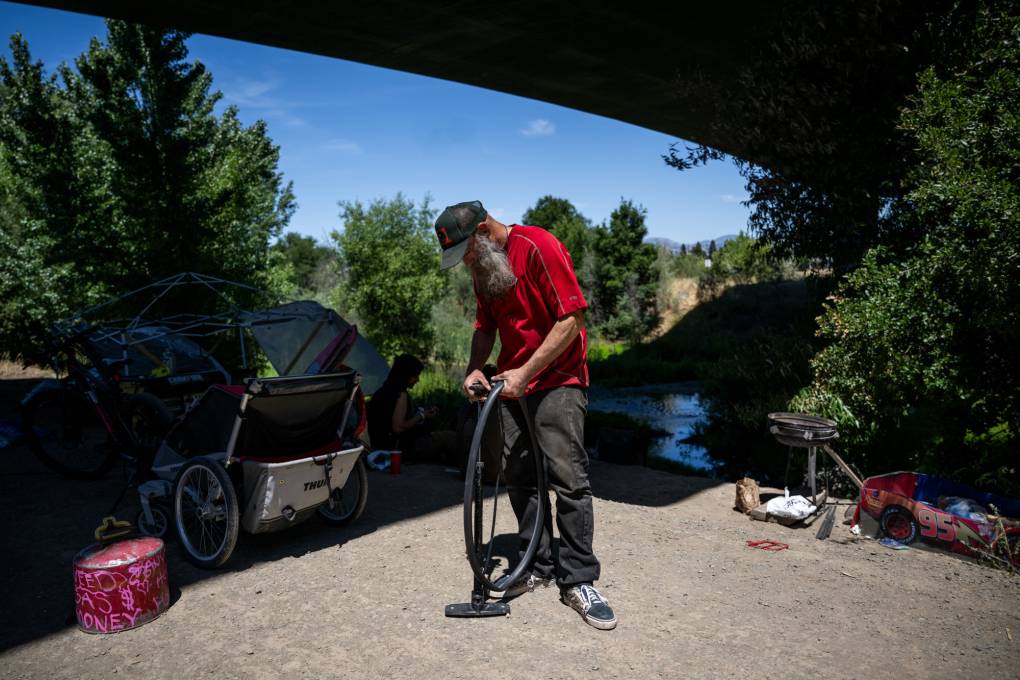
"caption": "Butch Larson repairs a bicycle near the place he lives along the Guadalupe River in San José on May 29, 2025.",
"credit": "Beth LaBerge/KQED",
"altTag": null,
"description": null,
"imgSizes": {
"medium": {
"file": "https://cdn.kqed.org/wp-content/uploads/sites/10/2025/06/250529-SJARRESTSHELTERVOTE-09-BL-KQED-800x533.jpg",
"width": 800,
"height": 533,
"mimeType": "image/jpeg"
},
"large": {
"file": "https://cdn.kqed.org/wp-content/uploads/sites/10/2025/06/250529-SJARRESTSHELTERVOTE-09-BL-KQED-1020x680.jpg",
"width": 1020,
"height": 680,
"mimeType": "image/jpeg"
},
"thumbnail": {
"file": "https://cdn.kqed.org/wp-content/uploads/sites/10/2025/06/250529-SJARRESTSHELTERVOTE-09-BL-KQED-160x107.jpg",
"width": 160,
"height": 107,
"mimeType": "image/jpeg"
},
"1536x1536": {
"file": "https://cdn.kqed.org/wp-content/uploads/sites/10/2025/06/250529-SJARRESTSHELTERVOTE-09-BL-KQED-1536x1024.jpg",
"width": 1536,
"height": 1024,
"mimeType": "image/jpeg"
},
"post-thumbnail": {
"file": "https://cdn.kqed.org/wp-content/uploads/sites/10/2025/06/250529-SJARRESTSHELTERVOTE-09-BL-KQED-672x372.jpg",
"width": 672,
"height": 372,
"mimeType": "image/jpeg"
},
"twentyfourteen-full-width": {
"file": "https://cdn.kqed.org/wp-content/uploads/sites/10/2025/06/250529-SJARRESTSHELTERVOTE-09-BL-KQED-1038x576.jpg",
"width": 1038,
"height": 576,
"mimeType": "image/jpeg"
},
"full-width": {
"file": "https://cdn.kqed.org/wp-content/uploads/sites/10/2025/06/250529-SJARRESTSHELTERVOTE-09-BL-KQED-1920x1280.jpg",
"width": 1920,
"height": 1280,
"mimeType": "image/jpeg"
},
"kqedFullSize": {
"file": "https://cdn.kqed.org/wp-content/uploads/sites/10/2025/06/250529-SJARRESTSHELTERVOTE-09-BL-KQED.jpg",
"width": 2000,
"height": 1333
}
},
"isLoading": false,
"fetchFailed": false
},
"news_12042504": {
"type": "attachments",
"id": "news_12042504",
"meta": {
"index": "attachments_1716263798",
"site": "news",
"id": "12042504",
"found": true
},
"title": "An unhoused community near the Guadalupe River in San José on May 29, 2025.",
"publishDate": 1748970599,
"status": "inherit",
"parent": 0,
"modified": 1749155543,
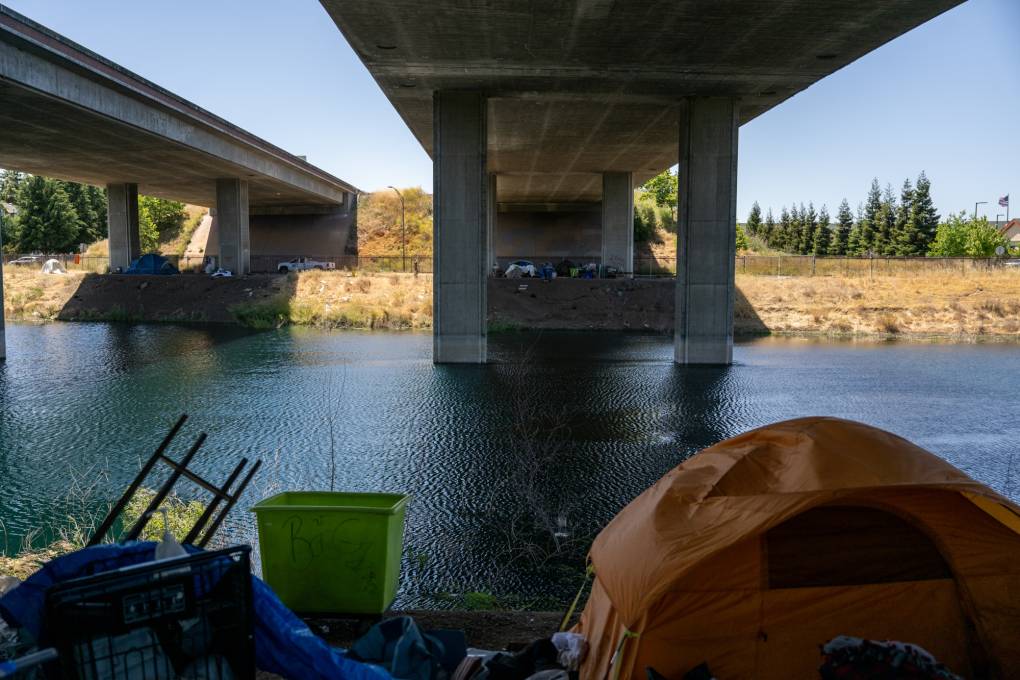
"caption": "An unhoused community near the Guadalupe River in San José on May 29, 2025.",
"credit": "Beth LaBerge/KQED",
"altTag": null,
"description": null,
"imgSizes": {
"medium": {
"file": "https://cdn.kqed.org/wp-content/uploads/sites/10/2025/06/250529-SJARRESTSHELTERVOTE-06-BL-KQED-800x533.jpg",
"width": 800,
"height": 533,
"mimeType": "image/jpeg"
},
"large": {
"file": "https://cdn.kqed.org/wp-content/uploads/sites/10/2025/06/250529-SJARRESTSHELTERVOTE-06-BL-KQED-1020x680.jpg",
"width": 1020,
"height": 680,
"mimeType": "image/jpeg"
},
"thumbnail": {
"file": "https://cdn.kqed.org/wp-content/uploads/sites/10/2025/06/250529-SJARRESTSHELTERVOTE-06-BL-KQED-160x107.jpg",
"width": 160,
"height": 107,
"mimeType": "image/jpeg"
},
"1536x1536": {
"file": "https://cdn.kqed.org/wp-content/uploads/sites/10/2025/06/250529-SJARRESTSHELTERVOTE-06-BL-KQED-1536x1024.jpg",
"width": 1536,
"height": 1024,
"mimeType": "image/jpeg"
},
"post-thumbnail": {
"file": "https://cdn.kqed.org/wp-content/uploads/sites/10/2025/06/250529-SJARRESTSHELTERVOTE-06-BL-KQED-672x372.jpg",
"width": 672,
"height": 372,
"mimeType": "image/jpeg"
},
"twentyfourteen-full-width": {
"file": "https://cdn.kqed.org/wp-content/uploads/sites/10/2025/06/250529-SJARRESTSHELTERVOTE-06-BL-KQED-1038x576.jpg",
"width": 1038,
"height": 576,
"mimeType": "image/jpeg"
},
"full-width": {
"file": "https://cdn.kqed.org/wp-content/uploads/sites/10/2025/06/250529-SJARRESTSHELTERVOTE-06-BL-KQED-1920x1280.jpg",
"width": 1920,
"height": 1280,
"mimeType": "image/jpeg"
},
"kqedFullSize": {
"file": "https://cdn.kqed.org/wp-content/uploads/sites/10/2025/06/250529-SJARRESTSHELTERVOTE-06-BL-KQED.jpg",
"width": 2000,
"height": 1333
}
},
"isLoading": false,
"fetchFailed": false
},
"news_11984099": {
"type": "attachments",
"id": "news_11984099",
"meta": {
"index": "attachments_1716263798",
"site": "news",
"id": "11984099",
"found": true
},
"title": "San Jose License Plate Readers-08",
"publishDate": 1714087373,
"status": "inherit",
"parent": 11983813,
"modified": 1749081108,
"caption": "San José Mayor Matt Mahan at the press conference on April 25, 2024.",
"credit": "Joseph Geha/KQED",
"altTag": "A white middle-aged man speaks into microphones wearing a blue suit and a white collared shirt with no tie.",
"description": null,
"imgSizes": {
"medium": {
"file": "https://cdn.kqed.org/wp-content/uploads/sites/10/2024/04/San-Jose-License-Plate-Readers-08-800x533.jpg",
"width": 800,
"height": 533,
"mimeType": "image/jpeg"
},
"large": {
"file": "https://cdn.kqed.org/wp-content/uploads/sites/10/2024/04/San-Jose-License-Plate-Readers-08-1020x680.jpg",
"width": 1020,
"height": 680,
"mimeType": "image/jpeg"
},
"thumbnail": {
"file": "https://cdn.kqed.org/wp-content/uploads/sites/10/2024/04/San-Jose-License-Plate-Readers-08-160x107.jpg",
"width": 160,
"height": 107,
"mimeType": "image/jpeg"
},
"1536x1536": {
"file": "https://cdn.kqed.org/wp-content/uploads/sites/10/2024/04/San-Jose-License-Plate-Readers-08-1536x1024.jpg",
"width": 1536,
"height": 1024,
"mimeType": "image/jpeg"
},
"post-thumbnail": {
"file": "https://cdn.kqed.org/wp-content/uploads/sites/10/2024/04/San-Jose-License-Plate-Readers-08-672x372.jpg",
"width": 672,
"height": 372,
"mimeType": "image/jpeg"
},
"twentyfourteen-full-width": {
"file": "https://cdn.kqed.org/wp-content/uploads/sites/10/2024/04/San-Jose-License-Plate-Readers-08-1038x576.jpg",
"width": 1038,
"height": 576,
"mimeType": "image/jpeg"
},
"full-width": {
"file": "https://cdn.kqed.org/wp-content/uploads/sites/10/2024/04/San-Jose-License-Plate-Readers-08-1920x1280.jpg",
"width": 1920,
"height": 1280,
"mimeType": "image/jpeg"
},
"kqedFullSize": {
"file": "https://cdn.kqed.org/wp-content/uploads/sites/10/2024/04/San-Jose-License-Plate-Readers-08.jpg",
"width": 2000,
"height": 1333
}
},
"isLoading": false,
"fetchFailed": false
},
"news_12042396": {
"type": "attachments",
"id": "news_12042396",
"meta": {
"index": "attachments_1716263798",
"site": "news",
"id": "12042396",
"found": true
},
"title": "TOPSHOT-US-ATTACK-ISRAEL-DEMONSTRATION-PALESTINIANS-CONFLICT-POLITICS-POLICE",
"publishDate": 1748885221,
"status": "inherit",
"parent": 12042393,
"modified": 1748885359,
"caption": "An Israeli flag is fixed to a street sign as police stand by off Pearl Street on the scene of an attack on demonstrators calling for the release of Israeli hostages held in Gaza, in Boulder, Colorado, on June 1, 2025. ",
"credit": "Eli Imadali/AFP via Getty Images",
"altTag": null,
"description": null,
"imgSizes": {
"medium": {
"file": "https://cdn.kqed.org/wp-content/uploads/sites/10/2025/06/BoulderColoradoAttackGetty-800x533.jpg",
"width": 800,
"height": 533,
"mimeType": "image/jpeg"
},
"large": {
"file": "https://cdn.kqed.org/wp-content/uploads/sites/10/2025/06/BoulderColoradoAttackGetty-1020x680.jpg",
"width": 1020,
"height": 680,
"mimeType": "image/jpeg"
},
"thumbnail": {
"file": "https://cdn.kqed.org/wp-content/uploads/sites/10/2025/06/BoulderColoradoAttackGetty-160x107.jpg",
"width": 160,
"height": 107,
"mimeType": "image/jpeg"
},
"1536x1536": {
"file": "https://cdn.kqed.org/wp-content/uploads/sites/10/2025/06/BoulderColoradoAttackGetty-1536x1024.jpg",
"width": 1536,
"height": 1024,
"mimeType": "image/jpeg"
},
"post-thumbnail": {
"file": "https://cdn.kqed.org/wp-content/uploads/sites/10/2025/06/BoulderColoradoAttackGetty-672x372.jpg",
"width": 672,
"height": 372,
"mimeType": "image/jpeg"
},
"twentyfourteen-full-width": {
"file": "https://cdn.kqed.org/wp-content/uploads/sites/10/2025/06/BoulderColoradoAttackGetty-1038x576.jpg",
"width": 1038,
"height": 576,
"mimeType": "image/jpeg"
},
"full-width": {
"file": "https://cdn.kqed.org/wp-content/uploads/sites/10/2025/06/BoulderColoradoAttackGetty-1920x1280.jpg",
"width": 1920,
"height": 1280,
"mimeType": "image/jpeg"
},
"kqedFullSize": {
"file": "https://cdn.kqed.org/wp-content/uploads/sites/10/2025/06/BoulderColoradoAttackGetty.jpg",
"width": 2000,
"height": 1333
}
},
"isLoading": false,
"fetchFailed": false
},
"news_12042131": {
"type": "attachments",
"id": "news_12042131",
"meta": {
"index": "attachments_1716263798",
"site": "news",
"id": "12042131",
"found": true
},
"title": "The Job Corps Center in San Jose on May 29, 2025.",
"publishDate": 1748624058,
"status": "inherit",
"parent": 0,
"modified": 1748624148,
"caption": "The Job Corps Center in San Jose on May 29, 2025.",
"credit": "Beth LaBerge/KQED",
"altTag": null,
"description": null,
"imgSizes": {
"medium": {
"file": "https://cdn.kqed.org/wp-content/uploads/sites/10/2025/05/250529-JOBCORPSCENTER-07-BL-KQED-800x533.jpg",
"width": 800,
"height": 533,
"mimeType": "image/jpeg"
},
"large": {
"file": "https://cdn.kqed.org/wp-content/uploads/sites/10/2025/05/250529-JOBCORPSCENTER-07-BL-KQED-1020x680.jpg",
"width": 1020,
"height": 680,
"mimeType": "image/jpeg"
},
"thumbnail": {
"file": "https://cdn.kqed.org/wp-content/uploads/sites/10/2025/05/250529-JOBCORPSCENTER-07-BL-KQED-160x107.jpg",
"width": 160,
"height": 107,
"mimeType": "image/jpeg"
},
"1536x1536": {
"file": "https://cdn.kqed.org/wp-content/uploads/sites/10/2025/05/250529-JOBCORPSCENTER-07-BL-KQED-1536x1024.jpg",
"width": 1536,
"height": 1024,
"mimeType": "image/jpeg"
},
"post-thumbnail": {
"file": "https://cdn.kqed.org/wp-content/uploads/sites/10/2025/05/250529-JOBCORPSCENTER-07-BL-KQED-672x372.jpg",
"width": 672,
"height": 372,
"mimeType": "image/jpeg"
},
"twentyfourteen-full-width": {
"file": "https://cdn.kqed.org/wp-content/uploads/sites/10/2025/05/250529-JOBCORPSCENTER-07-BL-KQED-1038x576.jpg",
"width": 1038,
"height": 576,
"mimeType": "image/jpeg"
},
"full-width": {
"file": "https://cdn.kqed.org/wp-content/uploads/sites/10/2025/05/250529-JOBCORPSCENTER-07-BL-KQED-1920x1280.jpg",
"width": 1920,
"height": 1280,
"mimeType": "image/jpeg"
},
"kqedFullSize": {
"file": "https://cdn.kqed.org/wp-content/uploads/sites/10/2025/05/250529-JOBCORPSCENTER-07-BL-KQED.jpg",
"width": 2000,
"height": 1333
}
},
"isLoading": false,
"fetchFailed": false
},
"news_12041943": {
"type": "attachments",
"id": "news_12041943",
"meta": {
"index": "attachments_1716263798",
"site": "news",
"id": "12041943",
"found": true
},
"title": "250528-SJSMOKESHOPS-JG-5-KQED",
"publishDate": 1748538909,
"status": "inherit",
"parent": 0,
"modified": 1748539459,
"caption": "Houdini’s Smoke Shop in downtown San José is seen on May 28, 2025. City Councilmember Peter Ortiz is pushing for a temporary ban on all new smoke shop businesses in the city over health equity concerns.",
"credit": "Joseph Geha/KQED",
"altTag": null,
"description": null,
"imgSizes": {
"medium": {
"file": "https://cdn.kqed.org/wp-content/uploads/sites/10/2025/05/250528-SJSMOKESHOPS-JG-5-KQED-800x533.jpg",
"width": 800,
"height": 533,
"mimeType": "image/jpeg"
},
"large": {
"file": "https://cdn.kqed.org/wp-content/uploads/sites/10/2025/05/250528-SJSMOKESHOPS-JG-5-KQED-1020x680.jpg",
"width": 1020,
"height": 680,
"mimeType": "image/jpeg"
},
"thumbnail": {
"file": "https://cdn.kqed.org/wp-content/uploads/sites/10/2025/05/250528-SJSMOKESHOPS-JG-5-KQED-160x107.jpg",
"width": 160,
"height": 107,
"mimeType": "image/jpeg"
},
"1536x1536": {
"file": "https://cdn.kqed.org/wp-content/uploads/sites/10/2025/05/250528-SJSMOKESHOPS-JG-5-KQED-1536x1024.jpg",
"width": 1536,
"height": 1024,
"mimeType": "image/jpeg"
},
"post-thumbnail": {
"file": "https://cdn.kqed.org/wp-content/uploads/sites/10/2025/05/250528-SJSMOKESHOPS-JG-5-KQED-672x372.jpg",
"width": 672,
"height": 372,
"mimeType": "image/jpeg"
},
"twentyfourteen-full-width": {
"file": "https://cdn.kqed.org/wp-content/uploads/sites/10/2025/05/250528-SJSMOKESHOPS-JG-5-KQED-1038x576.jpg",
"width": 1038,
"height": 576,
"mimeType": "image/jpeg"
},
"full-width": {
"file": "https://cdn.kqed.org/wp-content/uploads/sites/10/2025/05/250528-SJSMOKESHOPS-JG-5-KQED-1920x1280.jpg",
"width": 1920,
"height": 1280,
"mimeType": "image/jpeg"
},
"kqedFullSize": {
"file": "https://cdn.kqed.org/wp-content/uploads/sites/10/2025/05/250528-SJSMOKESHOPS-JG-5-KQED.jpg",
"width": 2000,
"height": 1333
}
},
"isLoading": false,
"fetchFailed": false
},
"news_12040902": {
"type": "attachments",
"id": "news_12040902",
"meta": {
"index": "attachments_1716263798",
"site": "news",
"id": "12040902",
"found": true
},
"title": "US-AUTOMOBILE-LIFESTYLE-WAYMO",
"publishDate": 1747762015,
"status": "inherit",
"parent": 12074861,
"modified": 1772219111,
"caption": "A Waymo autonomous vehicle on Steiner Street in San Francisco on Nov. 17, 2023. ",
"credit": "Jason Henry/AFP via Getty Images",
"altTag": null,
"description": null,
"imgSizes": {
"medium": {
"file": "https://cdn.kqed.org/wp-content/uploads/sites/10/2025/05/GETTYIMAGES-1788126569-KQED-800x533.jpg",
"width": 800,
"height": 533,
"mimeType": "image/jpeg"
},
"large": {
"file": "https://cdn.kqed.org/wp-content/uploads/sites/10/2025/05/GETTYIMAGES-1788126569-KQED-1020x680.jpg",
"width": 1020,
"height": 680,
"mimeType": "image/jpeg"
},
"thumbnail": {
"file": "https://cdn.kqed.org/wp-content/uploads/sites/10/2025/05/GETTYIMAGES-1788126569-KQED-160x107.jpg",
"width": 160,
"height": 107,
"mimeType": "image/jpeg"
},
"1536x1536": {
"file": "https://cdn.kqed.org/wp-content/uploads/sites/10/2025/05/GETTYIMAGES-1788126569-KQED-1536x1024.jpg",
"width": 1536,
"height": 1024,
"mimeType": "image/jpeg"
},
"post-thumbnail": {
"file": "https://cdn.kqed.org/wp-content/uploads/sites/10/2025/05/GETTYIMAGES-1788126569-KQED-672x372.jpg",
"width": 672,
"height": 372,
"mimeType": "image/jpeg"
},
"twentyfourteen-full-width": {
"file": "https://cdn.kqed.org/wp-content/uploads/sites/10/2025/05/GETTYIMAGES-1788126569-KQED-1038x576.jpg",
"width": 1038,
"height": 576,
"mimeType": "image/jpeg"
},
"full-width": {
"file": "https://cdn.kqed.org/wp-content/uploads/sites/10/2025/05/GETTYIMAGES-1788126569-KQED-1920x1280.jpg",
"width": 1920,
"height": 1280,
"mimeType": "image/jpeg"
},
"kqedFullSize": {
"file": "https://cdn.kqed.org/wp-content/uploads/sites/10/2025/05/GETTYIMAGES-1788126569-KQED.jpg",
"width": 2000,
"height": 1333
}
},
"isLoading": false,
"fetchFailed": false
},
"news_12040621": {
"type": "attachments",
"id": "news_12040621",
"meta": {
"index": "attachments_1716263798",
"site": "news",
"id": "12040621",
"found": true
},
"title": "02172023_ksuzuki_tkprogress 010_qed (1)",
"publishDate": 1747435252,
"status": "inherit",
"parent": 12040597,
"modified": 1747437174,
"caption": "About 100 teachers and staff at Santa Clara County’s first charter school received layoff notices in late April, as the school prepares to shutter its three remaining schools at the end of the school year due to financial strain and declining enrollment.",
"credit": "Kori Suzuki/KQED",
"altTag": null,
"description": null,
"imgSizes": {
"medium": {
"file": "https://cdn.kqed.org/wp-content/uploads/sites/10/2025/05/02172023_ksuzuki_tkprogress-010_qed-1-800x532.jpg",
"width": 800,
"height": 532,
"mimeType": "image/jpeg"
},
"large": {
"file": "https://cdn.kqed.org/wp-content/uploads/sites/10/2025/05/02172023_ksuzuki_tkprogress-010_qed-1-1020x679.jpg",
"width": 1020,
"height": 679,
"mimeType": "image/jpeg"
},
"thumbnail": {
"file": "https://cdn.kqed.org/wp-content/uploads/sites/10/2025/05/02172023_ksuzuki_tkprogress-010_qed-1-160x106.jpg",
"width": 160,
"height": 106,
"mimeType": "image/jpeg"
},
"1536x1536": {
"file": "https://cdn.kqed.org/wp-content/uploads/sites/10/2025/05/02172023_ksuzuki_tkprogress-010_qed-1-1536x1022.jpg",
"width": 1536,
"height": 1022,
"mimeType": "image/jpeg"
},
"post-thumbnail": {
"file": "https://cdn.kqed.org/wp-content/uploads/sites/10/2025/05/02172023_ksuzuki_tkprogress-010_qed-1-672x372.jpg",
"width": 672,
"height": 372,
"mimeType": "image/jpeg"
},
"twentyfourteen-full-width": {
"file": "https://cdn.kqed.org/wp-content/uploads/sites/10/2025/05/02172023_ksuzuki_tkprogress-010_qed-1-1038x576.jpg",
"width": 1038,
"height": 576,
"mimeType": "image/jpeg"
},
"full-width": {
"file": "https://cdn.kqed.org/wp-content/uploads/sites/10/2025/05/02172023_ksuzuki_tkprogress-010_qed-1-1920x1278.jpg",
"width": 1920,
"height": 1278,
"mimeType": "image/jpeg"
},
"kqedFullSize": {
"file": "https://cdn.kqed.org/wp-content/uploads/sites/10/2025/05/02172023_ksuzuki_tkprogress-010_qed-1.jpg",
"width": 2000,
"height": 1331
}
},
"isLoading": false,
"fetchFailed": false
},
"news_12039817": {
"type": "attachments",
"id": "news_12039817",
"meta": {
"index": "attachments_1716263798",
"site": "news",
"id": "12039817",
"found": true
},
"title": "1567215597970-XMM-Newton_TidalDisruptionEvent",
"publishDate": 1747086263,
"status": "inherit",
"parent": 12039807,
"modified": 1747152238,
"caption": "Artist's conception of shredded stellar material from a tidal disruption event.",
"credit": "C. Carreau/ESA",
"altTag": null,
"description": null,
"imgSizes": {
"medium": {
"file": "https://cdn.kqed.org/wp-content/uploads/sites/10/2025/05/1567215597970-XMM-Newton_TidalDisruptionEvent-800x450.jpg",
"width": 800,
"height": 450,
"mimeType": "image/jpeg"
},
"large": {
"file": "https://cdn.kqed.org/wp-content/uploads/sites/10/2025/05/1567215597970-XMM-Newton_TidalDisruptionEvent-1020x574.jpg",
"width": 1020,
"height": 574,
"mimeType": "image/jpeg"
},
"thumbnail": {
"file": "https://cdn.kqed.org/wp-content/uploads/sites/10/2025/05/1567215597970-XMM-Newton_TidalDisruptionEvent-160x90.jpg",
"width": 160,
"height": 90,
"mimeType": "image/jpeg"
},
"1536x1536": {
"file": "https://cdn.kqed.org/wp-content/uploads/sites/10/2025/05/1567215597970-XMM-Newton_TidalDisruptionEvent-1536x864.jpg",
"width": 1536,
"height": 864,
"mimeType": "image/jpeg"
},
"post-thumbnail": {
"file": "https://cdn.kqed.org/wp-content/uploads/sites/10/2025/05/1567215597970-XMM-Newton_TidalDisruptionEvent-672x372.jpg",
"width": 672,
"height": 372,
"mimeType": "image/jpeg"
},
"twentyfourteen-full-width": {
"file": "https://cdn.kqed.org/wp-content/uploads/sites/10/2025/05/1567215597970-XMM-Newton_TidalDisruptionEvent-1038x576.jpg",
"width": 1038,
"height": 576,
"mimeType": "image/jpeg"
},
"full-width": {
"file": "https://cdn.kqed.org/wp-content/uploads/sites/10/2025/05/1567215597970-XMM-Newton_TidalDisruptionEvent-1920x1080.jpg",
"width": 1920,
"height": 1080,
"mimeType": "image/jpeg"
},
"kqedFullSize": {
"file": "https://cdn.kqed.org/wp-content/uploads/sites/10/2025/05/1567215597970-XMM-Newton_TidalDisruptionEvent.jpg",
"width": 2000,
"height": 1125
}
},
"isLoading": false,
"fetchFailed": false
},
"news_12039346": {
"type": "attachments",
"id": "news_12039346",
"meta": {
"index": "attachments_1716263798",
"site": "news",
"id": "12039346",
"found": true
},
"title": "pia00159-venus",
"publishDate": 1746728861,
"status": "inherit",
"parent": 12039342,
"modified": 1746738845,
"caption": "The hemispheric view of Venus, as revealed by more than a decade of radar investigations culminating in the 1990–94 Magellan mission, is centered at 180 degrees east longitude.",
"credit": null,
"altTag": null,
"description": null,
"imgSizes": {
"kqedFullSize": {
"file": "https://cdn.kqed.org/wp-content/uploads/sites/10/2025/05/pia00159-venus-scaled-e1747087479336.jpg",
"width": 2000,
"height": 2000
}
},
"isLoading": false,
"fetchFailed": false
},
"news_12038435": {
"type": "attachments",
"id": "news_12038435",
"meta": {
"index": "attachments_1716263798",
"site": "news",
"id": "12038435",
"found": true
},
"title": "250430-BLACKAPRIL50-JG-2",
"publishDate": 1746131385,
"status": "inherit",
"parent": 12038401,
"modified": 1746134119,
"caption": "A flag of South Vietnam, or the Republic of Vietnam, is held up during the Vietnamese American Roundtable's Black April event, commemorating the 50th Anniversary of the Fall of Saigon in San José, Calif., on Wednesday, April 30, 2025.",
"credit": "KQED/Joseph Geha",
"altTag": null,
"description": null,
"imgSizes": {
"medium": {
"file": "https://cdn.kqed.org/wp-content/uploads/sites/10/2025/05/250430-BLACKAPRIL50-JG-2-800x533.jpg",
"width": 800,
"height": 533,
"mimeType": "image/jpeg"
},
"large": {
"file": "https://cdn.kqed.org/wp-content/uploads/sites/10/2025/05/250430-BLACKAPRIL50-JG-2-1020x680.jpg",
"width": 1020,
"height": 680,
"mimeType": "image/jpeg"
},
"thumbnail": {
"file": "https://cdn.kqed.org/wp-content/uploads/sites/10/2025/05/250430-BLACKAPRIL50-JG-2-160x107.jpg",
"width": 160,
"height": 107,
"mimeType": "image/jpeg"
},
"1536x1536": {
"file": "https://cdn.kqed.org/wp-content/uploads/sites/10/2025/05/250430-BLACKAPRIL50-JG-2-1536x1024.jpg",
"width": 1536,
"height": 1024,
"mimeType": "image/jpeg"
},
"2048x2048": {
"file": "https://cdn.kqed.org/wp-content/uploads/sites/10/2025/05/250430-BLACKAPRIL50-JG-2-2048x1365.jpg",
"width": 2048,
"height": 1365,
"mimeType": "image/jpeg"
},
"post-thumbnail": {
"file": "https://cdn.kqed.org/wp-content/uploads/sites/10/2025/05/250430-BLACKAPRIL50-JG-2-672x372.jpg",
"width": 672,
"height": 372,
"mimeType": "image/jpeg"
},
"twentyfourteen-full-width": {
"file": "https://cdn.kqed.org/wp-content/uploads/sites/10/2025/05/250430-BLACKAPRIL50-JG-2-1038x576.jpg",
"width": 1038,
"height": 576,
"mimeType": "image/jpeg"
},
"full-width": {
"file": "https://cdn.kqed.org/wp-content/uploads/sites/10/2025/05/250430-BLACKAPRIL50-JG-2-1920x1280.jpg",
"width": 1920,
"height": 1280,
"mimeType": "image/jpeg"
},
"kqedFullSize": {
"file": "https://cdn.kqed.org/wp-content/uploads/sites/10/2025/05/250430-BLACKAPRIL50-JG-2-scaled.jpg",
"width": 2560,
"height": 1707
}
},
"isLoading": false,
"fetchFailed": false
}
},
"audioPlayerReducer": {
"postId": "stream_live",
"isPaused": true,
"isPlaying": false,
"pfsActive": false,
"pledgeModalIsOpen": true,
"playerDrawerIsOpen": false,
"liveAudioPlayStartedAt": 0,
"liveAudioPlayContext": ""
},
"authorsReducer": {
"gmarzorati": {
"type": "authors",
"id": "227",
"meta": {
"index": "authors_1716337520",
"id": "227",
"found": true
},
"name": "Guy Marzorati",
"firstName": "Guy",
"lastName": "Marzorati",
"slug": "gmarzorati",
"email": "gmarzorati@KQED.org",
"display_author_email": true,
"staff_mastheads": [
"news"
],
"title": "Correspondent",
"bio": "Guy Marzorati is a correspondent on KQED's California Politics and Government Desk, based in San Jose. A graduate of Santa Clara University, Guy joined KQED in 2013. He reports on state and local politics and produces KQED's digital voter guide.",
"avatar": "https://secure.gravatar.com/avatar/e7038b8dbfd55b104369b76b1cd0b9de?s=600&d=blank&r=g",
"twitter": "guymarzorati",
"facebook": null,
"instagram": null,
"linkedin": null,
"sites": [
{
"site": "",
"roles": [
"editor"
]
},
{
"site": "news",
"roles": [
"editor"
]
},
{
"site": "science",
"roles": [
"editor"
]
},
{
"site": "forum",
"roles": [
"editor"
]
},
{
"site": "elections",
"roles": [
"editor"
]
},
{
"site": "liveblog",
"roles": [
"editor"
]
}
],
"headData": {
"title": "Guy Marzorati | KQED",
"description": "Correspondent",
"ogImgSrc": "https://secure.gravatar.com/avatar/e7038b8dbfd55b104369b76b1cd0b9de?s=600&d=blank&r=g",
"twImgSrc": "https://secure.gravatar.com/avatar/e7038b8dbfd55b104369b76b1cd0b9de?s=600&d=blank&r=g"
},
"isLoading": false,
"link": "/author/gmarzorati"
},
"shossaini": {
"type": "authors",
"id": "3214",
"meta": {
"index": "authors_1716337520",
"id": "3214",
"found": true
},
"name": "Sara Hossaini",
"firstName": "Sara",
"lastName": "Hossaini",
"slug": "shossaini",
"email": "shossaini@kqed.org",
"display_author_email": true,
"staff_mastheads": [
"news"
],
"title": "KQED Reporter",
"bio": "Sara Hossaini came to general assignment reporting at KQED in 2013 after two winters reporting at Wyoming Public Radio. She holds a bachelor's degree in broadcast journalism from the University of Nebraska-Lincoln. Her radio romance began after a bitter breakup with documentary film (Ok, maybe it's still complicated). Her first simultaneous jobs in San Francisco were as Associate Producer on a PBS film series through the Center for Asian American Media and as a butler. She likes to trot, plot and make things with her hands.",
"avatar": "https://secure.gravatar.com/avatar/060e9f56b9554e17942e89f413242774?s=600&d=blank&r=g",
"twitter": "mshossaini",
"facebook": null,
"instagram": null,
"linkedin": null,
"sites": [
{
"site": "news",
"roles": [
"author"
]
},
{
"site": "stateofhealth",
"roles": [
"author"
]
}
],
"headData": {
"title": "Sara Hossaini | KQED",
"description": "KQED Reporter",
"ogImgSrc": "https://secure.gravatar.com/avatar/060e9f56b9554e17942e89f413242774?s=600&d=blank&r=g",
"twImgSrc": "https://secure.gravatar.com/avatar/060e9f56b9554e17942e89f413242774?s=600&d=blank&r=g"
},
"isLoading": false,
"link": "/author/shossaini"
},
"ecruzguevarra": {
"type": "authors",
"id": "8654",
"meta": {
"index": "authors_1716337520",
"id": "8654",
"found": true
},
"name": "Ericka Cruz Guevarra",
"firstName": "Ericka",
"lastName": "Cruz Guevarra",
"slug": "ecruzguevarra",
"email": "ecruzguevarra@kqed.org",
"display_author_email": true,
"staff_mastheads": [
"news"
],
"title": "Producer, The Bay Podcast",
"bio": "Ericka Cruz Guevarra is host of \u003ca href=\"https://www.kqed.org/podcasts/thebay\">\u003cem>The Bay\u003c/em>\u003c/a> podcast at KQED. Before host, she was the show’s producer. Her work in that capacity includes a three-part reported series on policing in Vallejo, which won a 2020 excellence in journalism award from the Society of Professional Journalists. Ericka has worked as a breaking news reporter at Oregon Public Broadcasting, helped produce the Code Switch podcast, and was KQED’s inaugural Raul Ramirez Diversity Fund intern. She’s also an alumna of NPR’s Next Generation Radio program. Send her an email if you have strong feelings about whether Fairfield and Suisun City are the Bay. Ericka is represented by SAG-AFTRA.",
"avatar": "https://secure.gravatar.com/avatar/accefc1de4bafc7e234b69bcb9b6f6536c130fd84709bc3069ef11a78787e1bb?s=600&d=blank&r=g",
"twitter": "NotoriousECG",
"bluesky": null,
"facebook": null,
"instagram": null,
"linkedin": null,
"sites": [
{
"site": "arts",
"roles": [
"subscriber"
]
},
{
"site": "news",
"roles": [
"editor",
"manage_categories"
]
},
{
"site": "futureofyou",
"roles": [
"subscriber"
]
},
{
"site": "stateofhealth",
"roles": [
"subscriber"
]
},
{
"site": "science",
"roles": [
"editor"
]
},
{
"site": "forum",
"roles": [
"subscriber"
]
}
],
"headData": {
"title": "Ericka Cruz Guevarra | KQED",
"description": "Producer, The Bay Podcast",
"ogImgSrc": "https://secure.gravatar.com/avatar/accefc1de4bafc7e234b69bcb9b6f6536c130fd84709bc3069ef11a78787e1bb?s=600&d=blank&r=g",
"twImgSrc": "https://secure.gravatar.com/avatar/accefc1de4bafc7e234b69bcb9b6f6536c130fd84709bc3069ef11a78787e1bb?s=600&d=blank&r=g"
},
"isLoading": false,
"link": "/author/ecruzguevarra"
},
"dventon": {
"type": "authors",
"id": "11088",
"meta": {
"index": "authors_1716337520",
"id": "11088",
"found": true
},
"name": "Danielle Venton",
"firstName": "Danielle",
"lastName": "Venton",
"slug": "dventon",
"email": "dventon@kqed.org",
"display_author_email": true,
"staff_mastheads": [
"science"
],
"title": "Science reporter",
"bio": "Danielle Venton is a reporter for KQED Science. She covers wildfires, space and oceans (though she is prone to sea sickness).\r\n\r\nBefore joining KQED in 2015, Danielle was a staff reporter at KRCB in Sonoma County and a freelancer. She studied science communication at UC Santa Cruz and formerly worked at CERN in Geneva, Switzerland where she wrote about computing. She lives in Sonoma County and enjoys backpacking.",
"avatar": "https://secure.gravatar.com/avatar/37b292b5c40c8d93959c4f48d73b5286f41b7abd8588277e941905a3ed4c801c?s=600&d=blank&r=g",
"twitter": "DanielleVenton",
"bluesky": null,
"facebook": null,
"instagram": null,
"linkedin": null,
"sites": [
{
"site": "arts",
"roles": [
"contributor"
]
},
{
"site": "news",
"roles": [
"editor"
]
},
{
"site": "futureofyou",
"roles": [
"editor"
]
},
{
"site": "science",
"roles": [
"editor"
]
},
{
"site": "liveblog",
"roles": [
"contributor"
]
}
],
"headData": {
"title": "Danielle Venton | KQED",
"description": "Science reporter",
"ogImgSrc": "https://secure.gravatar.com/avatar/37b292b5c40c8d93959c4f48d73b5286f41b7abd8588277e941905a3ed4c801c?s=600&d=blank&r=g",
"twImgSrc": "https://secure.gravatar.com/avatar/37b292b5c40c8d93959c4f48d73b5286f41b7abd8588277e941905a3ed4c801c?s=600&d=blank&r=g"
},
"isLoading": false,
"link": "/author/dventon"
},
"smohamad": {
"type": "authors",
"id": "11631",
"meta": {
"index": "authors_1716337520",
"id": "11631",
"found": true
},
"name": "Sarah Mohamad",
"firstName": "Sarah",
"lastName": "Mohamad",
"slug": "smohamad",
"email": "smohamad@KQED.org",
"display_author_email": true,
"staff_mastheads": [],
"title": "Engagement Producer and Reporter, KQED Science",
"bio": "Sarah Mohamad is an audience engagement reporter and producer for KQED Science. She reports on audience-focused science and environment stories and manages the team's social media, newsletter, and engagement efforts. Prior to this role, she played a key role as project manager for NSF's \u003ca href=\"https://www.kqed.org/crackingthecode\">\u003cem>Cracking the Code: Influencing Millennial Science Engagement\u003c/em> \u003c/a>audience research.",
"avatar": "https://secure.gravatar.com/avatar/e6224957cd82d015183756ddde1f928013a563d7ca2e4565f8c4de1ec64886c5?s=600&d=blank&r=g",
"twitter": "sarahkmohamad",
"bluesky": null,
"facebook": null,
"instagram": null,
"linkedin": null,
"sites": [
{
"site": "",
"roles": [
"editor"
]
},
{
"site": "arts",
"roles": [
"editor"
]
},
{
"site": "news",
"roles": [
"editor"
]
},
{
"site": "about",
"roles": [
"editor"
]
},
{
"site": "science",
"roles": [
"editor"
]
}
],
"headData": {
"title": "Sarah Mohamad | KQED",
"description": "Engagement Producer and Reporter, KQED Science",
"ogImgSrc": "https://secure.gravatar.com/avatar/e6224957cd82d015183756ddde1f928013a563d7ca2e4565f8c4de1ec64886c5?s=600&d=blank&r=g",
"twImgSrc": "https://secure.gravatar.com/avatar/e6224957cd82d015183756ddde1f928013a563d7ca2e4565f8c4de1ec64886c5?s=600&d=blank&r=g"
},
"isLoading": false,
"link": "/author/smohamad"
},
"amontecillo": {
"type": "authors",
"id": "11649",
"meta": {
"index": "authors_1716337520",
"id": "11649",
"found": true
},
"name": "Alan Montecillo",
"firstName": "Alan",
"lastName": "Montecillo",
"slug": "amontecillo",
"email": "amontecillo@kqed.org",
"display_author_email": false,
"staff_mastheads": [
"news"
],
"title": "KQED Contributor",
"bio": "Alan Montecillo is the senior editor of \u003cem>\u003ca href=\"http://kqed.org/thebay\">The Bay\u003c/a>, \u003c/em> KQED's local news podcast. Before moving to the Bay Area, he worked as a senior talk show producer for WILL in Champaign-Urbana, Illinois and at Oregon Public Broadcasting in Portland, Oregon. He has won journalism awards from the Society of Professional Journalists Northern California, the Public Media Journalists Association, The Signal Awards, and has also received a regional Edward R. Murrow award. Alan is a Filipino American from Hong Kong and a graduate of Reed College.",
"avatar": "https://secure.gravatar.com/avatar/268f53a2066899ea9efdd8a5900218b17c822d9862cbc9326cccec53ef41d349?s=600&d=blank&r=g",
"twitter": "alanmontecillo",
"bluesky": null,
"facebook": null,
"instagram": null,
"linkedin": null,
"sites": [
{
"site": "",
"roles": [
"editor"
]
},
{
"site": "news",
"roles": [
"editor",
"manage_categories"
]
}
],
"headData": {
"title": "Alan Montecillo | KQED",
"description": "KQED Contributor",
"ogImgSrc": "https://secure.gravatar.com/avatar/268f53a2066899ea9efdd8a5900218b17c822d9862cbc9326cccec53ef41d349?s=600&d=blank&r=g",
"twImgSrc": "https://secure.gravatar.com/avatar/268f53a2066899ea9efdd8a5900218b17c822d9862cbc9326cccec53ef41d349?s=600&d=blank&r=g"
},
"isLoading": false,
"link": "/author/amontecillo"
},
"jessicakariisa": {
"type": "authors",
"id": "11831",
"meta": {
"index": "authors_1716337520",
"id": "11831",
"found": true
},
"name": "Jessica Kariisa",
"firstName": "Jessica",
"lastName": "Kariisa",
"slug": "jessicakariisa",
"email": "jkariisa@kqed.org",
"display_author_email": false,
"staff_mastheads": [],
"title": "Producer, The Bay",
"bio": "Jessica Kariisa is the producer of The Bay. She first joined KQED as an intern for The California Report Magazine, after which she became an on-call producer. She reported a Bay Curious episode on the use of rap lyrics in criminal trials which won a Society of Professional Journalists award in 2023 for Excellence in Features Journalism and the 2023 Signal Award for Best Conversation Starter. She’s worked on podcasts for Snap Judgment and American Public Media. Before embarking on her audio career, she was a music journalist.\r\n\r\nJessica Kariisa is represented by SAG-AFTRA.",
"avatar": "https://secure.gravatar.com/avatar/522e97b28ac0b3d411621c0fde8f3419c7b71ea2c5c262c57c4bb600963f328c?s=600&d=blank&r=g",
"twitter": null,
"bluesky": null,
"facebook": null,
"instagram": null,
"linkedin": null,
"sites": [
{
"site": "arts",
"roles": [
"author"
]
},
{
"site": "news",
"roles": [
"editor",
"manage_categories"
]
}
],
"headData": {
"title": "Jessica Kariisa | KQED",
"description": "Producer, The Bay",
"ogImgSrc": "https://secure.gravatar.com/avatar/522e97b28ac0b3d411621c0fde8f3419c7b71ea2c5c262c57c4bb600963f328c?s=600&d=blank&r=g",
"twImgSrc": "https://secure.gravatar.com/avatar/522e97b28ac0b3d411621c0fde8f3419c7b71ea2c5c262c57c4bb600963f328c?s=600&d=blank&r=g"
},
"isLoading": false,
"link": "/author/jessicakariisa"
},
"jgeha": {
"type": "authors",
"id": "11906",
"meta": {
"index": "authors_1716337520",
"id": "11906",
"found": true
},
"name": "Joseph Geha",
"firstName": "Joseph",
"lastName": "Geha",
"slug": "jgeha",
"email": "jgeha@kqed.org",
"display_author_email": false,
"staff_mastheads": [
"news",
"science"
],
"title": "KQED Contributor",
"bio": null,
"avatar": "https://secure.gravatar.com/avatar/ea84d2b6dd93d6369d453edf19dd583f117cd1759d2d9c9c92f9de77017354fe?s=600&d=blank&r=g",
"twitter": null,
"bluesky": null,
"facebook": null,
"instagram": null,
"linkedin": null,
"sites": [
{
"site": "news",
"roles": [
"editor"
]
},
{
"site": "liveblog",
"roles": [
"author"
]
}
],
"headData": {
"title": "Joseph Geha | KQED",
"description": "KQED Contributor",
"ogImgSrc": "https://secure.gravatar.com/avatar/ea84d2b6dd93d6369d453edf19dd583f117cd1759d2d9c9c92f9de77017354fe?s=600&d=blank&r=g",
"twImgSrc": "https://secure.gravatar.com/avatar/ea84d2b6dd93d6369d453edf19dd583f117cd1759d2d9c9c92f9de77017354fe?s=600&d=blank&r=g"
},
"isLoading": false,
"link": "/author/jgeha"
},
"kdebenedetti": {
"type": "authors",
"id": "11913",
"meta": {
"index": "authors_1716337520",
"id": "11913",
"found": true
},
"name": "Katie DeBenedetti",
"firstName": "Katie",
"lastName": "DeBenedetti",
"slug": "kdebenedetti",
"email": "kdebenedetti@kqed.org",
"display_author_email": false,
"staff_mastheads": [
"news",
"science"
],
"title": "KQED Contributor",
"bio": "Katie DeBenedetti is a digital reporter covering daily news for the Express Desk. Prior to joining KQED as a culture reporting intern in January 2024, she covered education and city government for the Napa Valley Register.",
"avatar": "https://secure.gravatar.com/avatar/6e31073cb8f7e4214ab03f42771d0f45?s=600&d=blank&r=g",
"twitter": null,
"facebook": null,
"instagram": null,
"linkedin": null,
"sites": [
{
"site": "news",
"roles": [
"author"
]
},
{
"site": "science",
"roles": [
"author"
]
},
{
"site": "liveblog",
"roles": [
"author"
]
}
],
"headData": {
"title": "Katie DeBenedetti | KQED",
"description": "KQED Contributor",
"ogImgSrc": "https://secure.gravatar.com/avatar/6e31073cb8f7e4214ab03f42771d0f45?s=600&d=blank&r=g",
"twImgSrc": "https://secure.gravatar.com/avatar/6e31073cb8f7e4214ab03f42771d0f45?s=600&d=blank&r=g"
},
"isLoading": false,
"link": "/author/kdebenedetti"
},
"mvelasquez": {
"type": "authors",
"id": "11939",
"meta": {
"index": "authors_1716337520",
"id": "11939",
"found": true
},
"name": "Mel Velasquez",
"firstName": "Mel",
"lastName": "Velasquez",
"slug": "mvelasquez",
"email": "mvelasquez@kqed.org",
"display_author_email": false,
"staff_mastheads": [],
"title": "KQED Contributor",
"bio": null,
"avatar": "https://secure.gravatar.com/avatar/409094312d56fab09fef4251e949ffa6?s=600&d=blank&r=g",
"twitter": null,
"facebook": null,
"instagram": null,
"linkedin": "www.linkedin.com/in/melanievelasquezz",
"sites": [
{
"site": "news",
"roles": [
"editor"
]
}
],
"headData": {
"title": "Mel Velasquez | KQED",
"description": "KQED Contributor",
"ogImgSrc": "https://secure.gravatar.com/avatar/409094312d56fab09fef4251e949ffa6?s=600&d=blank&r=g",
"twImgSrc": "https://secure.gravatar.com/avatar/409094312d56fab09fef4251e949ffa6?s=600&d=blank&r=g"
},
"isLoading": false,
"link": "/author/mvelasquez"
}
},
"pagesReducer": {
"news_tag_san-jose": {
"type": "terms",
"id": "news_18541",
"meta": {
"index": "terms_1716263798",
"site": "news",
"id": "18541",
"score": 8.005292
},
"featImg": null,
"name": "San Jose",
"description": null,
"taxonomy": "tag",
"headData": {
"twImgId": null,
"twTitle": null,
"ogTitle": null,
"ogImgId": null,
"twDescription": null,
"description": null,
"title": "San Jose Archives | KQED News",
"ogDescription": null
},
"ttid": 91,
"slug": "san-jose",
"isLoading": false,
"title": "San Jose",
"pageMeta": {
"site": "news",
"WpPageTemplate": "page-topic-editorial",
"currentPage": 13
},
"blocks": [
{
"blockName": "kqed/post-list",
"attrs": {
"layout": "cardArticle2",
"query": "posts/news?tag=san-jose",
"seeMore": false,
"paginated": true,
"page": 13
}
},
{
"blockName": "kqed/ad"
}
]
}
},
"pfsSessionReducer": {},
"postsReducer": {
"stream_live": {
"type": "live",
"id": "stream_live",
"audioUrl": "https://streams.kqed.org/kqedradio",
"title": "Live Stream",
"excerpt": "Live Stream information currently unavailable.",
"link": "/radio",
"featImg": "",
"label": {
"name": "KQED Live",
"link": "/"
}
},
"stream_kqedNewscast": {
"type": "posts",
"id": "stream_kqedNewscast",
"audioUrl": "https://www.kqed.org/.stream/anon/radio/RDnews/newscast.mp3?_=1",
"title": "KQED Newscast",
"featImg": "",
"label": {
"name": "88.5 FM",
"link": "/"
}
},
"news_12042895": {
"type": "posts",
"id": "news_12042895",
"meta": {
"index": "posts_1716263798",
"site": "news",
"id": "12042895",
"score": null,
"sort": [
1749207632000
]
},
"guestAuthors": [],
"slug": "san-francisco-job-corps-students-face-uncertain-future",
"title": "San Francisco Job Corps Students Face Uncertain Future",
"publishDate": 1749207632,
"format": "standard",
"headTitle": "San Francisco Job Corps Students Face Uncertain Future | KQED",
"labelTerm": {
"site": "news"
},
"content": "\u003cp>Driving over the Bay Bridge into \u003ca href=\"https://www.kqed.org/news/tag/san-francisco\">San Francisco\u003c/a>, the vast, mostly barren compound that’s home to the Treasure Island Job Corps Center doesn’t look like much.\u003c/p>\n\u003cp>But students gaining certifications in culinary arts, construction, hospitality and other blue-collar careers at the trade school say it has been a lifeline for more than 20 years.\u003c/p>\n\u003cp>Since 1999, thousands of low-income youth and young adults have gotten high school diplomas and trade certifications while living and working at the federally funded site. Now, more than 350 who were enrolled as of last week are at risk of losing that lifeline in the coming weeks, as the Department of Labor plans to pause operations at Job Corps centers across the country.\u003c/p>\n\u003cp>[ad fullwidth]\u003c/p>\n\u003cp>“Many of us have nowhere to go,” said Eddie Lopez, 19, one of dozens of students, staff members and community advocates who gathered Thursday to protest the termination.\u003c/p>\n\u003cp>Lopez came to the center four months ago, after couch surfing in the East Bay and trying to find a job to support himself.\u003c/p>\n\u003cfigure id=\"attachment_12042991\" class=\"wp-caption aligncenter\" style=\"max-width: 2000px\">\u003cimg loading=\"lazy\" decoding=\"async\" class=\"size-full wp-image-12042991\" src=\"https://cdn.kqed.org/wp-content/uploads/sites/10/2025/06/250605-TREASUREISLANDJOBCORPS-14-BL-KQED.jpg\" alt=\"\" width=\"2000\" height=\"1333\" srcset=\"https://cdn.kqed.org/wp-content/uploads/sites/10/2025/06/250605-TREASUREISLANDJOBCORPS-14-BL-KQED.jpg 2000w, https://cdn.kqed.org/wp-content/uploads/sites/10/2025/06/250605-TREASUREISLANDJOBCORPS-14-BL-KQED-160x107.jpg 160w, https://cdn.kqed.org/wp-content/uploads/sites/10/2025/06/250605-TREASUREISLANDJOBCORPS-14-BL-KQED-1536x1024.jpg 1536w\" sizes=\"auto, (max-width: 2000px) 100vw, 2000px\">\u003cfigcaption class=\"wp-caption-text\">Students, staff and supporters rally outside the Treasure Island Job Corps Center in San Francisco on June 5, 2025, protesting the facility’s upcoming closure, which they say could leave at-risk youth homeless. \u003ccite>(Beth LaBerge/KQED)\u003c/cite>\u003c/figcaption>\u003c/figure>\n\u003cp>“We came here with nothing — no job, no home, no support system — and now they expect us to find something in a couple of days. It’s just really heartbreaking and horrifying and inhumane,” he said.\u003c/p>\n\u003cp>Lopez and other students at Treasure Island found out last week that they would need to leave the island after the Department of Labor announced it would indefinitely pause operations at the end of June at the vast majority of its 131 trade schools that offer free schooling, housing and healthcare to low-income 16 to 24 year olds.\u003c/p>\n\u003cp>Department of Labor Secretary Lori Chavez-DeRemer said in a statement that the department had reviewed the program and determined that it was “no longer achieving the intended outcomes that students deserve,” based on a review of serious incident reports at Job Corps sites and the financial impact of the program, which operated with a $140 million deficit in 2024.[aside postID=news_12042125 hero='https://cdn.kqed.org/wp-content/uploads/sites/10/2025/05/250529-JOBCORPSCENTER-07-BL-KQED-1020x680.jpg']About 250 of the 375 students who resided on Treasure Island prior to the DOL’s announcement have already left, and more are preparing to leave by the end of the week, according to Lacy Barnes, a representative for the Union of Teachers and Classified Professionals, which represents the center’s employees.\u003c/p>\n\u003cp>A \u003ca href=\"https://www.kqed.org/news/12042125/trump-pauses-job-corps-leaving-san-jose-trade-students-in-turmoil\">similar exodus\u003c/a> has happened at the San José Job Corps site, where another 350 students found out last Thursday that their program would be shut down, and some were told to pack their bags within days.\u003c/p>\n\u003cp>Other students, including Lopez, plan to stay on campus until they’re forced to leave.\u003c/p>\n\u003cp>On Wednesday, a federal judge granted a temporary restraining order to a trade group representing Job Corps center operators suing the Department of Labor over its abrupt announcement, ordering the department not to pause work or terminate agreements with contractors until a further ruling. The order lasts through June 17, when a hearing is scheduled in the case.\u003c/p>\n\u003cp>Even if U.S. District Judge Andrew Carter grants the contractors an injunction that would extend until the case could be decided in court, Barnes worries that the chaos over the last week cannot be rectified.\u003c/p>\n\u003cfigure id=\"attachment_12042992\" class=\"wp-caption aligncenter\" style=\"max-width: 2000px\">\u003cimg loading=\"lazy\" decoding=\"async\" class=\"size-full wp-image-12042992\" src=\"https://cdn.kqed.org/wp-content/uploads/sites/10/2025/06/250605-TREASUREISLANDJOBCORPS-21-BL-KQED.jpg\" alt=\"\" width=\"2000\" height=\"1333\" srcset=\"https://cdn.kqed.org/wp-content/uploads/sites/10/2025/06/250605-TREASUREISLANDJOBCORPS-21-BL-KQED.jpg 2000w, https://cdn.kqed.org/wp-content/uploads/sites/10/2025/06/250605-TREASUREISLANDJOBCORPS-21-BL-KQED-160x107.jpg 160w, https://cdn.kqed.org/wp-content/uploads/sites/10/2025/06/250605-TREASUREISLANDJOBCORPS-21-BL-KQED-1536x1024.jpg 1536w\" sizes=\"auto, (max-width: 2000px) 100vw, 2000px\">\u003cfigcaption class=\"wp-caption-text\">Frank Lara, executive vice president of United Educators of San Francisco, speaks during a rally outside the Treasure Island Job Corps Center in San Francisco on June 5, 2025, protesting the facility’s upcoming closure, which they say could leave at-risk youth homeless. \u003ccite>(Beth LaBerge/KQED)\u003c/cite>\u003c/figcaption>\u003c/figure>\n\u003cp>“The damage that’s incurred — we can’t recoup that,” she said.\u003c/p>\n\u003cp>Many of the students who come to job corps centers escaped difficult home situations or were previously unhoused, and are at heightened risk if they are forced to return to those circumstances.\u003c/p>\n\u003cp>Isaiah Moncrease, who recently completed the culinary program at Treasure Island, said without it, he isn’t sure he would see a future where he has a legal job.\u003c/p>\n\u003cp>“I got into gang life, I sold drugs, and I almost ended up in jail multiple times,” he said. “This program not only saved my life, but saved the lives of countless other students.”\u003c/p>\n\u003cp>Before coming to Job Corps, Moncrease said he and his siblings had been moved around nine states and more than 50 counties by his mother, who was struggling with drug addiction.\u003c/p>\n\u003cp>“She went wherever the drugs were, and we went with her,” he told KQED.\u003c/p>\n\u003cfigure id=\"attachment_12042990\" class=\"wp-caption aligncenter\" style=\"max-width: 2000px\">\u003cimg loading=\"lazy\" decoding=\"async\" class=\"size-full wp-image-12042990\" src=\"https://cdn.kqed.org/wp-content/uploads/sites/10/2025/06/250605-TREASUREISLANDJOBCORPS-12-BL-KQED.jpg\" alt=\"\" width=\"2000\" height=\"1333\" srcset=\"https://cdn.kqed.org/wp-content/uploads/sites/10/2025/06/250605-TREASUREISLANDJOBCORPS-12-BL-KQED.jpg 2000w, https://cdn.kqed.org/wp-content/uploads/sites/10/2025/06/250605-TREASUREISLANDJOBCORPS-12-BL-KQED-160x107.jpg 160w, https://cdn.kqed.org/wp-content/uploads/sites/10/2025/06/250605-TREASUREISLANDJOBCORPS-12-BL-KQED-1536x1024.jpg 1536w\" sizes=\"auto, (max-width: 2000px) 100vw, 2000px\">\u003cfigcaption class=\"wp-caption-text\">Colleen Jeffers, president of the Council of Classified Employees (CFT), listens to speakers during a rally outside the Treasure Island Job Corps Center in San Francisco on June 5, 2025, protesting the facility’s upcoming closure, which they say could leave at-risk youth homeless. \u003ccite>(Beth LaBerge/KQED)\u003c/cite>\u003c/figcaption>\u003c/figure>\n\u003cp>Eventually, he landed in Antioch with his father, where he said he was abused. Job Corps gave him an escape.\u003c/p>\n\u003cp>“In the last eight months, I have completed my culinary trade, I have got my managers and my food handler certificates, and I’ve been taught how to stand strong and proud and be who I am,” he said.\u003c/p>\n\u003cp>The center also provided a second chance for the Pierson-Jurik family.\u003c/p>\n\u003cp>Annette Pierson and Kathryn Jurik gave their daughter Eren a choice last year: go to Job Corps, or find a place to live on her own, without their help.\u003c/p>\n\u003cp>“We were having family difficulties, and we were trying to help our daughter launch,” Jurik said. “Things were getting really rough, and we gave her the choice.”\u003c/p>\n\u003cp>While Eren’s been at the center, they’ve been able to repair their family relationship. Eren was able to finish her trade program last week, and on Friday, she’s moving back to her parents’ house in Santa Rosa, with new guardrails in place to ensure they can live together healthily.\u003c/p>\n\u003cp>“I have a sign that says, ‘Job Corps saved my family,’ because we were deteriorating,” Jurik said. “Now we can be together, and spend time and talk. … we can sit around and have adult conversations and she can bring her friends home.”\u003c/p>\n\u003cp>She and others hope the program can continue: “It’s priceless. Whatever it costs is priceless for one kid,” she told KQED.\u003c/p>\n\u003cp>[ad floatright]\u003c/p>\n",
"blocks": [],
"excerpt": "The Department of Labor announced it would indefinitely pause operations at most of its Job Corps sites nationwide.",
"status": "publish",
"parent": 0,
"modified": 1749170618,
"stats": {
"hasAudio": false,
"hasVideo": false,
"hasChartOrMap": false,
"iframeSrcs": [],
"hasGoogleForm": false,
"hasGallery": false,
"hasHearkenModule": false,
"hasPolis": false,
"paragraphCount": 28,
"wordCount": 1131
},
"headData": {
"title": "San Francisco Job Corps Students Face Uncertain Future | KQED",
"description": "The Department of Labor announced it would indefinitely pause operations at most of its Job Corps sites nationwide.",
"ogTitle": "",
"ogDescription": "",
"ogImgId": "",
"twTitle": "",
"twDescription": "",
"twImgId": "",
"schema": {
"@context": "https://schema.org",
"@type": "NewsArticle",
"headline": "San Francisco Job Corps Students Face Uncertain Future",
"datePublished": "2025-06-06T04:00:32-07:00",
"dateModified": "2025-06-05T17:43:38-07:00",
"image": "https://cdn.kqed.org/wp-content/uploads/2020/02/KQED-OG-Image@1x.png",
"isAccessibleForFree": "True",
"publisher": {
"@type": "NewsMediaOrganization",
"@id": "https://www.kqed.org/#organization",
"name": "KQED",
"logo": "https://cdn.kqed.org/wp-content/uploads/2020/02/KQED-OG-Image@1x.png",
"url": "https://www.kqed.org",
"sameAs": [
"https://www.facebook.com/KQED",
"https://twitter.com/KQED",
"https://www.instagram.com/kqed/",
"https://www.tiktok.com/@kqedofficial",
"https://www.linkedin.com/company/kqed",
"https://www.youtube.com/channel/UCeC0IOo7i1P_61zVUWbJ4nw"
]
}
}
},
"sticky": false,
"templateType": "standard",
"featuredImageType": "standard",
"excludeFromSiteSearch": "Include",
"articleAge": "0",
"path": "/news/12042895/san-francisco-job-corps-students-face-uncertain-future",
"audioTrackLength": null,
"parsedContent": [
{
"type": "contentString",
"content": "\u003cdiv class=\"post-body\">\u003cp>\u003cp>Driving over the Bay Bridge into \u003ca href=\"https://www.kqed.org/news/tag/san-francisco\">San Francisco\u003c/a>, the vast, mostly barren compound that’s home to the Treasure Island Job Corps Center doesn’t look like much.\u003c/p>\n\u003cp>But students gaining certifications in culinary arts, construction, hospitality and other blue-collar careers at the trade school say it has been a lifeline for more than 20 years.\u003c/p>\n\u003cp>Since 1999, thousands of low-income youth and young adults have gotten high school diplomas and trade certifications while living and working at the federally funded site. Now, more than 350 who were enrolled as of last week are at risk of losing that lifeline in the coming weeks, as the Department of Labor plans to pause operations at Job Corps centers across the country.\u003c/p>\n\u003cp>\u003c/p>\u003c/div>",
"attributes": {
"named": {},
"numeric": []
}
},
{
"type": "component",
"content": "",
"name": "ad",
"attributes": {
"named": {
"label": "fullwidth"
},
"numeric": [
"fullwidth"
]
}
},
{
"type": "contentString",
"content": "\u003cdiv class=\"post-body\">\u003cp>\u003c/p>\n\u003cp>“Many of us have nowhere to go,” said Eddie Lopez, 19, one of dozens of students, staff members and community advocates who gathered Thursday to protest the termination.\u003c/p>\n\u003cp>Lopez came to the center four months ago, after couch surfing in the East Bay and trying to find a job to support himself.\u003c/p>\n\u003cfigure id=\"attachment_12042991\" class=\"wp-caption aligncenter\" style=\"max-width: 2000px\">\u003cimg loading=\"lazy\" decoding=\"async\" class=\"size-full wp-image-12042991\" src=\"https://cdn.kqed.org/wp-content/uploads/sites/10/2025/06/250605-TREASUREISLANDJOBCORPS-14-BL-KQED.jpg\" alt=\"\" width=\"2000\" height=\"1333\" srcset=\"https://cdn.kqed.org/wp-content/uploads/sites/10/2025/06/250605-TREASUREISLANDJOBCORPS-14-BL-KQED.jpg 2000w, https://cdn.kqed.org/wp-content/uploads/sites/10/2025/06/250605-TREASUREISLANDJOBCORPS-14-BL-KQED-160x107.jpg 160w, https://cdn.kqed.org/wp-content/uploads/sites/10/2025/06/250605-TREASUREISLANDJOBCORPS-14-BL-KQED-1536x1024.jpg 1536w\" sizes=\"auto, (max-width: 2000px) 100vw, 2000px\">\u003cfigcaption class=\"wp-caption-text\">Students, staff and supporters rally outside the Treasure Island Job Corps Center in San Francisco on June 5, 2025, protesting the facility’s upcoming closure, which they say could leave at-risk youth homeless. \u003ccite>(Beth LaBerge/KQED)\u003c/cite>\u003c/figcaption>\u003c/figure>\n\u003cp>“We came here with nothing — no job, no home, no support system — and now they expect us to find something in a couple of days. It’s just really heartbreaking and horrifying and inhumane,” he said.\u003c/p>\n\u003cp>Lopez and other students at Treasure Island found out last week that they would need to leave the island after the Department of Labor announced it would indefinitely pause operations at the end of June at the vast majority of its 131 trade schools that offer free schooling, housing and healthcare to low-income 16 to 24 year olds.\u003c/p>\n\u003cp>Department of Labor Secretary Lori Chavez-DeRemer said in a statement that the department had reviewed the program and determined that it was “no longer achieving the intended outcomes that students deserve,” based on a review of serious incident reports at Job Corps sites and the financial impact of the program, which operated with a $140 million deficit in 2024.\u003c/p>\u003c/div>",
"attributes": {
"named": {},
"numeric": []
}
},
{
"type": "component",
"content": "",
"name": "aside",
"attributes": {
"named": {
"postid": "news_12042125",
"hero": "https://cdn.kqed.org/wp-content/uploads/sites/10/2025/05/250529-JOBCORPSCENTER-07-BL-KQED-1020x680.jpg",
"label": ""
},
"numeric": []
}
},
{
"type": "contentString",
"content": "\u003cdiv class=\"post-body\">\u003cp>About 250 of the 375 students who resided on Treasure Island prior to the DOL’s announcement have already left, and more are preparing to leave by the end of the week, according to Lacy Barnes, a representative for the Union of Teachers and Classified Professionals, which represents the center’s employees.\u003c/p>\n\u003cp>A \u003ca href=\"https://www.kqed.org/news/12042125/trump-pauses-job-corps-leaving-san-jose-trade-students-in-turmoil\">similar exodus\u003c/a> has happened at the San José Job Corps site, where another 350 students found out last Thursday that their program would be shut down, and some were told to pack their bags within days.\u003c/p>\n\u003cp>Other students, including Lopez, plan to stay on campus until they’re forced to leave.\u003c/p>\n\u003cp>On Wednesday, a federal judge granted a temporary restraining order to a trade group representing Job Corps center operators suing the Department of Labor over its abrupt announcement, ordering the department not to pause work or terminate agreements with contractors until a further ruling. The order lasts through June 17, when a hearing is scheduled in the case.\u003c/p>\n\u003cp>Even if U.S. District Judge Andrew Carter grants the contractors an injunction that would extend until the case could be decided in court, Barnes worries that the chaos over the last week cannot be rectified.\u003c/p>\n\u003cfigure id=\"attachment_12042992\" class=\"wp-caption aligncenter\" style=\"max-width: 2000px\">\u003cimg loading=\"lazy\" decoding=\"async\" class=\"size-full wp-image-12042992\" src=\"https://cdn.kqed.org/wp-content/uploads/sites/10/2025/06/250605-TREASUREISLANDJOBCORPS-21-BL-KQED.jpg\" alt=\"\" width=\"2000\" height=\"1333\" srcset=\"https://cdn.kqed.org/wp-content/uploads/sites/10/2025/06/250605-TREASUREISLANDJOBCORPS-21-BL-KQED.jpg 2000w, https://cdn.kqed.org/wp-content/uploads/sites/10/2025/06/250605-TREASUREISLANDJOBCORPS-21-BL-KQED-160x107.jpg 160w, https://cdn.kqed.org/wp-content/uploads/sites/10/2025/06/250605-TREASUREISLANDJOBCORPS-21-BL-KQED-1536x1024.jpg 1536w\" sizes=\"auto, (max-width: 2000px) 100vw, 2000px\">\u003cfigcaption class=\"wp-caption-text\">Frank Lara, executive vice president of United Educators of San Francisco, speaks during a rally outside the Treasure Island Job Corps Center in San Francisco on June 5, 2025, protesting the facility’s upcoming closure, which they say could leave at-risk youth homeless. \u003ccite>(Beth LaBerge/KQED)\u003c/cite>\u003c/figcaption>\u003c/figure>\n\u003cp>“The damage that’s incurred — we can’t recoup that,” she said.\u003c/p>\n\u003cp>Many of the students who come to job corps centers escaped difficult home situations or were previously unhoused, and are at heightened risk if they are forced to return to those circumstances.\u003c/p>\n\u003cp>Isaiah Moncrease, who recently completed the culinary program at Treasure Island, said without it, he isn’t sure he would see a future where he has a legal job.\u003c/p>\n\u003cp>“I got into gang life, I sold drugs, and I almost ended up in jail multiple times,” he said. “This program not only saved my life, but saved the lives of countless other students.”\u003c/p>\n\u003cp>Before coming to Job Corps, Moncrease said he and his siblings had been moved around nine states and more than 50 counties by his mother, who was struggling with drug addiction.\u003c/p>\n\u003cp>“She went wherever the drugs were, and we went with her,” he told KQED.\u003c/p>\n\u003cfigure id=\"attachment_12042990\" class=\"wp-caption aligncenter\" style=\"max-width: 2000px\">\u003cimg loading=\"lazy\" decoding=\"async\" class=\"size-full wp-image-12042990\" src=\"https://cdn.kqed.org/wp-content/uploads/sites/10/2025/06/250605-TREASUREISLANDJOBCORPS-12-BL-KQED.jpg\" alt=\"\" width=\"2000\" height=\"1333\" srcset=\"https://cdn.kqed.org/wp-content/uploads/sites/10/2025/06/250605-TREASUREISLANDJOBCORPS-12-BL-KQED.jpg 2000w, https://cdn.kqed.org/wp-content/uploads/sites/10/2025/06/250605-TREASUREISLANDJOBCORPS-12-BL-KQED-160x107.jpg 160w, https://cdn.kqed.org/wp-content/uploads/sites/10/2025/06/250605-TREASUREISLANDJOBCORPS-12-BL-KQED-1536x1024.jpg 1536w\" sizes=\"auto, (max-width: 2000px) 100vw, 2000px\">\u003cfigcaption class=\"wp-caption-text\">Colleen Jeffers, president of the Council of Classified Employees (CFT), listens to speakers during a rally outside the Treasure Island Job Corps Center in San Francisco on June 5, 2025, protesting the facility’s upcoming closure, which they say could leave at-risk youth homeless. \u003ccite>(Beth LaBerge/KQED)\u003c/cite>\u003c/figcaption>\u003c/figure>\n\u003cp>Eventually, he landed in Antioch with his father, where he said he was abused. Job Corps gave him an escape.\u003c/p>\n\u003cp>“In the last eight months, I have completed my culinary trade, I have got my managers and my food handler certificates, and I’ve been taught how to stand strong and proud and be who I am,” he said.\u003c/p>\n\u003cp>The center also provided a second chance for the Pierson-Jurik family.\u003c/p>\n\u003cp>Annette Pierson and Kathryn Jurik gave their daughter Eren a choice last year: go to Job Corps, or find a place to live on her own, without their help.\u003c/p>\n\u003cp>“We were having family difficulties, and we were trying to help our daughter launch,” Jurik said. “Things were getting really rough, and we gave her the choice.”\u003c/p>\n\u003cp>While Eren’s been at the center, they’ve been able to repair their family relationship. Eren was able to finish her trade program last week, and on Friday, she’s moving back to her parents’ house in Santa Rosa, with new guardrails in place to ensure they can live together healthily.\u003c/p>\n\u003cp>“I have a sign that says, ‘Job Corps saved my family,’ because we were deteriorating,” Jurik said. “Now we can be together, and spend time and talk. … we can sit around and have adult conversations and she can bring her friends home.”\u003c/p>\n\u003cp>She and others hope the program can continue: “It’s priceless. Whatever it costs is priceless for one kid,” she told KQED.\u003c/p>\n\u003cp>\u003c/p>\u003c/div>",
"attributes": {
"named": {},
"numeric": []
}
},
{
"type": "component",
"content": "",
"name": "ad",
"attributes": {
"named": {
"label": "floatright"
},
"numeric": [
"floatright"
]
}
},
{
"type": "contentString",
"content": "\u003cdiv class=\"post-body\">\u003cp>\u003c/p>\n\u003c/div>\u003c/p>",
"attributes": {
"named": {},
"numeric": []
}
}
],
"link": "/news/12042895/san-francisco-job-corps-students-face-uncertain-future",
"authors": [
"11913"
],
"categories": [
"news_34551",
"news_8",
"news_13"
],
"tags": [
"news_1386",
"news_18538",
"news_1323",
"news_27626",
"news_35063",
"news_1775",
"news_1760",
"news_19904",
"news_17968",
"news_38",
"news_18541",
"news_21285",
"news_1279",
"news_98"
],
"featImg": "news_12042994",
"label": "news"
},
"news_12042960": {
"type": "posts",
"id": "news_12042960",
"meta": {
"index": "posts_1716263798",
"site": "news",
"id": "12042960",
"score": null,
"sort": [
1749204048000
]
},
"guestAuthors": [],
"slug": "soon-refusing-shelter-in-san-jose-could-get-you-arrested",
"title": "Soon, Refusing Shelter in San José Could Get You Arrested",
"publishDate": 1749204048,
"format": "audio",
"headTitle": "Soon, Refusing Shelter in San José Could Get You Arrested | KQED",
"labelTerm": {},
"content": "\u003cp>\u003cem>This episode contains explicit language.\u003c/em>\u003c/p>\n\u003cp>Next week, San Jose City Council will vote on a controversial plan that would threaten unhoused people with arrest if they refuse multiple offers of shelter. Mayor Matt Mahan says this approach could help open paths to treatment and increase support for more shelter construction. But Santa Clara County officials are skeptical.\u003c/p>\n\u003cp>\u003cstrong>Links:\u003c/strong>\u003c/p>\n\u003cul>\n\u003cli>\u003ca href=\"https://www.kqed.org/news/12042370/in-san-jose-a-controversial-choice-for-unhoused-shelter-or-arrest\">In San José, a Controversial Choice for Unhoused: Shelter or Arrest?\u003c/a>\u003c/li>\n\u003cli>\u003ca href=\"https://www.kqed.org/news/12042688/mahan-unveils-final-san-jose-budget-plan\">Mahan’s Final San José Budget Focused on Controversial Homelessness and Pay Plans\u003c/a>\u003c/li>\n\u003c/ul>\n\u003cp>\u003cem>\u003ci>Some members of the KQED podcast team are represented by The Screen Actors Guild, American Federation of Television and Radio Artists. San Francisco Northern California Local.\u003c/i>\u003c/em>\u003c/p>\n\u003cp>\u003c!-- iframe plugin v.4.3 wordpress.org/plugins/iframe/ -->\u003cbr>\n\u003ciframe loading=\"lazy\" frameborder=\"0\" height=\"200\" scrolling=\"no\" src=\"https://playlist.megaphone.fm?e=KQINC8586606765&light=true\" width=\"100%\" class=\"iframe-class\">\u003c/iframe>\u003c/p>\n\u003cp>[ad fullwidth]\u003c/p>\n\u003cp>\u003cem>This is a computer-generated transcript. While our team has reviewed it, there may be errors.\u003c/em>\u003c/p>\n\u003cp>\u003cstrong>Ericka Cruz Guevarra \u003c/strong>[00:01:05] I know you went to an encampment in San Jose. What did it look like and who did you meet when you were out there?\u003c/p>\n\u003cp>\u003cstrong>Guy Marzorati \u003c/strong>[00:01:13] So this is an encampment off of Cherry Avenue in South San Jose. It’s underneath Highway 85, kind of right on the banks of the Guadalupe River, and it’s behind this big Almaden Ranch shopping center.\u003c/p>\n\u003cp>\u003cstrong>Guy Marzorati \u003c/strong>[00:01:31] What really interested me about this encampment is right next to it, San Jose’s building a new tiny home community. And anyone who’s living in the encampament is getting offered kind of first dibs for moving into the site when it opens later this year. And so it raises the question of like, are people gonna take the offer? Why or why not? Since I first started visiting this camp, probably back in January, it has gotten in smaller and smaller. People have taken up offers of shelter, but some folks are still there.\u003c/p>\n\u003cp>\u003cstrong>Guy Marzorati \u003c/strong>[00:02:05] Have they said anything to you guys about giving you a spot there?\u003c/p>\n\u003cp>\u003cstrong>Butch Larson \u003c/strong>[00:02:09] No, they said it was backed already.\u003c/p>\n\u003cp>\u003cstrong>Guy Marzorati \u003c/strong>[00:02:11] Butch Larson and David Garcia are among them, and they’ve both been living at this camp near Cherry Avenue for years.\u003c/p>\n\u003cp>\u003cstrong>Ericka Cruz Guevarra \u003c/strong>[00:02:19] Yeah, I mean, do they have any interest in the tiny homes being built, the stone throw away?\u003c/p>\n\u003cp>\u003cstrong>Guy Marzorati \u003c/strong>[00:02:26] They don’t. They like to do repairs. They have a lot of tools with them. They’re concerned that they won’t be able to bring the tools into the tiny homes.\u003c/p>\n\u003cp>\u003cstrong>Butch Larson \u003c/strong>[00:02:45] Yeah, they tried to give me a tiny home. That was bulls–t. Couldn’t have any visitors, most of all, right? Even in jail, you get visitors.\u003c/p>\n\u003cp>\u003cstrong>Guy Marzorati \u003c/strong>[00:02:52] They don’t really feel comfortable moving in. And I think, look, the tiny homes are pretty low barrier. They don’t do drug testing there. You can bring in pets, you can come in and out. But at the end of the day, comfort is a feeling and they don’t feel comfortable making that move.\u003c/p>\n\u003cp>\u003cstrong>Butch Larson \u003c/strong>[00:03:12] I’ve been telling everybody out here about how you’re the first person to go to jail over this s–t, and I’ve been out here the longest.\u003c/p>\n\u003cp>\u003cstrong>Guy Marzorati \u003c/strong>[00:03:17] And others I’ve talked to at the encampment feel differently. They want a spot in the interim housing, but there are some folks like, like Butch Larson and David Garcia who say, no, they’re not going to accept that offer.\u003c/p>\n\u003cp>\u003cstrong>Ericka Cruz Guevarra \u003c/strong>[00:03:35] And it’s really that slice of folks who have come into focus for Mayor Matt Mahan in recent months, right? How has the city tried to answer this hesitation that we’re seeing from people like Butch and David to accept these sort of interim shelter offers?\u003c/p>\n\u003cp>\u003cstrong>Guy Marzorati \u003c/strong>[00:03:57] Yeah, it’s been a balance of kind of carrots and sticks. Like I said, you know, there’s this outreach and the people who are encamped immediately around these shelter sites are getting first priority. But they’re also setting up the city as a no encampment zone around the shelter sites. So ultimately these are the encampments that are going to be cleared first. And it’s really what’s at the center of this policy that the mayor is rolling out now, this responsibility to shelter policy.\u003c/p>\n\u003cp>\u003cstrong>Matt Mahan \u003c/strong>[00:04:25] I’ve come to believe that it is ineffective, politically infeasible, and frankly, cruel to those suffering from addiction and mental illness to only focus on the people who want help.\u003c/p>\n\u003cp>\u003cstrong>Guy Marzorati \u003c/strong>[00:04:37] He’s saying once we offer people shelter, heated times, multiple times, and they’re still turning it down, that’s when we’re gonna bring in the police to potentially make arrests.\u003c/p>\n\u003cp>\u003cstrong>Matt Mahan \u003c/strong>[00:04:48] I actually think the person who’s saying, no, I don’t want to come indoors, I don’t wanna help, I’d rather move down the block to the next neighborhood than come indoors is a real problem. Those are the folks who most need our help.\u003c/p>\n\u003cp>\u003cstrong>Ericka Cruz Guevarra \u003c/strong>[00:05:01] And this is sort of a way of like forcing people’s hands to accept this interim shelter, right? Why this approach? Why the threat of arrest?\u003c/p>\n\u003cp>\u003cstrong>Guy Marzorati \u003c/strong>[00:05:11] Yeah, I think he sees it as kind of a middle path between letting encampments proliferate in the city, but then also not the approach pursued by other Bay Area cities like Fremont, for example, or elsewhere in California, like in Fresno, cities that have banned camping without offering housing.\u003c/p>\n\u003cp>\u003cstrong>Matt Mahan \u003c/strong>[00:05:29] We don’t want to be cruel. The goal here is not to send anyone to jail, nor will that be the outcome of enforcing responsibility to shelter. The only point is when we’re doing everything we can and asking our community to invest millions, and ultimately, actually, it’s been billions of dollars statewide to end homelessness, people have got to, at a minimum, agree to come indoors.\u003c/p>\n\u003cp>\u003cstrong>Guy Marzorati \u003c/strong>[00:05:49] Mahan has tried to pitch responsibility to shelter. It’s like a middle ground between that. They’re gonna clear encampments, but they’re always gonna proceed that with an offer of shelter.\u003c/p>\n\u003cp>\u003cstrong>Ericka Cruz Guevarra \u003c/strong>[00:05:59] I mean, which kind of raises the question, does San Jose have enough shelter to offer?\u003c/p>\n\u003cp>\u003cstrong>Guy Marzorati \u003c/strong>[00:06:05] It doesn’t. There’s a city report that was out on this earlier this year that I think has a few really pertinent statistics. One is just the raw number of people experiencing unsheltered homelessness, which this report pegged at 5,477 people in San Jose. When you combine city shelter, interim housing, county shelter, there’s probably a little more than 3,000 units. There is not enough shelter for every person who is experiencing unsheltered homelessness. The second data point that I think is relevant here is how many people are actually resisting shelter and services. And this report says in San Jose, that’s around 10% of people who are experiencing unsheltered homelessness. Now, it’s a moving number, right? At some encampments, you’ll have a 20% of people say no, or 30, but I think this is really at the heart of the discussion here. And it’s difficult number to pin down because these are humans. There was a guy I talked to at the Cherry Ave encampment who said, you know, he’s been battling depression and an outreach worker came to him, offered a spot in interim housing, and he turned it down. And he said, I’ve regretted that ever since. Like I was just having a really bad day. And I told that person, I’m not interested, go away. And ever since then, I’ve been regretting that. And if they came back, I would say yes. So it’s a really difficult statistic to pin down, but I think it’s at the heart of this question of, how many people are actually refusing shelter and would be impacted by this initiative?\u003c/p>\n\u003cp>\u003cstrong>Ericka Cruz Guevarra \u003c/strong>[00:07:42] Right, and I feel like what’s interesting is that this policy that city council is voting on really puts to the center of the photo, I feel, like of what’s happening here. The people who aren’t accepting shelter, when it seems like there’s, I mean, there’s a demand issue, but also a supply issue here. If the stated goal is to try and compel unhoused people to accept help. Say you are arrested. I mean, what would happen to you next under this plan in an ideal world?\u003c/p>\n\u003cp>\u003cstrong>Guy Marzorati \u003c/strong>[00:08:17] Depends on whose ideal world, but I would say like the way the mayor has crafted this is once, you know, someone is arrested. The city’s plan is to take that person to this mission street recovery station. It’s a 24 hour drop off site. It’s run by the county for people who are having like a mental health crisis or honestly just for people to sober up. But there’s no agreement for that right now. So as of now, San Jose police would take this person experiencing homelessness to the county jail. Give them a citation, and then the sheriff’s office says they’ll be released right there. They’re not going to lock people up for this. Then this person would, you know, come back to court for their arraignment or for their first court appearance. You’d have someone from the San Jose City Attorney’s Office asking the judge, hey, can we place this person in a diversion court, court order treatment? You’d the public defender there, maybe they’re pushing back against the terms of a treatment plan or asking for the case to be dismissed. But if the person does make it that far, they’re gonna be in this rigorous behavioral health court. And I actually spent some time in one of those courts this week. And you know, clients there, they’re getting support from a judge, they’re get support from caseworker, but they have to show up to their appointments, to their counseling, and they have these constant check-ins with the judge to make sure that’s happening.\u003c/p>\n\u003cp>\u003cstrong>Ericka Cruz Guevarra \u003c/strong>[00:09:44] And there’s some people who don’t see that as a very realistic scenario, right?\u003c/p>\n\u003cp>\u003cstrong>Guy Marzorati \u003c/strong>[00:09:50] Yeah, that’s absolutely right. I mean, first of all, I think we should just predicate this with like, not everyone who’s refusing shelter has a behavioral health issue. If people are being routed in that direction, is that even going to capture the needs of everybody who is refusing shelter? I heard some skepticism on that front. There’s a lot of skepticism among people who work in county government. And ultimately, once someone is arrested by San Jose police, they’re then transferred over to the hands of the county government.\u003c/p>\n\u003cp>\u003cstrong>Damon Silver \u003c/strong>[00:10:19] I am quite kind of skeptical of the use of the criminal legal system to address the homelessness problem our community is kind of wrestling with.\u003c/p>\n\u003cp>\u003cstrong>Guy Marzorati \u003c/strong>[00:10:29] When I talked to, for example, the acting public defender in Santa Clara County, Damon Silver, he said, you know, after that person is arrested, taken to the jail, and then immediately released, he basically said, like, it’s wildly optimistic to expect them to then show up to even their first court hearing.\u003c/p>\n\u003cp>\u003cstrong>Damon Silver \u003c/strong>[00:10:46] They’re struggling to survive. For us to expect that they’re likely going to be able to manage both the transportation, the monitoring of when their court date is, and then successfully arriving at court, I think we’re going to anticipate a large failure to appear rate.\u003c/p>\n\u003cp>\u003cstrong>Guy Marzorati \u003c/strong>[00:11:03] And then if they don’t show up, the judge can say, no more citations, this person needs to be brought into custody. So then that does increases the chances that someone will spend time in jail.\u003c/p>\n\u003cp>\u003cstrong>Damon Silver \u003c/strong>[00:11:12] So what you create is this kind of negative cycle of arrest, re-arrest, detention, loss of property, loss of connection, and then all the resources it’s consuming to do that.\u003c/p>\n\u003cp>\u003cstrong>Guy Marzorati \u003c/strong>[00:11:30] Fundamentally, everyone I talked to who’s involved in this behavioral health treatment program said, if you don’t have housing, your treatment is not going to work. And Damon Silver, the public defender, says the county just doesn’t have enough of that housing for treatment right now.\u003c/p>\n\u003cp>\u003cstrong>Damon Silver \u003c/strong>[00:11:47] It will ultimately, in our opinion, result in a lot more harm and be counterproductive to the goals, which is, in essence, get people out of homelessness, than achieve what the stated goal is.\u003c/p>\n\u003cp>\u003cstrong>Ericka Cruz Guevarra \u003c/strong>[00:12:03] Coming up, why Mayor Matt Mahan thinks this policy will help unlock the rest of his homelessness agenda. Stay with us.\u003c/p>\n\u003cp>\u003cstrong>Ericka Cruz Guevarra \u003c/strong>[00:12:20] How am I supposed to make sense of all of this, Guy? I mean, if this policy that the city council is voting on next week is really about compelling people to accept help, but there’s actually not even enough help to offer, I mean what really is the goal here then?\u003c/p>\n\u003cp>\u003cstrong>Guy Marzorati \u003c/strong>[00:12:41] Yeah, I mean, I would lay out two other big pieces of this that I think is kind of through the lens that the mayor is thinking of it. One is to use these arrests to force action by the county government, to push judges to order people into mental health or substance use treatment, to push the county, the board of supervisors to build more housing for people who are going through treatment. I think Mahan sees like, look, the city is spending a lot of money and doing a lot to stand up these shelters. And for the people who are not accepting those, he wants the county to take on a greater role to provide that kind of housing. So part of this is a forcing function.\u003c/p>\n\u003cp>\u003cstrong>Matt Mahan \u003c/strong>[00:13:19] I don’t control what happens on the county side, and much of that is determined by the state. Counties are essentially subsidiaries of the state, but I’m not going to be silent on what’s needed there either.\u003c/p>\n\u003cp>\u003cstrong>Guy Marzorati \u003c/strong>[00:13:31] The other I would say is political. It’s been hard historically to get neighborhoods to accept homeless housing. It’s a big part of Mahan’s time as mayor to try to do that, to try and expand the shelter system, the interim housing system in San Jose.\u003c/p>\n\u003cp>\u003cstrong>Matt Mahan \u003c/strong>[00:13:47] The deal we’re making with the community is, if you allow us to build these solutions with your tax dollars, you are going to see a meaningful improvement. In fact, in the vicinity of the site, we’re going to end the era of encampments.\u003c/p>\n\u003cp>\u003cstrong>Guy Marzorati \u003c/strong>[00:14:01] And he’s saying if we spend the money and we open this interim housing and there’s still an encampment right outside of the interim housing, there’s no way that people are gonna continue to support these shelter sites being built in their neighborhoods. So that political piece I think is also key.\u003c/p>\n\u003cp>\u003cstrong>Issa Ajlouny \u003c/strong>[00:14:17] When you get that kind of thing that comes in your neighborhood, you say, what’s going on? But okay, they said they’re gonna spread it out through the rest of the city. Here we go, what, five years later, we have 50% of the tiny homes and the safe parking.\u003c/p>\n\u003cp>\u003cstrong>Guy Marzorati \u003c/strong>[00:14:30] One of the people I think has a real stake in this is this guy Issa Ajilouny. He lives in a South San Jose neighborhood that has taken on a lot of the shelter sites, a good proportion of the sites that the city has set up.\u003c/p>\n\u003cp>\u003cstrong>Issa Ajlouny \u003c/strong>[00:14:44] We want to be treated well and we don’t appreciate when they’re moving people in and then they’re taking from the community.\u003c/p>\n\u003cp>\u003cstrong>Guy Marzorati \u003c/strong>[00:14:49] Issa Ajlouny is the head of this local committee that was set up to kind of be a go between from the city to the neighborhoods around these shelter sites. And Issa says since the site has opened, you know, he does hear complaints from neighbors about there’s still encampments around or we’re hearing issues from going on at the\u003c/p>\n\u003cp>\u003cstrong>Issa Ajlouny \u003c/strong>[00:15:10] I’m trying to be the person that says, hey, neighborhood, we need to be good neighbors to them and try to help them. But in turn, we needed to be treated as good neighbors.\u003c/p>\n\u003cp>\u003cstrong>Guy Marzorati \u003c/strong>[00:15:23] He feels like neighbors are not completely satisfied with how things have gone since the site has opened. And in his opinion, it’s really incumbent upon the city to, in his words, like throw them a bone. And so he supports the mayor’s plan to kind of step up enforcement.\u003c/p>\n\u003cp>\u003cstrong>Issa Ajlouny \u003c/strong>[00:15:43] I’m one of those that feel like it’s okay to push someone a little bit to get help. Just like we do with our kids, we push them a little, we discipline them to help them grow up in the right way.\u003c/p>\n\u003cp>\u003cstrong>Ericka Cruz Guevarra \u003c/strong>[00:15:56] The final vote on this policy is coming soon. Obviously, Matt Mahan is for it. What would need to happen next? And who else has come out in support?\u003c/p>\n\u003cp>\u003cstrong>Guy Marzorati \u003c/strong>[00:16:08] Yeah, so the final vote is Tuesday, alongside the San Jose city budget. And in addition to his allies in the council, Mahan also has gotten the support of the police union in San Jose, the fire union in Santa Jose, and their leaders have argued that, you know, clearing encampments, getting people into the care of the county is gonna ease the burden on the work that kind of their officers have to do.\u003c/p>\n\u003cp>\u003cstrong>Ericka Cruz Guevarra \u003c/strong>[00:16:32] And who’s come out against this proposal?\u003c/p>\n\u003cp>\u003cstrong>Guy Marzorati \u003c/strong>[00:16:35] So you have some progressives on the city council who are opposed, and really, all of the county government leadership has been the biggest opponents of this plan. From the board of supervisors, then you have the sheriff, the district attorney, the county executive, they’ve all weighed in with criticism of Mahan’s plan, basically saying it’s not gonna be workable. They don’t feel like this is, A, the best use of law enforcement resources to have, you know, be arresting people, bringing them into the jail. Um, and they pointed back to the fact that the shortage of housing is ultimately going to be a factor that’s going to, you know, hurt any, any kind of effort. And nothing is going to successful until you have more housing.\u003c/p>\n\u003cp>\u003cstrong>Ericka Cruz Guevarra \u003c/strong>[00:17:18] I mean, what am I supposed to make of that Guy? The fact that the city and county officials are really split on whether this is the best and most effective way to address homelessness. I mean it kind of feels like a little bit of hot potato going on here.\u003c/p>\n\u003cp>\u003cstrong>Guy Marzorati \u003c/strong>[00:17:35] Yes, I mean, part of it is political, like on the council, you have a moderate more kind of business aligned majority led by mayhem. On the board of supervisors, it’s more of a progressive labor supportive majority. But I think also you have the fact that the homelessness crisis has blurred the traditional lines of responsibility between city government and county government. Historically it’s city deals with housing, county deals with health and human services. But this crisis clearly is an overlap between those two areas and so it’s jarring when you have, in this case, the city and county government at such loggerheads. Whether or not those two groups can work together and work it out, I think is gonna kind of play a key role in the success of this initiative and also future initiatives that overlap between housing and behavioral health.\u003c/p>\n\u003cp>\u003cstrong>Ericka Cruz Guevarra \u003c/strong>[00:18:31] And I mean, Guy, if this passes, how would we know if it’s working?\u003c/p>\n\u003cp>\u003cstrong>Guy Marzorati \u003c/strong>[00:18:37] I asked Mahan about this, like, what would success look like for responsibility to shelter? And he said, you know, getting everyone indoors is the goal, but specifically for people who are turning down shelter, getting them into treatment.\u003c/p>\n\u003cp>\u003cstrong>Matt Mahan \u003c/strong>[00:18:50] If we intervene earlier and get people connected to appropriate services, we have a much better shot at helping them turn their lives around and better manage an addiction or a mental illness.\u003c/p>\n\u003cp>\u003cstrong>Guy Marzorati \u003c/strong>[00:19:03] As we explored, that’s a complicated path. Will that happen? We’ll have to see. And then on the second piece of the political support for future interim housing, we’ll have see whether this can help the shelter program expand. If clearing encampments and showing to neighborhoods that have accepted shelter, that their neighborhood is gonna look a lot different and better after this plan goes into place, will that help the city expand interim housing into other areas? Does this help Mahan go to the whole West side of the city, which has no shelter and say, look, here’s my pitch for why you should accept it. Because I also think the other side of that coin is the people who live near shelters right now do feel like they’re taking on an outsized burden as far as having interim housing in their neighborhood. And if those projects and those facilities are spread out more throughout the city maybe you won’t have as much of a dynamic of residents feeling like I need something in return. For accepting this interim housing nearby.\u003c/p>\n\u003cp>\u003cstrong>Ericka Cruz Guevarra \u003c/strong>[00:20:03] I mean, it does seem worth pointing out that some of those metrics, like whether a neighborhood is open to shelter or whether someone who’s living on the streets eventually gets into more sort of permanent, stable housing, those are still going to take a lot of time, even if maybe someone is, in the immediate term, swept off of the streets and into jail for a little bit.\u003c/p>\n\u003cp>[ad floatright]\u003c/p>\n\u003cp>\u003cstrong>Guy Marzorati \u003c/strong>[00:20:33] Yeah, and like treatment, you know, the judge at the treatment court said like, this is not a linear process, there’s going to be ups and downs and, you know, people missing counseling and then coming back or maybe being arrested again. So that that part of it certainly is a long process. Even the encampment clearing is not just a one-off thing. You’ve seen the examples we have in San Jose where there have been RVs or encampments cleared is that oftentimes, yes, the immediate area where the clearing happens looks a lot different, but then a mile away, a few blocks away, then the encambment moves over there, the RVs move over there. So I don’t think anyone is under the illusion that this is gonna be like an overnight fix.\u003c/p>\n\n",
"blocks": [],
"excerpt": null,
"status": "publish",
"parent": 0,
"modified": 1749230674,
"stats": {
"hasAudio": true,
"hasVideo": false,
"hasChartOrMap": false,
"iframeSrcs": [],
"hasGoogleForm": false,
"hasGallery": false,
"hasHearkenModule": false,
"hasPolis": false,
"paragraphCount": 68,
"wordCount": 4115
},
"headData": {
"title": "Soon, Refusing Shelter in San José Could Get You Arrested | KQED",
"description": "This episode contains explicit language. Next week, San Jose City Council will vote on a controversial plan that would threaten unhoused people with arrest if they refuse multiple offers of shelter. Mayor Matt Mahan says this approach could help open paths to treatment and increase support for more shelter construction. But Santa Clara County officials are skeptical. Links: In San José, a Controversial Choice for Unhoused: Shelter or Arrest? Mahan's Final San José Budget Focused on Controversial Homelessness and Pay Plans Some members of the KQED podcast team are represented by The Screen Actors Guild, American Federation of Television and",
"ogTitle": "",
"ogDescription": "",
"ogImgId": "",
"twTitle": "",
"twDescription": "",
"twImgId": "",
"schema": {
"@context": "https://schema.org",
"@type": "NewsArticle",
"headline": "Soon, Refusing Shelter in San José Could Get You Arrested",
"datePublished": "2025-06-06T03:00:48-07:00",
"dateModified": "2025-06-06T10:24:34-07:00",
"image": "https://cdn.kqed.org/wp-content/uploads/2020/02/KQED-OG-Image@1x.png",
"isAccessibleForFree": "True",
"publisher": {
"@type": "NewsMediaOrganization",
"@id": "https://www.kqed.org/#organization",
"name": "KQED",
"logo": "https://cdn.kqed.org/wp-content/uploads/2020/02/KQED-OG-Image@1x.png",
"url": "https://www.kqed.org",
"sameAs": [
"https://www.facebook.com/KQED",
"https://twitter.com/KQED",
"https://www.instagram.com/kqed/",
"https://www.tiktok.com/@kqedofficial",
"https://www.linkedin.com/company/kqed",
"https://www.youtube.com/channel/UCeC0IOo7i1P_61zVUWbJ4nw"
]
}
}
},
"source": "The Bay",
"sourceUrl": "https://www.kqed.org/podcasts/thebay",
"audioUrl": "https://www.podtrac.com/pts/redirect.mp3/chrt.fm/track/G6C7C3/traffic.megaphone.fm/KQINC8586606765.mp3?updated=1749170079",
"sticky": false,
"nprStoryId": "kqed-12042960",
"templateType": "standard",
"featuredImageType": "standard",
"excludeFromSiteSearch": "Include",
"articleAge": "0",
"path": "/news/12042960/soon-refusing-shelter-in-san-jose-could-get-you-arrested",
"audioTrackLength": null,
"parsedContent": [
{
"type": "contentString",
"content": "\u003cdiv class=\"post-body\">\u003cp>\u003cp>\u003cem>This episode contains explicit language.\u003c/em>\u003c/p>\n\u003cp>Next week, San Jose City Council will vote on a controversial plan that would threaten unhoused people with arrest if they refuse multiple offers of shelter. Mayor Matt Mahan says this approach could help open paths to treatment and increase support for more shelter construction. But Santa Clara County officials are skeptical.\u003c/p>\n\u003cp>\u003cstrong>Links:\u003c/strong>\u003c/p>\n\u003cul>\n\u003cli>\u003ca href=\"https://www.kqed.org/news/12042370/in-san-jose-a-controversial-choice-for-unhoused-shelter-or-arrest\">In San José, a Controversial Choice for Unhoused: Shelter or Arrest?\u003c/a>\u003c/li>\n\u003cli>\u003ca href=\"https://www.kqed.org/news/12042688/mahan-unveils-final-san-jose-budget-plan\">Mahan’s Final San José Budget Focused on Controversial Homelessness and Pay Plans\u003c/a>\u003c/li>\n\u003c/ul>\n\u003cp>\u003cem>\u003ci>Some members of the KQED podcast team are represented by The Screen Actors Guild, American Federation of Television and Radio Artists. San Francisco Northern California Local.\u003c/i>\u003c/em>\u003c/p>\n\u003cp>\u003c!-- iframe plugin v.4.3 wordpress.org/plugins/iframe/ -->\u003cbr>\n\u003ciframe loading=\"lazy\" frameborder=\"0\" height=\"200\" scrolling=\"no\" src=\"https://playlist.megaphone.fm?e=KQINC8586606765&light=true\" width=\"100%\" class=\"iframe-class\">\u003c/iframe>\u003c/p>\n\u003cp>\u003c/p>\u003c/div>",
"attributes": {
"named": {},
"numeric": []
}
},
{
"type": "component",
"content": "",
"name": "ad",
"attributes": {
"named": {
"label": "fullwidth"
},
"numeric": [
"fullwidth"
]
}
},
{
"type": "contentString",
"content": "\u003cdiv class=\"post-body\">\u003cp>\u003c/p>\n\u003cp>\u003cem>This is a computer-generated transcript. While our team has reviewed it, there may be errors.\u003c/em>\u003c/p>\n\u003cp>\u003cstrong>Ericka Cruz Guevarra \u003c/strong>[00:01:05] I know you went to an encampment in San Jose. What did it look like and who did you meet when you were out there?\u003c/p>\n\u003cp>\u003cstrong>Guy Marzorati \u003c/strong>[00:01:13] So this is an encampment off of Cherry Avenue in South San Jose. It’s underneath Highway 85, kind of right on the banks of the Guadalupe River, and it’s behind this big Almaden Ranch shopping center.\u003c/p>\n\u003cp>\u003cstrong>Guy Marzorati \u003c/strong>[00:01:31] What really interested me about this encampment is right next to it, San Jose’s building a new tiny home community. And anyone who’s living in the encampament is getting offered kind of first dibs for moving into the site when it opens later this year. And so it raises the question of like, are people gonna take the offer? Why or why not? Since I first started visiting this camp, probably back in January, it has gotten in smaller and smaller. People have taken up offers of shelter, but some folks are still there.\u003c/p>\n\u003cp>\u003cstrong>Guy Marzorati \u003c/strong>[00:02:05] Have they said anything to you guys about giving you a spot there?\u003c/p>\n\u003cp>\u003cstrong>Butch Larson \u003c/strong>[00:02:09] No, they said it was backed already.\u003c/p>\n\u003cp>\u003cstrong>Guy Marzorati \u003c/strong>[00:02:11] Butch Larson and David Garcia are among them, and they’ve both been living at this camp near Cherry Avenue for years.\u003c/p>\n\u003cp>\u003cstrong>Ericka Cruz Guevarra \u003c/strong>[00:02:19] Yeah, I mean, do they have any interest in the tiny homes being built, the stone throw away?\u003c/p>\n\u003cp>\u003cstrong>Guy Marzorati \u003c/strong>[00:02:26] They don’t. They like to do repairs. They have a lot of tools with them. They’re concerned that they won’t be able to bring the tools into the tiny homes.\u003c/p>\n\u003cp>\u003cstrong>Butch Larson \u003c/strong>[00:02:45] Yeah, they tried to give me a tiny home. That was bulls–t. Couldn’t have any visitors, most of all, right? Even in jail, you get visitors.\u003c/p>\n\u003cp>\u003cstrong>Guy Marzorati \u003c/strong>[00:02:52] They don’t really feel comfortable moving in. And I think, look, the tiny homes are pretty low barrier. They don’t do drug testing there. You can bring in pets, you can come in and out. But at the end of the day, comfort is a feeling and they don’t feel comfortable making that move.\u003c/p>\n\u003cp>\u003cstrong>Butch Larson \u003c/strong>[00:03:12] I’ve been telling everybody out here about how you’re the first person to go to jail over this s–t, and I’ve been out here the longest.\u003c/p>\n\u003cp>\u003cstrong>Guy Marzorati \u003c/strong>[00:03:17] And others I’ve talked to at the encampment feel differently. They want a spot in the interim housing, but there are some folks like, like Butch Larson and David Garcia who say, no, they’re not going to accept that offer.\u003c/p>\n\u003cp>\u003cstrong>Ericka Cruz Guevarra \u003c/strong>[00:03:35] And it’s really that slice of folks who have come into focus for Mayor Matt Mahan in recent months, right? How has the city tried to answer this hesitation that we’re seeing from people like Butch and David to accept these sort of interim shelter offers?\u003c/p>\n\u003cp>\u003cstrong>Guy Marzorati \u003c/strong>[00:03:57] Yeah, it’s been a balance of kind of carrots and sticks. Like I said, you know, there’s this outreach and the people who are encamped immediately around these shelter sites are getting first priority. But they’re also setting up the city as a no encampment zone around the shelter sites. So ultimately these are the encampments that are going to be cleared first. And it’s really what’s at the center of this policy that the mayor is rolling out now, this responsibility to shelter policy.\u003c/p>\n\u003cp>\u003cstrong>Matt Mahan \u003c/strong>[00:04:25] I’ve come to believe that it is ineffective, politically infeasible, and frankly, cruel to those suffering from addiction and mental illness to only focus on the people who want help.\u003c/p>\n\u003cp>\u003cstrong>Guy Marzorati \u003c/strong>[00:04:37] He’s saying once we offer people shelter, heated times, multiple times, and they’re still turning it down, that’s when we’re gonna bring in the police to potentially make arrests.\u003c/p>\n\u003cp>\u003cstrong>Matt Mahan \u003c/strong>[00:04:48] I actually think the person who’s saying, no, I don’t want to come indoors, I don’t wanna help, I’d rather move down the block to the next neighborhood than come indoors is a real problem. Those are the folks who most need our help.\u003c/p>\n\u003cp>\u003cstrong>Ericka Cruz Guevarra \u003c/strong>[00:05:01] And this is sort of a way of like forcing people’s hands to accept this interim shelter, right? Why this approach? Why the threat of arrest?\u003c/p>\n\u003cp>\u003cstrong>Guy Marzorati \u003c/strong>[00:05:11] Yeah, I think he sees it as kind of a middle path between letting encampments proliferate in the city, but then also not the approach pursued by other Bay Area cities like Fremont, for example, or elsewhere in California, like in Fresno, cities that have banned camping without offering housing.\u003c/p>\n\u003cp>\u003cstrong>Matt Mahan \u003c/strong>[00:05:29] We don’t want to be cruel. The goal here is not to send anyone to jail, nor will that be the outcome of enforcing responsibility to shelter. The only point is when we’re doing everything we can and asking our community to invest millions, and ultimately, actually, it’s been billions of dollars statewide to end homelessness, people have got to, at a minimum, agree to come indoors.\u003c/p>\n\u003cp>\u003cstrong>Guy Marzorati \u003c/strong>[00:05:49] Mahan has tried to pitch responsibility to shelter. It’s like a middle ground between that. They’re gonna clear encampments, but they’re always gonna proceed that with an offer of shelter.\u003c/p>\n\u003cp>\u003cstrong>Ericka Cruz Guevarra \u003c/strong>[00:05:59] I mean, which kind of raises the question, does San Jose have enough shelter to offer?\u003c/p>\n\u003cp>\u003cstrong>Guy Marzorati \u003c/strong>[00:06:05] It doesn’t. There’s a city report that was out on this earlier this year that I think has a few really pertinent statistics. One is just the raw number of people experiencing unsheltered homelessness, which this report pegged at 5,477 people in San Jose. When you combine city shelter, interim housing, county shelter, there’s probably a little more than 3,000 units. There is not enough shelter for every person who is experiencing unsheltered homelessness. The second data point that I think is relevant here is how many people are actually resisting shelter and services. And this report says in San Jose, that’s around 10% of people who are experiencing unsheltered homelessness. Now, it’s a moving number, right? At some encampments, you’ll have a 20% of people say no, or 30, but I think this is really at the heart of the discussion here. And it’s difficult number to pin down because these are humans. There was a guy I talked to at the Cherry Ave encampment who said, you know, he’s been battling depression and an outreach worker came to him, offered a spot in interim housing, and he turned it down. And he said, I’ve regretted that ever since. Like I was just having a really bad day. And I told that person, I’m not interested, go away. And ever since then, I’ve been regretting that. And if they came back, I would say yes. So it’s a really difficult statistic to pin down, but I think it’s at the heart of this question of, how many people are actually refusing shelter and would be impacted by this initiative?\u003c/p>\n\u003cp>\u003cstrong>Ericka Cruz Guevarra \u003c/strong>[00:07:42] Right, and I feel like what’s interesting is that this policy that city council is voting on really puts to the center of the photo, I feel, like of what’s happening here. The people who aren’t accepting shelter, when it seems like there’s, I mean, there’s a demand issue, but also a supply issue here. If the stated goal is to try and compel unhoused people to accept help. Say you are arrested. I mean, what would happen to you next under this plan in an ideal world?\u003c/p>\n\u003cp>\u003cstrong>Guy Marzorati \u003c/strong>[00:08:17] Depends on whose ideal world, but I would say like the way the mayor has crafted this is once, you know, someone is arrested. The city’s plan is to take that person to this mission street recovery station. It’s a 24 hour drop off site. It’s run by the county for people who are having like a mental health crisis or honestly just for people to sober up. But there’s no agreement for that right now. So as of now, San Jose police would take this person experiencing homelessness to the county jail. Give them a citation, and then the sheriff’s office says they’ll be released right there. They’re not going to lock people up for this. Then this person would, you know, come back to court for their arraignment or for their first court appearance. You’d have someone from the San Jose City Attorney’s Office asking the judge, hey, can we place this person in a diversion court, court order treatment? You’d the public defender there, maybe they’re pushing back against the terms of a treatment plan or asking for the case to be dismissed. But if the person does make it that far, they’re gonna be in this rigorous behavioral health court. And I actually spent some time in one of those courts this week. And you know, clients there, they’re getting support from a judge, they’re get support from caseworker, but they have to show up to their appointments, to their counseling, and they have these constant check-ins with the judge to make sure that’s happening.\u003c/p>\n\u003cp>\u003cstrong>Ericka Cruz Guevarra \u003c/strong>[00:09:44] And there’s some people who don’t see that as a very realistic scenario, right?\u003c/p>\n\u003cp>\u003cstrong>Guy Marzorati \u003c/strong>[00:09:50] Yeah, that’s absolutely right. I mean, first of all, I think we should just predicate this with like, not everyone who’s refusing shelter has a behavioral health issue. If people are being routed in that direction, is that even going to capture the needs of everybody who is refusing shelter? I heard some skepticism on that front. There’s a lot of skepticism among people who work in county government. And ultimately, once someone is arrested by San Jose police, they’re then transferred over to the hands of the county government.\u003c/p>\n\u003cp>\u003cstrong>Damon Silver \u003c/strong>[00:10:19] I am quite kind of skeptical of the use of the criminal legal system to address the homelessness problem our community is kind of wrestling with.\u003c/p>\n\u003cp>\u003cstrong>Guy Marzorati \u003c/strong>[00:10:29] When I talked to, for example, the acting public defender in Santa Clara County, Damon Silver, he said, you know, after that person is arrested, taken to the jail, and then immediately released, he basically said, like, it’s wildly optimistic to expect them to then show up to even their first court hearing.\u003c/p>\n\u003cp>\u003cstrong>Damon Silver \u003c/strong>[00:10:46] They’re struggling to survive. For us to expect that they’re likely going to be able to manage both the transportation, the monitoring of when their court date is, and then successfully arriving at court, I think we’re going to anticipate a large failure to appear rate.\u003c/p>\n\u003cp>\u003cstrong>Guy Marzorati \u003c/strong>[00:11:03] And then if they don’t show up, the judge can say, no more citations, this person needs to be brought into custody. So then that does increases the chances that someone will spend time in jail.\u003c/p>\n\u003cp>\u003cstrong>Damon Silver \u003c/strong>[00:11:12] So what you create is this kind of negative cycle of arrest, re-arrest, detention, loss of property, loss of connection, and then all the resources it’s consuming to do that.\u003c/p>\n\u003cp>\u003cstrong>Guy Marzorati \u003c/strong>[00:11:30] Fundamentally, everyone I talked to who’s involved in this behavioral health treatment program said, if you don’t have housing, your treatment is not going to work. And Damon Silver, the public defender, says the county just doesn’t have enough of that housing for treatment right now.\u003c/p>\n\u003cp>\u003cstrong>Damon Silver \u003c/strong>[00:11:47] It will ultimately, in our opinion, result in a lot more harm and be counterproductive to the goals, which is, in essence, get people out of homelessness, than achieve what the stated goal is.\u003c/p>\n\u003cp>\u003cstrong>Ericka Cruz Guevarra \u003c/strong>[00:12:03] Coming up, why Mayor Matt Mahan thinks this policy will help unlock the rest of his homelessness agenda. Stay with us.\u003c/p>\n\u003cp>\u003cstrong>Ericka Cruz Guevarra \u003c/strong>[00:12:20] How am I supposed to make sense of all of this, Guy? I mean, if this policy that the city council is voting on next week is really about compelling people to accept help, but there’s actually not even enough help to offer, I mean what really is the goal here then?\u003c/p>\n\u003cp>\u003cstrong>Guy Marzorati \u003c/strong>[00:12:41] Yeah, I mean, I would lay out two other big pieces of this that I think is kind of through the lens that the mayor is thinking of it. One is to use these arrests to force action by the county government, to push judges to order people into mental health or substance use treatment, to push the county, the board of supervisors to build more housing for people who are going through treatment. I think Mahan sees like, look, the city is spending a lot of money and doing a lot to stand up these shelters. And for the people who are not accepting those, he wants the county to take on a greater role to provide that kind of housing. So part of this is a forcing function.\u003c/p>\n\u003cp>\u003cstrong>Matt Mahan \u003c/strong>[00:13:19] I don’t control what happens on the county side, and much of that is determined by the state. Counties are essentially subsidiaries of the state, but I’m not going to be silent on what’s needed there either.\u003c/p>\n\u003cp>\u003cstrong>Guy Marzorati \u003c/strong>[00:13:31] The other I would say is political. It’s been hard historically to get neighborhoods to accept homeless housing. It’s a big part of Mahan’s time as mayor to try to do that, to try and expand the shelter system, the interim housing system in San Jose.\u003c/p>\n\u003cp>\u003cstrong>Matt Mahan \u003c/strong>[00:13:47] The deal we’re making with the community is, if you allow us to build these solutions with your tax dollars, you are going to see a meaningful improvement. In fact, in the vicinity of the site, we’re going to end the era of encampments.\u003c/p>\n\u003cp>\u003cstrong>Guy Marzorati \u003c/strong>[00:14:01] And he’s saying if we spend the money and we open this interim housing and there’s still an encampment right outside of the interim housing, there’s no way that people are gonna continue to support these shelter sites being built in their neighborhoods. So that political piece I think is also key.\u003c/p>\n\u003cp>\u003cstrong>Issa Ajlouny \u003c/strong>[00:14:17] When you get that kind of thing that comes in your neighborhood, you say, what’s going on? But okay, they said they’re gonna spread it out through the rest of the city. Here we go, what, five years later, we have 50% of the tiny homes and the safe parking.\u003c/p>\n\u003cp>\u003cstrong>Guy Marzorati \u003c/strong>[00:14:30] One of the people I think has a real stake in this is this guy Issa Ajilouny. He lives in a South San Jose neighborhood that has taken on a lot of the shelter sites, a good proportion of the sites that the city has set up.\u003c/p>\n\u003cp>\u003cstrong>Issa Ajlouny \u003c/strong>[00:14:44] We want to be treated well and we don’t appreciate when they’re moving people in and then they’re taking from the community.\u003c/p>\n\u003cp>\u003cstrong>Guy Marzorati \u003c/strong>[00:14:49] Issa Ajlouny is the head of this local committee that was set up to kind of be a go between from the city to the neighborhoods around these shelter sites. And Issa says since the site has opened, you know, he does hear complaints from neighbors about there’s still encampments around or we’re hearing issues from going on at the\u003c/p>\n\u003cp>\u003cstrong>Issa Ajlouny \u003c/strong>[00:15:10] I’m trying to be the person that says, hey, neighborhood, we need to be good neighbors to them and try to help them. But in turn, we needed to be treated as good neighbors.\u003c/p>\n\u003cp>\u003cstrong>Guy Marzorati \u003c/strong>[00:15:23] He feels like neighbors are not completely satisfied with how things have gone since the site has opened. And in his opinion, it’s really incumbent upon the city to, in his words, like throw them a bone. And so he supports the mayor’s plan to kind of step up enforcement.\u003c/p>\n\u003cp>\u003cstrong>Issa Ajlouny \u003c/strong>[00:15:43] I’m one of those that feel like it’s okay to push someone a little bit to get help. Just like we do with our kids, we push them a little, we discipline them to help them grow up in the right way.\u003c/p>\n\u003cp>\u003cstrong>Ericka Cruz Guevarra \u003c/strong>[00:15:56] The final vote on this policy is coming soon. Obviously, Matt Mahan is for it. What would need to happen next? And who else has come out in support?\u003c/p>\n\u003cp>\u003cstrong>Guy Marzorati \u003c/strong>[00:16:08] Yeah, so the final vote is Tuesday, alongside the San Jose city budget. And in addition to his allies in the council, Mahan also has gotten the support of the police union in San Jose, the fire union in Santa Jose, and their leaders have argued that, you know, clearing encampments, getting people into the care of the county is gonna ease the burden on the work that kind of their officers have to do.\u003c/p>\n\u003cp>\u003cstrong>Ericka Cruz Guevarra \u003c/strong>[00:16:32] And who’s come out against this proposal?\u003c/p>\n\u003cp>\u003cstrong>Guy Marzorati \u003c/strong>[00:16:35] So you have some progressives on the city council who are opposed, and really, all of the county government leadership has been the biggest opponents of this plan. From the board of supervisors, then you have the sheriff, the district attorney, the county executive, they’ve all weighed in with criticism of Mahan’s plan, basically saying it’s not gonna be workable. They don’t feel like this is, A, the best use of law enforcement resources to have, you know, be arresting people, bringing them into the jail. Um, and they pointed back to the fact that the shortage of housing is ultimately going to be a factor that’s going to, you know, hurt any, any kind of effort. And nothing is going to successful until you have more housing.\u003c/p>\n\u003cp>\u003cstrong>Ericka Cruz Guevarra \u003c/strong>[00:17:18] I mean, what am I supposed to make of that Guy? The fact that the city and county officials are really split on whether this is the best and most effective way to address homelessness. I mean it kind of feels like a little bit of hot potato going on here.\u003c/p>\n\u003cp>\u003cstrong>Guy Marzorati \u003c/strong>[00:17:35] Yes, I mean, part of it is political, like on the council, you have a moderate more kind of business aligned majority led by mayhem. On the board of supervisors, it’s more of a progressive labor supportive majority. But I think also you have the fact that the homelessness crisis has blurred the traditional lines of responsibility between city government and county government. Historically it’s city deals with housing, county deals with health and human services. But this crisis clearly is an overlap between those two areas and so it’s jarring when you have, in this case, the city and county government at such loggerheads. Whether or not those two groups can work together and work it out, I think is gonna kind of play a key role in the success of this initiative and also future initiatives that overlap between housing and behavioral health.\u003c/p>\n\u003cp>\u003cstrong>Ericka Cruz Guevarra \u003c/strong>[00:18:31] And I mean, Guy, if this passes, how would we know if it’s working?\u003c/p>\n\u003cp>\u003cstrong>Guy Marzorati \u003c/strong>[00:18:37] I asked Mahan about this, like, what would success look like for responsibility to shelter? And he said, you know, getting everyone indoors is the goal, but specifically for people who are turning down shelter, getting them into treatment.\u003c/p>\n\u003cp>\u003cstrong>Matt Mahan \u003c/strong>[00:18:50] If we intervene earlier and get people connected to appropriate services, we have a much better shot at helping them turn their lives around and better manage an addiction or a mental illness.\u003c/p>\n\u003cp>\u003cstrong>Guy Marzorati \u003c/strong>[00:19:03] As we explored, that’s a complicated path. Will that happen? We’ll have to see. And then on the second piece of the political support for future interim housing, we’ll have see whether this can help the shelter program expand. If clearing encampments and showing to neighborhoods that have accepted shelter, that their neighborhood is gonna look a lot different and better after this plan goes into place, will that help the city expand interim housing into other areas? Does this help Mahan go to the whole West side of the city, which has no shelter and say, look, here’s my pitch for why you should accept it. Because I also think the other side of that coin is the people who live near shelters right now do feel like they’re taking on an outsized burden as far as having interim housing in their neighborhood. And if those projects and those facilities are spread out more throughout the city maybe you won’t have as much of a dynamic of residents feeling like I need something in return. For accepting this interim housing nearby.\u003c/p>\n\u003cp>\u003cstrong>Ericka Cruz Guevarra \u003c/strong>[00:20:03] I mean, it does seem worth pointing out that some of those metrics, like whether a neighborhood is open to shelter or whether someone who’s living on the streets eventually gets into more sort of permanent, stable housing, those are still going to take a lot of time, even if maybe someone is, in the immediate term, swept off of the streets and into jail for a little bit.\u003c/p>\n\u003cp>\u003c/p>\u003c/div>",
"attributes": {
"named": {},
"numeric": []
}
},
{
"type": "component",
"content": "",
"name": "ad",
"attributes": {
"named": {
"label": "floatright"
},
"numeric": [
"floatright"
]
}
},
{
"type": "contentString",
"content": "\u003cdiv class=\"post-body\">\u003cp>\u003c/p>\n\u003cp>\u003cstrong>Guy Marzorati \u003c/strong>[00:20:33] Yeah, and like treatment, you know, the judge at the treatment court said like, this is not a linear process, there’s going to be ups and downs and, you know, people missing counseling and then coming back or maybe being arrested again. So that that part of it certainly is a long process. Even the encampment clearing is not just a one-off thing. You’ve seen the examples we have in San Jose where there have been RVs or encampments cleared is that oftentimes, yes, the immediate area where the clearing happens looks a lot different, but then a mile away, a few blocks away, then the encambment moves over there, the RVs move over there. So I don’t think anyone is under the illusion that this is gonna be like an overnight fix.\u003c/p>\n\n\u003c/div>\u003c/p>",
"attributes": {
"named": {},
"numeric": []
}
}
],
"link": "/news/12042960/soon-refusing-shelter-in-san-jose-could-get-you-arrested",
"authors": [
"8654",
"227",
"11831",
"11649"
],
"categories": [
"news_8"
],
"tags": [
"news_35213",
"news_4020",
"news_33812",
"news_2687",
"news_31197",
"news_18541",
"news_667",
"news_18188",
"news_22598"
],
"featImg": "news_12042505",
"label": "source_news_12042960"
},
"news_12042370": {
"type": "posts",
"id": "news_12042370",
"meta": {
"index": "posts_1716263798",
"site": "news",
"id": "12042370",
"score": null,
"sort": [
1749156859000
]
},
"guestAuthors": [],
"slug": "in-san-jose-a-controversial-choice-for-unhoused-shelter-or-arrest",
"title": "In San José, a Controversial Choice for Unhoused: Shelter or Arrest?",
"publishDate": 1749156859,
"format": "standard",
"headTitle": "In San José, a Controversial Choice for Unhoused: Shelter or Arrest? | KQED",
"labelTerm": {
"site": "news"
},
"content": "\u003cp>On a warm May afternoon, Butch Larson and David Garcia leaned intently over a makeshift workbench outside Larson’s tent, one of a dozen lining the Guadalupe River Trail in South \u003ca href=\"https://www.kqed.org/news/tag/san-jose\">San José\u003c/a>.\u003c/p>\n\u003cp>Above them, cars roared along an overpass on Highway 85, enveloping the encampment in an unceasing din, but providing the pair a break from the midday sun.\u003c/p>\n\u003cp>Larson tinkered with the underside of a small skateboard. He worked slowly, still recovering mobility in his right arm after suffering a stroke last year. Larson has been unhoused since 2012, living for the last four years in this encampment off Cherry Avenue. Garcia arrived a year or two later.\u003c/p>\n\u003cp>[ad fullwidth]\u003c/p>\n\u003cp>Just a hundred yards away, a construction crew worked on what San José officials hope will be future homes for Larson and Garcia: a 128-unit tiny home village set to open this fall. People experiencing homelessness in the immediate area will be offered first preference for a private room.\u003c/p>\n\u003cp>But Larson and Garcia aren’t interested, at least not right now. Both said the facilities have too many rules and too little space for their tools.\u003c/p>\n\u003cp>“We don’t want those,” Garcia said. “They should give us a hotel room.”\u003c/p>\n\u003cfigure id=\"attachment_12042505\" class=\"wp-caption aligncenter\" style=\"max-width: 2000px\">\u003cimg loading=\"lazy\" decoding=\"async\" class=\"size-full wp-image-12042505\" src=\"https://cdn.kqed.org/wp-content/uploads/sites/10/2025/06/250529-SJARRESTSHELTERVOTE-09-BL-KQED.jpg\" alt=\"\" width=\"2000\" height=\"1333\" srcset=\"https://cdn.kqed.org/wp-content/uploads/sites/10/2025/06/250529-SJARRESTSHELTERVOTE-09-BL-KQED.jpg 2000w, https://cdn.kqed.org/wp-content/uploads/sites/10/2025/06/250529-SJARRESTSHELTERVOTE-09-BL-KQED-800x533.jpg 800w, https://cdn.kqed.org/wp-content/uploads/sites/10/2025/06/250529-SJARRESTSHELTERVOTE-09-BL-KQED-1020x680.jpg 1020w, https://cdn.kqed.org/wp-content/uploads/sites/10/2025/06/250529-SJARRESTSHELTERVOTE-09-BL-KQED-160x107.jpg 160w, https://cdn.kqed.org/wp-content/uploads/sites/10/2025/06/250529-SJARRESTSHELTERVOTE-09-BL-KQED-1536x1024.jpg 1536w, https://cdn.kqed.org/wp-content/uploads/sites/10/2025/06/250529-SJARRESTSHELTERVOTE-09-BL-KQED-1920x1280.jpg 1920w\" sizes=\"auto, (max-width: 2000px) 100vw, 2000px\">\u003cfigcaption class=\"wp-caption-text\">Butch Larson repairs a bicycle near the place he lives along the Guadalupe River in San José on May 29, 2025. \u003ccite>(Beth LaBerge/KQED)\u003c/cite>\u003c/figcaption>\u003c/figure>\n\u003cp>Larson doesn’t want that either. He lived briefly in a former downtown motel that was converted into a temporary housing unit, and said it felt “like a jail.”\u003c/p>\n\u003cp>“I couldn’t smoke no marijuana or drink alcohol there,” he said. “I couldn’t have my tools, I couldn’t have my electric bike, I couldn’t have my motorbike, I couldn’t have my electric skateboard.”\u003c/p>\n\u003cp>But Larson, Garcia and others living in encampments near interim housing sites could soon face new pressure to move indoors.\u003c/p>\n\u003cp>The San José City Council will vote next week on a \u003ca href=\"https://www.kqed.org/news/12031813/san-jose-council-gives-initial-approval-mayors-controversial-homelessness-pay-plans\">controversial plan\u003c/a> authored by Mayor Matt Mahan to arrest unhoused people who refuse multiple offers of shelter. The proposal, called Responsibility to Shelter, is aimed at getting unhoused people into temporary housing or a court-ordered behavioral health treatment program.[aside postID=news_12029843 hero='https://cdn.kqed.org/wp-content/uploads/sites/10/2025/03/240620-AffordableHousingPresser-10-BL_qed-1-1020x680.jpg']Mahan is leading a call echoed by mayors across California, and recently \u003ca href=\"https://www.kqed.org/news/12039730/newsom-pushes-cities-ban-homeless-encampments-across-california\">by Gov. Gavin Newsom:\u003c/a> if shelter space is available, living in often unsafe and unsanitary encampments cannot be an acceptable alternative. If encampments persist after the city has\u003ca href=\"https://www.kqed.org/news/11989926/san-jose-council-approves-budget-with-historic-shift-in-unhoused-spending\"> spent millions\u003c/a> of taxpayer dollars on temporary housing, Mahan argued, winning support for future shelter in San José will prove impossible.\u003c/p>\n\u003cp>“In addition to our moral responsibility to intervene in cycles of addiction and mental illness and get people indoors into treatment, we have a duty and really a political necessity to bring the whole community along,” Mahan told KQED.\u003c/p>\n\u003cp>Critics of the mayor’s plan argue that such enforcement is premature. City data shows most unhoused people in San José accept shelter when offered. And even if every person living outdoors wanted a bed, the city is still far from being able to offer one: while there are more than 3,000 city and county-run shelter units in San José, an estimated 5,477 people are \u003ca href=\"https://www.kqed.org/news/12026630/san-jose-has-an-idea-to-bring-street-homelessness-to-functional-zero-can-it-work\">living without shelter\u003c/a>.\u003c/p>\n\u003cp>Santa Clara County officials, whose collaboration would be required once an arrest is made, are deeply skeptical. Without additional treatment beds, they warn, the plan could push more people through a revolving door between the courthouse, the jailhouse and the streets.\u003c/p>\n\u003cp>Back at the encampment near Cherry Avenue, Larson and Garcia said the threat of arrest would do little to change their mind.\u003c/p>\n\u003cp>“I’ve been telling everybody out here, I’ll probably be the first person to go to jail over this s–t,” Larson said.\u003c/p>\n\u003ch2>New police and outreach units\u003c/h2>\n\u003cp>Both supporters and opponents of the plan agree that unhoused people who are arrested won’t be spending nights in jail, at least not initially.\u003c/p>\n\u003cp>The plan before the council on Tuesday would add an expectation to accept shelter to the city’s encampment code of conduct. That code of conduct also prohibits camping in a “no encampment zone,” which includes the two-block radius around existing temporary housing sites.\u003c/p>\n\u003cfigure id=\"attachment_12042510\" class=\"wp-caption aligncenter\" style=\"max-width: 2000px\">\u003cimg loading=\"lazy\" decoding=\"async\" class=\"wp-image-12042510 size-full\" src=\"https://cdn.kqed.org/wp-content/uploads/sites/10/2025/06/250529-SJARRESTSHELTERVOTE-26-BL-KQED.jpg\" alt=\"\" width=\"2000\" height=\"1333\" srcset=\"https://cdn.kqed.org/wp-content/uploads/sites/10/2025/06/250529-SJARRESTSHELTERVOTE-26-BL-KQED.jpg 2000w, https://cdn.kqed.org/wp-content/uploads/sites/10/2025/06/250529-SJARRESTSHELTERVOTE-26-BL-KQED-800x533.jpg 800w, https://cdn.kqed.org/wp-content/uploads/sites/10/2025/06/250529-SJARRESTSHELTERVOTE-26-BL-KQED-1020x680.jpg 1020w, https://cdn.kqed.org/wp-content/uploads/sites/10/2025/06/250529-SJARRESTSHELTERVOTE-26-BL-KQED-160x107.jpg 160w, https://cdn.kqed.org/wp-content/uploads/sites/10/2025/06/250529-SJARRESTSHELTERVOTE-26-BL-KQED-1536x1024.jpg 1536w, https://cdn.kqed.org/wp-content/uploads/sites/10/2025/06/250529-SJARRESTSHELTERVOTE-26-BL-KQED-1920x1280.jpg 1920w\" sizes=\"auto, (max-width: 2000px) 100vw, 2000px\">\u003cfigcaption class=\"wp-caption-text\">A sign in front of the Via del Oro interim housing site in San José on May 29, 2025, announces a no-encampment zone. \u003ccite>(Beth LaBerge/KQED)\u003c/cite>\u003c/figcaption>\u003c/figure>\n\u003cp>But the code of conduct is not enforceable by arrest, San José Chief of Police Paul Joseph told the city council last month. Instead, violations would be used “to prioritize which campsites are in need of abatement and which can wait.”\u003c/p>\n\u003cp>That means encampments near the city’s interim housing communities, such as the Cherry Avenue site, will be prioritized for enforcement.\u003c/p>\n\u003cp>Riley, who declined to share his last name, has lived there for two and a half years. He flashed a bright smile underneath a pair of black Ray-Ban sunglasses, but said frankly, “It’s hard out here.”[aside postID=news_12031813 hero='https://cdn.kqed.org/wp-content/uploads/sites/10/2025/03/240409-SJEncampmentBan-045-BL_qed-1020x680.jpg']“I mean, with no air conditioning and your stuff gets stolen,” he said. “That’s the biggest thing, actually, because I like nice clothes, but it gets stolen. It gets stolen a lot.”\u003c/p>\n\u003cp>Asked about the mayor’s enforcement plan, Riley said it didn’t sound too extreme.\u003c/p>\n\u003cp>“Honestly, I feel like if you don’t want to be homeless, then you should accept the resources, even if it’s not a mansion,” he added, gesturing at the nearby tiny homes under construction behind a chain-link fence. “If they gave me a chance right now, once they’re done, I would do it.”\u003c/p>\n\u003cp>Under the proposal, that offer will come from a new seven-person team of housing and parks workers, who will spend time building relationships with people in encampments.\u003c/p>\n\u003cp>These offers of housing distinguish Responsibility to Shelter from encampment laws being rolled out in other California cities. After the Supreme Court ruled last year in the Grants Pass decision that jurisdictions\u003ca href=\"https://www.kqed.org/news/11983492/how-a-pivotal-case-on-homelessness-could-redefine-policies-in-california-and-the-nation\"> could legally clear tents\u003c/a> without offering shelter, cities \u003ca href=\"https://www.kqed.org/news/12026580/this-bay-area-city-just-passed-the-most-extreme-encampment-ban-in-california\">such as Fremont\u003c/a> and Fresno \u003ca href=\"https://www.kqed.org/news/12019944/in-fresno-one-of-californias-toughest-new-camping-bans-comes-into-focus\">have passed \u003c/a>outright bans on camping.\u003c/p>\n\u003cp>Once the housing team has made several offers of shelter (originally proposed by Mahan as three offers but revised to give discretion to outreach workers), a new “Neighborhood Quality of Life” police unit could be dispatched. That unit, made up of one sergeant and six officers, would make arrests for any misdemeanor violations at the site, such as trespassing or illegal dumping.\u003c/p>\n\u003cfigure id=\"attachment_12026470\" class=\"wp-caption aligncenter\" style=\"max-width: 2000px\">\u003cimg loading=\"lazy\" decoding=\"async\" class=\"wp-image-12026470 size-full\" src=\"https://cdn.kqed.org/wp-content/uploads/sites/10/2025/02/240620-AffordableHousingPresser-16-BL_qed.jpg\" alt=\"\" width=\"2000\" height=\"1333\" srcset=\"https://cdn.kqed.org/wp-content/uploads/sites/10/2025/02/240620-AffordableHousingPresser-16-BL_qed.jpg 2000w, https://cdn.kqed.org/wp-content/uploads/sites/10/2025/02/240620-AffordableHousingPresser-16-BL_qed-800x533.jpg 800w, https://cdn.kqed.org/wp-content/uploads/sites/10/2025/02/240620-AffordableHousingPresser-16-BL_qed-1020x680.jpg 1020w, https://cdn.kqed.org/wp-content/uploads/sites/10/2025/02/240620-AffordableHousingPresser-16-BL_qed-160x107.jpg 160w, https://cdn.kqed.org/wp-content/uploads/sites/10/2025/02/240620-AffordableHousingPresser-16-BL_qed-1536x1024.jpg 1536w, https://cdn.kqed.org/wp-content/uploads/sites/10/2025/02/240620-AffordableHousingPresser-16-BL_qed-1920x1280.jpg 1920w\" sizes=\"auto, (max-width: 2000px) 100vw, 2000px\">\u003cfigcaption class=\"wp-caption-text\">San José Mayor Matt Mahan speaks at a press conference in San Francisco on June 20, 2024. \u003ccite>(Beth LaBerge/KQED)\u003c/cite>\u003c/figcaption>\u003c/figure>\n\u003cp>Mahan sees the arrests as a pathway to services that only the county can provide — a forcing function for judges to order participation in mental health or substance use programs, and to pressure the county to fund more housing for people enrolled in such treatment.\u003c/p>\n\u003cp>“For those individuals who are a subset of the population, but our most vulnerable neighbors and, frankly, the most impactful on the rest of society, success is getting into treatment,” he said.\u003c/p>\n\u003cp>But Jamie Chang, associate professor of social welfare at UC Berkeley, said there’s little evidence that arrests will make a positive difference in the life of someone experiencing homelessness. She questions the premise that people who are resisting shelter are necessarily in need of mental health or substance use treatment.\u003c/p>\n\u003cp>“I’m very concerned about people who are not accepting shelter for various reasons, because they have disabilities, because they have too much stuff,” she said. “I think it’s very clear that people experiencing homelessness have many, and oftentimes very valid reasons for refusing shelter.”\u003c/p>\n\u003ch2>County says plan is ‘unnecessary and ineffective’\u003c/h2>\n\u003cp>For people who are arrested under the Responsibility to Shelter plan, the path to treatment is not straightforward.\u003c/p>\n\u003cp>San José officials want police to bring arrestees to a county facility where people under the influence of drugs or alcohol or those experiencing a mental health crisis can stay up to 24 hours — but they haven’t reached an agreement with the county to make that happen.\u003c/p>\n\u003cp>In the absence of a deal, San José police will bring the unhoused person they arrest to the county jail, where they will be immediately released with a citation to appear in court, a sheriff’s office spokesperson said, citing a state law that prohibits jailings for most misdemeanors.\u003c/p>\n\u003cfigure id=\"attachment_12042508\" class=\"wp-caption aligncenter\" style=\"max-width: 2000px\">\u003cimg loading=\"lazy\" decoding=\"async\" class=\"size-full wp-image-12042508\" src=\"https://cdn.kqed.org/wp-content/uploads/sites/10/2025/06/250529-SJARRESTSHELTERVOTE-20-BL-KQED.jpg\" alt=\"\" width=\"2000\" height=\"1333\" srcset=\"https://cdn.kqed.org/wp-content/uploads/sites/10/2025/06/250529-SJARRESTSHELTERVOTE-20-BL-KQED.jpg 2000w, https://cdn.kqed.org/wp-content/uploads/sites/10/2025/06/250529-SJARRESTSHELTERVOTE-20-BL-KQED-800x533.jpg 800w, https://cdn.kqed.org/wp-content/uploads/sites/10/2025/06/250529-SJARRESTSHELTERVOTE-20-BL-KQED-1020x680.jpg 1020w, https://cdn.kqed.org/wp-content/uploads/sites/10/2025/06/250529-SJARRESTSHELTERVOTE-20-BL-KQED-160x107.jpg 160w, https://cdn.kqed.org/wp-content/uploads/sites/10/2025/06/250529-SJARRESTSHELTERVOTE-20-BL-KQED-1536x1024.jpg 1536w, https://cdn.kqed.org/wp-content/uploads/sites/10/2025/06/250529-SJARRESTSHELTERVOTE-20-BL-KQED-1920x1280.jpg 1920w\" sizes=\"auto, (max-width: 2000px) 100vw, 2000px\">\u003cfigcaption class=\"wp-caption-text\">Signs posted in the Santa Teresa neighborhood of San José on May 29, 2025, announce that video surveillance is in use. \u003ccite>(Beth LaBerge/KQED)\u003c/cite>\u003c/figcaption>\u003c/figure>\n\u003cp>Damon Silver, Santa Clara County’s acting public defender, said it’s unlikely at that point for the person experiencing homelessness — just released from county jail and likely separated from their belongings — to navigate the path to treatment.\u003c/p>\n\u003cp>“They’re struggling to survive,” Silver said. “And for us to expect that they’re likely going to be able to manage both the transportation, the monitoring of when their court date is and then arrive successfully at court? I think we’re going to anticipate a large failure-to-appear rate.”\u003c/p>\n\u003cp>That failure to appear could lead a judge to issue a bench warrant, which raises the chances that the unhoused person would have to spend time in jail until their next court appearance.[aside postID=news_12026437 hero='https://cdn.kqed.org/wp-content/uploads/sites/10/2025/02/240620-AffordableHousingPresser-16-BL_qed-1020x680.jpg']If the person experiencing homelessness does appear for their arraignment, San José’s city attorney will ask that the case be referred to the county behavioral health court. The public defender might push back on the terms of a proposed treatment plan or ask that the judge dismiss the case.\u003c/p>\n\u003cp>If placed in a diversion program, the unhoused person could be connected to therapy, treatment or counseling. But judges, lawyers and service providers who work in the county’s diversion system all agreed: without housing, treatment will fail.\u003c/p>\n\u003cp>“We don’t have enough housing beds for people in this county,” Silver said. “We don’t frankly have enough mental health beds for people in this county, and we don’t have enough substance abuse beds and treatment for people in this county.”\u003c/p>\n\u003cp>The public defender’s skepticism has been echoed by top Santa Clara County brass. In a \u003ca href=\"https://cdn.kqed.org/wp-content/uploads/sites/10/2025/06/Letter-to-CSJ-re-Arrests-of-Unhoused-Individuals-for-Nonviolent-Misdemeanors-5.12.pdf\" target=\"_blank\" rel=\"noopener\">May 12 letter\u003c/a> addressed to San José leaders, Board of Supervisors President Otto Lee, District Attorney Jeff Rosen, Sheriff Robert Jonsen and County Executive James R. Williams called the potential homeless arrests “unnecessary and ineffective.”\u003c/p>\n\u003cp>“At a time of tremendous budgetary challenges, City policies should not divert limited public safety resources to address what is ultimately a problem caused by the lack of affordable housing in our cities,” they said.\u003c/p>\n\u003ch2>Mayor: Encampments ‘undermine’ support for housing\u003c/h2>\n\u003cp>Two days after the letter was sent, newly elected District 10 Councilmember George Casey fired back against county leadership during a hearing on the city budget.\u003c/p>\n\u003cp>It is members of the city council, Casey argued, not the county government, who field the brunt of complaints from residents about persistent street homelessness.\u003c/p>\n\u003cp>“Most people don’t know who their county supervisor is or what the county is responsible for, and we’re the ones that catch hell,” Casey said. “So they get to sit back in the cuts and do nothing, and they’ve done nothing. And so the idea that we’re going to let that letter or whatever they are willing to do or not do dictate what we do is ridiculous.”\u003c/p>\n\u003cfigure id=\"attachment_12042506\" class=\"wp-caption aligncenter\" style=\"max-width: 2000px\">\u003cimg loading=\"lazy\" decoding=\"async\" class=\"size-full wp-image-12042506\" src=\"https://cdn.kqed.org/wp-content/uploads/sites/10/2025/06/250529-SJARRESTSHELTERVOTE-14-BL-KQED.jpg\" alt=\"\" width=\"2000\" height=\"1333\" srcset=\"https://cdn.kqed.org/wp-content/uploads/sites/10/2025/06/250529-SJARRESTSHELTERVOTE-14-BL-KQED.jpg 2000w, https://cdn.kqed.org/wp-content/uploads/sites/10/2025/06/250529-SJARRESTSHELTERVOTE-14-BL-KQED-800x533.jpg 800w, https://cdn.kqed.org/wp-content/uploads/sites/10/2025/06/250529-SJARRESTSHELTERVOTE-14-BL-KQED-1020x680.jpg 1020w, https://cdn.kqed.org/wp-content/uploads/sites/10/2025/06/250529-SJARRESTSHELTERVOTE-14-BL-KQED-160x107.jpg 160w, https://cdn.kqed.org/wp-content/uploads/sites/10/2025/06/250529-SJARRESTSHELTERVOTE-14-BL-KQED-1536x1024.jpg 1536w, https://cdn.kqed.org/wp-content/uploads/sites/10/2025/06/250529-SJARRESTSHELTERVOTE-14-BL-KQED-1920x1280.jpg 1920w\" sizes=\"auto, (max-width: 2000px) 100vw, 2000px\">\u003cfigcaption class=\"wp-caption-text\">An interim housing site is built near an unhoused community along the Guadalupe River in San José on May 29, 2025. \u003ccite>(Beth LaBerge/KQED)\u003c/cite>\u003c/figcaption>\u003c/figure>\n\u003cp>Casey is intimately familiar with the politics of homeless housing. Five of the city’s 13 interim housing communities lie along a stretch of Monterey Road that straddles District 10 and District 2.\u003c/p>\n\u003cp>As the council has approved more temporary housing projects in South San José, they have layered on incentives to ameliorate concerns from residents living near the sites: the no encampment zones within a two-block radius, first preference for beds to people experiencing homelessness in the immediate area and a Community Advisory Committee to solicit feedback from nearby residents after the housing opens.\u003c/p>\n\u003cp>Issa Ajlouny leads the Community Advisory Committee for the recently opened Via del Oro interim housing complex. The site has been open for less than two months, but Ajlouny said he has already fielded complaints from neighbors about lingering encampments, fires and reported thefts.\u003c/p>\n\u003cfigure id=\"attachment_12042507\" class=\"wp-caption aligncenter\" style=\"max-width: 2000px\">\u003cimg loading=\"lazy\" decoding=\"async\" class=\"size-full wp-image-12042507\" src=\"https://cdn.kqed.org/wp-content/uploads/sites/10/2025/06/250529-SJARRESTSHELTERVOTE-16-BL-KQED.jpg\" alt=\"\" width=\"2000\" height=\"1333\" srcset=\"https://cdn.kqed.org/wp-content/uploads/sites/10/2025/06/250529-SJARRESTSHELTERVOTE-16-BL-KQED.jpg 2000w, https://cdn.kqed.org/wp-content/uploads/sites/10/2025/06/250529-SJARRESTSHELTERVOTE-16-BL-KQED-800x533.jpg 800w, https://cdn.kqed.org/wp-content/uploads/sites/10/2025/06/250529-SJARRESTSHELTERVOTE-16-BL-KQED-1020x680.jpg 1020w, https://cdn.kqed.org/wp-content/uploads/sites/10/2025/06/250529-SJARRESTSHELTERVOTE-16-BL-KQED-160x107.jpg 160w, https://cdn.kqed.org/wp-content/uploads/sites/10/2025/06/250529-SJARRESTSHELTERVOTE-16-BL-KQED-1536x1024.jpg 1536w, https://cdn.kqed.org/wp-content/uploads/sites/10/2025/06/250529-SJARRESTSHELTERVOTE-16-BL-KQED-1920x1280.jpg 1920w\" sizes=\"auto, (max-width: 2000px) 100vw, 2000px\">\u003cfigcaption class=\"wp-caption-text\">Issa Ajlouny, founder and president of SAFER San José (Safety Advocate For Empowering Residents), sits at his home in San José on May 29, 2025. \u003ccite>(Beth LaBerge/KQED)\u003c/cite>\u003c/figcaption>\u003c/figure>\n\u003cp>“I feel like I’m the mediator,” he said. “I’m trying to be the person that says, ‘Hey, neighborhood, we need to be good neighbors to [the unhoused] and try to help them, our tax dollars are going towards it, we might as well do that.’ But in turn, we needed to be treated as good neighbors … and that actually is not happening right now.”\u003c/p>\n\u003cp>Ajlouny wants to see tougher enforcement and larger no-encampment zones — and he supports the Responsibility to Shelter plan, which would be enforced primarily in neighborhoods like his, near interim housing sites.\u003c/p>\n\u003cp>The message from the city when Via del Oro was approved was “We’ll throw you a bone,” Ajlouny said. “And the bone hasn’t landed yet.”\u003c/p>\n\u003cp>San José is operating more than 1,200 temporary units with on-site services — including private rooms and prefabricated apartments in tiny home villages, converted motel rooms and parking spaces for RVs. More than 500 additional shelter spaces are expected to open later this year.\u003c/p>\n\u003cp>A 2023 \u003ca href=\"https://www.kqed.org/news/11942734/emergency-calls-complaints-are-down-near-san-joses-temporary-housing-sites-so-why-are-they-still-so-politically-risky\">KQED analysis\u003c/a> found that neighborhood fears about the city’s first five interim housing sites never came to pass. But Mahan believes that the future of homeless housing in San José is predicated on residents like Ajlouny seeing meaningful improvements in their neighborhoods.\u003c/p>\n\u003cp>“We can’t do that if 10%, 20%, 30% of people are saying, ‘No thanks, I want to stay right here, continuing with my lifestyle in my tent,’” Mahan said. “It completely undermines the rationale for the work and the political support that the community is willing to give to these efforts.”\u003c/p>\n\u003ch2>‘We haven’t necessarily solved the problem’\u003c/h2>\n\u003cp>In early March, a parking lot for RV-dwellers opened on Berryessa Road in north San José, with on-site bathrooms and showers, along with case managers and hot meals.\u003c/p>\n\u003cp>The opening was preceded by months of messaging, both to people staying in their vehicles nearby and people living in the neighborhood, that RVs would be cleared from the area once the safe parking lot launched.\u003c/p>\n\u003cp>Councilmember David Cohen said there were about 20 RVs on nearby streets when the site opened. A month later, about half remained. Now, the streets are clear.\u003c/p>\n\u003cfigure id=\"attachment_12042509\" class=\"wp-caption aligncenter\" style=\"max-width: 2000px\">\u003cimg loading=\"lazy\" decoding=\"async\" class=\"size-full wp-image-12042509\" src=\"https://cdn.kqed.org/wp-content/uploads/sites/10/2025/06/250529-SJARRESTSHELTERVOTE-22-BL-KQED.jpg\" alt=\"\" width=\"2000\" height=\"1333\" srcset=\"https://cdn.kqed.org/wp-content/uploads/sites/10/2025/06/250529-SJARRESTSHELTERVOTE-22-BL-KQED.jpg 2000w, https://cdn.kqed.org/wp-content/uploads/sites/10/2025/06/250529-SJARRESTSHELTERVOTE-22-BL-KQED-800x533.jpg 800w, https://cdn.kqed.org/wp-content/uploads/sites/10/2025/06/250529-SJARRESTSHELTERVOTE-22-BL-KQED-1020x680.jpg 1020w, https://cdn.kqed.org/wp-content/uploads/sites/10/2025/06/250529-SJARRESTSHELTERVOTE-22-BL-KQED-160x107.jpg 160w, https://cdn.kqed.org/wp-content/uploads/sites/10/2025/06/250529-SJARRESTSHELTERVOTE-22-BL-KQED-1536x1024.jpg 1536w, https://cdn.kqed.org/wp-content/uploads/sites/10/2025/06/250529-SJARRESTSHELTERVOTE-22-BL-KQED-1920x1280.jpg 1920w\" sizes=\"auto, (max-width: 2000px) 100vw, 2000px\">\u003cfigcaption class=\"wp-caption-text\">RVs line Vía Del Oro Drive in San José on May 29, 2025. \u003ccite>(Beth LaBerge/KQED)\u003c/cite>\u003c/figcaption>\u003c/figure>\n\u003cp>“People who moved in early went back, and spoke to some of the people they knew on the [streets] and said ‘Actually it’s a pretty nice place,’” Cohen said. “As we build more of these sites and people see how they work, I believe more and more people will be accepting of the service and fewer will be service-resistant.”\u003c/p>\n\u003cp>But the story didn’t end with the cleared streets.\u003c/p>\n\u003cp>“Now we have another street a couple blocks away that has RVs on it that didn’t before,” Cohen said.\u003c/p>\n\u003cp>Cohen said he’ll wait for any amendments to the Responsibility to Shelter plan on Tuesday before making a final decision on his vote.\u003c/p>\n\u003cp>He agrees with the mayor that the city can’t wait until there is a bed available for every unhoused person in San José before clearing tents or lived-in vehicles — that there’s value in showing neighborhoods that new shelter sites will come with clean streets.\u003c/p>\n\u003cp>“But we have to understand that when we don’t have enough beds for everybody, we haven’t necessarily solved the problem,” he said. “We’ve just moved the problem.”\u003c/p>\n\u003cp>[ad floatright]\u003c/p>\n",
"blocks": [],
"excerpt": "Mayor Matt Mahan says the threat of arrest after multiple offers of shelter could help clear encampments and open paths to treatment. But Santa Clara County officials are skeptical. ",
"status": "publish",
"parent": 0,
"modified": 1749499330,
"stats": {
"hasAudio": false,
"hasVideo": false,
"hasChartOrMap": false,
"iframeSrcs": [],
"hasGoogleForm": false,
"hasGallery": false,
"hasHearkenModule": false,
"hasPolis": false,
"paragraphCount": 62,
"wordCount": 2893
},
"headData": {
"title": "In San José, a Controversial Choice for Unhoused: Shelter or Arrest? | KQED",
"description": "Mayor Matt Mahan says the threat of arrest after multiple offers of shelter could help clear encampments and open paths to treatment. But Santa Clara County officials are skeptical. ",
"ogTitle": "",
"ogDescription": "",
"ogImgId": "",
"twTitle": "",
"twDescription": "",
"twImgId": "",
"schema": {
"@context": "https://schema.org",
"@type": "NewsArticle",
"headline": "In San José, a Controversial Choice for Unhoused: Shelter or Arrest?",
"datePublished": "2025-06-05T13:54:19-07:00",
"dateModified": "2025-06-09T13:02:10-07:00",
"image": "https://cdn.kqed.org/wp-content/uploads/2020/02/KQED-OG-Image@1x.png",
"isAccessibleForFree": "True",
"publisher": {
"@type": "NewsMediaOrganization",
"@id": "https://www.kqed.org/#organization",
"name": "KQED",
"logo": "https://cdn.kqed.org/wp-content/uploads/2020/02/KQED-OG-Image@1x.png",
"url": "https://www.kqed.org",
"sameAs": [
"https://www.facebook.com/KQED",
"https://twitter.com/KQED",
"https://www.instagram.com/kqed/",
"https://www.tiktok.com/@kqedofficial",
"https://www.linkedin.com/company/kqed",
"https://www.youtube.com/channel/UCeC0IOo7i1P_61zVUWbJ4nw"
]
}
}
},
"audioUrl": "https://traffic.omny.fm/d/clips/0af137ef-751e-4b19-a055-aaef00d2d578/ffca7e9f-6831-41c5-bcaf-aaef00f5a073/315d26b3-3e2a-4021-bd52-b2f70113dc2e/audio.mp3",
"sticky": false,
"nprStoryId": "kqed-12042370",
"templateType": "standard",
"featuredImageType": "standard",
"excludeFromSiteSearch": "Include",
"articleAge": "0",
"path": "/news/12042370/in-san-jose-a-controversial-choice-for-unhoused-shelter-or-arrest",
"audioTrackLength": null,
"parsedContent": [
{
"type": "contentString",
"content": "\u003cdiv class=\"post-body\">\u003cp>\u003cp>On a warm May afternoon, Butch Larson and David Garcia leaned intently over a makeshift workbench outside Larson’s tent, one of a dozen lining the Guadalupe River Trail in South \u003ca href=\"https://www.kqed.org/news/tag/san-jose\">San José\u003c/a>.\u003c/p>\n\u003cp>Above them, cars roared along an overpass on Highway 85, enveloping the encampment in an unceasing din, but providing the pair a break from the midday sun.\u003c/p>\n\u003cp>Larson tinkered with the underside of a small skateboard. He worked slowly, still recovering mobility in his right arm after suffering a stroke last year. Larson has been unhoused since 2012, living for the last four years in this encampment off Cherry Avenue. Garcia arrived a year or two later.\u003c/p>\n\u003cp>\u003c/p>\u003c/div>",
"attributes": {
"named": {},
"numeric": []
}
},
{
"type": "component",
"content": "",
"name": "ad",
"attributes": {
"named": {
"label": "fullwidth"
},
"numeric": [
"fullwidth"
]
}
},
{
"type": "contentString",
"content": "\u003cdiv class=\"post-body\">\u003cp>\u003c/p>\n\u003cp>Just a hundred yards away, a construction crew worked on what San José officials hope will be future homes for Larson and Garcia: a 128-unit tiny home village set to open this fall. People experiencing homelessness in the immediate area will be offered first preference for a private room.\u003c/p>\n\u003cp>But Larson and Garcia aren’t interested, at least not right now. Both said the facilities have too many rules and too little space for their tools.\u003c/p>\n\u003cp>“We don’t want those,” Garcia said. “They should give us a hotel room.”\u003c/p>\n\u003cfigure id=\"attachment_12042505\" class=\"wp-caption aligncenter\" style=\"max-width: 2000px\">\u003cimg loading=\"lazy\" decoding=\"async\" class=\"size-full wp-image-12042505\" src=\"https://cdn.kqed.org/wp-content/uploads/sites/10/2025/06/250529-SJARRESTSHELTERVOTE-09-BL-KQED.jpg\" alt=\"\" width=\"2000\" height=\"1333\" srcset=\"https://cdn.kqed.org/wp-content/uploads/sites/10/2025/06/250529-SJARRESTSHELTERVOTE-09-BL-KQED.jpg 2000w, https://cdn.kqed.org/wp-content/uploads/sites/10/2025/06/250529-SJARRESTSHELTERVOTE-09-BL-KQED-800x533.jpg 800w, https://cdn.kqed.org/wp-content/uploads/sites/10/2025/06/250529-SJARRESTSHELTERVOTE-09-BL-KQED-1020x680.jpg 1020w, https://cdn.kqed.org/wp-content/uploads/sites/10/2025/06/250529-SJARRESTSHELTERVOTE-09-BL-KQED-160x107.jpg 160w, https://cdn.kqed.org/wp-content/uploads/sites/10/2025/06/250529-SJARRESTSHELTERVOTE-09-BL-KQED-1536x1024.jpg 1536w, https://cdn.kqed.org/wp-content/uploads/sites/10/2025/06/250529-SJARRESTSHELTERVOTE-09-BL-KQED-1920x1280.jpg 1920w\" sizes=\"auto, (max-width: 2000px) 100vw, 2000px\">\u003cfigcaption class=\"wp-caption-text\">Butch Larson repairs a bicycle near the place he lives along the Guadalupe River in San José on May 29, 2025. \u003ccite>(Beth LaBerge/KQED)\u003c/cite>\u003c/figcaption>\u003c/figure>\n\u003cp>Larson doesn’t want that either. He lived briefly in a former downtown motel that was converted into a temporary housing unit, and said it felt “like a jail.”\u003c/p>\n\u003cp>“I couldn’t smoke no marijuana or drink alcohol there,” he said. “I couldn’t have my tools, I couldn’t have my electric bike, I couldn’t have my motorbike, I couldn’t have my electric skateboard.”\u003c/p>\n\u003cp>But Larson, Garcia and others living in encampments near interim housing sites could soon face new pressure to move indoors.\u003c/p>\n\u003cp>The San José City Council will vote next week on a \u003ca href=\"https://www.kqed.org/news/12031813/san-jose-council-gives-initial-approval-mayors-controversial-homelessness-pay-plans\">controversial plan\u003c/a> authored by Mayor Matt Mahan to arrest unhoused people who refuse multiple offers of shelter. The proposal, called Responsibility to Shelter, is aimed at getting unhoused people into temporary housing or a court-ordered behavioral health treatment program.\u003c/p>\u003c/div>",
"attributes": {
"named": {},
"numeric": []
}
},
{
"type": "component",
"content": "",
"name": "aside",
"attributes": {
"named": {
"postid": "news_12029843",
"hero": "https://cdn.kqed.org/wp-content/uploads/sites/10/2025/03/240620-AffordableHousingPresser-10-BL_qed-1-1020x680.jpg",
"label": ""
},
"numeric": []
}
},
{
"type": "contentString",
"content": "\u003cdiv class=\"post-body\">\u003cp>Mahan is leading a call echoed by mayors across California, and recently \u003ca href=\"https://www.kqed.org/news/12039730/newsom-pushes-cities-ban-homeless-encampments-across-california\">by Gov. Gavin Newsom:\u003c/a> if shelter space is available, living in often unsafe and unsanitary encampments cannot be an acceptable alternative. If encampments persist after the city has\u003ca href=\"https://www.kqed.org/news/11989926/san-jose-council-approves-budget-with-historic-shift-in-unhoused-spending\"> spent millions\u003c/a> of taxpayer dollars on temporary housing, Mahan argued, winning support for future shelter in San José will prove impossible.\u003c/p>\n\u003cp>“In addition to our moral responsibility to intervene in cycles of addiction and mental illness and get people indoors into treatment, we have a duty and really a political necessity to bring the whole community along,” Mahan told KQED.\u003c/p>\n\u003cp>Critics of the mayor’s plan argue that such enforcement is premature. City data shows most unhoused people in San José accept shelter when offered. And even if every person living outdoors wanted a bed, the city is still far from being able to offer one: while there are more than 3,000 city and county-run shelter units in San José, an estimated 5,477 people are \u003ca href=\"https://www.kqed.org/news/12026630/san-jose-has-an-idea-to-bring-street-homelessness-to-functional-zero-can-it-work\">living without shelter\u003c/a>.\u003c/p>\n\u003cp>Santa Clara County officials, whose collaboration would be required once an arrest is made, are deeply skeptical. Without additional treatment beds, they warn, the plan could push more people through a revolving door between the courthouse, the jailhouse and the streets.\u003c/p>\n\u003cp>Back at the encampment near Cherry Avenue, Larson and Garcia said the threat of arrest would do little to change their mind.\u003c/p>\n\u003cp>“I’ve been telling everybody out here, I’ll probably be the first person to go to jail over this s–t,” Larson said.\u003c/p>\n\u003ch2>New police and outreach units\u003c/h2>\n\u003cp>Both supporters and opponents of the plan agree that unhoused people who are arrested won’t be spending nights in jail, at least not initially.\u003c/p>\n\u003cp>The plan before the council on Tuesday would add an expectation to accept shelter to the city’s encampment code of conduct. That code of conduct also prohibits camping in a “no encampment zone,” which includes the two-block radius around existing temporary housing sites.\u003c/p>\n\u003cfigure id=\"attachment_12042510\" class=\"wp-caption aligncenter\" style=\"max-width: 2000px\">\u003cimg loading=\"lazy\" decoding=\"async\" class=\"wp-image-12042510 size-full\" src=\"https://cdn.kqed.org/wp-content/uploads/sites/10/2025/06/250529-SJARRESTSHELTERVOTE-26-BL-KQED.jpg\" alt=\"\" width=\"2000\" height=\"1333\" srcset=\"https://cdn.kqed.org/wp-content/uploads/sites/10/2025/06/250529-SJARRESTSHELTERVOTE-26-BL-KQED.jpg 2000w, https://cdn.kqed.org/wp-content/uploads/sites/10/2025/06/250529-SJARRESTSHELTERVOTE-26-BL-KQED-800x533.jpg 800w, https://cdn.kqed.org/wp-content/uploads/sites/10/2025/06/250529-SJARRESTSHELTERVOTE-26-BL-KQED-1020x680.jpg 1020w, https://cdn.kqed.org/wp-content/uploads/sites/10/2025/06/250529-SJARRESTSHELTERVOTE-26-BL-KQED-160x107.jpg 160w, https://cdn.kqed.org/wp-content/uploads/sites/10/2025/06/250529-SJARRESTSHELTERVOTE-26-BL-KQED-1536x1024.jpg 1536w, https://cdn.kqed.org/wp-content/uploads/sites/10/2025/06/250529-SJARRESTSHELTERVOTE-26-BL-KQED-1920x1280.jpg 1920w\" sizes=\"auto, (max-width: 2000px) 100vw, 2000px\">\u003cfigcaption class=\"wp-caption-text\">A sign in front of the Via del Oro interim housing site in San José on May 29, 2025, announces a no-encampment zone. \u003ccite>(Beth LaBerge/KQED)\u003c/cite>\u003c/figcaption>\u003c/figure>\n\u003cp>But the code of conduct is not enforceable by arrest, San José Chief of Police Paul Joseph told the city council last month. Instead, violations would be used “to prioritize which campsites are in need of abatement and which can wait.”\u003c/p>\n\u003cp>That means encampments near the city’s interim housing communities, such as the Cherry Avenue site, will be prioritized for enforcement.\u003c/p>\n\u003cp>Riley, who declined to share his last name, has lived there for two and a half years. He flashed a bright smile underneath a pair of black Ray-Ban sunglasses, but said frankly, “It’s hard out here.”\u003c/p>\u003c/div>",
"attributes": {
"named": {},
"numeric": []
}
},
{
"type": "component",
"content": "",
"name": "aside",
"attributes": {
"named": {
"postid": "news_12031813",
"hero": "https://cdn.kqed.org/wp-content/uploads/sites/10/2025/03/240409-SJEncampmentBan-045-BL_qed-1020x680.jpg",
"label": ""
},
"numeric": []
}
},
{
"type": "contentString",
"content": "\u003cdiv class=\"post-body\">\u003cp>“I mean, with no air conditioning and your stuff gets stolen,” he said. “That’s the biggest thing, actually, because I like nice clothes, but it gets stolen. It gets stolen a lot.”\u003c/p>\n\u003cp>Asked about the mayor’s enforcement plan, Riley said it didn’t sound too extreme.\u003c/p>\n\u003cp>“Honestly, I feel like if you don’t want to be homeless, then you should accept the resources, even if it’s not a mansion,” he added, gesturing at the nearby tiny homes under construction behind a chain-link fence. “If they gave me a chance right now, once they’re done, I would do it.”\u003c/p>\n\u003cp>Under the proposal, that offer will come from a new seven-person team of housing and parks workers, who will spend time building relationships with people in encampments.\u003c/p>\n\u003cp>These offers of housing distinguish Responsibility to Shelter from encampment laws being rolled out in other California cities. After the Supreme Court ruled last year in the Grants Pass decision that jurisdictions\u003ca href=\"https://www.kqed.org/news/11983492/how-a-pivotal-case-on-homelessness-could-redefine-policies-in-california-and-the-nation\"> could legally clear tents\u003c/a> without offering shelter, cities \u003ca href=\"https://www.kqed.org/news/12026580/this-bay-area-city-just-passed-the-most-extreme-encampment-ban-in-california\">such as Fremont\u003c/a> and Fresno \u003ca href=\"https://www.kqed.org/news/12019944/in-fresno-one-of-californias-toughest-new-camping-bans-comes-into-focus\">have passed \u003c/a>outright bans on camping.\u003c/p>\n\u003cp>Once the housing team has made several offers of shelter (originally proposed by Mahan as three offers but revised to give discretion to outreach workers), a new “Neighborhood Quality of Life” police unit could be dispatched. That unit, made up of one sergeant and six officers, would make arrests for any misdemeanor violations at the site, such as trespassing or illegal dumping.\u003c/p>\n\u003cfigure id=\"attachment_12026470\" class=\"wp-caption aligncenter\" style=\"max-width: 2000px\">\u003cimg loading=\"lazy\" decoding=\"async\" class=\"wp-image-12026470 size-full\" src=\"https://cdn.kqed.org/wp-content/uploads/sites/10/2025/02/240620-AffordableHousingPresser-16-BL_qed.jpg\" alt=\"\" width=\"2000\" height=\"1333\" srcset=\"https://cdn.kqed.org/wp-content/uploads/sites/10/2025/02/240620-AffordableHousingPresser-16-BL_qed.jpg 2000w, https://cdn.kqed.org/wp-content/uploads/sites/10/2025/02/240620-AffordableHousingPresser-16-BL_qed-800x533.jpg 800w, https://cdn.kqed.org/wp-content/uploads/sites/10/2025/02/240620-AffordableHousingPresser-16-BL_qed-1020x680.jpg 1020w, https://cdn.kqed.org/wp-content/uploads/sites/10/2025/02/240620-AffordableHousingPresser-16-BL_qed-160x107.jpg 160w, https://cdn.kqed.org/wp-content/uploads/sites/10/2025/02/240620-AffordableHousingPresser-16-BL_qed-1536x1024.jpg 1536w, https://cdn.kqed.org/wp-content/uploads/sites/10/2025/02/240620-AffordableHousingPresser-16-BL_qed-1920x1280.jpg 1920w\" sizes=\"auto, (max-width: 2000px) 100vw, 2000px\">\u003cfigcaption class=\"wp-caption-text\">San José Mayor Matt Mahan speaks at a press conference in San Francisco on June 20, 2024. \u003ccite>(Beth LaBerge/KQED)\u003c/cite>\u003c/figcaption>\u003c/figure>\n\u003cp>Mahan sees the arrests as a pathway to services that only the county can provide — a forcing function for judges to order participation in mental health or substance use programs, and to pressure the county to fund more housing for people enrolled in such treatment.\u003c/p>\n\u003cp>“For those individuals who are a subset of the population, but our most vulnerable neighbors and, frankly, the most impactful on the rest of society, success is getting into treatment,” he said.\u003c/p>\n\u003cp>But Jamie Chang, associate professor of social welfare at UC Berkeley, said there’s little evidence that arrests will make a positive difference in the life of someone experiencing homelessness. She questions the premise that people who are resisting shelter are necessarily in need of mental health or substance use treatment.\u003c/p>\n\u003cp>“I’m very concerned about people who are not accepting shelter for various reasons, because they have disabilities, because they have too much stuff,” she said. “I think it’s very clear that people experiencing homelessness have many, and oftentimes very valid reasons for refusing shelter.”\u003c/p>\n\u003ch2>County says plan is ‘unnecessary and ineffective’\u003c/h2>\n\u003cp>For people who are arrested under the Responsibility to Shelter plan, the path to treatment is not straightforward.\u003c/p>\n\u003cp>San José officials want police to bring arrestees to a county facility where people under the influence of drugs or alcohol or those experiencing a mental health crisis can stay up to 24 hours — but they haven’t reached an agreement with the county to make that happen.\u003c/p>\n\u003cp>In the absence of a deal, San José police will bring the unhoused person they arrest to the county jail, where they will be immediately released with a citation to appear in court, a sheriff’s office spokesperson said, citing a state law that prohibits jailings for most misdemeanors.\u003c/p>\n\u003cfigure id=\"attachment_12042508\" class=\"wp-caption aligncenter\" style=\"max-width: 2000px\">\u003cimg loading=\"lazy\" decoding=\"async\" class=\"size-full wp-image-12042508\" src=\"https://cdn.kqed.org/wp-content/uploads/sites/10/2025/06/250529-SJARRESTSHELTERVOTE-20-BL-KQED.jpg\" alt=\"\" width=\"2000\" height=\"1333\" srcset=\"https://cdn.kqed.org/wp-content/uploads/sites/10/2025/06/250529-SJARRESTSHELTERVOTE-20-BL-KQED.jpg 2000w, https://cdn.kqed.org/wp-content/uploads/sites/10/2025/06/250529-SJARRESTSHELTERVOTE-20-BL-KQED-800x533.jpg 800w, https://cdn.kqed.org/wp-content/uploads/sites/10/2025/06/250529-SJARRESTSHELTERVOTE-20-BL-KQED-1020x680.jpg 1020w, https://cdn.kqed.org/wp-content/uploads/sites/10/2025/06/250529-SJARRESTSHELTERVOTE-20-BL-KQED-160x107.jpg 160w, https://cdn.kqed.org/wp-content/uploads/sites/10/2025/06/250529-SJARRESTSHELTERVOTE-20-BL-KQED-1536x1024.jpg 1536w, https://cdn.kqed.org/wp-content/uploads/sites/10/2025/06/250529-SJARRESTSHELTERVOTE-20-BL-KQED-1920x1280.jpg 1920w\" sizes=\"auto, (max-width: 2000px) 100vw, 2000px\">\u003cfigcaption class=\"wp-caption-text\">Signs posted in the Santa Teresa neighborhood of San José on May 29, 2025, announce that video surveillance is in use. \u003ccite>(Beth LaBerge/KQED)\u003c/cite>\u003c/figcaption>\u003c/figure>\n\u003cp>Damon Silver, Santa Clara County’s acting public defender, said it’s unlikely at that point for the person experiencing homelessness — just released from county jail and likely separated from their belongings — to navigate the path to treatment.\u003c/p>\n\u003cp>“They’re struggling to survive,” Silver said. “And for us to expect that they’re likely going to be able to manage both the transportation, the monitoring of when their court date is and then arrive successfully at court? I think we’re going to anticipate a large failure-to-appear rate.”\u003c/p>\n\u003cp>That failure to appear could lead a judge to issue a bench warrant, which raises the chances that the unhoused person would have to spend time in jail until their next court appearance.\u003c/p>\u003c/div>",
"attributes": {
"named": {},
"numeric": []
}
},
{
"type": "component",
"content": "",
"name": "aside",
"attributes": {
"named": {
"postid": "news_12026437",
"hero": "https://cdn.kqed.org/wp-content/uploads/sites/10/2025/02/240620-AffordableHousingPresser-16-BL_qed-1020x680.jpg",
"label": ""
},
"numeric": []
}
},
{
"type": "contentString",
"content": "\u003cdiv class=\"post-body\">\u003cp>If the person experiencing homelessness does appear for their arraignment, San José’s city attorney will ask that the case be referred to the county behavioral health court. The public defender might push back on the terms of a proposed treatment plan or ask that the judge dismiss the case.\u003c/p>\n\u003cp>If placed in a diversion program, the unhoused person could be connected to therapy, treatment or counseling. But judges, lawyers and service providers who work in the county’s diversion system all agreed: without housing, treatment will fail.\u003c/p>\n\u003cp>“We don’t have enough housing beds for people in this county,” Silver said. “We don’t frankly have enough mental health beds for people in this county, and we don’t have enough substance abuse beds and treatment for people in this county.”\u003c/p>\n\u003cp>The public defender’s skepticism has been echoed by top Santa Clara County brass. In a \u003ca href=\"https://cdn.kqed.org/wp-content/uploads/sites/10/2025/06/Letter-to-CSJ-re-Arrests-of-Unhoused-Individuals-for-Nonviolent-Misdemeanors-5.12.pdf\" target=\"_blank\" rel=\"noopener\">May 12 letter\u003c/a> addressed to San José leaders, Board of Supervisors President Otto Lee, District Attorney Jeff Rosen, Sheriff Robert Jonsen and County Executive James R. Williams called the potential homeless arrests “unnecessary and ineffective.”\u003c/p>\n\u003cp>“At a time of tremendous budgetary challenges, City policies should not divert limited public safety resources to address what is ultimately a problem caused by the lack of affordable housing in our cities,” they said.\u003c/p>\n\u003ch2>Mayor: Encampments ‘undermine’ support for housing\u003c/h2>\n\u003cp>Two days after the letter was sent, newly elected District 10 Councilmember George Casey fired back against county leadership during a hearing on the city budget.\u003c/p>\n\u003cp>It is members of the city council, Casey argued, not the county government, who field the brunt of complaints from residents about persistent street homelessness.\u003c/p>\n\u003cp>“Most people don’t know who their county supervisor is or what the county is responsible for, and we’re the ones that catch hell,” Casey said. “So they get to sit back in the cuts and do nothing, and they’ve done nothing. And so the idea that we’re going to let that letter or whatever they are willing to do or not do dictate what we do is ridiculous.”\u003c/p>\n\u003cfigure id=\"attachment_12042506\" class=\"wp-caption aligncenter\" style=\"max-width: 2000px\">\u003cimg loading=\"lazy\" decoding=\"async\" class=\"size-full wp-image-12042506\" src=\"https://cdn.kqed.org/wp-content/uploads/sites/10/2025/06/250529-SJARRESTSHELTERVOTE-14-BL-KQED.jpg\" alt=\"\" width=\"2000\" height=\"1333\" srcset=\"https://cdn.kqed.org/wp-content/uploads/sites/10/2025/06/250529-SJARRESTSHELTERVOTE-14-BL-KQED.jpg 2000w, https://cdn.kqed.org/wp-content/uploads/sites/10/2025/06/250529-SJARRESTSHELTERVOTE-14-BL-KQED-800x533.jpg 800w, https://cdn.kqed.org/wp-content/uploads/sites/10/2025/06/250529-SJARRESTSHELTERVOTE-14-BL-KQED-1020x680.jpg 1020w, https://cdn.kqed.org/wp-content/uploads/sites/10/2025/06/250529-SJARRESTSHELTERVOTE-14-BL-KQED-160x107.jpg 160w, https://cdn.kqed.org/wp-content/uploads/sites/10/2025/06/250529-SJARRESTSHELTERVOTE-14-BL-KQED-1536x1024.jpg 1536w, https://cdn.kqed.org/wp-content/uploads/sites/10/2025/06/250529-SJARRESTSHELTERVOTE-14-BL-KQED-1920x1280.jpg 1920w\" sizes=\"auto, (max-width: 2000px) 100vw, 2000px\">\u003cfigcaption class=\"wp-caption-text\">An interim housing site is built near an unhoused community along the Guadalupe River in San José on May 29, 2025. \u003ccite>(Beth LaBerge/KQED)\u003c/cite>\u003c/figcaption>\u003c/figure>\n\u003cp>Casey is intimately familiar with the politics of homeless housing. Five of the city’s 13 interim housing communities lie along a stretch of Monterey Road that straddles District 10 and District 2.\u003c/p>\n\u003cp>As the council has approved more temporary housing projects in South San José, they have layered on incentives to ameliorate concerns from residents living near the sites: the no encampment zones within a two-block radius, first preference for beds to people experiencing homelessness in the immediate area and a Community Advisory Committee to solicit feedback from nearby residents after the housing opens.\u003c/p>\n\u003cp>Issa Ajlouny leads the Community Advisory Committee for the recently opened Via del Oro interim housing complex. The site has been open for less than two months, but Ajlouny said he has already fielded complaints from neighbors about lingering encampments, fires and reported thefts.\u003c/p>\n\u003cfigure id=\"attachment_12042507\" class=\"wp-caption aligncenter\" style=\"max-width: 2000px\">\u003cimg loading=\"lazy\" decoding=\"async\" class=\"size-full wp-image-12042507\" src=\"https://cdn.kqed.org/wp-content/uploads/sites/10/2025/06/250529-SJARRESTSHELTERVOTE-16-BL-KQED.jpg\" alt=\"\" width=\"2000\" height=\"1333\" srcset=\"https://cdn.kqed.org/wp-content/uploads/sites/10/2025/06/250529-SJARRESTSHELTERVOTE-16-BL-KQED.jpg 2000w, https://cdn.kqed.org/wp-content/uploads/sites/10/2025/06/250529-SJARRESTSHELTERVOTE-16-BL-KQED-800x533.jpg 800w, https://cdn.kqed.org/wp-content/uploads/sites/10/2025/06/250529-SJARRESTSHELTERVOTE-16-BL-KQED-1020x680.jpg 1020w, https://cdn.kqed.org/wp-content/uploads/sites/10/2025/06/250529-SJARRESTSHELTERVOTE-16-BL-KQED-160x107.jpg 160w, https://cdn.kqed.org/wp-content/uploads/sites/10/2025/06/250529-SJARRESTSHELTERVOTE-16-BL-KQED-1536x1024.jpg 1536w, https://cdn.kqed.org/wp-content/uploads/sites/10/2025/06/250529-SJARRESTSHELTERVOTE-16-BL-KQED-1920x1280.jpg 1920w\" sizes=\"auto, (max-width: 2000px) 100vw, 2000px\">\u003cfigcaption class=\"wp-caption-text\">Issa Ajlouny, founder and president of SAFER San José (Safety Advocate For Empowering Residents), sits at his home in San José on May 29, 2025. \u003ccite>(Beth LaBerge/KQED)\u003c/cite>\u003c/figcaption>\u003c/figure>\n\u003cp>“I feel like I’m the mediator,” he said. “I’m trying to be the person that says, ‘Hey, neighborhood, we need to be good neighbors to [the unhoused] and try to help them, our tax dollars are going towards it, we might as well do that.’ But in turn, we needed to be treated as good neighbors … and that actually is not happening right now.”\u003c/p>\n\u003cp>Ajlouny wants to see tougher enforcement and larger no-encampment zones — and he supports the Responsibility to Shelter plan, which would be enforced primarily in neighborhoods like his, near interim housing sites.\u003c/p>\n\u003cp>The message from the city when Via del Oro was approved was “We’ll throw you a bone,” Ajlouny said. “And the bone hasn’t landed yet.”\u003c/p>\n\u003cp>San José is operating more than 1,200 temporary units with on-site services — including private rooms and prefabricated apartments in tiny home villages, converted motel rooms and parking spaces for RVs. More than 500 additional shelter spaces are expected to open later this year.\u003c/p>\n\u003cp>A 2023 \u003ca href=\"https://www.kqed.org/news/11942734/emergency-calls-complaints-are-down-near-san-joses-temporary-housing-sites-so-why-are-they-still-so-politically-risky\">KQED analysis\u003c/a> found that neighborhood fears about the city’s first five interim housing sites never came to pass. But Mahan believes that the future of homeless housing in San José is predicated on residents like Ajlouny seeing meaningful improvements in their neighborhoods.\u003c/p>\n\u003cp>“We can’t do that if 10%, 20%, 30% of people are saying, ‘No thanks, I want to stay right here, continuing with my lifestyle in my tent,’” Mahan said. “It completely undermines the rationale for the work and the political support that the community is willing to give to these efforts.”\u003c/p>\n\u003ch2>‘We haven’t necessarily solved the problem’\u003c/h2>\n\u003cp>In early March, a parking lot for RV-dwellers opened on Berryessa Road in north San José, with on-site bathrooms and showers, along with case managers and hot meals.\u003c/p>\n\u003cp>The opening was preceded by months of messaging, both to people staying in their vehicles nearby and people living in the neighborhood, that RVs would be cleared from the area once the safe parking lot launched.\u003c/p>\n\u003cp>Councilmember David Cohen said there were about 20 RVs on nearby streets when the site opened. A month later, about half remained. Now, the streets are clear.\u003c/p>\n\u003cfigure id=\"attachment_12042509\" class=\"wp-caption aligncenter\" style=\"max-width: 2000px\">\u003cimg loading=\"lazy\" decoding=\"async\" class=\"size-full wp-image-12042509\" src=\"https://cdn.kqed.org/wp-content/uploads/sites/10/2025/06/250529-SJARRESTSHELTERVOTE-22-BL-KQED.jpg\" alt=\"\" width=\"2000\" height=\"1333\" srcset=\"https://cdn.kqed.org/wp-content/uploads/sites/10/2025/06/250529-SJARRESTSHELTERVOTE-22-BL-KQED.jpg 2000w, https://cdn.kqed.org/wp-content/uploads/sites/10/2025/06/250529-SJARRESTSHELTERVOTE-22-BL-KQED-800x533.jpg 800w, https://cdn.kqed.org/wp-content/uploads/sites/10/2025/06/250529-SJARRESTSHELTERVOTE-22-BL-KQED-1020x680.jpg 1020w, https://cdn.kqed.org/wp-content/uploads/sites/10/2025/06/250529-SJARRESTSHELTERVOTE-22-BL-KQED-160x107.jpg 160w, https://cdn.kqed.org/wp-content/uploads/sites/10/2025/06/250529-SJARRESTSHELTERVOTE-22-BL-KQED-1536x1024.jpg 1536w, https://cdn.kqed.org/wp-content/uploads/sites/10/2025/06/250529-SJARRESTSHELTERVOTE-22-BL-KQED-1920x1280.jpg 1920w\" sizes=\"auto, (max-width: 2000px) 100vw, 2000px\">\u003cfigcaption class=\"wp-caption-text\">RVs line Vía Del Oro Drive in San José on May 29, 2025. \u003ccite>(Beth LaBerge/KQED)\u003c/cite>\u003c/figcaption>\u003c/figure>\n\u003cp>“People who moved in early went back, and spoke to some of the people they knew on the [streets] and said ‘Actually it’s a pretty nice place,’” Cohen said. “As we build more of these sites and people see how they work, I believe more and more people will be accepting of the service and fewer will be service-resistant.”\u003c/p>\n\u003cp>But the story didn’t end with the cleared streets.\u003c/p>\n\u003cp>“Now we have another street a couple blocks away that has RVs on it that didn’t before,” Cohen said.\u003c/p>\n\u003cp>Cohen said he’ll wait for any amendments to the Responsibility to Shelter plan on Tuesday before making a final decision on his vote.\u003c/p>\n\u003cp>He agrees with the mayor that the city can’t wait until there is a bed available for every unhoused person in San José before clearing tents or lived-in vehicles — that there’s value in showing neighborhoods that new shelter sites will come with clean streets.\u003c/p>\n\u003cp>“But we have to understand that when we don’t have enough beds for everybody, we haven’t necessarily solved the problem,” he said. “We’ve just moved the problem.”\u003c/p>\n\u003cp>\u003c/p>\u003c/div>",
"attributes": {
"named": {},
"numeric": []
}
},
{
"type": "component",
"content": "",
"name": "ad",
"attributes": {
"named": {
"label": "floatright"
},
"numeric": [
"floatright"
]
}
},
{
"type": "contentString",
"content": "\u003cdiv class=\"post-body\">\u003cp>\u003c/p>\n\u003c/div>\u003c/p>",
"attributes": {
"named": {},
"numeric": []
}
}
],
"link": "/news/12042370/in-san-jose-a-controversial-choice-for-unhoused-shelter-or-arrest",
"authors": [
"227"
],
"categories": [
"news_6266",
"news_28250",
"news_8",
"news_13"
],
"tags": [
"news_3921",
"news_27626",
"news_34377",
"news_35213",
"news_1775",
"news_31197",
"news_2672",
"news_17968",
"news_18541",
"news_21285"
],
"featImg": "news_12042504",
"label": "news"
},
"news_12042688": {
"type": "posts",
"id": "news_12042688",
"meta": {
"index": "posts_1716263798",
"site": "news",
"id": "12042688",
"score": null,
"sort": [
1749143590000
]
},
"guestAuthors": [],
"slug": "mahan-unveils-final-san-jose-budget-plan",
"title": "Mahan’s Final San José Budget Focused on Controversial Homelessness and Pay Plans",
"publishDate": 1749143590,
"format": "standard",
"headTitle": "Mahan’s Final San José Budget Focused on Controversial Homelessness and Pay Plans | KQED",
"labelTerm": {
"site": "news"
},
"content": "\u003cp>San José Mayor Matt Mahan on Wednesday unveiled his final city budget plan, setting up a handful of contentious votes next week on city spending, \u003ca href=\"https://www.kqed.org/news/12031266/san-jose-mayor-matt-mahans-aggressive-plan-to-tackle-homelessness\">homelessness \u003c/a>and council pay.\u003c/p>\n\u003cp>In his June Budget Message, the mayor asked the council to \u003ca href=\"https://www.kqed.org/news/12026437/san-jose-mayor-proposes-permanent-shift-homeless-funding-from-housing-shelter\">shift city funds\u003c/a> toward interim housing and shelter, in order to fill a $35.6 million budget shortfall in the fiscal year beginning July 1. The council will vote on that idea on Tuesday, along with a pair of ambitious Mahan proposals: one to \u003ca href=\"https://www.kqed.org/news/12031813/san-jose-council-gives-initial-approval-mayors-controversial-homelessness-pay-plans\">potentially arrest\u003c/a> unhoused people who refuse multiple offers of shelter and another that would tie the pay of city leaders to a series of performance metrics.\u003c/p>\n\u003cp>“This budget message is all about focusing on the basics and increasing accountability for results,” Mahan told KQED. “I think accountability for the leadership at city hall is important, I’m calling on the city and county to be accountable for expanding shelter … and I’m saying that individuals in our community should be held accountable for coming indoors when there’s an appropriate shelter or treatment placement that is repeatedly offered to them.”\u003c/p>\n\u003cp>[ad fullwidth]\u003c/p>\n\u003cp>San José’s budget is in relatively good shape compared to the large deficits faced by city leaders in \u003ca href=\"https://www.kqed.org/news/12041773/san-francisco-mayor-daniel-lurie-plans-to-cut-1400-jobs-in-city-budget-proposal\">San Francisco\u003c/a> and \u003ca href=\"https://www.kqed.org/news/12038739/oakland-budget-keeps-fire-stations-closed-police-cuts-in-place-despite-new-sales-tax\">Oakland\u003c/a>. As a result, Mahan wrote that the balancing plan “avoids virtually all layoffs,” and adds five new positions to the city workforce.\u003c/p>\n\u003cp>The budget plan also sets aside $27 million in reserves, in anticipation of a larger $52.9 million deficit in the fiscal year beginning July 1, 2026.\u003c/p>\n\u003cp>The balanced budget this year was largely achieved by using revenue raised from a tax on property sales of $2 million or more — approved by voters through Measure E in 2020 — to pay for the interim housing the city uses to shelter people experiencing homelessness.\u003c/p>\n\u003cfigure id=\"attachment_12042506\" class=\"wp-caption aligncenter\" style=\"max-width: 2000px\">\u003cimg loading=\"lazy\" decoding=\"async\" class=\"size-full wp-image-12042506\" src=\"https://cdn.kqed.org/wp-content/uploads/sites/10/2025/06/250529-SJARRESTSHELTERVOTE-14-BL-KQED.jpg\" alt=\"\" width=\"2000\" height=\"1333\" srcset=\"https://cdn.kqed.org/wp-content/uploads/sites/10/2025/06/250529-SJARRESTSHELTERVOTE-14-BL-KQED.jpg 2000w, https://cdn.kqed.org/wp-content/uploads/sites/10/2025/06/250529-SJARRESTSHELTERVOTE-14-BL-KQED-800x533.jpg 800w, https://cdn.kqed.org/wp-content/uploads/sites/10/2025/06/250529-SJARRESTSHELTERVOTE-14-BL-KQED-1020x680.jpg 1020w, https://cdn.kqed.org/wp-content/uploads/sites/10/2025/06/250529-SJARRESTSHELTERVOTE-14-BL-KQED-160x107.jpg 160w, https://cdn.kqed.org/wp-content/uploads/sites/10/2025/06/250529-SJARRESTSHELTERVOTE-14-BL-KQED-1536x1024.jpg 1536w, https://cdn.kqed.org/wp-content/uploads/sites/10/2025/06/250529-SJARRESTSHELTERVOTE-14-BL-KQED-1920x1280.jpg 1920w\" sizes=\"auto, (max-width: 2000px) 100vw, 2000px\">\u003cfigcaption class=\"wp-caption-text\">An interim housing site is built near an unhoused community along the Guadalupe River in San José on May 29, 2025. \u003ccite>(Beth LaBerge/KQED)\u003c/cite>\u003c/figcaption>\u003c/figure>\n\u003cp>By default, three-quarters of the money raised through Measure E goes to build new permanently affordable housing. Mahan \u003ca href=\"https://www.kqed.org/news/11989926/san-jose-council-approves-budget-with-historic-shift-in-unhoused-spending\">successfully\u003c/a> pushed to shift more of that money toward temporary housing in his first two budgets.\u003c/p>\n\u003cp>This year, he proposed to spend up to 90% of Measure E revenue on shelter — a nearly $40 million shift that will cover the ongoing costs of the city’s interim housing units and erase the deficit — and to make that change permanent.\u003c/p>\n\u003cp>The move has drawn criticism from affordable housing advocates and some council members who argue a permanent funding shift will make it harder for new affordable apartments to get off the ground.\u003c/p>\n\u003cp>“When we create opportunities for folks to come indoors through shelter, we need a place for folks who have stability to then transition and move forward,” Councilmember Pamela Campos told KQED. She called for investments “both in creating shelter opportunities and creating the outflow of affordable housing that allows people to continue on their journey to improving their lives.”[aside postID=news_12031813 hero='https://cdn.kqed.org/wp-content/uploads/sites/10/2025/03/240409-SJEncampmentBan-045-BL_qed-1020x680.jpg']Campos also said the city should be spending more on programs that prevent homelessness (which receive 10% of Measure E funds ), such as rental assistance. She said that revenue would be a targeted investment to reduce the “hidden homelessness” experienced by 2,200 students in the city.\u003c/p>\n\u003cp>“Our prevention dollars are one of the most impactful ways that we can stop the inflow of individuals, families, young adults and seniors on a limited income who are becoming homeless,” Campos said.\u003c/p>\n\u003cp>The council will also vote Tuesday on \u003ca href=\"https://www.kqed.org/news/12029843/san-jose-mayor-pushes-to-arrest-unhoused-who-refuse-shelter\">Mahan’s plan\u003c/a> to arrest people experiencing homelessness who have turned down multiple offers of shelter. The mayor has said the plan would open pathways for unhoused people into court-ordered treatment and encourage people experiencing homelessness near shelters to come indoors. County leaders have come out against the idea, arguing it will lead to a revolving door of citations and releases given the local shortage of shelter, affordable housing and treatment beds.\u003c/p>\n\u003cp>Mahan is also asking the council to withhold 5% of the mayor and council members’ salaries, to be paid or proportionally reduced based on whether the city meets a series of council-approved goals, such as reducing homelessness or crime. Mahan has billed the idea as building a greater level of accountability into city leadership, while some council members say it will restrict their flexibility and incentive to respond to emerging issues such as a wildfire or earthquake.\u003c/p>\n\u003cp>The Measure E allocation and Mahan’s Responsibility to Shelter and Pay for Performance initiatives will each be voted on separately from the overall budget at Tuesday’s meeting. On Monday, the council will hold a hearing to solicit public comment on the city’s spending plan.\u003c/p>\n\u003cp>\u003c/p>\n",
"blocks": [],
"excerpt": "The San José mayor’s plans to fill a $35.6 million shortfall, along with controversial proposals on homelessness and city pay, face a Tuesday vote.",
"status": "publish",
"parent": 0,
"modified": 1749143589,
"stats": {
"hasAudio": false,
"hasVideo": false,
"hasChartOrMap": false,
"iframeSrcs": [],
"hasGoogleForm": false,
"hasGallery": false,
"hasHearkenModule": false,
"hasPolis": false,
"paragraphCount": 16,
"wordCount": 834
},
"headData": {
"title": "Mahan’s Final San José Budget Focused on Controversial Homelessness and Pay Plans | KQED",
"description": "The San José mayor’s plans to fill a $35.6 million shortfall, along with controversial proposals on homelessness and city pay, face a Tuesday vote.",
"ogTitle": "",
"ogDescription": "",
"ogImgId": "",
"twTitle": "",
"twDescription": "",
"twImgId": "",
"schema": {
"@context": "https://schema.org",
"@type": "NewsArticle",
"headline": "Mahan’s Final San José Budget Focused on Controversial Homelessness and Pay Plans",
"datePublished": "2025-06-05T10:13:10-07:00",
"dateModified": "2025-06-05T10:13:09-07:00",
"image": "https://cdn.kqed.org/wp-content/uploads/2020/02/KQED-OG-Image@1x.png",
"isAccessibleForFree": "True",
"publisher": {
"@type": "NewsMediaOrganization",
"@id": "https://www.kqed.org/#organization",
"name": "KQED",
"logo": "https://cdn.kqed.org/wp-content/uploads/2020/02/KQED-OG-Image@1x.png",
"url": "https://www.kqed.org",
"sameAs": [
"https://www.facebook.com/KQED",
"https://twitter.com/KQED",
"https://www.instagram.com/kqed/",
"https://www.tiktok.com/@kqedofficial",
"https://www.linkedin.com/company/kqed",
"https://www.youtube.com/channel/UCeC0IOo7i1P_61zVUWbJ4nw"
]
}
}
},
"sticky": false,
"nprStoryId": "kqed-12042688",
"templateType": "standard",
"featuredImageType": "standard",
"excludeFromSiteSearch": "Include",
"articleAge": "0",
"path": "/news/12042688/mahan-unveils-final-san-jose-budget-plan",
"audioTrackLength": null,
"parsedContent": [
{
"type": "contentString",
"content": "\u003cdiv class=\"post-body\">\u003cp>\u003cp>San José Mayor Matt Mahan on Wednesday unveiled his final city budget plan, setting up a handful of contentious votes next week on city spending, \u003ca href=\"https://www.kqed.org/news/12031266/san-jose-mayor-matt-mahans-aggressive-plan-to-tackle-homelessness\">homelessness \u003c/a>and council pay.\u003c/p>\n\u003cp>In his June Budget Message, the mayor asked the council to \u003ca href=\"https://www.kqed.org/news/12026437/san-jose-mayor-proposes-permanent-shift-homeless-funding-from-housing-shelter\">shift city funds\u003c/a> toward interim housing and shelter, in order to fill a $35.6 million budget shortfall in the fiscal year beginning July 1. The council will vote on that idea on Tuesday, along with a pair of ambitious Mahan proposals: one to \u003ca href=\"https://www.kqed.org/news/12031813/san-jose-council-gives-initial-approval-mayors-controversial-homelessness-pay-plans\">potentially arrest\u003c/a> unhoused people who refuse multiple offers of shelter and another that would tie the pay of city leaders to a series of performance metrics.\u003c/p>\n\u003cp>“This budget message is all about focusing on the basics and increasing accountability for results,” Mahan told KQED. “I think accountability for the leadership at city hall is important, I’m calling on the city and county to be accountable for expanding shelter … and I’m saying that individuals in our community should be held accountable for coming indoors when there’s an appropriate shelter or treatment placement that is repeatedly offered to them.”\u003c/p>\n\u003cp>\u003c/p>\u003c/div>",
"attributes": {
"named": {},
"numeric": []
}
},
{
"type": "component",
"content": "",
"name": "ad",
"attributes": {
"named": {
"label": "fullwidth"
},
"numeric": [
"fullwidth"
]
}
},
{
"type": "contentString",
"content": "\u003cdiv class=\"post-body\">\u003cp>\u003c/p>\n\u003cp>San José’s budget is in relatively good shape compared to the large deficits faced by city leaders in \u003ca href=\"https://www.kqed.org/news/12041773/san-francisco-mayor-daniel-lurie-plans-to-cut-1400-jobs-in-city-budget-proposal\">San Francisco\u003c/a> and \u003ca href=\"https://www.kqed.org/news/12038739/oakland-budget-keeps-fire-stations-closed-police-cuts-in-place-despite-new-sales-tax\">Oakland\u003c/a>. As a result, Mahan wrote that the balancing plan “avoids virtually all layoffs,” and adds five new positions to the city workforce.\u003c/p>\n\u003cp>The budget plan also sets aside $27 million in reserves, in anticipation of a larger $52.9 million deficit in the fiscal year beginning July 1, 2026.\u003c/p>\n\u003cp>The balanced budget this year was largely achieved by using revenue raised from a tax on property sales of $2 million or more — approved by voters through Measure E in 2020 — to pay for the interim housing the city uses to shelter people experiencing homelessness.\u003c/p>\n\u003cfigure id=\"attachment_12042506\" class=\"wp-caption aligncenter\" style=\"max-width: 2000px\">\u003cimg loading=\"lazy\" decoding=\"async\" class=\"size-full wp-image-12042506\" src=\"https://cdn.kqed.org/wp-content/uploads/sites/10/2025/06/250529-SJARRESTSHELTERVOTE-14-BL-KQED.jpg\" alt=\"\" width=\"2000\" height=\"1333\" srcset=\"https://cdn.kqed.org/wp-content/uploads/sites/10/2025/06/250529-SJARRESTSHELTERVOTE-14-BL-KQED.jpg 2000w, https://cdn.kqed.org/wp-content/uploads/sites/10/2025/06/250529-SJARRESTSHELTERVOTE-14-BL-KQED-800x533.jpg 800w, https://cdn.kqed.org/wp-content/uploads/sites/10/2025/06/250529-SJARRESTSHELTERVOTE-14-BL-KQED-1020x680.jpg 1020w, https://cdn.kqed.org/wp-content/uploads/sites/10/2025/06/250529-SJARRESTSHELTERVOTE-14-BL-KQED-160x107.jpg 160w, https://cdn.kqed.org/wp-content/uploads/sites/10/2025/06/250529-SJARRESTSHELTERVOTE-14-BL-KQED-1536x1024.jpg 1536w, https://cdn.kqed.org/wp-content/uploads/sites/10/2025/06/250529-SJARRESTSHELTERVOTE-14-BL-KQED-1920x1280.jpg 1920w\" sizes=\"auto, (max-width: 2000px) 100vw, 2000px\">\u003cfigcaption class=\"wp-caption-text\">An interim housing site is built near an unhoused community along the Guadalupe River in San José on May 29, 2025. \u003ccite>(Beth LaBerge/KQED)\u003c/cite>\u003c/figcaption>\u003c/figure>\n\u003cp>By default, three-quarters of the money raised through Measure E goes to build new permanently affordable housing. Mahan \u003ca href=\"https://www.kqed.org/news/11989926/san-jose-council-approves-budget-with-historic-shift-in-unhoused-spending\">successfully\u003c/a> pushed to shift more of that money toward temporary housing in his first two budgets.\u003c/p>\n\u003cp>This year, he proposed to spend up to 90% of Measure E revenue on shelter — a nearly $40 million shift that will cover the ongoing costs of the city’s interim housing units and erase the deficit — and to make that change permanent.\u003c/p>\n\u003cp>The move has drawn criticism from affordable housing advocates and some council members who argue a permanent funding shift will make it harder for new affordable apartments to get off the ground.\u003c/p>\n\u003cp>“When we create opportunities for folks to come indoors through shelter, we need a place for folks who have stability to then transition and move forward,” Councilmember Pamela Campos told KQED. She called for investments “both in creating shelter opportunities and creating the outflow of affordable housing that allows people to continue on their journey to improving their lives.”\u003c/p>\u003c/div>",
"attributes": {
"named": {},
"numeric": []
}
},
{
"type": "component",
"content": "",
"name": "aside",
"attributes": {
"named": {
"postid": "news_12031813",
"hero": "https://cdn.kqed.org/wp-content/uploads/sites/10/2025/03/240409-SJEncampmentBan-045-BL_qed-1020x680.jpg",
"label": ""
},
"numeric": []
}
},
{
"type": "contentString",
"content": "\u003cdiv class=\"post-body\">\u003cp>Campos also said the city should be spending more on programs that prevent homelessness (which receive 10% of Measure E funds ), such as rental assistance. She said that revenue would be a targeted investment to reduce the “hidden homelessness” experienced by 2,200 students in the city.\u003c/p>\n\u003cp>“Our prevention dollars are one of the most impactful ways that we can stop the inflow of individuals, families, young adults and seniors on a limited income who are becoming homeless,” Campos said.\u003c/p>\n\u003cp>The council will also vote Tuesday on \u003ca href=\"https://www.kqed.org/news/12029843/san-jose-mayor-pushes-to-arrest-unhoused-who-refuse-shelter\">Mahan’s plan\u003c/a> to arrest people experiencing homelessness who have turned down multiple offers of shelter. The mayor has said the plan would open pathways for unhoused people into court-ordered treatment and encourage people experiencing homelessness near shelters to come indoors. County leaders have come out against the idea, arguing it will lead to a revolving door of citations and releases given the local shortage of shelter, affordable housing and treatment beds.\u003c/p>\n\u003cp>Mahan is also asking the council to withhold 5% of the mayor and council members’ salaries, to be paid or proportionally reduced based on whether the city meets a series of council-approved goals, such as reducing homelessness or crime. Mahan has billed the idea as building a greater level of accountability into city leadership, while some council members say it will restrict their flexibility and incentive to respond to emerging issues such as a wildfire or earthquake.\u003c/p>\n\u003cp>The Measure E allocation and Mahan’s Responsibility to Shelter and Pay for Performance initiatives will each be voted on separately from the overall budget at Tuesday’s meeting. On Monday, the council will hold a hearing to solicit public comment on the city’s spending plan.\u003c/p>\n\u003cp>\u003c/p>\n\u003c/div>\u003c/p>",
"attributes": {
"named": {},
"numeric": []
}
}
],
"link": "/news/12042688/mahan-unveils-final-san-jose-budget-plan",
"authors": [
"227"
],
"categories": [
"news_28250",
"news_8",
"news_13"
],
"tags": [
"news_3921",
"news_32983",
"news_34377",
"news_35213",
"news_4020",
"news_1775",
"news_31197",
"news_17968",
"news_18541",
"news_3327"
],
"featImg": "news_11984099",
"label": "news"
},
"news_12042393": {
"type": "posts",
"id": "news_12042393",
"meta": {
"index": "posts_1716263798",
"site": "news",
"id": "12042393",
"score": null,
"sort": [
1748908501000
]
},
"guestAuthors": [],
"slug": "in-the-wake-of-colorado-attack-bay-area-jewish-community-fears-a-rise-in-violence",
"title": "In the Wake of Colorado Attack, Bay Area Jewish Community Fears a Rise in Violence",
"publishDate": 1748908501,
"format": "standard",
"headTitle": "In the Wake of Colorado Attack, Bay Area Jewish Community Fears a Rise in Violence | KQED",
"labelTerm": {
"site": "news"
},
"content": "\u003cp>A grassroots movement born in the Bay Area is at the center of national headlines after a violent attack at one of its events in Boulder, Colorado, on Sunday.\u003c/p>\n\u003cp>The group, \u003ca href=\"https://run4lives.org/\">Run for Their Lives\u003c/a>, was founded in 2023 by San José attorney \u003ca href=\"https://www.youtube.com/watch?v=xK7JSkED-2o\">Shany Klein\u003c/a> after Hamas fighters in Israel killed around 1,200 people and took 251 hostages. Now, participants in 230 chapters around the world march weekly to demand the release of the remaining hostages in Gaza.\u003c/p>\n\u003cp>Authorities say Egyptian national Mohamed Sabry Soliman, 45, used a makeshift flamethrower and yelled “Free Palestine” before throwing Molotov cocktails into the crowd at Boulder’s Pearl Street Mall, injuring eight people.\u003c/p>\n\u003cp>[ad fullwidth]\u003c/p>\n\u003cp>Among them was a relative of a Jewish Community Relations Council Bay Area staff member, who was badly burned, according to a statement from the organization.\u003c/p>\n\u003cp>“This rise in extremist violence is deeply dangerous,” wrote JCRC Bay Area CEO Tyler Gregory, “and it is now more critical than ever that we speak with one voice against antisemitism and hateful rhetoric.”\u003c/p>\n\u003cp>Rabbi Jacqueline Mates-Muchin of Temple Sinai in Oakland fears the attack is part of a disturbing trend, citing the fatal shooting outside a Jewish Museum in Washington, D.C. last month, also involving an attacker shouting “Free Palestine.”\u003c/p>\n\u003cp>“It’s very clear that people are using it,” said Mates-Muchin, “whether it’s as an excuse or at least they are inspired by that slogan in order to physically assault and hurt and kill Jews here in the United States who have nothing to do with the state of Israel.”[aside postID=news_12040753 hero='https://cdn.kqed.org/wp-content/uploads/sites/10/2025/05/05192025_STANFORDHUNGERSTRIKE_EG044-KQED-1020x680.jpg']Rabbi Sydney Mintz, of Congregation Emanu-El in San Francisco, said she also worried that while “nothing good” has come from the aftermath of Oct. 7, those who support Israel’s existence are being blamed.\u003c/p>\n\u003cp>“It’s a very, obviously very challenging time for Palestinian people, for the Jewish people,” Mintz said, “but it’s like this conflation — of kind of holding American Jews responsible for what’s happening in Gaza — it’s come to a head.”\u003c/p>\n\u003cp>Run for Their Lives, which has no formal political affiliation, has focused solely on advocating for the release of the 58 remaining hostages in Gaza, a third of whom are believed to be alive.\u003c/p>\n\u003cp>In a statement, Run for Their Lives said the group “remains committed to our mission until ALL the HOSTAGES are returned back home,” calling their plight a “humanitarian crisis.”\u003c/p>\n\u003cp>From San Francisco to Sao Paulo, the group’s weekly demonstrations continue as war in Gaza rages with no end in sight. The Gaza Health Ministry has reported more than 54,000 deaths — mostly women and children — amidst Israel’s siege. The United Nations last week \u003ca href=\"https://news.un.org/en/story/2025/05/1163861\">described\u003c/a> Gaza as “the hungriest place on Earth,” as Israeli authorities limit relief to a starving Palestinian population.\u003c/p>\n\u003cp>Rabbi Cat Zavis, of Oakland, condemned the violence in Boulder while also calling for an end to the broader conflict.\u003c/p>\n\u003cp>“People have been on the streets for over 600 days and nothing’s stopping it,” Zavis said. “People are feeling desperate and enraged … the vast majority are engaging in nonviolent civil disobedience and struggle. Unfortunately, horrifically, unethically, immorally and illegally — wrongly, if you will — some people are starting to respond in violent ways.”\u003c/p>\n\u003cp>\u003c/p>\n",
"blocks": [],
"excerpt": "The attack in Boulder, which has reverberated through Jewish communities nationwide, targeted a group with roots in the Bay Area.\r\n",
"status": "publish",
"parent": 0,
"modified": 1748911847,
"stats": {
"hasAudio": false,
"hasVideo": false,
"hasChartOrMap": false,
"iframeSrcs": [],
"hasGoogleForm": false,
"hasGallery": false,
"hasHearkenModule": false,
"hasPolis": false,
"paragraphCount": 15,
"wordCount": 608
},
"headData": {
"title": "In the Wake of Colorado Attack, Bay Area Jewish Community Fears a Rise in Violence | KQED",
"description": "The attack in Boulder, which has reverberated through Jewish communities nationwide, targeted a group with roots in the Bay Area.\r\n",
"ogTitle": "",
"ogDescription": "",
"ogImgId": "",
"twTitle": "",
"twDescription": "",
"twImgId": "",
"schema": {
"@context": "https://schema.org",
"@type": "NewsArticle",
"headline": "In the Wake of Colorado Attack, Bay Area Jewish Community Fears a Rise in Violence",
"datePublished": "2025-06-02T16:55:01-07:00",
"dateModified": "2025-06-02T17:50:47-07:00",
"image": "https://cdn.kqed.org/wp-content/uploads/2020/02/KQED-OG-Image@1x.png",
"isAccessibleForFree": "True",
"publisher": {
"@type": "NewsMediaOrganization",
"@id": "https://www.kqed.org/#organization",
"name": "KQED",
"logo": "https://cdn.kqed.org/wp-content/uploads/2020/02/KQED-OG-Image@1x.png",
"url": "https://www.kqed.org",
"sameAs": [
"https://www.facebook.com/KQED",
"https://twitter.com/KQED",
"https://www.instagram.com/kqed/",
"https://www.tiktok.com/@kqedofficial",
"https://www.linkedin.com/company/kqed",
"https://www.youtube.com/channel/UCeC0IOo7i1P_61zVUWbJ4nw"
]
}
}
},
"sticky": false,
"nprStoryId": "kqed-12042393",
"templateType": "standard",
"featuredImageType": "standard",
"excludeFromSiteSearch": "Include",
"articleAge": "0",
"path": "/news/12042393/in-the-wake-of-colorado-attack-bay-area-jewish-community-fears-a-rise-in-violence",
"audioTrackLength": null,
"parsedContent": [
{
"type": "contentString",
"content": "\u003cdiv class=\"post-body\">\u003cp>\u003cp>A grassroots movement born in the Bay Area is at the center of national headlines after a violent attack at one of its events in Boulder, Colorado, on Sunday.\u003c/p>\n\u003cp>The group, \u003ca href=\"https://run4lives.org/\">Run for Their Lives\u003c/a>, was founded in 2023 by San José attorney \u003ca href=\"https://www.youtube.com/watch?v=xK7JSkED-2o\">Shany Klein\u003c/a> after Hamas fighters in Israel killed around 1,200 people and took 251 hostages. Now, participants in 230 chapters around the world march weekly to demand the release of the remaining hostages in Gaza.\u003c/p>\n\u003cp>Authorities say Egyptian national Mohamed Sabry Soliman, 45, used a makeshift flamethrower and yelled “Free Palestine” before throwing Molotov cocktails into the crowd at Boulder’s Pearl Street Mall, injuring eight people.\u003c/p>\n\u003cp>\u003c/p>\u003c/div>",
"attributes": {
"named": {},
"numeric": []
}
},
{
"type": "component",
"content": "",
"name": "ad",
"attributes": {
"named": {
"label": "fullwidth"
},
"numeric": [
"fullwidth"
]
}
},
{
"type": "contentString",
"content": "\u003cdiv class=\"post-body\">\u003cp>\u003c/p>\n\u003cp>Among them was a relative of a Jewish Community Relations Council Bay Area staff member, who was badly burned, according to a statement from the organization.\u003c/p>\n\u003cp>“This rise in extremist violence is deeply dangerous,” wrote JCRC Bay Area CEO Tyler Gregory, “and it is now more critical than ever that we speak with one voice against antisemitism and hateful rhetoric.”\u003c/p>\n\u003cp>Rabbi Jacqueline Mates-Muchin of Temple Sinai in Oakland fears the attack is part of a disturbing trend, citing the fatal shooting outside a Jewish Museum in Washington, D.C. last month, also involving an attacker shouting “Free Palestine.”\u003c/p>\n\u003cp>“It’s very clear that people are using it,” said Mates-Muchin, “whether it’s as an excuse or at least they are inspired by that slogan in order to physically assault and hurt and kill Jews here in the United States who have nothing to do with the state of Israel.”\u003c/p>\u003c/div>",
"attributes": {
"named": {},
"numeric": []
}
},
{
"type": "component",
"content": "",
"name": "aside",
"attributes": {
"named": {
"postid": "news_12040753",
"hero": "https://cdn.kqed.org/wp-content/uploads/sites/10/2025/05/05192025_STANFORDHUNGERSTRIKE_EG044-KQED-1020x680.jpg",
"label": ""
},
"numeric": []
}
},
{
"type": "contentString",
"content": "\u003cdiv class=\"post-body\">\u003cp>Rabbi Sydney Mintz, of Congregation Emanu-El in San Francisco, said she also worried that while “nothing good” has come from the aftermath of Oct. 7, those who support Israel’s existence are being blamed.\u003c/p>\n\u003cp>“It’s a very, obviously very challenging time for Palestinian people, for the Jewish people,” Mintz said, “but it’s like this conflation — of kind of holding American Jews responsible for what’s happening in Gaza — it’s come to a head.”\u003c/p>\n\u003cp>Run for Their Lives, which has no formal political affiliation, has focused solely on advocating for the release of the 58 remaining hostages in Gaza, a third of whom are believed to be alive.\u003c/p>\n\u003cp>In a statement, Run for Their Lives said the group “remains committed to our mission until ALL the HOSTAGES are returned back home,” calling their plight a “humanitarian crisis.”\u003c/p>\n\u003cp>From San Francisco to Sao Paulo, the group’s weekly demonstrations continue as war in Gaza rages with no end in sight. The Gaza Health Ministry has reported more than 54,000 deaths — mostly women and children — amidst Israel’s siege. The United Nations last week \u003ca href=\"https://news.un.org/en/story/2025/05/1163861\">described\u003c/a> Gaza as “the hungriest place on Earth,” as Israeli authorities limit relief to a starving Palestinian population.\u003c/p>\n\u003cp>Rabbi Cat Zavis, of Oakland, condemned the violence in Boulder while also calling for an end to the broader conflict.\u003c/p>\n\u003cp>“People have been on the streets for over 600 days and nothing’s stopping it,” Zavis said. “People are feeling desperate and enraged … the vast majority are engaging in nonviolent civil disobedience and struggle. Unfortunately, horrifically, unethically, immorally and illegally — wrongly, if you will — some people are starting to respond in violent ways.”\u003c/p>\n\u003cp>\u003c/p>\n\u003c/div>\u003c/p>",
"attributes": {
"named": {},
"numeric": []
}
}
],
"link": "/news/12042393/in-the-wake-of-colorado-attack-bay-area-jewish-community-fears-a-rise-in-violence",
"authors": [
"3214"
],
"categories": [
"news_28250",
"news_8",
"news_13"
],
"tags": [
"news_24276",
"news_1386",
"news_34377",
"news_6631",
"news_33333",
"news_17968",
"news_18541",
"news_21285"
],
"featImg": "news_12042396",
"label": "news"
},
"news_12042125": {
"type": "posts",
"id": "news_12042125",
"meta": {
"index": "posts_1716263798",
"site": "news",
"id": "12042125",
"score": null,
"sort": [
1748626269000
]
},
"guestAuthors": [],
"slug": "trump-pauses-job-corps-leaving-san-jose-trade-students-in-turmoil",
"title": "Trump Pauses Job Corps, Leaving San José Trade Students in Turmoil",
"publishDate": 1748626269,
"format": "standard",
"headTitle": "Trump Pauses Job Corps, Leaving San José Trade Students in Turmoil | KQED",
"labelTerm": {
"site": "news"
},
"content": "\u003cp>\u003cem>Updated 12:42 p.m. Friday\u003c/em>\u003c/p>\n\u003cp>Last Thursday, the director of \u003ca href=\"https://www.kqed.org/news/tag/san-jose\">San José’\u003c/a>s Job Corps center, Davina Wong, gathered students at the federally funded trade school for an emergency town hall.\u003c/p>\n\u003cp>The site, Wong said, was at serious risk of being shut down by the Trump administration, leaving \u003ca href=\"https://www.careersystems.com/centers/san-jose/#:~:text=Covering%2010%20acres%20near%20Silicon,%2C%20workshops%2C%20and%20recreation%20facilities.\">about 350 students\u003c/a> who study and live there without anywhere to go, according to Brandon Marroquin, who studies mechatronics there. An additional 110 students commute to the center’s technical training programs.\u003c/p>\n\u003cp>The announcement came after months of uncertainty following DOGE-led federal workforce and program cuts. A week later, the Department of Labor announced in a blanket release on May 29 that it would pause operations at 99 out of 131 Job Corps centers, including San José’s, on June 30.\u003c/p>\n\u003cp>[ad fullwidth]\u003c/p>\n\u003cp>“A startling number of serious incident reports and our in-depth fiscal analysis reveal the program is no longer achieving the intended outcomes that students deserve,” DOL Secretary Lori Chavez-DeRemer said in a statement.\u003c/p>\n\u003cp>Marroquin said he was told by staffers at the San José center that they want all students who board at the center to leave by June 6, and for any student who has a home to which they can return to leave “today or in a few days.”\u003c/p>\n\u003cp>“A lot of people on campus don’t have anywhere to go, or they escaped from abusive homes. I am in that category,” Marroquin, 23, told KQED. “If they shut down Job Corps, a good chunk of these students are going to be homeless, are going to go back to their abusive homes. This is going to affect a lot of communities.”\u003c/p>\n\u003cp>He enrolled in a mechatronics program at Silicon Valley Career Technical Education through San José’s Job Corps, which is operated by Career Systems Development Corporation, last summer. Marroquin grew up in Fresno County, where he had been attending community college, but left to escape an abusive home environment.\u003c/p>\n\u003cfigure id=\"attachment_12042130\" class=\"wp-caption aligncenter\" style=\"max-width: 2000px\">\u003cimg loading=\"lazy\" decoding=\"async\" class=\"size-full wp-image-12042130\" src=\"https://cdn.kqed.org/wp-content/uploads/sites/10/2025/05/250529-JOBCORPSCENTER-02-BL-KQED.jpg\" alt=\"\" width=\"2000\" height=\"1333\" srcset=\"https://cdn.kqed.org/wp-content/uploads/sites/10/2025/05/250529-JOBCORPSCENTER-02-BL-KQED.jpg 2000w, https://cdn.kqed.org/wp-content/uploads/sites/10/2025/05/250529-JOBCORPSCENTER-02-BL-KQED-800x533.jpg 800w, https://cdn.kqed.org/wp-content/uploads/sites/10/2025/05/250529-JOBCORPSCENTER-02-BL-KQED-1020x680.jpg 1020w, https://cdn.kqed.org/wp-content/uploads/sites/10/2025/05/250529-JOBCORPSCENTER-02-BL-KQED-160x107.jpg 160w, https://cdn.kqed.org/wp-content/uploads/sites/10/2025/05/250529-JOBCORPSCENTER-02-BL-KQED-1536x1024.jpg 1536w, https://cdn.kqed.org/wp-content/uploads/sites/10/2025/05/250529-JOBCORPSCENTER-02-BL-KQED-1920x1280.jpg 1920w\" sizes=\"auto, (max-width: 2000px) 100vw, 2000px\">\u003cfigcaption class=\"wp-caption-text\">The Job Corps Center in San José on May 29, 2025. \u003ccite>(Beth LaBerge/KQED)\u003c/cite>\u003c/figcaption>\u003c/figure>\n\u003cp>He told KQED that Job Corps was his opportunity to turn over a “new leaf.”\u003c/p>\n\u003cp>“It’s my second chance, my second lease on life,” he said.\u003c/p>\n\u003cp>Job Corps became the central program of President Lyndon B. Johnson’s “War on Poverty” in 1964, offering education and housing to youth who were unemployed through the Department of Labor.\u003c/p>\n\u003cp>Centers offer free enrollment, furnished dormitories, three meals a day and basic medical care for low-income 16- to 24-year-olds who take part in one of its more than 10 technical training programs.\u003c/p>\n\u003cp>It also provides access to recreational activities, books and supplies and bimonthly living allowances, according to its website.[aside postID=news_12041847 hero='https://cdn.kqed.org/wp-content/uploads/sites/10/2025/05/250528-SJSMOKESHOPS-JG-5-KQED-1020x680.jpg']Marroquin plans to complete his basic trade training in an engineering specialty next week. After that, he had hoped to pursue an advanced training program through Job Corps, which provides housing and access to college-level courses in specific fields, including in his engineering field at its New Hampshire site in Manchester.\u003c/p>\n\u003cp>Now, he’s worried he might not even have a place to stay come June.\u003c/p>\n\u003cp>“It’s really unfortunate how I can’t even do my education correctly. I can’t even work [up] the career ladder,” Marroquin said. “I can’t even focus on my future because I’m worried about if I’m not going to have a place to even live or to eat.”\u003c/p>\n\u003cp>San José’s Job Corps personnel were not available for comment in time for this story’s publication.\u003c/p>\n\u003cp>The Job Corps operated with a $140 million deficit in 2024, and that shortfall is expected to balloon to $213 million in 2025, according to the department. It is the most expensive of the Department of Labor’s programs, costing about $1.7 billion in 2024.\u003c/p>\n\u003cp>A 2008 study from Mathematica showed that the program had beneficial impacts on disadvantaged youth and reduced their involvement in criminal activity or need for public assistance programs. But it also showed a lack of long-term earnings impacts for participants.\u003c/p>\n\u003cp>Recent data from the DOL found that participants earn $16,695 per year on average when they leave Job Corps programs.\u003c/p>\n\u003cfigure id=\"attachment_12023747\" class=\"wp-caption aligncenter\" style=\"max-width: 2000px\">\u003cimg loading=\"lazy\" decoding=\"async\" class=\"size-full wp-image-12023747\" src=\"https://cdn.kqed.org/wp-content/uploads/sites/10/2025/01/DonaldTrumpEOGetty.jpg\" alt=\"\" width=\"2000\" height=\"1302\" srcset=\"https://cdn.kqed.org/wp-content/uploads/sites/10/2025/01/DonaldTrumpEOGetty.jpg 2000w, https://cdn.kqed.org/wp-content/uploads/sites/10/2025/01/DonaldTrumpEOGetty-800x521.jpg 800w, https://cdn.kqed.org/wp-content/uploads/sites/10/2025/01/DonaldTrumpEOGetty-1020x664.jpg 1020w, https://cdn.kqed.org/wp-content/uploads/sites/10/2025/01/DonaldTrumpEOGetty-160x104.jpg 160w, https://cdn.kqed.org/wp-content/uploads/sites/10/2025/01/DonaldTrumpEOGetty-1536x1000.jpg 1536w, https://cdn.kqed.org/wp-content/uploads/sites/10/2025/01/DonaldTrumpEOGetty-1920x1250.jpg 1920w\" sizes=\"auto, (max-width: 2000px) 100vw, 2000px\">\u003cfigcaption class=\"wp-caption-text\">U.S. President Donald Trump signs an executive order in the Oval Office of the White House in Washington, D.C., on Jan. 20, 2025. \u003ccite>(Jim Watson/Pool/AFP via Getty Images)\u003c/cite>\u003c/figcaption>\u003c/figure>\n\u003cp>It also shows that in 2023, serious incident reports were written for more than 1,700 acts of violence, about 2,700 instances of drug use and more than 1,160 breaches of security across Job Corps’ roughly 100 sites.\u003c/p>\n\u003cp>“The department’s decision aligns with President [Trump]’s FY 2026 budget proposal and reflects the Administration’s commitment to ensure federal workforce investments deliver meaningful results for both students and taxpayers,” the DOL statement said.\u003c/p>\n\u003cp>Despite apparent issues, Marroquin said his experience over the past 10 months has been positive — barring some issues with declining services, staff and resources since the Trump administration took office in January, during which he enacted a temporary funding freeze and offered a voluntary buy-out to federal employees.[aside postID=news_12041294 hero='https://cdn.kqed.org/wp-content/uploads/sites/10/2025/03/GettyImages-1246387515-1020x680.jpg']“I had a safe place of shelter,” he told KQED. “I’ve learned so much here, not only for my trade but also social skills and going to counselors, going to staff members … Basically, the structure and order has taught me a lot.”\u003c/p>\n\u003cp>He said he’s worried about other students who began their studies early in 2025, before a pause on background checks halted new enrollments around March.\u003c/p>\n\u003cp>“Now, they’re in the middle of doing their trade,” he said. “I feel bad for them now because we don’t know what’s going to happen.”\u003c/p>\n\u003cp>The DOL said it plans to work with state and workforce partners “to assist current students in advancing their training and connecting them with education and employment opportunities.”\u003c/p>\n\u003cp>But Marroquin isn’t counting on the federal government’s help.\u003c/p>\n\u003cp>“If Job Corps shuts down, I will be homeless,” he said.\u003c/p>\n\u003cp>Marroquin added that he’s been asking around campus for places to stay, but is also considering taking out loans to afford to go back to a community college, and holding out some hope that he’ll get to enroll in Job Corps’ advanced program.\u003c/p>\n\u003cp>“I’m at this weird place where not only am I going forward with New Hampshire — if it’s going to go on or not — and I’m also applying for homeless shelters,” he told KQED.\u003c/p>\n\u003cp>[ad floatright]\u003c/p>\n",
"blocks": [],
"excerpt": "The Department of Labor is suspending operations of nearly 100 Job Corps centers, including one in San José. The program provides technical training for disadvantaged youth.",
"status": "publish",
"parent": 0,
"modified": 1748975171,
"stats": {
"hasAudio": false,
"hasVideo": false,
"hasChartOrMap": false,
"iframeSrcs": [],
"hasGoogleForm": false,
"hasGallery": false,
"hasHearkenModule": false,
"hasPolis": false,
"paragraphCount": 31,
"wordCount": 1203
},
"headData": {
"title": "Trump Pauses Job Corps, Leaving San José Trade Students in Turmoil | KQED",
"description": "The Department of Labor is suspending operations of nearly 100 Job Corps centers, including one in San José. The program provides technical training for disadvantaged youth.",
"ogTitle": "",
"ogDescription": "",
"ogImgId": "",
"twTitle": "",
"twDescription": "",
"twImgId": "",
"schema": {
"@context": "https://schema.org",
"@type": "NewsArticle",
"headline": "Trump Pauses Job Corps, Leaving San José Trade Students in Turmoil",
"datePublished": "2025-05-30T10:31:09-07:00",
"dateModified": "2025-06-03T11:26:11-07:00",
"image": "https://cdn.kqed.org/wp-content/uploads/2020/02/KQED-OG-Image@1x.png",
"isAccessibleForFree": "True",
"publisher": {
"@type": "NewsMediaOrganization",
"@id": "https://www.kqed.org/#organization",
"name": "KQED",
"logo": "https://cdn.kqed.org/wp-content/uploads/2020/02/KQED-OG-Image@1x.png",
"url": "https://www.kqed.org",
"sameAs": [
"https://www.facebook.com/KQED",
"https://twitter.com/KQED",
"https://www.instagram.com/kqed/",
"https://www.tiktok.com/@kqedofficial",
"https://www.linkedin.com/company/kqed",
"https://www.youtube.com/channel/UCeC0IOo7i1P_61zVUWbJ4nw"
]
}
}
},
"audioUrl": "https://traffic.omny.fm/d/clips/0af137ef-751e-4b19-a055-aaef00d2d578/ffca7e9f-6831-41c5-bcaf-aaef00f5a073/3e156068-a3bc-4ed7-af45-b2f1010417fc/audio.mp3",
"sticky": false,
"nprStoryId": "kqed-12042125",
"templateType": "standard",
"featuredImageType": "standard",
"excludeFromSiteSearch": "Include",
"articleAge": "0",
"path": "/news/12042125/trump-pauses-job-corps-leaving-san-jose-trade-students-in-turmoil",
"audioTrackLength": null,
"parsedContent": [
{
"type": "contentString",
"content": "\u003cdiv class=\"post-body\">\u003cp>\u003cp>\u003cem>Updated 12:42 p.m. Friday\u003c/em>\u003c/p>\n\u003cp>Last Thursday, the director of \u003ca href=\"https://www.kqed.org/news/tag/san-jose\">San José’\u003c/a>s Job Corps center, Davina Wong, gathered students at the federally funded trade school for an emergency town hall.\u003c/p>\n\u003cp>The site, Wong said, was at serious risk of being shut down by the Trump administration, leaving \u003ca href=\"https://www.careersystems.com/centers/san-jose/#:~:text=Covering%2010%20acres%20near%20Silicon,%2C%20workshops%2C%20and%20recreation%20facilities.\">about 350 students\u003c/a> who study and live there without anywhere to go, according to Brandon Marroquin, who studies mechatronics there. An additional 110 students commute to the center’s technical training programs.\u003c/p>\n\u003cp>The announcement came after months of uncertainty following DOGE-led federal workforce and program cuts. A week later, the Department of Labor announced in a blanket release on May 29 that it would pause operations at 99 out of 131 Job Corps centers, including San José’s, on June 30.\u003c/p>\n\u003cp>\u003c/p>\u003c/div>",
"attributes": {
"named": {},
"numeric": []
}
},
{
"type": "component",
"content": "",
"name": "ad",
"attributes": {
"named": {
"label": "fullwidth"
},
"numeric": [
"fullwidth"
]
}
},
{
"type": "contentString",
"content": "\u003cdiv class=\"post-body\">\u003cp>\u003c/p>\n\u003cp>“A startling number of serious incident reports and our in-depth fiscal analysis reveal the program is no longer achieving the intended outcomes that students deserve,” DOL Secretary Lori Chavez-DeRemer said in a statement.\u003c/p>\n\u003cp>Marroquin said he was told by staffers at the San José center that they want all students who board at the center to leave by June 6, and for any student who has a home to which they can return to leave “today or in a few days.”\u003c/p>\n\u003cp>“A lot of people on campus don’t have anywhere to go, or they escaped from abusive homes. I am in that category,” Marroquin, 23, told KQED. “If they shut down Job Corps, a good chunk of these students are going to be homeless, are going to go back to their abusive homes. This is going to affect a lot of communities.”\u003c/p>\n\u003cp>He enrolled in a mechatronics program at Silicon Valley Career Technical Education through San José’s Job Corps, which is operated by Career Systems Development Corporation, last summer. Marroquin grew up in Fresno County, where he had been attending community college, but left to escape an abusive home environment.\u003c/p>\n\u003cfigure id=\"attachment_12042130\" class=\"wp-caption aligncenter\" style=\"max-width: 2000px\">\u003cimg loading=\"lazy\" decoding=\"async\" class=\"size-full wp-image-12042130\" src=\"https://cdn.kqed.org/wp-content/uploads/sites/10/2025/05/250529-JOBCORPSCENTER-02-BL-KQED.jpg\" alt=\"\" width=\"2000\" height=\"1333\" srcset=\"https://cdn.kqed.org/wp-content/uploads/sites/10/2025/05/250529-JOBCORPSCENTER-02-BL-KQED.jpg 2000w, https://cdn.kqed.org/wp-content/uploads/sites/10/2025/05/250529-JOBCORPSCENTER-02-BL-KQED-800x533.jpg 800w, https://cdn.kqed.org/wp-content/uploads/sites/10/2025/05/250529-JOBCORPSCENTER-02-BL-KQED-1020x680.jpg 1020w, https://cdn.kqed.org/wp-content/uploads/sites/10/2025/05/250529-JOBCORPSCENTER-02-BL-KQED-160x107.jpg 160w, https://cdn.kqed.org/wp-content/uploads/sites/10/2025/05/250529-JOBCORPSCENTER-02-BL-KQED-1536x1024.jpg 1536w, https://cdn.kqed.org/wp-content/uploads/sites/10/2025/05/250529-JOBCORPSCENTER-02-BL-KQED-1920x1280.jpg 1920w\" sizes=\"auto, (max-width: 2000px) 100vw, 2000px\">\u003cfigcaption class=\"wp-caption-text\">The Job Corps Center in San José on May 29, 2025. \u003ccite>(Beth LaBerge/KQED)\u003c/cite>\u003c/figcaption>\u003c/figure>\n\u003cp>He told KQED that Job Corps was his opportunity to turn over a “new leaf.”\u003c/p>\n\u003cp>“It’s my second chance, my second lease on life,” he said.\u003c/p>\n\u003cp>Job Corps became the central program of President Lyndon B. Johnson’s “War on Poverty” in 1964, offering education and housing to youth who were unemployed through the Department of Labor.\u003c/p>\n\u003cp>Centers offer free enrollment, furnished dormitories, three meals a day and basic medical care for low-income 16- to 24-year-olds who take part in one of its more than 10 technical training programs.\u003c/p>\n\u003cp>It also provides access to recreational activities, books and supplies and bimonthly living allowances, according to its website.\u003c/p>\u003c/div>",
"attributes": {
"named": {},
"numeric": []
}
},
{
"type": "component",
"content": "",
"name": "aside",
"attributes": {
"named": {
"postid": "news_12041847",
"hero": "https://cdn.kqed.org/wp-content/uploads/sites/10/2025/05/250528-SJSMOKESHOPS-JG-5-KQED-1020x680.jpg",
"label": ""
},
"numeric": []
}
},
{
"type": "contentString",
"content": "\u003cdiv class=\"post-body\">\u003cp>Marroquin plans to complete his basic trade training in an engineering specialty next week. After that, he had hoped to pursue an advanced training program through Job Corps, which provides housing and access to college-level courses in specific fields, including in his engineering field at its New Hampshire site in Manchester.\u003c/p>\n\u003cp>Now, he’s worried he might not even have a place to stay come June.\u003c/p>\n\u003cp>“It’s really unfortunate how I can’t even do my education correctly. I can’t even work [up] the career ladder,” Marroquin said. “I can’t even focus on my future because I’m worried about if I’m not going to have a place to even live or to eat.”\u003c/p>\n\u003cp>San José’s Job Corps personnel were not available for comment in time for this story’s publication.\u003c/p>\n\u003cp>The Job Corps operated with a $140 million deficit in 2024, and that shortfall is expected to balloon to $213 million in 2025, according to the department. It is the most expensive of the Department of Labor’s programs, costing about $1.7 billion in 2024.\u003c/p>\n\u003cp>A 2008 study from Mathematica showed that the program had beneficial impacts on disadvantaged youth and reduced their involvement in criminal activity or need for public assistance programs. But it also showed a lack of long-term earnings impacts for participants.\u003c/p>\n\u003cp>Recent data from the DOL found that participants earn $16,695 per year on average when they leave Job Corps programs.\u003c/p>\n\u003cfigure id=\"attachment_12023747\" class=\"wp-caption aligncenter\" style=\"max-width: 2000px\">\u003cimg loading=\"lazy\" decoding=\"async\" class=\"size-full wp-image-12023747\" src=\"https://cdn.kqed.org/wp-content/uploads/sites/10/2025/01/DonaldTrumpEOGetty.jpg\" alt=\"\" width=\"2000\" height=\"1302\" srcset=\"https://cdn.kqed.org/wp-content/uploads/sites/10/2025/01/DonaldTrumpEOGetty.jpg 2000w, https://cdn.kqed.org/wp-content/uploads/sites/10/2025/01/DonaldTrumpEOGetty-800x521.jpg 800w, https://cdn.kqed.org/wp-content/uploads/sites/10/2025/01/DonaldTrumpEOGetty-1020x664.jpg 1020w, https://cdn.kqed.org/wp-content/uploads/sites/10/2025/01/DonaldTrumpEOGetty-160x104.jpg 160w, https://cdn.kqed.org/wp-content/uploads/sites/10/2025/01/DonaldTrumpEOGetty-1536x1000.jpg 1536w, https://cdn.kqed.org/wp-content/uploads/sites/10/2025/01/DonaldTrumpEOGetty-1920x1250.jpg 1920w\" sizes=\"auto, (max-width: 2000px) 100vw, 2000px\">\u003cfigcaption class=\"wp-caption-text\">U.S. President Donald Trump signs an executive order in the Oval Office of the White House in Washington, D.C., on Jan. 20, 2025. \u003ccite>(Jim Watson/Pool/AFP via Getty Images)\u003c/cite>\u003c/figcaption>\u003c/figure>\n\u003cp>It also shows that in 2023, serious incident reports were written for more than 1,700 acts of violence, about 2,700 instances of drug use and more than 1,160 breaches of security across Job Corps’ roughly 100 sites.\u003c/p>\n\u003cp>“The department’s decision aligns with President [Trump]’s FY 2026 budget proposal and reflects the Administration’s commitment to ensure federal workforce investments deliver meaningful results for both students and taxpayers,” the DOL statement said.\u003c/p>\n\u003cp>Despite apparent issues, Marroquin said his experience over the past 10 months has been positive — barring some issues with declining services, staff and resources since the Trump administration took office in January, during which he enacted a temporary funding freeze and offered a voluntary buy-out to federal employees.\u003c/p>\u003c/div>",
"attributes": {
"named": {},
"numeric": []
}
},
{
"type": "component",
"content": "",
"name": "aside",
"attributes": {
"named": {
"postid": "news_12041294",
"hero": "https://cdn.kqed.org/wp-content/uploads/sites/10/2025/03/GettyImages-1246387515-1020x680.jpg",
"label": ""
},
"numeric": []
}
},
{
"type": "contentString",
"content": "\u003cdiv class=\"post-body\">\u003cp>“I had a safe place of shelter,” he told KQED. “I’ve learned so much here, not only for my trade but also social skills and going to counselors, going to staff members … Basically, the structure and order has taught me a lot.”\u003c/p>\n\u003cp>He said he’s worried about other students who began their studies early in 2025, before a pause on background checks halted new enrollments around March.\u003c/p>\n\u003cp>“Now, they’re in the middle of doing their trade,” he said. “I feel bad for them now because we don’t know what’s going to happen.”\u003c/p>\n\u003cp>The DOL said it plans to work with state and workforce partners “to assist current students in advancing their training and connecting them with education and employment opportunities.”\u003c/p>\n\u003cp>But Marroquin isn’t counting on the federal government’s help.\u003c/p>\n\u003cp>“If Job Corps shuts down, I will be homeless,” he said.\u003c/p>\n\u003cp>Marroquin added that he’s been asking around campus for places to stay, but is also considering taking out loans to afford to go back to a community college, and holding out some hope that he’ll get to enroll in Job Corps’ advanced program.\u003c/p>\n\u003cp>“I’m at this weird place where not only am I going forward with New Hampshire — if it’s going to go on or not — and I’m also applying for homeless shelters,” he told KQED.\u003c/p>\n\u003cp>\u003c/p>\u003c/div>",
"attributes": {
"named": {},
"numeric": []
}
},
{
"type": "component",
"content": "",
"name": "ad",
"attributes": {
"named": {
"label": "floatright"
},
"numeric": [
"floatright"
]
}
},
{
"type": "contentString",
"content": "\u003cdiv class=\"post-body\">\u003cp>\u003c/p>\n\u003c/div>\u003c/p>",
"attributes": {
"named": {},
"numeric": []
}
}
],
"link": "/news/12042125/trump-pauses-job-corps-leaving-san-jose-trade-students-in-turmoil",
"authors": [
"11913"
],
"categories": [
"news_31795",
"news_34551",
"news_8"
],
"tags": [
"news_18538",
"news_1323",
"news_35063",
"news_1760",
"news_19904",
"news_17968",
"news_18541",
"news_31850",
"news_98"
],
"featImg": "news_12042131",
"label": "news"
},
"news_12041847": {
"type": "posts",
"id": "news_12041847",
"meta": {
"index": "posts_1716263798",
"site": "news",
"id": "12041847",
"score": null,
"sort": [
1748523646000
]
},
"guestAuthors": [],
"slug": "san-jose-could-temporarily-ban-smoke-shops-citing-health-inequities",
"title": "San José Could Temporarily Ban Smoke Shops, Citing Health Inequities",
"publishDate": 1748523646,
"format": "standard",
"headTitle": "San José Could Temporarily Ban Smoke Shops, Citing Health Inequities | KQED",
"labelTerm": {
"site": "news"
},
"content": "\u003cp>San José is taking an initial step toward temporarily banning all new smoke shops, as city leaders hope to redistribute the concentration of such businesses across the city.\u003c/p>\n\u003cp>District 5 Councilmember Peter Ortiz proposed a temporary moratorium on smoke shops to the City Council’s rules committee on Wednesday. Ortiz championed the idea in response to a new county report showing that predominantly Latino areas of the city are heavily saturated with the businesses.\u003c/p>\n\u003cp>“People have been waiting long enough for health justice, and so we’re taking action now,” Ortiz said Wednesday outside City Hall.\u003c/p>\n\u003cp>[ad fullwidth]\u003c/p>\n\u003cp>While Latinos make up about one in every four residents across Santa Clara County, in the southern portions of the county and in East San José, Latinos account for nearly half of the population.\u003c/p>\n\u003cp>Santa Clara County’s recently released 2025 \u003ca href=\"https://files.santaclaracounty.gov/exjcpb1751/2025-05/lhareport-5-05-2025.pdf?VersionId=x29kOMOkTjA3JoztYS5K8tbKUKkgFQrs\">Latino Health Assessment\u003c/a> — the first comprehensive county analysis of Latino living conditions and outcomes in more than a decade — found that tobacco retailers are more than twice as common in East San José, with nearly seven retailers per square mile, compared to three in the county overall.\u003c/p>\n\u003cfigure id=\"attachment_12041917\" class=\"wp-caption aligncenter\" style=\"max-width: 2000px\">\u003cimg loading=\"lazy\" decoding=\"async\" class=\"size-full wp-image-12041917\" src=\"https://cdn.kqed.org/wp-content/uploads/sites/10/2025/05/SmokeShopsJG4.jpg\" alt=\"\" width=\"2000\" height=\"1333\" srcset=\"https://cdn.kqed.org/wp-content/uploads/sites/10/2025/05/SmokeShopsJG4.jpg 2000w, https://cdn.kqed.org/wp-content/uploads/sites/10/2025/05/SmokeShopsJG4-800x533.jpg 800w, https://cdn.kqed.org/wp-content/uploads/sites/10/2025/05/SmokeShopsJG4-1020x680.jpg 1020w, https://cdn.kqed.org/wp-content/uploads/sites/10/2025/05/SmokeShopsJG4-160x107.jpg 160w, https://cdn.kqed.org/wp-content/uploads/sites/10/2025/05/SmokeShopsJG4-1536x1024.jpg 1536w, https://cdn.kqed.org/wp-content/uploads/sites/10/2025/05/SmokeShopsJG4-1920x1280.jpg 1920w\" sizes=\"auto, (max-width: 2000px) 100vw, 2000px\">\u003cfigcaption class=\"wp-caption-text\">San José District 5 City Councilmember Peter Ortiz, right, listens as Santa Clara County Supervisor Sylvia Arenas speaks during a press conference in support of a temporary ban on new smoke shops in San José outside City Hall on May 28, 2025. \u003ccite>(Joseph Geha/KQED)\u003c/cite>\u003c/figcaption>\u003c/figure>\n\u003cp>“Studies have shown that tobacco and alcohol retailers cluster in low-income neighborhoods and neighborhoods that predominantly house residents of color,” the assessment report said. “Living near a large number of alcohol and tobacco retailers increases the risk of drinking and smoking and makes it harder to quit these behaviors.”\u003c/p>\n\u003cp>The assessment also said that neighborhoods with a higher density of alcohol and tobacco retailers have higher rates of assault, injuries and collisions between cars and pedestrians.\u003c/p>\n\u003cp>“These businesses are making it easier for children to access tobacco and vaping products before they even understand the risk,” Pastor Danny Sanchez said Wednesday during a press conference outside City Hall. “In East San José, it’s not uncommon to find two or three smoke shops within a few blocks of a school, but if you go to Los Gatos or Almaden Valley, it is not the same pattern.”\u003c/p>\n\u003cp>[aside postID=news_11983224 hero='https://cdn.kqed.org/wp-content/uploads/sites/10/2024/04/GettyImages-1486127435-1020x680.jpg']Ortiz, who represents a portion of East San José, told KQED he is “pro-business,” and expects any such moratorium wouldn’t need to be in place for more than a year, while the city works to formulate new regulations and programs around how and where tobacco or smoke shops are allowed to open.\u003c/p>\n\u003cp>“There’s not a lack of smoke shops on the East Side or throughout the city of San José,” Ortiz said. “You’re advertising and selling products that will result in health problems to our community, and you’re making money off that. And so we need to have leaders that are willing to stand up to greed and advocate for the health outcomes of our community.”\u003c/p>\n\u003cp>The rules committee asked city staff Wednesday to create an estimate of how much work it would take to craft such a moratorium and other policies to control smoke shops, which the committee will consider on June 11. At that meeting, the committee could also make more specific policy recommendations regarding the moratorium to be reviewed later by the full city council.\u003c/p>\n\u003cfigure id=\"attachment_12041913\" class=\"wp-caption aligncenter\" style=\"max-width: 2000px\">\u003cimg loading=\"lazy\" decoding=\"async\" class=\"size-full wp-image-12041913\" src=\"https://cdn.kqed.org/wp-content/uploads/sites/10/2025/05/SmokeShopsJG1.jpg\" alt=\"\" width=\"2000\" height=\"1333\" srcset=\"https://cdn.kqed.org/wp-content/uploads/sites/10/2025/05/SmokeShopsJG1.jpg 2000w, https://cdn.kqed.org/wp-content/uploads/sites/10/2025/05/SmokeShopsJG1-800x533.jpg 800w, https://cdn.kqed.org/wp-content/uploads/sites/10/2025/05/SmokeShopsJG1-1020x680.jpg 1020w, https://cdn.kqed.org/wp-content/uploads/sites/10/2025/05/SmokeShopsJG1-160x107.jpg 160w, https://cdn.kqed.org/wp-content/uploads/sites/10/2025/05/SmokeShopsJG1-1536x1024.jpg 1536w, https://cdn.kqed.org/wp-content/uploads/sites/10/2025/05/SmokeShopsJG1-1920x1280.jpg 1920w\" sizes=\"auto, (max-width: 2000px) 100vw, 2000px\">\u003cfigcaption class=\"wp-caption-text\">Darcie Green, executive director of health nonprofit Latinas Contra Cancer, speaks in support of a temporary ban on new smoke shops in San José outside City Hall on May 28, 2025. \u003ccite>(Joseph Geha/KQED)\u003c/cite>\u003c/figcaption>\u003c/figure>\n\u003cp>Darcie Green, executive director of health nonprofit Latinas Contra Cancer, was on the steering committee for the county’s report, which she said affirmed much of what Latinos in East San José already knew anecdotally about health, education and opportunities for communities of color and immigrants.\u003c/p>\n\u003cp>She said the call for the moratorium isn’t just about opposing smoke shops, but advocating in favor of healthier environments for everyone.\u003c/p>\n\u003cp>“This moratorium gives us the breathing room to reimagine East San José, not as a place saturated with harm, but as a model of health, justice and care,” she said Wednesday at City Hall.\u003c/p>\n\u003cp>“We deserve to regularly assess the health and quality of life of places where we live, work and play, and to reclaim the right to design our surroundings based on what we know, what we value, and what we envision for our own future,” Green added.\u003c/p>\n\u003cp>The city already has regulations in place for where cannabis dispensaries can operate and how many of them are allowed in a given area — rules which the council softened in 2023. San José also requires retailers to obtain a retail license from the city to sell tobacco products and bans the sale of flavored tobacco and vapes.\u003c/p>\n\u003cfigure id=\"attachment_12041935\" class=\"wp-caption aligncenter\" style=\"max-width: 1999px\">\u003cimg loading=\"lazy\" decoding=\"async\" class=\"size-full wp-image-12041935\" src=\"https://cdn.kqed.org/wp-content/uploads/sites/10/2025/05/250528-SJSMOKESHOPS-JG-3_qed.jpg\" alt=\"\" width=\"1999\" height=\"1333\" srcset=\"https://cdn.kqed.org/wp-content/uploads/sites/10/2025/05/250528-SJSMOKESHOPS-JG-3_qed.jpg 1999w, https://cdn.kqed.org/wp-content/uploads/sites/10/2025/05/250528-SJSMOKESHOPS-JG-3_qed-800x533.jpg 800w, https://cdn.kqed.org/wp-content/uploads/sites/10/2025/05/250528-SJSMOKESHOPS-JG-3_qed-1020x680.jpg 1020w, https://cdn.kqed.org/wp-content/uploads/sites/10/2025/05/250528-SJSMOKESHOPS-JG-3_qed-160x107.jpg 160w, https://cdn.kqed.org/wp-content/uploads/sites/10/2025/05/250528-SJSMOKESHOPS-JG-3_qed-1536x1024.jpg 1536w, https://cdn.kqed.org/wp-content/uploads/sites/10/2025/05/250528-SJSMOKESHOPS-JG-3_qed-1920x1280.jpg 1920w\" sizes=\"auto, (max-width: 1999px) 100vw, 1999px\">\u003cfigcaption class=\"wp-caption-text\">Grizzlys Smoke Shop in the Sunol-Midtown neighborhood of San José on May 28, 2025. San José officials are considering a temporary ban on all new smoke shop businesses in the city after a county report showed they are oversaturated in predominantly Latino areas.\u003c/figcaption>\u003c/figure>\n\u003cp>But some businesses, Ortiz contended, set up as “smoke shops” that don’t sell tobacco, and therefore don’t need a license.\u003c/p>\n\u003cp>“And they’re not necessarily selling tobacco, but they’re selling paraphernalia. And then they’re sending cannabis and mushrooms under the table,” Ortiz said, adding that these loopholes circumvent city efforts to reduce clustering of such shops and to combat illegal sales of drugs.\u003c/p>\n\u003cp>“So we need to make sure that there is an analysis by city staff and then a response through policy,” Ortiz said.\u003c/p>\n\u003cp>The Latino Health Assessment also shows that the community is disproportionately hindered by violence, access to healthcare, social determinants of health such as lower incomes, housing stability and faces increased mental health challenges and systematic barriers, disproportionately hinders the community when compared to the general population.\u003c/p>\n\u003cp>\u003c/p>\n",
"blocks": [],
"excerpt": "San José leaders are advocating for a temporary halt on new smoke shops across the city, following a recent report showing these businesses are overrepresented in predominantly Latino areas of the city. ",
"status": "publish",
"parent": 0,
"modified": 1748539947,
"stats": {
"hasAudio": false,
"hasVideo": false,
"hasChartOrMap": false,
"iframeSrcs": [],
"hasGoogleForm": false,
"hasGallery": false,
"hasHearkenModule": false,
"hasPolis": false,
"paragraphCount": 22,
"wordCount": 1057
},
"headData": {
"title": "San José Could Temporarily Ban Smoke Shops, Citing Health Inequities | KQED",
"description": "San José leaders are advocating for a temporary halt on new smoke shops across the city, following a recent report showing these businesses are overrepresented in predominantly Latino areas of the city. ",
"ogTitle": "",
"ogDescription": "",
"ogImgId": "",
"twTitle": "",
"twDescription": "",
"twImgId": "",
"schema": {
"@context": "https://schema.org",
"@type": "NewsArticle",
"headline": "San José Could Temporarily Ban Smoke Shops, Citing Health Inequities",
"datePublished": "2025-05-29T06:00:46-07:00",
"dateModified": "2025-05-29T10:32:27-07:00",
"image": "https://cdn.kqed.org/wp-content/uploads/2020/02/KQED-OG-Image@1x.png",
"isAccessibleForFree": "True",
"publisher": {
"@type": "NewsMediaOrganization",
"@id": "https://www.kqed.org/#organization",
"name": "KQED",
"logo": "https://cdn.kqed.org/wp-content/uploads/2020/02/KQED-OG-Image@1x.png",
"url": "https://www.kqed.org",
"sameAs": [
"https://www.facebook.com/KQED",
"https://twitter.com/KQED",
"https://www.instagram.com/kqed/",
"https://www.tiktok.com/@kqedofficial",
"https://www.linkedin.com/company/kqed",
"https://www.youtube.com/channel/UCeC0IOo7i1P_61zVUWbJ4nw"
]
}
}
},
"sticky": false,
"nprStoryId": "kqed-12041847",
"templateType": "standard",
"featuredImageType": "standard",
"excludeFromSiteSearch": "Include",
"articleAge": "0",
"path": "/news/12041847/san-jose-could-temporarily-ban-smoke-shops-citing-health-inequities",
"audioTrackLength": null,
"parsedContent": [
{
"type": "contentString",
"content": "\u003cdiv class=\"post-body\">\u003cp>\u003cp>San José is taking an initial step toward temporarily banning all new smoke shops, as city leaders hope to redistribute the concentration of such businesses across the city.\u003c/p>\n\u003cp>District 5 Councilmember Peter Ortiz proposed a temporary moratorium on smoke shops to the City Council’s rules committee on Wednesday. Ortiz championed the idea in response to a new county report showing that predominantly Latino areas of the city are heavily saturated with the businesses.\u003c/p>\n\u003cp>“People have been waiting long enough for health justice, and so we’re taking action now,” Ortiz said Wednesday outside City Hall.\u003c/p>\n\u003cp>\u003c/p>\u003c/div>",
"attributes": {
"named": {},
"numeric": []
}
},
{
"type": "component",
"content": "",
"name": "ad",
"attributes": {
"named": {
"label": "fullwidth"
},
"numeric": [
"fullwidth"
]
}
},
{
"type": "contentString",
"content": "\u003cdiv class=\"post-body\">\u003cp>\u003c/p>\n\u003cp>While Latinos make up about one in every four residents across Santa Clara County, in the southern portions of the county and in East San José, Latinos account for nearly half of the population.\u003c/p>\n\u003cp>Santa Clara County’s recently released 2025 \u003ca href=\"https://files.santaclaracounty.gov/exjcpb1751/2025-05/lhareport-5-05-2025.pdf?VersionId=x29kOMOkTjA3JoztYS5K8tbKUKkgFQrs\">Latino Health Assessment\u003c/a> — the first comprehensive county analysis of Latino living conditions and outcomes in more than a decade — found that tobacco retailers are more than twice as common in East San José, with nearly seven retailers per square mile, compared to three in the county overall.\u003c/p>\n\u003cfigure id=\"attachment_12041917\" class=\"wp-caption aligncenter\" style=\"max-width: 2000px\">\u003cimg loading=\"lazy\" decoding=\"async\" class=\"size-full wp-image-12041917\" src=\"https://cdn.kqed.org/wp-content/uploads/sites/10/2025/05/SmokeShopsJG4.jpg\" alt=\"\" width=\"2000\" height=\"1333\" srcset=\"https://cdn.kqed.org/wp-content/uploads/sites/10/2025/05/SmokeShopsJG4.jpg 2000w, https://cdn.kqed.org/wp-content/uploads/sites/10/2025/05/SmokeShopsJG4-800x533.jpg 800w, https://cdn.kqed.org/wp-content/uploads/sites/10/2025/05/SmokeShopsJG4-1020x680.jpg 1020w, https://cdn.kqed.org/wp-content/uploads/sites/10/2025/05/SmokeShopsJG4-160x107.jpg 160w, https://cdn.kqed.org/wp-content/uploads/sites/10/2025/05/SmokeShopsJG4-1536x1024.jpg 1536w, https://cdn.kqed.org/wp-content/uploads/sites/10/2025/05/SmokeShopsJG4-1920x1280.jpg 1920w\" sizes=\"auto, (max-width: 2000px) 100vw, 2000px\">\u003cfigcaption class=\"wp-caption-text\">San José District 5 City Councilmember Peter Ortiz, right, listens as Santa Clara County Supervisor Sylvia Arenas speaks during a press conference in support of a temporary ban on new smoke shops in San José outside City Hall on May 28, 2025. \u003ccite>(Joseph Geha/KQED)\u003c/cite>\u003c/figcaption>\u003c/figure>\n\u003cp>“Studies have shown that tobacco and alcohol retailers cluster in low-income neighborhoods and neighborhoods that predominantly house residents of color,” the assessment report said. “Living near a large number of alcohol and tobacco retailers increases the risk of drinking and smoking and makes it harder to quit these behaviors.”\u003c/p>\n\u003cp>The assessment also said that neighborhoods with a higher density of alcohol and tobacco retailers have higher rates of assault, injuries and collisions between cars and pedestrians.\u003c/p>\n\u003cp>“These businesses are making it easier for children to access tobacco and vaping products before they even understand the risk,” Pastor Danny Sanchez said Wednesday during a press conference outside City Hall. “In East San José, it’s not uncommon to find two or three smoke shops within a few blocks of a school, but if you go to Los Gatos or Almaden Valley, it is not the same pattern.”\u003c/p>\n\u003cp>\u003c/p>\u003c/div>",
"attributes": {
"named": {},
"numeric": []
}
},
{
"type": "component",
"content": "",
"name": "aside",
"attributes": {
"named": {
"postid": "news_11983224",
"hero": "https://cdn.kqed.org/wp-content/uploads/sites/10/2024/04/GettyImages-1486127435-1020x680.jpg",
"label": ""
},
"numeric": []
}
},
{
"type": "contentString",
"content": "\u003cdiv class=\"post-body\">\u003cp>Ortiz, who represents a portion of East San José, told KQED he is “pro-business,” and expects any such moratorium wouldn’t need to be in place for more than a year, while the city works to formulate new regulations and programs around how and where tobacco or smoke shops are allowed to open.\u003c/p>\n\u003cp>“There’s not a lack of smoke shops on the East Side or throughout the city of San José,” Ortiz said. “You’re advertising and selling products that will result in health problems to our community, and you’re making money off that. And so we need to have leaders that are willing to stand up to greed and advocate for the health outcomes of our community.”\u003c/p>\n\u003cp>The rules committee asked city staff Wednesday to create an estimate of how much work it would take to craft such a moratorium and other policies to control smoke shops, which the committee will consider on June 11. At that meeting, the committee could also make more specific policy recommendations regarding the moratorium to be reviewed later by the full city council.\u003c/p>\n\u003cfigure id=\"attachment_12041913\" class=\"wp-caption aligncenter\" style=\"max-width: 2000px\">\u003cimg loading=\"lazy\" decoding=\"async\" class=\"size-full wp-image-12041913\" src=\"https://cdn.kqed.org/wp-content/uploads/sites/10/2025/05/SmokeShopsJG1.jpg\" alt=\"\" width=\"2000\" height=\"1333\" srcset=\"https://cdn.kqed.org/wp-content/uploads/sites/10/2025/05/SmokeShopsJG1.jpg 2000w, https://cdn.kqed.org/wp-content/uploads/sites/10/2025/05/SmokeShopsJG1-800x533.jpg 800w, https://cdn.kqed.org/wp-content/uploads/sites/10/2025/05/SmokeShopsJG1-1020x680.jpg 1020w, https://cdn.kqed.org/wp-content/uploads/sites/10/2025/05/SmokeShopsJG1-160x107.jpg 160w, https://cdn.kqed.org/wp-content/uploads/sites/10/2025/05/SmokeShopsJG1-1536x1024.jpg 1536w, https://cdn.kqed.org/wp-content/uploads/sites/10/2025/05/SmokeShopsJG1-1920x1280.jpg 1920w\" sizes=\"auto, (max-width: 2000px) 100vw, 2000px\">\u003cfigcaption class=\"wp-caption-text\">Darcie Green, executive director of health nonprofit Latinas Contra Cancer, speaks in support of a temporary ban on new smoke shops in San José outside City Hall on May 28, 2025. \u003ccite>(Joseph Geha/KQED)\u003c/cite>\u003c/figcaption>\u003c/figure>\n\u003cp>Darcie Green, executive director of health nonprofit Latinas Contra Cancer, was on the steering committee for the county’s report, which she said affirmed much of what Latinos in East San José already knew anecdotally about health, education and opportunities for communities of color and immigrants.\u003c/p>\n\u003cp>She said the call for the moratorium isn’t just about opposing smoke shops, but advocating in favor of healthier environments for everyone.\u003c/p>\n\u003cp>“This moratorium gives us the breathing room to reimagine East San José, not as a place saturated with harm, but as a model of health, justice and care,” she said Wednesday at City Hall.\u003c/p>\n\u003cp>“We deserve to regularly assess the health and quality of life of places where we live, work and play, and to reclaim the right to design our surroundings based on what we know, what we value, and what we envision for our own future,” Green added.\u003c/p>\n\u003cp>The city already has regulations in place for where cannabis dispensaries can operate and how many of them are allowed in a given area — rules which the council softened in 2023. San José also requires retailers to obtain a retail license from the city to sell tobacco products and bans the sale of flavored tobacco and vapes.\u003c/p>\n\u003cfigure id=\"attachment_12041935\" class=\"wp-caption aligncenter\" style=\"max-width: 1999px\">\u003cimg loading=\"lazy\" decoding=\"async\" class=\"size-full wp-image-12041935\" src=\"https://cdn.kqed.org/wp-content/uploads/sites/10/2025/05/250528-SJSMOKESHOPS-JG-3_qed.jpg\" alt=\"\" width=\"1999\" height=\"1333\" srcset=\"https://cdn.kqed.org/wp-content/uploads/sites/10/2025/05/250528-SJSMOKESHOPS-JG-3_qed.jpg 1999w, https://cdn.kqed.org/wp-content/uploads/sites/10/2025/05/250528-SJSMOKESHOPS-JG-3_qed-800x533.jpg 800w, https://cdn.kqed.org/wp-content/uploads/sites/10/2025/05/250528-SJSMOKESHOPS-JG-3_qed-1020x680.jpg 1020w, https://cdn.kqed.org/wp-content/uploads/sites/10/2025/05/250528-SJSMOKESHOPS-JG-3_qed-160x107.jpg 160w, https://cdn.kqed.org/wp-content/uploads/sites/10/2025/05/250528-SJSMOKESHOPS-JG-3_qed-1536x1024.jpg 1536w, https://cdn.kqed.org/wp-content/uploads/sites/10/2025/05/250528-SJSMOKESHOPS-JG-3_qed-1920x1280.jpg 1920w\" sizes=\"auto, (max-width: 1999px) 100vw, 1999px\">\u003cfigcaption class=\"wp-caption-text\">Grizzlys Smoke Shop in the Sunol-Midtown neighborhood of San José on May 28, 2025. San José officials are considering a temporary ban on all new smoke shop businesses in the city after a county report showed they are oversaturated in predominantly Latino areas.\u003c/figcaption>\u003c/figure>\n\u003cp>But some businesses, Ortiz contended, set up as “smoke shops” that don’t sell tobacco, and therefore don’t need a license.\u003c/p>\n\u003cp>“And they’re not necessarily selling tobacco, but they’re selling paraphernalia. And then they’re sending cannabis and mushrooms under the table,” Ortiz said, adding that these loopholes circumvent city efforts to reduce clustering of such shops and to combat illegal sales of drugs.\u003c/p>\n\u003cp>“So we need to make sure that there is an analysis by city staff and then a response through policy,” Ortiz said.\u003c/p>\n\u003cp>The Latino Health Assessment also shows that the community is disproportionately hindered by violence, access to healthcare, social determinants of health such as lower incomes, housing stability and faces increased mental health challenges and systematic barriers, disproportionately hinders the community when compared to the general population.\u003c/p>\n\u003cp>\u003c/p>\n\u003c/div>\u003c/p>",
"attributes": {
"named": {},
"numeric": []
}
}
],
"link": "/news/12041847/san-jose-could-temporarily-ban-smoke-shops-citing-health-inequities",
"authors": [
"11906"
],
"categories": [
"news_31795",
"news_457",
"news_8"
],
"tags": [
"news_18538",
"news_27626",
"news_23477",
"news_31420",
"news_18142",
"news_17968",
"news_19960",
"news_18541",
"news_21285",
"news_2629",
"news_22857"
],
"featImg": "news_12041943",
"label": "news"
},
"news_12040828": {
"type": "posts",
"id": "news_12040828",
"meta": {
"index": "posts_1716263798",
"site": "news",
"id": "12040828",
"score": null,
"sort": [
1747701278000
]
},
"guestAuthors": [],
"slug": "waymo-gets-green-light-for-driverless-taxis-in-san-jose",
"title": "Waymo Gets Green Light for Driverless Taxis in San José",
"publishDate": 1747701278,
"format": "standard",
"headTitle": "Waymo Gets Green Light for Driverless Taxis in San José | KQED",
"labelTerm": {
"site": "news"
},
"content": "\u003cp>They’re coming.\u003c/p>\n\u003cp>Waymo, the driverless taxi company owned by Google, has received approvals from a state regulator allowing its autonomous vehicles to begin operating in \u003ca href=\"https://www.kqed.org/news/tag/san-jose\">San José\u003c/a> and other nearby cities.\u003c/p>\n\u003cp>The California Public Utilities Commission, which regulates power, telecommunication and transportation industries, gave the green light for the robotaxis that have \u003ca href=\"https://www.kqed.org/news/12035725/waymo-robotaxis-are-everywhere-how-do-we-feel-about-that\">flooded San Francisco’s streets\u003c/a> to begin rolling in the South Bay, according to a letter from the state to the company.\u003c/p>\n\u003cp>[ad fullwidth]\u003c/p>\n\u003cp>Mayor Matt Mahan, in a statement, said it’s about time robotaxis came to San José.\u003c/p>\n\u003cp>“For decades, our region has shaped the future — and now, the ride to work is as forward-thinking as the breakthroughs happening at the office,” Mahan said.\u003c/p>\n\u003cfigure id=\"attachment_12040834\" class=\"wp-caption aligncenter\" style=\"max-width: 1593px\">\u003ca href=\"https://cdn.kqed.org/wp-content/uploads/sites/10/2025/05/Waymo-map-2025-.jpeg\">\u003cimg loading=\"lazy\" decoding=\"async\" class=\"size-full wp-image-12040834\" src=\"https://cdn.kqed.org/wp-content/uploads/sites/10/2025/05/Waymo-map-2025-.jpeg\" alt=\"\" width=\"1593\" height=\"1427\" srcset=\"https://cdn.kqed.org/wp-content/uploads/sites/10/2025/05/Waymo-map-2025-.jpeg 1593w, https://cdn.kqed.org/wp-content/uploads/sites/10/2025/05/Waymo-map-2025--800x717.jpeg 800w, https://cdn.kqed.org/wp-content/uploads/sites/10/2025/05/Waymo-map-2025--1020x914.jpeg 1020w, https://cdn.kqed.org/wp-content/uploads/sites/10/2025/05/Waymo-map-2025--160x143.jpeg 160w, https://cdn.kqed.org/wp-content/uploads/sites/10/2025/05/Waymo-map-2025--1536x1376.jpeg 1536w\" sizes=\"auto, (max-width: 1593px) 100vw, 1593px\">\u003c/a>\u003cfigcaption class=\"wp-caption-text\">This map shows an expansion area where Waymo is now cleared to operate its autonomous taxis in more of the Bay Area, including nearly all of San José. \u003ccite>(Courtesy of Waymo/CPUC)\u003c/cite>\u003c/figcaption>\u003c/figure>\n\u003cp>Mahan also posted on the social media platform \u003ca href=\"https://x.com/MattMahanSJ/status/1901815502571466825\">X\u003c/a> that Waymo will “fit right in” as the company “embodies our region’s spirit of innovation.” However, it’s unclear when the driverless taxis will arrive in the South Bay.\u003c/p>\n\u003cp>“While this won’t change our operations in the near-term, we’re looking forward to bringing the benefits of Waymo One to more of the Bay Area in the future,” Waymo said on \u003ca href=\"https://x.com/Waymo/status/1924595146089496654\">X\u003c/a> on Monday afternoon.\u003c/p>\n\u003cp>A company spokesperson told KQED in an email on Monday that there is no timeline to share.\u003c/p>\n\u003cp>“Any expansion of our service will happen methodically over time, and as we grow, we’ll work with local communities, officials, and first responders every step of the way,” the statement said.\u003c/p>\n\u003cp>[aside postID=news_12035348 hero='https://cdn.kqed.org/wp-content/uploads/sites/10/2023/11/230921-TaxiDriver-10-BL-1020x680.jpg']\u003c/p>\n\u003cp>The company received approval for the South Bay expansion from the DMV, which regulates the operation of autonomous vehicles on public roads, on March 17.\u003c/p>\n\u003cp>Waymo applied for an amendment to its current CPUC permit in late March, including an updated passenger safety plan, to gain approval to sell rides to passengers. Waymo is providing “more than one million driverless rides each quarter across the San Francisco Peninsula and in the greater Los Angeles area,” the company said in its application letter.\u003c/p>\n\u003cp>Waymo’s Bay Area service boundary previously extended from San Francisco south to parts of Sunnyvale. With Monday’s approval, the company will be allowed to operate in nearly all of San José, as well as Los Gatos, Milpitas and larger portions of the Peninsula.\u003c/p>\n\u003cp>The company’s application to the CPUC for a permit amendment was supported by 23 individuals and organizations, including Rep. Sam Liccardo, D-Santa Clara, the San José Sharks, the Hispanic Foundation of Silicon Valley and the San José Downtown Association.\u003c/p>\n\u003cp>\u003c/p>\n",
"blocks": [],
"excerpt": "Waymo’s driverless taxis will soon be able to operate in San José and other South Bay cities after a state regulator approved the expansion.\r\n",
"status": "publish",
"parent": 0,
"modified": 1747762142,
"stats": {
"hasAudio": false,
"hasVideo": false,
"hasChartOrMap": false,
"iframeSrcs": [],
"hasGoogleForm": false,
"hasGallery": false,
"hasHearkenModule": false,
"hasPolis": false,
"paragraphCount": 16,
"wordCount": 497
},
"headData": {
"title": "Waymo Gets Green Light for Driverless Taxis in San José | KQED",
"description": "Waymo’s driverless taxis will soon be able to operate in San José and other South Bay cities after a state regulator approved the expansion.\r\n",
"ogTitle": "",
"ogDescription": "",
"ogImgId": "",
"twTitle": "",
"twDescription": "",
"twImgId": "",
"schema": {
"@context": "https://schema.org",
"@type": "NewsArticle",
"headline": "Waymo Gets Green Light for Driverless Taxis in San José",
"datePublished": "2025-05-19T17:34:38-07:00",
"dateModified": "2025-05-20T10:29:02-07:00",
"image": "https://cdn.kqed.org/wp-content/uploads/2020/02/KQED-OG-Image@1x.png",
"isAccessibleForFree": "True",
"publisher": {
"@type": "NewsMediaOrganization",
"@id": "https://www.kqed.org/#organization",
"name": "KQED",
"logo": "https://cdn.kqed.org/wp-content/uploads/2020/02/KQED-OG-Image@1x.png",
"url": "https://www.kqed.org",
"sameAs": [
"https://www.facebook.com/KQED",
"https://twitter.com/KQED",
"https://www.instagram.com/kqed/",
"https://www.tiktok.com/@kqedofficial",
"https://www.linkedin.com/company/kqed",
"https://www.youtube.com/channel/UCeC0IOo7i1P_61zVUWbJ4nw"
]
}
}
},
"sticky": false,
"nprStoryId": "kqed-12040828",
"templateType": "standard",
"featuredImageType": "standard",
"excludeFromSiteSearch": "Include",
"articleAge": "0",
"path": "/news/12040828/waymo-gets-green-light-for-driverless-taxis-in-san-jose",
"audioTrackLength": null,
"parsedContent": [
{
"type": "contentString",
"content": "\u003cdiv class=\"post-body\">\u003cp>\u003cp>They’re coming.\u003c/p>\n\u003cp>Waymo, the driverless taxi company owned by Google, has received approvals from a state regulator allowing its autonomous vehicles to begin operating in \u003ca href=\"https://www.kqed.org/news/tag/san-jose\">San José\u003c/a> and other nearby cities.\u003c/p>\n\u003cp>The California Public Utilities Commission, which regulates power, telecommunication and transportation industries, gave the green light for the robotaxis that have \u003ca href=\"https://www.kqed.org/news/12035725/waymo-robotaxis-are-everywhere-how-do-we-feel-about-that\">flooded San Francisco’s streets\u003c/a> to begin rolling in the South Bay, according to a letter from the state to the company.\u003c/p>\n\u003cp>\u003c/p>\u003c/div>",
"attributes": {
"named": {},
"numeric": []
}
},
{
"type": "component",
"content": "",
"name": "ad",
"attributes": {
"named": {
"label": "fullwidth"
},
"numeric": [
"fullwidth"
]
}
},
{
"type": "contentString",
"content": "\u003cdiv class=\"post-body\">\u003cp>\u003c/p>\n\u003cp>Mayor Matt Mahan, in a statement, said it’s about time robotaxis came to San José.\u003c/p>\n\u003cp>“For decades, our region has shaped the future — and now, the ride to work is as forward-thinking as the breakthroughs happening at the office,” Mahan said.\u003c/p>\n\u003cfigure id=\"attachment_12040834\" class=\"wp-caption aligncenter\" style=\"max-width: 1593px\">\u003ca href=\"https://cdn.kqed.org/wp-content/uploads/sites/10/2025/05/Waymo-map-2025-.jpeg\">\u003cimg loading=\"lazy\" decoding=\"async\" class=\"size-full wp-image-12040834\" src=\"https://cdn.kqed.org/wp-content/uploads/sites/10/2025/05/Waymo-map-2025-.jpeg\" alt=\"\" width=\"1593\" height=\"1427\" srcset=\"https://cdn.kqed.org/wp-content/uploads/sites/10/2025/05/Waymo-map-2025-.jpeg 1593w, https://cdn.kqed.org/wp-content/uploads/sites/10/2025/05/Waymo-map-2025--800x717.jpeg 800w, https://cdn.kqed.org/wp-content/uploads/sites/10/2025/05/Waymo-map-2025--1020x914.jpeg 1020w, https://cdn.kqed.org/wp-content/uploads/sites/10/2025/05/Waymo-map-2025--160x143.jpeg 160w, https://cdn.kqed.org/wp-content/uploads/sites/10/2025/05/Waymo-map-2025--1536x1376.jpeg 1536w\" sizes=\"auto, (max-width: 1593px) 100vw, 1593px\">\u003c/a>\u003cfigcaption class=\"wp-caption-text\">This map shows an expansion area where Waymo is now cleared to operate its autonomous taxis in more of the Bay Area, including nearly all of San José. \u003ccite>(Courtesy of Waymo/CPUC)\u003c/cite>\u003c/figcaption>\u003c/figure>\n\u003cp>Mahan also posted on the social media platform \u003ca href=\"https://x.com/MattMahanSJ/status/1901815502571466825\">X\u003c/a> that Waymo will “fit right in” as the company “embodies our region’s spirit of innovation.” However, it’s unclear when the driverless taxis will arrive in the South Bay.\u003c/p>\n\u003cp>“While this won’t change our operations in the near-term, we’re looking forward to bringing the benefits of Waymo One to more of the Bay Area in the future,” Waymo said on \u003ca href=\"https://x.com/Waymo/status/1924595146089496654\">X\u003c/a> on Monday afternoon.\u003c/p>\n\u003cp>A company spokesperson told KQED in an email on Monday that there is no timeline to share.\u003c/p>\n\u003cp>“Any expansion of our service will happen methodically over time, and as we grow, we’ll work with local communities, officials, and first responders every step of the way,” the statement said.\u003c/p>\n\u003cp>\u003c/p>\u003c/div>",
"attributes": {
"named": {},
"numeric": []
}
},
{
"type": "component",
"content": "",
"name": "aside",
"attributes": {
"named": {
"postid": "news_12035348",
"hero": "https://cdn.kqed.org/wp-content/uploads/sites/10/2023/11/230921-TaxiDriver-10-BL-1020x680.jpg",
"label": ""
},
"numeric": []
}
},
{
"type": "contentString",
"content": "\u003cdiv class=\"post-body\">\u003cp>\u003c/p>\n\u003cp>The company received approval for the South Bay expansion from the DMV, which regulates the operation of autonomous vehicles on public roads, on March 17.\u003c/p>\n\u003cp>Waymo applied for an amendment to its current CPUC permit in late March, including an updated passenger safety plan, to gain approval to sell rides to passengers. Waymo is providing “more than one million driverless rides each quarter across the San Francisco Peninsula and in the greater Los Angeles area,” the company said in its application letter.\u003c/p>\n\u003cp>Waymo’s Bay Area service boundary previously extended from San Francisco south to parts of Sunnyvale. With Monday’s approval, the company will be allowed to operate in nearly all of San José, as well as Los Gatos, Milpitas and larger portions of the Peninsula.\u003c/p>\n\u003cp>The company’s application to the CPUC for a permit amendment was supported by 23 individuals and organizations, including Rep. Sam Liccardo, D-Santa Clara, the San José Sharks, the Hispanic Foundation of Silicon Valley and the San José Downtown Association.\u003c/p>\n\u003cp>\u003c/p>\n\u003c/div>\u003c/p>",
"attributes": {
"named": {},
"numeric": []
}
}
],
"link": "/news/12040828/waymo-gets-green-light-for-driverless-taxis-in-san-jose",
"authors": [
"11906"
],
"categories": [
"news_28250",
"news_8",
"news_1397"
],
"tags": [
"news_34043",
"news_1386",
"news_33010",
"news_27626",
"news_18541",
"news_34586",
"news_21285",
"news_1631",
"news_20517",
"news_20576"
],
"featImg": "news_12040902",
"label": "news"
},
"news_12040597": {
"type": "posts",
"id": "news_12040597",
"meta": {
"index": "posts_1716263798",
"site": "news",
"id": "12040597",
"score": null,
"sort": [
1747684929000
]
},
"guestAuthors": [],
"slug": "santa-clara-countys-first-charter-school-close-all-campuses-laying-off-100-staff",
"title": "Santa Clara County’s First Charter School to Close All Campuses, Laying Off 100 Staff",
"publishDate": 1747684929,
"format": "standard",
"headTitle": "Santa Clara County’s First Charter School to Close All Campuses, Laying Off 100 Staff | KQED",
"labelTerm": {
"site": "news"
},
"content": "\u003cp>\u003cem>Updated 1:02 p.m. Monday\u003c/em>\u003c/p>\n\u003cp>About 100 teachers and staff at \u003ca href=\"https://www.kqed.org/news/tag/santa-clara-county\">Santa Clara County’s\u003c/a> first charter school received layoff notices in late April, as the school prepares to shutter its three remaining schools at the end of the school year due to financial strain and declining enrollment.\u003c/p>\n\u003cp>Sal Williams, an English teacher at Downtown College Preparatory’s El Primero Middle School, one of the three schools, said that while the educators are likely to find other jobs, the closure of the schools after nearly 25 years is heartbreaking for the Alum Rock and Downtown San José communities.\u003c/p>\n\u003cp>“DCP has been such a wonderful gift to both this side of San José, as well as the Alum Rock community. It’s offered a lot of underrepresented students a chance to thrive,” he told KQED. “It’s been really great both to see how it helps the immediate community, but also the larger community of teachers as well as students, and I think it’s just going to be a huge, huge loss.”\u003c/p>\n\u003cp>[ad fullwidth]\u003c/p>\n\u003cp>Downtown College Prep announced in January that it would close its two middle schools and one high school in June due to decreasing enrollment at its campuses and in San José’s public schools. The decision came less than a year after DCP abruptly closed its Alum Rock High School last spring, giving families just a few months’ notice.\u003c/p>\n\u003cp>“DCP is a fantastic organization and was the original charter school in San José, and it is with great sadness that we’re in this position,” Valerie Royaltey-Quandt, DCP’s interim executive director, said Monday. “And we know that there are a lot of other schools in this situation in our area.”\u003c/p>\n\u003cp>DCP has a budget deficit of $4.5 million, according to public documents.\u003c/p>\n\u003cp>“The organization has taken significant steps to mitigate the situation over the last 12–18 months, including the closure of one high school, staff reductions and discussions with debt holders,” the school’s board wrote in a message shared with the school community in January.\u003c/p>\n\u003cfigure id=\"attachment_12007683\" class=\"wp-caption aligncenter\" style=\"max-width: 2000px\">\u003cimg loading=\"lazy\" decoding=\"async\" class=\"wp-image-12007683 size-full\" src=\"https://cdn.kqed.org/wp-content/uploads/sites/10/2024/10/GettyImages-1792528853.jpg\" alt=\"\" width=\"2000\" height=\"1334\" srcset=\"https://cdn.kqed.org/wp-content/uploads/sites/10/2024/10/GettyImages-1792528853.jpg 2000w, https://cdn.kqed.org/wp-content/uploads/sites/10/2024/10/GettyImages-1792528853-800x534.jpg 800w, https://cdn.kqed.org/wp-content/uploads/sites/10/2024/10/GettyImages-1792528853-1020x680.jpg 1020w, https://cdn.kqed.org/wp-content/uploads/sites/10/2024/10/GettyImages-1792528853-160x107.jpg 160w, https://cdn.kqed.org/wp-content/uploads/sites/10/2024/10/GettyImages-1792528853-1536x1025.jpg 1536w, https://cdn.kqed.org/wp-content/uploads/sites/10/2024/10/GettyImages-1792528853-1920x1281.jpg 1920w\" sizes=\"auto, (max-width: 2000px) 100vw, 2000px\">\u003cfigcaption class=\"wp-caption-text\">Downtown College Prep will close its two middle schools and one high school in June, citing declining enrollment and a $4.5 million budget deficit — less than a year after abruptly shutting its Alum Rock campus. \u003ccite>(Getty Images)\u003c/cite>\u003c/figcaption>\u003c/figure>\n\u003cp>“Unfortunately, with the current limited financial resources and considering the overall trend of lower enrollment in San José, the board made the extremely difficult decision to close all three schools at the end of the 2024–2025 school year,” the message continued.\u003c/p>\n\u003cp>The three schools serve about 950 students in grades 5 through 12. More than 90% of each campus identify as Hispanic or Latino and more than 80% of students qualify as low-income. At its peak, DCP had about 1,600 students, Royaltey-Quandt said.\u003c/p>\n\u003cp>Williams, who also serves as the president of the school’s teachers union, said DCP was unique in San José, offering students who don’t traditionally have access to small learning environments the chance to foster closer relationships with classmates and teachers.[aside postID=news_12033787 hero='https://cdn.kqed.org/wp-content/uploads/sites/10/2025/04/250401-REGIONALMED-JG-1_qed-1020x680.jpg']“It just helps to personalize education,” he said. “Being in such a small setting, you really get to see these students as people and connect with them that way. That’s just how I like to be as an educator, but I think students really respond to it that their teachers and educators and staff members and admin — everyone knows them as people first.”\u003c/p>\n\u003cp>It’s especially devastating, Williams said, for teachers and students who transferred into El Primero High School from Alum Rock High this year.\u003c/p>\n\u003cp>“We were able to absorb some of the teachers and some of the students and for them to have to go through this again… I teach juniors and seniors, so I have some students who have lost two schools in the span of their high school career,” he said.\u003c/p>\n\u003cp>About 850 students will need to find new schools, which Royaltey-Quandt said the school has been supporting heavily.\u003c/p>\n\u003cp>“We started having planning meetings with parents, with students through our curriculum advisory program. We had a very large high school and middle school fair and invited all of our local charter schools and private schools, and we had a good turnout for that,” she said.\u003c/p>\n\u003cp>DCP officials have also been working with local public school districts to verify that transfers of student records are going smoothly, and sending families surveys as well as checking in with parents directly about every two weeks to offer support.\u003c/p>\n\u003cp>The schools struggled financially since at least the COVID-19 pandemic. Shortly after employees unionized in 2020 — a rare feat for charter staff — they began to raise concerns about some of DCP’s funding.\u003c/p>\n\u003cp>As members began trying to track DCP’s finances, Williams said they started to think more and more that, “It doesn’t seem like we’re operating in the green.”\u003c/p>\n\u003cfigure id=\"attachment_12009621\" class=\"wp-caption aligncenter\" style=\"max-width: 2000px\">\u003cimg loading=\"lazy\" decoding=\"async\" class=\"wp-image-12009621 size-full\" src=\"https://cdn.kqed.org/wp-content/uploads/sites/10/2024/10/SchoolLockers.jpg\" alt=\"\" width=\"2000\" height=\"1251\" srcset=\"https://cdn.kqed.org/wp-content/uploads/sites/10/2024/10/SchoolLockers.jpg 2000w, https://cdn.kqed.org/wp-content/uploads/sites/10/2024/10/SchoolLockers-800x500.jpg 800w, https://cdn.kqed.org/wp-content/uploads/sites/10/2024/10/SchoolLockers-1020x638.jpg 1020w, https://cdn.kqed.org/wp-content/uploads/sites/10/2024/10/SchoolLockers-160x100.jpg 160w, https://cdn.kqed.org/wp-content/uploads/sites/10/2024/10/SchoolLockers-1536x961.jpg 1536w, https://cdn.kqed.org/wp-content/uploads/sites/10/2024/10/SchoolLockers-1920x1201.jpg 1920w\" sizes=\"auto, (max-width: 2000px) 100vw, 2000px\">\u003cfigcaption class=\"wp-caption-text\">The closure of Downtown College Preparatory’s El Primero Middle School marks a heartbreaking loss for the Alum Rock and Downtown San José communities, especially for students and staff who recently transferred from Alum Rock High. \u003ccite>(Getty Images)\u003c/cite>\u003c/figcaption>\u003c/figure>\n\u003cp>“It kind of came to a head last year … that the organization had a huge fiscal deficit,” he told KQED.\u003c/p>\n\u003cp>Last March, the union passed a vote of no confidence in Pete Settelmeyer, the CEO at the time, citing fiscal mismanagement and the abrupt Alum Rock High closure. Settelmeyer resigned months later, and Royaltey-Quandt later took his place.\u003c/p>\n\u003cp>In addition to dwindling enrollment-based funding, DCP has struggled to make up for its reliance on one-time COVID-19 relief funding and the $30 million it owes on bonds used for major construction the school began in 2015.[aside postID=news_12037680 hero='https://cdn.kqed.org/wp-content/uploads/sites/10/2025/04/20240403_BETTYDUONG_GC-12-KQED-1020x680.jpg']“What really sank our organization are these crazy bonds they took out in order to move two schools, including the one I’m working at, into the old Southern Lumber site… and then renovate what we’ve called the ‘Super Gym,’ a gymnasium over at the Alum Rock site,” Williams said.\u003c/p>\n\u003cp>DCP made a deal with the San José Unified School District 10 years ago to lease a 3.4-acre property on Monterey Road, which now houses its administrative offices along with El Camino Middle School and El Primero High School, for just $1 per year.\u003c/p>\n\u003cp>The school was issued $34 million in bonds to significantly renovate the property, according to board documents.\u003c/p>\n\u003cp>“The expectation and the budgeting forecasting at that time was that DCP would continue to stabilize and even increase in enrollment,” Royaltey-Quandt said. “And of course, we know in this area, especially post-COVID, our school-age students have been in decline. So all of those factors really contributed to us not being able to pay what we needed to on the debt owed regarding the bond.”\u003c/p>\n\u003cp>She said that with the coming closures of all DCP schools, the organization will be in default on its bonds, and the bondholders will likely sell the property to cover the remaining debt.\u003c/p>\n\u003cp>“Taking out huge bonds on buildings that we can’t pay for, I mean, I’m not a real estate person, but it’s not a business move I would ever make,” Williams said.\u003c/p>\n\u003cp>Williams told KQED the closures signal a need to reevaluate the charter system.\u003c/p>\n\u003cp>“We need to take a little bit of a closer look at how charter schools are run, because this is something that you just don’t see in the traditional public school,” he said.\u003c/p>\n\u003cp>\u003cem>KQED’s \u003c/em>\u003ca href=\"https://www.kqed.org/author/jgeha\">\u003cem>Joseph Geha\u003c/em>\u003c/a>\u003cem> contributed to this report.\u003c/em>\u003c/p>\n\u003cp>[ad floatright]\u003c/p>\n",
"blocks": [],
"excerpt": "After nearly 25 Years, Downtown College Preparatory is set to close, leaving 950 students in limbo.\r\n",
"status": "publish",
"parent": 0,
"modified": 1747684985,
"stats": {
"hasAudio": false,
"hasVideo": false,
"hasChartOrMap": false,
"iframeSrcs": [],
"hasGoogleForm": false,
"hasGallery": false,
"hasHearkenModule": false,
"hasPolis": false,
"paragraphCount": 31,
"wordCount": 1380
},
"headData": {
"title": "Santa Clara County’s First Charter School to Close All Campuses, Laying Off 100 Staff | KQED",
"description": "After nearly 25 Years, Downtown College Preparatory is set to close, leaving 950 students in limbo.\r\n",
"ogTitle": "",
"ogDescription": "",
"ogImgId": "",
"twTitle": "",
"twDescription": "",
"twImgId": "",
"schema": {
"@context": "https://schema.org",
"@type": "NewsArticle",
"headline": "Santa Clara County’s First Charter School to Close All Campuses, Laying Off 100 Staff",
"datePublished": "2025-05-19T13:02:09-07:00",
"dateModified": "2025-05-19T13:03:05-07:00",
"image": "https://cdn.kqed.org/wp-content/uploads/2020/02/KQED-OG-Image@1x.png",
"isAccessibleForFree": "True",
"publisher": {
"@type": "NewsMediaOrganization",
"@id": "https://www.kqed.org/#organization",
"name": "KQED",
"logo": "https://cdn.kqed.org/wp-content/uploads/2020/02/KQED-OG-Image@1x.png",
"url": "https://www.kqed.org",
"sameAs": [
"https://www.facebook.com/KQED",
"https://twitter.com/KQED",
"https://www.instagram.com/kqed/",
"https://www.tiktok.com/@kqedofficial",
"https://www.linkedin.com/company/kqed",
"https://www.youtube.com/channel/UCeC0IOo7i1P_61zVUWbJ4nw"
]
}
}
},
"sticky": false,
"nprStoryId": "kqed-12040597",
"templateType": "standard",
"featuredImageType": "standard",
"excludeFromSiteSearch": "Include",
"articleAge": "0",
"path": "/news/12040597/santa-clara-countys-first-charter-school-close-all-campuses-laying-off-100-staff",
"audioTrackLength": null,
"parsedContent": [
{
"type": "contentString",
"content": "\u003cdiv class=\"post-body\">\u003cp>\u003cp>\u003cem>Updated 1:02 p.m. Monday\u003c/em>\u003c/p>\n\u003cp>About 100 teachers and staff at \u003ca href=\"https://www.kqed.org/news/tag/santa-clara-county\">Santa Clara County’s\u003c/a> first charter school received layoff notices in late April, as the school prepares to shutter its three remaining schools at the end of the school year due to financial strain and declining enrollment.\u003c/p>\n\u003cp>Sal Williams, an English teacher at Downtown College Preparatory’s El Primero Middle School, one of the three schools, said that while the educators are likely to find other jobs, the closure of the schools after nearly 25 years is heartbreaking for the Alum Rock and Downtown San José communities.\u003c/p>\n\u003cp>“DCP has been such a wonderful gift to both this side of San José, as well as the Alum Rock community. It’s offered a lot of underrepresented students a chance to thrive,” he told KQED. “It’s been really great both to see how it helps the immediate community, but also the larger community of teachers as well as students, and I think it’s just going to be a huge, huge loss.”\u003c/p>\n\u003cp>\u003c/p>\u003c/div>",
"attributes": {
"named": {},
"numeric": []
}
},
{
"type": "component",
"content": "",
"name": "ad",
"attributes": {
"named": {
"label": "fullwidth"
},
"numeric": [
"fullwidth"
]
}
},
{
"type": "contentString",
"content": "\u003cdiv class=\"post-body\">\u003cp>\u003c/p>\n\u003cp>Downtown College Prep announced in January that it would close its two middle schools and one high school in June due to decreasing enrollment at its campuses and in San José’s public schools. The decision came less than a year after DCP abruptly closed its Alum Rock High School last spring, giving families just a few months’ notice.\u003c/p>\n\u003cp>“DCP is a fantastic organization and was the original charter school in San José, and it is with great sadness that we’re in this position,” Valerie Royaltey-Quandt, DCP’s interim executive director, said Monday. “And we know that there are a lot of other schools in this situation in our area.”\u003c/p>\n\u003cp>DCP has a budget deficit of $4.5 million, according to public documents.\u003c/p>\n\u003cp>“The organization has taken significant steps to mitigate the situation over the last 12–18 months, including the closure of one high school, staff reductions and discussions with debt holders,” the school’s board wrote in a message shared with the school community in January.\u003c/p>\n\u003cfigure id=\"attachment_12007683\" class=\"wp-caption aligncenter\" style=\"max-width: 2000px\">\u003cimg loading=\"lazy\" decoding=\"async\" class=\"wp-image-12007683 size-full\" src=\"https://cdn.kqed.org/wp-content/uploads/sites/10/2024/10/GettyImages-1792528853.jpg\" alt=\"\" width=\"2000\" height=\"1334\" srcset=\"https://cdn.kqed.org/wp-content/uploads/sites/10/2024/10/GettyImages-1792528853.jpg 2000w, https://cdn.kqed.org/wp-content/uploads/sites/10/2024/10/GettyImages-1792528853-800x534.jpg 800w, https://cdn.kqed.org/wp-content/uploads/sites/10/2024/10/GettyImages-1792528853-1020x680.jpg 1020w, https://cdn.kqed.org/wp-content/uploads/sites/10/2024/10/GettyImages-1792528853-160x107.jpg 160w, https://cdn.kqed.org/wp-content/uploads/sites/10/2024/10/GettyImages-1792528853-1536x1025.jpg 1536w, https://cdn.kqed.org/wp-content/uploads/sites/10/2024/10/GettyImages-1792528853-1920x1281.jpg 1920w\" sizes=\"auto, (max-width: 2000px) 100vw, 2000px\">\u003cfigcaption class=\"wp-caption-text\">Downtown College Prep will close its two middle schools and one high school in June, citing declining enrollment and a $4.5 million budget deficit — less than a year after abruptly shutting its Alum Rock campus. \u003ccite>(Getty Images)\u003c/cite>\u003c/figcaption>\u003c/figure>\n\u003cp>“Unfortunately, with the current limited financial resources and considering the overall trend of lower enrollment in San José, the board made the extremely difficult decision to close all three schools at the end of the 2024–2025 school year,” the message continued.\u003c/p>\n\u003cp>The three schools serve about 950 students in grades 5 through 12. More than 90% of each campus identify as Hispanic or Latino and more than 80% of students qualify as low-income. At its peak, DCP had about 1,600 students, Royaltey-Quandt said.\u003c/p>\n\u003cp>Williams, who also serves as the president of the school’s teachers union, said DCP was unique in San José, offering students who don’t traditionally have access to small learning environments the chance to foster closer relationships with classmates and teachers.\u003c/p>\u003c/div>",
"attributes": {
"named": {},
"numeric": []
}
},
{
"type": "component",
"content": "",
"name": "aside",
"attributes": {
"named": {
"postid": "news_12033787",
"hero": "https://cdn.kqed.org/wp-content/uploads/sites/10/2025/04/250401-REGIONALMED-JG-1_qed-1020x680.jpg",
"label": ""
},
"numeric": []
}
},
{
"type": "contentString",
"content": "\u003cdiv class=\"post-body\">\u003cp>“It just helps to personalize education,” he said. “Being in such a small setting, you really get to see these students as people and connect with them that way. That’s just how I like to be as an educator, but I think students really respond to it that their teachers and educators and staff members and admin — everyone knows them as people first.”\u003c/p>\n\u003cp>It’s especially devastating, Williams said, for teachers and students who transferred into El Primero High School from Alum Rock High this year.\u003c/p>\n\u003cp>“We were able to absorb some of the teachers and some of the students and for them to have to go through this again… I teach juniors and seniors, so I have some students who have lost two schools in the span of their high school career,” he said.\u003c/p>\n\u003cp>About 850 students will need to find new schools, which Royaltey-Quandt said the school has been supporting heavily.\u003c/p>\n\u003cp>“We started having planning meetings with parents, with students through our curriculum advisory program. We had a very large high school and middle school fair and invited all of our local charter schools and private schools, and we had a good turnout for that,” she said.\u003c/p>\n\u003cp>DCP officials have also been working with local public school districts to verify that transfers of student records are going smoothly, and sending families surveys as well as checking in with parents directly about every two weeks to offer support.\u003c/p>\n\u003cp>The schools struggled financially since at least the COVID-19 pandemic. Shortly after employees unionized in 2020 — a rare feat for charter staff — they began to raise concerns about some of DCP’s funding.\u003c/p>\n\u003cp>As members began trying to track DCP’s finances, Williams said they started to think more and more that, “It doesn’t seem like we’re operating in the green.”\u003c/p>\n\u003cfigure id=\"attachment_12009621\" class=\"wp-caption aligncenter\" style=\"max-width: 2000px\">\u003cimg loading=\"lazy\" decoding=\"async\" class=\"wp-image-12009621 size-full\" src=\"https://cdn.kqed.org/wp-content/uploads/sites/10/2024/10/SchoolLockers.jpg\" alt=\"\" width=\"2000\" height=\"1251\" srcset=\"https://cdn.kqed.org/wp-content/uploads/sites/10/2024/10/SchoolLockers.jpg 2000w, https://cdn.kqed.org/wp-content/uploads/sites/10/2024/10/SchoolLockers-800x500.jpg 800w, https://cdn.kqed.org/wp-content/uploads/sites/10/2024/10/SchoolLockers-1020x638.jpg 1020w, https://cdn.kqed.org/wp-content/uploads/sites/10/2024/10/SchoolLockers-160x100.jpg 160w, https://cdn.kqed.org/wp-content/uploads/sites/10/2024/10/SchoolLockers-1536x961.jpg 1536w, https://cdn.kqed.org/wp-content/uploads/sites/10/2024/10/SchoolLockers-1920x1201.jpg 1920w\" sizes=\"auto, (max-width: 2000px) 100vw, 2000px\">\u003cfigcaption class=\"wp-caption-text\">The closure of Downtown College Preparatory’s El Primero Middle School marks a heartbreaking loss for the Alum Rock and Downtown San José communities, especially for students and staff who recently transferred from Alum Rock High. \u003ccite>(Getty Images)\u003c/cite>\u003c/figcaption>\u003c/figure>\n\u003cp>“It kind of came to a head last year … that the organization had a huge fiscal deficit,” he told KQED.\u003c/p>\n\u003cp>Last March, the union passed a vote of no confidence in Pete Settelmeyer, the CEO at the time, citing fiscal mismanagement and the abrupt Alum Rock High closure. Settelmeyer resigned months later, and Royaltey-Quandt later took his place.\u003c/p>\n\u003cp>In addition to dwindling enrollment-based funding, DCP has struggled to make up for its reliance on one-time COVID-19 relief funding and the $30 million it owes on bonds used for major construction the school began in 2015.\u003c/p>\u003c/div>",
"attributes": {
"named": {},
"numeric": []
}
},
{
"type": "component",
"content": "",
"name": "aside",
"attributes": {
"named": {
"postid": "news_12037680",
"hero": "https://cdn.kqed.org/wp-content/uploads/sites/10/2025/04/20240403_BETTYDUONG_GC-12-KQED-1020x680.jpg",
"label": ""
},
"numeric": []
}
},
{
"type": "contentString",
"content": "\u003cdiv class=\"post-body\">\u003cp>“What really sank our organization are these crazy bonds they took out in order to move two schools, including the one I’m working at, into the old Southern Lumber site… and then renovate what we’ve called the ‘Super Gym,’ a gymnasium over at the Alum Rock site,” Williams said.\u003c/p>\n\u003cp>DCP made a deal with the San José Unified School District 10 years ago to lease a 3.4-acre property on Monterey Road, which now houses its administrative offices along with El Camino Middle School and El Primero High School, for just $1 per year.\u003c/p>\n\u003cp>The school was issued $34 million in bonds to significantly renovate the property, according to board documents.\u003c/p>\n\u003cp>“The expectation and the budgeting forecasting at that time was that DCP would continue to stabilize and even increase in enrollment,” Royaltey-Quandt said. “And of course, we know in this area, especially post-COVID, our school-age students have been in decline. So all of those factors really contributed to us not being able to pay what we needed to on the debt owed regarding the bond.”\u003c/p>\n\u003cp>She said that with the coming closures of all DCP schools, the organization will be in default on its bonds, and the bondholders will likely sell the property to cover the remaining debt.\u003c/p>\n\u003cp>“Taking out huge bonds on buildings that we can’t pay for, I mean, I’m not a real estate person, but it’s not a business move I would ever make,” Williams said.\u003c/p>\n\u003cp>Williams told KQED the closures signal a need to reevaluate the charter system.\u003c/p>\n\u003cp>“We need to take a little bit of a closer look at how charter schools are run, because this is something that you just don’t see in the traditional public school,” he said.\u003c/p>\n\u003cp>\u003cem>KQED’s \u003c/em>\u003ca href=\"https://www.kqed.org/author/jgeha\">\u003cem>Joseph Geha\u003c/em>\u003c/a>\u003cem> contributed to this report.\u003c/em>\u003c/p>\n\u003cp>\u003c/p>\u003c/div>",
"attributes": {
"named": {},
"numeric": []
}
},
{
"type": "component",
"content": "",
"name": "ad",
"attributes": {
"named": {
"label": "floatright"
},
"numeric": [
"floatright"
]
}
},
{
"type": "contentString",
"content": "\u003cdiv class=\"post-body\">\u003cp>\u003c/p>\n\u003c/div>\u003c/p>",
"attributes": {
"named": {},
"numeric": []
}
}
],
"link": "/news/12040597/santa-clara-countys-first-charter-school-close-all-campuses-laying-off-100-staff",
"authors": [
"11913"
],
"categories": [
"news_18540",
"news_34551",
"news_28250",
"news_8"
],
"tags": [
"news_1386",
"news_19655",
"news_20013",
"news_27626",
"news_4922",
"news_19904",
"news_5841",
"news_18541",
"news_24524",
"news_21285",
"news_2044"
],
"featImg": "news_12040621",
"label": "news"
},
"news_12039807": {
"type": "posts",
"id": "news_12039807",
"meta": {
"index": "posts_1716263798",
"site": "news",
"id": "12039807",
"score": null,
"sort": [
1747144850000
]
},
"guestAuthors": [],
"slug": "scientists-just-discovered-a-rogue-black-hole-wandering-in-deep-space",
"title": "Scientists Just Discovered a Rogue Black Hole Wandering in Deep Space",
"publishDate": 1747144850,
"format": "standard",
"headTitle": "Scientists Just Discovered a Rogue Black Hole Wandering in Deep Space | KQED",
"labelTerm": {},
"content": "\u003cp>A star met a violent end in a galaxy far, far away — about 600 million light-years from Earth. It wandered too close to a black hole and was ripped apart in a bright burst of light. That much isn’t unusual, but what stunned astronomers was where it happened: not in the dense center of the galaxy, but thousands of light years away.\u003c/p>\n\u003cp>Astronomers at UC Berkeley discovered a massive black hole actively devouring a star outside of a galaxy’s central core — a cosmic spectacle known as a \u003ca href=\"https://science.nasa.gov/asset/hubble/black-hole-tidal-disruption-event/\">tidal disruption event, or TDE\u003c/a>. \u003ca href=\"https://news.berkeley.edu/2025/05/08/not-one-but-two-massive-black-holes-are-eating-away-at-this-galaxy/\">This recent discovery\u003c/a> may help astronomers uncover a hidden population of wandering black holes quietly roaming the outskirts of galaxies.\u003c/p>\n\u003cp>A tidal disruption event occurs when a star drifts too close to a black hole and gets “spaghettified” — stretched and torn by intense gravitational forces. The process releases a burst of light that can outshine an entire galaxy for weeks or months.\u003c/p>\n\u003cp>[ad fullwidth]\u003c/p>\n\u003cfigure class=\"wp-caption aligncenter\" style=\"max-width: 2000px\">\u003ca href=\"https://cdn.kqed.org/wp-content/uploads/sites/10/2025/05/2000x1371.jpg\">\u003cimg loading=\"lazy\" decoding=\"async\" class=\"size-full wp-image-12039809\" src=\"https://cdn.kqed.org/wp-content/uploads/sites/10/2025/05/2000x1371.jpg\" alt=\"\" width=\"2000\" height=\"1371\" srcset=\"https://cdn.kqed.org/wp-content/uploads/sites/10/2025/05/2000x1371.jpg 2000w, https://cdn.kqed.org/wp-content/uploads/sites/10/2025/05/2000x1371-800x548.jpg 800w, https://cdn.kqed.org/wp-content/uploads/sites/10/2025/05/2000x1371-1020x699.jpg 1020w, https://cdn.kqed.org/wp-content/uploads/sites/10/2025/05/2000x1371-160x110.jpg 160w, https://cdn.kqed.org/wp-content/uploads/sites/10/2025/05/2000x1371-1536x1053.jpg 1536w, https://cdn.kqed.org/wp-content/uploads/sites/10/2025/05/2000x1371-1920x1316.jpg 1920w\" sizes=\"auto, (max-width: 2000px) 100vw, 2000px\">\u003c/a>\u003cfigcaption class=\"wp-caption-text\">A Hubble Space Telescope image of galaxy located 600 million light-years away that is host to the telltale signature of a roaming supermassive black hole. Visible in the Hubble image is a tidal disruption event (TDE), an intense flash of radiation caused by the supermassive black hole eating a star. The photo taken on Jan. 16, 2025, with Hubble’s WFC3 detector in UV and visible light wavelengths.\u003c/figcaption>\u003c/figure>\n\u003cp>Traditionally, astronomers have observed black holes consuming stars only in the center of a galaxy, where supermassive black holes — \u003ca href=\"https://www.nasa.gov/image-article/supermassive-black-hole-sagittarius/\">like the Milky Way’s own Sagittarius A*\u003c/a> — tend to reside. Advanced telescopes have recorded approximately 100 TDE events so far, but this is the first time a photo has been captured of one offset from the center of a galaxy.\u003c/p>\n\u003cp>“Every 30,000 years, there can be a star that’s coming close to the wandering black hole. Their orbit comes too close, and they will be tidally disrupted, producing a TDE,” said Yuhan Yao, a Miller Postdoctoral Fellow at UC Berkeley and lead author of \u003ca href=\"https://arxiv.org/abs/2502.17661\">the recent study\u003c/a>.\u003c/p>\n\u003cp>“But this is the first one that was discovered in the optical wavelengths,” Yao said, referring to the visible light that human eyes can perceive. “It’s very hard to find these wandering black holes, and a TDE gives us a way to do it,” Yao said.\u003c/p>\n\u003cp>[aside postID=news_12039342 hero='https://cdn.kqed.org/wp-content/uploads/sites/10/2025/05/pia00159-venus-1020x1020.jpg']\u003c/p>\n\u003cp>This new flare, dubbed \u003ca href=\"https://science.nasa.gov/asset/hubble/black-hole-tde-at2024tvd/\">AT2024tvd\u003c/a>, was spotted far from the galaxy’s center using the \u003ca href=\"https://www.ztf.caltech.edu/\">Zwicky Transient Facility\u003c/a>, a telescope located in San Diego designed to detect sudden changes in the night sky. The event’s unusual location was later confirmed by high-resolution images taken by the \u003ca href=\"https://science.nasa.gov/mission/hubble/\">Hubble Space Telescope\u003c/a>, which pinpointed the flare’s origin well outside the galactic center.\u003c/p>\n\u003cp>The discovery is more than just a cosmic oddity — it provides a new window into a hidden population of wandering black holes in our galaxies. Astronomers have long theorized that rogue supermassive black holes should exist, particularly as a byproduct of two or more galaxies colliding and blending over billions of years.\u003c/p>\n\u003cp>During such galactic mergers, smaller galaxies — and the black holes they carry — can become gravitationally displaced, wandering the larger galaxy for eons before eventually settling into its core or merging with other black holes.\u003c/p>\n\u003cp>“These events hold great promise for illuminating the presence of massive black holes that we would otherwise not be able to detect,” said Ryan Chornock, an astronomy professor at UC Berkeley. With this latest event, scientists now have direct, observable proof.\u003c/p>\n\u003cp>Why this black hole is so far from the galaxy’s heart remains a mystery. Scientists have a theory that it could have been flung from the center during a violent three-body interaction involving multiple black holes. Another idea is that it came from a smaller satellite galaxy that merged with the current one, leaving the black hole stranded midstream.\u003c/p>\n\u003cfigure id=\"attachment_12039819\" class=\"wp-caption aligncenter\" style=\"max-width: 2000px\">\u003ca href=\"https://cdn.kqed.org/wp-content/uploads/sites/10/2025/05/2000x1371-1.jpg\">\u003cimg loading=\"lazy\" decoding=\"async\" class=\"size-full wp-image-12039819\" src=\"https://cdn.kqed.org/wp-content/uploads/sites/10/2025/05/2000x1371-1.jpg\" alt=\"\" width=\"2000\" height=\"1371\" srcset=\"https://cdn.kqed.org/wp-content/uploads/sites/10/2025/05/2000x1371-1.jpg 2000w, https://cdn.kqed.org/wp-content/uploads/sites/10/2025/05/2000x1371-1-800x548.jpg 800w, https://cdn.kqed.org/wp-content/uploads/sites/10/2025/05/2000x1371-1-1020x699.jpg 1020w, https://cdn.kqed.org/wp-content/uploads/sites/10/2025/05/2000x1371-1-160x110.jpg 160w, https://cdn.kqed.org/wp-content/uploads/sites/10/2025/05/2000x1371-1-1536x1053.jpg 1536w, https://cdn.kqed.org/wp-content/uploads/sites/10/2025/05/2000x1371-1-1920x1316.jpg 1920w\" sizes=\"auto, (max-width: 2000px) 100vw, 2000px\">\u003c/a>\u003cfigcaption class=\"wp-caption-text\">A combined Hubble Space Telescope/Chandra X-Ray Observatory image of a galaxy located 600 million light-years away that is host to the telltale signature of a roaming supermassive black hole, released May 8, 2025. \u003ccite>(Science: NASA, ESA, STScI, Yuhan Yao (UC Berkeley); Image Processing: Joseph DePasquale (STScI))\u003c/cite>\u003c/figcaption>\u003c/figure>\n\u003cp>“The origin is more complicated in this scenario, and they [the black holes] are so close that maybe in the very far future they can merge, producing gravitational waves. But that’s very far in the future, that’s not within our lifetime,” Yao said.\u003c/p>\n\u003cp>Whatever its origin, this rogue black hole may not remain isolated forever. A black hole merger that could release these powerful gravitational waves that Yao mentioned could one day be detected by future space-based observatories like the Laser Interferometer Space Antenna, or LISA,\u003ca href=\"https://www.esa.int/Science_Exploration/Space_Science/LISA/Capturing_the_ripples_of_spacetime_LISA_gets_go-ahead#:~:text=The%20launch%20of%20the%20three,scientists%20(the%20LISA%20consortium)\"> set to launch in 2035\u003c/a>.\u003c/p>\n\u003cp>Yao said she’s looking forward to the first images captured by the \u003ca href=\"https://rubinobservatory.org/about\">Vera Rubin Observatory\u003c/a> in Chile, home to the 8.4-meter Simonyi Survey telescope, the largest digital camera ever built, that will survey the southern sky every week beginning this year. “In the future, with the Rubin Observatory, we will be able to find many more tidal disruption events. Because it has better sensitivity, we can probe a much larger distance, the bigger volume of the universe. I’m very excited about using that facility for my future research.”\u003c/p>\n\u003cp>\u003c/p>\n",
"blocks": [],
"excerpt": "UC Berkeley astronomers discovered a rogue black hole devouring a star 2,600 lightyears from its galaxy's core — the first optical detection of such an event. ",
"status": "publish",
"parent": 0,
"modified": 1747152244,
"stats": {
"hasAudio": false,
"hasVideo": false,
"hasChartOrMap": false,
"iframeSrcs": [],
"hasGoogleForm": false,
"hasGallery": false,
"hasHearkenModule": false,
"hasPolis": false,
"paragraphCount": 17,
"wordCount": 924
},
"headData": {
"title": "Scientists Just Discovered a Rogue Black Hole Wandering in Deep Space | KQED",
"description": "UC Berkeley astronomers discovered a rogue black hole devouring a star 2,600 lightyears from its galaxy's core — the first optical detection of such an event. ",
"ogTitle": "",
"ogDescription": "",
"ogImgId": "",
"twTitle": "",
"twDescription": "",
"twImgId": "",
"schema": {
"@context": "https://schema.org",
"@type": "NewsArticle",
"headline": "Scientists Just Discovered a Rogue Black Hole Wandering in Deep Space",
"datePublished": "2025-05-13T07:00:50-07:00",
"dateModified": "2025-05-13T09:04:04-07:00",
"image": "https://cdn.kqed.org/wp-content/uploads/2020/02/KQED-OG-Image@1x.png",
"isAccessibleForFree": "True",
"publisher": {
"@type": "NewsMediaOrganization",
"@id": "https://www.kqed.org/#organization",
"name": "KQED",
"logo": "https://cdn.kqed.org/wp-content/uploads/2020/02/KQED-OG-Image@1x.png",
"url": "https://www.kqed.org",
"sameAs": [
"https://www.facebook.com/KQED",
"https://twitter.com/KQED",
"https://www.instagram.com/kqed/",
"https://www.tiktok.com/@kqedofficial",
"https://www.linkedin.com/company/kqed",
"https://www.youtube.com/channel/UCeC0IOo7i1P_61zVUWbJ4nw"
]
}
}
},
"source": "Science",
"sourceUrl": "https://www.kqed.org/science",
"sticky": false,
"nprStoryId": "kqed-12039807",
"templateType": "standard",
"featuredImageType": "standard",
"excludeFromSiteSearch": "Include",
"articleAge": "0",
"path": "/news/12039807/scientists-just-discovered-a-rogue-black-hole-wandering-in-deep-space",
"audioTrackLength": null,
"parsedContent": [
{
"type": "contentString",
"content": "\u003cdiv class=\"post-body\">\u003cp>\u003cp>A star met a violent end in a galaxy far, far away — about 600 million light-years from Earth. It wandered too close to a black hole and was ripped apart in a bright burst of light. That much isn’t unusual, but what stunned astronomers was where it happened: not in the dense center of the galaxy, but thousands of light years away.\u003c/p>\n\u003cp>Astronomers at UC Berkeley discovered a massive black hole actively devouring a star outside of a galaxy’s central core — a cosmic spectacle known as a \u003ca href=\"https://science.nasa.gov/asset/hubble/black-hole-tidal-disruption-event/\">tidal disruption event, or TDE\u003c/a>. \u003ca href=\"https://news.berkeley.edu/2025/05/08/not-one-but-two-massive-black-holes-are-eating-away-at-this-galaxy/\">This recent discovery\u003c/a> may help astronomers uncover a hidden population of wandering black holes quietly roaming the outskirts of galaxies.\u003c/p>\n\u003cp>A tidal disruption event occurs when a star drifts too close to a black hole and gets “spaghettified” — stretched and torn by intense gravitational forces. The process releases a burst of light that can outshine an entire galaxy for weeks or months.\u003c/p>\n\u003cp>\u003c/p>\u003c/div>",
"attributes": {
"named": {},
"numeric": []
}
},
{
"type": "component",
"content": "",
"name": "ad",
"attributes": {
"named": {
"label": "fullwidth"
},
"numeric": [
"fullwidth"
]
}
},
{
"type": "contentString",
"content": "\u003cdiv class=\"post-body\">\u003cp>\u003c/p>\n\u003cfigure class=\"wp-caption aligncenter\" style=\"max-width: 2000px\">\u003ca href=\"https://cdn.kqed.org/wp-content/uploads/sites/10/2025/05/2000x1371.jpg\">\u003cimg loading=\"lazy\" decoding=\"async\" class=\"size-full wp-image-12039809\" src=\"https://cdn.kqed.org/wp-content/uploads/sites/10/2025/05/2000x1371.jpg\" alt=\"\" width=\"2000\" height=\"1371\" srcset=\"https://cdn.kqed.org/wp-content/uploads/sites/10/2025/05/2000x1371.jpg 2000w, https://cdn.kqed.org/wp-content/uploads/sites/10/2025/05/2000x1371-800x548.jpg 800w, https://cdn.kqed.org/wp-content/uploads/sites/10/2025/05/2000x1371-1020x699.jpg 1020w, https://cdn.kqed.org/wp-content/uploads/sites/10/2025/05/2000x1371-160x110.jpg 160w, https://cdn.kqed.org/wp-content/uploads/sites/10/2025/05/2000x1371-1536x1053.jpg 1536w, https://cdn.kqed.org/wp-content/uploads/sites/10/2025/05/2000x1371-1920x1316.jpg 1920w\" sizes=\"auto, (max-width: 2000px) 100vw, 2000px\">\u003c/a>\u003cfigcaption class=\"wp-caption-text\">A Hubble Space Telescope image of galaxy located 600 million light-years away that is host to the telltale signature of a roaming supermassive black hole. Visible in the Hubble image is a tidal disruption event (TDE), an intense flash of radiation caused by the supermassive black hole eating a star. The photo taken on Jan. 16, 2025, with Hubble’s WFC3 detector in UV and visible light wavelengths.\u003c/figcaption>\u003c/figure>\n\u003cp>Traditionally, astronomers have observed black holes consuming stars only in the center of a galaxy, where supermassive black holes — \u003ca href=\"https://www.nasa.gov/image-article/supermassive-black-hole-sagittarius/\">like the Milky Way’s own Sagittarius A*\u003c/a> — tend to reside. Advanced telescopes have recorded approximately 100 TDE events so far, but this is the first time a photo has been captured of one offset from the center of a galaxy.\u003c/p>\n\u003cp>“Every 30,000 years, there can be a star that’s coming close to the wandering black hole. Their orbit comes too close, and they will be tidally disrupted, producing a TDE,” said Yuhan Yao, a Miller Postdoctoral Fellow at UC Berkeley and lead author of \u003ca href=\"https://arxiv.org/abs/2502.17661\">the recent study\u003c/a>.\u003c/p>\n\u003cp>“But this is the first one that was discovered in the optical wavelengths,” Yao said, referring to the visible light that human eyes can perceive. “It’s very hard to find these wandering black holes, and a TDE gives us a way to do it,” Yao said.\u003c/p>\n\u003cp>\u003c/p>\u003c/div>",
"attributes": {
"named": {},
"numeric": []
}
},
{
"type": "component",
"content": "",
"name": "aside",
"attributes": {
"named": {
"postid": "news_12039342",
"hero": "https://cdn.kqed.org/wp-content/uploads/sites/10/2025/05/pia00159-venus-1020x1020.jpg",
"label": ""
},
"numeric": []
}
},
{
"type": "contentString",
"content": "\u003cdiv class=\"post-body\">\u003cp>\u003c/p>\n\u003cp>This new flare, dubbed \u003ca href=\"https://science.nasa.gov/asset/hubble/black-hole-tde-at2024tvd/\">AT2024tvd\u003c/a>, was spotted far from the galaxy’s center using the \u003ca href=\"https://www.ztf.caltech.edu/\">Zwicky Transient Facility\u003c/a>, a telescope located in San Diego designed to detect sudden changes in the night sky. The event’s unusual location was later confirmed by high-resolution images taken by the \u003ca href=\"https://science.nasa.gov/mission/hubble/\">Hubble Space Telescope\u003c/a>, which pinpointed the flare’s origin well outside the galactic center.\u003c/p>\n\u003cp>The discovery is more than just a cosmic oddity — it provides a new window into a hidden population of wandering black holes in our galaxies. Astronomers have long theorized that rogue supermassive black holes should exist, particularly as a byproduct of two or more galaxies colliding and blending over billions of years.\u003c/p>\n\u003cp>During such galactic mergers, smaller galaxies — and the black holes they carry — can become gravitationally displaced, wandering the larger galaxy for eons before eventually settling into its core or merging with other black holes.\u003c/p>\n\u003cp>“These events hold great promise for illuminating the presence of massive black holes that we would otherwise not be able to detect,” said Ryan Chornock, an astronomy professor at UC Berkeley. With this latest event, scientists now have direct, observable proof.\u003c/p>\n\u003cp>Why this black hole is so far from the galaxy’s heart remains a mystery. Scientists have a theory that it could have been flung from the center during a violent three-body interaction involving multiple black holes. Another idea is that it came from a smaller satellite galaxy that merged with the current one, leaving the black hole stranded midstream.\u003c/p>\n\u003cfigure id=\"attachment_12039819\" class=\"wp-caption aligncenter\" style=\"max-width: 2000px\">\u003ca href=\"https://cdn.kqed.org/wp-content/uploads/sites/10/2025/05/2000x1371-1.jpg\">\u003cimg loading=\"lazy\" decoding=\"async\" class=\"size-full wp-image-12039819\" src=\"https://cdn.kqed.org/wp-content/uploads/sites/10/2025/05/2000x1371-1.jpg\" alt=\"\" width=\"2000\" height=\"1371\" srcset=\"https://cdn.kqed.org/wp-content/uploads/sites/10/2025/05/2000x1371-1.jpg 2000w, https://cdn.kqed.org/wp-content/uploads/sites/10/2025/05/2000x1371-1-800x548.jpg 800w, https://cdn.kqed.org/wp-content/uploads/sites/10/2025/05/2000x1371-1-1020x699.jpg 1020w, https://cdn.kqed.org/wp-content/uploads/sites/10/2025/05/2000x1371-1-160x110.jpg 160w, https://cdn.kqed.org/wp-content/uploads/sites/10/2025/05/2000x1371-1-1536x1053.jpg 1536w, https://cdn.kqed.org/wp-content/uploads/sites/10/2025/05/2000x1371-1-1920x1316.jpg 1920w\" sizes=\"auto, (max-width: 2000px) 100vw, 2000px\">\u003c/a>\u003cfigcaption class=\"wp-caption-text\">A combined Hubble Space Telescope/Chandra X-Ray Observatory image of a galaxy located 600 million light-years away that is host to the telltale signature of a roaming supermassive black hole, released May 8, 2025. \u003ccite>(Science: NASA, ESA, STScI, Yuhan Yao (UC Berkeley); Image Processing: Joseph DePasquale (STScI))\u003c/cite>\u003c/figcaption>\u003c/figure>\n\u003cp>“The origin is more complicated in this scenario, and they [the black holes] are so close that maybe in the very far future they can merge, producing gravitational waves. But that’s very far in the future, that’s not within our lifetime,” Yao said.\u003c/p>\n\u003cp>Whatever its origin, this rogue black hole may not remain isolated forever. A black hole merger that could release these powerful gravitational waves that Yao mentioned could one day be detected by future space-based observatories like the Laser Interferometer Space Antenna, or LISA,\u003ca href=\"https://www.esa.int/Science_Exploration/Space_Science/LISA/Capturing_the_ripples_of_spacetime_LISA_gets_go-ahead#:~:text=The%20launch%20of%20the%20three,scientists%20(the%20LISA%20consortium)\"> set to launch in 2035\u003c/a>.\u003c/p>\n\u003cp>Yao said she’s looking forward to the first images captured by the \u003ca href=\"https://rubinobservatory.org/about\">Vera Rubin Observatory\u003c/a> in Chile, home to the 8.4-meter Simonyi Survey telescope, the largest digital camera ever built, that will survey the southern sky every week beginning this year. “In the future, with the Rubin Observatory, we will be able to find many more tidal disruption events. Because it has better sensitivity, we can probe a much larger distance, the bigger volume of the universe. I’m very excited about using that facility for my future research.”\u003c/p>\n\u003cp>\u003c/p>\n\u003c/div>\u003c/p>",
"attributes": {
"named": {},
"numeric": []
}
}
],
"link": "/news/12039807/scientists-just-discovered-a-rogue-black-hole-wandering-in-deep-space",
"authors": [
"11631"
],
"categories": [
"news_31795",
"news_8",
"news_356"
],
"tags": [
"news_32662",
"news_28199",
"news_355",
"news_17996",
"news_18541",
"news_3187",
"news_1770"
],
"featImg": "news_12039817",
"label": "source_news_12039807"
},
"news_12039342": {
"type": "posts",
"id": "news_12039342",
"meta": {
"index": "posts_1716263798",
"site": "news",
"id": "12039342",
"score": null,
"sort": [
1746795650000
]
},
"guestAuthors": [],
"slug": "travel-through-the-solar-system-at-symphony-san-jose",
"title": "Travel Through the Solar System at Symphony San Jose",
"publishDate": 1746795650,
"format": "standard",
"headTitle": "Travel Through the Solar System at Symphony San Jose | KQED",
"labelTerm": {},
"content": "\u003cp>This weekend, Symphony San Jose performs three pieces, each an invitation to escape the bounds of our own planet and consider the wonders that lie beyond.\u003c/p>\n\u003cp>“Mankind has always looked up to the heavens and wondered, ‘What is out there?’” said Robert Massey, artistic director at Symphony San Jose. “It makes us reflect on our own existence and mortality and where we’ve come from and where we’re going. It’s like nature’s perfect muse.”\u003c/p>\n\u003cp>Space — like great art — exists beyond the boundaries of the everyday. Astronomer and semi-retired professor \u003ca href=\"https://www.fraknoi.com/about-me/\">Andrew Fraknoi\u003c/a>, instructor at the Fromm Institute of the University of San Francisco, said it’s this frontier nature that makes planets, stars and galaxies so ripe for composing music.\u003c/p>\n\u003cp>[ad fullwidth]\u003c/p>\n\u003cp>“Outer space is so much larger, so much more complex than what we have on Earth, has inspired writers, it’s inspired scientists — people become astronomers because of that mystery — and it’s inspired composers and songwriters. It has been a very natural source of inspiration.”\u003c/p>\n\u003cp>\u003ca href=\"http://www.symphonysanjose.org\">Symphony San Jose\u003c/a>’s program, which people can experience on Saturday, May 10, 2025, at 7:30 p.m. and Sunday, May 11, at 2:30 p.m., will begin with \u003cem>Starburst\u003c/em>, a contemporary piece by composer Jessie Montgomery, followed by Gustav Holst’s \u003cem>The Planets\u003c/em> and W.A. Mozart’s \u003cem>Symphony No. 41\u003c/em>.\u003c/p>\n\u003cfigure id=\"attachment_12039350\" class=\"wp-caption aligncenter\" style=\"max-width: 1280px\">\u003ca href=\"https://cdn.kqed.org/wp-content/uploads/sites/10/2025/05/JON_9670-copy-1.jpeg\">\u003cimg loading=\"lazy\" decoding=\"async\" class=\"size-full wp-image-12039350\" src=\"https://cdn.kqed.org/wp-content/uploads/sites/10/2025/05/JON_9670-copy-1.jpeg\" alt=\"\" width=\"1280\" height=\"689\" srcset=\"https://cdn.kqed.org/wp-content/uploads/sites/10/2025/05/JON_9670-copy-1.jpeg 1280w, https://cdn.kqed.org/wp-content/uploads/sites/10/2025/05/JON_9670-copy-1-800x431.jpeg 800w, https://cdn.kqed.org/wp-content/uploads/sites/10/2025/05/JON_9670-copy-1-1020x549.jpeg 1020w, https://cdn.kqed.org/wp-content/uploads/sites/10/2025/05/JON_9670-copy-1-160x86.jpeg 160w\" sizes=\"auto, (max-width: 1280px) 100vw, 1280px\">\u003c/a>\u003cfigcaption class=\"wp-caption-text\">A photo of Symphony San Jose performing at the California Theatre in December 2023. On Saturday, May 10, 2025, at 7:30 p.m. and Sunday, May 11, at 2:30 p.m., Symphony San Jose performs three pieces contemplating the vast universe and its heavenly bodies. \u003ccite>(Photos courtesy of Symphony San Jose)\u003c/cite>\u003c/figcaption>\u003c/figure>\n\u003cp>\u003cem>The Planets \u003c/em>is the concert’s anchor. It’s a mammoth masterpiece that was and is so loved, Holst could never compose a follow-up that outshone it, leaving him with the unfortunate impression of being a one-hit wonder. Seven planets and their musical motifs will pair with high-definition imagery from NASA projected on a giant screen above the stage.\u003c/p>\n\u003cp>“There is a distinctive theme behind each planet,” Massey said, who selected the program. \u003cem>Mars, The Bringer of War,\u003c/em> is the first movement. Holst’s five-four rhythm sets a martial tone and compels it forward, like soldiers surging into battle.\u003c/p>\n\u003cp>John Williams directly quoted “Mars” in his Oscar-winning \u003cem>Star Wars\u003c/em> score. Movie fans will recognize what sounds like Darth Vader’s theme, \u003cem>The Imperial March.\u003c/em> “It’s the same key, it’s the same chord, and it just builds this incredible tension,” Massey said.\u003c/p>\n\u003cp>[aside postID=news_12036237 hero='https://cdn.kqed.org/wp-content/uploads/sites/10/2025/04/JupiterGetty-1020x673.jpg']\u003c/p>\n\u003cp>The \u003ca href=\"https://www.youtube.com/watch?v=nTB_o01K4Rc\">paired visuals include close-up shots\u003c/a> of the Red Planet, flights through its mountains and canyons and simulated imagery of landers and rovers reaching the surface and beginning their missions.\u003c/p>\n\u003cp>Mars will be followed by \u003cem>Venus, The Bringer Of Peace\u003c/em>, a relaxing, softer, more romantic piece, which returns to a classic, balanced-feeling four-four time signature. Mercury, Jupiter, Saturn, Uranus and Neptune each get their chance to shine during this nearly hour-long piece. Pluto is not included because it hadn’t been discovered in 1916, at the time of Holst’s composition (not even to be demoted to a dwarf planet).\u003c/p>\n\u003cp>In the final movement, \u003cem>Neptune, the Mystic\u003c/em>, about 90 musicians will be on stage, including 50 choral singers.\u003c/p>\n\u003cp>“It’s a really nice texture that Holst uses for this ethereal women’s chorus that comes in,” Massey said. “This will be the largest number of musicians on our stage this season.”\u003c/p>\n\u003cp>While the audience might feel like they have explored the solar system, that was not atop Holst’s mind when composing.\u003c/p>\n\u003cp>“If you read Holst’s notes,” Fraknoi said, “each of the pieces named after a planet is about the astrological characteristics of that planet, not what that planet is really like.”\u003c/p>\n\u003cfigure id=\"attachment_12039356\" class=\"wp-caption aligncenter\" style=\"max-width: 863px\">\u003ca href=\"https://cdn.kqed.org/wp-content/uploads/sites/10/2025/05/PIA02852orig.jpg\">\u003cimg loading=\"lazy\" decoding=\"async\" class=\"size-full wp-image-12039356\" src=\"https://cdn.kqed.org/wp-content/uploads/sites/10/2025/05/PIA02852orig.jpg\" alt=\"\" width=\"863\" height=\"629\" srcset=\"https://cdn.kqed.org/wp-content/uploads/sites/10/2025/05/PIA02852orig.jpg 863w, https://cdn.kqed.org/wp-content/uploads/sites/10/2025/05/PIA02852orig-800x583.jpg 800w, https://cdn.kqed.org/wp-content/uploads/sites/10/2025/05/PIA02852orig-160x117.jpg 160w\" sizes=\"auto, (max-width: 863px) 100vw, 863px\">\u003c/a>\u003cfigcaption class=\"wp-caption-text\">This image of Jupiter and its moon Io, at left, was taken by NASA’s Cassini spacecraft on Dec. 1, 2000. \u003ccite>(NASA/JPL/University of Arizona)\u003c/cite>\u003c/figcaption>\u003c/figure>\n\u003cp>For this reason, Fraknoi excluded it from a \u003ca href=\"https://astrosociety.org/education-outreach/resource-guides/music-inspired-by-astronomy-organized-by-topic.html\">list he keeps of music inspired by astronomy\u003c/a>, which he sometimes uses as a teaching resource. Despite that, he said, it’s still “a wonderful piece of music and it has not stopped astronomers from adopting the piece of music to their own purposes.”\u003c/p>\n\u003cp>The final piece is Mozart’s \u003cem>Symphony No. 41\u003c/em>, dubbed the “Jupiter Symphony” after the composer’s death. It’s considered one of his best symphonies, an exuberant, grand work.\u003c/p>\n\u003cp>“Basically, a concert promoter thought that it would sell more tickets” if it had a nickname, Massey said. “It was given that name primarily because this symphony was so unlike anything else at the time, it was so much longer, it was kind of a giant of its own and widely regarded as just one of the best symphonies in history, even long after Mozart died.”\u003c/p>\n\u003cp>The first chords of the music remind some people of thunder, which are associated with Jupiter, ancient Roman pantheon’s main deity and thunderbolt-hurler-in-chief, and with the real planet. NASA’s Juno mission has observed the \u003ca href=\"https://www.nasa.gov/image-article/nasas-juno-mission-captures-lightning-on-jupiter/\">glow of bolts of lightning\u003c/a> on Jupiter.\u003c/p>\n\u003cp>[aside postID=science_1996634 hero='https://cdn.kqed.org/wp-content/uploads/sites/35/2025/04/231102-CRISTINA-MORA-MD-09_qed-1020x680.jpg']\u003c/p>\n\u003cp>Massey selected this symphony because he wanted to bring new works to Symphony San Jose, which he said has not performed the work yet in its 22 years.\u003c/p>\n\u003cp>“We thought it would be a great time to bring this warhorse out and pair it with \u003cem>The Planets\u003c/em>,” he said. To begin the concert, he wanted something composed more recently. “\u003cem>Starburst\u003c/em>” is the only piece written by a living composer, Jessie Montgomery.\u003c/p>\n\u003cp>“I’m a huge believer in fostering the future of the symphonic canon,” Massey said. “Jessie Montgomery is a composer who is just doing incredible work and is going to have a long legacy of her own.”\u003c/p>\n\u003cp>\u003cem>Starburst\u003c/em> is a short piece that comes in at about three and a half minutes, but in that time, the listener is energized and transported. Montgomery wanted to showcase the wide range of feelings, colors, textures and techniques that are available in a string orchestra.\u003c/p>\n\u003cp>“It resulted in a kind of glowing sheen,” Montgomery told KQED. “That was my goal, thinking of it reflecting a starburst or some kind of cosmic explosion.”\u003c/p>\n\u003cp>The imagery of space, Montgomery said, was helpful in getting her unstuck and guiding the evolution of the piece. It’s a great piece to open a concert with, she said.\u003c/p>\n\u003cp>“It’s virtuosic. It features the really special qualities of individual instruments in the orchestra. I think that’s what makes it so effective. You get a lot sonically out of a small package.”\u003c/p>\n\u003cp>The \u003ca href=\"http://www.symphonysanjose.org\">weekend’s concerts\u003c/a> kick off on Friday morning with two shows just for school kids, followed by shows Saturday, May 10, 2025, at 7:30 p.m. and Sunday, May 11, at 2:30 p.m. \u003ca href=\"https://www.tatsuyashimono.com/biography-en/\">Tatsuya Shimono\u003c/a> will conduct.\u003c/p>\n\u003cp>“I think this is really the high point of our season,” Massey said.\u003c/p>\n\u003cp>[ad floatright]\u003c/p>\n",
"blocks": [],
"excerpt": "A new concert program reflects on the power and mystery of the heavens.",
"status": "publish",
"parent": 0,
"modified": 1748020131,
"stats": {
"hasAudio": false,
"hasVideo": false,
"hasChartOrMap": false,
"iframeSrcs": [],
"hasGoogleForm": false,
"hasGallery": false,
"hasHearkenModule": false,
"hasPolis": false,
"paragraphCount": 31,
"wordCount": 1278
},
"headData": {
"title": "Travel Through the Solar System at Symphony San Jose | KQED",
"description": "A new concert program reflects on the power and mystery of the heavens.",
"ogTitle": "",
"ogDescription": "",
"ogImgId": "",
"twTitle": "",
"twDescription": "",
"twImgId": "",
"schema": {
"@context": "https://schema.org",
"@type": "NewsArticle",
"headline": "Travel Through the Solar System at Symphony San Jose",
"datePublished": "2025-05-09T06:00:50-07:00",
"dateModified": "2025-05-23T10:08:51-07:00",
"image": "https://cdn.kqed.org/wp-content/uploads/2020/02/KQED-OG-Image@1x.png",
"isAccessibleForFree": "True",
"publisher": {
"@type": "NewsMediaOrganization",
"@id": "https://www.kqed.org/#organization",
"name": "KQED",
"logo": "https://cdn.kqed.org/wp-content/uploads/2020/02/KQED-OG-Image@1x.png",
"url": "https://www.kqed.org",
"sameAs": [
"https://www.facebook.com/KQED",
"https://twitter.com/KQED",
"https://www.instagram.com/kqed/",
"https://www.tiktok.com/@kqedofficial",
"https://www.linkedin.com/company/kqed",
"https://www.youtube.com/channel/UCeC0IOo7i1P_61zVUWbJ4nw"
]
}
}
},
"source": "Science",
"sourceUrl": "https://www.kqed.org/science",
"audioUrl": "https://traffic.omny.fm/d/clips/0af137ef-751e-4b19-a055-aaef00d2d578/ffca7e9f-6831-41c5-bcaf-aaef00f5a073/6c2f6ad2-d46c-4814-b2b2-b2d801028ebb/audio.mp3",
"sticky": false,
"nprStoryId": "kqed-12039342",
"templateType": "standard",
"featuredImageType": "standard",
"excludeFromSiteSearch": "Include",
"articleAge": "0",
"path": "/news/12039342/travel-through-the-solar-system-at-symphony-san-jose",
"audioTrackLength": null,
"parsedContent": [
{
"type": "contentString",
"content": "\u003cdiv class=\"post-body\">\u003cp>\u003cp>This weekend, Symphony San Jose performs three pieces, each an invitation to escape the bounds of our own planet and consider the wonders that lie beyond.\u003c/p>\n\u003cp>“Mankind has always looked up to the heavens and wondered, ‘What is out there?’” said Robert Massey, artistic director at Symphony San Jose. “It makes us reflect on our own existence and mortality and where we’ve come from and where we’re going. It’s like nature’s perfect muse.”\u003c/p>\n\u003cp>Space — like great art — exists beyond the boundaries of the everyday. Astronomer and semi-retired professor \u003ca href=\"https://www.fraknoi.com/about-me/\">Andrew Fraknoi\u003c/a>, instructor at the Fromm Institute of the University of San Francisco, said it’s this frontier nature that makes planets, stars and galaxies so ripe for composing music.\u003c/p>\n\u003cp>\u003c/p>\u003c/div>",
"attributes": {
"named": {},
"numeric": []
}
},
{
"type": "component",
"content": "",
"name": "ad",
"attributes": {
"named": {
"label": "fullwidth"
},
"numeric": [
"fullwidth"
]
}
},
{
"type": "contentString",
"content": "\u003cdiv class=\"post-body\">\u003cp>\u003c/p>\n\u003cp>“Outer space is so much larger, so much more complex than what we have on Earth, has inspired writers, it’s inspired scientists — people become astronomers because of that mystery — and it’s inspired composers and songwriters. It has been a very natural source of inspiration.”\u003c/p>\n\u003cp>\u003ca href=\"http://www.symphonysanjose.org\">Symphony San Jose\u003c/a>’s program, which people can experience on Saturday, May 10, 2025, at 7:30 p.m. and Sunday, May 11, at 2:30 p.m., will begin with \u003cem>Starburst\u003c/em>, a contemporary piece by composer Jessie Montgomery, followed by Gustav Holst’s \u003cem>The Planets\u003c/em> and W.A. Mozart’s \u003cem>Symphony No. 41\u003c/em>.\u003c/p>\n\u003cfigure id=\"attachment_12039350\" class=\"wp-caption aligncenter\" style=\"max-width: 1280px\">\u003ca href=\"https://cdn.kqed.org/wp-content/uploads/sites/10/2025/05/JON_9670-copy-1.jpeg\">\u003cimg loading=\"lazy\" decoding=\"async\" class=\"size-full wp-image-12039350\" src=\"https://cdn.kqed.org/wp-content/uploads/sites/10/2025/05/JON_9670-copy-1.jpeg\" alt=\"\" width=\"1280\" height=\"689\" srcset=\"https://cdn.kqed.org/wp-content/uploads/sites/10/2025/05/JON_9670-copy-1.jpeg 1280w, https://cdn.kqed.org/wp-content/uploads/sites/10/2025/05/JON_9670-copy-1-800x431.jpeg 800w, https://cdn.kqed.org/wp-content/uploads/sites/10/2025/05/JON_9670-copy-1-1020x549.jpeg 1020w, https://cdn.kqed.org/wp-content/uploads/sites/10/2025/05/JON_9670-copy-1-160x86.jpeg 160w\" sizes=\"auto, (max-width: 1280px) 100vw, 1280px\">\u003c/a>\u003cfigcaption class=\"wp-caption-text\">A photo of Symphony San Jose performing at the California Theatre in December 2023. On Saturday, May 10, 2025, at 7:30 p.m. and Sunday, May 11, at 2:30 p.m., Symphony San Jose performs three pieces contemplating the vast universe and its heavenly bodies. \u003ccite>(Photos courtesy of Symphony San Jose)\u003c/cite>\u003c/figcaption>\u003c/figure>\n\u003cp>\u003cem>The Planets \u003c/em>is the concert’s anchor. It’s a mammoth masterpiece that was and is so loved, Holst could never compose a follow-up that outshone it, leaving him with the unfortunate impression of being a one-hit wonder. Seven planets and their musical motifs will pair with high-definition imagery from NASA projected on a giant screen above the stage.\u003c/p>\n\u003cp>“There is a distinctive theme behind each planet,” Massey said, who selected the program. \u003cem>Mars, The Bringer of War,\u003c/em> is the first movement. Holst’s five-four rhythm sets a martial tone and compels it forward, like soldiers surging into battle.\u003c/p>\n\u003cp>John Williams directly quoted “Mars” in his Oscar-winning \u003cem>Star Wars\u003c/em> score. Movie fans will recognize what sounds like Darth Vader’s theme, \u003cem>The Imperial March.\u003c/em> “It’s the same key, it’s the same chord, and it just builds this incredible tension,” Massey said.\u003c/p>\n\u003cp>\u003c/p>\u003c/div>",
"attributes": {
"named": {},
"numeric": []
}
},
{
"type": "component",
"content": "",
"name": "aside",
"attributes": {
"named": {
"postid": "news_12036237",
"hero": "https://cdn.kqed.org/wp-content/uploads/sites/10/2025/04/JupiterGetty-1020x673.jpg",
"label": ""
},
"numeric": []
}
},
{
"type": "contentString",
"content": "\u003cdiv class=\"post-body\">\u003cp>\u003c/p>\n\u003cp>The \u003ca href=\"https://www.youtube.com/watch?v=nTB_o01K4Rc\">paired visuals include close-up shots\u003c/a> of the Red Planet, flights through its mountains and canyons and simulated imagery of landers and rovers reaching the surface and beginning their missions.\u003c/p>\n\u003cp>Mars will be followed by \u003cem>Venus, The Bringer Of Peace\u003c/em>, a relaxing, softer, more romantic piece, which returns to a classic, balanced-feeling four-four time signature. Mercury, Jupiter, Saturn, Uranus and Neptune each get their chance to shine during this nearly hour-long piece. Pluto is not included because it hadn’t been discovered in 1916, at the time of Holst’s composition (not even to be demoted to a dwarf planet).\u003c/p>\n\u003cp>In the final movement, \u003cem>Neptune, the Mystic\u003c/em>, about 90 musicians will be on stage, including 50 choral singers.\u003c/p>\n\u003cp>“It’s a really nice texture that Holst uses for this ethereal women’s chorus that comes in,” Massey said. “This will be the largest number of musicians on our stage this season.”\u003c/p>\n\u003cp>While the audience might feel like they have explored the solar system, that was not atop Holst’s mind when composing.\u003c/p>\n\u003cp>“If you read Holst’s notes,” Fraknoi said, “each of the pieces named after a planet is about the astrological characteristics of that planet, not what that planet is really like.”\u003c/p>\n\u003cfigure id=\"attachment_12039356\" class=\"wp-caption aligncenter\" style=\"max-width: 863px\">\u003ca href=\"https://cdn.kqed.org/wp-content/uploads/sites/10/2025/05/PIA02852orig.jpg\">\u003cimg loading=\"lazy\" decoding=\"async\" class=\"size-full wp-image-12039356\" src=\"https://cdn.kqed.org/wp-content/uploads/sites/10/2025/05/PIA02852orig.jpg\" alt=\"\" width=\"863\" height=\"629\" srcset=\"https://cdn.kqed.org/wp-content/uploads/sites/10/2025/05/PIA02852orig.jpg 863w, https://cdn.kqed.org/wp-content/uploads/sites/10/2025/05/PIA02852orig-800x583.jpg 800w, https://cdn.kqed.org/wp-content/uploads/sites/10/2025/05/PIA02852orig-160x117.jpg 160w\" sizes=\"auto, (max-width: 863px) 100vw, 863px\">\u003c/a>\u003cfigcaption class=\"wp-caption-text\">This image of Jupiter and its moon Io, at left, was taken by NASA’s Cassini spacecraft on Dec. 1, 2000. \u003ccite>(NASA/JPL/University of Arizona)\u003c/cite>\u003c/figcaption>\u003c/figure>\n\u003cp>For this reason, Fraknoi excluded it from a \u003ca href=\"https://astrosociety.org/education-outreach/resource-guides/music-inspired-by-astronomy-organized-by-topic.html\">list he keeps of music inspired by astronomy\u003c/a>, which he sometimes uses as a teaching resource. Despite that, he said, it’s still “a wonderful piece of music and it has not stopped astronomers from adopting the piece of music to their own purposes.”\u003c/p>\n\u003cp>The final piece is Mozart’s \u003cem>Symphony No. 41\u003c/em>, dubbed the “Jupiter Symphony” after the composer’s death. It’s considered one of his best symphonies, an exuberant, grand work.\u003c/p>\n\u003cp>“Basically, a concert promoter thought that it would sell more tickets” if it had a nickname, Massey said. “It was given that name primarily because this symphony was so unlike anything else at the time, it was so much longer, it was kind of a giant of its own and widely regarded as just one of the best symphonies in history, even long after Mozart died.”\u003c/p>\n\u003cp>The first chords of the music remind some people of thunder, which are associated with Jupiter, ancient Roman pantheon’s main deity and thunderbolt-hurler-in-chief, and with the real planet. NASA’s Juno mission has observed the \u003ca href=\"https://www.nasa.gov/image-article/nasas-juno-mission-captures-lightning-on-jupiter/\">glow of bolts of lightning\u003c/a> on Jupiter.\u003c/p>\n\u003cp>\u003c/p>\u003c/div>",
"attributes": {
"named": {},
"numeric": []
}
},
{
"type": "component",
"content": "",
"name": "aside",
"attributes": {
"named": {
"postid": "science_1996634",
"hero": "https://cdn.kqed.org/wp-content/uploads/sites/35/2025/04/231102-CRISTINA-MORA-MD-09_qed-1020x680.jpg",
"label": ""
},
"numeric": []
}
},
{
"type": "contentString",
"content": "\u003cdiv class=\"post-body\">\u003cp>\u003c/p>\n\u003cp>Massey selected this symphony because he wanted to bring new works to Symphony San Jose, which he said has not performed the work yet in its 22 years.\u003c/p>\n\u003cp>“We thought it would be a great time to bring this warhorse out and pair it with \u003cem>The Planets\u003c/em>,” he said. To begin the concert, he wanted something composed more recently. “\u003cem>Starburst\u003c/em>” is the only piece written by a living composer, Jessie Montgomery.\u003c/p>\n\u003cp>“I’m a huge believer in fostering the future of the symphonic canon,” Massey said. “Jessie Montgomery is a composer who is just doing incredible work and is going to have a long legacy of her own.”\u003c/p>\n\u003cp>\u003cem>Starburst\u003c/em> is a short piece that comes in at about three and a half minutes, but in that time, the listener is energized and transported. Montgomery wanted to showcase the wide range of feelings, colors, textures and techniques that are available in a string orchestra.\u003c/p>\n\u003cp>“It resulted in a kind of glowing sheen,” Montgomery told KQED. “That was my goal, thinking of it reflecting a starburst or some kind of cosmic explosion.”\u003c/p>\n\u003cp>The imagery of space, Montgomery said, was helpful in getting her unstuck and guiding the evolution of the piece. It’s a great piece to open a concert with, she said.\u003c/p>\n\u003cp>“It’s virtuosic. It features the really special qualities of individual instruments in the orchestra. I think that’s what makes it so effective. You get a lot sonically out of a small package.”\u003c/p>\n\u003cp>The \u003ca href=\"http://www.symphonysanjose.org\">weekend’s concerts\u003c/a> kick off on Friday morning with two shows just for school kids, followed by shows Saturday, May 10, 2025, at 7:30 p.m. and Sunday, May 11, at 2:30 p.m. \u003ca href=\"https://www.tatsuyashimono.com/biography-en/\">Tatsuya Shimono\u003c/a> will conduct.\u003c/p>\n\u003cp>“I think this is really the high point of our season,” Massey said.\u003c/p>\n\u003cp>\u003c/p>\u003c/div>",
"attributes": {
"named": {},
"numeric": []
}
},
{
"type": "component",
"content": "",
"name": "ad",
"attributes": {
"named": {
"label": "floatright"
},
"numeric": [
"floatright"
]
}
},
{
"type": "contentString",
"content": "\u003cdiv class=\"post-body\">\u003cp>\u003c/p>\n\u003c/div>\u003c/p>",
"attributes": {
"named": {},
"numeric": []
}
}
],
"link": "/news/12039342/travel-through-the-solar-system-at-symphony-san-jose",
"authors": [
"11088"
],
"categories": [
"news_31795",
"news_8",
"news_356"
],
"tags": [
"news_32662",
"news_28199",
"news_355",
"news_17996",
"news_18541",
"news_3187",
"news_1770"
],
"featImg": "news_12039346",
"label": "source_news_12039342"
},
"news_12038401": {
"type": "posts",
"id": "news_12038401",
"meta": {
"index": "posts_1716263798",
"site": "news",
"id": "12038401",
"score": null,
"sort": [
1746180018000
]
},
"guestAuthors": [],
"slug": "san-joses-vietnamese-american-community-remembers-50-years-since-the-fall-of-saigon",
"title": "San José’s Vietnamese American Community Remembers 50 Years Since the Fall of Saigon",
"publishDate": 1746180018,
"format": "audio",
"headTitle": "San José’s Vietnamese American Community Remembers 50 Years Since the Fall of Saigon | KQED",
"labelTerm": {},
"content": "\u003cp>Wednesday marked 50 years since the end of the Vietnam War. As a result of the north’s victory, an estimated 120,000 Vietnamese refugees fled to communities all over the U.S. — including to San José. Today, it’s hard to imagine San José without the Vietnamese American community.\u003c/p>\n\u003cp>\u003c!-- iframe plugin v.4.3 wordpress.org/plugins/iframe/ -->\u003cbr>\n\u003ciframe loading=\"lazy\" frameborder=\"0\" height=\"200\" scrolling=\"no\" src=\"https://playlist.megaphone.fm?e=KQINC5499242058\" width=\"100%\" class=\"iframe-class\">\u003c/iframe>\u003c/p>\n\u003cp>\u003cem>\u003ci>Some members of the KQED podcast team are represented by The Screen Actors Guild, American Federation of Television and Radio Artists. San Francisco Northern California Local.\u003c/i>\u003c/em>\u003c/p>\n\u003cp>\u003cem>This is a computer-generated transcript. While our team has reviewed it, there may be errors.\u003c/em>\u003c/p>\n\u003cp>\u003cstrong>Joseph Geha \u003c/strong>[00:01:25] The whole identity of San Jose is very much, you know, influenced by the Vietnamese American community at this point.\u003c/p>\n\u003cp>[ad fullwidth]\u003c/p>\n\u003cp>\u003cstrong>Ericka Cruz Guevarra \u003c/strong>[00:01:34] Joseph Geha is a South Bay reporter for KQED.\u003c/p>\n\u003cp>\u003cstrong>Joseph Geha \u003c/strong>[00:01:41] San Jose has become one of the main loci of Vietnamese-Americans in the country. The latest U.S. Census five-year American Community Survey data, we’re looking at about 122,000 people in San Jose proper that identify as Vietnamese-American or of Vietnamese descent. And within the Santa Clara County as a whole, about 150,000 plus.\u003c/p>\n\u003cp>\u003cstrong>Ericka Cruz Guevarra \u003c/strong>[00:02:08] As you’ve just been talking about, Joseph, that wasn’t always the case. And Wednesday marked 50 years since the fall of Saigon. How did that moment begin to lay the groundwork for the community that exists in the South Bay now?\u003c/p>\n\u003cp>\u003cstrong>Joseph Geha \u003c/strong>[00:02:26] Yeah, I mean, it was a very intense time. You had an initial drawdown of American troops happening already in Vietnam in the years before 1975 through the Paris Peace Accords. But on April 30th, 1975, that was the last American military presence to be removed out of Vietnam or being pulled out of Vietnam.\u003c/p>\n\u003cp>\u003cstrong>Joseph Geha \u003c/strong>[00:02:54] And that is when Northern Vietnamese communist forces took Saigon, and that kind of represented the formal ending of the war. So you’ve got an untold number, really, but at least 130,000 some odd Vietnamese refugees who were concerned that their anti-communist sentiments and work potentially with U.S. Forces would get them into severe trouble, possibly even injured or killed, put into like a reeducation camp by the communist forces if they were to stay. And so those people, with some assistance from the U.S. And other forces, were able to get airlifted out of Vietnam right at the fall of Saigon or shortly thereafter. Their journey was not a simple one. They were often put at different military bases in the Southern Pacific and different island nations where the US had military bases and then eventually transferred to America and dispersed there. There was a lot of steps along the way. Santa Clara County was one of the first places to kind of establish at the county level a formal refugee resettlement program.\u003c/p>\n\u003cp>\u003cstrong>Ericka Cruz Guevarra \u003c/strong>[00:03:58] And one of the families who arrived to Santa Clara County under this resettlement program was the family of Betty Duong, the first Vietnamese American county supervisor in Santa Clara. What is her family’s immigration story? And also, why did you wanna talk with her?\u003c/p>\n\u003cp>\u003cstrong>Joseph Geha \u003c/strong>[00:04:19] Yeah, well, as you noted, she is the first Vietnamese-American supervisor in Santa Clara County. She was just elected in last year’s election. I felt that she has a very good perspective to share with people because she grew up in San Jose, because her parents fled Vietnam, and because she has a daughter that she’s raising in San José.\u003c/p>\n\u003cp>\u003cstrong>Betty Duong \u003c/strong>[00:04:37] I feel a huge sense of pride that our families are so much part of the fabric of this community.\u003c/p>\n\u003cp>\u003cstrong>Joseph Geha \u003c/strong>[00:04:49] So her parents had recently been married. They were living in Saigon, and they fled the country in 1977, just a couple years after the fall of Saigon. And her mother at the time was only 22 years old.\u003c/p>\n\u003cp>\u003cstrong>Betty Duong \u003c/strong>[00:05:04] They left in the middle of the night, they pushed off on a fishing boat, and then they were out at sea.\u003c/p>\n\u003cp>\u003cstrong>Joseph Geha \u003c/strong>[00:05:12] And just nearby on like another boat, she was able to see her brother, you know, this is Betty Duong’s uncle.\u003c/p>\n\u003cp>\u003cstrong>Betty Duong \u003c/strong>[00:05:19] And she saw the boat that her brother was on be taken by pirates. So for years, for years she didn’t know what happened to her brother.\u003c/p>\n\u003cp>\u003cstrong>Joseph Geha \u003c/strong>[00:05:31] He ended up surviving, but her family didn’t know that until years later.\u003c/p>\n\u003cp>\u003cstrong>Betty Duong \u003c/strong>[00:05:37] On day three or four, the boat ran out of gas. It’s now just floating on the open seas. And then on day five…\u003c/p>\n\u003cp>\u003cstrong>Joseph Geha \u003c/strong>[00:05:45] A container ship picks up the people on that boat with Betty Duong’s parents and takes them to an island nation before they are resettled in the U.S. And eventually San Jose, where Betty Duong was born a short time later.\u003c/p>\n\u003cp>\u003cstrong>Ericka Cruz Guevarra \u003c/strong>[00:06:04] So Santa Clara County is one of the few places to open its doors to refugees like Betty Duong’s family. Where does she grow up and did her family feel welcomed where they were?\u003c/p>\n\u003cp>\u003cstrong>Joseph Geha \u003c/strong>[00:06:19] Betty Duong grew up in and around downtown San Jose. She said she lived in section eight housing for a time right across from San Jose State University. And she kind of believed as a young girl that the whole world looked like the five block radius around her apartment, right? With lots of Vietnamese and Latino families living side by side.\u003c/p>\n\u003cp>\u003cstrong>Betty Duong \u003c/strong>[00:06:40] The door was always left open because no one had air conditioning, music, Vietnamese music was blasting like from 7 a.m. In the morning throughout the whole weekend, and that’s where we grew up relying on county services.\u003c/p>\n\u003cp>\u003cstrong>Joseph Geha \u003c/strong>[00:06:55] But as far as feeling welcome, I mean, her family experienced a lot of racism and a lot of bigotry here.\u003c/p>\n\u003cp>\u003cstrong>Betty Duong \u003c/strong>[00:07:02] In my childhood, it was very normal for someone to shout at us on the street, like go back home to your country ch***.\u003c/p>\n\u003cp>\u003cstrong>Joseph Geha \u003c/strong>[00:07:09] People were berating them for not knowing English, her parents, at medical appointments or even out in public and at restaurants.\u003c/p>\n\u003cp>\u003cstrong>Betty Duong \u003c/strong>[00:07:19] It just kind of always made you feel like your identity was under attack or that your family was under attack.\u003c/p>\n\u003cp>\u003cstrong>Joseph Geha \u003c/strong>[00:07:26] Certainly there was, you know, at a very generous interpretation, a mixed feeling about refugees here even in Santa Clara County, and her parents experienced that firsthand, and so did she.\u003c/p>\n\u003cp>\u003cstrong>Ericka Cruz Guevarra \u003c/strong>[00:07:45] Yeah, I mean, what was the political context in the US at this time, especially around immigrants and immigration?\u003c/p>\n\u003cp>\u003cstrong>Joseph Geha \u003c/strong>[00:07:53] First of all, the U.S. and its residents were very divided about the war in Vietnam, right? Whether it was a good or bad war to be fighting is a very simple way of saying it, whether or not we needed to be there or should have been there. And also very divided over whether to accept refugees. Just the year before the fall of Saigon, you had President Richard Nixon leaving office over the Watergate scandal. And all of this is kind of laid on top of this background of skyrocketing on unemployment and inflation and kind of an economic crisis. So it was a very fraught time when Vietnamese refugees started arriving in waves to America.\u003c/p>\n\u003cp>\u003cstrong>Professor Hien Duc Do \u003c/strong>[00:08:34] Vietnamese refugees came at a time when it was pretty contradictory or conflicting.\u003c/p>\n\u003cp>\u003cstrong>Joseph Geha \u003c/strong>[00:08:41] I also spoke to Professor Hien Duc Do, and he’s a professor of sociology and Asian-American studies at San Jose State University. He’s essentially saying that these refugees were arriving at a time that was very difficult for Americans already. And the question of whether to accept refugees from this, you know, very controversial war effort that America had gotten itself involved in was a tough one.\u003c/p>\n\u003cp>\u003cstrong>Professor Hien Duc Do \u003c/strong>[00:09:09] A lot of them came literally without anything but the clothes on their backs and you know as a young teenager it’s very it was very uncertain times right it’s just as it was for a lot of people.\u003c/p>\n\u003cp>\u003cstrong>Ericka Cruz Guevarra \u003c/strong>[00:09:25] I mean, that said, how does Betty Duong describe life as a child of refugees growing up in San Jose and Santa Clara County?\u003c/p>\n\u003cp>\u003cstrong>Joseph Geha \u003c/strong>[00:09:35] She has a lot of gratitude for the county welcoming her family and others like her family here, but there were a lot challenges for her family, and others here. The county services that her family relied on, they weren’t always implemented in a very culturally appropriate way, or they were implemented in ways that just didn’t really understand or consider the daily realities for people like her parents.\u003c/p>\n\u003cp>\u003cstrong>Betty Duong \u003c/strong>[00:10:01] It always kind of felt short and it always added like a sense of chaos. It seemed like it was always someone else’s decision. It was always somebody else’s call. What we were going to eat, how we were gonna eat, where we were gonna live, how are we gonna live.\u003c/p>\n\u003cp>\u003cstrong>Joseph Geha \u003c/strong>[00:10:15] People like her family and others who live nearby receive food assistance boxes from food banks in the county, and a lot of times it would include a large block or several rations of what’s known as government cheese.\u003c/p>\n\u003cp>\u003cstrong>Betty Duong \u003c/strong>[00:10:28] People lovingly reference government cheese, right? But for a population that’s like 90% lactose intolerant, that was just not a viable option. It’s not part of the culture. It’s not part of culture.\u003c/p>\n\u003cp>\u003cstrong>Joseph Geha \u003c/strong>[00:10:39] Also things like health care. Her mother and father needed health care appointments like everybody else, and sometimes she’d have to go with her mom to these medical appointments or consultations, and they’re spread out around the city, and her mom was using public transit, so she’d be taking several different bus trips around different parts of the city or the county to get from one appointment to the next. So there just wasn’t this consideration of how difficult that might be for somebody without a lot of money or resources or a daily car to use.\u003c/p>\n\u003cp>\u003cstrong>Ericka Cruz Guevarra \u003c/strong>[00:11:05] And she’s joining them because as a child, she’s also translating for her parents, right? Which as I know is a very common experience for many children of immigrants in the US.\u003c/p>\n\u003cp>\u003cstrong>Joseph Geha \u003c/strong>[00:11:16] Yeah, children of immigrants, children of refugees, this is a common experience, exactly. And Betty Duong was learning English at the same time as her parents. She was growing up in public schools in San Jose and learning English, but she had also learned Vietnamese at home. So English was technically a second language for her.\u003c/p>\n\u003cp>\u003cstrong>Betty Duong \u003c/strong>[00:11:33] Neighbors would come over with their kids’ enrollment papers, like, can your daughter help me out with this? Or new prospective tenants were coming to try to rent an apartment, and if they spoke only Vietnamese, the landlord asked my mom if I could help.\u003c/p>\n\u003cp>\u003cstrong>Joseph Geha \u003c/strong>[00:11:50] And she even talked about serious situations, like if the police showed up on her block and needed to talk to somebody in her apartment building, she might have to translate through a police officer. And that’s something, you know, she reflects on now is something that no child should ever have to go through.\u003c/p>\n\u003cp>\u003cstrong>Betty Duong \u003c/strong>[00:12:05] There’s many little memories of just good policy, but with bad implementation, right? Or good intentions, government programs, or support programs, but it just kind of fell short because it didn’t take into account what is it that folks were really challenged with. And I felt that really defined my childhood.\u003c/p>\n\u003cp>\u003cstrong>Ericka Cruz Guevarra \u003c/strong>[00:12:47] I mean, it sounds like throughout her childhood, Betty Duong is really picking up on all the ways that the systems in place were sort of failing Vietnamese refugees like our family, despite being open to them. And then I feel like this knowledge and this feeling really comes to a head in the summer of 2003, what happened?\u003c/p>\n\u003cp>\u003cstrong>Joseph Geha \u003c/strong>[00:13:12] Yeah, in July 2003, there was a fatal police shooting of a young Vietnamese-American woman, Bich Cau Thi Tran. She’s a young, Vietnamese- American woman with two boys, and she had struggled with her mental health. And she was fatally shot by San Jose police officer Chad Marshall. Essentially, police got called out by a neighbor who was worried about, like, a domestic issue at the apartment complex there where Ms. Tran lived. And when the officers arrived you know, they found her in the kitchen and she was holding a Vietnamese style vegetable peeler, which the officer would later say he thought was a large knife and he thought, you know he was going to be killed by Ms. Tran and he shot her.\u003c/p>\n\u003cp>\u003cstrong>Betty Duong \u003c/strong>[00:13:53] When the story first broke, we were hearing on TV that this woman attacked the officer with a butcher knife. And then when we saw there was the same vegetable peeler that’s in every single Asian household, right? It was just some really heartbreaking that this woman, she was killed by a police officer in front of her children.\u003c/p>\n\u003cp>\u003cstrong>Joseph Geha \u003c/strong>[00:14:20] So this shooting happened in July of 2003, and it really shook up the community. Betty Duong said she was at community college at the time, but she remembers it vividly. I mean, the moment I asked her about this woman in this shooting, she immediately became emotional, because even 22 years later, she said it was a defining moment for her in her life and in the community\u003c/p>\n\u003cp>\u003cstrong>Betty Duong \u003c/strong>[00:14:44] One of the rare times that my very Republican, very conservative dad and I, like, had full agreement, right, that something was wrong. And this is where he and I really agreed that significant missteps, that inherent biases, camouflaged racism, like these were all at play.\u003c/p>\n\u003cp>\u003cstrong>Joseph Geha \u003c/strong>[00:15:03] And, you know, that killing really, really motivated the community to organize.\u003c/p>\n\u003cp>\u003cstrong>Tam Nguyen \u003c/strong>[00:15:13] That woke people up, that we need to stand up. We need to raise our voice.\u003c/p>\n\u003cp>\u003cstrong>Joseph Geha \u003c/strong>[00:15:17] We had spoken to Tam Nguyen. He’s a former city council member who was elected in 2014. He’s also an attorney and a community advocate. And he essentially told us that this was a wake-up call.\u003c/p>\n\u003cp>\u003cstrong>Tam Nguyen \u003c/strong>[00:15:30] We need to get our act together, get our votes together, so people learn that the power, the political, and then resource and benefit come through your votes.\u003c/p>\n\u003cp>\u003cstrong>Ericka Cruz Guevarra \u003c/strong>[00:15:42] What are some of the things that the Vietnamese American community really pushes for and also wins in the years since the shooting in 2003?\u003c/p>\n\u003cp>\u003cstrong>Joseph Geha \u003c/strong>[00:15:51] There were desires for more cultural sensitivity training for police officers and language training, right? To avoid this horrible outcome from happening again, but also there, in the years following that and since then, there have been bigger asks for continued increases in representation, for language access across a series of services and programs, not just at the county level, but at the city level for small business programs, for council meetings. The protests, the marches, the demonstrations, and the demands for better representation. You know, it helped propel Madison Nguyen, who would be the very first person elected to San Jose City Council of this community. It helped propels her into that seat. As many immigrant and refugee communities in the South Bay have also advocated for, the Vietnamese-American community also wanted to see more opportunities for business owners to get a piece of the pie in the South Bay, right? San Jose’s a large city with a big budget. And we’ve heard from people like Tam Nguyen and others that there still isn’t really enough representation of business owners getting contracts in San Jose and the South Bay.\u003c/p>\n\u003cp>\u003cstrong>Ericka Cruz Guevarra \u003c/strong>[00:17:01] So it sounds like this is like the beginning of not just the sort of existence of Vietnamese Americans in the South Bay, but really like the integration of them into the fabric of the community as business owners, as people who are politically active and engaged.\u003c/p>\n\u003cp>\u003cstrong>Joseph Geha \u003c/strong>[00:17:18] Absolutely, and for, you know, for working continually as so many people in the South Bay are to erase the structures of the past that have put communities of color lower in the rankings for a variety of services, opportunities, etc.\u003c/p>\n\u003cp>\u003cstrong>Ericka Cruz Guevarra \u003c/strong>[00:17:39] And of course, we’re talking about all this, Joseph, because Wednesday was the 50th anniversary of the fall of Saigon, and I feel like so much of this story is about how this moment in time has really shaped San Jose as we know it today. I mean, how is the community reflecting on this moment? Like, what have you seen in San Jose?\u003c/p>\n\u003cp>\u003cstrong>Joseph Geha \u003c/strong>[00:18:05] When I spoke with Betty Duong about this, she told us that, you know, for her parents’ generation, it’s essentially a day of national mourning.\u003c/p>\n\u003cp>\u003cstrong>Betty Duong \u003c/strong>[00:18:14] When I talk to my elders, they say it’s the day we lost our country. It’s the we lost home. It’s a day of national regret.\u003c/p>\n\u003cp>\u003cstrong>Joseph Geha \u003c/strong>[00:18:21] But for people of her generation, they’re still very connected to their parents’ stories and to that first generation’s stories. But as second-generation people here in the county and in the city of San Jose, they are working to kind of create a new and better future here in the South Bay. And they’re also raising their kids, their third generation, like Betty Duong’s kids, and they have to decide, as many immigrants or refugee families do, how to raise their kids and what to teach them and what emphasize and what kind of hold back on. So that the traumas of the past are a lesson that will be learned and absorbed, but also that they, you know, so that they don’t affect too harshly the path of these future generations.\u003c/p>\n\u003cp>\u003cstrong>Ericka Cruz Guevarra \u003c/strong>[00:19:08] Well Joseph, thank you so much for sharing your reporting with us, I appreciate it.\u003c/p>\n\u003cp>[ad floatright]\u003c/p>\n\u003cp>\u003cstrong>Joseph Geha \u003c/strong>[00:19:13] Thank you for having me.\u003c/p>\n\n",
"blocks": [],
"excerpt": "Today, it's hard to imagine San José without the Vietnamese American community.",
"status": "publish",
"parent": 0,
"modified": 1746210928,
"stats": {
"hasAudio": true,
"hasVideo": false,
"hasChartOrMap": false,
"iframeSrcs": [],
"hasGoogleForm": false,
"hasGallery": false,
"hasHearkenModule": false,
"hasPolis": false,
"paragraphCount": 65,
"wordCount": 3285
},
"headData": {
"title": "San José’s Vietnamese American Community Remembers 50 Years Since the Fall of Saigon | KQED",
"description": "Today, it's hard to imagine San José without the Vietnamese American community.",
"ogTitle": "",
"ogDescription": "",
"ogImgId": "",
"twTitle": "",
"twDescription": "",
"twImgId": "",
"schema": {
"@context": "https://schema.org",
"@type": "NewsArticle",
"headline": "San José’s Vietnamese American Community Remembers 50 Years Since the Fall of Saigon",
"datePublished": "2025-05-02T03:00:18-07:00",
"dateModified": "2025-05-02T11:35:28-07:00",
"image": "https://cdn.kqed.org/wp-content/uploads/2020/02/KQED-OG-Image@1x.png",
"isAccessibleForFree": "True",
"publisher": {
"@type": "NewsMediaOrganization",
"@id": "https://www.kqed.org/#organization",
"name": "KQED",
"logo": "https://cdn.kqed.org/wp-content/uploads/2020/02/KQED-OG-Image@1x.png",
"url": "https://www.kqed.org",
"sameAs": [
"https://www.facebook.com/KQED",
"https://twitter.com/KQED",
"https://www.instagram.com/kqed/",
"https://www.tiktok.com/@kqedofficial",
"https://www.linkedin.com/company/kqed",
"https://www.youtube.com/channel/UCeC0IOo7i1P_61zVUWbJ4nw"
]
}
}
},
"source": "The Bay",
"sourceUrl": "https://www.kqed.org/podcasts/thebay",
"audioUrl": "https://www.podtrac.com/pts/redirect.mp3/chrt.fm/track/G6C7C3/traffic.megaphone.fm/KQINC5499242058.mp3?updated=1746131980",
"sticky": false,
"nprStoryId": "kqed-12038401",
"templateType": "standard",
"featuredImageType": "standard",
"excludeFromSiteSearch": "Include",
"articleAge": "0",
"path": "/news/12038401/san-joses-vietnamese-american-community-remembers-50-years-since-the-fall-of-saigon",
"audioTrackLength": null,
"parsedContent": [
{
"type": "contentString",
"content": "\u003cdiv class=\"post-body\">\u003cp>\u003cp>Wednesday marked 50 years since the end of the Vietnam War. As a result of the north’s victory, an estimated 120,000 Vietnamese refugees fled to communities all over the U.S. — including to San José. Today, it’s hard to imagine San José without the Vietnamese American community.\u003c/p>\n\u003cp>\u003c!-- iframe plugin v.4.3 wordpress.org/plugins/iframe/ -->\u003cbr>\n\u003ciframe loading=\"lazy\" frameborder=\"0\" height=\"200\" scrolling=\"no\" src=\"https://playlist.megaphone.fm?e=KQINC5499242058\" width=\"100%\" class=\"iframe-class\">\u003c/iframe>\u003c/p>\n\u003cp>\u003cem>\u003ci>Some members of the KQED podcast team are represented by The Screen Actors Guild, American Federation of Television and Radio Artists. San Francisco Northern California Local.\u003c/i>\u003c/em>\u003c/p>\n\u003cp>\u003cem>This is a computer-generated transcript. While our team has reviewed it, there may be errors.\u003c/em>\u003c/p>\n\u003cp>\u003cstrong>Joseph Geha \u003c/strong>[00:01:25] The whole identity of San Jose is very much, you know, influenced by the Vietnamese American community at this point.\u003c/p>\n\u003cp>\u003c/p>\u003c/div>",
"attributes": {
"named": {},
"numeric": []
}
},
{
"type": "component",
"content": "",
"name": "ad",
"attributes": {
"named": {
"label": "fullwidth"
},
"numeric": [
"fullwidth"
]
}
},
{
"type": "contentString",
"content": "\u003cdiv class=\"post-body\">\u003cp>\u003c/p>\n\u003cp>\u003cstrong>Ericka Cruz Guevarra \u003c/strong>[00:01:34] Joseph Geha is a South Bay reporter for KQED.\u003c/p>\n\u003cp>\u003cstrong>Joseph Geha \u003c/strong>[00:01:41] San Jose has become one of the main loci of Vietnamese-Americans in the country. The latest U.S. Census five-year American Community Survey data, we’re looking at about 122,000 people in San Jose proper that identify as Vietnamese-American or of Vietnamese descent. And within the Santa Clara County as a whole, about 150,000 plus.\u003c/p>\n\u003cp>\u003cstrong>Ericka Cruz Guevarra \u003c/strong>[00:02:08] As you’ve just been talking about, Joseph, that wasn’t always the case. And Wednesday marked 50 years since the fall of Saigon. How did that moment begin to lay the groundwork for the community that exists in the South Bay now?\u003c/p>\n\u003cp>\u003cstrong>Joseph Geha \u003c/strong>[00:02:26] Yeah, I mean, it was a very intense time. You had an initial drawdown of American troops happening already in Vietnam in the years before 1975 through the Paris Peace Accords. But on April 30th, 1975, that was the last American military presence to be removed out of Vietnam or being pulled out of Vietnam.\u003c/p>\n\u003cp>\u003cstrong>Joseph Geha \u003c/strong>[00:02:54] And that is when Northern Vietnamese communist forces took Saigon, and that kind of represented the formal ending of the war. So you’ve got an untold number, really, but at least 130,000 some odd Vietnamese refugees who were concerned that their anti-communist sentiments and work potentially with U.S. Forces would get them into severe trouble, possibly even injured or killed, put into like a reeducation camp by the communist forces if they were to stay. And so those people, with some assistance from the U.S. And other forces, were able to get airlifted out of Vietnam right at the fall of Saigon or shortly thereafter. Their journey was not a simple one. They were often put at different military bases in the Southern Pacific and different island nations where the US had military bases and then eventually transferred to America and dispersed there. There was a lot of steps along the way. Santa Clara County was one of the first places to kind of establish at the county level a formal refugee resettlement program.\u003c/p>\n\u003cp>\u003cstrong>Ericka Cruz Guevarra \u003c/strong>[00:03:58] And one of the families who arrived to Santa Clara County under this resettlement program was the family of Betty Duong, the first Vietnamese American county supervisor in Santa Clara. What is her family’s immigration story? And also, why did you wanna talk with her?\u003c/p>\n\u003cp>\u003cstrong>Joseph Geha \u003c/strong>[00:04:19] Yeah, well, as you noted, she is the first Vietnamese-American supervisor in Santa Clara County. She was just elected in last year’s election. I felt that she has a very good perspective to share with people because she grew up in San Jose, because her parents fled Vietnam, and because she has a daughter that she’s raising in San José.\u003c/p>\n\u003cp>\u003cstrong>Betty Duong \u003c/strong>[00:04:37] I feel a huge sense of pride that our families are so much part of the fabric of this community.\u003c/p>\n\u003cp>\u003cstrong>Joseph Geha \u003c/strong>[00:04:49] So her parents had recently been married. They were living in Saigon, and they fled the country in 1977, just a couple years after the fall of Saigon. And her mother at the time was only 22 years old.\u003c/p>\n\u003cp>\u003cstrong>Betty Duong \u003c/strong>[00:05:04] They left in the middle of the night, they pushed off on a fishing boat, and then they were out at sea.\u003c/p>\n\u003cp>\u003cstrong>Joseph Geha \u003c/strong>[00:05:12] And just nearby on like another boat, she was able to see her brother, you know, this is Betty Duong’s uncle.\u003c/p>\n\u003cp>\u003cstrong>Betty Duong \u003c/strong>[00:05:19] And she saw the boat that her brother was on be taken by pirates. So for years, for years she didn’t know what happened to her brother.\u003c/p>\n\u003cp>\u003cstrong>Joseph Geha \u003c/strong>[00:05:31] He ended up surviving, but her family didn’t know that until years later.\u003c/p>\n\u003cp>\u003cstrong>Betty Duong \u003c/strong>[00:05:37] On day three or four, the boat ran out of gas. It’s now just floating on the open seas. And then on day five…\u003c/p>\n\u003cp>\u003cstrong>Joseph Geha \u003c/strong>[00:05:45] A container ship picks up the people on that boat with Betty Duong’s parents and takes them to an island nation before they are resettled in the U.S. And eventually San Jose, where Betty Duong was born a short time later.\u003c/p>\n\u003cp>\u003cstrong>Ericka Cruz Guevarra \u003c/strong>[00:06:04] So Santa Clara County is one of the few places to open its doors to refugees like Betty Duong’s family. Where does she grow up and did her family feel welcomed where they were?\u003c/p>\n\u003cp>\u003cstrong>Joseph Geha \u003c/strong>[00:06:19] Betty Duong grew up in and around downtown San Jose. She said she lived in section eight housing for a time right across from San Jose State University. And she kind of believed as a young girl that the whole world looked like the five block radius around her apartment, right? With lots of Vietnamese and Latino families living side by side.\u003c/p>\n\u003cp>\u003cstrong>Betty Duong \u003c/strong>[00:06:40] The door was always left open because no one had air conditioning, music, Vietnamese music was blasting like from 7 a.m. In the morning throughout the whole weekend, and that’s where we grew up relying on county services.\u003c/p>\n\u003cp>\u003cstrong>Joseph Geha \u003c/strong>[00:06:55] But as far as feeling welcome, I mean, her family experienced a lot of racism and a lot of bigotry here.\u003c/p>\n\u003cp>\u003cstrong>Betty Duong \u003c/strong>[00:07:02] In my childhood, it was very normal for someone to shout at us on the street, like go back home to your country ch***.\u003c/p>\n\u003cp>\u003cstrong>Joseph Geha \u003c/strong>[00:07:09] People were berating them for not knowing English, her parents, at medical appointments or even out in public and at restaurants.\u003c/p>\n\u003cp>\u003cstrong>Betty Duong \u003c/strong>[00:07:19] It just kind of always made you feel like your identity was under attack or that your family was under attack.\u003c/p>\n\u003cp>\u003cstrong>Joseph Geha \u003c/strong>[00:07:26] Certainly there was, you know, at a very generous interpretation, a mixed feeling about refugees here even in Santa Clara County, and her parents experienced that firsthand, and so did she.\u003c/p>\n\u003cp>\u003cstrong>Ericka Cruz Guevarra \u003c/strong>[00:07:45] Yeah, I mean, what was the political context in the US at this time, especially around immigrants and immigration?\u003c/p>\n\u003cp>\u003cstrong>Joseph Geha \u003c/strong>[00:07:53] First of all, the U.S. and its residents were very divided about the war in Vietnam, right? Whether it was a good or bad war to be fighting is a very simple way of saying it, whether or not we needed to be there or should have been there. And also very divided over whether to accept refugees. Just the year before the fall of Saigon, you had President Richard Nixon leaving office over the Watergate scandal. And all of this is kind of laid on top of this background of skyrocketing on unemployment and inflation and kind of an economic crisis. So it was a very fraught time when Vietnamese refugees started arriving in waves to America.\u003c/p>\n\u003cp>\u003cstrong>Professor Hien Duc Do \u003c/strong>[00:08:34] Vietnamese refugees came at a time when it was pretty contradictory or conflicting.\u003c/p>\n\u003cp>\u003cstrong>Joseph Geha \u003c/strong>[00:08:41] I also spoke to Professor Hien Duc Do, and he’s a professor of sociology and Asian-American studies at San Jose State University. He’s essentially saying that these refugees were arriving at a time that was very difficult for Americans already. And the question of whether to accept refugees from this, you know, very controversial war effort that America had gotten itself involved in was a tough one.\u003c/p>\n\u003cp>\u003cstrong>Professor Hien Duc Do \u003c/strong>[00:09:09] A lot of them came literally without anything but the clothes on their backs and you know as a young teenager it’s very it was very uncertain times right it’s just as it was for a lot of people.\u003c/p>\n\u003cp>\u003cstrong>Ericka Cruz Guevarra \u003c/strong>[00:09:25] I mean, that said, how does Betty Duong describe life as a child of refugees growing up in San Jose and Santa Clara County?\u003c/p>\n\u003cp>\u003cstrong>Joseph Geha \u003c/strong>[00:09:35] She has a lot of gratitude for the county welcoming her family and others like her family here, but there were a lot challenges for her family, and others here. The county services that her family relied on, they weren’t always implemented in a very culturally appropriate way, or they were implemented in ways that just didn’t really understand or consider the daily realities for people like her parents.\u003c/p>\n\u003cp>\u003cstrong>Betty Duong \u003c/strong>[00:10:01] It always kind of felt short and it always added like a sense of chaos. It seemed like it was always someone else’s decision. It was always somebody else’s call. What we were going to eat, how we were gonna eat, where we were gonna live, how are we gonna live.\u003c/p>\n\u003cp>\u003cstrong>Joseph Geha \u003c/strong>[00:10:15] People like her family and others who live nearby receive food assistance boxes from food banks in the county, and a lot of times it would include a large block or several rations of what’s known as government cheese.\u003c/p>\n\u003cp>\u003cstrong>Betty Duong \u003c/strong>[00:10:28] People lovingly reference government cheese, right? But for a population that’s like 90% lactose intolerant, that was just not a viable option. It’s not part of the culture. It’s not part of culture.\u003c/p>\n\u003cp>\u003cstrong>Joseph Geha \u003c/strong>[00:10:39] Also things like health care. Her mother and father needed health care appointments like everybody else, and sometimes she’d have to go with her mom to these medical appointments or consultations, and they’re spread out around the city, and her mom was using public transit, so she’d be taking several different bus trips around different parts of the city or the county to get from one appointment to the next. So there just wasn’t this consideration of how difficult that might be for somebody without a lot of money or resources or a daily car to use.\u003c/p>\n\u003cp>\u003cstrong>Ericka Cruz Guevarra \u003c/strong>[00:11:05] And she’s joining them because as a child, she’s also translating for her parents, right? Which as I know is a very common experience for many children of immigrants in the US.\u003c/p>\n\u003cp>\u003cstrong>Joseph Geha \u003c/strong>[00:11:16] Yeah, children of immigrants, children of refugees, this is a common experience, exactly. And Betty Duong was learning English at the same time as her parents. She was growing up in public schools in San Jose and learning English, but she had also learned Vietnamese at home. So English was technically a second language for her.\u003c/p>\n\u003cp>\u003cstrong>Betty Duong \u003c/strong>[00:11:33] Neighbors would come over with their kids’ enrollment papers, like, can your daughter help me out with this? Or new prospective tenants were coming to try to rent an apartment, and if they spoke only Vietnamese, the landlord asked my mom if I could help.\u003c/p>\n\u003cp>\u003cstrong>Joseph Geha \u003c/strong>[00:11:50] And she even talked about serious situations, like if the police showed up on her block and needed to talk to somebody in her apartment building, she might have to translate through a police officer. And that’s something, you know, she reflects on now is something that no child should ever have to go through.\u003c/p>\n\u003cp>\u003cstrong>Betty Duong \u003c/strong>[00:12:05] There’s many little memories of just good policy, but with bad implementation, right? Or good intentions, government programs, or support programs, but it just kind of fell short because it didn’t take into account what is it that folks were really challenged with. And I felt that really defined my childhood.\u003c/p>\n\u003cp>\u003cstrong>Ericka Cruz Guevarra \u003c/strong>[00:12:47] I mean, it sounds like throughout her childhood, Betty Duong is really picking up on all the ways that the systems in place were sort of failing Vietnamese refugees like our family, despite being open to them. And then I feel like this knowledge and this feeling really comes to a head in the summer of 2003, what happened?\u003c/p>\n\u003cp>\u003cstrong>Joseph Geha \u003c/strong>[00:13:12] Yeah, in July 2003, there was a fatal police shooting of a young Vietnamese-American woman, Bich Cau Thi Tran. She’s a young, Vietnamese- American woman with two boys, and she had struggled with her mental health. And she was fatally shot by San Jose police officer Chad Marshall. Essentially, police got called out by a neighbor who was worried about, like, a domestic issue at the apartment complex there where Ms. Tran lived. And when the officers arrived you know, they found her in the kitchen and she was holding a Vietnamese style vegetable peeler, which the officer would later say he thought was a large knife and he thought, you know he was going to be killed by Ms. Tran and he shot her.\u003c/p>\n\u003cp>\u003cstrong>Betty Duong \u003c/strong>[00:13:53] When the story first broke, we were hearing on TV that this woman attacked the officer with a butcher knife. And then when we saw there was the same vegetable peeler that’s in every single Asian household, right? It was just some really heartbreaking that this woman, she was killed by a police officer in front of her children.\u003c/p>\n\u003cp>\u003cstrong>Joseph Geha \u003c/strong>[00:14:20] So this shooting happened in July of 2003, and it really shook up the community. Betty Duong said she was at community college at the time, but she remembers it vividly. I mean, the moment I asked her about this woman in this shooting, she immediately became emotional, because even 22 years later, she said it was a defining moment for her in her life and in the community\u003c/p>\n\u003cp>\u003cstrong>Betty Duong \u003c/strong>[00:14:44] One of the rare times that my very Republican, very conservative dad and I, like, had full agreement, right, that something was wrong. And this is where he and I really agreed that significant missteps, that inherent biases, camouflaged racism, like these were all at play.\u003c/p>\n\u003cp>\u003cstrong>Joseph Geha \u003c/strong>[00:15:03] And, you know, that killing really, really motivated the community to organize.\u003c/p>\n\u003cp>\u003cstrong>Tam Nguyen \u003c/strong>[00:15:13] That woke people up, that we need to stand up. We need to raise our voice.\u003c/p>\n\u003cp>\u003cstrong>Joseph Geha \u003c/strong>[00:15:17] We had spoken to Tam Nguyen. He’s a former city council member who was elected in 2014. He’s also an attorney and a community advocate. And he essentially told us that this was a wake-up call.\u003c/p>\n\u003cp>\u003cstrong>Tam Nguyen \u003c/strong>[00:15:30] We need to get our act together, get our votes together, so people learn that the power, the political, and then resource and benefit come through your votes.\u003c/p>\n\u003cp>\u003cstrong>Ericka Cruz Guevarra \u003c/strong>[00:15:42] What are some of the things that the Vietnamese American community really pushes for and also wins in the years since the shooting in 2003?\u003c/p>\n\u003cp>\u003cstrong>Joseph Geha \u003c/strong>[00:15:51] There were desires for more cultural sensitivity training for police officers and language training, right? To avoid this horrible outcome from happening again, but also there, in the years following that and since then, there have been bigger asks for continued increases in representation, for language access across a series of services and programs, not just at the county level, but at the city level for small business programs, for council meetings. The protests, the marches, the demonstrations, and the demands for better representation. You know, it helped propel Madison Nguyen, who would be the very first person elected to San Jose City Council of this community. It helped propels her into that seat. As many immigrant and refugee communities in the South Bay have also advocated for, the Vietnamese-American community also wanted to see more opportunities for business owners to get a piece of the pie in the South Bay, right? San Jose’s a large city with a big budget. And we’ve heard from people like Tam Nguyen and others that there still isn’t really enough representation of business owners getting contracts in San Jose and the South Bay.\u003c/p>\n\u003cp>\u003cstrong>Ericka Cruz Guevarra \u003c/strong>[00:17:01] So it sounds like this is like the beginning of not just the sort of existence of Vietnamese Americans in the South Bay, but really like the integration of them into the fabric of the community as business owners, as people who are politically active and engaged.\u003c/p>\n\u003cp>\u003cstrong>Joseph Geha \u003c/strong>[00:17:18] Absolutely, and for, you know, for working continually as so many people in the South Bay are to erase the structures of the past that have put communities of color lower in the rankings for a variety of services, opportunities, etc.\u003c/p>\n\u003cp>\u003cstrong>Ericka Cruz Guevarra \u003c/strong>[00:17:39] And of course, we’re talking about all this, Joseph, because Wednesday was the 50th anniversary of the fall of Saigon, and I feel like so much of this story is about how this moment in time has really shaped San Jose as we know it today. I mean, how is the community reflecting on this moment? Like, what have you seen in San Jose?\u003c/p>\n\u003cp>\u003cstrong>Joseph Geha \u003c/strong>[00:18:05] When I spoke with Betty Duong about this, she told us that, you know, for her parents’ generation, it’s essentially a day of national mourning.\u003c/p>\n\u003cp>\u003cstrong>Betty Duong \u003c/strong>[00:18:14] When I talk to my elders, they say it’s the day we lost our country. It’s the we lost home. It’s a day of national regret.\u003c/p>\n\u003cp>\u003cstrong>Joseph Geha \u003c/strong>[00:18:21] But for people of her generation, they’re still very connected to their parents’ stories and to that first generation’s stories. But as second-generation people here in the county and in the city of San Jose, they are working to kind of create a new and better future here in the South Bay. And they’re also raising their kids, their third generation, like Betty Duong’s kids, and they have to decide, as many immigrants or refugee families do, how to raise their kids and what to teach them and what emphasize and what kind of hold back on. So that the traumas of the past are a lesson that will be learned and absorbed, but also that they, you know, so that they don’t affect too harshly the path of these future generations.\u003c/p>\n\u003cp>\u003cstrong>Ericka Cruz Guevarra \u003c/strong>[00:19:08] Well Joseph, thank you so much for sharing your reporting with us, I appreciate it.\u003c/p>\n\u003cp>\u003c/p>\u003c/div>",
"attributes": {
"named": {},
"numeric": []
}
},
{
"type": "component",
"content": "",
"name": "ad",
"attributes": {
"named": {
"label": "floatright"
},
"numeric": [
"floatright"
]
}
},
{
"type": "contentString",
"content": "\u003cdiv class=\"post-body\">\u003cp>\u003c/p>\n\u003cp>\u003cstrong>Joseph Geha \u003c/strong>[00:19:13] Thank you for having me.\u003c/p>\n\n\u003c/div>\u003c/p>",
"attributes": {
"named": {},
"numeric": []
}
}
],
"link": "/news/12038401/san-joses-vietnamese-american-community-remembers-50-years-since-the-fall-of-saigon",
"authors": [
"8654",
"11906",
"11831",
"11939",
"11649"
],
"categories": [
"news_8"
],
"tags": [
"news_33812",
"news_18541",
"news_22598",
"news_5067",
"news_20043"
],
"featImg": "news_12038435",
"label": "source_news_12038401"
}
},
"podcastsReducer": {
"isFetching": false,
"fetchFailed": false,
"hasFetched": false,
"podcasts": {}
},
"radioProgramsReducer": {
"isFetching": false,
"fetchFailed": false,
"hasFetched": false,
"radioPrograms": {}
},
"radioSearchSegmentsReducer": {},
"programsReducer": {
"all-things-considered": {
"id": "all-things-considered",
"title": "All Things Considered",
"info": "Every weekday, \u003cem>All Things Considered\u003c/em> hosts Robert Siegel, Audie Cornish, Ari Shapiro, and Kelly McEvers present the program's trademark mix of news, interviews, commentaries, reviews, and offbeat features. Michel Martin hosts on the weekends.",
"airtime": "MON-FRI 1pm-2pm, 4:30pm-6:30pm\u003cbr />SAT-SUN 5pm-6pm",
"imageSrc": "https://cdn.kqed.org/wp-content/uploads/2024/04/All-Things-Considered-Podcast-Tile-360x360-1.jpg",
"officialWebsiteLink": "https://www.npr.org/programs/all-things-considered/",
"meta": {
"site": "news",
"source": "npr"
},
"link": "/radio/program/all-things-considered"
},
"american-suburb-podcast": {
"id": "american-suburb-podcast",
"title": "American Suburb: The Podcast",
"tagline": "The flip side of gentrification, told through one town",
"info": "Gentrification is changing cities across America, forcing people from neighborhoods they have long called home. Call them the displaced. Now those priced out of the Bay Area are looking for a better life in an unlikely place. American Suburb follows this migration to one California town along the Delta, 45 miles from San Francisco. But is this once sleepy suburb ready for them?",
"imageSrc": "https://cdn.kqed.org/wp-content/uploads/2024/04/American-Suburb-Podcast-Tile-703x703-1.jpg",
"officialWebsiteLink": "/news/series/american-suburb-podcast",
"meta": {
"site": "news",
"source": "kqed",
"order": 19
},
"link": "/news/series/american-suburb-podcast/",
"subscribe": {
"npr": "https://rpb3r.app.goo.gl/RBrW",
"apple": "https://itunes.apple.com/WebObjects/MZStore.woa/wa/viewPodcast?mt=2&id=1287748328",
"tuneIn": "https://tunein.com/radio/American-Suburb-p1086805/",
"rss": "https://ww2.kqed.org/news/series/american-suburb-podcast/feed/podcast",
"google": "https://podcasts.google.com/feed/aHR0cHM6Ly9mZWVkcy5tZWdhcGhvbmUuZm0vS1FJTkMzMDExODgxNjA5"
}
},
"baycurious": {
"id": "baycurious",
"title": "Bay Curious",
"tagline": "Exploring the Bay Area, one question at a time",
"info": "KQED’s new podcast, Bay Curious, gets to the bottom of the mysteries — both profound and peculiar — that give the Bay Area its unique identity. And we’ll do it with your help! You ask the questions. You decide what Bay Curious investigates. And you join us on the journey to find the answers.",
"imageSrc": "https://cdn.kqed.org/wp-content/uploads/2024/04/Bay-Curious-Podcast-Tile-703x703-1.jpg",
"imageAlt": "KQED Bay Curious",
"officialWebsiteLink": "/news/series/baycurious",
"meta": {
"site": "news",
"source": "kqed",
"order": 3
},
"link": "/podcasts/baycurious",
"subscribe": {
"apple": "https://podcasts.apple.com/us/podcast/bay-curious/id1172473406",
"npr": "https://www.npr.org/podcasts/500557090/bay-curious",
"rss": "https://ww2.kqed.org/news/category/bay-curious-podcast/feed/podcast",
"amazon": "https://music.amazon.com/podcasts/9a90d476-aa04-455d-9a4c-0871ed6216d4/bay-curious",
"stitcher": "https://www.stitcher.com/podcast/kqed/bay-curious",
"spotify": "https://open.spotify.com/show/6O76IdmhixfijmhTZLIJ8k"
}
},
"bbc-world-service": {
"id": "bbc-world-service",
"title": "BBC World Service",
"info": "The day's top stories from BBC News compiled twice daily in the week, once at weekends.",
"airtime": "MON-FRI 9pm-10pm, TUE-FRI 1am-2am",
"imageSrc": "https://cdn.kqed.org/wp-content/uploads/2024/04/BBC-World-Service-Podcast-Tile-360x360-1.jpg",
"officialWebsiteLink": "https://www.bbc.co.uk/sounds/play/live:bbc_world_service",
"meta": {
"site": "news",
"source": "BBC World Service"
},
"link": "/radio/program/bbc-world-service",
"subscribe": {
"apple": "https://itunes.apple.com/us/podcast/global-news-podcast/id135067274?mt=2",
"tuneIn": "https://tunein.com/radio/BBC-World-Service-p455581/",
"rss": "https://podcasts.files.bbci.co.uk/p02nq0gn.rss"
}
},
"californiareport": {
"id": "californiareport",
"title": "The California Report",
"tagline": "California, day by day",
"info": "KQED’s statewide radio news program providing daily coverage of issues, trends and public policy decisions.",
"imageSrc": "https://cdn.kqed.org/wp-content/uploads/2024/04/The-California-Report-Podcast-Tile-703x703-1.jpg",
"imageAlt": "KQED The California Report",
"officialWebsiteLink": "/californiareport",
"meta": {
"site": "news",
"source": "kqed",
"order": 8
},
"link": "/californiareport",
"subscribe": {
"apple": "https://podcasts.apple.com/us/podcast/kqeds-the-california-report/id79681292",
"amazon": "https://music.amazon.com/podcasts/26099305-72af-4542-9dde-ac1807fe36d5/kqed-s-the-california-report",
"npr": "https://www.npr.org/podcasts/432285393/the-california-report",
"stitcher": "https://www.stitcher.com/podcast/kqedfm-kqeds-the-california-report-podcast-8838",
"rss": "https://ww2.kqed.org/news/tag/tcram/feed/podcast"
}
},
"californiareportmagazine": {
"id": "californiareportmagazine",
"title": "The California Report Magazine",
"tagline": "Your state, your stories",
"info": "Every week, The California Report Magazine takes you on a road trip for the ears: to visit the places and meet the people who make California unique. The in-depth storytelling podcast from the California Report.",
"airtime": "FRI 4:30pm-5pm, 6:30pm-7pm, 11pm-11:30pm",
"imageSrc": "https://cdn.kqed.org/wp-content/uploads/2024/04/The-California-Report-Magazine-Podcast-Tile-703x703-1.jpg",
"imageAlt": "KQED The California Report Magazine",
"officialWebsiteLink": "/californiareportmagazine",
"meta": {
"site": "news",
"source": "kqed",
"order": 10
},
"link": "/californiareportmagazine",
"subscribe": {
"apple": "https://podcasts.apple.com/us/podcast/the-california-report-magazine/id1314750545",
"google": "https://podcasts.google.com/feed/aHR0cHM6Ly9mZWVkcy5tZWdhcGhvbmUuZm0vS1FJTkM3NjkwNjk1OTAz",
"npr": "https://www.npr.org/podcasts/564733126/the-california-report-magazine",
"stitcher": "https://www.stitcher.com/podcast/kqed/the-california-report-magazine",
"rss": "https://ww2.kqed.org/news/tag/tcrmag/feed/podcast"
}
},
"city-arts": {
"id": "city-arts",
"title": "City Arts & Lectures",
"info": "A one-hour radio program to hear celebrated writers, artists and thinkers address contemporary ideas and values, often discussing the creative process. Please note: tapes or transcripts are not available",
"imageSrc": "https://ww2.kqed.org/radio/wp-content/uploads/sites/50/2018/05/cityartsandlecture-300x300.jpg",
"officialWebsiteLink": "https://www.cityarts.net/",
"airtime": "SUN 1pm-2pm, TUE 10pm, WED 1am",
"meta": {
"site": "news",
"source": "City Arts & Lectures"
},
"link": "https://www.cityarts.net",
"subscribe": {
"tuneIn": "https://tunein.com/radio/City-Arts-and-Lectures-p692/",
"rss": "https://www.cityarts.net/feed/"
}
},
"closealltabs": {
"id": "closealltabs",
"title": "Close All Tabs",
"tagline": "Your irreverent guide to the trends redefining our world",
"info": "Close All Tabs breaks down how digital culture shapes our world through thoughtful insights and irreverent humor.",
"imageSrc": "https://cdn.kqed.org/wp-content/uploads/2025/02/CAT_2_Tile-scaled.jpg",
"imageAlt": "KQED Close All Tabs",
"officialWebsiteLink": "/podcasts/closealltabs",
"meta": {
"site": "news",
"source": "kqed",
"order": 1
},
"link": "/podcasts/closealltabs",
"subscribe": {
"apple": "https://podcasts.apple.com/us/podcast/close-all-tabs/id214663465",
"rss": "https://feeds.megaphone.fm/KQINC6993880386",
"amazon": "https://music.amazon.com/podcasts/92d9d4ac-67a3-4eed-b10a-fb45d45b1ef2/close-all-tabs",
"spotify": "https://open.spotify.com/show/6LAJFHnGK1pYXYzv6SIol6?si=deb0cae19813417c"
}
},
"code-switch-life-kit": {
"id": "code-switch-life-kit",
"title": "Code Switch / Life Kit",
"info": "\u003cem>Code Switch\u003c/em>, which listeners will hear in the first part of the hour, has fearless and much-needed conversations about race. Hosted by journalists of color, the show tackles the subject of race head-on, exploring how it impacts every part of society — from politics and pop culture to history, sports and more.\u003cbr />\u003cbr />\u003cem>Life Kit\u003c/em>, which will be in the second part of the hour, guides you through spaces and feelings no one prepares you for — from finances to mental health, from workplace microaggressions to imposter syndrome, from relationships to parenting. The show features experts with real world experience and shares their knowledge. Because everyone needs a little help being human.\u003cbr />\u003cbr />\u003ca href=\"https://www.npr.org/podcasts/510312/codeswitch\">\u003cem>Code Switch\u003c/em> offical site and podcast\u003c/a>\u003cbr />\u003ca href=\"https://www.npr.org/lifekit\">\u003cem>Life Kit\u003c/em> offical site and podcast\u003c/a>\u003cbr />",
"airtime": "SUN 9pm-10pm",
"imageSrc": "https://cdn.kqed.org/wp-content/uploads/2024/04/Code-Switch-Life-Kit-Podcast-Tile-360x360-1.jpg",
"meta": {
"site": "radio",
"source": "npr"
},
"link": "/radio/program/code-switch-life-kit",
"subscribe": {
"apple": "https://podcasts.apple.com/podcast/1112190608?mt=2&at=11l79Y&ct=nprdirectory",
"google": "https://podcasts.google.com/feed/aHR0cHM6Ly93d3cubnByLm9yZy9yc3MvcG9kY2FzdC5waHA_aWQ9NTEwMzEy",
"spotify": "https://open.spotify.com/show/3bExJ9JQpkwNhoHvaIIuyV",
"rss": "https://feeds.npr.org/510312/podcast.xml"
}
},
"commonwealth-club": {
"id": "commonwealth-club",
"title": "Commonwealth Club of California Podcast",
"info": "The Commonwealth Club of California is the nation's oldest and largest public affairs forum. As a non-partisan forum, The Club brings to the public airwaves diverse viewpoints on important topics. The Club's weekly radio broadcast - the oldest in the U.S., dating back to 1924 - is carried across the nation on public radio stations and is now podcasting. Our website archive features audio of our recent programs, as well as selected speeches from our long and distinguished history. This podcast feed is usually updated twice a week and is always un-edited.",
"airtime": "THU 10pm, FRI 1am",
"imageSrc": "https://cdn.kqed.org/wp-content/uploads/2024/04/Commonwealth-Club-Podcast-Tile-360x360-1.jpg",
"officialWebsiteLink": "https://www.commonwealthclub.org/podcasts",
"meta": {
"site": "news",
"source": "Commonwealth Club of California"
},
"link": "/radio/program/commonwealth-club",
"subscribe": {
"apple": "https://itunes.apple.com/us/podcast/commonwealth-club-of-california-podcast/id976334034?mt=2",
"google": "https://podcasts.google.com/feed/aHR0cDovL3d3dy5jb21tb253ZWFsdGhjbHViLm9yZy9hdWRpby9wb2RjYXN0L3dlZWtseS54bWw",
"tuneIn": "https://tunein.com/radio/Commonwealth-Club-of-California-p1060/"
}
},
"forum": {
"id": "forum",
"title": "Forum",
"tagline": "The conversation starts here",
"info": "KQED’s live call-in program discussing local, state, national and international issues, as well as in-depth interviews.",
"airtime": "MON-FRI 9am-11am, 10pm-11pm",
"imageSrc": "https://cdn.kqed.org/wp-content/uploads/2024/04/Forum-Podcast-Tile-703x703-1.jpg",
"imageAlt": "KQED Forum with Mina Kim and Alexis Madrigal",
"officialWebsiteLink": "/forum",
"meta": {
"site": "news",
"source": "kqed",
"order": 9
},
"link": "/forum",
"subscribe": {
"apple": "https://podcasts.apple.com/us/podcast/kqeds-forum/id73329719",
"google": "https://podcasts.google.com/feed/aHR0cHM6Ly9mZWVkcy5tZWdhcGhvbmUuZm0vS1FJTkM5NTU3MzgxNjMz",
"npr": "https://www.npr.org/podcasts/432307980/forum",
"stitcher": "https://www.stitcher.com/podcast/kqedfm-kqeds-forum-podcast",
"rss": "https://feeds.megaphone.fm/KQINC9557381633"
}
},
"freakonomics-radio": {
"id": "freakonomics-radio",
"title": "Freakonomics Radio",
"info": "Freakonomics Radio is a one-hour award-winning podcast and public-radio project hosted by Stephen Dubner, with co-author Steve Levitt as a regular guest. It is produced in partnership with WNYC.",
"imageSrc": "https://ww2.kqed.org/news/wp-content/uploads/sites/10/2018/05/freakonomicsRadio.png",
"officialWebsiteLink": "http://freakonomics.com/",
"airtime": "SUN 1am-2am, SAT 3pm-4pm",
"meta": {
"site": "radio",
"source": "WNYC"
},
"link": "/radio/program/freakonomics-radio",
"subscribe": {
"npr": "https://rpb3r.app.goo.gl/4s8b",
"apple": "https://itunes.apple.com/us/podcast/freakonomics-radio/id354668519",
"tuneIn": "https://tunein.com/podcasts/WNYC-Podcasts/Freakonomics-Radio-p272293/",
"rss": "https://feeds.feedburner.com/freakonomicsradio"
}
},
"fresh-air": {
"id": "fresh-air",
"title": "Fresh Air",
"info": "Hosted by Terry Gross, \u003cem>Fresh Air from WHYY\u003c/em> is the Peabody Award-winning weekday magazine of contemporary arts and issues. One of public radio's most popular programs, Fresh Air features intimate conversations with today's biggest luminaries.",
"airtime": "MON-FRI 7pm-8pm",
"imageSrc": "https://cdn.kqed.org/wp-content/uploads/2024/04/Fresh-Air-Podcast-Tile-360x360-1.jpg",
"officialWebsiteLink": "https://www.npr.org/programs/fresh-air/",
"meta": {
"site": "radio",
"source": "npr"
},
"link": "/radio/program/fresh-air",
"subscribe": {
"npr": "https://rpb3r.app.goo.gl/4s8b",
"apple": "https://itunes.apple.com/WebObjects/MZStore.woa/wa/viewPodcast?s=143441&mt=2&id=214089682&at=11l79Y&ct=nprdirectory",
"tuneIn": "https://tunein.com/radio/Fresh-Air-p17/",
"rss": "https://feeds.npr.org/381444908/podcast.xml"
}
},
"here-and-now": {
"id": "here-and-now",
"title": "Here & Now",
"info": "A live production of NPR and WBUR Boston, in collaboration with stations across the country, Here & Now reflects the fluid world of news as it's happening in the middle of the day, with timely, in-depth news, interviews and conversation. Hosted by Robin Young, Jeremy Hobson and Tonya Mosley.",
"airtime": "MON-THU 11am-12pm",
"imageSrc": "https://cdn.kqed.org/wp-content/uploads/2024/04/Here-And-Now-Podcast-Tile-360x360-1.jpg",
"officialWebsiteLink": "http://www.wbur.org/hereandnow",
"meta": {
"site": "news",
"source": "npr"
},
"link": "/radio/program/here-and-now",
"subsdcribe": {
"apple": "https://itunes.apple.com/WebObjects/MZStore.woa/wa/viewPodcast?mt=2&id=426698661",
"tuneIn": "https://tunein.com/radio/Here--Now-p211/",
"rss": "https://feeds.npr.org/510051/podcast.xml"
}
},
"hidden-brain": {
"id": "hidden-brain",
"title": "Hidden Brain",
"info": "Shankar Vedantam uses science and storytelling to reveal the unconscious patterns that drive human behavior, shape our choices and direct our relationships.",
"imageSrc": "https://ww2.kqed.org/radio/wp-content/uploads/sites/50/2018/05/hiddenbrain.jpg",
"officialWebsiteLink": "https://www.npr.org/series/423302056/hidden-brain",
"airtime": "SUN 7pm-8pm",
"meta": {
"site": "news",
"source": "NPR"
},
"link": "/radio/program/hidden-brain",
"subscribe": {
"apple": "https://itunes.apple.com/us/podcast/hidden-brain/id1028908750?mt=2",
"tuneIn": "https://tunein.com/podcasts/Science-Podcasts/Hidden-Brain-p787503/",
"rss": "https://feeds.npr.org/510308/podcast.xml"
}
},
"how-i-built-this": {
"id": "how-i-built-this",
"title": "How I Built This with Guy Raz",
"info": "Guy Raz dives into the stories behind some of the world's best known companies. How I Built This weaves a narrative journey about innovators, entrepreneurs and idealists—and the movements they built.",
"imageSrc": "https://ww2.kqed.org/news/wp-content/uploads/sites/10/2018/05/howIBuiltThis.png",
"officialWebsiteLink": "https://www.npr.org/podcasts/510313/how-i-built-this",
"airtime": "SUN 7:30pm-8pm",
"meta": {
"site": "news",
"source": "npr"
},
"link": "/radio/program/how-i-built-this",
"subscribe": {
"npr": "https://rpb3r.app.goo.gl/3zxy",
"apple": "https://itunes.apple.com/us/podcast/how-i-built-this-with-guy-raz/id1150510297?mt=2",
"tuneIn": "https://tunein.com/podcasts/Arts--Culture-Podcasts/How-I-Built-This-p910896/",
"rss": "https://feeds.npr.org/510313/podcast.xml"
}
},
"hyphenacion": {
"id": "hyphenacion",
"title": "Hyphenación",
"tagline": "Where conversation and cultura meet",
"info": "What kind of no sabo word is Hyphenación? For us, it’s about living within a hyphenation. Like being a third-gen Mexican-American from the Texas border now living that Bay Area Chicano life. Like Xorje! Each week we bring together a couple of hyphenated Latinos to talk all about personal life choices: family, careers, relationships, belonging … everything is on the table. ",
"imageSrc": "https://cdn.kqed.org/wp-content/uploads/2025/03/Hyphenacion_FinalAssets_PodcastTile.png",
"imageAlt": "KQED Hyphenación",
"officialWebsiteLink": "/podcasts/hyphenacion",
"meta": {
"site": "news",
"source": "kqed",
"order": 15
},
"link": "/podcasts/hyphenacion",
"subscribe": {
"apple": "https://podcasts.apple.com/us/podcast/hyphenaci%C3%B3n/id1191591838",
"spotify": "https://open.spotify.com/show/2p3Fifq96nw9BPcmFdIq0o?si=39209f7b25774f38",
"youtube": "https://www.youtube.com/c/kqedarts",
"amazon": "https://music.amazon.com/podcasts/6c3dd23c-93fb-4aab-97ba-1725fa6315f1/hyphenaci%C3%B3n",
"rss": "https://feeds.megaphone.fm/KQINC2275451163"
}
},
"jerrybrown": {
"id": "jerrybrown",
"title": "The Political Mind of Jerry Brown",
"tagline": "Lessons from a lifetime in politics",
"info": "The Political Mind of Jerry Brown brings listeners the wisdom of the former Governor, Mayor, and presidential candidate. Scott Shafer interviewed Brown for more than 40 hours, covering the former governor's life and half-century in the political game – and Brown has some lessons he'd like to share. ",
"imageSrc": "https://cdn.kqed.org/wp-content/uploads/2024/04/The-Political-Mind-of-Jerry-Brown-Podcast-Tile-703x703-1.jpg",
"imageAlt": "KQED The Political Mind of Jerry Brown",
"officialWebsiteLink": "/podcasts/jerrybrown",
"meta": {
"site": "news",
"source": "kqed",
"order": 18
},
"link": "/podcasts/jerrybrown",
"subscribe": {
"npr": "https://www.npr.org/podcasts/790253322/the-political-mind-of-jerry-brown",
"apple": "https://itunes.apple.com/us/podcast/id1492194549",
"rss": "https://ww2.kqed.org/news/series/jerrybrown/feed/podcast/",
"tuneIn": "http://tun.in/pjGcK",
"stitcher": "https://www.stitcher.com/podcast/kqed/the-political-mind-of-jerry-brown",
"spotify": "https://open.spotify.com/show/54C1dmuyFyKMFttY6X2j6r?si=K8SgRCoISNK6ZbjpXrX5-w",
"amazon": "https://music.amazon.com/podcasts/44420f75-3b0e-4301-ab3b-16da6b09e543/the-political-mind-of-jerry-brown"
}
},
"latino-usa": {
"id": "latino-usa",
"title": "Latino USA",
"airtime": "MON 1am-2am, SUN 6pm-7pm",
"info": "Latino USA, the radio journal of news and culture, is the only national, English-language radio program produced from a Latino perspective.",
"imageSrc": "https://ww2.kqed.org/radio/wp-content/uploads/sites/50/2018/04/latinoUsa.jpg",
"officialWebsiteLink": "http://latinousa.org/",
"meta": {
"site": "news",
"source": "npr"
},
"link": "/radio/program/latino-usa",
"subscribe": {
"npr": "https://rpb3r.app.goo.gl/xtTd",
"apple": "https://itunes.apple.com/WebObjects/MZStore.woa/wa/viewPodcast?s=143441&mt=2&id=79681317&at=11l79Y&ct=nprdirectory",
"tuneIn": "https://tunein.com/radio/Latino-USA-p621/",
"rss": "https://feeds.npr.org/510016/podcast.xml"
}
},
"marketplace": {
"id": "marketplace",
"title": "Marketplace",
"info": "Our flagship program, helmed by Kai Ryssdal, examines what the day in money delivered, through stories, conversations, newsworthy numbers and more. Updated Monday through Friday at about 3:30 p.m. PT.",
"airtime": "MON-FRI 4pm-4:30pm, MON-WED 6:30pm-7pm",
"imageSrc": "https://cdn.kqed.org/wp-content/uploads/2024/04/Marketplace-Podcast-Tile-360x360-1.jpg",
"officialWebsiteLink": "https://www.marketplace.org/",
"meta": {
"site": "news",
"source": "American Public Media"
},
"link": "/radio/program/marketplace",
"subscribe": {
"apple": "https://itunes.apple.com/WebObjects/MZStore.woa/wa/viewPodcast?s=143441&mt=2&id=201853034&at=11l79Y&ct=nprdirectory",
"tuneIn": "https://tunein.com/radio/APM-Marketplace-p88/",
"rss": "https://feeds.publicradio.org/public_feeds/marketplace-pm/rss/rss"
}
},
"masters-of-scale": {
"id": "masters-of-scale",
"title": "Masters of Scale",
"info": "Masters of Scale is an original podcast in which LinkedIn co-founder and Greylock Partner Reid Hoffman sets out to describe and prove theories that explain how great entrepreneurs take their companies from zero to a gazillion in ingenious fashion.",
"airtime": "Every other Wednesday June 12 through October 16 at 8pm (repeats Thursdays at 2am)",
"imageSrc": "https://cdn.kqed.org/wp-content/uploads/2024/04/Masters-of-Scale-Podcast-Tile-360x360-1.jpg",
"officialWebsiteLink": "https://mastersofscale.com/",
"meta": {
"site": "radio",
"source": "WaitWhat"
},
"link": "/radio/program/masters-of-scale",
"subscribe": {
"apple": "http://mastersofscale.app.link/",
"rss": "https://rss.art19.com/masters-of-scale"
}
},
"mindshift": {
"id": "mindshift",
"title": "MindShift",
"tagline": "A podcast about the future of learning and how we raise our kids",
"info": "The MindShift podcast explores the innovations in education that are shaping how kids learn. Hosts Ki Sung and Katrina Schwartz introduce listeners to educators, researchers, parents and students who are developing effective ways to improve how kids learn. We cover topics like how fed-up administrators are developing surprising tactics to deal with classroom disruptions; how listening to podcasts are helping kids develop reading skills; the consequences of overparenting; and why interdisciplinary learning can engage students on all ends of the traditional achievement spectrum. This podcast is part of the MindShift education site, a division of KQED News. KQED is an NPR/PBS member station based in San Francisco. You can also visit the MindShift website for episodes and supplemental blog posts or tweet us \u003ca href=\"https://twitter.com/MindShiftKQED\">@MindShiftKQED\u003c/a> or visit us at \u003ca href=\"/mindshift\">MindShift.KQED.org\u003c/a>",
"imageSrc": "https://cdn.kqed.org/wp-content/uploads/2024/04/Mindshift-Podcast-Tile-703x703-1.jpg",
"imageAlt": "KQED MindShift: How We Will Learn",
"officialWebsiteLink": "/mindshift/",
"meta": {
"site": "news",
"source": "kqed",
"order": 12
},
"link": "/podcasts/mindshift",
"subscribe": {
"apple": "https://podcasts.apple.com/us/podcast/mindshift-podcast/id1078765985",
"google": "https://podcasts.google.com/feed/aHR0cHM6Ly9mZWVkcy5tZWdhcGhvbmUuZm0vS1FJTkM1NzY0NjAwNDI5",
"npr": "https://www.npr.org/podcasts/464615685/mind-shift-podcast",
"stitcher": "https://www.stitcher.com/podcast/kqed/stories-teachers-share",
"spotify": "https://open.spotify.com/show/0MxSpNYZKNprFLCl7eEtyx"
}
},
"morning-edition": {
"id": "morning-edition",
"title": "Morning Edition",
"info": "\u003cem>Morning Edition\u003c/em> takes listeners around the country and the world with multi-faceted stories and commentaries every weekday. Hosts Steve Inskeep, David Greene and Rachel Martin bring you the latest breaking news and features to prepare you for the day.",
"airtime": "MON-FRI 3am-9am",
"imageSrc": "https://cdn.kqed.org/wp-content/uploads/2024/04/Morning-Edition-Podcast-Tile-360x360-1.jpg",
"officialWebsiteLink": "https://www.npr.org/programs/morning-edition/",
"meta": {
"site": "news",
"source": "npr"
},
"link": "/radio/program/morning-edition"
},
"onourwatch": {
"id": "onourwatch",
"title": "On Our Watch",
"tagline": "Deeply-reported investigative journalism",
"info": "For decades, the process for how police police themselves has been inconsistent – if not opaque. In some states, like California, these proceedings were completely hidden. After a new police transparency law unsealed scores of internal affairs files, our reporters set out to examine these cases and the shadow world of police discipline. On Our Watch brings listeners into the rooms where officers are questioned and witnesses are interrogated to find out who this system is really protecting. Is it the officers, or the public they've sworn to serve?",
"imageSrc": "https://cdn.kqed.org/wp-content/uploads/2024/04/On-Our-Watch-Podcast-Tile-703x703-1.jpg",
"imageAlt": "On Our Watch from NPR and KQED",
"officialWebsiteLink": "/podcasts/onourwatch",
"meta": {
"site": "news",
"source": "kqed",
"order": 11
},
"link": "/podcasts/onourwatch",
"subscribe": {
"apple": "https://podcasts.apple.com/podcast/id1567098962",
"google": "https://podcasts.google.com/feed/aHR0cHM6Ly9mZWVkcy5ucHIub3JnLzUxMDM2MC9wb2RjYXN0LnhtbD9zYz1nb29nbGVwb2RjYXN0cw",
"npr": "https://rpb3r.app.goo.gl/onourwatch",
"spotify": "https://open.spotify.com/show/0OLWoyizopu6tY1XiuX70x",
"tuneIn": "https://tunein.com/radio/On-Our-Watch-p1436229/",
"stitcher": "https://www.stitcher.com/show/on-our-watch",
"rss": "https://feeds.npr.org/510360/podcast.xml"
}
},
"on-the-media": {
"id": "on-the-media",
"title": "On The Media",
"info": "Our weekly podcast explores how the media 'sausage' is made, casts an incisive eye on fluctuations in the marketplace of ideas, and examines threats to the freedom of information and expression in America and abroad. For one hour a week, the show tries to lift the veil from the process of \"making media,\" especially news media, because it's through that lens that we see the world and the world sees us",
"airtime": "SUN 2pm-3pm, MON 12am-1am",
"imageSrc": "https://ww2.kqed.org/radio/wp-content/uploads/sites/50/2018/04/onTheMedia.png",
"officialWebsiteLink": "https://www.wnycstudios.org/shows/otm",
"meta": {
"site": "news",
"source": "wnyc"
},
"link": "/radio/program/on-the-media",
"subscribe": {
"apple": "https://itunes.apple.com/us/podcast/on-the-media/id73330715?mt=2",
"tuneIn": "https://tunein.com/radio/On-the-Media-p69/",
"rss": "http://feeds.wnyc.org/onthemedia"
}
},
"pbs-newshour": {
"id": "pbs-newshour",
"title": "PBS NewsHour",
"info": "Analysis, background reports and updates from the PBS NewsHour putting today's news in context.",
"airtime": "MON-FRI 3pm-4pm",
"imageSrc": "https://cdn.kqed.org/wp-content/uploads/2024/04/PBS-News-Hour-Podcast-Tile-360x360-1.jpg",
"officialWebsiteLink": "https://www.pbs.org/newshour/",
"meta": {
"site": "news",
"source": "pbs"
},
"link": "/radio/program/pbs-newshour",
"subscribe": {
"apple": "https://itunes.apple.com/us/podcast/pbs-newshour-full-show/id394432287?mt=2",
"tuneIn": "https://tunein.com/radio/PBS-NewsHour---Full-Show-p425698/",
"rss": "https://www.pbs.org/newshour/feeds/rss/podcasts/show"
}
},
"perspectives": {
"id": "perspectives",
"title": "Perspectives",
"tagline": "KQED's series of daily listener commentaries since 1991",
"info": "KQED's series of daily listener commentaries since 1991.",
"imageSrc": "https://cdn.kqed.org/wp-content/uploads/2025/01/Perspectives_Tile_Final.jpg",
"imageAlt": "KQED Perspectives",
"officialWebsiteLink": "/perspectives/",
"meta": {
"site": "radio",
"source": "kqed",
"order": 14
},
"link": "/perspectives",
"subscribe": {
"apple": "https://podcasts.apple.com/us/podcast/id73801135",
"npr": "https://www.npr.org/podcasts/432309616/perspectives",
"rss": "https://ww2.kqed.org/perspectives/category/perspectives/feed/",
"google": "https://podcasts.google.com/feed/aHR0cHM6Ly93dzIua3FlZC5vcmcvcGVyc3BlY3RpdmVzL2NhdGVnb3J5L3BlcnNwZWN0aXZlcy9mZWVkLw"
}
},
"planet-money": {
"id": "planet-money",
"title": "Planet Money",
"info": "The economy explained. Imagine you could call up a friend and say, Meet me at the bar and tell me what's going on with the economy. Now imagine that's actually a fun evening.",
"airtime": "SUN 3pm-4pm",
"imageSrc": "https://ww2.kqed.org/radio/wp-content/uploads/sites/50/2018/04/planetmoney.jpg",
"officialWebsiteLink": "https://www.npr.org/sections/money/",
"meta": {
"site": "news",
"source": "npr"
},
"link": "/radio/program/planet-money",
"subscribe": {
"npr": "https://rpb3r.app.goo.gl/M4f5",
"apple": "https://itunes.apple.com/us/podcast/planet-money/id290783428?mt=2",
"tuneIn": "https://tunein.com/podcasts/Business--Economics-Podcasts/Planet-Money-p164680/",
"rss": "https://feeds.npr.org/510289/podcast.xml"
}
},
"politicalbreakdown": {
"id": "politicalbreakdown",
"title": "Political Breakdown",
"tagline": "Politics from a personal perspective",
"info": "Political Breakdown is a new series that explores the political intersection of California and the nation. Each week hosts Scott Shafer and Marisa Lagos are joined with a new special guest to unpack politics -- with personality — and offer an insider’s glimpse at how politics happens.",
"airtime": "THU 6:30pm-7pm",
"imageSrc": "https://cdn.kqed.org/wp-content/uploads/2024/04/Political-Breakdown-2024-Podcast-Tile-703x703-1.jpg",
"imageAlt": "KQED Political Breakdown",
"officialWebsiteLink": "/podcasts/politicalbreakdown",
"meta": {
"site": "radio",
"source": "kqed",
"order": 5
},
"link": "/podcasts/politicalbreakdown",
"subscribe": {
"apple": "https://podcasts.apple.com/us/podcast/political-breakdown/id1327641087",
"amazon": "https://music.amazon.com/podcasts/e0c2d153-ad36-4c8d-901d-f1da6a724824/political-breakdown",
"npr": "https://www.npr.org/podcasts/572155894/political-breakdown",
"stitcher": "https://www.stitcher.com/podcast/kqed/political-breakdown",
"spotify": "https://open.spotify.com/show/07RVyIjIdk2WDuVehvBMoN",
"rss": "https://ww2.kqed.org/news/tag/political-breakdown/feed/podcast"
}
},
"possible": {
"id": "possible",
"title": "Possible",
"info": "Possible is hosted by entrepreneur Reid Hoffman and writer Aria Finger. Together in Possible, Hoffman and Finger lead enlightening discussions about building a brighter collective future. The show features interviews with visionary guests like Trevor Noah, Sam Altman and Janette Sadik-Khan. Possible paints an optimistic portrait of the world we can create through science, policy, business, art and our shared humanity. It asks: What if everything goes right for once? How can we get there? Each episode also includes a short fiction story generated by advanced AI GPT-4, serving as a thought-provoking springboard to speculate how humanity could leverage technology for good.",
"airtime": "SUN 2pm",
"imageSrc": "https://cdn.kqed.org/wp-content/uploads/2024/04/Possible-Podcast-Tile-360x360-1.jpg",
"officialWebsiteLink": "https://www.possible.fm/",
"meta": {
"site": "news",
"source": "Possible"
},
"link": "/radio/program/possible",
"subscribe": {
"apple": "https://podcasts.apple.com/us/podcast/possible/id1677184070",
"spotify": "https://open.spotify.com/show/730YpdUSNlMyPQwNnyjp4k"
}
},
"pri-the-world": {
"id": "pri-the-world",
"title": "PRI's The World: Latest Edition",
"info": "Each weekday, host Marco Werman and his team of producers bring you the world's most interesting stories in an hour of radio that reminds us just how small our planet really is.",
"airtime": "MON-FRI 2pm-3pm",
"imageSrc": "https://cdn.kqed.org/wp-content/uploads/2024/04/The-World-Podcast-Tile-360x360-1.jpg",
"officialWebsiteLink": "https://www.pri.org/programs/the-world",
"meta": {
"site": "news",
"source": "PRI"
},
"link": "/radio/program/pri-the-world",
"subscribe": {
"apple": "https://itunes.apple.com/us/podcast/pris-the-world-latest-edition/id278196007?mt=2",
"tuneIn": "https://tunein.com/podcasts/News--Politics-Podcasts/PRIs-The-World-p24/",
"rss": "http://feeds.feedburner.com/pri/theworld"
}
},
"radiolab": {
"id": "radiolab",
"title": "Radiolab",
"info": "A two-time Peabody Award-winner, Radiolab is an investigation told through sounds and stories, and centered around one big idea. In the Radiolab world, information sounds like music and science and culture collide. Hosted by Jad Abumrad and Robert Krulwich, the show is designed for listeners who demand skepticism, but appreciate wonder. WNYC Studios is the producer of other leading podcasts including Freakonomics Radio, Death, Sex & Money, On the Media and many more.",
"airtime": "SUN 12am-1am, SAT 2pm-3pm",
"imageSrc": "https://ww2.kqed.org/radio/wp-content/uploads/sites/50/2018/04/radiolab1400.png",
"officialWebsiteLink": "https://www.wnycstudios.org/shows/radiolab/",
"meta": {
"site": "science",
"source": "WNYC"
},
"link": "/radio/program/radiolab",
"subscribe": {
"apple": "https://itunes.apple.com/us/podcast/radiolab/id152249110?mt=2",
"tuneIn": "https://tunein.com/radio/RadioLab-p68032/",
"rss": "https://feeds.wnyc.org/radiolab"
}
},
"reveal": {
"id": "reveal",
"title": "Reveal",
"info": "Created by The Center for Investigative Reporting and PRX, Reveal is public radios first one-hour weekly radio show and podcast dedicated to investigative reporting. Credible, fact based and without a partisan agenda, Reveal combines the power and artistry of driveway moment storytelling with data-rich reporting on critically important issues. The result is stories that inform and inspire, arming our listeners with information to right injustices, hold the powerful accountable and improve lives.Reveal is hosted by Al Letson and showcases the award-winning work of CIR and newsrooms large and small across the nation. In a radio and podcast market crowded with choices, Reveal focuses on important and often surprising stories that illuminate the world for our listeners.",
"airtime": "SAT 4pm-5pm",
"imageSrc": "https://ww2.kqed.org/radio/wp-content/uploads/sites/50/2018/04/reveal300px.png",
"officialWebsiteLink": "https://www.revealnews.org/episodes/",
"meta": {
"site": "news",
"source": "npr"
},
"link": "/radio/program/reveal",
"subscribe": {
"apple": "https://itunes.apple.com/us/podcast/reveal/id886009669",
"tuneIn": "https://tunein.com/radio/Reveal-p679597/",
"rss": "http://feeds.revealradio.org/revealpodcast"
}
},
"rightnowish": {
"id": "rightnowish",
"title": "Rightnowish",
"tagline": "Art is where you find it",
"info": "Rightnowish digs into life in the Bay Area right now… ish. Journalist Pendarvis Harshaw takes us to galleries painted on the sides of liquor stores in West Oakland. We'll dance in warehouses in the Bayview, make smoothies with kids in South Berkeley, and listen to classical music in a 1984 Cutlass Supreme in Richmond. Every week, Pen talks to movers and shakers about how the Bay Area shapes what they create, and how they shape the place we call home.",
"imageSrc": "https://cdn.kqed.org/wp-content/uploads/2024/04/Rightnowish-Podcast-Tile-500x500-1.jpg",
"imageAlt": "KQED Rightnowish with Pendarvis Harshaw",
"officialWebsiteLink": "/podcasts/rightnowish",
"meta": {
"site": "arts",
"source": "kqed",
"order": 16
},
"link": "/podcasts/rightnowish",
"subscribe": {
"npr": "https://www.npr.org/podcasts/721590300/rightnowish",
"rss": "https://ww2.kqed.org/arts/programs/rightnowish/feed/podcast",
"apple": "https://podcasts.apple.com/us/podcast/rightnowish/id1482187648",
"stitcher": "https://www.stitcher.com/podcast/kqed/rightnowish",
"google": "https://podcasts.google.com/feed/aHR0cHM6Ly9mZWVkcy5tZWdhcGhvbmUuZm0vS1FJTkMxMjU5MTY3NDc4",
"spotify": "https://open.spotify.com/show/7kEJuafTzTVan7B78ttz1I"
}
},
"science-friday": {
"id": "science-friday",
"title": "Science Friday",
"info": "Science Friday is a weekly science talk show, broadcast live over public radio stations nationwide. Each week, the show focuses on science topics that are in the news and tries to bring an educated, balanced discussion to bear on the scientific issues at hand. Panels of expert guests join host Ira Flatow, a veteran science journalist, to discuss science and to take questions from listeners during the call-in portion of the program.",
"airtime": "FRI 11am-1pm",
"imageSrc": "https://cdn.kqed.org/wp-content/uploads/2024/04/Science-Friday-Podcast-Tile-360x360-1.jpg",
"officialWebsiteLink": "https://www.wnycstudios.org/shows/science-friday",
"meta": {
"site": "news",
"source": "npr"
},
"link": "/radio/program/science-friday",
"subscribe": {
"apple": "https://itunes.apple.com/WebObjects/MZStore.woa/wa/viewPodcast?s=143441&mt=2&id=73329284&at=11l79Y&ct=nprdirectory",
"tuneIn": "https://tunein.com/radio/Science-Friday-p394/",
"rss": "http://feeds.wnyc.org/science-friday"
}
},
"snap-judgment": {
"id": "snap-judgment",
"title": "Snap Judgment",
"tagline": "Real stories with killer beats",
"info": "The Snap Judgment radio show and podcast mixes real stories with killer beats to produce cinematic, dramatic radio. Snap's musical brand of storytelling dares listeners to see the world through the eyes of another. This is storytelling... with a BEAT!! Snap first aired on public radio stations nationwide in July 2010. Today, Snap Judgment airs on over 450 public radio stations and is brought to the airwaves by KQED & PRX.",
"airtime": "SAT 1pm-2pm, 9pm-10pm",
"imageSrc": "https://cdn.kqed.org/wp-content/uploads/2024/05/Snap-Judgment-Podcast-Tile-703x703-1.jpg",
"imageAlt": "KQED Snap Judgment",
"officialWebsiteLink": "https://snapjudgment.org",
"meta": {
"site": "arts",
"source": "kqed",
"order": 4
},
"link": "https://snapjudgment.org",
"subscribe": {
"apple": "https://podcasts.apple.com/us/podcast/snap-judgment/id283657561",
"npr": "https://www.npr.org/podcasts/449018144/snap-judgment",
"stitcher": "https://www.pandora.com/podcast/snap-judgment/PC:241?source=stitcher-sunset",
"spotify": "https://open.spotify.com/show/3Cct7ZWmxHNAtLgBTqjC5v",
"rss": "https://snap.feed.snapjudgment.org/"
}
},
"soldout": {
"id": "soldout",
"title": "SOLD OUT: Rethinking Housing in America",
"tagline": "A new future for housing",
"info": "Sold Out: Rethinking Housing in America",
"imageSrc": "https://cdn.kqed.org/wp-content/uploads/2024/04/Sold-Out-Podcast-Tile-703x703-1.jpg",
"imageAlt": "KQED Sold Out: Rethinking Housing in America",
"officialWebsiteLink": "/podcasts/soldout",
"meta": {
"site": "news",
"source": "kqed",
"order": 13
},
"link": "/podcasts/soldout",
"subscribe": {
"npr": "https://www.npr.org/podcasts/911586047/s-o-l-d-o-u-t-a-new-future-for-housing",
"apple": "https://podcasts.apple.com/us/podcast/introducing-sold-out-rethinking-housing-in-america/id1531354937",
"rss": "https://feeds.megaphone.fm/soldout",
"spotify": "https://open.spotify.com/show/38dTBSk2ISFoPiyYNoKn1X",
"stitcher": "https://www.stitcher.com/podcast/kqed/sold-out-rethinking-housing-in-america",
"tunein": "https://tunein.com/radio/SOLD-OUT-Rethinking-Housing-in-America-p1365871/"
}
},
"spooked": {
"id": "spooked",
"title": "Spooked",
"tagline": "True-life supernatural stories",
"info": "",
"imageSrc": "https://cdn.kqed.org/wp-content/uploads/2024/10/Spooked-Podcast-Tile-703x703-1.jpg",
"imageAlt": "KQED Spooked",
"officialWebsiteLink": "https://spookedpodcast.org/",
"meta": {
"site": "news",
"source": "kqed",
"order": 7
},
"link": "https://spookedpodcast.org/",
"subscribe": {
"apple": "https://podcasts.apple.com/us/podcast/spooked/id1279361017",
"npr": "https://www.npr.org/podcasts/549547848/snap-judgment-presents-spooked",
"spotify": "https://open.spotify.com/show/76571Rfl3m7PLJQZKQIGCT",
"rss": "https://feeds.simplecast.com/TBotaapn"
}
},
"tech-nation": {
"id": "tech-nation",
"title": "Tech Nation Radio Podcast",
"info": "Tech Nation is a weekly public radio program, hosted by Dr. Moira Gunn. Founded in 1993, it has grown from a simple interview show to a multi-faceted production, featuring conversations with noted technology and science leaders, and a weekly science and technology-related commentary.",
"airtime": "FRI 10pm",
"imageSrc": "https://cdn.kqed.org/wp-content/uploads/2024/04/Tech-Nation-Radio-Podcast-Tile-360x360-1.jpg",
"officialWebsiteLink": "http://technation.podomatic.com/",
"meta": {
"site": "science",
"source": "Tech Nation Media"
},
"link": "/radio/program/tech-nation",
"subscribe": {
"rss": "https://technation.podomatic.com/rss2.xml"
}
},
"ted-radio-hour": {
"id": "ted-radio-hour",
"title": "TED Radio Hour",
"info": "The TED Radio Hour is a journey through fascinating ideas, astonishing inventions, fresh approaches to old problems, and new ways to think and create.",
"airtime": "SUN 3pm-4pm, SAT 10pm-11pm",
"imageSrc": "https://ww2.kqed.org/radio/wp-content/uploads/sites/50/2018/04/tedRadioHour.jpg",
"officialWebsiteLink": "https://www.npr.org/programs/ted-radio-hour/?showDate=2018-06-22",
"meta": {
"site": "news",
"source": "npr"
},
"link": "/radio/program/ted-radio-hour",
"subscribe": {
"npr": "https://rpb3r.app.goo.gl/8vsS",
"apple": "https://itunes.apple.com/WebObjects/MZStore.woa/wa/viewPodcast?s=143441&mt=2&id=523121474&at=11l79Y&ct=nprdirectory",
"tuneIn": "https://tunein.com/radio/TED-Radio-Hour-p418021/",
"rss": "https://feeds.npr.org/510298/podcast.xml"
}
},
"thebay": {
"id": "thebay",
"title": "The Bay",
"tagline": "Local news to keep you rooted",
"info": "Host Devin Katayama walks you through the biggest story of the day with reporters and newsmakers.",
"imageSrc": "https://cdn.kqed.org/wp-content/uploads/2024/04/The-Bay-Podcast-Tile-703x703-1.jpg",
"imageAlt": "KQED The Bay",
"officialWebsiteLink": "/podcasts/thebay",
"meta": {
"site": "radio",
"source": "kqed",
"order": 2
},
"link": "/podcasts/thebay",
"subscribe": {
"apple": "https://podcasts.apple.com/us/podcast/the-bay/id1350043452",
"amazon": "https://music.amazon.com/podcasts/d800ea4c-7a2c-42f2-b861-edaf78a5db0b/the-bay",
"npr": "https://www.npr.org/podcasts/586725995/the-bay",
"stitcher": "https://www.stitcher.com/podcast/kqed/the-bay",
"spotify": "https://open.spotify.com/show/4BIKBKIujizLHlIlBNaAqQ",
"rss": "https://feeds.megaphone.fm/KQINC8259786327"
}
},
"thelatest": {
"id": "thelatest",
"title": "The Latest",
"tagline": "Trusted local news in real time",
"info": "",
"imageSrc": "https://cdn.kqed.org/wp-content/uploads/2025/05/The-Latest-2025-Podcast-Tile-703x703-1.jpg",
"imageAlt": "KQED The Latest",
"officialWebsiteLink": "/thelatest",
"meta": {
"site": "news",
"source": "kqed",
"order": 6
},
"link": "/thelatest",
"subscribe": {
"apple": "https://podcasts.apple.com/us/podcast/the-latest-from-kqed/id1197721799",
"npr": "https://www.npr.org/podcasts/1257949365/the-latest-from-k-q-e-d",
"spotify": "https://open.spotify.com/show/5KIIXMgM9GTi5AepwOYvIZ?si=bd3053fec7244dba",
"rss": "https://feeds.megaphone.fm/KQINC9137121918"
}
},
"theleap": {
"id": "theleap",
"title": "The Leap",
"tagline": "What if you closed your eyes, and jumped?",
"info": "Stories about people making dramatic, risky changes, told by award-winning public radio reporter Judy Campbell.",
"imageSrc": "https://cdn.kqed.org/wp-content/uploads/2024/04/The-Leap-Podcast-Tile-703x703-1.jpg",
"imageAlt": "KQED The Leap",
"officialWebsiteLink": "/podcasts/theleap",
"meta": {
"site": "news",
"source": "kqed",
"order": 17
},
"link": "/podcasts/theleap",
"subscribe": {
"apple": "https://podcasts.apple.com/us/podcast/the-leap/id1046668171",
"npr": "https://www.npr.org/podcasts/447248267/the-leap",
"stitcher": "https://www.stitcher.com/podcast/kqed/the-leap",
"spotify": "https://open.spotify.com/show/3sSlVHHzU0ytLwuGs1SD1U",
"rss": "https://ww2.kqed.org/news/programs/the-leap/feed/podcast"
}
},
"the-moth-radio-hour": {
"id": "the-moth-radio-hour",
"title": "The Moth Radio Hour",
"info": "Since its launch in 1997, The Moth has presented thousands of true stories, told live and without notes, to standing-room-only crowds worldwide. Moth storytellers stand alone, under a spotlight, with only a microphone and a roomful of strangers. The storyteller and the audience embark on a high-wire act of shared experience which is both terrifying and exhilarating. Since 2008, The Moth podcast has featured many of our favorite stories told live on Moth stages around the country. For information on all of our programs and live events, visit themoth.org.",
"airtime": "SAT 8pm-9pm and SUN 11am-12pm",
"imageSrc": "https://ww2.kqed.org/radio/wp-content/uploads/sites/50/2018/04/theMoth.jpg",
"officialWebsiteLink": "https://themoth.org/",
"meta": {
"site": "arts",
"source": "prx"
},
"link": "/radio/program/the-moth-radio-hour",
"subscribe": {
"apple": "https://itunes.apple.com/us/podcast/the-moth-podcast/id275699983?mt=2",
"tuneIn": "https://tunein.com/radio/The-Moth-p273888/",
"rss": "http://feeds.themoth.org/themothpodcast"
}
},
"the-new-yorker-radio-hour": {
"id": "the-new-yorker-radio-hour",
"title": "The New Yorker Radio Hour",
"info": "The New Yorker Radio Hour is a weekly program presented by the magazine's editor, David Remnick, and produced by WNYC Studios and The New Yorker. Each episode features a diverse mix of interviews, profiles, storytelling, and an occasional burst of humor inspired by the magazine, and shaped by its writers, artists, and editors. This isn't a radio version of a magazine, but something all its own, reflecting the rich possibilities of audio storytelling and conversation. Theme music for the show was composed and performed by Merrill Garbus of tUnE-YArDs.",
"airtime": "SAT 10am-11am",
"imageSrc": "https://cdn.kqed.org/wp-content/uploads/2024/04/The-New-Yorker-Podcast-Tile-360x360-1.jpg",
"officialWebsiteLink": "https://www.wnycstudios.org/shows/tnyradiohour",
"meta": {
"site": "arts",
"source": "WNYC"
},
"link": "/radio/program/the-new-yorker-radio-hour",
"subscribe": {
"apple": "https://itunes.apple.com/us/podcast/id1050430296",
"tuneIn": "https://tunein.com/podcasts/WNYC-Podcasts/New-Yorker-Radio-Hour-p803804/",
"rss": "https://feeds.feedburner.com/newyorkerradiohour"
}
},
"the-sam-sanders-show": {
"id": "the-sam-sanders-show",
"title": "The Sam Sanders Show",
"info": "One of public radio's most dynamic voices, Sam Sanders helped launch The NPR Politics Podcast and hosted NPR's hit show It's Been A Minute. Now, the award-winning host returns with something brand new, The Sam Sanders Show. Every week, Sam Sanders and friends dig into the culture that shapes our lives: what's driving the biggest trends, how artists really think, and even the memes you can't stop scrolling past. Sam is beloved for his way of unpacking the world and bringing you up close to fresh currents and engaging conversations. The Sam Sanders Show is smart, funny and always a good time.",
"airtime": "FRI 12-1pm AND SAT 11am-12pm",
"imageSrc": "https://cdn.kqed.org/wp-content/uploads/2025/11/The-Sam-Sanders-Show-Podcast-Tile-400x400-1.jpg",
"officialWebsiteLink": "https://www.kcrw.com/shows/the-sam-sanders-show/latest",
"meta": {
"site": "arts",
"source": "KCRW"
},
"link": "https://www.kcrw.com/shows/the-sam-sanders-show/latest",
"subscribe": {
"rss": "https://feed.cdnstream1.com/zjb/feed/download/ac/28/59/ac28594c-e1d0-4231-8728-61865cdc80e8.xml"
}
},
"the-splendid-table": {
"id": "the-splendid-table",
"title": "The Splendid Table",
"info": "\u003cem>The Splendid Table\u003c/em> hosts our nation's conversations about cooking, sustainability and food culture.",
"imageSrc": "https://cdn.kqed.org/wp-content/uploads/2024/04/The-Splendid-Table-Podcast-Tile-360x360-1.jpg",
"officialWebsiteLink": "https://www.splendidtable.org/",
"airtime": "SUN 10-11 pm",
"meta": {
"site": "radio",
"source": "npr"
},
"link": "/radio/program/the-splendid-table"
},
"this-american-life": {
"id": "this-american-life",
"title": "This American Life",
"info": "This American Life is a weekly public radio show, heard by 2.2 million people on more than 500 stations. Another 2.5 million people download the weekly podcast. It is hosted by Ira Glass, produced in collaboration with Chicago Public Media, delivered to stations by PRX The Public Radio Exchange, and has won all of the major broadcasting awards.",
"airtime": "SAT 12pm-1pm, 7pm-8pm",
"imageSrc": "https://ww2.kqed.org/radio/wp-content/uploads/sites/50/2018/04/thisAmericanLife.png",
"officialWebsiteLink": "https://www.thisamericanlife.org/",
"meta": {
"site": "news",
"source": "wbez"
},
"link": "/radio/program/this-american-life",
"subscribe": {
"apple": "https://itunes.apple.com/WebObjects/MZStore.woa/wa/viewPodcast?s=143441&mt=2&id=201671138&at=11l79Y&ct=nprdirectory",
"rss": "https://www.thisamericanlife.org/podcast/rss.xml"
}
},
"tinydeskradio": {
"id": "tinydeskradio",
"title": "Tiny Desk Radio",
"info": "We're bringing the best of Tiny Desk to the airwaves, only on public radio.",
"airtime": "SUN 8pm and SAT 9pm",
"imageSrc": "https://cdn.kqed.org/wp-content/uploads/2025/04/300x300-For-Member-Station-Logo-Tiny-Desk-Radio-@2x.png",
"officialWebsiteLink": "https://www.npr.org/series/g-s1-52030/tiny-desk-radio",
"meta": {
"site": "news",
"source": "npr"
},
"link": "/radio/program/tinydeskradio",
"subscribe": {
"rss": "https://feeds.npr.org/g-s1-52030/rss.xml"
}
},
"wait-wait-dont-tell-me": {
"id": "wait-wait-dont-tell-me",
"title": "Wait Wait... Don't Tell Me!",
"info": "Peter Sagal and Bill Kurtis host the weekly NPR News quiz show alongside some of the best and brightest news and entertainment personalities.",
"airtime": "SUN 10am-11am, SAT 11am-12pm, SAT 6pm-7pm",
"imageSrc": "https://cdn.kqed.org/wp-content/uploads/2024/04/Wait-Wait-Podcast-Tile-300x300-1.jpg",
"officialWebsiteLink": "https://www.npr.org/programs/wait-wait-dont-tell-me/",
"meta": {
"site": "news",
"source": "npr"
},
"link": "/radio/program/wait-wait-dont-tell-me",
"subscribe": {
"npr": "https://rpb3r.app.goo.gl/Xogv",
"apple": "https://itunes.apple.com/WebObjects/MZStore.woa/wa/viewPodcast?s=143441&mt=2&id=121493804&at=11l79Y&ct=nprdirectory",
"tuneIn": "https://tunein.com/radio/Wait-Wait-Dont-Tell-Me-p46/",
"rss": "https://feeds.npr.org/344098539/podcast.xml"
}
},
"weekend-edition-saturday": {
"id": "weekend-edition-saturday",
"title": "Weekend Edition Saturday",
"info": "Weekend Edition Saturday wraps up the week's news and offers a mix of analysis and features on a wide range of topics, including arts, sports, entertainment, and human interest stories. The two-hour program is hosted by NPR's Peabody Award-winning Scott Simon.",
"airtime": "SAT 5am-10am",
"imageSrc": "https://cdn.kqed.org/wp-content/uploads/2024/04/Weekend-Edition-Podcast-Tile-360x360-1.jpg",
"officialWebsiteLink": "https://www.npr.org/programs/weekend-edition-saturday/",
"meta": {
"site": "news",
"source": "npr"
},
"link": "/radio/program/weekend-edition-saturday"
},
"weekend-edition-sunday": {
"id": "weekend-edition-sunday",
"title": "Weekend Edition Sunday",
"info": "Weekend Edition Sunday features interviews with newsmakers, artists, scientists, politicians, musicians, writers, theologians and historians. The program has covered news events from Nelson Mandela's 1990 release from a South African prison to the capture of Saddam Hussein.",
"airtime": "SUN 5am-10am",
"imageSrc": "https://cdn.kqed.org/wp-content/uploads/2024/04/Weekend-Edition-Podcast-Tile-360x360-1.jpg",
"officialWebsiteLink": "https://www.npr.org/programs/weekend-edition-sunday/",
"meta": {
"site": "news",
"source": "npr"
},
"link": "/radio/program/weekend-edition-sunday"
}
},
"racesReducer": {},
"racesGenElectionReducer": {},
"racesGenElection2026Reducer": {},
"radioSchedulesReducer": {},
"listsReducer": {
"posts/news?tag=san-jose": {
"isFetching": false,
"latestQuery": {
"from": 144,
"size": 12
},
"vitalsOnly": false,
"totalRequested": 12,
"isLoading": false,
"isLoadingMore": true,
"total": {
"value": 687,
"relation": "eq"
},
"items": [
"news_12042895",
"news_12042960",
"news_12042370",
"news_12042688",
"news_12042393",
"news_12042125",
"news_12041847",
"news_12040828",
"news_12040597",
"news_12039807",
"news_12039342",
"news_12038401"
],
"complete": true
}
},
"recallGuideReducer": {
"intros": {},
"policy": {},
"candidates": {}
},
"savedArticleReducer": {
"articles": [],
"status": {}
},
"newslettersReducer": {
"isFetching": false,
"fetchFailed": false,
"hasFetched": false,
"newsletters": {},
"isSubscribing": false,
"isUnsubscribing": false,
"subscribedNewsletters": {}
},
"termsReducer": {
"about": {
"name": "About",
"type": "terms",
"id": "about",
"slug": "about",
"link": "/about",
"taxonomy": "site"
},
"arts": {
"name": "Arts & Culture",
"grouping": [
"arts",
"pop",
"trulyca"
],
"description": "KQED Arts provides daily in-depth coverage of the Bay Area's music, art, film, performing arts, literature and arts news, as well as cultural commentary and criticism.",
"type": "terms",
"id": "arts",
"slug": "arts",
"link": "/arts",
"taxonomy": "site"
},
"artschool": {
"name": "Art School",
"parent": "arts",
"type": "terms",
"id": "artschool",
"slug": "artschool",
"link": "/artschool",
"taxonomy": "site"
},
"bayareabites": {
"name": "KQED food",
"grouping": [
"food",
"bayareabites",
"checkplease"
],
"parent": "food",
"type": "terms",
"id": "bayareabites",
"slug": "bayareabites",
"link": "/food",
"taxonomy": "site"
},
"bayareahiphop": {
"name": "Bay Area Hiphop",
"type": "terms",
"id": "bayareahiphop",
"slug": "bayareahiphop",
"link": "/bayareahiphop",
"taxonomy": "site"
},
"campaign21": {
"name": "Campaign 21",
"type": "terms",
"id": "campaign21",
"slug": "campaign21",
"link": "/campaign21",
"taxonomy": "site"
},
"careers": {
"name": "Careers",
"type": "terms",
"id": "careers",
"slug": "careers",
"link": "/careers",
"taxonomy": "site"
},
"checkplease": {
"name": "KQED food",
"grouping": [
"food",
"bayareabites",
"checkplease"
],
"parent": "food",
"type": "terms",
"id": "checkplease",
"slug": "checkplease",
"link": "/food",
"taxonomy": "site"
},
"education": {
"name": "Education",
"grouping": [
"education"
],
"type": "terms",
"id": "education",
"slug": "education",
"link": "/education",
"taxonomy": "site"
},
"elections": {
"name": "Elections",
"type": "terms",
"id": "elections",
"slug": "elections",
"link": "/elections",
"taxonomy": "site"
},
"events": {
"name": "Events",
"type": "terms",
"id": "events",
"slug": "events",
"link": "/events",
"taxonomy": "site"
},
"event": {
"name": "Event",
"alias": "events",
"type": "terms",
"id": "event",
"slug": "event",
"link": "/event",
"taxonomy": "site"
},
"filmschoolshorts": {
"name": "Film School Shorts",
"type": "terms",
"id": "filmschoolshorts",
"slug": "filmschoolshorts",
"link": "/filmschoolshorts",
"taxonomy": "site"
},
"food": {
"name": "KQED food",
"grouping": [
"food",
"bayareabites",
"checkplease"
],
"type": "terms",
"id": "food",
"slug": "food",
"link": "/food",
"taxonomy": "site"
},
"forum": {
"name": "Forum",
"relatedContentQuery": "posts/forum?",
"parent": "news",
"type": "terms",
"id": "forum",
"slug": "forum",
"link": "/forum",
"taxonomy": "site"
},
"futureofyou": {
"name": "Future of You",
"grouping": [
"science",
"futureofyou"
],
"parent": "science",
"type": "terms",
"id": "futureofyou",
"slug": "futureofyou",
"link": "/futureofyou",
"taxonomy": "site"
},
"jpepinheart": {
"name": "KQED food",
"relatedContentQuery": "posts/food,bayareabites,checkplease",
"parent": "food",
"type": "terms",
"id": "jpepinheart",
"slug": "jpepinheart",
"link": "/food",
"taxonomy": "site"
},
"liveblog": {
"name": "Live Blog",
"type": "terms",
"id": "liveblog",
"slug": "liveblog",
"link": "/liveblog",
"taxonomy": "site"
},
"livetv": {
"name": "Live TV",
"parent": "tv",
"type": "terms",
"id": "livetv",
"slug": "livetv",
"link": "/livetv",
"taxonomy": "site"
},
"lowdown": {
"name": "The Lowdown",
"relatedContentQuery": "posts/lowdown?",
"parent": "news",
"type": "terms",
"id": "lowdown",
"slug": "lowdown",
"link": "/lowdown",
"taxonomy": "site"
},
"mindshift": {
"name": "Mindshift",
"parent": "news",
"description": "MindShift explores the future of education by highlighting the innovative – and sometimes counterintuitive – ways educators and parents are helping all children succeed.",
"type": "terms",
"id": "mindshift",
"slug": "mindshift",
"link": "/mindshift",
"taxonomy": "site"
},
"news": {
"name": "News",
"grouping": [
"news",
"forum"
],
"type": "terms",
"id": "news",
"slug": "news",
"link": "/news",
"taxonomy": "site"
},
"newsletters": {
"name": "newsletters",
"type": "terms",
"id": "newsletters",
"slug": "newsletters",
"link": "/newsletters",
"taxonomy": "site"
},
"perspectives": {
"name": "Perspectives",
"parent": "radio",
"type": "terms",
"id": "perspectives",
"slug": "perspectives",
"link": "/perspectives",
"taxonomy": "site"
},
"podcasts": {
"name": "Podcasts",
"type": "terms",
"id": "podcasts",
"slug": "podcasts",
"link": "/podcasts",
"taxonomy": "site"
},
"pop": {
"name": "Pop",
"parent": "arts",
"type": "terms",
"id": "pop",
"slug": "pop",
"link": "/pop",
"taxonomy": "site"
},
"pressroom": {
"name": "Pressroom",
"type": "terms",
"id": "pressroom",
"slug": "pressroom",
"link": "/pressroom",
"taxonomy": "site"
},
"quest": {
"name": "Quest",
"parent": "science",
"type": "terms",
"id": "quest",
"slug": "quest",
"link": "/quest",
"taxonomy": "site"
},
"radio": {
"name": "Radio",
"grouping": [
"forum",
"perspectives"
],
"description": "Listen to KQED Public Radio – home of Forum and The California Report – on 88.5 FM in San Francisco, 89.3 FM in Sacramento, 88.3 FM in Santa Rosa and 88.1 FM in Martinez.",
"type": "terms",
"id": "radio",
"slug": "radio",
"link": "/radio",
"taxonomy": "site"
},
"root": {
"name": "KQED",
"image": "https://ww2.kqed.org/app/uploads/2020/02/KQED-OG-Image@1x.png",
"imageWidth": 1200,
"imageHeight": 630,
"headData": {
"title": "KQED | News, Radio, Podcasts, TV | Public Media for Northern California",
"description": "KQED provides public radio, television, and independent reporting on issues that matter to the Bay Area. We’re the NPR and PBS member station for Northern California."
},
"type": "terms",
"id": "root",
"slug": "root",
"link": "/root",
"taxonomy": "site"
},
"science": {
"name": "Science",
"grouping": [
"science",
"futureofyou"
],
"description": "KQED Science brings you award-winning science and environment coverage from the Bay Area and beyond.",
"type": "terms",
"id": "science",
"slug": "science",
"link": "/science",
"taxonomy": "site"
},
"stateofhealth": {
"name": "State of Health",
"parent": "science",
"type": "terms",
"id": "stateofhealth",
"slug": "stateofhealth",
"link": "/stateofhealth",
"taxonomy": "site"
},
"support": {
"name": "Support",
"type": "terms",
"id": "support",
"slug": "support",
"link": "/support",
"taxonomy": "site"
},
"thedolist": {
"name": "The Do List",
"parent": "arts",
"type": "terms",
"id": "thedolist",
"slug": "thedolist",
"link": "/thedolist",
"taxonomy": "site"
},
"trulyca": {
"name": "Truly CA",
"grouping": [
"arts",
"pop",
"trulyca"
],
"parent": "arts",
"type": "terms",
"id": "trulyca",
"slug": "trulyca",
"link": "/trulyca",
"taxonomy": "site"
},
"tv": {
"name": "TV",
"type": "terms",
"id": "tv",
"slug": "tv",
"link": "/tv",
"taxonomy": "site"
},
"voterguide": {
"name": "Voter Guide",
"parent": "elections",
"alias": "elections",
"type": "terms",
"id": "voterguide",
"slug": "voterguide",
"link": "/voterguide",
"taxonomy": "site"
},
"guiaelectoral": {
"name": "Guia Electoral",
"parent": "elections",
"alias": "elections",
"type": "terms",
"id": "guiaelectoral",
"slug": "guiaelectoral",
"link": "/guiaelectoral",
"taxonomy": "site"
},
"news_tag_san-jose": {
"isLoading": true
},
"news_18541": {
"type": "terms",
"id": "news_18541",
"meta": {
"index": "terms_1716263798",
"site": "news",
"id": "18541",
"found": true
},
"relationships": {},
"featImg": null,
"name": "San Jose",
"description": null,
"taxonomy": "tag",
"headData": {
"twImgId": null,
"twTitle": null,
"ogTitle": null,
"ogImgId": null,
"twDescription": null,
"description": null,
"title": "San Jose Archives | KQED News",
"ogDescription": null
},
"ttid": 91,
"slug": "san-jose",
"isLoading": false,
"link": "/news/tag/san-jose"
},
"source_news_12042960": {
"type": "terms",
"id": "source_news_12042960",
"meta": {
"override": true
},
"name": "The Bay",
"link": "https://www.kqed.org/podcasts/thebay",
"isLoading": false
},
"source_news_12039807": {
"type": "terms",
"id": "source_news_12039807",
"meta": {
"override": true
},
"name": "Science",
"link": "https://www.kqed.org/science",
"isLoading": false
},
"source_news_12039342": {
"type": "terms",
"id": "source_news_12039342",
"meta": {
"override": true
},
"name": "Science",
"link": "https://www.kqed.org/science",
"isLoading": false
},
"source_news_12038401": {
"type": "terms",
"id": "source_news_12038401",
"meta": {
"override": true
},
"name": "The Bay",
"link": "https://www.kqed.org/podcasts/thebay",
"isLoading": false
},
"news_34551": {
"type": "terms",
"id": "news_34551",
"meta": {
"index": "terms_1716263798",
"site": "news",
"id": "34551",
"found": true
},
"relationships": {},
"name": "Labor",
"slug": "labor",
"taxonomy": "category",
"description": "We examine worker safety, workplace regulation, employment trends and union organizing.",
"featImg": null,
"headData": {
"title": "Labor | KQED News",
"description": "We examine worker safety, workplace regulation, employment trends and union organizing.",
"ogTitle": null,
"ogDescription": null,
"ogImgId": null,
"twTitle": null,
"twDescription": null,
"twImgId": null
},
"ttid": 34568,
"isLoading": false,
"link": "/news/category/labor"
},
"news_8": {
"type": "terms",
"id": "news_8",
"meta": {
"index": "terms_1716263798",
"site": "news",
"id": "8",
"found": true
},
"relationships": {},
"featImg": null,
"name": "News",
"description": null,
"taxonomy": "category",
"headData": {
"twImgId": null,
"twTitle": null,
"ogTitle": null,
"ogImgId": null,
"twDescription": null,
"description": null,
"title": "News Archives | KQED News",
"ogDescription": null
},
"ttid": 8,
"slug": "news",
"isLoading": false,
"link": "/news/category/news"
},
"news_13": {
"type": "terms",
"id": "news_13",
"meta": {
"index": "terms_1716263798",
"site": "news",
"id": "13",
"found": true
},
"relationships": {},
"name": "Politics",
"slug": "politics",
"taxonomy": "category",
"description": null,
"featImg": null,
"headData": {
"title": "Politics | KQED News",
"description": null,
"ogTitle": null,
"ogDescription": null,
"ogImgId": null,
"twTitle": null,
"twDescription": null,
"twImgId": null
},
"ttid": 13,
"isLoading": false,
"link": "/news/category/politics"
},
"news_1386": {
"type": "terms",
"id": "news_1386",
"meta": {
"index": "terms_1716263798",
"site": "news",
"id": "1386",
"found": true
},
"relationships": {},
"featImg": null,
"name": "Bay Area",
"description": null,
"taxonomy": "tag",
"headData": {
"twImgId": null,
"twTitle": null,
"ogTitle": null,
"ogImgId": null,
"twDescription": null,
"description": null,
"title": "Bay Area Archives | KQED News",
"ogDescription": null
},
"ttid": 1398,
"slug": "bay-area",
"isLoading": false,
"link": "/news/tag/bay-area"
},
"news_18538": {
"type": "terms",
"id": "news_18538",
"meta": {
"index": "terms_1716263798",
"site": "news",
"id": "18538",
"found": true
},
"relationships": {},
"featImg": null,
"name": "California",
"description": null,
"taxonomy": "tag",
"headData": {
"twImgId": null,
"twTitle": null,
"ogTitle": null,
"ogImgId": null,
"twDescription": null,
"description": null,
"title": "California Archives | KQED News",
"ogDescription": null
},
"ttid": 31,
"slug": "california",
"isLoading": false,
"link": "/news/tag/california"
},
"news_1323": {
"type": "terms",
"id": "news_1323",
"meta": {
"index": "terms_1716263798",
"site": "news",
"id": "1323",
"found": true
},
"relationships": {},
"featImg": null,
"name": "Donald Trump",
"description": null,
"taxonomy": "tag",
"headData": {
"twImgId": null,
"twTitle": null,
"ogTitle": null,
"ogImgId": null,
"twDescription": null,
"description": null,
"title": "Donald Trump Archives | KQED News",
"ogDescription": null
},
"ttid": 1335,
"slug": "donald-trump",
"isLoading": false,
"link": "/news/tag/donald-trump"
},
"news_27626": {
"type": "terms",
"id": "news_27626",
"meta": {
"index": "terms_1716263798",
"site": "news",
"id": "27626",
"found": true
},
"relationships": {},
"featImg": null,
"name": "featured-news",
"description": null,
"taxonomy": "tag",
"headData": {
"twImgId": null,
"twTitle": null,
"ogTitle": null,
"ogImgId": null,
"twDescription": null,
"description": null,
"title": "featured-news Archives | KQED News",
"ogDescription": null
},
"ttid": 27643,
"slug": "featured-news",
"isLoading": false,
"link": "/news/tag/featured-news"
},
"news_35063": {
"type": "terms",
"id": "news_35063",
"meta": {
"index": "terms_1716263798",
"site": "news",
"id": "35063",
"found": true
},
"relationships": {},
"name": "federal funding",
"slug": "federal-funding",
"taxonomy": "tag",
"description": null,
"featImg": null,
"headData": {
"title": "federal funding | KQED News",
"description": null,
"ogTitle": null,
"ogDescription": null,
"ogImgId": null,
"twTitle": null,
"twDescription": null,
"twImgId": null
},
"ttid": 35080,
"isLoading": false,
"link": "/news/tag/federal-funding"
},
"news_1775": {
"type": "terms",
"id": "news_1775",
"meta": {
"index": "terms_1716263798",
"site": "news",
"id": "1775",
"found": true
},
"relationships": {},
"featImg": null,
"name": "housing",
"description": null,
"taxonomy": "tag",
"headData": {
"twImgId": null,
"twTitle": null,
"ogTitle": null,
"ogImgId": null,
"twDescription": null,
"description": null,
"title": "housing Archives | KQED News",
"ogDescription": null
},
"ttid": 1790,
"slug": "housing",
"isLoading": false,
"link": "/news/tag/housing"
},
"news_1760": {
"type": "terms",
"id": "news_1760",
"meta": {
"index": "terms_1716263798",
"site": "news",
"id": "1760",
"found": true
},
"relationships": {},
"featImg": null,
"name": "Jobs",
"description": null,
"taxonomy": "tag",
"headData": {
"twImgId": null,
"twTitle": null,
"ogTitle": null,
"ogImgId": null,
"twDescription": null,
"description": null,
"title": "Jobs Archives | KQED News",
"ogDescription": null
},
"ttid": 1773,
"slug": "jobs",
"isLoading": false,
"link": "/news/tag/jobs"
},
"news_19904": {
"type": "terms",
"id": "news_19904",
"meta": {
"index": "terms_1716263798",
"site": "news",
"id": "19904",
"found": true
},
"relationships": {},
"name": "Labor",
"slug": "labor",
"taxonomy": "tag",
"description": null,
"featImg": null,
"headData": {
"title": "Labor | KQED News",
"description": null,
"ogTitle": null,
"ogDescription": null,
"ogImgId": null,
"twTitle": null,
"twDescription": null,
"twImgId": null
},
"ttid": 19921,
"isLoading": false,
"link": "/news/tag/labor"
},
"news_17968": {
"type": "terms",
"id": "news_17968",
"meta": {
"index": "terms_1716263798",
"site": "news",
"id": "17968",
"found": true
},
"relationships": {},
"name": "Politics",
"slug": "politics",
"taxonomy": "tag",
"description": null,
"featImg": null,
"headData": {
"title": "Politics | KQED News",
"description": null,
"ogTitle": null,
"ogDescription": null,
"ogImgId": null,
"twTitle": null,
"twDescription": null,
"twImgId": null
},
"ttid": 18002,
"isLoading": false,
"link": "/news/tag/politics"
},
"news_38": {
"type": "terms",
"id": "news_38",
"meta": {
"index": "terms_1716263798",
"site": "news",
"id": "38",
"found": true
},
"relationships": {},
"featImg": null,
"name": "San Francisco",
"description": null,
"taxonomy": "tag",
"headData": {
"twImgId": null,
"twTitle": null,
"ogTitle": null,
"ogImgId": null,
"twDescription": null,
"description": null,
"title": "San Francisco Archives | KQED News",
"ogDescription": null
},
"ttid": 58,
"slug": "san-francisco",
"isLoading": false,
"link": "/news/tag/san-francisco"
},
"news_21285": {
"type": "terms",
"id": "news_21285",
"meta": {
"index": "terms_1716263798",
"site": "news",
"id": "21285",
"found": true
},
"relationships": {},
"featImg": null,
"name": "South Bay",
"description": null,
"taxonomy": "tag",
"headData": {
"twImgId": null,
"twTitle": null,
"ogTitle": null,
"ogImgId": null,
"twDescription": null,
"description": null,
"title": "South Bay Archives | KQED News",
"ogDescription": null
},
"ttid": 21302,
"slug": "south-bay",
"isLoading": false,
"link": "/news/tag/south-bay"
},
"news_1279": {
"type": "terms",
"id": "news_1279",
"meta": {
"index": "terms_1716263798",
"site": "news",
"id": "1279",
"found": true
},
"relationships": {},
"featImg": null,
"name": "Treasure Island",
"description": null,
"taxonomy": "tag",
"headData": {
"twImgId": null,
"twTitle": null,
"ogTitle": null,
"ogImgId": null,
"twDescription": null,
"description": null,
"title": "Treasure Island Archives | KQED News",
"ogDescription": null
},
"ttid": 1291,
"slug": "treasure-island",
"isLoading": false,
"link": "/news/tag/treasure-island"
},
"news_98": {
"type": "terms",
"id": "news_98",
"meta": {
"index": "terms_1716263798",
"site": "news",
"id": "98",
"found": true
},
"relationships": {},
"featImg": null,
"name": "Youth",
"description": null,
"taxonomy": "tag",
"headData": {
"twImgId": null,
"twTitle": null,
"ogTitle": null,
"ogImgId": null,
"twDescription": null,
"description": null,
"title": "Youth Archives | KQED News",
"ogDescription": null
},
"ttid": 101,
"slug": "youth",
"isLoading": false,
"link": "/news/tag/youth"
},
"news_33738": {
"type": "terms",
"id": "news_33738",
"meta": {
"index": "terms_1716263798",
"site": "news",
"id": "33738",
"found": true
},
"relationships": {},
"featImg": null,
"name": "California",
"description": null,
"taxonomy": "interest",
"headData": {
"twImgId": null,
"twTitle": null,
"ogTitle": null,
"ogImgId": null,
"twDescription": null,
"description": null,
"title": "California Archives | KQED News",
"ogDescription": null
},
"ttid": 33755,
"slug": "california",
"isLoading": false,
"link": "/news/interest/california"
},
"news_33734": {
"type": "terms",
"id": "news_33734",
"meta": {
"index": "terms_1716263798",
"site": "news",
"id": "33734",
"found": true
},
"relationships": {},
"featImg": null,
"name": "Local Politics",
"description": null,
"taxonomy": "interest",
"headData": {
"twImgId": null,
"twTitle": null,
"ogTitle": null,
"ogImgId": null,
"twDescription": null,
"description": null,
"title": "Local Politics Archives | KQED News",
"ogDescription": null
},
"ttid": 33751,
"slug": "local-politics",
"isLoading": false,
"link": "/news/interest/local-politics"
},
"news_33733": {
"type": "terms",
"id": "news_33733",
"meta": {
"index": "terms_1716263798",
"site": "news",
"id": "33733",
"found": true
},
"relationships": {},
"featImg": null,
"name": "News",
"description": null,
"taxonomy": "interest",
"headData": {
"twImgId": null,
"twTitle": null,
"ogTitle": null,
"ogImgId": null,
"twDescription": null,
"description": null,
"title": "News Archives | KQED News",
"ogDescription": null
},
"ttid": 33750,
"slug": "news",
"isLoading": false,
"link": "/news/interest/news"
},
"news_35213": {
"type": "terms",
"id": "news_35213",
"meta": {
"index": "terms_1716263798",
"site": "news",
"id": "35213",
"found": true
},
"relationships": {},
"name": "homeless shelters",
"slug": "homeless-shelters",
"taxonomy": "tag",
"description": null,
"featImg": null,
"headData": {
"title": "homeless shelters | KQED News",
"description": null,
"ogTitle": null,
"ogDescription": null,
"ogImgId": null,
"twTitle": null,
"twDescription": null,
"twImgId": null
},
"ttid": 35230,
"isLoading": false,
"link": "/news/tag/homeless-shelters"
},
"news_4020": {
"type": "terms",
"id": "news_4020",
"meta": {
"index": "terms_1716263798",
"site": "news",
"id": "4020",
"found": true
},
"relationships": {},
"name": "Homelessness",
"slug": "homelessness",
"taxonomy": "tag",
"description": null,
"featImg": null,
"headData": {
"title": "Homelessness | KQED News",
"description": null,
"ogTitle": null,
"ogDescription": null,
"ogImgId": null,
"twTitle": null,
"twDescription": null,
"twImgId": null,
"metaRobotsNoIndex": "index"
},
"ttid": 4039,
"isLoading": false,
"link": "/news/tag/homelessness"
},
"news_33812": {
"type": "terms",
"id": "news_33812",
"meta": {
"index": "terms_1716263798",
"site": "news",
"id": "33812",
"found": true
},
"relationships": {},
"featImg": null,
"name": "Interests",
"description": null,
"taxonomy": "tag",
"headData": {
"twImgId": null,
"twTitle": null,
"ogTitle": null,
"ogImgId": null,
"twDescription": null,
"description": null,
"title": "Interests Archives | KQED News",
"ogDescription": null
},
"ttid": 33829,
"slug": "interests",
"isLoading": false,
"link": "/news/tag/interests"
},
"news_2687": {
"type": "terms",
"id": "news_2687",
"meta": {
"index": "terms_1716263798",
"site": "news",
"id": "2687",
"found": true
},
"relationships": {},
"featImg": null,
"name": "jail",
"description": null,
"taxonomy": "tag",
"headData": {
"twImgId": null,
"twTitle": null,
"ogTitle": null,
"ogImgId": null,
"twDescription": null,
"description": null,
"title": "jail Archives | KQED News",
"ogDescription": null
},
"ttid": 2704,
"slug": "jail",
"isLoading": false,
"link": "/news/tag/jail"
},
"news_31197": {
"type": "terms",
"id": "news_31197",
"meta": {
"index": "terms_1716263798",
"site": "news",
"id": "31197",
"found": true
},
"relationships": {},
"name": "Matt Mahan",
"slug": "matt-mahan",
"taxonomy": "tag",
"description": null,
"featImg": null,
"headData": {
"title": "Matt Mahan | KQED News",
"description": null,
"ogTitle": null,
"ogDescription": null,
"ogImgId": null,
"twTitle": null,
"twDescription": null,
"twImgId": null
},
"ttid": 31214,
"isLoading": false,
"link": "/news/tag/matt-mahan"
},
"news_667": {
"type": "terms",
"id": "news_667",
"meta": {
"index": "terms_1716263798",
"site": "news",
"id": "667",
"found": true
},
"relationships": {},
"featImg": null,
"name": "San Jose police",
"description": null,
"taxonomy": "tag",
"headData": {
"twImgId": null,
"twTitle": null,
"ogTitle": null,
"ogImgId": null,
"twDescription": null,
"description": null,
"title": "San Jose police Archives | KQED News",
"ogDescription": null
},
"ttid": 676,
"slug": "san-jose-police",
"isLoading": false,
"link": "/news/tag/san-jose-police"
},
"news_18188": {
"type": "terms",
"id": "news_18188",
"meta": {
"index": "terms_1716263798",
"site": "news",
"id": "18188",
"found": true
},
"relationships": {},
"featImg": null,
"name": "Santa Clara County",
"description": null,
"taxonomy": "tag",
"headData": {
"twImgId": null,
"twTitle": null,
"ogTitle": null,
"ogImgId": null,
"twDescription": null,
"description": null,
"title": "Santa Clara County Archives | KQED News",
"ogDescription": null
},
"ttid": 18222,
"slug": "santa-clara-county",
"isLoading": false,
"link": "/news/tag/santa-clara-county"
},
"news_22598": {
"type": "terms",
"id": "news_22598",
"meta": {
"index": "terms_1716263798",
"site": "news",
"id": "22598",
"found": true
},
"relationships": {},
"featImg": null,
"name": "The Bay",
"description": "\u003cimg class=\"alignnone size-medium wp-image-11638190\" src=\"https://ww2.kqed.org/news/wp-content/uploads/sites/10/2018/02/TheBay_1200x6301.png\" alt=\"\" />\r\n\u003cbr/>\r\n\r\nEvery good story starts local. So that’s where we start. \u003ci>The Bay\u003c/i> is storytelling for daily news. KQED host Devin Katayama talks with reporters to help us make sense of what’s happening in the Bay Area. One story. One conversation. One idea.\r\n\r\n\u003cstrong>Subscribe to The Bay:\u003c/strong>\r\n\r\n\u003ca href=\"https://itunes.apple.com/us/podcast/the-bay/id1350043452?mt=2\">\u003cimg src=\"https://ww2.kqed.org/news/wp-content/uploads/sites/10/2018/01/Listen_on_Apple_Podcasts_sRGB_US-e1515635079510.png\" />\u003c/a>",
"taxonomy": "tag",
"headData": {
"twImgId": null,
"twTitle": null,
"ogTitle": null,
"ogImgId": null,
"twDescription": null,
"description": "Every good story starts local. So that’s where we start. The Bay is storytelling for daily news. KQED host Devin Katayama talks with reporters to help us make sense of what’s happening in the Bay Area. One story. One conversation. One idea. Subscribe to The Bay:",
"title": "The Bay Archives | KQED News",
"ogDescription": null
},
"ttid": 22615,
"slug": "the-bay",
"isLoading": false,
"link": "/news/tag/the-bay"
},
"news_6266": {
"type": "terms",
"id": "news_6266",
"meta": {
"index": "terms_1716263798",
"site": "news",
"id": "6266",
"found": true
},
"relationships": {},
"featImg": null,
"name": "Housing",
"description": null,
"taxonomy": "category",
"headData": {
"twImgId": null,
"twTitle": null,
"ogTitle": null,
"ogImgId": null,
"twDescription": null,
"description": null,
"title": "Housing Archives | KQED News",
"ogDescription": null
},
"ttid": 6290,
"slug": "housing",
"isLoading": false,
"link": "/news/category/housing"
},
"news_28250": {
"type": "terms",
"id": "news_28250",
"meta": {
"index": "terms_1716263798",
"site": "news",
"id": "28250",
"found": true
},
"relationships": {},
"featImg": null,
"name": "Local",
"description": null,
"taxonomy": "category",
"headData": {
"twImgId": null,
"twTitle": null,
"ogTitle": null,
"ogImgId": null,
"twDescription": null,
"description": null,
"title": "Local Archives | KQED News",
"ogDescription": null
},
"ttid": 28267,
"slug": "local",
"isLoading": false,
"link": "/news/category/local"
},
"news_3921": {
"type": "terms",
"id": "news_3921",
"meta": {
"index": "terms_1716263798",
"site": "news",
"id": "3921",
"found": true
},
"relationships": {},
"featImg": null,
"name": "affordable housing",
"description": null,
"taxonomy": "tag",
"headData": {
"twImgId": null,
"twTitle": null,
"ogTitle": null,
"ogImgId": null,
"twDescription": null,
"description": null,
"title": "affordable housing Archives | KQED News",
"ogDescription": null
},
"ttid": 3940,
"slug": "affordable-housing",
"isLoading": false,
"link": "/news/tag/affordable-housing"
},
"news_34377": {
"type": "terms",
"id": "news_34377",
"meta": {
"index": "terms_1716263798",
"site": "news",
"id": "34377",
"found": true
},
"relationships": {},
"name": "featured-politics",
"slug": "featured-politics",
"taxonomy": "tag",
"description": null,
"featImg": null,
"headData": {
"title": "featured-politics Archives | KQED News",
"description": null,
"ogTitle": null,
"ogDescription": null,
"ogImgId": null,
"twTitle": null,
"twDescription": null,
"twImgId": null
},
"ttid": 34394,
"isLoading": false,
"link": "/news/tag/featured-politics"
},
"news_2672": {
"type": "terms",
"id": "news_2672",
"meta": {
"index": "terms_1716263798",
"site": "news",
"id": "2672",
"found": true
},
"relationships": {},
"featImg": null,
"name": "Photography",
"description": "Witness the Bay Area through captivating images and compelling narratives. Explore the latest visually-driven storytelling by KQED and immerse yourself in the heart of our community.",
"taxonomy": "tag",
"headData": {
"twImgId": null,
"twTitle": null,
"ogTitle": null,
"ogImgId": null,
"twDescription": null,
"description": "Witness the Bay Area through captivating images and compelling narratives. Explore the latest visually-driven storytelling by KQED and immerse yourself in the heart of our community.",
"title": "Photography Archives | KQED News",
"ogDescription": null
},
"ttid": 2689,
"slug": "photography",
"isLoading": false,
"link": "/news/tag/photography"
},
"news_33739": {
"type": "terms",
"id": "news_33739",
"meta": {
"index": "terms_1716263798",
"site": "news",
"id": "33739",
"found": true
},
"relationships": {},
"featImg": null,
"name": "Housing",
"description": null,
"taxonomy": "interest",
"headData": {
"twImgId": null,
"twTitle": null,
"ogTitle": null,
"ogImgId": null,
"twDescription": null,
"description": null,
"title": "Housing Archives | KQED News",
"ogDescription": null
},
"ttid": 33756,
"slug": "housing",
"isLoading": false,
"link": "/news/interest/housing"
},
"news_32983": {
"type": "terms",
"id": "news_32983",
"meta": {
"index": "terms_1716263798",
"site": "news",
"id": "32983",
"found": true
},
"relationships": {},
"featImg": null,
"name": "city budgets",
"description": null,
"taxonomy": "tag",
"headData": {
"twImgId": null,
"twTitle": null,
"ogTitle": null,
"ogImgId": null,
"twDescription": null,
"description": null,
"title": "city budgets Archives | KQED News",
"ogDescription": null
},
"ttid": 33000,
"slug": "city-budgets",
"isLoading": false,
"link": "/news/tag/city-budgets"
},
"news_3327": {
"type": "terms",
"id": "news_3327",
"meta": {
"index": "terms_1716263798",
"site": "news",
"id": "3327",
"found": true
},
"relationships": {},
"featImg": null,
"name": "shelter",
"description": null,
"taxonomy": "tag",
"headData": {
"twImgId": null,
"twTitle": null,
"ogTitle": null,
"ogImgId": null,
"twDescription": null,
"description": null,
"title": "shelter Archives | KQED News",
"ogDescription": null
},
"ttid": 3345,
"slug": "shelter",
"isLoading": false,
"link": "/news/tag/shelter"
},
"news_33731": {
"type": "terms",
"id": "news_33731",
"meta": {
"index": "terms_1716263798",
"site": "news",
"id": "33731",
"found": true
},
"relationships": {},
"featImg": null,
"name": "South Bay",
"description": null,
"taxonomy": "interest",
"headData": {
"twImgId": null,
"twTitle": null,
"ogTitle": null,
"ogImgId": null,
"twDescription": null,
"description": null,
"title": "South Bay Archives | KQED News",
"ogDescription": null
},
"ttid": 33748,
"slug": "south-bay",
"isLoading": false,
"link": "/news/interest/south-bay"
},
"news_24276": {
"type": "terms",
"id": "news_24276",
"meta": {
"index": "terms_1716263798",
"site": "news",
"id": "24276",
"found": true
},
"relationships": {},
"featImg": null,
"name": "Anti-Semitism",
"description": null,
"taxonomy": "tag",
"headData": {
"twImgId": null,
"twTitle": null,
"ogTitle": null,
"ogImgId": null,
"twDescription": null,
"description": null,
"title": "Anti-Semitism Archives | KQED News",
"ogDescription": null
},
"ttid": 24293,
"slug": "anti-semitism",
"isLoading": false,
"link": "/news/tag/anti-semitism"
},
"news_6631": {
"type": "terms",
"id": "news_6631",
"meta": {
"index": "terms_1716263798",
"site": "news",
"id": "6631",
"found": true
},
"relationships": {},
"featImg": null,
"name": "Gaza",
"description": null,
"taxonomy": "tag",
"headData": {
"twImgId": null,
"twTitle": null,
"ogTitle": null,
"ogImgId": null,
"twDescription": null,
"description": null,
"title": "Gaza Archives | KQED News",
"ogDescription": null
},
"ttid": 6655,
"slug": "gaza",
"isLoading": false,
"link": "/news/tag/gaza"
},
"news_33333": {
"type": "terms",
"id": "news_33333",
"meta": {
"index": "terms_1716263798",
"site": "news",
"id": "33333",
"found": true
},
"relationships": {},
"featImg": null,
"name": "Israel-Hamas War",
"description": null,
"taxonomy": "tag",
"headData": {
"twImgId": null,
"twTitle": null,
"ogTitle": null,
"ogImgId": null,
"twDescription": null,
"description": null,
"title": "Israel-Hamas War Archives | KQED News",
"ogDescription": null
},
"ttid": 33350,
"slug": "israel-hamas-war",
"isLoading": false,
"link": "/news/tag/israel-hamas-war"
},
"news_31795": {
"type": "terms",
"id": "news_31795",
"meta": {
"index": "terms_1716263798",
"site": "news",
"id": "31795",
"found": true
},
"relationships": {},
"featImg": null,
"name": "California",
"description": null,
"taxonomy": "category",
"headData": {
"twImgId": null,
"twTitle": null,
"ogTitle": null,
"ogImgId": null,
"twDescription": null,
"description": null,
"title": "California Archives | KQED News",
"ogDescription": null
},
"ttid": 31812,
"slug": "california",
"isLoading": false,
"link": "/news/category/california"
},
"news_31850": {
"type": "terms",
"id": "news_31850",
"meta": {
"index": "terms_1716263798",
"site": "news",
"id": "31850",
"found": true
},
"relationships": {},
"featImg": null,
"name": "U.S. Department of Labor",
"description": null,
"taxonomy": "tag",
"headData": {
"twImgId": null,
"twTitle": null,
"ogTitle": null,
"ogImgId": null,
"twDescription": null,
"description": null,
"title": "U.S. Department of Labor Archives | KQED News",
"ogDescription": null
},
"ttid": 31867,
"slug": "u-s-department-of-labor",
"isLoading": false,
"link": "/news/tag/u-s-department-of-labor"
},
"news_457": {
"type": "terms",
"id": "news_457",
"meta": {
"index": "terms_1716263798",
"site": "news",
"id": "457",
"found": true
},
"relationships": {},
"featImg": null,
"name": "Health",
"description": null,
"taxonomy": "category",
"headData": {
"twImgId": null,
"twTitle": null,
"ogTitle": null,
"ogImgId": null,
"twDescription": null,
"description": null,
"title": "Health Archives | KQED News",
"ogDescription": null
},
"ttid": 16998,
"slug": "health",
"isLoading": false,
"link": "/news/category/health"
},
"news_23477": {
"type": "terms",
"id": "news_23477",
"meta": {
"index": "terms_1716263798",
"site": "news",
"id": "23477",
"found": true
},
"relationships": {},
"featImg": null,
"name": "flavored tobacco",
"description": null,
"taxonomy": "tag",
"headData": {
"twImgId": null,
"twTitle": null,
"ogTitle": null,
"ogImgId": null,
"twDescription": null,
"description": null,
"title": "flavored tobacco Archives | KQED News",
"ogDescription": null
},
"ttid": 23494,
"slug": "flavored-tobacco",
"isLoading": false,
"link": "/news/tag/flavored-tobacco"
},
"news_31420": {
"type": "terms",
"id": "news_31420",
"meta": {
"index": "terms_1716263798",
"site": "news",
"id": "31420",
"found": true
},
"relationships": {},
"featImg": null,
"name": "latino community",
"description": null,
"taxonomy": "tag",
"headData": {
"twImgId": null,
"twTitle": null,
"ogTitle": null,
"ogImgId": null,
"twDescription": null,
"description": null,
"title": "latino community Archives | KQED News",
"ogDescription": null
},
"ttid": 31437,
"slug": "latino-community",
"isLoading": false,
"link": "/news/tag/latino-community"
},
"news_18142": {
"type": "terms",
"id": "news_18142",
"meta": {
"index": "terms_1716263798",
"site": "news",
"id": "18142",
"found": true
},
"relationships": {},
"featImg": null,
"name": "Latinos",
"description": null,
"taxonomy": "tag",
"headData": {
"twImgId": null,
"twTitle": null,
"ogTitle": null,
"ogImgId": null,
"twDescription": null,
"description": null,
"title": "Latinos Archives | KQED News",
"ogDescription": null
},
"ttid": 18176,
"slug": "latinos",
"isLoading": false,
"link": "/news/tag/latinos"
},
"news_19960": {
"type": "terms",
"id": "news_19960",
"meta": {
"index": "terms_1716263798",
"site": "news",
"id": "19960",
"found": true
},
"relationships": {},
"featImg": null,
"name": "public health",
"description": null,
"taxonomy": "tag",
"headData": {
"twImgId": null,
"twTitle": null,
"ogTitle": null,
"ogImgId": null,
"twDescription": null,
"description": null,
"title": "public health Archives | KQED News",
"ogDescription": null
},
"ttid": 19977,
"slug": "public-health",
"isLoading": false,
"link": "/news/tag/public-health"
},
"news_2629": {
"type": "terms",
"id": "news_2629",
"meta": {
"index": "terms_1716263798",
"site": "news",
"id": "2629",
"found": true
},
"relationships": {},
"featImg": null,
"name": "tobacco",
"description": null,
"taxonomy": "tag",
"headData": {
"twImgId": null,
"twTitle": null,
"ogTitle": null,
"ogImgId": null,
"twDescription": null,
"description": null,
"title": "tobacco Archives | KQED News",
"ogDescription": null
},
"ttid": 2645,
"slug": "tobacco",
"isLoading": false,
"link": "/news/tag/tobacco"
},
"news_22857": {
"type": "terms",
"id": "news_22857",
"meta": {
"index": "terms_1716263798",
"site": "news",
"id": "22857",
"found": true
},
"relationships": {},
"featImg": null,
"name": "vaping",
"description": null,
"taxonomy": "tag",
"headData": {
"twImgId": null,
"twTitle": null,
"ogTitle": null,
"ogImgId": null,
"twDescription": null,
"description": null,
"title": "vaping Archives | KQED News",
"ogDescription": null
},
"ttid": 22874,
"slug": "vaping",
"isLoading": false,
"link": "/news/tag/vaping"
},
"news_33747": {
"type": "terms",
"id": "news_33747",
"meta": {
"index": "terms_1716263798",
"site": "news",
"id": "33747",
"found": true
},
"relationships": {},
"featImg": null,
"name": "Health",
"description": null,
"taxonomy": "interest",
"headData": {
"twImgId": null,
"twTitle": null,
"ogTitle": null,
"ogImgId": null,
"twDescription": null,
"description": null,
"title": "Health Archives | KQED News",
"ogDescription": null
},
"ttid": 33764,
"slug": "health",
"isLoading": false,
"link": "/news/interest/health"
},
"news_1397": {
"type": "terms",
"id": "news_1397",
"meta": {
"index": "terms_1716263798",
"site": "news",
"id": "1397",
"found": true
},
"relationships": {},
"featImg": null,
"name": "Transportation",
"description": null,
"taxonomy": "category",
"headData": {
"twImgId": null,
"twTitle": null,
"ogTitle": null,
"ogImgId": null,
"twDescription": null,
"description": null,
"title": "Transportation Archives | KQED News",
"ogDescription": null
},
"ttid": 1409,
"slug": "transportation",
"isLoading": false,
"link": "/news/category/transportation"
},
"news_34043": {
"type": "terms",
"id": "news_34043",
"meta": {
"index": "terms_1716263798",
"site": "news",
"id": "34043",
"found": true
},
"relationships": {},
"featImg": null,
"name": "autonomous vehicles",
"description": null,
"taxonomy": "tag",
"headData": {
"twImgId": null,
"twTitle": null,
"ogTitle": null,
"ogImgId": null,
"twDescription": null,
"description": null,
"title": "autonomous vehicles Archives | KQED News",
"ogDescription": null
},
"ttid": 34060,
"slug": "autonomous-vehicles",
"isLoading": false,
"link": "/news/tag/autonomous-vehicles"
},
"news_33010": {
"type": "terms",
"id": "news_33010",
"meta": {
"index": "terms_1716263798",
"site": "news",
"id": "33010",
"found": true
},
"relationships": {},
"featImg": null,
"name": "driverless taxis",
"description": null,
"taxonomy": "tag",
"headData": {
"twImgId": null,
"twTitle": null,
"ogTitle": null,
"ogImgId": null,
"twDescription": null,
"description": null,
"title": "driverless taxis Archives | KQED News",
"ogDescription": null
},
"ttid": 33027,
"slug": "driverless-taxis",
"isLoading": false,
"link": "/news/tag/driverless-taxis"
},
"news_34586": {
"type": "terms",
"id": "news_34586",
"meta": {
"index": "terms_1716263798",
"site": "news",
"id": "34586",
"found": true
},
"relationships": {},
"name": "Silicon Valley",
"slug": "silicon-valley",
"taxonomy": "tag",
"description": null,
"featImg": null,
"headData": {
"title": "Silicon Valley | KQED News",
"description": null,
"ogTitle": null,
"ogDescription": null,
"ogImgId": null,
"twTitle": null,
"twDescription": null,
"twImgId": null
},
"ttid": 34603,
"isLoading": false,
"link": "/news/tag/silicon-valley"
},
"news_1631": {
"type": "terms",
"id": "news_1631",
"meta": {
"index": "terms_1716263798",
"site": "news",
"id": "1631",
"found": true
},
"relationships": {},
"name": "Technology",
"slug": "technology",
"taxonomy": "tag",
"description": null,
"featImg": null,
"headData": {
"title": "Technology | KQED News",
"description": null,
"ogTitle": null,
"ogDescription": null,
"ogImgId": null,
"twTitle": null,
"twDescription": null,
"twImgId": null
},
"ttid": 1643,
"isLoading": false,
"link": "/news/tag/technology"
},
"news_20517": {
"type": "terms",
"id": "news_20517",
"meta": {
"index": "terms_1716263798",
"site": "news",
"id": "20517",
"found": true
},
"relationships": {},
"featImg": null,
"name": "transportation",
"description": null,
"taxonomy": "tag",
"headData": {
"twImgId": null,
"twTitle": null,
"ogTitle": null,
"ogImgId": null,
"twDescription": null,
"description": null,
"title": "transportation Archives | KQED News",
"ogDescription": null
},
"ttid": 20534,
"slug": "transportation",
"isLoading": false,
"link": "/news/tag/transportation"
},
"news_20576": {
"type": "terms",
"id": "news_20576",
"meta": {
"index": "terms_1716263798",
"site": "news",
"id": "20576",
"found": true
},
"relationships": {},
"featImg": null,
"name": "Waymo",
"description": null,
"taxonomy": "tag",
"headData": {
"twImgId": null,
"twTitle": null,
"ogTitle": null,
"ogImgId": null,
"twDescription": null,
"description": null,
"title": "Waymo Archives | KQED News",
"ogDescription": null
},
"ttid": 20593,
"slug": "waymo",
"isLoading": false,
"link": "/news/tag/waymo"
},
"news_33732": {
"type": "terms",
"id": "news_33732",
"meta": {
"index": "terms_1716263798",
"site": "news",
"id": "33732",
"found": true
},
"relationships": {},
"featImg": null,
"name": "Technology",
"description": null,
"taxonomy": "interest",
"headData": {
"twImgId": null,
"twTitle": null,
"ogTitle": null,
"ogImgId": null,
"twDescription": null,
"description": null,
"title": "Technology Archives | KQED News",
"ogDescription": null
},
"ttid": 33749,
"slug": "technology",
"isLoading": false,
"link": "/news/interest/technology"
},
"news_18540": {
"type": "terms",
"id": "news_18540",
"meta": {
"index": "terms_1716263798",
"site": "news",
"id": "18540",
"found": true
},
"relationships": {},
"featImg": null,
"name": "Education",
"description": null,
"taxonomy": "category",
"headData": {
"twImgId": null,
"twTitle": null,
"ogTitle": null,
"ogImgId": null,
"twDescription": null,
"description": null,
"title": "Education Archives | KQED News",
"ogDescription": null
},
"ttid": 2595,
"slug": "education",
"isLoading": false,
"link": "/news/category/education"
},
"news_19655": {
"type": "terms",
"id": "news_19655",
"meta": {
"index": "terms_1716263798",
"site": "news",
"id": "19655",
"found": true
},
"relationships": {},
"featImg": null,
"name": "charter schools",
"description": null,
"taxonomy": "tag",
"headData": {
"twImgId": null,
"twTitle": null,
"ogTitle": null,
"ogImgId": null,
"twDescription": null,
"description": null,
"title": "charter schools Archives | KQED News",
"ogDescription": null
},
"ttid": 19672,
"slug": "charter-schools",
"isLoading": false,
"link": "/news/tag/charter-schools"
},
"news_20013": {
"type": "terms",
"id": "news_20013",
"meta": {
"index": "terms_1716263798",
"site": "news",
"id": "20013",
"found": true
},
"relationships": {},
"featImg": null,
"name": "education",
"description": null,
"taxonomy": "tag",
"headData": {
"twImgId": null,
"twTitle": null,
"ogTitle": null,
"ogImgId": null,
"twDescription": null,
"description": null,
"title": "education Archives | KQED News",
"ogDescription": null
},
"ttid": 20030,
"slug": "education",
"isLoading": false,
"link": "/news/tag/education"
},
"news_4922": {
"type": "terms",
"id": "news_4922",
"meta": {
"index": "terms_1716263798",
"site": "news",
"id": "4922",
"found": true
},
"relationships": {},
"featImg": null,
"name": "high school",
"description": null,
"taxonomy": "tag",
"headData": {
"twImgId": null,
"twTitle": null,
"ogTitle": null,
"ogImgId": null,
"twDescription": null,
"description": null,
"title": "high school Archives | KQED News",
"ogDescription": null
},
"ttid": 4941,
"slug": "high-school",
"isLoading": false,
"link": "/news/tag/high-school"
},
"news_5841": {
"type": "terms",
"id": "news_5841",
"meta": {
"index": "terms_1716263798",
"site": "news",
"id": "5841",
"found": true
},
"relationships": {},
"featImg": null,
"name": "middle schools",
"description": null,
"taxonomy": "tag",
"headData": {
"twImgId": null,
"twTitle": null,
"ogTitle": null,
"ogImgId": null,
"twDescription": null,
"description": null,
"title": "middle schools Archives | KQED News",
"ogDescription": null
},
"ttid": 5865,
"slug": "middle-schools",
"isLoading": false,
"link": "/news/tag/middle-schools"
},
"news_24524": {
"type": "terms",
"id": "news_24524",
"meta": {
"index": "terms_1716263798",
"site": "news",
"id": "24524",
"found": true
},
"relationships": {},
"featImg": null,
"name": "school closures",
"description": null,
"taxonomy": "tag",
"headData": {
"twImgId": null,
"twTitle": null,
"ogTitle": null,
"ogImgId": null,
"twDescription": null,
"description": null,
"title": "school closures Archives | KQED News",
"ogDescription": null
},
"ttid": 24541,
"slug": "school-closures",
"isLoading": false,
"link": "/news/tag/school-closures"
},
"news_2044": {
"type": "terms",
"id": "news_2044",
"meta": {
"index": "terms_1716263798",
"site": "news",
"id": "2044",
"found": true
},
"relationships": {},
"featImg": null,
"name": "teachers",
"description": null,
"taxonomy": "tag",
"headData": {
"twImgId": null,
"twTitle": null,
"ogTitle": null,
"ogImgId": null,
"twDescription": null,
"description": null,
"title": "teachers Archives | KQED News",
"ogDescription": null
},
"ttid": 2059,
"slug": "teachers",
"isLoading": false,
"link": "/news/tag/teachers"
},
"news_33746": {
"type": "terms",
"id": "news_33746",
"meta": {
"index": "terms_1716263798",
"site": "news",
"id": "33746",
"found": true
},
"relationships": {},
"featImg": null,
"name": "Education",
"description": null,
"taxonomy": "interest",
"headData": {
"twImgId": null,
"twTitle": null,
"ogTitle": null,
"ogImgId": null,
"twDescription": null,
"description": null,
"title": "Education Archives | KQED News",
"ogDescription": null
},
"ttid": 33763,
"slug": "education",
"isLoading": false,
"link": "/news/interest/education"
},
"news_356": {
"type": "terms",
"id": "news_356",
"meta": {
"index": "terms_1716263798",
"site": "news",
"id": "356",
"found": true
},
"relationships": {},
"featImg": null,
"name": "Science",
"description": null,
"taxonomy": "category",
"headData": {
"twImgId": null,
"twTitle": null,
"ogTitle": null,
"ogImgId": null,
"twDescription": null,
"description": null,
"title": "Science Archives | KQED News",
"ogDescription": null
},
"ttid": 364,
"slug": "science",
"isLoading": false,
"link": "/news/category/science"
},
"news_32662": {
"type": "terms",
"id": "news_32662",
"meta": {
"index": "terms_1716263798",
"site": "news",
"id": "32662",
"found": true
},
"relationships": {},
"featImg": null,
"name": "arts and culture",
"description": null,
"taxonomy": "tag",
"headData": {
"twImgId": null,
"twTitle": null,
"ogTitle": null,
"ogImgId": null,
"twDescription": null,
"description": null,
"title": "arts and culture Archives | KQED News",
"ogDescription": null
},
"ttid": 32679,
"slug": "arts-and-culture",
"isLoading": false,
"link": "/news/tag/arts-and-culture"
},
"news_28199": {
"type": "terms",
"id": "news_28199",
"meta": {
"index": "terms_1716263798",
"site": "news",
"id": "28199",
"found": true
},
"relationships": {},
"featImg": null,
"name": "featured-science",
"description": null,
"taxonomy": "tag",
"headData": {
"twImgId": null,
"twTitle": null,
"ogTitle": null,
"ogImgId": null,
"twDescription": null,
"description": null,
"title": "featured-science Archives | KQED News",
"ogDescription": null
},
"ttid": 28216,
"slug": "featured-science",
"isLoading": false,
"link": "/news/tag/featured-science"
},
"news_355": {
"type": "terms",
"id": "news_355",
"meta": {
"index": "terms_1716263798",
"site": "news",
"id": "355",
"found": true
},
"relationships": {},
"featImg": null,
"name": "NASA",
"description": null,
"taxonomy": "tag",
"headData": {
"twImgId": null,
"twTitle": null,
"ogTitle": null,
"ogImgId": null,
"twDescription": null,
"description": null,
"title": "NASA Archives | KQED News",
"ogDescription": null
},
"ttid": 363,
"slug": "nasa",
"isLoading": false,
"link": "/news/tag/nasa"
},
"news_17996": {
"type": "terms",
"id": "news_17996",
"meta": {
"index": "terms_1716263798",
"site": "news",
"id": "17996",
"found": true
},
"relationships": {},
"featImg": null,
"name": "News",
"description": null,
"taxonomy": "tag",
"headData": {
"twImgId": null,
"twTitle": null,
"ogTitle": null,
"ogImgId": null,
"twDescription": null,
"description": null,
"title": "News Archives | KQED News",
"ogDescription": null
},
"ttid": 18030,
"slug": "news",
"isLoading": false,
"link": "/news/tag/news"
},
"news_3187": {
"type": "terms",
"id": "news_3187",
"meta": {
"index": "terms_1716263798",
"site": "news",
"id": "3187",
"found": true
},
"relationships": {},
"featImg": null,
"name": "science",
"description": null,
"taxonomy": "tag",
"headData": {
"twImgId": null,
"twTitle": null,
"ogTitle": null,
"ogImgId": null,
"twDescription": null,
"description": null,
"title": "science Archives | KQED News",
"ogDescription": null
},
"ttid": 3205,
"slug": "science-2",
"isLoading": false,
"link": "/news/tag/science-2"
},
"news_1770": {
"type": "terms",
"id": "news_1770",
"meta": {
"index": "terms_1716263798",
"site": "news",
"id": "1770",
"found": true
},
"relationships": {},
"featImg": null,
"name": "space",
"description": null,
"taxonomy": "tag",
"headData": {
"twImgId": null,
"twTitle": null,
"ogTitle": null,
"ogImgId": null,
"twDescription": null,
"description": null,
"title": "space Archives | KQED News",
"ogDescription": null
},
"ttid": 1785,
"slug": "space",
"isLoading": false,
"link": "/news/tag/space"
},
"news_33742": {
"type": "terms",
"id": "news_33742",
"meta": {
"index": "terms_1716263798",
"site": "news",
"id": "33742",
"found": true
},
"relationships": {},
"featImg": null,
"name": "Berkeley",
"description": null,
"taxonomy": "interest",
"headData": {
"twImgId": null,
"twTitle": null,
"ogTitle": null,
"ogImgId": null,
"twDescription": null,
"description": null,
"title": "Berkeley Archives | KQED News",
"ogDescription": null
},
"ttid": 33759,
"slug": "berkeley",
"isLoading": false,
"link": "/news/interest/berkeley"
},
"news_33737": {
"type": "terms",
"id": "news_33737",
"meta": {
"index": "terms_1716263798",
"site": "news",
"id": "33737",
"found": true
},
"relationships": {},
"featImg": null,
"name": "Science",
"description": null,
"taxonomy": "interest",
"headData": {
"twImgId": null,
"twTitle": null,
"ogTitle": null,
"ogImgId": null,
"twDescription": null,
"description": null,
"title": "Science Archives | KQED News",
"ogDescription": null
},
"ttid": 33754,
"slug": "science",
"isLoading": false,
"link": "/news/interest/science"
},
"news_5067": {
"type": "terms",
"id": "news_5067",
"meta": {
"index": "terms_1716263798",
"site": "news",
"id": "5067",
"found": true
},
"relationships": {},
"featImg": null,
"name": "Vietnam War",
"description": null,
"taxonomy": "tag",
"headData": {
"twImgId": null,
"twTitle": null,
"ogTitle": null,
"ogImgId": null,
"twDescription": null,
"description": null,
"title": "Vietnam War Archives | KQED News",
"ogDescription": null
},
"ttid": 5088,
"slug": "vietnam-war",
"isLoading": false,
"link": "/news/tag/vietnam-war"
},
"news_20043": {
"type": "terms",
"id": "news_20043",
"meta": {
"index": "terms_1716263798",
"site": "news",
"id": "20043",
"found": true
},
"relationships": {},
"featImg": null,
"name": "Vietnamese-Americans",
"description": null,
"taxonomy": "tag",
"headData": {
"twImgId": null,
"twTitle": null,
"ogTitle": null,
"ogImgId": null,
"twDescription": null,
"description": null,
"title": "Vietnamese-Americans Archives | KQED News",
"ogDescription": null
},
"ttid": 20060,
"slug": "vietnamese-americans",
"isLoading": false,
"link": "/news/tag/vietnamese-americans"
}
},
"userPermissionsReducer": {
"wpLoggedIn": false
},
"eventsReducer": {},
"fssReducer": {},
"tvDailyScheduleReducer": {},
"tvWeeklyScheduleReducer": {},
"tvPrimetimeScheduleReducer": {},
"tvMonthlyScheduleReducer": {},
"userAccountReducer": {
"user": {
"email": null,
"emailStatus": "EMAIL_UNVALIDATED",
"loggedStatus": "LOGGED_OUT",
"loggingChecked": false,
"articles": [],
"firstName": null,
"lastName": null,
"phoneNumber": null,
"fetchingMembership": false,
"membershipError": false,
"memberships": [
{
"id": null,
"startDate": null,
"firstName": null,
"lastName": null,
"familyNumber": null,
"memberNumber": null,
"memberSince": null,
"expirationDate": null,
"pfsEligible": false,
"isSustaining": false,
"membershipLevel": "Prospect",
"membershipStatus": "Non Member",
"lastGiftDate": null,
"renewalDate": null,
"lastDonationAmount": null
}
]
},
"authModal": {
"isOpen": false,
"view": "LANDING_VIEW"
},
"error": null
},
"youthMediaReducer": {},
"checkPleaseReducer": {
"filterData": {
"region": {
"key": "Restaurant Region",
"filters": [
"Any Region"
]
},
"cuisine": {
"key": "Restaurant Cuisine",
"filters": [
"Any Cuisine"
]
}
},
"restaurantDataById": {},
"restaurantIdsSorted": [],
"error": null
},
"userAgentReducer": {
"userAgent": "Mozilla/5.0 AppleWebKit/537.36 (KHTML, like Gecko; compatible; ClaudeBot/1.0; +claudebot@anthropic.com)",
"isBot": true
},
"requestOutcomesReducer": {
"notFound": []
}
}