window.__IS_SSR__=true
window.__INITIAL_STATE__={
"attachmentsReducer": {
"audio_0": {
"type": "attachments",
"id": "audio_0",
"imgSizes": {
"kqedFullSize": {
"file": "https://ww2.kqed.org/news/wp-content/themes/KQED-unified/img/audio_bgs/background0.jpg"
}
}
},
"audio_1": {
"type": "attachments",
"id": "audio_1",
"imgSizes": {
"kqedFullSize": {
"file": "https://ww2.kqed.org/news/wp-content/themes/KQED-unified/img/audio_bgs/background1.jpg"
}
}
},
"audio_2": {
"type": "attachments",
"id": "audio_2",
"imgSizes": {
"kqedFullSize": {
"file": "https://ww2.kqed.org/news/wp-content/themes/KQED-unified/img/audio_bgs/background2.jpg"
}
}
},
"audio_3": {
"type": "attachments",
"id": "audio_3",
"imgSizes": {
"kqedFullSize": {
"file": "https://ww2.kqed.org/news/wp-content/themes/KQED-unified/img/audio_bgs/background3.jpg"
}
}
},
"audio_4": {
"type": "attachments",
"id": "audio_4",
"imgSizes": {
"kqedFullSize": {
"file": "https://ww2.kqed.org/news/wp-content/themes/KQED-unified/img/audio_bgs/background4.jpg"
}
}
},
"placeholder": {
"type": "attachments",
"id": "placeholder",
"imgSizes": {
"thumbnail": {
"file": "https://cdn.kqed.org/wp-content/uploads/2024/12/KQED-Default-Image-816638274-2000x1333-1-160x107.jpg",
"width": 160,
"height": 107,
"mimeType": "image/jpeg"
},
"medium": {
"file": "https://cdn.kqed.org/wp-content/uploads/2024/12/KQED-Default-Image-816638274-2000x1333-1-800x533.jpg",
"width": 800,
"height": 533,
"mimeType": "image/jpeg"
},
"medium_large": {
"file": "https://cdn.kqed.org/wp-content/uploads/2024/12/KQED-Default-Image-816638274-2000x1333-1-768x512.jpg",
"width": 768,
"height": 512,
"mimeType": "image/jpeg"
},
"large": {
"file": "https://cdn.kqed.org/wp-content/uploads/2024/12/KQED-Default-Image-816638274-2000x1333-1-1020x680.jpg",
"width": 1020,
"height": 680,
"mimeType": "image/jpeg"
},
"1536x1536": {
"file": "https://cdn.kqed.org/wp-content/uploads/2024/12/KQED-Default-Image-816638274-2000x1333-1-1536x1024.jpg",
"width": 1536,
"height": 1024,
"mimeType": "image/jpeg"
},
"fd-lrg": {
"file": "https://cdn.kqed.org/wp-content/uploads/2024/12/KQED-Default-Image-816638274-2000x1333-1-1536x1024.jpg",
"width": 1536,
"height": 1024,
"mimeType": "image/jpeg"
},
"fd-med": {
"file": "https://cdn.kqed.org/wp-content/uploads/2024/12/KQED-Default-Image-816638274-2000x1333-1-1020x680.jpg",
"width": 1020,
"height": 680,
"mimeType": "image/jpeg"
},
"fd-sm": {
"file": "https://cdn.kqed.org/wp-content/uploads/2024/12/KQED-Default-Image-816638274-2000x1333-1-800x533.jpg",
"width": 800,
"height": 533,
"mimeType": "image/jpeg"
},
"post-thumbnail": {
"file": "https://cdn.kqed.org/wp-content/uploads/2024/12/KQED-Default-Image-816638274-2000x1333-1-672x372.jpg",
"width": 672,
"height": 372,
"mimeType": "image/jpeg"
},
"twentyfourteen-full-width": {
"file": "https://cdn.kqed.org/wp-content/uploads/2024/12/KQED-Default-Image-816638274-2000x1333-1-1038x576.jpg",
"width": 1038,
"height": 576,
"mimeType": "image/jpeg"
},
"xxsmall": {
"file": "https://cdn.kqed.org/wp-content/uploads/2024/12/KQED-Default-Image-816638274-2000x1333-1-160x107.jpg",
"width": 160,
"height": 107,
"mimeType": "image/jpeg"
},
"xsmall": {
"file": "https://cdn.kqed.org/wp-content/uploads/2024/12/KQED-Default-Image-816638274-2000x1333-1-672x372.jpg",
"width": 672,
"height": 372,
"mimeType": "image/jpeg"
},
"small": {
"file": "https://cdn.kqed.org/wp-content/uploads/2024/12/KQED-Default-Image-816638274-2000x1333-1-672x372.jpg",
"width": 672,
"height": 372,
"mimeType": "image/jpeg"
},
"xlarge": {
"file": "https://cdn.kqed.org/wp-content/uploads/2024/12/KQED-Default-Image-816638274-2000x1333-1-1020x680.jpg",
"width": 1020,
"height": 680,
"mimeType": "image/jpeg"
},
"full-width": {
"file": "https://cdn.kqed.org/wp-content/uploads/2024/12/KQED-Default-Image-816638274-2000x1333-1-1920x1280.jpg",
"width": 1920,
"height": 1280,
"mimeType": "image/jpeg"
},
"guest-author-32": {
"file": "https://cdn.kqed.org/wp-content/uploads/2025/01/KQED-Default-Image-816638274-1333x1333-1-160x160.jpg",
"width": 32,
"height": 32,
"mimeType": "image/jpeg"
},
"guest-author-50": {
"file": "https://cdn.kqed.org/wp-content/uploads/2025/01/KQED-Default-Image-816638274-1333x1333-1-160x160.jpg",
"width": 50,
"height": 50,
"mimeType": "image/jpeg"
},
"guest-author-64": {
"file": "https://cdn.kqed.org/wp-content/uploads/2025/01/KQED-Default-Image-816638274-1333x1333-1-160x160.jpg",
"width": 64,
"height": 64,
"mimeType": "image/jpeg"
},
"guest-author-96": {
"file": "https://cdn.kqed.org/wp-content/uploads/2025/01/KQED-Default-Image-816638274-1333x1333-1-160x160.jpg",
"width": 96,
"height": 96,
"mimeType": "image/jpeg"
},
"guest-author-128": {
"file": "https://cdn.kqed.org/wp-content/uploads/2025/01/KQED-Default-Image-816638274-1333x1333-1-160x160.jpg",
"width": 128,
"height": 128,
"mimeType": "image/jpeg"
},
"detail": {
"file": "https://cdn.kqed.org/wp-content/uploads/2025/01/KQED-Default-Image-816638274-1333x1333-1-160x160.jpg",
"width": 160,
"height": 160,
"mimeType": "image/jpeg"
},
"kqedFullSize": {
"file": "https://cdn.kqed.org/wp-content/uploads/2024/12/KQED-Default-Image-816638274-2000x1333-1.jpg",
"width": 2000,
"height": 1333
}
}
},
"news_12047902": {
"type": "attachments",
"id": "news_12047902",
"meta": {
"index": "attachments_1716263798",
"site": "news",
"id": "12047902",
"found": true
},
"title": "240418-SJPDFILE-JG-6_qed",
"publishDate": 1752514544,
"status": "inherit",
"parent": 12047900,
"modified": 1763510734,
"caption": "The exterior of the San José Police Department headquarters is seen on April 18, 2024. San José police fatally shot a man who stabbed his 9-year-old son to death in Cataldi Park Sunday afternoon, prompting a multi-agency investigation into the deadly incident.",
"credit": "Joseph Geha/KQED",
"altTag": null,
"description": null,
"imgSizes": {
"thumbnail": {
"file": "https://cdn.kqed.org/wp-content/uploads/sites/10/2025/07/240418-SJPDFILE-JG-6_qed-160x107.jpg",
"width": 160,
"height": 107,
"mimeType": "image/jpeg"
},
"1536x1536": {
"file": "https://cdn.kqed.org/wp-content/uploads/sites/10/2025/07/240418-SJPDFILE-JG-6_qed-1536x1024.jpg",
"width": 1536,
"height": 1024,
"mimeType": "image/jpeg"
},
"post-thumbnail": {
"file": "https://cdn.kqed.org/wp-content/uploads/sites/10/2025/07/240418-SJPDFILE-JG-6_qed-672x372.jpg",
"width": 672,
"height": 372,
"mimeType": "image/jpeg"
},
"twentyfourteen-full-width": {
"file": "https://cdn.kqed.org/wp-content/uploads/sites/10/2025/07/240418-SJPDFILE-JG-6_qed-1038x576.jpg",
"width": 1038,
"height": 576,
"mimeType": "image/jpeg"
},
"kqedFullSize": {
"file": "https://cdn.kqed.org/wp-content/uploads/sites/10/2025/07/240418-SJPDFILE-JG-6_qed.jpg",
"width": 2000,
"height": 1333
}
},
"isLoading": false,
"fetchFailed": false
},
"news_12010520": {
"type": "attachments",
"id": "news_12010520",
"meta": {
"index": "attachments_1716263798",
"site": "news",
"id": "12010520",
"found": true
},
"title": "491213158_af42d77b95_o_qed",
"publishDate": 1729616051,
"status": "inherit",
"parent": 12010518,
"modified": 1729616081,
"caption": "San José officials will name the city's next permanent police chief on Tuesday. ",
"credit": "Thomas Hawk/Flickr",
"altTag": null,
"description": null,
"imgSizes": {
"medium": {
"file": "https://cdn.kqed.org/wp-content/uploads/sites/10/2024/10/491213158_af42d77b95_o_qed-800x492.jpg",
"width": 800,
"height": 492,
"mimeType": "image/jpeg"
},
"large": {
"file": "https://cdn.kqed.org/wp-content/uploads/sites/10/2024/10/491213158_af42d77b95_o_qed-1020x627.jpg",
"width": 1020,
"height": 627,
"mimeType": "image/jpeg"
},
"thumbnail": {
"file": "https://cdn.kqed.org/wp-content/uploads/sites/10/2024/10/491213158_af42d77b95_o_qed-160x98.jpg",
"width": 160,
"height": 98,
"mimeType": "image/jpeg"
},
"1536x1536": {
"file": "https://cdn.kqed.org/wp-content/uploads/sites/10/2024/10/491213158_af42d77b95_o_qed-1536x944.jpg",
"width": 1536,
"height": 944,
"mimeType": "image/jpeg"
},
"post-thumbnail": {
"file": "https://cdn.kqed.org/wp-content/uploads/sites/10/2024/10/491213158_af42d77b95_o_qed-672x372.jpg",
"width": 672,
"height": 372,
"mimeType": "image/jpeg"
},
"twentyfourteen-full-width": {
"file": "https://cdn.kqed.org/wp-content/uploads/sites/10/2024/10/491213158_af42d77b95_o_qed-1038x576.jpg",
"width": 1038,
"height": 576,
"mimeType": "image/jpeg"
},
"full-width": {
"file": "https://cdn.kqed.org/wp-content/uploads/sites/10/2024/10/491213158_af42d77b95_o_qed-1920x1180.jpg",
"width": 1920,
"height": 1180,
"mimeType": "image/jpeg"
},
"kqedFullSize": {
"file": "https://cdn.kqed.org/wp-content/uploads/sites/10/2024/10/491213158_af42d77b95_o_qed.jpg",
"width": 2000,
"height": 1229
}
},
"isLoading": false,
"fetchFailed": false
},
"news_12046800": {
"type": "attachments",
"id": "news_12046800",
"meta": {
"index": "attachments_1716263798",
"site": "news",
"id": "12046800",
"found": true
},
"title": "Marisela Gonzalez at the Levi's offices in San Francisco on July 1, 2025.",
"publishDate": 1751473743,
"status": "inherit",
"parent": 0,
"modified": 1751473855,
"caption": "Marisela Gonzáles Ginestra at the Levi's offices in San Francisco on July 1, 2025.",
"credit": "Martin do Nascimento/KQED",
"altTag": null,
"description": null,
"imgSizes": {
"thumbnail": {
"file": "https://cdn.kqed.org/wp-content/uploads/sites/10/2025/07/250701-K-ONDA-JULY-MD-01-KQED-160x107.jpg",
"width": 160,
"height": 107,
"mimeType": "image/jpeg"
},
"1536x1536": {
"file": "https://cdn.kqed.org/wp-content/uploads/sites/10/2025/07/250701-K-ONDA-JULY-MD-01-KQED-1536x1025.jpg",
"width": 1536,
"height": 1025,
"mimeType": "image/jpeg"
},
"post-thumbnail": {
"file": "https://cdn.kqed.org/wp-content/uploads/sites/10/2025/07/250701-K-ONDA-JULY-MD-01-KQED-672x372.jpg",
"width": 672,
"height": 372,
"mimeType": "image/jpeg"
},
"twentyfourteen-full-width": {
"file": "https://cdn.kqed.org/wp-content/uploads/sites/10/2025/07/250701-K-ONDA-JULY-MD-01-KQED-1038x576.jpg",
"width": 1038,
"height": 576,
"mimeType": "image/jpeg"
},
"kqedFullSize": {
"file": "https://cdn.kqed.org/wp-content/uploads/sites/10/2025/07/250701-K-ONDA-JULY-MD-01-KQED.jpg",
"width": 2000,
"height": 1334
}
},
"isLoading": false,
"fetchFailed": false
},
"news_11989256": {
"type": "attachments",
"id": "news_11989256",
"meta": {
"index": "attachments_1716263798",
"site": "news",
"id": "11989256",
"found": true
},
"title": "240424-SJPD-MD-01-KQED",
"publishDate": 1717696223,
"status": "inherit",
"parent": 12064587,
"modified": 1763511370,
"caption": "A San José Police Department squad car in San José on April 18, 2024.",
"credit": "Martin do Nascimento/KQED",
"altTag": null,
"description": null,
"imgSizes": {
"medium": {
"file": "https://cdn.kqed.org/wp-content/uploads/sites/10/2024/06/240424-SJPD-MD-01-KQED-800x533.jpg",
"width": 800,
"height": 533,
"mimeType": "image/jpeg"
},
"large": {
"file": "https://cdn.kqed.org/wp-content/uploads/sites/10/2024/06/240424-SJPD-MD-01-KQED-1020x680.jpg",
"width": 1020,
"height": 680,
"mimeType": "image/jpeg"
},
"thumbnail": {
"file": "https://cdn.kqed.org/wp-content/uploads/sites/10/2024/06/240424-SJPD-MD-01-KQED-160x107.jpg",
"width": 160,
"height": 107,
"mimeType": "image/jpeg"
},
"1536x1536": {
"file": "https://cdn.kqed.org/wp-content/uploads/sites/10/2024/06/240424-SJPD-MD-01-KQED-1536x1024.jpg",
"width": 1536,
"height": 1024,
"mimeType": "image/jpeg"
},
"post-thumbnail": {
"file": "https://cdn.kqed.org/wp-content/uploads/sites/10/2024/06/240424-SJPD-MD-01-KQED-672x372.jpg",
"width": 672,
"height": 372,
"mimeType": "image/jpeg"
},
"twentyfourteen-full-width": {
"file": "https://cdn.kqed.org/wp-content/uploads/sites/10/2024/06/240424-SJPD-MD-01-KQED-1038x576.jpg",
"width": 1038,
"height": 576,
"mimeType": "image/jpeg"
},
"full-width": {
"file": "https://cdn.kqed.org/wp-content/uploads/sites/10/2024/06/240424-SJPD-MD-01-KQED-1920x1280.jpg",
"width": 1920,
"height": 1280,
"mimeType": "image/jpeg"
},
"kqedFullSize": {
"file": "https://cdn.kqed.org/wp-content/uploads/sites/10/2024/06/240424-SJPD-MD-01-KQED.jpg",
"width": 2000,
"height": 1333
}
},
"isLoading": false,
"fetchFailed": false
},
"news_12046206": {
"type": "attachments",
"id": "news_12046206",
"meta": {
"index": "attachments_1716263798",
"site": "news",
"id": "12046206",
"found": true
},
"title": "250626-SJBBB-JG-5-KQED",
"publishDate": 1750976134,
"status": "inherit",
"parent": 0,
"modified": 1750976161,
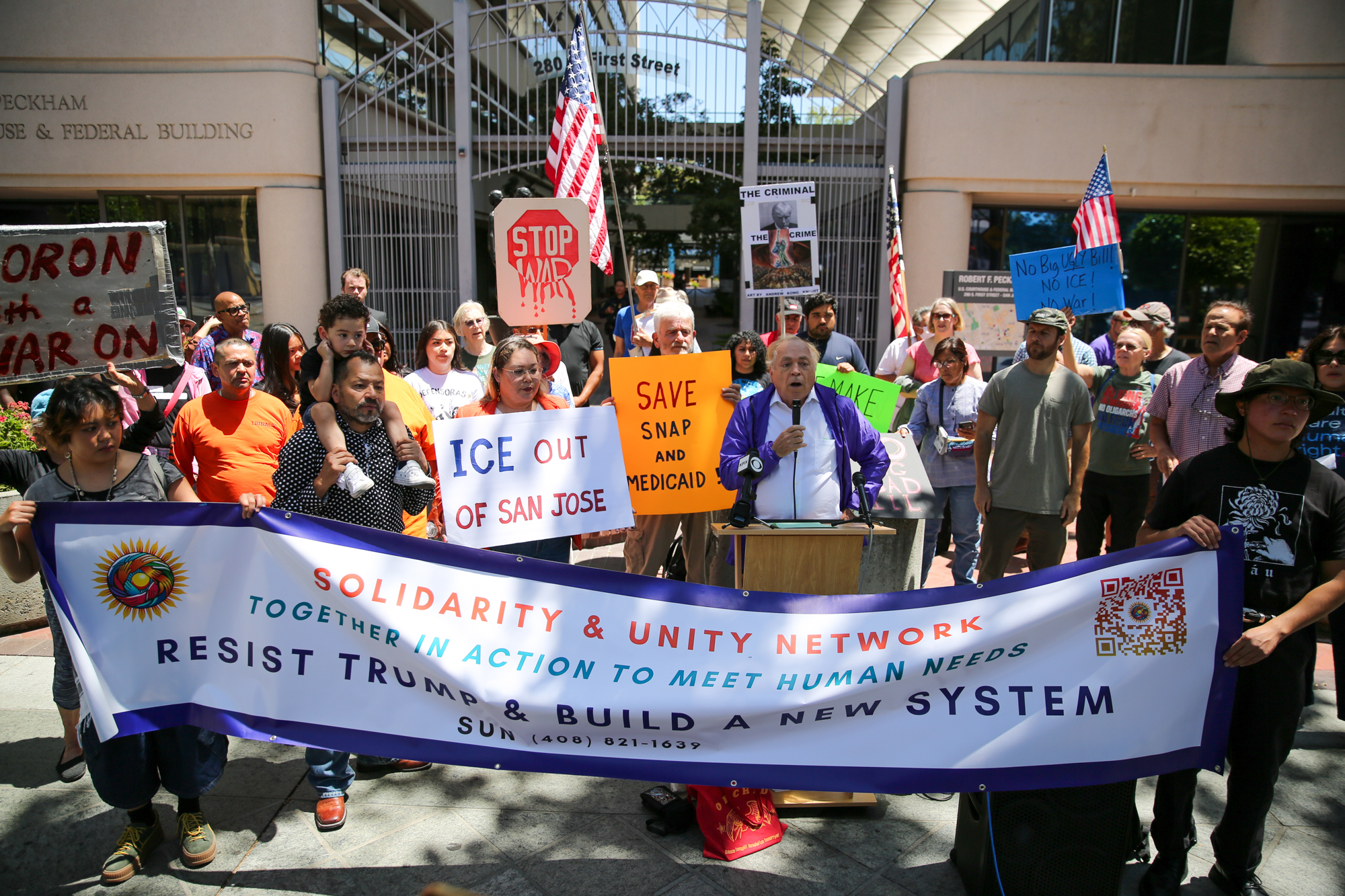
"caption": "Immigration Attorney Richard Hobbs speaks at a podium while surrounded by representatives of roughly two dozen community groups during a rally against President Trump's budget bill on June 26, 2025, in San José.",
"credit": "Joseph Geha/KQED",
"altTag": null,
"description": null,
"imgSizes": {
"thumbnail": {
"file": "https://cdn.kqed.org/wp-content/uploads/sites/10/2025/06/250626-SJBBB-JG-5-KQED-160x107.jpg",
"width": 160,
"height": 107,
"mimeType": "image/jpeg"
},
"1536x1536": {
"file": "https://cdn.kqed.org/wp-content/uploads/sites/10/2025/06/250626-SJBBB-JG-5-KQED-1536x1024.jpg",
"width": 1536,
"height": 1024,
"mimeType": "image/jpeg"
},
"post-thumbnail": {
"file": "https://cdn.kqed.org/wp-content/uploads/sites/10/2025/06/250626-SJBBB-JG-5-KQED-672x372.jpg",
"width": 672,
"height": 372,
"mimeType": "image/jpeg"
},
"twentyfourteen-full-width": {
"file": "https://cdn.kqed.org/wp-content/uploads/sites/10/2025/06/250626-SJBBB-JG-5-KQED-1038x576.jpg",
"width": 1038,
"height": 576,
"mimeType": "image/jpeg"
},
"kqedFullSize": {
"file": "https://cdn.kqed.org/wp-content/uploads/sites/10/2025/06/250626-SJBBB-JG-5-KQED.jpg",
"width": 2000,
"height": 1333
}
},
"isLoading": false,
"fetchFailed": false
},
"news_12030422": {
"type": "attachments",
"id": "news_12030422",
"meta": {
"index": "attachments_1716263798",
"site": "news",
"id": "12030422",
"found": true
},
"title": "20250306_SANJOSEDISTRICT3_GC-28-KQED",
"publishDate": 1741388139,
"status": "inherit",
"parent": 0,
"modified": 1741388243,
"caption": "San Jose City Council District 3 candidate, Anthony Tordillos smiles, following a candidates forum, at the San Jose Women’s Club in San Jose on March 6, 2025.",
"credit": "Gina Castro/KQED",
"altTag": null,
"description": null,
"imgSizes": {
"medium": {
"file": "https://cdn.kqed.org/wp-content/uploads/sites/10/2025/03/20250306_SANJOSEDISTRICT3_GC-28-KQED-800x533.jpg",
"width": 800,
"height": 533,
"mimeType": "image/jpeg"
},
"large": {
"file": "https://cdn.kqed.org/wp-content/uploads/sites/10/2025/03/20250306_SANJOSEDISTRICT3_GC-28-KQED-1020x680.jpg",
"width": 1020,
"height": 680,
"mimeType": "image/jpeg"
},
"thumbnail": {
"file": "https://cdn.kqed.org/wp-content/uploads/sites/10/2025/03/20250306_SANJOSEDISTRICT3_GC-28-KQED-160x107.jpg",
"width": 160,
"height": 107,
"mimeType": "image/jpeg"
},
"1536x1536": {
"file": "https://cdn.kqed.org/wp-content/uploads/sites/10/2025/03/20250306_SANJOSEDISTRICT3_GC-28-KQED-1536x1024.jpg",
"width": 1536,
"height": 1024,
"mimeType": "image/jpeg"
},
"post-thumbnail": {
"file": "https://cdn.kqed.org/wp-content/uploads/sites/10/2025/03/20250306_SANJOSEDISTRICT3_GC-28-KQED-672x372.jpg",
"width": 672,
"height": 372,
"mimeType": "image/jpeg"
},
"twentyfourteen-full-width": {
"file": "https://cdn.kqed.org/wp-content/uploads/sites/10/2025/03/20250306_SANJOSEDISTRICT3_GC-28-KQED-1038x576.jpg",
"width": 1038,
"height": 576,
"mimeType": "image/jpeg"
},
"full-width": {
"file": "https://cdn.kqed.org/wp-content/uploads/sites/10/2025/03/20250306_SANJOSEDISTRICT3_GC-28-KQED-1920x1280.jpg",
"width": 1920,
"height": 1280,
"mimeType": "image/jpeg"
},
"kqedFullSize": {
"file": "https://cdn.kqed.org/wp-content/uploads/sites/10/2025/03/20250306_SANJOSEDISTRICT3_GC-28-KQED.jpg",
"width": 2000,
"height": 1333
}
},
"isLoading": false,
"fetchFailed": false
},
"news_12044939": {
"type": "attachments",
"id": "news_12044939",
"meta": {
"index": "attachments_1716263798",
"site": "news",
"id": "12044939",
"found": true
},
"title": "Gabby Chavez-LopezAnthony Tordillos",
"publishDate": 1750273269,
"status": "inherit",
"parent": 12044929,
"modified": 1750273454,
"caption": "San José City Council District 3 candidates Gabby Chavez-Lopez and Anthony Tordillos speak at a candidates forum at the San José Women’s Club in San José on March 6, 2025.",
"credit": "Gina Castro/KQED",
"altTag": null,
"description": null,
"imgSizes": {
"thumbnail": {
"file": "https://cdn.kqed.org/wp-content/uploads/sites/10/2025/06/Gabby-Chavez-LopezAnthony-Tordillos-160x107.jpg",
"width": 160,
"height": 107,
"mimeType": "image/jpeg"
},
"1536x1536": {
"file": "https://cdn.kqed.org/wp-content/uploads/sites/10/2025/06/Gabby-Chavez-LopezAnthony-Tordillos-1536x1024.jpg",
"width": 1536,
"height": 1024,
"mimeType": "image/jpeg"
},
"post-thumbnail": {
"file": "https://cdn.kqed.org/wp-content/uploads/sites/10/2025/06/Gabby-Chavez-LopezAnthony-Tordillos-672x372.jpg",
"width": 672,
"height": 372,
"mimeType": "image/jpeg"
},
"twentyfourteen-full-width": {
"file": "https://cdn.kqed.org/wp-content/uploads/sites/10/2025/06/Gabby-Chavez-LopezAnthony-Tordillos-1038x576.jpg",
"width": 1038,
"height": 576,
"mimeType": "image/jpeg"
},
"kqedFullSize": {
"file": "https://cdn.kqed.org/wp-content/uploads/sites/10/2025/06/Gabby-Chavez-LopezAnthony-Tordillos.jpg",
"width": 2000,
"height": 1333
}
},
"isLoading": false,
"fetchFailed": false
},
"news_12044957": {
"type": "attachments",
"id": "news_12044957",
"meta": {
"index": "attachments_1716263798",
"site": "news",
"id": "12044957",
"found": true
},
"title": "St. Louis CITY SC v San Jose Earthquakes",
"publishDate": 1750278560,
"status": "inherit",
"parent": 12044954,
"modified": 1750278616,
"caption": "Nick Lima #24 of San José Earthquakes with the ball tackled by Jayden Reid #99 of St. Louis City SC during the second half of an MLS game between St. Louis City SC and San José Earthquakes at Energizer Park on May 31, 2025 in St Louis, Missouri. ",
"credit": "Bill Barrett/ISI Photos/Getty Images",
"altTag": null,
"description": null,
"imgSizes": {
"thumbnail": {
"file": "https://cdn.kqed.org/wp-content/uploads/sites/10/2025/06/SJEarthquakesGetty-160x107.jpg",
"width": 160,
"height": 107,
"mimeType": "image/jpeg"
},
"1536x1536": {
"file": "https://cdn.kqed.org/wp-content/uploads/sites/10/2025/06/SJEarthquakesGetty-1536x1024.jpg",
"width": 1536,
"height": 1024,
"mimeType": "image/jpeg"
},
"post-thumbnail": {
"file": "https://cdn.kqed.org/wp-content/uploads/sites/10/2025/06/SJEarthquakesGetty-672x372.jpg",
"width": 672,
"height": 372,
"mimeType": "image/jpeg"
},
"twentyfourteen-full-width": {
"file": "https://cdn.kqed.org/wp-content/uploads/sites/10/2025/06/SJEarthquakesGetty-1038x576.jpg",
"width": 1038,
"height": 576,
"mimeType": "image/jpeg"
},
"kqedFullSize": {
"file": "https://cdn.kqed.org/wp-content/uploads/sites/10/2025/06/SJEarthquakesGetty.jpg",
"width": 2000,
"height": 1333
}
},
"isLoading": false,
"fetchFailed": false
},
"news_12043197": {
"type": "attachments",
"id": "news_12043197",
"meta": {
"index": "attachments_1716263798",
"site": "news",
"id": "12043197",
"found": true
},
"title": "250606-SJICEPROTEST-JG-5-KQED",
"publishDate": 1749253072,
"status": "inherit",
"parent": 12043139,
"modified": 1749253093,
"caption": "District 5 San José City Councilmember Peter Ortiz speaks during a protest against ICE in South San José on June 6, 2025.",
"credit": "Joseph Geha/KQED",
"altTag": null,
"description": null,
"imgSizes": {
"thumbnail": {
"file": "https://cdn.kqed.org/wp-content/uploads/sites/10/2025/06/250606-SJICEPROTEST-JG-5-KQED-160x107.jpg",
"width": 160,
"height": 107,
"mimeType": "image/jpeg"
},
"1536x1536": {
"file": "https://cdn.kqed.org/wp-content/uploads/sites/10/2025/06/250606-SJICEPROTEST-JG-5-KQED-1536x1024.jpg",
"width": 1536,
"height": 1024,
"mimeType": "image/jpeg"
},
"post-thumbnail": {
"file": "https://cdn.kqed.org/wp-content/uploads/sites/10/2025/06/250606-SJICEPROTEST-JG-5-KQED-672x372.jpg",
"width": 672,
"height": 372,
"mimeType": "image/jpeg"
},
"twentyfourteen-full-width": {
"file": "https://cdn.kqed.org/wp-content/uploads/sites/10/2025/06/250606-SJICEPROTEST-JG-5-KQED-1038x576.jpg",
"width": 1038,
"height": 576,
"mimeType": "image/jpeg"
},
"kqedFullSize": {
"file": "https://cdn.kqed.org/wp-content/uploads/sites/10/2025/06/250606-SJICEPROTEST-JG-5-KQED.jpg",
"width": 2000,
"height": 1333
}
},
"isLoading": false,
"fetchFailed": false
},
"news_12042509": {
"type": "attachments",
"id": "news_12042509",
"meta": {
"index": "attachments_1716263798",
"site": "news",
"id": "12042509",
"found": true
},
"title": "RVs line Vía Del Oro Drive in San José on May 29, 2025.",
"publishDate": 1748970624,
"status": "inherit",
"parent": 12042370,
"modified": 1749156449,
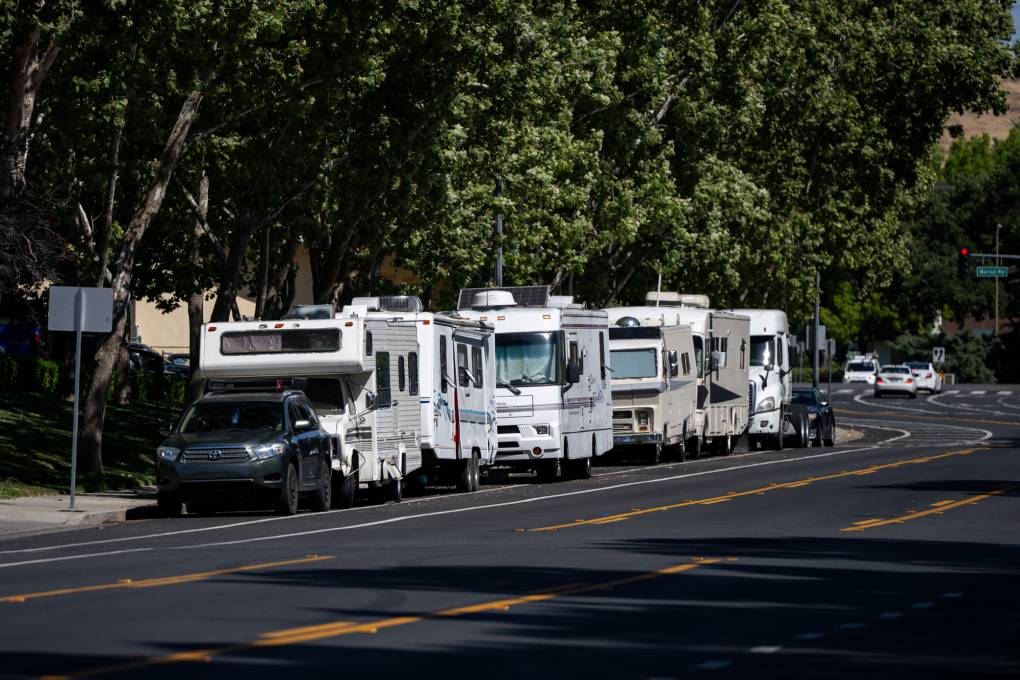
"caption": "RVs line Vía Del Oro Drive in San José on May 29, 2025.",
"credit": "Beth LaBerge/KQED",
"altTag": null,
"description": null,
"imgSizes": {
"medium": {
"file": "https://cdn.kqed.org/wp-content/uploads/sites/10/2025/06/250529-SJARRESTSHELTERVOTE-22-BL-KQED-800x533.jpg",
"width": 800,
"height": 533,
"mimeType": "image/jpeg"
},
"large": {
"file": "https://cdn.kqed.org/wp-content/uploads/sites/10/2025/06/250529-SJARRESTSHELTERVOTE-22-BL-KQED-1020x680.jpg",
"width": 1020,
"height": 680,
"mimeType": "image/jpeg"
},
"thumbnail": {
"file": "https://cdn.kqed.org/wp-content/uploads/sites/10/2025/06/250529-SJARRESTSHELTERVOTE-22-BL-KQED-160x107.jpg",
"width": 160,
"height": 107,
"mimeType": "image/jpeg"
},
"1536x1536": {
"file": "https://cdn.kqed.org/wp-content/uploads/sites/10/2025/06/250529-SJARRESTSHELTERVOTE-22-BL-KQED-1536x1024.jpg",
"width": 1536,
"height": 1024,
"mimeType": "image/jpeg"
},
"post-thumbnail": {
"file": "https://cdn.kqed.org/wp-content/uploads/sites/10/2025/06/250529-SJARRESTSHELTERVOTE-22-BL-KQED-672x372.jpg",
"width": 672,
"height": 372,
"mimeType": "image/jpeg"
},
"twentyfourteen-full-width": {
"file": "https://cdn.kqed.org/wp-content/uploads/sites/10/2025/06/250529-SJARRESTSHELTERVOTE-22-BL-KQED-1038x576.jpg",
"width": 1038,
"height": 576,
"mimeType": "image/jpeg"
},
"full-width": {
"file": "https://cdn.kqed.org/wp-content/uploads/sites/10/2025/06/250529-SJARRESTSHELTERVOTE-22-BL-KQED-1920x1280.jpg",
"width": 1920,
"height": 1280,
"mimeType": "image/jpeg"
},
"kqedFullSize": {
"file": "https://cdn.kqed.org/wp-content/uploads/sites/10/2025/06/250529-SJARRESTSHELTERVOTE-22-BL-KQED.jpg",
"width": 2000,
"height": 1333
}
},
"isLoading": false,
"fetchFailed": false
},
"news_12043193": {
"type": "attachments",
"id": "news_12043193",
"meta": {
"index": "attachments_1716263798",
"site": "news",
"id": "12043193",
"found": true
},
"title": "250606-SJICEPROTEST-JG-2-KQED",
"publishDate": 1749252936,
"status": "inherit",
"parent": 12043139,
"modified": 1749252975,
"caption": "Uriel Magdaleno, an organizer with the Silicon Valley Immigration Committee, chants into a megaphone at the intersection of Snell Avenue and Blossom Hill Road during a protest against ICE in South San José on June 6, 2025.",
"credit": "Joseph Geha/KQED",
"altTag": null,
"description": null,
"imgSizes": {
"thumbnail": {
"file": "https://cdn.kqed.org/wp-content/uploads/sites/10/2025/06/250606-SJICEPROTEST-JG-2-KQED-160x107.jpg",
"width": 160,
"height": 107,
"mimeType": "image/jpeg"
},
"1536x1536": {
"file": "https://cdn.kqed.org/wp-content/uploads/sites/10/2025/06/250606-SJICEPROTEST-JG-2-KQED-1536x1024.jpg",
"width": 1536,
"height": 1024,
"mimeType": "image/jpeg"
},
"post-thumbnail": {
"file": "https://cdn.kqed.org/wp-content/uploads/sites/10/2025/06/250606-SJICEPROTEST-JG-2-KQED-672x372.jpg",
"width": 672,
"height": 372,
"mimeType": "image/jpeg"
},
"twentyfourteen-full-width": {
"file": "https://cdn.kqed.org/wp-content/uploads/sites/10/2025/06/250606-SJICEPROTEST-JG-2-KQED-1038x576.jpg",
"width": 1038,
"height": 576,
"mimeType": "image/jpeg"
},
"kqedFullSize": {
"file": "https://cdn.kqed.org/wp-content/uploads/sites/10/2025/06/250606-SJICEPROTEST-JG-2-KQED.jpg",
"width": 2000,
"height": 1333
}
},
"isLoading": false,
"fetchFailed": false
}
},
"audioPlayerReducer": {
"postId": "stream_live",
"isPaused": true,
"isPlaying": false,
"pfsActive": false,
"pledgeModalIsOpen": true,
"playerDrawerIsOpen": false,
"liveAudioPlayStartedAt": 0,
"liveAudioPlayContext": ""
},
"authorsReducer": {
"gmarzorati": {
"type": "authors",
"id": "227",
"meta": {
"index": "authors_1716337520",
"id": "227",
"found": true
},
"name": "Guy Marzorati",
"firstName": "Guy",
"lastName": "Marzorati",
"slug": "gmarzorati",
"email": "gmarzorati@KQED.org",
"display_author_email": true,
"staff_mastheads": [
"news"
],
"title": "Correspondent",
"bio": "Guy Marzorati is a correspondent on KQED's California Politics and Government Desk, based in San Jose. A graduate of Santa Clara University, Guy joined KQED in 2013. He reports on state and local politics and produces KQED's digital voter guide.",
"avatar": "https://secure.gravatar.com/avatar/e7038b8dbfd55b104369b76b1cd0b9de?s=600&d=blank&r=g",
"twitter": "guymarzorati",
"facebook": null,
"instagram": null,
"linkedin": null,
"sites": [
{
"site": "",
"roles": [
"editor"
]
},
{
"site": "news",
"roles": [
"editor"
]
},
{
"site": "science",
"roles": [
"editor"
]
},
{
"site": "forum",
"roles": [
"editor"
]
},
{
"site": "elections",
"roles": [
"editor"
]
},
{
"site": "liveblog",
"roles": [
"editor"
]
}
],
"headData": {
"title": "Guy Marzorati | KQED",
"description": "Correspondent",
"ogImgSrc": "https://secure.gravatar.com/avatar/e7038b8dbfd55b104369b76b1cd0b9de?s=600&d=blank&r=g",
"twImgSrc": "https://secure.gravatar.com/avatar/e7038b8dbfd55b104369b76b1cd0b9de?s=600&d=blank&r=g"
},
"isLoading": false,
"link": "/author/gmarzorati"
},
"btorres": {
"type": "authors",
"id": "11666",
"meta": {
"index": "authors_1716337520",
"id": "11666",
"found": true
},
"name": "Blanca Torres",
"firstName": "Blanca",
"lastName": "Torres",
"slug": "btorres",
"email": "btorres@kqed.org",
"display_author_email": true,
"staff_mastheads": [
"news"
],
"title": "Producer, Forum",
"bio": "Blanca Torres brings sharp news judgement and keen sense of lively conversation to her work as producer for Forum. She loves producing shows that leave listeners feeling like they heard distinctive voices, learned something new and gained a fresh perspective.\r\n\r\nShe joined KQED in January of 2020 after 16 years of working as a newspaper reporter most recently at the \u003cem>San Francisco Business Times,\u003c/em> where she wrote about real estate and economic development. Before that, she covered a variety of beats including crime, education, retail, workplace, the economy, consumer issues, and small business for the \u003cem>Contra Costa Times, Baltimore Sun\u003c/em> and\u003cem> The Seattle Times\u003c/em>. In addition to reporting, she worked as an editorial writer and columnist for the \u003cem>Seattle Times\u003c/em>. From 2017 to 2020, Blanca won a total of ten awards from the National Association of Real Estate Editors and won first place for land use reporting from the California News Publishers Association two years in a row. She is also a member and former board member for the National Association of Hispanic Journalists.\r\n\r\nA native of the Pacific Northwest, Blanca earned her bachelor's degree from Vanderbilt University in Nashville and a master's in fine arts in creative writing at Mills College. She lives in the East Bay with her family.",
"avatar": "https://secure.gravatar.com/avatar/50b49d19b14a1eed34f26ebf4681152cdd81574ed21851100871ccd29e578cdc?s=600&d=blank&r=g",
"twitter": "@blancawrites",
"bluesky": null,
"facebook": null,
"instagram": null,
"linkedin": null,
"sites": [
{
"site": "arts",
"roles": [
"editor"
]
},
{
"site": "news",
"roles": [
"editor"
]
},
{
"site": "forum",
"roles": [
"editor"
]
}
],
"headData": {
"title": "Blanca Torres | KQED",
"description": "Producer, Forum",
"ogImgSrc": "https://secure.gravatar.com/avatar/50b49d19b14a1eed34f26ebf4681152cdd81574ed21851100871ccd29e578cdc?s=600&d=blank&r=g",
"twImgSrc": "https://secure.gravatar.com/avatar/50b49d19b14a1eed34f26ebf4681152cdd81574ed21851100871ccd29e578cdc?s=600&d=blank&r=g"
},
"isLoading": false,
"link": "/author/btorres"
},
"jgeha": {
"type": "authors",
"id": "11906",
"meta": {
"index": "authors_1716337520",
"id": "11906",
"found": true
},
"name": "Joseph Geha",
"firstName": "Joseph",
"lastName": "Geha",
"slug": "jgeha",
"email": "jgeha@kqed.org",
"display_author_email": false,
"staff_mastheads": [
"news",
"science"
],
"title": "KQED Contributor",
"bio": null,
"avatar": "https://secure.gravatar.com/avatar/ea84d2b6dd93d6369d453edf19dd583f117cd1759d2d9c9c92f9de77017354fe?s=600&d=blank&r=g",
"twitter": null,
"bluesky": null,
"facebook": null,
"instagram": null,
"linkedin": null,
"sites": [
{
"site": "news",
"roles": [
"editor"
]
},
{
"site": "liveblog",
"roles": [
"author"
]
}
],
"headData": {
"title": "Joseph Geha | KQED",
"description": "KQED Contributor",
"ogImgSrc": "https://secure.gravatar.com/avatar/ea84d2b6dd93d6369d453edf19dd583f117cd1759d2d9c9c92f9de77017354fe?s=600&d=blank&r=g",
"twImgSrc": "https://secure.gravatar.com/avatar/ea84d2b6dd93d6369d453edf19dd583f117cd1759d2d9c9c92f9de77017354fe?s=600&d=blank&r=g"
},
"isLoading": false,
"link": "/author/jgeha"
},
"slim": {
"type": "authors",
"id": "11920",
"meta": {
"index": "authors_1716337520",
"id": "11920",
"found": true
},
"name": "Samantha Lim",
"firstName": "Samantha",
"lastName": "Lim",
"slug": "slim",
"email": "slim@KQED.org",
"display_author_email": false,
"staff_mastheads": [],
"title": "KQED Contributor",
"bio": null,
"avatar": "https://secure.gravatar.com/avatar/82e592e6c15fe1a04d385e8ad0fb0b4e?s=600&d=blank&r=g",
"twitter": null,
"facebook": null,
"instagram": null,
"linkedin": null,
"sites": [
{
"site": "news",
"roles": []
}
],
"headData": {
"title": "Samantha Lim | KQED",
"description": "KQED Contributor",
"ogImgSrc": "https://secure.gravatar.com/avatar/82e592e6c15fe1a04d385e8ad0fb0b4e?s=600&d=blank&r=g",
"twImgSrc": "https://secure.gravatar.com/avatar/82e592e6c15fe1a04d385e8ad0fb0b4e?s=600&d=blank&r=g"
},
"isLoading": false,
"link": "/author/slim"
}
},
"pagesReducer": {
"news_tag_san-jose": {
"type": "terms",
"id": "news_18541",
"meta": {
"index": "terms_1716263798",
"site": "news",
"id": "18541",
"score": 8.005273
},
"featImg": null,
"name": "San Jose",
"description": null,
"taxonomy": "tag",
"headData": {
"twImgId": null,
"twTitle": null,
"ogTitle": null,
"ogImgId": null,
"twDescription": null,
"description": null,
"title": "San Jose Archives | KQED News",
"ogDescription": null
},
"ttid": 91,
"slug": "san-jose",
"isLoading": false,
"title": "San Jose",
"pageMeta": {
"site": "news",
"WpPageTemplate": "page-topic-editorial",
"currentPage": 12
},
"blocks": [
{
"blockName": "kqed/post-list",
"attrs": {
"layout": "cardArticle2",
"query": "posts/news?tag=san-jose",
"seeMore": false,
"paginated": true,
"page": 12
}
},
{
"blockName": "kqed/ad"
}
]
}
},
"pfsSessionReducer": {},
"postsReducer": {
"stream_live": {
"type": "live",
"id": "stream_live",
"audioUrl": "https://streams.kqed.org/kqedradio",
"title": "Live Stream",
"excerpt": "Live Stream information currently unavailable.",
"link": "/radio",
"featImg": "",
"label": {
"name": "KQED Live",
"link": "/"
}
},
"stream_kqedNewscast": {
"type": "posts",
"id": "stream_kqedNewscast",
"audioUrl": "https://www.kqed.org/.stream/anon/radio/RDnews/newscast.mp3?_=1",
"title": "KQED Newscast",
"featImg": "",
"label": {
"name": "88.5 FM",
"link": "/"
}
},
"news_12047900": {
"type": "posts",
"id": "news_12047900",
"meta": {
"index": "posts_1716263798",
"site": "news",
"id": "12047900",
"score": null,
"sort": [
1752536404000
]
},
"guestAuthors": [],
"slug": "san-jose-police-fatally-shoot-suspect-in-park-stabbing-second-killing-in-a-week",
"title": "San José Police Say Father Killed His Son Before Being Shot by Officers",
"publishDate": 1752536404,
"format": "standard",
"headTitle": "San José Police Say Father Killed His Son Before Being Shot by Officers | KQED",
"labelTerm": {
"site": "news"
},
"content": "\u003cp>\u003cem>Updated 4:40 p.m. Monday\u003c/em>\u003c/p>\n\u003cp>\u003ca href=\"https://www.kqed.org/news/tag/san-jose\">San José\u003c/a> police say a man stabbed his own child to death in a North San José park on Sunday afternoon, then called 911 to report the killing before officers fatally shot him.\u003c/p>\n\u003cp>Police Chief Paul Joseph said during a Monday afternoon press conference that the man appears to have planned the act in an attempt to provoke officers to shoot him, which Joseph called “cowardly.”\u003c/p>\n\u003cp>Around 3:23 p.m. Sunday, Joseph said a man called 911 to report that someone had stabbed his 9-year-old son at Cataldi Park.\u003c/p>\n\u003cp>[ad fullwidth]\u003c/p>\n\u003cp>“The caller was hysterical, stating the assailant was still on scene and gave a description of the suspect that officers later discovered exactly described the caller himself,” Joseph said.\u003c/p>\n\u003cp>When officers arrived, they saw Mateusz Dzierbun, 48, of Fremont, hunched over a bloody child on the ground, armed with a large knife, Joseph said.\u003c/p>\n\u003cfigure id=\"attachment_12048044\" class=\"wp-caption alignleft\" style=\"max-width: 1116px\">\u003cimg loading=\"lazy\" decoding=\"async\" class=\"size-full wp-image-12048044\" src=\"https://cdn.kqed.org/wp-content/uploads/sites/10/2025/07/Screenshot-2025-07-14-at-4.27.38-PM.jpg\" alt=\"\" width=\"1116\" height=\"1538\" srcset=\"https://cdn.kqed.org/wp-content/uploads/sites/10/2025/07/Screenshot-2025-07-14-at-4.27.38-PM.jpg 1116w, https://cdn.kqed.org/wp-content/uploads/sites/10/2025/07/Screenshot-2025-07-14-at-4.27.38-PM-160x221.jpg 160w, https://cdn.kqed.org/wp-content/uploads/sites/10/2025/07/Screenshot-2025-07-14-at-4.27.38-PM-1115x1536.jpg 1115w\" sizes=\"auto, (max-width: 1116px) 100vw, 1116px\">\u003cfigcaption class=\"wp-caption-text\">Mateusz Dzierbun, 48, of Fremont, in a photo posted on Dzierbun’s Instagram account in 2017. \u003ccite>(Instagram)\u003c/cite>\u003c/figcaption>\u003c/figure>\n\u003cp>Joseph said officers “pleaded with the suspect to drop the knife,” but Dzierbun didn’t cooperate “and instead made several statements indicating he intended to be shot by the police.”\u003c/p>\n\u003cp>Dzierbun then stood up with the knife raised and charged at officers, who fired on him. Joseph said a sergeant with 19 years of experience and an officer with about four and a half years both fired their weapons.\u003c/p>\n\u003cp>Other officers were present with “less lethal” weapons, but Joseph said, “They weren’t able to try those options before [Dzierbun] forced the issue.” Officers arrived at the park around 3:31 p.m., and the shooting occurred about three minutes later, he said.\u003c/p>\n\u003cp>When officers reached the child, Joseph said the boy was already “clearly deceased,” and “suffered from injuries so severe that it’s unimaginable they could have been inflicted by his own father.”\u003c/p>\n\u003cp>Both officers are crisis intervention-trained and were wearing body cameras.\u003c/p>\n\u003cp>“The officers who responded that afternoon were running toward what they believed was a child desperately in need of help. They came intending to save a life, not to take one,” Joseph said.\u003c/p>\n\u003cp>“They had no way of knowing that this horrific and unfathomable act of violence had already led to the loss of an innocent child’s life before they even arrived. Now these officers have to carry a weight that was never theirs to bear, but one that was placed squarely on their shoulders by a man whose final act was as selfish as it was senseless,” he added.[aside postID=news_12047170 hero='https://cdn.kqed.org/wp-content/uploads/sites/10/2024/06/240424-SJPD-MD-01-KQED-1020x680.jpg']Joseph said Dzierbun doesn’t seem to have any documented mental health issues or criminal history in Alameda or Santa Clara counties.\u003c/p>\n\u003cp>However, he noted that Dzierbun “moved around the country quite a bit and so homicide detectives are trying to work to retrace his steps.”\u003c/p>\n\u003cp>The killing marks the second fatal police shooting in San José in a week. On July 6, officers fatally \u003ca href=\"https://www.kqed.org/news/12047170/heavily-armed-san-jose-man-fatally-shot-after-exchanging-fire-with-police-sjpd-says\">shot a man\u003c/a> in Almaden who, according to officials, was experiencing a mental health crisis and who shot at officers.\u003c/p>\n\u003cp>The department’s homicide unit is investigating Sunday’s shooting. Like all San José police shootings, it is also being investigated by the Santa Clara County District Attorney’s Office, and the case will be monitored administratively by the department’s internal affairs unit, the city attorney’s office and the office of the independent police auditor.\u003c/p>\n\u003cp>Joseph said the investigation is still in its early stages.\u003c/p>\n\u003cp>“What we know now may change as the investigation progresses,” he said. “There are some questions we may never know the answers to.”\u003c/p>\n\u003cp>\u003c/p>\n",
"blocks": [],
"excerpt": "San José police fatally shot a man who stabbed his 9-year-old son to death in Cataldi Park on Sunday afternoon, prompting a multi-agency investigation into the deadly incident.",
"status": "publish",
"parent": 0,
"modified": 1752540361,
"stats": {
"hasAudio": false,
"hasVideo": false,
"hasChartOrMap": false,
"iframeSrcs": [],
"hasGoogleForm": false,
"hasGallery": false,
"hasHearkenModule": false,
"hasPolis": false,
"paragraphCount": 20,
"wordCount": 666
},
"headData": {
"title": "San José Police Say Father Killed His Son Before Being Shot by Officers | KQED",
"description": "San José police fatally shot a man who stabbed his 9-year-old son to death in Cataldi Park on Sunday afternoon, prompting a multi-agency investigation into the deadly incident.",
"ogTitle": "",
"ogDescription": "",
"ogImgId": "",
"twTitle": "",
"twDescription": "",
"twImgId": "",
"schema": {
"@context": "https://schema.org",
"@type": "NewsArticle",
"headline": "San José Police Say Father Killed His Son Before Being Shot by Officers",
"datePublished": "2025-07-14T16:40:04-07:00",
"dateModified": "2025-07-14T17:46:01-07:00",
"image": "https://cdn.kqed.org/wp-content/uploads/2020/02/KQED-OG-Image@1x.png",
"isAccessibleForFree": "True",
"publisher": {
"@type": "NewsMediaOrganization",
"@id": "https://www.kqed.org/#organization",
"name": "KQED",
"logo": "https://cdn.kqed.org/wp-content/uploads/2020/02/KQED-OG-Image@1x.png",
"url": "https://www.kqed.org",
"sameAs": [
"https://www.facebook.com/KQED",
"https://twitter.com/KQED",
"https://www.instagram.com/kqed/",
"https://www.tiktok.com/@kqedofficial",
"https://www.linkedin.com/company/kqed",
"https://www.youtube.com/channel/UCeC0IOo7i1P_61zVUWbJ4nw"
]
}
}
},
"primaryCategory": {
"termId": 8,
"slug": "news",
"name": "News"
},
"sticky": false,
"nprStoryId": "kqed-12047900",
"templateType": "standard",
"featuredImageType": "standard",
"excludeFromSiteSearch": "Include",
"articleAge": "0",
"path": "/news/12047900/san-jose-police-fatally-shoot-suspect-in-park-stabbing-second-killing-in-a-week",
"audioTrackLength": null,
"parsedContent": [
{
"type": "contentString",
"content": "\u003cdiv class=\"post-body\">\u003cp>\u003cp>\u003cem>Updated 4:40 p.m. Monday\u003c/em>\u003c/p>\n\u003cp>\u003ca href=\"https://www.kqed.org/news/tag/san-jose\">San José\u003c/a> police say a man stabbed his own child to death in a North San José park on Sunday afternoon, then called 911 to report the killing before officers fatally shot him.\u003c/p>\n\u003cp>Police Chief Paul Joseph said during a Monday afternoon press conference that the man appears to have planned the act in an attempt to provoke officers to shoot him, which Joseph called “cowardly.”\u003c/p>\n\u003cp>Around 3:23 p.m. Sunday, Joseph said a man called 911 to report that someone had stabbed his 9-year-old son at Cataldi Park.\u003c/p>\n\u003cp>\u003c/p>\u003c/div>",
"attributes": {
"named": {},
"numeric": []
}
},
{
"type": "component",
"content": "",
"name": "ad",
"attributes": {
"named": {
"label": "fullwidth"
},
"numeric": [
"fullwidth"
]
}
},
{
"type": "contentString",
"content": "\u003cdiv class=\"post-body\">\u003cp>\u003c/p>\n\u003cp>“The caller was hysterical, stating the assailant was still on scene and gave a description of the suspect that officers later discovered exactly described the caller himself,” Joseph said.\u003c/p>\n\u003cp>When officers arrived, they saw Mateusz Dzierbun, 48, of Fremont, hunched over a bloody child on the ground, armed with a large knife, Joseph said.\u003c/p>\n\u003cfigure id=\"attachment_12048044\" class=\"wp-caption alignleft\" style=\"max-width: 1116px\">\u003cimg loading=\"lazy\" decoding=\"async\" class=\"size-full wp-image-12048044\" src=\"https://cdn.kqed.org/wp-content/uploads/sites/10/2025/07/Screenshot-2025-07-14-at-4.27.38-PM.jpg\" alt=\"\" width=\"1116\" height=\"1538\" srcset=\"https://cdn.kqed.org/wp-content/uploads/sites/10/2025/07/Screenshot-2025-07-14-at-4.27.38-PM.jpg 1116w, https://cdn.kqed.org/wp-content/uploads/sites/10/2025/07/Screenshot-2025-07-14-at-4.27.38-PM-160x221.jpg 160w, https://cdn.kqed.org/wp-content/uploads/sites/10/2025/07/Screenshot-2025-07-14-at-4.27.38-PM-1115x1536.jpg 1115w\" sizes=\"auto, (max-width: 1116px) 100vw, 1116px\">\u003cfigcaption class=\"wp-caption-text\">Mateusz Dzierbun, 48, of Fremont, in a photo posted on Dzierbun’s Instagram account in 2017. \u003ccite>(Instagram)\u003c/cite>\u003c/figcaption>\u003c/figure>\n\u003cp>Joseph said officers “pleaded with the suspect to drop the knife,” but Dzierbun didn’t cooperate “and instead made several statements indicating he intended to be shot by the police.”\u003c/p>\n\u003cp>Dzierbun then stood up with the knife raised and charged at officers, who fired on him. Joseph said a sergeant with 19 years of experience and an officer with about four and a half years both fired their weapons.\u003c/p>\n\u003cp>Other officers were present with “less lethal” weapons, but Joseph said, “They weren’t able to try those options before [Dzierbun] forced the issue.” Officers arrived at the park around 3:31 p.m., and the shooting occurred about three minutes later, he said.\u003c/p>\n\u003cp>When officers reached the child, Joseph said the boy was already “clearly deceased,” and “suffered from injuries so severe that it’s unimaginable they could have been inflicted by his own father.”\u003c/p>\n\u003cp>Both officers are crisis intervention-trained and were wearing body cameras.\u003c/p>\n\u003cp>“The officers who responded that afternoon were running toward what they believed was a child desperately in need of help. They came intending to save a life, not to take one,” Joseph said.\u003c/p>\n\u003cp>“They had no way of knowing that this horrific and unfathomable act of violence had already led to the loss of an innocent child’s life before they even arrived. Now these officers have to carry a weight that was never theirs to bear, but one that was placed squarely on their shoulders by a man whose final act was as selfish as it was senseless,” he added.\u003c/p>\u003c/div>",
"attributes": {
"named": {},
"numeric": []
}
},
{
"type": "component",
"content": "",
"name": "aside",
"attributes": {
"named": {
"postid": "news_12047170",
"hero": "https://cdn.kqed.org/wp-content/uploads/sites/10/2024/06/240424-SJPD-MD-01-KQED-1020x680.jpg",
"label": ""
},
"numeric": []
}
},
{
"type": "contentString",
"content": "\u003cdiv class=\"post-body\">\u003cp>Joseph said Dzierbun doesn’t seem to have any documented mental health issues or criminal history in Alameda or Santa Clara counties.\u003c/p>\n\u003cp>However, he noted that Dzierbun “moved around the country quite a bit and so homicide detectives are trying to work to retrace his steps.”\u003c/p>\n\u003cp>The killing marks the second fatal police shooting in San José in a week. On July 6, officers fatally \u003ca href=\"https://www.kqed.org/news/12047170/heavily-armed-san-jose-man-fatally-shot-after-exchanging-fire-with-police-sjpd-says\">shot a man\u003c/a> in Almaden who, according to officials, was experiencing a mental health crisis and who shot at officers.\u003c/p>\n\u003cp>The department’s homicide unit is investigating Sunday’s shooting. Like all San José police shootings, it is also being investigated by the Santa Clara County District Attorney’s Office, and the case will be monitored administratively by the department’s internal affairs unit, the city attorney’s office and the office of the independent police auditor.\u003c/p>\n\u003cp>Joseph said the investigation is still in its early stages.\u003c/p>\n\u003cp>“What we know now may change as the investigation progresses,” he said. “There are some questions we may never know the answers to.”\u003c/p>\n\u003cp>\u003c/p>\n\u003c/div>\u003c/p>",
"attributes": {
"named": {},
"numeric": []
}
}
],
"link": "/news/12047900/san-jose-police-fatally-shoot-suspect-in-park-stabbing-second-killing-in-a-week",
"authors": [
"11906"
],
"categories": [
"news_34167",
"news_28250",
"news_8"
],
"tags": [
"news_17725",
"news_22434",
"news_27626",
"news_19954",
"news_6104",
"news_22850",
"news_4379",
"news_18541",
"news_667",
"news_21285"
],
"featImg": "news_12047902",
"label": "news"
},
"news_12047370": {
"type": "posts",
"id": "news_12047370",
"meta": {
"index": "posts_1716263798",
"site": "news",
"id": "12047370",
"score": null,
"sort": [
1752020673000
]
},
"guestAuthors": [],
"slug": "san-jose-police-officer-arrested-on-charges-of-sexual-assault-of-a-teenager",
"title": "San José Police Officer Arrested on Charges of Sexual Assault of a Teenager",
"publishDate": 1752020673,
"format": "standard",
"headTitle": "San José Police Officer Arrested on Charges of Sexual Assault of a Teenager | KQED",
"labelTerm": {
"site": "news"
},
"content": "\u003cp>A \u003ca href=\"https://www.kqed.org/news/tag/san-jose\">San José\u003c/a> police officer is facing felony charges of sexual assault against a minor stemming from more than a decade ago, when he served as a facilitator in a county program aimed at supporting parents of troubled teens.\u003c/p>\n\u003cp>Officer Saul Duran was arrested Monday and booked into Santa Clara County Main Jail, before being released after posting $250,000 bail, officials said.\u003c/p>\n\u003cp>Police Chief Paul Joseph said Duran’s alleged actions violate the immense trust the public must place in police officers.\u003c/p>\n\u003cp>[ad fullwidth]\u003c/p>\n\u003cp>“No badge, no uniform, no title can shield you from answering for the crimes alleged and I will do everything in my power to ensure our ranks are free of anyone who breaks the law,” Joseph said during a press conference on Tuesday.\u003c/p>\n\u003cp>Joseph said two sisters contacted police in mid-June, who alleged they were sexually victimized by Duran when they were teenagers, between 2008 and 2012.\u003c/p>\n\u003cp>Investigators believe Duran met the two sisters, who were 14 and 15 years old at the time, when he was a facilitator with \u003ca href=\"https://www.sccoe.org/parent/Pages/Parent-Project.aspx\">The Parent Project\u003c/a>, a collaboration between the District Attorney’s Office, local law enforcement, schools and counseling agencies to support parents who are having difficulties with their children.[aside postID=news_12046733 hero='https://cdn.kqed.org/wp-content/uploads/sites/10/2025/07/250702-JOSEPHHUFFAKERTRIAL-02-BL-KQED.jpg']“He was perceived by their mother to be a positive influence for her family,” Joseph said. After gaining the family’s trust, he violated program policy by spending time with the sisters outside the program, with their mother’s knowledge, which is when the alleged misconduct occurred, Joseph said.\u003c/p>\n\u003cp>While Duran’s participation in the program was voluntary, he served in his “official capacity as a police officer,” Joseph noted.\u003c/p>\n\u003cp>Santa Clara County District Attorney Jeff Rosen said Duran is alleged to have assaulted both sisters at the time, but the extended statute of limitations allowed for charges based only on his actions against the younger sister.\u003c/p>\n\u003cp>Duran is charged with five counts of lewd and lascivious acts on a child who is 14 or 15 years old, Rosen said. \u003c/p>\n\u003cp>Rosen noted the alleged conduct with the older sister, and some alleged conduct when the younger sister later turned 18, “will be very relevant for a jury to hear.”\u003c/p>\n\u003cp>Rosen said Duran was fired from The Parent Project based on complaints that he was spending time with women and girls involved with the program outside of its normal hours. None of the complaints described actions that were “criminal in nature,” Rosen said, “but in hindsight, were concerning.”\u003c/p>\n\u003cp>Both Rosen and Joseph encouraged anyone else with similar stories to the sisters to come forward to police, even if they were afraid to do so.\u003c/p>\n\u003cp>“Afraid because the offender was a police officer because too much time had passed, or because they believed he would be protected by his fellow officers,” Joseph said. “Our actions today will hopefully show that there is no protection for any officer who is alleged to have committed such a serious crime or who has caused harm.”\u003c/p>\n\u003cp>Rosen defended The Parent Project as an “extremely successful program,” and said nothing like this has been reported before, but said his office is now reevaluating “how we vet and train the teachers of the program to try to make sure that nothing like this happens again.”\u003c/p>\n\u003cp>Joseph said he ordered an “immediate review of all policies and procedures for all specific programs involving minors.”\u003c/p>\n\u003cp>Under requirements from a state law passed in 2021, the department also forwarded information about the sexual misconduct investigation to the California Commission on Peace Officer Standards and Training, known as the POST Commission. The information could later be used in a process to decertify Duran, which would prohibit him from working as a police officer in the state.\u003c/p>\n\u003cp>Duran, who was placed on administrative leave by the police department about a week before his arrest, is next scheduled to appear in court on Aug. 7.\u003c/p>\n\u003cp>“I want to thank both of these young women for their courage. Without them, we would all still be in the dark,” Rosen said. “We will get justice for them and protect this community.”\u003c/p>\n\u003cp>\u003cem>The police department said anyone who wants to share information about this case or similar experiences should contact Detective Sergeant Kilmer #3723 or Detective Sergeant Sanchez #4126 of the SJPD Internal Affairs, Criminal Investigations Detail by email at 3723@sanjoseca.gov and/or 4126@sanjoseca.gov, or 408-277-4082. \u003c/em>\u003c/p>\n\u003cp>\u003c/p>\n",
"blocks": [],
"excerpt": "San José Police Department leaders say they arrested one of their own officers on suspicion of sexual assault of a minor. ",
"status": "publish",
"parent": 0,
"modified": 1752022685,
"stats": {
"hasAudio": false,
"hasVideo": false,
"hasChartOrMap": false,
"iframeSrcs": [],
"hasGoogleForm": false,
"hasGallery": false,
"hasHearkenModule": false,
"hasPolis": false,
"paragraphCount": 21,
"wordCount": 783
},
"headData": {
"title": "San José Police Officer Arrested on Charges of Sexual Assault of a Teenager | KQED",
"description": "San José Police Department leaders say they arrested one of their own officers on suspicion of sexual assault of a minor. ",
"ogTitle": "",
"ogDescription": "",
"ogImgId": "",
"twTitle": "",
"twDescription": "",
"twImgId": "",
"schema": {
"@context": "https://schema.org",
"@type": "NewsArticle",
"headline": "San José Police Officer Arrested on Charges of Sexual Assault of a Teenager",
"datePublished": "2025-07-08T17:24:33-07:00",
"dateModified": "2025-07-08T17:58:05-07:00",
"image": "https://cdn.kqed.org/wp-content/uploads/2020/02/KQED-OG-Image@1x.png",
"isAccessibleForFree": "True",
"publisher": {
"@type": "NewsMediaOrganization",
"@id": "https://www.kqed.org/#organization",
"name": "KQED",
"logo": "https://cdn.kqed.org/wp-content/uploads/2020/02/KQED-OG-Image@1x.png",
"url": "https://www.kqed.org",
"sameAs": [
"https://www.facebook.com/KQED",
"https://twitter.com/KQED",
"https://www.instagram.com/kqed/",
"https://www.tiktok.com/@kqedofficial",
"https://www.linkedin.com/company/kqed",
"https://www.youtube.com/channel/UCeC0IOo7i1P_61zVUWbJ4nw"
]
}
}
},
"primaryCategory": {
"termId": 8,
"slug": "news",
"name": "News"
},
"sticky": false,
"nprStoryId": "kqed-12047370",
"templateType": "standard",
"featuredImageType": "standard",
"excludeFromSiteSearch": "Include",
"articleAge": "0",
"path": "/news/12047370/san-jose-police-officer-arrested-on-charges-of-sexual-assault-of-a-teenager",
"audioTrackLength": null,
"parsedContent": [
{
"type": "contentString",
"content": "\u003cdiv class=\"post-body\">\u003cp>\u003cp>A \u003ca href=\"https://www.kqed.org/news/tag/san-jose\">San José\u003c/a> police officer is facing felony charges of sexual assault against a minor stemming from more than a decade ago, when he served as a facilitator in a county program aimed at supporting parents of troubled teens.\u003c/p>\n\u003cp>Officer Saul Duran was arrested Monday and booked into Santa Clara County Main Jail, before being released after posting $250,000 bail, officials said.\u003c/p>\n\u003cp>Police Chief Paul Joseph said Duran’s alleged actions violate the immense trust the public must place in police officers.\u003c/p>\n\u003cp>\u003c/p>\u003c/div>",
"attributes": {
"named": {},
"numeric": []
}
},
{
"type": "component",
"content": "",
"name": "ad",
"attributes": {
"named": {
"label": "fullwidth"
},
"numeric": [
"fullwidth"
]
}
},
{
"type": "contentString",
"content": "\u003cdiv class=\"post-body\">\u003cp>\u003c/p>\n\u003cp>“No badge, no uniform, no title can shield you from answering for the crimes alleged and I will do everything in my power to ensure our ranks are free of anyone who breaks the law,” Joseph said during a press conference on Tuesday.\u003c/p>\n\u003cp>Joseph said two sisters contacted police in mid-June, who alleged they were sexually victimized by Duran when they were teenagers, between 2008 and 2012.\u003c/p>\n\u003cp>Investigators believe Duran met the two sisters, who were 14 and 15 years old at the time, when he was a facilitator with \u003ca href=\"https://www.sccoe.org/parent/Pages/Parent-Project.aspx\">The Parent Project\u003c/a>, a collaboration between the District Attorney’s Office, local law enforcement, schools and counseling agencies to support parents who are having difficulties with their children.\u003c/p>\u003c/div>",
"attributes": {
"named": {},
"numeric": []
}
},
{
"type": "component",
"content": "",
"name": "aside",
"attributes": {
"named": {
"postid": "news_12046733",
"hero": "https://cdn.kqed.org/wp-content/uploads/sites/10/2025/07/250702-JOSEPHHUFFAKERTRIAL-02-BL-KQED.jpg",
"label": ""
},
"numeric": []
}
},
{
"type": "contentString",
"content": "\u003cdiv class=\"post-body\">\u003cp>“He was perceived by their mother to be a positive influence for her family,” Joseph said. After gaining the family’s trust, he violated program policy by spending time with the sisters outside the program, with their mother’s knowledge, which is when the alleged misconduct occurred, Joseph said.\u003c/p>\n\u003cp>While Duran’s participation in the program was voluntary, he served in his “official capacity as a police officer,” Joseph noted.\u003c/p>\n\u003cp>Santa Clara County District Attorney Jeff Rosen said Duran is alleged to have assaulted both sisters at the time, but the extended statute of limitations allowed for charges based only on his actions against the younger sister.\u003c/p>\n\u003cp>Duran is charged with five counts of lewd and lascivious acts on a child who is 14 or 15 years old, Rosen said. \u003c/p>\n\u003cp>Rosen noted the alleged conduct with the older sister, and some alleged conduct when the younger sister later turned 18, “will be very relevant for a jury to hear.”\u003c/p>\n\u003cp>Rosen said Duran was fired from The Parent Project based on complaints that he was spending time with women and girls involved with the program outside of its normal hours. None of the complaints described actions that were “criminal in nature,” Rosen said, “but in hindsight, were concerning.”\u003c/p>\n\u003cp>Both Rosen and Joseph encouraged anyone else with similar stories to the sisters to come forward to police, even if they were afraid to do so.\u003c/p>\n\u003cp>“Afraid because the offender was a police officer because too much time had passed, or because they believed he would be protected by his fellow officers,” Joseph said. “Our actions today will hopefully show that there is no protection for any officer who is alleged to have committed such a serious crime or who has caused harm.”\u003c/p>\n\u003cp>Rosen defended The Parent Project as an “extremely successful program,” and said nothing like this has been reported before, but said his office is now reevaluating “how we vet and train the teachers of the program to try to make sure that nothing like this happens again.”\u003c/p>\n\u003cp>Joseph said he ordered an “immediate review of all policies and procedures for all specific programs involving minors.”\u003c/p>\n\u003cp>Under requirements from a state law passed in 2021, the department also forwarded information about the sexual misconduct investigation to the California Commission on Peace Officer Standards and Training, known as the POST Commission. The information could later be used in a process to decertify Duran, which would prohibit him from working as a police officer in the state.\u003c/p>\n\u003cp>Duran, who was placed on administrative leave by the police department about a week before his arrest, is next scheduled to appear in court on Aug. 7.\u003c/p>\n\u003cp>“I want to thank both of these young women for their courage. Without them, we would all still be in the dark,” Rosen said. “We will get justice for them and protect this community.”\u003c/p>\n\u003cp>\u003cem>The police department said anyone who wants to share information about this case or similar experiences should contact Detective Sergeant Kilmer #3723 or Detective Sergeant Sanchez #4126 of the SJPD Internal Affairs, Criminal Investigations Detail by email at 3723@sanjoseca.gov and/or 4126@sanjoseca.gov, or 408-277-4082. \u003c/em>\u003c/p>\n\u003cp>\u003c/p>\n\u003c/div>\u003c/p>",
"attributes": {
"named": {},
"numeric": []
}
}
],
"link": "/news/12047370/san-jose-police-officer-arrested-on-charges-of-sexual-assault-of-a-teenager",
"authors": [
"11906"
],
"categories": [
"news_31795",
"news_34167",
"news_8"
],
"tags": [
"news_17626",
"news_17725",
"news_19954",
"news_19969",
"news_20338",
"news_18541",
"news_667",
"news_18188",
"news_2700",
"news_1527"
],
"featImg": "news_12010520",
"label": "news"
},
"news_12045274": {
"type": "posts",
"id": "news_12045274",
"meta": {
"index": "posts_1716263798",
"site": "news",
"id": "12045274",
"score": null,
"sort": [
1751979603000
]
},
"guestAuthors": [],
"slug": "levis-denim-gets-a-fresh-look-thanks-to-a-latinx-designer",
"title": "Levi’s Denim Gets a Fresh Look Thanks to a Latinx Designer",
"publishDate": 1751979603,
"format": "standard",
"headTitle": "Levi’s Denim Gets a Fresh Look Thanks to a Latinx Designer | KQED",
"labelTerm": {},
"content": "\u003cp>\u003cstrong>\u003cem>This story was reported for K Onda KQED, a monthly newsletter focused on the Bay Area’s Latinx community. \u003ca href=\"https://www.kqed.org/newsletters/k-onda\">Click here to subscribe\u003c/a>.\u003c/em>\u003c/strong>\u003c/p>\n\u003cp>Marisela Gonzáles Ginestra spends her days designing the final touches on \u003ca href=\"https://www.kqed.org/arts/13929529/sewing-new-life-into-levis-jeans\">Levi’s jeans\u003c/a>, obsessing over details like colors, fading, whiskering and the perfect placement for rips and tears.\u003c/p>\n\u003cp>The \u003ca href=\"https://www.kqed.org/news/12039171/built-to-last-some-san-francisco-businesses-date-back-to-the-gold-rush\">iconic Levi’s Strauss & Co.\u003c/a>, founded in San Francisco in 1853, invented denim pants the way we know them today. But to survive, the company has to stay relevant. That’s where designers like Gonzáles Ginestra come in. She describes her work as “making sure that we have newness to this heritage garment.”\u003c/p>\n\u003cp>[ad fullwidth]\u003c/p>\n\u003cp>Last fall, some of her finishing touches were featured in an ad where global superstar Beyoncé walks into a laundromat, takes off the jeans she’s wearing and washes them with a bucket of diamonds. When she created the design a year prior, Gonzáles Ginestra had no idea it would be part of the singer’s campaign with Levi’s.\u003c/p>\n\u003cp>“Denim is a blank canvas and I can do whatever I want with it,” she said. “It’s my job to just take my canvas, that is a pair of jeans, and apply trends to it.”\u003c/p>\n\u003cp>https://www.youtube.com/watch?v=q40oimgnN00\u003c/p>\n\u003cp>Before landing at Levi’s six years ago, Gonzáles Ginestra designed everything from leather handbags for Kenneth Cole to bedsheets for teen boys at Pottery Barn. She worked on fashion shows for Paris Fashion Week and pajamas for a small family-owned company in the East Bay.\u003c/p>\n\u003cp>For years, however, Gonzáles Ginestra wasn’t sure she could craft a career in the fashion industry. Like many Latines in creative fields, she had no roadmap to follow and no role models she could identify with.\u003c/p>\n\u003cp>The 36-year-old grew up in a middle-class Mexican American family in San José that encouraged her to pursue a stable career. Designing clothes was not what they had in mind. But no matter how hard she tried, Gonzáles Ginestra couldn’t shake the artistic bug. She built a creative career that defied cultural expectations while helping other Latinx creatives along the way.\u003c/p>\n\u003cp>“Until I got to Levi’s, I really was often the one Latina in the room,” she said. “I say this for fashion, and I say this for every industry, we need to be everywhere, especially in consumer goods. No one is going to be able to speak up for us.”\u003c/p>\n\u003cfigure id=\"attachment_12046801\" class=\"wp-caption aligncenter\" style=\"max-width: 2000px\">\u003cimg loading=\"lazy\" decoding=\"async\" class=\"size-full wp-image-12046801\" src=\"https://cdn.kqed.org/wp-content/uploads/sites/10/2025/07/250701-K-ONDA-JULY-MD-04-KQED.jpg\" alt=\"\" width=\"2000\" height=\"1334\" srcset=\"https://cdn.kqed.org/wp-content/uploads/sites/10/2025/07/250701-K-ONDA-JULY-MD-04-KQED.jpg 2000w, https://cdn.kqed.org/wp-content/uploads/sites/10/2025/07/250701-K-ONDA-JULY-MD-04-KQED-160x107.jpg 160w, https://cdn.kqed.org/wp-content/uploads/sites/10/2025/07/250701-K-ONDA-JULY-MD-04-KQED-1536x1025.jpg 1536w\" sizes=\"auto, (max-width: 2000px) 100vw, 2000px\">\u003cfigcaption class=\"wp-caption-text\">Marisela Gonzáles Ginestra holds a photo of her grandmother drying jeans in the sun in the 1960s that she keeps at her desk at the Levi’s offices in San Francisco on July 1, 2025. \u003ccite>(Martin do Nascimento/KQED)\u003c/cite>\u003c/figcaption>\u003c/figure>\n\u003cp>Gonzáles Ginestra’s experience resonates with me as a journalist — another field where Latinos are underrepresented. Diversity advocates say things like, “You need to see it to be it,” but for many Latinx professionals, that’s a luxury we don’t have. We’re often told to dream big, which is great, but getting started — or charting a path — is often full of uncertainty.[aside postID=news_12039171 hero='https://cdn.kqed.org/wp-content/uploads/sites/10/2025/05/GettyImages-2208524376.jpg']\u003c/p>\n\u003cp>Gonzáles Ginestra’s parents grew up in modest homes in the Central Valley, harvesting fruit and vegetables on farms alongside her grandparents. They were the first in their families to earn college degrees and later moved into the middle class.\u003c/p>\n\u003cp>It brought along a new set of pressures, Gonzáles Ginestra told me.\u003c/p>\n\u003cp>“We were the Mexican family in the affluent San José neighborhood. We weren’t allowed to look schlubby.”\u003c/p>\n\u003cp>That meant having her hair long and perfectly in place, and wearing clean, pressed — even if they were hand-me-downs. In high school, Gonzalez Ginestra longed to cut her hair short and wear all black, embracing an emo aesthetic that went against her parents’ wishes. Her mother taught her to sew, opening up her artistic sensibilities.\u003c/p>\n\u003cp>“I was the one emo kid on the Folklorico team, and I was up there with a fake bun in my hair because my hair was so short, I couldn’t put it in a high pony. We made it work,” she said.\u003c/p>\n\u003cp>“It was easier to be myself if I had control of making the clothes and making the look rather than just buying off the shelf. That agency really brought me peace. I fell in love with clothes and with shaping myself to be who I wanted to be rather than how someone else was telling me to be.”\u003c/p>\n\u003cfigure id=\"attachment_12046802\" class=\"wp-caption aligncenter\" style=\"max-width: 2000px\">\u003cimg loading=\"lazy\" decoding=\"async\" class=\"size-full wp-image-12046802\" src=\"https://cdn.kqed.org/wp-content/uploads/sites/10/2025/07/250701-K-ONDA-JULY-MD-06-KQED.jpg\" alt=\"\" width=\"2000\" height=\"1334\" srcset=\"https://cdn.kqed.org/wp-content/uploads/sites/10/2025/07/250701-K-ONDA-JULY-MD-06-KQED.jpg 2000w, https://cdn.kqed.org/wp-content/uploads/sites/10/2025/07/250701-K-ONDA-JULY-MD-06-KQED-160x107.jpg 160w, https://cdn.kqed.org/wp-content/uploads/sites/10/2025/07/250701-K-ONDA-JULY-MD-06-KQED-1536x1025.jpg 1536w\" sizes=\"auto, (max-width: 2000px) 100vw, 2000px\">\u003cfigcaption class=\"wp-caption-text\">Marisela Gonzáles Ginestra at the Levi’s offices in San Francisco on July 1, 2025. \u003ccite>(Martin do Nascimento/KQED)\u003c/cite>\u003c/figcaption>\u003c/figure>\n\u003cp>After high school, she enrolled at UC Santa Cruz, where she was excited to take Chicano studies classes and, as she put it, “be radicalized.” And, as the first person in her family to attend a UC, just being there felt like an accomplishment. But within a year and a half, her enthusiasm dissipated when she realized reading books and writing papers was not how she wanted to spend her college years.\u003c/p>\n\u003cp>Her then-boyfriend, now husband, Alex Ginestra, encouraged her to transfer to the school where he was studying — the Academy of Art in San Francisco — to pursue fashion design. Her parents were opposed at first, but finally agreed after months of pleading and making the case that she would be able to find a job after graduation.\u003c/p>\n\u003cp>During her time in college, she landed an internship with Kenneth Cole and spent time in London, Paris and New York doing internships and short-term jobs before returning to the Bay Area. She eventually took a job with Pottery Barn, then worked for four years at Tart Collections, a local brand, until she was laid off in 2018, three months after returning from maternity leave.[aside postID=news_12043304 hero='https://cdn.kqed.org/wp-content/uploads/sites/10/2025/06/2025BURITTOSHOWDOWN_PHOTOS_ESTEFANYGONZALEZ049-KQED.jpg']While collecting unemployment and caring for her newborn, a recruiter called to say a denim company needed designers.\u003c/p>\n\u003cp>“I was like, ‘I have no denim experience, but I think my resume indicates I can do anything,’” she said. “It was a three-month sketch temporary gig, and now I’ve been here for six years.”\u003c/p>\n\u003cp>Representing Latine culture has been a big part of Gonzáles Ginestra’s work at Levi’s. For years, she led the company’s employee resource group for Latinos.\u003c/p>\n\u003cp>She also focuses on helping younger creatives find their footing in the fashion industry through mentoring and guidance. Young people often turn to her for encouragement or to fill the role model gap she experienced. The most important advice she offers is to speak up for themselves and their ideas in the workplace.\u003c/p>\n\u003cp>She had to unlearn some cultural habits, like not speaking unless spoken to and deferring to others in group settings — behaviors she learned in her Mexican family that she realized were not serving her at work.\u003c/p>\n\u003cp>“You can’t wait for someone to ask for your opinion in fashion. You have to say the thing. And if people agree with you, then they agree with you, and if they don’t, they don’t, but at least you said it,” she said. “I want to give young people a heads-up because if someone gave me a heads-up, I would have really appreciated it.”\u003c/p>\n\u003cp>[ad floatright]\u003c/p>\n",
"blocks": [],
"excerpt": "San José native Marisela Gonzáles Ginestra, a designer at Levi’s, brings fresh creativity to iconic denim while championing Latinx representation in the fashion industry.\r\n",
"status": "publish",
"parent": 0,
"modified": 1751956045,
"stats": {
"hasAudio": false,
"hasVideo": true,
"hasChartOrMap": false,
"iframeSrcs": [],
"hasGoogleForm": false,
"hasGallery": false,
"hasHearkenModule": false,
"hasPolis": false,
"paragraphCount": 26,
"wordCount": 1329
},
"headData": {
"title": "Levi’s Denim Gets a Fresh Look Thanks to a Latinx Designer | KQED",
"description": "San José native Marisela Gonzáles Ginestra, a designer at Levi’s, brings fresh creativity to iconic denim while championing Latinx representation in the fashion industry.\r\n",
"ogTitle": "",
"ogDescription": "",
"ogImgId": "",
"twTitle": "",
"twDescription": "",
"twImgId": "",
"schema": {
"@context": "https://schema.org",
"@type": "NewsArticle",
"headline": "Levi’s Denim Gets a Fresh Look Thanks to a Latinx Designer",
"datePublished": "2025-07-08T06:00:03-07:00",
"dateModified": "2025-07-07T23:27:25-07:00",
"image": "https://cdn.kqed.org/wp-content/uploads/2020/02/KQED-OG-Image@1x.png",
"isAccessibleForFree": "True",
"publisher": {
"@type": "NewsMediaOrganization",
"@id": "https://www.kqed.org/#organization",
"name": "KQED",
"logo": "https://cdn.kqed.org/wp-content/uploads/2020/02/KQED-OG-Image@1x.png",
"url": "https://www.kqed.org",
"sameAs": [
"https://www.facebook.com/KQED",
"https://twitter.com/KQED",
"https://www.instagram.com/kqed/",
"https://www.tiktok.com/@kqedofficial",
"https://www.linkedin.com/company/kqed",
"https://www.youtube.com/channel/UCeC0IOo7i1P_61zVUWbJ4nw"
]
}
}
},
"primaryCategory": {
"termId": 8,
"slug": "news",
"name": "News"
},
"source": "COMMENTARY",
"sticky": false,
"templateType": "standard",
"featuredImageType": "standard",
"excludeFromSiteSearch": "Include",
"articleAge": "0",
"path": "/news/12045274/levis-denim-gets-a-fresh-look-thanks-to-a-latinx-designer",
"audioTrackLength": null,
"parsedContent": [
{
"type": "contentString",
"content": "\u003cdiv class=\"post-body\">\u003cp>\u003cp>\u003cstrong>\u003cem>This story was reported for K Onda KQED, a monthly newsletter focused on the Bay Area’s Latinx community. \u003ca href=\"https://www.kqed.org/newsletters/k-onda\">Click here to subscribe\u003c/a>.\u003c/em>\u003c/strong>\u003c/p>\n\u003cp>Marisela Gonzáles Ginestra spends her days designing the final touches on \u003ca href=\"https://www.kqed.org/arts/13929529/sewing-new-life-into-levis-jeans\">Levi’s jeans\u003c/a>, obsessing over details like colors, fading, whiskering and the perfect placement for rips and tears.\u003c/p>\n\u003cp>The \u003ca href=\"https://www.kqed.org/news/12039171/built-to-last-some-san-francisco-businesses-date-back-to-the-gold-rush\">iconic Levi’s Strauss & Co.\u003c/a>, founded in San Francisco in 1853, invented denim pants the way we know them today. But to survive, the company has to stay relevant. That’s where designers like Gonzáles Ginestra come in. She describes her work as “making sure that we have newness to this heritage garment.”\u003c/p>\n\u003cp>\u003c/p>\u003c/div>",
"attributes": {
"named": {},
"numeric": []
}
},
{
"type": "component",
"content": "",
"name": "ad",
"attributes": {
"named": {
"label": "fullwidth"
},
"numeric": [
"fullwidth"
]
}
},
{
"type": "contentString",
"content": "\u003cdiv class=\"post-body\">\u003cp>\u003c/p>\n\u003cp>Last fall, some of her finishing touches were featured in an ad where global superstar Beyoncé walks into a laundromat, takes off the jeans she’s wearing and washes them with a bucket of diamonds. When she created the design a year prior, Gonzáles Ginestra had no idea it would be part of the singer’s campaign with Levi’s.\u003c/p>\n\u003cp>“Denim is a blank canvas and I can do whatever I want with it,” she said. “It’s my job to just take my canvas, that is a pair of jeans, and apply trends to it.”\u003c/p>\u003c/p>\u003cp>\u003cspan class='utils-parseShortcode-shortcodes-__youtubeShortcode__embedYoutube'>\n \u003cspan class='utils-parseShortcode-shortcodes-__youtubeShortcode__embedYoutubeInside'>\n \u003ciframe\n loading='lazy'\n class='utils-parseShortcode-shortcodes-__youtubeShortcode__youtubePlayer'\n type='text/html'\n src='//www.youtube.com/embed/q40oimgnN00'\n title='//www.youtube.com/embed/q40oimgnN00'\n allowfullscreen='true'\n style='border:0;'>\u003c/iframe>\n \u003c/span>\n \u003c/span>\u003c/p>\u003cp>\u003cp>Before landing at Levi’s six years ago, Gonzáles Ginestra designed everything from leather handbags for Kenneth Cole to bedsheets for teen boys at Pottery Barn. She worked on fashion shows for Paris Fashion Week and pajamas for a small family-owned company in the East Bay.\u003c/p>\n\u003cp>For years, however, Gonzáles Ginestra wasn’t sure she could craft a career in the fashion industry. Like many Latines in creative fields, she had no roadmap to follow and no role models she could identify with.\u003c/p>\n\u003cp>The 36-year-old grew up in a middle-class Mexican American family in San José that encouraged her to pursue a stable career. Designing clothes was not what they had in mind. But no matter how hard she tried, Gonzáles Ginestra couldn’t shake the artistic bug. She built a creative career that defied cultural expectations while helping other Latinx creatives along the way.\u003c/p>\n\u003cp>“Until I got to Levi’s, I really was often the one Latina in the room,” she said. “I say this for fashion, and I say this for every industry, we need to be everywhere, especially in consumer goods. No one is going to be able to speak up for us.”\u003c/p>\n\u003cfigure id=\"attachment_12046801\" class=\"wp-caption aligncenter\" style=\"max-width: 2000px\">\u003cimg loading=\"lazy\" decoding=\"async\" class=\"size-full wp-image-12046801\" src=\"https://cdn.kqed.org/wp-content/uploads/sites/10/2025/07/250701-K-ONDA-JULY-MD-04-KQED.jpg\" alt=\"\" width=\"2000\" height=\"1334\" srcset=\"https://cdn.kqed.org/wp-content/uploads/sites/10/2025/07/250701-K-ONDA-JULY-MD-04-KQED.jpg 2000w, https://cdn.kqed.org/wp-content/uploads/sites/10/2025/07/250701-K-ONDA-JULY-MD-04-KQED-160x107.jpg 160w, https://cdn.kqed.org/wp-content/uploads/sites/10/2025/07/250701-K-ONDA-JULY-MD-04-KQED-1536x1025.jpg 1536w\" sizes=\"auto, (max-width: 2000px) 100vw, 2000px\">\u003cfigcaption class=\"wp-caption-text\">Marisela Gonzáles Ginestra holds a photo of her grandmother drying jeans in the sun in the 1960s that she keeps at her desk at the Levi’s offices in San Francisco on July 1, 2025. \u003ccite>(Martin do Nascimento/KQED)\u003c/cite>\u003c/figcaption>\u003c/figure>\n\u003cp>Gonzáles Ginestra’s experience resonates with me as a journalist — another field where Latinos are underrepresented. Diversity advocates say things like, “You need to see it to be it,” but for many Latinx professionals, that’s a luxury we don’t have. We’re often told to dream big, which is great, but getting started — or charting a path — is often full of uncertainty.\u003c/p>\u003c/div>",
"attributes": {
"named": {},
"numeric": []
}
},
{
"type": "component",
"content": "",
"name": "aside",
"attributes": {
"named": {
"postid": "news_12039171",
"hero": "https://cdn.kqed.org/wp-content/uploads/sites/10/2025/05/GettyImages-2208524376.jpg",
"label": ""
},
"numeric": []
}
},
{
"type": "contentString",
"content": "\u003cdiv class=\"post-body\">\u003cp>\u003c/p>\n\u003cp>Gonzáles Ginestra’s parents grew up in modest homes in the Central Valley, harvesting fruit and vegetables on farms alongside her grandparents. They were the first in their families to earn college degrees and later moved into the middle class.\u003c/p>\n\u003cp>It brought along a new set of pressures, Gonzáles Ginestra told me.\u003c/p>\n\u003cp>“We were the Mexican family in the affluent San José neighborhood. We weren’t allowed to look schlubby.”\u003c/p>\n\u003cp>That meant having her hair long and perfectly in place, and wearing clean, pressed — even if they were hand-me-downs. In high school, Gonzalez Ginestra longed to cut her hair short and wear all black, embracing an emo aesthetic that went against her parents’ wishes. Her mother taught her to sew, opening up her artistic sensibilities.\u003c/p>\n\u003cp>“I was the one emo kid on the Folklorico team, and I was up there with a fake bun in my hair because my hair was so short, I couldn’t put it in a high pony. We made it work,” she said.\u003c/p>\n\u003cp>“It was easier to be myself if I had control of making the clothes and making the look rather than just buying off the shelf. That agency really brought me peace. I fell in love with clothes and with shaping myself to be who I wanted to be rather than how someone else was telling me to be.”\u003c/p>\n\u003cfigure id=\"attachment_12046802\" class=\"wp-caption aligncenter\" style=\"max-width: 2000px\">\u003cimg loading=\"lazy\" decoding=\"async\" class=\"size-full wp-image-12046802\" src=\"https://cdn.kqed.org/wp-content/uploads/sites/10/2025/07/250701-K-ONDA-JULY-MD-06-KQED.jpg\" alt=\"\" width=\"2000\" height=\"1334\" srcset=\"https://cdn.kqed.org/wp-content/uploads/sites/10/2025/07/250701-K-ONDA-JULY-MD-06-KQED.jpg 2000w, https://cdn.kqed.org/wp-content/uploads/sites/10/2025/07/250701-K-ONDA-JULY-MD-06-KQED-160x107.jpg 160w, https://cdn.kqed.org/wp-content/uploads/sites/10/2025/07/250701-K-ONDA-JULY-MD-06-KQED-1536x1025.jpg 1536w\" sizes=\"auto, (max-width: 2000px) 100vw, 2000px\">\u003cfigcaption class=\"wp-caption-text\">Marisela Gonzáles Ginestra at the Levi’s offices in San Francisco on July 1, 2025. \u003ccite>(Martin do Nascimento/KQED)\u003c/cite>\u003c/figcaption>\u003c/figure>\n\u003cp>After high school, she enrolled at UC Santa Cruz, where she was excited to take Chicano studies classes and, as she put it, “be radicalized.” And, as the first person in her family to attend a UC, just being there felt like an accomplishment. But within a year and a half, her enthusiasm dissipated when she realized reading books and writing papers was not how she wanted to spend her college years.\u003c/p>\n\u003cp>Her then-boyfriend, now husband, Alex Ginestra, encouraged her to transfer to the school where he was studying — the Academy of Art in San Francisco — to pursue fashion design. Her parents were opposed at first, but finally agreed after months of pleading and making the case that she would be able to find a job after graduation.\u003c/p>\n\u003cp>During her time in college, she landed an internship with Kenneth Cole and spent time in London, Paris and New York doing internships and short-term jobs before returning to the Bay Area. She eventually took a job with Pottery Barn, then worked for four years at Tart Collections, a local brand, until she was laid off in 2018, three months after returning from maternity leave.\u003c/p>\u003c/div>",
"attributes": {
"named": {},
"numeric": []
}
},
{
"type": "component",
"content": "",
"name": "aside",
"attributes": {
"named": {
"postid": "news_12043304",
"hero": "https://cdn.kqed.org/wp-content/uploads/sites/10/2025/06/2025BURITTOSHOWDOWN_PHOTOS_ESTEFANYGONZALEZ049-KQED.jpg",
"label": ""
},
"numeric": []
}
},
{
"type": "contentString",
"content": "\u003cdiv class=\"post-body\">\u003cp>While collecting unemployment and caring for her newborn, a recruiter called to say a denim company needed designers.\u003c/p>\n\u003cp>“I was like, ‘I have no denim experience, but I think my resume indicates I can do anything,’” she said. “It was a three-month sketch temporary gig, and now I’ve been here for six years.”\u003c/p>\n\u003cp>Representing Latine culture has been a big part of Gonzáles Ginestra’s work at Levi’s. For years, she led the company’s employee resource group for Latinos.\u003c/p>\n\u003cp>She also focuses on helping younger creatives find their footing in the fashion industry through mentoring and guidance. Young people often turn to her for encouragement or to fill the role model gap she experienced. The most important advice she offers is to speak up for themselves and their ideas in the workplace.\u003c/p>\n\u003cp>She had to unlearn some cultural habits, like not speaking unless spoken to and deferring to others in group settings — behaviors she learned in her Mexican family that she realized were not serving her at work.\u003c/p>\n\u003cp>“You can’t wait for someone to ask for your opinion in fashion. You have to say the thing. And if people agree with you, then they agree with you, and if they don’t, they don’t, but at least you said it,” she said. “I want to give young people a heads-up because if someone gave me a heads-up, I would have really appreciated it.”\u003c/p>\n\u003cp>\u003c/p>\u003c/div>",
"attributes": {
"named": {},
"numeric": []
}
},
{
"type": "component",
"content": "",
"name": "ad",
"attributes": {
"named": {
"label": "floatright"
},
"numeric": [
"floatright"
]
}
},
{
"type": "contentString",
"content": "\u003cdiv class=\"post-body\">\u003cp>\u003c/p>\n\u003c/div>\u003c/p>",
"attributes": {
"named": {},
"numeric": []
}
}
],
"link": "/news/12045274/levis-denim-gets-a-fresh-look-thanks-to-a-latinx-designer",
"authors": [
"11666"
],
"categories": [
"news_223",
"news_1169",
"news_34551",
"news_8"
],
"tags": [
"news_18538",
"news_27626",
"news_20605",
"news_25409",
"news_38",
"news_18541"
],
"featImg": "news_12046800",
"label": "source_news_12045274"
},
"news_12047170": {
"type": "posts",
"id": "news_12047170",
"meta": {
"index": "posts_1716263798",
"site": "news",
"id": "12047170",
"score": null,
"sort": [
1751929001000
]
},
"guestAuthors": [],
"slug": "heavily-armed-san-jose-man-fatally-shot-after-exchanging-fire-with-police-sjpd-says",
"title": "Heavily Armed San José Man Fatally Shot After Exchanging Fire With Police, SJPD Says",
"publishDate": 1751929001,
"format": "standard",
"headTitle": "Heavily Armed San José Man Fatally Shot After Exchanging Fire With Police, SJPD Says | KQED",
"labelTerm": {
"site": "news"
},
"content": "\u003cp>\u003ca href=\"https://www.kqed.org/news/tag/san-jose-police\">San José police\u003c/a> officers shot and killed a man on Sunday afternoon after he allegedly fired at law enforcement during a family disturbance call, according to the Police Department.\u003c/p>\n\u003cp>Gunfire was exchanged after Karim Kahn, 37, had opened fire at police officers who were responding to a call reporting a family disturbance in the area of Recife Way and Vargas Drive at around 2:30 p.m., Police Chief Paul Joseph said during a conference on Monday.\u003c/p>\n\u003cp>“This type of call … many times can be resolved by officers using their de-escalation skills and a little human compassion,” Joseph said. “This incident quickly took a different turn, ending tragically with an exchange of gunfire between officers and a heavily armed man.”\u003c/p>\n\u003cp>[ad fullwidth]\u003c/p>\n\u003cp>At the time of the call, Kahn had allegedly been physically aggressive with his parents, throwing items around the house and leading them to call for police assistance. Kahn was suffering from mental health issues and was off his medication, Joseph said.\u003c/p>\n\u003cp>Officers with crisis intervention mental health training were called to the scene. Kahn’s family members reported no weapons.\u003c/p>\n\u003cp>When law enforcement attempted to approach the additional dwelling unit that he lived in, Kahn emerged and pointed a long firearm at them before fleeing toward the rear of the residence, Joseph said. Officers immediately retreated before calling Kahn’s mobile device in an attempt to de-escalate the situation, the police chief added.\u003c/p>\n\u003cp>After 20 minutes of back and forth, Kahn reportedly hung up the phone and emerged from the side yard. He then fired at least one round at the officers, who were hiding behind a patrol vehicle, Joseph said. A bullet hole was left in the fender of the car, shown in a photograph the chief displayed at the conference.[aside postID=news_12047086 hero='https://cdn.kqed.org/wp-content/uploads/sites/10/2025/07/250530-DublinEmployees-62-BL_qed.jpg']Kahn then allegedly fled on foot, escaping by jumping the fence and entering into a neighbor’s backyard. Officers said that he was armed with a shotgun and rifle, and shots were exchanged between Kahn and the police. At least one shot fired by Kahn had struck the wall close to where officers were stationed, Joseph said.\u003c/p>\n\u003cp>When the gunfire ended, officers approached Kahn and found that he had been struck by at least one round. He was pronounced dead at the scene, and no officers were hurt.\u003c/p>\n\u003cp>Joseph did not reveal the name of the officer who shot Kahn, but said he had more than eight years of experience and was wearing a body camera at the time of the shooting.\u003c/p>\n\u003cp>Further investigation after Kahn’s death reportedly revealed that the man was in possession of four firearms and at least 50 rounds of ammunition. He was also allegedly wearing hearing protection, which Joseph speculated could mean he was expecting an armed altercation with the police.\u003c/p>\n\u003cp>“This incident is a tragedy primarily because there was such easy access to firearms during a mental health crisis,” Joseph said. “These calls are always unpredictable, but are too often among the most dangerous situations our officers face. They escalate without warning.”\u003c/p>\n\u003cp>The incident is currently under early investigation, and more information will be provided as it comes, Joseph said.\u003c/p>\n\u003cp>\u003c/p>\n",
"blocks": [],
"excerpt": "The shooting, which took place Sunday afternoon, followed a call to police reporting a man with mental health issues being physically violent with his parents.",
"status": "publish",
"parent": 0,
"modified": 1751929946,
"stats": {
"hasAudio": false,
"hasVideo": false,
"hasChartOrMap": false,
"iframeSrcs": [],
"hasGoogleForm": false,
"hasGallery": false,
"hasHearkenModule": false,
"hasPolis": false,
"paragraphCount": 14,
"wordCount": 558
},
"headData": {
"title": "Heavily Armed San José Man Fatally Shot After Exchanging Fire With Police, SJPD Says | KQED",
"description": "The shooting, which took place Sunday afternoon, followed a call to police reporting a man with mental health issues being physically violent with his parents.",
"ogTitle": "",
"ogDescription": "",
"ogImgId": "",
"twTitle": "",
"twDescription": "",
"twImgId": "",
"schema": {
"@context": "https://schema.org",
"@type": "NewsArticle",
"headline": "Heavily Armed San José Man Fatally Shot After Exchanging Fire With Police, SJPD Says",
"datePublished": "2025-07-07T15:56:41-07:00",
"dateModified": "2025-07-07T16:12:26-07:00",
"image": "https://cdn.kqed.org/wp-content/uploads/2020/02/KQED-OG-Image@1x.png",
"isAccessibleForFree": "True",
"publisher": {
"@type": "NewsMediaOrganization",
"@id": "https://www.kqed.org/#organization",
"name": "KQED",
"logo": "https://cdn.kqed.org/wp-content/uploads/2020/02/KQED-OG-Image@1x.png",
"url": "https://www.kqed.org",
"sameAs": [
"https://www.facebook.com/KQED",
"https://twitter.com/KQED",
"https://www.instagram.com/kqed/",
"https://www.tiktok.com/@kqedofficial",
"https://www.linkedin.com/company/kqed",
"https://www.youtube.com/channel/UCeC0IOo7i1P_61zVUWbJ4nw"
]
}
}
},
"primaryCategory": {
"termId": 8,
"slug": "news",
"name": "News"
},
"sticky": false,
"nprStoryId": "kqed-12047170",
"templateType": "standard",
"featuredImageType": "standard",
"excludeFromSiteSearch": "Include",
"articleAge": "0",
"path": "/news/12047170/heavily-armed-san-jose-man-fatally-shot-after-exchanging-fire-with-police-sjpd-says",
"audioTrackLength": null,
"parsedContent": [
{
"type": "contentString",
"content": "\u003cdiv class=\"post-body\">\u003cp>\u003cp>\u003ca href=\"https://www.kqed.org/news/tag/san-jose-police\">San José police\u003c/a> officers shot and killed a man on Sunday afternoon after he allegedly fired at law enforcement during a family disturbance call, according to the Police Department.\u003c/p>\n\u003cp>Gunfire was exchanged after Karim Kahn, 37, had opened fire at police officers who were responding to a call reporting a family disturbance in the area of Recife Way and Vargas Drive at around 2:30 p.m., Police Chief Paul Joseph said during a conference on Monday.\u003c/p>\n\u003cp>“This type of call … many times can be resolved by officers using their de-escalation skills and a little human compassion,” Joseph said. “This incident quickly took a different turn, ending tragically with an exchange of gunfire between officers and a heavily armed man.”\u003c/p>\n\u003cp>\u003c/p>\u003c/div>",
"attributes": {
"named": {},
"numeric": []
}
},
{
"type": "component",
"content": "",
"name": "ad",
"attributes": {
"named": {
"label": "fullwidth"
},
"numeric": [
"fullwidth"
]
}
},
{
"type": "contentString",
"content": "\u003cdiv class=\"post-body\">\u003cp>\u003c/p>\n\u003cp>At the time of the call, Kahn had allegedly been physically aggressive with his parents, throwing items around the house and leading them to call for police assistance. Kahn was suffering from mental health issues and was off his medication, Joseph said.\u003c/p>\n\u003cp>Officers with crisis intervention mental health training were called to the scene. Kahn’s family members reported no weapons.\u003c/p>\n\u003cp>When law enforcement attempted to approach the additional dwelling unit that he lived in, Kahn emerged and pointed a long firearm at them before fleeing toward the rear of the residence, Joseph said. Officers immediately retreated before calling Kahn’s mobile device in an attempt to de-escalate the situation, the police chief added.\u003c/p>\n\u003cp>After 20 minutes of back and forth, Kahn reportedly hung up the phone and emerged from the side yard. He then fired at least one round at the officers, who were hiding behind a patrol vehicle, Joseph said. A bullet hole was left in the fender of the car, shown in a photograph the chief displayed at the conference.\u003c/p>\u003c/div>",
"attributes": {
"named": {},
"numeric": []
}
},
{
"type": "component",
"content": "",
"name": "aside",
"attributes": {
"named": {
"postid": "news_12047086",
"hero": "https://cdn.kqed.org/wp-content/uploads/sites/10/2025/07/250530-DublinEmployees-62-BL_qed.jpg",
"label": ""
},
"numeric": []
}
},
{
"type": "contentString",
"content": "\u003cdiv class=\"post-body\">\u003cp>Kahn then allegedly fled on foot, escaping by jumping the fence and entering into a neighbor’s backyard. Officers said that he was armed with a shotgun and rifle, and shots were exchanged between Kahn and the police. At least one shot fired by Kahn had struck the wall close to where officers were stationed, Joseph said.\u003c/p>\n\u003cp>When the gunfire ended, officers approached Kahn and found that he had been struck by at least one round. He was pronounced dead at the scene, and no officers were hurt.\u003c/p>\n\u003cp>Joseph did not reveal the name of the officer who shot Kahn, but said he had more than eight years of experience and was wearing a body camera at the time of the shooting.\u003c/p>\n\u003cp>Further investigation after Kahn’s death reportedly revealed that the man was in possession of four firearms and at least 50 rounds of ammunition. He was also allegedly wearing hearing protection, which Joseph speculated could mean he was expecting an armed altercation with the police.\u003c/p>\n\u003cp>“This incident is a tragedy primarily because there was such easy access to firearms during a mental health crisis,” Joseph said. “These calls are always unpredictable, but are too often among the most dangerous situations our officers face. They escalate without warning.”\u003c/p>\n\u003cp>The incident is currently under early investigation, and more information will be provided as it comes, Joseph said.\u003c/p>\n\u003cp>\u003c/p>\n\u003c/div>\u003c/p>",
"attributes": {
"named": {},
"numeric": []
}
}
],
"link": "/news/12047170/heavily-armed-san-jose-man-fatally-shot-after-exchanging-fire-with-police-sjpd-says",
"authors": [
"11920"
],
"categories": [
"news_34167",
"news_28250",
"news_8"
],
"tags": [
"news_17626",
"news_17725",
"news_27626",
"news_19954",
"news_6104",
"news_20038",
"news_22850",
"news_18541",
"news_18188",
"news_34586",
"news_21285"
],
"featImg": "news_11989256",
"label": "news"
},
"news_12046134": {
"type": "posts",
"id": "news_12046134",
"meta": {
"index": "posts_1716263798",
"site": "news",
"id": "12046134",
"score": null,
"sort": [
1750982764000
]
},
"guestAuthors": [],
"slug": "a-big-bad-betrayal-san-jose-groups-protest-trumps-tax-bill",
"title": "‘A Big Bad Betrayal’: San José Groups Protest Trump’s Tax Bill",
"publishDate": 1750982764,
"format": "standard",
"headTitle": "‘A Big Bad Betrayal’: San José Groups Protest Trump’s Tax Bill | KQED",
"labelTerm": {
"site": "news"
},
"content": "\u003cp>A broad coalition of \u003ca href=\"https://www.kqed.org/news/tag/south-bay\">South Bay\u003c/a> organizations rallied Thursday in San José against what they called President Trump’s “Big Bad Bill,” aiming to highlight the harmful effect the Trump administration’s tax and immigration proposal, if passed, will have on large swaths of working class and lower income people, immigrants and the environment.\u003c/p>\n\u003cp>Protesters representing two dozen progressive groups said they are gravely concerned that the budget bill would spend hundreds of billions of dollars on defense and immigration enforcement, and make deep cuts to bedrock health and safety net programs like Medicaid and food stamps, while extending tax breaks for the rich. The bill is currently working its way through the U.S. Senate after squeezing through the House.\u003c/p>\n\u003cp>“I think people are just now getting out of their cocoons and realizing that we need a mass movement to address the problems that the country is facing,” Richard Hobbs, an immigration attorney and founder of the nonprofit Human Agenda, told KQED.\u003c/p>\n\u003cp>[ad fullwidth]\u003c/p>\n\u003cp>Hobbs said the common thread among the protesters was care for the basic needs of residents, including people of color, workers, students and immigrants.\u003c/p>\n\u003cp>“They don’t believe that we can get fundamental change in this country without changing the institutions that are currently dominating the United States and that are causing great harm,” Hobbs said, of the participating groups, which included the Council on American-Islamic Relations, the NAACP of San José/Silicon Valley, Asian Law Alliance, Amigos de Guadalupe and the Silicon Valley Immigration Committee.\u003c/p>\n\u003cfigure id=\"attachment_12046208\" class=\"wp-caption aligncenter\" style=\"max-width: 2000px\">\u003cimg loading=\"lazy\" decoding=\"async\" class=\"size-full wp-image-12046208\" src=\"https://cdn.kqed.org/wp-content/uploads/sites/10/2025/06/250626-SJBBB-JG-8-KQED.jpg\" alt=\"\" width=\"2000\" height=\"1333\" srcset=\"https://cdn.kqed.org/wp-content/uploads/sites/10/2025/06/250626-SJBBB-JG-8-KQED.jpg 2000w, https://cdn.kqed.org/wp-content/uploads/sites/10/2025/06/250626-SJBBB-JG-8-KQED-160x107.jpg 160w, https://cdn.kqed.org/wp-content/uploads/sites/10/2025/06/250626-SJBBB-JG-8-KQED-1536x1024.jpg 1536w\" sizes=\"auto, (max-width: 2000px) 100vw, 2000px\">\u003cfigcaption class=\"wp-caption-text\">Immigration Attorney Richard Hobbs, center, is seen during a rally against President Trump’s budget bill on June 26, 2025, in San José. \u003ccite>(Joseph Geha/KQED)\u003c/cite>\u003c/figcaption>\u003c/figure>\n\u003cp>In front of the Robert F. Peckham Federal Building and U.S. Courthouse, the group of about 45 protesters held a brief rally, chanting slogans in support of immigrants and opposing Trump and U.S. Immigration and Customs Enforcement, while holding anti-war signs.\u003c/p>\n\u003cp>Leaders of various groups called out Congress and Trump for their support of the budget bill. While Trump has dubbed the legislation “One Big Beautiful Bill,” the group’s leaders called it “bad,” “brutal” and a “betrayal,” among other derisive comments.\u003c/p>\n\u003cp>Kimberly Woo, an organizer with immigrant rights organization SIREN, said the bill’s proposed changes to eligibility requirements for nutritional assistance programs like SNAP, and new restrictions to Medicaid and Federal Student Aid would have a sweeping effect, cutting benefits to millions of U.S. citizens and immigrants with or without green cards.[aside postID=news_12046104 hero='https://cdn.kqed.org/wp-content/uploads/sites/10/2025/06/LosAngelesImmigrationRaidAP.jpg']“The Trump administration has weaponized our money to spend billions on fear, violence, kidnapping our community members from our streets, detaining and abusing children and families without proper access to medical attention, separating and deporting our loved ones without so much as a court hearing, and forcing us to drain our savings for necessary health care and education expenses,” Woo said during the rally.\u003c/p>\n\u003cp>The changes to Medicaid alone, known as MediCal, could push more than 1 million Californians out of the program, a \u003ca href=\"https://www.kqed.org/news/12042342/medicaid-work-rules-could-leave-a-million-californians-with-no-health-insurance\">recent analysis\u003c/a> by the Urban Institute found.\u003c/p>\n\u003cp>Darcie Green, the executive director of healthcare nonprofit Latinas Contra Cancer, said the bill is “shameful.”\u003c/p>\n\u003cp>“It isn’t a budget, it’s a heist. In our communities, MediCal isn’t optional. It’s how people access cancer treatment, medication, prenatal care, it is how our families survive,” Green said during the rally. “We will not let this system sacrifice our people so billionaires can buy a third yacht and ICE can build another detention center.”\u003c/p>\n\u003cfigure id=\"attachment_12046205\" class=\"wp-caption aligncenter\" style=\"max-width: 2000px\">\u003cimg loading=\"lazy\" decoding=\"async\" class=\"size-full wp-image-12046205\" src=\"https://cdn.kqed.org/wp-content/uploads/sites/10/2025/06/250626-SJBBB-JG-4-KQED.jpg\" alt=\"\" width=\"2000\" height=\"1333\" srcset=\"https://cdn.kqed.org/wp-content/uploads/sites/10/2025/06/250626-SJBBB-JG-4-KQED.jpg 2000w, https://cdn.kqed.org/wp-content/uploads/sites/10/2025/06/250626-SJBBB-JG-4-KQED-160x107.jpg 160w, https://cdn.kqed.org/wp-content/uploads/sites/10/2025/06/250626-SJBBB-JG-4-KQED-1536x1024.jpg 1536w\" sizes=\"auto, (max-width: 2000px) 100vw, 2000px\">\u003cfigcaption class=\"wp-caption-text\">Scott Myers-Lipton, a professor emeritus of sociology at San José State University, said President Trump’s budget bill will exacerbate inequality in the region and the country. \u003ccite>(Joseph Geha/KQED)\u003c/cite>\u003c/figcaption>\u003c/figure>\n\u003cp>The cuts to SNAP, which currently provides money for groceries for 40 million Americans, could be up to $300 billion, crippling the program and putting greater strain on already stretched thin food banks.\u003c/p>\n\u003cp>Bay Area \u003ca href=\"https://www.kqed.org/news/12044713/food-stamps-at-risk-in-trump-budget-bill-bay-area-food-banks-warn\">food bank leaders\u003c/a> said earlier this month that the bill could lead to hundreds of thousands of residents locally losing a major chunk of their monthly food budget, or being cut off altogether.\u003c/p>\n\u003cp>Scott Myers-Lipton, a professor emeritus of sociology at San José State University, who until last year led the publication of the annual Silicon Valley Pain Index — which reports on the region’s disparities in health, wealth and education — said the federal budget bill will only exacerbate worsening inequality, locally and nationwide.\u003c/p>\n\u003cp>“So here we have a Trump tax cut, a budget bill, that’s really going to give 68% of all the benefits to the top 10%, and the bottom 10%, the ones that have been struggling the most, are going to get a $1,600 cut in their annual budget. So to me, it just doesn’t seem right,” Myers-Lipton said.\u003c/p>\n\u003cfigure id=\"attachment_12046207\" class=\"wp-caption aligncenter\" style=\"max-width: 2000px\">\u003cimg loading=\"lazy\" decoding=\"async\" class=\"wp-image-12046207 size-full\" src=\"https://cdn.kqed.org/wp-content/uploads/sites/10/2025/06/250626-SJBBB-JG-6-KQED.jpg\" alt=\"\" width=\"2000\" height=\"1333\" srcset=\"https://cdn.kqed.org/wp-content/uploads/sites/10/2025/06/250626-SJBBB-JG-6-KQED.jpg 2000w, https://cdn.kqed.org/wp-content/uploads/sites/10/2025/06/250626-SJBBB-JG-6-KQED-160x107.jpg 160w, https://cdn.kqed.org/wp-content/uploads/sites/10/2025/06/250626-SJBBB-JG-6-KQED-1536x1024.jpg 1536w\" sizes=\"auto, (max-width: 2000px) 100vw, 2000px\">\u003cfigcaption class=\"wp-caption-text\">Protesters walk in a circle and chant slogans during a rally against President Trump’s budget bill outside the federal courthouse in San José on June 26, 2025. \u003ccite>(Joseph Geha/KQED)\u003c/cite>\u003c/figcaption>\u003c/figure>\n\u003cp>“Really, this is about the American dream, and cutting the possibility for so many people in our community to achieve the American Dream, which is the right to have enough food, to have a place to live, to send your kid to a good school, to have health care. Just the basics,” he added.\u003c/p>\n\u003cp>Hobbs said Thursday’s action is a small example of the kind of intersectional protests and solidarity that will be needed to push local, state and national leaders to fight back against these proposed changes to American life.\u003c/p>\n\u003cp>“People are beginning to recognize that they need to get out of their bunker — out of their house, and … out of their silo,” Hobbs said.\u003c/p>\n\u003cp>“If they stay in their silo, for example, and only represent women or only represent immigrants or only represent the environment or only represent labor, then we’re never going to reach a point where we can have the mass protest that’s going to be necessary to make change in this country.”\u003c/p>\n\u003cp>\u003c/p>\n",
"blocks": [],
"excerpt": "Progressive South Bay organizations rallied in San José to highlight the harms of Trump’s “Big Beautiful Bill,” currently before Congress.",
"status": "publish",
"parent": 0,
"modified": 1750983702,
"stats": {
"hasAudio": false,
"hasVideo": false,
"hasChartOrMap": false,
"iframeSrcs": [],
"hasGoogleForm": false,
"hasGallery": false,
"hasHearkenModule": false,
"hasPolis": false,
"paragraphCount": 21,
"wordCount": 1072
},
"headData": {
"title": "‘A Big Bad Betrayal’: San José Groups Protest Trump’s Tax Bill | KQED",
"description": "Progressive South Bay organizations rallied in San José to highlight the harms of Trump’s “Big Beautiful Bill,” currently before Congress.",
"ogTitle": "",
"ogDescription": "",
"ogImgId": "",
"twTitle": "",
"twDescription": "",
"twImgId": "",
"schema": {
"@context": "https://schema.org",
"@type": "NewsArticle",
"headline": "‘A Big Bad Betrayal’: San José Groups Protest Trump’s Tax Bill",
"datePublished": "2025-06-26T17:06:04-07:00",
"dateModified": "2025-06-26T17:21:42-07:00",
"image": "https://cdn.kqed.org/wp-content/uploads/2020/02/KQED-OG-Image@1x.png",
"isAccessibleForFree": "True",
"publisher": {
"@type": "NewsMediaOrganization",
"@id": "https://www.kqed.org/#organization",
"name": "KQED",
"logo": "https://cdn.kqed.org/wp-content/uploads/2020/02/KQED-OG-Image@1x.png",
"url": "https://www.kqed.org",
"sameAs": [
"https://www.facebook.com/KQED",
"https://twitter.com/KQED",
"https://www.instagram.com/kqed/",
"https://www.tiktok.com/@kqedofficial",
"https://www.linkedin.com/company/kqed",
"https://www.youtube.com/channel/UCeC0IOo7i1P_61zVUWbJ4nw"
]
}
}
},
"primaryCategory": {
"termId": 8,
"slug": "news",
"name": "News"
},
"sticky": false,
"nprStoryId": "kqed-12046134",
"templateType": "standard",
"featuredImageType": "standard",
"excludeFromSiteSearch": "Include",
"articleAge": "0",
"path": "/news/12046134/a-big-bad-betrayal-san-jose-groups-protest-trumps-tax-bill",
"audioTrackLength": null,
"parsedContent": [
{
"type": "contentString",
"content": "\u003cdiv class=\"post-body\">\u003cp>\u003cp>A broad coalition of \u003ca href=\"https://www.kqed.org/news/tag/south-bay\">South Bay\u003c/a> organizations rallied Thursday in San José against what they called President Trump’s “Big Bad Bill,” aiming to highlight the harmful effect the Trump administration’s tax and immigration proposal, if passed, will have on large swaths of working class and lower income people, immigrants and the environment.\u003c/p>\n\u003cp>Protesters representing two dozen progressive groups said they are gravely concerned that the budget bill would spend hundreds of billions of dollars on defense and immigration enforcement, and make deep cuts to bedrock health and safety net programs like Medicaid and food stamps, while extending tax breaks for the rich. The bill is currently working its way through the U.S. Senate after squeezing through the House.\u003c/p>\n\u003cp>“I think people are just now getting out of their cocoons and realizing that we need a mass movement to address the problems that the country is facing,” Richard Hobbs, an immigration attorney and founder of the nonprofit Human Agenda, told KQED.\u003c/p>\n\u003cp>\u003c/p>\u003c/div>",
"attributes": {
"named": {},
"numeric": []
}
},
{
"type": "component",
"content": "",
"name": "ad",
"attributes": {
"named": {
"label": "fullwidth"
},
"numeric": [
"fullwidth"
]
}
},
{
"type": "contentString",
"content": "\u003cdiv class=\"post-body\">\u003cp>\u003c/p>\n\u003cp>Hobbs said the common thread among the protesters was care for the basic needs of residents, including people of color, workers, students and immigrants.\u003c/p>\n\u003cp>“They don’t believe that we can get fundamental change in this country without changing the institutions that are currently dominating the United States and that are causing great harm,” Hobbs said, of the participating groups, which included the Council on American-Islamic Relations, the NAACP of San José/Silicon Valley, Asian Law Alliance, Amigos de Guadalupe and the Silicon Valley Immigration Committee.\u003c/p>\n\u003cfigure id=\"attachment_12046208\" class=\"wp-caption aligncenter\" style=\"max-width: 2000px\">\u003cimg loading=\"lazy\" decoding=\"async\" class=\"size-full wp-image-12046208\" src=\"https://cdn.kqed.org/wp-content/uploads/sites/10/2025/06/250626-SJBBB-JG-8-KQED.jpg\" alt=\"\" width=\"2000\" height=\"1333\" srcset=\"https://cdn.kqed.org/wp-content/uploads/sites/10/2025/06/250626-SJBBB-JG-8-KQED.jpg 2000w, https://cdn.kqed.org/wp-content/uploads/sites/10/2025/06/250626-SJBBB-JG-8-KQED-160x107.jpg 160w, https://cdn.kqed.org/wp-content/uploads/sites/10/2025/06/250626-SJBBB-JG-8-KQED-1536x1024.jpg 1536w\" sizes=\"auto, (max-width: 2000px) 100vw, 2000px\">\u003cfigcaption class=\"wp-caption-text\">Immigration Attorney Richard Hobbs, center, is seen during a rally against President Trump’s budget bill on June 26, 2025, in San José. \u003ccite>(Joseph Geha/KQED)\u003c/cite>\u003c/figcaption>\u003c/figure>\n\u003cp>In front of the Robert F. Peckham Federal Building and U.S. Courthouse, the group of about 45 protesters held a brief rally, chanting slogans in support of immigrants and opposing Trump and U.S. Immigration and Customs Enforcement, while holding anti-war signs.\u003c/p>\n\u003cp>Leaders of various groups called out Congress and Trump for their support of the budget bill. While Trump has dubbed the legislation “One Big Beautiful Bill,” the group’s leaders called it “bad,” “brutal” and a “betrayal,” among other derisive comments.\u003c/p>\n\u003cp>Kimberly Woo, an organizer with immigrant rights organization SIREN, said the bill’s proposed changes to eligibility requirements for nutritional assistance programs like SNAP, and new restrictions to Medicaid and Federal Student Aid would have a sweeping effect, cutting benefits to millions of U.S. citizens and immigrants with or without green cards.\u003c/p>\u003c/div>",
"attributes": {
"named": {},
"numeric": []
}
},
{
"type": "component",
"content": "",
"name": "aside",
"attributes": {
"named": {
"postid": "news_12046104",
"hero": "https://cdn.kqed.org/wp-content/uploads/sites/10/2025/06/LosAngelesImmigrationRaidAP.jpg",
"label": ""
},
"numeric": []
}
},
{
"type": "contentString",
"content": "\u003cdiv class=\"post-body\">\u003cp>“The Trump administration has weaponized our money to spend billions on fear, violence, kidnapping our community members from our streets, detaining and abusing children and families without proper access to medical attention, separating and deporting our loved ones without so much as a court hearing, and forcing us to drain our savings for necessary health care and education expenses,” Woo said during the rally.\u003c/p>\n\u003cp>The changes to Medicaid alone, known as MediCal, could push more than 1 million Californians out of the program, a \u003ca href=\"https://www.kqed.org/news/12042342/medicaid-work-rules-could-leave-a-million-californians-with-no-health-insurance\">recent analysis\u003c/a> by the Urban Institute found.\u003c/p>\n\u003cp>Darcie Green, the executive director of healthcare nonprofit Latinas Contra Cancer, said the bill is “shameful.”\u003c/p>\n\u003cp>“It isn’t a budget, it’s a heist. In our communities, MediCal isn’t optional. It’s how people access cancer treatment, medication, prenatal care, it is how our families survive,” Green said during the rally. “We will not let this system sacrifice our people so billionaires can buy a third yacht and ICE can build another detention center.”\u003c/p>\n\u003cfigure id=\"attachment_12046205\" class=\"wp-caption aligncenter\" style=\"max-width: 2000px\">\u003cimg loading=\"lazy\" decoding=\"async\" class=\"size-full wp-image-12046205\" src=\"https://cdn.kqed.org/wp-content/uploads/sites/10/2025/06/250626-SJBBB-JG-4-KQED.jpg\" alt=\"\" width=\"2000\" height=\"1333\" srcset=\"https://cdn.kqed.org/wp-content/uploads/sites/10/2025/06/250626-SJBBB-JG-4-KQED.jpg 2000w, https://cdn.kqed.org/wp-content/uploads/sites/10/2025/06/250626-SJBBB-JG-4-KQED-160x107.jpg 160w, https://cdn.kqed.org/wp-content/uploads/sites/10/2025/06/250626-SJBBB-JG-4-KQED-1536x1024.jpg 1536w\" sizes=\"auto, (max-width: 2000px) 100vw, 2000px\">\u003cfigcaption class=\"wp-caption-text\">Scott Myers-Lipton, a professor emeritus of sociology at San José State University, said President Trump’s budget bill will exacerbate inequality in the region and the country. \u003ccite>(Joseph Geha/KQED)\u003c/cite>\u003c/figcaption>\u003c/figure>\n\u003cp>The cuts to SNAP, which currently provides money for groceries for 40 million Americans, could be up to $300 billion, crippling the program and putting greater strain on already stretched thin food banks.\u003c/p>\n\u003cp>Bay Area \u003ca href=\"https://www.kqed.org/news/12044713/food-stamps-at-risk-in-trump-budget-bill-bay-area-food-banks-warn\">food bank leaders\u003c/a> said earlier this month that the bill could lead to hundreds of thousands of residents locally losing a major chunk of their monthly food budget, or being cut off altogether.\u003c/p>\n\u003cp>Scott Myers-Lipton, a professor emeritus of sociology at San José State University, who until last year led the publication of the annual Silicon Valley Pain Index — which reports on the region’s disparities in health, wealth and education — said the federal budget bill will only exacerbate worsening inequality, locally and nationwide.\u003c/p>\n\u003cp>“So here we have a Trump tax cut, a budget bill, that’s really going to give 68% of all the benefits to the top 10%, and the bottom 10%, the ones that have been struggling the most, are going to get a $1,600 cut in their annual budget. So to me, it just doesn’t seem right,” Myers-Lipton said.\u003c/p>\n\u003cfigure id=\"attachment_12046207\" class=\"wp-caption aligncenter\" style=\"max-width: 2000px\">\u003cimg loading=\"lazy\" decoding=\"async\" class=\"wp-image-12046207 size-full\" src=\"https://cdn.kqed.org/wp-content/uploads/sites/10/2025/06/250626-SJBBB-JG-6-KQED.jpg\" alt=\"\" width=\"2000\" height=\"1333\" srcset=\"https://cdn.kqed.org/wp-content/uploads/sites/10/2025/06/250626-SJBBB-JG-6-KQED.jpg 2000w, https://cdn.kqed.org/wp-content/uploads/sites/10/2025/06/250626-SJBBB-JG-6-KQED-160x107.jpg 160w, https://cdn.kqed.org/wp-content/uploads/sites/10/2025/06/250626-SJBBB-JG-6-KQED-1536x1024.jpg 1536w\" sizes=\"auto, (max-width: 2000px) 100vw, 2000px\">\u003cfigcaption class=\"wp-caption-text\">Protesters walk in a circle and chant slogans during a rally against President Trump’s budget bill outside the federal courthouse in San José on June 26, 2025. \u003ccite>(Joseph Geha/KQED)\u003c/cite>\u003c/figcaption>\u003c/figure>\n\u003cp>“Really, this is about the American dream, and cutting the possibility for so many people in our community to achieve the American Dream, which is the right to have enough food, to have a place to live, to send your kid to a good school, to have health care. Just the basics,” he added.\u003c/p>\n\u003cp>Hobbs said Thursday’s action is a small example of the kind of intersectional protests and solidarity that will be needed to push local, state and national leaders to fight back against these proposed changes to American life.\u003c/p>\n\u003cp>“People are beginning to recognize that they need to get out of their bunker — out of their house, and … out of their silo,” Hobbs said.\u003c/p>\n\u003cp>“If they stay in their silo, for example, and only represent women or only represent immigrants or only represent the environment or only represent labor, then we’re never going to reach a point where we can have the mass protest that’s going to be necessary to make change in this country.”\u003c/p>\n\u003cp>\u003c/p>\n\u003c/div>\u003c/p>",
"attributes": {
"named": {},
"numeric": []
}
}
],
"link": "/news/12046134/a-big-bad-betrayal-san-jose-groups-protest-trumps-tax-bill",
"authors": [
"11906"
],
"categories": [
"news_31795",
"news_8",
"news_13"
],
"tags": [
"news_3854",
"news_1323",
"news_34377",
"news_35063",
"news_20202",
"news_17968",
"news_745",
"news_35419",
"news_18541",
"news_21285"
],
"featImg": "news_12046206",
"label": "news"
},
"news_12045682": {
"type": "posts",
"id": "news_12045682",
"meta": {
"index": "posts_1716263798",
"site": "news",
"id": "12045682",
"score": null,
"sort": [
1750867014000
]
},
"guestAuthors": [],
"slug": "tordillos-cites-desire-for-new-type-of-politics-in-san-jose-in-apparent-council-win",
"title": "Tordillos Cites Desire for ‘New Type of Politics in San José’ in Apparent Council Win",
"publishDate": 1750867014,
"format": "standard",
"headTitle": "Tordillos Cites Desire for ‘New Type of Politics in San José’ in Apparent Council Win | KQED",
"labelTerm": {
"site": "news"
},
"content": "\u003cp>In a city long divided by the political interests of business and organized labor, San José Planning Commission Chair Anthony Tordillos charted a unique path to his apparent victory in Tuesday’s \u003ca href=\"https://www.kqed.org/news/12037469/after-recount-tordillos-advances-to-runoff-election-for-san-jose-council-seat\">special City Council election\u003c/a>.\u003c/p>\n\u003cp>\u003ca href=\"https://www.kqed.org/news/12044929/in-san-jose-council-runoff-candidates-aim-to-heal-citys-political-divides\">Backed by a coalition\u003c/a> that included business groups, moderate political organizations and a handful of labor unions, Tordillos opened a wide lead over nonprofit executive Gabby Chavez-Lopez, 65% to 35%. He said voters wanted “a new type of politics in San José,” and the results could shake up the alignment of power at City Hall.\u003c/p>\n\u003cp>“When I first entered this race, seven months ago, I think a lot of folks did not expect us to make it this far — most folks didn’t even expect us to make it into the runoff to begin with,” Tordillos said. “But we focused on getting out there, talking to as many voters as possible, really building those direct relationships with the people of District 3, and I think that’s carried us very far.”\u003c/p>\n\u003cp>[ad fullwidth]\u003c/p>\n\u003cp>Tuesday’s vote was the culmination of a campaign that began after the \u003ca href=\"https://www.kqed.org/news/12013122/san-jose-councilmember-omar-torres-resigns-arrested\">shocking resignation and arrest\u003c/a> of former District 3 Councilmember Omar Torres, who pleaded no contest to charges of child sexual abuse. Tordillos acknowledged the district had “been through a lot” and said he was committed to rebuilding trust between City Hall and voters in the downtown district.[aside postID=news_12043418 hero='https://cdn.kqed.org/wp-content/uploads/sites/10/2025/06/250529-SJARRESTSHELTERVOTE-22-BL-KQED.jpg']\u003c/p>\n\u003cp>“First priority is just going to make sure that we staff up the District 3 office so that we can be responsive to constituent concerns, start to build those bridges with all of our neighborhood associations, all of our community leaders, so that we can really hit the ground running and represent all of the people of District 3,” Tordillos said. “After that, focus on policy. I’ve run a policy-centric campaign focused on housing affordability and homelessness and public safety.”\u003c/p>\n\u003cp>Tordillos is seen as more progressive than the current interim District 3 councilmember Carl Salas, but his status as a political newcomer with a broad coalition of support makes it difficult to predict how he might shift the City Council’s \u003ca href=\"https://www.kqed.org/news/12033826/low-turnout-high-stakes-district-3-election-could-shift-power-san-jose\">political alignment\u003c/a>.\u003c/p>\n\u003cp>\u003ca href=\"https://www.kqed.org/news/tag/matt-mahan\">Mayor Matt Mahan\u003c/a> endorsed Tordillos after his preferred candidate failed to advance to the runoff. Tordillos aligns with the mayor on promoting housing development downtown and using a data-driven approach to track the city’s progress on key priorities.\u003c/p>\n\u003cp>But Tordillos has resisted Mahan’s push for a long-term realignment of homeless dollars \u003ca href=\"https://www.kqed.org/news/12043418/san-jose-council-approves-mahans-shelter-enforcement-plan\">from permanent housing to shelter\u003c/a>, and he opposed the mayor’s plan to arrest unhoused people who \u003ca href=\"https://www.kqed.org/news/12042370/in-san-jose-a-controversial-choice-for-unhoused-shelter-or-arrest\">refuse multiple offers of shelter\u003c/a>.\u003c/p>\n\u003cp>“He and I don’t agree on every issue,” Mahan said. “But we’ve had hours of deep conversations talking about data, and so he’s got the right mindset.”\u003c/p>\n\u003cfigure id=\"attachment_12045752\" class=\"wp-caption aligncenter\" style=\"max-width: 2000px\">\u003cimg loading=\"lazy\" decoding=\"async\" class=\"size-full wp-image-12045752\" src=\"https://cdn.kqed.org/wp-content/uploads/sites/10/2025/06/250408-SanJoseSpecialElection-08-BL_qed.jpg\" alt=\"\" width=\"2000\" height=\"1333\" srcset=\"https://cdn.kqed.org/wp-content/uploads/sites/10/2025/06/250408-SanJoseSpecialElection-08-BL_qed.jpg 2000w, https://cdn.kqed.org/wp-content/uploads/sites/10/2025/06/250408-SanJoseSpecialElection-08-BL_qed-160x107.jpg 160w, https://cdn.kqed.org/wp-content/uploads/sites/10/2025/06/250408-SanJoseSpecialElection-08-BL_qed-1536x1024.jpg 1536w\" sizes=\"auto, (max-width: 2000px) 100vw, 2000px\">\u003cfigcaption class=\"wp-caption-text\">Gabby Chavez-Lopez speaks to supporters during an election night party in San José on April 8, 2025.\u003c/figcaption>\u003c/figure>\n\u003cp>Chavez-Lopez did not concede the race on Tuesday, but acknowledged the early results were disappointing. A longtime community activist and executive director of the Latina Coalition of Silicon Valley, she ran with the support of the South Bay Labor Council and a long list of South Bay elected officials.\u003c/p>\n\u003cp>“I feel like we really led a positive, affirming campaign that was really trying to play to people’s hopes more than their fears,” Chavez-Lopez said.\u003c/p>\n\u003cp>After \u003ca href=\"https://www.kqed.org/news/12034920/san-jose-city-council-election-headed-to-runoff-chavez-lopez-leads\">finishing first in the April 8 election\u003c/a>, Chavez-Lopez faced a deluge of negative ads in the runoff campaign, bankrolled by outside groups including the California Association of Realtors and the San José Police Officers Association.\u003c/p>\n\u003cp>The Realtors spent more than $160,000 in the runoff, including on mailers that labeled Chavez-Lopez “Greedy Gabby.” The Chavez-Lopez campaign believed the attack was a result of her support for expanding rent control.\u003c/p>\n\u003cp>“The amount of vitriol and just attacks that I experienced as a woman, as a mother, as somebody that’s just a longtime public servant…has been something,” Chavez-Lopez said. “Hopefully, I can go out and change things moving forward and make it more of an accessible place for other women who might want to run after me.”\u003c/p>\n\u003cp>The District 3 seat has long been a \u003ca href=\"https://www.kqed.org/news/12031808/homelessness-trust-center-san-jose-district-3-special-election\">marquee position on the council\u003c/a>, covering downtown, the San José State campus and historic neighborhoods such as Japantown and Guadalupe-Washington. Former mayors Susan Hammer, Sam Liccardo and Tom McEnery, along with former Santa Clara County Supervisor Cindy Chavez, all held the seat.\u003c/p>\n\u003cfigure id=\"attachment_11984099\" class=\"wp-caption aligncenter\" style=\"max-width: 2000px\">\u003cimg loading=\"lazy\" decoding=\"async\" class=\"size-full wp-image-11984099\" src=\"https://cdn.kqed.org/wp-content/uploads/sites/10/2024/04/San-Jose-License-Plate-Readers-08.jpg\" alt=\"A white middle-aged man speaks into microphones wearing a blue suit and a white collared shirt with no tie.\" width=\"2000\" height=\"1333\" srcset=\"https://cdn.kqed.org/wp-content/uploads/sites/10/2024/04/San-Jose-License-Plate-Readers-08.jpg 2000w, https://cdn.kqed.org/wp-content/uploads/sites/10/2024/04/San-Jose-License-Plate-Readers-08-800x533.jpg 800w, https://cdn.kqed.org/wp-content/uploads/sites/10/2024/04/San-Jose-License-Plate-Readers-08-1020x680.jpg 1020w, https://cdn.kqed.org/wp-content/uploads/sites/10/2024/04/San-Jose-License-Plate-Readers-08-160x107.jpg 160w, https://cdn.kqed.org/wp-content/uploads/sites/10/2024/04/San-Jose-License-Plate-Readers-08-1536x1024.jpg 1536w, https://cdn.kqed.org/wp-content/uploads/sites/10/2024/04/San-Jose-License-Plate-Readers-08-1920x1280.jpg 1920w\" sizes=\"auto, (max-width: 2000px) 100vw, 2000px\">\u003cfigcaption class=\"wp-caption-text\">San José Mayor Matt Mahan endorsed Anthony Tordillos after his preferred candidate, Matthew Quevedo, failed to advance to the runoff. \u003ccite>(Joseph Geha/KQED)\u003c/cite>\u003c/figcaption>\u003c/figure>\n\u003cp>The district is also at the center of many of the city’s vexing challenges, such as reducing homelessness and \u003ca href=\"https://www.kqed.org/news/12031953/san-joses-district-3-is-picking-a-new-city-councilmember-and-the-stakes-are-high\">building a vibrant downtown\u003c/a>.\u003c/p>\n\u003cp>“We have the majority of the unhoused population [in District 3] who are living in abject human suffering, so we have to address that head-on. We have this proposed plan for BART to come through downtown to bring downtown San José back to its glory,” said County Supervisor Betty Duong, who endorsed Chavez-Lopez in the election.\u003c/p>\n\u003cp>“So there’s a lot of work to do and it’s going to require partnership, empathy, compassion for those who are the most vulnerable and also bold leadership,” Duong added.\u003c/p>\n\u003cp>Gabrielle Antolovich, board president of the Billy DeFrank LGBTQ+ Community Center, thinks Tordillos will be up for the challenge. She recalled hearing him at an early candidate forum and was impressed with his policy knowledge.\u003c/p>\n\u003cp>“You ask him a question and you actually get an answer,” she said. “And part of it is that he’s not a politician just jumping from being a regular person to becoming City Council — he’s been on the Planning Commission.”\u003c/p>\n\u003cp>“At first, I was afraid that he was a gay man…with all the negativity that’s out there about LGBTQs, and I immediately felt protective because I’m old and he’s young and I thought I’ve got to protect him from the hate out there,” Antolovich added. “But he is a completely different creature. He carries himself really well, he’s very professional and he cares.”\u003c/p>\n\u003cp>[ad floatright]\u003c/p>\n",
"blocks": [],
"excerpt": "Anthony Tordillos holds a wide lead over Gabby Chavez-Lopez in the special election for the District 3 seat on the City Council.",
"status": "publish",
"parent": 0,
"modified": 1751044192,
"stats": {
"hasAudio": false,
"hasVideo": false,
"hasChartOrMap": false,
"iframeSrcs": [],
"hasGoogleForm": false,
"hasGallery": false,
"hasHearkenModule": false,
"hasPolis": false,
"paragraphCount": 23,
"wordCount": 1116
},
"headData": {
"title": "Tordillos Cites Desire for ‘New Type of Politics in San José’ in Apparent Council Win | KQED",
"description": "Anthony Tordillos holds a wide lead over Gabby Chavez-Lopez in the special election for the District 3 seat on the City Council.",
"ogTitle": "",
"ogDescription": "",
"ogImgId": "",
"twTitle": "",
"twDescription": "",
"twImgId": "",
"schema": {
"@context": "https://schema.org",
"@type": "NewsArticle",
"headline": "Tordillos Cites Desire for ‘New Type of Politics in San José’ in Apparent Council Win",
"datePublished": "2025-06-25T08:56:54-07:00",
"dateModified": "2025-06-27T10:09:52-07:00",
"image": "https://cdn.kqed.org/wp-content/uploads/2020/02/KQED-OG-Image@1x.png",
"isAccessibleForFree": "True",
"publisher": {
"@type": "NewsMediaOrganization",
"@id": "https://www.kqed.org/#organization",
"name": "KQED",
"logo": "https://cdn.kqed.org/wp-content/uploads/2020/02/KQED-OG-Image@1x.png",
"url": "https://www.kqed.org",
"sameAs": [
"https://www.facebook.com/KQED",
"https://twitter.com/KQED",
"https://www.instagram.com/kqed/",
"https://www.tiktok.com/@kqedofficial",
"https://www.linkedin.com/company/kqed",
"https://www.youtube.com/channel/UCeC0IOo7i1P_61zVUWbJ4nw"
]
}
}
},
"primaryCategory": {
"termId": 8,
"slug": "news",
"name": "News"
},
"audioUrl": "https://traffic.omny.fm/d/clips/0af137ef-751e-4b19-a055-aaef00d2d578/ffca7e9f-6831-4[…]f-aaef00f5a073/119b0fb1-9bb5-4897-85e0-b309010124b8/audio.mp3",
"sticky": false,
"nprStoryId": "kqed-12045682",
"templateType": "standard",
"featuredImageType": "standard",
"excludeFromSiteSearch": "Include",
"articleAge": "0",
"path": "/news/12045682/tordillos-cites-desire-for-new-type-of-politics-in-san-jose-in-apparent-council-win",
"audioTrackLength": null,
"parsedContent": [
{
"type": "contentString",
"content": "\u003cdiv class=\"post-body\">\u003cp>\u003cp>In a city long divided by the political interests of business and organized labor, San José Planning Commission Chair Anthony Tordillos charted a unique path to his apparent victory in Tuesday’s \u003ca href=\"https://www.kqed.org/news/12037469/after-recount-tordillos-advances-to-runoff-election-for-san-jose-council-seat\">special City Council election\u003c/a>.\u003c/p>\n\u003cp>\u003ca href=\"https://www.kqed.org/news/12044929/in-san-jose-council-runoff-candidates-aim-to-heal-citys-political-divides\">Backed by a coalition\u003c/a> that included business groups, moderate political organizations and a handful of labor unions, Tordillos opened a wide lead over nonprofit executive Gabby Chavez-Lopez, 65% to 35%. He said voters wanted “a new type of politics in San José,” and the results could shake up the alignment of power at City Hall.\u003c/p>\n\u003cp>“When I first entered this race, seven months ago, I think a lot of folks did not expect us to make it this far — most folks didn’t even expect us to make it into the runoff to begin with,” Tordillos said. “But we focused on getting out there, talking to as many voters as possible, really building those direct relationships with the people of District 3, and I think that’s carried us very far.”\u003c/p>\n\u003cp>\u003c/p>\u003c/div>",
"attributes": {
"named": {},
"numeric": []
}
},
{
"type": "component",
"content": "",
"name": "ad",
"attributes": {
"named": {
"label": "fullwidth"
},
"numeric": [
"fullwidth"
]
}
},
{
"type": "contentString",
"content": "\u003cdiv class=\"post-body\">\u003cp>\u003c/p>\n\u003cp>Tuesday’s vote was the culmination of a campaign that began after the \u003ca href=\"https://www.kqed.org/news/12013122/san-jose-councilmember-omar-torres-resigns-arrested\">shocking resignation and arrest\u003c/a> of former District 3 Councilmember Omar Torres, who pleaded no contest to charges of child sexual abuse. Tordillos acknowledged the district had “been through a lot” and said he was committed to rebuilding trust between City Hall and voters in the downtown district.\u003c/p>\u003c/div>",
"attributes": {
"named": {},
"numeric": []
}
},
{
"type": "component",
"content": "",
"name": "aside",
"attributes": {
"named": {
"postid": "news_12043418",
"hero": "https://cdn.kqed.org/wp-content/uploads/sites/10/2025/06/250529-SJARRESTSHELTERVOTE-22-BL-KQED.jpg",
"label": ""
},
"numeric": []
}
},
{
"type": "contentString",
"content": "\u003cdiv class=\"post-body\">\u003cp>\u003c/p>\n\u003cp>“First priority is just going to make sure that we staff up the District 3 office so that we can be responsive to constituent concerns, start to build those bridges with all of our neighborhood associations, all of our community leaders, so that we can really hit the ground running and represent all of the people of District 3,” Tordillos said. “After that, focus on policy. I’ve run a policy-centric campaign focused on housing affordability and homelessness and public safety.”\u003c/p>\n\u003cp>Tordillos is seen as more progressive than the current interim District 3 councilmember Carl Salas, but his status as a political newcomer with a broad coalition of support makes it difficult to predict how he might shift the City Council’s \u003ca href=\"https://www.kqed.org/news/12033826/low-turnout-high-stakes-district-3-election-could-shift-power-san-jose\">political alignment\u003c/a>.\u003c/p>\n\u003cp>\u003ca href=\"https://www.kqed.org/news/tag/matt-mahan\">Mayor Matt Mahan\u003c/a> endorsed Tordillos after his preferred candidate failed to advance to the runoff. Tordillos aligns with the mayor on promoting housing development downtown and using a data-driven approach to track the city’s progress on key priorities.\u003c/p>\n\u003cp>But Tordillos has resisted Mahan’s push for a long-term realignment of homeless dollars \u003ca href=\"https://www.kqed.org/news/12043418/san-jose-council-approves-mahans-shelter-enforcement-plan\">from permanent housing to shelter\u003c/a>, and he opposed the mayor’s plan to arrest unhoused people who \u003ca href=\"https://www.kqed.org/news/12042370/in-san-jose-a-controversial-choice-for-unhoused-shelter-or-arrest\">refuse multiple offers of shelter\u003c/a>.\u003c/p>\n\u003cp>“He and I don’t agree on every issue,” Mahan said. “But we’ve had hours of deep conversations talking about data, and so he’s got the right mindset.”\u003c/p>\n\u003cfigure id=\"attachment_12045752\" class=\"wp-caption aligncenter\" style=\"max-width: 2000px\">\u003cimg loading=\"lazy\" decoding=\"async\" class=\"size-full wp-image-12045752\" src=\"https://cdn.kqed.org/wp-content/uploads/sites/10/2025/06/250408-SanJoseSpecialElection-08-BL_qed.jpg\" alt=\"\" width=\"2000\" height=\"1333\" srcset=\"https://cdn.kqed.org/wp-content/uploads/sites/10/2025/06/250408-SanJoseSpecialElection-08-BL_qed.jpg 2000w, https://cdn.kqed.org/wp-content/uploads/sites/10/2025/06/250408-SanJoseSpecialElection-08-BL_qed-160x107.jpg 160w, https://cdn.kqed.org/wp-content/uploads/sites/10/2025/06/250408-SanJoseSpecialElection-08-BL_qed-1536x1024.jpg 1536w\" sizes=\"auto, (max-width: 2000px) 100vw, 2000px\">\u003cfigcaption class=\"wp-caption-text\">Gabby Chavez-Lopez speaks to supporters during an election night party in San José on April 8, 2025.\u003c/figcaption>\u003c/figure>\n\u003cp>Chavez-Lopez did not concede the race on Tuesday, but acknowledged the early results were disappointing. A longtime community activist and executive director of the Latina Coalition of Silicon Valley, she ran with the support of the South Bay Labor Council and a long list of South Bay elected officials.\u003c/p>\n\u003cp>“I feel like we really led a positive, affirming campaign that was really trying to play to people’s hopes more than their fears,” Chavez-Lopez said.\u003c/p>\n\u003cp>After \u003ca href=\"https://www.kqed.org/news/12034920/san-jose-city-council-election-headed-to-runoff-chavez-lopez-leads\">finishing first in the April 8 election\u003c/a>, Chavez-Lopez faced a deluge of negative ads in the runoff campaign, bankrolled by outside groups including the California Association of Realtors and the San José Police Officers Association.\u003c/p>\n\u003cp>The Realtors spent more than $160,000 in the runoff, including on mailers that labeled Chavez-Lopez “Greedy Gabby.” The Chavez-Lopez campaign believed the attack was a result of her support for expanding rent control.\u003c/p>\n\u003cp>“The amount of vitriol and just attacks that I experienced as a woman, as a mother, as somebody that’s just a longtime public servant…has been something,” Chavez-Lopez said. “Hopefully, I can go out and change things moving forward and make it more of an accessible place for other women who might want to run after me.”\u003c/p>\n\u003cp>The District 3 seat has long been a \u003ca href=\"https://www.kqed.org/news/12031808/homelessness-trust-center-san-jose-district-3-special-election\">marquee position on the council\u003c/a>, covering downtown, the San José State campus and historic neighborhoods such as Japantown and Guadalupe-Washington. Former mayors Susan Hammer, Sam Liccardo and Tom McEnery, along with former Santa Clara County Supervisor Cindy Chavez, all held the seat.\u003c/p>\n\u003cfigure id=\"attachment_11984099\" class=\"wp-caption aligncenter\" style=\"max-width: 2000px\">\u003cimg loading=\"lazy\" decoding=\"async\" class=\"size-full wp-image-11984099\" src=\"https://cdn.kqed.org/wp-content/uploads/sites/10/2024/04/San-Jose-License-Plate-Readers-08.jpg\" alt=\"A white middle-aged man speaks into microphones wearing a blue suit and a white collared shirt with no tie.\" width=\"2000\" height=\"1333\" srcset=\"https://cdn.kqed.org/wp-content/uploads/sites/10/2024/04/San-Jose-License-Plate-Readers-08.jpg 2000w, https://cdn.kqed.org/wp-content/uploads/sites/10/2024/04/San-Jose-License-Plate-Readers-08-800x533.jpg 800w, https://cdn.kqed.org/wp-content/uploads/sites/10/2024/04/San-Jose-License-Plate-Readers-08-1020x680.jpg 1020w, https://cdn.kqed.org/wp-content/uploads/sites/10/2024/04/San-Jose-License-Plate-Readers-08-160x107.jpg 160w, https://cdn.kqed.org/wp-content/uploads/sites/10/2024/04/San-Jose-License-Plate-Readers-08-1536x1024.jpg 1536w, https://cdn.kqed.org/wp-content/uploads/sites/10/2024/04/San-Jose-License-Plate-Readers-08-1920x1280.jpg 1920w\" sizes=\"auto, (max-width: 2000px) 100vw, 2000px\">\u003cfigcaption class=\"wp-caption-text\">San José Mayor Matt Mahan endorsed Anthony Tordillos after his preferred candidate, Matthew Quevedo, failed to advance to the runoff. \u003ccite>(Joseph Geha/KQED)\u003c/cite>\u003c/figcaption>\u003c/figure>\n\u003cp>The district is also at the center of many of the city’s vexing challenges, such as reducing homelessness and \u003ca href=\"https://www.kqed.org/news/12031953/san-joses-district-3-is-picking-a-new-city-councilmember-and-the-stakes-are-high\">building a vibrant downtown\u003c/a>.\u003c/p>\n\u003cp>“We have the majority of the unhoused population [in District 3] who are living in abject human suffering, so we have to address that head-on. We have this proposed plan for BART to come through downtown to bring downtown San José back to its glory,” said County Supervisor Betty Duong, who endorsed Chavez-Lopez in the election.\u003c/p>\n\u003cp>“So there’s a lot of work to do and it’s going to require partnership, empathy, compassion for those who are the most vulnerable and also bold leadership,” Duong added.\u003c/p>\n\u003cp>Gabrielle Antolovich, board president of the Billy DeFrank LGBTQ+ Community Center, thinks Tordillos will be up for the challenge. She recalled hearing him at an early candidate forum and was impressed with his policy knowledge.\u003c/p>\n\u003cp>“You ask him a question and you actually get an answer,” she said. “And part of it is that he’s not a politician just jumping from being a regular person to becoming City Council — he’s been on the Planning Commission.”\u003c/p>\n\u003cp>“At first, I was afraid that he was a gay man…with all the negativity that’s out there about LGBTQs, and I immediately felt protective because I’m old and he’s young and I thought I’ve got to protect him from the hate out there,” Antolovich added. “But he is a completely different creature. He carries himself really well, he’s very professional and he cares.”\u003c/p>\n\u003cp>\u003c/p>\u003c/div>",
"attributes": {
"named": {},
"numeric": []
}
},
{
"type": "component",
"content": "",
"name": "ad",
"attributes": {
"named": {
"label": "floatright"
},
"numeric": [
"floatright"
]
}
},
{
"type": "contentString",
"content": "\u003cdiv class=\"post-body\">\u003cp>\u003c/p>\n\u003c/div>\u003c/p>",
"attributes": {
"named": {},
"numeric": []
}
}
],
"link": "/news/12045682/tordillos-cites-desire-for-new-type-of-politics-in-san-jose-in-apparent-council-win",
"authors": [
"227"
],
"categories": [
"news_28250",
"news_8",
"news_13"
],
"tags": [
"news_34377",
"news_17968",
"news_18541",
"news_21285"
],
"featImg": "news_12030422",
"label": "news"
},
"news_12045526": {
"type": "posts",
"id": "news_12045526",
"meta": {
"index": "posts_1716263798",
"site": "news",
"id": "12045526",
"score": null,
"sort": [
1750824751000
]
},
"guestAuthors": [],
"slug": "todays-san-jose-runoff-could-shift-balance-of-power-at-city-hall",
"title": "Tordillos Poised to Win San José City Council Seat in Special Election",
"publishDate": 1750824751,
"format": "standard",
"headTitle": "Tordillos Poised to Win San José City Council Seat in Special Election | KQED",
"labelTerm": {
"site": "news"
},
"content": "\u003cp>San José Planning Commission Chair Anthony Tordillos appeared headed to victory Tuesday in a \u003ca href=\"https://www.kqed.org/news/12037469/after-recount-tordillos-advances-to-runoff-election-for-san-jose-council-seat\">special election for the District 3 City Council seat\u003c/a>.\u003c/p>\n\u003cp>After an 11-week runoff campaign marked by heavy political spending, Tordillos led nonprofit executive Gabby Chavez-Lopez 65% to 35% in initial returns released shortly after 8 p.m.\u003c/p>\n\u003cp>Cheers broke out at Tordillos’ election night party as results flashed across two screens above the bar of The Pressroom on Santa Clara Street.\u003c/p>\n\u003cp>Tordillos entered the race with little institutional support — particularly from the city’s powerful labor unions and business groups. But in the runoff campaign he garnered support from business heavyweights, along with a handful of unions.\u003c/p>\n\u003cp>“I think the results tonight show folks are ready for a new type of politics in San José — one that focuses on bridging old divides between business and labor, and one that is really focused on delivering results on housing affordability and homelessness and public safety,” Tordillos told supporters.\u003c/p>\n\u003cp>[ad fullwidth]\u003c/p>\n\u003cp>An intense and \u003ca href=\"https://www.kqed.org/news/12044929/in-san-jose-council-runoff-candidates-aim-to-heal-citys-political-divides\">expensive campaign\u003c/a> for the \u003ca href=\"https://www.kqed.org/news/12030375/san-jose-district-3-special-election-whos-running-and-how-to-vote\">District 3\u003c/a> seat on the San José City Council is nearing the finish line, as Gabby Chavez-Lopez and Anthony Tordillos make their final pitch to voters in the city’s downtown and surrounding neighborhoods.\u003c/p>\n\u003cp>The special election will fill the \u003ca href=\"https://www.kqed.org/news/12031953/san-joses-district-3-is-picking-a-new-city-councilmember-and-the-stakes-are-high\">seat\u003c/a> vacated by former Councilmember \u003ca href=\"https://www.kqed.org/news/12013122/san-jose-councilmember-omar-torres-resigns-arrested\">Omar Torres\u003c/a>, who \u003ca href=\"https://www.kqed.org/news/12014643/omar-torres-resigns-from-san-jose-city-council-is-arrested\">resigned\u003c/a> last year in the face of sexual abuse charges. With the balance of power of City Hall at stake, spending from outside interests has reached eye-popping levels for a single-seat special election.[aside postID=news_12042370 hero='https://cdn.kqed.org/wp-content/uploads/sites/10/2025/06/250529-SJARRESTSHELTERVOTE-06-BL-KQED-1020x680.jpg']\u003c/p>\n\u003cp>In a speech to supporters gathered around standing tables at the Corinthian Ballroom, Chavez-Lopez said, “We live to fight another day.”\u003c/p>\n\u003cp>“Obviously, not the results we wanted to see, but we’re keeping optimistic,” Chavez-Lopez told KQED. “We know we put in the work, we talked to thousands of voters over the last eight months — made relationships, made connections.” \u003c/p>\n\u003cp>Chavez-Lopez and Tordillos were the \u003ca href=\"https://www.kqed.org/news/12034920/san-jose-city-council-election-headed-to-runoff-chavez-lopez-leads\">top finishers\u003c/a> in an initial April 8 election, though neither received a majority of the vote — \u003ca href=\"https://www.kqed.org/news/12037469/after-recount-tordillos-advances-to-runoff-election-for-san-jose-council-seat\">setting up\u003c/a> the Tuesday runoff.\u003c/p>\n\u003cp>Chavez-Lopez, the executive director of the Latina Coalition of Silicon Valley, has touted her connections with local elected officials and said her experience organizing for affordable housing and COVID response will allow her to hit the ground running on the city council. She is supported by the South Bay Labor Council and all five Santa Clara County Supervisors.\u003c/p>\n\u003cp>“This district doesn’t have time to waste. We can’t afford on-the-job training, quite frankly,” Chavez-Lopez told KQED. “We haven’t had a representative in this office for quite some time, and time is moving very fast and things are happening very fast.”\u003c/p>\n\u003cfigure id=\"attachment_11978074\" class=\"wp-caption aligncenter\" style=\"max-width: 1920px\">\u003ca href=\"https://cdn.kqed.org/wp-content/uploads/sites/10/2024/03/IMG_7650.jpeg\">\u003cimg loading=\"lazy\" decoding=\"async\" class=\"size-full wp-image-11978074\" src=\"https://cdn.kqed.org/wp-content/uploads/sites/10/2024/03/IMG_7650.jpeg\" alt=\"\" width=\"1920\" height=\"1280\" srcset=\"https://cdn.kqed.org/wp-content/uploads/sites/10/2024/03/IMG_7650.jpeg 1920w, https://cdn.kqed.org/wp-content/uploads/sites/10/2024/03/IMG_7650-800x533.jpeg 800w, https://cdn.kqed.org/wp-content/uploads/sites/10/2024/03/IMG_7650-1020x680.jpeg 1020w, https://cdn.kqed.org/wp-content/uploads/sites/10/2024/03/IMG_7650-160x107.jpeg 160w, https://cdn.kqed.org/wp-content/uploads/sites/10/2024/03/IMG_7650-1536x1024.jpeg 1536w\" sizes=\"auto, (max-width: 1920px) 100vw, 1920px\">\u003c/a>\u003cfigcaption class=\"wp-caption-text\">Voters fill out their ballots at the Mexican Heritage Plaza polling place in San José on Election Day, Nov. 8, 2022. \u003ccite>(Beth LaBerge/KQED)\u003c/cite>\u003c/figcaption>\u003c/figure>\n\u003cp>Tordillos points to his work as chair of San José’s planning commission as evidence that he will be a champion for more dense development downtown. In addition to being the favored candidate of pro-housing organizations, Tordillos added the support of San José’s Mayor Matt Mahan, after the April 8 election.\u003c/p>\n\u003cp>“Folks are ready for a council member who takes issues of public policy seriously,” Tordillos told KQED. “Someone who’s willing to be collaborative, to engage with people on both sides of the [business-labor] aisle and who are focused on finding and delivering solutions for the people of District 3.”\u003c/p>\n\u003cp>The candidates share similar \u003ca href=\"https://www.kqed.org/news/12031808/homelessness-trust-center-san-jose-district-3-special-election\">priorities\u003c/a> for the district: reducing homelessness, improving public safety, encouraging housing development and invigorating business activity and foot traffic downtown.\u003c/p>\n\u003cp>In the runoff, Tordillos held a significant advantage in political spending, both from his campaign and outside groups. Between the April 8 election and Tuesday’s runoff, Tordillos spent $196,518, compared to $117,666 by Chavez-Lopez. \u003c/p>\n\u003cp>The gap in outside super PAC spending was even wider. The South Bay Labor Council spent $135,229 to support Chavez-Lopez, while groups representing realtors, businesses, police officers, and city maintenance workers spent $365,957 through Monday to support Tordillos.\u003c/p>\n\u003cp>The winner of Tuesday’s election is expected to take their seat when the council returns from summer recess on Aug. 12.\u003c/p>\n\u003cp>\u003c/p>\n",
"blocks": [],
"excerpt": "San José District 3 runoff sees Anthony Tordillos leading Gabby Chavez-Lopez in a costly, high-stakes race focused on housing and public safety.",
"status": "publish",
"parent": 0,
"modified": 1750825557,
"stats": {
"hasAudio": false,
"hasVideo": false,
"hasChartOrMap": false,
"iframeSrcs": [],
"hasGoogleForm": false,
"hasGallery": false,
"hasHearkenModule": false,
"hasPolis": false,
"paragraphCount": 20,
"wordCount": 762
},
"headData": {
"title": "Tordillos Poised to Win San José City Council Seat in Special Election | KQED",
"description": "San José District 3 runoff sees Anthony Tordillos leading Gabby Chavez-Lopez in a costly, high-stakes race focused on housing and public safety.",
"ogTitle": "",
"ogDescription": "",
"ogImgId": "",
"twTitle": "",
"twDescription": "",
"twImgId": "",
"schema": {
"@context": "https://schema.org",
"@type": "NewsArticle",
"headline": "Tordillos Poised to Win San José City Council Seat in Special Election",
"datePublished": "2025-06-24T21:12:31-07:00",
"dateModified": "2025-06-24T21:25:57-07:00",
"image": "https://cdn.kqed.org/wp-content/uploads/2020/02/KQED-OG-Image@1x.png",
"isAccessibleForFree": "True",
"publisher": {
"@type": "NewsMediaOrganization",
"@id": "https://www.kqed.org/#organization",
"name": "KQED",
"logo": "https://cdn.kqed.org/wp-content/uploads/2020/02/KQED-OG-Image@1x.png",
"url": "https://www.kqed.org",
"sameAs": [
"https://www.facebook.com/KQED",
"https://twitter.com/KQED",
"https://www.instagram.com/kqed/",
"https://www.tiktok.com/@kqedofficial",
"https://www.linkedin.com/company/kqed",
"https://www.youtube.com/channel/UCeC0IOo7i1P_61zVUWbJ4nw"
]
}
}
},
"audioUrl": "https://traffic.omny.fm/d/clips/0af137ef-751e-4b19-a055-aaef00d2d578/ffca7e9f-6831-4[…]f-aaef00f5a073/188a261f-b138-4b01-8e97-b305011493c9/audio.mp3",
"sticky": false,
"nprStoryId": "kqed-12045526",
"templateType": "standard",
"featuredImageType": "standard",
"excludeFromSiteSearch": "Include",
"articleAge": "0",
"path": "/news/12045526/todays-san-jose-runoff-could-shift-balance-of-power-at-city-hall",
"audioTrackLength": null,
"parsedContent": [
{
"type": "contentString",
"content": "\u003cdiv class=\"post-body\">\u003cp>\u003cp>San José Planning Commission Chair Anthony Tordillos appeared headed to victory Tuesday in a \u003ca href=\"https://www.kqed.org/news/12037469/after-recount-tordillos-advances-to-runoff-election-for-san-jose-council-seat\">special election for the District 3 City Council seat\u003c/a>.\u003c/p>\n\u003cp>After an 11-week runoff campaign marked by heavy political spending, Tordillos led nonprofit executive Gabby Chavez-Lopez 65% to 35% in initial returns released shortly after 8 p.m.\u003c/p>\n\u003cp>Cheers broke out at Tordillos’ election night party as results flashed across two screens above the bar of The Pressroom on Santa Clara Street.\u003c/p>\n\u003cp>Tordillos entered the race with little institutional support — particularly from the city’s powerful labor unions and business groups. But in the runoff campaign he garnered support from business heavyweights, along with a handful of unions.\u003c/p>\n\u003cp>“I think the results tonight show folks are ready for a new type of politics in San José — one that focuses on bridging old divides between business and labor, and one that is really focused on delivering results on housing affordability and homelessness and public safety,” Tordillos told supporters.\u003c/p>\n\u003cp>\u003c/p>\u003c/div>",
"attributes": {
"named": {},
"numeric": []
}
},
{
"type": "component",
"content": "",
"name": "ad",
"attributes": {
"named": {
"label": "fullwidth"
},
"numeric": [
"fullwidth"
]
}
},
{
"type": "contentString",
"content": "\u003cdiv class=\"post-body\">\u003cp>\u003c/p>\n\u003cp>An intense and \u003ca href=\"https://www.kqed.org/news/12044929/in-san-jose-council-runoff-candidates-aim-to-heal-citys-political-divides\">expensive campaign\u003c/a> for the \u003ca href=\"https://www.kqed.org/news/12030375/san-jose-district-3-special-election-whos-running-and-how-to-vote\">District 3\u003c/a> seat on the San José City Council is nearing the finish line, as Gabby Chavez-Lopez and Anthony Tordillos make their final pitch to voters in the city’s downtown and surrounding neighborhoods.\u003c/p>\n\u003cp>The special election will fill the \u003ca href=\"https://www.kqed.org/news/12031953/san-joses-district-3-is-picking-a-new-city-councilmember-and-the-stakes-are-high\">seat\u003c/a> vacated by former Councilmember \u003ca href=\"https://www.kqed.org/news/12013122/san-jose-councilmember-omar-torres-resigns-arrested\">Omar Torres\u003c/a>, who \u003ca href=\"https://www.kqed.org/news/12014643/omar-torres-resigns-from-san-jose-city-council-is-arrested\">resigned\u003c/a> last year in the face of sexual abuse charges. With the balance of power of City Hall at stake, spending from outside interests has reached eye-popping levels for a single-seat special election.\u003c/p>\u003c/div>",
"attributes": {
"named": {},
"numeric": []
}
},
{
"type": "component",
"content": "",
"name": "aside",
"attributes": {
"named": {
"postid": "news_12042370",
"hero": "https://cdn.kqed.org/wp-content/uploads/sites/10/2025/06/250529-SJARRESTSHELTERVOTE-06-BL-KQED-1020x680.jpg",
"label": ""
},
"numeric": []
}
},
{
"type": "contentString",
"content": "\u003cdiv class=\"post-body\">\u003cp>\u003c/p>\n\u003cp>In a speech to supporters gathered around standing tables at the Corinthian Ballroom, Chavez-Lopez said, “We live to fight another day.”\u003c/p>\n\u003cp>“Obviously, not the results we wanted to see, but we’re keeping optimistic,” Chavez-Lopez told KQED. “We know we put in the work, we talked to thousands of voters over the last eight months — made relationships, made connections.” \u003c/p>\n\u003cp>Chavez-Lopez and Tordillos were the \u003ca href=\"https://www.kqed.org/news/12034920/san-jose-city-council-election-headed-to-runoff-chavez-lopez-leads\">top finishers\u003c/a> in an initial April 8 election, though neither received a majority of the vote — \u003ca href=\"https://www.kqed.org/news/12037469/after-recount-tordillos-advances-to-runoff-election-for-san-jose-council-seat\">setting up\u003c/a> the Tuesday runoff.\u003c/p>\n\u003cp>Chavez-Lopez, the executive director of the Latina Coalition of Silicon Valley, has touted her connections with local elected officials and said her experience organizing for affordable housing and COVID response will allow her to hit the ground running on the city council. She is supported by the South Bay Labor Council and all five Santa Clara County Supervisors.\u003c/p>\n\u003cp>“This district doesn’t have time to waste. We can’t afford on-the-job training, quite frankly,” Chavez-Lopez told KQED. “We haven’t had a representative in this office for quite some time, and time is moving very fast and things are happening very fast.”\u003c/p>\n\u003cfigure id=\"attachment_11978074\" class=\"wp-caption aligncenter\" style=\"max-width: 1920px\">\u003ca href=\"https://cdn.kqed.org/wp-content/uploads/sites/10/2024/03/IMG_7650.jpeg\">\u003cimg loading=\"lazy\" decoding=\"async\" class=\"size-full wp-image-11978074\" src=\"https://cdn.kqed.org/wp-content/uploads/sites/10/2024/03/IMG_7650.jpeg\" alt=\"\" width=\"1920\" height=\"1280\" srcset=\"https://cdn.kqed.org/wp-content/uploads/sites/10/2024/03/IMG_7650.jpeg 1920w, https://cdn.kqed.org/wp-content/uploads/sites/10/2024/03/IMG_7650-800x533.jpeg 800w, https://cdn.kqed.org/wp-content/uploads/sites/10/2024/03/IMG_7650-1020x680.jpeg 1020w, https://cdn.kqed.org/wp-content/uploads/sites/10/2024/03/IMG_7650-160x107.jpeg 160w, https://cdn.kqed.org/wp-content/uploads/sites/10/2024/03/IMG_7650-1536x1024.jpeg 1536w\" sizes=\"auto, (max-width: 1920px) 100vw, 1920px\">\u003c/a>\u003cfigcaption class=\"wp-caption-text\">Voters fill out their ballots at the Mexican Heritage Plaza polling place in San José on Election Day, Nov. 8, 2022. \u003ccite>(Beth LaBerge/KQED)\u003c/cite>\u003c/figcaption>\u003c/figure>\n\u003cp>Tordillos points to his work as chair of San José’s planning commission as evidence that he will be a champion for more dense development downtown. In addition to being the favored candidate of pro-housing organizations, Tordillos added the support of San José’s Mayor Matt Mahan, after the April 8 election.\u003c/p>\n\u003cp>“Folks are ready for a council member who takes issues of public policy seriously,” Tordillos told KQED. “Someone who’s willing to be collaborative, to engage with people on both sides of the [business-labor] aisle and who are focused on finding and delivering solutions for the people of District 3.”\u003c/p>\n\u003cp>The candidates share similar \u003ca href=\"https://www.kqed.org/news/12031808/homelessness-trust-center-san-jose-district-3-special-election\">priorities\u003c/a> for the district: reducing homelessness, improving public safety, encouraging housing development and invigorating business activity and foot traffic downtown.\u003c/p>\n\u003cp>In the runoff, Tordillos held a significant advantage in political spending, both from his campaign and outside groups. Between the April 8 election and Tuesday’s runoff, Tordillos spent $196,518, compared to $117,666 by Chavez-Lopez. \u003c/p>\n\u003cp>The gap in outside super PAC spending was even wider. The South Bay Labor Council spent $135,229 to support Chavez-Lopez, while groups representing realtors, businesses, police officers, and city maintenance workers spent $365,957 through Monday to support Tordillos.\u003c/p>\n\u003cp>The winner of Tuesday’s election is expected to take their seat when the council returns from summer recess on Aug. 12.\u003c/p>\n\u003cp>\u003c/p>\n\u003c/div>\u003c/p>",
"attributes": {
"named": {},
"numeric": []
}
}
],
"link": "/news/12045526/todays-san-jose-runoff-could-shift-balance-of-power-at-city-hall",
"authors": [
"227"
],
"categories": [
"news_8",
"news_13"
],
"tags": [
"news_1386",
"news_18538",
"news_27626",
"news_34377",
"news_2582",
"news_1775",
"news_18541"
],
"featImg": "news_12044939",
"label": "news"
},
"news_12044929": {
"type": "posts",
"id": "news_12044929",
"meta": {
"index": "posts_1716263798",
"site": "news",
"id": "12044929",
"score": null,
"sort": [
1750341638000
]
},
"guestAuthors": [],
"slug": "in-san-jose-council-runoff-candidates-aim-to-heal-citys-political-divides",
"title": "In San José Council Runoff, Candidates Aim to Heal City’s Political Divides",
"publishDate": 1750341638,
"format": "standard",
"headTitle": "In San José Council Runoff, Candidates Aim to Heal City’s Political Divides | KQED",
"labelTerm": {
"site": "news"
},
"content": "\u003cp>After months of political acrimony in a scandal-rocked district, \u003ca href=\"https://www.kqed.org/news/12030375/san-jose-district-3-special-election-whos-running-and-how-to-vote\">City Council candidates\u003c/a> Gabby Chavez-Lopez and Anthony Tordillos are pledging to heal civic divides and rebuild \u003ca href=\"https://www.kqed.org/news/12031808/homelessness-trust-center-san-jose-district-3-special-election\">political trust\u003c/a> in \u003ca href=\"https://www.kqed.org/news/12033826/low-turnout-high-stakes-district-3-election-could-shift-power-san-jose\">District 3\u003c/a> ahead of a June 24 runoff election.\u003c/p>\n\u003cp>They are vying to fill \u003ca href=\"https://www.kqed.org/news/12031953/san-joses-district-3-is-picking-a-new-city-councilmember-and-the-stakes-are-high\">the seat\u003c/a> formerly held by disgraced Councilmember \u003ca href=\"https://www.kqed.org/news/12013122/san-jose-councilmember-omar-torres-resigns-arrested\">Omar Torres\u003c/a>, and the candidates are pitching unique bridge-building strengths. Chavez-Lopez’s ties to Santa Clara County officials could help repair a fractured city-county relationship that threatens to impede progress on reducing homelessness.\u003c/p>\n\u003cp>Tordillos, meanwhile, is the rare San José candidate with support from both sides of the city’s business-labor political divide.\u003c/p>\n\u003cp>[ad fullwidth]\u003c/p>\n\u003cp>The election could scramble the political alignment at City Hall. A win by Chavez-Lopez, the executive director of the Latina Coalition of Silicon Valley, could weaken Mayor Matt Mahan’s moderate governing majority. Tordillos, chair of the San José Planning Commission, is endorsed by the mayor but is seen as more progressive than interim District 3 Councilmember Carl Salas, a Mahan ally.\u003c/p>\n\u003cp>Tuesday’s runoff election will cap a tumultuous eight months in the district that includes downtown and the surrounding neighborhoods of Northside, Japantown and Guadalupe-Washington. Torres \u003ca href=\"https://www.kqed.org/news/12014643/omar-torres-resigns-from-san-jose-city-council-is-arrested\">resigned\u003c/a> from the council in November, and was arrested the same day on charges of child sexual abuse. He later pleaded \u003ca href=\"https://www.kqed.org/news/12035071/former-san-jose-council-member-pleads-no-contest-to-child-sexual-abuse\">no contest\u003c/a> and is awaiting sentencing.\u003c/p>\n\u003cfigure id=\"attachment_12031947\" class=\"wp-caption aligncenter\" style=\"max-width: 2000px\">\u003cimg loading=\"lazy\" decoding=\"async\" class=\"size-full wp-image-12031947\" src=\"https://cdn.kqed.org/wp-content/uploads/sites/10/2025/03/20250306_SanJoseDistrict3_GC-20_qed.jpg\" alt=\"\" width=\"2000\" height=\"1333\" srcset=\"https://cdn.kqed.org/wp-content/uploads/sites/10/2025/03/20250306_SanJoseDistrict3_GC-20_qed.jpg 2000w, https://cdn.kqed.org/wp-content/uploads/sites/10/2025/03/20250306_SanJoseDistrict3_GC-20_qed-800x533.jpg 800w, https://cdn.kqed.org/wp-content/uploads/sites/10/2025/03/20250306_SanJoseDistrict3_GC-20_qed-1020x680.jpg 1020w, https://cdn.kqed.org/wp-content/uploads/sites/10/2025/03/20250306_SanJoseDistrict3_GC-20_qed-160x107.jpg 160w, https://cdn.kqed.org/wp-content/uploads/sites/10/2025/03/20250306_SanJoseDistrict3_GC-20_qed-1536x1024.jpg 1536w, https://cdn.kqed.org/wp-content/uploads/sites/10/2025/03/20250306_SanJoseDistrict3_GC-20_qed-1920x1280.jpg 1920w\" sizes=\"auto, (max-width: 2000px) 100vw, 2000px\">\u003cfigcaption class=\"wp-caption-text\">From left, candidates running for District 3 City Council, Gabby Chavez-Lopez, Philip Dolan, Adam Duran, Irene Smith, Anthony Tordillos and Matthew Quevedo speak at a candidates forum at the San José Women’s Club in San José on March 6, 2025. \u003ccite>(Gina Castro/KQED)\u003c/cite>\u003c/figcaption>\u003c/figure>\n\u003cp>The council \u003ca href=\"https://www.kqed.org/news/12024327/san-jose-council-taps-engineering-executive-carl-salas-vacant-seat\">appointed\u003c/a> Salas, an engineering executive, to fill the vacant seat in January. Chavez-Lopez \u003ca href=\"https://www.kqed.org/news/12034920/san-jose-city-council-election-headed-to-runoff-chavez-lopez-leads\">finished first\u003c/a> in the April special election, but fell short of the majority vote needed to win outright. An automatic \u003ca href=\"https://www.kqed.org/news/12036612/recount-decide-spot-san-jose-council-election-runoff\">recount\u003c/a> determined the second spot in the runoff, with Tordillos \u003ca href=\"https://www.kqed.org/news/12037469/after-recount-tordillos-advances-to-runoff-election-for-san-jose-council-seat\">narrowly\u003c/a> edging out Matthew Quevedo, a close Mahan advisor.\u003c/p>\n\u003cp>Since then, Tordillos has picked up support from moderate groups such as Common Good Silicon Valley, an organization created by former Mayor Sam Liccardo. And while Chavez-Lopez is backed by the influential South Bay Labor Council, the region’s umbrella union group, Tordillos also has support from several labor unions and progressive organizations, including the Santa Clara County Democratic Party, which co-endorsed Chavez-Lopez.\u003c/p>\n\u003cp>“We are the job center of San José, the economic center of the city, but we are also home to thousands of public-sector unionized workers, construction workers, members of the building trades — all of these workers who are really building up our city for the next hundred years,” Tordillos told KQED. “So I think that we need a council member who can speak to both of those communities and who can help to bridge that historic business-labor divide.”[aside postID=news_12037469 hero='https://cdn.kqed.org/wp-content/uploads/sites/10/2025/04/250408-SanJoseSpecialElection-26-BL-1020x680.jpg']The divide is evident in the soured relationship between Mahan’s moderate council majority and the more progressive, labor-aligned Santa Clara County Board of Supervisors. Tensions rose this spring when the City Council \u003ca href=\"https://www.kqed.org/news/12043418/san-jose-council-approves-mahans-shelter-enforcement-plan\">approved\u003c/a> a plan to arrest people experiencing homelessness who \u003ca href=\"https://www.kqed.org/news/12042370/in-san-jose-a-controversial-choice-for-unhoused-shelter-or-arrest\">refuse\u003c/a> multiple offers of shelter.\u003c/p>\n\u003cp>Santa Clara supervisors and law enforcement officials \u003ca href=\"https://www.kqed.org/news/12042960/soon-refusing-shelter-in-san-jose-could-get-you-arrested\">opposed\u003c/a> the plan, calling it unworkable within the county system. The two sides have yet to reconcile the city’s prioritization of shelter and short-term housing with the county’s focus on permanent housing and social services.\u003c/p>\n\u003cp>Chavez-Lopez told KQED it doesn’t make sense for the city and county to have different strategies for reducing homelessness. She said her longstanding relationships with elected officials — including the endorsement of all five county supervisors — would help her hit the ground running on the City Council if elected.\u003c/p>\n\u003cp>“I think that’s a very important bridge that needs to be built — and fast — quite frankly,” Chavez-Lopez said. “Trust isn’t built in a day, but because I have such trusted relationships with many city leaders and many city staff, as well as all of the county board of supervisors who have endorsed me in this race … I think that there’s a real opportunity for partnership [and] collaboration.”\u003c/p>\n\u003cp>Campaign spending has continued at a furious pace since the special election. From April 7 through June 7, Tordillos’ campaign spent $124,902, while Chavez-Lopez spent $91,484.\u003c/p>\n\u003cfigure id=\"attachment_12035098\" class=\"wp-caption aligncenter\" style=\"max-width: 2000px\">\u003cimg loading=\"lazy\" decoding=\"async\" class=\"size-full wp-image-12035098\" src=\"https://cdn.kqed.org/wp-content/uploads/sites/10/2025/04/250408-SanJoseSpecialElection-10-BL-1.jpg\" alt=\"\" width=\"2000\" height=\"1333\" srcset=\"https://cdn.kqed.org/wp-content/uploads/sites/10/2025/04/250408-SanJoseSpecialElection-10-BL-1.jpg 2000w, https://cdn.kqed.org/wp-content/uploads/sites/10/2025/04/250408-SanJoseSpecialElection-10-BL-1-800x533.jpg 800w, https://cdn.kqed.org/wp-content/uploads/sites/10/2025/04/250408-SanJoseSpecialElection-10-BL-1-1020x680.jpg 1020w, https://cdn.kqed.org/wp-content/uploads/sites/10/2025/04/250408-SanJoseSpecialElection-10-BL-1-160x107.jpg 160w, https://cdn.kqed.org/wp-content/uploads/sites/10/2025/04/250408-SanJoseSpecialElection-10-BL-1-1536x1024.jpg 1536w, https://cdn.kqed.org/wp-content/uploads/sites/10/2025/04/250408-SanJoseSpecialElection-10-BL-1-1920x1280.jpg 1920w\" sizes=\"auto, (max-width: 2000px) 100vw, 2000px\">\u003cfigcaption class=\"wp-caption-text\">Gabby Chavez-Lopez, San José City Council District 3 candidate, speaks to supporters after the first results come during an election night party in San José on April 8, 2025. \u003ccite>(Beth LaBerge/KQED)\u003c/cite>\u003c/figcaption>\u003c/figure>\n\u003cp>Spending by outside groups favored Chavez-Lopez before the April vote, but has turned decisively toward Tordillos, according to filings through June 17.\u003c/p>\n\u003cp>The South Bay Labor Council has shelled out $103,597 to boost Chavez-Lopez. But outside groups have spent $251,840 backing Tordillos. Most of that total comes from the California Association of Realtors, which has paid $148,878 for digital ads and mailers attacking Chavez-Lopez, who supports expanded rent control.\u003c/p>\n\u003cp>Jordan Eldridge, a political strategist who worked for Tordillos before the special election but is not involved in the runoff, said either candidate could emerge victorious.\u003c/p>\n\u003cp>“[Chavez-Lopez] has maintained strong support from progressive and labor institutions since the beginning of her campaign, and that backing has only solidified over time,” Eldridge said. “That said, it would be a mistake to count Anthony Tordillos out. … Anthony has built his campaign from the ground up, essentially starting from scratch.\u003c/p>\n\u003cp>“This race will likely come down to the wire.”\u003c/p>\n\u003cp>\u003c/p>\n",
"blocks": [],
"excerpt": "The Tuesday special election between Gabby Chavez-Lopez and Anthony Tordillos will fill the District 3 City Council seat left vacant by Omar Torres’ resignation in November.",
"status": "publish",
"parent": 0,
"modified": 1750276028,
"stats": {
"hasAudio": false,
"hasVideo": false,
"hasChartOrMap": false,
"iframeSrcs": [],
"hasGoogleForm": false,
"hasGallery": false,
"hasHearkenModule": false,
"hasPolis": false,
"paragraphCount": 19,
"wordCount": 973
},
"headData": {
"title": "In San José Council Runoff, Candidates Aim to Heal City’s Political Divides | KQED",
"description": "The Tuesday special election between Gabby Chavez-Lopez and Anthony Tordillos will fill the District 3 City Council seat left vacant by Omar Torres’ resignation in November.",
"ogTitle": "",
"ogDescription": "",
"ogImgId": "",
"twTitle": "",
"twDescription": "",
"twImgId": "",
"schema": {
"@context": "https://schema.org",
"@type": "NewsArticle",
"headline": "In San José Council Runoff, Candidates Aim to Heal City’s Political Divides",
"datePublished": "2025-06-19T07:00:38-07:00",
"dateModified": "2025-06-18T12:47:08-07:00",
"image": "https://cdn.kqed.org/wp-content/uploads/2020/02/KQED-OG-Image@1x.png",
"isAccessibleForFree": "True",
"publisher": {
"@type": "NewsMediaOrganization",
"@id": "https://www.kqed.org/#organization",
"name": "KQED",
"logo": "https://cdn.kqed.org/wp-content/uploads/2020/02/KQED-OG-Image@1x.png",
"url": "https://www.kqed.org",
"sameAs": [
"https://www.facebook.com/KQED",
"https://twitter.com/KQED",
"https://www.instagram.com/kqed/",
"https://www.tiktok.com/@kqedofficial",
"https://www.linkedin.com/company/kqed",
"https://www.youtube.com/channel/UCeC0IOo7i1P_61zVUWbJ4nw"
]
}
}
},
"sticky": false,
"templateType": "standard",
"featuredImageType": "standard",
"excludeFromSiteSearch": "Include",
"articleAge": "0",
"path": "/news/12044929/in-san-jose-council-runoff-candidates-aim-to-heal-citys-political-divides",
"audioTrackLength": null,
"parsedContent": [
{
"type": "contentString",
"content": "\u003cdiv class=\"post-body\">\u003cp>\u003cp>After months of political acrimony in a scandal-rocked district, \u003ca href=\"https://www.kqed.org/news/12030375/san-jose-district-3-special-election-whos-running-and-how-to-vote\">City Council candidates\u003c/a> Gabby Chavez-Lopez and Anthony Tordillos are pledging to heal civic divides and rebuild \u003ca href=\"https://www.kqed.org/news/12031808/homelessness-trust-center-san-jose-district-3-special-election\">political trust\u003c/a> in \u003ca href=\"https://www.kqed.org/news/12033826/low-turnout-high-stakes-district-3-election-could-shift-power-san-jose\">District 3\u003c/a> ahead of a June 24 runoff election.\u003c/p>\n\u003cp>They are vying to fill \u003ca href=\"https://www.kqed.org/news/12031953/san-joses-district-3-is-picking-a-new-city-councilmember-and-the-stakes-are-high\">the seat\u003c/a> formerly held by disgraced Councilmember \u003ca href=\"https://www.kqed.org/news/12013122/san-jose-councilmember-omar-torres-resigns-arrested\">Omar Torres\u003c/a>, and the candidates are pitching unique bridge-building strengths. Chavez-Lopez’s ties to Santa Clara County officials could help repair a fractured city-county relationship that threatens to impede progress on reducing homelessness.\u003c/p>\n\u003cp>Tordillos, meanwhile, is the rare San José candidate with support from both sides of the city’s business-labor political divide.\u003c/p>\n\u003cp>\u003c/p>\u003c/div>",
"attributes": {
"named": {},
"numeric": []
}
},
{
"type": "component",
"content": "",
"name": "ad",
"attributes": {
"named": {
"label": "fullwidth"
},
"numeric": [
"fullwidth"
]
}
},
{
"type": "contentString",
"content": "\u003cdiv class=\"post-body\">\u003cp>\u003c/p>\n\u003cp>The election could scramble the political alignment at City Hall. A win by Chavez-Lopez, the executive director of the Latina Coalition of Silicon Valley, could weaken Mayor Matt Mahan’s moderate governing majority. Tordillos, chair of the San José Planning Commission, is endorsed by the mayor but is seen as more progressive than interim District 3 Councilmember Carl Salas, a Mahan ally.\u003c/p>\n\u003cp>Tuesday’s runoff election will cap a tumultuous eight months in the district that includes downtown and the surrounding neighborhoods of Northside, Japantown and Guadalupe-Washington. Torres \u003ca href=\"https://www.kqed.org/news/12014643/omar-torres-resigns-from-san-jose-city-council-is-arrested\">resigned\u003c/a> from the council in November, and was arrested the same day on charges of child sexual abuse. He later pleaded \u003ca href=\"https://www.kqed.org/news/12035071/former-san-jose-council-member-pleads-no-contest-to-child-sexual-abuse\">no contest\u003c/a> and is awaiting sentencing.\u003c/p>\n\u003cfigure id=\"attachment_12031947\" class=\"wp-caption aligncenter\" style=\"max-width: 2000px\">\u003cimg loading=\"lazy\" decoding=\"async\" class=\"size-full wp-image-12031947\" src=\"https://cdn.kqed.org/wp-content/uploads/sites/10/2025/03/20250306_SanJoseDistrict3_GC-20_qed.jpg\" alt=\"\" width=\"2000\" height=\"1333\" srcset=\"https://cdn.kqed.org/wp-content/uploads/sites/10/2025/03/20250306_SanJoseDistrict3_GC-20_qed.jpg 2000w, https://cdn.kqed.org/wp-content/uploads/sites/10/2025/03/20250306_SanJoseDistrict3_GC-20_qed-800x533.jpg 800w, https://cdn.kqed.org/wp-content/uploads/sites/10/2025/03/20250306_SanJoseDistrict3_GC-20_qed-1020x680.jpg 1020w, https://cdn.kqed.org/wp-content/uploads/sites/10/2025/03/20250306_SanJoseDistrict3_GC-20_qed-160x107.jpg 160w, https://cdn.kqed.org/wp-content/uploads/sites/10/2025/03/20250306_SanJoseDistrict3_GC-20_qed-1536x1024.jpg 1536w, https://cdn.kqed.org/wp-content/uploads/sites/10/2025/03/20250306_SanJoseDistrict3_GC-20_qed-1920x1280.jpg 1920w\" sizes=\"auto, (max-width: 2000px) 100vw, 2000px\">\u003cfigcaption class=\"wp-caption-text\">From left, candidates running for District 3 City Council, Gabby Chavez-Lopez, Philip Dolan, Adam Duran, Irene Smith, Anthony Tordillos and Matthew Quevedo speak at a candidates forum at the San José Women’s Club in San José on March 6, 2025. \u003ccite>(Gina Castro/KQED)\u003c/cite>\u003c/figcaption>\u003c/figure>\n\u003cp>The council \u003ca href=\"https://www.kqed.org/news/12024327/san-jose-council-taps-engineering-executive-carl-salas-vacant-seat\">appointed\u003c/a> Salas, an engineering executive, to fill the vacant seat in January. Chavez-Lopez \u003ca href=\"https://www.kqed.org/news/12034920/san-jose-city-council-election-headed-to-runoff-chavez-lopez-leads\">finished first\u003c/a> in the April special election, but fell short of the majority vote needed to win outright. An automatic \u003ca href=\"https://www.kqed.org/news/12036612/recount-decide-spot-san-jose-council-election-runoff\">recount\u003c/a> determined the second spot in the runoff, with Tordillos \u003ca href=\"https://www.kqed.org/news/12037469/after-recount-tordillos-advances-to-runoff-election-for-san-jose-council-seat\">narrowly\u003c/a> edging out Matthew Quevedo, a close Mahan advisor.\u003c/p>\n\u003cp>Since then, Tordillos has picked up support from moderate groups such as Common Good Silicon Valley, an organization created by former Mayor Sam Liccardo. And while Chavez-Lopez is backed by the influential South Bay Labor Council, the region’s umbrella union group, Tordillos also has support from several labor unions and progressive organizations, including the Santa Clara County Democratic Party, which co-endorsed Chavez-Lopez.\u003c/p>\n\u003cp>“We are the job center of San José, the economic center of the city, but we are also home to thousands of public-sector unionized workers, construction workers, members of the building trades — all of these workers who are really building up our city for the next hundred years,” Tordillos told KQED. “So I think that we need a council member who can speak to both of those communities and who can help to bridge that historic business-labor divide.”\u003c/p>\u003c/div>",
"attributes": {
"named": {},
"numeric": []
}
},
{
"type": "component",
"content": "",
"name": "aside",
"attributes": {
"named": {
"postid": "news_12037469",
"hero": "https://cdn.kqed.org/wp-content/uploads/sites/10/2025/04/250408-SanJoseSpecialElection-26-BL-1020x680.jpg",
"label": ""
},
"numeric": []
}
},
{
"type": "contentString",
"content": "\u003cdiv class=\"post-body\">\u003cp>The divide is evident in the soured relationship between Mahan’s moderate council majority and the more progressive, labor-aligned Santa Clara County Board of Supervisors. Tensions rose this spring when the City Council \u003ca href=\"https://www.kqed.org/news/12043418/san-jose-council-approves-mahans-shelter-enforcement-plan\">approved\u003c/a> a plan to arrest people experiencing homelessness who \u003ca href=\"https://www.kqed.org/news/12042370/in-san-jose-a-controversial-choice-for-unhoused-shelter-or-arrest\">refuse\u003c/a> multiple offers of shelter.\u003c/p>\n\u003cp>Santa Clara supervisors and law enforcement officials \u003ca href=\"https://www.kqed.org/news/12042960/soon-refusing-shelter-in-san-jose-could-get-you-arrested\">opposed\u003c/a> the plan, calling it unworkable within the county system. The two sides have yet to reconcile the city’s prioritization of shelter and short-term housing with the county’s focus on permanent housing and social services.\u003c/p>\n\u003cp>Chavez-Lopez told KQED it doesn’t make sense for the city and county to have different strategies for reducing homelessness. She said her longstanding relationships with elected officials — including the endorsement of all five county supervisors — would help her hit the ground running on the City Council if elected.\u003c/p>\n\u003cp>“I think that’s a very important bridge that needs to be built — and fast — quite frankly,” Chavez-Lopez said. “Trust isn’t built in a day, but because I have such trusted relationships with many city leaders and many city staff, as well as all of the county board of supervisors who have endorsed me in this race … I think that there’s a real opportunity for partnership [and] collaboration.”\u003c/p>\n\u003cp>Campaign spending has continued at a furious pace since the special election. From April 7 through June 7, Tordillos’ campaign spent $124,902, while Chavez-Lopez spent $91,484.\u003c/p>\n\u003cfigure id=\"attachment_12035098\" class=\"wp-caption aligncenter\" style=\"max-width: 2000px\">\u003cimg loading=\"lazy\" decoding=\"async\" class=\"size-full wp-image-12035098\" src=\"https://cdn.kqed.org/wp-content/uploads/sites/10/2025/04/250408-SanJoseSpecialElection-10-BL-1.jpg\" alt=\"\" width=\"2000\" height=\"1333\" srcset=\"https://cdn.kqed.org/wp-content/uploads/sites/10/2025/04/250408-SanJoseSpecialElection-10-BL-1.jpg 2000w, https://cdn.kqed.org/wp-content/uploads/sites/10/2025/04/250408-SanJoseSpecialElection-10-BL-1-800x533.jpg 800w, https://cdn.kqed.org/wp-content/uploads/sites/10/2025/04/250408-SanJoseSpecialElection-10-BL-1-1020x680.jpg 1020w, https://cdn.kqed.org/wp-content/uploads/sites/10/2025/04/250408-SanJoseSpecialElection-10-BL-1-160x107.jpg 160w, https://cdn.kqed.org/wp-content/uploads/sites/10/2025/04/250408-SanJoseSpecialElection-10-BL-1-1536x1024.jpg 1536w, https://cdn.kqed.org/wp-content/uploads/sites/10/2025/04/250408-SanJoseSpecialElection-10-BL-1-1920x1280.jpg 1920w\" sizes=\"auto, (max-width: 2000px) 100vw, 2000px\">\u003cfigcaption class=\"wp-caption-text\">Gabby Chavez-Lopez, San José City Council District 3 candidate, speaks to supporters after the first results come during an election night party in San José on April 8, 2025. \u003ccite>(Beth LaBerge/KQED)\u003c/cite>\u003c/figcaption>\u003c/figure>\n\u003cp>Spending by outside groups favored Chavez-Lopez before the April vote, but has turned decisively toward Tordillos, according to filings through June 17.\u003c/p>\n\u003cp>The South Bay Labor Council has shelled out $103,597 to boost Chavez-Lopez. But outside groups have spent $251,840 backing Tordillos. Most of that total comes from the California Association of Realtors, which has paid $148,878 for digital ads and mailers attacking Chavez-Lopez, who supports expanded rent control.\u003c/p>\n\u003cp>Jordan Eldridge, a political strategist who worked for Tordillos before the special election but is not involved in the runoff, said either candidate could emerge victorious.\u003c/p>\n\u003cp>“[Chavez-Lopez] has maintained strong support from progressive and labor institutions since the beginning of her campaign, and that backing has only solidified over time,” Eldridge said. “That said, it would be a mistake to count Anthony Tordillos out. … Anthony has built his campaign from the ground up, essentially starting from scratch.\u003c/p>\n\u003cp>“This race will likely come down to the wire.”\u003c/p>\n\u003cp>\u003c/p>\n\u003c/div>\u003c/p>",
"attributes": {
"named": {},
"numeric": []
}
}
],
"link": "/news/12044929/in-san-jose-council-runoff-candidates-aim-to-heal-citys-political-divides",
"authors": [
"227"
],
"categories": [
"news_28250",
"news_8",
"news_13"
],
"tags": [
"news_18538",
"news_27626",
"news_34377",
"news_17968",
"news_18541",
"news_34586",
"news_21285"
],
"featImg": "news_12044939",
"label": "news"
},
"news_12044954": {
"type": "posts",
"id": "news_12044954",
"meta": {
"index": "posts_1716263798",
"site": "news",
"id": "12044954",
"score": null,
"sort": [
1750290421000
]
},
"guestAuthors": [],
"slug": "bay-area-billionaire-john-fisher-to-sell-san-jose-earthquakes",
"title": "Bay Area Billionaire John Fisher to Sell San José Earthquakes",
"publishDate": 1750290421,
"format": "standard",
"headTitle": "Bay Area Billionaire John Fisher to Sell San José Earthquakes | KQED",
"labelTerm": {
"site": "news"
},
"content": "\u003cp>John Fisher, the billionaire owner of the San José Earthquakes, is looking to sell the MLS club, the team said Wednesday.\u003c/p>\n\u003cp>The Earthquakes announced in a press release that Fisher’s ownership group has started a process “to sell a controlling interest in the club,” and has hired investment firm Moelis & Company to head up the effort.\u003c/p>\n\u003cp>“The San Jose Earthquakes and PayPal Park have been an important part of our lives for nearly two decades,” Fisher said in the press release. “We are proud of the role the Quakes have played in the growth of soccer throughout Silicon Valley. The Bay Area is a special place, and we’re deeply grateful to the fans, players and staff who’ve been with us on this journey.”\u003c/p>\n\u003cp>[ad fullwidth]\u003c/p>\n\u003cp>Fisher, who also owns MLB’s Athletics, has served as the majority owner of the Earthquakes since 2008, after he and partner Lew Wolff paid $20 million to buy the rights for an expansion club in San José. That came after the Earthquakes’ former owner, AEG, moved their team to Houston to become the Dynamo at the end of 2005, and there was no professional soccer in San José during the 2006 and 2007 seasons.\u003c/p>\n\u003cp>Fisher’s group could see a significant profit on the sale, with the club valued at $540 million by \u003ca href=\"https://www.forbes.com/sites/justinbirnbaum/2025/02/21/the-most-valuable-mls-teams-2025/\">Forbes\u003c/a>, which is below the league average of $690 million.\u003c/p>\n\u003cp>The team’s press release did not offer a reason for the sale. Team officials declined an interview request from KQED on Wednesday. The news of the potential sale was first reported late Tuesday night by \u003ca href=\"https://www.sportico.com/leagues/soccer/2025/san-jose-earthquakes-sale-john-fisher-1234857003/\">Sportico\u003c/a>.\u003c/p>\n\u003cfigure id=\"attachment_10444190\" class=\"wp-caption aligncenter\" style=\"max-width: 1920px\">\u003cimg loading=\"lazy\" decoding=\"async\" class=\"size-full wp-image-10444190\" src=\"https://cdn.kqed.org/wp-content/uploads/sites/10/2015/02/RS14420_IMG_1886-qut.jpg\" alt=\"The San Jose Earthquakes, a professional soccer team, finally gets a permanent home called Avaya Stadium.\" width=\"1920\" height=\"1440\" srcset=\"https://cdn.kqed.org/wp-content/uploads/sites/10/2015/02/RS14420_IMG_1886-qut.jpg 1920w, https://cdn.kqed.org/wp-content/uploads/sites/10/2015/02/RS14420_IMG_1886-qut-400x300.jpg 400w, https://cdn.kqed.org/wp-content/uploads/sites/10/2015/02/RS14420_IMG_1886-qut-800x600.jpg 800w, https://cdn.kqed.org/wp-content/uploads/sites/10/2015/02/RS14420_IMG_1886-qut-1440x1080.jpg 1440w, https://cdn.kqed.org/wp-content/uploads/sites/10/2015/02/RS14420_IMG_1886-qut-1180x885.jpg 1180w, https://cdn.kqed.org/wp-content/uploads/sites/10/2015/02/RS14420_IMG_1886-qut-768x576.jpg 768w, https://cdn.kqed.org/wp-content/uploads/sites/10/2015/02/RS14420_IMG_1886-qut-320x240.jpg 320w\" sizes=\"auto, (max-width: 1920px) 100vw, 1920px\">\u003cfigcaption class=\"wp-caption-text\">The San José Earthquakes’ Avaya Stadium, currently named PayPal Park. \u003ccite>(Courtesy of San José Earthquakes)\u003c/cite>\u003c/figcaption>\u003c/figure>\n\u003cp>It’s not clear if Fisher is selling to help finance his $1.75 billion, 33,000 capacity stadium project in Las Vegas, where the former Oakland baseball team would play, which is scheduled to break ground next week.\u003c/p>\n\u003cp>Fisher uprooted the Athletics from Oakland at the end of the 2024 season, much to the chagrin of untold numbers of A’s fans in the Bay Area. The team is currently playing the first of at least three seasons in a Minor League Baseball park in West Sacramento, sharing it with the River Cats before the planned move to Sin City.\u003c/p>\n\u003cp>Fisher’s family has said it plans to contribute $1 billion toward the project, and Nevada lawmakers pledged up to $380 million in public funds.\u003c/p>\n\u003cp>In 2015, Fisher’s group opened what was then called Avaya Stadium, a privately financed, $100 million soccer-specific stadium next to San José Mineta International Airport, as the team’s new home facility.[aside postID=news_12044302 hero='https://cdn.kqed.org/wp-content/uploads/sites/10/2025/06/20250612_CRICKETCOLISEUM_GC-13-KQED.jpg']The stadium is currently named PayPal Park, and last year also became the home field of Bay FC, of the National Women’s Soccer League, which will host its championship at PayPal Park this season.\u003c/p>\n\u003cp>The stadium has also played host to several major events, including US National Women’s Team matches, several 2025 Concacaf Gold Cup matches, and earlier this year, a sold-out Liga MX friendly between Chivas de Guadalajara and Atlas FC.\u003c/p>\n\u003cp>Even with a modern stadium, attendance for Quakes games in the 2024 season was fourth-lowest in the league of what was then 29 teams, according to \u003ca href=\"https://www.transfermarkt.us/major-league-soccer/besucherzahlen/wettbewerb/MLS1/plus/?saison_id=2023\">Transfermarkt\u003c/a>.\u003c/p>\n\u003cp>However, the club has made some significant signings in the last year, including paying a club record of roughly $7 million for Argentine midfielder Hernán López, and bringing on five-time MLS Cup champion Bruce Arena as its new head coach. The league has since added a 30th team.\u003c/p>\n\u003cp>San José Mayor Matt Mahan told KQED he views the potential sale as an opportunity for the team and the city.\u003c/p>\n\u003cp>“An opportunity for more investment, new energy, an opportunity to take the team to the next level,” he said. “The hope with any new ownership group is that they’ll come in with some fresh energy and extra resources to put into the team and that will help the team compete for a championship.”\u003c/p>\n\u003cp>Mahan added that city leaders are laying out a vision to create a future sports entertainment district in the western portion of downtown, near the SAP Center where the San Jose Sharks have long played, and thinks the area could be a future home for the Earthquakes and Bay FC.\u003c/p>\n\u003cp>“When they’re looking at their future home, I want them to think first and foremost of downtown San José as the place to put down roots,” he said. “We’re a soccer city. We love our Quakes and we love Bay FC.”\u003c/p>\n\u003cp>It’s unclear whether a potential new owner would keep the Earthquakes’ previous $50 million commitment for a potential eight-field public-private soccer training facility at the Santa Clara County fairgrounds.\u003c/p>\n\u003cp>A preliminary deal between San José, the county and the team was struck in late 2023 to explore creating such a facility that would be partially open to youth soccer teams and the public, but Mahan said the county has stalled the effort.\u003c/p>\n\u003cp>The team is also investing in creating a second training facility on the site of a parking lot and tailgate area behind PayPal Park, and is updating some team facilities, including dining rooms and coaches’ meeting rooms.\u003c/p>\n\u003cp>\u003c/p>\n",
"blocks": [],
"excerpt": "The owners of the San José Earthquakes are putting the soccer club up for sale, the team said Wednesday. ",
"status": "publish",
"parent": 0,
"modified": 1750292618,
"stats": {
"hasAudio": false,
"hasVideo": false,
"hasChartOrMap": false,
"iframeSrcs": [],
"hasGoogleForm": false,
"hasGallery": false,
"hasHearkenModule": false,
"hasPolis": false,
"paragraphCount": 22,
"wordCount": 944
},
"headData": {
"title": "Bay Area Billionaire John Fisher to Sell San José Earthquakes | KQED",
"description": "The owners of the San José Earthquakes are putting the soccer club up for sale, the team said Wednesday. ",
"ogTitle": "",
"ogDescription": "",
"ogImgId": "",
"twTitle": "",
"twDescription": "",
"twImgId": "",
"schema": {
"@context": "https://schema.org",
"@type": "NewsArticle",
"headline": "Bay Area Billionaire John Fisher to Sell San José Earthquakes",
"datePublished": "2025-06-18T16:47:01-07:00",
"dateModified": "2025-06-18T17:23:38-07:00",
"image": "https://cdn.kqed.org/wp-content/uploads/2020/02/KQED-OG-Image@1x.png",
"isAccessibleForFree": "True",
"publisher": {
"@type": "NewsMediaOrganization",
"@id": "https://www.kqed.org/#organization",
"name": "KQED",
"logo": "https://cdn.kqed.org/wp-content/uploads/2020/02/KQED-OG-Image@1x.png",
"url": "https://www.kqed.org",
"sameAs": [
"https://www.facebook.com/KQED",
"https://twitter.com/KQED",
"https://www.instagram.com/kqed/",
"https://www.tiktok.com/@kqedofficial",
"https://www.linkedin.com/company/kqed",
"https://www.youtube.com/channel/UCeC0IOo7i1P_61zVUWbJ4nw"
]
}
}
},
"sticky": false,
"nprStoryId": "kqed-12044954",
"templateType": "standard",
"featuredImageType": "standard",
"excludeFromSiteSearch": "Include",
"articleAge": "0",
"path": "/news/12044954/bay-area-billionaire-john-fisher-to-sell-san-jose-earthquakes",
"audioTrackLength": null,
"parsedContent": [
{
"type": "contentString",
"content": "\u003cdiv class=\"post-body\">\u003cp>\u003cp>John Fisher, the billionaire owner of the San José Earthquakes, is looking to sell the MLS club, the team said Wednesday.\u003c/p>\n\u003cp>The Earthquakes announced in a press release that Fisher’s ownership group has started a process “to sell a controlling interest in the club,” and has hired investment firm Moelis & Company to head up the effort.\u003c/p>\n\u003cp>“The San Jose Earthquakes and PayPal Park have been an important part of our lives for nearly two decades,” Fisher said in the press release. “We are proud of the role the Quakes have played in the growth of soccer throughout Silicon Valley. The Bay Area is a special place, and we’re deeply grateful to the fans, players and staff who’ve been with us on this journey.”\u003c/p>\n\u003cp>\u003c/p>\u003c/div>",
"attributes": {
"named": {},
"numeric": []
}
},
{
"type": "component",
"content": "",
"name": "ad",
"attributes": {
"named": {
"label": "fullwidth"
},
"numeric": [
"fullwidth"
]
}
},
{
"type": "contentString",
"content": "\u003cdiv class=\"post-body\">\u003cp>\u003c/p>\n\u003cp>Fisher, who also owns MLB’s Athletics, has served as the majority owner of the Earthquakes since 2008, after he and partner Lew Wolff paid $20 million to buy the rights for an expansion club in San José. That came after the Earthquakes’ former owner, AEG, moved their team to Houston to become the Dynamo at the end of 2005, and there was no professional soccer in San José during the 2006 and 2007 seasons.\u003c/p>\n\u003cp>Fisher’s group could see a significant profit on the sale, with the club valued at $540 million by \u003ca href=\"https://www.forbes.com/sites/justinbirnbaum/2025/02/21/the-most-valuable-mls-teams-2025/\">Forbes\u003c/a>, which is below the league average of $690 million.\u003c/p>\n\u003cp>The team’s press release did not offer a reason for the sale. Team officials declined an interview request from KQED on Wednesday. The news of the potential sale was first reported late Tuesday night by \u003ca href=\"https://www.sportico.com/leagues/soccer/2025/san-jose-earthquakes-sale-john-fisher-1234857003/\">Sportico\u003c/a>.\u003c/p>\n\u003cfigure id=\"attachment_10444190\" class=\"wp-caption aligncenter\" style=\"max-width: 1920px\">\u003cimg loading=\"lazy\" decoding=\"async\" class=\"size-full wp-image-10444190\" src=\"https://cdn.kqed.org/wp-content/uploads/sites/10/2015/02/RS14420_IMG_1886-qut.jpg\" alt=\"The San Jose Earthquakes, a professional soccer team, finally gets a permanent home called Avaya Stadium.\" width=\"1920\" height=\"1440\" srcset=\"https://cdn.kqed.org/wp-content/uploads/sites/10/2015/02/RS14420_IMG_1886-qut.jpg 1920w, https://cdn.kqed.org/wp-content/uploads/sites/10/2015/02/RS14420_IMG_1886-qut-400x300.jpg 400w, https://cdn.kqed.org/wp-content/uploads/sites/10/2015/02/RS14420_IMG_1886-qut-800x600.jpg 800w, https://cdn.kqed.org/wp-content/uploads/sites/10/2015/02/RS14420_IMG_1886-qut-1440x1080.jpg 1440w, https://cdn.kqed.org/wp-content/uploads/sites/10/2015/02/RS14420_IMG_1886-qut-1180x885.jpg 1180w, https://cdn.kqed.org/wp-content/uploads/sites/10/2015/02/RS14420_IMG_1886-qut-768x576.jpg 768w, https://cdn.kqed.org/wp-content/uploads/sites/10/2015/02/RS14420_IMG_1886-qut-320x240.jpg 320w\" sizes=\"auto, (max-width: 1920px) 100vw, 1920px\">\u003cfigcaption class=\"wp-caption-text\">The San José Earthquakes’ Avaya Stadium, currently named PayPal Park. \u003ccite>(Courtesy of San José Earthquakes)\u003c/cite>\u003c/figcaption>\u003c/figure>\n\u003cp>It’s not clear if Fisher is selling to help finance his $1.75 billion, 33,000 capacity stadium project in Las Vegas, where the former Oakland baseball team would play, which is scheduled to break ground next week.\u003c/p>\n\u003cp>Fisher uprooted the Athletics from Oakland at the end of the 2024 season, much to the chagrin of untold numbers of A’s fans in the Bay Area. The team is currently playing the first of at least three seasons in a Minor League Baseball park in West Sacramento, sharing it with the River Cats before the planned move to Sin City.\u003c/p>\n\u003cp>Fisher’s family has said it plans to contribute $1 billion toward the project, and Nevada lawmakers pledged up to $380 million in public funds.\u003c/p>\n\u003cp>In 2015, Fisher’s group opened what was then called Avaya Stadium, a privately financed, $100 million soccer-specific stadium next to San José Mineta International Airport, as the team’s new home facility.\u003c/p>\u003c/div>",
"attributes": {
"named": {},
"numeric": []
}
},
{
"type": "component",
"content": "",
"name": "aside",
"attributes": {
"named": {
"postid": "news_12044302",
"hero": "https://cdn.kqed.org/wp-content/uploads/sites/10/2025/06/20250612_CRICKETCOLISEUM_GC-13-KQED.jpg",
"label": ""
},
"numeric": []
}
},
{
"type": "contentString",
"content": "\u003cdiv class=\"post-body\">\u003cp>The stadium is currently named PayPal Park, and last year also became the home field of Bay FC, of the National Women’s Soccer League, which will host its championship at PayPal Park this season.\u003c/p>\n\u003cp>The stadium has also played host to several major events, including US National Women’s Team matches, several 2025 Concacaf Gold Cup matches, and earlier this year, a sold-out Liga MX friendly between Chivas de Guadalajara and Atlas FC.\u003c/p>\n\u003cp>Even with a modern stadium, attendance for Quakes games in the 2024 season was fourth-lowest in the league of what was then 29 teams, according to \u003ca href=\"https://www.transfermarkt.us/major-league-soccer/besucherzahlen/wettbewerb/MLS1/plus/?saison_id=2023\">Transfermarkt\u003c/a>.\u003c/p>\n\u003cp>However, the club has made some significant signings in the last year, including paying a club record of roughly $7 million for Argentine midfielder Hernán López, and bringing on five-time MLS Cup champion Bruce Arena as its new head coach. The league has since added a 30th team.\u003c/p>\n\u003cp>San José Mayor Matt Mahan told KQED he views the potential sale as an opportunity for the team and the city.\u003c/p>\n\u003cp>“An opportunity for more investment, new energy, an opportunity to take the team to the next level,” he said. “The hope with any new ownership group is that they’ll come in with some fresh energy and extra resources to put into the team and that will help the team compete for a championship.”\u003c/p>\n\u003cp>Mahan added that city leaders are laying out a vision to create a future sports entertainment district in the western portion of downtown, near the SAP Center where the San Jose Sharks have long played, and thinks the area could be a future home for the Earthquakes and Bay FC.\u003c/p>\n\u003cp>“When they’re looking at their future home, I want them to think first and foremost of downtown San José as the place to put down roots,” he said. “We’re a soccer city. We love our Quakes and we love Bay FC.”\u003c/p>\n\u003cp>It’s unclear whether a potential new owner would keep the Earthquakes’ previous $50 million commitment for a potential eight-field public-private soccer training facility at the Santa Clara County fairgrounds.\u003c/p>\n\u003cp>A preliminary deal between San José, the county and the team was struck in late 2023 to explore creating such a facility that would be partially open to youth soccer teams and the public, but Mahan said the county has stalled the effort.\u003c/p>\n\u003cp>The team is also investing in creating a second training facility on the site of a parking lot and tailgate area behind PayPal Park, and is updating some team facilities, including dining rooms and coaches’ meeting rooms.\u003c/p>\n\u003cp>\u003c/p>\n\u003c/div>\u003c/p>",
"attributes": {
"named": {},
"numeric": []
}
}
],
"link": "/news/12044954/bay-area-billionaire-john-fisher-to-sell-san-jose-earthquakes",
"authors": [
"11906"
],
"categories": [
"news_31795",
"news_8",
"news_10"
],
"tags": [
"news_29692",
"news_1386",
"news_32793",
"news_33130",
"news_3377",
"news_18541",
"news_999",
"news_1489",
"news_21285",
"news_34078"
],
"featImg": "news_12044957",
"label": "news"
},
"news_12043787": {
"type": "posts",
"id": "news_12043787",
"meta": {
"index": "posts_1716263798",
"site": "news",
"id": "12043787",
"score": null,
"sort": [
1749740420000
]
},
"guestAuthors": [],
"slug": "as-ice-fears-grow-san-jose-approves-1-5-million-to-support-immigrants",
"title": "As ICE Fears Grow, San José Approves $1.5 Million to Support Immigrants",
"publishDate": 1749740420,
"format": "standard",
"headTitle": "As ICE Fears Grow, San José Approves $1.5 Million to Support Immigrants | KQED",
"labelTerm": {
"site": "news"
},
"content": "\u003cp>As increasing arrests by federal immigration authorities continue, stoking fears in immigrant communities, \u003ca href=\"https://www.kqed.org/news/tag/san-jose\">San José\u003c/a> is allocating at least $1 million to support undocumented residents in the city.\u003c/p>\n\u003cp>As part of the city’s budget beginning on July 1, city council members on Tuesday approved dipping into reserves to shore up legal defense services, real-time community support during immigration raids and financial relief for families in crisis after arrests.\u003c/p>\n\u003cp>The council also agreed to consider approving an additional $500,000 toward those services later this year, if funds are available during mid-year budget reviews.\u003c/p>\n\u003cp>[ad fullwidth]\u003c/p>\n\u003cp>Councilmember Peter Ortiz, who championed the increased funding, said this is the largest investment ever by San José to protect immigrants, motivated in part by what he described as the terror being inflicted on city residents by the Trump administration and Immigration and Customs Enforcement, or ICE.[aside postID=news_12042751 hero='https://cdn.kqed.org/wp-content/uploads/sites/10/2021/01/Child-CBP-Agents.jpg']\u003c/p>\n\u003cp>“We already know our immigrant community is scared. They’re not going to school, they’re not going to work, people are scared to go to their local corner store because they are getting picked up. ICE is following people once they leave their house, as soon as they get out of their car, they get picked up,” Ortiz said Tuesday evening, after the approval vote.\u003c/p>\n\u003cp>“That kind of gave the motivation to the council to follow through with what I believe is San José values, a community that welcomes immigrants and stands up when they’re under attack.”\u003c/p>\n\u003cp>The money from the city can be used for a variety of purposes, including legal defense funds to help people “who are stuck in the deportation machine,” Ortiz said. It will also help build up the Rapid Response Network, which works to alert communities when ICE is present, observe immigration enforcement actions and inform people of their rights when they are being detained.\u003c/p>\n\u003cp>Some of the money could go to families who need help making ends meet after the breadwinner of their household is arrested, Ortiz said, and for long-term immigrant advocacy work to make sure communities are prepared.\u003c/p>\n\u003cp>The action reflects an increasingly visible commitment to build resilience and preparedness in immigrant communities in the South Bay and to match or outpace the efforts of federal agents.\u003c/p>\n\u003cfigure id=\"attachment_12043199\" class=\"wp-caption aligncenter\" style=\"max-width: 2000px\">\u003cimg loading=\"lazy\" decoding=\"async\" class=\"size-full wp-image-12043199\" src=\"https://cdn.kqed.org/wp-content/uploads/sites/10/2025/06/250606-SJICEPROTEST-JG-1-KQED.jpg\" alt=\"\" width=\"2000\" height=\"1333\" srcset=\"https://cdn.kqed.org/wp-content/uploads/sites/10/2025/06/250606-SJICEPROTEST-JG-1-KQED.jpg 2000w, https://cdn.kqed.org/wp-content/uploads/sites/10/2025/06/250606-SJICEPROTEST-JG-1-KQED-160x107.jpg 160w, https://cdn.kqed.org/wp-content/uploads/sites/10/2025/06/250606-SJICEPROTEST-JG-1-KQED-1536x1024.jpg 1536w\" sizes=\"auto, (max-width: 2000px) 100vw, 2000px\">\u003cfigcaption class=\"wp-caption-text\">Uriel Magdaleno, an organizer with the Silicon Valley Immigration Committee, chants into a megaphone during a protest outside an ICE office in South San José on June 6, 2025. \u003ccite>(Joseph Geha/KQED)\u003c/cite>\u003c/figcaption>\u003c/figure>\n\u003cp>In the past week, protests and rallies opposing the actions of ICE have taken place in \u003ca href=\"https://www.kqed.org/news/12043139/san-jose-immigrant-advocates-protest-sweeping-ice-arrests\">San José\u003c/a>, \u003ca href=\"https://www.kqed.org/news/12043653/hundreds-rally-in-oakland-to-protest-ice-raids-support-immigrant-communities\">Oakland\u003c/a> and \u003ca href=\"https://www.kqed.org/news/12043596/protesters-swarm-sf-immigration-court-after-more-ice-arrests\">San Francisco\u003c/a>, opposing ICE arrests made at U.S. Citizenship and Immigration Services offices, ICE offices and immigration courts in those communities and across the nation.\u003c/p>\n\u003cp>While some of the recent escalations of immigration authorities played a role in pushing council members to approve a bigger spend, Ortiz said there were months of advocacy efforts and organizing by a coalition of South Bay groups, including Amigos de Guadalupe, Siren and the Rapid Response Network of Santa Clara County.\u003c/p>\n\u003cp>The city’s draft budget initially included about $250,000 for immigrant support, and in a recent memo by Mayor Matt Mahan, who previously attended community meetings to hear from families directly affected by immigration enforcements, he recommended it be doubled to $500,000.[aside postID=news_12043139 hero='https://cdn.kqed.org/wp-content/uploads/sites/10/2025/06/250606-SJICEPROTEST-JG-2-KQED.jpg']\u003c/p>\n\u003cp>“San José’s greatest strength is our diverse community and the immensely talented people who\u003cbr>\ncontinue to be drawn to our valley from across the world,” Mahan wrote. “Given recent rhetoric and policy action at the federal level, we have an obligation to help our immigrant community.”\u003c/p>\n\u003cp>Maritza Maldonado, the executive director of Amigos de Guadalupe, said her organization is focused on ensuring residents and families feel empowered “to speak truth to power” about their experiences.\u003c/p>\n\u003cp>“Our community will protect itself once they’re empowered to do so and see wins like what we just saw with the $1 million,” she said. “We’re in it for the long game, and it doesn’t happen overnight. It’s smart organizing, it’s strategic and it’s bringing our leaders along.”\u003c/p>\n\u003cp>She said the city’s efforts will be a boon and complement the $5 million in additional immigrant support funding Santa Clara County pledged in December, following the election. But more support from other government agencies, individuals and philanthropic groups will be needed to sustain the efforts, she added.\u003c/p>\n\u003cp>“These dollars are more critical than ever,” Maldonado said. “Our work is about our neighbors and all of us as a community rising up together as one.”\u003c/p>\n\u003cp>\u003cem>KQED’s \u003ca href=\"https://www.kqed.org/author/gmarzorati\">Guy Marzorati\u003c/a> contributed to this report\u003c/em>.\u003c/p>\n\u003cp>\u003c/p>\n",
"blocks": [],
"excerpt": "San José leaders approved spending up to $1.5 million in its current budget to shore up resources in the face of rising immigration enforcement actions in the South Bay.",
"status": "publish",
"parent": 0,
"modified": 1749689511,
"stats": {
"hasAudio": false,
"hasVideo": false,
"hasChartOrMap": false,
"iframeSrcs": [],
"hasGoogleForm": false,
"hasGallery": false,
"hasHearkenModule": false,
"hasPolis": false,
"paragraphCount": 20,
"wordCount": 841
},
"headData": {
"title": "As ICE Fears Grow, San José Approves $1.5 Million to Support Immigrants | KQED",
"description": "San José leaders approved spending up to $1.5 million in its current budget to shore up resources in the face of rising immigration enforcement actions in the South Bay.",
"ogTitle": "",
"ogDescription": "",
"ogImgId": "",
"twTitle": "",
"twDescription": "",
"twImgId": "",
"schema": {
"@context": "https://schema.org",
"@type": "NewsArticle",
"headline": "As ICE Fears Grow, San José Approves $1.5 Million to Support Immigrants",
"datePublished": "2025-06-12T08:00:20-07:00",
"dateModified": "2025-06-11T17:51:51-07:00",
"image": "https://cdn.kqed.org/wp-content/uploads/2020/02/KQED-OG-Image@1x.png",
"isAccessibleForFree": "True",
"publisher": {
"@type": "NewsMediaOrganization",
"@id": "https://www.kqed.org/#organization",
"name": "KQED",
"logo": "https://cdn.kqed.org/wp-content/uploads/2020/02/KQED-OG-Image@1x.png",
"url": "https://www.kqed.org",
"sameAs": [
"https://www.facebook.com/KQED",
"https://twitter.com/KQED",
"https://www.instagram.com/kqed/",
"https://www.tiktok.com/@kqedofficial",
"https://www.linkedin.com/company/kqed",
"https://www.youtube.com/channel/UCeC0IOo7i1P_61zVUWbJ4nw"
]
}
}
},
"sticky": false,
"templateType": "standard",
"featuredImageType": "standard",
"excludeFromSiteSearch": "Include",
"articleAge": "0",
"path": "/news/12043787/as-ice-fears-grow-san-jose-approves-1-5-million-to-support-immigrants",
"audioTrackLength": null,
"parsedContent": [
{
"type": "contentString",
"content": "\u003cdiv class=\"post-body\">\u003cp>\u003cp>As increasing arrests by federal immigration authorities continue, stoking fears in immigrant communities, \u003ca href=\"https://www.kqed.org/news/tag/san-jose\">San José\u003c/a> is allocating at least $1 million to support undocumented residents in the city.\u003c/p>\n\u003cp>As part of the city’s budget beginning on July 1, city council members on Tuesday approved dipping into reserves to shore up legal defense services, real-time community support during immigration raids and financial relief for families in crisis after arrests.\u003c/p>\n\u003cp>The council also agreed to consider approving an additional $500,000 toward those services later this year, if funds are available during mid-year budget reviews.\u003c/p>\n\u003cp>\u003c/p>\u003c/div>",
"attributes": {
"named": {},
"numeric": []
}
},
{
"type": "component",
"content": "",
"name": "ad",
"attributes": {
"named": {
"label": "fullwidth"
},
"numeric": [
"fullwidth"
]
}
},
{
"type": "contentString",
"content": "\u003cdiv class=\"post-body\">\u003cp>\u003c/p>\n\u003cp>Councilmember Peter Ortiz, who championed the increased funding, said this is the largest investment ever by San José to protect immigrants, motivated in part by what he described as the terror being inflicted on city residents by the Trump administration and Immigration and Customs Enforcement, or ICE.\u003c/p>\u003c/div>",
"attributes": {
"named": {},
"numeric": []
}
},
{
"type": "component",
"content": "",
"name": "aside",
"attributes": {
"named": {
"postid": "news_12042751",
"hero": "https://cdn.kqed.org/wp-content/uploads/sites/10/2021/01/Child-CBP-Agents.jpg",
"label": ""
},
"numeric": []
}
},
{
"type": "contentString",
"content": "\u003cdiv class=\"post-body\">\u003cp>\u003c/p>\n\u003cp>“We already know our immigrant community is scared. They’re not going to school, they’re not going to work, people are scared to go to their local corner store because they are getting picked up. ICE is following people once they leave their house, as soon as they get out of their car, they get picked up,” Ortiz said Tuesday evening, after the approval vote.\u003c/p>\n\u003cp>“That kind of gave the motivation to the council to follow through with what I believe is San José values, a community that welcomes immigrants and stands up when they’re under attack.”\u003c/p>\n\u003cp>The money from the city can be used for a variety of purposes, including legal defense funds to help people “who are stuck in the deportation machine,” Ortiz said. It will also help build up the Rapid Response Network, which works to alert communities when ICE is present, observe immigration enforcement actions and inform people of their rights when they are being detained.\u003c/p>\n\u003cp>Some of the money could go to families who need help making ends meet after the breadwinner of their household is arrested, Ortiz said, and for long-term immigrant advocacy work to make sure communities are prepared.\u003c/p>\n\u003cp>The action reflects an increasingly visible commitment to build resilience and preparedness in immigrant communities in the South Bay and to match or outpace the efforts of federal agents.\u003c/p>\n\u003cfigure id=\"attachment_12043199\" class=\"wp-caption aligncenter\" style=\"max-width: 2000px\">\u003cimg loading=\"lazy\" decoding=\"async\" class=\"size-full wp-image-12043199\" src=\"https://cdn.kqed.org/wp-content/uploads/sites/10/2025/06/250606-SJICEPROTEST-JG-1-KQED.jpg\" alt=\"\" width=\"2000\" height=\"1333\" srcset=\"https://cdn.kqed.org/wp-content/uploads/sites/10/2025/06/250606-SJICEPROTEST-JG-1-KQED.jpg 2000w, https://cdn.kqed.org/wp-content/uploads/sites/10/2025/06/250606-SJICEPROTEST-JG-1-KQED-160x107.jpg 160w, https://cdn.kqed.org/wp-content/uploads/sites/10/2025/06/250606-SJICEPROTEST-JG-1-KQED-1536x1024.jpg 1536w\" sizes=\"auto, (max-width: 2000px) 100vw, 2000px\">\u003cfigcaption class=\"wp-caption-text\">Uriel Magdaleno, an organizer with the Silicon Valley Immigration Committee, chants into a megaphone during a protest outside an ICE office in South San José on June 6, 2025. \u003ccite>(Joseph Geha/KQED)\u003c/cite>\u003c/figcaption>\u003c/figure>\n\u003cp>In the past week, protests and rallies opposing the actions of ICE have taken place in \u003ca href=\"https://www.kqed.org/news/12043139/san-jose-immigrant-advocates-protest-sweeping-ice-arrests\">San José\u003c/a>, \u003ca href=\"https://www.kqed.org/news/12043653/hundreds-rally-in-oakland-to-protest-ice-raids-support-immigrant-communities\">Oakland\u003c/a> and \u003ca href=\"https://www.kqed.org/news/12043596/protesters-swarm-sf-immigration-court-after-more-ice-arrests\">San Francisco\u003c/a>, opposing ICE arrests made at U.S. Citizenship and Immigration Services offices, ICE offices and immigration courts in those communities and across the nation.\u003c/p>\n\u003cp>While some of the recent escalations of immigration authorities played a role in pushing council members to approve a bigger spend, Ortiz said there were months of advocacy efforts and organizing by a coalition of South Bay groups, including Amigos de Guadalupe, Siren and the Rapid Response Network of Santa Clara County.\u003c/p>\n\u003cp>The city’s draft budget initially included about $250,000 for immigrant support, and in a recent memo by Mayor Matt Mahan, who previously attended community meetings to hear from families directly affected by immigration enforcements, he recommended it be doubled to $500,000.\u003c/p>\u003c/div>",
"attributes": {
"named": {},
"numeric": []
}
},
{
"type": "component",
"content": "",
"name": "aside",
"attributes": {
"named": {
"postid": "news_12043139",
"hero": "https://cdn.kqed.org/wp-content/uploads/sites/10/2025/06/250606-SJICEPROTEST-JG-2-KQED.jpg",
"label": ""
},
"numeric": []
}
},
{
"type": "contentString",
"content": "\u003cdiv class=\"post-body\">\u003cp>\u003c/p>\n\u003cp>“San José’s greatest strength is our diverse community and the immensely talented people who\u003cbr>\ncontinue to be drawn to our valley from across the world,” Mahan wrote. “Given recent rhetoric and policy action at the federal level, we have an obligation to help our immigrant community.”\u003c/p>\n\u003cp>Maritza Maldonado, the executive director of Amigos de Guadalupe, said her organization is focused on ensuring residents and families feel empowered “to speak truth to power” about their experiences.\u003c/p>\n\u003cp>“Our community will protect itself once they’re empowered to do so and see wins like what we just saw with the $1 million,” she said. “We’re in it for the long game, and it doesn’t happen overnight. It’s smart organizing, it’s strategic and it’s bringing our leaders along.”\u003c/p>\n\u003cp>She said the city’s efforts will be a boon and complement the $5 million in additional immigrant support funding Santa Clara County pledged in December, following the election. But more support from other government agencies, individuals and philanthropic groups will be needed to sustain the efforts, she added.\u003c/p>\n\u003cp>“These dollars are more critical than ever,” Maldonado said. “Our work is about our neighbors and all of us as a community rising up together as one.”\u003c/p>\n\u003cp>\u003cem>KQED’s \u003ca href=\"https://www.kqed.org/author/gmarzorati\">Guy Marzorati\u003c/a> contributed to this report\u003c/em>.\u003c/p>\n\u003cp>\u003c/p>\n\u003c/div>\u003c/p>",
"attributes": {
"named": {},
"numeric": []
}
}
],
"link": "/news/12043787/as-ice-fears-grow-san-jose-approves-1-5-million-to-support-immigrants",
"authors": [
"11906"
],
"categories": [
"news_31795",
"news_1169",
"news_8",
"news_13"
],
"tags": [
"news_18538",
"news_34388",
"news_20202",
"news_17968",
"news_18541",
"news_21285"
],
"featImg": "news_12043197",
"label": "news"
},
"news_12043418": {
"type": "posts",
"id": "news_12043418",
"meta": {
"index": "posts_1716263798",
"site": "news",
"id": "12043418",
"score": null,
"sort": [
1749605975000
]
},
"guestAuthors": [],
"slug": "san-jose-council-approves-mahans-shelter-enforcement-plan",
"title": "San José Council Approves Mahan’s Shelter Enforcement Plan",
"publishDate": 1749605975,
"format": "standard",
"headTitle": "San José Council Approves Mahan’s Shelter Enforcement Plan | KQED",
"labelTerm": {
"site": "news"
},
"content": "\u003cp>The San José City Council \u003ca href=\"https://www.kqed.org/news/12042370/in-san-jose-a-controversial-choice-for-unhoused-shelter-or-arrest\">approved a controversial plan\u003c/a> to potentially arrest unhoused people who refuse multiple offers of shelter — part of a series of votes on Tuesday that delivered a sweeping victory for San José Mayor Matt Mahan and his agenda for reducing homelessness in the city.\u003c/p>\n\u003cp>With city finances on a stable course, Mahan used the budget process to \u003ca href=\"https://www.kqed.org/news/12042688/mahan-unveils-final-san-jose-budget-plan\">advance ambitious policy priorities\u003c/a>, particularly a more aggressive, shelter-focused approach. That included the shelter-or-arrest plan and an effort to prioritize city homeless funding for temporary housing.\u003c/p>\n\u003cp>“This will help us end the era of encampments,” Mahan told KQED. “It’s not a silver bullet, but it’s a step in the right direction.”\u003c/p>\n\u003cp>[ad fullwidth]\u003c/p>\n\u003cp>The votes came as the council balanced a $1.7 billion general fund budget without large workforce cuts, and made a historic investment in legal defense in preparation for increased federal immigration enforcement. Mahan didn’t win support for his entire agenda, as his push to tie a portion of council and mayoral pay to the city’s performance on a variety of metrics was rejected by the council.\u003c/p>\n\u003cp>As cities across California are weighing more aggressive action on homelessness after the \u003ca href=\"https://www.kqed.org/news/11983492/how-a-pivotal-case-on-homelessness-could-redefine-policies-in-california-and-the-nation\">U.S. Supreme Court decision\u003c/a> gave local officials more powers to sweep encampments, Mahan pitched his Responsibility to Shelter plan as a more humane alternative to simply clearing camps without offering shelter.[aside postID=news_12042370 hero='https://cdn.kqed.org/wp-content/uploads/sites/10/2025/06/250529-SJARRESTSHELTERVOTE-06-BL-KQED-1020x680.jpg']\u003c/p>\n\u003cp>The measure, which passed the council on a 9–2 vote, would add an expectation of accepting shelter to the city’s Code of Conduct for Encampments.\u003c/p>\n\u003cp>“I don’t think it’s humane or compassionate to allow people to live or die on our streets when they are unable or unwilling to accept the help the city is able to offer,” Mahan said.\u003c/p>\n\u003cp>San José’s police chief said violations of the code, which include camping near a shelter site, would guide police to prioritize specific encampments for outreach, and eventually arrests, such as for trespassing or illegal dumping.\u003c/p>\n\u003cp>The measure will also create new police and housing units for outreach and enforcement. Mahan said he hoped to use arrests to compel unsheltered residents into court-ordered treatment.\u003c/p>\n\u003cp>Responsibility to Shelter faced widespread skepticism from Santa Clara County officials — including members of the board of supervisors, the district attorney and the county sheriff — who argued the measure will push unhoused people into the criminal justice system without adding more housing for them while they receive treatment.\u003c/p>\n\u003cfigure id=\"attachment_11987727\" class=\"wp-caption aligncenter\" style=\"max-width: 1920px\">\u003cimg loading=\"lazy\" decoding=\"async\" class=\"size-full wp-image-11987727\" src=\"https://cdn.kqed.org/wp-content/uploads/sites/10/2024/05/240524-REGIONALMEDICAL-JG-5_qut.jpg\" alt=\"\" width=\"1920\" height=\"1280\" srcset=\"https://cdn.kqed.org/wp-content/uploads/sites/10/2024/05/240524-REGIONALMEDICAL-JG-5_qut.jpg 1920w, https://cdn.kqed.org/wp-content/uploads/sites/10/2024/05/240524-REGIONALMEDICAL-JG-5_qut-800x533.jpg 800w, https://cdn.kqed.org/wp-content/uploads/sites/10/2024/05/240524-REGIONALMEDICAL-JG-5_qut-1020x680.jpg 1020w, https://cdn.kqed.org/wp-content/uploads/sites/10/2024/05/240524-REGIONALMEDICAL-JG-5_qut-160x107.jpg 160w, https://cdn.kqed.org/wp-content/uploads/sites/10/2024/05/240524-REGIONALMEDICAL-JG-5_qut-1536x1024.jpg 1536w\" sizes=\"auto, (max-width: 1920px) 100vw, 1920px\">\u003cfigcaption class=\"wp-caption-text\">San José City Councilmember Peter Ortiz speaks during a rally outside the Regional Medical Center in East San José on May 24. Ortiz opposed the shelter enforcement plan, joined by Councilmember Pamela Campos. \u003ccite>(Joseph Geha/KQED)\u003c/cite>\u003c/figcaption>\u003c/figure>\n\u003cp>Councilmember Peter Ortiz, who joined Councilmember Pamela Campos in opposition to the shelter enforcement plan, said the measure unfairly assumes that everyone who refuses shelter is suffering from addiction or mental health challenges.\u003c/p>\n\u003cp>“Someone who simply declines shelter could be susceptible to being arrested, when many reasons for denying [shelter] are relevant and should be taken into consideration,” Ortiz said.\u003c/p>\n\u003cp>The enforcement plan is likely to be carried out primarily in areas around interim housing sites, where the city has established no-encampment zones. Mahan argued that compelling unhoused people to accept shelter will help improve conditions on the streets around new shelters, which he views as key for maintaining political support for the interim housing program.\u003c/p>\n\u003cp>To pay for that program’s ongoing costs, the council voted to \u003ca href=\"https://www.kqed.org/news/12026437/san-jose-mayor-proposes-permanent-shift-homeless-funding-from-housing-shelter\">permanently\u003c/a> earmark the lion’s share of tax revenue raised through \u003ca href=\"https://www.kqed.org/news/11989926/san-jose-council-approves-budget-with-historic-shift-in-unhoused-spending\">Measure E\u003c/a>, a tax on property sales, for temporary housing and shelter. The new Measure E spending plan sets aside 90% for shelter costs ($47 million in 2025–26) and 10% ($5.2 million) for homeless prevention programs such as rental assistance.\u003c/p>\n\u003cp>Campos pushed to increase the prevention funding to 15%, but a majority of the council rejected that idea.\u003c/p>\n\u003cp>“When you are put in this predicament of having to do a lot with less, prevention just makes sense,” she said.\u003c/p>\n\u003cfigure id=\"attachment_12015960\" class=\"wp-caption aligncenter\" style=\"max-width: 2000px\">\u003cimg loading=\"lazy\" decoding=\"async\" class=\"size-full wp-image-12015960\" src=\"https://cdn.kqed.org/wp-content/uploads/sites/10/2024/11/SantaClaraCountyHomelessnessGetty1.jpg\" alt=\"\" width=\"2000\" height=\"1333\" srcset=\"https://cdn.kqed.org/wp-content/uploads/sites/10/2024/11/SantaClaraCountyHomelessnessGetty1.jpg 2000w, https://cdn.kqed.org/wp-content/uploads/sites/10/2024/11/SantaClaraCountyHomelessnessGetty1-800x533.jpg 800w, https://cdn.kqed.org/wp-content/uploads/sites/10/2024/11/SantaClaraCountyHomelessnessGetty1-1020x680.jpg 1020w, https://cdn.kqed.org/wp-content/uploads/sites/10/2024/11/SantaClaraCountyHomelessnessGetty1-160x107.jpg 160w, https://cdn.kqed.org/wp-content/uploads/sites/10/2024/11/SantaClaraCountyHomelessnessGetty1-1536x1024.jpg 1536w, https://cdn.kqed.org/wp-content/uploads/sites/10/2024/11/SantaClaraCountyHomelessnessGetty1-1920x1280.jpg 1920w\" sizes=\"auto, (max-width: 2000px) 100vw, 2000px\">\u003cfigcaption class=\"wp-caption-text\">Clusters of tents belonging to unhoused residents line the banks of Coyote Creek near Tully Road in San José on Jan. 4, 2023. \u003ccite>(Dai Sugano/MediaNews Group/The Mercury News via Getty Images)\u003c/cite>\u003c/figcaption>\u003c/figure>\n\u003cp>By covering interim housing costs with the Measure E fund, rather than the general fund, the council erased a $35.6 million budget shortfall — and avoided the need for the large staffing cuts needed to balance municipal budgets in \u003ca href=\"https://www.kqed.org/news/12041773/san-francisco-mayor-daniel-lurie-plans-to-cut-1400-jobs-in-city-budget-proposal\">San Francisco\u003c/a> and Oakland.\u003c/p>\n\u003cp>“It preserves our staffing, which is really, really important,” Councilmember Pam Foley said. “Because they’re the ones who provide the services that we need to do the work in the city that our residents depend upon.”\u003c/p>\n\u003cp>With the added fiscal breathing room, the council approved a memo from Ortiz to spend at least $1 million on immigration services, including on-call lawyers and programs to educate undocumented residents about their rights.[aside postID=news_12043568 hero='https://cdn.kqed.org/wp-content/uploads/sites/10/2025/06/240130-HomelessCount-46-BL_qed.jpg']\u003c/p>\n\u003cp>“We’re seeing our families being unfortunately hunted down by the federal government,” Ortiz said. “This is more than a budget line, it’s recognition of the vital role our undocumented neighbors play in the vibrancy and resiliency of the city of San José.”\u003c/p>\n\u003cp>The council also set aside $27 million in reserves to reduce an anticipated shortfall in the 2026–27 fiscal year from $52.9 million to $25.9 million.\u003c/p>\n\u003cp>Mahan found little support for his idea to withhold 5% of mayor and council pay, dispersing the money only if the city achieved council-approved goals.\u003c/p>\n\u003cp>Mahan argued the proposal would drive greater council focus to achieve benchmarks such as lower crime and homelessness rates. But many council members said the goals could be easily manipulated to achieve success — or alternatively push council members to pursue goals not supported by their district’s constituents.\u003c/p>\n\u003cp>“Our job performance is judged by the ballot box,” Councilmember Bien Doan said. He said the plan “hands decision-making power to whoever controls the metric, not the people we serve.”\u003c/p>\n\u003cp>\u003c/p>\n",
"blocks": [],
"excerpt": "The Council approved the city budget and delivered a sweeping victory for San José Mayor Matt Mahan and his agenda for reducing homelessness in the city.",
"status": "publish",
"parent": 0,
"modified": 1749668155,
"stats": {
"hasAudio": false,
"hasVideo": false,
"hasChartOrMap": false,
"iframeSrcs": [],
"hasGoogleForm": false,
"hasGallery": false,
"hasHearkenModule": false,
"hasPolis": false,
"paragraphCount": 26,
"wordCount": 1085
},
"headData": {
"title": "San José Council Approves Mahan’s Shelter Enforcement Plan | KQED",
"description": "The Council approved the city budget and delivered a sweeping victory for San José Mayor Matt Mahan and his agenda for reducing homelessness in the city.",
"ogTitle": "",
"ogDescription": "",
"ogImgId": "",
"twTitle": "",
"twDescription": "",
"twImgId": "",
"schema": {
"@context": "https://schema.org",
"@type": "NewsArticle",
"headline": "San José Council Approves Mahan’s Shelter Enforcement Plan",
"datePublished": "2025-06-10T18:39:35-07:00",
"dateModified": "2025-06-11T11:55:55-07:00",
"image": "https://cdn.kqed.org/wp-content/uploads/2020/02/KQED-OG-Image@1x.png",
"isAccessibleForFree": "True",
"publisher": {
"@type": "NewsMediaOrganization",
"@id": "https://www.kqed.org/#organization",
"name": "KQED",
"logo": "https://cdn.kqed.org/wp-content/uploads/2020/02/KQED-OG-Image@1x.png",
"url": "https://www.kqed.org",
"sameAs": [
"https://www.facebook.com/KQED",
"https://twitter.com/KQED",
"https://www.instagram.com/kqed/",
"https://www.tiktok.com/@kqedofficial",
"https://www.linkedin.com/company/kqed",
"https://www.youtube.com/channel/UCeC0IOo7i1P_61zVUWbJ4nw"
]
}
}
},
"audioUrl": "https://traffic.omny.fm/d/clips/0af137ef-751e-4b19-a055-aaef00d2d578/ffca7e9f-6831-41c5-bcaf-aaef00f5a073/33d9f4a0-ed8c-4740-9f3f-b2f90135df20/audio.mp3",
"sticky": false,
"nprStoryId": "kqed-12043418",
"templateType": "standard",
"featuredImageType": "standard",
"excludeFromSiteSearch": "Include",
"articleAge": "0",
"path": "/news/12043418/san-jose-council-approves-mahans-shelter-enforcement-plan",
"audioTrackLength": null,
"parsedContent": [
{
"type": "contentString",
"content": "\u003cdiv class=\"post-body\">\u003cp>\u003cp>The San José City Council \u003ca href=\"https://www.kqed.org/news/12042370/in-san-jose-a-controversial-choice-for-unhoused-shelter-or-arrest\">approved a controversial plan\u003c/a> to potentially arrest unhoused people who refuse multiple offers of shelter — part of a series of votes on Tuesday that delivered a sweeping victory for San José Mayor Matt Mahan and his agenda for reducing homelessness in the city.\u003c/p>\n\u003cp>With city finances on a stable course, Mahan used the budget process to \u003ca href=\"https://www.kqed.org/news/12042688/mahan-unveils-final-san-jose-budget-plan\">advance ambitious policy priorities\u003c/a>, particularly a more aggressive, shelter-focused approach. That included the shelter-or-arrest plan and an effort to prioritize city homeless funding for temporary housing.\u003c/p>\n\u003cp>“This will help us end the era of encampments,” Mahan told KQED. “It’s not a silver bullet, but it’s a step in the right direction.”\u003c/p>\n\u003cp>\u003c/p>\u003c/div>",
"attributes": {
"named": {},
"numeric": []
}
},
{
"type": "component",
"content": "",
"name": "ad",
"attributes": {
"named": {
"label": "fullwidth"
},
"numeric": [
"fullwidth"
]
}
},
{
"type": "contentString",
"content": "\u003cdiv class=\"post-body\">\u003cp>\u003c/p>\n\u003cp>The votes came as the council balanced a $1.7 billion general fund budget without large workforce cuts, and made a historic investment in legal defense in preparation for increased federal immigration enforcement. Mahan didn’t win support for his entire agenda, as his push to tie a portion of council and mayoral pay to the city’s performance on a variety of metrics was rejected by the council.\u003c/p>\n\u003cp>As cities across California are weighing more aggressive action on homelessness after the \u003ca href=\"https://www.kqed.org/news/11983492/how-a-pivotal-case-on-homelessness-could-redefine-policies-in-california-and-the-nation\">U.S. Supreme Court decision\u003c/a> gave local officials more powers to sweep encampments, Mahan pitched his Responsibility to Shelter plan as a more humane alternative to simply clearing camps without offering shelter.\u003c/p>\u003c/div>",
"attributes": {
"named": {},
"numeric": []
}
},
{
"type": "component",
"content": "",
"name": "aside",
"attributes": {
"named": {
"postid": "news_12042370",
"hero": "https://cdn.kqed.org/wp-content/uploads/sites/10/2025/06/250529-SJARRESTSHELTERVOTE-06-BL-KQED-1020x680.jpg",
"label": ""
},
"numeric": []
}
},
{
"type": "contentString",
"content": "\u003cdiv class=\"post-body\">\u003cp>\u003c/p>\n\u003cp>The measure, which passed the council on a 9–2 vote, would add an expectation of accepting shelter to the city’s Code of Conduct for Encampments.\u003c/p>\n\u003cp>“I don’t think it’s humane or compassionate to allow people to live or die on our streets when they are unable or unwilling to accept the help the city is able to offer,” Mahan said.\u003c/p>\n\u003cp>San José’s police chief said violations of the code, which include camping near a shelter site, would guide police to prioritize specific encampments for outreach, and eventually arrests, such as for trespassing or illegal dumping.\u003c/p>\n\u003cp>The measure will also create new police and housing units for outreach and enforcement. Mahan said he hoped to use arrests to compel unsheltered residents into court-ordered treatment.\u003c/p>\n\u003cp>Responsibility to Shelter faced widespread skepticism from Santa Clara County officials — including members of the board of supervisors, the district attorney and the county sheriff — who argued the measure will push unhoused people into the criminal justice system without adding more housing for them while they receive treatment.\u003c/p>\n\u003cfigure id=\"attachment_11987727\" class=\"wp-caption aligncenter\" style=\"max-width: 1920px\">\u003cimg loading=\"lazy\" decoding=\"async\" class=\"size-full wp-image-11987727\" src=\"https://cdn.kqed.org/wp-content/uploads/sites/10/2024/05/240524-REGIONALMEDICAL-JG-5_qut.jpg\" alt=\"\" width=\"1920\" height=\"1280\" srcset=\"https://cdn.kqed.org/wp-content/uploads/sites/10/2024/05/240524-REGIONALMEDICAL-JG-5_qut.jpg 1920w, https://cdn.kqed.org/wp-content/uploads/sites/10/2024/05/240524-REGIONALMEDICAL-JG-5_qut-800x533.jpg 800w, https://cdn.kqed.org/wp-content/uploads/sites/10/2024/05/240524-REGIONALMEDICAL-JG-5_qut-1020x680.jpg 1020w, https://cdn.kqed.org/wp-content/uploads/sites/10/2024/05/240524-REGIONALMEDICAL-JG-5_qut-160x107.jpg 160w, https://cdn.kqed.org/wp-content/uploads/sites/10/2024/05/240524-REGIONALMEDICAL-JG-5_qut-1536x1024.jpg 1536w\" sizes=\"auto, (max-width: 1920px) 100vw, 1920px\">\u003cfigcaption class=\"wp-caption-text\">San José City Councilmember Peter Ortiz speaks during a rally outside the Regional Medical Center in East San José on May 24. Ortiz opposed the shelter enforcement plan, joined by Councilmember Pamela Campos. \u003ccite>(Joseph Geha/KQED)\u003c/cite>\u003c/figcaption>\u003c/figure>\n\u003cp>Councilmember Peter Ortiz, who joined Councilmember Pamela Campos in opposition to the shelter enforcement plan, said the measure unfairly assumes that everyone who refuses shelter is suffering from addiction or mental health challenges.\u003c/p>\n\u003cp>“Someone who simply declines shelter could be susceptible to being arrested, when many reasons for denying [shelter] are relevant and should be taken into consideration,” Ortiz said.\u003c/p>\n\u003cp>The enforcement plan is likely to be carried out primarily in areas around interim housing sites, where the city has established no-encampment zones. Mahan argued that compelling unhoused people to accept shelter will help improve conditions on the streets around new shelters, which he views as key for maintaining political support for the interim housing program.\u003c/p>\n\u003cp>To pay for that program’s ongoing costs, the council voted to \u003ca href=\"https://www.kqed.org/news/12026437/san-jose-mayor-proposes-permanent-shift-homeless-funding-from-housing-shelter\">permanently\u003c/a> earmark the lion’s share of tax revenue raised through \u003ca href=\"https://www.kqed.org/news/11989926/san-jose-council-approves-budget-with-historic-shift-in-unhoused-spending\">Measure E\u003c/a>, a tax on property sales, for temporary housing and shelter. The new Measure E spending plan sets aside 90% for shelter costs ($47 million in 2025–26) and 10% ($5.2 million) for homeless prevention programs such as rental assistance.\u003c/p>\n\u003cp>Campos pushed to increase the prevention funding to 15%, but a majority of the council rejected that idea.\u003c/p>\n\u003cp>“When you are put in this predicament of having to do a lot with less, prevention just makes sense,” she said.\u003c/p>\n\u003cfigure id=\"attachment_12015960\" class=\"wp-caption aligncenter\" style=\"max-width: 2000px\">\u003cimg loading=\"lazy\" decoding=\"async\" class=\"size-full wp-image-12015960\" src=\"https://cdn.kqed.org/wp-content/uploads/sites/10/2024/11/SantaClaraCountyHomelessnessGetty1.jpg\" alt=\"\" width=\"2000\" height=\"1333\" srcset=\"https://cdn.kqed.org/wp-content/uploads/sites/10/2024/11/SantaClaraCountyHomelessnessGetty1.jpg 2000w, https://cdn.kqed.org/wp-content/uploads/sites/10/2024/11/SantaClaraCountyHomelessnessGetty1-800x533.jpg 800w, https://cdn.kqed.org/wp-content/uploads/sites/10/2024/11/SantaClaraCountyHomelessnessGetty1-1020x680.jpg 1020w, https://cdn.kqed.org/wp-content/uploads/sites/10/2024/11/SantaClaraCountyHomelessnessGetty1-160x107.jpg 160w, https://cdn.kqed.org/wp-content/uploads/sites/10/2024/11/SantaClaraCountyHomelessnessGetty1-1536x1024.jpg 1536w, https://cdn.kqed.org/wp-content/uploads/sites/10/2024/11/SantaClaraCountyHomelessnessGetty1-1920x1280.jpg 1920w\" sizes=\"auto, (max-width: 2000px) 100vw, 2000px\">\u003cfigcaption class=\"wp-caption-text\">Clusters of tents belonging to unhoused residents line the banks of Coyote Creek near Tully Road in San José on Jan. 4, 2023. \u003ccite>(Dai Sugano/MediaNews Group/The Mercury News via Getty Images)\u003c/cite>\u003c/figcaption>\u003c/figure>\n\u003cp>By covering interim housing costs with the Measure E fund, rather than the general fund, the council erased a $35.6 million budget shortfall — and avoided the need for the large staffing cuts needed to balance municipal budgets in \u003ca href=\"https://www.kqed.org/news/12041773/san-francisco-mayor-daniel-lurie-plans-to-cut-1400-jobs-in-city-budget-proposal\">San Francisco\u003c/a> and Oakland.\u003c/p>\n\u003cp>“It preserves our staffing, which is really, really important,” Councilmember Pam Foley said. “Because they’re the ones who provide the services that we need to do the work in the city that our residents depend upon.”\u003c/p>\n\u003cp>With the added fiscal breathing room, the council approved a memo from Ortiz to spend at least $1 million on immigration services, including on-call lawyers and programs to educate undocumented residents about their rights.\u003c/p>\u003c/div>",
"attributes": {
"named": {},
"numeric": []
}
},
{
"type": "component",
"content": "",
"name": "aside",
"attributes": {
"named": {
"postid": "news_12043568",
"hero": "https://cdn.kqed.org/wp-content/uploads/sites/10/2025/06/240130-HomelessCount-46-BL_qed.jpg",
"label": ""
},
"numeric": []
}
},
{
"type": "contentString",
"content": "\u003cdiv class=\"post-body\">\u003cp>\u003c/p>\n\u003cp>“We’re seeing our families being unfortunately hunted down by the federal government,” Ortiz said. “This is more than a budget line, it’s recognition of the vital role our undocumented neighbors play in the vibrancy and resiliency of the city of San José.”\u003c/p>\n\u003cp>The council also set aside $27 million in reserves to reduce an anticipated shortfall in the 2026–27 fiscal year from $52.9 million to $25.9 million.\u003c/p>\n\u003cp>Mahan found little support for his idea to withhold 5% of mayor and council pay, dispersing the money only if the city achieved council-approved goals.\u003c/p>\n\u003cp>Mahan argued the proposal would drive greater council focus to achieve benchmarks such as lower crime and homelessness rates. But many council members said the goals could be easily manipulated to achieve success — or alternatively push council members to pursue goals not supported by their district’s constituents.\u003c/p>\n\u003cp>“Our job performance is judged by the ballot box,” Councilmember Bien Doan said. He said the plan “hands decision-making power to whoever controls the metric, not the people we serve.”\u003c/p>\n\u003cp>\u003c/p>\n\u003c/div>\u003c/p>",
"attributes": {
"named": {},
"numeric": []
}
}
],
"link": "/news/12043418/san-jose-council-approves-mahans-shelter-enforcement-plan",
"authors": [
"227"
],
"categories": [
"news_6266",
"news_28250",
"news_8"
],
"tags": [
"news_3921",
"news_27626",
"news_21214",
"news_35213",
"news_4020",
"news_1775",
"news_31197",
"news_18541",
"news_3327",
"news_21285"
],
"featImg": "news_12042509",
"label": "news"
},
"news_12043139": {
"type": "posts",
"id": "news_12043139",
"meta": {
"index": "posts_1716263798",
"site": "news",
"id": "12043139",
"score": null,
"sort": [
1749253514000
]
},
"guestAuthors": [],
"slug": "san-jose-immigrant-advocates-protest-sweeping-ice-arrests",
"title": "San José Immigrant Advocates Protest Sweeping ICE Arrests",
"publishDate": 1749253514,
"format": "standard",
"headTitle": "San José Immigrant Advocates Protest Sweeping ICE Arrests | KQED",
"labelTerm": {
"site": "news"
},
"content": "\u003cp>A coalition of immigrant advocacy groups protested Friday outside of U.S. immigration offices in South San José, demanding an end to what they called a “harsh escalation” of arrests by the Trump administration.\u003c/p>\n\u003cp>The action came in response to what appeared to be a wave of coordinated arrests in recent weeks carried out by\u003ca href=\"https://www.kqed.org/news/12042887/ice-arrests-15-people-in-san-francisco-including-a-child\"> Immigration and Customs Enforcement agents\u003c/a> at U.S. Citizenship and Immigration Services offices, ICE offices and immigration courts in San Francisco, San José and across the nation.\u003c/p>\n\u003cp>“These raids are not about justice or security, they are about terrorizing our communities and enforcing an unjust immigration system,” Lyla Salinas, an organizer with the Silicon Valley Immigration Committee, said Friday during the protest outside a USCIS office on Blossom Hill Road.\u003c/p>\n\u003cp>[ad fullwidth]\u003c/p>\n\u003cp>“We refuse to stay silent,” Salinas said. “Across the country, we’re seeing people rise up to fight back against these cruel arrests everywhere they are happening.”\u003c/p>\n\u003cp>Organizers claimed some of the arrests in recent days and weeks took place when undocumented immigrants were called into local offices for what is known as a “check-in” appointment under the federal “Intensive Supervision Appearance Program.”\u003c/p>\n\u003cp>[aside postID=news_12025647 hero='https://cdn.kqed.org/wp-content/uploads/sites/10/2025/01/GettyImages-1243312873-1020x680.jpg']\u003c/p>\n\u003cp>The program keeps track of immigrants at various stages of the immigration process and releases individuals back into their communities while their court hearings proceed.\u003c/p>\n\u003cp>Critics of ICE’s operations say that targeting immigrants who are cooperating with authorities is deceptive. At Friday’s protest, District 5 City Councilmember Peter Ortiz characterized the federal administration’s actions toward immigrants as “domestic terrorism.”\u003c/p>\n\u003cp>“They are targeting residents, law-abiding residents, for nothing more than simply not having papers, for not having citizenship. That’s disgusting. That’s things that we see in fascist governments, and it’s happening here in our very own backyard,” Ortiz said.\u003c/p>\n\u003cp>On Friday, Ortiz also issued a memo asking his city council colleagues to approve allocating an additional $1 million in the upcoming city budget toward emergency support for immigrants and undocumented residents, in addition to the $500,000 Mayor Matt Mahan allocated in a draft budget.\u003c/p>\n\u003cp>“It’s already apparent from these last two weeks that ICE activity has been increasing. We’ve seen more than ten people detained last week; we’re seeing more detained this week. Our community can’t wait. Our gente can’t wait,” Ortiz said.\u003c/p>\n\u003cp>“They are under attack, and it’s the city’s job to make sure that the people of the city of San José are safe, regardless of their citizenship.”\u003c/p>\n\u003cfigure id=\"attachment_12043197\" class=\"wp-caption aligncenter\" style=\"max-width: 2000px\">\u003cimg loading=\"lazy\" decoding=\"async\" class=\"size-full wp-image-12043197\" src=\"https://cdn.kqed.org/wp-content/uploads/sites/10/2025/06/250606-SJICEPROTEST-JG-5-KQED.jpg\" alt=\"\" width=\"2000\" height=\"1333\" srcset=\"https://cdn.kqed.org/wp-content/uploads/sites/10/2025/06/250606-SJICEPROTEST-JG-5-KQED.jpg 2000w, https://cdn.kqed.org/wp-content/uploads/sites/10/2025/06/250606-SJICEPROTEST-JG-5-KQED-160x107.jpg 160w, https://cdn.kqed.org/wp-content/uploads/sites/10/2025/06/250606-SJICEPROTEST-JG-5-KQED-1536x1024.jpg 1536w\" sizes=\"auto, (max-width: 2000px) 100vw, 2000px\">\u003cfigcaption class=\"wp-caption-text\">District 5 San José City Councilmember Peter Ortiz speaks during a protest against ICE in South San José on June 6, 2025. \u003ccite>(Joseph Geha/KQED)\u003c/cite>\u003c/figcaption>\u003c/figure>\n\u003cp>In an emailed statement, an ICE spokesperson appeared to push back on the characterization of the arrests by advocates, but declined to offer specifics about the people arrested.\u003c/p>\n\u003cp>“Those arrested had executable final orders of removal by an immigration judge and had not complied with that order. If you are in the country illegally and a judge has ordered you to be removed, that is precisely what will happen,” the statement said.\u003c/p>\n\u003cp>The supervision program “exists to ensure compliance with release conditions. All illegal aliens are afforded due process,” the statement said.\u003c/p>\n\u003cp>District 2 City Councilmember Pamela Campos, who represents the area where the protest took place, said the city of San José is beautiful because it was built on the strength of a diverse immigrant population.\u003c/p>\n\u003cp>“And so every single day that we have a federal government, a federal administration that tries to challenge that, that tries to threaten our immigrant community, we are going to stand up and fight back,” Campos said during the protest.\u003c/p>\n\u003cp>Dozens of volunteers and activists held signs outside the USCIS office that read “No Deportations!” and “ICE out of San José.” They chanted slogans like “Stand up, fight back,” and “Si, se puede.”\u003c/p>\n\u003cp>The protesters then marched from the USCIS office down Blossom Hill Road to continue their action outside a local ICE office, with cars honking all along their route.\u003c/p>\n\u003cp>The group entered the office building that houses an ICE office, which was closed, and then exited.\u003c/p>\n\u003cp>They then rallied outside of Chavez Supermarket on Blossom Hill Road, where ICE agents were reported to have been conducting arrests earlier in the week in unmarked vans and cars.\u003c/p>\n\u003cp>Santa Clara County Supervisor Betty Duong, who represents District 2 — the highest concentration of immigrants in the county — thanked the protesters for speaking up for those who can’t speak for themselves.\u003c/p>\n\u003cp>“It’s dangerous right now in this current political climate, against the backdrop of federal legislation which is unduly burdening immigrants and targeting immigrant communities,” Duong told KQED. “These are folks who say, ‘We will not back down. We will protect our neighbors and our friends and our community members.’”\u003c/p>\n\u003cp>Uriel Magdaleno, an organizer with the Silicon Valley Immigration Committee, said part of the goal of protests like these is to encourage local residents and activists to “out-organize ICE” through efforts like barrio walks.\u003c/p>\n\u003cfigure id=\"attachment_12043199\" class=\"wp-caption aligncenter\" style=\"max-width: 2000px\">\u003cimg loading=\"lazy\" decoding=\"async\" class=\"size-full wp-image-12043199\" src=\"https://cdn.kqed.org/wp-content/uploads/sites/10/2025/06/250606-SJICEPROTEST-JG-1-KQED.jpg\" alt=\"\" width=\"2000\" height=\"1333\" srcset=\"https://cdn.kqed.org/wp-content/uploads/sites/10/2025/06/250606-SJICEPROTEST-JG-1-KQED.jpg 2000w, https://cdn.kqed.org/wp-content/uploads/sites/10/2025/06/250606-SJICEPROTEST-JG-1-KQED-160x107.jpg 160w, https://cdn.kqed.org/wp-content/uploads/sites/10/2025/06/250606-SJICEPROTEST-JG-1-KQED-1536x1024.jpg 1536w\" sizes=\"auto, (max-width: 2000px) 100vw, 2000px\">\u003cfigcaption class=\"wp-caption-text\">Uriel Magdaleno, an organizer with the Silicon Valley Immigration Committee, chants into a megaphone during a protest outside an ICE office in South San José on June 6, 2025. \u003ccite>(Joseph Geha/KQED)\u003c/cite>\u003c/figcaption>\u003c/figure>\n\u003cp>“What we seek to do is go door to door, letting people know of their rights, passing out ‘Know Your Rights’ literature, engaging with the community,” Magdaleno said.\u003c/p>\n\u003cp>“Letting the community know how they can stand up against ICE — how the community can intimidate ICE instead of ICE intimidating us.”\u003c/p>\n\u003cp>\u003c/p>\n",
"blocks": [],
"excerpt": "Advocates say routine immigration check-ins are turning into detention hotspots as President Donald Trump’s Department of Homeland Security ramps up arrests. ",
"status": "publish",
"parent": 0,
"modified": 1749256411,
"stats": {
"hasAudio": false,
"hasVideo": false,
"hasChartOrMap": false,
"iframeSrcs": [],
"hasGoogleForm": false,
"hasGallery": false,
"hasHearkenModule": false,
"hasPolis": false,
"paragraphCount": 28,
"wordCount": 1008
},
"headData": {
"title": "San José Immigrant Advocates Protest Sweeping ICE Arrests | KQED",
"description": "Advocates say routine immigration check-ins are turning into detention hotspots as President Donald Trump’s Department of Homeland Security ramps up arrests. ",
"ogTitle": "",
"ogDescription": "",
"ogImgId": "",
"twTitle": "",
"twDescription": "",
"twImgId": "",
"schema": {
"@context": "https://schema.org",
"@type": "NewsArticle",
"headline": "San José Immigrant Advocates Protest Sweeping ICE Arrests",
"datePublished": "2025-06-06T16:45:14-07:00",
"dateModified": "2025-06-06T17:33:31-07:00",
"image": "https://cdn.kqed.org/wp-content/uploads/2020/02/KQED-OG-Image@1x.png",
"isAccessibleForFree": "True",
"publisher": {
"@type": "NewsMediaOrganization",
"@id": "https://www.kqed.org/#organization",
"name": "KQED",
"logo": "https://cdn.kqed.org/wp-content/uploads/2020/02/KQED-OG-Image@1x.png",
"url": "https://www.kqed.org",
"sameAs": [
"https://www.facebook.com/KQED",
"https://twitter.com/KQED",
"https://www.instagram.com/kqed/",
"https://www.tiktok.com/@kqedofficial",
"https://www.linkedin.com/company/kqed",
"https://www.youtube.com/channel/UCeC0IOo7i1P_61zVUWbJ4nw"
]
}
}
},
"sticky": false,
"nprStoryId": "kqed-12043139",
"templateType": "standard",
"featuredImageType": "standard",
"excludeFromSiteSearch": "Include",
"articleAge": "0",
"path": "/news/12043139/san-jose-immigrant-advocates-protest-sweeping-ice-arrests",
"audioTrackLength": null,
"parsedContent": [
{
"type": "contentString",
"content": "\u003cdiv class=\"post-body\">\u003cp>\u003cp>A coalition of immigrant advocacy groups protested Friday outside of U.S. immigration offices in South San José, demanding an end to what they called a “harsh escalation” of arrests by the Trump administration.\u003c/p>\n\u003cp>The action came in response to what appeared to be a wave of coordinated arrests in recent weeks carried out by\u003ca href=\"https://www.kqed.org/news/12042887/ice-arrests-15-people-in-san-francisco-including-a-child\"> Immigration and Customs Enforcement agents\u003c/a> at U.S. Citizenship and Immigration Services offices, ICE offices and immigration courts in San Francisco, San José and across the nation.\u003c/p>\n\u003cp>“These raids are not about justice or security, they are about terrorizing our communities and enforcing an unjust immigration system,” Lyla Salinas, an organizer with the Silicon Valley Immigration Committee, said Friday during the protest outside a USCIS office on Blossom Hill Road.\u003c/p>\n\u003cp>\u003c/p>\u003c/div>",
"attributes": {
"named": {},
"numeric": []
}
},
{
"type": "component",
"content": "",
"name": "ad",
"attributes": {
"named": {
"label": "fullwidth"
},
"numeric": [
"fullwidth"
]
}
},
{
"type": "contentString",
"content": "\u003cdiv class=\"post-body\">\u003cp>\u003c/p>\n\u003cp>“We refuse to stay silent,” Salinas said. “Across the country, we’re seeing people rise up to fight back against these cruel arrests everywhere they are happening.”\u003c/p>\n\u003cp>Organizers claimed some of the arrests in recent days and weeks took place when undocumented immigrants were called into local offices for what is known as a “check-in” appointment under the federal “Intensive Supervision Appearance Program.”\u003c/p>\n\u003cp>\u003c/p>\u003c/div>",
"attributes": {
"named": {},
"numeric": []
}
},
{
"type": "component",
"content": "",
"name": "aside",
"attributes": {
"named": {
"postid": "news_12025647",
"hero": "https://cdn.kqed.org/wp-content/uploads/sites/10/2025/01/GettyImages-1243312873-1020x680.jpg",
"label": ""
},
"numeric": []
}
},
{
"type": "contentString",
"content": "\u003cdiv class=\"post-body\">\u003cp>\u003c/p>\n\u003cp>The program keeps track of immigrants at various stages of the immigration process and releases individuals back into their communities while their court hearings proceed.\u003c/p>\n\u003cp>Critics of ICE’s operations say that targeting immigrants who are cooperating with authorities is deceptive. At Friday’s protest, District 5 City Councilmember Peter Ortiz characterized the federal administration’s actions toward immigrants as “domestic terrorism.”\u003c/p>\n\u003cp>“They are targeting residents, law-abiding residents, for nothing more than simply not having papers, for not having citizenship. That’s disgusting. That’s things that we see in fascist governments, and it’s happening here in our very own backyard,” Ortiz said.\u003c/p>\n\u003cp>On Friday, Ortiz also issued a memo asking his city council colleagues to approve allocating an additional $1 million in the upcoming city budget toward emergency support for immigrants and undocumented residents, in addition to the $500,000 Mayor Matt Mahan allocated in a draft budget.\u003c/p>\n\u003cp>“It’s already apparent from these last two weeks that ICE activity has been increasing. We’ve seen more than ten people detained last week; we’re seeing more detained this week. Our community can’t wait. Our gente can’t wait,” Ortiz said.\u003c/p>\n\u003cp>“They are under attack, and it’s the city’s job to make sure that the people of the city of San José are safe, regardless of their citizenship.”\u003c/p>\n\u003cfigure id=\"attachment_12043197\" class=\"wp-caption aligncenter\" style=\"max-width: 2000px\">\u003cimg loading=\"lazy\" decoding=\"async\" class=\"size-full wp-image-12043197\" src=\"https://cdn.kqed.org/wp-content/uploads/sites/10/2025/06/250606-SJICEPROTEST-JG-5-KQED.jpg\" alt=\"\" width=\"2000\" height=\"1333\" srcset=\"https://cdn.kqed.org/wp-content/uploads/sites/10/2025/06/250606-SJICEPROTEST-JG-5-KQED.jpg 2000w, https://cdn.kqed.org/wp-content/uploads/sites/10/2025/06/250606-SJICEPROTEST-JG-5-KQED-160x107.jpg 160w, https://cdn.kqed.org/wp-content/uploads/sites/10/2025/06/250606-SJICEPROTEST-JG-5-KQED-1536x1024.jpg 1536w\" sizes=\"auto, (max-width: 2000px) 100vw, 2000px\">\u003cfigcaption class=\"wp-caption-text\">District 5 San José City Councilmember Peter Ortiz speaks during a protest against ICE in South San José on June 6, 2025. \u003ccite>(Joseph Geha/KQED)\u003c/cite>\u003c/figcaption>\u003c/figure>\n\u003cp>In an emailed statement, an ICE spokesperson appeared to push back on the characterization of the arrests by advocates, but declined to offer specifics about the people arrested.\u003c/p>\n\u003cp>“Those arrested had executable final orders of removal by an immigration judge and had not complied with that order. If you are in the country illegally and a judge has ordered you to be removed, that is precisely what will happen,” the statement said.\u003c/p>\n\u003cp>The supervision program “exists to ensure compliance with release conditions. All illegal aliens are afforded due process,” the statement said.\u003c/p>\n\u003cp>District 2 City Councilmember Pamela Campos, who represents the area where the protest took place, said the city of San José is beautiful because it was built on the strength of a diverse immigrant population.\u003c/p>\n\u003cp>“And so every single day that we have a federal government, a federal administration that tries to challenge that, that tries to threaten our immigrant community, we are going to stand up and fight back,” Campos said during the protest.\u003c/p>\n\u003cp>Dozens of volunteers and activists held signs outside the USCIS office that read “No Deportations!” and “ICE out of San José.” They chanted slogans like “Stand up, fight back,” and “Si, se puede.”\u003c/p>\n\u003cp>The protesters then marched from the USCIS office down Blossom Hill Road to continue their action outside a local ICE office, with cars honking all along their route.\u003c/p>\n\u003cp>The group entered the office building that houses an ICE office, which was closed, and then exited.\u003c/p>\n\u003cp>They then rallied outside of Chavez Supermarket on Blossom Hill Road, where ICE agents were reported to have been conducting arrests earlier in the week in unmarked vans and cars.\u003c/p>\n\u003cp>Santa Clara County Supervisor Betty Duong, who represents District 2 — the highest concentration of immigrants in the county — thanked the protesters for speaking up for those who can’t speak for themselves.\u003c/p>\n\u003cp>“It’s dangerous right now in this current political climate, against the backdrop of federal legislation which is unduly burdening immigrants and targeting immigrant communities,” Duong told KQED. “These are folks who say, ‘We will not back down. We will protect our neighbors and our friends and our community members.’”\u003c/p>\n\u003cp>Uriel Magdaleno, an organizer with the Silicon Valley Immigration Committee, said part of the goal of protests like these is to encourage local residents and activists to “out-organize ICE” through efforts like barrio walks.\u003c/p>\n\u003cfigure id=\"attachment_12043199\" class=\"wp-caption aligncenter\" style=\"max-width: 2000px\">\u003cimg loading=\"lazy\" decoding=\"async\" class=\"size-full wp-image-12043199\" src=\"https://cdn.kqed.org/wp-content/uploads/sites/10/2025/06/250606-SJICEPROTEST-JG-1-KQED.jpg\" alt=\"\" width=\"2000\" height=\"1333\" srcset=\"https://cdn.kqed.org/wp-content/uploads/sites/10/2025/06/250606-SJICEPROTEST-JG-1-KQED.jpg 2000w, https://cdn.kqed.org/wp-content/uploads/sites/10/2025/06/250606-SJICEPROTEST-JG-1-KQED-160x107.jpg 160w, https://cdn.kqed.org/wp-content/uploads/sites/10/2025/06/250606-SJICEPROTEST-JG-1-KQED-1536x1024.jpg 1536w\" sizes=\"auto, (max-width: 2000px) 100vw, 2000px\">\u003cfigcaption class=\"wp-caption-text\">Uriel Magdaleno, an organizer with the Silicon Valley Immigration Committee, chants into a megaphone during a protest outside an ICE office in South San José on June 6, 2025. \u003ccite>(Joseph Geha/KQED)\u003c/cite>\u003c/figcaption>\u003c/figure>\n\u003cp>“What we seek to do is go door to door, letting people know of their rights, passing out ‘Know Your Rights’ literature, engaging with the community,” Magdaleno said.\u003c/p>\n\u003cp>“Letting the community know how they can stand up against ICE — how the community can intimidate ICE instead of ICE intimidating us.”\u003c/p>\n\u003cp>\u003c/p>\n\u003c/div>\u003c/p>",
"attributes": {
"named": {},
"numeric": []
}
}
],
"link": "/news/12043139/san-jose-immigrant-advocates-protest-sweeping-ice-arrests",
"authors": [
"11906"
],
"categories": [
"news_31795",
"news_1169",
"news_8"
],
"tags": [
"news_1323",
"news_34377",
"news_20202",
"news_17968",
"news_18541",
"news_21285",
"news_20529",
"news_244"
],
"featImg": "news_12043193",
"label": "news"
}
},
"podcastsReducer": {
"isFetching": false,
"fetchFailed": false,
"hasFetched": false,
"podcasts": {}
},
"radioProgramsReducer": {
"isFetching": false,
"fetchFailed": false,
"hasFetched": false,
"radioPrograms": {}
},
"radioSearchSegmentsReducer": {},
"programsReducer": {
"all-things-considered": {
"id": "all-things-considered",
"title": "All Things Considered",
"info": "Every weekday, \u003cem>All Things Considered\u003c/em> hosts Robert Siegel, Audie Cornish, Ari Shapiro, and Kelly McEvers present the program's trademark mix of news, interviews, commentaries, reviews, and offbeat features. Michel Martin hosts on the weekends.",
"airtime": "MON-FRI 1pm-2pm, 4:30pm-6:30pm\u003cbr />SAT-SUN 5pm-6pm",
"imageSrc": "https://cdn.kqed.org/wp-content/uploads/2024/04/All-Things-Considered-Podcast-Tile-360x360-1.jpg",
"officialWebsiteLink": "https://www.npr.org/programs/all-things-considered/",
"meta": {
"site": "news",
"source": "npr"
},
"link": "/radio/program/all-things-considered"
},
"american-suburb-podcast": {
"id": "american-suburb-podcast",
"title": "American Suburb: The Podcast",
"tagline": "The flip side of gentrification, told through one town",
"info": "Gentrification is changing cities across America, forcing people from neighborhoods they have long called home. Call them the displaced. Now those priced out of the Bay Area are looking for a better life in an unlikely place. American Suburb follows this migration to one California town along the Delta, 45 miles from San Francisco. But is this once sleepy suburb ready for them?",
"imageSrc": "https://cdn.kqed.org/wp-content/uploads/2024/04/American-Suburb-Podcast-Tile-703x703-1.jpg",
"officialWebsiteLink": "/news/series/american-suburb-podcast",
"meta": {
"site": "news",
"source": "kqed",
"order": 19
},
"link": "/news/series/american-suburb-podcast/",
"subscribe": {
"npr": "https://rpb3r.app.goo.gl/RBrW",
"apple": "https://itunes.apple.com/WebObjects/MZStore.woa/wa/viewPodcast?mt=2&id=1287748328",
"tuneIn": "https://tunein.com/radio/American-Suburb-p1086805/",
"rss": "https://ww2.kqed.org/news/series/american-suburb-podcast/feed/podcast",
"google": "https://podcasts.google.com/feed/aHR0cHM6Ly9mZWVkcy5tZWdhcGhvbmUuZm0vS1FJTkMzMDExODgxNjA5"
}
},
"baycurious": {
"id": "baycurious",
"title": "Bay Curious",
"tagline": "Exploring the Bay Area, one question at a time",
"info": "KQED’s new podcast, Bay Curious, gets to the bottom of the mysteries — both profound and peculiar — that give the Bay Area its unique identity. And we’ll do it with your help! You ask the questions. You decide what Bay Curious investigates. And you join us on the journey to find the answers.",
"imageSrc": "https://cdn.kqed.org/wp-content/uploads/2024/04/Bay-Curious-Podcast-Tile-703x703-1.jpg",
"imageAlt": "KQED Bay Curious",
"officialWebsiteLink": "/news/series/baycurious",
"meta": {
"site": "news",
"source": "kqed",
"order": 3
},
"link": "/podcasts/baycurious",
"subscribe": {
"apple": "https://podcasts.apple.com/us/podcast/bay-curious/id1172473406",
"npr": "https://www.npr.org/podcasts/500557090/bay-curious",
"rss": "https://ww2.kqed.org/news/category/bay-curious-podcast/feed/podcast",
"amazon": "https://music.amazon.com/podcasts/9a90d476-aa04-455d-9a4c-0871ed6216d4/bay-curious",
"stitcher": "https://www.stitcher.com/podcast/kqed/bay-curious",
"spotify": "https://open.spotify.com/show/6O76IdmhixfijmhTZLIJ8k"
}
},
"bbc-world-service": {
"id": "bbc-world-service",
"title": "BBC World Service",
"info": "The day's top stories from BBC News compiled twice daily in the week, once at weekends.",
"airtime": "MON-FRI 9pm-10pm, TUE-FRI 1am-2am",
"imageSrc": "https://cdn.kqed.org/wp-content/uploads/2024/04/BBC-World-Service-Podcast-Tile-360x360-1.jpg",
"officialWebsiteLink": "https://www.bbc.co.uk/sounds/play/live:bbc_world_service",
"meta": {
"site": "news",
"source": "BBC World Service"
},
"link": "/radio/program/bbc-world-service",
"subscribe": {
"apple": "https://itunes.apple.com/us/podcast/global-news-podcast/id135067274?mt=2",
"tuneIn": "https://tunein.com/radio/BBC-World-Service-p455581/",
"rss": "https://podcasts.files.bbci.co.uk/p02nq0gn.rss"
}
},
"californiareport": {
"id": "californiareport",
"title": "The California Report",
"tagline": "California, day by day",
"info": "KQED’s statewide radio news program providing daily coverage of issues, trends and public policy decisions.",
"imageSrc": "https://cdn.kqed.org/wp-content/uploads/2024/04/The-California-Report-Podcast-Tile-703x703-1.jpg",
"imageAlt": "KQED The California Report",
"officialWebsiteLink": "/californiareport",
"meta": {
"site": "news",
"source": "kqed",
"order": 8
},
"link": "/californiareport",
"subscribe": {
"apple": "https://podcasts.apple.com/us/podcast/kqeds-the-california-report/id79681292",
"amazon": "https://music.amazon.com/podcasts/26099305-72af-4542-9dde-ac1807fe36d5/kqed-s-the-california-report",
"npr": "https://www.npr.org/podcasts/432285393/the-california-report",
"stitcher": "https://www.stitcher.com/podcast/kqedfm-kqeds-the-california-report-podcast-8838",
"rss": "https://ww2.kqed.org/news/tag/tcram/feed/podcast"
}
},
"californiareportmagazine": {
"id": "californiareportmagazine",
"title": "The California Report Magazine",
"tagline": "Your state, your stories",
"info": "Every week, The California Report Magazine takes you on a road trip for the ears: to visit the places and meet the people who make California unique. The in-depth storytelling podcast from the California Report.",
"airtime": "FRI 4:30pm-5pm, 6:30pm-7pm, 11pm-11:30pm",
"imageSrc": "https://cdn.kqed.org/wp-content/uploads/2024/04/The-California-Report-Magazine-Podcast-Tile-703x703-1.jpg",
"imageAlt": "KQED The California Report Magazine",
"officialWebsiteLink": "/californiareportmagazine",
"meta": {
"site": "news",
"source": "kqed",
"order": 10
},
"link": "/californiareportmagazine",
"subscribe": {
"apple": "https://podcasts.apple.com/us/podcast/the-california-report-magazine/id1314750545",
"google": "https://podcasts.google.com/feed/aHR0cHM6Ly9mZWVkcy5tZWdhcGhvbmUuZm0vS1FJTkM3NjkwNjk1OTAz",
"npr": "https://www.npr.org/podcasts/564733126/the-california-report-magazine",
"stitcher": "https://www.stitcher.com/podcast/kqed/the-california-report-magazine",
"rss": "https://ww2.kqed.org/news/tag/tcrmag/feed/podcast"
}
},
"city-arts": {
"id": "city-arts",
"title": "City Arts & Lectures",
"info": "A one-hour radio program to hear celebrated writers, artists and thinkers address contemporary ideas and values, often discussing the creative process. Please note: tapes or transcripts are not available",
"imageSrc": "https://ww2.kqed.org/radio/wp-content/uploads/sites/50/2018/05/cityartsandlecture-300x300.jpg",
"officialWebsiteLink": "https://www.cityarts.net/",
"airtime": "SUN 1pm-2pm, TUE 10pm, WED 1am",
"meta": {
"site": "news",
"source": "City Arts & Lectures"
},
"link": "https://www.cityarts.net",
"subscribe": {
"tuneIn": "https://tunein.com/radio/City-Arts-and-Lectures-p692/",
"rss": "https://www.cityarts.net/feed/"
}
},
"closealltabs": {
"id": "closealltabs",
"title": "Close All Tabs",
"tagline": "Your irreverent guide to the trends redefining our world",
"info": "Close All Tabs breaks down how digital culture shapes our world through thoughtful insights and irreverent humor.",
"imageSrc": "https://cdn.kqed.org/wp-content/uploads/2025/02/CAT_2_Tile-scaled.jpg",
"imageAlt": "KQED Close All Tabs",
"officialWebsiteLink": "/podcasts/closealltabs",
"meta": {
"site": "news",
"source": "kqed",
"order": 1
},
"link": "/podcasts/closealltabs",
"subscribe": {
"apple": "https://podcasts.apple.com/us/podcast/close-all-tabs/id214663465",
"rss": "https://feeds.megaphone.fm/KQINC6993880386",
"amazon": "https://music.amazon.com/podcasts/92d9d4ac-67a3-4eed-b10a-fb45d45b1ef2/close-all-tabs",
"spotify": "https://open.spotify.com/show/6LAJFHnGK1pYXYzv6SIol6?si=deb0cae19813417c"
}
},
"code-switch-life-kit": {
"id": "code-switch-life-kit",
"title": "Code Switch / Life Kit",
"info": "\u003cem>Code Switch\u003c/em>, which listeners will hear in the first part of the hour, has fearless and much-needed conversations about race. Hosted by journalists of color, the show tackles the subject of race head-on, exploring how it impacts every part of society — from politics and pop culture to history, sports and more.\u003cbr />\u003cbr />\u003cem>Life Kit\u003c/em>, which will be in the second part of the hour, guides you through spaces and feelings no one prepares you for — from finances to mental health, from workplace microaggressions to imposter syndrome, from relationships to parenting. The show features experts with real world experience and shares their knowledge. Because everyone needs a little help being human.\u003cbr />\u003cbr />\u003ca href=\"https://www.npr.org/podcasts/510312/codeswitch\">\u003cem>Code Switch\u003c/em> offical site and podcast\u003c/a>\u003cbr />\u003ca href=\"https://www.npr.org/lifekit\">\u003cem>Life Kit\u003c/em> offical site and podcast\u003c/a>\u003cbr />",
"airtime": "SUN 9pm-10pm",
"imageSrc": "https://cdn.kqed.org/wp-content/uploads/2024/04/Code-Switch-Life-Kit-Podcast-Tile-360x360-1.jpg",
"meta": {
"site": "radio",
"source": "npr"
},
"link": "/radio/program/code-switch-life-kit",
"subscribe": {
"apple": "https://podcasts.apple.com/podcast/1112190608?mt=2&at=11l79Y&ct=nprdirectory",
"google": "https://podcasts.google.com/feed/aHR0cHM6Ly93d3cubnByLm9yZy9yc3MvcG9kY2FzdC5waHA_aWQ9NTEwMzEy",
"spotify": "https://open.spotify.com/show/3bExJ9JQpkwNhoHvaIIuyV",
"rss": "https://feeds.npr.org/510312/podcast.xml"
}
},
"commonwealth-club": {
"id": "commonwealth-club",
"title": "Commonwealth Club of California Podcast",
"info": "The Commonwealth Club of California is the nation's oldest and largest public affairs forum. As a non-partisan forum, The Club brings to the public airwaves diverse viewpoints on important topics. The Club's weekly radio broadcast - the oldest in the U.S., dating back to 1924 - is carried across the nation on public radio stations and is now podcasting. Our website archive features audio of our recent programs, as well as selected speeches from our long and distinguished history. This podcast feed is usually updated twice a week and is always un-edited.",
"airtime": "THU 10pm, FRI 1am",
"imageSrc": "https://cdn.kqed.org/wp-content/uploads/2024/04/Commonwealth-Club-Podcast-Tile-360x360-1.jpg",
"officialWebsiteLink": "https://www.commonwealthclub.org/podcasts",
"meta": {
"site": "news",
"source": "Commonwealth Club of California"
},
"link": "/radio/program/commonwealth-club",
"subscribe": {
"apple": "https://itunes.apple.com/us/podcast/commonwealth-club-of-california-podcast/id976334034?mt=2",
"google": "https://podcasts.google.com/feed/aHR0cDovL3d3dy5jb21tb253ZWFsdGhjbHViLm9yZy9hdWRpby9wb2RjYXN0L3dlZWtseS54bWw",
"tuneIn": "https://tunein.com/radio/Commonwealth-Club-of-California-p1060/"
}
},
"forum": {
"id": "forum",
"title": "Forum",
"tagline": "The conversation starts here",
"info": "KQED’s live call-in program discussing local, state, national and international issues, as well as in-depth interviews.",
"airtime": "MON-FRI 9am-11am, 10pm-11pm",
"imageSrc": "https://cdn.kqed.org/wp-content/uploads/2024/04/Forum-Podcast-Tile-703x703-1.jpg",
"imageAlt": "KQED Forum with Mina Kim and Alexis Madrigal",
"officialWebsiteLink": "/forum",
"meta": {
"site": "news",
"source": "kqed",
"order": 9
},
"link": "/forum",
"subscribe": {
"apple": "https://podcasts.apple.com/us/podcast/kqeds-forum/id73329719",
"google": "https://podcasts.google.com/feed/aHR0cHM6Ly9mZWVkcy5tZWdhcGhvbmUuZm0vS1FJTkM5NTU3MzgxNjMz",
"npr": "https://www.npr.org/podcasts/432307980/forum",
"stitcher": "https://www.stitcher.com/podcast/kqedfm-kqeds-forum-podcast",
"rss": "https://feeds.megaphone.fm/KQINC9557381633"
}
},
"freakonomics-radio": {
"id": "freakonomics-radio",
"title": "Freakonomics Radio",
"info": "Freakonomics Radio is a one-hour award-winning podcast and public-radio project hosted by Stephen Dubner, with co-author Steve Levitt as a regular guest. It is produced in partnership with WNYC.",
"imageSrc": "https://ww2.kqed.org/news/wp-content/uploads/sites/10/2018/05/freakonomicsRadio.png",
"officialWebsiteLink": "http://freakonomics.com/",
"airtime": "SUN 1am-2am, SAT 3pm-4pm",
"meta": {
"site": "radio",
"source": "WNYC"
},
"link": "/radio/program/freakonomics-radio",
"subscribe": {
"npr": "https://rpb3r.app.goo.gl/4s8b",
"apple": "https://itunes.apple.com/us/podcast/freakonomics-radio/id354668519",
"tuneIn": "https://tunein.com/podcasts/WNYC-Podcasts/Freakonomics-Radio-p272293/",
"rss": "https://feeds.feedburner.com/freakonomicsradio"
}
},
"fresh-air": {
"id": "fresh-air",
"title": "Fresh Air",
"info": "Hosted by Terry Gross, \u003cem>Fresh Air from WHYY\u003c/em> is the Peabody Award-winning weekday magazine of contemporary arts and issues. One of public radio's most popular programs, Fresh Air features intimate conversations with today's biggest luminaries.",
"airtime": "MON-FRI 7pm-8pm",
"imageSrc": "https://cdn.kqed.org/wp-content/uploads/2024/04/Fresh-Air-Podcast-Tile-360x360-1.jpg",
"officialWebsiteLink": "https://www.npr.org/programs/fresh-air/",
"meta": {
"site": "radio",
"source": "npr"
},
"link": "/radio/program/fresh-air",
"subscribe": {
"npr": "https://rpb3r.app.goo.gl/4s8b",
"apple": "https://itunes.apple.com/WebObjects/MZStore.woa/wa/viewPodcast?s=143441&mt=2&id=214089682&at=11l79Y&ct=nprdirectory",
"tuneIn": "https://tunein.com/radio/Fresh-Air-p17/",
"rss": "https://feeds.npr.org/381444908/podcast.xml"
}
},
"here-and-now": {
"id": "here-and-now",
"title": "Here & Now",
"info": "A live production of NPR and WBUR Boston, in collaboration with stations across the country, Here & Now reflects the fluid world of news as it's happening in the middle of the day, with timely, in-depth news, interviews and conversation. Hosted by Robin Young, Jeremy Hobson and Tonya Mosley.",
"airtime": "MON-THU 11am-12pm",
"imageSrc": "https://cdn.kqed.org/wp-content/uploads/2024/04/Here-And-Now-Podcast-Tile-360x360-1.jpg",
"officialWebsiteLink": "http://www.wbur.org/hereandnow",
"meta": {
"site": "news",
"source": "npr"
},
"link": "/radio/program/here-and-now",
"subsdcribe": {
"apple": "https://itunes.apple.com/WebObjects/MZStore.woa/wa/viewPodcast?mt=2&id=426698661",
"tuneIn": "https://tunein.com/radio/Here--Now-p211/",
"rss": "https://feeds.npr.org/510051/podcast.xml"
}
},
"hidden-brain": {
"id": "hidden-brain",
"title": "Hidden Brain",
"info": "Shankar Vedantam uses science and storytelling to reveal the unconscious patterns that drive human behavior, shape our choices and direct our relationships.",
"imageSrc": "https://ww2.kqed.org/radio/wp-content/uploads/sites/50/2018/05/hiddenbrain.jpg",
"officialWebsiteLink": "https://www.npr.org/series/423302056/hidden-brain",
"airtime": "SUN 7pm-8pm",
"meta": {
"site": "news",
"source": "NPR"
},
"link": "/radio/program/hidden-brain",
"subscribe": {
"apple": "https://itunes.apple.com/us/podcast/hidden-brain/id1028908750?mt=2",
"tuneIn": "https://tunein.com/podcasts/Science-Podcasts/Hidden-Brain-p787503/",
"rss": "https://feeds.npr.org/510308/podcast.xml"
}
},
"how-i-built-this": {
"id": "how-i-built-this",
"title": "How I Built This with Guy Raz",
"info": "Guy Raz dives into the stories behind some of the world's best known companies. How I Built This weaves a narrative journey about innovators, entrepreneurs and idealists—and the movements they built.",
"imageSrc": "https://ww2.kqed.org/news/wp-content/uploads/sites/10/2018/05/howIBuiltThis.png",
"officialWebsiteLink": "https://www.npr.org/podcasts/510313/how-i-built-this",
"airtime": "SUN 7:30pm-8pm",
"meta": {
"site": "news",
"source": "npr"
},
"link": "/radio/program/how-i-built-this",
"subscribe": {
"npr": "https://rpb3r.app.goo.gl/3zxy",
"apple": "https://itunes.apple.com/us/podcast/how-i-built-this-with-guy-raz/id1150510297?mt=2",
"tuneIn": "https://tunein.com/podcasts/Arts--Culture-Podcasts/How-I-Built-This-p910896/",
"rss": "https://feeds.npr.org/510313/podcast.xml"
}
},
"hyphenacion": {
"id": "hyphenacion",
"title": "Hyphenación",
"tagline": "Where conversation and cultura meet",
"info": "What kind of no sabo word is Hyphenación? For us, it’s about living within a hyphenation. Like being a third-gen Mexican-American from the Texas border now living that Bay Area Chicano life. Like Xorje! Each week we bring together a couple of hyphenated Latinos to talk all about personal life choices: family, careers, relationships, belonging … everything is on the table. ",
"imageSrc": "https://cdn.kqed.org/wp-content/uploads/2025/03/Hyphenacion_FinalAssets_PodcastTile.png",
"imageAlt": "KQED Hyphenación",
"officialWebsiteLink": "/podcasts/hyphenacion",
"meta": {
"site": "news",
"source": "kqed",
"order": 15
},
"link": "/podcasts/hyphenacion",
"subscribe": {
"apple": "https://podcasts.apple.com/us/podcast/hyphenaci%C3%B3n/id1191591838",
"spotify": "https://open.spotify.com/show/2p3Fifq96nw9BPcmFdIq0o?si=39209f7b25774f38",
"youtube": "https://www.youtube.com/c/kqedarts",
"amazon": "https://music.amazon.com/podcasts/6c3dd23c-93fb-4aab-97ba-1725fa6315f1/hyphenaci%C3%B3n",
"rss": "https://feeds.megaphone.fm/KQINC2275451163"
}
},
"jerrybrown": {
"id": "jerrybrown",
"title": "The Political Mind of Jerry Brown",
"tagline": "Lessons from a lifetime in politics",
"info": "The Political Mind of Jerry Brown brings listeners the wisdom of the former Governor, Mayor, and presidential candidate. Scott Shafer interviewed Brown for more than 40 hours, covering the former governor's life and half-century in the political game – and Brown has some lessons he'd like to share. ",
"imageSrc": "https://cdn.kqed.org/wp-content/uploads/2024/04/The-Political-Mind-of-Jerry-Brown-Podcast-Tile-703x703-1.jpg",
"imageAlt": "KQED The Political Mind of Jerry Brown",
"officialWebsiteLink": "/podcasts/jerrybrown",
"meta": {
"site": "news",
"source": "kqed",
"order": 18
},
"link": "/podcasts/jerrybrown",
"subscribe": {
"npr": "https://www.npr.org/podcasts/790253322/the-political-mind-of-jerry-brown",
"apple": "https://itunes.apple.com/us/podcast/id1492194549",
"rss": "https://ww2.kqed.org/news/series/jerrybrown/feed/podcast/",
"tuneIn": "http://tun.in/pjGcK",
"stitcher": "https://www.stitcher.com/podcast/kqed/the-political-mind-of-jerry-brown",
"spotify": "https://open.spotify.com/show/54C1dmuyFyKMFttY6X2j6r?si=K8SgRCoISNK6ZbjpXrX5-w",
"amazon": "https://music.amazon.com/podcasts/44420f75-3b0e-4301-ab3b-16da6b09e543/the-political-mind-of-jerry-brown"
}
},
"latino-usa": {
"id": "latino-usa",
"title": "Latino USA",
"airtime": "MON 1am-2am, SUN 6pm-7pm",
"info": "Latino USA, the radio journal of news and culture, is the only national, English-language radio program produced from a Latino perspective.",
"imageSrc": "https://ww2.kqed.org/radio/wp-content/uploads/sites/50/2018/04/latinoUsa.jpg",
"officialWebsiteLink": "http://latinousa.org/",
"meta": {
"site": "news",
"source": "npr"
},
"link": "/radio/program/latino-usa",
"subscribe": {
"npr": "https://rpb3r.app.goo.gl/xtTd",
"apple": "https://itunes.apple.com/WebObjects/MZStore.woa/wa/viewPodcast?s=143441&mt=2&id=79681317&at=11l79Y&ct=nprdirectory",
"tuneIn": "https://tunein.com/radio/Latino-USA-p621/",
"rss": "https://feeds.npr.org/510016/podcast.xml"
}
},
"marketplace": {
"id": "marketplace",
"title": "Marketplace",
"info": "Our flagship program, helmed by Kai Ryssdal, examines what the day in money delivered, through stories, conversations, newsworthy numbers and more. Updated Monday through Friday at about 3:30 p.m. PT.",
"airtime": "MON-FRI 4pm-4:30pm, MON-WED 6:30pm-7pm",
"imageSrc": "https://cdn.kqed.org/wp-content/uploads/2024/04/Marketplace-Podcast-Tile-360x360-1.jpg",
"officialWebsiteLink": "https://www.marketplace.org/",
"meta": {
"site": "news",
"source": "American Public Media"
},
"link": "/radio/program/marketplace",
"subscribe": {
"apple": "https://itunes.apple.com/WebObjects/MZStore.woa/wa/viewPodcast?s=143441&mt=2&id=201853034&at=11l79Y&ct=nprdirectory",
"tuneIn": "https://tunein.com/radio/APM-Marketplace-p88/",
"rss": "https://feeds.publicradio.org/public_feeds/marketplace-pm/rss/rss"
}
},
"masters-of-scale": {
"id": "masters-of-scale",
"title": "Masters of Scale",
"info": "Masters of Scale is an original podcast in which LinkedIn co-founder and Greylock Partner Reid Hoffman sets out to describe and prove theories that explain how great entrepreneurs take their companies from zero to a gazillion in ingenious fashion.",
"airtime": "Every other Wednesday June 12 through October 16 at 8pm (repeats Thursdays at 2am)",
"imageSrc": "https://cdn.kqed.org/wp-content/uploads/2024/04/Masters-of-Scale-Podcast-Tile-360x360-1.jpg",
"officialWebsiteLink": "https://mastersofscale.com/",
"meta": {
"site": "radio",
"source": "WaitWhat"
},
"link": "/radio/program/masters-of-scale",
"subscribe": {
"apple": "http://mastersofscale.app.link/",
"rss": "https://rss.art19.com/masters-of-scale"
}
},
"mindshift": {
"id": "mindshift",
"title": "MindShift",
"tagline": "A podcast about the future of learning and how we raise our kids",
"info": "The MindShift podcast explores the innovations in education that are shaping how kids learn. Hosts Ki Sung and Katrina Schwartz introduce listeners to educators, researchers, parents and students who are developing effective ways to improve how kids learn. We cover topics like how fed-up administrators are developing surprising tactics to deal with classroom disruptions; how listening to podcasts are helping kids develop reading skills; the consequences of overparenting; and why interdisciplinary learning can engage students on all ends of the traditional achievement spectrum. This podcast is part of the MindShift education site, a division of KQED News. KQED is an NPR/PBS member station based in San Francisco. You can also visit the MindShift website for episodes and supplemental blog posts or tweet us \u003ca href=\"https://twitter.com/MindShiftKQED\">@MindShiftKQED\u003c/a> or visit us at \u003ca href=\"/mindshift\">MindShift.KQED.org\u003c/a>",
"imageSrc": "https://cdn.kqed.org/wp-content/uploads/2024/04/Mindshift-Podcast-Tile-703x703-1.jpg",
"imageAlt": "KQED MindShift: How We Will Learn",
"officialWebsiteLink": "/mindshift/",
"meta": {
"site": "news",
"source": "kqed",
"order": 12
},
"link": "/podcasts/mindshift",
"subscribe": {
"apple": "https://podcasts.apple.com/us/podcast/mindshift-podcast/id1078765985",
"google": "https://podcasts.google.com/feed/aHR0cHM6Ly9mZWVkcy5tZWdhcGhvbmUuZm0vS1FJTkM1NzY0NjAwNDI5",
"npr": "https://www.npr.org/podcasts/464615685/mind-shift-podcast",
"stitcher": "https://www.stitcher.com/podcast/kqed/stories-teachers-share",
"spotify": "https://open.spotify.com/show/0MxSpNYZKNprFLCl7eEtyx"
}
},
"morning-edition": {
"id": "morning-edition",
"title": "Morning Edition",
"info": "\u003cem>Morning Edition\u003c/em> takes listeners around the country and the world with multi-faceted stories and commentaries every weekday. Hosts Steve Inskeep, David Greene and Rachel Martin bring you the latest breaking news and features to prepare you for the day.",
"airtime": "MON-FRI 3am-9am",
"imageSrc": "https://cdn.kqed.org/wp-content/uploads/2024/04/Morning-Edition-Podcast-Tile-360x360-1.jpg",
"officialWebsiteLink": "https://www.npr.org/programs/morning-edition/",
"meta": {
"site": "news",
"source": "npr"
},
"link": "/radio/program/morning-edition"
},
"onourwatch": {
"id": "onourwatch",
"title": "On Our Watch",
"tagline": "Deeply-reported investigative journalism",
"info": "For decades, the process for how police police themselves has been inconsistent – if not opaque. In some states, like California, these proceedings were completely hidden. After a new police transparency law unsealed scores of internal affairs files, our reporters set out to examine these cases and the shadow world of police discipline. On Our Watch brings listeners into the rooms where officers are questioned and witnesses are interrogated to find out who this system is really protecting. Is it the officers, or the public they've sworn to serve?",
"imageSrc": "https://cdn.kqed.org/wp-content/uploads/2024/04/On-Our-Watch-Podcast-Tile-703x703-1.jpg",
"imageAlt": "On Our Watch from NPR and KQED",
"officialWebsiteLink": "/podcasts/onourwatch",
"meta": {
"site": "news",
"source": "kqed",
"order": 11
},
"link": "/podcasts/onourwatch",
"subscribe": {
"apple": "https://podcasts.apple.com/podcast/id1567098962",
"google": "https://podcasts.google.com/feed/aHR0cHM6Ly9mZWVkcy5ucHIub3JnLzUxMDM2MC9wb2RjYXN0LnhtbD9zYz1nb29nbGVwb2RjYXN0cw",
"npr": "https://rpb3r.app.goo.gl/onourwatch",
"spotify": "https://open.spotify.com/show/0OLWoyizopu6tY1XiuX70x",
"tuneIn": "https://tunein.com/radio/On-Our-Watch-p1436229/",
"stitcher": "https://www.stitcher.com/show/on-our-watch",
"rss": "https://feeds.npr.org/510360/podcast.xml"
}
},
"on-the-media": {
"id": "on-the-media",
"title": "On The Media",
"info": "Our weekly podcast explores how the media 'sausage' is made, casts an incisive eye on fluctuations in the marketplace of ideas, and examines threats to the freedom of information and expression in America and abroad. For one hour a week, the show tries to lift the veil from the process of \"making media,\" especially news media, because it's through that lens that we see the world and the world sees us",
"airtime": "SUN 2pm-3pm, MON 12am-1am",
"imageSrc": "https://ww2.kqed.org/radio/wp-content/uploads/sites/50/2018/04/onTheMedia.png",
"officialWebsiteLink": "https://www.wnycstudios.org/shows/otm",
"meta": {
"site": "news",
"source": "wnyc"
},
"link": "/radio/program/on-the-media",
"subscribe": {
"apple": "https://itunes.apple.com/us/podcast/on-the-media/id73330715?mt=2",
"tuneIn": "https://tunein.com/radio/On-the-Media-p69/",
"rss": "http://feeds.wnyc.org/onthemedia"
}
},
"pbs-newshour": {
"id": "pbs-newshour",
"title": "PBS NewsHour",
"info": "Analysis, background reports and updates from the PBS NewsHour putting today's news in context.",
"airtime": "MON-FRI 3pm-4pm",
"imageSrc": "https://cdn.kqed.org/wp-content/uploads/2024/04/PBS-News-Hour-Podcast-Tile-360x360-1.jpg",
"officialWebsiteLink": "https://www.pbs.org/newshour/",
"meta": {
"site": "news",
"source": "pbs"
},
"link": "/radio/program/pbs-newshour",
"subscribe": {
"apple": "https://itunes.apple.com/us/podcast/pbs-newshour-full-show/id394432287?mt=2",
"tuneIn": "https://tunein.com/radio/PBS-NewsHour---Full-Show-p425698/",
"rss": "https://www.pbs.org/newshour/feeds/rss/podcasts/show"
}
},
"perspectives": {
"id": "perspectives",
"title": "Perspectives",
"tagline": "KQED's series of daily listener commentaries since 1991",
"info": "KQED's series of daily listener commentaries since 1991.",
"imageSrc": "https://cdn.kqed.org/wp-content/uploads/2025/01/Perspectives_Tile_Final.jpg",
"imageAlt": "KQED Perspectives",
"officialWebsiteLink": "/perspectives/",
"meta": {
"site": "radio",
"source": "kqed",
"order": 14
},
"link": "/perspectives",
"subscribe": {
"apple": "https://podcasts.apple.com/us/podcast/id73801135",
"npr": "https://www.npr.org/podcasts/432309616/perspectives",
"rss": "https://ww2.kqed.org/perspectives/category/perspectives/feed/",
"google": "https://podcasts.google.com/feed/aHR0cHM6Ly93dzIua3FlZC5vcmcvcGVyc3BlY3RpdmVzL2NhdGVnb3J5L3BlcnNwZWN0aXZlcy9mZWVkLw"
}
},
"planet-money": {
"id": "planet-money",
"title": "Planet Money",
"info": "The economy explained. Imagine you could call up a friend and say, Meet me at the bar and tell me what's going on with the economy. Now imagine that's actually a fun evening.",
"airtime": "SUN 3pm-4pm",
"imageSrc": "https://ww2.kqed.org/radio/wp-content/uploads/sites/50/2018/04/planetmoney.jpg",
"officialWebsiteLink": "https://www.npr.org/sections/money/",
"meta": {
"site": "news",
"source": "npr"
},
"link": "/radio/program/planet-money",
"subscribe": {
"npr": "https://rpb3r.app.goo.gl/M4f5",
"apple": "https://itunes.apple.com/us/podcast/planet-money/id290783428?mt=2",
"tuneIn": "https://tunein.com/podcasts/Business--Economics-Podcasts/Planet-Money-p164680/",
"rss": "https://feeds.npr.org/510289/podcast.xml"
}
},
"politicalbreakdown": {
"id": "politicalbreakdown",
"title": "Political Breakdown",
"tagline": "Politics from a personal perspective",
"info": "Political Breakdown is a new series that explores the political intersection of California and the nation. Each week hosts Scott Shafer and Marisa Lagos are joined with a new special guest to unpack politics -- with personality — and offer an insider’s glimpse at how politics happens.",
"airtime": "THU 6:30pm-7pm",
"imageSrc": "https://cdn.kqed.org/wp-content/uploads/2024/04/Political-Breakdown-2024-Podcast-Tile-703x703-1.jpg",
"imageAlt": "KQED Political Breakdown",
"officialWebsiteLink": "/podcasts/politicalbreakdown",
"meta": {
"site": "radio",
"source": "kqed",
"order": 5
},
"link": "/podcasts/politicalbreakdown",
"subscribe": {
"apple": "https://podcasts.apple.com/us/podcast/political-breakdown/id1327641087",
"amazon": "https://music.amazon.com/podcasts/e0c2d153-ad36-4c8d-901d-f1da6a724824/political-breakdown",
"npr": "https://www.npr.org/podcasts/572155894/political-breakdown",
"stitcher": "https://www.stitcher.com/podcast/kqed/political-breakdown",
"spotify": "https://open.spotify.com/show/07RVyIjIdk2WDuVehvBMoN",
"rss": "https://ww2.kqed.org/news/tag/political-breakdown/feed/podcast"
}
},
"possible": {
"id": "possible",
"title": "Possible",
"info": "Possible is hosted by entrepreneur Reid Hoffman and writer Aria Finger. Together in Possible, Hoffman and Finger lead enlightening discussions about building a brighter collective future. The show features interviews with visionary guests like Trevor Noah, Sam Altman and Janette Sadik-Khan. Possible paints an optimistic portrait of the world we can create through science, policy, business, art and our shared humanity. It asks: What if everything goes right for once? How can we get there? Each episode also includes a short fiction story generated by advanced AI GPT-4, serving as a thought-provoking springboard to speculate how humanity could leverage technology for good.",
"airtime": "SUN 2pm",
"imageSrc": "https://cdn.kqed.org/wp-content/uploads/2024/04/Possible-Podcast-Tile-360x360-1.jpg",
"officialWebsiteLink": "https://www.possible.fm/",
"meta": {
"site": "news",
"source": "Possible"
},
"link": "/radio/program/possible",
"subscribe": {
"apple": "https://podcasts.apple.com/us/podcast/possible/id1677184070",
"spotify": "https://open.spotify.com/show/730YpdUSNlMyPQwNnyjp4k"
}
},
"pri-the-world": {
"id": "pri-the-world",
"title": "PRI's The World: Latest Edition",
"info": "Each weekday, host Marco Werman and his team of producers bring you the world's most interesting stories in an hour of radio that reminds us just how small our planet really is.",
"airtime": "MON-FRI 2pm-3pm",
"imageSrc": "https://cdn.kqed.org/wp-content/uploads/2024/04/The-World-Podcast-Tile-360x360-1.jpg",
"officialWebsiteLink": "https://www.pri.org/programs/the-world",
"meta": {
"site": "news",
"source": "PRI"
},
"link": "/radio/program/pri-the-world",
"subscribe": {
"apple": "https://itunes.apple.com/us/podcast/pris-the-world-latest-edition/id278196007?mt=2",
"tuneIn": "https://tunein.com/podcasts/News--Politics-Podcasts/PRIs-The-World-p24/",
"rss": "http://feeds.feedburner.com/pri/theworld"
}
},
"radiolab": {
"id": "radiolab",
"title": "Radiolab",
"info": "A two-time Peabody Award-winner, Radiolab is an investigation told through sounds and stories, and centered around one big idea. In the Radiolab world, information sounds like music and science and culture collide. Hosted by Jad Abumrad and Robert Krulwich, the show is designed for listeners who demand skepticism, but appreciate wonder. WNYC Studios is the producer of other leading podcasts including Freakonomics Radio, Death, Sex & Money, On the Media and many more.",
"airtime": "SUN 12am-1am, SAT 2pm-3pm",
"imageSrc": "https://ww2.kqed.org/radio/wp-content/uploads/sites/50/2018/04/radiolab1400.png",
"officialWebsiteLink": "https://www.wnycstudios.org/shows/radiolab/",
"meta": {
"site": "science",
"source": "WNYC"
},
"link": "/radio/program/radiolab",
"subscribe": {
"apple": "https://itunes.apple.com/us/podcast/radiolab/id152249110?mt=2",
"tuneIn": "https://tunein.com/radio/RadioLab-p68032/",
"rss": "https://feeds.wnyc.org/radiolab"
}
},
"reveal": {
"id": "reveal",
"title": "Reveal",
"info": "Created by The Center for Investigative Reporting and PRX, Reveal is public radios first one-hour weekly radio show and podcast dedicated to investigative reporting. Credible, fact based and without a partisan agenda, Reveal combines the power and artistry of driveway moment storytelling with data-rich reporting on critically important issues. The result is stories that inform and inspire, arming our listeners with information to right injustices, hold the powerful accountable and improve lives.Reveal is hosted by Al Letson and showcases the award-winning work of CIR and newsrooms large and small across the nation. In a radio and podcast market crowded with choices, Reveal focuses on important and often surprising stories that illuminate the world for our listeners.",
"airtime": "SAT 4pm-5pm",
"imageSrc": "https://ww2.kqed.org/radio/wp-content/uploads/sites/50/2018/04/reveal300px.png",
"officialWebsiteLink": "https://www.revealnews.org/episodes/",
"meta": {
"site": "news",
"source": "npr"
},
"link": "/radio/program/reveal",
"subscribe": {
"apple": "https://itunes.apple.com/us/podcast/reveal/id886009669",
"tuneIn": "https://tunein.com/radio/Reveal-p679597/",
"rss": "http://feeds.revealradio.org/revealpodcast"
}
},
"rightnowish": {
"id": "rightnowish",
"title": "Rightnowish",
"tagline": "Art is where you find it",
"info": "Rightnowish digs into life in the Bay Area right now… ish. Journalist Pendarvis Harshaw takes us to galleries painted on the sides of liquor stores in West Oakland. We'll dance in warehouses in the Bayview, make smoothies with kids in South Berkeley, and listen to classical music in a 1984 Cutlass Supreme in Richmond. Every week, Pen talks to movers and shakers about how the Bay Area shapes what they create, and how they shape the place we call home.",
"imageSrc": "https://cdn.kqed.org/wp-content/uploads/2024/04/Rightnowish-Podcast-Tile-500x500-1.jpg",
"imageAlt": "KQED Rightnowish with Pendarvis Harshaw",
"officialWebsiteLink": "/podcasts/rightnowish",
"meta": {
"site": "arts",
"source": "kqed",
"order": 16
},
"link": "/podcasts/rightnowish",
"subscribe": {
"npr": "https://www.npr.org/podcasts/721590300/rightnowish",
"rss": "https://ww2.kqed.org/arts/programs/rightnowish/feed/podcast",
"apple": "https://podcasts.apple.com/us/podcast/rightnowish/id1482187648",
"stitcher": "https://www.stitcher.com/podcast/kqed/rightnowish",
"google": "https://podcasts.google.com/feed/aHR0cHM6Ly9mZWVkcy5tZWdhcGhvbmUuZm0vS1FJTkMxMjU5MTY3NDc4",
"spotify": "https://open.spotify.com/show/7kEJuafTzTVan7B78ttz1I"
}
},
"science-friday": {
"id": "science-friday",
"title": "Science Friday",
"info": "Science Friday is a weekly science talk show, broadcast live over public radio stations nationwide. Each week, the show focuses on science topics that are in the news and tries to bring an educated, balanced discussion to bear on the scientific issues at hand. Panels of expert guests join host Ira Flatow, a veteran science journalist, to discuss science and to take questions from listeners during the call-in portion of the program.",
"airtime": "FRI 11am-1pm",
"imageSrc": "https://cdn.kqed.org/wp-content/uploads/2024/04/Science-Friday-Podcast-Tile-360x360-1.jpg",
"officialWebsiteLink": "https://www.wnycstudios.org/shows/science-friday",
"meta": {
"site": "news",
"source": "npr"
},
"link": "/radio/program/science-friday",
"subscribe": {
"apple": "https://itunes.apple.com/WebObjects/MZStore.woa/wa/viewPodcast?s=143441&mt=2&id=73329284&at=11l79Y&ct=nprdirectory",
"tuneIn": "https://tunein.com/radio/Science-Friday-p394/",
"rss": "http://feeds.wnyc.org/science-friday"
}
},
"snap-judgment": {
"id": "snap-judgment",
"title": "Snap Judgment",
"tagline": "Real stories with killer beats",
"info": "The Snap Judgment radio show and podcast mixes real stories with killer beats to produce cinematic, dramatic radio. Snap's musical brand of storytelling dares listeners to see the world through the eyes of another. This is storytelling... with a BEAT!! Snap first aired on public radio stations nationwide in July 2010. Today, Snap Judgment airs on over 450 public radio stations and is brought to the airwaves by KQED & PRX.",
"airtime": "SAT 1pm-2pm, 9pm-10pm",
"imageSrc": "https://cdn.kqed.org/wp-content/uploads/2024/05/Snap-Judgment-Podcast-Tile-703x703-1.jpg",
"imageAlt": "KQED Snap Judgment",
"officialWebsiteLink": "https://snapjudgment.org",
"meta": {
"site": "arts",
"source": "kqed",
"order": 4
},
"link": "https://snapjudgment.org",
"subscribe": {
"apple": "https://podcasts.apple.com/us/podcast/snap-judgment/id283657561",
"npr": "https://www.npr.org/podcasts/449018144/snap-judgment",
"stitcher": "https://www.pandora.com/podcast/snap-judgment/PC:241?source=stitcher-sunset",
"spotify": "https://open.spotify.com/show/3Cct7ZWmxHNAtLgBTqjC5v",
"rss": "https://snap.feed.snapjudgment.org/"
}
},
"soldout": {
"id": "soldout",
"title": "SOLD OUT: Rethinking Housing in America",
"tagline": "A new future for housing",
"info": "Sold Out: Rethinking Housing in America",
"imageSrc": "https://cdn.kqed.org/wp-content/uploads/2024/04/Sold-Out-Podcast-Tile-703x703-1.jpg",
"imageAlt": "KQED Sold Out: Rethinking Housing in America",
"officialWebsiteLink": "/podcasts/soldout",
"meta": {
"site": "news",
"source": "kqed",
"order": 13
},
"link": "/podcasts/soldout",
"subscribe": {
"npr": "https://www.npr.org/podcasts/911586047/s-o-l-d-o-u-t-a-new-future-for-housing",
"apple": "https://podcasts.apple.com/us/podcast/introducing-sold-out-rethinking-housing-in-america/id1531354937",
"rss": "https://feeds.megaphone.fm/soldout",
"spotify": "https://open.spotify.com/show/38dTBSk2ISFoPiyYNoKn1X",
"stitcher": "https://www.stitcher.com/podcast/kqed/sold-out-rethinking-housing-in-america",
"tunein": "https://tunein.com/radio/SOLD-OUT-Rethinking-Housing-in-America-p1365871/"
}
},
"spooked": {
"id": "spooked",
"title": "Spooked",
"tagline": "True-life supernatural stories",
"info": "",
"imageSrc": "https://cdn.kqed.org/wp-content/uploads/2024/10/Spooked-Podcast-Tile-703x703-1.jpg",
"imageAlt": "KQED Spooked",
"officialWebsiteLink": "https://spookedpodcast.org/",
"meta": {
"site": "news",
"source": "kqed",
"order": 7
},
"link": "https://spookedpodcast.org/",
"subscribe": {
"apple": "https://podcasts.apple.com/us/podcast/spooked/id1279361017",
"npr": "https://www.npr.org/podcasts/549547848/snap-judgment-presents-spooked",
"spotify": "https://open.spotify.com/show/76571Rfl3m7PLJQZKQIGCT",
"rss": "https://feeds.simplecast.com/TBotaapn"
}
},
"tech-nation": {
"id": "tech-nation",
"title": "Tech Nation Radio Podcast",
"info": "Tech Nation is a weekly public radio program, hosted by Dr. Moira Gunn. Founded in 1993, it has grown from a simple interview show to a multi-faceted production, featuring conversations with noted technology and science leaders, and a weekly science and technology-related commentary.",
"airtime": "FRI 10pm",
"imageSrc": "https://cdn.kqed.org/wp-content/uploads/2024/04/Tech-Nation-Radio-Podcast-Tile-360x360-1.jpg",
"officialWebsiteLink": "http://technation.podomatic.com/",
"meta": {
"site": "science",
"source": "Tech Nation Media"
},
"link": "/radio/program/tech-nation",
"subscribe": {
"rss": "https://technation.podomatic.com/rss2.xml"
}
},
"ted-radio-hour": {
"id": "ted-radio-hour",
"title": "TED Radio Hour",
"info": "The TED Radio Hour is a journey through fascinating ideas, astonishing inventions, fresh approaches to old problems, and new ways to think and create.",
"airtime": "SUN 3pm-4pm, SAT 10pm-11pm",
"imageSrc": "https://ww2.kqed.org/radio/wp-content/uploads/sites/50/2018/04/tedRadioHour.jpg",
"officialWebsiteLink": "https://www.npr.org/programs/ted-radio-hour/?showDate=2018-06-22",
"meta": {
"site": "news",
"source": "npr"
},
"link": "/radio/program/ted-radio-hour",
"subscribe": {
"npr": "https://rpb3r.app.goo.gl/8vsS",
"apple": "https://itunes.apple.com/WebObjects/MZStore.woa/wa/viewPodcast?s=143441&mt=2&id=523121474&at=11l79Y&ct=nprdirectory",
"tuneIn": "https://tunein.com/radio/TED-Radio-Hour-p418021/",
"rss": "https://feeds.npr.org/510298/podcast.xml"
}
},
"thebay": {
"id": "thebay",
"title": "The Bay",
"tagline": "Local news to keep you rooted",
"info": "Host Devin Katayama walks you through the biggest story of the day with reporters and newsmakers.",
"imageSrc": "https://cdn.kqed.org/wp-content/uploads/2024/04/The-Bay-Podcast-Tile-703x703-1.jpg",
"imageAlt": "KQED The Bay",
"officialWebsiteLink": "/podcasts/thebay",
"meta": {
"site": "radio",
"source": "kqed",
"order": 2
},
"link": "/podcasts/thebay",
"subscribe": {
"apple": "https://podcasts.apple.com/us/podcast/the-bay/id1350043452",
"amazon": "https://music.amazon.com/podcasts/d800ea4c-7a2c-42f2-b861-edaf78a5db0b/the-bay",
"npr": "https://www.npr.org/podcasts/586725995/the-bay",
"stitcher": "https://www.stitcher.com/podcast/kqed/the-bay",
"spotify": "https://open.spotify.com/show/4BIKBKIujizLHlIlBNaAqQ",
"rss": "https://feeds.megaphone.fm/KQINC8259786327"
}
},
"thelatest": {
"id": "thelatest",
"title": "The Latest",
"tagline": "Trusted local news in real time",
"info": "",
"imageSrc": "https://cdn.kqed.org/wp-content/uploads/2025/05/The-Latest-2025-Podcast-Tile-703x703-1.jpg",
"imageAlt": "KQED The Latest",
"officialWebsiteLink": "/thelatest",
"meta": {
"site": "news",
"source": "kqed",
"order": 6
},
"link": "/thelatest",
"subscribe": {
"apple": "https://podcasts.apple.com/us/podcast/the-latest-from-kqed/id1197721799",
"npr": "https://www.npr.org/podcasts/1257949365/the-latest-from-k-q-e-d",
"spotify": "https://open.spotify.com/show/5KIIXMgM9GTi5AepwOYvIZ?si=bd3053fec7244dba",
"rss": "https://feeds.megaphone.fm/KQINC9137121918"
}
},
"theleap": {
"id": "theleap",
"title": "The Leap",
"tagline": "What if you closed your eyes, and jumped?",
"info": "Stories about people making dramatic, risky changes, told by award-winning public radio reporter Judy Campbell.",
"imageSrc": "https://cdn.kqed.org/wp-content/uploads/2024/04/The-Leap-Podcast-Tile-703x703-1.jpg",
"imageAlt": "KQED The Leap",
"officialWebsiteLink": "/podcasts/theleap",
"meta": {
"site": "news",
"source": "kqed",
"order": 17
},
"link": "/podcasts/theleap",
"subscribe": {
"apple": "https://podcasts.apple.com/us/podcast/the-leap/id1046668171",
"npr": "https://www.npr.org/podcasts/447248267/the-leap",
"stitcher": "https://www.stitcher.com/podcast/kqed/the-leap",
"spotify": "https://open.spotify.com/show/3sSlVHHzU0ytLwuGs1SD1U",
"rss": "https://ww2.kqed.org/news/programs/the-leap/feed/podcast"
}
},
"the-moth-radio-hour": {
"id": "the-moth-radio-hour",
"title": "The Moth Radio Hour",
"info": "Since its launch in 1997, The Moth has presented thousands of true stories, told live and without notes, to standing-room-only crowds worldwide. Moth storytellers stand alone, under a spotlight, with only a microphone and a roomful of strangers. The storyteller and the audience embark on a high-wire act of shared experience which is both terrifying and exhilarating. Since 2008, The Moth podcast has featured many of our favorite stories told live on Moth stages around the country. For information on all of our programs and live events, visit themoth.org.",
"airtime": "SAT 8pm-9pm and SUN 11am-12pm",
"imageSrc": "https://ww2.kqed.org/radio/wp-content/uploads/sites/50/2018/04/theMoth.jpg",
"officialWebsiteLink": "https://themoth.org/",
"meta": {
"site": "arts",
"source": "prx"
},
"link": "/radio/program/the-moth-radio-hour",
"subscribe": {
"apple": "https://itunes.apple.com/us/podcast/the-moth-podcast/id275699983?mt=2",
"tuneIn": "https://tunein.com/radio/The-Moth-p273888/",
"rss": "http://feeds.themoth.org/themothpodcast"
}
},
"the-new-yorker-radio-hour": {
"id": "the-new-yorker-radio-hour",
"title": "The New Yorker Radio Hour",
"info": "The New Yorker Radio Hour is a weekly program presented by the magazine's editor, David Remnick, and produced by WNYC Studios and The New Yorker. Each episode features a diverse mix of interviews, profiles, storytelling, and an occasional burst of humor inspired by the magazine, and shaped by its writers, artists, and editors. This isn't a radio version of a magazine, but something all its own, reflecting the rich possibilities of audio storytelling and conversation. Theme music for the show was composed and performed by Merrill Garbus of tUnE-YArDs.",
"airtime": "SAT 10am-11am",
"imageSrc": "https://cdn.kqed.org/wp-content/uploads/2024/04/The-New-Yorker-Podcast-Tile-360x360-1.jpg",
"officialWebsiteLink": "https://www.wnycstudios.org/shows/tnyradiohour",
"meta": {
"site": "arts",
"source": "WNYC"
},
"link": "/radio/program/the-new-yorker-radio-hour",
"subscribe": {
"apple": "https://itunes.apple.com/us/podcast/id1050430296",
"tuneIn": "https://tunein.com/podcasts/WNYC-Podcasts/New-Yorker-Radio-Hour-p803804/",
"rss": "https://feeds.feedburner.com/newyorkerradiohour"
}
},
"the-sam-sanders-show": {
"id": "the-sam-sanders-show",
"title": "The Sam Sanders Show",
"info": "One of public radio's most dynamic voices, Sam Sanders helped launch The NPR Politics Podcast and hosted NPR's hit show It's Been A Minute. Now, the award-winning host returns with something brand new, The Sam Sanders Show. Every week, Sam Sanders and friends dig into the culture that shapes our lives: what's driving the biggest trends, how artists really think, and even the memes you can't stop scrolling past. Sam is beloved for his way of unpacking the world and bringing you up close to fresh currents and engaging conversations. The Sam Sanders Show is smart, funny and always a good time.",
"airtime": "FRI 12-1pm AND SAT 11am-12pm",
"imageSrc": "https://cdn.kqed.org/wp-content/uploads/2025/11/The-Sam-Sanders-Show-Podcast-Tile-400x400-1.jpg",
"officialWebsiteLink": "https://www.kcrw.com/shows/the-sam-sanders-show/latest",
"meta": {
"site": "arts",
"source": "KCRW"
},
"link": "https://www.kcrw.com/shows/the-sam-sanders-show/latest",
"subscribe": {
"rss": "https://feed.cdnstream1.com/zjb/feed/download/ac/28/59/ac28594c-e1d0-4231-8728-61865cdc80e8.xml"
}
},
"the-splendid-table": {
"id": "the-splendid-table",
"title": "The Splendid Table",
"info": "\u003cem>The Splendid Table\u003c/em> hosts our nation's conversations about cooking, sustainability and food culture.",
"imageSrc": "https://cdn.kqed.org/wp-content/uploads/2024/04/The-Splendid-Table-Podcast-Tile-360x360-1.jpg",
"officialWebsiteLink": "https://www.splendidtable.org/",
"airtime": "SUN 10-11 pm",
"meta": {
"site": "radio",
"source": "npr"
},
"link": "/radio/program/the-splendid-table"
},
"this-american-life": {
"id": "this-american-life",
"title": "This American Life",
"info": "This American Life is a weekly public radio show, heard by 2.2 million people on more than 500 stations. Another 2.5 million people download the weekly podcast. It is hosted by Ira Glass, produced in collaboration with Chicago Public Media, delivered to stations by PRX The Public Radio Exchange, and has won all of the major broadcasting awards.",
"airtime": "SAT 12pm-1pm, 7pm-8pm",
"imageSrc": "https://ww2.kqed.org/radio/wp-content/uploads/sites/50/2018/04/thisAmericanLife.png",
"officialWebsiteLink": "https://www.thisamericanlife.org/",
"meta": {
"site": "news",
"source": "wbez"
},
"link": "/radio/program/this-american-life",
"subscribe": {
"apple": "https://itunes.apple.com/WebObjects/MZStore.woa/wa/viewPodcast?s=143441&mt=2&id=201671138&at=11l79Y&ct=nprdirectory",
"rss": "https://www.thisamericanlife.org/podcast/rss.xml"
}
},
"tinydeskradio": {
"id": "tinydeskradio",
"title": "Tiny Desk Radio",
"info": "We're bringing the best of Tiny Desk to the airwaves, only on public radio.",
"airtime": "SUN 8pm and SAT 9pm",
"imageSrc": "https://cdn.kqed.org/wp-content/uploads/2025/04/300x300-For-Member-Station-Logo-Tiny-Desk-Radio-@2x.png",
"officialWebsiteLink": "https://www.npr.org/series/g-s1-52030/tiny-desk-radio",
"meta": {
"site": "news",
"source": "npr"
},
"link": "/radio/program/tinydeskradio",
"subscribe": {
"rss": "https://feeds.npr.org/g-s1-52030/rss.xml"
}
},
"wait-wait-dont-tell-me": {
"id": "wait-wait-dont-tell-me",
"title": "Wait Wait... Don't Tell Me!",
"info": "Peter Sagal and Bill Kurtis host the weekly NPR News quiz show alongside some of the best and brightest news and entertainment personalities.",
"airtime": "SUN 10am-11am, SAT 11am-12pm, SAT 6pm-7pm",
"imageSrc": "https://cdn.kqed.org/wp-content/uploads/2024/04/Wait-Wait-Podcast-Tile-300x300-1.jpg",
"officialWebsiteLink": "https://www.npr.org/programs/wait-wait-dont-tell-me/",
"meta": {
"site": "news",
"source": "npr"
},
"link": "/radio/program/wait-wait-dont-tell-me",
"subscribe": {
"npr": "https://rpb3r.app.goo.gl/Xogv",
"apple": "https://itunes.apple.com/WebObjects/MZStore.woa/wa/viewPodcast?s=143441&mt=2&id=121493804&at=11l79Y&ct=nprdirectory",
"tuneIn": "https://tunein.com/radio/Wait-Wait-Dont-Tell-Me-p46/",
"rss": "https://feeds.npr.org/344098539/podcast.xml"
}
},
"weekend-edition-saturday": {
"id": "weekend-edition-saturday",
"title": "Weekend Edition Saturday",
"info": "Weekend Edition Saturday wraps up the week's news and offers a mix of analysis and features on a wide range of topics, including arts, sports, entertainment, and human interest stories. The two-hour program is hosted by NPR's Peabody Award-winning Scott Simon.",
"airtime": "SAT 5am-10am",
"imageSrc": "https://cdn.kqed.org/wp-content/uploads/2024/04/Weekend-Edition-Podcast-Tile-360x360-1.jpg",
"officialWebsiteLink": "https://www.npr.org/programs/weekend-edition-saturday/",
"meta": {
"site": "news",
"source": "npr"
},
"link": "/radio/program/weekend-edition-saturday"
},
"weekend-edition-sunday": {
"id": "weekend-edition-sunday",
"title": "Weekend Edition Sunday",
"info": "Weekend Edition Sunday features interviews with newsmakers, artists, scientists, politicians, musicians, writers, theologians and historians. The program has covered news events from Nelson Mandela's 1990 release from a South African prison to the capture of Saddam Hussein.",
"airtime": "SUN 5am-10am",
"imageSrc": "https://cdn.kqed.org/wp-content/uploads/2024/04/Weekend-Edition-Podcast-Tile-360x360-1.jpg",
"officialWebsiteLink": "https://www.npr.org/programs/weekend-edition-sunday/",
"meta": {
"site": "news",
"source": "npr"
},
"link": "/radio/program/weekend-edition-sunday"
}
},
"racesReducer": {},
"racesGenElectionReducer": {},
"racesGenElection2026Reducer": {},
"radioSchedulesReducer": {},
"listsReducer": {
"posts/news?tag=san-jose": {
"isFetching": false,
"latestQuery": {
"from": 132,
"size": 12
},
"vitalsOnly": false,
"totalRequested": 12,
"isLoading": false,
"isLoadingMore": true,
"total": {
"value": 687,
"relation": "eq"
},
"items": [
"news_12047900",
"news_12047370",
"news_12045274",
"news_12047170",
"news_12046134",
"news_12045682",
"news_12045526",
"news_12044929",
"news_12044954",
"news_12043787",
"news_12043418",
"news_12043139"
],
"complete": true
}
},
"recallGuideReducer": {
"intros": {},
"policy": {},
"candidates": {}
},
"savedArticleReducer": {
"articles": [],
"status": {}
},
"newslettersReducer": {
"isFetching": false,
"fetchFailed": false,
"hasFetched": false,
"newsletters": {},
"isSubscribing": false,
"isUnsubscribing": false,
"subscribedNewsletters": {}
},
"termsReducer": {
"about": {
"name": "About",
"type": "terms",
"id": "about",
"slug": "about",
"link": "/about",
"taxonomy": "site"
},
"arts": {
"name": "Arts & Culture",
"grouping": [
"arts",
"pop",
"trulyca"
],
"description": "KQED Arts provides daily in-depth coverage of the Bay Area's music, art, film, performing arts, literature and arts news, as well as cultural commentary and criticism.",
"type": "terms",
"id": "arts",
"slug": "arts",
"link": "/arts",
"taxonomy": "site"
},
"artschool": {
"name": "Art School",
"parent": "arts",
"type": "terms",
"id": "artschool",
"slug": "artschool",
"link": "/artschool",
"taxonomy": "site"
},
"bayareabites": {
"name": "KQED food",
"grouping": [
"food",
"bayareabites",
"checkplease"
],
"parent": "food",
"type": "terms",
"id": "bayareabites",
"slug": "bayareabites",
"link": "/food",
"taxonomy": "site"
},
"bayareahiphop": {
"name": "Bay Area Hiphop",
"type": "terms",
"id": "bayareahiphop",
"slug": "bayareahiphop",
"link": "/bayareahiphop",
"taxonomy": "site"
},
"campaign21": {
"name": "Campaign 21",
"type": "terms",
"id": "campaign21",
"slug": "campaign21",
"link": "/campaign21",
"taxonomy": "site"
},
"careers": {
"name": "Careers",
"type": "terms",
"id": "careers",
"slug": "careers",
"link": "/careers",
"taxonomy": "site"
},
"checkplease": {
"name": "KQED food",
"grouping": [
"food",
"bayareabites",
"checkplease"
],
"parent": "food",
"type": "terms",
"id": "checkplease",
"slug": "checkplease",
"link": "/food",
"taxonomy": "site"
},
"education": {
"name": "Education",
"grouping": [
"education"
],
"type": "terms",
"id": "education",
"slug": "education",
"link": "/education",
"taxonomy": "site"
},
"elections": {
"name": "Elections",
"type": "terms",
"id": "elections",
"slug": "elections",
"link": "/elections",
"taxonomy": "site"
},
"events": {
"name": "Events",
"type": "terms",
"id": "events",
"slug": "events",
"link": "/events",
"taxonomy": "site"
},
"event": {
"name": "Event",
"alias": "events",
"type": "terms",
"id": "event",
"slug": "event",
"link": "/event",
"taxonomy": "site"
},
"filmschoolshorts": {
"name": "Film School Shorts",
"type": "terms",
"id": "filmschoolshorts",
"slug": "filmschoolshorts",
"link": "/filmschoolshorts",
"taxonomy": "site"
},
"food": {
"name": "KQED food",
"grouping": [
"food",
"bayareabites",
"checkplease"
],
"type": "terms",
"id": "food",
"slug": "food",
"link": "/food",
"taxonomy": "site"
},
"forum": {
"name": "Forum",
"relatedContentQuery": "posts/forum?",
"parent": "news",
"type": "terms",
"id": "forum",
"slug": "forum",
"link": "/forum",
"taxonomy": "site"
},
"futureofyou": {
"name": "Future of You",
"grouping": [
"science",
"futureofyou"
],
"parent": "science",
"type": "terms",
"id": "futureofyou",
"slug": "futureofyou",
"link": "/futureofyou",
"taxonomy": "site"
},
"jpepinheart": {
"name": "KQED food",
"relatedContentQuery": "posts/food,bayareabites,checkplease",
"parent": "food",
"type": "terms",
"id": "jpepinheart",
"slug": "jpepinheart",
"link": "/food",
"taxonomy": "site"
},
"liveblog": {
"name": "Live Blog",
"type": "terms",
"id": "liveblog",
"slug": "liveblog",
"link": "/liveblog",
"taxonomy": "site"
},
"livetv": {
"name": "Live TV",
"parent": "tv",
"type": "terms",
"id": "livetv",
"slug": "livetv",
"link": "/livetv",
"taxonomy": "site"
},
"lowdown": {
"name": "The Lowdown",
"relatedContentQuery": "posts/lowdown?",
"parent": "news",
"type": "terms",
"id": "lowdown",
"slug": "lowdown",
"link": "/lowdown",
"taxonomy": "site"
},
"mindshift": {
"name": "Mindshift",
"parent": "news",
"description": "MindShift explores the future of education by highlighting the innovative – and sometimes counterintuitive – ways educators and parents are helping all children succeed.",
"type": "terms",
"id": "mindshift",
"slug": "mindshift",
"link": "/mindshift",
"taxonomy": "site"
},
"news": {
"name": "News",
"grouping": [
"news",
"forum"
],
"type": "terms",
"id": "news",
"slug": "news",
"link": "/news",
"taxonomy": "site"
},
"newsletters": {
"name": "newsletters",
"type": "terms",
"id": "newsletters",
"slug": "newsletters",
"link": "/newsletters",
"taxonomy": "site"
},
"perspectives": {
"name": "Perspectives",
"parent": "radio",
"type": "terms",
"id": "perspectives",
"slug": "perspectives",
"link": "/perspectives",
"taxonomy": "site"
},
"podcasts": {
"name": "Podcasts",
"type": "terms",
"id": "podcasts",
"slug": "podcasts",
"link": "/podcasts",
"taxonomy": "site"
},
"pop": {
"name": "Pop",
"parent": "arts",
"type": "terms",
"id": "pop",
"slug": "pop",
"link": "/pop",
"taxonomy": "site"
},
"pressroom": {
"name": "Pressroom",
"type": "terms",
"id": "pressroom",
"slug": "pressroom",
"link": "/pressroom",
"taxonomy": "site"
},
"quest": {
"name": "Quest",
"parent": "science",
"type": "terms",
"id": "quest",
"slug": "quest",
"link": "/quest",
"taxonomy": "site"
},
"radio": {
"name": "Radio",
"grouping": [
"forum",
"perspectives"
],
"description": "Listen to KQED Public Radio – home of Forum and The California Report – on 88.5 FM in San Francisco, 89.3 FM in Sacramento, 88.3 FM in Santa Rosa and 88.1 FM in Martinez.",
"type": "terms",
"id": "radio",
"slug": "radio",
"link": "/radio",
"taxonomy": "site"
},
"root": {
"name": "KQED",
"image": "https://ww2.kqed.org/app/uploads/2020/02/KQED-OG-Image@1x.png",
"imageWidth": 1200,
"imageHeight": 630,
"headData": {
"title": "KQED | News, Radio, Podcasts, TV | Public Media for Northern California",
"description": "KQED provides public radio, television, and independent reporting on issues that matter to the Bay Area. We’re the NPR and PBS member station for Northern California."
},
"type": "terms",
"id": "root",
"slug": "root",
"link": "/root",
"taxonomy": "site"
},
"science": {
"name": "Science",
"grouping": [
"science",
"futureofyou"
],
"description": "KQED Science brings you award-winning science and environment coverage from the Bay Area and beyond.",
"type": "terms",
"id": "science",
"slug": "science",
"link": "/science",
"taxonomy": "site"
},
"stateofhealth": {
"name": "State of Health",
"parent": "science",
"type": "terms",
"id": "stateofhealth",
"slug": "stateofhealth",
"link": "/stateofhealth",
"taxonomy": "site"
},
"support": {
"name": "Support",
"type": "terms",
"id": "support",
"slug": "support",
"link": "/support",
"taxonomy": "site"
},
"thedolist": {
"name": "The Do List",
"parent": "arts",
"type": "terms",
"id": "thedolist",
"slug": "thedolist",
"link": "/thedolist",
"taxonomy": "site"
},
"trulyca": {
"name": "Truly CA",
"grouping": [
"arts",
"pop",
"trulyca"
],
"parent": "arts",
"type": "terms",
"id": "trulyca",
"slug": "trulyca",
"link": "/trulyca",
"taxonomy": "site"
},
"tv": {
"name": "TV",
"type": "terms",
"id": "tv",
"slug": "tv",
"link": "/tv",
"taxonomy": "site"
},
"voterguide": {
"name": "Voter Guide",
"parent": "elections",
"alias": "elections",
"type": "terms",
"id": "voterguide",
"slug": "voterguide",
"link": "/voterguide",
"taxonomy": "site"
},
"guiaelectoral": {
"name": "Guia Electoral",
"parent": "elections",
"alias": "elections",
"type": "terms",
"id": "guiaelectoral",
"slug": "guiaelectoral",
"link": "/guiaelectoral",
"taxonomy": "site"
},
"news_tag_san-jose": {
"isLoading": true
},
"news_18541": {
"type": "terms",
"id": "news_18541",
"meta": {
"index": "terms_1716263798",
"site": "news",
"id": "18541",
"found": true
},
"relationships": {},
"featImg": null,
"name": "San Jose",
"description": null,
"taxonomy": "tag",
"headData": {
"twImgId": null,
"twTitle": null,
"ogTitle": null,
"ogImgId": null,
"twDescription": null,
"description": null,
"title": "San Jose Archives | KQED News",
"ogDescription": null
},
"ttid": 91,
"slug": "san-jose",
"isLoading": false,
"link": "/news/tag/san-jose"
},
"source_news_12045274": {
"type": "terms",
"id": "source_news_12045274",
"meta": {
"override": true
},
"name": "COMMENTARY",
"isLoading": false
},
"news_34167": {
"type": "terms",
"id": "news_34167",
"meta": {
"index": "terms_1716263798",
"site": "news",
"id": "34167",
"found": true
},
"relationships": {},
"name": "Criminal Justice",
"slug": "criminal-justice",
"taxonomy": "category",
"description": null,
"featImg": null,
"headData": {
"title": "Criminal Justice Archives | KQED News",
"description": null,
"ogTitle": null,
"ogDescription": null,
"ogImgId": null,
"twTitle": null,
"twDescription": null,
"twImgId": null
},
"ttid": 34184,
"isLoading": false,
"link": "/news/category/criminal-justice"
},
"news_28250": {
"type": "terms",
"id": "news_28250",
"meta": {
"index": "terms_1716263798",
"site": "news",
"id": "28250",
"found": true
},
"relationships": {},
"featImg": null,
"name": "Local",
"description": null,
"taxonomy": "category",
"headData": {
"twImgId": null,
"twTitle": null,
"ogTitle": null,
"ogImgId": null,
"twDescription": null,
"description": null,
"title": "Local Archives | KQED News",
"ogDescription": null
},
"ttid": 28267,
"slug": "local",
"isLoading": false,
"link": "/news/category/local"
},
"news_8": {
"type": "terms",
"id": "news_8",
"meta": {
"index": "terms_1716263798",
"site": "news",
"id": "8",
"found": true
},
"relationships": {},
"featImg": null,
"name": "News",
"description": null,
"taxonomy": "category",
"headData": {
"twImgId": null,
"twTitle": null,
"ogTitle": null,
"ogImgId": null,
"twDescription": null,
"description": null,
"title": "News Archives | KQED News",
"ogDescription": null
},
"ttid": 8,
"slug": "news",
"isLoading": false,
"link": "/news/category/news"
},
"news_17725": {
"type": "terms",
"id": "news_17725",
"meta": {
"index": "terms_1716263798",
"site": "news",
"id": "17725",
"found": true
},
"relationships": {},
"featImg": null,
"name": "criminal justice",
"description": null,
"taxonomy": "tag",
"headData": {
"twImgId": null,
"twTitle": null,
"ogTitle": null,
"ogImgId": null,
"twDescription": null,
"description": null,
"title": "criminal justice Archives | KQED News",
"ogDescription": null
},
"ttid": 17759,
"slug": "criminal-justice",
"isLoading": false,
"link": "/news/tag/criminal-justice"
},
"news_22434": {
"type": "terms",
"id": "news_22434",
"meta": {
"index": "terms_1716263798",
"site": "news",
"id": "22434",
"found": true
},
"relationships": {},
"featImg": null,
"name": "death",
"description": null,
"taxonomy": "tag",
"headData": {
"twImgId": null,
"twTitle": null,
"ogTitle": null,
"ogImgId": null,
"twDescription": null,
"description": null,
"title": "death Archives | KQED News",
"ogDescription": null
},
"ttid": 22451,
"slug": "death",
"isLoading": false,
"link": "/news/tag/death"
},
"news_27626": {
"type": "terms",
"id": "news_27626",
"meta": {
"index": "terms_1716263798",
"site": "news",
"id": "27626",
"found": true
},
"relationships": {},
"featImg": null,
"name": "featured-news",
"description": null,
"taxonomy": "tag",
"headData": {
"twImgId": null,
"twTitle": null,
"ogTitle": null,
"ogImgId": null,
"twDescription": null,
"description": null,
"title": "featured-news Archives | KQED News",
"ogDescription": null
},
"ttid": 27643,
"slug": "featured-news",
"isLoading": false,
"link": "/news/tag/featured-news"
},
"news_19954": {
"type": "terms",
"id": "news_19954",
"meta": {
"index": "terms_1716263798",
"site": "news",
"id": "19954",
"found": true
},
"relationships": {},
"featImg": null,
"name": "Law and Justice",
"description": null,
"taxonomy": "tag",
"headData": {
"twImgId": null,
"twTitle": null,
"ogTitle": null,
"ogImgId": null,
"twDescription": null,
"description": null,
"title": "Law and Justice Archives | KQED News",
"ogDescription": null
},
"ttid": 19971,
"slug": "law-and-justice",
"isLoading": false,
"link": "/news/tag/law-and-justice"
},
"news_6104": {
"type": "terms",
"id": "news_6104",
"meta": {
"index": "terms_1716263798",
"site": "news",
"id": "6104",
"found": true
},
"relationships": {},
"featImg": null,
"name": "officer involved shootings",
"description": null,
"taxonomy": "tag",
"headData": {
"twImgId": null,
"twTitle": null,
"ogTitle": null,
"ogImgId": null,
"twDescription": null,
"description": null,
"title": "officer involved shootings Archives | KQED News",
"ogDescription": null
},
"ttid": 6128,
"slug": "officer-involved-shootings",
"isLoading": false,
"link": "/news/tag/officer-involved-shootings"
},
"news_22850": {
"type": "terms",
"id": "news_22850",
"meta": {
"index": "terms_1716263798",
"site": "news",
"id": "22850",
"found": true
},
"relationships": {},
"featImg": null,
"name": "Police shooting",
"description": null,
"taxonomy": "tag",
"headData": {
"twImgId": null,
"twTitle": null,
"ogTitle": null,
"ogImgId": null,
"twDescription": null,
"description": null,
"title": "Police shooting Archives | KQED News",
"ogDescription": null
},
"ttid": 22867,
"slug": "police-shooting",
"isLoading": false,
"link": "/news/tag/police-shooting"
},
"news_4379": {
"type": "terms",
"id": "news_4379",
"meta": {
"index": "terms_1716263798",
"site": "news",
"id": "4379",
"found": true
},
"relationships": {},
"featImg": null,
"name": "police shootings",
"description": null,
"taxonomy": "tag",
"headData": {
"twImgId": null,
"twTitle": null,
"ogTitle": null,
"ogImgId": null,
"twDescription": null,
"description": null,
"title": "police shootings Archives | KQED News",
"ogDescription": null
},
"ttid": 4398,
"slug": "police-shootings",
"isLoading": false,
"link": "/news/tag/police-shootings"
},
"news_667": {
"type": "terms",
"id": "news_667",
"meta": {
"index": "terms_1716263798",
"site": "news",
"id": "667",
"found": true
},
"relationships": {},
"featImg": null,
"name": "San Jose police",
"description": null,
"taxonomy": "tag",
"headData": {
"twImgId": null,
"twTitle": null,
"ogTitle": null,
"ogImgId": null,
"twDescription": null,
"description": null,
"title": "San Jose police Archives | KQED News",
"ogDescription": null
},
"ttid": 676,
"slug": "san-jose-police",
"isLoading": false,
"link": "/news/tag/san-jose-police"
},
"news_21285": {
"type": "terms",
"id": "news_21285",
"meta": {
"index": "terms_1716263798",
"site": "news",
"id": "21285",
"found": true
},
"relationships": {},
"featImg": null,
"name": "South Bay",
"description": null,
"taxonomy": "tag",
"headData": {
"twImgId": null,
"twTitle": null,
"ogTitle": null,
"ogImgId": null,
"twDescription": null,
"description": null,
"title": "South Bay Archives | KQED News",
"ogDescription": null
},
"ttid": 21302,
"slug": "south-bay",
"isLoading": false,
"link": "/news/tag/south-bay"
},
"news_33745": {
"type": "terms",
"id": "news_33745",
"meta": {
"index": "terms_1716263798",
"site": "news",
"id": "33745",
"found": true
},
"relationships": {},
"featImg": null,
"name": "Criminal Justice",
"description": null,
"taxonomy": "interest",
"headData": {
"twImgId": null,
"twTitle": null,
"ogTitle": null,
"ogImgId": null,
"twDescription": null,
"description": null,
"title": "Criminal Justice Archives | KQED News",
"ogDescription": null
},
"ttid": 33762,
"slug": "criminal-justice",
"isLoading": false,
"link": "/news/interest/criminal-justice"
},
"news_33733": {
"type": "terms",
"id": "news_33733",
"meta": {
"index": "terms_1716263798",
"site": "news",
"id": "33733",
"found": true
},
"relationships": {},
"featImg": null,
"name": "News",
"description": null,
"taxonomy": "interest",
"headData": {
"twImgId": null,
"twTitle": null,
"ogTitle": null,
"ogImgId": null,
"twDescription": null,
"description": null,
"title": "News Archives | KQED News",
"ogDescription": null
},
"ttid": 33750,
"slug": "news",
"isLoading": false,
"link": "/news/interest/news"
},
"news_33731": {
"type": "terms",
"id": "news_33731",
"meta": {
"index": "terms_1716263798",
"site": "news",
"id": "33731",
"found": true
},
"relationships": {},
"featImg": null,
"name": "South Bay",
"description": null,
"taxonomy": "interest",
"headData": {
"twImgId": null,
"twTitle": null,
"ogTitle": null,
"ogImgId": null,
"twDescription": null,
"description": null,
"title": "South Bay Archives | KQED News",
"ogDescription": null
},
"ttid": 33748,
"slug": "south-bay",
"isLoading": false,
"link": "/news/interest/south-bay"
},
"news_31795": {
"type": "terms",
"id": "news_31795",
"meta": {
"index": "terms_1716263798",
"site": "news",
"id": "31795",
"found": true
},
"relationships": {},
"featImg": null,
"name": "California",
"description": null,
"taxonomy": "category",
"headData": {
"twImgId": null,
"twTitle": null,
"ogTitle": null,
"ogImgId": null,
"twDescription": null,
"description": null,
"title": "California Archives | KQED News",
"ogDescription": null
},
"ttid": 31812,
"slug": "california",
"isLoading": false,
"link": "/news/category/california"
},
"news_17626": {
"type": "terms",
"id": "news_17626",
"meta": {
"index": "terms_1716263798",
"site": "news",
"id": "17626",
"found": true
},
"relationships": {},
"featImg": null,
"name": "crime",
"description": null,
"taxonomy": "tag",
"headData": {
"twImgId": null,
"twTitle": null,
"ogTitle": null,
"ogImgId": null,
"twDescription": null,
"description": null,
"title": "crime Archives | KQED News",
"ogDescription": null
},
"ttid": 17660,
"slug": "crime",
"isLoading": false,
"link": "/news/tag/crime"
},
"news_19969": {
"type": "terms",
"id": "news_19969",
"meta": {
"index": "terms_1716263798",
"site": "news",
"id": "19969",
"found": true
},
"relationships": {},
"featImg": null,
"name": "police sexual exploitation",
"description": null,
"taxonomy": "tag",
"headData": {
"twImgId": null,
"twTitle": null,
"ogTitle": null,
"ogImgId": null,
"twDescription": null,
"description": null,
"title": "police sexual exploitation Archives | KQED News",
"ogDescription": null
},
"ttid": 19986,
"slug": "police-sexual-exploitation",
"isLoading": false,
"link": "/news/tag/police-sexual-exploitation"
},
"news_20338": {
"type": "terms",
"id": "news_20338",
"meta": {
"index": "terms_1716263798",
"site": "news",
"id": "20338",
"found": true
},
"relationships": {},
"featImg": null,
"name": "Police sexual misconduct",
"description": null,
"taxonomy": "tag",
"headData": {
"twImgId": null,
"twTitle": null,
"ogTitle": null,
"ogImgId": null,
"twDescription": null,
"description": null,
"title": "Police sexual misconduct Archives | KQED News",
"ogDescription": null
},
"ttid": 20355,
"slug": "police-sexual-misconduct",
"isLoading": false,
"link": "/news/tag/police-sexual-misconduct"
},
"news_18188": {
"type": "terms",
"id": "news_18188",
"meta": {
"index": "terms_1716263798",
"site": "news",
"id": "18188",
"found": true
},
"relationships": {},
"featImg": null,
"name": "Santa Clara County",
"description": null,
"taxonomy": "tag",
"headData": {
"twImgId": null,
"twTitle": null,
"ogTitle": null,
"ogImgId": null,
"twDescription": null,
"description": null,
"title": "Santa Clara County Archives | KQED News",
"ogDescription": null
},
"ttid": 18222,
"slug": "santa-clara-county",
"isLoading": false,
"link": "/news/tag/santa-clara-county"
},
"news_2700": {
"type": "terms",
"id": "news_2700",
"meta": {
"index": "terms_1716263798",
"site": "news",
"id": "2700",
"found": true
},
"relationships": {},
"featImg": null,
"name": "sexual abuse",
"description": null,
"taxonomy": "tag",
"headData": {
"twImgId": null,
"twTitle": null,
"ogTitle": null,
"ogImgId": null,
"twDescription": null,
"description": null,
"title": "sexual abuse Archives | KQED News",
"ogDescription": null
},
"ttid": 2718,
"slug": "sexual-abuse",
"isLoading": false,
"link": "/news/tag/sexual-abuse"
},
"news_1527": {
"type": "terms",
"id": "news_1527",
"meta": {
"index": "terms_1716263798",
"site": "news",
"id": "1527",
"found": true
},
"relationships": {},
"featImg": null,
"name": "sexual assault",
"description": null,
"taxonomy": "tag",
"headData": {
"twImgId": null,
"twTitle": null,
"ogTitle": null,
"ogImgId": null,
"twDescription": null,
"description": null,
"title": "sexual assault Archives | KQED News",
"ogDescription": null
},
"ttid": 1539,
"slug": "sexual-assault",
"isLoading": false,
"link": "/news/tag/sexual-assault"
},
"news_223": {
"type": "terms",
"id": "news_223",
"meta": {
"index": "terms_1716263798",
"site": "news",
"id": "223",
"found": true
},
"relationships": {},
"featImg": null,
"name": "Arts and Culture",
"description": null,
"taxonomy": "category",
"headData": {
"twImgId": null,
"twTitle": null,
"ogTitle": null,
"ogImgId": null,
"twDescription": null,
"description": null,
"title": "Arts and Culture Archives | KQED News",
"ogDescription": null
},
"ttid": 231,
"slug": "arts-and-culture",
"isLoading": false,
"link": "/news/category/arts-and-culture"
},
"news_1169": {
"type": "terms",
"id": "news_1169",
"meta": {
"index": "terms_1716263798",
"site": "news",
"id": "1169",
"found": true
},
"relationships": {},
"featImg": null,
"name": "Immigration",
"description": null,
"taxonomy": "category",
"headData": {
"twImgId": null,
"twTitle": null,
"ogTitle": null,
"ogImgId": null,
"twDescription": null,
"description": null,
"title": "Immigration Archives | KQED News",
"ogDescription": null
},
"ttid": 1180,
"slug": "immigration",
"isLoading": false,
"link": "/news/category/immigration"
},
"news_34551": {
"type": "terms",
"id": "news_34551",
"meta": {
"index": "terms_1716263798",
"site": "news",
"id": "34551",
"found": true
},
"relationships": {},
"name": "Labor",
"slug": "labor",
"taxonomy": "category",
"description": "We examine worker safety, workplace regulation, employment trends and union organizing.",
"featImg": null,
"headData": {
"title": "Labor | KQED News",
"description": "We examine worker safety, workplace regulation, employment trends and union organizing.",
"ogTitle": null,
"ogDescription": null,
"ogImgId": null,
"twTitle": null,
"twDescription": null,
"twImgId": null
},
"ttid": 34568,
"isLoading": false,
"link": "/news/category/labor"
},
"news_18538": {
"type": "terms",
"id": "news_18538",
"meta": {
"index": "terms_1716263798",
"site": "news",
"id": "18538",
"found": true
},
"relationships": {},
"featImg": null,
"name": "California",
"description": null,
"taxonomy": "tag",
"headData": {
"twImgId": null,
"twTitle": null,
"ogTitle": null,
"ogImgId": null,
"twDescription": null,
"description": null,
"title": "California Archives | KQED News",
"ogDescription": null
},
"ttid": 31,
"slug": "california",
"isLoading": false,
"link": "/news/tag/california"
},
"news_20605": {
"type": "terms",
"id": "news_20605",
"meta": {
"index": "terms_1716263798",
"site": "news",
"id": "20605",
"found": true
},
"relationships": {},
"featImg": null,
"name": "Latino",
"description": null,
"taxonomy": "tag",
"headData": {
"twImgId": null,
"twTitle": null,
"ogTitle": null,
"ogImgId": null,
"twDescription": null,
"description": null,
"title": "Latino Archives | KQED News",
"ogDescription": null
},
"ttid": 20622,
"slug": "latino",
"isLoading": false,
"link": "/news/tag/latino"
},
"news_25409": {
"type": "terms",
"id": "news_25409",
"meta": {
"index": "terms_1716263798",
"site": "news",
"id": "25409",
"found": true
},
"relationships": {},
"featImg": null,
"name": "Latinx",
"description": null,
"taxonomy": "tag",
"headData": {
"twImgId": null,
"twTitle": null,
"ogTitle": null,
"ogImgId": null,
"twDescription": null,
"description": null,
"title": "Latinx Archives | KQED News",
"ogDescription": null
},
"ttid": 25426,
"slug": "latinx",
"isLoading": false,
"link": "/news/tag/latinx"
},
"news_38": {
"type": "terms",
"id": "news_38",
"meta": {
"index": "terms_1716263798",
"site": "news",
"id": "38",
"found": true
},
"relationships": {},
"featImg": null,
"name": "San Francisco",
"description": null,
"taxonomy": "tag",
"headData": {
"twImgId": null,
"twTitle": null,
"ogTitle": null,
"ogImgId": null,
"twDescription": null,
"description": null,
"title": "San Francisco Archives | KQED News",
"ogDescription": null
},
"ttid": 58,
"slug": "san-francisco",
"isLoading": false,
"link": "/news/tag/san-francisco"
},
"news_33738": {
"type": "terms",
"id": "news_33738",
"meta": {
"index": "terms_1716263798",
"site": "news",
"id": "33738",
"found": true
},
"relationships": {},
"featImg": null,
"name": "California",
"description": null,
"taxonomy": "interest",
"headData": {
"twImgId": null,
"twTitle": null,
"ogTitle": null,
"ogImgId": null,
"twDescription": null,
"description": null,
"title": "California Archives | KQED News",
"ogDescription": null
},
"ttid": 33755,
"slug": "california",
"isLoading": false,
"link": "/news/interest/california"
},
"news_33748": {
"type": "terms",
"id": "news_33748",
"meta": {
"index": "terms_1716263798",
"site": "news",
"id": "33748",
"found": true
},
"relationships": {},
"featImg": null,
"name": "Immigration",
"description": null,
"taxonomy": "interest",
"headData": {
"twImgId": null,
"twTitle": null,
"ogTitle": null,
"ogImgId": null,
"twDescription": null,
"description": null,
"title": "Immigration Archives | KQED News",
"ogDescription": null
},
"ttid": 33765,
"slug": "immigration",
"isLoading": false,
"link": "/news/interest/immigration"
},
"news_20038": {
"type": "terms",
"id": "news_20038",
"meta": {
"index": "terms_1716263798",
"site": "news",
"id": "20038",
"found": true
},
"relationships": {},
"featImg": null,
"name": "officer-involed shooting",
"description": null,
"taxonomy": "tag",
"headData": {
"twImgId": null,
"twTitle": null,
"ogTitle": null,
"ogImgId": null,
"twDescription": null,
"description": null,
"title": "officer-involed shooting Archives | KQED News",
"ogDescription": null
},
"ttid": 20055,
"slug": "officer-involed-shooting",
"isLoading": false,
"link": "/news/tag/officer-involed-shooting"
},
"news_34586": {
"type": "terms",
"id": "news_34586",
"meta": {
"index": "terms_1716263798",
"site": "news",
"id": "34586",
"found": true
},
"relationships": {},
"name": "Silicon Valley",
"slug": "silicon-valley",
"taxonomy": "tag",
"description": null,
"featImg": null,
"headData": {
"title": "Silicon Valley | KQED News",
"description": null,
"ogTitle": null,
"ogDescription": null,
"ogImgId": null,
"twTitle": null,
"twDescription": null,
"twImgId": null
},
"ttid": 34603,
"isLoading": false,
"link": "/news/tag/silicon-valley"
},
"news_13": {
"type": "terms",
"id": "news_13",
"meta": {
"index": "terms_1716263798",
"site": "news",
"id": "13",
"found": true
},
"relationships": {},
"name": "Politics",
"slug": "politics",
"taxonomy": "category",
"description": null,
"featImg": null,
"headData": {
"title": "Politics | KQED News",
"description": null,
"ogTitle": null,
"ogDescription": null,
"ogImgId": null,
"twTitle": null,
"twDescription": null,
"twImgId": null
},
"ttid": 13,
"isLoading": false,
"link": "/news/category/politics"
},
"news_3854": {
"type": "terms",
"id": "news_3854",
"meta": {
"index": "terms_1716263798",
"site": "news",
"id": "3854",
"found": true
},
"relationships": {},
"featImg": null,
"name": "budget cuts",
"description": null,
"taxonomy": "tag",
"headData": {
"twImgId": null,
"twTitle": null,
"ogTitle": null,
"ogImgId": null,
"twDescription": null,
"description": null,
"title": "budget cuts Archives | KQED News",
"ogDescription": null
},
"ttid": 3873,
"slug": "budget-cuts",
"isLoading": false,
"link": "/news/tag/budget-cuts"
},
"news_1323": {
"type": "terms",
"id": "news_1323",
"meta": {
"index": "terms_1716263798",
"site": "news",
"id": "1323",
"found": true
},
"relationships": {},
"featImg": null,
"name": "Donald Trump",
"description": null,
"taxonomy": "tag",
"headData": {
"twImgId": null,
"twTitle": null,
"ogTitle": null,
"ogImgId": null,
"twDescription": null,
"description": null,
"title": "Donald Trump Archives | KQED News",
"ogDescription": null
},
"ttid": 1335,
"slug": "donald-trump",
"isLoading": false,
"link": "/news/tag/donald-trump"
},
"news_34377": {
"type": "terms",
"id": "news_34377",
"meta": {
"index": "terms_1716263798",
"site": "news",
"id": "34377",
"found": true
},
"relationships": {},
"name": "featured-politics",
"slug": "featured-politics",
"taxonomy": "tag",
"description": null,
"featImg": null,
"headData": {
"title": "featured-politics Archives | KQED News",
"description": null,
"ogTitle": null,
"ogDescription": null,
"ogImgId": null,
"twTitle": null,
"twDescription": null,
"twImgId": null
},
"ttid": 34394,
"isLoading": false,
"link": "/news/tag/featured-politics"
},
"news_35063": {
"type": "terms",
"id": "news_35063",
"meta": {
"index": "terms_1716263798",
"site": "news",
"id": "35063",
"found": true
},
"relationships": {},
"name": "federal funding",
"slug": "federal-funding",
"taxonomy": "tag",
"description": null,
"featImg": null,
"headData": {
"title": "federal funding | KQED News",
"description": null,
"ogTitle": null,
"ogDescription": null,
"ogImgId": null,
"twTitle": null,
"twDescription": null,
"twImgId": null
},
"ttid": 35080,
"isLoading": false,
"link": "/news/tag/federal-funding"
},
"news_20202": {
"type": "terms",
"id": "news_20202",
"meta": {
"index": "terms_1716263798",
"site": "news",
"id": "20202",
"found": true
},
"relationships": {},
"featImg": null,
"name": "immigration",
"description": null,
"taxonomy": "tag",
"headData": {
"twImgId": null,
"twTitle": null,
"ogTitle": null,
"ogImgId": null,
"twDescription": null,
"description": null,
"title": "immigration Archives | KQED News",
"ogDescription": null
},
"ttid": 20219,
"slug": "immigration",
"isLoading": false,
"link": "/news/tag/immigration"
},
"news_17968": {
"type": "terms",
"id": "news_17968",
"meta": {
"index": "terms_1716263798",
"site": "news",
"id": "17968",
"found": true
},
"relationships": {},
"name": "Politics",
"slug": "politics",
"taxonomy": "tag",
"description": null,
"featImg": null,
"headData": {
"title": "Politics | KQED News",
"description": null,
"ogTitle": null,
"ogDescription": null,
"ogImgId": null,
"twTitle": null,
"twDescription": null,
"twImgId": null
},
"ttid": 18002,
"isLoading": false,
"link": "/news/tag/politics"
},
"news_745": {
"type": "terms",
"id": "news_745",
"meta": {
"index": "terms_1716263798",
"site": "news",
"id": "745",
"found": true
},
"relationships": {},
"featImg": null,
"name": "protests",
"description": null,
"taxonomy": "tag",
"headData": {
"twImgId": null,
"twTitle": null,
"ogTitle": null,
"ogImgId": null,
"twDescription": null,
"description": null,
"title": "protests Archives | KQED News",
"ogDescription": null
},
"ttid": 754,
"slug": "protests",
"isLoading": false,
"link": "/news/tag/protests"
},
"news_35419": {
"type": "terms",
"id": "news_35419",
"meta": {
"index": "terms_1716263798",
"site": "news",
"id": "35419",
"found": true
},
"relationships": {},
"name": "rally",
"slug": "rally",
"taxonomy": "tag",
"description": null,
"featImg": null,
"headData": {
"title": "rally | KQED News",
"description": null,
"ogTitle": null,
"ogDescription": null,
"ogImgId": null,
"twTitle": null,
"twDescription": null,
"twImgId": null
},
"ttid": 35436,
"isLoading": false,
"link": "/news/tag/rally"
},
"news_33734": {
"type": "terms",
"id": "news_33734",
"meta": {
"index": "terms_1716263798",
"site": "news",
"id": "33734",
"found": true
},
"relationships": {},
"featImg": null,
"name": "Local Politics",
"description": null,
"taxonomy": "interest",
"headData": {
"twImgId": null,
"twTitle": null,
"ogTitle": null,
"ogImgId": null,
"twDescription": null,
"description": null,
"title": "Local Politics Archives | KQED News",
"ogDescription": null
},
"ttid": 33751,
"slug": "local-politics",
"isLoading": false,
"link": "/news/interest/local-politics"
},
"news_1386": {
"type": "terms",
"id": "news_1386",
"meta": {
"index": "terms_1716263798",
"site": "news",
"id": "1386",
"found": true
},
"relationships": {},
"featImg": null,
"name": "Bay Area",
"description": null,
"taxonomy": "tag",
"headData": {
"twImgId": null,
"twTitle": null,
"ogTitle": null,
"ogImgId": null,
"twDescription": null,
"description": null,
"title": "Bay Area Archives | KQED News",
"ogDescription": null
},
"ttid": 1398,
"slug": "bay-area",
"isLoading": false,
"link": "/news/tag/bay-area"
},
"news_2582": {
"type": "terms",
"id": "news_2582",
"meta": {
"index": "terms_1716263798",
"site": "news",
"id": "2582",
"found": true
},
"relationships": {},
"featImg": null,
"name": "government",
"description": null,
"taxonomy": "tag",
"headData": {
"twImgId": null,
"twTitle": null,
"ogTitle": null,
"ogImgId": null,
"twDescription": null,
"description": null,
"title": "government Archives | KQED News",
"ogDescription": null
},
"ttid": 2598,
"slug": "government-2",
"isLoading": false,
"link": "/news/tag/government-2"
},
"news_1775": {
"type": "terms",
"id": "news_1775",
"meta": {
"index": "terms_1716263798",
"site": "news",
"id": "1775",
"found": true
},
"relationships": {},
"featImg": null,
"name": "housing",
"description": null,
"taxonomy": "tag",
"headData": {
"twImgId": null,
"twTitle": null,
"ogTitle": null,
"ogImgId": null,
"twDescription": null,
"description": null,
"title": "housing Archives | KQED News",
"ogDescription": null
},
"ttid": 1790,
"slug": "housing",
"isLoading": false,
"link": "/news/tag/housing"
},
"news_10": {
"type": "terms",
"id": "news_10",
"meta": {
"index": "terms_1716263798",
"site": "news",
"id": "10",
"found": true
},
"relationships": {},
"featImg": null,
"name": "Sports",
"description": null,
"taxonomy": "category",
"headData": {
"twImgId": null,
"twTitle": null,
"ogTitle": null,
"ogImgId": null,
"twDescription": null,
"description": null,
"title": "Sports Archives | KQED News",
"ogDescription": null
},
"ttid": 10,
"slug": "sports",
"isLoading": false,
"link": "/news/category/sports"
},
"news_29692": {
"type": "terms",
"id": "news_29692",
"meta": {
"index": "terms_1716263798",
"site": "news",
"id": "29692",
"found": true
},
"relationships": {},
"featImg": null,
"name": "Athletics",
"description": null,
"taxonomy": "tag",
"headData": {
"twImgId": null,
"twTitle": null,
"ogTitle": null,
"ogImgId": null,
"twDescription": null,
"description": null,
"title": "Athletics Archives | KQED News",
"ogDescription": null
},
"ttid": 29709,
"slug": "athletics",
"isLoading": false,
"link": "/news/tag/athletics"
},
"news_32793": {
"type": "terms",
"id": "news_32793",
"meta": {
"index": "terms_1716263798",
"site": "news",
"id": "32793",
"found": true
},
"relationships": {},
"featImg": null,
"name": "Bay Area soccer",
"description": null,
"taxonomy": "tag",
"headData": {
"twImgId": null,
"twTitle": null,
"ogTitle": null,
"ogImgId": null,
"twDescription": null,
"description": null,
"title": "Bay Area soccer Archives | KQED News",
"ogDescription": null
},
"ttid": 32810,
"slug": "bay-area-soccer",
"isLoading": false,
"link": "/news/tag/bay-area-soccer"
},
"news_33130": {
"type": "terms",
"id": "news_33130",
"meta": {
"index": "terms_1716263798",
"site": "news",
"id": "33130",
"found": true
},
"relationships": {},
"featImg": null,
"name": "Bay Area sports",
"description": null,
"taxonomy": "tag",
"headData": {
"twImgId": null,
"twTitle": null,
"ogTitle": null,
"ogImgId": null,
"twDescription": null,
"description": null,
"title": "Bay Area sports Archives | KQED News",
"ogDescription": null
},
"ttid": 33147,
"slug": "bay-area-sports",
"isLoading": false,
"link": "/news/tag/bay-area-sports"
},
"news_3377": {
"type": "terms",
"id": "news_3377",
"meta": {
"index": "terms_1716263798",
"site": "news",
"id": "3377",
"found": true
},
"relationships": {},
"featImg": null,
"name": "MLS",
"description": null,
"taxonomy": "tag",
"headData": {
"twImgId": null,
"twTitle": null,
"ogTitle": null,
"ogImgId": null,
"twDescription": null,
"description": null,
"title": "MLS Archives | KQED News",
"ogDescription": null
},
"ttid": 3395,
"slug": "mls",
"isLoading": false,
"link": "/news/tag/mls"
},
"news_999": {
"type": "terms",
"id": "news_999",
"meta": {
"index": "terms_1716263798",
"site": "news",
"id": "999",
"found": true
},
"relationships": {},
"featImg": null,
"name": "San Jose Earthquakes",
"description": null,
"taxonomy": "tag",
"headData": {
"twImgId": null,
"twTitle": null,
"ogTitle": null,
"ogImgId": null,
"twDescription": null,
"description": null,
"title": "San Jose Earthquakes Archives | KQED News",
"ogDescription": null
},
"ttid": 1009,
"slug": "san-jose-earthquakes",
"isLoading": false,
"link": "/news/tag/san-jose-earthquakes"
},
"news_1489": {
"type": "terms",
"id": "news_1489",
"meta": {
"index": "terms_1716263798",
"site": "news",
"id": "1489",
"found": true
},
"relationships": {},
"featImg": null,
"name": "soccer",
"description": null,
"taxonomy": "tag",
"headData": {
"twImgId": null,
"twTitle": null,
"ogTitle": null,
"ogImgId": null,
"twDescription": null,
"description": null,
"title": "soccer Archives | KQED News",
"ogDescription": null
},
"ttid": 1501,
"slug": "soccer",
"isLoading": false,
"link": "/news/tag/soccer"
},
"news_34078": {
"type": "terms",
"id": "news_34078",
"meta": {
"index": "terms_1716263798",
"site": "news",
"id": "34078",
"found": true
},
"relationships": {},
"featImg": null,
"name": "sports",
"description": null,
"taxonomy": "tag",
"headData": {
"twImgId": null,
"twTitle": null,
"ogTitle": null,
"ogImgId": null,
"twDescription": null,
"description": null,
"title": "sports Archives | KQED News",
"ogDescription": null
},
"ttid": 34095,
"slug": "sports",
"isLoading": false,
"link": "/news/tag/sports"
},
"news_34388": {
"type": "terms",
"id": "news_34388",
"meta": {
"index": "terms_1716263798",
"site": "news",
"id": "34388",
"found": true
},
"relationships": {},
"name": "funding",
"slug": "funding",
"taxonomy": "tag",
"description": null,
"featImg": null,
"headData": {
"title": "funding Archives | KQED News",
"description": null,
"ogTitle": null,
"ogDescription": null,
"ogImgId": null,
"twTitle": null,
"twDescription": null,
"twImgId": null
},
"ttid": 34405,
"isLoading": false,
"link": "/news/tag/funding"
},
"news_6266": {
"type": "terms",
"id": "news_6266",
"meta": {
"index": "terms_1716263798",
"site": "news",
"id": "6266",
"found": true
},
"relationships": {},
"featImg": null,
"name": "Housing",
"description": null,
"taxonomy": "category",
"headData": {
"twImgId": null,
"twTitle": null,
"ogTitle": null,
"ogImgId": null,
"twDescription": null,
"description": null,
"title": "Housing Archives | KQED News",
"ogDescription": null
},
"ttid": 6290,
"slug": "housing",
"isLoading": false,
"link": "/news/category/housing"
},
"news_3921": {
"type": "terms",
"id": "news_3921",
"meta": {
"index": "terms_1716263798",
"site": "news",
"id": "3921",
"found": true
},
"relationships": {},
"featImg": null,
"name": "affordable housing",
"description": null,
"taxonomy": "tag",
"headData": {
"twImgId": null,
"twTitle": null,
"ogTitle": null,
"ogImgId": null,
"twDescription": null,
"description": null,
"title": "affordable housing Archives | KQED News",
"ogDescription": null
},
"ttid": 3940,
"slug": "affordable-housing",
"isLoading": false,
"link": "/news/tag/affordable-housing"
},
"news_21214": {
"type": "terms",
"id": "news_21214",
"meta": {
"index": "terms_1716263798",
"site": "news",
"id": "21214",
"found": true
},
"relationships": {},
"featImg": null,
"name": "homeless encampments",
"description": null,
"taxonomy": "tag",
"headData": {
"twImgId": null,
"twTitle": null,
"ogTitle": null,
"ogImgId": null,
"twDescription": null,
"description": null,
"title": "homeless encampments Archives | KQED News",
"ogDescription": null
},
"ttid": 21231,
"slug": "homeless-encampments",
"isLoading": false,
"link": "/news/tag/homeless-encampments"
},
"news_35213": {
"type": "terms",
"id": "news_35213",
"meta": {
"index": "terms_1716263798",
"site": "news",
"id": "35213",
"found": true
},
"relationships": {},
"name": "homeless shelters",
"slug": "homeless-shelters",
"taxonomy": "tag",
"description": null,
"featImg": null,
"headData": {
"title": "homeless shelters | KQED News",
"description": null,
"ogTitle": null,
"ogDescription": null,
"ogImgId": null,
"twTitle": null,
"twDescription": null,
"twImgId": null
},
"ttid": 35230,
"isLoading": false,
"link": "/news/tag/homeless-shelters"
},
"news_4020": {
"type": "terms",
"id": "news_4020",
"meta": {
"index": "terms_1716263798",
"site": "news",
"id": "4020",
"found": true
},
"relationships": {},
"name": "Homelessness",
"slug": "homelessness",
"taxonomy": "tag",
"description": null,
"featImg": null,
"headData": {
"title": "Homelessness | KQED News",
"description": null,
"ogTitle": null,
"ogDescription": null,
"ogImgId": null,
"twTitle": null,
"twDescription": null,
"twImgId": null,
"metaRobotsNoIndex": "index"
},
"ttid": 4039,
"isLoading": false,
"link": "/news/tag/homelessness"
},
"news_31197": {
"type": "terms",
"id": "news_31197",
"meta": {
"index": "terms_1716263798",
"site": "news",
"id": "31197",
"found": true
},
"relationships": {},
"name": "Matt Mahan",
"slug": "matt-mahan",
"taxonomy": "tag",
"description": null,
"featImg": null,
"headData": {
"title": "Matt Mahan | KQED News",
"description": null,
"ogTitle": null,
"ogDescription": null,
"ogImgId": null,
"twTitle": null,
"twDescription": null,
"twImgId": null
},
"ttid": 31214,
"isLoading": false,
"link": "/news/tag/matt-mahan"
},
"news_3327": {
"type": "terms",
"id": "news_3327",
"meta": {
"index": "terms_1716263798",
"site": "news",
"id": "3327",
"found": true
},
"relationships": {},
"featImg": null,
"name": "shelter",
"description": null,
"taxonomy": "tag",
"headData": {
"twImgId": null,
"twTitle": null,
"ogTitle": null,
"ogImgId": null,
"twDescription": null,
"description": null,
"title": "shelter Archives | KQED News",
"ogDescription": null
},
"ttid": 3345,
"slug": "shelter",
"isLoading": false,
"link": "/news/tag/shelter"
},
"news_33739": {
"type": "terms",
"id": "news_33739",
"meta": {
"index": "terms_1716263798",
"site": "news",
"id": "33739",
"found": true
},
"relationships": {},
"featImg": null,
"name": "Housing",
"description": null,
"taxonomy": "interest",
"headData": {
"twImgId": null,
"twTitle": null,
"ogTitle": null,
"ogImgId": null,
"twDescription": null,
"description": null,
"title": "Housing Archives | KQED News",
"ogDescription": null
},
"ttid": 33756,
"slug": "housing",
"isLoading": false,
"link": "/news/interest/housing"
},
"news_20529": {
"type": "terms",
"id": "news_20529",
"meta": {
"index": "terms_1716263798",
"site": "news",
"id": "20529",
"found": true
},
"relationships": {},
"featImg": null,
"name": "U.S. Immigration and Customs Enforcement",
"description": null,
"taxonomy": "tag",
"headData": {
"twImgId": null,
"twTitle": null,
"ogTitle": null,
"ogImgId": null,
"twDescription": null,
"description": null,
"title": "U.S. Immigration and Customs Enforcement Archives | KQED News",
"ogDescription": null
},
"ttid": 20546,
"slug": "u-s-immigration-and-customs-enforcement",
"isLoading": false,
"link": "/news/tag/u-s-immigration-and-customs-enforcement"
},
"news_244": {
"type": "terms",
"id": "news_244",
"meta": {
"index": "terms_1716263798",
"site": "news",
"id": "244",
"found": true
},
"relationships": {},
"featImg": null,
"name": "undocumented immigrants",
"description": null,
"taxonomy": "tag",
"headData": {
"twImgId": null,
"twTitle": null,
"ogTitle": null,
"ogImgId": null,
"twDescription": null,
"description": null,
"title": "undocumented immigrants Archives | KQED News",
"ogDescription": null
},
"ttid": 252,
"slug": "undocumented-immigrants",
"isLoading": false,
"link": "/news/tag/undocumented-immigrants"
}
},
"userPermissionsReducer": {
"wpLoggedIn": false
},
"eventsReducer": {},
"fssReducer": {},
"tvDailyScheduleReducer": {},
"tvWeeklyScheduleReducer": {},
"tvPrimetimeScheduleReducer": {},
"tvMonthlyScheduleReducer": {},
"userAccountReducer": {
"user": {
"email": null,
"emailStatus": "EMAIL_UNVALIDATED",
"loggedStatus": "LOGGED_OUT",
"loggingChecked": false,
"articles": [],
"firstName": null,
"lastName": null,
"phoneNumber": null,
"fetchingMembership": false,
"membershipError": false,
"memberships": [
{
"id": null,
"startDate": null,
"firstName": null,
"lastName": null,
"familyNumber": null,
"memberNumber": null,
"memberSince": null,
"expirationDate": null,
"pfsEligible": false,
"isSustaining": false,
"membershipLevel": "Prospect",
"membershipStatus": "Non Member",
"lastGiftDate": null,
"renewalDate": null,
"lastDonationAmount": null
}
]
},
"authModal": {
"isOpen": false,
"view": "LANDING_VIEW"
},
"error": null
},
"youthMediaReducer": {},
"checkPleaseReducer": {
"filterData": {
"region": {
"key": "Restaurant Region",
"filters": [
"Any Region"
]
},
"cuisine": {
"key": "Restaurant Cuisine",
"filters": [
"Any Cuisine"
]
}
},
"restaurantDataById": {},
"restaurantIdsSorted": [],
"error": null
},
"userAgentReducer": {
"userAgent": "Mozilla/5.0 AppleWebKit/537.36 (KHTML, like Gecko; compatible; ClaudeBot/1.0; +claudebot@anthropic.com)",
"isBot": true
},
"requestOutcomesReducer": {
"notFound": []
}
}