window.__IS_SSR__=true
window.__INITIAL_STATE__={
"attachmentsReducer": {
"audio_0": {
"type": "attachments",
"id": "audio_0",
"imgSizes": {
"kqedFullSize": {
"file": "https://ww2.kqed.org/news/wp-content/themes/KQED-unified/img/audio_bgs/background0.jpg"
}
}
},
"audio_1": {
"type": "attachments",
"id": "audio_1",
"imgSizes": {
"kqedFullSize": {
"file": "https://ww2.kqed.org/news/wp-content/themes/KQED-unified/img/audio_bgs/background1.jpg"
}
}
},
"audio_2": {
"type": "attachments",
"id": "audio_2",
"imgSizes": {
"kqedFullSize": {
"file": "https://ww2.kqed.org/news/wp-content/themes/KQED-unified/img/audio_bgs/background2.jpg"
}
}
},
"audio_3": {
"type": "attachments",
"id": "audio_3",
"imgSizes": {
"kqedFullSize": {
"file": "https://ww2.kqed.org/news/wp-content/themes/KQED-unified/img/audio_bgs/background3.jpg"
}
}
},
"audio_4": {
"type": "attachments",
"id": "audio_4",
"imgSizes": {
"kqedFullSize": {
"file": "https://ww2.kqed.org/news/wp-content/themes/KQED-unified/img/audio_bgs/background4.jpg"
}
}
},
"placeholder": {
"type": "attachments",
"id": "placeholder",
"imgSizes": {
"thumbnail": {
"file": "https://cdn.kqed.org/wp-content/uploads/2024/12/KQED-Default-Image-816638274-2000x1333-1-160x107.jpg",
"width": 160,
"height": 107,
"mimeType": "image/jpeg"
},
"medium": {
"file": "https://cdn.kqed.org/wp-content/uploads/2024/12/KQED-Default-Image-816638274-2000x1333-1-800x533.jpg",
"width": 800,
"height": 533,
"mimeType": "image/jpeg"
},
"medium_large": {
"file": "https://cdn.kqed.org/wp-content/uploads/2024/12/KQED-Default-Image-816638274-2000x1333-1-768x512.jpg",
"width": 768,
"height": 512,
"mimeType": "image/jpeg"
},
"large": {
"file": "https://cdn.kqed.org/wp-content/uploads/2024/12/KQED-Default-Image-816638274-2000x1333-1-1020x680.jpg",
"width": 1020,
"height": 680,
"mimeType": "image/jpeg"
},
"1536x1536": {
"file": "https://cdn.kqed.org/wp-content/uploads/2024/12/KQED-Default-Image-816638274-2000x1333-1-1536x1024.jpg",
"width": 1536,
"height": 1024,
"mimeType": "image/jpeg"
},
"fd-lrg": {
"file": "https://cdn.kqed.org/wp-content/uploads/2024/12/KQED-Default-Image-816638274-2000x1333-1-1536x1024.jpg",
"width": 1536,
"height": 1024,
"mimeType": "image/jpeg"
},
"fd-med": {
"file": "https://cdn.kqed.org/wp-content/uploads/2024/12/KQED-Default-Image-816638274-2000x1333-1-1020x680.jpg",
"width": 1020,
"height": 680,
"mimeType": "image/jpeg"
},
"fd-sm": {
"file": "https://cdn.kqed.org/wp-content/uploads/2024/12/KQED-Default-Image-816638274-2000x1333-1-800x533.jpg",
"width": 800,
"height": 533,
"mimeType": "image/jpeg"
},
"post-thumbnail": {
"file": "https://cdn.kqed.org/wp-content/uploads/2024/12/KQED-Default-Image-816638274-2000x1333-1-672x372.jpg",
"width": 672,
"height": 372,
"mimeType": "image/jpeg"
},
"twentyfourteen-full-width": {
"file": "https://cdn.kqed.org/wp-content/uploads/2024/12/KQED-Default-Image-816638274-2000x1333-1-1038x576.jpg",
"width": 1038,
"height": 576,
"mimeType": "image/jpeg"
},
"xxsmall": {
"file": "https://cdn.kqed.org/wp-content/uploads/2024/12/KQED-Default-Image-816638274-2000x1333-1-160x107.jpg",
"width": 160,
"height": 107,
"mimeType": "image/jpeg"
},
"xsmall": {
"file": "https://cdn.kqed.org/wp-content/uploads/2024/12/KQED-Default-Image-816638274-2000x1333-1-672x372.jpg",
"width": 672,
"height": 372,
"mimeType": "image/jpeg"
},
"small": {
"file": "https://cdn.kqed.org/wp-content/uploads/2024/12/KQED-Default-Image-816638274-2000x1333-1-672x372.jpg",
"width": 672,
"height": 372,
"mimeType": "image/jpeg"
},
"xlarge": {
"file": "https://cdn.kqed.org/wp-content/uploads/2024/12/KQED-Default-Image-816638274-2000x1333-1-1020x680.jpg",
"width": 1020,
"height": 680,
"mimeType": "image/jpeg"
},
"full-width": {
"file": "https://cdn.kqed.org/wp-content/uploads/2024/12/KQED-Default-Image-816638274-2000x1333-1-1920x1280.jpg",
"width": 1920,
"height": 1280,
"mimeType": "image/jpeg"
},
"guest-author-32": {
"file": "https://cdn.kqed.org/wp-content/uploads/2025/01/KQED-Default-Image-816638274-1333x1333-1-160x160.jpg",
"width": 32,
"height": 32,
"mimeType": "image/jpeg"
},
"guest-author-50": {
"file": "https://cdn.kqed.org/wp-content/uploads/2025/01/KQED-Default-Image-816638274-1333x1333-1-160x160.jpg",
"width": 50,
"height": 50,
"mimeType": "image/jpeg"
},
"guest-author-64": {
"file": "https://cdn.kqed.org/wp-content/uploads/2025/01/KQED-Default-Image-816638274-1333x1333-1-160x160.jpg",
"width": 64,
"height": 64,
"mimeType": "image/jpeg"
},
"guest-author-96": {
"file": "https://cdn.kqed.org/wp-content/uploads/2025/01/KQED-Default-Image-816638274-1333x1333-1-160x160.jpg",
"width": 96,
"height": 96,
"mimeType": "image/jpeg"
},
"guest-author-128": {
"file": "https://cdn.kqed.org/wp-content/uploads/2025/01/KQED-Default-Image-816638274-1333x1333-1-160x160.jpg",
"width": 128,
"height": 128,
"mimeType": "image/jpeg"
},
"detail": {
"file": "https://cdn.kqed.org/wp-content/uploads/2025/01/KQED-Default-Image-816638274-1333x1333-1-160x160.jpg",
"width": 160,
"height": 160,
"mimeType": "image/jpeg"
},
"kqedFullSize": {
"file": "https://cdn.kqed.org/wp-content/uploads/2024/12/KQED-Default-Image-816638274-2000x1333-1.jpg",
"width": 2000,
"height": 1333
}
}
},
"news_12055077": {
"type": "attachments",
"id": "news_12055077",
"meta": {
"index": "attachments_1716263798",
"site": "news",
"id": "12055077",
"found": true
},
"title": "250905-ADOPTACORNER_00805_TV-KQED",
"publishDate": 1757337325,
"status": "inherit",
"parent": 12055084,
"modified": 1757352537,
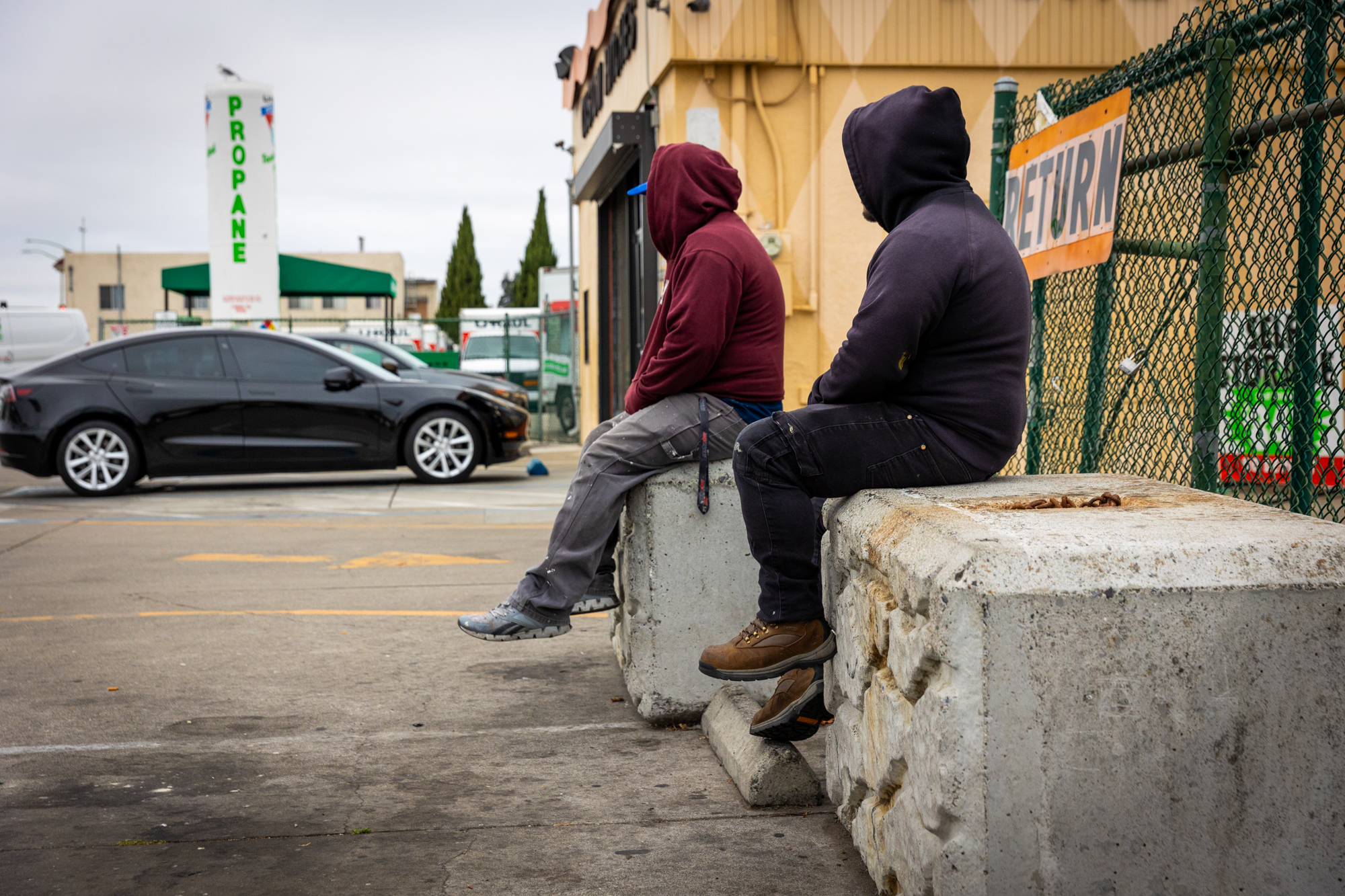
"caption": "Day laborers wait for work on International Boulevard at a U-Haul in Oakland on Sept. 5, 2025. South Bay leaders and organizations are coming together to show support for immigrant day laborers following a startling arrest at a San José nonprofit. ",
"credit": "Tâm Vũ/KQED",
"altTag": null,
"description": null,
"imgSizes": {
"thumbnail": {
"file": "https://cdn.kqed.org/wp-content/uploads/sites/10/2025/09/250905-ADOPTACORNER_00805_TV-KQED-160x107.jpg",
"width": 160,
"height": 107,
"mimeType": "image/jpeg"
},
"1536x1536": {
"file": "https://cdn.kqed.org/wp-content/uploads/sites/10/2025/09/250905-ADOPTACORNER_00805_TV-KQED-1536x1024.jpg",
"width": 1536,
"height": 1024,
"mimeType": "image/jpeg"
},
"post-thumbnail": {
"file": "https://cdn.kqed.org/wp-content/uploads/sites/10/2025/09/250905-ADOPTACORNER_00805_TV-KQED-672x372.jpg",
"width": 672,
"height": 372,
"mimeType": "image/jpeg"
},
"twentyfourteen-full-width": {
"file": "https://cdn.kqed.org/wp-content/uploads/sites/10/2025/09/250905-ADOPTACORNER_00805_TV-KQED-1038x576.jpg",
"width": 1038,
"height": 576,
"mimeType": "image/jpeg"
},
"kqedFullSize": {
"file": "https://cdn.kqed.org/wp-content/uploads/sites/10/2025/09/250905-ADOPTACORNER_00805_TV-KQED.jpg",
"width": 2000,
"height": 1333
}
},
"isLoading": false,
"fetchFailed": false
},
"news_12056653": {
"type": "attachments",
"id": "news_12056653",
"meta": {
"index": "attachments_1716263798",
"site": "news",
"id": "12056653",
"found": true
},
"title": "LaRussell+Good+Compenny-contestshow-326",
"publishDate": 1758227742,
"status": "inherit",
"parent": 12056651,
"modified": 1758228319,
"caption": "Misa James performs 'On My Own' in Vallejo, Ca on Aug. 21, 2025 at the KQED x Good Compenny Bay Area Music Showcase.",
"credit": "Vita Hewitt",
"altTag": null,
"description": null,
"imgSizes": {
"medium": {
"file": "https://cdn.kqed.org/wp-content/uploads/sites/10/2025/09/LaRussellGoodCompenny-contestshow-326-2000x1334.jpg",
"width": 2000,
"height": 1334,
"mimeType": "image/jpeg"
},
"large": {
"file": "https://cdn.kqed.org/wp-content/uploads/sites/10/2025/09/LaRussellGoodCompenny-contestshow-326-2000x1334.jpg",
"width": 2000,
"height": 1334,
"mimeType": "image/jpeg"
},
"thumbnail": {
"file": "https://cdn.kqed.org/wp-content/uploads/sites/10/2025/09/LaRussellGoodCompenny-contestshow-326-160x107.jpg",
"width": 160,
"height": 107,
"mimeType": "image/jpeg"
},
"1536x1536": {
"file": "https://cdn.kqed.org/wp-content/uploads/sites/10/2025/09/LaRussellGoodCompenny-contestshow-326-1536x1024.jpg",
"width": 1536,
"height": 1024,
"mimeType": "image/jpeg"
},
"2048x2048": {
"file": "https://cdn.kqed.org/wp-content/uploads/sites/10/2025/09/LaRussellGoodCompenny-contestshow-326-2048x1366.jpg",
"width": 2048,
"height": 1366,
"mimeType": "image/jpeg"
},
"post-thumbnail": {
"file": "https://cdn.kqed.org/wp-content/uploads/sites/10/2025/09/LaRussellGoodCompenny-contestshow-326-672x372.jpg",
"width": 672,
"height": 372,
"mimeType": "image/jpeg"
},
"twentyfourteen-full-width": {
"file": "https://cdn.kqed.org/wp-content/uploads/sites/10/2025/09/LaRussellGoodCompenny-contestshow-326-1038x576.jpg",
"width": 1038,
"height": 576,
"mimeType": "image/jpeg"
},
"full-width": {
"file": "https://cdn.kqed.org/wp-content/uploads/sites/10/2025/09/LaRussellGoodCompenny-contestshow-326-2000x1334.jpg",
"width": 2000,
"height": 1334,
"mimeType": "image/jpeg"
},
"kqedFullSize": {
"file": "https://cdn.kqed.org/wp-content/uploads/sites/10/2025/09/LaRussellGoodCompenny-contestshow-326-scaled.jpg",
"width": 2560,
"height": 1707
}
},
"isLoading": false,
"fetchFailed": false
},
"news_12056435": {
"type": "attachments",
"id": "news_12056435",
"meta": {
"index": "attachments_1716263798",
"site": "news",
"id": "12056435",
"found": true
},
"title": "250917-FAST-FOOD WORKERS-MD-04-KQED",
"publishDate": 1758147461,
"status": "inherit",
"parent": 0,
"modified": 1758147588,
"caption": "Delia Vargas and other fast food workers protest in front of an El Pollo Loco restaurant in San José on Sept. 17, 2025.",
"credit": "Martin do Nascimento/KQED",
"altTag": null,
"description": null,
"imgSizes": {
"thumbnail": {
"file": "https://cdn.kqed.org/wp-content/uploads/sites/10/2025/09/250917-FAST-FOOD-WORKERS-MD-04-KQED-160x107.jpg",
"width": 160,
"height": 107,
"mimeType": "image/jpeg"
},
"1536x1536": {
"file": "https://cdn.kqed.org/wp-content/uploads/sites/10/2025/09/250917-FAST-FOOD-WORKERS-MD-04-KQED-1536x1025.jpg",
"width": 1536,
"height": 1025,
"mimeType": "image/jpeg"
},
"post-thumbnail": {
"file": "https://cdn.kqed.org/wp-content/uploads/sites/10/2025/09/250917-FAST-FOOD-WORKERS-MD-04-KQED-672x372.jpg",
"width": 672,
"height": 372,
"mimeType": "image/jpeg"
},
"twentyfourteen-full-width": {
"file": "https://cdn.kqed.org/wp-content/uploads/sites/10/2025/09/250917-FAST-FOOD-WORKERS-MD-04-KQED-1038x576.jpg",
"width": 1038,
"height": 576,
"mimeType": "image/jpeg"
},
"kqedFullSize": {
"file": "https://cdn.kqed.org/wp-content/uploads/sites/10/2025/09/250917-FAST-FOOD-WORKERS-MD-04-KQED.jpg",
"width": 2000,
"height": 1334
}
},
"isLoading": false,
"fetchFailed": false
},
"news_12055487": {
"type": "attachments",
"id": "news_12055487",
"meta": {
"index": "attachments_1716263798",
"site": "news",
"id": "12055487",
"found": true
},
"title": "250909-BERRYESSAUNIONCLOSURES_03248_TV-KQED",
"publishDate": 1757538449,
"status": "inherit",
"parent": 0,
"modified": 1757975671,
"caption": "Tina De Vera (left) and Justin Chaudoin (right), parents who are vocal about the impact of school district changes on their children, pose for a portrait at Ruskin Elementary School in San José on Sept. 9, 2025. Parents at Ruskin Elementary School in San José say school consolidations have caused chaos on campus, leading to unsafe traffic and only 10 minutes for students to eat lunch.",
"credit": "Tâm Vũ/KQED",
"altTag": null,
"description": null,
"imgSizes": {
"thumbnail": {
"file": "https://cdn.kqed.org/wp-content/uploads/sites/10/2025/09/250909-BERRYESSAUNIONCLOSURES_03248_TV-KQED-160x107.jpg",
"width": 160,
"height": 107,
"mimeType": "image/jpeg"
},
"1536x1536": {
"file": "https://cdn.kqed.org/wp-content/uploads/sites/10/2025/09/250909-BERRYESSAUNIONCLOSURES_03248_TV-KQED-1536x1024.jpg",
"width": 1536,
"height": 1024,
"mimeType": "image/jpeg"
},
"post-thumbnail": {
"file": "https://cdn.kqed.org/wp-content/uploads/sites/10/2025/09/250909-BERRYESSAUNIONCLOSURES_03248_TV-KQED-672x372.jpg",
"width": 672,
"height": 372,
"mimeType": "image/jpeg"
},
"twentyfourteen-full-width": {
"file": "https://cdn.kqed.org/wp-content/uploads/sites/10/2025/09/250909-BERRYESSAUNIONCLOSURES_03248_TV-KQED-1038x576.jpg",
"width": 1038,
"height": 576,
"mimeType": "image/jpeg"
},
"kqedFullSize": {
"file": "https://cdn.kqed.org/wp-content/uploads/sites/10/2025/09/250909-BERRYESSAUNIONCLOSURES_03248_TV-KQED.jpg",
"width": 2000,
"height": 1333
}
},
"isLoading": false,
"fetchFailed": false
},
"news_12040682": {
"type": "attachments",
"id": "news_12040682",
"meta": {
"index": "attachments_1716263798",
"site": "news",
"id": "12040682",
"found": true
},
"title": "20250516_ValkyriesHomeOpener_GC-44_qed",
"publishDate": 1747510858,
"status": "inherit",
"parent": 12040665,
"modified": 1758064339,
"caption": "Fans cheer as the Golden State Valkyries score during their WNBA season opener on May 16, 2025.",
"credit": "Gina Castro/KQED",
"altTag": null,
"description": null,
"imgSizes": {
"medium": {
"file": "https://cdn.kqed.org/wp-content/uploads/sites/10/2025/05/20250516_ValkyriesHomeOpener_GC-44_qed-800x533.jpg",
"width": 800,
"height": 533,
"mimeType": "image/jpeg"
},
"large": {
"file": "https://cdn.kqed.org/wp-content/uploads/sites/10/2025/05/20250516_ValkyriesHomeOpener_GC-44_qed-1020x680.jpg",
"width": 1020,
"height": 680,
"mimeType": "image/jpeg"
},
"thumbnail": {
"file": "https://cdn.kqed.org/wp-content/uploads/sites/10/2025/05/20250516_ValkyriesHomeOpener_GC-44_qed-160x107.jpg",
"width": 160,
"height": 107,
"mimeType": "image/jpeg"
},
"1536x1536": {
"file": "https://cdn.kqed.org/wp-content/uploads/sites/10/2025/05/20250516_ValkyriesHomeOpener_GC-44_qed-1536x1024.jpg",
"width": 1536,
"height": 1024,
"mimeType": "image/jpeg"
},
"post-thumbnail": {
"file": "https://cdn.kqed.org/wp-content/uploads/sites/10/2025/05/20250516_ValkyriesHomeOpener_GC-44_qed-672x372.jpg",
"width": 672,
"height": 372,
"mimeType": "image/jpeg"
},
"twentyfourteen-full-width": {
"file": "https://cdn.kqed.org/wp-content/uploads/sites/10/2025/05/20250516_ValkyriesHomeOpener_GC-44_qed-1038x576.jpg",
"width": 1038,
"height": 576,
"mimeType": "image/jpeg"
},
"full-width": {
"file": "https://cdn.kqed.org/wp-content/uploads/sites/10/2025/05/20250516_ValkyriesHomeOpener_GC-44_qed-1920x1280.jpg",
"width": 1920,
"height": 1280,
"mimeType": "image/jpeg"
},
"kqedFullSize": {
"file": "https://cdn.kqed.org/wp-content/uploads/sites/10/2025/05/20250516_ValkyriesHomeOpener_GC-44_qed.jpg",
"width": 2000,
"height": 1333
}
},
"isLoading": false,
"fetchFailed": false
},
"news_12054806": {
"type": "attachments",
"id": "news_12054806",
"meta": {
"index": "attachments_1716263798",
"site": "news",
"id": "12054806",
"found": true
},
"title": "ICE agents raid to arrest illigal immigrants.",
"publishDate": 1757095104,
"status": "inherit",
"parent": 12054798,
"modified": 1757118556,
"caption": "Thomas Giles, Field Office Director, center, talks to a raiding party agent after a raid to arrest an illegal immigrant with a criminal record on Thursday, Sept. 8, 2022, in Los Angeles.",
"credit": "Irfan Khan/Los Angeles Times/ Getty Images",
"altTag": null,
"description": null,
"imgSizes": {
"thumbnail": {
"file": "https://cdn.kqed.org/wp-content/uploads/sites/10/2025/09/GettyImages-1243312873_NEWS-160x107.jpg",
"width": 160,
"height": 107,
"mimeType": "image/jpeg"
},
"1536x1536": {
"file": "https://cdn.kqed.org/wp-content/uploads/sites/10/2025/09/GettyImages-1243312873_NEWS-1536x1024.jpg",
"width": 1536,
"height": 1024,
"mimeType": "image/jpeg"
},
"post-thumbnail": {
"file": "https://cdn.kqed.org/wp-content/uploads/sites/10/2025/09/GettyImages-1243312873_NEWS-672x372.jpg",
"width": 672,
"height": 372,
"mimeType": "image/jpeg"
},
"twentyfourteen-full-width": {
"file": "https://cdn.kqed.org/wp-content/uploads/sites/10/2025/09/GettyImages-1243312873_NEWS-1038x576.jpg",
"width": 1038,
"height": 576,
"mimeType": "image/jpeg"
},
"kqedFullSize": {
"file": "https://cdn.kqed.org/wp-content/uploads/sites/10/2025/09/GettyImages-1243312873_NEWS.jpg",
"width": 2000,
"height": 1333
}
},
"isLoading": false,
"fetchFailed": false
},
"news_12054818": {
"type": "attachments",
"id": "news_12054818",
"meta": {
"index": "attachments_1716263798",
"site": "news",
"id": "12054818",
"found": true
},
"title": "250905-bartoutage00435_TV_qed",
"publishDate": 1757095692,
"status": "inherit",
"parent": 12054754,
"modified": 1757095717,
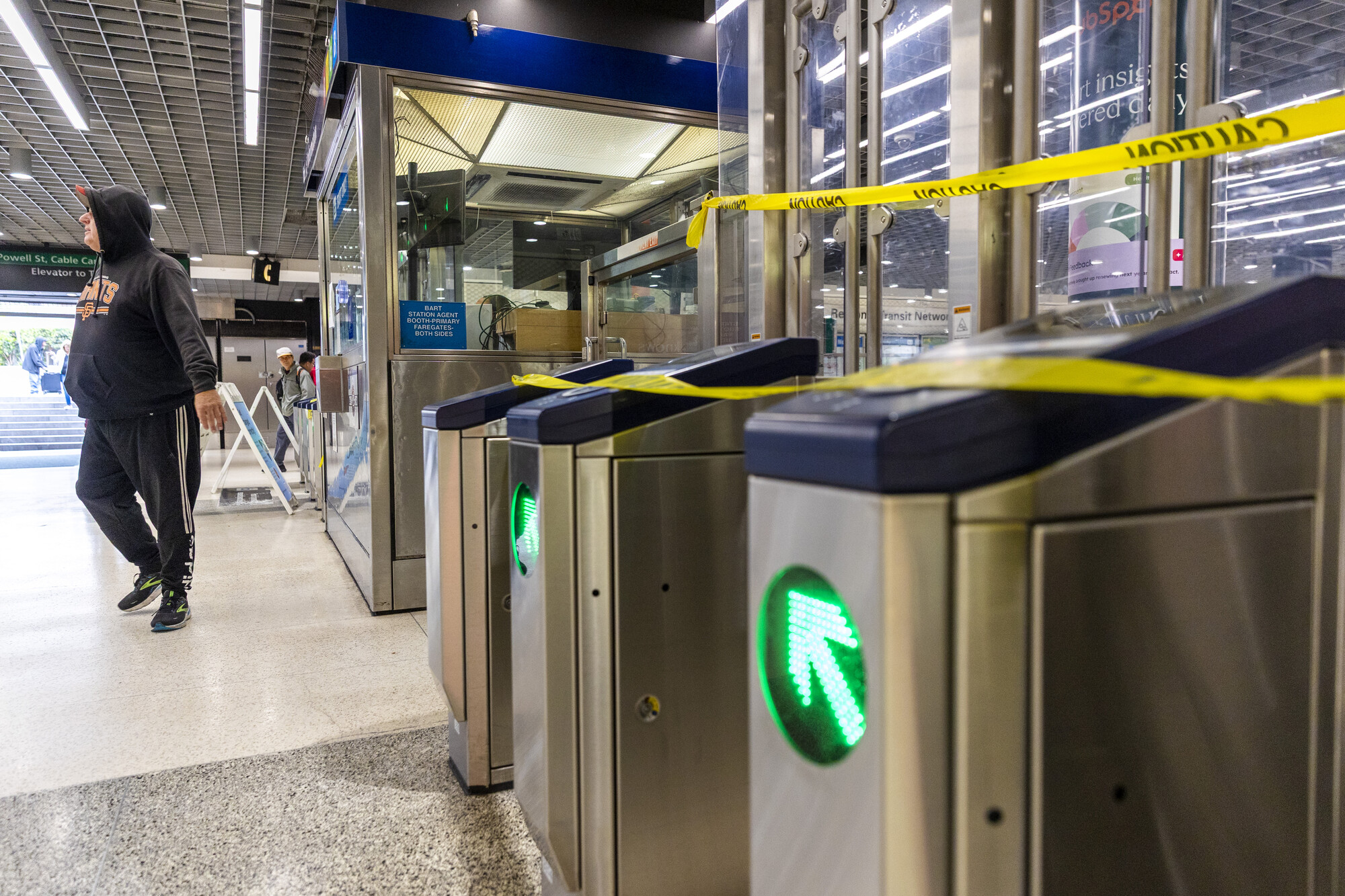
"caption": "A person walks away from Powell Bart station as it is not in service due to an electrical outage in San Francisco on Sept. 5, 2025.",
"credit": "Tâm Vũ/KQED",
"altTag": null,
"description": null,
"imgSizes": {
"thumbnail": {
"file": "https://cdn.kqed.org/wp-content/uploads/sites/10/2025/09/250905-bartoutage00435_TV_qed-160x107.jpg",
"width": 160,
"height": 107,
"mimeType": "image/jpeg"
},
"1536x1536": {
"file": "https://cdn.kqed.org/wp-content/uploads/sites/10/2025/09/250905-bartoutage00435_TV_qed-1536x1024.jpg",
"width": 1536,
"height": 1024,
"mimeType": "image/jpeg"
},
"post-thumbnail": {
"file": "https://cdn.kqed.org/wp-content/uploads/sites/10/2025/09/250905-bartoutage00435_TV_qed-672x372.jpg",
"width": 672,
"height": 372,
"mimeType": "image/jpeg"
},
"twentyfourteen-full-width": {
"file": "https://cdn.kqed.org/wp-content/uploads/sites/10/2025/09/250905-bartoutage00435_TV_qed-1038x576.jpg",
"width": 1038,
"height": 576,
"mimeType": "image/jpeg"
},
"kqedFullSize": {
"file": "https://cdn.kqed.org/wp-content/uploads/sites/10/2025/09/250905-bartoutage00435_TV_qed.jpg",
"width": 2000,
"height": 1333
}
},
"isLoading": false,
"fetchFailed": false
},
"news_11897653": {
"type": "attachments",
"id": "news_11897653",
"meta": {
"index": "attachments_1716263798",
"site": "news",
"id": "11897653",
"found": true
},
"title": "Waymo-car",
"publishDate": 1638234660,
"status": "inherit",
"parent": 11897647,
"modified": 1747702021,
"caption": "A Waymo-brand car sits at an intersection in San Francisco's Castro neighborhood.",
"credit": "Christopher Beale/KQED",
"altTag": "A white SUV with tech gadgets and cameras sticking out from the sides and roof waits at a stoplight in San Francisco's Castro neighborhood.",
"description": null,
"imgSizes": {
"medium": {
"file": "https://cdn.kqed.org/wp-content/uploads/sites/10/2021/11/Waymo-car-800x450.jpg",
"width": 800,
"height": 450,
"mimeType": "image/jpeg"
},
"large": {
"file": "https://cdn.kqed.org/wp-content/uploads/sites/10/2021/11/Waymo-car-1020x574.jpg",
"width": 1020,
"height": 574,
"mimeType": "image/jpeg"
},
"thumbnail": {
"file": "https://cdn.kqed.org/wp-content/uploads/sites/10/2021/11/Waymo-car-160x90.jpg",
"width": 160,
"height": 90,
"mimeType": "image/jpeg"
},
"1536x1536": {
"file": "https://cdn.kqed.org/wp-content/uploads/sites/10/2021/11/Waymo-car-1536x864.jpg",
"width": 1536,
"height": 864,
"mimeType": "image/jpeg"
},
"post-thumbnail": {
"file": "https://cdn.kqed.org/wp-content/uploads/sites/10/2021/11/Waymo-car-672x372.jpg",
"width": 672,
"height": 372,
"mimeType": "image/jpeg"
},
"twentyfourteen-full-width": {
"file": "https://cdn.kqed.org/wp-content/uploads/sites/10/2021/11/Waymo-car-1038x576.jpg",
"width": 1038,
"height": 576,
"mimeType": "image/jpeg"
},
"kqedFullSize": {
"file": "https://cdn.kqed.org/wp-content/uploads/sites/10/2021/11/Waymo-car.jpg",
"width": 1920,
"height": 1080
}
},
"isLoading": false,
"fetchFailed": false
},
"news_12009735": {
"type": "attachments",
"id": "news_12009735",
"meta": {
"index": "attachments_1716263798",
"site": "news",
"id": "12009735",
"found": true
},
"title": "241016-OMAR TORRES-GH-1-KQED",
"publishDate": 1729121458,
"status": "inherit",
"parent": 12009671,
"modified": 1729121486,
"caption": "First-term San José Councilmember Omar Torres is facing increasing pressure to resign following a police investigation into text messages he sent referencing sexually explicit acts with a minor.",
"credit": "Joseph Geha/KQED",
"altTag": null,
"description": null,
"imgSizes": {
"medium": {
"file": "https://cdn.kqed.org/wp-content/uploads/sites/10/2024/10/241016-OMAR-TORRES-GH-1-KQED-800x533.jpg",
"width": 800,
"height": 533,
"mimeType": "image/jpeg"
},
"large": {
"file": "https://cdn.kqed.org/wp-content/uploads/sites/10/2024/10/241016-OMAR-TORRES-GH-1-KQED-1020x680.jpg",
"width": 1020,
"height": 680,
"mimeType": "image/jpeg"
},
"thumbnail": {
"file": "https://cdn.kqed.org/wp-content/uploads/sites/10/2024/10/241016-OMAR-TORRES-GH-1-KQED-160x107.jpg",
"width": 160,
"height": 107,
"mimeType": "image/jpeg"
},
"1536x1536": {
"file": "https://cdn.kqed.org/wp-content/uploads/sites/10/2024/10/241016-OMAR-TORRES-GH-1-KQED-1536x1024.jpg",
"width": 1536,
"height": 1024,
"mimeType": "image/jpeg"
},
"post-thumbnail": {
"file": "https://cdn.kqed.org/wp-content/uploads/sites/10/2024/10/241016-OMAR-TORRES-GH-1-KQED-672x372.jpg",
"width": 672,
"height": 372,
"mimeType": "image/jpeg"
},
"twentyfourteen-full-width": {
"file": "https://cdn.kqed.org/wp-content/uploads/sites/10/2024/10/241016-OMAR-TORRES-GH-1-KQED-1038x576.jpg",
"width": 1038,
"height": 576,
"mimeType": "image/jpeg"
},
"full-width": {
"file": "https://cdn.kqed.org/wp-content/uploads/sites/10/2024/10/241016-OMAR-TORRES-GH-1-KQED-1920x1280.jpg",
"width": 1920,
"height": 1280,
"mimeType": "image/jpeg"
},
"kqedFullSize": {
"file": "https://cdn.kqed.org/wp-content/uploads/sites/10/2024/10/241016-OMAR-TORRES-GH-1-KQED.jpg",
"width": 2000,
"height": 1333
}
},
"isLoading": false,
"fetchFailed": false
},
"news_12054095": {
"type": "attachments",
"id": "news_12054095",
"meta": {
"index": "attachments_1716263798",
"site": "news",
"id": "12054095",
"found": true
},
"title": "250528-SJSMOKESHOPS-JG-9-KQED",
"publishDate": 1756408227,
"status": "inherit",
"parent": 12063060,
"modified": 1762382942,
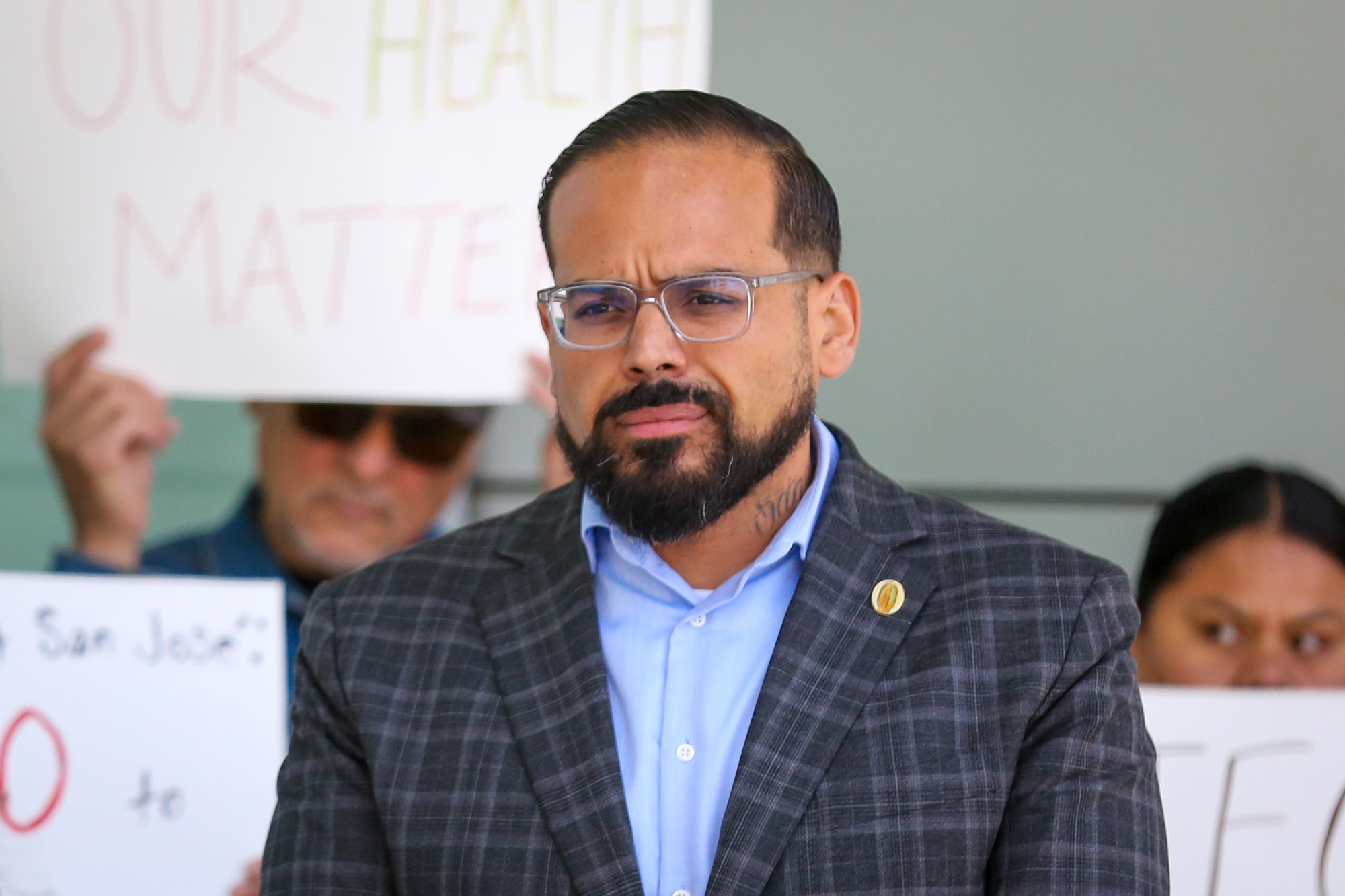
"caption": "San José District 5 City Councilmember Peter Ortiz, right, listens as Santa Clara County Supervisor Sylvia Arenas speaks during a press conference in support of a temporary ban on new smoke shops in San José outside City Hall on May 28, 2025.",
"credit": "Joseph Geha/KQED",
"altTag": null,
"description": null,
"imgSizes": {
"thumbnail": {
"file": "https://cdn.kqed.org/wp-content/uploads/sites/10/2025/08/250528-SJSMOKESHOPS-JG-9-KQED-160x107.jpg",
"width": 160,
"height": 107,
"mimeType": "image/jpeg"
},
"1536x1536": {
"file": "https://cdn.kqed.org/wp-content/uploads/sites/10/2025/08/250528-SJSMOKESHOPS-JG-9-KQED-1536x1024.jpg",
"width": 1536,
"height": 1024,
"mimeType": "image/jpeg"
},
"post-thumbnail": {
"file": "https://cdn.kqed.org/wp-content/uploads/sites/10/2025/08/250528-SJSMOKESHOPS-JG-9-KQED-672x372.jpg",
"width": 672,
"height": 372,
"mimeType": "image/jpeg"
},
"twentyfourteen-full-width": {
"file": "https://cdn.kqed.org/wp-content/uploads/sites/10/2025/08/250528-SJSMOKESHOPS-JG-9-KQED-1038x576.jpg",
"width": 1038,
"height": 576,
"mimeType": "image/jpeg"
},
"kqedFullSize": {
"file": "https://cdn.kqed.org/wp-content/uploads/sites/10/2025/08/250528-SJSMOKESHOPS-JG-9-KQED.jpg",
"width": 2000,
"height": 1333
}
},
"isLoading": false,
"fetchFailed": false
},
"news_12053962": {
"type": "attachments",
"id": "news_12053962",
"meta": {
"index": "attachments_1716263798",
"site": "news",
"id": "12053962",
"found": true
},
"title": "20230608_ksuzuki_adelanteschool 172_qed",
"publishDate": 1756333041,
"status": "inherit",
"parent": 12053938,
"modified": 1756401471,
"caption": "A sign outside Adelante Dual Language Academy is pictured in San José, California, on June 8, 2023. Records obtained by KQED show a music teacher arrested this year for sexually abusing 10 students at Adelante Academy had complaints at a different school for inappropriately touching students before he was transferred.",
"credit": "Kori Suzuki/KQED",
"altTag": null,
"description": null,
"imgSizes": {
"thumbnail": {
"file": "https://cdn.kqed.org/wp-content/uploads/sites/10/2025/08/20230608_ksuzuki_adelanteschool-172_qed-160x106.jpg",
"width": 160,
"height": 106,
"mimeType": "image/jpeg"
},
"1536x1536": {
"file": "https://cdn.kqed.org/wp-content/uploads/sites/10/2025/08/20230608_ksuzuki_adelanteschool-172_qed-1536x1022.jpg",
"width": 1536,
"height": 1022,
"mimeType": "image/jpeg"
},
"post-thumbnail": {
"file": "https://cdn.kqed.org/wp-content/uploads/sites/10/2025/08/20230608_ksuzuki_adelanteschool-172_qed-672x372.jpg",
"width": 672,
"height": 372,
"mimeType": "image/jpeg"
},
"twentyfourteen-full-width": {
"file": "https://cdn.kqed.org/wp-content/uploads/sites/10/2025/08/20230608_ksuzuki_adelanteschool-172_qed-1038x576.jpg",
"width": 1038,
"height": 576,
"mimeType": "image/jpeg"
},
"kqedFullSize": {
"file": "https://cdn.kqed.org/wp-content/uploads/sites/10/2025/08/20230608_ksuzuki_adelanteschool-172_qed.jpg",
"width": 2000,
"height": 1331
}
},
"isLoading": false,
"fetchFailed": false
},
"news_12049066": {
"type": "attachments",
"id": "news_12049066",
"meta": {
"index": "attachments_1716263798",
"site": "news",
"id": "12049066",
"found": true
},
"title": "SanJosePostOfficeFireTwitter",
"publishDate": 1753136364,
"status": "inherit",
"parent": 12049042,
"modified": 1753139688,
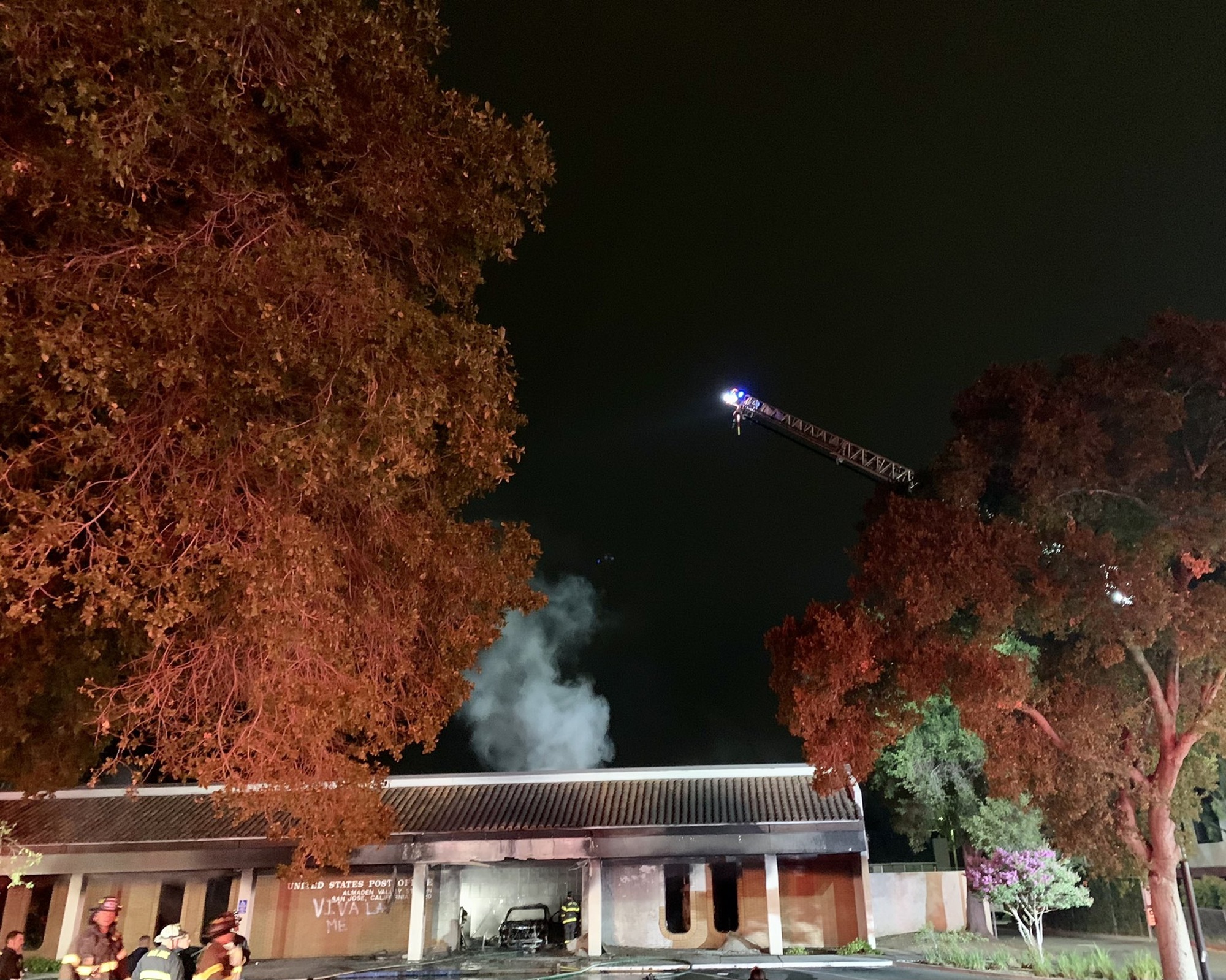
"caption": "San José Fire Department firefighters respond to a fire after a car crashed into a Post Office on Sunday, July 20, 2025, in San José, California.",
"credit": "Courtesy of San José Fire Department via X",
"altTag": null,
"description": null,
"imgSizes": {
"thumbnail": {
"file": "https://cdn.kqed.org/wp-content/uploads/sites/10/2025/07/SanJosePostOfficeFireTwitter-160x128.jpg",
"width": 160,
"height": 128,
"mimeType": "image/jpeg"
},
"1536x1536": {
"file": "https://cdn.kqed.org/wp-content/uploads/sites/10/2025/07/SanJosePostOfficeFireTwitter-1536x1228.jpg",
"width": 1536,
"height": 1228,
"mimeType": "image/jpeg"
},
"post-thumbnail": {
"file": "https://cdn.kqed.org/wp-content/uploads/sites/10/2025/07/SanJosePostOfficeFireTwitter-672x372.jpg",
"width": 672,
"height": 372,
"mimeType": "image/jpeg"
},
"twentyfourteen-full-width": {
"file": "https://cdn.kqed.org/wp-content/uploads/sites/10/2025/07/SanJosePostOfficeFireTwitter-1038x576.jpg",
"width": 1038,
"height": 576,
"mimeType": "image/jpeg"
},
"kqedFullSize": {
"file": "https://cdn.kqed.org/wp-content/uploads/sites/10/2025/07/SanJosePostOfficeFireTwitter.jpg",
"width": 2000,
"height": 1599
}
},
"isLoading": false,
"fetchFailed": false
}
},
"audioPlayerReducer": {
"postId": "stream_live",
"isPaused": true,
"isPlaying": false,
"pfsActive": false,
"pledgeModalIsOpen": true,
"playerDrawerIsOpen": false,
"liveAudioPlayStartedAt": 0,
"liveAudioPlayContext": ""
},
"authorsReducer": {
"ecruzguevarra": {
"type": "authors",
"id": "8654",
"meta": {
"index": "authors_1716337520",
"id": "8654",
"found": true
},
"name": "Ericka Cruz Guevarra",
"firstName": "Ericka",
"lastName": "Cruz Guevarra",
"slug": "ecruzguevarra",
"email": "ecruzguevarra@kqed.org",
"display_author_email": true,
"staff_mastheads": [
"news"
],
"title": "Producer, The Bay Podcast",
"bio": "Ericka Cruz Guevarra is host of \u003ca href=\"https://www.kqed.org/podcasts/thebay\">\u003cem>The Bay\u003c/em>\u003c/a> podcast at KQED. Before host, she was the show’s producer. Her work in that capacity includes a three-part reported series on policing in Vallejo, which won a 2020 excellence in journalism award from the Society of Professional Journalists. Ericka has worked as a breaking news reporter at Oregon Public Broadcasting, helped produce the Code Switch podcast, and was KQED’s inaugural Raul Ramirez Diversity Fund intern. She’s also an alumna of NPR’s Next Generation Radio program. Send her an email if you have strong feelings about whether Fairfield and Suisun City are the Bay. Ericka is represented by SAG-AFTRA.",
"avatar": "https://secure.gravatar.com/avatar/accefc1de4bafc7e234b69bcb9b6f6536c130fd84709bc3069ef11a78787e1bb?s=600&d=blank&r=g",
"twitter": "NotoriousECG",
"bluesky": null,
"facebook": null,
"instagram": null,
"linkedin": null,
"sites": [
{
"site": "arts",
"roles": [
"subscriber"
]
},
{
"site": "news",
"roles": [
"editor",
"manage_categories"
]
},
{
"site": "futureofyou",
"roles": [
"subscriber"
]
},
{
"site": "stateofhealth",
"roles": [
"subscriber"
]
},
{
"site": "science",
"roles": [
"editor"
]
},
{
"site": "forum",
"roles": [
"subscriber"
]
}
],
"headData": {
"title": "Ericka Cruz Guevarra | KQED",
"description": "Producer, The Bay Podcast",
"ogImgSrc": "https://secure.gravatar.com/avatar/accefc1de4bafc7e234b69bcb9b6f6536c130fd84709bc3069ef11a78787e1bb?s=600&d=blank&r=g",
"twImgSrc": "https://secure.gravatar.com/avatar/accefc1de4bafc7e234b69bcb9b6f6536c130fd84709bc3069ef11a78787e1bb?s=600&d=blank&r=g"
},
"isLoading": false,
"link": "/author/ecruzguevarra"
},
"hmcdede": {
"type": "authors",
"id": "11635",
"meta": {
"index": "authors_1716337520",
"id": "11635",
"found": true
},
"name": "Holly McDede",
"firstName": "Holly",
"lastName": "McDede",
"slug": "hmcdede",
"email": "hmcdede@KQED.org",
"display_author_email": false,
"staff_mastheads": [],
"title": "KQED Contributor",
"bio": null,
"avatar": "https://secure.gravatar.com/avatar/999d9bf31bb3a2f0511932d99526cb3e?s=600&d=blank&r=g",
"twitter": null,
"facebook": null,
"instagram": null,
"linkedin": null,
"sites": [
{
"site": "arts",
"roles": [
"editor"
]
},
{
"site": "news",
"roles": [
"edit_others_posts",
"editor"
]
},
{
"site": "science",
"roles": [
"editor"
]
},
{
"site": "forum",
"roles": [
"editor"
]
},
{
"site": "perspectives",
"roles": [
"administrator"
]
}
],
"headData": {
"title": "Holly McDede | KQED",
"description": "KQED Contributor",
"ogImgSrc": "https://secure.gravatar.com/avatar/999d9bf31bb3a2f0511932d99526cb3e?s=600&d=blank&r=g",
"twImgSrc": "https://secure.gravatar.com/avatar/999d9bf31bb3a2f0511932d99526cb3e?s=600&d=blank&r=g"
},
"isLoading": false,
"link": "/author/hmcdede"
},
"amontecillo": {
"type": "authors",
"id": "11649",
"meta": {
"index": "authors_1716337520",
"id": "11649",
"found": true
},
"name": "Alan Montecillo",
"firstName": "Alan",
"lastName": "Montecillo",
"slug": "amontecillo",
"email": "amontecillo@kqed.org",
"display_author_email": false,
"staff_mastheads": [
"news"
],
"title": "KQED Contributor",
"bio": "Alan Montecillo is the senior editor of \u003cem>\u003ca href=\"http://kqed.org/thebay\">The Bay\u003c/a>, \u003c/em> KQED's local news podcast. Before moving to the Bay Area, he worked as a senior talk show producer for WILL in Champaign-Urbana, Illinois and at Oregon Public Broadcasting in Portland, Oregon. He has won journalism awards from the Society of Professional Journalists Northern California, the Public Media Journalists Association, The Signal Awards, and has also received a regional Edward R. Murrow award. Alan is a Filipino American from Hong Kong and a graduate of Reed College.",
"avatar": "https://secure.gravatar.com/avatar/268f53a2066899ea9efdd8a5900218b17c822d9862cbc9326cccec53ef41d349?s=600&d=blank&r=g",
"twitter": "alanmontecillo",
"bluesky": null,
"facebook": null,
"instagram": null,
"linkedin": null,
"sites": [
{
"site": "",
"roles": [
"editor"
]
},
{
"site": "news",
"roles": [
"editor",
"manage_categories"
]
}
],
"headData": {
"title": "Alan Montecillo | KQED",
"description": "KQED Contributor",
"ogImgSrc": "https://secure.gravatar.com/avatar/268f53a2066899ea9efdd8a5900218b17c822d9862cbc9326cccec53ef41d349?s=600&d=blank&r=g",
"twImgSrc": "https://secure.gravatar.com/avatar/268f53a2066899ea9efdd8a5900218b17c822d9862cbc9326cccec53ef41d349?s=600&d=blank&r=g"
},
"isLoading": false,
"link": "/author/amontecillo"
},
"adahlstromeckman": {
"type": "authors",
"id": "11785",
"meta": {
"index": "authors_1716337520",
"id": "11785",
"found": true
},
"name": "Azul Dahlstrom-Eckman",
"firstName": "Azul",
"lastName": "Dahlstrom-Eckman",
"slug": "adahlstromeckman",
"email": "adahlstrom-eckman@kqed.org",
"display_author_email": true,
"staff_mastheads": [],
"title": "Reporter",
"bio": "Azul is a reporter for KQED focusing on transportation and features. He joined KQED in 2021 as an alumna of KALW's Audio Academy radio journalism training program.",
"avatar": "https://secure.gravatar.com/avatar/9cb750298435add7815a777f55bf1f46845c1386bb8452555c60a7b820b5aba3?s=600&d=blank&r=g",
"twitter": "@zuliemann",
"bluesky": "@azul415.bsky.social",
"facebook": null,
"instagram": null,
"linkedin": null,
"sites": [
{
"site": "arts",
"roles": [
"editor"
]
},
{
"site": "news",
"roles": [
"editor"
]
},
{
"site": "science",
"roles": [
"editor"
]
},
{
"site": "liveblog",
"roles": [
"author"
]
}
],
"headData": {
"title": "Azul Dahlstrom-Eckman | KQED",
"description": "Reporter",
"ogImgSrc": "https://secure.gravatar.com/avatar/9cb750298435add7815a777f55bf1f46845c1386bb8452555c60a7b820b5aba3?s=600&d=blank&r=g",
"twImgSrc": "https://secure.gravatar.com/avatar/9cb750298435add7815a777f55bf1f46845c1386bb8452555c60a7b820b5aba3?s=600&d=blank&r=g"
},
"isLoading": false,
"link": "/author/adahlstromeckman"
},
"jessicakariisa": {
"type": "authors",
"id": "11831",
"meta": {
"index": "authors_1716337520",
"id": "11831",
"found": true
},
"name": "Jessica Kariisa",
"firstName": "Jessica",
"lastName": "Kariisa",
"slug": "jessicakariisa",
"email": "jkariisa@kqed.org",
"display_author_email": false,
"staff_mastheads": [],
"title": "Producer, The Bay",
"bio": "Jessica Kariisa is the producer of The Bay. She first joined KQED as an intern for The California Report Magazine, after which she became an on-call producer. She reported a Bay Curious episode on the use of rap lyrics in criminal trials which won a Society of Professional Journalists award in 2023 for Excellence in Features Journalism and the 2023 Signal Award for Best Conversation Starter. She’s worked on podcasts for Snap Judgment and American Public Media. Before embarking on her audio career, she was a music journalist.\r\n\r\nJessica Kariisa is represented by SAG-AFTRA.",
"avatar": "https://secure.gravatar.com/avatar/522e97b28ac0b3d411621c0fde8f3419c7b71ea2c5c262c57c4bb600963f328c?s=600&d=blank&r=g",
"twitter": null,
"bluesky": null,
"facebook": null,
"instagram": null,
"linkedin": null,
"sites": [
{
"site": "arts",
"roles": [
"author"
]
},
{
"site": "news",
"roles": [
"editor",
"manage_categories"
]
}
],
"headData": {
"title": "Jessica Kariisa | KQED",
"description": "Producer, The Bay",
"ogImgSrc": "https://secure.gravatar.com/avatar/522e97b28ac0b3d411621c0fde8f3419c7b71ea2c5c262c57c4bb600963f328c?s=600&d=blank&r=g",
"twImgSrc": "https://secure.gravatar.com/avatar/522e97b28ac0b3d411621c0fde8f3419c7b71ea2c5c262c57c4bb600963f328c?s=600&d=blank&r=g"
},
"isLoading": false,
"link": "/author/jessicakariisa"
},
"jgeha": {
"type": "authors",
"id": "11906",
"meta": {
"index": "authors_1716337520",
"id": "11906",
"found": true
},
"name": "Joseph Geha",
"firstName": "Joseph",
"lastName": "Geha",
"slug": "jgeha",
"email": "jgeha@kqed.org",
"display_author_email": false,
"staff_mastheads": [
"news",
"science"
],
"title": "KQED Contributor",
"bio": null,
"avatar": "https://secure.gravatar.com/avatar/ea84d2b6dd93d6369d453edf19dd583f117cd1759d2d9c9c92f9de77017354fe?s=600&d=blank&r=g",
"twitter": null,
"bluesky": null,
"facebook": null,
"instagram": null,
"linkedin": null,
"sites": [
{
"site": "news",
"roles": [
"editor"
]
},
{
"site": "liveblog",
"roles": [
"author"
]
}
],
"headData": {
"title": "Joseph Geha | KQED",
"description": "KQED Contributor",
"ogImgSrc": "https://secure.gravatar.com/avatar/ea84d2b6dd93d6369d453edf19dd583f117cd1759d2d9c9c92f9de77017354fe?s=600&d=blank&r=g",
"twImgSrc": "https://secure.gravatar.com/avatar/ea84d2b6dd93d6369d453edf19dd583f117cd1759d2d9c9c92f9de77017354fe?s=600&d=blank&r=g"
},
"isLoading": false,
"link": "/author/jgeha"
},
"kdebenedetti": {
"type": "authors",
"id": "11913",
"meta": {
"index": "authors_1716337520",
"id": "11913",
"found": true
},
"name": "Katie DeBenedetti",
"firstName": "Katie",
"lastName": "DeBenedetti",
"slug": "kdebenedetti",
"email": "kdebenedetti@kqed.org",
"display_author_email": false,
"staff_mastheads": [
"news",
"science"
],
"title": "KQED Contributor",
"bio": "Katie DeBenedetti is a digital reporter covering daily news for the Express Desk. Prior to joining KQED as a culture reporting intern in January 2024, she covered education and city government for the Napa Valley Register.",
"avatar": "https://secure.gravatar.com/avatar/6e31073cb8f7e4214ab03f42771d0f45?s=600&d=blank&r=g",
"twitter": null,
"facebook": null,
"instagram": null,
"linkedin": null,
"sites": [
{
"site": "news",
"roles": [
"author"
]
},
{
"site": "science",
"roles": [
"author"
]
},
{
"site": "liveblog",
"roles": [
"author"
]
}
],
"headData": {
"title": "Katie DeBenedetti | KQED",
"description": "KQED Contributor",
"ogImgSrc": "https://secure.gravatar.com/avatar/6e31073cb8f7e4214ab03f42771d0f45?s=600&d=blank&r=g",
"twImgSrc": "https://secure.gravatar.com/avatar/6e31073cb8f7e4214ab03f42771d0f45?s=600&d=blank&r=g"
},
"isLoading": false,
"link": "/author/kdebenedetti"
},
"aaliahmad": {
"type": "authors",
"id": "11986",
"meta": {
"index": "authors_1716337520",
"id": "11986",
"found": true
},
"name": "Ayah Ali-Ahmad",
"firstName": "Ayah",
"lastName": "Ali-Ahmad",
"slug": "aaliahmad",
"email": "aaliahmad@KQED.org",
"display_author_email": false,
"staff_mastheads": [],
"title": "KQED Contributor",
"bio": null,
"avatar": "https://secure.gravatar.com/avatar/1cf54f187a5e1064b2cfef3f3d2f1e4f93e453395d56912aca6382a6071ec3ed?s=600&d=blank&r=g",
"twitter": "ayahaliahmad",
"bluesky": null,
"facebook": null,
"instagram": null,
"linkedin": null,
"sites": [
{
"site": "news",
"roles": [
"subscriber"
]
}
],
"headData": {
"title": "Ayah Ali-Ahmad | KQED",
"description": "KQED Contributor",
"ogImgSrc": "https://secure.gravatar.com/avatar/1cf54f187a5e1064b2cfef3f3d2f1e4f93e453395d56912aca6382a6071ec3ed?s=600&d=blank&r=g",
"twImgSrc": "https://secure.gravatar.com/avatar/1cf54f187a5e1064b2cfef3f3d2f1e4f93e453395d56912aca6382a6071ec3ed?s=600&d=blank&r=g"
},
"isLoading": false,
"link": "/author/aaliahmad"
}
},
"pagesReducer": {
"news_tag_san-jose": {
"type": "terms",
"id": "news_18541",
"meta": {
"index": "terms_1716263798",
"site": "news",
"id": "18541",
"score": 8.005273
},
"featImg": null,
"name": "San Jose",
"description": null,
"taxonomy": "tag",
"headData": {
"twImgId": null,
"twTitle": null,
"ogTitle": null,
"ogImgId": null,
"twDescription": null,
"description": null,
"title": "San Jose Archives | KQED News",
"ogDescription": null
},
"ttid": 91,
"slug": "san-jose",
"isLoading": false,
"title": "San Jose",
"pageMeta": {
"site": "news",
"WpPageTemplate": "page-topic-editorial",
"currentPage": 10
},
"blocks": [
{
"blockName": "kqed/post-list",
"attrs": {
"layout": "cardArticle2",
"query": "posts/news?tag=san-jose",
"seeMore": false,
"paginated": true,
"page": 10
}
},
{
"blockName": "kqed/ad"
}
]
}
},
"pfsSessionReducer": {},
"postsReducer": {
"stream_live": {
"type": "live",
"id": "stream_live",
"audioUrl": "https://streams.kqed.org/kqedradio",
"title": "Live Stream",
"excerpt": "Live Stream information currently unavailable.",
"link": "/radio",
"featImg": "",
"label": {
"name": "KQED Live",
"link": "/"
}
},
"stream_kqedNewscast": {
"type": "posts",
"id": "stream_kqedNewscast",
"audioUrl": "https://www.kqed.org/.stream/anon/radio/RDnews/newscast.mp3?_=1",
"title": "KQED Newscast",
"featImg": "",
"label": {
"name": "88.5 FM",
"link": "/"
}
},
"news_12057384": {
"type": "posts",
"id": "news_12057384",
"meta": {
"index": "posts_1716263798",
"site": "news",
"id": "12057384",
"score": null,
"sort": [
1758756189000
]
},
"guestAuthors": [],
"slug": "south-bay-day-laborer-center-staff-devastated-over-immigration-arrest",
"title": "South Bay Day Laborer Center Staff ‘Devastated’ Over Immigration Arrest",
"publishDate": 1758756189,
"format": "standard",
"headTitle": "South Bay Day Laborer Center Staff ‘Devastated’ Over Immigration Arrest | KQED",
"labelTerm": {
"site": "news"
},
"content": "\u003cp>South Bay officials are working to reassure immigrant communities they are supported following the startling arrest of a man by a plainclothes federal immigration officer at a day laborer center in San José on Tuesday and condemning what they say is a departure from the way detentions have typically been carried out.\u003c/p>\n\u003cp>Leaders from the city of San José, Santa Clara County and a host of local immigrant rights organizations and nonprofits on Wednesday decried the arrest as a violation of the trust they have built with local immigrant communities, and said it could spread more fear throughout the region.\u003c/p>\n\u003cp>“San José will not tolerate tactics that endanger or intimidate our immigrant neighbors,” District 5 Councilmember Peter Ortiz said during a press conference on Wednesday morning.\u003c/p>\n\u003cp>[ad fullwidth]\u003c/p>\n\u003cp>Ortiz said he and other council members are working on a memo that asks the city of San José, Santa Clara County and community-based organizations to work together “to create a comprehensive immigrant support plan.”\u003c/p>\n\u003cp>Ortiz said the plan would be aimed at boosting local coordination and response around targeted arrests like those seen in the city throughout the year, or potential raids like those playing out in Los Angeles and elsewhere.\u003c/p>\n\u003cp>The move comes as the Trump administration ramps up mass immigration enforcement efforts against people in the U.S. who lack permanent legal status. Immigration and border authorities are using increasingly aggressive tactics, such as targeting locations that have previously been off limits, including immigration courts, check-in centers and state courthouses. Last week, officers \u003ca href=\"https://www.kqed.org/news/12057368/unprecedented-ice-arrest-inside-oakland-courthouse-draws-backlash\">detained a man\u003c/a> at an Alameda County courthouse in apparent violation of California law.\u003c/p>\n\u003cfigure id=\"attachment_12057528\" class=\"wp-caption aligncenter\" style=\"max-width: 2000px\">\u003cimg loading=\"lazy\" decoding=\"async\" class=\"size-full wp-image-12057528\" src=\"https://cdn.kqed.org/wp-content/uploads/sites/10/2025/09/250924-SJICE-JG-3_qed.jpg\" alt=\"\" width=\"2000\" height=\"1333\" srcset=\"https://cdn.kqed.org/wp-content/uploads/sites/10/2025/09/250924-SJICE-JG-3_qed.jpg 2000w, https://cdn.kqed.org/wp-content/uploads/sites/10/2025/09/250924-SJICE-JG-3_qed-160x107.jpg 160w, https://cdn.kqed.org/wp-content/uploads/sites/10/2025/09/250924-SJICE-JG-3_qed-1536x1024.jpg 1536w\" sizes=\"auto, (max-width: 2000px) 100vw, 2000px\">\u003cfigcaption class=\"wp-caption-text\">San José District 5 City Councilmember Peter Ortiz speaks during a Sept. 24, 2025, press conference about an immigration arrest at a local nonprofit.\u003c/figcaption>\u003c/figure>\n\u003cp>Around 9:15 a.m. Tuesday, city officials said a federal immigration officer wearing street clothes came into the open side door of ConXión to Community, a nearly 50-year-old nonprofit resource center in the city’s Little Saigon neighborhood, near East San José.\u003c/p>\n\u003cp>The officer said he was “police” and there to arrest a man who was a “fugitive,” according to Rose Amador, the retiring president and CEO of the center, who talked with her staff about the incident.\u003c/p>\n\u003cp>But the organization said he didn’t identify himself as a federal agent, and only after he took the other man outside did he handcuff him with the support of other officers who were in the parking lot, some wearing uniforms.[aside postID=news_12054668 hero='https://cdn.kqed.org/wp-content/uploads/sites/10/2025/09/GettyImages-2220320695-2000x1334.jpg']A spokesperson for U.S. Immigration and Customs Enforcement did not respond to a request for comment on Wednesday.\u003c/p>\n\u003cp>Amador said that in her 43 years at the nonprofit, she has never heard of an immigration arrest being made on the property, and said it was shocking to everyone there.\u003c/p>\n\u003cp>“It was startling. It was devastating to our staff to have one of our clients taken like that,” Amador told KQED. “We’re a big family with all of our clients and our programs.”\u003c/p>\n\u003cp>Amador said the center has served as a deeply trusted community resource for decades, offering help to people in need of work, along with other programs for people seeking food assistance, classes and job training, laundry services, showers and other necessities.\u003c/p>\n\u003cp>Ortiz called the arrest a “disturbing event” for the area.\u003c/p>\n\u003cp>“When federal officers conceal their identity or impersonate local law enforcement, it spreads fear, it spreads confusion and it spreads distrust across our neighborhoods. That is unacceptable in our city,” he said.\u003c/p>\n\u003cp>Ortiz, with the support of other council members, is pushing to enact a local law that would require federal agents to \u003ca href=\"https://www.kqed.org/news/12054798/san-jose-joins-the-growing-call-to-unmask-ice-agents\">clearly identify\u003c/a> themselves and ban them from wearing masks or face coverings in most instances, similar to a state bill that was \u003ca href=\"https://www.kqed.org/news/12056972/newsom-signs-laws-to-resist-trumps-immigration-crackdown-including-ban-on-masks-for-ice-agents\">signed into law\u003c/a> by Gov. Newsom just days ago. It’s unclear whether immigration agents would abide by the law.\u003c/p>\n\u003cfigure id=\"attachment_12057530\" class=\"wp-caption aligncenter\" style=\"max-width: 1999px\">\u003cimg loading=\"lazy\" decoding=\"async\" class=\"size-full wp-image-12057530\" src=\"https://cdn.kqed.org/wp-content/uploads/sites/10/2025/09/250924-SJICE-JG-2_qed.jpg\" alt=\"\" width=\"1999\" height=\"1333\" srcset=\"https://cdn.kqed.org/wp-content/uploads/sites/10/2025/09/250924-SJICE-JG-2_qed.jpg 1999w, https://cdn.kqed.org/wp-content/uploads/sites/10/2025/09/250924-SJICE-JG-2_qed-160x107.jpg 160w, https://cdn.kqed.org/wp-content/uploads/sites/10/2025/09/250924-SJICE-JG-2_qed-1536x1024.jpg 1536w\" sizes=\"auto, (max-width: 1999px) 100vw, 1999px\">\u003cfigcaption class=\"wp-caption-text\">Rose Amador, the retiring president and CEO of nonprofit ConXión to Community, speaks during a Sept. 24, 2025, press conference about an immigration arrest at the organization’s building. \u003ccite>(Joseph Geha/KQED)\u003c/cite>\u003c/figcaption>\u003c/figure>\n\u003cp>Ortiz and other local leaders hope to ensure residents don’t recede further from public life out of concern about immigration enforcement, noting the arrest appeared to be a targeted one, and that the day laborer center was not raided.\u003c/p>\n\u003cp>Socorro Montaño, a co-director of the nonprofit Latinos United for New America, and a lead dispatcher with the \u003ca href=\"https://www.kqed.org/news/12050993/a-day-in-the-life-of-san-joses-rapid-response-network-built-to-resist-ice-fear\">Rapid Response Network\u003c/a> of Santa Clara County — a coalition that works to verify reports of ICE in cities and provide legal support to people who are arrested — said the community is better protected when it’s organized.\u003c/p>\n\u003cp>“This is a critical moment for all local businesses and organizations to review their safety protocol. Employees should be trained to identify ICE agents, know when to call the Rapid Response Network, demand warrants and exercise their rights,” Montaño said during the press conference.\u003c/p>\n\u003cp>The man who was arrested and his family are being assisted by an attorney and the staff of the Rapid Response Network, Montaño said.\u003c/p>\n\u003cp>Ortiz said he hopes the latest memo he and his colleagues are working on for immigrant support plans, in addition to past efforts to allocate \u003ca href=\"https://www.kqed.org/news/12043787/as-ice-fears-grow-san-jose-approves-1-5-million-to-support-immigrants\">more city money\u003c/a> for legal aid and other services, along with the de-masking law, will help residents see their local officials are working to protect them.\u003c/p>\n\u003cp>“San José has always been a city of immigrants. Our immigrant neighbors built this city, they keep our economy moving…and they enrich every part of our culture,” Ortiz said.\u003c/p>\n\u003cp>“If our residents are not safe, our entire city suffers. We cannot allow this fear to define our city.”\u003c/p>\n\u003cp>\u003c/p>\n",
"blocks": [],
"excerpt": "South Bay leaders and organizations are coming together to show support for immigrant communities following a startling arrest at a San José nonprofit. ",
"status": "publish",
"parent": 0,
"modified": 1758767488,
"stats": {
"hasAudio": false,
"hasVideo": false,
"hasChartOrMap": false,
"iframeSrcs": [],
"hasGoogleForm": false,
"hasGallery": false,
"hasHearkenModule": false,
"hasPolis": false,
"paragraphCount": 24,
"wordCount": 1011
},
"headData": {
"title": "South Bay Day Laborer Center Staff ‘Devastated’ Over Immigration Arrest | KQED",
"description": "South Bay leaders and organizations are coming together to show support for immigrant communities following a startling arrest at a San José nonprofit. ",
"ogTitle": "",
"ogDescription": "",
"ogImgId": "",
"twTitle": "",
"twDescription": "",
"twImgId": "",
"schema": {
"@context": "https://schema.org",
"@type": "NewsArticle",
"headline": "South Bay Day Laborer Center Staff ‘Devastated’ Over Immigration Arrest",
"datePublished": "2025-09-24T16:23:09-07:00",
"dateModified": "2025-09-24T19:31:28-07:00",
"image": "https://cdn.kqed.org/wp-content/uploads/2020/02/KQED-OG-Image@1x.png",
"isAccessibleForFree": "True",
"publisher": {
"@type": "NewsMediaOrganization",
"@id": "https://www.kqed.org/#organization",
"name": "KQED",
"logo": "https://cdn.kqed.org/wp-content/uploads/2020/02/KQED-OG-Image@1x.png",
"url": "https://www.kqed.org",
"sameAs": [
"https://www.facebook.com/KQED",
"https://twitter.com/KQED",
"https://www.instagram.com/kqed/",
"https://www.tiktok.com/@kqedofficial",
"https://www.linkedin.com/company/kqed",
"https://www.youtube.com/channel/UCeC0IOo7i1P_61zVUWbJ4nw"
]
}
}
},
"primaryCategory": {
"termId": 1169,
"slug": "immigration",
"name": "Immigration"
},
"sticky": false,
"nprStoryId": "kqed-12057384",
"templateType": "standard",
"featuredImageType": "standard",
"excludeFromSiteSearch": "Include",
"articleAge": "0",
"path": "/news/12057384/south-bay-day-laborer-center-staff-devastated-over-immigration-arrest",
"audioTrackLength": null,
"parsedContent": [
{
"type": "contentString",
"content": "\u003cdiv class=\"post-body\">\u003cp>\u003cp>South Bay officials are working to reassure immigrant communities they are supported following the startling arrest of a man by a plainclothes federal immigration officer at a day laborer center in San José on Tuesday and condemning what they say is a departure from the way detentions have typically been carried out.\u003c/p>\n\u003cp>Leaders from the city of San José, Santa Clara County and a host of local immigrant rights organizations and nonprofits on Wednesday decried the arrest as a violation of the trust they have built with local immigrant communities, and said it could spread more fear throughout the region.\u003c/p>\n\u003cp>“San José will not tolerate tactics that endanger or intimidate our immigrant neighbors,” District 5 Councilmember Peter Ortiz said during a press conference on Wednesday morning.\u003c/p>\n\u003cp>\u003c/p>\u003c/div>",
"attributes": {
"named": {},
"numeric": []
}
},
{
"type": "component",
"content": "",
"name": "ad",
"attributes": {
"named": {
"label": "fullwidth"
},
"numeric": [
"fullwidth"
]
}
},
{
"type": "contentString",
"content": "\u003cdiv class=\"post-body\">\u003cp>\u003c/p>\n\u003cp>Ortiz said he and other council members are working on a memo that asks the city of San José, Santa Clara County and community-based organizations to work together “to create a comprehensive immigrant support plan.”\u003c/p>\n\u003cp>Ortiz said the plan would be aimed at boosting local coordination and response around targeted arrests like those seen in the city throughout the year, or potential raids like those playing out in Los Angeles and elsewhere.\u003c/p>\n\u003cp>The move comes as the Trump administration ramps up mass immigration enforcement efforts against people in the U.S. who lack permanent legal status. Immigration and border authorities are using increasingly aggressive tactics, such as targeting locations that have previously been off limits, including immigration courts, check-in centers and state courthouses. Last week, officers \u003ca href=\"https://www.kqed.org/news/12057368/unprecedented-ice-arrest-inside-oakland-courthouse-draws-backlash\">detained a man\u003c/a> at an Alameda County courthouse in apparent violation of California law.\u003c/p>\n\u003cfigure id=\"attachment_12057528\" class=\"wp-caption aligncenter\" style=\"max-width: 2000px\">\u003cimg loading=\"lazy\" decoding=\"async\" class=\"size-full wp-image-12057528\" src=\"https://cdn.kqed.org/wp-content/uploads/sites/10/2025/09/250924-SJICE-JG-3_qed.jpg\" alt=\"\" width=\"2000\" height=\"1333\" srcset=\"https://cdn.kqed.org/wp-content/uploads/sites/10/2025/09/250924-SJICE-JG-3_qed.jpg 2000w, https://cdn.kqed.org/wp-content/uploads/sites/10/2025/09/250924-SJICE-JG-3_qed-160x107.jpg 160w, https://cdn.kqed.org/wp-content/uploads/sites/10/2025/09/250924-SJICE-JG-3_qed-1536x1024.jpg 1536w\" sizes=\"auto, (max-width: 2000px) 100vw, 2000px\">\u003cfigcaption class=\"wp-caption-text\">San José District 5 City Councilmember Peter Ortiz speaks during a Sept. 24, 2025, press conference about an immigration arrest at a local nonprofit.\u003c/figcaption>\u003c/figure>\n\u003cp>Around 9:15 a.m. Tuesday, city officials said a federal immigration officer wearing street clothes came into the open side door of ConXión to Community, a nearly 50-year-old nonprofit resource center in the city’s Little Saigon neighborhood, near East San José.\u003c/p>\n\u003cp>The officer said he was “police” and there to arrest a man who was a “fugitive,” according to Rose Amador, the retiring president and CEO of the center, who talked with her staff about the incident.\u003c/p>\n\u003cp>But the organization said he didn’t identify himself as a federal agent, and only after he took the other man outside did he handcuff him with the support of other officers who were in the parking lot, some wearing uniforms.\u003c/p>\u003c/div>",
"attributes": {
"named": {},
"numeric": []
}
},
{
"type": "component",
"content": "",
"name": "aside",
"attributes": {
"named": {
"postid": "news_12054668",
"hero": "https://cdn.kqed.org/wp-content/uploads/sites/10/2025/09/GettyImages-2220320695-2000x1334.jpg",
"label": ""
},
"numeric": []
}
},
{
"type": "contentString",
"content": "\u003cdiv class=\"post-body\">\u003cp>A spokesperson for U.S. Immigration and Customs Enforcement did not respond to a request for comment on Wednesday.\u003c/p>\n\u003cp>Amador said that in her 43 years at the nonprofit, she has never heard of an immigration arrest being made on the property, and said it was shocking to everyone there.\u003c/p>\n\u003cp>“It was startling. It was devastating to our staff to have one of our clients taken like that,” Amador told KQED. “We’re a big family with all of our clients and our programs.”\u003c/p>\n\u003cp>Amador said the center has served as a deeply trusted community resource for decades, offering help to people in need of work, along with other programs for people seeking food assistance, classes and job training, laundry services, showers and other necessities.\u003c/p>\n\u003cp>Ortiz called the arrest a “disturbing event” for the area.\u003c/p>\n\u003cp>“When federal officers conceal their identity or impersonate local law enforcement, it spreads fear, it spreads confusion and it spreads distrust across our neighborhoods. That is unacceptable in our city,” he said.\u003c/p>\n\u003cp>Ortiz, with the support of other council members, is pushing to enact a local law that would require federal agents to \u003ca href=\"https://www.kqed.org/news/12054798/san-jose-joins-the-growing-call-to-unmask-ice-agents\">clearly identify\u003c/a> themselves and ban them from wearing masks or face coverings in most instances, similar to a state bill that was \u003ca href=\"https://www.kqed.org/news/12056972/newsom-signs-laws-to-resist-trumps-immigration-crackdown-including-ban-on-masks-for-ice-agents\">signed into law\u003c/a> by Gov. Newsom just days ago. It’s unclear whether immigration agents would abide by the law.\u003c/p>\n\u003cfigure id=\"attachment_12057530\" class=\"wp-caption aligncenter\" style=\"max-width: 1999px\">\u003cimg loading=\"lazy\" decoding=\"async\" class=\"size-full wp-image-12057530\" src=\"https://cdn.kqed.org/wp-content/uploads/sites/10/2025/09/250924-SJICE-JG-2_qed.jpg\" alt=\"\" width=\"1999\" height=\"1333\" srcset=\"https://cdn.kqed.org/wp-content/uploads/sites/10/2025/09/250924-SJICE-JG-2_qed.jpg 1999w, https://cdn.kqed.org/wp-content/uploads/sites/10/2025/09/250924-SJICE-JG-2_qed-160x107.jpg 160w, https://cdn.kqed.org/wp-content/uploads/sites/10/2025/09/250924-SJICE-JG-2_qed-1536x1024.jpg 1536w\" sizes=\"auto, (max-width: 1999px) 100vw, 1999px\">\u003cfigcaption class=\"wp-caption-text\">Rose Amador, the retiring president and CEO of nonprofit ConXión to Community, speaks during a Sept. 24, 2025, press conference about an immigration arrest at the organization’s building. \u003ccite>(Joseph Geha/KQED)\u003c/cite>\u003c/figcaption>\u003c/figure>\n\u003cp>Ortiz and other local leaders hope to ensure residents don’t recede further from public life out of concern about immigration enforcement, noting the arrest appeared to be a targeted one, and that the day laborer center was not raided.\u003c/p>\n\u003cp>Socorro Montaño, a co-director of the nonprofit Latinos United for New America, and a lead dispatcher with the \u003ca href=\"https://www.kqed.org/news/12050993/a-day-in-the-life-of-san-joses-rapid-response-network-built-to-resist-ice-fear\">Rapid Response Network\u003c/a> of Santa Clara County — a coalition that works to verify reports of ICE in cities and provide legal support to people who are arrested — said the community is better protected when it’s organized.\u003c/p>\n\u003cp>“This is a critical moment for all local businesses and organizations to review their safety protocol. Employees should be trained to identify ICE agents, know when to call the Rapid Response Network, demand warrants and exercise their rights,” Montaño said during the press conference.\u003c/p>\n\u003cp>The man who was arrested and his family are being assisted by an attorney and the staff of the Rapid Response Network, Montaño said.\u003c/p>\n\u003cp>Ortiz said he hopes the latest memo he and his colleagues are working on for immigrant support plans, in addition to past efforts to allocate \u003ca href=\"https://www.kqed.org/news/12043787/as-ice-fears-grow-san-jose-approves-1-5-million-to-support-immigrants\">more city money\u003c/a> for legal aid and other services, along with the de-masking law, will help residents see their local officials are working to protect them.\u003c/p>\n\u003cp>“San José has always been a city of immigrants. Our immigrant neighbors built this city, they keep our economy moving…and they enrich every part of our culture,” Ortiz said.\u003c/p>\n\u003cp>“If our residents are not safe, our entire city suffers. We cannot allow this fear to define our city.”\u003c/p>\n\u003cp>\u003c/p>\n\u003c/div>\u003c/p>",
"attributes": {
"named": {},
"numeric": []
}
}
],
"link": "/news/12057384/south-bay-day-laborer-center-staff-devastated-over-immigration-arrest",
"authors": [
"11906"
],
"categories": [
"news_1169",
"news_34551",
"news_28250",
"news_8"
],
"tags": [
"news_35134",
"news_35766",
"news_20857",
"news_19904",
"news_17996",
"news_18541",
"news_21285"
],
"featImg": "news_12055077",
"label": "news"
},
"news_12056651": {
"type": "posts",
"id": "news_12056651",
"meta": {
"index": "posts_1716263798",
"site": "news",
"id": "12056651",
"score": null,
"sort": [
1758276045000
]
},
"guestAuthors": [],
"slug": "meet-misa-james-winner-of-the-kqed-x-good-compennys-bay-area-music-showcase",
"title": "Meet Misa James, Winner of the KQED x Good Compenny Bay Area Music Showcase",
"publishDate": 1758276045,
"format": "audio",
"headTitle": "Meet Misa James, Winner of the KQED x Good Compenny Bay Area Music Showcase | KQED",
"labelTerm": {},
"content": "\u003cp>\u003cspan style=\"font-weight: 400\">Earlier this summer, KQED in partnership with LaRussell and Good Compenny hosted a Bay Area Music Showcase in Vallejo. After more than 200 submissions, five artists from the Bay Area were selected to compete for real recognition. \u003c/span>\u003c/p>\n\u003cp>\u003cspan style=\"font-weight: 400\">Today, first place winner \u003c/span>\u003ca href=\"https://www.instagram.com/themisajames/?hl=en\">\u003cspan style=\"font-weight: 400\">Misa James\u003c/span>\u003c/a>\u003cspan style=\"font-weight: 400\"> talks with us about his music, being an artist in San Jose, and his hopes after his win. \u003c/span>\u003c/p>\n\u003cp>\u003c!-- iframe plugin v.4.3 wordpress.org/plugins/iframe/ -->\u003cbr>\n\u003ciframe loading=\"lazy\" frameborder=\"0\" height=\"200\" scrolling=\"no\" src=\"https://playlist.megaphone.fm?e=KQINC1149840191&light=true\" width=\"100%\" class=\"iframe-class\">\u003c/iframe>\u003c/p>\n\u003cp>\u003cb>Links:\u003c/b>\u003c/p>\n\u003cul>\n\u003cli style=\"font-weight: 400\">\u003ca href=\"https://beacons.ai/themisajames\">\u003cspan style=\"font-weight: 400\">Listen to Misa James’ Music\u003c/span>\u003c/a>\u003c/li>\n\u003cli style=\"font-weight: 400\">\u003ca href=\"https://www.eventbrite.com/e/larussell-souls-of-mischief-ruby-ibarra-tickets-1304213480629\">\u003cspan style=\"font-weight: 400\">LaRussell, Ruby Ibarra, Souls of Mischief, Misa James and more perform in San Jose Sunday Sept. 21 \u003c/span>\u003c/a>\u003c/li>\n\u003cli style=\"font-weight: 400\">\u003ca href=\"https://www.youtube.com/watch?v=v9VaD1LJGoU\">\u003cspan style=\"font-weight: 400\">Watch Misa James perform at the KQED x Good Compenny Bay Area Music Showcase\u003c/span>\u003c/a>\u003c/li>\n\u003c/ul>\n\u003cp class=\"e-91036-text encore-text-body-medium\" data-encore-id=\"text\" data-slate-node=\"element\" data-slate-fragment=\"JTVCJTdCJTIydHlwZSUyMiUzQSUyMnBhcmFncmFwaCUyMiUyQyUyMmNoaWxkcmVuJTIyJTNBJTVCJTdCJTIydGV4dCUyMiUzQSUyMkVhcmxpZXIlMjB0aGlzJTIwU3ByaW5nJTJDJTIwdGhlJTIwVHJ1bXAlMjBBZG1pbmlzdHJhdGlvbiUyMGlzc3VlZCUyMGFuJTIwRXhlY3V0aXZlJTIwT3JkZXIlMjB0ZWxsaW5nJTIwVS5TLiUyME5hdGlvbmFsJTIwUGFyayUyMFNlcnZpY2UlMjBzdGFmZiUyQyUyMGluY2x1ZGluZyUyMHRob3NlJTIwaW4lMjBDYWxpZm9ybmlhJTJDJTIwdG8lMjBzY3J1YiUyMHBhcmtzJTIwb2YlMjBhbnklMjBtYXRlcmlhbHMlMjB0aGF0JTIwJUUyJTgwJTlDaW5hcHByb3ByaWF0ZWx5JTIwZGlzcGFyYWdlJTIwQW1lcmljYW5zJTIwcGFzdCUyMG9yJTIwbGl2aW5nLiVFMiU4MCU5RCUyMEFkdm9jYXRlcyUyMGFuZCUyMHBhcmslMjB3b3JrZXJzJTIwc2F5JTIwZm9sbG93aW5nJTIwdGhyb3VnaCUyMGhhcyUyMGJlZW4lMjBjb25mdXNpbmclMjBhbmQlMjBjaGFvdGljJTJDJTIwYW5kJTIwbWFueSUyMHdvcnJ5JTIwdGhhdCUyMGElMjB0cnVlJTIwcmVjb3JkJTIwb2YlMjBDYWxpZm9ybmlhJUUyJTgwJTk5cyUyMGhpc3RvcnklMjBpcyUyMGF0JTIwc3Rha2UuJUMyJUEwJTIyJTdEJTVEJTdEJTJDJTdCJTIydHlwZSUyMiUzQSUyMnBhcmFncmFwaCUyMiUyQyUyMmNoaWxkcmVuJTIyJTNBJTVCJTdCJTIydGV4dCUyMiUzQSUyMiUyMiUyQyUyMmJyJTIyJTNBdHJ1ZSU3RCU1RCU3RCUyQyU3QiUyMnR5cGUlMjIlM0ElMjJwYXJhZ3JhcGglMjIlMkMlMjJjaGlsZHJlbiUyMiUzQSU1QiU3QiUyMnRleHQlMjIlM0ElMjJUaGlzJTIwZXBpc29kZSUyMHdhcyUyMGhvc3RlZCUyMGJ5JTIwRXJpY2thJTIwQ3J1eiUyMEd1ZXZhcnJhJTIwYW5kJTIwcHJvZHVjZWQlMjBieSUyMEplc3NpY2ElMjBLYXJpaXNhJTIwYW5kJTIwQWxhbiUyME1vbnRlY2lsbG8lMjIlMkMlMjJiciUyMiUzQXRydWUlMkMlMjJpdGFsaWMlMjIlM0F0cnVlJTdEJTJDJTdCJTIyYnIlMjIlM0F0cnVlJTJDJTIydGV4dCUyMiUzQSUyMiU1Q24lNUNuJTIyJTdEJTVEJTdEJTVE\">\u003cem>\u003ci>Some members of the KQED podcast team are represented by The Screen Actors Guild, American Federation of Television and Radio Artists. San Francisco Northern California Local.\u003c/i>\u003c/em>\u003c/p>\n\u003cp>[ad fullwidth]\u003c/p>\n\u003cp data-encore-id=\"text\" data-slate-node=\"element\" data-slate-fragment=\"JTVCJTdCJTIydHlwZSUyMiUzQSUyMnBhcmFncmFwaCUyMiUyQyUyMmNoaWxkcmVuJTIyJTNBJTVCJTdCJTIydGV4dCUyMiUzQSUyMkVhcmxpZXIlMjB0aGlzJTIwU3ByaW5nJTJDJTIwdGhlJTIwVHJ1bXAlMjBBZG1pbmlzdHJhdGlvbiUyMGlzc3VlZCUyMGFuJTIwRXhlY3V0aXZlJTIwT3JkZXIlMjB0ZWxsaW5nJTIwVS5TLiUyME5hdGlvbmFsJTIwUGFyayUyMFNlcnZpY2UlMjBzdGFmZiUyQyUyMGluY2x1ZGluZyUyMHRob3NlJTIwaW4lMjBDYWxpZm9ybmlhJTJDJTIwdG8lMjBzY3J1YiUyMHBhcmtzJTIwb2YlMjBhbnklMjBtYXRlcmlhbHMlMjB0aGF0JTIwJUUyJTgwJTlDaW5hcHByb3ByaWF0ZWx5JTIwZGlzcGFyYWdlJTIwQW1lcmljYW5zJTIwcGFzdCUyMG9yJTIwbGl2aW5nLiVFMiU4MCU5RCUyMEFkdm9jYXRlcyUyMGFuZCUyMHBhcmslMjB3b3JrZXJzJTIwc2F5JTIwZm9sbG93aW5nJTIwdGhyb3VnaCUyMGhhcyUyMGJlZW4lMjBjb25mdXNpbmclMjBhbmQlMjBjaGFvdGljJTJDJTIwYW5kJTIwbWFueSUyMHdvcnJ5JTIwdGhhdCUyMGElMjB0cnVlJTIwcmVjb3JkJTIwb2YlMjBDYWxpZm9ybmlhJUUyJTgwJTk5cyUyMGhpc3RvcnklMjBpcyUyMGF0JTIwc3Rha2UuJUMyJUEwJTIyJTdEJTVEJTdEJTJDJTdCJTIydHlwZSUyMiUzQSUyMnBhcmFncmFwaCUyMiUyQyUyMmNoaWxkcmVuJTIyJTNBJTVCJTdCJTIydGV4dCUyMiUzQSUyMiUyMiUyQyUyMmJyJTIyJTNBdHJ1ZSU3RCU1RCU3RCUyQyU3QiUyMnR5cGUlMjIlM0ElMjJwYXJhZ3JhcGglMjIlMkMlMjJjaGlsZHJlbiUyMiUzQSU1QiU3QiUyMnRleHQlMjIlM0ElMjJUaGlzJTIwZXBpc29kZSUyMHdhcyUyMGhvc3RlZCUyMGJ5JTIwRXJpY2thJTIwQ3J1eiUyMEd1ZXZhcnJhJTIwYW5kJTIwcHJvZHVjZWQlMjBieSUyMEplc3NpY2ElMjBLYXJpaXNhJTIwYW5kJTIwQWxhbiUyME1vbnRlY2lsbG8lMjIlMkMlMjJiciUyMiUzQXRydWUlMkMlMjJpdGFsaWMlMjIlM0F0cnVlJTdEJTJDJTdCJTIyYnIlMjIlM0F0cnVlJTJDJTIydGV4dCUyMiUzQSUyMiU1Q24lNUNuJTIyJTdEJTVEJTdEJTVE\">\u003cem>This transcript is computer-generated. While our team has reviewed it, there may be errors.\u003c/em>\u003c/p>\n\u003cp>\u003cb>Ericka Cruz Guevarra: \u003c/b>\u003cem>[00:00:00] \u003c/em>I’m Ericka Cruz Guevara and welcome to the Bay, local news to keep you rooted. So earlier this summer, I got the chance to help put together this really cool thing in my city, Vallejo. Together with KQED, Vallejo’s very own La Russell and the Good Compenny team, we hosted a Bay Area music showcase. To try and find the region’s next big star.\u003c/p>\n\u003cp>\u003cb>LaRussell: \u003c/b>\u003cem>[00:00:34] \u003c/em>Today is a showcase and a celebration of our culture and our art and our region and our cousins from different regions. And it’s a lot of brave artists today that’s gonna get to get on this stage.\u003c/p>\n\u003cp>\u003cb>Ericka Cruz Guevarra: \u003c/b>\u003cem>[00:00:47] \u003c/em>After more than 200 submissions, the KQED and Good Company teams narrowed it down to five artists who competed on stage for real recognition and real prizes, including a feature with LaRussell, either on a track, a music video, or a live event. And today, we’re introducing you to the showcase winner.\u003c/p>\n\u003cp>\u003cb>Misa James Singing: \u003c/b>\u003cem>[00:01:14] \u003c/em>Let me tell you, I’ve been walking for so long, another season.\u003c/p>\n\u003cp>\u003cb>Ericka Cruz Guevarra: \u003c/b>\u003cem>[00:01:27] \u003c/em>Misa James is a singer, songwriter, and producer based in San Jose. And today I sit down with him to chat about his roots in the Bay, being an artist in the heart of Silicon Valley, and what it meant to win the Bay Area Music Showcase. Stay with us.\u003c/p>\n\u003cp>\u003cb>Ericka Cruz Guevarra: \u003c/b>\u003cem>[00:02:00] \u003c/em>Tell me a little bit about where you grew up and what that was like.\u003c/p>\n\u003cp>\u003cb>Misa James: \u003c/b>\u003cem>[00:02:03] \u003c/em>So I grew up pretty much all over East Bay and then, uh, after high school, I decided to move out with some friends and lived in Milpitas for a little bit and then migrated to Pleasanton and then down to San Jose.\u003c/p>\n\u003cp>\u003cb>Ericka Cruz Guevarra: \u003c/b>\u003cem>[00:02:18] \u003c/em>Wow, you really all over which which city do you claim San Jose? Okay. Yeah Misa, can you talk a little bit more about the role that your family and your upbringing played in your music?\u003c/p>\n\u003cp>\u003cb>Misa James: \u003c/b>\u003cem>[00:02:32] \u003c/em>I’m Polynesian, I’m Samoan and I’m Puerto Rican, and as anybody knows, if they know any islanders they know that they’re singing constantly all the time. There’s always a stringed instrument somewhere, whether it be ukulele or guitar. We were always meeting up with family members, so there was always eventually a jam session going on, and I always wanted to contribute somehow because I just love music. I was writing songs with my cousin from… As early as like 11 years old.\u003c/p>\n\u003cp>\u003cb>Ericka Cruz Guevarra: \u003c/b>\u003cem>[00:03:05] \u003c/em>Wow.\u003c/p>\n\u003cp>\u003cb>Misa James: \u003c/b>\u003cem>[00:03:06] \u003c/em>Writing like silly love songs, you know, stuff that we would pretty much copy that we would hear online. Um, like, uh, Lemonade, Jeremy Passion, like-\u003c/p>\n\u003cp>\u003cb>Ericka Cruz Guevarra: \u003c/b>\u003cem>[00:03:22] \u003c/em>Oh, legend.\u003c/p>\n\u003cp>\u003cb>Misa James: \u003c/b>\u003cem>[00:03:23] \u003c/em>I’m a platinum in the streets, you know\u003c/p>\n\u003cp>\u003cb>Misa James: \u003c/b>\u003cem>[00:03:36] \u003c/em>You know, Jeremy Passion was a big influence on, like, my guitar playing and also my songwriting a little bit and my style of singing and also Gabe Bondoc. Then, kind of more on like a global standpoint, Michael Jackson was, you know, number one for me. My parents were always listening to oldies, you know like 1960s Motown. My dad and my mom both grew up in L.A. So, they were really influenced by like, lowrider culture songs.\u003c/p>\n\u003cp>\u003cb>Ericka Cruz Guevarra: \u003c/b>\u003cem>[00:04:06] \u003c/em>Totally How would you describe the essence of Misa James’s music?\u003c/p>\n\u003cp>\u003cb>Misa James: \u003c/b>\u003cem>[00:04:18] \u003c/em>Eclectic, raw, and acoustic. For me, acoustic guitar started off my whole musical process. That was really where I did all of my songwriting first. And then once I picked up producing, a whole new world opened up to me. And so I kind of put down the guitar in terms of music production and music writing. And then, once I finally got the right equipment to incorporate more live instruments, then… It kind of dawned on me. I was like, oh, I can incorporate, you know, my roots into my production, which now has led to the incorporation of acoustic guitar fully.\u003c/p>\n\u003cp>\u003cb>Ericka Cruz Guevarra: \u003c/b>\u003cem>[00:05:02] \u003c/em>Which I think is also the case for your song On My Own, which is the song that you submitted to the Bay Area Music Showcase, which we’ll get into a little bit more, but can you tell me a little more about that song? I’m so curious what it’s about.\u003c/p>\n\u003cp>\u003cb>Misa James: \u003c/b>\u003cem>[00:05:20] \u003c/em>I guess it all started when my mom passed away in 2016. She had been diagnosed with multiple sclerosis my entire life, so before I was born. And so we kind of always knew that there was gonna be a time that she wasn’t gonna be here. But that time finally came in 2016, and then shortly after we got evicted from our home in Union City, and we had to move to a cheaper place, which was Tracy. And I was still working at Great America at the time. And I didn’t want to make that commute. It was a long commute, and it was like four or five days out of the week, so.\u003c/p>\n\u003cp>\u003cb>Ericka Cruz Guevarra: \u003c/b>\u003cem>[00:05:57] \u003c/em>Yeah. Wow.\u003c/p>\n\u003cp>\u003cb>Misa James: \u003c/b>\u003cem>[00:05:58] \u003c/em>I had to make the decision to move out. Um, kind of not when I wanted to and not when I was ready to at all.\u003c/p>\n\u003cp>\u003cb>Misa James Singing: \u003c/b>\u003cem>[00:06:06] \u003c/em>Don’t know how, don’t know How to make it Gotta find my way, gotta find my Way, my way\u003c/p>\n\u003cp>\u003cb>Misa James Singing: \u003c/b>\u003cem>[00:06:16] \u003c/em>And so being on my own ever since then has been rough. And it’s just kind of a love letter to all my fellow adults that miss being kids, because adulting sucks.\u003c/p>\n\u003cp>\u003cb>Ericka Cruz Guevarra: \u003c/b>\u003cem>[00:06:31] \u003c/em>Totally.\u003c/p>\n\u003cp>\u003cb>Misa James: \u003c/b>\u003cem>[00:06:31] \u003c/em>Nobody really prepares you.\u003c/p>\n\u003cp>\u003cb>Misa James Singing: \u003c/b>\u003cem>[00:06:34] \u003c/em>Make myself fat, oh oh oh, oh, don’t know how to make it on my own\u003c/p>\n\u003cp>\u003cb>Misa James Singing: \u003c/b>\u003cem>[00:06:45] \u003c/em>I mean, your parents can do the best that they can, you know, but it’s always a balance of do we support them and, you, know, be the safety net so that they don’t fall or how much do we let them grow up and become self-sufficient.\u003c/p>\n\u003cp>\u003cb>Ericka Cruz Guevarra: \u003c/b>\u003cem>[00:07:05] \u003c/em>It’s such a relatable song. Like you can apply it to any, I mean, even like that’s a very pandemic song too\u003c/p>\n\u003cp>\u003cb>Misa James: \u003c/b>\u003cem>[00:07:15] \u003c/em>Yeah\u003c/p>\n\u003cp>\u003cb>Misa James: \u003c/b>\u003cem>[00:07:16] \u003c/em>You know, like there are just so many things about it that are relatable. And I, and I think like, even knowing the, the backstory of it, the idea of like people being evicted from the Bay area and having to like, make that commute and, and leaving home, it’s just, there’s just so much to connect with. And it’s so catchy too.\u003c/p>\n\u003cp>\u003cb>Misa James: \u003c/b>\u003cem>[00:07:39] \u003c/em>That was just happenstance.\u003c/p>\n\u003cp>\u003cb>Ericka Cruz Guevarra: \u003c/b>\u003cem>[00:07:42] \u003c/em>I want to talk a little bit more, Misa, about the Bay Area Music Showcase, which was this thing that us at KQED, our art, the arts team really wanted to do with LaRussell because this is really iconic juggernaut, really. And, you know, our goal was to really kind of find the next up and coming artist in the Bay area. I don’t know if you know this, but we had like over 200 submissions. Of people all over the Bay Area, you were one of five people chosen.\u003c/p>\n\u003cp>\u003cb>Misa James: \u003c/b>\u003cem>[00:08:15] \u003c/em>Oh, yeah. Oh yeah, it’s not lost on me how insane just that is.\u003c/p>\n\u003cp>\u003cb>Ericka Cruz Guevarra: \u003c/b>\u003cem>[00:08:20] \u003c/em>Like, do you remember where you were when you got chosen?\u003c/p>\n\u003cp>\u003cb>Misa James: \u003c/b>\u003cem>[00:08:23] \u003c/em>Oh, man. Yeah, totally. I was on my way back home from work. So I work in prison and I didn’t have phone access from like 8 a.m. To 3 p.m.. So I was in the workshop, like just stressing out. I was like, man, I hope I get it. They’re gonna be emailing by today at least. So when I got out, there was no email yet, but on the way home, I got the acceptance email and I was, whoa, I rolled down the window. I was like, yes! LaRussell! They heard me!\u003c/p>\n\u003cp>\u003cb>Pendarvis Harshaw: \u003c/b>\u003cem>[00:08:58] \u003c/em>Up next. We’re gonna keep this train rolling. We are fortunate to have a performance by the one and only Misa James. Round of applause for Mesa james for the stage.\u003c/p>\n\u003cp>\u003cb>Ericka Cruz Guevarra: \u003c/b>\u003cem>[00:09:10] \u003c/em>What was it like to perform up there in front of LaRussell, in front of this panel of judges, in front of like, I mean, it was a pretty, it was sold out.\u003c/p>\n\u003cp>\u003cb>Misa James: \u003c/b>\u003cem>[00:09:21] \u003c/em>Yeah. It was, it was insane. Like, honestly, that was probably like the best night of my life.\u003c/p>\n\u003cp>\u003cb>Ericka Cruz Guevarra: \u003c/b>\u003cem>[00:09:28] \u003c/em>Wow.\u003c/p>\n\u003cp>\u003cb>Misa James: \u003c/b>\u003cem>[00:09:29] \u003c/em>Yeah. That’s it. I, I had been prepared as much as I knew I could be. But then after seeing just like the vibes of the night and, and knowing what we were going to do, I was just getting more and more excited. And I was, I was ready. And then When I walked up there, I tripped.\u003c/p>\n\u003cp>\u003cb>LaRussell: \u003c/b>\u003cem>[00:09:52] \u003c/em>My n***a almost tripped on the way in. That be those words. We didn’t see it. You see? Nope. We didn’t see it! Don’t throw it out. You gotta just act like it don’t exist. Exactly. Hey, that preps you for a perfect moment. You’re like, ah, ah. That’s the universe. Joking with you.\u003c/p>\n\u003cp>\u003cb>Misa James: \u003c/b>\u003cem>[00:10:06] \u003c/em>Caught me slippin not today Satan!\u003cem> \u003c/em>\u003c/p>\n\u003cp>\u003cb>Misa James: \u003c/b>\u003cem>[00:10:09] \u003c/em>And then LaRussell called it out and I was like, all right, the ice is broken. Let’s go. Let’s just have fun.\u003c/p>\n\u003cp>\u003cb>Misa James: \u003c/b>\u003cem>[00:10:15] \u003c/em>What’s up, y’all? My name is Misa James. From San Jose, California. Can I get a hell, yeah? Can I go to hell? Y’all are tapped in. Thank you, thank you. All right, so this.\u003c/p>\n\u003cp>\u003cb>Ericka Cruz Guevarra: \u003c/b>\u003cem>[00:10:34] \u003c/em>Yeah, I feel like you just sort of rolled into it.\u003c/p>\n\u003cp>\u003cb>Misa James: \u003c/b>\u003cem>[00:10:37] \u003c/em>That was so funny. I’m glad that he called it out because I wasn’t gonna say anything. That was a little awkward But like he he definitely helped me out with that one. It’s kind of an alleyoop\u003c/p>\n\u003cp>\u003cb>Misa James Singing: \u003c/b>\u003cem>[00:10:49] \u003c/em>I don’t know how, don’t how to make it. Gotta find my way, gotta find my my way. One more time, everybody sing. Don’t know.\u003c/p>\n\u003cp>\u003cb>Ericka Cruz Guevarra: \u003c/b>\u003cem>[00:11:02] \u003c/em>And he really like set this whole thing up as like, this is your shot, like this is your opportunity to show out and win this thing and you won it, like what, what was it like to win it?\u003c/p>\n\u003cp>\u003cb>Misa James: \u003c/b>\u003cem>[00:11:19] \u003c/em>Honestly, the winning part of it was not as exciting as the show itself.\u003c/p>\n\u003cp>\u003cb>Ericka Cruz Guevarra: \u003c/b>\u003cem>[00:11:29] \u003c/em>Hmm\u003c/p>\n\u003cp>\u003cb>Misa James: \u003c/b>\u003cem>[00:11:29] \u003c/em>That moment, I mean, you were there. That moment where everybody was just paying attention. They were bought in. They were into it. And they were participating with the crowd participation parts. I just felt like so supported.\u003c/p>\n\u003cp>\u003cb>Misa James Singing: \u003c/b>\u003cem>[00:11:46] \u003c/em>All right, everybody turn to your neighbor. Say hi. Say it’s nice to meet you. All right now say I need you. Say I need you!\u003c/p>\n\u003cp>\u003cb>Misa James: \u003c/b>\u003cem>[00:12:00] \u003c/em>And especially from what all the judges says. You know, Tieta mentioned she’s like, even if you don’t win here, you’re gonna win in life.\u003c/p>\n\u003cp>\u003cb>Tietta: \u003c/b>\u003cem>[00:12:08] \u003c/em>That was incredible. You have a great stage presence, a great personality. The fact that you almost tripped and then you made all of us laugh about it. You made everybody join in and enjoy. You brought a bunch of smiles to people’s faces. You, you’re golden. Even if you don’t win here, you gonna win in life. Cause that was amazing.\u003c/p>\n\u003cp>\u003cb>Pendarvis Harshaw: \u003c/b>\u003cem>[00:12:26] \u003c/em>Amen.\u003c/p>\n\u003cp>\u003cb>Misa James: \u003c/b>\u003cem>[00:12:29] \u003c/em>You know, I had already felt that I had, you know, scaled a mountain at that point already. So, you now, when it got announced that I won, it was just like a confirmation that like, yeah, that feeling that you felt on stage, like that’s a winning feeling.\u003c/p>\n\u003cp>\u003cb>Pendarvis Harshaw: \u003c/b>\u003cem>[00:12:43] \u003c/em>Here we go. Bring it home, bring it home.\u003c/p>\n\u003cp>\u003cb>LaRussell: \u003c/b>\u003cem>[00:12:47] \u003c/em>First place, Misa James!\u003c/p>\n\u003cp>\u003cb>Pendarvis Harshaw: \u003c/b>\u003cem>[00:12:55] \u003c/em>How you feeling? Some words to the people, speech, speech! Speech! Speech!\u003c/p>\n\u003cp>\u003cb>Misa James: \u003c/b>\u003cem>[00:13:00] \u003c/em>Uhhh… Wow, uh, thank you? Wait, hold on. Shout out Bay Area Music. If it wasn’t for every single one of us choosing to either move or stay here in the Bay and make music, this shit would die.\u003c/p>\n\u003cp>\u003cb>Misa James: \u003c/b>\u003cem>[00:13:18] \u003c/em>I wonder like to just what it must be like to be an artist in the Bay Area right now and especially in San Jose, which is not really a place that I think of, I don’t know, a lot of music necessarily coming out of.\u003c/p>\n\u003cp>\u003cb>Misa James: \u003c/b>\u003cem>[00:13:35] \u003c/em>Right, right, yeah. It’s rough, it’s definitely rough. I mean this isn’t the market for, you know, artists as compared to you know like LA or New York. If I’m not playing you know corporate gigs at Google then like there’s you know it’s kind of a steep climb. It has been a hard balance to strike but I ultimately appreciate the dynamic that the Bay Area kind of creates. You have to still be kind of a human, kind of be grounded in a way, you know, my head can’t be too far in the clouds. And I still feel like I relate to just like common people still. It kind of strengthens my desire to be an artist even more. Because even though there are all these limitations, I still know that deep in my heart, I can’t live any other way than to be a musician.\u003c/p>\n\u003cp>\u003cb>Ericka Cruz Guevarra: \u003c/b>\u003cem>[00:14:31] \u003c/em>And I feel like, too, so many people in the Bay Area often, especially musicians, leave the Bay, but you stick around, why?\u003c/p>\n\u003cp>\u003cb>Misa James: \u003c/b>\u003cem>[00:14:41] \u003c/em>I love it here. I love the people here. It feels like home and that’s mainly in the people. All my friends are here and they’re all like really big dreamers but I also appreciate just kind of the pace also of the Bay Area. Things kind of move just a little bit slower so you have to be a lot more strategic about what you’re selling and how you sell\u003c/p>\n\u003cp>\u003cb>Misa James: \u003c/b>\u003cem>[00:15:10] \u003c/em>Yeah, you gotta hustle.\u003c/p>\n\u003cp>\u003cb>Misa James: \u003c/b>\u003cem>[00:15:11] \u003c/em>Yeah, yeah. If I can sustain myself by creating content and doing more shows and then also in turn collaborate with my favorite artists from the Bay Area and also compensate them for their time, that would just be the dream.\u003c/p>\n\u003cp>\u003cb>Ericka Cruz Guevarra: \u003c/b>\u003cem>[00:15:30] \u003c/em>All right, so Misa, you brought your guitar, your baby to the studio. Can you tell us what you’re gonna sing for us today?\u003c/p>\n\u003cp>\u003cb>Misa James: \u003c/b>\u003cem>[00:15:39] \u003c/em>So this is just going to be an acoustic rendition of on my own\u003c/p>\n\u003cp>\u003cb>Ericka Cruz Guevarra: \u003c/b>\u003cem>[00:15:44] \u003c/em>All right, let’s hear it.\u003c/p>\n\u003cp>\u003cb>Misa James Singing: \u003c/b>\u003cem>[00:15:59] \u003c/em>Let me tell you i’ve been walking for so long another season well but if i go wrong it’s not the way it used to be it’ll even look the same no guess it’s where i’m supposed to go but i’m still afraid because i don’t know how to make it on my Learnin’ how to take a windin’ As I find a way to make myself at home Don’t know how, don’t know How to make it Gotta find my way, gotta find my Way, my way find the strength to be alone, learning how to take a winding road. As I find a way to make myself at home. I don’t know how to make it\u003cem> \u003c/em>\u003c/p>\n\u003cp>[ad floatright]\u003c/p>\n\u003cp>\u003cb>Misa James Singing: \u003c/b>\u003cem>[00:17:59] \u003c/em>Thank you.\u003c/p>\n\n",
"blocks": [],
"excerpt": "Misa James talks with us about his music, being an artist in San Jose, and his hopes after his win.",
"status": "publish",
"parent": 0,
"modified": 1758309269,
"stats": {
"hasAudio": true,
"hasVideo": false,
"hasChartOrMap": false,
"iframeSrcs": [],
"hasGoogleForm": false,
"hasGallery": false,
"hasHearkenModule": false,
"hasPolis": false,
"paragraphCount": 76,
"wordCount": 3095
},
"headData": {
"title": "Meet Misa James, Winner of the KQED x Good Compenny Bay Area Music Showcase | KQED",
"description": "Misa James talks with us about his music, being an artist in San Jose, and his hopes after his win.",
"ogTitle": "",
"ogDescription": "",
"ogImgId": "",
"twTitle": "",
"twDescription": "",
"twImgId": "",
"schema": {
"@context": "https://schema.org",
"@type": "NewsArticle",
"headline": "Meet Misa James, Winner of the KQED x Good Compenny Bay Area Music Showcase",
"datePublished": "2025-09-19T03:00:45-07:00",
"dateModified": "2025-09-19T12:14:29-07:00",
"image": "https://cdn.kqed.org/wp-content/uploads/2020/02/KQED-OG-Image@1x.png",
"isAccessibleForFree": "True",
"publisher": {
"@type": "NewsMediaOrganization",
"@id": "https://www.kqed.org/#organization",
"name": "KQED",
"logo": "https://cdn.kqed.org/wp-content/uploads/2020/02/KQED-OG-Image@1x.png",
"url": "https://www.kqed.org",
"sameAs": [
"https://www.facebook.com/KQED",
"https://twitter.com/KQED",
"https://www.instagram.com/kqed/",
"https://www.tiktok.com/@kqedofficial",
"https://www.linkedin.com/company/kqed",
"https://www.youtube.com/channel/UCeC0IOo7i1P_61zVUWbJ4nw"
]
}
}
},
"primaryCategory": {
"termId": 8,
"slug": "news",
"name": "News"
},
"source": "The Bay",
"sourceUrl": "https://www.kqed.org/podcasts/thebay",
"audioUrl": "https://www.podtrac.com/pts/redirect.mp3/chrt.fm/track/G6C7C3/traffic.megaphone.fm/KQINC1149840191.mp3?updated=1758235883",
"sticky": false,
"nprStoryId": "kqed-12056651",
"templateType": "standard",
"featuredImageType": "standard",
"excludeFromSiteSearch": "Include",
"articleAge": "0",
"path": "/news/12056651/meet-misa-james-winner-of-the-kqed-x-good-compennys-bay-area-music-showcase",
"audioTrackLength": null,
"parsedContent": [
{
"type": "contentString",
"content": "\u003cdiv class=\"post-body\">\u003cp>\u003cp>\u003cspan style=\"font-weight: 400\">Earlier this summer, KQED in partnership with LaRussell and Good Compenny hosted a Bay Area Music Showcase in Vallejo. After more than 200 submissions, five artists from the Bay Area were selected to compete for real recognition. \u003c/span>\u003c/p>\n\u003cp>\u003cspan style=\"font-weight: 400\">Today, first place winner \u003c/span>\u003ca href=\"https://www.instagram.com/themisajames/?hl=en\">\u003cspan style=\"font-weight: 400\">Misa James\u003c/span>\u003c/a>\u003cspan style=\"font-weight: 400\"> talks with us about his music, being an artist in San Jose, and his hopes after his win. \u003c/span>\u003c/p>\n\u003cp>\u003c!-- iframe plugin v.4.3 wordpress.org/plugins/iframe/ -->\u003cbr>\n\u003ciframe loading=\"lazy\" frameborder=\"0\" height=\"200\" scrolling=\"no\" src=\"https://playlist.megaphone.fm?e=KQINC1149840191&light=true\" width=\"100%\" class=\"iframe-class\">\u003c/iframe>\u003c/p>\n\u003cp>\u003cb>Links:\u003c/b>\u003c/p>\n\u003cul>\n\u003cli style=\"font-weight: 400\">\u003ca href=\"https://beacons.ai/themisajames\">\u003cspan style=\"font-weight: 400\">Listen to Misa James’ Music\u003c/span>\u003c/a>\u003c/li>\n\u003cli style=\"font-weight: 400\">\u003ca href=\"https://www.eventbrite.com/e/larussell-souls-of-mischief-ruby-ibarra-tickets-1304213480629\">\u003cspan style=\"font-weight: 400\">LaRussell, Ruby Ibarra, Souls of Mischief, Misa James and more perform in San Jose Sunday Sept. 21 \u003c/span>\u003c/a>\u003c/li>\n\u003cli style=\"font-weight: 400\">\u003ca href=\"https://www.youtube.com/watch?v=v9VaD1LJGoU\">\u003cspan style=\"font-weight: 400\">Watch Misa James perform at the KQED x Good Compenny Bay Area Music Showcase\u003c/span>\u003c/a>\u003c/li>\n\u003c/ul>\n\u003cp class=\"e-91036-text encore-text-body-medium\" data-encore-id=\"text\" data-slate-node=\"element\" data-slate-fragment=\"JTVCJTdCJTIydHlwZSUyMiUzQSUyMnBhcmFncmFwaCUyMiUyQyUyMmNoaWxkcmVuJTIyJTNBJTVCJTdCJTIydGV4dCUyMiUzQSUyMkVhcmxpZXIlMjB0aGlzJTIwU3ByaW5nJTJDJTIwdGhlJTIwVHJ1bXAlMjBBZG1pbmlzdHJhdGlvbiUyMGlzc3VlZCUyMGFuJTIwRXhlY3V0aXZlJTIwT3JkZXIlMjB0ZWxsaW5nJTIwVS5TLiUyME5hdGlvbmFsJTIwUGFyayUyMFNlcnZpY2UlMjBzdGFmZiUyQyUyMGluY2x1ZGluZyUyMHRob3NlJTIwaW4lMjBDYWxpZm9ybmlhJTJDJTIwdG8lMjBzY3J1YiUyMHBhcmtzJTIwb2YlMjBhbnklMjBtYXRlcmlhbHMlMjB0aGF0JTIwJUUyJTgwJTlDaW5hcHByb3ByaWF0ZWx5JTIwZGlzcGFyYWdlJTIwQW1lcmljYW5zJTIwcGFzdCUyMG9yJTIwbGl2aW5nLiVFMiU4MCU5RCUyMEFkdm9jYXRlcyUyMGFuZCUyMHBhcmslMjB3b3JrZXJzJTIwc2F5JTIwZm9sbG93aW5nJTIwdGhyb3VnaCUyMGhhcyUyMGJlZW4lMjBjb25mdXNpbmclMjBhbmQlMjBjaGFvdGljJTJDJTIwYW5kJTIwbWFueSUyMHdvcnJ5JTIwdGhhdCUyMGElMjB0cnVlJTIwcmVjb3JkJTIwb2YlMjBDYWxpZm9ybmlhJUUyJTgwJTk5cyUyMGhpc3RvcnklMjBpcyUyMGF0JTIwc3Rha2UuJUMyJUEwJTIyJTdEJTVEJTdEJTJDJTdCJTIydHlwZSUyMiUzQSUyMnBhcmFncmFwaCUyMiUyQyUyMmNoaWxkcmVuJTIyJTNBJTVCJTdCJTIydGV4dCUyMiUzQSUyMiUyMiUyQyUyMmJyJTIyJTNBdHJ1ZSU3RCU1RCU3RCUyQyU3QiUyMnR5cGUlMjIlM0ElMjJwYXJhZ3JhcGglMjIlMkMlMjJjaGlsZHJlbiUyMiUzQSU1QiU3QiUyMnRleHQlMjIlM0ElMjJUaGlzJTIwZXBpc29kZSUyMHdhcyUyMGhvc3RlZCUyMGJ5JTIwRXJpY2thJTIwQ3J1eiUyMEd1ZXZhcnJhJTIwYW5kJTIwcHJvZHVjZWQlMjBieSUyMEplc3NpY2ElMjBLYXJpaXNhJTIwYW5kJTIwQWxhbiUyME1vbnRlY2lsbG8lMjIlMkMlMjJiciUyMiUzQXRydWUlMkMlMjJpdGFsaWMlMjIlM0F0cnVlJTdEJTJDJTdCJTIyYnIlMjIlM0F0cnVlJTJDJTIydGV4dCUyMiUzQSUyMiU1Q24lNUNuJTIyJTdEJTVEJTdEJTVE\">\u003cem>\u003ci>Some members of the KQED podcast team are represented by The Screen Actors Guild, American Federation of Television and Radio Artists. San Francisco Northern California Local.\u003c/i>\u003c/em>\u003c/p>\n\u003cp>\u003c/p>\u003c/div>",
"attributes": {
"named": {},
"numeric": []
}
},
{
"type": "component",
"content": "",
"name": "ad",
"attributes": {
"named": {
"label": "fullwidth"
},
"numeric": [
"fullwidth"
]
}
},
{
"type": "contentString",
"content": "\u003cdiv class=\"post-body\">\u003cp>\u003c/p>\n\u003cp data-encore-id=\"text\" data-slate-node=\"element\" data-slate-fragment=\"JTVCJTdCJTIydHlwZSUyMiUzQSUyMnBhcmFncmFwaCUyMiUyQyUyMmNoaWxkcmVuJTIyJTNBJTVCJTdCJTIydGV4dCUyMiUzQSUyMkVhcmxpZXIlMjB0aGlzJTIwU3ByaW5nJTJDJTIwdGhlJTIwVHJ1bXAlMjBBZG1pbmlzdHJhdGlvbiUyMGlzc3VlZCUyMGFuJTIwRXhlY3V0aXZlJTIwT3JkZXIlMjB0ZWxsaW5nJTIwVS5TLiUyME5hdGlvbmFsJTIwUGFyayUyMFNlcnZpY2UlMjBzdGFmZiUyQyUyMGluY2x1ZGluZyUyMHRob3NlJTIwaW4lMjBDYWxpZm9ybmlhJTJDJTIwdG8lMjBzY3J1YiUyMHBhcmtzJTIwb2YlMjBhbnklMjBtYXRlcmlhbHMlMjB0aGF0JTIwJUUyJTgwJTlDaW5hcHByb3ByaWF0ZWx5JTIwZGlzcGFyYWdlJTIwQW1lcmljYW5zJTIwcGFzdCUyMG9yJTIwbGl2aW5nLiVFMiU4MCU5RCUyMEFkdm9jYXRlcyUyMGFuZCUyMHBhcmslMjB3b3JrZXJzJTIwc2F5JTIwZm9sbG93aW5nJTIwdGhyb3VnaCUyMGhhcyUyMGJlZW4lMjBjb25mdXNpbmclMjBhbmQlMjBjaGFvdGljJTJDJTIwYW5kJTIwbWFueSUyMHdvcnJ5JTIwdGhhdCUyMGElMjB0cnVlJTIwcmVjb3JkJTIwb2YlMjBDYWxpZm9ybmlhJUUyJTgwJTk5cyUyMGhpc3RvcnklMjBpcyUyMGF0JTIwc3Rha2UuJUMyJUEwJTIyJTdEJTVEJTdEJTJDJTdCJTIydHlwZSUyMiUzQSUyMnBhcmFncmFwaCUyMiUyQyUyMmNoaWxkcmVuJTIyJTNBJTVCJTdCJTIydGV4dCUyMiUzQSUyMiUyMiUyQyUyMmJyJTIyJTNBdHJ1ZSU3RCU1RCU3RCUyQyU3QiUyMnR5cGUlMjIlM0ElMjJwYXJhZ3JhcGglMjIlMkMlMjJjaGlsZHJlbiUyMiUzQSU1QiU3QiUyMnRleHQlMjIlM0ElMjJUaGlzJTIwZXBpc29kZSUyMHdhcyUyMGhvc3RlZCUyMGJ5JTIwRXJpY2thJTIwQ3J1eiUyMEd1ZXZhcnJhJTIwYW5kJTIwcHJvZHVjZWQlMjBieSUyMEplc3NpY2ElMjBLYXJpaXNhJTIwYW5kJTIwQWxhbiUyME1vbnRlY2lsbG8lMjIlMkMlMjJiciUyMiUzQXRydWUlMkMlMjJpdGFsaWMlMjIlM0F0cnVlJTdEJTJDJTdCJTIyYnIlMjIlM0F0cnVlJTJDJTIydGV4dCUyMiUzQSUyMiU1Q24lNUNuJTIyJTdEJTVEJTdEJTVE\">\u003cem>This transcript is computer-generated. While our team has reviewed it, there may be errors.\u003c/em>\u003c/p>\n\u003cp>\u003cb>Ericka Cruz Guevarra: \u003c/b>\u003cem>[00:00:00] \u003c/em>I’m Ericka Cruz Guevara and welcome to the Bay, local news to keep you rooted. So earlier this summer, I got the chance to help put together this really cool thing in my city, Vallejo. Together with KQED, Vallejo’s very own La Russell and the Good Compenny team, we hosted a Bay Area music showcase. To try and find the region’s next big star.\u003c/p>\n\u003cp>\u003cb>LaRussell: \u003c/b>\u003cem>[00:00:34] \u003c/em>Today is a showcase and a celebration of our culture and our art and our region and our cousins from different regions. And it’s a lot of brave artists today that’s gonna get to get on this stage.\u003c/p>\n\u003cp>\u003cb>Ericka Cruz Guevarra: \u003c/b>\u003cem>[00:00:47] \u003c/em>After more than 200 submissions, the KQED and Good Company teams narrowed it down to five artists who competed on stage for real recognition and real prizes, including a feature with LaRussell, either on a track, a music video, or a live event. And today, we’re introducing you to the showcase winner.\u003c/p>\n\u003cp>\u003cb>Misa James Singing: \u003c/b>\u003cem>[00:01:14] \u003c/em>Let me tell you, I’ve been walking for so long, another season.\u003c/p>\n\u003cp>\u003cb>Ericka Cruz Guevarra: \u003c/b>\u003cem>[00:01:27] \u003c/em>Misa James is a singer, songwriter, and producer based in San Jose. And today I sit down with him to chat about his roots in the Bay, being an artist in the heart of Silicon Valley, and what it meant to win the Bay Area Music Showcase. Stay with us.\u003c/p>\n\u003cp>\u003cb>Ericka Cruz Guevarra: \u003c/b>\u003cem>[00:02:00] \u003c/em>Tell me a little bit about where you grew up and what that was like.\u003c/p>\n\u003cp>\u003cb>Misa James: \u003c/b>\u003cem>[00:02:03] \u003c/em>So I grew up pretty much all over East Bay and then, uh, after high school, I decided to move out with some friends and lived in Milpitas for a little bit and then migrated to Pleasanton and then down to San Jose.\u003c/p>\n\u003cp>\u003cb>Ericka Cruz Guevarra: \u003c/b>\u003cem>[00:02:18] \u003c/em>Wow, you really all over which which city do you claim San Jose? Okay. Yeah Misa, can you talk a little bit more about the role that your family and your upbringing played in your music?\u003c/p>\n\u003cp>\u003cb>Misa James: \u003c/b>\u003cem>[00:02:32] \u003c/em>I’m Polynesian, I’m Samoan and I’m Puerto Rican, and as anybody knows, if they know any islanders they know that they’re singing constantly all the time. There’s always a stringed instrument somewhere, whether it be ukulele or guitar. We were always meeting up with family members, so there was always eventually a jam session going on, and I always wanted to contribute somehow because I just love music. I was writing songs with my cousin from… As early as like 11 years old.\u003c/p>\n\u003cp>\u003cb>Ericka Cruz Guevarra: \u003c/b>\u003cem>[00:03:05] \u003c/em>Wow.\u003c/p>\n\u003cp>\u003cb>Misa James: \u003c/b>\u003cem>[00:03:06] \u003c/em>Writing like silly love songs, you know, stuff that we would pretty much copy that we would hear online. Um, like, uh, Lemonade, Jeremy Passion, like-\u003c/p>\n\u003cp>\u003cb>Ericka Cruz Guevarra: \u003c/b>\u003cem>[00:03:22] \u003c/em>Oh, legend.\u003c/p>\n\u003cp>\u003cb>Misa James: \u003c/b>\u003cem>[00:03:23] \u003c/em>I’m a platinum in the streets, you know\u003c/p>\n\u003cp>\u003cb>Misa James: \u003c/b>\u003cem>[00:03:36] \u003c/em>You know, Jeremy Passion was a big influence on, like, my guitar playing and also my songwriting a little bit and my style of singing and also Gabe Bondoc. Then, kind of more on like a global standpoint, Michael Jackson was, you know, number one for me. My parents were always listening to oldies, you know like 1960s Motown. My dad and my mom both grew up in L.A. So, they were really influenced by like, lowrider culture songs.\u003c/p>\n\u003cp>\u003cb>Ericka Cruz Guevarra: \u003c/b>\u003cem>[00:04:06] \u003c/em>Totally How would you describe the essence of Misa James’s music?\u003c/p>\n\u003cp>\u003cb>Misa James: \u003c/b>\u003cem>[00:04:18] \u003c/em>Eclectic, raw, and acoustic. For me, acoustic guitar started off my whole musical process. That was really where I did all of my songwriting first. And then once I picked up producing, a whole new world opened up to me. And so I kind of put down the guitar in terms of music production and music writing. And then, once I finally got the right equipment to incorporate more live instruments, then… It kind of dawned on me. I was like, oh, I can incorporate, you know, my roots into my production, which now has led to the incorporation of acoustic guitar fully.\u003c/p>\n\u003cp>\u003cb>Ericka Cruz Guevarra: \u003c/b>\u003cem>[00:05:02] \u003c/em>Which I think is also the case for your song On My Own, which is the song that you submitted to the Bay Area Music Showcase, which we’ll get into a little bit more, but can you tell me a little more about that song? I’m so curious what it’s about.\u003c/p>\n\u003cp>\u003cb>Misa James: \u003c/b>\u003cem>[00:05:20] \u003c/em>I guess it all started when my mom passed away in 2016. She had been diagnosed with multiple sclerosis my entire life, so before I was born. And so we kind of always knew that there was gonna be a time that she wasn’t gonna be here. But that time finally came in 2016, and then shortly after we got evicted from our home in Union City, and we had to move to a cheaper place, which was Tracy. And I was still working at Great America at the time. And I didn’t want to make that commute. It was a long commute, and it was like four or five days out of the week, so.\u003c/p>\n\u003cp>\u003cb>Ericka Cruz Guevarra: \u003c/b>\u003cem>[00:05:57] \u003c/em>Yeah. Wow.\u003c/p>\n\u003cp>\u003cb>Misa James: \u003c/b>\u003cem>[00:05:58] \u003c/em>I had to make the decision to move out. Um, kind of not when I wanted to and not when I was ready to at all.\u003c/p>\n\u003cp>\u003cb>Misa James Singing: \u003c/b>\u003cem>[00:06:06] \u003c/em>Don’t know how, don’t know How to make it Gotta find my way, gotta find my Way, my way\u003c/p>\n\u003cp>\u003cb>Misa James Singing: \u003c/b>\u003cem>[00:06:16] \u003c/em>And so being on my own ever since then has been rough. And it’s just kind of a love letter to all my fellow adults that miss being kids, because adulting sucks.\u003c/p>\n\u003cp>\u003cb>Ericka Cruz Guevarra: \u003c/b>\u003cem>[00:06:31] \u003c/em>Totally.\u003c/p>\n\u003cp>\u003cb>Misa James: \u003c/b>\u003cem>[00:06:31] \u003c/em>Nobody really prepares you.\u003c/p>\n\u003cp>\u003cb>Misa James Singing: \u003c/b>\u003cem>[00:06:34] \u003c/em>Make myself fat, oh oh oh, oh, don’t know how to make it on my own\u003c/p>\n\u003cp>\u003cb>Misa James Singing: \u003c/b>\u003cem>[00:06:45] \u003c/em>I mean, your parents can do the best that they can, you know, but it’s always a balance of do we support them and, you, know, be the safety net so that they don’t fall or how much do we let them grow up and become self-sufficient.\u003c/p>\n\u003cp>\u003cb>Ericka Cruz Guevarra: \u003c/b>\u003cem>[00:07:05] \u003c/em>It’s such a relatable song. Like you can apply it to any, I mean, even like that’s a very pandemic song too\u003c/p>\n\u003cp>\u003cb>Misa James: \u003c/b>\u003cem>[00:07:15] \u003c/em>Yeah\u003c/p>\n\u003cp>\u003cb>Misa James: \u003c/b>\u003cem>[00:07:16] \u003c/em>You know, like there are just so many things about it that are relatable. And I, and I think like, even knowing the, the backstory of it, the idea of like people being evicted from the Bay area and having to like, make that commute and, and leaving home, it’s just, there’s just so much to connect with. And it’s so catchy too.\u003c/p>\n\u003cp>\u003cb>Misa James: \u003c/b>\u003cem>[00:07:39] \u003c/em>That was just happenstance.\u003c/p>\n\u003cp>\u003cb>Ericka Cruz Guevarra: \u003c/b>\u003cem>[00:07:42] \u003c/em>I want to talk a little bit more, Misa, about the Bay Area Music Showcase, which was this thing that us at KQED, our art, the arts team really wanted to do with LaRussell because this is really iconic juggernaut, really. And, you know, our goal was to really kind of find the next up and coming artist in the Bay area. I don’t know if you know this, but we had like over 200 submissions. Of people all over the Bay Area, you were one of five people chosen.\u003c/p>\n\u003cp>\u003cb>Misa James: \u003c/b>\u003cem>[00:08:15] \u003c/em>Oh, yeah. Oh yeah, it’s not lost on me how insane just that is.\u003c/p>\n\u003cp>\u003cb>Ericka Cruz Guevarra: \u003c/b>\u003cem>[00:08:20] \u003c/em>Like, do you remember where you were when you got chosen?\u003c/p>\n\u003cp>\u003cb>Misa James: \u003c/b>\u003cem>[00:08:23] \u003c/em>Oh, man. Yeah, totally. I was on my way back home from work. So I work in prison and I didn’t have phone access from like 8 a.m. To 3 p.m.. So I was in the workshop, like just stressing out. I was like, man, I hope I get it. They’re gonna be emailing by today at least. So when I got out, there was no email yet, but on the way home, I got the acceptance email and I was, whoa, I rolled down the window. I was like, yes! LaRussell! They heard me!\u003c/p>\n\u003cp>\u003cb>Pendarvis Harshaw: \u003c/b>\u003cem>[00:08:58] \u003c/em>Up next. We’re gonna keep this train rolling. We are fortunate to have a performance by the one and only Misa James. Round of applause for Mesa james for the stage.\u003c/p>\n\u003cp>\u003cb>Ericka Cruz Guevarra: \u003c/b>\u003cem>[00:09:10] \u003c/em>What was it like to perform up there in front of LaRussell, in front of this panel of judges, in front of like, I mean, it was a pretty, it was sold out.\u003c/p>\n\u003cp>\u003cb>Misa James: \u003c/b>\u003cem>[00:09:21] \u003c/em>Yeah. It was, it was insane. Like, honestly, that was probably like the best night of my life.\u003c/p>\n\u003cp>\u003cb>Ericka Cruz Guevarra: \u003c/b>\u003cem>[00:09:28] \u003c/em>Wow.\u003c/p>\n\u003cp>\u003cb>Misa James: \u003c/b>\u003cem>[00:09:29] \u003c/em>Yeah. That’s it. I, I had been prepared as much as I knew I could be. But then after seeing just like the vibes of the night and, and knowing what we were going to do, I was just getting more and more excited. And I was, I was ready. And then When I walked up there, I tripped.\u003c/p>\n\u003cp>\u003cb>LaRussell: \u003c/b>\u003cem>[00:09:52] \u003c/em>My n***a almost tripped on the way in. That be those words. We didn’t see it. You see? Nope. We didn’t see it! Don’t throw it out. You gotta just act like it don’t exist. Exactly. Hey, that preps you for a perfect moment. You’re like, ah, ah. That’s the universe. Joking with you.\u003c/p>\n\u003cp>\u003cb>Misa James: \u003c/b>\u003cem>[00:10:06] \u003c/em>Caught me slippin not today Satan!\u003cem> \u003c/em>\u003c/p>\n\u003cp>\u003cb>Misa James: \u003c/b>\u003cem>[00:10:09] \u003c/em>And then LaRussell called it out and I was like, all right, the ice is broken. Let’s go. Let’s just have fun.\u003c/p>\n\u003cp>\u003cb>Misa James: \u003c/b>\u003cem>[00:10:15] \u003c/em>What’s up, y’all? My name is Misa James. From San Jose, California. Can I get a hell, yeah? Can I go to hell? Y’all are tapped in. Thank you, thank you. All right, so this.\u003c/p>\n\u003cp>\u003cb>Ericka Cruz Guevarra: \u003c/b>\u003cem>[00:10:34] \u003c/em>Yeah, I feel like you just sort of rolled into it.\u003c/p>\n\u003cp>\u003cb>Misa James: \u003c/b>\u003cem>[00:10:37] \u003c/em>That was so funny. I’m glad that he called it out because I wasn’t gonna say anything. That was a little awkward But like he he definitely helped me out with that one. It’s kind of an alleyoop\u003c/p>\n\u003cp>\u003cb>Misa James Singing: \u003c/b>\u003cem>[00:10:49] \u003c/em>I don’t know how, don’t how to make it. Gotta find my way, gotta find my my way. One more time, everybody sing. Don’t know.\u003c/p>\n\u003cp>\u003cb>Ericka Cruz Guevarra: \u003c/b>\u003cem>[00:11:02] \u003c/em>And he really like set this whole thing up as like, this is your shot, like this is your opportunity to show out and win this thing and you won it, like what, what was it like to win it?\u003c/p>\n\u003cp>\u003cb>Misa James: \u003c/b>\u003cem>[00:11:19] \u003c/em>Honestly, the winning part of it was not as exciting as the show itself.\u003c/p>\n\u003cp>\u003cb>Ericka Cruz Guevarra: \u003c/b>\u003cem>[00:11:29] \u003c/em>Hmm\u003c/p>\n\u003cp>\u003cb>Misa James: \u003c/b>\u003cem>[00:11:29] \u003c/em>That moment, I mean, you were there. That moment where everybody was just paying attention. They were bought in. They were into it. And they were participating with the crowd participation parts. I just felt like so supported.\u003c/p>\n\u003cp>\u003cb>Misa James Singing: \u003c/b>\u003cem>[00:11:46] \u003c/em>All right, everybody turn to your neighbor. Say hi. Say it’s nice to meet you. All right now say I need you. Say I need you!\u003c/p>\n\u003cp>\u003cb>Misa James: \u003c/b>\u003cem>[00:12:00] \u003c/em>And especially from what all the judges says. You know, Tieta mentioned she’s like, even if you don’t win here, you’re gonna win in life.\u003c/p>\n\u003cp>\u003cb>Tietta: \u003c/b>\u003cem>[00:12:08] \u003c/em>That was incredible. You have a great stage presence, a great personality. The fact that you almost tripped and then you made all of us laugh about it. You made everybody join in and enjoy. You brought a bunch of smiles to people’s faces. You, you’re golden. Even if you don’t win here, you gonna win in life. Cause that was amazing.\u003c/p>\n\u003cp>\u003cb>Pendarvis Harshaw: \u003c/b>\u003cem>[00:12:26] \u003c/em>Amen.\u003c/p>\n\u003cp>\u003cb>Misa James: \u003c/b>\u003cem>[00:12:29] \u003c/em>You know, I had already felt that I had, you know, scaled a mountain at that point already. So, you now, when it got announced that I won, it was just like a confirmation that like, yeah, that feeling that you felt on stage, like that’s a winning feeling.\u003c/p>\n\u003cp>\u003cb>Pendarvis Harshaw: \u003c/b>\u003cem>[00:12:43] \u003c/em>Here we go. Bring it home, bring it home.\u003c/p>\n\u003cp>\u003cb>LaRussell: \u003c/b>\u003cem>[00:12:47] \u003c/em>First place, Misa James!\u003c/p>\n\u003cp>\u003cb>Pendarvis Harshaw: \u003c/b>\u003cem>[00:12:55] \u003c/em>How you feeling? Some words to the people, speech, speech! Speech! Speech!\u003c/p>\n\u003cp>\u003cb>Misa James: \u003c/b>\u003cem>[00:13:00] \u003c/em>Uhhh… Wow, uh, thank you? Wait, hold on. Shout out Bay Area Music. If it wasn’t for every single one of us choosing to either move or stay here in the Bay and make music, this shit would die.\u003c/p>\n\u003cp>\u003cb>Misa James: \u003c/b>\u003cem>[00:13:18] \u003c/em>I wonder like to just what it must be like to be an artist in the Bay Area right now and especially in San Jose, which is not really a place that I think of, I don’t know, a lot of music necessarily coming out of.\u003c/p>\n\u003cp>\u003cb>Misa James: \u003c/b>\u003cem>[00:13:35] \u003c/em>Right, right, yeah. It’s rough, it’s definitely rough. I mean this isn’t the market for, you know, artists as compared to you know like LA or New York. If I’m not playing you know corporate gigs at Google then like there’s you know it’s kind of a steep climb. It has been a hard balance to strike but I ultimately appreciate the dynamic that the Bay Area kind of creates. You have to still be kind of a human, kind of be grounded in a way, you know, my head can’t be too far in the clouds. And I still feel like I relate to just like common people still. It kind of strengthens my desire to be an artist even more. Because even though there are all these limitations, I still know that deep in my heart, I can’t live any other way than to be a musician.\u003c/p>\n\u003cp>\u003cb>Ericka Cruz Guevarra: \u003c/b>\u003cem>[00:14:31] \u003c/em>And I feel like, too, so many people in the Bay Area often, especially musicians, leave the Bay, but you stick around, why?\u003c/p>\n\u003cp>\u003cb>Misa James: \u003c/b>\u003cem>[00:14:41] \u003c/em>I love it here. I love the people here. It feels like home and that’s mainly in the people. All my friends are here and they’re all like really big dreamers but I also appreciate just kind of the pace also of the Bay Area. Things kind of move just a little bit slower so you have to be a lot more strategic about what you’re selling and how you sell\u003c/p>\n\u003cp>\u003cb>Misa James: \u003c/b>\u003cem>[00:15:10] \u003c/em>Yeah, you gotta hustle.\u003c/p>\n\u003cp>\u003cb>Misa James: \u003c/b>\u003cem>[00:15:11] \u003c/em>Yeah, yeah. If I can sustain myself by creating content and doing more shows and then also in turn collaborate with my favorite artists from the Bay Area and also compensate them for their time, that would just be the dream.\u003c/p>\n\u003cp>\u003cb>Ericka Cruz Guevarra: \u003c/b>\u003cem>[00:15:30] \u003c/em>All right, so Misa, you brought your guitar, your baby to the studio. Can you tell us what you’re gonna sing for us today?\u003c/p>\n\u003cp>\u003cb>Misa James: \u003c/b>\u003cem>[00:15:39] \u003c/em>So this is just going to be an acoustic rendition of on my own\u003c/p>\n\u003cp>\u003cb>Ericka Cruz Guevarra: \u003c/b>\u003cem>[00:15:44] \u003c/em>All right, let’s hear it.\u003c/p>\n\u003cp>\u003cb>Misa James Singing: \u003c/b>\u003cem>[00:15:59] \u003c/em>Let me tell you i’ve been walking for so long another season well but if i go wrong it’s not the way it used to be it’ll even look the same no guess it’s where i’m supposed to go but i’m still afraid because i don’t know how to make it on my Learnin’ how to take a windin’ As I find a way to make myself at home Don’t know how, don’t know How to make it Gotta find my way, gotta find my Way, my way find the strength to be alone, learning how to take a winding road. As I find a way to make myself at home. I don’t know how to make it\u003cem> \u003c/em>\u003c/p>\n\u003cp>\u003c/p>\u003c/div>",
"attributes": {
"named": {},
"numeric": []
}
},
{
"type": "component",
"content": "",
"name": "ad",
"attributes": {
"named": {
"label": "floatright"
},
"numeric": [
"floatright"
]
}
},
{
"type": "contentString",
"content": "\u003cdiv class=\"post-body\">\u003cp>\u003c/p>\n\u003cp>\u003cb>Misa James Singing: \u003c/b>\u003cem>[00:17:59] \u003c/em>Thank you.\u003c/p>\n\n\u003c/div>\u003c/p>",
"attributes": {
"named": {},
"numeric": []
}
}
],
"link": "/news/12056651/meet-misa-james-winner-of-the-kqed-x-good-compennys-bay-area-music-showcase",
"authors": [
"8654",
"11831",
"11649"
],
"categories": [
"news_8"
],
"tags": [
"news_32662",
"news_33812",
"news_35889",
"news_35890",
"news_1425",
"news_18541",
"news_34586",
"news_22598"
],
"featImg": "news_12056653",
"label": "source_news_12056651"
},
"news_12056337": {
"type": "posts",
"id": "news_12056337",
"meta": {
"index": "posts_1716263798",
"site": "news",
"id": "12056337",
"score": null,
"sort": [
1758204001000
]
},
"guestAuthors": [],
"slug": "fast-food-workers-protest-alleged-wage-theft-and-poor-work-conditions-at-san-jose-chain",
"title": "Fast Food Workers Protest Alleged Wage Theft and Poor Work Conditions at San José Chain",
"publishDate": 1758204001,
"format": "standard",
"headTitle": "Fast Food Workers Protest Alleged Wage Theft and Poor Work Conditions at San José Chain | KQED",
"labelTerm": {
"site": "news"
},
"content": "\u003cp>A mother and daughter who said they were fired from a fast food restaurant in \u003ca href=\"https://www.kqed.org/news/tag/san-jose\">San José\u003c/a> for protesting working conditions rallied Wednesday alongside community members, officials and union representatives to demand their jobs back.\u003c/p>\n\u003cp>According to the California Fast Food Workers Union, Erika and Adriana Medina, former employees of an El Pollo Loco on Monterey Road, were terminated after they spoke out against working conditions, which is illegal under federal labor law.\u003c/p>\n\u003cp>[ad fullwidth]\u003c/p>\n\u003cp>Erika Medina, Adriana’s mother, who worked at the restaurant for 16 years, said through an interpreter that she was frustrated with the conditions at the location. “It’s really difficult,” she said, adding that the kitchen’s air conditioning was broken, with temperatures sometimes exceeding 91 degrees.\u003c/p>\n\u003cp>Medina said she participated in a walkout to “defend our rights.”\u003c/p>\n\u003cp>“We know that we should work in better conditions,” Medina said.\u003c/p>\n\u003cfigure id=\"attachment_12056437\" class=\"wp-caption aligncenter\" style=\"max-width: 2000px\">\u003cimg loading=\"lazy\" decoding=\"async\" class=\"size-full wp-image-12056437\" src=\"https://cdn.kqed.org/wp-content/uploads/sites/10/2025/09/250917-FAST-FOOD-WORKERS-MD-06-KQED.jpg\" alt=\"\" width=\"2000\" height=\"1334\" srcset=\"https://cdn.kqed.org/wp-content/uploads/sites/10/2025/09/250917-FAST-FOOD-WORKERS-MD-06-KQED.jpg 2000w, https://cdn.kqed.org/wp-content/uploads/sites/10/2025/09/250917-FAST-FOOD-WORKERS-MD-06-KQED-160x107.jpg 160w, https://cdn.kqed.org/wp-content/uploads/sites/10/2025/09/250917-FAST-FOOD-WORKERS-MD-06-KQED-1536x1025.jpg 1536w\" sizes=\"auto, (max-width: 2000px) 100vw, 2000px\">\u003cfigcaption class=\"wp-caption-text\">Erika Medina and other fast food workers protest in front of an El Pollo Loco restaurant in San José on Sept. 17, 2025. \u003ccite>(Martin do Nascimento/KQED)\u003c/cite>\u003c/figcaption>\u003c/figure>\n\u003cp>Now, without a job, Medina said she is “really uncertain how I’m going to support my family.”\u003c/p>\n\u003cp>The California Fast Food Workers Union said it filed a wage theft complaint with the California Labor Commissioner’s Office and an excessive heat complaint with Cal/OSHA on behalf of the Medinas.\u003c/p>\n\u003cp>Additionally, the National Fast Food Workers Union \u003ca href=\"https://www.nlrb.gov/case/32-CA-372972\">filed \u003c/a>an unfair labor practice complaint against WKS Restaurant Corporation, which operates the El Pollo Loco in San José, with the National Labor Relations Board on Sept. 8. The complaint alleged “unlawful discrimination” and “termination” for “protected, concerted Union activity.”\u003c/p>\n\u003cfigure id=\"attachment_12056433\" class=\"wp-caption aligncenter\" style=\"max-width: 2000px\">\u003cimg loading=\"lazy\" decoding=\"async\" class=\"size-full wp-image-12056433\" src=\"https://cdn.kqed.org/wp-content/uploads/sites/10/2025/09/250917-FAST-FOOD-WORKERS-MD-02-KQED.jpg\" alt=\"\" width=\"2000\" height=\"1334\" srcset=\"https://cdn.kqed.org/wp-content/uploads/sites/10/2025/09/250917-FAST-FOOD-WORKERS-MD-02-KQED.jpg 2000w, https://cdn.kqed.org/wp-content/uploads/sites/10/2025/09/250917-FAST-FOOD-WORKERS-MD-02-KQED-160x107.jpg 160w, https://cdn.kqed.org/wp-content/uploads/sites/10/2025/09/250917-FAST-FOOD-WORKERS-MD-02-KQED-1536x1025.jpg 1536w\" sizes=\"auto, (max-width: 2000px) 100vw, 2000px\">\u003cfigcaption class=\"wp-caption-text\">Olivia Garza (center) and other fast food workers march to protest in front of an El Pollo Loco restaurant in San José on Sept. 17, 2025. \u003ccite>(Martin do Nascimento/KQED)\u003c/cite>\u003c/figcaption>\u003c/figure>\n\u003cp>Maria Maldonado, the statewide director for the California Fast Food Workers Union, said the firings are part of a pattern of retaliation by the location’s management.\u003c/p>\n\u003cp>“It’s time that [those employers] respect the workers and listen to what they have to say, because they are worried about their health and the health of the community,” she said at the rally.\u003c/p>\n\u003cp>\u003cspan style=\"font-weight: 400\">In an email, a spokesperson for El Pollo Loco said that worker safety is the “top priority” at El Pollo Loco, and that the corporation’s franchisee partner “took action on the AC unit immediately upon it being reported as broken, and the unit was quickly repaired.”\u003c/span>\u003c/p>\n\u003cp>\u003cspan style=\"font-weight: 400\">The spokesperson added: “ … Our franchisee partners operate independent businesses. That said, we have been informed by our franchisee partner that these descriptions concerning particular employees are inaccurate. We cannot comment any further on those matters.”\u003c/span>\u003c/p>\n\u003cp>California’s fast food workforce includes more than 630,000 workers across the state, according to the union’s numbers. Most of these workers are adult women of color, and more than 60% of them are Latina.\u003c/p>\n\u003cfigure id=\"attachment_12056438\" class=\"wp-caption aligncenter\" style=\"max-width: 2000px\">\u003cimg loading=\"lazy\" decoding=\"async\" class=\"size-full wp-image-12056438\" src=\"https://cdn.kqed.org/wp-content/uploads/sites/10/2025/09/250917-FAST-FOOD-WORKERS-MD-07-KQED.jpg\" alt=\"\" width=\"2000\" height=\"1334\" srcset=\"https://cdn.kqed.org/wp-content/uploads/sites/10/2025/09/250917-FAST-FOOD-WORKERS-MD-07-KQED.jpg 2000w, https://cdn.kqed.org/wp-content/uploads/sites/10/2025/09/250917-FAST-FOOD-WORKERS-MD-07-KQED-160x107.jpg 160w, https://cdn.kqed.org/wp-content/uploads/sites/10/2025/09/250917-FAST-FOOD-WORKERS-MD-07-KQED-1536x1025.jpg 1536w\" sizes=\"auto, (max-width: 2000px) 100vw, 2000px\">\u003cfigcaption class=\"wp-caption-text\">San José City Councilmember Domingo Candelas speaks as food workers protest in front of an El Pollo Loco restaurant in San José on Sept. 17, 2025. \u003ccite>(Martin do Nascimento/KQED)\u003c/cite>\u003c/figcaption>\u003c/figure>\n\u003cp>Workers also urged Santa Clara County lawmakers to advance the “Fast Food Fair Work Law,” which would mandate “know your rights” trainings for the county’s more than 26,000 fast-food workers.\u003c/p>\n\u003cp>Speaking at the rally, San José Councilmember Domingo Candelas said he was there to support the workers.\u003c/p>\n\u003cp>“I know that the fight is not easy,” he said. “But as a leader, as a proud son of immigrants, a proud son of Mexican immigrants who came to this country in search of a better life, I understand that struggle.”\u003c/p>\n\u003cp>\u003c/p>\n",
"blocks": [],
"excerpt": "The California Fast Food Workers Union filed complaints on behalf of a mother and daughter who said they were wrongfully terminated from an El Pollo Loco outpost in Santa Clara County.",
"status": "publish",
"parent": 0,
"modified": 1763421880,
"stats": {
"hasAudio": false,
"hasVideo": false,
"hasChartOrMap": false,
"iframeSrcs": [],
"hasGoogleForm": false,
"hasGallery": false,
"hasHearkenModule": false,
"hasPolis": false,
"paragraphCount": 18,
"wordCount": 651
},
"headData": {
"title": "Fast Food Workers Protest Alleged Wage Theft and Poor Work Conditions at San José Chain | KQED",
"description": "The California Fast Food Workers Union filed complaints on behalf of a mother and daughter who said they were wrongfully terminated from an El Pollo Loco outpost in Santa Clara County.",
"ogTitle": "",
"ogDescription": "",
"ogImgId": "",
"twTitle": "",
"twDescription": "",
"twImgId": "",
"schema": {
"@context": "https://schema.org",
"@type": "NewsArticle",
"headline": "Fast Food Workers Protest Alleged Wage Theft and Poor Work Conditions at San José Chain",
"datePublished": "2025-09-18T07:00:01-07:00",
"dateModified": "2025-11-17T15:24:40-08:00",
"image": "https://cdn.kqed.org/wp-content/uploads/2020/02/KQED-OG-Image@1x.png",
"isAccessibleForFree": "True",
"publisher": {
"@type": "NewsMediaOrganization",
"@id": "https://www.kqed.org/#organization",
"name": "KQED",
"logo": "https://cdn.kqed.org/wp-content/uploads/2020/02/KQED-OG-Image@1x.png",
"url": "https://www.kqed.org",
"sameAs": [
"https://www.facebook.com/KQED",
"https://twitter.com/KQED",
"https://www.instagram.com/kqed/",
"https://www.tiktok.com/@kqedofficial",
"https://www.linkedin.com/company/kqed",
"https://www.youtube.com/channel/UCeC0IOo7i1P_61zVUWbJ4nw"
]
}
}
},
"primaryCategory": {
"termId": 34551,
"slug": "labor",
"name": "Labor"
},
"sticky": false,
"nprStoryId": "kqed-12056337",
"templateType": "standard",
"featuredImageType": "standard",
"excludeFromSiteSearch": "Include",
"showOnAuthorArchivePages": "No",
"articleAge": "0",
"path": "/news/12056337/fast-food-workers-protest-alleged-wage-theft-and-poor-work-conditions-at-san-jose-chain",
"audioTrackLength": null,
"parsedContent": [
{
"type": "contentString",
"content": "\u003cdiv class=\"post-body\">\u003cp>\u003cp>A mother and daughter who said they were fired from a fast food restaurant in \u003ca href=\"https://www.kqed.org/news/tag/san-jose\">San José\u003c/a> for protesting working conditions rallied Wednesday alongside community members, officials and union representatives to demand their jobs back.\u003c/p>\n\u003cp>According to the California Fast Food Workers Union, Erika and Adriana Medina, former employees of an El Pollo Loco on Monterey Road, were terminated after they spoke out against working conditions, which is illegal under federal labor law.\u003c/p>\n\u003cp>\u003c/p>\u003c/div>",
"attributes": {
"named": {},
"numeric": []
}
},
{
"type": "component",
"content": "",
"name": "ad",
"attributes": {
"named": {
"label": "fullwidth"
},
"numeric": [
"fullwidth"
]
}
},
{
"type": "contentString",
"content": "\u003cdiv class=\"post-body\">\u003cp>\u003c/p>\n\u003cp>Erika Medina, Adriana’s mother, who worked at the restaurant for 16 years, said through an interpreter that she was frustrated with the conditions at the location. “It’s really difficult,” she said, adding that the kitchen’s air conditioning was broken, with temperatures sometimes exceeding 91 degrees.\u003c/p>\n\u003cp>Medina said she participated in a walkout to “defend our rights.”\u003c/p>\n\u003cp>“We know that we should work in better conditions,” Medina said.\u003c/p>\n\u003cfigure id=\"attachment_12056437\" class=\"wp-caption aligncenter\" style=\"max-width: 2000px\">\u003cimg loading=\"lazy\" decoding=\"async\" class=\"size-full wp-image-12056437\" src=\"https://cdn.kqed.org/wp-content/uploads/sites/10/2025/09/250917-FAST-FOOD-WORKERS-MD-06-KQED.jpg\" alt=\"\" width=\"2000\" height=\"1334\" srcset=\"https://cdn.kqed.org/wp-content/uploads/sites/10/2025/09/250917-FAST-FOOD-WORKERS-MD-06-KQED.jpg 2000w, https://cdn.kqed.org/wp-content/uploads/sites/10/2025/09/250917-FAST-FOOD-WORKERS-MD-06-KQED-160x107.jpg 160w, https://cdn.kqed.org/wp-content/uploads/sites/10/2025/09/250917-FAST-FOOD-WORKERS-MD-06-KQED-1536x1025.jpg 1536w\" sizes=\"auto, (max-width: 2000px) 100vw, 2000px\">\u003cfigcaption class=\"wp-caption-text\">Erika Medina and other fast food workers protest in front of an El Pollo Loco restaurant in San José on Sept. 17, 2025. \u003ccite>(Martin do Nascimento/KQED)\u003c/cite>\u003c/figcaption>\u003c/figure>\n\u003cp>Now, without a job, Medina said she is “really uncertain how I’m going to support my family.”\u003c/p>\n\u003cp>The California Fast Food Workers Union said it filed a wage theft complaint with the California Labor Commissioner’s Office and an excessive heat complaint with Cal/OSHA on behalf of the Medinas.\u003c/p>\n\u003cp>Additionally, the National Fast Food Workers Union \u003ca href=\"https://www.nlrb.gov/case/32-CA-372972\">filed \u003c/a>an unfair labor practice complaint against WKS Restaurant Corporation, which operates the El Pollo Loco in San José, with the National Labor Relations Board on Sept. 8. The complaint alleged “unlawful discrimination” and “termination” for “protected, concerted Union activity.”\u003c/p>\n\u003cfigure id=\"attachment_12056433\" class=\"wp-caption aligncenter\" style=\"max-width: 2000px\">\u003cimg loading=\"lazy\" decoding=\"async\" class=\"size-full wp-image-12056433\" src=\"https://cdn.kqed.org/wp-content/uploads/sites/10/2025/09/250917-FAST-FOOD-WORKERS-MD-02-KQED.jpg\" alt=\"\" width=\"2000\" height=\"1334\" srcset=\"https://cdn.kqed.org/wp-content/uploads/sites/10/2025/09/250917-FAST-FOOD-WORKERS-MD-02-KQED.jpg 2000w, https://cdn.kqed.org/wp-content/uploads/sites/10/2025/09/250917-FAST-FOOD-WORKERS-MD-02-KQED-160x107.jpg 160w, https://cdn.kqed.org/wp-content/uploads/sites/10/2025/09/250917-FAST-FOOD-WORKERS-MD-02-KQED-1536x1025.jpg 1536w\" sizes=\"auto, (max-width: 2000px) 100vw, 2000px\">\u003cfigcaption class=\"wp-caption-text\">Olivia Garza (center) and other fast food workers march to protest in front of an El Pollo Loco restaurant in San José on Sept. 17, 2025. \u003ccite>(Martin do Nascimento/KQED)\u003c/cite>\u003c/figcaption>\u003c/figure>\n\u003cp>Maria Maldonado, the statewide director for the California Fast Food Workers Union, said the firings are part of a pattern of retaliation by the location’s management.\u003c/p>\n\u003cp>“It’s time that [those employers] respect the workers and listen to what they have to say, because they are worried about their health and the health of the community,” she said at the rally.\u003c/p>\n\u003cp>\u003cspan style=\"font-weight: 400\">In an email, a spokesperson for El Pollo Loco said that worker safety is the “top priority” at El Pollo Loco, and that the corporation’s franchisee partner “took action on the AC unit immediately upon it being reported as broken, and the unit was quickly repaired.”\u003c/span>\u003c/p>\n\u003cp>\u003cspan style=\"font-weight: 400\">The spokesperson added: “ … Our franchisee partners operate independent businesses. That said, we have been informed by our franchisee partner that these descriptions concerning particular employees are inaccurate. We cannot comment any further on those matters.”\u003c/span>\u003c/p>\n\u003cp>California’s fast food workforce includes more than 630,000 workers across the state, according to the union’s numbers. Most of these workers are adult women of color, and more than 60% of them are Latina.\u003c/p>\n\u003cfigure id=\"attachment_12056438\" class=\"wp-caption aligncenter\" style=\"max-width: 2000px\">\u003cimg loading=\"lazy\" decoding=\"async\" class=\"size-full wp-image-12056438\" src=\"https://cdn.kqed.org/wp-content/uploads/sites/10/2025/09/250917-FAST-FOOD-WORKERS-MD-07-KQED.jpg\" alt=\"\" width=\"2000\" height=\"1334\" srcset=\"https://cdn.kqed.org/wp-content/uploads/sites/10/2025/09/250917-FAST-FOOD-WORKERS-MD-07-KQED.jpg 2000w, https://cdn.kqed.org/wp-content/uploads/sites/10/2025/09/250917-FAST-FOOD-WORKERS-MD-07-KQED-160x107.jpg 160w, https://cdn.kqed.org/wp-content/uploads/sites/10/2025/09/250917-FAST-FOOD-WORKERS-MD-07-KQED-1536x1025.jpg 1536w\" sizes=\"auto, (max-width: 2000px) 100vw, 2000px\">\u003cfigcaption class=\"wp-caption-text\">San José City Councilmember Domingo Candelas speaks as food workers protest in front of an El Pollo Loco restaurant in San José on Sept. 17, 2025. \u003ccite>(Martin do Nascimento/KQED)\u003c/cite>\u003c/figcaption>\u003c/figure>\n\u003cp>Workers also urged Santa Clara County lawmakers to advance the “Fast Food Fair Work Law,” which would mandate “know your rights” trainings for the county’s more than 26,000 fast-food workers.\u003c/p>\n\u003cp>Speaking at the rally, San José Councilmember Domingo Candelas said he was there to support the workers.\u003c/p>\n\u003cp>“I know that the fight is not easy,” he said. “But as a leader, as a proud son of immigrants, a proud son of Mexican immigrants who came to this country in search of a better life, I understand that struggle.”\u003c/p>\n\u003cp>\u003c/p>\n\u003c/div>\u003c/p>",
"attributes": {
"named": {},
"numeric": []
}
}
],
"link": "/news/12056337/fast-food-workers-protest-alleged-wage-theft-and-poor-work-conditions-at-san-jose-chain",
"authors": [
"11986"
],
"categories": [
"news_24114",
"news_34551",
"news_8"
],
"tags": [
"news_34430",
"news_32236",
"news_29044",
"news_27626",
"news_19904",
"news_18541",
"news_21285"
],
"featImg": "news_12056435",
"label": "news"
},
"news_12055955": {
"type": "posts",
"id": "news_12055955",
"meta": {
"index": "posts_1716263798",
"site": "news",
"id": "12055955",
"score": null,
"sort": [
1758117642000
]
},
"guestAuthors": [],
"slug": "parents-say-lunch-recess-changes-at-san-jose-school-leave-kids-hungry-confused",
"title": "Parents Say Lunch, Recess Changes at San José School Leave Kids Hungry, Confused",
"publishDate": 1758117642,
"format": "standard",
"headTitle": "Parents Say Lunch, Recess Changes at San José School Leave Kids Hungry, Confused | KQED",
"labelTerm": {
"site": "news"
},
"content": "\u003cp>When the school year began at Ruskin Elementary School in \u003ca href=\"https://www.kqed.org/news/tag/san-jose\">San José\u003c/a> last month, students returned to a changed campus. Enrollment nearly doubled, from about 370 to more than 700, after a nearby elementary school closed.\u003c/p>\n\u003cp>Many Cherrywood Elementary students — from one of three Berryessa Union schools shuttered amid declining enrollment — transferred to Ruskin. Cherrywood’s principal, its Dual Immersion Mandarin Program and its teachers also relocated.\u003c/p>\n\u003cp>Now parents and their children are adjusting to what several describe as a chaotic, confusing transformation.\u003c/p>\n\u003cp>[ad fullwidth]\u003c/p>\n\u003cp>“My concern was trial and error, which is what they’re doing this year with our kids,” said Tina De Vera, a Ruskin parent for more than a decade who now has two children at the school. “There wasn’t a contingency, proactive plan put in place. So now they’re just going to try and go each day and see what works.”\u003c/p>\n\u003cp>A new principal for the larger student body has introduced new routines and protocols. Some of the changes have upset parents who never wanted the closures. Several said their children have been rushed through lunch to accommodate the additional students, and many worry about safety as traffic worsens during drop-off and pick-up.\u003c/p>\n\u003cfigure id=\"attachment_12055486\" class=\"wp-caption aligncenter\" style=\"max-width: 2000px\">\u003cimg loading=\"lazy\" decoding=\"async\" class=\"wp-image-12055486 size-full\" src=\"https://cdn.kqed.org/wp-content/uploads/sites/10/2025/09/250909-BERRYESSAUNIONCLOSURES_03241_TV-KQED.jpg\" alt=\"\" width=\"2000\" height=\"1333\" srcset=\"https://cdn.kqed.org/wp-content/uploads/sites/10/2025/09/250909-BERRYESSAUNIONCLOSURES_03241_TV-KQED.jpg 2000w, https://cdn.kqed.org/wp-content/uploads/sites/10/2025/09/250909-BERRYESSAUNIONCLOSURES_03241_TV-KQED-160x107.jpg 160w, https://cdn.kqed.org/wp-content/uploads/sites/10/2025/09/250909-BERRYESSAUNIONCLOSURES_03241_TV-KQED-1536x1024.jpg 1536w\" sizes=\"auto, (max-width: 2000px) 100vw, 2000px\">\u003cfigcaption class=\"wp-caption-text\">Children play at Ruskin Elementary School in San José on Sept. 9, 2025. Parents at Ruskin Elementary School in San José say school consolidations have caused chaos on campus, leading to unsafe traffic and hurried school lunches. \u003ccite>(Tâm Vũ/KQED)\u003c/cite>\u003c/figcaption>\u003c/figure>\n\u003cp>“I’ve seen three students over the course of the beginning of the school year almost get run over at crosswalks,” De Vera said. Parents are making dangerous U-turns, she added. “Cars are just illegally blocking traffic so that they can let their kids run out of their cars onto the campus. There is no order.”\u003c/p>\n\u003cp>District spokesperson Perla Rodriguez said officials remain committed to promoting safe routes to schools. As a “Walk n’ Roll District,” Rodriguez said Berryessa Union partners with San José to teach safe walking and biking skills. San José will also conduct a formal traffic study this month at the district’s request.\u003c/p>\n\u003cp>“We remain committed to listening with care, learning from one another, and working side by side with all of our Ruskin families,” Rodriguez said in a statement. “Together, we will build a united community that honors the strengths of both schools and ensures the very best for our students.”\u003c/p>\n\u003ch2>School lunches and growing pains\u003c/h2>\n\u003cp>Several parents are also concerned about the allotted time for school lunches. They said their children have felt pressure to finish meals in less than 15 minutes after sitting down.\u003c/p>\n\u003cp>Justin Chaudoin, another Ruskin parent, said during the first week of school, his third-grade daughter came home hungry.\u003c/p>\n\u003cfigure id=\"attachment_12055485\" class=\"wp-caption aligncenter\" style=\"max-width: 2000px\">\u003cimg loading=\"lazy\" decoding=\"async\" class=\"size-full wp-image-12055485\" src=\"https://cdn.kqed.org/wp-content/uploads/sites/10/2025/09/250909-BERRYESSAUNIONCLOSURES_03238_TV-KQED.jpg\" alt=\"\" width=\"2000\" height=\"1333\" srcset=\"https://cdn.kqed.org/wp-content/uploads/sites/10/2025/09/250909-BERRYESSAUNIONCLOSURES_03238_TV-KQED.jpg 2000w, https://cdn.kqed.org/wp-content/uploads/sites/10/2025/09/250909-BERRYESSAUNIONCLOSURES_03238_TV-KQED-160x107.jpg 160w, https://cdn.kqed.org/wp-content/uploads/sites/10/2025/09/250909-BERRYESSAUNIONCLOSURES_03238_TV-KQED-1536x1024.jpg 1536w\" sizes=\"auto, (max-width: 2000px) 100vw, 2000px\">\u003cfigcaption class=\"wp-caption-text\">Justin Chaudoin, a parent who is vocal about the impact of school district changes on his child, poses for a portrait at Ruskin Elementary School in San José on Sept. 9, 2025. \u003ccite>(Tâm Vũ/KQED)\u003c/cite>\u003c/figcaption>\u003c/figure>\n\u003cp>“She was like, ‘I’m hungry, I’m hungry, I’m hungry.’ Usually, that’s her ploy to get me to take her to McDonald’s or something,” Chaudoin said. But his daughter told him she didn’t have enough time to eat, and that the staff urged students to hurry. “She said, ‘It made me nervous and angry because I wanted to eat my food, and I couldn’t. And I didn’t know what was happening. They were just telling us to leave.’”\u003c/p>\n\u003cp>The California Department of Education recommends students \u003ca href=\"https://www.cde.ca.gov/ls/nu/sn/timetoeat.asp\">have at least 20 minutes to eat\u003c/a> lunch once seated.[aside postID=news_12053938 hero='https://cdn.kqed.org/wp-content/uploads/sites/10/2025/08/20230608_ksuzuki_adelanteschool-172_qed.jpg']In the school’s newsletter, Principal Tina Tong Choy wrote that Ruskin is now feeding more than 700 students in under two hours, and students who need more time may stay to finish their meals.\u003c/p>\n\u003cp>Another practice unsettling some parents is a recess protocol where students are told to “freeze” when the bell rings. Some children thought they were supposed to sit, squat or kneel.\u003c/p>\n\u003cp>“Anything that is not a norm for Ruskin and is a norm now should have been communicated ahead of time, especially things like this,” parent Jessica Bustos said.\u003c/p>\n\u003cp>Rodriguez, the district spokesperson, said routines for recess and lunch breaks are still new and evolving.\u003c/p>\n\u003cp>In the school newsletter, Tong Choy acknowledged “growing pains,” adding that what worked last year “may or may not work for our school community now.”\u003c/p>\n\u003cp>“This isn’t an overnight change, but one that gets better and smoother day by day,” she wrote.\u003c/p>\n\u003ch2>Bringing Mandarin Immersion to a new home\u003c/h2>\n\u003cp>Before Cherrywood Elementary closed, parents pushed to keep it open and preserve its \u003ca href=\"https://edsource.org/2022/dual-immersion-programs-show-promise-in-fighting-enrollment-declines/677296\">Mandarin Immersion program\u003c/a>, built from the ground up since 2018. Parent Karen Khasymska joined the push to keep Cherrywood open, collaborating with others on a paper arguing enrollment was strong and moving the program would disrupt its success and future district funding.\u003c/p>\n\u003cp>But when Cherrywood closed, she prepared to enroll her daughter at Ruskin for the second grade, encouraged that many classmates would transfer too. Her optimism faded when she learned her daughter would be placed in a “combination class” with first graders because other second-grade classes were full. She transferred her daughter to a private school.\u003c/p>\n\u003cfigure id=\"attachment_12055490\" class=\"wp-caption aligncenter\" style=\"max-width: 2000px\">\u003cimg loading=\"lazy\" decoding=\"async\" class=\"size-full wp-image-12055490\" src=\"https://cdn.kqed.org/wp-content/uploads/sites/10/2025/09/250909-BERRYESSAUNIONCLOSURES_03267_TV-KQED.jpg\" alt=\"\" width=\"2000\" height=\"1333\" srcset=\"https://cdn.kqed.org/wp-content/uploads/sites/10/2025/09/250909-BERRYESSAUNIONCLOSURES_03267_TV-KQED.jpg 2000w, https://cdn.kqed.org/wp-content/uploads/sites/10/2025/09/250909-BERRYESSAUNIONCLOSURES_03267_TV-KQED-160x107.jpg 160w, https://cdn.kqed.org/wp-content/uploads/sites/10/2025/09/250909-BERRYESSAUNIONCLOSURES_03267_TV-KQED-1536x1024.jpg 1536w\" sizes=\"auto, (max-width: 2000px) 100vw, 2000px\">\u003cfigcaption class=\"wp-caption-text\">Ruskin Elementary School stands on 1401 Turlock Lane in San José on Sept. 9, 2025. Parents at Ruskin Elementary School in San José say school consolidations have caused chaos on campus, leading to unsafe traffic and hurried school lunches. \u003ccite>(Tâm Vũ/KQED)\u003c/cite>\u003c/figcaption>\u003c/figure>\n\u003cp>“We wanted our public school to work out for us,” Khasymska said. “It was disappointing and certainly a lot of scrambling that first week. We had to consider a Plan B that we hadn’t thought we’d have to consider.”\u003c/p>\n\u003cp>Khasymska said she knows other Cherrywood families who turned to private schools. “Things are happening at such an accelerated rate or they’re not giving the teachers or school administration the chance to plan or think things through or look at their numbers,” Khasymska said. “I think there was just so much happening.”\u003c/p>\n\u003cp>Not all parents describe the same disruption. Former Cherrywood parent Chandan Bhat said the school year at Ruskin has been “so far, so good” for his third-grade son.[aside postID=news_12040597 hero='https://cdn.kqed.org/wp-content/uploads/sites/10/2025/05/02172023_ksuzuki_tkprogress-010_qed-1-1020x679.jpg']“He’s still in the Mandarin Immersion program. His teachers haven’t changed, his classmates haven’t changed, even the principal for Ruskin [was] the principal at Cherrywood,” Bhat said. “So in some sense, some things have changed, but a lot of the things are the same.”\u003c/p>\n\u003cp>Thanks to the program, both his daughter and son are learning Mandarin, achieving success in competitions and making him proud.\u003c/p>\n\u003cp>His main concern is the traffic, which he hopes will be addressed soon.\u003c/p>\n\u003cp>Rodriguez said Berryessa Union is now on a stronger financial footing and the budget has stabilized after closures and other fiscal measures. She said funding can fluctuate with state allocations and enrollment trends, but there are “currently no plans for additional closures in the near future.”\u003c/p>\n\u003cp>Across California, public school enrollment \u003ca href=\"https://www.kqed.org/news/12041122/california-public-school-enrollment-continues-post-pandemic-decline\">continues to decline\u003c/a> due to lower birth rates, families moving out of state and rising private and home school enrollment.\u003c/p>\n\u003cp>That means more school districts will face the challenge of closing and consolidating schools — and doing so without breaking parents’ trust.\u003c/p>\n\u003cp>[ad floatright]\u003c/p>\n",
"blocks": [],
"excerpt": "After Cherrywood Elementary in San José closed, families at Ruskin Elementary say the consolidation brought traffic hazards and abrupt policy shifts that disrupted daily routines. ",
"status": "publish",
"parent": 0,
"modified": 1758113722,
"stats": {
"hasAudio": false,
"hasVideo": false,
"hasChartOrMap": false,
"iframeSrcs": [],
"hasGoogleForm": false,
"hasGallery": false,
"hasHearkenModule": false,
"hasPolis": false,
"paragraphCount": 29,
"wordCount": 1331
},
"headData": {
"title": "Parents Say Lunch, Recess Changes at San José School Leave Kids Hungry, Confused | KQED",
"description": "After Cherrywood Elementary in San José closed, families at Ruskin Elementary say the consolidation brought traffic hazards and abrupt policy shifts that disrupted daily routines. ",
"ogTitle": "",
"ogDescription": "",
"ogImgId": "",
"twTitle": "",
"twDescription": "",
"twImgId": "",
"schema": {
"@context": "https://schema.org",
"@type": "NewsArticle",
"headline": "Parents Say Lunch, Recess Changes at San José School Leave Kids Hungry, Confused",
"datePublished": "2025-09-17T07:00:42-07:00",
"dateModified": "2025-09-17T05:55:22-07:00",
"image": "https://cdn.kqed.org/wp-content/uploads/2020/02/KQED-OG-Image@1x.png",
"isAccessibleForFree": "True",
"publisher": {
"@type": "NewsMediaOrganization",
"@id": "https://www.kqed.org/#organization",
"name": "KQED",
"logo": "https://cdn.kqed.org/wp-content/uploads/2020/02/KQED-OG-Image@1x.png",
"url": "https://www.kqed.org",
"sameAs": [
"https://www.facebook.com/KQED",
"https://twitter.com/KQED",
"https://www.instagram.com/kqed/",
"https://www.tiktok.com/@kqedofficial",
"https://www.linkedin.com/company/kqed",
"https://www.youtube.com/channel/UCeC0IOo7i1P_61zVUWbJ4nw"
]
}
}
},
"primaryCategory": {
"termId": 18540,
"slug": "education",
"name": "Education"
},
"sticky": false,
"templateType": "standard",
"featuredImageType": "standard",
"excludeFromSiteSearch": "Include",
"articleAge": "0",
"path": "/news/12055955/parents-say-lunch-recess-changes-at-san-jose-school-leave-kids-hungry-confused",
"audioTrackLength": null,
"parsedContent": [
{
"type": "contentString",
"content": "\u003cdiv class=\"post-body\">\u003cp>\u003cp>When the school year began at Ruskin Elementary School in \u003ca href=\"https://www.kqed.org/news/tag/san-jose\">San José\u003c/a> last month, students returned to a changed campus. Enrollment nearly doubled, from about 370 to more than 700, after a nearby elementary school closed.\u003c/p>\n\u003cp>Many Cherrywood Elementary students — from one of three Berryessa Union schools shuttered amid declining enrollment — transferred to Ruskin. Cherrywood’s principal, its Dual Immersion Mandarin Program and its teachers also relocated.\u003c/p>\n\u003cp>Now parents and their children are adjusting to what several describe as a chaotic, confusing transformation.\u003c/p>\n\u003cp>\u003c/p>\u003c/div>",
"attributes": {
"named": {},
"numeric": []
}
},
{
"type": "component",
"content": "",
"name": "ad",
"attributes": {
"named": {
"label": "fullwidth"
},
"numeric": [
"fullwidth"
]
}
},
{
"type": "contentString",
"content": "\u003cdiv class=\"post-body\">\u003cp>\u003c/p>\n\u003cp>“My concern was trial and error, which is what they’re doing this year with our kids,” said Tina De Vera, a Ruskin parent for more than a decade who now has two children at the school. “There wasn’t a contingency, proactive plan put in place. So now they’re just going to try and go each day and see what works.”\u003c/p>\n\u003cp>A new principal for the larger student body has introduced new routines and protocols. Some of the changes have upset parents who never wanted the closures. Several said their children have been rushed through lunch to accommodate the additional students, and many worry about safety as traffic worsens during drop-off and pick-up.\u003c/p>\n\u003cfigure id=\"attachment_12055486\" class=\"wp-caption aligncenter\" style=\"max-width: 2000px\">\u003cimg loading=\"lazy\" decoding=\"async\" class=\"wp-image-12055486 size-full\" src=\"https://cdn.kqed.org/wp-content/uploads/sites/10/2025/09/250909-BERRYESSAUNIONCLOSURES_03241_TV-KQED.jpg\" alt=\"\" width=\"2000\" height=\"1333\" srcset=\"https://cdn.kqed.org/wp-content/uploads/sites/10/2025/09/250909-BERRYESSAUNIONCLOSURES_03241_TV-KQED.jpg 2000w, https://cdn.kqed.org/wp-content/uploads/sites/10/2025/09/250909-BERRYESSAUNIONCLOSURES_03241_TV-KQED-160x107.jpg 160w, https://cdn.kqed.org/wp-content/uploads/sites/10/2025/09/250909-BERRYESSAUNIONCLOSURES_03241_TV-KQED-1536x1024.jpg 1536w\" sizes=\"auto, (max-width: 2000px) 100vw, 2000px\">\u003cfigcaption class=\"wp-caption-text\">Children play at Ruskin Elementary School in San José on Sept. 9, 2025. Parents at Ruskin Elementary School in San José say school consolidations have caused chaos on campus, leading to unsafe traffic and hurried school lunches. \u003ccite>(Tâm Vũ/KQED)\u003c/cite>\u003c/figcaption>\u003c/figure>\n\u003cp>“I’ve seen three students over the course of the beginning of the school year almost get run over at crosswalks,” De Vera said. Parents are making dangerous U-turns, she added. “Cars are just illegally blocking traffic so that they can let their kids run out of their cars onto the campus. There is no order.”\u003c/p>\n\u003cp>District spokesperson Perla Rodriguez said officials remain committed to promoting safe routes to schools. As a “Walk n’ Roll District,” Rodriguez said Berryessa Union partners with San José to teach safe walking and biking skills. San José will also conduct a formal traffic study this month at the district’s request.\u003c/p>\n\u003cp>“We remain committed to listening with care, learning from one another, and working side by side with all of our Ruskin families,” Rodriguez said in a statement. “Together, we will build a united community that honors the strengths of both schools and ensures the very best for our students.”\u003c/p>\n\u003ch2>School lunches and growing pains\u003c/h2>\n\u003cp>Several parents are also concerned about the allotted time for school lunches. They said their children have felt pressure to finish meals in less than 15 minutes after sitting down.\u003c/p>\n\u003cp>Justin Chaudoin, another Ruskin parent, said during the first week of school, his third-grade daughter came home hungry.\u003c/p>\n\u003cfigure id=\"attachment_12055485\" class=\"wp-caption aligncenter\" style=\"max-width: 2000px\">\u003cimg loading=\"lazy\" decoding=\"async\" class=\"size-full wp-image-12055485\" src=\"https://cdn.kqed.org/wp-content/uploads/sites/10/2025/09/250909-BERRYESSAUNIONCLOSURES_03238_TV-KQED.jpg\" alt=\"\" width=\"2000\" height=\"1333\" srcset=\"https://cdn.kqed.org/wp-content/uploads/sites/10/2025/09/250909-BERRYESSAUNIONCLOSURES_03238_TV-KQED.jpg 2000w, https://cdn.kqed.org/wp-content/uploads/sites/10/2025/09/250909-BERRYESSAUNIONCLOSURES_03238_TV-KQED-160x107.jpg 160w, https://cdn.kqed.org/wp-content/uploads/sites/10/2025/09/250909-BERRYESSAUNIONCLOSURES_03238_TV-KQED-1536x1024.jpg 1536w\" sizes=\"auto, (max-width: 2000px) 100vw, 2000px\">\u003cfigcaption class=\"wp-caption-text\">Justin Chaudoin, a parent who is vocal about the impact of school district changes on his child, poses for a portrait at Ruskin Elementary School in San José on Sept. 9, 2025. \u003ccite>(Tâm Vũ/KQED)\u003c/cite>\u003c/figcaption>\u003c/figure>\n\u003cp>“She was like, ‘I’m hungry, I’m hungry, I’m hungry.’ Usually, that’s her ploy to get me to take her to McDonald’s or something,” Chaudoin said. But his daughter told him she didn’t have enough time to eat, and that the staff urged students to hurry. “She said, ‘It made me nervous and angry because I wanted to eat my food, and I couldn’t. And I didn’t know what was happening. They were just telling us to leave.’”\u003c/p>\n\u003cp>The California Department of Education recommends students \u003ca href=\"https://www.cde.ca.gov/ls/nu/sn/timetoeat.asp\">have at least 20 minutes to eat\u003c/a> lunch once seated.\u003c/p>\u003c/div>",
"attributes": {
"named": {},
"numeric": []
}
},
{
"type": "component",
"content": "",
"name": "aside",
"attributes": {
"named": {
"postid": "news_12053938",
"hero": "https://cdn.kqed.org/wp-content/uploads/sites/10/2025/08/20230608_ksuzuki_adelanteschool-172_qed.jpg",
"label": ""
},
"numeric": []
}
},
{
"type": "contentString",
"content": "\u003cdiv class=\"post-body\">\u003cp>In the school’s newsletter, Principal Tina Tong Choy wrote that Ruskin is now feeding more than 700 students in under two hours, and students who need more time may stay to finish their meals.\u003c/p>\n\u003cp>Another practice unsettling some parents is a recess protocol where students are told to “freeze” when the bell rings. Some children thought they were supposed to sit, squat or kneel.\u003c/p>\n\u003cp>“Anything that is not a norm for Ruskin and is a norm now should have been communicated ahead of time, especially things like this,” parent Jessica Bustos said.\u003c/p>\n\u003cp>Rodriguez, the district spokesperson, said routines for recess and lunch breaks are still new and evolving.\u003c/p>\n\u003cp>In the school newsletter, Tong Choy acknowledged “growing pains,” adding that what worked last year “may or may not work for our school community now.”\u003c/p>\n\u003cp>“This isn’t an overnight change, but one that gets better and smoother day by day,” she wrote.\u003c/p>\n\u003ch2>Bringing Mandarin Immersion to a new home\u003c/h2>\n\u003cp>Before Cherrywood Elementary closed, parents pushed to keep it open and preserve its \u003ca href=\"https://edsource.org/2022/dual-immersion-programs-show-promise-in-fighting-enrollment-declines/677296\">Mandarin Immersion program\u003c/a>, built from the ground up since 2018. Parent Karen Khasymska joined the push to keep Cherrywood open, collaborating with others on a paper arguing enrollment was strong and moving the program would disrupt its success and future district funding.\u003c/p>\n\u003cp>But when Cherrywood closed, she prepared to enroll her daughter at Ruskin for the second grade, encouraged that many classmates would transfer too. Her optimism faded when she learned her daughter would be placed in a “combination class” with first graders because other second-grade classes were full. She transferred her daughter to a private school.\u003c/p>\n\u003cfigure id=\"attachment_12055490\" class=\"wp-caption aligncenter\" style=\"max-width: 2000px\">\u003cimg loading=\"lazy\" decoding=\"async\" class=\"size-full wp-image-12055490\" src=\"https://cdn.kqed.org/wp-content/uploads/sites/10/2025/09/250909-BERRYESSAUNIONCLOSURES_03267_TV-KQED.jpg\" alt=\"\" width=\"2000\" height=\"1333\" srcset=\"https://cdn.kqed.org/wp-content/uploads/sites/10/2025/09/250909-BERRYESSAUNIONCLOSURES_03267_TV-KQED.jpg 2000w, https://cdn.kqed.org/wp-content/uploads/sites/10/2025/09/250909-BERRYESSAUNIONCLOSURES_03267_TV-KQED-160x107.jpg 160w, https://cdn.kqed.org/wp-content/uploads/sites/10/2025/09/250909-BERRYESSAUNIONCLOSURES_03267_TV-KQED-1536x1024.jpg 1536w\" sizes=\"auto, (max-width: 2000px) 100vw, 2000px\">\u003cfigcaption class=\"wp-caption-text\">Ruskin Elementary School stands on 1401 Turlock Lane in San José on Sept. 9, 2025. Parents at Ruskin Elementary School in San José say school consolidations have caused chaos on campus, leading to unsafe traffic and hurried school lunches. \u003ccite>(Tâm Vũ/KQED)\u003c/cite>\u003c/figcaption>\u003c/figure>\n\u003cp>“We wanted our public school to work out for us,” Khasymska said. “It was disappointing and certainly a lot of scrambling that first week. We had to consider a Plan B that we hadn’t thought we’d have to consider.”\u003c/p>\n\u003cp>Khasymska said she knows other Cherrywood families who turned to private schools. “Things are happening at such an accelerated rate or they’re not giving the teachers or school administration the chance to plan or think things through or look at their numbers,” Khasymska said. “I think there was just so much happening.”\u003c/p>\n\u003cp>Not all parents describe the same disruption. Former Cherrywood parent Chandan Bhat said the school year at Ruskin has been “so far, so good” for his third-grade son.\u003c/p>\u003c/div>",
"attributes": {
"named": {},
"numeric": []
}
},
{
"type": "component",
"content": "",
"name": "aside",
"attributes": {
"named": {
"postid": "news_12040597",
"hero": "https://cdn.kqed.org/wp-content/uploads/sites/10/2025/05/02172023_ksuzuki_tkprogress-010_qed-1-1020x679.jpg",
"label": ""
},
"numeric": []
}
},
{
"type": "contentString",
"content": "\u003cdiv class=\"post-body\">\u003cp>“He’s still in the Mandarin Immersion program. His teachers haven’t changed, his classmates haven’t changed, even the principal for Ruskin [was] the principal at Cherrywood,” Bhat said. “So in some sense, some things have changed, but a lot of the things are the same.”\u003c/p>\n\u003cp>Thanks to the program, both his daughter and son are learning Mandarin, achieving success in competitions and making him proud.\u003c/p>\n\u003cp>His main concern is the traffic, which he hopes will be addressed soon.\u003c/p>\n\u003cp>Rodriguez said Berryessa Union is now on a stronger financial footing and the budget has stabilized after closures and other fiscal measures. She said funding can fluctuate with state allocations and enrollment trends, but there are “currently no plans for additional closures in the near future.”\u003c/p>\n\u003cp>Across California, public school enrollment \u003ca href=\"https://www.kqed.org/news/12041122/california-public-school-enrollment-continues-post-pandemic-decline\">continues to decline\u003c/a> due to lower birth rates, families moving out of state and rising private and home school enrollment.\u003c/p>\n\u003cp>That means more school districts will face the challenge of closing and consolidating schools — and doing so without breaking parents’ trust.\u003c/p>\n\u003cp>\u003c/p>\u003c/div>",
"attributes": {
"named": {},
"numeric": []
}
},
{
"type": "component",
"content": "",
"name": "ad",
"attributes": {
"named": {
"label": "floatright"
},
"numeric": [
"floatright"
]
}
},
{
"type": "contentString",
"content": "\u003cdiv class=\"post-body\">\u003cp>\u003c/p>\n\u003c/div>\u003c/p>",
"attributes": {
"named": {},
"numeric": []
}
}
],
"link": "/news/12055955/parents-say-lunch-recess-changes-at-san-jose-school-leave-kids-hungry-confused",
"authors": [
"11635"
],
"categories": [
"news_31795",
"news_18540",
"news_8"
],
"tags": [
"news_1386",
"news_3854",
"news_18538",
"news_20013",
"news_27626",
"news_18541",
"news_21285"
],
"featImg": "news_12055487",
"label": "news"
},
"news_12055992": {
"type": "posts",
"id": "news_12055992",
"meta": {
"index": "posts_1716263798",
"site": "news",
"id": "12055992",
"score": null,
"sort": [
1758117641000
]
},
"guestAuthors": [],
"slug": "valkyries-fans-fly-south-for-historic-make-or-break-playoff-game",
"title": "Valkyries Fans Fly South for Historic Make-or-Break Playoff Game",
"publishDate": 1758117641,
"format": "standard",
"headTitle": "Valkyries Fans Fly South for Historic Make-or-Break Playoff Game | KQED",
"labelTerm": {
"site": "news"
},
"content": "\u003cp>Nervous.\u003c/p>\n\u003cp>That’s how \u003ca href=\"https://www.kqed.org/news/12047885/how-to-be-a-valkyries-fan-a-beginners-guide-to-bay-area-wnba-fandom\">Golden State Valkyries\u003c/a> fan Raina Mast said she’s feeling about Wednesday’s WNBA playoff game against the Minnesota Lynx in San José.\u003c/p>\n\u003cp>“I imagine I’m going to be crying whether they lose or win,” Mast said. “ We never thought that an expansion team would go this far.”\u003c/p>\n\u003cp>After losing by 29 points to the top-seeded Lynx in Sunday’s Game 1 of the best-of-three quarterfinals, the Valkyries must win Wednesday to keep their underdog \u003ca href=\"https://www.kqed.org/news/12055670/where-to-watch-the-wnba-playoffs-in-the-san-francisco-bay-area-online-on-tv-and-at-bars\">playoff run\u003c/a> alive.\u003c/p>\n\u003cp>[ad fullwidth]\u003c/p>\n\u003cp>Although a scheduling issue is forcing the expansion team to play its first playoff “home game” at San José’s SAP Center instead of San Francisco’s Chase Center, fans are getting pumped to see their team’s first playoff appearance in the Bay.\u003c/p>\n\u003cp>“Getting into the playoffs proves what we already knew. The Valks are magic,” fan Vanessa Hutchinson-Szekely said.\u003c/p>\n\u003cp>Wednesday night also marks a historic moment for Bay Area sports: the first WNBA playoff game in the region.[aside postID=news_12055670 hero='https://cdn.kqed.org/wp-content/uploads/sites/10/2025/07/250712-valkyries101_00420_TV_qed.jpg']The Valkyries have been nothing short of a cultural phenomenon in their inaugural season. The team set the all-time WNBA record for average attendance (18,064) and for total fans (397,408) during the regular season. They also sold out all 22 regular-season home games. Mast said she’s enjoyed seeing the Bay Area create its own \u003ca href=\"https://www.kqed.org/arts/13980855/golden-state-valkyries-wnba-bay-area-djs-ladyryan-shellheart-chase-center\">basketball culture\u003c/a> around the team from scratch.\u003c/p>\n\u003cp>“ Everyone’s stitching their own sweaters, pulling out purple and white and mixing them together, putting on makeup and creating their own Valkyrie crowns and just putting whatever they have out there to express their support for this amazing team and this awesome organization,” Mast said.\u003c/p>\n\u003cp>The Valkyries faithful will be denied a true home court advantage, however. Chase Center booked the Laver Cup, an international tennis tournament, for Sept. 18-21 before Golden State was awarded the WNBA expansion team. Team officials were unable to find a way to accommodate both the Valkyries’ playoff game and the preparation needed to hold the tennis tournament.\u003c/p>\n\u003cp>Diehard Valkyries fans who live in San Francisco said the fact that they are willing to trek down to San José to cheer on their team is a testament to how much they appreciate them.\u003c/p>\n\u003cp>“I’m just really excited to be able to support the team, and see them go as far as they can,” Alejandra Niebla said.\u003c/p>\n\u003cfigure id=\"attachment_12040685\" class=\"wp-caption aligncenter\" style=\"max-width: 2000px\">\u003cimg loading=\"lazy\" decoding=\"async\" class=\"size-full wp-image-12040685\" src=\"https://cdn.kqed.org/wp-content/uploads/sites/10/2025/05/20250516_ValkyriesHomeOpener_GC-49_qed.jpg\" alt=\"\" width=\"2000\" height=\"1333\" srcset=\"https://cdn.kqed.org/wp-content/uploads/sites/10/2025/05/20250516_ValkyriesHomeOpener_GC-49_qed.jpg 2000w, https://cdn.kqed.org/wp-content/uploads/sites/10/2025/05/20250516_ValkyriesHomeOpener_GC-49_qed-800x533.jpg 800w, https://cdn.kqed.org/wp-content/uploads/sites/10/2025/05/20250516_ValkyriesHomeOpener_GC-49_qed-1020x680.jpg 1020w, https://cdn.kqed.org/wp-content/uploads/sites/10/2025/05/20250516_ValkyriesHomeOpener_GC-49_qed-160x107.jpg 160w, https://cdn.kqed.org/wp-content/uploads/sites/10/2025/05/20250516_ValkyriesHomeOpener_GC-49_qed-1536x1024.jpg 1536w, https://cdn.kqed.org/wp-content/uploads/sites/10/2025/05/20250516_ValkyriesHomeOpener_GC-49_qed-1920x1280.jpg 1920w\" sizes=\"auto, (max-width: 2000px) 100vw, 2000px\">\u003cfigcaption class=\"wp-caption-text\">A fan cheers after the Golden State Valkyries scored during their home opener against the Los Angeles Sparks at Chase Center on May 16, 2025. \u003ccite>(Gina Castro/KQED)\u003c/cite>\u003c/figcaption>\u003c/figure>\n\u003cp>Fans traveling by Caltrain will have the opportunity to celebrate on the trip down. The southbound #416 will run as a Valkyries-themed train with giveaways on Wednesday as it heads down to SAP Center, according to Caltrain public information officer Dan Lieberman.\u003c/p>\n\u003cp>The Valkyries have put the Bay Area at the center of a rapidly expanding WNBA, which is set to add five more teams over the next five years. New franchises slated to come to Toronto, Portland, Oregon, Cleveland, Detroit and Philadelphia will bring the total number of teams in the league to 18.\u003c/p>\n\u003cp>Mast said she’s stitched a message into her cardigan: “We are Ballhalla.” It’s a reference to the Valkyries’ nickname for Chase Center, but also a nod to the fans that make a Valkyries game unique.\u003c/p>\n\u003cp>“ The fans are going to show up,” Mast said, “and we’re going to play our hardest against a really amazing team.”\u003c/p>\n\u003cp>\u003cem>Game 2 between the Minnesota Lynx and the Golden State Valkyries tips off at 7 p.m. at SAP Center in San José. \u003c/em>\u003c/p>\n\u003cp>\u003c/p>\n",
"blocks": [],
"excerpt": "Due to a scheduling conflict at Chase Center, the Golden State Valkyries will head to San José to play the Bay Area’s first WNBA playoff game.",
"status": "publish",
"parent": 0,
"modified": 1758067222,
"stats": {
"hasAudio": false,
"hasVideo": false,
"hasChartOrMap": false,
"iframeSrcs": [],
"hasGoogleForm": false,
"hasGallery": false,
"hasHearkenModule": false,
"hasPolis": false,
"paragraphCount": 18,
"wordCount": 665
},
"headData": {
"title": "Valkyries Fans Fly South for Historic Make-or-Break Playoff Game | KQED",
"description": "Due to a scheduling conflict at Chase Center, the Golden State Valkyries will head to San José to play the Bay Area’s first WNBA playoff game.",
"ogTitle": "",
"ogDescription": "",
"ogImgId": "",
"twTitle": "",
"twDescription": "",
"twImgId": "",
"schema": {
"@context": "https://schema.org",
"@type": "NewsArticle",
"headline": "Valkyries Fans Fly South for Historic Make-or-Break Playoff Game",
"datePublished": "2025-09-17T07:00:41-07:00",
"dateModified": "2025-09-16T17:00:22-07:00",
"image": "https://cdn.kqed.org/wp-content/uploads/2020/02/KQED-OG-Image@1x.png",
"isAccessibleForFree": "True",
"publisher": {
"@type": "NewsMediaOrganization",
"@id": "https://www.kqed.org/#organization",
"name": "KQED",
"logo": "https://cdn.kqed.org/wp-content/uploads/2020/02/KQED-OG-Image@1x.png",
"url": "https://www.kqed.org",
"sameAs": [
"https://www.facebook.com/KQED",
"https://twitter.com/KQED",
"https://www.instagram.com/kqed/",
"https://www.tiktok.com/@kqedofficial",
"https://www.linkedin.com/company/kqed",
"https://www.youtube.com/channel/UCeC0IOo7i1P_61zVUWbJ4nw"
]
}
}
},
"primaryCategory": {
"termId": 10,
"slug": "sports",
"name": "Sports"
},
"sticky": false,
"templateType": "standard",
"featuredImageType": "standard",
"excludeFromSiteSearch": "Include",
"articleAge": "0",
"path": "/news/12055992/valkyries-fans-fly-south-for-historic-make-or-break-playoff-game",
"audioTrackLength": null,
"parsedContent": [
{
"type": "contentString",
"content": "\u003cdiv class=\"post-body\">\u003cp>\u003cp>Nervous.\u003c/p>\n\u003cp>That’s how \u003ca href=\"https://www.kqed.org/news/12047885/how-to-be-a-valkyries-fan-a-beginners-guide-to-bay-area-wnba-fandom\">Golden State Valkyries\u003c/a> fan Raina Mast said she’s feeling about Wednesday’s WNBA playoff game against the Minnesota Lynx in San José.\u003c/p>\n\u003cp>“I imagine I’m going to be crying whether they lose or win,” Mast said. “ We never thought that an expansion team would go this far.”\u003c/p>\n\u003cp>After losing by 29 points to the top-seeded Lynx in Sunday’s Game 1 of the best-of-three quarterfinals, the Valkyries must win Wednesday to keep their underdog \u003ca href=\"https://www.kqed.org/news/12055670/where-to-watch-the-wnba-playoffs-in-the-san-francisco-bay-area-online-on-tv-and-at-bars\">playoff run\u003c/a> alive.\u003c/p>\n\u003cp>\u003c/p>\u003c/div>",
"attributes": {
"named": {},
"numeric": []
}
},
{
"type": "component",
"content": "",
"name": "ad",
"attributes": {
"named": {
"label": "fullwidth"
},
"numeric": [
"fullwidth"
]
}
},
{
"type": "contentString",
"content": "\u003cdiv class=\"post-body\">\u003cp>\u003c/p>\n\u003cp>Although a scheduling issue is forcing the expansion team to play its first playoff “home game” at San José’s SAP Center instead of San Francisco’s Chase Center, fans are getting pumped to see their team’s first playoff appearance in the Bay.\u003c/p>\n\u003cp>“Getting into the playoffs proves what we already knew. The Valks are magic,” fan Vanessa Hutchinson-Szekely said.\u003c/p>\n\u003cp>Wednesday night also marks a historic moment for Bay Area sports: the first WNBA playoff game in the region.\u003c/p>\u003c/div>",
"attributes": {
"named": {},
"numeric": []
}
},
{
"type": "component",
"content": "",
"name": "aside",
"attributes": {
"named": {
"postid": "news_12055670",
"hero": "https://cdn.kqed.org/wp-content/uploads/sites/10/2025/07/250712-valkyries101_00420_TV_qed.jpg",
"label": ""
},
"numeric": []
}
},
{
"type": "contentString",
"content": "\u003cdiv class=\"post-body\">\u003cp>The Valkyries have been nothing short of a cultural phenomenon in their inaugural season. The team set the all-time WNBA record for average attendance (18,064) and for total fans (397,408) during the regular season. They also sold out all 22 regular-season home games. Mast said she’s enjoyed seeing the Bay Area create its own \u003ca href=\"https://www.kqed.org/arts/13980855/golden-state-valkyries-wnba-bay-area-djs-ladyryan-shellheart-chase-center\">basketball culture\u003c/a> around the team from scratch.\u003c/p>\n\u003cp>“ Everyone’s stitching their own sweaters, pulling out purple and white and mixing them together, putting on makeup and creating their own Valkyrie crowns and just putting whatever they have out there to express their support for this amazing team and this awesome organization,” Mast said.\u003c/p>\n\u003cp>The Valkyries faithful will be denied a true home court advantage, however. Chase Center booked the Laver Cup, an international tennis tournament, for Sept. 18-21 before Golden State was awarded the WNBA expansion team. Team officials were unable to find a way to accommodate both the Valkyries’ playoff game and the preparation needed to hold the tennis tournament.\u003c/p>\n\u003cp>Diehard Valkyries fans who live in San Francisco said the fact that they are willing to trek down to San José to cheer on their team is a testament to how much they appreciate them.\u003c/p>\n\u003cp>“I’m just really excited to be able to support the team, and see them go as far as they can,” Alejandra Niebla said.\u003c/p>\n\u003cfigure id=\"attachment_12040685\" class=\"wp-caption aligncenter\" style=\"max-width: 2000px\">\u003cimg loading=\"lazy\" decoding=\"async\" class=\"size-full wp-image-12040685\" src=\"https://cdn.kqed.org/wp-content/uploads/sites/10/2025/05/20250516_ValkyriesHomeOpener_GC-49_qed.jpg\" alt=\"\" width=\"2000\" height=\"1333\" srcset=\"https://cdn.kqed.org/wp-content/uploads/sites/10/2025/05/20250516_ValkyriesHomeOpener_GC-49_qed.jpg 2000w, https://cdn.kqed.org/wp-content/uploads/sites/10/2025/05/20250516_ValkyriesHomeOpener_GC-49_qed-800x533.jpg 800w, https://cdn.kqed.org/wp-content/uploads/sites/10/2025/05/20250516_ValkyriesHomeOpener_GC-49_qed-1020x680.jpg 1020w, https://cdn.kqed.org/wp-content/uploads/sites/10/2025/05/20250516_ValkyriesHomeOpener_GC-49_qed-160x107.jpg 160w, https://cdn.kqed.org/wp-content/uploads/sites/10/2025/05/20250516_ValkyriesHomeOpener_GC-49_qed-1536x1024.jpg 1536w, https://cdn.kqed.org/wp-content/uploads/sites/10/2025/05/20250516_ValkyriesHomeOpener_GC-49_qed-1920x1280.jpg 1920w\" sizes=\"auto, (max-width: 2000px) 100vw, 2000px\">\u003cfigcaption class=\"wp-caption-text\">A fan cheers after the Golden State Valkyries scored during their home opener against the Los Angeles Sparks at Chase Center on May 16, 2025. \u003ccite>(Gina Castro/KQED)\u003c/cite>\u003c/figcaption>\u003c/figure>\n\u003cp>Fans traveling by Caltrain will have the opportunity to celebrate on the trip down. The southbound #416 will run as a Valkyries-themed train with giveaways on Wednesday as it heads down to SAP Center, according to Caltrain public information officer Dan Lieberman.\u003c/p>\n\u003cp>The Valkyries have put the Bay Area at the center of a rapidly expanding WNBA, which is set to add five more teams over the next five years. New franchises slated to come to Toronto, Portland, Oregon, Cleveland, Detroit and Philadelphia will bring the total number of teams in the league to 18.\u003c/p>\n\u003cp>Mast said she’s stitched a message into her cardigan: “We are Ballhalla.” It’s a reference to the Valkyries’ nickname for Chase Center, but also a nod to the fans that make a Valkyries game unique.\u003c/p>\n\u003cp>“ The fans are going to show up,” Mast said, “and we’re going to play our hardest against a really amazing team.”\u003c/p>\n\u003cp>\u003cem>Game 2 between the Minnesota Lynx and the Golden State Valkyries tips off at 7 p.m. at SAP Center in San José. \u003c/em>\u003c/p>\n\u003cp>\u003c/p>\n\u003c/div>\u003c/p>",
"attributes": {
"named": {},
"numeric": []
}
}
],
"link": "/news/12055992/valkyries-fans-fly-south-for-historic-make-or-break-playoff-game",
"authors": [
"11785"
],
"categories": [
"news_28250",
"news_8",
"news_10"
],
"tags": [
"news_33130",
"news_34044",
"news_18541",
"news_34078",
"news_1131"
],
"featImg": "news_12040682",
"label": "news"
},
"news_12054798": {
"type": "posts",
"id": "news_12054798",
"meta": {
"index": "posts_1716263798",
"site": "news",
"id": "12054798",
"score": null,
"sort": [
1757116591000
]
},
"guestAuthors": [],
"slug": "san-jose-joins-the-growing-call-to-unmask-ice-agents",
"title": "San José Joins the Growing Call to Unmask ICE Agents",
"publishDate": 1757116591,
"format": "standard",
"headTitle": "San José Joins the Growing Call to Unmask ICE Agents | KQED",
"labelTerm": {
"site": "news"
},
"content": "\u003cp>Elected leaders in the \u003ca href=\"https://www.kqed.org/news/tag/bay-area\">Bay Area\u003c/a>’s largest city are proposing a policy that would ban federal immigration officers from concealing their identities during enforcement actions within its borders, taking a cue from lawmakers in the state and elsewhere.\u003c/p>\n\u003cp>San José Councilmember Peter Ortiz, who represents a large chunk of the city’s east side, said the proposed ordinance is about restoring trust.\u003c/p>\n\u003cp>“When federal law enforcement officers, or any law enforcement officers, are covering their face or refusing to identify themselves — like we’ve seen across the state and across the country in regard to ICE and federal immigration enforcement — it creates fear and uncertainty, especially in our immigrant communities,” Ortiz told KQED in an interview on Friday.\u003c/p>\n\u003cp>[ad fullwidth]\u003c/p>\n\u003cp>“I believe people, regardless of citizenship, deserve to know who’s approaching them and whether that person is a legitimate law enforcement officer, not someone impersonating them.”\u003c/p>\n\u003cp>The policy, which has also drawn support from Council members David Cohen, Pamela Campos and Rosemary Kamei, will be heard at the city’s Rules and Open Government Committee on Wednesday. If it finds enough support there, the ordinance could be considered by the full council in about two months, Ortiz said.\u003c/p>\n\u003cfigure id=\"attachment_11987727\" class=\"wp-caption aligncenter\" style=\"max-width: 1920px\">\u003cimg loading=\"lazy\" decoding=\"async\" class=\"size-full wp-image-11987727\" src=\"https://cdn.kqed.org/wp-content/uploads/sites/10/2024/05/240524-REGIONALMEDICAL-JG-5_qut.jpg\" alt=\"\" width=\"1920\" height=\"1280\" srcset=\"https://cdn.kqed.org/wp-content/uploads/sites/10/2024/05/240524-REGIONALMEDICAL-JG-5_qut.jpg 1920w, https://cdn.kqed.org/wp-content/uploads/sites/10/2024/05/240524-REGIONALMEDICAL-JG-5_qut-800x533.jpg 800w, https://cdn.kqed.org/wp-content/uploads/sites/10/2024/05/240524-REGIONALMEDICAL-JG-5_qut-1020x680.jpg 1020w, https://cdn.kqed.org/wp-content/uploads/sites/10/2024/05/240524-REGIONALMEDICAL-JG-5_qut-160x107.jpg 160w, https://cdn.kqed.org/wp-content/uploads/sites/10/2024/05/240524-REGIONALMEDICAL-JG-5_qut-1536x1024.jpg 1536w\" sizes=\"auto, (max-width: 1920px) 100vw, 1920px\">\u003cfigcaption class=\"wp-caption-text\">San José City Councilmember Peter Ortiz speaks during a rally outside of Regional Medical Center in East San José on May 24. Ortiz and others called on Attorney General Rob Bonta to halt service cuts planned by the hospital’s ownership. \u003ccite>(Joseph Geha/KQED)\u003c/cite>\u003c/figcaption>\u003c/figure>\n\u003cp>San José, which is home to nearly 1 million people, has large Asian and Latino populations, and about 40% of the city’s residents are immigrants, according to the US Census.\u003c/p>\n\u003cp>“I believe it’s a responsibility of this council to make sure that our immigrant community is being protected, is being represented properly, and that any sort of immigration enforcement … is done in accordance with the law and respects the human rights of all residents,” Ortiz said.\u003c/p>\n\u003cp>While the city has not seen Immigration and Customs Enforcement raids on the scale of the Los Angeles County area, enforcement actions in San José earlier this year and around the Bay Area have \u003ca href=\"https://www.kqed.org/news/12043139/san-jose-immigrant-advocates-protest-sweeping-ice-arrests\">prompted protests\u003c/a> against the Trump administration’s aggressive escalation of tactics.\u003c/p>\n\u003cp>\u003ca href=\"https://www.kqed.org/news/12043787/as-ice-fears-grow-san-jose-approves-1-5-million-to-support-immigrants\">San José and Santa Clara County leaders\u003c/a> responded by bolstering funding for legal aid and financial relief for families whose loved ones have been detained, as \u003ca href=\"https://www.kqed.org/news/12045336/growing-south-bay-ice-fears-lead-to-surge-in-immigrant-hotline-calls\">spiking fear of ICE roundups\u003c/a> has kept some home from work or school. [aside postID=news_12054668 hero='https://cdn.kqed.org/wp-content/uploads/sites/10/2025/09/GettyImages-2220320695-2000x1334.jpg']Legislators in California, New York and Pennsylvania and supervisors in \u003ca href=\"https://www.latimes.com/california/story/2025-07-29/well-see-you-in-court-l-a-county-plans-to-bar-federal-immigration-agents-from-concealing-their-identity\">Los Angeles\u003c/a> County are among some of the electeds pushing similar policies sometimes referred to as \u003ca href=\"https://www.kqed.org/news/12044570/california-bill-would-prohibit-ice-officers-from-wearing-masks-in-the-state\">“No Secret Police” laws\u003c/a>, even as the legal landscape around such rules is murky.\u003c/p>\n\u003cp>San José City Attorney Nora Frimann said it’s unclear whether local or state laws will hold any sway over federal agents or officers, be they from ICE, Border Patrol, or another agency.\u003c/p>\n\u003cp>“But it is also significantly troubling to many in the community that masking and other efforts to hide identity can endanger residents, and not allow our residents to know if legitimate law enforcement is occurring and by which agency or branch of government,” Frimann said in an email.\u003c/p>\n\u003cp>A spokesperson for ICE did not immediately respond to a request for comment about San José’s proposal. The agency has previously told KQED in response to similar legislation proposed by state Sens. Scott Weiner, D-San Francisco, and Jesse Arreguín, D-Berkeley, that officers wear masks and use other methods to avoid identification to prevent “doxxing,” or the publishing of someone’s personal information online to publicly shame or harass them.\u003c/p>\n\u003cp>Ortiz acknowledged his policy proposal could result in a courtroom fight.\u003c/p>\n\u003cp>“It may come to a legal argument that we may have to support in partnership with the state of California and other jurisdictions, but I believe that San José has a moral obligation to lead that conversation and to lead in that battle for our immigrant community,” he said.\u003c/p>\n\u003cp>If the proposal makes it to the full council, there will likely be a discussion of the merits of the policy and any legal implications, Frimann said.\u003c/p>\n\u003cp>\u003c/p>\n",
"blocks": [],
"excerpt": "“People, regardless of citizenship, deserve to know who's approaching them,” said San José Councilmember Peter Ortiz, who is backing the ordinance.",
"status": "publish",
"parent": 0,
"modified": 1757120394,
"stats": {
"hasAudio": false,
"hasVideo": false,
"hasChartOrMap": false,
"iframeSrcs": [],
"hasGoogleForm": false,
"hasGallery": false,
"hasHearkenModule": false,
"hasPolis": false,
"paragraphCount": 17,
"wordCount": 747
},
"headData": {
"title": "San José Joins the Growing Call to Unmask ICE Agents | KQED",
"description": "“People, regardless of citizenship, deserve to know who's approaching them,” said San José Councilmember Peter Ortiz, who is backing the ordinance.",
"ogTitle": "",
"ogDescription": "",
"ogImgId": "",
"twTitle": "",
"twDescription": "",
"twImgId": "",
"schema": {
"@context": "https://schema.org",
"@type": "NewsArticle",
"headline": "San José Joins the Growing Call to Unmask ICE Agents",
"datePublished": "2025-09-05T16:56:31-07:00",
"dateModified": "2025-09-05T17:59:54-07:00",
"image": "https://cdn.kqed.org/wp-content/uploads/2020/02/KQED-OG-Image@1x.png",
"isAccessibleForFree": "True",
"publisher": {
"@type": "NewsMediaOrganization",
"@id": "https://www.kqed.org/#organization",
"name": "KQED",
"logo": "https://cdn.kqed.org/wp-content/uploads/2020/02/KQED-OG-Image@1x.png",
"url": "https://www.kqed.org",
"sameAs": [
"https://www.facebook.com/KQED",
"https://twitter.com/KQED",
"https://www.instagram.com/kqed/",
"https://www.tiktok.com/@kqedofficial",
"https://www.linkedin.com/company/kqed",
"https://www.youtube.com/channel/UCeC0IOo7i1P_61zVUWbJ4nw"
]
}
}
},
"primaryCategory": {
"termId": 1169,
"slug": "immigration",
"name": "Immigration"
},
"sticky": false,
"nprStoryId": "kqed-12054798",
"templateType": "standard",
"featuredImageType": "standard",
"excludeFromSiteSearch": "Include",
"articleAge": "0",
"path": "/news/12054798/san-jose-joins-the-growing-call-to-unmask-ice-agents",
"audioTrackLength": null,
"parsedContent": [
{
"type": "contentString",
"content": "\u003cdiv class=\"post-body\">\u003cp>\u003cp>Elected leaders in the \u003ca href=\"https://www.kqed.org/news/tag/bay-area\">Bay Area\u003c/a>’s largest city are proposing a policy that would ban federal immigration officers from concealing their identities during enforcement actions within its borders, taking a cue from lawmakers in the state and elsewhere.\u003c/p>\n\u003cp>San José Councilmember Peter Ortiz, who represents a large chunk of the city’s east side, said the proposed ordinance is about restoring trust.\u003c/p>\n\u003cp>“When federal law enforcement officers, or any law enforcement officers, are covering their face or refusing to identify themselves — like we’ve seen across the state and across the country in regard to ICE and federal immigration enforcement — it creates fear and uncertainty, especially in our immigrant communities,” Ortiz told KQED in an interview on Friday.\u003c/p>\n\u003cp>\u003c/p>\u003c/div>",
"attributes": {
"named": {},
"numeric": []
}
},
{
"type": "component",
"content": "",
"name": "ad",
"attributes": {
"named": {
"label": "fullwidth"
},
"numeric": [
"fullwidth"
]
}
},
{
"type": "contentString",
"content": "\u003cdiv class=\"post-body\">\u003cp>\u003c/p>\n\u003cp>“I believe people, regardless of citizenship, deserve to know who’s approaching them and whether that person is a legitimate law enforcement officer, not someone impersonating them.”\u003c/p>\n\u003cp>The policy, which has also drawn support from Council members David Cohen, Pamela Campos and Rosemary Kamei, will be heard at the city’s Rules and Open Government Committee on Wednesday. If it finds enough support there, the ordinance could be considered by the full council in about two months, Ortiz said.\u003c/p>\n\u003cfigure id=\"attachment_11987727\" class=\"wp-caption aligncenter\" style=\"max-width: 1920px\">\u003cimg loading=\"lazy\" decoding=\"async\" class=\"size-full wp-image-11987727\" src=\"https://cdn.kqed.org/wp-content/uploads/sites/10/2024/05/240524-REGIONALMEDICAL-JG-5_qut.jpg\" alt=\"\" width=\"1920\" height=\"1280\" srcset=\"https://cdn.kqed.org/wp-content/uploads/sites/10/2024/05/240524-REGIONALMEDICAL-JG-5_qut.jpg 1920w, https://cdn.kqed.org/wp-content/uploads/sites/10/2024/05/240524-REGIONALMEDICAL-JG-5_qut-800x533.jpg 800w, https://cdn.kqed.org/wp-content/uploads/sites/10/2024/05/240524-REGIONALMEDICAL-JG-5_qut-1020x680.jpg 1020w, https://cdn.kqed.org/wp-content/uploads/sites/10/2024/05/240524-REGIONALMEDICAL-JG-5_qut-160x107.jpg 160w, https://cdn.kqed.org/wp-content/uploads/sites/10/2024/05/240524-REGIONALMEDICAL-JG-5_qut-1536x1024.jpg 1536w\" sizes=\"auto, (max-width: 1920px) 100vw, 1920px\">\u003cfigcaption class=\"wp-caption-text\">San José City Councilmember Peter Ortiz speaks during a rally outside of Regional Medical Center in East San José on May 24. Ortiz and others called on Attorney General Rob Bonta to halt service cuts planned by the hospital’s ownership. \u003ccite>(Joseph Geha/KQED)\u003c/cite>\u003c/figcaption>\u003c/figure>\n\u003cp>San José, which is home to nearly 1 million people, has large Asian and Latino populations, and about 40% of the city’s residents are immigrants, according to the US Census.\u003c/p>\n\u003cp>“I believe it’s a responsibility of this council to make sure that our immigrant community is being protected, is being represented properly, and that any sort of immigration enforcement … is done in accordance with the law and respects the human rights of all residents,” Ortiz said.\u003c/p>\n\u003cp>While the city has not seen Immigration and Customs Enforcement raids on the scale of the Los Angeles County area, enforcement actions in San José earlier this year and around the Bay Area have \u003ca href=\"https://www.kqed.org/news/12043139/san-jose-immigrant-advocates-protest-sweeping-ice-arrests\">prompted protests\u003c/a> against the Trump administration’s aggressive escalation of tactics.\u003c/p>\n\u003cp>\u003ca href=\"https://www.kqed.org/news/12043787/as-ice-fears-grow-san-jose-approves-1-5-million-to-support-immigrants\">San José and Santa Clara County leaders\u003c/a> responded by bolstering funding for legal aid and financial relief for families whose loved ones have been detained, as \u003ca href=\"https://www.kqed.org/news/12045336/growing-south-bay-ice-fears-lead-to-surge-in-immigrant-hotline-calls\">spiking fear of ICE roundups\u003c/a> has kept some home from work or school. \u003c/p>\u003c/div>",
"attributes": {
"named": {},
"numeric": []
}
},
{
"type": "component",
"content": "",
"name": "aside",
"attributes": {
"named": {
"postid": "news_12054668",
"hero": "https://cdn.kqed.org/wp-content/uploads/sites/10/2025/09/GettyImages-2220320695-2000x1334.jpg",
"label": ""
},
"numeric": []
}
},
{
"type": "contentString",
"content": "\u003cdiv class=\"post-body\">\u003cp>Legislators in California, New York and Pennsylvania and supervisors in \u003ca href=\"https://www.latimes.com/california/story/2025-07-29/well-see-you-in-court-l-a-county-plans-to-bar-federal-immigration-agents-from-concealing-their-identity\">Los Angeles\u003c/a> County are among some of the electeds pushing similar policies sometimes referred to as \u003ca href=\"https://www.kqed.org/news/12044570/california-bill-would-prohibit-ice-officers-from-wearing-masks-in-the-state\">“No Secret Police” laws\u003c/a>, even as the legal landscape around such rules is murky.\u003c/p>\n\u003cp>San José City Attorney Nora Frimann said it’s unclear whether local or state laws will hold any sway over federal agents or officers, be they from ICE, Border Patrol, or another agency.\u003c/p>\n\u003cp>“But it is also significantly troubling to many in the community that masking and other efforts to hide identity can endanger residents, and not allow our residents to know if legitimate law enforcement is occurring and by which agency or branch of government,” Frimann said in an email.\u003c/p>\n\u003cp>A spokesperson for ICE did not immediately respond to a request for comment about San José’s proposal. The agency has previously told KQED in response to similar legislation proposed by state Sens. Scott Weiner, D-San Francisco, and Jesse Arreguín, D-Berkeley, that officers wear masks and use other methods to avoid identification to prevent “doxxing,” or the publishing of someone’s personal information online to publicly shame or harass them.\u003c/p>\n\u003cp>Ortiz acknowledged his policy proposal could result in a courtroom fight.\u003c/p>\n\u003cp>“It may come to a legal argument that we may have to support in partnership with the state of California and other jurisdictions, but I believe that San José has a moral obligation to lead that conversation and to lead in that battle for our immigrant community,” he said.\u003c/p>\n\u003cp>If the proposal makes it to the full council, there will likely be a discussion of the merits of the policy and any legal implications, Frimann said.\u003c/p>\n\u003cp>\u003c/p>\n\u003c/div>\u003c/p>",
"attributes": {
"named": {},
"numeric": []
}
}
],
"link": "/news/12054798/san-jose-joins-the-growing-call-to-unmask-ice-agents",
"authors": [
"11906"
],
"categories": [
"news_31795",
"news_1169",
"news_8",
"news_13"
],
"tags": [
"news_1386",
"news_20202",
"news_20857",
"news_18541",
"news_21285",
"news_244"
],
"featImg": "news_12054806",
"label": "news"
},
"news_12054754": {
"type": "posts",
"id": "news_12054754",
"meta": {
"index": "posts_1716263798",
"site": "news",
"id": "12054754",
"score": null,
"sort": [
1757086787000
]
},
"guestAuthors": [],
"slug": "bart-outage-shuts-down-entire-system-for-2nd-time-in-months",
"title": "BART Outage Is Over After Second Systemwide Meltdown in Months",
"publishDate": 1757086787,
"format": "standard",
"headTitle": "BART Outage Is Over After Second Systemwide Meltdown in Months | KQED",
"labelTerm": {
"site": "news"
},
"content": "\u003cp>\u003ca href=\"https://www.kqed.org/news/tag/bart\">BART\u003c/a> resumed all service just before noon Friday, ending an hourslong system shutdown that left thousands of commuters scrambling for alternative routes around the Bay Area during peak commute hours.\u003c/p>\n\u003cp>A limited number of trains operating within the East Bay resumed around 9:30 a.m., but it took hours longer to get trains running to and from San Francisco, as people who found themselves stranded waited for any answers.\u003c/p>\n\u003cp>“’I’m so tired,” said Shantay Clark, who was arriving at the shuttered station on Powell Street at 10 a.m. She had just finished an overnight shift at her security job and had planned to take BART home to the East Bay.\u003c/p>\n\u003cp>[ad fullwidth]\u003c/p>\n\u003cp>“I’m ready to get home because I have to come back to the city, and I’m just hoping that later on tonight, when it gets time for me to commute, that transportation is up and running,” she said.\u003c/p>\n\u003cp>“I’m exhausted, and to be honest, I shouldn’t say what I want to say, because I want a drink,” she continued.\u003c/p>\n\u003cfigure id=\"attachment_12054820\" class=\"wp-caption aligncenter\" style=\"max-width: 2000px\">\u003cimg loading=\"lazy\" decoding=\"async\" class=\"size-full wp-image-12054820\" src=\"https://cdn.kqed.org/wp-content/uploads/sites/10/2025/09/250905-BARTOutage-02-BL_qed.jpg\" alt=\"\" width=\"2000\" height=\"1333\" srcset=\"https://cdn.kqed.org/wp-content/uploads/sites/10/2025/09/250905-BARTOutage-02-BL_qed.jpg 2000w, https://cdn.kqed.org/wp-content/uploads/sites/10/2025/09/250905-BARTOutage-02-BL_qed-160x107.jpg 160w, https://cdn.kqed.org/wp-content/uploads/sites/10/2025/09/250905-BARTOutage-02-BL_qed-1536x1024.jpg 1536w\" sizes=\"auto, (max-width: 2000px) 100vw, 2000px\">\u003cfigcaption class=\"wp-caption-text\">BART employees advise passengers of the BART outage at the 24th Street BART station in San Francisco on Sept. 5, 2025. \u003ccite>(Beth LaBerge/KQED)\u003c/cite>\u003c/figcaption>\u003c/figure>\n\u003cp>The outage was the \u003ca href=\"https://www.kqed.org/news/12039472/bart-shuts-down-entire-train-service-due-to-computer-networking-problem\">second BART has experienced in recent months\u003c/a>, though the agency said it did not know if Friday’s issue was related to May’s.\u003c/p>\n\u003cp>The transit agency said that after conducting a network upgrade overnight, it had a computer equipment problem that prevented it from beginning service shortly before 5 a.m.\u003c/p>\n\u003cp>Throughout the morning, BART employees working at stations in San Francisco were directing riders headed to the East Bay to take a bus or the ferry, which was looking to expand capacity on regularly scheduled transbay trips and add additional trips on its Oakland route.[aside postID=news_12053738 hero='https://cdn.kqed.org/wp-content/uploads/sites/10/2025/08/250623-VTAWESTPORTAL-JG-4_qed.jpg']“The only way to get there, I was told, is that you have to go on a bus,” said Angelina Rivera, who was headed to the courthouse in Martinez. “I don’t know where the bus is, but you have to go on the bus. … It’s been a little crazy morning so far, just kind of wasting a little more time than expected.”\u003c/p>\n\u003cp>Arlene Gemmell was hoping to meet her sister, who was visiting from Oregon, in the East Bay before they headed over to their hometown in Mill Valley.\u003c/p>\n\u003cp>“It’s her last full day here,” she told KQED, adding that she would probably just head home. “I’m really let down, but sort of relieved too. I’m tired, so I don’t know, maybe we can do it tomorrow.”\u003c/p>\n\u003cp>The transit shutdown had rippling effects on other Bay Area commutes.\u003c/p>\n\u003cp>Muni said it experienced minor delays after an earlier \u003ca href=\"https://x.com/SFMTA_Muni/status/1963954623519375819\">warning\u003c/a> that its buses might run behind as its operators struggled to travel into the city, the transit agency \u003ca href=\"https://x.com/SFMTA_Muni/status/1963954623519375819\">said on social media\u003c/a>.\u003c/p>\n\u003cfigure id=\"attachment_12054821\" class=\"wp-caption aligncenter\" style=\"max-width: 2000px\">\u003cimg loading=\"lazy\" decoding=\"async\" class=\"size-full wp-image-12054821\" src=\"https://cdn.kqed.org/wp-content/uploads/sites/10/2025/09/250905-BARTOutage-03-BL_qed.jpg\" alt=\"\" width=\"2000\" height=\"1333\" srcset=\"https://cdn.kqed.org/wp-content/uploads/sites/10/2025/09/250905-BARTOutage-03-BL_qed.jpg 2000w, https://cdn.kqed.org/wp-content/uploads/sites/10/2025/09/250905-BARTOutage-03-BL_qed-160x107.jpg 160w, https://cdn.kqed.org/wp-content/uploads/sites/10/2025/09/250905-BARTOutage-03-BL_qed-1536x1024.jpg 1536w\" sizes=\"auto, (max-width: 2000px) 100vw, 2000px\">\u003cfigcaption class=\"wp-caption-text\">Tape blocks the entrance at the 24th Street BART station in San Francisco on Sept. 5, 2025, during an outage. \u003ccite>(Beth LaBerge/KQED)\u003c/cite>\u003c/figcaption>\u003c/figure>\n\u003cp>Traffic also backed up quickly on Bay Area freeways as more people opted to drive to or from San Francisco.\u003c/p>\n\u003cp>During May’s four-hour outage, traffic on the Bay Bridge backed up for miles as hundreds more cars traveled across than during the same time in previous weeks. The San Mateo-Hayward and Dumbarton bridges were similarly affected.\u003c/p>\n\u003cp>That outage was blamed on two network devices “that were not properly communicating to each other,” BART spokesperson Alicia Trost told KQED at the time.\u003c/p>\n\u003cfigure id=\"attachment_12054840\" class=\"wp-caption aligncenter\" style=\"max-width: 2000px\">\u003cimg loading=\"lazy\" decoding=\"async\" class=\"size-full wp-image-12054840\" src=\"https://cdn.kqed.org/wp-content/uploads/sites/10/2025/09/250905-BARTOutage-05-BL_qed.jpg\" alt=\"\" width=\"2000\" height=\"1333\" srcset=\"https://cdn.kqed.org/wp-content/uploads/sites/10/2025/09/250905-BARTOutage-05-BL_qed.jpg 2000w, https://cdn.kqed.org/wp-content/uploads/sites/10/2025/09/250905-BARTOutage-05-BL_qed-160x107.jpg 160w, https://cdn.kqed.org/wp-content/uploads/sites/10/2025/09/250905-BARTOutage-05-BL_qed-1536x1024.jpg 1536w\" sizes=\"auto, (max-width: 2000px) 100vw, 2000px\">\u003cfigcaption class=\"wp-caption-text\">A passenger looks for alternate routes during a BART outage at the 24th Street BART station in San Francisco on Sept. 5, 2025. \u003ccite>(Beth LaBerge/KQED)\u003c/cite>\u003c/figcaption>\u003c/figure>\n\u003cp>The two shutdowns are BART’s largest since 2019, and come as it and other Bay Area transit systems are lobbying the state Legislature to place a measure on November’s ballot that would fill a more than $1 billion hole left by state budget cuts.\u003c/p>\n\u003cp>The region’s transit operators were already struggling to recover from low ridership after the COVID-19 pandemic, and recent data shows they are facing a \u003ca href=\"https://www.kqed.org/news/12043556/california-lawmakers-plan-would-help-bay-area-transit-avoid-fiscal-disaster-for-now\">more than $3.7 billion combined deficit\u003c/a> over the next five years, most of which comes from BART and Muni.\u003c/p>\n\u003cp>BART has said that if it’s unable to patch the budget hole, it might have to cancel two of its five lines, shorten service hours or run less frequent trains.\u003c/p>\n\u003cp>\u003c/p>\n",
"blocks": [],
"excerpt": "BART resumed all service after trains were shut down for hours on Friday morning due to a computer issue following an overnight network upgrade, the Bay Area transit agency said.",
"status": "publish",
"parent": 0,
"modified": 1757102194,
"stats": {
"hasAudio": false,
"hasVideo": false,
"hasChartOrMap": false,
"iframeSrcs": [],
"hasGoogleForm": false,
"hasGallery": false,
"hasHearkenModule": false,
"hasPolis": false,
"paragraphCount": 20,
"wordCount": 791
},
"headData": {
"title": "BART Outage Is Over After Second Systemwide Meltdown in Months | KQED",
"description": "BART resumed all service after trains were shut down for hours on Friday morning due to a computer issue following an overnight network upgrade, the Bay Area transit agency said.",
"ogTitle": "",
"ogDescription": "",
"ogImgId": "",
"twTitle": "",
"twDescription": "",
"twImgId": "",
"schema": {
"@context": "https://schema.org",
"@type": "NewsArticle",
"headline": "BART Outage Is Over After Second Systemwide Meltdown in Months",
"datePublished": "2025-09-05T08:39:47-07:00",
"dateModified": "2025-09-05T12:56:34-07:00",
"image": "https://cdn.kqed.org/wp-content/uploads/2020/02/KQED-OG-Image@1x.png",
"isAccessibleForFree": "True",
"publisher": {
"@type": "NewsMediaOrganization",
"@id": "https://www.kqed.org/#organization",
"name": "KQED",
"logo": "https://cdn.kqed.org/wp-content/uploads/2020/02/KQED-OG-Image@1x.png",
"url": "https://www.kqed.org",
"sameAs": [
"https://www.facebook.com/KQED",
"https://twitter.com/KQED",
"https://www.instagram.com/kqed/",
"https://www.tiktok.com/@kqedofficial",
"https://www.linkedin.com/company/kqed",
"https://www.youtube.com/channel/UCeC0IOo7i1P_61zVUWbJ4nw"
]
}
}
},
"primaryCategory": {
"termId": 1397,
"slug": "transportation",
"name": "Transportation"
},
"sticky": false,
"nprStoryId": "kqed-12054754",
"templateType": "standard",
"featuredImageType": "standard",
"excludeFromSiteSearch": "Include",
"articleAge": "0",
"path": "/news/12054754/bart-outage-shuts-down-entire-system-for-2nd-time-in-months",
"audioTrackLength": null,
"parsedContent": [
{
"type": "contentString",
"content": "\u003cdiv class=\"post-body\">\u003cp>\u003cp>\u003ca href=\"https://www.kqed.org/news/tag/bart\">BART\u003c/a> resumed all service just before noon Friday, ending an hourslong system shutdown that left thousands of commuters scrambling for alternative routes around the Bay Area during peak commute hours.\u003c/p>\n\u003cp>A limited number of trains operating within the East Bay resumed around 9:30 a.m., but it took hours longer to get trains running to and from San Francisco, as people who found themselves stranded waited for any answers.\u003c/p>\n\u003cp>“’I’m so tired,” said Shantay Clark, who was arriving at the shuttered station on Powell Street at 10 a.m. She had just finished an overnight shift at her security job and had planned to take BART home to the East Bay.\u003c/p>\n\u003cp>\u003c/p>\u003c/div>",
"attributes": {
"named": {},
"numeric": []
}
},
{
"type": "component",
"content": "",
"name": "ad",
"attributes": {
"named": {
"label": "fullwidth"
},
"numeric": [
"fullwidth"
]
}
},
{
"type": "contentString",
"content": "\u003cdiv class=\"post-body\">\u003cp>\u003c/p>\n\u003cp>“I’m ready to get home because I have to come back to the city, and I’m just hoping that later on tonight, when it gets time for me to commute, that transportation is up and running,” she said.\u003c/p>\n\u003cp>“I’m exhausted, and to be honest, I shouldn’t say what I want to say, because I want a drink,” she continued.\u003c/p>\n\u003cfigure id=\"attachment_12054820\" class=\"wp-caption aligncenter\" style=\"max-width: 2000px\">\u003cimg loading=\"lazy\" decoding=\"async\" class=\"size-full wp-image-12054820\" src=\"https://cdn.kqed.org/wp-content/uploads/sites/10/2025/09/250905-BARTOutage-02-BL_qed.jpg\" alt=\"\" width=\"2000\" height=\"1333\" srcset=\"https://cdn.kqed.org/wp-content/uploads/sites/10/2025/09/250905-BARTOutage-02-BL_qed.jpg 2000w, https://cdn.kqed.org/wp-content/uploads/sites/10/2025/09/250905-BARTOutage-02-BL_qed-160x107.jpg 160w, https://cdn.kqed.org/wp-content/uploads/sites/10/2025/09/250905-BARTOutage-02-BL_qed-1536x1024.jpg 1536w\" sizes=\"auto, (max-width: 2000px) 100vw, 2000px\">\u003cfigcaption class=\"wp-caption-text\">BART employees advise passengers of the BART outage at the 24th Street BART station in San Francisco on Sept. 5, 2025. \u003ccite>(Beth LaBerge/KQED)\u003c/cite>\u003c/figcaption>\u003c/figure>\n\u003cp>The outage was the \u003ca href=\"https://www.kqed.org/news/12039472/bart-shuts-down-entire-train-service-due-to-computer-networking-problem\">second BART has experienced in recent months\u003c/a>, though the agency said it did not know if Friday’s issue was related to May’s.\u003c/p>\n\u003cp>The transit agency said that after conducting a network upgrade overnight, it had a computer equipment problem that prevented it from beginning service shortly before 5 a.m.\u003c/p>\n\u003cp>Throughout the morning, BART employees working at stations in San Francisco were directing riders headed to the East Bay to take a bus or the ferry, which was looking to expand capacity on regularly scheduled transbay trips and add additional trips on its Oakland route.\u003c/p>\u003c/div>",
"attributes": {
"named": {},
"numeric": []
}
},
{
"type": "component",
"content": "",
"name": "aside",
"attributes": {
"named": {
"postid": "news_12053738",
"hero": "https://cdn.kqed.org/wp-content/uploads/sites/10/2025/08/250623-VTAWESTPORTAL-JG-4_qed.jpg",
"label": ""
},
"numeric": []
}
},
{
"type": "contentString",
"content": "\u003cdiv class=\"post-body\">\u003cp>“The only way to get there, I was told, is that you have to go on a bus,” said Angelina Rivera, who was headed to the courthouse in Martinez. “I don’t know where the bus is, but you have to go on the bus. … It’s been a little crazy morning so far, just kind of wasting a little more time than expected.”\u003c/p>\n\u003cp>Arlene Gemmell was hoping to meet her sister, who was visiting from Oregon, in the East Bay before they headed over to their hometown in Mill Valley.\u003c/p>\n\u003cp>“It’s her last full day here,” she told KQED, adding that she would probably just head home. “I’m really let down, but sort of relieved too. I’m tired, so I don’t know, maybe we can do it tomorrow.”\u003c/p>\n\u003cp>The transit shutdown had rippling effects on other Bay Area commutes.\u003c/p>\n\u003cp>Muni said it experienced minor delays after an earlier \u003ca href=\"https://x.com/SFMTA_Muni/status/1963954623519375819\">warning\u003c/a> that its buses might run behind as its operators struggled to travel into the city, the transit agency \u003ca href=\"https://x.com/SFMTA_Muni/status/1963954623519375819\">said on social media\u003c/a>.\u003c/p>\n\u003cfigure id=\"attachment_12054821\" class=\"wp-caption aligncenter\" style=\"max-width: 2000px\">\u003cimg loading=\"lazy\" decoding=\"async\" class=\"size-full wp-image-12054821\" src=\"https://cdn.kqed.org/wp-content/uploads/sites/10/2025/09/250905-BARTOutage-03-BL_qed.jpg\" alt=\"\" width=\"2000\" height=\"1333\" srcset=\"https://cdn.kqed.org/wp-content/uploads/sites/10/2025/09/250905-BARTOutage-03-BL_qed.jpg 2000w, https://cdn.kqed.org/wp-content/uploads/sites/10/2025/09/250905-BARTOutage-03-BL_qed-160x107.jpg 160w, https://cdn.kqed.org/wp-content/uploads/sites/10/2025/09/250905-BARTOutage-03-BL_qed-1536x1024.jpg 1536w\" sizes=\"auto, (max-width: 2000px) 100vw, 2000px\">\u003cfigcaption class=\"wp-caption-text\">Tape blocks the entrance at the 24th Street BART station in San Francisco on Sept. 5, 2025, during an outage. \u003ccite>(Beth LaBerge/KQED)\u003c/cite>\u003c/figcaption>\u003c/figure>\n\u003cp>Traffic also backed up quickly on Bay Area freeways as more people opted to drive to or from San Francisco.\u003c/p>\n\u003cp>During May’s four-hour outage, traffic on the Bay Bridge backed up for miles as hundreds more cars traveled across than during the same time in previous weeks. The San Mateo-Hayward and Dumbarton bridges were similarly affected.\u003c/p>\n\u003cp>That outage was blamed on two network devices “that were not properly communicating to each other,” BART spokesperson Alicia Trost told KQED at the time.\u003c/p>\n\u003cfigure id=\"attachment_12054840\" class=\"wp-caption aligncenter\" style=\"max-width: 2000px\">\u003cimg loading=\"lazy\" decoding=\"async\" class=\"size-full wp-image-12054840\" src=\"https://cdn.kqed.org/wp-content/uploads/sites/10/2025/09/250905-BARTOutage-05-BL_qed.jpg\" alt=\"\" width=\"2000\" height=\"1333\" srcset=\"https://cdn.kqed.org/wp-content/uploads/sites/10/2025/09/250905-BARTOutage-05-BL_qed.jpg 2000w, https://cdn.kqed.org/wp-content/uploads/sites/10/2025/09/250905-BARTOutage-05-BL_qed-160x107.jpg 160w, https://cdn.kqed.org/wp-content/uploads/sites/10/2025/09/250905-BARTOutage-05-BL_qed-1536x1024.jpg 1536w\" sizes=\"auto, (max-width: 2000px) 100vw, 2000px\">\u003cfigcaption class=\"wp-caption-text\">A passenger looks for alternate routes during a BART outage at the 24th Street BART station in San Francisco on Sept. 5, 2025. \u003ccite>(Beth LaBerge/KQED)\u003c/cite>\u003c/figcaption>\u003c/figure>\n\u003cp>The two shutdowns are BART’s largest since 2019, and come as it and other Bay Area transit systems are lobbying the state Legislature to place a measure on November’s ballot that would fill a more than $1 billion hole left by state budget cuts.\u003c/p>\n\u003cp>The region’s transit operators were already struggling to recover from low ridership after the COVID-19 pandemic, and recent data shows they are facing a \u003ca href=\"https://www.kqed.org/news/12043556/california-lawmakers-plan-would-help-bay-area-transit-avoid-fiscal-disaster-for-now\">more than $3.7 billion combined deficit\u003c/a> over the next five years, most of which comes from BART and Muni.\u003c/p>\n\u003cp>BART has said that if it’s unable to patch the budget hole, it might have to cancel two of its five lines, shorten service hours or run less frequent trains.\u003c/p>\n\u003cp>\u003c/p>\n\u003c/div>\u003c/p>",
"attributes": {
"named": {},
"numeric": []
}
}
],
"link": "/news/12054754/bart-outage-shuts-down-entire-system-for-2nd-time-in-months",
"authors": [
"11913"
],
"categories": [
"news_31795",
"news_8",
"news_1397"
],
"tags": [
"news_269",
"news_27626",
"news_34054",
"news_38",
"news_18541",
"news_20517"
],
"featImg": "news_12054818",
"label": "news"
},
"news_12054705": {
"type": "posts",
"id": "news_12054705",
"meta": {
"index": "posts_1716263798",
"site": "news",
"id": "12054705",
"score": null,
"sort": [
1757025524000
]
},
"guestAuthors": [],
"slug": "waymo-knows-the-way-to-san-jose-airport",
"title": "Waymo Knows the Way to San José (Airport)",
"publishDate": 1757025524,
"format": "standard",
"headTitle": "Waymo Knows the Way to San José (Airport) | KQED",
"labelTerm": {
"site": "news"
},
"content": "\u003cp>Waymo’s driverless taxis are expected to begin offering rides to and from \u003ca href=\"https://www.kqed.org/news/tag/san-jose\">San José\u003c/a> Mineta International Airport later this year, making the South Bay hub the first commercial airport in the state where the cars will roam.\u003c/p>\n\u003cp>Airport officials and the Google-owned company announced Thursday that Waymo’s autonomous vehicles gained approval to operate commercially on airport premises. Phoenix’s Sky Harbor International Airport was the first commercial hub to include the service.\u003c/p>\n\u003cp>The company plans to begin testing at SJC in the fall and offer rides to customers via its app later in the year, Waymo said in a statement.\u003c/p>\n\u003cp>[ad fullwidth]\u003c/p>\n\u003cp>“SJC couldn’t be happier that Waymo has received its official permit to operate here in San José, and we’re pleased that Waymo chose our Airport as only the second major airport in the world to offer its services to travelers,” Mookie Patel, the airport’s director of aviation, said in a statement.\u003c/p>\n\u003cp>The company \u003ca href=\"https://www.kqed.org/news/12040828/waymo-gets-green-light-for-driverless-taxis-in-san-jose\">announced in May\u003c/a> that it got a green light from state regulators to begin commercial service in San José, as well as Los Gatos, Milpitas and larger portions of the Peninsula, but the company and city officials at the time didn’t share details on when service would begin.\u003c/p>\n\u003cp>A Waymo spokesperson told KQED on Thursday in an email that when commercial service begins at SJC later this year, “riders will be able to ride across an expanded territory from San José to San Francisco,” but didn’t offer specifics about what portions of the South Bay will be accessible via the service.[aside postID=news_12040828 hero='https://cdn.kqed.org/wp-content/uploads/sites/10/2025/05/GETTYIMAGES-1788126569-KQED-1020x680.jpg']“It’s the perfect time for Waymo’s autonomous vehicles to begin to roll into San José, the Capital of Silicon Valley,” San José Mayor Matt Mahan said in a statement. “For decades, our region has shaped the future — and Waymo embodies our region’s spirit of innovation. With San José at the epicenter of the biggest sporting events of 2026, Waymo is an ideal mode of transportation that will help visitors move around the area smoothly and safely.”\u003c/p>\n\u003cp>Santa Clara’s Levi’s Stadium will be hosting Super Bowl LX in February, as well as some FIFA World Cup matches in the summer of 2026, and the SAP Center in downtown San José will host NCAA Men’s Basketball Tournament West Regional matches in March.\u003c/p>\n\u003cp>“Waymo was born in Silicon Valley, and our testing and eventual commercial deployment at the airport will help us offer a valuable service to travelers in San José and more of the Bay Area, as we help keep innovation on the move,” Annabel Chang, Waymo’s head of U.S. state and local public policy, said in the company statement.\u003c/p>\n\u003cp>San Francisco International Airport has also been working toward authorizing Waymo service recently, with Mayor Daniel Lurie’s office \u003ca href=\"https://www.sf.gov/news-mayor-lurie-gives-waymo-green-light-to-map-roadways-around-san-francisco-international-airport\">announcing\u003c/a> in March an agreement allowing the company to map SFO’s roadways.\u003c/p>\n\u003cp>“We continue to meet with Waymo on the terms of a permit for operations at SFO,” Doug Yakel, a spokesperson for SFO, said in an email. “No set timeline for this, but we are meeting actively on this.”\u003c/p>\n\u003cp>Waymo’s service area already includes the Palo Alto Airport, a publicly-owned, non-commercial single runway airport on the edge of the Baylands.\u003c/p>\n\u003cp>\u003c/p>\n",
"blocks": [],
"excerpt": "Ahead of next year’s Super Bowl and World Cup games in the South Bay, San José Mineta International Airport will become the second commercial hub in the world with Waymo service.",
"status": "publish",
"parent": 0,
"modified": 1757026606,
"stats": {
"hasAudio": false,
"hasVideo": false,
"hasChartOrMap": false,
"iframeSrcs": [],
"hasGoogleForm": false,
"hasGallery": false,
"hasHearkenModule": false,
"hasPolis": false,
"paragraphCount": 13,
"wordCount": 606
},
"headData": {
"title": "Waymo Knows the Way to San José (Airport) | KQED",
"description": "Ahead of next year’s Super Bowl and World Cup games in the South Bay, San José Mineta International Airport will become the second commercial hub in the world with Waymo service.",
"ogTitle": "",
"ogDescription": "",
"ogImgId": "",
"twTitle": "",
"twDescription": "",
"twImgId": "",
"schema": {
"@context": "https://schema.org",
"@type": "NewsArticle",
"headline": "Waymo Knows the Way to San José (Airport)",
"datePublished": "2025-09-04T15:38:44-07:00",
"dateModified": "2025-09-04T15:56:46-07:00",
"image": "https://cdn.kqed.org/wp-content/uploads/2020/02/KQED-OG-Image@1x.png",
"isAccessibleForFree": "True",
"publisher": {
"@type": "NewsMediaOrganization",
"@id": "https://www.kqed.org/#organization",
"name": "KQED",
"logo": "https://cdn.kqed.org/wp-content/uploads/2020/02/KQED-OG-Image@1x.png",
"url": "https://www.kqed.org",
"sameAs": [
"https://www.facebook.com/KQED",
"https://twitter.com/KQED",
"https://www.instagram.com/kqed/",
"https://www.tiktok.com/@kqedofficial",
"https://www.linkedin.com/company/kqed",
"https://www.youtube.com/channel/UCeC0IOo7i1P_61zVUWbJ4nw"
]
}
}
},
"primaryCategory": {
"termId": 1397,
"slug": "transportation",
"name": "Transportation"
},
"sticky": false,
"nprStoryId": "kqed-12054705",
"templateType": "standard",
"featuredImageType": "standard",
"excludeFromSiteSearch": "Include",
"articleAge": "0",
"path": "/news/12054705/waymo-knows-the-way-to-san-jose-airport",
"audioTrackLength": null,
"parsedContent": [
{
"type": "contentString",
"content": "\u003cdiv class=\"post-body\">\u003cp>\u003cp>Waymo’s driverless taxis are expected to begin offering rides to and from \u003ca href=\"https://www.kqed.org/news/tag/san-jose\">San José\u003c/a> Mineta International Airport later this year, making the South Bay hub the first commercial airport in the state where the cars will roam.\u003c/p>\n\u003cp>Airport officials and the Google-owned company announced Thursday that Waymo’s autonomous vehicles gained approval to operate commercially on airport premises. Phoenix’s Sky Harbor International Airport was the first commercial hub to include the service.\u003c/p>\n\u003cp>The company plans to begin testing at SJC in the fall and offer rides to customers via its app later in the year, Waymo said in a statement.\u003c/p>\n\u003cp>\u003c/p>\u003c/div>",
"attributes": {
"named": {},
"numeric": []
}
},
{
"type": "component",
"content": "",
"name": "ad",
"attributes": {
"named": {
"label": "fullwidth"
},
"numeric": [
"fullwidth"
]
}
},
{
"type": "contentString",
"content": "\u003cdiv class=\"post-body\">\u003cp>\u003c/p>\n\u003cp>“SJC couldn’t be happier that Waymo has received its official permit to operate here in San José, and we’re pleased that Waymo chose our Airport as only the second major airport in the world to offer its services to travelers,” Mookie Patel, the airport’s director of aviation, said in a statement.\u003c/p>\n\u003cp>The company \u003ca href=\"https://www.kqed.org/news/12040828/waymo-gets-green-light-for-driverless-taxis-in-san-jose\">announced in May\u003c/a> that it got a green light from state regulators to begin commercial service in San José, as well as Los Gatos, Milpitas and larger portions of the Peninsula, but the company and city officials at the time didn’t share details on when service would begin.\u003c/p>\n\u003cp>A Waymo spokesperson told KQED on Thursday in an email that when commercial service begins at SJC later this year, “riders will be able to ride across an expanded territory from San José to San Francisco,” but didn’t offer specifics about what portions of the South Bay will be accessible via the service.\u003c/p>\u003c/div>",
"attributes": {
"named": {},
"numeric": []
}
},
{
"type": "component",
"content": "",
"name": "aside",
"attributes": {
"named": {
"postid": "news_12040828",
"hero": "https://cdn.kqed.org/wp-content/uploads/sites/10/2025/05/GETTYIMAGES-1788126569-KQED-1020x680.jpg",
"label": ""
},
"numeric": []
}
},
{
"type": "contentString",
"content": "\u003cdiv class=\"post-body\">\u003cp>“It’s the perfect time for Waymo’s autonomous vehicles to begin to roll into San José, the Capital of Silicon Valley,” San José Mayor Matt Mahan said in a statement. “For decades, our region has shaped the future — and Waymo embodies our region’s spirit of innovation. With San José at the epicenter of the biggest sporting events of 2026, Waymo is an ideal mode of transportation that will help visitors move around the area smoothly and safely.”\u003c/p>\n\u003cp>Santa Clara’s Levi’s Stadium will be hosting Super Bowl LX in February, as well as some FIFA World Cup matches in the summer of 2026, and the SAP Center in downtown San José will host NCAA Men’s Basketball Tournament West Regional matches in March.\u003c/p>\n\u003cp>“Waymo was born in Silicon Valley, and our testing and eventual commercial deployment at the airport will help us offer a valuable service to travelers in San José and more of the Bay Area, as we help keep innovation on the move,” Annabel Chang, Waymo’s head of U.S. state and local public policy, said in the company statement.\u003c/p>\n\u003cp>San Francisco International Airport has also been working toward authorizing Waymo service recently, with Mayor Daniel Lurie’s office \u003ca href=\"https://www.sf.gov/news-mayor-lurie-gives-waymo-green-light-to-map-roadways-around-san-francisco-international-airport\">announcing\u003c/a> in March an agreement allowing the company to map SFO’s roadways.\u003c/p>\n\u003cp>“We continue to meet with Waymo on the terms of a permit for operations at SFO,” Doug Yakel, a spokesperson for SFO, said in an email. “No set timeline for this, but we are meeting actively on this.”\u003c/p>\n\u003cp>Waymo’s service area already includes the Palo Alto Airport, a publicly-owned, non-commercial single runway airport on the edge of the Baylands.\u003c/p>\n\u003cp>\u003c/p>\n\u003c/div>\u003c/p>",
"attributes": {
"named": {},
"numeric": []
}
}
],
"link": "/news/12054705/waymo-knows-the-way-to-san-jose-airport",
"authors": [
"11906"
],
"categories": [
"news_28250",
"news_8",
"news_1397"
],
"tags": [
"news_33010",
"news_18541",
"news_20112",
"news_21285",
"news_20517",
"news_20576"
],
"featImg": "news_11897653",
"label": "news"
},
"news_12054245": {
"type": "posts",
"id": "news_12054245",
"meta": {
"index": "posts_1716263798",
"site": "news",
"id": "12054245",
"score": null,
"sort": [
1756501004000
]
},
"guestAuthors": [],
"slug": "former-san-jose-councilmember-omar-torres-sentenced-to-18-years-in-prison",
"title": "Former San José Councilmember Omar Torres Sentenced to 18 Years in Prison",
"publishDate": 1756501004,
"format": "standard",
"headTitle": "Former San José Councilmember Omar Torres Sentenced to 18 Years in Prison | KQED",
"labelTerm": {
"site": "news"
},
"content": "\u003cp>Former \u003ca href=\"https://www.kqed.org/news/tag/san-jose\">San José\u003c/a> City Councilmember Omar Torres has been sentenced to 18 years in prison after he was convicted earlier this year of sexually assaulting his teenage relative more than 20 years ago.\u003c/p>\n\u003cp>Torres, who served as the District 3 council member for San José’s downtown and northside neighborhoods from 2023 through most of 2024, was charged in November with sodomy, oral copulation and lewd and lascivious acts on a minor under the age of 14.\u003c/p>\n\u003cp>He resigned from the council and was \u003ca href=\"https://www.kqed.org/news/12013122/san-jose-councilmember-omar-torres-resigns-arrested\">arrested\u003c/a> on Nov. 5, 2024, election day, and pleaded no contest to the charges in \u003ca href=\"https://www.kqed.org/news/12035071/former-san-jose-council-member-pleads-no-contest-to-child-sexual-abuse\">April\u003c/a>.\u003c/p>\n\u003cp>[ad fullwidth]\u003c/p>\n\u003cp>“Today’s sentence holds Omar Torres accountable for perpetrating horrendous crimes against a child,” District Attorney Jeff Rosen said in a \u003ca href=\"https://da.santaclaracounty.gov/former-san-jose-city-councilman-sentenced-18-years-molesting-minor\">statement\u003c/a> on Friday. “This sentence sends a strong message that no one is above the law, and it is never too late for justice. We admire the victim’s courage to come forward to report the abuse he suffered.”\u003c/p>\n\u003cp>The district attorney’s office also said Torres will need to register as a sex offender for life.\u003c/p>\n\u003cp>He was accused of abusing his relative for years, starting when Torres and his victim were both minors, and continuing after Torres turned 18 in 1999.[aside postID=news_12053938 hero='https://cdn.kqed.org/wp-content/uploads/sites/10/2025/08/20230608_ksuzuki_adelanteschool-172_qed.jpg']The district attorney’s office, in a statement, said Torres only stopped the abuse when he “became concerned he would be caught.”\u003c/p>\n\u003cp>Nelson McElmurry, Torres’ attorney, wasn’t immediately available for comment on Friday afternoon.\u003c/p>\n\u003cp>The victim in the case came forward in November after reports surfaced of a separate police investigation into Torres over allegations of sexual abuse of a minor. No charges were filed from that investigation.\u003c/p>\n\u003cp>Police recorded a phone call from the relative to Torres in early November, during which investigators said Torres admitted to the crimes.\u003c/p>\n\u003cp>“From the bottom of my heart, I’m so sorry that I hurt you,” Torres said to the victim during the call, according to the police report. “I’m in intense therapy right now to, you know, to work on myself, and I haven’t stopped thinking about the harm that I caused you.”\u003c/p>\n\u003cp>Following Torres’ resignation, the San José City Council appointed businessman Carl Salas to hold the District 3 seat while a special election was held. Former Planning Commission Chair Anthony Tordillos \u003ca href=\"https://www.kqed.org/news/12045682/tordillos-cites-desire-for-new-type-of-politics-in-san-jose-in-apparent-council-win\">won the seat\u003c/a> in a late June runoff.\u003c/p>\n\u003cp>This story will be updated.\u003c/p>\n\u003cp>\u003c/p>\n",
"blocks": [],
"excerpt": "Omar Torres, the disgraced former San José City Council member, received a sentence of 18 years on Friday for sexually assaulting a teenage relative more than 20 years ago. ",
"status": "publish",
"parent": 0,
"modified": 1756501931,
"stats": {
"hasAudio": false,
"hasVideo": false,
"hasChartOrMap": false,
"iframeSrcs": [],
"hasGoogleForm": false,
"hasGallery": false,
"hasHearkenModule": false,
"hasPolis": false,
"paragraphCount": 14,
"wordCount": 436
},
"headData": {
"title": "Former San José Councilmember Omar Torres Sentenced to 18 Years in Prison | KQED",
"description": "Omar Torres, the disgraced former San José City Council member, received a sentence of 18 years on Friday for sexually assaulting a teenage relative more than 20 years ago. ",
"ogTitle": "",
"ogDescription": "",
"ogImgId": "",
"twTitle": "",
"twDescription": "",
"twImgId": "",
"schema": {
"@context": "https://schema.org",
"@type": "NewsArticle",
"headline": "Former San José Councilmember Omar Torres Sentenced to 18 Years in Prison",
"datePublished": "2025-08-29T13:56:44-07:00",
"dateModified": "2025-08-29T14:12:11-07:00",
"image": "https://cdn.kqed.org/wp-content/uploads/2020/02/KQED-OG-Image@1x.png",
"isAccessibleForFree": "True",
"publisher": {
"@type": "NewsMediaOrganization",
"@id": "https://www.kqed.org/#organization",
"name": "KQED",
"logo": "https://cdn.kqed.org/wp-content/uploads/2020/02/KQED-OG-Image@1x.png",
"url": "https://www.kqed.org",
"sameAs": [
"https://www.facebook.com/KQED",
"https://twitter.com/KQED",
"https://www.instagram.com/kqed/",
"https://www.tiktok.com/@kqedofficial",
"https://www.linkedin.com/company/kqed",
"https://www.youtube.com/channel/UCeC0IOo7i1P_61zVUWbJ4nw"
]
}
}
},
"primaryCategory": {
"termId": 8,
"slug": "news",
"name": "News"
},
"sticky": false,
"nprStoryId": "kqed-12054245",
"templateType": "standard",
"featuredImageType": "standard",
"excludeFromSiteSearch": "Include",
"articleAge": "0",
"path": "/news/12054245/former-san-jose-councilmember-omar-torres-sentenced-to-18-years-in-prison",
"audioTrackLength": null,
"parsedContent": [
{
"type": "contentString",
"content": "\u003cdiv class=\"post-body\">\u003cp>\u003cp>Former \u003ca href=\"https://www.kqed.org/news/tag/san-jose\">San José\u003c/a> City Councilmember Omar Torres has been sentenced to 18 years in prison after he was convicted earlier this year of sexually assaulting his teenage relative more than 20 years ago.\u003c/p>\n\u003cp>Torres, who served as the District 3 council member for San José’s downtown and northside neighborhoods from 2023 through most of 2024, was charged in November with sodomy, oral copulation and lewd and lascivious acts on a minor under the age of 14.\u003c/p>\n\u003cp>He resigned from the council and was \u003ca href=\"https://www.kqed.org/news/12013122/san-jose-councilmember-omar-torres-resigns-arrested\">arrested\u003c/a> on Nov. 5, 2024, election day, and pleaded no contest to the charges in \u003ca href=\"https://www.kqed.org/news/12035071/former-san-jose-council-member-pleads-no-contest-to-child-sexual-abuse\">April\u003c/a>.\u003c/p>\n\u003cp>\u003c/p>\u003c/div>",
"attributes": {
"named": {},
"numeric": []
}
},
{
"type": "component",
"content": "",
"name": "ad",
"attributes": {
"named": {
"label": "fullwidth"
},
"numeric": [
"fullwidth"
]
}
},
{
"type": "contentString",
"content": "\u003cdiv class=\"post-body\">\u003cp>\u003c/p>\n\u003cp>“Today’s sentence holds Omar Torres accountable for perpetrating horrendous crimes against a child,” District Attorney Jeff Rosen said in a \u003ca href=\"https://da.santaclaracounty.gov/former-san-jose-city-councilman-sentenced-18-years-molesting-minor\">statement\u003c/a> on Friday. “This sentence sends a strong message that no one is above the law, and it is never too late for justice. We admire the victim’s courage to come forward to report the abuse he suffered.”\u003c/p>\n\u003cp>The district attorney’s office also said Torres will need to register as a sex offender for life.\u003c/p>\n\u003cp>He was accused of abusing his relative for years, starting when Torres and his victim were both minors, and continuing after Torres turned 18 in 1999.\u003c/p>\u003c/div>",
"attributes": {
"named": {},
"numeric": []
}
},
{
"type": "component",
"content": "",
"name": "aside",
"attributes": {
"named": {
"postid": "news_12053938",
"hero": "https://cdn.kqed.org/wp-content/uploads/sites/10/2025/08/20230608_ksuzuki_adelanteschool-172_qed.jpg",
"label": ""
},
"numeric": []
}
},
{
"type": "contentString",
"content": "\u003cdiv class=\"post-body\">\u003cp>The district attorney’s office, in a statement, said Torres only stopped the abuse when he “became concerned he would be caught.”\u003c/p>\n\u003cp>Nelson McElmurry, Torres’ attorney, wasn’t immediately available for comment on Friday afternoon.\u003c/p>\n\u003cp>The victim in the case came forward in November after reports surfaced of a separate police investigation into Torres over allegations of sexual abuse of a minor. No charges were filed from that investigation.\u003c/p>\n\u003cp>Police recorded a phone call from the relative to Torres in early November, during which investigators said Torres admitted to the crimes.\u003c/p>\n\u003cp>“From the bottom of my heart, I’m so sorry that I hurt you,” Torres said to the victim during the call, according to the police report. “I’m in intense therapy right now to, you know, to work on myself, and I haven’t stopped thinking about the harm that I caused you.”\u003c/p>\n\u003cp>Following Torres’ resignation, the San José City Council appointed businessman Carl Salas to hold the District 3 seat while a special election was held. Former Planning Commission Chair Anthony Tordillos \u003ca href=\"https://www.kqed.org/news/12045682/tordillos-cites-desire-for-new-type-of-politics-in-san-jose-in-apparent-council-win\">won the seat\u003c/a> in a late June runoff.\u003c/p>\n\u003cp>This story will be updated.\u003c/p>\n\u003cp>\u003c/p>\n\u003c/div>\u003c/p>",
"attributes": {
"named": {},
"numeric": []
}
}
],
"link": "/news/12054245/former-san-jose-councilmember-omar-torres-sentenced-to-18-years-in-prison",
"authors": [
"11906"
],
"categories": [
"news_34167",
"news_28250",
"news_8",
"news_13"
],
"tags": [
"news_17725",
"news_18541",
"news_2700",
"news_1527",
"news_21285"
],
"featImg": "news_12009735",
"label": "news"
},
"news_12054015": {
"type": "posts",
"id": "news_12054015",
"meta": {
"index": "posts_1716263798",
"site": "news",
"id": "12054015",
"score": null,
"sort": [
1756418805000
]
},
"guestAuthors": [],
"slug": "san-jose-councilmember-pushes-30-million-revitalization-fund-for-east-side",
"title": "San José Council Member Pushes $30 Million Revitalization Fund for East Side",
"publishDate": 1756418805,
"format": "standard",
"headTitle": "San José Council Member Pushes $30 Million Revitalization Fund for East Side | KQED",
"labelTerm": {
"site": "news"
},
"content": "\u003cp>\u003ca href=\"https://www.kqed.org/news/tag/san-jose\">San José\u003c/a> Councilmember Peter Ortiz is pushing the city to create a $30 million fund to support a wide-ranging revitalization plan in the East Side, an area he says has suffered for decades from racism-driven redlining, underinvestment and neglect.\u003c/p>\n\u003cp>The city’s Rules and Open Government Committee voted unanimously Wednesday to advance Ortiz’s proposal, directing staff to draft a framework for the fund as part of the budget process next spring.\u003c/p>\n\u003cp>“East San José has been left behind for far too long,” Ortiz said Wednesday afternoon during a press conference outside City Hall. “Families, workers and small businesses on the East Side have carried this city on their shoulders. But they have never received the level of commitment and investment that other neighborhoods enjoy.”\u003c/p>\n\u003cp>[ad fullwidth]\u003c/p>\n\u003cp>East San José includes some of the most diverse and economically disadvantaged neighborhoods in the city and the county, with large Latino and Asian populations.\u003c/p>\n\u003cp>Earlier this month, Ortiz launched what he calls the “East San José Economic Revitalization Plan.” He said the plan and the fund are part of what he expects will be an ongoing campaign to boost public safety, support cleanliness, small businesses, economic activity and infrastructure improvements.\u003c/p>\n\u003cp>With support of other East Side leaders, Ortiz has also introduced proposals to pilot a fee-waiver program for new or expanding small businesses in growth areas of the city — similar to one in San Francisco — and back higher fines for owners of blighted properties.\u003c/p>\n\u003cp>He noted the city has often prioritized marquee areas like downtown, where Ortiz estimates San José has invested about $18 million in San Pedro Square for sidewalks, a pedestrian mall and public art.\u003c/p>\n\u003cp>The San José City Council this week \u003ca href=\"https://www.kqed.org/news/12052529/san-jose-sharks-would-stay-in-silicon-valley-through-2051-under-new-deal\">approved $325 million in upgrades\u003c/a> to SAP Center — the downtown arena where the NHL’s Sharks have played since 1993 — as part of a deal to keep the team in town through 2050, which Ortiz supported.[aside postID=news_12052645 hero='https://cdn.kqed.org/wp-content/uploads/sites/10/2025/08/250818-COLUMBUS-PARK-MD-07-KQED-KQED.jpg']The deal drew criticism because the city faces a roughly \u003ca href=\"https://www.kqed.org/news/11989926/san-jose-council-approves-budget-with-historic-shift-in-unhoused-spending\">$30 million budget deficit\u003c/a> next year, and how the arena improvements will be paid for remains unclear, though bonds and increased hotel taxes are possible.\u003c/p>\n\u003cp>“But if we could come together to spend $325 million on an arena, how can we not also come together to invest in the neighborhoods and communities with the greatest need?” Ortiz said.\u003c/p>\n\u003cp>The future East Side fund, Ortiz said, would combine city dollars with state and federal grants, philanthropic support and corporate partnerships.\u003c/p>\n\u003cp>Danny Garza, a longtime community booster and the head of the Plata Arroyo Neighborhood Association, said this is about offering dignity to residents on the East Side.\u003c/p>\n\u003cp>“Families in East San José deserve the same quality of parks, infrastructure and city services that other parts of our city have had for ages. That’s why this proposal matters,” Garza said at the press conference.\u003c/p>\n\u003cp>“This fund gives us the chance to bring into our neighborhoods pickleball courts, fitness areas and benches. This might sound small, but to people who don’t have it, it’s mighty,” Garza said.\u003c/p>\n\u003cp>In a \u003ca href=\"https://sanjose.legistar.com/View.ashx?M=F&ID=14618204&GUID=C144A029-EB20-4FC0-B83E-C58DF5536773\">memo\u003c/a> this week, Ortiz said the fund must be sustainable and ongoing. He outlined possible uses, including more city crews to clear illegal dumping, new murals and public art, repairs to playgrounds, courts and fields, \u003ca href=\"https://www.kqed.org/news/12052645/san-jose-begins-clearing-columbus-park-the-citys-biggest-homeless-encampment\">expanded homeless outreach\u003c/a> and stronger enforcement against \u003ca href=\"https://www.kqed.org/news/12041847/san-jose-could-temporarily-ban-smoke-shops-citing-health-inequities\">problem businesses\u003c/a> and absentee landlords.\u003c/p>\n\u003cp>Ortiz said his team and city staff will focus on outreach and hosting town halls to gather community input before any money is allocated.\u003c/p>\n\u003cp>“We’re talking about leveraging every available resource to make sure East San José finally gets its fair share, because our families on the East Side matter,” Ortiz said. “This isn’t about money; this is about justice. This is about correcting a historical wrong.\u003c/p>\n\u003cp>“Our residents are watching. They will remember who chose to invest in their future and who chose to look away.”\u003c/p>\n\u003cp>\u003c/p>\n",
"blocks": [],
"excerpt": "San José Councilmember Peter Ortiz is pushing for a fund to revitalize long-neglected East San José with investments in safety, small businesses and community spaces. ",
"status": "publish",
"parent": 0,
"modified": 1756421284,
"stats": {
"hasAudio": false,
"hasVideo": false,
"hasChartOrMap": false,
"iframeSrcs": [],
"hasGoogleForm": false,
"hasGallery": false,
"hasHearkenModule": false,
"hasPolis": false,
"paragraphCount": 19,
"wordCount": 706
},
"headData": {
"title": "San José Council Member Pushes $30 Million Revitalization Fund for East Side | KQED",
"description": "San José Councilmember Peter Ortiz is pushing for a fund to revitalize long-neglected East San José with investments in safety, small businesses and community spaces. ",
"ogTitle": "",
"ogDescription": "",
"ogImgId": "",
"twTitle": "",
"twDescription": "",
"twImgId": "",
"schema": {
"@context": "https://schema.org",
"@type": "NewsArticle",
"headline": "San José Council Member Pushes $30 Million Revitalization Fund for East Side",
"datePublished": "2025-08-28T15:06:45-07:00",
"dateModified": "2025-08-28T15:48:04-07:00",
"image": "https://cdn.kqed.org/wp-content/uploads/2020/02/KQED-OG-Image@1x.png",
"isAccessibleForFree": "True",
"publisher": {
"@type": "NewsMediaOrganization",
"@id": "https://www.kqed.org/#organization",
"name": "KQED",
"logo": "https://cdn.kqed.org/wp-content/uploads/2020/02/KQED-OG-Image@1x.png",
"url": "https://www.kqed.org",
"sameAs": [
"https://www.facebook.com/KQED",
"https://twitter.com/KQED",
"https://www.instagram.com/kqed/",
"https://www.tiktok.com/@kqedofficial",
"https://www.linkedin.com/company/kqed",
"https://www.youtube.com/channel/UCeC0IOo7i1P_61zVUWbJ4nw"
]
}
}
},
"primaryCategory": {
"termId": 8,
"slug": "news",
"name": "News"
},
"sticky": false,
"nprStoryId": "kqed-12054015",
"templateType": "standard",
"featuredImageType": "standard",
"excludeFromSiteSearch": "Include",
"articleAge": "0",
"path": "/news/12054015/san-jose-councilmember-pushes-30-million-revitalization-fund-for-east-side",
"audioTrackLength": null,
"parsedContent": [
{
"type": "contentString",
"content": "\u003cdiv class=\"post-body\">\u003cp>\u003cp>\u003ca href=\"https://www.kqed.org/news/tag/san-jose\">San José\u003c/a> Councilmember Peter Ortiz is pushing the city to create a $30 million fund to support a wide-ranging revitalization plan in the East Side, an area he says has suffered for decades from racism-driven redlining, underinvestment and neglect.\u003c/p>\n\u003cp>The city’s Rules and Open Government Committee voted unanimously Wednesday to advance Ortiz’s proposal, directing staff to draft a framework for the fund as part of the budget process next spring.\u003c/p>\n\u003cp>“East San José has been left behind for far too long,” Ortiz said Wednesday afternoon during a press conference outside City Hall. “Families, workers and small businesses on the East Side have carried this city on their shoulders. But they have never received the level of commitment and investment that other neighborhoods enjoy.”\u003c/p>\n\u003cp>\u003c/p>\u003c/div>",
"attributes": {
"named": {},
"numeric": []
}
},
{
"type": "component",
"content": "",
"name": "ad",
"attributes": {
"named": {
"label": "fullwidth"
},
"numeric": [
"fullwidth"
]
}
},
{
"type": "contentString",
"content": "\u003cdiv class=\"post-body\">\u003cp>\u003c/p>\n\u003cp>East San José includes some of the most diverse and economically disadvantaged neighborhoods in the city and the county, with large Latino and Asian populations.\u003c/p>\n\u003cp>Earlier this month, Ortiz launched what he calls the “East San José Economic Revitalization Plan.” He said the plan and the fund are part of what he expects will be an ongoing campaign to boost public safety, support cleanliness, small businesses, economic activity and infrastructure improvements.\u003c/p>\n\u003cp>With support of other East Side leaders, Ortiz has also introduced proposals to pilot a fee-waiver program for new or expanding small businesses in growth areas of the city — similar to one in San Francisco — and back higher fines for owners of blighted properties.\u003c/p>\n\u003cp>He noted the city has often prioritized marquee areas like downtown, where Ortiz estimates San José has invested about $18 million in San Pedro Square for sidewalks, a pedestrian mall and public art.\u003c/p>\n\u003cp>The San José City Council this week \u003ca href=\"https://www.kqed.org/news/12052529/san-jose-sharks-would-stay-in-silicon-valley-through-2051-under-new-deal\">approved $325 million in upgrades\u003c/a> to SAP Center — the downtown arena where the NHL’s Sharks have played since 1993 — as part of a deal to keep the team in town through 2050, which Ortiz supported.\u003c/p>\u003c/div>",
"attributes": {
"named": {},
"numeric": []
}
},
{
"type": "component",
"content": "",
"name": "aside",
"attributes": {
"named": {
"postid": "news_12052645",
"hero": "https://cdn.kqed.org/wp-content/uploads/sites/10/2025/08/250818-COLUMBUS-PARK-MD-07-KQED-KQED.jpg",
"label": ""
},
"numeric": []
}
},
{
"type": "contentString",
"content": "\u003cdiv class=\"post-body\">\u003cp>The deal drew criticism because the city faces a roughly \u003ca href=\"https://www.kqed.org/news/11989926/san-jose-council-approves-budget-with-historic-shift-in-unhoused-spending\">$30 million budget deficit\u003c/a> next year, and how the arena improvements will be paid for remains unclear, though bonds and increased hotel taxes are possible.\u003c/p>\n\u003cp>“But if we could come together to spend $325 million on an arena, how can we not also come together to invest in the neighborhoods and communities with the greatest need?” Ortiz said.\u003c/p>\n\u003cp>The future East Side fund, Ortiz said, would combine city dollars with state and federal grants, philanthropic support and corporate partnerships.\u003c/p>\n\u003cp>Danny Garza, a longtime community booster and the head of the Plata Arroyo Neighborhood Association, said this is about offering dignity to residents on the East Side.\u003c/p>\n\u003cp>“Families in East San José deserve the same quality of parks, infrastructure and city services that other parts of our city have had for ages. That’s why this proposal matters,” Garza said at the press conference.\u003c/p>\n\u003cp>“This fund gives us the chance to bring into our neighborhoods pickleball courts, fitness areas and benches. This might sound small, but to people who don’t have it, it’s mighty,” Garza said.\u003c/p>\n\u003cp>In a \u003ca href=\"https://sanjose.legistar.com/View.ashx?M=F&ID=14618204&GUID=C144A029-EB20-4FC0-B83E-C58DF5536773\">memo\u003c/a> this week, Ortiz said the fund must be sustainable and ongoing. He outlined possible uses, including more city crews to clear illegal dumping, new murals and public art, repairs to playgrounds, courts and fields, \u003ca href=\"https://www.kqed.org/news/12052645/san-jose-begins-clearing-columbus-park-the-citys-biggest-homeless-encampment\">expanded homeless outreach\u003c/a> and stronger enforcement against \u003ca href=\"https://www.kqed.org/news/12041847/san-jose-could-temporarily-ban-smoke-shops-citing-health-inequities\">problem businesses\u003c/a> and absentee landlords.\u003c/p>\n\u003cp>Ortiz said his team and city staff will focus on outreach and hosting town halls to gather community input before any money is allocated.\u003c/p>\n\u003cp>“We’re talking about leveraging every available resource to make sure East San José finally gets its fair share, because our families on the East Side matter,” Ortiz said. “This isn’t about money; this is about justice. This is about correcting a historical wrong.\u003c/p>\n\u003cp>“Our residents are watching. They will remember who chose to invest in their future and who chose to look away.”\u003c/p>\n\u003cp>\u003c/p>\n\u003c/div>\u003c/p>",
"attributes": {
"named": {},
"numeric": []
}
}
],
"link": "/news/12054015/san-jose-councilmember-pushes-30-million-revitalization-fund-for-east-side",
"authors": [
"11906"
],
"categories": [
"news_8"
],
"tags": [
"news_18541",
"news_21285"
],
"featImg": "news_12054095",
"label": "news"
},
"news_12053938": {
"type": "posts",
"id": "news_12053938",
"meta": {
"index": "posts_1716263798",
"site": "news",
"id": "12053938",
"score": null,
"sort": [
1756400654000
]
},
"guestAuthors": [],
"slug": "former-san-jose-principal-sues-alum-rock-school-district-alleging-retaliation-over-abuse-report",
"title": "Former San José Principal Sues Alum Rock School District, Alleging Retaliation Over Abuse Report",
"publishDate": 1756400654,
"format": "standard",
"headTitle": "Former San José Principal Sues Alum Rock School District, Alleging Retaliation Over Abuse Report | KQED",
"labelTerm": {
"site": "news"
},
"content": "\u003cp>More than two years ago, parents of children at Adelante Dual Language Academy in San José called on the district to bring back their principal, Maria Gutierrez. Now, Gutierrez is suing Alum Rock Union School District, alleging she was placed on leave and eventually terminated in retaliation for \u003ca href=\"https://www.kqed.org/news/11990571/east-san-jose-school-conspired-to-hide-teachers-sexual-abuse-11-victims-allege-in-lawsuit\">reporting the school’s music teacher\u003c/a>, Israel Santiago, to authorities for suspected abuse.\u003c/p>\n\u003cp>Gutierrez said she was a well-respected principal, known for her dedication to student success and fostering a supportive school culture. But she claims district administrators responded with hostility, engaging in a systemic effort to discredit, intimidate and isolate her.\u003c/p>\n\u003cp>The Alum Rock Union School District declined to comment on pending litigation.\u003c/p>\n\u003cp>According to the complaint, Gutierrez reported Santiago to Child Protective Services and law enforcement in November 2022, triggering a criminal investigation that led to his arrest for multiple counts of molestation and lewd acts on a child by force. Santiago is currently serving a prison sentence for the abuse.\u003c/p>\n\u003cp>[ad fullwidth]\u003c/p>\n\u003cp>Days after reporting Santiago, Gutierrez said she was placed on administrative leave and later terminated. She alleges the district reported her to the Commission on Teacher Credentialing in an effort to damage her career prospects and prevent future employment in education.\u003c/p>\n\u003cp>“Defendants made Plaintiff a scapegoat for their systemic failures in addressing Santiago’s misconduct,” the suit reads. “Rather than taking accountability, they shifted blame onto Plaintiff to protect their reputations and evade responsibility for their inaction.”\u003c/p>\n\u003cfigure id=\"attachment_12053963\" class=\"wp-caption aligncenter\" style=\"max-width: 2000px\">\u003cimg loading=\"lazy\" decoding=\"async\" class=\"size-full wp-image-12053963\" src=\"https://cdn.kqed.org/wp-content/uploads/sites/10/2025/08/20230608_ksuzuki_adelanteschool-081_qed.jpg\" alt=\"\" width=\"2000\" height=\"1331\" srcset=\"https://cdn.kqed.org/wp-content/uploads/sites/10/2025/08/20230608_ksuzuki_adelanteschool-081_qed.jpg 2000w, https://cdn.kqed.org/wp-content/uploads/sites/10/2025/08/20230608_ksuzuki_adelanteschool-081_qed-160x106.jpg 160w, https://cdn.kqed.org/wp-content/uploads/sites/10/2025/08/20230608_ksuzuki_adelanteschool-081_qed-1536x1022.jpg 1536w\" sizes=\"auto, (max-width: 2000px) 100vw, 2000px\">\u003cfigcaption class=\"wp-caption-text\">A sign outside Adelante Dual Language Academy is pictured in San José, California on June 8 2023. Records obtained by KQED show a music teacher arrested this year for sexually abusing 10 students at Adelante Academy had complaints at a different school for inappropriately touching students before he was transferred. \u003ccite>(Kori Suzuki/KQED)\u003c/cite>\u003c/figcaption>\u003c/figure>\n\u003cp>Records obtained by KQED show that students at two other district schools had reported Santiago’s behavior from 2012 through 2014. Despite repeated complaints of inappropriate touching, the district issued a letter of reprimand and transferred him to another school.\u003c/p>\n\u003cp>After transferring Santiago to Adelante, the district did not inform site leadership or parents about his history of complaints, according to the lawsuit. Gutierrez alleges she was punished for exposing the district’s institutional failures, while those who failed to report or shielded Santiago were not disciplined.\u003c/p>\n\u003cp>Imee Almazan, the former Sheppard Middle School principal who investigated Santiago in 2014, was appointed interim superintendent in 2024, though she is no longer with the district, according to her LinkedIn.[aside postID=news_11990571 hero='https://cdn.kqed.org/wp-content/uploads/sites/10/2023/06/RS66175_20230608_ksuzuki_adelanteschool-111-KQED-1020x678.jpg']The Alum Rock school board is also facing scrutiny over its decision to close or consolidate schools, and the abrupt firing of its most recent superintendent. In an interview with \u003ca href=\"https://sanjosespotlight.com/east-san-jose-alum-rock-union-school-district-leader-fired-for-looking-into-questionable-expenses/\">\u003cem>San José Spotlight\u003c/em>\u003c/a>, former superintendent German Cerda said he was let go after asking board members to reimburse questionable expenses billed to the district. Cerda said Board Vice President Andres Quintero received more than $27,000 in reimbursements from the district for an online doctorate program.\u003c/p>\n\u003cp>In a written statement, Quintero called the claims “baseless,” saying every reimbursement request he submitted followed proper procedures and was approved by district administration.\u003c/p>\n\u003cp>He is calling on Cerda to release his own personnel file.\u003c/p>\n\u003cp>“The Alum Rock community deserves facts, not insinuations. While I remain committed to transparency and accountability, I will not be silent in the face of false and damaging accusations,” Quintero wrote.\u003c/p>\n\u003cp>The Santa Clara County Office of Education has \u003ca href=\"https://www.sccoe.org/news/NR/Pages/audit-request-ARUSD.aspx\">requested an audit\u003c/a> of the Alum Rock Union School District in response to concerns regarding the “reimbursement of board members for education and training.”\u003c/p>\n\u003cp>The next Alum Rock board meeting is scheduled for Thursday night.\u003c/p>\n\u003cp>\u003c/p>\n",
"blocks": [],
"excerpt": "The lawsuit highlights alleged retaliation against a principal who reported child abuse, raising questions about district oversight, board accountability and student safety in San José schools.",
"status": "publish",
"parent": 0,
"modified": 1756402247,
"stats": {
"hasAudio": false,
"hasVideo": false,
"hasChartOrMap": false,
"iframeSrcs": [],
"hasGoogleForm": false,
"hasGallery": false,
"hasHearkenModule": false,
"hasPolis": false,
"paragraphCount": 16,
"wordCount": 634
},
"headData": {
"title": "Former San José Principal Sues Alum Rock School District, Alleging Retaliation Over Abuse Report | KQED",
"description": "The lawsuit highlights alleged retaliation against a principal who reported child abuse, raising questions about district oversight, board accountability and student safety in San José schools.",
"ogTitle": "",
"ogDescription": "",
"ogImgId": "",
"twTitle": "",
"twDescription": "",
"twImgId": "",
"schema": {
"@context": "https://schema.org",
"@type": "NewsArticle",
"headline": "Former San José Principal Sues Alum Rock School District, Alleging Retaliation Over Abuse Report",
"datePublished": "2025-08-28T10:04:14-07:00",
"dateModified": "2025-08-28T10:30:47-07:00",
"image": "https://cdn.kqed.org/wp-content/uploads/2020/02/KQED-OG-Image@1x.png",
"isAccessibleForFree": "True",
"publisher": {
"@type": "NewsMediaOrganization",
"@id": "https://www.kqed.org/#organization",
"name": "KQED",
"logo": "https://cdn.kqed.org/wp-content/uploads/2020/02/KQED-OG-Image@1x.png",
"url": "https://www.kqed.org",
"sameAs": [
"https://www.facebook.com/KQED",
"https://twitter.com/KQED",
"https://www.instagram.com/kqed/",
"https://www.tiktok.com/@kqedofficial",
"https://www.linkedin.com/company/kqed",
"https://www.youtube.com/channel/UCeC0IOo7i1P_61zVUWbJ4nw"
]
}
}
},
"primaryCategory": {
"termId": 8,
"slug": "news",
"name": "News"
},
"sticky": false,
"nprStoryId": "kqed-12053938",
"templateType": "standard",
"featuredImageType": "standard",
"excludeFromSiteSearch": "Include",
"articleAge": "0",
"path": "/news/12053938/former-san-jose-principal-sues-alum-rock-school-district-alleging-retaliation-over-abuse-report",
"audioTrackLength": null,
"parsedContent": [
{
"type": "contentString",
"content": "\u003cdiv class=\"post-body\">\u003cp>\u003cp>More than two years ago, parents of children at Adelante Dual Language Academy in San José called on the district to bring back their principal, Maria Gutierrez. Now, Gutierrez is suing Alum Rock Union School District, alleging she was placed on leave and eventually terminated in retaliation for \u003ca href=\"https://www.kqed.org/news/11990571/east-san-jose-school-conspired-to-hide-teachers-sexual-abuse-11-victims-allege-in-lawsuit\">reporting the school’s music teacher\u003c/a>, Israel Santiago, to authorities for suspected abuse.\u003c/p>\n\u003cp>Gutierrez said she was a well-respected principal, known for her dedication to student success and fostering a supportive school culture. But she claims district administrators responded with hostility, engaging in a systemic effort to discredit, intimidate and isolate her.\u003c/p>\n\u003cp>The Alum Rock Union School District declined to comment on pending litigation.\u003c/p>\n\u003cp>According to the complaint, Gutierrez reported Santiago to Child Protective Services and law enforcement in November 2022, triggering a criminal investigation that led to his arrest for multiple counts of molestation and lewd acts on a child by force. Santiago is currently serving a prison sentence for the abuse.\u003c/p>\n\u003cp>\u003c/p>\u003c/div>",
"attributes": {
"named": {},
"numeric": []
}
},
{
"type": "component",
"content": "",
"name": "ad",
"attributes": {
"named": {
"label": "fullwidth"
},
"numeric": [
"fullwidth"
]
}
},
{
"type": "contentString",
"content": "\u003cdiv class=\"post-body\">\u003cp>\u003c/p>\n\u003cp>Days after reporting Santiago, Gutierrez said she was placed on administrative leave and later terminated. She alleges the district reported her to the Commission on Teacher Credentialing in an effort to damage her career prospects and prevent future employment in education.\u003c/p>\n\u003cp>“Defendants made Plaintiff a scapegoat for their systemic failures in addressing Santiago’s misconduct,” the suit reads. “Rather than taking accountability, they shifted blame onto Plaintiff to protect their reputations and evade responsibility for their inaction.”\u003c/p>\n\u003cfigure id=\"attachment_12053963\" class=\"wp-caption aligncenter\" style=\"max-width: 2000px\">\u003cimg loading=\"lazy\" decoding=\"async\" class=\"size-full wp-image-12053963\" src=\"https://cdn.kqed.org/wp-content/uploads/sites/10/2025/08/20230608_ksuzuki_adelanteschool-081_qed.jpg\" alt=\"\" width=\"2000\" height=\"1331\" srcset=\"https://cdn.kqed.org/wp-content/uploads/sites/10/2025/08/20230608_ksuzuki_adelanteschool-081_qed.jpg 2000w, https://cdn.kqed.org/wp-content/uploads/sites/10/2025/08/20230608_ksuzuki_adelanteschool-081_qed-160x106.jpg 160w, https://cdn.kqed.org/wp-content/uploads/sites/10/2025/08/20230608_ksuzuki_adelanteschool-081_qed-1536x1022.jpg 1536w\" sizes=\"auto, (max-width: 2000px) 100vw, 2000px\">\u003cfigcaption class=\"wp-caption-text\">A sign outside Adelante Dual Language Academy is pictured in San José, California on June 8 2023. Records obtained by KQED show a music teacher arrested this year for sexually abusing 10 students at Adelante Academy had complaints at a different school for inappropriately touching students before he was transferred. \u003ccite>(Kori Suzuki/KQED)\u003c/cite>\u003c/figcaption>\u003c/figure>\n\u003cp>Records obtained by KQED show that students at two other district schools had reported Santiago’s behavior from 2012 through 2014. Despite repeated complaints of inappropriate touching, the district issued a letter of reprimand and transferred him to another school.\u003c/p>\n\u003cp>After transferring Santiago to Adelante, the district did not inform site leadership or parents about his history of complaints, according to the lawsuit. Gutierrez alleges she was punished for exposing the district’s institutional failures, while those who failed to report or shielded Santiago were not disciplined.\u003c/p>\n\u003cp>Imee Almazan, the former Sheppard Middle School principal who investigated Santiago in 2014, was appointed interim superintendent in 2024, though she is no longer with the district, according to her LinkedIn.\u003c/p>\u003c/div>",
"attributes": {
"named": {},
"numeric": []
}
},
{
"type": "component",
"content": "",
"name": "aside",
"attributes": {
"named": {
"postid": "news_11990571",
"hero": "https://cdn.kqed.org/wp-content/uploads/sites/10/2023/06/RS66175_20230608_ksuzuki_adelanteschool-111-KQED-1020x678.jpg",
"label": ""
},
"numeric": []
}
},
{
"type": "contentString",
"content": "\u003cdiv class=\"post-body\">\u003cp>The Alum Rock school board is also facing scrutiny over its decision to close or consolidate schools, and the abrupt firing of its most recent superintendent. In an interview with \u003ca href=\"https://sanjosespotlight.com/east-san-jose-alum-rock-union-school-district-leader-fired-for-looking-into-questionable-expenses/\">\u003cem>San José Spotlight\u003c/em>\u003c/a>, former superintendent German Cerda said he was let go after asking board members to reimburse questionable expenses billed to the district. Cerda said Board Vice President Andres Quintero received more than $27,000 in reimbursements from the district for an online doctorate program.\u003c/p>\n\u003cp>In a written statement, Quintero called the claims “baseless,” saying every reimbursement request he submitted followed proper procedures and was approved by district administration.\u003c/p>\n\u003cp>He is calling on Cerda to release his own personnel file.\u003c/p>\n\u003cp>“The Alum Rock community deserves facts, not insinuations. While I remain committed to transparency and accountability, I will not be silent in the face of false and damaging accusations,” Quintero wrote.\u003c/p>\n\u003cp>The Santa Clara County Office of Education has \u003ca href=\"https://www.sccoe.org/news/NR/Pages/audit-request-ARUSD.aspx\">requested an audit\u003c/a> of the Alum Rock Union School District in response to concerns regarding the “reimbursement of board members for education and training.”\u003c/p>\n\u003cp>The next Alum Rock board meeting is scheduled for Thursday night.\u003c/p>\n\u003cp>\u003c/p>\n\u003c/div>\u003c/p>",
"attributes": {
"named": {},
"numeric": []
}
}
],
"link": "/news/12053938/former-san-jose-principal-sues-alum-rock-school-district-alleging-retaliation-over-abuse-report",
"authors": [
"11635"
],
"categories": [
"news_34167",
"news_18540",
"news_8"
],
"tags": [
"news_17725",
"news_20013",
"news_27626",
"news_19904",
"news_18541",
"news_2700",
"news_21285"
],
"featImg": "news_12053962",
"label": "news"
},
"news_12053558": {
"type": "posts",
"id": "news_12053558",
"meta": {
"index": "posts_1716263798",
"site": "news",
"id": "12053558",
"score": null,
"sort": [
1756148820000
]
},
"guestAuthors": [],
"slug": "santa-clara-county-da-drops-arson-case-against-richard-tillman-as-federal-case-continues",
"title": "Santa Clara County DA Drops Arson Case Against Richard Tillman as Federal Case Continues",
"publishDate": 1756148820,
"format": "standard",
"headTitle": "Santa Clara County DA Drops Arson Case Against Richard Tillman as Federal Case Continues | KQED",
"labelTerm": {
"site": "news"
},
"content": "\u003cp>Santa Clara County prosecutors on Monday dismissed their arson case against Richard Tillman in connection with a San José post office fire, in light of an ongoing \u003ca href=\"https://www.kqed.org/news/12053206/richard-tillman-pleads-not-guilty-to-federal-arson-in-san-jose-post-office-fire\">federal case against him\u003c/a> for the same incident.\u003c/p>\n\u003cp>Tillman, the younger brother of late NFL player and Army Ranger Pat Tillman Jr., was facing three state felony charges in county court, including arson and vandalism, after he was arrested July 20 near a burning post office in South San José.\u003c/p>\n\u003cp>On Friday, Tillman was formally arraigned in federal court in San José on one count of malicious destruction of government property by fire stemming from the same alleged actions, following his Aug. 7 indictment by a grand jury. He entered a plea of \u003ca href=\"https://www.kqed.org/news/12053206/richard-tillman-pleads-not-guilty-to-federal-arson-in-san-jose-post-office-fire\">not guilty\u003c/a> through his attorney.\u003c/p>\n\u003cp>[ad fullwidth]\u003c/p>\n\u003cp>The federal charge carries a minimum of five years in prison if convicted, and a maximum of 20 years, along with possible fines and penalties. He is scheduled to appear in federal court again on Oct. 20.\u003c/p>\n\u003cp>Emily Lessard, a deputy district attorney in Santa Clara County, moved to dismiss the state case in a San José courtroom this morning, in light of the federal prosecution for the same alleged conduct.\u003c/p>\n\u003cp>“The goal is to ensure accountability while preserving judicial economy,” Lessard told KQED in an emailed statement.[aside postID=news_12053206 hero='https://cdn.kqed.org/wp-content/uploads/sites/10/2025/08/SanJoseCourthouse.jpg']Tillman’s case in Santa Clara County was \u003ca href=\"https://www.kqed.org/news/12049354/richard-tillman-used-fireplace-logs-to-ignite-san-jose-post-office-prosecutors-say\">suspended\u003c/a> in late July by a judge until doctors could evaluate Tillman to determine whether he was competent enough to stand trial for his alleged actions.\u003c/p>\n\u003cp>In investigative documents filed in court, both federal postal inspectors and local authorities have alleged that Tillman loaded his car with fireplace “insta-logs” he bought from a grocery store, soaked them in lighter fluid, and backed his car into the post office in the early morning hours of July 20.\u003c/p>\n\u003cp>He then used a match to light the car on fire, causing significant damage to the building, officials said.\u003c/p>\n\u003cp>Police said that when an officer spoke to Tillman, he was \u003ca href=\"https://www.kqed.org/news/12049042/pat-tillmans-brother-arrested-in-san-jose-post-office-fire-had-alarming-posts-online\">livestreaming\u003c/a> the incident from his phone to his YouTube account and was “trying to make a statement to the United States Government.”\u003c/p>\n\u003cp>While his family and attorneys at both the local and federal levels have declined to comment on the case, his brother, Kevin Tillman, issued a statement on his family’s behalf shortly after the arrest in July, saying Richard Tillman has been dealing with “severe mental health issues” for years.\u003c/p>\n\u003cp>“He has been livestreaming, what I’ll call, his altered self on social media for anyone to witness. Unfortunately, securing the proper care and support for him has proven incredibly difficult — or rather, impossible. As a result, none of this is as shocking as it should be,” the statement said.\u003c/p>\n\u003cp>\u003c/p>\n",
"blocks": [],
"excerpt": "County prosecutors said they dropped their case in light of the ongoing federal case and in the name of “judicial economy.”",
"status": "publish",
"parent": 0,
"modified": 1756149980,
"stats": {
"hasAudio": false,
"hasVideo": false,
"hasChartOrMap": false,
"iframeSrcs": [],
"hasGoogleForm": false,
"hasGallery": false,
"hasHearkenModule": false,
"hasPolis": false,
"paragraphCount": 13,
"wordCount": 487
},
"headData": {
"title": "Santa Clara County DA Drops Arson Case Against Richard Tillman as Federal Case Continues | KQED",
"description": "County prosecutors said they dropped their case in light of the ongoing federal case and in the name of “judicial economy.”",
"ogTitle": "",
"ogDescription": "",
"ogImgId": "",
"twTitle": "",
"twDescription": "",
"twImgId": "",
"schema": {
"@context": "https://schema.org",
"@type": "NewsArticle",
"headline": "Santa Clara County DA Drops Arson Case Against Richard Tillman as Federal Case Continues",
"datePublished": "2025-08-25T12:07:00-07:00",
"dateModified": "2025-08-25T12:26:20-07:00",
"image": "https://cdn.kqed.org/wp-content/uploads/2020/02/KQED-OG-Image@1x.png",
"isAccessibleForFree": "True",
"publisher": {
"@type": "NewsMediaOrganization",
"@id": "https://www.kqed.org/#organization",
"name": "KQED",
"logo": "https://cdn.kqed.org/wp-content/uploads/2020/02/KQED-OG-Image@1x.png",
"url": "https://www.kqed.org",
"sameAs": [
"https://www.facebook.com/KQED",
"https://twitter.com/KQED",
"https://www.instagram.com/kqed/",
"https://www.tiktok.com/@kqedofficial",
"https://www.linkedin.com/company/kqed",
"https://www.youtube.com/channel/UCeC0IOo7i1P_61zVUWbJ4nw"
]
}
}
},
"primaryCategory": {
"termId": 8,
"slug": "news",
"name": "News"
},
"sticky": false,
"nprStoryId": "kqed-12053558",
"templateType": "standard",
"featuredImageType": "standard",
"excludeFromSiteSearch": "Include",
"articleAge": "0",
"path": "/news/12053558/santa-clara-county-da-drops-arson-case-against-richard-tillman-as-federal-case-continues",
"audioTrackLength": null,
"parsedContent": [
{
"type": "contentString",
"content": "\u003cdiv class=\"post-body\">\u003cp>\u003cp>Santa Clara County prosecutors on Monday dismissed their arson case against Richard Tillman in connection with a San José post office fire, in light of an ongoing \u003ca href=\"https://www.kqed.org/news/12053206/richard-tillman-pleads-not-guilty-to-federal-arson-in-san-jose-post-office-fire\">federal case against him\u003c/a> for the same incident.\u003c/p>\n\u003cp>Tillman, the younger brother of late NFL player and Army Ranger Pat Tillman Jr., was facing three state felony charges in county court, including arson and vandalism, after he was arrested July 20 near a burning post office in South San José.\u003c/p>\n\u003cp>On Friday, Tillman was formally arraigned in federal court in San José on one count of malicious destruction of government property by fire stemming from the same alleged actions, following his Aug. 7 indictment by a grand jury. He entered a plea of \u003ca href=\"https://www.kqed.org/news/12053206/richard-tillman-pleads-not-guilty-to-federal-arson-in-san-jose-post-office-fire\">not guilty\u003c/a> through his attorney.\u003c/p>\n\u003cp>\u003c/p>\u003c/div>",
"attributes": {
"named": {},
"numeric": []
}
},
{
"type": "component",
"content": "",
"name": "ad",
"attributes": {
"named": {
"label": "fullwidth"
},
"numeric": [
"fullwidth"
]
}
},
{
"type": "contentString",
"content": "\u003cdiv class=\"post-body\">\u003cp>\u003c/p>\n\u003cp>The federal charge carries a minimum of five years in prison if convicted, and a maximum of 20 years, along with possible fines and penalties. He is scheduled to appear in federal court again on Oct. 20.\u003c/p>\n\u003cp>Emily Lessard, a deputy district attorney in Santa Clara County, moved to dismiss the state case in a San José courtroom this morning, in light of the federal prosecution for the same alleged conduct.\u003c/p>\n\u003cp>“The goal is to ensure accountability while preserving judicial economy,” Lessard told KQED in an emailed statement.\u003c/p>\u003c/div>",
"attributes": {
"named": {},
"numeric": []
}
},
{
"type": "component",
"content": "",
"name": "aside",
"attributes": {
"named": {
"postid": "news_12053206",
"hero": "https://cdn.kqed.org/wp-content/uploads/sites/10/2025/08/SanJoseCourthouse.jpg",
"label": ""
},
"numeric": []
}
},
{
"type": "contentString",
"content": "\u003cdiv class=\"post-body\">\u003cp>Tillman’s case in Santa Clara County was \u003ca href=\"https://www.kqed.org/news/12049354/richard-tillman-used-fireplace-logs-to-ignite-san-jose-post-office-prosecutors-say\">suspended\u003c/a> in late July by a judge until doctors could evaluate Tillman to determine whether he was competent enough to stand trial for his alleged actions.\u003c/p>\n\u003cp>In investigative documents filed in court, both federal postal inspectors and local authorities have alleged that Tillman loaded his car with fireplace “insta-logs” he bought from a grocery store, soaked them in lighter fluid, and backed his car into the post office in the early morning hours of July 20.\u003c/p>\n\u003cp>He then used a match to light the car on fire, causing significant damage to the building, officials said.\u003c/p>\n\u003cp>Police said that when an officer spoke to Tillman, he was \u003ca href=\"https://www.kqed.org/news/12049042/pat-tillmans-brother-arrested-in-san-jose-post-office-fire-had-alarming-posts-online\">livestreaming\u003c/a> the incident from his phone to his YouTube account and was “trying to make a statement to the United States Government.”\u003c/p>\n\u003cp>While his family and attorneys at both the local and federal levels have declined to comment on the case, his brother, Kevin Tillman, issued a statement on his family’s behalf shortly after the arrest in July, saying Richard Tillman has been dealing with “severe mental health issues” for years.\u003c/p>\n\u003cp>“He has been livestreaming, what I’ll call, his altered self on social media for anyone to witness. Unfortunately, securing the proper care and support for him has proven incredibly difficult — or rather, impossible. As a result, none of this is as shocking as it should be,” the statement said.\u003c/p>\n\u003cp>\u003c/p>\n\u003c/div>\u003c/p>",
"attributes": {
"named": {},
"numeric": []
}
}
],
"link": "/news/12053558/santa-clara-county-da-drops-arson-case-against-richard-tillman-as-federal-case-continues",
"authors": [
"11906"
],
"categories": [
"news_34167",
"news_28250",
"news_8"
],
"tags": [
"news_24350",
"news_1386",
"news_17626",
"news_17725",
"news_2109",
"news_34926",
"news_22456",
"news_18541",
"news_21285"
],
"featImg": "news_12049066",
"label": "news"
}
},
"podcastsReducer": {
"isFetching": false,
"fetchFailed": false,
"hasFetched": false,
"podcasts": {}
},
"radioProgramsReducer": {
"isFetching": false,
"fetchFailed": false,
"hasFetched": false,
"radioPrograms": {}
},
"radioSearchSegmentsReducer": {},
"programsReducer": {
"all-things-considered": {
"id": "all-things-considered",
"title": "All Things Considered",
"info": "Every weekday, \u003cem>All Things Considered\u003c/em> hosts Robert Siegel, Audie Cornish, Ari Shapiro, and Kelly McEvers present the program's trademark mix of news, interviews, commentaries, reviews, and offbeat features. Michel Martin hosts on the weekends.",
"airtime": "MON-FRI 1pm-2pm, 4:30pm-6:30pm\u003cbr />SAT-SUN 5pm-6pm",
"imageSrc": "https://cdn.kqed.org/wp-content/uploads/2024/04/All-Things-Considered-Podcast-Tile-360x360-1.jpg",
"officialWebsiteLink": "https://www.npr.org/programs/all-things-considered/",
"meta": {
"site": "news",
"source": "npr"
},
"link": "/radio/program/all-things-considered"
},
"american-suburb-podcast": {
"id": "american-suburb-podcast",
"title": "American Suburb: The Podcast",
"tagline": "The flip side of gentrification, told through one town",
"info": "Gentrification is changing cities across America, forcing people from neighborhoods they have long called home. Call them the displaced. Now those priced out of the Bay Area are looking for a better life in an unlikely place. American Suburb follows this migration to one California town along the Delta, 45 miles from San Francisco. But is this once sleepy suburb ready for them?",
"imageSrc": "https://cdn.kqed.org/wp-content/uploads/2024/04/American-Suburb-Podcast-Tile-703x703-1.jpg",
"officialWebsiteLink": "/news/series/american-suburb-podcast",
"meta": {
"site": "news",
"source": "kqed",
"order": 19
},
"link": "/news/series/american-suburb-podcast/",
"subscribe": {
"npr": "https://rpb3r.app.goo.gl/RBrW",
"apple": "https://itunes.apple.com/WebObjects/MZStore.woa/wa/viewPodcast?mt=2&id=1287748328",
"tuneIn": "https://tunein.com/radio/American-Suburb-p1086805/",
"rss": "https://ww2.kqed.org/news/series/american-suburb-podcast/feed/podcast",
"google": "https://podcasts.google.com/feed/aHR0cHM6Ly9mZWVkcy5tZWdhcGhvbmUuZm0vS1FJTkMzMDExODgxNjA5"
}
},
"baycurious": {
"id": "baycurious",
"title": "Bay Curious",
"tagline": "Exploring the Bay Area, one question at a time",
"info": "KQED’s new podcast, Bay Curious, gets to the bottom of the mysteries — both profound and peculiar — that give the Bay Area its unique identity. And we’ll do it with your help! You ask the questions. You decide what Bay Curious investigates. And you join us on the journey to find the answers.",
"imageSrc": "https://cdn.kqed.org/wp-content/uploads/2024/04/Bay-Curious-Podcast-Tile-703x703-1.jpg",
"imageAlt": "KQED Bay Curious",
"officialWebsiteLink": "/news/series/baycurious",
"meta": {
"site": "news",
"source": "kqed",
"order": 3
},
"link": "/podcasts/baycurious",
"subscribe": {
"apple": "https://podcasts.apple.com/us/podcast/bay-curious/id1172473406",
"npr": "https://www.npr.org/podcasts/500557090/bay-curious",
"rss": "https://ww2.kqed.org/news/category/bay-curious-podcast/feed/podcast",
"amazon": "https://music.amazon.com/podcasts/9a90d476-aa04-455d-9a4c-0871ed6216d4/bay-curious",
"stitcher": "https://www.stitcher.com/podcast/kqed/bay-curious",
"spotify": "https://open.spotify.com/show/6O76IdmhixfijmhTZLIJ8k"
}
},
"bbc-world-service": {
"id": "bbc-world-service",
"title": "BBC World Service",
"info": "The day's top stories from BBC News compiled twice daily in the week, once at weekends.",
"airtime": "MON-FRI 9pm-10pm, TUE-FRI 1am-2am",
"imageSrc": "https://cdn.kqed.org/wp-content/uploads/2024/04/BBC-World-Service-Podcast-Tile-360x360-1.jpg",
"officialWebsiteLink": "https://www.bbc.co.uk/sounds/play/live:bbc_world_service",
"meta": {
"site": "news",
"source": "BBC World Service"
},
"link": "/radio/program/bbc-world-service",
"subscribe": {
"apple": "https://itunes.apple.com/us/podcast/global-news-podcast/id135067274?mt=2",
"tuneIn": "https://tunein.com/radio/BBC-World-Service-p455581/",
"rss": "https://podcasts.files.bbci.co.uk/p02nq0gn.rss"
}
},
"californiareport": {
"id": "californiareport",
"title": "The California Report",
"tagline": "California, day by day",
"info": "KQED’s statewide radio news program providing daily coverage of issues, trends and public policy decisions.",
"imageSrc": "https://cdn.kqed.org/wp-content/uploads/2024/04/The-California-Report-Podcast-Tile-703x703-1.jpg",
"imageAlt": "KQED The California Report",
"officialWebsiteLink": "/californiareport",
"meta": {
"site": "news",
"source": "kqed",
"order": 8
},
"link": "/californiareport",
"subscribe": {
"apple": "https://podcasts.apple.com/us/podcast/kqeds-the-california-report/id79681292",
"amazon": "https://music.amazon.com/podcasts/26099305-72af-4542-9dde-ac1807fe36d5/kqed-s-the-california-report",
"npr": "https://www.npr.org/podcasts/432285393/the-california-report",
"stitcher": "https://www.stitcher.com/podcast/kqedfm-kqeds-the-california-report-podcast-8838",
"rss": "https://ww2.kqed.org/news/tag/tcram/feed/podcast"
}
},
"californiareportmagazine": {
"id": "californiareportmagazine",
"title": "The California Report Magazine",
"tagline": "Your state, your stories",
"info": "Every week, The California Report Magazine takes you on a road trip for the ears: to visit the places and meet the people who make California unique. The in-depth storytelling podcast from the California Report.",
"airtime": "FRI 4:30pm-5pm, 6:30pm-7pm, 11pm-11:30pm",
"imageSrc": "https://cdn.kqed.org/wp-content/uploads/2024/04/The-California-Report-Magazine-Podcast-Tile-703x703-1.jpg",
"imageAlt": "KQED The California Report Magazine",
"officialWebsiteLink": "/californiareportmagazine",
"meta": {
"site": "news",
"source": "kqed",
"order": 10
},
"link": "/californiareportmagazine",
"subscribe": {
"apple": "https://podcasts.apple.com/us/podcast/the-california-report-magazine/id1314750545",
"google": "https://podcasts.google.com/feed/aHR0cHM6Ly9mZWVkcy5tZWdhcGhvbmUuZm0vS1FJTkM3NjkwNjk1OTAz",
"npr": "https://www.npr.org/podcasts/564733126/the-california-report-magazine",
"stitcher": "https://www.stitcher.com/podcast/kqed/the-california-report-magazine",
"rss": "https://ww2.kqed.org/news/tag/tcrmag/feed/podcast"
}
},
"city-arts": {
"id": "city-arts",
"title": "City Arts & Lectures",
"info": "A one-hour radio program to hear celebrated writers, artists and thinkers address contemporary ideas and values, often discussing the creative process. Please note: tapes or transcripts are not available",
"imageSrc": "https://ww2.kqed.org/radio/wp-content/uploads/sites/50/2018/05/cityartsandlecture-300x300.jpg",
"officialWebsiteLink": "https://www.cityarts.net/",
"airtime": "SUN 1pm-2pm, TUE 10pm, WED 1am",
"meta": {
"site": "news",
"source": "City Arts & Lectures"
},
"link": "https://www.cityarts.net",
"subscribe": {
"tuneIn": "https://tunein.com/radio/City-Arts-and-Lectures-p692/",
"rss": "https://www.cityarts.net/feed/"
}
},
"closealltabs": {
"id": "closealltabs",
"title": "Close All Tabs",
"tagline": "Your irreverent guide to the trends redefining our world",
"info": "Close All Tabs breaks down how digital culture shapes our world through thoughtful insights and irreverent humor.",
"imageSrc": "https://cdn.kqed.org/wp-content/uploads/2025/02/CAT_2_Tile-scaled.jpg",
"imageAlt": "KQED Close All Tabs",
"officialWebsiteLink": "/podcasts/closealltabs",
"meta": {
"site": "news",
"source": "kqed",
"order": 1
},
"link": "/podcasts/closealltabs",
"subscribe": {
"apple": "https://podcasts.apple.com/us/podcast/close-all-tabs/id214663465",
"rss": "https://feeds.megaphone.fm/KQINC6993880386",
"amazon": "https://music.amazon.com/podcasts/92d9d4ac-67a3-4eed-b10a-fb45d45b1ef2/close-all-tabs",
"spotify": "https://open.spotify.com/show/6LAJFHnGK1pYXYzv6SIol6?si=deb0cae19813417c"
}
},
"code-switch-life-kit": {
"id": "code-switch-life-kit",
"title": "Code Switch / Life Kit",
"info": "\u003cem>Code Switch\u003c/em>, which listeners will hear in the first part of the hour, has fearless and much-needed conversations about race. Hosted by journalists of color, the show tackles the subject of race head-on, exploring how it impacts every part of society — from politics and pop culture to history, sports and more.\u003cbr />\u003cbr />\u003cem>Life Kit\u003c/em>, which will be in the second part of the hour, guides you through spaces and feelings no one prepares you for — from finances to mental health, from workplace microaggressions to imposter syndrome, from relationships to parenting. The show features experts with real world experience and shares their knowledge. Because everyone needs a little help being human.\u003cbr />\u003cbr />\u003ca href=\"https://www.npr.org/podcasts/510312/codeswitch\">\u003cem>Code Switch\u003c/em> offical site and podcast\u003c/a>\u003cbr />\u003ca href=\"https://www.npr.org/lifekit\">\u003cem>Life Kit\u003c/em> offical site and podcast\u003c/a>\u003cbr />",
"airtime": "SUN 9pm-10pm",
"imageSrc": "https://cdn.kqed.org/wp-content/uploads/2024/04/Code-Switch-Life-Kit-Podcast-Tile-360x360-1.jpg",
"meta": {
"site": "radio",
"source": "npr"
},
"link": "/radio/program/code-switch-life-kit",
"subscribe": {
"apple": "https://podcasts.apple.com/podcast/1112190608?mt=2&at=11l79Y&ct=nprdirectory",
"google": "https://podcasts.google.com/feed/aHR0cHM6Ly93d3cubnByLm9yZy9yc3MvcG9kY2FzdC5waHA_aWQ9NTEwMzEy",
"spotify": "https://open.spotify.com/show/3bExJ9JQpkwNhoHvaIIuyV",
"rss": "https://feeds.npr.org/510312/podcast.xml"
}
},
"commonwealth-club": {
"id": "commonwealth-club",
"title": "Commonwealth Club of California Podcast",
"info": "The Commonwealth Club of California is the nation's oldest and largest public affairs forum. As a non-partisan forum, The Club brings to the public airwaves diverse viewpoints on important topics. The Club's weekly radio broadcast - the oldest in the U.S., dating back to 1924 - is carried across the nation on public radio stations and is now podcasting. Our website archive features audio of our recent programs, as well as selected speeches from our long and distinguished history. This podcast feed is usually updated twice a week and is always un-edited.",
"airtime": "THU 10pm, FRI 1am",
"imageSrc": "https://cdn.kqed.org/wp-content/uploads/2024/04/Commonwealth-Club-Podcast-Tile-360x360-1.jpg",
"officialWebsiteLink": "https://www.commonwealthclub.org/podcasts",
"meta": {
"site": "news",
"source": "Commonwealth Club of California"
},
"link": "/radio/program/commonwealth-club",
"subscribe": {
"apple": "https://itunes.apple.com/us/podcast/commonwealth-club-of-california-podcast/id976334034?mt=2",
"google": "https://podcasts.google.com/feed/aHR0cDovL3d3dy5jb21tb253ZWFsdGhjbHViLm9yZy9hdWRpby9wb2RjYXN0L3dlZWtseS54bWw",
"tuneIn": "https://tunein.com/radio/Commonwealth-Club-of-California-p1060/"
}
},
"forum": {
"id": "forum",
"title": "Forum",
"tagline": "The conversation starts here",
"info": "KQED’s live call-in program discussing local, state, national and international issues, as well as in-depth interviews.",
"airtime": "MON-FRI 9am-11am, 10pm-11pm",
"imageSrc": "https://cdn.kqed.org/wp-content/uploads/2024/04/Forum-Podcast-Tile-703x703-1.jpg",
"imageAlt": "KQED Forum with Mina Kim and Alexis Madrigal",
"officialWebsiteLink": "/forum",
"meta": {
"site": "news",
"source": "kqed",
"order": 9
},
"link": "/forum",
"subscribe": {
"apple": "https://podcasts.apple.com/us/podcast/kqeds-forum/id73329719",
"google": "https://podcasts.google.com/feed/aHR0cHM6Ly9mZWVkcy5tZWdhcGhvbmUuZm0vS1FJTkM5NTU3MzgxNjMz",
"npr": "https://www.npr.org/podcasts/432307980/forum",
"stitcher": "https://www.stitcher.com/podcast/kqedfm-kqeds-forum-podcast",
"rss": "https://feeds.megaphone.fm/KQINC9557381633"
}
},
"freakonomics-radio": {
"id": "freakonomics-radio",
"title": "Freakonomics Radio",
"info": "Freakonomics Radio is a one-hour award-winning podcast and public-radio project hosted by Stephen Dubner, with co-author Steve Levitt as a regular guest. It is produced in partnership with WNYC.",
"imageSrc": "https://ww2.kqed.org/news/wp-content/uploads/sites/10/2018/05/freakonomicsRadio.png",
"officialWebsiteLink": "http://freakonomics.com/",
"airtime": "SUN 1am-2am, SAT 3pm-4pm",
"meta": {
"site": "radio",
"source": "WNYC"
},
"link": "/radio/program/freakonomics-radio",
"subscribe": {
"npr": "https://rpb3r.app.goo.gl/4s8b",
"apple": "https://itunes.apple.com/us/podcast/freakonomics-radio/id354668519",
"tuneIn": "https://tunein.com/podcasts/WNYC-Podcasts/Freakonomics-Radio-p272293/",
"rss": "https://feeds.feedburner.com/freakonomicsradio"
}
},
"fresh-air": {
"id": "fresh-air",
"title": "Fresh Air",
"info": "Hosted by Terry Gross, \u003cem>Fresh Air from WHYY\u003c/em> is the Peabody Award-winning weekday magazine of contemporary arts and issues. One of public radio's most popular programs, Fresh Air features intimate conversations with today's biggest luminaries.",
"airtime": "MON-FRI 7pm-8pm",
"imageSrc": "https://cdn.kqed.org/wp-content/uploads/2024/04/Fresh-Air-Podcast-Tile-360x360-1.jpg",
"officialWebsiteLink": "https://www.npr.org/programs/fresh-air/",
"meta": {
"site": "radio",
"source": "npr"
},
"link": "/radio/program/fresh-air",
"subscribe": {
"npr": "https://rpb3r.app.goo.gl/4s8b",
"apple": "https://itunes.apple.com/WebObjects/MZStore.woa/wa/viewPodcast?s=143441&mt=2&id=214089682&at=11l79Y&ct=nprdirectory",
"tuneIn": "https://tunein.com/radio/Fresh-Air-p17/",
"rss": "https://feeds.npr.org/381444908/podcast.xml"
}
},
"here-and-now": {
"id": "here-and-now",
"title": "Here & Now",
"info": "A live production of NPR and WBUR Boston, in collaboration with stations across the country, Here & Now reflects the fluid world of news as it's happening in the middle of the day, with timely, in-depth news, interviews and conversation. Hosted by Robin Young, Jeremy Hobson and Tonya Mosley.",
"airtime": "MON-THU 11am-12pm",
"imageSrc": "https://cdn.kqed.org/wp-content/uploads/2024/04/Here-And-Now-Podcast-Tile-360x360-1.jpg",
"officialWebsiteLink": "http://www.wbur.org/hereandnow",
"meta": {
"site": "news",
"source": "npr"
},
"link": "/radio/program/here-and-now",
"subsdcribe": {
"apple": "https://itunes.apple.com/WebObjects/MZStore.woa/wa/viewPodcast?mt=2&id=426698661",
"tuneIn": "https://tunein.com/radio/Here--Now-p211/",
"rss": "https://feeds.npr.org/510051/podcast.xml"
}
},
"hidden-brain": {
"id": "hidden-brain",
"title": "Hidden Brain",
"info": "Shankar Vedantam uses science and storytelling to reveal the unconscious patterns that drive human behavior, shape our choices and direct our relationships.",
"imageSrc": "https://ww2.kqed.org/radio/wp-content/uploads/sites/50/2018/05/hiddenbrain.jpg",
"officialWebsiteLink": "https://www.npr.org/series/423302056/hidden-brain",
"airtime": "SUN 7pm-8pm",
"meta": {
"site": "news",
"source": "NPR"
},
"link": "/radio/program/hidden-brain",
"subscribe": {
"apple": "https://itunes.apple.com/us/podcast/hidden-brain/id1028908750?mt=2",
"tuneIn": "https://tunein.com/podcasts/Science-Podcasts/Hidden-Brain-p787503/",
"rss": "https://feeds.npr.org/510308/podcast.xml"
}
},
"how-i-built-this": {
"id": "how-i-built-this",
"title": "How I Built This with Guy Raz",
"info": "Guy Raz dives into the stories behind some of the world's best known companies. How I Built This weaves a narrative journey about innovators, entrepreneurs and idealists—and the movements they built.",
"imageSrc": "https://ww2.kqed.org/news/wp-content/uploads/sites/10/2018/05/howIBuiltThis.png",
"officialWebsiteLink": "https://www.npr.org/podcasts/510313/how-i-built-this",
"airtime": "SUN 7:30pm-8pm",
"meta": {
"site": "news",
"source": "npr"
},
"link": "/radio/program/how-i-built-this",
"subscribe": {
"npr": "https://rpb3r.app.goo.gl/3zxy",
"apple": "https://itunes.apple.com/us/podcast/how-i-built-this-with-guy-raz/id1150510297?mt=2",
"tuneIn": "https://tunein.com/podcasts/Arts--Culture-Podcasts/How-I-Built-This-p910896/",
"rss": "https://feeds.npr.org/510313/podcast.xml"
}
},
"hyphenacion": {
"id": "hyphenacion",
"title": "Hyphenación",
"tagline": "Where conversation and cultura meet",
"info": "What kind of no sabo word is Hyphenación? For us, it’s about living within a hyphenation. Like being a third-gen Mexican-American from the Texas border now living that Bay Area Chicano life. Like Xorje! Each week we bring together a couple of hyphenated Latinos to talk all about personal life choices: family, careers, relationships, belonging … everything is on the table. ",
"imageSrc": "https://cdn.kqed.org/wp-content/uploads/2025/03/Hyphenacion_FinalAssets_PodcastTile.png",
"imageAlt": "KQED Hyphenación",
"officialWebsiteLink": "/podcasts/hyphenacion",
"meta": {
"site": "news",
"source": "kqed",
"order": 15
},
"link": "/podcasts/hyphenacion",
"subscribe": {
"apple": "https://podcasts.apple.com/us/podcast/hyphenaci%C3%B3n/id1191591838",
"spotify": "https://open.spotify.com/show/2p3Fifq96nw9BPcmFdIq0o?si=39209f7b25774f38",
"youtube": "https://www.youtube.com/c/kqedarts",
"amazon": "https://music.amazon.com/podcasts/6c3dd23c-93fb-4aab-97ba-1725fa6315f1/hyphenaci%C3%B3n",
"rss": "https://feeds.megaphone.fm/KQINC2275451163"
}
},
"jerrybrown": {
"id": "jerrybrown",
"title": "The Political Mind of Jerry Brown",
"tagline": "Lessons from a lifetime in politics",
"info": "The Political Mind of Jerry Brown brings listeners the wisdom of the former Governor, Mayor, and presidential candidate. Scott Shafer interviewed Brown for more than 40 hours, covering the former governor's life and half-century in the political game – and Brown has some lessons he'd like to share. ",
"imageSrc": "https://cdn.kqed.org/wp-content/uploads/2024/04/The-Political-Mind-of-Jerry-Brown-Podcast-Tile-703x703-1.jpg",
"imageAlt": "KQED The Political Mind of Jerry Brown",
"officialWebsiteLink": "/podcasts/jerrybrown",
"meta": {
"site": "news",
"source": "kqed",
"order": 18
},
"link": "/podcasts/jerrybrown",
"subscribe": {
"npr": "https://www.npr.org/podcasts/790253322/the-political-mind-of-jerry-brown",
"apple": "https://itunes.apple.com/us/podcast/id1492194549",
"rss": "https://ww2.kqed.org/news/series/jerrybrown/feed/podcast/",
"tuneIn": "http://tun.in/pjGcK",
"stitcher": "https://www.stitcher.com/podcast/kqed/the-political-mind-of-jerry-brown",
"spotify": "https://open.spotify.com/show/54C1dmuyFyKMFttY6X2j6r?si=K8SgRCoISNK6ZbjpXrX5-w",
"amazon": "https://music.amazon.com/podcasts/44420f75-3b0e-4301-ab3b-16da6b09e543/the-political-mind-of-jerry-brown"
}
},
"latino-usa": {
"id": "latino-usa",
"title": "Latino USA",
"airtime": "MON 1am-2am, SUN 6pm-7pm",
"info": "Latino USA, the radio journal of news and culture, is the only national, English-language radio program produced from a Latino perspective.",
"imageSrc": "https://ww2.kqed.org/radio/wp-content/uploads/sites/50/2018/04/latinoUsa.jpg",
"officialWebsiteLink": "http://latinousa.org/",
"meta": {
"site": "news",
"source": "npr"
},
"link": "/radio/program/latino-usa",
"subscribe": {
"npr": "https://rpb3r.app.goo.gl/xtTd",
"apple": "https://itunes.apple.com/WebObjects/MZStore.woa/wa/viewPodcast?s=143441&mt=2&id=79681317&at=11l79Y&ct=nprdirectory",
"tuneIn": "https://tunein.com/radio/Latino-USA-p621/",
"rss": "https://feeds.npr.org/510016/podcast.xml"
}
},
"marketplace": {
"id": "marketplace",
"title": "Marketplace",
"info": "Our flagship program, helmed by Kai Ryssdal, examines what the day in money delivered, through stories, conversations, newsworthy numbers and more. Updated Monday through Friday at about 3:30 p.m. PT.",
"airtime": "MON-FRI 4pm-4:30pm, MON-WED 6:30pm-7pm",
"imageSrc": "https://cdn.kqed.org/wp-content/uploads/2024/04/Marketplace-Podcast-Tile-360x360-1.jpg",
"officialWebsiteLink": "https://www.marketplace.org/",
"meta": {
"site": "news",
"source": "American Public Media"
},
"link": "/radio/program/marketplace",
"subscribe": {
"apple": "https://itunes.apple.com/WebObjects/MZStore.woa/wa/viewPodcast?s=143441&mt=2&id=201853034&at=11l79Y&ct=nprdirectory",
"tuneIn": "https://tunein.com/radio/APM-Marketplace-p88/",
"rss": "https://feeds.publicradio.org/public_feeds/marketplace-pm/rss/rss"
}
},
"masters-of-scale": {
"id": "masters-of-scale",
"title": "Masters of Scale",
"info": "Masters of Scale is an original podcast in which LinkedIn co-founder and Greylock Partner Reid Hoffman sets out to describe and prove theories that explain how great entrepreneurs take their companies from zero to a gazillion in ingenious fashion.",
"airtime": "Every other Wednesday June 12 through October 16 at 8pm (repeats Thursdays at 2am)",
"imageSrc": "https://cdn.kqed.org/wp-content/uploads/2024/04/Masters-of-Scale-Podcast-Tile-360x360-1.jpg",
"officialWebsiteLink": "https://mastersofscale.com/",
"meta": {
"site": "radio",
"source": "WaitWhat"
},
"link": "/radio/program/masters-of-scale",
"subscribe": {
"apple": "http://mastersofscale.app.link/",
"rss": "https://rss.art19.com/masters-of-scale"
}
},
"mindshift": {
"id": "mindshift",
"title": "MindShift",
"tagline": "A podcast about the future of learning and how we raise our kids",
"info": "The MindShift podcast explores the innovations in education that are shaping how kids learn. Hosts Ki Sung and Katrina Schwartz introduce listeners to educators, researchers, parents and students who are developing effective ways to improve how kids learn. We cover topics like how fed-up administrators are developing surprising tactics to deal with classroom disruptions; how listening to podcasts are helping kids develop reading skills; the consequences of overparenting; and why interdisciplinary learning can engage students on all ends of the traditional achievement spectrum. This podcast is part of the MindShift education site, a division of KQED News. KQED is an NPR/PBS member station based in San Francisco. You can also visit the MindShift website for episodes and supplemental blog posts or tweet us \u003ca href=\"https://twitter.com/MindShiftKQED\">@MindShiftKQED\u003c/a> or visit us at \u003ca href=\"/mindshift\">MindShift.KQED.org\u003c/a>",
"imageSrc": "https://cdn.kqed.org/wp-content/uploads/2024/04/Mindshift-Podcast-Tile-703x703-1.jpg",
"imageAlt": "KQED MindShift: How We Will Learn",
"officialWebsiteLink": "/mindshift/",
"meta": {
"site": "news",
"source": "kqed",
"order": 12
},
"link": "/podcasts/mindshift",
"subscribe": {
"apple": "https://podcasts.apple.com/us/podcast/mindshift-podcast/id1078765985",
"google": "https://podcasts.google.com/feed/aHR0cHM6Ly9mZWVkcy5tZWdhcGhvbmUuZm0vS1FJTkM1NzY0NjAwNDI5",
"npr": "https://www.npr.org/podcasts/464615685/mind-shift-podcast",
"stitcher": "https://www.stitcher.com/podcast/kqed/stories-teachers-share",
"spotify": "https://open.spotify.com/show/0MxSpNYZKNprFLCl7eEtyx"
}
},
"morning-edition": {
"id": "morning-edition",
"title": "Morning Edition",
"info": "\u003cem>Morning Edition\u003c/em> takes listeners around the country and the world with multi-faceted stories and commentaries every weekday. Hosts Steve Inskeep, David Greene and Rachel Martin bring you the latest breaking news and features to prepare you for the day.",
"airtime": "MON-FRI 3am-9am",
"imageSrc": "https://cdn.kqed.org/wp-content/uploads/2024/04/Morning-Edition-Podcast-Tile-360x360-1.jpg",
"officialWebsiteLink": "https://www.npr.org/programs/morning-edition/",
"meta": {
"site": "news",
"source": "npr"
},
"link": "/radio/program/morning-edition"
},
"onourwatch": {
"id": "onourwatch",
"title": "On Our Watch",
"tagline": "Deeply-reported investigative journalism",
"info": "For decades, the process for how police police themselves has been inconsistent – if not opaque. In some states, like California, these proceedings were completely hidden. After a new police transparency law unsealed scores of internal affairs files, our reporters set out to examine these cases and the shadow world of police discipline. On Our Watch brings listeners into the rooms where officers are questioned and witnesses are interrogated to find out who this system is really protecting. Is it the officers, or the public they've sworn to serve?",
"imageSrc": "https://cdn.kqed.org/wp-content/uploads/2024/04/On-Our-Watch-Podcast-Tile-703x703-1.jpg",
"imageAlt": "On Our Watch from NPR and KQED",
"officialWebsiteLink": "/podcasts/onourwatch",
"meta": {
"site": "news",
"source": "kqed",
"order": 11
},
"link": "/podcasts/onourwatch",
"subscribe": {
"apple": "https://podcasts.apple.com/podcast/id1567098962",
"google": "https://podcasts.google.com/feed/aHR0cHM6Ly9mZWVkcy5ucHIub3JnLzUxMDM2MC9wb2RjYXN0LnhtbD9zYz1nb29nbGVwb2RjYXN0cw",
"npr": "https://rpb3r.app.goo.gl/onourwatch",
"spotify": "https://open.spotify.com/show/0OLWoyizopu6tY1XiuX70x",
"tuneIn": "https://tunein.com/radio/On-Our-Watch-p1436229/",
"stitcher": "https://www.stitcher.com/show/on-our-watch",
"rss": "https://feeds.npr.org/510360/podcast.xml"
}
},
"on-the-media": {
"id": "on-the-media",
"title": "On The Media",
"info": "Our weekly podcast explores how the media 'sausage' is made, casts an incisive eye on fluctuations in the marketplace of ideas, and examines threats to the freedom of information and expression in America and abroad. For one hour a week, the show tries to lift the veil from the process of \"making media,\" especially news media, because it's through that lens that we see the world and the world sees us",
"airtime": "SUN 2pm-3pm, MON 12am-1am",
"imageSrc": "https://ww2.kqed.org/radio/wp-content/uploads/sites/50/2018/04/onTheMedia.png",
"officialWebsiteLink": "https://www.wnycstudios.org/shows/otm",
"meta": {
"site": "news",
"source": "wnyc"
},
"link": "/radio/program/on-the-media",
"subscribe": {
"apple": "https://itunes.apple.com/us/podcast/on-the-media/id73330715?mt=2",
"tuneIn": "https://tunein.com/radio/On-the-Media-p69/",
"rss": "http://feeds.wnyc.org/onthemedia"
}
},
"pbs-newshour": {
"id": "pbs-newshour",
"title": "PBS NewsHour",
"info": "Analysis, background reports and updates from the PBS NewsHour putting today's news in context.",
"airtime": "MON-FRI 3pm-4pm",
"imageSrc": "https://cdn.kqed.org/wp-content/uploads/2024/04/PBS-News-Hour-Podcast-Tile-360x360-1.jpg",
"officialWebsiteLink": "https://www.pbs.org/newshour/",
"meta": {
"site": "news",
"source": "pbs"
},
"link": "/radio/program/pbs-newshour",
"subscribe": {
"apple": "https://itunes.apple.com/us/podcast/pbs-newshour-full-show/id394432287?mt=2",
"tuneIn": "https://tunein.com/radio/PBS-NewsHour---Full-Show-p425698/",
"rss": "https://www.pbs.org/newshour/feeds/rss/podcasts/show"
}
},
"perspectives": {
"id": "perspectives",
"title": "Perspectives",
"tagline": "KQED's series of daily listener commentaries since 1991",
"info": "KQED's series of daily listener commentaries since 1991.",
"imageSrc": "https://cdn.kqed.org/wp-content/uploads/2025/01/Perspectives_Tile_Final.jpg",
"imageAlt": "KQED Perspectives",
"officialWebsiteLink": "/perspectives/",
"meta": {
"site": "radio",
"source": "kqed",
"order": 14
},
"link": "/perspectives",
"subscribe": {
"apple": "https://podcasts.apple.com/us/podcast/id73801135",
"npr": "https://www.npr.org/podcasts/432309616/perspectives",
"rss": "https://ww2.kqed.org/perspectives/category/perspectives/feed/",
"google": "https://podcasts.google.com/feed/aHR0cHM6Ly93dzIua3FlZC5vcmcvcGVyc3BlY3RpdmVzL2NhdGVnb3J5L3BlcnNwZWN0aXZlcy9mZWVkLw"
}
},
"planet-money": {
"id": "planet-money",
"title": "Planet Money",
"info": "The economy explained. Imagine you could call up a friend and say, Meet me at the bar and tell me what's going on with the economy. Now imagine that's actually a fun evening.",
"airtime": "SUN 3pm-4pm",
"imageSrc": "https://ww2.kqed.org/radio/wp-content/uploads/sites/50/2018/04/planetmoney.jpg",
"officialWebsiteLink": "https://www.npr.org/sections/money/",
"meta": {
"site": "news",
"source": "npr"
},
"link": "/radio/program/planet-money",
"subscribe": {
"npr": "https://rpb3r.app.goo.gl/M4f5",
"apple": "https://itunes.apple.com/us/podcast/planet-money/id290783428?mt=2",
"tuneIn": "https://tunein.com/podcasts/Business--Economics-Podcasts/Planet-Money-p164680/",
"rss": "https://feeds.npr.org/510289/podcast.xml"
}
},
"politicalbreakdown": {
"id": "politicalbreakdown",
"title": "Political Breakdown",
"tagline": "Politics from a personal perspective",
"info": "Political Breakdown is a new series that explores the political intersection of California and the nation. Each week hosts Scott Shafer and Marisa Lagos are joined with a new special guest to unpack politics -- with personality — and offer an insider’s glimpse at how politics happens.",
"airtime": "THU 6:30pm-7pm",
"imageSrc": "https://cdn.kqed.org/wp-content/uploads/2024/04/Political-Breakdown-2024-Podcast-Tile-703x703-1.jpg",
"imageAlt": "KQED Political Breakdown",
"officialWebsiteLink": "/podcasts/politicalbreakdown",
"meta": {
"site": "radio",
"source": "kqed",
"order": 5
},
"link": "/podcasts/politicalbreakdown",
"subscribe": {
"apple": "https://podcasts.apple.com/us/podcast/political-breakdown/id1327641087",
"amazon": "https://music.amazon.com/podcasts/e0c2d153-ad36-4c8d-901d-f1da6a724824/political-breakdown",
"npr": "https://www.npr.org/podcasts/572155894/political-breakdown",
"stitcher": "https://www.stitcher.com/podcast/kqed/political-breakdown",
"spotify": "https://open.spotify.com/show/07RVyIjIdk2WDuVehvBMoN",
"rss": "https://ww2.kqed.org/news/tag/political-breakdown/feed/podcast"
}
},
"possible": {
"id": "possible",
"title": "Possible",
"info": "Possible is hosted by entrepreneur Reid Hoffman and writer Aria Finger. Together in Possible, Hoffman and Finger lead enlightening discussions about building a brighter collective future. The show features interviews with visionary guests like Trevor Noah, Sam Altman and Janette Sadik-Khan. Possible paints an optimistic portrait of the world we can create through science, policy, business, art and our shared humanity. It asks: What if everything goes right for once? How can we get there? Each episode also includes a short fiction story generated by advanced AI GPT-4, serving as a thought-provoking springboard to speculate how humanity could leverage technology for good.",
"airtime": "SUN 2pm",
"imageSrc": "https://cdn.kqed.org/wp-content/uploads/2024/04/Possible-Podcast-Tile-360x360-1.jpg",
"officialWebsiteLink": "https://www.possible.fm/",
"meta": {
"site": "news",
"source": "Possible"
},
"link": "/radio/program/possible",
"subscribe": {
"apple": "https://podcasts.apple.com/us/podcast/possible/id1677184070",
"spotify": "https://open.spotify.com/show/730YpdUSNlMyPQwNnyjp4k"
}
},
"pri-the-world": {
"id": "pri-the-world",
"title": "PRI's The World: Latest Edition",
"info": "Each weekday, host Marco Werman and his team of producers bring you the world's most interesting stories in an hour of radio that reminds us just how small our planet really is.",
"airtime": "MON-FRI 2pm-3pm",
"imageSrc": "https://cdn.kqed.org/wp-content/uploads/2024/04/The-World-Podcast-Tile-360x360-1.jpg",
"officialWebsiteLink": "https://www.pri.org/programs/the-world",
"meta": {
"site": "news",
"source": "PRI"
},
"link": "/radio/program/pri-the-world",
"subscribe": {
"apple": "https://itunes.apple.com/us/podcast/pris-the-world-latest-edition/id278196007?mt=2",
"tuneIn": "https://tunein.com/podcasts/News--Politics-Podcasts/PRIs-The-World-p24/",
"rss": "http://feeds.feedburner.com/pri/theworld"
}
},
"radiolab": {
"id": "radiolab",
"title": "Radiolab",
"info": "A two-time Peabody Award-winner, Radiolab is an investigation told through sounds and stories, and centered around one big idea. In the Radiolab world, information sounds like music and science and culture collide. Hosted by Jad Abumrad and Robert Krulwich, the show is designed for listeners who demand skepticism, but appreciate wonder. WNYC Studios is the producer of other leading podcasts including Freakonomics Radio, Death, Sex & Money, On the Media and many more.",
"airtime": "SUN 12am-1am, SAT 2pm-3pm",
"imageSrc": "https://ww2.kqed.org/radio/wp-content/uploads/sites/50/2018/04/radiolab1400.png",
"officialWebsiteLink": "https://www.wnycstudios.org/shows/radiolab/",
"meta": {
"site": "science",
"source": "WNYC"
},
"link": "/radio/program/radiolab",
"subscribe": {
"apple": "https://itunes.apple.com/us/podcast/radiolab/id152249110?mt=2",
"tuneIn": "https://tunein.com/radio/RadioLab-p68032/",
"rss": "https://feeds.wnyc.org/radiolab"
}
},
"reveal": {
"id": "reveal",
"title": "Reveal",
"info": "Created by The Center for Investigative Reporting and PRX, Reveal is public radios first one-hour weekly radio show and podcast dedicated to investigative reporting. Credible, fact based and without a partisan agenda, Reveal combines the power and artistry of driveway moment storytelling with data-rich reporting on critically important issues. The result is stories that inform and inspire, arming our listeners with information to right injustices, hold the powerful accountable and improve lives.Reveal is hosted by Al Letson and showcases the award-winning work of CIR and newsrooms large and small across the nation. In a radio and podcast market crowded with choices, Reveal focuses on important and often surprising stories that illuminate the world for our listeners.",
"airtime": "SAT 4pm-5pm",
"imageSrc": "https://ww2.kqed.org/radio/wp-content/uploads/sites/50/2018/04/reveal300px.png",
"officialWebsiteLink": "https://www.revealnews.org/episodes/",
"meta": {
"site": "news",
"source": "npr"
},
"link": "/radio/program/reveal",
"subscribe": {
"apple": "https://itunes.apple.com/us/podcast/reveal/id886009669",
"tuneIn": "https://tunein.com/radio/Reveal-p679597/",
"rss": "http://feeds.revealradio.org/revealpodcast"
}
},
"rightnowish": {
"id": "rightnowish",
"title": "Rightnowish",
"tagline": "Art is where you find it",
"info": "Rightnowish digs into life in the Bay Area right now… ish. Journalist Pendarvis Harshaw takes us to galleries painted on the sides of liquor stores in West Oakland. We'll dance in warehouses in the Bayview, make smoothies with kids in South Berkeley, and listen to classical music in a 1984 Cutlass Supreme in Richmond. Every week, Pen talks to movers and shakers about how the Bay Area shapes what they create, and how they shape the place we call home.",
"imageSrc": "https://cdn.kqed.org/wp-content/uploads/2024/04/Rightnowish-Podcast-Tile-500x500-1.jpg",
"imageAlt": "KQED Rightnowish with Pendarvis Harshaw",
"officialWebsiteLink": "/podcasts/rightnowish",
"meta": {
"site": "arts",
"source": "kqed",
"order": 16
},
"link": "/podcasts/rightnowish",
"subscribe": {
"npr": "https://www.npr.org/podcasts/721590300/rightnowish",
"rss": "https://ww2.kqed.org/arts/programs/rightnowish/feed/podcast",
"apple": "https://podcasts.apple.com/us/podcast/rightnowish/id1482187648",
"stitcher": "https://www.stitcher.com/podcast/kqed/rightnowish",
"google": "https://podcasts.google.com/feed/aHR0cHM6Ly9mZWVkcy5tZWdhcGhvbmUuZm0vS1FJTkMxMjU5MTY3NDc4",
"spotify": "https://open.spotify.com/show/7kEJuafTzTVan7B78ttz1I"
}
},
"science-friday": {
"id": "science-friday",
"title": "Science Friday",
"info": "Science Friday is a weekly science talk show, broadcast live over public radio stations nationwide. Each week, the show focuses on science topics that are in the news and tries to bring an educated, balanced discussion to bear on the scientific issues at hand. Panels of expert guests join host Ira Flatow, a veteran science journalist, to discuss science and to take questions from listeners during the call-in portion of the program.",
"airtime": "FRI 11am-1pm",
"imageSrc": "https://cdn.kqed.org/wp-content/uploads/2024/04/Science-Friday-Podcast-Tile-360x360-1.jpg",
"officialWebsiteLink": "https://www.wnycstudios.org/shows/science-friday",
"meta": {
"site": "news",
"source": "npr"
},
"link": "/radio/program/science-friday",
"subscribe": {
"apple": "https://itunes.apple.com/WebObjects/MZStore.woa/wa/viewPodcast?s=143441&mt=2&id=73329284&at=11l79Y&ct=nprdirectory",
"tuneIn": "https://tunein.com/radio/Science-Friday-p394/",
"rss": "http://feeds.wnyc.org/science-friday"
}
},
"snap-judgment": {
"id": "snap-judgment",
"title": "Snap Judgment",
"tagline": "Real stories with killer beats",
"info": "The Snap Judgment radio show and podcast mixes real stories with killer beats to produce cinematic, dramatic radio. Snap's musical brand of storytelling dares listeners to see the world through the eyes of another. This is storytelling... with a BEAT!! Snap first aired on public radio stations nationwide in July 2010. Today, Snap Judgment airs on over 450 public radio stations and is brought to the airwaves by KQED & PRX.",
"airtime": "SAT 1pm-2pm, 9pm-10pm",
"imageSrc": "https://cdn.kqed.org/wp-content/uploads/2024/05/Snap-Judgment-Podcast-Tile-703x703-1.jpg",
"imageAlt": "KQED Snap Judgment",
"officialWebsiteLink": "https://snapjudgment.org",
"meta": {
"site": "arts",
"source": "kqed",
"order": 4
},
"link": "https://snapjudgment.org",
"subscribe": {
"apple": "https://podcasts.apple.com/us/podcast/snap-judgment/id283657561",
"npr": "https://www.npr.org/podcasts/449018144/snap-judgment",
"stitcher": "https://www.pandora.com/podcast/snap-judgment/PC:241?source=stitcher-sunset",
"spotify": "https://open.spotify.com/show/3Cct7ZWmxHNAtLgBTqjC5v",
"rss": "https://snap.feed.snapjudgment.org/"
}
},
"soldout": {
"id": "soldout",
"title": "SOLD OUT: Rethinking Housing in America",
"tagline": "A new future for housing",
"info": "Sold Out: Rethinking Housing in America",
"imageSrc": "https://cdn.kqed.org/wp-content/uploads/2024/04/Sold-Out-Podcast-Tile-703x703-1.jpg",
"imageAlt": "KQED Sold Out: Rethinking Housing in America",
"officialWebsiteLink": "/podcasts/soldout",
"meta": {
"site": "news",
"source": "kqed",
"order": 13
},
"link": "/podcasts/soldout",
"subscribe": {
"npr": "https://www.npr.org/podcasts/911586047/s-o-l-d-o-u-t-a-new-future-for-housing",
"apple": "https://podcasts.apple.com/us/podcast/introducing-sold-out-rethinking-housing-in-america/id1531354937",
"rss": "https://feeds.megaphone.fm/soldout",
"spotify": "https://open.spotify.com/show/38dTBSk2ISFoPiyYNoKn1X",
"stitcher": "https://www.stitcher.com/podcast/kqed/sold-out-rethinking-housing-in-america",
"tunein": "https://tunein.com/radio/SOLD-OUT-Rethinking-Housing-in-America-p1365871/"
}
},
"spooked": {
"id": "spooked",
"title": "Spooked",
"tagline": "True-life supernatural stories",
"info": "",
"imageSrc": "https://cdn.kqed.org/wp-content/uploads/2024/10/Spooked-Podcast-Tile-703x703-1.jpg",
"imageAlt": "KQED Spooked",
"officialWebsiteLink": "https://spookedpodcast.org/",
"meta": {
"site": "news",
"source": "kqed",
"order": 7
},
"link": "https://spookedpodcast.org/",
"subscribe": {
"apple": "https://podcasts.apple.com/us/podcast/spooked/id1279361017",
"npr": "https://www.npr.org/podcasts/549547848/snap-judgment-presents-spooked",
"spotify": "https://open.spotify.com/show/76571Rfl3m7PLJQZKQIGCT",
"rss": "https://feeds.simplecast.com/TBotaapn"
}
},
"tech-nation": {
"id": "tech-nation",
"title": "Tech Nation Radio Podcast",
"info": "Tech Nation is a weekly public radio program, hosted by Dr. Moira Gunn. Founded in 1993, it has grown from a simple interview show to a multi-faceted production, featuring conversations with noted technology and science leaders, and a weekly science and technology-related commentary.",
"airtime": "FRI 10pm",
"imageSrc": "https://cdn.kqed.org/wp-content/uploads/2024/04/Tech-Nation-Radio-Podcast-Tile-360x360-1.jpg",
"officialWebsiteLink": "http://technation.podomatic.com/",
"meta": {
"site": "science",
"source": "Tech Nation Media"
},
"link": "/radio/program/tech-nation",
"subscribe": {
"rss": "https://technation.podomatic.com/rss2.xml"
}
},
"ted-radio-hour": {
"id": "ted-radio-hour",
"title": "TED Radio Hour",
"info": "The TED Radio Hour is a journey through fascinating ideas, astonishing inventions, fresh approaches to old problems, and new ways to think and create.",
"airtime": "SUN 3pm-4pm, SAT 10pm-11pm",
"imageSrc": "https://ww2.kqed.org/radio/wp-content/uploads/sites/50/2018/04/tedRadioHour.jpg",
"officialWebsiteLink": "https://www.npr.org/programs/ted-radio-hour/?showDate=2018-06-22",
"meta": {
"site": "news",
"source": "npr"
},
"link": "/radio/program/ted-radio-hour",
"subscribe": {
"npr": "https://rpb3r.app.goo.gl/8vsS",
"apple": "https://itunes.apple.com/WebObjects/MZStore.woa/wa/viewPodcast?s=143441&mt=2&id=523121474&at=11l79Y&ct=nprdirectory",
"tuneIn": "https://tunein.com/radio/TED-Radio-Hour-p418021/",
"rss": "https://feeds.npr.org/510298/podcast.xml"
}
},
"thebay": {
"id": "thebay",
"title": "The Bay",
"tagline": "Local news to keep you rooted",
"info": "Host Devin Katayama walks you through the biggest story of the day with reporters and newsmakers.",
"imageSrc": "https://cdn.kqed.org/wp-content/uploads/2024/04/The-Bay-Podcast-Tile-703x703-1.jpg",
"imageAlt": "KQED The Bay",
"officialWebsiteLink": "/podcasts/thebay",
"meta": {
"site": "radio",
"source": "kqed",
"order": 2
},
"link": "/podcasts/thebay",
"subscribe": {
"apple": "https://podcasts.apple.com/us/podcast/the-bay/id1350043452",
"amazon": "https://music.amazon.com/podcasts/d800ea4c-7a2c-42f2-b861-edaf78a5db0b/the-bay",
"npr": "https://www.npr.org/podcasts/586725995/the-bay",
"stitcher": "https://www.stitcher.com/podcast/kqed/the-bay",
"spotify": "https://open.spotify.com/show/4BIKBKIujizLHlIlBNaAqQ",
"rss": "https://feeds.megaphone.fm/KQINC8259786327"
}
},
"thelatest": {
"id": "thelatest",
"title": "The Latest",
"tagline": "Trusted local news in real time",
"info": "",
"imageSrc": "https://cdn.kqed.org/wp-content/uploads/2025/05/The-Latest-2025-Podcast-Tile-703x703-1.jpg",
"imageAlt": "KQED The Latest",
"officialWebsiteLink": "/thelatest",
"meta": {
"site": "news",
"source": "kqed",
"order": 6
},
"link": "/thelatest",
"subscribe": {
"apple": "https://podcasts.apple.com/us/podcast/the-latest-from-kqed/id1197721799",
"npr": "https://www.npr.org/podcasts/1257949365/the-latest-from-k-q-e-d",
"spotify": "https://open.spotify.com/show/5KIIXMgM9GTi5AepwOYvIZ?si=bd3053fec7244dba",
"rss": "https://feeds.megaphone.fm/KQINC9137121918"
}
},
"theleap": {
"id": "theleap",
"title": "The Leap",
"tagline": "What if you closed your eyes, and jumped?",
"info": "Stories about people making dramatic, risky changes, told by award-winning public radio reporter Judy Campbell.",
"imageSrc": "https://cdn.kqed.org/wp-content/uploads/2024/04/The-Leap-Podcast-Tile-703x703-1.jpg",
"imageAlt": "KQED The Leap",
"officialWebsiteLink": "/podcasts/theleap",
"meta": {
"site": "news",
"source": "kqed",
"order": 17
},
"link": "/podcasts/theleap",
"subscribe": {
"apple": "https://podcasts.apple.com/us/podcast/the-leap/id1046668171",
"npr": "https://www.npr.org/podcasts/447248267/the-leap",
"stitcher": "https://www.stitcher.com/podcast/kqed/the-leap",
"spotify": "https://open.spotify.com/show/3sSlVHHzU0ytLwuGs1SD1U",
"rss": "https://ww2.kqed.org/news/programs/the-leap/feed/podcast"
}
},
"the-moth-radio-hour": {
"id": "the-moth-radio-hour",
"title": "The Moth Radio Hour",
"info": "Since its launch in 1997, The Moth has presented thousands of true stories, told live and without notes, to standing-room-only crowds worldwide. Moth storytellers stand alone, under a spotlight, with only a microphone and a roomful of strangers. The storyteller and the audience embark on a high-wire act of shared experience which is both terrifying and exhilarating. Since 2008, The Moth podcast has featured many of our favorite stories told live on Moth stages around the country. For information on all of our programs and live events, visit themoth.org.",
"airtime": "SAT 8pm-9pm and SUN 11am-12pm",
"imageSrc": "https://ww2.kqed.org/radio/wp-content/uploads/sites/50/2018/04/theMoth.jpg",
"officialWebsiteLink": "https://themoth.org/",
"meta": {
"site": "arts",
"source": "prx"
},
"link": "/radio/program/the-moth-radio-hour",
"subscribe": {
"apple": "https://itunes.apple.com/us/podcast/the-moth-podcast/id275699983?mt=2",
"tuneIn": "https://tunein.com/radio/The-Moth-p273888/",
"rss": "http://feeds.themoth.org/themothpodcast"
}
},
"the-new-yorker-radio-hour": {
"id": "the-new-yorker-radio-hour",
"title": "The New Yorker Radio Hour",
"info": "The New Yorker Radio Hour is a weekly program presented by the magazine's editor, David Remnick, and produced by WNYC Studios and The New Yorker. Each episode features a diverse mix of interviews, profiles, storytelling, and an occasional burst of humor inspired by the magazine, and shaped by its writers, artists, and editors. This isn't a radio version of a magazine, but something all its own, reflecting the rich possibilities of audio storytelling and conversation. Theme music for the show was composed and performed by Merrill Garbus of tUnE-YArDs.",
"airtime": "SAT 10am-11am",
"imageSrc": "https://cdn.kqed.org/wp-content/uploads/2024/04/The-New-Yorker-Podcast-Tile-360x360-1.jpg",
"officialWebsiteLink": "https://www.wnycstudios.org/shows/tnyradiohour",
"meta": {
"site": "arts",
"source": "WNYC"
},
"link": "/radio/program/the-new-yorker-radio-hour",
"subscribe": {
"apple": "https://itunes.apple.com/us/podcast/id1050430296",
"tuneIn": "https://tunein.com/podcasts/WNYC-Podcasts/New-Yorker-Radio-Hour-p803804/",
"rss": "https://feeds.feedburner.com/newyorkerradiohour"
}
},
"the-sam-sanders-show": {
"id": "the-sam-sanders-show",
"title": "The Sam Sanders Show",
"info": "One of public radio's most dynamic voices, Sam Sanders helped launch The NPR Politics Podcast and hosted NPR's hit show It's Been A Minute. Now, the award-winning host returns with something brand new, The Sam Sanders Show. Every week, Sam Sanders and friends dig into the culture that shapes our lives: what's driving the biggest trends, how artists really think, and even the memes you can't stop scrolling past. Sam is beloved for his way of unpacking the world and bringing you up close to fresh currents and engaging conversations. The Sam Sanders Show is smart, funny and always a good time.",
"airtime": "FRI 12-1pm AND SAT 11am-12pm",
"imageSrc": "https://cdn.kqed.org/wp-content/uploads/2025/11/The-Sam-Sanders-Show-Podcast-Tile-400x400-1.jpg",
"officialWebsiteLink": "https://www.kcrw.com/shows/the-sam-sanders-show/latest",
"meta": {
"site": "arts",
"source": "KCRW"
},
"link": "https://www.kcrw.com/shows/the-sam-sanders-show/latest",
"subscribe": {
"rss": "https://feed.cdnstream1.com/zjb/feed/download/ac/28/59/ac28594c-e1d0-4231-8728-61865cdc80e8.xml"
}
},
"the-splendid-table": {
"id": "the-splendid-table",
"title": "The Splendid Table",
"info": "\u003cem>The Splendid Table\u003c/em> hosts our nation's conversations about cooking, sustainability and food culture.",
"imageSrc": "https://cdn.kqed.org/wp-content/uploads/2024/04/The-Splendid-Table-Podcast-Tile-360x360-1.jpg",
"officialWebsiteLink": "https://www.splendidtable.org/",
"airtime": "SUN 10-11 pm",
"meta": {
"site": "radio",
"source": "npr"
},
"link": "/radio/program/the-splendid-table"
},
"this-american-life": {
"id": "this-american-life",
"title": "This American Life",
"info": "This American Life is a weekly public radio show, heard by 2.2 million people on more than 500 stations. Another 2.5 million people download the weekly podcast. It is hosted by Ira Glass, produced in collaboration with Chicago Public Media, delivered to stations by PRX The Public Radio Exchange, and has won all of the major broadcasting awards.",
"airtime": "SAT 12pm-1pm, 7pm-8pm",
"imageSrc": "https://ww2.kqed.org/radio/wp-content/uploads/sites/50/2018/04/thisAmericanLife.png",
"officialWebsiteLink": "https://www.thisamericanlife.org/",
"meta": {
"site": "news",
"source": "wbez"
},
"link": "/radio/program/this-american-life",
"subscribe": {
"apple": "https://itunes.apple.com/WebObjects/MZStore.woa/wa/viewPodcast?s=143441&mt=2&id=201671138&at=11l79Y&ct=nprdirectory",
"rss": "https://www.thisamericanlife.org/podcast/rss.xml"
}
},
"tinydeskradio": {
"id": "tinydeskradio",
"title": "Tiny Desk Radio",
"info": "We're bringing the best of Tiny Desk to the airwaves, only on public radio.",
"airtime": "SUN 8pm and SAT 9pm",
"imageSrc": "https://cdn.kqed.org/wp-content/uploads/2025/04/300x300-For-Member-Station-Logo-Tiny-Desk-Radio-@2x.png",
"officialWebsiteLink": "https://www.npr.org/series/g-s1-52030/tiny-desk-radio",
"meta": {
"site": "news",
"source": "npr"
},
"link": "/radio/program/tinydeskradio",
"subscribe": {
"rss": "https://feeds.npr.org/g-s1-52030/rss.xml"
}
},
"wait-wait-dont-tell-me": {
"id": "wait-wait-dont-tell-me",
"title": "Wait Wait... Don't Tell Me!",
"info": "Peter Sagal and Bill Kurtis host the weekly NPR News quiz show alongside some of the best and brightest news and entertainment personalities.",
"airtime": "SUN 10am-11am, SAT 11am-12pm, SAT 6pm-7pm",
"imageSrc": "https://cdn.kqed.org/wp-content/uploads/2024/04/Wait-Wait-Podcast-Tile-300x300-1.jpg",
"officialWebsiteLink": "https://www.npr.org/programs/wait-wait-dont-tell-me/",
"meta": {
"site": "news",
"source": "npr"
},
"link": "/radio/program/wait-wait-dont-tell-me",
"subscribe": {
"npr": "https://rpb3r.app.goo.gl/Xogv",
"apple": "https://itunes.apple.com/WebObjects/MZStore.woa/wa/viewPodcast?s=143441&mt=2&id=121493804&at=11l79Y&ct=nprdirectory",
"tuneIn": "https://tunein.com/radio/Wait-Wait-Dont-Tell-Me-p46/",
"rss": "https://feeds.npr.org/344098539/podcast.xml"
}
},
"weekend-edition-saturday": {
"id": "weekend-edition-saturday",
"title": "Weekend Edition Saturday",
"info": "Weekend Edition Saturday wraps up the week's news and offers a mix of analysis and features on a wide range of topics, including arts, sports, entertainment, and human interest stories. The two-hour program is hosted by NPR's Peabody Award-winning Scott Simon.",
"airtime": "SAT 5am-10am",
"imageSrc": "https://cdn.kqed.org/wp-content/uploads/2024/04/Weekend-Edition-Podcast-Tile-360x360-1.jpg",
"officialWebsiteLink": "https://www.npr.org/programs/weekend-edition-saturday/",
"meta": {
"site": "news",
"source": "npr"
},
"link": "/radio/program/weekend-edition-saturday"
},
"weekend-edition-sunday": {
"id": "weekend-edition-sunday",
"title": "Weekend Edition Sunday",
"info": "Weekend Edition Sunday features interviews with newsmakers, artists, scientists, politicians, musicians, writers, theologians and historians. The program has covered news events from Nelson Mandela's 1990 release from a South African prison to the capture of Saddam Hussein.",
"airtime": "SUN 5am-10am",
"imageSrc": "https://cdn.kqed.org/wp-content/uploads/2024/04/Weekend-Edition-Podcast-Tile-360x360-1.jpg",
"officialWebsiteLink": "https://www.npr.org/programs/weekend-edition-sunday/",
"meta": {
"site": "news",
"source": "npr"
},
"link": "/radio/program/weekend-edition-sunday"
}
},
"racesReducer": {},
"racesGenElectionReducer": {},
"racesGenElection2026Reducer": {},
"radioSchedulesReducer": {},
"listsReducer": {
"posts/news?tag=san-jose": {
"isFetching": false,
"latestQuery": {
"from": 108,
"size": 12
},
"vitalsOnly": false,
"totalRequested": 12,
"isLoading": false,
"isLoadingMore": true,
"total": {
"value": 687,
"relation": "eq"
},
"items": [
"news_12057384",
"news_12056651",
"news_12056337",
"news_12055955",
"news_12055992",
"news_12054798",
"news_12054754",
"news_12054705",
"news_12054245",
"news_12054015",
"news_12053938",
"news_12053558"
],
"complete": true
}
},
"recallGuideReducer": {
"intros": {},
"policy": {},
"candidates": {}
},
"savedArticleReducer": {
"articles": [],
"status": {}
},
"newslettersReducer": {
"isFetching": false,
"fetchFailed": false,
"hasFetched": false,
"newsletters": {},
"isSubscribing": false,
"isUnsubscribing": false,
"subscribedNewsletters": {}
},
"termsReducer": {
"about": {
"name": "About",
"type": "terms",
"id": "about",
"slug": "about",
"link": "/about",
"taxonomy": "site"
},
"arts": {
"name": "Arts & Culture",
"grouping": [
"arts",
"pop",
"trulyca"
],
"description": "KQED Arts provides daily in-depth coverage of the Bay Area's music, art, film, performing arts, literature and arts news, as well as cultural commentary and criticism.",
"type": "terms",
"id": "arts",
"slug": "arts",
"link": "/arts",
"taxonomy": "site"
},
"artschool": {
"name": "Art School",
"parent": "arts",
"type": "terms",
"id": "artschool",
"slug": "artschool",
"link": "/artschool",
"taxonomy": "site"
},
"bayareabites": {
"name": "KQED food",
"grouping": [
"food",
"bayareabites",
"checkplease"
],
"parent": "food",
"type": "terms",
"id": "bayareabites",
"slug": "bayareabites",
"link": "/food",
"taxonomy": "site"
},
"bayareahiphop": {
"name": "Bay Area Hiphop",
"type": "terms",
"id": "bayareahiphop",
"slug": "bayareahiphop",
"link": "/bayareahiphop",
"taxonomy": "site"
},
"campaign21": {
"name": "Campaign 21",
"type": "terms",
"id": "campaign21",
"slug": "campaign21",
"link": "/campaign21",
"taxonomy": "site"
},
"careers": {
"name": "Careers",
"type": "terms",
"id": "careers",
"slug": "careers",
"link": "/careers",
"taxonomy": "site"
},
"checkplease": {
"name": "KQED food",
"grouping": [
"food",
"bayareabites",
"checkplease"
],
"parent": "food",
"type": "terms",
"id": "checkplease",
"slug": "checkplease",
"link": "/food",
"taxonomy": "site"
},
"education": {
"name": "Education",
"grouping": [
"education"
],
"type": "terms",
"id": "education",
"slug": "education",
"link": "/education",
"taxonomy": "site"
},
"elections": {
"name": "Elections",
"type": "terms",
"id": "elections",
"slug": "elections",
"link": "/elections",
"taxonomy": "site"
},
"events": {
"name": "Events",
"type": "terms",
"id": "events",
"slug": "events",
"link": "/events",
"taxonomy": "site"
},
"event": {
"name": "Event",
"alias": "events",
"type": "terms",
"id": "event",
"slug": "event",
"link": "/event",
"taxonomy": "site"
},
"filmschoolshorts": {
"name": "Film School Shorts",
"type": "terms",
"id": "filmschoolshorts",
"slug": "filmschoolshorts",
"link": "/filmschoolshorts",
"taxonomy": "site"
},
"food": {
"name": "KQED food",
"grouping": [
"food",
"bayareabites",
"checkplease"
],
"type": "terms",
"id": "food",
"slug": "food",
"link": "/food",
"taxonomy": "site"
},
"forum": {
"name": "Forum",
"relatedContentQuery": "posts/forum?",
"parent": "news",
"type": "terms",
"id": "forum",
"slug": "forum",
"link": "/forum",
"taxonomy": "site"
},
"futureofyou": {
"name": "Future of You",
"grouping": [
"science",
"futureofyou"
],
"parent": "science",
"type": "terms",
"id": "futureofyou",
"slug": "futureofyou",
"link": "/futureofyou",
"taxonomy": "site"
},
"jpepinheart": {
"name": "KQED food",
"relatedContentQuery": "posts/food,bayareabites,checkplease",
"parent": "food",
"type": "terms",
"id": "jpepinheart",
"slug": "jpepinheart",
"link": "/food",
"taxonomy": "site"
},
"liveblog": {
"name": "Live Blog",
"type": "terms",
"id": "liveblog",
"slug": "liveblog",
"link": "/liveblog",
"taxonomy": "site"
},
"livetv": {
"name": "Live TV",
"parent": "tv",
"type": "terms",
"id": "livetv",
"slug": "livetv",
"link": "/livetv",
"taxonomy": "site"
},
"lowdown": {
"name": "The Lowdown",
"relatedContentQuery": "posts/lowdown?",
"parent": "news",
"type": "terms",
"id": "lowdown",
"slug": "lowdown",
"link": "/lowdown",
"taxonomy": "site"
},
"mindshift": {
"name": "Mindshift",
"parent": "news",
"description": "MindShift explores the future of education by highlighting the innovative – and sometimes counterintuitive – ways educators and parents are helping all children succeed.",
"type": "terms",
"id": "mindshift",
"slug": "mindshift",
"link": "/mindshift",
"taxonomy": "site"
},
"news": {
"name": "News",
"grouping": [
"news",
"forum"
],
"type": "terms",
"id": "news",
"slug": "news",
"link": "/news",
"taxonomy": "site"
},
"newsletters": {
"name": "newsletters",
"type": "terms",
"id": "newsletters",
"slug": "newsletters",
"link": "/newsletters",
"taxonomy": "site"
},
"perspectives": {
"name": "Perspectives",
"parent": "radio",
"type": "terms",
"id": "perspectives",
"slug": "perspectives",
"link": "/perspectives",
"taxonomy": "site"
},
"podcasts": {
"name": "Podcasts",
"type": "terms",
"id": "podcasts",
"slug": "podcasts",
"link": "/podcasts",
"taxonomy": "site"
},
"pop": {
"name": "Pop",
"parent": "arts",
"type": "terms",
"id": "pop",
"slug": "pop",
"link": "/pop",
"taxonomy": "site"
},
"pressroom": {
"name": "Pressroom",
"type": "terms",
"id": "pressroom",
"slug": "pressroom",
"link": "/pressroom",
"taxonomy": "site"
},
"quest": {
"name": "Quest",
"parent": "science",
"type": "terms",
"id": "quest",
"slug": "quest",
"link": "/quest",
"taxonomy": "site"
},
"radio": {
"name": "Radio",
"grouping": [
"forum",
"perspectives"
],
"description": "Listen to KQED Public Radio – home of Forum and The California Report – on 88.5 FM in San Francisco, 89.3 FM in Sacramento, 88.3 FM in Santa Rosa and 88.1 FM in Martinez.",
"type": "terms",
"id": "radio",
"slug": "radio",
"link": "/radio",
"taxonomy": "site"
},
"root": {
"name": "KQED",
"image": "https://ww2.kqed.org/app/uploads/2020/02/KQED-OG-Image@1x.png",
"imageWidth": 1200,
"imageHeight": 630,
"headData": {
"title": "KQED | News, Radio, Podcasts, TV | Public Media for Northern California",
"description": "KQED provides public radio, television, and independent reporting on issues that matter to the Bay Area. We’re the NPR and PBS member station for Northern California."
},
"type": "terms",
"id": "root",
"slug": "root",
"link": "/root",
"taxonomy": "site"
},
"science": {
"name": "Science",
"grouping": [
"science",
"futureofyou"
],
"description": "KQED Science brings you award-winning science and environment coverage from the Bay Area and beyond.",
"type": "terms",
"id": "science",
"slug": "science",
"link": "/science",
"taxonomy": "site"
},
"stateofhealth": {
"name": "State of Health",
"parent": "science",
"type": "terms",
"id": "stateofhealth",
"slug": "stateofhealth",
"link": "/stateofhealth",
"taxonomy": "site"
},
"support": {
"name": "Support",
"type": "terms",
"id": "support",
"slug": "support",
"link": "/support",
"taxonomy": "site"
},
"thedolist": {
"name": "The Do List",
"parent": "arts",
"type": "terms",
"id": "thedolist",
"slug": "thedolist",
"link": "/thedolist",
"taxonomy": "site"
},
"trulyca": {
"name": "Truly CA",
"grouping": [
"arts",
"pop",
"trulyca"
],
"parent": "arts",
"type": "terms",
"id": "trulyca",
"slug": "trulyca",
"link": "/trulyca",
"taxonomy": "site"
},
"tv": {
"name": "TV",
"type": "terms",
"id": "tv",
"slug": "tv",
"link": "/tv",
"taxonomy": "site"
},
"voterguide": {
"name": "Voter Guide",
"parent": "elections",
"alias": "elections",
"type": "terms",
"id": "voterguide",
"slug": "voterguide",
"link": "/voterguide",
"taxonomy": "site"
},
"guiaelectoral": {
"name": "Guia Electoral",
"parent": "elections",
"alias": "elections",
"type": "terms",
"id": "guiaelectoral",
"slug": "guiaelectoral",
"link": "/guiaelectoral",
"taxonomy": "site"
},
"news_tag_san-jose": {
"isLoading": true
},
"news_18541": {
"type": "terms",
"id": "news_18541",
"meta": {
"index": "terms_1716263798",
"site": "news",
"id": "18541",
"found": true
},
"relationships": {},
"featImg": null,
"name": "San Jose",
"description": null,
"taxonomy": "tag",
"headData": {
"twImgId": null,
"twTitle": null,
"ogTitle": null,
"ogImgId": null,
"twDescription": null,
"description": null,
"title": "San Jose Archives | KQED News",
"ogDescription": null
},
"ttid": 91,
"slug": "san-jose",
"isLoading": false,
"link": "/news/tag/san-jose"
},
"source_news_12056651": {
"type": "terms",
"id": "source_news_12056651",
"meta": {
"override": true
},
"name": "The Bay",
"link": "https://www.kqed.org/podcasts/thebay",
"isLoading": false
},
"news_1169": {
"type": "terms",
"id": "news_1169",
"meta": {
"index": "terms_1716263798",
"site": "news",
"id": "1169",
"found": true
},
"relationships": {},
"featImg": null,
"name": "Immigration",
"description": null,
"taxonomy": "category",
"headData": {
"twImgId": null,
"twTitle": null,
"ogTitle": null,
"ogImgId": null,
"twDescription": null,
"description": null,
"title": "Immigration Archives | KQED News",
"ogDescription": null
},
"ttid": 1180,
"slug": "immigration",
"isLoading": false,
"link": "/news/category/immigration"
},
"news_34551": {
"type": "terms",
"id": "news_34551",
"meta": {
"index": "terms_1716263798",
"site": "news",
"id": "34551",
"found": true
},
"relationships": {},
"name": "Labor",
"slug": "labor",
"taxonomy": "category",
"description": "We examine worker safety, workplace regulation, employment trends and union organizing.",
"featImg": null,
"headData": {
"title": "Labor | KQED News",
"description": "We examine worker safety, workplace regulation, employment trends and union organizing.",
"ogTitle": null,
"ogDescription": null,
"ogImgId": null,
"twTitle": null,
"twDescription": null,
"twImgId": null
},
"ttid": 34568,
"isLoading": false,
"link": "/news/category/labor"
},
"news_28250": {
"type": "terms",
"id": "news_28250",
"meta": {
"index": "terms_1716263798",
"site": "news",
"id": "28250",
"found": true
},
"relationships": {},
"featImg": null,
"name": "Local",
"description": null,
"taxonomy": "category",
"headData": {
"twImgId": null,
"twTitle": null,
"ogTitle": null,
"ogImgId": null,
"twDescription": null,
"description": null,
"title": "Local Archives | KQED News",
"ogDescription": null
},
"ttid": 28267,
"slug": "local",
"isLoading": false,
"link": "/news/category/local"
},
"news_8": {
"type": "terms",
"id": "news_8",
"meta": {
"index": "terms_1716263798",
"site": "news",
"id": "8",
"found": true
},
"relationships": {},
"featImg": null,
"name": "News",
"description": null,
"taxonomy": "category",
"headData": {
"twImgId": null,
"twTitle": null,
"ogTitle": null,
"ogImgId": null,
"twDescription": null,
"description": null,
"title": "News Archives | KQED News",
"ogDescription": null
},
"ttid": 8,
"slug": "news",
"isLoading": false,
"link": "/news/category/news"
},
"news_35134": {
"type": "terms",
"id": "news_35134",
"meta": {
"index": "terms_1716263798",
"site": "news",
"id": "35134",
"found": true
},
"relationships": {},
"name": "day laborers",
"slug": "day-laborers",
"taxonomy": "tag",
"description": null,
"featImg": null,
"headData": {
"title": "day laborers | KQED News",
"description": null,
"ogTitle": null,
"ogDescription": null,
"ogImgId": null,
"twTitle": null,
"twDescription": null,
"twImgId": null
},
"ttid": 35151,
"isLoading": false,
"link": "/news/tag/day-laborers"
},
"news_35766": {
"type": "terms",
"id": "news_35766",
"meta": {
"index": "terms_1716263798",
"site": "news",
"id": "35766",
"found": true
},
"relationships": {},
"name": "immigration arrest",
"slug": "immigration-arrest",
"taxonomy": "tag",
"description": null,
"featImg": null,
"headData": {
"title": "immigration arrest | KQED News",
"description": null,
"ogTitle": null,
"ogDescription": null,
"ogImgId": null,
"twTitle": null,
"twDescription": null,
"twImgId": null
},
"ttid": 35783,
"isLoading": false,
"link": "/news/tag/immigration-arrest"
},
"news_20857": {
"type": "terms",
"id": "news_20857",
"meta": {
"index": "terms_1716263798",
"site": "news",
"id": "20857",
"found": true
},
"relationships": {},
"featImg": null,
"name": "Immigration Customs and Enforcement",
"description": null,
"taxonomy": "tag",
"headData": {
"twImgId": null,
"twTitle": null,
"ogTitle": null,
"ogImgId": null,
"twDescription": null,
"description": null,
"title": "Immigration Customs and Enforcement Archives | KQED News",
"ogDescription": null
},
"ttid": 20874,
"slug": "immigration-customs-and-enforcement",
"isLoading": false,
"link": "/news/tag/immigration-customs-and-enforcement"
},
"news_19904": {
"type": "terms",
"id": "news_19904",
"meta": {
"index": "terms_1716263798",
"site": "news",
"id": "19904",
"found": true
},
"relationships": {},
"name": "Labor",
"slug": "labor",
"taxonomy": "tag",
"description": null,
"featImg": null,
"headData": {
"title": "Labor | KQED News",
"description": null,
"ogTitle": null,
"ogDescription": null,
"ogImgId": null,
"twTitle": null,
"twDescription": null,
"twImgId": null
},
"ttid": 19921,
"isLoading": false,
"link": "/news/tag/labor"
},
"news_17996": {
"type": "terms",
"id": "news_17996",
"meta": {
"index": "terms_1716263798",
"site": "news",
"id": "17996",
"found": true
},
"relationships": {},
"featImg": null,
"name": "News",
"description": null,
"taxonomy": "tag",
"headData": {
"twImgId": null,
"twTitle": null,
"ogTitle": null,
"ogImgId": null,
"twDescription": null,
"description": null,
"title": "News Archives | KQED News",
"ogDescription": null
},
"ttid": 18030,
"slug": "news",
"isLoading": false,
"link": "/news/tag/news"
},
"news_21285": {
"type": "terms",
"id": "news_21285",
"meta": {
"index": "terms_1716263798",
"site": "news",
"id": "21285",
"found": true
},
"relationships": {},
"featImg": null,
"name": "South Bay",
"description": null,
"taxonomy": "tag",
"headData": {
"twImgId": null,
"twTitle": null,
"ogTitle": null,
"ogImgId": null,
"twDescription": null,
"description": null,
"title": "South Bay Archives | KQED News",
"ogDescription": null
},
"ttid": 21302,
"slug": "south-bay",
"isLoading": false,
"link": "/news/tag/south-bay"
},
"news_33748": {
"type": "terms",
"id": "news_33748",
"meta": {
"index": "terms_1716263798",
"site": "news",
"id": "33748",
"found": true
},
"relationships": {},
"featImg": null,
"name": "Immigration",
"description": null,
"taxonomy": "interest",
"headData": {
"twImgId": null,
"twTitle": null,
"ogTitle": null,
"ogImgId": null,
"twDescription": null,
"description": null,
"title": "Immigration Archives | KQED News",
"ogDescription": null
},
"ttid": 33765,
"slug": "immigration",
"isLoading": false,
"link": "/news/interest/immigration"
},
"news_33733": {
"type": "terms",
"id": "news_33733",
"meta": {
"index": "terms_1716263798",
"site": "news",
"id": "33733",
"found": true
},
"relationships": {},
"featImg": null,
"name": "News",
"description": null,
"taxonomy": "interest",
"headData": {
"twImgId": null,
"twTitle": null,
"ogTitle": null,
"ogImgId": null,
"twDescription": null,
"description": null,
"title": "News Archives | KQED News",
"ogDescription": null
},
"ttid": 33750,
"slug": "news",
"isLoading": false,
"link": "/news/interest/news"
},
"news_33731": {
"type": "terms",
"id": "news_33731",
"meta": {
"index": "terms_1716263798",
"site": "news",
"id": "33731",
"found": true
},
"relationships": {},
"featImg": null,
"name": "South Bay",
"description": null,
"taxonomy": "interest",
"headData": {
"twImgId": null,
"twTitle": null,
"ogTitle": null,
"ogImgId": null,
"twDescription": null,
"description": null,
"title": "South Bay Archives | KQED News",
"ogDescription": null
},
"ttid": 33748,
"slug": "south-bay",
"isLoading": false,
"link": "/news/interest/south-bay"
},
"news_32662": {
"type": "terms",
"id": "news_32662",
"meta": {
"index": "terms_1716263798",
"site": "news",
"id": "32662",
"found": true
},
"relationships": {},
"featImg": null,
"name": "arts and culture",
"description": null,
"taxonomy": "tag",
"headData": {
"twImgId": null,
"twTitle": null,
"ogTitle": null,
"ogImgId": null,
"twDescription": null,
"description": null,
"title": "arts and culture Archives | KQED News",
"ogDescription": null
},
"ttid": 32679,
"slug": "arts-and-culture",
"isLoading": false,
"link": "/news/tag/arts-and-culture"
},
"news_33812": {
"type": "terms",
"id": "news_33812",
"meta": {
"index": "terms_1716263798",
"site": "news",
"id": "33812",
"found": true
},
"relationships": {},
"featImg": null,
"name": "Interests",
"description": null,
"taxonomy": "tag",
"headData": {
"twImgId": null,
"twTitle": null,
"ogTitle": null,
"ogImgId": null,
"twDescription": null,
"description": null,
"title": "Interests Archives | KQED News",
"ogDescription": null
},
"ttid": 33829,
"slug": "interests",
"isLoading": false,
"link": "/news/tag/interests"
},
"news_35889": {
"type": "terms",
"id": "news_35889",
"meta": {
"index": "terms_1716263798",
"site": "news",
"id": "35889",
"found": true
},
"relationships": {},
"name": "LaRussell",
"slug": "larussell",
"taxonomy": "tag",
"description": null,
"featImg": null,
"headData": {
"title": "LaRussell | KQED News",
"description": null,
"ogTitle": null,
"ogDescription": null,
"ogImgId": null,
"twTitle": null,
"twDescription": null,
"twImgId": null
},
"ttid": 35906,
"isLoading": false,
"link": "/news/tag/larussell"
},
"news_35890": {
"type": "terms",
"id": "news_35890",
"meta": {
"index": "terms_1716263798",
"site": "news",
"id": "35890",
"found": true
},
"relationships": {},
"name": "Misa James",
"slug": "misa-james",
"taxonomy": "tag",
"description": null,
"featImg": null,
"headData": {
"title": "Misa James | KQED News",
"description": null,
"ogTitle": null,
"ogDescription": null,
"ogImgId": null,
"twTitle": null,
"twDescription": null,
"twImgId": null
},
"ttid": 35907,
"isLoading": false,
"link": "/news/tag/misa-james"
},
"news_1425": {
"type": "terms",
"id": "news_1425",
"meta": {
"index": "terms_1716263798",
"site": "news",
"id": "1425",
"found": true
},
"relationships": {},
"featImg": null,
"name": "music",
"description": null,
"taxonomy": "tag",
"headData": {
"twImgId": null,
"twTitle": null,
"ogTitle": null,
"ogImgId": null,
"twDescription": null,
"description": null,
"title": "music Archives | KQED News",
"ogDescription": null
},
"ttid": 1437,
"slug": "music",
"isLoading": false,
"link": "/news/tag/music"
},
"news_34586": {
"type": "terms",
"id": "news_34586",
"meta": {
"index": "terms_1716263798",
"site": "news",
"id": "34586",
"found": true
},
"relationships": {},
"name": "Silicon Valley",
"slug": "silicon-valley",
"taxonomy": "tag",
"description": null,
"featImg": null,
"headData": {
"title": "Silicon Valley | KQED News",
"description": null,
"ogTitle": null,
"ogDescription": null,
"ogImgId": null,
"twTitle": null,
"twDescription": null,
"twImgId": null
},
"ttid": 34603,
"isLoading": false,
"link": "/news/tag/silicon-valley"
},
"news_22598": {
"type": "terms",
"id": "news_22598",
"meta": {
"index": "terms_1716263798",
"site": "news",
"id": "22598",
"found": true
},
"relationships": {},
"featImg": null,
"name": "The Bay",
"description": "\u003cimg class=\"alignnone size-medium wp-image-11638190\" src=\"https://ww2.kqed.org/news/wp-content/uploads/sites/10/2018/02/TheBay_1200x6301.png\" alt=\"\" />\r\n\u003cbr/>\r\n\r\nEvery good story starts local. So that’s where we start. \u003ci>The Bay\u003c/i> is storytelling for daily news. KQED host Devin Katayama talks with reporters to help us make sense of what’s happening in the Bay Area. One story. One conversation. One idea.\r\n\r\n\u003cstrong>Subscribe to The Bay:\u003c/strong>\r\n\r\n\u003ca href=\"https://itunes.apple.com/us/podcast/the-bay/id1350043452?mt=2\">\u003cimg src=\"https://ww2.kqed.org/news/wp-content/uploads/sites/10/2018/01/Listen_on_Apple_Podcasts_sRGB_US-e1515635079510.png\" />\u003c/a>",
"taxonomy": "tag",
"headData": {
"twImgId": null,
"twTitle": null,
"ogTitle": null,
"ogImgId": null,
"twDescription": null,
"description": "Every good story starts local. So that’s where we start. The Bay is storytelling for daily news. KQED host Devin Katayama talks with reporters to help us make sense of what’s happening in the Bay Area. One story. One conversation. One idea. Subscribe to The Bay:",
"title": "The Bay Archives | KQED News",
"ogDescription": null
},
"ttid": 22615,
"slug": "the-bay",
"isLoading": false,
"link": "/news/tag/the-bay"
},
"news_24114": {
"type": "terms",
"id": "news_24114",
"meta": {
"index": "terms_1716263798",
"site": "news",
"id": "24114",
"found": true
},
"relationships": {},
"featImg": null,
"name": "Food",
"description": null,
"taxonomy": "category",
"headData": {
"twImgId": null,
"twTitle": null,
"ogTitle": null,
"ogImgId": null,
"twDescription": null,
"description": null,
"title": "Food Archives | KQED News",
"ogDescription": null
},
"ttid": 24131,
"slug": "food",
"isLoading": false,
"link": "/news/category/food"
},
"news_34430": {
"type": "terms",
"id": "news_34430",
"meta": {
"index": "terms_1716263798",
"site": "news",
"id": "34430",
"found": true
},
"relationships": {},
"name": "fast food jobs",
"slug": "fast-food-jobs",
"taxonomy": "tag",
"description": null,
"featImg": null,
"headData": {
"title": "fast food jobs | KQED News",
"description": null,
"ogTitle": null,
"ogDescription": null,
"ogImgId": null,
"twTitle": null,
"twDescription": null,
"twImgId": null,
"metaRobotsNoIndex": "noindex"
},
"ttid": 34447,
"isLoading": false,
"link": "/news/tag/fast-food-jobs"
},
"news_32236": {
"type": "terms",
"id": "news_32236",
"meta": {
"index": "terms_1716263798",
"site": "news",
"id": "32236",
"found": true
},
"relationships": {},
"featImg": null,
"name": "fast food wages",
"description": null,
"taxonomy": "tag",
"headData": {
"twImgId": null,
"twTitle": null,
"ogTitle": null,
"ogImgId": null,
"twDescription": null,
"description": null,
"title": "fast food wages Archives | KQED News",
"ogDescription": null
},
"ttid": 32253,
"slug": "fast-food-wages",
"isLoading": false,
"link": "/news/tag/fast-food-wages"
},
"news_29044": {
"type": "terms",
"id": "news_29044",
"meta": {
"index": "terms_1716263798",
"site": "news",
"id": "29044",
"found": true
},
"relationships": {},
"featImg": null,
"name": "fast food workers",
"description": null,
"taxonomy": "tag",
"headData": {
"twImgId": null,
"twTitle": null,
"ogTitle": null,
"ogImgId": null,
"twDescription": null,
"description": null,
"title": "fast food workers Archives | KQED News",
"ogDescription": null
},
"ttid": 29061,
"slug": "fast-food-workers",
"isLoading": false,
"link": "/news/tag/fast-food-workers"
},
"news_27626": {
"type": "terms",
"id": "news_27626",
"meta": {
"index": "terms_1716263798",
"site": "news",
"id": "27626",
"found": true
},
"relationships": {},
"featImg": null,
"name": "featured-news",
"description": null,
"taxonomy": "tag",
"headData": {
"twImgId": null,
"twTitle": null,
"ogTitle": null,
"ogImgId": null,
"twDescription": null,
"description": null,
"title": "featured-news Archives | KQED News",
"ogDescription": null
},
"ttid": 27643,
"slug": "featured-news",
"isLoading": false,
"link": "/news/tag/featured-news"
},
"news_33735": {
"type": "terms",
"id": "news_33735",
"meta": {
"index": "terms_1716263798",
"site": "news",
"id": "33735",
"found": true
},
"relationships": {},
"featImg": null,
"name": "Food and Drink",
"description": null,
"taxonomy": "interest",
"headData": {
"twImgId": null,
"twTitle": null,
"ogTitle": null,
"ogImgId": null,
"twDescription": null,
"description": null,
"title": "Food and Drink Archives | KQED News",
"ogDescription": null
},
"ttid": 33752,
"slug": "food-and-drink",
"isLoading": false,
"link": "/news/interest/food-and-drink"
},
"news_31795": {
"type": "terms",
"id": "news_31795",
"meta": {
"index": "terms_1716263798",
"site": "news",
"id": "31795",
"found": true
},
"relationships": {},
"featImg": null,
"name": "California",
"description": null,
"taxonomy": "category",
"headData": {
"twImgId": null,
"twTitle": null,
"ogTitle": null,
"ogImgId": null,
"twDescription": null,
"description": null,
"title": "California Archives | KQED News",
"ogDescription": null
},
"ttid": 31812,
"slug": "california",
"isLoading": false,
"link": "/news/category/california"
},
"news_18540": {
"type": "terms",
"id": "news_18540",
"meta": {
"index": "terms_1716263798",
"site": "news",
"id": "18540",
"found": true
},
"relationships": {},
"featImg": null,
"name": "Education",
"description": null,
"taxonomy": "category",
"headData": {
"twImgId": null,
"twTitle": null,
"ogTitle": null,
"ogImgId": null,
"twDescription": null,
"description": null,
"title": "Education Archives | KQED News",
"ogDescription": null
},
"ttid": 2595,
"slug": "education",
"isLoading": false,
"link": "/news/category/education"
},
"news_1386": {
"type": "terms",
"id": "news_1386",
"meta": {
"index": "terms_1716263798",
"site": "news",
"id": "1386",
"found": true
},
"relationships": {},
"featImg": null,
"name": "Bay Area",
"description": null,
"taxonomy": "tag",
"headData": {
"twImgId": null,
"twTitle": null,
"ogTitle": null,
"ogImgId": null,
"twDescription": null,
"description": null,
"title": "Bay Area Archives | KQED News",
"ogDescription": null
},
"ttid": 1398,
"slug": "bay-area",
"isLoading": false,
"link": "/news/tag/bay-area"
},
"news_3854": {
"type": "terms",
"id": "news_3854",
"meta": {
"index": "terms_1716263798",
"site": "news",
"id": "3854",
"found": true
},
"relationships": {},
"featImg": null,
"name": "budget cuts",
"description": null,
"taxonomy": "tag",
"headData": {
"twImgId": null,
"twTitle": null,
"ogTitle": null,
"ogImgId": null,
"twDescription": null,
"description": null,
"title": "budget cuts Archives | KQED News",
"ogDescription": null
},
"ttid": 3873,
"slug": "budget-cuts",
"isLoading": false,
"link": "/news/tag/budget-cuts"
},
"news_18538": {
"type": "terms",
"id": "news_18538",
"meta": {
"index": "terms_1716263798",
"site": "news",
"id": "18538",
"found": true
},
"relationships": {},
"featImg": null,
"name": "California",
"description": null,
"taxonomy": "tag",
"headData": {
"twImgId": null,
"twTitle": null,
"ogTitle": null,
"ogImgId": null,
"twDescription": null,
"description": null,
"title": "California Archives | KQED News",
"ogDescription": null
},
"ttid": 31,
"slug": "california",
"isLoading": false,
"link": "/news/tag/california"
},
"news_20013": {
"type": "terms",
"id": "news_20013",
"meta": {
"index": "terms_1716263798",
"site": "news",
"id": "20013",
"found": true
},
"relationships": {},
"featImg": null,
"name": "education",
"description": null,
"taxonomy": "tag",
"headData": {
"twImgId": null,
"twTitle": null,
"ogTitle": null,
"ogImgId": null,
"twDescription": null,
"description": null,
"title": "education Archives | KQED News",
"ogDescription": null
},
"ttid": 20030,
"slug": "education",
"isLoading": false,
"link": "/news/tag/education"
},
"news_33746": {
"type": "terms",
"id": "news_33746",
"meta": {
"index": "terms_1716263798",
"site": "news",
"id": "33746",
"found": true
},
"relationships": {},
"featImg": null,
"name": "Education",
"description": null,
"taxonomy": "interest",
"headData": {
"twImgId": null,
"twTitle": null,
"ogTitle": null,
"ogImgId": null,
"twDescription": null,
"description": null,
"title": "Education Archives | KQED News",
"ogDescription": null
},
"ttid": 33763,
"slug": "education",
"isLoading": false,
"link": "/news/interest/education"
},
"news_10": {
"type": "terms",
"id": "news_10",
"meta": {
"index": "terms_1716263798",
"site": "news",
"id": "10",
"found": true
},
"relationships": {},
"featImg": null,
"name": "Sports",
"description": null,
"taxonomy": "category",
"headData": {
"twImgId": null,
"twTitle": null,
"ogTitle": null,
"ogImgId": null,
"twDescription": null,
"description": null,
"title": "Sports Archives | KQED News",
"ogDescription": null
},
"ttid": 10,
"slug": "sports",
"isLoading": false,
"link": "/news/category/sports"
},
"news_33130": {
"type": "terms",
"id": "news_33130",
"meta": {
"index": "terms_1716263798",
"site": "news",
"id": "33130",
"found": true
},
"relationships": {},
"featImg": null,
"name": "Bay Area sports",
"description": null,
"taxonomy": "tag",
"headData": {
"twImgId": null,
"twTitle": null,
"ogTitle": null,
"ogImgId": null,
"twDescription": null,
"description": null,
"title": "Bay Area sports Archives | KQED News",
"ogDescription": null
},
"ttid": 33147,
"slug": "bay-area-sports",
"isLoading": false,
"link": "/news/tag/bay-area-sports"
},
"news_34044": {
"type": "terms",
"id": "news_34044",
"meta": {
"index": "terms_1716263798",
"site": "news",
"id": "34044",
"found": true
},
"relationships": {},
"name": "Golden State Valkyries",
"slug": "golden-state-valkyries",
"taxonomy": "tag",
"description": null,
"featImg": null,
"headData": {
"title": "Golden State Valkyries | KQED News",
"description": null,
"ogTitle": null,
"ogDescription": null,
"ogImgId": null,
"twTitle": null,
"twDescription": null,
"twImgId": null
},
"ttid": 34061,
"isLoading": false,
"link": "/news/tag/golden-state-valkyries"
},
"news_34078": {
"type": "terms",
"id": "news_34078",
"meta": {
"index": "terms_1716263798",
"site": "news",
"id": "34078",
"found": true
},
"relationships": {},
"featImg": null,
"name": "sports",
"description": null,
"taxonomy": "tag",
"headData": {
"twImgId": null,
"twTitle": null,
"ogTitle": null,
"ogImgId": null,
"twDescription": null,
"description": null,
"title": "sports Archives | KQED News",
"ogDescription": null
},
"ttid": 34095,
"slug": "sports",
"isLoading": false,
"link": "/news/tag/sports"
},
"news_1131": {
"type": "terms",
"id": "news_1131",
"meta": {
"index": "terms_1716263798",
"site": "news",
"id": "1131",
"found": true
},
"relationships": {},
"featImg": null,
"name": "women's basketball",
"description": null,
"taxonomy": "tag",
"headData": {
"twImgId": null,
"twTitle": null,
"ogTitle": null,
"ogImgId": null,
"twDescription": null,
"description": null,
"title": "women's basketball Archives | KQED News",
"ogDescription": null
},
"ttid": 1142,
"slug": "womens-basketball",
"isLoading": false,
"link": "/news/tag/womens-basketball"
},
"news_33749": {
"type": "terms",
"id": "news_33749",
"meta": {
"index": "terms_1716263798",
"site": "news",
"id": "33749",
"found": true
},
"relationships": {},
"featImg": null,
"name": "Entertainment",
"description": null,
"taxonomy": "interest",
"headData": {
"twImgId": null,
"twTitle": null,
"ogTitle": null,
"ogImgId": null,
"twDescription": null,
"description": null,
"title": "Entertainment Archives | KQED News",
"ogDescription": null
},
"ttid": 33766,
"slug": "entertainment",
"isLoading": false,
"link": "/news/interest/entertainment"
},
"news_13": {
"type": "terms",
"id": "news_13",
"meta": {
"index": "terms_1716263798",
"site": "news",
"id": "13",
"found": true
},
"relationships": {},
"name": "Politics",
"slug": "politics",
"taxonomy": "category",
"description": null,
"featImg": null,
"headData": {
"title": "Politics | KQED News",
"description": null,
"ogTitle": null,
"ogDescription": null,
"ogImgId": null,
"twTitle": null,
"twDescription": null,
"twImgId": null
},
"ttid": 13,
"isLoading": false,
"link": "/news/category/politics"
},
"news_20202": {
"type": "terms",
"id": "news_20202",
"meta": {
"index": "terms_1716263798",
"site": "news",
"id": "20202",
"found": true
},
"relationships": {},
"featImg": null,
"name": "immigration",
"description": null,
"taxonomy": "tag",
"headData": {
"twImgId": null,
"twTitle": null,
"ogTitle": null,
"ogImgId": null,
"twDescription": null,
"description": null,
"title": "immigration Archives | KQED News",
"ogDescription": null
},
"ttid": 20219,
"slug": "immigration",
"isLoading": false,
"link": "/news/tag/immigration"
},
"news_244": {
"type": "terms",
"id": "news_244",
"meta": {
"index": "terms_1716263798",
"site": "news",
"id": "244",
"found": true
},
"relationships": {},
"featImg": null,
"name": "undocumented immigrants",
"description": null,
"taxonomy": "tag",
"headData": {
"twImgId": null,
"twTitle": null,
"ogTitle": null,
"ogImgId": null,
"twDescription": null,
"description": null,
"title": "undocumented immigrants Archives | KQED News",
"ogDescription": null
},
"ttid": 252,
"slug": "undocumented-immigrants",
"isLoading": false,
"link": "/news/tag/undocumented-immigrants"
},
"news_1397": {
"type": "terms",
"id": "news_1397",
"meta": {
"index": "terms_1716263798",
"site": "news",
"id": "1397",
"found": true
},
"relationships": {},
"featImg": null,
"name": "Transportation",
"description": null,
"taxonomy": "category",
"headData": {
"twImgId": null,
"twTitle": null,
"ogTitle": null,
"ogImgId": null,
"twDescription": null,
"description": null,
"title": "Transportation Archives | KQED News",
"ogDescription": null
},
"ttid": 1409,
"slug": "transportation",
"isLoading": false,
"link": "/news/category/transportation"
},
"news_269": {
"type": "terms",
"id": "news_269",
"meta": {
"index": "terms_1716263798",
"site": "news",
"id": "269",
"found": true
},
"relationships": {},
"featImg": null,
"name": "BART",
"description": null,
"taxonomy": "tag",
"headData": {
"twImgId": null,
"twTitle": null,
"ogTitle": null,
"ogImgId": null,
"twDescription": null,
"description": null,
"title": "BART Archives | KQED News",
"ogDescription": null
},
"ttid": 277,
"slug": "bart",
"isLoading": false,
"link": "/news/tag/bart"
},
"news_34054": {
"type": "terms",
"id": "news_34054",
"meta": {
"index": "terms_1716263798",
"site": "news",
"id": "34054",
"found": true
},
"relationships": {},
"featImg": null,
"name": "oakland",
"description": null,
"taxonomy": "tag",
"headData": {
"twImgId": null,
"twTitle": null,
"ogTitle": null,
"ogImgId": null,
"twDescription": null,
"description": null,
"title": "oakland Archives | KQED News",
"ogDescription": null
},
"ttid": 34071,
"slug": "oakland",
"isLoading": false,
"link": "/news/tag/oakland"
},
"news_38": {
"type": "terms",
"id": "news_38",
"meta": {
"index": "terms_1716263798",
"site": "news",
"id": "38",
"found": true
},
"relationships": {},
"featImg": null,
"name": "San Francisco",
"description": null,
"taxonomy": "tag",
"headData": {
"twImgId": null,
"twTitle": null,
"ogTitle": null,
"ogImgId": null,
"twDescription": null,
"description": null,
"title": "San Francisco Archives | KQED News",
"ogDescription": null
},
"ttid": 58,
"slug": "san-francisco",
"isLoading": false,
"link": "/news/tag/san-francisco"
},
"news_20517": {
"type": "terms",
"id": "news_20517",
"meta": {
"index": "terms_1716263798",
"site": "news",
"id": "20517",
"found": true
},
"relationships": {},
"featImg": null,
"name": "transportation",
"description": null,
"taxonomy": "tag",
"headData": {
"twImgId": null,
"twTitle": null,
"ogTitle": null,
"ogImgId": null,
"twDescription": null,
"description": null,
"title": "transportation Archives | KQED News",
"ogDescription": null
},
"ttid": 20534,
"slug": "transportation",
"isLoading": false,
"link": "/news/tag/transportation"
},
"news_33738": {
"type": "terms",
"id": "news_33738",
"meta": {
"index": "terms_1716263798",
"site": "news",
"id": "33738",
"found": true
},
"relationships": {},
"featImg": null,
"name": "California",
"description": null,
"taxonomy": "interest",
"headData": {
"twImgId": null,
"twTitle": null,
"ogTitle": null,
"ogImgId": null,
"twDescription": null,
"description": null,
"title": "California Archives | KQED News",
"ogDescription": null
},
"ttid": 33755,
"slug": "california",
"isLoading": false,
"link": "/news/interest/california"
},
"news_33730": {
"type": "terms",
"id": "news_33730",
"meta": {
"index": "terms_1716263798",
"site": "news",
"id": "33730",
"found": true
},
"relationships": {},
"featImg": null,
"name": "Oakland",
"description": null,
"taxonomy": "interest",
"headData": {
"twImgId": null,
"twTitle": null,
"ogTitle": null,
"ogImgId": null,
"twDescription": null,
"description": null,
"title": "Oakland Archives | KQED News",
"ogDescription": null
},
"ttid": 33747,
"slug": "oakland",
"isLoading": false,
"link": "/news/interest/oakland"
},
"news_33729": {
"type": "terms",
"id": "news_33729",
"meta": {
"index": "terms_1716263798",
"site": "news",
"id": "33729",
"found": true
},
"relationships": {},
"featImg": null,
"name": "San Francisco",
"description": null,
"taxonomy": "interest",
"headData": {
"twImgId": null,
"twTitle": null,
"ogTitle": null,
"ogImgId": null,
"twDescription": null,
"description": null,
"title": "San Francisco Archives | KQED News",
"ogDescription": null
},
"ttid": 33746,
"slug": "san-francisco",
"isLoading": false,
"link": "/news/interest/san-francisco"
},
"news_33010": {
"type": "terms",
"id": "news_33010",
"meta": {
"index": "terms_1716263798",
"site": "news",
"id": "33010",
"found": true
},
"relationships": {},
"featImg": null,
"name": "driverless taxis",
"description": null,
"taxonomy": "tag",
"headData": {
"twImgId": null,
"twTitle": null,
"ogTitle": null,
"ogImgId": null,
"twDescription": null,
"description": null,
"title": "driverless taxis Archives | KQED News",
"ogDescription": null
},
"ttid": 33027,
"slug": "driverless-taxis",
"isLoading": false,
"link": "/news/tag/driverless-taxis"
},
"news_20112": {
"type": "terms",
"id": "news_20112",
"meta": {
"index": "terms_1716263798",
"site": "news",
"id": "20112",
"found": true
},
"relationships": {},
"name": "San Jose International Airport",
"slug": "san-jose-international-airport",
"taxonomy": "tag",
"description": null,
"featImg": null,
"headData": {
"title": "San Jose International Airport | KQED News",
"description": null,
"ogTitle": null,
"ogDescription": null,
"ogImgId": null,
"twTitle": null,
"twDescription": null,
"twImgId": null,
"metaRobotsNoIndex": "noindex"
},
"ttid": 20129,
"isLoading": false,
"link": "/news/tag/san-jose-international-airport"
},
"news_20576": {
"type": "terms",
"id": "news_20576",
"meta": {
"index": "terms_1716263798",
"site": "news",
"id": "20576",
"found": true
},
"relationships": {},
"featImg": null,
"name": "Waymo",
"description": null,
"taxonomy": "tag",
"headData": {
"twImgId": null,
"twTitle": null,
"ogTitle": null,
"ogImgId": null,
"twDescription": null,
"description": null,
"title": "Waymo Archives | KQED News",
"ogDescription": null
},
"ttid": 20593,
"slug": "waymo",
"isLoading": false,
"link": "/news/tag/waymo"
},
"news_33732": {
"type": "terms",
"id": "news_33732",
"meta": {
"index": "terms_1716263798",
"site": "news",
"id": "33732",
"found": true
},
"relationships": {},
"featImg": null,
"name": "Technology",
"description": null,
"taxonomy": "interest",
"headData": {
"twImgId": null,
"twTitle": null,
"ogTitle": null,
"ogImgId": null,
"twDescription": null,
"description": null,
"title": "Technology Archives | KQED News",
"ogDescription": null
},
"ttid": 33749,
"slug": "technology",
"isLoading": false,
"link": "/news/interest/technology"
},
"news_34167": {
"type": "terms",
"id": "news_34167",
"meta": {
"index": "terms_1716263798",
"site": "news",
"id": "34167",
"found": true
},
"relationships": {},
"name": "Criminal Justice",
"slug": "criminal-justice",
"taxonomy": "category",
"description": null,
"featImg": null,
"headData": {
"title": "Criminal Justice Archives | KQED News",
"description": null,
"ogTitle": null,
"ogDescription": null,
"ogImgId": null,
"twTitle": null,
"twDescription": null,
"twImgId": null
},
"ttid": 34184,
"isLoading": false,
"link": "/news/category/criminal-justice"
},
"news_17725": {
"type": "terms",
"id": "news_17725",
"meta": {
"index": "terms_1716263798",
"site": "news",
"id": "17725",
"found": true
},
"relationships": {},
"featImg": null,
"name": "criminal justice",
"description": null,
"taxonomy": "tag",
"headData": {
"twImgId": null,
"twTitle": null,
"ogTitle": null,
"ogImgId": null,
"twDescription": null,
"description": null,
"title": "criminal justice Archives | KQED News",
"ogDescription": null
},
"ttid": 17759,
"slug": "criminal-justice",
"isLoading": false,
"link": "/news/tag/criminal-justice"
},
"news_2700": {
"type": "terms",
"id": "news_2700",
"meta": {
"index": "terms_1716263798",
"site": "news",
"id": "2700",
"found": true
},
"relationships": {},
"featImg": null,
"name": "sexual abuse",
"description": null,
"taxonomy": "tag",
"headData": {
"twImgId": null,
"twTitle": null,
"ogTitle": null,
"ogImgId": null,
"twDescription": null,
"description": null,
"title": "sexual abuse Archives | KQED News",
"ogDescription": null
},
"ttid": 2718,
"slug": "sexual-abuse",
"isLoading": false,
"link": "/news/tag/sexual-abuse"
},
"news_1527": {
"type": "terms",
"id": "news_1527",
"meta": {
"index": "terms_1716263798",
"site": "news",
"id": "1527",
"found": true
},
"relationships": {},
"featImg": null,
"name": "sexual assault",
"description": null,
"taxonomy": "tag",
"headData": {
"twImgId": null,
"twTitle": null,
"ogTitle": null,
"ogImgId": null,
"twDescription": null,
"description": null,
"title": "sexual assault Archives | KQED News",
"ogDescription": null
},
"ttid": 1539,
"slug": "sexual-assault",
"isLoading": false,
"link": "/news/tag/sexual-assault"
},
"news_33745": {
"type": "terms",
"id": "news_33745",
"meta": {
"index": "terms_1716263798",
"site": "news",
"id": "33745",
"found": true
},
"relationships": {},
"featImg": null,
"name": "Criminal Justice",
"description": null,
"taxonomy": "interest",
"headData": {
"twImgId": null,
"twTitle": null,
"ogTitle": null,
"ogImgId": null,
"twDescription": null,
"description": null,
"title": "Criminal Justice Archives | KQED News",
"ogDescription": null
},
"ttid": 33762,
"slug": "criminal-justice",
"isLoading": false,
"link": "/news/interest/criminal-justice"
},
"news_24350": {
"type": "terms",
"id": "news_24350",
"meta": {
"index": "terms_1716263798",
"site": "news",
"id": "24350",
"found": true
},
"relationships": {},
"featImg": null,
"name": "arson",
"description": null,
"taxonomy": "tag",
"headData": {
"twImgId": null,
"twTitle": null,
"ogTitle": null,
"ogImgId": null,
"twDescription": null,
"description": null,
"title": "arson Archives | KQED News",
"ogDescription": null
},
"ttid": 24367,
"slug": "arson",
"isLoading": false,
"link": "/news/tag/arson"
},
"news_17626": {
"type": "terms",
"id": "news_17626",
"meta": {
"index": "terms_1716263798",
"site": "news",
"id": "17626",
"found": true
},
"relationships": {},
"featImg": null,
"name": "crime",
"description": null,
"taxonomy": "tag",
"headData": {
"twImgId": null,
"twTitle": null,
"ogTitle": null,
"ogImgId": null,
"twDescription": null,
"description": null,
"title": "crime Archives | KQED News",
"ogDescription": null
},
"ttid": 17660,
"slug": "crime",
"isLoading": false,
"link": "/news/tag/crime"
},
"news_2109": {
"type": "terms",
"id": "news_2109",
"meta": {
"index": "terms_1716263798",
"site": "news",
"id": "2109",
"found": true
},
"relationships": {},
"featImg": null,
"name": "mental health",
"description": null,
"taxonomy": "tag",
"headData": {
"twImgId": null,
"twTitle": null,
"ogTitle": null,
"ogImgId": null,
"twDescription": null,
"description": null,
"title": "mental health Archives | KQED News",
"ogDescription": null
},
"ttid": 2124,
"slug": "mental-health",
"isLoading": false,
"link": "/news/tag/mental-health"
},
"news_34926": {
"type": "terms",
"id": "news_34926",
"meta": {
"index": "terms_1716263798",
"site": "news",
"id": "34926",
"found": true
},
"relationships": {},
"name": "post office",
"slug": "post-office",
"taxonomy": "tag",
"description": null,
"featImg": null,
"headData": {
"title": "post office | KQED News",
"description": null,
"ogTitle": null,
"ogDescription": null,
"ogImgId": null,
"twTitle": null,
"twDescription": null,
"twImgId": null
},
"ttid": 34943,
"isLoading": false,
"link": "/news/tag/post-office"
},
"news_22456": {
"type": "terms",
"id": "news_22456",
"meta": {
"index": "terms_1716263798",
"site": "news",
"id": "22456",
"found": true
},
"relationships": {},
"featImg": null,
"name": "public safety",
"description": null,
"taxonomy": "tag",
"headData": {
"twImgId": null,
"twTitle": null,
"ogTitle": null,
"ogImgId": null,
"twDescription": null,
"description": null,
"title": "public safety Archives | KQED News",
"ogDescription": null
},
"ttid": 22473,
"slug": "public-safety",
"isLoading": false,
"link": "/news/tag/public-safety"
}
},
"userPermissionsReducer": {
"wpLoggedIn": false
},
"eventsReducer": {},
"fssReducer": {},
"tvDailyScheduleReducer": {},
"tvWeeklyScheduleReducer": {},
"tvPrimetimeScheduleReducer": {},
"tvMonthlyScheduleReducer": {},
"userAccountReducer": {
"user": {
"email": null,
"emailStatus": "EMAIL_UNVALIDATED",
"loggedStatus": "LOGGED_OUT",
"loggingChecked": false,
"articles": [],
"firstName": null,
"lastName": null,
"phoneNumber": null,
"fetchingMembership": false,
"membershipError": false,
"memberships": [
{
"id": null,
"startDate": null,
"firstName": null,
"lastName": null,
"familyNumber": null,
"memberNumber": null,
"memberSince": null,
"expirationDate": null,
"pfsEligible": false,
"isSustaining": false,
"membershipLevel": "Prospect",
"membershipStatus": "Non Member",
"lastGiftDate": null,
"renewalDate": null,
"lastDonationAmount": null
}
]
},
"authModal": {
"isOpen": false,
"view": "LANDING_VIEW"
},
"error": null
},
"youthMediaReducer": {},
"checkPleaseReducer": {
"filterData": {
"region": {
"key": "Restaurant Region",
"filters": [
"Any Region"
]
},
"cuisine": {
"key": "Restaurant Cuisine",
"filters": [
"Any Cuisine"
]
}
},
"restaurantDataById": {},
"restaurantIdsSorted": [],
"error": null
},
"userAgentReducer": {
"userAgent": "Mozilla/5.0 AppleWebKit/537.36 (KHTML, like Gecko; compatible; ClaudeBot/1.0; +claudebot@anthropic.com)",
"isBot": true
},
"requestOutcomesReducer": {
"notFound": []
}
}