window.__IS_SSR__=true
window.__INITIAL_STATE__={
"attachmentsReducer": {
"audio_0": {
"type": "attachments",
"id": "audio_0",
"imgSizes": {
"kqedFullSize": {
"file": "https://ww2.kqed.org/news/wp-content/themes/KQED-unified/img/audio_bgs/background0.jpg"
}
}
},
"audio_1": {
"type": "attachments",
"id": "audio_1",
"imgSizes": {
"kqedFullSize": {
"file": "https://ww2.kqed.org/news/wp-content/themes/KQED-unified/img/audio_bgs/background1.jpg"
}
}
},
"audio_2": {
"type": "attachments",
"id": "audio_2",
"imgSizes": {
"kqedFullSize": {
"file": "https://ww2.kqed.org/news/wp-content/themes/KQED-unified/img/audio_bgs/background2.jpg"
}
}
},
"audio_3": {
"type": "attachments",
"id": "audio_3",
"imgSizes": {
"kqedFullSize": {
"file": "https://ww2.kqed.org/news/wp-content/themes/KQED-unified/img/audio_bgs/background3.jpg"
}
}
},
"audio_4": {
"type": "attachments",
"id": "audio_4",
"imgSizes": {
"kqedFullSize": {
"file": "https://ww2.kqed.org/news/wp-content/themes/KQED-unified/img/audio_bgs/background4.jpg"
}
}
},
"placeholder": {
"type": "attachments",
"id": "placeholder",
"imgSizes": {
"thumbnail": {
"file": "https://cdn.kqed.org/wp-content/uploads/2024/12/KQED-Default-Image-816638274-2000x1333-1-160x107.jpg",
"width": 160,
"height": 107,
"mimeType": "image/jpeg"
},
"medium": {
"file": "https://cdn.kqed.org/wp-content/uploads/2024/12/KQED-Default-Image-816638274-2000x1333-1-800x533.jpg",
"width": 800,
"height": 533,
"mimeType": "image/jpeg"
},
"medium_large": {
"file": "https://cdn.kqed.org/wp-content/uploads/2024/12/KQED-Default-Image-816638274-2000x1333-1-768x512.jpg",
"width": 768,
"height": 512,
"mimeType": "image/jpeg"
},
"large": {
"file": "https://cdn.kqed.org/wp-content/uploads/2024/12/KQED-Default-Image-816638274-2000x1333-1-1020x680.jpg",
"width": 1020,
"height": 680,
"mimeType": "image/jpeg"
},
"1536x1536": {
"file": "https://cdn.kqed.org/wp-content/uploads/2024/12/KQED-Default-Image-816638274-2000x1333-1-1536x1024.jpg",
"width": 1536,
"height": 1024,
"mimeType": "image/jpeg"
},
"fd-lrg": {
"file": "https://cdn.kqed.org/wp-content/uploads/2024/12/KQED-Default-Image-816638274-2000x1333-1-1536x1024.jpg",
"width": 1536,
"height": 1024,
"mimeType": "image/jpeg"
},
"fd-med": {
"file": "https://cdn.kqed.org/wp-content/uploads/2024/12/KQED-Default-Image-816638274-2000x1333-1-1020x680.jpg",
"width": 1020,
"height": 680,
"mimeType": "image/jpeg"
},
"fd-sm": {
"file": "https://cdn.kqed.org/wp-content/uploads/2024/12/KQED-Default-Image-816638274-2000x1333-1-800x533.jpg",
"width": 800,
"height": 533,
"mimeType": "image/jpeg"
},
"post-thumbnail": {
"file": "https://cdn.kqed.org/wp-content/uploads/2024/12/KQED-Default-Image-816638274-2000x1333-1-672x372.jpg",
"width": 672,
"height": 372,
"mimeType": "image/jpeg"
},
"twentyfourteen-full-width": {
"file": "https://cdn.kqed.org/wp-content/uploads/2024/12/KQED-Default-Image-816638274-2000x1333-1-1038x576.jpg",
"width": 1038,
"height": 576,
"mimeType": "image/jpeg"
},
"xxsmall": {
"file": "https://cdn.kqed.org/wp-content/uploads/2024/12/KQED-Default-Image-816638274-2000x1333-1-160x107.jpg",
"width": 160,
"height": 107,
"mimeType": "image/jpeg"
},
"xsmall": {
"file": "https://cdn.kqed.org/wp-content/uploads/2024/12/KQED-Default-Image-816638274-2000x1333-1-672x372.jpg",
"width": 672,
"height": 372,
"mimeType": "image/jpeg"
},
"small": {
"file": "https://cdn.kqed.org/wp-content/uploads/2024/12/KQED-Default-Image-816638274-2000x1333-1-672x372.jpg",
"width": 672,
"height": 372,
"mimeType": "image/jpeg"
},
"xlarge": {
"file": "https://cdn.kqed.org/wp-content/uploads/2024/12/KQED-Default-Image-816638274-2000x1333-1-1020x680.jpg",
"width": 1020,
"height": 680,
"mimeType": "image/jpeg"
},
"full-width": {
"file": "https://cdn.kqed.org/wp-content/uploads/2024/12/KQED-Default-Image-816638274-2000x1333-1-1920x1280.jpg",
"width": 1920,
"height": 1280,
"mimeType": "image/jpeg"
},
"guest-author-32": {
"file": "https://cdn.kqed.org/wp-content/uploads/2025/01/KQED-Default-Image-816638274-1333x1333-1-160x160.jpg",
"width": 32,
"height": 32,
"mimeType": "image/jpeg"
},
"guest-author-50": {
"file": "https://cdn.kqed.org/wp-content/uploads/2025/01/KQED-Default-Image-816638274-1333x1333-1-160x160.jpg",
"width": 50,
"height": 50,
"mimeType": "image/jpeg"
},
"guest-author-64": {
"file": "https://cdn.kqed.org/wp-content/uploads/2025/01/KQED-Default-Image-816638274-1333x1333-1-160x160.jpg",
"width": 64,
"height": 64,
"mimeType": "image/jpeg"
},
"guest-author-96": {
"file": "https://cdn.kqed.org/wp-content/uploads/2025/01/KQED-Default-Image-816638274-1333x1333-1-160x160.jpg",
"width": 96,
"height": 96,
"mimeType": "image/jpeg"
},
"guest-author-128": {
"file": "https://cdn.kqed.org/wp-content/uploads/2025/01/KQED-Default-Image-816638274-1333x1333-1-160x160.jpg",
"width": 128,
"height": 128,
"mimeType": "image/jpeg"
},
"detail": {
"file": "https://cdn.kqed.org/wp-content/uploads/2025/01/KQED-Default-Image-816638274-1333x1333-1-160x160.jpg",
"width": 160,
"height": 160,
"mimeType": "image/jpeg"
},
"kqedFullSize": {
"file": "https://cdn.kqed.org/wp-content/uploads/2024/12/KQED-Default-Image-816638274-2000x1333-1.jpg",
"width": 2000,
"height": 1333
}
}
},
"news_12004694": {
"type": "attachments",
"id": "news_12004694",
"meta": {
"index": "attachments_1716263798",
"site": "news",
"id": "12004694",
"found": true
},
"title": "025_SanFrancisco_JuneteenthKickoffRally_06172021_qed",
"publishDate": 1726251894,
"status": "inherit",
"parent": 12004687,
"modified": 1726272741,
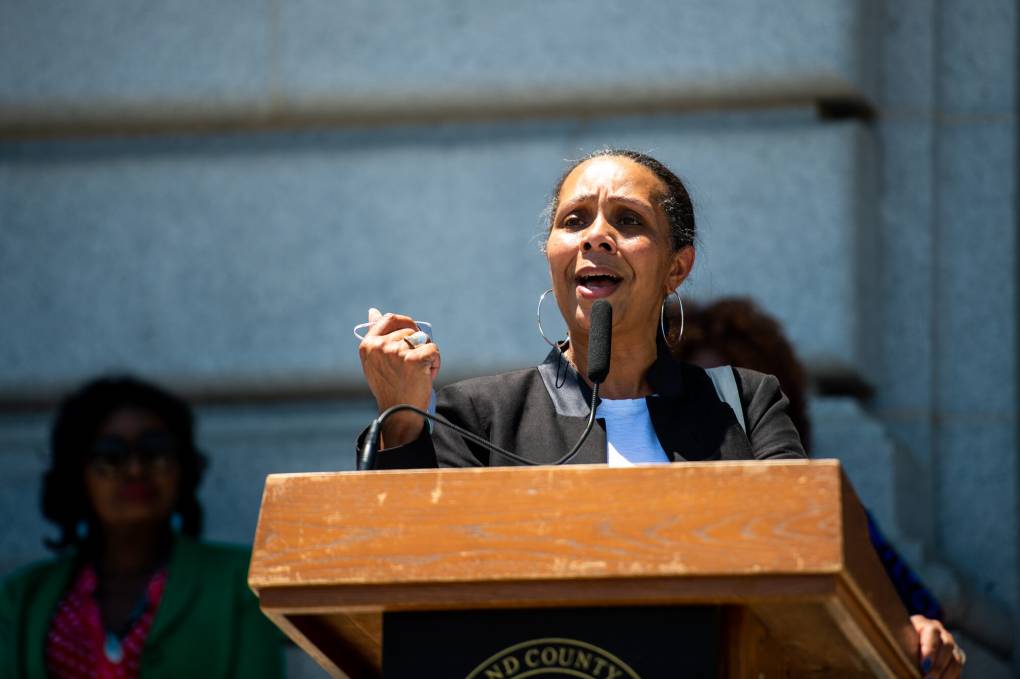
"caption": "Sheryl Davis, former head of the San Francisco Human Rights Commission, speaks during a Juneteenth kickoff rally on the steps of San Francisco City Hall on June 17, 2021. Davis, who resigned on Friday, is being investigated by San Francisco’s city attorney for spending more than $1.5 million.",
"credit": "Beth LaBerge/KQED",
"altTag": null,
"description": null,
"imgSizes": {
"medium": {
"file": "https://cdn.kqed.org/wp-content/uploads/sites/10/2024/09/025_SanFrancisco_JuneteenthKickoffRally_06172021_qed-800x532.jpg",
"width": 800,
"height": 532,
"mimeType": "image/jpeg"
},
"large": {
"file": "https://cdn.kqed.org/wp-content/uploads/sites/10/2024/09/025_SanFrancisco_JuneteenthKickoffRally_06172021_qed-1020x679.jpg",
"width": 1020,
"height": 679,
"mimeType": "image/jpeg"
},
"thumbnail": {
"file": "https://cdn.kqed.org/wp-content/uploads/sites/10/2024/09/025_SanFrancisco_JuneteenthKickoffRally_06172021_qed-160x106.jpg",
"width": 160,
"height": 106,
"mimeType": "image/jpeg"
},
"1536x1536": {
"file": "https://cdn.kqed.org/wp-content/uploads/sites/10/2024/09/025_SanFrancisco_JuneteenthKickoffRally_06172021_qed-1536x1022.jpg",
"width": 1536,
"height": 1022,
"mimeType": "image/jpeg"
},
"post-thumbnail": {
"file": "https://cdn.kqed.org/wp-content/uploads/sites/10/2024/09/025_SanFrancisco_JuneteenthKickoffRally_06172021_qed-672x372.jpg",
"width": 672,
"height": 372,
"mimeType": "image/jpeg"
},
"twentyfourteen-full-width": {
"file": "https://cdn.kqed.org/wp-content/uploads/sites/10/2024/09/025_SanFrancisco_JuneteenthKickoffRally_06172021_qed-1038x576.jpg",
"width": 1038,
"height": 576,
"mimeType": "image/jpeg"
},
"full-width": {
"file": "https://cdn.kqed.org/wp-content/uploads/sites/10/2024/09/025_SanFrancisco_JuneteenthKickoffRally_06172021_qed-1920x1278.jpg",
"width": 1920,
"height": 1278,
"mimeType": "image/jpeg"
},
"kqedFullSize": {
"file": "https://cdn.kqed.org/wp-content/uploads/sites/10/2024/09/025_SanFrancisco_JuneteenthKickoffRally_06172021_qed.jpg",
"width": 2000,
"height": 1331
}
},
"isLoading": false,
"fetchFailed": false
},
"news_12004765": {
"type": "attachments",
"id": "news_12004765",
"meta": {
"index": "attachments_1716263798",
"site": "news",
"id": "12004765",
"found": true
},
"title": "Bay Area Rapid Transit (BART) - Powell St. Station",
"publishDate": 1726267115,
"status": "inherit",
"parent": 12004742,
"modified": 1726268922,
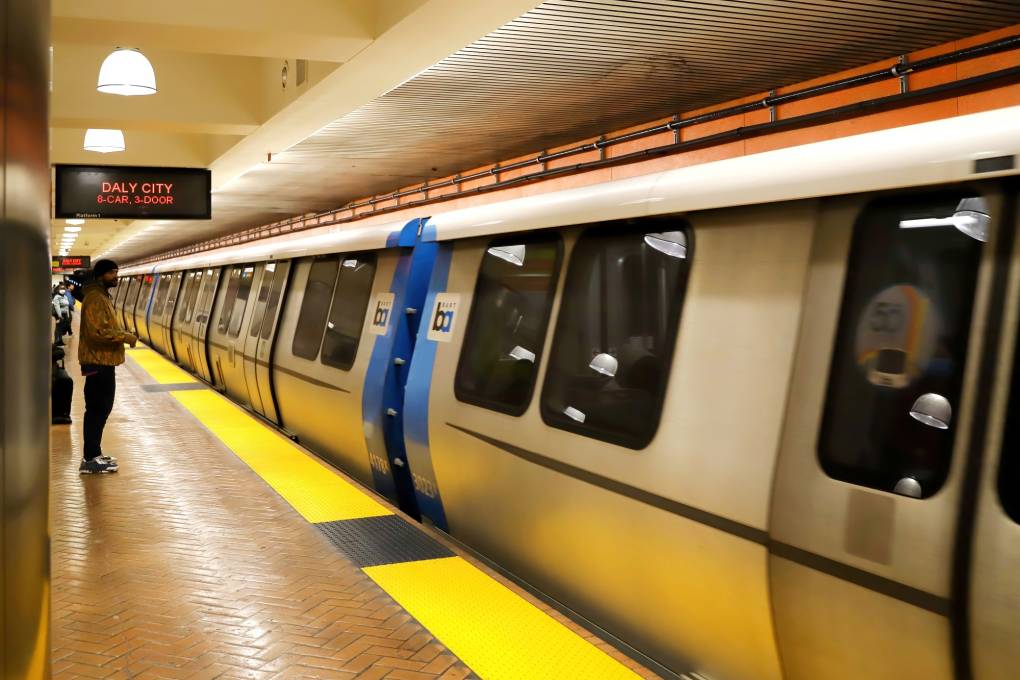
"caption": "San Francisco police officers spotted an armed man in a car, police chief Bill Scott said and shot him after a dramatic pursuit into the Powell Street station.",
"credit": "iStock Editorial / Getty Images Plus",
"altTag": null,
"description": null,
"imgSizes": {
"medium": {
"file": "https://cdn.kqed.org/wp-content/uploads/sites/10/2024/09/PowellStreetBARTGetty1-800x533.jpg",
"width": 800,
"height": 533,
"mimeType": "image/jpeg"
},
"large": {
"file": "https://cdn.kqed.org/wp-content/uploads/sites/10/2024/09/PowellStreetBARTGetty1-1020x680.jpg",
"width": 1020,
"height": 680,
"mimeType": "image/jpeg"
},
"thumbnail": {
"file": "https://cdn.kqed.org/wp-content/uploads/sites/10/2024/09/PowellStreetBARTGetty1-160x107.jpg",
"width": 160,
"height": 107,
"mimeType": "image/jpeg"
},
"1536x1536": {
"file": "https://cdn.kqed.org/wp-content/uploads/sites/10/2024/09/PowellStreetBARTGetty1-1536x1024.jpg",
"width": 1536,
"height": 1024,
"mimeType": "image/jpeg"
},
"post-thumbnail": {
"file": "https://cdn.kqed.org/wp-content/uploads/sites/10/2024/09/PowellStreetBARTGetty1-672x372.jpg",
"width": 672,
"height": 372,
"mimeType": "image/jpeg"
},
"twentyfourteen-full-width": {
"file": "https://cdn.kqed.org/wp-content/uploads/sites/10/2024/09/PowellStreetBARTGetty1-1038x576.jpg",
"width": 1038,
"height": 576,
"mimeType": "image/jpeg"
},
"full-width": {
"file": "https://cdn.kqed.org/wp-content/uploads/sites/10/2024/09/PowellStreetBARTGetty1-1920x1280.jpg",
"width": 1920,
"height": 1280,
"mimeType": "image/jpeg"
},
"kqedFullSize": {
"file": "https://cdn.kqed.org/wp-content/uploads/sites/10/2024/09/PowellStreetBARTGetty1.jpg",
"width": 2000,
"height": 1333
}
},
"isLoading": false,
"fetchFailed": false
},
"news_12004371": {
"type": "attachments",
"id": "news_12004371",
"meta": {
"index": "attachments_1716263798",
"site": "news",
"id": "12004371",
"found": true
},
"title": "Abraham Lincoln High School In San Francisco To Be Renamed",
"publishDate": 1726083661,
"status": "inherit",
"parent": 12003864,
"modified": 1726250862,
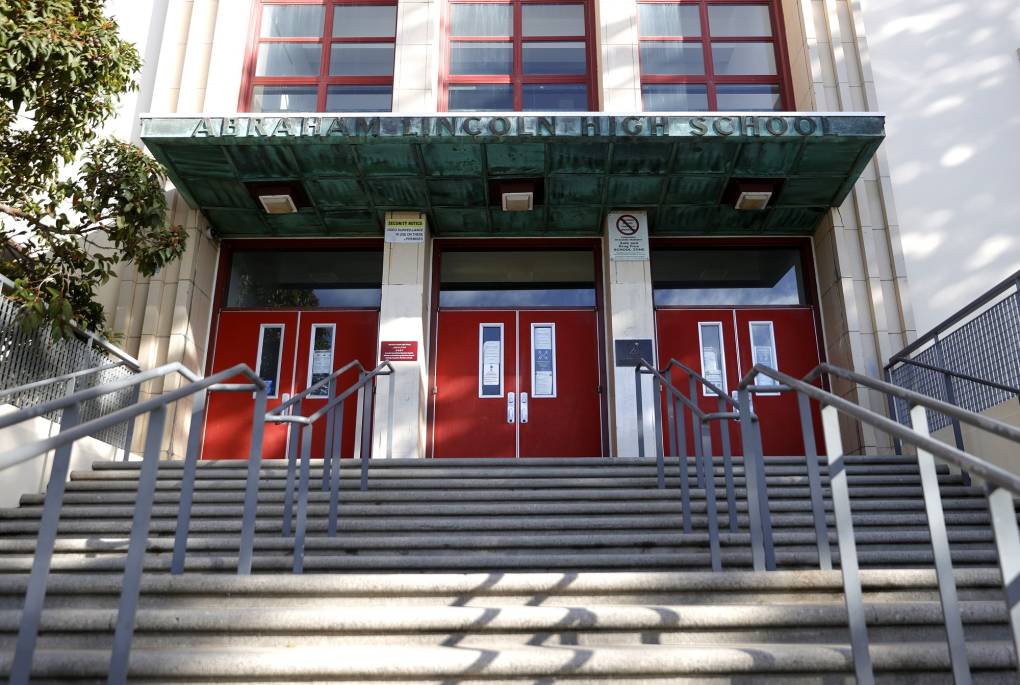
"caption": "San Francisco Unified School District canceled mandatory antisemitism workshops for staff at George Washington, Galileo Academy of Science and Technology, Abraham Lincoln and Balboa High Schools after parents and community groups raised concerns of potential bias. The workshops were initially scheduled in response to reports of increased antisemitism allegations from Jewish students.",
"credit": "Justin Sullivan/Getty Images",
"altTag": null,
"description": null,
"imgSizes": {
"medium": {
"file": "https://cdn.kqed.org/wp-content/uploads/sites/10/2024/09/AbrahamLincolnHSSFGetty1-800x537.jpg",
"width": 800,
"height": 537,
"mimeType": "image/jpeg"
},
"large": {
"file": "https://cdn.kqed.org/wp-content/uploads/sites/10/2024/09/AbrahamLincolnHSSFGetty1-1020x685.jpg",
"width": 1020,
"height": 685,
"mimeType": "image/jpeg"
},
"thumbnail": {
"file": "https://cdn.kqed.org/wp-content/uploads/sites/10/2024/09/AbrahamLincolnHSSFGetty1-160x107.jpg",
"width": 160,
"height": 107,
"mimeType": "image/jpeg"
},
"1536x1536": {
"file": "https://cdn.kqed.org/wp-content/uploads/sites/10/2024/09/AbrahamLincolnHSSFGetty1-1536x1031.jpg",
"width": 1536,
"height": 1031,
"mimeType": "image/jpeg"
},
"post-thumbnail": {
"file": "https://cdn.kqed.org/wp-content/uploads/sites/10/2024/09/AbrahamLincolnHSSFGetty1-672x372.jpg",
"width": 672,
"height": 372,
"mimeType": "image/jpeg"
},
"twentyfourteen-full-width": {
"file": "https://cdn.kqed.org/wp-content/uploads/sites/10/2024/09/AbrahamLincolnHSSFGetty1-1038x576.jpg",
"width": 1038,
"height": 576,
"mimeType": "image/jpeg"
},
"full-width": {
"file": "https://cdn.kqed.org/wp-content/uploads/sites/10/2024/09/AbrahamLincolnHSSFGetty1-1920x1289.jpg",
"width": 1920,
"height": 1289,
"mimeType": "image/jpeg"
},
"kqedFullSize": {
"file": "https://cdn.kqed.org/wp-content/uploads/sites/10/2024/09/AbrahamLincolnHSSFGetty1.jpg",
"width": 2000,
"height": 1343
}
},
"isLoading": false,
"fetchFailed": false
},
"news_11990406": {
"type": "attachments",
"id": "news_11990406",
"meta": {
"index": "attachments_1716263798",
"site": "news",
"id": "11990406",
"found": true
},
"title": "240610-HomelessFamilies-35-BL_qut",
"publishDate": 1718382647,
"status": "inherit",
"parent": 0,
"modified": 1726251957,
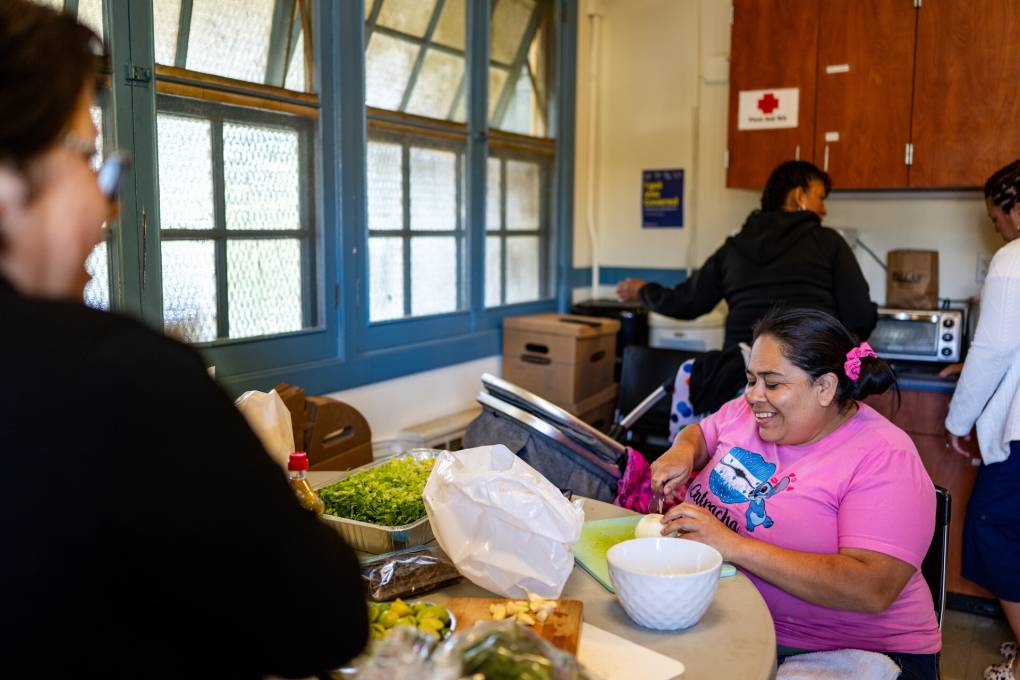
"caption": "Shelter resident Analy Padilla prepares pozole alongside Claudia Carmona and Maria Figeroa in a teacher's lounge at Buena Vista Horace Mann Community School on June 10, 2024. The pozole will feed their families and others in one of San Francisco's largest shelters for families experiencing homelessness. The nonprofit Mission Action operates the shelter at Horace Mann after hours and during the summer when school is not in session.",
"credit": "Beth LaBerge/KQED",
"altTag": "A woman wearing glasses and a black shirt talks to a woman wearing a pink t-shirt in a kitchen, cutting food with two other people in the background.",
"description": null,
"imgSizes": {
"medium": {
"file": "https://cdn.kqed.org/wp-content/uploads/sites/10/2024/06/240610-HomelessFamilies-35-BL_qut-800x533.jpg",
"width": 800,
"height": 533,
"mimeType": "image/jpeg"
},
"large": {
"file": "https://cdn.kqed.org/wp-content/uploads/sites/10/2024/06/240610-HomelessFamilies-35-BL_qut-1020x680.jpg",
"width": 1020,
"height": 680,
"mimeType": "image/jpeg"
},
"thumbnail": {
"file": "https://cdn.kqed.org/wp-content/uploads/sites/10/2024/06/240610-HomelessFamilies-35-BL_qut-160x107.jpg",
"width": 160,
"height": 107,
"mimeType": "image/jpeg"
},
"1536x1536": {
"file": "https://cdn.kqed.org/wp-content/uploads/sites/10/2024/06/240610-HomelessFamilies-35-BL_qut-1536x1024.jpg",
"width": 1536,
"height": 1024,
"mimeType": "image/jpeg"
},
"post-thumbnail": {
"file": "https://cdn.kqed.org/wp-content/uploads/sites/10/2024/06/240610-HomelessFamilies-35-BL_qut-672x372.jpg",
"width": 672,
"height": 372,
"mimeType": "image/jpeg"
},
"twentyfourteen-full-width": {
"file": "https://cdn.kqed.org/wp-content/uploads/sites/10/2024/06/240610-HomelessFamilies-35-BL_qut-1038x576.jpg",
"width": 1038,
"height": 576,
"mimeType": "image/jpeg"
},
"kqedFullSize": {
"file": "https://cdn.kqed.org/wp-content/uploads/sites/10/2024/06/240610-HomelessFamilies-35-BL_qut.jpg",
"width": 1920,
"height": 1280
}
},
"isLoading": false,
"fetchFailed": false
},
"news_12003092": {
"type": "attachments",
"id": "news_12003092",
"meta": {
"index": "attachments_1716263798",
"site": "news",
"id": "12003092",
"found": true
},
"title": "20240830-AAPIVOTERS-JY-004-KQED",
"publishDate": 1725483595,
"status": "inherit",
"parent": 12056059,
"modified": 1758136169,
"caption": "Then-mayoral candidate Daniel Lurie shakes voter Diane Lee’s hand as he campaigns at the Sunset Night Market in San Francisco on Aug. 30, 2024.",
"credit": "Juliana Yamada for KQED",
"altTag": null,
"description": null,
"imgSizes": {
"medium": {
"file": "https://cdn.kqed.org/wp-content/uploads/sites/10/2024/09/20240830-AAPIVOTERS-JY-004-KQED-800x533.jpg",
"width": 800,
"height": 533,
"mimeType": "image/jpeg"
},
"large": {
"file": "https://cdn.kqed.org/wp-content/uploads/sites/10/2024/09/20240830-AAPIVOTERS-JY-004-KQED-1020x680.jpg",
"width": 1020,
"height": 680,
"mimeType": "image/jpeg"
},
"thumbnail": {
"file": "https://cdn.kqed.org/wp-content/uploads/sites/10/2024/09/20240830-AAPIVOTERS-JY-004-KQED-160x107.jpg",
"width": 160,
"height": 107,
"mimeType": "image/jpeg"
},
"1536x1536": {
"file": "https://cdn.kqed.org/wp-content/uploads/sites/10/2024/09/20240830-AAPIVOTERS-JY-004-KQED-1536x1024.jpg",
"width": 1536,
"height": 1024,
"mimeType": "image/jpeg"
},
"post-thumbnail": {
"file": "https://cdn.kqed.org/wp-content/uploads/sites/10/2024/09/20240830-AAPIVOTERS-JY-004-KQED-672x372.jpg",
"width": 672,
"height": 372,
"mimeType": "image/jpeg"
},
"twentyfourteen-full-width": {
"file": "https://cdn.kqed.org/wp-content/uploads/sites/10/2024/09/20240830-AAPIVOTERS-JY-004-KQED-1038x576.jpg",
"width": 1038,
"height": 576,
"mimeType": "image/jpeg"
},
"full-width": {
"file": "https://cdn.kqed.org/wp-content/uploads/sites/10/2024/09/20240830-AAPIVOTERS-JY-004-KQED-1920x1280.jpg",
"width": 1920,
"height": 1280,
"mimeType": "image/jpeg"
},
"kqedFullSize": {
"file": "https://cdn.kqed.org/wp-content/uploads/sites/10/2024/09/20240830-AAPIVOTERS-JY-004-KQED.jpg",
"width": 2000,
"height": 1333
}
},
"isLoading": false,
"fetchFailed": false
},
"news_12004551": {
"type": "attachments",
"id": "news_12004551",
"meta": {
"index": "attachments_1716263798",
"site": "news",
"id": "12004551",
"found": true
},
"title": "AIDS/LIFECYCLE 2024",
"publishDate": 1726174450,
"status": "inherit",
"parent": 12004482,
"modified": 1726181688,
"caption": "Riders cross the finish line on day 7 of the AIDS/LifeCycle ride in Santa Monica on June 8, 2024. After 30 years of promoting AIDS awareness and raising money, AIDS/LifeCycle has announced that next year’s annual bike ride will be the last.",
"credit": "Courtesy SF AIDS Foundation",
"altTag": null,
"description": null,
"imgSizes": {
"medium": {
"file": "https://cdn.kqed.org/wp-content/uploads/sites/10/2024/09/AIDSLifecycle1-800x533.jpg",
"width": 800,
"height": 533,
"mimeType": "image/jpeg"
},
"large": {
"file": "https://cdn.kqed.org/wp-content/uploads/sites/10/2024/09/AIDSLifecycle1-1020x680.jpg",
"width": 1020,
"height": 680,
"mimeType": "image/jpeg"
},
"thumbnail": {
"file": "https://cdn.kqed.org/wp-content/uploads/sites/10/2024/09/AIDSLifecycle1-160x107.jpg",
"width": 160,
"height": 107,
"mimeType": "image/jpeg"
},
"1536x1536": {
"file": "https://cdn.kqed.org/wp-content/uploads/sites/10/2024/09/AIDSLifecycle1-1536x1024.jpg",
"width": 1536,
"height": 1024,
"mimeType": "image/jpeg"
},
"post-thumbnail": {
"file": "https://cdn.kqed.org/wp-content/uploads/sites/10/2024/09/AIDSLifecycle1-672x372.jpg",
"width": 672,
"height": 372,
"mimeType": "image/jpeg"
},
"twentyfourteen-full-width": {
"file": "https://cdn.kqed.org/wp-content/uploads/sites/10/2024/09/AIDSLifecycle1-1038x576.jpg",
"width": 1038,
"height": 576,
"mimeType": "image/jpeg"
},
"full-width": {
"file": "https://cdn.kqed.org/wp-content/uploads/sites/10/2024/09/AIDSLifecycle1-1920x1280.jpg",
"width": 1920,
"height": 1280,
"mimeType": "image/jpeg"
},
"kqedFullSize": {
"file": "https://cdn.kqed.org/wp-content/uploads/sites/10/2024/09/AIDSLifecycle1.jpg",
"width": 2000,
"height": 1333
}
},
"isLoading": false,
"fetchFailed": false
},
"news_12004520": {
"type": "attachments",
"id": "news_12004520",
"meta": {
"index": "attachments_1716263798",
"site": "news",
"id": "12004520",
"found": true
},
"title": "IMG_2406_qed",
"publishDate": 1726164487,
"status": "inherit",
"parent": 12004487,
"modified": 1726164631,
"caption": "San Francisco police faced backlash after a video showed officers pinning a hot dog vendor to the ground near Pier 33 as her young daughter cried nearby. At last night's police commission meeting, Chief Bill Scott defended the officers' actions, stating he saw no misconduct and announced that SFPD will release body-worn camera footage.",
"credit": "Sheraz Sadiq/KQED",
"altTag": null,
"description": null,
"imgSizes": {
"medium": {
"file": "https://cdn.kqed.org/wp-content/uploads/sites/10/2024/09/IMG_2406_qed-800x533.jpg",
"width": 800,
"height": 533,
"mimeType": "image/jpeg"
},
"large": {
"file": "https://cdn.kqed.org/wp-content/uploads/sites/10/2024/09/IMG_2406_qed-1020x680.jpg",
"width": 1020,
"height": 680,
"mimeType": "image/jpeg"
},
"thumbnail": {
"file": "https://cdn.kqed.org/wp-content/uploads/sites/10/2024/09/IMG_2406_qed-160x107.jpg",
"width": 160,
"height": 107,
"mimeType": "image/jpeg"
},
"1536x1536": {
"file": "https://cdn.kqed.org/wp-content/uploads/sites/10/2024/09/IMG_2406_qed-1536x1024.jpg",
"width": 1536,
"height": 1024,
"mimeType": "image/jpeg"
},
"post-thumbnail": {
"file": "https://cdn.kqed.org/wp-content/uploads/sites/10/2024/09/IMG_2406_qed-672x372.jpg",
"width": 672,
"height": 372,
"mimeType": "image/jpeg"
},
"twentyfourteen-full-width": {
"file": "https://cdn.kqed.org/wp-content/uploads/sites/10/2024/09/IMG_2406_qed-1038x576.jpg",
"width": 1038,
"height": 576,
"mimeType": "image/jpeg"
},
"full-width": {
"file": "https://cdn.kqed.org/wp-content/uploads/sites/10/2024/09/IMG_2406_qed-1920x1280.jpg",
"width": 1920,
"height": 1280,
"mimeType": "image/jpeg"
},
"kqedFullSize": {
"file": "https://cdn.kqed.org/wp-content/uploads/sites/10/2024/09/IMG_2406_qed.jpg",
"width": 2000,
"height": 1333
}
},
"isLoading": false,
"fetchFailed": false
},
"news_12004326": {
"type": "attachments",
"id": "news_12004326",
"meta": {
"index": "attachments_1716263798",
"site": "news",
"id": "12004326",
"found": true
},
"title": "240910-TERRY WILLIAMS-KQED",
"publishDate": 1726011517,
"status": "inherit",
"parent": 0,
"modified": 1726011536,
"caption": "Terry Williams has worked as a dog walker in the San Francisco neighborhood of Alamo Square for more than 30 years.",
"credit": "Courtesy of Terry Williams",
"altTag": null,
"description": null,
"imgSizes": {
"medium": {
"file": "https://cdn.kqed.org/wp-content/uploads/sites/10/2024/09/240910-TERRY-WILLIAMS-KQED-800x533.jpg",
"width": 800,
"height": 533,
"mimeType": "image/jpeg"
},
"large": {
"file": "https://cdn.kqed.org/wp-content/uploads/sites/10/2024/09/240910-TERRY-WILLIAMS-KQED-1020x680.jpg",
"width": 1020,
"height": 680,
"mimeType": "image/jpeg"
},
"thumbnail": {
"file": "https://cdn.kqed.org/wp-content/uploads/sites/10/2024/09/240910-TERRY-WILLIAMS-KQED-160x107.jpg",
"width": 160,
"height": 107,
"mimeType": "image/jpeg"
},
"1536x1536": {
"file": "https://cdn.kqed.org/wp-content/uploads/sites/10/2024/09/240910-TERRY-WILLIAMS-KQED-1536x1024.jpg",
"width": 1536,
"height": 1024,
"mimeType": "image/jpeg"
},
"post-thumbnail": {
"file": "https://cdn.kqed.org/wp-content/uploads/sites/10/2024/09/240910-TERRY-WILLIAMS-KQED-672x372.jpg",
"width": 672,
"height": 372,
"mimeType": "image/jpeg"
},
"twentyfourteen-full-width": {
"file": "https://cdn.kqed.org/wp-content/uploads/sites/10/2024/09/240910-TERRY-WILLIAMS-KQED-1038x576.jpg",
"width": 1038,
"height": 576,
"mimeType": "image/jpeg"
},
"full-width": {
"file": "https://cdn.kqed.org/wp-content/uploads/sites/10/2024/09/240910-TERRY-WILLIAMS-KQED-1920x1280.jpg",
"width": 1920,
"height": 1280,
"mimeType": "image/jpeg"
},
"kqedFullSize": {
"file": "https://cdn.kqed.org/wp-content/uploads/sites/10/2024/09/240910-TERRY-WILLIAMS-KQED.jpg",
"width": 2000,
"height": 1333
}
},
"isLoading": false,
"fetchFailed": false
},
"news_12003859": {
"type": "attachments",
"id": "news_12003859",
"meta": {
"index": "attachments_1716263798",
"site": "news",
"id": "12003859",
"found": true
},
"title": "Heat pump on a yellow holiday home in the summer",
"publishDate": 1725997905,
"status": "inherit",
"parent": 12003847,
"modified": 1762456316,
"caption": "A heat pump sits on the side of a house in California. Biden-era federal tax breaks for home improvements that aim to switch from gas-powered appliances to electric are set to expire at the end of the year. ",
"credit": "Schon/Getty Images",
"altTag": null,
"description": null,
"imgSizes": {
"medium": {
"file": "https://cdn.kqed.org/wp-content/uploads/sites/10/2024/09/HeatPumpGetty1-800x533.jpg",
"width": 800,
"height": 533,
"mimeType": "image/jpeg"
},
"large": {
"file": "https://cdn.kqed.org/wp-content/uploads/sites/10/2024/09/HeatPumpGetty1-1020x680.jpg",
"width": 1020,
"height": 680,
"mimeType": "image/jpeg"
},
"thumbnail": {
"file": "https://cdn.kqed.org/wp-content/uploads/sites/10/2024/09/HeatPumpGetty1-160x107.jpg",
"width": 160,
"height": 107,
"mimeType": "image/jpeg"
},
"1536x1536": {
"file": "https://cdn.kqed.org/wp-content/uploads/sites/10/2024/09/HeatPumpGetty1-1536x1024.jpg",
"width": 1536,
"height": 1024,
"mimeType": "image/jpeg"
},
"post-thumbnail": {
"file": "https://cdn.kqed.org/wp-content/uploads/sites/10/2024/09/HeatPumpGetty1-672x372.jpg",
"width": 672,
"height": 372,
"mimeType": "image/jpeg"
},
"twentyfourteen-full-width": {
"file": "https://cdn.kqed.org/wp-content/uploads/sites/10/2024/09/HeatPumpGetty1-1038x576.jpg",
"width": 1038,
"height": 576,
"mimeType": "image/jpeg"
},
"full-width": {
"file": "https://cdn.kqed.org/wp-content/uploads/sites/10/2024/09/HeatPumpGetty1-1920x1280.jpg",
"width": 1920,
"height": 1280,
"mimeType": "image/jpeg"
},
"kqedFullSize": {
"file": "https://cdn.kqed.org/wp-content/uploads/sites/10/2024/09/HeatPumpGetty1.jpg",
"width": 2000,
"height": 1333
}
},
"isLoading": false,
"fetchFailed": false
},
"news_12003841": {
"type": "attachments",
"id": "news_12003841",
"meta": {
"index": "attachments_1716263798",
"site": "news",
"id": "12003841",
"found": true
},
"title": "045_KQED_InternetArchiveOffices_03242023_qed",
"publishDate": 1725995889,
"status": "inherit",
"parent": 12003819,
"modified": 1725995929,
"caption": "The Internet Archive's servers, photographed at their offices in San Francisco on March 24, 2023.",
"credit": "Beth LaBerge/KQED",
"altTag": null,
"description": null,
"imgSizes": {
"medium": {
"file": "https://cdn.kqed.org/wp-content/uploads/sites/10/2024/09/045_KQED_InternetArchiveOffices_03242023_qed-800x533.jpg",
"width": 800,
"height": 533,
"mimeType": "image/jpeg"
},
"large": {
"file": "https://cdn.kqed.org/wp-content/uploads/sites/10/2024/09/045_KQED_InternetArchiveOffices_03242023_qed-1020x680.jpg",
"width": 1020,
"height": 680,
"mimeType": "image/jpeg"
},
"thumbnail": {
"file": "https://cdn.kqed.org/wp-content/uploads/sites/10/2024/09/045_KQED_InternetArchiveOffices_03242023_qed-160x107.jpg",
"width": 160,
"height": 107,
"mimeType": "image/jpeg"
},
"1536x1536": {
"file": "https://cdn.kqed.org/wp-content/uploads/sites/10/2024/09/045_KQED_InternetArchiveOffices_03242023_qed-1536x1024.jpg",
"width": 1536,
"height": 1024,
"mimeType": "image/jpeg"
},
"post-thumbnail": {
"file": "https://cdn.kqed.org/wp-content/uploads/sites/10/2024/09/045_KQED_InternetArchiveOffices_03242023_qed-672x372.jpg",
"width": 672,
"height": 372,
"mimeType": "image/jpeg"
},
"twentyfourteen-full-width": {
"file": "https://cdn.kqed.org/wp-content/uploads/sites/10/2024/09/045_KQED_InternetArchiveOffices_03242023_qed-1038x576.jpg",
"width": 1038,
"height": 576,
"mimeType": "image/jpeg"
},
"full-width": {
"file": "https://cdn.kqed.org/wp-content/uploads/sites/10/2024/09/045_KQED_InternetArchiveOffices_03242023_qed-1920x1280.jpg",
"width": 1920,
"height": 1280,
"mimeType": "image/jpeg"
},
"kqedFullSize": {
"file": "https://cdn.kqed.org/wp-content/uploads/sites/10/2024/09/045_KQED_InternetArchiveOffices_03242023_qed.jpg",
"width": 2000,
"height": 1333
}
},
"isLoading": false,
"fetchFailed": false
},
"news_12001835": {
"type": "attachments",
"id": "news_12001835",
"meta": {
"index": "attachments_1716263798",
"site": "news",
"id": "12001835",
"found": true
},
"title": "240823-VALENCIATELEGRAPHBIKELANES-24-BL-KQED",
"publishDate": 1724690591,
"status": "inherit",
"parent": 0,
"modified": 1724690703,
"caption": "A bicyclist rides on the Valencia Street bike lane in front of Four Barrel Coffee in San Francisco's Mission District on Aug. 23, 2024.",
"credit": "Beth LaBerge/KQED",
"altTag": null,
"description": null,
"imgSizes": {
"medium": {
"file": "https://cdn.kqed.org/wp-content/uploads/sites/10/2024/08/240823-VALENCIATELEGRAPHBIKELANES-24-BL-KQED-800x533.jpg",
"width": 800,
"height": 533,
"mimeType": "image/jpeg"
},
"large": {
"file": "https://cdn.kqed.org/wp-content/uploads/sites/10/2024/08/240823-VALENCIATELEGRAPHBIKELANES-24-BL-KQED-1020x680.jpg",
"width": 1020,
"height": 680,
"mimeType": "image/jpeg"
},
"thumbnail": {
"file": "https://cdn.kqed.org/wp-content/uploads/sites/10/2024/08/240823-VALENCIATELEGRAPHBIKELANES-24-BL-KQED-160x107.jpg",
"width": 160,
"height": 107,
"mimeType": "image/jpeg"
},
"1536x1536": {
"file": "https://cdn.kqed.org/wp-content/uploads/sites/10/2024/08/240823-VALENCIATELEGRAPHBIKELANES-24-BL-KQED-1536x1024.jpg",
"width": 1536,
"height": 1024,
"mimeType": "image/jpeg"
},
"post-thumbnail": {
"file": "https://cdn.kqed.org/wp-content/uploads/sites/10/2024/08/240823-VALENCIATELEGRAPHBIKELANES-24-BL-KQED-672x372.jpg",
"width": 672,
"height": 372,
"mimeType": "image/jpeg"
},
"twentyfourteen-full-width": {
"file": "https://cdn.kqed.org/wp-content/uploads/sites/10/2024/08/240823-VALENCIATELEGRAPHBIKELANES-24-BL-KQED-1038x576.jpg",
"width": 1038,
"height": 576,
"mimeType": "image/jpeg"
},
"full-width": {
"file": "https://cdn.kqed.org/wp-content/uploads/sites/10/2024/08/240823-VALENCIATELEGRAPHBIKELANES-24-BL-KQED-1920x1280.jpg",
"width": 1920,
"height": 1280,
"mimeType": "image/jpeg"
},
"kqedFullSize": {
"file": "https://cdn.kqed.org/wp-content/uploads/sites/10/2024/08/240823-VALENCIATELEGRAPHBIKELANES-24-BL-KQED.jpg",
"width": 2000,
"height": 1333
}
},
"isLoading": false,
"fetchFailed": false
},
"news_12003616": {
"type": "attachments",
"id": "news_12003616",
"meta": {
"index": "attachments_1716263798",
"site": "news",
"id": "12003616",
"found": true
},
"title": "240405-District5BOSRedistricting-015-BL_qed",
"publishDate": 1725904024,
"status": "inherit",
"parent": 12003609,
"modified": 1725904033,
"caption": "A storefront sits empty in the Tenderloin neighborhood, a part of the 5th Supervisorial District, in San Francisco on April 5, 2024.",
"credit": "Beth LaBerge/KQED",
"altTag": null,
"description": null,
"imgSizes": {
"medium": {
"file": "https://cdn.kqed.org/wp-content/uploads/sites/10/2024/09/240405-District5BOSRedistricting-015-BL_qed-800x533.jpg",
"width": 800,
"height": 533,
"mimeType": "image/jpeg"
},
"large": {
"file": "https://cdn.kqed.org/wp-content/uploads/sites/10/2024/09/240405-District5BOSRedistricting-015-BL_qed-1020x680.jpg",
"width": 1020,
"height": 680,
"mimeType": "image/jpeg"
},
"thumbnail": {
"file": "https://cdn.kqed.org/wp-content/uploads/sites/10/2024/09/240405-District5BOSRedistricting-015-BL_qed-160x107.jpg",
"width": 160,
"height": 107,
"mimeType": "image/jpeg"
},
"1536x1536": {
"file": "https://cdn.kqed.org/wp-content/uploads/sites/10/2024/09/240405-District5BOSRedistricting-015-BL_qed-1536x1024.jpg",
"width": 1536,
"height": 1024,
"mimeType": "image/jpeg"
},
"post-thumbnail": {
"file": "https://cdn.kqed.org/wp-content/uploads/sites/10/2024/09/240405-District5BOSRedistricting-015-BL_qed-672x372.jpg",
"width": 672,
"height": 372,
"mimeType": "image/jpeg"
},
"twentyfourteen-full-width": {
"file": "https://cdn.kqed.org/wp-content/uploads/sites/10/2024/09/240405-District5BOSRedistricting-015-BL_qed-1038x576.jpg",
"width": 1038,
"height": 576,
"mimeType": "image/jpeg"
},
"full-width": {
"file": "https://cdn.kqed.org/wp-content/uploads/sites/10/2024/09/240405-District5BOSRedistricting-015-BL_qed-1920x1280.jpg",
"width": 1920,
"height": 1280,
"mimeType": "image/jpeg"
},
"kqedFullSize": {
"file": "https://cdn.kqed.org/wp-content/uploads/sites/10/2024/09/240405-District5BOSRedistricting-015-BL_qed.jpg",
"width": 2000,
"height": 1333
}
},
"isLoading": false,
"fetchFailed": false
}
},
"audioPlayerReducer": {
"postId": "stream_live",
"isPaused": true,
"isPlaying": false,
"pfsActive": false,
"pledgeModalIsOpen": true,
"playerDrawerIsOpen": false,
"liveAudioPlayStartedAt": 0,
"liveAudioPlayContext": ""
},
"authorsReducer": {
"lklivans": {
"type": "authors",
"id": "8648",
"meta": {
"index": "authors_1716337520",
"id": "8648",
"found": true
},
"name": "Laura Klivans",
"firstName": "Laura",
"lastName": "Klivans",
"slug": "lklivans",
"email": "lklivans@kqed.org",
"display_author_email": true,
"staff_mastheads": [
"news",
"science"
],
"title": "Reporter",
"bio": "Laura Klivans is an award-winning science reporter for KQED News, where she covers climate change with an eye on both groundbreaking progress and gaps in action. She is the former host of KQED's blockbuster video series about tiny, amazing animals, \u003cem>Deep Look\u003c/em>. Her work reaches national audiences through NPR, \u003cem>Here & Now, \u003c/em>PRI, and other major outlets. \r\n\r\nLaura’s won five Northern California Area Emmy Awards for Deep Look and First Place in the Greater Bay Area Journalism Awards for a podcast exploring how one Oakland neighborhood teamed up to reduce planet-heating pollution.\r\n\r\nBeyond her reporting, she hosts and moderates events. In the past, she taught audio storytelling at the UC Berkeley Graduate School of Journalism, led international education programs, worked with immigrants and refugees along the Thai-Burmese border, taught high schoolers sex ed, and was an actress. \r\n\r\nShe's a former UC Berkeley Human Rights Fellow, USC Center for Health Journalism's California Fellow and Coro Fellow in Public Affairs. Laura has a master’s in journalism from UC Berkeley, a master’s in education from Harvard, and an undergraduate degree from Northwestern University.\r\n\r\nShe loves trying to riddle the meaning out of vanity license plates.",
"avatar": "https://secure.gravatar.com/avatar/2d2ecd1550a494cc10ad4a503406965585902124739e775a9b3817eebf1d88be?s=600&d=blank&r=g",
"twitter": "lauraklivans",
"bluesky": null,
"facebook": null,
"instagram": null,
"linkedin": null,
"sites": [
{
"site": "news",
"roles": [
"editor"
]
},
{
"site": "stateofhealth",
"roles": [
"contributor",
"editor"
]
},
{
"site": "science",
"roles": [
"editor"
]
},
{
"site": "forum",
"roles": [
"editor"
]
}
],
"headData": {
"title": "Laura Klivans | KQED",
"description": "Reporter",
"ogImgSrc": "https://secure.gravatar.com/avatar/2d2ecd1550a494cc10ad4a503406965585902124739e775a9b3817eebf1d88be?s=600&d=blank&r=g",
"twImgSrc": "https://secure.gravatar.com/avatar/2d2ecd1550a494cc10ad4a503406965585902124739e775a9b3817eebf1d88be?s=600&d=blank&r=g"
},
"isLoading": false,
"link": "/author/lklivans"
},
"ecruzguevarra": {
"type": "authors",
"id": "8654",
"meta": {
"index": "authors_1716337520",
"id": "8654",
"found": true
},
"name": "Ericka Cruz Guevarra",
"firstName": "Ericka",
"lastName": "Cruz Guevarra",
"slug": "ecruzguevarra",
"email": "ecruzguevarra@kqed.org",
"display_author_email": true,
"staff_mastheads": [
"news"
],
"title": "Producer, The Bay Podcast",
"bio": "Ericka Cruz Guevarra is host of \u003ca href=\"https://www.kqed.org/podcasts/thebay\">\u003cem>The Bay\u003c/em>\u003c/a> podcast at KQED. Before host, she was the show’s producer. Her work in that capacity includes a three-part reported series on policing in Vallejo, which won a 2020 excellence in journalism award from the Society of Professional Journalists. Ericka has worked as a breaking news reporter at Oregon Public Broadcasting, helped produce the Code Switch podcast, and was KQED’s inaugural Raul Ramirez Diversity Fund intern. She’s also an alumna of NPR’s Next Generation Radio program. Send her an email if you have strong feelings about whether Fairfield and Suisun City are the Bay. Ericka is represented by SAG-AFTRA.",
"avatar": "https://secure.gravatar.com/avatar/accefc1de4bafc7e234b69bcb9b6f6536c130fd84709bc3069ef11a78787e1bb?s=600&d=blank&r=g",
"twitter": "NotoriousECG",
"bluesky": null,
"facebook": null,
"instagram": null,
"linkedin": null,
"sites": [
{
"site": "arts",
"roles": [
"subscriber"
]
},
{
"site": "news",
"roles": [
"editor",
"manage_categories"
]
},
{
"site": "futureofyou",
"roles": [
"subscriber"
]
},
{
"site": "stateofhealth",
"roles": [
"subscriber"
]
},
{
"site": "science",
"roles": [
"editor"
]
},
{
"site": "forum",
"roles": [
"subscriber"
]
}
],
"headData": {
"title": "Ericka Cruz Guevarra | KQED",
"description": "Producer, The Bay Podcast",
"ogImgSrc": "https://secure.gravatar.com/avatar/accefc1de4bafc7e234b69bcb9b6f6536c130fd84709bc3069ef11a78787e1bb?s=600&d=blank&r=g",
"twImgSrc": "https://secure.gravatar.com/avatar/accefc1de4bafc7e234b69bcb9b6f6536c130fd84709bc3069ef11a78787e1bb?s=600&d=blank&r=g"
},
"isLoading": false,
"link": "/author/ecruzguevarra"
},
"amontecillo": {
"type": "authors",
"id": "11649",
"meta": {
"index": "authors_1716337520",
"id": "11649",
"found": true
},
"name": "Alan Montecillo",
"firstName": "Alan",
"lastName": "Montecillo",
"slug": "amontecillo",
"email": "amontecillo@kqed.org",
"display_author_email": false,
"staff_mastheads": [
"news"
],
"title": "KQED Contributor",
"bio": "Alan Montecillo is the senior editor of \u003cem>\u003ca href=\"http://kqed.org/thebay\">The Bay\u003c/a>, \u003c/em> KQED's local news podcast. Before moving to the Bay Area, he worked as a senior talk show producer for WILL in Champaign-Urbana, Illinois and at Oregon Public Broadcasting in Portland, Oregon. He has won journalism awards from the Society of Professional Journalists Northern California, the Public Media Journalists Association, The Signal Awards, and has also received a regional Edward R. Murrow award. Alan is a Filipino American from Hong Kong and a graduate of Reed College.",
"avatar": "https://secure.gravatar.com/avatar/268f53a2066899ea9efdd8a5900218b17c822d9862cbc9326cccec53ef41d349?s=600&d=blank&r=g",
"twitter": "alanmontecillo",
"bluesky": null,
"facebook": null,
"instagram": null,
"linkedin": null,
"sites": [
{
"site": "",
"roles": [
"editor"
]
},
{
"site": "news",
"roles": [
"editor",
"manage_categories"
]
}
],
"headData": {
"title": "Alan Montecillo | KQED",
"description": "KQED Contributor",
"ogImgSrc": "https://secure.gravatar.com/avatar/268f53a2066899ea9efdd8a5900218b17c822d9862cbc9326cccec53ef41d349?s=600&d=blank&r=g",
"twImgSrc": "https://secure.gravatar.com/avatar/268f53a2066899ea9efdd8a5900218b17c822d9862cbc9326cccec53ef41d349?s=600&d=blank&r=g"
},
"isLoading": false,
"link": "/author/amontecillo"
},
"ccabreralomeli": {
"type": "authors",
"id": "11708",
"meta": {
"index": "authors_1716337520",
"id": "11708",
"found": true
},
"name": "Carlos Cabrera-Lomelí",
"firstName": "Carlos",
"lastName": "Cabrera-Lomelí",
"slug": "ccabreralomeli",
"email": "ccabreralomeli@KQED.org",
"display_author_email": true,
"staff_mastheads": [
"news"
],
"title": "Community Reporter",
"bio": "Carlos Cabrera-Lomelí is a community reporter with KQED's digital engagement team. He also reports and co-produces for KQED's bilingual news hub KQED en Español. He grew up in San Francisco's Mission District and has previously worked with Univision, 48 Hills and REFORMA in Mexico City.",
"avatar": "https://secure.gravatar.com/avatar/c309be9665e484f887b818c89e273ecc673004f426f36b24d00a4d813a2e0518?s=600&d=blank&r=g",
"twitter": "@LomeliCabrera",
"bluesky": null,
"facebook": null,
"instagram": null,
"linkedin": null,
"sites": [
{
"site": "arts",
"roles": [
"editor"
]
},
{
"site": "news",
"roles": [
"editor"
]
},
{
"site": "about",
"roles": [
"editor"
]
},
{
"site": "science",
"roles": [
"editor"
]
},
{
"site": "perspectives",
"roles": [
"editor"
]
},
{
"site": "elections",
"roles": [
"editor"
]
},
{
"site": "liveblog",
"roles": [
"contributor"
]
}
],
"headData": {
"title": "Carlos Cabrera-Lomelí | KQED",
"description": "Community Reporter",
"ogImgSrc": "https://secure.gravatar.com/avatar/c309be9665e484f887b818c89e273ecc673004f426f36b24d00a4d813a2e0518?s=600&d=blank&r=g",
"twImgSrc": "https://secure.gravatar.com/avatar/c309be9665e484f887b818c89e273ecc673004f426f36b24d00a4d813a2e0518?s=600&d=blank&r=g"
},
"isLoading": false,
"link": "/author/ccabreralomeli"
},
"adahlstromeckman": {
"type": "authors",
"id": "11785",
"meta": {
"index": "authors_1716337520",
"id": "11785",
"found": true
},
"name": "Azul Dahlstrom-Eckman",
"firstName": "Azul",
"lastName": "Dahlstrom-Eckman",
"slug": "adahlstromeckman",
"email": "adahlstrom-eckman@kqed.org",
"display_author_email": true,
"staff_mastheads": [],
"title": "Reporter",
"bio": "Azul is a reporter for KQED focusing on transportation and features. He joined KQED in 2021 as an alumna of KALW's Audio Academy radio journalism training program.",
"avatar": "https://secure.gravatar.com/avatar/9cb750298435add7815a777f55bf1f46845c1386bb8452555c60a7b820b5aba3?s=600&d=blank&r=g",
"twitter": "@zuliemann",
"bluesky": "@azul415.bsky.social",
"facebook": null,
"instagram": null,
"linkedin": null,
"sites": [
{
"site": "arts",
"roles": [
"editor"
]
},
{
"site": "news",
"roles": [
"editor"
]
},
{
"site": "science",
"roles": [
"editor"
]
},
{
"site": "liveblog",
"roles": [
"author"
]
}
],
"headData": {
"title": "Azul Dahlstrom-Eckman | KQED",
"description": "Reporter",
"ogImgSrc": "https://secure.gravatar.com/avatar/9cb750298435add7815a777f55bf1f46845c1386bb8452555c60a7b820b5aba3?s=600&d=blank&r=g",
"twImgSrc": "https://secure.gravatar.com/avatar/9cb750298435add7815a777f55bf1f46845c1386bb8452555c60a7b820b5aba3?s=600&d=blank&r=g"
},
"isLoading": false,
"link": "/author/adahlstromeckman"
},
"daisynguyen": {
"type": "authors",
"id": "11829",
"meta": {
"index": "authors_1716337520",
"id": "11829",
"found": true
},
"name": "Daisy Nguyen",
"firstName": "Daisy",
"lastName": "Nguyen",
"slug": "daisynguyen",
"email": "daisynguyen@kqed.org",
"display_author_email": true,
"staff_mastheads": [
"news"
],
"title": "KQED Contributor",
"bio": "I have covered early childhood education and child care for KQED since 2022. I focus on policies aimed at increasing access to early care and education and how they shape individual lives. I've been a journalist for more than two decades, with most of that time devoted to covering breaking news throughout California for The Associated Press. I grew up in San Francisco and studied at UC Davis and Columbia University's Graduate School of Journalism. I live in Oakland with my husband and two kids.",
"avatar": "https://secure.gravatar.com/avatar/2da2127c27f7143b53ebd419800fd55f?s=600&d=blank&r=g",
"twitter": null,
"facebook": null,
"instagram": null,
"linkedin": "https://www.linkedin.com/in/daisynguyen/",
"sites": [
{
"site": "news",
"roles": [
"author"
]
},
{
"site": "liveblog",
"roles": [
"author"
]
}
],
"headData": {
"title": "Daisy Nguyen | KQED",
"description": "KQED Contributor",
"ogImgSrc": "https://secure.gravatar.com/avatar/2da2127c27f7143b53ebd419800fd55f?s=600&d=blank&r=g",
"twImgSrc": "https://secure.gravatar.com/avatar/2da2127c27f7143b53ebd419800fd55f?s=600&d=blank&r=g"
},
"isLoading": false,
"link": "/author/daisynguyen"
},
"jessicakariisa": {
"type": "authors",
"id": "11831",
"meta": {
"index": "authors_1716337520",
"id": "11831",
"found": true
},
"name": "Jessica Kariisa",
"firstName": "Jessica",
"lastName": "Kariisa",
"slug": "jessicakariisa",
"email": "jkariisa@kqed.org",
"display_author_email": false,
"staff_mastheads": [],
"title": "Producer, The Bay",
"bio": "Jessica Kariisa is the producer of The Bay. She first joined KQED as an intern for The California Report Magazine, after which she became an on-call producer. She reported a Bay Curious episode on the use of rap lyrics in criminal trials which won a Society of Professional Journalists award in 2023 for Excellence in Features Journalism and the 2023 Signal Award for Best Conversation Starter. She’s worked on podcasts for Snap Judgment and American Public Media. Before embarking on her audio career, she was a music journalist.\r\n\r\nJessica Kariisa is represented by SAG-AFTRA.",
"avatar": "https://secure.gravatar.com/avatar/522e97b28ac0b3d411621c0fde8f3419c7b71ea2c5c262c57c4bb600963f328c?s=600&d=blank&r=g",
"twitter": null,
"bluesky": null,
"facebook": null,
"instagram": null,
"linkedin": null,
"sites": [
{
"site": "arts",
"roles": [
"author"
]
},
{
"site": "news",
"roles": [
"editor",
"manage_categories"
]
}
],
"headData": {
"title": "Jessica Kariisa | KQED",
"description": "Producer, The Bay",
"ogImgSrc": "https://secure.gravatar.com/avatar/522e97b28ac0b3d411621c0fde8f3419c7b71ea2c5c262c57c4bb600963f328c?s=600&d=blank&r=g",
"twImgSrc": "https://secure.gravatar.com/avatar/522e97b28ac0b3d411621c0fde8f3419c7b71ea2c5c262c57c4bb600963f328c?s=600&d=blank&r=g"
},
"isLoading": false,
"link": "/author/jessicakariisa"
},
"sjohnson": {
"type": "authors",
"id": "11840",
"meta": {
"index": "authors_1716337520",
"id": "11840",
"found": true
},
"name": "Sydney Johnson",
"firstName": "Sydney",
"lastName": "Johnson",
"slug": "sjohnson",
"email": "sjohnson@kqed.org",
"display_author_email": false,
"staff_mastheads": [
"news"
],
"title": "KQED Reporter",
"bio": "Sydney Johnson is a general assignment reporter at KQED. She previously reported on public health and city government at the San Francisco Examiner, and before that, she covered statewide education policy for EdSource. Her reporting has won multiple local, state and national awards. Sydney is a graduate of the University of California, Berkeley and lives in San Francisco.",
"avatar": "https://secure.gravatar.com/avatar/97855f2719b72ad6190b7c535fe642c8?s=600&d=blank&r=g",
"twitter": "sydneyfjohnson",
"facebook": null,
"instagram": null,
"linkedin": null,
"sites": [
{
"site": "news",
"roles": [
"editor"
]
}
],
"headData": {
"title": "Sydney Johnson | KQED",
"description": "KQED Reporter",
"ogImgSrc": "https://secure.gravatar.com/avatar/97855f2719b72ad6190b7c535fe642c8?s=600&d=blank&r=g",
"twImgSrc": "https://secure.gravatar.com/avatar/97855f2719b72ad6190b7c535fe642c8?s=600&d=blank&r=g"
},
"isLoading": false,
"link": "/author/sjohnson"
},
"kdebenedetti": {
"type": "authors",
"id": "11913",
"meta": {
"index": "authors_1716337520",
"id": "11913",
"found": true
},
"name": "Katie DeBenedetti",
"firstName": "Katie",
"lastName": "DeBenedetti",
"slug": "kdebenedetti",
"email": "kdebenedetti@kqed.org",
"display_author_email": false,
"staff_mastheads": [
"news",
"science"
],
"title": "KQED Contributor",
"bio": "Katie DeBenedetti is a digital reporter covering daily news for the Express Desk. Prior to joining KQED as a culture reporting intern in January 2024, she covered education and city government for the Napa Valley Register.",
"avatar": "https://secure.gravatar.com/avatar/6e31073cb8f7e4214ab03f42771d0f45?s=600&d=blank&r=g",
"twitter": null,
"facebook": null,
"instagram": null,
"linkedin": null,
"sites": [
{
"site": "news",
"roles": [
"author"
]
},
{
"site": "science",
"roles": [
"author"
]
},
{
"site": "liveblog",
"roles": [
"author"
]
}
],
"headData": {
"title": "Katie DeBenedetti | KQED",
"description": "KQED Contributor",
"ogImgSrc": "https://secure.gravatar.com/avatar/6e31073cb8f7e4214ab03f42771d0f45?s=600&d=blank&r=g",
"twImgSrc": "https://secure.gravatar.com/avatar/6e31073cb8f7e4214ab03f42771d0f45?s=600&d=blank&r=g"
},
"isLoading": false,
"link": "/author/kdebenedetti"
},
"slim": {
"type": "authors",
"id": "11920",
"meta": {
"index": "authors_1716337520",
"id": "11920",
"found": true
},
"name": "Samantha Lim",
"firstName": "Samantha",
"lastName": "Lim",
"slug": "slim",
"email": "slim@KQED.org",
"display_author_email": false,
"staff_mastheads": [],
"title": "KQED Contributor",
"bio": null,
"avatar": "https://secure.gravatar.com/avatar/82e592e6c15fe1a04d385e8ad0fb0b4e?s=600&d=blank&r=g",
"twitter": null,
"facebook": null,
"instagram": null,
"linkedin": null,
"sites": [
{
"site": "news",
"roles": []
}
],
"headData": {
"title": "Samantha Lim | KQED",
"description": "KQED Contributor",
"ogImgSrc": "https://secure.gravatar.com/avatar/82e592e6c15fe1a04d385e8ad0fb0b4e?s=600&d=blank&r=g",
"twImgSrc": "https://secure.gravatar.com/avatar/82e592e6c15fe1a04d385e8ad0fb0b4e?s=600&d=blank&r=g"
},
"isLoading": false,
"link": "/author/slim"
},
"emanoukian": {
"type": "authors",
"id": "11925",
"meta": {
"index": "authors_1716337520",
"id": "11925",
"found": true
},
"name": "Elize Manoukian",
"firstName": "Elize",
"lastName": "Manoukian",
"slug": "emanoukian",
"email": "emanoukian@KQED.org",
"display_author_email": false,
"staff_mastheads": [
"news"
],
"title": "Digital News Editor",
"bio": "Elize Manoukian is an award-winning audio producer and Senior Editor on the Express Desk, KQED's digital news platform. Her work has appeared on KPFA, Interlochen Public Radio, Oregon Public Broadcast, the New York Daily News, LA Times and the San Diego Union-Tribune.",
"avatar": "https://secure.gravatar.com/avatar/4525f1a8e46ccb30933b32653d9772064cfefe3fa655eb45b3b3a80341f6bdad?s=600&d=blank&r=g",
"twitter": null,
"bluesky": null,
"facebook": null,
"instagram": null,
"linkedin": null,
"sites": [
{
"site": "arts",
"roles": [
"editor"
]
},
{
"site": "news",
"roles": [
"editor"
]
},
{
"site": "science",
"roles": [
"editor"
]
}
],
"headData": {
"title": "Elize Manoukian | KQED",
"description": "Digital News Editor",
"ogImgSrc": "https://secure.gravatar.com/avatar/4525f1a8e46ccb30933b32653d9772064cfefe3fa655eb45b3b3a80341f6bdad?s=600&d=blank&r=g",
"twImgSrc": "https://secure.gravatar.com/avatar/4525f1a8e46ccb30933b32653d9772064cfefe3fa655eb45b3b3a80341f6bdad?s=600&d=blank&r=g"
},
"isLoading": false,
"link": "/author/emanoukian"
}
},
"pagesReducer": {
"news_tag_san-francisco": {
"type": "terms",
"id": "news_38",
"meta": {
"index": "terms_1716263798",
"site": "news",
"id": "38",
"score": 6.7230043
},
"featImg": null,
"name": "San Francisco",
"description": null,
"taxonomy": "tag",
"headData": {
"twImgId": null,
"twTitle": null,
"ogTitle": null,
"ogImgId": null,
"twDescription": null,
"description": null,
"title": "San Francisco Archives | KQED News",
"ogDescription": null
},
"ttid": 58,
"slug": "san-francisco",
"isLoading": false,
"title": "San Francisco",
"pageMeta": {
"site": "news",
"WpPageTemplate": "page-topic-editorial",
"currentPage": 92
},
"blocks": [
{
"blockName": "kqed/post-list",
"attrs": {
"layout": "cardArticle2",
"query": "posts/news?tag=san-francisco",
"seeMore": false,
"paginated": true,
"page": 92
}
},
{
"blockName": "kqed/ad"
}
]
}
},
"pfsSessionReducer": {},
"postsReducer": {
"stream_live": {
"type": "live",
"id": "stream_live",
"audioUrl": "https://streams.kqed.org/kqedradio",
"title": "Live Stream",
"excerpt": "Live Stream information currently unavailable.",
"link": "/radio",
"featImg": "",
"label": {
"name": "KQED Live",
"link": "/"
}
},
"stream_kqedNewscast": {
"type": "posts",
"id": "stream_kqedNewscast",
"audioUrl": "https://www.kqed.org/.stream/anon/radio/RDnews/newscast.mp3?_=1",
"title": "KQED Newscast",
"featImg": "",
"label": {
"name": "88.5 FM",
"link": "/"
}
},
"news_12004687": {
"type": "posts",
"id": "news_12004687",
"meta": {
"index": "posts_1716263798",
"site": "news",
"id": "12004687",
"score": null,
"sort": [
1726272880000
]
},
"guestAuthors": [],
"slug": "mayor-breed-taps-new-sf-human-rights-director-as-misspending-scrutiny-intensifies",
"title": "Mayor Breed Taps New SF Human Rights Director as Misspending Scrutiny Intensifies",
"publishDate": 1726272880,
"format": "standard",
"headTitle": "Mayor Breed Taps New SF Human Rights Director as Misspending Scrutiny Intensifies | KQED",
"labelTerm": {
"site": "news"
},
"content": "\u003cp>\u003cem>Updated 4:30 p.m. Friday\u003c/em>\u003c/p>\n\u003cp>Mayor \u003ca href=\"https://www.kqed.org/news/tag/london-breed\">London Breed\u003c/a> has tapped Mawuli Tugbenyoh to serve as the acting executive director of the San Francisco Human Rights Commission after former head Sheryl Davis resigned from the position on Friday morning following reports of potential misspending of public money.\u003c/p>\n\u003cp>In addition to announcing the appointment, Breed said that the city will expand oversight into the city’s Dream Keeper Initiative, which Davis oversaw in her position with the HRC.\u003c/p>\n\u003cp>“I am dedicated to upholding the highest standards of integrity as we advance the department’s mission,” said Tugbenyoh, who previously was the deputy director of the city’s Human Resources Department. “My focus will be on rebuilding the community’s trust through transparent, accountable actions that allow us to advance the transformative work of the Human Rights Commission.”\u003c/p>\n\u003cp>[ad fullwidth]\u003c/p>\n\u003cp>The Dream Keeper Initiative aims to support the Black community with homeownership opportunities, launch new small businesses and provide workforce training and more. Currently, in San Francisco, 30% of the Black population lives below the poverty level and the lowest rate of homeownership among the city’s racial demographics, at 31%.\u003c/p>\n\u003cp>Breed emphasized the importance of continuing the program despite pausing funding for it while investigations are underway.\u003c/p>\n\u003cfigure id=\"attachment_11998904\" class=\"wp-caption aligncenter\" style=\"max-width: 1999px\">\u003cimg loading=\"lazy\" decoding=\"async\" class=\"size-full wp-image-11998904\" src=\"https://cdn.kqed.org/wp-content/uploads/sites/10/2024/08/240612-SFMayoralDebate-36-BL_qed.jpg\" alt=\"\" width=\"1999\" height=\"1333\" srcset=\"https://cdn.kqed.org/wp-content/uploads/sites/10/2024/08/240612-SFMayoralDebate-36-BL_qed.jpg 1999w, https://cdn.kqed.org/wp-content/uploads/sites/10/2024/08/240612-SFMayoralDebate-36-BL_qed-800x533.jpg 800w, https://cdn.kqed.org/wp-content/uploads/sites/10/2024/08/240612-SFMayoralDebate-36-BL_qed-1020x680.jpg 1020w, https://cdn.kqed.org/wp-content/uploads/sites/10/2024/08/240612-SFMayoralDebate-36-BL_qed-160x107.jpg 160w, https://cdn.kqed.org/wp-content/uploads/sites/10/2024/08/240612-SFMayoralDebate-36-BL_qed-1536x1024.jpg 1536w, https://cdn.kqed.org/wp-content/uploads/sites/10/2024/08/240612-SFMayoralDebate-36-BL_qed-1920x1280.jpg 1920w\" sizes=\"(max-width: 1999px) 100vw, 1999px\">\u003cfigcaption class=\"wp-caption-text\">Mayor London Breed speaks during a San Francisco mayoral debate on June 12. \u003ccite>(Beth LaBerge/KQED)\u003c/cite>\u003c/figcaption>\u003c/figure>\n\u003cp>“Dream Keeper has led to unprecedented support for the Black community, and that work must continue,” Breed said. “Supporting this program means committing to strengthening transparency and accountability around how any and all organizations are being funded and how the funding is being used. It means leaving no questions unanswered.”\u003c/p>\n\u003cp>\u003cem>Original story, 1:30 p.m., Sept. 3\u003c/em>\u003c/p>\n\u003cp>The head of San Francisco’s Human Rights Commission, who led a multimillion-dollar initiative meant to steer city funds to \u003ca href=\"https://www.kqed.org/news/11862094/sf-mayor-breed-unveils-plan-for-reinvesting-120-million-from-police-into-black-communities\">programs benefiting the Black community\u003c/a>, is on leave amid questions surrounding her department’s handling of the money.\u003c/p>\n\u003cp>It’s the latest example of a city department head coming under scrutiny over their spending, an issue that candidates running for mayor this November have latched onto as they aim to prove to voters that they can clean up corruption in City Hall.\u003c/p>\n\u003cp>San Francisco’s city attorney is now investigating grants and contracts awarded by Sheryl Davis, the former HRC executive director whose office administers Mayor London Breed’s Dream Keeper Initiative that launched in 2021. This comes after a city audit found several instances of problematic spending at the department, including a lack of documentation and overpaying in some cases by tens of thousands of dollars.\u003c/p>\n\u003cp>“Questions have been raised around Dream Keeper spending and Mayor Breed is committed to ensuring the integrity of the program and continuing the good that it does with full transparency,” a spokesperson for the mayor’s office said. “The Mayor has already put in place stronger budget controls over the initiative during her most recent budget signed in August.”\u003c/p>\n\u003cp>Breed introduced the Dream Keeper Initiative amid the nationwide push for police reform in 2020, billing it as a way to redirect law enforcement funding to the Black community. More recently, concerns have been raised over whether the city is tracking how the funds are spent.\u003c/p>\n\u003cp>[aside postID=news_11998148 hero='https://cdn.kqed.org/wp-content/uploads/sites/10/2024/07/20240801_KyraWorthy_GC-1_qed-1020x680.jpg']\u003c/p>\n\u003cp>According to a report published Thursday by the \u003cem>San Francisco Chronicle\u003c/em>, Davis signed off on payments of nearly \u003ca href=\"https://www.sfchronicle.com/sf/article/marthas-vinyard-rental-questions-spending-19743302.php\">$10,000 for a house rental on Martha’s Vineyard\u003c/a> for Dream Keeper interns to stay during a conference without undergoing a competitive bidding process or signing a formal contract. A nonprofit director who filed a whistleblower complaint over the rental said Davis asked her to book the house and to split the invoice into two separate payments, the \u003cem>Chronicle\u003c/em> reported.\u003c/p>\n\u003cp>San Francisco’s Proposition Q allows such no-bid payments under a certain limit and bars departments from splitting invoices to meet that limit.\u003c/p>\n\u003cp>\u003ca href=\"https://sfstandard.com/2024/09/12/san-francisco-dream-keeper-initiative-sheryl-davis-james-spingola-nonprofit/\">\u003cem>The San Francisco Standard\u003c/em>\u003c/a> also reported Thursday that Davis approved up to $1.5 million in contracts for Collective Impact, a local nonprofit run by a man with whom she has a close relationship. Davis and James Spingola shared a home address and acknowledged their relationship in interviews, the Standard reported, but she has not formally disclosed it to the city.\u003c/p>\n\u003cp>KQED reached out to Davis for comment but did not receive a response before publication.\u003c/p>\n\u003cp>Breed’s opponents for mayor wasted no time criticizing her administration for enabling nepotism and improper spending and bookkeeping.\u003c/p>\n\u003cp>“In a matter of hours these two insiders have eroded public trust for years to come,” nonprofit executive Daniel Lurie said in a statement. “It’s time to turn the page on corruption in San Francisco. Our residents and taxpayers deserve accountable, effective leadership — no more backroom deals, conflicts of interest, or pay-to-play schemes.”\u003c/p>\n\u003cp>Lurie’s recently proposed anti-corruption plan includes removing campaign fundraising loopholes, raising filing fees for candidates who have records of ethics misconduct, fully funding the Ethics Commission, and creating an ethics enforcement dashboard to track financial reports and other potential conflicts of interest.\u003c/p>\n\u003cp>It also takes a direct swing at fellow mayoral candidate Mark Farrell, a former supervisor and interim mayor, who has come under scrutiny over committees that have raised millions of dollars backing a ballot measure he supports. Individual contributions to candidate campaigns are limited to $500, but Farrell’s opponents say he has been able to benefit from money raised for the ballot measure to slash the number of city commissions, which is supported by TogetherSF Action, a moderate political organizing group that has endorsed Farrell.\u003c/p>\n\u003cp>Meanwhile, Farrell said Breed should fire Davis “immediately” and called for federal authorities to investigate the mayor’s ties to the scandal. He has put forward his own anti-corruption plans, which include centralizing all third-party nonprofit contacts under the mayor’s office.\u003c/p>\n\u003cp>“It’s all too telling that one of Mayor Breed’s signature initiatives is rife with scandal, systemic misspending, and clear mismanagement. San Francisco taxpayers should not be left holding the bill for Mayor Breed’s failures,” Farrell said in a statement. “Our City needs leadership that will confront corruption head-on and ensure every taxpayer dollar spent delivers results for San Franciscans.”\u003c/p>\n\u003cp>Board of Supervisors President Aaron Peskin, also running for mayor, is backing Proposition C, which would create an inspector general whose job would be to monitor for conflicts of interest and financial misconduct and hold city officials accountable.\u003c/p>\n\u003cp>“The allegations that were made today are deeply disturbing and troubling,” said Peskin, who plans to call for a full investigation into the Human Rights Commission spending at the Board of Supervisors. “The number of corruption scandals under this mayor have shaken my confidence in her administration.”\u003c/p>\n\u003cp>The latest questions surrounding city spending come after the former leader of the nonprofit SF SAFE was \u003ca href=\"https://www.kqed.org/news/11998148/arrested-sf-nonprofit-chief-also-ran-a-richmond-charity-it-too-had-questionable-spending\">arrested in July and charged with 34 felonies\u003c/a> over accusations that she misused public funds and donations intended for crime-prevention programs. Prosecutors allege that Kyra Worthy submitted fake invoices, stopped paying employees’ payroll taxes and misused over $700,000 on lavish spending, parties and personal use.\u003c/p>\n\u003cp>That followed one of the city’s largest corruption scandals in recent years after a sprawling FBI investigation targeting bribery and fraud at City Hall. That case led to prison sentences for \u003ca href=\"https://www.kqed.org/news/11923588/disgraced-former-sf-public-works-chief-mohammed-nuru-sentenced-to-7-years-for-bribery-scheme\">Mohammed Nuru\u003c/a>, former head of the Department of Public Works, and \u003ca href=\"https://www.kqed.org/news/11955753/jury-convicts-top-sf-official-in-corruption-trial-here-are-5-takeaways\">Harlan Kelly\u003c/a>, former general manager of the Public Utilities Commission.\u003c/p>\n\u003cp>Earlier this month, Breed \u003ca href=\"https://www.kqed.org/news/12002617/mayor-breed-orders-increased-scrutiny-of-san-francisco-contract-work-grantees\">ordered city officials and staff\u003c/a> who work with any outside contractors or grantees to improve financial tracking and reporting and ordered the city administrator and city attorney to create a set of policies to better prevent conflicts of interest in City Hall.\u003c/p>\n\u003cp>\u003cem>KQED’s \u003c/em>\u003ca href=\"https://www.kqed.org/author/jlara\">\u003cem>Juan Carlos Lara\u003c/em>\u003c/a>\u003cem> and \u003c/em>\u003ca href=\"https://www.kqed.org/author/jsmall\">\u003cem>Julie Small\u003c/em>\u003c/a>\u003cem> contributed to this report. \u003c/em>\u003c/p>\n\u003cp>[ad floatright]\u003c/p>\n",
"blocks": [],
"excerpt": "San Francisco’s city attorney is investigating more than $1.5 million in spending by Human Rights Commission head Sheryl Davis, who resigned on Friday.",
"status": "publish",
"parent": 0,
"modified": 1726274152,
"stats": {
"hasAudio": false,
"hasVideo": false,
"hasChartOrMap": false,
"iframeSrcs": [],
"hasGoogleForm": false,
"hasGallery": false,
"hasHearkenModule": false,
"hasPolis": false,
"paragraphCount": 32,
"wordCount": 1358
},
"headData": {
"title": "Mayor Breed Taps New SF Human Rights Director as Misspending Scrutiny Intensifies | KQED",
"description": "San Francisco’s city attorney is investigating more than $1.5 million in spending by Human Rights Commission head Sheryl Davis, who resigned on Friday.",
"ogTitle": "",
"ogDescription": "",
"ogImgId": "",
"twTitle": "",
"twDescription": "",
"twImgId": "",
"schema": {
"@context": "https://schema.org",
"@type": "NewsArticle",
"headline": "Mayor Breed Taps New SF Human Rights Director as Misspending Scrutiny Intensifies",
"datePublished": "2024-09-13T17:14:40-07:00",
"dateModified": "2024-09-13T17:35:52-07:00",
"image": "https://cdn.kqed.org/wp-content/uploads/2020/02/KQED-OG-Image@1x.png",
"isAccessibleForFree": "True",
"publisher": {
"@type": "NewsMediaOrganization",
"@id": "https://www.kqed.org/#organization",
"name": "KQED",
"logo": "https://cdn.kqed.org/wp-content/uploads/2020/02/KQED-OG-Image@1x.png",
"url": "https://www.kqed.org",
"sameAs": [
"https://www.facebook.com/KQED",
"https://twitter.com/KQED",
"https://www.instagram.com/kqed/",
"https://www.tiktok.com/@kqedofficial",
"https://www.linkedin.com/company/kqed",
"https://www.youtube.com/channel/UCeC0IOo7i1P_61zVUWbJ4nw"
]
}
}
},
"sticky": false,
"WpOldSlug": "scrutiny-over-sf-racial-equity-program-once-again-raises-questions-of-misspending",
"nprStoryId": "kqed-12004687",
"excludeFromSiteSearch": "Include",
"articleAge": "0",
"path": "/news/12004687/mayor-breed-taps-new-sf-human-rights-director-as-misspending-scrutiny-intensifies",
"audioTrackLength": null,
"parsedContent": [
{
"type": "contentString",
"content": "\u003cdiv class=\"post-body\">\u003cp>\u003cp>\u003cem>Updated 4:30 p.m. Friday\u003c/em>\u003c/p>\n\u003cp>Mayor \u003ca href=\"https://www.kqed.org/news/tag/london-breed\">London Breed\u003c/a> has tapped Mawuli Tugbenyoh to serve as the acting executive director of the San Francisco Human Rights Commission after former head Sheryl Davis resigned from the position on Friday morning following reports of potential misspending of public money.\u003c/p>\n\u003cp>In addition to announcing the appointment, Breed said that the city will expand oversight into the city’s Dream Keeper Initiative, which Davis oversaw in her position with the HRC.\u003c/p>\n\u003cp>“I am dedicated to upholding the highest standards of integrity as we advance the department’s mission,” said Tugbenyoh, who previously was the deputy director of the city’s Human Resources Department. “My focus will be on rebuilding the community’s trust through transparent, accountable actions that allow us to advance the transformative work of the Human Rights Commission.”\u003c/p>\n\u003cp>\u003c/p>\u003c/div>",
"attributes": {
"named": {},
"numeric": []
}
},
{
"type": "component",
"content": "",
"name": "ad",
"attributes": {
"named": {
"label": "fullwidth"
},
"numeric": [
"fullwidth"
]
}
},
{
"type": "contentString",
"content": "\u003cdiv class=\"post-body\">\u003cp>\u003c/p>\n\u003cp>The Dream Keeper Initiative aims to support the Black community with homeownership opportunities, launch new small businesses and provide workforce training and more. Currently, in San Francisco, 30% of the Black population lives below the poverty level and the lowest rate of homeownership among the city’s racial demographics, at 31%.\u003c/p>\n\u003cp>Breed emphasized the importance of continuing the program despite pausing funding for it while investigations are underway.\u003c/p>\n\u003cfigure id=\"attachment_11998904\" class=\"wp-caption aligncenter\" style=\"max-width: 1999px\">\u003cimg loading=\"lazy\" decoding=\"async\" class=\"size-full wp-image-11998904\" src=\"https://cdn.kqed.org/wp-content/uploads/sites/10/2024/08/240612-SFMayoralDebate-36-BL_qed.jpg\" alt=\"\" width=\"1999\" height=\"1333\" srcset=\"https://cdn.kqed.org/wp-content/uploads/sites/10/2024/08/240612-SFMayoralDebate-36-BL_qed.jpg 1999w, https://cdn.kqed.org/wp-content/uploads/sites/10/2024/08/240612-SFMayoralDebate-36-BL_qed-800x533.jpg 800w, https://cdn.kqed.org/wp-content/uploads/sites/10/2024/08/240612-SFMayoralDebate-36-BL_qed-1020x680.jpg 1020w, https://cdn.kqed.org/wp-content/uploads/sites/10/2024/08/240612-SFMayoralDebate-36-BL_qed-160x107.jpg 160w, https://cdn.kqed.org/wp-content/uploads/sites/10/2024/08/240612-SFMayoralDebate-36-BL_qed-1536x1024.jpg 1536w, https://cdn.kqed.org/wp-content/uploads/sites/10/2024/08/240612-SFMayoralDebate-36-BL_qed-1920x1280.jpg 1920w\" sizes=\"(max-width: 1999px) 100vw, 1999px\">\u003cfigcaption class=\"wp-caption-text\">Mayor London Breed speaks during a San Francisco mayoral debate on June 12. \u003ccite>(Beth LaBerge/KQED)\u003c/cite>\u003c/figcaption>\u003c/figure>\n\u003cp>“Dream Keeper has led to unprecedented support for the Black community, and that work must continue,” Breed said. “Supporting this program means committing to strengthening transparency and accountability around how any and all organizations are being funded and how the funding is being used. It means leaving no questions unanswered.”\u003c/p>\n\u003cp>\u003cem>Original story, 1:30 p.m., Sept. 3\u003c/em>\u003c/p>\n\u003cp>The head of San Francisco’s Human Rights Commission, who led a multimillion-dollar initiative meant to steer city funds to \u003ca href=\"https://www.kqed.org/news/11862094/sf-mayor-breed-unveils-plan-for-reinvesting-120-million-from-police-into-black-communities\">programs benefiting the Black community\u003c/a>, is on leave amid questions surrounding her department’s handling of the money.\u003c/p>\n\u003cp>It’s the latest example of a city department head coming under scrutiny over their spending, an issue that candidates running for mayor this November have latched onto as they aim to prove to voters that they can clean up corruption in City Hall.\u003c/p>\n\u003cp>San Francisco’s city attorney is now investigating grants and contracts awarded by Sheryl Davis, the former HRC executive director whose office administers Mayor London Breed’s Dream Keeper Initiative that launched in 2021. This comes after a city audit found several instances of problematic spending at the department, including a lack of documentation and overpaying in some cases by tens of thousands of dollars.\u003c/p>\n\u003cp>“Questions have been raised around Dream Keeper spending and Mayor Breed is committed to ensuring the integrity of the program and continuing the good that it does with full transparency,” a spokesperson for the mayor’s office said. “The Mayor has already put in place stronger budget controls over the initiative during her most recent budget signed in August.”\u003c/p>\n\u003cp>Breed introduced the Dream Keeper Initiative amid the nationwide push for police reform in 2020, billing it as a way to redirect law enforcement funding to the Black community. More recently, concerns have been raised over whether the city is tracking how the funds are spent.\u003c/p>\n\u003cp>\u003c/p>\u003c/div>",
"attributes": {
"named": {},
"numeric": []
}
},
{
"type": "component",
"content": "",
"name": "aside",
"attributes": {
"named": {
"postid": "news_11998148",
"hero": "https://cdn.kqed.org/wp-content/uploads/sites/10/2024/07/20240801_KyraWorthy_GC-1_qed-1020x680.jpg",
"label": ""
},
"numeric": []
}
},
{
"type": "contentString",
"content": "\u003cdiv class=\"post-body\">\u003cp>\u003c/p>\n\u003cp>According to a report published Thursday by the \u003cem>San Francisco Chronicle\u003c/em>, Davis signed off on payments of nearly \u003ca href=\"https://www.sfchronicle.com/sf/article/marthas-vinyard-rental-questions-spending-19743302.php\">$10,000 for a house rental on Martha’s Vineyard\u003c/a> for Dream Keeper interns to stay during a conference without undergoing a competitive bidding process or signing a formal contract. A nonprofit director who filed a whistleblower complaint over the rental said Davis asked her to book the house and to split the invoice into two separate payments, the \u003cem>Chronicle\u003c/em> reported.\u003c/p>\n\u003cp>San Francisco’s Proposition Q allows such no-bid payments under a certain limit and bars departments from splitting invoices to meet that limit.\u003c/p>\n\u003cp>\u003ca href=\"https://sfstandard.com/2024/09/12/san-francisco-dream-keeper-initiative-sheryl-davis-james-spingola-nonprofit/\">\u003cem>The San Francisco Standard\u003c/em>\u003c/a> also reported Thursday that Davis approved up to $1.5 million in contracts for Collective Impact, a local nonprofit run by a man with whom she has a close relationship. Davis and James Spingola shared a home address and acknowledged their relationship in interviews, the Standard reported, but she has not formally disclosed it to the city.\u003c/p>\n\u003cp>KQED reached out to Davis for comment but did not receive a response before publication.\u003c/p>\n\u003cp>Breed’s opponents for mayor wasted no time criticizing her administration for enabling nepotism and improper spending and bookkeeping.\u003c/p>\n\u003cp>“In a matter of hours these two insiders have eroded public trust for years to come,” nonprofit executive Daniel Lurie said in a statement. “It’s time to turn the page on corruption in San Francisco. Our residents and taxpayers deserve accountable, effective leadership — no more backroom deals, conflicts of interest, or pay-to-play schemes.”\u003c/p>\n\u003cp>Lurie’s recently proposed anti-corruption plan includes removing campaign fundraising loopholes, raising filing fees for candidates who have records of ethics misconduct, fully funding the Ethics Commission, and creating an ethics enforcement dashboard to track financial reports and other potential conflicts of interest.\u003c/p>\n\u003cp>It also takes a direct swing at fellow mayoral candidate Mark Farrell, a former supervisor and interim mayor, who has come under scrutiny over committees that have raised millions of dollars backing a ballot measure he supports. Individual contributions to candidate campaigns are limited to $500, but Farrell’s opponents say he has been able to benefit from money raised for the ballot measure to slash the number of city commissions, which is supported by TogetherSF Action, a moderate political organizing group that has endorsed Farrell.\u003c/p>\n\u003cp>Meanwhile, Farrell said Breed should fire Davis “immediately” and called for federal authorities to investigate the mayor’s ties to the scandal. He has put forward his own anti-corruption plans, which include centralizing all third-party nonprofit contacts under the mayor’s office.\u003c/p>\n\u003cp>“It’s all too telling that one of Mayor Breed’s signature initiatives is rife with scandal, systemic misspending, and clear mismanagement. San Francisco taxpayers should not be left holding the bill for Mayor Breed’s failures,” Farrell said in a statement. “Our City needs leadership that will confront corruption head-on and ensure every taxpayer dollar spent delivers results for San Franciscans.”\u003c/p>\n\u003cp>Board of Supervisors President Aaron Peskin, also running for mayor, is backing Proposition C, which would create an inspector general whose job would be to monitor for conflicts of interest and financial misconduct and hold city officials accountable.\u003c/p>\n\u003cp>“The allegations that were made today are deeply disturbing and troubling,” said Peskin, who plans to call for a full investigation into the Human Rights Commission spending at the Board of Supervisors. “The number of corruption scandals under this mayor have shaken my confidence in her administration.”\u003c/p>\n\u003cp>The latest questions surrounding city spending come after the former leader of the nonprofit SF SAFE was \u003ca href=\"https://www.kqed.org/news/11998148/arrested-sf-nonprofit-chief-also-ran-a-richmond-charity-it-too-had-questionable-spending\">arrested in July and charged with 34 felonies\u003c/a> over accusations that she misused public funds and donations intended for crime-prevention programs. Prosecutors allege that Kyra Worthy submitted fake invoices, stopped paying employees’ payroll taxes and misused over $700,000 on lavish spending, parties and personal use.\u003c/p>\n\u003cp>That followed one of the city’s largest corruption scandals in recent years after a sprawling FBI investigation targeting bribery and fraud at City Hall. That case led to prison sentences for \u003ca href=\"https://www.kqed.org/news/11923588/disgraced-former-sf-public-works-chief-mohammed-nuru-sentenced-to-7-years-for-bribery-scheme\">Mohammed Nuru\u003c/a>, former head of the Department of Public Works, and \u003ca href=\"https://www.kqed.org/news/11955753/jury-convicts-top-sf-official-in-corruption-trial-here-are-5-takeaways\">Harlan Kelly\u003c/a>, former general manager of the Public Utilities Commission.\u003c/p>\n\u003cp>Earlier this month, Breed \u003ca href=\"https://www.kqed.org/news/12002617/mayor-breed-orders-increased-scrutiny-of-san-francisco-contract-work-grantees\">ordered city officials and staff\u003c/a> who work with any outside contractors or grantees to improve financial tracking and reporting and ordered the city administrator and city attorney to create a set of policies to better prevent conflicts of interest in City Hall.\u003c/p>\n\u003cp>\u003cem>KQED’s \u003c/em>\u003ca href=\"https://www.kqed.org/author/jlara\">\u003cem>Juan Carlos Lara\u003c/em>\u003c/a>\u003cem> and \u003c/em>\u003ca href=\"https://www.kqed.org/author/jsmall\">\u003cem>Julie Small\u003c/em>\u003c/a>\u003cem> contributed to this report. \u003c/em>\u003c/p>\n\u003cp>\u003c/p>\u003c/div>",
"attributes": {
"named": {},
"numeric": []
}
},
{
"type": "component",
"content": "",
"name": "ad",
"attributes": {
"named": {
"label": "floatright"
},
"numeric": [
"floatright"
]
}
},
{
"type": "contentString",
"content": "\u003cdiv class=\"post-body\">\u003cp>\u003c/p>\n\u003c/div>\u003c/p>",
"attributes": {
"named": {},
"numeric": []
}
}
],
"link": "/news/12004687/mayor-breed-taps-new-sf-human-rights-director-as-misspending-scrutiny-intensifies",
"authors": [
"11840"
],
"categories": [
"news_31795",
"news_34167",
"news_8"
],
"tags": [
"news_1386",
"news_18538",
"news_17626",
"news_17725",
"news_23052",
"news_686",
"news_3424",
"news_38",
"news_4500"
],
"featImg": "news_12004694",
"label": "news"
},
"news_12004742": {
"type": "posts",
"id": "news_12004742",
"meta": {
"index": "posts_1716263798",
"site": "news",
"id": "12004742",
"score": null,
"sort": [
1726267656000
]
},
"guestAuthors": [],
"slug": "san-francisco-police-shoot-reportedly-armed-man-at-powell-bart-station",
"title": "San Francisco Police Shoot Reportedly Armed Man at Powell BART Station",
"publishDate": 1726267656,
"format": "standard",
"headTitle": "San Francisco Police Shoot Reportedly Armed Man at Powell BART Station | KQED",
"labelTerm": {
"site": "news"
},
"content": "\u003cp>San Francisco police shot and wounded a man Friday morning, temporarily shutting down the Powell Street transit station, authorities said.\u003c/p>\n\u003cp>Officers observed a man in a car armed with a gun shortly after 10 a.m., Police Chief Bill Scott said in a press conference, adding that the car was stolen. Police chased the suspect into a liquor store on Mint Plaza, then pursued him on foot to the BART station, where three officers drew guns and shot the person, \u003ca href=\"https://missionlocal.org/2024/09/sfpd-officers-shoot-powell-bart-station/\">according to Mission Local\u003c/a>.\u003c/p>\n\u003cp>The man was reportedly conscious and speaking with medics, and Scott said he was in fair condition. He was the only person injured, Scott said.\u003c/p>\n\u003cp>[ad fullwidth]\u003c/p>\n\u003cp>A swarm of armed officers and two squad cars were parked outside the entrance to the GNG liquor store on 5th and Stevenson streets, footage posted on the X account\u003ca href=\"https://x.com/friscolive415/status/1834667140231950736\"> FriscoLive415 showed\u003c/a>.\u003c/p>\n\u003cp>“There is a suspect inside; come out with your hands up, please,” an officer in the video can be heard saying on a loudspeaker. “Out with your hands up.”\u003c/p>\n\u003cfigure id=\"attachment_12004750\" class=\"wp-caption aligncenter\" style=\"max-width: 2000px\">\u003cimg loading=\"lazy\" decoding=\"async\" class=\"size-full wp-image-12004750\" src=\"https://cdn.kqed.org/wp-content/uploads/sites/10/2024/09/DowntownSFGetty1.jpg\" alt=\"\" width=\"2000\" height=\"1333\" srcset=\"https://cdn.kqed.org/wp-content/uploads/sites/10/2024/09/DowntownSFGetty1.jpg 2000w, https://cdn.kqed.org/wp-content/uploads/sites/10/2024/09/DowntownSFGetty1-800x533.jpg 800w, https://cdn.kqed.org/wp-content/uploads/sites/10/2024/09/DowntownSFGetty1-1020x680.jpg 1020w, https://cdn.kqed.org/wp-content/uploads/sites/10/2024/09/DowntownSFGetty1-160x107.jpg 160w, https://cdn.kqed.org/wp-content/uploads/sites/10/2024/09/DowntownSFGetty1-1536x1024.jpg 1536w, https://cdn.kqed.org/wp-content/uploads/sites/10/2024/09/DowntownSFGetty1-1920x1280.jpg 1920w\" sizes=\"(max-width: 2000px) 100vw, 2000px\">\u003cfigcaption class=\"wp-caption-text\">Powell and Market streets in downtown San Francisco. \u003ccite>(Vichie81/Getty Images)\u003c/cite>\u003c/figcaption>\u003c/figure>\n\u003cp>In a dramatic scene, a person wearing a white baseball cap walks out of the liquor store toward the BART station with what appears to be a gun in hand. Police and sheriff’s deputies with large guns run toward the station, and shots ring out.\u003c/p>\n\u003cp>Witnesses\u003ca href=\"https://archive.ph/X1OZP#selection-1325.0-1343.116\"> reported an individual\u003c/a> being wheeled into an ambulance by medics from the San Francisco Fire Department.\u003c/p>\n\u003cp>Police recovered the suspect’s firearm, Scott said.\u003c/p>\n\u003cp>[aside postID=news_12002515 hero='https://cdn.kqed.org/wp-content/uploads/sites/10/2024/08/240830-SFSIDESHOWLEGISLATION-07-BL-KQED-1020x680.jpg']\u003c/p>\n\u003cp>“Our officers were deployed very heavily in this area for this very reason. We are committed to having a safe, clean city,” Scott said.\u003c/p>\n\u003cp>“They took the appropriate action in terms of engaging with this person,” he added.\u003c/p>\n\u003cp>Both BART and Muni trains were closed at Powell at 10 a.m. but have since resumed service.\u003c/p>\n\u003cp>As of 1 p.m., BART and Muni say the station entrance at 5th and Market streets remains closed, but the entrance on 4th Street is open.\u003c/p>\n\u003cp>San Francisco Police Department officials did not respond to a request for comment.\u003c/p>\n\u003cp>The incident came just days after a high-profile shooting of San Francisco 49ers rookie wide receiver Ricky Pearsall in nearby Union Square. A 17-year-old suspect has been \u003ca href=\"https://www.kqed.org/news/12002868/teen-accused-of-shooting-49ers-rookie-ricky-pearsall-is-charged-with-attempted-murder\">charged with attempted murder\u003c/a>, assault with a semiautomatic weapon, and attempted second-degree robbery.\u003c/p>\n\u003cp>In a \u003ca href=\"https://www.sanfranciscopolice.org/news/tenderloin-district-officer-involved-shooting-24-105\">statement\u003c/a> Friday, the SFPD said the case remains “an open and active investigation” and said there would be a town hall on the incident within the next 10 days.\u003c/p>\n\u003cp>\u003c/p>\n",
"blocks": [],
"excerpt": "San Francisco police officers spotted the armed man in a car, the chief said and shot him after a dramatic pursuit into the Powell Street station.",
"status": "publish",
"parent": 0,
"modified": 1726359235,
"stats": {
"hasAudio": false,
"hasVideo": false,
"hasChartOrMap": false,
"iframeSrcs": [],
"hasGoogleForm": false,
"hasGallery": false,
"hasHearkenModule": false,
"hasPolis": false,
"paragraphCount": 18,
"wordCount": 459
},
"headData": {
"title": "San Francisco Police Shoot Reportedly Armed Man at Powell BART Station | KQED",
"description": "San Francisco police officers spotted the armed man in a car, the chief said and shot him after a dramatic pursuit into the Powell Street station.",
"ogTitle": "",
"ogDescription": "",
"ogImgId": "",
"twTitle": "",
"twDescription": "",
"twImgId": "",
"schema": {
"@context": "https://schema.org",
"@type": "NewsArticle",
"headline": "San Francisco Police Shoot Reportedly Armed Man at Powell BART Station",
"datePublished": "2024-09-13T15:47:36-07:00",
"dateModified": "2024-09-14T17:13:55-07:00",
"image": "https://cdn.kqed.org/wp-content/uploads/2020/02/KQED-OG-Image@1x.png",
"isAccessibleForFree": "True",
"publisher": {
"@type": "NewsMediaOrganization",
"@id": "https://www.kqed.org/#organization",
"name": "KQED",
"logo": "https://cdn.kqed.org/wp-content/uploads/2020/02/KQED-OG-Image@1x.png",
"url": "https://www.kqed.org",
"sameAs": [
"https://www.facebook.com/KQED",
"https://twitter.com/KQED",
"https://www.instagram.com/kqed/",
"https://www.tiktok.com/@kqedofficial",
"https://www.linkedin.com/company/kqed",
"https://www.youtube.com/channel/UCeC0IOo7i1P_61zVUWbJ4nw"
]
}
}
},
"sticky": false,
"nprStoryId": "kqed-12004742",
"excludeFromSiteSearch": "Include",
"articleAge": "0",
"path": "/news/12004742/san-francisco-police-shoot-reportedly-armed-man-at-powell-bart-station",
"audioTrackLength": null,
"parsedContent": [
{
"type": "contentString",
"content": "\u003cdiv class=\"post-body\">\u003cp>\u003cp>San Francisco police shot and wounded a man Friday morning, temporarily shutting down the Powell Street transit station, authorities said.\u003c/p>\n\u003cp>Officers observed a man in a car armed with a gun shortly after 10 a.m., Police Chief Bill Scott said in a press conference, adding that the car was stolen. Police chased the suspect into a liquor store on Mint Plaza, then pursued him on foot to the BART station, where three officers drew guns and shot the person, \u003ca href=\"https://missionlocal.org/2024/09/sfpd-officers-shoot-powell-bart-station/\">according to Mission Local\u003c/a>.\u003c/p>\n\u003cp>The man was reportedly conscious and speaking with medics, and Scott said he was in fair condition. He was the only person injured, Scott said.\u003c/p>\n\u003cp>\u003c/p>\u003c/div>",
"attributes": {
"named": {},
"numeric": []
}
},
{
"type": "component",
"content": "",
"name": "ad",
"attributes": {
"named": {
"label": "fullwidth"
},
"numeric": [
"fullwidth"
]
}
},
{
"type": "contentString",
"content": "\u003cdiv class=\"post-body\">\u003cp>\u003c/p>\n\u003cp>A swarm of armed officers and two squad cars were parked outside the entrance to the GNG liquor store on 5th and Stevenson streets, footage posted on the X account\u003ca href=\"https://x.com/friscolive415/status/1834667140231950736\"> FriscoLive415 showed\u003c/a>.\u003c/p>\n\u003cp>“There is a suspect inside; come out with your hands up, please,” an officer in the video can be heard saying on a loudspeaker. “Out with your hands up.”\u003c/p>\n\u003cfigure id=\"attachment_12004750\" class=\"wp-caption aligncenter\" style=\"max-width: 2000px\">\u003cimg loading=\"lazy\" decoding=\"async\" class=\"size-full wp-image-12004750\" src=\"https://cdn.kqed.org/wp-content/uploads/sites/10/2024/09/DowntownSFGetty1.jpg\" alt=\"\" width=\"2000\" height=\"1333\" srcset=\"https://cdn.kqed.org/wp-content/uploads/sites/10/2024/09/DowntownSFGetty1.jpg 2000w, https://cdn.kqed.org/wp-content/uploads/sites/10/2024/09/DowntownSFGetty1-800x533.jpg 800w, https://cdn.kqed.org/wp-content/uploads/sites/10/2024/09/DowntownSFGetty1-1020x680.jpg 1020w, https://cdn.kqed.org/wp-content/uploads/sites/10/2024/09/DowntownSFGetty1-160x107.jpg 160w, https://cdn.kqed.org/wp-content/uploads/sites/10/2024/09/DowntownSFGetty1-1536x1024.jpg 1536w, https://cdn.kqed.org/wp-content/uploads/sites/10/2024/09/DowntownSFGetty1-1920x1280.jpg 1920w\" sizes=\"(max-width: 2000px) 100vw, 2000px\">\u003cfigcaption class=\"wp-caption-text\">Powell and Market streets in downtown San Francisco. \u003ccite>(Vichie81/Getty Images)\u003c/cite>\u003c/figcaption>\u003c/figure>\n\u003cp>In a dramatic scene, a person wearing a white baseball cap walks out of the liquor store toward the BART station with what appears to be a gun in hand. Police and sheriff’s deputies with large guns run toward the station, and shots ring out.\u003c/p>\n\u003cp>Witnesses\u003ca href=\"https://archive.ph/X1OZP#selection-1325.0-1343.116\"> reported an individual\u003c/a> being wheeled into an ambulance by medics from the San Francisco Fire Department.\u003c/p>\n\u003cp>Police recovered the suspect’s firearm, Scott said.\u003c/p>\n\u003cp>\u003c/p>\u003c/div>",
"attributes": {
"named": {},
"numeric": []
}
},
{
"type": "component",
"content": "",
"name": "aside",
"attributes": {
"named": {
"postid": "news_12002515",
"hero": "https://cdn.kqed.org/wp-content/uploads/sites/10/2024/08/240830-SFSIDESHOWLEGISLATION-07-BL-KQED-1020x680.jpg",
"label": ""
},
"numeric": []
}
},
{
"type": "contentString",
"content": "\u003cdiv class=\"post-body\">\u003cp>\u003c/p>\n\u003cp>“Our officers were deployed very heavily in this area for this very reason. We are committed to having a safe, clean city,” Scott said.\u003c/p>\n\u003cp>“They took the appropriate action in terms of engaging with this person,” he added.\u003c/p>\n\u003cp>Both BART and Muni trains were closed at Powell at 10 a.m. but have since resumed service.\u003c/p>\n\u003cp>As of 1 p.m., BART and Muni say the station entrance at 5th and Market streets remains closed, but the entrance on 4th Street is open.\u003c/p>\n\u003cp>San Francisco Police Department officials did not respond to a request for comment.\u003c/p>\n\u003cp>The incident came just days after a high-profile shooting of San Francisco 49ers rookie wide receiver Ricky Pearsall in nearby Union Square. A 17-year-old suspect has been \u003ca href=\"https://www.kqed.org/news/12002868/teen-accused-of-shooting-49ers-rookie-ricky-pearsall-is-charged-with-attempted-murder\">charged with attempted murder\u003c/a>, assault with a semiautomatic weapon, and attempted second-degree robbery.\u003c/p>\n\u003cp>In a \u003ca href=\"https://www.sanfranciscopolice.org/news/tenderloin-district-officer-involved-shooting-24-105\">statement\u003c/a> Friday, the SFPD said the case remains “an open and active investigation” and said there would be a town hall on the incident within the next 10 days.\u003c/p>\n\u003cp>\u003c/p>\n\u003c/div>\u003c/p>",
"attributes": {
"named": {},
"numeric": []
}
}
],
"link": "/news/12004742/san-francisco-police-shoot-reportedly-armed-man-at-powell-bart-station",
"authors": [
"11925"
],
"categories": [
"news_31795",
"news_34167",
"news_8"
],
"tags": [
"news_18538",
"news_4245",
"news_22850",
"news_4080",
"news_38",
"news_545",
"news_20331"
],
"featImg": "news_12004765",
"label": "news"
},
"news_12003864": {
"type": "posts",
"id": "news_12003864",
"meta": {
"index": "posts_1716263798",
"site": "news",
"id": "12003864",
"score": null,
"sort": [
1726237800000
]
},
"guestAuthors": [],
"slug": "san-francisco-schools-cancel-antisemitism-workshops-after-complaints-about-potential-bias",
"title": "San Francisco Schools Cancel Antisemitism Workshops After Complaints About Potential Bias",
"publishDate": 1726237800,
"format": "standard",
"headTitle": "San Francisco Schools Cancel Antisemitism Workshops After Complaints About Potential Bias | KQED",
"labelTerm": {
"site": "news"
},
"content": "\u003cp>\u003ca href=\"https://www.kqed.org/news/tag/san-francisco-unified-school-district\">San Francisco Unified School District\u003c/a> canceled mandatory antisemitism workshops for staff at four San Francisco high schools this week after parents and community groups expressed concerns of potential bias.\u003c/p>\n\u003cp>A group of SFUSD parents and staff called for the workshops, scheduled for Wednesday, in response to a reported uptick in allegations of antisemitism from Jewish students. The district contracted the American Jewish Committee to provide training at George Washington High School, Galileo Academy of Science and Technology, Abraham Lincoln High School and Balboa High School.\u003c/p>\n\u003cp>The training was titled “Who Are the Jews: Jewish Identity and Antisemitism in 2024,” and there was a plan to include more schools in the future.\u003c/p>\n\u003cp>In the 11 months since Hamas attacked Israel, and since Israel retaliated with a military campaign in Gaza that has killed over 40,000 Palestinians, schools across the Bay Area have been disrupted by tension over how to supervise education about the war, political expression by faculty and students, and accusations of antisemitism and Islamophobia.\u003c/p>\n\u003cp>[ad fullwidth]\u003c/p>\n\u003cp>The workshop cancellation reveals a unique challenge facing school districts, teachers, administrators and parents tasked with educating students in a multicultural setting like San Francisco’s public schools amid a fraught and emotional conflict that hits close to home.\u003c/p>\n\u003cp>To understand how the workshop unraveled, KQED spoke with parents, staff and experts, along with advocacy groups that supported or opposed the training.\u003c/p>\n\u003cp>“Folks don’t focus as much as we should on just how hard it is to educate effectively and appropriately about issues that are this complex and nuanced, like the history of Israel and the Middle East, as well as where the stakes are enormously high and emotions are understandably high, like the war in Gaza, because people are dying,” Joe Kahne, a UC Merced professor who studies student civic engagement, said.\u003c/p>\n\u003cp>[aside postID=news_12003861 hero='https://cdn.kqed.org/wp-content/uploads/sites/10/2024/09/UCBerkeleyMakdisi-1020x698.jpg']\u003c/p>\n\u003cp>Last December, dozens of teachers in Oakland participated in unauthorized teach-ins, presenting pro-Palestinian lessons. In May, Berkeley Unified School District Superintendent Enikia Ford Morthel \u003ca href=\"https://www.kqed.org/news/11985599/berkeley-antisemitism-hearing\">testified before Congress\u003c/a> on the district’s handling of antisemitism allegations in public schools after a group of Jewish parents, along with the Brandeis Center and Anti-Defamation League, filed a federal complaint in February alleging severe antisemitism in the district.\u003c/p>\n\u003cp>In January, the U.S. Department of Education announced investigations into SFUSD and Oakland Unified School District for alleged civil rights violations and claims of religious discrimination.\u003c/p>\n\u003cp>Some SFUSD parents and local community groups raised alarms about the American Jewish Committee’s support for Israel. In an internal email forwarded to staff by school principals on Monday, SFUSD administrators Karling Aguilera-Fort and Davina Goldwasser said the workshop wouldn’t take a position on the Israel-Hamas war and that the training was “just awareness building.”\u003c/p>\n\u003cp>On Wednesday morning, Katrina Kincade, an SFUSD spokesperson, told KQED that the workshops would be rescheduled.\u003c/p>\n\u003cp>“We want to ensure each and every student and staff member feels and experiences safety and a sense of belonging in our schools,” she said in an email.\u003c/p>\n\u003cp>Julia David, an English teacher at George Washington, said that the idea for the training originated among parents and staff concerned about the treatment of Jewish students in the city’s schools. She described incidents ranging from pro-Palestinian student walkouts to protests of war to reports of “Free Palestine” being written on campus to graffiti of swastikas on campuses.\u003c/p>\n\u003cp>She also said the Jewish Student Union, which she sponsors, had been made to feel uncomfortable on campus by staff who identified as pro-Palestine.\u003c/p>\n\u003cp>[aside postID=news_12003439 hero='https://cdn.kqed.org/wp-content/uploads/sites/10/2024/09/UCSFProPalestineProtest1-1020x792.jpg']\u003c/p>\n\u003cp>“We thought that it was really important to have training about Jewish identity in a multicultural society led by Jews,” David said. “Being a Jewish student in the middle of a really charged political time has brought unique challenges to our school and to our students, and to our educators and our parents.\u003c/p>\n\u003cp>“This training is just about educating people on what the Jewish identity is and our experiences.”\u003c/p>\n\u003cp>David said she and a small group of other Jewish parents and staff reached out to the American Jewish Committee, one of the oldest Jewish advocacy organizations. The nonprofit agreed to provide the workshops at no cost to the district.\u003c/p>\n\u003cp>Parent Lee Filner pointed out that the AJC was chosen by the Biden administration to lead the national effort against antisemitism.\u003c/p>\n\u003cp>“There have just been too many antisemitic incidents in the district,” Filner said. “It’s leading a lot of parents I personally know to flee the district for private school, and we just can’t afford to lose more students from the district. Especially in this budget situation, because we’ve created a hostile environment for students just because of who they are.”\u003c/p>\n\u003cp>An email announcing the workshops reached a group of Jewish parents and political organizers who are critical of Israel. Alex Lantsberg, a Jewish parent of students at two of the high schools on the workshop list, said he was shocked and dismayed when he learned about the AJC-led training.\u003c/p>\n\u003cp>“Educating people on antisemitism is absolutely imperative in this time when antisemitism is being used to justify an ongoing genocide,” he said. “If SFUSD wanted to actually assist its faculty and staff, it would be best to do so in a way that actually recognizes the multiple strands of Jewish thought regarding the question of antisemitism and how all of these things come together.”\u003c/p>\n\u003cp>Parents of Palestinian students in the district, like Sonya Awwad, questioned how closely the AJC’s values align with San Francisco’s.\u003c/p>\n\u003cp>“This is a group that openly opposes a cease-fire in this war and does not have a neutral position in the conflict,” she said. “And San Francisco did vote on a resolution for a cease-fire, so that in itself seems conflicting.”\u003c/p>\n\u003cp>Progressive groups affiliated with SFUSD, like the Arab Resource Organizing Committee, the Council on American-Islamic Relations and Jewish Voices for Peace, criticized the workshop. The groups called for the district to hold a similar training about Islamophobia or anti-Palestinian sentiment, which they said is also on the rise, according to a joint press release.\u003c/p>\n\u003cp>Last year, Awwad and a small group of parents met with administrators to discuss the war’s impact on their children. Awwad said parents described bullying, racism and isolation plaguing students, particularly those with family in Gaza.\u003c/p>\n\u003cp>[aside postID=news_12002125 hero='https://cdn.kqed.org/wp-content/uploads/sites/10/2024/08/20240827_SFUSDPROTEST_GC-10-KQED-1020x749.jpg']\u003c/p>\n\u003cp>“Any kind of anti-racism training is important,” Awwad said. “So why are our students’ concerns not being met with training that would advocate for them as well?”\u003c/p>\n\u003cp>Several parents who advocated for antisemitism training said the overwhelming political messaging coming into their children’s schools made it difficult for students to learn. Some voiced their frustrations with AROC, a group that has come under scrutiny for facilitating student walkouts at SFUSD schools. After a parent group demanded an investigation into AROC’s contract with schools last year, students rallied outside of the district’s office in the organization’s defense.\u003c/p>\n\u003cp>Seth Brysk, the AJC’s regional director of northern California, hopes the antisemitism training will be rescheduled.\u003c/p>\n\u003cp>“We neither endorse nor oppose candidates for office. We’re an apolitical organization, not only because that’s what the law requires, but we’re also known to be a nonpartisan organization that doesn’t engage in politics,” he said. “More importantly, I don’t see how that relates to anti-bias training about antisemitism.”\u003c/p>\n\u003cp>Nearly 50,000 students are enrolled in San Francisco public schools, which educate the majority of the city’s children. As SFUSD struggles with low enrollment, administrators must worry about retaining students. At the same time, they are trying to placate teachers, including many who embrace progressive politics and parents who have increasingly demanded a say in how schools respond to the war.\u003c/p>\n\u003cp>While these tense moments may raise big questions for schools, Kahne said there are inevitable learning opportunities — for children and adults.\u003c/p>\n\u003cp>“As educators, we often say our goal is to teach young people how to think, not what to think. A big part of what educators should be doing in those contexts is modeling,” Kahne said. “The better we do that, the better our democracy will run.\u003c/p>\n\u003cp>“Unfortunately, what we are seeing is that many teachers are choosing to do less of this kind of work, and many districts are putting less support towards this kind of work in an effort to avoid conflict.”\u003c/p>\n\u003cp>[ad floatright]\u003c/p>\n",
"blocks": [],
"excerpt": "Workshops that help staff at San Francisco high schools address allegations of antisemitism were canceled after pressure from parents amid the Israel-Hamas war.",
"status": "publish",
"parent": 0,
"modified": 1726254617,
"stats": {
"hasAudio": false,
"hasVideo": false,
"hasChartOrMap": false,
"iframeSrcs": [],
"hasGoogleForm": false,
"hasGallery": false,
"hasHearkenModule": false,
"hasPolis": false,
"paragraphCount": 38,
"wordCount": 1512
},
"headData": {
"title": "San Francisco Schools Cancel Antisemitism Workshops After Complaints About Potential Bias | KQED",
"description": "Workshops that help staff at San Francisco high schools address allegations of antisemitism were canceled after pressure from parents amid the Israel-Hamas war.",
"ogTitle": "",
"ogDescription": "",
"ogImgId": "",
"twTitle": "",
"twDescription": "",
"twImgId": "",
"schema": {
"@context": "https://schema.org",
"@type": "NewsArticle",
"headline": "San Francisco Schools Cancel Antisemitism Workshops After Complaints About Potential Bias",
"datePublished": "2024-09-13T07:30:00-07:00",
"dateModified": "2024-09-13T12:10:17-07:00",
"image": "https://cdn.kqed.org/wp-content/uploads/2020/02/KQED-OG-Image@1x.png",
"isAccessibleForFree": "True",
"publisher": {
"@type": "NewsMediaOrganization",
"@id": "https://www.kqed.org/#organization",
"name": "KQED",
"logo": "https://cdn.kqed.org/wp-content/uploads/2020/02/KQED-OG-Image@1x.png",
"url": "https://www.kqed.org",
"sameAs": [
"https://www.facebook.com/KQED",
"https://twitter.com/KQED",
"https://www.instagram.com/kqed/",
"https://www.tiktok.com/@kqedofficial",
"https://www.linkedin.com/company/kqed",
"https://www.youtube.com/channel/UCeC0IOo7i1P_61zVUWbJ4nw"
]
}
}
},
"sticky": false,
"nprStoryId": "kqed-12003864",
"excludeFromSiteSearch": "Include",
"articleAge": "0",
"path": "/news/12003864/san-francisco-schools-cancel-antisemitism-workshops-after-complaints-about-potential-bias",
"audioTrackLength": null,
"parsedContent": [
{
"type": "contentString",
"content": "\u003cdiv class=\"post-body\">\u003cp>\u003cp>\u003ca href=\"https://www.kqed.org/news/tag/san-francisco-unified-school-district\">San Francisco Unified School District\u003c/a> canceled mandatory antisemitism workshops for staff at four San Francisco high schools this week after parents and community groups expressed concerns of potential bias.\u003c/p>\n\u003cp>A group of SFUSD parents and staff called for the workshops, scheduled for Wednesday, in response to a reported uptick in allegations of antisemitism from Jewish students. The district contracted the American Jewish Committee to provide training at George Washington High School, Galileo Academy of Science and Technology, Abraham Lincoln High School and Balboa High School.\u003c/p>\n\u003cp>The training was titled “Who Are the Jews: Jewish Identity and Antisemitism in 2024,” and there was a plan to include more schools in the future.\u003c/p>\n\u003cp>In the 11 months since Hamas attacked Israel, and since Israel retaliated with a military campaign in Gaza that has killed over 40,000 Palestinians, schools across the Bay Area have been disrupted by tension over how to supervise education about the war, political expression by faculty and students, and accusations of antisemitism and Islamophobia.\u003c/p>\n\u003cp>\u003c/p>\u003c/div>",
"attributes": {
"named": {},
"numeric": []
}
},
{
"type": "component",
"content": "",
"name": "ad",
"attributes": {
"named": {
"label": "fullwidth"
},
"numeric": [
"fullwidth"
]
}
},
{
"type": "contentString",
"content": "\u003cdiv class=\"post-body\">\u003cp>\u003c/p>\n\u003cp>The workshop cancellation reveals a unique challenge facing school districts, teachers, administrators and parents tasked with educating students in a multicultural setting like San Francisco’s public schools amid a fraught and emotional conflict that hits close to home.\u003c/p>\n\u003cp>To understand how the workshop unraveled, KQED spoke with parents, staff and experts, along with advocacy groups that supported or opposed the training.\u003c/p>\n\u003cp>“Folks don’t focus as much as we should on just how hard it is to educate effectively and appropriately about issues that are this complex and nuanced, like the history of Israel and the Middle East, as well as where the stakes are enormously high and emotions are understandably high, like the war in Gaza, because people are dying,” Joe Kahne, a UC Merced professor who studies student civic engagement, said.\u003c/p>\n\u003cp>\u003c/p>\u003c/div>",
"attributes": {
"named": {},
"numeric": []
}
},
{
"type": "component",
"content": "",
"name": "aside",
"attributes": {
"named": {
"postid": "news_12003861",
"hero": "https://cdn.kqed.org/wp-content/uploads/sites/10/2024/09/UCBerkeleyMakdisi-1020x698.jpg",
"label": ""
},
"numeric": []
}
},
{
"type": "contentString",
"content": "\u003cdiv class=\"post-body\">\u003cp>\u003c/p>\n\u003cp>Last December, dozens of teachers in Oakland participated in unauthorized teach-ins, presenting pro-Palestinian lessons. In May, Berkeley Unified School District Superintendent Enikia Ford Morthel \u003ca href=\"https://www.kqed.org/news/11985599/berkeley-antisemitism-hearing\">testified before Congress\u003c/a> on the district’s handling of antisemitism allegations in public schools after a group of Jewish parents, along with the Brandeis Center and Anti-Defamation League, filed a federal complaint in February alleging severe antisemitism in the district.\u003c/p>\n\u003cp>In January, the U.S. Department of Education announced investigations into SFUSD and Oakland Unified School District for alleged civil rights violations and claims of religious discrimination.\u003c/p>\n\u003cp>Some SFUSD parents and local community groups raised alarms about the American Jewish Committee’s support for Israel. In an internal email forwarded to staff by school principals on Monday, SFUSD administrators Karling Aguilera-Fort and Davina Goldwasser said the workshop wouldn’t take a position on the Israel-Hamas war and that the training was “just awareness building.”\u003c/p>\n\u003cp>On Wednesday morning, Katrina Kincade, an SFUSD spokesperson, told KQED that the workshops would be rescheduled.\u003c/p>\n\u003cp>“We want to ensure each and every student and staff member feels and experiences safety and a sense of belonging in our schools,” she said in an email.\u003c/p>\n\u003cp>Julia David, an English teacher at George Washington, said that the idea for the training originated among parents and staff concerned about the treatment of Jewish students in the city’s schools. She described incidents ranging from pro-Palestinian student walkouts to protests of war to reports of “Free Palestine” being written on campus to graffiti of swastikas on campuses.\u003c/p>\n\u003cp>She also said the Jewish Student Union, which she sponsors, had been made to feel uncomfortable on campus by staff who identified as pro-Palestine.\u003c/p>\n\u003cp>\u003c/p>\u003c/div>",
"attributes": {
"named": {},
"numeric": []
}
},
{
"type": "component",
"content": "",
"name": "aside",
"attributes": {
"named": {
"postid": "news_12003439",
"hero": "https://cdn.kqed.org/wp-content/uploads/sites/10/2024/09/UCSFProPalestineProtest1-1020x792.jpg",
"label": ""
},
"numeric": []
}
},
{
"type": "contentString",
"content": "\u003cdiv class=\"post-body\">\u003cp>\u003c/p>\n\u003cp>“We thought that it was really important to have training about Jewish identity in a multicultural society led by Jews,” David said. “Being a Jewish student in the middle of a really charged political time has brought unique challenges to our school and to our students, and to our educators and our parents.\u003c/p>\n\u003cp>“This training is just about educating people on what the Jewish identity is and our experiences.”\u003c/p>\n\u003cp>David said she and a small group of other Jewish parents and staff reached out to the American Jewish Committee, one of the oldest Jewish advocacy organizations. The nonprofit agreed to provide the workshops at no cost to the district.\u003c/p>\n\u003cp>Parent Lee Filner pointed out that the AJC was chosen by the Biden administration to lead the national effort against antisemitism.\u003c/p>\n\u003cp>“There have just been too many antisemitic incidents in the district,” Filner said. “It’s leading a lot of parents I personally know to flee the district for private school, and we just can’t afford to lose more students from the district. Especially in this budget situation, because we’ve created a hostile environment for students just because of who they are.”\u003c/p>\n\u003cp>An email announcing the workshops reached a group of Jewish parents and political organizers who are critical of Israel. Alex Lantsberg, a Jewish parent of students at two of the high schools on the workshop list, said he was shocked and dismayed when he learned about the AJC-led training.\u003c/p>\n\u003cp>“Educating people on antisemitism is absolutely imperative in this time when antisemitism is being used to justify an ongoing genocide,” he said. “If SFUSD wanted to actually assist its faculty and staff, it would be best to do so in a way that actually recognizes the multiple strands of Jewish thought regarding the question of antisemitism and how all of these things come together.”\u003c/p>\n\u003cp>Parents of Palestinian students in the district, like Sonya Awwad, questioned how closely the AJC’s values align with San Francisco’s.\u003c/p>\n\u003cp>“This is a group that openly opposes a cease-fire in this war and does not have a neutral position in the conflict,” she said. “And San Francisco did vote on a resolution for a cease-fire, so that in itself seems conflicting.”\u003c/p>\n\u003cp>Progressive groups affiliated with SFUSD, like the Arab Resource Organizing Committee, the Council on American-Islamic Relations and Jewish Voices for Peace, criticized the workshop. The groups called for the district to hold a similar training about Islamophobia or anti-Palestinian sentiment, which they said is also on the rise, according to a joint press release.\u003c/p>\n\u003cp>Last year, Awwad and a small group of parents met with administrators to discuss the war’s impact on their children. Awwad said parents described bullying, racism and isolation plaguing students, particularly those with family in Gaza.\u003c/p>\n\u003cp>\u003c/p>\u003c/div>",
"attributes": {
"named": {},
"numeric": []
}
},
{
"type": "component",
"content": "",
"name": "aside",
"attributes": {
"named": {
"postid": "news_12002125",
"hero": "https://cdn.kqed.org/wp-content/uploads/sites/10/2024/08/20240827_SFUSDPROTEST_GC-10-KQED-1020x749.jpg",
"label": ""
},
"numeric": []
}
},
{
"type": "contentString",
"content": "\u003cdiv class=\"post-body\">\u003cp>\u003c/p>\n\u003cp>“Any kind of anti-racism training is important,” Awwad said. “So why are our students’ concerns not being met with training that would advocate for them as well?”\u003c/p>\n\u003cp>Several parents who advocated for antisemitism training said the overwhelming political messaging coming into their children’s schools made it difficult for students to learn. Some voiced their frustrations with AROC, a group that has come under scrutiny for facilitating student walkouts at SFUSD schools. After a parent group demanded an investigation into AROC’s contract with schools last year, students rallied outside of the district’s office in the organization’s defense.\u003c/p>\n\u003cp>Seth Brysk, the AJC’s regional director of northern California, hopes the antisemitism training will be rescheduled.\u003c/p>\n\u003cp>“We neither endorse nor oppose candidates for office. We’re an apolitical organization, not only because that’s what the law requires, but we’re also known to be a nonpartisan organization that doesn’t engage in politics,” he said. “More importantly, I don’t see how that relates to anti-bias training about antisemitism.”\u003c/p>\n\u003cp>Nearly 50,000 students are enrolled in San Francisco public schools, which educate the majority of the city’s children. As SFUSD struggles with low enrollment, administrators must worry about retaining students. At the same time, they are trying to placate teachers, including many who embrace progressive politics and parents who have increasingly demanded a say in how schools respond to the war.\u003c/p>\n\u003cp>While these tense moments may raise big questions for schools, Kahne said there are inevitable learning opportunities — for children and adults.\u003c/p>\n\u003cp>“As educators, we often say our goal is to teach young people how to think, not what to think. A big part of what educators should be doing in those contexts is modeling,” Kahne said. “The better we do that, the better our democracy will run.\u003c/p>\n\u003cp>“Unfortunately, what we are seeing is that many teachers are choosing to do less of this kind of work, and many districts are putting less support towards this kind of work in an effort to avoid conflict.”\u003c/p>\n\u003cp>\u003c/p>\u003c/div>",
"attributes": {
"named": {},
"numeric": []
}
},
{
"type": "component",
"content": "",
"name": "ad",
"attributes": {
"named": {
"label": "floatright"
},
"numeric": [
"floatright"
]
}
},
{
"type": "contentString",
"content": "\u003cdiv class=\"post-body\">\u003cp>\u003c/p>\n\u003c/div>\u003c/p>",
"attributes": {
"named": {},
"numeric": []
}
}
],
"link": "/news/12003864/san-francisco-schools-cancel-antisemitism-workshops-after-complaints-about-potential-bias",
"authors": [
"11925"
],
"categories": [
"news_18540",
"news_8"
],
"tags": [
"news_24276",
"news_143",
"news_20013",
"news_28094",
"news_1768",
"news_20310",
"news_33439",
"news_33440",
"news_38",
"news_30812",
"news_3946",
"news_1290"
],
"featImg": "news_12004371",
"label": "news"
},
"news_12003994": {
"type": "posts",
"id": "news_12003994",
"meta": {
"index": "posts_1716263798",
"site": "news",
"id": "12003994",
"score": null,
"sort": [
1726225232000
]
},
"guestAuthors": [],
"slug": "at-a-san-francisco-shelter-for-unhoused-families-cooking-helps-heal-trauma",
"title": "At a San Francisco Shelter for Unhoused Families, Cooking Helps Heal Trauma",
"publishDate": 1726225232,
"format": "standard",
"headTitle": "At a San Francisco Shelter for Unhoused Families, Cooking Helps Heal Trauma | KQED",
"labelTerm": {},
"content": "\u003cp>\u003ca href=\"https://www.sfusd.edu/school/buena-vista-horace-mann-k-8-community-school\">Buena Vista Horace Mann\u003c/a> is a Spanish immersion school for students from kindergarten to 8th grade in San Francisco’s bustling Mission District. But by night, it transforms into something completely unique in the city: a homeless shelter for families with children enrolled in the school district.\u003c/p>\n\u003cp>The shelter provides a hot meal, a shower and a place to sleep in the gym or auditorium. It was formed six years ago by some of the parents of the school who, during a particularly rainy winter, asked if they could sleep in the hallway or an empty classroom.\u003c/p>\n\u003cp>“They were staying in cars. They were staying in laundromats. They were riding the bus or BART back and forth every night just to pass the time in a place that felt relatively safe,” Principal Claudia DeLarios Moran said. “And here we had a building that wasn’t in use out of school time.”\u003c/p>\n\u003cp>The school partnered with the city’s Department of Homelessness and Supportive Housing to care for these families. The city pays for their housing, and the nonprofit \u003ca href=\"https://www.missionaction.org/our-work/housing-shelter/\">Mission Action runs the shelter\u003c/a>.\u003c/p>\n\u003cfigure id=\"attachment_11990405\" class=\"wp-caption aligncenter\" style=\"max-width: 1920px\">\u003ca href=\"https://cdn.kqed.org/wp-content/uploads/sites/10/2024/06/240610-HomelessFamilies-29-BL_qut.jpg\">\u003cimg loading=\"lazy\" decoding=\"async\" class=\"size-full wp-image-11990405\" src=\"https://cdn.kqed.org/wp-content/uploads/sites/10/2024/06/240610-HomelessFamilies-29-BL_qut.jpg\" alt=\"Beds, blankets and personal belongings in a gym.\" width=\"1920\" height=\"1280\" srcset=\"https://cdn.kqed.org/wp-content/uploads/sites/10/2024/06/240610-HomelessFamilies-29-BL_qut.jpg 1920w, https://cdn.kqed.org/wp-content/uploads/sites/10/2024/06/240610-HomelessFamilies-29-BL_qut-800x533.jpg 800w, https://cdn.kqed.org/wp-content/uploads/sites/10/2024/06/240610-HomelessFamilies-29-BL_qut-1020x680.jpg 1020w, https://cdn.kqed.org/wp-content/uploads/sites/10/2024/06/240610-HomelessFamilies-29-BL_qut-160x107.jpg 160w, https://cdn.kqed.org/wp-content/uploads/sites/10/2024/06/240610-HomelessFamilies-29-BL_qut-1536x1024.jpg 1536w\" sizes=\"(max-width: 1920px) 100vw, 1920px\">\u003c/a>\u003cfigcaption class=\"wp-caption-text\">Shelter beds are set up in a gym at Buena Vista Horace Mann Community School on June 10. \u003ccite>(Beth LaBerge/KQED)\u003c/cite>\u003c/figcaption>\u003c/figure>\n\u003cp>The number of families experiencing homelessness or on the verge of homelessness has grown in San Francisco since then, and in recent months, the shelter has had to turn away families at the door when it fills up. Advocates and educators like Moran worry this is traumatizing for kids in desperate need of stability. Studies show housing insecurity early in life affects\u003ca href=\"https://publications.aap.org/pediatrics/article/154/2/e2023064551/197596/Trajectories-of-Housing-Insecurity-From-Infancy-to?searchresult=1\"> children’s health down the line\u003c/a> and their\u003ca href=\"https://learningpolicyinstitute.org/sites/default/files/product-files/Students_Experiencing_Homelessness_BRIEF.pdf\"> chances of finishing high school\u003c/a>.\u003c/p>\n\u003cp>[ad fullwidth]\u003c/p>\n\u003cp>“That level of insecurity in their home lives makes it really difficult for them to concentrate on whatever amazing instruction the teachers have in store for them once they get here every day,” Moran said.\u003c/p>\n\u003cp>As principal of a community school, Moran said her job is to make sure that students’ basic needs are met so they can learn better. That means partnering with local food, health care and housing organizations and \u003ca href=\"https://www.kqed.org/mindshift/59903/when-students-basic-needs-are-met-by-community-schools-learning-can-flourish\">turning the campus into a hub for easy access to services\u003c/a> its immigrant and low-income student population needs.\u003c/p>\n\u003cp>Giving kids a safe place to sleep and a predictable routine can help lessen their anxiety. The shelter also focuses on the parents’ mental health by connecting them to social services and job training programs to help them get back on their feet.\u003c/p>\n\u003cp>To boost their morale, parents at the shelter are able to cook a meal together twice a month.\u003c/p>\n\u003cp>Cooking gives the parents agency and helps lift their self-esteem, said the shelter’s manager, Jacqui Portillo.\u003c/p>\n\u003cp>“They feel relaxed, they feel connected, they’re accomplished, they did something,” Portillo said.\u003c/p>\n\u003cfigure id=\"attachment_11990404\" class=\"wp-caption aligncenter\" style=\"max-width: 1920px\">\u003ca href=\"https://cdn.kqed.org/wp-content/uploads/sites/10/2024/06/240610-HomelessFamilies-30-BL_qut.jpg\">\u003cimg loading=\"lazy\" decoding=\"async\" class=\"size-full wp-image-11990404\" src=\"https://cdn.kqed.org/wp-content/uploads/sites/10/2024/06/240610-HomelessFamilies-30-BL_qut.jpg\" alt=\"A woman wearing headphones and holding audio equipment speaks with a woman wearing a blue vest and jeans in a gym.\" width=\"1920\" height=\"1280\" srcset=\"https://cdn.kqed.org/wp-content/uploads/sites/10/2024/06/240610-HomelessFamilies-30-BL_qut.jpg 1920w, https://cdn.kqed.org/wp-content/uploads/sites/10/2024/06/240610-HomelessFamilies-30-BL_qut-800x533.jpg 800w, https://cdn.kqed.org/wp-content/uploads/sites/10/2024/06/240610-HomelessFamilies-30-BL_qut-1020x680.jpg 1020w, https://cdn.kqed.org/wp-content/uploads/sites/10/2024/06/240610-HomelessFamilies-30-BL_qut-160x107.jpg 160w, https://cdn.kqed.org/wp-content/uploads/sites/10/2024/06/240610-HomelessFamilies-30-BL_qut-1536x1024.jpg 1536w\" sizes=\"(max-width: 1920px) 100vw, 1920px\">\u003c/a>\u003cfigcaption class=\"wp-caption-text\">Jacqui Portillo, community services director for Mission Action (right), speaks with KQED reporter Daisy Nguyen at Buena Vista Horace Mann Community School on June 10. \u003ccite>(Beth LaBerge/KQED)\u003c/cite>\u003c/figcaption>\u003c/figure>\n\u003cp>“The parent has to be okay in order to support their kids,” she said. “And this little moment is helping them to really be more engaged with the kids.”\u003c/p>\n\u003cp>On a recent visit, several shelter residents volunteered to make red pozole – a spicy and hearty Mexican soup. Reporters Daisy Nguyen and Carlos Cabrera-Lomeli spoke with two moms at the shelter, who explained what cooking does for them.\u003c/p>\n\u003ch3>Maria Figueroa\u003c/h3>\n\u003cp>Figueroa migrated from Tijuana, Mexico, in July 2023 with her 18-year-old daughter and 10-year-old son. She said it was too dangerous to raise her children in Mexico and is seeking political asylum in the U.S. When she arrived in San Francisco, she enrolled her kids in school and went back to school herself to train to be an in-home caregiver for sick and elderly people.\u003c/p>\n\u003cp>Figueroa said her kids often ask when they will get to taste her cooking again.\u003c/p>\n\u003cp>“I tell them, ‘God willing, when we have our own little place’ because, to be honest, we just can’t cook like that here [all the time] … only when an opportunity like this comes up,” she said.\u003c/p>\n\u003cfigure id=\"attachment_11990411\" class=\"wp-caption aligncenter\" style=\"max-width: 1920px\">\u003ca href=\"https://cdn.kqed.org/wp-content/uploads/sites/10/2024/06/240610-HomelessFamilies-63-BL_qut.jpg\">\u003cimg loading=\"lazy\" decoding=\"async\" class=\"size-full wp-image-11990411\" src=\"https://cdn.kqed.org/wp-content/uploads/sites/10/2024/06/240610-HomelessFamilies-63-BL_qut.jpg\" alt=\"A woman wearing a black hooded sweatshirt pours soup into a large pot in a kitchen.\" width=\"1920\" height=\"1280\" srcset=\"https://cdn.kqed.org/wp-content/uploads/sites/10/2024/06/240610-HomelessFamilies-63-BL_qut.jpg 1920w, https://cdn.kqed.org/wp-content/uploads/sites/10/2024/06/240610-HomelessFamilies-63-BL_qut-800x533.jpg 800w, https://cdn.kqed.org/wp-content/uploads/sites/10/2024/06/240610-HomelessFamilies-63-BL_qut-1020x680.jpg 1020w, https://cdn.kqed.org/wp-content/uploads/sites/10/2024/06/240610-HomelessFamilies-63-BL_qut-160x107.jpg 160w, https://cdn.kqed.org/wp-content/uploads/sites/10/2024/06/240610-HomelessFamilies-63-BL_qut-1536x1024.jpg 1536w\" sizes=\"(max-width: 1920px) 100vw, 1920px\">\u003c/a>\u003cfigcaption class=\"wp-caption-text\">Shelter resident Maria Figeroa helps make pozole in a teacher’s lounge at Buena Vista Horace Mann Community School on June 10. \u003ccite>(Beth LaBerge/KQED)\u003c/cite>\u003c/figcaption>\u003c/figure>\n\u003cp>She decided to make her signature dish – pozole – because it reminds her of home.\u003c/p>\n\u003cp>When we met, Figueroa had been staying at the shelter for nine months and said she saw the place as home and the shelter residents, her neighbors.\u003c/p>\n\u003cfigure id=\"attachment_11990408\" class=\"wp-caption aligncenter\" style=\"max-width: 1920px\">\u003ca href=\"https://cdn.kqed.org/wp-content/uploads/sites/10/2024/06/240610-HomelessFamilies-58-BL_qut.jpg\">\u003cimg loading=\"lazy\" decoding=\"async\" class=\"size-full wp-image-11990408\" src=\"https://cdn.kqed.org/wp-content/uploads/sites/10/2024/06/240610-HomelessFamilies-58-BL_qut.jpg\" alt=\"A hand touches chiles in a pan on a stovetop.\" width=\"1920\" height=\"1280\" srcset=\"https://cdn.kqed.org/wp-content/uploads/sites/10/2024/06/240610-HomelessFamilies-58-BL_qut.jpg 1920w, https://cdn.kqed.org/wp-content/uploads/sites/10/2024/06/240610-HomelessFamilies-58-BL_qut-800x533.jpg 800w, https://cdn.kqed.org/wp-content/uploads/sites/10/2024/06/240610-HomelessFamilies-58-BL_qut-1020x680.jpg 1020w, https://cdn.kqed.org/wp-content/uploads/sites/10/2024/06/240610-HomelessFamilies-58-BL_qut-160x107.jpg 160w, https://cdn.kqed.org/wp-content/uploads/sites/10/2024/06/240610-HomelessFamilies-58-BL_qut-1536x1024.jpg 1536w\" sizes=\"(max-width: 1920px) 100vw, 1920px\">\u003c/a>\u003cfigcaption class=\"wp-caption-text\">Shelter resident Maria Figeroa helps make pozole in the kitchen of a teacher’s lounge at Buena Vista Horace Mann Community School on June 10. \u003ccite>(Beth LaBerge/KQED)\u003c/cite>\u003c/figcaption>\u003c/figure>\n\u003cp>“Regardless of how you see the situation, we’re all here for the same thing. We all need a home, we need a place to sleep, a place to eat while we figure out our situation and here, we all see each other and what we’re going through,” she said.\u003c/p>\n\u003ch3>Analy Padilla\u003c/h3>\n\u003cp>Analy Padilla is from Honduras and has been living in this country for 21 years. She also came to this shelter nine months ago after her husband lost his job, and they couldn’t afford the rising cost of rent in San Francisco.\u003c/p>\n\u003cp>She said she, her husband and their two sons spent several nights sleeping in their car. They called everywhere for an open shelter space.\u003c/p>\n\u003cp>“And when they told me there was a spot for my family to stay here, I cried,” Padilla said. “I was so happy. I was finally going to have a home to be with my family.”\u003c/p>\n\u003cfigure id=\"attachment_11990407\" class=\"wp-caption aligncenter\" style=\"max-width: 1920px\">\u003ca href=\"https://cdn.kqed.org/wp-content/uploads/sites/10/2024/06/240610-HomelessFamilies-40-BL_qut.jpg\">\u003cimg loading=\"lazy\" decoding=\"async\" class=\"size-full wp-image-11990407\" src=\"https://cdn.kqed.org/wp-content/uploads/sites/10/2024/06/240610-HomelessFamilies-40-BL_qut.jpg\" alt=\"A woman wearing a pink t-shirt cuts food on a cutting board in a kitchen.\" width=\"1920\" height=\"1280\" srcset=\"https://cdn.kqed.org/wp-content/uploads/sites/10/2024/06/240610-HomelessFamilies-40-BL_qut.jpg 1920w, https://cdn.kqed.org/wp-content/uploads/sites/10/2024/06/240610-HomelessFamilies-40-BL_qut-800x533.jpg 800w, https://cdn.kqed.org/wp-content/uploads/sites/10/2024/06/240610-HomelessFamilies-40-BL_qut-1020x680.jpg 1020w, https://cdn.kqed.org/wp-content/uploads/sites/10/2024/06/240610-HomelessFamilies-40-BL_qut-160x107.jpg 160w, https://cdn.kqed.org/wp-content/uploads/sites/10/2024/06/240610-HomelessFamilies-40-BL_qut-1536x1024.jpg 1536w\" sizes=\"(max-width: 1920px) 100vw, 1920px\">\u003c/a>\u003cfigcaption class=\"wp-caption-text\">Shelter resident Analy Padilla helps prepare pozole in a teacher’s lounge at Buena Vista Horace Mann Community School on June 10. \u003ccite>(Beth LaBerge/KQED)\u003c/cite>\u003c/figcaption>\u003c/figure>\n\u003cp>Padilla said it’s not easy sharing the bathroom, eating and sleeping spaces with strangers or packing up her stuff each morning. The experience hit her 15-year-old son Kevin hard, she said. At school, his grades dropped, he skipped classes, and he became withdrawn. [aside postID=\"news_11996078,news_12003407\" label=\"Related Stories\"]\u003c/p>\n\u003cp>Padilla said she urged him to see the bright side of their situation.\u003c/p>\n\u003cp>“I told him: ‘This is only temporary. We will soon get out of here. Then you will have your own space and your life will go back to normal. But give thanks to God that we have a mattress, a blanket and that you’re not outside in the cold. Many people have to spend their nights outside.’”\u003c/p>\n\u003cp>Padilla said as the last school year progressed, he became more comfortable at the shelter and played with other kids there. She said he also joined a support group at his high school to talk through his experience.\u003c/p>\n\u003cfigure id=\"attachment_11990403\" class=\"wp-caption aligncenter\" style=\"max-width: 1920px\">\u003ca href=\"https://cdn.kqed.org/wp-content/uploads/sites/10/2024/06/240610-HomelessFamilies-23-BL_qut.jpg\">\u003cimg loading=\"lazy\" decoding=\"async\" class=\"size-full wp-image-11990403\" src=\"https://cdn.kqed.org/wp-content/uploads/sites/10/2024/06/240610-HomelessFamilies-23-BL_qut.jpg\" alt=\"A pink suitcase, shoes and a unicorn toy lie next to and on a blue bed.\" width=\"1920\" height=\"1280\" srcset=\"https://cdn.kqed.org/wp-content/uploads/sites/10/2024/06/240610-HomelessFamilies-23-BL_qut.jpg 1920w, https://cdn.kqed.org/wp-content/uploads/sites/10/2024/06/240610-HomelessFamilies-23-BL_qut-800x533.jpg 800w, https://cdn.kqed.org/wp-content/uploads/sites/10/2024/06/240610-HomelessFamilies-23-BL_qut-1020x680.jpg 1020w, https://cdn.kqed.org/wp-content/uploads/sites/10/2024/06/240610-HomelessFamilies-23-BL_qut-160x107.jpg 160w, https://cdn.kqed.org/wp-content/uploads/sites/10/2024/06/240610-HomelessFamilies-23-BL_qut-1536x1024.jpg 1536w\" sizes=\"(max-width: 1920px) 100vw, 1920px\">\u003c/a>\u003cfigcaption class=\"wp-caption-text\">A child’s belongings sit next to a shelter bed set up in an auditorium at Buena Vista Horace Mann Community School on June 10. \u003ccite>(Beth LaBerge/KQED)\u003c/cite>\u003c/figcaption>\u003c/figure>\n\u003cp>“He ended up liking it because, on the last day of the group, he told me, ‘Mom, the group is going to end, and we need to bring something to share.’ And I saw him so excited,” Padilla said.\u003c/p>\n\u003cp>She said she also tries to make the best of the situation, and getting to cook together helps her feel like she’s part of a big family.\u003c/p>\n\u003cp>She said that every two weeks, the cooks rotate duties: some decide what to make while others help with the prepping and cleaning.\u003c/p>\n\u003cp>[ad floatright]\u003c/p>\n\u003cp>“We make a good team,” she said. “If someone doesn’t know how to do something, someone else will know how to do it. But we all add our own seasoning there in the kitchen.”\u003c/p>\n\n",
"blocks": [],
"excerpt": "Buena Vista Horace Mann, a Spanish immersion school in San Francisco’s Mission District, turns into a homeless shelter at night for families with children enrolled in the school district.",
"status": "publish",
"parent": 0,
"modified": 1726607377,
"stats": {
"hasAudio": false,
"hasVideo": false,
"hasChartOrMap": false,
"iframeSrcs": [],
"hasGoogleForm": false,
"hasGallery": false,
"hasHearkenModule": false,
"hasPolis": false,
"paragraphCount": 32,
"wordCount": 1337
},
"headData": {
"title": "At a San Francisco Shelter for Unhoused Families, Cooking Helps Heal Trauma | KQED",
"description": "Buena Vista Horace Mann, a Spanish immersion school in San Francisco’s Mission District, turns into a homeless shelter at night for families with children enrolled in the school district.",
"ogTitle": "",
"ogDescription": "",
"ogImgId": "",
"twTitle": "",
"twDescription": "",
"twImgId": "",
"schema": {
"@context": "https://schema.org",
"@type": "NewsArticle",
"headline": "At a San Francisco Shelter for Unhoused Families, Cooking Helps Heal Trauma",
"datePublished": "2024-09-13T04:00:32-07:00",
"dateModified": "2024-09-17T14:09:37-07:00",
"image": "https://cdn.kqed.org/wp-content/uploads/2020/02/KQED-OG-Image@1x.png",
"isAccessibleForFree": "True",
"publisher": {
"@type": "NewsMediaOrganization",
"@id": "https://www.kqed.org/#organization",
"name": "KQED",
"logo": "https://cdn.kqed.org/wp-content/uploads/2020/02/KQED-OG-Image@1x.png",
"url": "https://www.kqed.org",
"sameAs": [
"https://www.facebook.com/KQED",
"https://twitter.com/KQED",
"https://www.instagram.com/kqed/",
"https://www.tiktok.com/@kqedofficial",
"https://www.linkedin.com/company/kqed",
"https://www.youtube.com/channel/UCeC0IOo7i1P_61zVUWbJ4nw"
]
}
}
},
"source": "The California Report Magazine",
"sourceUrl": "https://www.kqed.org/californiareportmagazine",
"audioUrl": "https://traffic.omny.fm/d/clips/0af137ef-751e-4b19-a055-aaef00d2d578/ffca7e9f-6831-41c5-bcaf-aaef00f5a073/ec6c3932-b3a3-4636-9e22-b1e8013f2601/audio.mp3",
"sticky": false,
"nprStoryId": "kqed-12003994",
"excludeFromSiteSearch": "Include",
"articleAge": "0",
"path": "/news/12003994/at-a-san-francisco-shelter-for-unhoused-families-cooking-helps-heal-trauma",
"audioTrackLength": null,
"parsedContent": [
{
"type": "contentString",
"content": "\u003cdiv class=\"post-body\">\u003cp>\u003cp>\u003ca href=\"https://www.sfusd.edu/school/buena-vista-horace-mann-k-8-community-school\">Buena Vista Horace Mann\u003c/a> is a Spanish immersion school for students from kindergarten to 8th grade in San Francisco’s bustling Mission District. But by night, it transforms into something completely unique in the city: a homeless shelter for families with children enrolled in the school district.\u003c/p>\n\u003cp>The shelter provides a hot meal, a shower and a place to sleep in the gym or auditorium. It was formed six years ago by some of the parents of the school who, during a particularly rainy winter, asked if they could sleep in the hallway or an empty classroom.\u003c/p>\n\u003cp>“They were staying in cars. They were staying in laundromats. They were riding the bus or BART back and forth every night just to pass the time in a place that felt relatively safe,” Principal Claudia DeLarios Moran said. “And here we had a building that wasn’t in use out of school time.”\u003c/p>\n\u003cp>The school partnered with the city’s Department of Homelessness and Supportive Housing to care for these families. The city pays for their housing, and the nonprofit \u003ca href=\"https://www.missionaction.org/our-work/housing-shelter/\">Mission Action runs the shelter\u003c/a>.\u003c/p>\n\u003cfigure id=\"attachment_11990405\" class=\"wp-caption aligncenter\" style=\"max-width: 1920px\">\u003ca href=\"https://cdn.kqed.org/wp-content/uploads/sites/10/2024/06/240610-HomelessFamilies-29-BL_qut.jpg\">\u003cimg loading=\"lazy\" decoding=\"async\" class=\"size-full wp-image-11990405\" src=\"https://cdn.kqed.org/wp-content/uploads/sites/10/2024/06/240610-HomelessFamilies-29-BL_qut.jpg\" alt=\"Beds, blankets and personal belongings in a gym.\" width=\"1920\" height=\"1280\" srcset=\"https://cdn.kqed.org/wp-content/uploads/sites/10/2024/06/240610-HomelessFamilies-29-BL_qut.jpg 1920w, https://cdn.kqed.org/wp-content/uploads/sites/10/2024/06/240610-HomelessFamilies-29-BL_qut-800x533.jpg 800w, https://cdn.kqed.org/wp-content/uploads/sites/10/2024/06/240610-HomelessFamilies-29-BL_qut-1020x680.jpg 1020w, https://cdn.kqed.org/wp-content/uploads/sites/10/2024/06/240610-HomelessFamilies-29-BL_qut-160x107.jpg 160w, https://cdn.kqed.org/wp-content/uploads/sites/10/2024/06/240610-HomelessFamilies-29-BL_qut-1536x1024.jpg 1536w\" sizes=\"(max-width: 1920px) 100vw, 1920px\">\u003c/a>\u003cfigcaption class=\"wp-caption-text\">Shelter beds are set up in a gym at Buena Vista Horace Mann Community School on June 10. \u003ccite>(Beth LaBerge/KQED)\u003c/cite>\u003c/figcaption>\u003c/figure>\n\u003cp>The number of families experiencing homelessness or on the verge of homelessness has grown in San Francisco since then, and in recent months, the shelter has had to turn away families at the door when it fills up. Advocates and educators like Moran worry this is traumatizing for kids in desperate need of stability. Studies show housing insecurity early in life affects\u003ca href=\"https://publications.aap.org/pediatrics/article/154/2/e2023064551/197596/Trajectories-of-Housing-Insecurity-From-Infancy-to?searchresult=1\"> children’s health down the line\u003c/a> and their\u003ca href=\"https://learningpolicyinstitute.org/sites/default/files/product-files/Students_Experiencing_Homelessness_BRIEF.pdf\"> chances of finishing high school\u003c/a>.\u003c/p>\n\u003cp>\u003c/p>\u003c/div>",
"attributes": {
"named": {},
"numeric": []
}
},
{
"type": "component",
"content": "",
"name": "ad",
"attributes": {
"named": {
"label": "fullwidth"
},
"numeric": [
"fullwidth"
]
}
},
{
"type": "contentString",
"content": "\u003cdiv class=\"post-body\">\u003cp>\u003c/p>\n\u003cp>“That level of insecurity in their home lives makes it really difficult for them to concentrate on whatever amazing instruction the teachers have in store for them once they get here every day,” Moran said.\u003c/p>\n\u003cp>As principal of a community school, Moran said her job is to make sure that students’ basic needs are met so they can learn better. That means partnering with local food, health care and housing organizations and \u003ca href=\"https://www.kqed.org/mindshift/59903/when-students-basic-needs-are-met-by-community-schools-learning-can-flourish\">turning the campus into a hub for easy access to services\u003c/a> its immigrant and low-income student population needs.\u003c/p>\n\u003cp>Giving kids a safe place to sleep and a predictable routine can help lessen their anxiety. The shelter also focuses on the parents’ mental health by connecting them to social services and job training programs to help them get back on their feet.\u003c/p>\n\u003cp>To boost their morale, parents at the shelter are able to cook a meal together twice a month.\u003c/p>\n\u003cp>Cooking gives the parents agency and helps lift their self-esteem, said the shelter’s manager, Jacqui Portillo.\u003c/p>\n\u003cp>“They feel relaxed, they feel connected, they’re accomplished, they did something,” Portillo said.\u003c/p>\n\u003cfigure id=\"attachment_11990404\" class=\"wp-caption aligncenter\" style=\"max-width: 1920px\">\u003ca href=\"https://cdn.kqed.org/wp-content/uploads/sites/10/2024/06/240610-HomelessFamilies-30-BL_qut.jpg\">\u003cimg loading=\"lazy\" decoding=\"async\" class=\"size-full wp-image-11990404\" src=\"https://cdn.kqed.org/wp-content/uploads/sites/10/2024/06/240610-HomelessFamilies-30-BL_qut.jpg\" alt=\"A woman wearing headphones and holding audio equipment speaks with a woman wearing a blue vest and jeans in a gym.\" width=\"1920\" height=\"1280\" srcset=\"https://cdn.kqed.org/wp-content/uploads/sites/10/2024/06/240610-HomelessFamilies-30-BL_qut.jpg 1920w, https://cdn.kqed.org/wp-content/uploads/sites/10/2024/06/240610-HomelessFamilies-30-BL_qut-800x533.jpg 800w, https://cdn.kqed.org/wp-content/uploads/sites/10/2024/06/240610-HomelessFamilies-30-BL_qut-1020x680.jpg 1020w, https://cdn.kqed.org/wp-content/uploads/sites/10/2024/06/240610-HomelessFamilies-30-BL_qut-160x107.jpg 160w, https://cdn.kqed.org/wp-content/uploads/sites/10/2024/06/240610-HomelessFamilies-30-BL_qut-1536x1024.jpg 1536w\" sizes=\"(max-width: 1920px) 100vw, 1920px\">\u003c/a>\u003cfigcaption class=\"wp-caption-text\">Jacqui Portillo, community services director for Mission Action (right), speaks with KQED reporter Daisy Nguyen at Buena Vista Horace Mann Community School on June 10. \u003ccite>(Beth LaBerge/KQED)\u003c/cite>\u003c/figcaption>\u003c/figure>\n\u003cp>“The parent has to be okay in order to support their kids,” she said. “And this little moment is helping them to really be more engaged with the kids.”\u003c/p>\n\u003cp>On a recent visit, several shelter residents volunteered to make red pozole – a spicy and hearty Mexican soup. Reporters Daisy Nguyen and Carlos Cabrera-Lomeli spoke with two moms at the shelter, who explained what cooking does for them.\u003c/p>\n\u003ch3>Maria Figueroa\u003c/h3>\n\u003cp>Figueroa migrated from Tijuana, Mexico, in July 2023 with her 18-year-old daughter and 10-year-old son. She said it was too dangerous to raise her children in Mexico and is seeking political asylum in the U.S. When she arrived in San Francisco, she enrolled her kids in school and went back to school herself to train to be an in-home caregiver for sick and elderly people.\u003c/p>\n\u003cp>Figueroa said her kids often ask when they will get to taste her cooking again.\u003c/p>\n\u003cp>“I tell them, ‘God willing, when we have our own little place’ because, to be honest, we just can’t cook like that here [all the time] … only when an opportunity like this comes up,” she said.\u003c/p>\n\u003cfigure id=\"attachment_11990411\" class=\"wp-caption aligncenter\" style=\"max-width: 1920px\">\u003ca href=\"https://cdn.kqed.org/wp-content/uploads/sites/10/2024/06/240610-HomelessFamilies-63-BL_qut.jpg\">\u003cimg loading=\"lazy\" decoding=\"async\" class=\"size-full wp-image-11990411\" src=\"https://cdn.kqed.org/wp-content/uploads/sites/10/2024/06/240610-HomelessFamilies-63-BL_qut.jpg\" alt=\"A woman wearing a black hooded sweatshirt pours soup into a large pot in a kitchen.\" width=\"1920\" height=\"1280\" srcset=\"https://cdn.kqed.org/wp-content/uploads/sites/10/2024/06/240610-HomelessFamilies-63-BL_qut.jpg 1920w, https://cdn.kqed.org/wp-content/uploads/sites/10/2024/06/240610-HomelessFamilies-63-BL_qut-800x533.jpg 800w, https://cdn.kqed.org/wp-content/uploads/sites/10/2024/06/240610-HomelessFamilies-63-BL_qut-1020x680.jpg 1020w, https://cdn.kqed.org/wp-content/uploads/sites/10/2024/06/240610-HomelessFamilies-63-BL_qut-160x107.jpg 160w, https://cdn.kqed.org/wp-content/uploads/sites/10/2024/06/240610-HomelessFamilies-63-BL_qut-1536x1024.jpg 1536w\" sizes=\"(max-width: 1920px) 100vw, 1920px\">\u003c/a>\u003cfigcaption class=\"wp-caption-text\">Shelter resident Maria Figeroa helps make pozole in a teacher’s lounge at Buena Vista Horace Mann Community School on June 10. \u003ccite>(Beth LaBerge/KQED)\u003c/cite>\u003c/figcaption>\u003c/figure>\n\u003cp>She decided to make her signature dish – pozole – because it reminds her of home.\u003c/p>\n\u003cp>When we met, Figueroa had been staying at the shelter for nine months and said she saw the place as home and the shelter residents, her neighbors.\u003c/p>\n\u003cfigure id=\"attachment_11990408\" class=\"wp-caption aligncenter\" style=\"max-width: 1920px\">\u003ca href=\"https://cdn.kqed.org/wp-content/uploads/sites/10/2024/06/240610-HomelessFamilies-58-BL_qut.jpg\">\u003cimg loading=\"lazy\" decoding=\"async\" class=\"size-full wp-image-11990408\" src=\"https://cdn.kqed.org/wp-content/uploads/sites/10/2024/06/240610-HomelessFamilies-58-BL_qut.jpg\" alt=\"A hand touches chiles in a pan on a stovetop.\" width=\"1920\" height=\"1280\" srcset=\"https://cdn.kqed.org/wp-content/uploads/sites/10/2024/06/240610-HomelessFamilies-58-BL_qut.jpg 1920w, https://cdn.kqed.org/wp-content/uploads/sites/10/2024/06/240610-HomelessFamilies-58-BL_qut-800x533.jpg 800w, https://cdn.kqed.org/wp-content/uploads/sites/10/2024/06/240610-HomelessFamilies-58-BL_qut-1020x680.jpg 1020w, https://cdn.kqed.org/wp-content/uploads/sites/10/2024/06/240610-HomelessFamilies-58-BL_qut-160x107.jpg 160w, https://cdn.kqed.org/wp-content/uploads/sites/10/2024/06/240610-HomelessFamilies-58-BL_qut-1536x1024.jpg 1536w\" sizes=\"(max-width: 1920px) 100vw, 1920px\">\u003c/a>\u003cfigcaption class=\"wp-caption-text\">Shelter resident Maria Figeroa helps make pozole in the kitchen of a teacher’s lounge at Buena Vista Horace Mann Community School on June 10. \u003ccite>(Beth LaBerge/KQED)\u003c/cite>\u003c/figcaption>\u003c/figure>\n\u003cp>“Regardless of how you see the situation, we’re all here for the same thing. We all need a home, we need a place to sleep, a place to eat while we figure out our situation and here, we all see each other and what we’re going through,” she said.\u003c/p>\n\u003ch3>Analy Padilla\u003c/h3>\n\u003cp>Analy Padilla is from Honduras and has been living in this country for 21 years. She also came to this shelter nine months ago after her husband lost his job, and they couldn’t afford the rising cost of rent in San Francisco.\u003c/p>\n\u003cp>She said she, her husband and their two sons spent several nights sleeping in their car. They called everywhere for an open shelter space.\u003c/p>\n\u003cp>“And when they told me there was a spot for my family to stay here, I cried,” Padilla said. “I was so happy. I was finally going to have a home to be with my family.”\u003c/p>\n\u003cfigure id=\"attachment_11990407\" class=\"wp-caption aligncenter\" style=\"max-width: 1920px\">\u003ca href=\"https://cdn.kqed.org/wp-content/uploads/sites/10/2024/06/240610-HomelessFamilies-40-BL_qut.jpg\">\u003cimg loading=\"lazy\" decoding=\"async\" class=\"size-full wp-image-11990407\" src=\"https://cdn.kqed.org/wp-content/uploads/sites/10/2024/06/240610-HomelessFamilies-40-BL_qut.jpg\" alt=\"A woman wearing a pink t-shirt cuts food on a cutting board in a kitchen.\" width=\"1920\" height=\"1280\" srcset=\"https://cdn.kqed.org/wp-content/uploads/sites/10/2024/06/240610-HomelessFamilies-40-BL_qut.jpg 1920w, https://cdn.kqed.org/wp-content/uploads/sites/10/2024/06/240610-HomelessFamilies-40-BL_qut-800x533.jpg 800w, https://cdn.kqed.org/wp-content/uploads/sites/10/2024/06/240610-HomelessFamilies-40-BL_qut-1020x680.jpg 1020w, https://cdn.kqed.org/wp-content/uploads/sites/10/2024/06/240610-HomelessFamilies-40-BL_qut-160x107.jpg 160w, https://cdn.kqed.org/wp-content/uploads/sites/10/2024/06/240610-HomelessFamilies-40-BL_qut-1536x1024.jpg 1536w\" sizes=\"(max-width: 1920px) 100vw, 1920px\">\u003c/a>\u003cfigcaption class=\"wp-caption-text\">Shelter resident Analy Padilla helps prepare pozole in a teacher’s lounge at Buena Vista Horace Mann Community School on June 10. \u003ccite>(Beth LaBerge/KQED)\u003c/cite>\u003c/figcaption>\u003c/figure>\n\u003cp>Padilla said it’s not easy sharing the bathroom, eating and sleeping spaces with strangers or packing up her stuff each morning. The experience hit her 15-year-old son Kevin hard, she said. At school, his grades dropped, he skipped classes, and he became withdrawn. \u003c/p>\u003c/div>",
"attributes": {
"named": {},
"numeric": []
}
},
{
"type": "component",
"content": "",
"name": "aside",
"attributes": {
"named": {
"postid": "news_11996078,news_12003407",
"label": "Related Stories "
},
"numeric": []
}
},
{
"type": "contentString",
"content": "\u003cdiv class=\"post-body\">\u003cp>\u003c/p>\n\u003cp>Padilla said she urged him to see the bright side of their situation.\u003c/p>\n\u003cp>“I told him: ‘This is only temporary. We will soon get out of here. Then you will have your own space and your life will go back to normal. But give thanks to God that we have a mattress, a blanket and that you’re not outside in the cold. Many people have to spend their nights outside.’”\u003c/p>\n\u003cp>Padilla said as the last school year progressed, he became more comfortable at the shelter and played with other kids there. She said he also joined a support group at his high school to talk through his experience.\u003c/p>\n\u003cfigure id=\"attachment_11990403\" class=\"wp-caption aligncenter\" style=\"max-width: 1920px\">\u003ca href=\"https://cdn.kqed.org/wp-content/uploads/sites/10/2024/06/240610-HomelessFamilies-23-BL_qut.jpg\">\u003cimg loading=\"lazy\" decoding=\"async\" class=\"size-full wp-image-11990403\" src=\"https://cdn.kqed.org/wp-content/uploads/sites/10/2024/06/240610-HomelessFamilies-23-BL_qut.jpg\" alt=\"A pink suitcase, shoes and a unicorn toy lie next to and on a blue bed.\" width=\"1920\" height=\"1280\" srcset=\"https://cdn.kqed.org/wp-content/uploads/sites/10/2024/06/240610-HomelessFamilies-23-BL_qut.jpg 1920w, https://cdn.kqed.org/wp-content/uploads/sites/10/2024/06/240610-HomelessFamilies-23-BL_qut-800x533.jpg 800w, https://cdn.kqed.org/wp-content/uploads/sites/10/2024/06/240610-HomelessFamilies-23-BL_qut-1020x680.jpg 1020w, https://cdn.kqed.org/wp-content/uploads/sites/10/2024/06/240610-HomelessFamilies-23-BL_qut-160x107.jpg 160w, https://cdn.kqed.org/wp-content/uploads/sites/10/2024/06/240610-HomelessFamilies-23-BL_qut-1536x1024.jpg 1536w\" sizes=\"(max-width: 1920px) 100vw, 1920px\">\u003c/a>\u003cfigcaption class=\"wp-caption-text\">A child’s belongings sit next to a shelter bed set up in an auditorium at Buena Vista Horace Mann Community School on June 10. \u003ccite>(Beth LaBerge/KQED)\u003c/cite>\u003c/figcaption>\u003c/figure>\n\u003cp>“He ended up liking it because, on the last day of the group, he told me, ‘Mom, the group is going to end, and we need to bring something to share.’ And I saw him so excited,” Padilla said.\u003c/p>\n\u003cp>She said she also tries to make the best of the situation, and getting to cook together helps her feel like she’s part of a big family.\u003c/p>\n\u003cp>She said that every two weeks, the cooks rotate duties: some decide what to make while others help with the prepping and cleaning.\u003c/p>\n\u003cp>\u003c/p>\u003c/div>",
"attributes": {
"named": {},
"numeric": []
}
},
{
"type": "component",
"content": "",
"name": "ad",
"attributes": {
"named": {
"label": "floatright"
},
"numeric": [
"floatright"
]
}
},
{
"type": "contentString",
"content": "\u003cdiv class=\"post-body\">\u003cp>\u003c/p>\n\u003cp>“We make a good team,” she said. “If someone doesn’t know how to do something, someone else will know how to do it. But we all add our own seasoning there in the kitchen.”\u003c/p>\n\n\u003c/div>\u003c/p>",
"attributes": {
"named": {},
"numeric": []
}
}
],
"link": "/news/12003994/at-a-san-francisco-shelter-for-unhoused-families-cooking-helps-heal-trauma",
"authors": [
"11829",
"11708"
],
"programs": [
"news_72",
"news_26731"
],
"categories": [
"news_18540",
"news_24114",
"news_6266",
"news_8"
],
"tags": [
"news_32102",
"news_27626",
"news_4020",
"news_1775",
"news_28373",
"news_38",
"news_2998",
"news_3457"
],
"featImg": "news_11990406",
"label": "source_news_12003994"
},
"news_12004557": {
"type": "posts",
"id": "news_12004557",
"meta": {
"index": "posts_1716263798",
"site": "news",
"id": "12004557",
"score": null,
"sort": [
1726221617000
]
},
"guestAuthors": [],
"slug": "sf-mayoral-candidates-court-chinese-american-voters-over-public-safety",
"title": "SF Mayoral Candidates Court Chinese American Voters Over Public Safety",
"publishDate": 1726221617,
"format": "audio",
"headTitle": "SF Mayoral Candidates Court Chinese American Voters Over Public Safety | KQED",
"labelTerm": {},
"content": "\u003cp>\u003cspan style=\"font-weight: 400\">Nearly 1 in 5 San Francisco residents are Chinese American. So if you want to be mayor, you need to win over the city’s Chinese communities. KQED’s Sydney Johnson tells us how the candidates are trying to woo voters in this year’s mayoral race, especially when it comes to public safety.\u003c/span>\u003c/p>\n\u003cdiv class=\"card card--enclosed grey\">\n\u003cp id=\"embed-code\" class=\"inconsolata\">\n\u003c!-- iframe plugin v.4.3 wordpress.org/plugins/iframe/ -->\u003cbr>\n\u003ciframe loading=\"lazy\" frameborder=\"0\" height=\"200\" scrolling=\"no\" src=\"https://playlist.megaphone.fm/?e=KQINC1608627583&light=true\" width=\"100%\" class=\"iframe-class\">\u003c/iframe>\n\u003c/p>\n\u003cp>\u003cem>This is a computer-generated transcript. While our team has reviewed it, there may be errors.\u003c/em>\u003c/p>\n\u003cp style=\"font-weight: 400\">\u003cstrong>Ericka Cruz Guevarra \u003c/strong>[00:03:50] I’m Ericka Cruz Guevara and welcome to the bay. Local news to keep you rooted. If you want to win over San Francisco, you’re going to have to win over the Chinese American community, which makes up nearly 22% of the city’s population. And Chinese Americans have a long history of political organizing in the city. From the fight to desegregate schools to advocating for safe, affordable housing.\u003c/p>\n\u003cp style=\"font-weight: 400\">\u003cstrong>Sydney Johnson \u003c/strong>[00:04:21] And so mayoral hopefuls really see this as an activated and significant voting bloc.\u003c/p>\n\u003cp style=\"font-weight: 400\">\u003cstrong>Ericka Cruz Guevarra \u003c/strong>[00:04:27] For this voting bloc, public safety is a top issue in this year’s mayoral race. Today, what candidates for mayor are doing to win over Chinese American voters.\u003c/p>\n\u003cp style=\"font-weight: 400\">\u003cstrong>Sydney Johnson \u003c/strong>[00:05:42] Chinese-Americans in this city have had a long history of political organizing and activity.\u003c/p>\n\u003cp style=\"font-weight: 400\">\u003cstrong>Ericka Cruz Guevarra \u003c/strong>[00:05:49] Sidney Johnson is a reporter for KQED.\u003c/p>\n\u003cp style=\"font-weight: 400\">\u003cstrong>Sydney Johnson \u003c/strong>[00:05:53] Some of the larger neighborhoods where this community is concentrated include Chinatown, which historically has a lot more renters. There’s also on the west side in the Richmond the Sunset. It’s a little bit more suburban. You have some more homeowners and families also Viz Valley, you know, in the southeast corner of the city, a little more working class, a little bit more diverse. And, you know, these candidates are looking at all of those neighborhoods really closely.\u003c/p>\n\u003cp style=\"font-weight: 400\">\u003cstrong>Ericka Cruz Guevarra \u003c/strong>[00:06:25] And you mentioned Chinese American voters being very active for many years on many different issues. But what is rising to the top for a Chinese American voters this year?\u003c/p>\n\u003cp style=\"font-weight: 400\">\u003cstrong>Sydney Johnson \u003c/strong>[00:06:36] Over the years, polls have shown that issues that rise to the top for Chinese Americans in San Francisco are things like education and housing and affordability, you know, kind of just daily life issues. But in recent years, there was a real spike in attacks against Asian Americans here in San Francisco and across the country. And San Francisco in particular, really became a hub for stop AAPI hate activism. And that energy carried over and public safety kind of ballooned into this top issue for a lot of these voters in the 2022 election season. We saw that energy harnessed and Chinese Americans really showed up to the polls for the school board recall and the district attorney recall.\u003c/p>\n\u003cp style=\"font-weight: 400\">\u003cstrong>Ericka Cruz Guevarra \u003c/strong>[00:07:26] And you went to actually talk to Chinese American voters. What is this the the range of things that you heard.\u003c/p>\n\u003cp style=\"font-weight: 400\">\u003cstrong>Sydney Johnson \u003c/strong>[00:07:36] They said that things, you know, maybe feel a little bit better right now, but that’s compared to some of the worst days of the pandemic and they still don’t feel safer.\u003c/p>\n\u003cp style=\"font-weight: 400\">\u003cstrong>Sydney Johnson \u003c/strong>[00:07:45] Hopefully. Yeah. What’s troubling you?\u003c/p>\n\u003cp style=\"font-weight: 400\">\u003cstrong>Diane Lee \u003c/strong>[00:07:47] Yeah. Everything? Yeah.\u003c/p>\n\u003cp style=\"font-weight: 400\">\u003cstrong>Sydney Johnson \u003c/strong>[00:07:50] I met Diane Lee at the Sunset Night Market a couple of Fridays ago. She was walking around with a couple of her girlfriends.\u003c/p>\n\u003cp style=\"font-weight: 400\">\u003cstrong>Diane Lee \u003c/strong>[00:07:57] Well, the homeless, right? Crime.\u003c/p>\n\u003cp style=\"font-weight: 400\">\u003cstrong>Sydney Johnson \u003c/strong>[00:08:00] She said she’s lived here almost her whole life, but she’s never felt less safe than she does now and is worried about her grandchildren growing up here.\u003c/p>\n\u003cp style=\"font-weight: 400\">\u003cstrong>Diane Lee \u003c/strong>[00:08:09] I mean, they’re 12 years old. We want to make sure that they’re not they’re safe on the, you know, the buses that they live.\u003c/p>\n\u003cp style=\"font-weight: 400\">\u003cstrong>Sydney Johnson \u003c/strong>[00:08:17] Diane pulled no punches. She said she’s a moderate Democrat, but that she’s just fed up. Even though rates around violent crime and retail theft are lower right now. But she said that there’s just this feeling of, you know, discomfort and disarray that she hasn’t been able to kick.\u003c/p>\n\u003cp style=\"font-weight: 400\">\u003cstrong>Sydney Johnson \u003c/strong>[00:08:35] And I’m sorry, I didn’t ask her name.\u003c/p>\n\u003cp style=\"font-weight: 400\">\u003cstrong>Fiona Tan \u003c/strong>[00:08:37] I’m Fiona. Fiona, your Sydney.\u003c/p>\n\u003cp style=\"font-weight: 400\">\u003cstrong>Sydney Johnson \u003c/strong>[00:08:39] Fiona Tan grew up around San Francisco. She is attending college and is home right now for summer and is working on Aaron Peskin’s campaign as a volunteer.\u003c/p>\n\u003cp style=\"font-weight: 400\">\u003cstrong>Fiona Tan \u003c/strong>[00:08:50] I think the big thing for me is like it seems like the public safety is a big issue.\u003c/p>\n\u003cp style=\"font-weight: 400\">\u003cstrong>Sydney Johnson \u003c/strong>[00:08:55] You know, she really wants to see community solutions for issues that have been going on around public safety since Covid.\u003c/p>\n\u003cp style=\"font-weight: 400\">\u003cstrong>Fiona Tan \u003c/strong>[00:09:04] You know, there’s been a lot of Asian hate, and I think that’s something that really needs to be addressed. You know, somebody pushed into the subway not too long ago this year and things like that were just, you.\u003c/p>\n\u003cp style=\"font-weight: 400\">\u003cstrong>Sydney Johnson \u003c/strong>[00:09:15] At the end of the day, I think it’s really about how people feel when they’re doing their daily activities. Can I buy groceries for my family? Is my street clean and can my children walk home safe from school? And, you know, I really have heard from some folks things as extreme as, you know, trying to increase incarceration and increase that type of accountability. But also a lot of Chinese American voters who are like, we need to keep people housed and work on these root causes of some of these crimes, like poverty, and how do we improve that within our own communities?\u003c/p>\n\u003cp style=\"font-weight: 400\">\u003cstrong>Fiona Tan \u003c/strong>[00:09:48] I think everything stems from that one issue of public safety. And I think if we can address that, we can address everything else.\u003c/p>\n\u003cp style=\"font-weight: 400\">\u003cstrong>Ericka Cruz Guevarra \u003c/strong>[00:09:56] So what are the different ways that these mayoral candidates are trying to win over Chinese-American voters like Diane and Fiona?\u003c/p>\n\u003cp style=\"font-weight: 400\">\u003cstrong>Sydney Johnson \u003c/strong>[00:10:05] Yeah. You know, there there is a lot of overlap in terms of actual policies that they’re putting forward. You know, a lot of the candidates are saying we want a fully staffed the police department. Things like increasing foot patrols. But there is kind of a wide gulf between how the candidates are leaning into public safety as a topic. Some kind of further on the right are really leaning into that fear and that feeling of discomfort that has lingered from the pandemic. And then you have others that are kind of trying to talk about that. The city is already improving and we’re trying to make that better and bring people together. So how how candidates are actually talking about this can vary, but this political spectrum that we’re working with here is all moderate Democrats for the most part, you know, minus Peskin, who leans a little bit more progressive from that as well. Aside from just the, you know, conversations and rhetoric, candidates are also trying to show that they’re not just, you know, talking the talk. So they’re hiring chiefs of staff that are Chinese American. They’re hiring volunteers, different age brackets to speak with their communities and share messages on WeChat and get out there and speak in their native languages. And so that is really a big focus of these campaigns as well.\u003c/p>\n\u003cp style=\"font-weight: 400\">\u003cstrong>Ericka Cruz Guevarra \u003c/strong>[00:11:36] Yeah. Let’s talk about how some of these candidates are trying to court Chinese-American voters, starting with Mayor London Breed.\u003c/p>\n\u003cp style=\"font-weight: 400\">\u003cstrong>London Breed \u003c/strong>[00:11:46] Are we ready yet?\u003c/p>\n\u003cp style=\"font-weight: 400\">\u003cstrong>Sydney Johnson \u003c/strong>[00:11:48] Well, Breed has been, you know, really out and about this whole election season, getting in front of voters and Chinese American voters in particular.\u003c/p>\n\u003cp style=\"font-weight: 400\">\u003cstrong>London Breed \u003c/strong>[00:11:57] It is because of our Chinese community that we are on the map as a global city with one of the.\u003c/p>\n\u003cp style=\"font-weight: 400\">\u003cstrong>Sydney Johnson \u003c/strong>[00:12:04] I recently attended a event that she had in Chinatown at a restaurant where she was surrounded by merchants and community leaders who were announcing their support for her to be reelected.\u003c/p>\n\u003cp style=\"font-weight: 400\">\u003cstrong>London Breed \u003c/strong>[00:12:18] And why so many of these incredible leaders are here to support me today is because they know that I have been very aggressive about ensuring San Francisco’s place on the global stage. The, you know.\u003c/p>\n\u003cp style=\"font-weight: 400\">\u003cstrong>Sydney Johnson \u003c/strong>[00:12:33] Breed admitted to some of the real struggles at the city, and that community in particular were going through.\u003c/p>\n\u003cp style=\"font-weight: 400\">\u003cstrong>London Breed \u003c/strong>[00:12:40] The rise in anti-Asian hate impacted this neighborhood more than any other neighborhood in the city.\u003c/p>\n\u003cp style=\"font-weight: 400\">\u003cstrong>Sydney Johnson \u003c/strong>[00:12:47] But then she comes around that and says, but look at what we’ve done. And she talks about things like increasing surveillance tools for the police, which was something that she got passed on the March ballot.\u003c/p>\n\u003cp style=\"font-weight: 400\">\u003cstrong>London Breed \u003c/strong>[00:13:00] And now, as crime is at its lowest, its lowest in over ten years, it’s.\u003c/p>\n\u003cp style=\"font-weight: 400\">\u003cstrong>Sydney Johnson \u003c/strong>[00:13:10] And so she was really trying to come out and say, hey, look, we are doing more to address safety. And look, we are supporting police here. And at the same time, you know, in all of that, trying to make these voters believe that the city is on a better track and that Breed is the one who’s steering that ship.\u003c/p>\n\u003cp style=\"font-weight: 400\">\u003cstrong>Ericka Cruz Guevarra \u003c/strong>[00:13:27] Yeah, she sort of has the tough job of trying to convince people that she has been doing something about this, this feeling of an increase in crime rate because she is the incumbent.\u003c/p>\n\u003cp style=\"font-weight: 400\">\u003cstrong>Sydney Johnson \u003c/strong>[00:13:40] Right. And it’s a hard line to walk because you also can’t deny, you know, and invalidate voters concerns and voters fears, but trying to convince them that you are doing more and that things are on a better track at the same time is is a really tricky line to walk.\u003c/p>\n\u003cp style=\"font-weight: 400\">\u003cstrong>Ericka Cruz Guevarra \u003c/strong>[00:13:59] Now, let’s talk about Mark Farrell. And can you actually even remind us who he is and how he’s sort of been trying to court Chinese American voters in the city?\u003c/p>\n\u003cp style=\"font-weight: 400\">\u003cstrong>Sydney Johnson \u003c/strong>[00:14:09] Yeah. Mark Farrell is a former supervisor and was actually an interim mayor in San Francisco. And he has been coming out with some of the most pro-police proposals of any of the candidates. He’s talked about ordering a state of emergency in his first 100 days and having the National Guard with boots on the ground in San Francisco. Like other candidates, too, he wants to fully fund the police department. He wants to increase police academy is throughout the year, wants to increase police salaries and expand city wide bans on things like illegal vending, increase law enforcement, foot patrols and presence around areas like U.N. Plaza and the Tenderloin. He’s also taken opportunities like the recent shooting of a 49ers player near Union Square to say Breed’s efforts to make the city safe are lagging. You know, Breed said that was a crass, opportunistic play and defended the city’s crime stats. But, you know, it’s really been sort of this attack on how San Francisco hasn’t done enough to make people feel safe. And that has really been Mark Farrell’s approach.\u003c/p>\n\u003cp style=\"font-weight: 400\">\u003cstrong>Mark Farrell \u003c/strong>[00:15:16] It is together that we will win this election in November and we will bring San Francisco back and make sure that is the public safety that we all deserve here.\u003c/p>\n\u003cp style=\"font-weight: 400\">\u003cstrong>Sydney Johnson \u003c/strong>[00:15:26] I went to an event recently in this valley with Mark Farrell, where he was surrounded by Chinese American elders, and he was announcing his endorsement from the Sheriffs Association. You know, he pretty quickly started talking about just how things like crime and he mentioned homelessness have gotten out of control in the city.\u003c/p>\n\u003cp style=\"font-weight: 400\">\u003cstrong>Mark Farrell \u003c/strong>[00:15:46] Right. When you talk to people and they see the local Walgreens and CBS stores getting looted every single day in front of their own eyes, that doesn’t make them feel safe in their neighborhoods. When you have specific communities like our AAPI community here in San Francisco have hate crimes just against them because of the color of their skin or who they look like. That to me is unacceptable.\u003c/p>\n\u003cp style=\"font-weight: 400\">\u003cstrong>Sydney Johnson \u003c/strong>[00:16:07] And that there needs to be a change in city hall and someone who’s going to be tough on crime. I think really, you know, he’s been focusing on pointing out the real problems at the city.\u003c/p>\n\u003cp style=\"font-weight: 400\">\u003cstrong>Mark Farrell \u003c/strong>[00:16:18] We have had failed leadership in city hall under Mayor Breed in terms of public safety. Not only our police department, not only our fire department. And as we’ve talked about today in our sheriff’s department, we need a mayor who’s going to prioritize it. Once again, I will do exactly that as mayor.\u003c/p>\n\u003cp style=\"font-weight: 400\">\u003cstrong>Ericka Cruz Guevarra \u003c/strong>[00:16:32] Sounds like he’s speaking very much to the people who don’t like how things might be working in San Francisco right now. Right. And Daniel Lurie, the the Levi Strauss heir sort of is also positioning himself as this outsider candidate. How have you seen him courting Chinese-American voters as probably the lesser known candidate in the race?\u003c/p>\n\u003cp style=\"font-weight: 400\">\u003cstrong>Sydney Johnson \u003c/strong>[00:16:57] You know, I think one thing that Daniel’s been doing to court any voter across the city is is actually leaning into that fact that he’s an outsider and saying, look, the people that I’m running against have been in city hall and they got us into this mess. And Lurie, as you know, he founded this nonprofit called The Tipping Point, which is a big anti poverty nonprofit. He’s saying, I can translate this experience and change some things in city hall.\u003c/p>\n\u003cp style=\"font-weight: 400\">\u003cstrong>Daniel Lurie \u003c/strong>[00:17:22] The store owners and the merchants on that street. Many AAPI store owners say to me every single time I’m out there, public safety is sort of their number one issue in Chinatown. Public safety’s their number one issue.\u003c/p>\n\u003cp style=\"font-weight: 400\">\u003cstrong>Sydney Johnson \u003c/strong>[00:17:37] In terms of public safety. There are still some overlaps with opponents on on all sides that he’s up against. You know, he also wants to declare a state of emergency, although he doesn’t plan to bring in the National Guard and have boots on the ground. So there’s some similarity and difference there with Farrell.\u003c/p>\n\u003cp style=\"font-weight: 400\">\u003cstrong>Sydney Johnson \u003c/strong>[00:17:59] I recently followed Daniel Lurie around the sunset night market, which, you know, this is a really prominent Asian American community. There was just tons of food and music and people. It was a great time.\u003c/p>\n\u003cp style=\"font-weight: 400\">\u003cstrong>Sydney Johnson \u003c/strong>[00:18:15] Looking forward to any particular snacks or bites?\u003c/p>\n\u003cp style=\"font-weight: 400\">\u003cstrong>Daniel Lurie \u003c/strong>[00:18:18] I don’t know what’s in there yet. The only problem I have is I end up wanting to eat something at every thing, and by the end of the first block, I’m stuffed. Yeah.\u003c/p>\n\u003cp style=\"font-weight: 400\">\u003cstrong>Sydney Johnson \u003c/strong>[00:18:28] But it was really interesting to see Lurie, you know, just communicating with everyday voters and also just seeing the questions that they came up to him with.\u003c/p>\n\u003cp style=\"font-weight: 400\">\u003cstrong>Diane Lee \u003c/strong>[00:18:36] How are you going to get rid of the homeless?\u003c/p>\n\u003cp style=\"font-weight: 400\">\u003cstrong>Daniel Lurie \u003c/strong>[00:18:38] We’re going to get them in the shelter. We’re going to get them bus tickets home and then we’re going to get those that are suffering on our streets. We’re going to get them into mental health and drug treatment.\u003c/p>\n\u003cp style=\"font-weight: 400\">\u003cstrong>Ericka Cruz Guevarra \u003c/strong>[00:18:47] And then last but not least, there is San Francisco supervisor Aaron Peskin, whose district includes Chinatown. And I imagine there’s a lot less introducing he probably has to do in the Chinese American community, right?\u003c/p>\n\u003cp style=\"font-weight: 400\">\u003cstrong>Sydney Johnson \u003c/strong>[00:19:02] Yes. He has been the supervisor for Chinatown and North Beach and really, you know, is well known in those communities.\u003c/p>\n\u003cp style=\"font-weight: 400\">\u003cstrong>Aaron Peskin \u003c/strong>[00:19:10] Hey, Kevin. Kevin Aaron Peskin here running for mayor. Yeah, I’ve been here before. Would love to have your support.\u003c/p>\n\u003cp style=\"font-weight: 400\">\u003cstrong>Sydney Johnson \u003c/strong>[00:19:17] I walked around with him in the Richmond, so on the west side of the city and actually you could see some of that, you know, awareness translating.\u003c/p>\n\u003cp style=\"font-weight: 400\">\u003cstrong>Aaron Peskin \u003c/strong>[00:19:26] I’m Aaron and I’m running for mayor.\u003c/p>\n\u003cp style=\"font-weight: 400\">\u003cstrong>Voter \u003c/strong>[00:19:28] Of course. I’ve met you before at Red’s.\u003c/p>\n\u003cp style=\"font-weight: 400\">\u003cstrong>Aaron Peskin \u003c/strong>[00:19:30] At Red’s! Oh, back in the day.\u003c/p>\n\u003cp style=\"font-weight: 400\">\u003cstrong>Sydney Johnson \u003c/strong>[00:19:33] There were people coming up to him who said, My friend lives in Chinatown and calls you the bearded one and. Yeah. And so some of that experience, it seems, has translated.\u003c/p>\n\u003cp style=\"font-weight: 400\">\u003cstrong>Aaron Peskin \u003c/strong>[00:19:44] When I go walk. Clement Street, Irving Street Tariff, Noriega. And I know a lot of people because I wasn’t the supervisor who only showed up at election time. I’ve showed up like 52 weeks a year in Chinatown.\u003c/p>\n\u003cp style=\"font-weight: 400\">\u003cstrong>Sydney Johnson \u003c/strong>[00:19:59] And Aaron is also talking about things like increasing some police salaries, basically how to keep police on the force. He’s also been really touting things like bringing in all Cantonese speaking force of officers to Chinatown. I will say also, you know, Aaron, being the most progressive candidate in this race, I think is really trying to define his approach by focusing on some of the external factors related to crime, related to safety, and talking to voters about what would also make them feel safe, in addition to, you know, making sure that the police department is fully staffed and having those systems running.\u003c/p>\n\u003cp style=\"font-weight: 400\">\u003cstrong>Ericka Cruz Guevarra \u003c/strong>[00:20:47] Well, I want to move on to the takeaways here, Sidney. Is there any one of these candidates who we know is rising to the top for Chinese American voters right now?\u003c/p>\n\u003cp style=\"font-weight: 400\">\u003cstrong>Sydney Johnson \u003c/strong>[00:20:56] I think it’s really hard to say. You know, San Francisco also has a ranked choice voting system, which makes this all even more potentially interesting. And but it one way to look at this could be just the different endorsements that some of these leading candidates have gotten. You know, Breed got the backing of the Chinatown Neighborhood Association, various merchants and the police union, which really speaks to her public safety push. Peskin has the Chinese Tenants Association backing him. It’s the largest tennis association in the city. And on top of that, he’s put forward a proposal to expand rent control across the city just recently. Farrell, meanwhile, has won over the Chinese American Democratic Club, which has leaned a little more right on some issues recently. And then Lurie has gotten backing from people like former police commander Paul Yap and Betty Louie, a Chinatown community advocate. So, you know, it seems like they’re all real, really still fighting to get different slices of this demographic ahead of the election. And, you know, we’re really just going to have to see.\u003c/p>\n\u003cp style=\"font-weight: 400\">\u003cstrong>Ericka Cruz Guevarra \u003c/strong>[00:22:01] One thing I’m wondering is like, what do we make of the fact that there isn’t much differentiating these candidates on the issue of public safety? Like, is this really going to be the issue, public safety, that’s going to make or break one candidate’s chances with the Chinese American community?\u003c/p>\n\u003cp style=\"font-weight: 400\">\u003cstrong>Sydney Johnson \u003c/strong>[00:22:21] You know, even though there’s plenty of polling saying that public safety is, you know, the number one issue in San Francisco right now, and for Chinese American voters, improved public safety, you can look really different to different people. You know, many just want to see a policing system that responds fast and is accountable. They want to feel safe in their communities. So I think that this is going to be an issue that drives people to the polls. But how different candidates are squaring away with what their public safety vision is will probably be where voters end up shaking out. Yeah.\u003c/p>\n\u003cp style=\"font-weight: 400\">\u003cstrong>Ericka Cruz Guevarra \u003c/strong>[00:22:59] Well, Sydney, thank you so much.\u003c/p>\n\u003cp style=\"font-weight: 400\">\u003cstrong>Sydney Johnson \u003c/strong>[00:23:01] Thank you.\u003c/p>\n\u003c/div>\n\u003cp>[ad fullwidth]\u003c/p>\u003cp>[ad floatright]\u003c/p>\n",
"blocks": [],
"excerpt": "KQED’s Sydney Johnson tells us how the candidates are trying to woo voters in this year’s mayoral race, especially when it comes to public safety.",
"status": "publish",
"parent": 0,
"modified": 1729131179,
"stats": {
"hasAudio": true,
"hasVideo": false,
"hasChartOrMap": false,
"iframeSrcs": [],
"hasGoogleForm": false,
"hasGallery": false,
"hasHearkenModule": false,
"hasPolis": false,
"paragraphCount": 4,
"wordCount": 3617
},
"headData": {
"title": "SF Mayoral Candidates Court Chinese American Voters Over Public Safety | KQED",
"description": "KQED’s Sydney Johnson tells us how the candidates are trying to woo voters in this year’s mayoral race, especially when it comes to public safety.",
"ogTitle": "",
"ogDescription": "",
"ogImgId": "",
"twTitle": "",
"twDescription": "",
"twImgId": "",
"schema": {
"@context": "https://schema.org",
"@type": "NewsArticle",
"headline": "SF Mayoral Candidates Court Chinese American Voters Over Public Safety",
"datePublished": "2024-09-13T03:00:17-07:00",
"dateModified": "2024-10-16T19:12:59-07:00",
"image": "https://cdn.kqed.org/wp-content/uploads/2020/02/KQED-OG-Image@1x.png",
"isAccessibleForFree": "True",
"publisher": {
"@type": "NewsMediaOrganization",
"@id": "https://www.kqed.org/#organization",
"name": "KQED",
"logo": "https://cdn.kqed.org/wp-content/uploads/2020/02/KQED-OG-Image@1x.png",
"url": "https://www.kqed.org",
"sameAs": [
"https://www.facebook.com/KQED",
"https://twitter.com/KQED",
"https://www.instagram.com/kqed/",
"https://www.tiktok.com/@kqedofficial",
"https://www.linkedin.com/company/kqed",
"https://www.youtube.com/channel/UCeC0IOo7i1P_61zVUWbJ4nw"
]
}
}
},
"source": "The Bay",
"sourceUrl": "https://www.kqed.org/podcasts/thebay",
"audioUrl": "https://www.podtrac.com/pts/redirect.mp3/chrt.fm/track/G6C7C3/traffic.megaphone.fm/KQINC1608627583.mp3?updated=1726176573",
"sticky": false,
"nprStoryId": "kqed-12004557",
"excludeFromSiteSearch": "Include",
"articleAge": "0",
"path": "/news/12004557/sf-mayoral-candidates-court-chinese-american-voters-over-public-safety",
"audioTrackLength": null,
"parsedContent": [
{
"type": "contentString",
"content": "\u003cdiv class=\"post-body\">\u003cp>\u003cp>\u003cspan style=\"font-weight: 400\">Nearly 1 in 5 San Francisco residents are Chinese American. So if you want to be mayor, you need to win over the city’s Chinese communities. KQED’s Sydney Johnson tells us how the candidates are trying to woo voters in this year’s mayoral race, especially when it comes to public safety.\u003c/span>\u003c/p>\n\u003cdiv class=\"card card--enclosed grey\">\n\u003cp id=\"embed-code\" class=\"inconsolata\">\n\u003c!-- iframe plugin v.4.3 wordpress.org/plugins/iframe/ -->\u003cbr>\n\u003ciframe loading=\"lazy\" frameborder=\"0\" height=\"200\" scrolling=\"no\" src=\"https://playlist.megaphone.fm/?e=KQINC1608627583&light=true\" width=\"100%\" class=\"iframe-class\">\u003c/iframe>\n\u003c/p>\n\u003cp>\u003cem>This is a computer-generated transcript. While our team has reviewed it, there may be errors.\u003c/em>\u003c/p>\n\u003cp style=\"font-weight: 400\">\u003cstrong>Ericka Cruz Guevarra \u003c/strong>[00:03:50] I’m Ericka Cruz Guevara and welcome to the bay. Local news to keep you rooted. If you want to win over San Francisco, you’re going to have to win over the Chinese American community, which makes up nearly 22% of the city’s population. And Chinese Americans have a long history of political organizing in the city. From the fight to desegregate schools to advocating for safe, affordable housing.\u003c/p>\n\u003cp style=\"font-weight: 400\">\u003cstrong>Sydney Johnson \u003c/strong>[00:04:21] And so mayoral hopefuls really see this as an activated and significant voting bloc.\u003c/p>\n\u003cp style=\"font-weight: 400\">\u003cstrong>Ericka Cruz Guevarra \u003c/strong>[00:04:27] For this voting bloc, public safety is a top issue in this year’s mayoral race. Today, what candidates for mayor are doing to win over Chinese American voters.\u003c/p>\n\u003cp style=\"font-weight: 400\">\u003cstrong>Sydney Johnson \u003c/strong>[00:05:42] Chinese-Americans in this city have had a long history of political organizing and activity.\u003c/p>\n\u003cp style=\"font-weight: 400\">\u003cstrong>Ericka Cruz Guevarra \u003c/strong>[00:05:49] Sidney Johnson is a reporter for KQED.\u003c/p>\n\u003cp style=\"font-weight: 400\">\u003cstrong>Sydney Johnson \u003c/strong>[00:05:53] Some of the larger neighborhoods where this community is concentrated include Chinatown, which historically has a lot more renters. There’s also on the west side in the Richmond the Sunset. It’s a little bit more suburban. You have some more homeowners and families also Viz Valley, you know, in the southeast corner of the city, a little more working class, a little bit more diverse. And, you know, these candidates are looking at all of those neighborhoods really closely.\u003c/p>\n\u003cp style=\"font-weight: 400\">\u003cstrong>Ericka Cruz Guevarra \u003c/strong>[00:06:25] And you mentioned Chinese American voters being very active for many years on many different issues. But what is rising to the top for a Chinese American voters this year?\u003c/p>\n\u003cp style=\"font-weight: 400\">\u003cstrong>Sydney Johnson \u003c/strong>[00:06:36] Over the years, polls have shown that issues that rise to the top for Chinese Americans in San Francisco are things like education and housing and affordability, you know, kind of just daily life issues. But in recent years, there was a real spike in attacks against Asian Americans here in San Francisco and across the country. And San Francisco in particular, really became a hub for stop AAPI hate activism. And that energy carried over and public safety kind of ballooned into this top issue for a lot of these voters in the 2022 election season. We saw that energy harnessed and Chinese Americans really showed up to the polls for the school board recall and the district attorney recall.\u003c/p>\n\u003cp style=\"font-weight: 400\">\u003cstrong>Ericka Cruz Guevarra \u003c/strong>[00:07:26] And you went to actually talk to Chinese American voters. What is this the the range of things that you heard.\u003c/p>\n\u003cp style=\"font-weight: 400\">\u003cstrong>Sydney Johnson \u003c/strong>[00:07:36] They said that things, you know, maybe feel a little bit better right now, but that’s compared to some of the worst days of the pandemic and they still don’t feel safer.\u003c/p>\n\u003cp style=\"font-weight: 400\">\u003cstrong>Sydney Johnson \u003c/strong>[00:07:45] Hopefully. Yeah. What’s troubling you?\u003c/p>\n\u003cp style=\"font-weight: 400\">\u003cstrong>Diane Lee \u003c/strong>[00:07:47] Yeah. Everything? Yeah.\u003c/p>\n\u003cp style=\"font-weight: 400\">\u003cstrong>Sydney Johnson \u003c/strong>[00:07:50] I met Diane Lee at the Sunset Night Market a couple of Fridays ago. She was walking around with a couple of her girlfriends.\u003c/p>\n\u003cp style=\"font-weight: 400\">\u003cstrong>Diane Lee \u003c/strong>[00:07:57] Well, the homeless, right? Crime.\u003c/p>\n\u003cp style=\"font-weight: 400\">\u003cstrong>Sydney Johnson \u003c/strong>[00:08:00] She said she’s lived here almost her whole life, but she’s never felt less safe than she does now and is worried about her grandchildren growing up here.\u003c/p>\n\u003cp style=\"font-weight: 400\">\u003cstrong>Diane Lee \u003c/strong>[00:08:09] I mean, they’re 12 years old. We want to make sure that they’re not they’re safe on the, you know, the buses that they live.\u003c/p>\n\u003cp style=\"font-weight: 400\">\u003cstrong>Sydney Johnson \u003c/strong>[00:08:17] Diane pulled no punches. She said she’s a moderate Democrat, but that she’s just fed up. Even though rates around violent crime and retail theft are lower right now. But she said that there’s just this feeling of, you know, discomfort and disarray that she hasn’t been able to kick.\u003c/p>\n\u003cp style=\"font-weight: 400\">\u003cstrong>Sydney Johnson \u003c/strong>[00:08:35] And I’m sorry, I didn’t ask her name.\u003c/p>\n\u003cp style=\"font-weight: 400\">\u003cstrong>Fiona Tan \u003c/strong>[00:08:37] I’m Fiona. Fiona, your Sydney.\u003c/p>\n\u003cp style=\"font-weight: 400\">\u003cstrong>Sydney Johnson \u003c/strong>[00:08:39] Fiona Tan grew up around San Francisco. She is attending college and is home right now for summer and is working on Aaron Peskin’s campaign as a volunteer.\u003c/p>\n\u003cp style=\"font-weight: 400\">\u003cstrong>Fiona Tan \u003c/strong>[00:08:50] I think the big thing for me is like it seems like the public safety is a big issue.\u003c/p>\n\u003cp style=\"font-weight: 400\">\u003cstrong>Sydney Johnson \u003c/strong>[00:08:55] You know, she really wants to see community solutions for issues that have been going on around public safety since Covid.\u003c/p>\n\u003cp style=\"font-weight: 400\">\u003cstrong>Fiona Tan \u003c/strong>[00:09:04] You know, there’s been a lot of Asian hate, and I think that’s something that really needs to be addressed. You know, somebody pushed into the subway not too long ago this year and things like that were just, you.\u003c/p>\n\u003cp style=\"font-weight: 400\">\u003cstrong>Sydney Johnson \u003c/strong>[00:09:15] At the end of the day, I think it’s really about how people feel when they’re doing their daily activities. Can I buy groceries for my family? Is my street clean and can my children walk home safe from school? And, you know, I really have heard from some folks things as extreme as, you know, trying to increase incarceration and increase that type of accountability. But also a lot of Chinese American voters who are like, we need to keep people housed and work on these root causes of some of these crimes, like poverty, and how do we improve that within our own communities?\u003c/p>\n\u003cp style=\"font-weight: 400\">\u003cstrong>Fiona Tan \u003c/strong>[00:09:48] I think everything stems from that one issue of public safety. And I think if we can address that, we can address everything else.\u003c/p>\n\u003cp style=\"font-weight: 400\">\u003cstrong>Ericka Cruz Guevarra \u003c/strong>[00:09:56] So what are the different ways that these mayoral candidates are trying to win over Chinese-American voters like Diane and Fiona?\u003c/p>\n\u003cp style=\"font-weight: 400\">\u003cstrong>Sydney Johnson \u003c/strong>[00:10:05] Yeah. You know, there there is a lot of overlap in terms of actual policies that they’re putting forward. You know, a lot of the candidates are saying we want a fully staffed the police department. Things like increasing foot patrols. But there is kind of a wide gulf between how the candidates are leaning into public safety as a topic. Some kind of further on the right are really leaning into that fear and that feeling of discomfort that has lingered from the pandemic. And then you have others that are kind of trying to talk about that. The city is already improving and we’re trying to make that better and bring people together. So how how candidates are actually talking about this can vary, but this political spectrum that we’re working with here is all moderate Democrats for the most part, you know, minus Peskin, who leans a little bit more progressive from that as well. Aside from just the, you know, conversations and rhetoric, candidates are also trying to show that they’re not just, you know, talking the talk. So they’re hiring chiefs of staff that are Chinese American. They’re hiring volunteers, different age brackets to speak with their communities and share messages on WeChat and get out there and speak in their native languages. And so that is really a big focus of these campaigns as well.\u003c/p>\n\u003cp style=\"font-weight: 400\">\u003cstrong>Ericka Cruz Guevarra \u003c/strong>[00:11:36] Yeah. Let’s talk about how some of these candidates are trying to court Chinese-American voters, starting with Mayor London Breed.\u003c/p>\n\u003cp style=\"font-weight: 400\">\u003cstrong>London Breed \u003c/strong>[00:11:46] Are we ready yet?\u003c/p>\n\u003cp style=\"font-weight: 400\">\u003cstrong>Sydney Johnson \u003c/strong>[00:11:48] Well, Breed has been, you know, really out and about this whole election season, getting in front of voters and Chinese American voters in particular.\u003c/p>\n\u003cp style=\"font-weight: 400\">\u003cstrong>London Breed \u003c/strong>[00:11:57] It is because of our Chinese community that we are on the map as a global city with one of the.\u003c/p>\n\u003cp style=\"font-weight: 400\">\u003cstrong>Sydney Johnson \u003c/strong>[00:12:04] I recently attended a event that she had in Chinatown at a restaurant where she was surrounded by merchants and community leaders who were announcing their support for her to be reelected.\u003c/p>\n\u003cp style=\"font-weight: 400\">\u003cstrong>London Breed \u003c/strong>[00:12:18] And why so many of these incredible leaders are here to support me today is because they know that I have been very aggressive about ensuring San Francisco’s place on the global stage. The, you know.\u003c/p>\n\u003cp style=\"font-weight: 400\">\u003cstrong>Sydney Johnson \u003c/strong>[00:12:33] Breed admitted to some of the real struggles at the city, and that community in particular were going through.\u003c/p>\n\u003cp style=\"font-weight: 400\">\u003cstrong>London Breed \u003c/strong>[00:12:40] The rise in anti-Asian hate impacted this neighborhood more than any other neighborhood in the city.\u003c/p>\n\u003cp style=\"font-weight: 400\">\u003cstrong>Sydney Johnson \u003c/strong>[00:12:47] But then she comes around that and says, but look at what we’ve done. And she talks about things like increasing surveillance tools for the police, which was something that she got passed on the March ballot.\u003c/p>\n\u003cp style=\"font-weight: 400\">\u003cstrong>London Breed \u003c/strong>[00:13:00] And now, as crime is at its lowest, its lowest in over ten years, it’s.\u003c/p>\n\u003cp style=\"font-weight: 400\">\u003cstrong>Sydney Johnson \u003c/strong>[00:13:10] And so she was really trying to come out and say, hey, look, we are doing more to address safety. And look, we are supporting police here. And at the same time, you know, in all of that, trying to make these voters believe that the city is on a better track and that Breed is the one who’s steering that ship.\u003c/p>\n\u003cp style=\"font-weight: 400\">\u003cstrong>Ericka Cruz Guevarra \u003c/strong>[00:13:27] Yeah, she sort of has the tough job of trying to convince people that she has been doing something about this, this feeling of an increase in crime rate because she is the incumbent.\u003c/p>\n\u003cp style=\"font-weight: 400\">\u003cstrong>Sydney Johnson \u003c/strong>[00:13:40] Right. And it’s a hard line to walk because you also can’t deny, you know, and invalidate voters concerns and voters fears, but trying to convince them that you are doing more and that things are on a better track at the same time is is a really tricky line to walk.\u003c/p>\n\u003cp style=\"font-weight: 400\">\u003cstrong>Ericka Cruz Guevarra \u003c/strong>[00:13:59] Now, let’s talk about Mark Farrell. And can you actually even remind us who he is and how he’s sort of been trying to court Chinese American voters in the city?\u003c/p>\n\u003cp style=\"font-weight: 400\">\u003cstrong>Sydney Johnson \u003c/strong>[00:14:09] Yeah. Mark Farrell is a former supervisor and was actually an interim mayor in San Francisco. And he has been coming out with some of the most pro-police proposals of any of the candidates. He’s talked about ordering a state of emergency in his first 100 days and having the National Guard with boots on the ground in San Francisco. Like other candidates, too, he wants to fully fund the police department. He wants to increase police academy is throughout the year, wants to increase police salaries and expand city wide bans on things like illegal vending, increase law enforcement, foot patrols and presence around areas like U.N. Plaza and the Tenderloin. He’s also taken opportunities like the recent shooting of a 49ers player near Union Square to say Breed’s efforts to make the city safe are lagging. You know, Breed said that was a crass, opportunistic play and defended the city’s crime stats. But, you know, it’s really been sort of this attack on how San Francisco hasn’t done enough to make people feel safe. And that has really been Mark Farrell’s approach.\u003c/p>\n\u003cp style=\"font-weight: 400\">\u003cstrong>Mark Farrell \u003c/strong>[00:15:16] It is together that we will win this election in November and we will bring San Francisco back and make sure that is the public safety that we all deserve here.\u003c/p>\n\u003cp style=\"font-weight: 400\">\u003cstrong>Sydney Johnson \u003c/strong>[00:15:26] I went to an event recently in this valley with Mark Farrell, where he was surrounded by Chinese American elders, and he was announcing his endorsement from the Sheriffs Association. You know, he pretty quickly started talking about just how things like crime and he mentioned homelessness have gotten out of control in the city.\u003c/p>\n\u003cp style=\"font-weight: 400\">\u003cstrong>Mark Farrell \u003c/strong>[00:15:46] Right. When you talk to people and they see the local Walgreens and CBS stores getting looted every single day in front of their own eyes, that doesn’t make them feel safe in their neighborhoods. When you have specific communities like our AAPI community here in San Francisco have hate crimes just against them because of the color of their skin or who they look like. That to me is unacceptable.\u003c/p>\n\u003cp style=\"font-weight: 400\">\u003cstrong>Sydney Johnson \u003c/strong>[00:16:07] And that there needs to be a change in city hall and someone who’s going to be tough on crime. I think really, you know, he’s been focusing on pointing out the real problems at the city.\u003c/p>\n\u003cp style=\"font-weight: 400\">\u003cstrong>Mark Farrell \u003c/strong>[00:16:18] We have had failed leadership in city hall under Mayor Breed in terms of public safety. Not only our police department, not only our fire department. And as we’ve talked about today in our sheriff’s department, we need a mayor who’s going to prioritize it. Once again, I will do exactly that as mayor.\u003c/p>\n\u003cp style=\"font-weight: 400\">\u003cstrong>Ericka Cruz Guevarra \u003c/strong>[00:16:32] Sounds like he’s speaking very much to the people who don’t like how things might be working in San Francisco right now. Right. And Daniel Lurie, the the Levi Strauss heir sort of is also positioning himself as this outsider candidate. How have you seen him courting Chinese-American voters as probably the lesser known candidate in the race?\u003c/p>\n\u003cp style=\"font-weight: 400\">\u003cstrong>Sydney Johnson \u003c/strong>[00:16:57] You know, I think one thing that Daniel’s been doing to court any voter across the city is is actually leaning into that fact that he’s an outsider and saying, look, the people that I’m running against have been in city hall and they got us into this mess. And Lurie, as you know, he founded this nonprofit called The Tipping Point, which is a big anti poverty nonprofit. He’s saying, I can translate this experience and change some things in city hall.\u003c/p>\n\u003cp style=\"font-weight: 400\">\u003cstrong>Daniel Lurie \u003c/strong>[00:17:22] The store owners and the merchants on that street. Many AAPI store owners say to me every single time I’m out there, public safety is sort of their number one issue in Chinatown. Public safety’s their number one issue.\u003c/p>\n\u003cp style=\"font-weight: 400\">\u003cstrong>Sydney Johnson \u003c/strong>[00:17:37] In terms of public safety. There are still some overlaps with opponents on on all sides that he’s up against. You know, he also wants to declare a state of emergency, although he doesn’t plan to bring in the National Guard and have boots on the ground. So there’s some similarity and difference there with Farrell.\u003c/p>\n\u003cp style=\"font-weight: 400\">\u003cstrong>Sydney Johnson \u003c/strong>[00:17:59] I recently followed Daniel Lurie around the sunset night market, which, you know, this is a really prominent Asian American community. There was just tons of food and music and people. It was a great time.\u003c/p>\n\u003cp style=\"font-weight: 400\">\u003cstrong>Sydney Johnson \u003c/strong>[00:18:15] Looking forward to any particular snacks or bites?\u003c/p>\n\u003cp style=\"font-weight: 400\">\u003cstrong>Daniel Lurie \u003c/strong>[00:18:18] I don’t know what’s in there yet. The only problem I have is I end up wanting to eat something at every thing, and by the end of the first block, I’m stuffed. Yeah.\u003c/p>\n\u003cp style=\"font-weight: 400\">\u003cstrong>Sydney Johnson \u003c/strong>[00:18:28] But it was really interesting to see Lurie, you know, just communicating with everyday voters and also just seeing the questions that they came up to him with.\u003c/p>\n\u003cp style=\"font-weight: 400\">\u003cstrong>Diane Lee \u003c/strong>[00:18:36] How are you going to get rid of the homeless?\u003c/p>\n\u003cp style=\"font-weight: 400\">\u003cstrong>Daniel Lurie \u003c/strong>[00:18:38] We’re going to get them in the shelter. We’re going to get them bus tickets home and then we’re going to get those that are suffering on our streets. We’re going to get them into mental health and drug treatment.\u003c/p>\n\u003cp style=\"font-weight: 400\">\u003cstrong>Ericka Cruz Guevarra \u003c/strong>[00:18:47] And then last but not least, there is San Francisco supervisor Aaron Peskin, whose district includes Chinatown. And I imagine there’s a lot less introducing he probably has to do in the Chinese American community, right?\u003c/p>\n\u003cp style=\"font-weight: 400\">\u003cstrong>Sydney Johnson \u003c/strong>[00:19:02] Yes. He has been the supervisor for Chinatown and North Beach and really, you know, is well known in those communities.\u003c/p>\n\u003cp style=\"font-weight: 400\">\u003cstrong>Aaron Peskin \u003c/strong>[00:19:10] Hey, Kevin. Kevin Aaron Peskin here running for mayor. Yeah, I’ve been here before. Would love to have your support.\u003c/p>\n\u003cp style=\"font-weight: 400\">\u003cstrong>Sydney Johnson \u003c/strong>[00:19:17] I walked around with him in the Richmond, so on the west side of the city and actually you could see some of that, you know, awareness translating.\u003c/p>\n\u003cp style=\"font-weight: 400\">\u003cstrong>Aaron Peskin \u003c/strong>[00:19:26] I’m Aaron and I’m running for mayor.\u003c/p>\n\u003cp style=\"font-weight: 400\">\u003cstrong>Voter \u003c/strong>[00:19:28] Of course. I’ve met you before at Red’s.\u003c/p>\n\u003cp style=\"font-weight: 400\">\u003cstrong>Aaron Peskin \u003c/strong>[00:19:30] At Red’s! Oh, back in the day.\u003c/p>\n\u003cp style=\"font-weight: 400\">\u003cstrong>Sydney Johnson \u003c/strong>[00:19:33] There were people coming up to him who said, My friend lives in Chinatown and calls you the bearded one and. Yeah. And so some of that experience, it seems, has translated.\u003c/p>\n\u003cp style=\"font-weight: 400\">\u003cstrong>Aaron Peskin \u003c/strong>[00:19:44] When I go walk. Clement Street, Irving Street Tariff, Noriega. And I know a lot of people because I wasn’t the supervisor who only showed up at election time. I’ve showed up like 52 weeks a year in Chinatown.\u003c/p>\n\u003cp style=\"font-weight: 400\">\u003cstrong>Sydney Johnson \u003c/strong>[00:19:59] And Aaron is also talking about things like increasing some police salaries, basically how to keep police on the force. He’s also been really touting things like bringing in all Cantonese speaking force of officers to Chinatown. I will say also, you know, Aaron, being the most progressive candidate in this race, I think is really trying to define his approach by focusing on some of the external factors related to crime, related to safety, and talking to voters about what would also make them feel safe, in addition to, you know, making sure that the police department is fully staffed and having those systems running.\u003c/p>\n\u003cp style=\"font-weight: 400\">\u003cstrong>Ericka Cruz Guevarra \u003c/strong>[00:20:47] Well, I want to move on to the takeaways here, Sidney. Is there any one of these candidates who we know is rising to the top for Chinese American voters right now?\u003c/p>\n\u003cp style=\"font-weight: 400\">\u003cstrong>Sydney Johnson \u003c/strong>[00:20:56] I think it’s really hard to say. You know, San Francisco also has a ranked choice voting system, which makes this all even more potentially interesting. And but it one way to look at this could be just the different endorsements that some of these leading candidates have gotten. You know, Breed got the backing of the Chinatown Neighborhood Association, various merchants and the police union, which really speaks to her public safety push. Peskin has the Chinese Tenants Association backing him. It’s the largest tennis association in the city. And on top of that, he’s put forward a proposal to expand rent control across the city just recently. Farrell, meanwhile, has won over the Chinese American Democratic Club, which has leaned a little more right on some issues recently. And then Lurie has gotten backing from people like former police commander Paul Yap and Betty Louie, a Chinatown community advocate. So, you know, it seems like they’re all real, really still fighting to get different slices of this demographic ahead of the election. And, you know, we’re really just going to have to see.\u003c/p>\n\u003cp style=\"font-weight: 400\">\u003cstrong>Ericka Cruz Guevarra \u003c/strong>[00:22:01] One thing I’m wondering is like, what do we make of the fact that there isn’t much differentiating these candidates on the issue of public safety? Like, is this really going to be the issue, public safety, that’s going to make or break one candidate’s chances with the Chinese American community?\u003c/p>\n\u003cp style=\"font-weight: 400\">\u003cstrong>Sydney Johnson \u003c/strong>[00:22:21] You know, even though there’s plenty of polling saying that public safety is, you know, the number one issue in San Francisco right now, and for Chinese American voters, improved public safety, you can look really different to different people. You know, many just want to see a policing system that responds fast and is accountable. They want to feel safe in their communities. So I think that this is going to be an issue that drives people to the polls. But how different candidates are squaring away with what their public safety vision is will probably be where voters end up shaking out. Yeah.\u003c/p>\n\u003cp style=\"font-weight: 400\">\u003cstrong>Ericka Cruz Guevarra \u003c/strong>[00:22:59] Well, Sydney, thank you so much.\u003c/p>\n\u003cp style=\"font-weight: 400\">\u003cstrong>Sydney Johnson \u003c/strong>[00:23:01] Thank you.\u003c/p>\n\u003c/div>\n\u003cp>\u003c/p>\u003c/div>",
"attributes": {
"named": {},
"numeric": []
}
},
{
"type": "component",
"content": "",
"name": "ad",
"attributes": {
"named": {
"label": "fullwidth"
},
"numeric": [
"fullwidth"
]
}
},
{
"type": "contentString",
"content": "\u003cdiv class=\"post-body\">\u003cp>\u003c/p>\u003cp>\u003c/p>\u003c/div>",
"attributes": {
"named": {},
"numeric": []
}
},
{
"type": "component",
"content": "",
"name": "ad",
"attributes": {
"named": {
"label": "floatright"
},
"numeric": [
"floatright"
]
}
},
{
"type": "contentString",
"content": "\u003cdiv class=\"post-body\">\u003cp>\u003c/p>\n\u003c/div>\u003c/p>",
"attributes": {
"named": {},
"numeric": []
}
}
],
"link": "/news/12004557/sf-mayoral-candidates-court-chinese-american-voters-over-public-safety",
"authors": [
"8654",
"11840",
"11649",
"11831"
],
"categories": [
"news_8",
"news_33520",
"news_13"
],
"tags": [
"news_29182",
"news_31655",
"news_33812",
"news_17968",
"news_22456",
"news_38",
"news_22598"
],
"featImg": "news_12003092",
"label": "source_news_12004557"
},
"news_12004482": {
"type": "posts",
"id": "news_12004482",
"meta": {
"index": "posts_1716263798",
"site": "news",
"id": "12004482",
"score": null,
"sort": [
1726182742000
]
},
"guestAuthors": [],
"slug": "the-sf-to-la-aids-lifecycle-ride-is-ending-but-the-love-bubble-community-lives-on",
"title": "The SF-to-LA AIDS/LifeCycle Ride Is Ending, But the ‘Love Bubble’ Community Lives on",
"publishDate": 1726182742,
"format": "standard",
"headTitle": "The SF-to-LA AIDS/LifeCycle Ride Is Ending, But the ‘Love Bubble’ Community Lives on | KQED",
"labelTerm": {
"site": "news"
},
"content": "\u003cp>After three decades of promoting AIDS awareness and raising money for advocacy efforts throughout \u003ca href=\"https://www.kqed.org/news/tag/california\">California\u003c/a>, AIDS/LifeCycle has announced that next year’s annual bike ride from San Francisco to Los Angeles will be the last.\u003c/p>\n\u003cp>It marks the end of an era for what was an iconic event for a generation of Bay Area residents, stirring mixed emotions among its longtime participants. Organizers cited rising operational costs and declining participation since the COVID-19 pandemic in the indefinite cancellation.\u003c/p>\n\u003cp>More than 1,000 riders gather each year at the Cow Palace in Daly City for the strictly noncompetitive 545-mile bike ride lasting seven days. The “Love Bubble,” as the event is known to its avid participants, is an important source of community for many who have joined the cycling odyssey.\u003c/p>\n\u003cp>[ad fullwidth]\u003c/p>\n\u003cp>“It has touched and changed the lives of hundreds of thousands of riders and our volunteer roadies,” said Tyler TerMeer, CEO of the San Francisco AIDS Foundation. “I’m a person who’s been living with HIV for the last 20 years of my life, long before I was the CEO of San Francisco AIDS Foundation. I found AIDS/LifeCycle, and I became a participant as a rider 16 years ago, and it has been an incredibly important part of my own life.”\u003c/p>\n\u003cp>According to TerMeer, the decision to end AIDS/LifeCycle was extremely difficult because of what the experience means to so many of its participants. He noted that being part of the ride allowed him to build a support network of “belonging, pride, acceptance and love.”\u003c/p>\n\u003cfigure id=\"attachment_12004555\" class=\"wp-caption aligncenter\" style=\"max-width: 2000px\">\u003cimg loading=\"lazy\" decoding=\"async\" class=\"size-full wp-image-12004555\" src=\"https://cdn.kqed.org/wp-content/uploads/sites/10/2024/09/AIDSLifecycle4.jpg\" alt=\"\" width=\"2000\" height=\"1333\" srcset=\"https://cdn.kqed.org/wp-content/uploads/sites/10/2024/09/AIDSLifecycle4.jpg 2000w, https://cdn.kqed.org/wp-content/uploads/sites/10/2024/09/AIDSLifecycle4-800x533.jpg 800w, https://cdn.kqed.org/wp-content/uploads/sites/10/2024/09/AIDSLifecycle4-1020x680.jpg 1020w, https://cdn.kqed.org/wp-content/uploads/sites/10/2024/09/AIDSLifecycle4-160x107.jpg 160w, https://cdn.kqed.org/wp-content/uploads/sites/10/2024/09/AIDSLifecycle4-1536x1024.jpg 1536w, https://cdn.kqed.org/wp-content/uploads/sites/10/2024/09/AIDSLifecycle4-1920x1280.jpg 1920w\" sizes=\"(max-width: 2000px) 100vw, 2000px\">\u003cfigcaption class=\"wp-caption-text\">The AIDS/LifeCycle, launched in 1994 as the California AIDS Ride, has raised over $300 million for the San Francisco AIDS Foundation and the Los Angeles LGBT Center, supporting essential HIV and AIDS services. \u003ccite>(Courtesy SF AIDS Foundation)\u003c/cite>\u003c/figcaption>\u003c/figure>\n\u003cp>The event first began as the California AIDS Ride in 1994, during the height of the HIV/AIDS epidemic in the state. In 2002, it was rebranded as the AIDS/LifeCycle, with the San Francisco AIDS Foundation and the Los Angeles LGBT Center as its primary benefactors.\u003c/p>\n\u003cp>In the last 30 years, the ride has raised over $300 million for these two organizations, money that has been used to provide medical and social services to those affected with HIV and AIDS.\u003c/p>\n\u003cp>For San Francisco resident and longtime AIDS/LifeCycle rider Jim Winslow, the annual event has allowed him to foster relationships both new and old.\u003c/p>\n\u003cfigure id=\"attachment_12004554\" class=\"wp-caption aligncenter\" style=\"max-width: 2000px\">\u003cimg loading=\"lazy\" decoding=\"async\" class=\"size-full wp-image-12004554\" src=\"https://cdn.kqed.org/wp-content/uploads/sites/10/2024/09/AIDSLifecycle3.jpg\" alt=\"\" width=\"2000\" height=\"1333\" srcset=\"https://cdn.kqed.org/wp-content/uploads/sites/10/2024/09/AIDSLifecycle3.jpg 2000w, https://cdn.kqed.org/wp-content/uploads/sites/10/2024/09/AIDSLifecycle3-800x533.jpg 800w, https://cdn.kqed.org/wp-content/uploads/sites/10/2024/09/AIDSLifecycle3-1020x680.jpg 1020w, https://cdn.kqed.org/wp-content/uploads/sites/10/2024/09/AIDSLifecycle3-160x107.jpg 160w, https://cdn.kqed.org/wp-content/uploads/sites/10/2024/09/AIDSLifecycle3-1536x1024.jpg 1536w, https://cdn.kqed.org/wp-content/uploads/sites/10/2024/09/AIDSLifecycle3-1920x1280.jpg 1920w\" sizes=\"(max-width: 2000px) 100vw, 2000px\">\u003cfigcaption class=\"wp-caption-text\">The final AIDS/LifeCycle ride is set for June 2025. \u003ccite>(Courtesy SF AIDS Foundation)\u003c/cite>\u003c/figcaption>\u003c/figure>\n\u003cp>Winslow participated in the AIDS/LifeCycle ride 17 times alongside his husband, who died last year. During one of those rides, they met a lesbian couple whom they’d go on to befriend. Winslow’s husband eventually became the couple’s sperm donor, resulting in a baby girl.\u003c/p>\n\u003cp>“It’s something that’s created a community to help those of us affected by the AIDS epidemic — who’ve lost so many people — find a way to fight back, a way to create visibility in the state of California for people with HIV,” Winslow said.\u003c/p>\n\u003cp>But Winslow said he understands why the decision to end the rides was made.\u003c/p>\n\u003cfigure id=\"attachment_12004553\" class=\"wp-caption alignleft\" style=\"max-width: 800px\">\u003cimg loading=\"lazy\" decoding=\"async\" class=\"size-medium wp-image-12004553\" src=\"https://cdn.kqed.org/wp-content/uploads/sites/10/2024/09/AIDSLifecycle2-800x1200.jpg\" alt=\"\" width=\"800\" height=\"1200\" srcset=\"https://cdn.kqed.org/wp-content/uploads/sites/10/2024/09/AIDSLifecycle2-800x1200.jpg 800w, https://cdn.kqed.org/wp-content/uploads/sites/10/2024/09/AIDSLifecycle2-1020x1530.jpg 1020w, https://cdn.kqed.org/wp-content/uploads/sites/10/2024/09/AIDSLifecycle2-160x240.jpg 160w, https://cdn.kqed.org/wp-content/uploads/sites/10/2024/09/AIDSLifecycle2-1024x1536.jpg 1024w, https://cdn.kqed.org/wp-content/uploads/sites/10/2024/09/AIDSLifecycle2-1365x2048.jpg 1365w, https://cdn.kqed.org/wp-content/uploads/sites/10/2024/09/AIDSLifecycle2-1920x2880.jpg 1920w, https://cdn.kqed.org/wp-content/uploads/sites/10/2024/09/AIDSLifecycle2-scaled.jpg 1707w\" sizes=\"(max-width: 800px) 100vw, 800px\">\u003cfigcaption class=\"wp-caption-text\">Each year, over 1,000 riders gather at the Cow Palace in Daly City for the noncompetitive, seven-day, 545-mile AIDS/LifeCycle ride. \u003ccite>(Courtesy SF AIDS Foundation)\u003c/cite>\u003c/figcaption>\u003c/figure>\n\u003cp>Each year, cyclists who wish to participate in the AIDS/LifeCycle ride must fundraise a minimum of $3,500 per person. In 2022, the ride attracted over 2,000 cyclists and raised more than $17 million. But those numbers have rapidly declined as the costs of hosting the rides increased dramatically.\u003c/p>\n\u003cp>According to Winslow, it’s not too much of a surprise. In recent years, increased HIV/AIDS awareness and medical advancements, including the preventive drug PrEP, have resulted in lower infection rates.\u003c/p>\n\u003cp>“The cause has changed so much over the years,” Winslow said. “It went from something that was so core to all of us in the community to support to what is now a more manageable disease.”\u003c/p>\n\u003cp>He said it’s an opportunity for AIDS/LifeCycle riders to shift their attention to the other issues facing the LGBTQ community instead of focusing on the actual event itself.\u003c/p>\n\u003cp>TerMeer agreed with the sentiment. He also added that despite the reduced numbers, he still wants the community to work together to uplift the people who suffer from HIV or AIDS or who may be at higher risk of contracting the disease. According to TerMeer, the ride’s legacy of support will continue.\u003c/p>\n\u003cp>The final AIDS/LifeCycle ride will take place in June 2025. As of now, there are no plans for a new cycling event, but community discussions are underway.\u003c/p>\n\u003cp>“Some of my closest friends and chosen family are people that I have met on this ride over the last 16 years, and I don’t take it lightly when I say that this event is life-changing,” TerMeer said. “So many people have met the love of their life, their best friends, the people that they call in the happiest and the hardest of times, and that is true for me as well.”\u003c/p>\n\u003cp>\u003c/p>\n",
"blocks": [],
"excerpt": "After 30 years of promoting AIDS awareness and raising money, AIDS/LifeCycle has announced that next year’s annual bike ride will be the last.",
"status": "publish",
"parent": 0,
"modified": 1726183937,
"stats": {
"hasAudio": false,
"hasVideo": false,
"hasChartOrMap": false,
"iframeSrcs": [],
"hasGoogleForm": false,
"hasGallery": false,
"hasHearkenModule": false,
"hasPolis": false,
"paragraphCount": 20,
"wordCount": 892
},
"headData": {
"title": "The SF-to-LA AIDS/LifeCycle Ride Is Ending, But the ‘Love Bubble’ Community Lives on | KQED",
"description": "After 30 years of promoting AIDS awareness and raising money, AIDS/LifeCycle has announced that next year’s annual bike ride will be the last.",
"ogTitle": "",
"ogDescription": "",
"ogImgId": "",
"twTitle": "",
"twDescription": "",
"twImgId": "",
"schema": {
"@context": "https://schema.org",
"@type": "NewsArticle",
"headline": "The SF-to-LA AIDS/LifeCycle Ride Is Ending, But the ‘Love Bubble’ Community Lives on",
"datePublished": "2024-09-12T16:12:22-07:00",
"dateModified": "2024-09-12T16:32:17-07:00",
"image": "https://cdn.kqed.org/wp-content/uploads/2020/02/KQED-OG-Image@1x.png",
"isAccessibleForFree": "True",
"publisher": {
"@type": "NewsMediaOrganization",
"@id": "https://www.kqed.org/#organization",
"name": "KQED",
"logo": "https://cdn.kqed.org/wp-content/uploads/2020/02/KQED-OG-Image@1x.png",
"url": "https://www.kqed.org",
"sameAs": [
"https://www.facebook.com/KQED",
"https://twitter.com/KQED",
"https://www.instagram.com/kqed/",
"https://www.tiktok.com/@kqedofficial",
"https://www.linkedin.com/company/kqed",
"https://www.youtube.com/channel/UCeC0IOo7i1P_61zVUWbJ4nw"
]
}
}
},
"sticky": false,
"nprStoryId": "kqed-12004482",
"excludeFromSiteSearch": "Include",
"articleAge": "0",
"path": "/news/12004482/the-sf-to-la-aids-lifecycle-ride-is-ending-but-the-love-bubble-community-lives-on",
"audioTrackLength": null,
"parsedContent": [
{
"type": "contentString",
"content": "\u003cdiv class=\"post-body\">\u003cp>\u003cp>After three decades of promoting AIDS awareness and raising money for advocacy efforts throughout \u003ca href=\"https://www.kqed.org/news/tag/california\">California\u003c/a>, AIDS/LifeCycle has announced that next year’s annual bike ride from San Francisco to Los Angeles will be the last.\u003c/p>\n\u003cp>It marks the end of an era for what was an iconic event for a generation of Bay Area residents, stirring mixed emotions among its longtime participants. Organizers cited rising operational costs and declining participation since the COVID-19 pandemic in the indefinite cancellation.\u003c/p>\n\u003cp>More than 1,000 riders gather each year at the Cow Palace in Daly City for the strictly noncompetitive 545-mile bike ride lasting seven days. The “Love Bubble,” as the event is known to its avid participants, is an important source of community for many who have joined the cycling odyssey.\u003c/p>\n\u003cp>\u003c/p>\u003c/div>",
"attributes": {
"named": {},
"numeric": []
}
},
{
"type": "component",
"content": "",
"name": "ad",
"attributes": {
"named": {
"label": "fullwidth"
},
"numeric": [
"fullwidth"
]
}
},
{
"type": "contentString",
"content": "\u003cdiv class=\"post-body\">\u003cp>\u003c/p>\n\u003cp>“It has touched and changed the lives of hundreds of thousands of riders and our volunteer roadies,” said Tyler TerMeer, CEO of the San Francisco AIDS Foundation. “I’m a person who’s been living with HIV for the last 20 years of my life, long before I was the CEO of San Francisco AIDS Foundation. I found AIDS/LifeCycle, and I became a participant as a rider 16 years ago, and it has been an incredibly important part of my own life.”\u003c/p>\n\u003cp>According to TerMeer, the decision to end AIDS/LifeCycle was extremely difficult because of what the experience means to so many of its participants. He noted that being part of the ride allowed him to build a support network of “belonging, pride, acceptance and love.”\u003c/p>\n\u003cfigure id=\"attachment_12004555\" class=\"wp-caption aligncenter\" style=\"max-width: 2000px\">\u003cimg loading=\"lazy\" decoding=\"async\" class=\"size-full wp-image-12004555\" src=\"https://cdn.kqed.org/wp-content/uploads/sites/10/2024/09/AIDSLifecycle4.jpg\" alt=\"\" width=\"2000\" height=\"1333\" srcset=\"https://cdn.kqed.org/wp-content/uploads/sites/10/2024/09/AIDSLifecycle4.jpg 2000w, https://cdn.kqed.org/wp-content/uploads/sites/10/2024/09/AIDSLifecycle4-800x533.jpg 800w, https://cdn.kqed.org/wp-content/uploads/sites/10/2024/09/AIDSLifecycle4-1020x680.jpg 1020w, https://cdn.kqed.org/wp-content/uploads/sites/10/2024/09/AIDSLifecycle4-160x107.jpg 160w, https://cdn.kqed.org/wp-content/uploads/sites/10/2024/09/AIDSLifecycle4-1536x1024.jpg 1536w, https://cdn.kqed.org/wp-content/uploads/sites/10/2024/09/AIDSLifecycle4-1920x1280.jpg 1920w\" sizes=\"(max-width: 2000px) 100vw, 2000px\">\u003cfigcaption class=\"wp-caption-text\">The AIDS/LifeCycle, launched in 1994 as the California AIDS Ride, has raised over $300 million for the San Francisco AIDS Foundation and the Los Angeles LGBT Center, supporting essential HIV and AIDS services. \u003ccite>(Courtesy SF AIDS Foundation)\u003c/cite>\u003c/figcaption>\u003c/figure>\n\u003cp>The event first began as the California AIDS Ride in 1994, during the height of the HIV/AIDS epidemic in the state. In 2002, it was rebranded as the AIDS/LifeCycle, with the San Francisco AIDS Foundation and the Los Angeles LGBT Center as its primary benefactors.\u003c/p>\n\u003cp>In the last 30 years, the ride has raised over $300 million for these two organizations, money that has been used to provide medical and social services to those affected with HIV and AIDS.\u003c/p>\n\u003cp>For San Francisco resident and longtime AIDS/LifeCycle rider Jim Winslow, the annual event has allowed him to foster relationships both new and old.\u003c/p>\n\u003cfigure id=\"attachment_12004554\" class=\"wp-caption aligncenter\" style=\"max-width: 2000px\">\u003cimg loading=\"lazy\" decoding=\"async\" class=\"size-full wp-image-12004554\" src=\"https://cdn.kqed.org/wp-content/uploads/sites/10/2024/09/AIDSLifecycle3.jpg\" alt=\"\" width=\"2000\" height=\"1333\" srcset=\"https://cdn.kqed.org/wp-content/uploads/sites/10/2024/09/AIDSLifecycle3.jpg 2000w, https://cdn.kqed.org/wp-content/uploads/sites/10/2024/09/AIDSLifecycle3-800x533.jpg 800w, https://cdn.kqed.org/wp-content/uploads/sites/10/2024/09/AIDSLifecycle3-1020x680.jpg 1020w, https://cdn.kqed.org/wp-content/uploads/sites/10/2024/09/AIDSLifecycle3-160x107.jpg 160w, https://cdn.kqed.org/wp-content/uploads/sites/10/2024/09/AIDSLifecycle3-1536x1024.jpg 1536w, https://cdn.kqed.org/wp-content/uploads/sites/10/2024/09/AIDSLifecycle3-1920x1280.jpg 1920w\" sizes=\"(max-width: 2000px) 100vw, 2000px\">\u003cfigcaption class=\"wp-caption-text\">The final AIDS/LifeCycle ride is set for June 2025. \u003ccite>(Courtesy SF AIDS Foundation)\u003c/cite>\u003c/figcaption>\u003c/figure>\n\u003cp>Winslow participated in the AIDS/LifeCycle ride 17 times alongside his husband, who died last year. During one of those rides, they met a lesbian couple whom they’d go on to befriend. Winslow’s husband eventually became the couple’s sperm donor, resulting in a baby girl.\u003c/p>\n\u003cp>“It’s something that’s created a community to help those of us affected by the AIDS epidemic — who’ve lost so many people — find a way to fight back, a way to create visibility in the state of California for people with HIV,” Winslow said.\u003c/p>\n\u003cp>But Winslow said he understands why the decision to end the rides was made.\u003c/p>\n\u003cfigure id=\"attachment_12004553\" class=\"wp-caption alignleft\" style=\"max-width: 800px\">\u003cimg loading=\"lazy\" decoding=\"async\" class=\"size-medium wp-image-12004553\" src=\"https://cdn.kqed.org/wp-content/uploads/sites/10/2024/09/AIDSLifecycle2-800x1200.jpg\" alt=\"\" width=\"800\" height=\"1200\" srcset=\"https://cdn.kqed.org/wp-content/uploads/sites/10/2024/09/AIDSLifecycle2-800x1200.jpg 800w, https://cdn.kqed.org/wp-content/uploads/sites/10/2024/09/AIDSLifecycle2-1020x1530.jpg 1020w, https://cdn.kqed.org/wp-content/uploads/sites/10/2024/09/AIDSLifecycle2-160x240.jpg 160w, https://cdn.kqed.org/wp-content/uploads/sites/10/2024/09/AIDSLifecycle2-1024x1536.jpg 1024w, https://cdn.kqed.org/wp-content/uploads/sites/10/2024/09/AIDSLifecycle2-1365x2048.jpg 1365w, https://cdn.kqed.org/wp-content/uploads/sites/10/2024/09/AIDSLifecycle2-1920x2880.jpg 1920w, https://cdn.kqed.org/wp-content/uploads/sites/10/2024/09/AIDSLifecycle2-scaled.jpg 1707w\" sizes=\"(max-width: 800px) 100vw, 800px\">\u003cfigcaption class=\"wp-caption-text\">Each year, over 1,000 riders gather at the Cow Palace in Daly City for the noncompetitive, seven-day, 545-mile AIDS/LifeCycle ride. \u003ccite>(Courtesy SF AIDS Foundation)\u003c/cite>\u003c/figcaption>\u003c/figure>\n\u003cp>Each year, cyclists who wish to participate in the AIDS/LifeCycle ride must fundraise a minimum of $3,500 per person. In 2022, the ride attracted over 2,000 cyclists and raised more than $17 million. But those numbers have rapidly declined as the costs of hosting the rides increased dramatically.\u003c/p>\n\u003cp>According to Winslow, it’s not too much of a surprise. In recent years, increased HIV/AIDS awareness and medical advancements, including the preventive drug PrEP, have resulted in lower infection rates.\u003c/p>\n\u003cp>“The cause has changed so much over the years,” Winslow said. “It went from something that was so core to all of us in the community to support to what is now a more manageable disease.”\u003c/p>\n\u003cp>He said it’s an opportunity for AIDS/LifeCycle riders to shift their attention to the other issues facing the LGBTQ community instead of focusing on the actual event itself.\u003c/p>\n\u003cp>TerMeer agreed with the sentiment. He also added that despite the reduced numbers, he still wants the community to work together to uplift the people who suffer from HIV or AIDS or who may be at higher risk of contracting the disease. According to TerMeer, the ride’s legacy of support will continue.\u003c/p>\n\u003cp>The final AIDS/LifeCycle ride will take place in June 2025. As of now, there are no plans for a new cycling event, but community discussions are underway.\u003c/p>\n\u003cp>“Some of my closest friends and chosen family are people that I have met on this ride over the last 16 years, and I don’t take it lightly when I say that this event is life-changing,” TerMeer said. “So many people have met the love of their life, their best friends, the people that they call in the happiest and the hardest of times, and that is true for me as well.”\u003c/p>\n\u003cp>\u003c/p>\n\u003c/div>\u003c/p>",
"attributes": {
"named": {},
"numeric": []
}
}
],
"link": "/news/12004482/the-sf-to-la-aids-lifecycle-ride-is-ending-but-the-love-bubble-community-lives-on",
"authors": [
"11920"
],
"categories": [
"news_31795",
"news_457",
"news_8"
],
"tags": [
"news_1510",
"news_18538",
"news_18555",
"news_18543",
"news_29548",
"news_4",
"news_38"
],
"featImg": "news_12004551",
"label": "news"
},
"news_12004487": {
"type": "posts",
"id": "news_12004487",
"meta": {
"index": "posts_1716263798",
"site": "news",
"id": "12004487",
"score": null,
"sort": [
1726170879000
]
},
"guestAuthors": [],
"slug": "sfpd-officers-who-pinned-hot-dog-vendor-to-the-ground-did-nothing-wrong-chief-says",
"title": "SFPD Officers Who Pinned Hot Dog Vendor to the Ground Did Nothing Wrong, Chief Says",
"publishDate": 1726170879,
"format": "standard",
"headTitle": "SFPD Officers Who Pinned Hot Dog Vendor to the Ground Did Nothing Wrong, Chief Says | KQED",
"labelTerm": {},
"content": "\u003cp>After a video showing officers pinning a street vendor to the ground and arresting her on Pier 33 over the weekend sparked outrage, \u003ca href=\"https://www.kqed.org/news/tag/san-francisco\">San Francisco\u003c/a> Police Chief Bill Scott said the department would likely release body-worn camera footage that he said shows “nothing that indicated misconduct.”\u003c/p>\n\u003cp>On Sunday morning, the woman operating a hot dog cart was restrained and handcuffed by two SFPD officers as a young child believed to be her daughter cried hysterically and approached her before being guided away by another woman on the scene, seen in \u003ca href=\"https://www.youtube.com/watch?v=OKh8g2I1ZAU\">video footage first obtained by \u003cem>Mission Local\u003c/em>\u003c/a>.\u003c/p>\n\u003cp>The woman, identified in multiple news reports as Ana Luisa Casimer Julca, appeared to yell in Spanish, “Ya me voy,” or “I’m leaving now,” as the two officers pinned her on her stomach.\u003c/p>\n\u003cp>The incident drew backlash from a coalition of community groups, including the Latino Task Force, SF Latino Parity Equity Coalition and Mission Vendors Association, which \u003ca href=\"https://www.instagram.com/p/C_yGrAFvdyD/?g=5&img_index=1\">posted a statement\u003c/a> “united in absolute opposition to the inhumane treatment and abuse of street food vendors at the Port of San Francisco” on social media.\u003c/p>\n\u003cp>[ad fullwidth]\u003c/p>\n\u003cp>At Wednesday night’s police commission meeting, Scott said city employees with the Vending Enforcement Task Force — a coalition of the SFPD, Port of San Francisco and the Public Works and Public Health departments — went to Pier 33 on Sunday morning and gave vendors warnings. Later, they returned to find about three vendors left.\u003c/p>\n\u003cp>One vendor’s cart was inspected by the Department of Public Health and tagged to be impounded, according to Scott, who said that when the city worker tried to take the cart, a struggle ensued with the vendor, who would appear to be Casimer Julca, over her cart. Scott said that the altercation was not “assaultive.” As the two city employees attempted to get possession of the car, two SFPD officers stepped in, according to Scott.\u003c/p>\n\u003cp>Officers separated the woman from her cart, at which point she was unrestrained, he said. She then went back to the cart and grabbed it, and as the city workers tried to regain possession of it, one cut his hand, and Scott said the woman pushed the other.\u003c/p>\n\u003cp>[aside postID=news_12003785 hero='https://cdn.kqed.org/wp-content/uploads/sites/10/2024/09/240910-TERRY-WILLIAMS-KQED-1020x680.jpg']\u003c/p>\n\u003cp>After the back-and-forth, Scott said the police officers decided to handcuff Casimer Julca. She was arrested on suspicion of battery of the two city employees.\u003c/p>\n\u003cp>Scott said that he had reviewed the body-worn camera footage of the incident and said the officers used “a minimal amount of force.”\u003c/p>\n\u003cp>To release the footage, Scott said the Police Department would need to redact the face of the child and try to get permission from some of the witnesses in the video. He said he thought the department could do so within a week.\u003c/p>\n\u003cp>“There’s nothing that I saw in this video that officers or anybody else involved did anything other than what they were asked to do in the way that they were asked to do it,” he told the commission.\u003c/p>\n\u003cp>Michael Rouppet, the interim acting co-president of the Latinx Democratic Club, disagrees.\u003c/p>\n\u003cp>“When a woman is telling you that she’s leaving and then the next thing you see is she’s being pinned down on the ground, and the response to that is, ‘Well, we followed the process’ — that’s laughable. It’s not even genuine,” he said.\u003c/p>\n\u003cp>San Francisco has cracked down on illegal street vending over the past year. Last November, a \u003ca href=\"https://www.kqed.org/news/11968298/sfs-mission-street-vending-ban-begins\">90-day vending ban\u003c/a> along a long section of Mission Street went into effect. It was extended six months in February and again in August.\u003c/p>\n\u003cp>In May, the city also enacted new legislation allowing officials to remove and impound vendors’ materials if they do not vacate a location within 10 minutes of being ordered to cease vending for a safety hazard or vending without a permit, among other reasons.\u003c/p>\n\u003cp>“Within the last year, these folks have been targeted directly by city violence. This is directed from that focus, and what happens is it ratchets up the focus and the risk for violence,” Rouppet said.\u003c/p>\n\u003cp>He pointed to a video that showed Department of Public Works employees \u003ca href=\"https://abc7news.com/san-francisco-hot-dog-cart-vendor-public-works-employee-caught-on-video/13860520/\">overturning a hot dog vendor’s cart\u003c/a> on the Embarcadero last year and another incident this year in which a vendor near Mission and 19th streets had their carts taken.\u003c/p>\n\u003cp>“There should be some protection for food vendors across the board just by state law alone, but what’s happening is they’re trying to seize their carts, which is over the top,” Rouppet said. “When you take someone’s livelihood — and you’re threatening people’s livelihoods — there’s no question why they’re resisting that.”\u003c/p>\n\u003cp>The Latinx Democratic Club is calling for city officials to take steps to stop violence against vendors, which Rouppet believes will require a larger conversation about how they are treated and where they can operate.\u003c/p>\n\u003cp>He thinks there should “at least” be designated zones around the city for vendors to operate and more conversation between city officials, police and stakeholders like the Mission Vendors Association.\u003c/p>\n\u003cp>“This is clearly not working. They are not yielding the results that they were intending. I think we need to go back and redraw this entire plan altogether,” Rouppet told KQED.\u003c/p>\n\u003cp>\u003c/p>\n",
"blocks": [],
"excerpt": "San Francisco Police Chief Bill Scott said the department would likely release body-worn camera footage of the incident that sparked outrage from community groups.",
"status": "publish",
"parent": 0,
"modified": 1726177051,
"stats": {
"hasAudio": false,
"hasVideo": false,
"hasChartOrMap": false,
"iframeSrcs": [],
"hasGoogleForm": false,
"hasGallery": false,
"hasHearkenModule": false,
"hasPolis": false,
"paragraphCount": 24,
"wordCount": 942
},
"headData": {
"title": "SFPD Officers Who Pinned Hot Dog Vendor to the Ground Did Nothing Wrong, Chief Says | KQED",
"description": "San Francisco Police Chief Bill Scott said the department would likely release body-worn camera footage of the incident that sparked outrage from community groups.",
"ogTitle": "",
"ogDescription": "",
"ogImgId": "",
"twTitle": "",
"twDescription": "",
"twImgId": "",
"schema": {
"@context": "https://schema.org",
"@type": "NewsArticle",
"headline": "SFPD Officers Who Pinned Hot Dog Vendor to the Ground Did Nothing Wrong, Chief Says",
"datePublished": "2024-09-12T12:54:39-07:00",
"dateModified": "2024-09-12T14:37:31-07:00",
"image": "https://cdn.kqed.org/wp-content/uploads/2020/02/KQED-OG-Image@1x.png",
"isAccessibleForFree": "True",
"publisher": {
"@type": "NewsMediaOrganization",
"@id": "https://www.kqed.org/#organization",
"name": "KQED",
"logo": "https://cdn.kqed.org/wp-content/uploads/2020/02/KQED-OG-Image@1x.png",
"url": "https://www.kqed.org",
"sameAs": [
"https://www.facebook.com/KQED",
"https://twitter.com/KQED",
"https://www.instagram.com/kqed/",
"https://www.tiktok.com/@kqedofficial",
"https://www.linkedin.com/company/kqed",
"https://www.youtube.com/channel/UCeC0IOo7i1P_61zVUWbJ4nw"
]
}
}
},
"source": "Food",
"sourceUrl": "https://www.kqed.org/food",
"sticky": false,
"nprStoryId": "kqed-12004487",
"excludeFromSiteSearch": "Include",
"articleAge": "0",
"path": "/news/12004487/sfpd-officers-who-pinned-hot-dog-vendor-to-the-ground-did-nothing-wrong-chief-says",
"audioTrackLength": null,
"parsedContent": [
{
"type": "contentString",
"content": "\u003cdiv class=\"post-body\">\u003cp>\u003cp>After a video showing officers pinning a street vendor to the ground and arresting her on Pier 33 over the weekend sparked outrage, \u003ca href=\"https://www.kqed.org/news/tag/san-francisco\">San Francisco\u003c/a> Police Chief Bill Scott said the department would likely release body-worn camera footage that he said shows “nothing that indicated misconduct.”\u003c/p>\n\u003cp>On Sunday morning, the woman operating a hot dog cart was restrained and handcuffed by two SFPD officers as a young child believed to be her daughter cried hysterically and approached her before being guided away by another woman on the scene, seen in \u003ca href=\"https://www.youtube.com/watch?v=OKh8g2I1ZAU\">video footage first obtained by \u003cem>Mission Local\u003c/em>\u003c/a>.\u003c/p>\n\u003cp>The woman, identified in multiple news reports as Ana Luisa Casimer Julca, appeared to yell in Spanish, “Ya me voy,” or “I’m leaving now,” as the two officers pinned her on her stomach.\u003c/p>\n\u003cp>The incident drew backlash from a coalition of community groups, including the Latino Task Force, SF Latino Parity Equity Coalition and Mission Vendors Association, which \u003ca href=\"https://www.instagram.com/p/C_yGrAFvdyD/?g=5&img_index=1\">posted a statement\u003c/a> “united in absolute opposition to the inhumane treatment and abuse of street food vendors at the Port of San Francisco” on social media.\u003c/p>\n\u003cp>\u003c/p>\u003c/div>",
"attributes": {
"named": {},
"numeric": []
}
},
{
"type": "component",
"content": "",
"name": "ad",
"attributes": {
"named": {
"label": "fullwidth"
},
"numeric": [
"fullwidth"
]
}
},
{
"type": "contentString",
"content": "\u003cdiv class=\"post-body\">\u003cp>\u003c/p>\n\u003cp>At Wednesday night’s police commission meeting, Scott said city employees with the Vending Enforcement Task Force — a coalition of the SFPD, Port of San Francisco and the Public Works and Public Health departments — went to Pier 33 on Sunday morning and gave vendors warnings. Later, they returned to find about three vendors left.\u003c/p>\n\u003cp>One vendor’s cart was inspected by the Department of Public Health and tagged to be impounded, according to Scott, who said that when the city worker tried to take the cart, a struggle ensued with the vendor, who would appear to be Casimer Julca, over her cart. Scott said that the altercation was not “assaultive.” As the two city employees attempted to get possession of the car, two SFPD officers stepped in, according to Scott.\u003c/p>\n\u003cp>Officers separated the woman from her cart, at which point she was unrestrained, he said. She then went back to the cart and grabbed it, and as the city workers tried to regain possession of it, one cut his hand, and Scott said the woman pushed the other.\u003c/p>\n\u003cp>\u003c/p>\u003c/div>",
"attributes": {
"named": {},
"numeric": []
}
},
{
"type": "component",
"content": "",
"name": "aside",
"attributes": {
"named": {
"postid": "news_12003785",
"hero": "https://cdn.kqed.org/wp-content/uploads/sites/10/2024/09/240910-TERRY-WILLIAMS-KQED-1020x680.jpg",
"label": ""
},
"numeric": []
}
},
{
"type": "contentString",
"content": "\u003cdiv class=\"post-body\">\u003cp>\u003c/p>\n\u003cp>After the back-and-forth, Scott said the police officers decided to handcuff Casimer Julca. She was arrested on suspicion of battery of the two city employees.\u003c/p>\n\u003cp>Scott said that he had reviewed the body-worn camera footage of the incident and said the officers used “a minimal amount of force.”\u003c/p>\n\u003cp>To release the footage, Scott said the Police Department would need to redact the face of the child and try to get permission from some of the witnesses in the video. He said he thought the department could do so within a week.\u003c/p>\n\u003cp>“There’s nothing that I saw in this video that officers or anybody else involved did anything other than what they were asked to do in the way that they were asked to do it,” he told the commission.\u003c/p>\n\u003cp>Michael Rouppet, the interim acting co-president of the Latinx Democratic Club, disagrees.\u003c/p>\n\u003cp>“When a woman is telling you that she’s leaving and then the next thing you see is she’s being pinned down on the ground, and the response to that is, ‘Well, we followed the process’ — that’s laughable. It’s not even genuine,” he said.\u003c/p>\n\u003cp>San Francisco has cracked down on illegal street vending over the past year. Last November, a \u003ca href=\"https://www.kqed.org/news/11968298/sfs-mission-street-vending-ban-begins\">90-day vending ban\u003c/a> along a long section of Mission Street went into effect. It was extended six months in February and again in August.\u003c/p>\n\u003cp>In May, the city also enacted new legislation allowing officials to remove and impound vendors’ materials if they do not vacate a location within 10 minutes of being ordered to cease vending for a safety hazard or vending without a permit, among other reasons.\u003c/p>\n\u003cp>“Within the last year, these folks have been targeted directly by city violence. This is directed from that focus, and what happens is it ratchets up the focus and the risk for violence,” Rouppet said.\u003c/p>\n\u003cp>He pointed to a video that showed Department of Public Works employees \u003ca href=\"https://abc7news.com/san-francisco-hot-dog-cart-vendor-public-works-employee-caught-on-video/13860520/\">overturning a hot dog vendor’s cart\u003c/a> on the Embarcadero last year and another incident this year in which a vendor near Mission and 19th streets had their carts taken.\u003c/p>\n\u003cp>“There should be some protection for food vendors across the board just by state law alone, but what’s happening is they’re trying to seize their carts, which is over the top,” Rouppet said. “When you take someone’s livelihood — and you’re threatening people’s livelihoods — there’s no question why they’re resisting that.”\u003c/p>\n\u003cp>The Latinx Democratic Club is calling for city officials to take steps to stop violence against vendors, which Rouppet believes will require a larger conversation about how they are treated and where they can operate.\u003c/p>\n\u003cp>He thinks there should “at least” be designated zones around the city for vendors to operate and more conversation between city officials, police and stakeholders like the Mission Vendors Association.\u003c/p>\n\u003cp>“This is clearly not working. They are not yielding the results that they were intending. I think we need to go back and redraw this entire plan altogether,” Rouppet told KQED.\u003c/p>\n\u003cp>\u003c/p>\n\u003c/div>\u003c/p>",
"attributes": {
"named": {},
"numeric": []
}
}
],
"link": "/news/12004487/sfpd-officers-who-pinned-hot-dog-vendor-to-the-ground-did-nothing-wrong-chief-says",
"authors": [
"11913"
],
"categories": [
"news_31795",
"news_24114",
"news_8"
],
"tags": [
"news_17626",
"news_333",
"news_38",
"news_545",
"news_34287"
],
"featImg": "news_12004520",
"label": "source_news_12004487"
},
"news_12003785": {
"type": "posts",
"id": "news_12003785",
"meta": {
"index": "posts_1716263798",
"site": "news",
"id": "12003785",
"score": null,
"sort": [
1726011627000
]
},
"guestAuthors": [],
"slug": "san-francisco-police-search-for-missing-suspect-in-alamo-square-racist-threats",
"title": "San Francisco Police Search for Missing Suspect in Alamo Square Racist Threats",
"publishDate": 1726011627,
"format": "standard",
"headTitle": "San Francisco Police Search for Missing Suspect in Alamo Square Racist Threats | KQED",
"labelTerm": {
"site": "news"
},
"content": "\u003cp>More than four months after Terry Williams first received a \u003ca href=\"https://www.kqed.org/news/11985347/san-francisco-police-urged-to-take-alarming-racist-threats-seriously\">racist, threatening package at his home in San Francisco’s Alamo Square\u003c/a>, police have announced a suspect and are seeking the public’s assistance to find her.\u003c/p>\n\u003cp>April Martin Chartrand, a 67-year-old Black woman who Williams said he had one interaction with years ago, was named by police as a suspect in the \u003ca href=\"https://www.kqed.org/news/11989467/sfpd-seeks-person-of-interest-in-racist-threats-against-alamo-square-man\">hate crime investigation\u003c/a> on Friday. Her family reported her missing two weeks earlier.\u003c/p>\n\u003cp>Williams, who is also Black, said Police Chief William Scott called him on Friday to let him know police had identified a suspect, but he didn’t know it was Chartrand until he looked at the release online.\u003c/p>\n\u003cp>“I couldn’t believe it,” Williams said. “I was like, ‘A Black person doing this?’ It was crazy to me.”\u003c/p>\n\u003cp>[ad fullwidth]\u003c/p>\n\u003cp>Chartrand, who, according to social media, is an artist and holds a master’s degree in counseling, in August had detailed an incident in which a woman yelled a racist comment at her on the street.\u003c/p>\n\u003cp>“This kind of thing is so triggering and just scary beyond anything I can say here,” she wrote on Facebook. “So, use this as a lesson to open your perceptions about the undercurrents of racism and bigotry that is pervasive in all of society and also in San Francisco.”\u003c/p>\n\u003cp>Williams said he first woke up to a threatening, racist package at his front door on April 26. It included a doll in blackface with a noose around its neck and racist slurs written on it, along with printouts of racist imagery. He received a similar package on May 5, this one including a doll in blackface with the words “Get out of the Alamo Square district” on its front as well as a small plastic grenade and Ku Klux Klan imagery.\u003c/p>\n\u003cp>Williams \u003ca href=\"https://www.kqed.org/news/11985347/san-francisco-police-urged-to-take-alarming-racist-threats-seriously\">told KQED at the time\u003c/a> that he felt the packages sent a message: “It’s not a Black neighborhood no more — get out of here, you don’t belong here,” he said.\u003c/p>\n\u003cp>[aside postID=news_12003644 hero='https://cdn.kqed.org/wp-content/uploads/sites/10/2024/09/DOJAP1-1020x680.jpg']\u003c/p>\n\u003cp>In the following weeks, Williams said he was sent more messages through the mail to his address. On May 21, the home where he and his parents live was \u003ca href=\"https://www.kqed.org/news/11987465/neighbors-rally-again-to-support-san-francisco-dog-walker-following-house-fire\">destroyed in a fire\u003c/a>, which officials say is still listed as “under investigation.”\u003c/p>\n\u003cp>A family member reported Chartrand missing on Aug. 23. She describes herself on social media as a designer and researcher, and according to a \u003ca href=\"https://sfsu.academia.edu/AprilMartinChartrand\">profile on the networking platform Academia\u003c/a>, she did research focused on the subculture of “women of color in the Bay Area in the fetish lifestyle” before and during her time at San Francisco State.\u003c/p>\n\u003cp>Williams knew Chartrand from around the neighborhood and said he recalled one interaction with her years ago when she was placing broken plates in front of her home. He said he had an issue with that since the sharp pieces could hurt neighborhood dogs.\u003c/p>\n\u003cp>“I’m an animal lover. I don’t want any animals getting hurt,” said Williams, who is known around Alamo Square for running a dog-walking business.\u003c/p>\n\u003cp>As of Monday afternoon, a police department spokesperson could not offer any updated information about Chartrand’s status.\u003c/p>\n\u003cp>“I can protect myself, I’m not worried about it,” Williams told KQED. But he said he did worry about his family. “My mom, ever since the fire, she’s not been the same.”\u003c/p>\n\u003cp>\u003c/p>\n",
"blocks": [],
"excerpt": "Terry Williams, who first received a threatening package at his home in April, said he was shocked to learn a Black woman is suspected of being behind it.",
"status": "publish",
"parent": 0,
"modified": 1730493284,
"stats": {
"hasAudio": false,
"hasVideo": false,
"hasChartOrMap": false,
"iframeSrcs": [],
"hasGoogleForm": false,
"hasGallery": false,
"hasHearkenModule": false,
"hasPolis": false,
"paragraphCount": 17,
"wordCount": 616
},
"headData": {
"title": "San Francisco Police Search for Missing Suspect in Alamo Square Racist Threats | KQED",
"description": "Terry Williams, who first received a threatening package at his home in April, said he was shocked to learn a Black woman is suspected of being behind it.",
"ogTitle": "",
"ogDescription": "",
"ogImgId": "",
"twTitle": "",
"twDescription": "",
"twImgId": "",
"schema": {
"@context": "https://schema.org",
"@type": "NewsArticle",
"headline": "San Francisco Police Search for Missing Suspect in Alamo Square Racist Threats",
"datePublished": "2024-09-10T16:40:27-07:00",
"dateModified": "2024-11-01T13:34:44-07:00",
"image": "https://cdn.kqed.org/wp-content/uploads/2020/02/KQED-OG-Image@1x.png",
"isAccessibleForFree": "True",
"publisher": {
"@type": "NewsMediaOrganization",
"@id": "https://www.kqed.org/#organization",
"name": "KQED",
"logo": "https://cdn.kqed.org/wp-content/uploads/2020/02/KQED-OG-Image@1x.png",
"url": "https://www.kqed.org",
"sameAs": [
"https://www.facebook.com/KQED",
"https://twitter.com/KQED",
"https://www.instagram.com/kqed/",
"https://www.tiktok.com/@kqedofficial",
"https://www.linkedin.com/company/kqed",
"https://www.youtube.com/channel/UCeC0IOo7i1P_61zVUWbJ4nw"
]
}
}
},
"sticky": false,
"nprStoryId": "kqed-12003785",
"excludeFromSiteSearch": "Include",
"articleAge": "0",
"path": "/news/12003785/san-francisco-police-search-for-missing-suspect-in-alamo-square-racist-threats",
"audioTrackLength": null,
"parsedContent": [
{
"type": "contentString",
"content": "\u003cdiv class=\"post-body\">\u003cp>\u003cp>More than four months after Terry Williams first received a \u003ca href=\"https://www.kqed.org/news/11985347/san-francisco-police-urged-to-take-alarming-racist-threats-seriously\">racist, threatening package at his home in San Francisco’s Alamo Square\u003c/a>, police have announced a suspect and are seeking the public’s assistance to find her.\u003c/p>\n\u003cp>April Martin Chartrand, a 67-year-old Black woman who Williams said he had one interaction with years ago, was named by police as a suspect in the \u003ca href=\"https://www.kqed.org/news/11989467/sfpd-seeks-person-of-interest-in-racist-threats-against-alamo-square-man\">hate crime investigation\u003c/a> on Friday. Her family reported her missing two weeks earlier.\u003c/p>\n\u003cp>Williams, who is also Black, said Police Chief William Scott called him on Friday to let him know police had identified a suspect, but he didn’t know it was Chartrand until he looked at the release online.\u003c/p>\n\u003cp>“I couldn’t believe it,” Williams said. “I was like, ‘A Black person doing this?’ It was crazy to me.”\u003c/p>\n\u003cp>\u003c/p>\u003c/div>",
"attributes": {
"named": {},
"numeric": []
}
},
{
"type": "component",
"content": "",
"name": "ad",
"attributes": {
"named": {
"label": "fullwidth"
},
"numeric": [
"fullwidth"
]
}
},
{
"type": "contentString",
"content": "\u003cdiv class=\"post-body\">\u003cp>\u003c/p>\n\u003cp>Chartrand, who, according to social media, is an artist and holds a master’s degree in counseling, in August had detailed an incident in which a woman yelled a racist comment at her on the street.\u003c/p>\n\u003cp>“This kind of thing is so triggering and just scary beyond anything I can say here,” she wrote on Facebook. “So, use this as a lesson to open your perceptions about the undercurrents of racism and bigotry that is pervasive in all of society and also in San Francisco.”\u003c/p>\n\u003cp>Williams said he first woke up to a threatening, racist package at his front door on April 26. It included a doll in blackface with a noose around its neck and racist slurs written on it, along with printouts of racist imagery. He received a similar package on May 5, this one including a doll in blackface with the words “Get out of the Alamo Square district” on its front as well as a small plastic grenade and Ku Klux Klan imagery.\u003c/p>\n\u003cp>Williams \u003ca href=\"https://www.kqed.org/news/11985347/san-francisco-police-urged-to-take-alarming-racist-threats-seriously\">told KQED at the time\u003c/a> that he felt the packages sent a message: “It’s not a Black neighborhood no more — get out of here, you don’t belong here,” he said.\u003c/p>\n\u003cp>\u003c/p>\u003c/div>",
"attributes": {
"named": {},
"numeric": []
}
},
{
"type": "component",
"content": "",
"name": "aside",
"attributes": {
"named": {
"postid": "news_12003644",
"hero": "https://cdn.kqed.org/wp-content/uploads/sites/10/2024/09/DOJAP1-1020x680.jpg",
"label": ""
},
"numeric": []
}
},
{
"type": "contentString",
"content": "\u003cdiv class=\"post-body\">\u003cp>\u003c/p>\n\u003cp>In the following weeks, Williams said he was sent more messages through the mail to his address. On May 21, the home where he and his parents live was \u003ca href=\"https://www.kqed.org/news/11987465/neighbors-rally-again-to-support-san-francisco-dog-walker-following-house-fire\">destroyed in a fire\u003c/a>, which officials say is still listed as “under investigation.”\u003c/p>\n\u003cp>A family member reported Chartrand missing on Aug. 23. She describes herself on social media as a designer and researcher, and according to a \u003ca href=\"https://sfsu.academia.edu/AprilMartinChartrand\">profile on the networking platform Academia\u003c/a>, she did research focused on the subculture of “women of color in the Bay Area in the fetish lifestyle” before and during her time at San Francisco State.\u003c/p>\n\u003cp>Williams knew Chartrand from around the neighborhood and said he recalled one interaction with her years ago when she was placing broken plates in front of her home. He said he had an issue with that since the sharp pieces could hurt neighborhood dogs.\u003c/p>\n\u003cp>“I’m an animal lover. I don’t want any animals getting hurt,” said Williams, who is known around Alamo Square for running a dog-walking business.\u003c/p>\n\u003cp>As of Monday afternoon, a police department spokesperson could not offer any updated information about Chartrand’s status.\u003c/p>\n\u003cp>“I can protect myself, I’m not worried about it,” Williams told KQED. But he said he did worry about his family. “My mom, ever since the fire, she’s not been the same.”\u003c/p>\n\u003cp>\u003c/p>\n\u003c/div>\u003c/p>",
"attributes": {
"named": {},
"numeric": []
}
}
],
"link": "/news/12003785/san-francisco-police-search-for-missing-suspect-in-alamo-square-racist-threats",
"authors": [
"11913"
],
"categories": [
"news_34167",
"news_8"
],
"tags": [
"news_17725",
"news_4273",
"news_19216",
"news_38",
"news_545"
],
"featImg": "news_12004326",
"label": "news"
},
"news_12003847": {
"type": "posts",
"id": "news_12003847",
"meta": {
"index": "posts_1716263798",
"site": "news",
"id": "12003847",
"score": null,
"sort": [
1726002127000
]
},
"guestAuthors": [],
"slug": "california-eyes-a-push-toward-electric-heat-pumps-instead-of-gas-powered-heaters",
"title": "California Eyes a Push Toward Electric Heat Pumps Instead of Gas-Powered Heaters",
"publishDate": 1726002127,
"format": "standard",
"headTitle": "California Eyes a Push Toward Electric Heat Pumps Instead of Gas-Powered Heaters | KQED",
"labelTerm": {
"site": "news"
},
"content": "\u003cp>Building codes aren’t typically dinner table conversation, but policymakers and environmental advocates are quick to say they matter deeply in the race to cut emissions in \u003ca href=\"https://www.kqed.org/news/tag/california\">California\u003c/a>.\u003c/p>\n\u003cp>With that goal in mind, state energy policymakers are set to vote Wednesday on an updated set of requirements for new construction designed to make electrifying buildings more attractive.\u003c/p>\n\u003cp>The new code before the California Energy Commission, which would regulate how new buildings, additions and alterations are constructed, addresses the appliances that create the majority of a building’s emissions: furnaces and water heaters.\u003c/p>\n\u003cp>[ad fullwidth]\u003c/p>\n\u003cp>The plans would require a greater standard of building efficiency. To get there, some components — like certain levels of insulation — would be mandatory; the code would also encourage the use of electric appliances like heat pumps and heat pump water heaters, making it far easier to reach those standards. It does not prohibit the use of gas appliances.\u003c/p>\n\u003cp>Heat pumps can warm or cool a building’s air, serving the same role as a furnace and air conditioner rolled into one. Most furnaces use gas, while a heat pump uses electricity. Heat pumps can also warm and cool water, like a water heater.\u003c/p>\n\u003cp>More efficient buildings could have a major impact. Buildings produce roughly a quarter of California’s emissions, and reducing those emissions requires replacing windows, insulating homes and swapping out gas-burning appliances for efficient, electric ones. Electric appliances are powered by a grid that is continuously getting greener as energy from zero-emission sources continues to increase in the state.\u003c/p>\n\u003cp>“It’s a very positive development that takes a meaningful step forward in getting fossil fuels out of both new and existing buildings,” Matt Vespa, senior attorney at environmental law nonprofit Earthjustice, said of the new code proposal.\u003c/p>\n\u003cp>[aside postID=news_12002972 hero='https://cdn.kqed.org/wp-content/uploads/sites/10/2024/09/240903-MARIN-SUBSTANDARD-AG-WORKER-HOUSING-MD-04-KQED-1020x680.jpg']\u003c/p>\n\u003cp>“I think the CEC has really gone to the fullest extent they can under what authority they have in encouraging all-electric new homes,” Vespa said.\u003c/p>\n\u003cp>Such building codes can have strong effects on the market, Vespa said, noting that after the 2022 building codes began to prioritize electrifying homes, California saw “a larger share of new homes being all electric. This will push it even further.”\u003c/p>\n\u003cp>Opposition to the codes comes largely from equipment builders and manufacturers. The Air-Conditioning, Heating, and Refrigeration Institute, representing more than 330 manufacturers, has pushed back on the proposed codes, citing “several concerns and suggested improvements” in its comments submitted to the CEC.\u003c/p>\n\u003cp>Among their concerns are HVAC system requirements for small to medium offices and schools with different temperature controls throughout their buildings. The proposed building code does not require electric HVAC systems on these buildings but does incentivize using specific heat pumps, which AHRI said are “completely untenable for designers, building owners, and equipment manufacturers.”\u003c/p>\n\u003cp>Although builders can choose gas-powered options for HVAC systems instead of heat pumps, they would need to compensate for building efficiency in other ways, making it less attractive to install the gas-powered system.\u003c/p>\n\u003cp>The building standards are updated by the California Energy Commission, the state’s energy policy and planning administrator, every three years. The new codes will take effect on Jan. 1, 2026.\u003c/p>\n\u003cp>The codes are one lever for California policymakers as they try to meet a state target of carbon neutrality — when the amount of carbon dioxide emitted by the state is equal to the amount it absorbs — by 2045.\u003c/p>\n\u003cp>The state also has a goal of installing 6 million heat pumps by 2030, and the most recent numbers show California is a quarter of the way there.\u003c/p>\n\u003cp>\u003c/p>\n",
"blocks": [],
"excerpt": "State energy policymakers are set to vote on an updated building code designed to make electrifying buildings more attractive to reduce fossil fuel emissions.",
"status": "publish",
"parent": 0,
"modified": 1726007841,
"stats": {
"hasAudio": false,
"hasVideo": false,
"hasChartOrMap": false,
"iframeSrcs": [],
"hasGoogleForm": false,
"hasGallery": false,
"hasHearkenModule": false,
"hasPolis": false,
"paragraphCount": 18,
"wordCount": 637
},
"headData": {
"title": "California Eyes a Push Toward Electric Heat Pumps Instead of Gas-Powered Heaters | KQED",
"description": "State energy policymakers are set to vote on an updated building code designed to make electrifying buildings more attractive to reduce fossil fuel emissions.",
"ogTitle": "",
"ogDescription": "",
"ogImgId": "",
"twTitle": "",
"twDescription": "",
"twImgId": "",
"schema": {
"@context": "https://schema.org",
"@type": "NewsArticle",
"headline": "California Eyes a Push Toward Electric Heat Pumps Instead of Gas-Powered Heaters",
"datePublished": "2024-09-10T14:02:07-07:00",
"dateModified": "2024-09-10T15:37:21-07:00",
"image": "https://cdn.kqed.org/wp-content/uploads/2020/02/KQED-OG-Image@1x.png",
"isAccessibleForFree": "True",
"publisher": {
"@type": "NewsMediaOrganization",
"@id": "https://www.kqed.org/#organization",
"name": "KQED",
"logo": "https://cdn.kqed.org/wp-content/uploads/2020/02/KQED-OG-Image@1x.png",
"url": "https://www.kqed.org",
"sameAs": [
"https://www.facebook.com/KQED",
"https://twitter.com/KQED",
"https://www.instagram.com/kqed/",
"https://www.tiktok.com/@kqedofficial",
"https://www.linkedin.com/company/kqed",
"https://www.youtube.com/channel/UCeC0IOo7i1P_61zVUWbJ4nw"
]
}
}
},
"sticky": false,
"nprStoryId": "kqed-12003847",
"excludeFromSiteSearch": "Include",
"articleAge": "0",
"path": "/news/12003847/california-eyes-a-push-toward-electric-heat-pumps-instead-of-gas-powered-heaters",
"audioTrackLength": null,
"parsedContent": [
{
"type": "contentString",
"content": "\u003cdiv class=\"post-body\">\u003cp>\u003cp>Building codes aren’t typically dinner table conversation, but policymakers and environmental advocates are quick to say they matter deeply in the race to cut emissions in \u003ca href=\"https://www.kqed.org/news/tag/california\">California\u003c/a>.\u003c/p>\n\u003cp>With that goal in mind, state energy policymakers are set to vote Wednesday on an updated set of requirements for new construction designed to make electrifying buildings more attractive.\u003c/p>\n\u003cp>The new code before the California Energy Commission, which would regulate how new buildings, additions and alterations are constructed, addresses the appliances that create the majority of a building’s emissions: furnaces and water heaters.\u003c/p>\n\u003cp>\u003c/p>\u003c/div>",
"attributes": {
"named": {},
"numeric": []
}
},
{
"type": "component",
"content": "",
"name": "ad",
"attributes": {
"named": {
"label": "fullwidth"
},
"numeric": [
"fullwidth"
]
}
},
{
"type": "contentString",
"content": "\u003cdiv class=\"post-body\">\u003cp>\u003c/p>\n\u003cp>The plans would require a greater standard of building efficiency. To get there, some components — like certain levels of insulation — would be mandatory; the code would also encourage the use of electric appliances like heat pumps and heat pump water heaters, making it far easier to reach those standards. It does not prohibit the use of gas appliances.\u003c/p>\n\u003cp>Heat pumps can warm or cool a building’s air, serving the same role as a furnace and air conditioner rolled into one. Most furnaces use gas, while a heat pump uses electricity. Heat pumps can also warm and cool water, like a water heater.\u003c/p>\n\u003cp>More efficient buildings could have a major impact. Buildings produce roughly a quarter of California’s emissions, and reducing those emissions requires replacing windows, insulating homes and swapping out gas-burning appliances for efficient, electric ones. Electric appliances are powered by a grid that is continuously getting greener as energy from zero-emission sources continues to increase in the state.\u003c/p>\n\u003cp>“It’s a very positive development that takes a meaningful step forward in getting fossil fuels out of both new and existing buildings,” Matt Vespa, senior attorney at environmental law nonprofit Earthjustice, said of the new code proposal.\u003c/p>\n\u003cp>\u003c/p>\u003c/div>",
"attributes": {
"named": {},
"numeric": []
}
},
{
"type": "component",
"content": "",
"name": "aside",
"attributes": {
"named": {
"postid": "news_12002972",
"hero": "https://cdn.kqed.org/wp-content/uploads/sites/10/2024/09/240903-MARIN-SUBSTANDARD-AG-WORKER-HOUSING-MD-04-KQED-1020x680.jpg",
"label": ""
},
"numeric": []
}
},
{
"type": "contentString",
"content": "\u003cdiv class=\"post-body\">\u003cp>\u003c/p>\n\u003cp>“I think the CEC has really gone to the fullest extent they can under what authority they have in encouraging all-electric new homes,” Vespa said.\u003c/p>\n\u003cp>Such building codes can have strong effects on the market, Vespa said, noting that after the 2022 building codes began to prioritize electrifying homes, California saw “a larger share of new homes being all electric. This will push it even further.”\u003c/p>\n\u003cp>Opposition to the codes comes largely from equipment builders and manufacturers. The Air-Conditioning, Heating, and Refrigeration Institute, representing more than 330 manufacturers, has pushed back on the proposed codes, citing “several concerns and suggested improvements” in its comments submitted to the CEC.\u003c/p>\n\u003cp>Among their concerns are HVAC system requirements for small to medium offices and schools with different temperature controls throughout their buildings. The proposed building code does not require electric HVAC systems on these buildings but does incentivize using specific heat pumps, which AHRI said are “completely untenable for designers, building owners, and equipment manufacturers.”\u003c/p>\n\u003cp>Although builders can choose gas-powered options for HVAC systems instead of heat pumps, they would need to compensate for building efficiency in other ways, making it less attractive to install the gas-powered system.\u003c/p>\n\u003cp>The building standards are updated by the California Energy Commission, the state’s energy policy and planning administrator, every three years. The new codes will take effect on Jan. 1, 2026.\u003c/p>\n\u003cp>The codes are one lever for California policymakers as they try to meet a state target of carbon neutrality — when the amount of carbon dioxide emitted by the state is equal to the amount it absorbs — by 2045.\u003c/p>\n\u003cp>The state also has a goal of installing 6 million heat pumps by 2030, and the most recent numbers show California is a quarter of the way there.\u003c/p>\n\u003cp>\u003c/p>\n\u003c/div>\u003c/p>",
"attributes": {
"named": {},
"numeric": []
}
}
],
"link": "/news/12003847/california-eyes-a-push-toward-electric-heat-pumps-instead-of-gas-powered-heaters",
"authors": [
"8648"
],
"categories": [
"news_31795",
"news_457",
"news_6266",
"news_8",
"news_356"
],
"tags": [
"news_1386",
"news_18538",
"news_20591",
"news_23716",
"news_28199",
"news_6402",
"news_18543",
"news_1775",
"news_22456",
"news_38",
"news_3187"
],
"featImg": "news_12003859",
"label": "news"
},
"news_12003819": {
"type": "posts",
"id": "news_12003819",
"meta": {
"index": "posts_1716263798",
"site": "news",
"id": "12003819",
"score": null,
"sort": [
1725996639000
]
},
"guestAuthors": [],
"slug": "internet-archives-open-library-faces-uncertain-future-after-court-sides-with-publishers",
"title": "Internet Archive’s Open Library Faces Uncertain Future After Court Sides With Publishers",
"publishDate": 1725996639,
"format": "standard",
"headTitle": "Internet Archive’s Open Library Faces Uncertain Future After Court Sides With Publishers | KQED",
"labelTerm": {
"site": "news"
},
"content": "\u003cp>Attorneys representing the \u003ca href=\"https://www.kqed.org/news/11945533/sf-based-internet-archive-is-fighting-a-ruling-that-could-change-the-future-of-digital-libraries\">Internet Archive\u003c/a> are determining their next steps to try to save the website’s free e-book lending program after an appeals court \u003ca href=\"https://www.kqed.org/news/12003100/internet-archive-loses-appeal-in-major-copyright-case\">recently upheld an earlier ruling\u003c/a> that it violated copyright laws.\u003c/p>\n\u003cp>Four major publishers sued the San Francisco-based Archive in 2020 when the website temporarily removed waitlists so more than one person at a time could borrow an e-book in its collection during the pandemic. The publishers — Hachette Book Group, HarperCollins Publishers, John Wiley & Sons and Penguin Random House — alleged that by doing so, the Archive illegally offered free e-books, including famous works by authors such as Sylvia Plath and Toni Morrison.\u003c/p>\n\u003cp>The Internet Archive later reinstated its waitlists and returned to its one-to-one book rental model, known as “controlled digital lending,” where a library owns a book, scans it digitally and loans the digital copy to one user at a time. The Archive owns physical copies of all of the books it lends digitally, stored in a warehouse in Richmond, California. Since the lawsuit started, however, it has had to remove more than 500,000 titles online.\u003c/p>\n\u003cp>Now that the court has sided with the publishers in the appeal case, the Internet Archive is determining what direction the fight might go next.\u003c/p>\n\u003cp>“We are reviewing the court’s opinion and will continue to defend the rights of libraries to own, lend, and preserve books,” Chris Freeland, director of library services at the Internet Archive, wrote online in response to the opinion.\u003c/p>\n\u003cp>[ad fullwidth]\u003c/p>\n\u003cp>The organization in June \u003ca href=\"https://www.change.org/p/let-readers-read-an-open-letter-to-the-publishers-in-hachette-v-internet-archive\">launched an online petition\u003c/a> to restore the hundreds of thousands of titles that were removed from its online collection. As of Monday, it had 110,000 signatures.\u003c/p>\n\u003cp>“It’s growing by the minute,” Freeland told KQED. “The public has spoken, and they are really upset that those books are no longer available for them to borrow.”\u003c/p>\n\u003cfigure id=\"attachment_12003843\" class=\"wp-caption aligncenter\" style=\"max-width: 2000px\">\u003cimg loading=\"lazy\" decoding=\"async\" class=\"size-full wp-image-12003843\" src=\"https://cdn.kqed.org/wp-content/uploads/sites/10/2024/09/024_KQED_InternetArchiveWarehouse_03302023_qed.jpg\" alt=\"\" width=\"2000\" height=\"1333\" srcset=\"https://cdn.kqed.org/wp-content/uploads/sites/10/2024/09/024_KQED_InternetArchiveWarehouse_03302023_qed.jpg 2000w, https://cdn.kqed.org/wp-content/uploads/sites/10/2024/09/024_KQED_InternetArchiveWarehouse_03302023_qed-800x533.jpg 800w, https://cdn.kqed.org/wp-content/uploads/sites/10/2024/09/024_KQED_InternetArchiveWarehouse_03302023_qed-1020x680.jpg 1020w, https://cdn.kqed.org/wp-content/uploads/sites/10/2024/09/024_KQED_InternetArchiveWarehouse_03302023_qed-160x107.jpg 160w, https://cdn.kqed.org/wp-content/uploads/sites/10/2024/09/024_KQED_InternetArchiveWarehouse_03302023_qed-1536x1024.jpg 1536w, https://cdn.kqed.org/wp-content/uploads/sites/10/2024/09/024_KQED_InternetArchiveWarehouse_03302023_qed-1920x1280.jpg 1920w\" sizes=\"(max-width: 2000px) 100vw, 2000px\">\u003cfigcaption class=\"wp-caption-text\">Brewster Kahle, the founder of the Internet Archive, closes a storage container with books from a county public library at an Internet Archive storage facility in Richmond on March 30, 2023. \u003ccite>(Beth LaBerge/KQED)\u003c/cite>\u003c/figcaption>\u003c/figure>\n\u003cp>As for legal next steps, the Archive has two pathways it may choose to take, according to Cara Gagliano, senior staff attorney for the Electronic Frontier Foundation, which is representing the Archive in court. They can either petition for a rehearing, or petition the U.S. Supreme Court to hear the case, an even more intense process, since the court only takes a handful of cases per year.\u003c/p>\n\u003cp>“We think the Internet Archive really was serving a transformative purpose and doing what libraries have always done: Loaning out books that they owned to one person at a time,” Gagliano said. “Our take is that it’s absurd that the Internet Archive is allowed to mail me a physical book it owns. The physical publishers can’t stop that. But [the Archive] can’t give me the same content in digital form.”\u003c/p>\n\u003cp>[aside postID=news_12003100,news_11945533 label='Related Coverage']\u003c/p>\n\u003cp>The recent ruling will not disrupt the Internet Archive’s other major service, \u003ca href=\"https://web.archive.org/\">the Wayback Machine\u003c/a>, which saves webpages from across the internet over decades. However, groups representing librarians, authors and open-source advocates say that losing the e-book lending program is a blow to free educational access.\u003c/p>\n\u003cp>“We think this decision will result in a meaningful reduction in access to knowledge. This is sad news for many authors who have relied on Internet Archive’s Open Library for research and discovery, and for readers who have used Open Library to find authors’ works,” \u003ca href=\"https://www.authorsalliance.org/2024/09/05/hachette-v-internet-archive-update-second-circuit-court-of-appeals-rules-against-internet-archive/\">wrote the Authors Alliance in a blog post responding to the ruling\u003c/a>.\u003c/p>\n\u003cp>Marshall Breeding, a consultant on library technology who has been following the Hachette v. Internet Archive case, has a different take. E-book lending is already a widespread practice at public libraries across the country “in a big way already, and that has nothing to do with the Internet Archive,” Breeding said. “This is not the end of libraries.”\u003c/p>\n\u003cp>Publishers and authors agreeing with them meanwhile celebrated the ruling.\u003c/p>\n\u003cp>\u003c/p>\n\u003cp>“Today’s appellate decision upholds the rights of authors and publishers to license and be compensated for their books and other creative works and reminds us in no uncertain terms that infringement is both costly and antithetical to the public interest,” said Maria A. Pallante, President and CEO, Association of American Publishers, in a statement following the decision.\u003c/p>\n\n",
"blocks": [],
"excerpt": "The San Francisco-based nonprofit is weighing next steps as an online petition to restore hundreds of thousands of titles that were removed from its online collection gathers steam.",
"status": "publish",
"parent": 0,
"modified": 1729027004,
"stats": {
"hasAudio": false,
"hasVideo": false,
"hasChartOrMap": false,
"iframeSrcs": [],
"hasGoogleForm": false,
"hasGallery": false,
"hasHearkenModule": false,
"hasPolis": false,
"paragraphCount": 17,
"wordCount": 763
},
"headData": {
"title": "Internet Archive’s Open Library Faces Uncertain Future After Court Sides With Publishers | KQED",
"description": "The San Francisco-based nonprofit is weighing next steps as an online petition to restore hundreds of thousands of titles that were removed from its online collection gathers steam.",
"ogTitle": "",
"ogDescription": "",
"ogImgId": "",
"twTitle": "",
"twDescription": "",
"twImgId": "",
"schema": {
"@context": "https://schema.org",
"@type": "NewsArticle",
"headline": "Internet Archive’s Open Library Faces Uncertain Future After Court Sides With Publishers",
"datePublished": "2024-09-10T12:30:39-07:00",
"dateModified": "2024-10-15T14:16:44-07:00",
"image": "https://cdn.kqed.org/wp-content/uploads/2020/02/KQED-OG-Image@1x.png",
"isAccessibleForFree": "True",
"publisher": {
"@type": "NewsMediaOrganization",
"@id": "https://www.kqed.org/#organization",
"name": "KQED",
"logo": "https://cdn.kqed.org/wp-content/uploads/2020/02/KQED-OG-Image@1x.png",
"url": "https://www.kqed.org",
"sameAs": [
"https://www.facebook.com/KQED",
"https://twitter.com/KQED",
"https://www.instagram.com/kqed/",
"https://www.tiktok.com/@kqedofficial",
"https://www.linkedin.com/company/kqed",
"https://www.youtube.com/channel/UCeC0IOo7i1P_61zVUWbJ4nw"
]
}
}
},
"sticky": false,
"nprStoryId": "kqed-12003819",
"excludeFromSiteSearch": "Include",
"articleAge": "0",
"path": "/news/12003819/internet-archives-open-library-faces-uncertain-future-after-court-sides-with-publishers",
"audioTrackLength": null,
"parsedContent": [
{
"type": "contentString",
"content": "\u003cdiv class=\"post-body\">\u003cp>\u003cp>Attorneys representing the \u003ca href=\"https://www.kqed.org/news/11945533/sf-based-internet-archive-is-fighting-a-ruling-that-could-change-the-future-of-digital-libraries\">Internet Archive\u003c/a> are determining their next steps to try to save the website’s free e-book lending program after an appeals court \u003ca href=\"https://www.kqed.org/news/12003100/internet-archive-loses-appeal-in-major-copyright-case\">recently upheld an earlier ruling\u003c/a> that it violated copyright laws.\u003c/p>\n\u003cp>Four major publishers sued the San Francisco-based Archive in 2020 when the website temporarily removed waitlists so more than one person at a time could borrow an e-book in its collection during the pandemic. The publishers — Hachette Book Group, HarperCollins Publishers, John Wiley & Sons and Penguin Random House — alleged that by doing so, the Archive illegally offered free e-books, including famous works by authors such as Sylvia Plath and Toni Morrison.\u003c/p>\n\u003cp>The Internet Archive later reinstated its waitlists and returned to its one-to-one book rental model, known as “controlled digital lending,” where a library owns a book, scans it digitally and loans the digital copy to one user at a time. The Archive owns physical copies of all of the books it lends digitally, stored in a warehouse in Richmond, California. Since the lawsuit started, however, it has had to remove more than 500,000 titles online.\u003c/p>\n\u003cp>Now that the court has sided with the publishers in the appeal case, the Internet Archive is determining what direction the fight might go next.\u003c/p>\n\u003cp>“We are reviewing the court’s opinion and will continue to defend the rights of libraries to own, lend, and preserve books,” Chris Freeland, director of library services at the Internet Archive, wrote online in response to the opinion.\u003c/p>\n\u003cp>\u003c/p>\u003c/div>",
"attributes": {
"named": {},
"numeric": []
}
},
{
"type": "component",
"content": "",
"name": "ad",
"attributes": {
"named": {
"label": "fullwidth"
},
"numeric": [
"fullwidth"
]
}
},
{
"type": "contentString",
"content": "\u003cdiv class=\"post-body\">\u003cp>\u003c/p>\n\u003cp>The organization in June \u003ca href=\"https://www.change.org/p/let-readers-read-an-open-letter-to-the-publishers-in-hachette-v-internet-archive\">launched an online petition\u003c/a> to restore the hundreds of thousands of titles that were removed from its online collection. As of Monday, it had 110,000 signatures.\u003c/p>\n\u003cp>“It’s growing by the minute,” Freeland told KQED. “The public has spoken, and they are really upset that those books are no longer available for them to borrow.”\u003c/p>\n\u003cfigure id=\"attachment_12003843\" class=\"wp-caption aligncenter\" style=\"max-width: 2000px\">\u003cimg loading=\"lazy\" decoding=\"async\" class=\"size-full wp-image-12003843\" src=\"https://cdn.kqed.org/wp-content/uploads/sites/10/2024/09/024_KQED_InternetArchiveWarehouse_03302023_qed.jpg\" alt=\"\" width=\"2000\" height=\"1333\" srcset=\"https://cdn.kqed.org/wp-content/uploads/sites/10/2024/09/024_KQED_InternetArchiveWarehouse_03302023_qed.jpg 2000w, https://cdn.kqed.org/wp-content/uploads/sites/10/2024/09/024_KQED_InternetArchiveWarehouse_03302023_qed-800x533.jpg 800w, https://cdn.kqed.org/wp-content/uploads/sites/10/2024/09/024_KQED_InternetArchiveWarehouse_03302023_qed-1020x680.jpg 1020w, https://cdn.kqed.org/wp-content/uploads/sites/10/2024/09/024_KQED_InternetArchiveWarehouse_03302023_qed-160x107.jpg 160w, https://cdn.kqed.org/wp-content/uploads/sites/10/2024/09/024_KQED_InternetArchiveWarehouse_03302023_qed-1536x1024.jpg 1536w, https://cdn.kqed.org/wp-content/uploads/sites/10/2024/09/024_KQED_InternetArchiveWarehouse_03302023_qed-1920x1280.jpg 1920w\" sizes=\"(max-width: 2000px) 100vw, 2000px\">\u003cfigcaption class=\"wp-caption-text\">Brewster Kahle, the founder of the Internet Archive, closes a storage container with books from a county public library at an Internet Archive storage facility in Richmond on March 30, 2023. \u003ccite>(Beth LaBerge/KQED)\u003c/cite>\u003c/figcaption>\u003c/figure>\n\u003cp>As for legal next steps, the Archive has two pathways it may choose to take, according to Cara Gagliano, senior staff attorney for the Electronic Frontier Foundation, which is representing the Archive in court. They can either petition for a rehearing, or petition the U.S. Supreme Court to hear the case, an even more intense process, since the court only takes a handful of cases per year.\u003c/p>\n\u003cp>“We think the Internet Archive really was serving a transformative purpose and doing what libraries have always done: Loaning out books that they owned to one person at a time,” Gagliano said. “Our take is that it’s absurd that the Internet Archive is allowed to mail me a physical book it owns. The physical publishers can’t stop that. But [the Archive] can’t give me the same content in digital form.”\u003c/p>\n\u003cp>\u003c/p>\u003c/div>",
"attributes": {
"named": {},
"numeric": []
}
},
{
"type": "component",
"content": "",
"name": "aside",
"attributes": {
"named": {
"postid": "news_12003100,news_11945533",
"label": "Related Coverage "
},
"numeric": []
}
},
{
"type": "contentString",
"content": "\u003cdiv class=\"post-body\">\u003cp>\u003c/p>\n\u003cp>The recent ruling will not disrupt the Internet Archive’s other major service, \u003ca href=\"https://web.archive.org/\">the Wayback Machine\u003c/a>, which saves webpages from across the internet over decades. However, groups representing librarians, authors and open-source advocates say that losing the e-book lending program is a blow to free educational access.\u003c/p>\n\u003cp>“We think this decision will result in a meaningful reduction in access to knowledge. This is sad news for many authors who have relied on Internet Archive’s Open Library for research and discovery, and for readers who have used Open Library to find authors’ works,” \u003ca href=\"https://www.authorsalliance.org/2024/09/05/hachette-v-internet-archive-update-second-circuit-court-of-appeals-rules-against-internet-archive/\">wrote the Authors Alliance in a blog post responding to the ruling\u003c/a>.\u003c/p>\n\u003cp>Marshall Breeding, a consultant on library technology who has been following the Hachette v. Internet Archive case, has a different take. E-book lending is already a widespread practice at public libraries across the country “in a big way already, and that has nothing to do with the Internet Archive,” Breeding said. “This is not the end of libraries.”\u003c/p>\n\u003cp>Publishers and authors agreeing with them meanwhile celebrated the ruling.\u003c/p>\n\u003cp>\u003c/p>\n\u003cp>“Today’s appellate decision upholds the rights of authors and publishers to license and be compensated for their books and other creative works and reminds us in no uncertain terms that infringement is both costly and antithetical to the public interest,” said Maria A. Pallante, President and CEO, Association of American Publishers, in a statement following the decision.\u003c/p>\n\n\u003c/div>\u003c/p>",
"attributes": {
"named": {},
"numeric": []
}
}
],
"link": "/news/12003819/internet-archives-open-library-faces-uncertain-future-after-court-sides-with-publishers",
"authors": [
"11840"
],
"categories": [
"news_223",
"news_18540",
"news_6188",
"news_8",
"news_248"
],
"tags": [
"news_17879",
"news_18179",
"news_38",
"news_1631"
],
"featImg": "news_12003841",
"label": "news"
},
"news_12003826": {
"type": "posts",
"id": "news_12003826",
"meta": {
"index": "posts_1716263798",
"site": "news",
"id": "12003826",
"score": null,
"sort": [
1725995698000
]
},
"guestAuthors": [],
"slug": "sfs-new-valencia-street-bike-lane-will-have-to-go-around-and-between-parklets",
"title": "SF’s New Valencia Street Bike Lane Will Have to Go Around, And Between, Parklets",
"publishDate": 1725995698,
"format": "standard",
"headTitle": "SF’s New Valencia Street Bike Lane Will Have to Go Around, And Between, Parklets | KQED",
"labelTerm": {
"site": "news"
},
"content": "\u003cp>It’s often said that progress isn’t a straight line.\u003c/p>\n\u003cp>Judging by a briefing Monday by the San Francisco Municipal Transportation Agency, neither is the proposed redesigned bike lane on \u003ca href=\"https://www.kqed.org/news/tag/valencia-street\">Valencia Street\u003c/a>.\u003c/p>\n\u003cp>As part of SFMTA’s decision in June to end a \u003ca href=\"https://www.kqed.org/news/11976185/sfmta-cites-improved-road-safety-with-valencia-street-bike-lane-but-some-disagree\">controversial center-running bikeway pilot\u003c/a> and instead move forward with a protected, side-running bike lane, the agency gave Valencia Street merchants the option to keep their parklets curbside, move them slightly away from the sidewalk or remove them completely.\u003c/p>\n\u003cp>[ad fullwidth]\u003c/p>\n\u003cp>At Monday’s briefing, officials confirmed the final tally: Of the 26 merchants with parklets on Valencia between 15th and 23rd streets, 21 have chosen to keep their parklets curbside, three have chosen “floating” parklets, and two have chosen to get rid of theirs altogether.\u003c/p>\n\u003cp>This means the future side-running bike lane on Valencia, which SFMTA hopes to break ground on in January, will be anything but straight.\u003c/p>\n\u003cp>The proposed lane will mostly run adjacent to the sidewalk, but when it encounters one of the 21 curbside parklets, it will curve around that parklet, something SFMTA staff call “slaloming.”\u003c/p>\n\u003cp>[aside postID=news_11976185 hero='https://cdn.kqed.org/wp-content/uploads/sites/10/2023/09/230921-ValenciaBikeway-015-BL-KQED-1020x680.jpg']\u003c/p>\n\u003cp>When the bike lane passes a floating parklet, it will thread a path between that parklet and the sidewalk.\u003c/p>\n\u003cp>The curbside parklet design is safer for people entering and exiting the parklet because it connects with the sidewalk. A floating parklet design, on the other hand, allows cyclists to ride in a straight line but can increase the likelihood of pedestrian-cyclist collisions as people cross the bike lane to enter and exit the parklet.\u003c/p>\n\u003cp>Marcel Moran, a faculty fellow at the Center for Urban Science and Progress at New York University, said he doesn’t foresee problems on the Valencia corridor if there is a combination of floating and non-floating parklets.\u003c/p>\n\u003cp>He pointed out the bike lane already “slaloms” around a curbside parklet at Four Barrel Coffee near 15th Street.\u003c/p>\n\u003cp>“It’s not an unreasonable type of maneuver for a cyclist. It’s very visible, and it doesn’t create an undue burden,” Moran said.\u003c/p>\n\u003cfigure id=\"attachment_12003835\" class=\"wp-caption aligncenter\" style=\"max-width: 2000px\">\u003cimg loading=\"lazy\" decoding=\"async\" class=\"size-full wp-image-12003835\" src=\"https://cdn.kqed.org/wp-content/uploads/sites/10/2024/09/240823-ValenciaTelegraphBikeLanes-23-BL_qed.jpg\" alt=\"\" width=\"2000\" height=\"1333\" srcset=\"https://cdn.kqed.org/wp-content/uploads/sites/10/2024/09/240823-ValenciaTelegraphBikeLanes-23-BL_qed.jpg 2000w, https://cdn.kqed.org/wp-content/uploads/sites/10/2024/09/240823-ValenciaTelegraphBikeLanes-23-BL_qed-800x533.jpg 800w, https://cdn.kqed.org/wp-content/uploads/sites/10/2024/09/240823-ValenciaTelegraphBikeLanes-23-BL_qed-1020x680.jpg 1020w, https://cdn.kqed.org/wp-content/uploads/sites/10/2024/09/240823-ValenciaTelegraphBikeLanes-23-BL_qed-160x107.jpg 160w, https://cdn.kqed.org/wp-content/uploads/sites/10/2024/09/240823-ValenciaTelegraphBikeLanes-23-BL_qed-1536x1024.jpg 1536w, https://cdn.kqed.org/wp-content/uploads/sites/10/2024/09/240823-ValenciaTelegraphBikeLanes-23-BL_qed-1920x1280.jpg 1920w\" sizes=\"(max-width: 2000px) 100vw, 2000px\">\u003cfigcaption class=\"wp-caption-text\">The Valencia Street bike lane near Four Barrel Coffee in San Francisco’s Mission District on Aug. 23, 2024. \u003ccite>(Beth LaBerge/KQED)\u003c/cite>\u003c/figcaption>\u003c/figure>\n\u003cp>In instances where parklets are floated, Moran said San Francisco can learn from design elements used by city planners in Oakland, New York City and Paris to reduce the chance of pedestrian-cyclist conflicts, including speed bumps and signage.\u003c/p>\n\u003cp>\u003ca href=\"https://www.kqed.org/news/11962992/cyclists-and-businesses-reflect-on-2-months-with-the-valencia-street-bikeway\">After all the upheaval\u003c/a> over the center-running bike lane pilot, which spurred mixed feelings from cyclists and complaints over the loss of parking from businesses, SFMTA staff have prioritized letting merchants choose what happens next with their parklets.\u003c/p>\n\u003cp>“There’s been a lot of back and forth with parklet owners this year,” project manager Paul Stanis said.\u003c/p>\n\u003cp>Stanis told KQED that, unlike the center-running bikeway, the side-running bike lane would not be a pilot.\u003c/p>\n\u003cp>“This will be the permanent condition once it is fully installed next year,” Stanis said.\u003c/p>\n\u003cfigure id=\"attachment_12003836\" class=\"wp-caption aligncenter\" style=\"max-width: 2000px\">\u003cimg loading=\"lazy\" decoding=\"async\" class=\"size-full wp-image-12003836\" src=\"https://cdn.kqed.org/wp-content/uploads/sites/10/2024/09/240820-ValenciaTelegraphBikeLane-13-BL_qed.jpg\" alt=\"\" width=\"2000\" height=\"1333\" srcset=\"https://cdn.kqed.org/wp-content/uploads/sites/10/2024/09/240820-ValenciaTelegraphBikeLane-13-BL_qed.jpg 2000w, https://cdn.kqed.org/wp-content/uploads/sites/10/2024/09/240820-ValenciaTelegraphBikeLane-13-BL_qed-800x533.jpg 800w, https://cdn.kqed.org/wp-content/uploads/sites/10/2024/09/240820-ValenciaTelegraphBikeLane-13-BL_qed-1020x680.jpg 1020w, https://cdn.kqed.org/wp-content/uploads/sites/10/2024/09/240820-ValenciaTelegraphBikeLane-13-BL_qed-160x107.jpg 160w, https://cdn.kqed.org/wp-content/uploads/sites/10/2024/09/240820-ValenciaTelegraphBikeLane-13-BL_qed-1536x1024.jpg 1536w, https://cdn.kqed.org/wp-content/uploads/sites/10/2024/09/240820-ValenciaTelegraphBikeLane-13-BL_qed-1920x1280.jpg 1920w\" sizes=\"(max-width: 2000px) 100vw, 2000px\">\u003cfigcaption class=\"wp-caption-text\">A bicyclist rides in a bike lane next to a parklet on Telegraph Avenue in the Temescal neighborhood of Oakland on Aug. 20, 2024. \u003ccite>(Beth LaBerge/KQED)\u003c/cite>\u003c/figcaption>\u003c/figure>\n\u003cp>Moran called the proposed design a “reasonable compromise.”\u003c/p>\n\u003cp>“Valencia Street can handle a mix of floating and non-floating parklets, as long as we’re very careful about the potential conflict zones, which are still going to be an improvement over a center-running bike lane,” he said.\u003c/p>\n\u003cp>The SFMTA board is expected to vote on whether to move forward with the proposal in November.\u003c/p>\n\u003cp>SFMTA plans to share the final design with the community later this month at walking tours and open house events.\u003c/p>\n\u003cp>\u003c/p>\n",
"blocks": [],
"excerpt": "San Francisco’s controversial center-running bikeway pilot is set to end, but since there will be a mix of curbside and ‘floating’ parklets, the new side-running bike lane won’t be straight.",
"status": "publish",
"parent": 0,
"modified": 1725996907,
"stats": {
"hasAudio": false,
"hasVideo": false,
"hasChartOrMap": false,
"iframeSrcs": [],
"hasGoogleForm": false,
"hasGallery": false,
"hasHearkenModule": false,
"hasPolis": false,
"paragraphCount": 23,
"wordCount": 657
},
"headData": {
"title": "SF’s New Valencia Street Bike Lane Will Have to Go Around, And Between, Parklets | KQED",
"description": "San Francisco’s controversial center-running bikeway pilot is set to end, but since there will be a mix of curbside and ‘floating’ parklets, the new side-running bike lane won’t be straight.",
"ogTitle": "",
"ogDescription": "",
"ogImgId": "",
"twTitle": "",
"twDescription": "",
"twImgId": "",
"schema": {
"@context": "https://schema.org",
"@type": "NewsArticle",
"headline": "SF’s New Valencia Street Bike Lane Will Have to Go Around, And Between, Parklets",
"datePublished": "2024-09-10T12:14:58-07:00",
"dateModified": "2024-09-10T12:35:07-07:00",
"image": "https://cdn.kqed.org/wp-content/uploads/2020/02/KQED-OG-Image@1x.png",
"isAccessibleForFree": "True",
"publisher": {
"@type": "NewsMediaOrganization",
"@id": "https://www.kqed.org/#organization",
"name": "KQED",
"logo": "https://cdn.kqed.org/wp-content/uploads/2020/02/KQED-OG-Image@1x.png",
"url": "https://www.kqed.org",
"sameAs": [
"https://www.facebook.com/KQED",
"https://twitter.com/KQED",
"https://www.instagram.com/kqed/",
"https://www.tiktok.com/@kqedofficial",
"https://www.linkedin.com/company/kqed",
"https://www.youtube.com/channel/UCeC0IOo7i1P_61zVUWbJ4nw"
]
}
}
},
"sticky": false,
"nprStoryId": "kqed-12003826",
"excludeFromSiteSearch": "Include",
"articleAge": "0",
"path": "/news/12003826/sfs-new-valencia-street-bike-lane-will-have-to-go-around-and-between-parklets",
"audioTrackLength": null,
"parsedContent": [
{
"type": "contentString",
"content": "\u003cdiv class=\"post-body\">\u003cp>\u003cp>It’s often said that progress isn’t a straight line.\u003c/p>\n\u003cp>Judging by a briefing Monday by the San Francisco Municipal Transportation Agency, neither is the proposed redesigned bike lane on \u003ca href=\"https://www.kqed.org/news/tag/valencia-street\">Valencia Street\u003c/a>.\u003c/p>\n\u003cp>As part of SFMTA’s decision in June to end a \u003ca href=\"https://www.kqed.org/news/11976185/sfmta-cites-improved-road-safety-with-valencia-street-bike-lane-but-some-disagree\">controversial center-running bikeway pilot\u003c/a> and instead move forward with a protected, side-running bike lane, the agency gave Valencia Street merchants the option to keep their parklets curbside, move them slightly away from the sidewalk or remove them completely.\u003c/p>\n\u003cp>\u003c/p>\u003c/div>",
"attributes": {
"named": {},
"numeric": []
}
},
{
"type": "component",
"content": "",
"name": "ad",
"attributes": {
"named": {
"label": "fullwidth"
},
"numeric": [
"fullwidth"
]
}
},
{
"type": "contentString",
"content": "\u003cdiv class=\"post-body\">\u003cp>\u003c/p>\n\u003cp>At Monday’s briefing, officials confirmed the final tally: Of the 26 merchants with parklets on Valencia between 15th and 23rd streets, 21 have chosen to keep their parklets curbside, three have chosen “floating” parklets, and two have chosen to get rid of theirs altogether.\u003c/p>\n\u003cp>This means the future side-running bike lane on Valencia, which SFMTA hopes to break ground on in January, will be anything but straight.\u003c/p>\n\u003cp>The proposed lane will mostly run adjacent to the sidewalk, but when it encounters one of the 21 curbside parklets, it will curve around that parklet, something SFMTA staff call “slaloming.”\u003c/p>\n\u003cp>\u003c/p>\u003c/div>",
"attributes": {
"named": {},
"numeric": []
}
},
{
"type": "component",
"content": "",
"name": "aside",
"attributes": {
"named": {
"postid": "news_11976185",
"hero": "https://cdn.kqed.org/wp-content/uploads/sites/10/2023/09/230921-ValenciaBikeway-015-BL-KQED-1020x680.jpg",
"label": ""
},
"numeric": []
}
},
{
"type": "contentString",
"content": "\u003cdiv class=\"post-body\">\u003cp>\u003c/p>\n\u003cp>When the bike lane passes a floating parklet, it will thread a path between that parklet and the sidewalk.\u003c/p>\n\u003cp>The curbside parklet design is safer for people entering and exiting the parklet because it connects with the sidewalk. A floating parklet design, on the other hand, allows cyclists to ride in a straight line but can increase the likelihood of pedestrian-cyclist collisions as people cross the bike lane to enter and exit the parklet.\u003c/p>\n\u003cp>Marcel Moran, a faculty fellow at the Center for Urban Science and Progress at New York University, said he doesn’t foresee problems on the Valencia corridor if there is a combination of floating and non-floating parklets.\u003c/p>\n\u003cp>He pointed out the bike lane already “slaloms” around a curbside parklet at Four Barrel Coffee near 15th Street.\u003c/p>\n\u003cp>“It’s not an unreasonable type of maneuver for a cyclist. It’s very visible, and it doesn’t create an undue burden,” Moran said.\u003c/p>\n\u003cfigure id=\"attachment_12003835\" class=\"wp-caption aligncenter\" style=\"max-width: 2000px\">\u003cimg loading=\"lazy\" decoding=\"async\" class=\"size-full wp-image-12003835\" src=\"https://cdn.kqed.org/wp-content/uploads/sites/10/2024/09/240823-ValenciaTelegraphBikeLanes-23-BL_qed.jpg\" alt=\"\" width=\"2000\" height=\"1333\" srcset=\"https://cdn.kqed.org/wp-content/uploads/sites/10/2024/09/240823-ValenciaTelegraphBikeLanes-23-BL_qed.jpg 2000w, https://cdn.kqed.org/wp-content/uploads/sites/10/2024/09/240823-ValenciaTelegraphBikeLanes-23-BL_qed-800x533.jpg 800w, https://cdn.kqed.org/wp-content/uploads/sites/10/2024/09/240823-ValenciaTelegraphBikeLanes-23-BL_qed-1020x680.jpg 1020w, https://cdn.kqed.org/wp-content/uploads/sites/10/2024/09/240823-ValenciaTelegraphBikeLanes-23-BL_qed-160x107.jpg 160w, https://cdn.kqed.org/wp-content/uploads/sites/10/2024/09/240823-ValenciaTelegraphBikeLanes-23-BL_qed-1536x1024.jpg 1536w, https://cdn.kqed.org/wp-content/uploads/sites/10/2024/09/240823-ValenciaTelegraphBikeLanes-23-BL_qed-1920x1280.jpg 1920w\" sizes=\"(max-width: 2000px) 100vw, 2000px\">\u003cfigcaption class=\"wp-caption-text\">The Valencia Street bike lane near Four Barrel Coffee in San Francisco’s Mission District on Aug. 23, 2024. \u003ccite>(Beth LaBerge/KQED)\u003c/cite>\u003c/figcaption>\u003c/figure>\n\u003cp>In instances where parklets are floated, Moran said San Francisco can learn from design elements used by city planners in Oakland, New York City and Paris to reduce the chance of pedestrian-cyclist conflicts, including speed bumps and signage.\u003c/p>\n\u003cp>\u003ca href=\"https://www.kqed.org/news/11962992/cyclists-and-businesses-reflect-on-2-months-with-the-valencia-street-bikeway\">After all the upheaval\u003c/a> over the center-running bike lane pilot, which spurred mixed feelings from cyclists and complaints over the loss of parking from businesses, SFMTA staff have prioritized letting merchants choose what happens next with their parklets.\u003c/p>\n\u003cp>“There’s been a lot of back and forth with parklet owners this year,” project manager Paul Stanis said.\u003c/p>\n\u003cp>Stanis told KQED that, unlike the center-running bikeway, the side-running bike lane would not be a pilot.\u003c/p>\n\u003cp>“This will be the permanent condition once it is fully installed next year,” Stanis said.\u003c/p>\n\u003cfigure id=\"attachment_12003836\" class=\"wp-caption aligncenter\" style=\"max-width: 2000px\">\u003cimg loading=\"lazy\" decoding=\"async\" class=\"size-full wp-image-12003836\" src=\"https://cdn.kqed.org/wp-content/uploads/sites/10/2024/09/240820-ValenciaTelegraphBikeLane-13-BL_qed.jpg\" alt=\"\" width=\"2000\" height=\"1333\" srcset=\"https://cdn.kqed.org/wp-content/uploads/sites/10/2024/09/240820-ValenciaTelegraphBikeLane-13-BL_qed.jpg 2000w, https://cdn.kqed.org/wp-content/uploads/sites/10/2024/09/240820-ValenciaTelegraphBikeLane-13-BL_qed-800x533.jpg 800w, https://cdn.kqed.org/wp-content/uploads/sites/10/2024/09/240820-ValenciaTelegraphBikeLane-13-BL_qed-1020x680.jpg 1020w, https://cdn.kqed.org/wp-content/uploads/sites/10/2024/09/240820-ValenciaTelegraphBikeLane-13-BL_qed-160x107.jpg 160w, https://cdn.kqed.org/wp-content/uploads/sites/10/2024/09/240820-ValenciaTelegraphBikeLane-13-BL_qed-1536x1024.jpg 1536w, https://cdn.kqed.org/wp-content/uploads/sites/10/2024/09/240820-ValenciaTelegraphBikeLane-13-BL_qed-1920x1280.jpg 1920w\" sizes=\"(max-width: 2000px) 100vw, 2000px\">\u003cfigcaption class=\"wp-caption-text\">A bicyclist rides in a bike lane next to a parklet on Telegraph Avenue in the Temescal neighborhood of Oakland on Aug. 20, 2024. \u003ccite>(Beth LaBerge/KQED)\u003c/cite>\u003c/figcaption>\u003c/figure>\n\u003cp>Moran called the proposed design a “reasonable compromise.”\u003c/p>\n\u003cp>“Valencia Street can handle a mix of floating and non-floating parklets, as long as we’re very careful about the potential conflict zones, which are still going to be an improvement over a center-running bike lane,” he said.\u003c/p>\n\u003cp>The SFMTA board is expected to vote on whether to move forward with the proposal in November.\u003c/p>\n\u003cp>SFMTA plans to share the final design with the community later this month at walking tours and open house events.\u003c/p>\n\u003cp>\u003c/p>\n\u003c/div>\u003c/p>",
"attributes": {
"named": {},
"numeric": []
}
}
],
"link": "/news/12003826/sfs-new-valencia-street-bike-lane-will-have-to-go-around-and-between-parklets",
"authors": [
"11785"
],
"categories": [
"news_8",
"news_1397"
],
"tags": [
"news_33270",
"news_27626",
"news_3691",
"news_38",
"news_4096",
"news_27734",
"news_20517",
"news_33269"
],
"featImg": "news_12001835",
"label": "news"
},
"news_12003609": {
"type": "posts",
"id": "news_12003609",
"meta": {
"index": "posts_1716263798",
"site": "news",
"id": "12003609",
"score": null,
"sort": [
1725911722000
]
},
"guestAuthors": [],
"slug": "2-people-and-a-dog-are-shot-in-sfs-tenderloin-with-2-arrested",
"title": "2 People and a Dog Are Shot in SF’s Tenderloin, With 2 Arrested",
"publishDate": 1725911722,
"format": "standard",
"headTitle": "2 People and a Dog Are Shot in SF’s Tenderloin, With 2 Arrested | KQED",
"labelTerm": {
"site": "news"
},
"content": "\u003cp>Two suspects have been arrested after two people and a dog were shot in the Tenderloin on Sunday afternoon, according to \u003ca href=\"https://www.kqed.org/news/tag/san-francisco\">San Francisco\u003c/a> police.\u003c/p>\n\u003cp>Around 4 p.m., officers located the victims with apparent gunshot wounds at the 100 block of Willow Street. The two people were transferred to a hospital with injuries that were not expected to be life-threatening after officers rendered aid, according to San Francisco Police Department spokesperson Paulina Henderson.\u003c/p>\n\u003cp>[ad fullwidth]\u003c/p>\n\u003cp>A suspect was seen fleeing in a vehicle heading south on Polk Street, and police detained a female driver operating a vehicle matching its description in the area, Henderson said.\u003c/p>\n\u003cp>A man was also detained in the area, and officers developed probable cause to arrest both suspects. They were booked into San Francisco County Jail, according to Henderson.\u003c/p>\n\u003cp>[aside postID=news_12003023 hero='https://cdn.kqed.org/wp-content/uploads/sites/10/2024/09/240904-JUVENILE-JUSTICE-VB-01-KQED-1020x680.jpg']\u003c/p>\n\u003cp>The shooting comes as city officials tout lower crime levels this year, including a 27% decrease in the citywide number of gun violence victims through August, according to the preliminary crime trends report from Wednesday’s police commission meeting.\u003c/p>\n\u003cp>The Tenderloin, however, is one of only two Police Department districts where the number of shootings at that point was higher than in 2023, with 20 compared to 19. There have also been two shootings in SFPD’s Park district, compared with zero last year.\u003c/p>\n\u003cp>The charges against the suspects, who were not identified, are pending, and police said the investigation is ongoing. The Police Department did not have any update on the status of the dog as of midday Monday.\u003c/p>\n\u003cp>\u003c/p>\n",
"blocks": [],
"excerpt": "The shooting comes as San Francisco officials tout a citywide decrease in gun violence this year, though the number of shootings in the Tenderloin is up.",
"status": "publish",
"parent": 0,
"modified": 1725913027,
"stats": {
"hasAudio": false,
"hasVideo": false,
"hasChartOrMap": false,
"iframeSrcs": [],
"hasGoogleForm": false,
"hasGallery": false,
"hasHearkenModule": false,
"hasPolis": false,
"paragraphCount": 10,
"wordCount": 279
},
"headData": {
"title": "2 People and a Dog Are Shot in SF’s Tenderloin, With 2 Arrested | KQED",
"description": "The shooting comes as San Francisco officials tout a citywide decrease in gun violence this year, though the number of shootings in the Tenderloin is up.",
"ogTitle": "",
"ogDescription": "",
"ogImgId": "",
"twTitle": "",
"twDescription": "",
"twImgId": "",
"schema": {
"@context": "https://schema.org",
"@type": "NewsArticle",
"headline": "2 People and a Dog Are Shot in SF’s Tenderloin, With 2 Arrested",
"datePublished": "2024-09-09T12:55:22-07:00",
"dateModified": "2024-09-09T13:17:07-07:00",
"image": "https://cdn.kqed.org/wp-content/uploads/2020/02/KQED-OG-Image@1x.png",
"isAccessibleForFree": "True",
"publisher": {
"@type": "NewsMediaOrganization",
"@id": "https://www.kqed.org/#organization",
"name": "KQED",
"logo": "https://cdn.kqed.org/wp-content/uploads/2020/02/KQED-OG-Image@1x.png",
"url": "https://www.kqed.org",
"sameAs": [
"https://www.facebook.com/KQED",
"https://twitter.com/KQED",
"https://www.instagram.com/kqed/",
"https://www.tiktok.com/@kqedofficial",
"https://www.linkedin.com/company/kqed",
"https://www.youtube.com/channel/UCeC0IOo7i1P_61zVUWbJ4nw"
]
}
}
},
"sticky": false,
"nprStoryId": "kqed-12003609",
"excludeFromSiteSearch": "Include",
"articleAge": "0",
"path": "/news/12003609/2-people-and-a-dog-are-shot-in-sfs-tenderloin-with-2-arrested",
"audioTrackLength": null,
"parsedContent": [
{
"type": "contentString",
"content": "\u003cdiv class=\"post-body\">\u003cp>\u003cp>Two suspects have been arrested after two people and a dog were shot in the Tenderloin on Sunday afternoon, according to \u003ca href=\"https://www.kqed.org/news/tag/san-francisco\">San Francisco\u003c/a> police.\u003c/p>\n\u003cp>Around 4 p.m., officers located the victims with apparent gunshot wounds at the 100 block of Willow Street. The two people were transferred to a hospital with injuries that were not expected to be life-threatening after officers rendered aid, according to San Francisco Police Department spokesperson Paulina Henderson.\u003c/p>\n\u003cp>\u003c/p>\u003c/div>",
"attributes": {
"named": {},
"numeric": []
}
},
{
"type": "component",
"content": "",
"name": "ad",
"attributes": {
"named": {
"label": "fullwidth"
},
"numeric": [
"fullwidth"
]
}
},
{
"type": "contentString",
"content": "\u003cdiv class=\"post-body\">\u003cp>\u003c/p>\n\u003cp>A suspect was seen fleeing in a vehicle heading south on Polk Street, and police detained a female driver operating a vehicle matching its description in the area, Henderson said.\u003c/p>\n\u003cp>A man was also detained in the area, and officers developed probable cause to arrest both suspects. They were booked into San Francisco County Jail, according to Henderson.\u003c/p>\n\u003cp>\u003c/p>\u003c/div>",
"attributes": {
"named": {},
"numeric": []
}
},
{
"type": "component",
"content": "",
"name": "aside",
"attributes": {
"named": {
"postid": "news_12003023",
"hero": "https://cdn.kqed.org/wp-content/uploads/sites/10/2024/09/240904-JUVENILE-JUSTICE-VB-01-KQED-1020x680.jpg",
"label": ""
},
"numeric": []
}
},
{
"type": "contentString",
"content": "\u003cdiv class=\"post-body\">\u003cp>\u003c/p>\n\u003cp>The shooting comes as city officials tout lower crime levels this year, including a 27% decrease in the citywide number of gun violence victims through August, according to the preliminary crime trends report from Wednesday’s police commission meeting.\u003c/p>\n\u003cp>The Tenderloin, however, is one of only two Police Department districts where the number of shootings at that point was higher than in 2023, with 20 compared to 19. There have also been two shootings in SFPD’s Park district, compared with zero last year.\u003c/p>\n\u003cp>The charges against the suspects, who were not identified, are pending, and police said the investigation is ongoing. The Police Department did not have any update on the status of the dog as of midday Monday.\u003c/p>\n\u003cp>\u003c/p>\n\u003c/div>\u003c/p>",
"attributes": {
"named": {},
"numeric": []
}
}
],
"link": "/news/12003609/2-people-and-a-dog-are-shot-in-sfs-tenderloin-with-2-arrested",
"authors": [
"11913"
],
"categories": [
"news_8"
],
"tags": [
"news_17626",
"news_4245",
"news_38",
"news_3181"
],
"featImg": "news_12003616",
"label": "news"
}
},
"podcastsReducer": {
"isFetching": false,
"fetchFailed": false,
"hasFetched": false,
"podcasts": {}
},
"radioProgramsReducer": {
"isFetching": false,
"fetchFailed": false,
"hasFetched": false,
"radioPrograms": {}
},
"radioSearchSegmentsReducer": {},
"programsReducer": {
"all-things-considered": {
"id": "all-things-considered",
"title": "All Things Considered",
"info": "Every weekday, \u003cem>All Things Considered\u003c/em> hosts Robert Siegel, Audie Cornish, Ari Shapiro, and Kelly McEvers present the program's trademark mix of news, interviews, commentaries, reviews, and offbeat features. Michel Martin hosts on the weekends.",
"airtime": "MON-FRI 1pm-2pm, 4:30pm-6:30pm\u003cbr />SAT-SUN 5pm-6pm",
"imageSrc": "https://cdn.kqed.org/wp-content/uploads/2024/04/All-Things-Considered-Podcast-Tile-360x360-1.jpg",
"officialWebsiteLink": "https://www.npr.org/programs/all-things-considered/",
"meta": {
"site": "news",
"source": "npr"
},
"link": "/radio/program/all-things-considered"
},
"american-suburb-podcast": {
"id": "american-suburb-podcast",
"title": "American Suburb: The Podcast",
"tagline": "The flip side of gentrification, told through one town",
"info": "Gentrification is changing cities across America, forcing people from neighborhoods they have long called home. Call them the displaced. Now those priced out of the Bay Area are looking for a better life in an unlikely place. American Suburb follows this migration to one California town along the Delta, 45 miles from San Francisco. But is this once sleepy suburb ready for them?",
"imageSrc": "https://cdn.kqed.org/wp-content/uploads/2024/04/American-Suburb-Podcast-Tile-703x703-1.jpg",
"officialWebsiteLink": "/news/series/american-suburb-podcast",
"meta": {
"site": "news",
"source": "kqed",
"order": 19
},
"link": "/news/series/american-suburb-podcast/",
"subscribe": {
"npr": "https://rpb3r.app.goo.gl/RBrW",
"apple": "https://itunes.apple.com/WebObjects/MZStore.woa/wa/viewPodcast?mt=2&id=1287748328",
"tuneIn": "https://tunein.com/radio/American-Suburb-p1086805/",
"rss": "https://ww2.kqed.org/news/series/american-suburb-podcast/feed/podcast",
"google": "https://podcasts.google.com/feed/aHR0cHM6Ly9mZWVkcy5tZWdhcGhvbmUuZm0vS1FJTkMzMDExODgxNjA5"
}
},
"baycurious": {
"id": "baycurious",
"title": "Bay Curious",
"tagline": "Exploring the Bay Area, one question at a time",
"info": "KQED’s new podcast, Bay Curious, gets to the bottom of the mysteries — both profound and peculiar — that give the Bay Area its unique identity. And we’ll do it with your help! You ask the questions. You decide what Bay Curious investigates. And you join us on the journey to find the answers.",
"imageSrc": "https://cdn.kqed.org/wp-content/uploads/2024/04/Bay-Curious-Podcast-Tile-703x703-1.jpg",
"imageAlt": "KQED Bay Curious",
"officialWebsiteLink": "/news/series/baycurious",
"meta": {
"site": "news",
"source": "kqed",
"order": 3
},
"link": "/podcasts/baycurious",
"subscribe": {
"apple": "https://podcasts.apple.com/us/podcast/bay-curious/id1172473406",
"npr": "https://www.npr.org/podcasts/500557090/bay-curious",
"rss": "https://ww2.kqed.org/news/category/bay-curious-podcast/feed/podcast",
"amazon": "https://music.amazon.com/podcasts/9a90d476-aa04-455d-9a4c-0871ed6216d4/bay-curious",
"stitcher": "https://www.stitcher.com/podcast/kqed/bay-curious",
"spotify": "https://open.spotify.com/show/6O76IdmhixfijmhTZLIJ8k"
}
},
"bbc-world-service": {
"id": "bbc-world-service",
"title": "BBC World Service",
"info": "The day's top stories from BBC News compiled twice daily in the week, once at weekends.",
"airtime": "MON-FRI 9pm-10pm, TUE-FRI 1am-2am",
"imageSrc": "https://cdn.kqed.org/wp-content/uploads/2024/04/BBC-World-Service-Podcast-Tile-360x360-1.jpg",
"officialWebsiteLink": "https://www.bbc.co.uk/sounds/play/live:bbc_world_service",
"meta": {
"site": "news",
"source": "BBC World Service"
},
"link": "/radio/program/bbc-world-service",
"subscribe": {
"apple": "https://itunes.apple.com/us/podcast/global-news-podcast/id135067274?mt=2",
"tuneIn": "https://tunein.com/radio/BBC-World-Service-p455581/",
"rss": "https://podcasts.files.bbci.co.uk/p02nq0gn.rss"
}
},
"californiareport": {
"id": "californiareport",
"title": "The California Report",
"tagline": "California, day by day",
"info": "KQED’s statewide radio news program providing daily coverage of issues, trends and public policy decisions.",
"imageSrc": "https://cdn.kqed.org/wp-content/uploads/2024/04/The-California-Report-Podcast-Tile-703x703-1.jpg",
"imageAlt": "KQED The California Report",
"officialWebsiteLink": "/californiareport",
"meta": {
"site": "news",
"source": "kqed",
"order": 8
},
"link": "/californiareport",
"subscribe": {
"apple": "https://podcasts.apple.com/us/podcast/kqeds-the-california-report/id79681292",
"amazon": "https://music.amazon.com/podcasts/26099305-72af-4542-9dde-ac1807fe36d5/kqed-s-the-california-report",
"npr": "https://www.npr.org/podcasts/432285393/the-california-report",
"stitcher": "https://www.stitcher.com/podcast/kqedfm-kqeds-the-california-report-podcast-8838",
"rss": "https://ww2.kqed.org/news/tag/tcram/feed/podcast"
}
},
"californiareportmagazine": {
"id": "californiareportmagazine",
"title": "The California Report Magazine",
"tagline": "Your state, your stories",
"info": "Every week, The California Report Magazine takes you on a road trip for the ears: to visit the places and meet the people who make California unique. The in-depth storytelling podcast from the California Report.",
"airtime": "FRI 4:30pm-5pm, 6:30pm-7pm, 11pm-11:30pm",
"imageSrc": "https://cdn.kqed.org/wp-content/uploads/2024/04/The-California-Report-Magazine-Podcast-Tile-703x703-1.jpg",
"imageAlt": "KQED The California Report Magazine",
"officialWebsiteLink": "/californiareportmagazine",
"meta": {
"site": "news",
"source": "kqed",
"order": 10
},
"link": "/californiareportmagazine",
"subscribe": {
"apple": "https://podcasts.apple.com/us/podcast/the-california-report-magazine/id1314750545",
"google": "https://podcasts.google.com/feed/aHR0cHM6Ly9mZWVkcy5tZWdhcGhvbmUuZm0vS1FJTkM3NjkwNjk1OTAz",
"npr": "https://www.npr.org/podcasts/564733126/the-california-report-magazine",
"stitcher": "https://www.stitcher.com/podcast/kqed/the-california-report-magazine",
"rss": "https://ww2.kqed.org/news/tag/tcrmag/feed/podcast"
}
},
"city-arts": {
"id": "city-arts",
"title": "City Arts & Lectures",
"info": "A one-hour radio program to hear celebrated writers, artists and thinkers address contemporary ideas and values, often discussing the creative process. Please note: tapes or transcripts are not available",
"imageSrc": "https://ww2.kqed.org/radio/wp-content/uploads/sites/50/2018/05/cityartsandlecture-300x300.jpg",
"officialWebsiteLink": "https://www.cityarts.net/",
"airtime": "SUN 1pm-2pm, TUE 10pm, WED 1am",
"meta": {
"site": "news",
"source": "City Arts & Lectures"
},
"link": "https://www.cityarts.net",
"subscribe": {
"tuneIn": "https://tunein.com/radio/City-Arts-and-Lectures-p692/",
"rss": "https://www.cityarts.net/feed/"
}
},
"closealltabs": {
"id": "closealltabs",
"title": "Close All Tabs",
"tagline": "Your irreverent guide to the trends redefining our world",
"info": "Close All Tabs breaks down how digital culture shapes our world through thoughtful insights and irreverent humor.",
"imageSrc": "https://cdn.kqed.org/wp-content/uploads/2025/02/CAT_2_Tile-scaled.jpg",
"imageAlt": "KQED Close All Tabs",
"officialWebsiteLink": "/podcasts/closealltabs",
"meta": {
"site": "news",
"source": "kqed",
"order": 1
},
"link": "/podcasts/closealltabs",
"subscribe": {
"apple": "https://podcasts.apple.com/us/podcast/close-all-tabs/id214663465",
"rss": "https://feeds.megaphone.fm/KQINC6993880386",
"amazon": "https://music.amazon.com/podcasts/92d9d4ac-67a3-4eed-b10a-fb45d45b1ef2/close-all-tabs",
"spotify": "https://open.spotify.com/show/6LAJFHnGK1pYXYzv6SIol6?si=deb0cae19813417c"
}
},
"code-switch-life-kit": {
"id": "code-switch-life-kit",
"title": "Code Switch / Life Kit",
"info": "\u003cem>Code Switch\u003c/em>, which listeners will hear in the first part of the hour, has fearless and much-needed conversations about race. Hosted by journalists of color, the show tackles the subject of race head-on, exploring how it impacts every part of society — from politics and pop culture to history, sports and more.\u003cbr />\u003cbr />\u003cem>Life Kit\u003c/em>, which will be in the second part of the hour, guides you through spaces and feelings no one prepares you for — from finances to mental health, from workplace microaggressions to imposter syndrome, from relationships to parenting. The show features experts with real world experience and shares their knowledge. Because everyone needs a little help being human.\u003cbr />\u003cbr />\u003ca href=\"https://www.npr.org/podcasts/510312/codeswitch\">\u003cem>Code Switch\u003c/em> offical site and podcast\u003c/a>\u003cbr />\u003ca href=\"https://www.npr.org/lifekit\">\u003cem>Life Kit\u003c/em> offical site and podcast\u003c/a>\u003cbr />",
"airtime": "SUN 9pm-10pm",
"imageSrc": "https://cdn.kqed.org/wp-content/uploads/2024/04/Code-Switch-Life-Kit-Podcast-Tile-360x360-1.jpg",
"meta": {
"site": "radio",
"source": "npr"
},
"link": "/radio/program/code-switch-life-kit",
"subscribe": {
"apple": "https://podcasts.apple.com/podcast/1112190608?mt=2&at=11l79Y&ct=nprdirectory",
"google": "https://podcasts.google.com/feed/aHR0cHM6Ly93d3cubnByLm9yZy9yc3MvcG9kY2FzdC5waHA_aWQ9NTEwMzEy",
"spotify": "https://open.spotify.com/show/3bExJ9JQpkwNhoHvaIIuyV",
"rss": "https://feeds.npr.org/510312/podcast.xml"
}
},
"commonwealth-club": {
"id": "commonwealth-club",
"title": "Commonwealth Club of California Podcast",
"info": "The Commonwealth Club of California is the nation's oldest and largest public affairs forum. As a non-partisan forum, The Club brings to the public airwaves diverse viewpoints on important topics. The Club's weekly radio broadcast - the oldest in the U.S., dating back to 1924 - is carried across the nation on public radio stations and is now podcasting. Our website archive features audio of our recent programs, as well as selected speeches from our long and distinguished history. This podcast feed is usually updated twice a week and is always un-edited.",
"airtime": "THU 10pm, FRI 1am",
"imageSrc": "https://cdn.kqed.org/wp-content/uploads/2024/04/Commonwealth-Club-Podcast-Tile-360x360-1.jpg",
"officialWebsiteLink": "https://www.commonwealthclub.org/podcasts",
"meta": {
"site": "news",
"source": "Commonwealth Club of California"
},
"link": "/radio/program/commonwealth-club",
"subscribe": {
"apple": "https://itunes.apple.com/us/podcast/commonwealth-club-of-california-podcast/id976334034?mt=2",
"google": "https://podcasts.google.com/feed/aHR0cDovL3d3dy5jb21tb253ZWFsdGhjbHViLm9yZy9hdWRpby9wb2RjYXN0L3dlZWtseS54bWw",
"tuneIn": "https://tunein.com/radio/Commonwealth-Club-of-California-p1060/"
}
},
"forum": {
"id": "forum",
"title": "Forum",
"tagline": "The conversation starts here",
"info": "KQED’s live call-in program discussing local, state, national and international issues, as well as in-depth interviews.",
"airtime": "MON-FRI 9am-11am, 10pm-11pm",
"imageSrc": "https://cdn.kqed.org/wp-content/uploads/2024/04/Forum-Podcast-Tile-703x703-1.jpg",
"imageAlt": "KQED Forum with Mina Kim and Alexis Madrigal",
"officialWebsiteLink": "/forum",
"meta": {
"site": "news",
"source": "kqed",
"order": 9
},
"link": "/forum",
"subscribe": {
"apple": "https://podcasts.apple.com/us/podcast/kqeds-forum/id73329719",
"google": "https://podcasts.google.com/feed/aHR0cHM6Ly9mZWVkcy5tZWdhcGhvbmUuZm0vS1FJTkM5NTU3MzgxNjMz",
"npr": "https://www.npr.org/podcasts/432307980/forum",
"stitcher": "https://www.stitcher.com/podcast/kqedfm-kqeds-forum-podcast",
"rss": "https://feeds.megaphone.fm/KQINC9557381633"
}
},
"freakonomics-radio": {
"id": "freakonomics-radio",
"title": "Freakonomics Radio",
"info": "Freakonomics Radio is a one-hour award-winning podcast and public-radio project hosted by Stephen Dubner, with co-author Steve Levitt as a regular guest. It is produced in partnership with WNYC.",
"imageSrc": "https://ww2.kqed.org/news/wp-content/uploads/sites/10/2018/05/freakonomicsRadio.png",
"officialWebsiteLink": "http://freakonomics.com/",
"airtime": "SUN 1am-2am, SAT 3pm-4pm",
"meta": {
"site": "radio",
"source": "WNYC"
},
"link": "/radio/program/freakonomics-radio",
"subscribe": {
"npr": "https://rpb3r.app.goo.gl/4s8b",
"apple": "https://itunes.apple.com/us/podcast/freakonomics-radio/id354668519",
"tuneIn": "https://tunein.com/podcasts/WNYC-Podcasts/Freakonomics-Radio-p272293/",
"rss": "https://feeds.feedburner.com/freakonomicsradio"
}
},
"fresh-air": {
"id": "fresh-air",
"title": "Fresh Air",
"info": "Hosted by Terry Gross, \u003cem>Fresh Air from WHYY\u003c/em> is the Peabody Award-winning weekday magazine of contemporary arts and issues. One of public radio's most popular programs, Fresh Air features intimate conversations with today's biggest luminaries.",
"airtime": "MON-FRI 7pm-8pm",
"imageSrc": "https://cdn.kqed.org/wp-content/uploads/2024/04/Fresh-Air-Podcast-Tile-360x360-1.jpg",
"officialWebsiteLink": "https://www.npr.org/programs/fresh-air/",
"meta": {
"site": "radio",
"source": "npr"
},
"link": "/radio/program/fresh-air",
"subscribe": {
"npr": "https://rpb3r.app.goo.gl/4s8b",
"apple": "https://itunes.apple.com/WebObjects/MZStore.woa/wa/viewPodcast?s=143441&mt=2&id=214089682&at=11l79Y&ct=nprdirectory",
"tuneIn": "https://tunein.com/radio/Fresh-Air-p17/",
"rss": "https://feeds.npr.org/381444908/podcast.xml"
}
},
"here-and-now": {
"id": "here-and-now",
"title": "Here & Now",
"info": "A live production of NPR and WBUR Boston, in collaboration with stations across the country, Here & Now reflects the fluid world of news as it's happening in the middle of the day, with timely, in-depth news, interviews and conversation. Hosted by Robin Young, Jeremy Hobson and Tonya Mosley.",
"airtime": "MON-THU 11am-12pm",
"imageSrc": "https://cdn.kqed.org/wp-content/uploads/2024/04/Here-And-Now-Podcast-Tile-360x360-1.jpg",
"officialWebsiteLink": "http://www.wbur.org/hereandnow",
"meta": {
"site": "news",
"source": "npr"
},
"link": "/radio/program/here-and-now",
"subsdcribe": {
"apple": "https://itunes.apple.com/WebObjects/MZStore.woa/wa/viewPodcast?mt=2&id=426698661",
"tuneIn": "https://tunein.com/radio/Here--Now-p211/",
"rss": "https://feeds.npr.org/510051/podcast.xml"
}
},
"hidden-brain": {
"id": "hidden-brain",
"title": "Hidden Brain",
"info": "Shankar Vedantam uses science and storytelling to reveal the unconscious patterns that drive human behavior, shape our choices and direct our relationships.",
"imageSrc": "https://ww2.kqed.org/radio/wp-content/uploads/sites/50/2018/05/hiddenbrain.jpg",
"officialWebsiteLink": "https://www.npr.org/series/423302056/hidden-brain",
"airtime": "SUN 7pm-8pm",
"meta": {
"site": "news",
"source": "NPR"
},
"link": "/radio/program/hidden-brain",
"subscribe": {
"apple": "https://itunes.apple.com/us/podcast/hidden-brain/id1028908750?mt=2",
"tuneIn": "https://tunein.com/podcasts/Science-Podcasts/Hidden-Brain-p787503/",
"rss": "https://feeds.npr.org/510308/podcast.xml"
}
},
"how-i-built-this": {
"id": "how-i-built-this",
"title": "How I Built This with Guy Raz",
"info": "Guy Raz dives into the stories behind some of the world's best known companies. How I Built This weaves a narrative journey about innovators, entrepreneurs and idealists—and the movements they built.",
"imageSrc": "https://ww2.kqed.org/news/wp-content/uploads/sites/10/2018/05/howIBuiltThis.png",
"officialWebsiteLink": "https://www.npr.org/podcasts/510313/how-i-built-this",
"airtime": "SUN 7:30pm-8pm",
"meta": {
"site": "news",
"source": "npr"
},
"link": "/radio/program/how-i-built-this",
"subscribe": {
"npr": "https://rpb3r.app.goo.gl/3zxy",
"apple": "https://itunes.apple.com/us/podcast/how-i-built-this-with-guy-raz/id1150510297?mt=2",
"tuneIn": "https://tunein.com/podcasts/Arts--Culture-Podcasts/How-I-Built-This-p910896/",
"rss": "https://feeds.npr.org/510313/podcast.xml"
}
},
"hyphenacion": {
"id": "hyphenacion",
"title": "Hyphenación",
"tagline": "Where conversation and cultura meet",
"info": "What kind of no sabo word is Hyphenación? For us, it’s about living within a hyphenation. Like being a third-gen Mexican-American from the Texas border now living that Bay Area Chicano life. Like Xorje! Each week we bring together a couple of hyphenated Latinos to talk all about personal life choices: family, careers, relationships, belonging … everything is on the table. ",
"imageSrc": "https://cdn.kqed.org/wp-content/uploads/2025/03/Hyphenacion_FinalAssets_PodcastTile.png",
"imageAlt": "KQED Hyphenación",
"officialWebsiteLink": "/podcasts/hyphenacion",
"meta": {
"site": "news",
"source": "kqed",
"order": 15
},
"link": "/podcasts/hyphenacion",
"subscribe": {
"apple": "https://podcasts.apple.com/us/podcast/hyphenaci%C3%B3n/id1191591838",
"spotify": "https://open.spotify.com/show/2p3Fifq96nw9BPcmFdIq0o?si=39209f7b25774f38",
"youtube": "https://www.youtube.com/c/kqedarts",
"amazon": "https://music.amazon.com/podcasts/6c3dd23c-93fb-4aab-97ba-1725fa6315f1/hyphenaci%C3%B3n",
"rss": "https://feeds.megaphone.fm/KQINC2275451163"
}
},
"jerrybrown": {
"id": "jerrybrown",
"title": "The Political Mind of Jerry Brown",
"tagline": "Lessons from a lifetime in politics",
"info": "The Political Mind of Jerry Brown brings listeners the wisdom of the former Governor, Mayor, and presidential candidate. Scott Shafer interviewed Brown for more than 40 hours, covering the former governor's life and half-century in the political game – and Brown has some lessons he'd like to share. ",
"imageSrc": "https://cdn.kqed.org/wp-content/uploads/2024/04/The-Political-Mind-of-Jerry-Brown-Podcast-Tile-703x703-1.jpg",
"imageAlt": "KQED The Political Mind of Jerry Brown",
"officialWebsiteLink": "/podcasts/jerrybrown",
"meta": {
"site": "news",
"source": "kqed",
"order": 18
},
"link": "/podcasts/jerrybrown",
"subscribe": {
"npr": "https://www.npr.org/podcasts/790253322/the-political-mind-of-jerry-brown",
"apple": "https://itunes.apple.com/us/podcast/id1492194549",
"rss": "https://ww2.kqed.org/news/series/jerrybrown/feed/podcast/",
"tuneIn": "http://tun.in/pjGcK",
"stitcher": "https://www.stitcher.com/podcast/kqed/the-political-mind-of-jerry-brown",
"spotify": "https://open.spotify.com/show/54C1dmuyFyKMFttY6X2j6r?si=K8SgRCoISNK6ZbjpXrX5-w",
"amazon": "https://music.amazon.com/podcasts/44420f75-3b0e-4301-ab3b-16da6b09e543/the-political-mind-of-jerry-brown"
}
},
"latino-usa": {
"id": "latino-usa",
"title": "Latino USA",
"airtime": "MON 1am-2am, SUN 6pm-7pm",
"info": "Latino USA, the radio journal of news and culture, is the only national, English-language radio program produced from a Latino perspective.",
"imageSrc": "https://ww2.kqed.org/radio/wp-content/uploads/sites/50/2018/04/latinoUsa.jpg",
"officialWebsiteLink": "http://latinousa.org/",
"meta": {
"site": "news",
"source": "npr"
},
"link": "/radio/program/latino-usa",
"subscribe": {
"npr": "https://rpb3r.app.goo.gl/xtTd",
"apple": "https://itunes.apple.com/WebObjects/MZStore.woa/wa/viewPodcast?s=143441&mt=2&id=79681317&at=11l79Y&ct=nprdirectory",
"tuneIn": "https://tunein.com/radio/Latino-USA-p621/",
"rss": "https://feeds.npr.org/510016/podcast.xml"
}
},
"marketplace": {
"id": "marketplace",
"title": "Marketplace",
"info": "Our flagship program, helmed by Kai Ryssdal, examines what the day in money delivered, through stories, conversations, newsworthy numbers and more. Updated Monday through Friday at about 3:30 p.m. PT.",
"airtime": "MON-FRI 4pm-4:30pm, MON-WED 6:30pm-7pm",
"imageSrc": "https://cdn.kqed.org/wp-content/uploads/2024/04/Marketplace-Podcast-Tile-360x360-1.jpg",
"officialWebsiteLink": "https://www.marketplace.org/",
"meta": {
"site": "news",
"source": "American Public Media"
},
"link": "/radio/program/marketplace",
"subscribe": {
"apple": "https://itunes.apple.com/WebObjects/MZStore.woa/wa/viewPodcast?s=143441&mt=2&id=201853034&at=11l79Y&ct=nprdirectory",
"tuneIn": "https://tunein.com/radio/APM-Marketplace-p88/",
"rss": "https://feeds.publicradio.org/public_feeds/marketplace-pm/rss/rss"
}
},
"masters-of-scale": {
"id": "masters-of-scale",
"title": "Masters of Scale",
"info": "Masters of Scale is an original podcast in which LinkedIn co-founder and Greylock Partner Reid Hoffman sets out to describe and prove theories that explain how great entrepreneurs take their companies from zero to a gazillion in ingenious fashion.",
"airtime": "Every other Wednesday June 12 through October 16 at 8pm (repeats Thursdays at 2am)",
"imageSrc": "https://cdn.kqed.org/wp-content/uploads/2024/04/Masters-of-Scale-Podcast-Tile-360x360-1.jpg",
"officialWebsiteLink": "https://mastersofscale.com/",
"meta": {
"site": "radio",
"source": "WaitWhat"
},
"link": "/radio/program/masters-of-scale",
"subscribe": {
"apple": "http://mastersofscale.app.link/",
"rss": "https://rss.art19.com/masters-of-scale"
}
},
"mindshift": {
"id": "mindshift",
"title": "MindShift",
"tagline": "A podcast about the future of learning and how we raise our kids",
"info": "The MindShift podcast explores the innovations in education that are shaping how kids learn. Hosts Ki Sung and Katrina Schwartz introduce listeners to educators, researchers, parents and students who are developing effective ways to improve how kids learn. We cover topics like how fed-up administrators are developing surprising tactics to deal with classroom disruptions; how listening to podcasts are helping kids develop reading skills; the consequences of overparenting; and why interdisciplinary learning can engage students on all ends of the traditional achievement spectrum. This podcast is part of the MindShift education site, a division of KQED News. KQED is an NPR/PBS member station based in San Francisco. You can also visit the MindShift website for episodes and supplemental blog posts or tweet us \u003ca href=\"https://twitter.com/MindShiftKQED\">@MindShiftKQED\u003c/a> or visit us at \u003ca href=\"/mindshift\">MindShift.KQED.org\u003c/a>",
"imageSrc": "https://cdn.kqed.org/wp-content/uploads/2024/04/Mindshift-Podcast-Tile-703x703-1.jpg",
"imageAlt": "KQED MindShift: How We Will Learn",
"officialWebsiteLink": "/mindshift/",
"meta": {
"site": "news",
"source": "kqed",
"order": 12
},
"link": "/podcasts/mindshift",
"subscribe": {
"apple": "https://podcasts.apple.com/us/podcast/mindshift-podcast/id1078765985",
"google": "https://podcasts.google.com/feed/aHR0cHM6Ly9mZWVkcy5tZWdhcGhvbmUuZm0vS1FJTkM1NzY0NjAwNDI5",
"npr": "https://www.npr.org/podcasts/464615685/mind-shift-podcast",
"stitcher": "https://www.stitcher.com/podcast/kqed/stories-teachers-share",
"spotify": "https://open.spotify.com/show/0MxSpNYZKNprFLCl7eEtyx"
}
},
"morning-edition": {
"id": "morning-edition",
"title": "Morning Edition",
"info": "\u003cem>Morning Edition\u003c/em> takes listeners around the country and the world with multi-faceted stories and commentaries every weekday. Hosts Steve Inskeep, David Greene and Rachel Martin bring you the latest breaking news and features to prepare you for the day.",
"airtime": "MON-FRI 3am-9am",
"imageSrc": "https://cdn.kqed.org/wp-content/uploads/2024/04/Morning-Edition-Podcast-Tile-360x360-1.jpg",
"officialWebsiteLink": "https://www.npr.org/programs/morning-edition/",
"meta": {
"site": "news",
"source": "npr"
},
"link": "/radio/program/morning-edition"
},
"onourwatch": {
"id": "onourwatch",
"title": "On Our Watch",
"tagline": "Deeply-reported investigative journalism",
"info": "For decades, the process for how police police themselves has been inconsistent – if not opaque. In some states, like California, these proceedings were completely hidden. After a new police transparency law unsealed scores of internal affairs files, our reporters set out to examine these cases and the shadow world of police discipline. On Our Watch brings listeners into the rooms where officers are questioned and witnesses are interrogated to find out who this system is really protecting. Is it the officers, or the public they've sworn to serve?",
"imageSrc": "https://cdn.kqed.org/wp-content/uploads/2024/04/On-Our-Watch-Podcast-Tile-703x703-1.jpg",
"imageAlt": "On Our Watch from NPR and KQED",
"officialWebsiteLink": "/podcasts/onourwatch",
"meta": {
"site": "news",
"source": "kqed",
"order": 11
},
"link": "/podcasts/onourwatch",
"subscribe": {
"apple": "https://podcasts.apple.com/podcast/id1567098962",
"google": "https://podcasts.google.com/feed/aHR0cHM6Ly9mZWVkcy5ucHIub3JnLzUxMDM2MC9wb2RjYXN0LnhtbD9zYz1nb29nbGVwb2RjYXN0cw",
"npr": "https://rpb3r.app.goo.gl/onourwatch",
"spotify": "https://open.spotify.com/show/0OLWoyizopu6tY1XiuX70x",
"tuneIn": "https://tunein.com/radio/On-Our-Watch-p1436229/",
"stitcher": "https://www.stitcher.com/show/on-our-watch",
"rss": "https://feeds.npr.org/510360/podcast.xml"
}
},
"on-the-media": {
"id": "on-the-media",
"title": "On The Media",
"info": "Our weekly podcast explores how the media 'sausage' is made, casts an incisive eye on fluctuations in the marketplace of ideas, and examines threats to the freedom of information and expression in America and abroad. For one hour a week, the show tries to lift the veil from the process of \"making media,\" especially news media, because it's through that lens that we see the world and the world sees us",
"airtime": "SUN 2pm-3pm, MON 12am-1am",
"imageSrc": "https://ww2.kqed.org/radio/wp-content/uploads/sites/50/2018/04/onTheMedia.png",
"officialWebsiteLink": "https://www.wnycstudios.org/shows/otm",
"meta": {
"site": "news",
"source": "wnyc"
},
"link": "/radio/program/on-the-media",
"subscribe": {
"apple": "https://itunes.apple.com/us/podcast/on-the-media/id73330715?mt=2",
"tuneIn": "https://tunein.com/radio/On-the-Media-p69/",
"rss": "http://feeds.wnyc.org/onthemedia"
}
},
"pbs-newshour": {
"id": "pbs-newshour",
"title": "PBS NewsHour",
"info": "Analysis, background reports and updates from the PBS NewsHour putting today's news in context.",
"airtime": "MON-FRI 3pm-4pm",
"imageSrc": "https://cdn.kqed.org/wp-content/uploads/2024/04/PBS-News-Hour-Podcast-Tile-360x360-1.jpg",
"officialWebsiteLink": "https://www.pbs.org/newshour/",
"meta": {
"site": "news",
"source": "pbs"
},
"link": "/radio/program/pbs-newshour",
"subscribe": {
"apple": "https://itunes.apple.com/us/podcast/pbs-newshour-full-show/id394432287?mt=2",
"tuneIn": "https://tunein.com/radio/PBS-NewsHour---Full-Show-p425698/",
"rss": "https://www.pbs.org/newshour/feeds/rss/podcasts/show"
}
},
"perspectives": {
"id": "perspectives",
"title": "Perspectives",
"tagline": "KQED's series of daily listener commentaries since 1991",
"info": "KQED's series of daily listener commentaries since 1991.",
"imageSrc": "https://cdn.kqed.org/wp-content/uploads/2025/01/Perspectives_Tile_Final.jpg",
"imageAlt": "KQED Perspectives",
"officialWebsiteLink": "/perspectives/",
"meta": {
"site": "radio",
"source": "kqed",
"order": 14
},
"link": "/perspectives",
"subscribe": {
"apple": "https://podcasts.apple.com/us/podcast/id73801135",
"npr": "https://www.npr.org/podcasts/432309616/perspectives",
"rss": "https://ww2.kqed.org/perspectives/category/perspectives/feed/",
"google": "https://podcasts.google.com/feed/aHR0cHM6Ly93dzIua3FlZC5vcmcvcGVyc3BlY3RpdmVzL2NhdGVnb3J5L3BlcnNwZWN0aXZlcy9mZWVkLw"
}
},
"planet-money": {
"id": "planet-money",
"title": "Planet Money",
"info": "The economy explained. Imagine you could call up a friend and say, Meet me at the bar and tell me what's going on with the economy. Now imagine that's actually a fun evening.",
"airtime": "SUN 3pm-4pm",
"imageSrc": "https://ww2.kqed.org/radio/wp-content/uploads/sites/50/2018/04/planetmoney.jpg",
"officialWebsiteLink": "https://www.npr.org/sections/money/",
"meta": {
"site": "news",
"source": "npr"
},
"link": "/radio/program/planet-money",
"subscribe": {
"npr": "https://rpb3r.app.goo.gl/M4f5",
"apple": "https://itunes.apple.com/us/podcast/planet-money/id290783428?mt=2",
"tuneIn": "https://tunein.com/podcasts/Business--Economics-Podcasts/Planet-Money-p164680/",
"rss": "https://feeds.npr.org/510289/podcast.xml"
}
},
"politicalbreakdown": {
"id": "politicalbreakdown",
"title": "Political Breakdown",
"tagline": "Politics from a personal perspective",
"info": "Political Breakdown is a new series that explores the political intersection of California and the nation. Each week hosts Scott Shafer and Marisa Lagos are joined with a new special guest to unpack politics -- with personality — and offer an insider’s glimpse at how politics happens.",
"airtime": "THU 6:30pm-7pm",
"imageSrc": "https://cdn.kqed.org/wp-content/uploads/2024/04/Political-Breakdown-2024-Podcast-Tile-703x703-1.jpg",
"imageAlt": "KQED Political Breakdown",
"officialWebsiteLink": "/podcasts/politicalbreakdown",
"meta": {
"site": "radio",
"source": "kqed",
"order": 5
},
"link": "/podcasts/politicalbreakdown",
"subscribe": {
"apple": "https://podcasts.apple.com/us/podcast/political-breakdown/id1327641087",
"amazon": "https://music.amazon.com/podcasts/e0c2d153-ad36-4c8d-901d-f1da6a724824/political-breakdown",
"npr": "https://www.npr.org/podcasts/572155894/political-breakdown",
"stitcher": "https://www.stitcher.com/podcast/kqed/political-breakdown",
"spotify": "https://open.spotify.com/show/07RVyIjIdk2WDuVehvBMoN",
"rss": "https://ww2.kqed.org/news/tag/political-breakdown/feed/podcast"
}
},
"possible": {
"id": "possible",
"title": "Possible",
"info": "Possible is hosted by entrepreneur Reid Hoffman and writer Aria Finger. Together in Possible, Hoffman and Finger lead enlightening discussions about building a brighter collective future. The show features interviews with visionary guests like Trevor Noah, Sam Altman and Janette Sadik-Khan. Possible paints an optimistic portrait of the world we can create through science, policy, business, art and our shared humanity. It asks: What if everything goes right for once? How can we get there? Each episode also includes a short fiction story generated by advanced AI GPT-4, serving as a thought-provoking springboard to speculate how humanity could leverage technology for good.",
"airtime": "SUN 2pm",
"imageSrc": "https://cdn.kqed.org/wp-content/uploads/2024/04/Possible-Podcast-Tile-360x360-1.jpg",
"officialWebsiteLink": "https://www.possible.fm/",
"meta": {
"site": "news",
"source": "Possible"
},
"link": "/radio/program/possible",
"subscribe": {
"apple": "https://podcasts.apple.com/us/podcast/possible/id1677184070",
"spotify": "https://open.spotify.com/show/730YpdUSNlMyPQwNnyjp4k"
}
},
"pri-the-world": {
"id": "pri-the-world",
"title": "PRI's The World: Latest Edition",
"info": "Each weekday, host Marco Werman and his team of producers bring you the world's most interesting stories in an hour of radio that reminds us just how small our planet really is.",
"airtime": "MON-FRI 2pm-3pm",
"imageSrc": "https://cdn.kqed.org/wp-content/uploads/2024/04/The-World-Podcast-Tile-360x360-1.jpg",
"officialWebsiteLink": "https://www.pri.org/programs/the-world",
"meta": {
"site": "news",
"source": "PRI"
},
"link": "/radio/program/pri-the-world",
"subscribe": {
"apple": "https://itunes.apple.com/us/podcast/pris-the-world-latest-edition/id278196007?mt=2",
"tuneIn": "https://tunein.com/podcasts/News--Politics-Podcasts/PRIs-The-World-p24/",
"rss": "http://feeds.feedburner.com/pri/theworld"
}
},
"radiolab": {
"id": "radiolab",
"title": "Radiolab",
"info": "A two-time Peabody Award-winner, Radiolab is an investigation told through sounds and stories, and centered around one big idea. In the Radiolab world, information sounds like music and science and culture collide. Hosted by Jad Abumrad and Robert Krulwich, the show is designed for listeners who demand skepticism, but appreciate wonder. WNYC Studios is the producer of other leading podcasts including Freakonomics Radio, Death, Sex & Money, On the Media and many more.",
"airtime": "SUN 12am-1am, SAT 2pm-3pm",
"imageSrc": "https://ww2.kqed.org/radio/wp-content/uploads/sites/50/2018/04/radiolab1400.png",
"officialWebsiteLink": "https://www.wnycstudios.org/shows/radiolab/",
"meta": {
"site": "science",
"source": "WNYC"
},
"link": "/radio/program/radiolab",
"subscribe": {
"apple": "https://itunes.apple.com/us/podcast/radiolab/id152249110?mt=2",
"tuneIn": "https://tunein.com/radio/RadioLab-p68032/",
"rss": "https://feeds.wnyc.org/radiolab"
}
},
"reveal": {
"id": "reveal",
"title": "Reveal",
"info": "Created by The Center for Investigative Reporting and PRX, Reveal is public radios first one-hour weekly radio show and podcast dedicated to investigative reporting. Credible, fact based and without a partisan agenda, Reveal combines the power and artistry of driveway moment storytelling with data-rich reporting on critically important issues. The result is stories that inform and inspire, arming our listeners with information to right injustices, hold the powerful accountable and improve lives.Reveal is hosted by Al Letson and showcases the award-winning work of CIR and newsrooms large and small across the nation. In a radio and podcast market crowded with choices, Reveal focuses on important and often surprising stories that illuminate the world for our listeners.",
"airtime": "SAT 4pm-5pm",
"imageSrc": "https://ww2.kqed.org/radio/wp-content/uploads/sites/50/2018/04/reveal300px.png",
"officialWebsiteLink": "https://www.revealnews.org/episodes/",
"meta": {
"site": "news",
"source": "npr"
},
"link": "/radio/program/reveal",
"subscribe": {
"apple": "https://itunes.apple.com/us/podcast/reveal/id886009669",
"tuneIn": "https://tunein.com/radio/Reveal-p679597/",
"rss": "http://feeds.revealradio.org/revealpodcast"
}
},
"rightnowish": {
"id": "rightnowish",
"title": "Rightnowish",
"tagline": "Art is where you find it",
"info": "Rightnowish digs into life in the Bay Area right now… ish. Journalist Pendarvis Harshaw takes us to galleries painted on the sides of liquor stores in West Oakland. We'll dance in warehouses in the Bayview, make smoothies with kids in South Berkeley, and listen to classical music in a 1984 Cutlass Supreme in Richmond. Every week, Pen talks to movers and shakers about how the Bay Area shapes what they create, and how they shape the place we call home.",
"imageSrc": "https://cdn.kqed.org/wp-content/uploads/2024/04/Rightnowish-Podcast-Tile-500x500-1.jpg",
"imageAlt": "KQED Rightnowish with Pendarvis Harshaw",
"officialWebsiteLink": "/podcasts/rightnowish",
"meta": {
"site": "arts",
"source": "kqed",
"order": 16
},
"link": "/podcasts/rightnowish",
"subscribe": {
"npr": "https://www.npr.org/podcasts/721590300/rightnowish",
"rss": "https://ww2.kqed.org/arts/programs/rightnowish/feed/podcast",
"apple": "https://podcasts.apple.com/us/podcast/rightnowish/id1482187648",
"stitcher": "https://www.stitcher.com/podcast/kqed/rightnowish",
"google": "https://podcasts.google.com/feed/aHR0cHM6Ly9mZWVkcy5tZWdhcGhvbmUuZm0vS1FJTkMxMjU5MTY3NDc4",
"spotify": "https://open.spotify.com/show/7kEJuafTzTVan7B78ttz1I"
}
},
"science-friday": {
"id": "science-friday",
"title": "Science Friday",
"info": "Science Friday is a weekly science talk show, broadcast live over public radio stations nationwide. Each week, the show focuses on science topics that are in the news and tries to bring an educated, balanced discussion to bear on the scientific issues at hand. Panels of expert guests join host Ira Flatow, a veteran science journalist, to discuss science and to take questions from listeners during the call-in portion of the program.",
"airtime": "FRI 11am-1pm",
"imageSrc": "https://cdn.kqed.org/wp-content/uploads/2024/04/Science-Friday-Podcast-Tile-360x360-1.jpg",
"officialWebsiteLink": "https://www.wnycstudios.org/shows/science-friday",
"meta": {
"site": "news",
"source": "npr"
},
"link": "/radio/program/science-friday",
"subscribe": {
"apple": "https://itunes.apple.com/WebObjects/MZStore.woa/wa/viewPodcast?s=143441&mt=2&id=73329284&at=11l79Y&ct=nprdirectory",
"tuneIn": "https://tunein.com/radio/Science-Friday-p394/",
"rss": "http://feeds.wnyc.org/science-friday"
}
},
"snap-judgment": {
"id": "snap-judgment",
"title": "Snap Judgment",
"tagline": "Real stories with killer beats",
"info": "The Snap Judgment radio show and podcast mixes real stories with killer beats to produce cinematic, dramatic radio. Snap's musical brand of storytelling dares listeners to see the world through the eyes of another. This is storytelling... with a BEAT!! Snap first aired on public radio stations nationwide in July 2010. Today, Snap Judgment airs on over 450 public radio stations and is brought to the airwaves by KQED & PRX.",
"airtime": "SAT 1pm-2pm, 9pm-10pm",
"imageSrc": "https://cdn.kqed.org/wp-content/uploads/2024/05/Snap-Judgment-Podcast-Tile-703x703-1.jpg",
"imageAlt": "KQED Snap Judgment",
"officialWebsiteLink": "https://snapjudgment.org",
"meta": {
"site": "arts",
"source": "kqed",
"order": 4
},
"link": "https://snapjudgment.org",
"subscribe": {
"apple": "https://podcasts.apple.com/us/podcast/snap-judgment/id283657561",
"npr": "https://www.npr.org/podcasts/449018144/snap-judgment",
"stitcher": "https://www.pandora.com/podcast/snap-judgment/PC:241?source=stitcher-sunset",
"spotify": "https://open.spotify.com/show/3Cct7ZWmxHNAtLgBTqjC5v",
"rss": "https://snap.feed.snapjudgment.org/"
}
},
"soldout": {
"id": "soldout",
"title": "SOLD OUT: Rethinking Housing in America",
"tagline": "A new future for housing",
"info": "Sold Out: Rethinking Housing in America",
"imageSrc": "https://cdn.kqed.org/wp-content/uploads/2024/04/Sold-Out-Podcast-Tile-703x703-1.jpg",
"imageAlt": "KQED Sold Out: Rethinking Housing in America",
"officialWebsiteLink": "/podcasts/soldout",
"meta": {
"site": "news",
"source": "kqed",
"order": 13
},
"link": "/podcasts/soldout",
"subscribe": {
"npr": "https://www.npr.org/podcasts/911586047/s-o-l-d-o-u-t-a-new-future-for-housing",
"apple": "https://podcasts.apple.com/us/podcast/introducing-sold-out-rethinking-housing-in-america/id1531354937",
"rss": "https://feeds.megaphone.fm/soldout",
"spotify": "https://open.spotify.com/show/38dTBSk2ISFoPiyYNoKn1X",
"stitcher": "https://www.stitcher.com/podcast/kqed/sold-out-rethinking-housing-in-america",
"tunein": "https://tunein.com/radio/SOLD-OUT-Rethinking-Housing-in-America-p1365871/"
}
},
"spooked": {
"id": "spooked",
"title": "Spooked",
"tagline": "True-life supernatural stories",
"info": "",
"imageSrc": "https://cdn.kqed.org/wp-content/uploads/2024/10/Spooked-Podcast-Tile-703x703-1.jpg",
"imageAlt": "KQED Spooked",
"officialWebsiteLink": "https://spookedpodcast.org/",
"meta": {
"site": "news",
"source": "kqed",
"order": 7
},
"link": "https://spookedpodcast.org/",
"subscribe": {
"apple": "https://podcasts.apple.com/us/podcast/spooked/id1279361017",
"npr": "https://www.npr.org/podcasts/549547848/snap-judgment-presents-spooked",
"spotify": "https://open.spotify.com/show/76571Rfl3m7PLJQZKQIGCT",
"rss": "https://feeds.simplecast.com/TBotaapn"
}
},
"tech-nation": {
"id": "tech-nation",
"title": "Tech Nation Radio Podcast",
"info": "Tech Nation is a weekly public radio program, hosted by Dr. Moira Gunn. Founded in 1993, it has grown from a simple interview show to a multi-faceted production, featuring conversations with noted technology and science leaders, and a weekly science and technology-related commentary.",
"airtime": "FRI 10pm",
"imageSrc": "https://cdn.kqed.org/wp-content/uploads/2024/04/Tech-Nation-Radio-Podcast-Tile-360x360-1.jpg",
"officialWebsiteLink": "http://technation.podomatic.com/",
"meta": {
"site": "science",
"source": "Tech Nation Media"
},
"link": "/radio/program/tech-nation",
"subscribe": {
"rss": "https://technation.podomatic.com/rss2.xml"
}
},
"ted-radio-hour": {
"id": "ted-radio-hour",
"title": "TED Radio Hour",
"info": "The TED Radio Hour is a journey through fascinating ideas, astonishing inventions, fresh approaches to old problems, and new ways to think and create.",
"airtime": "SUN 3pm-4pm, SAT 10pm-11pm",
"imageSrc": "https://ww2.kqed.org/radio/wp-content/uploads/sites/50/2018/04/tedRadioHour.jpg",
"officialWebsiteLink": "https://www.npr.org/programs/ted-radio-hour/?showDate=2018-06-22",
"meta": {
"site": "news",
"source": "npr"
},
"link": "/radio/program/ted-radio-hour",
"subscribe": {
"npr": "https://rpb3r.app.goo.gl/8vsS",
"apple": "https://itunes.apple.com/WebObjects/MZStore.woa/wa/viewPodcast?s=143441&mt=2&id=523121474&at=11l79Y&ct=nprdirectory",
"tuneIn": "https://tunein.com/radio/TED-Radio-Hour-p418021/",
"rss": "https://feeds.npr.org/510298/podcast.xml"
}
},
"thebay": {
"id": "thebay",
"title": "The Bay",
"tagline": "Local news to keep you rooted",
"info": "Host Devin Katayama walks you through the biggest story of the day with reporters and newsmakers.",
"imageSrc": "https://cdn.kqed.org/wp-content/uploads/2024/04/The-Bay-Podcast-Tile-703x703-1.jpg",
"imageAlt": "KQED The Bay",
"officialWebsiteLink": "/podcasts/thebay",
"meta": {
"site": "radio",
"source": "kqed",
"order": 2
},
"link": "/podcasts/thebay",
"subscribe": {
"apple": "https://podcasts.apple.com/us/podcast/the-bay/id1350043452",
"amazon": "https://music.amazon.com/podcasts/d800ea4c-7a2c-42f2-b861-edaf78a5db0b/the-bay",
"npr": "https://www.npr.org/podcasts/586725995/the-bay",
"stitcher": "https://www.stitcher.com/podcast/kqed/the-bay",
"spotify": "https://open.spotify.com/show/4BIKBKIujizLHlIlBNaAqQ",
"rss": "https://feeds.megaphone.fm/KQINC8259786327"
}
},
"thelatest": {
"id": "thelatest",
"title": "The Latest",
"tagline": "Trusted local news in real time",
"info": "",
"imageSrc": "https://cdn.kqed.org/wp-content/uploads/2025/05/The-Latest-2025-Podcast-Tile-703x703-1.jpg",
"imageAlt": "KQED The Latest",
"officialWebsiteLink": "/thelatest",
"meta": {
"site": "news",
"source": "kqed",
"order": 6
},
"link": "/thelatest",
"subscribe": {
"apple": "https://podcasts.apple.com/us/podcast/the-latest-from-kqed/id1197721799",
"npr": "https://www.npr.org/podcasts/1257949365/the-latest-from-k-q-e-d",
"spotify": "https://open.spotify.com/show/5KIIXMgM9GTi5AepwOYvIZ?si=bd3053fec7244dba",
"rss": "https://feeds.megaphone.fm/KQINC9137121918"
}
},
"theleap": {
"id": "theleap",
"title": "The Leap",
"tagline": "What if you closed your eyes, and jumped?",
"info": "Stories about people making dramatic, risky changes, told by award-winning public radio reporter Judy Campbell.",
"imageSrc": "https://cdn.kqed.org/wp-content/uploads/2024/04/The-Leap-Podcast-Tile-703x703-1.jpg",
"imageAlt": "KQED The Leap",
"officialWebsiteLink": "/podcasts/theleap",
"meta": {
"site": "news",
"source": "kqed",
"order": 17
},
"link": "/podcasts/theleap",
"subscribe": {
"apple": "https://podcasts.apple.com/us/podcast/the-leap/id1046668171",
"npr": "https://www.npr.org/podcasts/447248267/the-leap",
"stitcher": "https://www.stitcher.com/podcast/kqed/the-leap",
"spotify": "https://open.spotify.com/show/3sSlVHHzU0ytLwuGs1SD1U",
"rss": "https://ww2.kqed.org/news/programs/the-leap/feed/podcast"
}
},
"the-moth-radio-hour": {
"id": "the-moth-radio-hour",
"title": "The Moth Radio Hour",
"info": "Since its launch in 1997, The Moth has presented thousands of true stories, told live and without notes, to standing-room-only crowds worldwide. Moth storytellers stand alone, under a spotlight, with only a microphone and a roomful of strangers. The storyteller and the audience embark on a high-wire act of shared experience which is both terrifying and exhilarating. Since 2008, The Moth podcast has featured many of our favorite stories told live on Moth stages around the country. For information on all of our programs and live events, visit themoth.org.",
"airtime": "SAT 8pm-9pm and SUN 11am-12pm",
"imageSrc": "https://ww2.kqed.org/radio/wp-content/uploads/sites/50/2018/04/theMoth.jpg",
"officialWebsiteLink": "https://themoth.org/",
"meta": {
"site": "arts",
"source": "prx"
},
"link": "/radio/program/the-moth-radio-hour",
"subscribe": {
"apple": "https://itunes.apple.com/us/podcast/the-moth-podcast/id275699983?mt=2",
"tuneIn": "https://tunein.com/radio/The-Moth-p273888/",
"rss": "http://feeds.themoth.org/themothpodcast"
}
},
"the-new-yorker-radio-hour": {
"id": "the-new-yorker-radio-hour",
"title": "The New Yorker Radio Hour",
"info": "The New Yorker Radio Hour is a weekly program presented by the magazine's editor, David Remnick, and produced by WNYC Studios and The New Yorker. Each episode features a diverse mix of interviews, profiles, storytelling, and an occasional burst of humor inspired by the magazine, and shaped by its writers, artists, and editors. This isn't a radio version of a magazine, but something all its own, reflecting the rich possibilities of audio storytelling and conversation. Theme music for the show was composed and performed by Merrill Garbus of tUnE-YArDs.",
"airtime": "SAT 10am-11am",
"imageSrc": "https://cdn.kqed.org/wp-content/uploads/2024/04/The-New-Yorker-Podcast-Tile-360x360-1.jpg",
"officialWebsiteLink": "https://www.wnycstudios.org/shows/tnyradiohour",
"meta": {
"site": "arts",
"source": "WNYC"
},
"link": "/radio/program/the-new-yorker-radio-hour",
"subscribe": {
"apple": "https://itunes.apple.com/us/podcast/id1050430296",
"tuneIn": "https://tunein.com/podcasts/WNYC-Podcasts/New-Yorker-Radio-Hour-p803804/",
"rss": "https://feeds.feedburner.com/newyorkerradiohour"
}
},
"the-sam-sanders-show": {
"id": "the-sam-sanders-show",
"title": "The Sam Sanders Show",
"info": "One of public radio's most dynamic voices, Sam Sanders helped launch The NPR Politics Podcast and hosted NPR's hit show It's Been A Minute. Now, the award-winning host returns with something brand new, The Sam Sanders Show. Every week, Sam Sanders and friends dig into the culture that shapes our lives: what's driving the biggest trends, how artists really think, and even the memes you can't stop scrolling past. Sam is beloved for his way of unpacking the world and bringing you up close to fresh currents and engaging conversations. The Sam Sanders Show is smart, funny and always a good time.",
"airtime": "FRI 12-1pm AND SAT 11am-12pm",
"imageSrc": "https://cdn.kqed.org/wp-content/uploads/2025/11/The-Sam-Sanders-Show-Podcast-Tile-400x400-1.jpg",
"officialWebsiteLink": "https://www.kcrw.com/shows/the-sam-sanders-show/latest",
"meta": {
"site": "arts",
"source": "KCRW"
},
"link": "https://www.kcrw.com/shows/the-sam-sanders-show/latest",
"subscribe": {
"rss": "https://feed.cdnstream1.com/zjb/feed/download/ac/28/59/ac28594c-e1d0-4231-8728-61865cdc80e8.xml"
}
},
"the-splendid-table": {
"id": "the-splendid-table",
"title": "The Splendid Table",
"info": "\u003cem>The Splendid Table\u003c/em> hosts our nation's conversations about cooking, sustainability and food culture.",
"imageSrc": "https://cdn.kqed.org/wp-content/uploads/2024/04/The-Splendid-Table-Podcast-Tile-360x360-1.jpg",
"officialWebsiteLink": "https://www.splendidtable.org/",
"airtime": "SUN 10-11 pm",
"meta": {
"site": "radio",
"source": "npr"
},
"link": "/radio/program/the-splendid-table"
},
"this-american-life": {
"id": "this-american-life",
"title": "This American Life",
"info": "This American Life is a weekly public radio show, heard by 2.2 million people on more than 500 stations. Another 2.5 million people download the weekly podcast. It is hosted by Ira Glass, produced in collaboration with Chicago Public Media, delivered to stations by PRX The Public Radio Exchange, and has won all of the major broadcasting awards.",
"airtime": "SAT 12pm-1pm, 7pm-8pm",
"imageSrc": "https://ww2.kqed.org/radio/wp-content/uploads/sites/50/2018/04/thisAmericanLife.png",
"officialWebsiteLink": "https://www.thisamericanlife.org/",
"meta": {
"site": "news",
"source": "wbez"
},
"link": "/radio/program/this-american-life",
"subscribe": {
"apple": "https://itunes.apple.com/WebObjects/MZStore.woa/wa/viewPodcast?s=143441&mt=2&id=201671138&at=11l79Y&ct=nprdirectory",
"rss": "https://www.thisamericanlife.org/podcast/rss.xml"
}
},
"tinydeskradio": {
"id": "tinydeskradio",
"title": "Tiny Desk Radio",
"info": "We're bringing the best of Tiny Desk to the airwaves, only on public radio.",
"airtime": "SUN 8pm and SAT 9pm",
"imageSrc": "https://cdn.kqed.org/wp-content/uploads/2025/04/300x300-For-Member-Station-Logo-Tiny-Desk-Radio-@2x.png",
"officialWebsiteLink": "https://www.npr.org/series/g-s1-52030/tiny-desk-radio",
"meta": {
"site": "news",
"source": "npr"
},
"link": "/radio/program/tinydeskradio",
"subscribe": {
"rss": "https://feeds.npr.org/g-s1-52030/rss.xml"
}
},
"wait-wait-dont-tell-me": {
"id": "wait-wait-dont-tell-me",
"title": "Wait Wait... Don't Tell Me!",
"info": "Peter Sagal and Bill Kurtis host the weekly NPR News quiz show alongside some of the best and brightest news and entertainment personalities.",
"airtime": "SUN 10am-11am, SAT 11am-12pm, SAT 6pm-7pm",
"imageSrc": "https://cdn.kqed.org/wp-content/uploads/2024/04/Wait-Wait-Podcast-Tile-300x300-1.jpg",
"officialWebsiteLink": "https://www.npr.org/programs/wait-wait-dont-tell-me/",
"meta": {
"site": "news",
"source": "npr"
},
"link": "/radio/program/wait-wait-dont-tell-me",
"subscribe": {
"npr": "https://rpb3r.app.goo.gl/Xogv",
"apple": "https://itunes.apple.com/WebObjects/MZStore.woa/wa/viewPodcast?s=143441&mt=2&id=121493804&at=11l79Y&ct=nprdirectory",
"tuneIn": "https://tunein.com/radio/Wait-Wait-Dont-Tell-Me-p46/",
"rss": "https://feeds.npr.org/344098539/podcast.xml"
}
},
"weekend-edition-saturday": {
"id": "weekend-edition-saturday",
"title": "Weekend Edition Saturday",
"info": "Weekend Edition Saturday wraps up the week's news and offers a mix of analysis and features on a wide range of topics, including arts, sports, entertainment, and human interest stories. The two-hour program is hosted by NPR's Peabody Award-winning Scott Simon.",
"airtime": "SAT 5am-10am",
"imageSrc": "https://cdn.kqed.org/wp-content/uploads/2024/04/Weekend-Edition-Podcast-Tile-360x360-1.jpg",
"officialWebsiteLink": "https://www.npr.org/programs/weekend-edition-saturday/",
"meta": {
"site": "news",
"source": "npr"
},
"link": "/radio/program/weekend-edition-saturday"
},
"weekend-edition-sunday": {
"id": "weekend-edition-sunday",
"title": "Weekend Edition Sunday",
"info": "Weekend Edition Sunday features interviews with newsmakers, artists, scientists, politicians, musicians, writers, theologians and historians. The program has covered news events from Nelson Mandela's 1990 release from a South African prison to the capture of Saddam Hussein.",
"airtime": "SUN 5am-10am",
"imageSrc": "https://cdn.kqed.org/wp-content/uploads/2024/04/Weekend-Edition-Podcast-Tile-360x360-1.jpg",
"officialWebsiteLink": "https://www.npr.org/programs/weekend-edition-sunday/",
"meta": {
"site": "news",
"source": "npr"
},
"link": "/radio/program/weekend-edition-sunday"
}
},
"racesReducer": {},
"racesGenElectionReducer": {},
"racesGenElection2026Reducer": {},
"radioSchedulesReducer": {},
"listsReducer": {
"posts/news?tag=san-francisco": {
"isFetching": false,
"latestQuery": {
"from": 1092,
"size": 12
},
"vitalsOnly": false,
"totalRequested": 12,
"isLoading": false,
"isLoadingMore": true,
"total": {
"value": 3222,
"relation": "eq"
},
"items": [
"news_12004687",
"news_12004742",
"news_12003864",
"news_12003994",
"news_12004557",
"news_12004482",
"news_12004487",
"news_12003785",
"news_12003847",
"news_12003819",
"news_12003826",
"news_12003609"
],
"complete": true
}
},
"recallGuideReducer": {
"intros": {},
"policy": {},
"candidates": {}
},
"savedArticleReducer": {
"articles": [],
"status": {}
},
"newslettersReducer": {
"isFetching": false,
"fetchFailed": false,
"hasFetched": false,
"newsletters": {},
"isSubscribing": false,
"isUnsubscribing": false,
"subscribedNewsletters": {}
},
"termsReducer": {
"about": {
"name": "About",
"type": "terms",
"id": "about",
"slug": "about",
"link": "/about",
"taxonomy": "site"
},
"arts": {
"name": "Arts & Culture",
"grouping": [
"arts",
"pop",
"trulyca"
],
"description": "KQED Arts provides daily in-depth coverage of the Bay Area's music, art, film, performing arts, literature and arts news, as well as cultural commentary and criticism.",
"type": "terms",
"id": "arts",
"slug": "arts",
"link": "/arts",
"taxonomy": "site"
},
"artschool": {
"name": "Art School",
"parent": "arts",
"type": "terms",
"id": "artschool",
"slug": "artschool",
"link": "/artschool",
"taxonomy": "site"
},
"bayareabites": {
"name": "KQED food",
"grouping": [
"food",
"bayareabites",
"checkplease"
],
"parent": "food",
"type": "terms",
"id": "bayareabites",
"slug": "bayareabites",
"link": "/food",
"taxonomy": "site"
},
"bayareahiphop": {
"name": "Bay Area Hiphop",
"type": "terms",
"id": "bayareahiphop",
"slug": "bayareahiphop",
"link": "/bayareahiphop",
"taxonomy": "site"
},
"campaign21": {
"name": "Campaign 21",
"type": "terms",
"id": "campaign21",
"slug": "campaign21",
"link": "/campaign21",
"taxonomy": "site"
},
"careers": {
"name": "Careers",
"type": "terms",
"id": "careers",
"slug": "careers",
"link": "/careers",
"taxonomy": "site"
},
"checkplease": {
"name": "KQED food",
"grouping": [
"food",
"bayareabites",
"checkplease"
],
"parent": "food",
"type": "terms",
"id": "checkplease",
"slug": "checkplease",
"link": "/food",
"taxonomy": "site"
},
"education": {
"name": "Education",
"grouping": [
"education"
],
"type": "terms",
"id": "education",
"slug": "education",
"link": "/education",
"taxonomy": "site"
},
"elections": {
"name": "Elections",
"type": "terms",
"id": "elections",
"slug": "elections",
"link": "/elections",
"taxonomy": "site"
},
"events": {
"name": "Events",
"type": "terms",
"id": "events",
"slug": "events",
"link": "/events",
"taxonomy": "site"
},
"event": {
"name": "Event",
"alias": "events",
"type": "terms",
"id": "event",
"slug": "event",
"link": "/event",
"taxonomy": "site"
},
"filmschoolshorts": {
"name": "Film School Shorts",
"type": "terms",
"id": "filmschoolshorts",
"slug": "filmschoolshorts",
"link": "/filmschoolshorts",
"taxonomy": "site"
},
"food": {
"name": "KQED food",
"grouping": [
"food",
"bayareabites",
"checkplease"
],
"type": "terms",
"id": "food",
"slug": "food",
"link": "/food",
"taxonomy": "site"
},
"forum": {
"name": "Forum",
"relatedContentQuery": "posts/forum?",
"parent": "news",
"type": "terms",
"id": "forum",
"slug": "forum",
"link": "/forum",
"taxonomy": "site"
},
"futureofyou": {
"name": "Future of You",
"grouping": [
"science",
"futureofyou"
],
"parent": "science",
"type": "terms",
"id": "futureofyou",
"slug": "futureofyou",
"link": "/futureofyou",
"taxonomy": "site"
},
"jpepinheart": {
"name": "KQED food",
"relatedContentQuery": "posts/food,bayareabites,checkplease",
"parent": "food",
"type": "terms",
"id": "jpepinheart",
"slug": "jpepinheart",
"link": "/food",
"taxonomy": "site"
},
"liveblog": {
"name": "Live Blog",
"type": "terms",
"id": "liveblog",
"slug": "liveblog",
"link": "/liveblog",
"taxonomy": "site"
},
"livetv": {
"name": "Live TV",
"parent": "tv",
"type": "terms",
"id": "livetv",
"slug": "livetv",
"link": "/livetv",
"taxonomy": "site"
},
"lowdown": {
"name": "The Lowdown",
"relatedContentQuery": "posts/lowdown?",
"parent": "news",
"type": "terms",
"id": "lowdown",
"slug": "lowdown",
"link": "/lowdown",
"taxonomy": "site"
},
"mindshift": {
"name": "Mindshift",
"parent": "news",
"description": "MindShift explores the future of education by highlighting the innovative – and sometimes counterintuitive – ways educators and parents are helping all children succeed.",
"type": "terms",
"id": "mindshift",
"slug": "mindshift",
"link": "/mindshift",
"taxonomy": "site"
},
"news": {
"name": "News",
"grouping": [
"news",
"forum"
],
"type": "terms",
"id": "news",
"slug": "news",
"link": "/news",
"taxonomy": "site"
},
"newsletters": {
"name": "newsletters",
"type": "terms",
"id": "newsletters",
"slug": "newsletters",
"link": "/newsletters",
"taxonomy": "site"
},
"perspectives": {
"name": "Perspectives",
"parent": "radio",
"type": "terms",
"id": "perspectives",
"slug": "perspectives",
"link": "/perspectives",
"taxonomy": "site"
},
"podcasts": {
"name": "Podcasts",
"type": "terms",
"id": "podcasts",
"slug": "podcasts",
"link": "/podcasts",
"taxonomy": "site"
},
"pop": {
"name": "Pop",
"parent": "arts",
"type": "terms",
"id": "pop",
"slug": "pop",
"link": "/pop",
"taxonomy": "site"
},
"pressroom": {
"name": "Pressroom",
"type": "terms",
"id": "pressroom",
"slug": "pressroom",
"link": "/pressroom",
"taxonomy": "site"
},
"quest": {
"name": "Quest",
"parent": "science",
"type": "terms",
"id": "quest",
"slug": "quest",
"link": "/quest",
"taxonomy": "site"
},
"radio": {
"name": "Radio",
"grouping": [
"forum",
"perspectives"
],
"description": "Listen to KQED Public Radio – home of Forum and The California Report – on 88.5 FM in San Francisco, 89.3 FM in Sacramento, 88.3 FM in Santa Rosa and 88.1 FM in Martinez.",
"type": "terms",
"id": "radio",
"slug": "radio",
"link": "/radio",
"taxonomy": "site"
},
"root": {
"name": "KQED",
"image": "https://ww2.kqed.org/app/uploads/2020/02/KQED-OG-Image@1x.png",
"imageWidth": 1200,
"imageHeight": 630,
"headData": {
"title": "KQED | News, Radio, Podcasts, TV | Public Media for Northern California",
"description": "KQED provides public radio, television, and independent reporting on issues that matter to the Bay Area. We’re the NPR and PBS member station for Northern California."
},
"type": "terms",
"id": "root",
"slug": "root",
"link": "/root",
"taxonomy": "site"
},
"science": {
"name": "Science",
"grouping": [
"science",
"futureofyou"
],
"description": "KQED Science brings you award-winning science and environment coverage from the Bay Area and beyond.",
"type": "terms",
"id": "science",
"slug": "science",
"link": "/science",
"taxonomy": "site"
},
"stateofhealth": {
"name": "State of Health",
"parent": "science",
"type": "terms",
"id": "stateofhealth",
"slug": "stateofhealth",
"link": "/stateofhealth",
"taxonomy": "site"
},
"support": {
"name": "Support",
"type": "terms",
"id": "support",
"slug": "support",
"link": "/support",
"taxonomy": "site"
},
"thedolist": {
"name": "The Do List",
"parent": "arts",
"type": "terms",
"id": "thedolist",
"slug": "thedolist",
"link": "/thedolist",
"taxonomy": "site"
},
"trulyca": {
"name": "Truly CA",
"grouping": [
"arts",
"pop",
"trulyca"
],
"parent": "arts",
"type": "terms",
"id": "trulyca",
"slug": "trulyca",
"link": "/trulyca",
"taxonomy": "site"
},
"tv": {
"name": "TV",
"type": "terms",
"id": "tv",
"slug": "tv",
"link": "/tv",
"taxonomy": "site"
},
"voterguide": {
"name": "Voter Guide",
"parent": "elections",
"alias": "elections",
"type": "terms",
"id": "voterguide",
"slug": "voterguide",
"link": "/voterguide",
"taxonomy": "site"
},
"guiaelectoral": {
"name": "Guia Electoral",
"parent": "elections",
"alias": "elections",
"type": "terms",
"id": "guiaelectoral",
"slug": "guiaelectoral",
"link": "/guiaelectoral",
"taxonomy": "site"
},
"news_tag_san-francisco": {
"isLoading": true
},
"news_38": {
"type": "terms",
"id": "news_38",
"meta": {
"index": "terms_1716263798",
"site": "news",
"id": "38",
"found": true
},
"relationships": {},
"featImg": null,
"name": "San Francisco",
"description": null,
"taxonomy": "tag",
"headData": {
"twImgId": null,
"twTitle": null,
"ogTitle": null,
"ogImgId": null,
"twDescription": null,
"description": null,
"title": "San Francisco Archives | KQED News",
"ogDescription": null
},
"ttid": 58,
"slug": "san-francisco",
"isLoading": false,
"link": "/news/tag/san-francisco"
},
"source_news_12003994": {
"type": "terms",
"id": "source_news_12003994",
"meta": {
"override": true
},
"name": "The California Report Magazine",
"link": "https://www.kqed.org/californiareportmagazine",
"isLoading": false
},
"source_news_12004557": {
"type": "terms",
"id": "source_news_12004557",
"meta": {
"override": true
},
"name": "The Bay",
"link": "https://www.kqed.org/podcasts/thebay",
"isLoading": false
},
"source_news_12004487": {
"type": "terms",
"id": "source_news_12004487",
"meta": {
"override": true
},
"name": "Food",
"link": "https://www.kqed.org/food",
"isLoading": false
},
"news_31795": {
"type": "terms",
"id": "news_31795",
"meta": {
"index": "terms_1716263798",
"site": "news",
"id": "31795",
"found": true
},
"relationships": {},
"featImg": null,
"name": "California",
"description": null,
"taxonomy": "category",
"headData": {
"twImgId": null,
"twTitle": null,
"ogTitle": null,
"ogImgId": null,
"twDescription": null,
"description": null,
"title": "California Archives | KQED News",
"ogDescription": null
},
"ttid": 31812,
"slug": "california",
"isLoading": false,
"link": "/news/category/california"
},
"news_34167": {
"type": "terms",
"id": "news_34167",
"meta": {
"index": "terms_1716263798",
"site": "news",
"id": "34167",
"found": true
},
"relationships": {},
"name": "Criminal Justice",
"slug": "criminal-justice",
"taxonomy": "category",
"description": null,
"featImg": null,
"headData": {
"title": "Criminal Justice Archives | KQED News",
"description": null,
"ogTitle": null,
"ogDescription": null,
"ogImgId": null,
"twTitle": null,
"twDescription": null,
"twImgId": null
},
"ttid": 34184,
"isLoading": false,
"link": "/news/category/criminal-justice"
},
"news_8": {
"type": "terms",
"id": "news_8",
"meta": {
"index": "terms_1716263798",
"site": "news",
"id": "8",
"found": true
},
"relationships": {},
"featImg": null,
"name": "News",
"description": null,
"taxonomy": "category",
"headData": {
"twImgId": null,
"twTitle": null,
"ogTitle": null,
"ogImgId": null,
"twDescription": null,
"description": null,
"title": "News Archives | KQED News",
"ogDescription": null
},
"ttid": 8,
"slug": "news",
"isLoading": false,
"link": "/news/category/news"
},
"news_1386": {
"type": "terms",
"id": "news_1386",
"meta": {
"index": "terms_1716263798",
"site": "news",
"id": "1386",
"found": true
},
"relationships": {},
"featImg": null,
"name": "Bay Area",
"description": null,
"taxonomy": "tag",
"headData": {
"twImgId": null,
"twTitle": null,
"ogTitle": null,
"ogImgId": null,
"twDescription": null,
"description": null,
"title": "Bay Area Archives | KQED News",
"ogDescription": null
},
"ttid": 1398,
"slug": "bay-area",
"isLoading": false,
"link": "/news/tag/bay-area"
},
"news_18538": {
"type": "terms",
"id": "news_18538",
"meta": {
"index": "terms_1716263798",
"site": "news",
"id": "18538",
"found": true
},
"relationships": {},
"featImg": null,
"name": "California",
"description": null,
"taxonomy": "tag",
"headData": {
"twImgId": null,
"twTitle": null,
"ogTitle": null,
"ogImgId": null,
"twDescription": null,
"description": null,
"title": "California Archives | KQED News",
"ogDescription": null
},
"ttid": 31,
"slug": "california",
"isLoading": false,
"link": "/news/tag/california"
},
"news_17626": {
"type": "terms",
"id": "news_17626",
"meta": {
"index": "terms_1716263798",
"site": "news",
"id": "17626",
"found": true
},
"relationships": {},
"featImg": null,
"name": "crime",
"description": null,
"taxonomy": "tag",
"headData": {
"twImgId": null,
"twTitle": null,
"ogTitle": null,
"ogImgId": null,
"twDescription": null,
"description": null,
"title": "crime Archives | KQED News",
"ogDescription": null
},
"ttid": 17660,
"slug": "crime",
"isLoading": false,
"link": "/news/tag/crime"
},
"news_17725": {
"type": "terms",
"id": "news_17725",
"meta": {
"index": "terms_1716263798",
"site": "news",
"id": "17725",
"found": true
},
"relationships": {},
"featImg": null,
"name": "criminal justice",
"description": null,
"taxonomy": "tag",
"headData": {
"twImgId": null,
"twTitle": null,
"ogTitle": null,
"ogImgId": null,
"twDescription": null,
"description": null,
"title": "criminal justice Archives | KQED News",
"ogDescription": null
},
"ttid": 17759,
"slug": "criminal-justice",
"isLoading": false,
"link": "/news/tag/criminal-justice"
},
"news_23052": {
"type": "terms",
"id": "news_23052",
"meta": {
"index": "terms_1716263798",
"site": "news",
"id": "23052",
"found": true
},
"relationships": {},
"featImg": null,
"name": "fraud",
"description": null,
"taxonomy": "tag",
"headData": {
"twImgId": null,
"twTitle": null,
"ogTitle": null,
"ogImgId": null,
"twDescription": null,
"description": null,
"title": "fraud Archives | KQED News",
"ogDescription": null
},
"ttid": 23069,
"slug": "fraud",
"isLoading": false,
"link": "/news/tag/fraud"
},
"news_686": {
"type": "terms",
"id": "news_686",
"meta": {
"index": "terms_1716263798",
"site": "news",
"id": "686",
"found": true
},
"relationships": {},
"featImg": null,
"name": "Human Rights",
"description": null,
"taxonomy": "tag",
"headData": {
"twImgId": null,
"twTitle": null,
"ogTitle": null,
"ogImgId": null,
"twDescription": null,
"description": null,
"title": "Human Rights Archives | KQED News",
"ogDescription": null
},
"ttid": 695,
"slug": "human-rights",
"isLoading": false,
"link": "/news/tag/human-rights"
},
"news_3424": {
"type": "terms",
"id": "news_3424",
"meta": {
"index": "terms_1716263798",
"site": "news",
"id": "3424",
"found": true
},
"relationships": {},
"featImg": null,
"name": "nonprofits",
"description": null,
"taxonomy": "tag",
"headData": {
"twImgId": null,
"twTitle": null,
"ogTitle": null,
"ogImgId": null,
"twDescription": null,
"description": null,
"title": "nonprofits Archives | KQED News",
"ogDescription": null
},
"ttid": 3442,
"slug": "nonprofits",
"isLoading": false,
"link": "/news/tag/nonprofits"
},
"news_4500": {
"type": "terms",
"id": "news_4500",
"meta": {
"index": "terms_1716263798",
"site": "news",
"id": "4500",
"found": true
},
"relationships": {},
"featImg": null,
"name": "theft",
"description": null,
"taxonomy": "tag",
"headData": {
"twImgId": null,
"twTitle": null,
"ogTitle": null,
"ogImgId": null,
"twDescription": null,
"description": null,
"title": "theft Archives | KQED News",
"ogDescription": null
},
"ttid": 4519,
"slug": "theft",
"isLoading": false,
"link": "/news/tag/theft"
},
"news_33745": {
"type": "terms",
"id": "news_33745",
"meta": {
"index": "terms_1716263798",
"site": "news",
"id": "33745",
"found": true
},
"relationships": {},
"featImg": null,
"name": "Criminal Justice",
"description": null,
"taxonomy": "interest",
"headData": {
"twImgId": null,
"twTitle": null,
"ogTitle": null,
"ogImgId": null,
"twDescription": null,
"description": null,
"title": "Criminal Justice Archives | KQED News",
"ogDescription": null
},
"ttid": 33762,
"slug": "criminal-justice",
"isLoading": false,
"link": "/news/interest/criminal-justice"
},
"news_33733": {
"type": "terms",
"id": "news_33733",
"meta": {
"index": "terms_1716263798",
"site": "news",
"id": "33733",
"found": true
},
"relationships": {},
"featImg": null,
"name": "News",
"description": null,
"taxonomy": "interest",
"headData": {
"twImgId": null,
"twTitle": null,
"ogTitle": null,
"ogImgId": null,
"twDescription": null,
"description": null,
"title": "News Archives | KQED News",
"ogDescription": null
},
"ttid": 33750,
"slug": "news",
"isLoading": false,
"link": "/news/interest/news"
},
"news_33729": {
"type": "terms",
"id": "news_33729",
"meta": {
"index": "terms_1716263798",
"site": "news",
"id": "33729",
"found": true
},
"relationships": {},
"featImg": null,
"name": "San Francisco",
"description": null,
"taxonomy": "interest",
"headData": {
"twImgId": null,
"twTitle": null,
"ogTitle": null,
"ogImgId": null,
"twDescription": null,
"description": null,
"title": "San Francisco Archives | KQED News",
"ogDescription": null
},
"ttid": 33746,
"slug": "san-francisco",
"isLoading": false,
"link": "/news/interest/san-francisco"
},
"news_4245": {
"type": "terms",
"id": "news_4245",
"meta": {
"index": "terms_1716263798",
"site": "news",
"id": "4245",
"found": true
},
"relationships": {},
"featImg": null,
"name": "gunshots",
"description": null,
"taxonomy": "tag",
"headData": {
"twImgId": null,
"twTitle": null,
"ogTitle": null,
"ogImgId": null,
"twDescription": null,
"description": null,
"title": "gunshots Archives | KQED News",
"ogDescription": null
},
"ttid": 4264,
"slug": "gunshots",
"isLoading": false,
"link": "/news/tag/gunshots"
},
"news_22850": {
"type": "terms",
"id": "news_22850",
"meta": {
"index": "terms_1716263798",
"site": "news",
"id": "22850",
"found": true
},
"relationships": {},
"featImg": null,
"name": "Police shooting",
"description": null,
"taxonomy": "tag",
"headData": {
"twImgId": null,
"twTitle": null,
"ogTitle": null,
"ogImgId": null,
"twDescription": null,
"description": null,
"title": "Police shooting Archives | KQED News",
"ogDescription": null
},
"ttid": 22867,
"slug": "police-shooting",
"isLoading": false,
"link": "/news/tag/police-shooting"
},
"news_4080": {
"type": "terms",
"id": "news_4080",
"meta": {
"index": "terms_1716263798",
"site": "news",
"id": "4080",
"found": true
},
"relationships": {},
"featImg": null,
"name": "Powell",
"description": null,
"taxonomy": "tag",
"headData": {
"twImgId": null,
"twTitle": null,
"ogTitle": null,
"ogImgId": null,
"twDescription": null,
"description": null,
"title": "Powell Archives | KQED News",
"ogDescription": null
},
"ttid": 4099,
"slug": "powell",
"isLoading": false,
"link": "/news/tag/powell"
},
"news_545": {
"type": "terms",
"id": "news_545",
"meta": {
"index": "terms_1716263798",
"site": "news",
"id": "545",
"found": true
},
"relationships": {},
"featImg": null,
"name": "San Francisco Police Department",
"description": null,
"taxonomy": "tag",
"headData": {
"twImgId": null,
"twTitle": null,
"ogTitle": null,
"ogImgId": null,
"twDescription": null,
"description": null,
"title": "San Francisco Police Department Archives | KQED News",
"ogDescription": null
},
"ttid": 554,
"slug": "san-francisco-police-department",
"isLoading": false,
"link": "/news/tag/san-francisco-police-department"
},
"news_20331": {
"type": "terms",
"id": "news_20331",
"meta": {
"index": "terms_1716263798",
"site": "news",
"id": "20331",
"found": true
},
"relationships": {},
"featImg": null,
"name": "SFPD",
"description": null,
"taxonomy": "tag",
"headData": {
"twImgId": null,
"twTitle": null,
"ogTitle": null,
"ogImgId": null,
"twDescription": null,
"description": null,
"title": "SFPD Archives | KQED News",
"ogDescription": null
},
"ttid": 20348,
"slug": "sfpd",
"isLoading": false,
"link": "/news/tag/sfpd"
},
"news_18540": {
"type": "terms",
"id": "news_18540",
"meta": {
"index": "terms_1716263798",
"site": "news",
"id": "18540",
"found": true
},
"relationships": {},
"featImg": null,
"name": "Education",
"description": null,
"taxonomy": "category",
"headData": {
"twImgId": null,
"twTitle": null,
"ogTitle": null,
"ogImgId": null,
"twDescription": null,
"description": null,
"title": "Education Archives | KQED News",
"ogDescription": null
},
"ttid": 2595,
"slug": "education",
"isLoading": false,
"link": "/news/category/education"
},
"news_24276": {
"type": "terms",
"id": "news_24276",
"meta": {
"index": "terms_1716263798",
"site": "news",
"id": "24276",
"found": true
},
"relationships": {},
"featImg": null,
"name": "Anti-Semitism",
"description": null,
"taxonomy": "tag",
"headData": {
"twImgId": null,
"twTitle": null,
"ogTitle": null,
"ogImgId": null,
"twDescription": null,
"description": null,
"title": "Anti-Semitism Archives | KQED News",
"ogDescription": null
},
"ttid": 24293,
"slug": "anti-semitism",
"isLoading": false,
"link": "/news/tag/anti-semitism"
},
"news_143": {
"type": "terms",
"id": "news_143",
"meta": {
"index": "terms_1716263798",
"site": "news",
"id": "143",
"found": true
},
"relationships": {},
"featImg": null,
"name": "Arab Americans",
"description": null,
"taxonomy": "tag",
"headData": {
"twImgId": null,
"twTitle": null,
"ogTitle": null,
"ogImgId": null,
"twDescription": null,
"description": null,
"title": "Arab Americans Archives | KQED News",
"ogDescription": null
},
"ttid": 147,
"slug": "arab-americans",
"isLoading": false,
"link": "/news/tag/arab-americans"
},
"news_20013": {
"type": "terms",
"id": "news_20013",
"meta": {
"index": "terms_1716263798",
"site": "news",
"id": "20013",
"found": true
},
"relationships": {},
"featImg": null,
"name": "education",
"description": null,
"taxonomy": "tag",
"headData": {
"twImgId": null,
"twTitle": null,
"ogTitle": null,
"ogImgId": null,
"twDescription": null,
"description": null,
"title": "education Archives | KQED News",
"ogDescription": null
},
"ttid": 20030,
"slug": "education",
"isLoading": false,
"link": "/news/tag/education"
},
"news_28094": {
"type": "terms",
"id": "news_28094",
"meta": {
"index": "terms_1716263798",
"site": "news",
"id": "28094",
"found": true
},
"relationships": {},
"featImg": null,
"name": "identity",
"description": null,
"taxonomy": "tag",
"headData": {
"twImgId": null,
"twTitle": null,
"ogTitle": null,
"ogImgId": null,
"twDescription": null,
"description": null,
"title": "identity Archives | KQED News",
"ogDescription": null
},
"ttid": 28111,
"slug": "identity",
"isLoading": false,
"link": "/news/tag/identity"
},
"news_1768": {
"type": "terms",
"id": "news_1768",
"meta": {
"index": "terms_1716263798",
"site": "news",
"id": "1768",
"found": true
},
"relationships": {},
"featImg": null,
"name": "Islam",
"description": null,
"taxonomy": "tag",
"headData": {
"twImgId": null,
"twTitle": null,
"ogTitle": null,
"ogImgId": null,
"twDescription": null,
"description": null,
"title": "Islam Archives | KQED News",
"ogDescription": null
},
"ttid": 1782,
"slug": "islam",
"isLoading": false,
"link": "/news/tag/islam"
},
"news_20310": {
"type": "terms",
"id": "news_20310",
"meta": {
"index": "terms_1716263798",
"site": "news",
"id": "20310",
"found": true
},
"relationships": {},
"featImg": null,
"name": "Jewish",
"description": null,
"taxonomy": "tag",
"headData": {
"twImgId": null,
"twTitle": null,
"ogTitle": null,
"ogImgId": null,
"twDescription": null,
"description": null,
"title": "Jewish Archives | KQED News",
"ogDescription": null
},
"ttid": 20327,
"slug": "jewish",
"isLoading": false,
"link": "/news/tag/jewish"
},
"news_33439": {
"type": "terms",
"id": "news_33439",
"meta": {
"index": "terms_1716263798",
"site": "news",
"id": "33439",
"found": true
},
"relationships": {},
"featImg": null,
"name": "Palestinian-Americans",
"description": null,
"taxonomy": "tag",
"headData": {
"twImgId": null,
"twTitle": null,
"ogTitle": null,
"ogImgId": null,
"twDescription": null,
"description": null,
"title": "Palestinian-Americans Archives | KQED News",
"ogDescription": null
},
"ttid": 33456,
"slug": "palestinian-americans",
"isLoading": false,
"link": "/news/tag/palestinian-americans"
},
"news_33440": {
"type": "terms",
"id": "news_33440",
"meta": {
"index": "terms_1716263798",
"site": "news",
"id": "33440",
"found": true
},
"relationships": {},
"featImg": null,
"name": "Palestinians",
"description": null,
"taxonomy": "tag",
"headData": {
"twImgId": null,
"twTitle": null,
"ogTitle": null,
"ogImgId": null,
"twDescription": null,
"description": null,
"title": "Palestinians Archives | KQED News",
"ogDescription": null
},
"ttid": 33457,
"slug": "palestinians",
"isLoading": false,
"link": "/news/tag/palestinians"
},
"news_30812": {
"type": "terms",
"id": "news_30812",
"meta": {
"index": "terms_1716263798",
"site": "news",
"id": "30812",
"found": true
},
"relationships": {},
"featImg": null,
"name": "san francisco teachers",
"description": null,
"taxonomy": "tag",
"headData": {
"twImgId": null,
"twTitle": null,
"ogTitle": null,
"ogImgId": null,
"twDescription": null,
"description": null,
"title": "san francisco teachers Archives | KQED News",
"ogDescription": null
},
"ttid": 30829,
"slug": "san-francisco-teachers",
"isLoading": false,
"link": "/news/tag/san-francisco-teachers"
},
"news_3946": {
"type": "terms",
"id": "news_3946",
"meta": {
"index": "terms_1716263798",
"site": "news",
"id": "3946",
"found": true
},
"relationships": {},
"featImg": null,
"name": "San Francisco Unified School District",
"description": null,
"taxonomy": "tag",
"headData": {
"twImgId": null,
"twTitle": null,
"ogTitle": null,
"ogImgId": null,
"twDescription": null,
"description": null,
"title": "San Francisco Unified School District Archives | KQED News",
"ogDescription": null
},
"ttid": 3965,
"slug": "san-francisco-unified-school-district",
"isLoading": false,
"link": "/news/tag/san-francisco-unified-school-district"
},
"news_1290": {
"type": "terms",
"id": "news_1290",
"meta": {
"index": "terms_1716263798",
"site": "news",
"id": "1290",
"found": true
},
"relationships": {},
"featImg": null,
"name": "SFUSD",
"description": null,
"taxonomy": "tag",
"headData": {
"twImgId": null,
"twTitle": null,
"ogTitle": null,
"ogImgId": null,
"twDescription": null,
"description": null,
"title": "SFUSD Archives | KQED News",
"ogDescription": null
},
"ttid": 1302,
"slug": "sfusd",
"isLoading": false,
"link": "/news/tag/sfusd"
},
"news_33746": {
"type": "terms",
"id": "news_33746",
"meta": {
"index": "terms_1716263798",
"site": "news",
"id": "33746",
"found": true
},
"relationships": {},
"featImg": null,
"name": "Education",
"description": null,
"taxonomy": "interest",
"headData": {
"twImgId": null,
"twTitle": null,
"ogTitle": null,
"ogImgId": null,
"twDescription": null,
"description": null,
"title": "Education Archives | KQED News",
"ogDescription": null
},
"ttid": 33763,
"slug": "education",
"isLoading": false,
"link": "/news/interest/education"
},
"news_72": {
"type": "terms",
"id": "news_72",
"meta": {
"index": "terms_1716263798",
"site": "news",
"id": "72",
"found": true
},
"relationships": {},
"featImg": "https://ww2.kqed.org/app/uploads/sites/10/2014/10/TCR-2-Logo-Web-Banners-03.png",
"name": "The California Report",
"description": null,
"taxonomy": "program",
"headData": {
"twImgId": null,
"twTitle": null,
"ogTitle": null,
"ogImgId": null,
"twDescription": null,
"description": null,
"title": "The California Report Archives | KQED News",
"ogDescription": null
},
"ttid": 6969,
"slug": "the-california-report",
"isLoading": false,
"link": "/news/program/the-california-report"
},
"news_26731": {
"type": "terms",
"id": "news_26731",
"meta": {
"index": "terms_1716263798",
"site": "news",
"id": "26731",
"found": true
},
"relationships": {},
"featImg": null,
"name": "The California Report Magazine",
"description": null,
"taxonomy": "program",
"headData": {
"twImgId": null,
"twTitle": null,
"ogTitle": null,
"ogImgId": null,
"twDescription": null,
"description": null,
"title": "The California Report Magazine Archives | KQED News",
"ogDescription": null
},
"ttid": 26748,
"slug": "the-california-report-magazine",
"isLoading": false,
"link": "/news/program/the-california-report-magazine"
},
"news_24114": {
"type": "terms",
"id": "news_24114",
"meta": {
"index": "terms_1716263798",
"site": "news",
"id": "24114",
"found": true
},
"relationships": {},
"featImg": null,
"name": "Food",
"description": null,
"taxonomy": "category",
"headData": {
"twImgId": null,
"twTitle": null,
"ogTitle": null,
"ogImgId": null,
"twDescription": null,
"description": null,
"title": "Food Archives | KQED News",
"ogDescription": null
},
"ttid": 24131,
"slug": "food",
"isLoading": false,
"link": "/news/category/food"
},
"news_6266": {
"type": "terms",
"id": "news_6266",
"meta": {
"index": "terms_1716263798",
"site": "news",
"id": "6266",
"found": true
},
"relationships": {},
"featImg": null,
"name": "Housing",
"description": null,
"taxonomy": "category",
"headData": {
"twImgId": null,
"twTitle": null,
"ogTitle": null,
"ogImgId": null,
"twDescription": null,
"description": null,
"title": "Housing Archives | KQED News",
"ogDescription": null
},
"ttid": 6290,
"slug": "housing",
"isLoading": false,
"link": "/news/category/housing"
},
"news_32102": {
"type": "terms",
"id": "news_32102",
"meta": {
"index": "terms_1716263798",
"site": "news",
"id": "32102",
"found": true
},
"relationships": {},
"featImg": null,
"name": "early childhood education and care",
"description": null,
"taxonomy": "tag",
"headData": {
"twImgId": null,
"twTitle": null,
"ogTitle": null,
"ogImgId": null,
"twDescription": null,
"description": null,
"title": "early childhood education and care Archives | KQED News",
"ogDescription": null
},
"ttid": 32119,
"slug": "early-childhood-education-and-care",
"isLoading": false,
"link": "/news/tag/early-childhood-education-and-care"
},
"news_27626": {
"type": "terms",
"id": "news_27626",
"meta": {
"index": "terms_1716263798",
"site": "news",
"id": "27626",
"found": true
},
"relationships": {},
"featImg": null,
"name": "featured-news",
"description": null,
"taxonomy": "tag",
"headData": {
"twImgId": null,
"twTitle": null,
"ogTitle": null,
"ogImgId": null,
"twDescription": null,
"description": null,
"title": "featured-news Archives | KQED News",
"ogDescription": null
},
"ttid": 27643,
"slug": "featured-news",
"isLoading": false,
"link": "/news/tag/featured-news"
},
"news_4020": {
"type": "terms",
"id": "news_4020",
"meta": {
"index": "terms_1716263798",
"site": "news",
"id": "4020",
"found": true
},
"relationships": {},
"name": "Homelessness",
"slug": "homelessness",
"taxonomy": "tag",
"description": null,
"featImg": null,
"headData": {
"title": "Homelessness | KQED News",
"description": null,
"ogTitle": null,
"ogDescription": null,
"ogImgId": null,
"twTitle": null,
"twDescription": null,
"twImgId": null,
"metaRobotsNoIndex": "index"
},
"ttid": 4039,
"isLoading": false,
"link": "/news/tag/homelessness"
},
"news_1775": {
"type": "terms",
"id": "news_1775",
"meta": {
"index": "terms_1716263798",
"site": "news",
"id": "1775",
"found": true
},
"relationships": {},
"featImg": null,
"name": "housing",
"description": null,
"taxonomy": "tag",
"headData": {
"twImgId": null,
"twTitle": null,
"ogTitle": null,
"ogImgId": null,
"twDescription": null,
"description": null,
"title": "housing Archives | KQED News",
"ogDescription": null
},
"ttid": 1790,
"slug": "housing",
"isLoading": false,
"link": "/news/tag/housing"
},
"news_28373": {
"type": "terms",
"id": "news_28373",
"meta": {
"index": "terms_1716263798",
"site": "news",
"id": "28373",
"found": true
},
"relationships": {},
"featImg": null,
"name": "parents",
"description": null,
"taxonomy": "tag",
"headData": {
"twImgId": null,
"twTitle": null,
"ogTitle": null,
"ogImgId": null,
"twDescription": null,
"description": null,
"title": "parents Archives | KQED News",
"ogDescription": null
},
"ttid": 28390,
"slug": "parents",
"isLoading": false,
"link": "/news/tag/parents"
},
"news_2998": {
"type": "terms",
"id": "news_2998",
"meta": {
"index": "terms_1716263798",
"site": "news",
"id": "2998",
"found": true
},
"relationships": {},
"featImg": null,
"name": "schools",
"description": null,
"taxonomy": "tag",
"headData": {
"twImgId": null,
"twTitle": null,
"ogTitle": null,
"ogImgId": null,
"twDescription": null,
"description": null,
"title": "schools Archives | KQED News",
"ogDescription": null
},
"ttid": 3016,
"slug": "schools",
"isLoading": false,
"link": "/news/tag/schools"
},
"news_3457": {
"type": "terms",
"id": "news_3457",
"meta": {
"index": "terms_1716263798",
"site": "news",
"id": "3457",
"found": true
},
"relationships": {},
"name": "Students",
"slug": "students",
"taxonomy": "tag",
"description": null,
"featImg": null,
"headData": {
"title": "Students | KQED News",
"description": null,
"ogTitle": null,
"ogDescription": null,
"ogImgId": null,
"twTitle": null,
"twDescription": null,
"twImgId": null
},
"ttid": 3475,
"isLoading": false,
"link": "/news/tag/students"
},
"news_33739": {
"type": "terms",
"id": "news_33739",
"meta": {
"index": "terms_1716263798",
"site": "news",
"id": "33739",
"found": true
},
"relationships": {},
"featImg": null,
"name": "Housing",
"description": null,
"taxonomy": "interest",
"headData": {
"twImgId": null,
"twTitle": null,
"ogTitle": null,
"ogImgId": null,
"twDescription": null,
"description": null,
"title": "Housing Archives | KQED News",
"ogDescription": null
},
"ttid": 33756,
"slug": "housing",
"isLoading": false,
"link": "/news/interest/housing"
},
"news_33520": {
"type": "terms",
"id": "news_33520",
"meta": {
"index": "terms_1716263798",
"site": "news",
"id": "33520",
"found": true
},
"relationships": {},
"featImg": null,
"name": "Podcast",
"description": null,
"taxonomy": "category",
"headData": {
"twImgId": null,
"twTitle": null,
"ogTitle": null,
"ogImgId": null,
"twDescription": null,
"description": null,
"title": "Podcast Archives | KQED News",
"ogDescription": null
},
"ttid": 33537,
"slug": "podcast",
"isLoading": false,
"link": "/news/category/podcast"
},
"news_13": {
"type": "terms",
"id": "news_13",
"meta": {
"index": "terms_1716263798",
"site": "news",
"id": "13",
"found": true
},
"relationships": {},
"name": "Politics",
"slug": "politics",
"taxonomy": "category",
"description": null,
"featImg": null,
"headData": {
"title": "Politics | KQED News",
"description": null,
"ogTitle": null,
"ogDescription": null,
"ogImgId": null,
"twTitle": null,
"twDescription": null,
"twImgId": null
},
"ttid": 13,
"isLoading": false,
"link": "/news/category/politics"
},
"news_29182": {
"type": "terms",
"id": "news_29182",
"meta": {
"index": "terms_1716263798",
"site": "news",
"id": "29182",
"found": true
},
"relationships": {},
"featImg": null,
"name": "AAPI",
"description": null,
"taxonomy": "tag",
"headData": {
"twImgId": null,
"twTitle": null,
"ogTitle": null,
"ogImgId": null,
"twDescription": null,
"description": null,
"title": "AAPI Archives | KQED News",
"ogDescription": null
},
"ttid": 29199,
"slug": "aapi",
"isLoading": false,
"link": "/news/tag/aapi"
},
"news_31655": {
"type": "terms",
"id": "news_31655",
"meta": {
"index": "terms_1716263798",
"site": "news",
"id": "31655",
"found": true
},
"relationships": {},
"featImg": null,
"name": "Chinese American",
"description": null,
"taxonomy": "tag",
"headData": {
"twImgId": null,
"twTitle": null,
"ogTitle": null,
"ogImgId": null,
"twDescription": null,
"description": null,
"title": "Chinese American Archives | KQED News",
"ogDescription": null
},
"ttid": 31672,
"slug": "chinese-american",
"isLoading": false,
"link": "/news/tag/chinese-american"
},
"news_33812": {
"type": "terms",
"id": "news_33812",
"meta": {
"index": "terms_1716263798",
"site": "news",
"id": "33812",
"found": true
},
"relationships": {},
"featImg": null,
"name": "Interests",
"description": null,
"taxonomy": "tag",
"headData": {
"twImgId": null,
"twTitle": null,
"ogTitle": null,
"ogImgId": null,
"twDescription": null,
"description": null,
"title": "Interests Archives | KQED News",
"ogDescription": null
},
"ttid": 33829,
"slug": "interests",
"isLoading": false,
"link": "/news/tag/interests"
},
"news_17968": {
"type": "terms",
"id": "news_17968",
"meta": {
"index": "terms_1716263798",
"site": "news",
"id": "17968",
"found": true
},
"relationships": {},
"name": "Politics",
"slug": "politics",
"taxonomy": "tag",
"description": null,
"featImg": null,
"headData": {
"title": "Politics | KQED News",
"description": null,
"ogTitle": null,
"ogDescription": null,
"ogImgId": null,
"twTitle": null,
"twDescription": null,
"twImgId": null
},
"ttid": 18002,
"isLoading": false,
"link": "/news/tag/politics"
},
"news_22456": {
"type": "terms",
"id": "news_22456",
"meta": {
"index": "terms_1716263798",
"site": "news",
"id": "22456",
"found": true
},
"relationships": {},
"featImg": null,
"name": "public safety",
"description": null,
"taxonomy": "tag",
"headData": {
"twImgId": null,
"twTitle": null,
"ogTitle": null,
"ogImgId": null,
"twDescription": null,
"description": null,
"title": "public safety Archives | KQED News",
"ogDescription": null
},
"ttid": 22473,
"slug": "public-safety",
"isLoading": false,
"link": "/news/tag/public-safety"
},
"news_22598": {
"type": "terms",
"id": "news_22598",
"meta": {
"index": "terms_1716263798",
"site": "news",
"id": "22598",
"found": true
},
"relationships": {},
"featImg": null,
"name": "The Bay",
"description": "\u003cimg class=\"alignnone size-medium wp-image-11638190\" src=\"https://ww2.kqed.org/news/wp-content/uploads/sites/10/2018/02/TheBay_1200x6301.png\" alt=\"\" />\r\n\u003cbr/>\r\n\r\nEvery good story starts local. So that’s where we start. \u003ci>The Bay\u003c/i> is storytelling for daily news. KQED host Devin Katayama talks with reporters to help us make sense of what’s happening in the Bay Area. One story. One conversation. One idea.\r\n\r\n\u003cstrong>Subscribe to The Bay:\u003c/strong>\r\n\r\n\u003ca href=\"https://itunes.apple.com/us/podcast/the-bay/id1350043452?mt=2\">\u003cimg src=\"https://ww2.kqed.org/news/wp-content/uploads/sites/10/2018/01/Listen_on_Apple_Podcasts_sRGB_US-e1515635079510.png\" />\u003c/a>",
"taxonomy": "tag",
"headData": {
"twImgId": null,
"twTitle": null,
"ogTitle": null,
"ogImgId": null,
"twDescription": null,
"description": "Every good story starts local. So that’s where we start. The Bay is storytelling for daily news. KQED host Devin Katayama talks with reporters to help us make sense of what’s happening in the Bay Area. One story. One conversation. One idea. Subscribe to The Bay:",
"title": "The Bay Archives | KQED News",
"ogDescription": null
},
"ttid": 22615,
"slug": "the-bay",
"isLoading": false,
"link": "/news/tag/the-bay"
},
"news_457": {
"type": "terms",
"id": "news_457",
"meta": {
"index": "terms_1716263798",
"site": "news",
"id": "457",
"found": true
},
"relationships": {},
"featImg": null,
"name": "Health",
"description": null,
"taxonomy": "category",
"headData": {
"twImgId": null,
"twTitle": null,
"ogTitle": null,
"ogImgId": null,
"twDescription": null,
"description": null,
"title": "Health Archives | KQED News",
"ogDescription": null
},
"ttid": 16998,
"slug": "health",
"isLoading": false,
"link": "/news/category/health"
},
"news_1510": {
"type": "terms",
"id": "news_1510",
"meta": {
"index": "terms_1716263798",
"site": "news",
"id": "1510",
"found": true
},
"relationships": {},
"featImg": null,
"name": "AIDS",
"description": null,
"taxonomy": "tag",
"headData": {
"twImgId": null,
"twTitle": null,
"ogTitle": null,
"ogImgId": null,
"twDescription": null,
"description": null,
"title": "AIDS Archives | KQED News",
"ogDescription": null
},
"ttid": 1522,
"slug": "aids",
"isLoading": false,
"link": "/news/tag/aids"
},
"news_18555": {
"type": "terms",
"id": "news_18555",
"meta": {
"index": "terms_1716263798",
"site": "news",
"id": "18555",
"found": true
},
"relationships": {},
"featImg": null,
"name": "cycling",
"description": null,
"taxonomy": "tag",
"headData": {
"twImgId": null,
"twTitle": null,
"ogTitle": null,
"ogImgId": null,
"twDescription": null,
"description": null,
"title": "cycling Archives | KQED News",
"ogDescription": null
},
"ttid": 18572,
"slug": "cycling",
"isLoading": false,
"link": "/news/tag/cycling"
},
"news_18543": {
"type": "terms",
"id": "news_18543",
"meta": {
"index": "terms_1716263798",
"site": "news",
"id": "18543",
"found": true
},
"relationships": {},
"featImg": null,
"name": "Health",
"description": null,
"taxonomy": "tag",
"headData": {
"twImgId": null,
"twTitle": null,
"ogTitle": null,
"ogImgId": null,
"twDescription": null,
"description": null,
"title": "Health Archives | KQED News",
"ogDescription": null
},
"ttid": 466,
"slug": "health",
"isLoading": false,
"link": "/news/tag/health"
},
"news_29548": {
"type": "terms",
"id": "news_29548",
"meta": {
"index": "terms_1716263798",
"site": "news",
"id": "29548",
"found": true
},
"relationships": {},
"featImg": null,
"name": "HIV/AIDS",
"description": null,
"taxonomy": "tag",
"headData": {
"twImgId": null,
"twTitle": null,
"ogTitle": null,
"ogImgId": null,
"twDescription": null,
"description": null,
"title": "HIV/AIDS Archives | KQED News",
"ogDescription": null
},
"ttid": 29565,
"slug": "hiv-aids",
"isLoading": false,
"link": "/news/tag/hiv-aids"
},
"news_4": {
"type": "terms",
"id": "news_4",
"meta": {
"index": "terms_1716263798",
"site": "news",
"id": "4",
"found": true
},
"relationships": {},
"featImg": null,
"name": "los angeles",
"description": null,
"taxonomy": "tag",
"headData": {
"twImgId": null,
"twTitle": null,
"ogTitle": null,
"ogImgId": null,
"twDescription": null,
"description": null,
"title": "los angeles Archives | KQED News",
"ogDescription": null
},
"ttid": 4,
"slug": "los-angeles",
"isLoading": false,
"link": "/news/tag/los-angeles"
},
"news_33738": {
"type": "terms",
"id": "news_33738",
"meta": {
"index": "terms_1716263798",
"site": "news",
"id": "33738",
"found": true
},
"relationships": {},
"featImg": null,
"name": "California",
"description": null,
"taxonomy": "interest",
"headData": {
"twImgId": null,
"twTitle": null,
"ogTitle": null,
"ogImgId": null,
"twDescription": null,
"description": null,
"title": "California Archives | KQED News",
"ogDescription": null
},
"ttid": 33755,
"slug": "california",
"isLoading": false,
"link": "/news/interest/california"
},
"news_33747": {
"type": "terms",
"id": "news_33747",
"meta": {
"index": "terms_1716263798",
"site": "news",
"id": "33747",
"found": true
},
"relationships": {},
"featImg": null,
"name": "Health",
"description": null,
"taxonomy": "interest",
"headData": {
"twImgId": null,
"twTitle": null,
"ogTitle": null,
"ogImgId": null,
"twDescription": null,
"description": null,
"title": "Health Archives | KQED News",
"ogDescription": null
},
"ttid": 33764,
"slug": "health",
"isLoading": false,
"link": "/news/interest/health"
},
"news_333": {
"type": "terms",
"id": "news_333",
"meta": {
"index": "terms_1716263798",
"site": "news",
"id": "333",
"found": true
},
"relationships": {},
"featImg": null,
"name": "Food",
"description": null,
"taxonomy": "tag",
"headData": {
"twImgId": null,
"twTitle": null,
"ogTitle": null,
"ogImgId": null,
"twDescription": null,
"description": null,
"title": "Food Archives | KQED News",
"ogDescription": null
},
"ttid": 341,
"slug": "food",
"isLoading": false,
"link": "/news/tag/food"
},
"news_34287": {
"type": "terms",
"id": "news_34287",
"meta": {
"index": "terms_1716263798",
"site": "news",
"id": "34287",
"found": true
},
"relationships": {},
"name": "street vendors",
"slug": "street-vendors",
"taxonomy": "tag",
"description": null,
"featImg": null,
"headData": {
"title": "street vendors Archives | KQED News",
"description": null,
"ogTitle": null,
"ogDescription": null,
"ogImgId": null,
"twTitle": null,
"twDescription": null,
"twImgId": null
},
"ttid": 34304,
"isLoading": false,
"link": "/news/tag/street-vendors"
},
"news_33735": {
"type": "terms",
"id": "news_33735",
"meta": {
"index": "terms_1716263798",
"site": "news",
"id": "33735",
"found": true
},
"relationships": {},
"featImg": null,
"name": "Food and Drink",
"description": null,
"taxonomy": "interest",
"headData": {
"twImgId": null,
"twTitle": null,
"ogTitle": null,
"ogImgId": null,
"twDescription": null,
"description": null,
"title": "Food and Drink Archives | KQED News",
"ogDescription": null
},
"ttid": 33752,
"slug": "food-and-drink",
"isLoading": false,
"link": "/news/interest/food-and-drink"
},
"news_4273": {
"type": "terms",
"id": "news_4273",
"meta": {
"index": "terms_1716263798",
"site": "news",
"id": "4273",
"found": true
},
"relationships": {},
"featImg": null,
"name": "hate crimes",
"description": null,
"taxonomy": "tag",
"headData": {
"twImgId": null,
"twTitle": null,
"ogTitle": null,
"ogImgId": null,
"twDescription": null,
"description": null,
"title": "hate crimes Archives | KQED News",
"ogDescription": null
},
"ttid": 4292,
"slug": "hate-crimes",
"isLoading": false,
"link": "/news/tag/hate-crimes"
},
"news_19216": {
"type": "terms",
"id": "news_19216",
"meta": {
"index": "terms_1716263798",
"site": "news",
"id": "19216",
"found": true
},
"relationships": {},
"featImg": null,
"name": "racism",
"description": null,
"taxonomy": "tag",
"headData": {
"twImgId": null,
"twTitle": null,
"ogTitle": null,
"ogImgId": null,
"twDescription": null,
"description": null,
"title": "racism Archives | KQED News",
"ogDescription": null
},
"ttid": 19233,
"slug": "racism",
"isLoading": false,
"link": "/news/tag/racism"
},
"news_356": {
"type": "terms",
"id": "news_356",
"meta": {
"index": "terms_1716263798",
"site": "news",
"id": "356",
"found": true
},
"relationships": {},
"featImg": null,
"name": "Science",
"description": null,
"taxonomy": "category",
"headData": {
"twImgId": null,
"twTitle": null,
"ogTitle": null,
"ogImgId": null,
"twDescription": null,
"description": null,
"title": "Science Archives | KQED News",
"ogDescription": null
},
"ttid": 364,
"slug": "science",
"isLoading": false,
"link": "/news/category/science"
},
"news_20591": {
"type": "terms",
"id": "news_20591",
"meta": {
"index": "terms_1716263798",
"site": "news",
"id": "20591",
"found": true
},
"relationships": {},
"featImg": null,
"name": "California Energy Commission",
"description": null,
"taxonomy": "tag",
"headData": {
"twImgId": null,
"twTitle": null,
"ogTitle": null,
"ogImgId": null,
"twDescription": null,
"description": null,
"title": "California Energy Commission Archives | KQED News",
"ogDescription": null
},
"ttid": 20608,
"slug": "california-energy-commission",
"isLoading": false,
"link": "/news/tag/california-energy-commission"
},
"news_23716": {
"type": "terms",
"id": "news_23716",
"meta": {
"index": "terms_1716263798",
"site": "news",
"id": "23716",
"found": true
},
"relationships": {},
"featImg": null,
"name": "carbon emissions",
"description": null,
"taxonomy": "tag",
"headData": {
"twImgId": null,
"twTitle": null,
"ogTitle": null,
"ogImgId": null,
"twDescription": null,
"description": null,
"title": "carbon emissions Archives | KQED News",
"ogDescription": null
},
"ttid": 23733,
"slug": "carbon-emissions",
"isLoading": false,
"link": "/news/tag/carbon-emissions"
},
"news_28199": {
"type": "terms",
"id": "news_28199",
"meta": {
"index": "terms_1716263798",
"site": "news",
"id": "28199",
"found": true
},
"relationships": {},
"featImg": null,
"name": "featured-science",
"description": null,
"taxonomy": "tag",
"headData": {
"twImgId": null,
"twTitle": null,
"ogTitle": null,
"ogImgId": null,
"twDescription": null,
"description": null,
"title": "featured-science Archives | KQED News",
"ogDescription": null
},
"ttid": 28216,
"slug": "featured-science",
"isLoading": false,
"link": "/news/tag/featured-science"
},
"news_6402": {
"type": "terms",
"id": "news_6402",
"meta": {
"index": "terms_1716263798",
"site": "news",
"id": "6402",
"found": true
},
"relationships": {},
"featImg": null,
"name": "greenhouse emissions",
"description": null,
"taxonomy": "tag",
"headData": {
"twImgId": null,
"twTitle": null,
"ogTitle": null,
"ogImgId": null,
"twDescription": null,
"description": null,
"title": "greenhouse emissions Archives | KQED News",
"ogDescription": null
},
"ttid": 6426,
"slug": "greenhouse-emissions",
"isLoading": false,
"link": "/news/tag/greenhouse-emissions"
},
"news_3187": {
"type": "terms",
"id": "news_3187",
"meta": {
"index": "terms_1716263798",
"site": "news",
"id": "3187",
"found": true
},
"relationships": {},
"featImg": null,
"name": "science",
"description": null,
"taxonomy": "tag",
"headData": {
"twImgId": null,
"twTitle": null,
"ogTitle": null,
"ogImgId": null,
"twDescription": null,
"description": null,
"title": "science Archives | KQED News",
"ogDescription": null
},
"ttid": 3205,
"slug": "science-2",
"isLoading": false,
"link": "/news/tag/science-2"
},
"news_223": {
"type": "terms",
"id": "news_223",
"meta": {
"index": "terms_1716263798",
"site": "news",
"id": "223",
"found": true
},
"relationships": {},
"featImg": null,
"name": "Arts and Culture",
"description": null,
"taxonomy": "category",
"headData": {
"twImgId": null,
"twTitle": null,
"ogTitle": null,
"ogImgId": null,
"twDescription": null,
"description": null,
"title": "Arts and Culture Archives | KQED News",
"ogDescription": null
},
"ttid": 231,
"slug": "arts-and-culture",
"isLoading": false,
"link": "/news/category/arts-and-culture"
},
"news_6188": {
"type": "terms",
"id": "news_6188",
"meta": {
"index": "terms_1716263798",
"site": "news",
"id": "6188",
"found": true
},
"relationships": {},
"featImg": null,
"name": "Law and Justice",
"description": null,
"taxonomy": "category",
"headData": {
"twImgId": null,
"twTitle": null,
"ogTitle": null,
"ogImgId": null,
"twDescription": null,
"description": null,
"title": "Law and Justice Archives | KQED News",
"ogDescription": null
},
"ttid": 6212,
"slug": "law-and-justice",
"isLoading": false,
"link": "/news/category/law-and-justice"
},
"news_248": {
"type": "terms",
"id": "news_248",
"meta": {
"index": "terms_1716263798",
"site": "news",
"id": "248",
"found": true
},
"relationships": {},
"featImg": null,
"name": "Technology",
"description": null,
"taxonomy": "category",
"headData": {
"twImgId": null,
"twTitle": null,
"ogTitle": null,
"ogImgId": null,
"twDescription": null,
"description": null,
"title": "Technology Archives | KQED News",
"ogDescription": null
},
"ttid": 256,
"slug": "technology",
"isLoading": false,
"link": "/news/category/technology"
},
"news_17879": {
"type": "terms",
"id": "news_17879",
"meta": {
"index": "terms_1716263798",
"site": "news",
"id": "17879",
"found": true
},
"relationships": {},
"featImg": null,
"name": "copyright",
"description": null,
"taxonomy": "tag",
"headData": {
"twImgId": null,
"twTitle": null,
"ogTitle": null,
"ogImgId": null,
"twDescription": null,
"description": null,
"title": "copyright Archives | KQED News",
"ogDescription": null
},
"ttid": 17913,
"slug": "copyright",
"isLoading": false,
"link": "/news/tag/copyright"
},
"news_18179": {
"type": "terms",
"id": "news_18179",
"meta": {
"index": "terms_1716263798",
"site": "news",
"id": "18179",
"found": true
},
"relationships": {},
"featImg": null,
"name": "libraries",
"description": null,
"taxonomy": "tag",
"headData": {
"twImgId": null,
"twTitle": null,
"ogTitle": null,
"ogImgId": null,
"twDescription": null,
"description": null,
"title": "libraries Archives | KQED News",
"ogDescription": null
},
"ttid": 18213,
"slug": "libraries",
"isLoading": false,
"link": "/news/tag/libraries"
},
"news_1631": {
"type": "terms",
"id": "news_1631",
"meta": {
"index": "terms_1716263798",
"site": "news",
"id": "1631",
"found": true
},
"relationships": {},
"name": "Technology",
"slug": "technology",
"taxonomy": "tag",
"description": null,
"featImg": null,
"headData": {
"title": "Technology | KQED News",
"description": null,
"ogTitle": null,
"ogDescription": null,
"ogImgId": null,
"twTitle": null,
"twDescription": null,
"twImgId": null
},
"ttid": 1643,
"isLoading": false,
"link": "/news/tag/technology"
},
"news_33736": {
"type": "terms",
"id": "news_33736",
"meta": {
"index": "terms_1716263798",
"site": "news",
"id": "33736",
"found": true
},
"relationships": {},
"featImg": null,
"name": "Arts and Culture",
"description": null,
"taxonomy": "interest",
"headData": {
"twImgId": null,
"twTitle": null,
"ogTitle": null,
"ogImgId": null,
"twDescription": null,
"description": null,
"title": "Arts and Culture Archives | KQED News",
"ogDescription": null
},
"ttid": 33753,
"slug": "arts-and-culture",
"isLoading": false,
"link": "/news/interest/arts-and-culture"
},
"news_33732": {
"type": "terms",
"id": "news_33732",
"meta": {
"index": "terms_1716263798",
"site": "news",
"id": "33732",
"found": true
},
"relationships": {},
"featImg": null,
"name": "Technology",
"description": null,
"taxonomy": "interest",
"headData": {
"twImgId": null,
"twTitle": null,
"ogTitle": null,
"ogImgId": null,
"twDescription": null,
"description": null,
"title": "Technology Archives | KQED News",
"ogDescription": null
},
"ttid": 33749,
"slug": "technology",
"isLoading": false,
"link": "/news/interest/technology"
},
"news_1397": {
"type": "terms",
"id": "news_1397",
"meta": {
"index": "terms_1716263798",
"site": "news",
"id": "1397",
"found": true
},
"relationships": {},
"featImg": null,
"name": "Transportation",
"description": null,
"taxonomy": "category",
"headData": {
"twImgId": null,
"twTitle": null,
"ogTitle": null,
"ogImgId": null,
"twDescription": null,
"description": null,
"title": "Transportation Archives | KQED News",
"ogDescription": null
},
"ttid": 1409,
"slug": "transportation",
"isLoading": false,
"link": "/news/category/transportation"
},
"news_33270": {
"type": "terms",
"id": "news_33270",
"meta": {
"index": "terms_1716263798",
"site": "news",
"id": "33270",
"found": true
},
"relationships": {},
"featImg": null,
"name": "bike lanes",
"description": null,
"taxonomy": "tag",
"headData": {
"twImgId": null,
"twTitle": null,
"ogTitle": null,
"ogImgId": null,
"twDescription": null,
"description": null,
"title": "bike lanes Archives | KQED News",
"ogDescription": null
},
"ttid": 33287,
"slug": "bike-lanes",
"isLoading": false,
"link": "/news/tag/bike-lanes"
},
"news_3691": {
"type": "terms",
"id": "news_3691",
"meta": {
"index": "terms_1716263798",
"site": "news",
"id": "3691",
"found": true
},
"relationships": {},
"featImg": null,
"name": "parklets",
"description": null,
"taxonomy": "tag",
"headData": {
"twImgId": null,
"twTitle": null,
"ogTitle": null,
"ogImgId": null,
"twDescription": null,
"description": null,
"title": "parklets Archives | KQED News",
"ogDescription": null
},
"ttid": 3709,
"slug": "parklets",
"isLoading": false,
"link": "/news/tag/parklets"
},
"news_4096": {
"type": "terms",
"id": "news_4096",
"meta": {
"index": "terms_1716263798",
"site": "news",
"id": "4096",
"found": true
},
"relationships": {},
"featImg": null,
"name": "San Francisco Municipal Transportation Agency",
"description": null,
"taxonomy": "tag",
"headData": {
"twImgId": null,
"twTitle": null,
"ogTitle": null,
"ogImgId": null,
"twDescription": null,
"description": null,
"title": "San Francisco Municipal Transportation Agency Archives | KQED News",
"ogDescription": null
},
"ttid": 4115,
"slug": "san-francisco-municipal-transportation-agency",
"isLoading": false,
"link": "/news/tag/san-francisco-municipal-transportation-agency"
},
"news_27734": {
"type": "terms",
"id": "news_27734",
"meta": {
"index": "terms_1716263798",
"site": "news",
"id": "27734",
"found": true
},
"relationships": {},
"featImg": null,
"name": "small businesses",
"description": null,
"taxonomy": "tag",
"headData": {
"twImgId": null,
"twTitle": null,
"ogTitle": null,
"ogImgId": null,
"twDescription": null,
"description": null,
"title": "small businesses Archives | KQED News",
"ogDescription": null
},
"ttid": 27751,
"slug": "small-businesses",
"isLoading": false,
"link": "/news/tag/small-businesses"
},
"news_20517": {
"type": "terms",
"id": "news_20517",
"meta": {
"index": "terms_1716263798",
"site": "news",
"id": "20517",
"found": true
},
"relationships": {},
"featImg": null,
"name": "transportation",
"description": null,
"taxonomy": "tag",
"headData": {
"twImgId": null,
"twTitle": null,
"ogTitle": null,
"ogImgId": null,
"twDescription": null,
"description": null,
"title": "transportation Archives | KQED News",
"ogDescription": null
},
"ttid": 20534,
"slug": "transportation",
"isLoading": false,
"link": "/news/tag/transportation"
},
"news_33269": {
"type": "terms",
"id": "news_33269",
"meta": {
"index": "terms_1716263798",
"site": "news",
"id": "33269",
"found": true
},
"relationships": {},
"featImg": null,
"name": "Valencia Street",
"description": null,
"taxonomy": "tag",
"headData": {
"twImgId": null,
"twTitle": null,
"ogTitle": null,
"ogImgId": null,
"twDescription": null,
"description": null,
"title": "Valencia Street Archives | KQED News",
"ogDescription": null
},
"ttid": 33286,
"slug": "valencia-street",
"isLoading": false,
"link": "/news/tag/valencia-street"
},
"news_3181": {
"type": "terms",
"id": "news_3181",
"meta": {
"index": "terms_1716263798",
"site": "news",
"id": "3181",
"found": true
},
"relationships": {},
"featImg": null,
"name": "Tenderloin",
"description": null,
"taxonomy": "tag",
"headData": {
"twImgId": null,
"twTitle": null,
"ogTitle": null,
"ogImgId": null,
"twDescription": null,
"description": null,
"title": "Tenderloin Archives | KQED News",
"ogDescription": null
},
"ttid": 3199,
"slug": "tenderloin",
"isLoading": false,
"link": "/news/tag/tenderloin"
}
},
"userPermissionsReducer": {
"wpLoggedIn": false
},
"eventsReducer": {},
"fssReducer": {},
"tvDailyScheduleReducer": {},
"tvWeeklyScheduleReducer": {},
"tvPrimetimeScheduleReducer": {},
"tvMonthlyScheduleReducer": {},
"userAccountReducer": {
"user": {
"email": null,
"emailStatus": "EMAIL_UNVALIDATED",
"loggedStatus": "LOGGED_OUT",
"loggingChecked": false,
"articles": [],
"firstName": null,
"lastName": null,
"phoneNumber": null,
"fetchingMembership": false,
"membershipError": false,
"memberships": [
{
"id": null,
"startDate": null,
"firstName": null,
"lastName": null,
"familyNumber": null,
"memberNumber": null,
"memberSince": null,
"expirationDate": null,
"pfsEligible": false,
"isSustaining": false,
"membershipLevel": "Prospect",
"membershipStatus": "Non Member",
"lastGiftDate": null,
"renewalDate": null,
"lastDonationAmount": null
}
]
},
"authModal": {
"isOpen": false,
"view": "LANDING_VIEW"
},
"error": null
},
"youthMediaReducer": {},
"checkPleaseReducer": {
"filterData": {
"region": {
"key": "Restaurant Region",
"filters": [
"Any Region"
]
},
"cuisine": {
"key": "Restaurant Cuisine",
"filters": [
"Any Cuisine"
]
}
},
"restaurantDataById": {},
"restaurantIdsSorted": [],
"error": null
},
"userAgentReducer": {
"userAgent": "Mozilla/5.0 AppleWebKit/537.36 (KHTML, like Gecko; compatible; ClaudeBot/1.0; +claudebot@anthropic.com)",
"isBot": true
},
"requestOutcomesReducer": {
"notFound": []
}
}