window.__IS_SSR__=true
window.__INITIAL_STATE__={
"attachmentsReducer": {
"audio_0": {
"type": "attachments",
"id": "audio_0",
"imgSizes": {
"kqedFullSize": {
"file": "https://ww2.kqed.org/news/wp-content/themes/KQED-unified/img/audio_bgs/background0.jpg"
}
}
},
"audio_1": {
"type": "attachments",
"id": "audio_1",
"imgSizes": {
"kqedFullSize": {
"file": "https://ww2.kqed.org/news/wp-content/themes/KQED-unified/img/audio_bgs/background1.jpg"
}
}
},
"audio_2": {
"type": "attachments",
"id": "audio_2",
"imgSizes": {
"kqedFullSize": {
"file": "https://ww2.kqed.org/news/wp-content/themes/KQED-unified/img/audio_bgs/background2.jpg"
}
}
},
"audio_3": {
"type": "attachments",
"id": "audio_3",
"imgSizes": {
"kqedFullSize": {
"file": "https://ww2.kqed.org/news/wp-content/themes/KQED-unified/img/audio_bgs/background3.jpg"
}
}
},
"audio_4": {
"type": "attachments",
"id": "audio_4",
"imgSizes": {
"kqedFullSize": {
"file": "https://ww2.kqed.org/news/wp-content/themes/KQED-unified/img/audio_bgs/background4.jpg"
}
}
},
"placeholder": {
"type": "attachments",
"id": "placeholder",
"imgSizes": {
"thumbnail": {
"file": "https://cdn.kqed.org/wp-content/uploads/2024/12/KQED-Default-Image-816638274-2000x1333-1-160x107.jpg",
"width": 160,
"height": 107,
"mimeType": "image/jpeg"
},
"medium": {
"file": "https://cdn.kqed.org/wp-content/uploads/2024/12/KQED-Default-Image-816638274-2000x1333-1-800x533.jpg",
"width": 800,
"height": 533,
"mimeType": "image/jpeg"
},
"medium_large": {
"file": "https://cdn.kqed.org/wp-content/uploads/2024/12/KQED-Default-Image-816638274-2000x1333-1-768x512.jpg",
"width": 768,
"height": 512,
"mimeType": "image/jpeg"
},
"large": {
"file": "https://cdn.kqed.org/wp-content/uploads/2024/12/KQED-Default-Image-816638274-2000x1333-1-1020x680.jpg",
"width": 1020,
"height": 680,
"mimeType": "image/jpeg"
},
"1536x1536": {
"file": "https://cdn.kqed.org/wp-content/uploads/2024/12/KQED-Default-Image-816638274-2000x1333-1-1536x1024.jpg",
"width": 1536,
"height": 1024,
"mimeType": "image/jpeg"
},
"fd-lrg": {
"file": "https://cdn.kqed.org/wp-content/uploads/2024/12/KQED-Default-Image-816638274-2000x1333-1-1536x1024.jpg",
"width": 1536,
"height": 1024,
"mimeType": "image/jpeg"
},
"fd-med": {
"file": "https://cdn.kqed.org/wp-content/uploads/2024/12/KQED-Default-Image-816638274-2000x1333-1-1020x680.jpg",
"width": 1020,
"height": 680,
"mimeType": "image/jpeg"
},
"fd-sm": {
"file": "https://cdn.kqed.org/wp-content/uploads/2024/12/KQED-Default-Image-816638274-2000x1333-1-800x533.jpg",
"width": 800,
"height": 533,
"mimeType": "image/jpeg"
},
"post-thumbnail": {
"file": "https://cdn.kqed.org/wp-content/uploads/2024/12/KQED-Default-Image-816638274-2000x1333-1-672x372.jpg",
"width": 672,
"height": 372,
"mimeType": "image/jpeg"
},
"twentyfourteen-full-width": {
"file": "https://cdn.kqed.org/wp-content/uploads/2024/12/KQED-Default-Image-816638274-2000x1333-1-1038x576.jpg",
"width": 1038,
"height": 576,
"mimeType": "image/jpeg"
},
"xxsmall": {
"file": "https://cdn.kqed.org/wp-content/uploads/2024/12/KQED-Default-Image-816638274-2000x1333-1-160x107.jpg",
"width": 160,
"height": 107,
"mimeType": "image/jpeg"
},
"xsmall": {
"file": "https://cdn.kqed.org/wp-content/uploads/2024/12/KQED-Default-Image-816638274-2000x1333-1-672x372.jpg",
"width": 672,
"height": 372,
"mimeType": "image/jpeg"
},
"small": {
"file": "https://cdn.kqed.org/wp-content/uploads/2024/12/KQED-Default-Image-816638274-2000x1333-1-672x372.jpg",
"width": 672,
"height": 372,
"mimeType": "image/jpeg"
},
"xlarge": {
"file": "https://cdn.kqed.org/wp-content/uploads/2024/12/KQED-Default-Image-816638274-2000x1333-1-1020x680.jpg",
"width": 1020,
"height": 680,
"mimeType": "image/jpeg"
},
"full-width": {
"file": "https://cdn.kqed.org/wp-content/uploads/2024/12/KQED-Default-Image-816638274-2000x1333-1-1920x1280.jpg",
"width": 1920,
"height": 1280,
"mimeType": "image/jpeg"
},
"guest-author-32": {
"file": "https://cdn.kqed.org/wp-content/uploads/2025/01/KQED-Default-Image-816638274-1333x1333-1-160x160.jpg",
"width": 32,
"height": 32,
"mimeType": "image/jpeg"
},
"guest-author-50": {
"file": "https://cdn.kqed.org/wp-content/uploads/2025/01/KQED-Default-Image-816638274-1333x1333-1-160x160.jpg",
"width": 50,
"height": 50,
"mimeType": "image/jpeg"
},
"guest-author-64": {
"file": "https://cdn.kqed.org/wp-content/uploads/2025/01/KQED-Default-Image-816638274-1333x1333-1-160x160.jpg",
"width": 64,
"height": 64,
"mimeType": "image/jpeg"
},
"guest-author-96": {
"file": "https://cdn.kqed.org/wp-content/uploads/2025/01/KQED-Default-Image-816638274-1333x1333-1-160x160.jpg",
"width": 96,
"height": 96,
"mimeType": "image/jpeg"
},
"guest-author-128": {
"file": "https://cdn.kqed.org/wp-content/uploads/2025/01/KQED-Default-Image-816638274-1333x1333-1-160x160.jpg",
"width": 128,
"height": 128,
"mimeType": "image/jpeg"
},
"detail": {
"file": "https://cdn.kqed.org/wp-content/uploads/2025/01/KQED-Default-Image-816638274-1333x1333-1-160x160.jpg",
"width": 160,
"height": 160,
"mimeType": "image/jpeg"
},
"kqedFullSize": {
"file": "https://cdn.kqed.org/wp-content/uploads/2024/12/KQED-Default-Image-816638274-2000x1333-1.jpg",
"width": 2000,
"height": 1333
}
}
},
"news_12006726": {
"type": "attachments",
"id": "news_12006726",
"meta": {
"index": "attachments_1716263798",
"site": "news",
"id": "12006726",
"found": true
},
"title": "GLBTMuseum2",
"publishDate": 1727392918,
"status": "inherit",
"parent": 12006545,
"modified": 1727895504,
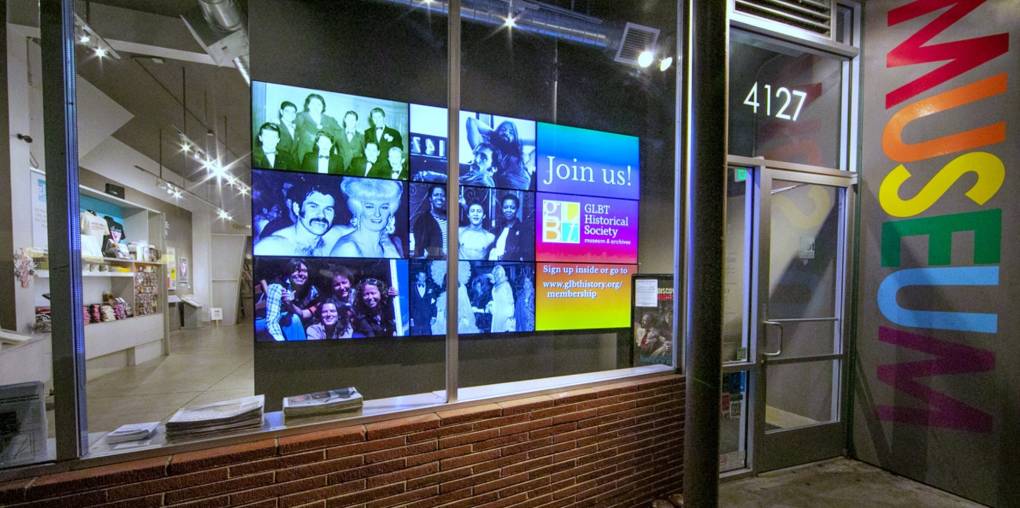
"caption": "The nation's first LGBTQ museum, currently housed at a storefront on 18th Street, is about to get an impressive new location.",
"credit": "Courtesy GLBT Historical Society",
"altTag": null,
"description": null,
"imgSizes": {
"medium": {
"file": "https://cdn.kqed.org/wp-content/uploads/sites/10/2024/09/GLBTMuseum2-800x399.jpg",
"width": 800,
"height": 399,
"mimeType": "image/jpeg"
},
"large": {
"file": "https://cdn.kqed.org/wp-content/uploads/sites/10/2024/09/GLBTMuseum2-1020x508.jpg",
"width": 1020,
"height": 508,
"mimeType": "image/jpeg"
},
"thumbnail": {
"file": "https://cdn.kqed.org/wp-content/uploads/sites/10/2024/09/GLBTMuseum2-160x80.jpg",
"width": 160,
"height": 80,
"mimeType": "image/jpeg"
},
"1536x1536": {
"file": "https://cdn.kqed.org/wp-content/uploads/sites/10/2024/09/GLBTMuseum2-1536x766.jpg",
"width": 1536,
"height": 766,
"mimeType": "image/jpeg"
},
"post-thumbnail": {
"file": "https://cdn.kqed.org/wp-content/uploads/sites/10/2024/09/GLBTMuseum2-672x372.jpg",
"width": 672,
"height": 372,
"mimeType": "image/jpeg"
},
"twentyfourteen-full-width": {
"file": "https://cdn.kqed.org/wp-content/uploads/sites/10/2024/09/GLBTMuseum2-1038x576.jpg",
"width": 1038,
"height": 576,
"mimeType": "image/jpeg"
},
"full-width": {
"file": "https://cdn.kqed.org/wp-content/uploads/sites/10/2024/09/GLBTMuseum2-1920x957.jpg",
"width": 1920,
"height": 957,
"mimeType": "image/jpeg"
},
"kqedFullSize": {
"file": "https://cdn.kqed.org/wp-content/uploads/sites/10/2024/09/GLBTMuseum2.jpg",
"width": 2000,
"height": 997
}
},
"isLoading": false,
"fetchFailed": false
},
"news_12004626": {
"type": "attachments",
"id": "news_12004626",
"meta": {
"index": "attachments_1716263798",
"site": "news",
"id": "12004626",
"found": true
},
"title": "Huge dome atop governmental building",
"publishDate": 1726186254,
"status": "inherit",
"parent": 12004606,
"modified": 1727375643,
"caption": "San Francisco City Hall in Civic Center, San Francisco, on Oct. 14, 2013.",
"credit": "Barry Winiker/Getty Images",
"altTag": null,
"description": null,
"imgSizes": {
"medium": {
"file": "https://cdn.kqed.org/wp-content/uploads/sites/10/2024/09/GettyImages-184795463-800x533.jpg",
"width": 800,
"height": 533,
"mimeType": "image/jpeg"
},
"large": {
"file": "https://cdn.kqed.org/wp-content/uploads/sites/10/2024/09/GettyImages-184795463-1020x680.jpg",
"width": 1020,
"height": 680,
"mimeType": "image/jpeg"
},
"thumbnail": {
"file": "https://cdn.kqed.org/wp-content/uploads/sites/10/2024/09/GettyImages-184795463-160x107.jpg",
"width": 160,
"height": 107,
"mimeType": "image/jpeg"
},
"1536x1536": {
"file": "https://cdn.kqed.org/wp-content/uploads/sites/10/2024/09/GettyImages-184795463-1536x1023.jpg",
"width": 1536,
"height": 1023,
"mimeType": "image/jpeg"
},
"2048x2048": {
"file": "https://cdn.kqed.org/wp-content/uploads/sites/10/2024/09/GettyImages-184795463-2048x1364.jpg",
"width": 2048,
"height": 1364,
"mimeType": "image/jpeg"
},
"post-thumbnail": {
"file": "https://cdn.kqed.org/wp-content/uploads/sites/10/2024/09/GettyImages-184795463-672x372.jpg",
"width": 672,
"height": 372,
"mimeType": "image/jpeg"
},
"twentyfourteen-full-width": {
"file": "https://cdn.kqed.org/wp-content/uploads/sites/10/2024/09/GettyImages-184795463-1038x576.jpg",
"width": 1038,
"height": 576,
"mimeType": "image/jpeg"
},
"full-width": {
"file": "https://cdn.kqed.org/wp-content/uploads/sites/10/2024/09/GettyImages-184795463-1920x1279.jpg",
"width": 1920,
"height": 1279,
"mimeType": "image/jpeg"
},
"kqedFullSize": {
"file": "https://cdn.kqed.org/wp-content/uploads/sites/10/2024/09/GettyImages-184795463-e1733354345817.jpg",
"width": 2000,
"height": 1332
}
},
"isLoading": false,
"fetchFailed": false
},
"news_12006401": {
"type": "attachments",
"id": "news_12006401",
"meta": {
"index": "attachments_1716263798",
"site": "news",
"id": "12006401",
"found": true
},
"title": "240725-BreedEndorsementPresser-75-BL_qed",
"publishDate": 1727294518,
"status": "inherit",
"parent": 12006395,
"modified": 1727294616,
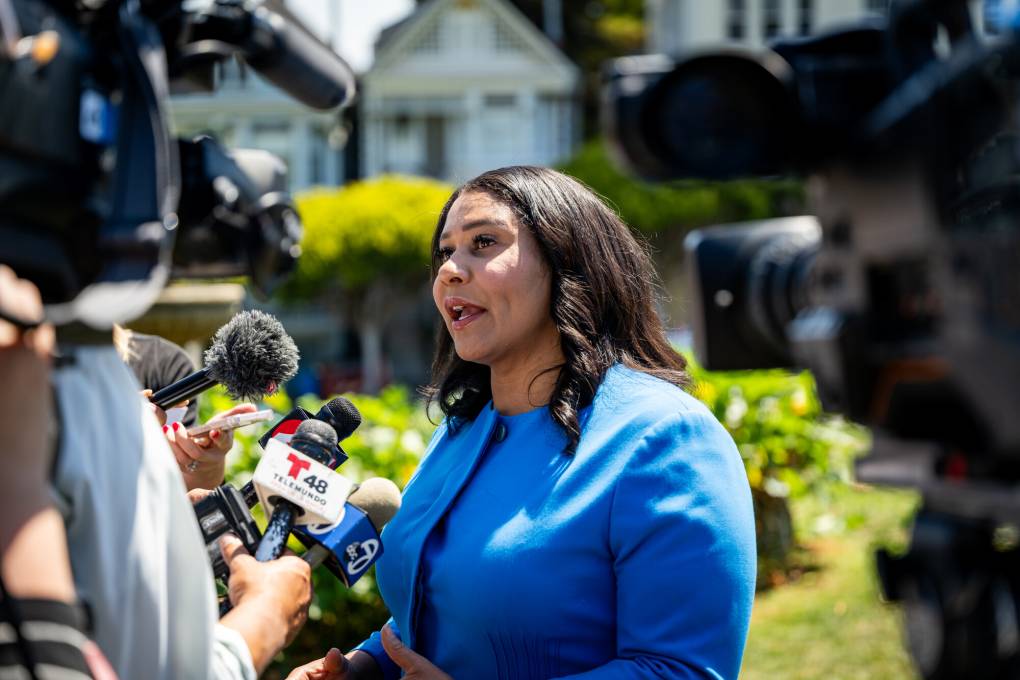
"caption": "Mayor London Breed speaks to press in Alamo Square Park in San Francisco on July 25, 2024. During an interview on KQED's Forum Wednesday, Mayor Breed urged San Francisco school officials to balance the budget before considering school closures.",
"credit": "Beth LaBerge/KQED",
"altTag": null,
"description": null,
"imgSizes": {
"medium": {
"file": "https://cdn.kqed.org/wp-content/uploads/sites/10/2024/09/240725-BreedEndorsementPresser-75-BL_qed-800x533.jpg",
"width": 800,
"height": 533,
"mimeType": "image/jpeg"
},
"large": {
"file": "https://cdn.kqed.org/wp-content/uploads/sites/10/2024/09/240725-BreedEndorsementPresser-75-BL_qed-1020x680.jpg",
"width": 1020,
"height": 680,
"mimeType": "image/jpeg"
},
"thumbnail": {
"file": "https://cdn.kqed.org/wp-content/uploads/sites/10/2024/09/240725-BreedEndorsementPresser-75-BL_qed-160x107.jpg",
"width": 160,
"height": 107,
"mimeType": "image/jpeg"
},
"1536x1536": {
"file": "https://cdn.kqed.org/wp-content/uploads/sites/10/2024/09/240725-BreedEndorsementPresser-75-BL_qed-1536x1024.jpg",
"width": 1536,
"height": 1024,
"mimeType": "image/jpeg"
},
"post-thumbnail": {
"file": "https://cdn.kqed.org/wp-content/uploads/sites/10/2024/09/240725-BreedEndorsementPresser-75-BL_qed-672x372.jpg",
"width": 672,
"height": 372,
"mimeType": "image/jpeg"
},
"twentyfourteen-full-width": {
"file": "https://cdn.kqed.org/wp-content/uploads/sites/10/2024/09/240725-BreedEndorsementPresser-75-BL_qed-1038x576.jpg",
"width": 1038,
"height": 576,
"mimeType": "image/jpeg"
},
"full-width": {
"file": "https://cdn.kqed.org/wp-content/uploads/sites/10/2024/09/240725-BreedEndorsementPresser-75-BL_qed-1920x1280.jpg",
"width": 1920,
"height": 1280,
"mimeType": "image/jpeg"
},
"kqedFullSize": {
"file": "https://cdn.kqed.org/wp-content/uploads/sites/10/2024/09/240725-BreedEndorsementPresser-75-BL_qed.jpg",
"width": 2000,
"height": 1333
}
},
"isLoading": false,
"fetchFailed": false
},
"news_11926202": {
"type": "attachments",
"id": "news_11926202",
"meta": {
"index": "attachments_1716263798",
"site": "news",
"id": "11926202",
"found": true
},
"title": "RS57150_037_KQED_DABrookeJenkins_07072022-qut",
"publishDate": 1663613926,
"status": "inherit",
"parent": 11926200,
"modified": 1727224345,
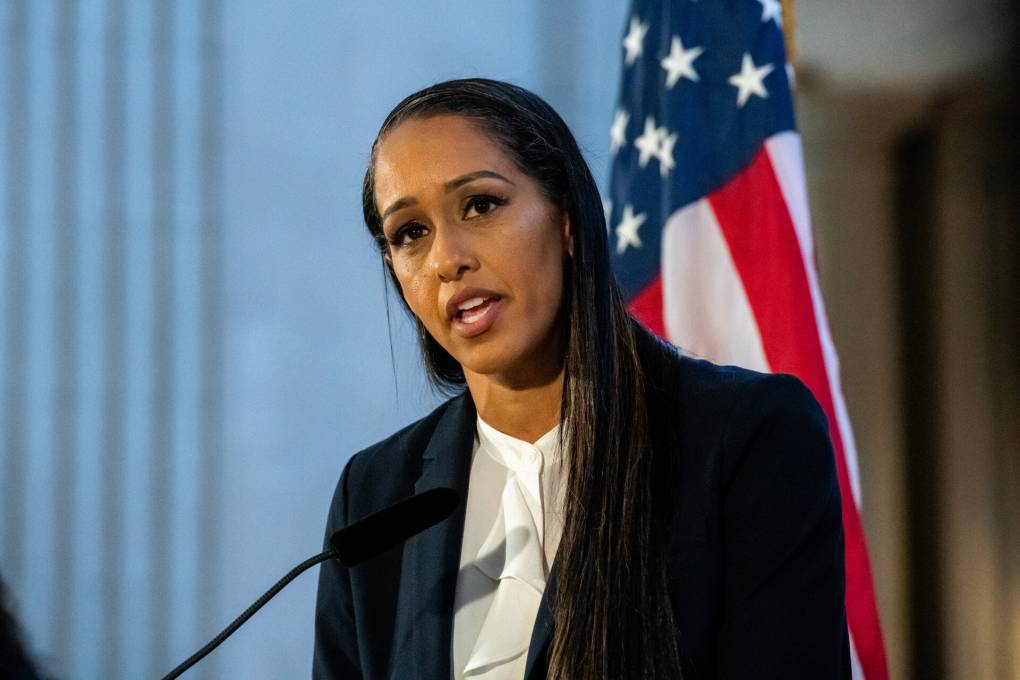
"caption": "San Francisco District Attorney Brooke Jenkins speaks during a press conference at City Hall on July 7, 2022, shortly after Mayor London Breed appointed her to the position following the recall of Chesa Boudin.",
"credit": "Beth LaBerge/KQED",
"altTag": "A woman wearing a business suit stands in front of a microphone with the American flag in the background.",
"description": null,
"imgSizes": {
"medium": {
"file": "https://cdn.kqed.org/wp-content/uploads/sites/10/2022/09/RS57150_037_KQED_DABrookeJenkins_07072022-qut-800x533.jpg",
"width": 800,
"height": 533,
"mimeType": "image/jpeg"
},
"large": {
"file": "https://cdn.kqed.org/wp-content/uploads/sites/10/2022/09/RS57150_037_KQED_DABrookeJenkins_07072022-qut-1020x680.jpg",
"width": 1020,
"height": 680,
"mimeType": "image/jpeg"
},
"thumbnail": {
"file": "https://cdn.kqed.org/wp-content/uploads/sites/10/2022/09/RS57150_037_KQED_DABrookeJenkins_07072022-qut-160x107.jpg",
"width": 160,
"height": 107,
"mimeType": "image/jpeg"
},
"1536x1536": {
"file": "https://cdn.kqed.org/wp-content/uploads/sites/10/2022/09/RS57150_037_KQED_DABrookeJenkins_07072022-qut-1536x1024.jpg",
"width": 1536,
"height": 1024,
"mimeType": "image/jpeg"
},
"post-thumbnail": {
"file": "https://cdn.kqed.org/wp-content/uploads/sites/10/2022/09/RS57150_037_KQED_DABrookeJenkins_07072022-qut-672x372.jpg",
"width": 672,
"height": 372,
"mimeType": "image/jpeg"
},
"twentyfourteen-full-width": {
"file": "https://cdn.kqed.org/wp-content/uploads/sites/10/2022/09/RS57150_037_KQED_DABrookeJenkins_07072022-qut-1038x576.jpg",
"width": 1038,
"height": 576,
"mimeType": "image/jpeg"
},
"kqedFullSize": {
"file": "https://cdn.kqed.org/wp-content/uploads/sites/10/2022/09/RS57150_037_KQED_DABrookeJenkins_07072022-qut.jpg",
"width": 1920,
"height": 1280
}
},
"isLoading": false,
"fetchFailed": false
},
"news_12006078": {
"type": "attachments",
"id": "news_12006078",
"meta": {
"index": "attachments_1716263798",
"site": "news",
"id": "12006078",
"found": true
},
"title": "Paul-Fitzgerald USF",
"publishDate": 1727133646,
"status": "inherit",
"parent": 12006071,
"modified": 1727139120,
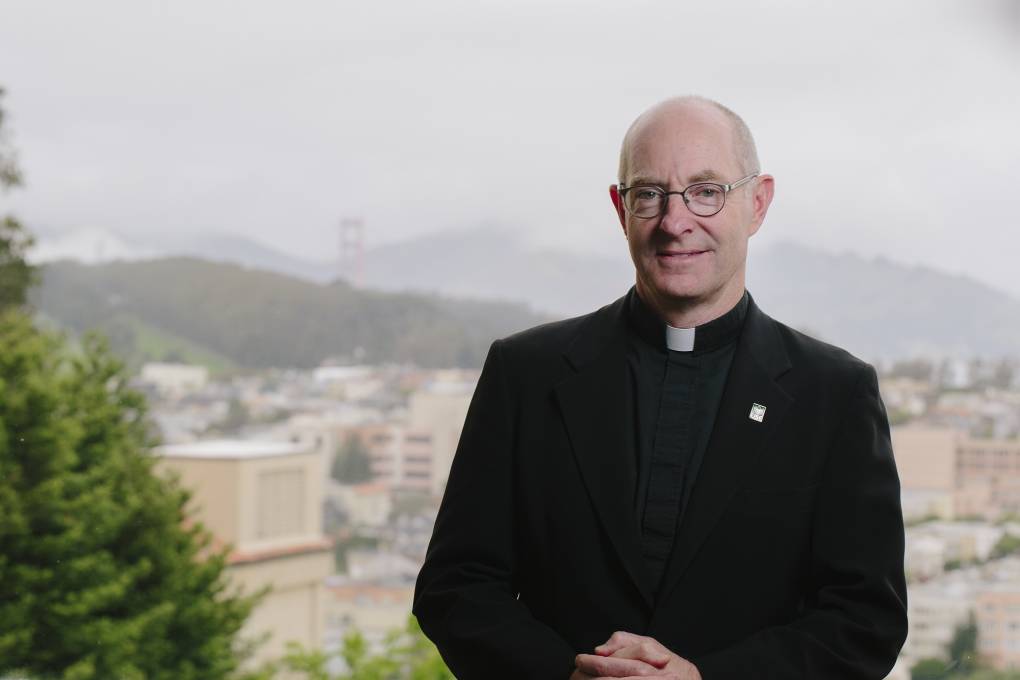
"caption": "The president of the University of San Francisco, Paul J. Fitzgerald, has resigned after 10 years in the role. ",
"credit": "Courtesy USF",
"altTag": null,
"description": null,
"imgSizes": {
"medium": {
"file": "https://cdn.kqed.org/wp-content/uploads/sites/10/2024/09/Paul-Fitzgerald-USF-800x533.jpg",
"width": 800,
"height": 533,
"mimeType": "image/jpeg"
},
"large": {
"file": "https://cdn.kqed.org/wp-content/uploads/sites/10/2024/09/Paul-Fitzgerald-USF-1020x680.jpg",
"width": 1020,
"height": 680,
"mimeType": "image/jpeg"
},
"thumbnail": {
"file": "https://cdn.kqed.org/wp-content/uploads/sites/10/2024/09/Paul-Fitzgerald-USF-160x107.jpg",
"width": 160,
"height": 107,
"mimeType": "image/jpeg"
},
"1536x1536": {
"file": "https://cdn.kqed.org/wp-content/uploads/sites/10/2024/09/Paul-Fitzgerald-USF-1536x1024.jpg",
"width": 1536,
"height": 1024,
"mimeType": "image/jpeg"
},
"post-thumbnail": {
"file": "https://cdn.kqed.org/wp-content/uploads/sites/10/2024/09/Paul-Fitzgerald-USF-672x372.jpg",
"width": 672,
"height": 372,
"mimeType": "image/jpeg"
},
"twentyfourteen-full-width": {
"file": "https://cdn.kqed.org/wp-content/uploads/sites/10/2024/09/Paul-Fitzgerald-USF-1038x576.jpg",
"width": 1038,
"height": 576,
"mimeType": "image/jpeg"
},
"full-width": {
"file": "https://cdn.kqed.org/wp-content/uploads/sites/10/2024/09/Paul-Fitzgerald-USF-1920x1280.jpg",
"width": 1920,
"height": 1280,
"mimeType": "image/jpeg"
},
"kqedFullSize": {
"file": "https://cdn.kqed.org/wp-content/uploads/sites/10/2024/09/Paul-Fitzgerald-USF.jpg",
"width": 2000,
"height": 1333
}
},
"isLoading": false,
"fetchFailed": false
},
"news_12005943": {
"type": "attachments",
"id": "news_12005943",
"meta": {
"index": "attachments_1716263798",
"site": "news",
"id": "12005943",
"found": true
},
"title": "Hotel Workers' Union Continues Nationwide Strike",
"publishDate": 1727116607,
"status": "inherit",
"parent": 12005938,
"modified": 1727117323,
"caption": "A union worker drums on a bucket as she pickets outside of the Hilton San Francisco Union Square hotel on Sept. 3, 2024, in San Francisco, California. For the second time this month, 1,500 Unite Here Local 2 hotel workers from the Grand Hyatt, Hilton, and Westin St. Francis in Union Square have walked off the job, protesting pay and understaffing.",
"credit": "Justin Sullivan/Getty Images",
"altTag": null,
"description": null,
"imgSizes": {
"medium": {
"file": "https://cdn.kqed.org/wp-content/uploads/sites/10/2024/09/SFHotelWorkersGetty1-800x544.jpg",
"width": 800,
"height": 544,
"mimeType": "image/jpeg"
},
"large": {
"file": "https://cdn.kqed.org/wp-content/uploads/sites/10/2024/09/SFHotelWorkersGetty1-1020x693.jpg",
"width": 1020,
"height": 693,
"mimeType": "image/jpeg"
},
"thumbnail": {
"file": "https://cdn.kqed.org/wp-content/uploads/sites/10/2024/09/SFHotelWorkersGetty1-160x109.jpg",
"width": 160,
"height": 109,
"mimeType": "image/jpeg"
},
"1536x1536": {
"file": "https://cdn.kqed.org/wp-content/uploads/sites/10/2024/09/SFHotelWorkersGetty1-1536x1044.jpg",
"width": 1536,
"height": 1044,
"mimeType": "image/jpeg"
},
"post-thumbnail": {
"file": "https://cdn.kqed.org/wp-content/uploads/sites/10/2024/09/SFHotelWorkersGetty1-672x372.jpg",
"width": 672,
"height": 372,
"mimeType": "image/jpeg"
},
"twentyfourteen-full-width": {
"file": "https://cdn.kqed.org/wp-content/uploads/sites/10/2024/09/SFHotelWorkersGetty1-1038x576.jpg",
"width": 1038,
"height": 576,
"mimeType": "image/jpeg"
},
"full-width": {
"file": "https://cdn.kqed.org/wp-content/uploads/sites/10/2024/09/SFHotelWorkersGetty1-1920x1305.jpg",
"width": 1920,
"height": 1305,
"mimeType": "image/jpeg"
},
"kqedFullSize": {
"file": "https://cdn.kqed.org/wp-content/uploads/sites/10/2024/09/SFHotelWorkersGetty1.jpg",
"width": 2000,
"height": 1359
}
},
"isLoading": false,
"fetchFailed": false
},
"news_11675448": {
"type": "attachments",
"id": "news_11675448",
"meta": {
"index": "attachments_1716263798",
"site": "news",
"id": "11675448",
"found": true
},
"title": "RS31443_lbreed1-qut-1180x885",
"publishDate": 1529263016,
"status": "inherit",
"parent": 11675302,
"modified": 1727125881,
"caption": "Mayor London Breed speaks at Rosa Parks Elementary School on June 14, 2018. ",
"credit": "Raquel Maria Dillon/KQED",
"altTag": null,
"description": null,
"imgSizes": {
"thumbnail": {
"file": "https://cdn.kqed.org/wp-content/uploads/sites/10/2018/06/RS31443_lbreed1-qut-1180x885-1-160x120.jpg",
"width": 160,
"height": 120,
"mimeType": "image/jpeg"
},
"medium": {
"file": "https://cdn.kqed.org/wp-content/uploads/sites/10/2018/06/RS31443_lbreed1-qut-1180x885-1-800x600.jpg",
"width": 800,
"height": 600,
"mimeType": "image/jpeg"
},
"large": {
"file": "https://cdn.kqed.org/wp-content/uploads/sites/10/2018/06/RS31443_lbreed1-qut-1180x885-1-1020x765.jpg",
"width": 1020,
"height": 765,
"mimeType": "image/jpeg"
},
"fd-med": {
"file": "https://cdn.kqed.org/wp-content/uploads/sites/10/2018/06/RS31443_lbreed1-qut-1180x885-1-1180x885.jpg",
"width": 1180,
"height": 885,
"mimeType": "image/jpeg"
},
"fd-sm": {
"file": "https://cdn.kqed.org/wp-content/uploads/sites/10/2018/06/RS31443_lbreed1-qut-1180x885-1-960x720.jpg",
"width": 960,
"height": 720,
"mimeType": "image/jpeg"
},
"post-thumbnail": {
"file": "https://cdn.kqed.org/wp-content/uploads/sites/10/2018/06/RS31443_lbreed1-qut-1180x885-1-672x372.jpg",
"width": 672,
"height": 372,
"mimeType": "image/jpeg"
},
"twentyfourteen-full-width": {
"file": "https://cdn.kqed.org/wp-content/uploads/sites/10/2018/06/RS31443_lbreed1-qut-1180x885-1-1038x576.jpg",
"width": 1038,
"height": 576,
"mimeType": "image/jpeg"
},
"xxsmall": {
"file": "https://cdn.kqed.org/wp-content/uploads/sites/10/2018/06/RS31443_lbreed1-qut-1180x885-1-240x180.jpg",
"width": 240,
"height": 180,
"mimeType": "image/jpeg"
},
"xsmall": {
"file": "https://cdn.kqed.org/wp-content/uploads/sites/10/2018/06/RS31443_lbreed1-qut-1180x885-1-375x281.jpg",
"width": 375,
"height": 281,
"mimeType": "image/jpeg"
},
"small": {
"file": "https://cdn.kqed.org/wp-content/uploads/sites/10/2018/06/RS31443_lbreed1-qut-1180x885-1-520x390.jpg",
"width": 520,
"height": 390,
"mimeType": "image/jpeg"
},
"xlarge": {
"file": "https://cdn.kqed.org/wp-content/uploads/sites/10/2018/06/RS31443_lbreed1-qut-1180x885-1-1180x885.jpg",
"width": 1180,
"height": 885,
"mimeType": "image/jpeg"
},
"guest-author-32": {
"file": "https://cdn.kqed.org/wp-content/uploads/sites/10/2018/06/RS31443_lbreed1-qut-1180x885-1-32x32.jpg",
"width": 32,
"height": 32,
"mimeType": "image/jpeg"
},
"guest-author-50": {
"file": "https://cdn.kqed.org/wp-content/uploads/sites/10/2018/06/RS31443_lbreed1-qut-1180x885-1-50x50.jpg",
"width": 50,
"height": 50,
"mimeType": "image/jpeg"
},
"guest-author-64": {
"file": "https://cdn.kqed.org/wp-content/uploads/sites/10/2018/06/RS31443_lbreed1-qut-1180x885-1-64x64.jpg",
"width": 64,
"height": 64,
"mimeType": "image/jpeg"
},
"guest-author-96": {
"file": "https://cdn.kqed.org/wp-content/uploads/sites/10/2018/06/RS31443_lbreed1-qut-1180x885-1-96x96.jpg",
"width": 96,
"height": 96,
"mimeType": "image/jpeg"
},
"guest-author-128": {
"file": "https://cdn.kqed.org/wp-content/uploads/sites/10/2018/06/RS31443_lbreed1-qut-1180x885-1-128x128.jpg",
"width": 128,
"height": 128,
"mimeType": "image/jpeg"
},
"detail": {
"file": "https://cdn.kqed.org/wp-content/uploads/sites/10/2018/06/RS31443_lbreed1-qut-1180x885-1-150x150.jpg",
"width": 150,
"height": 150,
"mimeType": "image/jpeg"
},
"kqedFullSize": {
"file": "https://cdn.kqed.org/wp-content/uploads/sites/10/2018/06/RS31443_lbreed1-qut-1180x885-1.jpg",
"width": 1180,
"height": 885
}
},
"isLoading": false,
"fetchFailed": false
},
"news_12005255": {
"type": "attachments",
"id": "news_12005255",
"meta": {
"index": "attachments_1716263798",
"site": "news",
"id": "12005255",
"found": true
},
"title": "Black Art Week Hannah Waiters",
"publishDate": 1726687508,
"status": "inherit",
"parent": 12005251,
"modified": 1726859093,
"caption": "“The Remedy is Solidarity: A Global Multimedia Anthology on Reparations Volume 1.1 Too Much Like Right,” is a multimedia exhibition opening at Swim Gallery, 509 Ellis St., on Sept. 21. The installation will feature works by female artists like Taina Cruz, Cheryl Derricotte, Trina Robinson and Hannah Waiters, each exploring the exclusion of Black people from the city’s history in different mediums.",
"credit": "Courtesy ZEAL",
"altTag": null,
"description": null,
"imgSizes": {
"medium": {
"file": "https://cdn.kqed.org/wp-content/uploads/sites/10/2024/09/Black-Art-Week-Hannah-Waiters-800x600.jpg",
"width": 800,
"height": 600,
"mimeType": "image/jpeg"
},
"large": {
"file": "https://cdn.kqed.org/wp-content/uploads/sites/10/2024/09/Black-Art-Week-Hannah-Waiters-1020x765.jpg",
"width": 1020,
"height": 765,
"mimeType": "image/jpeg"
},
"thumbnail": {
"file": "https://cdn.kqed.org/wp-content/uploads/sites/10/2024/09/Black-Art-Week-Hannah-Waiters-160x120.jpg",
"width": 160,
"height": 120,
"mimeType": "image/jpeg"
},
"1536x1536": {
"file": "https://cdn.kqed.org/wp-content/uploads/sites/10/2024/09/Black-Art-Week-Hannah-Waiters-1536x1152.jpg",
"width": 1536,
"height": 1152,
"mimeType": "image/jpeg"
},
"post-thumbnail": {
"file": "https://cdn.kqed.org/wp-content/uploads/sites/10/2024/09/Black-Art-Week-Hannah-Waiters-672x372.jpg",
"width": 672,
"height": 372,
"mimeType": "image/jpeg"
},
"twentyfourteen-full-width": {
"file": "https://cdn.kqed.org/wp-content/uploads/sites/10/2024/09/Black-Art-Week-Hannah-Waiters-1038x576.jpg",
"width": 1038,
"height": 576,
"mimeType": "image/jpeg"
},
"full-width": {
"file": "https://cdn.kqed.org/wp-content/uploads/sites/10/2024/09/Black-Art-Week-Hannah-Waiters-1920x1440.jpg",
"width": 1920,
"height": 1440,
"mimeType": "image/jpeg"
},
"kqedFullSize": {
"file": "https://cdn.kqed.org/wp-content/uploads/sites/10/2024/09/Black-Art-Week-Hannah-Waiters.jpg",
"width": 2000,
"height": 1500
}
},
"isLoading": false,
"fetchFailed": false
},
"news_12005711": {
"type": "attachments",
"id": "news_12005711",
"meta": {
"index": "attachments_1716263798",
"site": "news",
"id": "12005711",
"found": true
},
"title": "240830-SFSideshowLegislation-28-BL_qed",
"publishDate": 1726866255,
"status": "inherit",
"parent": 12005687,
"modified": 1726866380,
"caption": "Chief of Police William Scott speaks during a press conference alongside Mayor London Breed at the San Francisco Police Department headquarters on Aug. 30, 2024.",
"credit": "Beth LaBerge/KQED",
"altTag": null,
"description": null,
"imgSizes": {
"medium": {
"file": "https://cdn.kqed.org/wp-content/uploads/sites/10/2024/09/240830-SFSideshowLegislation-28-BL_qed-800x533.jpg",
"width": 800,
"height": 533,
"mimeType": "image/jpeg"
},
"large": {
"file": "https://cdn.kqed.org/wp-content/uploads/sites/10/2024/09/240830-SFSideshowLegislation-28-BL_qed-1020x680.jpg",
"width": 1020,
"height": 680,
"mimeType": "image/jpeg"
},
"thumbnail": {
"file": "https://cdn.kqed.org/wp-content/uploads/sites/10/2024/09/240830-SFSideshowLegislation-28-BL_qed-160x107.jpg",
"width": 160,
"height": 107,
"mimeType": "image/jpeg"
},
"1536x1536": {
"file": "https://cdn.kqed.org/wp-content/uploads/sites/10/2024/09/240830-SFSideshowLegislation-28-BL_qed-1536x1024.jpg",
"width": 1536,
"height": 1024,
"mimeType": "image/jpeg"
},
"post-thumbnail": {
"file": "https://cdn.kqed.org/wp-content/uploads/sites/10/2024/09/240830-SFSideshowLegislation-28-BL_qed-672x372.jpg",
"width": 672,
"height": 372,
"mimeType": "image/jpeg"
},
"twentyfourteen-full-width": {
"file": "https://cdn.kqed.org/wp-content/uploads/sites/10/2024/09/240830-SFSideshowLegislation-28-BL_qed-1038x576.jpg",
"width": 1038,
"height": 576,
"mimeType": "image/jpeg"
},
"full-width": {
"file": "https://cdn.kqed.org/wp-content/uploads/sites/10/2024/09/240830-SFSideshowLegislation-28-BL_qed-1920x1280.jpg",
"width": 1920,
"height": 1280,
"mimeType": "image/jpeg"
},
"kqedFullSize": {
"file": "https://cdn.kqed.org/wp-content/uploads/sites/10/2024/09/240830-SFSideshowLegislation-28-BL_qed.jpg",
"width": 1999,
"height": 1333
}
},
"isLoading": false,
"fetchFailed": false
},
"news_12005633": {
"type": "attachments",
"id": "news_12005633",
"meta": {
"index": "attachments_1716263798",
"site": "news",
"id": "12005633",
"found": true
},
"title": "240919-MAYORALDEBATE-106-BL-KQED",
"publishDate": 1726847673,
"status": "inherit",
"parent": 0,
"modified": 1726857386,
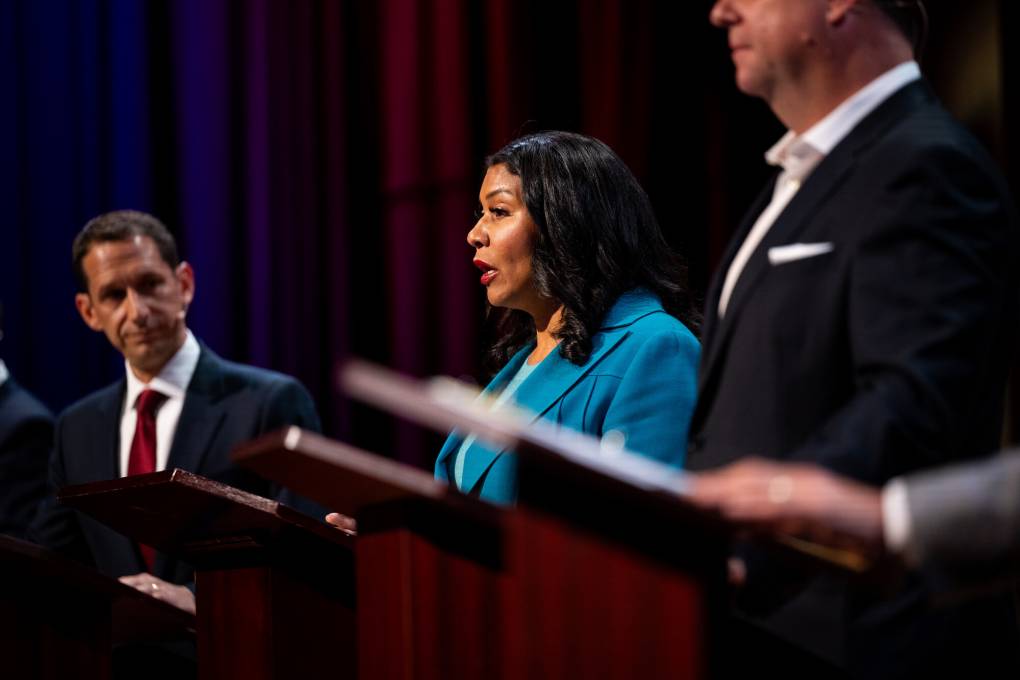
"caption": "San Francisco mayoral candidates (from left) Ahsha Safaí, Daniel Lurie, Mayor London Breed, former mayor Mark Farrell and Aaron Peskin participate in a debate at KQED in San Francisco, California, on Thursday, Sept. 19, 2024, moderated by KQED politics reporters Scott Shafer and Marisa Lagos and San Francisco Chronicle reporter Joe Garofoli.",
"credit": "Beth LaBerge/KQED",
"altTag": null,
"description": null,
"imgSizes": {
"medium": {
"file": "https://cdn.kqed.org/wp-content/uploads/sites/10/2024/09/240919-MAYORALDEBATE-106-BL-KQED-800x533.jpg",
"width": 800,
"height": 533,
"mimeType": "image/jpeg"
},
"large": {
"file": "https://cdn.kqed.org/wp-content/uploads/sites/10/2024/09/240919-MAYORALDEBATE-106-BL-KQED-1020x680.jpg",
"width": 1020,
"height": 680,
"mimeType": "image/jpeg"
},
"thumbnail": {
"file": "https://cdn.kqed.org/wp-content/uploads/sites/10/2024/09/240919-MAYORALDEBATE-106-BL-KQED-160x107.jpg",
"width": 160,
"height": 107,
"mimeType": "image/jpeg"
},
"1536x1536": {
"file": "https://cdn.kqed.org/wp-content/uploads/sites/10/2024/09/240919-MAYORALDEBATE-106-BL-KQED-1536x1024.jpg",
"width": 1536,
"height": 1024,
"mimeType": "image/jpeg"
},
"post-thumbnail": {
"file": "https://cdn.kqed.org/wp-content/uploads/sites/10/2024/09/240919-MAYORALDEBATE-106-BL-KQED-672x372.jpg",
"width": 672,
"height": 372,
"mimeType": "image/jpeg"
},
"twentyfourteen-full-width": {
"file": "https://cdn.kqed.org/wp-content/uploads/sites/10/2024/09/240919-MAYORALDEBATE-106-BL-KQED-1038x576.jpg",
"width": 1038,
"height": 576,
"mimeType": "image/jpeg"
},
"full-width": {
"file": "https://cdn.kqed.org/wp-content/uploads/sites/10/2024/09/240919-MAYORALDEBATE-106-BL-KQED-1920x1280.jpg",
"width": 1920,
"height": 1280,
"mimeType": "image/jpeg"
},
"kqedFullSize": {
"file": "https://cdn.kqed.org/wp-content/uploads/sites/10/2024/09/240919-MAYORALDEBATE-106-BL-KQED.jpg",
"width": 2000,
"height": 1333
}
},
"isLoading": false,
"fetchFailed": false
},
"news_12005626": {
"type": "attachments",
"id": "news_12005626",
"meta": {
"index": "attachments_1716263798",
"site": "news",
"id": "12005626",
"found": true
},
"title": "240919-MayoralDebate-096-BL_qed",
"publishDate": 1726843413,
"status": "inherit",
"parent": 0,
"modified": 1726843484,
"caption": "San Francisco Mayor London Breed speaks during a mayoral debate at KQED in San Francisco on Sept. 19, 2024.",
"credit": "Beth LaBerge/KQED",
"altTag": null,
"description": null,
"imgSizes": {
"medium": {
"file": "https://cdn.kqed.org/wp-content/uploads/sites/10/2024/09/240919-MayoralDebate-096-BL_qed-800x533.jpg",
"width": 800,
"height": 533,
"mimeType": "image/jpeg"
},
"large": {
"file": "https://cdn.kqed.org/wp-content/uploads/sites/10/2024/09/240919-MayoralDebate-096-BL_qed-1020x680.jpg",
"width": 1020,
"height": 680,
"mimeType": "image/jpeg"
},
"thumbnail": {
"file": "https://cdn.kqed.org/wp-content/uploads/sites/10/2024/09/240919-MayoralDebate-096-BL_qed-160x107.jpg",
"width": 160,
"height": 107,
"mimeType": "image/jpeg"
},
"1536x1536": {
"file": "https://cdn.kqed.org/wp-content/uploads/sites/10/2024/09/240919-MayoralDebate-096-BL_qed-1536x1024.jpg",
"width": 1536,
"height": 1024,
"mimeType": "image/jpeg"
},
"post-thumbnail": {
"file": "https://cdn.kqed.org/wp-content/uploads/sites/10/2024/09/240919-MayoralDebate-096-BL_qed-672x372.jpg",
"width": 672,
"height": 372,
"mimeType": "image/jpeg"
},
"twentyfourteen-full-width": {
"file": "https://cdn.kqed.org/wp-content/uploads/sites/10/2024/09/240919-MayoralDebate-096-BL_qed-1038x576.jpg",
"width": 1038,
"height": 576,
"mimeType": "image/jpeg"
},
"full-width": {
"file": "https://cdn.kqed.org/wp-content/uploads/sites/10/2024/09/240919-MayoralDebate-096-BL_qed-1920x1280.jpg",
"width": 1920,
"height": 1280,
"mimeType": "image/jpeg"
},
"kqedFullSize": {
"file": "https://cdn.kqed.org/wp-content/uploads/sites/10/2024/09/240919-MayoralDebate-096-BL_qed.jpg",
"width": 2000,
"height": 1333
}
},
"isLoading": false,
"fetchFailed": false
},
"news_12005581": {
"type": "attachments",
"id": "news_12005581",
"meta": {
"index": "attachments_1716263798",
"site": "news",
"id": "12005581",
"found": true
},
"title": "240919-SF MAYORAL DEBATE-BL-02-KQED_POOL-KQED_",
"publishDate": 1726802046,
"status": "inherit",
"parent": 0,
"modified": 1726807485,
"caption": "San Francisco mayoral candidates (from left) Ahsha Safaí, Daniel Lurie, Mayor London Breed, former Mayor Mark Farrell, and Aaron Peskin participate in a debate moderated by KQED politics reporters Scott Shafer and Marisa Lagos and San Francisco Chronicle reporter Joe Garofoli at KQED in San Francisco on Sept. 19, 2024.",
"credit": "Beth LaBerge/KQED",
"altTag": null,
"description": null,
"imgSizes": {
"medium": {
"file": "https://cdn.kqed.org/wp-content/uploads/sites/10/2024/09/240919-SF-MAYORAL-DEBATE-BL-02-KQED_POOL-KQED_-800x533.jpg",
"width": 800,
"height": 533,
"mimeType": "image/jpeg"
},
"large": {
"file": "https://cdn.kqed.org/wp-content/uploads/sites/10/2024/09/240919-SF-MAYORAL-DEBATE-BL-02-KQED_POOL-KQED_-1020x680.jpg",
"width": 1020,
"height": 680,
"mimeType": "image/jpeg"
},
"thumbnail": {
"file": "https://cdn.kqed.org/wp-content/uploads/sites/10/2024/09/240919-SF-MAYORAL-DEBATE-BL-02-KQED_POOL-KQED_-160x107.jpg",
"width": 160,
"height": 107,
"mimeType": "image/jpeg"
},
"1536x1536": {
"file": "https://cdn.kqed.org/wp-content/uploads/sites/10/2024/09/240919-SF-MAYORAL-DEBATE-BL-02-KQED_POOL-KQED_-1536x1024.jpg",
"width": 1536,
"height": 1024,
"mimeType": "image/jpeg"
},
"post-thumbnail": {
"file": "https://cdn.kqed.org/wp-content/uploads/sites/10/2024/09/240919-SF-MAYORAL-DEBATE-BL-02-KQED_POOL-KQED_-672x372.jpg",
"width": 672,
"height": 372,
"mimeType": "image/jpeg"
},
"twentyfourteen-full-width": {
"file": "https://cdn.kqed.org/wp-content/uploads/sites/10/2024/09/240919-SF-MAYORAL-DEBATE-BL-02-KQED_POOL-KQED_-1038x576.jpg",
"width": 1038,
"height": 576,
"mimeType": "image/jpeg"
},
"full-width": {
"file": "https://cdn.kqed.org/wp-content/uploads/sites/10/2024/09/240919-SF-MAYORAL-DEBATE-BL-02-KQED_POOL-KQED_-1920x1280.jpg",
"width": 1920,
"height": 1280,
"mimeType": "image/jpeg"
},
"kqedFullSize": {
"file": "https://cdn.kqed.org/wp-content/uploads/sites/10/2024/09/240919-SF-MAYORAL-DEBATE-BL-02-KQED_POOL-KQED_.jpg",
"width": 2000,
"height": 1333
}
},
"isLoading": false,
"fetchFailed": false
}
},
"audioPlayerReducer": {
"postId": "stream_live",
"isPaused": true,
"isPlaying": false,
"pfsActive": false,
"pledgeModalIsOpen": true,
"playerDrawerIsOpen": false,
"liveAudioPlayStartedAt": 0,
"liveAudioPlayContext": ""
},
"authorsReducer": {
"scottshafer": {
"type": "authors",
"id": "255",
"meta": {
"index": "authors_1716337520",
"id": "255",
"found": true
},
"name": "Scott Shafer",
"firstName": "Scott",
"lastName": "Shafer",
"slug": "scottshafer",
"email": "sshafer@kqed.org",
"display_author_email": false,
"staff_mastheads": [
"news"
],
"title": "KQED Contributor",
"bio": "Scott Shafer is a senior editor with the KQED Politics and Government desk. He is co-host of Political Breakdown, the award-winning radio show and podcast with a personal take on the world of politics. Scott came to KQED in 1998 to host the statewide\u003cem> California Report\u003c/em>. Prior to that he had extended stints in politics and government\u003cem>.\u003c/em> He uses that inside experience at KQED in his, reporting, hosting and analysis for the politics desk. Scott collaborated \u003cem>Political Breakdown a\u003c/em>nd on \u003cem>The Political Mind of Jerry Brown, \u003c/em>an eight-part series about the life and extraordinary political career of the former governor. For fun, he plays water polo with the San Francisco Tsunami.",
"avatar": "https://secure.gravatar.com/avatar/a62ebae45b79d7aed1a39a0e3bf68104?s=600&d=blank&r=g",
"twitter": "scottshafer",
"bluesky": null,
"facebook": null,
"instagram": null,
"linkedin": null,
"sites": [
{
"site": "news",
"roles": [
"editor"
]
},
{
"site": "stateofhealth",
"roles": [
"author"
]
},
{
"site": "science",
"roles": [
"author"
]
},
{
"site": "forum",
"roles": [
"subscriber"
]
},
{
"site": "liveblog",
"roles": [
"author"
]
}
],
"headData": {
"title": "Scott Shafer | KQED",
"description": "KQED Contributor",
"ogImgSrc": "https://secure.gravatar.com/avatar/a62ebae45b79d7aed1a39a0e3bf68104?s=600&d=blank&r=g",
"twImgSrc": "https://secure.gravatar.com/avatar/a62ebae45b79d7aed1a39a0e3bf68104?s=600&d=blank&r=g"
},
"isLoading": false,
"link": "/author/scottshafer"
},
"mlagos": {
"type": "authors",
"id": "3239",
"meta": {
"index": "authors_1716337520",
"id": "3239",
"found": true
},
"name": "Marisa Lagos",
"firstName": "Marisa",
"lastName": "Lagos",
"slug": "mlagos",
"email": "mlagos@kqed.org",
"display_author_email": false,
"staff_mastheads": [
"news"
],
"title": "KQED Contributor",
"bio": "Marisa Lagos is a correspondent for KQED’s California Politics and Government Desk and co-hosts the award-winning show and podcast, Political Breakdown. At KQED, Lagos also conducts reporting, analysis and investigations into state, local and national politics for radio, TV, online and onstage. In 2022, she and co-host, Scott Shafer, moderated the only gubernatorial debate in California. In 2020, the \u003ci>Washington Post\u003c/i> named her one of the top political journalists in California; she was nominated for a Peabody and won several other awards for her work investigating the 2017 California wildfires. She has worked at the \u003ci>San Francisco Chronicle\u003c/i>, \u003ci>San Francisco Examiner\u003c/i> and \u003ci>Los Angeles Times\u003c/i>. A UC Santa Barbara graduate, she lives in San Francisco with her two sons and husband.",
"avatar": "https://secure.gravatar.com/avatar/a261a0d3696fc066871ef96b85b5e7d2?s=600&d=blank&r=g",
"twitter": "@mlagos",
"facebook": null,
"instagram": null,
"linkedin": null,
"sites": [
{
"site": "arts",
"roles": [
"author"
]
},
{
"site": "news",
"roles": [
"editor"
]
},
{
"site": "science",
"roles": [
"editor"
]
},
{
"site": "forum",
"roles": [
"author"
]
},
{
"site": "liveblog",
"roles": [
"author"
]
}
],
"headData": {
"title": "Marisa Lagos | KQED",
"description": "KQED Contributor",
"ogImgSrc": "https://secure.gravatar.com/avatar/a261a0d3696fc066871ef96b85b5e7d2?s=600&d=blank&r=g",
"twImgSrc": "https://secure.gravatar.com/avatar/a261a0d3696fc066871ef96b85b5e7d2?s=600&d=blank&r=g"
},
"isLoading": false,
"link": "/author/mlagos"
},
"ecruzguevarra": {
"type": "authors",
"id": "8654",
"meta": {
"index": "authors_1716337520",
"id": "8654",
"found": true
},
"name": "Ericka Cruz Guevarra",
"firstName": "Ericka",
"lastName": "Cruz Guevarra",
"slug": "ecruzguevarra",
"email": "ecruzguevarra@kqed.org",
"display_author_email": true,
"staff_mastheads": [
"news"
],
"title": "Producer, The Bay Podcast",
"bio": "Ericka Cruz Guevarra is host of \u003ca href=\"https://www.kqed.org/podcasts/thebay\">\u003cem>The Bay\u003c/em>\u003c/a> podcast at KQED. Before host, she was the show’s producer. Her work in that capacity includes a three-part reported series on policing in Vallejo, which won a 2020 excellence in journalism award from the Society of Professional Journalists. Ericka has worked as a breaking news reporter at Oregon Public Broadcasting, helped produce the Code Switch podcast, and was KQED’s inaugural Raul Ramirez Diversity Fund intern. She’s also an alumna of NPR’s Next Generation Radio program. Send her an email if you have strong feelings about whether Fairfield and Suisun City are the Bay. Ericka is represented by SAG-AFTRA.",
"avatar": "https://secure.gravatar.com/avatar/accefc1de4bafc7e234b69bcb9b6f6536c130fd84709bc3069ef11a78787e1bb?s=600&d=blank&r=g",
"twitter": "NotoriousECG",
"bluesky": null,
"facebook": null,
"instagram": null,
"linkedin": null,
"sites": [
{
"site": "arts",
"roles": [
"subscriber"
]
},
{
"site": "news",
"roles": [
"editor",
"manage_categories"
]
},
{
"site": "futureofyou",
"roles": [
"subscriber"
]
},
{
"site": "stateofhealth",
"roles": [
"subscriber"
]
},
{
"site": "science",
"roles": [
"editor"
]
},
{
"site": "forum",
"roles": [
"subscriber"
]
}
],
"headData": {
"title": "Ericka Cruz Guevarra | KQED",
"description": "Producer, The Bay Podcast",
"ogImgSrc": "https://secure.gravatar.com/avatar/accefc1de4bafc7e234b69bcb9b6f6536c130fd84709bc3069ef11a78787e1bb?s=600&d=blank&r=g",
"twImgSrc": "https://secure.gravatar.com/avatar/accefc1de4bafc7e234b69bcb9b6f6536c130fd84709bc3069ef11a78787e1bb?s=600&d=blank&r=g"
},
"isLoading": false,
"link": "/author/ecruzguevarra"
},
"amontecillo": {
"type": "authors",
"id": "11649",
"meta": {
"index": "authors_1716337520",
"id": "11649",
"found": true
},
"name": "Alan Montecillo",
"firstName": "Alan",
"lastName": "Montecillo",
"slug": "amontecillo",
"email": "amontecillo@kqed.org",
"display_author_email": false,
"staff_mastheads": [
"news"
],
"title": "KQED Contributor",
"bio": "Alan Montecillo is the senior editor of \u003cem>\u003ca href=\"http://kqed.org/thebay\">The Bay\u003c/a>, \u003c/em> KQED's local news podcast. Before moving to the Bay Area, he worked as a senior talk show producer for WILL in Champaign-Urbana, Illinois and at Oregon Public Broadcasting in Portland, Oregon. He has won journalism awards from the Society of Professional Journalists Northern California, the Public Media Journalists Association, The Signal Awards, and has also received a regional Edward R. Murrow award. Alan is a Filipino American from Hong Kong and a graduate of Reed College.",
"avatar": "https://secure.gravatar.com/avatar/268f53a2066899ea9efdd8a5900218b17c822d9862cbc9326cccec53ef41d349?s=600&d=blank&r=g",
"twitter": "alanmontecillo",
"bluesky": null,
"facebook": null,
"instagram": null,
"linkedin": null,
"sites": [
{
"site": "",
"roles": [
"editor"
]
},
{
"site": "news",
"roles": [
"editor",
"manage_categories"
]
}
],
"headData": {
"title": "Alan Montecillo | KQED",
"description": "KQED Contributor",
"ogImgSrc": "https://secure.gravatar.com/avatar/268f53a2066899ea9efdd8a5900218b17c822d9862cbc9326cccec53ef41d349?s=600&d=blank&r=g",
"twImgSrc": "https://secure.gravatar.com/avatar/268f53a2066899ea9efdd8a5900218b17c822d9862cbc9326cccec53ef41d349?s=600&d=blank&r=g"
},
"isLoading": false,
"link": "/author/amontecillo"
},
"jlara": {
"type": "authors",
"id": "11761",
"meta": {
"index": "authors_1716337520",
"id": "11761",
"found": true
},
"name": "Juan Carlos Lara",
"firstName": "Juan Carlos",
"lastName": "Lara",
"slug": "jlara",
"email": "jlara@kqed.org",
"display_author_email": false,
"staff_mastheads": [],
"title": "KQED Contributor",
"bio": null,
"avatar": "https://secure.gravatar.com/avatar/19e2052b9b05657c5ff2af2121846e9c?s=600&d=blank&r=g",
"twitter": null,
"facebook": null,
"instagram": null,
"linkedin": null,
"sites": [
{
"site": "arts",
"roles": [
"editor"
]
},
{
"site": "news",
"roles": [
"editor"
]
},
{
"site": "forum",
"roles": [
"editor"
]
},
{
"site": "liveblog",
"roles": [
"contributor"
]
}
],
"headData": {
"title": "Juan Carlos Lara | KQED",
"description": "KQED Contributor",
"ogImgSrc": "https://secure.gravatar.com/avatar/19e2052b9b05657c5ff2af2121846e9c?s=600&d=blank&r=g",
"twImgSrc": "https://secure.gravatar.com/avatar/19e2052b9b05657c5ff2af2121846e9c?s=600&d=blank&r=g"
},
"isLoading": false,
"link": "/author/jlara"
},
"jessicakariisa": {
"type": "authors",
"id": "11831",
"meta": {
"index": "authors_1716337520",
"id": "11831",
"found": true
},
"name": "Jessica Kariisa",
"firstName": "Jessica",
"lastName": "Kariisa",
"slug": "jessicakariisa",
"email": "jkariisa@kqed.org",
"display_author_email": false,
"staff_mastheads": [],
"title": "Producer, The Bay",
"bio": "Jessica Kariisa is the producer of The Bay. She first joined KQED as an intern for The California Report Magazine, after which she became an on-call producer. She reported a Bay Curious episode on the use of rap lyrics in criminal trials which won a Society of Professional Journalists award in 2023 for Excellence in Features Journalism and the 2023 Signal Award for Best Conversation Starter. She’s worked on podcasts for Snap Judgment and American Public Media. Before embarking on her audio career, she was a music journalist.\r\n\r\nJessica Kariisa is represented by SAG-AFTRA.",
"avatar": "https://secure.gravatar.com/avatar/522e97b28ac0b3d411621c0fde8f3419c7b71ea2c5c262c57c4bb600963f328c?s=600&d=blank&r=g",
"twitter": null,
"bluesky": null,
"facebook": null,
"instagram": null,
"linkedin": null,
"sites": [
{
"site": "arts",
"roles": [
"author"
]
},
{
"site": "news",
"roles": [
"editor",
"manage_categories"
]
}
],
"headData": {
"title": "Jessica Kariisa | KQED",
"description": "Producer, The Bay",
"ogImgSrc": "https://secure.gravatar.com/avatar/522e97b28ac0b3d411621c0fde8f3419c7b71ea2c5c262c57c4bb600963f328c?s=600&d=blank&r=g",
"twImgSrc": "https://secure.gravatar.com/avatar/522e97b28ac0b3d411621c0fde8f3419c7b71ea2c5c262c57c4bb600963f328c?s=600&d=blank&r=g"
},
"isLoading": false,
"link": "/author/jessicakariisa"
},
"sjohnson": {
"type": "authors",
"id": "11840",
"meta": {
"index": "authors_1716337520",
"id": "11840",
"found": true
},
"name": "Sydney Johnson",
"firstName": "Sydney",
"lastName": "Johnson",
"slug": "sjohnson",
"email": "sjohnson@kqed.org",
"display_author_email": false,
"staff_mastheads": [
"news"
],
"title": "KQED Reporter",
"bio": "Sydney Johnson is a general assignment reporter at KQED. She previously reported on public health and city government at the San Francisco Examiner, and before that, she covered statewide education policy for EdSource. Her reporting has won multiple local, state and national awards. Sydney is a graduate of the University of California, Berkeley and lives in San Francisco.",
"avatar": "https://secure.gravatar.com/avatar/97855f2719b72ad6190b7c535fe642c8?s=600&d=blank&r=g",
"twitter": "sydneyfjohnson",
"facebook": null,
"instagram": null,
"linkedin": null,
"sites": [
{
"site": "news",
"roles": [
"editor"
]
}
],
"headData": {
"title": "Sydney Johnson | KQED",
"description": "KQED Reporter",
"ogImgSrc": "https://secure.gravatar.com/avatar/97855f2719b72ad6190b7c535fe642c8?s=600&d=blank&r=g",
"twImgSrc": "https://secure.gravatar.com/avatar/97855f2719b72ad6190b7c535fe642c8?s=600&d=blank&r=g"
},
"isLoading": false,
"link": "/author/sjohnson"
},
"kdebenedetti": {
"type": "authors",
"id": "11913",
"meta": {
"index": "authors_1716337520",
"id": "11913",
"found": true
},
"name": "Katie DeBenedetti",
"firstName": "Katie",
"lastName": "DeBenedetti",
"slug": "kdebenedetti",
"email": "kdebenedetti@kqed.org",
"display_author_email": false,
"staff_mastheads": [
"news",
"science"
],
"title": "KQED Contributor",
"bio": "Katie DeBenedetti is a digital reporter covering daily news for the Express Desk. Prior to joining KQED as a culture reporting intern in January 2024, she covered education and city government for the Napa Valley Register.",
"avatar": "https://secure.gravatar.com/avatar/6e31073cb8f7e4214ab03f42771d0f45?s=600&d=blank&r=g",
"twitter": null,
"facebook": null,
"instagram": null,
"linkedin": null,
"sites": [
{
"site": "news",
"roles": [
"author"
]
},
{
"site": "science",
"roles": [
"author"
]
},
{
"site": "liveblog",
"roles": [
"author"
]
}
],
"headData": {
"title": "Katie DeBenedetti | KQED",
"description": "KQED Contributor",
"ogImgSrc": "https://secure.gravatar.com/avatar/6e31073cb8f7e4214ab03f42771d0f45?s=600&d=blank&r=g",
"twImgSrc": "https://secure.gravatar.com/avatar/6e31073cb8f7e4214ab03f42771d0f45?s=600&d=blank&r=g"
},
"isLoading": false,
"link": "/author/kdebenedetti"
},
"emanoukian": {
"type": "authors",
"id": "11925",
"meta": {
"index": "authors_1716337520",
"id": "11925",
"found": true
},
"name": "Elize Manoukian",
"firstName": "Elize",
"lastName": "Manoukian",
"slug": "emanoukian",
"email": "emanoukian@KQED.org",
"display_author_email": false,
"staff_mastheads": [
"news"
],
"title": "Digital News Editor",
"bio": "Elize Manoukian is an award-winning audio producer and Senior Editor on the Express Desk, KQED's digital news platform. Her work has appeared on KPFA, Interlochen Public Radio, Oregon Public Broadcast, the New York Daily News, LA Times and the San Diego Union-Tribune.",
"avatar": "https://secure.gravatar.com/avatar/4525f1a8e46ccb30933b32653d9772064cfefe3fa655eb45b3b3a80341f6bdad?s=600&d=blank&r=g",
"twitter": null,
"bluesky": null,
"facebook": null,
"instagram": null,
"linkedin": null,
"sites": [
{
"site": "arts",
"roles": [
"editor"
]
},
{
"site": "news",
"roles": [
"editor"
]
},
{
"site": "science",
"roles": [
"editor"
]
}
],
"headData": {
"title": "Elize Manoukian | KQED",
"description": "Digital News Editor",
"ogImgSrc": "https://secure.gravatar.com/avatar/4525f1a8e46ccb30933b32653d9772064cfefe3fa655eb45b3b3a80341f6bdad?s=600&d=blank&r=g",
"twImgSrc": "https://secure.gravatar.com/avatar/4525f1a8e46ccb30933b32653d9772064cfefe3fa655eb45b3b3a80341f6bdad?s=600&d=blank&r=g"
},
"isLoading": false,
"link": "/author/emanoukian"
}
},
"pagesReducer": {
"news_tag_san-francisco": {
"type": "terms",
"id": "news_38",
"meta": {
"index": "terms_1716263798",
"site": "news",
"id": "38",
"score": 6.7229023
},
"featImg": null,
"name": "San Francisco",
"description": null,
"taxonomy": "tag",
"headData": {
"twImgId": null,
"twTitle": null,
"ogTitle": null,
"ogImgId": null,
"twDescription": null,
"description": null,
"title": "San Francisco Archives | KQED News",
"ogDescription": null
},
"ttid": 58,
"slug": "san-francisco",
"isLoading": false,
"title": "San Francisco",
"pageMeta": {
"site": "news",
"WpPageTemplate": "page-topic-editorial",
"currentPage": 90
},
"blocks": [
{
"blockName": "kqed/post-list",
"attrs": {
"layout": "cardArticle2",
"query": "posts/news?tag=san-francisco",
"seeMore": false,
"paginated": true,
"page": 90
}
},
{
"blockName": "kqed/ad"
}
]
}
},
"pfsSessionReducer": {},
"postsReducer": {
"stream_live": {
"type": "live",
"id": "stream_live",
"audioUrl": "https://streams.kqed.org/kqedradio",
"title": "Live Stream",
"excerpt": "Live Stream information currently unavailable.",
"link": "/radio",
"featImg": "",
"label": {
"name": "KQED Live",
"link": "/"
}
},
"stream_kqedNewscast": {
"type": "posts",
"id": "stream_kqedNewscast",
"audioUrl": "https://www.kqed.org/.stream/anon/radio/RDnews/newscast.mp3?_=1",
"title": "KQED Newscast",
"featImg": "",
"label": {
"name": "88.5 FM",
"link": "/"
}
},
"news_12006545": {
"type": "posts",
"id": "news_12006545",
"meta": {
"index": "posts_1716263798",
"site": "news",
"id": "12006545",
"score": null,
"sort": [
1727457798000
]
},
"guestAuthors": [],
"slug": "sf-to-buy-new-home-for-glbt-museum-preserving-century-of-lgbtq-history",
"title": "SF to Buy New Home for GLBT Museum, Preserving Century of LGBTQ History",
"publishDate": 1727457798,
"format": "standard",
"headTitle": "SF to Buy New Home for GLBT Museum, Preserving Century of LGBTQ History | KQED",
"labelTerm": {
"site": "news"
},
"content": "\u003cp>After decades of shuffling between temporary locations, the nation’s first museum dedicated to \u003ca href=\"https://www.kqed.org/news/tag/lgbt\">LGBT\u003c/a> culture and history will have a new home, Mayor London Breed announced Thursday.\u003c/p>\n\u003cp>\u003ca href=\"https://www.kqed.org/news/tag/san-francisco\">San Francisco\u003c/a> plans to purchase a spacious 14,640-square-foot lot at 2280 Market St. to serve as the new GLBT Historical Society Museum and Archives site.\u003c/p>\n\u003cp>“It’s been a labor of love for so many people working together for decades,” said Roberto Ordeñana, the executive director of the GLBT Historical Society, the nonprofit that stewards the museum.\u003c/p>\n\u003cp>[ad fullwidth]\u003c/p>\n\u003cp>Almost 20 years ago, the GLBT Historical Society created a storefront museum on 18th Street in the Castro, where the museum is currently housed.\u003c/p>\n\u003cp>The museum’s collection, which draws from a vast archive spanning a century of local LGBTQ history and activism, includes priceless cultural artifacts, including \u003ca href=\"https://www.kqed.org/news/11876846/never-take-it-down-the-original-1978-rainbow-flag-returns-to-sf\">remnants of the original rainbow pride flag\u003c/a>, first flown in 1978. The museum also cares for the bloodstained suit worn by Supervisor Harvey Milk, who represented the Castro, when he was assassinated in 1978.\u003c/p>\n\u003cp>Supervisor Rafael Mandelman said he’s welcomed foreign dignitaries to the 1,600-square-foot site, including the Queen of the Netherlands.\u003c/p>\n\u003cfigure id=\"attachment_12006547\" class=\"wp-caption aligncenter\" style=\"max-width: 2000px\">\u003cimg loading=\"lazy\" decoding=\"async\" class=\"size-full wp-image-12006547\" src=\"https://cdn.kqed.org/wp-content/uploads/sites/10/2024/09/GLBTMuseum.jpg\" alt=\"\" width=\"2000\" height=\"1499\" srcset=\"https://cdn.kqed.org/wp-content/uploads/sites/10/2024/09/GLBTMuseum.jpg 2000w, https://cdn.kqed.org/wp-content/uploads/sites/10/2024/09/GLBTMuseum-800x600.jpg 800w, https://cdn.kqed.org/wp-content/uploads/sites/10/2024/09/GLBTMuseum-1020x764.jpg 1020w, https://cdn.kqed.org/wp-content/uploads/sites/10/2024/09/GLBTMuseum-160x120.jpg 160w, https://cdn.kqed.org/wp-content/uploads/sites/10/2024/09/GLBTMuseum-1536x1151.jpg 1536w, https://cdn.kqed.org/wp-content/uploads/sites/10/2024/09/GLBTMuseum-1920x1439.jpg 1920w\" sizes=\"(max-width: 2000px) 100vw, 2000px\">\u003cfigcaption class=\"wp-caption-text\">A visitor to the GLBT Historical Society Museum listens intently to the recorded will of Harvey Milk, the first openly gay member of the San Francisco Board of Supervisors, who was assassinated in 1978. \u003ccite>(Gerard Koskovich/GLBT Historical Society)\u003c/cite>\u003c/figcaption>\u003c/figure>\n\u003cp>“It is the place where people come to learn about the queer history of the Castro and in San Francisco,” Mandelman said. “It’s been great, but it is small, and it has never been understood to be the permanent home for the [GLBT] historical society.\u003c/p>\n\u003cp>Mandelman credits Breed, whose office committed $12.5 million for the acquisition in 2021, and state Sen. Scott Wiener (D-San Francisco), who helped secure an additional $5.5 million in state funding, for making the new site a reality.\u003c/p>\n\u003cp>Wiener said the effort to establish the museum will help educate future generations about the community’s history.\u003c/p>\n\u003cfigure id=\"attachment_12006736\" class=\"wp-caption aligncenter\" style=\"max-width: 2000px\">\u003cimg loading=\"lazy\" decoding=\"async\" class=\"size-full wp-image-12006736\" src=\"https://cdn.kqed.org/wp-content/uploads/sites/10/2024/09/GLBTMuseum4.jpg\" alt=\"\" width=\"2000\" height=\"1499\" srcset=\"https://cdn.kqed.org/wp-content/uploads/sites/10/2024/09/GLBTMuseum4.jpg 2000w, https://cdn.kqed.org/wp-content/uploads/sites/10/2024/09/GLBTMuseum4-800x600.jpg 800w, https://cdn.kqed.org/wp-content/uploads/sites/10/2024/09/GLBTMuseum4-1020x764.jpg 1020w, https://cdn.kqed.org/wp-content/uploads/sites/10/2024/09/GLBTMuseum4-160x120.jpg 160w, https://cdn.kqed.org/wp-content/uploads/sites/10/2024/09/GLBTMuseum4-1536x1151.jpg 1536w, https://cdn.kqed.org/wp-content/uploads/sites/10/2024/09/GLBTMuseum4-1920x1439.jpg 1920w\" sizes=\"(max-width: 2000px) 100vw, 2000px\">\u003cfigcaption class=\"wp-caption-text\">The archives include over a thousand collections spanning a century’s worth of LGBTQ history in San Francisco and Northern California. \u003ccite>(Courtesy GLBT Historical Society)\u003c/cite>\u003c/figcaption>\u003c/figure>\n\u003cp>“We need to understand where we came from,” Wiener said. “There are people who came before us, people who fought, who struggled, who died, and who built the movement and built the community.”\u003c/p>\n\u003cp>On Tuesday, Breed and Mandelman will introduce legislation before the Board of Supervisors to officially purchase the Upper Market space.\u003c/p>\n\u003cp>[aside postID=news_11989910 hero='https://cdn.kqed.org/wp-content/uploads/sites/10/2024/06/0M6A0928_qut-1020x648.jpg']\u003c/p>\n\u003cp>Once the supervisors approve the agreement, the city will enter into a lease agreement with the GLBT Historical Society and the Community Arts Stabilization Trust, which works to secure affordable spaces for nonprofit arts and culture organizations.\u003c/p>\n\u003cp>Ordeñana said the museum will uplift LGBTQ history while also shining a light on the equality struggles that still remain. He said this means reckoning with the community’s shortcomings, including the historical exclusion of people of color, transgender people and women.\u003c/p>\n\u003cp>“Having an organization that prioritizes a strong racial and gender equity framework and the ability to lift up those stories from the communities that are most impacted by intersecting oppression has been incredibly important for us,” Ordeñana said.\u003c/p>\n\u003cfigure id=\"attachment_12006737\" class=\"wp-caption aligncenter\" style=\"max-width: 2000px\">\u003cimg loading=\"lazy\" decoding=\"async\" class=\"size-full wp-image-12006737\" src=\"https://cdn.kqed.org/wp-content/uploads/sites/10/2024/09/GLBTMuseum5.jpg\" alt=\"\" width=\"2000\" height=\"1084\" srcset=\"https://cdn.kqed.org/wp-content/uploads/sites/10/2024/09/GLBTMuseum5.jpg 2000w, https://cdn.kqed.org/wp-content/uploads/sites/10/2024/09/GLBTMuseum5-800x434.jpg 800w, https://cdn.kqed.org/wp-content/uploads/sites/10/2024/09/GLBTMuseum5-1020x553.jpg 1020w, https://cdn.kqed.org/wp-content/uploads/sites/10/2024/09/GLBTMuseum5-160x87.jpg 160w, https://cdn.kqed.org/wp-content/uploads/sites/10/2024/09/GLBTMuseum5-1536x833.jpg 1536w, https://cdn.kqed.org/wp-content/uploads/sites/10/2024/09/GLBTMuseum5-1920x1041.jpg 1920w\" sizes=\"(max-width: 2000px) 100vw, 2000px\">\u003cfigcaption class=\"wp-caption-text\">The exhibit uses archival materials and artifacts to share historical events of the LGBTQ community in San Francisco. \u003ccite>(Gerard Koskovich/GLBT Historical Society)\u003c/cite>\u003c/figcaption>\u003c/figure>\n\u003cp>This means exploring a name change for the new museum, Ordeñana said, so that the diverse communities of San Francisco may see themselves more accurately reflected.\u003c/p>\n\u003cp>Ordeñana knows firsthand that life in San Francisco “isn’t always easy” for gay and trans people. A San Francisco native, he was born to parents who immigrated from Central America. It wasn’t until he got involved with arts, culture and HIV/AIDS prevention work that he found his sense of community.\u003c/p>\n\u003cfigure id=\"attachment_12006735\" class=\"wp-caption aligncenter\" style=\"max-width: 1889px\">\u003cimg loading=\"lazy\" decoding=\"async\" class=\"size-full wp-image-12006735\" src=\"https://cdn.kqed.org/wp-content/uploads/sites/10/2024/09/GLBTMuseum3.jpg\" alt=\"\" width=\"1889\" height=\"1416\" srcset=\"https://cdn.kqed.org/wp-content/uploads/sites/10/2024/09/GLBTMuseum3.jpg 1889w, https://cdn.kqed.org/wp-content/uploads/sites/10/2024/09/GLBTMuseum3-800x600.jpg 800w, https://cdn.kqed.org/wp-content/uploads/sites/10/2024/09/GLBTMuseum3-1020x765.jpg 1020w, https://cdn.kqed.org/wp-content/uploads/sites/10/2024/09/GLBTMuseum3-160x120.jpg 160w, https://cdn.kqed.org/wp-content/uploads/sites/10/2024/09/GLBTMuseum3-1536x1151.jpg 1536w\" sizes=\"(max-width: 1889px) 100vw, 1889px\">\u003cfigcaption class=\"wp-caption-text\">San Francisco will be the first in the nation to have a permanent space for it’s groundbreaking LGBTQ history museum and archives. \u003ccite>(Gerard Koskovich/GLBT Historical Society)\u003c/cite>\u003c/figcaption>\u003c/figure>\n\u003cp>On Friday, city and state officials, the GLBT Historical Society and community members celebrated at the proposed museum site with a commemoration ceremony and a performance by the San Francisco Gay Men’s Chorus.\u003c/p>\n\u003cp>“This is an incredibly proud moment for me as someone who was born and raised here to be able to support the stewardship of this incredible collection,” Ordeñana said. “It’s vital for San Francisco to continue being that beacon of hope for the entire world to really understand both the struggles and the resilience of our community.”\u003c/p>\n\u003cp>\u003c/p>\n",
"blocks": [],
"excerpt": "San Francisco has unveiled plans to acquire a new location for the GLBT Historical Society Museum and Archives, home to a century of local LGBTQ history.",
"status": "publish",
"parent": 0,
"modified": 1727895946,
"stats": {
"hasAudio": false,
"hasVideo": false,
"hasChartOrMap": false,
"iframeSrcs": [],
"hasGoogleForm": false,
"hasGallery": false,
"hasHearkenModule": false,
"hasPolis": false,
"paragraphCount": 21,
"wordCount": 814
},
"headData": {
"title": "SF to Buy New Home for GLBT Museum, Preserving Century of LGBTQ History | KQED",
"description": "San Francisco has unveiled plans to acquire a new location for the GLBT Historical Society Museum and Archives, home to a century of local LGBTQ history.",
"ogTitle": "",
"ogDescription": "",
"ogImgId": "",
"twTitle": "",
"twDescription": "",
"twImgId": "",
"schema": {
"@context": "https://schema.org",
"@type": "NewsArticle",
"headline": "SF to Buy New Home for GLBT Museum, Preserving Century of LGBTQ History",
"datePublished": "2024-09-27T10:23:18-07:00",
"dateModified": "2024-10-02T12:05:46-07:00",
"image": "https://cdn.kqed.org/wp-content/uploads/2020/02/KQED-OG-Image@1x.png",
"isAccessibleForFree": "True",
"publisher": {
"@type": "NewsMediaOrganization",
"@id": "https://www.kqed.org/#organization",
"name": "KQED",
"logo": "https://cdn.kqed.org/wp-content/uploads/2020/02/KQED-OG-Image@1x.png",
"url": "https://www.kqed.org",
"sameAs": [
"https://www.facebook.com/KQED",
"https://twitter.com/KQED",
"https://www.instagram.com/kqed/",
"https://www.tiktok.com/@kqedofficial",
"https://www.linkedin.com/company/kqed",
"https://www.youtube.com/channel/UCeC0IOo7i1P_61zVUWbJ4nw"
]
}
}
},
"sticky": false,
"nprStoryId": "kqed-12006545",
"excludeFromSiteSearch": "Include",
"articleAge": "0",
"path": "/news/12006545/sf-to-buy-new-home-for-glbt-museum-preserving-century-of-lgbtq-history",
"audioTrackLength": null,
"parsedContent": [
{
"type": "contentString",
"content": "\u003cdiv class=\"post-body\">\u003cp>\u003cp>After decades of shuffling between temporary locations, the nation’s first museum dedicated to \u003ca href=\"https://www.kqed.org/news/tag/lgbt\">LGBT\u003c/a> culture and history will have a new home, Mayor London Breed announced Thursday.\u003c/p>\n\u003cp>\u003ca href=\"https://www.kqed.org/news/tag/san-francisco\">San Francisco\u003c/a> plans to purchase a spacious 14,640-square-foot lot at 2280 Market St. to serve as the new GLBT Historical Society Museum and Archives site.\u003c/p>\n\u003cp>“It’s been a labor of love for so many people working together for decades,” said Roberto Ordeñana, the executive director of the GLBT Historical Society, the nonprofit that stewards the museum.\u003c/p>\n\u003cp>\u003c/p>\u003c/div>",
"attributes": {
"named": {},
"numeric": []
}
},
{
"type": "component",
"content": "",
"name": "ad",
"attributes": {
"named": {
"label": "fullwidth"
},
"numeric": [
"fullwidth"
]
}
},
{
"type": "contentString",
"content": "\u003cdiv class=\"post-body\">\u003cp>\u003c/p>\n\u003cp>Almost 20 years ago, the GLBT Historical Society created a storefront museum on 18th Street in the Castro, where the museum is currently housed.\u003c/p>\n\u003cp>The museum’s collection, which draws from a vast archive spanning a century of local LGBTQ history and activism, includes priceless cultural artifacts, including \u003ca href=\"https://www.kqed.org/news/11876846/never-take-it-down-the-original-1978-rainbow-flag-returns-to-sf\">remnants of the original rainbow pride flag\u003c/a>, first flown in 1978. The museum also cares for the bloodstained suit worn by Supervisor Harvey Milk, who represented the Castro, when he was assassinated in 1978.\u003c/p>\n\u003cp>Supervisor Rafael Mandelman said he’s welcomed foreign dignitaries to the 1,600-square-foot site, including the Queen of the Netherlands.\u003c/p>\n\u003cfigure id=\"attachment_12006547\" class=\"wp-caption aligncenter\" style=\"max-width: 2000px\">\u003cimg loading=\"lazy\" decoding=\"async\" class=\"size-full wp-image-12006547\" src=\"https://cdn.kqed.org/wp-content/uploads/sites/10/2024/09/GLBTMuseum.jpg\" alt=\"\" width=\"2000\" height=\"1499\" srcset=\"https://cdn.kqed.org/wp-content/uploads/sites/10/2024/09/GLBTMuseum.jpg 2000w, https://cdn.kqed.org/wp-content/uploads/sites/10/2024/09/GLBTMuseum-800x600.jpg 800w, https://cdn.kqed.org/wp-content/uploads/sites/10/2024/09/GLBTMuseum-1020x764.jpg 1020w, https://cdn.kqed.org/wp-content/uploads/sites/10/2024/09/GLBTMuseum-160x120.jpg 160w, https://cdn.kqed.org/wp-content/uploads/sites/10/2024/09/GLBTMuseum-1536x1151.jpg 1536w, https://cdn.kqed.org/wp-content/uploads/sites/10/2024/09/GLBTMuseum-1920x1439.jpg 1920w\" sizes=\"(max-width: 2000px) 100vw, 2000px\">\u003cfigcaption class=\"wp-caption-text\">A visitor to the GLBT Historical Society Museum listens intently to the recorded will of Harvey Milk, the first openly gay member of the San Francisco Board of Supervisors, who was assassinated in 1978. \u003ccite>(Gerard Koskovich/GLBT Historical Society)\u003c/cite>\u003c/figcaption>\u003c/figure>\n\u003cp>“It is the place where people come to learn about the queer history of the Castro and in San Francisco,” Mandelman said. “It’s been great, but it is small, and it has never been understood to be the permanent home for the [GLBT] historical society.\u003c/p>\n\u003cp>Mandelman credits Breed, whose office committed $12.5 million for the acquisition in 2021, and state Sen. Scott Wiener (D-San Francisco), who helped secure an additional $5.5 million in state funding, for making the new site a reality.\u003c/p>\n\u003cp>Wiener said the effort to establish the museum will help educate future generations about the community’s history.\u003c/p>\n\u003cfigure id=\"attachment_12006736\" class=\"wp-caption aligncenter\" style=\"max-width: 2000px\">\u003cimg loading=\"lazy\" decoding=\"async\" class=\"size-full wp-image-12006736\" src=\"https://cdn.kqed.org/wp-content/uploads/sites/10/2024/09/GLBTMuseum4.jpg\" alt=\"\" width=\"2000\" height=\"1499\" srcset=\"https://cdn.kqed.org/wp-content/uploads/sites/10/2024/09/GLBTMuseum4.jpg 2000w, https://cdn.kqed.org/wp-content/uploads/sites/10/2024/09/GLBTMuseum4-800x600.jpg 800w, https://cdn.kqed.org/wp-content/uploads/sites/10/2024/09/GLBTMuseum4-1020x764.jpg 1020w, https://cdn.kqed.org/wp-content/uploads/sites/10/2024/09/GLBTMuseum4-160x120.jpg 160w, https://cdn.kqed.org/wp-content/uploads/sites/10/2024/09/GLBTMuseum4-1536x1151.jpg 1536w, https://cdn.kqed.org/wp-content/uploads/sites/10/2024/09/GLBTMuseum4-1920x1439.jpg 1920w\" sizes=\"(max-width: 2000px) 100vw, 2000px\">\u003cfigcaption class=\"wp-caption-text\">The archives include over a thousand collections spanning a century’s worth of LGBTQ history in San Francisco and Northern California. \u003ccite>(Courtesy GLBT Historical Society)\u003c/cite>\u003c/figcaption>\u003c/figure>\n\u003cp>“We need to understand where we came from,” Wiener said. “There are people who came before us, people who fought, who struggled, who died, and who built the movement and built the community.”\u003c/p>\n\u003cp>On Tuesday, Breed and Mandelman will introduce legislation before the Board of Supervisors to officially purchase the Upper Market space.\u003c/p>\n\u003cp>\u003c/p>\u003c/div>",
"attributes": {
"named": {},
"numeric": []
}
},
{
"type": "component",
"content": "",
"name": "aside",
"attributes": {
"named": {
"postid": "news_11989910",
"hero": "https://cdn.kqed.org/wp-content/uploads/sites/10/2024/06/0M6A0928_qut-1020x648.jpg",
"label": ""
},
"numeric": []
}
},
{
"type": "contentString",
"content": "\u003cdiv class=\"post-body\">\u003cp>\u003c/p>\n\u003cp>Once the supervisors approve the agreement, the city will enter into a lease agreement with the GLBT Historical Society and the Community Arts Stabilization Trust, which works to secure affordable spaces for nonprofit arts and culture organizations.\u003c/p>\n\u003cp>Ordeñana said the museum will uplift LGBTQ history while also shining a light on the equality struggles that still remain. He said this means reckoning with the community’s shortcomings, including the historical exclusion of people of color, transgender people and women.\u003c/p>\n\u003cp>“Having an organization that prioritizes a strong racial and gender equity framework and the ability to lift up those stories from the communities that are most impacted by intersecting oppression has been incredibly important for us,” Ordeñana said.\u003c/p>\n\u003cfigure id=\"attachment_12006737\" class=\"wp-caption aligncenter\" style=\"max-width: 2000px\">\u003cimg loading=\"lazy\" decoding=\"async\" class=\"size-full wp-image-12006737\" src=\"https://cdn.kqed.org/wp-content/uploads/sites/10/2024/09/GLBTMuseum5.jpg\" alt=\"\" width=\"2000\" height=\"1084\" srcset=\"https://cdn.kqed.org/wp-content/uploads/sites/10/2024/09/GLBTMuseum5.jpg 2000w, https://cdn.kqed.org/wp-content/uploads/sites/10/2024/09/GLBTMuseum5-800x434.jpg 800w, https://cdn.kqed.org/wp-content/uploads/sites/10/2024/09/GLBTMuseum5-1020x553.jpg 1020w, https://cdn.kqed.org/wp-content/uploads/sites/10/2024/09/GLBTMuseum5-160x87.jpg 160w, https://cdn.kqed.org/wp-content/uploads/sites/10/2024/09/GLBTMuseum5-1536x833.jpg 1536w, https://cdn.kqed.org/wp-content/uploads/sites/10/2024/09/GLBTMuseum5-1920x1041.jpg 1920w\" sizes=\"(max-width: 2000px) 100vw, 2000px\">\u003cfigcaption class=\"wp-caption-text\">The exhibit uses archival materials and artifacts to share historical events of the LGBTQ community in San Francisco. \u003ccite>(Gerard Koskovich/GLBT Historical Society)\u003c/cite>\u003c/figcaption>\u003c/figure>\n\u003cp>This means exploring a name change for the new museum, Ordeñana said, so that the diverse communities of San Francisco may see themselves more accurately reflected.\u003c/p>\n\u003cp>Ordeñana knows firsthand that life in San Francisco “isn’t always easy” for gay and trans people. A San Francisco native, he was born to parents who immigrated from Central America. It wasn’t until he got involved with arts, culture and HIV/AIDS prevention work that he found his sense of community.\u003c/p>\n\u003cfigure id=\"attachment_12006735\" class=\"wp-caption aligncenter\" style=\"max-width: 1889px\">\u003cimg loading=\"lazy\" decoding=\"async\" class=\"size-full wp-image-12006735\" src=\"https://cdn.kqed.org/wp-content/uploads/sites/10/2024/09/GLBTMuseum3.jpg\" alt=\"\" width=\"1889\" height=\"1416\" srcset=\"https://cdn.kqed.org/wp-content/uploads/sites/10/2024/09/GLBTMuseum3.jpg 1889w, https://cdn.kqed.org/wp-content/uploads/sites/10/2024/09/GLBTMuseum3-800x600.jpg 800w, https://cdn.kqed.org/wp-content/uploads/sites/10/2024/09/GLBTMuseum3-1020x765.jpg 1020w, https://cdn.kqed.org/wp-content/uploads/sites/10/2024/09/GLBTMuseum3-160x120.jpg 160w, https://cdn.kqed.org/wp-content/uploads/sites/10/2024/09/GLBTMuseum3-1536x1151.jpg 1536w\" sizes=\"(max-width: 1889px) 100vw, 1889px\">\u003cfigcaption class=\"wp-caption-text\">San Francisco will be the first in the nation to have a permanent space for it’s groundbreaking LGBTQ history museum and archives. \u003ccite>(Gerard Koskovich/GLBT Historical Society)\u003c/cite>\u003c/figcaption>\u003c/figure>\n\u003cp>On Friday, city and state officials, the GLBT Historical Society and community members celebrated at the proposed museum site with a commemoration ceremony and a performance by the San Francisco Gay Men’s Chorus.\u003c/p>\n\u003cp>“This is an incredibly proud moment for me as someone who was born and raised here to be able to support the stewardship of this incredible collection,” Ordeñana said. “It’s vital for San Francisco to continue being that beacon of hope for the entire world to really understand both the struggles and the resilience of our community.”\u003c/p>\n\u003cp>\u003c/p>\n\u003c/div>\u003c/p>",
"attributes": {
"named": {},
"numeric": []
}
}
],
"link": "/news/12006545/sf-to-buy-new-home-for-glbt-museum-preserving-century-of-lgbtq-history",
"authors": [
"11925"
],
"categories": [
"news_29992",
"news_223",
"news_8"
],
"tags": [
"news_19133",
"news_32662",
"news_22973",
"news_27626",
"news_628",
"news_621",
"news_160",
"news_20004",
"news_20003",
"news_38",
"news_6627"
],
"featImg": "news_12006726",
"label": "news"
},
"news_12006425": {
"type": "posts",
"id": "news_12006425",
"meta": {
"index": "posts_1716263798",
"site": "news",
"id": "12006425",
"score": null,
"sort": [
1727374571000
]
},
"guestAuthors": [],
"slug": "sf-supervisors-advance-overhaul-of-much-criticized-office-for-sexual-assault-survivors",
"title": "SF Supervisors Advance Overhaul of Much-Criticized Office for Sexual Assault Survivors",
"publishDate": 1727374571,
"format": "standard",
"headTitle": "SF Supervisors Advance Overhaul of Much-Criticized Office for Sexual Assault Survivors | KQED",
"labelTerm": {
"site": "news"
},
"content": "\u003cp>\u003cem>Updated 4:50 p.m. Thursday\u003c/em>\u003c/p>\n\u003cp>Months after a \u003ca href=\"https://www.kqed.org/news/tag/san-francisco\">San Francisco\u003c/a> office that was envisioned as a guide to help survivors of sexual harassment and assault navigate city bureaucracy faced mounting \u003ca href=\"https://www.kqed.org/news/11985525/failures-of-sf-office-on-sexual-assault-complaints-draw-scrutiny\">criticism over its perceived lack of action\u003c/a>, a proposal to overhaul it is heading to the full Board of Supervisors.\u003c/p>\n\u003cp>First created in 2018, the Office of Sexual Harassment and Assault Response and Prevention, or SHARP, was also meant to hold the city accountable to the needs of survivors by proposing policy changes, requiring meetings between survivors and city officials in relevant office, and reporting on officials accused of not fulfilling their duties.\u003c/p>\n\u003cp>In May, a \u003ca href=\"https://www.sfchronicle.com/crime/article/sf-sharp-sex-assault-response-19429042.php\">\u003cem>San Francisco Chronicle\u003c/em> investigation\u003c/a> revealed that SHARP had not proposed any policy changes to some major city departments and could identify only a single meeting between a city employee and a survivor who filed a complaint.\u003c/p>\n\u003cp>[ad fullwidth]\u003c/p>\n\u003cp>City leaders responded by \u003ca href=\"https://www.kqed.org/news/11987959/after-falling-short-sf-will-revamp-office-aimed-at-helping-sexual-assault-victims?fbclid=IwY2xjawFh9qhleHRuA2FlbQIxMQABHUK9vR16G_r1JVAa_jQTkiwPc4eZWqa_ViqFPjh3foFGRop_7QmxkNRGng_aem_2fe2KjOYcIYpKo-dBMZ3dw\">drafting a proposal to move the office\u003c/a> under the oversight of the newly created Mayor’s Office of Victim and Witness Rights, which aims to help victims of all types of crimes. Its current home, the Human Rights Commission, has since come under mounting scrutiny as its executive director resigned this month \u003ca href=\"https://www.kqed.org/news/12004687/mayor-breed-taps-new-sf-human-rights-director-as-misspending-scrutiny-intensifies\">amid allegations of misspending public funds\u003c/a>.\u003c/p>\n\u003cp>The proposal, introduced by Supervisor Catherine Stefani, also clarifies that the office must offer trauma-informed support for survivors who choose to report crimes to the police, including helping fill out police reports and accompanying them to interviews with law enforcement.\u003c/p>\n\u003cp>San Francisco supervisors in the Public Safety and Neighborhood Services Committee passed the proposal with a positive recommendation on Thursday morning. It is set to appear before the full board on Oct. 8.\u003c/p>\n\u003cp>[aside postID=news_12000114 hero='https://cdn.kqed.org/wp-content/uploads/sites/10/2024/08/240806-JacoboArraignment-14-BL_qed-1020x680.jpg']\u003c/p>\n\u003cp>Ivy Lee, the first director of the Office of Victim and Witness Rights, said her office is already preparing for the likely move, including focusing on confidentiality protections for survivors and spreading awareness about her new office and its capacities.\u003c/p>\n\u003cp>“What does the office do? What role does it play, and what can’t it do?” Lee said. “Because the last thing that we want is for a survivor to have to go on a wild goose chase, call different numbers, look up different websites to try to find the help that they need.”\u003c/p>\n\u003cp>However, some obstacles SHARP has faced in the past could carry over as well; chief among them is staffing.\u003c/p>\n\u003cp>SHARP only has two staff positions. The first, the role of director, is currently vacant, according to Lee. It had been filled as recently as May when SHARP came under scrutiny, but the Human Rights Commission did not respond to questions about the former director’s departure or whether it was related to the public criticisms of the office’s work.\u003c/p>\n\u003cp>The other position is a community engagement role, but that employee will also presumably have to do much of the work outlined above: going to interviews with survivors, helping fill out police reports and following up on cases. Lee called it a herculean task.\u003c/p>\n\u003cp>“There’s over 50 organizations alone in the city that provide direct services in that category,” Lee said. “So how is one person, even full-time, supposed to be engaging effectively, meaningfully with not just survivors directly and helping them and case managing those clients, and at the same time conducting all of the different community engagement?”\u003c/p>\n\u003cp>However, Lee added that understaffing is not something new to her.\u003c/p>\n\u003cp>“Any community-based direct service provider or nonprofit workers, you know you make do with what you have … you stretch every dime,” Lee said.\u003c/p>\n\u003cp>There’s also the matter of SHARP possibly moving under the oversight of a department that has yet to fully establish itself.\u003c/p>\n\u003cp>Lee was appointed the first director of the Mayor’s Office of Victim and Witness Rights in May. She said she worked her first day in late June and only gained access to the physical office space this month.\u003c/p>\n\u003cp>Two of the office’s four current positions are still empty, but Lee aims to fill them by January. If the proposal passes, Lee will also need to hire a new SHARP director. She said the process is like building a plane while you fly it.\u003c/p>\n\u003cp>“In the meantime, though, we are working with direct service providers already and advocates for survivors and victims of crimes already,” Lee said. “Any of the city agencies that can assist and provide services to and support survivors, we are already working with.”\u003c/p>\n\u003cp>\u003cem>Correction: A previous version of this story incorrectly reported that four of six positions in the Office of Victim and Worker Rights were vacant. Two of four positions are currently vacant, but that will increase to three of six if SHARP moves into OVWR. The story also mistakenly attributed the reform proposal to Supervisor Hillary Ronen instead of Supervisor Catherine Stefani.\u003c/em>\u003c/p>\n\u003cp>\u003c/p>\n",
"blocks": [],
"excerpt": "San Francisco’s Office of Sexual Harassment and Assault Response and Prevention was envisioned as a guide to help survivors navigate city bureaucracy. Critics say it fell far short.",
"status": "publish",
"parent": 0,
"modified": 1727394771,
"stats": {
"hasAudio": false,
"hasVideo": false,
"hasChartOrMap": false,
"iframeSrcs": [],
"hasGoogleForm": false,
"hasGallery": false,
"hasHearkenModule": false,
"hasPolis": false,
"paragraphCount": 23,
"wordCount": 846
},
"headData": {
"title": "SF Supervisors Advance Overhaul of Much-Criticized Office for Sexual Assault Survivors | KQED",
"description": "San Francisco’s Office of Sexual Harassment and Assault Response and Prevention was envisioned as a guide to help survivors navigate city bureaucracy. Critics say it fell far short.",
"ogTitle": "",
"ogDescription": "",
"ogImgId": "",
"twTitle": "",
"twDescription": "",
"twImgId": "",
"schema": {
"@context": "https://schema.org",
"@type": "NewsArticle",
"headline": "SF Supervisors Advance Overhaul of Much-Criticized Office for Sexual Assault Survivors",
"datePublished": "2024-09-26T11:16:11-07:00",
"dateModified": "2024-09-26T16:52:51-07:00",
"image": "https://cdn.kqed.org/wp-content/uploads/2020/02/KQED-OG-Image@1x.png",
"isAccessibleForFree": "True",
"publisher": {
"@type": "NewsMediaOrganization",
"@id": "https://www.kqed.org/#organization",
"name": "KQED",
"logo": "https://cdn.kqed.org/wp-content/uploads/2020/02/KQED-OG-Image@1x.png",
"url": "https://www.kqed.org",
"sameAs": [
"https://www.facebook.com/KQED",
"https://twitter.com/KQED",
"https://www.instagram.com/kqed/",
"https://www.tiktok.com/@kqedofficial",
"https://www.linkedin.com/company/kqed",
"https://www.youtube.com/channel/UCeC0IOo7i1P_61zVUWbJ4nw"
]
}
}
},
"sticky": false,
"nprStoryId": "kqed-12006425",
"excludeFromSiteSearch": "Include",
"articleAge": "0",
"path": "/news/12006425/sf-supervisors-advance-overhaul-of-much-criticized-office-for-sexual-assault-survivors",
"audioTrackLength": null,
"parsedContent": [
{
"type": "contentString",
"content": "\u003cdiv class=\"post-body\">\u003cp>\u003cp>\u003cem>Updated 4:50 p.m. Thursday\u003c/em>\u003c/p>\n\u003cp>Months after a \u003ca href=\"https://www.kqed.org/news/tag/san-francisco\">San Francisco\u003c/a> office that was envisioned as a guide to help survivors of sexual harassment and assault navigate city bureaucracy faced mounting \u003ca href=\"https://www.kqed.org/news/11985525/failures-of-sf-office-on-sexual-assault-complaints-draw-scrutiny\">criticism over its perceived lack of action\u003c/a>, a proposal to overhaul it is heading to the full Board of Supervisors.\u003c/p>\n\u003cp>First created in 2018, the Office of Sexual Harassment and Assault Response and Prevention, or SHARP, was also meant to hold the city accountable to the needs of survivors by proposing policy changes, requiring meetings between survivors and city officials in relevant office, and reporting on officials accused of not fulfilling their duties.\u003c/p>\n\u003cp>In May, a \u003ca href=\"https://www.sfchronicle.com/crime/article/sf-sharp-sex-assault-response-19429042.php\">\u003cem>San Francisco Chronicle\u003c/em> investigation\u003c/a> revealed that SHARP had not proposed any policy changes to some major city departments and could identify only a single meeting between a city employee and a survivor who filed a complaint.\u003c/p>\n\u003cp>\u003c/p>\u003c/div>",
"attributes": {
"named": {},
"numeric": []
}
},
{
"type": "component",
"content": "",
"name": "ad",
"attributes": {
"named": {
"label": "fullwidth"
},
"numeric": [
"fullwidth"
]
}
},
{
"type": "contentString",
"content": "\u003cdiv class=\"post-body\">\u003cp>\u003c/p>\n\u003cp>City leaders responded by \u003ca href=\"https://www.kqed.org/news/11987959/after-falling-short-sf-will-revamp-office-aimed-at-helping-sexual-assault-victims?fbclid=IwY2xjawFh9qhleHRuA2FlbQIxMQABHUK9vR16G_r1JVAa_jQTkiwPc4eZWqa_ViqFPjh3foFGRop_7QmxkNRGng_aem_2fe2KjOYcIYpKo-dBMZ3dw\">drafting a proposal to move the office\u003c/a> under the oversight of the newly created Mayor’s Office of Victim and Witness Rights, which aims to help victims of all types of crimes. Its current home, the Human Rights Commission, has since come under mounting scrutiny as its executive director resigned this month \u003ca href=\"https://www.kqed.org/news/12004687/mayor-breed-taps-new-sf-human-rights-director-as-misspending-scrutiny-intensifies\">amid allegations of misspending public funds\u003c/a>.\u003c/p>\n\u003cp>The proposal, introduced by Supervisor Catherine Stefani, also clarifies that the office must offer trauma-informed support for survivors who choose to report crimes to the police, including helping fill out police reports and accompanying them to interviews with law enforcement.\u003c/p>\n\u003cp>San Francisco supervisors in the Public Safety and Neighborhood Services Committee passed the proposal with a positive recommendation on Thursday morning. It is set to appear before the full board on Oct. 8.\u003c/p>\n\u003cp>\u003c/p>\u003c/div>",
"attributes": {
"named": {},
"numeric": []
}
},
{
"type": "component",
"content": "",
"name": "aside",
"attributes": {
"named": {
"postid": "news_12000114",
"hero": "https://cdn.kqed.org/wp-content/uploads/sites/10/2024/08/240806-JacoboArraignment-14-BL_qed-1020x680.jpg",
"label": ""
},
"numeric": []
}
},
{
"type": "contentString",
"content": "\u003cdiv class=\"post-body\">\u003cp>\u003c/p>\n\u003cp>Ivy Lee, the first director of the Office of Victim and Witness Rights, said her office is already preparing for the likely move, including focusing on confidentiality protections for survivors and spreading awareness about her new office and its capacities.\u003c/p>\n\u003cp>“What does the office do? What role does it play, and what can’t it do?” Lee said. “Because the last thing that we want is for a survivor to have to go on a wild goose chase, call different numbers, look up different websites to try to find the help that they need.”\u003c/p>\n\u003cp>However, some obstacles SHARP has faced in the past could carry over as well; chief among them is staffing.\u003c/p>\n\u003cp>SHARP only has two staff positions. The first, the role of director, is currently vacant, according to Lee. It had been filled as recently as May when SHARP came under scrutiny, but the Human Rights Commission did not respond to questions about the former director’s departure or whether it was related to the public criticisms of the office’s work.\u003c/p>\n\u003cp>The other position is a community engagement role, but that employee will also presumably have to do much of the work outlined above: going to interviews with survivors, helping fill out police reports and following up on cases. Lee called it a herculean task.\u003c/p>\n\u003cp>“There’s over 50 organizations alone in the city that provide direct services in that category,” Lee said. “So how is one person, even full-time, supposed to be engaging effectively, meaningfully with not just survivors directly and helping them and case managing those clients, and at the same time conducting all of the different community engagement?”\u003c/p>\n\u003cp>However, Lee added that understaffing is not something new to her.\u003c/p>\n\u003cp>“Any community-based direct service provider or nonprofit workers, you know you make do with what you have … you stretch every dime,” Lee said.\u003c/p>\n\u003cp>There’s also the matter of SHARP possibly moving under the oversight of a department that has yet to fully establish itself.\u003c/p>\n\u003cp>Lee was appointed the first director of the Mayor’s Office of Victim and Witness Rights in May. She said she worked her first day in late June and only gained access to the physical office space this month.\u003c/p>\n\u003cp>Two of the office’s four current positions are still empty, but Lee aims to fill them by January. If the proposal passes, Lee will also need to hire a new SHARP director. She said the process is like building a plane while you fly it.\u003c/p>\n\u003cp>“In the meantime, though, we are working with direct service providers already and advocates for survivors and victims of crimes already,” Lee said. “Any of the city agencies that can assist and provide services to and support survivors, we are already working with.”\u003c/p>\n\u003cp>\u003cem>Correction: A previous version of this story incorrectly reported that four of six positions in the Office of Victim and Worker Rights were vacant. Two of four positions are currently vacant, but that will increase to three of six if SHARP moves into OVWR. The story also mistakenly attributed the reform proposal to Supervisor Hillary Ronen instead of Supervisor Catherine Stefani.\u003c/em>\u003c/p>\n\u003cp>\u003c/p>\n\u003c/div>\u003c/p>",
"attributes": {
"named": {},
"numeric": []
}
}
],
"link": "/news/12006425/sf-supervisors-advance-overhaul-of-much-criticized-office-for-sexual-assault-survivors",
"authors": [
"11761"
],
"categories": [
"news_34167",
"news_8"
],
"tags": [
"news_32006",
"news_17725",
"news_27626",
"news_24298",
"news_22456",
"news_38",
"news_1527",
"news_2838"
],
"featImg": "news_12004626",
"label": "news"
},
"news_12006395": {
"type": "posts",
"id": "news_12006395",
"meta": {
"index": "posts_1716263798",
"site": "news",
"id": "12006395",
"score": null,
"sort": [
1727300409000
]
},
"guestAuthors": [],
"slug": "sf-school-district-should-focus-on-budget-before-deciding-on-campus-closures-breed-says",
"title": "SF School District Should Focus on Budget Before Deciding on Campus Closures, Breed Says",
"publishDate": 1727300409,
"format": "standard",
"headTitle": "SF School District Should Focus on Budget Before Deciding on Campus Closures, Breed Says | KQED",
"labelTerm": {
"site": "news"
},
"content": "\u003cp>San Francisco school officials should focus on resolving the district’s budget before making final decisions about possible school closures, Mayor London Breed suggested during \u003ca href=\"https://www.kqed.org/forum/2010101907207/mayor-london-breed-on-why-san-francisco-should-give-her-another-term\">an interview with KQED’s Forum\u003c/a> on Wednesday.\u003c/p>\n\u003cp>Her comments come as the San Francisco Unified School District faces multiple colliding issues, including a budget crisis that puts it at risk of a state takeover and other operational dysfunction. On Sunday, Breed announced she would \u003ca href=\"https://www.kqed.org/news/12005932/sf-mayor-sends-team-to-address-crisis-at-school-district-but-dont-call-it-a-takeover\">send a team of five experts\u003c/a> led by top city administrators to help the district “stabilize.”\u003c/p>\n\u003cp>“This year, when we balance this budget without school closures at this time, it’s going to give us an understanding of what the school district has to do long term,” Breed told KQED on Wednesday. “Because the fact is, no one can say, ‘We’re going to keep all the schools open’ or ‘We’re going to close the school.’ No one can say that because we don’t have the facts.”\u003c/p>\n\u003cp>[ad fullwidth]\u003c/p>\n\u003cp>The district’s budget deficit is projected to reach $148.5 million this school year, and intervention by the California Department of Education has already begun. While the district is required to pass a balanced budget by December, it has also been moving forward with plans for its first campus closures in 20 years — which district officials have said are meant to make up for steadily declining enrollment, not to cut costs.\u003c/p>\n\u003cp>Breed did not confirm any timeline for the next steps for school closures, which the district ultimately will decide. District officials on Tuesday said they still intend to share out a short list of schools that could face closure by October; that target was \u003ca href=\"https://www.kqed.org/news/12004831/anxious-waiting-game-drags-on-as-sfusd-delays-list-of-school-closures\">pushed back from last week\u003c/a> after Superintendent Matt Wayne said officials needed more time to “carefully review everything.”\u003c/p>\n\u003cp>“Our goal is to set a timeline, which we don’t have at this point, but we hope to have it sometime in October to put parents at ease,” Breed said. “People need to have clarity, they need to have a timeline, and our goal is to get there.”\u003c/p>\n\u003cp>[aside postID=news_12004831 hero='https://cdn.kqed.org/wp-content/uploads/sites/10/2024/09/240916-UNIONSFSCHOOLCLOSURES-42-BL-KQED-1020x680.jpg']\u003c/p>\n\u003cp>According to the district’s initial timeline, the list of campuses recommended for closure would go up for a school board vote in December, with the affected campuses shutting down at the end of the academic year. While he has not set a new date for releasing the list of schools that will close or merge, Wayne said on Tuesday that he still expects a board vote before the end of the year.\u003c/p>\n\u003cp>“December will be [a] critical month because this is when we present our updated fiscal stabilization plan, which shows how we’re going to balance the budget and ensure that we maintain local control, and then it’s also when we’re going to present to the board and ask for their action on our school closure plan,” Wayne said.\u003c/p>\n\u003cp>Staving off school closure plans until after the district balances its budget would align with a resolution that Supervisor Connie Chan introduced on Tuesday, although Breed did not say she is backing the proposal.\u003c/p>\n\u003cp>“SFUSD should be focused on shoring up their existing budgetary concerns,” Chan said in a statement. “We need to work with the California Department of Education, school district families, and community stakeholders on solutions to balance the district’s budget deficit in the best interest of San Francisco students and families.”\u003c/p>\n\u003cp>The District 1 supervisor said rushing school closures could also hurt the likelihood of the district passing its $790 million bond on the ballot this November. The measure, Proposition A, would provide critical funding for schools and district infrastructure, including the \u003ca href=\"https://www.kqed.org/news/12002125/as-san-francisco-school-closures-loom-frustrated-teachers-say-hiring-has-hit-a-wall\">beleaguered hiring and payroll system\u003c/a>.\u003c/p>\n\u003cp>Breed, who is facing a tight reelection this November, announced that she would deploy the so-called School Stabilization Team shortly after an emergency school board meeting on Sunday at which officials said Wayne would stay on as superintendent. During a joint press conference with Wayne on Tuesday, SFUSD Board President Matt Alexander said he called the meeting and requested support from Breed because he felt a sense of urgency to address fiscal and operational problems in the district “immediately.”\u003c/p>\n\u003cp>Alexander and Wayne met Tuesday morning with the leaders of Breed’s emergency team — Maria Su, the executive director of the Department of Children Youth and Their Families, and Phil Ginsburg, the general manager of the Recreation and Parks Department — and started to work out “specific ideas” for how they could help.\u003c/p>\n\u003cp>“It has been very clear from the mayor, from Maria Su, from Phil Ginsburg, that this is a partnership,” Alexander said. “It is not the city telling us what to do. It is the city offering resources, supporting us, working in partnership with the school district to address the issues the Superintendent outlined.”\u003c/p>\n\u003cp>On Forum, Breed asked SFUSD parents to “please be patient with us.”\u003c/p>\n\u003cp>“For sure, this year, the first plan is to balance the budget for December,” Breed said. “We need to look at the data to understand and determine what will happen, and until we do that, I can’t say anything will happen this school year.”\u003c/p>\n\u003cp>\u003c/p>\n",
"blocks": [],
"excerpt": "San Francisco school officials say a list of possible closures is still on track for release in October.",
"status": "publish",
"parent": 0,
"modified": 1727301998,
"stats": {
"hasAudio": false,
"hasVideo": false,
"hasChartOrMap": false,
"iframeSrcs": [],
"hasGoogleForm": false,
"hasGallery": false,
"hasHearkenModule": false,
"hasPolis": false,
"paragraphCount": 19,
"wordCount": 926
},
"headData": {
"title": "SF School District Should Focus on Budget Before Deciding on Campus Closures, Breed Says | KQED",
"description": "San Francisco school officials say a list of possible closures is still on track for release in October.",
"ogTitle": "",
"ogDescription": "",
"ogImgId": "",
"twTitle": "",
"twDescription": "",
"twImgId": "",
"schema": {
"@context": "https://schema.org",
"@type": "NewsArticle",
"headline": "SF School District Should Focus on Budget Before Deciding on Campus Closures, Breed Says",
"datePublished": "2024-09-25T14:40:09-07:00",
"dateModified": "2024-09-25T15:06:38-07:00",
"image": "https://cdn.kqed.org/wp-content/uploads/2020/02/KQED-OG-Image@1x.png",
"isAccessibleForFree": "True",
"publisher": {
"@type": "NewsMediaOrganization",
"@id": "https://www.kqed.org/#organization",
"name": "KQED",
"logo": "https://cdn.kqed.org/wp-content/uploads/2020/02/KQED-OG-Image@1x.png",
"url": "https://www.kqed.org",
"sameAs": [
"https://www.facebook.com/KQED",
"https://twitter.com/KQED",
"https://www.instagram.com/kqed/",
"https://www.tiktok.com/@kqedofficial",
"https://www.linkedin.com/company/kqed",
"https://www.youtube.com/channel/UCeC0IOo7i1P_61zVUWbJ4nw"
]
}
}
},
"sticky": false,
"nprStoryId": "kqed-12006395",
"excludeFromSiteSearch": "Include",
"articleAge": "0",
"path": "/news/12006395/sf-school-district-should-focus-on-budget-before-deciding-on-campus-closures-breed-says",
"audioTrackLength": null,
"parsedContent": [
{
"type": "contentString",
"content": "\u003cdiv class=\"post-body\">\u003cp>\u003cp>San Francisco school officials should focus on resolving the district’s budget before making final decisions about possible school closures, Mayor London Breed suggested during \u003ca href=\"https://www.kqed.org/forum/2010101907207/mayor-london-breed-on-why-san-francisco-should-give-her-another-term\">an interview with KQED’s Forum\u003c/a> on Wednesday.\u003c/p>\n\u003cp>Her comments come as the San Francisco Unified School District faces multiple colliding issues, including a budget crisis that puts it at risk of a state takeover and other operational dysfunction. On Sunday, Breed announced she would \u003ca href=\"https://www.kqed.org/news/12005932/sf-mayor-sends-team-to-address-crisis-at-school-district-but-dont-call-it-a-takeover\">send a team of five experts\u003c/a> led by top city administrators to help the district “stabilize.”\u003c/p>\n\u003cp>“This year, when we balance this budget without school closures at this time, it’s going to give us an understanding of what the school district has to do long term,” Breed told KQED on Wednesday. “Because the fact is, no one can say, ‘We’re going to keep all the schools open’ or ‘We’re going to close the school.’ No one can say that because we don’t have the facts.”\u003c/p>\n\u003cp>\u003c/p>\u003c/div>",
"attributes": {
"named": {},
"numeric": []
}
},
{
"type": "component",
"content": "",
"name": "ad",
"attributes": {
"named": {
"label": "fullwidth"
},
"numeric": [
"fullwidth"
]
}
},
{
"type": "contentString",
"content": "\u003cdiv class=\"post-body\">\u003cp>\u003c/p>\n\u003cp>The district’s budget deficit is projected to reach $148.5 million this school year, and intervention by the California Department of Education has already begun. While the district is required to pass a balanced budget by December, it has also been moving forward with plans for its first campus closures in 20 years — which district officials have said are meant to make up for steadily declining enrollment, not to cut costs.\u003c/p>\n\u003cp>Breed did not confirm any timeline for the next steps for school closures, which the district ultimately will decide. District officials on Tuesday said they still intend to share out a short list of schools that could face closure by October; that target was \u003ca href=\"https://www.kqed.org/news/12004831/anxious-waiting-game-drags-on-as-sfusd-delays-list-of-school-closures\">pushed back from last week\u003c/a> after Superintendent Matt Wayne said officials needed more time to “carefully review everything.”\u003c/p>\n\u003cp>“Our goal is to set a timeline, which we don’t have at this point, but we hope to have it sometime in October to put parents at ease,” Breed said. “People need to have clarity, they need to have a timeline, and our goal is to get there.”\u003c/p>\n\u003cp>\u003c/p>\u003c/div>",
"attributes": {
"named": {},
"numeric": []
}
},
{
"type": "component",
"content": "",
"name": "aside",
"attributes": {
"named": {
"postid": "news_12004831",
"hero": "https://cdn.kqed.org/wp-content/uploads/sites/10/2024/09/240916-UNIONSFSCHOOLCLOSURES-42-BL-KQED-1020x680.jpg",
"label": ""
},
"numeric": []
}
},
{
"type": "contentString",
"content": "\u003cdiv class=\"post-body\">\u003cp>\u003c/p>\n\u003cp>According to the district’s initial timeline, the list of campuses recommended for closure would go up for a school board vote in December, with the affected campuses shutting down at the end of the academic year. While he has not set a new date for releasing the list of schools that will close or merge, Wayne said on Tuesday that he still expects a board vote before the end of the year.\u003c/p>\n\u003cp>“December will be [a] critical month because this is when we present our updated fiscal stabilization plan, which shows how we’re going to balance the budget and ensure that we maintain local control, and then it’s also when we’re going to present to the board and ask for their action on our school closure plan,” Wayne said.\u003c/p>\n\u003cp>Staving off school closure plans until after the district balances its budget would align with a resolution that Supervisor Connie Chan introduced on Tuesday, although Breed did not say she is backing the proposal.\u003c/p>\n\u003cp>“SFUSD should be focused on shoring up their existing budgetary concerns,” Chan said in a statement. “We need to work with the California Department of Education, school district families, and community stakeholders on solutions to balance the district’s budget deficit in the best interest of San Francisco students and families.”\u003c/p>\n\u003cp>The District 1 supervisor said rushing school closures could also hurt the likelihood of the district passing its $790 million bond on the ballot this November. The measure, Proposition A, would provide critical funding for schools and district infrastructure, including the \u003ca href=\"https://www.kqed.org/news/12002125/as-san-francisco-school-closures-loom-frustrated-teachers-say-hiring-has-hit-a-wall\">beleaguered hiring and payroll system\u003c/a>.\u003c/p>\n\u003cp>Breed, who is facing a tight reelection this November, announced that she would deploy the so-called School Stabilization Team shortly after an emergency school board meeting on Sunday at which officials said Wayne would stay on as superintendent. During a joint press conference with Wayne on Tuesday, SFUSD Board President Matt Alexander said he called the meeting and requested support from Breed because he felt a sense of urgency to address fiscal and operational problems in the district “immediately.”\u003c/p>\n\u003cp>Alexander and Wayne met Tuesday morning with the leaders of Breed’s emergency team — Maria Su, the executive director of the Department of Children Youth and Their Families, and Phil Ginsburg, the general manager of the Recreation and Parks Department — and started to work out “specific ideas” for how they could help.\u003c/p>\n\u003cp>“It has been very clear from the mayor, from Maria Su, from Phil Ginsburg, that this is a partnership,” Alexander said. “It is not the city telling us what to do. It is the city offering resources, supporting us, working in partnership with the school district to address the issues the Superintendent outlined.”\u003c/p>\n\u003cp>On Forum, Breed asked SFUSD parents to “please be patient with us.”\u003c/p>\n\u003cp>“For sure, this year, the first plan is to balance the budget for December,” Breed said. “We need to look at the data to understand and determine what will happen, and until we do that, I can’t say anything will happen this school year.”\u003c/p>\n\u003cp>\u003c/p>\n\u003c/div>\u003c/p>",
"attributes": {
"named": {},
"numeric": []
}
}
],
"link": "/news/12006395/sf-school-district-should-focus-on-budget-before-deciding-on-campus-closures-breed-says",
"authors": [
"11840"
],
"categories": [
"news_18540",
"news_8",
"news_13"
],
"tags": [
"news_20013",
"news_27626",
"news_34377",
"news_6931",
"news_17968",
"news_38",
"news_3946",
"news_24524",
"news_1290"
],
"featImg": "news_12006401",
"label": "news"
},
"news_12006134": {
"type": "posts",
"id": "news_12006134",
"meta": {
"index": "posts_1716263798",
"site": "news",
"id": "12006134",
"score": null,
"sort": [
1727222364000
]
},
"guestAuthors": [],
"slug": "man-accused-of-selling-drugs-in-sf-was-coerced-into-it-jury-finds-in-unprecedented-verdict",
"title": "Man Accused of Selling Drugs in SF Was Coerced Into It, Jury Finds in Unprecedented Verdict",
"publishDate": 1727222364,
"format": "standard",
"headTitle": "Man Accused of Selling Drugs in SF Was Coerced Into It, Jury Finds in Unprecedented Verdict | KQED",
"labelTerm": {
"site": "news"
},
"content": "\u003cp>A \u003ca href=\"https://www.kqed.org/news/tag/san-francisco\">San Francisco\u003c/a> jury acquitted a man of felony drug charges last month after he was found to have been coerced into selling drugs in the Tenderloin, marking a first for the Bay Area, Public Defender Mano Raju announced Tuesday.\u003c/p>\n\u003cp>The verdict comes as Raju’s office is calling on District Attorney Brooke Jenkins, who faces a tight reelection bid this fall, to reconsider her office’s approach to drug dealing that the public defender says is being orchestrated by human traffickers. Local and federal law enforcement agencies have ramped up efforts to disrupt the sale of fentanyl through increased arrests, citations and deportations.\u003c/p>\n\u003cp>“There are a great number of cases being charged by the prosecution against our clients for very low-level drug dealing. Oftentimes, our clients are victims of human trafficking or labor trafficking,” Raju said at a rally outside the Hall of Justice. “And oftentimes they are selling drugs to avoid further violence being done to them.”\u003c/p>\n\u003cp>The defendant who was acquitted last month is a 27-year-old Honduran man whose name was not provided by attorneys. Raju said the district attorney’s office should treat such labor trafficking cases as it does sex trafficking cases and sign a certification stating that the acquitted defendant was a victim of a crime, which would qualify them for what’s known as a T-visa or U-visa.\u003c/p>\n\u003cp>[ad fullwidth]\u003c/p>\n\u003cp>The district attorney’s office, meanwhile, has filed more criminal charges against alleged drug dealers and users since Jenkins was elected in 2022, totaling nearly 1800, and her office reports that it has secured 314 felony narcotics convictions during that time. Attorneys with the public defender’s office said their caseloads have ballooned in recent years as prosecutors’ filings ticked up.\u003c/p>\n\u003cp>“My office has been filing pre-trial detention motions in the most egregious narcotics dealing cases and those involving repeat offenders because of the extreme public safety risk posed by these drug dealers,” Jenkins said in a previous statement to KQED. “We are making slow progress and need to continue our efforts to see more improvement.”\u003c/p>\n\u003cp>Last year, federal law enforcement agencies also stepped up drug-related arrests and deportation.\u003c/p>\n\u003cp>Although San Francisco’s sanctuary city policy bars most cooperation between local law enforcement and immigration agents, federal authorities, since last fall, have started prosecuting more drug dealing cases. Immigrants charged with federal crimes for low-level drug dealing have been offered plea deals that often end with credit for time served plus a one-day sentence — and because federal prosecutors are not barred from working directly with Immigration and Customs Enforcement, those plea deals can be a fast track to deportation.\u003c/p>\n\u003cp>[aside postID=news_12005687 hero='https://cdn.kqed.org/wp-content/uploads/sites/10/2024/09/240830-SFSideshowLegislation-28-BL_qed-1020x680.jpg']\u003c/p>\n\u003cp>Ismail Ramsey, the U.S. attorney for the Northern District of California, did not respond to requests for comment for this story. However, Ramsey told KQED in July that the approach has been used for more than 100 Tenderloin cases so far.\u003c/p>\n\u003cp>Cases that are “whisked away” to federal court stop the public defender’s office from being involved, Raju said, noting that of seven trials in which his office argued a human trafficking defense in the last two years, two ended in guilty verdicts, four ended in hung juries, and the most recent led to an acquittal.\u003c/p>\n\u003cp>Jenkins’ sole opponent in November’s election, Ryan Khojasteh, supports having federal authorities assist in arresting drug dealers but said the agencies should be more focused on high-level dealers and cartels.\u003c/p>\n\u003cp>“When it comes to really competently and holistically addressing the drug trade in our city, we have to go after those at the top to make a meaningful difference,” he said. “You can put away one low-level drug dealer and three are in their place tomorrow.”\u003c/p>\n\u003cp>One of the ways to do that, Khojasteh proposed, is by getting defendants to share confidential information in exchange for a favorable plea deal, which could include protected status to stay in the country.\u003c/p>\n\u003cp>“We should be finding out who is the one coercing these people,” he said.\u003c/p>\n\u003cp>Meanwhile, candidates vying for mayor have largely shown support for federal prosecutors’ and law enforcement agencies’ crackdown on the city’s drug markets.\u003c/p>\n\u003cp>Former supervisor and interim mayor Mark Farrell has called for a fentanyl state of emergency to leverage more resources and bring the National Guard to areas like the Tenderloin to further these efforts.\u003c/p>\n\u003cp>“Our sanctuary city policy was never meant to harbor criminals or those peddling death on our streets. Mayor Breed has had six years to do everything in her power to make a meaningful difference on our streets, and her latest efforts are too little too late for San Francisco,” Farrell said.\u003c/p>\n\u003cp>Supervisor Ahsha Safai, who immigrated to the U.S. from Iran as a child, is a strong supporter of the sanctuary city policy but said drug dealers should be held accountable as overdose rates continue at epidemic levels and neighborhoods struggle with the effects of street-level drug dealing.\u003c/p>\n\u003cp>“I’m sure there are a handful of cases of someone being legitimately trafficked. But ultimately, people are selling an extremely lethal weapon, this drug, on our streets,” he said. “And the feds are deciding to step in and resolve something that the local government and the mayor had let grow out of control, quite frankly.”\u003c/p>\n\u003cp>For her part, Mayor London Breed has touted the work the federal government has done with her administration so far.\u003c/p>\n\u003cp>Jeff Cretan, a spokesperson for the mayor’s office, said that the city “needed support for prosecuting these crimes” and that Breed believes the federal government can be effective in doing so. “The devastation that fentanyl is having in our city and across this country is powerful,” Cretan said. “While we aren’t changing our [sanctuary city] laws here locally, there is a need for more enforcement to stop the flow of this drug.”\u003c/p>\n\u003cp>\u003c/p>\n",
"blocks": [],
"excerpt": "The acquittal on a human trafficking defense is a first for the Bay Area, San Francisco’s public defender said as he called on prosecutors to reconsider their approach to reining in drug dealing.",
"status": "publish",
"parent": 0,
"modified": 1738095842,
"stats": {
"hasAudio": false,
"hasVideo": false,
"hasChartOrMap": false,
"iframeSrcs": [],
"hasGoogleForm": false,
"hasGallery": false,
"hasHearkenModule": false,
"hasPolis": false,
"paragraphCount": 24,
"wordCount": 1043
},
"headData": {
"title": "Man Accused of Selling Drugs in SF Was Coerced Into It, Jury Finds in Unprecedented Verdict | KQED",
"description": "The acquittal on a human trafficking defense is a first for the Bay Area, San Francisco’s public defender said as he called on prosecutors to reconsider their approach to reining in drug dealing.",
"ogTitle": "",
"ogDescription": "",
"ogImgId": "",
"twTitle": "",
"twDescription": "",
"twImgId": "",
"schema": {
"@context": "https://schema.org",
"@type": "NewsArticle",
"headline": "Man Accused of Selling Drugs in SF Was Coerced Into It, Jury Finds in Unprecedented Verdict",
"datePublished": "2024-09-24T16:59:24-07:00",
"dateModified": "2025-01-28T12:24:02-08:00",
"image": "https://cdn.kqed.org/wp-content/uploads/2020/02/KQED-OG-Image@1x.png",
"isAccessibleForFree": "True",
"publisher": {
"@type": "NewsMediaOrganization",
"@id": "https://www.kqed.org/#organization",
"name": "KQED",
"logo": "https://cdn.kqed.org/wp-content/uploads/2020/02/KQED-OG-Image@1x.png",
"url": "https://www.kqed.org",
"sameAs": [
"https://www.facebook.com/KQED",
"https://twitter.com/KQED",
"https://www.instagram.com/kqed/",
"https://www.tiktok.com/@kqedofficial",
"https://www.linkedin.com/company/kqed",
"https://www.youtube.com/channel/UCeC0IOo7i1P_61zVUWbJ4nw"
]
}
}
},
"sticky": false,
"nprStoryId": "kqed-12006134",
"excludeFromSiteSearch": "Include",
"articleAge": "0",
"path": "/news/12006134/man-accused-of-selling-drugs-in-sf-was-coerced-into-it-jury-finds-in-unprecedented-verdict",
"audioTrackLength": null,
"parsedContent": [
{
"type": "contentString",
"content": "\u003cdiv class=\"post-body\">\u003cp>\u003cp>A \u003ca href=\"https://www.kqed.org/news/tag/san-francisco\">San Francisco\u003c/a> jury acquitted a man of felony drug charges last month after he was found to have been coerced into selling drugs in the Tenderloin, marking a first for the Bay Area, Public Defender Mano Raju announced Tuesday.\u003c/p>\n\u003cp>The verdict comes as Raju’s office is calling on District Attorney Brooke Jenkins, who faces a tight reelection bid this fall, to reconsider her office’s approach to drug dealing that the public defender says is being orchestrated by human traffickers. Local and federal law enforcement agencies have ramped up efforts to disrupt the sale of fentanyl through increased arrests, citations and deportations.\u003c/p>\n\u003cp>“There are a great number of cases being charged by the prosecution against our clients for very low-level drug dealing. Oftentimes, our clients are victims of human trafficking or labor trafficking,” Raju said at a rally outside the Hall of Justice. “And oftentimes they are selling drugs to avoid further violence being done to them.”\u003c/p>\n\u003cp>The defendant who was acquitted last month is a 27-year-old Honduran man whose name was not provided by attorneys. Raju said the district attorney’s office should treat such labor trafficking cases as it does sex trafficking cases and sign a certification stating that the acquitted defendant was a victim of a crime, which would qualify them for what’s known as a T-visa or U-visa.\u003c/p>\n\u003cp>\u003c/p>\u003c/div>",
"attributes": {
"named": {},
"numeric": []
}
},
{
"type": "component",
"content": "",
"name": "ad",
"attributes": {
"named": {
"label": "fullwidth"
},
"numeric": [
"fullwidth"
]
}
},
{
"type": "contentString",
"content": "\u003cdiv class=\"post-body\">\u003cp>\u003c/p>\n\u003cp>The district attorney’s office, meanwhile, has filed more criminal charges against alleged drug dealers and users since Jenkins was elected in 2022, totaling nearly 1800, and her office reports that it has secured 314 felony narcotics convictions during that time. Attorneys with the public defender’s office said their caseloads have ballooned in recent years as prosecutors’ filings ticked up.\u003c/p>\n\u003cp>“My office has been filing pre-trial detention motions in the most egregious narcotics dealing cases and those involving repeat offenders because of the extreme public safety risk posed by these drug dealers,” Jenkins said in a previous statement to KQED. “We are making slow progress and need to continue our efforts to see more improvement.”\u003c/p>\n\u003cp>Last year, federal law enforcement agencies also stepped up drug-related arrests and deportation.\u003c/p>\n\u003cp>Although San Francisco’s sanctuary city policy bars most cooperation between local law enforcement and immigration agents, federal authorities, since last fall, have started prosecuting more drug dealing cases. Immigrants charged with federal crimes for low-level drug dealing have been offered plea deals that often end with credit for time served plus a one-day sentence — and because federal prosecutors are not barred from working directly with Immigration and Customs Enforcement, those plea deals can be a fast track to deportation.\u003c/p>\n\u003cp>\u003c/p>\u003c/div>",
"attributes": {
"named": {},
"numeric": []
}
},
{
"type": "component",
"content": "",
"name": "aside",
"attributes": {
"named": {
"postid": "news_12005687",
"hero": "https://cdn.kqed.org/wp-content/uploads/sites/10/2024/09/240830-SFSideshowLegislation-28-BL_qed-1020x680.jpg",
"label": ""
},
"numeric": []
}
},
{
"type": "contentString",
"content": "\u003cdiv class=\"post-body\">\u003cp>\u003c/p>\n\u003cp>Ismail Ramsey, the U.S. attorney for the Northern District of California, did not respond to requests for comment for this story. However, Ramsey told KQED in July that the approach has been used for more than 100 Tenderloin cases so far.\u003c/p>\n\u003cp>Cases that are “whisked away” to federal court stop the public defender’s office from being involved, Raju said, noting that of seven trials in which his office argued a human trafficking defense in the last two years, two ended in guilty verdicts, four ended in hung juries, and the most recent led to an acquittal.\u003c/p>\n\u003cp>Jenkins’ sole opponent in November’s election, Ryan Khojasteh, supports having federal authorities assist in arresting drug dealers but said the agencies should be more focused on high-level dealers and cartels.\u003c/p>\n\u003cp>“When it comes to really competently and holistically addressing the drug trade in our city, we have to go after those at the top to make a meaningful difference,” he said. “You can put away one low-level drug dealer and three are in their place tomorrow.”\u003c/p>\n\u003cp>One of the ways to do that, Khojasteh proposed, is by getting defendants to share confidential information in exchange for a favorable plea deal, which could include protected status to stay in the country.\u003c/p>\n\u003cp>“We should be finding out who is the one coercing these people,” he said.\u003c/p>\n\u003cp>Meanwhile, candidates vying for mayor have largely shown support for federal prosecutors’ and law enforcement agencies’ crackdown on the city’s drug markets.\u003c/p>\n\u003cp>Former supervisor and interim mayor Mark Farrell has called for a fentanyl state of emergency to leverage more resources and bring the National Guard to areas like the Tenderloin to further these efforts.\u003c/p>\n\u003cp>“Our sanctuary city policy was never meant to harbor criminals or those peddling death on our streets. Mayor Breed has had six years to do everything in her power to make a meaningful difference on our streets, and her latest efforts are too little too late for San Francisco,” Farrell said.\u003c/p>\n\u003cp>Supervisor Ahsha Safai, who immigrated to the U.S. from Iran as a child, is a strong supporter of the sanctuary city policy but said drug dealers should be held accountable as overdose rates continue at epidemic levels and neighborhoods struggle with the effects of street-level drug dealing.\u003c/p>\n\u003cp>“I’m sure there are a handful of cases of someone being legitimately trafficked. But ultimately, people are selling an extremely lethal weapon, this drug, on our streets,” he said. “And the feds are deciding to step in and resolve something that the local government and the mayor had let grow out of control, quite frankly.”\u003c/p>\n\u003cp>For her part, Mayor London Breed has touted the work the federal government has done with her administration so far.\u003c/p>\n\u003cp>Jeff Cretan, a spokesperson for the mayor’s office, said that the city “needed support for prosecuting these crimes” and that Breed believes the federal government can be effective in doing so. “The devastation that fentanyl is having in our city and across this country is powerful,” Cretan said. “While we aren’t changing our [sanctuary city] laws here locally, there is a need for more enforcement to stop the flow of this drug.”\u003c/p>\n\u003cp>\u003c/p>\n\u003c/div>\u003c/p>",
"attributes": {
"named": {},
"numeric": []
}
}
],
"link": "/news/12006134/man-accused-of-selling-drugs-in-sf-was-coerced-into-it-jury-finds-in-unprecedented-verdict",
"authors": [
"11840"
],
"categories": [
"news_31795",
"news_34167",
"news_8",
"news_13"
],
"tags": [
"news_31298",
"news_18538",
"news_17725",
"news_18123",
"news_27626",
"news_34377",
"news_23051",
"news_34468",
"news_22774",
"news_17968",
"news_38",
"news_559"
],
"featImg": "news_11926202",
"label": "news"
},
"news_12006071": {
"type": "posts",
"id": "news_12006071",
"meta": {
"index": "posts_1716263798",
"site": "news",
"id": "12006071",
"score": null,
"sort": [
1727136737000
]
},
"guestAuthors": [],
"slug": "usf-president-resigns-suddenly-after-decade-in-leadership",
"title": "USF President Resigns Suddenly After Decade in Leadership",
"publishDate": 1727136737,
"format": "standard",
"headTitle": "USF President Resigns Suddenly After Decade in Leadership | KQED",
"labelTerm": {
"site": "news"
},
"content": "\u003cp>After a decade in office, University of San Francisco President Paul J. Fitzgerald resigned on Monday.\u003c/p>\n\u003cp>Fitzgerald’s sudden departure was announced in an email sent Monday by the USF Board of Trustees to the university community. According to the email, Fitzgerald decided that the time was right “to pursue other opportunities.”\u003c/p>\n\u003cp>“It has been an honor and privilege to serve as USF’s 28th president,” Fitzgerald was quoted in the email. “I am very proud of all that we — faculty, librarians, staff, administrators, students, and alumni — have accomplished together. I am confident that USF has the people and the vision to enliven its distinctive mission, a mission that is perhaps more critical now than ever before.”\u003c/p>\n\u003cp>He added: “I am committed to doing everything possible to ensure a seamless transition into a new chapter of leadership for the university’s future.”\u003c/p>\n\u003cp>Faculty were surprised to learn of Fitzgerald’s resignation, according to Brandi Lawless, president of the faculty association.\u003c/p>\n\u003cp>[ad fullwidth]\u003c/p>\n\u003cp>“We look forward to building a relationship with the new leadership team, centering faculty voices so that we can build an education for our students that is fit for leaders in the 21st century,” she said in an email to KQED.”\u003c/p>\n\u003cp>University cabinet members will serve on the transition team, overseeing day-to-day operations. When Fitzgerald was elected in 2014, his tenure symbolized a new \u003ca href=\"https://www.sffoghorn.org/2014/11/06/usf-warmly-welcomes-father-paul-j-fitzgerald-as-28th-university-president/\">focus on social justice\u003c/a> for USF, a campus known for its diverse student body.\u003c/p>\n\u003cp>In recent years, major domestic and international conflicts have played out on campus. When private universities were hurt by a pandemic-driven decline in tuition and enrollment, USF suffered from inflation and other \u003ca href=\"https://sffoghorn.com/usf-proposes-26-5-million-in-budget-cuts-for-2023-fiscal-year/\">financial strains\u003c/a>.\u003c/p>\n\u003cp>In June 2023, Fitzgerald spoke out against a U.S. Supreme Court ruling barring private universities from considering race in admissions, \u003ca href=\"https://www.kqed.org/news/11954612/u-s-supreme-court-strikes-down-affirmative-action-barring-california-private-universities-from-considering-race-in-admissions\">calling the ruling disturbing in an interview with KQED\u003c/a>.\u003c/p>\n\u003cp>When the USF campus was rocked by protests over the Israel-Hamas war earlier this year, \u003ca href=\"https://www.kqed.org/news/12001778/students-suspended-over-pro-palestinian-protests-tread-a-fine-line-as-fall-semester-begins-at-bay-area-universities\">Fitzgerald joined other universities in banning encampments\u003c/a>. In a statement sent to the community, Fitzgerald said the university would work to establish a task force to review the school’s investment policies, a step toward student demand for the university to divest from Israeli companies or those who profit from the Israel-Hamas war.\u003c/p>\n\u003cp>Susu Steyteyieh, a Palestinian student organizer, said the student body was stunned by Fitzgerald’s resignation.\u003c/p>\n\u003cp>“It’s been a bit hectic,” Steyteyieh said. “We’ve been talking and discussing.”\u003c/p>\n\u003cp>Steyteyieh said she interacted with Fitzgerald, whom she calls Father Fitz when he met with encampment organizers for open bargaining in May. A few weeks after their meeting, Steyteyieh and other students were placed under a brief suspension.\u003c/p>\n\u003cp>Steyteyieh hopes that the school’s next leader is able to keep in mind that USF serves students “from different backgrounds and different lived experiences.”\u003c/p>\n\u003cp>\u003c/p>\n\u003cp>“That’s really the core of USF,” she said. “To hold those values close — that’s the biggest thing.”\u003c/p>\n\n",
"blocks": [],
"excerpt": "Rev. Paul J. Fitzgerald’s resignation, announced in an email on Monday, surprised faculty and students.",
"status": "publish",
"parent": 0,
"modified": 1727139127,
"stats": {
"hasAudio": false,
"hasVideo": false,
"hasChartOrMap": false,
"iframeSrcs": [],
"hasGoogleForm": false,
"hasGallery": false,
"hasHearkenModule": false,
"hasPolis": false,
"paragraphCount": 17,
"wordCount": 524
},
"headData": {
"title": "USF President Resigns Suddenly After Decade in Leadership | KQED",
"description": "Rev. Paul J. Fitzgerald’s resignation, announced in an email on Monday, surprised faculty and students.",
"ogTitle": "",
"ogDescription": "",
"ogImgId": "",
"twTitle": "",
"twDescription": "",
"twImgId": "",
"schema": {
"@context": "https://schema.org",
"@type": "NewsArticle",
"headline": "USF President Resigns Suddenly After Decade in Leadership",
"datePublished": "2024-09-23T17:12:17-07:00",
"dateModified": "2024-09-23T17:52:07-07:00",
"image": "https://cdn.kqed.org/wp-content/uploads/2020/02/KQED-OG-Image@1x.png",
"isAccessibleForFree": "True",
"publisher": {
"@type": "NewsMediaOrganization",
"@id": "https://www.kqed.org/#organization",
"name": "KQED",
"logo": "https://cdn.kqed.org/wp-content/uploads/2020/02/KQED-OG-Image@1x.png",
"url": "https://www.kqed.org",
"sameAs": [
"https://www.facebook.com/KQED",
"https://twitter.com/KQED",
"https://www.instagram.com/kqed/",
"https://www.tiktok.com/@kqedofficial",
"https://www.linkedin.com/company/kqed",
"https://www.youtube.com/channel/UCeC0IOo7i1P_61zVUWbJ4nw"
]
}
}
},
"sticky": false,
"nprStoryId": "kqed-12006071",
"excludeFromSiteSearch": "Include",
"articleAge": "0",
"path": "/news/12006071/usf-president-resigns-suddenly-after-decade-in-leadership",
"audioTrackLength": null,
"parsedContent": [
{
"type": "contentString",
"content": "\u003cdiv class=\"post-body\">\u003cp>\u003cp>After a decade in office, University of San Francisco President Paul J. Fitzgerald resigned on Monday.\u003c/p>\n\u003cp>Fitzgerald’s sudden departure was announced in an email sent Monday by the USF Board of Trustees to the university community. According to the email, Fitzgerald decided that the time was right “to pursue other opportunities.”\u003c/p>\n\u003cp>“It has been an honor and privilege to serve as USF’s 28th president,” Fitzgerald was quoted in the email. “I am very proud of all that we — faculty, librarians, staff, administrators, students, and alumni — have accomplished together. I am confident that USF has the people and the vision to enliven its distinctive mission, a mission that is perhaps more critical now than ever before.”\u003c/p>\n\u003cp>He added: “I am committed to doing everything possible to ensure a seamless transition into a new chapter of leadership for the university’s future.”\u003c/p>\n\u003cp>Faculty were surprised to learn of Fitzgerald’s resignation, according to Brandi Lawless, president of the faculty association.\u003c/p>\n\u003cp>\u003c/p>\u003c/div>",
"attributes": {
"named": {},
"numeric": []
}
},
{
"type": "component",
"content": "",
"name": "ad",
"attributes": {
"named": {
"label": "fullwidth"
},
"numeric": [
"fullwidth"
]
}
},
{
"type": "contentString",
"content": "\u003cdiv class=\"post-body\">\u003cp>\u003c/p>\n\u003cp>“We look forward to building a relationship with the new leadership team, centering faculty voices so that we can build an education for our students that is fit for leaders in the 21st century,” she said in an email to KQED.”\u003c/p>\n\u003cp>University cabinet members will serve on the transition team, overseeing day-to-day operations. When Fitzgerald was elected in 2014, his tenure symbolized a new \u003ca href=\"https://www.sffoghorn.org/2014/11/06/usf-warmly-welcomes-father-paul-j-fitzgerald-as-28th-university-president/\">focus on social justice\u003c/a> for USF, a campus known for its diverse student body.\u003c/p>\n\u003cp>In recent years, major domestic and international conflicts have played out on campus. When private universities were hurt by a pandemic-driven decline in tuition and enrollment, USF suffered from inflation and other \u003ca href=\"https://sffoghorn.com/usf-proposes-26-5-million-in-budget-cuts-for-2023-fiscal-year/\">financial strains\u003c/a>.\u003c/p>\n\u003cp>In June 2023, Fitzgerald spoke out against a U.S. Supreme Court ruling barring private universities from considering race in admissions, \u003ca href=\"https://www.kqed.org/news/11954612/u-s-supreme-court-strikes-down-affirmative-action-barring-california-private-universities-from-considering-race-in-admissions\">calling the ruling disturbing in an interview with KQED\u003c/a>.\u003c/p>\n\u003cp>When the USF campus was rocked by protests over the Israel-Hamas war earlier this year, \u003ca href=\"https://www.kqed.org/news/12001778/students-suspended-over-pro-palestinian-protests-tread-a-fine-line-as-fall-semester-begins-at-bay-area-universities\">Fitzgerald joined other universities in banning encampments\u003c/a>. In a statement sent to the community, Fitzgerald said the university would work to establish a task force to review the school’s investment policies, a step toward student demand for the university to divest from Israeli companies or those who profit from the Israel-Hamas war.\u003c/p>\n\u003cp>Susu Steyteyieh, a Palestinian student organizer, said the student body was stunned by Fitzgerald’s resignation.\u003c/p>\n\u003cp>“It’s been a bit hectic,” Steyteyieh said. “We’ve been talking and discussing.”\u003c/p>\n\u003cp>Steyteyieh said she interacted with Fitzgerald, whom she calls Father Fitz when he met with encampment organizers for open bargaining in May. A few weeks after their meeting, Steyteyieh and other students were placed under a brief suspension.\u003c/p>\n\u003cp>Steyteyieh hopes that the school’s next leader is able to keep in mind that USF serves students “from different backgrounds and different lived experiences.”\u003c/p>\n\u003cp>\u003c/p>\n\u003cp>“That’s really the core of USF,” she said. “To hold those values close — that’s the biggest thing.”\u003c/p>\n\n\u003c/div>\u003c/p>",
"attributes": {
"named": {},
"numeric": []
}
}
],
"link": "/news/12006071/usf-president-resigns-suddenly-after-decade-in-leadership",
"authors": [
"11925"
],
"categories": [
"news_31795",
"news_18540",
"news_8"
],
"tags": [
"news_20013",
"news_38",
"news_676"
],
"featImg": "news_12006078",
"label": "news"
},
"news_12005938": {
"type": "posts",
"id": "news_12005938",
"meta": {
"index": "posts_1716263798",
"site": "news",
"id": "12005938",
"score": null,
"sort": [
1727132166000
]
},
"guestAuthors": [],
"slug": "over-1500-san-francisco-hotel-workers-strike-in-2nd-walkout-this-month",
"title": "Over 1,500 San Francisco Hotel Workers Strike in 2nd Walkout This Month",
"publishDate": 1727132166,
"format": "standard",
"headTitle": "Over 1,500 San Francisco Hotel Workers Strike in 2nd Walkout This Month | KQED",
"labelTerm": {
"site": "news"
},
"content": "\u003cp>More than 1,500 hotel workers are on strike in\u003ca href=\"https://www.kqed.org/news/tag/san-francisco\"> San Francisco\u003c/a>, marking the Bay Area’s \u003ca href=\"https://www.kqed.org/news/12002682/strikes-start-at-top-hotel-chains-as-housekeepers-seek-higher-wages-and-daily-room-cleaning-work\">second major hospitality walkout this month\u003c/a> as labor organizers push for higher wages and protest understaffing.\u003c/p>\n\u003cp>The strike, organized by the UNITE HERE Local 2 union representing bellhops, housekeepers, cooks and other hotel employees, started Sunday after months of challenging negotiations with Westin St. Francis, Hilton San Francisco Union Square and the Grand Hyatt San Francisco. The union’s previous contract with the hotels expired on Aug. 14.\u003c/p>\n\u003cp>Around 40 workers marched in front of the Hilton on Monday morning, protesting high workloads and wages that don’t match the Bay Area’s high cost of living, as well as a need for affordable healthcare and pensions.\u003c/p>\n\u003cp>“The hotel is not offering us a fair contract,” said Genevieve Obando, a housekeeper at the Hilton. “We want to see an improvement in our salary and to keep our insurance since insurance is very expensive. We are trying to fight for our rights.”\u003c/p>\n\u003cp>[ad fullwidth]\u003c/p>\n\u003cp>Over \u003ca href=\"https://www.kqed.org/news/11999702/san-francisco-hotel-workers-vote-yes-to-potential-strike\">2,000 UNITE HERE hotel workers across the Bay Area\u003c/a> went on strike over Labor Day weekend, demanding higher wages and a reversal of pandemic-era service and staffing cuts in one of the largest national hotel workers’ walkouts since 2018. That walkout lasted three days.\u003c/p>\n\u003cp>In San Diego, \u003ca href=\"https://www.kpbs.org/news/quality-of-life/2024/09/18/san-diego-city-council-throws-support-behind-striking-hilton-bayfront-hotel-workers\">700 employees are also currently on strike\u003c/a> at the Hilton Bayview.\u003c/p>\n\u003cfigure id=\"attachment_12005989\" class=\"wp-caption aligncenter\" style=\"max-width: 2000px\">\u003cimg loading=\"lazy\" decoding=\"async\" class=\"size-full wp-image-12005989\" src=\"https://cdn.kqed.org/wp-content/uploads/sites/10/2024/09/SFHotelWorkers2.jpg\" alt=\"\" width=\"2000\" height=\"1500\" srcset=\"https://cdn.kqed.org/wp-content/uploads/sites/10/2024/09/SFHotelWorkers2.jpg 2000w, https://cdn.kqed.org/wp-content/uploads/sites/10/2024/09/SFHotelWorkers2-800x600.jpg 800w, https://cdn.kqed.org/wp-content/uploads/sites/10/2024/09/SFHotelWorkers2-1020x765.jpg 1020w, https://cdn.kqed.org/wp-content/uploads/sites/10/2024/09/SFHotelWorkers2-160x120.jpg 160w, https://cdn.kqed.org/wp-content/uploads/sites/10/2024/09/SFHotelWorkers2-1536x1152.jpg 1536w, https://cdn.kqed.org/wp-content/uploads/sites/10/2024/09/SFHotelWorkers2-1920x1440.jpg 1920w\" sizes=\"auto, (max-width: 2000px) 100vw, 2000px\">\u003cfigcaption class=\"wp-caption-text\">More than 1,500 hotel workers in San Francisco are on strike, marking the Bay Area’s second major hospitality walkout this month. Organized by UNITE HERE Local 2, which represents bellhops, housekeepers, and cooks, the strike began Sunday after months of tough negotiations with Westin St. Francis, Hilton Union Square, and Grand Hyatt San Francisco. The union’s contract expired on Aug. 14. \u003ccite>(Gilare Zada/KQED)\u003c/cite>\u003c/figcaption>\u003c/figure>\n\u003cp>After the pandemic caused major disruptions to the hospitality industry, hotels and travel seem to be bouncing back. Although hotels haven’t quite reached pre-pandemic levels of occupancy, \u003ca href=\"https://www.ahla.com/news/hotels-will-pay-historic-wages-generate-record-level-tax-revenue-2024\">hoteliers can expect higher rates than last year\u003c/a>, according to data collected by the American Hotel and Lodging Association.\u003c/p>\n\u003cp>The trade organization also projected California’s hotels will pay employees a record of more than \u003ca href=\"https://www.ahla.com/sites/default/files/Oxford.Wages_.and_.Salaries.pdf\">$15.3 billion in wages, salaries and other compensation\u003c/a> in 2024, up from $14.7 billion in 2023 and $13.3 billion in 2019.\u003c/p>\n\u003cp>However, union members, hotel representatives and experts agree that the picture of post-pandemic recovery is more complicated. Wages have been growing slower than inflation, said Ken Jacobs, co-chair of the UC Berkeley Center for Labor, meaning hotel workers’ pay has less buying power than it did previously.\u003c/p>\n\u003cfigure id=\"attachment_12005991\" class=\"wp-caption aligncenter\" style=\"max-width: 2000px\">\u003cimg loading=\"lazy\" decoding=\"async\" class=\"size-full wp-image-12005991\" src=\"https://cdn.kqed.org/wp-content/uploads/sites/10/2024/09/SFHotelWorkers3.jpg\" alt=\"\" width=\"2000\" height=\"1500\" srcset=\"https://cdn.kqed.org/wp-content/uploads/sites/10/2024/09/SFHotelWorkers3.jpg 2000w, https://cdn.kqed.org/wp-content/uploads/sites/10/2024/09/SFHotelWorkers3-800x600.jpg 800w, https://cdn.kqed.org/wp-content/uploads/sites/10/2024/09/SFHotelWorkers3-1020x765.jpg 1020w, https://cdn.kqed.org/wp-content/uploads/sites/10/2024/09/SFHotelWorkers3-160x120.jpg 160w, https://cdn.kqed.org/wp-content/uploads/sites/10/2024/09/SFHotelWorkers3-1536x1152.jpg 1536w, https://cdn.kqed.org/wp-content/uploads/sites/10/2024/09/SFHotelWorkers3-1920x1440.jpg 1920w\" sizes=\"auto, (max-width: 2000px) 100vw, 2000px\">\u003cfigcaption class=\"wp-caption-text\">Hotel workers strike outside of the Hilton’s Union Square location in San Francisco on Sept. 23, 2024. \u003ccite>(Gilare Zada/KQED)\u003c/cite>\u003c/figcaption>\u003c/figure>\n\u003cp>During the pandemic, Jacobs added, “companies significantly cut the number of workers, which created a big increase in workload for other employees. As people come back to hotels, the workloads remain much greater.”\u003c/p>\n\u003cp>This has implications for the health and safety of hotel employees, said Lizzy Tapia, president of UNITE HERE Local 2.\u003c/p>\n\u003cp>“It’s really about respect,” Tapia said. “We’re fighting for our members who are at home, who no longer have full-time work, and also our members who are currently working and having to do double or triple the amount of work because their coworkers are not here to help them.”\u003c/p>\n\u003cp>[aside postID=news_12005037 hero='https://cdn.kqed.org/wp-content/uploads/sites/10/2023/06/AP23177834356485-1020x680.jpg']\u003c/p>\n\u003cp>A representative for Hilton San Francisco Union Square said in a statement that the hotel is “committed to negotiating in good faith to reach fair and reasonable agreements that are beneficial to both our valued Team Members and to our hotel.”\u003c/p>\n\u003cp>David Lewin, the general manager of the Grand Hyatt, told KQED that business is not likely to make a full recovery for the next three to five years. He cited a lack of conventions in the area, a decrease in Asian tourists, and less business locally as fewer people commute to the office.\u003c/p>\n\u003cp>The “less than savory light” cast upon San Francisco’s reputation in recent years hasn’t helped either, he said. Despite those challenges, he said the company remains committed to negotiating.\u003c/p>\n\u003cp>“We remain ready to be at the table tomorrow,” Lewin said. “Our goal is a mutually satisfactory resolution and a contract that lasts for the next three to five years. And we’re ready to do that whenever the noise stops.”\u003c/p>\n\u003cp>The union pointed out that Salesforce just held its annual Dreamforce conference — attended by 45,000 people — and that employees waited until it was over to strike. Now that the conference has ended, workers like Janet Wong, a housekeeper at the Hilton, said they will not return to work until better benefits are on the table.\u003c/p>\n\u003cp>“Our last three-day strike was very strong. That’s why I’m not going to the table for bargaining, Wong said from the picket line. “That’s why we continue. We need to get our benefits.”\u003c/p>\n\u003cp>They may be joined by thousands of hotel workers across the U.S. who have authorized strikes at Hilton, Hyatt, Marriott and Omni hotel properties where contract negotiations remain unresolved. Over 10,000 workers in Baltimore, Boston, Honolulu, Kauai, New Haven, San Diego, San Francisco, San José, San Mateo County and Seattle have already gone on strike, and strikes have also been authorized in Oakland and Sacramento, according to a union press release.\u003c/p>\n\u003cp>\u003cem>KQED’s \u003ca href=\"https://x.com/gilarezada\">Gilare Zada\u003c/a> contributed to this report. \u003c/em>\u003c/p>\n\u003cp>\u003c/p>\n",
"blocks": [],
"excerpt": "Workers at three hotels in Union Square walked off the job, citing demands like health care, reduced workloads, fair pay and more regular hours.",
"status": "publish",
"parent": 0,
"modified": 1740182177,
"stats": {
"hasAudio": false,
"hasVideo": false,
"hasChartOrMap": false,
"iframeSrcs": [],
"hasGoogleForm": false,
"hasGallery": false,
"hasHearkenModule": false,
"hasPolis": false,
"paragraphCount": 23,
"wordCount": 963
},
"headData": {
"title": "Over 1,500 San Francisco Hotel Workers Strike in 2nd Walkout This Month | KQED",
"description": "Workers at three hotels in Union Square walked off the job, citing demands like health care, reduced workloads, fair pay and more regular hours.",
"ogTitle": "",
"ogDescription": "",
"ogImgId": "",
"twTitle": "",
"twDescription": "",
"twImgId": "",
"schema": {
"@context": "https://schema.org",
"@type": "NewsArticle",
"headline": "Over 1,500 San Francisco Hotel Workers Strike in 2nd Walkout This Month",
"datePublished": "2024-09-23T15:56:06-07:00",
"dateModified": "2025-02-21T15:56:17-08:00",
"image": "https://cdn.kqed.org/wp-content/uploads/2020/02/KQED-OG-Image@1x.png",
"isAccessibleForFree": "True",
"publisher": {
"@type": "NewsMediaOrganization",
"@id": "https://www.kqed.org/#organization",
"name": "KQED",
"logo": "https://cdn.kqed.org/wp-content/uploads/2020/02/KQED-OG-Image@1x.png",
"url": "https://www.kqed.org",
"sameAs": [
"https://www.facebook.com/KQED",
"https://twitter.com/KQED",
"https://www.instagram.com/kqed/",
"https://www.tiktok.com/@kqedofficial",
"https://www.linkedin.com/company/kqed",
"https://www.youtube.com/channel/UCeC0IOo7i1P_61zVUWbJ4nw"
]
}
}
},
"sticky": false,
"nprStoryId": "kqed-12005938",
"excludeFromSiteSearch": "Include",
"articleAge": "0",
"path": "/news/12005938/over-1500-san-francisco-hotel-workers-strike-in-2nd-walkout-this-month",
"audioTrackLength": null,
"parsedContent": [
{
"type": "contentString",
"content": "\u003cdiv class=\"post-body\">\u003cp>\u003cp>More than 1,500 hotel workers are on strike in\u003ca href=\"https://www.kqed.org/news/tag/san-francisco\"> San Francisco\u003c/a>, marking the Bay Area’s \u003ca href=\"https://www.kqed.org/news/12002682/strikes-start-at-top-hotel-chains-as-housekeepers-seek-higher-wages-and-daily-room-cleaning-work\">second major hospitality walkout this month\u003c/a> as labor organizers push for higher wages and protest understaffing.\u003c/p>\n\u003cp>The strike, organized by the UNITE HERE Local 2 union representing bellhops, housekeepers, cooks and other hotel employees, started Sunday after months of challenging negotiations with Westin St. Francis, Hilton San Francisco Union Square and the Grand Hyatt San Francisco. The union’s previous contract with the hotels expired on Aug. 14.\u003c/p>\n\u003cp>Around 40 workers marched in front of the Hilton on Monday morning, protesting high workloads and wages that don’t match the Bay Area’s high cost of living, as well as a need for affordable healthcare and pensions.\u003c/p>\n\u003cp>“The hotel is not offering us a fair contract,” said Genevieve Obando, a housekeeper at the Hilton. “We want to see an improvement in our salary and to keep our insurance since insurance is very expensive. We are trying to fight for our rights.”\u003c/p>\n\u003cp>\u003c/p>\u003c/div>",
"attributes": {
"named": {},
"numeric": []
}
},
{
"type": "component",
"content": "",
"name": "ad",
"attributes": {
"named": {
"label": "fullwidth"
},
"numeric": [
"fullwidth"
]
}
},
{
"type": "contentString",
"content": "\u003cdiv class=\"post-body\">\u003cp>\u003c/p>\n\u003cp>Over \u003ca href=\"https://www.kqed.org/news/11999702/san-francisco-hotel-workers-vote-yes-to-potential-strike\">2,000 UNITE HERE hotel workers across the Bay Area\u003c/a> went on strike over Labor Day weekend, demanding higher wages and a reversal of pandemic-era service and staffing cuts in one of the largest national hotel workers’ walkouts since 2018. That walkout lasted three days.\u003c/p>\n\u003cp>In San Diego, \u003ca href=\"https://www.kpbs.org/news/quality-of-life/2024/09/18/san-diego-city-council-throws-support-behind-striking-hilton-bayfront-hotel-workers\">700 employees are also currently on strike\u003c/a> at the Hilton Bayview.\u003c/p>\n\u003cfigure id=\"attachment_12005989\" class=\"wp-caption aligncenter\" style=\"max-width: 2000px\">\u003cimg loading=\"lazy\" decoding=\"async\" class=\"size-full wp-image-12005989\" src=\"https://cdn.kqed.org/wp-content/uploads/sites/10/2024/09/SFHotelWorkers2.jpg\" alt=\"\" width=\"2000\" height=\"1500\" srcset=\"https://cdn.kqed.org/wp-content/uploads/sites/10/2024/09/SFHotelWorkers2.jpg 2000w, https://cdn.kqed.org/wp-content/uploads/sites/10/2024/09/SFHotelWorkers2-800x600.jpg 800w, https://cdn.kqed.org/wp-content/uploads/sites/10/2024/09/SFHotelWorkers2-1020x765.jpg 1020w, https://cdn.kqed.org/wp-content/uploads/sites/10/2024/09/SFHotelWorkers2-160x120.jpg 160w, https://cdn.kqed.org/wp-content/uploads/sites/10/2024/09/SFHotelWorkers2-1536x1152.jpg 1536w, https://cdn.kqed.org/wp-content/uploads/sites/10/2024/09/SFHotelWorkers2-1920x1440.jpg 1920w\" sizes=\"auto, (max-width: 2000px) 100vw, 2000px\">\u003cfigcaption class=\"wp-caption-text\">More than 1,500 hotel workers in San Francisco are on strike, marking the Bay Area’s second major hospitality walkout this month. Organized by UNITE HERE Local 2, which represents bellhops, housekeepers, and cooks, the strike began Sunday after months of tough negotiations with Westin St. Francis, Hilton Union Square, and Grand Hyatt San Francisco. The union’s contract expired on Aug. 14. \u003ccite>(Gilare Zada/KQED)\u003c/cite>\u003c/figcaption>\u003c/figure>\n\u003cp>After the pandemic caused major disruptions to the hospitality industry, hotels and travel seem to be bouncing back. Although hotels haven’t quite reached pre-pandemic levels of occupancy, \u003ca href=\"https://www.ahla.com/news/hotels-will-pay-historic-wages-generate-record-level-tax-revenue-2024\">hoteliers can expect higher rates than last year\u003c/a>, according to data collected by the American Hotel and Lodging Association.\u003c/p>\n\u003cp>The trade organization also projected California’s hotels will pay employees a record of more than \u003ca href=\"https://www.ahla.com/sites/default/files/Oxford.Wages_.and_.Salaries.pdf\">$15.3 billion in wages, salaries and other compensation\u003c/a> in 2024, up from $14.7 billion in 2023 and $13.3 billion in 2019.\u003c/p>\n\u003cp>However, union members, hotel representatives and experts agree that the picture of post-pandemic recovery is more complicated. Wages have been growing slower than inflation, said Ken Jacobs, co-chair of the UC Berkeley Center for Labor, meaning hotel workers’ pay has less buying power than it did previously.\u003c/p>\n\u003cfigure id=\"attachment_12005991\" class=\"wp-caption aligncenter\" style=\"max-width: 2000px\">\u003cimg loading=\"lazy\" decoding=\"async\" class=\"size-full wp-image-12005991\" src=\"https://cdn.kqed.org/wp-content/uploads/sites/10/2024/09/SFHotelWorkers3.jpg\" alt=\"\" width=\"2000\" height=\"1500\" srcset=\"https://cdn.kqed.org/wp-content/uploads/sites/10/2024/09/SFHotelWorkers3.jpg 2000w, https://cdn.kqed.org/wp-content/uploads/sites/10/2024/09/SFHotelWorkers3-800x600.jpg 800w, https://cdn.kqed.org/wp-content/uploads/sites/10/2024/09/SFHotelWorkers3-1020x765.jpg 1020w, https://cdn.kqed.org/wp-content/uploads/sites/10/2024/09/SFHotelWorkers3-160x120.jpg 160w, https://cdn.kqed.org/wp-content/uploads/sites/10/2024/09/SFHotelWorkers3-1536x1152.jpg 1536w, https://cdn.kqed.org/wp-content/uploads/sites/10/2024/09/SFHotelWorkers3-1920x1440.jpg 1920w\" sizes=\"auto, (max-width: 2000px) 100vw, 2000px\">\u003cfigcaption class=\"wp-caption-text\">Hotel workers strike outside of the Hilton’s Union Square location in San Francisco on Sept. 23, 2024. \u003ccite>(Gilare Zada/KQED)\u003c/cite>\u003c/figcaption>\u003c/figure>\n\u003cp>During the pandemic, Jacobs added, “companies significantly cut the number of workers, which created a big increase in workload for other employees. As people come back to hotels, the workloads remain much greater.”\u003c/p>\n\u003cp>This has implications for the health and safety of hotel employees, said Lizzy Tapia, president of UNITE HERE Local 2.\u003c/p>\n\u003cp>“It’s really about respect,” Tapia said. “We’re fighting for our members who are at home, who no longer have full-time work, and also our members who are currently working and having to do double or triple the amount of work because their coworkers are not here to help them.”\u003c/p>\n\u003cp>\u003c/p>\u003c/div>",
"attributes": {
"named": {},
"numeric": []
}
},
{
"type": "component",
"content": "",
"name": "aside",
"attributes": {
"named": {
"postid": "news_12005037",
"hero": "https://cdn.kqed.org/wp-content/uploads/sites/10/2023/06/AP23177834356485-1020x680.jpg",
"label": ""
},
"numeric": []
}
},
{
"type": "contentString",
"content": "\u003cdiv class=\"post-body\">\u003cp>\u003c/p>\n\u003cp>A representative for Hilton San Francisco Union Square said in a statement that the hotel is “committed to negotiating in good faith to reach fair and reasonable agreements that are beneficial to both our valued Team Members and to our hotel.”\u003c/p>\n\u003cp>David Lewin, the general manager of the Grand Hyatt, told KQED that business is not likely to make a full recovery for the next three to five years. He cited a lack of conventions in the area, a decrease in Asian tourists, and less business locally as fewer people commute to the office.\u003c/p>\n\u003cp>The “less than savory light” cast upon San Francisco’s reputation in recent years hasn’t helped either, he said. Despite those challenges, he said the company remains committed to negotiating.\u003c/p>\n\u003cp>“We remain ready to be at the table tomorrow,” Lewin said. “Our goal is a mutually satisfactory resolution and a contract that lasts for the next three to five years. And we’re ready to do that whenever the noise stops.”\u003c/p>\n\u003cp>The union pointed out that Salesforce just held its annual Dreamforce conference — attended by 45,000 people — and that employees waited until it was over to strike. Now that the conference has ended, workers like Janet Wong, a housekeeper at the Hilton, said they will not return to work until better benefits are on the table.\u003c/p>\n\u003cp>“Our last three-day strike was very strong. That’s why I’m not going to the table for bargaining, Wong said from the picket line. “That’s why we continue. We need to get our benefits.”\u003c/p>\n\u003cp>They may be joined by thousands of hotel workers across the U.S. who have authorized strikes at Hilton, Hyatt, Marriott and Omni hotel properties where contract negotiations remain unresolved. Over 10,000 workers in Baltimore, Boston, Honolulu, Kauai, New Haven, San Diego, San Francisco, San José, San Mateo County and Seattle have already gone on strike, and strikes have also been authorized in Oakland and Sacramento, according to a union press release.\u003c/p>\n\u003cp>\u003cem>KQED’s \u003ca href=\"https://x.com/gilarezada\">Gilare Zada\u003c/a> contributed to this report. \u003c/em>\u003c/p>\n\u003cp>\u003c/p>\n\u003c/div>\u003c/p>",
"attributes": {
"named": {},
"numeric": []
}
}
],
"link": "/news/12005938/over-1500-san-francisco-hotel-workers-strike-in-2nd-walkout-this-month",
"authors": [
"11925"
],
"categories": [
"news_31795",
"news_34551",
"news_8"
],
"tags": [
"news_18538",
"news_6114",
"news_19904",
"news_24590",
"news_20482",
"news_38"
],
"featImg": "news_12005943",
"label": "news"
},
"news_12005932": {
"type": "posts",
"id": "news_12005932",
"meta": {
"index": "posts_1716263798",
"site": "news",
"id": "12005932",
"score": null,
"sort": [
1727125437000
]
},
"guestAuthors": [],
"slug": "sf-mayor-sends-team-to-address-crisis-at-school-district-but-dont-call-it-a-takeover",
"title": "SF Mayor Sends Team to Address Crisis at School District — But Don’t Call It a ‘Takeover’",
"publishDate": 1727125437,
"format": "standard",
"headTitle": "SF Mayor Sends Team to Address Crisis at School District — But Don’t Call It a ‘Takeover’ | KQED",
"labelTerm": {
"site": "news"
},
"content": "\u003cp>After an emergency weekend meeting, the San Francisco school board announced its embattled superintendent will stay on the job — with the support of a team sent in by the mayor.\u003c/p>\n\u003cp>Shortly after the Sunday closed-door conversation, prompted by concerns about impending school closures, a severe budget crisis and operational struggles, Mayor London Breed said she would deploy what she calls a School Stabilization Team to “provide critical expertise to help stabilize the City’s public schools.”\u003c/p>\n\u003cp>It has been a \u003ca href=\"https://www.kqed.org/news/12000784/sf-teachers-students-face-uncertain-future-as-budget-crisis-threatens-closures\">rocky start to the year\u003c/a> for the San Francisco Unified School District. Just one week earlier, Superintendent Matt Wayne delayed the highly anticipated release of a list of campuses that will close or merge after this year, \u003ca href=\"https://www.kqed.org/news/12004831/anxious-waiting-game-drags-on-as-sfusd-delays-list-of-school-closures\">frustrating teachers and families\u003c/a> who have pressured school officials to provide some certainty on the plans.\u003c/p>\n\u003cp>The mayor’s team will be led by Maria Su, the executive director of the Department of Children Youth and Their Families, and Phil Ginsburg, the general manager of the Recreation and Parks Department, who Breed said has experience “managing programs and support” for families and children, as well as with facility and logistical oversight and delivering balanced budgets.\u003c/p>\n\u003cp>“We will be working as a partner with the school district,” Breed said during a press conference on Monday. “This is not a city takeover, this is a partnership — one in which the school district has embraced because they need help in order to get through this very challenging time.”\u003c/p>\n\u003cp>[ad fullwidth]\u003c/p>\n\u003cp>The district is facing the threat of a state takeover if it cannot close a massive budget shortfall — projected to reach $148.5 million this school year — and \u003ca href=\"https://www.kqed.org/news/12002125/as-san-francisco-school-closures-loom-frustrated-teachers-say-hiring-has-hit-a-wall\">hiring delays\u003c/a> left funded positions empty on the first day of class.\u003c/p>\n\u003cp>Last week, the \u003cem>San Francisco Chronicle\u003c/em> \u003ca href=\"https://www.sfchronicle.com/bayarea/article/sf-school-district-sfusd-19777653.php\">reported\u003c/a> that former Board President Lainie Motamedi, who stepped down \u003ca href=\"https://www.kqed.org/news/12001593/sudden-shakeup-on-san-francisco-school-board-adds-another-challenge-for-district\">abruptly last month\u003c/a>, and current President Matt Alexander had revealed concerns about the superintendent’s ability to lead through the current challenges and overall district dysfunction.\u003c/p>\n\u003cp>Meredith Dodson, the executive director of the San Francisco Parent Coalition, said that while she was previously “aware of some challenges within the central office” and questions about the superintendent’s ability to lead, the weekend’s developments seemed unnecessarily chaotic.\u003c/p>\n\u003cp>“It wasn’t clear that there was an emergency issue that needed to get the superintendent out today, but that was clearly what they were trying to do by calling that emergency meeting in this way,” she said. “That’s still really confusing and frustrating to us because the last thing we need for this district right now is more chaos. What we really need is to instill confidence.”\u003c/p>\n\u003cp>In a joint statement from Wayne and Alexander late Sunday, Alexander said that the board is “committed to working” with Wayne and has outlined four priorities for him: balancing the budget, rehabilitating fiscal and operational systems, extending the school bond program, and “rightsizing SFUSD’s school portfolio with fewer but better schools.”\u003c/p>\n\u003cp>“I agree that these priorities are critical to our success, and I am ready to demonstrate effective leadership and make progress in these areas,” Wayne said in the joint statement.\u003c/p>\n\u003cp>Supervisor Connie Chan, meanwhile, announced Friday that she plans to introduce a resolution at Tuesday’s Board of Supervisors meeting to call on the district to halt school closures — which Wayne \u003ca href=\"https://www.sfusd.edu/announcements/2024-09-19-message-superintendent-wayne-revised-timeline-school-closures-announcement\">said\u003c/a> are being considered to make up for under-enrollment, not to cut costs — until the budget is stabilized.\u003c/p>\n\u003cp>The list of schools recommended for closure, which Wayne pushed back to next month, is expected to go before the Board of Education in December, with the affected campuses shutting down at the end of the academic year.\u003c/p>\n\u003cp>[aside label='Related Coverage' tag='san-francisco-unified-school-district']\u003c/p>\n\u003cp>Chan joined the ranks of parents and community members calling on the school district to focus first on its budget crisis and facilities bond, which are both hurtling toward deadlines in the next few months.\u003c/p>\n\u003cp>Breed’s team will focus on helping the board pass a balanced budget, address school site issues and support the school closure process, according to the mayor. When asked whether the closure list could be expected in October, she said she was unsure when it would be ready.\u003c/p>\n\u003cp>“Our School Stabilization Team, once they go in and they start working with the district, they’ll be able to find more clarity and let the school district know when they believe that particular announcement could potentially be made,” Breed said.\u003c/p>\n\u003cp>The mayor has also allotted $8.4 million in unallocated grant money to be used by the team for “emergency needs and emergent strategies to support the school community.” The money comes from the Student Success Fund, which was created in 2022 by Proposition G.\u003c/p>\n\u003cp>Breed said that while the superintendent and Board of Education remain in control of city schools, her team “will be making a number of recommendations that we expect them to implement.”\u003c/p>\n\u003cp>Along with Su and Ginsburg, the team will also include a special advisor, Carl Cohn, who previously served as the superintendent of the Long Beach and San Diego school districts and as a commissioner on the state Board of Education, along with members from other city departments who will provide fiscal and communications expertise, and help navigate staffing analysis, payroll and family support.\u003c/p>\n\u003cp>“We are walking into a very critical situation at the school district, and we want to bring our experts in the city to provide support to our school district,” Su said during the press conference on Monday, adding that the team had sent letters to Wayne and the board outlining how they plan to move forward.\u003c/p>\n\u003cp>In a letter shared with SFUSD families on Sunday, Breed said that while the schools are facing an “incredibly challenging moment,” they “will not fail.”\u003c/p>\n\u003cp>[ad floatright]\u003c/p>\n\u003cp>“Our children will continue to be served and supported by our public schools, and they will get the education they need to thrive. This City has always done what is necessary to give our children, families and educators the schools they deserve, and we will continue to do so,” the letter reads.\u003c/p>\n\n",
"blocks": [],
"excerpt": "“This is not a city takeover. This is a partnership,” San Francisco Mayor London Breed said as concerns mount over leadership at the embattled school district.",
"status": "publish",
"parent": 0,
"modified": 1727133166,
"stats": {
"hasAudio": false,
"hasVideo": false,
"hasChartOrMap": false,
"iframeSrcs": [],
"hasGoogleForm": false,
"hasGallery": false,
"hasHearkenModule": false,
"hasPolis": false,
"paragraphCount": 25,
"wordCount": 1066
},
"headData": {
"title": "SF Mayor Sends Team to Address Crisis at School District — But Don’t Call It a ‘Takeover’ | KQED",
"description": "“This is not a city takeover. This is a partnership,” San Francisco Mayor London Breed said as concerns mount over leadership at the embattled school district.",
"ogTitle": "",
"ogDescription": "",
"ogImgId": "",
"twTitle": "",
"twDescription": "",
"twImgId": "",
"schema": {
"@context": "https://schema.org",
"@type": "NewsArticle",
"headline": "SF Mayor Sends Team to Address Crisis at School District — But Don’t Call It a ‘Takeover’",
"datePublished": "2024-09-23T14:03:57-07:00",
"dateModified": "2024-09-23T16:12:46-07:00",
"image": "https://cdn.kqed.org/wp-content/uploads/2020/02/KQED-OG-Image@1x.png",
"isAccessibleForFree": "True",
"publisher": {
"@type": "NewsMediaOrganization",
"@id": "https://www.kqed.org/#organization",
"name": "KQED",
"logo": "https://cdn.kqed.org/wp-content/uploads/2020/02/KQED-OG-Image@1x.png",
"url": "https://www.kqed.org",
"sameAs": [
"https://www.facebook.com/KQED",
"https://twitter.com/KQED",
"https://www.instagram.com/kqed/",
"https://www.tiktok.com/@kqedofficial",
"https://www.linkedin.com/company/kqed",
"https://www.youtube.com/channel/UCeC0IOo7i1P_61zVUWbJ4nw"
]
}
}
},
"sticky": false,
"nprStoryId": "kqed-12005932",
"excludeFromSiteSearch": "Include",
"articleAge": "0",
"path": "/news/12005932/sf-mayor-sends-team-to-address-crisis-at-school-district-but-dont-call-it-a-takeover",
"audioTrackLength": null,
"parsedContent": [
{
"type": "contentString",
"content": "\u003cdiv class=\"post-body\">\u003cp>\u003cp>After an emergency weekend meeting, the San Francisco school board announced its embattled superintendent will stay on the job — with the support of a team sent in by the mayor.\u003c/p>\n\u003cp>Shortly after the Sunday closed-door conversation, prompted by concerns about impending school closures, a severe budget crisis and operational struggles, Mayor London Breed said she would deploy what she calls a School Stabilization Team to “provide critical expertise to help stabilize the City’s public schools.”\u003c/p>\n\u003cp>It has been a \u003ca href=\"https://www.kqed.org/news/12000784/sf-teachers-students-face-uncertain-future-as-budget-crisis-threatens-closures\">rocky start to the year\u003c/a> for the San Francisco Unified School District. Just one week earlier, Superintendent Matt Wayne delayed the highly anticipated release of a list of campuses that will close or merge after this year, \u003ca href=\"https://www.kqed.org/news/12004831/anxious-waiting-game-drags-on-as-sfusd-delays-list-of-school-closures\">frustrating teachers and families\u003c/a> who have pressured school officials to provide some certainty on the plans.\u003c/p>\n\u003cp>The mayor’s team will be led by Maria Su, the executive director of the Department of Children Youth and Their Families, and Phil Ginsburg, the general manager of the Recreation and Parks Department, who Breed said has experience “managing programs and support” for families and children, as well as with facility and logistical oversight and delivering balanced budgets.\u003c/p>\n\u003cp>“We will be working as a partner with the school district,” Breed said during a press conference on Monday. “This is not a city takeover, this is a partnership — one in which the school district has embraced because they need help in order to get through this very challenging time.”\u003c/p>\n\u003cp>\u003c/p>\u003c/div>",
"attributes": {
"named": {},
"numeric": []
}
},
{
"type": "component",
"content": "",
"name": "ad",
"attributes": {
"named": {
"label": "fullwidth"
},
"numeric": [
"fullwidth"
]
}
},
{
"type": "contentString",
"content": "\u003cdiv class=\"post-body\">\u003cp>\u003c/p>\n\u003cp>The district is facing the threat of a state takeover if it cannot close a massive budget shortfall — projected to reach $148.5 million this school year — and \u003ca href=\"https://www.kqed.org/news/12002125/as-san-francisco-school-closures-loom-frustrated-teachers-say-hiring-has-hit-a-wall\">hiring delays\u003c/a> left funded positions empty on the first day of class.\u003c/p>\n\u003cp>Last week, the \u003cem>San Francisco Chronicle\u003c/em> \u003ca href=\"https://www.sfchronicle.com/bayarea/article/sf-school-district-sfusd-19777653.php\">reported\u003c/a> that former Board President Lainie Motamedi, who stepped down \u003ca href=\"https://www.kqed.org/news/12001593/sudden-shakeup-on-san-francisco-school-board-adds-another-challenge-for-district\">abruptly last month\u003c/a>, and current President Matt Alexander had revealed concerns about the superintendent’s ability to lead through the current challenges and overall district dysfunction.\u003c/p>\n\u003cp>Meredith Dodson, the executive director of the San Francisco Parent Coalition, said that while she was previously “aware of some challenges within the central office” and questions about the superintendent’s ability to lead, the weekend’s developments seemed unnecessarily chaotic.\u003c/p>\n\u003cp>“It wasn’t clear that there was an emergency issue that needed to get the superintendent out today, but that was clearly what they were trying to do by calling that emergency meeting in this way,” she said. “That’s still really confusing and frustrating to us because the last thing we need for this district right now is more chaos. What we really need is to instill confidence.”\u003c/p>\n\u003cp>In a joint statement from Wayne and Alexander late Sunday, Alexander said that the board is “committed to working” with Wayne and has outlined four priorities for him: balancing the budget, rehabilitating fiscal and operational systems, extending the school bond program, and “rightsizing SFUSD’s school portfolio with fewer but better schools.”\u003c/p>\n\u003cp>“I agree that these priorities are critical to our success, and I am ready to demonstrate effective leadership and make progress in these areas,” Wayne said in the joint statement.\u003c/p>\n\u003cp>Supervisor Connie Chan, meanwhile, announced Friday that she plans to introduce a resolution at Tuesday’s Board of Supervisors meeting to call on the district to halt school closures — which Wayne \u003ca href=\"https://www.sfusd.edu/announcements/2024-09-19-message-superintendent-wayne-revised-timeline-school-closures-announcement\">said\u003c/a> are being considered to make up for under-enrollment, not to cut costs — until the budget is stabilized.\u003c/p>\n\u003cp>The list of schools recommended for closure, which Wayne pushed back to next month, is expected to go before the Board of Education in December, with the affected campuses shutting down at the end of the academic year.\u003c/p>\n\u003cp>\u003c/p>\u003c/div>",
"attributes": {
"named": {},
"numeric": []
}
},
{
"type": "component",
"content": "",
"name": "aside",
"attributes": {
"named": {
"label": "Related Coverage ",
"tag": "san-francisco-unified-school-district"
},
"numeric": []
}
},
{
"type": "contentString",
"content": "\u003cdiv class=\"post-body\">\u003cp>\u003c/p>\n\u003cp>Chan joined the ranks of parents and community members calling on the school district to focus first on its budget crisis and facilities bond, which are both hurtling toward deadlines in the next few months.\u003c/p>\n\u003cp>Breed’s team will focus on helping the board pass a balanced budget, address school site issues and support the school closure process, according to the mayor. When asked whether the closure list could be expected in October, she said she was unsure when it would be ready.\u003c/p>\n\u003cp>“Our School Stabilization Team, once they go in and they start working with the district, they’ll be able to find more clarity and let the school district know when they believe that particular announcement could potentially be made,” Breed said.\u003c/p>\n\u003cp>The mayor has also allotted $8.4 million in unallocated grant money to be used by the team for “emergency needs and emergent strategies to support the school community.” The money comes from the Student Success Fund, which was created in 2022 by Proposition G.\u003c/p>\n\u003cp>Breed said that while the superintendent and Board of Education remain in control of city schools, her team “will be making a number of recommendations that we expect them to implement.”\u003c/p>\n\u003cp>Along with Su and Ginsburg, the team will also include a special advisor, Carl Cohn, who previously served as the superintendent of the Long Beach and San Diego school districts and as a commissioner on the state Board of Education, along with members from other city departments who will provide fiscal and communications expertise, and help navigate staffing analysis, payroll and family support.\u003c/p>\n\u003cp>“We are walking into a very critical situation at the school district, and we want to bring our experts in the city to provide support to our school district,” Su said during the press conference on Monday, adding that the team had sent letters to Wayne and the board outlining how they plan to move forward.\u003c/p>\n\u003cp>In a letter shared with SFUSD families on Sunday, Breed said that while the schools are facing an “incredibly challenging moment,” they “will not fail.”\u003c/p>\n\u003cp>\u003c/p>\u003c/div>",
"attributes": {
"named": {},
"numeric": []
}
},
{
"type": "component",
"content": "",
"name": "ad",
"attributes": {
"named": {
"label": "floatright"
},
"numeric": [
"floatright"
]
}
},
{
"type": "contentString",
"content": "\u003cdiv class=\"post-body\">\u003cp>\u003c/p>\n\u003cp>“Our children will continue to be served and supported by our public schools, and they will get the education they need to thrive. This City has always done what is necessary to give our children, families and educators the schools they deserve, and we will continue to do so,” the letter reads.\u003c/p>\n\n\u003c/div>\u003c/p>",
"attributes": {
"named": {},
"numeric": []
}
}
],
"link": "/news/12005932/sf-mayor-sends-team-to-address-crisis-at-school-district-but-dont-call-it-a-takeover",
"authors": [
"11913"
],
"categories": [
"news_18540",
"news_8"
],
"tags": [
"news_20013",
"news_6931",
"news_38",
"news_3946",
"news_24524",
"news_1290"
],
"featImg": "news_11675448",
"label": "news"
},
"news_12005251": {
"type": "posts",
"id": "news_12005251",
"meta": {
"index": "posts_1716263798",
"site": "news",
"id": "12005251",
"score": null,
"sort": [
1727015406000
]
},
"guestAuthors": [],
"slug": "sf-artist-curates-exhibition-that-amplifies-reparations-reclaims-the-citys-black-history",
"title": "SF Artist Curates Exhibition That Amplifies Reparations, Reclaims the City’s Black History",
"publishDate": 1727015406,
"format": "standard",
"headTitle": "SF Artist Curates Exhibition That Amplifies Reparations, Reclaims the City’s Black History | KQED",
"labelTerm": {
"site": "news"
},
"content": "\u003cp>\u003cem>\u003cstrong>Editor’s Note:\u003c/strong> This story is part of KQED’s coverage of reparations in California. For more information on the project, \u003ca href=\"https://www.kqed.org/reparations\">click here\u003c/a>.\u003c/em>\u003c/p>\n\u003cp>Auttrianna Ward was walking around Fisherman’s Wharf with her father when she picked up a map of the city. Ward, then 8, couldn’t find Hunters Point, the neighborhood her family had lived in for generations, on the map.\u003c/p>\n\u003cp>It was left off.\u003c/p>\n\u003cp>“At first, I was confused,” Ward, a 35-year-old artist and curator, recently told KQED. “This is the city I grew up in, but the neighborhood I lived in wasn’t on the tourist map. I realized in moments like that that they didn’t want us to be seen by other parts of San Francisco or by tourists.\u003c/p>\n\u003cp>“They didn’t want us to be a reflection of the city.”\u003c/p>\n\u003cp>[ad fullwidth]\u003c/p>\n\u003cp>The omission of Hunters Point, once a predominantly Black neighborhood, stuck with Ward, who was raised around activism. A new art exhibition taps into that spirit.\u003c/p>\n\u003cp>\u003cem>The Remedy is Solidarity: A Global Multimedia Anthology on Reparations Volume 1.1: Too Much Like Right\u003c/em>, an art exhibition in support of San Francisco’s African American Reparations Advisory Committee and curated by Ward, with Malik Seneferu, opened Saturday. The exhibition seeks to spark dialogue about reparations, as well as highlight the history, displacement and trauma of the city’s Black community.\u003c/p>\n\u003cp>\u003cem>Too Much Like Right\u003c/em> is the title of Ward’s experimental film that takes on the systemic injustices incurred by Black families in San Francisco through family interviews, archival footage and more. \u003cem>The Remedy is Solidarity\u003c/em> is associated with the Museum of the African Diaspora’s \u003ca href=\"https://www.kqed.org/arts/13965269/the-bay-areas-first-ever-black-art-week-is-coming\">“Nexus: SF/Bay Area Black Art Week,” which begins Oct. 1\u003c/a>.\u003c/p>\n\u003cp>“We want to make reparations irresistible,” Ward said. “Art is a way to make those ideas accessible and to open up the imagination to what reparations can look like.”\u003c/p>\n\u003cp>ZEAL, a creative arts alliance and social impact studio, produced the exhibition.\u003c/p>\n\u003cp>“\u003cem>The Remedy is Solidarity\u003c/em> is a growing collection of exhibitions, scenes, photo text essays, short artistic films that give a contemporary, fresh look at the reparations movement today,” ZEAL’s co-founder, Allen Kwabena-Frimpong, said. “We’re seeing the opportunity for people to be able to grapple with that process, hopefully from a space of joy rather than a space of burden.”\u003c/p>\n\u003cfigure id=\"attachment_12005669\" class=\"wp-caption alignleft\" style=\"max-width: 568px\">\u003cimg loading=\"lazy\" decoding=\"async\" class=\"size-full wp-image-12005669\" src=\"https://cdn.kqed.org/wp-content/uploads/sites/10/2024/09/Black-Art-Week.png\" alt=\"\" width=\"568\" height=\"758\" srcset=\"https://cdn.kqed.org/wp-content/uploads/sites/10/2024/09/Black-Art-Week.png 568w, https://cdn.kqed.org/wp-content/uploads/sites/10/2024/09/Black-Art-Week-160x214.png 160w\" sizes=\"(max-width: 568px) 100vw, 568px\">\u003cfigcaption class=\"wp-caption-text\">Allen Kwabena Frimpong (left), ZEAL co-founder and principal cultural design and executive producer of “The Remedy is Solidarity: A Global Multimedia Anthology on Reparations,” stands next to Auttrianna Ward, an artist and exhibition curator. \u003ccite>(Courtesy Anya GTA)\u003c/cite>\u003c/figcaption>\u003c/figure>\n\u003cp>Ward, a fourth-generation San Franciscan, is a descendant of the Rogers family — a family of activists, community leaders and artists. Her great-uncle, Adam Rogers, was a street activist who was credited with helping to ease tensions during the Hunters Point racial uprising of 1966. His son, Terrell Rogers, was an anti-violence activist and founder of the Peacekeepers, a nonprofit group.\u003c/p>\n\u003cp>The Rogers family was part of the Great Migration. Seeking relief from racial segregation, discrimination and lynchings, the totems of Jim Crow-era laws and racial terror, an estimated six million Black Americans left the south for more hospitable treatment in other regions from about 1910-1970.\u003c/p>\n\u003cp>Hundreds of thousands of Black people relocated to California, settling in Los Angeles, San Francisco and Oakland, securing wartime jobs and building communities. In San Francisco, Black people and other racial minorities were segregated in neighborhoods like the Fillmore, the Western Addition and Hunters Point.\u003c/p>\n\u003cp>The Fillmore became known as the “Harlem of the West” because of the large number of Black businesses and entertainment venues in the area. Black people thrived for decades in the Fillmore until the San Francisco Redevelopment Agency embarked on one of the largest projects of urban renewal on the West Coast. More than 13,000 residents were displaced, leading to the loss in homeownership and household wealth.\u003c/p>\n\u003cp>\u003ca href=\"https://www.kqed.org/news/11956963/how-black-californians-had-their-land-stolen\">The theft of land, displacement and erasure has tormented Black people since emancipation\u003c/a>.\u003c/p>\n\u003cfigure id=\"attachment_12005671\" class=\"wp-caption aligncenter\" style=\"max-width: 1920px\">\u003cimg loading=\"lazy\" decoding=\"async\" class=\"size-full wp-image-12005671\" src=\"https://cdn.kqed.org/wp-content/uploads/sites/10/2024/09/Black-Art-Week-Auttrianna-Ward-We-too-sing-San-Francisco-2024.jpg\" alt=\"\" width=\"1920\" height=\"1080\" srcset=\"https://cdn.kqed.org/wp-content/uploads/sites/10/2024/09/Black-Art-Week-Auttrianna-Ward-We-too-sing-San-Francisco-2024.jpg 1920w, https://cdn.kqed.org/wp-content/uploads/sites/10/2024/09/Black-Art-Week-Auttrianna-Ward-We-too-sing-San-Francisco-2024-800x450.jpg 800w, https://cdn.kqed.org/wp-content/uploads/sites/10/2024/09/Black-Art-Week-Auttrianna-Ward-We-too-sing-San-Francisco-2024-1020x574.jpg 1020w, https://cdn.kqed.org/wp-content/uploads/sites/10/2024/09/Black-Art-Week-Auttrianna-Ward-We-too-sing-San-Francisco-2024-160x90.jpg 160w, https://cdn.kqed.org/wp-content/uploads/sites/10/2024/09/Black-Art-Week-Auttrianna-Ward-We-too-sing-San-Francisco-2024-1536x864.jpg 1536w\" sizes=\"(max-width: 1920px) 100vw, 1920px\">\u003cfigcaption class=\"wp-caption-text\">Artist and exhibition curator, Auttrianna Ward’s “We, too, sing, San Francisco 2024.” \u003ccite>(Courtesy ZEAL)\u003c/cite>\u003c/figcaption>\u003c/figure>\n\u003cp>Since the early 1970s, much of San Francisco’s Black population has been heavily concentrated in the Western Addition and Bayview-Hunters Point. Black residents became more isolated, because restrictive housing covenants denied them the right to own homes in other neighborhoods.\u003c/p>\n\u003cp>“People didn’t know that we existed,” Ward said. “This is a story many Black natives know, but it is not a part of the story told about San Francisco nationally or globally.”\u003c/p>\n\u003cp>In 2021, California launched the first statewide task force to study reparations for Black people, which \u003ca href=\"https://www.kqed.org/reparations\">KQED has reported on since its inception\u003c/a>. The task force’s final report, published in June 2023, had over 100 policy proposals, as well as a plan to provide direct cash payments to eligible residents.\u003c/p>\n\u003cp>In February, the California Legislative Black Caucus announced the 14 reparations bills it was prioritizing, a curated list to test the limits of the state Legislature’s commitment to racial justice. None of the introduced bills included cash payments.\u003c/p>\n\u003cp>The centerpiece was a bill that would have formed the California American Freedman’s Affairs Agency to administer reparations programs, which faced little opposition from lawmakers. \u003ca href=\"https://www.kqed.org/news/12002804/centerpiece-reparations-bill-derailed-by-newsoms-late-request-heres-why\">Last-minute pressure from Gov. Gavin Newsom’s staff to change the bill divided Black lawmakers and stalled the bill\u003c/a>.\u003c/p>\n\u003cp>In San Francisco, the Board of Supervisors formally apologized to Black people and their descendants for the city’s role in perpetuating racism and discrimination in February. But that is the only recommendation, from more than 100 proposals made by the city’s African American Reparations Advisory Committee, that has won approval.\u003c/p>\n\u003cfigure id=\"attachment_12005673\" class=\"wp-caption alignleft\" style=\"max-width: 800px\">\u003cimg loading=\"lazy\" decoding=\"async\" class=\"size-medium wp-image-12005673\" src=\"https://cdn.kqed.org/wp-content/uploads/sites/10/2024/09/Black-Art-Week-Cheryl-Derricotte2-800x1000.jpg\" alt=\"\" width=\"800\" height=\"1000\" srcset=\"https://cdn.kqed.org/wp-content/uploads/sites/10/2024/09/Black-Art-Week-Cheryl-Derricotte2-800x1000.jpg 800w, https://cdn.kqed.org/wp-content/uploads/sites/10/2024/09/Black-Art-Week-Cheryl-Derricotte2-1020x1274.jpg 1020w, https://cdn.kqed.org/wp-content/uploads/sites/10/2024/09/Black-Art-Week-Cheryl-Derricotte2-160x200.jpg 160w, https://cdn.kqed.org/wp-content/uploads/sites/10/2024/09/Black-Art-Week-Cheryl-Derricotte2-1229x1536.jpg 1229w, https://cdn.kqed.org/wp-content/uploads/sites/10/2024/09/Black-Art-Week-Cheryl-Derricotte2-1639x2048.jpg 1639w, https://cdn.kqed.org/wp-content/uploads/sites/10/2024/09/Black-Art-Week-Cheryl-Derricotte2-1920x2399.jpg 1920w, https://cdn.kqed.org/wp-content/uploads/sites/10/2024/09/Black-Art-Week-Cheryl-Derricotte2.jpg 2000w\" sizes=\"(max-width: 800px) 100vw, 800px\">\u003cfigcaption class=\"wp-caption-text\">Cheryl Derricotte’s “How I Crossed Over” will be featured in “The Remedy is Solidarity: A Global Multimedia Anthology on Reparations Volume 1.1 Too Much Like Right,” an exhibition that opened at Swim Gallery on Sept. 21. \u003ccite>(Courtesy ZEAL)\u003c/cite>\u003c/figcaption>\u003c/figure>\n\u003cp>\u003cem>The Remedy is Solidarity\u003c/em> kicked off Saturday at the Yerba Buena Center for the Arts with Ward’s film and a panel discussion moderated by Eric McDonnell, chair of the city’s reparations committee. A group show featuring visual artists also opened at the Swim Gallery.\u003c/p>\n\u003cp>Today, ZEAL will host a reparations summit at Yerba Buena, including a panel titled “On the Issue of Compensation: Our Cultural Value in the Creative Economy.” The panel, moderated by Anshantia Oso, senior director of Media 2070 and a ZEAL co-founder, will feature Ward and Frimpong.\u003c/p>\n\u003cp>They will be joined on the panel by Monetta White, executive director and CEO of MoAD, and Otis R. Taylor Jr., KQED’s managing editor of the news and enterprise, and the editor of “The Road to Reparations,” the organization’s project chronicling the reparations effort in California.\u003c/p>\n\u003cp>\u003cem>The Remedy is Solidarity’s \u003c/em>programming includes collages created by youth from the Alice Griffith housing redevelopment project in the Bayview that will be projected in the Hunters Point Naval Shipyard.\u003c/p>\n\u003cp>The project will close on Oct. 20 with a healing day at Adam Rogers Park in the Bayview. The park is named after Ward’s great-uncle, who was referred to as the Mayor of Bayview by some residents. Dr. Cheryl Grills, a member of the California Reparations Task Force, will lead the conversation in the context of the film \u003cem>Pathologizing the Black Family\u003c/em>.\u003c/p>\n\u003cp>In Ward’s household, as well as other Black homes in the city, “too much like right” was a common expression, she said. It refers to the most logical or obvious course of action — like an opportunity to address or repair harm — not taken. The koan inspired the project’s title, which Ward offered as both an invitation and a challenge to San Francisco.\u003c/p>\n\u003cp>“Why wouldn’t we want a better version of our community? Will San Francisco do what is right or would that be too much like right?” she said.\u003c/p>\n\u003cp>\u003cem>For more information on “The Remedy is Solidarity: A Global Multimedia Anthology on Reparations Volume 1.1: Too Much Like Right,” visit \u003ca href=\"http://TheRemedyisSolidarity.com\">TheRemedyisSolidarity.com\u003c/a>.\u003c/em>\u003c/p>\n\u003cp>[ad floatright]\u003c/p>\n",
"blocks": [],
"excerpt": "San Francisco artist and curator Auttrianna Ward brings home a project that seeks to bring Black creatives into conversation with policymakers about reparations.",
"status": "publish",
"parent": 0,
"modified": 1727045034,
"stats": {
"hasAudio": false,
"hasVideo": false,
"hasChartOrMap": false,
"iframeSrcs": [],
"hasGoogleForm": false,
"hasGallery": false,
"hasHearkenModule": false,
"hasPolis": false,
"paragraphCount": 32,
"wordCount": 1411
},
"headData": {
"title": "SF Artist Curates Exhibition That Amplifies Reparations, Reclaims the City’s Black History | KQED",
"description": "San Francisco artist and curator Auttrianna Ward brings home a project that seeks to bring Black creatives into conversation with policymakers about reparations.",
"ogTitle": "",
"ogDescription": "",
"ogImgId": "",
"twTitle": "",
"twDescription": "",
"twImgId": "",
"schema": {
"@context": "https://schema.org",
"@type": "NewsArticle",
"headline": "SF Artist Curates Exhibition That Amplifies Reparations, Reclaims the City’s Black History",
"datePublished": "2024-09-22T07:30:06-07:00",
"dateModified": "2024-09-22T15:43:54-07:00",
"image": "https://cdn.kqed.org/wp-content/uploads/2020/02/KQED-OG-Image@1x.png",
"isAccessibleForFree": "True",
"publisher": {
"@type": "NewsMediaOrganization",
"@id": "https://www.kqed.org/#organization",
"name": "KQED",
"logo": "https://cdn.kqed.org/wp-content/uploads/2020/02/KQED-OG-Image@1x.png",
"url": "https://www.kqed.org",
"sameAs": [
"https://www.facebook.com/KQED",
"https://twitter.com/KQED",
"https://www.instagram.com/kqed/",
"https://www.tiktok.com/@kqedofficial",
"https://www.linkedin.com/company/kqed",
"https://www.youtube.com/channel/UCeC0IOo7i1P_61zVUWbJ4nw"
]
}
}
},
"sticky": false,
"nprStoryId": "kqed-12005251",
"excludeFromSiteSearch": "Include",
"articleAge": "0",
"path": "/news/12005251/sf-artist-curates-exhibition-that-amplifies-reparations-reclaims-the-citys-black-history",
"audioTrackLength": null,
"parsedContent": [
{
"type": "contentString",
"content": "\u003cdiv class=\"post-body\">\u003cp>\u003cp>\u003cem>\u003cstrong>Editor’s Note:\u003c/strong> This story is part of KQED’s coverage of reparations in California. For more information on the project, \u003ca href=\"https://www.kqed.org/reparations\">click here\u003c/a>.\u003c/em>\u003c/p>\n\u003cp>Auttrianna Ward was walking around Fisherman’s Wharf with her father when she picked up a map of the city. Ward, then 8, couldn’t find Hunters Point, the neighborhood her family had lived in for generations, on the map.\u003c/p>\n\u003cp>It was left off.\u003c/p>\n\u003cp>“At first, I was confused,” Ward, a 35-year-old artist and curator, recently told KQED. “This is the city I grew up in, but the neighborhood I lived in wasn’t on the tourist map. I realized in moments like that that they didn’t want us to be seen by other parts of San Francisco or by tourists.\u003c/p>\n\u003cp>“They didn’t want us to be a reflection of the city.”\u003c/p>\n\u003cp>\u003c/p>\u003c/div>",
"attributes": {
"named": {},
"numeric": []
}
},
{
"type": "component",
"content": "",
"name": "ad",
"attributes": {
"named": {
"label": "fullwidth"
},
"numeric": [
"fullwidth"
]
}
},
{
"type": "contentString",
"content": "\u003cdiv class=\"post-body\">\u003cp>\u003c/p>\n\u003cp>The omission of Hunters Point, once a predominantly Black neighborhood, stuck with Ward, who was raised around activism. A new art exhibition taps into that spirit.\u003c/p>\n\u003cp>\u003cem>The Remedy is Solidarity: A Global Multimedia Anthology on Reparations Volume 1.1: Too Much Like Right\u003c/em>, an art exhibition in support of San Francisco’s African American Reparations Advisory Committee and curated by Ward, with Malik Seneferu, opened Saturday. The exhibition seeks to spark dialogue about reparations, as well as highlight the history, displacement and trauma of the city’s Black community.\u003c/p>\n\u003cp>\u003cem>Too Much Like Right\u003c/em> is the title of Ward’s experimental film that takes on the systemic injustices incurred by Black families in San Francisco through family interviews, archival footage and more. \u003cem>The Remedy is Solidarity\u003c/em> is associated with the Museum of the African Diaspora’s \u003ca href=\"https://www.kqed.org/arts/13965269/the-bay-areas-first-ever-black-art-week-is-coming\">“Nexus: SF/Bay Area Black Art Week,” which begins Oct. 1\u003c/a>.\u003c/p>\n\u003cp>“We want to make reparations irresistible,” Ward said. “Art is a way to make those ideas accessible and to open up the imagination to what reparations can look like.”\u003c/p>\n\u003cp>ZEAL, a creative arts alliance and social impact studio, produced the exhibition.\u003c/p>\n\u003cp>“\u003cem>The Remedy is Solidarity\u003c/em> is a growing collection of exhibitions, scenes, photo text essays, short artistic films that give a contemporary, fresh look at the reparations movement today,” ZEAL’s co-founder, Allen Kwabena-Frimpong, said. “We’re seeing the opportunity for people to be able to grapple with that process, hopefully from a space of joy rather than a space of burden.”\u003c/p>\n\u003cfigure id=\"attachment_12005669\" class=\"wp-caption alignleft\" style=\"max-width: 568px\">\u003cimg loading=\"lazy\" decoding=\"async\" class=\"size-full wp-image-12005669\" src=\"https://cdn.kqed.org/wp-content/uploads/sites/10/2024/09/Black-Art-Week.png\" alt=\"\" width=\"568\" height=\"758\" srcset=\"https://cdn.kqed.org/wp-content/uploads/sites/10/2024/09/Black-Art-Week.png 568w, https://cdn.kqed.org/wp-content/uploads/sites/10/2024/09/Black-Art-Week-160x214.png 160w\" sizes=\"(max-width: 568px) 100vw, 568px\">\u003cfigcaption class=\"wp-caption-text\">Allen Kwabena Frimpong (left), ZEAL co-founder and principal cultural design and executive producer of “The Remedy is Solidarity: A Global Multimedia Anthology on Reparations,” stands next to Auttrianna Ward, an artist and exhibition curator. \u003ccite>(Courtesy Anya GTA)\u003c/cite>\u003c/figcaption>\u003c/figure>\n\u003cp>Ward, a fourth-generation San Franciscan, is a descendant of the Rogers family — a family of activists, community leaders and artists. Her great-uncle, Adam Rogers, was a street activist who was credited with helping to ease tensions during the Hunters Point racial uprising of 1966. His son, Terrell Rogers, was an anti-violence activist and founder of the Peacekeepers, a nonprofit group.\u003c/p>\n\u003cp>The Rogers family was part of the Great Migration. Seeking relief from racial segregation, discrimination and lynchings, the totems of Jim Crow-era laws and racial terror, an estimated six million Black Americans left the south for more hospitable treatment in other regions from about 1910-1970.\u003c/p>\n\u003cp>Hundreds of thousands of Black people relocated to California, settling in Los Angeles, San Francisco and Oakland, securing wartime jobs and building communities. In San Francisco, Black people and other racial minorities were segregated in neighborhoods like the Fillmore, the Western Addition and Hunters Point.\u003c/p>\n\u003cp>The Fillmore became known as the “Harlem of the West” because of the large number of Black businesses and entertainment venues in the area. Black people thrived for decades in the Fillmore until the San Francisco Redevelopment Agency embarked on one of the largest projects of urban renewal on the West Coast. More than 13,000 residents were displaced, leading to the loss in homeownership and household wealth.\u003c/p>\n\u003cp>\u003ca href=\"https://www.kqed.org/news/11956963/how-black-californians-had-their-land-stolen\">The theft of land, displacement and erasure has tormented Black people since emancipation\u003c/a>.\u003c/p>\n\u003cfigure id=\"attachment_12005671\" class=\"wp-caption aligncenter\" style=\"max-width: 1920px\">\u003cimg loading=\"lazy\" decoding=\"async\" class=\"size-full wp-image-12005671\" src=\"https://cdn.kqed.org/wp-content/uploads/sites/10/2024/09/Black-Art-Week-Auttrianna-Ward-We-too-sing-San-Francisco-2024.jpg\" alt=\"\" width=\"1920\" height=\"1080\" srcset=\"https://cdn.kqed.org/wp-content/uploads/sites/10/2024/09/Black-Art-Week-Auttrianna-Ward-We-too-sing-San-Francisco-2024.jpg 1920w, https://cdn.kqed.org/wp-content/uploads/sites/10/2024/09/Black-Art-Week-Auttrianna-Ward-We-too-sing-San-Francisco-2024-800x450.jpg 800w, https://cdn.kqed.org/wp-content/uploads/sites/10/2024/09/Black-Art-Week-Auttrianna-Ward-We-too-sing-San-Francisco-2024-1020x574.jpg 1020w, https://cdn.kqed.org/wp-content/uploads/sites/10/2024/09/Black-Art-Week-Auttrianna-Ward-We-too-sing-San-Francisco-2024-160x90.jpg 160w, https://cdn.kqed.org/wp-content/uploads/sites/10/2024/09/Black-Art-Week-Auttrianna-Ward-We-too-sing-San-Francisco-2024-1536x864.jpg 1536w\" sizes=\"(max-width: 1920px) 100vw, 1920px\">\u003cfigcaption class=\"wp-caption-text\">Artist and exhibition curator, Auttrianna Ward’s “We, too, sing, San Francisco 2024.” \u003ccite>(Courtesy ZEAL)\u003c/cite>\u003c/figcaption>\u003c/figure>\n\u003cp>Since the early 1970s, much of San Francisco’s Black population has been heavily concentrated in the Western Addition and Bayview-Hunters Point. Black residents became more isolated, because restrictive housing covenants denied them the right to own homes in other neighborhoods.\u003c/p>\n\u003cp>“People didn’t know that we existed,” Ward said. “This is a story many Black natives know, but it is not a part of the story told about San Francisco nationally or globally.”\u003c/p>\n\u003cp>In 2021, California launched the first statewide task force to study reparations for Black people, which \u003ca href=\"https://www.kqed.org/reparations\">KQED has reported on since its inception\u003c/a>. The task force’s final report, published in June 2023, had over 100 policy proposals, as well as a plan to provide direct cash payments to eligible residents.\u003c/p>\n\u003cp>In February, the California Legislative Black Caucus announced the 14 reparations bills it was prioritizing, a curated list to test the limits of the state Legislature’s commitment to racial justice. None of the introduced bills included cash payments.\u003c/p>\n\u003cp>The centerpiece was a bill that would have formed the California American Freedman’s Affairs Agency to administer reparations programs, which faced little opposition from lawmakers. \u003ca href=\"https://www.kqed.org/news/12002804/centerpiece-reparations-bill-derailed-by-newsoms-late-request-heres-why\">Last-minute pressure from Gov. Gavin Newsom’s staff to change the bill divided Black lawmakers and stalled the bill\u003c/a>.\u003c/p>\n\u003cp>In San Francisco, the Board of Supervisors formally apologized to Black people and their descendants for the city’s role in perpetuating racism and discrimination in February. But that is the only recommendation, from more than 100 proposals made by the city’s African American Reparations Advisory Committee, that has won approval.\u003c/p>\n\u003cfigure id=\"attachment_12005673\" class=\"wp-caption alignleft\" style=\"max-width: 800px\">\u003cimg loading=\"lazy\" decoding=\"async\" class=\"size-medium wp-image-12005673\" src=\"https://cdn.kqed.org/wp-content/uploads/sites/10/2024/09/Black-Art-Week-Cheryl-Derricotte2-800x1000.jpg\" alt=\"\" width=\"800\" height=\"1000\" srcset=\"https://cdn.kqed.org/wp-content/uploads/sites/10/2024/09/Black-Art-Week-Cheryl-Derricotte2-800x1000.jpg 800w, https://cdn.kqed.org/wp-content/uploads/sites/10/2024/09/Black-Art-Week-Cheryl-Derricotte2-1020x1274.jpg 1020w, https://cdn.kqed.org/wp-content/uploads/sites/10/2024/09/Black-Art-Week-Cheryl-Derricotte2-160x200.jpg 160w, https://cdn.kqed.org/wp-content/uploads/sites/10/2024/09/Black-Art-Week-Cheryl-Derricotte2-1229x1536.jpg 1229w, https://cdn.kqed.org/wp-content/uploads/sites/10/2024/09/Black-Art-Week-Cheryl-Derricotte2-1639x2048.jpg 1639w, https://cdn.kqed.org/wp-content/uploads/sites/10/2024/09/Black-Art-Week-Cheryl-Derricotte2-1920x2399.jpg 1920w, https://cdn.kqed.org/wp-content/uploads/sites/10/2024/09/Black-Art-Week-Cheryl-Derricotte2.jpg 2000w\" sizes=\"(max-width: 800px) 100vw, 800px\">\u003cfigcaption class=\"wp-caption-text\">Cheryl Derricotte’s “How I Crossed Over” will be featured in “The Remedy is Solidarity: A Global Multimedia Anthology on Reparations Volume 1.1 Too Much Like Right,” an exhibition that opened at Swim Gallery on Sept. 21. \u003ccite>(Courtesy ZEAL)\u003c/cite>\u003c/figcaption>\u003c/figure>\n\u003cp>\u003cem>The Remedy is Solidarity\u003c/em> kicked off Saturday at the Yerba Buena Center for the Arts with Ward’s film and a panel discussion moderated by Eric McDonnell, chair of the city’s reparations committee. A group show featuring visual artists also opened at the Swim Gallery.\u003c/p>\n\u003cp>Today, ZEAL will host a reparations summit at Yerba Buena, including a panel titled “On the Issue of Compensation: Our Cultural Value in the Creative Economy.” The panel, moderated by Anshantia Oso, senior director of Media 2070 and a ZEAL co-founder, will feature Ward and Frimpong.\u003c/p>\n\u003cp>They will be joined on the panel by Monetta White, executive director and CEO of MoAD, and Otis R. Taylor Jr., KQED’s managing editor of the news and enterprise, and the editor of “The Road to Reparations,” the organization’s project chronicling the reparations effort in California.\u003c/p>\n\u003cp>\u003cem>The Remedy is Solidarity’s \u003c/em>programming includes collages created by youth from the Alice Griffith housing redevelopment project in the Bayview that will be projected in the Hunters Point Naval Shipyard.\u003c/p>\n\u003cp>The project will close on Oct. 20 with a healing day at Adam Rogers Park in the Bayview. The park is named after Ward’s great-uncle, who was referred to as the Mayor of Bayview by some residents. Dr. Cheryl Grills, a member of the California Reparations Task Force, will lead the conversation in the context of the film \u003cem>Pathologizing the Black Family\u003c/em>.\u003c/p>\n\u003cp>In Ward’s household, as well as other Black homes in the city, “too much like right” was a common expression, she said. It refers to the most logical or obvious course of action — like an opportunity to address or repair harm — not taken. The koan inspired the project’s title, which Ward offered as both an invitation and a challenge to San Francisco.\u003c/p>\n\u003cp>“Why wouldn’t we want a better version of our community? Will San Francisco do what is right or would that be too much like right?” she said.\u003c/p>\n\u003cp>\u003cem>For more information on “The Remedy is Solidarity: A Global Multimedia Anthology on Reparations Volume 1.1: Too Much Like Right,” visit \u003ca href=\"http://TheRemedyisSolidarity.com\">TheRemedyisSolidarity.com\u003c/a>.\u003c/em>\u003c/p>\n\u003cp>\u003c/p>\u003c/div>",
"attributes": {
"named": {},
"numeric": []
}
},
{
"type": "component",
"content": "",
"name": "ad",
"attributes": {
"named": {
"label": "floatright"
},
"numeric": [
"floatright"
]
}
},
{
"type": "contentString",
"content": "\u003cdiv class=\"post-body\">\u003cp>\u003c/p>\n\u003c/div>\u003c/p>",
"attributes": {
"named": {},
"numeric": []
}
}
],
"link": "/news/12005251/sf-artist-curates-exhibition-that-amplifies-reparations-reclaims-the-citys-black-history",
"authors": [
"11925"
],
"categories": [
"news_29992",
"news_223",
"news_8"
],
"tags": [
"news_19133",
"news_32662",
"news_32487",
"news_30652",
"news_33935",
"news_27626",
"news_34512",
"news_2923",
"news_38"
],
"featImg": "news_12005255",
"label": "news"
},
"news_12005687": {
"type": "posts",
"id": "news_12005687",
"meta": {
"index": "posts_1716263798",
"site": "news",
"id": "12005687",
"score": null,
"sort": [
1726873042000
]
},
"guestAuthors": [],
"slug": "sf-homicides-are-on-track-for-60-year-low-why-does-crime-still-dominate-the-discourse",
"title": "SF Homicides Are On Track for 60-Year Low. Why Does Crime Still Dominate the Discourse?",
"publishDate": 1726873042,
"format": "standard",
"headTitle": "SF Homicides Are On Track for 60-Year Low. Why Does Crime Still Dominate the Discourse? | KQED",
"labelTerm": {
"site": "news"
},
"content": "\u003cp>You wouldn’t know it from the rhetoric coming out of San Francisco’s \u003ca href=\"https://www.kqed.org/news/12005642/5-takeaways-from-kqed-and-san-francisco-chronicles-mayoral-debate\">highly contentious mayoral race\u003c/a>, but homicides in the city are on track to hit their lowest point in more than six decades.\u003c/p>\n\u003cp>According to \u003ca href=\"https://www.sanfranciscopolice.org/stay-safe/crime-data/crime-dashboard\">San Francisco Police Department data\u003c/a>, there have been 24 homicides so far this year, putting the city on pace for about 34 by the end of the year. That would be a 37% decrease from the 54 homicides recorded in 2023 — and the lowest since 1960, when there were 30, according to the \u003ca href=\"https://www.sfchronicle.com/crime/article/san-francisco-homicides-decline-19771624.php\">\u003cem>San Francisco Chronicle\u003c/em>\u003c/a>.\u003c/p>\n\u003cp>The decline is even outpacing a national trend — the average homicide rate across 29 cities in the U.S. was down 13% through June compared with the \u003ca href=\"https://counciloncj.org/crime-trends-in-u-s-cities-mid-year-2024-update/#:~:text=The%20homicide%20rate%20during%20the,the%20first%20half%20of%202019.\">same time period last year\u003c/a>, according to the Council on Criminal Justice.\u003c/p>\n\u003cp>This statistic, along with double-digit percentage drops in violent and property crimes generally compared to last year, could be seen as a marker of success. Not everyone in San Francisco agrees.\u003c/p>\n\u003cp>“To consistently tell people crime is down is gaslighting,” Supervisor Ahsha Safaí said during \u003ca href=\"https://www.kqed.org/news/12005315/watch-san-francisco-mayoral-debate-live-kqed\">a debate for mayoral candidates\u003c/a> hosted by KQED and the\u003cem> Chronicle\u003c/em> on Thursday night.\u003c/p>\n\u003cp>[ad fullwidth]\u003c/p>\n\u003cp>“Crime is happening at a brazen level,” he said. “Crime statistically might be down, but property crime is not. And that’s what makes people the angriest — to hear the crime is down, things are getting better. Yes, they might be on the numbers side, but people don’t feel it because they’re seeing it on a daily basis.”\u003c/p>\n\u003cp>Property crime is down 35% compared with the same time period last year, which was close to pre-pandemic levels in 2019, according to SFPD data. The biggest year-over-year decline through August is in theft from vehicles, which was up significantly in recent years, but there have been decreases across all categories through August.\u003c/p>\n\u003cp>Violent crime is also down more than 13%, with the reduction in homicides contributing substantially.\u003c/p>\n\u003cp>Still, polling shows \u003ca href=\"https://www.kqed.org/news/12003096/public-safety-takes-center-stage-as-sf-mayoral-hopefuls-court-chinese-american-voters\">public safety is the No. 1 issue for many voters\u003c/a> ahead of November’s election, and it was certainly a focal point of Thursday’s debate. Former interim Mayor Mark Farrell at one point said that “crime is at record levels” under Mayor London Breed’s leadership.\u003c/p>\n\u003cp>Part of this dissonance could be because of the way crime is being perceived, one policy expert said.\u003c/p>\n\u003cp>[aside postID=news_12003096 hero='https://cdn.kqed.org/wp-content/uploads/sites/10/2024/08/240816-BREED-AAPI-MERCHANTS-MD-05-KQED-4-1020x680.jpg']\u003c/p>\n\u003cp>“These are the types of crimes that we might be reminded of on a regular basis, for example, that merchandise is being locked up,” said Magnus Lofstrom, policy director of criminal justice and a senior fellow at the Public Policy Institute of California. “There are these \u003ca href=\"https://www.kqed.org/news/12004659/newsoms-support-for-harsher-theft-penalties-raises-questions-from-criminal-justice-advocates\">smash-and-grab\u003c/a> videos that oftentimes go viral and that, again, might give people a perception of the problem.”\u003c/p>\n\u003cp>At Target, you’ll likely need to call an attendant over to unlock the theft-resistant cases around face wash or allergy medicine from the pharmacy. Parking lots have signs reminding you not to leave anything of value in your vehicle.\u003c/p>\n\u003cp>And, Lofstrom noted, retail theft rates did rise throughout the pandemic. San Francisco’s numbers of both lower-value shoplifting and commercial burglary, which applies to merchandise totaling more than $950, were higher in 2023 than in 2019, which already represented an increase from five years earlier.\u003c/p>\n\u003cp>The pandemic posed challenges across the criminal justice system as well as for the service providers that many low-income people relied on. The number of police officers decreased, and the volatility of the world itself played a part — people had more time on their hands, for one thing, Stanford professor and criminal justice expert Keith Humphreys told KQED in July.\u003c/p>\n\u003cp>Still, the increase in retail theft in San Francisco through 2023 was less stark than in other urban areas of California.\u003c/p>\n\u003cp>“It’s actually encouraging. It’s still up [in 2023], retail theft, in San Francisco compared to pre-pandemic level, but it’s not up by nearly as much as you’re seeing in some areas,” Lofstrom said. “I understand that that’s not particularly comforting, but it’s up by about 12%, and we’re seeing some areas of L.A. and other parts of the Bay Area that have seen much bigger increases in retail theft.”\u003c/p>\n\u003cp>[aside postID=news_11996211 hero='https://cdn.kqed.org/wp-content/uploads/sites/10/2024/07/SFPoliceChief2024-1020x701.jpg']\u003c/p>\n\u003cp>Between 2019 and 2023, this type of theft rose overall statewide, going up 70% in Sacramento County, 65% in Alameda County, 41% in San Mateo County, and 40% in Los Angeles County, according to \u003ca href=\"https://www.ppic.org/blog/commercial-burglaries-fell-in-2023-but-shoplifting-continued-to-rise/\">research published by the PPIC\u003c/a> in August. However, last year’s data showed a decline in commercial burglary compared to 2022.\u003c/p>\n\u003cp>In San Francisco, authorities have \u003ca href=\"https://www.kqed.org/news/11996211/san-francisco-crime-is-down-significantly-but-its-not-clear-trend-will-last\">touted figures that show a declining crime rate\u003c/a>; at a July meeting of the Police Commission, SFPD Chief Bill Scott said property crime — including larceny, which retail theft falls under — in particular, was “the reason that we have such a significant drop in overall crime.”\u003c/p>\n\u003cp>But as Safaí said during Thursday’s debate: “Go tell that to the small businesses in my district [that] for the last three weeks have literally been broken into almost every night between 1 and 5 a.m. Tell that to the … hotel worker — 42 years of work for the Westin St. Francis — [who] was \u003ca href=\"https://www.kqed.org/news/11993189/suspect-in-bart-killing-is-in-hospital-misses-court-appearance\">pushed into a moving train\u003c/a> on a BART platform.”\u003c/p>\n\u003cp>After increases in both violent and nonviolent crimes in 2021 and 2022, and bearing in mind that data can fluctuate quickly, Lofstrom said it could take time for public perception to match the more recent trends in the data.\u003c/p>\n\u003cp>“It takes a little bit of time before we have confidence that public safety is really improving,” he told KQED.\u003c/p>\n\u003cp>\u003c/p>\n",
"blocks": [],
"excerpt": "San Francisco police data shows the city on pace for 34 killings this year, which would be a 37% decline. However, crime is a top concern for voters and mayoral candidates.",
"status": "publish",
"parent": 0,
"modified": 1730493678,
"stats": {
"hasAudio": false,
"hasVideo": false,
"hasChartOrMap": false,
"iframeSrcs": [],
"hasGoogleForm": false,
"hasGallery": false,
"hasHearkenModule": false,
"hasPolis": false,
"paragraphCount": 25,
"wordCount": 1030
},
"headData": {
"title": "SF Homicides Are On Track for 60-Year Low. Why Does Crime Still Dominate the Discourse? | KQED",
"description": "San Francisco police data shows the city on pace for 34 killings this year, which would be a 37% decline. However, crime is a top concern for voters and mayoral candidates.",
"ogTitle": "",
"ogDescription": "",
"ogImgId": "",
"twTitle": "",
"twDescription": "",
"twImgId": "",
"schema": {
"@context": "https://schema.org",
"@type": "NewsArticle",
"headline": "SF Homicides Are On Track for 60-Year Low. Why Does Crime Still Dominate the Discourse?",
"datePublished": "2024-09-20T15:57:22-07:00",
"dateModified": "2024-11-01T13:41:18-07:00",
"image": "https://cdn.kqed.org/wp-content/uploads/2020/02/KQED-OG-Image@1x.png",
"isAccessibleForFree": "True",
"publisher": {
"@type": "NewsMediaOrganization",
"@id": "https://www.kqed.org/#organization",
"name": "KQED",
"logo": "https://cdn.kqed.org/wp-content/uploads/2020/02/KQED-OG-Image@1x.png",
"url": "https://www.kqed.org",
"sameAs": [
"https://www.facebook.com/KQED",
"https://twitter.com/KQED",
"https://www.instagram.com/kqed/",
"https://www.tiktok.com/@kqedofficial",
"https://www.linkedin.com/company/kqed",
"https://www.youtube.com/channel/UCeC0IOo7i1P_61zVUWbJ4nw"
]
}
}
},
"sticky": false,
"nprStoryId": "kqed-12005687",
"excludeFromSiteSearch": "Include",
"articleAge": "0",
"path": "/news/12005687/sf-homicides-are-on-track-for-60-year-low-why-does-crime-still-dominate-the-discourse",
"audioTrackLength": null,
"parsedContent": [
{
"type": "contentString",
"content": "\u003cdiv class=\"post-body\">\u003cp>\u003cp>You wouldn’t know it from the rhetoric coming out of San Francisco’s \u003ca href=\"https://www.kqed.org/news/12005642/5-takeaways-from-kqed-and-san-francisco-chronicles-mayoral-debate\">highly contentious mayoral race\u003c/a>, but homicides in the city are on track to hit their lowest point in more than six decades.\u003c/p>\n\u003cp>According to \u003ca href=\"https://www.sanfranciscopolice.org/stay-safe/crime-data/crime-dashboard\">San Francisco Police Department data\u003c/a>, there have been 24 homicides so far this year, putting the city on pace for about 34 by the end of the year. That would be a 37% decrease from the 54 homicides recorded in 2023 — and the lowest since 1960, when there were 30, according to the \u003ca href=\"https://www.sfchronicle.com/crime/article/san-francisco-homicides-decline-19771624.php\">\u003cem>San Francisco Chronicle\u003c/em>\u003c/a>.\u003c/p>\n\u003cp>The decline is even outpacing a national trend — the average homicide rate across 29 cities in the U.S. was down 13% through June compared with the \u003ca href=\"https://counciloncj.org/crime-trends-in-u-s-cities-mid-year-2024-update/#:~:text=The%20homicide%20rate%20during%20the,the%20first%20half%20of%202019.\">same time period last year\u003c/a>, according to the Council on Criminal Justice.\u003c/p>\n\u003cp>This statistic, along with double-digit percentage drops in violent and property crimes generally compared to last year, could be seen as a marker of success. Not everyone in San Francisco agrees.\u003c/p>\n\u003cp>“To consistently tell people crime is down is gaslighting,” Supervisor Ahsha Safaí said during \u003ca href=\"https://www.kqed.org/news/12005315/watch-san-francisco-mayoral-debate-live-kqed\">a debate for mayoral candidates\u003c/a> hosted by KQED and the\u003cem> Chronicle\u003c/em> on Thursday night.\u003c/p>\n\u003cp>\u003c/p>\u003c/div>",
"attributes": {
"named": {},
"numeric": []
}
},
{
"type": "component",
"content": "",
"name": "ad",
"attributes": {
"named": {
"label": "fullwidth"
},
"numeric": [
"fullwidth"
]
}
},
{
"type": "contentString",
"content": "\u003cdiv class=\"post-body\">\u003cp>\u003c/p>\n\u003cp>“Crime is happening at a brazen level,” he said. “Crime statistically might be down, but property crime is not. And that’s what makes people the angriest — to hear the crime is down, things are getting better. Yes, they might be on the numbers side, but people don’t feel it because they’re seeing it on a daily basis.”\u003c/p>\n\u003cp>Property crime is down 35% compared with the same time period last year, which was close to pre-pandemic levels in 2019, according to SFPD data. The biggest year-over-year decline through August is in theft from vehicles, which was up significantly in recent years, but there have been decreases across all categories through August.\u003c/p>\n\u003cp>Violent crime is also down more than 13%, with the reduction in homicides contributing substantially.\u003c/p>\n\u003cp>Still, polling shows \u003ca href=\"https://www.kqed.org/news/12003096/public-safety-takes-center-stage-as-sf-mayoral-hopefuls-court-chinese-american-voters\">public safety is the No. 1 issue for many voters\u003c/a> ahead of November’s election, and it was certainly a focal point of Thursday’s debate. Former interim Mayor Mark Farrell at one point said that “crime is at record levels” under Mayor London Breed’s leadership.\u003c/p>\n\u003cp>Part of this dissonance could be because of the way crime is being perceived, one policy expert said.\u003c/p>\n\u003cp>\u003c/p>\u003c/div>",
"attributes": {
"named": {},
"numeric": []
}
},
{
"type": "component",
"content": "",
"name": "aside",
"attributes": {
"named": {
"postid": "news_12003096",
"hero": "https://cdn.kqed.org/wp-content/uploads/sites/10/2024/08/240816-BREED-AAPI-MERCHANTS-MD-05-KQED-4-1020x680.jpg",
"label": ""
},
"numeric": []
}
},
{
"type": "contentString",
"content": "\u003cdiv class=\"post-body\">\u003cp>\u003c/p>\n\u003cp>“These are the types of crimes that we might be reminded of on a regular basis, for example, that merchandise is being locked up,” said Magnus Lofstrom, policy director of criminal justice and a senior fellow at the Public Policy Institute of California. “There are these \u003ca href=\"https://www.kqed.org/news/12004659/newsoms-support-for-harsher-theft-penalties-raises-questions-from-criminal-justice-advocates\">smash-and-grab\u003c/a> videos that oftentimes go viral and that, again, might give people a perception of the problem.”\u003c/p>\n\u003cp>At Target, you’ll likely need to call an attendant over to unlock the theft-resistant cases around face wash or allergy medicine from the pharmacy. Parking lots have signs reminding you not to leave anything of value in your vehicle.\u003c/p>\n\u003cp>And, Lofstrom noted, retail theft rates did rise throughout the pandemic. San Francisco’s numbers of both lower-value shoplifting and commercial burglary, which applies to merchandise totaling more than $950, were higher in 2023 than in 2019, which already represented an increase from five years earlier.\u003c/p>\n\u003cp>The pandemic posed challenges across the criminal justice system as well as for the service providers that many low-income people relied on. The number of police officers decreased, and the volatility of the world itself played a part — people had more time on their hands, for one thing, Stanford professor and criminal justice expert Keith Humphreys told KQED in July.\u003c/p>\n\u003cp>Still, the increase in retail theft in San Francisco through 2023 was less stark than in other urban areas of California.\u003c/p>\n\u003cp>“It’s actually encouraging. It’s still up [in 2023], retail theft, in San Francisco compared to pre-pandemic level, but it’s not up by nearly as much as you’re seeing in some areas,” Lofstrom said. “I understand that that’s not particularly comforting, but it’s up by about 12%, and we’re seeing some areas of L.A. and other parts of the Bay Area that have seen much bigger increases in retail theft.”\u003c/p>\n\u003cp>\u003c/p>\u003c/div>",
"attributes": {
"named": {},
"numeric": []
}
},
{
"type": "component",
"content": "",
"name": "aside",
"attributes": {
"named": {
"postid": "news_11996211",
"hero": "https://cdn.kqed.org/wp-content/uploads/sites/10/2024/07/SFPoliceChief2024-1020x701.jpg",
"label": ""
},
"numeric": []
}
},
{
"type": "contentString",
"content": "\u003cdiv class=\"post-body\">\u003cp>\u003c/p>\n\u003cp>Between 2019 and 2023, this type of theft rose overall statewide, going up 70% in Sacramento County, 65% in Alameda County, 41% in San Mateo County, and 40% in Los Angeles County, according to \u003ca href=\"https://www.ppic.org/blog/commercial-burglaries-fell-in-2023-but-shoplifting-continued-to-rise/\">research published by the PPIC\u003c/a> in August. However, last year’s data showed a decline in commercial burglary compared to 2022.\u003c/p>\n\u003cp>In San Francisco, authorities have \u003ca href=\"https://www.kqed.org/news/11996211/san-francisco-crime-is-down-significantly-but-its-not-clear-trend-will-last\">touted figures that show a declining crime rate\u003c/a>; at a July meeting of the Police Commission, SFPD Chief Bill Scott said property crime — including larceny, which retail theft falls under — in particular, was “the reason that we have such a significant drop in overall crime.”\u003c/p>\n\u003cp>But as Safaí said during Thursday’s debate: “Go tell that to the small businesses in my district [that] for the last three weeks have literally been broken into almost every night between 1 and 5 a.m. Tell that to the … hotel worker — 42 years of work for the Westin St. Francis — [who] was \u003ca href=\"https://www.kqed.org/news/11993189/suspect-in-bart-killing-is-in-hospital-misses-court-appearance\">pushed into a moving train\u003c/a> on a BART platform.”\u003c/p>\n\u003cp>After increases in both violent and nonviolent crimes in 2021 and 2022, and bearing in mind that data can fluctuate quickly, Lofstrom said it could take time for public perception to match the more recent trends in the data.\u003c/p>\n\u003cp>“It takes a little bit of time before we have confidence that public safety is really improving,” he told KQED.\u003c/p>\n\u003cp>\u003c/p>\n\u003c/div>\u003c/p>",
"attributes": {
"named": {},
"numeric": []
}
}
],
"link": "/news/12005687/sf-homicides-are-on-track-for-60-year-low-why-does-crime-still-dominate-the-discourse",
"authors": [
"11913"
],
"categories": [
"news_6188",
"news_8"
],
"tags": [
"news_17626",
"news_27626",
"news_1393",
"news_38",
"news_545",
"news_20331"
],
"featImg": "news_12005711",
"label": "news"
},
"news_12005642": {
"type": "posts",
"id": "news_12005642",
"meta": {
"index": "posts_1716263798",
"site": "news",
"id": "12005642",
"score": null,
"sort": [
1726855075000
]
},
"guestAuthors": [],
"slug": "5-takeaways-from-kqed-and-san-francisco-chronicles-mayoral-debate",
"title": "5 Takeaways From KQED and San Francisco Chronicle’s Mayoral Debate",
"publishDate": 1726855075,
"format": "standard",
"headTitle": "5 Takeaways From KQED and San Francisco Chronicle’s Mayoral Debate | KQED",
"labelTerm": {
"site": "news"
},
"content": "\u003cp>The gloves were off on Thursday night for what was likely the last major \u003ca href=\"https://www.kqed.org/news/tag/san-francisco-mayor-election\">San Francisco mayoral debate this election\u003c/a> cycle.\u003c/p>\n\u003cp>The five leading candidates — Mayor London Breed, former supervisor and Mayor Mark Farrell, Supervisors Aaron Peskin and Ahsha Safaí, and nonprofit founder Daniel Lurie — made their pitches to voters \u003ca href=\"https://www.kqed.org/news/12005315/watch-san-francisco-mayoral-debate-live-kqed\">at the debate hosted by KQED\u003c/a> and the \u003cem>San Francisco Chronicle\u003c/em>, and not without taking big swings at one another’s experience, too.\u003c/p>\n\u003cp>Here’s what you may have missed.\u003c/p>\n\u003cp>[ad fullwidth]\u003c/p>\n\u003ch2>Breed fends off attacks from left and right\u003c/h2>\n\u003cp>The candidates wasted no time launching critiques at Breed, who missed two recent debates. The incumbent mayor was largely on the defensive over her record on housing, homelessness, public safety and recent ethics scandals under her watch in City Hall.\u003c/p>\n\u003cfigure id=\"attachment_12005630\" class=\"wp-caption aligncenter\" style=\"max-width: 2000px\">\u003cimg loading=\"lazy\" decoding=\"async\" class=\"size-full wp-image-12005630\" src=\"https://cdn.kqed.org/wp-content/uploads/sites/10/2024/09/240919-MAYORALDEBATE-067-BL-KQED.jpg\" alt=\"\" width=\"2000\" height=\"1333\" srcset=\"https://cdn.kqed.org/wp-content/uploads/sites/10/2024/09/240919-MAYORALDEBATE-067-BL-KQED.jpg 2000w, https://cdn.kqed.org/wp-content/uploads/sites/10/2024/09/240919-MAYORALDEBATE-067-BL-KQED-800x533.jpg 800w, https://cdn.kqed.org/wp-content/uploads/sites/10/2024/09/240919-MAYORALDEBATE-067-BL-KQED-1020x680.jpg 1020w, https://cdn.kqed.org/wp-content/uploads/sites/10/2024/09/240919-MAYORALDEBATE-067-BL-KQED-160x107.jpg 160w, https://cdn.kqed.org/wp-content/uploads/sites/10/2024/09/240919-MAYORALDEBATE-067-BL-KQED-1536x1024.jpg 1536w, https://cdn.kqed.org/wp-content/uploads/sites/10/2024/09/240919-MAYORALDEBATE-067-BL-KQED-1920x1280.jpg 1920w\" sizes=\"(max-width: 2000px) 100vw, 2000px\">\u003cfigcaption class=\"wp-caption-text\">San Francisco mayoral candidate Daniel Lurie listens to fellow candidates during a debate at KQED in San Francisco on Thursday, Sept. 19, 2024. \u003ccite>(Beth LaBerge/KQED)\u003c/cite>\u003c/figcaption>\u003c/figure>\n\u003cp>But Breed appeared relaxed — and, at some points, annoyed — standing center stage and swinging back at her opponents, including swipes at Farrell for crime rates during his stint as interim mayor and Lurie’s lack of government experience. Meanwhile, she painted a picture of San Francisco that’s back and better than ever.\u003c/p>\n\u003cp>“This past summer has been one of the best summers in our city, and especially downtown, with night markets and open space and raves and events and activation and fun,” she said.\u003c/p>\n\u003ch2>Peskin carves out lane as a pro-tenant progressive\u003c/h2>\n\u003cp>Fielding questions about concerns over his past behavior and his own recovery after entering alcohol treatment, Peskin appeared calm and made the case for his plans for the city moving forward while opponents largely launched attacks on one another.\u003c/p>\n\u003cfigure id=\"attachment_12005636\" class=\"wp-caption aligncenter\" style=\"max-width: 2000px\">\u003cimg loading=\"lazy\" decoding=\"async\" class=\"size-full wp-image-12005636\" src=\"https://cdn.kqed.org/wp-content/uploads/sites/10/2024/09/240919-MAYORALDEBATE-112-BL-KQED.jpg\" alt=\"\" width=\"2000\" height=\"1333\" srcset=\"https://cdn.kqed.org/wp-content/uploads/sites/10/2024/09/240919-MAYORALDEBATE-112-BL-KQED.jpg 2000w, https://cdn.kqed.org/wp-content/uploads/sites/10/2024/09/240919-MAYORALDEBATE-112-BL-KQED-800x533.jpg 800w, https://cdn.kqed.org/wp-content/uploads/sites/10/2024/09/240919-MAYORALDEBATE-112-BL-KQED-1020x680.jpg 1020w, https://cdn.kqed.org/wp-content/uploads/sites/10/2024/09/240919-MAYORALDEBATE-112-BL-KQED-160x107.jpg 160w, https://cdn.kqed.org/wp-content/uploads/sites/10/2024/09/240919-MAYORALDEBATE-112-BL-KQED-1536x1024.jpg 1536w, https://cdn.kqed.org/wp-content/uploads/sites/10/2024/09/240919-MAYORALDEBATE-112-BL-KQED-1920x1280.jpg 1920w\" sizes=\"(max-width: 2000px) 100vw, 2000px\">\u003cfigcaption class=\"wp-caption-text\">San Francisco Board of Supervisors president Aaron Peskin speaks during a mayoral debate at KQED in San Francisco on Thursday, Sept. 19, 2024. \u003ccite>(Beth LaBerge/KQED)\u003c/cite>\u003c/figcaption>\u003c/figure>\n\u003cp>Peskin, the only progressive in the race, stressed that he wanted to make San Francisco more affordable and livable for everyday residents, not just “billionaires,” like he accused some of his opponents of doing.\u003c/p>\n\u003cp>He has taken hits from other candidates and housing advocates for opposing developments in places like Telegraph Hill and North Beach. On Thursday night, he said he wants to expand rent control across the city and supports building affordable housing — but will seek to preserve neighborhood integrity and will not hand out blank checks to developers.\u003c/p>\n\u003cp>“We need to reject the narrative of the real estate speculators and developers,” he said.\u003c/p>\n\u003ch2>Safaí says students and studios will save downtown\u003c/h2>\n\u003cp>In a Q&A with reporters after the debate, Safaí shared his plans for the city’s downtown recovery that didn’t make it to the debate stage.\u003c/p>\n\u003cfigure id=\"attachment_12005627\" class=\"wp-caption aligncenter\" style=\"max-width: 2000px\">\u003cimg loading=\"lazy\" decoding=\"async\" class=\"size-full wp-image-12005627\" src=\"https://cdn.kqed.org/wp-content/uploads/sites/10/2024/09/240919-MAYORALDEBATE-051-BL-KQED.jpg\" alt=\"\" width=\"2000\" height=\"1333\" srcset=\"https://cdn.kqed.org/wp-content/uploads/sites/10/2024/09/240919-MAYORALDEBATE-051-BL-KQED.jpg 2000w, https://cdn.kqed.org/wp-content/uploads/sites/10/2024/09/240919-MAYORALDEBATE-051-BL-KQED-800x533.jpg 800w, https://cdn.kqed.org/wp-content/uploads/sites/10/2024/09/240919-MAYORALDEBATE-051-BL-KQED-1020x680.jpg 1020w, https://cdn.kqed.org/wp-content/uploads/sites/10/2024/09/240919-MAYORALDEBATE-051-BL-KQED-160x107.jpg 160w, https://cdn.kqed.org/wp-content/uploads/sites/10/2024/09/240919-MAYORALDEBATE-051-BL-KQED-1536x1024.jpg 1536w, https://cdn.kqed.org/wp-content/uploads/sites/10/2024/09/240919-MAYORALDEBATE-051-BL-KQED-1920x1280.jpg 1920w\" sizes=\"(max-width: 2000px) 100vw, 2000px\">\u003cfigcaption class=\"wp-caption-text\">San Francisco mayoral candidate Ahsha Safaí speaks during a mayoral debate at KQED in San Francisco on Thursday, Sept. 19, 2024. \u003ccite>(Beth LaBerge/KQED)\u003c/cite>\u003c/figcaption>\u003c/figure>\n\u003cp>Among his ideas to reenergize the city’s economic hub? Bringing TV and film production back to San Francisco, as well as another university.\u003c/p>\n\u003cp>“We need to invite Hollywood back to the city,” he said. “You can’t buy that kind of advertisement. It’s the thing that drove SF to being a tourist destination.”\u003c/p>\n\u003ch2>Farrell doubles down on Breed’s failures but flounders on personal record\u003c/h2>\n\u003cp>Farrell said the city has had its steepest decline under Breed’s leadership, calling out residents’ concerns over crime and a sluggish economic recovery.\u003c/p>\n\u003cfigure id=\"attachment_12005582\" class=\"wp-caption aligncenter\" style=\"max-width: 2000px\">\u003cimg loading=\"lazy\" decoding=\"async\" class=\"size-full wp-image-12005582\" src=\"https://cdn.kqed.org/wp-content/uploads/sites/10/2024/09/240919-SF-MAYORAL-DEBATE-BL-03-KQED_POOL-KQED_.jpg\" alt=\"\" width=\"2000\" height=\"1333\" srcset=\"https://cdn.kqed.org/wp-content/uploads/sites/10/2024/09/240919-SF-MAYORAL-DEBATE-BL-03-KQED_POOL-KQED_.jpg 2000w, https://cdn.kqed.org/wp-content/uploads/sites/10/2024/09/240919-SF-MAYORAL-DEBATE-BL-03-KQED_POOL-KQED_-800x533.jpg 800w, https://cdn.kqed.org/wp-content/uploads/sites/10/2024/09/240919-SF-MAYORAL-DEBATE-BL-03-KQED_POOL-KQED_-1020x680.jpg 1020w, https://cdn.kqed.org/wp-content/uploads/sites/10/2024/09/240919-SF-MAYORAL-DEBATE-BL-03-KQED_POOL-KQED_-160x107.jpg 160w, https://cdn.kqed.org/wp-content/uploads/sites/10/2024/09/240919-SF-MAYORAL-DEBATE-BL-03-KQED_POOL-KQED_-1536x1024.jpg 1536w, https://cdn.kqed.org/wp-content/uploads/sites/10/2024/09/240919-SF-MAYORAL-DEBATE-BL-03-KQED_POOL-KQED_-1920x1280.jpg 1920w\" sizes=\"(max-width: 2000px) 100vw, 2000px\">\u003cfigcaption class=\"wp-caption-text\">Former San Francisco mayor Mark Farrell speaks during a mayoral debate at KQED in San Francisco on Sept. 19, 2024. \u003ccite>(Beth LaBerge/KQED)\u003c/cite>\u003c/figcaption>\u003c/figure>\n\u003cp>There was certainly irony in the room when the former supervisor said crime and safety is “the reason why conventions left San Francisco” while the city was simultaneously hosting one of its largest tech conferences, Dreamforce, just across town.\u003c/p>\n\u003cp>Farrell also received a few groans from KQED’s live studio audience when asked what he has had to sacrifice in his relatively privileged life. He spoke of his immigrant parents’ modest upbringing — and said he has had to take out student loans.\u003c/p>\n\u003ch2>Lurie takes swings at City Hall\u003c/h2>\n\u003cp>Lurie, who recently launched campaign ads criticizing his opponents, took an onslaught of direct attacks from Breed as well as Peskin. He managed to slip in some of his ideas, like bringing in a new downtown police station near Moscone Center and touted his work building an affordable housing project through his nonprofit — which he said was built faster and cheaper than the average city project.\u003c/p>\n\u003cfigure id=\"attachment_12005629\" class=\"wp-caption aligncenter\" style=\"max-width: 2000px\">\u003cimg loading=\"lazy\" decoding=\"async\" class=\"size-full wp-image-12005629\" src=\"https://cdn.kqed.org/wp-content/uploads/sites/10/2024/09/240919-MAYORALDEBATE-053-BL-KQED.jpg\" alt=\"\" width=\"2000\" height=\"1333\" srcset=\"https://cdn.kqed.org/wp-content/uploads/sites/10/2024/09/240919-MAYORALDEBATE-053-BL-KQED.jpg 2000w, https://cdn.kqed.org/wp-content/uploads/sites/10/2024/09/240919-MAYORALDEBATE-053-BL-KQED-800x533.jpg 800w, https://cdn.kqed.org/wp-content/uploads/sites/10/2024/09/240919-MAYORALDEBATE-053-BL-KQED-1020x680.jpg 1020w, https://cdn.kqed.org/wp-content/uploads/sites/10/2024/09/240919-MAYORALDEBATE-053-BL-KQED-160x107.jpg 160w, https://cdn.kqed.org/wp-content/uploads/sites/10/2024/09/240919-MAYORALDEBATE-053-BL-KQED-1536x1024.jpg 1536w, https://cdn.kqed.org/wp-content/uploads/sites/10/2024/09/240919-MAYORALDEBATE-053-BL-KQED-1920x1280.jpg 1920w\" sizes=\"(max-width: 2000px) 100vw, 2000px\">\u003cfigcaption class=\"wp-caption-text\">San Francisco mayoral candidate Daniel Lurie speaks during a debate at KQED in San Francisco on Thursday, Sept. 19, 2024. \u003ccite>(Beth LaBerge/KQED)\u003c/cite>\u003c/figcaption>\u003c/figure>\n\u003cp>Ultimately, the Tipping Point founder came back repeatedly to his Day One message: City Hall insiders created the mess, and it will take an outsider to fix things.\u003c/p>\n\u003cp>“The definition of insanity is electing the same people over and over again and expecting a different result,” Lurie said. “They’ve built up this corrupt system, then they exploit it. Then they have the audacity, like they did tonight, to tell you they’re the only ones that can fix it. I have a proven track record of getting big things done.”\u003c/p>\n\u003cp>\u003c/p>\n",
"blocks": [],
"excerpt": "The five leading San Francisco mayoral candidates made their pitches at what was likely the last major debate this election cycle — and the gloves were off.",
"status": "publish",
"parent": 0,
"modified": 1726872700,
"stats": {
"hasAudio": false,
"hasVideo": false,
"hasChartOrMap": false,
"iframeSrcs": [],
"hasGoogleForm": false,
"hasGallery": false,
"hasHearkenModule": false,
"hasPolis": false,
"paragraphCount": 21,
"wordCount": 906
},
"headData": {
"title": "5 Takeaways From KQED and San Francisco Chronicle’s Mayoral Debate | KQED",
"description": "The five leading San Francisco mayoral candidates made their pitches at what was likely the last major debate this election cycle — and the gloves were off.",
"ogTitle": "",
"ogDescription": "",
"ogImgId": "",
"twTitle": "",
"twDescription": "",
"twImgId": "",
"schema": {
"@context": "https://schema.org",
"@type": "NewsArticle",
"headline": "5 Takeaways From KQED and San Francisco Chronicle’s Mayoral Debate",
"datePublished": "2024-09-20T10:57:55-07:00",
"dateModified": "2024-09-20T15:51:40-07:00",
"image": "https://cdn.kqed.org/wp-content/uploads/2020/02/KQED-OG-Image@1x.png",
"isAccessibleForFree": "True",
"publisher": {
"@type": "NewsMediaOrganization",
"@id": "https://www.kqed.org/#organization",
"name": "KQED",
"logo": "https://cdn.kqed.org/wp-content/uploads/2020/02/KQED-OG-Image@1x.png",
"url": "https://www.kqed.org",
"sameAs": [
"https://www.facebook.com/KQED",
"https://twitter.com/KQED",
"https://www.instagram.com/kqed/",
"https://www.tiktok.com/@kqedofficial",
"https://www.linkedin.com/company/kqed",
"https://www.youtube.com/channel/UCeC0IOo7i1P_61zVUWbJ4nw"
]
}
}
},
"sticky": false,
"nprStoryId": "kqed-12005642",
"excludeFromSiteSearch": "Include",
"articleAge": "0",
"path": "/news/12005642/5-takeaways-from-kqed-and-san-francisco-chronicles-mayoral-debate",
"audioTrackLength": null,
"parsedContent": [
{
"type": "contentString",
"content": "\u003cdiv class=\"post-body\">\u003cp>\u003cp>The gloves were off on Thursday night for what was likely the last major \u003ca href=\"https://www.kqed.org/news/tag/san-francisco-mayor-election\">San Francisco mayoral debate this election\u003c/a> cycle.\u003c/p>\n\u003cp>The five leading candidates — Mayor London Breed, former supervisor and Mayor Mark Farrell, Supervisors Aaron Peskin and Ahsha Safaí, and nonprofit founder Daniel Lurie — made their pitches to voters \u003ca href=\"https://www.kqed.org/news/12005315/watch-san-francisco-mayoral-debate-live-kqed\">at the debate hosted by KQED\u003c/a> and the \u003cem>San Francisco Chronicle\u003c/em>, and not without taking big swings at one another’s experience, too.\u003c/p>\n\u003cp>Here’s what you may have missed.\u003c/p>\n\u003cp>\u003c/p>\u003c/div>",
"attributes": {
"named": {},
"numeric": []
}
},
{
"type": "component",
"content": "",
"name": "ad",
"attributes": {
"named": {
"label": "fullwidth"
},
"numeric": [
"fullwidth"
]
}
},
{
"type": "contentString",
"content": "\u003cdiv class=\"post-body\">\u003cp>\u003c/p>\n\u003ch2>Breed fends off attacks from left and right\u003c/h2>\n\u003cp>The candidates wasted no time launching critiques at Breed, who missed two recent debates. The incumbent mayor was largely on the defensive over her record on housing, homelessness, public safety and recent ethics scandals under her watch in City Hall.\u003c/p>\n\u003cfigure id=\"attachment_12005630\" class=\"wp-caption aligncenter\" style=\"max-width: 2000px\">\u003cimg loading=\"lazy\" decoding=\"async\" class=\"size-full wp-image-12005630\" src=\"https://cdn.kqed.org/wp-content/uploads/sites/10/2024/09/240919-MAYORALDEBATE-067-BL-KQED.jpg\" alt=\"\" width=\"2000\" height=\"1333\" srcset=\"https://cdn.kqed.org/wp-content/uploads/sites/10/2024/09/240919-MAYORALDEBATE-067-BL-KQED.jpg 2000w, https://cdn.kqed.org/wp-content/uploads/sites/10/2024/09/240919-MAYORALDEBATE-067-BL-KQED-800x533.jpg 800w, https://cdn.kqed.org/wp-content/uploads/sites/10/2024/09/240919-MAYORALDEBATE-067-BL-KQED-1020x680.jpg 1020w, https://cdn.kqed.org/wp-content/uploads/sites/10/2024/09/240919-MAYORALDEBATE-067-BL-KQED-160x107.jpg 160w, https://cdn.kqed.org/wp-content/uploads/sites/10/2024/09/240919-MAYORALDEBATE-067-BL-KQED-1536x1024.jpg 1536w, https://cdn.kqed.org/wp-content/uploads/sites/10/2024/09/240919-MAYORALDEBATE-067-BL-KQED-1920x1280.jpg 1920w\" sizes=\"(max-width: 2000px) 100vw, 2000px\">\u003cfigcaption class=\"wp-caption-text\">San Francisco mayoral candidate Daniel Lurie listens to fellow candidates during a debate at KQED in San Francisco on Thursday, Sept. 19, 2024. \u003ccite>(Beth LaBerge/KQED)\u003c/cite>\u003c/figcaption>\u003c/figure>\n\u003cp>But Breed appeared relaxed — and, at some points, annoyed — standing center stage and swinging back at her opponents, including swipes at Farrell for crime rates during his stint as interim mayor and Lurie’s lack of government experience. Meanwhile, she painted a picture of San Francisco that’s back and better than ever.\u003c/p>\n\u003cp>“This past summer has been one of the best summers in our city, and especially downtown, with night markets and open space and raves and events and activation and fun,” she said.\u003c/p>\n\u003ch2>Peskin carves out lane as a pro-tenant progressive\u003c/h2>\n\u003cp>Fielding questions about concerns over his past behavior and his own recovery after entering alcohol treatment, Peskin appeared calm and made the case for his plans for the city moving forward while opponents largely launched attacks on one another.\u003c/p>\n\u003cfigure id=\"attachment_12005636\" class=\"wp-caption aligncenter\" style=\"max-width: 2000px\">\u003cimg loading=\"lazy\" decoding=\"async\" class=\"size-full wp-image-12005636\" src=\"https://cdn.kqed.org/wp-content/uploads/sites/10/2024/09/240919-MAYORALDEBATE-112-BL-KQED.jpg\" alt=\"\" width=\"2000\" height=\"1333\" srcset=\"https://cdn.kqed.org/wp-content/uploads/sites/10/2024/09/240919-MAYORALDEBATE-112-BL-KQED.jpg 2000w, https://cdn.kqed.org/wp-content/uploads/sites/10/2024/09/240919-MAYORALDEBATE-112-BL-KQED-800x533.jpg 800w, https://cdn.kqed.org/wp-content/uploads/sites/10/2024/09/240919-MAYORALDEBATE-112-BL-KQED-1020x680.jpg 1020w, https://cdn.kqed.org/wp-content/uploads/sites/10/2024/09/240919-MAYORALDEBATE-112-BL-KQED-160x107.jpg 160w, https://cdn.kqed.org/wp-content/uploads/sites/10/2024/09/240919-MAYORALDEBATE-112-BL-KQED-1536x1024.jpg 1536w, https://cdn.kqed.org/wp-content/uploads/sites/10/2024/09/240919-MAYORALDEBATE-112-BL-KQED-1920x1280.jpg 1920w\" sizes=\"(max-width: 2000px) 100vw, 2000px\">\u003cfigcaption class=\"wp-caption-text\">San Francisco Board of Supervisors president Aaron Peskin speaks during a mayoral debate at KQED in San Francisco on Thursday, Sept. 19, 2024. \u003ccite>(Beth LaBerge/KQED)\u003c/cite>\u003c/figcaption>\u003c/figure>\n\u003cp>Peskin, the only progressive in the race, stressed that he wanted to make San Francisco more affordable and livable for everyday residents, not just “billionaires,” like he accused some of his opponents of doing.\u003c/p>\n\u003cp>He has taken hits from other candidates and housing advocates for opposing developments in places like Telegraph Hill and North Beach. On Thursday night, he said he wants to expand rent control across the city and supports building affordable housing — but will seek to preserve neighborhood integrity and will not hand out blank checks to developers.\u003c/p>\n\u003cp>“We need to reject the narrative of the real estate speculators and developers,” he said.\u003c/p>\n\u003ch2>Safaí says students and studios will save downtown\u003c/h2>\n\u003cp>In a Q&A with reporters after the debate, Safaí shared his plans for the city’s downtown recovery that didn’t make it to the debate stage.\u003c/p>\n\u003cfigure id=\"attachment_12005627\" class=\"wp-caption aligncenter\" style=\"max-width: 2000px\">\u003cimg loading=\"lazy\" decoding=\"async\" class=\"size-full wp-image-12005627\" src=\"https://cdn.kqed.org/wp-content/uploads/sites/10/2024/09/240919-MAYORALDEBATE-051-BL-KQED.jpg\" alt=\"\" width=\"2000\" height=\"1333\" srcset=\"https://cdn.kqed.org/wp-content/uploads/sites/10/2024/09/240919-MAYORALDEBATE-051-BL-KQED.jpg 2000w, https://cdn.kqed.org/wp-content/uploads/sites/10/2024/09/240919-MAYORALDEBATE-051-BL-KQED-800x533.jpg 800w, https://cdn.kqed.org/wp-content/uploads/sites/10/2024/09/240919-MAYORALDEBATE-051-BL-KQED-1020x680.jpg 1020w, https://cdn.kqed.org/wp-content/uploads/sites/10/2024/09/240919-MAYORALDEBATE-051-BL-KQED-160x107.jpg 160w, https://cdn.kqed.org/wp-content/uploads/sites/10/2024/09/240919-MAYORALDEBATE-051-BL-KQED-1536x1024.jpg 1536w, https://cdn.kqed.org/wp-content/uploads/sites/10/2024/09/240919-MAYORALDEBATE-051-BL-KQED-1920x1280.jpg 1920w\" sizes=\"(max-width: 2000px) 100vw, 2000px\">\u003cfigcaption class=\"wp-caption-text\">San Francisco mayoral candidate Ahsha Safaí speaks during a mayoral debate at KQED in San Francisco on Thursday, Sept. 19, 2024. \u003ccite>(Beth LaBerge/KQED)\u003c/cite>\u003c/figcaption>\u003c/figure>\n\u003cp>Among his ideas to reenergize the city’s economic hub? Bringing TV and film production back to San Francisco, as well as another university.\u003c/p>\n\u003cp>“We need to invite Hollywood back to the city,” he said. “You can’t buy that kind of advertisement. It’s the thing that drove SF to being a tourist destination.”\u003c/p>\n\u003ch2>Farrell doubles down on Breed’s failures but flounders on personal record\u003c/h2>\n\u003cp>Farrell said the city has had its steepest decline under Breed’s leadership, calling out residents’ concerns over crime and a sluggish economic recovery.\u003c/p>\n\u003cfigure id=\"attachment_12005582\" class=\"wp-caption aligncenter\" style=\"max-width: 2000px\">\u003cimg loading=\"lazy\" decoding=\"async\" class=\"size-full wp-image-12005582\" src=\"https://cdn.kqed.org/wp-content/uploads/sites/10/2024/09/240919-SF-MAYORAL-DEBATE-BL-03-KQED_POOL-KQED_.jpg\" alt=\"\" width=\"2000\" height=\"1333\" srcset=\"https://cdn.kqed.org/wp-content/uploads/sites/10/2024/09/240919-SF-MAYORAL-DEBATE-BL-03-KQED_POOL-KQED_.jpg 2000w, https://cdn.kqed.org/wp-content/uploads/sites/10/2024/09/240919-SF-MAYORAL-DEBATE-BL-03-KQED_POOL-KQED_-800x533.jpg 800w, https://cdn.kqed.org/wp-content/uploads/sites/10/2024/09/240919-SF-MAYORAL-DEBATE-BL-03-KQED_POOL-KQED_-1020x680.jpg 1020w, https://cdn.kqed.org/wp-content/uploads/sites/10/2024/09/240919-SF-MAYORAL-DEBATE-BL-03-KQED_POOL-KQED_-160x107.jpg 160w, https://cdn.kqed.org/wp-content/uploads/sites/10/2024/09/240919-SF-MAYORAL-DEBATE-BL-03-KQED_POOL-KQED_-1536x1024.jpg 1536w, https://cdn.kqed.org/wp-content/uploads/sites/10/2024/09/240919-SF-MAYORAL-DEBATE-BL-03-KQED_POOL-KQED_-1920x1280.jpg 1920w\" sizes=\"(max-width: 2000px) 100vw, 2000px\">\u003cfigcaption class=\"wp-caption-text\">Former San Francisco mayor Mark Farrell speaks during a mayoral debate at KQED in San Francisco on Sept. 19, 2024. \u003ccite>(Beth LaBerge/KQED)\u003c/cite>\u003c/figcaption>\u003c/figure>\n\u003cp>There was certainly irony in the room when the former supervisor said crime and safety is “the reason why conventions left San Francisco” while the city was simultaneously hosting one of its largest tech conferences, Dreamforce, just across town.\u003c/p>\n\u003cp>Farrell also received a few groans from KQED’s live studio audience when asked what he has had to sacrifice in his relatively privileged life. He spoke of his immigrant parents’ modest upbringing — and said he has had to take out student loans.\u003c/p>\n\u003ch2>Lurie takes swings at City Hall\u003c/h2>\n\u003cp>Lurie, who recently launched campaign ads criticizing his opponents, took an onslaught of direct attacks from Breed as well as Peskin. He managed to slip in some of his ideas, like bringing in a new downtown police station near Moscone Center and touted his work building an affordable housing project through his nonprofit — which he said was built faster and cheaper than the average city project.\u003c/p>\n\u003cfigure id=\"attachment_12005629\" class=\"wp-caption aligncenter\" style=\"max-width: 2000px\">\u003cimg loading=\"lazy\" decoding=\"async\" class=\"size-full wp-image-12005629\" src=\"https://cdn.kqed.org/wp-content/uploads/sites/10/2024/09/240919-MAYORALDEBATE-053-BL-KQED.jpg\" alt=\"\" width=\"2000\" height=\"1333\" srcset=\"https://cdn.kqed.org/wp-content/uploads/sites/10/2024/09/240919-MAYORALDEBATE-053-BL-KQED.jpg 2000w, https://cdn.kqed.org/wp-content/uploads/sites/10/2024/09/240919-MAYORALDEBATE-053-BL-KQED-800x533.jpg 800w, https://cdn.kqed.org/wp-content/uploads/sites/10/2024/09/240919-MAYORALDEBATE-053-BL-KQED-1020x680.jpg 1020w, https://cdn.kqed.org/wp-content/uploads/sites/10/2024/09/240919-MAYORALDEBATE-053-BL-KQED-160x107.jpg 160w, https://cdn.kqed.org/wp-content/uploads/sites/10/2024/09/240919-MAYORALDEBATE-053-BL-KQED-1536x1024.jpg 1536w, https://cdn.kqed.org/wp-content/uploads/sites/10/2024/09/240919-MAYORALDEBATE-053-BL-KQED-1920x1280.jpg 1920w\" sizes=\"(max-width: 2000px) 100vw, 2000px\">\u003cfigcaption class=\"wp-caption-text\">San Francisco mayoral candidate Daniel Lurie speaks during a debate at KQED in San Francisco on Thursday, Sept. 19, 2024. \u003ccite>(Beth LaBerge/KQED)\u003c/cite>\u003c/figcaption>\u003c/figure>\n\u003cp>Ultimately, the Tipping Point founder came back repeatedly to his Day One message: City Hall insiders created the mess, and it will take an outsider to fix things.\u003c/p>\n\u003cp>“The definition of insanity is electing the same people over and over again and expecting a different result,” Lurie said. “They’ve built up this corrupt system, then they exploit it. Then they have the audacity, like they did tonight, to tell you they’re the only ones that can fix it. I have a proven track record of getting big things done.”\u003c/p>\n\u003cp>\u003c/p>\n\u003c/div>\u003c/p>",
"attributes": {
"named": {},
"numeric": []
}
}
],
"link": "/news/12005642/5-takeaways-from-kqed-and-san-francisco-chronicles-mayoral-debate",
"authors": [
"11840"
],
"categories": [
"news_8",
"news_13"
],
"tags": [
"news_195",
"news_28255",
"news_34055",
"news_23095",
"news_32839",
"news_34377",
"news_6931",
"news_22439",
"news_17968",
"news_38",
"news_34371"
],
"featImg": "news_12005633",
"label": "news"
},
"news_12005528": {
"type": "posts",
"id": "news_12005528",
"meta": {
"index": "posts_1716263798",
"site": "news",
"id": "12005528",
"score": null,
"sort": [
1726826429000
]
},
"guestAuthors": [],
"slug": "kqed-live-san-francisco-mayoral-debate",
"title": "KQED Live: San Francisco Mayoral Debate",
"publishDate": 1726826429,
"format": "audio",
"headTitle": "KQED Live: San Francisco Mayoral Debate | KQED",
"labelTerm": {},
"content": "\u003cp>\u003cspan style=\"font-weight: 400\">On Thursday night, KQED and the San Francisco Chronicle hosted an hourlong debate with 5 of the candidates for mayor of San Francisco: London Breed, Mark Farrell, Daniel Lurie, Aaron Peskin, and Ahsha Safai. \u003c/span>\u003c/p>\n\u003cdiv class=\"card card--enclosed grey\">\n\u003cp id=\"embed-code\" class=\"inconsolata\">\n\u003c!-- iframe plugin v.4.3 wordpress.org/plugins/iframe/ -->\u003cbr>\n\u003ciframe loading=\"lazy\" frameborder=\"0\" height=\"200\" scrolling=\"no\" src=\"https://playlist.megaphone.fm/?e=KQINC5483830063&light=true\" width=\"100%\" class=\"iframe-class\">\u003c/iframe>\n\u003c/p>\n\u003c/div>\n\u003cp>[ad fullwidth]\u003c/p>\u003cp>\u003c/p>\n",
"blocks": [],
"excerpt": "On Thursday night, KQED and the San Francisco Chronicle hosted an hourlong debate with 5 of the candidates for mayor of San Francisco.",
"status": "publish",
"parent": 0,
"modified": 1729131068,
"stats": {
"hasAudio": true,
"hasVideo": false,
"hasChartOrMap": false,
"iframeSrcs": [],
"hasGoogleForm": false,
"hasGallery": false,
"hasHearkenModule": false,
"hasPolis": false,
"paragraphCount": 3,
"wordCount": 37
},
"headData": {
"title": "KQED Live: San Francisco Mayoral Debate | KQED",
"description": "On Thursday night, KQED and the San Francisco Chronicle hosted an hourlong debate with 5 of the candidates for mayor of San Francisco.",
"ogTitle": "",
"ogDescription": "",
"ogImgId": "",
"twTitle": "",
"twDescription": "",
"twImgId": "",
"schema": {
"@context": "https://schema.org",
"@type": "NewsArticle",
"headline": "KQED Live: San Francisco Mayoral Debate",
"datePublished": "2024-09-20T03:00:29-07:00",
"dateModified": "2024-10-16T19:11:08-07:00",
"image": "https://cdn.kqed.org/wp-content/uploads/2020/02/KQED-OG-Image@1x.png",
"isAccessibleForFree": "True",
"publisher": {
"@type": "NewsMediaOrganization",
"@id": "https://www.kqed.org/#organization",
"name": "KQED",
"logo": "https://cdn.kqed.org/wp-content/uploads/2020/02/KQED-OG-Image@1x.png",
"url": "https://www.kqed.org",
"sameAs": [
"https://www.facebook.com/KQED",
"https://twitter.com/KQED",
"https://www.instagram.com/kqed/",
"https://www.tiktok.com/@kqedofficial",
"https://www.linkedin.com/company/kqed",
"https://www.youtube.com/channel/UCeC0IOo7i1P_61zVUWbJ4nw"
]
}
}
},
"source": "The Bay",
"sourceUrl": "https://www.kqed.org/podcasts/thebay",
"audioUrl": "https://www.podtrac.com/pts/redirect.mp3/chrt.fm/track/G6C7C3/traffic.megaphone.fm/KQINC5483830063.mp3?updated=1726805227",
"sticky": false,
"nprStoryId": "kqed-12005528",
"excludeFromSiteSearch": "Include",
"articleAge": "0",
"path": "/news/12005528/kqed-live-san-francisco-mayoral-debate",
"audioTrackLength": null,
"parsedContent": [
{
"type": "contentString",
"content": "\u003cdiv class=\"post-body\">\u003cp>\u003cp>\u003cspan style=\"font-weight: 400\">On Thursday night, KQED and the San Francisco Chronicle hosted an hourlong debate with 5 of the candidates for mayor of San Francisco: London Breed, Mark Farrell, Daniel Lurie, Aaron Peskin, and Ahsha Safai. \u003c/span>\u003c/p>\n\u003cdiv class=\"card card--enclosed grey\">\n\u003cp id=\"embed-code\" class=\"inconsolata\">\n\u003c!-- iframe plugin v.4.3 wordpress.org/plugins/iframe/ -->\u003cbr>\n\u003ciframe loading=\"lazy\" frameborder=\"0\" height=\"200\" scrolling=\"no\" src=\"https://playlist.megaphone.fm/?e=KQINC5483830063&light=true\" width=\"100%\" class=\"iframe-class\">\u003c/iframe>\n\u003c/p>\n\u003c/div>\n\u003cp>\u003c/p>\u003c/div>",
"attributes": {
"named": {},
"numeric": []
}
},
{
"type": "component",
"content": "",
"name": "ad",
"attributes": {
"named": {
"label": "fullwidth"
},
"numeric": [
"fullwidth"
]
}
},
{
"type": "contentString",
"content": "\u003cdiv class=\"post-body\">\u003cp>\u003c/p>\u003cp>\u003c/p>\n\u003c/div>\u003c/p>",
"attributes": {
"named": {},
"numeric": []
}
}
],
"link": "/news/12005528/kqed-live-san-francisco-mayoral-debate",
"authors": [
"8654",
"255",
"3239",
"11649",
"11831"
],
"categories": [
"news_8",
"news_33520",
"news_13"
],
"tags": [
"news_23095",
"news_32839",
"news_33812",
"news_17968",
"news_38",
"news_22598"
],
"featImg": "news_12005626",
"label": "source_news_12005528"
},
"news_12005576": {
"type": "posts",
"id": "news_12005576",
"meta": {
"index": "posts_1716263798",
"site": "news",
"id": "12005576",
"score": null,
"sort": [
1726806585000
]
},
"guestAuthors": [],
"slug": "san-francisco-mayoral-candidates-clash-as-breed-faces-attacks-from-farrell-lurie",
"title": "San Francisco Mayoral Candidates Clash as Breed Faces Attacks From Farrell, Lurie",
"publishDate": 1726806585,
"format": "standard",
"headTitle": "San Francisco Mayoral Candidates Clash as Breed Faces Attacks From Farrell, Lurie | KQED",
"labelTerm": {
"site": "news"
},
"content": "\u003cp>Opposing visions of what San Francisco is — and what it can be — clashed on stage as the city’s five leading mayoral candidates offered stark differences on Thursday night at KQED.\u003c/p>\n\u003cp>The sold-out debate was the largest — and likely the last — major debate of the election cycle. Incumbent Mayor London Breed, who has drawn criticism from her opponents for dropping out of two recent debates, stood in the center of the stage wearing an aquamarine pantsuit.\u003c/p>\n\u003cp>She faced an onslaught on her record, primarily from former Mayor Mark Farrell and Daniel Lurie. With 46 days until Election Day, the gloves were off as soon as the debate — moderated by Marisa Lagos and Scott Shafer of KQED and Joe Garofoli of the \u003cem>San Francisco Chronicle\u003c/em> — began.\u003c/p>\n\u003cp>[ad fullwidth]\u003c/p>\n\u003cp>“It’s nice to see Mayor Breed finally at a debate after she’s been ducking them for the past two weeks,” Farrell said. “It is clear, Mayor Breed, you’re going to be here tonight telling the audience in San Francisco that everything’s just fine.”\u003c/p>\n\u003cp>Lurie, a nonprofit founder and Levi Strauss heir, didn’t spare anyone on the stage, including Supervisors Aaron Peskin and Ahsha Safaí.\u003c/p>\n\u003cfigure id=\"attachment_12005588\" class=\"wp-caption aligncenter\" style=\"max-width: 2000px\">\u003cimg loading=\"lazy\" decoding=\"async\" class=\"size-full wp-image-12005588\" src=\"https://cdn.kqed.org/wp-content/uploads/sites/10/2024/09/240919-SF-MAYORAL-DEBATE-BL-09-KQED_POOL-KQED_.jpg\" alt=\"\" width=\"2000\" height=\"1333\" srcset=\"https://cdn.kqed.org/wp-content/uploads/sites/10/2024/09/240919-SF-MAYORAL-DEBATE-BL-09-KQED_POOL-KQED_.jpg 2000w, https://cdn.kqed.org/wp-content/uploads/sites/10/2024/09/240919-SF-MAYORAL-DEBATE-BL-09-KQED_POOL-KQED_-800x533.jpg 800w, https://cdn.kqed.org/wp-content/uploads/sites/10/2024/09/240919-SF-MAYORAL-DEBATE-BL-09-KQED_POOL-KQED_-1020x680.jpg 1020w, https://cdn.kqed.org/wp-content/uploads/sites/10/2024/09/240919-SF-MAYORAL-DEBATE-BL-09-KQED_POOL-KQED_-160x107.jpg 160w, https://cdn.kqed.org/wp-content/uploads/sites/10/2024/09/240919-SF-MAYORAL-DEBATE-BL-09-KQED_POOL-KQED_-1536x1024.jpg 1536w, https://cdn.kqed.org/wp-content/uploads/sites/10/2024/09/240919-SF-MAYORAL-DEBATE-BL-09-KQED_POOL-KQED_-1920x1280.jpg 1920w\" sizes=\"(max-width: 2000px) 100vw, 2000px\">\u003cfigcaption class=\"wp-caption-text\">San Francisco mayoral candidate Daniel Lurie speaks during a debate at KQED in San Francisco on Sept. 19, 2024. \u003ccite>(Beth LaBerge/KQED)\u003c/cite>\u003c/figcaption>\u003c/figure>\n\u003cp>“The definition of insanity is electing the same people over and over again and expecting a different result,” Lurie said. “They’ve built up this corrupt system, then they exploit it. Then they have the audacity, like they did tonight, to tell you they’re the only ones that can fix it.”\u003c/p>\n\u003cp>The stakes couldn’t be higher for the city. San Francisco continues to experience a sluggish post-pandemic economic recovery. Overdose rates remain at an epidemic level, driven by fentanyl and meth. The lack of new affordable housing has exacerbated the housing crisis. The “doom loop” chatter remains pervasive.\u003c/p>\n\u003cp>There was barely time for policy positions on improving the city’s laundry list of problems because the candidates were focused on landing zingers on Breed.\u003c/p>\n\u003cp>She landed plenty of her own.\u003c/p>\n\u003cp>“Daniel Lurie is probably one of the most dangerous people on the stage, so we definitely should be scared,” Breed said. “He has absolutely zero experience. He hasn’t even been employed for the past five years.”\u003c/p>\n\u003cfigure id=\"attachment_12005587\" class=\"wp-caption aligncenter\" style=\"max-width: 2000px\">\u003cimg loading=\"lazy\" decoding=\"async\" class=\"size-full wp-image-12005587\" src=\"https://cdn.kqed.org/wp-content/uploads/sites/10/2024/09/240919-SF-MAYORAL-DEBATE-BL-08-KQED_POOL-KQED_.jpg\" alt=\"\" width=\"2000\" height=\"1333\" srcset=\"https://cdn.kqed.org/wp-content/uploads/sites/10/2024/09/240919-SF-MAYORAL-DEBATE-BL-08-KQED_POOL-KQED_.jpg 2000w, https://cdn.kqed.org/wp-content/uploads/sites/10/2024/09/240919-SF-MAYORAL-DEBATE-BL-08-KQED_POOL-KQED_-800x533.jpg 800w, https://cdn.kqed.org/wp-content/uploads/sites/10/2024/09/240919-SF-MAYORAL-DEBATE-BL-08-KQED_POOL-KQED_-1020x680.jpg 1020w, https://cdn.kqed.org/wp-content/uploads/sites/10/2024/09/240919-SF-MAYORAL-DEBATE-BL-08-KQED_POOL-KQED_-160x107.jpg 160w, https://cdn.kqed.org/wp-content/uploads/sites/10/2024/09/240919-SF-MAYORAL-DEBATE-BL-08-KQED_POOL-KQED_-1536x1024.jpg 1536w, https://cdn.kqed.org/wp-content/uploads/sites/10/2024/09/240919-SF-MAYORAL-DEBATE-BL-08-KQED_POOL-KQED_-1920x1280.jpg 1920w\" sizes=\"(max-width: 2000px) 100vw, 2000px\">\u003cfigcaption class=\"wp-caption-text\">San Francisco Mayor London Breed speaks during a mayoral debate at KQED in San Francisco on Sept. 19, 2024. \u003ccite>(Beth LaBerge/KQED)\u003c/cite>\u003c/figcaption>\u003c/figure>\n\u003cp>She was also dismissive of Farrell, who slammed her for not doing enough to combat crime, even as \u003ca href=\"https://www.kqed.org/news/11996211/san-francisco-crime-is-down-significantly-but-its-not-clear-trend-will-last\">police data shows crime in the city was considerably down in the first half of 2024\u003c/a>. In August, the San Francisco Police Officers Association \u003ca href=\"https://www.kqed.org/news/12001603/san-francisco-police-union-backs-breed-for-mayor-as-deputy-sheriffs-go-for-farrell\">endorsed\u003c/a> Breed.\u003c/p>\n\u003cp>“I don’t know why we’re still listening to Mark Farrell talk about what he’s done — the same thing over and over again,” Breed said. “The fact is, crime is at its lowest level in 10 years. My budget is $200 million higher than his budget when [Farrell] served as temporary mayor. I have provided the police officers with the support and the 21st-century technology that they need to do their jobs, which is why crime is down in the first place.\u003c/p>\n\u003cp>[aside postID=news_12005315 hero='https://cdn.kqed.org/wp-content/uploads/sites/10/2024/08/240612-SFMayoralDebate-22-BL_qed-1020x680.jpg']\u003c/p>\n\u003cp>“And the Police Officers Association endorsed me only.”\u003c/p>\n\u003cp>In recent years, the \u003ca href=\"https://www.kqed.org/news/11959861/sf-official-pleads-not-guilty-to-bribery-misappropriation-of-funds-charges\">sweeping investigations\u003c/a>, \u003ca href=\"https://www.kqed.org/news/11923588/disgraced-former-sf-public-works-chief-mohammed-nuru-sentenced-to-7-years-for-bribery-scheme\">arrests and convictions\u003c/a> of public officials for corruption have scandalized City Hall. Earlier this month, a scandal surrounding the Dream Keeper initiative, the ambitious social equity program Breed \u003ca href=\"https://www.kqed.org/news/11862094/sf-mayor-breed-unveils-plan-for-reinvesting-120-million-from-police-into-black-communities\">launched in 2021\u003c/a> to steer funds to community organizations supporting the city’s Black community, was revealed. Last week, Sheryl Davis, the former director of the San Francisco Human Rights Commission, resigned following \u003ca href=\"https://www.kqed.org/news/12004687/mayor-breed-taps-new-sf-human-rights-director-as-misspending-scrutiny-intensifies\">reports of potential misspending of public money\u003c/a>.\u003c/p>\n\u003cp>“I have held myself accountable,” Breed said. “I immediately asked for and received her resignation. And even before this probe started, we had already paused funding.”\u003c/p>\n\u003cp>Safaí wasn’t buying it.\u003c/p>\n\u003cp>“Corruption has imbued this administration since Day 1,” said Safai, who proposed an ordinance in 2023 that would have forced nonprofits to file paperwork with the city administrator’s office to show they are in good standing with the state. “I have led a charge to do mandatory audits and bring accountability, and this mayor did not support that measure.”\u003c/p>\n\u003cfigure id=\"attachment_12005585\" class=\"wp-caption aligncenter\" style=\"max-width: 2000px\">\u003cimg loading=\"lazy\" decoding=\"async\" class=\"size-full wp-image-12005585\" src=\"https://cdn.kqed.org/wp-content/uploads/sites/10/2024/09/240919-SF-MAYORAL-DEBATE-BL-06-KQED_POOL-KQED_.jpg\" alt=\"\" width=\"2000\" height=\"1333\" srcset=\"https://cdn.kqed.org/wp-content/uploads/sites/10/2024/09/240919-SF-MAYORAL-DEBATE-BL-06-KQED_POOL-KQED_.jpg 2000w, https://cdn.kqed.org/wp-content/uploads/sites/10/2024/09/240919-SF-MAYORAL-DEBATE-BL-06-KQED_POOL-KQED_-800x533.jpg 800w, https://cdn.kqed.org/wp-content/uploads/sites/10/2024/09/240919-SF-MAYORAL-DEBATE-BL-06-KQED_POOL-KQED_-1020x680.jpg 1020w, https://cdn.kqed.org/wp-content/uploads/sites/10/2024/09/240919-SF-MAYORAL-DEBATE-BL-06-KQED_POOL-KQED_-160x107.jpg 160w, https://cdn.kqed.org/wp-content/uploads/sites/10/2024/09/240919-SF-MAYORAL-DEBATE-BL-06-KQED_POOL-KQED_-1536x1024.jpg 1536w, https://cdn.kqed.org/wp-content/uploads/sites/10/2024/09/240919-SF-MAYORAL-DEBATE-BL-06-KQED_POOL-KQED_-1920x1280.jpg 1920w\" sizes=\"(max-width: 2000px) 100vw, 2000px\">\u003cfigcaption class=\"wp-caption-text\">San Francisco mayoral candidate Ahsha Safaí speaks during a mayoral debate at KQED in San Francisco on Sept. 19, 2024. \u003ccite>(Beth LaBerge/KQED)\u003c/cite>\u003c/figcaption>\u003c/figure>\n\u003cp>Farrell stayed on the offensive for the entire hourlong debate.\u003c/p>\n\u003cp>“There’s no mayor that is overseeing a steeper decline in our city’s history than London Breed,” he said.\u003c/p>\n\u003cp>“First of all, unlike some of my opponents on this stage, I actually have a job, No. 1,” Breed fired back. “No. 2, to be very clear, crime is lower than it’s been in over a decade.”\u003c/p>\n\u003cp>She continued: “My results speak for themselves. We are seeing the city bounce back, and he is trying to take our city backwards.”\u003c/p>\n\u003cfigure id=\"attachment_12005582\" class=\"wp-caption aligncenter\" style=\"max-width: 2000px\">\u003cimg loading=\"lazy\" decoding=\"async\" class=\"size-full wp-image-12005582\" src=\"https://cdn.kqed.org/wp-content/uploads/sites/10/2024/09/240919-SF-MAYORAL-DEBATE-BL-03-KQED_POOL-KQED_.jpg\" alt=\"\" width=\"2000\" height=\"1333\" srcset=\"https://cdn.kqed.org/wp-content/uploads/sites/10/2024/09/240919-SF-MAYORAL-DEBATE-BL-03-KQED_POOL-KQED_.jpg 2000w, https://cdn.kqed.org/wp-content/uploads/sites/10/2024/09/240919-SF-MAYORAL-DEBATE-BL-03-KQED_POOL-KQED_-800x533.jpg 800w, https://cdn.kqed.org/wp-content/uploads/sites/10/2024/09/240919-SF-MAYORAL-DEBATE-BL-03-KQED_POOL-KQED_-1020x680.jpg 1020w, https://cdn.kqed.org/wp-content/uploads/sites/10/2024/09/240919-SF-MAYORAL-DEBATE-BL-03-KQED_POOL-KQED_-160x107.jpg 160w, https://cdn.kqed.org/wp-content/uploads/sites/10/2024/09/240919-SF-MAYORAL-DEBATE-BL-03-KQED_POOL-KQED_-1536x1024.jpg 1536w, https://cdn.kqed.org/wp-content/uploads/sites/10/2024/09/240919-SF-MAYORAL-DEBATE-BL-03-KQED_POOL-KQED_-1920x1280.jpg 1920w\" sizes=\"(max-width: 2000px) 100vw, 2000px\">\u003cfigcaption class=\"wp-caption-text\">Former San Francisco mayor Mark Farrell speaks during a mayoral debate at KQED in San Francisco on Sept. 19, 2024. \u003ccite>(Beth LaBerge/KQED)\u003c/cite>\u003c/figcaption>\u003c/figure>\n\u003cp>Farrell claimed that neighborhoods are being held hostage by drug dealing and homelessness. If elected, he’s said he’d declare a fentanyl state of emergency, similar to what Lurie has proposed. His vision to redevelop downtown includes a focus on new housing. He rejected claims that he would shy away from development in his own district, the Marina.\u003c/p>\n\u003cp>“I believe we need to build housing in every single neighborhood,” he said.\u003c/p>\n\u003cp>Peskin, who wants to expand rent control across the city, said he has never voted against affordable housing.\u003c/p>\n\u003cp>“I think we need to reject the narrative of the real estate speculators and developers,” he said. “I have voted to approve more housing at all income levels all over this city than every candidate on this stage combined, over 100,000 units. But I did that by working with neighborhoods, not against neighborhoods in my own district.”\u003c/p>\n\u003cp>More than 4,300 people registered to watch the debate online to see the candidates run through their talking points.\u003c/p>\n\u003cp>“The reason that we have an affordability crisis is because of these City Hall insiders creating a byzantine, bureaucratic and corrupt permitting process,” Lurie said. “Can you take four more years of it?”\u003c/p>\n\u003cp>[ad floatright]\u003c/p>\n",
"blocks": [],
"excerpt": "Five SF mayoral candidates sparred in a heated debate at KQED headquarters, with Mayor London Breed defending her record while Mark Farrell and Daniel Lurie led sharp criticism weeks before Election Day.",
"status": "publish",
"parent": 0,
"modified": 1726857583,
"stats": {
"hasAudio": false,
"hasVideo": false,
"hasChartOrMap": false,
"iframeSrcs": [],
"hasGoogleForm": false,
"hasGallery": false,
"hasHearkenModule": false,
"hasPolis": false,
"paragraphCount": 30,
"wordCount": 1151
},
"headData": {
"title": "San Francisco Mayoral Candidates Clash as Breed Faces Attacks From Farrell, Lurie | KQED",
"description": "Five SF mayoral candidates sparred in a heated debate at KQED headquarters, with Mayor London Breed defending her record while Mark Farrell and Daniel Lurie led sharp criticism weeks before Election Day.",
"ogTitle": "",
"ogDescription": "",
"ogImgId": "",
"twTitle": "",
"twDescription": "",
"twImgId": "",
"schema": {
"@context": "https://schema.org",
"@type": "NewsArticle",
"headline": "San Francisco Mayoral Candidates Clash as Breed Faces Attacks From Farrell, Lurie",
"datePublished": "2024-09-19T21:29:45-07:00",
"dateModified": "2024-09-20T11:39:43-07:00",
"image": "https://cdn.kqed.org/wp-content/uploads/2020/02/KQED-OG-Image@1x.png",
"isAccessibleForFree": "True",
"publisher": {
"@type": "NewsMediaOrganization",
"@id": "https://www.kqed.org/#organization",
"name": "KQED",
"logo": "https://cdn.kqed.org/wp-content/uploads/2020/02/KQED-OG-Image@1x.png",
"url": "https://www.kqed.org",
"sameAs": [
"https://www.facebook.com/KQED",
"https://twitter.com/KQED",
"https://www.instagram.com/kqed/",
"https://www.tiktok.com/@kqedofficial",
"https://www.linkedin.com/company/kqed",
"https://www.youtube.com/channel/UCeC0IOo7i1P_61zVUWbJ4nw"
]
}
}
},
"audioUrl": "https://traffic.omny.fm/d/clips/0af137ef-751e-4b19-a055-aaef00d2d578/ffca7e9f-6831-41c5-bcaf-aaef00f5a073/015569c2-4c5e-4f2f-ab2a-b1f10101efbf/audio.mp3",
"sticky": false,
"nprStoryId": "kqed-12005576",
"excludeFromSiteSearch": "Include",
"articleAge": "0",
"path": "/news/12005576/san-francisco-mayoral-candidates-clash-as-breed-faces-attacks-from-farrell-lurie",
"audioTrackLength": null,
"parsedContent": [
{
"type": "contentString",
"content": "\u003cdiv class=\"post-body\">\u003cp>\u003cp>Opposing visions of what San Francisco is — and what it can be — clashed on stage as the city’s five leading mayoral candidates offered stark differences on Thursday night at KQED.\u003c/p>\n\u003cp>The sold-out debate was the largest — and likely the last — major debate of the election cycle. Incumbent Mayor London Breed, who has drawn criticism from her opponents for dropping out of two recent debates, stood in the center of the stage wearing an aquamarine pantsuit.\u003c/p>\n\u003cp>She faced an onslaught on her record, primarily from former Mayor Mark Farrell and Daniel Lurie. With 46 days until Election Day, the gloves were off as soon as the debate — moderated by Marisa Lagos and Scott Shafer of KQED and Joe Garofoli of the \u003cem>San Francisco Chronicle\u003c/em> — began.\u003c/p>\n\u003cp>\u003c/p>\u003c/div>",
"attributes": {
"named": {},
"numeric": []
}
},
{
"type": "component",
"content": "",
"name": "ad",
"attributes": {
"named": {
"label": "fullwidth"
},
"numeric": [
"fullwidth"
]
}
},
{
"type": "contentString",
"content": "\u003cdiv class=\"post-body\">\u003cp>\u003c/p>\n\u003cp>“It’s nice to see Mayor Breed finally at a debate after she’s been ducking them for the past two weeks,” Farrell said. “It is clear, Mayor Breed, you’re going to be here tonight telling the audience in San Francisco that everything’s just fine.”\u003c/p>\n\u003cp>Lurie, a nonprofit founder and Levi Strauss heir, didn’t spare anyone on the stage, including Supervisors Aaron Peskin and Ahsha Safaí.\u003c/p>\n\u003cfigure id=\"attachment_12005588\" class=\"wp-caption aligncenter\" style=\"max-width: 2000px\">\u003cimg loading=\"lazy\" decoding=\"async\" class=\"size-full wp-image-12005588\" src=\"https://cdn.kqed.org/wp-content/uploads/sites/10/2024/09/240919-SF-MAYORAL-DEBATE-BL-09-KQED_POOL-KQED_.jpg\" alt=\"\" width=\"2000\" height=\"1333\" srcset=\"https://cdn.kqed.org/wp-content/uploads/sites/10/2024/09/240919-SF-MAYORAL-DEBATE-BL-09-KQED_POOL-KQED_.jpg 2000w, https://cdn.kqed.org/wp-content/uploads/sites/10/2024/09/240919-SF-MAYORAL-DEBATE-BL-09-KQED_POOL-KQED_-800x533.jpg 800w, https://cdn.kqed.org/wp-content/uploads/sites/10/2024/09/240919-SF-MAYORAL-DEBATE-BL-09-KQED_POOL-KQED_-1020x680.jpg 1020w, https://cdn.kqed.org/wp-content/uploads/sites/10/2024/09/240919-SF-MAYORAL-DEBATE-BL-09-KQED_POOL-KQED_-160x107.jpg 160w, https://cdn.kqed.org/wp-content/uploads/sites/10/2024/09/240919-SF-MAYORAL-DEBATE-BL-09-KQED_POOL-KQED_-1536x1024.jpg 1536w, https://cdn.kqed.org/wp-content/uploads/sites/10/2024/09/240919-SF-MAYORAL-DEBATE-BL-09-KQED_POOL-KQED_-1920x1280.jpg 1920w\" sizes=\"(max-width: 2000px) 100vw, 2000px\">\u003cfigcaption class=\"wp-caption-text\">San Francisco mayoral candidate Daniel Lurie speaks during a debate at KQED in San Francisco on Sept. 19, 2024. \u003ccite>(Beth LaBerge/KQED)\u003c/cite>\u003c/figcaption>\u003c/figure>\n\u003cp>“The definition of insanity is electing the same people over and over again and expecting a different result,” Lurie said. “They’ve built up this corrupt system, then they exploit it. Then they have the audacity, like they did tonight, to tell you they’re the only ones that can fix it.”\u003c/p>\n\u003cp>The stakes couldn’t be higher for the city. San Francisco continues to experience a sluggish post-pandemic economic recovery. Overdose rates remain at an epidemic level, driven by fentanyl and meth. The lack of new affordable housing has exacerbated the housing crisis. The “doom loop” chatter remains pervasive.\u003c/p>\n\u003cp>There was barely time for policy positions on improving the city’s laundry list of problems because the candidates were focused on landing zingers on Breed.\u003c/p>\n\u003cp>She landed plenty of her own.\u003c/p>\n\u003cp>“Daniel Lurie is probably one of the most dangerous people on the stage, so we definitely should be scared,” Breed said. “He has absolutely zero experience. He hasn’t even been employed for the past five years.”\u003c/p>\n\u003cfigure id=\"attachment_12005587\" class=\"wp-caption aligncenter\" style=\"max-width: 2000px\">\u003cimg loading=\"lazy\" decoding=\"async\" class=\"size-full wp-image-12005587\" src=\"https://cdn.kqed.org/wp-content/uploads/sites/10/2024/09/240919-SF-MAYORAL-DEBATE-BL-08-KQED_POOL-KQED_.jpg\" alt=\"\" width=\"2000\" height=\"1333\" srcset=\"https://cdn.kqed.org/wp-content/uploads/sites/10/2024/09/240919-SF-MAYORAL-DEBATE-BL-08-KQED_POOL-KQED_.jpg 2000w, https://cdn.kqed.org/wp-content/uploads/sites/10/2024/09/240919-SF-MAYORAL-DEBATE-BL-08-KQED_POOL-KQED_-800x533.jpg 800w, https://cdn.kqed.org/wp-content/uploads/sites/10/2024/09/240919-SF-MAYORAL-DEBATE-BL-08-KQED_POOL-KQED_-1020x680.jpg 1020w, https://cdn.kqed.org/wp-content/uploads/sites/10/2024/09/240919-SF-MAYORAL-DEBATE-BL-08-KQED_POOL-KQED_-160x107.jpg 160w, https://cdn.kqed.org/wp-content/uploads/sites/10/2024/09/240919-SF-MAYORAL-DEBATE-BL-08-KQED_POOL-KQED_-1536x1024.jpg 1536w, https://cdn.kqed.org/wp-content/uploads/sites/10/2024/09/240919-SF-MAYORAL-DEBATE-BL-08-KQED_POOL-KQED_-1920x1280.jpg 1920w\" sizes=\"(max-width: 2000px) 100vw, 2000px\">\u003cfigcaption class=\"wp-caption-text\">San Francisco Mayor London Breed speaks during a mayoral debate at KQED in San Francisco on Sept. 19, 2024. \u003ccite>(Beth LaBerge/KQED)\u003c/cite>\u003c/figcaption>\u003c/figure>\n\u003cp>She was also dismissive of Farrell, who slammed her for not doing enough to combat crime, even as \u003ca href=\"https://www.kqed.org/news/11996211/san-francisco-crime-is-down-significantly-but-its-not-clear-trend-will-last\">police data shows crime in the city was considerably down in the first half of 2024\u003c/a>. In August, the San Francisco Police Officers Association \u003ca href=\"https://www.kqed.org/news/12001603/san-francisco-police-union-backs-breed-for-mayor-as-deputy-sheriffs-go-for-farrell\">endorsed\u003c/a> Breed.\u003c/p>\n\u003cp>“I don’t know why we’re still listening to Mark Farrell talk about what he’s done — the same thing over and over again,” Breed said. “The fact is, crime is at its lowest level in 10 years. My budget is $200 million higher than his budget when [Farrell] served as temporary mayor. I have provided the police officers with the support and the 21st-century technology that they need to do their jobs, which is why crime is down in the first place.\u003c/p>\n\u003cp>\u003c/p>\u003c/div>",
"attributes": {
"named": {},
"numeric": []
}
},
{
"type": "component",
"content": "",
"name": "aside",
"attributes": {
"named": {
"postid": "news_12005315",
"hero": "https://cdn.kqed.org/wp-content/uploads/sites/10/2024/08/240612-SFMayoralDebate-22-BL_qed-1020x680.jpg",
"label": ""
},
"numeric": []
}
},
{
"type": "contentString",
"content": "\u003cdiv class=\"post-body\">\u003cp>\u003c/p>\n\u003cp>“And the Police Officers Association endorsed me only.”\u003c/p>\n\u003cp>In recent years, the \u003ca href=\"https://www.kqed.org/news/11959861/sf-official-pleads-not-guilty-to-bribery-misappropriation-of-funds-charges\">sweeping investigations\u003c/a>, \u003ca href=\"https://www.kqed.org/news/11923588/disgraced-former-sf-public-works-chief-mohammed-nuru-sentenced-to-7-years-for-bribery-scheme\">arrests and convictions\u003c/a> of public officials for corruption have scandalized City Hall. Earlier this month, a scandal surrounding the Dream Keeper initiative, the ambitious social equity program Breed \u003ca href=\"https://www.kqed.org/news/11862094/sf-mayor-breed-unveils-plan-for-reinvesting-120-million-from-police-into-black-communities\">launched in 2021\u003c/a> to steer funds to community organizations supporting the city’s Black community, was revealed. Last week, Sheryl Davis, the former director of the San Francisco Human Rights Commission, resigned following \u003ca href=\"https://www.kqed.org/news/12004687/mayor-breed-taps-new-sf-human-rights-director-as-misspending-scrutiny-intensifies\">reports of potential misspending of public money\u003c/a>.\u003c/p>\n\u003cp>“I have held myself accountable,” Breed said. “I immediately asked for and received her resignation. And even before this probe started, we had already paused funding.”\u003c/p>\n\u003cp>Safaí wasn’t buying it.\u003c/p>\n\u003cp>“Corruption has imbued this administration since Day 1,” said Safai, who proposed an ordinance in 2023 that would have forced nonprofits to file paperwork with the city administrator’s office to show they are in good standing with the state. “I have led a charge to do mandatory audits and bring accountability, and this mayor did not support that measure.”\u003c/p>\n\u003cfigure id=\"attachment_12005585\" class=\"wp-caption aligncenter\" style=\"max-width: 2000px\">\u003cimg loading=\"lazy\" decoding=\"async\" class=\"size-full wp-image-12005585\" src=\"https://cdn.kqed.org/wp-content/uploads/sites/10/2024/09/240919-SF-MAYORAL-DEBATE-BL-06-KQED_POOL-KQED_.jpg\" alt=\"\" width=\"2000\" height=\"1333\" srcset=\"https://cdn.kqed.org/wp-content/uploads/sites/10/2024/09/240919-SF-MAYORAL-DEBATE-BL-06-KQED_POOL-KQED_.jpg 2000w, https://cdn.kqed.org/wp-content/uploads/sites/10/2024/09/240919-SF-MAYORAL-DEBATE-BL-06-KQED_POOL-KQED_-800x533.jpg 800w, https://cdn.kqed.org/wp-content/uploads/sites/10/2024/09/240919-SF-MAYORAL-DEBATE-BL-06-KQED_POOL-KQED_-1020x680.jpg 1020w, https://cdn.kqed.org/wp-content/uploads/sites/10/2024/09/240919-SF-MAYORAL-DEBATE-BL-06-KQED_POOL-KQED_-160x107.jpg 160w, https://cdn.kqed.org/wp-content/uploads/sites/10/2024/09/240919-SF-MAYORAL-DEBATE-BL-06-KQED_POOL-KQED_-1536x1024.jpg 1536w, https://cdn.kqed.org/wp-content/uploads/sites/10/2024/09/240919-SF-MAYORAL-DEBATE-BL-06-KQED_POOL-KQED_-1920x1280.jpg 1920w\" sizes=\"(max-width: 2000px) 100vw, 2000px\">\u003cfigcaption class=\"wp-caption-text\">San Francisco mayoral candidate Ahsha Safaí speaks during a mayoral debate at KQED in San Francisco on Sept. 19, 2024. \u003ccite>(Beth LaBerge/KQED)\u003c/cite>\u003c/figcaption>\u003c/figure>\n\u003cp>Farrell stayed on the offensive for the entire hourlong debate.\u003c/p>\n\u003cp>“There’s no mayor that is overseeing a steeper decline in our city’s history than London Breed,” he said.\u003c/p>\n\u003cp>“First of all, unlike some of my opponents on this stage, I actually have a job, No. 1,” Breed fired back. “No. 2, to be very clear, crime is lower than it’s been in over a decade.”\u003c/p>\n\u003cp>She continued: “My results speak for themselves. We are seeing the city bounce back, and he is trying to take our city backwards.”\u003c/p>\n\u003cfigure id=\"attachment_12005582\" class=\"wp-caption aligncenter\" style=\"max-width: 2000px\">\u003cimg loading=\"lazy\" decoding=\"async\" class=\"size-full wp-image-12005582\" src=\"https://cdn.kqed.org/wp-content/uploads/sites/10/2024/09/240919-SF-MAYORAL-DEBATE-BL-03-KQED_POOL-KQED_.jpg\" alt=\"\" width=\"2000\" height=\"1333\" srcset=\"https://cdn.kqed.org/wp-content/uploads/sites/10/2024/09/240919-SF-MAYORAL-DEBATE-BL-03-KQED_POOL-KQED_.jpg 2000w, https://cdn.kqed.org/wp-content/uploads/sites/10/2024/09/240919-SF-MAYORAL-DEBATE-BL-03-KQED_POOL-KQED_-800x533.jpg 800w, https://cdn.kqed.org/wp-content/uploads/sites/10/2024/09/240919-SF-MAYORAL-DEBATE-BL-03-KQED_POOL-KQED_-1020x680.jpg 1020w, https://cdn.kqed.org/wp-content/uploads/sites/10/2024/09/240919-SF-MAYORAL-DEBATE-BL-03-KQED_POOL-KQED_-160x107.jpg 160w, https://cdn.kqed.org/wp-content/uploads/sites/10/2024/09/240919-SF-MAYORAL-DEBATE-BL-03-KQED_POOL-KQED_-1536x1024.jpg 1536w, https://cdn.kqed.org/wp-content/uploads/sites/10/2024/09/240919-SF-MAYORAL-DEBATE-BL-03-KQED_POOL-KQED_-1920x1280.jpg 1920w\" sizes=\"(max-width: 2000px) 100vw, 2000px\">\u003cfigcaption class=\"wp-caption-text\">Former San Francisco mayor Mark Farrell speaks during a mayoral debate at KQED in San Francisco on Sept. 19, 2024. \u003ccite>(Beth LaBerge/KQED)\u003c/cite>\u003c/figcaption>\u003c/figure>\n\u003cp>Farrell claimed that neighborhoods are being held hostage by drug dealing and homelessness. If elected, he’s said he’d declare a fentanyl state of emergency, similar to what Lurie has proposed. His vision to redevelop downtown includes a focus on new housing. He rejected claims that he would shy away from development in his own district, the Marina.\u003c/p>\n\u003cp>“I believe we need to build housing in every single neighborhood,” he said.\u003c/p>\n\u003cp>Peskin, who wants to expand rent control across the city, said he has never voted against affordable housing.\u003c/p>\n\u003cp>“I think we need to reject the narrative of the real estate speculators and developers,” he said. “I have voted to approve more housing at all income levels all over this city than every candidate on this stage combined, over 100,000 units. But I did that by working with neighborhoods, not against neighborhoods in my own district.”\u003c/p>\n\u003cp>More than 4,300 people registered to watch the debate online to see the candidates run through their talking points.\u003c/p>\n\u003cp>“The reason that we have an affordability crisis is because of these City Hall insiders creating a byzantine, bureaucratic and corrupt permitting process,” Lurie said. “Can you take four more years of it?”\u003c/p>\n\u003cp>\u003c/p>\u003c/div>",
"attributes": {
"named": {},
"numeric": []
}
},
{
"type": "component",
"content": "",
"name": "ad",
"attributes": {
"named": {
"label": "floatright"
},
"numeric": [
"floatright"
]
}
},
{
"type": "contentString",
"content": "\u003cdiv class=\"post-body\">\u003cp>\u003c/p>\n\u003c/div>\u003c/p>",
"attributes": {
"named": {},
"numeric": []
}
}
],
"link": "/news/12005576/san-francisco-mayoral-candidates-clash-as-breed-faces-attacks-from-farrell-lurie",
"authors": [
"11840"
],
"categories": [
"news_8",
"news_13"
],
"tags": [
"news_195",
"news_28255",
"news_34055",
"news_23095",
"news_27626",
"news_34377",
"news_9",
"news_6931",
"news_22439",
"news_17968",
"news_38",
"news_34371"
],
"featImg": "news_12005581",
"label": "news"
}
},
"podcastsReducer": {
"isFetching": false,
"fetchFailed": false,
"hasFetched": false,
"podcasts": {}
},
"radioProgramsReducer": {
"isFetching": false,
"fetchFailed": false,
"hasFetched": false,
"radioPrograms": {}
},
"radioSearchSegmentsReducer": {},
"programsReducer": {
"all-things-considered": {
"id": "all-things-considered",
"title": "All Things Considered",
"info": "Every weekday, \u003cem>All Things Considered\u003c/em> hosts Robert Siegel, Audie Cornish, Ari Shapiro, and Kelly McEvers present the program's trademark mix of news, interviews, commentaries, reviews, and offbeat features. Michel Martin hosts on the weekends.",
"airtime": "MON-FRI 1pm-2pm, 4:30pm-6:30pm\u003cbr />SAT-SUN 5pm-6pm",
"imageSrc": "https://cdn.kqed.org/wp-content/uploads/2024/04/All-Things-Considered-Podcast-Tile-360x360-1.jpg",
"officialWebsiteLink": "https://www.npr.org/programs/all-things-considered/",
"meta": {
"site": "news",
"source": "npr"
},
"link": "/radio/program/all-things-considered"
},
"american-suburb-podcast": {
"id": "american-suburb-podcast",
"title": "American Suburb: The Podcast",
"tagline": "The flip side of gentrification, told through one town",
"info": "Gentrification is changing cities across America, forcing people from neighborhoods they have long called home. Call them the displaced. Now those priced out of the Bay Area are looking for a better life in an unlikely place. American Suburb follows this migration to one California town along the Delta, 45 miles from San Francisco. But is this once sleepy suburb ready for them?",
"imageSrc": "https://cdn.kqed.org/wp-content/uploads/2024/04/American-Suburb-Podcast-Tile-703x703-1.jpg",
"officialWebsiteLink": "/news/series/american-suburb-podcast",
"meta": {
"site": "news",
"source": "kqed",
"order": 19
},
"link": "/news/series/american-suburb-podcast/",
"subscribe": {
"npr": "https://rpb3r.app.goo.gl/RBrW",
"apple": "https://itunes.apple.com/WebObjects/MZStore.woa/wa/viewPodcast?mt=2&id=1287748328",
"tuneIn": "https://tunein.com/radio/American-Suburb-p1086805/",
"rss": "https://ww2.kqed.org/news/series/american-suburb-podcast/feed/podcast",
"google": "https://podcasts.google.com/feed/aHR0cHM6Ly9mZWVkcy5tZWdhcGhvbmUuZm0vS1FJTkMzMDExODgxNjA5"
}
},
"baycurious": {
"id": "baycurious",
"title": "Bay Curious",
"tagline": "Exploring the Bay Area, one question at a time",
"info": "KQED’s new podcast, Bay Curious, gets to the bottom of the mysteries — both profound and peculiar — that give the Bay Area its unique identity. And we’ll do it with your help! You ask the questions. You decide what Bay Curious investigates. And you join us on the journey to find the answers.",
"imageSrc": "https://cdn.kqed.org/wp-content/uploads/2024/04/Bay-Curious-Podcast-Tile-703x703-1.jpg",
"imageAlt": "KQED Bay Curious",
"officialWebsiteLink": "/news/series/baycurious",
"meta": {
"site": "news",
"source": "kqed",
"order": 3
},
"link": "/podcasts/baycurious",
"subscribe": {
"apple": "https://podcasts.apple.com/us/podcast/bay-curious/id1172473406",
"npr": "https://www.npr.org/podcasts/500557090/bay-curious",
"rss": "https://ww2.kqed.org/news/category/bay-curious-podcast/feed/podcast",
"amazon": "https://music.amazon.com/podcasts/9a90d476-aa04-455d-9a4c-0871ed6216d4/bay-curious",
"stitcher": "https://www.stitcher.com/podcast/kqed/bay-curious",
"spotify": "https://open.spotify.com/show/6O76IdmhixfijmhTZLIJ8k"
}
},
"bbc-world-service": {
"id": "bbc-world-service",
"title": "BBC World Service",
"info": "The day's top stories from BBC News compiled twice daily in the week, once at weekends.",
"airtime": "MON-FRI 9pm-10pm, TUE-FRI 1am-2am",
"imageSrc": "https://cdn.kqed.org/wp-content/uploads/2024/04/BBC-World-Service-Podcast-Tile-360x360-1.jpg",
"officialWebsiteLink": "https://www.bbc.co.uk/sounds/play/live:bbc_world_service",
"meta": {
"site": "news",
"source": "BBC World Service"
},
"link": "/radio/program/bbc-world-service",
"subscribe": {
"apple": "https://itunes.apple.com/us/podcast/global-news-podcast/id135067274?mt=2",
"tuneIn": "https://tunein.com/radio/BBC-World-Service-p455581/",
"rss": "https://podcasts.files.bbci.co.uk/p02nq0gn.rss"
}
},
"californiareport": {
"id": "californiareport",
"title": "The California Report",
"tagline": "California, day by day",
"info": "KQED’s statewide radio news program providing daily coverage of issues, trends and public policy decisions.",
"imageSrc": "https://cdn.kqed.org/wp-content/uploads/2024/04/The-California-Report-Podcast-Tile-703x703-1.jpg",
"imageAlt": "KQED The California Report",
"officialWebsiteLink": "/californiareport",
"meta": {
"site": "news",
"source": "kqed",
"order": 8
},
"link": "/californiareport",
"subscribe": {
"apple": "https://podcasts.apple.com/us/podcast/kqeds-the-california-report/id79681292",
"amazon": "https://music.amazon.com/podcasts/26099305-72af-4542-9dde-ac1807fe36d5/kqed-s-the-california-report",
"npr": "https://www.npr.org/podcasts/432285393/the-california-report",
"stitcher": "https://www.stitcher.com/podcast/kqedfm-kqeds-the-california-report-podcast-8838",
"rss": "https://ww2.kqed.org/news/tag/tcram/feed/podcast"
}
},
"californiareportmagazine": {
"id": "californiareportmagazine",
"title": "The California Report Magazine",
"tagline": "Your state, your stories",
"info": "Every week, The California Report Magazine takes you on a road trip for the ears: to visit the places and meet the people who make California unique. The in-depth storytelling podcast from the California Report.",
"airtime": "FRI 4:30pm-5pm, 6:30pm-7pm, 11pm-11:30pm",
"imageSrc": "https://cdn.kqed.org/wp-content/uploads/2024/04/The-California-Report-Magazine-Podcast-Tile-703x703-1.jpg",
"imageAlt": "KQED The California Report Magazine",
"officialWebsiteLink": "/californiareportmagazine",
"meta": {
"site": "news",
"source": "kqed",
"order": 10
},
"link": "/californiareportmagazine",
"subscribe": {
"apple": "https://podcasts.apple.com/us/podcast/the-california-report-magazine/id1314750545",
"google": "https://podcasts.google.com/feed/aHR0cHM6Ly9mZWVkcy5tZWdhcGhvbmUuZm0vS1FJTkM3NjkwNjk1OTAz",
"npr": "https://www.npr.org/podcasts/564733126/the-california-report-magazine",
"stitcher": "https://www.stitcher.com/podcast/kqed/the-california-report-magazine",
"rss": "https://ww2.kqed.org/news/tag/tcrmag/feed/podcast"
}
},
"city-arts": {
"id": "city-arts",
"title": "City Arts & Lectures",
"info": "A one-hour radio program to hear celebrated writers, artists and thinkers address contemporary ideas and values, often discussing the creative process. Please note: tapes or transcripts are not available",
"imageSrc": "https://ww2.kqed.org/radio/wp-content/uploads/sites/50/2018/05/cityartsandlecture-300x300.jpg",
"officialWebsiteLink": "https://www.cityarts.net/",
"airtime": "SUN 1pm-2pm, TUE 10pm, WED 1am",
"meta": {
"site": "news",
"source": "City Arts & Lectures"
},
"link": "https://www.cityarts.net",
"subscribe": {
"tuneIn": "https://tunein.com/radio/City-Arts-and-Lectures-p692/",
"rss": "https://www.cityarts.net/feed/"
}
},
"closealltabs": {
"id": "closealltabs",
"title": "Close All Tabs",
"tagline": "Your irreverent guide to the trends redefining our world",
"info": "Close All Tabs breaks down how digital culture shapes our world through thoughtful insights and irreverent humor.",
"imageSrc": "https://cdn.kqed.org/wp-content/uploads/2025/02/CAT_2_Tile-scaled.jpg",
"imageAlt": "KQED Close All Tabs",
"officialWebsiteLink": "/podcasts/closealltabs",
"meta": {
"site": "news",
"source": "kqed",
"order": 1
},
"link": "/podcasts/closealltabs",
"subscribe": {
"apple": "https://podcasts.apple.com/us/podcast/close-all-tabs/id214663465",
"rss": "https://feeds.megaphone.fm/KQINC6993880386",
"amazon": "https://music.amazon.com/podcasts/92d9d4ac-67a3-4eed-b10a-fb45d45b1ef2/close-all-tabs",
"spotify": "https://open.spotify.com/show/6LAJFHnGK1pYXYzv6SIol6?si=deb0cae19813417c"
}
},
"code-switch-life-kit": {
"id": "code-switch-life-kit",
"title": "Code Switch / Life Kit",
"info": "\u003cem>Code Switch\u003c/em>, which listeners will hear in the first part of the hour, has fearless and much-needed conversations about race. Hosted by journalists of color, the show tackles the subject of race head-on, exploring how it impacts every part of society — from politics and pop culture to history, sports and more.\u003cbr />\u003cbr />\u003cem>Life Kit\u003c/em>, which will be in the second part of the hour, guides you through spaces and feelings no one prepares you for — from finances to mental health, from workplace microaggressions to imposter syndrome, from relationships to parenting. The show features experts with real world experience and shares their knowledge. Because everyone needs a little help being human.\u003cbr />\u003cbr />\u003ca href=\"https://www.npr.org/podcasts/510312/codeswitch\">\u003cem>Code Switch\u003c/em> offical site and podcast\u003c/a>\u003cbr />\u003ca href=\"https://www.npr.org/lifekit\">\u003cem>Life Kit\u003c/em> offical site and podcast\u003c/a>\u003cbr />",
"airtime": "SUN 9pm-10pm",
"imageSrc": "https://cdn.kqed.org/wp-content/uploads/2024/04/Code-Switch-Life-Kit-Podcast-Tile-360x360-1.jpg",
"meta": {
"site": "radio",
"source": "npr"
},
"link": "/radio/program/code-switch-life-kit",
"subscribe": {
"apple": "https://podcasts.apple.com/podcast/1112190608?mt=2&at=11l79Y&ct=nprdirectory",
"google": "https://podcasts.google.com/feed/aHR0cHM6Ly93d3cubnByLm9yZy9yc3MvcG9kY2FzdC5waHA_aWQ9NTEwMzEy",
"spotify": "https://open.spotify.com/show/3bExJ9JQpkwNhoHvaIIuyV",
"rss": "https://feeds.npr.org/510312/podcast.xml"
}
},
"commonwealth-club": {
"id": "commonwealth-club",
"title": "Commonwealth Club of California Podcast",
"info": "The Commonwealth Club of California is the nation's oldest and largest public affairs forum. As a non-partisan forum, The Club brings to the public airwaves diverse viewpoints on important topics. The Club's weekly radio broadcast - the oldest in the U.S., dating back to 1924 - is carried across the nation on public radio stations and is now podcasting. Our website archive features audio of our recent programs, as well as selected speeches from our long and distinguished history. This podcast feed is usually updated twice a week and is always un-edited.",
"airtime": "THU 10pm, FRI 1am",
"imageSrc": "https://cdn.kqed.org/wp-content/uploads/2024/04/Commonwealth-Club-Podcast-Tile-360x360-1.jpg",
"officialWebsiteLink": "https://www.commonwealthclub.org/podcasts",
"meta": {
"site": "news",
"source": "Commonwealth Club of California"
},
"link": "/radio/program/commonwealth-club",
"subscribe": {
"apple": "https://itunes.apple.com/us/podcast/commonwealth-club-of-california-podcast/id976334034?mt=2",
"google": "https://podcasts.google.com/feed/aHR0cDovL3d3dy5jb21tb253ZWFsdGhjbHViLm9yZy9hdWRpby9wb2RjYXN0L3dlZWtseS54bWw",
"tuneIn": "https://tunein.com/radio/Commonwealth-Club-of-California-p1060/"
}
},
"forum": {
"id": "forum",
"title": "Forum",
"tagline": "The conversation starts here",
"info": "KQED’s live call-in program discussing local, state, national and international issues, as well as in-depth interviews.",
"airtime": "MON-FRI 9am-11am, 10pm-11pm",
"imageSrc": "https://cdn.kqed.org/wp-content/uploads/2024/04/Forum-Podcast-Tile-703x703-1.jpg",
"imageAlt": "KQED Forum with Mina Kim and Alexis Madrigal",
"officialWebsiteLink": "/forum",
"meta": {
"site": "news",
"source": "kqed",
"order": 9
},
"link": "/forum",
"subscribe": {
"apple": "https://podcasts.apple.com/us/podcast/kqeds-forum/id73329719",
"google": "https://podcasts.google.com/feed/aHR0cHM6Ly9mZWVkcy5tZWdhcGhvbmUuZm0vS1FJTkM5NTU3MzgxNjMz",
"npr": "https://www.npr.org/podcasts/432307980/forum",
"stitcher": "https://www.stitcher.com/podcast/kqedfm-kqeds-forum-podcast",
"rss": "https://feeds.megaphone.fm/KQINC9557381633"
}
},
"freakonomics-radio": {
"id": "freakonomics-radio",
"title": "Freakonomics Radio",
"info": "Freakonomics Radio is a one-hour award-winning podcast and public-radio project hosted by Stephen Dubner, with co-author Steve Levitt as a regular guest. It is produced in partnership with WNYC.",
"imageSrc": "https://ww2.kqed.org/news/wp-content/uploads/sites/10/2018/05/freakonomicsRadio.png",
"officialWebsiteLink": "http://freakonomics.com/",
"airtime": "SUN 1am-2am, SAT 3pm-4pm",
"meta": {
"site": "radio",
"source": "WNYC"
},
"link": "/radio/program/freakonomics-radio",
"subscribe": {
"npr": "https://rpb3r.app.goo.gl/4s8b",
"apple": "https://itunes.apple.com/us/podcast/freakonomics-radio/id354668519",
"tuneIn": "https://tunein.com/podcasts/WNYC-Podcasts/Freakonomics-Radio-p272293/",
"rss": "https://feeds.feedburner.com/freakonomicsradio"
}
},
"fresh-air": {
"id": "fresh-air",
"title": "Fresh Air",
"info": "Hosted by Terry Gross, \u003cem>Fresh Air from WHYY\u003c/em> is the Peabody Award-winning weekday magazine of contemporary arts and issues. One of public radio's most popular programs, Fresh Air features intimate conversations with today's biggest luminaries.",
"airtime": "MON-FRI 7pm-8pm",
"imageSrc": "https://cdn.kqed.org/wp-content/uploads/2024/04/Fresh-Air-Podcast-Tile-360x360-1.jpg",
"officialWebsiteLink": "https://www.npr.org/programs/fresh-air/",
"meta": {
"site": "radio",
"source": "npr"
},
"link": "/radio/program/fresh-air",
"subscribe": {
"npr": "https://rpb3r.app.goo.gl/4s8b",
"apple": "https://itunes.apple.com/WebObjects/MZStore.woa/wa/viewPodcast?s=143441&mt=2&id=214089682&at=11l79Y&ct=nprdirectory",
"tuneIn": "https://tunein.com/radio/Fresh-Air-p17/",
"rss": "https://feeds.npr.org/381444908/podcast.xml"
}
},
"here-and-now": {
"id": "here-and-now",
"title": "Here & Now",
"info": "A live production of NPR and WBUR Boston, in collaboration with stations across the country, Here & Now reflects the fluid world of news as it's happening in the middle of the day, with timely, in-depth news, interviews and conversation. Hosted by Robin Young, Jeremy Hobson and Tonya Mosley.",
"airtime": "MON-THU 11am-12pm",
"imageSrc": "https://cdn.kqed.org/wp-content/uploads/2024/04/Here-And-Now-Podcast-Tile-360x360-1.jpg",
"officialWebsiteLink": "http://www.wbur.org/hereandnow",
"meta": {
"site": "news",
"source": "npr"
},
"link": "/radio/program/here-and-now",
"subsdcribe": {
"apple": "https://itunes.apple.com/WebObjects/MZStore.woa/wa/viewPodcast?mt=2&id=426698661",
"tuneIn": "https://tunein.com/radio/Here--Now-p211/",
"rss": "https://feeds.npr.org/510051/podcast.xml"
}
},
"hidden-brain": {
"id": "hidden-brain",
"title": "Hidden Brain",
"info": "Shankar Vedantam uses science and storytelling to reveal the unconscious patterns that drive human behavior, shape our choices and direct our relationships.",
"imageSrc": "https://ww2.kqed.org/radio/wp-content/uploads/sites/50/2018/05/hiddenbrain.jpg",
"officialWebsiteLink": "https://www.npr.org/series/423302056/hidden-brain",
"airtime": "SUN 7pm-8pm",
"meta": {
"site": "news",
"source": "NPR"
},
"link": "/radio/program/hidden-brain",
"subscribe": {
"apple": "https://itunes.apple.com/us/podcast/hidden-brain/id1028908750?mt=2",
"tuneIn": "https://tunein.com/podcasts/Science-Podcasts/Hidden-Brain-p787503/",
"rss": "https://feeds.npr.org/510308/podcast.xml"
}
},
"how-i-built-this": {
"id": "how-i-built-this",
"title": "How I Built This with Guy Raz",
"info": "Guy Raz dives into the stories behind some of the world's best known companies. How I Built This weaves a narrative journey about innovators, entrepreneurs and idealists—and the movements they built.",
"imageSrc": "https://ww2.kqed.org/news/wp-content/uploads/sites/10/2018/05/howIBuiltThis.png",
"officialWebsiteLink": "https://www.npr.org/podcasts/510313/how-i-built-this",
"airtime": "SUN 7:30pm-8pm",
"meta": {
"site": "news",
"source": "npr"
},
"link": "/radio/program/how-i-built-this",
"subscribe": {
"npr": "https://rpb3r.app.goo.gl/3zxy",
"apple": "https://itunes.apple.com/us/podcast/how-i-built-this-with-guy-raz/id1150510297?mt=2",
"tuneIn": "https://tunein.com/podcasts/Arts--Culture-Podcasts/How-I-Built-This-p910896/",
"rss": "https://feeds.npr.org/510313/podcast.xml"
}
},
"hyphenacion": {
"id": "hyphenacion",
"title": "Hyphenación",
"tagline": "Where conversation and cultura meet",
"info": "What kind of no sabo word is Hyphenación? For us, it’s about living within a hyphenation. Like being a third-gen Mexican-American from the Texas border now living that Bay Area Chicano life. Like Xorje! Each week we bring together a couple of hyphenated Latinos to talk all about personal life choices: family, careers, relationships, belonging … everything is on the table. ",
"imageSrc": "https://cdn.kqed.org/wp-content/uploads/2025/03/Hyphenacion_FinalAssets_PodcastTile.png",
"imageAlt": "KQED Hyphenación",
"officialWebsiteLink": "/podcasts/hyphenacion",
"meta": {
"site": "news",
"source": "kqed",
"order": 15
},
"link": "/podcasts/hyphenacion",
"subscribe": {
"apple": "https://podcasts.apple.com/us/podcast/hyphenaci%C3%B3n/id1191591838",
"spotify": "https://open.spotify.com/show/2p3Fifq96nw9BPcmFdIq0o?si=39209f7b25774f38",
"youtube": "https://www.youtube.com/c/kqedarts",
"amazon": "https://music.amazon.com/podcasts/6c3dd23c-93fb-4aab-97ba-1725fa6315f1/hyphenaci%C3%B3n",
"rss": "https://feeds.megaphone.fm/KQINC2275451163"
}
},
"jerrybrown": {
"id": "jerrybrown",
"title": "The Political Mind of Jerry Brown",
"tagline": "Lessons from a lifetime in politics",
"info": "The Political Mind of Jerry Brown brings listeners the wisdom of the former Governor, Mayor, and presidential candidate. Scott Shafer interviewed Brown for more than 40 hours, covering the former governor's life and half-century in the political game – and Brown has some lessons he'd like to share. ",
"imageSrc": "https://cdn.kqed.org/wp-content/uploads/2024/04/The-Political-Mind-of-Jerry-Brown-Podcast-Tile-703x703-1.jpg",
"imageAlt": "KQED The Political Mind of Jerry Brown",
"officialWebsiteLink": "/podcasts/jerrybrown",
"meta": {
"site": "news",
"source": "kqed",
"order": 18
},
"link": "/podcasts/jerrybrown",
"subscribe": {
"npr": "https://www.npr.org/podcasts/790253322/the-political-mind-of-jerry-brown",
"apple": "https://itunes.apple.com/us/podcast/id1492194549",
"rss": "https://ww2.kqed.org/news/series/jerrybrown/feed/podcast/",
"tuneIn": "http://tun.in/pjGcK",
"stitcher": "https://www.stitcher.com/podcast/kqed/the-political-mind-of-jerry-brown",
"spotify": "https://open.spotify.com/show/54C1dmuyFyKMFttY6X2j6r?si=K8SgRCoISNK6ZbjpXrX5-w",
"amazon": "https://music.amazon.com/podcasts/44420f75-3b0e-4301-ab3b-16da6b09e543/the-political-mind-of-jerry-brown"
}
},
"latino-usa": {
"id": "latino-usa",
"title": "Latino USA",
"airtime": "MON 1am-2am, SUN 6pm-7pm",
"info": "Latino USA, the radio journal of news and culture, is the only national, English-language radio program produced from a Latino perspective.",
"imageSrc": "https://ww2.kqed.org/radio/wp-content/uploads/sites/50/2018/04/latinoUsa.jpg",
"officialWebsiteLink": "http://latinousa.org/",
"meta": {
"site": "news",
"source": "npr"
},
"link": "/radio/program/latino-usa",
"subscribe": {
"npr": "https://rpb3r.app.goo.gl/xtTd",
"apple": "https://itunes.apple.com/WebObjects/MZStore.woa/wa/viewPodcast?s=143441&mt=2&id=79681317&at=11l79Y&ct=nprdirectory",
"tuneIn": "https://tunein.com/radio/Latino-USA-p621/",
"rss": "https://feeds.npr.org/510016/podcast.xml"
}
},
"marketplace": {
"id": "marketplace",
"title": "Marketplace",
"info": "Our flagship program, helmed by Kai Ryssdal, examines what the day in money delivered, through stories, conversations, newsworthy numbers and more. Updated Monday through Friday at about 3:30 p.m. PT.",
"airtime": "MON-FRI 4pm-4:30pm, MON-WED 6:30pm-7pm",
"imageSrc": "https://cdn.kqed.org/wp-content/uploads/2024/04/Marketplace-Podcast-Tile-360x360-1.jpg",
"officialWebsiteLink": "https://www.marketplace.org/",
"meta": {
"site": "news",
"source": "American Public Media"
},
"link": "/radio/program/marketplace",
"subscribe": {
"apple": "https://itunes.apple.com/WebObjects/MZStore.woa/wa/viewPodcast?s=143441&mt=2&id=201853034&at=11l79Y&ct=nprdirectory",
"tuneIn": "https://tunein.com/radio/APM-Marketplace-p88/",
"rss": "https://feeds.publicradio.org/public_feeds/marketplace-pm/rss/rss"
}
},
"masters-of-scale": {
"id": "masters-of-scale",
"title": "Masters of Scale",
"info": "Masters of Scale is an original podcast in which LinkedIn co-founder and Greylock Partner Reid Hoffman sets out to describe and prove theories that explain how great entrepreneurs take their companies from zero to a gazillion in ingenious fashion.",
"airtime": "Every other Wednesday June 12 through October 16 at 8pm (repeats Thursdays at 2am)",
"imageSrc": "https://cdn.kqed.org/wp-content/uploads/2024/04/Masters-of-Scale-Podcast-Tile-360x360-1.jpg",
"officialWebsiteLink": "https://mastersofscale.com/",
"meta": {
"site": "radio",
"source": "WaitWhat"
},
"link": "/radio/program/masters-of-scale",
"subscribe": {
"apple": "http://mastersofscale.app.link/",
"rss": "https://rss.art19.com/masters-of-scale"
}
},
"mindshift": {
"id": "mindshift",
"title": "MindShift",
"tagline": "A podcast about the future of learning and how we raise our kids",
"info": "The MindShift podcast explores the innovations in education that are shaping how kids learn. Hosts Ki Sung and Katrina Schwartz introduce listeners to educators, researchers, parents and students who are developing effective ways to improve how kids learn. We cover topics like how fed-up administrators are developing surprising tactics to deal with classroom disruptions; how listening to podcasts are helping kids develop reading skills; the consequences of overparenting; and why interdisciplinary learning can engage students on all ends of the traditional achievement spectrum. This podcast is part of the MindShift education site, a division of KQED News. KQED is an NPR/PBS member station based in San Francisco. You can also visit the MindShift website for episodes and supplemental blog posts or tweet us \u003ca href=\"https://twitter.com/MindShiftKQED\">@MindShiftKQED\u003c/a> or visit us at \u003ca href=\"/mindshift\">MindShift.KQED.org\u003c/a>",
"imageSrc": "https://cdn.kqed.org/wp-content/uploads/2024/04/Mindshift-Podcast-Tile-703x703-1.jpg",
"imageAlt": "KQED MindShift: How We Will Learn",
"officialWebsiteLink": "/mindshift/",
"meta": {
"site": "news",
"source": "kqed",
"order": 12
},
"link": "/podcasts/mindshift",
"subscribe": {
"apple": "https://podcasts.apple.com/us/podcast/mindshift-podcast/id1078765985",
"google": "https://podcasts.google.com/feed/aHR0cHM6Ly9mZWVkcy5tZWdhcGhvbmUuZm0vS1FJTkM1NzY0NjAwNDI5",
"npr": "https://www.npr.org/podcasts/464615685/mind-shift-podcast",
"stitcher": "https://www.stitcher.com/podcast/kqed/stories-teachers-share",
"spotify": "https://open.spotify.com/show/0MxSpNYZKNprFLCl7eEtyx"
}
},
"morning-edition": {
"id": "morning-edition",
"title": "Morning Edition",
"info": "\u003cem>Morning Edition\u003c/em> takes listeners around the country and the world with multi-faceted stories and commentaries every weekday. Hosts Steve Inskeep, David Greene and Rachel Martin bring you the latest breaking news and features to prepare you for the day.",
"airtime": "MON-FRI 3am-9am",
"imageSrc": "https://cdn.kqed.org/wp-content/uploads/2024/04/Morning-Edition-Podcast-Tile-360x360-1.jpg",
"officialWebsiteLink": "https://www.npr.org/programs/morning-edition/",
"meta": {
"site": "news",
"source": "npr"
},
"link": "/radio/program/morning-edition"
},
"onourwatch": {
"id": "onourwatch",
"title": "On Our Watch",
"tagline": "Deeply-reported investigative journalism",
"info": "For decades, the process for how police police themselves has been inconsistent – if not opaque. In some states, like California, these proceedings were completely hidden. After a new police transparency law unsealed scores of internal affairs files, our reporters set out to examine these cases and the shadow world of police discipline. On Our Watch brings listeners into the rooms where officers are questioned and witnesses are interrogated to find out who this system is really protecting. Is it the officers, or the public they've sworn to serve?",
"imageSrc": "https://cdn.kqed.org/wp-content/uploads/2024/04/On-Our-Watch-Podcast-Tile-703x703-1.jpg",
"imageAlt": "On Our Watch from NPR and KQED",
"officialWebsiteLink": "/podcasts/onourwatch",
"meta": {
"site": "news",
"source": "kqed",
"order": 11
},
"link": "/podcasts/onourwatch",
"subscribe": {
"apple": "https://podcasts.apple.com/podcast/id1567098962",
"google": "https://podcasts.google.com/feed/aHR0cHM6Ly9mZWVkcy5ucHIub3JnLzUxMDM2MC9wb2RjYXN0LnhtbD9zYz1nb29nbGVwb2RjYXN0cw",
"npr": "https://rpb3r.app.goo.gl/onourwatch",
"spotify": "https://open.spotify.com/show/0OLWoyizopu6tY1XiuX70x",
"tuneIn": "https://tunein.com/radio/On-Our-Watch-p1436229/",
"stitcher": "https://www.stitcher.com/show/on-our-watch",
"rss": "https://feeds.npr.org/510360/podcast.xml"
}
},
"on-the-media": {
"id": "on-the-media",
"title": "On The Media",
"info": "Our weekly podcast explores how the media 'sausage' is made, casts an incisive eye on fluctuations in the marketplace of ideas, and examines threats to the freedom of information and expression in America and abroad. For one hour a week, the show tries to lift the veil from the process of \"making media,\" especially news media, because it's through that lens that we see the world and the world sees us",
"airtime": "SUN 2pm-3pm, MON 12am-1am",
"imageSrc": "https://ww2.kqed.org/radio/wp-content/uploads/sites/50/2018/04/onTheMedia.png",
"officialWebsiteLink": "https://www.wnycstudios.org/shows/otm",
"meta": {
"site": "news",
"source": "wnyc"
},
"link": "/radio/program/on-the-media",
"subscribe": {
"apple": "https://itunes.apple.com/us/podcast/on-the-media/id73330715?mt=2",
"tuneIn": "https://tunein.com/radio/On-the-Media-p69/",
"rss": "http://feeds.wnyc.org/onthemedia"
}
},
"pbs-newshour": {
"id": "pbs-newshour",
"title": "PBS NewsHour",
"info": "Analysis, background reports and updates from the PBS NewsHour putting today's news in context.",
"airtime": "MON-FRI 3pm-4pm",
"imageSrc": "https://cdn.kqed.org/wp-content/uploads/2024/04/PBS-News-Hour-Podcast-Tile-360x360-1.jpg",
"officialWebsiteLink": "https://www.pbs.org/newshour/",
"meta": {
"site": "news",
"source": "pbs"
},
"link": "/radio/program/pbs-newshour",
"subscribe": {
"apple": "https://itunes.apple.com/us/podcast/pbs-newshour-full-show/id394432287?mt=2",
"tuneIn": "https://tunein.com/radio/PBS-NewsHour---Full-Show-p425698/",
"rss": "https://www.pbs.org/newshour/feeds/rss/podcasts/show"
}
},
"perspectives": {
"id": "perspectives",
"title": "Perspectives",
"tagline": "KQED's series of daily listener commentaries since 1991",
"info": "KQED's series of daily listener commentaries since 1991.",
"imageSrc": "https://cdn.kqed.org/wp-content/uploads/2025/01/Perspectives_Tile_Final.jpg",
"imageAlt": "KQED Perspectives",
"officialWebsiteLink": "/perspectives/",
"meta": {
"site": "radio",
"source": "kqed",
"order": 14
},
"link": "/perspectives",
"subscribe": {
"apple": "https://podcasts.apple.com/us/podcast/id73801135",
"npr": "https://www.npr.org/podcasts/432309616/perspectives",
"rss": "https://ww2.kqed.org/perspectives/category/perspectives/feed/",
"google": "https://podcasts.google.com/feed/aHR0cHM6Ly93dzIua3FlZC5vcmcvcGVyc3BlY3RpdmVzL2NhdGVnb3J5L3BlcnNwZWN0aXZlcy9mZWVkLw"
}
},
"planet-money": {
"id": "planet-money",
"title": "Planet Money",
"info": "The economy explained. Imagine you could call up a friend and say, Meet me at the bar and tell me what's going on with the economy. Now imagine that's actually a fun evening.",
"airtime": "SUN 3pm-4pm",
"imageSrc": "https://ww2.kqed.org/radio/wp-content/uploads/sites/50/2018/04/planetmoney.jpg",
"officialWebsiteLink": "https://www.npr.org/sections/money/",
"meta": {
"site": "news",
"source": "npr"
},
"link": "/radio/program/planet-money",
"subscribe": {
"npr": "https://rpb3r.app.goo.gl/M4f5",
"apple": "https://itunes.apple.com/us/podcast/planet-money/id290783428?mt=2",
"tuneIn": "https://tunein.com/podcasts/Business--Economics-Podcasts/Planet-Money-p164680/",
"rss": "https://feeds.npr.org/510289/podcast.xml"
}
},
"politicalbreakdown": {
"id": "politicalbreakdown",
"title": "Political Breakdown",
"tagline": "Politics from a personal perspective",
"info": "Political Breakdown is a new series that explores the political intersection of California and the nation. Each week hosts Scott Shafer and Marisa Lagos are joined with a new special guest to unpack politics -- with personality — and offer an insider’s glimpse at how politics happens.",
"airtime": "THU 6:30pm-7pm",
"imageSrc": "https://cdn.kqed.org/wp-content/uploads/2024/04/Political-Breakdown-2024-Podcast-Tile-703x703-1.jpg",
"imageAlt": "KQED Political Breakdown",
"officialWebsiteLink": "/podcasts/politicalbreakdown",
"meta": {
"site": "radio",
"source": "kqed",
"order": 5
},
"link": "/podcasts/politicalbreakdown",
"subscribe": {
"apple": "https://podcasts.apple.com/us/podcast/political-breakdown/id1327641087",
"amazon": "https://music.amazon.com/podcasts/e0c2d153-ad36-4c8d-901d-f1da6a724824/political-breakdown",
"npr": "https://www.npr.org/podcasts/572155894/political-breakdown",
"stitcher": "https://www.stitcher.com/podcast/kqed/political-breakdown",
"spotify": "https://open.spotify.com/show/07RVyIjIdk2WDuVehvBMoN",
"rss": "https://ww2.kqed.org/news/tag/political-breakdown/feed/podcast"
}
},
"possible": {
"id": "possible",
"title": "Possible",
"info": "Possible is hosted by entrepreneur Reid Hoffman and writer Aria Finger. Together in Possible, Hoffman and Finger lead enlightening discussions about building a brighter collective future. The show features interviews with visionary guests like Trevor Noah, Sam Altman and Janette Sadik-Khan. Possible paints an optimistic portrait of the world we can create through science, policy, business, art and our shared humanity. It asks: What if everything goes right for once? How can we get there? Each episode also includes a short fiction story generated by advanced AI GPT-4, serving as a thought-provoking springboard to speculate how humanity could leverage technology for good.",
"airtime": "SUN 2pm",
"imageSrc": "https://cdn.kqed.org/wp-content/uploads/2024/04/Possible-Podcast-Tile-360x360-1.jpg",
"officialWebsiteLink": "https://www.possible.fm/",
"meta": {
"site": "news",
"source": "Possible"
},
"link": "/radio/program/possible",
"subscribe": {
"apple": "https://podcasts.apple.com/us/podcast/possible/id1677184070",
"spotify": "https://open.spotify.com/show/730YpdUSNlMyPQwNnyjp4k"
}
},
"pri-the-world": {
"id": "pri-the-world",
"title": "PRI's The World: Latest Edition",
"info": "Each weekday, host Marco Werman and his team of producers bring you the world's most interesting stories in an hour of radio that reminds us just how small our planet really is.",
"airtime": "MON-FRI 2pm-3pm",
"imageSrc": "https://cdn.kqed.org/wp-content/uploads/2024/04/The-World-Podcast-Tile-360x360-1.jpg",
"officialWebsiteLink": "https://www.pri.org/programs/the-world",
"meta": {
"site": "news",
"source": "PRI"
},
"link": "/radio/program/pri-the-world",
"subscribe": {
"apple": "https://itunes.apple.com/us/podcast/pris-the-world-latest-edition/id278196007?mt=2",
"tuneIn": "https://tunein.com/podcasts/News--Politics-Podcasts/PRIs-The-World-p24/",
"rss": "http://feeds.feedburner.com/pri/theworld"
}
},
"radiolab": {
"id": "radiolab",
"title": "Radiolab",
"info": "A two-time Peabody Award-winner, Radiolab is an investigation told through sounds and stories, and centered around one big idea. In the Radiolab world, information sounds like music and science and culture collide. Hosted by Jad Abumrad and Robert Krulwich, the show is designed for listeners who demand skepticism, but appreciate wonder. WNYC Studios is the producer of other leading podcasts including Freakonomics Radio, Death, Sex & Money, On the Media and many more.",
"airtime": "SUN 12am-1am, SAT 2pm-3pm",
"imageSrc": "https://ww2.kqed.org/radio/wp-content/uploads/sites/50/2018/04/radiolab1400.png",
"officialWebsiteLink": "https://www.wnycstudios.org/shows/radiolab/",
"meta": {
"site": "science",
"source": "WNYC"
},
"link": "/radio/program/radiolab",
"subscribe": {
"apple": "https://itunes.apple.com/us/podcast/radiolab/id152249110?mt=2",
"tuneIn": "https://tunein.com/radio/RadioLab-p68032/",
"rss": "https://feeds.wnyc.org/radiolab"
}
},
"reveal": {
"id": "reveal",
"title": "Reveal",
"info": "Created by The Center for Investigative Reporting and PRX, Reveal is public radios first one-hour weekly radio show and podcast dedicated to investigative reporting. Credible, fact based and without a partisan agenda, Reveal combines the power and artistry of driveway moment storytelling with data-rich reporting on critically important issues. The result is stories that inform and inspire, arming our listeners with information to right injustices, hold the powerful accountable and improve lives.Reveal is hosted by Al Letson and showcases the award-winning work of CIR and newsrooms large and small across the nation. In a radio and podcast market crowded with choices, Reveal focuses on important and often surprising stories that illuminate the world for our listeners.",
"airtime": "SAT 4pm-5pm",
"imageSrc": "https://ww2.kqed.org/radio/wp-content/uploads/sites/50/2018/04/reveal300px.png",
"officialWebsiteLink": "https://www.revealnews.org/episodes/",
"meta": {
"site": "news",
"source": "npr"
},
"link": "/radio/program/reveal",
"subscribe": {
"apple": "https://itunes.apple.com/us/podcast/reveal/id886009669",
"tuneIn": "https://tunein.com/radio/Reveal-p679597/",
"rss": "http://feeds.revealradio.org/revealpodcast"
}
},
"rightnowish": {
"id": "rightnowish",
"title": "Rightnowish",
"tagline": "Art is where you find it",
"info": "Rightnowish digs into life in the Bay Area right now… ish. Journalist Pendarvis Harshaw takes us to galleries painted on the sides of liquor stores in West Oakland. We'll dance in warehouses in the Bayview, make smoothies with kids in South Berkeley, and listen to classical music in a 1984 Cutlass Supreme in Richmond. Every week, Pen talks to movers and shakers about how the Bay Area shapes what they create, and how they shape the place we call home.",
"imageSrc": "https://cdn.kqed.org/wp-content/uploads/2024/04/Rightnowish-Podcast-Tile-500x500-1.jpg",
"imageAlt": "KQED Rightnowish with Pendarvis Harshaw",
"officialWebsiteLink": "/podcasts/rightnowish",
"meta": {
"site": "arts",
"source": "kqed",
"order": 16
},
"link": "/podcasts/rightnowish",
"subscribe": {
"npr": "https://www.npr.org/podcasts/721590300/rightnowish",
"rss": "https://ww2.kqed.org/arts/programs/rightnowish/feed/podcast",
"apple": "https://podcasts.apple.com/us/podcast/rightnowish/id1482187648",
"stitcher": "https://www.stitcher.com/podcast/kqed/rightnowish",
"google": "https://podcasts.google.com/feed/aHR0cHM6Ly9mZWVkcy5tZWdhcGhvbmUuZm0vS1FJTkMxMjU5MTY3NDc4",
"spotify": "https://open.spotify.com/show/7kEJuafTzTVan7B78ttz1I"
}
},
"science-friday": {
"id": "science-friday",
"title": "Science Friday",
"info": "Science Friday is a weekly science talk show, broadcast live over public radio stations nationwide. Each week, the show focuses on science topics that are in the news and tries to bring an educated, balanced discussion to bear on the scientific issues at hand. Panels of expert guests join host Ira Flatow, a veteran science journalist, to discuss science and to take questions from listeners during the call-in portion of the program.",
"airtime": "FRI 11am-1pm",
"imageSrc": "https://cdn.kqed.org/wp-content/uploads/2024/04/Science-Friday-Podcast-Tile-360x360-1.jpg",
"officialWebsiteLink": "https://www.wnycstudios.org/shows/science-friday",
"meta": {
"site": "news",
"source": "npr"
},
"link": "/radio/program/science-friday",
"subscribe": {
"apple": "https://itunes.apple.com/WebObjects/MZStore.woa/wa/viewPodcast?s=143441&mt=2&id=73329284&at=11l79Y&ct=nprdirectory",
"tuneIn": "https://tunein.com/radio/Science-Friday-p394/",
"rss": "http://feeds.wnyc.org/science-friday"
}
},
"snap-judgment": {
"id": "snap-judgment",
"title": "Snap Judgment",
"tagline": "Real stories with killer beats",
"info": "The Snap Judgment radio show and podcast mixes real stories with killer beats to produce cinematic, dramatic radio. Snap's musical brand of storytelling dares listeners to see the world through the eyes of another. This is storytelling... with a BEAT!! Snap first aired on public radio stations nationwide in July 2010. Today, Snap Judgment airs on over 450 public radio stations and is brought to the airwaves by KQED & PRX.",
"airtime": "SAT 1pm-2pm, 9pm-10pm",
"imageSrc": "https://cdn.kqed.org/wp-content/uploads/2024/05/Snap-Judgment-Podcast-Tile-703x703-1.jpg",
"imageAlt": "KQED Snap Judgment",
"officialWebsiteLink": "https://snapjudgment.org",
"meta": {
"site": "arts",
"source": "kqed",
"order": 4
},
"link": "https://snapjudgment.org",
"subscribe": {
"apple": "https://podcasts.apple.com/us/podcast/snap-judgment/id283657561",
"npr": "https://www.npr.org/podcasts/449018144/snap-judgment",
"stitcher": "https://www.pandora.com/podcast/snap-judgment/PC:241?source=stitcher-sunset",
"spotify": "https://open.spotify.com/show/3Cct7ZWmxHNAtLgBTqjC5v",
"rss": "https://snap.feed.snapjudgment.org/"
}
},
"soldout": {
"id": "soldout",
"title": "SOLD OUT: Rethinking Housing in America",
"tagline": "A new future for housing",
"info": "Sold Out: Rethinking Housing in America",
"imageSrc": "https://cdn.kqed.org/wp-content/uploads/2024/04/Sold-Out-Podcast-Tile-703x703-1.jpg",
"imageAlt": "KQED Sold Out: Rethinking Housing in America",
"officialWebsiteLink": "/podcasts/soldout",
"meta": {
"site": "news",
"source": "kqed",
"order": 13
},
"link": "/podcasts/soldout",
"subscribe": {
"npr": "https://www.npr.org/podcasts/911586047/s-o-l-d-o-u-t-a-new-future-for-housing",
"apple": "https://podcasts.apple.com/us/podcast/introducing-sold-out-rethinking-housing-in-america/id1531354937",
"rss": "https://feeds.megaphone.fm/soldout",
"spotify": "https://open.spotify.com/show/38dTBSk2ISFoPiyYNoKn1X",
"stitcher": "https://www.stitcher.com/podcast/kqed/sold-out-rethinking-housing-in-america",
"tunein": "https://tunein.com/radio/SOLD-OUT-Rethinking-Housing-in-America-p1365871/"
}
},
"spooked": {
"id": "spooked",
"title": "Spooked",
"tagline": "True-life supernatural stories",
"info": "",
"imageSrc": "https://cdn.kqed.org/wp-content/uploads/2024/10/Spooked-Podcast-Tile-703x703-1.jpg",
"imageAlt": "KQED Spooked",
"officialWebsiteLink": "https://spookedpodcast.org/",
"meta": {
"site": "news",
"source": "kqed",
"order": 7
},
"link": "https://spookedpodcast.org/",
"subscribe": {
"apple": "https://podcasts.apple.com/us/podcast/spooked/id1279361017",
"npr": "https://www.npr.org/podcasts/549547848/snap-judgment-presents-spooked",
"spotify": "https://open.spotify.com/show/76571Rfl3m7PLJQZKQIGCT",
"rss": "https://feeds.simplecast.com/TBotaapn"
}
},
"tech-nation": {
"id": "tech-nation",
"title": "Tech Nation Radio Podcast",
"info": "Tech Nation is a weekly public radio program, hosted by Dr. Moira Gunn. Founded in 1993, it has grown from a simple interview show to a multi-faceted production, featuring conversations with noted technology and science leaders, and a weekly science and technology-related commentary.",
"airtime": "FRI 10pm",
"imageSrc": "https://cdn.kqed.org/wp-content/uploads/2024/04/Tech-Nation-Radio-Podcast-Tile-360x360-1.jpg",
"officialWebsiteLink": "http://technation.podomatic.com/",
"meta": {
"site": "science",
"source": "Tech Nation Media"
},
"link": "/radio/program/tech-nation",
"subscribe": {
"rss": "https://technation.podomatic.com/rss2.xml"
}
},
"ted-radio-hour": {
"id": "ted-radio-hour",
"title": "TED Radio Hour",
"info": "The TED Radio Hour is a journey through fascinating ideas, astonishing inventions, fresh approaches to old problems, and new ways to think and create.",
"airtime": "SUN 3pm-4pm, SAT 10pm-11pm",
"imageSrc": "https://ww2.kqed.org/radio/wp-content/uploads/sites/50/2018/04/tedRadioHour.jpg",
"officialWebsiteLink": "https://www.npr.org/programs/ted-radio-hour/?showDate=2018-06-22",
"meta": {
"site": "news",
"source": "npr"
},
"link": "/radio/program/ted-radio-hour",
"subscribe": {
"npr": "https://rpb3r.app.goo.gl/8vsS",
"apple": "https://itunes.apple.com/WebObjects/MZStore.woa/wa/viewPodcast?s=143441&mt=2&id=523121474&at=11l79Y&ct=nprdirectory",
"tuneIn": "https://tunein.com/radio/TED-Radio-Hour-p418021/",
"rss": "https://feeds.npr.org/510298/podcast.xml"
}
},
"thebay": {
"id": "thebay",
"title": "The Bay",
"tagline": "Local news to keep you rooted",
"info": "Host Devin Katayama walks you through the biggest story of the day with reporters and newsmakers.",
"imageSrc": "https://cdn.kqed.org/wp-content/uploads/2024/04/The-Bay-Podcast-Tile-703x703-1.jpg",
"imageAlt": "KQED The Bay",
"officialWebsiteLink": "/podcasts/thebay",
"meta": {
"site": "radio",
"source": "kqed",
"order": 2
},
"link": "/podcasts/thebay",
"subscribe": {
"apple": "https://podcasts.apple.com/us/podcast/the-bay/id1350043452",
"amazon": "https://music.amazon.com/podcasts/d800ea4c-7a2c-42f2-b861-edaf78a5db0b/the-bay",
"npr": "https://www.npr.org/podcasts/586725995/the-bay",
"stitcher": "https://www.stitcher.com/podcast/kqed/the-bay",
"spotify": "https://open.spotify.com/show/4BIKBKIujizLHlIlBNaAqQ",
"rss": "https://feeds.megaphone.fm/KQINC8259786327"
}
},
"thelatest": {
"id": "thelatest",
"title": "The Latest",
"tagline": "Trusted local news in real time",
"info": "",
"imageSrc": "https://cdn.kqed.org/wp-content/uploads/2025/05/The-Latest-2025-Podcast-Tile-703x703-1.jpg",
"imageAlt": "KQED The Latest",
"officialWebsiteLink": "/thelatest",
"meta": {
"site": "news",
"source": "kqed",
"order": 6
},
"link": "/thelatest",
"subscribe": {
"apple": "https://podcasts.apple.com/us/podcast/the-latest-from-kqed/id1197721799",
"npr": "https://www.npr.org/podcasts/1257949365/the-latest-from-k-q-e-d",
"spotify": "https://open.spotify.com/show/5KIIXMgM9GTi5AepwOYvIZ?si=bd3053fec7244dba",
"rss": "https://feeds.megaphone.fm/KQINC9137121918"
}
},
"theleap": {
"id": "theleap",
"title": "The Leap",
"tagline": "What if you closed your eyes, and jumped?",
"info": "Stories about people making dramatic, risky changes, told by award-winning public radio reporter Judy Campbell.",
"imageSrc": "https://cdn.kqed.org/wp-content/uploads/2024/04/The-Leap-Podcast-Tile-703x703-1.jpg",
"imageAlt": "KQED The Leap",
"officialWebsiteLink": "/podcasts/theleap",
"meta": {
"site": "news",
"source": "kqed",
"order": 17
},
"link": "/podcasts/theleap",
"subscribe": {
"apple": "https://podcasts.apple.com/us/podcast/the-leap/id1046668171",
"npr": "https://www.npr.org/podcasts/447248267/the-leap",
"stitcher": "https://www.stitcher.com/podcast/kqed/the-leap",
"spotify": "https://open.spotify.com/show/3sSlVHHzU0ytLwuGs1SD1U",
"rss": "https://ww2.kqed.org/news/programs/the-leap/feed/podcast"
}
},
"the-moth-radio-hour": {
"id": "the-moth-radio-hour",
"title": "The Moth Radio Hour",
"info": "Since its launch in 1997, The Moth has presented thousands of true stories, told live and without notes, to standing-room-only crowds worldwide. Moth storytellers stand alone, under a spotlight, with only a microphone and a roomful of strangers. The storyteller and the audience embark on a high-wire act of shared experience which is both terrifying and exhilarating. Since 2008, The Moth podcast has featured many of our favorite stories told live on Moth stages around the country. For information on all of our programs and live events, visit themoth.org.",
"airtime": "SAT 8pm-9pm and SUN 11am-12pm",
"imageSrc": "https://ww2.kqed.org/radio/wp-content/uploads/sites/50/2018/04/theMoth.jpg",
"officialWebsiteLink": "https://themoth.org/",
"meta": {
"site": "arts",
"source": "prx"
},
"link": "/radio/program/the-moth-radio-hour",
"subscribe": {
"apple": "https://itunes.apple.com/us/podcast/the-moth-podcast/id275699983?mt=2",
"tuneIn": "https://tunein.com/radio/The-Moth-p273888/",
"rss": "http://feeds.themoth.org/themothpodcast"
}
},
"the-new-yorker-radio-hour": {
"id": "the-new-yorker-radio-hour",
"title": "The New Yorker Radio Hour",
"info": "The New Yorker Radio Hour is a weekly program presented by the magazine's editor, David Remnick, and produced by WNYC Studios and The New Yorker. Each episode features a diverse mix of interviews, profiles, storytelling, and an occasional burst of humor inspired by the magazine, and shaped by its writers, artists, and editors. This isn't a radio version of a magazine, but something all its own, reflecting the rich possibilities of audio storytelling and conversation. Theme music for the show was composed and performed by Merrill Garbus of tUnE-YArDs.",
"airtime": "SAT 10am-11am",
"imageSrc": "https://cdn.kqed.org/wp-content/uploads/2024/04/The-New-Yorker-Podcast-Tile-360x360-1.jpg",
"officialWebsiteLink": "https://www.wnycstudios.org/shows/tnyradiohour",
"meta": {
"site": "arts",
"source": "WNYC"
},
"link": "/radio/program/the-new-yorker-radio-hour",
"subscribe": {
"apple": "https://itunes.apple.com/us/podcast/id1050430296",
"tuneIn": "https://tunein.com/podcasts/WNYC-Podcasts/New-Yorker-Radio-Hour-p803804/",
"rss": "https://feeds.feedburner.com/newyorkerradiohour"
}
},
"the-sam-sanders-show": {
"id": "the-sam-sanders-show",
"title": "The Sam Sanders Show",
"info": "One of public radio's most dynamic voices, Sam Sanders helped launch The NPR Politics Podcast and hosted NPR's hit show It's Been A Minute. Now, the award-winning host returns with something brand new, The Sam Sanders Show. Every week, Sam Sanders and friends dig into the culture that shapes our lives: what's driving the biggest trends, how artists really think, and even the memes you can't stop scrolling past. Sam is beloved for his way of unpacking the world and bringing you up close to fresh currents and engaging conversations. The Sam Sanders Show is smart, funny and always a good time.",
"airtime": "FRI 12-1pm AND SAT 11am-12pm",
"imageSrc": "https://cdn.kqed.org/wp-content/uploads/2025/11/The-Sam-Sanders-Show-Podcast-Tile-400x400-1.jpg",
"officialWebsiteLink": "https://www.kcrw.com/shows/the-sam-sanders-show/latest",
"meta": {
"site": "arts",
"source": "KCRW"
},
"link": "https://www.kcrw.com/shows/the-sam-sanders-show/latest",
"subscribe": {
"rss": "https://feed.cdnstream1.com/zjb/feed/download/ac/28/59/ac28594c-e1d0-4231-8728-61865cdc80e8.xml"
}
},
"the-splendid-table": {
"id": "the-splendid-table",
"title": "The Splendid Table",
"info": "\u003cem>The Splendid Table\u003c/em> hosts our nation's conversations about cooking, sustainability and food culture.",
"imageSrc": "https://cdn.kqed.org/wp-content/uploads/2024/04/The-Splendid-Table-Podcast-Tile-360x360-1.jpg",
"officialWebsiteLink": "https://www.splendidtable.org/",
"airtime": "SUN 10-11 pm",
"meta": {
"site": "radio",
"source": "npr"
},
"link": "/radio/program/the-splendid-table"
},
"this-american-life": {
"id": "this-american-life",
"title": "This American Life",
"info": "This American Life is a weekly public radio show, heard by 2.2 million people on more than 500 stations. Another 2.5 million people download the weekly podcast. It is hosted by Ira Glass, produced in collaboration with Chicago Public Media, delivered to stations by PRX The Public Radio Exchange, and has won all of the major broadcasting awards.",
"airtime": "SAT 12pm-1pm, 7pm-8pm",
"imageSrc": "https://ww2.kqed.org/radio/wp-content/uploads/sites/50/2018/04/thisAmericanLife.png",
"officialWebsiteLink": "https://www.thisamericanlife.org/",
"meta": {
"site": "news",
"source": "wbez"
},
"link": "/radio/program/this-american-life",
"subscribe": {
"apple": "https://itunes.apple.com/WebObjects/MZStore.woa/wa/viewPodcast?s=143441&mt=2&id=201671138&at=11l79Y&ct=nprdirectory",
"rss": "https://www.thisamericanlife.org/podcast/rss.xml"
}
},
"tinydeskradio": {
"id": "tinydeskradio",
"title": "Tiny Desk Radio",
"info": "We're bringing the best of Tiny Desk to the airwaves, only on public radio.",
"airtime": "SUN 8pm and SAT 9pm",
"imageSrc": "https://cdn.kqed.org/wp-content/uploads/2025/04/300x300-For-Member-Station-Logo-Tiny-Desk-Radio-@2x.png",
"officialWebsiteLink": "https://www.npr.org/series/g-s1-52030/tiny-desk-radio",
"meta": {
"site": "news",
"source": "npr"
},
"link": "/radio/program/tinydeskradio",
"subscribe": {
"rss": "https://feeds.npr.org/g-s1-52030/rss.xml"
}
},
"wait-wait-dont-tell-me": {
"id": "wait-wait-dont-tell-me",
"title": "Wait Wait... Don't Tell Me!",
"info": "Peter Sagal and Bill Kurtis host the weekly NPR News quiz show alongside some of the best and brightest news and entertainment personalities.",
"airtime": "SUN 10am-11am, SAT 11am-12pm, SAT 6pm-7pm",
"imageSrc": "https://cdn.kqed.org/wp-content/uploads/2024/04/Wait-Wait-Podcast-Tile-300x300-1.jpg",
"officialWebsiteLink": "https://www.npr.org/programs/wait-wait-dont-tell-me/",
"meta": {
"site": "news",
"source": "npr"
},
"link": "/radio/program/wait-wait-dont-tell-me",
"subscribe": {
"npr": "https://rpb3r.app.goo.gl/Xogv",
"apple": "https://itunes.apple.com/WebObjects/MZStore.woa/wa/viewPodcast?s=143441&mt=2&id=121493804&at=11l79Y&ct=nprdirectory",
"tuneIn": "https://tunein.com/radio/Wait-Wait-Dont-Tell-Me-p46/",
"rss": "https://feeds.npr.org/344098539/podcast.xml"
}
},
"weekend-edition-saturday": {
"id": "weekend-edition-saturday",
"title": "Weekend Edition Saturday",
"info": "Weekend Edition Saturday wraps up the week's news and offers a mix of analysis and features on a wide range of topics, including arts, sports, entertainment, and human interest stories. The two-hour program is hosted by NPR's Peabody Award-winning Scott Simon.",
"airtime": "SAT 5am-10am",
"imageSrc": "https://cdn.kqed.org/wp-content/uploads/2024/04/Weekend-Edition-Podcast-Tile-360x360-1.jpg",
"officialWebsiteLink": "https://www.npr.org/programs/weekend-edition-saturday/",
"meta": {
"site": "news",
"source": "npr"
},
"link": "/radio/program/weekend-edition-saturday"
},
"weekend-edition-sunday": {
"id": "weekend-edition-sunday",
"title": "Weekend Edition Sunday",
"info": "Weekend Edition Sunday features interviews with newsmakers, artists, scientists, politicians, musicians, writers, theologians and historians. The program has covered news events from Nelson Mandela's 1990 release from a South African prison to the capture of Saddam Hussein.",
"airtime": "SUN 5am-10am",
"imageSrc": "https://cdn.kqed.org/wp-content/uploads/2024/04/Weekend-Edition-Podcast-Tile-360x360-1.jpg",
"officialWebsiteLink": "https://www.npr.org/programs/weekend-edition-sunday/",
"meta": {
"site": "news",
"source": "npr"
},
"link": "/radio/program/weekend-edition-sunday"
}
},
"racesReducer": {},
"racesGenElectionReducer": {},
"racesGenElection2026Reducer": {},
"radioSchedulesReducer": {},
"listsReducer": {
"posts/news?tag=san-francisco": {
"isFetching": false,
"latestQuery": {
"from": 1068,
"size": 12
},
"vitalsOnly": false,
"totalRequested": 12,
"isLoading": false,
"isLoadingMore": true,
"total": {
"value": 3222,
"relation": "eq"
},
"items": [
"news_12006545",
"news_12006425",
"news_12006395",
"news_12006134",
"news_12006071",
"news_12005938",
"news_12005932",
"news_12005251",
"news_12005687",
"news_12005642",
"news_12005528",
"news_12005576"
],
"complete": true
}
},
"recallGuideReducer": {
"intros": {},
"policy": {},
"candidates": {}
},
"savedArticleReducer": {
"articles": [],
"status": {}
},
"newslettersReducer": {
"isFetching": false,
"fetchFailed": false,
"hasFetched": false,
"newsletters": {},
"isSubscribing": false,
"isUnsubscribing": false,
"subscribedNewsletters": {}
},
"termsReducer": {
"about": {
"name": "About",
"type": "terms",
"id": "about",
"slug": "about",
"link": "/about",
"taxonomy": "site"
},
"arts": {
"name": "Arts & Culture",
"grouping": [
"arts",
"pop",
"trulyca"
],
"description": "KQED Arts provides daily in-depth coverage of the Bay Area's music, art, film, performing arts, literature and arts news, as well as cultural commentary and criticism.",
"type": "terms",
"id": "arts",
"slug": "arts",
"link": "/arts",
"taxonomy": "site"
},
"artschool": {
"name": "Art School",
"parent": "arts",
"type": "terms",
"id": "artschool",
"slug": "artschool",
"link": "/artschool",
"taxonomy": "site"
},
"bayareabites": {
"name": "KQED food",
"grouping": [
"food",
"bayareabites",
"checkplease"
],
"parent": "food",
"type": "terms",
"id": "bayareabites",
"slug": "bayareabites",
"link": "/food",
"taxonomy": "site"
},
"bayareahiphop": {
"name": "Bay Area Hiphop",
"type": "terms",
"id": "bayareahiphop",
"slug": "bayareahiphop",
"link": "/bayareahiphop",
"taxonomy": "site"
},
"campaign21": {
"name": "Campaign 21",
"type": "terms",
"id": "campaign21",
"slug": "campaign21",
"link": "/campaign21",
"taxonomy": "site"
},
"careers": {
"name": "Careers",
"type": "terms",
"id": "careers",
"slug": "careers",
"link": "/careers",
"taxonomy": "site"
},
"checkplease": {
"name": "KQED food",
"grouping": [
"food",
"bayareabites",
"checkplease"
],
"parent": "food",
"type": "terms",
"id": "checkplease",
"slug": "checkplease",
"link": "/food",
"taxonomy": "site"
},
"education": {
"name": "Education",
"grouping": [
"education"
],
"type": "terms",
"id": "education",
"slug": "education",
"link": "/education",
"taxonomy": "site"
},
"elections": {
"name": "Elections",
"type": "terms",
"id": "elections",
"slug": "elections",
"link": "/elections",
"taxonomy": "site"
},
"events": {
"name": "Events",
"type": "terms",
"id": "events",
"slug": "events",
"link": "/events",
"taxonomy": "site"
},
"event": {
"name": "Event",
"alias": "events",
"type": "terms",
"id": "event",
"slug": "event",
"link": "/event",
"taxonomy": "site"
},
"filmschoolshorts": {
"name": "Film School Shorts",
"type": "terms",
"id": "filmschoolshorts",
"slug": "filmschoolshorts",
"link": "/filmschoolshorts",
"taxonomy": "site"
},
"food": {
"name": "KQED food",
"grouping": [
"food",
"bayareabites",
"checkplease"
],
"type": "terms",
"id": "food",
"slug": "food",
"link": "/food",
"taxonomy": "site"
},
"forum": {
"name": "Forum",
"relatedContentQuery": "posts/forum?",
"parent": "news",
"type": "terms",
"id": "forum",
"slug": "forum",
"link": "/forum",
"taxonomy": "site"
},
"futureofyou": {
"name": "Future of You",
"grouping": [
"science",
"futureofyou"
],
"parent": "science",
"type": "terms",
"id": "futureofyou",
"slug": "futureofyou",
"link": "/futureofyou",
"taxonomy": "site"
},
"jpepinheart": {
"name": "KQED food",
"relatedContentQuery": "posts/food,bayareabites,checkplease",
"parent": "food",
"type": "terms",
"id": "jpepinheart",
"slug": "jpepinheart",
"link": "/food",
"taxonomy": "site"
},
"liveblog": {
"name": "Live Blog",
"type": "terms",
"id": "liveblog",
"slug": "liveblog",
"link": "/liveblog",
"taxonomy": "site"
},
"livetv": {
"name": "Live TV",
"parent": "tv",
"type": "terms",
"id": "livetv",
"slug": "livetv",
"link": "/livetv",
"taxonomy": "site"
},
"lowdown": {
"name": "The Lowdown",
"relatedContentQuery": "posts/lowdown?",
"parent": "news",
"type": "terms",
"id": "lowdown",
"slug": "lowdown",
"link": "/lowdown",
"taxonomy": "site"
},
"mindshift": {
"name": "Mindshift",
"parent": "news",
"description": "MindShift explores the future of education by highlighting the innovative – and sometimes counterintuitive – ways educators and parents are helping all children succeed.",
"type": "terms",
"id": "mindshift",
"slug": "mindshift",
"link": "/mindshift",
"taxonomy": "site"
},
"news": {
"name": "News",
"grouping": [
"news",
"forum"
],
"type": "terms",
"id": "news",
"slug": "news",
"link": "/news",
"taxonomy": "site"
},
"newsletters": {
"name": "newsletters",
"type": "terms",
"id": "newsletters",
"slug": "newsletters",
"link": "/newsletters",
"taxonomy": "site"
},
"perspectives": {
"name": "Perspectives",
"parent": "radio",
"type": "terms",
"id": "perspectives",
"slug": "perspectives",
"link": "/perspectives",
"taxonomy": "site"
},
"podcasts": {
"name": "Podcasts",
"type": "terms",
"id": "podcasts",
"slug": "podcasts",
"link": "/podcasts",
"taxonomy": "site"
},
"pop": {
"name": "Pop",
"parent": "arts",
"type": "terms",
"id": "pop",
"slug": "pop",
"link": "/pop",
"taxonomy": "site"
},
"pressroom": {
"name": "Pressroom",
"type": "terms",
"id": "pressroom",
"slug": "pressroom",
"link": "/pressroom",
"taxonomy": "site"
},
"quest": {
"name": "Quest",
"parent": "science",
"type": "terms",
"id": "quest",
"slug": "quest",
"link": "/quest",
"taxonomy": "site"
},
"radio": {
"name": "Radio",
"grouping": [
"forum",
"perspectives"
],
"description": "Listen to KQED Public Radio – home of Forum and The California Report – on 88.5 FM in San Francisco, 89.3 FM in Sacramento, 88.3 FM in Santa Rosa and 88.1 FM in Martinez.",
"type": "terms",
"id": "radio",
"slug": "radio",
"link": "/radio",
"taxonomy": "site"
},
"root": {
"name": "KQED",
"image": "https://ww2.kqed.org/app/uploads/2020/02/KQED-OG-Image@1x.png",
"imageWidth": 1200,
"imageHeight": 630,
"headData": {
"title": "KQED | News, Radio, Podcasts, TV | Public Media for Northern California",
"description": "KQED provides public radio, television, and independent reporting on issues that matter to the Bay Area. We’re the NPR and PBS member station for Northern California."
},
"type": "terms",
"id": "root",
"slug": "root",
"link": "/root",
"taxonomy": "site"
},
"science": {
"name": "Science",
"grouping": [
"science",
"futureofyou"
],
"description": "KQED Science brings you award-winning science and environment coverage from the Bay Area and beyond.",
"type": "terms",
"id": "science",
"slug": "science",
"link": "/science",
"taxonomy": "site"
},
"stateofhealth": {
"name": "State of Health",
"parent": "science",
"type": "terms",
"id": "stateofhealth",
"slug": "stateofhealth",
"link": "/stateofhealth",
"taxonomy": "site"
},
"support": {
"name": "Support",
"type": "terms",
"id": "support",
"slug": "support",
"link": "/support",
"taxonomy": "site"
},
"thedolist": {
"name": "The Do List",
"parent": "arts",
"type": "terms",
"id": "thedolist",
"slug": "thedolist",
"link": "/thedolist",
"taxonomy": "site"
},
"trulyca": {
"name": "Truly CA",
"grouping": [
"arts",
"pop",
"trulyca"
],
"parent": "arts",
"type": "terms",
"id": "trulyca",
"slug": "trulyca",
"link": "/trulyca",
"taxonomy": "site"
},
"tv": {
"name": "TV",
"type": "terms",
"id": "tv",
"slug": "tv",
"link": "/tv",
"taxonomy": "site"
},
"voterguide": {
"name": "Voter Guide",
"parent": "elections",
"alias": "elections",
"type": "terms",
"id": "voterguide",
"slug": "voterguide",
"link": "/voterguide",
"taxonomy": "site"
},
"guiaelectoral": {
"name": "Guia Electoral",
"parent": "elections",
"alias": "elections",
"type": "terms",
"id": "guiaelectoral",
"slug": "guiaelectoral",
"link": "/guiaelectoral",
"taxonomy": "site"
},
"news_tag_san-francisco": {
"isLoading": true
},
"news_38": {
"type": "terms",
"id": "news_38",
"meta": {
"index": "terms_1716263798",
"site": "news",
"id": "38",
"found": true
},
"relationships": {},
"featImg": null,
"name": "San Francisco",
"description": null,
"taxonomy": "tag",
"headData": {
"twImgId": null,
"twTitle": null,
"ogTitle": null,
"ogImgId": null,
"twDescription": null,
"description": null,
"title": "San Francisco Archives | KQED News",
"ogDescription": null
},
"ttid": 58,
"slug": "san-francisco",
"isLoading": false,
"link": "/news/tag/san-francisco"
},
"source_news_12005528": {
"type": "terms",
"id": "source_news_12005528",
"meta": {
"override": true
},
"name": "The Bay",
"link": "https://www.kqed.org/podcasts/thebay",
"isLoading": false
},
"news_29992": {
"type": "terms",
"id": "news_29992",
"meta": {
"index": "terms_1716263798",
"site": "news",
"id": "29992",
"found": true
},
"relationships": {},
"featImg": null,
"name": "Arts",
"description": null,
"taxonomy": "category",
"headData": {
"twImgId": null,
"twTitle": null,
"ogTitle": null,
"ogImgId": null,
"twDescription": null,
"description": null,
"title": "Arts Archives | KQED News",
"ogDescription": null
},
"ttid": 30009,
"slug": "arts",
"isLoading": false,
"link": "/news/category/arts"
},
"news_223": {
"type": "terms",
"id": "news_223",
"meta": {
"index": "terms_1716263798",
"site": "news",
"id": "223",
"found": true
},
"relationships": {},
"featImg": null,
"name": "Arts and Culture",
"description": null,
"taxonomy": "category",
"headData": {
"twImgId": null,
"twTitle": null,
"ogTitle": null,
"ogImgId": null,
"twDescription": null,
"description": null,
"title": "Arts and Culture Archives | KQED News",
"ogDescription": null
},
"ttid": 231,
"slug": "arts-and-culture",
"isLoading": false,
"link": "/news/category/arts-and-culture"
},
"news_8": {
"type": "terms",
"id": "news_8",
"meta": {
"index": "terms_1716263798",
"site": "news",
"id": "8",
"found": true
},
"relationships": {},
"featImg": null,
"name": "News",
"description": null,
"taxonomy": "category",
"headData": {
"twImgId": null,
"twTitle": null,
"ogTitle": null,
"ogImgId": null,
"twDescription": null,
"description": null,
"title": "News Archives | KQED News",
"ogDescription": null
},
"ttid": 8,
"slug": "news",
"isLoading": false,
"link": "/news/category/news"
},
"news_19133": {
"type": "terms",
"id": "news_19133",
"meta": {
"index": "terms_1716263798",
"site": "news",
"id": "19133",
"found": true
},
"relationships": {},
"featImg": null,
"name": "Arts",
"description": null,
"taxonomy": "tag",
"headData": {
"twImgId": null,
"twTitle": null,
"ogTitle": null,
"ogImgId": null,
"twDescription": null,
"description": null,
"title": "Arts Archives | KQED News",
"ogDescription": null
},
"ttid": 19150,
"slug": "arts",
"isLoading": false,
"link": "/news/tag/arts"
},
"news_32662": {
"type": "terms",
"id": "news_32662",
"meta": {
"index": "terms_1716263798",
"site": "news",
"id": "32662",
"found": true
},
"relationships": {},
"featImg": null,
"name": "arts and culture",
"description": null,
"taxonomy": "tag",
"headData": {
"twImgId": null,
"twTitle": null,
"ogTitle": null,
"ogImgId": null,
"twDescription": null,
"description": null,
"title": "arts and culture Archives | KQED News",
"ogDescription": null
},
"ttid": 32679,
"slug": "arts-and-culture",
"isLoading": false,
"link": "/news/tag/arts-and-culture"
},
"news_22973": {
"type": "terms",
"id": "news_22973",
"meta": {
"index": "terms_1716263798",
"site": "news",
"id": "22973",
"found": true
},
"relationships": {},
"featImg": null,
"name": "culture",
"description": null,
"taxonomy": "tag",
"headData": {
"twImgId": null,
"twTitle": null,
"ogTitle": null,
"ogImgId": null,
"twDescription": null,
"description": null,
"title": "culture Archives | KQED News",
"ogDescription": null
},
"ttid": 22990,
"slug": "culture",
"isLoading": false,
"link": "/news/tag/culture"
},
"news_27626": {
"type": "terms",
"id": "news_27626",
"meta": {
"index": "terms_1716263798",
"site": "news",
"id": "27626",
"found": true
},
"relationships": {},
"featImg": null,
"name": "featured-news",
"description": null,
"taxonomy": "tag",
"headData": {
"twImgId": null,
"twTitle": null,
"ogTitle": null,
"ogImgId": null,
"twDescription": null,
"description": null,
"title": "featured-news Archives | KQED News",
"ogDescription": null
},
"ttid": 27643,
"slug": "featured-news",
"isLoading": false,
"link": "/news/tag/featured-news"
},
"news_628": {
"type": "terms",
"id": "news_628",
"meta": {
"index": "terms_1716263798",
"site": "news",
"id": "628",
"found": true
},
"relationships": {},
"featImg": null,
"name": "GLBT Historical Society",
"description": null,
"taxonomy": "tag",
"headData": {
"twImgId": null,
"twTitle": null,
"ogTitle": null,
"ogImgId": null,
"twDescription": null,
"description": null,
"title": "GLBT Historical Society Archives | KQED News",
"ogDescription": null
},
"ttid": 637,
"slug": "glbt-historical-society",
"isLoading": false,
"link": "/news/tag/glbt-historical-society"
},
"news_621": {
"type": "terms",
"id": "news_621",
"meta": {
"index": "terms_1716263798",
"site": "news",
"id": "621",
"found": true
},
"relationships": {},
"name": "GLBT History Museum",
"slug": "glbt-history-museum",
"taxonomy": "tag",
"description": null,
"featImg": null,
"headData": {
"title": "GLBT History Museum | KQED News",
"description": null,
"ogTitle": null,
"ogDescription": null,
"ogImgId": null,
"twTitle": null,
"twDescription": null,
"twImgId": null,
"metaRobotsNoIndex": "noindex"
},
"ttid": 630,
"isLoading": false,
"link": "/news/tag/glbt-history-museum"
},
"news_160": {
"type": "terms",
"id": "news_160",
"meta": {
"index": "terms_1716263798",
"site": "news",
"id": "160",
"found": true
},
"relationships": {},
"featImg": null,
"name": "history",
"description": null,
"taxonomy": "tag",
"headData": {
"twImgId": null,
"twTitle": null,
"ogTitle": null,
"ogImgId": null,
"twDescription": null,
"description": null,
"title": "history Archives | KQED News",
"ogDescription": null
},
"ttid": 167,
"slug": "history",
"isLoading": false,
"link": "/news/tag/history"
},
"news_20004": {
"type": "terms",
"id": "news_20004",
"meta": {
"index": "terms_1716263798",
"site": "news",
"id": "20004",
"found": true
},
"relationships": {},
"featImg": null,
"name": "LGBTQ",
"description": null,
"taxonomy": "tag",
"headData": {
"twImgId": null,
"twTitle": null,
"ogTitle": null,
"ogImgId": null,
"twDescription": null,
"description": null,
"title": "LGBTQ Archives | KQED News",
"ogDescription": null
},
"ttid": 20021,
"slug": "lgbtq",
"isLoading": false,
"link": "/news/tag/lgbtq"
},
"news_20003": {
"type": "terms",
"id": "news_20003",
"meta": {
"index": "terms_1716263798",
"site": "news",
"id": "20003",
"found": true
},
"relationships": {},
"featImg": null,
"name": "LGBTQ community",
"description": null,
"taxonomy": "tag",
"headData": {
"twImgId": null,
"twTitle": null,
"ogTitle": null,
"ogImgId": null,
"twDescription": null,
"description": null,
"title": "LGBTQ community Archives | KQED News",
"ogDescription": null
},
"ttid": 20020,
"slug": "lgbtq-community",
"isLoading": false,
"link": "/news/tag/lgbtq-community"
},
"news_6627": {
"type": "terms",
"id": "news_6627",
"meta": {
"index": "terms_1716263798",
"site": "news",
"id": "6627",
"found": true
},
"relationships": {},
"featImg": null,
"name": "San Francisco history",
"description": null,
"taxonomy": "tag",
"headData": {
"twImgId": null,
"twTitle": null,
"ogTitle": null,
"ogImgId": null,
"twDescription": null,
"description": null,
"title": "San Francisco history Archives | KQED News",
"ogDescription": null
},
"ttid": 6651,
"slug": "san-francisco-history",
"isLoading": false,
"link": "/news/tag/san-francisco-history"
},
"news_33736": {
"type": "terms",
"id": "news_33736",
"meta": {
"index": "terms_1716263798",
"site": "news",
"id": "33736",
"found": true
},
"relationships": {},
"featImg": null,
"name": "Arts and Culture",
"description": null,
"taxonomy": "interest",
"headData": {
"twImgId": null,
"twTitle": null,
"ogTitle": null,
"ogImgId": null,
"twDescription": null,
"description": null,
"title": "Arts and Culture Archives | KQED News",
"ogDescription": null
},
"ttid": 33753,
"slug": "arts-and-culture",
"isLoading": false,
"link": "/news/interest/arts-and-culture"
},
"news_33733": {
"type": "terms",
"id": "news_33733",
"meta": {
"index": "terms_1716263798",
"site": "news",
"id": "33733",
"found": true
},
"relationships": {},
"featImg": null,
"name": "News",
"description": null,
"taxonomy": "interest",
"headData": {
"twImgId": null,
"twTitle": null,
"ogTitle": null,
"ogImgId": null,
"twDescription": null,
"description": null,
"title": "News Archives | KQED News",
"ogDescription": null
},
"ttid": 33750,
"slug": "news",
"isLoading": false,
"link": "/news/interest/news"
},
"news_33729": {
"type": "terms",
"id": "news_33729",
"meta": {
"index": "terms_1716263798",
"site": "news",
"id": "33729",
"found": true
},
"relationships": {},
"featImg": null,
"name": "San Francisco",
"description": null,
"taxonomy": "interest",
"headData": {
"twImgId": null,
"twTitle": null,
"ogTitle": null,
"ogImgId": null,
"twDescription": null,
"description": null,
"title": "San Francisco Archives | KQED News",
"ogDescription": null
},
"ttid": 33746,
"slug": "san-francisco",
"isLoading": false,
"link": "/news/interest/san-francisco"
},
"news_34167": {
"type": "terms",
"id": "news_34167",
"meta": {
"index": "terms_1716263798",
"site": "news",
"id": "34167",
"found": true
},
"relationships": {},
"name": "Criminal Justice",
"slug": "criminal-justice",
"taxonomy": "category",
"description": null,
"featImg": null,
"headData": {
"title": "Criminal Justice Archives | KQED News",
"description": null,
"ogTitle": null,
"ogDescription": null,
"ogImgId": null,
"twTitle": null,
"twDescription": null,
"twImgId": null
},
"ttid": 34184,
"isLoading": false,
"link": "/news/category/criminal-justice"
},
"news_32006": {
"type": "terms",
"id": "news_32006",
"meta": {
"index": "terms_1716263798",
"site": "news",
"id": "32006",
"found": true
},
"relationships": {},
"featImg": null,
"name": "City Hall",
"description": null,
"taxonomy": "tag",
"headData": {
"twImgId": null,
"twTitle": null,
"ogTitle": null,
"ogImgId": null,
"twDescription": null,
"description": null,
"title": "City Hall Archives | KQED News",
"ogDescription": null
},
"ttid": 32023,
"slug": "city-hall",
"isLoading": false,
"link": "/news/tag/city-hall"
},
"news_17725": {
"type": "terms",
"id": "news_17725",
"meta": {
"index": "terms_1716263798",
"site": "news",
"id": "17725",
"found": true
},
"relationships": {},
"featImg": null,
"name": "criminal justice",
"description": null,
"taxonomy": "tag",
"headData": {
"twImgId": null,
"twTitle": null,
"ogTitle": null,
"ogImgId": null,
"twDescription": null,
"description": null,
"title": "criminal justice Archives | KQED News",
"ogDescription": null
},
"ttid": 17759,
"slug": "criminal-justice",
"isLoading": false,
"link": "/news/tag/criminal-justice"
},
"news_24298": {
"type": "terms",
"id": "news_24298",
"meta": {
"index": "terms_1716263798",
"site": "news",
"id": "24298",
"found": true
},
"relationships": {},
"featImg": null,
"name": "hillary ronen",
"description": null,
"taxonomy": "tag",
"headData": {
"twImgId": null,
"twTitle": null,
"ogTitle": null,
"ogImgId": null,
"twDescription": null,
"description": null,
"title": "hillary ronen Archives | KQED News",
"ogDescription": null
},
"ttid": 24315,
"slug": "hillary-ronen",
"isLoading": false,
"link": "/news/tag/hillary-ronen"
},
"news_22456": {
"type": "terms",
"id": "news_22456",
"meta": {
"index": "terms_1716263798",
"site": "news",
"id": "22456",
"found": true
},
"relationships": {},
"featImg": null,
"name": "public safety",
"description": null,
"taxonomy": "tag",
"headData": {
"twImgId": null,
"twTitle": null,
"ogTitle": null,
"ogImgId": null,
"twDescription": null,
"description": null,
"title": "public safety Archives | KQED News",
"ogDescription": null
},
"ttid": 22473,
"slug": "public-safety",
"isLoading": false,
"link": "/news/tag/public-safety"
},
"news_1527": {
"type": "terms",
"id": "news_1527",
"meta": {
"index": "terms_1716263798",
"site": "news",
"id": "1527",
"found": true
},
"relationships": {},
"featImg": null,
"name": "sexual assault",
"description": null,
"taxonomy": "tag",
"headData": {
"twImgId": null,
"twTitle": null,
"ogTitle": null,
"ogImgId": null,
"twDescription": null,
"description": null,
"title": "sexual assault Archives | KQED News",
"ogDescription": null
},
"ttid": 1539,
"slug": "sexual-assault",
"isLoading": false,
"link": "/news/tag/sexual-assault"
},
"news_2838": {
"type": "terms",
"id": "news_2838",
"meta": {
"index": "terms_1716263798",
"site": "news",
"id": "2838",
"found": true
},
"relationships": {},
"featImg": null,
"name": "sexual harassment",
"description": null,
"taxonomy": "tag",
"headData": {
"twImgId": null,
"twTitle": null,
"ogTitle": null,
"ogImgId": null,
"twDescription": null,
"description": null,
"title": "sexual harassment Archives | KQED News",
"ogDescription": null
},
"ttid": 2856,
"slug": "sexual-harassment",
"isLoading": false,
"link": "/news/tag/sexual-harassment"
},
"news_33745": {
"type": "terms",
"id": "news_33745",
"meta": {
"index": "terms_1716263798",
"site": "news",
"id": "33745",
"found": true
},
"relationships": {},
"featImg": null,
"name": "Criminal Justice",
"description": null,
"taxonomy": "interest",
"headData": {
"twImgId": null,
"twTitle": null,
"ogTitle": null,
"ogImgId": null,
"twDescription": null,
"description": null,
"title": "Criminal Justice Archives | KQED News",
"ogDescription": null
},
"ttid": 33762,
"slug": "criminal-justice",
"isLoading": false,
"link": "/news/interest/criminal-justice"
},
"news_18540": {
"type": "terms",
"id": "news_18540",
"meta": {
"index": "terms_1716263798",
"site": "news",
"id": "18540",
"found": true
},
"relationships": {},
"featImg": null,
"name": "Education",
"description": null,
"taxonomy": "category",
"headData": {
"twImgId": null,
"twTitle": null,
"ogTitle": null,
"ogImgId": null,
"twDescription": null,
"description": null,
"title": "Education Archives | KQED News",
"ogDescription": null
},
"ttid": 2595,
"slug": "education",
"isLoading": false,
"link": "/news/category/education"
},
"news_13": {
"type": "terms",
"id": "news_13",
"meta": {
"index": "terms_1716263798",
"site": "news",
"id": "13",
"found": true
},
"relationships": {},
"name": "Politics",
"slug": "politics",
"taxonomy": "category",
"description": null,
"featImg": null,
"headData": {
"title": "Politics | KQED News",
"description": null,
"ogTitle": null,
"ogDescription": null,
"ogImgId": null,
"twTitle": null,
"twDescription": null,
"twImgId": null
},
"ttid": 13,
"isLoading": false,
"link": "/news/category/politics"
},
"news_20013": {
"type": "terms",
"id": "news_20013",
"meta": {
"index": "terms_1716263798",
"site": "news",
"id": "20013",
"found": true
},
"relationships": {},
"featImg": null,
"name": "education",
"description": null,
"taxonomy": "tag",
"headData": {
"twImgId": null,
"twTitle": null,
"ogTitle": null,
"ogImgId": null,
"twDescription": null,
"description": null,
"title": "education Archives | KQED News",
"ogDescription": null
},
"ttid": 20030,
"slug": "education",
"isLoading": false,
"link": "/news/tag/education"
},
"news_34377": {
"type": "terms",
"id": "news_34377",
"meta": {
"index": "terms_1716263798",
"site": "news",
"id": "34377",
"found": true
},
"relationships": {},
"name": "featured-politics",
"slug": "featured-politics",
"taxonomy": "tag",
"description": null,
"featImg": null,
"headData": {
"title": "featured-politics Archives | KQED News",
"description": null,
"ogTitle": null,
"ogDescription": null,
"ogImgId": null,
"twTitle": null,
"twDescription": null,
"twImgId": null
},
"ttid": 34394,
"isLoading": false,
"link": "/news/tag/featured-politics"
},
"news_6931": {
"type": "terms",
"id": "news_6931",
"meta": {
"index": "terms_1716263798",
"site": "news",
"id": "6931",
"found": true
},
"relationships": {},
"featImg": null,
"name": "London Breed",
"description": null,
"taxonomy": "tag",
"headData": {
"twImgId": null,
"twTitle": null,
"ogTitle": null,
"ogImgId": null,
"twDescription": null,
"description": null,
"title": "London Breed Archives | KQED News",
"ogDescription": null
},
"ttid": 6955,
"slug": "london-breed",
"isLoading": false,
"link": "/news/tag/london-breed"
},
"news_17968": {
"type": "terms",
"id": "news_17968",
"meta": {
"index": "terms_1716263798",
"site": "news",
"id": "17968",
"found": true
},
"relationships": {},
"name": "Politics",
"slug": "politics",
"taxonomy": "tag",
"description": null,
"featImg": null,
"headData": {
"title": "Politics | KQED News",
"description": null,
"ogTitle": null,
"ogDescription": null,
"ogImgId": null,
"twTitle": null,
"twDescription": null,
"twImgId": null
},
"ttid": 18002,
"isLoading": false,
"link": "/news/tag/politics"
},
"news_3946": {
"type": "terms",
"id": "news_3946",
"meta": {
"index": "terms_1716263798",
"site": "news",
"id": "3946",
"found": true
},
"relationships": {},
"featImg": null,
"name": "San Francisco Unified School District",
"description": null,
"taxonomy": "tag",
"headData": {
"twImgId": null,
"twTitle": null,
"ogTitle": null,
"ogImgId": null,
"twDescription": null,
"description": null,
"title": "San Francisco Unified School District Archives | KQED News",
"ogDescription": null
},
"ttid": 3965,
"slug": "san-francisco-unified-school-district",
"isLoading": false,
"link": "/news/tag/san-francisco-unified-school-district"
},
"news_24524": {
"type": "terms",
"id": "news_24524",
"meta": {
"index": "terms_1716263798",
"site": "news",
"id": "24524",
"found": true
},
"relationships": {},
"featImg": null,
"name": "school closures",
"description": null,
"taxonomy": "tag",
"headData": {
"twImgId": null,
"twTitle": null,
"ogTitle": null,
"ogImgId": null,
"twDescription": null,
"description": null,
"title": "school closures Archives | KQED News",
"ogDescription": null
},
"ttid": 24541,
"slug": "school-closures",
"isLoading": false,
"link": "/news/tag/school-closures"
},
"news_1290": {
"type": "terms",
"id": "news_1290",
"meta": {
"index": "terms_1716263798",
"site": "news",
"id": "1290",
"found": true
},
"relationships": {},
"featImg": null,
"name": "SFUSD",
"description": null,
"taxonomy": "tag",
"headData": {
"twImgId": null,
"twTitle": null,
"ogTitle": null,
"ogImgId": null,
"twDescription": null,
"description": null,
"title": "SFUSD Archives | KQED News",
"ogDescription": null
},
"ttid": 1302,
"slug": "sfusd",
"isLoading": false,
"link": "/news/tag/sfusd"
},
"news_33746": {
"type": "terms",
"id": "news_33746",
"meta": {
"index": "terms_1716263798",
"site": "news",
"id": "33746",
"found": true
},
"relationships": {},
"featImg": null,
"name": "Education",
"description": null,
"taxonomy": "interest",
"headData": {
"twImgId": null,
"twTitle": null,
"ogTitle": null,
"ogImgId": null,
"twDescription": null,
"description": null,
"title": "Education Archives | KQED News",
"ogDescription": null
},
"ttid": 33763,
"slug": "education",
"isLoading": false,
"link": "/news/interest/education"
},
"news_31795": {
"type": "terms",
"id": "news_31795",
"meta": {
"index": "terms_1716263798",
"site": "news",
"id": "31795",
"found": true
},
"relationships": {},
"featImg": null,
"name": "California",
"description": null,
"taxonomy": "category",
"headData": {
"twImgId": null,
"twTitle": null,
"ogTitle": null,
"ogImgId": null,
"twDescription": null,
"description": null,
"title": "California Archives | KQED News",
"ogDescription": null
},
"ttid": 31812,
"slug": "california",
"isLoading": false,
"link": "/news/category/california"
},
"news_31298": {
"type": "terms",
"id": "news_31298",
"meta": {
"index": "terms_1716263798",
"site": "news",
"id": "31298",
"found": true
},
"relationships": {},
"name": "Brooke Jenkins",
"slug": "brooke-jenkins",
"taxonomy": "tag",
"description": null,
"featImg": null,
"headData": {
"title": "Brooke Jenkins | KQED News",
"description": null,
"ogTitle": null,
"ogDescription": null,
"ogImgId": null,
"twTitle": null,
"twDescription": null,
"twImgId": null,
"metaRobotsNoIndex": "index"
},
"ttid": 31315,
"isLoading": false,
"link": "/news/tag/brooke-jenkins"
},
"news_18538": {
"type": "terms",
"id": "news_18538",
"meta": {
"index": "terms_1716263798",
"site": "news",
"id": "18538",
"found": true
},
"relationships": {},
"featImg": null,
"name": "California",
"description": null,
"taxonomy": "tag",
"headData": {
"twImgId": null,
"twTitle": null,
"ogTitle": null,
"ogImgId": null,
"twDescription": null,
"description": null,
"title": "California Archives | KQED News",
"ogDescription": null
},
"ttid": 31,
"slug": "california",
"isLoading": false,
"link": "/news/tag/california"
},
"news_18123": {
"type": "terms",
"id": "news_18123",
"meta": {
"index": "terms_1716263798",
"site": "news",
"id": "18123",
"found": true
},
"relationships": {},
"featImg": null,
"name": "deportation",
"description": null,
"taxonomy": "tag",
"headData": {
"twImgId": null,
"twTitle": null,
"ogTitle": null,
"ogImgId": null,
"twDescription": null,
"description": null,
"title": "deportation Archives | KQED News",
"ogDescription": null
},
"ttid": 18157,
"slug": "deportation",
"isLoading": false,
"link": "/news/tag/deportation"
},
"news_23051": {
"type": "terms",
"id": "news_23051",
"meta": {
"index": "terms_1716263798",
"site": "news",
"id": "23051",
"found": true
},
"relationships": {},
"featImg": null,
"name": "fentanyl",
"description": null,
"taxonomy": "tag",
"headData": {
"twImgId": null,
"twTitle": null,
"ogTitle": null,
"ogImgId": null,
"twDescription": null,
"description": null,
"title": "fentanyl Archives | KQED News",
"ogDescription": null
},
"ttid": 23068,
"slug": "fentanyl",
"isLoading": false,
"link": "/news/tag/fentanyl"
},
"news_34468": {
"type": "terms",
"id": "news_34468",
"meta": {
"index": "terms_1716263798",
"site": "news",
"id": "34468",
"found": true
},
"relationships": {},
"name": "mass deportations",
"slug": "mass-deportations",
"taxonomy": "tag",
"description": null,
"featImg": null,
"headData": {
"title": "mass deportations | KQED News",
"description": null,
"ogTitle": null,
"ogDescription": null,
"ogImgId": null,
"twTitle": null,
"twDescription": null,
"twImgId": null
},
"ttid": 34485,
"isLoading": false,
"link": "/news/tag/mass-deportations"
},
"news_22774": {
"type": "terms",
"id": "news_22774",
"meta": {
"index": "terms_1716263798",
"site": "news",
"id": "22774",
"found": true
},
"relationships": {},
"featImg": null,
"name": "opioids",
"description": null,
"taxonomy": "tag",
"headData": {
"twImgId": null,
"twTitle": null,
"ogTitle": null,
"ogImgId": null,
"twDescription": null,
"description": null,
"title": "opioids Archives | KQED News",
"ogDescription": null
},
"ttid": 22791,
"slug": "opioids",
"isLoading": false,
"link": "/news/tag/opioids"
},
"news_559": {
"type": "terms",
"id": "news_559",
"meta": {
"index": "terms_1716263798",
"site": "news",
"id": "559",
"found": true
},
"relationships": {},
"featImg": null,
"name": "San Francisco District Attorney",
"description": null,
"taxonomy": "tag",
"headData": {
"twImgId": null,
"twTitle": null,
"ogTitle": null,
"ogImgId": null,
"twDescription": null,
"description": null,
"title": "San Francisco District Attorney Archives | KQED News",
"ogDescription": null
},
"ttid": 568,
"slug": "san-francisco-district-attorney",
"isLoading": false,
"link": "/news/tag/san-francisco-district-attorney"
},
"news_33738": {
"type": "terms",
"id": "news_33738",
"meta": {
"index": "terms_1716263798",
"site": "news",
"id": "33738",
"found": true
},
"relationships": {},
"featImg": null,
"name": "California",
"description": null,
"taxonomy": "interest",
"headData": {
"twImgId": null,
"twTitle": null,
"ogTitle": null,
"ogImgId": null,
"twDescription": null,
"description": null,
"title": "California Archives | KQED News",
"ogDescription": null
},
"ttid": 33755,
"slug": "california",
"isLoading": false,
"link": "/news/interest/california"
},
"news_676": {
"type": "terms",
"id": "news_676",
"meta": {
"index": "terms_1716263798",
"site": "news",
"id": "676",
"found": true
},
"relationships": {},
"featImg": null,
"name": "University of San Francisco",
"description": null,
"taxonomy": "tag",
"headData": {
"twImgId": null,
"twTitle": null,
"ogTitle": null,
"ogImgId": null,
"twDescription": null,
"description": null,
"title": "University of San Francisco Archives | KQED News",
"ogDescription": null
},
"ttid": 685,
"slug": "university-of-san-francisco",
"isLoading": false,
"link": "/news/tag/university-of-san-francisco"
},
"news_34551": {
"type": "terms",
"id": "news_34551",
"meta": {
"index": "terms_1716263798",
"site": "news",
"id": "34551",
"found": true
},
"relationships": {},
"name": "Labor",
"slug": "labor",
"taxonomy": "category",
"description": "We examine worker safety, workplace regulation, employment trends and union organizing.",
"featImg": null,
"headData": {
"title": "Labor | KQED News",
"description": "We examine worker safety, workplace regulation, employment trends and union organizing.",
"ogTitle": null,
"ogDescription": null,
"ogImgId": null,
"twTitle": null,
"twDescription": null,
"twImgId": null
},
"ttid": 34568,
"isLoading": false,
"link": "/news/category/labor"
},
"news_6114": {
"type": "terms",
"id": "news_6114",
"meta": {
"index": "terms_1716263798",
"site": "news",
"id": "6114",
"found": true
},
"relationships": {},
"featImg": null,
"name": "hotels",
"description": null,
"taxonomy": "tag",
"headData": {
"twImgId": null,
"twTitle": null,
"ogTitle": null,
"ogImgId": null,
"twDescription": null,
"description": null,
"title": "hotels Archives | KQED News",
"ogDescription": null
},
"ttid": 6138,
"slug": "hotels",
"isLoading": false,
"link": "/news/tag/hotels"
},
"news_19904": {
"type": "terms",
"id": "news_19904",
"meta": {
"index": "terms_1716263798",
"site": "news",
"id": "19904",
"found": true
},
"relationships": {},
"name": "Labor",
"slug": "labor",
"taxonomy": "tag",
"description": null,
"featImg": null,
"headData": {
"title": "Labor | KQED News",
"description": null,
"ogTitle": null,
"ogDescription": null,
"ogImgId": null,
"twTitle": null,
"twDescription": null,
"twImgId": null
},
"ttid": 19921,
"isLoading": false,
"link": "/news/tag/labor"
},
"news_24590": {
"type": "terms",
"id": "news_24590",
"meta": {
"index": "terms_1716263798",
"site": "news",
"id": "24590",
"found": true
},
"relationships": {},
"featImg": null,
"name": "labor strikes",
"description": null,
"taxonomy": "tag",
"headData": {
"twImgId": null,
"twTitle": null,
"ogTitle": null,
"ogImgId": null,
"twDescription": null,
"description": null,
"title": "labor strikes Archives | KQED News",
"ogDescription": null
},
"ttid": 24607,
"slug": "labor-strikes",
"isLoading": false,
"link": "/news/tag/labor-strikes"
},
"news_20482": {
"type": "terms",
"id": "news_20482",
"meta": {
"index": "terms_1716263798",
"site": "news",
"id": "20482",
"found": true
},
"relationships": {},
"featImg": null,
"name": "labor unions",
"description": null,
"taxonomy": "tag",
"headData": {
"twImgId": null,
"twTitle": null,
"ogTitle": null,
"ogImgId": null,
"twDescription": null,
"description": null,
"title": "labor unions Archives | KQED News",
"ogDescription": null
},
"ttid": 20499,
"slug": "labor-unions",
"isLoading": false,
"link": "/news/tag/labor-unions"
},
"news_32487": {
"type": "terms",
"id": "news_32487",
"meta": {
"index": "terms_1716263798",
"site": "news",
"id": "32487",
"found": true
},
"relationships": {},
"featImg": null,
"name": "Black reparations",
"description": null,
"taxonomy": "tag",
"headData": {
"twImgId": null,
"twTitle": null,
"ogTitle": null,
"ogImgId": null,
"twDescription": null,
"description": null,
"title": "Black reparations Archives | KQED News",
"ogDescription": null
},
"ttid": 32504,
"slug": "black-reparations",
"isLoading": false,
"link": "/news/tag/black-reparations"
},
"news_30652": {
"type": "terms",
"id": "news_30652",
"meta": {
"index": "terms_1716263798",
"site": "news",
"id": "30652",
"found": true
},
"relationships": {},
"featImg": null,
"name": "california-reparations",
"description": null,
"taxonomy": "tag",
"headData": {
"twImgId": null,
"twTitle": null,
"ogTitle": null,
"ogImgId": null,
"twDescription": null,
"description": null,
"title": "california-reparations Archives | KQED News",
"ogDescription": null
},
"ttid": 30669,
"slug": "california-reparations",
"isLoading": false,
"link": "/news/tag/california-reparations"
},
"news_33935": {
"type": "terms",
"id": "news_33935",
"meta": {
"index": "terms_1716263798",
"site": "news",
"id": "33935",
"found": true
},
"relationships": {},
"featImg": null,
"name": "featured-california-reparations",
"description": null,
"taxonomy": "tag",
"headData": {
"twImgId": null,
"twTitle": null,
"ogTitle": null,
"ogImgId": null,
"twDescription": null,
"description": null,
"title": "featured-california-reparations Archives | KQED News",
"ogDescription": null
},
"ttid": 33952,
"slug": "featured-california-reparations",
"isLoading": false,
"link": "/news/tag/featured-california-reparations"
},
"news_34512": {
"type": "terms",
"id": "news_34512",
"meta": {
"index": "terms_1716263798",
"site": "news",
"id": "34512",
"found": true
},
"relationships": {},
"name": "featured-reparations",
"slug": "featured-reparations",
"taxonomy": "tag",
"description": null,
"featImg": null,
"headData": {
"title": "featured-reparations | KQED News",
"description": null,
"ogTitle": null,
"ogDescription": null,
"ogImgId": null,
"twTitle": null,
"twDescription": null,
"twImgId": null
},
"ttid": 34529,
"isLoading": false,
"link": "/news/tag/featured-reparations"
},
"news_2923": {
"type": "terms",
"id": "news_2923",
"meta": {
"index": "terms_1716263798",
"site": "news",
"id": "2923",
"found": true
},
"relationships": {},
"featImg": null,
"name": "reparations",
"description": null,
"taxonomy": "tag",
"headData": {
"twImgId": null,
"twTitle": null,
"ogTitle": null,
"ogImgId": null,
"twDescription": null,
"description": null,
"title": "reparations Archives | KQED News",
"ogDescription": null
},
"ttid": 2941,
"slug": "reparations",
"isLoading": false,
"link": "/news/tag/reparations"
},
"news_6188": {
"type": "terms",
"id": "news_6188",
"meta": {
"index": "terms_1716263798",
"site": "news",
"id": "6188",
"found": true
},
"relationships": {},
"featImg": null,
"name": "Law and Justice",
"description": null,
"taxonomy": "category",
"headData": {
"twImgId": null,
"twTitle": null,
"ogTitle": null,
"ogImgId": null,
"twDescription": null,
"description": null,
"title": "Law and Justice Archives | KQED News",
"ogDescription": null
},
"ttid": 6212,
"slug": "law-and-justice",
"isLoading": false,
"link": "/news/category/law-and-justice"
},
"news_17626": {
"type": "terms",
"id": "news_17626",
"meta": {
"index": "terms_1716263798",
"site": "news",
"id": "17626",
"found": true
},
"relationships": {},
"featImg": null,
"name": "crime",
"description": null,
"taxonomy": "tag",
"headData": {
"twImgId": null,
"twTitle": null,
"ogTitle": null,
"ogImgId": null,
"twDescription": null,
"description": null,
"title": "crime Archives | KQED News",
"ogDescription": null
},
"ttid": 17660,
"slug": "crime",
"isLoading": false,
"link": "/news/tag/crime"
},
"news_1393": {
"type": "terms",
"id": "news_1393",
"meta": {
"index": "terms_1716263798",
"site": "news",
"id": "1393",
"found": true
},
"relationships": {},
"featImg": null,
"name": "homicide",
"description": null,
"taxonomy": "tag",
"headData": {
"twImgId": null,
"twTitle": null,
"ogTitle": null,
"ogImgId": null,
"twDescription": null,
"description": null,
"title": "homicide Archives | KQED News",
"ogDescription": null
},
"ttid": 1405,
"slug": "homicide",
"isLoading": false,
"link": "/news/tag/homicide"
},
"news_545": {
"type": "terms",
"id": "news_545",
"meta": {
"index": "terms_1716263798",
"site": "news",
"id": "545",
"found": true
},
"relationships": {},
"featImg": null,
"name": "San Francisco Police Department",
"description": null,
"taxonomy": "tag",
"headData": {
"twImgId": null,
"twTitle": null,
"ogTitle": null,
"ogImgId": null,
"twDescription": null,
"description": null,
"title": "San Francisco Police Department Archives | KQED News",
"ogDescription": null
},
"ttid": 554,
"slug": "san-francisco-police-department",
"isLoading": false,
"link": "/news/tag/san-francisco-police-department"
},
"news_20331": {
"type": "terms",
"id": "news_20331",
"meta": {
"index": "terms_1716263798",
"site": "news",
"id": "20331",
"found": true
},
"relationships": {},
"featImg": null,
"name": "SFPD",
"description": null,
"taxonomy": "tag",
"headData": {
"twImgId": null,
"twTitle": null,
"ogTitle": null,
"ogImgId": null,
"twDescription": null,
"description": null,
"title": "SFPD Archives | KQED News",
"ogDescription": null
},
"ttid": 20348,
"slug": "sfpd",
"isLoading": false,
"link": "/news/tag/sfpd"
},
"news_195": {
"type": "terms",
"id": "news_195",
"meta": {
"index": "terms_1716263798",
"site": "news",
"id": "195",
"found": true
},
"relationships": {},
"featImg": null,
"name": "Aaron Peskin",
"description": null,
"taxonomy": "tag",
"headData": {
"twImgId": null,
"twTitle": null,
"ogTitle": null,
"ogImgId": null,
"twDescription": null,
"description": null,
"title": "Aaron Peskin Archives | KQED News",
"ogDescription": null
},
"ttid": 203,
"slug": "aaron-peskin",
"isLoading": false,
"link": "/news/tag/aaron-peskin"
},
"news_28255": {
"type": "terms",
"id": "news_28255",
"meta": {
"index": "terms_1716263798",
"site": "news",
"id": "28255",
"found": true
},
"relationships": {},
"featImg": null,
"name": "Ahsha Safai",
"description": null,
"taxonomy": "tag",
"headData": {
"twImgId": null,
"twTitle": null,
"ogTitle": null,
"ogImgId": null,
"twDescription": null,
"description": null,
"title": "Ahsha Safai Archives | KQED News",
"ogDescription": null
},
"ttid": 28272,
"slug": "ahsha-safai",
"isLoading": false,
"link": "/news/tag/ahsha-safai"
},
"news_34055": {
"type": "terms",
"id": "news_34055",
"meta": {
"index": "terms_1716263798",
"site": "news",
"id": "34055",
"found": true
},
"relationships": {},
"name": "Daniel Lurie",
"slug": "daniel-lurie",
"taxonomy": "tag",
"description": null,
"featImg": null,
"headData": {
"title": "Daniel Lurie | KQED News",
"description": null,
"ogTitle": null,
"ogDescription": null,
"ogImgId": null,
"twTitle": null,
"twDescription": null,
"twImgId": null
},
"ttid": 34072,
"isLoading": false,
"link": "/news/tag/daniel-lurie"
},
"news_23095": {
"type": "terms",
"id": "news_23095",
"meta": {
"index": "terms_1716263798",
"site": "news",
"id": "23095",
"found": true
},
"relationships": {},
"featImg": null,
"name": "debate",
"description": null,
"taxonomy": "tag",
"headData": {
"twImgId": null,
"twTitle": null,
"ogTitle": null,
"ogImgId": null,
"twDescription": null,
"description": null,
"title": "debate Archives | KQED News",
"ogDescription": null
},
"ttid": 23112,
"slug": "debate",
"isLoading": false,
"link": "/news/tag/debate"
},
"news_32839": {
"type": "terms",
"id": "news_32839",
"meta": {
"index": "terms_1716263798",
"site": "news",
"id": "32839",
"found": true
},
"relationships": {},
"featImg": null,
"name": "Election 2024",
"description": null,
"taxonomy": "tag",
"headData": {
"twImgId": null,
"twTitle": null,
"ogTitle": null,
"ogImgId": null,
"twDescription": null,
"description": null,
"title": "Election 2024 Archives | KQED News",
"ogDescription": null
},
"ttid": 32856,
"slug": "election-2024",
"isLoading": false,
"link": "/news/tag/election-2024"
},
"news_22439": {
"type": "terms",
"id": "news_22439",
"meta": {
"index": "terms_1716263798",
"site": "news",
"id": "22439",
"found": true
},
"relationships": {},
"featImg": null,
"name": "Mark Farrell",
"description": null,
"taxonomy": "tag",
"headData": {
"twImgId": null,
"twTitle": null,
"ogTitle": null,
"ogImgId": null,
"twDescription": null,
"description": null,
"title": "Mark Farrell Archives | KQED News",
"ogDescription": null
},
"ttid": 22456,
"slug": "mark-farrell",
"isLoading": false,
"link": "/news/tag/mark-farrell"
},
"news_34371": {
"type": "terms",
"id": "news_34371",
"meta": {
"index": "terms_1716263798",
"site": "news",
"id": "34371",
"found": true
},
"relationships": {},
"name": "San Francisco Mayor Election",
"slug": "san-francisco-mayor-election",
"taxonomy": "tag",
"description": null,
"featImg": null,
"headData": {
"title": "San Francisco Mayor Election Archives | KQED News",
"description": null,
"ogTitle": null,
"ogDescription": null,
"ogImgId": null,
"twTitle": null,
"twDescription": null,
"twImgId": null
},
"ttid": 34388,
"isLoading": false,
"link": "/news/tag/san-francisco-mayor-election"
},
"news_33734": {
"type": "terms",
"id": "news_33734",
"meta": {
"index": "terms_1716263798",
"site": "news",
"id": "33734",
"found": true
},
"relationships": {},
"featImg": null,
"name": "Local Politics",
"description": null,
"taxonomy": "interest",
"headData": {
"twImgId": null,
"twTitle": null,
"ogTitle": null,
"ogImgId": null,
"twDescription": null,
"description": null,
"title": "Local Politics Archives | KQED News",
"ogDescription": null
},
"ttid": 33751,
"slug": "local-politics",
"isLoading": false,
"link": "/news/interest/local-politics"
},
"news_33520": {
"type": "terms",
"id": "news_33520",
"meta": {
"index": "terms_1716263798",
"site": "news",
"id": "33520",
"found": true
},
"relationships": {},
"featImg": null,
"name": "Podcast",
"description": null,
"taxonomy": "category",
"headData": {
"twImgId": null,
"twTitle": null,
"ogTitle": null,
"ogImgId": null,
"twDescription": null,
"description": null,
"title": "Podcast Archives | KQED News",
"ogDescription": null
},
"ttid": 33537,
"slug": "podcast",
"isLoading": false,
"link": "/news/category/podcast"
},
"news_33812": {
"type": "terms",
"id": "news_33812",
"meta": {
"index": "terms_1716263798",
"site": "news",
"id": "33812",
"found": true
},
"relationships": {},
"featImg": null,
"name": "Interests",
"description": null,
"taxonomy": "tag",
"headData": {
"twImgId": null,
"twTitle": null,
"ogTitle": null,
"ogImgId": null,
"twDescription": null,
"description": null,
"title": "Interests Archives | KQED News",
"ogDescription": null
},
"ttid": 33829,
"slug": "interests",
"isLoading": false,
"link": "/news/tag/interests"
},
"news_22598": {
"type": "terms",
"id": "news_22598",
"meta": {
"index": "terms_1716263798",
"site": "news",
"id": "22598",
"found": true
},
"relationships": {},
"featImg": null,
"name": "The Bay",
"description": "\u003cimg class=\"alignnone size-medium wp-image-11638190\" src=\"https://ww2.kqed.org/news/wp-content/uploads/sites/10/2018/02/TheBay_1200x6301.png\" alt=\"\" />\r\n\u003cbr/>\r\n\r\nEvery good story starts local. So that’s where we start. \u003ci>The Bay\u003c/i> is storytelling for daily news. KQED host Devin Katayama talks with reporters to help us make sense of what’s happening in the Bay Area. One story. One conversation. One idea.\r\n\r\n\u003cstrong>Subscribe to The Bay:\u003c/strong>\r\n\r\n\u003ca href=\"https://itunes.apple.com/us/podcast/the-bay/id1350043452?mt=2\">\u003cimg src=\"https://ww2.kqed.org/news/wp-content/uploads/sites/10/2018/01/Listen_on_Apple_Podcasts_sRGB_US-e1515635079510.png\" />\u003c/a>",
"taxonomy": "tag",
"headData": {
"twImgId": null,
"twTitle": null,
"ogTitle": null,
"ogImgId": null,
"twDescription": null,
"description": "Every good story starts local. So that’s where we start. The Bay is storytelling for daily news. KQED host Devin Katayama talks with reporters to help us make sense of what’s happening in the Bay Area. One story. One conversation. One idea. Subscribe to The Bay:",
"title": "The Bay Archives | KQED News",
"ogDescription": null
},
"ttid": 22615,
"slug": "the-bay",
"isLoading": false,
"link": "/news/tag/the-bay"
},
"news_9": {
"type": "terms",
"id": "news_9",
"meta": {
"index": "terms_1716263798",
"site": "news",
"id": "9",
"found": true
},
"relationships": {},
"featImg": null,
"name": "KQED",
"description": null,
"taxonomy": "tag",
"headData": {
"twImgId": null,
"twTitle": null,
"ogTitle": null,
"ogImgId": null,
"twDescription": null,
"description": null,
"title": "KQED Archives | KQED News",
"ogDescription": null
},
"ttid": 150,
"slug": "kqed",
"isLoading": false,
"link": "/news/tag/kqed"
}
},
"userPermissionsReducer": {
"wpLoggedIn": false
},
"eventsReducer": {},
"fssReducer": {},
"tvDailyScheduleReducer": {},
"tvWeeklyScheduleReducer": {},
"tvPrimetimeScheduleReducer": {},
"tvMonthlyScheduleReducer": {},
"userAccountReducer": {
"user": {
"email": null,
"emailStatus": "EMAIL_UNVALIDATED",
"loggedStatus": "LOGGED_OUT",
"loggingChecked": false,
"articles": [],
"firstName": null,
"lastName": null,
"phoneNumber": null,
"fetchingMembership": false,
"membershipError": false,
"memberships": [
{
"id": null,
"startDate": null,
"firstName": null,
"lastName": null,
"familyNumber": null,
"memberNumber": null,
"memberSince": null,
"expirationDate": null,
"pfsEligible": false,
"isSustaining": false,
"membershipLevel": "Prospect",
"membershipStatus": "Non Member",
"lastGiftDate": null,
"renewalDate": null,
"lastDonationAmount": null
}
]
},
"authModal": {
"isOpen": false,
"view": "LANDING_VIEW"
},
"error": null
},
"youthMediaReducer": {},
"checkPleaseReducer": {
"filterData": {
"region": {
"key": "Restaurant Region",
"filters": [
"Any Region"
]
},
"cuisine": {
"key": "Restaurant Cuisine",
"filters": [
"Any Cuisine"
]
}
},
"restaurantDataById": {},
"restaurantIdsSorted": [],
"error": null
},
"userAgentReducer": {
"userAgent": "Mozilla/5.0 AppleWebKit/537.36 (KHTML, like Gecko; compatible; ClaudeBot/1.0; +claudebot@anthropic.com)",
"isBot": true
},
"requestOutcomesReducer": {
"notFound": []
}
}