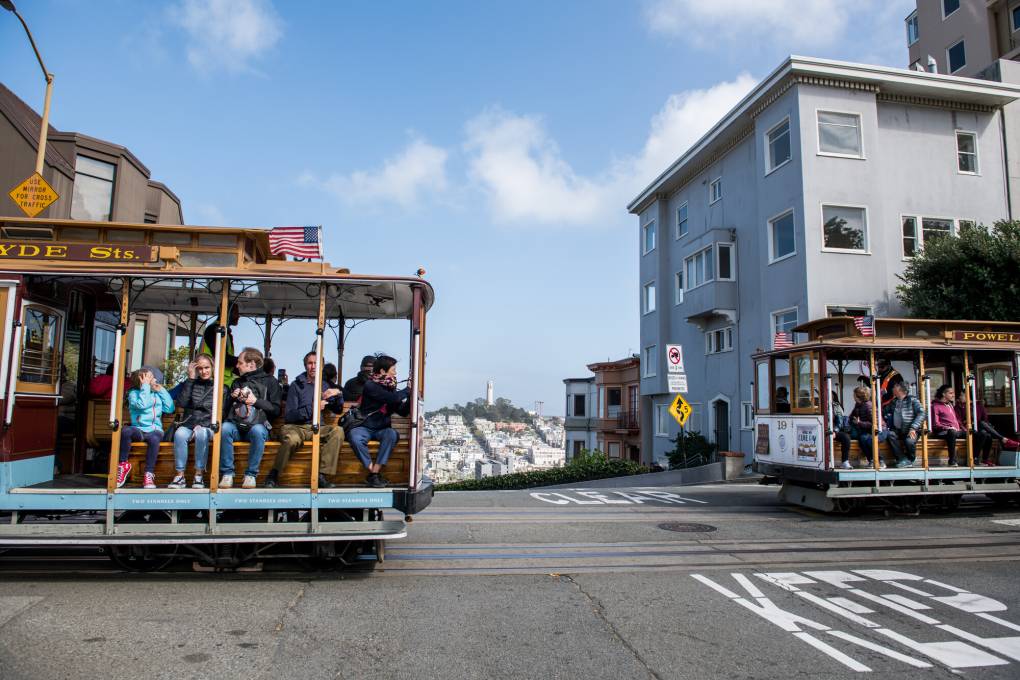
window.__IS_SSR__=true
window.__INITIAL_STATE__={
"attachmentsReducer": {
"audio_0": {
"type": "attachments",
"id": "audio_0",
"imgSizes": {
"kqedFullSize": {
"file": "https://ww2.kqed.org/news/wp-content/themes/KQED-unified/img/audio_bgs/background0.jpg"
}
}
},
"audio_1": {
"type": "attachments",
"id": "audio_1",
"imgSizes": {
"kqedFullSize": {
"file": "https://ww2.kqed.org/news/wp-content/themes/KQED-unified/img/audio_bgs/background1.jpg"
}
}
},
"audio_2": {
"type": "attachments",
"id": "audio_2",
"imgSizes": {
"kqedFullSize": {
"file": "https://ww2.kqed.org/news/wp-content/themes/KQED-unified/img/audio_bgs/background2.jpg"
}
}
},
"audio_3": {
"type": "attachments",
"id": "audio_3",
"imgSizes": {
"kqedFullSize": {
"file": "https://ww2.kqed.org/news/wp-content/themes/KQED-unified/img/audio_bgs/background3.jpg"
}
}
},
"audio_4": {
"type": "attachments",
"id": "audio_4",
"imgSizes": {
"kqedFullSize": {
"file": "https://ww2.kqed.org/news/wp-content/themes/KQED-unified/img/audio_bgs/background4.jpg"
}
}
},
"placeholder": {
"type": "attachments",
"id": "placeholder",
"imgSizes": {
"thumbnail": {
"file": "https://cdn.kqed.org/wp-content/uploads/2024/12/KQED-Default-Image-816638274-2000x1333-1-160x107.jpg",
"width": 160,
"height": 107,
"mimeType": "image/jpeg"
},
"medium": {
"file": "https://cdn.kqed.org/wp-content/uploads/2024/12/KQED-Default-Image-816638274-2000x1333-1-800x533.jpg",
"width": 800,
"height": 533,
"mimeType": "image/jpeg"
},
"medium_large": {
"file": "https://cdn.kqed.org/wp-content/uploads/2024/12/KQED-Default-Image-816638274-2000x1333-1-768x512.jpg",
"width": 768,
"height": 512,
"mimeType": "image/jpeg"
},
"large": {
"file": "https://cdn.kqed.org/wp-content/uploads/2024/12/KQED-Default-Image-816638274-2000x1333-1-1020x680.jpg",
"width": 1020,
"height": 680,
"mimeType": "image/jpeg"
},
"1536x1536": {
"file": "https://cdn.kqed.org/wp-content/uploads/2024/12/KQED-Default-Image-816638274-2000x1333-1-1536x1024.jpg",
"width": 1536,
"height": 1024,
"mimeType": "image/jpeg"
},
"fd-lrg": {
"file": "https://cdn.kqed.org/wp-content/uploads/2024/12/KQED-Default-Image-816638274-2000x1333-1-1536x1024.jpg",
"width": 1536,
"height": 1024,
"mimeType": "image/jpeg"
},
"fd-med": {
"file": "https://cdn.kqed.org/wp-content/uploads/2024/12/KQED-Default-Image-816638274-2000x1333-1-1020x680.jpg",
"width": 1020,
"height": 680,
"mimeType": "image/jpeg"
},
"fd-sm": {
"file": "https://cdn.kqed.org/wp-content/uploads/2024/12/KQED-Default-Image-816638274-2000x1333-1-800x533.jpg",
"width": 800,
"height": 533,
"mimeType": "image/jpeg"
},
"post-thumbnail": {
"file": "https://cdn.kqed.org/wp-content/uploads/2024/12/KQED-Default-Image-816638274-2000x1333-1-672x372.jpg",
"width": 672,
"height": 372,
"mimeType": "image/jpeg"
},
"twentyfourteen-full-width": {
"file": "https://cdn.kqed.org/wp-content/uploads/2024/12/KQED-Default-Image-816638274-2000x1333-1-1038x576.jpg",
"width": 1038,
"height": 576,
"mimeType": "image/jpeg"
},
"xxsmall": {
"file": "https://cdn.kqed.org/wp-content/uploads/2024/12/KQED-Default-Image-816638274-2000x1333-1-160x107.jpg",
"width": 160,
"height": 107,
"mimeType": "image/jpeg"
},
"xsmall": {
"file": "https://cdn.kqed.org/wp-content/uploads/2024/12/KQED-Default-Image-816638274-2000x1333-1-672x372.jpg",
"width": 672,
"height": 372,
"mimeType": "image/jpeg"
},
"small": {
"file": "https://cdn.kqed.org/wp-content/uploads/2024/12/KQED-Default-Image-816638274-2000x1333-1-672x372.jpg",
"width": 672,
"height": 372,
"mimeType": "image/jpeg"
},
"xlarge": {
"file": "https://cdn.kqed.org/wp-content/uploads/2024/12/KQED-Default-Image-816638274-2000x1333-1-1020x680.jpg",
"width": 1020,
"height": 680,
"mimeType": "image/jpeg"
},
"full-width": {
"file": "https://cdn.kqed.org/wp-content/uploads/2024/12/KQED-Default-Image-816638274-2000x1333-1-1920x1280.jpg",
"width": 1920,
"height": 1280,
"mimeType": "image/jpeg"
},
"guest-author-32": {
"file": "https://cdn.kqed.org/wp-content/uploads/2025/01/KQED-Default-Image-816638274-1333x1333-1-160x160.jpg",
"width": 32,
"height": 32,
"mimeType": "image/jpeg"
},
"guest-author-50": {
"file": "https://cdn.kqed.org/wp-content/uploads/2025/01/KQED-Default-Image-816638274-1333x1333-1-160x160.jpg",
"width": 50,
"height": 50,
"mimeType": "image/jpeg"
},
"guest-author-64": {
"file": "https://cdn.kqed.org/wp-content/uploads/2025/01/KQED-Default-Image-816638274-1333x1333-1-160x160.jpg",
"width": 64,
"height": 64,
"mimeType": "image/jpeg"
},
"guest-author-96": {
"file": "https://cdn.kqed.org/wp-content/uploads/2025/01/KQED-Default-Image-816638274-1333x1333-1-160x160.jpg",
"width": 96,
"height": 96,
"mimeType": "image/jpeg"
},
"guest-author-128": {
"file": "https://cdn.kqed.org/wp-content/uploads/2025/01/KQED-Default-Image-816638274-1333x1333-1-160x160.jpg",
"width": 128,
"height": 128,
"mimeType": "image/jpeg"
},
"detail": {
"file": "https://cdn.kqed.org/wp-content/uploads/2025/01/KQED-Default-Image-816638274-1333x1333-1-160x160.jpg",
"width": 160,
"height": 160,
"mimeType": "image/jpeg"
},
"kqedFullSize": {
"file": "https://cdn.kqed.org/wp-content/uploads/2024/12/KQED-Default-Image-816638274-2000x1333-1.jpg",
"width": 2000,
"height": 1333
}
}
},
"news_12013725": {
"type": "attachments",
"id": "news_12013725",
"meta": {
"index": "attachments_1716263798",
"site": "news",
"id": "12013725",
"found": true
},
"title": "241108-LURIEVICTORYPRESSER-07-BL-KQED",
"publishDate": 1731097944,
"status": "inherit",
"parent": 0,
"modified": 1731097999,
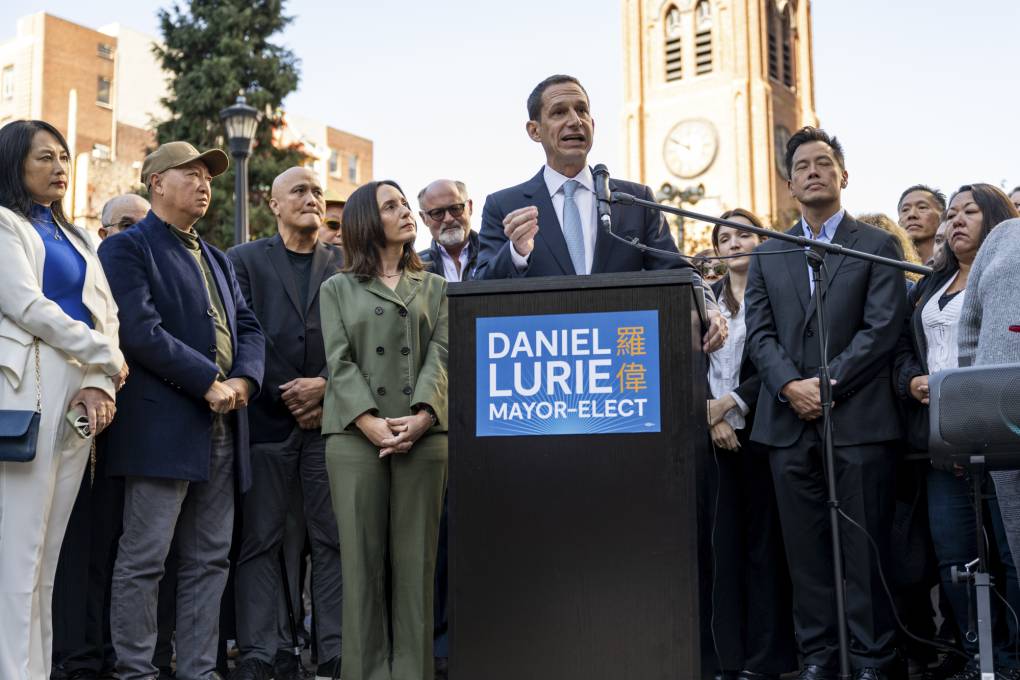
"caption": "San Francisco Mayor-elect Daniel Lurie gives an acceptance speech at St. Mary’s Square in San Francisco on Nov. 8, 2024. On Thursday, Lurie announced three top appointments just after unveiling his plans to change up the governance structure of the mayor’s office.",
"credit": "Beth LaBerge/KQED",
"altTag": null,
"description": null,
"imgSizes": {
"medium": {
"file": "https://cdn.kqed.org/wp-content/uploads/sites/10/2024/11/241108-LURIEVICTORYPRESSER-07-BL-KQED-800x533.jpg",
"width": 800,
"height": 533,
"mimeType": "image/jpeg"
},
"large": {
"file": "https://cdn.kqed.org/wp-content/uploads/sites/10/2024/11/241108-LURIEVICTORYPRESSER-07-BL-KQED-1020x680.jpg",
"width": 1020,
"height": 680,
"mimeType": "image/jpeg"
},
"thumbnail": {
"file": "https://cdn.kqed.org/wp-content/uploads/sites/10/2024/11/241108-LURIEVICTORYPRESSER-07-BL-KQED-160x107.jpg",
"width": 160,
"height": 107,
"mimeType": "image/jpeg"
},
"1536x1536": {
"file": "https://cdn.kqed.org/wp-content/uploads/sites/10/2024/11/241108-LURIEVICTORYPRESSER-07-BL-KQED-1536x1024.jpg",
"width": 1536,
"height": 1024,
"mimeType": "image/jpeg"
},
"post-thumbnail": {
"file": "https://cdn.kqed.org/wp-content/uploads/sites/10/2024/11/241108-LURIEVICTORYPRESSER-07-BL-KQED-672x372.jpg",
"width": 672,
"height": 372,
"mimeType": "image/jpeg"
},
"twentyfourteen-full-width": {
"file": "https://cdn.kqed.org/wp-content/uploads/sites/10/2024/11/241108-LURIEVICTORYPRESSER-07-BL-KQED-1038x576.jpg",
"width": 1038,
"height": 576,
"mimeType": "image/jpeg"
},
"full-width": {
"file": "https://cdn.kqed.org/wp-content/uploads/sites/10/2024/11/241108-LURIEVICTORYPRESSER-07-BL-KQED-1920x1280.jpg",
"width": 1920,
"height": 1280,
"mimeType": "image/jpeg"
},
"kqedFullSize": {
"file": "https://cdn.kqed.org/wp-content/uploads/sites/10/2024/11/241108-LURIEVICTORYPRESSER-07-BL-KQED.jpg",
"width": 2000,
"height": 1333
}
},
"isLoading": false,
"fetchFailed": false
},
"news_12017694": {
"type": "attachments",
"id": "news_12017694",
"meta": {
"index": "attachments_1716263798",
"site": "news",
"id": "12017694",
"found": true
},
"title": "A pair of macaws perch on a tree inside the newly renovated South American Tropical Forest exhibit at the San Francisco Zoo in San Francisco, Calif., on Friday, Sept. 17, 2010. The exhibit, which has been closed for over two years due to structural damage",
"publishDate": 1733947061,
"status": "inherit",
"parent": 12017684,
"modified": 1747425467,
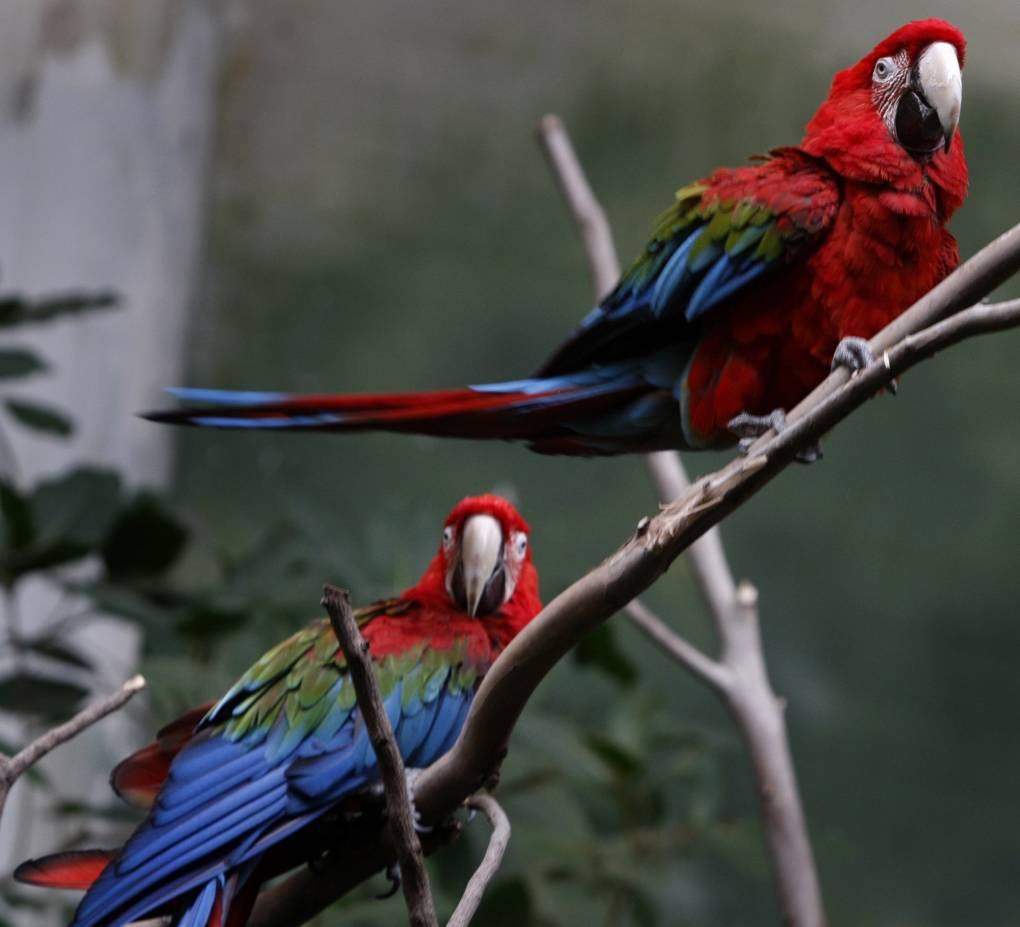
"caption": "A pair of macaws perch on a tree inside the newly renovated South American Tropical Forest exhibit at the San Francisco Zoo in San Francisco, California, on Sept. 17, 2010.",
"credit": "Paul Chinn/The San Francisco Chronicle via Getty Images",
"altTag": null,
"description": null,
"imgSizes": {
"medium": {
"file": "https://cdn.kqed.org/wp-content/uploads/sites/10/2024/12/SFZooGetty-800x727.jpg",
"width": 800,
"height": 727,
"mimeType": "image/jpeg"
},
"large": {
"file": "https://cdn.kqed.org/wp-content/uploads/sites/10/2024/12/SFZooGetty-1020x927.jpg",
"width": 1020,
"height": 927,
"mimeType": "image/jpeg"
},
"thumbnail": {
"file": "https://cdn.kqed.org/wp-content/uploads/sites/10/2024/12/SFZooGetty-160x145.jpg",
"width": 160,
"height": 145,
"mimeType": "image/jpeg"
},
"1536x1536": {
"file": "https://cdn.kqed.org/wp-content/uploads/sites/10/2024/12/SFZooGetty-1536x1396.jpg",
"width": 1536,
"height": 1396,
"mimeType": "image/jpeg"
},
"post-thumbnail": {
"file": "https://cdn.kqed.org/wp-content/uploads/sites/10/2024/12/SFZooGetty-672x372.jpg",
"width": 672,
"height": 372,
"mimeType": "image/jpeg"
},
"twentyfourteen-full-width": {
"file": "https://cdn.kqed.org/wp-content/uploads/sites/10/2024/12/SFZooGetty-1038x576.jpg",
"width": 1038,
"height": 576,
"mimeType": "image/jpeg"
},
"full-width": {
"file": "https://cdn.kqed.org/wp-content/uploads/sites/10/2024/12/SFZooGetty-1920x1745.jpg",
"width": 1920,
"height": 1745,
"mimeType": "image/jpeg"
},
"kqedFullSize": {
"file": "https://cdn.kqed.org/wp-content/uploads/sites/10/2024/12/SFZooGetty.jpg",
"width": 2000,
"height": 1818
}
},
"isLoading": false,
"fetchFailed": false
},
"news_12017480": {
"type": "attachments",
"id": "news_12017480",
"meta": {
"index": "attachments_1716263798",
"site": "news",
"id": "12017480",
"found": true
},
"title": "Ellen Pham, left, and Michelle Sheu, right, look out over the Bay Bridge Lights as rain falls along the Embarcadero in San Francisco, Calif., on Sunday, December 16, 2018. The regions is poised to see a week of rainy weather",
"publishDate": 1733864598,
"status": "inherit",
"parent": 12017479,
"modified": 1733864647,
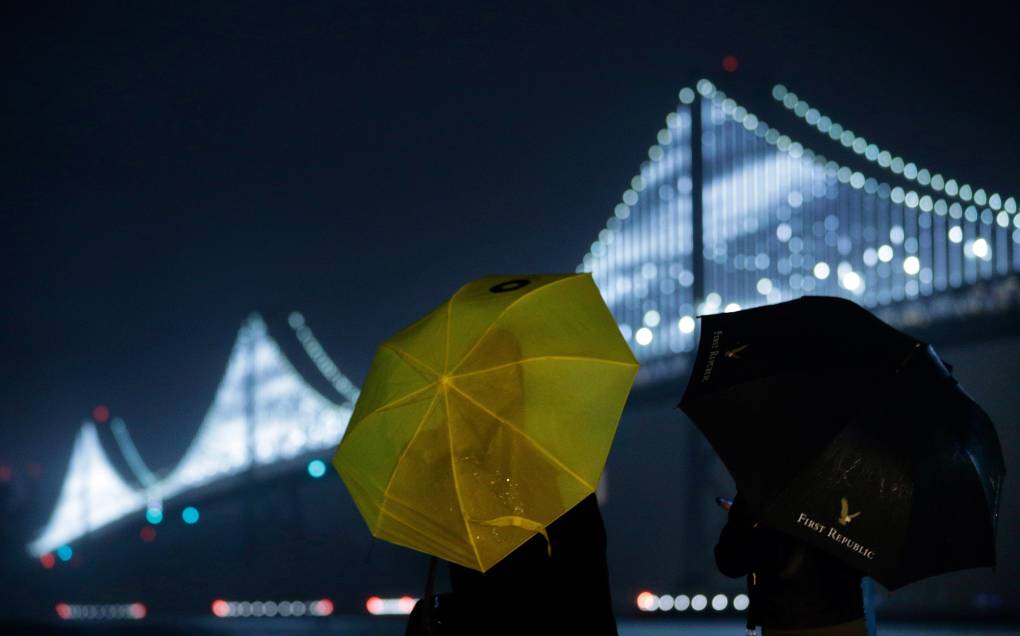
"caption": "Two people look out over the Bay Bridge Lights as rain falls along the Embarcadero in San Francisco, California, on Dec. 16, 2018. ",
"credit": "Carlos Avila Gonzalez/The San Francisco Chronicle via Getty Images",
"altTag": null,
"description": null,
"imgSizes": {
"medium": {
"file": "https://cdn.kqed.org/wp-content/uploads/sites/10/2024/12/BayBridgeLightsGetty-800x499.jpg",
"width": 800,
"height": 499,
"mimeType": "image/jpeg"
},
"large": {
"file": "https://cdn.kqed.org/wp-content/uploads/sites/10/2024/12/BayBridgeLightsGetty-1020x636.jpg",
"width": 1020,
"height": 636,
"mimeType": "image/jpeg"
},
"thumbnail": {
"file": "https://cdn.kqed.org/wp-content/uploads/sites/10/2024/12/BayBridgeLightsGetty-160x100.jpg",
"width": 160,
"height": 100,
"mimeType": "image/jpeg"
},
"1536x1536": {
"file": "https://cdn.kqed.org/wp-content/uploads/sites/10/2024/12/BayBridgeLightsGetty-1536x958.jpg",
"width": 1536,
"height": 958,
"mimeType": "image/jpeg"
},
"post-thumbnail": {
"file": "https://cdn.kqed.org/wp-content/uploads/sites/10/2024/12/BayBridgeLightsGetty-672x372.jpg",
"width": 672,
"height": 372,
"mimeType": "image/jpeg"
},
"twentyfourteen-full-width": {
"file": "https://cdn.kqed.org/wp-content/uploads/sites/10/2024/12/BayBridgeLightsGetty-1038x576.jpg",
"width": 1038,
"height": 576,
"mimeType": "image/jpeg"
},
"full-width": {
"file": "https://cdn.kqed.org/wp-content/uploads/sites/10/2024/12/BayBridgeLightsGetty-1920x1197.jpg",
"width": 1920,
"height": 1197,
"mimeType": "image/jpeg"
},
"kqedFullSize": {
"file": "https://cdn.kqed.org/wp-content/uploads/sites/10/2024/12/BayBridgeLightsGetty.jpg",
"width": 2000,
"height": 1247
}
},
"isLoading": false,
"fetchFailed": false
},
"news_12014759": {
"type": "attachments",
"id": "news_12014759",
"meta": {
"index": "attachments_1716263798",
"site": "news",
"id": "12014759",
"found": true
},
"title": "241108-LurieVictoryPresser-29-BL_qed",
"publishDate": 1731717025,
"status": "inherit",
"parent": 12014714,
"modified": 1731717058,
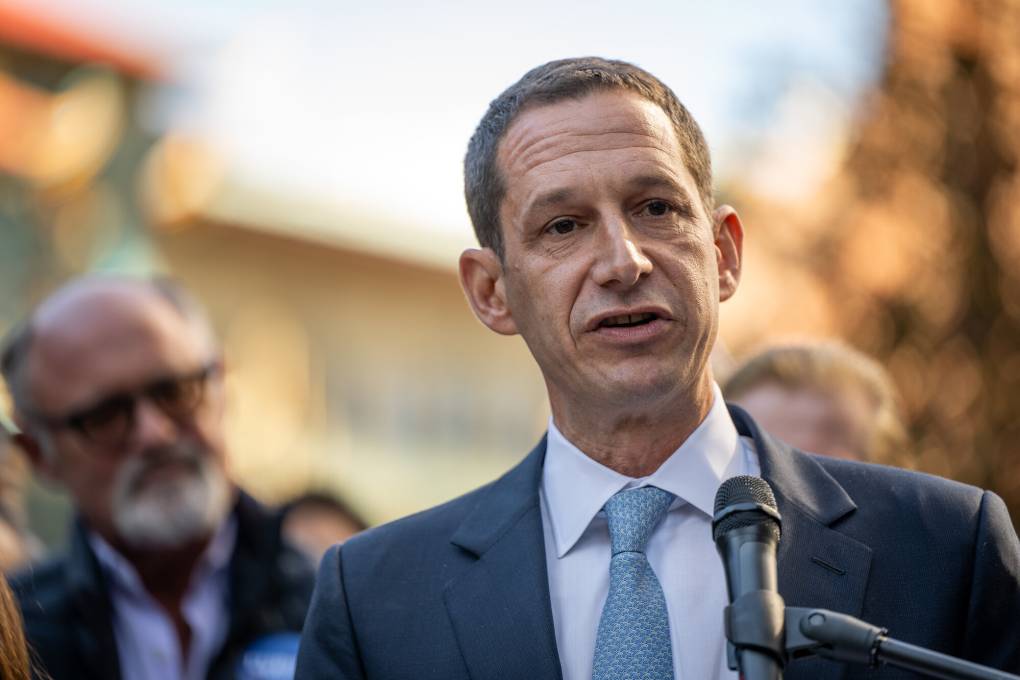
"caption": "San Francisco Mayor-elect Daniel Lurie gives an acceptance speech at St. Mary’s Square in San Francisco on Nov. 8, 2024.",
"credit": "Beth LaBerge/KQED",
"altTag": null,
"description": null,
"imgSizes": {
"medium": {
"file": "https://cdn.kqed.org/wp-content/uploads/sites/10/2024/11/241108-LurieVictoryPresser-29-BL_qed-800x533.jpg",
"width": 800,
"height": 533,
"mimeType": "image/jpeg"
},
"large": {
"file": "https://cdn.kqed.org/wp-content/uploads/sites/10/2024/11/241108-LurieVictoryPresser-29-BL_qed-1020x680.jpg",
"width": 1020,
"height": 680,
"mimeType": "image/jpeg"
},
"thumbnail": {
"file": "https://cdn.kqed.org/wp-content/uploads/sites/10/2024/11/241108-LurieVictoryPresser-29-BL_qed-160x107.jpg",
"width": 160,
"height": 107,
"mimeType": "image/jpeg"
},
"1536x1536": {
"file": "https://cdn.kqed.org/wp-content/uploads/sites/10/2024/11/241108-LurieVictoryPresser-29-BL_qed-1536x1024.jpg",
"width": 1536,
"height": 1024,
"mimeType": "image/jpeg"
},
"post-thumbnail": {
"file": "https://cdn.kqed.org/wp-content/uploads/sites/10/2024/11/241108-LurieVictoryPresser-29-BL_qed-672x372.jpg",
"width": 672,
"height": 372,
"mimeType": "image/jpeg"
},
"twentyfourteen-full-width": {
"file": "https://cdn.kqed.org/wp-content/uploads/sites/10/2024/11/241108-LurieVictoryPresser-29-BL_qed-1038x576.jpg",
"width": 1038,
"height": 576,
"mimeType": "image/jpeg"
},
"full-width": {
"file": "https://cdn.kqed.org/wp-content/uploads/sites/10/2024/11/241108-LurieVictoryPresser-29-BL_qed-1920x1280.jpg",
"width": 1920,
"height": 1280,
"mimeType": "image/jpeg"
},
"kqedFullSize": {
"file": "https://cdn.kqed.org/wp-content/uploads/sites/10/2024/11/241108-LurieVictoryPresser-29-BL_qed.jpg",
"width": 1999,
"height": 1333
}
},
"isLoading": false,
"fetchFailed": false
},
"news_12008731": {
"type": "attachments",
"id": "news_12008731",
"meta": {
"index": "attachments_1716263798",
"site": "news",
"id": "12008731",
"found": true
},
"title": "Students protest San Francisco Unified School District for closures",
"publishDate": 1728494952,
"status": "inherit",
"parent": 12008714,
"modified": 1728495047,
"caption": "Students and parents protest San Francisco Unified School District for closures in San Francisco on Sept. 24, 2024. Educators claim that the California Department of Education is blocking SFUSD from hiring critical staff such as counselors, nurses, social workers and psychologists.",
"credit": "Tayfun Coskun/Anadolu via Getty Images",
"altTag": null,
"description": null,
"imgSizes": {
"medium": {
"file": "https://cdn.kqed.org/wp-content/uploads/sites/10/2024/10/SFUSDStudentsFamiliesGetty-800x533.jpg",
"width": 800,
"height": 533,
"mimeType": "image/jpeg"
},
"large": {
"file": "https://cdn.kqed.org/wp-content/uploads/sites/10/2024/10/SFUSDStudentsFamiliesGetty-1020x680.jpg",
"width": 1020,
"height": 680,
"mimeType": "image/jpeg"
},
"thumbnail": {
"file": "https://cdn.kqed.org/wp-content/uploads/sites/10/2024/10/SFUSDStudentsFamiliesGetty-160x107.jpg",
"width": 160,
"height": 107,
"mimeType": "image/jpeg"
},
"1536x1536": {
"file": "https://cdn.kqed.org/wp-content/uploads/sites/10/2024/10/SFUSDStudentsFamiliesGetty-1536x1024.jpg",
"width": 1536,
"height": 1024,
"mimeType": "image/jpeg"
},
"post-thumbnail": {
"file": "https://cdn.kqed.org/wp-content/uploads/sites/10/2024/10/SFUSDStudentsFamiliesGetty-672x372.jpg",
"width": 672,
"height": 372,
"mimeType": "image/jpeg"
},
"twentyfourteen-full-width": {
"file": "https://cdn.kqed.org/wp-content/uploads/sites/10/2024/10/SFUSDStudentsFamiliesGetty-1038x576.jpg",
"width": 1038,
"height": 576,
"mimeType": "image/jpeg"
},
"full-width": {
"file": "https://cdn.kqed.org/wp-content/uploads/sites/10/2024/10/SFUSDStudentsFamiliesGetty-1920x1280.jpg",
"width": 1920,
"height": 1280,
"mimeType": "image/jpeg"
},
"kqedFullSize": {
"file": "https://cdn.kqed.org/wp-content/uploads/sites/10/2024/10/SFUSDStudentsFamiliesGetty.jpg",
"width": 2000,
"height": 1333
}
},
"isLoading": false,
"fetchFailed": false
},
"news_12017565": {
"type": "attachments",
"id": "news_12017565",
"meta": {
"index": "attachments_1716263798",
"site": "news",
"id": "12017565",
"found": true
},
"title": "San Francisco Democrats Rally For Kamala Harris After Biden Drops Out",
"publishDate": 1733882527,
"status": "inherit",
"parent": 12017551,
"modified": 1733942134,
"caption": "Members of the San Francisco Democratic Party rally in support of Kamala Harris, following the announcement by U.S. President Joe Biden that he is dropping out of the 2024 presidential race, on July 22, 2024, at City Hall in San Francisco.",
"credit": "Loren Elliott/Getty Images",
"altTag": "Several people stand in front of SF City Hall under a waving American flag.",
"description": null,
"imgSizes": {
"medium": {
"file": "https://cdn.kqed.org/wp-content/uploads/sites/10/2024/12/GettyImages-2162428471-800x533.jpg",
"width": 800,
"height": 533,
"mimeType": "image/jpeg"
},
"large": {
"file": "https://cdn.kqed.org/wp-content/uploads/sites/10/2024/12/GettyImages-2162428471-1020x680.jpg",
"width": 1020,
"height": 680,
"mimeType": "image/jpeg"
},
"thumbnail": {
"file": "https://cdn.kqed.org/wp-content/uploads/sites/10/2024/12/GettyImages-2162428471-160x107.jpg",
"width": 160,
"height": 107,
"mimeType": "image/jpeg"
},
"1536x1536": {
"file": "https://cdn.kqed.org/wp-content/uploads/sites/10/2024/12/GettyImages-2162428471-1536x1024.jpg",
"width": 1536,
"height": 1024,
"mimeType": "image/jpeg"
},
"2048x2048": {
"file": "https://cdn.kqed.org/wp-content/uploads/sites/10/2024/12/GettyImages-2162428471-2048x1365.jpg",
"width": 2048,
"height": 1365,
"mimeType": "image/jpeg"
},
"post-thumbnail": {
"file": "https://cdn.kqed.org/wp-content/uploads/sites/10/2024/12/GettyImages-2162428471-672x372.jpg",
"width": 672,
"height": 372,
"mimeType": "image/jpeg"
},
"twentyfourteen-full-width": {
"file": "https://cdn.kqed.org/wp-content/uploads/sites/10/2024/12/GettyImages-2162428471-1038x576.jpg",
"width": 1038,
"height": 576,
"mimeType": "image/jpeg"
},
"full-width": {
"file": "https://cdn.kqed.org/wp-content/uploads/sites/10/2024/12/GettyImages-2162428471-1920x1280.jpg",
"width": 1920,
"height": 1280,
"mimeType": "image/jpeg"
},
"kqedFullSize": {
"file": "https://cdn.kqed.org/wp-content/uploads/sites/10/2024/12/GettyImages-2162428471-scaled.jpg",
"width": 2560,
"height": 1707
}
},
"isLoading": false,
"fetchFailed": false
},
"news_12017275": {
"type": "attachments",
"id": "news_12017275",
"meta": {
"index": "attachments_1716263798",
"site": "news",
"id": "12017275",
"found": true
},
"title": "Caltrain Commuter Train at San Francisco 4th and King Street Station",
"publishDate": 1733770264,
"status": "inherit",
"parent": 12017271,
"modified": 1733875095,
"caption": "Caltrain Commuter Train at San Francisco 4th and King Street Station on Feb. 25, 2023.",
"credit": "iStock/Getty Images Plus",
"altTag": null,
"description": null,
"imgSizes": {
"medium": {
"file": "https://cdn.kqed.org/wp-content/uploads/sites/10/2024/12/CalTrainSFGetty-800x533.jpg",
"width": 800,
"height": 533,
"mimeType": "image/jpeg"
},
"large": {
"file": "https://cdn.kqed.org/wp-content/uploads/sites/10/2024/12/CalTrainSFGetty-1020x680.jpg",
"width": 1020,
"height": 680,
"mimeType": "image/jpeg"
},
"thumbnail": {
"file": "https://cdn.kqed.org/wp-content/uploads/sites/10/2024/12/CalTrainSFGetty-160x107.jpg",
"width": 160,
"height": 107,
"mimeType": "image/jpeg"
},
"1536x1536": {
"file": "https://cdn.kqed.org/wp-content/uploads/sites/10/2024/12/CalTrainSFGetty-1536x1024.jpg",
"width": 1536,
"height": 1024,
"mimeType": "image/jpeg"
},
"post-thumbnail": {
"file": "https://cdn.kqed.org/wp-content/uploads/sites/10/2024/12/CalTrainSFGetty-672x372.jpg",
"width": 672,
"height": 372,
"mimeType": "image/jpeg"
},
"twentyfourteen-full-width": {
"file": "https://cdn.kqed.org/wp-content/uploads/sites/10/2024/12/CalTrainSFGetty-1038x576.jpg",
"width": 1038,
"height": 576,
"mimeType": "image/jpeg"
},
"full-width": {
"file": "https://cdn.kqed.org/wp-content/uploads/sites/10/2024/12/CalTrainSFGetty-1920x1280.jpg",
"width": 1920,
"height": 1280,
"mimeType": "image/jpeg"
},
"kqedFullSize": {
"file": "https://cdn.kqed.org/wp-content/uploads/sites/10/2024/12/CalTrainSFGetty.jpg",
"width": 2000,
"height": 1333
}
},
"isLoading": false,
"fetchFailed": false
},
"news_12017268": {
"type": "attachments",
"id": "news_12017268",
"meta": {
"index": "attachments_1716263798",
"site": "news",
"id": "12017268",
"found": true
},
"title": "241022-HOTEL STRIKE ONE MONTH-MD-02_qed",
"publishDate": 1733769365,
"status": "inherit",
"parent": 12017253,
"modified": 1733769386,
"caption": "Hotel workers strike outside the Hilton San Francisco Union Square hotel on Oct. 22, 2024.",
"credit": "Martin do Nascimento/KQED",
"altTag": null,
"description": null,
"imgSizes": {
"medium": {
"file": "https://cdn.kqed.org/wp-content/uploads/sites/10/2024/12/241022-HOTEL-STRIKE-ONE-MONTH-MD-02_qed-800x533.jpg",
"width": 800,
"height": 533,
"mimeType": "image/jpeg"
},
"large": {
"file": "https://cdn.kqed.org/wp-content/uploads/sites/10/2024/12/241022-HOTEL-STRIKE-ONE-MONTH-MD-02_qed-1020x680.jpg",
"width": 1020,
"height": 680,
"mimeType": "image/jpeg"
},
"thumbnail": {
"file": "https://cdn.kqed.org/wp-content/uploads/sites/10/2024/12/241022-HOTEL-STRIKE-ONE-MONTH-MD-02_qed-160x107.jpg",
"width": 160,
"height": 107,
"mimeType": "image/jpeg"
},
"1536x1536": {
"file": "https://cdn.kqed.org/wp-content/uploads/sites/10/2024/12/241022-HOTEL-STRIKE-ONE-MONTH-MD-02_qed-1536x1024.jpg",
"width": 1536,
"height": 1024,
"mimeType": "image/jpeg"
},
"post-thumbnail": {
"file": "https://cdn.kqed.org/wp-content/uploads/sites/10/2024/12/241022-HOTEL-STRIKE-ONE-MONTH-MD-02_qed-672x372.jpg",
"width": 672,
"height": 372,
"mimeType": "image/jpeg"
},
"twentyfourteen-full-width": {
"file": "https://cdn.kqed.org/wp-content/uploads/sites/10/2024/12/241022-HOTEL-STRIKE-ONE-MONTH-MD-02_qed-1038x576.jpg",
"width": 1038,
"height": 576,
"mimeType": "image/jpeg"
},
"full-width": {
"file": "https://cdn.kqed.org/wp-content/uploads/sites/10/2024/12/241022-HOTEL-STRIKE-ONE-MONTH-MD-02_qed-1920x1280.jpg",
"width": 1920,
"height": 1280,
"mimeType": "image/jpeg"
},
"kqedFullSize": {
"file": "https://cdn.kqed.org/wp-content/uploads/sites/10/2024/12/241022-HOTEL-STRIKE-ONE-MONTH-MD-02_qed.jpg",
"width": 2000,
"height": 1333
}
},
"isLoading": false,
"fetchFailed": false
},
"news_12014720": {
"type": "attachments",
"id": "news_12014720",
"meta": {
"index": "attachments_1716263798",
"site": "news",
"id": "12014720",
"found": true
},
"title": "241115-PropKFolo-14-BL",
"publishDate": 1731713325,
"status": "inherit",
"parent": 0,
"modified": 1731713620,
"caption": "The Great Highway is closed to vehicles between Sloat Boulevard and Lincoln Way on Friday at noon for the current weekend closure in San Francisco on Nov. 15, 2024.",
"credit": "Beth LaBerge/KQED",
"altTag": null,
"description": null,
"imgSizes": {
"medium": {
"file": "https://cdn.kqed.org/wp-content/uploads/sites/10/2024/11/241115-PropKFolo-14-BL-800x533.jpg",
"width": 800,
"height": 533,
"mimeType": "image/jpeg"
},
"large": {
"file": "https://cdn.kqed.org/wp-content/uploads/sites/10/2024/11/241115-PropKFolo-14-BL-1020x680.jpg",
"width": 1020,
"height": 680,
"mimeType": "image/jpeg"
},
"thumbnail": {
"file": "https://cdn.kqed.org/wp-content/uploads/sites/10/2024/11/241115-PropKFolo-14-BL-160x107.jpg",
"width": 160,
"height": 107,
"mimeType": "image/jpeg"
},
"1536x1536": {
"file": "https://cdn.kqed.org/wp-content/uploads/sites/10/2024/11/241115-PropKFolo-14-BL-1536x1024.jpg",
"width": 1536,
"height": 1024,
"mimeType": "image/jpeg"
},
"post-thumbnail": {
"file": "https://cdn.kqed.org/wp-content/uploads/sites/10/2024/11/241115-PropKFolo-14-BL-672x372.jpg",
"width": 672,
"height": 372,
"mimeType": "image/jpeg"
},
"twentyfourteen-full-width": {
"file": "https://cdn.kqed.org/wp-content/uploads/sites/10/2024/11/241115-PropKFolo-14-BL-1038x576.jpg",
"width": 1038,
"height": 576,
"mimeType": "image/jpeg"
},
"full-width": {
"file": "https://cdn.kqed.org/wp-content/uploads/sites/10/2024/11/241115-PropKFolo-14-BL-1920x1280.jpg",
"width": 1920,
"height": 1280,
"mimeType": "image/jpeg"
},
"kqedFullSize": {
"file": "https://cdn.kqed.org/wp-content/uploads/sites/10/2024/11/241115-PropKFolo-14-BL.jpg",
"width": 2000,
"height": 1333
}
},
"isLoading": false,
"fetchFailed": false
},
"news_12017032": {
"type": "attachments",
"id": "news_12017032",
"meta": {
"index": "attachments_1716263798",
"site": "news",
"id": "12017032",
"found": true
},
"title": "170111_KingTide_bhs14",
"publishDate": 1733514269,
"status": "inherit",
"parent": 12016813,
"modified": 1733514313,
"caption": "Walkways along Pier 14 at the San Francisco Embarcadero begin to flood during the high point of a king tide on Jan. 11, 2017.",
"credit": "Brittany Hosea-Small/KQED",
"altTag": null,
"description": null,
"imgSizes": {
"medium": {
"file": "https://cdn.kqed.org/wp-content/uploads/sites/10/2024/12/170111_KingTide_bhs14-800x533.jpg",
"width": 800,
"height": 533,
"mimeType": "image/jpeg"
},
"large": {
"file": "https://cdn.kqed.org/wp-content/uploads/sites/10/2024/12/170111_KingTide_bhs14-1020x680.jpg",
"width": 1020,
"height": 680,
"mimeType": "image/jpeg"
},
"thumbnail": {
"file": "https://cdn.kqed.org/wp-content/uploads/sites/10/2024/12/170111_KingTide_bhs14-160x107.jpg",
"width": 160,
"height": 107,
"mimeType": "image/jpeg"
},
"1536x1536": {
"file": "https://cdn.kqed.org/wp-content/uploads/sites/10/2024/12/170111_KingTide_bhs14-1536x1024.jpg",
"width": 1536,
"height": 1024,
"mimeType": "image/jpeg"
},
"post-thumbnail": {
"file": "https://cdn.kqed.org/wp-content/uploads/sites/10/2024/12/170111_KingTide_bhs14-672x372.jpg",
"width": 672,
"height": 372,
"mimeType": "image/jpeg"
},
"twentyfourteen-full-width": {
"file": "https://cdn.kqed.org/wp-content/uploads/sites/10/2024/12/170111_KingTide_bhs14-1038x576.jpg",
"width": 1038,
"height": 576,
"mimeType": "image/jpeg"
},
"kqedFullSize": {
"file": "https://cdn.kqed.org/wp-content/uploads/sites/10/2024/12/170111_KingTide_bhs14.jpg",
"width": 1920,
"height": 1280
}
},
"isLoading": false,
"fetchFailed": false
},
"news_12016414": {
"type": "attachments",
"id": "news_12016414",
"meta": {
"index": "attachments_1716263798",
"site": "news",
"id": "12016414",
"found": true
},
"title": "039_KQED_SanFrancisco_Coronavirus_03132020_7340_qed",
"publishDate": 1733250586,
"status": "inherit",
"parent": 12016411,
"modified": 1733270040,
"caption": "Cable cars pass each other above Lombard Street in San Francisco on March 13, 2020. The street, known as the \"Crookedest Street in the World,\" is typically filled with cars and tourists.",
"credit": "Beth LaBerge/KQED",
"altTag": null,
"description": null,
"imgSizes": {
"medium": {
"file": "https://cdn.kqed.org/wp-content/uploads/sites/10/2024/12/039_KQED_SanFrancisco_Coronavirus_03132020_7340_qed-800x533.jpg",
"width": 800,
"height": 533,
"mimeType": "image/jpeg"
},
"large": {
"file": "https://cdn.kqed.org/wp-content/uploads/sites/10/2024/12/039_KQED_SanFrancisco_Coronavirus_03132020_7340_qed-1020x680.jpg",
"width": 1020,
"height": 680,
"mimeType": "image/jpeg"
},
"thumbnail": {
"file": "https://cdn.kqed.org/wp-content/uploads/sites/10/2024/12/039_KQED_SanFrancisco_Coronavirus_03132020_7340_qed-160x107.jpg",
"width": 160,
"height": 107,
"mimeType": "image/jpeg"
},
"1536x1536": {
"file": "https://cdn.kqed.org/wp-content/uploads/sites/10/2024/12/039_KQED_SanFrancisco_Coronavirus_03132020_7340_qed-1536x1024.jpg",
"width": 1536,
"height": 1024,
"mimeType": "image/jpeg"
},
"post-thumbnail": {
"file": "https://cdn.kqed.org/wp-content/uploads/sites/10/2024/12/039_KQED_SanFrancisco_Coronavirus_03132020_7340_qed-672x372.jpg",
"width": 672,
"height": 372,
"mimeType": "image/jpeg"
},
"twentyfourteen-full-width": {
"file": "https://cdn.kqed.org/wp-content/uploads/sites/10/2024/12/039_KQED_SanFrancisco_Coronavirus_03132020_7340_qed-1038x576.jpg",
"width": 1038,
"height": 576,
"mimeType": "image/jpeg"
},
"full-width": {
"file": "https://cdn.kqed.org/wp-content/uploads/sites/10/2024/12/039_KQED_SanFrancisco_Coronavirus_03132020_7340_qed-1920x1280.jpg",
"width": 1920,
"height": 1280,
"mimeType": "image/jpeg"
},
"kqedFullSize": {
"file": "https://cdn.kqed.org/wp-content/uploads/sites/10/2024/12/039_KQED_SanFrancisco_Coronavirus_03132020_7340_qed.jpg",
"width": 2000,
"height": 1333
}
},
"isLoading": false,
"fetchFailed": false
},
"news_12016369": {
"type": "attachments",
"id": "news_12016369",
"meta": {
"index": "attachments_1716263798",
"site": "news",
"id": "12016369",
"found": true
},
"title": "241202-Bhopal40thAnniv-05-BL",
"publishDate": 1733196980,
"status": "inherit",
"parent": 0,
"modified": 1733249771,
"caption": "A mural marks the 40th anniversary of the Bhopal gas tragedy on the street in front of the Consulate General of India in San Francisco on Dec. 2, 2024. Toxic gas, methyl isocyanate, leaked from the Union Carbide India Limited pesticide plant in Bhopal, India, on Dec. 2, 1984, killing thousands in one of the deadliest tragedies in India's history.",
"credit": "Beth LaBerge/KQED",
"altTag": null,
"description": null,
"imgSizes": {
"medium": {
"file": "https://cdn.kqed.org/wp-content/uploads/sites/10/2024/12/241202-Bhopal40thAnniv-05-BL-800x533.jpg",
"width": 800,
"height": 533,
"mimeType": "image/jpeg"
},
"large": {
"file": "https://cdn.kqed.org/wp-content/uploads/sites/10/2024/12/241202-Bhopal40thAnniv-05-BL-1020x679.jpg",
"width": 1020,
"height": 679,
"mimeType": "image/jpeg"
},
"thumbnail": {
"file": "https://cdn.kqed.org/wp-content/uploads/sites/10/2024/12/241202-Bhopal40thAnniv-05-BL-160x107.jpg",
"width": 160,
"height": 107,
"mimeType": "image/jpeg"
},
"1536x1536": {
"file": "https://cdn.kqed.org/wp-content/uploads/sites/10/2024/12/241202-Bhopal40thAnniv-05-BL-1536x1023.jpg",
"width": 1536,
"height": 1023,
"mimeType": "image/jpeg"
},
"post-thumbnail": {
"file": "https://cdn.kqed.org/wp-content/uploads/sites/10/2024/12/241202-Bhopal40thAnniv-05-BL-672x372.jpg",
"width": 672,
"height": 372,
"mimeType": "image/jpeg"
},
"twentyfourteen-full-width": {
"file": "https://cdn.kqed.org/wp-content/uploads/sites/10/2024/12/241202-Bhopal40thAnniv-05-BL-1038x576.jpg",
"width": 1038,
"height": 576,
"mimeType": "image/jpeg"
},
"full-width": {
"file": "https://cdn.kqed.org/wp-content/uploads/sites/10/2024/12/241202-Bhopal40thAnniv-05-BL-1920x1279.jpg",
"width": 1920,
"height": 1279,
"mimeType": "image/jpeg"
},
"kqedFullSize": {
"file": "https://cdn.kqed.org/wp-content/uploads/sites/10/2024/12/241202-Bhopal40thAnniv-05-BL.jpg",
"width": 2000,
"height": 1332
}
},
"isLoading": false,
"fetchFailed": false
}
},
"audioPlayerReducer": {
"postId": "stream_live",
"isPaused": true,
"isPlaying": false,
"pfsActive": false,
"pledgeModalIsOpen": true,
"playerDrawerIsOpen": false,
"liveAudioPlayStartedAt": 0,
"liveAudioPlayContext": ""
},
"authorsReducer": {
"danbrekke": {
"type": "authors",
"id": "222",
"meta": {
"index": "authors_1716337520",
"id": "222",
"found": true
},
"name": "Dan Brekke",
"firstName": "Dan",
"lastName": "Brekke",
"slug": "danbrekke",
"email": "dbrekke@kqed.org",
"display_author_email": true,
"staff_mastheads": [
"news",
"science"
],
"title": "KQED Editor and Reporter",
"bio": "Dan Brekke is a reporter and editor for KQED News, responsible for coverage of topics ranging from California water issues to the Bay Area's transportation challenges. In a newsroom career that began in Chicago in 1972, Dan has worked for \u003cem>The San Francisco Examiner,\u003c/em> Wired and TechTV and has been published in The New York Times, The New York Times Magazine, Business 2.0, Salon and elsewhere.\r\n\r\nSince joining KQED in 2007, Dan has reported, edited and produced both radio and online features and breaking news pieces. He has shared as both editor and reporter in four Society of Professional Journalists Norcal Excellence in Journalism awards and one Edward R. Murrow regional award. He was chosen for a spring 2017 residency at the Mesa Refuge to advance his research on California salmon.\r\n\r\nEmail Dan at: \u003ca href=\"mailto:dbrekke@kqed.org\">dbrekke@kqed.org\u003c/a>\r\n\r\n\u003cstrong>Twitter:\u003c/strong> \u003ca href=\"https://twitter.com/danbrekke\" rel=\"noopener noreferrer\">twitter.com/danbrekke\u003c/a>\r\n\u003cstrong>Facebook:\u003c/strong> \u003ca href=\"https://www.facebook.com/danbrekke\" rel=\"noopener noreferrer\">www.facebook.com/danbrekke\u003c/a>\r\n\u003cstrong>LinkedIn:\u003c/strong> \u003ca href=\"https://www.linkedin.com/in/danbrekke\" rel=\"noopener noreferrer\">www.linkedin.com/in/danbrekke\u003c/a>",
"avatar": "https://secure.gravatar.com/avatar/c8126230345efca3f7aa89b1a402be45?s=600&d=mm&r=g",
"twitter": "danbrekke",
"facebook": null,
"instagram": "https://www.instagram.com/dan.brekke/",
"linkedin": "https://www.linkedin.com/in/danbrekke/",
"sites": [
{
"site": "news",
"roles": [
"administrator",
"create_posts"
]
},
{
"site": "stateofhealth",
"roles": [
"editor"
]
},
{
"site": "science",
"roles": [
"editor"
]
},
{
"site": "quest",
"roles": [
"contributor"
]
},
{
"site": "food",
"roles": [
"contributor"
]
},
{
"site": "forum",
"roles": [
"contributor"
]
},
{
"site": "liveblog",
"roles": [
"editor"
]
}
],
"headData": {
"title": "Dan Brekke | KQED",
"description": "KQED Editor and Reporter",
"ogImgSrc": "https://secure.gravatar.com/avatar/c8126230345efca3f7aa89b1a402be45?s=600&d=mm&r=g",
"twImgSrc": "https://secure.gravatar.com/avatar/c8126230345efca3f7aa89b1a402be45?s=600&d=mm&r=g"
},
"isLoading": false,
"link": "/author/danbrekke"
},
"ecruzguevarra": {
"type": "authors",
"id": "8654",
"meta": {
"index": "authors_1716337520",
"id": "8654",
"found": true
},
"name": "Ericka Cruz Guevarra",
"firstName": "Ericka",
"lastName": "Cruz Guevarra",
"slug": "ecruzguevarra",
"email": "ecruzguevarra@kqed.org",
"display_author_email": true,
"staff_mastheads": [
"news"
],
"title": "Producer, The Bay Podcast",
"bio": "Ericka Cruz Guevarra is host of \u003ca href=\"https://www.kqed.org/podcasts/thebay\">\u003cem>The Bay\u003c/em>\u003c/a> podcast at KQED. Before host, she was the show’s producer. Her work in that capacity includes a three-part reported series on policing in Vallejo, which won a 2020 excellence in journalism award from the Society of Professional Journalists. Ericka has worked as a breaking news reporter at Oregon Public Broadcasting, helped produce the Code Switch podcast, and was KQED’s inaugural Raul Ramirez Diversity Fund intern. She’s also an alumna of NPR’s Next Generation Radio program. Send her an email if you have strong feelings about whether Fairfield and Suisun City are the Bay. Ericka is represented by SAG-AFTRA.",
"avatar": "https://secure.gravatar.com/avatar/accefc1de4bafc7e234b69bcb9b6f6536c130fd84709bc3069ef11a78787e1bb?s=600&d=blank&r=g",
"twitter": "NotoriousECG",
"bluesky": null,
"facebook": null,
"instagram": null,
"linkedin": null,
"sites": [
{
"site": "arts",
"roles": [
"subscriber"
]
},
{
"site": "news",
"roles": [
"editor",
"manage_categories"
]
},
{
"site": "futureofyou",
"roles": [
"subscriber"
]
},
{
"site": "stateofhealth",
"roles": [
"subscriber"
]
},
{
"site": "science",
"roles": [
"editor"
]
},
{
"site": "forum",
"roles": [
"subscriber"
]
}
],
"headData": {
"title": "Ericka Cruz Guevarra | KQED",
"description": "Producer, The Bay Podcast",
"ogImgSrc": "https://secure.gravatar.com/avatar/accefc1de4bafc7e234b69bcb9b6f6536c130fd84709bc3069ef11a78787e1bb?s=600&d=blank&r=g",
"twImgSrc": "https://secure.gravatar.com/avatar/accefc1de4bafc7e234b69bcb9b6f6536c130fd84709bc3069ef11a78787e1bb?s=600&d=blank&r=g"
},
"isLoading": false,
"link": "/author/ecruzguevarra"
},
"fjhabvala": {
"type": "authors",
"id": "8659",
"meta": {
"index": "authors_1716337520",
"id": "8659",
"found": true
},
"name": "Farida Jhabvala Romero",
"firstName": "Farida",
"lastName": "Jhabvala Romero",
"slug": "fjhabvala",
"email": "fjhabvala@kqed.org",
"display_author_email": true,
"staff_mastheads": [
"news"
],
"title": "KQED Contributor",
"bio": "Farida Jhabvala Romero is a Labor Correspondent for KQED. She previously covered immigration. Farida was \u003ca href=\"https://www.ccnma.org/2022-most-influential-latina-journalists\">named\u003c/a> one of the 10 Most Influential Latina Journalists in California in 2022 by the California Chicano News Media Association. Her work has won awards from the Society of Professional Journalists (Northern California), as well as a national and regional Edward M. Murrow Award for the collaborative reporting projects “Dangerous Air” and “Graying California.” Before joining KQED, Farida worked as a producer at Radio Bilingüe, a national public radio network. Farida earned her master’s degree in journalism from Stanford University.",
"avatar": "https://secure.gravatar.com/avatar/f9f022d4e2609741874222a1e9d41f48fea74011aa7c615eef91d9a50c944ebe?s=600&d=blank&r=g",
"twitter": "FaridaJhabvala",
"bluesky": null,
"facebook": null,
"instagram": null,
"linkedin": "https://www.linkedin.com/in/faridajhabvala/",
"sites": [
{
"site": "news",
"roles": [
"editor"
]
},
{
"site": "stateofhealth",
"roles": [
"author"
]
},
{
"site": "liveblog",
"roles": [
"author"
]
}
],
"headData": {
"title": "Farida Jhabvala Romero | KQED",
"description": "KQED Contributor",
"ogImgSrc": "https://secure.gravatar.com/avatar/f9f022d4e2609741874222a1e9d41f48fea74011aa7c615eef91d9a50c944ebe?s=600&d=blank&r=g",
"twImgSrc": "https://secure.gravatar.com/avatar/f9f022d4e2609741874222a1e9d41f48fea74011aa7c615eef91d9a50c944ebe?s=600&d=blank&r=g"
},
"isLoading": false,
"link": "/author/fjhabvala"
},
"dcronin": {
"type": "authors",
"id": "11362",
"meta": {
"index": "authors_1716337520",
"id": "11362",
"found": true
},
"name": "Dana Cronin",
"firstName": "Dana",
"lastName": "Cronin",
"slug": "dcronin",
"email": "dcronin@KQED.org",
"display_author_email": true,
"staff_mastheads": [],
"title": "KQED Contributor",
"bio": "Dana Cronin is a reporter for KQED News. She loves writing stories about climate change, environmental issues, food and agriculture. She's reported across the country, from Colorado to Washington D.C. to Illinois, and has won numerous awards for her coverage. Her work is regularly featured on national broadcasts, including NPR’s Morning Edition, All Things Considered, PBS Newshour and Science Friday. She lives in Oakland and has an avocado tree in her back yard.",
"avatar": "https://secure.gravatar.com/avatar/bcf89e3455ff7235f96ab6fa7258dd95?s=600&d=blank&r=g",
"twitter": "DanaHCronin",
"facebook": null,
"instagram": null,
"linkedin": null,
"sites": [
{
"site": "arts",
"roles": [
"author"
]
},
{
"site": "news",
"roles": [
"editor"
]
},
{
"site": "science",
"roles": [
"author"
]
},
{
"site": "liveblog",
"roles": [
"author"
]
}
],
"headData": {
"title": "Dana Cronin | KQED",
"description": "KQED Contributor",
"ogImgSrc": "https://secure.gravatar.com/avatar/bcf89e3455ff7235f96ab6fa7258dd95?s=600&d=blank&r=g",
"twImgSrc": "https://secure.gravatar.com/avatar/bcf89e3455ff7235f96ab6fa7258dd95?s=600&d=blank&r=g"
},
"isLoading": false,
"link": "/author/dcronin"
},
"lsarah": {
"type": "authors",
"id": "11626",
"meta": {
"index": "authors_1716337520",
"id": "11626",
"found": true
},
"name": "Lakshmi Sarah",
"firstName": "Lakshmi",
"lastName": "Sarah",
"slug": "lsarah",
"email": "lsarah@kqed.org",
"display_author_email": false,
"staff_mastheads": [],
"title": "Digital Producer",
"bio": "Lakshmi Sarah is an educator, author and journalist with a focus on innovative storytelling. She has worked with newspapers, radio and magazines from Ahmedabad, India to Los Angeles, California. She has written and produced for Die Zeit, Global Voices, AJ+, KQED, Fusion Media Group and the New York Times.",
"avatar": "https://secure.gravatar.com/avatar/652dcaecd8b28826fc17a8b2d6bb4e93?s=600&d=blank&r=g",
"twitter": "lakitalki",
"facebook": null,
"instagram": "https://www.instagram.com/laki.talki/",
"linkedin": "https://www.linkedin.com/in/lakisarah/",
"sites": [
{
"site": "arts",
"roles": []
},
{
"site": "news",
"roles": []
},
{
"site": "bayareabites",
"roles": []
},
{
"site": "science",
"roles": []
}
],
"headData": {
"title": "Lakshmi Sarah | KQED",
"description": "Digital Producer",
"ogImgSrc": "https://secure.gravatar.com/avatar/652dcaecd8b28826fc17a8b2d6bb4e93?s=600&d=blank&r=g",
"twImgSrc": "https://secure.gravatar.com/avatar/652dcaecd8b28826fc17a8b2d6bb4e93?s=600&d=blank&r=g"
},
"isLoading": false,
"link": "/author/lsarah"
},
"amontecillo": {
"type": "authors",
"id": "11649",
"meta": {
"index": "authors_1716337520",
"id": "11649",
"found": true
},
"name": "Alan Montecillo",
"firstName": "Alan",
"lastName": "Montecillo",
"slug": "amontecillo",
"email": "amontecillo@kqed.org",
"display_author_email": false,
"staff_mastheads": [
"news"
],
"title": "KQED Contributor",
"bio": "Alan Montecillo is the senior editor of \u003cem>\u003ca href=\"http://kqed.org/thebay\">The Bay\u003c/a>, \u003c/em> KQED's local news podcast. Before moving to the Bay Area, he worked as a senior talk show producer for WILL in Champaign-Urbana, Illinois and at Oregon Public Broadcasting in Portland, Oregon. He has won journalism awards from the Society of Professional Journalists Northern California, the Public Media Journalists Association, The Signal Awards, and has also received a regional Edward R. Murrow award. Alan is a Filipino American from Hong Kong and a graduate of Reed College.",
"avatar": "https://secure.gravatar.com/avatar/268f53a2066899ea9efdd8a5900218b17c822d9862cbc9326cccec53ef41d349?s=600&d=blank&r=g",
"twitter": "alanmontecillo",
"bluesky": null,
"facebook": null,
"instagram": null,
"linkedin": null,
"sites": [
{
"site": "",
"roles": [
"editor"
]
},
{
"site": "news",
"roles": [
"editor",
"manage_categories"
]
}
],
"headData": {
"title": "Alan Montecillo | KQED",
"description": "KQED Contributor",
"ogImgSrc": "https://secure.gravatar.com/avatar/268f53a2066899ea9efdd8a5900218b17c822d9862cbc9326cccec53ef41d349?s=600&d=blank&r=g",
"twImgSrc": "https://secure.gravatar.com/avatar/268f53a2066899ea9efdd8a5900218b17c822d9862cbc9326cccec53ef41d349?s=600&d=blank&r=g"
},
"isLoading": false,
"link": "/author/amontecillo"
},
"eromero": {
"type": "authors",
"id": "11746",
"meta": {
"index": "authors_1716337520",
"id": "11746",
"found": true
},
"name": "Ezra David Romero",
"firstName": "Ezra David",
"lastName": "Romero",
"slug": "eromero",
"email": "eromero@kqed.org",
"display_author_email": true,
"staff_mastheads": [
"news",
"science"
],
"title": "Climate Reporter",
"bio": "Ezra David Romero is a climate reporter for KQED News. He covers the absence and excess of water in the Bay Area — think sea level rise, flooding and drought. For nearly a decade he’s covered how warming temperatures are altering the lives of Californians. He’s reported on farmers worried their pistachio trees aren’t getting enough sleep, families desperate for water, scientists studying dying giant sequoias, and alongside firefighters containing wildfires. His work has appeared on local stations across California and nationally on public radio shows like Morning Edition, Here and Now, All Things Considered and Science Friday. ",
"avatar": "https://secure.gravatar.com/avatar/c76404d287c10ed40224227551ac36e24352c7306f106632caf6fead76f8801f?s=600&d=blank&r=g",
"twitter": "ezraromero",
"bluesky": null,
"facebook": null,
"instagram": null,
"linkedin": null,
"sites": [
{
"site": "arts",
"roles": [
"editor"
]
},
{
"site": "news",
"roles": [
"editor"
]
},
{
"site": "science",
"roles": [
"editor"
]
},
{
"site": "liveblog",
"roles": [
"author"
]
}
],
"headData": {
"title": "Ezra David Romero | KQED",
"description": "Climate Reporter",
"ogImgSrc": "https://secure.gravatar.com/avatar/c76404d287c10ed40224227551ac36e24352c7306f106632caf6fead76f8801f?s=600&d=blank&r=g",
"twImgSrc": "https://secure.gravatar.com/avatar/c76404d287c10ed40224227551ac36e24352c7306f106632caf6fead76f8801f?s=600&d=blank&r=g"
},
"isLoading": false,
"link": "/author/eromero"
},
"jessicakariisa": {
"type": "authors",
"id": "11831",
"meta": {
"index": "authors_1716337520",
"id": "11831",
"found": true
},
"name": "Jessica Kariisa",
"firstName": "Jessica",
"lastName": "Kariisa",
"slug": "jessicakariisa",
"email": "jkariisa@kqed.org",
"display_author_email": false,
"staff_mastheads": [],
"title": "Producer, The Bay",
"bio": "Jessica Kariisa is the producer of The Bay. She first joined KQED as an intern for The California Report Magazine, after which she became an on-call producer. She reported a Bay Curious episode on the use of rap lyrics in criminal trials which won a Society of Professional Journalists award in 2023 for Excellence in Features Journalism and the 2023 Signal Award for Best Conversation Starter. She’s worked on podcasts for Snap Judgment and American Public Media. Before embarking on her audio career, she was a music journalist.\r\n\r\nJessica Kariisa is represented by SAG-AFTRA.",
"avatar": "https://secure.gravatar.com/avatar/522e97b28ac0b3d411621c0fde8f3419c7b71ea2c5c262c57c4bb600963f328c?s=600&d=blank&r=g",
"twitter": null,
"bluesky": null,
"facebook": null,
"instagram": null,
"linkedin": null,
"sites": [
{
"site": "arts",
"roles": [
"author"
]
},
{
"site": "news",
"roles": [
"editor",
"manage_categories"
]
}
],
"headData": {
"title": "Jessica Kariisa | KQED",
"description": "Producer, The Bay",
"ogImgSrc": "https://secure.gravatar.com/avatar/522e97b28ac0b3d411621c0fde8f3419c7b71ea2c5c262c57c4bb600963f328c?s=600&d=blank&r=g",
"twImgSrc": "https://secure.gravatar.com/avatar/522e97b28ac0b3d411621c0fde8f3419c7b71ea2c5c262c57c4bb600963f328c?s=600&d=blank&r=g"
},
"isLoading": false,
"link": "/author/jessicakariisa"
},
"sjohnson": {
"type": "authors",
"id": "11840",
"meta": {
"index": "authors_1716337520",
"id": "11840",
"found": true
},
"name": "Sydney Johnson",
"firstName": "Sydney",
"lastName": "Johnson",
"slug": "sjohnson",
"email": "sjohnson@kqed.org",
"display_author_email": false,
"staff_mastheads": [
"news"
],
"title": "KQED Reporter",
"bio": "Sydney Johnson is a general assignment reporter at KQED. She previously reported on public health and city government at the San Francisco Examiner, and before that, she covered statewide education policy for EdSource. Her reporting has won multiple local, state and national awards. Sydney is a graduate of the University of California, Berkeley and lives in San Francisco.",
"avatar": "https://secure.gravatar.com/avatar/97855f2719b72ad6190b7c535fe642c8?s=600&d=blank&r=g",
"twitter": "sydneyfjohnson",
"facebook": null,
"instagram": null,
"linkedin": null,
"sites": [
{
"site": "news",
"roles": [
"editor"
]
}
],
"headData": {
"title": "Sydney Johnson | KQED",
"description": "KQED Reporter",
"ogImgSrc": "https://secure.gravatar.com/avatar/97855f2719b72ad6190b7c535fe642c8?s=600&d=blank&r=g",
"twImgSrc": "https://secure.gravatar.com/avatar/97855f2719b72ad6190b7c535fe642c8?s=600&d=blank&r=g"
},
"isLoading": false,
"link": "/author/sjohnson"
},
"jservantez": {
"type": "authors",
"id": "11909",
"meta": {
"index": "authors_1716337520",
"id": "11909",
"found": true
},
"name": "Jared Servantez",
"firstName": "Jared",
"lastName": "Servantez",
"slug": "jservantez",
"email": "jservantez@kqed.org",
"display_author_email": true,
"staff_mastheads": [
"news"
],
"title": "KQED Contributor",
"bio": "Jared Servantez is the editor of KQED's Express Desk, leading the newsroom's online breaking news operation. He most recently worked for the Los Angeles Times, where he served as a breaking news editor, the Metro Desk's night editor, and a copy editor. Jared is a graduate of the USC Annenberg School for Communication and Journalism.",
"avatar": "https://secure.gravatar.com/avatar/f0e317c67bb498c3f077f033d1cc79e62f3bc1303fa20a14e8880d31fbe7e01e?s=600&d=blank&r=g",
"twitter": "jservantez",
"bluesky": null,
"facebook": null,
"instagram": null,
"linkedin": null,
"sites": [
{
"site": "news",
"roles": [
"editor"
]
},
{
"site": "science",
"roles": [
"editor",
"author"
]
},
{
"site": "liveblog",
"roles": [
"editor"
]
}
],
"headData": {
"title": "Jared Servantez | KQED",
"description": "KQED Contributor",
"ogImgSrc": "https://secure.gravatar.com/avatar/f0e317c67bb498c3f077f033d1cc79e62f3bc1303fa20a14e8880d31fbe7e01e?s=600&d=blank&r=g",
"twImgSrc": "https://secure.gravatar.com/avatar/f0e317c67bb498c3f077f033d1cc79e62f3bc1303fa20a14e8880d31fbe7e01e?s=600&d=blank&r=g"
},
"isLoading": false,
"link": "/author/jservantez"
},
"kdebenedetti": {
"type": "authors",
"id": "11913",
"meta": {
"index": "authors_1716337520",
"id": "11913",
"found": true
},
"name": "Katie DeBenedetti",
"firstName": "Katie",
"lastName": "DeBenedetti",
"slug": "kdebenedetti",
"email": "kdebenedetti@kqed.org",
"display_author_email": false,
"staff_mastheads": [
"news",
"science"
],
"title": "KQED Contributor",
"bio": "Katie DeBenedetti is a digital reporter covering daily news for the Express Desk. Prior to joining KQED as a culture reporting intern in January 2024, she covered education and city government for the Napa Valley Register.",
"avatar": "https://secure.gravatar.com/avatar/6e31073cb8f7e4214ab03f42771d0f45?s=600&d=blank&r=g",
"twitter": null,
"facebook": null,
"instagram": null,
"linkedin": null,
"sites": [
{
"site": "news",
"roles": [
"author"
]
},
{
"site": "science",
"roles": [
"author"
]
},
{
"site": "liveblog",
"roles": [
"author"
]
}
],
"headData": {
"title": "Katie DeBenedetti | KQED",
"description": "KQED Contributor",
"ogImgSrc": "https://secure.gravatar.com/avatar/6e31073cb8f7e4214ab03f42771d0f45?s=600&d=blank&r=g",
"twImgSrc": "https://secure.gravatar.com/avatar/6e31073cb8f7e4214ab03f42771d0f45?s=600&d=blank&r=g"
},
"isLoading": false,
"link": "/author/kdebenedetti"
}
},
"pagesReducer": {
"news_tag_san-francisco": {
"type": "terms",
"id": "news_38",
"meta": {
"index": "terms_1716263798",
"site": "news",
"id": "38",
"score": 6.7229023
},
"featImg": null,
"name": "San Francisco",
"description": null,
"taxonomy": "tag",
"headData": {
"twImgId": null,
"twTitle": null,
"ogTitle": null,
"ogImgId": null,
"twDescription": null,
"description": null,
"title": "San Francisco Archives | KQED News",
"ogDescription": null
},
"ttid": 58,
"slug": "san-francisco",
"isLoading": false,
"title": "San Francisco",
"pageMeta": {
"site": "news",
"WpPageTemplate": "page-topic-editorial",
"currentPage": 83
},
"blocks": [
{
"blockName": "kqed/post-list",
"attrs": {
"layout": "cardArticle2",
"query": "posts/news?tag=san-francisco",
"seeMore": false,
"paginated": true,
"page": 83
}
},
{
"blockName": "kqed/ad"
}
]
}
},
"pfsSessionReducer": {},
"postsReducer": {
"stream_live": {
"type": "live",
"id": "stream_live",
"audioUrl": "https://streams.kqed.org/kqedradio",
"title": "Live Stream",
"excerpt": "Live Stream information currently unavailable.",
"link": "/radio",
"featImg": "",
"label": {
"name": "KQED Live",
"link": "/"
}
},
"stream_kqedNewscast": {
"type": "posts",
"id": "stream_kqedNewscast",
"audioUrl": "https://www.kqed.org/.stream/anon/radio/RDnews/newscast.mp3?_=1",
"title": "KQED Newscast",
"featImg": "",
"label": {
"name": "88.5 FM",
"link": "/"
}
},
"news_12017884": {
"type": "posts",
"id": "news_12017884",
"meta": {
"index": "posts_1716263798",
"site": "news",
"id": "12017884",
"score": null,
"sort": [
1734036358000
]
},
"guestAuthors": [],
"slug": "sf-mayor-elect-daniel-lurie-taps-former-giants-executive-lead-staff",
"title": "SF Mayor-Elect Daniel Lurie Taps Former Giants Executive to Lead Staff",
"publishDate": 1734036358,
"format": "standard",
"headTitle": "SF Mayor-Elect Daniel Lurie Taps Former Giants Executive to Lead Staff | KQED",
"labelTerm": {
"site": "news"
},
"content": "\u003cp>San Francisco’s incoming mayor, \u003ca href=\"https://www.kqed.org/news/tag/daniel-lurie\">Daniel Lurie\u003c/a>, announced the first members of his City Hall lineup on Thursday, leading off with former Giants vice president Staci Slaughter as his chief of staff.\u003c/p>\n\u003cp>Lurie also named longtime City Hall staffer Matthew Goudeau, who served as a senior adviser on his campaign, as deputy chief of staff. Political strategist Han Zou, who worked on Lurie’s campaign this year as well as earlier campaigns for Assemblymember Matt Haney and Congresswoman-elect Lateefah Simon, will be director of public affairs.\u003c/p>\n\u003cp>“This is a leadership team with a proven track record of challenging the status quo and delivering meaningful results,” Lurie said in a statement. “They share my commitment to accountability, service, and change, and I’m proud to have them by my side as we tackle San Francisco’s most pressing challenges head-on.”\u003c/p>\n\u003cp>The three appointments come just after Lurie on Wednesday announced he plans to \u003ca href=\"https://www.kqed.org/news/12017698/lurie-unveils-major-shakeup-san-francisco-mayors-office\">change up the governance structure\u003c/a> of the mayor’s office when he officially steps into the role next month. Instead of having the city’s 56 departments report to a single policy director and chief of staff, Lurie plans to bring on four policy directors, along with his chief of staff, who will all report directly to the mayor.\u003c/p>\n\u003cp>[ad fullwidth]\u003c/p>\n\u003cp>The four policy directors will focus on housing and economic development; infrastructure, climate and mobility; public health and well-being; and public safety. Lurie has not yet announced who the policy directors will be.\u003c/p>\n\u003cp>Between now and inauguration on Jan. 8, Lurie is meeting with a team of advisers to craft his first 100 days in office and finalize his picks for senior positions. The \u003ca href=\"https://www.kqed.org/news/12014714/san-francisco-mayor-elect-daniel-lurie-taps-openai-founder-transition-team\">advisory group\u003c/a> includes OpenAI founder Sam Altman, former Stockton Mayor Michael Tubbs and former San Francisco City Controller Ben Rosenfield.\u003c/p>\n\u003cp>Lurie, a philanthropist and heir to the Levi Strauss fortune with no experience in elected office, defeated incumbent Mayor London Breed this November after running as an outsider \u003ca href=\"https://www.kqed.org/news/12013667/daniel-lurie-san-franciscos-next-mayor-what-will-that-look-like\">vowing to bring renewed accountability\u003c/a> to City Hall. So far, his picks for his official staff reflect a mix of insiders and outsiders.\u003c/p>\n\u003cp>[aside postID=news_12017698 hero='https://cdn.kqed.org/wp-content/uploads/sites/10/2024/11/241108-LurieVictoryPresser-29-BL_qed-1020x680.jpg']\u003c/p>\n\u003cp>In addition to serving as an executive for the Giants, Slaughter has previously served as an adviser to former San Francisco Mayor Frank Jordan — who endorsed Lurie — as well as former Los Angeles Mayor Richard Riordan.\u003c/p>\n\u003cp>“San Francisco has immense challenges, but they are greatly outweighed by our unique and enormous opportunities,” Slaughter said in a statement. “I am deeply honored to have the opportunity to serve the city I love and to help Mayor-elect Lurie execute his vision for a safer and more affordable San Francisco.”\u003c/p>\n\u003cp>Goudeau brings nearly two decades of experience working for previous mayoral administrations in roles including deputy chief of protocol and director of grants for the arts.\u003c/p>\n\u003cp>Zou, meanwhile, has emerged as a sharp political organizer in the Bay Area and worked as a legislative aide for then-District 6 Supervisor Matt Haney from 2019 to 2022.\u003c/p>\n\u003cp>“I’m humbled by the opportunity to serve the mayor-elect and the people of San Francisco,” Zou said. “Having seen how hard he worked on the campaign, I know how hard he will work for the people of this great city, and I’m grateful to be a part of the team that’s going to turn around San Francisco.”\u003c/p>\n\u003cp>\u003c/p>\n",
"blocks": [],
"excerpt": "San Francisco’s incoming mayor announced three top appointments just after unveiling his plans to change up the governance structure of the mayor’s office.",
"status": "publish",
"parent": 0,
"modified": 1734036499,
"stats": {
"hasAudio": false,
"hasVideo": false,
"hasChartOrMap": false,
"iframeSrcs": [],
"hasGoogleForm": false,
"hasGallery": false,
"hasHearkenModule": false,
"hasPolis": false,
"paragraphCount": 15,
"wordCount": 600
},
"headData": {
"title": "SF Mayor-Elect Daniel Lurie Taps Former Giants Executive to Lead Staff | KQED",
"description": "San Francisco’s incoming mayor announced three top appointments just after unveiling his plans to change up the governance structure of the mayor’s office.",
"ogTitle": "",
"ogDescription": "",
"ogImgId": "",
"twTitle": "",
"twDescription": "",
"twImgId": "",
"schema": {
"@context": "https://schema.org",
"@type": "NewsArticle",
"headline": "SF Mayor-Elect Daniel Lurie Taps Former Giants Executive to Lead Staff",
"datePublished": "2024-12-12T12:45:58-08:00",
"dateModified": "2024-12-12T12:48:19-08:00",
"image": "https://cdn.kqed.org/wp-content/uploads/2020/02/KQED-OG-Image@1x.png",
"isAccessibleForFree": "True",
"publisher": {
"@type": "NewsMediaOrganization",
"@id": "https://www.kqed.org/#organization",
"name": "KQED",
"logo": "https://cdn.kqed.org/wp-content/uploads/2020/02/KQED-OG-Image@1x.png",
"url": "https://www.kqed.org",
"sameAs": [
"https://www.facebook.com/KQED",
"https://twitter.com/KQED",
"https://www.instagram.com/kqed/",
"https://www.tiktok.com/@kqedofficial",
"https://www.linkedin.com/company/kqed",
"https://www.youtube.com/channel/UCeC0IOo7i1P_61zVUWbJ4nw"
]
}
}
},
"sticky": false,
"nprStoryId": "kqed-12017884",
"excludeFromSiteSearch": "Include",
"articleAge": "0",
"path": "/news/12017884/sf-mayor-elect-daniel-lurie-taps-former-giants-executive-lead-staff",
"audioTrackLength": null,
"parsedContent": [
{
"type": "contentString",
"content": "\u003cdiv class=\"post-body\">\u003cp>\u003cp>San Francisco’s incoming mayor, \u003ca href=\"https://www.kqed.org/news/tag/daniel-lurie\">Daniel Lurie\u003c/a>, announced the first members of his City Hall lineup on Thursday, leading off with former Giants vice president Staci Slaughter as his chief of staff.\u003c/p>\n\u003cp>Lurie also named longtime City Hall staffer Matthew Goudeau, who served as a senior adviser on his campaign, as deputy chief of staff. Political strategist Han Zou, who worked on Lurie’s campaign this year as well as earlier campaigns for Assemblymember Matt Haney and Congresswoman-elect Lateefah Simon, will be director of public affairs.\u003c/p>\n\u003cp>“This is a leadership team with a proven track record of challenging the status quo and delivering meaningful results,” Lurie said in a statement. “They share my commitment to accountability, service, and change, and I’m proud to have them by my side as we tackle San Francisco’s most pressing challenges head-on.”\u003c/p>\n\u003cp>The three appointments come just after Lurie on Wednesday announced he plans to \u003ca href=\"https://www.kqed.org/news/12017698/lurie-unveils-major-shakeup-san-francisco-mayors-office\">change up the governance structure\u003c/a> of the mayor’s office when he officially steps into the role next month. Instead of having the city’s 56 departments report to a single policy director and chief of staff, Lurie plans to bring on four policy directors, along with his chief of staff, who will all report directly to the mayor.\u003c/p>\n\u003cp>\u003c/p>\u003c/div>",
"attributes": {
"named": {},
"numeric": []
}
},
{
"type": "component",
"content": "",
"name": "ad",
"attributes": {
"named": {
"label": "fullwidth"
},
"numeric": [
"fullwidth"
]
}
},
{
"type": "contentString",
"content": "\u003cdiv class=\"post-body\">\u003cp>\u003c/p>\n\u003cp>The four policy directors will focus on housing and economic development; infrastructure, climate and mobility; public health and well-being; and public safety. Lurie has not yet announced who the policy directors will be.\u003c/p>\n\u003cp>Between now and inauguration on Jan. 8, Lurie is meeting with a team of advisers to craft his first 100 days in office and finalize his picks for senior positions. The \u003ca href=\"https://www.kqed.org/news/12014714/san-francisco-mayor-elect-daniel-lurie-taps-openai-founder-transition-team\">advisory group\u003c/a> includes OpenAI founder Sam Altman, former Stockton Mayor Michael Tubbs and former San Francisco City Controller Ben Rosenfield.\u003c/p>\n\u003cp>Lurie, a philanthropist and heir to the Levi Strauss fortune with no experience in elected office, defeated incumbent Mayor London Breed this November after running as an outsider \u003ca href=\"https://www.kqed.org/news/12013667/daniel-lurie-san-franciscos-next-mayor-what-will-that-look-like\">vowing to bring renewed accountability\u003c/a> to City Hall. So far, his picks for his official staff reflect a mix of insiders and outsiders.\u003c/p>\n\u003cp>\u003c/p>\u003c/div>",
"attributes": {
"named": {},
"numeric": []
}
},
{
"type": "component",
"content": "",
"name": "aside",
"attributes": {
"named": {
"postid": "news_12017698",
"hero": "https://cdn.kqed.org/wp-content/uploads/sites/10/2024/11/241108-LurieVictoryPresser-29-BL_qed-1020x680.jpg",
"label": ""
},
"numeric": []
}
},
{
"type": "contentString",
"content": "\u003cdiv class=\"post-body\">\u003cp>\u003c/p>\n\u003cp>In addition to serving as an executive for the Giants, Slaughter has previously served as an adviser to former San Francisco Mayor Frank Jordan — who endorsed Lurie — as well as former Los Angeles Mayor Richard Riordan.\u003c/p>\n\u003cp>“San Francisco has immense challenges, but they are greatly outweighed by our unique and enormous opportunities,” Slaughter said in a statement. “I am deeply honored to have the opportunity to serve the city I love and to help Mayor-elect Lurie execute his vision for a safer and more affordable San Francisco.”\u003c/p>\n\u003cp>Goudeau brings nearly two decades of experience working for previous mayoral administrations in roles including deputy chief of protocol and director of grants for the arts.\u003c/p>\n\u003cp>Zou, meanwhile, has emerged as a sharp political organizer in the Bay Area and worked as a legislative aide for then-District 6 Supervisor Matt Haney from 2019 to 2022.\u003c/p>\n\u003cp>“I’m humbled by the opportunity to serve the mayor-elect and the people of San Francisco,” Zou said. “Having seen how hard he worked on the campaign, I know how hard he will work for the people of this great city, and I’m grateful to be a part of the team that’s going to turn around San Francisco.”\u003c/p>\n\u003cp>\u003c/p>\n\u003c/div>\u003c/p>",
"attributes": {
"named": {},
"numeric": []
}
}
],
"link": "/news/12017884/sf-mayor-elect-daniel-lurie-taps-former-giants-executive-lead-staff",
"authors": [
"11840"
],
"categories": [
"news_31795",
"news_8",
"news_13"
],
"tags": [
"news_34055",
"news_27626",
"news_34377",
"news_17968",
"news_38",
"news_34371"
],
"featImg": "news_12013725",
"label": "news"
},
"news_12017684": {
"type": "posts",
"id": "news_12017684",
"meta": {
"index": "posts_1716263798",
"site": "news",
"id": "12017684",
"score": null,
"sort": [
1734033092000
]
},
"guestAuthors": [],
"slug": "san-francisco-zoo-closes-aviaries-after-bird-flu-found-dead-wild-hawk",
"title": "San Francisco Zoo Closes Aviaries After Bird Flu Is Found in Dead Wild Hawk",
"publishDate": 1734033092,
"format": "standard",
"headTitle": "San Francisco Zoo Closes Aviaries After Bird Flu Is Found in Dead Wild Hawk | KQED",
"labelTerm": {
"site": "news"
},
"content": "\u003cp>The San Francisco Zoo has temporarily closed its indoor bird exhibits after a dead hawk found on its grounds tested positive for \u003ca href=\"https://www.kqed.org/news/tag/bird-flu\">bird flu\u003c/a>.\u003c/p>\n\u003cp>The red-shouldered hawk that died was a wild bird that lived on the grounds, and none of the zoo’s birds have tested positive for the disease so far.\u003c/p>\n\u003cp>“Out of an abundance of caution, we have closed walk-through aviaries to protect the birds and are following biosecurity protocols to minimize the risk of transmission,” the zoo said in a statement \u003ca href=\"https://www.instagram.com/p/DDaAH2BSYJo/\">posted to social media\u003c/a> on Tuesday.\u003c/p>\n\u003cp>The “extra precautionary measures” apply to indoor exhibit areas such as the African Aviary and South American Tropical Rainforest & Aviary, according to the zoo.\u003c/p>\n\u003cp>[ad fullwidth]\u003c/p>\n\u003cp>Zookeepers have moved as many birds inside as possible and are doing everything they can to protect the ones that have to stay outside, such as penguins, said Dr. Adrian Mutlow, the zoo’s chief veterinarian.\u003c/p>\n\u003cp>“Our collection birds are considered at risk because there’s obviously infection on site … so we have to try and take as many precautions as we can to stop the infection getting into our collection,” he said.\u003c/p>\n\u003cp>The biggest risk, Mutlow said, is posed by infected ducks flying into the zoo grounds since waterfowl are a typical carrier of the disease. Another concern was zoo visitors carrying the virus into the indoor bird exhibits on their shoes or clothes, especially if they have birds at home.\u003c/p>\n\u003cp>The dead hawk was found last month, and the zoo closed its aviaries as soon as preliminary results came back positive for avian influenza, Mutlow said. About a week later, he said, further testing confirmed it was the highly pathogenic strain — H5N1 bird flu.\u003c/p>\n\u003cp>Mutlow said he expects the aviaries to reopen in about a month once bird migration season is over.\u003c/p>\n\u003cp>[aside postID=news_12017517 hero='https://cdn.kqed.org/wp-content/uploads/sites/10/2024/11/BirdFluMilkFresnoGetty-1020x714.jpg']\u003c/p>\n\u003cp>“We have sort of less extreme measures when we know there are cases in other parts of the state but not close to us at the time,” he said. “But unfortunately, this is as close as it gets. So we have to take the more drastic measures.”\u003c/p>\n\u003cp>Because of the heightened bird flu risk, the zoo has been routinely testing for the virus, Mutlow said.\u003c/p>\n\u003cp>San Francisco joins a handful of zoos around the country to take similar safety measures in recent weeks, including \u003ca href=\"https://www.kitv.com/news/honolulu-zoo-taking-precautions-after-second-case-of-bird-flu-confirmed-in-wild-duck/article_40b998b4-ac70-11ef-bda9-9f87f606a85b.html\">the Honolulu Zoo\u003c/a> and \u003ca href=\"https://www.fox13seattle.com/news/bird-flu-woodland-park-zoo\">Seattle’s Woodland Park Zoo\u003c/a>, where a rare red-breasted goose died of the disease last month.\u003c/p>\n\u003cp>Bird flu, also known as highly pathogenic avian influenza, is highly contagious and deadly for poultry species, with mortality rates of 90% to 100% in chickens, often within 48 hours, \u003ca href=\"https://www.cdc.gov/bird-flu/virus-transmission/avian-in-birds.html\">according to the Centers for Disease Control and Prevention\u003c/a>.\u003c/p>\n\u003cp>The H5N1 bird flu virus has also infected an increasing number of cattle across the country, but it has not yet evolved to efficiently spread between humans, \u003ca href=\"https://www.kqed.org/news/11990735/avian-flu-what-to-know-about-h5n1-virus-risks-beyond-the-headlines\">researchers previously told KQED\u003c/a>. Public health officials have said the risk to the public is low.\u003c/p>\n\u003cp>So far this year, there have been \u003ca href=\"https://www.cdc.gov/bird-flu/situation-summary/index.html\">58 recorded bird flu infections\u003c/a> in people in the U.S., with most previous cases linked to dairy and poultry workers. The virus can spread from sick cows or birds to people who breathe in droplets of the virus, handle dead animals, drink raw milk or have it splashed on their faces.\u003c/p>\n\u003cp>A potential case in a child in Marin County, who has since recovered, is among 10 reports of illness state officials have received from \u003ca href=\"https://www.kqed.org/news/12017517/california-investigates-possible-marin-county-bird-flu-case-amid-raw-milk-recalls\">people who consumed raw milk\u003c/a>. Additional testing is underway to confirm or rule out whether the influenza case was bird flu.\u003c/p>\n\u003cp>Last month, \u003ca href=\"https://www.kqed.org/news/12014955/bay-area-potential-first-bird-flu-case-reported-alameda-county-child\">a child in Alameda County\u003c/a> was diagnosed with bird flu without a clear exposure pathway. That case, which resulted in mild respiratory symptoms, did not spread inside the family or at school. This follows the trend in other human bird flu cases where patients presented mild symptoms — primarily conjunctivitis and nasal stuffiness.\u003c/p>\n\u003cp>\u003cem>KQED’s \u003ca href=\"https://www.kqed.org/author/lesleymcclurg\">Lesley McClurg\u003c/a> contributed to this report.\u003c/em>\u003c/p>\n\u003cp>\u003c/p>\n",
"blocks": [],
"excerpt": "The hawk, a wild bird that lived on the SF Zoo grounds, was found dead last month. None of the zoo’s birds have tested positive for avian influenza so far.",
"status": "publish",
"parent": 0,
"modified": 1734105198,
"stats": {
"hasAudio": false,
"hasVideo": false,
"hasChartOrMap": false,
"iframeSrcs": [],
"hasGoogleForm": false,
"hasGallery": false,
"hasHearkenModule": false,
"hasPolis": false,
"paragraphCount": 21,
"wordCount": 693
},
"headData": {
"title": "San Francisco Zoo Closes Aviaries After Bird Flu Is Found in Dead Wild Hawk | KQED",
"description": "The hawk, a wild bird that lived on the SF Zoo grounds, was found dead last month. None of the zoo’s birds have tested positive for avian influenza so far.",
"ogTitle": "",
"ogDescription": "",
"ogImgId": "",
"twTitle": "",
"twDescription": "",
"twImgId": "",
"schema": {
"@context": "https://schema.org",
"@type": "NewsArticle",
"headline": "San Francisco Zoo Closes Aviaries After Bird Flu Is Found in Dead Wild Hawk",
"datePublished": "2024-12-12T11:51:32-08:00",
"dateModified": "2024-12-13T07:53:18-08:00",
"image": "https://cdn.kqed.org/wp-content/uploads/2020/02/KQED-OG-Image@1x.png",
"isAccessibleForFree": "True",
"publisher": {
"@type": "NewsMediaOrganization",
"@id": "https://www.kqed.org/#organization",
"name": "KQED",
"logo": "https://cdn.kqed.org/wp-content/uploads/2020/02/KQED-OG-Image@1x.png",
"url": "https://www.kqed.org",
"sameAs": [
"https://www.facebook.com/KQED",
"https://twitter.com/KQED",
"https://www.instagram.com/kqed/",
"https://www.tiktok.com/@kqedofficial",
"https://www.linkedin.com/company/kqed",
"https://www.youtube.com/channel/UCeC0IOo7i1P_61zVUWbJ4nw"
]
}
}
},
"sticky": false,
"nprStoryId": "kqed-12017684",
"excludeFromSiteSearch": "Include",
"articleAge": "0",
"path": "/news/12017684/san-francisco-zoo-closes-aviaries-after-bird-flu-found-dead-wild-hawk",
"audioTrackLength": null,
"parsedContent": [
{
"type": "contentString",
"content": "\u003cdiv class=\"post-body\">\u003cp>\u003cp>The San Francisco Zoo has temporarily closed its indoor bird exhibits after a dead hawk found on its grounds tested positive for \u003ca href=\"https://www.kqed.org/news/tag/bird-flu\">bird flu\u003c/a>.\u003c/p>\n\u003cp>The red-shouldered hawk that died was a wild bird that lived on the grounds, and none of the zoo’s birds have tested positive for the disease so far.\u003c/p>\n\u003cp>“Out of an abundance of caution, we have closed walk-through aviaries to protect the birds and are following biosecurity protocols to minimize the risk of transmission,” the zoo said in a statement \u003ca href=\"https://www.instagram.com/p/DDaAH2BSYJo/\">posted to social media\u003c/a> on Tuesday.\u003c/p>\n\u003cp>The “extra precautionary measures” apply to indoor exhibit areas such as the African Aviary and South American Tropical Rainforest & Aviary, according to the zoo.\u003c/p>\n\u003cp>\u003c/p>\u003c/div>",
"attributes": {
"named": {},
"numeric": []
}
},
{
"type": "component",
"content": "",
"name": "ad",
"attributes": {
"named": {
"label": "fullwidth"
},
"numeric": [
"fullwidth"
]
}
},
{
"type": "contentString",
"content": "\u003cdiv class=\"post-body\">\u003cp>\u003c/p>\n\u003cp>Zookeepers have moved as many birds inside as possible and are doing everything they can to protect the ones that have to stay outside, such as penguins, said Dr. Adrian Mutlow, the zoo’s chief veterinarian.\u003c/p>\n\u003cp>“Our collection birds are considered at risk because there’s obviously infection on site … so we have to try and take as many precautions as we can to stop the infection getting into our collection,” he said.\u003c/p>\n\u003cp>The biggest risk, Mutlow said, is posed by infected ducks flying into the zoo grounds since waterfowl are a typical carrier of the disease. Another concern was zoo visitors carrying the virus into the indoor bird exhibits on their shoes or clothes, especially if they have birds at home.\u003c/p>\n\u003cp>The dead hawk was found last month, and the zoo closed its aviaries as soon as preliminary results came back positive for avian influenza, Mutlow said. About a week later, he said, further testing confirmed it was the highly pathogenic strain — H5N1 bird flu.\u003c/p>\n\u003cp>Mutlow said he expects the aviaries to reopen in about a month once bird migration season is over.\u003c/p>\n\u003cp>\u003c/p>\u003c/div>",
"attributes": {
"named": {},
"numeric": []
}
},
{
"type": "component",
"content": "",
"name": "aside",
"attributes": {
"named": {
"postid": "news_12017517",
"hero": "https://cdn.kqed.org/wp-content/uploads/sites/10/2024/11/BirdFluMilkFresnoGetty-1020x714.jpg",
"label": ""
},
"numeric": []
}
},
{
"type": "contentString",
"content": "\u003cdiv class=\"post-body\">\u003cp>\u003c/p>\n\u003cp>“We have sort of less extreme measures when we know there are cases in other parts of the state but not close to us at the time,” he said. “But unfortunately, this is as close as it gets. So we have to take the more drastic measures.”\u003c/p>\n\u003cp>Because of the heightened bird flu risk, the zoo has been routinely testing for the virus, Mutlow said.\u003c/p>\n\u003cp>San Francisco joins a handful of zoos around the country to take similar safety measures in recent weeks, including \u003ca href=\"https://www.kitv.com/news/honolulu-zoo-taking-precautions-after-second-case-of-bird-flu-confirmed-in-wild-duck/article_40b998b4-ac70-11ef-bda9-9f87f606a85b.html\">the Honolulu Zoo\u003c/a> and \u003ca href=\"https://www.fox13seattle.com/news/bird-flu-woodland-park-zoo\">Seattle’s Woodland Park Zoo\u003c/a>, where a rare red-breasted goose died of the disease last month.\u003c/p>\n\u003cp>Bird flu, also known as highly pathogenic avian influenza, is highly contagious and deadly for poultry species, with mortality rates of 90% to 100% in chickens, often within 48 hours, \u003ca href=\"https://www.cdc.gov/bird-flu/virus-transmission/avian-in-birds.html\">according to the Centers for Disease Control and Prevention\u003c/a>.\u003c/p>\n\u003cp>The H5N1 bird flu virus has also infected an increasing number of cattle across the country, but it has not yet evolved to efficiently spread between humans, \u003ca href=\"https://www.kqed.org/news/11990735/avian-flu-what-to-know-about-h5n1-virus-risks-beyond-the-headlines\">researchers previously told KQED\u003c/a>. Public health officials have said the risk to the public is low.\u003c/p>\n\u003cp>So far this year, there have been \u003ca href=\"https://www.cdc.gov/bird-flu/situation-summary/index.html\">58 recorded bird flu infections\u003c/a> in people in the U.S., with most previous cases linked to dairy and poultry workers. The virus can spread from sick cows or birds to people who breathe in droplets of the virus, handle dead animals, drink raw milk or have it splashed on their faces.\u003c/p>\n\u003cp>A potential case in a child in Marin County, who has since recovered, is among 10 reports of illness state officials have received from \u003ca href=\"https://www.kqed.org/news/12017517/california-investigates-possible-marin-county-bird-flu-case-amid-raw-milk-recalls\">people who consumed raw milk\u003c/a>. Additional testing is underway to confirm or rule out whether the influenza case was bird flu.\u003c/p>\n\u003cp>Last month, \u003ca href=\"https://www.kqed.org/news/12014955/bay-area-potential-first-bird-flu-case-reported-alameda-county-child\">a child in Alameda County\u003c/a> was diagnosed with bird flu without a clear exposure pathway. That case, which resulted in mild respiratory symptoms, did not spread inside the family or at school. This follows the trend in other human bird flu cases where patients presented mild symptoms — primarily conjunctivitis and nasal stuffiness.\u003c/p>\n\u003cp>\u003cem>KQED’s \u003ca href=\"https://www.kqed.org/author/lesleymcclurg\">Lesley McClurg\u003c/a> contributed to this report.\u003c/em>\u003c/p>\n\u003cp>\u003c/p>\n\u003c/div>\u003c/p>",
"attributes": {
"named": {},
"numeric": []
}
}
],
"link": "/news/12017684/san-francisco-zoo-closes-aviaries-after-bird-flu-found-dead-wild-hawk",
"authors": [
"11909",
"11362"
],
"categories": [
"news_31795",
"news_8"
],
"tags": [
"news_33648",
"news_38",
"news_303"
],
"featImg": "news_12017694",
"label": "news"
},
"news_12017479": {
"type": "posts",
"id": "news_12017479",
"meta": {
"index": "posts_1716263798",
"site": "news",
"id": "12017479",
"score": null,
"sort": [
1733965253000
]
},
"guestAuthors": [],
"slug": "new-bay-bridge-light-installation-underway-after-nearly-2-year-shutdown",
"title": "New Bay Bridge Light Installation Is Underway After Nearly 2-Year Shutdown",
"publishDate": 1733965253,
"format": "standard",
"headTitle": "New Bay Bridge Light Installation Is Underway After Nearly 2-Year Shutdown | KQED",
"labelTerm": {
"site": "news"
},
"content": "\u003cp>The \u003ca href=\"https://www.kqed.org/news/tag/bay-bridge\">Bay Bridge\u003c/a> will soon be relit, according to the nonprofit behind the iconic light installation that spanned the San Francisco skyline for a decade.\u003c/p>\n\u003cp>Illuminate \u003ca href=\"https://x.com/IlluminatedArts/status/1866191587841077537\">announced\u003c/a> Monday that crews have begun installing 50,000 new LED bulbs across the western span of the bridge and that the renewed installation could be up and running within months.\u003c/p>\n\u003cp>Ben Davis, the founder of Illuminate, told KQED that he is eyeing late March for the grand relighting.\u003c/p>\n\u003cp>[ad fullwidth]\u003c/p>\n\u003cp>“We anticipate celebrating the return of The Bay Lights to our skyline later this winter. … We hope you will join us on the waterfront,” the company said in a post on social media platform X.\u003c/p>\n\u003cp>The Bay Lights — then thought to be the world’s largest LED sculpture — debuted in March 2013, and on its 10th anniversary, it was shut down amid uncertainty over a fundraising effort for repairs. Artist Leo Villareal designed the project, which Illuminate said was Davis’s “brainchild.”\u003c/p>\n\u003cfigure id=\"attachment_12017560\" class=\"wp-caption aligncenter\" style=\"max-width: 1024px\">\u003cimg loading=\"lazy\" decoding=\"async\" class=\"wp-image-12017560 size-full\" style=\"font-weight: bold;background-color: transparent;color: #767676\" src=\"https://cdn.kqed.org/wp-content/uploads/sites/10/2024/12/5959C8DA-A845-4FA0-AB1E-016075419E62remote25e52a08ddc676a528f12fc93bee31f32f4288ff-1-original-1.jpg\" alt=\"\" width=\"1024\" height=\"682\" srcset=\"https://cdn.kqed.org/wp-content/uploads/sites/10/2024/12/5959C8DA-A845-4FA0-AB1E-016075419E62remote25e52a08ddc676a528f12fc93bee31f32f4288ff-1-original-1.jpg 1024w, https://cdn.kqed.org/wp-content/uploads/sites/10/2024/12/5959C8DA-A845-4FA0-AB1E-016075419E62remote25e52a08ddc676a528f12fc93bee31f32f4288ff-1-original-1-800x533.jpg 800w, https://cdn.kqed.org/wp-content/uploads/sites/10/2024/12/5959C8DA-A845-4FA0-AB1E-016075419E62remote25e52a08ddc676a528f12fc93bee31f32f4288ff-1-original-1-1020x679.jpg 1020w, https://cdn.kqed.org/wp-content/uploads/sites/10/2024/12/5959C8DA-A845-4FA0-AB1E-016075419E62remote25e52a08ddc676a528f12fc93bee31f32f4288ff-1-original-1-160x107.jpg 160w\" sizes=\"auto, (max-width: 1024px) 100vw, 1024px\">\u003cfigcaption class=\"wp-caption-text\">The new “Bay Lights 360” will feature bulbs on both sides of the bridge’s cables so that the lights can be seen from the East Bay. \u003ccite>(Courtesy Ben Davis, Illuminate)\u003c/cite>\u003c/figcaption>\u003c/figure>\n\u003cp>The installation became a sensation throughout the Bay Area, attracting locals and visitors to the bridge that has long served as an essential commuter channel but not nearly the most famed way to cross the water.\u003c/p>\n\u003cp>The original Bay Lights was comprised of 25,000 bulbs fastened to the sturdy cables that extend down from the Bay Bridge’s arches. At night, lights danced through the sky, creating waves rippling between Oakland to San Francisco and beams falling like rain from the tallest points of the bridge to its road.\u003c/p>\n\u003cp>The optical illusions were the product of a program called \u003ca href=\"https://www.kqed.org/news/90202/watch-video-light-sculpture-to-brighten-the-bay-bridge\">Particle Universe\u003c/a>, which Villareal could use to change how the lights’ mass, velocity and gravity appeared to act from a remote desktop computer, he told KQED before the first official lighting.\u003c/p>\n\u003cp>“He’s spent a significant amount of time on and around the bridge looking at the patterns of nature and sort of the built environment,” Davis said. “[Villareal] has abstracted those and then cultivated them a way for beauty while they’re still randomized.”\u003c/p>\n\u003cfigure id=\"attachment_12017559\" class=\"wp-caption aligncenter\" style=\"max-width: 1024px\">\u003cimg loading=\"lazy\" decoding=\"async\" class=\"size-full wp-image-12017559\" src=\"https://cdn.kqed.org/wp-content/uploads/sites/10/2024/12/3F492A8F-D9A3-4771-A12B-22F1A5E532C3remote19f12fde2c8fe5ebbdac18488a238b51ba86246e-1-original-1.jpg\" alt=\"\" width=\"1024\" height=\"682\" srcset=\"https://cdn.kqed.org/wp-content/uploads/sites/10/2024/12/3F492A8F-D9A3-4771-A12B-22F1A5E532C3remote19f12fde2c8fe5ebbdac18488a238b51ba86246e-1-original-1.jpg 1024w, https://cdn.kqed.org/wp-content/uploads/sites/10/2024/12/3F492A8F-D9A3-4771-A12B-22F1A5E532C3remote19f12fde2c8fe5ebbdac18488a238b51ba86246e-1-original-1-800x533.jpg 800w, https://cdn.kqed.org/wp-content/uploads/sites/10/2024/12/3F492A8F-D9A3-4771-A12B-22F1A5E532C3remote19f12fde2c8fe5ebbdac18488a238b51ba86246e-1-original-1-1020x679.jpg 1020w, https://cdn.kqed.org/wp-content/uploads/sites/10/2024/12/3F492A8F-D9A3-4771-A12B-22F1A5E532C3remote19f12fde2c8fe5ebbdac18488a238b51ba86246e-1-original-1-160x107.jpg 160w\" sizes=\"auto, (max-width: 1024px) 100vw, 1024px\">\u003cfigcaption class=\"wp-caption-text\">Crews began installing the 50,000 new bulbs this week. \u003ccite>(Courtesy Ben Davis, Illuminate)\u003c/cite>\u003c/figcaption>\u003c/figure>\n\u003cp>The installation went dark in March 2023 after a decade of wear and tear from fog, wind, salt and exhaust over the bay, creating maintenance challenges with some of the bulbs.\u003c/p>\n\u003cp>Illuminate had launched a fundraising campaign to renew the installation with stronger lights, but it did not reach its goal by the time Bay Lights was shut off — leaving the project’s future in doubt.\u003c/p>\n\u003cp>[aside postID=news_12016154 hero='https://cdn.kqed.org/wp-content/uploads/sites/10/2024/11/240111-TransitFile-02-BL_qed-1020x680.jpg']\u003c/p>\n\u003cp>In May, the company announced that it had privately fundraised all $11 million needed to revitalize Bay Lights, with custom bulbs designed to withstand harsh weather for years to come. In addition to improving bulb quality with custom LEDs, the nonprofit is attempting to double the number of bulbs, wrapping them around both sides of the western span’s cables to create a wider field of view.\u003c/p>\n\u003cp>“One of the criticisms of Bay Lights was that it points at the penthouses of San Francisco and the North Bay, but it didn’t really shine on Oakland or some of the other communities on the east side of the bay,” Davis said.\u003c/p>\n\u003cp>This was largely for safety, he said — it wasn’t clear whether it would be unsafe or distracting for drivers to see lights on the inside of the cables as they drove across the bridge. But if the expanded version, Bay Lights 360, passes a safety inspection Davis expects will take place in January, the lights on the inside of the cables will be visible from the East Bay and even to commuters.\u003c/p>\n\u003cp>Davis said that in this installation, they are going to “see if we can actually, as a matter of aesthetic equity, address that concern by making it available to everyone really in an excited way.”\u003c/p>\n\u003cp>\u003c/p>\n",
"blocks": [],
"excerpt": "Crews have begun installing 50,000 new LED bulbs for the second iteration of Bay Lights after an $11 million fundraising effort, according to the nonprofit Illuminate.",
"status": "publish",
"parent": 0,
"modified": 1733965380,
"stats": {
"hasAudio": false,
"hasVideo": false,
"hasChartOrMap": false,
"iframeSrcs": [],
"hasGoogleForm": false,
"hasGallery": false,
"hasHearkenModule": false,
"hasPolis": false,
"paragraphCount": 18,
"wordCount": 715
},
"headData": {
"title": "New Bay Bridge Light Installation Is Underway After Nearly 2-Year Shutdown | KQED",
"description": "Crews have begun installing 50,000 new LED bulbs for the second iteration of Bay Lights after an $11 million fundraising effort, according to the nonprofit Illuminate.",
"ogTitle": "",
"ogDescription": "",
"ogImgId": "",
"twTitle": "",
"twDescription": "",
"twImgId": "",
"schema": {
"@context": "https://schema.org",
"@type": "NewsArticle",
"headline": "New Bay Bridge Light Installation Is Underway After Nearly 2-Year Shutdown",
"datePublished": "2024-12-11T17:00:53-08:00",
"dateModified": "2024-12-11T17:03:00-08:00",
"image": "https://cdn.kqed.org/wp-content/uploads/2020/02/KQED-OG-Image@1x.png",
"isAccessibleForFree": "True",
"publisher": {
"@type": "NewsMediaOrganization",
"@id": "https://www.kqed.org/#organization",
"name": "KQED",
"logo": "https://cdn.kqed.org/wp-content/uploads/2020/02/KQED-OG-Image@1x.png",
"url": "https://www.kqed.org",
"sameAs": [
"https://www.facebook.com/KQED",
"https://twitter.com/KQED",
"https://www.instagram.com/kqed/",
"https://www.tiktok.com/@kqedofficial",
"https://www.linkedin.com/company/kqed",
"https://www.youtube.com/channel/UCeC0IOo7i1P_61zVUWbJ4nw"
]
}
}
},
"sticky": false,
"nprStoryId": "kqed-12017479",
"excludeFromSiteSearch": "Include",
"articleAge": "0",
"path": "/news/12017479/new-bay-bridge-light-installation-underway-after-nearly-2-year-shutdown",
"audioTrackLength": null,
"parsedContent": [
{
"type": "contentString",
"content": "\u003cdiv class=\"post-body\">\u003cp>\u003cp>The \u003ca href=\"https://www.kqed.org/news/tag/bay-bridge\">Bay Bridge\u003c/a> will soon be relit, according to the nonprofit behind the iconic light installation that spanned the San Francisco skyline for a decade.\u003c/p>\n\u003cp>Illuminate \u003ca href=\"https://x.com/IlluminatedArts/status/1866191587841077537\">announced\u003c/a> Monday that crews have begun installing 50,000 new LED bulbs across the western span of the bridge and that the renewed installation could be up and running within months.\u003c/p>\n\u003cp>Ben Davis, the founder of Illuminate, told KQED that he is eyeing late March for the grand relighting.\u003c/p>\n\u003cp>\u003c/p>\u003c/div>",
"attributes": {
"named": {},
"numeric": []
}
},
{
"type": "component",
"content": "",
"name": "ad",
"attributes": {
"named": {
"label": "fullwidth"
},
"numeric": [
"fullwidth"
]
}
},
{
"type": "contentString",
"content": "\u003cdiv class=\"post-body\">\u003cp>\u003c/p>\n\u003cp>“We anticipate celebrating the return of The Bay Lights to our skyline later this winter. … We hope you will join us on the waterfront,” the company said in a post on social media platform X.\u003c/p>\n\u003cp>The Bay Lights — then thought to be the world’s largest LED sculpture — debuted in March 2013, and on its 10th anniversary, it was shut down amid uncertainty over a fundraising effort for repairs. Artist Leo Villareal designed the project, which Illuminate said was Davis’s “brainchild.”\u003c/p>\n\u003cfigure id=\"attachment_12017560\" class=\"wp-caption aligncenter\" style=\"max-width: 1024px\">\u003cimg loading=\"lazy\" decoding=\"async\" class=\"wp-image-12017560 size-full\" style=\"font-weight: bold;background-color: transparent;color: #767676\" src=\"https://cdn.kqed.org/wp-content/uploads/sites/10/2024/12/5959C8DA-A845-4FA0-AB1E-016075419E62remote25e52a08ddc676a528f12fc93bee31f32f4288ff-1-original-1.jpg\" alt=\"\" width=\"1024\" height=\"682\" srcset=\"https://cdn.kqed.org/wp-content/uploads/sites/10/2024/12/5959C8DA-A845-4FA0-AB1E-016075419E62remote25e52a08ddc676a528f12fc93bee31f32f4288ff-1-original-1.jpg 1024w, https://cdn.kqed.org/wp-content/uploads/sites/10/2024/12/5959C8DA-A845-4FA0-AB1E-016075419E62remote25e52a08ddc676a528f12fc93bee31f32f4288ff-1-original-1-800x533.jpg 800w, https://cdn.kqed.org/wp-content/uploads/sites/10/2024/12/5959C8DA-A845-4FA0-AB1E-016075419E62remote25e52a08ddc676a528f12fc93bee31f32f4288ff-1-original-1-1020x679.jpg 1020w, https://cdn.kqed.org/wp-content/uploads/sites/10/2024/12/5959C8DA-A845-4FA0-AB1E-016075419E62remote25e52a08ddc676a528f12fc93bee31f32f4288ff-1-original-1-160x107.jpg 160w\" sizes=\"auto, (max-width: 1024px) 100vw, 1024px\">\u003cfigcaption class=\"wp-caption-text\">The new “Bay Lights 360” will feature bulbs on both sides of the bridge’s cables so that the lights can be seen from the East Bay. \u003ccite>(Courtesy Ben Davis, Illuminate)\u003c/cite>\u003c/figcaption>\u003c/figure>\n\u003cp>The installation became a sensation throughout the Bay Area, attracting locals and visitors to the bridge that has long served as an essential commuter channel but not nearly the most famed way to cross the water.\u003c/p>\n\u003cp>The original Bay Lights was comprised of 25,000 bulbs fastened to the sturdy cables that extend down from the Bay Bridge’s arches. At night, lights danced through the sky, creating waves rippling between Oakland to San Francisco and beams falling like rain from the tallest points of the bridge to its road.\u003c/p>\n\u003cp>The optical illusions were the product of a program called \u003ca href=\"https://www.kqed.org/news/90202/watch-video-light-sculpture-to-brighten-the-bay-bridge\">Particle Universe\u003c/a>, which Villareal could use to change how the lights’ mass, velocity and gravity appeared to act from a remote desktop computer, he told KQED before the first official lighting.\u003c/p>\n\u003cp>“He’s spent a significant amount of time on and around the bridge looking at the patterns of nature and sort of the built environment,” Davis said. “[Villareal] has abstracted those and then cultivated them a way for beauty while they’re still randomized.”\u003c/p>\n\u003cfigure id=\"attachment_12017559\" class=\"wp-caption aligncenter\" style=\"max-width: 1024px\">\u003cimg loading=\"lazy\" decoding=\"async\" class=\"size-full wp-image-12017559\" src=\"https://cdn.kqed.org/wp-content/uploads/sites/10/2024/12/3F492A8F-D9A3-4771-A12B-22F1A5E532C3remote19f12fde2c8fe5ebbdac18488a238b51ba86246e-1-original-1.jpg\" alt=\"\" width=\"1024\" height=\"682\" srcset=\"https://cdn.kqed.org/wp-content/uploads/sites/10/2024/12/3F492A8F-D9A3-4771-A12B-22F1A5E532C3remote19f12fde2c8fe5ebbdac18488a238b51ba86246e-1-original-1.jpg 1024w, https://cdn.kqed.org/wp-content/uploads/sites/10/2024/12/3F492A8F-D9A3-4771-A12B-22F1A5E532C3remote19f12fde2c8fe5ebbdac18488a238b51ba86246e-1-original-1-800x533.jpg 800w, https://cdn.kqed.org/wp-content/uploads/sites/10/2024/12/3F492A8F-D9A3-4771-A12B-22F1A5E532C3remote19f12fde2c8fe5ebbdac18488a238b51ba86246e-1-original-1-1020x679.jpg 1020w, https://cdn.kqed.org/wp-content/uploads/sites/10/2024/12/3F492A8F-D9A3-4771-A12B-22F1A5E532C3remote19f12fde2c8fe5ebbdac18488a238b51ba86246e-1-original-1-160x107.jpg 160w\" sizes=\"auto, (max-width: 1024px) 100vw, 1024px\">\u003cfigcaption class=\"wp-caption-text\">Crews began installing the 50,000 new bulbs this week. \u003ccite>(Courtesy Ben Davis, Illuminate)\u003c/cite>\u003c/figcaption>\u003c/figure>\n\u003cp>The installation went dark in March 2023 after a decade of wear and tear from fog, wind, salt and exhaust over the bay, creating maintenance challenges with some of the bulbs.\u003c/p>\n\u003cp>Illuminate had launched a fundraising campaign to renew the installation with stronger lights, but it did not reach its goal by the time Bay Lights was shut off — leaving the project’s future in doubt.\u003c/p>\n\u003cp>\u003c/p>\u003c/div>",
"attributes": {
"named": {},
"numeric": []
}
},
{
"type": "component",
"content": "",
"name": "aside",
"attributes": {
"named": {
"postid": "news_12016154",
"hero": "https://cdn.kqed.org/wp-content/uploads/sites/10/2024/11/240111-TransitFile-02-BL_qed-1020x680.jpg",
"label": ""
},
"numeric": []
}
},
{
"type": "contentString",
"content": "\u003cdiv class=\"post-body\">\u003cp>\u003c/p>\n\u003cp>In May, the company announced that it had privately fundraised all $11 million needed to revitalize Bay Lights, with custom bulbs designed to withstand harsh weather for years to come. In addition to improving bulb quality with custom LEDs, the nonprofit is attempting to double the number of bulbs, wrapping them around both sides of the western span’s cables to create a wider field of view.\u003c/p>\n\u003cp>“One of the criticisms of Bay Lights was that it points at the penthouses of San Francisco and the North Bay, but it didn’t really shine on Oakland or some of the other communities on the east side of the bay,” Davis said.\u003c/p>\n\u003cp>This was largely for safety, he said — it wasn’t clear whether it would be unsafe or distracting for drivers to see lights on the inside of the cables as they drove across the bridge. But if the expanded version, Bay Lights 360, passes a safety inspection Davis expects will take place in January, the lights on the inside of the cables will be visible from the East Bay and even to commuters.\u003c/p>\n\u003cp>Davis said that in this installation, they are going to “see if we can actually, as a matter of aesthetic equity, address that concern by making it available to everyone really in an excited way.”\u003c/p>\n\u003cp>\u003c/p>\n\u003c/div>\u003c/p>",
"attributes": {
"named": {},
"numeric": []
}
}
],
"link": "/news/12017479/new-bay-bridge-light-installation-underway-after-nearly-2-year-shutdown",
"authors": [
"11913"
],
"categories": [
"news_28250",
"news_8",
"news_1397"
],
"tags": [
"news_32662",
"news_231",
"news_3999",
"news_18352",
"news_27626",
"news_34054",
"news_38"
],
"featImg": "news_12017480",
"label": "news"
},
"news_12017698": {
"type": "posts",
"id": "news_12017698",
"meta": {
"index": "posts_1716263798",
"site": "news",
"id": "12017698",
"score": null,
"sort": [
1733958485000
]
},
"guestAuthors": [],
"slug": "lurie-unveils-major-shakeup-san-francisco-mayors-office",
"title": "Lurie Unveils a Major Shakeup of San Francisco Mayor’s Office",
"publishDate": 1733958485,
"format": "standard",
"headTitle": "Lurie Unveils a Major Shakeup of San Francisco Mayor’s Office | KQED",
"labelTerm": {
"site": "news"
},
"content": "\u003cp>\u003cem>Update, Dec. 12: \u003ca href=\"https://www.kqed.org/news/12017884/sf-mayor-elect-daniel-lurie-taps-former-giants-executive-lead-staff\">SF Mayor-Elect Daniel Lurie Taps Former Giants Executive to Lead Staff\u003c/a>\u003c/em>\u003c/p>\n\u003cp>In his first major announcement as mayor-elect of San Francisco, \u003ca href=\"https://www.kqed.org/news/tag/daniel-lurie\">Daniel Lurie\u003c/a> said he would change the governance structure of the mayor’s office when he is sworn in next month.\u003c/p>\n\u003cp>Lurie, a philanthropist with no prior experience in elected office, unseated incumbent Mayor London Breed after running a campaign focused on \u003ca href=\"https://www.kqed.org/news/12013667/daniel-lurie-san-franciscos-next-mayor-what-will-that-look-like\">bringing change and stronger accountability\u003c/a> to City Hall. On Wednesday, Lurie announced that rather than having the city’s 56 agencies report to the mayor’s chief of staff and hiring a centralized policy director, he would create four policy director positions alongside the chief of staff, all reporting directly to the mayor.\u003c/p>\n\u003cp>“The current way of doing business at City Hall is outdated, ineffective, and lacks focus on outcomes,” Lurie said in a statement. “The changes we’re making at the top will help break down barriers to effective governance that impact every San Franciscan.”\u003c/p>\n\u003cp>[ad fullwidth]\u003c/p>\n\u003cp>The four policy directors will focus on housing and economic development; infrastructure, climate and mobility; public health and well-being; and public safety. Lurie has not yet announced who his chief of staff or the policy directors will be. He is meeting with \u003ca href=\"https://www.kqed.org/news/12014714/san-francisco-mayor-elect-daniel-lurie-taps-openai-founder-transition-team\">a team of advisers\u003c/a> to craft his first 100 days in office and finalize his picks for senior positions.\u003c/p>\n\u003cp>Former city controller Ben Rosenfield, who is on the mayor-elect’s transition team, said the reorganization could improve issues like San Francisco’s \u003ca href=\"https://www.kqed.org/news/11993388/new-state-law-slashed-sfs-housing-permit-timeline-will-builders-follow\">notoriously slow permitting process\u003c/a>.\u003c/p>\n\u003cp>[aside postID=news_12016411 hero='https://cdn.kqed.org/wp-content/uploads/sites/10/2024/12/039_KQED_SanFrancisco_Coronavirus_03132020_7340_qed-1020x680.jpg']\u003c/p>\n\u003cp>More than 20 city departments have a role to play in building permitting, but Rosenfield said, “Flattening the org chart and asking policy directors to own portfolios of departments that they are working with … can lead to improvement in the services that San Franciscans rely on.”\u003c/p>\n\u003cp>San Francisco’s government structure is unique among major cities, providing both county and city services, Rosenfield said.\u003c/p>\n\u003cp>“The challenge that creates is the complexity of this vast array of services organized in many departments. For the last 20 years or so in San Francisco, those 50+ departments have reported to a single person, the chief of staff,” Rosenfield told KQED. “To really sustain attention and drive changes on cross-cutting department issues, it’s very challenging to do it with a structure like that.”\u003c/p>\n\u003cp>The restructuring drew from recommendations in an \u003ca href=\"https://www.spur.org/sites/default/files/2024-09/SPUR_Designed_to_Serve.pdf\">August report\u003c/a> by Bay Area policy think tank SPUR, which found that “the lack of clear, coordinated action to address big challenges has led to a growing perception that the city government isn’t responding quickly enough to meet the growing needs of the people it serves.”\u003c/p>\n\u003cp>As Lurie takes on his effort to reshape San Francisco’s government, he’ll face big hurdles to delivering on his promises to improve conditions around public safety, homelessness and economic recovery — including a nearly $800 million budget deficit and expected conflicts with the second Donald Trump administration.\u003c/p>\n\u003cp>\u003c/p>\n",
"blocks": [],
"excerpt": "Mayor-elect Daniel Lurie said the city’s 56 agencies will report to four issues-focused policy directors, rather than a single one under the chief of staff.",
"status": "publish",
"parent": 0,
"modified": 1734032229,
"stats": {
"hasAudio": false,
"hasVideo": false,
"hasChartOrMap": false,
"iframeSrcs": [],
"hasGoogleForm": false,
"hasGallery": false,
"hasHearkenModule": false,
"hasPolis": false,
"paragraphCount": 14,
"wordCount": 532
},
"headData": {
"title": "Lurie Unveils a Major Shakeup of San Francisco Mayor’s Office | KQED",
"description": "Mayor-elect Daniel Lurie said the city’s 56 agencies will report to four issues-focused policy directors, rather than a single one under the chief of staff.",
"ogTitle": "",
"ogDescription": "",
"ogImgId": "",
"twTitle": "",
"twDescription": "",
"twImgId": "",
"schema": {
"@context": "https://schema.org",
"@type": "NewsArticle",
"headline": "Lurie Unveils a Major Shakeup of San Francisco Mayor’s Office",
"datePublished": "2024-12-11T15:08:05-08:00",
"dateModified": "2024-12-12T11:37:09-08:00",
"image": "https://cdn.kqed.org/wp-content/uploads/2020/02/KQED-OG-Image@1x.png",
"isAccessibleForFree": "True",
"publisher": {
"@type": "NewsMediaOrganization",
"@id": "https://www.kqed.org/#organization",
"name": "KQED",
"logo": "https://cdn.kqed.org/wp-content/uploads/2020/02/KQED-OG-Image@1x.png",
"url": "https://www.kqed.org",
"sameAs": [
"https://www.facebook.com/KQED",
"https://twitter.com/KQED",
"https://www.instagram.com/kqed/",
"https://www.tiktok.com/@kqedofficial",
"https://www.linkedin.com/company/kqed",
"https://www.youtube.com/channel/UCeC0IOo7i1P_61zVUWbJ4nw"
]
}
}
},
"sticky": false,
"nprStoryId": "kqed-12017698",
"excludeFromSiteSearch": "Include",
"articleAge": "0",
"path": "/news/12017698/lurie-unveils-major-shakeup-san-francisco-mayors-office",
"audioTrackLength": null,
"parsedContent": [
{
"type": "contentString",
"content": "\u003cdiv class=\"post-body\">\u003cp>\u003cp>\u003cem>Update, Dec. 12: \u003ca href=\"https://www.kqed.org/news/12017884/sf-mayor-elect-daniel-lurie-taps-former-giants-executive-lead-staff\">SF Mayor-Elect Daniel Lurie Taps Former Giants Executive to Lead Staff\u003c/a>\u003c/em>\u003c/p>\n\u003cp>In his first major announcement as mayor-elect of San Francisco, \u003ca href=\"https://www.kqed.org/news/tag/daniel-lurie\">Daniel Lurie\u003c/a> said he would change the governance structure of the mayor’s office when he is sworn in next month.\u003c/p>\n\u003cp>Lurie, a philanthropist with no prior experience in elected office, unseated incumbent Mayor London Breed after running a campaign focused on \u003ca href=\"https://www.kqed.org/news/12013667/daniel-lurie-san-franciscos-next-mayor-what-will-that-look-like\">bringing change and stronger accountability\u003c/a> to City Hall. On Wednesday, Lurie announced that rather than having the city’s 56 agencies report to the mayor’s chief of staff and hiring a centralized policy director, he would create four policy director positions alongside the chief of staff, all reporting directly to the mayor.\u003c/p>\n\u003cp>“The current way of doing business at City Hall is outdated, ineffective, and lacks focus on outcomes,” Lurie said in a statement. “The changes we’re making at the top will help break down barriers to effective governance that impact every San Franciscan.”\u003c/p>\n\u003cp>\u003c/p>\u003c/div>",
"attributes": {
"named": {},
"numeric": []
}
},
{
"type": "component",
"content": "",
"name": "ad",
"attributes": {
"named": {
"label": "fullwidth"
},
"numeric": [
"fullwidth"
]
}
},
{
"type": "contentString",
"content": "\u003cdiv class=\"post-body\">\u003cp>\u003c/p>\n\u003cp>The four policy directors will focus on housing and economic development; infrastructure, climate and mobility; public health and well-being; and public safety. Lurie has not yet announced who his chief of staff or the policy directors will be. He is meeting with \u003ca href=\"https://www.kqed.org/news/12014714/san-francisco-mayor-elect-daniel-lurie-taps-openai-founder-transition-team\">a team of advisers\u003c/a> to craft his first 100 days in office and finalize his picks for senior positions.\u003c/p>\n\u003cp>Former city controller Ben Rosenfield, who is on the mayor-elect’s transition team, said the reorganization could improve issues like San Francisco’s \u003ca href=\"https://www.kqed.org/news/11993388/new-state-law-slashed-sfs-housing-permit-timeline-will-builders-follow\">notoriously slow permitting process\u003c/a>.\u003c/p>\n\u003cp>\u003c/p>\u003c/div>",
"attributes": {
"named": {},
"numeric": []
}
},
{
"type": "component",
"content": "",
"name": "aside",
"attributes": {
"named": {
"postid": "news_12016411",
"hero": "https://cdn.kqed.org/wp-content/uploads/sites/10/2024/12/039_KQED_SanFrancisco_Coronavirus_03132020_7340_qed-1020x680.jpg",
"label": ""
},
"numeric": []
}
},
{
"type": "contentString",
"content": "\u003cdiv class=\"post-body\">\u003cp>\u003c/p>\n\u003cp>More than 20 city departments have a role to play in building permitting, but Rosenfield said, “Flattening the org chart and asking policy directors to own portfolios of departments that they are working with … can lead to improvement in the services that San Franciscans rely on.”\u003c/p>\n\u003cp>San Francisco’s government structure is unique among major cities, providing both county and city services, Rosenfield said.\u003c/p>\n\u003cp>“The challenge that creates is the complexity of this vast array of services organized in many departments. For the last 20 years or so in San Francisco, those 50+ departments have reported to a single person, the chief of staff,” Rosenfield told KQED. “To really sustain attention and drive changes on cross-cutting department issues, it’s very challenging to do it with a structure like that.”\u003c/p>\n\u003cp>The restructuring drew from recommendations in an \u003ca href=\"https://www.spur.org/sites/default/files/2024-09/SPUR_Designed_to_Serve.pdf\">August report\u003c/a> by Bay Area policy think tank SPUR, which found that “the lack of clear, coordinated action to address big challenges has led to a growing perception that the city government isn’t responding quickly enough to meet the growing needs of the people it serves.”\u003c/p>\n\u003cp>As Lurie takes on his effort to reshape San Francisco’s government, he’ll face big hurdles to delivering on his promises to improve conditions around public safety, homelessness and economic recovery — including a nearly $800 million budget deficit and expected conflicts with the second Donald Trump administration.\u003c/p>\n\u003cp>\u003c/p>\n\u003c/div>\u003c/p>",
"attributes": {
"named": {},
"numeric": []
}
}
],
"link": "/news/12017698/lurie-unveils-major-shakeup-san-francisco-mayors-office",
"authors": [
"11840"
],
"categories": [
"news_31795",
"news_8",
"news_13"
],
"tags": [
"news_34055",
"news_32839",
"news_34377",
"news_17968",
"news_38",
"news_34371"
],
"featImg": "news_12014759",
"label": "news"
},
"news_12017631": {
"type": "posts",
"id": "news_12017631",
"meta": {
"index": "posts_1716263798",
"site": "news",
"id": "12017631",
"score": null,
"sort": [
1733951014000
]
},
"guestAuthors": [],
"slug": "embattled-sf-school-district-offer-hundreds-buyouts-potential-layoffs",
"title": "Embattled SF School District Will Offer Hundreds of Buyouts — Then Potential Layoffs",
"publishDate": 1733951014,
"format": "standard",
"headTitle": "Embattled SF School District Will Offer Hundreds of Buyouts — Then Potential Layoffs | KQED",
"labelTerm": {
"site": "news"
},
"content": "\u003cp>The \u003ca href=\"https://www.kqed.org/news/tag/san-francisco-unified-school-district\">San Francisco Unified School District\u003c/a> will offer buyouts for hundreds of eligible employees to retire early as part of its latest effort to patch a massive multi-year budget deficit.\u003c/p>\n\u003cp>Depending on state funding and how many employees take the buyout, the district could also pursue layoffs after the end of the academic year.\u003c/p>\n\u003cp>The district said the plan, which \u003ca href=\"https://www.kqed.org/news/12013574/sf-school-board-is-headed-for-a-shakeup-its-newcomers-will-inherit-a-crisis\">the Board of Education\u003c/a> approved unanimously on Tuesday evening, will save tens of millions of dollars by 2030. Parents and the teachers’ union, however, worry about the impact of losing so many veteran teachers in one fell swoop.\u003c/p>\n\u003cp>[ad fullwidth]\u003c/p>\n\u003cp>“More older, experienced teachers leaving our schools replaced by new, younger, less experienced teachers will result in poorer learning outcomes for our students,” Cindy Chung, whose first-grader attends Starr King Elementary School, said at Tuesday’s meeting. “We’ve already seen high turnover of [paraeducators] and lower-paid staff who have less financial stability, can’t afford to live in SF and have incredibly long commutes.”\u003c/p>\n\u003cp>Staff ranging from paraeducators to upper management will be eligible for the Supplemental Employee Retirement Plan so long as they have permanent full-time positions, are over 55, and will have worked within SFUSD for a consecutive five years as of June 2025. The district plans to send notification letters with information for employees who qualify beginning Wednesday.\u003c/p>\n\u003cp>Many positions will be filled with “lower-paid new hires,” whose starting salaries are $18,000 to $30,000 lower, while an estimated 69 positions could be eliminated. Together, SFUSD said, this could save over $30 million.\u003c/p>\n\u003cp>[aside postID=news_12013574 hero='https://ww2.kqed.org/app/uploads/sites/10/2020/06/RS41635_002_KQED_Election_Prop13_02262020_4349-qut-1020x680.jpg']\u003c/p>\n\u003cp>Those who agree to the buyout by mid-February will receive a one-time payment equal to 60% of their salary upon their resignation while retaining their retirement benefits. If fewer than 314 employees sign up to participate, though, the offer could be retracted entirely.\u003c/p>\n\u003cp>Cassondra Curiel, the president of United Educators San Francisco, said that although early retirement could be beneficial to some of the union’s members, it will destabilize overall school staffing.\u003c/p>\n\u003cp>“We have classrooms right now with students in them who don’t have permanent teachers. They’ve had substitutes since August,” she told KQED. “We feel like that is management and the district’s negligence, and now they’re going to compound that vacancy.”\u003c/p>\n\u003cp>The early retirement program is one part of the district’s three-pronged fiscal stabilization plan, which it said will help balance its budget and avoid state takeover. That plan was also passed by the board on Tuesday, giving Superintendent Maria Su direction to take any and all steps necessary to present balanced budgets for the next three cycles.\u003c/p>\n\u003cp>SFUSD is expected to have \u003ca href=\"https://www.kqed.org/news/12011347/sf-schools-wont-close-yet-but-the-city-still-has-questions-about-huge-budget-cuts\">a $113 million budget shortfall\u003c/a> this year and an even larger structural deficit by 2027.\u003c/p>\n\u003cp>Elliott Duchon, a state-appointed adviser who has veto power over SFUSD’s spending, told school board members on Tuesday that the reductions are crucial.\u003c/p>\n\u003cp>“I have not attended a board meeting where people are not worried about losing their jobs, where the spend budget hasn’t been an issue, where staffing hasn’t been an issue,” he said.\u003c/p>\n\u003cp>Since May, Duchon has had the ability to veto SFUSD’s spending decisions because its budget report was negative, indicating it will fail to cover its expenses in coming years. This year’s first budget report, presented Tuesday, was negative as well.\u003c/p>\n\u003cp>“It’s unhealthy for the district,” Duchon said. “It’s unhealthy for your staff. It’s unhealthy for your children, the community, and for you as board members. It detracts from your goals and your ability to focus.”\u003c/p>\n\u003cp>In addition to the buyouts, the fiscal stabilization plan includes a review of all budget expenditures and potential layoffs at the end of the academic year. SFUSD needs to cut more than $113.8 million in expenses next fiscal year and $13 million more in 2026-2027 to get back on track.\u003c/p>\n\u003cp>Teachers and certificated staff will be notified of layoffs by March, and civil staff will find out in mid-May. The district will look at how many people choose to participate in the early retirement program and how much funding SFUSD receives in January’s state budget to determine how many layoffs are necessary, Su said. District staffers have already created a seniority list of employees to share with labor partners ahead of the potential reductions.\u003c/p>\n\u003cp>At the same time, Michele Huntoon, SFUSD’s associate superintendent of business services, said staff members will review all expenditures based on a few questions: “Are we using them? Are they meeting our purpose? Is it meeting our needs?”\u003c/p>\n\u003cp>Duchon said that while the changes will be challenging, SFUSD needs to face the reality of its financial situation.\u003c/p>\n\u003cp>“You are living in a time of declining enrollment, declining revenue,” he said. “You have used one-time revenues to pay for ongoing staffing, and that has put you in a position of staffing in a way that is richer than what your resources allow you to do. We want to be hopeful, but there may be pain to go through before you get there. And if you don’t go through the pain, the pain will continue on and on.”\u003c/p>\n\u003cp>\u003c/p>\n",
"blocks": [],
"excerpt": "The San Francisco Unified School District will offer buyouts for late-career employees to retire early as it looks to cut tens of millions of dollars from its budget.",
"status": "publish",
"parent": 0,
"modified": 1733954099,
"stats": {
"hasAudio": false,
"hasVideo": false,
"hasChartOrMap": false,
"iframeSrcs": [],
"hasGoogleForm": false,
"hasGallery": false,
"hasHearkenModule": false,
"hasPolis": false,
"paragraphCount": 23,
"wordCount": 928
},
"headData": {
"title": "Embattled SF School District Will Offer Hundreds of Buyouts — Then Potential Layoffs | KQED",
"description": "The San Francisco Unified School District will offer buyouts for late-career employees to retire early as it looks to cut tens of millions of dollars from its budget.",
"ogTitle": "",
"ogDescription": "",
"ogImgId": "",
"twTitle": "",
"twDescription": "",
"twImgId": "",
"schema": {
"@context": "https://schema.org",
"@type": "NewsArticle",
"headline": "Embattled SF School District Will Offer Hundreds of Buyouts — Then Potential Layoffs",
"datePublished": "2024-12-11T13:03:34-08:00",
"dateModified": "2024-12-11T13:54:59-08:00",
"image": "https://cdn.kqed.org/wp-content/uploads/2020/02/KQED-OG-Image@1x.png",
"isAccessibleForFree": "True",
"publisher": {
"@type": "NewsMediaOrganization",
"@id": "https://www.kqed.org/#organization",
"name": "KQED",
"logo": "https://cdn.kqed.org/wp-content/uploads/2020/02/KQED-OG-Image@1x.png",
"url": "https://www.kqed.org",
"sameAs": [
"https://www.facebook.com/KQED",
"https://twitter.com/KQED",
"https://www.instagram.com/kqed/",
"https://www.tiktok.com/@kqedofficial",
"https://www.linkedin.com/company/kqed",
"https://www.youtube.com/channel/UCeC0IOo7i1P_61zVUWbJ4nw"
]
}
}
},
"sticky": false,
"nprStoryId": "kqed-12017631",
"excludeFromSiteSearch": "Include",
"articleAge": "0",
"path": "/news/12017631/embattled-sf-school-district-offer-hundreds-buyouts-potential-layoffs",
"audioTrackLength": null,
"parsedContent": [
{
"type": "contentString",
"content": "\u003cdiv class=\"post-body\">\u003cp>\u003cp>The \u003ca href=\"https://www.kqed.org/news/tag/san-francisco-unified-school-district\">San Francisco Unified School District\u003c/a> will offer buyouts for hundreds of eligible employees to retire early as part of its latest effort to patch a massive multi-year budget deficit.\u003c/p>\n\u003cp>Depending on state funding and how many employees take the buyout, the district could also pursue layoffs after the end of the academic year.\u003c/p>\n\u003cp>The district said the plan, which \u003ca href=\"https://www.kqed.org/news/12013574/sf-school-board-is-headed-for-a-shakeup-its-newcomers-will-inherit-a-crisis\">the Board of Education\u003c/a> approved unanimously on Tuesday evening, will save tens of millions of dollars by 2030. Parents and the teachers’ union, however, worry about the impact of losing so many veteran teachers in one fell swoop.\u003c/p>\n\u003cp>\u003c/p>\u003c/div>",
"attributes": {
"named": {},
"numeric": []
}
},
{
"type": "component",
"content": "",
"name": "ad",
"attributes": {
"named": {
"label": "fullwidth"
},
"numeric": [
"fullwidth"
]
}
},
{
"type": "contentString",
"content": "\u003cdiv class=\"post-body\">\u003cp>\u003c/p>\n\u003cp>“More older, experienced teachers leaving our schools replaced by new, younger, less experienced teachers will result in poorer learning outcomes for our students,” Cindy Chung, whose first-grader attends Starr King Elementary School, said at Tuesday’s meeting. “We’ve already seen high turnover of [paraeducators] and lower-paid staff who have less financial stability, can’t afford to live in SF and have incredibly long commutes.”\u003c/p>\n\u003cp>Staff ranging from paraeducators to upper management will be eligible for the Supplemental Employee Retirement Plan so long as they have permanent full-time positions, are over 55, and will have worked within SFUSD for a consecutive five years as of June 2025. The district plans to send notification letters with information for employees who qualify beginning Wednesday.\u003c/p>\n\u003cp>Many positions will be filled with “lower-paid new hires,” whose starting salaries are $18,000 to $30,000 lower, while an estimated 69 positions could be eliminated. Together, SFUSD said, this could save over $30 million.\u003c/p>\n\u003cp>\u003c/p>\u003c/div>",
"attributes": {
"named": {},
"numeric": []
}
},
{
"type": "component",
"content": "",
"name": "aside",
"attributes": {
"named": {
"postid": "news_12013574",
"hero": "https://ww2.kqed.org/app/uploads/sites/10/2020/06/RS41635_002_KQED_Election_Prop13_02262020_4349-qut-1020x680.jpg",
"label": ""
},
"numeric": []
}
},
{
"type": "contentString",
"content": "\u003cdiv class=\"post-body\">\u003cp>\u003c/p>\n\u003cp>Those who agree to the buyout by mid-February will receive a one-time payment equal to 60% of their salary upon their resignation while retaining their retirement benefits. If fewer than 314 employees sign up to participate, though, the offer could be retracted entirely.\u003c/p>\n\u003cp>Cassondra Curiel, the president of United Educators San Francisco, said that although early retirement could be beneficial to some of the union’s members, it will destabilize overall school staffing.\u003c/p>\n\u003cp>“We have classrooms right now with students in them who don’t have permanent teachers. They’ve had substitutes since August,” she told KQED. “We feel like that is management and the district’s negligence, and now they’re going to compound that vacancy.”\u003c/p>\n\u003cp>The early retirement program is one part of the district’s three-pronged fiscal stabilization plan, which it said will help balance its budget and avoid state takeover. That plan was also passed by the board on Tuesday, giving Superintendent Maria Su direction to take any and all steps necessary to present balanced budgets for the next three cycles.\u003c/p>\n\u003cp>SFUSD is expected to have \u003ca href=\"https://www.kqed.org/news/12011347/sf-schools-wont-close-yet-but-the-city-still-has-questions-about-huge-budget-cuts\">a $113 million budget shortfall\u003c/a> this year and an even larger structural deficit by 2027.\u003c/p>\n\u003cp>Elliott Duchon, a state-appointed adviser who has veto power over SFUSD’s spending, told school board members on Tuesday that the reductions are crucial.\u003c/p>\n\u003cp>“I have not attended a board meeting where people are not worried about losing their jobs, where the spend budget hasn’t been an issue, where staffing hasn’t been an issue,” he said.\u003c/p>\n\u003cp>Since May, Duchon has had the ability to veto SFUSD’s spending decisions because its budget report was negative, indicating it will fail to cover its expenses in coming years. This year’s first budget report, presented Tuesday, was negative as well.\u003c/p>\n\u003cp>“It’s unhealthy for the district,” Duchon said. “It’s unhealthy for your staff. It’s unhealthy for your children, the community, and for you as board members. It detracts from your goals and your ability to focus.”\u003c/p>\n\u003cp>In addition to the buyouts, the fiscal stabilization plan includes a review of all budget expenditures and potential layoffs at the end of the academic year. SFUSD needs to cut more than $113.8 million in expenses next fiscal year and $13 million more in 2026-2027 to get back on track.\u003c/p>\n\u003cp>Teachers and certificated staff will be notified of layoffs by March, and civil staff will find out in mid-May. The district will look at how many people choose to participate in the early retirement program and how much funding SFUSD receives in January’s state budget to determine how many layoffs are necessary, Su said. District staffers have already created a seniority list of employees to share with labor partners ahead of the potential reductions.\u003c/p>\n\u003cp>At the same time, Michele Huntoon, SFUSD’s associate superintendent of business services, said staff members will review all expenditures based on a few questions: “Are we using them? Are they meeting our purpose? Is it meeting our needs?”\u003c/p>\n\u003cp>Duchon said that while the changes will be challenging, SFUSD needs to face the reality of its financial situation.\u003c/p>\n\u003cp>“You are living in a time of declining enrollment, declining revenue,” he said. “You have used one-time revenues to pay for ongoing staffing, and that has put you in a position of staffing in a way that is richer than what your resources allow you to do. We want to be hopeful, but there may be pain to go through before you get there. And if you don’t go through the pain, the pain will continue on and on.”\u003c/p>\n\u003cp>\u003c/p>\n\u003c/div>\u003c/p>",
"attributes": {
"named": {},
"numeric": []
}
}
],
"link": "/news/12017631/embattled-sf-school-district-offer-hundreds-buyouts-potential-layoffs",
"authors": [
"11913"
],
"categories": [
"news_31795",
"news_18540",
"news_8"
],
"tags": [
"news_3854",
"news_20013",
"news_38",
"news_3946",
"news_1290"
],
"featImg": "news_12008731",
"label": "news"
},
"news_12017551": {
"type": "posts",
"id": "news_12017551",
"meta": {
"index": "posts_1716263798",
"site": "news",
"id": "12017551",
"score": null,
"sort": [
1733918459000
]
},
"guestAuthors": [],
"slug": "is-san-francisco-a-bellwether-for-cryptocurrency-influence-on-local-elections",
"title": "Is San Francisco a Bellwether for Cryptocurrency Influence on Local Elections?",
"publishDate": 1733918459,
"format": "standard",
"headTitle": "Is San Francisco a Bellwether for Cryptocurrency Influence on Local Elections? | KQED",
"labelTerm": {
"site": "news"
},
"content": "\u003cp>\u003cem>Updated at noon Dec. 13\u003c/em>\u003c/p>\n\u003cp>San Francisco has emerged as a microcosm of how tech and cryptocurrency leaders are expanding their growing political influence from local to national elections.\u003c/p>\n\u003cp>The 2024 election saw the city’s most expensive political action committee (PAC), created and funded by billionaire investors, successfully defeat incumbent Supervisor Dean Preston. But other campaigns with big tech money behind them, like efforts to elect a more right-leaning mayor or to unseat progressive Supervisor Connie Chan, fell flat.\u003c/p>\n\u003cp>The mixed outcomes show the limits of campaign spending in local politics, but political analysts and campaign finance experts say that won’t stop billionaires from trying in San Francisco and, increasingly, in other cities.\u003c/p>\n\u003cp>[ad fullwidth]\u003c/p>\n\u003cp>“They realize that they have skin in the game even at the local level, and it behooves them to try and have candidates on these city councils or county board of supervisors that are friendly to their policy views,” said Sean McMorris, who leads the transparency, ethics and accountability program at California Common Cause. “You will see it, I believe, in bigger cities where there are more opportunities for special interests to increase their bottom lines.”\u003c/p>\n\u003cp>Silicon Valley power players have poured money into local elections for decades. But political analysts and grassroots organizers say tech and cryptocurrency billionaires’ spending went even further this past election cycle, which brought in more than $62 million in total donations. Mayor-elect Daniel Lurie raised about $16 million — about half of which was self-funded — making his campaign the most expensive in the city’s history.\u003c/p>\n\u003cp>Chris Larsen, an early donor for Mayor London Breed who co-founded the cryptocurrency company Ripple Labs, donated more than $1 million to San Francisco races this year, largely into a PAC supporting the mayor created by the Abundance Network, a YIMBY (Yes In My Backyard) political organizing group. Started in San Francisco in 2022, the Abundance Network has expanded to Oakland, Santa Monica and has plans to grow into New York City.\u003c/p>\n\u003cp>Breed lost her bid for a second term to philanthropist Daniel Lurie, but Larsen’s investments paid off in the local supervisor race for District 5, where he donated $50,000 to a PAC started by GrowSF, another moderate political organizing group working to unseat the board’s sole Democratic Socialist, Dean Preston.\u003c/p>\n\u003cp>“What was absolutely clear was the huge amount of spending in our race by tech millionaires and billionaires against progressive candidates. That was certainly the case in District 5,” Preston told KQED. “It was much more of just a negative attack disinformation campaign on me rather than propping up a different candidate.”\u003c/p>\n\u003cp>Political watchdogs digesting this year’s election are seeing similar efforts across the Bay and nation.\u003c/p>\n\u003cp>Coinbase’s Jesse Pollak helped the Abundance Network raise nearly $500,000 to back a moderate slate of candidates for city council in Oakland.\u003c/p>\n\u003cp>In California, a Super PAC backed by crypto industry leaders spent nearly $10 million on ads against Katie Porter’s run for Senate. The progressive candidate lost to fellow Democrat Adam Schiff in the March primary.\u003c/p>\n\u003cp>Nationally, Silicon Valley poured more than $394.1 million into the presidential election this year, according to the \u003cem>\u003ca href=\"https://www.theguardian.com/us-news/2024/dec/07/campaign-spending-crypto-tech-influence\">Guardian\u003c/a>\u003c/em>. While most came from Elon Musk supporting Donald Trump, players like Larsen, who donated about $13 million to Vice President Kamala Harris’ campaign, also made a significant contribution.\u003c/p>\n\u003cp>“Ripple and Coinbase specifically are two cryptocurrency companies spending on the local level and people connected to them directly are pushing big money behind local politics,” said Jeremy Mack, executive director of the \u003ca href=\"https://www.phoenixprojectnow.com/\">Phoenix Project\u003c/a>, a nonprofit tracking money and influence in San Francisco politics. “Those two companies also ended up becoming the two biggest backers of nationwide cryptocurrency PACs that spent huge on elections across the country, largely both to unseat progressives and get the Republicans elected.”\u003c/p>\n\u003cp>The Abundance Network and GrowSF are just a few of the political organizing groups that have sprung up in San Francisco since the pandemic, tapping into some residents’ frustration over the city’s struggles with homelessness, a drug overdose crisis and crime. Others included TogetherSF, backed by tech billionaire Michael Moritz, and Stop Crime SF.\u003c/p>\n\u003cp>Throughout the 2024 election cycle, tech leaders like Garry Tan, CEO of Y-Combinator and a board member of GrowSF, got directly involved with local political action and messaging. Tan became a prominent critic of Preston on social media, along with Musk, who notably called for the supervisor to be \u003ca href=\"https://x.com/elonmusk/status/1709236386841170389?s=20\">“thrown in prison” on social media platform X\u003c/a>.\u003c/p>\n\u003cp>But tech money alone didn’t sway voters. Nancy Tung, who was elected chair of the San Francisco Democratic Party this spring as part of the board’s shift to a moderate-majority, points to how Supervisor Chan held her seat with big donations from organized labor, defeating efforts from GrowSF and TogetherSF to replace Chan with a moderate Democrat, Marjan Philhour.\u003c/p>\n\u003cp>“There is big money on both sides,” Tung told \u003ca href=\"https://www.kqed.org/news/12017320/s-f-democratic-partys-nancy-tung-on-steering-the-party-toward-the-middle\">KQED’s Political Breakdown\u003c/a>. “The misconception is that there is money being spent only on one side. Really what it is, is that voters decide.”\u003c/p>\n\u003cp>Democrat Bilal Mahmood, who unseated Preston, said the outcome came down to messaging and voters wanting change.[aside tag=\"politics,crypto\" label=\"More Related Stories\"]“Money was not the deciding factor of who won or lost in this race,” Mahmood told KQED. “[Preston] lost because his messaging was out of touch with what the district wanted. There’s now people in tech who are involved at the grassroots level, and that’s on both sides as well.”\u003c/p>\n\u003cp>Big donors themselves did not agree on candidates across the board, another reason why some efforts succeeded and others didn’t in San Francisco, said progressive political consultant Jim Ross.\u003c/p>\n\u003cp>“When you look at that District 5 race, they were able to use their money to back a new candidate and get people to knock on doors and develop strong messaging that was compelling to people in that district,” Ross said.\u003c/p>\n\u003cp>But, the rapid emergence of so many political groups at the local level in San Francisco was unique this election, Ross added. “In the past, we had one or two, but it seems like every day there was a new billionaire-backed political action committee.”\u003c/p>\n\u003cp>McMorris of Common Cause and others say strengthening campaign finance laws could help level the playing field as elections grow expensive and candidates increasingly have to navigate disinformation campaigns from special interest groups.\u003c/p>\n\u003cp>“Really, the worst lesson tech billionaires will draw from [this election] is that funding massive disinformation campaigns against progressives works,” Preston said. “Progressives will need to be prepared for that and need to battle more on rebutting disinformation early and making sure that allies and progressive donors step up.”\u003c/p>\n\u003cp>\u003cem>Correction: This story has been updated to reflect the total amount of campaign donations this past election cycle.\u003c/em>\u003c/p>\n\u003cp>[ad floatright]\u003c/p>\n",
"blocks": [],
"excerpt": "As tech and crypto investors put money into hyper-local politics in San Francisco, similar efforts are taking root across the state and nation. \r\n",
"status": "publish",
"parent": 0,
"modified": 1734381130,
"stats": {
"hasAudio": false,
"hasVideo": false,
"hasChartOrMap": false,
"iframeSrcs": [],
"hasGoogleForm": false,
"hasGallery": false,
"hasHearkenModule": false,
"hasPolis": false,
"paragraphCount": 27,
"wordCount": 1194
},
"headData": {
"title": "Is San Francisco a Bellwether for Cryptocurrency Influence on Local Elections? | KQED",
"description": "As tech and crypto investors put money into hyper-local politics in San Francisco, similar efforts are taking root across the state and nation. \r\n",
"ogTitle": "",
"ogDescription": "",
"ogImgId": "",
"twTitle": "",
"twDescription": "",
"twImgId": "",
"schema": {
"@context": "https://schema.org",
"@type": "NewsArticle",
"headline": "Is San Francisco a Bellwether for Cryptocurrency Influence on Local Elections?",
"datePublished": "2024-12-11T04:00:59-08:00",
"dateModified": "2024-12-16T12:32:10-08:00",
"image": "https://cdn.kqed.org/wp-content/uploads/2020/02/KQED-OG-Image@1x.png",
"isAccessibleForFree": "True",
"publisher": {
"@type": "NewsMediaOrganization",
"@id": "https://www.kqed.org/#organization",
"name": "KQED",
"logo": "https://cdn.kqed.org/wp-content/uploads/2020/02/KQED-OG-Image@1x.png",
"url": "https://www.kqed.org",
"sameAs": [
"https://www.facebook.com/KQED",
"https://twitter.com/KQED",
"https://www.instagram.com/kqed/",
"https://www.tiktok.com/@kqedofficial",
"https://www.linkedin.com/company/kqed",
"https://www.youtube.com/channel/UCeC0IOo7i1P_61zVUWbJ4nw"
]
}
}
},
"audioUrl": "https://traffic.omny.fm/d/clips/0af137ef-751e-4b19-a055-aaef00d2d578/ffca7e9f-6831-41c5-bcaf-aaef00f5a073/1e09cead-f89e-4f86-b6a5-b248011662a1/audio.mp3",
"sticky": false,
"nprStoryId": "kqed-12017551",
"excludeFromSiteSearch": "Include",
"articleAge": "0",
"path": "/news/12017551/is-san-francisco-a-bellwether-for-cryptocurrency-influence-on-local-elections",
"audioTrackLength": null,
"parsedContent": [
{
"type": "contentString",
"content": "\u003cdiv class=\"post-body\">\u003cp>\u003cp>\u003cem>Updated at noon Dec. 13\u003c/em>\u003c/p>\n\u003cp>San Francisco has emerged as a microcosm of how tech and cryptocurrency leaders are expanding their growing political influence from local to national elections.\u003c/p>\n\u003cp>The 2024 election saw the city’s most expensive political action committee (PAC), created and funded by billionaire investors, successfully defeat incumbent Supervisor Dean Preston. But other campaigns with big tech money behind them, like efforts to elect a more right-leaning mayor or to unseat progressive Supervisor Connie Chan, fell flat.\u003c/p>\n\u003cp>The mixed outcomes show the limits of campaign spending in local politics, but political analysts and campaign finance experts say that won’t stop billionaires from trying in San Francisco and, increasingly, in other cities.\u003c/p>\n\u003cp>\u003c/p>\u003c/div>",
"attributes": {
"named": {},
"numeric": []
}
},
{
"type": "component",
"content": "",
"name": "ad",
"attributes": {
"named": {
"label": "fullwidth"
},
"numeric": [
"fullwidth"
]
}
},
{
"type": "contentString",
"content": "\u003cdiv class=\"post-body\">\u003cp>\u003c/p>\n\u003cp>“They realize that they have skin in the game even at the local level, and it behooves them to try and have candidates on these city councils or county board of supervisors that are friendly to their policy views,” said Sean McMorris, who leads the transparency, ethics and accountability program at California Common Cause. “You will see it, I believe, in bigger cities where there are more opportunities for special interests to increase their bottom lines.”\u003c/p>\n\u003cp>Silicon Valley power players have poured money into local elections for decades. But political analysts and grassroots organizers say tech and cryptocurrency billionaires’ spending went even further this past election cycle, which brought in more than $62 million in total donations. Mayor-elect Daniel Lurie raised about $16 million — about half of which was self-funded — making his campaign the most expensive in the city’s history.\u003c/p>\n\u003cp>Chris Larsen, an early donor for Mayor London Breed who co-founded the cryptocurrency company Ripple Labs, donated more than $1 million to San Francisco races this year, largely into a PAC supporting the mayor created by the Abundance Network, a YIMBY (Yes In My Backyard) political organizing group. Started in San Francisco in 2022, the Abundance Network has expanded to Oakland, Santa Monica and has plans to grow into New York City.\u003c/p>\n\u003cp>Breed lost her bid for a second term to philanthropist Daniel Lurie, but Larsen’s investments paid off in the local supervisor race for District 5, where he donated $50,000 to a PAC started by GrowSF, another moderate political organizing group working to unseat the board’s sole Democratic Socialist, Dean Preston.\u003c/p>\n\u003cp>“What was absolutely clear was the huge amount of spending in our race by tech millionaires and billionaires against progressive candidates. That was certainly the case in District 5,” Preston told KQED. “It was much more of just a negative attack disinformation campaign on me rather than propping up a different candidate.”\u003c/p>\n\u003cp>Political watchdogs digesting this year’s election are seeing similar efforts across the Bay and nation.\u003c/p>\n\u003cp>Coinbase’s Jesse Pollak helped the Abundance Network raise nearly $500,000 to back a moderate slate of candidates for city council in Oakland.\u003c/p>\n\u003cp>In California, a Super PAC backed by crypto industry leaders spent nearly $10 million on ads against Katie Porter’s run for Senate. The progressive candidate lost to fellow Democrat Adam Schiff in the March primary.\u003c/p>\n\u003cp>Nationally, Silicon Valley poured more than $394.1 million into the presidential election this year, according to the \u003cem>\u003ca href=\"https://www.theguardian.com/us-news/2024/dec/07/campaign-spending-crypto-tech-influence\">Guardian\u003c/a>\u003c/em>. While most came from Elon Musk supporting Donald Trump, players like Larsen, who donated about $13 million to Vice President Kamala Harris’ campaign, also made a significant contribution.\u003c/p>\n\u003cp>“Ripple and Coinbase specifically are two cryptocurrency companies spending on the local level and people connected to them directly are pushing big money behind local politics,” said Jeremy Mack, executive director of the \u003ca href=\"https://www.phoenixprojectnow.com/\">Phoenix Project\u003c/a>, a nonprofit tracking money and influence in San Francisco politics. “Those two companies also ended up becoming the two biggest backers of nationwide cryptocurrency PACs that spent huge on elections across the country, largely both to unseat progressives and get the Republicans elected.”\u003c/p>\n\u003cp>The Abundance Network and GrowSF are just a few of the political organizing groups that have sprung up in San Francisco since the pandemic, tapping into some residents’ frustration over the city’s struggles with homelessness, a drug overdose crisis and crime. Others included TogetherSF, backed by tech billionaire Michael Moritz, and Stop Crime SF.\u003c/p>\n\u003cp>Throughout the 2024 election cycle, tech leaders like Garry Tan, CEO of Y-Combinator and a board member of GrowSF, got directly involved with local political action and messaging. Tan became a prominent critic of Preston on social media, along with Musk, who notably called for the supervisor to be \u003ca href=\"https://x.com/elonmusk/status/1709236386841170389?s=20\">“thrown in prison” on social media platform X\u003c/a>.\u003c/p>\n\u003cp>But tech money alone didn’t sway voters. Nancy Tung, who was elected chair of the San Francisco Democratic Party this spring as part of the board’s shift to a moderate-majority, points to how Supervisor Chan held her seat with big donations from organized labor, defeating efforts from GrowSF and TogetherSF to replace Chan with a moderate Democrat, Marjan Philhour.\u003c/p>\n\u003cp>“There is big money on both sides,” Tung told \u003ca href=\"https://www.kqed.org/news/12017320/s-f-democratic-partys-nancy-tung-on-steering-the-party-toward-the-middle\">KQED’s Political Breakdown\u003c/a>. “The misconception is that there is money being spent only on one side. Really what it is, is that voters decide.”\u003c/p>\n\u003cp>Democrat Bilal Mahmood, who unseated Preston, said the outcome came down to messaging and voters wanting change.\u003c/p>\u003c/div>",
"attributes": {
"named": {},
"numeric": []
}
},
{
"type": "component",
"content": "",
"name": "aside",
"attributes": {
"named": {
"tag": "politics,crypto",
"label": "More Related Stories "
},
"numeric": []
}
},
{
"type": "contentString",
"content": "\u003cdiv class=\"post-body\">\u003cp>“Money was not the deciding factor of who won or lost in this race,” Mahmood told KQED. “[Preston] lost because his messaging was out of touch with what the district wanted. There’s now people in tech who are involved at the grassroots level, and that’s on both sides as well.”\u003c/p>\n\u003cp>Big donors themselves did not agree on candidates across the board, another reason why some efforts succeeded and others didn’t in San Francisco, said progressive political consultant Jim Ross.\u003c/p>\n\u003cp>“When you look at that District 5 race, they were able to use their money to back a new candidate and get people to knock on doors and develop strong messaging that was compelling to people in that district,” Ross said.\u003c/p>\n\u003cp>But, the rapid emergence of so many political groups at the local level in San Francisco was unique this election, Ross added. “In the past, we had one or two, but it seems like every day there was a new billionaire-backed political action committee.”\u003c/p>\n\u003cp>McMorris of Common Cause and others say strengthening campaign finance laws could help level the playing field as elections grow expensive and candidates increasingly have to navigate disinformation campaigns from special interest groups.\u003c/p>\n\u003cp>“Really, the worst lesson tech billionaires will draw from [this election] is that funding massive disinformation campaigns against progressives works,” Preston said. “Progressives will need to be prepared for that and need to battle more on rebutting disinformation early and making sure that allies and progressive donors step up.”\u003c/p>\n\u003cp>\u003cem>Correction: This story has been updated to reflect the total amount of campaign donations this past election cycle.\u003c/em>\u003c/p>\n\u003cp>\u003c/p>\u003c/div>",
"attributes": {
"named": {},
"numeric": []
}
},
{
"type": "component",
"content": "",
"name": "ad",
"attributes": {
"named": {
"label": "floatright"
},
"numeric": [
"floatright"
]
}
},
{
"type": "contentString",
"content": "\u003cdiv class=\"post-body\">\u003cp>\u003c/p>\n\u003c/div>\u003c/p>",
"attributes": {
"named": {},
"numeric": []
}
}
],
"link": "/news/12017551/is-san-francisco-a-bellwether-for-cryptocurrency-influence-on-local-elections",
"authors": [
"11840"
],
"categories": [
"news_1758",
"news_28250",
"news_8",
"news_13",
"news_248"
],
"tags": [
"news_22757",
"news_32839",
"news_27626",
"news_38"
],
"featImg": "news_12017565",
"label": "news"
},
"news_12017271": {
"type": "posts",
"id": "news_12017271",
"meta": {
"index": "posts_1716263798",
"site": "news",
"id": "12017271",
"score": null,
"sort": [
1733873395000
]
},
"guestAuthors": [],
"slug": "caltrain-sending-old-diesel-fleet-peru-one-state-lawmaker-not-happy",
"title": "Caltrain Is Sending Its Old Diesel Fleet to Peru. One State Lawmaker Is Not Happy",
"publishDate": 1733873395,
"format": "standard",
"headTitle": "Caltrain Is Sending Its Old Diesel Fleet to Peru. One State Lawmaker Is Not Happy | KQED",
"labelTerm": {
"site": "news"
},
"content": "\u003cp>For \u003ca href=\"https://www.kqed.org/news/tag/caltrain\">Caltrain\u003c/a>, its recent deal to sell 19 vintage diesel locomotives and 90 well-used passenger cars to an overseas city that will use them for a badly needed commuter train line is nothing but good news.\u003c/p>\n\u003cp>Not everyone sees it that way.\u003c/p>\n\u003cp>State Sen. Dave Cortese (D–San José) said sending the fossil-fuel-burning engines to Peru is just shifting pollution and greenhouse emissions from one place to another and shouldn’t be allowed. To prevent it from happening again, he’s introduced \u003ca href=\"https://leginfo.legislature.ca.gov/faces/billNavClient.xhtml?bill_id=202520260SB30\">a bill\u003c/a> to block similar transfers in the future.\u003c/p>\n\u003cp>Caltrain, which launched its all-new electric fleet this year, will soon send its 1980s-era rolling stock to be lifted aboard cargo ships in the Bay Area for a trip to Peru, where the equipment will go to work carrying passengers \u003ca href=\"https://www.trains.com/trn/news-reviews/news-wire/caltrain-equipment-will-be-used-to-launch-new-commuter-operation-in-peru/\">between the Lima suburbs of Callao and Chosica\u003c/a>.\u003c/p>\n\u003cp>[ad fullwidth]\u003c/p>\n\u003cp>Sam Sargent, Caltrain’s director of strategy and policy, said the deal gives new life to equipment that would otherwise be scrapped while also promising to help reduce greenhouse gas emissions by giving people an alternative to personal vehicles in a traffic-choked city of 10 million.\u003c/p>\n\u003cp>“This is really just step one towards transit being a tool for environmental sustainability down there,” Sargent said. “We love the idea that we’re going to get to move more people going into the future with the equipment that we lovingly maintained.”\u003c/p>\n\u003cfigure id=\"attachment_11336508\" class=\"wp-caption aligncenter\" style=\"max-width: 733px\">\u003cimg loading=\"lazy\" decoding=\"async\" class=\"size-full wp-image-11336508\" src=\"https://cdn.kqed.org/wp-content/uploads/sites/10/2017/02/Screen-Shot-2017-02-26-at-12.34.20-PM.png\" alt=\"\" width=\"733\" height=\"464\" srcset=\"https://cdn.kqed.org/wp-content/uploads/sites/10/2017/02/Screen-Shot-2017-02-26-at-12.34.20-PM.png 733w, https://cdn.kqed.org/wp-content/uploads/sites/10/2017/02/Screen-Shot-2017-02-26-at-12.34.20-PM-160x101.png 160w, https://cdn.kqed.org/wp-content/uploads/sites/10/2017/02/Screen-Shot-2017-02-26-at-12.34.20-PM-240x152.png 240w, https://cdn.kqed.org/wp-content/uploads/sites/10/2017/02/Screen-Shot-2017-02-26-at-12.34.20-PM-375x237.png 375w, https://cdn.kqed.org/wp-content/uploads/sites/10/2017/02/Screen-Shot-2017-02-26-at-12.34.20-PM-520x329.png 520w\" sizes=\"auto, (max-width: 733px) 100vw, 733px\">\u003cfigcaption class=\"wp-caption-text\">Caltrain’s modernized electric trains began service in 2021. The system — a vital commuter rail link between San Francisco, San Mateo and Santa Clara counties — carries about 65,000 riders a day. \u003ccite>(Image courtesy of Caltrain)\u003c/cite>\u003c/figcaption>\u003c/figure>\n\u003cp>\u003ca href=\"https://www.kqed.org/news/12017428/polluted-communities-hold-their-breath-as-companies-struggle-with-californias-diesel-truck-ban\">Diesel engines\u003c/a>, however, are a target of environmental advocates because they produce high levels of particulate pollution that has been implicated in a wide range of respiratory and circulatory diseases.\u003c/p>\n\u003cp>People living near freeways, rail lines, ports and other major producers of diesel pollution suffer a much higher incidence of illnesses like asthma and various forms of heart disease than those who live farther from those sources.\u003c/p>\n\u003cp>[aside postID=news_12017428 hero='https://cdn.kqed.org/wp-content/uploads/sites/10/2024/12/01_120224_Drumm-Avenue_CS_CM_08-1020x680.jpg']\u003c/p>\n\u003cp>Cortese is among dozens of Bay Area officials who have signed the “\u003ca href=\"https://dieselfree33.baaqmd.gov/\">Diesel Free by ’33\u003c/a>” pledge, a Bay Area Air Quality Management District campaign that aims to reduce diesel emissions “throughout California and beyond.” He said legislators need to “make sure that we’re not exporting the problem outside our state boundaries.”\u003c/p>\n\u003cp>California rail agencies that could be affected by his bill include Altamont Corridor Express (ACE) and Amtrak California, which operates the Capitol Corridor, San Joaquin, Metrolink and Surfliner routes.\u003c/p>\n\u003cp>“I’ve been a big proponent of climate restoration, getting back to pre-industrial levels of carbon in our atmosphere, and they’re not going to do that by swapping out diesel from one area to another, from the Bay Area to Peru or to Arizona or to someplace [with] lax standards just because they’re going to give you a check,” Cortese said. “To me, that’s selling out.”\u003c/p>\n\u003cp>Sargent said the environmental issues Cortese raised were top of mind when Caltrain considered the deal with Peru. He adds that those concerns prompted the U.S. State Department and Commerce Department to support the $6 million sale. The transaction also required and received approval from the air district.\u003c/p>\n\u003cp>“That was in large part because of the environmental benefits of getting people out of their cars,” Sargent said. Those benefits include removing as much as 20,000 metric tons of carbon emissions from Lima’s air every day when the new train service goes into service next year.\u003c/p>\n\u003cp>City transportation officials say the 25-mile Callao-Chosica line will carry about 200,000 passengers a day — more than the current ridership of every California transit agency except L.A. Metro and San Francisco Muni.\u003c/p>\n\u003cp>\u003c/p>\n",
"blocks": [],
"excerpt": "San José Sen. Dave Cortese introduced a bill to block such transfers, saying that sending the fossil-fuel-burning engines abroad is just shifting pollution from one place to another.",
"status": "publish",
"parent": 0,
"modified": 1734107852,
"stats": {
"hasAudio": false,
"hasVideo": false,
"hasChartOrMap": false,
"iframeSrcs": [],
"hasGoogleForm": false,
"hasGallery": false,
"hasHearkenModule": false,
"hasPolis": false,
"paragraphCount": 17,
"wordCount": 677
},
"headData": {
"title": "Caltrain Is Sending Its Old Diesel Fleet to Peru. One State Lawmaker Is Not Happy | KQED",
"description": "San José Sen. Dave Cortese introduced a bill to block such transfers, saying that sending the fossil-fuel-burning engines abroad is just shifting pollution from one place to another.",
"ogTitle": "",
"ogDescription": "",
"ogImgId": "",
"twTitle": "",
"twDescription": "",
"twImgId": "",
"schema": {
"@context": "https://schema.org",
"@type": "NewsArticle",
"headline": "Caltrain Is Sending Its Old Diesel Fleet to Peru. One State Lawmaker Is Not Happy",
"datePublished": "2024-12-10T15:29:55-08:00",
"dateModified": "2024-12-13T08:37:32-08:00",
"image": "https://cdn.kqed.org/wp-content/uploads/2020/02/KQED-OG-Image@1x.png",
"isAccessibleForFree": "True",
"publisher": {
"@type": "NewsMediaOrganization",
"@id": "https://www.kqed.org/#organization",
"name": "KQED",
"logo": "https://cdn.kqed.org/wp-content/uploads/2020/02/KQED-OG-Image@1x.png",
"url": "https://www.kqed.org",
"sameAs": [
"https://www.facebook.com/KQED",
"https://twitter.com/KQED",
"https://www.instagram.com/kqed/",
"https://www.tiktok.com/@kqedofficial",
"https://www.linkedin.com/company/kqed",
"https://www.youtube.com/channel/UCeC0IOo7i1P_61zVUWbJ4nw"
]
}
}
},
"sticky": false,
"nprStoryId": "kqed-12017271",
"excludeFromSiteSearch": "Include",
"articleAge": "0",
"path": "/news/12017271/caltrain-sending-old-diesel-fleet-peru-one-state-lawmaker-not-happy",
"audioTrackLength": null,
"parsedContent": [
{
"type": "contentString",
"content": "\u003cdiv class=\"post-body\">\u003cp>\u003cp>For \u003ca href=\"https://www.kqed.org/news/tag/caltrain\">Caltrain\u003c/a>, its recent deal to sell 19 vintage diesel locomotives and 90 well-used passenger cars to an overseas city that will use them for a badly needed commuter train line is nothing but good news.\u003c/p>\n\u003cp>Not everyone sees it that way.\u003c/p>\n\u003cp>State Sen. Dave Cortese (D–San José) said sending the fossil-fuel-burning engines to Peru is just shifting pollution and greenhouse emissions from one place to another and shouldn’t be allowed. To prevent it from happening again, he’s introduced \u003ca href=\"https://leginfo.legislature.ca.gov/faces/billNavClient.xhtml?bill_id=202520260SB30\">a bill\u003c/a> to block similar transfers in the future.\u003c/p>\n\u003cp>Caltrain, which launched its all-new electric fleet this year, will soon send its 1980s-era rolling stock to be lifted aboard cargo ships in the Bay Area for a trip to Peru, where the equipment will go to work carrying passengers \u003ca href=\"https://www.trains.com/trn/news-reviews/news-wire/caltrain-equipment-will-be-used-to-launch-new-commuter-operation-in-peru/\">between the Lima suburbs of Callao and Chosica\u003c/a>.\u003c/p>\n\u003cp>\u003c/p>\u003c/div>",
"attributes": {
"named": {},
"numeric": []
}
},
{
"type": "component",
"content": "",
"name": "ad",
"attributes": {
"named": {
"label": "fullwidth"
},
"numeric": [
"fullwidth"
]
}
},
{
"type": "contentString",
"content": "\u003cdiv class=\"post-body\">\u003cp>\u003c/p>\n\u003cp>Sam Sargent, Caltrain’s director of strategy and policy, said the deal gives new life to equipment that would otherwise be scrapped while also promising to help reduce greenhouse gas emissions by giving people an alternative to personal vehicles in a traffic-choked city of 10 million.\u003c/p>\n\u003cp>“This is really just step one towards transit being a tool for environmental sustainability down there,” Sargent said. “We love the idea that we’re going to get to move more people going into the future with the equipment that we lovingly maintained.”\u003c/p>\n\u003cfigure id=\"attachment_11336508\" class=\"wp-caption aligncenter\" style=\"max-width: 733px\">\u003cimg loading=\"lazy\" decoding=\"async\" class=\"size-full wp-image-11336508\" src=\"https://cdn.kqed.org/wp-content/uploads/sites/10/2017/02/Screen-Shot-2017-02-26-at-12.34.20-PM.png\" alt=\"\" width=\"733\" height=\"464\" srcset=\"https://cdn.kqed.org/wp-content/uploads/sites/10/2017/02/Screen-Shot-2017-02-26-at-12.34.20-PM.png 733w, https://cdn.kqed.org/wp-content/uploads/sites/10/2017/02/Screen-Shot-2017-02-26-at-12.34.20-PM-160x101.png 160w, https://cdn.kqed.org/wp-content/uploads/sites/10/2017/02/Screen-Shot-2017-02-26-at-12.34.20-PM-240x152.png 240w, https://cdn.kqed.org/wp-content/uploads/sites/10/2017/02/Screen-Shot-2017-02-26-at-12.34.20-PM-375x237.png 375w, https://cdn.kqed.org/wp-content/uploads/sites/10/2017/02/Screen-Shot-2017-02-26-at-12.34.20-PM-520x329.png 520w\" sizes=\"auto, (max-width: 733px) 100vw, 733px\">\u003cfigcaption class=\"wp-caption-text\">Caltrain’s modernized electric trains began service in 2021. The system — a vital commuter rail link between San Francisco, San Mateo and Santa Clara counties — carries about 65,000 riders a day. \u003ccite>(Image courtesy of Caltrain)\u003c/cite>\u003c/figcaption>\u003c/figure>\n\u003cp>\u003ca href=\"https://www.kqed.org/news/12017428/polluted-communities-hold-their-breath-as-companies-struggle-with-californias-diesel-truck-ban\">Diesel engines\u003c/a>, however, are a target of environmental advocates because they produce high levels of particulate pollution that has been implicated in a wide range of respiratory and circulatory diseases.\u003c/p>\n\u003cp>People living near freeways, rail lines, ports and other major producers of diesel pollution suffer a much higher incidence of illnesses like asthma and various forms of heart disease than those who live farther from those sources.\u003c/p>\n\u003cp>\u003c/p>\u003c/div>",
"attributes": {
"named": {},
"numeric": []
}
},
{
"type": "component",
"content": "",
"name": "aside",
"attributes": {
"named": {
"postid": "news_12017428",
"hero": "https://cdn.kqed.org/wp-content/uploads/sites/10/2024/12/01_120224_Drumm-Avenue_CS_CM_08-1020x680.jpg",
"label": ""
},
"numeric": []
}
},
{
"type": "contentString",
"content": "\u003cdiv class=\"post-body\">\u003cp>\u003c/p>\n\u003cp>Cortese is among dozens of Bay Area officials who have signed the “\u003ca href=\"https://dieselfree33.baaqmd.gov/\">Diesel Free by ’33\u003c/a>” pledge, a Bay Area Air Quality Management District campaign that aims to reduce diesel emissions “throughout California and beyond.” He said legislators need to “make sure that we’re not exporting the problem outside our state boundaries.”\u003c/p>\n\u003cp>California rail agencies that could be affected by his bill include Altamont Corridor Express (ACE) and Amtrak California, which operates the Capitol Corridor, San Joaquin, Metrolink and Surfliner routes.\u003c/p>\n\u003cp>“I’ve been a big proponent of climate restoration, getting back to pre-industrial levels of carbon in our atmosphere, and they’re not going to do that by swapping out diesel from one area to another, from the Bay Area to Peru or to Arizona or to someplace [with] lax standards just because they’re going to give you a check,” Cortese said. “To me, that’s selling out.”\u003c/p>\n\u003cp>Sargent said the environmental issues Cortese raised were top of mind when Caltrain considered the deal with Peru. He adds that those concerns prompted the U.S. State Department and Commerce Department to support the $6 million sale. The transaction also required and received approval from the air district.\u003c/p>\n\u003cp>“That was in large part because of the environmental benefits of getting people out of their cars,” Sargent said. Those benefits include removing as much as 20,000 metric tons of carbon emissions from Lima’s air every day when the new train service goes into service next year.\u003c/p>\n\u003cp>City transportation officials say the 25-mile Callao-Chosica line will carry about 200,000 passengers a day — more than the current ridership of every California transit agency except L.A. Metro and San Francisco Muni.\u003c/p>\n\u003cp>\u003c/p>\n\u003c/div>\u003c/p>",
"attributes": {
"named": {},
"numeric": []
}
}
],
"link": "/news/12017271/caltrain-sending-old-diesel-fleet-peru-one-state-lawmaker-not-happy",
"authors": [
"222"
],
"categories": [
"news_31795",
"news_8",
"news_1397"
],
"tags": [
"news_18538",
"news_510",
"news_17768",
"news_6412",
"news_1764",
"news_1533",
"news_38",
"news_18541",
"news_21285",
"news_20517"
],
"featImg": "news_12017275",
"label": "news"
},
"news_12017253": {
"type": "posts",
"id": "news_12017253",
"meta": {
"index": "posts_1716263798",
"site": "news",
"id": "12017253",
"score": null,
"sort": [
1733771928000
]
},
"guestAuthors": [],
"slug": "slow-san-francisco-tourism-complicates-hotel-strike-resolution",
"title": "Slow San Francisco Tourism Complicates Hotel Strike Resolution",
"publishDate": 1733771928,
"format": "standard",
"headTitle": "Slow San Francisco Tourism Complicates Hotel Strike Resolution | KQED",
"labelTerm": {
"site": "news"
},
"content": "\u003cp>Outside the Hilton\u003ca href=\"https://www.kqed.org/news/tag/san-francisco\"> San Francisco\u003c/a> Union Square, life at the picket line has become routine for workers like Evelyn Luarca. \u003ca href=\"https://www.kqed.org/news/12011319/sf-hotel-worker-strike-enters-sixth-week-no-deal-in-sight\">For over two months\u003c/a>, the banquet waitress has volunteered to cook and serve meals to fellow strikers chanting and banging loud drums in front of the city’s largest hotel.\u003c/p>\n\u003cp>The 50-year-old prepares eggs or pancakes at 5:30 a.m. under a tent every weekday. Then comes a lunch shift that won’t end until after 1 p.m.\u003c/p>\n\u003cp>“If I wasn’t staying busy like this, I’d be a lot more stressed out, just thinking,” said Luarca, as she dished out frijoles charros\u003cem>, \u003c/em>a steamy bean and meat soup, to coworkers on a recent day. “This is the longest I’ve ever been on strike. The bosses want to break us.”\u003c/p>\n\u003cp>[ad fullwidth]\u003c/p>\n\u003cp>The walkout, which began Sept. 22, has grown to include 2,500 housekeepers, bellhops, bartenders and other workers at six downtown hotels operated by some of the industry’s largest brands. An additional 1,600 hotel workers in the city could join the strike, according to the union Unite Here.\u003c/p>\n\u003cp>Their demands include wage increases and keeping health care costs down, similar to what thousands of Unite Here members in Honolulu, San Diego and other cities recently achieved in new contracts after walking off the job. However, the labor standoff in San Francisco is expected to continue as a post-pandemic tourism slump complicates reaching a deal.\u003c/p>\n\u003cfigure id=\"attachment_12010663\" class=\"wp-caption aligncenter\" style=\"max-width: 2000px\">\u003cimg loading=\"lazy\" decoding=\"async\" class=\"size-full wp-image-12010663\" src=\"https://cdn.kqed.org/wp-content/uploads/sites/10/2024/10/241022-HOTEL-STRIKE-ONE-MONTH-MD-09-KQED.jpg\" alt=\"\" width=\"2000\" height=\"1333\" srcset=\"https://cdn.kqed.org/wp-content/uploads/sites/10/2024/10/241022-HOTEL-STRIKE-ONE-MONTH-MD-09-KQED.jpg 2000w, https://cdn.kqed.org/wp-content/uploads/sites/10/2024/10/241022-HOTEL-STRIKE-ONE-MONTH-MD-09-KQED-800x533.jpg 800w, https://cdn.kqed.org/wp-content/uploads/sites/10/2024/10/241022-HOTEL-STRIKE-ONE-MONTH-MD-09-KQED-1020x680.jpg 1020w, https://cdn.kqed.org/wp-content/uploads/sites/10/2024/10/241022-HOTEL-STRIKE-ONE-MONTH-MD-09-KQED-160x107.jpg 160w, https://cdn.kqed.org/wp-content/uploads/sites/10/2024/10/241022-HOTEL-STRIKE-ONE-MONTH-MD-09-KQED-1536x1024.jpg 1536w, https://cdn.kqed.org/wp-content/uploads/sites/10/2024/10/241022-HOTEL-STRIKE-ONE-MONTH-MD-09-KQED-1920x1280.jpg 1920w\" sizes=\"auto, (max-width: 2000px) 100vw, 2000px\">\u003cfigcaption class=\"wp-caption-text\">Hotel workers picket outside the Hilton San Francisco Union Square hotel on Oct. 22, 2024. \u003ccite>(Martin do Nascimento/KQED)\u003c/cite>\u003c/figcaption>\u003c/figure>\n\u003cp>San Francisco’s tourism industry relies heavily on convention business, which is set to \u003ca href=\"https://www.sftravel.com/media/press-release/san-francisco%E2%80%99s-convention-business-to-rebound-2025-group-hotel-room-nights\">increase next year\u003c/a>. But unlike Honolulu, San Diego and other cities that have largely rebounded, hotel occupancy and revenue in San Francisco \u003ca href=\"https://www.sf.gov/sites/default/files/2024-12/Status%20of%20the%20San%20Francisco%20Economy%20November%202024.pdf\">remained significantly lower\u003c/a> than in 2019. San Francisco collected $414 million in hotel tax revenue that fiscal year but just \u003ca href=\"https://www.sf.gov/sites/default/files/2024-12/CCSF%20ACFR%20FY2024%20(Final%20-%20Upload)_0.pdf\">$283 million\u003c/a> in fiscal year 2023-2024. Lingering perceptions of homelessness and crime on city streets are still discouraging more conferences and visitors.\u003c/p>\n\u003cp>David Sherwyn, who directs the Center for Innovative Hospitality, Labor and Employment Relations at Cornell University, said the union’s proposal to raise labor costs is tough to advance at a time when the real estate investor groups that own those hotels are seeing lower sales.\u003c/p>\n\u003cp>“The employees are saying, ‘Hey look, I need a big increase because I need to keep up with inflation.’ The owners are saying, ‘Look, this building, this business is not doing well. And we’re not in a position to give raises out of the revenue,’” Sherwyn said.\u003c/p>\n\u003cp>Most walkouts are short because they are difficult to sustain as workers forego their paychecks. Unite Here offers a weekly strike stipend, but it’s a fraction of what employees like Luarca normally earn. She has cut all non-essential purchases, including Christmas presents, she said.\u003c/p>\n\u003cp>“What we are doing is a very big effort, but it is for a just cause and a long-term benefit,” said Luarca, who has worked at the Hilton Union Square for nearly 30 years. “I’m prepared to fight for as long as it takes.”\u003c/p>\n\u003cfigure id=\"attachment_12005943\" class=\"wp-caption aligncenter\" style=\"max-width: 2000px\">\u003cimg loading=\"lazy\" decoding=\"async\" class=\"size-full wp-image-12005943\" src=\"https://cdn.kqed.org/wp-content/uploads/sites/10/2024/09/SFHotelWorkersGetty1.jpg\" alt=\"\" width=\"2000\" height=\"1359\" srcset=\"https://cdn.kqed.org/wp-content/uploads/sites/10/2024/09/SFHotelWorkersGetty1.jpg 2000w, https://cdn.kqed.org/wp-content/uploads/sites/10/2024/09/SFHotelWorkersGetty1-800x544.jpg 800w, https://cdn.kqed.org/wp-content/uploads/sites/10/2024/09/SFHotelWorkersGetty1-1020x693.jpg 1020w, https://cdn.kqed.org/wp-content/uploads/sites/10/2024/09/SFHotelWorkersGetty1-160x109.jpg 160w, https://cdn.kqed.org/wp-content/uploads/sites/10/2024/09/SFHotelWorkersGetty1-1536x1044.jpg 1536w, https://cdn.kqed.org/wp-content/uploads/sites/10/2024/09/SFHotelWorkersGetty1-1920x1305.jpg 1920w\" sizes=\"auto, (max-width: 2000px) 100vw, 2000px\">\u003cfigcaption class=\"wp-caption-text\">A union worker drums on a bucket as she pickets outside of the Hilton San Francisco Union Square hotel on Sept. 3, 2024, in San Francisco, California. For the second time this month, 1,500 Unite Here Local 2 hotel workers from the Grand Hyatt, Hilton, and Westin St. Francis in Union Square have walked off the job, protesting pay and understaffing. \u003ccite>(Justin Sullivan/Getty Images)\u003c/cite>\u003c/figcaption>\u003c/figure>\n\u003cp>Both parties have dug their heels in, waiting for the other to budge on issues such as health insurance costs, which have risen faster than wages and become a major flashpoint for strikes, said Rebecca Givan, who teaches labor and employment relations at Rutgers University. Union and hotel negotiators have not met in weeks.\u003c/p>\n\u003cp>“The employers are gambling that if they stay out long enough, the workers will sort of lose hope and won’t be able to afford to stay out any longer,” Givan said. “It’s really a war of attrition.”\u003c/p>\n\u003cp>Hilton, Hyatt and Marriott, the employers that operate the hotels, rebuffed a union offer to accept modest wage increases in exchange for a share of profits if sales recovered in coming years, said Anand Singh, Unite Here Local 2’s chief negotiator. Conversely, the union rejected a proposal that would make health care more expensive for employees, especially new hires, he added.\u003c/p>\n\u003cp>[aside postID=news_12016316 hero='https://cdn.kqed.org/wp-content/uploads/sites/10/2024/12/20230822-SFSU-45-JY_qed-1020x680.jpg']\u003c/p>\n\u003cp>“These companies have the resources to deliver on a fair contract,” Singh said. “This is really about their attempt to roll back the standard for working people in the city and permanently reduce their labor costs.”\u003c/p>\n\u003cp>Singh believes that the 1,900-room Hilton Union Square, which is \u003ca href=\"https://www.bizjournals.com/sanfrancisco/news/2024/11/18/hilton-parc-55-hotel-unionsquare-eastdil-buy-offer.html?ana=RSS&s=article_search\">up for sale\u003c/a> along with the nearby Parc 55, is not a bellwether for the city’s hotel industry. The two hotels’ last owner, Park Hotels & Resorts, refused to pay related loan debt as the buildings’ value plunged by $1 billion since 2016. Meanwhile, the Hilton has seen many cancellations due to the strike, contributing to a multimillion operating loss, according to a bondholders’ report on the properties.\u003c/p>\n\u003cp>Hilton and Marriott did not respond to requests for comment, though they have stated they are committed to negotiating a fair contract and serving guests through the disruptions. A Hyatt spokesperson declined to comment on any economic impacts of the strike but said the company is offering competitive wages, health care and retirement benefits.\u003c/p>\n\u003cp>“The safety and security of guests remains a top priority, and we have contingency plans in place to minimize the impact on hotel operations related to strike activity,” Michael D’Angelo, Hyatt’s head of labor relations in the Americas, said in a statement.\u003c/p>\n\u003cp>The union has asked visitors not to eat, sleep or meet at the sites with strikes, including the Palace, Grand Hyatt, Marriott Union Square, Marriott Marquee and Westin St. Francis. In response, \u003ca href=\"https://www.itfglobal.org/en/news/lufthansa-airlines-pulls-crew-striking-us-hotel-in-victory-international-solidarity\">Lufthansa Airlines\u003c/a> and a conference by the \u003ca href=\"https://am.aals.org/hotel/\">Association of American Law Schools\u003c/a> have pulled their business from the Hilton Union Square. Some economists participating in another conference scheduled for January are urging the expected 13,000 participants to \u003ca href=\"https://aaronsojourner.org/hotel-workers-strike-and-the-2025-assa-annual-meeting/\">cancel their reservations\u003c/a> at hotels with labor unrest.\u003c/p>\n\u003cp>Unite Here believes mounting economic losses will pressure the companies to reach a deal, as guests don’t like to encounter picketers banging on drums all day, and the brands’ reputation can suffer. But that remains to be seen, Sherwyn said.\u003c/p>\n\u003cp>“Are the owners going to increase their labor costs when business is so low, or are they going to say, ‘You know what, it’s not worth it, I’ll give [the hotel] back to the bank’?” Sherwyn said. “To say that five years ago would be theoretical puffery nonsense, but not anymore.”\u003c/p>\n\u003cp>[ad floatright]\u003c/p>\n",
"blocks": [],
"excerpt": "The monthslong strike over wages and health care benefit costs, which has grown to include 2,500 workers, will likely continue as hotel revenues in San Francisco remain lower than pre-pandemic levels.",
"status": "publish",
"parent": 0,
"modified": 1733774331,
"stats": {
"hasAudio": false,
"hasVideo": false,
"hasChartOrMap": false,
"iframeSrcs": [],
"hasGoogleForm": false,
"hasGallery": false,
"hasHearkenModule": false,
"hasPolis": false,
"paragraphCount": 23,
"wordCount": 1214
},
"headData": {
"title": "Slow San Francisco Tourism Complicates Hotel Strike Resolution | KQED",
"description": "The monthslong strike over wages and health care benefit costs, which has grown to include 2,500 workers, will likely continue as hotel revenues in San Francisco remain lower than pre-pandemic levels.",
"ogTitle": "",
"ogDescription": "",
"ogImgId": "",
"twTitle": "",
"twDescription": "",
"twImgId": "",
"schema": {
"@context": "https://schema.org",
"@type": "NewsArticle",
"headline": "Slow San Francisco Tourism Complicates Hotel Strike Resolution",
"datePublished": "2024-12-09T11:18:48-08:00",
"dateModified": "2024-12-09T11:58:51-08:00",
"image": "https://cdn.kqed.org/wp-content/uploads/2020/02/KQED-OG-Image@1x.png",
"isAccessibleForFree": "True",
"publisher": {
"@type": "NewsMediaOrganization",
"@id": "https://www.kqed.org/#organization",
"name": "KQED",
"logo": "https://cdn.kqed.org/wp-content/uploads/2020/02/KQED-OG-Image@1x.png",
"url": "https://www.kqed.org",
"sameAs": [
"https://www.facebook.com/KQED",
"https://twitter.com/KQED",
"https://www.instagram.com/kqed/",
"https://www.tiktok.com/@kqedofficial",
"https://www.linkedin.com/company/kqed",
"https://www.youtube.com/channel/UCeC0IOo7i1P_61zVUWbJ4nw"
]
}
}
},
"audioUrl": "https://traffic.omny.fm/d/clips/0af137ef-751e-4b19-a055-aaef00d2d578/ffca7e9f-6831-41c5-bcaf-aaef00f5a073/318cbb48-da1a-4fce-b63e-b23e01161d9a/audio.mp3",
"sticky": false,
"nprStoryId": "kqed-12017253",
"excludeFromSiteSearch": "Include",
"articleAge": "0",
"path": "/news/12017253/slow-san-francisco-tourism-complicates-hotel-strike-resolution",
"audioTrackLength": null,
"parsedContent": [
{
"type": "contentString",
"content": "\u003cdiv class=\"post-body\">\u003cp>\u003cp>Outside the Hilton\u003ca href=\"https://www.kqed.org/news/tag/san-francisco\"> San Francisco\u003c/a> Union Square, life at the picket line has become routine for workers like Evelyn Luarca. \u003ca href=\"https://www.kqed.org/news/12011319/sf-hotel-worker-strike-enters-sixth-week-no-deal-in-sight\">For over two months\u003c/a>, the banquet waitress has volunteered to cook and serve meals to fellow strikers chanting and banging loud drums in front of the city’s largest hotel.\u003c/p>\n\u003cp>The 50-year-old prepares eggs or pancakes at 5:30 a.m. under a tent every weekday. Then comes a lunch shift that won’t end until after 1 p.m.\u003c/p>\n\u003cp>“If I wasn’t staying busy like this, I’d be a lot more stressed out, just thinking,” said Luarca, as she dished out frijoles charros\u003cem>, \u003c/em>a steamy bean and meat soup, to coworkers on a recent day. “This is the longest I’ve ever been on strike. The bosses want to break us.”\u003c/p>\n\u003cp>\u003c/p>\u003c/div>",
"attributes": {
"named": {},
"numeric": []
}
},
{
"type": "component",
"content": "",
"name": "ad",
"attributes": {
"named": {
"label": "fullwidth"
},
"numeric": [
"fullwidth"
]
}
},
{
"type": "contentString",
"content": "\u003cdiv class=\"post-body\">\u003cp>\u003c/p>\n\u003cp>The walkout, which began Sept. 22, has grown to include 2,500 housekeepers, bellhops, bartenders and other workers at six downtown hotels operated by some of the industry’s largest brands. An additional 1,600 hotel workers in the city could join the strike, according to the union Unite Here.\u003c/p>\n\u003cp>Their demands include wage increases and keeping health care costs down, similar to what thousands of Unite Here members in Honolulu, San Diego and other cities recently achieved in new contracts after walking off the job. However, the labor standoff in San Francisco is expected to continue as a post-pandemic tourism slump complicates reaching a deal.\u003c/p>\n\u003cfigure id=\"attachment_12010663\" class=\"wp-caption aligncenter\" style=\"max-width: 2000px\">\u003cimg loading=\"lazy\" decoding=\"async\" class=\"size-full wp-image-12010663\" src=\"https://cdn.kqed.org/wp-content/uploads/sites/10/2024/10/241022-HOTEL-STRIKE-ONE-MONTH-MD-09-KQED.jpg\" alt=\"\" width=\"2000\" height=\"1333\" srcset=\"https://cdn.kqed.org/wp-content/uploads/sites/10/2024/10/241022-HOTEL-STRIKE-ONE-MONTH-MD-09-KQED.jpg 2000w, https://cdn.kqed.org/wp-content/uploads/sites/10/2024/10/241022-HOTEL-STRIKE-ONE-MONTH-MD-09-KQED-800x533.jpg 800w, https://cdn.kqed.org/wp-content/uploads/sites/10/2024/10/241022-HOTEL-STRIKE-ONE-MONTH-MD-09-KQED-1020x680.jpg 1020w, https://cdn.kqed.org/wp-content/uploads/sites/10/2024/10/241022-HOTEL-STRIKE-ONE-MONTH-MD-09-KQED-160x107.jpg 160w, https://cdn.kqed.org/wp-content/uploads/sites/10/2024/10/241022-HOTEL-STRIKE-ONE-MONTH-MD-09-KQED-1536x1024.jpg 1536w, https://cdn.kqed.org/wp-content/uploads/sites/10/2024/10/241022-HOTEL-STRIKE-ONE-MONTH-MD-09-KQED-1920x1280.jpg 1920w\" sizes=\"auto, (max-width: 2000px) 100vw, 2000px\">\u003cfigcaption class=\"wp-caption-text\">Hotel workers picket outside the Hilton San Francisco Union Square hotel on Oct. 22, 2024. \u003ccite>(Martin do Nascimento/KQED)\u003c/cite>\u003c/figcaption>\u003c/figure>\n\u003cp>San Francisco’s tourism industry relies heavily on convention business, which is set to \u003ca href=\"https://www.sftravel.com/media/press-release/san-francisco%E2%80%99s-convention-business-to-rebound-2025-group-hotel-room-nights\">increase next year\u003c/a>. But unlike Honolulu, San Diego and other cities that have largely rebounded, hotel occupancy and revenue in San Francisco \u003ca href=\"https://www.sf.gov/sites/default/files/2024-12/Status%20of%20the%20San%20Francisco%20Economy%20November%202024.pdf\">remained significantly lower\u003c/a> than in 2019. San Francisco collected $414 million in hotel tax revenue that fiscal year but just \u003ca href=\"https://www.sf.gov/sites/default/files/2024-12/CCSF%20ACFR%20FY2024%20(Final%20-%20Upload)_0.pdf\">$283 million\u003c/a> in fiscal year 2023-2024. Lingering perceptions of homelessness and crime on city streets are still discouraging more conferences and visitors.\u003c/p>\n\u003cp>David Sherwyn, who directs the Center for Innovative Hospitality, Labor and Employment Relations at Cornell University, said the union’s proposal to raise labor costs is tough to advance at a time when the real estate investor groups that own those hotels are seeing lower sales.\u003c/p>\n\u003cp>“The employees are saying, ‘Hey look, I need a big increase because I need to keep up with inflation.’ The owners are saying, ‘Look, this building, this business is not doing well. And we’re not in a position to give raises out of the revenue,’” Sherwyn said.\u003c/p>\n\u003cp>Most walkouts are short because they are difficult to sustain as workers forego their paychecks. Unite Here offers a weekly strike stipend, but it’s a fraction of what employees like Luarca normally earn. She has cut all non-essential purchases, including Christmas presents, she said.\u003c/p>\n\u003cp>“What we are doing is a very big effort, but it is for a just cause and a long-term benefit,” said Luarca, who has worked at the Hilton Union Square for nearly 30 years. “I’m prepared to fight for as long as it takes.”\u003c/p>\n\u003cfigure id=\"attachment_12005943\" class=\"wp-caption aligncenter\" style=\"max-width: 2000px\">\u003cimg loading=\"lazy\" decoding=\"async\" class=\"size-full wp-image-12005943\" src=\"https://cdn.kqed.org/wp-content/uploads/sites/10/2024/09/SFHotelWorkersGetty1.jpg\" alt=\"\" width=\"2000\" height=\"1359\" srcset=\"https://cdn.kqed.org/wp-content/uploads/sites/10/2024/09/SFHotelWorkersGetty1.jpg 2000w, https://cdn.kqed.org/wp-content/uploads/sites/10/2024/09/SFHotelWorkersGetty1-800x544.jpg 800w, https://cdn.kqed.org/wp-content/uploads/sites/10/2024/09/SFHotelWorkersGetty1-1020x693.jpg 1020w, https://cdn.kqed.org/wp-content/uploads/sites/10/2024/09/SFHotelWorkersGetty1-160x109.jpg 160w, https://cdn.kqed.org/wp-content/uploads/sites/10/2024/09/SFHotelWorkersGetty1-1536x1044.jpg 1536w, https://cdn.kqed.org/wp-content/uploads/sites/10/2024/09/SFHotelWorkersGetty1-1920x1305.jpg 1920w\" sizes=\"auto, (max-width: 2000px) 100vw, 2000px\">\u003cfigcaption class=\"wp-caption-text\">A union worker drums on a bucket as she pickets outside of the Hilton San Francisco Union Square hotel on Sept. 3, 2024, in San Francisco, California. For the second time this month, 1,500 Unite Here Local 2 hotel workers from the Grand Hyatt, Hilton, and Westin St. Francis in Union Square have walked off the job, protesting pay and understaffing. \u003ccite>(Justin Sullivan/Getty Images)\u003c/cite>\u003c/figcaption>\u003c/figure>\n\u003cp>Both parties have dug their heels in, waiting for the other to budge on issues such as health insurance costs, which have risen faster than wages and become a major flashpoint for strikes, said Rebecca Givan, who teaches labor and employment relations at Rutgers University. Union and hotel negotiators have not met in weeks.\u003c/p>\n\u003cp>“The employers are gambling that if they stay out long enough, the workers will sort of lose hope and won’t be able to afford to stay out any longer,” Givan said. “It’s really a war of attrition.”\u003c/p>\n\u003cp>Hilton, Hyatt and Marriott, the employers that operate the hotels, rebuffed a union offer to accept modest wage increases in exchange for a share of profits if sales recovered in coming years, said Anand Singh, Unite Here Local 2’s chief negotiator. Conversely, the union rejected a proposal that would make health care more expensive for employees, especially new hires, he added.\u003c/p>\n\u003cp>\u003c/p>\u003c/div>",
"attributes": {
"named": {},
"numeric": []
}
},
{
"type": "component",
"content": "",
"name": "aside",
"attributes": {
"named": {
"postid": "news_12016316",
"hero": "https://cdn.kqed.org/wp-content/uploads/sites/10/2024/12/20230822-SFSU-45-JY_qed-1020x680.jpg",
"label": ""
},
"numeric": []
}
},
{
"type": "contentString",
"content": "\u003cdiv class=\"post-body\">\u003cp>\u003c/p>\n\u003cp>“These companies have the resources to deliver on a fair contract,” Singh said. “This is really about their attempt to roll back the standard for working people in the city and permanently reduce their labor costs.”\u003c/p>\n\u003cp>Singh believes that the 1,900-room Hilton Union Square, which is \u003ca href=\"https://www.bizjournals.com/sanfrancisco/news/2024/11/18/hilton-parc-55-hotel-unionsquare-eastdil-buy-offer.html?ana=RSS&s=article_search\">up for sale\u003c/a> along with the nearby Parc 55, is not a bellwether for the city’s hotel industry. The two hotels’ last owner, Park Hotels & Resorts, refused to pay related loan debt as the buildings’ value plunged by $1 billion since 2016. Meanwhile, the Hilton has seen many cancellations due to the strike, contributing to a multimillion operating loss, according to a bondholders’ report on the properties.\u003c/p>\n\u003cp>Hilton and Marriott did not respond to requests for comment, though they have stated they are committed to negotiating a fair contract and serving guests through the disruptions. A Hyatt spokesperson declined to comment on any economic impacts of the strike but said the company is offering competitive wages, health care and retirement benefits.\u003c/p>\n\u003cp>“The safety and security of guests remains a top priority, and we have contingency plans in place to minimize the impact on hotel operations related to strike activity,” Michael D’Angelo, Hyatt’s head of labor relations in the Americas, said in a statement.\u003c/p>\n\u003cp>The union has asked visitors not to eat, sleep or meet at the sites with strikes, including the Palace, Grand Hyatt, Marriott Union Square, Marriott Marquee and Westin St. Francis. In response, \u003ca href=\"https://www.itfglobal.org/en/news/lufthansa-airlines-pulls-crew-striking-us-hotel-in-victory-international-solidarity\">Lufthansa Airlines\u003c/a> and a conference by the \u003ca href=\"https://am.aals.org/hotel/\">Association of American Law Schools\u003c/a> have pulled their business from the Hilton Union Square. Some economists participating in another conference scheduled for January are urging the expected 13,000 participants to \u003ca href=\"https://aaronsojourner.org/hotel-workers-strike-and-the-2025-assa-annual-meeting/\">cancel their reservations\u003c/a> at hotels with labor unrest.\u003c/p>\n\u003cp>Unite Here believes mounting economic losses will pressure the companies to reach a deal, as guests don’t like to encounter picketers banging on drums all day, and the brands’ reputation can suffer. But that remains to be seen, Sherwyn said.\u003c/p>\n\u003cp>“Are the owners going to increase their labor costs when business is so low, or are they going to say, ‘You know what, it’s not worth it, I’ll give [the hotel] back to the bank’?” Sherwyn said. “To say that five years ago would be theoretical puffery nonsense, but not anymore.”\u003c/p>\n\u003cp>\u003c/p>\u003c/div>",
"attributes": {
"named": {},
"numeric": []
}
},
{
"type": "component",
"content": "",
"name": "ad",
"attributes": {
"named": {
"label": "floatright"
},
"numeric": [
"floatright"
]
}
},
{
"type": "contentString",
"content": "\u003cdiv class=\"post-body\">\u003cp>\u003c/p>\n\u003c/div>\u003c/p>",
"attributes": {
"named": {},
"numeric": []
}
}
],
"link": "/news/12017253/slow-san-francisco-tourism-complicates-hotel-strike-resolution",
"authors": [
"8659"
],
"categories": [
"news_31795",
"news_34551",
"news_8"
],
"tags": [
"news_27626",
"news_6114",
"news_19904",
"news_24590",
"news_23738",
"news_38"
],
"featImg": "news_12017268",
"label": "news"
},
"news_12017070": {
"type": "posts",
"id": "news_12017070",
"meta": {
"index": "posts_1716263798",
"site": "news",
"id": "12017070",
"score": null,
"sort": [
1733742024000
]
},
"guestAuthors": [],
"slug": "sf-supervisor-faces-a-recall-campaign-over-great-highway-closure",
"title": "SF Supervisor Faces a Recall Campaign Over Great Highway Closure",
"publishDate": 1733742024,
"format": "audio",
"headTitle": "SF Supervisor Faces a Recall Campaign Over Great Highway Closure | KQED",
"labelTerm": {},
"content": "\u003cp>The Great Highway is the last road in San Francisco before you hit Ocean Beach. And in this past election, voters passed Prop. K, which permanently closes a portion of it. Supporters hope the highway will become a beachfront park, open to the entire city.\u003c/p>\n\u003cp>But a majority of people living near the Great Highway voted against Prop. K — particularly those in the city’s Sunset neighborhood. Now, a group of residents have filed papers to recall District 4 Supervisor Joel Engardio, who led the effort to close the road.\u003c/p>\n\u003cp>\u003c!-- iframe plugin v.4.3 wordpress.org/plugins/iframe/ -->\u003cbr>\n\u003ciframe loading=\"lazy\" frameborder=\"0\" height=\"200\" scrolling=\"no\" src=\"https://playlist.megaphone.fm?e=KQINC4712558621\" width=\"100%\" class=\"iframe-class\">\u003c/iframe>\u003c/p>\n\u003cp>\u003cem>This is a computer-generated transcript. While our team has reviewed it, there may be errors.\u003c/em>\u003c/p>\n\u003cp style=\"font-weight: 400\">\u003cstrong>Ericka Cruz Guevarra \u003c/strong>[00:01:52] I am pretty familiar with the Great Highway. For those who maybe aren’t as familiar. What is this area and this neighborhood and what goes on at the Great Highway?\u003c/p>\n\u003cp>[ad fullwidth]\u003c/p>\n\u003cp style=\"font-weight: 400\">\u003cstrong>Ezra David Romero \u003c/strong>[00:02:22] You know, it’s three and a half miles right next to Ocean Beach, basically like the last road in San Francisco on the west side of the city. When you go to Ocean Beach, this is the four lane road that separates the city from the beach itself. People use it, like you said, you know, to go to school. They go to Daly City. They use it as a workaround to go around this like this dense part of the neighborhood of San Francisco. So it’s sort of like this connector for many people in San Francisco.\u003c/p>\n\u003cp style=\"font-weight: 400\">\u003cstrong>Ericka Cruz Guevarra \u003c/strong>[00:02:59] And the idea of repurposing this road from how it’s currently used to kind of what we’re seeing more of now kind of first came about during Covid in April 2020 when I remember these images of people just social distance walking, biking on this road that you’re probably more used to seeing cars on. What was the idea there?\u003c/p>\n\u003cp style=\"font-weight: 400\">\u003cstrong>Ezra David Romero \u003c/strong>[00:03:27] I think the idea was to get out of the house. You know, people want to go outside. And so this provided an opportunity for people to socialize, to have some fresh air. It was really successful. So they closed it from like Fridays around noon until Sunday for a period of time. And that’s still happening today.\u003c/p>\n\u003cp style=\"font-weight: 400\">\u003cstrong>Ericka Cruz Guevarra \u003c/strong>[00:03:50] So how do we sort of go from that to closing this portion of the highway permanently?\u003c/p>\n\u003cp style=\"font-weight: 400\">\u003cstrong>Ezra David Romero \u003c/strong>[00:03:58] Well, a group of sunset residents approached supervisor Joel Engardio, who represents the Sunset neighborhood in San Francisco, with the idea to turn this into a possible full time park by closing the highway. They realized how successful it was. But then they also had some environmental concerns around climate change, around the road being closed 60 plus times a year because sand gets on it and it’s unsafe for cars to go on. They approached Joel Engardio and Joel Engardio sponsored it, and then it became a proposition and people voted on it.\u003c/p>\n\u003cp style=\"font-weight: 400\">\u003cstrong>Ericka Cruz Guevarra \u003c/strong>[00:04:36] And what would Prop K do exactly?\u003c/p>\n\u003cp style=\"font-weight: 400\">\u003cstrong>Ezra David Romero \u003c/strong>[00:04:40] It simply only closes the highway from Lincoln Avenue to Sloat Boulevard on the Great Highway does nothing else beyond that. It puts Parks and Rec in charge of it. And then for it to become reality like, it has to go through all this permitting process. So it’s going to be a minute before it actually closes down.\u003c/p>\n\u003cp style=\"font-weight: 400\">\u003cstrong>Ericka Cruz Guevarra \u003c/strong>[00:05:05] And I know you actually spoke to Supervisor Joel Engardio before the election. What did he say? And what did he tell you about Prop K? It seems like he was a pretty big supporter.\u003c/p>\n\u003cp style=\"font-weight: 400\">\u003cstrong>Ezra David Romero \u003c/strong>[00:05:18] I think for him it was really about the environmental hazards around climate change. And there’s a part of the great highway just south of this area that’s already set to close sometime in 2026.\u003c/p>\n\u003cp style=\"font-weight: 400\">\u003cstrong>Joel Engardio \u003c/strong>[00:05:28] Mother Nature has definitely given us a lemon because part of the road’s falling into the ocean. But Prop K is the lemonade because it’s what are we doing with the middle section of the great highway to set it up for the best success for the future?\u003c/p>\n\u003cp style=\"font-weight: 400\">\u003cstrong>Ezra David Romero \u003c/strong>[00:05:42] He was thinking, let’s capitalize sort of on, you know, people’s energy around wanting to be out there and sort of preserve the environment in this neighborhood as well.\u003c/p>\n\u003cp style=\"font-weight: 400\">\u003cstrong>Ericka Cruz Guevarra \u003c/strong>[00:05:52] Right. Because it wasn’t just about closing this portion of the road, but sort of transforming it into something else. Right?\u003c/p>\n\u003cp style=\"font-weight: 400\">\u003cstrong>Ezra David Romero \u003c/strong>[00:05:59] Yeah. There’s all these ideas of like, could we turn this area into like the Highline Park in New York City? Right. That was like an old rail line that they turned into this like park that you walk up to. And there’s it’s beautiful. There’s chairs. It’s like brings nature into this area.\u003c/p>\n\u003cp style=\"font-weight: 400\">\u003cstrong>Joel Engardio \u003c/strong>[00:06:14] So as a park, we can design into the park, the dune restoration and allow for what Mother Nature is inevitably in bringing along in the decades to come.\u003c/p>\n\u003cp style=\"font-weight: 400\">\u003cstrong>Ezra David Romero \u003c/strong>[00:06:24] This is an area we could preserve that could be a buffer to climate change, coastal erosion, but at the same time have some great public benefits where people can go out and enjoy it, because during the pandemic, people enjoyed it so much. It was packed with hundreds, if not thousands of people. So he’s like, I think this could be a good idea.\u003c/p>\n\u003cp style=\"font-weight: 400\">\u003cstrong>Joel Engardio \u003c/strong>[00:06:43] People would say, well, where’s the park? Well, it’s there because it’s a unique experience to do things at the coast with an ocean view that you can’t do on the sand. And so that’s why many thousands of people come out there and why it’s become San Francisco’s third most visited park with just asphalt. So where do we go from here? Well, it’s already a successful park, but we want it to be a grander park. We want to be a fancier park. So that’s the fun part.\u003c/p>\n\u003cp style=\"font-weight: 400\">\u003cstrong>Ezra David Romero \u003c/strong>[00:07:10] Seemed like the yes side, they were really about the environment and enjoying the space.\u003c/p>\n\u003cp style=\"font-weight: 400\">\u003cstrong>Heidi Moseson \u003c/strong>[00:07:16] In the for almost five years now that we’ve had this space in some form of park mode, whether the whole week or just on the weekends, it has like completely changed the way it feels to live out here.\u003c/p>\n\u003cp style=\"font-weight: 400\">\u003cstrong>Ezra David Romero \u003c/strong>[00:07:27] I spoke to a woman named Heidi Moseson, and she lives right on the Great Highway. She’s lived there for like 15 years. You know, she said she loved it being closed during the pandemic because she met her neighbors. You know, she saw all the people enjoying the space that she has easy access to. And for her, it was about like opening this up to more and more people across the city. But at the same time, preserving this area because of the threats of climate change.\u003c/p>\n\u003cp style=\"font-weight: 400\">\u003cstrong>Heidi Moseson \u003c/strong>[00:07:54] It’s sort of like a common space or like a town square that you you just run into your neighbors, you know, and it builds community. We have yesterday, you know, we went on a bike, rides stopped five different times because we kept seeing people we knew. And that’s so fun. That feels like community.\u003c/p>\n\u003cp style=\"font-weight: 400\">\u003cstrong>Ericka Cruz Guevarra \u003c/strong>[00:08:18] And that said, there was actually a lot of uproar over Prop K this election. It was a super contentious ballot measure. Lots of opinions. What did you hear from the no side?\u003c/p>\n\u003cp style=\"font-weight: 400\">\u003cstrong>Ezra David Romero \u003c/strong>[00:08:32] I think a lot of their concerns around traffic safety, you know, it might hurt local businesses. And when the highway closes, the no side is afraid that like 10 to 20,000 cars will be rerouted into their community and they’re going have to deal with that every single day.\u003c/p>\n\u003cp style=\"font-weight: 400\">\u003cstrong>Julia Quon \u003c/strong>[00:08:50] This is a proposition that at first it seems great, like, let’s open up a park. This actually doesn’t align with the day to day realities of many families in our neighborhoods.\u003c/p>\n\u003cp style=\"font-weight: 400\">\u003cstrong>Ezra David Romero \u003c/strong>[00:09:01] I spoke to a young woman named Julia Quon. She had really big concerns around traffic in that area.\u003c/p>\n\u003cp style=\"font-weight: 400\">\u003cstrong>Julia Quon \u003c/strong>[00:09:07] Traffic is already so bad on Sunset Boulevard, traffic is already so bad on 19th. And so we use the great highway, especially when I’m talking about medical appointments, to be able to to get to places and to drive our Po Po’s and Ye Ye’s.\u003c/p>\n\u003cp style=\"font-weight: 400\">\u003cstrong>Ezra David Romero \u003c/strong>[00:09:23] You know, she lives in with a large family. And she was saying that, you know, might be hard for her to like get her parents or her grandparents to the appointments they need to go to and that this whole idea of closing this area is going to challenge how they get around the city. And that’s why she was against it.\u003c/p>\n\u003cp style=\"font-weight: 400\">\u003cstrong>Julia Quon \u003c/strong>[00:09:38] In my family, we only have one car for all of us. I use the bus whenever I can. But I still think that people are going to drive. I don’t think that it’s inclusive. I don’t think that it represents the voices and the wants of what people need in the neighborhood. And I don’t think it’s realistic.\u003c/p>\n\u003cp style=\"font-weight: 400\">\u003cstrong>Ericka Cruz Guevarra \u003c/strong>[00:10:05] Ultimately, Prop Kate did pass. What do we know as true about how this city voted and how that sort of broke down across districts?\u003c/p>\n\u003cp style=\"font-weight: 400\">\u003cstrong>Ezra David Romero \u003c/strong>[00:10:15] For this to pass, it needed like 50% of the city and 54% of the city voted to pass it. San Francisco’s West Side residents in districts one, four, seven and 11. You know, that’s like the Richmond Sunset and Excelsior neighborhoods. They voted overwhelmingly no, 61% against and 39% for the proposition. But the results were sort of opposite for the rest of the city, with 64% of the voters approving it and 36% opposing. So it’s sort of like this tale of two cities.\u003c/p>\n\u003cp style=\"font-weight: 400\">\u003cstrong>Ericka Cruz Guevarra \u003c/strong>[00:10:54] And then last Tuesday, in response to Prop K passing an effort to recall the San Francisco supervisor, Joel Engardio, who put Prop K on the ballot, officially began right?\u003c/p>\n\u003cp style=\"font-weight: 400\">\u003cstrong>Ezra David Romero \u003c/strong>[00:11:07] Yeah. Let’s step back a little bit. Even when I was doing interviews for the stories before the election, this threat was ever there. People on that on the no side were threatening. Like we might try to recall him, you know, even months ago. And that became a reality on Tuesday when two West Side residents, you know, went to the Department of Elections and submitted their plans to try to recall him basically over Proposition K.\u003c/p>\n\u003cp style=\"font-weight: 400\">\u003cstrong>Vin Budhai \u003c/strong>[00:11:34] If your supervisor or elected official deviates from their promises or what they said they were going to do, we have a right to recall them.\u003c/p>\n\u003cp style=\"font-weight: 400\">\u003cstrong>Ezra David Romero \u003c/strong>[00:11:42] I spoke with Vin Budhai about this. You know, he’s one of the people who lives out in this sunset who brought this forward. He said it’s really about in Guardiola overlooking not listening to residents, not holding true to his campaign promises. And they think he shouldn’t have any more time in office.\u003c/p>\n\u003cp style=\"font-weight: 400\">\u003cstrong>Vin Budhai \u003c/strong>[00:11:59] It shows that he didn’t listen to his constituency and listen to the voters. And it was just a huge betrayal against all of us here in D4.\u003c/p>\n\u003cp style=\"font-weight: 400\">\u003cstrong>Ericka Cruz Guevarra \u003c/strong>[00:12:08] And how has Engardio responded to this effort to recall him?\u003c/p>\n\u003cp style=\"font-weight: 400\">\u003cstrong>Ezra David Romero \u003c/strong>[00:12:13] Well, I mean, he’s not stoked at the possibility of a recall, but he said he’s reached out to recall leaders to work together to, like, possibly solve common issues about traffic flow and street safety. You know, he’s been in office, what, around two years? You know, his term would end in around 2027. And he wants to continue all the other work. I think it’s a delicate balance when you’re a supervisor, right? You are beholden to your piece of San Francisco, but you’re also making up the whole. So I think Prop K is one of those moments, right, where it’s like this is in his district, but like it has a greater benefit to the rest of San Francisco. But that could have consequences if your constituents don’t like that idea.\u003c/p>\n\u003cp style=\"font-weight: 400\">\u003cstrong>Ericka Cruz Guevarra \u003c/strong>[00:13:00] Right. And when majority of your constituents voted against the thing that you’re pushing forward, right? What does he say about that fact?\u003c/p>\n\u003cp style=\"font-weight: 400\">\u003cstrong>Ezra David Romero \u003c/strong>[00:13:12] Yeah, I mean, he says he respects their concerns overall, but he also mentions that like Sunset, residents brought this up to him. It wasn’t his idea. And so I think he is alluding to the idea that law, like there are many people who don’t like the idea. There are also many people who do. So he feels like he is representing a portion of his district. I mean, there’s been other situations, you know, in San Francisco and other parts of the country where, you know, people haven’t wanted the park to come in through their their neighborhood or they haven’t wanted to certain development. But then X amount of years later, it’s now this like beautiful public park and people love it. And it’s like a big part of the fabric of the city. And so I think that’s what he’s hoping for, but really could cost him his, you know, elected seat.\u003c/p>\n\u003cp style=\"font-weight: 400\">\u003cstrong>Ericka Cruz Guevarra \u003c/strong>[00:14:04] Well, I do want to end here as or on the future of the great Highway. I mean, what is the timeline for the closure of the great highway and the eventual park and what’s the vision there?\u003c/p>\n\u003cp style=\"font-weight: 400\">\u003cstrong>Ezra David Romero \u003c/strong>[00:14:19] That’s a little bit up in the air right now. If we’re to close full time, The city has to get permits from the California Coastal Commission and others. And once those are acquired, then it can close. And I’m hearing some rumors as well that it could happen in the first quarter of 2025 or just sometime next year. So we’re still a minute out from this actually closing. But when it closes, all it’s going to do is they’ll put the locks on the gates, right? They might put some other amenities in there. But that’s all it does when it comes to the future vision for this area. That’s going to be up to the city to decide, though, you know, Joel and others told me that there will be a like a public discourse about what this could become. You know, he argues that it becomes a park day one when they put the locks on the gate. But the Parks and Rec department will be the ones who will be overseeing this. So basically, the vision, what it could become is up to the city. And that’s a long ways out.\u003c/p>\n\u003cp style=\"font-weight: 400\">\u003cstrong>Ericka Cruz Guevarra \u003c/strong>[00:15:16] And what about the traffic and the cars that previously relied on the Great Highway? What’s going to happen with that?\u003c/p>\n\u003cp style=\"font-weight: 400\">\u003cstrong>Ezra David Romero \u003c/strong>[00:15:26] I think the idea there’s a little bit up in the air still. You know, when I talked to Joel and Gaudio in the past, his idea was to like reroute cars, possibly on the busiest streets, you know, where there’s stop signs and puts traffic signals there instead to speed up the flow of traffic. Some people think Proposition K was the cart going before the horse, right? Like you didn’t fix the traffic stuff first. So we will have to see what actually happens. And I imagine there will be a race to have these two things fix at the same time.\u003c/p>\n\u003cp style=\"font-weight: 400\">\u003cstrong>Ericka Cruz Guevarra \u003c/strong>[00:16:01] Well, Ezra, it strikes me that, you know, we’re talking about a space that was a highway made for cars that is now being transformed into something completely different. And I feel like as a climate reporter, we’ve talked with you a lot about how communities sort of split over what to do with a space in a sort of changing environment. I mean, how does this story of Prop K fit into that?\u003c/p>\n\u003cp>[ad floatright]\u003c/p>\n\u003cp style=\"font-weight: 400\">\u003cstrong>Ezra David Romero \u003c/strong>[00:16:35] It really shows how, like, complicated climate related projects are. You know, for example, on one side, the Yes campaign says this is about protecting people and neighborhoods from erosion storms, sea level rise. But the other side makes a case to that, like having 10,000 cars in their neighborhood will boost emissions. You know, that’s pollution that can harm people’s health. There’s two sides of a climate conversation all happening right now at the same time. So it’s really bringing like the climate conversation to real people, not just advocates on one side and like developers on one side. This is like real people voting on their neighborhoods.\u003c/p>\n\n",
"blocks": [],
"excerpt": "The San Francisco supervisor who proposed Prop K could face a recall election because of it.",
"status": "publish",
"parent": 0,
"modified": 1733788764,
"stats": {
"hasAudio": true,
"hasVideo": false,
"hasChartOrMap": false,
"iframeSrcs": [],
"hasGoogleForm": false,
"hasGallery": false,
"hasHearkenModule": false,
"hasPolis": false,
"paragraphCount": 6,
"wordCount": 3086
},
"headData": {
"title": "SF Supervisor Faces a Recall Campaign Over Great Highway Closure | KQED",
"description": "The San Francisco supervisor who proposed Prop K could face a recall election because of it.",
"ogTitle": "",
"ogDescription": "",
"ogImgId": "",
"twTitle": "",
"twDescription": "",
"twImgId": "",
"schema": {
"@context": "https://schema.org",
"@type": "NewsArticle",
"headline": "SF Supervisor Faces a Recall Campaign Over Great Highway Closure",
"datePublished": "2024-12-09T03:00:24-08:00",
"dateModified": "2024-12-09T15:59:24-08:00",
"image": "https://cdn.kqed.org/wp-content/uploads/2020/02/KQED-OG-Image@1x.png",
"isAccessibleForFree": "True",
"publisher": {
"@type": "NewsMediaOrganization",
"@id": "https://www.kqed.org/#organization",
"name": "KQED",
"logo": "https://cdn.kqed.org/wp-content/uploads/2020/02/KQED-OG-Image@1x.png",
"url": "https://www.kqed.org",
"sameAs": [
"https://www.facebook.com/KQED",
"https://twitter.com/KQED",
"https://www.instagram.com/kqed/",
"https://www.tiktok.com/@kqedofficial",
"https://www.linkedin.com/company/kqed",
"https://www.youtube.com/channel/UCeC0IOo7i1P_61zVUWbJ4nw"
]
}
}
},
"source": "The Bay",
"sourceUrl": "https://www.kqed.org/podcasts/thebay",
"audioUrl": "https://www.podtrac.com/pts/redirect.mp3/chrt.fm/track/G6C7C3/traffic.megaphone.fm/KQINC4712558621.mp3?updated=1733519817",
"sticky": false,
"nprStoryId": "kqed-12017070",
"excludeFromSiteSearch": "Include",
"articleAge": "0",
"path": "/news/12017070/sf-supervisor-faces-a-recall-campaign-over-great-highway-closure",
"audioTrackLength": null,
"parsedContent": [
{
"type": "contentString",
"content": "\u003cdiv class=\"post-body\">\u003cp>\u003cp>The Great Highway is the last road in San Francisco before you hit Ocean Beach. And in this past election, voters passed Prop. K, which permanently closes a portion of it. Supporters hope the highway will become a beachfront park, open to the entire city.\u003c/p>\n\u003cp>But a majority of people living near the Great Highway voted against Prop. K — particularly those in the city’s Sunset neighborhood. Now, a group of residents have filed papers to recall District 4 Supervisor Joel Engardio, who led the effort to close the road.\u003c/p>\n\u003cp>\u003c!-- iframe plugin v.4.3 wordpress.org/plugins/iframe/ -->\u003cbr>\n\u003ciframe loading=\"lazy\" frameborder=\"0\" height=\"200\" scrolling=\"no\" src=\"https://playlist.megaphone.fm?e=KQINC4712558621\" width=\"100%\" class=\"iframe-class\">\u003c/iframe>\u003c/p>\n\u003cp>\u003cem>This is a computer-generated transcript. While our team has reviewed it, there may be errors.\u003c/em>\u003c/p>\n\u003cp style=\"font-weight: 400\">\u003cstrong>Ericka Cruz Guevarra \u003c/strong>[00:01:52] I am pretty familiar with the Great Highway. For those who maybe aren’t as familiar. What is this area and this neighborhood and what goes on at the Great Highway?\u003c/p>\n\u003cp>\u003c/p>\u003c/div>",
"attributes": {
"named": {},
"numeric": []
}
},
{
"type": "component",
"content": "",
"name": "ad",
"attributes": {
"named": {
"label": "fullwidth"
},
"numeric": [
"fullwidth"
]
}
},
{
"type": "contentString",
"content": "\u003cdiv class=\"post-body\">\u003cp>\u003c/p>\n\u003cp style=\"font-weight: 400\">\u003cstrong>Ezra David Romero \u003c/strong>[00:02:22] You know, it’s three and a half miles right next to Ocean Beach, basically like the last road in San Francisco on the west side of the city. When you go to Ocean Beach, this is the four lane road that separates the city from the beach itself. People use it, like you said, you know, to go to school. They go to Daly City. They use it as a workaround to go around this like this dense part of the neighborhood of San Francisco. So it’s sort of like this connector for many people in San Francisco.\u003c/p>\n\u003cp style=\"font-weight: 400\">\u003cstrong>Ericka Cruz Guevarra \u003c/strong>[00:02:59] And the idea of repurposing this road from how it’s currently used to kind of what we’re seeing more of now kind of first came about during Covid in April 2020 when I remember these images of people just social distance walking, biking on this road that you’re probably more used to seeing cars on. What was the idea there?\u003c/p>\n\u003cp style=\"font-weight: 400\">\u003cstrong>Ezra David Romero \u003c/strong>[00:03:27] I think the idea was to get out of the house. You know, people want to go outside. And so this provided an opportunity for people to socialize, to have some fresh air. It was really successful. So they closed it from like Fridays around noon until Sunday for a period of time. And that’s still happening today.\u003c/p>\n\u003cp style=\"font-weight: 400\">\u003cstrong>Ericka Cruz Guevarra \u003c/strong>[00:03:50] So how do we sort of go from that to closing this portion of the highway permanently?\u003c/p>\n\u003cp style=\"font-weight: 400\">\u003cstrong>Ezra David Romero \u003c/strong>[00:03:58] Well, a group of sunset residents approached supervisor Joel Engardio, who represents the Sunset neighborhood in San Francisco, with the idea to turn this into a possible full time park by closing the highway. They realized how successful it was. But then they also had some environmental concerns around climate change, around the road being closed 60 plus times a year because sand gets on it and it’s unsafe for cars to go on. They approached Joel Engardio and Joel Engardio sponsored it, and then it became a proposition and people voted on it.\u003c/p>\n\u003cp style=\"font-weight: 400\">\u003cstrong>Ericka Cruz Guevarra \u003c/strong>[00:04:36] And what would Prop K do exactly?\u003c/p>\n\u003cp style=\"font-weight: 400\">\u003cstrong>Ezra David Romero \u003c/strong>[00:04:40] It simply only closes the highway from Lincoln Avenue to Sloat Boulevard on the Great Highway does nothing else beyond that. It puts Parks and Rec in charge of it. And then for it to become reality like, it has to go through all this permitting process. So it’s going to be a minute before it actually closes down.\u003c/p>\n\u003cp style=\"font-weight: 400\">\u003cstrong>Ericka Cruz Guevarra \u003c/strong>[00:05:05] And I know you actually spoke to Supervisor Joel Engardio before the election. What did he say? And what did he tell you about Prop K? It seems like he was a pretty big supporter.\u003c/p>\n\u003cp style=\"font-weight: 400\">\u003cstrong>Ezra David Romero \u003c/strong>[00:05:18] I think for him it was really about the environmental hazards around climate change. And there’s a part of the great highway just south of this area that’s already set to close sometime in 2026.\u003c/p>\n\u003cp style=\"font-weight: 400\">\u003cstrong>Joel Engardio \u003c/strong>[00:05:28] Mother Nature has definitely given us a lemon because part of the road’s falling into the ocean. But Prop K is the lemonade because it’s what are we doing with the middle section of the great highway to set it up for the best success for the future?\u003c/p>\n\u003cp style=\"font-weight: 400\">\u003cstrong>Ezra David Romero \u003c/strong>[00:05:42] He was thinking, let’s capitalize sort of on, you know, people’s energy around wanting to be out there and sort of preserve the environment in this neighborhood as well.\u003c/p>\n\u003cp style=\"font-weight: 400\">\u003cstrong>Ericka Cruz Guevarra \u003c/strong>[00:05:52] Right. Because it wasn’t just about closing this portion of the road, but sort of transforming it into something else. Right?\u003c/p>\n\u003cp style=\"font-weight: 400\">\u003cstrong>Ezra David Romero \u003c/strong>[00:05:59] Yeah. There’s all these ideas of like, could we turn this area into like the Highline Park in New York City? Right. That was like an old rail line that they turned into this like park that you walk up to. And there’s it’s beautiful. There’s chairs. It’s like brings nature into this area.\u003c/p>\n\u003cp style=\"font-weight: 400\">\u003cstrong>Joel Engardio \u003c/strong>[00:06:14] So as a park, we can design into the park, the dune restoration and allow for what Mother Nature is inevitably in bringing along in the decades to come.\u003c/p>\n\u003cp style=\"font-weight: 400\">\u003cstrong>Ezra David Romero \u003c/strong>[00:06:24] This is an area we could preserve that could be a buffer to climate change, coastal erosion, but at the same time have some great public benefits where people can go out and enjoy it, because during the pandemic, people enjoyed it so much. It was packed with hundreds, if not thousands of people. So he’s like, I think this could be a good idea.\u003c/p>\n\u003cp style=\"font-weight: 400\">\u003cstrong>Joel Engardio \u003c/strong>[00:06:43] People would say, well, where’s the park? Well, it’s there because it’s a unique experience to do things at the coast with an ocean view that you can’t do on the sand. And so that’s why many thousands of people come out there and why it’s become San Francisco’s third most visited park with just asphalt. So where do we go from here? Well, it’s already a successful park, but we want it to be a grander park. We want to be a fancier park. So that’s the fun part.\u003c/p>\n\u003cp style=\"font-weight: 400\">\u003cstrong>Ezra David Romero \u003c/strong>[00:07:10] Seemed like the yes side, they were really about the environment and enjoying the space.\u003c/p>\n\u003cp style=\"font-weight: 400\">\u003cstrong>Heidi Moseson \u003c/strong>[00:07:16] In the for almost five years now that we’ve had this space in some form of park mode, whether the whole week or just on the weekends, it has like completely changed the way it feels to live out here.\u003c/p>\n\u003cp style=\"font-weight: 400\">\u003cstrong>Ezra David Romero \u003c/strong>[00:07:27] I spoke to a woman named Heidi Moseson, and she lives right on the Great Highway. She’s lived there for like 15 years. You know, she said she loved it being closed during the pandemic because she met her neighbors. You know, she saw all the people enjoying the space that she has easy access to. And for her, it was about like opening this up to more and more people across the city. But at the same time, preserving this area because of the threats of climate change.\u003c/p>\n\u003cp style=\"font-weight: 400\">\u003cstrong>Heidi Moseson \u003c/strong>[00:07:54] It’s sort of like a common space or like a town square that you you just run into your neighbors, you know, and it builds community. We have yesterday, you know, we went on a bike, rides stopped five different times because we kept seeing people we knew. And that’s so fun. That feels like community.\u003c/p>\n\u003cp style=\"font-weight: 400\">\u003cstrong>Ericka Cruz Guevarra \u003c/strong>[00:08:18] And that said, there was actually a lot of uproar over Prop K this election. It was a super contentious ballot measure. Lots of opinions. What did you hear from the no side?\u003c/p>\n\u003cp style=\"font-weight: 400\">\u003cstrong>Ezra David Romero \u003c/strong>[00:08:32] I think a lot of their concerns around traffic safety, you know, it might hurt local businesses. And when the highway closes, the no side is afraid that like 10 to 20,000 cars will be rerouted into their community and they’re going have to deal with that every single day.\u003c/p>\n\u003cp style=\"font-weight: 400\">\u003cstrong>Julia Quon \u003c/strong>[00:08:50] This is a proposition that at first it seems great, like, let’s open up a park. This actually doesn’t align with the day to day realities of many families in our neighborhoods.\u003c/p>\n\u003cp style=\"font-weight: 400\">\u003cstrong>Ezra David Romero \u003c/strong>[00:09:01] I spoke to a young woman named Julia Quon. She had really big concerns around traffic in that area.\u003c/p>\n\u003cp style=\"font-weight: 400\">\u003cstrong>Julia Quon \u003c/strong>[00:09:07] Traffic is already so bad on Sunset Boulevard, traffic is already so bad on 19th. And so we use the great highway, especially when I’m talking about medical appointments, to be able to to get to places and to drive our Po Po’s and Ye Ye’s.\u003c/p>\n\u003cp style=\"font-weight: 400\">\u003cstrong>Ezra David Romero \u003c/strong>[00:09:23] You know, she lives in with a large family. And she was saying that, you know, might be hard for her to like get her parents or her grandparents to the appointments they need to go to and that this whole idea of closing this area is going to challenge how they get around the city. And that’s why she was against it.\u003c/p>\n\u003cp style=\"font-weight: 400\">\u003cstrong>Julia Quon \u003c/strong>[00:09:38] In my family, we only have one car for all of us. I use the bus whenever I can. But I still think that people are going to drive. I don’t think that it’s inclusive. I don’t think that it represents the voices and the wants of what people need in the neighborhood. And I don’t think it’s realistic.\u003c/p>\n\u003cp style=\"font-weight: 400\">\u003cstrong>Ericka Cruz Guevarra \u003c/strong>[00:10:05] Ultimately, Prop Kate did pass. What do we know as true about how this city voted and how that sort of broke down across districts?\u003c/p>\n\u003cp style=\"font-weight: 400\">\u003cstrong>Ezra David Romero \u003c/strong>[00:10:15] For this to pass, it needed like 50% of the city and 54% of the city voted to pass it. San Francisco’s West Side residents in districts one, four, seven and 11. You know, that’s like the Richmond Sunset and Excelsior neighborhoods. They voted overwhelmingly no, 61% against and 39% for the proposition. But the results were sort of opposite for the rest of the city, with 64% of the voters approving it and 36% opposing. So it’s sort of like this tale of two cities.\u003c/p>\n\u003cp style=\"font-weight: 400\">\u003cstrong>Ericka Cruz Guevarra \u003c/strong>[00:10:54] And then last Tuesday, in response to Prop K passing an effort to recall the San Francisco supervisor, Joel Engardio, who put Prop K on the ballot, officially began right?\u003c/p>\n\u003cp style=\"font-weight: 400\">\u003cstrong>Ezra David Romero \u003c/strong>[00:11:07] Yeah. Let’s step back a little bit. Even when I was doing interviews for the stories before the election, this threat was ever there. People on that on the no side were threatening. Like we might try to recall him, you know, even months ago. And that became a reality on Tuesday when two West Side residents, you know, went to the Department of Elections and submitted their plans to try to recall him basically over Proposition K.\u003c/p>\n\u003cp style=\"font-weight: 400\">\u003cstrong>Vin Budhai \u003c/strong>[00:11:34] If your supervisor or elected official deviates from their promises or what they said they were going to do, we have a right to recall them.\u003c/p>\n\u003cp style=\"font-weight: 400\">\u003cstrong>Ezra David Romero \u003c/strong>[00:11:42] I spoke with Vin Budhai about this. You know, he’s one of the people who lives out in this sunset who brought this forward. He said it’s really about in Guardiola overlooking not listening to residents, not holding true to his campaign promises. And they think he shouldn’t have any more time in office.\u003c/p>\n\u003cp style=\"font-weight: 400\">\u003cstrong>Vin Budhai \u003c/strong>[00:11:59] It shows that he didn’t listen to his constituency and listen to the voters. And it was just a huge betrayal against all of us here in D4.\u003c/p>\n\u003cp style=\"font-weight: 400\">\u003cstrong>Ericka Cruz Guevarra \u003c/strong>[00:12:08] And how has Engardio responded to this effort to recall him?\u003c/p>\n\u003cp style=\"font-weight: 400\">\u003cstrong>Ezra David Romero \u003c/strong>[00:12:13] Well, I mean, he’s not stoked at the possibility of a recall, but he said he’s reached out to recall leaders to work together to, like, possibly solve common issues about traffic flow and street safety. You know, he’s been in office, what, around two years? You know, his term would end in around 2027. And he wants to continue all the other work. I think it’s a delicate balance when you’re a supervisor, right? You are beholden to your piece of San Francisco, but you’re also making up the whole. So I think Prop K is one of those moments, right, where it’s like this is in his district, but like it has a greater benefit to the rest of San Francisco. But that could have consequences if your constituents don’t like that idea.\u003c/p>\n\u003cp style=\"font-weight: 400\">\u003cstrong>Ericka Cruz Guevarra \u003c/strong>[00:13:00] Right. And when majority of your constituents voted against the thing that you’re pushing forward, right? What does he say about that fact?\u003c/p>\n\u003cp style=\"font-weight: 400\">\u003cstrong>Ezra David Romero \u003c/strong>[00:13:12] Yeah, I mean, he says he respects their concerns overall, but he also mentions that like Sunset, residents brought this up to him. It wasn’t his idea. And so I think he is alluding to the idea that law, like there are many people who don’t like the idea. There are also many people who do. So he feels like he is representing a portion of his district. I mean, there’s been other situations, you know, in San Francisco and other parts of the country where, you know, people haven’t wanted the park to come in through their their neighborhood or they haven’t wanted to certain development. But then X amount of years later, it’s now this like beautiful public park and people love it. And it’s like a big part of the fabric of the city. And so I think that’s what he’s hoping for, but really could cost him his, you know, elected seat.\u003c/p>\n\u003cp style=\"font-weight: 400\">\u003cstrong>Ericka Cruz Guevarra \u003c/strong>[00:14:04] Well, I do want to end here as or on the future of the great Highway. I mean, what is the timeline for the closure of the great highway and the eventual park and what’s the vision there?\u003c/p>\n\u003cp style=\"font-weight: 400\">\u003cstrong>Ezra David Romero \u003c/strong>[00:14:19] That’s a little bit up in the air right now. If we’re to close full time, The city has to get permits from the California Coastal Commission and others. And once those are acquired, then it can close. And I’m hearing some rumors as well that it could happen in the first quarter of 2025 or just sometime next year. So we’re still a minute out from this actually closing. But when it closes, all it’s going to do is they’ll put the locks on the gates, right? They might put some other amenities in there. But that’s all it does when it comes to the future vision for this area. That’s going to be up to the city to decide, though, you know, Joel and others told me that there will be a like a public discourse about what this could become. You know, he argues that it becomes a park day one when they put the locks on the gate. But the Parks and Rec department will be the ones who will be overseeing this. So basically, the vision, what it could become is up to the city. And that’s a long ways out.\u003c/p>\n\u003cp style=\"font-weight: 400\">\u003cstrong>Ericka Cruz Guevarra \u003c/strong>[00:15:16] And what about the traffic and the cars that previously relied on the Great Highway? What’s going to happen with that?\u003c/p>\n\u003cp style=\"font-weight: 400\">\u003cstrong>Ezra David Romero \u003c/strong>[00:15:26] I think the idea there’s a little bit up in the air still. You know, when I talked to Joel and Gaudio in the past, his idea was to like reroute cars, possibly on the busiest streets, you know, where there’s stop signs and puts traffic signals there instead to speed up the flow of traffic. Some people think Proposition K was the cart going before the horse, right? Like you didn’t fix the traffic stuff first. So we will have to see what actually happens. And I imagine there will be a race to have these two things fix at the same time.\u003c/p>\n\u003cp style=\"font-weight: 400\">\u003cstrong>Ericka Cruz Guevarra \u003c/strong>[00:16:01] Well, Ezra, it strikes me that, you know, we’re talking about a space that was a highway made for cars that is now being transformed into something completely different. And I feel like as a climate reporter, we’ve talked with you a lot about how communities sort of split over what to do with a space in a sort of changing environment. I mean, how does this story of Prop K fit into that?\u003c/p>\n\u003cp>\u003c/p>\u003c/div>",
"attributes": {
"named": {},
"numeric": []
}
},
{
"type": "component",
"content": "",
"name": "ad",
"attributes": {
"named": {
"label": "floatright"
},
"numeric": [
"floatright"
]
}
},
{
"type": "contentString",
"content": "\u003cdiv class=\"post-body\">\u003cp>\u003c/p>\n\u003cp style=\"font-weight: 400\">\u003cstrong>Ezra David Romero \u003c/strong>[00:16:35] It really shows how, like, complicated climate related projects are. You know, for example, on one side, the Yes campaign says this is about protecting people and neighborhoods from erosion storms, sea level rise. But the other side makes a case to that, like having 10,000 cars in their neighborhood will boost emissions. You know, that’s pollution that can harm people’s health. There’s two sides of a climate conversation all happening right now at the same time. So it’s really bringing like the climate conversation to real people, not just advocates on one side and like developers on one side. This is like real people voting on their neighborhoods.\u003c/p>\n\n\u003c/div>\u003c/p>",
"attributes": {
"named": {},
"numeric": []
}
}
],
"link": "/news/12017070/sf-supervisor-faces-a-recall-campaign-over-great-highway-closure",
"authors": [
"8654",
"11746",
"11831",
"11649"
],
"categories": [
"news_8"
],
"tags": [
"news_27626",
"news_3841",
"news_33812",
"news_21509",
"news_38",
"news_22598"
],
"featImg": "news_12014720",
"label": "source_news_12017070"
},
"news_12016813": {
"type": "posts",
"id": "news_12016813",
"meta": {
"index": "posts_1716263798",
"site": "news",
"id": "12016813",
"score": null,
"sort": [
1733515146000
]
},
"guestAuthors": [],
"slug": "bay-area-now-has-first-ever-regional-sea-level-rise-plan",
"title": "The Bay Area Now Has Its First-Ever Regional Sea Level Rise Plan",
"publishDate": 1733515146,
"format": "standard",
"headTitle": "The Bay Area Now Has Its First-Ever Regional Sea Level Rise Plan | KQED",
"labelTerm": {
"site": "news"
},
"content": "\u003cp>In a first for the Bay Area, the region has \u003ca href=\"https://www.kqed.org/science/1994406/landmark-bay-area-regional-plan-to-combat-sea-level-rise-unveiled\">a finalized plan to protect the more than 400 miles of bayshore\u003c/a> from the chaos that sea level rise could unleash — waterlogged freeways, submerged neighborhoods, inundated airports and sunken train lines.\u003c/p>\n\u003cp>However, for the effort to succeed, more than 50 cities and counties that ring the San Francisco Bay need to get on board and follow the guidance.\u003c/p>\n\u003cp>“The plan will require more effort from the localities because more effort is required if we’re going to survive this and avoid major damage,” said Zachary Wasserman, chair of the Bay Conservation and Development Commission. “We’re all going to have to make efforts to address this very real threat.”\u003c/p>\n\u003cp>[ad fullwidth]\u003c/p>\n\u003cp>The commission voted unanimously to approve the \u003ca href=\"https://www.bayadapt.org/regional-shoreline-adaptation-plan/\">Regional Shoreline Adaptation Plan\u003c/a> Thursday evening, and it was quickly celebrated by state officials.\u003c/p>\n\u003cp>“Local agencies in the bay will now have access to the latest science and best practices they need to develop their own plans to adapt to rising sea levels,” Wade Crowfoot, California’s Natural Resources secretary, said in a statement.\u003c/p>\n\u003cfigure id=\"attachment_12016815\" class=\"wp-caption aligncenter\" style=\"max-width: 1920px\">\u003cimg loading=\"lazy\" decoding=\"async\" class=\"size-full wp-image-12016815\" src=\"https://cdn.kqed.org/wp-content/uploads/sites/10/2024/12/170111_KingTide_bhs10.jpg\" alt=\"\" width=\"1920\" height=\"1280\" srcset=\"https://cdn.kqed.org/wp-content/uploads/sites/10/2024/12/170111_KingTide_bhs10.jpg 1920w, https://cdn.kqed.org/wp-content/uploads/sites/10/2024/12/170111_KingTide_bhs10-800x533.jpg 800w, https://cdn.kqed.org/wp-content/uploads/sites/10/2024/12/170111_KingTide_bhs10-1020x680.jpg 1020w, https://cdn.kqed.org/wp-content/uploads/sites/10/2024/12/170111_KingTide_bhs10-160x107.jpg 160w, https://cdn.kqed.org/wp-content/uploads/sites/10/2024/12/170111_KingTide_bhs10-1536x1024.jpg 1536w\" sizes=\"auto, (max-width: 1920px) 100vw, 1920px\">\u003cfigcaption class=\"wp-caption-text\">Portions of San Francisco’s Embarcadero flood during a king tide on Jan. 11, 2017. \u003ccite>(Brittany Hosea-Small/KQED)\u003c/cite>\u003c/figcaption>\u003c/figure>\n\u003cp>The San Francisco Bay accounts for a third of California’s coastline, and state regulators expect it to experience “two-thirds of the state’s total economic damage from sea-level rise.” They estimate it will cost \u003ca href=\"https://mtc.ca.gov/sites/default/files/documents/2023-07/SLR_Framework_Final_Report.pdf\">$110 billion to construct all the seawalls, levees, marshes and other adaptation projects (PDF)\u003c/a> to protect the 400 miles of bay shoreline. But they believe it would cost the region far more — $230 billion — if it did nothing.\u003c/p>\n\u003cp>Since the 1880s, the Pacific Ocean has risen by about 8 inches along the West Coast, but state scientists predict more than a foot of bay rise by 2050 and more than 6 feet by the end of the century in the worst-case scenario.\u003c/p>\n\u003cp>The Bay Area is home to giant tech companies, major highways, the majority of the state’s wetlands, international airports and nearly 8 million people, but so far its planning for sea level rise has been governed by a patchwork of rules and overseen by numerous agencies and localities.\u003c/p>\n\u003cp>The nearly 200 pages of new guidance documents are meant to spur big cities like San Francisco and small towns like Tiburon on Richardson Bay to address future sea level rise by 2034. \u003ca href=\"https://www.kqed.org/science/1984830/california-mandates-coastal-cities-plan-for-future-sea-level-rise\">SB 272\u003c/a>, which California passed into law last year, requires all coastal jurisdictions to create sea level rise plans based on the best available science. But the law stops short of punishing cities that don’t comply.\u003c/p>\n\u003cfigure id=\"attachment_12017033\" class=\"wp-caption aligncenter\" style=\"max-width: 2000px\">\u003cimg loading=\"lazy\" decoding=\"async\" class=\"size-full wp-image-12017033\" src=\"https://cdn.kqed.org/wp-content/uploads/sites/10/2024/12/SeaLevel_008_qed.jpg\" alt=\"\" width=\"2000\" height=\"1333\" srcset=\"https://cdn.kqed.org/wp-content/uploads/sites/10/2024/12/SeaLevel_008_qed.jpg 2000w, https://cdn.kqed.org/wp-content/uploads/sites/10/2024/12/SeaLevel_008_qed-800x533.jpg 800w, https://cdn.kqed.org/wp-content/uploads/sites/10/2024/12/SeaLevel_008_qed-1020x680.jpg 1020w, https://cdn.kqed.org/wp-content/uploads/sites/10/2024/12/SeaLevel_008_qed-160x107.jpg 160w, https://cdn.kqed.org/wp-content/uploads/sites/10/2024/12/SeaLevel_008_qed-1536x1024.jpg 1536w, https://cdn.kqed.org/wp-content/uploads/sites/10/2024/12/SeaLevel_008_qed-1920x1280.jpg 1920w\" sizes=\"auto, (max-width: 2000px) 100vw, 2000px\">\u003cfigcaption class=\"wp-caption-text\">Lindy Lowe, the resilience program director at the Port of San Francisco, points out and explains the upcoming changes proposed outside of the Ferry Building to address sea level rise in San Francisco, on May 1, 2018. \u003ccite>(Lauren Hanussak/KQED)\u003c/cite>\u003c/figcaption>\u003c/figure>\n\u003cp>Environmental groups think the guidelines don’t go far enough to protect their interests, and business groups said the plan missed an opportunity to outline how private equity could help meet the region’s goals.\u003c/p>\n\u003cp>Some environmental advocates, including the Sierra Club’s San Francisco Bay Chapter, pushed over the last few weeks to add teeth to the guidelines and include language to enforce the plan rather than just provide direction. More than 40 local climate and environmental groups issued a statement \u003ca href=\"https://www.sierraclub.org/sf-bay-alive/joint-statement-bcdc-urging-support-robust-rsap\">urging the state agency to “strengthen the plan,”\u003c/a> and 650 residents signed a petition calling for the same. Regulators debated whether to alter the guidelines but ultimately changed very little.\u003c/p>\n\u003cp>Arthur Feinstein, who chairs the Sierra Club’s Coordinated Bay Alive Committee, said he’s disappointed that the new plan “weakened some standards” around preserving undeveloped shoreline lands and nature-based sea level rise adaptation strategies.\u003c/p>\n\u003cp>“They could have gone back and said that you must \u003cem>apply\u003c/em> these standards instead of you must \u003cem>consider\u003c/em> these standards,” Feinstein said. “That alone would change how it’s going to be implemented because it’s so much more forceful.”[aside postID=news_12009607 hero='https://cdn.kqed.org/wp-content/uploads/sites/10/2024/10/240214-CoastalCommission-50-BL_qed-1020x680.jpg']Up until the vote, regulators tweaked amendments on how cities could comply with the guidelines and not negatively impact the environment. BCDC Commissioner Andrew Gunther, who represents the Regional Water Quality Control Board, called it a “generational scale accomplishment” while acknowledging that he doesn’t “expect this document to be perfect.”\u003c/p>\n\u003cp>In several places, the commission changed wording to encourage the use of nature-based solutions and how adaptation strategies that could significantly affect resources — plans that could pollute the bay, disrupt contaminated sites or reduce surface water movement — should “to the greatest extent feasible be avoided.”\u003c/p>\n\u003cp>State regulators are attempting to set a unified path for the entire Bay Area with what they describe as “strong guidance” and “carrots.” The plan includes incentives for cities that follow the guidelines by putting them at the top of the list for project funding.\u003c/p>\n\u003cp>“The stick is rising sea levels,” Wasserman said, adding that enforcement is outside BCDC’s jurisdiction set by the Legislature. He said advocates need to bring concerns to their elected officials if they want strong enforcement or mandates.\u003c/p>\n\u003cfigure id=\"attachment_12017035\" class=\"wp-caption aligncenter\" style=\"max-width: 2000px\">\u003cimg loading=\"lazy\" decoding=\"async\" class=\"size-full wp-image-12017035\" src=\"https://cdn.kqed.org/wp-content/uploads/sites/10/2024/12/IMG_8912_Edit_qed.jpg\" alt=\"\" width=\"2000\" height=\"1333\" srcset=\"https://cdn.kqed.org/wp-content/uploads/sites/10/2024/12/IMG_8912_Edit_qed.jpg 2000w, https://cdn.kqed.org/wp-content/uploads/sites/10/2024/12/IMG_8912_Edit_qed-800x533.jpg 800w, https://cdn.kqed.org/wp-content/uploads/sites/10/2024/12/IMG_8912_Edit_qed-1020x680.jpg 1020w, https://cdn.kqed.org/wp-content/uploads/sites/10/2024/12/IMG_8912_Edit_qed-160x107.jpg 160w, https://cdn.kqed.org/wp-content/uploads/sites/10/2024/12/IMG_8912_Edit_qed-1536x1024.jpg 1536w, https://cdn.kqed.org/wp-content/uploads/sites/10/2024/12/IMG_8912_Edit_qed-1920x1280.jpg 1920w\" sizes=\"auto, (max-width: 2000px) 100vw, 2000px\">\u003cfigcaption class=\"wp-caption-text\">The wetlands of Area 4 in Newark, Alameda County, on Aug. 13, 2021. The area has been slated for residential development, but the area’s conservationists say that climate change’s rising sea levels could flood those homes over the next several decades. \u003ccite>(Joyce Tsai/KQED)\u003c/cite>\u003c/figcaption>\u003c/figure>\n\u003cp>At least one city official expressed concern that the regional plan is too complex. Danielle Mieler, the city of Alameda’s sustainability and resilience manager, said she is worried “some of the requirements are beyond what is reasonable or necessary for cities to develop a robust shoreline adaptation plan.”\u003c/p>\n\u003cp>In a letter to BCDC, five business groups, including the Bay Area Council, called the plan a major milestone for the Bay Area and thanked the state agency for providing “flexibility for local jurisdictions” by “removing prescriptive ‘must’ language” from the guidance so localities “can tailor their adaptation strategies.”\u003c/p>\n\u003cp>But the groups wrote they “remain anxious about the plan’s approach to development.” They also noted that the plan doesn’t “leverage private capital,” which they call a “missed opportunity” to fund regional change.\u003c/p>\n\u003cp>“We need more than first steps; we need big, urgent leaps to protect the region and solve our $110 billion shoreline resilience price tag, which can’t be done without historic private sector investments in our shoreline,” Adrian Covert, senior vice president of public policy for the Bay Area Council, said in a statement.\u003c/p>\n\u003cfigure id=\"attachment_12017037\" class=\"wp-caption aligncenter\" style=\"max-width: 1999px\">\u003cimg loading=\"lazy\" decoding=\"async\" class=\"size-full wp-image-12017037\" src=\"https://cdn.kqed.org/wp-content/uploads/sites/10/2024/12/SeaLevel_005_qed.jpg\" alt=\"\" width=\"1999\" height=\"1333\" srcset=\"https://cdn.kqed.org/wp-content/uploads/sites/10/2024/12/SeaLevel_005_qed.jpg 1999w, https://cdn.kqed.org/wp-content/uploads/sites/10/2024/12/SeaLevel_005_qed-800x533.jpg 800w, https://cdn.kqed.org/wp-content/uploads/sites/10/2024/12/SeaLevel_005_qed-1020x680.jpg 1020w, https://cdn.kqed.org/wp-content/uploads/sites/10/2024/12/SeaLevel_005_qed-160x107.jpg 160w, https://cdn.kqed.org/wp-content/uploads/sites/10/2024/12/SeaLevel_005_qed-1536x1024.jpg 1536w, https://cdn.kqed.org/wp-content/uploads/sites/10/2024/12/SeaLevel_005_qed-1920x1280.jpg 1920w\" sizes=\"auto, (max-width: 1999px) 100vw, 1999px\">\u003cfigcaption class=\"wp-caption-text\">A sign stating ‘slippery when wet subject to flooding and water surge’ at the Embarcadero’s seawall between the bustling city and water in San Francisco, on May 1, 2018. \u003ccite>(Lauren Hanussak/KQED)\u003c/cite>\u003c/figcaption>\u003c/figure>\n\u003cp>Wasserman pushed back on this idea and said the regional plan “is not the right place to do that.” He said the agency is pursuing a range of ways to encourage private financing and a separate study could address private equity.\u003c/p>\n\u003cp>The sprawling guidelines are meant to shepherd cities and counties as they create thorough plans for protecting shorelines. Solutions could include human-made or natural barriers to keep water out and relocating built infrastructure away from the water’s edge.\u003c/p>\n\u003cp>The agency split the new plan into eight topic areas, including ecosystem health and transit to development.[aside postID=science_1994596 hero='https://cdn.kqed.org/wp-content/uploads/sites/35/2024/10/20241002_PajaroLeveeGroundbreak_GC-32-1020x680.jpg']When cities or counties submit developmental plans, BCDC asks for vulnerability assessments for four different sea level rise scenarios ranging from just under a foot up to 6.6 feet. Each assessment should address coastal flood hazards, including tidal inundation and storm surge from a 100-year storm.\u003c/p>\n\u003cp>For the first time BCDC is requesting all local plans to consider how sea level rise will push up groundwater into communities while also examining how flooding could inundate contaminated sites. The staff made this decision after Bay Area scientists highlighted in recent years how \u003ca href=\"https://www.kqed.org/news/11938215/new-study-finds-rising-groundwater-is-a-major-bay-area-flooding-risk\">rising groundwater will affect communities decades before seas lap over shorelines\u003c/a>.\u003c/p>\n\u003cp>“We understand that it’s going to impact the way that people adapt, and we’re asking them to identify what’s vulnerable in their communities,” said Dana Brechwald, assistant planning director for climate adaptation with BCDC.\u003c/p>\n\u003cp>But cities won’t have to go at planning alone; Brechwald said the agency is gearing up for an influx of requests for help. BCDC is working with the Ocean Protection Council for grants of up to $1.5 million and said the \u003ca href=\"https://www.kqed.org/news/12012256/californias-10-billion-climate-bond-ahead-with-a-strong-lead\">recently passed state climate bond\u003c/a> could “give another influx of money into the grant program.” The noncompetitive grant program also includes technical assistance to help communities with fewer resources access funding.\u003c/p>\n\u003cp>“It’s really first come, first serve as long as you meet the requirements, and the technical assistance program is designed to help cities get to that point,” Brechwald said.\u003c/p>\n\u003cp>As for which areas need the work first, Brechwald said a BCDC analysis found hot spots in San Rafael, Corte Madera, Napa, Martinez, Suisun City, Oakland, San Francisco, San José, Mountain View, Redwood City and East Palo Alto.\u003c/p>\n\u003cp>[ad floatright]\u003c/p>\n",
"blocks": [],
"excerpt": "California state regulators approved the plan to protect the bayshore from sea level rise, but success will hinge on the buy-in of cities and counties around the Bay Area.",
"status": "publish",
"parent": 0,
"modified": 1733519284,
"stats": {
"hasAudio": false,
"hasVideo": false,
"hasChartOrMap": false,
"iframeSrcs": [],
"hasGoogleForm": false,
"hasGallery": false,
"hasHearkenModule": false,
"hasPolis": false,
"paragraphCount": 30,
"wordCount": 1629
},
"headData": {
"title": "The Bay Area Now Has Its First-Ever Regional Sea Level Rise Plan | KQED",
"description": "California state regulators approved the plan to protect the bayshore from sea level rise, but success will hinge on the buy-in of cities and counties around the Bay Area.",
"ogTitle": "",
"ogDescription": "",
"ogImgId": "",
"twTitle": "",
"twDescription": "",
"twImgId": "",
"schema": {
"@context": "https://schema.org",
"@type": "NewsArticle",
"headline": "The Bay Area Now Has Its First-Ever Regional Sea Level Rise Plan",
"datePublished": "2024-12-06T11:59:06-08:00",
"dateModified": "2024-12-06T13:08:04-08:00",
"image": "https://cdn.kqed.org/wp-content/uploads/2020/02/KQED-OG-Image@1x.png",
"isAccessibleForFree": "True",
"publisher": {
"@type": "NewsMediaOrganization",
"@id": "https://www.kqed.org/#organization",
"name": "KQED",
"logo": "https://cdn.kqed.org/wp-content/uploads/2020/02/KQED-OG-Image@1x.png",
"url": "https://www.kqed.org",
"sameAs": [
"https://www.facebook.com/KQED",
"https://twitter.com/KQED",
"https://www.instagram.com/kqed/",
"https://www.tiktok.com/@kqedofficial",
"https://www.linkedin.com/company/kqed",
"https://www.youtube.com/channel/UCeC0IOo7i1P_61zVUWbJ4nw"
]
}
}
},
"sticky": false,
"nprStoryId": "kqed-12016813",
"excludeFromSiteSearch": "Include",
"articleAge": "0",
"path": "/news/12016813/bay-area-now-has-first-ever-regional-sea-level-rise-plan",
"audioTrackLength": null,
"parsedContent": [
{
"type": "contentString",
"content": "\u003cdiv class=\"post-body\">\u003cp>\u003cp>In a first for the Bay Area, the region has \u003ca href=\"https://www.kqed.org/science/1994406/landmark-bay-area-regional-plan-to-combat-sea-level-rise-unveiled\">a finalized plan to protect the more than 400 miles of bayshore\u003c/a> from the chaos that sea level rise could unleash — waterlogged freeways, submerged neighborhoods, inundated airports and sunken train lines.\u003c/p>\n\u003cp>However, for the effort to succeed, more than 50 cities and counties that ring the San Francisco Bay need to get on board and follow the guidance.\u003c/p>\n\u003cp>“The plan will require more effort from the localities because more effort is required if we’re going to survive this and avoid major damage,” said Zachary Wasserman, chair of the Bay Conservation and Development Commission. “We’re all going to have to make efforts to address this very real threat.”\u003c/p>\n\u003cp>\u003c/p>\u003c/div>",
"attributes": {
"named": {},
"numeric": []
}
},
{
"type": "component",
"content": "",
"name": "ad",
"attributes": {
"named": {
"label": "fullwidth"
},
"numeric": [
"fullwidth"
]
}
},
{
"type": "contentString",
"content": "\u003cdiv class=\"post-body\">\u003cp>\u003c/p>\n\u003cp>The commission voted unanimously to approve the \u003ca href=\"https://www.bayadapt.org/regional-shoreline-adaptation-plan/\">Regional Shoreline Adaptation Plan\u003c/a> Thursday evening, and it was quickly celebrated by state officials.\u003c/p>\n\u003cp>“Local agencies in the bay will now have access to the latest science and best practices they need to develop their own plans to adapt to rising sea levels,” Wade Crowfoot, California’s Natural Resources secretary, said in a statement.\u003c/p>\n\u003cfigure id=\"attachment_12016815\" class=\"wp-caption aligncenter\" style=\"max-width: 1920px\">\u003cimg loading=\"lazy\" decoding=\"async\" class=\"size-full wp-image-12016815\" src=\"https://cdn.kqed.org/wp-content/uploads/sites/10/2024/12/170111_KingTide_bhs10.jpg\" alt=\"\" width=\"1920\" height=\"1280\" srcset=\"https://cdn.kqed.org/wp-content/uploads/sites/10/2024/12/170111_KingTide_bhs10.jpg 1920w, https://cdn.kqed.org/wp-content/uploads/sites/10/2024/12/170111_KingTide_bhs10-800x533.jpg 800w, https://cdn.kqed.org/wp-content/uploads/sites/10/2024/12/170111_KingTide_bhs10-1020x680.jpg 1020w, https://cdn.kqed.org/wp-content/uploads/sites/10/2024/12/170111_KingTide_bhs10-160x107.jpg 160w, https://cdn.kqed.org/wp-content/uploads/sites/10/2024/12/170111_KingTide_bhs10-1536x1024.jpg 1536w\" sizes=\"auto, (max-width: 1920px) 100vw, 1920px\">\u003cfigcaption class=\"wp-caption-text\">Portions of San Francisco’s Embarcadero flood during a king tide on Jan. 11, 2017. \u003ccite>(Brittany Hosea-Small/KQED)\u003c/cite>\u003c/figcaption>\u003c/figure>\n\u003cp>The San Francisco Bay accounts for a third of California’s coastline, and state regulators expect it to experience “two-thirds of the state’s total economic damage from sea-level rise.” They estimate it will cost \u003ca href=\"https://mtc.ca.gov/sites/default/files/documents/2023-07/SLR_Framework_Final_Report.pdf\">$110 billion to construct all the seawalls, levees, marshes and other adaptation projects (PDF)\u003c/a> to protect the 400 miles of bay shoreline. But they believe it would cost the region far more — $230 billion — if it did nothing.\u003c/p>\n\u003cp>Since the 1880s, the Pacific Ocean has risen by about 8 inches along the West Coast, but state scientists predict more than a foot of bay rise by 2050 and more than 6 feet by the end of the century in the worst-case scenario.\u003c/p>\n\u003cp>The Bay Area is home to giant tech companies, major highways, the majority of the state’s wetlands, international airports and nearly 8 million people, but so far its planning for sea level rise has been governed by a patchwork of rules and overseen by numerous agencies and localities.\u003c/p>\n\u003cp>The nearly 200 pages of new guidance documents are meant to spur big cities like San Francisco and small towns like Tiburon on Richardson Bay to address future sea level rise by 2034. \u003ca href=\"https://www.kqed.org/science/1984830/california-mandates-coastal-cities-plan-for-future-sea-level-rise\">SB 272\u003c/a>, which California passed into law last year, requires all coastal jurisdictions to create sea level rise plans based on the best available science. But the law stops short of punishing cities that don’t comply.\u003c/p>\n\u003cfigure id=\"attachment_12017033\" class=\"wp-caption aligncenter\" style=\"max-width: 2000px\">\u003cimg loading=\"lazy\" decoding=\"async\" class=\"size-full wp-image-12017033\" src=\"https://cdn.kqed.org/wp-content/uploads/sites/10/2024/12/SeaLevel_008_qed.jpg\" alt=\"\" width=\"2000\" height=\"1333\" srcset=\"https://cdn.kqed.org/wp-content/uploads/sites/10/2024/12/SeaLevel_008_qed.jpg 2000w, https://cdn.kqed.org/wp-content/uploads/sites/10/2024/12/SeaLevel_008_qed-800x533.jpg 800w, https://cdn.kqed.org/wp-content/uploads/sites/10/2024/12/SeaLevel_008_qed-1020x680.jpg 1020w, https://cdn.kqed.org/wp-content/uploads/sites/10/2024/12/SeaLevel_008_qed-160x107.jpg 160w, https://cdn.kqed.org/wp-content/uploads/sites/10/2024/12/SeaLevel_008_qed-1536x1024.jpg 1536w, https://cdn.kqed.org/wp-content/uploads/sites/10/2024/12/SeaLevel_008_qed-1920x1280.jpg 1920w\" sizes=\"auto, (max-width: 2000px) 100vw, 2000px\">\u003cfigcaption class=\"wp-caption-text\">Lindy Lowe, the resilience program director at the Port of San Francisco, points out and explains the upcoming changes proposed outside of the Ferry Building to address sea level rise in San Francisco, on May 1, 2018. \u003ccite>(Lauren Hanussak/KQED)\u003c/cite>\u003c/figcaption>\u003c/figure>\n\u003cp>Environmental groups think the guidelines don’t go far enough to protect their interests, and business groups said the plan missed an opportunity to outline how private equity could help meet the region’s goals.\u003c/p>\n\u003cp>Some environmental advocates, including the Sierra Club’s San Francisco Bay Chapter, pushed over the last few weeks to add teeth to the guidelines and include language to enforce the plan rather than just provide direction. More than 40 local climate and environmental groups issued a statement \u003ca href=\"https://www.sierraclub.org/sf-bay-alive/joint-statement-bcdc-urging-support-robust-rsap\">urging the state agency to “strengthen the plan,”\u003c/a> and 650 residents signed a petition calling for the same. Regulators debated whether to alter the guidelines but ultimately changed very little.\u003c/p>\n\u003cp>Arthur Feinstein, who chairs the Sierra Club’s Coordinated Bay Alive Committee, said he’s disappointed that the new plan “weakened some standards” around preserving undeveloped shoreline lands and nature-based sea level rise adaptation strategies.\u003c/p>\n\u003cp>“They could have gone back and said that you must \u003cem>apply\u003c/em> these standards instead of you must \u003cem>consider\u003c/em> these standards,” Feinstein said. “That alone would change how it’s going to be implemented because it’s so much more forceful.”\u003c/p>\u003c/div>",
"attributes": {
"named": {},
"numeric": []
}
},
{
"type": "component",
"content": "",
"name": "aside",
"attributes": {
"named": {
"postid": "news_12009607",
"hero": "https://cdn.kqed.org/wp-content/uploads/sites/10/2024/10/240214-CoastalCommission-50-BL_qed-1020x680.jpg",
"label": ""
},
"numeric": []
}
},
{
"type": "contentString",
"content": "\u003cdiv class=\"post-body\">\u003cp>Up until the vote, regulators tweaked amendments on how cities could comply with the guidelines and not negatively impact the environment. BCDC Commissioner Andrew Gunther, who represents the Regional Water Quality Control Board, called it a “generational scale accomplishment” while acknowledging that he doesn’t “expect this document to be perfect.”\u003c/p>\n\u003cp>In several places, the commission changed wording to encourage the use of nature-based solutions and how adaptation strategies that could significantly affect resources — plans that could pollute the bay, disrupt contaminated sites or reduce surface water movement — should “to the greatest extent feasible be avoided.”\u003c/p>\n\u003cp>State regulators are attempting to set a unified path for the entire Bay Area with what they describe as “strong guidance” and “carrots.” The plan includes incentives for cities that follow the guidelines by putting them at the top of the list for project funding.\u003c/p>\n\u003cp>“The stick is rising sea levels,” Wasserman said, adding that enforcement is outside BCDC’s jurisdiction set by the Legislature. He said advocates need to bring concerns to their elected officials if they want strong enforcement or mandates.\u003c/p>\n\u003cfigure id=\"attachment_12017035\" class=\"wp-caption aligncenter\" style=\"max-width: 2000px\">\u003cimg loading=\"lazy\" decoding=\"async\" class=\"size-full wp-image-12017035\" src=\"https://cdn.kqed.org/wp-content/uploads/sites/10/2024/12/IMG_8912_Edit_qed.jpg\" alt=\"\" width=\"2000\" height=\"1333\" srcset=\"https://cdn.kqed.org/wp-content/uploads/sites/10/2024/12/IMG_8912_Edit_qed.jpg 2000w, https://cdn.kqed.org/wp-content/uploads/sites/10/2024/12/IMG_8912_Edit_qed-800x533.jpg 800w, https://cdn.kqed.org/wp-content/uploads/sites/10/2024/12/IMG_8912_Edit_qed-1020x680.jpg 1020w, https://cdn.kqed.org/wp-content/uploads/sites/10/2024/12/IMG_8912_Edit_qed-160x107.jpg 160w, https://cdn.kqed.org/wp-content/uploads/sites/10/2024/12/IMG_8912_Edit_qed-1536x1024.jpg 1536w, https://cdn.kqed.org/wp-content/uploads/sites/10/2024/12/IMG_8912_Edit_qed-1920x1280.jpg 1920w\" sizes=\"auto, (max-width: 2000px) 100vw, 2000px\">\u003cfigcaption class=\"wp-caption-text\">The wetlands of Area 4 in Newark, Alameda County, on Aug. 13, 2021. The area has been slated for residential development, but the area’s conservationists say that climate change’s rising sea levels could flood those homes over the next several decades. \u003ccite>(Joyce Tsai/KQED)\u003c/cite>\u003c/figcaption>\u003c/figure>\n\u003cp>At least one city official expressed concern that the regional plan is too complex. Danielle Mieler, the city of Alameda’s sustainability and resilience manager, said she is worried “some of the requirements are beyond what is reasonable or necessary for cities to develop a robust shoreline adaptation plan.”\u003c/p>\n\u003cp>In a letter to BCDC, five business groups, including the Bay Area Council, called the plan a major milestone for the Bay Area and thanked the state agency for providing “flexibility for local jurisdictions” by “removing prescriptive ‘must’ language” from the guidance so localities “can tailor their adaptation strategies.”\u003c/p>\n\u003cp>But the groups wrote they “remain anxious about the plan’s approach to development.” They also noted that the plan doesn’t “leverage private capital,” which they call a “missed opportunity” to fund regional change.\u003c/p>\n\u003cp>“We need more than first steps; we need big, urgent leaps to protect the region and solve our $110 billion shoreline resilience price tag, which can’t be done without historic private sector investments in our shoreline,” Adrian Covert, senior vice president of public policy for the Bay Area Council, said in a statement.\u003c/p>\n\u003cfigure id=\"attachment_12017037\" class=\"wp-caption aligncenter\" style=\"max-width: 1999px\">\u003cimg loading=\"lazy\" decoding=\"async\" class=\"size-full wp-image-12017037\" src=\"https://cdn.kqed.org/wp-content/uploads/sites/10/2024/12/SeaLevel_005_qed.jpg\" alt=\"\" width=\"1999\" height=\"1333\" srcset=\"https://cdn.kqed.org/wp-content/uploads/sites/10/2024/12/SeaLevel_005_qed.jpg 1999w, https://cdn.kqed.org/wp-content/uploads/sites/10/2024/12/SeaLevel_005_qed-800x533.jpg 800w, https://cdn.kqed.org/wp-content/uploads/sites/10/2024/12/SeaLevel_005_qed-1020x680.jpg 1020w, https://cdn.kqed.org/wp-content/uploads/sites/10/2024/12/SeaLevel_005_qed-160x107.jpg 160w, https://cdn.kqed.org/wp-content/uploads/sites/10/2024/12/SeaLevel_005_qed-1536x1024.jpg 1536w, https://cdn.kqed.org/wp-content/uploads/sites/10/2024/12/SeaLevel_005_qed-1920x1280.jpg 1920w\" sizes=\"auto, (max-width: 1999px) 100vw, 1999px\">\u003cfigcaption class=\"wp-caption-text\">A sign stating ‘slippery when wet subject to flooding and water surge’ at the Embarcadero’s seawall between the bustling city and water in San Francisco, on May 1, 2018. \u003ccite>(Lauren Hanussak/KQED)\u003c/cite>\u003c/figcaption>\u003c/figure>\n\u003cp>Wasserman pushed back on this idea and said the regional plan “is not the right place to do that.” He said the agency is pursuing a range of ways to encourage private financing and a separate study could address private equity.\u003c/p>\n\u003cp>The sprawling guidelines are meant to shepherd cities and counties as they create thorough plans for protecting shorelines. Solutions could include human-made or natural barriers to keep water out and relocating built infrastructure away from the water’s edge.\u003c/p>\n\u003cp>The agency split the new plan into eight topic areas, including ecosystem health and transit to development.\u003c/p>\u003c/div>",
"attributes": {
"named": {},
"numeric": []
}
},
{
"type": "component",
"content": "",
"name": "aside",
"attributes": {
"named": {
"postid": "science_1994596",
"hero": "https://cdn.kqed.org/wp-content/uploads/sites/35/2024/10/20241002_PajaroLeveeGroundbreak_GC-32-1020x680.jpg",
"label": ""
},
"numeric": []
}
},
{
"type": "contentString",
"content": "\u003cdiv class=\"post-body\">\u003cp>When cities or counties submit developmental plans, BCDC asks for vulnerability assessments for four different sea level rise scenarios ranging from just under a foot up to 6.6 feet. Each assessment should address coastal flood hazards, including tidal inundation and storm surge from a 100-year storm.\u003c/p>\n\u003cp>For the first time BCDC is requesting all local plans to consider how sea level rise will push up groundwater into communities while also examining how flooding could inundate contaminated sites. The staff made this decision after Bay Area scientists highlighted in recent years how \u003ca href=\"https://www.kqed.org/news/11938215/new-study-finds-rising-groundwater-is-a-major-bay-area-flooding-risk\">rising groundwater will affect communities decades before seas lap over shorelines\u003c/a>.\u003c/p>\n\u003cp>“We understand that it’s going to impact the way that people adapt, and we’re asking them to identify what’s vulnerable in their communities,” said Dana Brechwald, assistant planning director for climate adaptation with BCDC.\u003c/p>\n\u003cp>But cities won’t have to go at planning alone; Brechwald said the agency is gearing up for an influx of requests for help. BCDC is working with the Ocean Protection Council for grants of up to $1.5 million and said the \u003ca href=\"https://www.kqed.org/news/12012256/californias-10-billion-climate-bond-ahead-with-a-strong-lead\">recently passed state climate bond\u003c/a> could “give another influx of money into the grant program.” The noncompetitive grant program also includes technical assistance to help communities with fewer resources access funding.\u003c/p>\n\u003cp>“It’s really first come, first serve as long as you meet the requirements, and the technical assistance program is designed to help cities get to that point,” Brechwald said.\u003c/p>\n\u003cp>As for which areas need the work first, Brechwald said a BCDC analysis found hot spots in San Rafael, Corte Madera, Napa, Martinez, Suisun City, Oakland, San Francisco, San José, Mountain View, Redwood City and East Palo Alto.\u003c/p>\n\u003cp>\u003c/p>\u003c/div>",
"attributes": {
"named": {},
"numeric": []
}
},
{
"type": "component",
"content": "",
"name": "ad",
"attributes": {
"named": {
"label": "floatright"
},
"numeric": [
"floatright"
]
}
},
{
"type": "contentString",
"content": "\u003cdiv class=\"post-body\">\u003cp>\u003c/p>\n\u003c/div>\u003c/p>",
"attributes": {
"named": {},
"numeric": []
}
}
],
"link": "/news/12016813/bay-area-now-has-first-ever-regional-sea-level-rise-plan",
"authors": [
"11746"
],
"categories": [
"news_31795",
"news_34165",
"news_8",
"news_356"
],
"tags": [
"news_1386",
"news_19204",
"news_255",
"news_27626",
"news_28199",
"news_38",
"news_2181"
],
"featImg": "news_12017032",
"label": "news"
},
"news_12016411": {
"type": "posts",
"id": "news_12016411",
"meta": {
"index": "posts_1716263798",
"site": "news",
"id": "12016411",
"score": null,
"sort": [
1733269010000
]
},
"guestAuthors": [],
"slug": "shutting-down-sfs-cable-cars-trim-budget-no-chance-lurie-says",
"title": "Shutting Down SF’s Cable Cars to Trim Budget? No Chance, Lurie Says",
"publishDate": 1733269010,
"format": "standard",
"headTitle": "Shutting Down SF’s Cable Cars to Trim Budget? No Chance, Lurie Says | KQED",
"labelTerm": {
"site": "news"
},
"content": "\u003cp>San Francisco Mayor-elect Daniel Lurie is pushing back against suggestions that the city may consider shutting down its trademark cable cars because of \u003ca href=\"https://www.kqed.org/news/12014573/sf-muni-dire-need-funding-without-cuts-could-be-devastating\">major deficits projected for Muni\u003c/a>.\u003c/p>\n\u003cp>“Even amidst an unprecedented budget deficit, some things are untouchable,” Lurie said in \u003ca href=\"https://x.com/DanielLurie/status/1863732128560845283\">a Monday post on social media platform X\u003c/a>. He added that the cable cars are too important to the city’s tourist economy to take them off the streets and vowed the 151-year-old system is “here to stay.”\u003c/p>\n\u003cp>Lurie, however, made no mention of the other measures under discussion at the city’s \u003ca href=\"https://www.kqed.org/news/tag/san-francisco-municipal-transportation-agency\">Municipal Transportation Agency\u003c/a>, including shutting down more than 20 bus lines and reducing the frequency of service systemwide.\u003c/p>\n\u003cp>[ad fullwidth]\u003c/p>\n\u003cp>The agency has gone out of its way to emphasize that the measures are not formal proposals for cuts but an example of what might be necessary to close annual deficits that could top $300 million if it doesn’t raise more funding.\u003c/p>\n\u003cp>Muni estimates suspending cable car service would save $33 million a year. Cuts to bus and train service and reductions in fare subsidies and other programs for low-income San Franciscans would save about $170 million more — not nearly enough to fill projected deficits that will start in 2026.\u003c/p>\n\u003cfigure id=\"attachment_12016413\" class=\"wp-caption aligncenter\" style=\"max-width: 2000px\">\u003cimg loading=\"lazy\" decoding=\"async\" class=\"size-full wp-image-12016413\" src=\"https://cdn.kqed.org/wp-content/uploads/sites/10/2024/12/025_SanFrancisco_Rain_11092021_qed.jpg\" alt=\"\" width=\"2000\" height=\"1333\" srcset=\"https://cdn.kqed.org/wp-content/uploads/sites/10/2024/12/025_SanFrancisco_Rain_11092021_qed.jpg 2000w, https://cdn.kqed.org/wp-content/uploads/sites/10/2024/12/025_SanFrancisco_Rain_11092021_qed-800x533.jpg 800w, https://cdn.kqed.org/wp-content/uploads/sites/10/2024/12/025_SanFrancisco_Rain_11092021_qed-1020x680.jpg 1020w, https://cdn.kqed.org/wp-content/uploads/sites/10/2024/12/025_SanFrancisco_Rain_11092021_qed-160x107.jpg 160w, https://cdn.kqed.org/wp-content/uploads/sites/10/2024/12/025_SanFrancisco_Rain_11092021_qed-1536x1024.jpg 1536w, https://cdn.kqed.org/wp-content/uploads/sites/10/2024/12/025_SanFrancisco_Rain_11092021_qed-1920x1280.jpg 1920w\" sizes=\"(max-width: 2000px) 100vw, 2000px\">\u003cfigcaption class=\"wp-caption-text\">Two cable cars pass over California Street as a light rain falls in San Francisco on Nov. 9, 2021. \u003ccite>(Beth LaBerge/KQED)\u003c/cite>\u003c/figcaption>\u003c/figure>\n\u003cp>Last month, SFMTA Executive Director Jeff Tumlin told a select group of city officials, the Muni Funding Working Group, that his goal in outlining the draconian service reductions is to show the importance of finding politically viable revenue sources.\u003c/p>\n\u003cp>He said he wants to avoid service cuts and continue to rebuild and improve Muni’s service, which was scaled back during the pandemic.\u003c/p>\n\u003cp>[aside postID=news_12016154 hero='https://cdn.kqed.org/wp-content/uploads/sites/10/2024/11/240111-TransitFile-02-BL_qed-1020x680.jpg']\u003c/p>\n\u003cp>“But in order to do that, we need to have a real conversation about just how dire our situation is and what is at stake so that one, we can come to agreement on new revenue, and two, we can win,” Tumlin said.\u003c/p>\n\u003cp>He made that point again Tuesday when asked about plans for service cuts during a meeting of the SFMTA Board of Directors.\u003c/p>\n\u003cp>“There seems to be a lot of confusion about the different directions that we’re going in terms of what we’re cutting, what we’re not cutting, when are we cutting these services, things like that,” board member \u003ca href=\"https://sfmta.com/blog/mta-board-directors-welcomes-stephanie-cajina\">Stephanie Cajina\u003c/a> told Tumlin. “I just want to offer you the opportunity to discuss a little bit more about the timeline of different decisions, especially around service cuts.”\u003c/p>\n\u003cp>“One of the things we’ve been trying to do on every single slide of every single presentation is offer a disclaimer: ‘There are no current plans for major service cuts,'” Tumlin said. “What we’re trying to lay out is what is at stake if we don’t solve the problem that we know is heading at us in calendar year 2026.”\u003c/p>\n\u003cp>Noting that ride-hailing services Uber, Lyft and Waymo have cut into the once-hefty revenue from the city’s parking garages, Tumlin said the goal of the current funding discussions is “to come to consensus this winter on how to rebuild the financial base for the SFMTA, which has been unsustainable already for many years.”\u003c/p>\n\u003cp>Lurie spokesman Max Szabo said the mayor-elect was not available to discuss the transit agency’s budget challenges. Instead, he offered a statement in the mayor-elect’s name.\u003c/p>\n\u003cp>“I’m building a team rooted in accountability, service and change to tackle the city’s historic challenges,” Lurie said. “That includes ensuring that transit is safe, well-funded and accessible for all.”\u003c/p>\n\u003cp>\u003c/p>\n",
"blocks": [],
"excerpt": "San Francisco’s mayor-elect says the iconic cable cars are “untouchable” and too important to the city's tourist economy to consider shutting them down. ",
"status": "publish",
"parent": 0,
"modified": 1733292540,
"stats": {
"hasAudio": false,
"hasVideo": false,
"hasChartOrMap": false,
"iframeSrcs": [],
"hasGoogleForm": false,
"hasGallery": false,
"hasHearkenModule": false,
"hasPolis": false,
"paragraphCount": 17,
"wordCount": 666
},
"headData": {
"title": "Shutting Down SF’s Cable Cars to Trim Budget? No Chance, Lurie Says | KQED",
"description": "San Francisco’s mayor-elect says the iconic cable cars are “untouchable” and too important to the city's tourist economy to consider shutting them down. ",
"ogTitle": "",
"ogDescription": "",
"ogImgId": "",
"twTitle": "",
"twDescription": "",
"twImgId": "",
"schema": {
"@context": "https://schema.org",
"@type": "NewsArticle",
"headline": "Shutting Down SF’s Cable Cars to Trim Budget? No Chance, Lurie Says",
"datePublished": "2024-12-03T15:36:50-08:00",
"dateModified": "2024-12-03T22:09:00-08:00",
"image": "https://cdn.kqed.org/wp-content/uploads/2020/02/KQED-OG-Image@1x.png",
"isAccessibleForFree": "True",
"publisher": {
"@type": "NewsMediaOrganization",
"@id": "https://www.kqed.org/#organization",
"name": "KQED",
"logo": "https://cdn.kqed.org/wp-content/uploads/2020/02/KQED-OG-Image@1x.png",
"url": "https://www.kqed.org",
"sameAs": [
"https://www.facebook.com/KQED",
"https://twitter.com/KQED",
"https://www.instagram.com/kqed/",
"https://www.tiktok.com/@kqedofficial",
"https://www.linkedin.com/company/kqed",
"https://www.youtube.com/channel/UCeC0IOo7i1P_61zVUWbJ4nw"
]
}
}
},
"sticky": false,
"nprStoryId": "kqed-12016411",
"excludeFromSiteSearch": "Include",
"articleAge": "0",
"path": "/news/12016411/shutting-down-sfs-cable-cars-trim-budget-no-chance-lurie-says",
"audioTrackLength": null,
"parsedContent": [
{
"type": "contentString",
"content": "\u003cdiv class=\"post-body\">\u003cp>\u003cp>San Francisco Mayor-elect Daniel Lurie is pushing back against suggestions that the city may consider shutting down its trademark cable cars because of \u003ca href=\"https://www.kqed.org/news/12014573/sf-muni-dire-need-funding-without-cuts-could-be-devastating\">major deficits projected for Muni\u003c/a>.\u003c/p>\n\u003cp>“Even amidst an unprecedented budget deficit, some things are untouchable,” Lurie said in \u003ca href=\"https://x.com/DanielLurie/status/1863732128560845283\">a Monday post on social media platform X\u003c/a>. He added that the cable cars are too important to the city’s tourist economy to take them off the streets and vowed the 151-year-old system is “here to stay.”\u003c/p>\n\u003cp>Lurie, however, made no mention of the other measures under discussion at the city’s \u003ca href=\"https://www.kqed.org/news/tag/san-francisco-municipal-transportation-agency\">Municipal Transportation Agency\u003c/a>, including shutting down more than 20 bus lines and reducing the frequency of service systemwide.\u003c/p>\n\u003cp>\u003c/p>\u003c/div>",
"attributes": {
"named": {},
"numeric": []
}
},
{
"type": "component",
"content": "",
"name": "ad",
"attributes": {
"named": {
"label": "fullwidth"
},
"numeric": [
"fullwidth"
]
}
},
{
"type": "contentString",
"content": "\u003cdiv class=\"post-body\">\u003cp>\u003c/p>\n\u003cp>The agency has gone out of its way to emphasize that the measures are not formal proposals for cuts but an example of what might be necessary to close annual deficits that could top $300 million if it doesn’t raise more funding.\u003c/p>\n\u003cp>Muni estimates suspending cable car service would save $33 million a year. Cuts to bus and train service and reductions in fare subsidies and other programs for low-income San Franciscans would save about $170 million more — not nearly enough to fill projected deficits that will start in 2026.\u003c/p>\n\u003cfigure id=\"attachment_12016413\" class=\"wp-caption aligncenter\" style=\"max-width: 2000px\">\u003cimg loading=\"lazy\" decoding=\"async\" class=\"size-full wp-image-12016413\" src=\"https://cdn.kqed.org/wp-content/uploads/sites/10/2024/12/025_SanFrancisco_Rain_11092021_qed.jpg\" alt=\"\" width=\"2000\" height=\"1333\" srcset=\"https://cdn.kqed.org/wp-content/uploads/sites/10/2024/12/025_SanFrancisco_Rain_11092021_qed.jpg 2000w, https://cdn.kqed.org/wp-content/uploads/sites/10/2024/12/025_SanFrancisco_Rain_11092021_qed-800x533.jpg 800w, https://cdn.kqed.org/wp-content/uploads/sites/10/2024/12/025_SanFrancisco_Rain_11092021_qed-1020x680.jpg 1020w, https://cdn.kqed.org/wp-content/uploads/sites/10/2024/12/025_SanFrancisco_Rain_11092021_qed-160x107.jpg 160w, https://cdn.kqed.org/wp-content/uploads/sites/10/2024/12/025_SanFrancisco_Rain_11092021_qed-1536x1024.jpg 1536w, https://cdn.kqed.org/wp-content/uploads/sites/10/2024/12/025_SanFrancisco_Rain_11092021_qed-1920x1280.jpg 1920w\" sizes=\"(max-width: 2000px) 100vw, 2000px\">\u003cfigcaption class=\"wp-caption-text\">Two cable cars pass over California Street as a light rain falls in San Francisco on Nov. 9, 2021. \u003ccite>(Beth LaBerge/KQED)\u003c/cite>\u003c/figcaption>\u003c/figure>\n\u003cp>Last month, SFMTA Executive Director Jeff Tumlin told a select group of city officials, the Muni Funding Working Group, that his goal in outlining the draconian service reductions is to show the importance of finding politically viable revenue sources.\u003c/p>\n\u003cp>He said he wants to avoid service cuts and continue to rebuild and improve Muni’s service, which was scaled back during the pandemic.\u003c/p>\n\u003cp>\u003c/p>\u003c/div>",
"attributes": {
"named": {},
"numeric": []
}
},
{
"type": "component",
"content": "",
"name": "aside",
"attributes": {
"named": {
"postid": "news_12016154",
"hero": "https://cdn.kqed.org/wp-content/uploads/sites/10/2024/11/240111-TransitFile-02-BL_qed-1020x680.jpg",
"label": ""
},
"numeric": []
}
},
{
"type": "contentString",
"content": "\u003cdiv class=\"post-body\">\u003cp>\u003c/p>\n\u003cp>“But in order to do that, we need to have a real conversation about just how dire our situation is and what is at stake so that one, we can come to agreement on new revenue, and two, we can win,” Tumlin said.\u003c/p>\n\u003cp>He made that point again Tuesday when asked about plans for service cuts during a meeting of the SFMTA Board of Directors.\u003c/p>\n\u003cp>“There seems to be a lot of confusion about the different directions that we’re going in terms of what we’re cutting, what we’re not cutting, when are we cutting these services, things like that,” board member \u003ca href=\"https://sfmta.com/blog/mta-board-directors-welcomes-stephanie-cajina\">Stephanie Cajina\u003c/a> told Tumlin. “I just want to offer you the opportunity to discuss a little bit more about the timeline of different decisions, especially around service cuts.”\u003c/p>\n\u003cp>“One of the things we’ve been trying to do on every single slide of every single presentation is offer a disclaimer: ‘There are no current plans for major service cuts,'” Tumlin said. “What we’re trying to lay out is what is at stake if we don’t solve the problem that we know is heading at us in calendar year 2026.”\u003c/p>\n\u003cp>Noting that ride-hailing services Uber, Lyft and Waymo have cut into the once-hefty revenue from the city’s parking garages, Tumlin said the goal of the current funding discussions is “to come to consensus this winter on how to rebuild the financial base for the SFMTA, which has been unsustainable already for many years.”\u003c/p>\n\u003cp>Lurie spokesman Max Szabo said the mayor-elect was not available to discuss the transit agency’s budget challenges. Instead, he offered a statement in the mayor-elect’s name.\u003c/p>\n\u003cp>“I’m building a team rooted in accountability, service and change to tackle the city’s historic challenges,” Lurie said. “That includes ensuring that transit is safe, well-funded and accessible for all.”\u003c/p>\n\u003cp>\u003c/p>\n\u003c/div>\u003c/p>",
"attributes": {
"named": {},
"numeric": []
}
}
],
"link": "/news/12016411/shutting-down-sfs-cable-cars-trim-budget-no-chance-lurie-says",
"authors": [
"222"
],
"categories": [
"news_28250",
"news_8",
"news_1397"
],
"tags": [
"news_34055",
"news_27626",
"news_1533",
"news_38",
"news_20517"
],
"featImg": "news_12016414",
"label": "news"
},
"news_12016287": {
"type": "posts",
"id": "news_12016287",
"meta": {
"index": "posts_1716263798",
"site": "news",
"id": "12016287",
"score": null,
"sort": [
1733242031000
]
},
"guestAuthors": [],
"slug": "40-years-after-massive-bhopal-disaster-bay-area-art-project-seeks-justice",
"title": "40 Years After Massive Bhopal Disaster, Bay Area Art Project Seeks Justice",
"publishDate": 1733242031,
"format": "standard",
"headTitle": "40 Years After Massive Bhopal Disaster, Bay Area Art Project Seeks Justice | KQED",
"labelTerm": {
"site": "news"
},
"content": "\u003cp>Four decades since the world’s worst industrial disaster killed thousands of people in the city of Bhopal, India, a group of \u003ca href=\"https://www.kqed.org/news/tag/bay-area\">Bay Area\u003c/a> artists and community organizers are still pushing for justice.\u003c/p>\n\u003cp>The Bhopal disaster struck on Dec. 3, 1984, when over 40 tons of gas leaked from a pesticide plant, immediately killing at least 3,800 people. \u003ca href=\"https://www.theguardian.com/global-development/2023/jun/14/bhopal-toxic-gas-leak-chemical-environmental-disaster-waiting-for-justice-union-carbide-dow\">Half a million people were exposed\u003c/a>, and at least 25,000 have died in the years since. Thousands more still suffer from disorders caused by the ongoing contamination — resulting in kidney and liver disorders, cancers, respiratory diseases and gynecological issues.\u003c/p>\n\u003cp>On Sunday, about 30 people gathered outside the Indian Consulate in San Francisco to paint a mural on the street commemorating the 40th anniversary of the disaster and calling attention to the decadeslong campaign to hold the U.S.-based factory owner accountable.\u003c/p>\n\u003cp>“There’s a big skull and crossbones over the Dow Chemical logo,” said Oakland artist Alizarin Menninga-Fong, who spent nine months after high school living in Bhopal and working with the International Campaign for Justice in Bhopal in 2009. “I hope that’s how everybody sees that logo whenever they encounter it out in the world.”\u003c/p>\n\u003cp>[ad fullwidth]\u003c/p>\n\u003cp>Dow Chemical Co. bought the American company that ran the Bhopal plant, Union Carbide Corp., in 2001. But it has refused to clean up the site, saying responsibility for environmental remediation lies with the state government in India.\u003c/p>\n\u003cp>The San Francisco mural also includes the slogan “Justice for Bhopal” and shows two women with raised fists against a backdrop of grey smoke.\u003c/p>\n\u003cp>“Storytelling and art is really important in both community building and to show the importance of a campaign,” said Kamardip Singh, an artist and organizer who created the mural design. “I really like that aspect of everyone being able to paint together.”\u003c/p>\n\u003cfigure id=\"attachment_12016371\" class=\"wp-caption aligncenter\" style=\"max-width: 2000px\">\u003cimg loading=\"lazy\" decoding=\"async\" class=\"size-full wp-image-12016371\" src=\"https://cdn.kqed.org/wp-content/uploads/sites/10/2024/12/241202-Bhopal40thAnniv-08-BL.jpg\" alt=\"\" width=\"2000\" height=\"1332\" srcset=\"https://cdn.kqed.org/wp-content/uploads/sites/10/2024/12/241202-Bhopal40thAnniv-08-BL.jpg 2000w, https://cdn.kqed.org/wp-content/uploads/sites/10/2024/12/241202-Bhopal40thAnniv-08-BL-800x533.jpg 800w, https://cdn.kqed.org/wp-content/uploads/sites/10/2024/12/241202-Bhopal40thAnniv-08-BL-1020x679.jpg 1020w, https://cdn.kqed.org/wp-content/uploads/sites/10/2024/12/241202-Bhopal40thAnniv-08-BL-160x107.jpg 160w, https://cdn.kqed.org/wp-content/uploads/sites/10/2024/12/241202-Bhopal40thAnniv-08-BL-1536x1023.jpg 1536w, https://cdn.kqed.org/wp-content/uploads/sites/10/2024/12/241202-Bhopal40thAnniv-08-BL-1920x1279.jpg 1920w\" sizes=\"(max-width: 2000px) 100vw, 2000px\">\u003cfigcaption class=\"wp-caption-text\">Half a million people were exposed in the Bhopal gas leak, and at least 25,000 have died in the years since. \u003ccite>(Beth LaBerge/KQED)\u003c/cite>\u003c/figcaption>\u003c/figure>\n\u003cp>Attendees painted together and listened to a short program of speeches with background and context on the history of the Bhopal disaster.\u003c/p>\n\u003cp>“We are here in solidarity with the people of Bhopal asking for Dow Chemical to pay for what they’ve done, to do right by the people of Bhopal,” said Vivek Kembaiyan, an organizer with Hindus for Human Rights and the Alliance of South Asians Taking Action.\u003c/p>\n\u003cp>“The Indian government also needs to do right by the people in Bhopal,” he added. “There still hasn’t been adequate environmental remediation, health care. And Dow Chemical has been hiding behind its status as a U.S. company.”\u003c/p>\n\u003cp>[aside postID=news_12006203 hero='https://cdn.kqed.org/wp-content/uploads/sites/10/2024/08/017_Richmond_ChevronRefinery_01132022_qed-1020x680.jpg']\u003c/p>\n\u003cp>Union Carbide shut down the site without cleaning it up, and in 1989, it settled with the Indian government, \u003ca href=\"http://news.bbc.co.uk/1/hi/world/south_asia/3255754.stm\">agreeing to pay $470\u003c/a> million in compensation to the victims. A \u003ca href=\"https://www.bhopal.org/continuing-disaster/second-poisoning/union-carbides-chemical-trail/\">study in 2002 found mercury, lead and organochlorines in the breast milk of women\u003c/a> living near the plant.\u003c/p>\n\u003cp>Dr. D.K. Satapathy, a pathologist and former head of a state institute that investigated the Bhopal deaths, recalled the immediate aftermath in an \u003ca href=\"https://www.amnesty.org/en/documents/asa20/7817/2024/en/\">Amnesty International report\u003c/a>.\u003c/p>\n\u003cp>“I saw thousands of people lying there,” he said. “Some were wailing, some were gasping, some were crying.”\u003c/p>\n\u003cp>Satapathy and his medical colleagues contacted Union Carbide hoping to find out more about how to treat patients, and the response they received was that the accident was “not a serious matter” and to “put a wet cloth on their mouth[s] and they will get well,” he said.\u003c/p>\n\u003cp>Sunday’s mural painting comes after a September event at an Oakland ballroom where audience members heard directly from survivors, connecting corporate accountability and environmental destruction in Bhopal to environmental concerns in the Bay Area — in Hunter’s Point and Treasure Island.\u003c/p>\n\u003cfigure id=\"attachment_12016388\" class=\"wp-caption aligncenter\" style=\"max-width: 1777px\">\u003cimg loading=\"lazy\" decoding=\"async\" class=\"size-full wp-image-12016388\" src=\"https://cdn.kqed.org/wp-content/uploads/sites/10/2024/12/Lsarah_Dec1_2024_qed.jpg\" alt=\"\" width=\"1777\" height=\"1333\" srcset=\"https://cdn.kqed.org/wp-content/uploads/sites/10/2024/12/Lsarah_Dec1_2024_qed.jpg 1777w, https://cdn.kqed.org/wp-content/uploads/sites/10/2024/12/Lsarah_Dec1_2024_qed-800x600.jpg 800w, https://cdn.kqed.org/wp-content/uploads/sites/10/2024/12/Lsarah_Dec1_2024_qed-1020x765.jpg 1020w, https://cdn.kqed.org/wp-content/uploads/sites/10/2024/12/Lsarah_Dec1_2024_qed-160x120.jpg 160w, https://cdn.kqed.org/wp-content/uploads/sites/10/2024/12/Lsarah_Dec1_2024_qed-1536x1152.jpg 1536w\" sizes=\"(max-width: 1777px) 100vw, 1777px\">\u003cfigcaption class=\"wp-caption-text\">People gather to paint the Bhopal disaster anniversary mural in San Francisco on Dec. 1, 2024. \u003ccite>(Lakshmi Sarah/KQED)\u003c/cite>\u003c/figcaption>\u003c/figure>\n\u003cp>“We need to be working together with international solidarity because all of our freedom, our health, our safety is tied together,” Kembaiyan said.\u003c/p>\n\u003cp>\u003ca href=\"https://www.bhopal.net/about-icjb/demands-for-justice/\">Demands from Bhopal survivors\u003c/a> include legal accountability from Union Carbide and Dow Chemical; compensation and remedy for survivors; and environmental remedy for the contaminated site.\u003c/p>\n\u003cp>A bill naming Dec. 3 as National Chemical Disaster Awareness Day is expected to be introduced to the U.S. House and Senate this week.\u003c/p>\n\u003cp>\u003c/p>\n",
"blocks": [],
"excerpt": "A San Francisco street mural commemorates the 40th anniversary of the gas leak disaster in Bhopal, India that killed thousands.",
"status": "publish",
"parent": 0,
"modified": 1733250272,
"stats": {
"hasAudio": false,
"hasVideo": false,
"hasChartOrMap": false,
"iframeSrcs": [],
"hasGoogleForm": false,
"hasGallery": false,
"hasHearkenModule": false,
"hasPolis": false,
"paragraphCount": 21,
"wordCount": 768
},
"headData": {
"title": "40 Years After Massive Bhopal Disaster, Bay Area Art Project Seeks Justice | KQED",
"description": "A San Francisco street mural commemorates the 40th anniversary of the gas leak disaster in Bhopal, India that killed thousands.",
"ogTitle": "",
"ogDescription": "",
"ogImgId": "",
"twTitle": "",
"twDescription": "",
"twImgId": "",
"schema": {
"@context": "https://schema.org",
"@type": "NewsArticle",
"headline": "40 Years After Massive Bhopal Disaster, Bay Area Art Project Seeks Justice",
"datePublished": "2024-12-03T08:07:11-08:00",
"dateModified": "2024-12-03T10:24:32-08:00",
"image": "https://cdn.kqed.org/wp-content/uploads/2020/02/KQED-OG-Image@1x.png",
"isAccessibleForFree": "True",
"publisher": {
"@type": "NewsMediaOrganization",
"@id": "https://www.kqed.org/#organization",
"name": "KQED",
"logo": "https://cdn.kqed.org/wp-content/uploads/2020/02/KQED-OG-Image@1x.png",
"url": "https://www.kqed.org",
"sameAs": [
"https://www.facebook.com/KQED",
"https://twitter.com/KQED",
"https://www.instagram.com/kqed/",
"https://www.tiktok.com/@kqedofficial",
"https://www.linkedin.com/company/kqed",
"https://www.youtube.com/channel/UCeC0IOo7i1P_61zVUWbJ4nw"
]
}
}
},
"sticky": false,
"nprStoryId": "kqed-12016287",
"excludeFromSiteSearch": "Include",
"articleAge": "0",
"path": "/news/12016287/40-years-after-massive-bhopal-disaster-bay-area-art-project-seeks-justice",
"audioTrackLength": null,
"parsedContent": [
{
"type": "contentString",
"content": "\u003cdiv class=\"post-body\">\u003cp>\u003cp>Four decades since the world’s worst industrial disaster killed thousands of people in the city of Bhopal, India, a group of \u003ca href=\"https://www.kqed.org/news/tag/bay-area\">Bay Area\u003c/a> artists and community organizers are still pushing for justice.\u003c/p>\n\u003cp>The Bhopal disaster struck on Dec. 3, 1984, when over 40 tons of gas leaked from a pesticide plant, immediately killing at least 3,800 people. \u003ca href=\"https://www.theguardian.com/global-development/2023/jun/14/bhopal-toxic-gas-leak-chemical-environmental-disaster-waiting-for-justice-union-carbide-dow\">Half a million people were exposed\u003c/a>, and at least 25,000 have died in the years since. Thousands more still suffer from disorders caused by the ongoing contamination — resulting in kidney and liver disorders, cancers, respiratory diseases and gynecological issues.\u003c/p>\n\u003cp>On Sunday, about 30 people gathered outside the Indian Consulate in San Francisco to paint a mural on the street commemorating the 40th anniversary of the disaster and calling attention to the decadeslong campaign to hold the U.S.-based factory owner accountable.\u003c/p>\n\u003cp>“There’s a big skull and crossbones over the Dow Chemical logo,” said Oakland artist Alizarin Menninga-Fong, who spent nine months after high school living in Bhopal and working with the International Campaign for Justice in Bhopal in 2009. “I hope that’s how everybody sees that logo whenever they encounter it out in the world.”\u003c/p>\n\u003cp>\u003c/p>\u003c/div>",
"attributes": {
"named": {},
"numeric": []
}
},
{
"type": "component",
"content": "",
"name": "ad",
"attributes": {
"named": {
"label": "fullwidth"
},
"numeric": [
"fullwidth"
]
}
},
{
"type": "contentString",
"content": "\u003cdiv class=\"post-body\">\u003cp>\u003c/p>\n\u003cp>Dow Chemical Co. bought the American company that ran the Bhopal plant, Union Carbide Corp., in 2001. But it has refused to clean up the site, saying responsibility for environmental remediation lies with the state government in India.\u003c/p>\n\u003cp>The San Francisco mural also includes the slogan “Justice for Bhopal” and shows two women with raised fists against a backdrop of grey smoke.\u003c/p>\n\u003cp>“Storytelling and art is really important in both community building and to show the importance of a campaign,” said Kamardip Singh, an artist and organizer who created the mural design. “I really like that aspect of everyone being able to paint together.”\u003c/p>\n\u003cfigure id=\"attachment_12016371\" class=\"wp-caption aligncenter\" style=\"max-width: 2000px\">\u003cimg loading=\"lazy\" decoding=\"async\" class=\"size-full wp-image-12016371\" src=\"https://cdn.kqed.org/wp-content/uploads/sites/10/2024/12/241202-Bhopal40thAnniv-08-BL.jpg\" alt=\"\" width=\"2000\" height=\"1332\" srcset=\"https://cdn.kqed.org/wp-content/uploads/sites/10/2024/12/241202-Bhopal40thAnniv-08-BL.jpg 2000w, https://cdn.kqed.org/wp-content/uploads/sites/10/2024/12/241202-Bhopal40thAnniv-08-BL-800x533.jpg 800w, https://cdn.kqed.org/wp-content/uploads/sites/10/2024/12/241202-Bhopal40thAnniv-08-BL-1020x679.jpg 1020w, https://cdn.kqed.org/wp-content/uploads/sites/10/2024/12/241202-Bhopal40thAnniv-08-BL-160x107.jpg 160w, https://cdn.kqed.org/wp-content/uploads/sites/10/2024/12/241202-Bhopal40thAnniv-08-BL-1536x1023.jpg 1536w, https://cdn.kqed.org/wp-content/uploads/sites/10/2024/12/241202-Bhopal40thAnniv-08-BL-1920x1279.jpg 1920w\" sizes=\"(max-width: 2000px) 100vw, 2000px\">\u003cfigcaption class=\"wp-caption-text\">Half a million people were exposed in the Bhopal gas leak, and at least 25,000 have died in the years since. \u003ccite>(Beth LaBerge/KQED)\u003c/cite>\u003c/figcaption>\u003c/figure>\n\u003cp>Attendees painted together and listened to a short program of speeches with background and context on the history of the Bhopal disaster.\u003c/p>\n\u003cp>“We are here in solidarity with the people of Bhopal asking for Dow Chemical to pay for what they’ve done, to do right by the people of Bhopal,” said Vivek Kembaiyan, an organizer with Hindus for Human Rights and the Alliance of South Asians Taking Action.\u003c/p>\n\u003cp>“The Indian government also needs to do right by the people in Bhopal,” he added. “There still hasn’t been adequate environmental remediation, health care. And Dow Chemical has been hiding behind its status as a U.S. company.”\u003c/p>\n\u003cp>\u003c/p>\u003c/div>",
"attributes": {
"named": {},
"numeric": []
}
},
{
"type": "component",
"content": "",
"name": "aside",
"attributes": {
"named": {
"postid": "news_12006203",
"hero": "https://cdn.kqed.org/wp-content/uploads/sites/10/2024/08/017_Richmond_ChevronRefinery_01132022_qed-1020x680.jpg",
"label": ""
},
"numeric": []
}
},
{
"type": "contentString",
"content": "\u003cdiv class=\"post-body\">\u003cp>\u003c/p>\n\u003cp>Union Carbide shut down the site without cleaning it up, and in 1989, it settled with the Indian government, \u003ca href=\"http://news.bbc.co.uk/1/hi/world/south_asia/3255754.stm\">agreeing to pay $470\u003c/a> million in compensation to the victims. A \u003ca href=\"https://www.bhopal.org/continuing-disaster/second-poisoning/union-carbides-chemical-trail/\">study in 2002 found mercury, lead and organochlorines in the breast milk of women\u003c/a> living near the plant.\u003c/p>\n\u003cp>Dr. D.K. Satapathy, a pathologist and former head of a state institute that investigated the Bhopal deaths, recalled the immediate aftermath in an \u003ca href=\"https://www.amnesty.org/en/documents/asa20/7817/2024/en/\">Amnesty International report\u003c/a>.\u003c/p>\n\u003cp>“I saw thousands of people lying there,” he said. “Some were wailing, some were gasping, some were crying.”\u003c/p>\n\u003cp>Satapathy and his medical colleagues contacted Union Carbide hoping to find out more about how to treat patients, and the response they received was that the accident was “not a serious matter” and to “put a wet cloth on their mouth[s] and they will get well,” he said.\u003c/p>\n\u003cp>Sunday’s mural painting comes after a September event at an Oakland ballroom where audience members heard directly from survivors, connecting corporate accountability and environmental destruction in Bhopal to environmental concerns in the Bay Area — in Hunter’s Point and Treasure Island.\u003c/p>\n\u003cfigure id=\"attachment_12016388\" class=\"wp-caption aligncenter\" style=\"max-width: 1777px\">\u003cimg loading=\"lazy\" decoding=\"async\" class=\"size-full wp-image-12016388\" src=\"https://cdn.kqed.org/wp-content/uploads/sites/10/2024/12/Lsarah_Dec1_2024_qed.jpg\" alt=\"\" width=\"1777\" height=\"1333\" srcset=\"https://cdn.kqed.org/wp-content/uploads/sites/10/2024/12/Lsarah_Dec1_2024_qed.jpg 1777w, https://cdn.kqed.org/wp-content/uploads/sites/10/2024/12/Lsarah_Dec1_2024_qed-800x600.jpg 800w, https://cdn.kqed.org/wp-content/uploads/sites/10/2024/12/Lsarah_Dec1_2024_qed-1020x765.jpg 1020w, https://cdn.kqed.org/wp-content/uploads/sites/10/2024/12/Lsarah_Dec1_2024_qed-160x120.jpg 160w, https://cdn.kqed.org/wp-content/uploads/sites/10/2024/12/Lsarah_Dec1_2024_qed-1536x1152.jpg 1536w\" sizes=\"(max-width: 1777px) 100vw, 1777px\">\u003cfigcaption class=\"wp-caption-text\">People gather to paint the Bhopal disaster anniversary mural in San Francisco on Dec. 1, 2024. \u003ccite>(Lakshmi Sarah/KQED)\u003c/cite>\u003c/figcaption>\u003c/figure>\n\u003cp>“We need to be working together with international solidarity because all of our freedom, our health, our safety is tied together,” Kembaiyan said.\u003c/p>\n\u003cp>\u003ca href=\"https://www.bhopal.net/about-icjb/demands-for-justice/\">Demands from Bhopal survivors\u003c/a> include legal accountability from Union Carbide and Dow Chemical; compensation and remedy for survivors; and environmental remedy for the contaminated site.\u003c/p>\n\u003cp>A bill naming Dec. 3 as National Chemical Disaster Awareness Day is expected to be introduced to the U.S. House and Senate this week.\u003c/p>\n\u003cp>\u003c/p>\n\u003c/div>\u003c/p>",
"attributes": {
"named": {},
"numeric": []
}
}
],
"link": "/news/12016287/40-years-after-massive-bhopal-disaster-bay-area-art-project-seeks-justice",
"authors": [
"11626"
],
"categories": [
"news_29992",
"news_31795",
"news_8"
],
"tags": [
"news_1386",
"news_18543",
"news_1247",
"news_19960",
"news_38"
],
"featImg": "news_12016369",
"label": "news"
}
},
"podcastsReducer": {
"isFetching": false,
"fetchFailed": false,
"hasFetched": false,
"podcasts": {}
},
"radioProgramsReducer": {
"isFetching": false,
"fetchFailed": false,
"hasFetched": false,
"radioPrograms": {}
},
"radioSearchSegmentsReducer": {},
"programsReducer": {
"all-things-considered": {
"id": "all-things-considered",
"title": "All Things Considered",
"info": "Every weekday, \u003cem>All Things Considered\u003c/em> hosts Robert Siegel, Audie Cornish, Ari Shapiro, and Kelly McEvers present the program's trademark mix of news, interviews, commentaries, reviews, and offbeat features. Michel Martin hosts on the weekends.",
"airtime": "MON-FRI 1pm-2pm, 4:30pm-6:30pm\u003cbr />SAT-SUN 5pm-6pm",
"imageSrc": "https://cdn.kqed.org/wp-content/uploads/2024/04/All-Things-Considered-Podcast-Tile-360x360-1.jpg",
"officialWebsiteLink": "https://www.npr.org/programs/all-things-considered/",
"meta": {
"site": "news",
"source": "npr"
},
"link": "/radio/program/all-things-considered"
},
"american-suburb-podcast": {
"id": "american-suburb-podcast",
"title": "American Suburb: The Podcast",
"tagline": "The flip side of gentrification, told through one town",
"info": "Gentrification is changing cities across America, forcing people from neighborhoods they have long called home. Call them the displaced. Now those priced out of the Bay Area are looking for a better life in an unlikely place. American Suburb follows this migration to one California town along the Delta, 45 miles from San Francisco. But is this once sleepy suburb ready for them?",
"imageSrc": "https://cdn.kqed.org/wp-content/uploads/2024/04/American-Suburb-Podcast-Tile-703x703-1.jpg",
"officialWebsiteLink": "/news/series/american-suburb-podcast",
"meta": {
"site": "news",
"source": "kqed",
"order": 19
},
"link": "/news/series/american-suburb-podcast/",
"subscribe": {
"npr": "https://rpb3r.app.goo.gl/RBrW",
"apple": "https://itunes.apple.com/WebObjects/MZStore.woa/wa/viewPodcast?mt=2&id=1287748328",
"tuneIn": "https://tunein.com/radio/American-Suburb-p1086805/",
"rss": "https://ww2.kqed.org/news/series/american-suburb-podcast/feed/podcast",
"google": "https://podcasts.google.com/feed/aHR0cHM6Ly9mZWVkcy5tZWdhcGhvbmUuZm0vS1FJTkMzMDExODgxNjA5"
}
},
"baycurious": {
"id": "baycurious",
"title": "Bay Curious",
"tagline": "Exploring the Bay Area, one question at a time",
"info": "KQED’s new podcast, Bay Curious, gets to the bottom of the mysteries — both profound and peculiar — that give the Bay Area its unique identity. And we’ll do it with your help! You ask the questions. You decide what Bay Curious investigates. And you join us on the journey to find the answers.",
"imageSrc": "https://cdn.kqed.org/wp-content/uploads/2024/04/Bay-Curious-Podcast-Tile-703x703-1.jpg",
"imageAlt": "KQED Bay Curious",
"officialWebsiteLink": "/news/series/baycurious",
"meta": {
"site": "news",
"source": "kqed",
"order": 3
},
"link": "/podcasts/baycurious",
"subscribe": {
"apple": "https://podcasts.apple.com/us/podcast/bay-curious/id1172473406",
"npr": "https://www.npr.org/podcasts/500557090/bay-curious",
"rss": "https://ww2.kqed.org/news/category/bay-curious-podcast/feed/podcast",
"amazon": "https://music.amazon.com/podcasts/9a90d476-aa04-455d-9a4c-0871ed6216d4/bay-curious",
"stitcher": "https://www.stitcher.com/podcast/kqed/bay-curious",
"spotify": "https://open.spotify.com/show/6O76IdmhixfijmhTZLIJ8k"
}
},
"bbc-world-service": {
"id": "bbc-world-service",
"title": "BBC World Service",
"info": "The day's top stories from BBC News compiled twice daily in the week, once at weekends.",
"airtime": "MON-FRI 9pm-10pm, TUE-FRI 1am-2am",
"imageSrc": "https://cdn.kqed.org/wp-content/uploads/2024/04/BBC-World-Service-Podcast-Tile-360x360-1.jpg",
"officialWebsiteLink": "https://www.bbc.co.uk/sounds/play/live:bbc_world_service",
"meta": {
"site": "news",
"source": "BBC World Service"
},
"link": "/radio/program/bbc-world-service",
"subscribe": {
"apple": "https://itunes.apple.com/us/podcast/global-news-podcast/id135067274?mt=2",
"tuneIn": "https://tunein.com/radio/BBC-World-Service-p455581/",
"rss": "https://podcasts.files.bbci.co.uk/p02nq0gn.rss"
}
},
"californiareport": {
"id": "californiareport",
"title": "The California Report",
"tagline": "California, day by day",
"info": "KQED’s statewide radio news program providing daily coverage of issues, trends and public policy decisions.",
"imageSrc": "https://cdn.kqed.org/wp-content/uploads/2024/04/The-California-Report-Podcast-Tile-703x703-1.jpg",
"imageAlt": "KQED The California Report",
"officialWebsiteLink": "/californiareport",
"meta": {
"site": "news",
"source": "kqed",
"order": 8
},
"link": "/californiareport",
"subscribe": {
"apple": "https://podcasts.apple.com/us/podcast/kqeds-the-california-report/id79681292",
"amazon": "https://music.amazon.com/podcasts/26099305-72af-4542-9dde-ac1807fe36d5/kqed-s-the-california-report",
"npr": "https://www.npr.org/podcasts/432285393/the-california-report",
"stitcher": "https://www.stitcher.com/podcast/kqedfm-kqeds-the-california-report-podcast-8838",
"rss": "https://ww2.kqed.org/news/tag/tcram/feed/podcast"
}
},
"californiareportmagazine": {
"id": "californiareportmagazine",
"title": "The California Report Magazine",
"tagline": "Your state, your stories",
"info": "Every week, The California Report Magazine takes you on a road trip for the ears: to visit the places and meet the people who make California unique. The in-depth storytelling podcast from the California Report.",
"airtime": "FRI 4:30pm-5pm, 6:30pm-7pm, 11pm-11:30pm",
"imageSrc": "https://cdn.kqed.org/wp-content/uploads/2024/04/The-California-Report-Magazine-Podcast-Tile-703x703-1.jpg",
"imageAlt": "KQED The California Report Magazine",
"officialWebsiteLink": "/californiareportmagazine",
"meta": {
"site": "news",
"source": "kqed",
"order": 10
},
"link": "/californiareportmagazine",
"subscribe": {
"apple": "https://podcasts.apple.com/us/podcast/the-california-report-magazine/id1314750545",
"google": "https://podcasts.google.com/feed/aHR0cHM6Ly9mZWVkcy5tZWdhcGhvbmUuZm0vS1FJTkM3NjkwNjk1OTAz",
"npr": "https://www.npr.org/podcasts/564733126/the-california-report-magazine",
"stitcher": "https://www.stitcher.com/podcast/kqed/the-california-report-magazine",
"rss": "https://ww2.kqed.org/news/tag/tcrmag/feed/podcast"
}
},
"city-arts": {
"id": "city-arts",
"title": "City Arts & Lectures",
"info": "A one-hour radio program to hear celebrated writers, artists and thinkers address contemporary ideas and values, often discussing the creative process. Please note: tapes or transcripts are not available",
"imageSrc": "https://ww2.kqed.org/radio/wp-content/uploads/sites/50/2018/05/cityartsandlecture-300x300.jpg",
"officialWebsiteLink": "https://www.cityarts.net/",
"airtime": "SUN 1pm-2pm, TUE 10pm, WED 1am",
"meta": {
"site": "news",
"source": "City Arts & Lectures"
},
"link": "https://www.cityarts.net",
"subscribe": {
"tuneIn": "https://tunein.com/radio/City-Arts-and-Lectures-p692/",
"rss": "https://www.cityarts.net/feed/"
}
},
"closealltabs": {
"id": "closealltabs",
"title": "Close All Tabs",
"tagline": "Your irreverent guide to the trends redefining our world",
"info": "Close All Tabs breaks down how digital culture shapes our world through thoughtful insights and irreverent humor.",
"imageSrc": "https://cdn.kqed.org/wp-content/uploads/2025/02/CAT_2_Tile-scaled.jpg",
"imageAlt": "KQED Close All Tabs",
"officialWebsiteLink": "/podcasts/closealltabs",
"meta": {
"site": "news",
"source": "kqed",
"order": 1
},
"link": "/podcasts/closealltabs",
"subscribe": {
"apple": "https://podcasts.apple.com/us/podcast/close-all-tabs/id214663465",
"rss": "https://feeds.megaphone.fm/KQINC6993880386",
"amazon": "https://music.amazon.com/podcasts/92d9d4ac-67a3-4eed-b10a-fb45d45b1ef2/close-all-tabs",
"spotify": "https://open.spotify.com/show/6LAJFHnGK1pYXYzv6SIol6?si=deb0cae19813417c"
}
},
"code-switch-life-kit": {
"id": "code-switch-life-kit",
"title": "Code Switch / Life Kit",
"info": "\u003cem>Code Switch\u003c/em>, which listeners will hear in the first part of the hour, has fearless and much-needed conversations about race. Hosted by journalists of color, the show tackles the subject of race head-on, exploring how it impacts every part of society — from politics and pop culture to history, sports and more.\u003cbr />\u003cbr />\u003cem>Life Kit\u003c/em>, which will be in the second part of the hour, guides you through spaces and feelings no one prepares you for — from finances to mental health, from workplace microaggressions to imposter syndrome, from relationships to parenting. The show features experts with real world experience and shares their knowledge. Because everyone needs a little help being human.\u003cbr />\u003cbr />\u003ca href=\"https://www.npr.org/podcasts/510312/codeswitch\">\u003cem>Code Switch\u003c/em> offical site and podcast\u003c/a>\u003cbr />\u003ca href=\"https://www.npr.org/lifekit\">\u003cem>Life Kit\u003c/em> offical site and podcast\u003c/a>\u003cbr />",
"airtime": "SUN 9pm-10pm",
"imageSrc": "https://cdn.kqed.org/wp-content/uploads/2024/04/Code-Switch-Life-Kit-Podcast-Tile-360x360-1.jpg",
"meta": {
"site": "radio",
"source": "npr"
},
"link": "/radio/program/code-switch-life-kit",
"subscribe": {
"apple": "https://podcasts.apple.com/podcast/1112190608?mt=2&at=11l79Y&ct=nprdirectory",
"google": "https://podcasts.google.com/feed/aHR0cHM6Ly93d3cubnByLm9yZy9yc3MvcG9kY2FzdC5waHA_aWQ9NTEwMzEy",
"spotify": "https://open.spotify.com/show/3bExJ9JQpkwNhoHvaIIuyV",
"rss": "https://feeds.npr.org/510312/podcast.xml"
}
},
"commonwealth-club": {
"id": "commonwealth-club",
"title": "Commonwealth Club of California Podcast",
"info": "The Commonwealth Club of California is the nation's oldest and largest public affairs forum. As a non-partisan forum, The Club brings to the public airwaves diverse viewpoints on important topics. The Club's weekly radio broadcast - the oldest in the U.S., dating back to 1924 - is carried across the nation on public radio stations and is now podcasting. Our website archive features audio of our recent programs, as well as selected speeches from our long and distinguished history. This podcast feed is usually updated twice a week and is always un-edited.",
"airtime": "THU 10pm, FRI 1am",
"imageSrc": "https://cdn.kqed.org/wp-content/uploads/2024/04/Commonwealth-Club-Podcast-Tile-360x360-1.jpg",
"officialWebsiteLink": "https://www.commonwealthclub.org/podcasts",
"meta": {
"site": "news",
"source": "Commonwealth Club of California"
},
"link": "/radio/program/commonwealth-club",
"subscribe": {
"apple": "https://itunes.apple.com/us/podcast/commonwealth-club-of-california-podcast/id976334034?mt=2",
"google": "https://podcasts.google.com/feed/aHR0cDovL3d3dy5jb21tb253ZWFsdGhjbHViLm9yZy9hdWRpby9wb2RjYXN0L3dlZWtseS54bWw",
"tuneIn": "https://tunein.com/radio/Commonwealth-Club-of-California-p1060/"
}
},
"forum": {
"id": "forum",
"title": "Forum",
"tagline": "The conversation starts here",
"info": "KQED’s live call-in program discussing local, state, national and international issues, as well as in-depth interviews.",
"airtime": "MON-FRI 9am-11am, 10pm-11pm",
"imageSrc": "https://cdn.kqed.org/wp-content/uploads/2024/04/Forum-Podcast-Tile-703x703-1.jpg",
"imageAlt": "KQED Forum with Mina Kim and Alexis Madrigal",
"officialWebsiteLink": "/forum",
"meta": {
"site": "news",
"source": "kqed",
"order": 9
},
"link": "/forum",
"subscribe": {
"apple": "https://podcasts.apple.com/us/podcast/kqeds-forum/id73329719",
"google": "https://podcasts.google.com/feed/aHR0cHM6Ly9mZWVkcy5tZWdhcGhvbmUuZm0vS1FJTkM5NTU3MzgxNjMz",
"npr": "https://www.npr.org/podcasts/432307980/forum",
"stitcher": "https://www.stitcher.com/podcast/kqedfm-kqeds-forum-podcast",
"rss": "https://feeds.megaphone.fm/KQINC9557381633"
}
},
"freakonomics-radio": {
"id": "freakonomics-radio",
"title": "Freakonomics Radio",
"info": "Freakonomics Radio is a one-hour award-winning podcast and public-radio project hosted by Stephen Dubner, with co-author Steve Levitt as a regular guest. It is produced in partnership with WNYC.",
"imageSrc": "https://ww2.kqed.org/news/wp-content/uploads/sites/10/2018/05/freakonomicsRadio.png",
"officialWebsiteLink": "http://freakonomics.com/",
"airtime": "SUN 1am-2am, SAT 3pm-4pm",
"meta": {
"site": "radio",
"source": "WNYC"
},
"link": "/radio/program/freakonomics-radio",
"subscribe": {
"npr": "https://rpb3r.app.goo.gl/4s8b",
"apple": "https://itunes.apple.com/us/podcast/freakonomics-radio/id354668519",
"tuneIn": "https://tunein.com/podcasts/WNYC-Podcasts/Freakonomics-Radio-p272293/",
"rss": "https://feeds.feedburner.com/freakonomicsradio"
}
},
"fresh-air": {
"id": "fresh-air",
"title": "Fresh Air",
"info": "Hosted by Terry Gross, \u003cem>Fresh Air from WHYY\u003c/em> is the Peabody Award-winning weekday magazine of contemporary arts and issues. One of public radio's most popular programs, Fresh Air features intimate conversations with today's biggest luminaries.",
"airtime": "MON-FRI 7pm-8pm",
"imageSrc": "https://cdn.kqed.org/wp-content/uploads/2024/04/Fresh-Air-Podcast-Tile-360x360-1.jpg",
"officialWebsiteLink": "https://www.npr.org/programs/fresh-air/",
"meta": {
"site": "radio",
"source": "npr"
},
"link": "/radio/program/fresh-air",
"subscribe": {
"npr": "https://rpb3r.app.goo.gl/4s8b",
"apple": "https://itunes.apple.com/WebObjects/MZStore.woa/wa/viewPodcast?s=143441&mt=2&id=214089682&at=11l79Y&ct=nprdirectory",
"tuneIn": "https://tunein.com/radio/Fresh-Air-p17/",
"rss": "https://feeds.npr.org/381444908/podcast.xml"
}
},
"here-and-now": {
"id": "here-and-now",
"title": "Here & Now",
"info": "A live production of NPR and WBUR Boston, in collaboration with stations across the country, Here & Now reflects the fluid world of news as it's happening in the middle of the day, with timely, in-depth news, interviews and conversation. Hosted by Robin Young, Jeremy Hobson and Tonya Mosley.",
"airtime": "MON-THU 11am-12pm",
"imageSrc": "https://cdn.kqed.org/wp-content/uploads/2024/04/Here-And-Now-Podcast-Tile-360x360-1.jpg",
"officialWebsiteLink": "http://www.wbur.org/hereandnow",
"meta": {
"site": "news",
"source": "npr"
},
"link": "/radio/program/here-and-now",
"subsdcribe": {
"apple": "https://itunes.apple.com/WebObjects/MZStore.woa/wa/viewPodcast?mt=2&id=426698661",
"tuneIn": "https://tunein.com/radio/Here--Now-p211/",
"rss": "https://feeds.npr.org/510051/podcast.xml"
}
},
"hidden-brain": {
"id": "hidden-brain",
"title": "Hidden Brain",
"info": "Shankar Vedantam uses science and storytelling to reveal the unconscious patterns that drive human behavior, shape our choices and direct our relationships.",
"imageSrc": "https://ww2.kqed.org/radio/wp-content/uploads/sites/50/2018/05/hiddenbrain.jpg",
"officialWebsiteLink": "https://www.npr.org/series/423302056/hidden-brain",
"airtime": "SUN 7pm-8pm",
"meta": {
"site": "news",
"source": "NPR"
},
"link": "/radio/program/hidden-brain",
"subscribe": {
"apple": "https://itunes.apple.com/us/podcast/hidden-brain/id1028908750?mt=2",
"tuneIn": "https://tunein.com/podcasts/Science-Podcasts/Hidden-Brain-p787503/",
"rss": "https://feeds.npr.org/510308/podcast.xml"
}
},
"how-i-built-this": {
"id": "how-i-built-this",
"title": "How I Built This with Guy Raz",
"info": "Guy Raz dives into the stories behind some of the world's best known companies. How I Built This weaves a narrative journey about innovators, entrepreneurs and idealists—and the movements they built.",
"imageSrc": "https://ww2.kqed.org/news/wp-content/uploads/sites/10/2018/05/howIBuiltThis.png",
"officialWebsiteLink": "https://www.npr.org/podcasts/510313/how-i-built-this",
"airtime": "SUN 7:30pm-8pm",
"meta": {
"site": "news",
"source": "npr"
},
"link": "/radio/program/how-i-built-this",
"subscribe": {
"npr": "https://rpb3r.app.goo.gl/3zxy",
"apple": "https://itunes.apple.com/us/podcast/how-i-built-this-with-guy-raz/id1150510297?mt=2",
"tuneIn": "https://tunein.com/podcasts/Arts--Culture-Podcasts/How-I-Built-This-p910896/",
"rss": "https://feeds.npr.org/510313/podcast.xml"
}
},
"hyphenacion": {
"id": "hyphenacion",
"title": "Hyphenación",
"tagline": "Where conversation and cultura meet",
"info": "What kind of no sabo word is Hyphenación? For us, it’s about living within a hyphenation. Like being a third-gen Mexican-American from the Texas border now living that Bay Area Chicano life. Like Xorje! Each week we bring together a couple of hyphenated Latinos to talk all about personal life choices: family, careers, relationships, belonging … everything is on the table. ",
"imageSrc": "https://cdn.kqed.org/wp-content/uploads/2025/03/Hyphenacion_FinalAssets_PodcastTile.png",
"imageAlt": "KQED Hyphenación",
"officialWebsiteLink": "/podcasts/hyphenacion",
"meta": {
"site": "news",
"source": "kqed",
"order": 15
},
"link": "/podcasts/hyphenacion",
"subscribe": {
"apple": "https://podcasts.apple.com/us/podcast/hyphenaci%C3%B3n/id1191591838",
"spotify": "https://open.spotify.com/show/2p3Fifq96nw9BPcmFdIq0o?si=39209f7b25774f38",
"youtube": "https://www.youtube.com/c/kqedarts",
"amazon": "https://music.amazon.com/podcasts/6c3dd23c-93fb-4aab-97ba-1725fa6315f1/hyphenaci%C3%B3n",
"rss": "https://feeds.megaphone.fm/KQINC2275451163"
}
},
"jerrybrown": {
"id": "jerrybrown",
"title": "The Political Mind of Jerry Brown",
"tagline": "Lessons from a lifetime in politics",
"info": "The Political Mind of Jerry Brown brings listeners the wisdom of the former Governor, Mayor, and presidential candidate. Scott Shafer interviewed Brown for more than 40 hours, covering the former governor's life and half-century in the political game – and Brown has some lessons he'd like to share. ",
"imageSrc": "https://cdn.kqed.org/wp-content/uploads/2024/04/The-Political-Mind-of-Jerry-Brown-Podcast-Tile-703x703-1.jpg",
"imageAlt": "KQED The Political Mind of Jerry Brown",
"officialWebsiteLink": "/podcasts/jerrybrown",
"meta": {
"site": "news",
"source": "kqed",
"order": 18
},
"link": "/podcasts/jerrybrown",
"subscribe": {
"npr": "https://www.npr.org/podcasts/790253322/the-political-mind-of-jerry-brown",
"apple": "https://itunes.apple.com/us/podcast/id1492194549",
"rss": "https://ww2.kqed.org/news/series/jerrybrown/feed/podcast/",
"tuneIn": "http://tun.in/pjGcK",
"stitcher": "https://www.stitcher.com/podcast/kqed/the-political-mind-of-jerry-brown",
"spotify": "https://open.spotify.com/show/54C1dmuyFyKMFttY6X2j6r?si=K8SgRCoISNK6ZbjpXrX5-w",
"amazon": "https://music.amazon.com/podcasts/44420f75-3b0e-4301-ab3b-16da6b09e543/the-political-mind-of-jerry-brown"
}
},
"latino-usa": {
"id": "latino-usa",
"title": "Latino USA",
"airtime": "MON 1am-2am, SUN 6pm-7pm",
"info": "Latino USA, the radio journal of news and culture, is the only national, English-language radio program produced from a Latino perspective.",
"imageSrc": "https://ww2.kqed.org/radio/wp-content/uploads/sites/50/2018/04/latinoUsa.jpg",
"officialWebsiteLink": "http://latinousa.org/",
"meta": {
"site": "news",
"source": "npr"
},
"link": "/radio/program/latino-usa",
"subscribe": {
"npr": "https://rpb3r.app.goo.gl/xtTd",
"apple": "https://itunes.apple.com/WebObjects/MZStore.woa/wa/viewPodcast?s=143441&mt=2&id=79681317&at=11l79Y&ct=nprdirectory",
"tuneIn": "https://tunein.com/radio/Latino-USA-p621/",
"rss": "https://feeds.npr.org/510016/podcast.xml"
}
},
"marketplace": {
"id": "marketplace",
"title": "Marketplace",
"info": "Our flagship program, helmed by Kai Ryssdal, examines what the day in money delivered, through stories, conversations, newsworthy numbers and more. Updated Monday through Friday at about 3:30 p.m. PT.",
"airtime": "MON-FRI 4pm-4:30pm, MON-WED 6:30pm-7pm",
"imageSrc": "https://cdn.kqed.org/wp-content/uploads/2024/04/Marketplace-Podcast-Tile-360x360-1.jpg",
"officialWebsiteLink": "https://www.marketplace.org/",
"meta": {
"site": "news",
"source": "American Public Media"
},
"link": "/radio/program/marketplace",
"subscribe": {
"apple": "https://itunes.apple.com/WebObjects/MZStore.woa/wa/viewPodcast?s=143441&mt=2&id=201853034&at=11l79Y&ct=nprdirectory",
"tuneIn": "https://tunein.com/radio/APM-Marketplace-p88/",
"rss": "https://feeds.publicradio.org/public_feeds/marketplace-pm/rss/rss"
}
},
"masters-of-scale": {
"id": "masters-of-scale",
"title": "Masters of Scale",
"info": "Masters of Scale is an original podcast in which LinkedIn co-founder and Greylock Partner Reid Hoffman sets out to describe and prove theories that explain how great entrepreneurs take their companies from zero to a gazillion in ingenious fashion.",
"airtime": "Every other Wednesday June 12 through October 16 at 8pm (repeats Thursdays at 2am)",
"imageSrc": "https://cdn.kqed.org/wp-content/uploads/2024/04/Masters-of-Scale-Podcast-Tile-360x360-1.jpg",
"officialWebsiteLink": "https://mastersofscale.com/",
"meta": {
"site": "radio",
"source": "WaitWhat"
},
"link": "/radio/program/masters-of-scale",
"subscribe": {
"apple": "http://mastersofscale.app.link/",
"rss": "https://rss.art19.com/masters-of-scale"
}
},
"mindshift": {
"id": "mindshift",
"title": "MindShift",
"tagline": "A podcast about the future of learning and how we raise our kids",
"info": "The MindShift podcast explores the innovations in education that are shaping how kids learn. Hosts Ki Sung and Katrina Schwartz introduce listeners to educators, researchers, parents and students who are developing effective ways to improve how kids learn. We cover topics like how fed-up administrators are developing surprising tactics to deal with classroom disruptions; how listening to podcasts are helping kids develop reading skills; the consequences of overparenting; and why interdisciplinary learning can engage students on all ends of the traditional achievement spectrum. This podcast is part of the MindShift education site, a division of KQED News. KQED is an NPR/PBS member station based in San Francisco. You can also visit the MindShift website for episodes and supplemental blog posts or tweet us \u003ca href=\"https://twitter.com/MindShiftKQED\">@MindShiftKQED\u003c/a> or visit us at \u003ca href=\"/mindshift\">MindShift.KQED.org\u003c/a>",
"imageSrc": "https://cdn.kqed.org/wp-content/uploads/2024/04/Mindshift-Podcast-Tile-703x703-1.jpg",
"imageAlt": "KQED MindShift: How We Will Learn",
"officialWebsiteLink": "/mindshift/",
"meta": {
"site": "news",
"source": "kqed",
"order": 12
},
"link": "/podcasts/mindshift",
"subscribe": {
"apple": "https://podcasts.apple.com/us/podcast/mindshift-podcast/id1078765985",
"google": "https://podcasts.google.com/feed/aHR0cHM6Ly9mZWVkcy5tZWdhcGhvbmUuZm0vS1FJTkM1NzY0NjAwNDI5",
"npr": "https://www.npr.org/podcasts/464615685/mind-shift-podcast",
"stitcher": "https://www.stitcher.com/podcast/kqed/stories-teachers-share",
"spotify": "https://open.spotify.com/show/0MxSpNYZKNprFLCl7eEtyx"
}
},
"morning-edition": {
"id": "morning-edition",
"title": "Morning Edition",
"info": "\u003cem>Morning Edition\u003c/em> takes listeners around the country and the world with multi-faceted stories and commentaries every weekday. Hosts Steve Inskeep, David Greene and Rachel Martin bring you the latest breaking news and features to prepare you for the day.",
"airtime": "MON-FRI 3am-9am",
"imageSrc": "https://cdn.kqed.org/wp-content/uploads/2024/04/Morning-Edition-Podcast-Tile-360x360-1.jpg",
"officialWebsiteLink": "https://www.npr.org/programs/morning-edition/",
"meta": {
"site": "news",
"source": "npr"
},
"link": "/radio/program/morning-edition"
},
"onourwatch": {
"id": "onourwatch",
"title": "On Our Watch",
"tagline": "Deeply-reported investigative journalism",
"info": "For decades, the process for how police police themselves has been inconsistent – if not opaque. In some states, like California, these proceedings were completely hidden. After a new police transparency law unsealed scores of internal affairs files, our reporters set out to examine these cases and the shadow world of police discipline. On Our Watch brings listeners into the rooms where officers are questioned and witnesses are interrogated to find out who this system is really protecting. Is it the officers, or the public they've sworn to serve?",
"imageSrc": "https://cdn.kqed.org/wp-content/uploads/2024/04/On-Our-Watch-Podcast-Tile-703x703-1.jpg",
"imageAlt": "On Our Watch from NPR and KQED",
"officialWebsiteLink": "/podcasts/onourwatch",
"meta": {
"site": "news",
"source": "kqed",
"order": 11
},
"link": "/podcasts/onourwatch",
"subscribe": {
"apple": "https://podcasts.apple.com/podcast/id1567098962",
"google": "https://podcasts.google.com/feed/aHR0cHM6Ly9mZWVkcy5ucHIub3JnLzUxMDM2MC9wb2RjYXN0LnhtbD9zYz1nb29nbGVwb2RjYXN0cw",
"npr": "https://rpb3r.app.goo.gl/onourwatch",
"spotify": "https://open.spotify.com/show/0OLWoyizopu6tY1XiuX70x",
"tuneIn": "https://tunein.com/radio/On-Our-Watch-p1436229/",
"stitcher": "https://www.stitcher.com/show/on-our-watch",
"rss": "https://feeds.npr.org/510360/podcast.xml"
}
},
"on-the-media": {
"id": "on-the-media",
"title": "On The Media",
"info": "Our weekly podcast explores how the media 'sausage' is made, casts an incisive eye on fluctuations in the marketplace of ideas, and examines threats to the freedom of information and expression in America and abroad. For one hour a week, the show tries to lift the veil from the process of \"making media,\" especially news media, because it's through that lens that we see the world and the world sees us",
"airtime": "SUN 2pm-3pm, MON 12am-1am",
"imageSrc": "https://ww2.kqed.org/radio/wp-content/uploads/sites/50/2018/04/onTheMedia.png",
"officialWebsiteLink": "https://www.wnycstudios.org/shows/otm",
"meta": {
"site": "news",
"source": "wnyc"
},
"link": "/radio/program/on-the-media",
"subscribe": {
"apple": "https://itunes.apple.com/us/podcast/on-the-media/id73330715?mt=2",
"tuneIn": "https://tunein.com/radio/On-the-Media-p69/",
"rss": "http://feeds.wnyc.org/onthemedia"
}
},
"pbs-newshour": {
"id": "pbs-newshour",
"title": "PBS NewsHour",
"info": "Analysis, background reports and updates from the PBS NewsHour putting today's news in context.",
"airtime": "MON-FRI 3pm-4pm",
"imageSrc": "https://cdn.kqed.org/wp-content/uploads/2024/04/PBS-News-Hour-Podcast-Tile-360x360-1.jpg",
"officialWebsiteLink": "https://www.pbs.org/newshour/",
"meta": {
"site": "news",
"source": "pbs"
},
"link": "/radio/program/pbs-newshour",
"subscribe": {
"apple": "https://itunes.apple.com/us/podcast/pbs-newshour-full-show/id394432287?mt=2",
"tuneIn": "https://tunein.com/radio/PBS-NewsHour---Full-Show-p425698/",
"rss": "https://www.pbs.org/newshour/feeds/rss/podcasts/show"
}
},
"perspectives": {
"id": "perspectives",
"title": "Perspectives",
"tagline": "KQED's series of daily listener commentaries since 1991",
"info": "KQED's series of daily listener commentaries since 1991.",
"imageSrc": "https://cdn.kqed.org/wp-content/uploads/2025/01/Perspectives_Tile_Final.jpg",
"imageAlt": "KQED Perspectives",
"officialWebsiteLink": "/perspectives/",
"meta": {
"site": "radio",
"source": "kqed",
"order": 14
},
"link": "/perspectives",
"subscribe": {
"apple": "https://podcasts.apple.com/us/podcast/id73801135",
"npr": "https://www.npr.org/podcasts/432309616/perspectives",
"rss": "https://ww2.kqed.org/perspectives/category/perspectives/feed/",
"google": "https://podcasts.google.com/feed/aHR0cHM6Ly93dzIua3FlZC5vcmcvcGVyc3BlY3RpdmVzL2NhdGVnb3J5L3BlcnNwZWN0aXZlcy9mZWVkLw"
}
},
"planet-money": {
"id": "planet-money",
"title": "Planet Money",
"info": "The economy explained. Imagine you could call up a friend and say, Meet me at the bar and tell me what's going on with the economy. Now imagine that's actually a fun evening.",
"airtime": "SUN 3pm-4pm",
"imageSrc": "https://ww2.kqed.org/radio/wp-content/uploads/sites/50/2018/04/planetmoney.jpg",
"officialWebsiteLink": "https://www.npr.org/sections/money/",
"meta": {
"site": "news",
"source": "npr"
},
"link": "/radio/program/planet-money",
"subscribe": {
"npr": "https://rpb3r.app.goo.gl/M4f5",
"apple": "https://itunes.apple.com/us/podcast/planet-money/id290783428?mt=2",
"tuneIn": "https://tunein.com/podcasts/Business--Economics-Podcasts/Planet-Money-p164680/",
"rss": "https://feeds.npr.org/510289/podcast.xml"
}
},
"politicalbreakdown": {
"id": "politicalbreakdown",
"title": "Political Breakdown",
"tagline": "Politics from a personal perspective",
"info": "Political Breakdown is a new series that explores the political intersection of California and the nation. Each week hosts Scott Shafer and Marisa Lagos are joined with a new special guest to unpack politics -- with personality — and offer an insider’s glimpse at how politics happens.",
"airtime": "THU 6:30pm-7pm",
"imageSrc": "https://cdn.kqed.org/wp-content/uploads/2024/04/Political-Breakdown-2024-Podcast-Tile-703x703-1.jpg",
"imageAlt": "KQED Political Breakdown",
"officialWebsiteLink": "/podcasts/politicalbreakdown",
"meta": {
"site": "radio",
"source": "kqed",
"order": 5
},
"link": "/podcasts/politicalbreakdown",
"subscribe": {
"apple": "https://podcasts.apple.com/us/podcast/political-breakdown/id1327641087",
"amazon": "https://music.amazon.com/podcasts/e0c2d153-ad36-4c8d-901d-f1da6a724824/political-breakdown",
"npr": "https://www.npr.org/podcasts/572155894/political-breakdown",
"stitcher": "https://www.stitcher.com/podcast/kqed/political-breakdown",
"spotify": "https://open.spotify.com/show/07RVyIjIdk2WDuVehvBMoN",
"rss": "https://ww2.kqed.org/news/tag/political-breakdown/feed/podcast"
}
},
"possible": {
"id": "possible",
"title": "Possible",
"info": "Possible is hosted by entrepreneur Reid Hoffman and writer Aria Finger. Together in Possible, Hoffman and Finger lead enlightening discussions about building a brighter collective future. The show features interviews with visionary guests like Trevor Noah, Sam Altman and Janette Sadik-Khan. Possible paints an optimistic portrait of the world we can create through science, policy, business, art and our shared humanity. It asks: What if everything goes right for once? How can we get there? Each episode also includes a short fiction story generated by advanced AI GPT-4, serving as a thought-provoking springboard to speculate how humanity could leverage technology for good.",
"airtime": "SUN 2pm",
"imageSrc": "https://cdn.kqed.org/wp-content/uploads/2024/04/Possible-Podcast-Tile-360x360-1.jpg",
"officialWebsiteLink": "https://www.possible.fm/",
"meta": {
"site": "news",
"source": "Possible"
},
"link": "/radio/program/possible",
"subscribe": {
"apple": "https://podcasts.apple.com/us/podcast/possible/id1677184070",
"spotify": "https://open.spotify.com/show/730YpdUSNlMyPQwNnyjp4k"
}
},
"pri-the-world": {
"id": "pri-the-world",
"title": "PRI's The World: Latest Edition",
"info": "Each weekday, host Marco Werman and his team of producers bring you the world's most interesting stories in an hour of radio that reminds us just how small our planet really is.",
"airtime": "MON-FRI 2pm-3pm",
"imageSrc": "https://cdn.kqed.org/wp-content/uploads/2024/04/The-World-Podcast-Tile-360x360-1.jpg",
"officialWebsiteLink": "https://www.pri.org/programs/the-world",
"meta": {
"site": "news",
"source": "PRI"
},
"link": "/radio/program/pri-the-world",
"subscribe": {
"apple": "https://itunes.apple.com/us/podcast/pris-the-world-latest-edition/id278196007?mt=2",
"tuneIn": "https://tunein.com/podcasts/News--Politics-Podcasts/PRIs-The-World-p24/",
"rss": "http://feeds.feedburner.com/pri/theworld"
}
},
"radiolab": {
"id": "radiolab",
"title": "Radiolab",
"info": "A two-time Peabody Award-winner, Radiolab is an investigation told through sounds and stories, and centered around one big idea. In the Radiolab world, information sounds like music and science and culture collide. Hosted by Jad Abumrad and Robert Krulwich, the show is designed for listeners who demand skepticism, but appreciate wonder. WNYC Studios is the producer of other leading podcasts including Freakonomics Radio, Death, Sex & Money, On the Media and many more.",
"airtime": "SUN 12am-1am, SAT 2pm-3pm",
"imageSrc": "https://ww2.kqed.org/radio/wp-content/uploads/sites/50/2018/04/radiolab1400.png",
"officialWebsiteLink": "https://www.wnycstudios.org/shows/radiolab/",
"meta": {
"site": "science",
"source": "WNYC"
},
"link": "/radio/program/radiolab",
"subscribe": {
"apple": "https://itunes.apple.com/us/podcast/radiolab/id152249110?mt=2",
"tuneIn": "https://tunein.com/radio/RadioLab-p68032/",
"rss": "https://feeds.wnyc.org/radiolab"
}
},
"reveal": {
"id": "reveal",
"title": "Reveal",
"info": "Created by The Center for Investigative Reporting and PRX, Reveal is public radios first one-hour weekly radio show and podcast dedicated to investigative reporting. Credible, fact based and without a partisan agenda, Reveal combines the power and artistry of driveway moment storytelling with data-rich reporting on critically important issues. The result is stories that inform and inspire, arming our listeners with information to right injustices, hold the powerful accountable and improve lives.Reveal is hosted by Al Letson and showcases the award-winning work of CIR and newsrooms large and small across the nation. In a radio and podcast market crowded with choices, Reveal focuses on important and often surprising stories that illuminate the world for our listeners.",
"airtime": "SAT 4pm-5pm",
"imageSrc": "https://ww2.kqed.org/radio/wp-content/uploads/sites/50/2018/04/reveal300px.png",
"officialWebsiteLink": "https://www.revealnews.org/episodes/",
"meta": {
"site": "news",
"source": "npr"
},
"link": "/radio/program/reveal",
"subscribe": {
"apple": "https://itunes.apple.com/us/podcast/reveal/id886009669",
"tuneIn": "https://tunein.com/radio/Reveal-p679597/",
"rss": "http://feeds.revealradio.org/revealpodcast"
}
},
"rightnowish": {
"id": "rightnowish",
"title": "Rightnowish",
"tagline": "Art is where you find it",
"info": "Rightnowish digs into life in the Bay Area right now… ish. Journalist Pendarvis Harshaw takes us to galleries painted on the sides of liquor stores in West Oakland. We'll dance in warehouses in the Bayview, make smoothies with kids in South Berkeley, and listen to classical music in a 1984 Cutlass Supreme in Richmond. Every week, Pen talks to movers and shakers about how the Bay Area shapes what they create, and how they shape the place we call home.",
"imageSrc": "https://cdn.kqed.org/wp-content/uploads/2024/04/Rightnowish-Podcast-Tile-500x500-1.jpg",
"imageAlt": "KQED Rightnowish with Pendarvis Harshaw",
"officialWebsiteLink": "/podcasts/rightnowish",
"meta": {
"site": "arts",
"source": "kqed",
"order": 16
},
"link": "/podcasts/rightnowish",
"subscribe": {
"npr": "https://www.npr.org/podcasts/721590300/rightnowish",
"rss": "https://ww2.kqed.org/arts/programs/rightnowish/feed/podcast",
"apple": "https://podcasts.apple.com/us/podcast/rightnowish/id1482187648",
"stitcher": "https://www.stitcher.com/podcast/kqed/rightnowish",
"google": "https://podcasts.google.com/feed/aHR0cHM6Ly9mZWVkcy5tZWdhcGhvbmUuZm0vS1FJTkMxMjU5MTY3NDc4",
"spotify": "https://open.spotify.com/show/7kEJuafTzTVan7B78ttz1I"
}
},
"science-friday": {
"id": "science-friday",
"title": "Science Friday",
"info": "Science Friday is a weekly science talk show, broadcast live over public radio stations nationwide. Each week, the show focuses on science topics that are in the news and tries to bring an educated, balanced discussion to bear on the scientific issues at hand. Panels of expert guests join host Ira Flatow, a veteran science journalist, to discuss science and to take questions from listeners during the call-in portion of the program.",
"airtime": "FRI 11am-1pm",
"imageSrc": "https://cdn.kqed.org/wp-content/uploads/2024/04/Science-Friday-Podcast-Tile-360x360-1.jpg",
"officialWebsiteLink": "https://www.wnycstudios.org/shows/science-friday",
"meta": {
"site": "news",
"source": "npr"
},
"link": "/radio/program/science-friday",
"subscribe": {
"apple": "https://itunes.apple.com/WebObjects/MZStore.woa/wa/viewPodcast?s=143441&mt=2&id=73329284&at=11l79Y&ct=nprdirectory",
"tuneIn": "https://tunein.com/radio/Science-Friday-p394/",
"rss": "http://feeds.wnyc.org/science-friday"
}
},
"snap-judgment": {
"id": "snap-judgment",
"title": "Snap Judgment",
"tagline": "Real stories with killer beats",
"info": "The Snap Judgment radio show and podcast mixes real stories with killer beats to produce cinematic, dramatic radio. Snap's musical brand of storytelling dares listeners to see the world through the eyes of another. This is storytelling... with a BEAT!! Snap first aired on public radio stations nationwide in July 2010. Today, Snap Judgment airs on over 450 public radio stations and is brought to the airwaves by KQED & PRX.",
"airtime": "SAT 1pm-2pm, 9pm-10pm",
"imageSrc": "https://cdn.kqed.org/wp-content/uploads/2024/05/Snap-Judgment-Podcast-Tile-703x703-1.jpg",
"imageAlt": "KQED Snap Judgment",
"officialWebsiteLink": "https://snapjudgment.org",
"meta": {
"site": "arts",
"source": "kqed",
"order": 4
},
"link": "https://snapjudgment.org",
"subscribe": {
"apple": "https://podcasts.apple.com/us/podcast/snap-judgment/id283657561",
"npr": "https://www.npr.org/podcasts/449018144/snap-judgment",
"stitcher": "https://www.pandora.com/podcast/snap-judgment/PC:241?source=stitcher-sunset",
"spotify": "https://open.spotify.com/show/3Cct7ZWmxHNAtLgBTqjC5v",
"rss": "https://snap.feed.snapjudgment.org/"
}
},
"soldout": {
"id": "soldout",
"title": "SOLD OUT: Rethinking Housing in America",
"tagline": "A new future for housing",
"info": "Sold Out: Rethinking Housing in America",
"imageSrc": "https://cdn.kqed.org/wp-content/uploads/2024/04/Sold-Out-Podcast-Tile-703x703-1.jpg",
"imageAlt": "KQED Sold Out: Rethinking Housing in America",
"officialWebsiteLink": "/podcasts/soldout",
"meta": {
"site": "news",
"source": "kqed",
"order": 13
},
"link": "/podcasts/soldout",
"subscribe": {
"npr": "https://www.npr.org/podcasts/911586047/s-o-l-d-o-u-t-a-new-future-for-housing",
"apple": "https://podcasts.apple.com/us/podcast/introducing-sold-out-rethinking-housing-in-america/id1531354937",
"rss": "https://feeds.megaphone.fm/soldout",
"spotify": "https://open.spotify.com/show/38dTBSk2ISFoPiyYNoKn1X",
"stitcher": "https://www.stitcher.com/podcast/kqed/sold-out-rethinking-housing-in-america",
"tunein": "https://tunein.com/radio/SOLD-OUT-Rethinking-Housing-in-America-p1365871/"
}
},
"spooked": {
"id": "spooked",
"title": "Spooked",
"tagline": "True-life supernatural stories",
"info": "",
"imageSrc": "https://cdn.kqed.org/wp-content/uploads/2024/10/Spooked-Podcast-Tile-703x703-1.jpg",
"imageAlt": "KQED Spooked",
"officialWebsiteLink": "https://spookedpodcast.org/",
"meta": {
"site": "news",
"source": "kqed",
"order": 7
},
"link": "https://spookedpodcast.org/",
"subscribe": {
"apple": "https://podcasts.apple.com/us/podcast/spooked/id1279361017",
"npr": "https://www.npr.org/podcasts/549547848/snap-judgment-presents-spooked",
"spotify": "https://open.spotify.com/show/76571Rfl3m7PLJQZKQIGCT",
"rss": "https://feeds.simplecast.com/TBotaapn"
}
},
"tech-nation": {
"id": "tech-nation",
"title": "Tech Nation Radio Podcast",
"info": "Tech Nation is a weekly public radio program, hosted by Dr. Moira Gunn. Founded in 1993, it has grown from a simple interview show to a multi-faceted production, featuring conversations with noted technology and science leaders, and a weekly science and technology-related commentary.",
"airtime": "FRI 10pm",
"imageSrc": "https://cdn.kqed.org/wp-content/uploads/2024/04/Tech-Nation-Radio-Podcast-Tile-360x360-1.jpg",
"officialWebsiteLink": "http://technation.podomatic.com/",
"meta": {
"site": "science",
"source": "Tech Nation Media"
},
"link": "/radio/program/tech-nation",
"subscribe": {
"rss": "https://technation.podomatic.com/rss2.xml"
}
},
"ted-radio-hour": {
"id": "ted-radio-hour",
"title": "TED Radio Hour",
"info": "The TED Radio Hour is a journey through fascinating ideas, astonishing inventions, fresh approaches to old problems, and new ways to think and create.",
"airtime": "SUN 3pm-4pm, SAT 10pm-11pm",
"imageSrc": "https://ww2.kqed.org/radio/wp-content/uploads/sites/50/2018/04/tedRadioHour.jpg",
"officialWebsiteLink": "https://www.npr.org/programs/ted-radio-hour/?showDate=2018-06-22",
"meta": {
"site": "news",
"source": "npr"
},
"link": "/radio/program/ted-radio-hour",
"subscribe": {
"npr": "https://rpb3r.app.goo.gl/8vsS",
"apple": "https://itunes.apple.com/WebObjects/MZStore.woa/wa/viewPodcast?s=143441&mt=2&id=523121474&at=11l79Y&ct=nprdirectory",
"tuneIn": "https://tunein.com/radio/TED-Radio-Hour-p418021/",
"rss": "https://feeds.npr.org/510298/podcast.xml"
}
},
"thebay": {
"id": "thebay",
"title": "The Bay",
"tagline": "Local news to keep you rooted",
"info": "Host Devin Katayama walks you through the biggest story of the day with reporters and newsmakers.",
"imageSrc": "https://cdn.kqed.org/wp-content/uploads/2024/04/The-Bay-Podcast-Tile-703x703-1.jpg",
"imageAlt": "KQED The Bay",
"officialWebsiteLink": "/podcasts/thebay",
"meta": {
"site": "radio",
"source": "kqed",
"order": 2
},
"link": "/podcasts/thebay",
"subscribe": {
"apple": "https://podcasts.apple.com/us/podcast/the-bay/id1350043452",
"amazon": "https://music.amazon.com/podcasts/d800ea4c-7a2c-42f2-b861-edaf78a5db0b/the-bay",
"npr": "https://www.npr.org/podcasts/586725995/the-bay",
"stitcher": "https://www.stitcher.com/podcast/kqed/the-bay",
"spotify": "https://open.spotify.com/show/4BIKBKIujizLHlIlBNaAqQ",
"rss": "https://feeds.megaphone.fm/KQINC8259786327"
}
},
"thelatest": {
"id": "thelatest",
"title": "The Latest",
"tagline": "Trusted local news in real time",
"info": "",
"imageSrc": "https://cdn.kqed.org/wp-content/uploads/2025/05/The-Latest-2025-Podcast-Tile-703x703-1.jpg",
"imageAlt": "KQED The Latest",
"officialWebsiteLink": "/thelatest",
"meta": {
"site": "news",
"source": "kqed",
"order": 6
},
"link": "/thelatest",
"subscribe": {
"apple": "https://podcasts.apple.com/us/podcast/the-latest-from-kqed/id1197721799",
"npr": "https://www.npr.org/podcasts/1257949365/the-latest-from-k-q-e-d",
"spotify": "https://open.spotify.com/show/5KIIXMgM9GTi5AepwOYvIZ?si=bd3053fec7244dba",
"rss": "https://feeds.megaphone.fm/KQINC9137121918"
}
},
"theleap": {
"id": "theleap",
"title": "The Leap",
"tagline": "What if you closed your eyes, and jumped?",
"info": "Stories about people making dramatic, risky changes, told by award-winning public radio reporter Judy Campbell.",
"imageSrc": "https://cdn.kqed.org/wp-content/uploads/2024/04/The-Leap-Podcast-Tile-703x703-1.jpg",
"imageAlt": "KQED The Leap",
"officialWebsiteLink": "/podcasts/theleap",
"meta": {
"site": "news",
"source": "kqed",
"order": 17
},
"link": "/podcasts/theleap",
"subscribe": {
"apple": "https://podcasts.apple.com/us/podcast/the-leap/id1046668171",
"npr": "https://www.npr.org/podcasts/447248267/the-leap",
"stitcher": "https://www.stitcher.com/podcast/kqed/the-leap",
"spotify": "https://open.spotify.com/show/3sSlVHHzU0ytLwuGs1SD1U",
"rss": "https://ww2.kqed.org/news/programs/the-leap/feed/podcast"
}
},
"the-moth-radio-hour": {
"id": "the-moth-radio-hour",
"title": "The Moth Radio Hour",
"info": "Since its launch in 1997, The Moth has presented thousands of true stories, told live and without notes, to standing-room-only crowds worldwide. Moth storytellers stand alone, under a spotlight, with only a microphone and a roomful of strangers. The storyteller and the audience embark on a high-wire act of shared experience which is both terrifying and exhilarating. Since 2008, The Moth podcast has featured many of our favorite stories told live on Moth stages around the country. For information on all of our programs and live events, visit themoth.org.",
"airtime": "SAT 8pm-9pm and SUN 11am-12pm",
"imageSrc": "https://ww2.kqed.org/radio/wp-content/uploads/sites/50/2018/04/theMoth.jpg",
"officialWebsiteLink": "https://themoth.org/",
"meta": {
"site": "arts",
"source": "prx"
},
"link": "/radio/program/the-moth-radio-hour",
"subscribe": {
"apple": "https://itunes.apple.com/us/podcast/the-moth-podcast/id275699983?mt=2",
"tuneIn": "https://tunein.com/radio/The-Moth-p273888/",
"rss": "http://feeds.themoth.org/themothpodcast"
}
},
"the-new-yorker-radio-hour": {
"id": "the-new-yorker-radio-hour",
"title": "The New Yorker Radio Hour",
"info": "The New Yorker Radio Hour is a weekly program presented by the magazine's editor, David Remnick, and produced by WNYC Studios and The New Yorker. Each episode features a diverse mix of interviews, profiles, storytelling, and an occasional burst of humor inspired by the magazine, and shaped by its writers, artists, and editors. This isn't a radio version of a magazine, but something all its own, reflecting the rich possibilities of audio storytelling and conversation. Theme music for the show was composed and performed by Merrill Garbus of tUnE-YArDs.",
"airtime": "SAT 10am-11am",
"imageSrc": "https://cdn.kqed.org/wp-content/uploads/2024/04/The-New-Yorker-Podcast-Tile-360x360-1.jpg",
"officialWebsiteLink": "https://www.wnycstudios.org/shows/tnyradiohour",
"meta": {
"site": "arts",
"source": "WNYC"
},
"link": "/radio/program/the-new-yorker-radio-hour",
"subscribe": {
"apple": "https://itunes.apple.com/us/podcast/id1050430296",
"tuneIn": "https://tunein.com/podcasts/WNYC-Podcasts/New-Yorker-Radio-Hour-p803804/",
"rss": "https://feeds.feedburner.com/newyorkerradiohour"
}
},
"the-sam-sanders-show": {
"id": "the-sam-sanders-show",
"title": "The Sam Sanders Show",
"info": "One of public radio's most dynamic voices, Sam Sanders helped launch The NPR Politics Podcast and hosted NPR's hit show It's Been A Minute. Now, the award-winning host returns with something brand new, The Sam Sanders Show. Every week, Sam Sanders and friends dig into the culture that shapes our lives: what's driving the biggest trends, how artists really think, and even the memes you can't stop scrolling past. Sam is beloved for his way of unpacking the world and bringing you up close to fresh currents and engaging conversations. The Sam Sanders Show is smart, funny and always a good time.",
"airtime": "FRI 12-1pm AND SAT 11am-12pm",
"imageSrc": "https://cdn.kqed.org/wp-content/uploads/2025/11/The-Sam-Sanders-Show-Podcast-Tile-400x400-1.jpg",
"officialWebsiteLink": "https://www.kcrw.com/shows/the-sam-sanders-show/latest",
"meta": {
"site": "arts",
"source": "KCRW"
},
"link": "https://www.kcrw.com/shows/the-sam-sanders-show/latest",
"subscribe": {
"rss": "https://feed.cdnstream1.com/zjb/feed/download/ac/28/59/ac28594c-e1d0-4231-8728-61865cdc80e8.xml"
}
},
"the-splendid-table": {
"id": "the-splendid-table",
"title": "The Splendid Table",
"info": "\u003cem>The Splendid Table\u003c/em> hosts our nation's conversations about cooking, sustainability and food culture.",
"imageSrc": "https://cdn.kqed.org/wp-content/uploads/2024/04/The-Splendid-Table-Podcast-Tile-360x360-1.jpg",
"officialWebsiteLink": "https://www.splendidtable.org/",
"airtime": "SUN 10-11 pm",
"meta": {
"site": "radio",
"source": "npr"
},
"link": "/radio/program/the-splendid-table"
},
"this-american-life": {
"id": "this-american-life",
"title": "This American Life",
"info": "This American Life is a weekly public radio show, heard by 2.2 million people on more than 500 stations. Another 2.5 million people download the weekly podcast. It is hosted by Ira Glass, produced in collaboration with Chicago Public Media, delivered to stations by PRX The Public Radio Exchange, and has won all of the major broadcasting awards.",
"airtime": "SAT 12pm-1pm, 7pm-8pm",
"imageSrc": "https://ww2.kqed.org/radio/wp-content/uploads/sites/50/2018/04/thisAmericanLife.png",
"officialWebsiteLink": "https://www.thisamericanlife.org/",
"meta": {
"site": "news",
"source": "wbez"
},
"link": "/radio/program/this-american-life",
"subscribe": {
"apple": "https://itunes.apple.com/WebObjects/MZStore.woa/wa/viewPodcast?s=143441&mt=2&id=201671138&at=11l79Y&ct=nprdirectory",
"rss": "https://www.thisamericanlife.org/podcast/rss.xml"
}
},
"tinydeskradio": {
"id": "tinydeskradio",
"title": "Tiny Desk Radio",
"info": "We're bringing the best of Tiny Desk to the airwaves, only on public radio.",
"airtime": "SUN 8pm and SAT 9pm",
"imageSrc": "https://cdn.kqed.org/wp-content/uploads/2025/04/300x300-For-Member-Station-Logo-Tiny-Desk-Radio-@2x.png",
"officialWebsiteLink": "https://www.npr.org/series/g-s1-52030/tiny-desk-radio",
"meta": {
"site": "news",
"source": "npr"
},
"link": "/radio/program/tinydeskradio",
"subscribe": {
"rss": "https://feeds.npr.org/g-s1-52030/rss.xml"
}
},
"wait-wait-dont-tell-me": {
"id": "wait-wait-dont-tell-me",
"title": "Wait Wait... Don't Tell Me!",
"info": "Peter Sagal and Bill Kurtis host the weekly NPR News quiz show alongside some of the best and brightest news and entertainment personalities.",
"airtime": "SUN 10am-11am, SAT 11am-12pm, SAT 6pm-7pm",
"imageSrc": "https://cdn.kqed.org/wp-content/uploads/2024/04/Wait-Wait-Podcast-Tile-300x300-1.jpg",
"officialWebsiteLink": "https://www.npr.org/programs/wait-wait-dont-tell-me/",
"meta": {
"site": "news",
"source": "npr"
},
"link": "/radio/program/wait-wait-dont-tell-me",
"subscribe": {
"npr": "https://rpb3r.app.goo.gl/Xogv",
"apple": "https://itunes.apple.com/WebObjects/MZStore.woa/wa/viewPodcast?s=143441&mt=2&id=121493804&at=11l79Y&ct=nprdirectory",
"tuneIn": "https://tunein.com/radio/Wait-Wait-Dont-Tell-Me-p46/",
"rss": "https://feeds.npr.org/344098539/podcast.xml"
}
},
"weekend-edition-saturday": {
"id": "weekend-edition-saturday",
"title": "Weekend Edition Saturday",
"info": "Weekend Edition Saturday wraps up the week's news and offers a mix of analysis and features on a wide range of topics, including arts, sports, entertainment, and human interest stories. The two-hour program is hosted by NPR's Peabody Award-winning Scott Simon.",
"airtime": "SAT 5am-10am",
"imageSrc": "https://cdn.kqed.org/wp-content/uploads/2024/04/Weekend-Edition-Podcast-Tile-360x360-1.jpg",
"officialWebsiteLink": "https://www.npr.org/programs/weekend-edition-saturday/",
"meta": {
"site": "news",
"source": "npr"
},
"link": "/radio/program/weekend-edition-saturday"
},
"weekend-edition-sunday": {
"id": "weekend-edition-sunday",
"title": "Weekend Edition Sunday",
"info": "Weekend Edition Sunday features interviews with newsmakers, artists, scientists, politicians, musicians, writers, theologians and historians. The program has covered news events from Nelson Mandela's 1990 release from a South African prison to the capture of Saddam Hussein.",
"airtime": "SUN 5am-10am",
"imageSrc": "https://cdn.kqed.org/wp-content/uploads/2024/04/Weekend-Edition-Podcast-Tile-360x360-1.jpg",
"officialWebsiteLink": "https://www.npr.org/programs/weekend-edition-sunday/",
"meta": {
"site": "news",
"source": "npr"
},
"link": "/radio/program/weekend-edition-sunday"
}
},
"racesReducer": {},
"racesGenElectionReducer": {},
"racesGenElection2026Reducer": {},
"radioSchedulesReducer": {},
"listsReducer": {
"posts/news?tag=san-francisco": {
"isFetching": false,
"latestQuery": {
"from": 984,
"size": 12
},
"vitalsOnly": false,
"totalRequested": 12,
"isLoading": false,
"isLoadingMore": true,
"total": {
"value": 3222,
"relation": "eq"
},
"items": [
"news_12017884",
"news_12017684",
"news_12017479",
"news_12017698",
"news_12017631",
"news_12017551",
"news_12017271",
"news_12017253",
"news_12017070",
"news_12016813",
"news_12016411",
"news_12016287"
],
"complete": true
}
},
"recallGuideReducer": {
"intros": {},
"policy": {},
"candidates": {}
},
"savedArticleReducer": {
"articles": [],
"status": {}
},
"newslettersReducer": {
"isFetching": false,
"fetchFailed": false,
"hasFetched": false,
"newsletters": {},
"isSubscribing": false,
"isUnsubscribing": false,
"subscribedNewsletters": {}
},
"termsReducer": {
"about": {
"name": "About",
"type": "terms",
"id": "about",
"slug": "about",
"link": "/about",
"taxonomy": "site"
},
"arts": {
"name": "Arts & Culture",
"grouping": [
"arts",
"pop",
"trulyca"
],
"description": "KQED Arts provides daily in-depth coverage of the Bay Area's music, art, film, performing arts, literature and arts news, as well as cultural commentary and criticism.",
"type": "terms",
"id": "arts",
"slug": "arts",
"link": "/arts",
"taxonomy": "site"
},
"artschool": {
"name": "Art School",
"parent": "arts",
"type": "terms",
"id": "artschool",
"slug": "artschool",
"link": "/artschool",
"taxonomy": "site"
},
"bayareabites": {
"name": "KQED food",
"grouping": [
"food",
"bayareabites",
"checkplease"
],
"parent": "food",
"type": "terms",
"id": "bayareabites",
"slug": "bayareabites",
"link": "/food",
"taxonomy": "site"
},
"bayareahiphop": {
"name": "Bay Area Hiphop",
"type": "terms",
"id": "bayareahiphop",
"slug": "bayareahiphop",
"link": "/bayareahiphop",
"taxonomy": "site"
},
"campaign21": {
"name": "Campaign 21",
"type": "terms",
"id": "campaign21",
"slug": "campaign21",
"link": "/campaign21",
"taxonomy": "site"
},
"careers": {
"name": "Careers",
"type": "terms",
"id": "careers",
"slug": "careers",
"link": "/careers",
"taxonomy": "site"
},
"checkplease": {
"name": "KQED food",
"grouping": [
"food",
"bayareabites",
"checkplease"
],
"parent": "food",
"type": "terms",
"id": "checkplease",
"slug": "checkplease",
"link": "/food",
"taxonomy": "site"
},
"education": {
"name": "Education",
"grouping": [
"education"
],
"type": "terms",
"id": "education",
"slug": "education",
"link": "/education",
"taxonomy": "site"
},
"elections": {
"name": "Elections",
"type": "terms",
"id": "elections",
"slug": "elections",
"link": "/elections",
"taxonomy": "site"
},
"events": {
"name": "Events",
"type": "terms",
"id": "events",
"slug": "events",
"link": "/events",
"taxonomy": "site"
},
"event": {
"name": "Event",
"alias": "events",
"type": "terms",
"id": "event",
"slug": "event",
"link": "/event",
"taxonomy": "site"
},
"filmschoolshorts": {
"name": "Film School Shorts",
"type": "terms",
"id": "filmschoolshorts",
"slug": "filmschoolshorts",
"link": "/filmschoolshorts",
"taxonomy": "site"
},
"food": {
"name": "KQED food",
"grouping": [
"food",
"bayareabites",
"checkplease"
],
"type": "terms",
"id": "food",
"slug": "food",
"link": "/food",
"taxonomy": "site"
},
"forum": {
"name": "Forum",
"relatedContentQuery": "posts/forum?",
"parent": "news",
"type": "terms",
"id": "forum",
"slug": "forum",
"link": "/forum",
"taxonomy": "site"
},
"futureofyou": {
"name": "Future of You",
"grouping": [
"science",
"futureofyou"
],
"parent": "science",
"type": "terms",
"id": "futureofyou",
"slug": "futureofyou",
"link": "/futureofyou",
"taxonomy": "site"
},
"jpepinheart": {
"name": "KQED food",
"relatedContentQuery": "posts/food,bayareabites,checkplease",
"parent": "food",
"type": "terms",
"id": "jpepinheart",
"slug": "jpepinheart",
"link": "/food",
"taxonomy": "site"
},
"liveblog": {
"name": "Live Blog",
"type": "terms",
"id": "liveblog",
"slug": "liveblog",
"link": "/liveblog",
"taxonomy": "site"
},
"livetv": {
"name": "Live TV",
"parent": "tv",
"type": "terms",
"id": "livetv",
"slug": "livetv",
"link": "/livetv",
"taxonomy": "site"
},
"lowdown": {
"name": "The Lowdown",
"relatedContentQuery": "posts/lowdown?",
"parent": "news",
"type": "terms",
"id": "lowdown",
"slug": "lowdown",
"link": "/lowdown",
"taxonomy": "site"
},
"mindshift": {
"name": "Mindshift",
"parent": "news",
"description": "MindShift explores the future of education by highlighting the innovative – and sometimes counterintuitive – ways educators and parents are helping all children succeed.",
"type": "terms",
"id": "mindshift",
"slug": "mindshift",
"link": "/mindshift",
"taxonomy": "site"
},
"news": {
"name": "News",
"grouping": [
"news",
"forum"
],
"type": "terms",
"id": "news",
"slug": "news",
"link": "/news",
"taxonomy": "site"
},
"newsletters": {
"name": "newsletters",
"type": "terms",
"id": "newsletters",
"slug": "newsletters",
"link": "/newsletters",
"taxonomy": "site"
},
"perspectives": {
"name": "Perspectives",
"parent": "radio",
"type": "terms",
"id": "perspectives",
"slug": "perspectives",
"link": "/perspectives",
"taxonomy": "site"
},
"podcasts": {
"name": "Podcasts",
"type": "terms",
"id": "podcasts",
"slug": "podcasts",
"link": "/podcasts",
"taxonomy": "site"
},
"pop": {
"name": "Pop",
"parent": "arts",
"type": "terms",
"id": "pop",
"slug": "pop",
"link": "/pop",
"taxonomy": "site"
},
"pressroom": {
"name": "Pressroom",
"type": "terms",
"id": "pressroom",
"slug": "pressroom",
"link": "/pressroom",
"taxonomy": "site"
},
"quest": {
"name": "Quest",
"parent": "science",
"type": "terms",
"id": "quest",
"slug": "quest",
"link": "/quest",
"taxonomy": "site"
},
"radio": {
"name": "Radio",
"grouping": [
"forum",
"perspectives"
],
"description": "Listen to KQED Public Radio – home of Forum and The California Report – on 88.5 FM in San Francisco, 89.3 FM in Sacramento, 88.3 FM in Santa Rosa and 88.1 FM in Martinez.",
"type": "terms",
"id": "radio",
"slug": "radio",
"link": "/radio",
"taxonomy": "site"
},
"root": {
"name": "KQED",
"image": "https://ww2.kqed.org/app/uploads/2020/02/KQED-OG-Image@1x.png",
"imageWidth": 1200,
"imageHeight": 630,
"headData": {
"title": "KQED | News, Radio, Podcasts, TV | Public Media for Northern California",
"description": "KQED provides public radio, television, and independent reporting on issues that matter to the Bay Area. We’re the NPR and PBS member station for Northern California."
},
"type": "terms",
"id": "root",
"slug": "root",
"link": "/root",
"taxonomy": "site"
},
"science": {
"name": "Science",
"grouping": [
"science",
"futureofyou"
],
"description": "KQED Science brings you award-winning science and environment coverage from the Bay Area and beyond.",
"type": "terms",
"id": "science",
"slug": "science",
"link": "/science",
"taxonomy": "site"
},
"stateofhealth": {
"name": "State of Health",
"parent": "science",
"type": "terms",
"id": "stateofhealth",
"slug": "stateofhealth",
"link": "/stateofhealth",
"taxonomy": "site"
},
"support": {
"name": "Support",
"type": "terms",
"id": "support",
"slug": "support",
"link": "/support",
"taxonomy": "site"
},
"thedolist": {
"name": "The Do List",
"parent": "arts",
"type": "terms",
"id": "thedolist",
"slug": "thedolist",
"link": "/thedolist",
"taxonomy": "site"
},
"trulyca": {
"name": "Truly CA",
"grouping": [
"arts",
"pop",
"trulyca"
],
"parent": "arts",
"type": "terms",
"id": "trulyca",
"slug": "trulyca",
"link": "/trulyca",
"taxonomy": "site"
},
"tv": {
"name": "TV",
"type": "terms",
"id": "tv",
"slug": "tv",
"link": "/tv",
"taxonomy": "site"
},
"voterguide": {
"name": "Voter Guide",
"parent": "elections",
"alias": "elections",
"type": "terms",
"id": "voterguide",
"slug": "voterguide",
"link": "/voterguide",
"taxonomy": "site"
},
"guiaelectoral": {
"name": "Guia Electoral",
"parent": "elections",
"alias": "elections",
"type": "terms",
"id": "guiaelectoral",
"slug": "guiaelectoral",
"link": "/guiaelectoral",
"taxonomy": "site"
},
"news_tag_san-francisco": {
"isLoading": true
},
"news_38": {
"type": "terms",
"id": "news_38",
"meta": {
"index": "terms_1716263798",
"site": "news",
"id": "38",
"found": true
},
"relationships": {},
"featImg": null,
"name": "San Francisco",
"description": null,
"taxonomy": "tag",
"headData": {
"twImgId": null,
"twTitle": null,
"ogTitle": null,
"ogImgId": null,
"twDescription": null,
"description": null,
"title": "San Francisco Archives | KQED News",
"ogDescription": null
},
"ttid": 58,
"slug": "san-francisco",
"isLoading": false,
"link": "/news/tag/san-francisco"
},
"source_news_12017070": {
"type": "terms",
"id": "source_news_12017070",
"meta": {
"override": true
},
"name": "The Bay",
"link": "https://www.kqed.org/podcasts/thebay",
"isLoading": false
},
"news_31795": {
"type": "terms",
"id": "news_31795",
"meta": {
"index": "terms_1716263798",
"site": "news",
"id": "31795",
"found": true
},
"relationships": {},
"featImg": null,
"name": "California",
"description": null,
"taxonomy": "category",
"headData": {
"twImgId": null,
"twTitle": null,
"ogTitle": null,
"ogImgId": null,
"twDescription": null,
"description": null,
"title": "California Archives | KQED News",
"ogDescription": null
},
"ttid": 31812,
"slug": "california",
"isLoading": false,
"link": "/news/category/california"
},
"news_8": {
"type": "terms",
"id": "news_8",
"meta": {
"index": "terms_1716263798",
"site": "news",
"id": "8",
"found": true
},
"relationships": {},
"featImg": null,
"name": "News",
"description": null,
"taxonomy": "category",
"headData": {
"twImgId": null,
"twTitle": null,
"ogTitle": null,
"ogImgId": null,
"twDescription": null,
"description": null,
"title": "News Archives | KQED News",
"ogDescription": null
},
"ttid": 8,
"slug": "news",
"isLoading": false,
"link": "/news/category/news"
},
"news_13": {
"type": "terms",
"id": "news_13",
"meta": {
"index": "terms_1716263798",
"site": "news",
"id": "13",
"found": true
},
"relationships": {},
"name": "Politics",
"slug": "politics",
"taxonomy": "category",
"description": null,
"featImg": null,
"headData": {
"title": "Politics | KQED News",
"description": null,
"ogTitle": null,
"ogDescription": null,
"ogImgId": null,
"twTitle": null,
"twDescription": null,
"twImgId": null
},
"ttid": 13,
"isLoading": false,
"link": "/news/category/politics"
},
"news_34055": {
"type": "terms",
"id": "news_34055",
"meta": {
"index": "terms_1716263798",
"site": "news",
"id": "34055",
"found": true
},
"relationships": {},
"name": "Daniel Lurie",
"slug": "daniel-lurie",
"taxonomy": "tag",
"description": null,
"featImg": null,
"headData": {
"title": "Daniel Lurie | KQED News",
"description": null,
"ogTitle": null,
"ogDescription": null,
"ogImgId": null,
"twTitle": null,
"twDescription": null,
"twImgId": null
},
"ttid": 34072,
"isLoading": false,
"link": "/news/tag/daniel-lurie"
},
"news_27626": {
"type": "terms",
"id": "news_27626",
"meta": {
"index": "terms_1716263798",
"site": "news",
"id": "27626",
"found": true
},
"relationships": {},
"featImg": null,
"name": "featured-news",
"description": null,
"taxonomy": "tag",
"headData": {
"twImgId": null,
"twTitle": null,
"ogTitle": null,
"ogImgId": null,
"twDescription": null,
"description": null,
"title": "featured-news Archives | KQED News",
"ogDescription": null
},
"ttid": 27643,
"slug": "featured-news",
"isLoading": false,
"link": "/news/tag/featured-news"
},
"news_34377": {
"type": "terms",
"id": "news_34377",
"meta": {
"index": "terms_1716263798",
"site": "news",
"id": "34377",
"found": true
},
"relationships": {},
"name": "featured-politics",
"slug": "featured-politics",
"taxonomy": "tag",
"description": null,
"featImg": null,
"headData": {
"title": "featured-politics Archives | KQED News",
"description": null,
"ogTitle": null,
"ogDescription": null,
"ogImgId": null,
"twTitle": null,
"twDescription": null,
"twImgId": null
},
"ttid": 34394,
"isLoading": false,
"link": "/news/tag/featured-politics"
},
"news_17968": {
"type": "terms",
"id": "news_17968",
"meta": {
"index": "terms_1716263798",
"site": "news",
"id": "17968",
"found": true
},
"relationships": {},
"name": "Politics",
"slug": "politics",
"taxonomy": "tag",
"description": null,
"featImg": null,
"headData": {
"title": "Politics | KQED News",
"description": null,
"ogTitle": null,
"ogDescription": null,
"ogImgId": null,
"twTitle": null,
"twDescription": null,
"twImgId": null
},
"ttid": 18002,
"isLoading": false,
"link": "/news/tag/politics"
},
"news_34371": {
"type": "terms",
"id": "news_34371",
"meta": {
"index": "terms_1716263798",
"site": "news",
"id": "34371",
"found": true
},
"relationships": {},
"name": "San Francisco Mayor Election",
"slug": "san-francisco-mayor-election",
"taxonomy": "tag",
"description": null,
"featImg": null,
"headData": {
"title": "San Francisco Mayor Election Archives | KQED News",
"description": null,
"ogTitle": null,
"ogDescription": null,
"ogImgId": null,
"twTitle": null,
"twDescription": null,
"twImgId": null
},
"ttid": 34388,
"isLoading": false,
"link": "/news/tag/san-francisco-mayor-election"
},
"news_33734": {
"type": "terms",
"id": "news_33734",
"meta": {
"index": "terms_1716263798",
"site": "news",
"id": "33734",
"found": true
},
"relationships": {},
"featImg": null,
"name": "Local Politics",
"description": null,
"taxonomy": "interest",
"headData": {
"twImgId": null,
"twTitle": null,
"ogTitle": null,
"ogImgId": null,
"twDescription": null,
"description": null,
"title": "Local Politics Archives | KQED News",
"ogDescription": null
},
"ttid": 33751,
"slug": "local-politics",
"isLoading": false,
"link": "/news/interest/local-politics"
},
"news_33733": {
"type": "terms",
"id": "news_33733",
"meta": {
"index": "terms_1716263798",
"site": "news",
"id": "33733",
"found": true
},
"relationships": {},
"featImg": null,
"name": "News",
"description": null,
"taxonomy": "interest",
"headData": {
"twImgId": null,
"twTitle": null,
"ogTitle": null,
"ogImgId": null,
"twDescription": null,
"description": null,
"title": "News Archives | KQED News",
"ogDescription": null
},
"ttid": 33750,
"slug": "news",
"isLoading": false,
"link": "/news/interest/news"
},
"news_33729": {
"type": "terms",
"id": "news_33729",
"meta": {
"index": "terms_1716263798",
"site": "news",
"id": "33729",
"found": true
},
"relationships": {},
"featImg": null,
"name": "San Francisco",
"description": null,
"taxonomy": "interest",
"headData": {
"twImgId": null,
"twTitle": null,
"ogTitle": null,
"ogImgId": null,
"twDescription": null,
"description": null,
"title": "San Francisco Archives | KQED News",
"ogDescription": null
},
"ttid": 33746,
"slug": "san-francisco",
"isLoading": false,
"link": "/news/interest/san-francisco"
},
"news_33648": {
"type": "terms",
"id": "news_33648",
"meta": {
"index": "terms_1716263798",
"site": "news",
"id": "33648",
"found": true
},
"relationships": {},
"featImg": null,
"name": "bird flu",
"description": null,
"taxonomy": "tag",
"headData": {
"twImgId": null,
"twTitle": null,
"ogTitle": null,
"ogImgId": null,
"twDescription": null,
"description": null,
"title": "bird flu Archives | KQED News",
"ogDescription": null
},
"ttid": 33665,
"slug": "bird-flu",
"isLoading": false,
"link": "/news/tag/bird-flu"
},
"news_303": {
"type": "terms",
"id": "news_303",
"meta": {
"index": "terms_1716263798",
"site": "news",
"id": "303",
"found": true
},
"relationships": {},
"featImg": null,
"name": "San Francisco Zoo",
"description": null,
"taxonomy": "tag",
"headData": {
"twImgId": null,
"twTitle": null,
"ogTitle": null,
"ogImgId": null,
"twDescription": null,
"description": null,
"title": "San Francisco Zoo Archives | KQED News",
"ogDescription": null
},
"ttid": 311,
"slug": "san-francisco-zoo",
"isLoading": false,
"link": "/news/tag/san-francisco-zoo"
},
"news_33738": {
"type": "terms",
"id": "news_33738",
"meta": {
"index": "terms_1716263798",
"site": "news",
"id": "33738",
"found": true
},
"relationships": {},
"featImg": null,
"name": "California",
"description": null,
"taxonomy": "interest",
"headData": {
"twImgId": null,
"twTitle": null,
"ogTitle": null,
"ogImgId": null,
"twDescription": null,
"description": null,
"title": "California Archives | KQED News",
"ogDescription": null
},
"ttid": 33755,
"slug": "california",
"isLoading": false,
"link": "/news/interest/california"
},
"news_28250": {
"type": "terms",
"id": "news_28250",
"meta": {
"index": "terms_1716263798",
"site": "news",
"id": "28250",
"found": true
},
"relationships": {},
"featImg": null,
"name": "Local",
"description": null,
"taxonomy": "category",
"headData": {
"twImgId": null,
"twTitle": null,
"ogTitle": null,
"ogImgId": null,
"twDescription": null,
"description": null,
"title": "Local Archives | KQED News",
"ogDescription": null
},
"ttid": 28267,
"slug": "local",
"isLoading": false,
"link": "/news/category/local"
},
"news_1397": {
"type": "terms",
"id": "news_1397",
"meta": {
"index": "terms_1716263798",
"site": "news",
"id": "1397",
"found": true
},
"relationships": {},
"featImg": null,
"name": "Transportation",
"description": null,
"taxonomy": "category",
"headData": {
"twImgId": null,
"twTitle": null,
"ogTitle": null,
"ogImgId": null,
"twDescription": null,
"description": null,
"title": "Transportation Archives | KQED News",
"ogDescription": null
},
"ttid": 1409,
"slug": "transportation",
"isLoading": false,
"link": "/news/category/transportation"
},
"news_32662": {
"type": "terms",
"id": "news_32662",
"meta": {
"index": "terms_1716263798",
"site": "news",
"id": "32662",
"found": true
},
"relationships": {},
"featImg": null,
"name": "arts and culture",
"description": null,
"taxonomy": "tag",
"headData": {
"twImgId": null,
"twTitle": null,
"ogTitle": null,
"ogImgId": null,
"twDescription": null,
"description": null,
"title": "arts and culture Archives | KQED News",
"ogDescription": null
},
"ttid": 32679,
"slug": "arts-and-culture",
"isLoading": false,
"link": "/news/tag/arts-and-culture"
},
"news_231": {
"type": "terms",
"id": "news_231",
"meta": {
"index": "terms_1716263798",
"site": "news",
"id": "231",
"found": true
},
"relationships": {},
"featImg": null,
"name": "Bay Bridge",
"description": null,
"taxonomy": "tag",
"headData": {
"twImgId": null,
"twTitle": null,
"ogTitle": null,
"ogImgId": null,
"twDescription": null,
"description": null,
"title": "Bay Bridge Archives | KQED News",
"ogDescription": null
},
"ttid": 239,
"slug": "bay-bridge",
"isLoading": false,
"link": "/news/tag/bay-bridge"
},
"news_3999": {
"type": "terms",
"id": "news_3999",
"meta": {
"index": "terms_1716263798",
"site": "news",
"id": "3999",
"found": true
},
"relationships": {},
"name": "bridge lights",
"slug": "bridge-lights",
"taxonomy": "tag",
"description": null,
"featImg": null,
"headData": {
"title": "bridge lights | KQED News",
"description": null,
"ogTitle": null,
"ogDescription": null,
"ogImgId": null,
"twTitle": null,
"twDescription": null,
"twImgId": null,
"metaRobotsNoIndex": "noindex"
},
"ttid": 4018,
"isLoading": false,
"link": "/news/tag/bridge-lights"
},
"news_18352": {
"type": "terms",
"id": "news_18352",
"meta": {
"index": "terms_1716263798",
"site": "news",
"id": "18352",
"found": true
},
"relationships": {},
"featImg": null,
"name": "East Bay",
"description": null,
"taxonomy": "tag",
"headData": {
"twImgId": null,
"twTitle": null,
"ogTitle": null,
"ogImgId": null,
"twDescription": null,
"description": null,
"title": "East Bay Archives | KQED News",
"ogDescription": null
},
"ttid": 18386,
"slug": "east-bay",
"isLoading": false,
"link": "/news/tag/east-bay"
},
"news_34054": {
"type": "terms",
"id": "news_34054",
"meta": {
"index": "terms_1716263798",
"site": "news",
"id": "34054",
"found": true
},
"relationships": {},
"featImg": null,
"name": "oakland",
"description": null,
"taxonomy": "tag",
"headData": {
"twImgId": null,
"twTitle": null,
"ogTitle": null,
"ogImgId": null,
"twDescription": null,
"description": null,
"title": "oakland Archives | KQED News",
"ogDescription": null
},
"ttid": 34071,
"slug": "oakland",
"isLoading": false,
"link": "/news/tag/oakland"
},
"news_33736": {
"type": "terms",
"id": "news_33736",
"meta": {
"index": "terms_1716263798",
"site": "news",
"id": "33736",
"found": true
},
"relationships": {},
"featImg": null,
"name": "Arts and Culture",
"description": null,
"taxonomy": "interest",
"headData": {
"twImgId": null,
"twTitle": null,
"ogTitle": null,
"ogImgId": null,
"twDescription": null,
"description": null,
"title": "Arts and Culture Archives | KQED News",
"ogDescription": null
},
"ttid": 33753,
"slug": "arts-and-culture",
"isLoading": false,
"link": "/news/interest/arts-and-culture"
},
"news_32839": {
"type": "terms",
"id": "news_32839",
"meta": {
"index": "terms_1716263798",
"site": "news",
"id": "32839",
"found": true
},
"relationships": {},
"featImg": null,
"name": "Election 2024",
"description": null,
"taxonomy": "tag",
"headData": {
"twImgId": null,
"twTitle": null,
"ogTitle": null,
"ogImgId": null,
"twDescription": null,
"description": null,
"title": "Election 2024 Archives | KQED News",
"ogDescription": null
},
"ttid": 32856,
"slug": "election-2024",
"isLoading": false,
"link": "/news/tag/election-2024"
},
"news_18540": {
"type": "terms",
"id": "news_18540",
"meta": {
"index": "terms_1716263798",
"site": "news",
"id": "18540",
"found": true
},
"relationships": {},
"featImg": null,
"name": "Education",
"description": null,
"taxonomy": "category",
"headData": {
"twImgId": null,
"twTitle": null,
"ogTitle": null,
"ogImgId": null,
"twDescription": null,
"description": null,
"title": "Education Archives | KQED News",
"ogDescription": null
},
"ttid": 2595,
"slug": "education",
"isLoading": false,
"link": "/news/category/education"
},
"news_3854": {
"type": "terms",
"id": "news_3854",
"meta": {
"index": "terms_1716263798",
"site": "news",
"id": "3854",
"found": true
},
"relationships": {},
"featImg": null,
"name": "budget cuts",
"description": null,
"taxonomy": "tag",
"headData": {
"twImgId": null,
"twTitle": null,
"ogTitle": null,
"ogImgId": null,
"twDescription": null,
"description": null,
"title": "budget cuts Archives | KQED News",
"ogDescription": null
},
"ttid": 3873,
"slug": "budget-cuts",
"isLoading": false,
"link": "/news/tag/budget-cuts"
},
"news_20013": {
"type": "terms",
"id": "news_20013",
"meta": {
"index": "terms_1716263798",
"site": "news",
"id": "20013",
"found": true
},
"relationships": {},
"featImg": null,
"name": "education",
"description": null,
"taxonomy": "tag",
"headData": {
"twImgId": null,
"twTitle": null,
"ogTitle": null,
"ogImgId": null,
"twDescription": null,
"description": null,
"title": "education Archives | KQED News",
"ogDescription": null
},
"ttid": 20030,
"slug": "education",
"isLoading": false,
"link": "/news/tag/education"
},
"news_3946": {
"type": "terms",
"id": "news_3946",
"meta": {
"index": "terms_1716263798",
"site": "news",
"id": "3946",
"found": true
},
"relationships": {},
"featImg": null,
"name": "San Francisco Unified School District",
"description": null,
"taxonomy": "tag",
"headData": {
"twImgId": null,
"twTitle": null,
"ogTitle": null,
"ogImgId": null,
"twDescription": null,
"description": null,
"title": "San Francisco Unified School District Archives | KQED News",
"ogDescription": null
},
"ttid": 3965,
"slug": "san-francisco-unified-school-district",
"isLoading": false,
"link": "/news/tag/san-francisco-unified-school-district"
},
"news_1290": {
"type": "terms",
"id": "news_1290",
"meta": {
"index": "terms_1716263798",
"site": "news",
"id": "1290",
"found": true
},
"relationships": {},
"featImg": null,
"name": "SFUSD",
"description": null,
"taxonomy": "tag",
"headData": {
"twImgId": null,
"twTitle": null,
"ogTitle": null,
"ogImgId": null,
"twDescription": null,
"description": null,
"title": "SFUSD Archives | KQED News",
"ogDescription": null
},
"ttid": 1302,
"slug": "sfusd",
"isLoading": false,
"link": "/news/tag/sfusd"
},
"news_33746": {
"type": "terms",
"id": "news_33746",
"meta": {
"index": "terms_1716263798",
"site": "news",
"id": "33746",
"found": true
},
"relationships": {},
"featImg": null,
"name": "Education",
"description": null,
"taxonomy": "interest",
"headData": {
"twImgId": null,
"twTitle": null,
"ogTitle": null,
"ogImgId": null,
"twDescription": null,
"description": null,
"title": "Education Archives | KQED News",
"ogDescription": null
},
"ttid": 33763,
"slug": "education",
"isLoading": false,
"link": "/news/interest/education"
},
"news_1758": {
"type": "terms",
"id": "news_1758",
"meta": {
"index": "terms_1716263798",
"site": "news",
"id": "1758",
"found": true
},
"relationships": {},
"featImg": null,
"name": "Economy",
"description": null,
"taxonomy": "category",
"headData": {
"twImgId": null,
"twTitle": null,
"ogTitle": null,
"ogImgId": null,
"twDescription": null,
"description": "Full coverage of the economy",
"title": "Economy Archives | KQED News",
"ogDescription": null
},
"ttid": 2648,
"slug": "economy",
"isLoading": false,
"link": "/news/category/economy"
},
"news_248": {
"type": "terms",
"id": "news_248",
"meta": {
"index": "terms_1716263798",
"site": "news",
"id": "248",
"found": true
},
"relationships": {},
"featImg": null,
"name": "Technology",
"description": null,
"taxonomy": "category",
"headData": {
"twImgId": null,
"twTitle": null,
"ogTitle": null,
"ogImgId": null,
"twDescription": null,
"description": null,
"title": "Technology Archives | KQED News",
"ogDescription": null
},
"ttid": 256,
"slug": "technology",
"isLoading": false,
"link": "/news/category/technology"
},
"news_22757": {
"type": "terms",
"id": "news_22757",
"meta": {
"index": "terms_1716263798",
"site": "news",
"id": "22757",
"found": true
},
"relationships": {},
"featImg": null,
"name": "cryptocurrency",
"description": null,
"taxonomy": "tag",
"headData": {
"twImgId": null,
"twTitle": null,
"ogTitle": null,
"ogImgId": null,
"twDescription": null,
"description": null,
"title": "cryptocurrency Archives | KQED News",
"ogDescription": null
},
"ttid": 22774,
"slug": "cryptocurrency",
"isLoading": false,
"link": "/news/tag/cryptocurrency"
},
"news_18538": {
"type": "terms",
"id": "news_18538",
"meta": {
"index": "terms_1716263798",
"site": "news",
"id": "18538",
"found": true
},
"relationships": {},
"featImg": null,
"name": "California",
"description": null,
"taxonomy": "tag",
"headData": {
"twImgId": null,
"twTitle": null,
"ogTitle": null,
"ogImgId": null,
"twDescription": null,
"description": null,
"title": "California Archives | KQED News",
"ogDescription": null
},
"ttid": 31,
"slug": "california",
"isLoading": false,
"link": "/news/tag/california"
},
"news_510": {
"type": "terms",
"id": "news_510",
"meta": {
"index": "terms_1716263798",
"site": "news",
"id": "510",
"found": true
},
"relationships": {},
"featImg": null,
"name": "Caltrain",
"description": null,
"taxonomy": "tag",
"headData": {
"twImgId": null,
"twTitle": null,
"ogTitle": null,
"ogImgId": null,
"twDescription": null,
"description": null,
"title": "Caltrain Archives | KQED News",
"ogDescription": null
},
"ttid": 519,
"slug": "caltrain",
"isLoading": false,
"link": "/news/tag/caltrain"
},
"news_17768": {
"type": "terms",
"id": "news_17768",
"meta": {
"index": "terms_1716263798",
"site": "news",
"id": "17768",
"found": true
},
"relationships": {},
"featImg": null,
"name": "commuting",
"description": null,
"taxonomy": "tag",
"headData": {
"twImgId": null,
"twTitle": null,
"ogTitle": null,
"ogImgId": null,
"twDescription": null,
"description": null,
"title": "commuting Archives | KQED News",
"ogDescription": null
},
"ttid": 17802,
"slug": "commuting",
"isLoading": false,
"link": "/news/tag/commuting"
},
"news_6412": {
"type": "terms",
"id": "news_6412",
"meta": {
"index": "terms_1716263798",
"site": "news",
"id": "6412",
"found": true
},
"relationships": {},
"featImg": null,
"name": "Dave Cortese",
"description": null,
"taxonomy": "tag",
"headData": {
"twImgId": null,
"twTitle": null,
"ogTitle": null,
"ogImgId": null,
"twDescription": null,
"description": null,
"title": "Dave Cortese Archives | KQED News",
"ogDescription": null
},
"ttid": 6436,
"slug": "dave-cortese",
"isLoading": false,
"link": "/news/tag/dave-cortese"
},
"news_1764": {
"type": "terms",
"id": "news_1764",
"meta": {
"index": "terms_1716263798",
"site": "news",
"id": "1764",
"found": true
},
"relationships": {},
"featImg": null,
"name": "public transit",
"description": null,
"taxonomy": "tag",
"headData": {
"twImgId": null,
"twTitle": null,
"ogTitle": null,
"ogImgId": null,
"twDescription": null,
"description": null,
"title": "public transit Archives | KQED News",
"ogDescription": null
},
"ttid": 1777,
"slug": "public-transit",
"isLoading": false,
"link": "/news/tag/public-transit"
},
"news_1533": {
"type": "terms",
"id": "news_1533",
"meta": {
"index": "terms_1716263798",
"site": "news",
"id": "1533",
"found": true
},
"relationships": {},
"featImg": null,
"name": "public transportation",
"description": null,
"taxonomy": "tag",
"headData": {
"twImgId": null,
"twTitle": null,
"ogTitle": null,
"ogImgId": null,
"twDescription": null,
"description": null,
"title": "public transportation Archives | KQED News",
"ogDescription": null
},
"ttid": 1545,
"slug": "public-transportation",
"isLoading": false,
"link": "/news/tag/public-transportation"
},
"news_18541": {
"type": "terms",
"id": "news_18541",
"meta": {
"index": "terms_1716263798",
"site": "news",
"id": "18541",
"found": true
},
"relationships": {},
"featImg": null,
"name": "San Jose",
"description": null,
"taxonomy": "tag",
"headData": {
"twImgId": null,
"twTitle": null,
"ogTitle": null,
"ogImgId": null,
"twDescription": null,
"description": null,
"title": "San Jose Archives | KQED News",
"ogDescription": null
},
"ttid": 91,
"slug": "san-jose",
"isLoading": false,
"link": "/news/tag/san-jose"
},
"news_21285": {
"type": "terms",
"id": "news_21285",
"meta": {
"index": "terms_1716263798",
"site": "news",
"id": "21285",
"found": true
},
"relationships": {},
"featImg": null,
"name": "South Bay",
"description": null,
"taxonomy": "tag",
"headData": {
"twImgId": null,
"twTitle": null,
"ogTitle": null,
"ogImgId": null,
"twDescription": null,
"description": null,
"title": "South Bay Archives | KQED News",
"ogDescription": null
},
"ttid": 21302,
"slug": "south-bay",
"isLoading": false,
"link": "/news/tag/south-bay"
},
"news_20517": {
"type": "terms",
"id": "news_20517",
"meta": {
"index": "terms_1716263798",
"site": "news",
"id": "20517",
"found": true
},
"relationships": {},
"featImg": null,
"name": "transportation",
"description": null,
"taxonomy": "tag",
"headData": {
"twImgId": null,
"twTitle": null,
"ogTitle": null,
"ogImgId": null,
"twDescription": null,
"description": null,
"title": "transportation Archives | KQED News",
"ogDescription": null
},
"ttid": 20534,
"slug": "transportation",
"isLoading": false,
"link": "/news/tag/transportation"
},
"news_33732": {
"type": "terms",
"id": "news_33732",
"meta": {
"index": "terms_1716263798",
"site": "news",
"id": "33732",
"found": true
},
"relationships": {},
"featImg": null,
"name": "Technology",
"description": null,
"taxonomy": "interest",
"headData": {
"twImgId": null,
"twTitle": null,
"ogTitle": null,
"ogImgId": null,
"twDescription": null,
"description": null,
"title": "Technology Archives | KQED News",
"ogDescription": null
},
"ttid": 33749,
"slug": "technology",
"isLoading": false,
"link": "/news/interest/technology"
},
"news_34551": {
"type": "terms",
"id": "news_34551",
"meta": {
"index": "terms_1716263798",
"site": "news",
"id": "34551",
"found": true
},
"relationships": {},
"name": "Labor",
"slug": "labor",
"taxonomy": "category",
"description": "We examine worker safety, workplace regulation, employment trends and union organizing.",
"featImg": null,
"headData": {
"title": "Labor | KQED News",
"description": "We examine worker safety, workplace regulation, employment trends and union organizing.",
"ogTitle": null,
"ogDescription": null,
"ogImgId": null,
"twTitle": null,
"twDescription": null,
"twImgId": null
},
"ttid": 34568,
"isLoading": false,
"link": "/news/category/labor"
},
"news_6114": {
"type": "terms",
"id": "news_6114",
"meta": {
"index": "terms_1716263798",
"site": "news",
"id": "6114",
"found": true
},
"relationships": {},
"featImg": null,
"name": "hotels",
"description": null,
"taxonomy": "tag",
"headData": {
"twImgId": null,
"twTitle": null,
"ogTitle": null,
"ogImgId": null,
"twDescription": null,
"description": null,
"title": "hotels Archives | KQED News",
"ogDescription": null
},
"ttid": 6138,
"slug": "hotels",
"isLoading": false,
"link": "/news/tag/hotels"
},
"news_19904": {
"type": "terms",
"id": "news_19904",
"meta": {
"index": "terms_1716263798",
"site": "news",
"id": "19904",
"found": true
},
"relationships": {},
"name": "Labor",
"slug": "labor",
"taxonomy": "tag",
"description": null,
"featImg": null,
"headData": {
"title": "Labor | KQED News",
"description": null,
"ogTitle": null,
"ogDescription": null,
"ogImgId": null,
"twTitle": null,
"twDescription": null,
"twImgId": null
},
"ttid": 19921,
"isLoading": false,
"link": "/news/tag/labor"
},
"news_24590": {
"type": "terms",
"id": "news_24590",
"meta": {
"index": "terms_1716263798",
"site": "news",
"id": "24590",
"found": true
},
"relationships": {},
"featImg": null,
"name": "labor strikes",
"description": null,
"taxonomy": "tag",
"headData": {
"twImgId": null,
"twTitle": null,
"ogTitle": null,
"ogImgId": null,
"twDescription": null,
"description": null,
"title": "labor strikes Archives | KQED News",
"ogDescription": null
},
"ttid": 24607,
"slug": "labor-strikes",
"isLoading": false,
"link": "/news/tag/labor-strikes"
},
"news_23738": {
"type": "terms",
"id": "news_23738",
"meta": {
"index": "terms_1716263798",
"site": "news",
"id": "23738",
"found": true
},
"relationships": {},
"featImg": null,
"name": "marriott",
"description": null,
"taxonomy": "tag",
"headData": {
"twImgId": null,
"twTitle": null,
"ogTitle": null,
"ogImgId": null,
"twDescription": null,
"description": null,
"title": "marriott Archives | KQED News",
"ogDescription": null
},
"ttid": 23755,
"slug": "marriott",
"isLoading": false,
"link": "/news/tag/marriott"
},
"news_3841": {
"type": "terms",
"id": "news_3841",
"meta": {
"index": "terms_1716263798",
"site": "news",
"id": "3841",
"found": true
},
"relationships": {},
"featImg": null,
"name": "Great Highway",
"description": null,
"taxonomy": "tag",
"headData": {
"twImgId": null,
"twTitle": null,
"ogTitle": null,
"ogImgId": null,
"twDescription": null,
"description": null,
"title": "Great Highway Archives | KQED News",
"ogDescription": null
},
"ttid": 3860,
"slug": "great-highway",
"isLoading": false,
"link": "/news/tag/great-highway"
},
"news_33812": {
"type": "terms",
"id": "news_33812",
"meta": {
"index": "terms_1716263798",
"site": "news",
"id": "33812",
"found": true
},
"relationships": {},
"featImg": null,
"name": "Interests",
"description": null,
"taxonomy": "tag",
"headData": {
"twImgId": null,
"twTitle": null,
"ogTitle": null,
"ogImgId": null,
"twDescription": null,
"description": null,
"title": "Interests Archives | KQED News",
"ogDescription": null
},
"ttid": 33829,
"slug": "interests",
"isLoading": false,
"link": "/news/tag/interests"
},
"news_21509": {
"type": "terms",
"id": "news_21509",
"meta": {
"index": "terms_1716263798",
"site": "news",
"id": "21509",
"found": true
},
"relationships": {},
"featImg": null,
"name": "recall",
"description": null,
"taxonomy": "tag",
"headData": {
"twImgId": null,
"twTitle": null,
"ogTitle": null,
"ogImgId": null,
"twDescription": null,
"description": null,
"title": "recall Archives | KQED News",
"ogDescription": null
},
"ttid": 21526,
"slug": "recall",
"isLoading": false,
"link": "/news/tag/recall"
},
"news_22598": {
"type": "terms",
"id": "news_22598",
"meta": {
"index": "terms_1716263798",
"site": "news",
"id": "22598",
"found": true
},
"relationships": {},
"featImg": null,
"name": "The Bay",
"description": "\u003cimg class=\"alignnone size-medium wp-image-11638190\" src=\"https://ww2.kqed.org/news/wp-content/uploads/sites/10/2018/02/TheBay_1200x6301.png\" alt=\"\" />\r\n\u003cbr/>\r\n\r\nEvery good story starts local. So that’s where we start. \u003ci>The Bay\u003c/i> is storytelling for daily news. KQED host Devin Katayama talks with reporters to help us make sense of what’s happening in the Bay Area. One story. One conversation. One idea.\r\n\r\n\u003cstrong>Subscribe to The Bay:\u003c/strong>\r\n\r\n\u003ca href=\"https://itunes.apple.com/us/podcast/the-bay/id1350043452?mt=2\">\u003cimg src=\"https://ww2.kqed.org/news/wp-content/uploads/sites/10/2018/01/Listen_on_Apple_Podcasts_sRGB_US-e1515635079510.png\" />\u003c/a>",
"taxonomy": "tag",
"headData": {
"twImgId": null,
"twTitle": null,
"ogTitle": null,
"ogImgId": null,
"twDescription": null,
"description": "Every good story starts local. So that’s where we start. The Bay is storytelling for daily news. KQED host Devin Katayama talks with reporters to help us make sense of what’s happening in the Bay Area. One story. One conversation. One idea. Subscribe to The Bay:",
"title": "The Bay Archives | KQED News",
"ogDescription": null
},
"ttid": 22615,
"slug": "the-bay",
"isLoading": false,
"link": "/news/tag/the-bay"
},
"news_34165": {
"type": "terms",
"id": "news_34165",
"meta": {
"index": "terms_1716263798",
"site": "news",
"id": "34165",
"found": true
},
"relationships": {},
"name": "Climate",
"slug": "climate",
"taxonomy": "category",
"description": null,
"featImg": null,
"headData": {
"title": "Climate Archives | KQED News",
"description": null,
"ogTitle": null,
"ogDescription": null,
"ogImgId": null,
"twTitle": null,
"twDescription": null,
"twImgId": null
},
"ttid": 34182,
"isLoading": false,
"link": "/news/category/climate"
},
"news_356": {
"type": "terms",
"id": "news_356",
"meta": {
"index": "terms_1716263798",
"site": "news",
"id": "356",
"found": true
},
"relationships": {},
"featImg": null,
"name": "Science",
"description": null,
"taxonomy": "category",
"headData": {
"twImgId": null,
"twTitle": null,
"ogTitle": null,
"ogImgId": null,
"twDescription": null,
"description": null,
"title": "Science Archives | KQED News",
"ogDescription": null
},
"ttid": 364,
"slug": "science",
"isLoading": false,
"link": "/news/category/science"
},
"news_1386": {
"type": "terms",
"id": "news_1386",
"meta": {
"index": "terms_1716263798",
"site": "news",
"id": "1386",
"found": true
},
"relationships": {},
"featImg": null,
"name": "Bay Area",
"description": null,
"taxonomy": "tag",
"headData": {
"twImgId": null,
"twTitle": null,
"ogTitle": null,
"ogImgId": null,
"twDescription": null,
"description": null,
"title": "Bay Area Archives | KQED News",
"ogDescription": null
},
"ttid": 1398,
"slug": "bay-area",
"isLoading": false,
"link": "/news/tag/bay-area"
},
"news_19204": {
"type": "terms",
"id": "news_19204",
"meta": {
"index": "terms_1716263798",
"site": "news",
"id": "19204",
"found": true
},
"relationships": {},
"featImg": null,
"name": "climate",
"description": null,
"taxonomy": "tag",
"headData": {
"twImgId": null,
"twTitle": null,
"ogTitle": null,
"ogImgId": null,
"twDescription": null,
"description": null,
"title": "climate Archives | KQED News",
"ogDescription": null
},
"ttid": 19221,
"slug": "climate",
"isLoading": false,
"link": "/news/tag/climate"
},
"news_255": {
"type": "terms",
"id": "news_255",
"meta": {
"index": "terms_1716263798",
"site": "news",
"id": "255",
"found": true
},
"relationships": {},
"featImg": null,
"name": "climate change",
"description": null,
"taxonomy": "tag",
"headData": {
"twImgId": null,
"twTitle": null,
"ogTitle": null,
"ogImgId": null,
"twDescription": null,
"description": null,
"title": "climate change Archives | KQED News",
"ogDescription": null
},
"ttid": 263,
"slug": "climate-change",
"isLoading": false,
"link": "/news/tag/climate-change"
},
"news_28199": {
"type": "terms",
"id": "news_28199",
"meta": {
"index": "terms_1716263798",
"site": "news",
"id": "28199",
"found": true
},
"relationships": {},
"featImg": null,
"name": "featured-science",
"description": null,
"taxonomy": "tag",
"headData": {
"twImgId": null,
"twTitle": null,
"ogTitle": null,
"ogImgId": null,
"twDescription": null,
"description": null,
"title": "featured-science Archives | KQED News",
"ogDescription": null
},
"ttid": 28216,
"slug": "featured-science",
"isLoading": false,
"link": "/news/tag/featured-science"
},
"news_2181": {
"type": "terms",
"id": "news_2181",
"meta": {
"index": "terms_1716263798",
"site": "news",
"id": "2181",
"found": true
},
"relationships": {},
"featImg": null,
"name": "sea-level rise",
"description": null,
"taxonomy": "tag",
"headData": {
"twImgId": null,
"twTitle": null,
"ogTitle": null,
"ogImgId": null,
"twDescription": null,
"description": null,
"title": "sea-level rise Archives | KQED News",
"ogDescription": null
},
"ttid": 2196,
"slug": "sea-level-rise",
"isLoading": false,
"link": "/news/tag/sea-level-rise"
},
"news_33750": {
"type": "terms",
"id": "news_33750",
"meta": {
"index": "terms_1716263798",
"site": "news",
"id": "33750",
"found": true
},
"relationships": {},
"featImg": null,
"name": "Climate",
"description": null,
"taxonomy": "interest",
"headData": {
"twImgId": null,
"twTitle": null,
"ogTitle": null,
"ogImgId": null,
"twDescription": null,
"description": null,
"title": "Climate Archives | KQED News",
"ogDescription": null
},
"ttid": 33767,
"slug": "climate",
"isLoading": false,
"link": "/news/interest/climate"
},
"news_29992": {
"type": "terms",
"id": "news_29992",
"meta": {
"index": "terms_1716263798",
"site": "news",
"id": "29992",
"found": true
},
"relationships": {},
"featImg": null,
"name": "Arts",
"description": null,
"taxonomy": "category",
"headData": {
"twImgId": null,
"twTitle": null,
"ogTitle": null,
"ogImgId": null,
"twDescription": null,
"description": null,
"title": "Arts Archives | KQED News",
"ogDescription": null
},
"ttid": 30009,
"slug": "arts",
"isLoading": false,
"link": "/news/category/arts"
},
"news_18543": {
"type": "terms",
"id": "news_18543",
"meta": {
"index": "terms_1716263798",
"site": "news",
"id": "18543",
"found": true
},
"relationships": {},
"featImg": null,
"name": "Health",
"description": null,
"taxonomy": "tag",
"headData": {
"twImgId": null,
"twTitle": null,
"ogTitle": null,
"ogImgId": null,
"twDescription": null,
"description": null,
"title": "Health Archives | KQED News",
"ogDescription": null
},
"ttid": 466,
"slug": "health",
"isLoading": false,
"link": "/news/tag/health"
},
"news_1247": {
"type": "terms",
"id": "news_1247",
"meta": {
"index": "terms_1716263798",
"site": "news",
"id": "1247",
"found": true
},
"relationships": {},
"featImg": null,
"name": "mural",
"description": null,
"taxonomy": "tag",
"headData": {
"twImgId": null,
"twTitle": null,
"ogTitle": null,
"ogImgId": null,
"twDescription": null,
"description": null,
"title": "mural Archives | KQED News",
"ogDescription": null
},
"ttid": 1259,
"slug": "mural",
"isLoading": false,
"link": "/news/tag/mural"
},
"news_19960": {
"type": "terms",
"id": "news_19960",
"meta": {
"index": "terms_1716263798",
"site": "news",
"id": "19960",
"found": true
},
"relationships": {},
"featImg": null,
"name": "public health",
"description": null,
"taxonomy": "tag",
"headData": {
"twImgId": null,
"twTitle": null,
"ogTitle": null,
"ogImgId": null,
"twDescription": null,
"description": null,
"title": "public health Archives | KQED News",
"ogDescription": null
},
"ttid": 19977,
"slug": "public-health",
"isLoading": false,
"link": "/news/tag/public-health"
}
},
"userPermissionsReducer": {
"wpLoggedIn": false
},
"eventsReducer": {},
"fssReducer": {},
"tvDailyScheduleReducer": {},
"tvWeeklyScheduleReducer": {},
"tvPrimetimeScheduleReducer": {},
"tvMonthlyScheduleReducer": {},
"userAccountReducer": {
"user": {
"email": null,
"emailStatus": "EMAIL_UNVALIDATED",
"loggedStatus": "LOGGED_OUT",
"loggingChecked": false,
"articles": [],
"firstName": null,
"lastName": null,
"phoneNumber": null,
"fetchingMembership": false,
"membershipError": false,
"memberships": [
{
"id": null,
"startDate": null,
"firstName": null,
"lastName": null,
"familyNumber": null,
"memberNumber": null,
"memberSince": null,
"expirationDate": null,
"pfsEligible": false,
"isSustaining": false,
"membershipLevel": "Prospect",
"membershipStatus": "Non Member",
"lastGiftDate": null,
"renewalDate": null,
"lastDonationAmount": null
}
]
},
"authModal": {
"isOpen": false,
"view": "LANDING_VIEW"
},
"error": null
},
"youthMediaReducer": {},
"checkPleaseReducer": {
"filterData": {
"region": {
"key": "Restaurant Region",
"filters": [
"Any Region"
]
},
"cuisine": {
"key": "Restaurant Cuisine",
"filters": [
"Any Cuisine"
]
}
},
"restaurantDataById": {},
"restaurantIdsSorted": [],
"error": null
},
"userAgentReducer": {
"userAgent": "Mozilla/5.0 AppleWebKit/537.36 (KHTML, like Gecko; compatible; ClaudeBot/1.0; +claudebot@anthropic.com)",
"isBot": true
},
"requestOutcomesReducer": {
"notFound": []
}
}