window.__IS_SSR__=true
window.__INITIAL_STATE__={
"attachmentsReducer": {
"audio_0": {
"type": "attachments",
"id": "audio_0",
"imgSizes": {
"kqedFullSize": {
"file": "https://ww2.kqed.org/news/wp-content/themes/KQED-unified/img/audio_bgs/background0.jpg"
}
}
},
"audio_1": {
"type": "attachments",
"id": "audio_1",
"imgSizes": {
"kqedFullSize": {
"file": "https://ww2.kqed.org/news/wp-content/themes/KQED-unified/img/audio_bgs/background1.jpg"
}
}
},
"audio_2": {
"type": "attachments",
"id": "audio_2",
"imgSizes": {
"kqedFullSize": {
"file": "https://ww2.kqed.org/news/wp-content/themes/KQED-unified/img/audio_bgs/background2.jpg"
}
}
},
"audio_3": {
"type": "attachments",
"id": "audio_3",
"imgSizes": {
"kqedFullSize": {
"file": "https://ww2.kqed.org/news/wp-content/themes/KQED-unified/img/audio_bgs/background3.jpg"
}
}
},
"audio_4": {
"type": "attachments",
"id": "audio_4",
"imgSizes": {
"kqedFullSize": {
"file": "https://ww2.kqed.org/news/wp-content/themes/KQED-unified/img/audio_bgs/background4.jpg"
}
}
},
"placeholder": {
"type": "attachments",
"id": "placeholder",
"imgSizes": {
"thumbnail": {
"file": "https://cdn.kqed.org/wp-content/uploads/2024/12/KQED-Default-Image-816638274-2000x1333-1-160x107.jpg",
"width": 160,
"height": 107,
"mimeType": "image/jpeg"
},
"medium": {
"file": "https://cdn.kqed.org/wp-content/uploads/2024/12/KQED-Default-Image-816638274-2000x1333-1-800x533.jpg",
"width": 800,
"height": 533,
"mimeType": "image/jpeg"
},
"medium_large": {
"file": "https://cdn.kqed.org/wp-content/uploads/2024/12/KQED-Default-Image-816638274-2000x1333-1-768x512.jpg",
"width": 768,
"height": 512,
"mimeType": "image/jpeg"
},
"large": {
"file": "https://cdn.kqed.org/wp-content/uploads/2024/12/KQED-Default-Image-816638274-2000x1333-1-1020x680.jpg",
"width": 1020,
"height": 680,
"mimeType": "image/jpeg"
},
"1536x1536": {
"file": "https://cdn.kqed.org/wp-content/uploads/2024/12/KQED-Default-Image-816638274-2000x1333-1-1536x1024.jpg",
"width": 1536,
"height": 1024,
"mimeType": "image/jpeg"
},
"fd-lrg": {
"file": "https://cdn.kqed.org/wp-content/uploads/2024/12/KQED-Default-Image-816638274-2000x1333-1-1536x1024.jpg",
"width": 1536,
"height": 1024,
"mimeType": "image/jpeg"
},
"fd-med": {
"file": "https://cdn.kqed.org/wp-content/uploads/2024/12/KQED-Default-Image-816638274-2000x1333-1-1020x680.jpg",
"width": 1020,
"height": 680,
"mimeType": "image/jpeg"
},
"fd-sm": {
"file": "https://cdn.kqed.org/wp-content/uploads/2024/12/KQED-Default-Image-816638274-2000x1333-1-800x533.jpg",
"width": 800,
"height": 533,
"mimeType": "image/jpeg"
},
"post-thumbnail": {
"file": "https://cdn.kqed.org/wp-content/uploads/2024/12/KQED-Default-Image-816638274-2000x1333-1-672x372.jpg",
"width": 672,
"height": 372,
"mimeType": "image/jpeg"
},
"twentyfourteen-full-width": {
"file": "https://cdn.kqed.org/wp-content/uploads/2024/12/KQED-Default-Image-816638274-2000x1333-1-1038x576.jpg",
"width": 1038,
"height": 576,
"mimeType": "image/jpeg"
},
"xxsmall": {
"file": "https://cdn.kqed.org/wp-content/uploads/2024/12/KQED-Default-Image-816638274-2000x1333-1-160x107.jpg",
"width": 160,
"height": 107,
"mimeType": "image/jpeg"
},
"xsmall": {
"file": "https://cdn.kqed.org/wp-content/uploads/2024/12/KQED-Default-Image-816638274-2000x1333-1-672x372.jpg",
"width": 672,
"height": 372,
"mimeType": "image/jpeg"
},
"small": {
"file": "https://cdn.kqed.org/wp-content/uploads/2024/12/KQED-Default-Image-816638274-2000x1333-1-672x372.jpg",
"width": 672,
"height": 372,
"mimeType": "image/jpeg"
},
"xlarge": {
"file": "https://cdn.kqed.org/wp-content/uploads/2024/12/KQED-Default-Image-816638274-2000x1333-1-1020x680.jpg",
"width": 1020,
"height": 680,
"mimeType": "image/jpeg"
},
"full-width": {
"file": "https://cdn.kqed.org/wp-content/uploads/2024/12/KQED-Default-Image-816638274-2000x1333-1-1920x1280.jpg",
"width": 1920,
"height": 1280,
"mimeType": "image/jpeg"
},
"guest-author-32": {
"file": "https://cdn.kqed.org/wp-content/uploads/2025/01/KQED-Default-Image-816638274-1333x1333-1-160x160.jpg",
"width": 32,
"height": 32,
"mimeType": "image/jpeg"
},
"guest-author-50": {
"file": "https://cdn.kqed.org/wp-content/uploads/2025/01/KQED-Default-Image-816638274-1333x1333-1-160x160.jpg",
"width": 50,
"height": 50,
"mimeType": "image/jpeg"
},
"guest-author-64": {
"file": "https://cdn.kqed.org/wp-content/uploads/2025/01/KQED-Default-Image-816638274-1333x1333-1-160x160.jpg",
"width": 64,
"height": 64,
"mimeType": "image/jpeg"
},
"guest-author-96": {
"file": "https://cdn.kqed.org/wp-content/uploads/2025/01/KQED-Default-Image-816638274-1333x1333-1-160x160.jpg",
"width": 96,
"height": 96,
"mimeType": "image/jpeg"
},
"guest-author-128": {
"file": "https://cdn.kqed.org/wp-content/uploads/2025/01/KQED-Default-Image-816638274-1333x1333-1-160x160.jpg",
"width": 128,
"height": 128,
"mimeType": "image/jpeg"
},
"detail": {
"file": "https://cdn.kqed.org/wp-content/uploads/2025/01/KQED-Default-Image-816638274-1333x1333-1-160x160.jpg",
"width": 160,
"height": 160,
"mimeType": "image/jpeg"
},
"kqedFullSize": {
"file": "https://cdn.kqed.org/wp-content/uploads/2024/12/KQED-Default-Image-816638274-2000x1333-1.jpg",
"width": 2000,
"height": 1333
}
}
},
"news_11614803": {
"type": "attachments",
"id": "news_11614803",
"meta": {
"index": "attachments_1716263798",
"site": "news",
"id": "11614803",
"found": true
},
"title": "cleaner",
"publishDate": 1504133581,
"status": "inherit",
"parent": 11614704,
"modified": 1741112073,
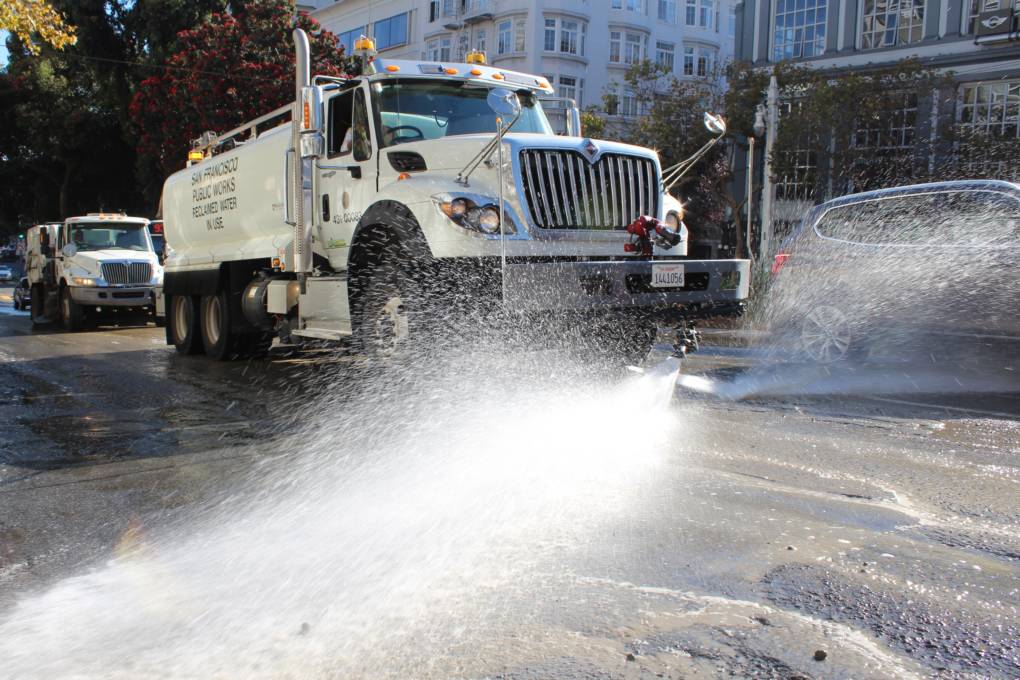
"caption": "A flusher sprays the streets down with water in San Francisco. Environmental advocates had accused San Francisco of trying to dismantle the Clean Water Act in a case about the city’s repeated releases of raw sewage during big storms.",
"credit": "Courtesy of SF Public Works. ",
"altTag": "A flusher sprays the streets down with water.",
"description": "A flusher sprays the streets down with water.",
"imgSizes": {
"thumbnail": {
"file": "https://cdn.kqed.org/wp-content/uploads/sites/10/2017/08/cleaner-160x107.jpg",
"width": 160,
"height": 107,
"mimeType": "image/jpeg"
},
"medium": {
"file": "https://cdn.kqed.org/wp-content/uploads/sites/10/2017/08/cleaner-800x533.jpg",
"width": 800,
"height": 533,
"mimeType": "image/jpeg"
},
"large": {
"file": "https://cdn.kqed.org/wp-content/uploads/sites/10/2017/08/cleaner-1020x680.jpg",
"width": 1020,
"height": 680,
"mimeType": "image/jpeg"
},
"fd-lrg": {
"file": "https://cdn.kqed.org/wp-content/uploads/sites/10/2017/08/cleaner-1920x1280.jpg",
"width": 1920,
"height": 1280,
"mimeType": "image/jpeg"
},
"fd-med": {
"file": "https://cdn.kqed.org/wp-content/uploads/sites/10/2017/08/cleaner-1180x787.jpg",
"width": 1180,
"height": 787,
"mimeType": "image/jpeg"
},
"fd-sm": {
"file": "https://cdn.kqed.org/wp-content/uploads/sites/10/2017/08/cleaner-960x640.jpg",
"width": 960,
"height": 640,
"mimeType": "image/jpeg"
},
"post-thumbnail": {
"file": "https://cdn.kqed.org/wp-content/uploads/sites/10/2017/08/cleaner-672x372.jpg",
"width": 672,
"height": 372,
"mimeType": "image/jpeg"
},
"twentyfourteen-full-width": {
"file": "https://cdn.kqed.org/wp-content/uploads/sites/10/2017/08/cleaner-1038x576.jpg",
"width": 1038,
"height": 576,
"mimeType": "image/jpeg"
},
"xxsmall": {
"file": "https://cdn.kqed.org/wp-content/uploads/sites/10/2017/08/cleaner-240x160.jpg",
"width": 240,
"height": 160,
"mimeType": "image/jpeg"
},
"xsmall": {
"file": "https://cdn.kqed.org/wp-content/uploads/sites/10/2017/08/cleaner-375x250.jpg",
"width": 375,
"height": 250,
"mimeType": "image/jpeg"
},
"small": {
"file": "https://cdn.kqed.org/wp-content/uploads/sites/10/2017/08/cleaner-520x347.jpg",
"width": 520,
"height": 347,
"mimeType": "image/jpeg"
},
"xlarge": {
"file": "https://cdn.kqed.org/wp-content/uploads/sites/10/2017/08/cleaner-1180x787.jpg",
"width": 1180,
"height": 787,
"mimeType": "image/jpeg"
},
"full-width": {
"file": "https://cdn.kqed.org/wp-content/uploads/sites/10/2017/08/cleaner-1920x1280.jpg",
"width": 1920,
"height": 1280,
"mimeType": "image/jpeg"
},
"guest-author-32": {
"file": "https://cdn.kqed.org/wp-content/uploads/sites/10/2017/08/cleaner-32x32.jpg",
"width": 32,
"height": 32,
"mimeType": "image/jpeg"
},
"guest-author-50": {
"file": "https://cdn.kqed.org/wp-content/uploads/sites/10/2017/08/cleaner-50x50.jpg",
"width": 50,
"height": 50,
"mimeType": "image/jpeg"
},
"guest-author-64": {
"file": "https://cdn.kqed.org/wp-content/uploads/sites/10/2017/08/cleaner-64x64.jpg",
"width": 64,
"height": 64,
"mimeType": "image/jpeg"
},
"guest-author-96": {
"file": "https://cdn.kqed.org/wp-content/uploads/sites/10/2017/08/cleaner-96x96.jpg",
"width": 96,
"height": 96,
"mimeType": "image/jpeg"
},
"guest-author-128": {
"file": "https://cdn.kqed.org/wp-content/uploads/sites/10/2017/08/cleaner-128x128.jpg",
"width": 128,
"height": 128,
"mimeType": "image/jpeg"
},
"detail": {
"file": "https://cdn.kqed.org/wp-content/uploads/sites/10/2017/08/cleaner-150x150.jpg",
"width": 150,
"height": 150,
"mimeType": "image/jpeg"
},
"kqedFullSize": {
"file": "https://cdn.kqed.org/wp-content/uploads/sites/10/2017/08/cleaner-e1504203647680.jpg",
"width": 2000,
"height": 1333
}
},
"isLoading": false,
"fetchFailed": false
},
"news_12029054": {
"type": "attachments",
"id": "news_12029054",
"meta": {
"index": "attachments_1716263798",
"site": "news",
"id": "12029054",
"found": true
},
"title": "A person walks through Jefferson Square Park in San Francisco on Feb. 27, 2025.",
"publishDate": 1740694133,
"status": "inherit",
"parent": 12028996,
"modified": 1740694899,
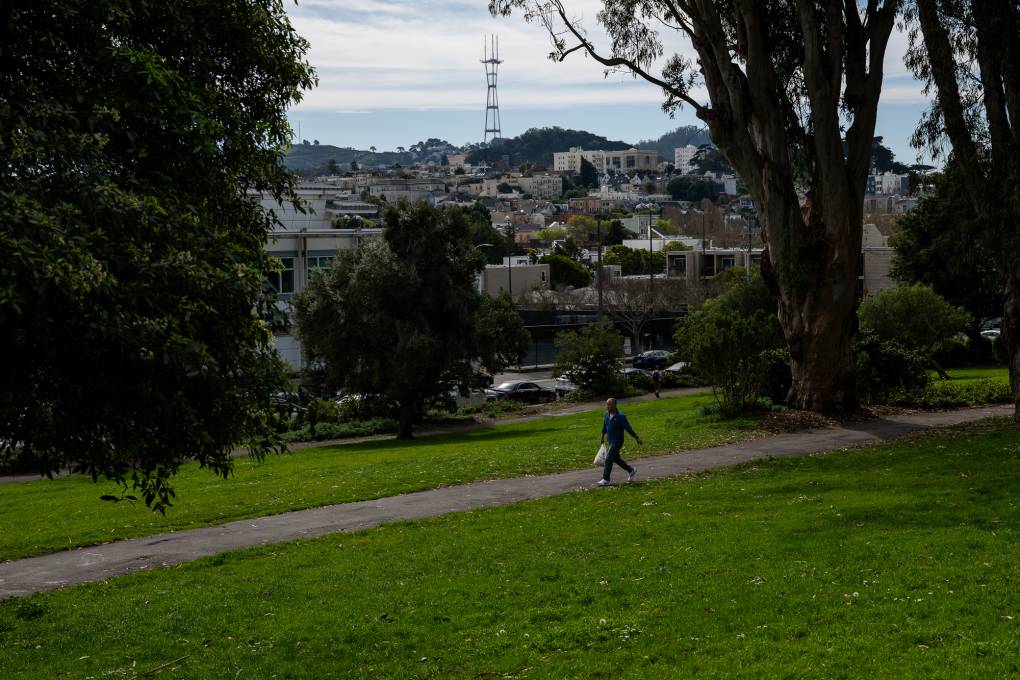
"caption": "A person walks through Jefferson Square Park in San Francisco on Feb. 27, 2025.",
"credit": "Beth LaBerge/KQED",
"altTag": null,
"description": null,
"imgSizes": {
"medium": {
"file": "https://cdn.kqed.org/wp-content/uploads/sites/10/2025/02/250227-SFParkArrests-03-BL-800x533.jpg",
"width": 800,
"height": 533,
"mimeType": "image/jpeg"
},
"large": {
"file": "https://cdn.kqed.org/wp-content/uploads/sites/10/2025/02/250227-SFParkArrests-03-BL-1020x680.jpg",
"width": 1020,
"height": 680,
"mimeType": "image/jpeg"
},
"thumbnail": {
"file": "https://cdn.kqed.org/wp-content/uploads/sites/10/2025/02/250227-SFParkArrests-03-BL-160x107.jpg",
"width": 160,
"height": 107,
"mimeType": "image/jpeg"
},
"1536x1536": {
"file": "https://cdn.kqed.org/wp-content/uploads/sites/10/2025/02/250227-SFParkArrests-03-BL-1536x1024.jpg",
"width": 1536,
"height": 1024,
"mimeType": "image/jpeg"
},
"post-thumbnail": {
"file": "https://cdn.kqed.org/wp-content/uploads/sites/10/2025/02/250227-SFParkArrests-03-BL-672x372.jpg",
"width": 672,
"height": 372,
"mimeType": "image/jpeg"
},
"twentyfourteen-full-width": {
"file": "https://cdn.kqed.org/wp-content/uploads/sites/10/2025/02/250227-SFParkArrests-03-BL-1038x576.jpg",
"width": 1038,
"height": 576,
"mimeType": "image/jpeg"
},
"full-width": {
"file": "https://cdn.kqed.org/wp-content/uploads/sites/10/2025/02/250227-SFParkArrests-03-BL-1920x1280.jpg",
"width": 1920,
"height": 1280,
"mimeType": "image/jpeg"
},
"kqedFullSize": {
"file": "https://cdn.kqed.org/wp-content/uploads/sites/10/2025/02/250227-SFParkArrests-03-BL.jpg",
"width": 2000,
"height": 1333
}
},
"isLoading": false,
"fetchFailed": false
},
"news_12029251": {
"type": "attachments",
"id": "news_12029251",
"meta": {
"index": "attachments_1716263798",
"site": "news",
"id": "12029251",
"found": true
},
"title": "111524_Anatomy-Of-A-Sweep-JK_CM_05 copy",
"publishDate": 1740773938,
"status": "inherit",
"parent": 12029249,
"modified": 1740773975,
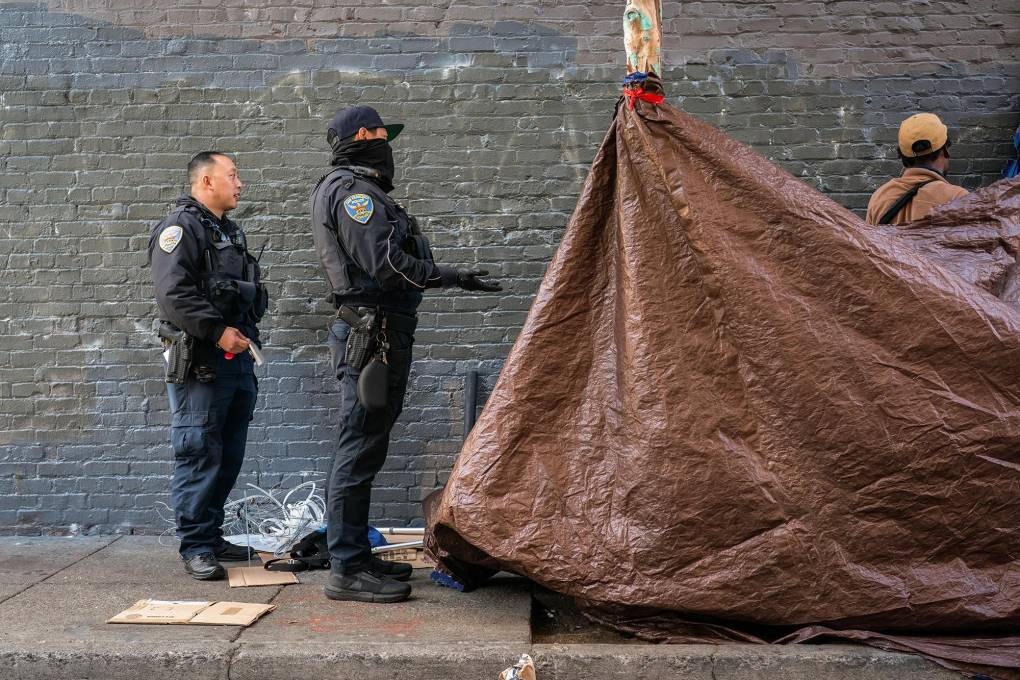
"caption": "San Francisco police officers instruct an unhoused person to move personal items that are blocking the sidewalk on Cedar Street in San Francisco on Nov. 15, 2024. Unhoused people on Cedar Street are forced to move their shelters and belongings on a regular basis by San Francisco city workers.",
"credit": "Jungho Kim for CalMatters",
"altTag": null,
"description": null,
"imgSizes": {
"medium": {
"file": "https://cdn.kqed.org/wp-content/uploads/sites/10/2025/02/111524_Anatomy-Of-A-Sweep-JK_CM_05-copy-800x533.jpg",
"width": 800,
"height": 533,
"mimeType": "image/jpeg"
},
"large": {
"file": "https://cdn.kqed.org/wp-content/uploads/sites/10/2025/02/111524_Anatomy-Of-A-Sweep-JK_CM_05-copy-1020x680.jpg",
"width": 1020,
"height": 680,
"mimeType": "image/jpeg"
},
"thumbnail": {
"file": "https://cdn.kqed.org/wp-content/uploads/sites/10/2025/02/111524_Anatomy-Of-A-Sweep-JK_CM_05-copy-160x107.jpg",
"width": 160,
"height": 107,
"mimeType": "image/jpeg"
},
"1536x1536": {
"file": "https://cdn.kqed.org/wp-content/uploads/sites/10/2025/02/111524_Anatomy-Of-A-Sweep-JK_CM_05-copy-1536x1024.jpg",
"width": 1536,
"height": 1024,
"mimeType": "image/jpeg"
},
"post-thumbnail": {
"file": "https://cdn.kqed.org/wp-content/uploads/sites/10/2025/02/111524_Anatomy-Of-A-Sweep-JK_CM_05-copy-672x372.jpg",
"width": 672,
"height": 372,
"mimeType": "image/jpeg"
},
"twentyfourteen-full-width": {
"file": "https://cdn.kqed.org/wp-content/uploads/sites/10/2025/02/111524_Anatomy-Of-A-Sweep-JK_CM_05-copy-1038x576.jpg",
"width": 1038,
"height": 576,
"mimeType": "image/jpeg"
},
"full-width": {
"file": "https://cdn.kqed.org/wp-content/uploads/sites/10/2025/02/111524_Anatomy-Of-A-Sweep-JK_CM_05-copy-1920x1280.jpg",
"width": 1920,
"height": 1280,
"mimeType": "image/jpeg"
},
"kqedFullSize": {
"file": "https://cdn.kqed.org/wp-content/uploads/sites/10/2025/02/111524_Anatomy-Of-A-Sweep-JK_CM_05-copy.jpg",
"width": 2000,
"height": 1333
}
},
"isLoading": false,
"fetchFailed": false
},
"news_11960807": {
"type": "attachments",
"id": "news_11960807",
"meta": {
"index": "attachments_1716263798",
"site": "news",
"id": "11960807",
"found": true
},
"parent": 0,
"imgSizes": {
"twentyfourteen-full-width": {
"file": "https://ww2.kqed.org/app/uploads/sites/10/2023/09/230911-MattieScottFreedomWest-019-BL-KQED-1038x576.jpg",
"width": 1038,
"mimeType": "image/jpeg",
"height": 576
},
"thumbnail": {
"file": "https://ww2.kqed.org/app/uploads/sites/10/2023/09/230911-MattieScottFreedomWest-019-BL-KQED-160x107.jpg",
"width": 160,
"mimeType": "image/jpeg",
"height": 107
},
"post-thumbnail": {
"file": "https://ww2.kqed.org/app/uploads/sites/10/2023/09/230911-MattieScottFreedomWest-019-BL-KQED-672x372.jpg",
"width": 672,
"mimeType": "image/jpeg",
"height": 372
},
"kqedFullSize": {
"file": "https://ww2.kqed.org/app/uploads/sites/10/2023/09/230911-MattieScottFreedomWest-019-BL-KQED.jpg",
"width": 2000,
"height": 1333
},
"large": {
"file": "https://ww2.kqed.org/app/uploads/sites/10/2023/09/230911-MattieScottFreedomWest-019-BL-KQED-1020x680.jpg",
"width": 1020,
"mimeType": "image/jpeg",
"height": 680
},
"1536x1536": {
"file": "https://ww2.kqed.org/app/uploads/sites/10/2023/09/230911-MattieScottFreedomWest-019-BL-KQED-1536x1024.jpg",
"width": 1536,
"mimeType": "image/jpeg",
"height": 1024
},
"full-width": {
"file": "https://ww2.kqed.org/app/uploads/sites/10/2023/09/230911-MattieScottFreedomWest-019-BL-KQED-1920x1280.jpg",
"width": 1920,
"mimeType": "image/jpeg",
"height": 1280
},
"medium": {
"file": "https://ww2.kqed.org/app/uploads/sites/10/2023/09/230911-MattieScottFreedomWest-019-BL-KQED-800x533.jpg",
"width": 800,
"mimeType": "image/jpeg",
"height": 533
}
},
"publishDate": 1694540028,
"modified": 1694644463,
"caption": "Mattie Scott, a resident and board president of Freedom West Housing Corporation, stands in the housing cooperative in the Fillmore District on Sept. 11, 2023.",
"description": null,
"title": "230911-MattieScottFreedomWest-019-BL-KQED",
"credit": "Beth LaBerge/KQED",
"status": "inherit",
"altTag": "An older African American woman stands in front of a residential building, looking at the camera.",
"isLoading": false,
"fetchFailed": false
},
"news_12029042": {
"type": "attachments",
"id": "news_12029042",
"meta": {
"index": "attachments_1716263798",
"site": "news",
"id": "12029042",
"found": true
},
"title": "123_1",
"publishDate": 1740692217,
"status": "inherit",
"parent": 12028996,
"modified": 1741049980,
"caption": "Police officers carried out a sweeping drug market raid on the evening of Feb. 26, 2025 in Jefferson Square Park. ",
"credit": "Courtesy Sebastian Luke",
"altTag": null,
"description": null,
"imgSizes": {
"medium": {
"file": "https://cdn.kqed.org/wp-content/uploads/sites/10/2025/02/123_1-800x360.jpg",
"width": 800,
"height": 360,
"mimeType": "image/jpeg"
},
"large": {
"file": "https://cdn.kqed.org/wp-content/uploads/sites/10/2025/02/123_1-1020x459.jpg",
"width": 1020,
"height": 459,
"mimeType": "image/jpeg"
},
"thumbnail": {
"file": "https://cdn.kqed.org/wp-content/uploads/sites/10/2025/02/123_1-160x72.jpg",
"width": 160,
"height": 72,
"mimeType": "image/jpeg"
},
"1536x1536": {
"file": "https://cdn.kqed.org/wp-content/uploads/sites/10/2025/02/123_1-1536x691.jpg",
"width": 1536,
"height": 691,
"mimeType": "image/jpeg"
},
"2048x2048": {
"file": "https://cdn.kqed.org/wp-content/uploads/sites/10/2025/02/123_1-2048x922.jpg",
"width": 2048,
"height": 922,
"mimeType": "image/jpeg"
},
"post-thumbnail": {
"file": "https://cdn.kqed.org/wp-content/uploads/sites/10/2025/02/123_1-672x372.jpg",
"width": 672,
"height": 372,
"mimeType": "image/jpeg"
},
"twentyfourteen-full-width": {
"file": "https://cdn.kqed.org/wp-content/uploads/sites/10/2025/02/123_1-1038x576.jpg",
"width": 1038,
"height": 576,
"mimeType": "image/jpeg"
},
"full-width": {
"file": "https://cdn.kqed.org/wp-content/uploads/sites/10/2025/02/123_1-1920x864.jpg",
"width": 1920,
"height": 864,
"mimeType": "image/jpeg"
},
"kqedFullSize": {
"file": "https://cdn.kqed.org/wp-content/uploads/sites/10/2025/02/123_1-scaled-e1740692245681.jpg",
"width": 2000,
"height": 900
}
},
"isLoading": false,
"fetchFailed": false
},
"news_12028977": {
"type": "attachments",
"id": "news_12028977",
"meta": {
"index": "attachments_1716263798",
"site": "news",
"id": "12028977",
"found": true
},
"title": "Mayor Lurie And Senator Wiener Announce Legistlation To Boost Nightlife And Spur Downtown Recovery",
"publishDate": 1740678688,
"status": "inherit",
"parent": 12028959,
"modified": 1740682952,
"caption": "A woman shops for items among empty shelves inside of a Walgreens near Fourth and Market streets that is closing soon in San Francisco on Feb. 18, 2025.",
"credit": "Jessica Christian/San Francisco Chronicle via Getty Images",
"altTag": null,
"description": null,
"imgSizes": {
"medium": {
"file": "https://cdn.kqed.org/wp-content/uploads/sites/10/2025/02/GettyImages-2199825801-800x534.jpg",
"width": 800,
"height": 534,
"mimeType": "image/jpeg"
},
"large": {
"file": "https://cdn.kqed.org/wp-content/uploads/sites/10/2025/02/GettyImages-2199825801-1020x680.jpg",
"width": 1020,
"height": 680,
"mimeType": "image/jpeg"
},
"thumbnail": {
"file": "https://cdn.kqed.org/wp-content/uploads/sites/10/2025/02/GettyImages-2199825801-160x107.jpg",
"width": 160,
"height": 107,
"mimeType": "image/jpeg"
},
"1536x1536": {
"file": "https://cdn.kqed.org/wp-content/uploads/sites/10/2025/02/GettyImages-2199825801-1536x1025.jpg",
"width": 1536,
"height": 1025,
"mimeType": "image/jpeg"
},
"2048x2048": {
"file": "https://cdn.kqed.org/wp-content/uploads/sites/10/2025/02/GettyImages-2199825801-2048x1366.jpg",
"width": 2048,
"height": 1366,
"mimeType": "image/jpeg"
},
"post-thumbnail": {
"file": "https://cdn.kqed.org/wp-content/uploads/sites/10/2025/02/GettyImages-2199825801-672x372.jpg",
"width": 672,
"height": 372,
"mimeType": "image/jpeg"
},
"twentyfourteen-full-width": {
"file": "https://cdn.kqed.org/wp-content/uploads/sites/10/2025/02/GettyImages-2199825801-1038x576.jpg",
"width": 1038,
"height": 576,
"mimeType": "image/jpeg"
},
"full-width": {
"file": "https://cdn.kqed.org/wp-content/uploads/sites/10/2025/02/GettyImages-2199825801-1920x1281.jpg",
"width": 1920,
"height": 1281,
"mimeType": "image/jpeg"
},
"kqedFullSize": {
"file": "https://cdn.kqed.org/wp-content/uploads/sites/10/2025/02/GettyImages-2199825801-scaled.jpg",
"width": 2560,
"height": 1708
}
},
"isLoading": false,
"fetchFailed": false
},
"news_10485295": {
"type": "attachments",
"id": "news_10485295",
"meta": {
"index": "attachments_1716263798",
"site": "news",
"id": "10485295",
"found": true
},
"title": "RS13995_5682289311_963280efff_o",
"publishDate": 1428687560,
"status": "inherit",
"parent": 10485244,
"modified": 1428687808,
"caption": "Bicyclists ride in a green bike lane on San Francisco's Market Street.",
"credit": "San Francisco Bicycle Coalition",
"altTag": null,
"description": null,
"imgSizes": {
"thumbnail": {
"file": "https://cdn.kqed.org/wp-content/uploads/sites/10/2015/04/RS13995_5682289311_963280efff_o-400x267.jpg",
"width": 400,
"height": 267,
"mimeType": "image/jpeg"
},
"medium": {
"file": "https://cdn.kqed.org/wp-content/uploads/sites/10/2015/04/RS13995_5682289311_963280efff_o-800x534.jpg",
"width": 800,
"height": 534,
"mimeType": "image/jpeg"
},
"large": {
"file": "https://cdn.kqed.org/wp-content/uploads/sites/10/2015/04/RS13995_5682289311_963280efff_o-1440x961.jpg",
"width": 1440,
"height": 961,
"mimeType": "image/jpeg"
},
"fd-lrg": {
"file": "https://cdn.kqed.org/wp-content/uploads/sites/10/2015/04/RS13995_5682289311_963280efff_o-1180x788.jpg",
"width": 1180,
"height": 788,
"mimeType": "image/jpeg"
},
"fd-med": {
"file": "https://cdn.kqed.org/wp-content/uploads/sites/10/2015/04/RS13995_5682289311_963280efff_o-768x513.jpg",
"width": 768,
"height": 513,
"mimeType": "image/jpeg"
},
"fd-sm": {
"file": "https://cdn.kqed.org/wp-content/uploads/sites/10/2015/04/RS13995_5682289311_963280efff_o-320x214.jpg",
"width": 320,
"height": 214,
"mimeType": "image/jpeg"
},
"post-thumbnail": {
"file": "https://cdn.kqed.org/wp-content/uploads/sites/10/2015/04/RS13995_5682289311_963280efff_o-672x372.jpg",
"width": 672,
"height": 372,
"mimeType": "image/jpeg"
},
"twentyfourteen-full-width": {
"file": "https://cdn.kqed.org/wp-content/uploads/sites/10/2015/04/RS13995_5682289311_963280efff_o-1038x576.jpg",
"width": 1038,
"height": 576,
"mimeType": "image/jpeg"
},
"guest-author-32": {
"file": "https://cdn.kqed.org/wp-content/uploads/sites/10/2015/04/RS13995_5682289311_963280efff_o-32x32.jpg",
"width": 32,
"height": 32,
"mimeType": "image/jpeg"
},
"guest-author-64": {
"file": "https://cdn.kqed.org/wp-content/uploads/sites/10/2015/04/RS13995_5682289311_963280efff_o-64x64.jpg",
"width": 64,
"height": 64,
"mimeType": "image/jpeg"
},
"guest-author-96": {
"file": "https://cdn.kqed.org/wp-content/uploads/sites/10/2015/04/RS13995_5682289311_963280efff_o-96x96.jpg",
"width": 96,
"height": 96,
"mimeType": "image/jpeg"
},
"guest-author-128": {
"file": "https://cdn.kqed.org/wp-content/uploads/sites/10/2015/04/RS13995_5682289311_963280efff_o-128x128.jpg",
"width": 128,
"height": 128,
"mimeType": "image/jpeg"
},
"detail": {
"file": "https://cdn.kqed.org/wp-content/uploads/sites/10/2015/04/RS13995_5682289311_963280efff_o-75x75.jpg",
"width": 75,
"height": 75,
"mimeType": "image/jpeg"
},
"kqedFullSize": {
"file": "https://cdn.kqed.org/wp-content/uploads/sites/10/2015/04/RS13995_5682289311_963280efff_o-e1740518414897.jpg",
"width": 2000,
"height": 1335
}
},
"isLoading": false,
"fetchFailed": false
},
"news_12028707": {
"type": "attachments",
"id": "news_12028707",
"meta": {
"index": "attachments_1716263798",
"site": "news",
"id": "12028707",
"found": true
},
"title": "250218-SFDowntown-16-BL_qed",
"publishDate": 1740591027,
"status": "inherit",
"parent": 12028703,
"modified": 1740591048,
"caption": "Mayor Daniel Lurie listens to speakers during a press conference in Union Square, San Francisco, on Feb. 18, 2025, announcing legislation to increase nightlife in Downtown San Francisco to help the recovery of the neighborhood.",
"credit": "Beth LaBerge/KQED",
"altTag": null,
"description": null,
"imgSizes": {
"medium": {
"file": "https://cdn.kqed.org/wp-content/uploads/sites/10/2025/02/250218-SFDowntown-16-BL_qed-800x533.jpg",
"width": 800,
"height": 533,
"mimeType": "image/jpeg"
},
"large": {
"file": "https://cdn.kqed.org/wp-content/uploads/sites/10/2025/02/250218-SFDowntown-16-BL_qed-1020x680.jpg",
"width": 1020,
"height": 680,
"mimeType": "image/jpeg"
},
"thumbnail": {
"file": "https://cdn.kqed.org/wp-content/uploads/sites/10/2025/02/250218-SFDowntown-16-BL_qed-160x107.jpg",
"width": 160,
"height": 107,
"mimeType": "image/jpeg"
},
"1536x1536": {
"file": "https://cdn.kqed.org/wp-content/uploads/sites/10/2025/02/250218-SFDowntown-16-BL_qed-1536x1024.jpg",
"width": 1536,
"height": 1024,
"mimeType": "image/jpeg"
},
"post-thumbnail": {
"file": "https://cdn.kqed.org/wp-content/uploads/sites/10/2025/02/250218-SFDowntown-16-BL_qed-672x372.jpg",
"width": 672,
"height": 372,
"mimeType": "image/jpeg"
},
"twentyfourteen-full-width": {
"file": "https://cdn.kqed.org/wp-content/uploads/sites/10/2025/02/250218-SFDowntown-16-BL_qed-1038x576.jpg",
"width": 1038,
"height": 576,
"mimeType": "image/jpeg"
},
"full-width": {
"file": "https://cdn.kqed.org/wp-content/uploads/sites/10/2025/02/250218-SFDowntown-16-BL_qed-1920x1280.jpg",
"width": 1920,
"height": 1280,
"mimeType": "image/jpeg"
},
"kqedFullSize": {
"file": "https://cdn.kqed.org/wp-content/uploads/sites/10/2025/02/250218-SFDowntown-16-BL_qed.jpg",
"width": 2000,
"height": 1333
}
},
"isLoading": false,
"fetchFailed": false
},
"news_12019141": {
"type": "attachments",
"id": "news_12019141",
"meta": {
"index": "attachments_1716263798",
"site": "news",
"id": "12019141",
"found": true
},
"title": "241218-DaylightingLaws-35-BL",
"publishDate": 1734645544,
"status": "inherit",
"parent": 0,
"modified": 1735067930,
"caption": "A car is parked in a red zone at the intersection of Golden Gate Avenue and Jones Street in San Francisco on Dec. 18, 2024. The red curb designates a no-parking area to create more visibility at the intersection.",
"credit": "Beth LaBerge/KQED",
"altTag": null,
"description": null,
"imgSizes": {
"medium": {
"file": "https://cdn.kqed.org/wp-content/uploads/sites/10/2024/12/241218-DaylightingLaws-35-BL-800x533.jpg",
"width": 800,
"height": 533,
"mimeType": "image/jpeg"
},
"large": {
"file": "https://cdn.kqed.org/wp-content/uploads/sites/10/2024/12/241218-DaylightingLaws-35-BL-1020x679.jpg",
"width": 1020,
"height": 679,
"mimeType": "image/jpeg"
},
"thumbnail": {
"file": "https://cdn.kqed.org/wp-content/uploads/sites/10/2024/12/241218-DaylightingLaws-35-BL-160x107.jpg",
"width": 160,
"height": 107,
"mimeType": "image/jpeg"
},
"1536x1536": {
"file": "https://cdn.kqed.org/wp-content/uploads/sites/10/2024/12/241218-DaylightingLaws-35-BL-1536x1023.jpg",
"width": 1536,
"height": 1023,
"mimeType": "image/jpeg"
},
"post-thumbnail": {
"file": "https://cdn.kqed.org/wp-content/uploads/sites/10/2024/12/241218-DaylightingLaws-35-BL-672x372.jpg",
"width": 672,
"height": 372,
"mimeType": "image/jpeg"
},
"twentyfourteen-full-width": {
"file": "https://cdn.kqed.org/wp-content/uploads/sites/10/2024/12/241218-DaylightingLaws-35-BL-1038x576.jpg",
"width": 1038,
"height": 576,
"mimeType": "image/jpeg"
},
"full-width": {
"file": "https://cdn.kqed.org/wp-content/uploads/sites/10/2024/12/241218-DaylightingLaws-35-BL-1920x1279.jpg",
"width": 1920,
"height": 1279,
"mimeType": "image/jpeg"
},
"kqedFullSize": {
"file": "https://cdn.kqed.org/wp-content/uploads/sites/10/2024/12/241218-DaylightingLaws-35-BL.jpg",
"width": 2000,
"height": 1332
}
},
"isLoading": false,
"fetchFailed": false
},
"news_12024435": {
"type": "attachments",
"id": "news_12024435",
"meta": {
"index": "attachments_1716263798",
"site": "news",
"id": "12024435",
"found": true
},
"title": "250128-SFImmigration-30-BL",
"publishDate": 1738105128,
"status": "inherit",
"parent": 12028703,
"modified": 1740618033,
"caption": "San Francisco Supervisor Jackie Fielder speaks during a press conference with elected and public safety officials and labor leaders in front of City Hall in San Francisco on Tuesday, Jan. 28, 2025, to reaffirm San Francisco’s commitment to being a Sanctuary City.",
"credit": "Beth LaBerge/KQED",
"altTag": null,
"description": null,
"imgSizes": {
"medium": {
"file": "https://cdn.kqed.org/wp-content/uploads/sites/10/2025/01/250128-SFImmigration-30-BL-800x533.jpg",
"width": 800,
"height": 533,
"mimeType": "image/jpeg"
},
"large": {
"file": "https://cdn.kqed.org/wp-content/uploads/sites/10/2025/01/250128-SFImmigration-30-BL-1020x680.jpg",
"width": 1020,
"height": 680,
"mimeType": "image/jpeg"
},
"thumbnail": {
"file": "https://cdn.kqed.org/wp-content/uploads/sites/10/2025/01/250128-SFImmigration-30-BL-160x107.jpg",
"width": 160,
"height": 107,
"mimeType": "image/jpeg"
},
"1536x1536": {
"file": "https://cdn.kqed.org/wp-content/uploads/sites/10/2025/01/250128-SFImmigration-30-BL-1536x1024.jpg",
"width": 1536,
"height": 1024,
"mimeType": "image/jpeg"
},
"post-thumbnail": {
"file": "https://cdn.kqed.org/wp-content/uploads/sites/10/2025/01/250128-SFImmigration-30-BL-672x372.jpg",
"width": 672,
"height": 372,
"mimeType": "image/jpeg"
},
"twentyfourteen-full-width": {
"file": "https://cdn.kqed.org/wp-content/uploads/sites/10/2025/01/250128-SFImmigration-30-BL-1038x576.jpg",
"width": 1038,
"height": 576,
"mimeType": "image/jpeg"
},
"full-width": {
"file": "https://cdn.kqed.org/wp-content/uploads/sites/10/2025/01/250128-SFImmigration-30-BL-1920x1280.jpg",
"width": 1920,
"height": 1280,
"mimeType": "image/jpeg"
},
"kqedFullSize": {
"file": "https://cdn.kqed.org/wp-content/uploads/sites/10/2025/01/250128-SFImmigration-30-BL.jpg",
"width": 2000,
"height": 1333
}
},
"isLoading": false,
"fetchFailed": false
},
"news_12028781": {
"type": "attachments",
"id": "news_12028781",
"meta": {
"index": "attachments_1716263798",
"site": "news",
"id": "12028781",
"found": true
},
"title": "250226-FriscoBiscuits-16-BL",
"publishDate": 1740602416,
"status": "inherit",
"parent": 0,
"modified": 1740603642,
"caption": "A plate of 'Frisco Biscuits sits on the Balclutha in San Francisco Maritime National Historical Park on Feb. 26, 2025. The Balclutha is a historic three-masted, steel-hulled sailing ship built in 1886, now preserved as a museum at the park.",
"credit": "Beth LaBerge/KQED",
"altTag": null,
"description": null,
"imgSizes": {
"medium": {
"file": "https://cdn.kqed.org/wp-content/uploads/sites/10/2025/02/250226-FriscoBiscuits-16-BL-800x533.jpg",
"width": 800,
"height": 533,
"mimeType": "image/jpeg"
},
"large": {
"file": "https://cdn.kqed.org/wp-content/uploads/sites/10/2025/02/250226-FriscoBiscuits-16-BL-1020x680.jpg",
"width": 1020,
"height": 680,
"mimeType": "image/jpeg"
},
"thumbnail": {
"file": "https://cdn.kqed.org/wp-content/uploads/sites/10/2025/02/250226-FriscoBiscuits-16-BL-160x107.jpg",
"width": 160,
"height": 107,
"mimeType": "image/jpeg"
},
"1536x1536": {
"file": "https://cdn.kqed.org/wp-content/uploads/sites/10/2025/02/250226-FriscoBiscuits-16-BL-1536x1024.jpg",
"width": 1536,
"height": 1024,
"mimeType": "image/jpeg"
},
"post-thumbnail": {
"file": "https://cdn.kqed.org/wp-content/uploads/sites/10/2025/02/250226-FriscoBiscuits-16-BL-672x372.jpg",
"width": 672,
"height": 372,
"mimeType": "image/jpeg"
},
"twentyfourteen-full-width": {
"file": "https://cdn.kqed.org/wp-content/uploads/sites/10/2025/02/250226-FriscoBiscuits-16-BL-1038x576.jpg",
"width": 1038,
"height": 576,
"mimeType": "image/jpeg"
},
"full-width": {
"file": "https://cdn.kqed.org/wp-content/uploads/sites/10/2025/02/250226-FriscoBiscuits-16-BL-1920x1280.jpg",
"width": 1920,
"height": 1280,
"mimeType": "image/jpeg"
},
"kqedFullSize": {
"file": "https://cdn.kqed.org/wp-content/uploads/sites/10/2025/02/250226-FriscoBiscuits-16-BL.jpg",
"width": 2000,
"height": 1333
}
},
"isLoading": false,
"fetchFailed": false
},
"news_12028350": {
"type": "attachments",
"id": "news_12028350",
"meta": {
"index": "attachments_1716263798",
"site": "news",
"id": "12028350",
"found": true
},
"title": "250224-SFPD POLICE COMMISSIONER PROTEST-MD-06",
"publishDate": 1740434315,
"status": "inherit",
"parent": 0,
"modified": 1740613560,
"caption": "San Francisco Police Commissioner Max Carter-Oberstone attends a rally protesting Mayor Daniel Lurie's attempt to remove him from the Police Commission on the steps of San Francisco City Hall, on Monday, Feb. 24, 2025.",
"credit": "Martin do Nascimento/KQED",
"altTag": null,
"description": null,
"imgSizes": {
"medium": {
"file": "https://cdn.kqed.org/wp-content/uploads/sites/10/2025/02/250224-SFPD-POLICE-COMMISSIONER-PROTEST-MD-06-800x533.jpg",
"width": 800,
"height": 533,
"mimeType": "image/jpeg"
},
"large": {
"file": "https://cdn.kqed.org/wp-content/uploads/sites/10/2025/02/250224-SFPD-POLICE-COMMISSIONER-PROTEST-MD-06-1020x680.jpg",
"width": 1020,
"height": 680,
"mimeType": "image/jpeg"
},
"thumbnail": {
"file": "https://cdn.kqed.org/wp-content/uploads/sites/10/2025/02/250224-SFPD-POLICE-COMMISSIONER-PROTEST-MD-06-160x107.jpg",
"width": 160,
"height": 107,
"mimeType": "image/jpeg"
},
"1536x1536": {
"file": "https://cdn.kqed.org/wp-content/uploads/sites/10/2025/02/250224-SFPD-POLICE-COMMISSIONER-PROTEST-MD-06-1536x1024.jpg",
"width": 1536,
"height": 1024,
"mimeType": "image/jpeg"
},
"post-thumbnail": {
"file": "https://cdn.kqed.org/wp-content/uploads/sites/10/2025/02/250224-SFPD-POLICE-COMMISSIONER-PROTEST-MD-06-672x372.jpg",
"width": 672,
"height": 372,
"mimeType": "image/jpeg"
},
"twentyfourteen-full-width": {
"file": "https://cdn.kqed.org/wp-content/uploads/sites/10/2025/02/250224-SFPD-POLICE-COMMISSIONER-PROTEST-MD-06-1038x576.jpg",
"width": 1038,
"height": 576,
"mimeType": "image/jpeg"
},
"full-width": {
"file": "https://cdn.kqed.org/wp-content/uploads/sites/10/2025/02/250224-SFPD-POLICE-COMMISSIONER-PROTEST-MD-06-1920x1280.jpg",
"width": 1920,
"height": 1280,
"mimeType": "image/jpeg"
},
"kqedFullSize": {
"file": "https://cdn.kqed.org/wp-content/uploads/sites/10/2025/02/250224-SFPD-POLICE-COMMISSIONER-PROTEST-MD-06.jpg",
"width": 2000,
"height": 1333
}
},
"isLoading": false,
"fetchFailed": false
}
},
"audioPlayerReducer": {
"postId": "stream_live",
"isPaused": true,
"isPlaying": false,
"pfsActive": false,
"pledgeModalIsOpen": true,
"playerDrawerIsOpen": false,
"liveAudioPlayStartedAt": 0,
"liveAudioPlayContext": ""
},
"authorsReducer": {
"byline_news_12029249": {
"type": "authors",
"id": "byline_news_12029249",
"meta": {
"override": true
},
"slug": "byline_news_12029249",
"name": "\u003ca href=\"https://calmatters.org/author/marisa-kendall/\">Marisa Kendall\u003c/a> and \u003ca href=\"https://calmatters.org/author/katie-anastas/\">Katie Anastas\u003c/a>, CalMatters",
"isLoading": false
},
"danbrekke": {
"type": "authors",
"id": "222",
"meta": {
"index": "authors_1716337520",
"id": "222",
"found": true
},
"name": "Dan Brekke",
"firstName": "Dan",
"lastName": "Brekke",
"slug": "danbrekke",
"email": "dbrekke@kqed.org",
"display_author_email": true,
"staff_mastheads": [
"news",
"science"
],
"title": "KQED Editor and Reporter",
"bio": "Dan Brekke is a reporter and editor for KQED News, responsible for coverage of topics ranging from California water issues to the Bay Area's transportation challenges. In a newsroom career that began in Chicago in 1972, Dan has worked for \u003cem>The San Francisco Examiner,\u003c/em> Wired and TechTV and has been published in The New York Times, The New York Times Magazine, Business 2.0, Salon and elsewhere.\r\n\r\nSince joining KQED in 2007, Dan has reported, edited and produced both radio and online features and breaking news pieces. He has shared as both editor and reporter in four Society of Professional Journalists Norcal Excellence in Journalism awards and one Edward R. Murrow regional award. He was chosen for a spring 2017 residency at the Mesa Refuge to advance his research on California salmon.\r\n\r\nEmail Dan at: \u003ca href=\"mailto:dbrekke@kqed.org\">dbrekke@kqed.org\u003c/a>\r\n\r\n\u003cstrong>Twitter:\u003c/strong> \u003ca href=\"https://twitter.com/danbrekke\" rel=\"noopener noreferrer\">twitter.com/danbrekke\u003c/a>\r\n\u003cstrong>Facebook:\u003c/strong> \u003ca href=\"https://www.facebook.com/danbrekke\" rel=\"noopener noreferrer\">www.facebook.com/danbrekke\u003c/a>\r\n\u003cstrong>LinkedIn:\u003c/strong> \u003ca href=\"https://www.linkedin.com/in/danbrekke\" rel=\"noopener noreferrer\">www.linkedin.com/in/danbrekke\u003c/a>",
"avatar": "https://secure.gravatar.com/avatar/8f1f0d2a978fb3b23426c922c7e2af558fa36905b49c4ce76a97dc3c72d27226?s=600&d=mm&r=g",
"twitter": "danbrekke",
"bluesky": null,
"facebook": null,
"instagram": "https://www.instagram.com/dan.brekke/",
"linkedin": "https://www.linkedin.com/in/danbrekke/",
"sites": [
{
"site": "news",
"roles": [
"administrator",
"create_posts"
]
},
{
"site": "stateofhealth",
"roles": [
"editor"
]
},
{
"site": "science",
"roles": [
"editor"
]
},
{
"site": "quest",
"roles": [
"contributor"
]
},
{
"site": "food",
"roles": [
"contributor"
]
},
{
"site": "forum",
"roles": [
"contributor"
]
},
{
"site": "elections",
"roles": [
"editor"
]
},
{
"site": "liveblog",
"roles": [
"editor"
]
}
],
"headData": {
"title": "Dan Brekke | KQED",
"description": "KQED Editor and Reporter",
"ogImgSrc": "https://secure.gravatar.com/avatar/8f1f0d2a978fb3b23426c922c7e2af558fa36905b49c4ce76a97dc3c72d27226?s=600&d=mm&r=g",
"twImgSrc": "https://secure.gravatar.com/avatar/8f1f0d2a978fb3b23426c922c7e2af558fa36905b49c4ce76a97dc3c72d27226?s=600&d=mm&r=g"
},
"isLoading": false,
"link": "/author/danbrekke"
},
"kevinstark": {
"type": "authors",
"id": "11608",
"meta": {
"index": "authors_1716337520",
"id": "11608",
"found": true
},
"name": "Kevin Stark",
"firstName": "Kevin",
"lastName": "Stark",
"slug": "kevinstark",
"email": "kstark@kqed.org",
"display_author_email": true,
"staff_mastheads": [
"science"
],
"title": "Senior Editor",
"bio": "Kevin is a senior editor for KQED Science, managing the station's health and climate desks. His journalism career began in the Pacific Northwest, and he later became a lead reporter for the San Francisco Public Press. His work has appeared in Pacific Standard magazine, the Energy News Network, the Center for Investigative Reporting's Reveal and WBEZ in Chicago. Kevin joined KQED in 2019, and has covered issues related to energy, wildfire, climate change and the environment.",
"avatar": "https://secure.gravatar.com/avatar/365aaa4b597d3a8374f67504ff0facd323d7906e8eb4be0a7efd2427408e802c?s=600&d=blank&r=g",
"twitter": "starkkev",
"bluesky": null,
"facebook": null,
"instagram": null,
"linkedin": null,
"sites": [
{
"site": "",
"roles": [
"editor"
]
},
{
"site": "news",
"roles": [
"editor"
]
},
{
"site": "science",
"roles": [
"administrator"
]
}
],
"headData": {
"title": "Kevin Stark | KQED",
"description": "Senior Editor",
"ogImgSrc": "https://secure.gravatar.com/avatar/365aaa4b597d3a8374f67504ff0facd323d7906e8eb4be0a7efd2427408e802c?s=600&d=blank&r=g",
"twImgSrc": "https://secure.gravatar.com/avatar/365aaa4b597d3a8374f67504ff0facd323d7906e8eb4be0a7efd2427408e802c?s=600&d=blank&r=g"
},
"isLoading": false,
"link": "/author/kevinstark"
},
"agonzalez": {
"type": "authors",
"id": "11724",
"meta": {
"index": "authors_1716337520",
"id": "11724",
"found": true
},
"name": "Alexander Gonzalez",
"firstName": "Alexander",
"lastName": "Gonzalez",
"slug": "agonzalez",
"email": "AlexanderGonzalez@KQED.org",
"display_author_email": false,
"staff_mastheads": [
"news"
],
"title": "KQED Contributor",
"bio": null,
"avatar": "https://secure.gravatar.com/avatar/9e291ed34e154df4c662edf858b641d70b4859939bfe40be478408f9dfd057d2?s=600&d=blank&r=g",
"twitter": null,
"bluesky": null,
"facebook": null,
"instagram": null,
"linkedin": null,
"sites": [
{
"site": "arts",
"roles": [
"editor"
]
},
{
"site": "news",
"roles": [
"editor"
]
},
{
"site": "science",
"roles": [
"editor"
]
}
],
"headData": {
"title": "Alexander Gonzalez | KQED",
"description": "KQED Contributor",
"ogImgSrc": "https://secure.gravatar.com/avatar/9e291ed34e154df4c662edf858b641d70b4859939bfe40be478408f9dfd057d2?s=600&d=blank&r=g",
"twImgSrc": "https://secure.gravatar.com/avatar/9e291ed34e154df4c662edf858b641d70b4859939bfe40be478408f9dfd057d2?s=600&d=blank&r=g"
},
"isLoading": false,
"link": "/author/agonzalez"
},
"eromero": {
"type": "authors",
"id": "11746",
"meta": {
"index": "authors_1716337520",
"id": "11746",
"found": true
},
"name": "Ezra David Romero",
"firstName": "Ezra David",
"lastName": "Romero",
"slug": "eromero",
"email": "eromero@kqed.org",
"display_author_email": true,
"staff_mastheads": [
"news",
"science"
],
"title": "Climate Reporter",
"bio": "Ezra David Romero is a climate reporter for KQED News. He covers the absence and excess of water in the Bay Area — think sea level rise, flooding and drought. For nearly a decade he’s covered how warming temperatures are altering the lives of Californians. He’s reported on farmers worried their pistachio trees aren’t getting enough sleep, families desperate for water, scientists studying dying giant sequoias, and alongside firefighters containing wildfires. His work has appeared on local stations across California and nationally on public radio shows like Morning Edition, Here and Now, All Things Considered and Science Friday. ",
"avatar": "https://secure.gravatar.com/avatar/c76404d287c10ed40224227551ac36e24352c7306f106632caf6fead76f8801f?s=600&d=blank&r=g",
"twitter": "ezraromero",
"bluesky": null,
"facebook": null,
"instagram": null,
"linkedin": null,
"sites": [
{
"site": "arts",
"roles": [
"editor"
]
},
{
"site": "news",
"roles": [
"editor"
]
},
{
"site": "science",
"roles": [
"editor"
]
},
{
"site": "liveblog",
"roles": [
"author"
]
}
],
"headData": {
"title": "Ezra David Romero | KQED",
"description": "Climate Reporter",
"ogImgSrc": "https://secure.gravatar.com/avatar/c76404d287c10ed40224227551ac36e24352c7306f106632caf6fead76f8801f?s=600&d=blank&r=g",
"twImgSrc": "https://secure.gravatar.com/avatar/c76404d287c10ed40224227551ac36e24352c7306f106632caf6fead76f8801f?s=600&d=blank&r=g"
},
"isLoading": false,
"link": "/author/eromero"
},
"adahlstromeckman": {
"type": "authors",
"id": "11785",
"meta": {
"index": "authors_1716337520",
"id": "11785",
"found": true
},
"name": "Azul Dahlstrom-Eckman",
"firstName": "Azul",
"lastName": "Dahlstrom-Eckman",
"slug": "adahlstromeckman",
"email": "adahlstrom-eckman@kqed.org",
"display_author_email": true,
"staff_mastheads": [],
"title": "Reporter",
"bio": "Azul is a reporter for KQED focusing on transportation and features. He joined KQED in 2021 as an alumnus of KALW's Audio Academy radio journalism training program.",
"avatar": "https://secure.gravatar.com/avatar/9cb750298435add7815a777f55bf1f46845c1386bb8452555c60a7b820b5aba3?s=600&d=blank&r=g",
"twitter": "@zuliemann",
"bluesky": "@azul415.bsky.social",
"facebook": null,
"instagram": null,
"linkedin": null,
"sites": [
{
"site": "arts",
"roles": [
"editor"
]
},
{
"site": "news",
"roles": [
"editor"
]
},
{
"site": "science",
"roles": [
"editor"
]
},
{
"site": "liveblog",
"roles": [
"author"
]
}
],
"headData": {
"title": "Azul Dahlstrom-Eckman | KQED",
"description": "Reporter",
"ogImgSrc": "https://secure.gravatar.com/avatar/9cb750298435add7815a777f55bf1f46845c1386bb8452555c60a7b820b5aba3?s=600&d=blank&r=g",
"twImgSrc": "https://secure.gravatar.com/avatar/9cb750298435add7815a777f55bf1f46845c1386bb8452555c60a7b820b5aba3?s=600&d=blank&r=g"
},
"isLoading": false,
"link": "/author/adahlstromeckman"
},
"sjohnson": {
"type": "authors",
"id": "11840",
"meta": {
"index": "authors_1716337520",
"id": "11840",
"found": true
},
"name": "Sydney Johnson",
"firstName": "Sydney",
"lastName": "Johnson",
"slug": "sjohnson",
"email": "sjohnson@kqed.org",
"display_author_email": false,
"staff_mastheads": [
"news"
],
"title": "KQED Reporter",
"bio": "Sydney Johnson is a general assignment reporter at KQED. She previously reported on public health and city government at the San Francisco Examiner, and before that, she covered statewide education policy for EdSource. Her reporting has won multiple local, state and national awards. Sydney is a graduate of the University of California, Berkeley and lives in San Francisco.",
"avatar": "https://secure.gravatar.com/avatar/97855f2719b72ad6190b7c535fe642c8?s=600&d=blank&r=g",
"twitter": "sydneyfjohnson",
"facebook": null,
"instagram": null,
"linkedin": null,
"sites": [
{
"site": "news",
"roles": [
"editor"
]
}
],
"headData": {
"title": "Sydney Johnson | KQED",
"description": "KQED Reporter",
"ogImgSrc": "https://secure.gravatar.com/avatar/97855f2719b72ad6190b7c535fe642c8?s=600&d=blank&r=g",
"twImgSrc": "https://secure.gravatar.com/avatar/97855f2719b72ad6190b7c535fe642c8?s=600&d=blank&r=g"
},
"isLoading": false,
"link": "/author/sjohnson"
},
"slim": {
"type": "authors",
"id": "11920",
"meta": {
"index": "authors_1716337520",
"id": "11920",
"found": true
},
"name": "Samantha Lim",
"firstName": "Samantha",
"lastName": "Lim",
"slug": "slim",
"email": "slim@KQED.org",
"display_author_email": false,
"staff_mastheads": [],
"title": "KQED Contributor",
"bio": null,
"avatar": "https://secure.gravatar.com/avatar/82e592e6c15fe1a04d385e8ad0fb0b4e?s=600&d=blank&r=g",
"twitter": null,
"facebook": null,
"instagram": null,
"linkedin": null,
"sites": [
{
"site": "news",
"roles": []
}
],
"headData": {
"title": "Samantha Lim | KQED",
"description": "KQED Contributor",
"ogImgSrc": "https://secure.gravatar.com/avatar/82e592e6c15fe1a04d385e8ad0fb0b4e?s=600&d=blank&r=g",
"twImgSrc": "https://secure.gravatar.com/avatar/82e592e6c15fe1a04d385e8ad0fb0b4e?s=600&d=blank&r=g"
},
"isLoading": false,
"link": "/author/slim"
},
"gglueck": {
"type": "authors",
"id": "11946",
"meta": {
"index": "authors_1716337520",
"id": "11946",
"found": true
},
"name": "Gabriela Glueck",
"firstName": "Gabriela",
"lastName": "Glueck",
"slug": "gglueck",
"email": "gglueck@kqed.org",
"display_author_email": false,
"staff_mastheads": [
"news"
],
"title": "KQED Contributor",
"bio": null,
"avatar": "https://secure.gravatar.com/avatar/ec62b7e3f7727ce1070cc7046dde80271d1e63cf2178d6194f68bb8d1440f841?s=600&d=blank&r=g",
"twitter": null,
"bluesky": null,
"facebook": null,
"instagram": null,
"linkedin": null,
"sites": [
{
"site": "news",
"roles": [
"editor"
]
}
],
"headData": {
"title": "Gabriela Glueck | KQED",
"description": "KQED Contributor",
"ogImgSrc": "https://secure.gravatar.com/avatar/ec62b7e3f7727ce1070cc7046dde80271d1e63cf2178d6194f68bb8d1440f841?s=600&d=blank&r=g",
"twImgSrc": "https://secure.gravatar.com/avatar/ec62b7e3f7727ce1070cc7046dde80271d1e63cf2178d6194f68bb8d1440f841?s=600&d=blank&r=g"
},
"isLoading": false,
"link": "/author/gglueck"
}
},
"pagesReducer": {
"news_tag_san-francisco": {
"type": "terms",
"id": "news_38",
"meta": {
"index": "terms_1716263798",
"site": "news",
"id": "38",
"score": 6.726884
},
"featImg": null,
"name": "San Francisco",
"description": null,
"taxonomy": "tag",
"headData": {
"twImgId": null,
"twTitle": null,
"ogTitle": null,
"ogImgId": null,
"twDescription": null,
"description": null,
"title": "San Francisco Archives | KQED News",
"ogDescription": null
},
"ttid": 58,
"slug": "san-francisco",
"isLoading": false,
"title": "San Francisco",
"pageMeta": {
"site": "news",
"WpPageTemplate": "page-topic-editorial",
"currentPage": 82
},
"blocks": [
{
"blockName": "kqed/post-list",
"attrs": {
"layout": "cardArticle2",
"query": "posts/news?tag=san-francisco",
"seeMore": false,
"paginated": true,
"page": 82
}
},
{
"blockName": "kqed/ad"
}
]
}
},
"pfsSessionReducer": {},
"postsReducer": {
"stream_live": {
"type": "live",
"id": "stream_live",
"audioUrl": "https://hls.kqed.org/hls/kqed_app/playlist.m3u8",
"title": "Live Stream",
"excerpt": "Live Stream information currently unavailable.",
"link": "/radio",
"featImg": "",
"label": {
"name": "KQED Live",
"link": "/"
}
},
"stream_kqedNewscast": {
"type": "posts",
"id": "stream_kqedNewscast",
"audioUrl": "https://www.kqed.org/.stream/anon/radio/RDnews/newscast.mp3?_=1",
"title": "KQED Newscast",
"featImg": "",
"label": {
"name": "88.5 FM",
"link": "/"
}
},
"news_12029553": {
"type": "posts",
"id": "news_12029553",
"meta": {
"index": "posts_1716263798",
"site": "news",
"id": "12029553",
"score": null,
"sort": [
1741112356000
]
},
"guestAuthors": [],
"slug": "supreme-court-sides-with-san-francisco-against-epa-sewage-lawsuit",
"title": "Supreme Court Sides With San Francisco Against EPA in Sewage Lawsuit",
"publishDate": 1741112356,
"format": "standard",
"headTitle": "Supreme Court Sides With San Francisco Against EPA in Sewage Lawsuit | KQED",
"labelTerm": {
"site": "news"
},
"content": "\u003cp>\u003cem>Updated 2:58 p.m. Tuesday\u003c/em>\u003c/p>\n\u003cp>The U.S. Supreme Court on Tuesday morning sided with San Francisco and its unusual alliance of oil companies and business groups in a \u003ca href=\"https://www.kqed.org/news/12009496/san-francisco-challenges-epa-in-supreme-court-over-water-pollution-standards\">case it brought against the federal Environmental Protection Agency\u003c/a> over the city’s raw sewage.\u003c/p>\n\u003cp>Environmentalists have raised concerns that the court’s conservative majority could use the case to roll back clean water protections on a national scale. The city, meanwhile, argued it was only seeking clarity on permit limitations and believed it was being held responsible for more than its share of water pollution.\u003c/p>\n\u003cp>San Francisco filed its lawsuit challenging the EPA’s discharge regulations as too vague after the federal agency and the California State Water Resources Control Board lodged a civil complaint in federal court against the city in May. The agencies’ complaint alleged\u003ca href=\"https://www.epa.gov/ca/city-and-county-san-francisco-complaint\"> numerous Clean Water Act violations\u003c/a> over the last decade as the city \u003ca href=\"https://www.kqed.org/science/1996145/sf-dumps-millions-of-gallons-of-sewage-during-big-storms-surfers-say-that-needs-to-stop\">repeatedly spilled raw sewage\u003c/a> onto streets and beaches during big storms.\u003c/p>\n\u003cp>[ad fullwidth]\u003c/p>\n\u003cp>San Francisco faced the prospect of spending billions to \u003ca href=\"https://www.kqed.org/science/1993067/amid-long-and-costly-legal-battles-sf-urged-to-update-wastewater-system-fix-sewage-discharges\">upgrade its infrastructure\u003c/a> to get into compliance with the Clean Water Act, a project it said was too expensive.\u003c/p>\n\u003cp>In its 5–4 opinion, the Supreme Court’s conservative majority said that the EPA does not have the authority to require these kinds of sewage system upgrades and that the city is only responsible for what it discharges — not the water quality’s “end result.”\u003c/p>\n\u003cp>“The agency has adequate tools to obtain needed information from permittees without resorting to end-result requirements,” the opinion said. “Its reliance on the Combined Sewer Overflow Policy is misplaced as that policy authorizes narrative limitations but not end-result requirements.”\u003c/p>\n\u003cfigure id=\"attachment_12000414\" class=\"wp-caption aligncenter\" style=\"max-width: 2000px\">\u003cimg loading=\"lazy\" decoding=\"async\" class=\"size-full wp-image-12000414\" src=\"https://cdn.kqed.org/wp-content/uploads/sites/10/2024/08/240815-CITYATTORNEYDEEPFAKES-11-BL-KQED.jpg\" alt=\"\" width=\"2000\" height=\"1333\" srcset=\"https://cdn.kqed.org/wp-content/uploads/sites/10/2024/08/240815-CITYATTORNEYDEEPFAKES-11-BL-KQED.jpg 2000w, https://cdn.kqed.org/wp-content/uploads/sites/10/2024/08/240815-CITYATTORNEYDEEPFAKES-11-BL-KQED-800x533.jpg 800w, https://cdn.kqed.org/wp-content/uploads/sites/10/2024/08/240815-CITYATTORNEYDEEPFAKES-11-BL-KQED-1020x680.jpg 1020w, https://cdn.kqed.org/wp-content/uploads/sites/10/2024/08/240815-CITYATTORNEYDEEPFAKES-11-BL-KQED-160x107.jpg 160w, https://cdn.kqed.org/wp-content/uploads/sites/10/2024/08/240815-CITYATTORNEYDEEPFAKES-11-BL-KQED-1536x1024.jpg 1536w, https://cdn.kqed.org/wp-content/uploads/sites/10/2024/08/240815-CITYATTORNEYDEEPFAKES-11-BL-KQED-1920x1280.jpg 1920w\" sizes=\"auto, (max-width: 2000px) 100vw, 2000px\">\u003cfigcaption class=\"wp-caption-text\">City Attorney David Chiu speaks during a press conference at City Hall in San Francisco on Aug. 15, 2024. \u003ccite>(Beth LaBerge/KQED)\u003c/cite>\u003c/figcaption>\u003c/figure>\n\u003cp>In a joint statement, City Attorney David Chiu and San Francisco Public Utilities Commission General Manager Dennis Herrera said they were pleased with the court’s narrow decision.\u003c/p>\n\u003cp>“This ruling makes clear that permitholders like San Francisco are responsible for what they discharge, and the EPA has the tools at its disposal to ensure water quality,” they said. “But it’s not lawful to punish permitholders for things outside of their control, such as the end-result water quality of a shared body of water, where many other factors affect water quality.”\u003c/p>\n\u003cp>The EPA said in an email that it is “reviewing the decision.”\u003c/p>\n\u003cp>San Francisco’s legal case was “very well designed to play on the sympathies of a very conservative Supreme Court,” said Dave Owen, a professor at UC Law San Francisco, who added that he was not surprised by the court’s decision.\u003c/p>\n\u003cp>But at the end of the day, Owen said, San Francisco’s sewer still overflows, and the city is required under the Clean Water Act to address those problems. The city runs stormwater and sewage through the same pipes, which are prone to overflows during heavy storms.\u003c/p>\n\u003cp>[aside postID=science_1996145 hero='https://cdn.kqed.org/wp-content/uploads/sites/35/2025/02/250210-SurferSewage-05-BL-1020x680.jpg']\u003c/p>\n\u003cp>San Francisco discharges an average of nearly 2 billion gallons of combined stormwater and raw sewage each year into Mission Creek and other points around the shoreline.\u003c/p>\n\u003cp>“None of that changes,” he said. “The city’s obligations and its costs really aren’t going to shift very much.”\u003c/p>\n\u003cp>He added that the city might have shot itself in the foot because the EPA could be forced to enforce more restrictive regulations.\u003c/p>\n\u003cp>“It’s very possible that San Francisco comes out of this litigation in the long run with more burdensome and less effective permit terms that cost just as much, if not significantly more, to deal with,” he said. “It’s not in the interest of a city that is surrounded by water to undermine the Clean Water Act.”\u003c/p>\n\u003cp>Environmental advocates had accused the city of trying to dismantle the Clean Water Act and encouraged San Francisco to drop its lawsuit. They argued it would stain the city’s reputation as a protector of the public and environment and affect federal regulators’ ability to implement the Clean Water Act.\u003c/p>\n\u003cp>Sanjay Narayan, chief appellate counsel of the Sierra Club’s Environmental Law Program, said in a statement that the court’s decision “ignores the basic reality of how water bodies and water pollution works.”\u003c/p>\n\u003cfigure id=\"attachment_12026542\" class=\"wp-caption aligncenter\" style=\"max-width: 2000px\">\u003cimg loading=\"lazy\" decoding=\"async\" class=\"size-full wp-image-12026542\" src=\"https://cdn.kqed.org/wp-content/uploads/sites/10/2025/02/250206-SurferSewage-32-BL.jpg\" alt=\"\" width=\"2000\" height=\"1333\" srcset=\"https://cdn.kqed.org/wp-content/uploads/sites/10/2025/02/250206-SurferSewage-32-BL.jpg 2000w, https://cdn.kqed.org/wp-content/uploads/sites/10/2025/02/250206-SurferSewage-32-BL-800x533.jpg 800w, https://cdn.kqed.org/wp-content/uploads/sites/10/2025/02/250206-SurferSewage-32-BL-1020x680.jpg 1020w, https://cdn.kqed.org/wp-content/uploads/sites/10/2025/02/250206-SurferSewage-32-BL-160x107.jpg 160w, https://cdn.kqed.org/wp-content/uploads/sites/10/2025/02/250206-SurferSewage-32-BL-1536x1024.jpg 1536w, https://cdn.kqed.org/wp-content/uploads/sites/10/2025/02/250206-SurferSewage-32-BL-1920x1280.jpg 1920w\" sizes=\"auto, (max-width: 2000px) 100vw, 2000px\">\u003cfigcaption class=\"wp-caption-text\">An overflow pipe near the Oceanside Water Pollution Control Plant, also known as the Oceanside Treatment Plant, at Ocean Beach in San Francisco on Feb. 10, 2025. Erosion is damaging the overflow pipes along Ocean Beach. \u003ccite>(Beth LaBerge/KQED)\u003c/cite>\u003c/figcaption>\u003c/figure>\n\u003cp>“The result is likely to be a new system where the public is regularly subjected to unsafe water quality,” Narayan said.\u003c/p>\n\u003cp>Deborah Sivas, a professor of environmental law at Stanford Law School, reviewed the court’s opinion and said she doesn’t think it “is one bit helpful for solving the problem.”\u003c/p>\n\u003cp>Sivas believes the decision could ultimately have far-reaching consequences for cities with combined sewer systems across the country — and potentially those without. It could ultimately also affect agricultural runoff permits, she said.\u003c/p>\n\u003cp>“All those permits, in my mind, are now in jeopardy because they all have that backstop in there,” she said.\u003c/p>\n\u003cp>[aside postID=news_12029795 hero='https://cdn.kqed.org/wp-content/uploads/sites/10/2025/03/NOAA2.jpg']\u003c/p>\n\u003cp>She questioned San Francisco’s motive behind the lawsuit, saying the court’s decision could actually lead to a worse situation for the city.\u003c/p>\n\u003cp>“I think it’s going to be a big challenge for everyone to figure this out,” she said. “The real issue here is that it’s so expensive for San Francisco to rebuild its system.”\u003c/p>\n\u003cp>Eric Buescher, managing attorney for SF Baykeeper, said he is still evaluating the court’s decision but thinks it could either lead to “more polluted waters” or result in narrow, restrictive limits on how San Francisco can clean up its pollution issues.\u003c/p>\n\u003cp>“I don’t think that’s good for the regulated industry at the end of the day to have those more heavy-handed restrictions imposed,” he said. “I’m skeptical that’s going to work.”\u003c/p>\n\u003cp>SF Baykeeper is a local environmental group and is part of the EPA and California water board’s lawsuit against San Francisco over the discharges.\u003c/p>\n\u003cp>Sean Bothwell, executive director of the California Coastkeeper Alliance, said in a statement that regulators must follow up with specific, enforceable permit terms to ensure water quality standards are met. For decades, he said, water dischargers like San Francisco have had the “freedom to decide how to meet water quality standards, and now the Supreme Court has put an end to that practice.”\u003c/p>\n\u003cp>“The regulated community should reap what they sowed,” he said. “You cannot beg regulators for flexibility to avoid enforcement and then ask the Supreme Court to strike down vague permit standards. It is time California hold polluters to specific water quality standards.”\u003c/p>\n\u003cp>[ad floatright]\u003c/p>\n",
"blocks": [],
"excerpt": "Environmental advocates had accused San Francisco of trying to dismantle the Clean Water Act in a case about the city’s repeated releases of raw sewage during big storms.",
"status": "publish",
"parent": 0,
"modified": 1741297801,
"stats": {
"hasAudio": false,
"hasVideo": false,
"hasChartOrMap": false,
"iframeSrcs": [],
"hasGoogleForm": false,
"hasGallery": false,
"hasHearkenModule": false,
"hasPolis": false,
"paragraphCount": 33,
"wordCount": 1236
},
"headData": {
"title": "Supreme Court Sides With San Francisco Against EPA in Sewage Lawsuit | KQED",
"description": "Environmental advocates had accused San Francisco of trying to dismantle the Clean Water Act in a case about the city’s repeated releases of raw sewage during big storms.",
"ogTitle": "",
"ogDescription": "",
"ogImgId": "",
"twTitle": "",
"twDescription": "",
"twImgId": "",
"schema": {
"@context": "https://schema.org",
"@type": "NewsArticle",
"headline": "Supreme Court Sides With San Francisco Against EPA in Sewage Lawsuit",
"datePublished": "2025-03-04T10:19:16-08:00",
"dateModified": "2025-03-06T13:50:01-08:00",
"image": "https://cdn.kqed.org/wp-content/uploads/2020/02/KQED-OG-Image@1x.png",
"isAccessibleForFree": "True",
"publisher": {
"@type": "NewsMediaOrganization",
"@id": "https://www.kqed.org/#organization",
"name": "KQED",
"logo": "https://cdn.kqed.org/wp-content/uploads/2020/02/KQED-OG-Image@1x.png",
"url": "https://www.kqed.org",
"sameAs": [
"https://www.facebook.com/KQED",
"https://twitter.com/KQED",
"https://www.instagram.com/kqed/",
"https://www.tiktok.com/@kqedofficial",
"https://www.linkedin.com/company/kqed",
"https://www.youtube.com/channel/UCeC0IOo7i1P_61zVUWbJ4nw"
]
}
}
},
"sticky": false,
"nprStoryId": "kqed-12029553",
"templateType": "standard",
"featuredImageType": "standard",
"excludeFromSiteSearch": "Include",
"articleAge": "0",
"path": "/news/12029553/supreme-court-sides-with-san-francisco-against-epa-sewage-lawsuit",
"audioTrackLength": null,
"parsedContent": [
{
"type": "contentString",
"content": "\u003cdiv class=\"post-body\">\u003cp>\u003cp>\u003cem>Updated 2:58 p.m. Tuesday\u003c/em>\u003c/p>\n\u003cp>The U.S. Supreme Court on Tuesday morning sided with San Francisco and its unusual alliance of oil companies and business groups in a \u003ca href=\"https://www.kqed.org/news/12009496/san-francisco-challenges-epa-in-supreme-court-over-water-pollution-standards\">case it brought against the federal Environmental Protection Agency\u003c/a> over the city’s raw sewage.\u003c/p>\n\u003cp>Environmentalists have raised concerns that the court’s conservative majority could use the case to roll back clean water protections on a national scale. The city, meanwhile, argued it was only seeking clarity on permit limitations and believed it was being held responsible for more than its share of water pollution.\u003c/p>\n\u003cp>San Francisco filed its lawsuit challenging the EPA’s discharge regulations as too vague after the federal agency and the California State Water Resources Control Board lodged a civil complaint in federal court against the city in May. The agencies’ complaint alleged\u003ca href=\"https://www.epa.gov/ca/city-and-county-san-francisco-complaint\"> numerous Clean Water Act violations\u003c/a> over the last decade as the city \u003ca href=\"https://www.kqed.org/science/1996145/sf-dumps-millions-of-gallons-of-sewage-during-big-storms-surfers-say-that-needs-to-stop\">repeatedly spilled raw sewage\u003c/a> onto streets and beaches during big storms.\u003c/p>\n\u003cp>\u003c/p>\u003c/div>",
"attributes": {
"named": {},
"numeric": []
}
},
{
"type": "component",
"content": "",
"name": "ad",
"attributes": {
"named": {
"label": "fullwidth"
},
"numeric": [
"fullwidth"
]
}
},
{
"type": "contentString",
"content": "\u003cdiv class=\"post-body\">\u003cp>\u003c/p>\n\u003cp>San Francisco faced the prospect of spending billions to \u003ca href=\"https://www.kqed.org/science/1993067/amid-long-and-costly-legal-battles-sf-urged-to-update-wastewater-system-fix-sewage-discharges\">upgrade its infrastructure\u003c/a> to get into compliance with the Clean Water Act, a project it said was too expensive.\u003c/p>\n\u003cp>In its 5–4 opinion, the Supreme Court’s conservative majority said that the EPA does not have the authority to require these kinds of sewage system upgrades and that the city is only responsible for what it discharges — not the water quality’s “end result.”\u003c/p>\n\u003cp>“The agency has adequate tools to obtain needed information from permittees without resorting to end-result requirements,” the opinion said. “Its reliance on the Combined Sewer Overflow Policy is misplaced as that policy authorizes narrative limitations but not end-result requirements.”\u003c/p>\n\u003cfigure id=\"attachment_12000414\" class=\"wp-caption aligncenter\" style=\"max-width: 2000px\">\u003cimg loading=\"lazy\" decoding=\"async\" class=\"size-full wp-image-12000414\" src=\"https://cdn.kqed.org/wp-content/uploads/sites/10/2024/08/240815-CITYATTORNEYDEEPFAKES-11-BL-KQED.jpg\" alt=\"\" width=\"2000\" height=\"1333\" srcset=\"https://cdn.kqed.org/wp-content/uploads/sites/10/2024/08/240815-CITYATTORNEYDEEPFAKES-11-BL-KQED.jpg 2000w, https://cdn.kqed.org/wp-content/uploads/sites/10/2024/08/240815-CITYATTORNEYDEEPFAKES-11-BL-KQED-800x533.jpg 800w, https://cdn.kqed.org/wp-content/uploads/sites/10/2024/08/240815-CITYATTORNEYDEEPFAKES-11-BL-KQED-1020x680.jpg 1020w, https://cdn.kqed.org/wp-content/uploads/sites/10/2024/08/240815-CITYATTORNEYDEEPFAKES-11-BL-KQED-160x107.jpg 160w, https://cdn.kqed.org/wp-content/uploads/sites/10/2024/08/240815-CITYATTORNEYDEEPFAKES-11-BL-KQED-1536x1024.jpg 1536w, https://cdn.kqed.org/wp-content/uploads/sites/10/2024/08/240815-CITYATTORNEYDEEPFAKES-11-BL-KQED-1920x1280.jpg 1920w\" sizes=\"auto, (max-width: 2000px) 100vw, 2000px\">\u003cfigcaption class=\"wp-caption-text\">City Attorney David Chiu speaks during a press conference at City Hall in San Francisco on Aug. 15, 2024. \u003ccite>(Beth LaBerge/KQED)\u003c/cite>\u003c/figcaption>\u003c/figure>\n\u003cp>In a joint statement, City Attorney David Chiu and San Francisco Public Utilities Commission General Manager Dennis Herrera said they were pleased with the court’s narrow decision.\u003c/p>\n\u003cp>“This ruling makes clear that permitholders like San Francisco are responsible for what they discharge, and the EPA has the tools at its disposal to ensure water quality,” they said. “But it’s not lawful to punish permitholders for things outside of their control, such as the end-result water quality of a shared body of water, where many other factors affect water quality.”\u003c/p>\n\u003cp>The EPA said in an email that it is “reviewing the decision.”\u003c/p>\n\u003cp>San Francisco’s legal case was “very well designed to play on the sympathies of a very conservative Supreme Court,” said Dave Owen, a professor at UC Law San Francisco, who added that he was not surprised by the court’s decision.\u003c/p>\n\u003cp>But at the end of the day, Owen said, San Francisco’s sewer still overflows, and the city is required under the Clean Water Act to address those problems. The city runs stormwater and sewage through the same pipes, which are prone to overflows during heavy storms.\u003c/p>\n\u003cp>\u003c/p>\u003c/div>",
"attributes": {
"named": {},
"numeric": []
}
},
{
"type": "component",
"content": "",
"name": "aside",
"attributes": {
"named": {
"postid": "science_1996145",
"hero": "https://cdn.kqed.org/wp-content/uploads/sites/35/2025/02/250210-SurferSewage-05-BL-1020x680.jpg",
"label": ""
},
"numeric": []
}
},
{
"type": "contentString",
"content": "\u003cdiv class=\"post-body\">\u003cp>\u003c/p>\n\u003cp>San Francisco discharges an average of nearly 2 billion gallons of combined stormwater and raw sewage each year into Mission Creek and other points around the shoreline.\u003c/p>\n\u003cp>“None of that changes,” he said. “The city’s obligations and its costs really aren’t going to shift very much.”\u003c/p>\n\u003cp>He added that the city might have shot itself in the foot because the EPA could be forced to enforce more restrictive regulations.\u003c/p>\n\u003cp>“It’s very possible that San Francisco comes out of this litigation in the long run with more burdensome and less effective permit terms that cost just as much, if not significantly more, to deal with,” he said. “It’s not in the interest of a city that is surrounded by water to undermine the Clean Water Act.”\u003c/p>\n\u003cp>Environmental advocates had accused the city of trying to dismantle the Clean Water Act and encouraged San Francisco to drop its lawsuit. They argued it would stain the city’s reputation as a protector of the public and environment and affect federal regulators’ ability to implement the Clean Water Act.\u003c/p>\n\u003cp>Sanjay Narayan, chief appellate counsel of the Sierra Club’s Environmental Law Program, said in a statement that the court’s decision “ignores the basic reality of how water bodies and water pollution works.”\u003c/p>\n\u003cfigure id=\"attachment_12026542\" class=\"wp-caption aligncenter\" style=\"max-width: 2000px\">\u003cimg loading=\"lazy\" decoding=\"async\" class=\"size-full wp-image-12026542\" src=\"https://cdn.kqed.org/wp-content/uploads/sites/10/2025/02/250206-SurferSewage-32-BL.jpg\" alt=\"\" width=\"2000\" height=\"1333\" srcset=\"https://cdn.kqed.org/wp-content/uploads/sites/10/2025/02/250206-SurferSewage-32-BL.jpg 2000w, https://cdn.kqed.org/wp-content/uploads/sites/10/2025/02/250206-SurferSewage-32-BL-800x533.jpg 800w, https://cdn.kqed.org/wp-content/uploads/sites/10/2025/02/250206-SurferSewage-32-BL-1020x680.jpg 1020w, https://cdn.kqed.org/wp-content/uploads/sites/10/2025/02/250206-SurferSewage-32-BL-160x107.jpg 160w, https://cdn.kqed.org/wp-content/uploads/sites/10/2025/02/250206-SurferSewage-32-BL-1536x1024.jpg 1536w, https://cdn.kqed.org/wp-content/uploads/sites/10/2025/02/250206-SurferSewage-32-BL-1920x1280.jpg 1920w\" sizes=\"auto, (max-width: 2000px) 100vw, 2000px\">\u003cfigcaption class=\"wp-caption-text\">An overflow pipe near the Oceanside Water Pollution Control Plant, also known as the Oceanside Treatment Plant, at Ocean Beach in San Francisco on Feb. 10, 2025. Erosion is damaging the overflow pipes along Ocean Beach. \u003ccite>(Beth LaBerge/KQED)\u003c/cite>\u003c/figcaption>\u003c/figure>\n\u003cp>“The result is likely to be a new system where the public is regularly subjected to unsafe water quality,” Narayan said.\u003c/p>\n\u003cp>Deborah Sivas, a professor of environmental law at Stanford Law School, reviewed the court’s opinion and said she doesn’t think it “is one bit helpful for solving the problem.”\u003c/p>\n\u003cp>Sivas believes the decision could ultimately have far-reaching consequences for cities with combined sewer systems across the country — and potentially those without. It could ultimately also affect agricultural runoff permits, she said.\u003c/p>\n\u003cp>“All those permits, in my mind, are now in jeopardy because they all have that backstop in there,” she said.\u003c/p>\n\u003cp>\u003c/p>\u003c/div>",
"attributes": {
"named": {},
"numeric": []
}
},
{
"type": "component",
"content": "",
"name": "aside",
"attributes": {
"named": {
"postid": "news_12029795",
"hero": "https://cdn.kqed.org/wp-content/uploads/sites/10/2025/03/NOAA2.jpg",
"label": ""
},
"numeric": []
}
},
{
"type": "contentString",
"content": "\u003cdiv class=\"post-body\">\u003cp>\u003c/p>\n\u003cp>She questioned San Francisco’s motive behind the lawsuit, saying the court’s decision could actually lead to a worse situation for the city.\u003c/p>\n\u003cp>“I think it’s going to be a big challenge for everyone to figure this out,” she said. “The real issue here is that it’s so expensive for San Francisco to rebuild its system.”\u003c/p>\n\u003cp>Eric Buescher, managing attorney for SF Baykeeper, said he is still evaluating the court’s decision but thinks it could either lead to “more polluted waters” or result in narrow, restrictive limits on how San Francisco can clean up its pollution issues.\u003c/p>\n\u003cp>“I don’t think that’s good for the regulated industry at the end of the day to have those more heavy-handed restrictions imposed,” he said. “I’m skeptical that’s going to work.”\u003c/p>\n\u003cp>SF Baykeeper is a local environmental group and is part of the EPA and California water board’s lawsuit against San Francisco over the discharges.\u003c/p>\n\u003cp>Sean Bothwell, executive director of the California Coastkeeper Alliance, said in a statement that regulators must follow up with specific, enforceable permit terms to ensure water quality standards are met. For decades, he said, water dischargers like San Francisco have had the “freedom to decide how to meet water quality standards, and now the Supreme Court has put an end to that practice.”\u003c/p>\n\u003cp>“The regulated community should reap what they sowed,” he said. “You cannot beg regulators for flexibility to avoid enforcement and then ask the Supreme Court to strike down vague permit standards. It is time California hold polluters to specific water quality standards.”\u003c/p>\n\u003cp>\u003c/p>\u003c/div>",
"attributes": {
"named": {},
"numeric": []
}
},
{
"type": "component",
"content": "",
"name": "ad",
"attributes": {
"named": {
"label": "floatright"
},
"numeric": [
"floatright"
]
}
},
{
"type": "contentString",
"content": "\u003cdiv class=\"post-body\">\u003cp>\u003c/p>\n\u003c/div>\u003c/p>",
"attributes": {
"named": {},
"numeric": []
}
}
],
"link": "/news/12029553/supreme-court-sides-with-san-francisco-against-epa-sewage-lawsuit",
"authors": [
"11608",
"11746"
],
"categories": [
"news_34165",
"news_8",
"news_356"
],
"tags": [
"news_19204",
"news_19232",
"news_20023",
"news_31830",
"news_21506",
"news_27626",
"news_28199",
"news_19960",
"news_38",
"news_1172",
"news_483"
],
"featImg": "news_11614803",
"label": "news"
},
"news_12029456": {
"type": "posts",
"id": "news_12029456",
"meta": {
"index": "posts_1716263798",
"site": "news",
"id": "12029456",
"score": null,
"sort": [
1741102233000
]
},
"guestAuthors": [],
"slug": "supervisors-probe-san-franciscos-crackdown-outdoor-drug-use-dealing",
"title": "Supervisors to Probe San Francisco’s Crackdown on Outdoor Drug Use and Dealing",
"publishDate": 1741102233,
"format": "standard",
"headTitle": "Supervisors to Probe San Francisco’s Crackdown on Outdoor Drug Use and Dealing | KQED",
"labelTerm": {
"site": "news"
},
"content": "\u003cp>\u003cem>Updated 4:45 p.m. Tuesday\u003c/em>\u003c/p>\n\u003cp>After last Wednesday’s \u003ca href=\"https://www.kqed.org/news/12028996/san-francisco-police-arrest-84-people-in-overnight-drug-market-raid-at-city-park\">overnight mass drug arrest\u003c/a>, one San Francisco supervisor is demanding a hearing to reassess the city’s approach to tackling outdoor drug use and dealing.\u003c/p>\n\u003cp>Mission District Supervisor Jackie Fielder plans to announce the hearing at Tuesday’s Board of Supervisors Meeting, urging the city to consider a successful strategy in Zurich’s “\u003ca href=\"https://www.kqed.org/news/12014887/sf-report-offers-zurich-style-overdose-prevention-plan\">Four Pillars Strategy\u003c/a>” that combines drug prevention, treatment, harm reduction and law enforcement. Her call follows San Francisco police’s recent crackdown on drug users and dealers, following Mayor Daniel Lurie’s promise to reduce drug-related activity in public spaces.\u003c/p>\n\u003cp>“People have been displaced because of enforcement actions around the city to the Mission. And [residents] want to see people get help and connected to treatment. They want to see the end of public drug use,” Fielder told KQED. “That’s why I’m calling for this hearing because we can’t take a neighborhood-by-neighborhood approach. That’s exactly how we got here. We need something comprehensive so that we’re not continuing this cat-and-mouse game.”\u003c/p>\n\u003cp>[ad fullwidth]\u003c/p>\n\u003cp>Fielder’s push for the Four Pillars strategy comes after a November report from the Budget and Legislative Analyst, which found the city has already adopted some elements of Zurich’s approach. Like San Francisco today, Zurich faced a public drug use crisis in the 1980s and 1990s. However, the report highlighted a key gap: San Francisco’s \u003ca href=\"https://sfbos.org/sites/default/files/BLA.Zurich_4_Pillars.111924.a.pdf\">lack of sufficient collaboration\u003c/a> between police, health officials and social service providers, which were essential to Zurich’s success.\u003c/p>\n\u003cp>Police arrested nearly 90 people last Wednesday night at Jefferson Square Park, many for loitering or having outstanding warrants on drug-related charges, and seized about 550 grams of narcotics, according to the Police Department.\u003c/p>\n\u003cfigure id=\"attachment_12029042\" class=\"wp-caption aligncenter\" style=\"max-width: 2000px\">\u003cimg loading=\"lazy\" decoding=\"async\" class=\"size-full wp-image-12029042\" src=\"https://cdn.kqed.org/wp-content/uploads/sites/10/2025/02/123_1-scaled-e1740692245681.jpg\" alt=\"\" width=\"2000\" height=\"900\">\u003cfigcaption class=\"wp-caption-text\">Police officers carried out a sweeping drug market raid on the evening of Feb. 26, 2025, in Jefferson Square Park. \u003ccite>(Courtesy Sebastian Luke)\u003c/cite>\u003c/figcaption>\u003c/figure>\n\u003cp>The operation took place after residents complained about increased drug use and dealing at the park, which is located directly across the street from the Department of Emergency Management’s headquarters.\u003c/p>\n\u003cp>Since January, local law enforcement has increased pressure in areas like the Sixth Street corridor in South of Market and the Tenderloin, both of which have become widely known as visible hot spots for outdoor drug markets.\u003c/p>\n\u003cp>The escalated police approach has so far included increased arrests of drug users and dealers, alongside the establishment of a \u003ca href=\"https://www.kqed.org/news/12028499/can-sfs-new-triage-centers-help-solve-the-addiction-crisis\">new triage center on Sixth Street\u003c/a> where people can walk in to get connected to various social and health services. The site is also intended to serve as a police command center, where officers can hand off people they arrest or detain for drugs over to sheriff’s deputies. However, police have not yet used the site for any arrest processing, according to SFPD officials.\u003c/p>\n\u003cp>[aside postID=news_12029248 hero='https://ww2.kqed.org/app/uploads/sites/10/2023/09/230911-MattieScottFreedomWest-019-BL-KQED-1020x680.jpg']\u003c/p>\n\u003cp>As a result of the heightened pressure in certain neighborhoods, drug markets have shifted into new parts of the city, including near the 16th Street BART station and, until just before Wednesday’s raid, Jefferson Square Park.\u003c/p>\n\u003cp>“We had a lot of community concern about what was happening, and we believe a lot of it was because of the pressure that we put on the Mid-Market and Tenderloin and people looking for somewhere to go where they can hang out and do these types of activities,” Police Chief Bill Scott told KQED. “Operations like these will continue throughout the city for as long as necessary.”\u003c/p>\n\u003cp>Lurie’s homelessness policy chief, Kunal Modi, acknowledged some of the shortcomings of the city’s approach to Sixth Street over the weekend. While the area has seen improved street cleanliness and more arrests, Modi noted in a \u003ca href=\"https://x.com/kunalmodi/status/1895977354079715715\">post on social media platform X\u003c/a> that the city’s limited shelter and treatment bed capacity has stunted efforts to connect people with housing or medical services. He also admitted that the increased enforcement has displaced challenges to other parts of the city.\u003c/p>\n\u003cp>Following Wednesday night’s raid at Jefferson Square Park, more than 50 people were quickly released. Addiction and homelessness experts, as well as Fielder, have raised concerns about the longer-term strategy for dealing with street-level challenges.\u003c/p>\n\u003cp>“What is taking place is a return to very failed policies of the past, and we’re not going to see any improvement in the issues that folks are really concerned about in San Francisco, like housing and poverty and street-based drug use,” said Anna Berg, a licensed clinical social worker and the program director for the Harm Reduction Therapy Center. “We know that the highest rates of overdose occur post-arrest and incarceration.”\u003c/p>\n\u003cp>Scott said drug treatment services were offered but did not say whether anyone accepted them. SFPD did not respond to requests for further data or information.\u003c/p>\n\u003cfigure id=\"attachment_12024434\" class=\"wp-caption aligncenter\" style=\"max-width: 2000px\">\u003cimg loading=\"lazy\" decoding=\"async\" class=\"size-full wp-image-12024434\" src=\"https://cdn.kqed.org/wp-content/uploads/sites/10/2025/01/250128-SFImmigration-28-BL.jpg\" alt=\"\" width=\"2000\" height=\"1333\" srcset=\"https://cdn.kqed.org/wp-content/uploads/sites/10/2025/01/250128-SFImmigration-28-BL.jpg 2000w, https://cdn.kqed.org/wp-content/uploads/sites/10/2025/01/250128-SFImmigration-28-BL-800x533.jpg 800w, https://cdn.kqed.org/wp-content/uploads/sites/10/2025/01/250128-SFImmigration-28-BL-1020x680.jpg 1020w, https://cdn.kqed.org/wp-content/uploads/sites/10/2025/01/250128-SFImmigration-28-BL-160x107.jpg 160w, https://cdn.kqed.org/wp-content/uploads/sites/10/2025/01/250128-SFImmigration-28-BL-1536x1024.jpg 1536w, https://cdn.kqed.org/wp-content/uploads/sites/10/2025/01/250128-SFImmigration-28-BL-1920x1280.jpg 1920w\" sizes=\"auto, (max-width: 2000px) 100vw, 2000px\">\u003cfigcaption class=\"wp-caption-text\">San Francisco Supervisor Jackie Fielder speaks during a press conference with elected and public safety officials and labor leaders in front of City Hall in San Francisco on Tuesday, Jan. 28, 2025, to reaffirm San Francisco’s commitment to being a Sanctuary City. \u003ccite>(Beth LaBerge/KQED)\u003c/cite>\u003c/figcaption>\u003c/figure>\n\u003cp>“The city right now is going all in on just enforcement and some attempts to connect people to treatment, but it’s unclear what exactly those offers are,” Fielder said. “We need to scale up our treatment system and invest in prevention as well. If we don’t, we will continue to see displacement to all parts of the city.”\u003c/p>\n\u003cp>While other neighborhoods have seen increased drug activity, Jefferson Square Park has remained relatively calm in the aftermath of last week’s police raid, according to nearby residents like Sebastian Luke.\u003c/p>\n\u003cp>“I walk around every day. The park has been quiet and clean; it’s been calm since the raid,” said Luke, who witnessed and documented the mass arrest operation.\u003c/p>\n\u003cp>“San Franciscans deserve safe neighborhoods, not open-air drug markets. We heard the community, and this operation shows what’s possible when agencies work together to take real action,” Supervisor Stephen Sherrill, whose district borders Jefferson Square Park, \u003ca href=\"https://x.com/scsherrill/status/1895178573927063598\">posted on X\u003c/a> the day after the raid.\u003c/p>\n\u003cp>However, the block-by-block enforcement approach is also costly — something police will be forced to confront as the city stares down a nearly $900 million budget shortfall and departments are required to make deep cuts.\u003c/p>\n\u003cp>“It’s a very resource-heavy type of operation, but we do plan to do more because it’s a good way to at least intermittently deal with that displacement,” Scott told KQED.\u003c/p>\n\u003cp>Supervisors representing the Tenderloin and South of Market recently \u003ca href=\"https://www.kqed.org/news/12027784/sf-supervisors-call-for-outside-expert-to-lead-drug-market-crackdown\">put forward their own proposal\u003c/a> for how the city could tackle outdoor drug markets. Their approach, inspired by a model developed by law enforcement expert David Kennedy, focuses on clearing drug markets by arresting violent drug dealers and giving nonviolent dealers a choice of either mandatory social programs or jail time.\u003c/p>\n\u003cp>Supervisors Matt Dorsey and Bilal Mahmood, who introduced the idea, told KQED that they see the idea working within the Four Pillars model.\u003c/p>\n\u003cp>Fielder said she’s still researching her colleagues’ proposal but likes elements of it, including efforts to increase job training programs to redirect youth and adults away from the drug trade.\u003c/p>\n\u003cp>Supervisors Shamann Walton, Matt Dorsey, Bilal Mahmood and Chyanne Chen plan to co-sponsor the Four Pillars hearing, according to representatives from Fielder’s office.\u003c/p>\n\u003cp>“If we just focus on [law enforcement], we’re going to continue to see lopsided and geographically narrow and intermediate success, not long-term successes,” Fielder said. “That’s what the Four Pillars is all about, long-term solutions and not just headline-grabbing actions that we’ve had for many decades in the city.”\u003c/p>\n\u003cp>[ad floatright]\u003c/p>\n",
"blocks": [],
"excerpt": "Police and supervisors say law enforcement crackdowns in some neighborhoods have displaced drug markets to other parts of the city.",
"status": "publish",
"parent": 0,
"modified": 1741135673,
"stats": {
"hasAudio": false,
"hasVideo": false,
"hasChartOrMap": false,
"iframeSrcs": [],
"hasGoogleForm": false,
"hasGallery": false,
"hasHearkenModule": false,
"hasPolis": false,
"paragraphCount": 29,
"wordCount": 1365
},
"headData": {
"title": "Supervisors to Probe San Francisco’s Crackdown on Outdoor Drug Use and Dealing | KQED",
"description": "Police and supervisors say law enforcement crackdowns in some neighborhoods have displaced drug markets to other parts of the city.",
"ogTitle": "",
"ogDescription": "",
"ogImgId": "",
"twTitle": "",
"twDescription": "",
"twImgId": "",
"schema": {
"@context": "https://schema.org",
"@type": "NewsArticle",
"headline": "Supervisors to Probe San Francisco’s Crackdown on Outdoor Drug Use and Dealing",
"datePublished": "2025-03-04T07:30:33-08:00",
"dateModified": "2025-03-04T16:47:53-08:00",
"image": "https://cdn.kqed.org/wp-content/uploads/2020/02/KQED-OG-Image@1x.png",
"isAccessibleForFree": "True",
"publisher": {
"@type": "NewsMediaOrganization",
"@id": "https://www.kqed.org/#organization",
"name": "KQED",
"logo": "https://cdn.kqed.org/wp-content/uploads/2020/02/KQED-OG-Image@1x.png",
"url": "https://www.kqed.org",
"sameAs": [
"https://www.facebook.com/KQED",
"https://twitter.com/KQED",
"https://www.instagram.com/kqed/",
"https://www.tiktok.com/@kqedofficial",
"https://www.linkedin.com/company/kqed",
"https://www.youtube.com/channel/UCeC0IOo7i1P_61zVUWbJ4nw"
]
}
}
},
"sticky": false,
"nprStoryId": "kqed-12029456",
"templateType": "standard",
"featuredImageType": "standard",
"excludeFromSiteSearch": "Include",
"articleAge": "0",
"path": "/news/12029456/supervisors-probe-san-franciscos-crackdown-outdoor-drug-use-dealing",
"audioTrackLength": null,
"parsedContent": [
{
"type": "contentString",
"content": "\u003cdiv class=\"post-body\">\u003cp>\u003cp>\u003cem>Updated 4:45 p.m. Tuesday\u003c/em>\u003c/p>\n\u003cp>After last Wednesday’s \u003ca href=\"https://www.kqed.org/news/12028996/san-francisco-police-arrest-84-people-in-overnight-drug-market-raid-at-city-park\">overnight mass drug arrest\u003c/a>, one San Francisco supervisor is demanding a hearing to reassess the city’s approach to tackling outdoor drug use and dealing.\u003c/p>\n\u003cp>Mission District Supervisor Jackie Fielder plans to announce the hearing at Tuesday’s Board of Supervisors Meeting, urging the city to consider a successful strategy in Zurich’s “\u003ca href=\"https://www.kqed.org/news/12014887/sf-report-offers-zurich-style-overdose-prevention-plan\">Four Pillars Strategy\u003c/a>” that combines drug prevention, treatment, harm reduction and law enforcement. Her call follows San Francisco police’s recent crackdown on drug users and dealers, following Mayor Daniel Lurie’s promise to reduce drug-related activity in public spaces.\u003c/p>\n\u003cp>“People have been displaced because of enforcement actions around the city to the Mission. And [residents] want to see people get help and connected to treatment. They want to see the end of public drug use,” Fielder told KQED. “That’s why I’m calling for this hearing because we can’t take a neighborhood-by-neighborhood approach. That’s exactly how we got here. We need something comprehensive so that we’re not continuing this cat-and-mouse game.”\u003c/p>\n\u003cp>\u003c/p>\u003c/div>",
"attributes": {
"named": {},
"numeric": []
}
},
{
"type": "component",
"content": "",
"name": "ad",
"attributes": {
"named": {
"label": "fullwidth"
},
"numeric": [
"fullwidth"
]
}
},
{
"type": "contentString",
"content": "\u003cdiv class=\"post-body\">\u003cp>\u003c/p>\n\u003cp>Fielder’s push for the Four Pillars strategy comes after a November report from the Budget and Legislative Analyst, which found the city has already adopted some elements of Zurich’s approach. Like San Francisco today, Zurich faced a public drug use crisis in the 1980s and 1990s. However, the report highlighted a key gap: San Francisco’s \u003ca href=\"https://sfbos.org/sites/default/files/BLA.Zurich_4_Pillars.111924.a.pdf\">lack of sufficient collaboration\u003c/a> between police, health officials and social service providers, which were essential to Zurich’s success.\u003c/p>\n\u003cp>Police arrested nearly 90 people last Wednesday night at Jefferson Square Park, many for loitering or having outstanding warrants on drug-related charges, and seized about 550 grams of narcotics, according to the Police Department.\u003c/p>\n\u003cfigure id=\"attachment_12029042\" class=\"wp-caption aligncenter\" style=\"max-width: 2000px\">\u003cimg loading=\"lazy\" decoding=\"async\" class=\"size-full wp-image-12029042\" src=\"https://cdn.kqed.org/wp-content/uploads/sites/10/2025/02/123_1-scaled-e1740692245681.jpg\" alt=\"\" width=\"2000\" height=\"900\">\u003cfigcaption class=\"wp-caption-text\">Police officers carried out a sweeping drug market raid on the evening of Feb. 26, 2025, in Jefferson Square Park. \u003ccite>(Courtesy Sebastian Luke)\u003c/cite>\u003c/figcaption>\u003c/figure>\n\u003cp>The operation took place after residents complained about increased drug use and dealing at the park, which is located directly across the street from the Department of Emergency Management’s headquarters.\u003c/p>\n\u003cp>Since January, local law enforcement has increased pressure in areas like the Sixth Street corridor in South of Market and the Tenderloin, both of which have become widely known as visible hot spots for outdoor drug markets.\u003c/p>\n\u003cp>The escalated police approach has so far included increased arrests of drug users and dealers, alongside the establishment of a \u003ca href=\"https://www.kqed.org/news/12028499/can-sfs-new-triage-centers-help-solve-the-addiction-crisis\">new triage center on Sixth Street\u003c/a> where people can walk in to get connected to various social and health services. The site is also intended to serve as a police command center, where officers can hand off people they arrest or detain for drugs over to sheriff’s deputies. However, police have not yet used the site for any arrest processing, according to SFPD officials.\u003c/p>\n\u003cp>\u003c/p>\u003c/div>",
"attributes": {
"named": {},
"numeric": []
}
},
{
"type": "component",
"content": "",
"name": "aside",
"attributes": {
"named": {
"postid": "news_12029248",
"hero": "https://ww2.kqed.org/app/uploads/sites/10/2023/09/230911-MattieScottFreedomWest-019-BL-KQED-1020x680.jpg",
"label": ""
},
"numeric": []
}
},
{
"type": "contentString",
"content": "\u003cdiv class=\"post-body\">\u003cp>\u003c/p>\n\u003cp>As a result of the heightened pressure in certain neighborhoods, drug markets have shifted into new parts of the city, including near the 16th Street BART station and, until just before Wednesday’s raid, Jefferson Square Park.\u003c/p>\n\u003cp>“We had a lot of community concern about what was happening, and we believe a lot of it was because of the pressure that we put on the Mid-Market and Tenderloin and people looking for somewhere to go where they can hang out and do these types of activities,” Police Chief Bill Scott told KQED. “Operations like these will continue throughout the city for as long as necessary.”\u003c/p>\n\u003cp>Lurie’s homelessness policy chief, Kunal Modi, acknowledged some of the shortcomings of the city’s approach to Sixth Street over the weekend. While the area has seen improved street cleanliness and more arrests, Modi noted in a \u003ca href=\"https://x.com/kunalmodi/status/1895977354079715715\">post on social media platform X\u003c/a> that the city’s limited shelter and treatment bed capacity has stunted efforts to connect people with housing or medical services. He also admitted that the increased enforcement has displaced challenges to other parts of the city.\u003c/p>\n\u003cp>Following Wednesday night’s raid at Jefferson Square Park, more than 50 people were quickly released. Addiction and homelessness experts, as well as Fielder, have raised concerns about the longer-term strategy for dealing with street-level challenges.\u003c/p>\n\u003cp>“What is taking place is a return to very failed policies of the past, and we’re not going to see any improvement in the issues that folks are really concerned about in San Francisco, like housing and poverty and street-based drug use,” said Anna Berg, a licensed clinical social worker and the program director for the Harm Reduction Therapy Center. “We know that the highest rates of overdose occur post-arrest and incarceration.”\u003c/p>\n\u003cp>Scott said drug treatment services were offered but did not say whether anyone accepted them. SFPD did not respond to requests for further data or information.\u003c/p>\n\u003cfigure id=\"attachment_12024434\" class=\"wp-caption aligncenter\" style=\"max-width: 2000px\">\u003cimg loading=\"lazy\" decoding=\"async\" class=\"size-full wp-image-12024434\" src=\"https://cdn.kqed.org/wp-content/uploads/sites/10/2025/01/250128-SFImmigration-28-BL.jpg\" alt=\"\" width=\"2000\" height=\"1333\" srcset=\"https://cdn.kqed.org/wp-content/uploads/sites/10/2025/01/250128-SFImmigration-28-BL.jpg 2000w, https://cdn.kqed.org/wp-content/uploads/sites/10/2025/01/250128-SFImmigration-28-BL-800x533.jpg 800w, https://cdn.kqed.org/wp-content/uploads/sites/10/2025/01/250128-SFImmigration-28-BL-1020x680.jpg 1020w, https://cdn.kqed.org/wp-content/uploads/sites/10/2025/01/250128-SFImmigration-28-BL-160x107.jpg 160w, https://cdn.kqed.org/wp-content/uploads/sites/10/2025/01/250128-SFImmigration-28-BL-1536x1024.jpg 1536w, https://cdn.kqed.org/wp-content/uploads/sites/10/2025/01/250128-SFImmigration-28-BL-1920x1280.jpg 1920w\" sizes=\"auto, (max-width: 2000px) 100vw, 2000px\">\u003cfigcaption class=\"wp-caption-text\">San Francisco Supervisor Jackie Fielder speaks during a press conference with elected and public safety officials and labor leaders in front of City Hall in San Francisco on Tuesday, Jan. 28, 2025, to reaffirm San Francisco’s commitment to being a Sanctuary City. \u003ccite>(Beth LaBerge/KQED)\u003c/cite>\u003c/figcaption>\u003c/figure>\n\u003cp>“The city right now is going all in on just enforcement and some attempts to connect people to treatment, but it’s unclear what exactly those offers are,” Fielder said. “We need to scale up our treatment system and invest in prevention as well. If we don’t, we will continue to see displacement to all parts of the city.”\u003c/p>\n\u003cp>While other neighborhoods have seen increased drug activity, Jefferson Square Park has remained relatively calm in the aftermath of last week’s police raid, according to nearby residents like Sebastian Luke.\u003c/p>\n\u003cp>“I walk around every day. The park has been quiet and clean; it’s been calm since the raid,” said Luke, who witnessed and documented the mass arrest operation.\u003c/p>\n\u003cp>“San Franciscans deserve safe neighborhoods, not open-air drug markets. We heard the community, and this operation shows what’s possible when agencies work together to take real action,” Supervisor Stephen Sherrill, whose district borders Jefferson Square Park, \u003ca href=\"https://x.com/scsherrill/status/1895178573927063598\">posted on X\u003c/a> the day after the raid.\u003c/p>\n\u003cp>However, the block-by-block enforcement approach is also costly — something police will be forced to confront as the city stares down a nearly $900 million budget shortfall and departments are required to make deep cuts.\u003c/p>\n\u003cp>“It’s a very resource-heavy type of operation, but we do plan to do more because it’s a good way to at least intermittently deal with that displacement,” Scott told KQED.\u003c/p>\n\u003cp>Supervisors representing the Tenderloin and South of Market recently \u003ca href=\"https://www.kqed.org/news/12027784/sf-supervisors-call-for-outside-expert-to-lead-drug-market-crackdown\">put forward their own proposal\u003c/a> for how the city could tackle outdoor drug markets. Their approach, inspired by a model developed by law enforcement expert David Kennedy, focuses on clearing drug markets by arresting violent drug dealers and giving nonviolent dealers a choice of either mandatory social programs or jail time.\u003c/p>\n\u003cp>Supervisors Matt Dorsey and Bilal Mahmood, who introduced the idea, told KQED that they see the idea working within the Four Pillars model.\u003c/p>\n\u003cp>Fielder said she’s still researching her colleagues’ proposal but likes elements of it, including efforts to increase job training programs to redirect youth and adults away from the drug trade.\u003c/p>\n\u003cp>Supervisors Shamann Walton, Matt Dorsey, Bilal Mahmood and Chyanne Chen plan to co-sponsor the Four Pillars hearing, according to representatives from Fielder’s office.\u003c/p>\n\u003cp>“If we just focus on [law enforcement], we’re going to continue to see lopsided and geographically narrow and intermediate success, not long-term successes,” Fielder said. “That’s what the Four Pillars is all about, long-term solutions and not just headline-grabbing actions that we’ve had for many decades in the city.”\u003c/p>\n\u003cp>\u003c/p>\u003c/div>",
"attributes": {
"named": {},
"numeric": []
}
},
{
"type": "component",
"content": "",
"name": "ad",
"attributes": {
"named": {
"label": "floatright"
},
"numeric": [
"floatright"
]
}
},
{
"type": "contentString",
"content": "\u003cdiv class=\"post-body\">\u003cp>\u003c/p>\n\u003c/div>\u003c/p>",
"attributes": {
"named": {},
"numeric": []
}
}
],
"link": "/news/12029456/supervisors-probe-san-franciscos-crackdown-outdoor-drug-use-dealing",
"authors": [
"11840"
],
"categories": [
"news_34167",
"news_28250",
"news_8",
"news_13"
],
"tags": [
"news_34055",
"news_25968",
"news_34377",
"news_33045",
"news_22774",
"news_17968",
"news_19960",
"news_22456",
"news_38"
],
"featImg": "news_12029054",
"label": "news"
},
"news_12029249": {
"type": "posts",
"id": "news_12029249",
"meta": {
"index": "posts_1716263798",
"site": "news",
"id": "12029249",
"score": null,
"sort": [
1740843059000
]
},
"guestAuthors": [],
"slug": "look-theres-nowhere-else-to-go-inside-californias-crackdown-on-homeless-camps",
"title": "‘Look, There’s Nowhere Else to Go’: Inside California’s Crackdown on Homeless Camps",
"publishDate": 1740843059,
"format": "standard",
"headTitle": "‘Look, There’s Nowhere Else to Go’: Inside California’s Crackdown on Homeless Camps | KQED",
"labelTerm": {
"term": 18481,
"site": "news"
},
"content": "\u003cp>It’s been eight months since the U.S. Supreme Court \u003ca href=\"https://calmatters.org/housing/2024/06/california-homeless-camps-grants-pass-ruling/\">fundamentally changed\u003c/a> how cities in California and beyond can respond to homeless encampments, allowing them to clear camps and arrest people for sleeping outside — even when there’s nowhere else to sleep.\u003c/p>\n\u003cp>The \u003ca href=\"https://calmatters.org/housing/2024/06/california-homeless-camps-grants-pass-ruling/\">July ruling\u003c/a> in the case \u003ca href=\"https://www.supremecourt.gov/docket/docketfiles/html/public/23-175.html\">Grants Pass v. Johnson\u003c/a> upended six years of protections for unhoused people. It was a radical change, and it came as many Californians, from small business owners to Gov. Gavin Newsom, were fed up with regularly seeing tent camps that stretched for blocks, human feces smeared on sidewalks and people injecting drugs in the open. Once the Supreme Court gave the green light, even liberal strongholds such as San Francisco were quick to start removing camps — despite a collective outcry from activists supporting the rights of homeless Californians.\u003c/p>\n\u003cp>What has that meant for people living outside?\u003c/p>\n\u003cp>CalMatters spent four months interviewing experts, requesting data and making a dozen visits to encampments in San Francisco and Fresno to document enforcement efforts and follow the unhoused people displaced when their camps were cleared. Our public media partner, KPBS, did extensive reporting and visits to encampments in San Diego.\u003c/p>\n\u003cp>[ad fullwidth]\u003c/p>\n\u003cp>Experts agree clearing or “sweeping” encampments alone can’t end \u003ca href=\"https://calmatters.org/category/housing/homelessness/\">homelessness\u003c/a>. But here’s what we did see over and over as a result of sweeps in those cities: people becoming more likely to lose touch with support services, people losing essential items they need to get into housing (such as birth certificates) or to survive the elements (such as tents) and people still stuck on the streets — sometimes in new locations.\u003c/p>\n\u003cp>In some cases, cities try to pair enforcement with \u003ca href=\"https://calmatters.org/housing/2025/02/california-homeless-shelters-purgatory/\">offers of a shelter bed\u003c/a> or other services. But shelter is generally in short supply, and the types of programs available often don’t work for everyone on the street.\u003c/p>\n\u003cp>Cities are continuing with enforcement, anyway. Here’s what that looks like.\u003c/p>\n\u003ch2>San Francisco\u003c/h2>\n\u003cp>Linda Vazquez sat cross-legged on the sidewalk during an afternoon last fall, with two dogs in her lap and her hands cuffed behind her back. A police officer stood over her.\u003c/p>\n\u003cp>Beside her, balanced on a camp stove, sat the pot of chicharrones she’d been cooking for lunch.\u003c/p>\n\u003cp>Vazquez, 52, was clearly upset. “Because I did \u003cem>so \u003c/em>bad,” she yelled sarcastically at the officer, who was citing her for “unauthorized lodging,” a misdemeanor under California’s penal code. “This is the biggest crime ever.”[aside postID=news_12028502 hero='https://cdn.kqed.org/wp-content/uploads/sites/10/2025/02/Evelyn-Alfred-3.jpg']\u003c/p>\n\u003cp>The police didn’t end up taking Vazquez to jail, and instead gave her a slip of paper with a date to show up in court. They did confiscate the tarp she was sheltering under as “evidence,” making it harder for her to survive on the street.\u003c/p>\n\u003cp>The \u003ca href=\"https://calmatters.org/housing/homelessness/2025/02/california-homeless-camping-citation-trials/\">citation \u003c/a>was Vazquez’s second in two weeks.\u003c/p>\n\u003cp>Within hours, Vazquez was back, setting up camp in the same spot — a block that had essentially become hers. Vazquez was known throughout the neighborhood, always surrounded by dogs and friends. On any given day, you might find her cooking meals to share, giving away blankets and other provisions to her unhoused neighbors or hitting people who caused trouble on the block with a blast of water from her Super Soaker squirt gun. At night, she watched horror movies on a tablet in her tent.\u003c/p>\n\u003cp>Vazquez continued to camp there for the next three months and received at least one more citation.\u003c/p>\n\u003cp>“I said, ‘look, there’s nowhere else to go,’” Vazquez said. ‘“All the other places are doing the same thing. So where do you want me to go? Where do you want me to hide out?’”\u003c/p>\n\u003cp>A California native, Vazquez grew up bouncing between Modesto, Santa Cruz, Gilroy, Monterey and other places as her mother found work on different farms. Her life took a turn for the worse in her 20s when, she says, her former partner became abusive. She fled to San Francisco in 1998, and for the past few years has been bouncing between the street, shelters and subsidized housing placements.\u003c/p>\n\u003cp>Encampment removals in Vazquez’s neighborhood — a handful of alleys that run between Van Ness Avenue and Larkin Street at the edge of San Francisco’s Tenderloin neighborhood — have fallen into a predictable rhythm. There are sweeps nearly every Monday and Friday, regular as clockwork.\u003c/p>\n\u003cfigure id=\"attachment_12029253\" class=\"wp-caption aligncenter\" style=\"max-width: 1568px\">\u003cimg loading=\"lazy\" decoding=\"async\" class=\"size-full wp-image-12029253\" src=\"https://cdn.kqed.org/wp-content/uploads/sites/10/2025/02/111924_Anatomy-Of-A-Sweep-JK_CM_04-copy.jpg\" alt=\"\" width=\"1568\" height=\"1045\" srcset=\"https://cdn.kqed.org/wp-content/uploads/sites/10/2025/02/111924_Anatomy-Of-A-Sweep-JK_CM_04-copy.jpg 1568w, https://cdn.kqed.org/wp-content/uploads/sites/10/2025/02/111924_Anatomy-Of-A-Sweep-JK_CM_04-copy-800x533.jpg 800w, https://cdn.kqed.org/wp-content/uploads/sites/10/2025/02/111924_Anatomy-Of-A-Sweep-JK_CM_04-copy-1020x680.jpg 1020w, https://cdn.kqed.org/wp-content/uploads/sites/10/2025/02/111924_Anatomy-Of-A-Sweep-JK_CM_04-copy-160x107.jpg 160w, https://cdn.kqed.org/wp-content/uploads/sites/10/2025/02/111924_Anatomy-Of-A-Sweep-JK_CM_04-copy-1536x1024.jpg 1536w\" sizes=\"auto, (max-width: 1568px) 100vw, 1568px\">\u003cfigcaption class=\"wp-caption-text\">‘It’s ridiculous because, if it was actually sweeping, then I’d understand, but since it’s not actually sweeping, the fuck are you moving me for? Then I got to deal with all this shit, then all the toppings you want to put on it, like getting citations, going to jail and all that. Why?’ said Linda Vazquez, 52. Above, Vazquez tidies her belongings outside of her tent on Cedar Street in San Francisco on Nov. 19, 2024. \u003ccite>(Jungho Kim for CalMatters)\u003c/cite>\u003c/figcaption>\u003c/figure>\n\u003cfigure id=\"attachment_12029259\" class=\"wp-caption aligncenter\" style=\"max-width: 2500px\">\u003cimg loading=\"lazy\" decoding=\"async\" class=\"size-full wp-image-12029259\" src=\"https://cdn.kqed.org/wp-content/uploads/sites/10/2025/03/Copy-of-KQED-side-by-side-downpage-image.jpg\" alt=\"\" width=\"2500\" height=\"833\" srcset=\"https://cdn.kqed.org/wp-content/uploads/sites/10/2025/03/Copy-of-KQED-side-by-side-downpage-image.jpg 2500w, https://cdn.kqed.org/wp-content/uploads/sites/10/2025/03/Copy-of-KQED-side-by-side-downpage-image-800x267.jpg 800w, https://cdn.kqed.org/wp-content/uploads/sites/10/2025/03/Copy-of-KQED-side-by-side-downpage-image-1020x340.jpg 1020w, https://cdn.kqed.org/wp-content/uploads/sites/10/2025/03/Copy-of-KQED-side-by-side-downpage-image-160x53.jpg 160w, https://cdn.kqed.org/wp-content/uploads/sites/10/2025/03/Copy-of-KQED-side-by-side-downpage-image-1536x512.jpg 1536w, https://cdn.kqed.org/wp-content/uploads/sites/10/2025/03/Copy-of-KQED-side-by-side-downpage-image-2048x682.jpg 2048w, https://cdn.kqed.org/wp-content/uploads/sites/10/2025/03/Copy-of-KQED-side-by-side-downpage-image-1920x640.jpg 1920w\" sizes=\"auto, (max-width: 2500px) 100vw, 2500px\">\u003cfigcaption class=\"wp-caption-text\">Left: Linda Vazquez holds a citation for ‘unauthorized lodging’ from the San Francisco Police Department in San Francisco on Nov. 15, 2024. Right: An encampment on Cedar Street in San Francisco on Nov. 19, 2024. \u003ccite>(Jungho Kim for CalMatters)\u003c/cite>\u003c/figcaption>\u003c/figure>\n\u003cp>CalMatters visited that area about twice a week for five weeks last fall. During that time, city outreach teams spoke with people camping there 138 times, according to Jackie Thornhill, spokesperson for the city’s Department of Emergency Management. They placed people in shelter 27 times, and placed one person in permanent housing. Police made 16 arrests.\u003c/p>\n\u003cp>On most days during that five-week span, CalMatters saw several people camped on each block, despite the frequent sweeps. Their reasons for living on the street varied. Many couldn’t stand being in a shelter. One man said he once saw a fellow shelter resident get raped, and since then, he’s avoided those facilities at all costs. A woman CalMatters spoke with said she already had housing in a city-funded SRO, but she’s a victim of domestic violence, and her abuser found out where she lives. Now, she doesn’t feel safe going back.\u003c/p>\n\u003cp>A recent \u003ca href=\"https://calmatters.org/housing/2025/02/california-homeless-shelters-purgatory/\">CalMatters investigation\u003c/a> revealed that many California shelters are a purgatory — plagued by unsanitary and unsafe conditions, and operating with next-to-no oversight.\u003c/p>\n\u003cp>Many people opt to sleep on the street and try to be gone in the morning before the city shows up to kick them out.\u003c/p>\n\u003cp>It’s not uncommon for as many as a dozen city workers to participate in an encampment removal, including police, fire department paramedics and staff from the city’s Department of Emergency Management, Homeless Outreach Team and Encampment Resolution Team.\u003c/p>\n\u003cp>That work is coordinated by Mary Ellen Carroll, executive director of the city’s Department of Emergency Management. The goal, she said, is to clean up and offer people services.\u003c/p>\n\u003cp>“Sometimes people will get up and move around and come back after,” said Carroll, who was on site as her team cleaned up encampments in Vazquez’s neighborhood on a Friday afternoon last fall. “But…it’s a matter of consistency, to just keep coming and addressing.”\u003c/p>\n\u003cp>On that Friday, Carroll’s team spoke with 13 people camping in the alleyways between Van Ness and Larkin. None of them accepted a shelter bed. From January through early November 2024, her team engaged with people in that area 930 times, and referred people to shelter 180 times. In another 47 cases, the person already had housing or shelter.\u003c/p>\n\u003cp>Typically, only between 20% and 30% of people accept a shelter bed when it’s offered, according to the city.\u003c/p>\n\u003cp>With those low placement numbers, and with people returning over and over to camp on the same streets, are the city’s efforts helping?\u003c/p>\n\u003cp>“I think that it is helping, overall,” Carroll said. Clearing encampments is just part of a broader strategy that includes outreach and services, but it’s an important piece, she said.\u003c/p>\n\u003cp>To David Schmitz, a 60-year-old photographer who lives in an apartment overlooking the street where Vazquez camps, the encampment sweeps have made a difference. When he first moved in, about four months earlier, it was common to see at least a dozen tents on the street. People frequently urinated against his garage door, he said.\u003c/p>\n\u003cp>On the November afternoon that he spoke to CalMatters, the city had just finished a clean-up that left the street spotless — not a tent or piece of trash in sight. Schmitz said he’d never seen it so clean.\u003c/p>\n\u003cfigure id=\"attachment_12029262\" class=\"wp-caption aligncenter\" style=\"max-width: 1568px\">\u003cimg loading=\"lazy\" decoding=\"async\" class=\"size-full wp-image-12029262\" src=\"https://cdn.kqed.org/wp-content/uploads/sites/10/2025/03/111524_Anatomy-Of-A-Sweep-JK_CM_06-copy.jpg\" alt=\"\" width=\"1568\" height=\"1045\" srcset=\"https://cdn.kqed.org/wp-content/uploads/sites/10/2025/03/111524_Anatomy-Of-A-Sweep-JK_CM_06-copy.jpg 1568w, https://cdn.kqed.org/wp-content/uploads/sites/10/2025/03/111524_Anatomy-Of-A-Sweep-JK_CM_06-copy-800x533.jpg 800w, https://cdn.kqed.org/wp-content/uploads/sites/10/2025/03/111524_Anatomy-Of-A-Sweep-JK_CM_06-copy-1020x680.jpg 1020w, https://cdn.kqed.org/wp-content/uploads/sites/10/2025/03/111524_Anatomy-Of-A-Sweep-JK_CM_06-copy-160x107.jpg 160w, https://cdn.kqed.org/wp-content/uploads/sites/10/2025/03/111524_Anatomy-Of-A-Sweep-JK_CM_06-copy-1536x1024.jpg 1536w\" sizes=\"auto, (max-width: 1568px) 100vw, 1568px\">\u003cfigcaption class=\"wp-caption-text\">An unhoused man carries a tarp and some of his belongings across Polk Street during a homeless encampment sweep in San Francisco on Nov. 15, 2024. Unhoused people on Cedar Street are forced to move their shelters and belongings on a regular basis by San Francisco city workers. \u003ccite>(Jungho Kim for CalMatters)\u003c/cite>\u003c/figcaption>\u003c/figure>\n\u003cp>“I was euphoric,” he said. “I was like, this is amazing. This is what it could be like, you know. If it were like this … I would see my neighbors more. It wouldn’t be such an apocalyptic feeling to come out here.”\u003c/p>\n\u003cp>Not everyone caught camping gets cited or arrested. Police typically give people citations if they have pitched a tent or strung up a tarp, like Vazquez did, to use as shelter, but not if they are sleeping in the open on just a blanket, said Sgt. J. Ellison with the police department’s Healthy Streets Operation Center.\u003c/p>\n\u003cp>Ellison sees Vazquez frequently because many of the city’s shelter and transitional housing programs won’t allow all of Vazquez’s dogs. She has three, and she’s unwilling to give any up.\u003c/p>\n\u003cp>“I can’t leave them,” Vazquez said, “because I’ve had them since they were the size of my hand.”\u003c/p>\n\u003cp>Instead, nearly every Monday and Friday, Vazquez and her friends packed up everything they owned and moved around the corner, waiting there until the police and other city personnel left and they could return.\u003c/p>\n\u003cp>On a recent rainy Monday afternoon, Vazquez was sick, huddling in a small tent with a hairdryer on (using jumper cables to siphon power from a nearby street light) to keep warm. The city came three days earlier and took her larger, gray tent, tarps, portable heater and other belongings, she said. It was raining then, too, and Vazquez said she stood outside in the rain for hours until a friend could give her a new tent. All her clothes got soaked — as did the two paper camping citations that told her when she was supposed to appear in court.\u003c/p>\n\u003cp>The city was coming again that afternoon to clear the street.\u003c/p>\n\u003cp>“I don’t have no energy at all,” Vazquez said, sniffling and coughing. “But I have to move.”\u003c/p>\n\u003cp>Not long after, Vazquez found a hotel in San Francisco that agreed to take her and her three dogs. A room there costs $70 a day — money Vazquez pays with her disability benefits. She found the place on her own, without the city’s help, she said.\u003c/p>\n\u003cp>Vazquez isn’t sure how long she’ll be able to keep up with the payments. But she has a more pressing concern: The hotel is making her leave temporarily, so that it doesn’t have to grant her tenant’s rights.\u003c/p>\n\u003cp>Where will she go until she can return?\u003c/p>\n\u003cp>“I guess I’m going to be in a tent for three days,” she said. “And then I’m going to come back.”\u003c/p>\n\u003ch2>San Diego\u003c/h2>\n\u003cp>San Diego’s \u003ca href=\"https://www.kpbs.org/news/local/2023/07/31/san-diegos-unsafe-camping-ordinance-enforcement-begins\">unsafe camping ordinance\u003c/a> went into effect nearly a year before the U.S. Supreme Court’s Grants Pass decision. It prohibits tent camping in all public spaces if shelter beds are available, and near homeless shelters, schools, parks and transit centers regardless of shelter availability.\u003c/p>\n\u003cp>It also outlined the process for clearing encampments, reducing \u003ca href=\"https://www.sandiego.gov/homelessness-strategies-and-solutions/about/legal-settlements#:~:text=Isaiah%20Settlement%20(2011)&text=A%20one%2Dtime%20settlement%20payment,individuals%20could%20store%20personal%20belongings.\">a previous 72-hour\u003c/a> notice to just 24 hours. Part of the process includes the city’s Environmental Services Department posting neon green notices prior to clearing an encampment.\u003c/p>\n\u003cp>Aldea Secory has gotten used to it.\u003c/p>\n\u003cp>“Every other day, pretty much, they make us clean up and move,” she said. She and her husband found they could avoid the sweeps for a while if they stayed near the freeway, on state property the California Department of Transportation oversees.\u003c/p>\n\u003cp>“We were on the side of the freeway for, like, a month,” Secory said. Then, she said, the California Highway Patrol swept that site.\u003c/p>\n\u003cp>“That’s the last time we lost all our stuff,” she said. “It’s heartbreaking to come back to that. You have to start over again and again and again.”\u003c/p>\n\u003cp>Twenty-four hours after the green notices get posted on fences, light posts, tents or nearby vegetation, city staff take photos of the site and look through any remaining bags, boxes and other items that might contain valuable belongings, such as paperwork or medication.\u003c/p>\n\u003cfigure id=\"attachment_12029263\" class=\"wp-caption aligncenter\" style=\"max-width: 1568px\">\u003cimg loading=\"lazy\" decoding=\"async\" class=\"size-full wp-image-12029263\" src=\"https://cdn.kqed.org/wp-content/uploads/sites/10/2025/03/012125-NoticeSignEncampment-KPBS-CM-01-copy.jpg\" alt=\"\" width=\"1568\" height=\"1027\" srcset=\"https://cdn.kqed.org/wp-content/uploads/sites/10/2025/03/012125-NoticeSignEncampment-KPBS-CM-01-copy.jpg 1568w, https://cdn.kqed.org/wp-content/uploads/sites/10/2025/03/012125-NoticeSignEncampment-KPBS-CM-01-copy-800x524.jpg 800w, https://cdn.kqed.org/wp-content/uploads/sites/10/2025/03/012125-NoticeSignEncampment-KPBS-CM-01-copy-1020x668.jpg 1020w, https://cdn.kqed.org/wp-content/uploads/sites/10/2025/03/012125-NoticeSignEncampment-KPBS-CM-01-copy-160x105.jpg 160w, https://cdn.kqed.org/wp-content/uploads/sites/10/2025/03/012125-NoticeSignEncampment-KPBS-CM-01-copy-1536x1006.jpg 1536w\" sizes=\"auto, (max-width: 1568px) 100vw, 1568px\">\u003cfigcaption class=\"wp-caption-text\">A flyer giving 24 hours’ notice before an encampment cleanup hangs in Downtown San Diego on Jan. 21, 2025. \u003ccite>(Katie Anastas/KPBS)\u003c/cite>\u003c/figcaption>\u003c/figure>\n\u003cp>Franklin Coopersmith, deputy director of the Environmental Services Department’s Clean SD Division, said cleanup can take around 10 to 30 minutes in places with frequent sweeps, such as downtown surface streets. In more remote areas, like canyons, it can take several days.\u003c/p>\n\u003cp>Secory said she’s had valuable items discarded.\u003c/p>\n\u003cp>“They’ve thrown brand new things away,” she said. “I had a brand new $35, $40 bag of dog food just thrown away. Beds, clothes, it doesn’t matter. Birth certificates, medication. Doesn’t matter. They just throw it away.”\u003c/p>\n\u003cp>Personal items can get discarded for a few reasons, Coopersmith said.\u003c/p>\n\u003cp>Sometimes, he said, they’re in pockets or containers city employees might miss.\u003c/p>\n\u003cp>“A lot of times, too, people are storing them with food that’s spoiled or bags that have gotten wet and they’ve turned moldy,” he said. “We’re not going to be searching a moldy bag that might have a birth certificate at the very bottom of it. If they’re putting their ID or something next to a meth pipe, our code officers aren’t going to be going through that stuff to figure it out.”\u003c/p>\n\u003cp>“Any remaining items soiled with moisture, food, human waste, pet waste, insect infestation, drug paraphernalia or in disrepair are then discarded,” \u003ca href=\"https://www.sandiego.gov/homelessness-strategies-and-solutions/services/abatement\">their policy reads\u003c/a>.[aside postID=news_12026580 hero='https://cdn.kqed.org/wp-content/uploads/sites/10/2025/02/20250210_Unhoused-Ban_DMB_00250.jpg']\u003c/p>\n\u003cp>“Most people that are out there on the streets know that if it’s something important, they need to keep it close to them or in a place that’s easy for them to grab,” Coopersmith said.\u003c/p>\n\u003cp>After the cleanup, the city posts a yellow flyer with information on how to get those non-discarded items back. Coopersmith said they put the notices close to where they found the items. They’ll keep things in storage for up to 90 days and deliver them back to the owner, according to the city.\u003c/p>\n\u003cp>Secory and her husband now live in a tent at one of two campgrounds the city has created on vacant land. The sites, known as Safe Sleeping sites, are operated by Dreams for Change, a nonprofit that provides homeless services and food distribution. The\u003ca href=\"https://www.sandiego.gov/sites/default/files/dfc-safe-sleeping-program.pdf\"> city provides restrooms and wash stations\u003c/a> and pays the nonprofit to provide outdoor sleeping arrangements, a daily meal and a snack. San Diego Mayor Todd Gloria has \u003ca href=\"https://www.kpbs.org/news/public-safety/2024/09/20/providers-city-leaders-and-researchers-say-safe-parking-fills-critical-gap-in-shelter-services\">asked the U.S. Department of Housing and Urban Development\u003c/a> to consider those sites as shelters.\u003c/p>\n\u003cp>“Having somewhere to keep your stuff and not worry about it getting stolen or messed up, it’s a big help,” Secory said.\u003c/p>\n\u003cp>San Diego’s camping ordinance has made it more difficult for service providers like Jenni Wilkens to stay in contact with unhoused people. She manages the street health program at Father Joe’s Villages, a nonprofit that runs shelters and does outreach work. Staff from their Village Health Center visit encampments weekly to provide help such as wound care, substance use disorder counseling and prescription management.\u003c/p>\n\u003cp>“Prior to the ordinance going into effect, we had very, very tight relationships with the community members we were serving,” Wilkens said. “We always knew where we could find them. Follow-up was much, much easier. They knew where to expect us, and we just knew we were going to be able to find our folks. Since the camping ordinance passed, the abatement sweeps have been much more frequent and much more aggressive. So we have not been able to provide that quality follow-up care that we used to be able to provide, just because everybody is moving. We lose track of our patients.”\u003c/p>\n\u003cp>One of the patients, Lee Alirez, has high blood pressure. She’d been dealing with headaches, blurred vision and chest pain before she got diagnosed. Moving her camp frequently has made it hard to stay in contact with the health team.\u003c/p>\n\u003cp>“There was a couple of different times they couldn’t find me, and I was just literally across the street and around the corner,” Alirez said. “And that was in the midst of all that, trying to figure out what was going on with my blood pressure.”\u003c/p>\n\u003cfigure id=\"attachment_12029266\" class=\"wp-caption aligncenter\" style=\"max-width: 1568px\">\u003cimg loading=\"lazy\" decoding=\"async\" class=\"size-full wp-image-12029266\" src=\"https://cdn.kqed.org/wp-content/uploads/sites/10/2025/03/012825-MB_HOMELESS_MEDICAL-KPBS-CM-06-copy.jpg\" alt=\"\" width=\"1568\" height=\"1046\" srcset=\"https://cdn.kqed.org/wp-content/uploads/sites/10/2025/03/012825-MB_HOMELESS_MEDICAL-KPBS-CM-06-copy.jpg 1568w, https://cdn.kqed.org/wp-content/uploads/sites/10/2025/03/012825-MB_HOMELESS_MEDICAL-KPBS-CM-06-copy-800x534.jpg 800w, https://cdn.kqed.org/wp-content/uploads/sites/10/2025/03/012825-MB_HOMELESS_MEDICAL-KPBS-CM-06-copy-1020x680.jpg 1020w, https://cdn.kqed.org/wp-content/uploads/sites/10/2025/03/012825-MB_HOMELESS_MEDICAL-KPBS-CM-06-copy-160x107.jpg 160w, https://cdn.kqed.org/wp-content/uploads/sites/10/2025/03/012825-MB_HOMELESS_MEDICAL-KPBS-CM-06-copy-1536x1025.jpg 1536w\" sizes=\"auto, (max-width: 1568px) 100vw, 1568px\">\u003cfigcaption class=\"wp-caption-text\">Lee Alirez sits with her dog on Jan. 28, 2025. \u003ccite>(Matt Bowler/KPBS)\u003c/cite>\u003c/figcaption>\u003c/figure>\n\u003cp>In some cases, Wilkens said, the frequent movement has made people more likely to accept shelter. But many others have moved to state property — freeway onramps and offramps, overpasses and under bridges.\u003c/p>\n\u003cp>“My team can’t put themselves at risk to reach our patients,” she said. “We also can’t go to a location and ask them to cross back over the freeway to see us. So they’re just getting further and further away from resources.”\u003c/p>\n\u003cp>Steve Shebloski, a captain with the San Diego Police Department’s Neighborhood Policing Division, said the city’s police don’t have the resources or authority to enforce city ordinances on state land.\u003c/p>\n\u003cp>“I understand the frustration when people see an encampment go from city property, where it feels like officers are doing their job, and it goes right over the state property. That’s frustrating,” he said. “We can only do so much, and we have to focus on city property. And I don’t know if we can get into the world of policing 151 miles of state highways within the city.”\u003c/p>\n\u003cp>In July, Gov. Gavin Newsom \u003ca href=\"https://www.gov.ca.gov/wp-content/uploads/2024/07/2024-Encampments-EO-7-24.pdf\">ordered state agencies (PDF)\u003c/a> to clear encampments from state property.\u003c/p>\n\u003cp>A spokesperson for Caltrans District 11, which includes San Diego, wrote in an email that they prioritize removing encampments that present “a threat to infrastructure or people.” The agency gives a 48-hour notice to people in an encampment before a sweep, unless there’s an imminent safety risk, and gives social service providers and local governments two weeks’ notice so they can reach out to people staying there.\u003c/p>\n\u003cp>Shebloski said SDPD has been meeting with California Highway Patrol on how they can work together. But while the city’s neighborhood policing division has been active since 2018, Newsom’s executive order is less than a year old.\u003c/p>\n\u003cp>“When you look at Caltrans and CHP, they have commuters. We have residents,” he said. “I think this is kind of a new thing for them to dive into.”\u003c/p>\n\u003ch2>Fresno\u003c/h2>\n\u003cp>It’s become less common these days to see large homeless encampments in and around downtown Fresno.\u003c/p>\n\u003cp>But spend any time there, and you’ll see something else: People walking the streets, pushing carts and strollers loaded with blankets and other necessities.\u003c/p>\n\u003cp>The \u003ca href=\"https://www.kqed.org/news/12005898/fresno-rolls-out-one-of-californias-most-aggressive-camping-bans\">city\u003c/a> and \u003ca href=\"https://www.fresnobee.com/news/local/article291219750.html\">county\u003c/a> banned camping on all public property last year, but the area still struggles with a shortage of shelter beds. Now Robert Fox, 32, sleeps on the ground with no tent because it makes it easier to leave when the police come.\u003c/p>\n\u003cp>“If I gotta leave, all I gotta do is push the cart and get out of here,” Fox said. “Every morning we pack up and have our stuff ready to go. You can’t get attached to anything. You can’t get comfortable. You’re always on the move.”\u003c/p>\n\u003cp>Fox ended up outside after getting kicked out of a drug treatment program. He said he was selling drugs to raise money for new lodgings as the program’s end date approached. He spent a few nights at the nearby shelters, but to get a spot, he has to get in line early and spend hours waiting. If he does get a bed, he can’t bring all his belongings with him — so he worries about someone stealing what he has to leave on the street. It’s not worth it for one night inside, he said.\u003c/p>\n\u003cfigure id=\"attachment_12029269\" class=\"wp-caption aligncenter\" style=\"max-width: 1568px\">\u003cimg loading=\"lazy\" decoding=\"async\" class=\"size-full wp-image-12029269\" src=\"https://cdn.kqed.org/wp-content/uploads/sites/10/2025/03/020525-Homeless-Encampment-Sweep-Fresno-LV_CM_22-copy.jpg\" alt=\"\" width=\"1568\" height=\"1045\" srcset=\"https://cdn.kqed.org/wp-content/uploads/sites/10/2025/03/020525-Homeless-Encampment-Sweep-Fresno-LV_CM_22-copy.jpg 1568w, https://cdn.kqed.org/wp-content/uploads/sites/10/2025/03/020525-Homeless-Encampment-Sweep-Fresno-LV_CM_22-copy-800x533.jpg 800w, https://cdn.kqed.org/wp-content/uploads/sites/10/2025/03/020525-Homeless-Encampment-Sweep-Fresno-LV_CM_22-copy-1020x680.jpg 1020w, https://cdn.kqed.org/wp-content/uploads/sites/10/2025/03/020525-Homeless-Encampment-Sweep-Fresno-LV_CM_22-copy-160x107.jpg 160w, https://cdn.kqed.org/wp-content/uploads/sites/10/2025/03/020525-Homeless-Encampment-Sweep-Fresno-LV_CM_22-copy-1536x1024.jpg 1536w\" sizes=\"auto, (max-width: 1568px) 100vw, 1568px\">\u003cfigcaption class=\"wp-caption-text\">Fresno Police and city workers conduct a homeless encampment sweep under a highway overpass in downtown on Feb. 3, 2025. \u003ccite>(Larry Valenzuela/CalMatters/CatchLight Local)\u003c/cite>\u003c/figcaption>\u003c/figure>\n\u003cp>Instead, he now sleeps on an empty dirt lot behind the Poverello House and Fresno Mission shelters, next to a set of railroad tracks and beneath an overpass. It’s near the methadone clinic he visits daily to keep himself off heroin and fentanyl.\u003c/p>\n\u003cp>“If I had somewhere else to go, I wouldn’t be here,” Fox said. “Because they don’t really want us here.”\u003c/p>\n\u003cp>More than 100 people used to camp in the area around the Poverello House and Fresno Mission, and police mostly used to leave them alone, said advocates and people who live on the streets of Fresno.[aside postID=news_12019944 hero='https://cdn.kqed.org/wp-content/uploads/sites/10/2024/12/241203-FresnoCampingBan-74-BL_qed-1020x680.jpg']“Over time, people have gotten more scared to go down there,” said Dez Martinez, a formerly homeless advocate who founded the grassroots organization We Are Not Invisible. She said people worried about getting arrested as police began enforcing the new camping ordinance. “Ever since the ordinance went into effect, (there are) a lot less people. Now everybody’s going to ‘abandos’ (abandoned buildings).”\u003c/p>\n\u003cp>Last fall, the city removed a large homeless encampment that had spread across streets surrounding the shelters.\u003c/p>\n\u003cp>“It was not a very healthy and safe place for those that were camping there and for those nearby,” said Phil Skei, assistant director of the city’s Planning & Development Department.\u003c/p>\n\u003cp>The operation received a lot of fanfare — Mayor Jerry Dyer attended and \u003ca href=\"https://www.instagram.com/mayorjerrydyer/p/DB2N_R0yFNq/?img_index=1\">posted about it\u003c/a> on Instagram — and the city held dozens of shelter beds for people displaced from that area. Skei said the city brought 52 people into temporary shelter that day. Another roughly 30 left before the clean-up, and the city doesn’t know where they went.\u003c/p>\n\u003cp>While Skei says the city had a bed for everyone who wanted one that day, that’s not always the case.\u003c/p>\n\u003cp>“It’s a common occurrence where we show up to a place where there’s one person camping or two people camping and we don’t have shelter beds available that day,” Skei said.\u003c/p>\n\u003cfigure id=\"attachment_12029272\" class=\"wp-caption aligncenter\" style=\"max-width: 2500px\">\u003cimg loading=\"lazy\" decoding=\"async\" class=\"size-full wp-image-12029272\" src=\"https://cdn.kqed.org/wp-content/uploads/sites/10/2025/03/Copy-of-KQED-side-by-side-downpage-image-1.jpg\" alt=\"\" width=\"2500\" height=\"833\" srcset=\"https://cdn.kqed.org/wp-content/uploads/sites/10/2025/03/Copy-of-KQED-side-by-side-downpage-image-1.jpg 2500w, https://cdn.kqed.org/wp-content/uploads/sites/10/2025/03/Copy-of-KQED-side-by-side-downpage-image-1-800x267.jpg 800w, https://cdn.kqed.org/wp-content/uploads/sites/10/2025/03/Copy-of-KQED-side-by-side-downpage-image-1-1020x340.jpg 1020w, https://cdn.kqed.org/wp-content/uploads/sites/10/2025/03/Copy-of-KQED-side-by-side-downpage-image-1-160x53.jpg 160w, https://cdn.kqed.org/wp-content/uploads/sites/10/2025/03/Copy-of-KQED-side-by-side-downpage-image-1-1536x512.jpg 1536w, https://cdn.kqed.org/wp-content/uploads/sites/10/2025/03/Copy-of-KQED-side-by-side-downpage-image-1-2048x682.jpg 2048w, https://cdn.kqed.org/wp-content/uploads/sites/10/2025/03/Copy-of-KQED-side-by-side-downpage-image-1-1920x640.jpg 1920w\" sizes=\"auto, (max-width: 2500px) 100vw, 2500px\">\u003cfigcaption class=\"wp-caption-text\">Left: Activist Dez Martinez uses her phone to record police officers as they detain an unhoused person for questioning off the highway in Fresno on Jan. 30, 2025. Right: A homeless encampment located on a dirt lot in West Fresno on Jan. 30, 2025. \u003ccite>(Larry Valenzuela/CalMatters/CatchLight Local)\u003c/cite>\u003c/figcaption>\u003c/figure>\n\u003cp>By late January, three months after the Poverello House operation, the surrounding streets were still mostly clear. Martinez said she knows of people arrested after coming back to that area. Skei said in “a minority of cases,” the city does resort to arrests to keep areas from getting re-encamped.\u003c/p>\n\u003cp>But though the streets were empty, Fox wasn’t the only one sleeping on the dirt lot behind the shelters.\u003c/p>\n\u003cp>Leron Bell, 39, said officers with the California Highway Patrol make him move every few days. They usually give a warning of up to 20 minutes, he said, and if he doesn’t move fast enough, they start confiscating things he hasn’t packed up yet. So far, he’s lost a tent, a bicycle, a gas stove, his ID and his birth certificate, which he’s still having a hard time replacing.\u003c/p>\n\u003cp>“I try to rush,” Bell said, “hurry up and try to put as much as I can in either my shopping cart or my wagon.”\u003c/p>\n\u003cp>Once he’s packed, he goes to the other side of the railroad tracks and waits until the officers leave. He’s been in and out of shelters, but the strict rules make him feel like he’s in jail, he said.\u003c/p>\n\u003cp>“I hate having to start over,” Bell said, “but, it’s like, I’m doing my best as I can being homeless.”\u003c/p>\n\u003cp>Four miles away, another group of tents, makeshift shelters and vehicles was scattered across an empty dirt lot behind a Family Dollar store. That’s where Roy Tellez, 62, was living when CalMatters spoke to him this winter.\u003c/p>\n\u003cp>Recently, the police told him to pack up and leave his campside, so he did, he said. HHe was thirsty and needed water for his dog, so he pushed his cart, loaded with his belongings, to a store across the street. But police found him there and arrested him for camping, Tellez said.\u003c/p>\n\u003cp>He said he spent about four hours in jail — just long enough for people to steal all his belongings from where he left them on the street.\u003c/p>\n\u003cp>“What was the whole point?” he asked. “What was the inconvenience about?”\u003c/p>\n\u003cp>[ad floatright]\u003c/p>\n",
"blocks": [],
"excerpt": "CalMatters spent four months interviewing experts, requesting data and making a dozen visits to encampments in San Francisco and Fresno to document enforcement efforts and follow the unhoused people displaced when their camps were cleared. ",
"status": "publish",
"parent": 0,
"modified": 1741111529,
"stats": {
"hasAudio": false,
"hasVideo": false,
"hasChartOrMap": false,
"iframeSrcs": [],
"hasGoogleForm": false,
"hasGallery": false,
"hasHearkenModule": false,
"hasPolis": false,
"paragraphCount": 97,
"wordCount": 4506
},
"headData": {
"title": "‘Look, There’s Nowhere Else to Go’: Inside California’s Crackdown on Homeless Camps | KQED",
"description": "CalMatters spent four months interviewing experts, requesting data and making a dozen visits to encampments in San Francisco and Fresno to document enforcement efforts and follow the unhoused people displaced when their camps were cleared. ",
"ogTitle": "",
"ogDescription": "",
"ogImgId": "",
"twTitle": "",
"twDescription": "",
"twImgId": "",
"schema": {
"@context": "https://schema.org",
"@type": "NewsArticle",
"headline": "‘Look, There’s Nowhere Else to Go’: Inside California’s Crackdown on Homeless Camps",
"datePublished": "2025-03-01T07:30:59-08:00",
"dateModified": "2025-03-04T10:05:29-08:00",
"image": "https://cdn.kqed.org/wp-content/uploads/2020/02/KQED-OG-Image@1x.png",
"isAccessibleForFree": "True",
"publisher": {
"@type": "NewsMediaOrganization",
"@id": "https://www.kqed.org/#organization",
"name": "KQED",
"logo": "https://cdn.kqed.org/wp-content/uploads/2020/02/KQED-OG-Image@1x.png",
"url": "https://www.kqed.org",
"sameAs": [
"https://www.facebook.com/KQED",
"https://twitter.com/KQED",
"https://www.instagram.com/kqed/",
"https://www.tiktok.com/@kqedofficial",
"https://www.linkedin.com/company/kqed",
"https://www.youtube.com/channel/UCeC0IOo7i1P_61zVUWbJ4nw"
]
}
}
},
"sticky": false,
"nprByline": "\u003ca href=\"https://calmatters.org/author/marisa-kendall/\">Marisa Kendall\u003c/a> and \u003ca href=\"https://calmatters.org/author/katie-anastas/\">Katie Anastas\u003c/a>, CalMatters",
"nprStoryId": "kqed-12029249",
"templateType": "standard",
"featuredImageType": "standard",
"excludeFromSiteSearch": "Include",
"showOnAuthorArchivePages": "No",
"articleAge": "0",
"path": "/news/12029249/look-theres-nowhere-else-to-go-inside-californias-crackdown-on-homeless-camps",
"audioTrackLength": null,
"parsedContent": [
{
"type": "contentString",
"content": "\u003cdiv class=\"post-body\">\u003cp>\u003cp>It’s been eight months since the U.S. Supreme Court \u003ca href=\"https://calmatters.org/housing/2024/06/california-homeless-camps-grants-pass-ruling/\">fundamentally changed\u003c/a> how cities in California and beyond can respond to homeless encampments, allowing them to clear camps and arrest people for sleeping outside — even when there’s nowhere else to sleep.\u003c/p>\n\u003cp>The \u003ca href=\"https://calmatters.org/housing/2024/06/california-homeless-camps-grants-pass-ruling/\">July ruling\u003c/a> in the case \u003ca href=\"https://www.supremecourt.gov/docket/docketfiles/html/public/23-175.html\">Grants Pass v. Johnson\u003c/a> upended six years of protections for unhoused people. It was a radical change, and it came as many Californians, from small business owners to Gov. Gavin Newsom, were fed up with regularly seeing tent camps that stretched for blocks, human feces smeared on sidewalks and people injecting drugs in the open. Once the Supreme Court gave the green light, even liberal strongholds such as San Francisco were quick to start removing camps — despite a collective outcry from activists supporting the rights of homeless Californians.\u003c/p>\n\u003cp>What has that meant for people living outside?\u003c/p>\n\u003cp>CalMatters spent four months interviewing experts, requesting data and making a dozen visits to encampments in San Francisco and Fresno to document enforcement efforts and follow the unhoused people displaced when their camps were cleared. Our public media partner, KPBS, did extensive reporting and visits to encampments in San Diego.\u003c/p>\n\u003cp>\u003c/p>\u003c/div>",
"attributes": {
"named": {},
"numeric": []
}
},
{
"type": "component",
"content": "",
"name": "ad",
"attributes": {
"named": {
"label": "fullwidth"
},
"numeric": [
"fullwidth"
]
}
},
{
"type": "contentString",
"content": "\u003cdiv class=\"post-body\">\u003cp>\u003c/p>\n\u003cp>Experts agree clearing or “sweeping” encampments alone can’t end \u003ca href=\"https://calmatters.org/category/housing/homelessness/\">homelessness\u003c/a>. But here’s what we did see over and over as a result of sweeps in those cities: people becoming more likely to lose touch with support services, people losing essential items they need to get into housing (such as birth certificates) or to survive the elements (such as tents) and people still stuck on the streets — sometimes in new locations.\u003c/p>\n\u003cp>In some cases, cities try to pair enforcement with \u003ca href=\"https://calmatters.org/housing/2025/02/california-homeless-shelters-purgatory/\">offers of a shelter bed\u003c/a> or other services. But shelter is generally in short supply, and the types of programs available often don’t work for everyone on the street.\u003c/p>\n\u003cp>Cities are continuing with enforcement, anyway. Here’s what that looks like.\u003c/p>\n\u003ch2>San Francisco\u003c/h2>\n\u003cp>Linda Vazquez sat cross-legged on the sidewalk during an afternoon last fall, with two dogs in her lap and her hands cuffed behind her back. A police officer stood over her.\u003c/p>\n\u003cp>Beside her, balanced on a camp stove, sat the pot of chicharrones she’d been cooking for lunch.\u003c/p>\n\u003cp>Vazquez, 52, was clearly upset. “Because I did \u003cem>so \u003c/em>bad,” she yelled sarcastically at the officer, who was citing her for “unauthorized lodging,” a misdemeanor under California’s penal code. “This is the biggest crime ever.”\u003c/p>\u003c/div>",
"attributes": {
"named": {},
"numeric": []
}
},
{
"type": "component",
"content": "",
"name": "aside",
"attributes": {
"named": {
"postid": "news_12028502",
"hero": "https://cdn.kqed.org/wp-content/uploads/sites/10/2025/02/Evelyn-Alfred-3.jpg",
"label": ""
},
"numeric": []
}
},
{
"type": "contentString",
"content": "\u003cdiv class=\"post-body\">\u003cp>\u003c/p>\n\u003cp>The police didn’t end up taking Vazquez to jail, and instead gave her a slip of paper with a date to show up in court. They did confiscate the tarp she was sheltering under as “evidence,” making it harder for her to survive on the street.\u003c/p>\n\u003cp>The \u003ca href=\"https://calmatters.org/housing/homelessness/2025/02/california-homeless-camping-citation-trials/\">citation \u003c/a>was Vazquez’s second in two weeks.\u003c/p>\n\u003cp>Within hours, Vazquez was back, setting up camp in the same spot — a block that had essentially become hers. Vazquez was known throughout the neighborhood, always surrounded by dogs and friends. On any given day, you might find her cooking meals to share, giving away blankets and other provisions to her unhoused neighbors or hitting people who caused trouble on the block with a blast of water from her Super Soaker squirt gun. At night, she watched horror movies on a tablet in her tent.\u003c/p>\n\u003cp>Vazquez continued to camp there for the next three months and received at least one more citation.\u003c/p>\n\u003cp>“I said, ‘look, there’s nowhere else to go,’” Vazquez said. ‘“All the other places are doing the same thing. So where do you want me to go? Where do you want me to hide out?’”\u003c/p>\n\u003cp>A California native, Vazquez grew up bouncing between Modesto, Santa Cruz, Gilroy, Monterey and other places as her mother found work on different farms. Her life took a turn for the worse in her 20s when, she says, her former partner became abusive. She fled to San Francisco in 1998, and for the past few years has been bouncing between the street, shelters and subsidized housing placements.\u003c/p>\n\u003cp>Encampment removals in Vazquez’s neighborhood — a handful of alleys that run between Van Ness Avenue and Larkin Street at the edge of San Francisco’s Tenderloin neighborhood — have fallen into a predictable rhythm. There are sweeps nearly every Monday and Friday, regular as clockwork.\u003c/p>\n\u003cfigure id=\"attachment_12029253\" class=\"wp-caption aligncenter\" style=\"max-width: 1568px\">\u003cimg loading=\"lazy\" decoding=\"async\" class=\"size-full wp-image-12029253\" src=\"https://cdn.kqed.org/wp-content/uploads/sites/10/2025/02/111924_Anatomy-Of-A-Sweep-JK_CM_04-copy.jpg\" alt=\"\" width=\"1568\" height=\"1045\" srcset=\"https://cdn.kqed.org/wp-content/uploads/sites/10/2025/02/111924_Anatomy-Of-A-Sweep-JK_CM_04-copy.jpg 1568w, https://cdn.kqed.org/wp-content/uploads/sites/10/2025/02/111924_Anatomy-Of-A-Sweep-JK_CM_04-copy-800x533.jpg 800w, https://cdn.kqed.org/wp-content/uploads/sites/10/2025/02/111924_Anatomy-Of-A-Sweep-JK_CM_04-copy-1020x680.jpg 1020w, https://cdn.kqed.org/wp-content/uploads/sites/10/2025/02/111924_Anatomy-Of-A-Sweep-JK_CM_04-copy-160x107.jpg 160w, https://cdn.kqed.org/wp-content/uploads/sites/10/2025/02/111924_Anatomy-Of-A-Sweep-JK_CM_04-copy-1536x1024.jpg 1536w\" sizes=\"auto, (max-width: 1568px) 100vw, 1568px\">\u003cfigcaption class=\"wp-caption-text\">‘It’s ridiculous because, if it was actually sweeping, then I’d understand, but since it’s not actually sweeping, the fuck are you moving me for? Then I got to deal with all this shit, then all the toppings you want to put on it, like getting citations, going to jail and all that. Why?’ said Linda Vazquez, 52. Above, Vazquez tidies her belongings outside of her tent on Cedar Street in San Francisco on Nov. 19, 2024. \u003ccite>(Jungho Kim for CalMatters)\u003c/cite>\u003c/figcaption>\u003c/figure>\n\u003cfigure id=\"attachment_12029259\" class=\"wp-caption aligncenter\" style=\"max-width: 2500px\">\u003cimg loading=\"lazy\" decoding=\"async\" class=\"size-full wp-image-12029259\" src=\"https://cdn.kqed.org/wp-content/uploads/sites/10/2025/03/Copy-of-KQED-side-by-side-downpage-image.jpg\" alt=\"\" width=\"2500\" height=\"833\" srcset=\"https://cdn.kqed.org/wp-content/uploads/sites/10/2025/03/Copy-of-KQED-side-by-side-downpage-image.jpg 2500w, https://cdn.kqed.org/wp-content/uploads/sites/10/2025/03/Copy-of-KQED-side-by-side-downpage-image-800x267.jpg 800w, https://cdn.kqed.org/wp-content/uploads/sites/10/2025/03/Copy-of-KQED-side-by-side-downpage-image-1020x340.jpg 1020w, https://cdn.kqed.org/wp-content/uploads/sites/10/2025/03/Copy-of-KQED-side-by-side-downpage-image-160x53.jpg 160w, https://cdn.kqed.org/wp-content/uploads/sites/10/2025/03/Copy-of-KQED-side-by-side-downpage-image-1536x512.jpg 1536w, https://cdn.kqed.org/wp-content/uploads/sites/10/2025/03/Copy-of-KQED-side-by-side-downpage-image-2048x682.jpg 2048w, https://cdn.kqed.org/wp-content/uploads/sites/10/2025/03/Copy-of-KQED-side-by-side-downpage-image-1920x640.jpg 1920w\" sizes=\"auto, (max-width: 2500px) 100vw, 2500px\">\u003cfigcaption class=\"wp-caption-text\">Left: Linda Vazquez holds a citation for ‘unauthorized lodging’ from the San Francisco Police Department in San Francisco on Nov. 15, 2024. Right: An encampment on Cedar Street in San Francisco on Nov. 19, 2024. \u003ccite>(Jungho Kim for CalMatters)\u003c/cite>\u003c/figcaption>\u003c/figure>\n\u003cp>CalMatters visited that area about twice a week for five weeks last fall. During that time, city outreach teams spoke with people camping there 138 times, according to Jackie Thornhill, spokesperson for the city’s Department of Emergency Management. They placed people in shelter 27 times, and placed one person in permanent housing. Police made 16 arrests.\u003c/p>\n\u003cp>On most days during that five-week span, CalMatters saw several people camped on each block, despite the frequent sweeps. Their reasons for living on the street varied. Many couldn’t stand being in a shelter. One man said he once saw a fellow shelter resident get raped, and since then, he’s avoided those facilities at all costs. A woman CalMatters spoke with said she already had housing in a city-funded SRO, but she’s a victim of domestic violence, and her abuser found out where she lives. Now, she doesn’t feel safe going back.\u003c/p>\n\u003cp>A recent \u003ca href=\"https://calmatters.org/housing/2025/02/california-homeless-shelters-purgatory/\">CalMatters investigation\u003c/a> revealed that many California shelters are a purgatory — plagued by unsanitary and unsafe conditions, and operating with next-to-no oversight.\u003c/p>\n\u003cp>Many people opt to sleep on the street and try to be gone in the morning before the city shows up to kick them out.\u003c/p>\n\u003cp>It’s not uncommon for as many as a dozen city workers to participate in an encampment removal, including police, fire department paramedics and staff from the city’s Department of Emergency Management, Homeless Outreach Team and Encampment Resolution Team.\u003c/p>\n\u003cp>That work is coordinated by Mary Ellen Carroll, executive director of the city’s Department of Emergency Management. The goal, she said, is to clean up and offer people services.\u003c/p>\n\u003cp>“Sometimes people will get up and move around and come back after,” said Carroll, who was on site as her team cleaned up encampments in Vazquez’s neighborhood on a Friday afternoon last fall. “But…it’s a matter of consistency, to just keep coming and addressing.”\u003c/p>\n\u003cp>On that Friday, Carroll’s team spoke with 13 people camping in the alleyways between Van Ness and Larkin. None of them accepted a shelter bed. From January through early November 2024, her team engaged with people in that area 930 times, and referred people to shelter 180 times. In another 47 cases, the person already had housing or shelter.\u003c/p>\n\u003cp>Typically, only between 20% and 30% of people accept a shelter bed when it’s offered, according to the city.\u003c/p>\n\u003cp>With those low placement numbers, and with people returning over and over to camp on the same streets, are the city’s efforts helping?\u003c/p>\n\u003cp>“I think that it is helping, overall,” Carroll said. Clearing encampments is just part of a broader strategy that includes outreach and services, but it’s an important piece, she said.\u003c/p>\n\u003cp>To David Schmitz, a 60-year-old photographer who lives in an apartment overlooking the street where Vazquez camps, the encampment sweeps have made a difference. When he first moved in, about four months earlier, it was common to see at least a dozen tents on the street. People frequently urinated against his garage door, he said.\u003c/p>\n\u003cp>On the November afternoon that he spoke to CalMatters, the city had just finished a clean-up that left the street spotless — not a tent or piece of trash in sight. Schmitz said he’d never seen it so clean.\u003c/p>\n\u003cfigure id=\"attachment_12029262\" class=\"wp-caption aligncenter\" style=\"max-width: 1568px\">\u003cimg loading=\"lazy\" decoding=\"async\" class=\"size-full wp-image-12029262\" src=\"https://cdn.kqed.org/wp-content/uploads/sites/10/2025/03/111524_Anatomy-Of-A-Sweep-JK_CM_06-copy.jpg\" alt=\"\" width=\"1568\" height=\"1045\" srcset=\"https://cdn.kqed.org/wp-content/uploads/sites/10/2025/03/111524_Anatomy-Of-A-Sweep-JK_CM_06-copy.jpg 1568w, https://cdn.kqed.org/wp-content/uploads/sites/10/2025/03/111524_Anatomy-Of-A-Sweep-JK_CM_06-copy-800x533.jpg 800w, https://cdn.kqed.org/wp-content/uploads/sites/10/2025/03/111524_Anatomy-Of-A-Sweep-JK_CM_06-copy-1020x680.jpg 1020w, https://cdn.kqed.org/wp-content/uploads/sites/10/2025/03/111524_Anatomy-Of-A-Sweep-JK_CM_06-copy-160x107.jpg 160w, https://cdn.kqed.org/wp-content/uploads/sites/10/2025/03/111524_Anatomy-Of-A-Sweep-JK_CM_06-copy-1536x1024.jpg 1536w\" sizes=\"auto, (max-width: 1568px) 100vw, 1568px\">\u003cfigcaption class=\"wp-caption-text\">An unhoused man carries a tarp and some of his belongings across Polk Street during a homeless encampment sweep in San Francisco on Nov. 15, 2024. Unhoused people on Cedar Street are forced to move their shelters and belongings on a regular basis by San Francisco city workers. \u003ccite>(Jungho Kim for CalMatters)\u003c/cite>\u003c/figcaption>\u003c/figure>\n\u003cp>“I was euphoric,” he said. “I was like, this is amazing. This is what it could be like, you know. If it were like this … I would see my neighbors more. It wouldn’t be such an apocalyptic feeling to come out here.”\u003c/p>\n\u003cp>Not everyone caught camping gets cited or arrested. Police typically give people citations if they have pitched a tent or strung up a tarp, like Vazquez did, to use as shelter, but not if they are sleeping in the open on just a blanket, said Sgt. J. Ellison with the police department’s Healthy Streets Operation Center.\u003c/p>\n\u003cp>Ellison sees Vazquez frequently because many of the city’s shelter and transitional housing programs won’t allow all of Vazquez’s dogs. She has three, and she’s unwilling to give any up.\u003c/p>\n\u003cp>“I can’t leave them,” Vazquez said, “because I’ve had them since they were the size of my hand.”\u003c/p>\n\u003cp>Instead, nearly every Monday and Friday, Vazquez and her friends packed up everything they owned and moved around the corner, waiting there until the police and other city personnel left and they could return.\u003c/p>\n\u003cp>On a recent rainy Monday afternoon, Vazquez was sick, huddling in a small tent with a hairdryer on (using jumper cables to siphon power from a nearby street light) to keep warm. The city came three days earlier and took her larger, gray tent, tarps, portable heater and other belongings, she said. It was raining then, too, and Vazquez said she stood outside in the rain for hours until a friend could give her a new tent. All her clothes got soaked — as did the two paper camping citations that told her when she was supposed to appear in court.\u003c/p>\n\u003cp>The city was coming again that afternoon to clear the street.\u003c/p>\n\u003cp>“I don’t have no energy at all,” Vazquez said, sniffling and coughing. “But I have to move.”\u003c/p>\n\u003cp>Not long after, Vazquez found a hotel in San Francisco that agreed to take her and her three dogs. A room there costs $70 a day — money Vazquez pays with her disability benefits. She found the place on her own, without the city’s help, she said.\u003c/p>\n\u003cp>Vazquez isn’t sure how long she’ll be able to keep up with the payments. But she has a more pressing concern: The hotel is making her leave temporarily, so that it doesn’t have to grant her tenant’s rights.\u003c/p>\n\u003cp>Where will she go until she can return?\u003c/p>\n\u003cp>“I guess I’m going to be in a tent for three days,” she said. “And then I’m going to come back.”\u003c/p>\n\u003ch2>San Diego\u003c/h2>\n\u003cp>San Diego’s \u003ca href=\"https://www.kpbs.org/news/local/2023/07/31/san-diegos-unsafe-camping-ordinance-enforcement-begins\">unsafe camping ordinance\u003c/a> went into effect nearly a year before the U.S. Supreme Court’s Grants Pass decision. It prohibits tent camping in all public spaces if shelter beds are available, and near homeless shelters, schools, parks and transit centers regardless of shelter availability.\u003c/p>\n\u003cp>It also outlined the process for clearing encampments, reducing \u003ca href=\"https://www.sandiego.gov/homelessness-strategies-and-solutions/about/legal-settlements#:~:text=Isaiah%20Settlement%20(2011)&text=A%20one%2Dtime%20settlement%20payment,individuals%20could%20store%20personal%20belongings.\">a previous 72-hour\u003c/a> notice to just 24 hours. Part of the process includes the city’s Environmental Services Department posting neon green notices prior to clearing an encampment.\u003c/p>\n\u003cp>Aldea Secory has gotten used to it.\u003c/p>\n\u003cp>“Every other day, pretty much, they make us clean up and move,” she said. She and her husband found they could avoid the sweeps for a while if they stayed near the freeway, on state property the California Department of Transportation oversees.\u003c/p>\n\u003cp>“We were on the side of the freeway for, like, a month,” Secory said. Then, she said, the California Highway Patrol swept that site.\u003c/p>\n\u003cp>“That’s the last time we lost all our stuff,” she said. “It’s heartbreaking to come back to that. You have to start over again and again and again.”\u003c/p>\n\u003cp>Twenty-four hours after the green notices get posted on fences, light posts, tents or nearby vegetation, city staff take photos of the site and look through any remaining bags, boxes and other items that might contain valuable belongings, such as paperwork or medication.\u003c/p>\n\u003cfigure id=\"attachment_12029263\" class=\"wp-caption aligncenter\" style=\"max-width: 1568px\">\u003cimg loading=\"lazy\" decoding=\"async\" class=\"size-full wp-image-12029263\" src=\"https://cdn.kqed.org/wp-content/uploads/sites/10/2025/03/012125-NoticeSignEncampment-KPBS-CM-01-copy.jpg\" alt=\"\" width=\"1568\" height=\"1027\" srcset=\"https://cdn.kqed.org/wp-content/uploads/sites/10/2025/03/012125-NoticeSignEncampment-KPBS-CM-01-copy.jpg 1568w, https://cdn.kqed.org/wp-content/uploads/sites/10/2025/03/012125-NoticeSignEncampment-KPBS-CM-01-copy-800x524.jpg 800w, https://cdn.kqed.org/wp-content/uploads/sites/10/2025/03/012125-NoticeSignEncampment-KPBS-CM-01-copy-1020x668.jpg 1020w, https://cdn.kqed.org/wp-content/uploads/sites/10/2025/03/012125-NoticeSignEncampment-KPBS-CM-01-copy-160x105.jpg 160w, https://cdn.kqed.org/wp-content/uploads/sites/10/2025/03/012125-NoticeSignEncampment-KPBS-CM-01-copy-1536x1006.jpg 1536w\" sizes=\"auto, (max-width: 1568px) 100vw, 1568px\">\u003cfigcaption class=\"wp-caption-text\">A flyer giving 24 hours’ notice before an encampment cleanup hangs in Downtown San Diego on Jan. 21, 2025. \u003ccite>(Katie Anastas/KPBS)\u003c/cite>\u003c/figcaption>\u003c/figure>\n\u003cp>Franklin Coopersmith, deputy director of the Environmental Services Department’s Clean SD Division, said cleanup can take around 10 to 30 minutes in places with frequent sweeps, such as downtown surface streets. In more remote areas, like canyons, it can take several days.\u003c/p>\n\u003cp>Secory said she’s had valuable items discarded.\u003c/p>\n\u003cp>“They’ve thrown brand new things away,” she said. “I had a brand new $35, $40 bag of dog food just thrown away. Beds, clothes, it doesn’t matter. Birth certificates, medication. Doesn’t matter. They just throw it away.”\u003c/p>\n\u003cp>Personal items can get discarded for a few reasons, Coopersmith said.\u003c/p>\n\u003cp>Sometimes, he said, they’re in pockets or containers city employees might miss.\u003c/p>\n\u003cp>“A lot of times, too, people are storing them with food that’s spoiled or bags that have gotten wet and they’ve turned moldy,” he said. “We’re not going to be searching a moldy bag that might have a birth certificate at the very bottom of it. If they’re putting their ID or something next to a meth pipe, our code officers aren’t going to be going through that stuff to figure it out.”\u003c/p>\n\u003cp>“Any remaining items soiled with moisture, food, human waste, pet waste, insect infestation, drug paraphernalia or in disrepair are then discarded,” \u003ca href=\"https://www.sandiego.gov/homelessness-strategies-and-solutions/services/abatement\">their policy reads\u003c/a>.\u003c/p>\u003c/div>",
"attributes": {
"named": {},
"numeric": []
}
},
{
"type": "component",
"content": "",
"name": "aside",
"attributes": {
"named": {
"postid": "news_12026580",
"hero": "https://cdn.kqed.org/wp-content/uploads/sites/10/2025/02/20250210_Unhoused-Ban_DMB_00250.jpg",
"label": ""
},
"numeric": []
}
},
{
"type": "contentString",
"content": "\u003cdiv class=\"post-body\">\u003cp>\u003c/p>\n\u003cp>“Most people that are out there on the streets know that if it’s something important, they need to keep it close to them or in a place that’s easy for them to grab,” Coopersmith said.\u003c/p>\n\u003cp>After the cleanup, the city posts a yellow flyer with information on how to get those non-discarded items back. Coopersmith said they put the notices close to where they found the items. They’ll keep things in storage for up to 90 days and deliver them back to the owner, according to the city.\u003c/p>\n\u003cp>Secory and her husband now live in a tent at one of two campgrounds the city has created on vacant land. The sites, known as Safe Sleeping sites, are operated by Dreams for Change, a nonprofit that provides homeless services and food distribution. The\u003ca href=\"https://www.sandiego.gov/sites/default/files/dfc-safe-sleeping-program.pdf\"> city provides restrooms and wash stations\u003c/a> and pays the nonprofit to provide outdoor sleeping arrangements, a daily meal and a snack. San Diego Mayor Todd Gloria has \u003ca href=\"https://www.kpbs.org/news/public-safety/2024/09/20/providers-city-leaders-and-researchers-say-safe-parking-fills-critical-gap-in-shelter-services\">asked the U.S. Department of Housing and Urban Development\u003c/a> to consider those sites as shelters.\u003c/p>\n\u003cp>“Having somewhere to keep your stuff and not worry about it getting stolen or messed up, it’s a big help,” Secory said.\u003c/p>\n\u003cp>San Diego’s camping ordinance has made it more difficult for service providers like Jenni Wilkens to stay in contact with unhoused people. She manages the street health program at Father Joe’s Villages, a nonprofit that runs shelters and does outreach work. Staff from their Village Health Center visit encampments weekly to provide help such as wound care, substance use disorder counseling and prescription management.\u003c/p>\n\u003cp>“Prior to the ordinance going into effect, we had very, very tight relationships with the community members we were serving,” Wilkens said. “We always knew where we could find them. Follow-up was much, much easier. They knew where to expect us, and we just knew we were going to be able to find our folks. Since the camping ordinance passed, the abatement sweeps have been much more frequent and much more aggressive. So we have not been able to provide that quality follow-up care that we used to be able to provide, just because everybody is moving. We lose track of our patients.”\u003c/p>\n\u003cp>One of the patients, Lee Alirez, has high blood pressure. She’d been dealing with headaches, blurred vision and chest pain before she got diagnosed. Moving her camp frequently has made it hard to stay in contact with the health team.\u003c/p>\n\u003cp>“There was a couple of different times they couldn’t find me, and I was just literally across the street and around the corner,” Alirez said. “And that was in the midst of all that, trying to figure out what was going on with my blood pressure.”\u003c/p>\n\u003cfigure id=\"attachment_12029266\" class=\"wp-caption aligncenter\" style=\"max-width: 1568px\">\u003cimg loading=\"lazy\" decoding=\"async\" class=\"size-full wp-image-12029266\" src=\"https://cdn.kqed.org/wp-content/uploads/sites/10/2025/03/012825-MB_HOMELESS_MEDICAL-KPBS-CM-06-copy.jpg\" alt=\"\" width=\"1568\" height=\"1046\" srcset=\"https://cdn.kqed.org/wp-content/uploads/sites/10/2025/03/012825-MB_HOMELESS_MEDICAL-KPBS-CM-06-copy.jpg 1568w, https://cdn.kqed.org/wp-content/uploads/sites/10/2025/03/012825-MB_HOMELESS_MEDICAL-KPBS-CM-06-copy-800x534.jpg 800w, https://cdn.kqed.org/wp-content/uploads/sites/10/2025/03/012825-MB_HOMELESS_MEDICAL-KPBS-CM-06-copy-1020x680.jpg 1020w, https://cdn.kqed.org/wp-content/uploads/sites/10/2025/03/012825-MB_HOMELESS_MEDICAL-KPBS-CM-06-copy-160x107.jpg 160w, https://cdn.kqed.org/wp-content/uploads/sites/10/2025/03/012825-MB_HOMELESS_MEDICAL-KPBS-CM-06-copy-1536x1025.jpg 1536w\" sizes=\"auto, (max-width: 1568px) 100vw, 1568px\">\u003cfigcaption class=\"wp-caption-text\">Lee Alirez sits with her dog on Jan. 28, 2025. \u003ccite>(Matt Bowler/KPBS)\u003c/cite>\u003c/figcaption>\u003c/figure>\n\u003cp>In some cases, Wilkens said, the frequent movement has made people more likely to accept shelter. But many others have moved to state property — freeway onramps and offramps, overpasses and under bridges.\u003c/p>\n\u003cp>“My team can’t put themselves at risk to reach our patients,” she said. “We also can’t go to a location and ask them to cross back over the freeway to see us. So they’re just getting further and further away from resources.”\u003c/p>\n\u003cp>Steve Shebloski, a captain with the San Diego Police Department’s Neighborhood Policing Division, said the city’s police don’t have the resources or authority to enforce city ordinances on state land.\u003c/p>\n\u003cp>“I understand the frustration when people see an encampment go from city property, where it feels like officers are doing their job, and it goes right over the state property. That’s frustrating,” he said. “We can only do so much, and we have to focus on city property. And I don’t know if we can get into the world of policing 151 miles of state highways within the city.”\u003c/p>\n\u003cp>In July, Gov. Gavin Newsom \u003ca href=\"https://www.gov.ca.gov/wp-content/uploads/2024/07/2024-Encampments-EO-7-24.pdf\">ordered state agencies (PDF)\u003c/a> to clear encampments from state property.\u003c/p>\n\u003cp>A spokesperson for Caltrans District 11, which includes San Diego, wrote in an email that they prioritize removing encampments that present “a threat to infrastructure or people.” The agency gives a 48-hour notice to people in an encampment before a sweep, unless there’s an imminent safety risk, and gives social service providers and local governments two weeks’ notice so they can reach out to people staying there.\u003c/p>\n\u003cp>Shebloski said SDPD has been meeting with California Highway Patrol on how they can work together. But while the city’s neighborhood policing division has been active since 2018, Newsom’s executive order is less than a year old.\u003c/p>\n\u003cp>“When you look at Caltrans and CHP, they have commuters. We have residents,” he said. “I think this is kind of a new thing for them to dive into.”\u003c/p>\n\u003ch2>Fresno\u003c/h2>\n\u003cp>It’s become less common these days to see large homeless encampments in and around downtown Fresno.\u003c/p>\n\u003cp>But spend any time there, and you’ll see something else: People walking the streets, pushing carts and strollers loaded with blankets and other necessities.\u003c/p>\n\u003cp>The \u003ca href=\"https://www.kqed.org/news/12005898/fresno-rolls-out-one-of-californias-most-aggressive-camping-bans\">city\u003c/a> and \u003ca href=\"https://www.fresnobee.com/news/local/article291219750.html\">county\u003c/a> banned camping on all public property last year, but the area still struggles with a shortage of shelter beds. Now Robert Fox, 32, sleeps on the ground with no tent because it makes it easier to leave when the police come.\u003c/p>\n\u003cp>“If I gotta leave, all I gotta do is push the cart and get out of here,” Fox said. “Every morning we pack up and have our stuff ready to go. You can’t get attached to anything. You can’t get comfortable. You’re always on the move.”\u003c/p>\n\u003cp>Fox ended up outside after getting kicked out of a drug treatment program. He said he was selling drugs to raise money for new lodgings as the program’s end date approached. He spent a few nights at the nearby shelters, but to get a spot, he has to get in line early and spend hours waiting. If he does get a bed, he can’t bring all his belongings with him — so he worries about someone stealing what he has to leave on the street. It’s not worth it for one night inside, he said.\u003c/p>\n\u003cfigure id=\"attachment_12029269\" class=\"wp-caption aligncenter\" style=\"max-width: 1568px\">\u003cimg loading=\"lazy\" decoding=\"async\" class=\"size-full wp-image-12029269\" src=\"https://cdn.kqed.org/wp-content/uploads/sites/10/2025/03/020525-Homeless-Encampment-Sweep-Fresno-LV_CM_22-copy.jpg\" alt=\"\" width=\"1568\" height=\"1045\" srcset=\"https://cdn.kqed.org/wp-content/uploads/sites/10/2025/03/020525-Homeless-Encampment-Sweep-Fresno-LV_CM_22-copy.jpg 1568w, https://cdn.kqed.org/wp-content/uploads/sites/10/2025/03/020525-Homeless-Encampment-Sweep-Fresno-LV_CM_22-copy-800x533.jpg 800w, https://cdn.kqed.org/wp-content/uploads/sites/10/2025/03/020525-Homeless-Encampment-Sweep-Fresno-LV_CM_22-copy-1020x680.jpg 1020w, https://cdn.kqed.org/wp-content/uploads/sites/10/2025/03/020525-Homeless-Encampment-Sweep-Fresno-LV_CM_22-copy-160x107.jpg 160w, https://cdn.kqed.org/wp-content/uploads/sites/10/2025/03/020525-Homeless-Encampment-Sweep-Fresno-LV_CM_22-copy-1536x1024.jpg 1536w\" sizes=\"auto, (max-width: 1568px) 100vw, 1568px\">\u003cfigcaption class=\"wp-caption-text\">Fresno Police and city workers conduct a homeless encampment sweep under a highway overpass in downtown on Feb. 3, 2025. \u003ccite>(Larry Valenzuela/CalMatters/CatchLight Local)\u003c/cite>\u003c/figcaption>\u003c/figure>\n\u003cp>Instead, he now sleeps on an empty dirt lot behind the Poverello House and Fresno Mission shelters, next to a set of railroad tracks and beneath an overpass. It’s near the methadone clinic he visits daily to keep himself off heroin and fentanyl.\u003c/p>\n\u003cp>“If I had somewhere else to go, I wouldn’t be here,” Fox said. “Because they don’t really want us here.”\u003c/p>\n\u003cp>More than 100 people used to camp in the area around the Poverello House and Fresno Mission, and police mostly used to leave them alone, said advocates and people who live on the streets of Fresno.\u003c/p>\u003c/div>",
"attributes": {
"named": {},
"numeric": []
}
},
{
"type": "component",
"content": "",
"name": "aside",
"attributes": {
"named": {
"postid": "news_12019944",
"hero": "https://cdn.kqed.org/wp-content/uploads/sites/10/2024/12/241203-FresnoCampingBan-74-BL_qed-1020x680.jpg",
"label": ""
},
"numeric": []
}
},
{
"type": "contentString",
"content": "\u003cdiv class=\"post-body\">\u003cp>“Over time, people have gotten more scared to go down there,” said Dez Martinez, a formerly homeless advocate who founded the grassroots organization We Are Not Invisible. She said people worried about getting arrested as police began enforcing the new camping ordinance. “Ever since the ordinance went into effect, (there are) a lot less people. Now everybody’s going to ‘abandos’ (abandoned buildings).”\u003c/p>\n\u003cp>Last fall, the city removed a large homeless encampment that had spread across streets surrounding the shelters.\u003c/p>\n\u003cp>“It was not a very healthy and safe place for those that were camping there and for those nearby,” said Phil Skei, assistant director of the city’s Planning & Development Department.\u003c/p>\n\u003cp>The operation received a lot of fanfare — Mayor Jerry Dyer attended and \u003ca href=\"https://www.instagram.com/mayorjerrydyer/p/DB2N_R0yFNq/?img_index=1\">posted about it\u003c/a> on Instagram — and the city held dozens of shelter beds for people displaced from that area. Skei said the city brought 52 people into temporary shelter that day. Another roughly 30 left before the clean-up, and the city doesn’t know where they went.\u003c/p>\n\u003cp>While Skei says the city had a bed for everyone who wanted one that day, that’s not always the case.\u003c/p>\n\u003cp>“It’s a common occurrence where we show up to a place where there’s one person camping or two people camping and we don’t have shelter beds available that day,” Skei said.\u003c/p>\n\u003cfigure id=\"attachment_12029272\" class=\"wp-caption aligncenter\" style=\"max-width: 2500px\">\u003cimg loading=\"lazy\" decoding=\"async\" class=\"size-full wp-image-12029272\" src=\"https://cdn.kqed.org/wp-content/uploads/sites/10/2025/03/Copy-of-KQED-side-by-side-downpage-image-1.jpg\" alt=\"\" width=\"2500\" height=\"833\" srcset=\"https://cdn.kqed.org/wp-content/uploads/sites/10/2025/03/Copy-of-KQED-side-by-side-downpage-image-1.jpg 2500w, https://cdn.kqed.org/wp-content/uploads/sites/10/2025/03/Copy-of-KQED-side-by-side-downpage-image-1-800x267.jpg 800w, https://cdn.kqed.org/wp-content/uploads/sites/10/2025/03/Copy-of-KQED-side-by-side-downpage-image-1-1020x340.jpg 1020w, https://cdn.kqed.org/wp-content/uploads/sites/10/2025/03/Copy-of-KQED-side-by-side-downpage-image-1-160x53.jpg 160w, https://cdn.kqed.org/wp-content/uploads/sites/10/2025/03/Copy-of-KQED-side-by-side-downpage-image-1-1536x512.jpg 1536w, https://cdn.kqed.org/wp-content/uploads/sites/10/2025/03/Copy-of-KQED-side-by-side-downpage-image-1-2048x682.jpg 2048w, https://cdn.kqed.org/wp-content/uploads/sites/10/2025/03/Copy-of-KQED-side-by-side-downpage-image-1-1920x640.jpg 1920w\" sizes=\"auto, (max-width: 2500px) 100vw, 2500px\">\u003cfigcaption class=\"wp-caption-text\">Left: Activist Dez Martinez uses her phone to record police officers as they detain an unhoused person for questioning off the highway in Fresno on Jan. 30, 2025. Right: A homeless encampment located on a dirt lot in West Fresno on Jan. 30, 2025. \u003ccite>(Larry Valenzuela/CalMatters/CatchLight Local)\u003c/cite>\u003c/figcaption>\u003c/figure>\n\u003cp>By late January, three months after the Poverello House operation, the surrounding streets were still mostly clear. Martinez said she knows of people arrested after coming back to that area. Skei said in “a minority of cases,” the city does resort to arrests to keep areas from getting re-encamped.\u003c/p>\n\u003cp>But though the streets were empty, Fox wasn’t the only one sleeping on the dirt lot behind the shelters.\u003c/p>\n\u003cp>Leron Bell, 39, said officers with the California Highway Patrol make him move every few days. They usually give a warning of up to 20 minutes, he said, and if he doesn’t move fast enough, they start confiscating things he hasn’t packed up yet. So far, he’s lost a tent, a bicycle, a gas stove, his ID and his birth certificate, which he’s still having a hard time replacing.\u003c/p>\n\u003cp>“I try to rush,” Bell said, “hurry up and try to put as much as I can in either my shopping cart or my wagon.”\u003c/p>\n\u003cp>Once he’s packed, he goes to the other side of the railroad tracks and waits until the officers leave. He’s been in and out of shelters, but the strict rules make him feel like he’s in jail, he said.\u003c/p>\n\u003cp>“I hate having to start over,” Bell said, “but, it’s like, I’m doing my best as I can being homeless.”\u003c/p>\n\u003cp>Four miles away, another group of tents, makeshift shelters and vehicles was scattered across an empty dirt lot behind a Family Dollar store. That’s where Roy Tellez, 62, was living when CalMatters spoke to him this winter.\u003c/p>\n\u003cp>Recently, the police told him to pack up and leave his campside, so he did, he said. HHe was thirsty and needed water for his dog, so he pushed his cart, loaded with his belongings, to a store across the street. But police found him there and arrested him for camping, Tellez said.\u003c/p>\n\u003cp>He said he spent about four hours in jail — just long enough for people to steal all his belongings from where he left them on the street.\u003c/p>\n\u003cp>“What was the whole point?” he asked. “What was the inconvenience about?”\u003c/p>\n\u003cp>\u003c/p>\u003c/div>",
"attributes": {
"named": {},
"numeric": []
}
},
{
"type": "component",
"content": "",
"name": "ad",
"attributes": {
"named": {
"label": "floatright"
},
"numeric": [
"floatright"
]
}
},
{
"type": "contentString",
"content": "\u003cdiv class=\"post-body\">\u003cp>\u003c/p>\n\u003c/div>\u003c/p>",
"attributes": {
"named": {},
"numeric": []
}
}
],
"link": "/news/12029249/look-theres-nowhere-else-to-go-inside-californias-crackdown-on-homeless-camps",
"authors": [
"byline_news_12029249"
],
"categories": [
"news_6266",
"news_6188",
"news_8"
],
"tags": [
"news_37",
"news_21214",
"news_4020",
"news_1775",
"news_4486",
"news_38",
"news_29607"
],
"affiliates": [
"news_18481"
],
"featImg": "news_12029251",
"label": "news_18481"
},
"news_12029248": {
"type": "posts",
"id": "news_12029248",
"meta": {
"index": "posts_1716263798",
"site": "news",
"id": "12029248",
"score": null,
"sort": [
1740775636000
]
},
"guestAuthors": [],
"slug": "sf-police-commission-shake-up-lurie-taps-anti-violence-housing-activist",
"title": "In SF Police Commission Shake-Up, Lurie Taps Anti-Violence and Housing Activist",
"publishDate": 1740775636,
"format": "standard",
"headTitle": "In SF Police Commission Shake-Up, Lurie Taps Anti-Violence and Housing Activist | KQED",
"labelTerm": {
"site": "news"
},
"content": "\u003cp>San Francisco Mayor Daniel Lurie announced on Friday that he has appointed anti-violence activist Mattie Scott to fill the Police Commission seat left vacant by his \u003ca href=\"https://www.kqed.org/news/12028726/reformist-sf-police-commissioner-is-ousted-giving-lurie-greater-control-of-oversight\">controversial removal\u003c/a> of another commissioner.\u003c/p>\n\u003cp>Scott has worked in anti-gun violence advocacy since her son George C. Scott, 24, was shot and killed at a party in San Francisco in 1996. Lurie confirmed her selection at a swearing-in ceremony for another newly appointed police commissioner, Wilson Leung.\u003c/p>\n\u003cp>“Together, we can stop the killing and start the healing,” Scott said at Friday morning’s press conference. “We can stop the killing from fentanyl, stop the killing of the homeless, stop the killing of not getting our kids educated in schools. We can stop the killing across the board against the LBGT community. We can stop the killing and start the healing in every aspect to represent the beautiful city of San Francisco.”\u003c/p>\n\u003cp>[ad fullwidth]\u003c/p>\n\u003cp>Scott’s nomination, which must be confirmed by the Board of Supervisors, comes days after the board approved Lurie’s motion to \u003ca href=\"https://www.kqed.org/news/12028306/sf-activists-rally-against-luries-push-remove-outspoken-police-commissioner\">remove progressive attorney Max Carter-Oberstone\u003c/a> from the Police Commission.\u003c/p>\n\u003cp>Former Mayor London Breed initially appointed Carter-Oberstone, but \u003ca href=\"https://www.kqed.org/news/12025784/lurie-aims-oust-sf-police-commissioner-pushed-reforms-clashed-breed\">their collegiality fizzled\u003c/a> after the commissioner revealed Breed’s practice of asking commissioners to sign undated resignation letters in order to take the job. Lurie said his decision to remove Carter-Oberstone was an effort to fill the seat with someone who “will collaborate and communicate.”\u003c/p>\n\u003cfigure id=\"attachment_12028391\" class=\"wp-caption aligncenter\" style=\"max-width: 2000px\">\u003cimg loading=\"lazy\" decoding=\"async\" class=\"size-full wp-image-12028391\" src=\"https://cdn.kqed.org/wp-content/uploads/sites/10/2025/02/250224-SFPD-POLICE-COMMISSIONER-PROTEST-MD-16.jpg\" alt=\"\" width=\"2000\" height=\"1333\" srcset=\"https://cdn.kqed.org/wp-content/uploads/sites/10/2025/02/250224-SFPD-POLICE-COMMISSIONER-PROTEST-MD-16.jpg 2000w, https://cdn.kqed.org/wp-content/uploads/sites/10/2025/02/250224-SFPD-POLICE-COMMISSIONER-PROTEST-MD-16-800x533.jpg 800w, https://cdn.kqed.org/wp-content/uploads/sites/10/2025/02/250224-SFPD-POLICE-COMMISSIONER-PROTEST-MD-16-1020x680.jpg 1020w, https://cdn.kqed.org/wp-content/uploads/sites/10/2025/02/250224-SFPD-POLICE-COMMISSIONER-PROTEST-MD-16-160x107.jpg 160w, https://cdn.kqed.org/wp-content/uploads/sites/10/2025/02/250224-SFPD-POLICE-COMMISSIONER-PROTEST-MD-16-1536x1024.jpg 1536w, https://cdn.kqed.org/wp-content/uploads/sites/10/2025/02/250224-SFPD-POLICE-COMMISSIONER-PROTEST-MD-16-1920x1280.jpg 1920w\" sizes=\"auto, (max-width: 2000px) 100vw, 2000px\">\u003cfigcaption class=\"wp-caption-text\">SFPD Police Commissioner Max Carter-Oberstone listens to speakers at a rally protesting Mayor Daniel Lurie’s attempt to remove Carter-Oberstone from the Police Commission on the steps of San Francisco City Hall on Monday, Feb. 24, 2025. \u003ccite>(Martin do Nascimento/KQED)\u003c/cite>\u003c/figcaption>\u003c/figure>\n\u003cp>The board voted 9–2 to remove Carter-Oberstone, with Supervisors Myrna Melgar and Jackie Fielder opposed.\u003c/p>\n\u003cp>Carter-Oberstone “has shown tremendous courage in his service on the SF Police Commission,” Fielder, who represents the Mission District, \u003ca href=\"https://x.com/JackieFielder_/status/1894581432724722020?ref_src=twsrc%5Etfw%7Ctwcamp%5Etweetembed%7Ctwterm%5E1894581432724722020%7Ctwgr%5Efc18a3fa297c266941a74b1a8919652963880fae%7Ctwcon%5Es1_&ref_url=https%3A%2F%2Fwww.ktvu.com%2Fnews%2Fsan-francisco-board-supervisors-vote-remove-police-commissioner-from-his-post\">posted on social media platform X\u003c/a>. “He is a whistleblower who revealed unethical practices of the last administration, earning him a national award.”\u003c/p>\n\u003cp>His likely replacement, Scott, is a well-known resident of the Fillmore, where, in addition to anti-gun violence work, she has also stepped into the fight for affordable housing.\u003c/p>\n\u003cp>[aside postID=news_12028703 hero='https://cdn.kqed.org/wp-content/uploads/sites/10/2025/02/250218-SFDowntown-16-BL_qed-1020x680.jpg']\u003c/p>\n\u003cp>She recently \u003ca href=\"https://www.kqed.org/news/11961026/thousands-sf-homes-destroyed-decades-ago-rebuilt-under-new-bill\">teamed up with Sen. Scott Wiener\u003c/a> on state legislation aimed at remedying social and economic harms during urban renewal projects in the 1960s and 1970s that bulldozed thousands of homes primarily owned by Black, Japanese and Filipino residents.\u003c/p>\n\u003cp>Scott founded and leads Healing 4 Our Families & Our Nation, which supports victims of violence, and is the president of the San Francisco chapter of Mothers In Charge, another violence prevention organization. She has served on multiple city boards, including the Chief of Police African American Police Advisory Board.\u003c/p>\n\u003cp>But unlike Carter-Oberstone, who studied police reform, Scott’s background lacks as much direct experience working on government and police issues beyond the scope of gun control. Police commissioners have a range of police oversight duties, including reviewing contracts, disciplinary actions and monitoring data gathered from SFPD.\u003c/p>\n\u003cp>“Mattie will bring invaluable experience, deep compassion and a commitment to our communities. Her voice on the Police Commission will help us strengthen public safety and build trust across our city,” Lurie said on Friday. “I’m optimistic that Mattie will receive the same overwhelming support that Wilson [Leung] did as well.”\u003c/p>\n\u003cp>\u003c/p>\n",
"blocks": [],
"excerpt": "The San Francisco mayor’s nomination of Mattie Scott comes shortly after supervisors agreed to remove former commissioner Max Carter-Oberstone at his request.",
"status": "publish",
"parent": 0,
"modified": 1740777079,
"stats": {
"hasAudio": false,
"hasVideo": false,
"hasChartOrMap": false,
"iframeSrcs": [],
"hasGoogleForm": false,
"hasGallery": false,
"hasHearkenModule": false,
"hasPolis": false,
"paragraphCount": 15,
"wordCount": 605
},
"headData": {
"title": "In SF Police Commission Shake-Up, Lurie Taps Anti-Violence and Housing Activist | KQED",
"description": "The San Francisco mayor’s nomination of Mattie Scott comes shortly after supervisors agreed to remove former commissioner Max Carter-Oberstone at his request.",
"ogTitle": "",
"ogDescription": "",
"ogImgId": "",
"twTitle": "",
"twDescription": "",
"twImgId": "",
"schema": {
"@context": "https://schema.org",
"@type": "NewsArticle",
"headline": "In SF Police Commission Shake-Up, Lurie Taps Anti-Violence and Housing Activist",
"datePublished": "2025-02-28T12:47:16-08:00",
"dateModified": "2025-02-28T13:11:19-08:00",
"image": "https://cdn.kqed.org/wp-content/uploads/2020/02/KQED-OG-Image@1x.png",
"isAccessibleForFree": "True",
"publisher": {
"@type": "NewsMediaOrganization",
"@id": "https://www.kqed.org/#organization",
"name": "KQED",
"logo": "https://cdn.kqed.org/wp-content/uploads/2020/02/KQED-OG-Image@1x.png",
"url": "https://www.kqed.org",
"sameAs": [
"https://www.facebook.com/KQED",
"https://twitter.com/KQED",
"https://www.instagram.com/kqed/",
"https://www.tiktok.com/@kqedofficial",
"https://www.linkedin.com/company/kqed",
"https://www.youtube.com/channel/UCeC0IOo7i1P_61zVUWbJ4nw"
]
}
}
},
"sticky": false,
"nprStoryId": "kqed-12029248",
"templateType": "standard",
"featuredImageType": "standard",
"excludeFromSiteSearch": "Include",
"articleAge": "0",
"path": "/news/12029248/sf-police-commission-shake-up-lurie-taps-anti-violence-housing-activist",
"audioTrackLength": null,
"parsedContent": [
{
"type": "contentString",
"content": "\u003cdiv class=\"post-body\">\u003cp>\u003cp>San Francisco Mayor Daniel Lurie announced on Friday that he has appointed anti-violence activist Mattie Scott to fill the Police Commission seat left vacant by his \u003ca href=\"https://www.kqed.org/news/12028726/reformist-sf-police-commissioner-is-ousted-giving-lurie-greater-control-of-oversight\">controversial removal\u003c/a> of another commissioner.\u003c/p>\n\u003cp>Scott has worked in anti-gun violence advocacy since her son George C. Scott, 24, was shot and killed at a party in San Francisco in 1996. Lurie confirmed her selection at a swearing-in ceremony for another newly appointed police commissioner, Wilson Leung.\u003c/p>\n\u003cp>“Together, we can stop the killing and start the healing,” Scott said at Friday morning’s press conference. “We can stop the killing from fentanyl, stop the killing of the homeless, stop the killing of not getting our kids educated in schools. We can stop the killing across the board against the LBGT community. We can stop the killing and start the healing in every aspect to represent the beautiful city of San Francisco.”\u003c/p>\n\u003cp>\u003c/p>\u003c/div>",
"attributes": {
"named": {},
"numeric": []
}
},
{
"type": "component",
"content": "",
"name": "ad",
"attributes": {
"named": {
"label": "fullwidth"
},
"numeric": [
"fullwidth"
]
}
},
{
"type": "contentString",
"content": "\u003cdiv class=\"post-body\">\u003cp>\u003c/p>\n\u003cp>Scott’s nomination, which must be confirmed by the Board of Supervisors, comes days after the board approved Lurie’s motion to \u003ca href=\"https://www.kqed.org/news/12028306/sf-activists-rally-against-luries-push-remove-outspoken-police-commissioner\">remove progressive attorney Max Carter-Oberstone\u003c/a> from the Police Commission.\u003c/p>\n\u003cp>Former Mayor London Breed initially appointed Carter-Oberstone, but \u003ca href=\"https://www.kqed.org/news/12025784/lurie-aims-oust-sf-police-commissioner-pushed-reforms-clashed-breed\">their collegiality fizzled\u003c/a> after the commissioner revealed Breed’s practice of asking commissioners to sign undated resignation letters in order to take the job. Lurie said his decision to remove Carter-Oberstone was an effort to fill the seat with someone who “will collaborate and communicate.”\u003c/p>\n\u003cfigure id=\"attachment_12028391\" class=\"wp-caption aligncenter\" style=\"max-width: 2000px\">\u003cimg loading=\"lazy\" decoding=\"async\" class=\"size-full wp-image-12028391\" src=\"https://cdn.kqed.org/wp-content/uploads/sites/10/2025/02/250224-SFPD-POLICE-COMMISSIONER-PROTEST-MD-16.jpg\" alt=\"\" width=\"2000\" height=\"1333\" srcset=\"https://cdn.kqed.org/wp-content/uploads/sites/10/2025/02/250224-SFPD-POLICE-COMMISSIONER-PROTEST-MD-16.jpg 2000w, https://cdn.kqed.org/wp-content/uploads/sites/10/2025/02/250224-SFPD-POLICE-COMMISSIONER-PROTEST-MD-16-800x533.jpg 800w, https://cdn.kqed.org/wp-content/uploads/sites/10/2025/02/250224-SFPD-POLICE-COMMISSIONER-PROTEST-MD-16-1020x680.jpg 1020w, https://cdn.kqed.org/wp-content/uploads/sites/10/2025/02/250224-SFPD-POLICE-COMMISSIONER-PROTEST-MD-16-160x107.jpg 160w, https://cdn.kqed.org/wp-content/uploads/sites/10/2025/02/250224-SFPD-POLICE-COMMISSIONER-PROTEST-MD-16-1536x1024.jpg 1536w, https://cdn.kqed.org/wp-content/uploads/sites/10/2025/02/250224-SFPD-POLICE-COMMISSIONER-PROTEST-MD-16-1920x1280.jpg 1920w\" sizes=\"auto, (max-width: 2000px) 100vw, 2000px\">\u003cfigcaption class=\"wp-caption-text\">SFPD Police Commissioner Max Carter-Oberstone listens to speakers at a rally protesting Mayor Daniel Lurie’s attempt to remove Carter-Oberstone from the Police Commission on the steps of San Francisco City Hall on Monday, Feb. 24, 2025. \u003ccite>(Martin do Nascimento/KQED)\u003c/cite>\u003c/figcaption>\u003c/figure>\n\u003cp>The board voted 9–2 to remove Carter-Oberstone, with Supervisors Myrna Melgar and Jackie Fielder opposed.\u003c/p>\n\u003cp>Carter-Oberstone “has shown tremendous courage in his service on the SF Police Commission,” Fielder, who represents the Mission District, \u003ca href=\"https://x.com/JackieFielder_/status/1894581432724722020?ref_src=twsrc%5Etfw%7Ctwcamp%5Etweetembed%7Ctwterm%5E1894581432724722020%7Ctwgr%5Efc18a3fa297c266941a74b1a8919652963880fae%7Ctwcon%5Es1_&ref_url=https%3A%2F%2Fwww.ktvu.com%2Fnews%2Fsan-francisco-board-supervisors-vote-remove-police-commissioner-from-his-post\">posted on social media platform X\u003c/a>. “He is a whistleblower who revealed unethical practices of the last administration, earning him a national award.”\u003c/p>\n\u003cp>His likely replacement, Scott, is a well-known resident of the Fillmore, where, in addition to anti-gun violence work, she has also stepped into the fight for affordable housing.\u003c/p>\n\u003cp>\u003c/p>\u003c/div>",
"attributes": {
"named": {},
"numeric": []
}
},
{
"type": "component",
"content": "",
"name": "aside",
"attributes": {
"named": {
"postid": "news_12028703",
"hero": "https://cdn.kqed.org/wp-content/uploads/sites/10/2025/02/250218-SFDowntown-16-BL_qed-1020x680.jpg",
"label": ""
},
"numeric": []
}
},
{
"type": "contentString",
"content": "\u003cdiv class=\"post-body\">\u003cp>\u003c/p>\n\u003cp>She recently \u003ca href=\"https://www.kqed.org/news/11961026/thousands-sf-homes-destroyed-decades-ago-rebuilt-under-new-bill\">teamed up with Sen. Scott Wiener\u003c/a> on state legislation aimed at remedying social and economic harms during urban renewal projects in the 1960s and 1970s that bulldozed thousands of homes primarily owned by Black, Japanese and Filipino residents.\u003c/p>\n\u003cp>Scott founded and leads Healing 4 Our Families & Our Nation, which supports victims of violence, and is the president of the San Francisco chapter of Mothers In Charge, another violence prevention organization. She has served on multiple city boards, including the Chief of Police African American Police Advisory Board.\u003c/p>\n\u003cp>But unlike Carter-Oberstone, who studied police reform, Scott’s background lacks as much direct experience working on government and police issues beyond the scope of gun control. Police commissioners have a range of police oversight duties, including reviewing contracts, disciplinary actions and monitoring data gathered from SFPD.\u003c/p>\n\u003cp>“Mattie will bring invaluable experience, deep compassion and a commitment to our communities. Her voice on the Police Commission will help us strengthen public safety and build trust across our city,” Lurie said on Friday. “I’m optimistic that Mattie will receive the same overwhelming support that Wilson [Leung] did as well.”\u003c/p>\n\u003cp>\u003c/p>\n\u003c/div>\u003c/p>",
"attributes": {
"named": {},
"numeric": []
}
}
],
"link": "/news/12029248/sf-police-commission-shake-up-lurie-taps-anti-violence-housing-activist",
"authors": [
"11840"
],
"categories": [
"news_28250",
"news_8",
"news_13"
],
"tags": [
"news_34055",
"news_34377",
"news_19903",
"news_17968",
"news_38",
"news_545"
],
"featImg": "news_11960807",
"label": "news"
},
"news_12028996": {
"type": "posts",
"id": "news_12028996",
"meta": {
"index": "posts_1716263798",
"site": "news",
"id": "12028996",
"score": null,
"sort": [
1740694251000
]
},
"guestAuthors": [],
"slug": "san-francisco-police-arrest-84-people-in-overnight-drug-market-raid-at-city-park",
"title": "San Francisco Police Arrest 84 People in Overnight Drug Market Raid at City Park",
"publishDate": 1740694251,
"format": "standard",
"headTitle": "San Francisco Police Arrest 84 People in Overnight Drug Market Raid at City Park | KQED",
"labelTerm": {
"site": "news"
},
"content": "\u003cp>\u003ca href=\"https://www.kqed.org/news/tag/san-francisco-police-department\">San Francisco police\u003c/a> arrested 84 people, mostly suspected drug users and dealers, during a massive overnight raid at Jefferson Square Park, SFPD Chief Bill Scott said Thursday.\u003c/p>\n\u003cp>The operation is the first of its scale since Mayor \u003ca href=\"https://www.kqed.org/news/tag/daniel-lurie\">Daniel Lurie\u003c/a> took office in January and promised to crack down on illegal drug-related activity in public spaces.\u003c/p>\n\u003cp>“This is a message I want everyone to hear: If you are selling drugs in this city, we are coming after you,” Lurie said during a press conference on Thursday morning. “We had a multi-agency operation in Jefferson Square Park last night, targeting the drug market there. Dozens of arrests were made.”\u003c/p>\n\u003cp>[ad fullwidth]\u003c/p>\n\u003cp>The operation took place roughly between 10:30 p.m. and 1:30 a.m. and involved the Police Department, Sheriff’s Department, Public Works and other agencies. Details on the arrests are expected to be released later Thursday afternoon.\u003c/p>\n\u003cp>“Some people will be released, some of the crimes are misdemeanors, and some people will remain in custody,” Scott said during Thursday’s press conference. “The bottom line is, we’re going to take action.”\u003c/p>\n\u003cfigure id=\"attachment_12029050\" class=\"wp-caption alignnone\" style=\"max-width: 2000px\">\u003ca href=\"https://cdn.kqed.org/wp-content/uploads/sites/10/2025/02/123_1-2-scaled-e1740693709582.jpeg\">\u003cimg loading=\"lazy\" decoding=\"async\" class=\"size-full wp-image-12029050\" src=\"https://cdn.kqed.org/wp-content/uploads/sites/10/2025/02/123_1-2-scaled-e1740693709582.jpeg\" alt=\"\" width=\"2000\" height=\"900\">\u003c/a>\u003cfigcaption class=\"wp-caption-text\">Resident and journalist Sebastian Luke, who witnessed the raid in the evening of Feb. 26, 2025, said he had filed multiple complaints with the city, “sounding the alarm” about ramping drugdealing. \u003ccite>(Sebastian Luke)\u003c/cite>\u003c/figcaption>\u003c/figure>\n\u003cp>Lurie said the raid is just the start of an intensified \u003ca href=\"https://www.kqed.org/news/12027784/sf-supervisors-call-for-outside-expert-to-lead-drug-market-crackdown\">police crackdown on outdoor drug markets\u003c/a>.\u003c/p>\n\u003cp>“You are going to see more of that in the weeks and months ahead,” he said.\u003c/p>\n\u003cp>More people began using and selling drugs in Jefferson Square Park as SFPD escalated drug enforcement — and increased its clearing of street encampments — in areas such as Sixth Street in the South of Market neighborhood and the Tenderloin.\u003c/p>\n\u003cp>Sebastian Luke, who lives near Jefferson Square Park, said he recently filed multiple complaints with the city about rampant drug use in the park, which is near two schools and an assisted living facility.\u003c/p>\n\u003cp>[aside postID=news_12028959 hero='https://cdn.kqed.org/wp-content/uploads/sites/10/2025/02/GettyImages-2199825801-scaled.jpg']\u003c/p>\n\u003cp>Luke, who is also a contributor to the local website Beyond Chron, witnessed and photographed the overnight raid.\u003c/p>\n\u003cp>“When I got there, I saw police going through the park … they rounded everyone up on the Eddy [Street] side of the park and pushed people dealing and using drugs in front of the Sacred Heart practice field to the other side of the park,” Luke told KQED.\u003c/p>\n\u003cp>Luke said he saw deputies knock on parked cars and ask the people inside to step out; at least one of them was arrested, he said. He also saw about 20 people loaded onto a Sheriff’s Department bus.\u003c/p>\n\u003cp>Since law enforcement began to focus more on specific neighborhoods like SoMa, some supervisors and residents have raised concerns that the enforcement has only displaced people living on the street and outdoor drug markets to other areas, including Jefferson Square Park and the 16th Street-Mission BART station.\u003c/p>\n\u003cp>The day after the Jefferson Square raid, Luke said he saw people back at the park using and dealing drugs.\u003c/p>\n\u003cp>Police said they are aware that their targeted enforcement has dispersed drug-related street issues to new locations.\u003c/p>\n\u003cfigure id=\"attachment_12029054\" class=\"wp-caption alignnone\" style=\"max-width: 2000px\">\u003ca href=\"https://cdn.kqed.org/wp-content/uploads/sites/10/2025/02/250227-SFParkArrests-03-BL.jpg\">\u003cimg loading=\"lazy\" decoding=\"async\" class=\"size-full wp-image-12029054\" src=\"https://cdn.kqed.org/wp-content/uploads/sites/10/2025/02/250227-SFParkArrests-03-BL.jpg\" alt=\"\" width=\"2000\" height=\"1333\" srcset=\"https://cdn.kqed.org/wp-content/uploads/sites/10/2025/02/250227-SFParkArrests-03-BL.jpg 2000w, https://cdn.kqed.org/wp-content/uploads/sites/10/2025/02/250227-SFParkArrests-03-BL-800x533.jpg 800w, https://cdn.kqed.org/wp-content/uploads/sites/10/2025/02/250227-SFParkArrests-03-BL-1020x680.jpg 1020w, https://cdn.kqed.org/wp-content/uploads/sites/10/2025/02/250227-SFParkArrests-03-BL-160x107.jpg 160w, https://cdn.kqed.org/wp-content/uploads/sites/10/2025/02/250227-SFParkArrests-03-BL-1536x1024.jpg 1536w, https://cdn.kqed.org/wp-content/uploads/sites/10/2025/02/250227-SFParkArrests-03-BL-1920x1280.jpg 1920w\" sizes=\"auto, (max-width: 2000px) 100vw, 2000px\">\u003c/a>\u003cfigcaption class=\"wp-caption-text\">A person walks through Jefferson Square Park in San Francisco on Feb. 27, 2025. \u003ccite>(Beth LaBerge/KQED)\u003c/cite>\u003c/figcaption>\u003c/figure>\n\u003cp>“We’ll go into a community because of the rampant drug use or sales. And we put pressure on those dealers. When that pressure becomes intense enough, we often see those groups will go to the next block or the next neighborhood,” Scott said. “A lot of the people [who] started to hang out in Jefferson Square Park, who were selling and doing drugs, were a result of pressure from other neighborhoods like the Tenderloin and SoMa, and it just became untenable.”\u003c/p>\n\u003cp>Lurie and SFPD recently opened up \u003ca href=\"https://www.kqed.org/news/12026575/a-new-triage-center-opened-in-san-francisco-but-questions-remain\">a new police command center\u003c/a> on Sixth Street for officers to drop off people they arrest or detain on the street, with the goal of making a more convenient, quicker handoff to Sheriff’s Department custody. Residents in the area told KQED that there’s been a noticeable difference in the neighborhood, including more street cleaning and increased arrests.\u003c/p>\n\u003cp>The center also provides a walk-in space where people can get coffee, use a toilet or sign up for a variety of government and social services. Police have not yet started to use the space for processing arrests, Scott told reporters on Thursday.\u003c/p>\n\u003cp>\u003cem>KQED’s \u003ca href=\"https://www.kqed.org/author/emanoukian\">Elize Manoukian\u003c/a> contributed to this report.\u003c/em>\u003c/p>\n\u003cp>\u003c/p>\n",
"blocks": [],
"excerpt": "The morning after mass arrests at Jefferson Square Park, Mayor Daniel Lurie told reporters that sweeping drug arrests will continue.",
"status": "publish",
"parent": 0,
"modified": 1740696075,
"stats": {
"hasAudio": false,
"hasVideo": false,
"hasChartOrMap": false,
"iframeSrcs": [],
"hasGoogleForm": false,
"hasGallery": false,
"hasHearkenModule": false,
"hasPolis": false,
"paragraphCount": 22,
"wordCount": 779
},
"headData": {
"title": "San Francisco Police Arrest 84 People in Overnight Drug Market Raid at City Park | KQED",
"description": "The morning after mass arrests at Jefferson Square Park, Mayor Daniel Lurie told reporters that sweeping drug arrests will continue.",
"ogTitle": "",
"ogDescription": "",
"ogImgId": "",
"twTitle": "",
"twDescription": "",
"twImgId": "",
"schema": {
"@context": "https://schema.org",
"@type": "NewsArticle",
"headline": "San Francisco Police Arrest 84 People in Overnight Drug Market Raid at City Park",
"datePublished": "2025-02-27T14:10:51-08:00",
"dateModified": "2025-02-27T14:41:15-08:00",
"image": "https://cdn.kqed.org/wp-content/uploads/2020/02/KQED-OG-Image@1x.png",
"isAccessibleForFree": "True",
"publisher": {
"@type": "NewsMediaOrganization",
"@id": "https://www.kqed.org/#organization",
"name": "KQED",
"logo": "https://cdn.kqed.org/wp-content/uploads/2020/02/KQED-OG-Image@1x.png",
"url": "https://www.kqed.org",
"sameAs": [
"https://www.facebook.com/KQED",
"https://twitter.com/KQED",
"https://www.instagram.com/kqed/",
"https://www.tiktok.com/@kqedofficial",
"https://www.linkedin.com/company/kqed",
"https://www.youtube.com/channel/UCeC0IOo7i1P_61zVUWbJ4nw"
]
}
}
},
"sticky": false,
"nprStoryId": "kqed-12028996",
"excludeFromSiteSearch": "Include",
"articleAge": "0",
"path": "/news/12028996/san-francisco-police-arrest-84-people-in-overnight-drug-market-raid-at-city-park",
"audioTrackLength": null,
"parsedContent": [
{
"type": "contentString",
"content": "\u003cdiv class=\"post-body\">\u003cp>\u003cp>\u003ca href=\"https://www.kqed.org/news/tag/san-francisco-police-department\">San Francisco police\u003c/a> arrested 84 people, mostly suspected drug users and dealers, during a massive overnight raid at Jefferson Square Park, SFPD Chief Bill Scott said Thursday.\u003c/p>\n\u003cp>The operation is the first of its scale since Mayor \u003ca href=\"https://www.kqed.org/news/tag/daniel-lurie\">Daniel Lurie\u003c/a> took office in January and promised to crack down on illegal drug-related activity in public spaces.\u003c/p>\n\u003cp>“This is a message I want everyone to hear: If you are selling drugs in this city, we are coming after you,” Lurie said during a press conference on Thursday morning. “We had a multi-agency operation in Jefferson Square Park last night, targeting the drug market there. Dozens of arrests were made.”\u003c/p>\n\u003cp>\u003c/p>\u003c/div>",
"attributes": {
"named": {},
"numeric": []
}
},
{
"type": "component",
"content": "",
"name": "ad",
"attributes": {
"named": {
"label": "fullwidth"
},
"numeric": [
"fullwidth"
]
}
},
{
"type": "contentString",
"content": "\u003cdiv class=\"post-body\">\u003cp>\u003c/p>\n\u003cp>The operation took place roughly between 10:30 p.m. and 1:30 a.m. and involved the Police Department, Sheriff’s Department, Public Works and other agencies. Details on the arrests are expected to be released later Thursday afternoon.\u003c/p>\n\u003cp>“Some people will be released, some of the crimes are misdemeanors, and some people will remain in custody,” Scott said during Thursday’s press conference. “The bottom line is, we’re going to take action.”\u003c/p>\n\u003cfigure id=\"attachment_12029050\" class=\"wp-caption alignnone\" style=\"max-width: 2000px\">\u003ca href=\"https://cdn.kqed.org/wp-content/uploads/sites/10/2025/02/123_1-2-scaled-e1740693709582.jpeg\">\u003cimg loading=\"lazy\" decoding=\"async\" class=\"size-full wp-image-12029050\" src=\"https://cdn.kqed.org/wp-content/uploads/sites/10/2025/02/123_1-2-scaled-e1740693709582.jpeg\" alt=\"\" width=\"2000\" height=\"900\">\u003c/a>\u003cfigcaption class=\"wp-caption-text\">Resident and journalist Sebastian Luke, who witnessed the raid in the evening of Feb. 26, 2025, said he had filed multiple complaints with the city, “sounding the alarm” about ramping drugdealing. \u003ccite>(Sebastian Luke)\u003c/cite>\u003c/figcaption>\u003c/figure>\n\u003cp>Lurie said the raid is just the start of an intensified \u003ca href=\"https://www.kqed.org/news/12027784/sf-supervisors-call-for-outside-expert-to-lead-drug-market-crackdown\">police crackdown on outdoor drug markets\u003c/a>.\u003c/p>\n\u003cp>“You are going to see more of that in the weeks and months ahead,” he said.\u003c/p>\n\u003cp>More people began using and selling drugs in Jefferson Square Park as SFPD escalated drug enforcement — and increased its clearing of street encampments — in areas such as Sixth Street in the South of Market neighborhood and the Tenderloin.\u003c/p>\n\u003cp>Sebastian Luke, who lives near Jefferson Square Park, said he recently filed multiple complaints with the city about rampant drug use in the park, which is near two schools and an assisted living facility.\u003c/p>\n\u003cp>\u003c/p>\u003c/div>",
"attributes": {
"named": {},
"numeric": []
}
},
{
"type": "component",
"content": "",
"name": "aside",
"attributes": {
"named": {
"postid": "news_12028959",
"hero": "https://cdn.kqed.org/wp-content/uploads/sites/10/2025/02/GettyImages-2199825801-scaled.jpg",
"label": ""
},
"numeric": []
}
},
{
"type": "contentString",
"content": "\u003cdiv class=\"post-body\">\u003cp>\u003c/p>\n\u003cp>Luke, who is also a contributor to the local website Beyond Chron, witnessed and photographed the overnight raid.\u003c/p>\n\u003cp>“When I got there, I saw police going through the park … they rounded everyone up on the Eddy [Street] side of the park and pushed people dealing and using drugs in front of the Sacred Heart practice field to the other side of the park,” Luke told KQED.\u003c/p>\n\u003cp>Luke said he saw deputies knock on parked cars and ask the people inside to step out; at least one of them was arrested, he said. He also saw about 20 people loaded onto a Sheriff’s Department bus.\u003c/p>\n\u003cp>Since law enforcement began to focus more on specific neighborhoods like SoMa, some supervisors and residents have raised concerns that the enforcement has only displaced people living on the street and outdoor drug markets to other areas, including Jefferson Square Park and the 16th Street-Mission BART station.\u003c/p>\n\u003cp>The day after the Jefferson Square raid, Luke said he saw people back at the park using and dealing drugs.\u003c/p>\n\u003cp>Police said they are aware that their targeted enforcement has dispersed drug-related street issues to new locations.\u003c/p>\n\u003cfigure id=\"attachment_12029054\" class=\"wp-caption alignnone\" style=\"max-width: 2000px\">\u003ca href=\"https://cdn.kqed.org/wp-content/uploads/sites/10/2025/02/250227-SFParkArrests-03-BL.jpg\">\u003cimg loading=\"lazy\" decoding=\"async\" class=\"size-full wp-image-12029054\" src=\"https://cdn.kqed.org/wp-content/uploads/sites/10/2025/02/250227-SFParkArrests-03-BL.jpg\" alt=\"\" width=\"2000\" height=\"1333\" srcset=\"https://cdn.kqed.org/wp-content/uploads/sites/10/2025/02/250227-SFParkArrests-03-BL.jpg 2000w, https://cdn.kqed.org/wp-content/uploads/sites/10/2025/02/250227-SFParkArrests-03-BL-800x533.jpg 800w, https://cdn.kqed.org/wp-content/uploads/sites/10/2025/02/250227-SFParkArrests-03-BL-1020x680.jpg 1020w, https://cdn.kqed.org/wp-content/uploads/sites/10/2025/02/250227-SFParkArrests-03-BL-160x107.jpg 160w, https://cdn.kqed.org/wp-content/uploads/sites/10/2025/02/250227-SFParkArrests-03-BL-1536x1024.jpg 1536w, https://cdn.kqed.org/wp-content/uploads/sites/10/2025/02/250227-SFParkArrests-03-BL-1920x1280.jpg 1920w\" sizes=\"auto, (max-width: 2000px) 100vw, 2000px\">\u003c/a>\u003cfigcaption class=\"wp-caption-text\">A person walks through Jefferson Square Park in San Francisco on Feb. 27, 2025. \u003ccite>(Beth LaBerge/KQED)\u003c/cite>\u003c/figcaption>\u003c/figure>\n\u003cp>“We’ll go into a community because of the rampant drug use or sales. And we put pressure on those dealers. When that pressure becomes intense enough, we often see those groups will go to the next block or the next neighborhood,” Scott said. “A lot of the people [who] started to hang out in Jefferson Square Park, who were selling and doing drugs, were a result of pressure from other neighborhoods like the Tenderloin and SoMa, and it just became untenable.”\u003c/p>\n\u003cp>Lurie and SFPD recently opened up \u003ca href=\"https://www.kqed.org/news/12026575/a-new-triage-center-opened-in-san-francisco-but-questions-remain\">a new police command center\u003c/a> on Sixth Street for officers to drop off people they arrest or detain on the street, with the goal of making a more convenient, quicker handoff to Sheriff’s Department custody. Residents in the area told KQED that there’s been a noticeable difference in the neighborhood, including more street cleaning and increased arrests.\u003c/p>\n\u003cp>The center also provides a walk-in space where people can get coffee, use a toilet or sign up for a variety of government and social services. Police have not yet started to use the space for processing arrests, Scott told reporters on Thursday.\u003c/p>\n\u003cp>\u003cem>KQED’s \u003ca href=\"https://www.kqed.org/author/emanoukian\">Elize Manoukian\u003c/a> contributed to this report.\u003c/em>\u003c/p>\n\u003cp>\u003c/p>\n\u003c/div>\u003c/p>",
"attributes": {
"named": {},
"numeric": []
}
}
],
"link": "/news/12028996/san-francisco-police-arrest-84-people-in-overnight-drug-market-raid-at-city-park",
"authors": [
"11840"
],
"categories": [
"news_31795",
"news_34167",
"news_8"
],
"tags": [
"news_2587",
"news_23051",
"news_35109",
"news_17996",
"news_38",
"news_20331"
],
"featImg": "news_12029042",
"label": "news"
},
"news_12028959": {
"type": "posts",
"id": "news_12028959",
"meta": {
"index": "posts_1716263798",
"site": "news",
"id": "12028959",
"score": null,
"sort": [
1740682827000
]
},
"guestAuthors": [],
"slug": "has-your-walgreens-in-san-francisco-closed-heres-where-your-prescriptions-will-go",
"title": "Where to Get Prescriptions After Walgreens Closes in San Francisco",
"publishDate": 1740682827,
"format": "standard",
"headTitle": "Where to Get Prescriptions After Walgreens Closes in San Francisco | KQED",
"labelTerm": {
"site": "news"
},
"content": "\u003cp>For years, Eileen Norman has relied on her neighborhood Walgreens at 5300 Third St. in San Francisco’s Bayview-Hunters Point. There, she picked up prescriptions for her family, who have multiple disabilities.\u003c/p>\n\u003cp>“We would be at that pharmacy two to three times a month to pick up necessary medications that we rely on,” she said.\u003c/p>\n\u003cp>Norman is among thousands of San Franciscans whose medical routines have been upended this week by the sudden closure of 11 Walgreens stores around the city — considered the latest and biggest wave of store closures the city has seen in recent years.\u003c/p>\n\u003ch2>Which Walgreens stores have closed?\u003c/h2>\n\u003cp>The 11 San Francisco Walgreens stores that closed this week, between Feb. 24 and 27, are located at:\u003c/p>\n\u003cul>\n\u003cli>1201 Taraval St.\u003c/li>\n\u003cli>3201 Divisadero St.\u003c/li>\n\u003cli>1363 Divisadero St.\u003c/li>\n\u003cli>825 Market St.\u003c/li>\n\u003cli>1750 Noriega St.\u003c/li>\n\u003cli>5280 Geary Blvd.\u003c/li>\n\u003cli>1301 Franklin St.\u003c/li>\n\u003cli>1189 Potrero Ave.\u003c/li>\n\u003cli>135 Powell St.\u003c/li>\n\u003cli>1630 Ocean Ave.\u003c/li>\n\u003cli>5300 Third St.\u003c/li>\n\u003c/ul>\n\u003cp>\u003cstrong>\u003ca href=\"#closed\">Jump to: If my Walgreens store just closed, where do I go for my prescriptions?\u003c/a>\u003c/strong>\u003c/p>\n\u003cp>The Walgreens at 5300 Third St. — the last one in Bayview-Hunters Point — closed Thursday. A previous Walgreens store, at 3801 Third St., had closed in 2019.\u003c/p>\n\u003cp>These Bayview-Hunters Point stores fall under District 10, represented by San Francisco Supervisor Shamann Walton. The other closure in his area is at 1189 Potrero Ave., located just next to Zuckerberg San Francisco General Hospital.\u003c/p>\n\u003cp>According to a January statement from Supervisor Walton’s office, his office met with a Walgreens representative who informed them “that these closures are final, with no room for negotiation to secure an extension.”\u003c/p>\n\u003cp>[ad fullwidth]\u003c/p>\n\u003cp>Residents in the Richmond District, which lost a Walgreens store in 2021, also brace for a closure at 17th and Geary Boulevard, housed in a shopping plaza. This leaves the Outer Richmond neighborhood with a lone Walgreens at 25 Point Lobos Ave.\u003c/p>\n\u003cp>Connie Chan, who represents the Richmond District on the San Francisco Board of Supervisors, called it a “blow” to the community.\u003c/p>\n\u003cp>“Losing this one more Walgreens, it’s definitely a challenge for us,” she said.\u003c/p>\n\u003cp>Only one store that was originally slated for closure this week — at 1524 Polk St. — has remained open following a review of the store’s “current financial performance,” according to Walgreens spokesperson Marty Maloney.\u003c/p>\n\u003ch2>Why is Walgreens closing all these stores in San Francisco?\u003c/h2>\n\u003cp>Last year, \u003ca href=\"https://www.npr.org/2024/10/15/nx-s1-5153532/walgreens-closing-1200-stores\">Walgreens announced its plans to close 1,200 stores nationwide\u003c/a> in an effort to cut costs and remain viable in the face of online competitors, like Amazon, and declining prescription drug payments.\u003c/p>\n\u003cp>Maloney told KQED that the company’s retail pharmacy business “is central to our go-forward business strategy” but that “increased regulatory and reimbursement pressures are weighing on our ability to cover the costs associated with rent, staffing, and supply needs.”\u003c/p>\n\u003cp>“It is never an easy decision to close a store,” Maloney said. “We know that our stores are important to the communities that we serve, and therefore do everything possible to improve the store performance.”\u003c/p>\n\u003cp>Susan Bonilla, CEO of the California Pharmacists Association, said part of the problem has to do with the increasing role of \u003ca href=\"https://www.kqed.org/news/12002132/these-middlemen-say-they-keep-drug-prices-low-california-lawmakers-dont-buy-it\">pharmacy benefit managers\u003c/a> (PBMs) — the “middlemen” that determine the benefit of medications through employer medical insurance plans.\u003c/p>\n\u003cp>[aside postID=news_12002132]“PBMs are methodically under-reimbursing any pharmacy that is not their own pharmacy on the medications, so the pharmacies are running at a deficit,” Bonilla said. “They will pay one cost to get that medication into the pharmacy. Then, the PBM will reimburse it below [this] cost of acquisition.”\u003c/p>\n\u003cp>This means that “on many prescriptions, grocery stores and places, like Walgreens, they are literally losing money,” Bonilla said.\u003c/p>\n\u003cp>In response, San Francisco State Sen. Scott Wiener has \u003ca href=\"https://legiscan.com/CA/text/SB41/id/3030090#:~:text=This%20bill%20would%20prohibit%20a,for%20the%20prescription%20drug%2C%20and\">introduced legislation that would regulate PBMs in California\u003c/a>. However, Gov. Gavin Newsom vetoed Wiener’s related bill last year, and past legislative attempts associated with PBMs have failed, too.\u003c/p>\n\u003cp>In 2021, Walgreens blamed “organized retail crime” for the company’s decision to close five San Francisco stores in 2021. An analysis of San Francisco Police Department data later found that \u003ca href=\"https://www.sfchronicle.com/sf/article/Is-shoplifting-forcing-Walgreens-to-cut-back-in-16536960.php\">other factors were likely to have also played a role\u003c/a>, including competition from online shopping, reduced foot traffic and an oversaturation of Walgreens locations within the city.\u003c/p>\n\u003cp>“\u003ca href=\"https://www.nytimes.com/2023/01/06/business/walgreens-shoplifting.html\">Maybe we cried too much last year\u003c/a>,” James Kehoe, chief financial officer for Walgreens, said in a 2024 earnings call, admitting that the company may have overstated how much theft actually happened.\u003c/p>\n\u003ch2>What are the impacts on communities when pharmacies close like this?\u003c/h2>\n\u003cp>“Pharmacy deserts” are a growing problem in California and around the country, Bonilla said.\u003c/p>\n\u003cp>Nationally, an estimated nearly 16 million people in the U.S. live in such pharmacy deserts. According to a \u003ca href=\"https://pmc.ncbi.nlm.nih.gov/articles/PMC11034534/\">2024 study that sought to define pharmacy deserts\u003c/a> in the absence of a national map, the states with the highest number of adults living in pharmacy deserts are California, Florida and Texas — which are also states with large populations.\u003c/p>\n\u003cp>The study also focused on the socioeconomic characteristics of pharmacy deserts and found that the people living in them are often marginalized groups who have historically faced structural barriers to health care.\u003c/p>\n\u003cfigure id=\"attachment_12028984\" class=\"wp-caption aligncenter\" style=\"max-width: 2000px\">\u003cimg loading=\"lazy\" decoding=\"async\" class=\"size-full wp-image-12028984\" src=\"https://cdn.kqed.org/wp-content/uploads/sites/10/2025/02/241204-Pharmacy-Closings-DMB-0254_qed.jpg\" alt=\"\" width=\"2000\" height=\"1333\" srcset=\"https://cdn.kqed.org/wp-content/uploads/sites/10/2025/02/241204-Pharmacy-Closings-DMB-0254_qed.jpg 2000w, https://cdn.kqed.org/wp-content/uploads/sites/10/2025/02/241204-Pharmacy-Closings-DMB-0254_qed-800x533.jpg 800w, https://cdn.kqed.org/wp-content/uploads/sites/10/2025/02/241204-Pharmacy-Closings-DMB-0254_qed-1020x680.jpg 1020w, https://cdn.kqed.org/wp-content/uploads/sites/10/2025/02/241204-Pharmacy-Closings-DMB-0254_qed-160x107.jpg 160w, https://cdn.kqed.org/wp-content/uploads/sites/10/2025/02/241204-Pharmacy-Closings-DMB-0254_qed-1536x1024.jpg 1536w, https://cdn.kqed.org/wp-content/uploads/sites/10/2025/02/241204-Pharmacy-Closings-DMB-0254_qed-1920x1280.jpg 1920w\" sizes=\"auto, (max-width: 2000px) 100vw, 2000px\">\u003cfigcaption class=\"wp-caption-text\">A Walgreens pharmacy, located at the intersection of High Street and MacArthur Blvd in Oakland, was also scheduled for closure. \u003ccite>(David M. Barreda/KQED)\u003c/cite>\u003c/figcaption>\u003c/figure>\n\u003cp>The people who face the greatest challenges when a neighborhood pharmacy closes are typically seniors and people with disabilities, who may have to then travel further to their nearest pharmacy, Walgreens customer Eileen Norman said. She is also the executive director of San Francisco In-Home Supportive Services Public Authority, the Medi-Cal program that helps older adults and people with disabilities to live in the community independently and offer services at home.\u003c/p>\n\u003cp>“It tends to be a full-time job to be someone with a disability,” Norman said — “to have to constantly manage these types of cuts in services and reconfiguration of services and bureaucratic red tape that sometimes limits people’s ability to access the services that they need.”\u003c/p>\n\u003cp>While Norman said she’s grateful that she has a car and can choose where to pick up her prescriptions, she’s nonetheless worried about the lack of access for folks who don’t have the same resources.\u003c/p>\n\u003cp>“Sometimes whatever is closest is what you’re going to have to go with, and that’s not necessarily fair,” Norman said.\u003c/p>\n\u003cp>[aside postID=news_12028730]Supervisor Walton has echoed these concerns, citing the closures disproportionately affecting low-income residents and highlighting the barriers that the neighborhoods in his district face to basic services.\u003c/p>\n\u003cp>It’s not just about prescriptions either, said Ria Rosenthal, who’s in her 80s and lives in downtown San Francisco. She said she used the now-shuttered Walgreens at 135 Powell St. as a general store and a place to build community.\u003c/p>\n\u003cp>Rosenthal also expressed her concern about the impacts of these closures on the stores’ staff — in particular for the friend she said has now lost her position at the Powell Street Walgreens.\u003c/p>\n\u003cp>“For years, I go there,” Rosenthal said. “I had just bought us lunch.”\u003c/p>\n\u003cp>In October, when Walgreens announced the mass closures, the company said it would “redeploy” the majority of affected workers.\u003cbr>\n\u003ca id=\"closed\">\u003c/a>\u003c/p>\n\u003ch2>If my Walgreens just closed, where do I go now for my prescriptions?\u003c/h2>\n\u003cp>KQED reached out to Walgreens, and Maloney, the company spokesperson, provided the following list of San Francisco stores where prescriptions have automatically transferred to:\u003c/p>\n\u003cul>\n\u003cli>\u003cstrong>1201 Taraval St. Walgreens\u003c/strong>: Prescriptions automatically transferred to \u003ca href=\"https://maps.app.goo.gl/kZC6vcaHJbZfSbGk9\">3001 Taraval St. Walgreens\u003c/a>\u003c/li>\n\u003cli>\u003cstrong>3201 Divisadero St. Walgreens\u003c/strong>: Prescriptions automatically transferred to \u003ca href=\"https://maps.app.goo.gl/xotincTqFkHAnj5V7\">2141 Chestnut St. Walgreens\u003c/a>\u003c/li>\n\u003cli>\u003cstrong>1363 Divisadero St. Walgreens\u003c/strong>: Prescriptions automatically transferred to \u003ca href=\"https://maps.app.goo.gl/79y1nqfjuTQGDKDr7\">1899 Fillmore St. Walgreens\u003c/a>\u003c/li>\n\u003cli>\u003cstrong>825 Market St. Walgreens\u003c/strong>: Prescriptions automatically transferred to \u003ca href=\"https://maps.app.goo.gl/vurSJDuEKbmnG9A49\">1301 Market St. Walgreens\u003c/a>\u003c/li>\n\u003cli>\u003cstrong>1750 Noriega St. Walgreens\u003c/strong>: Prescriptions automatically transferred to \u003ca href=\"https://maps.app.goo.gl/43mWufJRJkBPgsbR8\">2050 Irving St. Walgreens\u003c/a>\u003c/li>\n\u003cli>\u003cstrong>5280 Geary Blvd. Walgreens\u003c/strong>: Prescriptions automatically transferred to \u003ca href=\"https://maps.app.goo.gl/Lne7P4uQjWPxei5h9\">25 Point Lobos Ave. Walgreens\u003c/a>\u003c/li>\n\u003cli>\u003cstrong>1301 Franklin St. Walgreens\u003c/strong>: Prescriptions automatically transferred to \u003ca href=\"https://maps.app.goo.gl/vurSJDuEKbmnG9A49\">1301 Market St. Walgreens\u003c/a>\u003c/li>\n\u003cli>\u003cstrong>1189 Potrero Ave. Walgreens\u003c/strong>: Prescriptions automatically transferred to \u003ca href=\"https://maps.app.goo.gl/E2A2zqj4AEMqUms86\">2690 Mission St. Walgreens\u003c/a>\u003c/li>\n\u003cli>\u003cstrong>135 Powell St. Walgreens\u003c/strong>: Prescriptions automatically transferred to \u003ca href=\"https://maps.app.goo.gl/VR6oo4aP7rpG8YdK7\">459 Powell St. Walgreens\u003c/a>\u003c/li>\n\u003cli>\u003cstrong>1630 Ocean Ave. Walgreens\u003c/strong>: Prescriptions automatically transferred to \u003ca href=\"https://maps.app.goo.gl/mS49MfCsaenGrs999\">200 W Portal Ave. Walgreens\u003c/a>\u003c/li>\n\u003cli>\u003cstrong>5300 Third St. Walgreens\u003c/strong>: Prescriptions automatically transferred to \u003ca href=\"https://maps.app.goo.gl/ntr6v5YuRENQ7Gd38\">2494 San Bruno Ave. Walgreens\u003c/a>\u003c/li>\n\u003c/ul>\n\u003cp>It’s nonetheless best to also call your closest open Walgreens to verify your prescriptions before making any in-person journey. You can also specify a different Walgreens pharmacy that fits your needs or opt to have your prescriptions transferred altogether to another pharmacy company.\u003c/p>\n\u003cp>“Our next closest Walgreens is in a neighborhood that is very small. So we’re going to make sure that we’re going to [another] facility that can take on the extra caseload,” Norman said.\u003c/p>\n\u003ch2>If you’re a Walgreens customer, what else can you do to navigate these closures?\u003c/h2>\n\u003cp>Bonilla urges people to consider doing business at independent pharmacies instead of big companies like Walgreens or CVS.\u003c/p>\n\u003cp>She said like any small business, independent pharmacies need support — but they can also foster deep relationships and provide more attention to their customers.\u003c/p>\n\u003cp>“You’re going to help retain the infrastructure of pharmacy as an essential part of our healthcare system,” she said.\u003c/p>\n\u003cp>\u003ca href=\"https://www.kqed.org/news/12028730/san-francisco-examine-co-op-model-pharmacies-across-city-shutter\">Supervisors Chan and Jackie Fielder are both exploring alternatives\u003c/a> to give people options beyond corporations like Walgreens. These efforts include legislation that would boost local neighborhood pharmacies.\u003c/p>\n\u003cp>\u003cem>KQED’s Adhiti Bandlamudi, Carlos Cabrera-Lomelí and Dana Cronin contributed to this report.\u003c/em>\u003c/p>\n\u003cp>[ad floatright]\u003c/p>\n",
"blocks": [],
"excerpt": "Nearly a dozen Walgreens have closed in San Francisco, particularly affecting seniors and people with disabilities.",
"status": "publish",
"parent": 0,
"modified": 1749133618,
"stats": {
"hasAudio": false,
"hasVideo": false,
"hasChartOrMap": false,
"iframeSrcs": [],
"hasGoogleForm": false,
"hasGallery": false,
"hasHearkenModule": false,
"hasPolis": false,
"paragraphCount": 43,
"wordCount": 1647
},
"headData": {
"title": "Where SF Prescriptions Go After Walgreens Closures | KQED",
"description": "Find out where your prescriptions are now being handled following multiple Walgreens closures in San Francisco.",
"ogTitle": "",
"ogDescription": "",
"ogImgId": "",
"twTitle": "",
"twDescription": "",
"twImgId": "",
"socialTitle": "Where SF Prescriptions Go After Walgreens Closures | KQED",
"socialDescription": "Find out where your prescriptions are now being handled following multiple Walgreens closures in San Francisco.",
"schema": {
"@context": "https://schema.org",
"@type": "NewsArticle",
"headline": "Where to Get Prescriptions After Walgreens Closes in San Francisco",
"datePublished": "2025-02-27T11:00:27-08:00",
"dateModified": "2025-06-05T07:26:58-07:00",
"image": "https://cdn.kqed.org/wp-content/uploads/2020/02/KQED-OG-Image@1x.png",
"isAccessibleForFree": "True",
"publisher": {
"@type": "NewsMediaOrganization",
"@id": "https://www.kqed.org/#organization",
"name": "KQED",
"logo": "https://cdn.kqed.org/wp-content/uploads/2020/02/KQED-OG-Image@1x.png",
"url": "https://www.kqed.org",
"sameAs": [
"https://www.facebook.com/KQED",
"https://twitter.com/KQED",
"https://www.instagram.com/kqed/",
"https://www.tiktok.com/@kqedofficial",
"https://www.linkedin.com/company/kqed",
"https://www.youtube.com/channel/UCeC0IOo7i1P_61zVUWbJ4nw"
]
}
}
},
"audioUrl": "https://traffic.omny.fm/d/clips/0af137ef-751e-4b19-a055-aaef00d2d578/ffca7e9f-6831-41c5-bcaf-aaef00f5a073/23d951f2-43ef-474f-b17c-b290011f375b/audio.mp3",
"sticky": false,
"nprStoryId": "kqed-12028959",
"templateType": "standard",
"featuredImageType": "standard",
"excludeFromSiteSearch": "Include",
"articleAge": "0",
"path": "/news/12028959/has-your-walgreens-in-san-francisco-closed-heres-where-your-prescriptions-will-go",
"audioTrackLength": null,
"parsedContent": [
{
"type": "contentString",
"content": "\u003cdiv class=\"post-body\">\u003cp>\u003cp>For years, Eileen Norman has relied on her neighborhood Walgreens at 5300 Third St. in San Francisco’s Bayview-Hunters Point. There, she picked up prescriptions for her family, who have multiple disabilities.\u003c/p>\n\u003cp>“We would be at that pharmacy two to three times a month to pick up necessary medications that we rely on,” she said.\u003c/p>\n\u003cp>Norman is among thousands of San Franciscans whose medical routines have been upended this week by the sudden closure of 11 Walgreens stores around the city — considered the latest and biggest wave of store closures the city has seen in recent years.\u003c/p>\n\u003ch2>Which Walgreens stores have closed?\u003c/h2>\n\u003cp>The 11 San Francisco Walgreens stores that closed this week, between Feb. 24 and 27, are located at:\u003c/p>\n\u003cul>\n\u003cli>1201 Taraval St.\u003c/li>\n\u003cli>3201 Divisadero St.\u003c/li>\n\u003cli>1363 Divisadero St.\u003c/li>\n\u003cli>825 Market St.\u003c/li>\n\u003cli>1750 Noriega St.\u003c/li>\n\u003cli>5280 Geary Blvd.\u003c/li>\n\u003cli>1301 Franklin St.\u003c/li>\n\u003cli>1189 Potrero Ave.\u003c/li>\n\u003cli>135 Powell St.\u003c/li>\n\u003cli>1630 Ocean Ave.\u003c/li>\n\u003cli>5300 Third St.\u003c/li>\n\u003c/ul>\n\u003cp>\u003cstrong>\u003ca href=\"#closed\">Jump to: If my Walgreens store just closed, where do I go for my prescriptions?\u003c/a>\u003c/strong>\u003c/p>\n\u003cp>The Walgreens at 5300 Third St. — the last one in Bayview-Hunters Point — closed Thursday. A previous Walgreens store, at 3801 Third St., had closed in 2019.\u003c/p>\n\u003cp>These Bayview-Hunters Point stores fall under District 10, represented by San Francisco Supervisor Shamann Walton. The other closure in his area is at 1189 Potrero Ave., located just next to Zuckerberg San Francisco General Hospital.\u003c/p>\n\u003cp>According to a January statement from Supervisor Walton’s office, his office met with a Walgreens representative who informed them “that these closures are final, with no room for negotiation to secure an extension.”\u003c/p>\n\u003cp>\u003c/p>\u003c/div>",
"attributes": {
"named": {},
"numeric": []
}
},
{
"type": "component",
"content": "",
"name": "ad",
"attributes": {
"named": {
"label": "fullwidth"
},
"numeric": [
"fullwidth"
]
}
},
{
"type": "contentString",
"content": "\u003cdiv class=\"post-body\">\u003cp>\u003c/p>\n\u003cp>Residents in the Richmond District, which lost a Walgreens store in 2021, also brace for a closure at 17th and Geary Boulevard, housed in a shopping plaza. This leaves the Outer Richmond neighborhood with a lone Walgreens at 25 Point Lobos Ave.\u003c/p>\n\u003cp>Connie Chan, who represents the Richmond District on the San Francisco Board of Supervisors, called it a “blow” to the community.\u003c/p>\n\u003cp>“Losing this one more Walgreens, it’s definitely a challenge for us,” she said.\u003c/p>\n\u003cp>Only one store that was originally slated for closure this week — at 1524 Polk St. — has remained open following a review of the store’s “current financial performance,” according to Walgreens spokesperson Marty Maloney.\u003c/p>\n\u003ch2>Why is Walgreens closing all these stores in San Francisco?\u003c/h2>\n\u003cp>Last year, \u003ca href=\"https://www.npr.org/2024/10/15/nx-s1-5153532/walgreens-closing-1200-stores\">Walgreens announced its plans to close 1,200 stores nationwide\u003c/a> in an effort to cut costs and remain viable in the face of online competitors, like Amazon, and declining prescription drug payments.\u003c/p>\n\u003cp>Maloney told KQED that the company’s retail pharmacy business “is central to our go-forward business strategy” but that “increased regulatory and reimbursement pressures are weighing on our ability to cover the costs associated with rent, staffing, and supply needs.”\u003c/p>\n\u003cp>“It is never an easy decision to close a store,” Maloney said. “We know that our stores are important to the communities that we serve, and therefore do everything possible to improve the store performance.”\u003c/p>\n\u003cp>Susan Bonilla, CEO of the California Pharmacists Association, said part of the problem has to do with the increasing role of \u003ca href=\"https://www.kqed.org/news/12002132/these-middlemen-say-they-keep-drug-prices-low-california-lawmakers-dont-buy-it\">pharmacy benefit managers\u003c/a> (PBMs) — the “middlemen” that determine the benefit of medications through employer medical insurance plans.\u003c/p>\n\u003cp>\u003c/p>\u003c/div>",
"attributes": {
"named": {},
"numeric": []
}
},
{
"type": "component",
"content": "",
"name": "aside",
"attributes": {
"named": {
"postid": "news_12002132",
"label": ""
},
"numeric": []
}
},
{
"type": "contentString",
"content": "\u003cdiv class=\"post-body\">\u003cp>“PBMs are methodically under-reimbursing any pharmacy that is not their own pharmacy on the medications, so the pharmacies are running at a deficit,” Bonilla said. “They will pay one cost to get that medication into the pharmacy. Then, the PBM will reimburse it below [this] cost of acquisition.”\u003c/p>\n\u003cp>This means that “on many prescriptions, grocery stores and places, like Walgreens, they are literally losing money,” Bonilla said.\u003c/p>\n\u003cp>In response, San Francisco State Sen. Scott Wiener has \u003ca href=\"https://legiscan.com/CA/text/SB41/id/3030090#:~:text=This%20bill%20would%20prohibit%20a,for%20the%20prescription%20drug%2C%20and\">introduced legislation that would regulate PBMs in California\u003c/a>. However, Gov. Gavin Newsom vetoed Wiener’s related bill last year, and past legislative attempts associated with PBMs have failed, too.\u003c/p>\n\u003cp>In 2021, Walgreens blamed “organized retail crime” for the company’s decision to close five San Francisco stores in 2021. An analysis of San Francisco Police Department data later found that \u003ca href=\"https://www.sfchronicle.com/sf/article/Is-shoplifting-forcing-Walgreens-to-cut-back-in-16536960.php\">other factors were likely to have also played a role\u003c/a>, including competition from online shopping, reduced foot traffic and an oversaturation of Walgreens locations within the city.\u003c/p>\n\u003cp>“\u003ca href=\"https://www.nytimes.com/2023/01/06/business/walgreens-shoplifting.html\">Maybe we cried too much last year\u003c/a>,” James Kehoe, chief financial officer for Walgreens, said in a 2024 earnings call, admitting that the company may have overstated how much theft actually happened.\u003c/p>\n\u003ch2>What are the impacts on communities when pharmacies close like this?\u003c/h2>\n\u003cp>“Pharmacy deserts” are a growing problem in California and around the country, Bonilla said.\u003c/p>\n\u003cp>Nationally, an estimated nearly 16 million people in the U.S. live in such pharmacy deserts. According to a \u003ca href=\"https://pmc.ncbi.nlm.nih.gov/articles/PMC11034534/\">2024 study that sought to define pharmacy deserts\u003c/a> in the absence of a national map, the states with the highest number of adults living in pharmacy deserts are California, Florida and Texas — which are also states with large populations.\u003c/p>\n\u003cp>The study also focused on the socioeconomic characteristics of pharmacy deserts and found that the people living in them are often marginalized groups who have historically faced structural barriers to health care.\u003c/p>\n\u003cfigure id=\"attachment_12028984\" class=\"wp-caption aligncenter\" style=\"max-width: 2000px\">\u003cimg loading=\"lazy\" decoding=\"async\" class=\"size-full wp-image-12028984\" src=\"https://cdn.kqed.org/wp-content/uploads/sites/10/2025/02/241204-Pharmacy-Closings-DMB-0254_qed.jpg\" alt=\"\" width=\"2000\" height=\"1333\" srcset=\"https://cdn.kqed.org/wp-content/uploads/sites/10/2025/02/241204-Pharmacy-Closings-DMB-0254_qed.jpg 2000w, https://cdn.kqed.org/wp-content/uploads/sites/10/2025/02/241204-Pharmacy-Closings-DMB-0254_qed-800x533.jpg 800w, https://cdn.kqed.org/wp-content/uploads/sites/10/2025/02/241204-Pharmacy-Closings-DMB-0254_qed-1020x680.jpg 1020w, https://cdn.kqed.org/wp-content/uploads/sites/10/2025/02/241204-Pharmacy-Closings-DMB-0254_qed-160x107.jpg 160w, https://cdn.kqed.org/wp-content/uploads/sites/10/2025/02/241204-Pharmacy-Closings-DMB-0254_qed-1536x1024.jpg 1536w, https://cdn.kqed.org/wp-content/uploads/sites/10/2025/02/241204-Pharmacy-Closings-DMB-0254_qed-1920x1280.jpg 1920w\" sizes=\"auto, (max-width: 2000px) 100vw, 2000px\">\u003cfigcaption class=\"wp-caption-text\">A Walgreens pharmacy, located at the intersection of High Street and MacArthur Blvd in Oakland, was also scheduled for closure. \u003ccite>(David M. Barreda/KQED)\u003c/cite>\u003c/figcaption>\u003c/figure>\n\u003cp>The people who face the greatest challenges when a neighborhood pharmacy closes are typically seniors and people with disabilities, who may have to then travel further to their nearest pharmacy, Walgreens customer Eileen Norman said. She is also the executive director of San Francisco In-Home Supportive Services Public Authority, the Medi-Cal program that helps older adults and people with disabilities to live in the community independently and offer services at home.\u003c/p>\n\u003cp>“It tends to be a full-time job to be someone with a disability,” Norman said — “to have to constantly manage these types of cuts in services and reconfiguration of services and bureaucratic red tape that sometimes limits people’s ability to access the services that they need.”\u003c/p>\n\u003cp>While Norman said she’s grateful that she has a car and can choose where to pick up her prescriptions, she’s nonetheless worried about the lack of access for folks who don’t have the same resources.\u003c/p>\n\u003cp>“Sometimes whatever is closest is what you’re going to have to go with, and that’s not necessarily fair,” Norman said.\u003c/p>\n\u003cp>\u003c/p>\u003c/div>",
"attributes": {
"named": {},
"numeric": []
}
},
{
"type": "component",
"content": "",
"name": "aside",
"attributes": {
"named": {
"postid": "news_12028730",
"label": ""
},
"numeric": []
}
},
{
"type": "contentString",
"content": "\u003cdiv class=\"post-body\">\u003cp>Supervisor Walton has echoed these concerns, citing the closures disproportionately affecting low-income residents and highlighting the barriers that the neighborhoods in his district face to basic services.\u003c/p>\n\u003cp>It’s not just about prescriptions either, said Ria Rosenthal, who’s in her 80s and lives in downtown San Francisco. She said she used the now-shuttered Walgreens at 135 Powell St. as a general store and a place to build community.\u003c/p>\n\u003cp>Rosenthal also expressed her concern about the impacts of these closures on the stores’ staff — in particular for the friend she said has now lost her position at the Powell Street Walgreens.\u003c/p>\n\u003cp>“For years, I go there,” Rosenthal said. “I had just bought us lunch.”\u003c/p>\n\u003cp>In October, when Walgreens announced the mass closures, the company said it would “redeploy” the majority of affected workers.\u003cbr>\n\u003ca id=\"closed\">\u003c/a>\u003c/p>\n\u003ch2>If my Walgreens just closed, where do I go now for my prescriptions?\u003c/h2>\n\u003cp>KQED reached out to Walgreens, and Maloney, the company spokesperson, provided the following list of San Francisco stores where prescriptions have automatically transferred to:\u003c/p>\n\u003cul>\n\u003cli>\u003cstrong>1201 Taraval St. Walgreens\u003c/strong>: Prescriptions automatically transferred to \u003ca href=\"https://maps.app.goo.gl/kZC6vcaHJbZfSbGk9\">3001 Taraval St. Walgreens\u003c/a>\u003c/li>\n\u003cli>\u003cstrong>3201 Divisadero St. Walgreens\u003c/strong>: Prescriptions automatically transferred to \u003ca href=\"https://maps.app.goo.gl/xotincTqFkHAnj5V7\">2141 Chestnut St. Walgreens\u003c/a>\u003c/li>\n\u003cli>\u003cstrong>1363 Divisadero St. Walgreens\u003c/strong>: Prescriptions automatically transferred to \u003ca href=\"https://maps.app.goo.gl/79y1nqfjuTQGDKDr7\">1899 Fillmore St. Walgreens\u003c/a>\u003c/li>\n\u003cli>\u003cstrong>825 Market St. Walgreens\u003c/strong>: Prescriptions automatically transferred to \u003ca href=\"https://maps.app.goo.gl/vurSJDuEKbmnG9A49\">1301 Market St. Walgreens\u003c/a>\u003c/li>\n\u003cli>\u003cstrong>1750 Noriega St. Walgreens\u003c/strong>: Prescriptions automatically transferred to \u003ca href=\"https://maps.app.goo.gl/43mWufJRJkBPgsbR8\">2050 Irving St. Walgreens\u003c/a>\u003c/li>\n\u003cli>\u003cstrong>5280 Geary Blvd. Walgreens\u003c/strong>: Prescriptions automatically transferred to \u003ca href=\"https://maps.app.goo.gl/Lne7P4uQjWPxei5h9\">25 Point Lobos Ave. Walgreens\u003c/a>\u003c/li>\n\u003cli>\u003cstrong>1301 Franklin St. Walgreens\u003c/strong>: Prescriptions automatically transferred to \u003ca href=\"https://maps.app.goo.gl/vurSJDuEKbmnG9A49\">1301 Market St. Walgreens\u003c/a>\u003c/li>\n\u003cli>\u003cstrong>1189 Potrero Ave. Walgreens\u003c/strong>: Prescriptions automatically transferred to \u003ca href=\"https://maps.app.goo.gl/E2A2zqj4AEMqUms86\">2690 Mission St. Walgreens\u003c/a>\u003c/li>\n\u003cli>\u003cstrong>135 Powell St. Walgreens\u003c/strong>: Prescriptions automatically transferred to \u003ca href=\"https://maps.app.goo.gl/VR6oo4aP7rpG8YdK7\">459 Powell St. Walgreens\u003c/a>\u003c/li>\n\u003cli>\u003cstrong>1630 Ocean Ave. Walgreens\u003c/strong>: Prescriptions automatically transferred to \u003ca href=\"https://maps.app.goo.gl/mS49MfCsaenGrs999\">200 W Portal Ave. Walgreens\u003c/a>\u003c/li>\n\u003cli>\u003cstrong>5300 Third St. Walgreens\u003c/strong>: Prescriptions automatically transferred to \u003ca href=\"https://maps.app.goo.gl/ntr6v5YuRENQ7Gd38\">2494 San Bruno Ave. Walgreens\u003c/a>\u003c/li>\n\u003c/ul>\n\u003cp>It’s nonetheless best to also call your closest open Walgreens to verify your prescriptions before making any in-person journey. You can also specify a different Walgreens pharmacy that fits your needs or opt to have your prescriptions transferred altogether to another pharmacy company.\u003c/p>\n\u003cp>“Our next closest Walgreens is in a neighborhood that is very small. So we’re going to make sure that we’re going to [another] facility that can take on the extra caseload,” Norman said.\u003c/p>\n\u003ch2>If you’re a Walgreens customer, what else can you do to navigate these closures?\u003c/h2>\n\u003cp>Bonilla urges people to consider doing business at independent pharmacies instead of big companies like Walgreens or CVS.\u003c/p>\n\u003cp>She said like any small business, independent pharmacies need support — but they can also foster deep relationships and provide more attention to their customers.\u003c/p>\n\u003cp>“You’re going to help retain the infrastructure of pharmacy as an essential part of our healthcare system,” she said.\u003c/p>\n\u003cp>\u003ca href=\"https://www.kqed.org/news/12028730/san-francisco-examine-co-op-model-pharmacies-across-city-shutter\">Supervisors Chan and Jackie Fielder are both exploring alternatives\u003c/a> to give people options beyond corporations like Walgreens. These efforts include legislation that would boost local neighborhood pharmacies.\u003c/p>\n\u003cp>\u003cem>KQED’s Adhiti Bandlamudi, Carlos Cabrera-Lomelí and Dana Cronin contributed to this report.\u003c/em>\u003c/p>\n\u003cp>\u003c/p>\u003c/div>",
"attributes": {
"named": {},
"numeric": []
}
},
{
"type": "component",
"content": "",
"name": "ad",
"attributes": {
"named": {
"label": "floatright"
},
"numeric": [
"floatright"
]
}
},
{
"type": "contentString",
"content": "\u003cdiv class=\"post-body\">\u003cp>\u003c/p>\n\u003c/div>\u003c/p>",
"attributes": {
"named": {},
"numeric": []
}
}
],
"link": "/news/12028959/has-your-walgreens-in-san-francisco-closed-heres-where-your-prescriptions-will-go",
"authors": [
"11724"
],
"categories": [
"news_1758",
"news_34168",
"news_457",
"news_8"
],
"tags": [
"news_32707",
"news_18543",
"news_18153",
"news_38",
"news_2211"
],
"featImg": "news_12028977",
"label": "news"
},
"news_12028444": {
"type": "posts",
"id": "news_12028444",
"meta": {
"index": "posts_1716263798",
"site": "news",
"id": "12028444",
"score": null,
"sort": [
1740670222000
]
},
"guestAuthors": [],
"slug": "sf-struggling-reduce-traffic-deaths-slow-streets-could-be-answer",
"title": "SF Is Struggling to Reduce Traffic Deaths. Slow Streets Could Be an Answer",
"publishDate": 1740670222,
"format": "standard",
"headTitle": "SF Is Struggling to Reduce Traffic Deaths. Slow Streets Could Be an Answer | KQED",
"labelTerm": {
"site": "news"
},
"content": "\u003cp>A new analysis of San Francisco’s Slow Streets shows the program meant to \u003ca href=\"https://www.kqed.org/news/11813410/car-free-slow-streets-coming-to-san-francisco-this-week\">reduce and slow down vehicle traffic\u003c/a> on certain residential roadways continues to deliver on one of its major promises — making streets safer for all users.\u003c/p>\n\u003cp>In \u003ca href=\"https://transpomaps.org/projects/san-francisco/slow-streets\">a study\u003c/a> relying on data from the city’s Department of Public Health, traffic safety advocate and data analyst Stephen Braitsch found that injury collisions on the network’s 32 miles of roadway have fallen 61% since it was made permanent in December 2022 compared to the previous 26 months. Citywide, the number of injury crashes rose 6% during the same period.\u003c/p>\n\u003cp>The analysis suggests that Slow Streets could represent what advocates say should be a key tool for the city as it \u003ca href=\"https://www.kqed.org/news/12020559/can-san-francisco-stop-traffic-violence-so-far-efforts-failing\">struggles to make progress on its Vision Zero goal\u003c/a> to reduce deaths and injuries in traffic collisions.\u003c/p>\n\u003cp>[ad fullwidth]\u003c/p>\n\u003cp>Braitsch said the numbers show the program, which uses a modest and relatively inexpensive set of interventions such as signs, roadway paint and plastic “soft-hit” posts on 18 different streets, “has been wildly successful at reducing vehicle crashes.”\u003c/p>\n\u003cp>Braitsch’s study on the site \u003ca href=\"https://transpomaps.org/\">Transpo Maps\u003c/a>, which builds on \u003ca href=\"https://www.sfchronicle.com/sf/article/Data-shows-traffic-crashes-have-dropped-on-most-17635433.php\">a 2022 analysis \u003c/a>he undertook just before the city’s Municipal Transportation Agency voted to make Slow Streets permanent, also looks into how reduced access to the network’s roadways has affected the Fire Department’s emergency response times.\u003c/p>\n\u003cfigure id=\"attachment_12022926\" class=\"wp-caption aligncenter\" style=\"max-width: 2000px\">\u003cimg loading=\"lazy\" decoding=\"async\" class=\"size-full wp-image-12022926\" src=\"https://cdn.kqed.org/wp-content/uploads/sites/10/2025/01/250107-PedestrianDeathStepback-22_qed.jpg\" alt=\"\" width=\"2000\" height=\"1333\" srcset=\"https://cdn.kqed.org/wp-content/uploads/sites/10/2025/01/250107-PedestrianDeathStepback-22_qed.jpg 2000w, https://cdn.kqed.org/wp-content/uploads/sites/10/2025/01/250107-PedestrianDeathStepback-22_qed-800x533.jpg 800w, https://cdn.kqed.org/wp-content/uploads/sites/10/2025/01/250107-PedestrianDeathStepback-22_qed-1020x680.jpg 1020w, https://cdn.kqed.org/wp-content/uploads/sites/10/2025/01/250107-PedestrianDeathStepback-22_qed-160x107.jpg 160w, https://cdn.kqed.org/wp-content/uploads/sites/10/2025/01/250107-PedestrianDeathStepback-22_qed-1536x1024.jpg 1536w, https://cdn.kqed.org/wp-content/uploads/sites/10/2025/01/250107-PedestrianDeathStepback-22_qed-1920x1280.jpg 1920w\" sizes=\"auto, (max-width: 2000px) 100vw, 2000px\">\u003cfigcaption class=\"wp-caption-text\">A memorial sign hangs at the site of San Francisco’s first pedestrian fatality of 2025 at the intersection of Colby Street and Silver Avenue in the Portola neighborhood of San Francisco on Jan. 7, 2025. \u003ccite>(Beth LaBerge/KQED)\u003c/cite>\u003c/figcaption>\u003c/figure>\n\u003cp>The verdict: The overall average response time for the Slow Streets network increased by 28 seconds — from 3 minutes, 46 seconds to 4 minutes, 16 seconds — since December 2022. That’s a 12% increase compared to a 5% rise in average response time citywide in the same time frame.\u003c/p>\n\u003cp>“When you look at emergency response times, it’s also really important to consider the fact that the Fire Department responding station can be up to half a mile or three-quarters of a mile away from an emergency scene on a slow street,” Braitsch said.\u003c/p>\n\u003cp>“So there’s many, many, many other streets that the Fire Department has to navigate before it actually gets to the actual slow street,” he said. “Nonetheless, we wanted to put that data out there so at least there’s a foundation from which a conversation can happen around this information.”\u003c/p>\n\u003cp>The Fire Department did not respond immediately to a request for comment on the study.\u003c/p>\n\u003cp>[aside postID=news_12027759 hero='https://cdn.kqed.org/wp-content/uploads/sites/10/2025/02/241217-DaylightingLaws-06-BL_qed-1020x680.jpg']\u003c/p>\n\u003cp>San Francisco started its \u003ca href=\"https://www.sfmta.com/projects/slow-streets-program\">Slow Streets experiment\u003c/a> five years ago as a way of creating easily accessible outdoor recreation opportunities after stay-at-home orders were imposed at the outset of the COVID-19 pandemic.\u003c/p>\n\u003cp>The program started with 14 streets in the spring of 2020. The SFMTA expanded it to the current footprint of 18 streets and made the program permanent at the end of 2022. The agency aims to limit traffic to 1,000 vehicles a day or fewer and reduce speeds to 15 mph or lower on each street in the program.\u003c/p>\n\u003cp>Braitsch said the Slow Streets program stands out as an example of what the city can accomplish as it considers how to move ahead with its Vision Zero safety program.\u003c/p>\n\u003cp>San Francisco adopted Vision Zero in 2014 with the goal of eliminating traffic fatalities within a decade. While deaths declined at first, they have surged again in recent years. Forty-two people were killed in collisions last year, the highest total in nearly two decades.\u003c/p>\n\u003cp>“The success of Slow Streets is like a mini-Vision Zero achievement because it really checks so many of the boxes that Vision Zero as a concept is trying to achieve,” Braitsch said. “The more we can expand the program throughout the city, the sooner we’re going to get closer to achieving our Vision Zero goals.”\u003c/p>\n\u003cfigure id=\"attachment_12028845\" class=\"wp-caption aligncenter\" style=\"max-width: 2000px\">\u003cimg loading=\"lazy\" decoding=\"async\" class=\"size-full wp-image-12028845\" src=\"https://cdn.kqed.org/wp-content/uploads/sites/10/2025/02/41586088481_efaa2a3126_o_qed.jpg\" alt=\"\" width=\"2000\" height=\"1333\" srcset=\"https://cdn.kqed.org/wp-content/uploads/sites/10/2025/02/41586088481_efaa2a3126_o_qed.jpg 2000w, https://cdn.kqed.org/wp-content/uploads/sites/10/2025/02/41586088481_efaa2a3126_o_qed-800x533.jpg 800w, https://cdn.kqed.org/wp-content/uploads/sites/10/2025/02/41586088481_efaa2a3126_o_qed-1020x680.jpg 1020w, https://cdn.kqed.org/wp-content/uploads/sites/10/2025/02/41586088481_efaa2a3126_o_qed-160x107.jpg 160w, https://cdn.kqed.org/wp-content/uploads/sites/10/2025/02/41586088481_efaa2a3126_o_qed-1536x1024.jpg 1536w, https://cdn.kqed.org/wp-content/uploads/sites/10/2025/02/41586088481_efaa2a3126_o_qed-1920x1280.jpg 1920w\" sizes=\"auto, (max-width: 2000px) 100vw, 2000px\">\u003cfigcaption class=\"wp-caption-text\">Cyclists of all ages ride through San Francisco with the San Francisco Bicycle Coalition on Jan. 1, 2014. \u003ccite>(Courtesy San Francisco Bicycle Coalition)\u003c/cite>\u003c/figcaption>\u003c/figure>\n\u003cp>He also points to Slow Streets as a cost-effective safety solution that the city has shown it can deliver quickly and efficiently.\u003c/p>\n\u003cp>The current SFMTA capital projects budget — funding dedicated to everything from updating Muni’s fleet to upgrading traffic signals to street safety projects — includes about $8 million for Slow Streets investments through 2029. That’s about one-third of 1% of the total $2.5 billion capital budget.\u003c/p>\n\u003cp>“What I think really comes across is that the program has been extraordinarily successful at an extremely small investment, the cost of the materials and the time to implement them,” Braitsch said. “It’s such an insignificant cost in terms of materials and labor, but yet it has had such a significant impact on public safety.”\u003c/p>\n\u003cp>[aside postID=news_12028135 hero='https://cdn.kqed.org/wp-content/uploads/sites/10/2024/04/2024_01-Fresno-1020x680.jpg']\u003c/p>\n\u003cp>Other street safety advocates agree that the SFMTA should prioritize expanding Slow Streets and investing in other “traffic-calming” projects.\u003c/p>\n\u003cp>Robin Pam, a cofounder of Kid Safe SF, said, “What all of this data shows is that when we decide a street should be safer and intervene to do that, it works. We need a more comprehensive and systematic approach to improving safety on all of our streets, the same way we have on Slow Streets.”\u003c/p>\n\u003cp>Christopher White, executive director of the \u003ca href=\"https://sfbike.org/\">San Francisco Bicycle Coalition\u003c/a>, said in a statement that Slow Streets is a key component to building a citywide network accessible to people of all ages and abilities.\u003c/p>\n\u003cp>“The city should be looking for every opportunity to expand the Slow Streets program to support local transportation within neighborhoods as well as crosstown connectivity,” he said.\u003c/p>\n\u003cp>Walk San Francisco has called on the city to adopt a long list of steps to \u003ca href=\"https://www.kqed.org/news/12020110/sf-speed-cameras-coming-march-will-they-help-cut-traffic-deaths\">slow down motor vehicle traffic\u003c/a> on city streets, perhaps the most important factor in reducing serious injuries and deaths in traffic collisions.\u003c/p>\n\u003cp>Those measures include installing equipment like posts or pavement bumpers at high-injury intersections to force drivers to slow down during turns, timing traffic lights to keep traffic flow at or below speed limits and reducing the number of lanes on streets known to be particularly dangerous — such as the network of wide, one-way streets in the city’s South of Market neighborhood.\u003c/p>\n\u003cp>Jodie Medeiros, WalkSF’s executive director, said the new Transpo Map analysis “backs up what we know to be true: When drivers go safe speeds, there are dramatically fewer crashes. If drivers would slow down on all San Francisco streets, we’d immediately see dramatically fewer crashes — just like what’s happened on Slow Streets.”\u003c/p>\n\u003cp>[ad floatright]\u003c/p>\n",
"blocks": [],
"excerpt": "A new analysis of San Francisco’s Slow Streets network shows a 61% decline in injury collisions and only a minor impact on Fire Department response times. ",
"status": "publish",
"parent": 0,
"modified": 1740679674,
"stats": {
"hasAudio": false,
"hasVideo": false,
"hasChartOrMap": false,
"iframeSrcs": [],
"hasGoogleForm": false,
"hasGallery": false,
"hasHearkenModule": false,
"hasPolis": false,
"paragraphCount": 28,
"wordCount": 1197
},
"headData": {
"title": "SF Is Struggling to Reduce Traffic Deaths. Slow Streets Could Be an Answer | KQED",
"description": "A new analysis of San Francisco’s Slow Streets network shows a 61% decline in injury collisions and only a minor impact on Fire Department response times. ",
"ogTitle": "",
"ogDescription": "",
"ogImgId": "",
"twTitle": "",
"twDescription": "",
"twImgId": "",
"schema": {
"@context": "https://schema.org",
"@type": "NewsArticle",
"headline": "SF Is Struggling to Reduce Traffic Deaths. Slow Streets Could Be an Answer",
"datePublished": "2025-02-27T07:30:22-08:00",
"dateModified": "2025-02-27T10:07:54-08:00",
"image": "https://cdn.kqed.org/wp-content/uploads/2020/02/KQED-OG-Image@1x.png",
"isAccessibleForFree": "True",
"publisher": {
"@type": "NewsMediaOrganization",
"@id": "https://www.kqed.org/#organization",
"name": "KQED",
"logo": "https://cdn.kqed.org/wp-content/uploads/2020/02/KQED-OG-Image@1x.png",
"url": "https://www.kqed.org",
"sameAs": [
"https://www.facebook.com/KQED",
"https://twitter.com/KQED",
"https://www.instagram.com/kqed/",
"https://www.tiktok.com/@kqedofficial",
"https://www.linkedin.com/company/kqed",
"https://www.youtube.com/channel/UCeC0IOo7i1P_61zVUWbJ4nw"
]
}
}
},
"sticky": false,
"nprStoryId": "kqed-12028444",
"excludeFromSiteSearch": "Include",
"articleAge": "0",
"path": "/news/12028444/sf-struggling-reduce-traffic-deaths-slow-streets-could-be-answer",
"audioTrackLength": null,
"parsedContent": [
{
"type": "contentString",
"content": "\u003cdiv class=\"post-body\">\u003cp>\u003cp>A new analysis of San Francisco’s Slow Streets shows the program meant to \u003ca href=\"https://www.kqed.org/news/11813410/car-free-slow-streets-coming-to-san-francisco-this-week\">reduce and slow down vehicle traffic\u003c/a> on certain residential roadways continues to deliver on one of its major promises — making streets safer for all users.\u003c/p>\n\u003cp>In \u003ca href=\"https://transpomaps.org/projects/san-francisco/slow-streets\">a study\u003c/a> relying on data from the city’s Department of Public Health, traffic safety advocate and data analyst Stephen Braitsch found that injury collisions on the network’s 32 miles of roadway have fallen 61% since it was made permanent in December 2022 compared to the previous 26 months. Citywide, the number of injury crashes rose 6% during the same period.\u003c/p>\n\u003cp>The analysis suggests that Slow Streets could represent what advocates say should be a key tool for the city as it \u003ca href=\"https://www.kqed.org/news/12020559/can-san-francisco-stop-traffic-violence-so-far-efforts-failing\">struggles to make progress on its Vision Zero goal\u003c/a> to reduce deaths and injuries in traffic collisions.\u003c/p>\n\u003cp>\u003c/p>\u003c/div>",
"attributes": {
"named": {},
"numeric": []
}
},
{
"type": "component",
"content": "",
"name": "ad",
"attributes": {
"named": {
"label": "fullwidth"
},
"numeric": [
"fullwidth"
]
}
},
{
"type": "contentString",
"content": "\u003cdiv class=\"post-body\">\u003cp>\u003c/p>\n\u003cp>Braitsch said the numbers show the program, which uses a modest and relatively inexpensive set of interventions such as signs, roadway paint and plastic “soft-hit” posts on 18 different streets, “has been wildly successful at reducing vehicle crashes.”\u003c/p>\n\u003cp>Braitsch’s study on the site \u003ca href=\"https://transpomaps.org/\">Transpo Maps\u003c/a>, which builds on \u003ca href=\"https://www.sfchronicle.com/sf/article/Data-shows-traffic-crashes-have-dropped-on-most-17635433.php\">a 2022 analysis \u003c/a>he undertook just before the city’s Municipal Transportation Agency voted to make Slow Streets permanent, also looks into how reduced access to the network’s roadways has affected the Fire Department’s emergency response times.\u003c/p>\n\u003cfigure id=\"attachment_12022926\" class=\"wp-caption aligncenter\" style=\"max-width: 2000px\">\u003cimg loading=\"lazy\" decoding=\"async\" class=\"size-full wp-image-12022926\" src=\"https://cdn.kqed.org/wp-content/uploads/sites/10/2025/01/250107-PedestrianDeathStepback-22_qed.jpg\" alt=\"\" width=\"2000\" height=\"1333\" srcset=\"https://cdn.kqed.org/wp-content/uploads/sites/10/2025/01/250107-PedestrianDeathStepback-22_qed.jpg 2000w, https://cdn.kqed.org/wp-content/uploads/sites/10/2025/01/250107-PedestrianDeathStepback-22_qed-800x533.jpg 800w, https://cdn.kqed.org/wp-content/uploads/sites/10/2025/01/250107-PedestrianDeathStepback-22_qed-1020x680.jpg 1020w, https://cdn.kqed.org/wp-content/uploads/sites/10/2025/01/250107-PedestrianDeathStepback-22_qed-160x107.jpg 160w, https://cdn.kqed.org/wp-content/uploads/sites/10/2025/01/250107-PedestrianDeathStepback-22_qed-1536x1024.jpg 1536w, https://cdn.kqed.org/wp-content/uploads/sites/10/2025/01/250107-PedestrianDeathStepback-22_qed-1920x1280.jpg 1920w\" sizes=\"auto, (max-width: 2000px) 100vw, 2000px\">\u003cfigcaption class=\"wp-caption-text\">A memorial sign hangs at the site of San Francisco’s first pedestrian fatality of 2025 at the intersection of Colby Street and Silver Avenue in the Portola neighborhood of San Francisco on Jan. 7, 2025. \u003ccite>(Beth LaBerge/KQED)\u003c/cite>\u003c/figcaption>\u003c/figure>\n\u003cp>The verdict: The overall average response time for the Slow Streets network increased by 28 seconds — from 3 minutes, 46 seconds to 4 minutes, 16 seconds — since December 2022. That’s a 12% increase compared to a 5% rise in average response time citywide in the same time frame.\u003c/p>\n\u003cp>“When you look at emergency response times, it’s also really important to consider the fact that the Fire Department responding station can be up to half a mile or three-quarters of a mile away from an emergency scene on a slow street,” Braitsch said.\u003c/p>\n\u003cp>“So there’s many, many, many other streets that the Fire Department has to navigate before it actually gets to the actual slow street,” he said. “Nonetheless, we wanted to put that data out there so at least there’s a foundation from which a conversation can happen around this information.”\u003c/p>\n\u003cp>The Fire Department did not respond immediately to a request for comment on the study.\u003c/p>\n\u003cp>\u003c/p>\u003c/div>",
"attributes": {
"named": {},
"numeric": []
}
},
{
"type": "component",
"content": "",
"name": "aside",
"attributes": {
"named": {
"postid": "news_12027759",
"hero": "https://cdn.kqed.org/wp-content/uploads/sites/10/2025/02/241217-DaylightingLaws-06-BL_qed-1020x680.jpg",
"label": ""
},
"numeric": []
}
},
{
"type": "contentString",
"content": "\u003cdiv class=\"post-body\">\u003cp>\u003c/p>\n\u003cp>San Francisco started its \u003ca href=\"https://www.sfmta.com/projects/slow-streets-program\">Slow Streets experiment\u003c/a> five years ago as a way of creating easily accessible outdoor recreation opportunities after stay-at-home orders were imposed at the outset of the COVID-19 pandemic.\u003c/p>\n\u003cp>The program started with 14 streets in the spring of 2020. The SFMTA expanded it to the current footprint of 18 streets and made the program permanent at the end of 2022. The agency aims to limit traffic to 1,000 vehicles a day or fewer and reduce speeds to 15 mph or lower on each street in the program.\u003c/p>\n\u003cp>Braitsch said the Slow Streets program stands out as an example of what the city can accomplish as it considers how to move ahead with its Vision Zero safety program.\u003c/p>\n\u003cp>San Francisco adopted Vision Zero in 2014 with the goal of eliminating traffic fatalities within a decade. While deaths declined at first, they have surged again in recent years. Forty-two people were killed in collisions last year, the highest total in nearly two decades.\u003c/p>\n\u003cp>“The success of Slow Streets is like a mini-Vision Zero achievement because it really checks so many of the boxes that Vision Zero as a concept is trying to achieve,” Braitsch said. “The more we can expand the program throughout the city, the sooner we’re going to get closer to achieving our Vision Zero goals.”\u003c/p>\n\u003cfigure id=\"attachment_12028845\" class=\"wp-caption aligncenter\" style=\"max-width: 2000px\">\u003cimg loading=\"lazy\" decoding=\"async\" class=\"size-full wp-image-12028845\" src=\"https://cdn.kqed.org/wp-content/uploads/sites/10/2025/02/41586088481_efaa2a3126_o_qed.jpg\" alt=\"\" width=\"2000\" height=\"1333\" srcset=\"https://cdn.kqed.org/wp-content/uploads/sites/10/2025/02/41586088481_efaa2a3126_o_qed.jpg 2000w, https://cdn.kqed.org/wp-content/uploads/sites/10/2025/02/41586088481_efaa2a3126_o_qed-800x533.jpg 800w, https://cdn.kqed.org/wp-content/uploads/sites/10/2025/02/41586088481_efaa2a3126_o_qed-1020x680.jpg 1020w, https://cdn.kqed.org/wp-content/uploads/sites/10/2025/02/41586088481_efaa2a3126_o_qed-160x107.jpg 160w, https://cdn.kqed.org/wp-content/uploads/sites/10/2025/02/41586088481_efaa2a3126_o_qed-1536x1024.jpg 1536w, https://cdn.kqed.org/wp-content/uploads/sites/10/2025/02/41586088481_efaa2a3126_o_qed-1920x1280.jpg 1920w\" sizes=\"auto, (max-width: 2000px) 100vw, 2000px\">\u003cfigcaption class=\"wp-caption-text\">Cyclists of all ages ride through San Francisco with the San Francisco Bicycle Coalition on Jan. 1, 2014. \u003ccite>(Courtesy San Francisco Bicycle Coalition)\u003c/cite>\u003c/figcaption>\u003c/figure>\n\u003cp>He also points to Slow Streets as a cost-effective safety solution that the city has shown it can deliver quickly and efficiently.\u003c/p>\n\u003cp>The current SFMTA capital projects budget — funding dedicated to everything from updating Muni’s fleet to upgrading traffic signals to street safety projects — includes about $8 million for Slow Streets investments through 2029. That’s about one-third of 1% of the total $2.5 billion capital budget.\u003c/p>\n\u003cp>“What I think really comes across is that the program has been extraordinarily successful at an extremely small investment, the cost of the materials and the time to implement them,” Braitsch said. “It’s such an insignificant cost in terms of materials and labor, but yet it has had such a significant impact on public safety.”\u003c/p>\n\u003cp>\u003c/p>\u003c/div>",
"attributes": {
"named": {},
"numeric": []
}
},
{
"type": "component",
"content": "",
"name": "aside",
"attributes": {
"named": {
"postid": "news_12028135",
"hero": "https://cdn.kqed.org/wp-content/uploads/sites/10/2024/04/2024_01-Fresno-1020x680.jpg",
"label": ""
},
"numeric": []
}
},
{
"type": "contentString",
"content": "\u003cdiv class=\"post-body\">\u003cp>\u003c/p>\n\u003cp>Other street safety advocates agree that the SFMTA should prioritize expanding Slow Streets and investing in other “traffic-calming” projects.\u003c/p>\n\u003cp>Robin Pam, a cofounder of Kid Safe SF, said, “What all of this data shows is that when we decide a street should be safer and intervene to do that, it works. We need a more comprehensive and systematic approach to improving safety on all of our streets, the same way we have on Slow Streets.”\u003c/p>\n\u003cp>Christopher White, executive director of the \u003ca href=\"https://sfbike.org/\">San Francisco Bicycle Coalition\u003c/a>, said in a statement that Slow Streets is a key component to building a citywide network accessible to people of all ages and abilities.\u003c/p>\n\u003cp>“The city should be looking for every opportunity to expand the Slow Streets program to support local transportation within neighborhoods as well as crosstown connectivity,” he said.\u003c/p>\n\u003cp>Walk San Francisco has called on the city to adopt a long list of steps to \u003ca href=\"https://www.kqed.org/news/12020110/sf-speed-cameras-coming-march-will-they-help-cut-traffic-deaths\">slow down motor vehicle traffic\u003c/a> on city streets, perhaps the most important factor in reducing serious injuries and deaths in traffic collisions.\u003c/p>\n\u003cp>Those measures include installing equipment like posts or pavement bumpers at high-injury intersections to force drivers to slow down during turns, timing traffic lights to keep traffic flow at or below speed limits and reducing the number of lanes on streets known to be particularly dangerous — such as the network of wide, one-way streets in the city’s South of Market neighborhood.\u003c/p>\n\u003cp>Jodie Medeiros, WalkSF’s executive director, said the new Transpo Map analysis “backs up what we know to be true: When drivers go safe speeds, there are dramatically fewer crashes. If drivers would slow down on all San Francisco streets, we’d immediately see dramatically fewer crashes — just like what’s happened on Slow Streets.”\u003c/p>\n\u003cp>\u003c/p>\u003c/div>",
"attributes": {
"named": {},
"numeric": []
}
},
{
"type": "component",
"content": "",
"name": "ad",
"attributes": {
"named": {
"label": "floatright"
},
"numeric": [
"floatright"
]
}
},
{
"type": "contentString",
"content": "\u003cdiv class=\"post-body\">\u003cp>\u003c/p>\n\u003c/div>\u003c/p>",
"attributes": {
"named": {},
"numeric": []
}
}
],
"link": "/news/12028444/sf-struggling-reduce-traffic-deaths-slow-streets-could-be-answer",
"authors": [
"222"
],
"categories": [
"news_28250",
"news_8",
"news_1397"
],
"tags": [
"news_3234",
"news_27626",
"news_5535",
"news_22456",
"news_38",
"news_3238",
"news_1513",
"news_20517"
],
"featImg": "news_10485295",
"label": "news"
},
"news_12028703": {
"type": "posts",
"id": "news_12028703",
"meta": {
"index": "posts_1716263798",
"site": "news",
"id": "12028703",
"score": null,
"sort": [
1740668454000
]
},
"guestAuthors": [],
"slug": "political-breakdown",
"title": "SF Mayor Lurie Seeks to Reset Tense Ties With Board of Supervisors",
"publishDate": 1740668454,
"format": "standard",
"headTitle": "SF Mayor Lurie Seeks to Reset Tense Ties With Board of Supervisors | KQED",
"labelTerm": {},
"content": "\u003cp>\u003cstrong>\u003cem>This column was reported for Political Breakdown, a bi-monthly newsletter offering analysis and context on Bay Area and California political news. \u003ca href=\"https://www.kqed.org/newsletters/political-breakdown\">Click here to subscribe\u003c/a>\u003c/em>\u003c/strong>.\u003c/p>\n\u003cp>Mayor Daniel Lurie pledged on the campaign trail that, as an \u003ca href=\"https://www.kqed.org/news/12019956/how-daniel-lurie-will-balance-the-need-for-insider-knowledge-with-outsider-perspective-2\">outsider with no government experience\u003c/a>, he could help San Francisco finally break free from the city’s notorious political infighting.\u003c/p>\n\u003cp>With fewer than two months in office, supervisors from different sides of the political spectrum say Lurie has so far shown good faith in working across ideological lines.\u003c/p>\n\u003cp>That has included passing his \u003ca href=\"https://www.kqed.org/news/12025495/luries-fentanyl-response-clears-san-francisco-board-of-supervisors\">first major piece of legislation\u003c/a>, a law giving Lurie expanded authority to cut through red tape on programs and services related to the city’s drug and homelessness challenges. Supervisor Connie Chan expressed hesitation about the extended powers and requested amendments, after which the ordinance passed easily. However, the ordinance lacks specific plans for how Lurie will leverage it.\u003c/p>\n\u003cp>[ad fullwidth]\u003c/p>\n\u003cp>It’s also taken the form of smaller gestures, like stopping by supervisors’ offices regularly to check in and discuss policy. That’s a shift from Lurie’s predecessor, former Mayor London Breed, current and former supervisors said.\u003c/p>\n\u003cp>“Breed made the decision that it was in her political interest to disagree and fight with the board, while Lurie wants to produce and solve problems with the city and sees it in his interest to work together and find areas where they can compromise and solve problems,” political consultant Jim Ross said.\u003c/p>\n\u003cp>Supervisor Jackie Fielder, a Democratic socialist who oversees the Mission District, said she and Lurie, a moderate Democrat, have gone on several walks together since they both started their positions in January.\u003c/p>\n\u003cp>“I have a pretty good relationship with the mayor and his office. They’re very responsive to my calls,” Fielder said. “I would say we’re off to a good start, and that’s the kind of cooperation I think San Francisco’s have been wanting and certainly what they deserve.”\u003c/p>\n\u003cfigure id=\"attachment_12024435\" class=\"wp-caption aligncenter\" style=\"max-width: 2000px\">\u003cimg loading=\"lazy\" decoding=\"async\" class=\"size-full wp-image-12024435\" src=\"https://cdn.kqed.org/wp-content/uploads/sites/10/2025/01/250128-SFImmigration-30-BL.jpg\" alt=\"\" width=\"2000\" height=\"1333\" srcset=\"https://cdn.kqed.org/wp-content/uploads/sites/10/2025/01/250128-SFImmigration-30-BL.jpg 2000w, https://cdn.kqed.org/wp-content/uploads/sites/10/2025/01/250128-SFImmigration-30-BL-800x533.jpg 800w, https://cdn.kqed.org/wp-content/uploads/sites/10/2025/01/250128-SFImmigration-30-BL-1020x680.jpg 1020w, https://cdn.kqed.org/wp-content/uploads/sites/10/2025/01/250128-SFImmigration-30-BL-160x107.jpg 160w, https://cdn.kqed.org/wp-content/uploads/sites/10/2025/01/250128-SFImmigration-30-BL-1536x1024.jpg 1536w, https://cdn.kqed.org/wp-content/uploads/sites/10/2025/01/250128-SFImmigration-30-BL-1920x1280.jpg 1920w\" sizes=\"auto, (max-width: 2000px) 100vw, 2000px\">\u003cfigcaption class=\"wp-caption-text\">San Francisco Supervisor Jackie Fielder speaks during a press conference with elected and public safety officials and labor leaders in front of City Hall in San Francisco on Tuesday, Jan. 28, 2025, to reaffirm San Francisco’s commitment to being a Sanctuary City. \u003ccite>(Beth LaBerge/KQED)\u003c/cite>\u003c/figcaption>\u003c/figure>\n\u003cp>Other supervisors said they’ve noticed a shift in alignment on public safety issues. But Breed and the board did \u003ca href=\"https://www.kqed.org/news/11992130/sf-political-rivals-breed-and-peskin-unite-behind-major-infrastructure-bond\">come to agreement\u003c/a> on a number of issues, such as on an \u003ca href=\"https://www.kqed.org/news/11976959/proposition-a-why-sf-is-asking-voters-for-a-300-million-affordable-housing-bond\">affordable housing bond\u003c/a> and other business and tax legislation.\u003c/p>\n\u003cp>“It’s good for people to remember that politics is cyclical, and the tables can turn pretty quickly. I’ve seen that happen in the time that I’ve been on the board,” Board President Rafael Mandelman said. “And I do think that the external threat from the Trump administration is also a factor that keeps people trying to work together internally as effectively as we can.”\u003c/p>\n\u003cp>Another notable difference, former Supervisor Aaron Peskin said, is Lurie’s distance from the billionaire-backed political organizing groups that \u003ca href=\"https://www.kqed.org/news/12017551/is-san-francisco-a-bellwether-for-cryptocurrency-influence-on-local-elections\">flooded the city’s election cycle in 2024\u003c/a>, such as GrowSF, Neighbors for a Better San Francisco and TogetherSF. The last of those groups shut down after its preferred candidates and measures were defeated in November.\u003c/p>\n\u003cp>“One of the things that really poisoned politics at City Hall was the very aggressive, toxic behavior of some of these tech oligarch groups and some of the billionaires like Gary Tan, who were making really horrible, violent comments,” Peskin said. “They have receded under Lurie, I think in part because Mr. Lurie has really put out a tone that is not tolerant or embracing of this behavior that they exhibited for the last four years that London Breed embraced with open arms.”\u003c/p>\n\u003cp>Lurie is listening closely to some of the city’s tech and business elite. \u003ca href=\"https://www.kqed.org/news/12014714/san-francisco-mayor-elect-daniel-lurie-taps-openai-founder-transition-team\">OpenAI CEO Sam Altman\u003c/a>, who donated $1 million to President Donald Trump’s inaugural fund, was on Lurie’s transition team. \u003ca href=\"https://www.kqed.org/news/12023569/lurie-tiptoes-around-trump-as-sf-leaders-challenge-executive-orders\">Lurie has been quiet on Trump\u003c/a>, raising questions from residents and supervisors concerned about the executive orders targeting immigration crackdowns, transgender identity and public funding.[aside postID=news_12028726 hero='https://cdn.kqed.org/wp-content/uploads/sites/10/2025/02/250224-SFPD-POLICE-COMMISSIONER-PROTEST-MD-13.jpg']\u003c/p>\n\u003cp>This week, supervisors agreed to pass Lurie’s motion to \u003ca href=\"https://www.kqed.org/news/12028726/reformist-sf-police-commissioner-is-ousted-giving-lurie-greater-control-of-oversight\">remove police commissioner Max Carter-Oberstone\u003c/a>, a police reform advocate appointed by Breed. The vote passed 9–2, with Supervisors Fielder and Myrna Melgar in opposition.\u003c/p>\n\u003cp>“Commissioner Carter-Oberstone has been a steadfast advocate for reforms and oversight. His leadership has been smart, principled and moral,” Fielder told KQED. “He represents the kind of principled, uncorrupt, independent governance San Franciscans want, and he should be rewarded for his service, not punished.”\u003c/p>\n\u003cp>Fielder said she and Lurie will be in opposition on more issues, such as how to fund housing initiatives.\u003c/p>\n\u003cp>“The mayor knows I’m going to be on this side, and he’s going to be over there on a lot of the important issues,” Fielder said. “But we’re very honest about that, and it just makes everything easier.”\u003c/p>\n\u003cp>Many difficult decisions around the city’s now nearly \u003ca href=\"https://www.kqed.org/news/12021378/sf-mayor-daniel-lurie-freezes-most-city-hiring-on-day-1-in-office\">$900 million budget shortfall\u003c/a> lie ahead.\u003c/p>\n\u003cp>“We are in a honeymoon, so it likely won’t go on like this forever,” Mandelman said. “But the mayor and his team are trying to keep it going as long as possible.”\u003c/p>\n\u003cp>\u003c/p>\n",
"blocks": [],
"excerpt": "Mayor Daniel Lurie and members of the Board of Supervisors are trying to work across ideological lines to address some of the city’s most pressing problems. ",
"status": "publish",
"parent": 0,
"modified": 1740679207,
"stats": {
"hasAudio": false,
"hasVideo": false,
"hasChartOrMap": false,
"iframeSrcs": [],
"hasGoogleForm": false,
"hasGallery": false,
"hasHearkenModule": false,
"hasPolis": false,
"paragraphCount": 21,
"wordCount": 943
},
"headData": {
"title": "SF Mayor Lurie Seeks to Reset Tense Ties With Board of Supervisors | KQED",
"description": "Mayor Daniel Lurie and members of the Board of Supervisors are trying to work across ideological lines to address some of the city’s most pressing problems. ",
"ogTitle": "",
"ogDescription": "",
"ogImgId": "",
"twTitle": "",
"twDescription": "",
"twImgId": "",
"schema": {
"@context": "https://schema.org",
"@type": "NewsArticle",
"headline": "SF Mayor Lurie Seeks to Reset Tense Ties With Board of Supervisors",
"datePublished": "2025-02-27T07:00:54-08:00",
"dateModified": "2025-02-27T10:00:07-08:00",
"image": "https://cdn.kqed.org/wp-content/uploads/2020/02/KQED-OG-Image@1x.png",
"isAccessibleForFree": "True",
"publisher": {
"@type": "NewsMediaOrganization",
"@id": "https://www.kqed.org/#organization",
"name": "KQED",
"logo": "https://cdn.kqed.org/wp-content/uploads/2020/02/KQED-OG-Image@1x.png",
"url": "https://www.kqed.org",
"sameAs": [
"https://www.facebook.com/KQED",
"https://twitter.com/KQED",
"https://www.instagram.com/kqed/",
"https://www.tiktok.com/@kqedofficial",
"https://www.linkedin.com/company/kqed",
"https://www.youtube.com/channel/UCeC0IOo7i1P_61zVUWbJ4nw"
]
}
}
},
"source": "Commentary",
"sticky": false,
"nprStoryId": "kqed-12028703",
"excludeFromSiteSearch": "Include",
"articleAge": "0",
"path": "/news/12028703/political-breakdown",
"audioTrackLength": null,
"parsedContent": [
{
"type": "contentString",
"content": "\u003cdiv class=\"post-body\">\u003cp>\u003cp>\u003cstrong>\u003cem>This column was reported for Political Breakdown, a bi-monthly newsletter offering analysis and context on Bay Area and California political news. \u003ca href=\"https://www.kqed.org/newsletters/political-breakdown\">Click here to subscribe\u003c/a>\u003c/em>\u003c/strong>.\u003c/p>\n\u003cp>Mayor Daniel Lurie pledged on the campaign trail that, as an \u003ca href=\"https://www.kqed.org/news/12019956/how-daniel-lurie-will-balance-the-need-for-insider-knowledge-with-outsider-perspective-2\">outsider with no government experience\u003c/a>, he could help San Francisco finally break free from the city’s notorious political infighting.\u003c/p>\n\u003cp>With fewer than two months in office, supervisors from different sides of the political spectrum say Lurie has so far shown good faith in working across ideological lines.\u003c/p>\n\u003cp>That has included passing his \u003ca href=\"https://www.kqed.org/news/12025495/luries-fentanyl-response-clears-san-francisco-board-of-supervisors\">first major piece of legislation\u003c/a>, a law giving Lurie expanded authority to cut through red tape on programs and services related to the city’s drug and homelessness challenges. Supervisor Connie Chan expressed hesitation about the extended powers and requested amendments, after which the ordinance passed easily. However, the ordinance lacks specific plans for how Lurie will leverage it.\u003c/p>\n\u003cp>\u003c/p>\u003c/div>",
"attributes": {
"named": {},
"numeric": []
}
},
{
"type": "component",
"content": "",
"name": "ad",
"attributes": {
"named": {
"label": "fullwidth"
},
"numeric": [
"fullwidth"
]
}
},
{
"type": "contentString",
"content": "\u003cdiv class=\"post-body\">\u003cp>\u003c/p>\n\u003cp>It’s also taken the form of smaller gestures, like stopping by supervisors’ offices regularly to check in and discuss policy. That’s a shift from Lurie’s predecessor, former Mayor London Breed, current and former supervisors said.\u003c/p>\n\u003cp>“Breed made the decision that it was in her political interest to disagree and fight with the board, while Lurie wants to produce and solve problems with the city and sees it in his interest to work together and find areas where they can compromise and solve problems,” political consultant Jim Ross said.\u003c/p>\n\u003cp>Supervisor Jackie Fielder, a Democratic socialist who oversees the Mission District, said she and Lurie, a moderate Democrat, have gone on several walks together since they both started their positions in January.\u003c/p>\n\u003cp>“I have a pretty good relationship with the mayor and his office. They’re very responsive to my calls,” Fielder said. “I would say we’re off to a good start, and that’s the kind of cooperation I think San Francisco’s have been wanting and certainly what they deserve.”\u003c/p>\n\u003cfigure id=\"attachment_12024435\" class=\"wp-caption aligncenter\" style=\"max-width: 2000px\">\u003cimg loading=\"lazy\" decoding=\"async\" class=\"size-full wp-image-12024435\" src=\"https://cdn.kqed.org/wp-content/uploads/sites/10/2025/01/250128-SFImmigration-30-BL.jpg\" alt=\"\" width=\"2000\" height=\"1333\" srcset=\"https://cdn.kqed.org/wp-content/uploads/sites/10/2025/01/250128-SFImmigration-30-BL.jpg 2000w, https://cdn.kqed.org/wp-content/uploads/sites/10/2025/01/250128-SFImmigration-30-BL-800x533.jpg 800w, https://cdn.kqed.org/wp-content/uploads/sites/10/2025/01/250128-SFImmigration-30-BL-1020x680.jpg 1020w, https://cdn.kqed.org/wp-content/uploads/sites/10/2025/01/250128-SFImmigration-30-BL-160x107.jpg 160w, https://cdn.kqed.org/wp-content/uploads/sites/10/2025/01/250128-SFImmigration-30-BL-1536x1024.jpg 1536w, https://cdn.kqed.org/wp-content/uploads/sites/10/2025/01/250128-SFImmigration-30-BL-1920x1280.jpg 1920w\" sizes=\"auto, (max-width: 2000px) 100vw, 2000px\">\u003cfigcaption class=\"wp-caption-text\">San Francisco Supervisor Jackie Fielder speaks during a press conference with elected and public safety officials and labor leaders in front of City Hall in San Francisco on Tuesday, Jan. 28, 2025, to reaffirm San Francisco’s commitment to being a Sanctuary City. \u003ccite>(Beth LaBerge/KQED)\u003c/cite>\u003c/figcaption>\u003c/figure>\n\u003cp>Other supervisors said they’ve noticed a shift in alignment on public safety issues. But Breed and the board did \u003ca href=\"https://www.kqed.org/news/11992130/sf-political-rivals-breed-and-peskin-unite-behind-major-infrastructure-bond\">come to agreement\u003c/a> on a number of issues, such as on an \u003ca href=\"https://www.kqed.org/news/11976959/proposition-a-why-sf-is-asking-voters-for-a-300-million-affordable-housing-bond\">affordable housing bond\u003c/a> and other business and tax legislation.\u003c/p>\n\u003cp>“It’s good for people to remember that politics is cyclical, and the tables can turn pretty quickly. I’ve seen that happen in the time that I’ve been on the board,” Board President Rafael Mandelman said. “And I do think that the external threat from the Trump administration is also a factor that keeps people trying to work together internally as effectively as we can.”\u003c/p>\n\u003cp>Another notable difference, former Supervisor Aaron Peskin said, is Lurie’s distance from the billionaire-backed political organizing groups that \u003ca href=\"https://www.kqed.org/news/12017551/is-san-francisco-a-bellwether-for-cryptocurrency-influence-on-local-elections\">flooded the city’s election cycle in 2024\u003c/a>, such as GrowSF, Neighbors for a Better San Francisco and TogetherSF. The last of those groups shut down after its preferred candidates and measures were defeated in November.\u003c/p>\n\u003cp>“One of the things that really poisoned politics at City Hall was the very aggressive, toxic behavior of some of these tech oligarch groups and some of the billionaires like Gary Tan, who were making really horrible, violent comments,” Peskin said. “They have receded under Lurie, I think in part because Mr. Lurie has really put out a tone that is not tolerant or embracing of this behavior that they exhibited for the last four years that London Breed embraced with open arms.”\u003c/p>\n\u003cp>Lurie is listening closely to some of the city’s tech and business elite. \u003ca href=\"https://www.kqed.org/news/12014714/san-francisco-mayor-elect-daniel-lurie-taps-openai-founder-transition-team\">OpenAI CEO Sam Altman\u003c/a>, who donated $1 million to President Donald Trump’s inaugural fund, was on Lurie’s transition team. \u003ca href=\"https://www.kqed.org/news/12023569/lurie-tiptoes-around-trump-as-sf-leaders-challenge-executive-orders\">Lurie has been quiet on Trump\u003c/a>, raising questions from residents and supervisors concerned about the executive orders targeting immigration crackdowns, transgender identity and public funding.\u003c/p>\u003c/div>",
"attributes": {
"named": {},
"numeric": []
}
},
{
"type": "component",
"content": "",
"name": "aside",
"attributes": {
"named": {
"postid": "news_12028726",
"hero": "https://cdn.kqed.org/wp-content/uploads/sites/10/2025/02/250224-SFPD-POLICE-COMMISSIONER-PROTEST-MD-13.jpg",
"label": ""
},
"numeric": []
}
},
{
"type": "contentString",
"content": "\u003cdiv class=\"post-body\">\u003cp>\u003c/p>\n\u003cp>This week, supervisors agreed to pass Lurie’s motion to \u003ca href=\"https://www.kqed.org/news/12028726/reformist-sf-police-commissioner-is-ousted-giving-lurie-greater-control-of-oversight\">remove police commissioner Max Carter-Oberstone\u003c/a>, a police reform advocate appointed by Breed. The vote passed 9–2, with Supervisors Fielder and Myrna Melgar in opposition.\u003c/p>\n\u003cp>“Commissioner Carter-Oberstone has been a steadfast advocate for reforms and oversight. His leadership has been smart, principled and moral,” Fielder told KQED. “He represents the kind of principled, uncorrupt, independent governance San Franciscans want, and he should be rewarded for his service, not punished.”\u003c/p>\n\u003cp>Fielder said she and Lurie will be in opposition on more issues, such as how to fund housing initiatives.\u003c/p>\n\u003cp>“The mayor knows I’m going to be on this side, and he’s going to be over there on a lot of the important issues,” Fielder said. “But we’re very honest about that, and it just makes everything easier.”\u003c/p>\n\u003cp>Many difficult decisions around the city’s now nearly \u003ca href=\"https://www.kqed.org/news/12021378/sf-mayor-daniel-lurie-freezes-most-city-hiring-on-day-1-in-office\">$900 million budget shortfall\u003c/a> lie ahead.\u003c/p>\n\u003cp>“We are in a honeymoon, so it likely won’t go on like this forever,” Mandelman said. “But the mayor and his team are trying to keep it going as long as possible.”\u003c/p>\n\u003cp>\u003c/p>\n\u003c/div>\u003c/p>",
"attributes": {
"named": {},
"numeric": []
}
}
],
"link": "/news/12028703/political-breakdown",
"authors": [
"11840"
],
"categories": [
"news_28250",
"news_8",
"news_13"
],
"tags": [
"news_31116",
"news_34055",
"news_34377",
"news_17968",
"news_38",
"news_196"
],
"featImg": "news_12028707",
"label": "source_news_12028703"
},
"news_12028846": {
"type": "posts",
"id": "news_12028846",
"meta": {
"index": "posts_1716263798",
"site": "news",
"id": "12028846",
"score": null,
"sort": [
1740657633000
]
},
"guestAuthors": [],
"slug": "the-numbers-behind-san-franciscos-illegally-painted-curb-problem",
"title": "Here's the Data Behind San Francisco's Illegally Painted Curb Problem",
"publishDate": 1740657633,
"format": "standard",
"headTitle": "Here’s the Data Behind San Francisco’s Illegally Painted Curb Problem | KQED",
"labelTerm": {
"site": "news"
},
"content": "\u003cp>A mysterious person who illegally paints curbs red and peppers parked cars with towing-threat notes handwritten on official San Francisco Municipal Transportation Agency envelopes.\u003c/p>\n\u003cp>Curbs that mysteriously turn red — or sometimes even pink or purple — overnight.\u003c/p>\n\u003cp>These are just some of the nearly 140 illegal curb-painting complaints that San Francisco residents have called in or submitted to the city’s 311 \u003ca href=\"https://www.sf.gov/report-illegal-color-curb-painting\">online portal\u003c/a> from mid-June 2024 through January 2025, according to a KQED data analysis. The complaints underscore the frustration and confusion many residents experience when their neighbors take the task of curb painting into their own hands.\u003c/p>\n\u003cp>The complaints include terms like “fake,” “illegal, “and “unauthorized.” KQED’s analysis also identified multiple instances of repeated complaints from the same address but only counted each address once for the final tally.\u003c/p>\n\u003cp>Of nearly three dozen neighborhoods included in the data from 311 — the nonemergency phone number for city services — the Mission District had the highest number of complaints about illegally painted curbs, with a total of 17 over the seven-and-a-half month period.\u003c/p>\n\u003cp>[ad fullwidth]\u003c/p>\n\u003cp>\u003c!-- iframe plugin v.4.3 wordpress.org/plugins/iframe/ -->\u003cbr>\n\u003ciframe loading=\"lazy\" title=\"Complaints by SF neighborhood\" aria-label=\"Multiple Columns\" id=\"datawrapper-chart-RcKiW\" src=\"https://datawrapper.dwcdn.net/RcKiW/4/\" scrolling=\"no\" frameborder=\"0\" style=\"border: none;\" width=\"956\" height=\"523\" data-external=\"1\" class=\"iframe-class\">\u003c/iframe>\u003c/p>\n\u003cp>“This morning, I found vehicles blocking my driveway again,” reads one entry. “The curb had been painted grey by someone, and now vehicles are taking the liberty of blocking my driveway. It’s getting very tiring to have to call parking enforcement on a daily basis.”\u003c/p>\n\u003cp>The issue of illegally painted curbs garnered \u003ca href=\"https://www.kqed.org/news/12025187/fake-red-zones-cause-confusion-for-san-francisco-drivers\">citywide attention\u003c/a> in January, when SFMTA — the agency responsible for responding to those complaints — confirmed that some curbs in the vicinity of 18th and 19th avenues and Balboa Street in the Outer Richmond District had been illegally painted overnight, in what a number of local residents presumed to be an attempt by a rogue painter to help enforce the state’s new \u003ca href=\"https://www.kqed.org/news/12019725/daylighting-laws-will-be-enforced-in-the-bay-area-in-2025-heres-how-to-avoid-a-ticket\">daylighting law\u003c/a>.\u003c/p>\n\u003cp>\u003c!-- iframe plugin v.4.3 wordpress.org/plugins/iframe/ -->\u003cbr>\n\u003ciframe loading=\"lazy\" title=\"7 months of curb complaints in San Francisco (6/24 to 1/25)\" aria-label=\"Map\" id=\"datawrapper-chart-FeLP4\" src=\"https://datawrapper.dwcdn.net/FeLP4/3/\" scrolling=\"no\" frameborder=\"0\" style=\"border: none;\" width=\"1000\" height=\"681\" data-external=\"1\" class=\"iframe-class\">\u003c/iframe>\u003c/p>\n\u003cp>\u003ca href=\"https://leginfo.legislature.ca.gov/faces/billTextClient.xhtml?bill_id=202320240AB413\">AB 413\u003c/a>, commonly known as the “daylighting law,” went into effect in January. It allows municipalities to fine drivers for parking their cars within 20 feet of a crosswalk or 15 feet from a crosswalk \u003ca href=\"https://sfbetterstreets.org/find-project-types/pedestrian-safety-and-traffic-calming/traffic-calming-overview/curb-extensions/index.html\">bulbout\u003c/a>. Restricting parking near intersections has been shown to reduce pedestrian crashes by 30%, \u003ca href=\"https://safety.fhwa.dot.gov/ped_bike/tools_solve/fhwasa18041/\">according to the Federal Highway Administration\u003c/a>.\u003c/p>\n\u003cp>SFMTA had planned to begin handing out citations to drivers who park in those daylighted zones — whether they were painted red or not — beginning in March, but recently walked back that plan after “community members and district supervisors shared their concerns about fairness in enforcement,” the agency said in a \u003ca href=\"https://www.sfmta.com/blog/making-enforcement-fair-our-new-plan-state-daylighting-law\">statement on its website\u003c/a>.\u003c/p>\n\u003cp>SFMTA has already issued more than 3,000 warnings to drivers parked in daylighted spots since Jan. 1 and said it will now only ticket cars that are parked in those spots if they are also marked with red curbs.\u003c/p>\n\u003cp>[aside label=\"Related coverage\" postID=\"news_12019725,news_12025187\"]\u003c/p>\n\u003cp>For Marcy Chapman, a resident of the city’s Richmond District, those fake curbs added a layer of confusion in a city where parking can already be stressful and in short supply — and will soon grow even scarcer when the city begins painting over more curbs in daylighted zones.\u003c/p>\n\u003cp>“We don’t have a garage, so it’s a sensitive topic for us losing parking,” said Chapman, “ I just want to know if I can park and not get a ticket, you know?”\u003c/p>\n\u003cp>People painting over official SFMTA red zones with gray paint in order to effectively nullify an official “no parking” zone is also an issue, several people told KQED.\u003c/p>\n\u003cp>Tony Albert filed a complaint to 311 in early 2024 after official SFMTA-painted red zones at the intersection of Octavia and Sutter streets, near San Francisco’s Japantown, were unofficially painted over in gray.\u003c/p>\n\u003cp>Albert said, “The [red] paint was practically still wet” when someone painted over it.\u003c/p>\n\u003cp>He said 311 marked his complaint as “resolved,” even though the red zones remain grayed out.\u003c/p>\n\u003cp>“I have a toddler, and that’s the one crosswalk that I’m most concerned about,” said Albert, arguing that the red zones, if properly enforced, would make the intersection safer because parked cars wouldn’t block the line of sight for pedestrians.\u003c/p>\n\u003cp>2024 was one of San Francisco’s deadliest years on record for traffic fatalities, with 41 deaths, including 24 pedestrians, \u003ca href=\"https://data.sfgov.org/Public-Safety/Traffic-Crashes-Resulting-in-Injury/ubvf-ztfx/about_data\">according to city data\u003c/a>, spurring calls from pedestrian advocates for the city to implement \u003ca href=\"https://www.kqed.org/news/12020559/can-san-francisco-stop-traffic-violence-so-far-efforts-failing\">further safety measures\u003c/a>.\u003c/p>\n\u003cp>Shanan Delp, a resident of Polk Gulch, said he is also disappointed by what he considers SFMTA’s lackluster response to fake-curb complaints.\u003c/p>\n\u003cp>In 2020, Delp said he submitted a request for SFMTA to paint red curbs on Polk Street at the northeast corners of Filbert and Greenwich streets to improve pedestrian visibility at what he considered a dangerous intersection.\u003c/p>\n\u003cfigure id=\"attachment_12028900\" class=\"wp-caption alignnone\" style=\"max-width: 2560px\">\u003ca href=\"https://cdn.kqed.org/wp-content/uploads/sites/10/2025/02/IMG_6020-1-scaled.jpg\">\u003cimg loading=\"lazy\" decoding=\"async\" class=\"wp-image-12028900 size-full\" src=\"https://cdn.kqed.org/wp-content/uploads/sites/10/2025/02/IMG_6020-1-scaled.jpg\" alt=\"A curb, with part of it painted red, and a smiley face painted on the sidewalk.\" width=\"2560\" height=\"1928\" srcset=\"https://cdn.kqed.org/wp-content/uploads/sites/10/2025/02/IMG_6020-1-scaled.jpg 2560w, https://cdn.kqed.org/wp-content/uploads/sites/10/2025/02/IMG_6020-1-800x603.jpg 800w, https://cdn.kqed.org/wp-content/uploads/sites/10/2025/02/IMG_6020-1-1020x768.jpg 1020w, https://cdn.kqed.org/wp-content/uploads/sites/10/2025/02/IMG_6020-1-160x121.jpg 160w, https://cdn.kqed.org/wp-content/uploads/sites/10/2025/02/IMG_6020-1-1536x1157.jpg 1536w, https://cdn.kqed.org/wp-content/uploads/sites/10/2025/02/IMG_6020-1-2048x1543.jpg 2048w, https://cdn.kqed.org/wp-content/uploads/sites/10/2025/02/IMG_6020-1-1920x1446.jpg 1920w\" sizes=\"auto, (max-width: 2560px) 100vw, 2560px\">\u003c/a>\u003cfigcaption class=\"wp-caption-text\">A homemade-looking paint job on Hampshire Street in San Francisco’s Mission District. \u003ccite>(Azul Dahlstrom-Eckman/KQED)\u003c/cite>\u003c/figcaption>\u003c/figure>\n\u003cp>“I personally felt very unsafe crossing the street with my children,” Delp said.\u003c/p>\n\u003cp>The request was approved, and the city eventually painted the curbs red, but “ within weeks, they were painted over,” he said, adding that it took the city many months to finally repaint them.\u003c/p>\n\u003cp>“I think there are really good intentions in the SFMTA, but they’re very slow, and they don’t appear to be staffed well for solving pretty basic problems like this,” he said.\u003c/p>\n\u003cp>Ethan Elkind, director of the climate program at UC Berkeley Law’s Center for Law, Energy and the Environment, said there is a multitude of negative impacts caused by unofficial curb painting, including public safety risks and costs to local government.\u003c/p>\n\u003cp>“It’s a type of vandalism that takes money to monitor and enforce. You’re asking city employees to have to double-check what was painted, what was there before, and there’s a lot of cost to that,” he said.\u003c/p>\n\u003cp>One possible solution to the ongoing curb color wars could be for the city to install more permanent infrastructure in those spaces, like benches, large rocks and plastic posts, said Luke Bornheimer, executive director of Streets Forward, a San Francisco advocacy group.\u003c/p>\n\u003cp>That would make those parking restrictions more intuitive and ensure people don’t park cars in daylighting spaces while also “reducing wasted money and resources trying to undo a vigilante’s work,” he said.\u003c/p>\n\u003cp>Meanwhile, officials at 311 advise people to “report colored curbs that do not have an SFMTA logo,” although in some cases, residents have stenciled their own custom-made SFMTA logo on the illegally painted curbs.\u003c/p>\n\u003cp>For a fee, residents \u003ca href=\"https://www.sfmta.com/driveway-red-zones#:~:text=Driveway%20Red%20Zones%20provide%20additional,both%20sides%20of%20a%20driveway.\">can also apply\u003c/a> to have the city paint a roughly 2-foot red zone on either side of their driveways if they meet certain criteria and need additional street clearance.\u003c/p>\n\u003cp>When it comes to residents painting their own curbs, SFMTA is clear: It’s completely illegal, and can land a rogue painter a fine of up to $500.\u003c/p>\n\u003cp>Ernst Schoen-Rene said he called 311 about four years ago to report a suspicious 20-foot-long strip of red on a curb in front of an apartment building near his house in the SoMa neighborhood.\u003c/p>\n\u003cp>“It was funny because SFMTA had just done a red curb around the corner, and this SFMTA stencil didn’t even look close to right,” he said. “ It isn’t particularly fair if there’s free parking and someone is illegally claiming it.”\u003c/p>\n\u003cp>About a week after Schoen-Rene filed his complaint, the curb was repainted gray, he said, although it was unclear who did it.\u003c/p>\n\u003cp>The 311 complaints also include instances in which residents claim to have received tickets from SFMTA for parking in what they later learned were fake red zones.\u003c/p>\n\u003cp>The number of complaints over the seven-month period of data is typical for the city, according to a 311 spokesperson. The data doesn’t, however, always indicate whether the city ultimately determined whether the reported curbs were, in fact, illegal.\u003c/p>\n\u003cp>SFMTA did not respond to multiple requests for comment.\u003c/p>\n\u003cfigure id=\"attachment_12019137\" class=\"wp-caption alignnone\" style=\"max-width: 2000px\">\u003ca href=\"https://cdn.kqed.org/wp-content/uploads/sites/10/2024/12/241217-DaylightingLaws-10-BL.jpg\">\u003cimg loading=\"lazy\" decoding=\"async\" class=\"wp-image-12019137 size-full\" src=\"https://cdn.kqed.org/wp-content/uploads/sites/10/2024/12/241217-DaylightingLaws-10-BL.jpg\" alt=\"\" width=\"2000\" height=\"1332\" srcset=\"https://cdn.kqed.org/wp-content/uploads/sites/10/2024/12/241217-DaylightingLaws-10-BL.jpg 2000w, https://cdn.kqed.org/wp-content/uploads/sites/10/2024/12/241217-DaylightingLaws-10-BL-800x533.jpg 800w, https://cdn.kqed.org/wp-content/uploads/sites/10/2024/12/241217-DaylightingLaws-10-BL-1020x679.jpg 1020w, https://cdn.kqed.org/wp-content/uploads/sites/10/2024/12/241217-DaylightingLaws-10-BL-160x107.jpg 160w, https://cdn.kqed.org/wp-content/uploads/sites/10/2024/12/241217-DaylightingLaws-10-BL-1536x1023.jpg 1536w, https://cdn.kqed.org/wp-content/uploads/sites/10/2024/12/241217-DaylightingLaws-10-BL-1920x1279.jpg 1920w\" sizes=\"auto, (max-width: 2000px) 100vw, 2000px\">\u003c/a>\u003cfigcaption class=\"wp-caption-text\">A red curb indicates a no parking area near a crosswalk on Dolores and 16th Streets in San Francisco on Dec. 17, 2024.\u003c/figcaption>\u003c/figure>\n\u003cp>In response to an earlier inquiry about fake curbs, SFMTA spokesperson Michael Roccaforte said in an email that the agency “would really prefer to not breathe more life into that story because our resources are stretched thin and unauthorized tampering with curb space causes a lot of confusion and headaches for both residents and our staff. We do not want for this behavior to be perpetuated.”\u003c/p>\n\u003cp>Among the 139 separate complaints KQED tallied over the most 7-month period, 44 were marked “invalid” or contained “insufficient information” due to a lack of contact details or photos of the allegedly illegal curb. But 95 of them were marked as “resolved” or “transferred,” indicating they were either forwarded to SFMTA’s color curb team or that more information had been requested.\u003c/p>\n\u003cp>In some of the resolved cases, 311’s data log indicated that a curb reported as fake was actually legitimate.\u003c/p>\n\u003cp>“Let caller know that there is a valid driveway red curb at that address but to send photos if he has any concerns,” one entry reads.\u003c/p>\n\u003cp>[ad floatright]\u003c/p>\n\u003cp>There will be plenty of legitimate wet red paint on city curbs over the next 18 months, as SFMTA rushes to mark daylighted zones, in accordance with the new state daylighting law — likely aware that some of their work might be quickly defaced.\u003c/p>\n\n",
"blocks": [],
"excerpt": "Since July 2024, more than 140 residents have submitted complaints to the city about illegally painted red curbs in their neighborhoods, an ongoing concern as San Francisco prepares to enforce its new daylighting law.",
"status": "publish",
"parent": 0,
"modified": 1742512124,
"stats": {
"hasAudio": false,
"hasVideo": false,
"hasChartOrMap": true,
"iframeSrcs": [
"https://datawrapper.dwcdn.net/RcKiW/4/",
"https://datawrapper.dwcdn.net/FeLP4/3/"
],
"hasGoogleForm": false,
"hasGallery": false,
"hasHearkenModule": false,
"hasPolis": false,
"paragraphCount": 46,
"wordCount": 1643
},
"headData": {
"title": "Here's the Data Behind San Francisco's Illegally Painted Curb Problem | KQED",
"description": "Since July 2024, more than 140 residents have submitted complaints to the city about illegally painted red curbs in their neighborhoods, an ongoing concern as San Francisco prepares to enforce its new daylighting law.",
"ogTitle": "",
"ogDescription": "",
"ogImgId": "",
"twTitle": "",
"twDescription": "",
"twImgId": "",
"schema": {
"@context": "https://schema.org",
"@type": "NewsArticle",
"headline": "Here's the Data Behind San Francisco's Illegally Painted Curb Problem",
"datePublished": "2025-02-27T04:00:33-08:00",
"dateModified": "2025-03-20T16:08:44-07:00",
"image": "https://cdn.kqed.org/wp-content/uploads/2020/02/KQED-OG-Image@1x.png",
"isAccessibleForFree": "True",
"publisher": {
"@type": "NewsMediaOrganization",
"@id": "https://www.kqed.org/#organization",
"name": "KQED",
"logo": "https://cdn.kqed.org/wp-content/uploads/2020/02/KQED-OG-Image@1x.png",
"url": "https://www.kqed.org",
"sameAs": [
"https://www.facebook.com/KQED",
"https://twitter.com/KQED",
"https://www.instagram.com/kqed/",
"https://www.tiktok.com/@kqedofficial",
"https://www.linkedin.com/company/kqed",
"https://www.youtube.com/channel/UCeC0IOo7i1P_61zVUWbJ4nw"
]
}
}
},
"audioUrl": "https://traffic.omny.fm/d/clips/0af137ef-751e-4b19-a055-aaef00d2d578/ffca7e9f-6831-41c5-bcaf-aaef00f5a073/02eb7f8b-ac4f-45b7-91b1-b2a6010466b5/audio.mp3",
"sticky": false,
"nprStoryId": "kqed-12028846",
"templateType": "standard",
"featuredImageType": "standard",
"excludeFromSiteSearch": "Include",
"articleAge": "0",
"path": "/news/12028846/the-numbers-behind-san-franciscos-illegally-painted-curb-problem",
"audioTrackLength": null,
"parsedContent": [
{
"type": "contentString",
"content": "\u003cdiv class=\"post-body\">\u003cp>\u003cp>A mysterious person who illegally paints curbs red and peppers parked cars with towing-threat notes handwritten on official San Francisco Municipal Transportation Agency envelopes.\u003c/p>\n\u003cp>Curbs that mysteriously turn red — or sometimes even pink or purple — overnight.\u003c/p>\n\u003cp>These are just some of the nearly 140 illegal curb-painting complaints that San Francisco residents have called in or submitted to the city’s 311 \u003ca href=\"https://www.sf.gov/report-illegal-color-curb-painting\">online portal\u003c/a> from mid-June 2024 through January 2025, according to a KQED data analysis. The complaints underscore the frustration and confusion many residents experience when their neighbors take the task of curb painting into their own hands.\u003c/p>\n\u003cp>The complaints include terms like “fake,” “illegal, “and “unauthorized.” KQED’s analysis also identified multiple instances of repeated complaints from the same address but only counted each address once for the final tally.\u003c/p>\n\u003cp>Of nearly three dozen neighborhoods included in the data from 311 — the nonemergency phone number for city services — the Mission District had the highest number of complaints about illegally painted curbs, with a total of 17 over the seven-and-a-half month period.\u003c/p>\n\u003cp>\u003c/p>\u003c/div>",
"attributes": {
"named": {},
"numeric": []
}
},
{
"type": "component",
"content": "",
"name": "ad",
"attributes": {
"named": {
"label": "fullwidth"
},
"numeric": [
"fullwidth"
]
}
},
{
"type": "contentString",
"content": "\u003cdiv class=\"post-body\">\u003cp>\u003c/p>\n\u003cp>\u003c!-- iframe plugin v.4.3 wordpress.org/plugins/iframe/ -->\u003cbr>\n\u003ciframe loading=\"lazy\" title=\"Complaints by SF neighborhood\" aria-label=\"Multiple Columns\" id=\"datawrapper-chart-RcKiW\" src=\"https://datawrapper.dwcdn.net/RcKiW/4/\" scrolling=\"no\" frameborder=\"0\" style=\"border: none;\" width=\"956\" height=\"523\" data-external=\"1\" class=\"iframe-class\">\u003c/iframe>\u003c/p>\n\u003cp>“This morning, I found vehicles blocking my driveway again,” reads one entry. “The curb had been painted grey by someone, and now vehicles are taking the liberty of blocking my driveway. It’s getting very tiring to have to call parking enforcement on a daily basis.”\u003c/p>\n\u003cp>The issue of illegally painted curbs garnered \u003ca href=\"https://www.kqed.org/news/12025187/fake-red-zones-cause-confusion-for-san-francisco-drivers\">citywide attention\u003c/a> in January, when SFMTA — the agency responsible for responding to those complaints — confirmed that some curbs in the vicinity of 18th and 19th avenues and Balboa Street in the Outer Richmond District had been illegally painted overnight, in what a number of local residents presumed to be an attempt by a rogue painter to help enforce the state’s new \u003ca href=\"https://www.kqed.org/news/12019725/daylighting-laws-will-be-enforced-in-the-bay-area-in-2025-heres-how-to-avoid-a-ticket\">daylighting law\u003c/a>.\u003c/p>\n\u003cp>\u003c!-- iframe plugin v.4.3 wordpress.org/plugins/iframe/ -->\u003cbr>\n\u003ciframe loading=\"lazy\" title=\"7 months of curb complaints in San Francisco (6/24 to 1/25)\" aria-label=\"Map\" id=\"datawrapper-chart-FeLP4\" src=\"https://datawrapper.dwcdn.net/FeLP4/3/\" scrolling=\"no\" frameborder=\"0\" style=\"border: none;\" width=\"1000\" height=\"681\" data-external=\"1\" class=\"iframe-class\">\u003c/iframe>\u003c/p>\n\u003cp>\u003ca href=\"https://leginfo.legislature.ca.gov/faces/billTextClient.xhtml?bill_id=202320240AB413\">AB 413\u003c/a>, commonly known as the “daylighting law,” went into effect in January. It allows municipalities to fine drivers for parking their cars within 20 feet of a crosswalk or 15 feet from a crosswalk \u003ca href=\"https://sfbetterstreets.org/find-project-types/pedestrian-safety-and-traffic-calming/traffic-calming-overview/curb-extensions/index.html\">bulbout\u003c/a>. Restricting parking near intersections has been shown to reduce pedestrian crashes by 30%, \u003ca href=\"https://safety.fhwa.dot.gov/ped_bike/tools_solve/fhwasa18041/\">according to the Federal Highway Administration\u003c/a>.\u003c/p>\n\u003cp>SFMTA had planned to begin handing out citations to drivers who park in those daylighted zones — whether they were painted red or not — beginning in March, but recently walked back that plan after “community members and district supervisors shared their concerns about fairness in enforcement,” the agency said in a \u003ca href=\"https://www.sfmta.com/blog/making-enforcement-fair-our-new-plan-state-daylighting-law\">statement on its website\u003c/a>.\u003c/p>\n\u003cp>SFMTA has already issued more than 3,000 warnings to drivers parked in daylighted spots since Jan. 1 and said it will now only ticket cars that are parked in those spots if they are also marked with red curbs.\u003c/p>\n\u003cp>\u003c/p>\u003c/div>",
"attributes": {
"named": {},
"numeric": []
}
},
{
"type": "component",
"content": "",
"name": "aside",
"attributes": {
"named": {
"label": "Related coverage ",
"postid": "news_12019725,news_12025187"
},
"numeric": []
}
},
{
"type": "contentString",
"content": "\u003cdiv class=\"post-body\">\u003cp>\u003c/p>\n\u003cp>For Marcy Chapman, a resident of the city’s Richmond District, those fake curbs added a layer of confusion in a city where parking can already be stressful and in short supply — and will soon grow even scarcer when the city begins painting over more curbs in daylighted zones.\u003c/p>\n\u003cp>“We don’t have a garage, so it’s a sensitive topic for us losing parking,” said Chapman, “ I just want to know if I can park and not get a ticket, you know?”\u003c/p>\n\u003cp>People painting over official SFMTA red zones with gray paint in order to effectively nullify an official “no parking” zone is also an issue, several people told KQED.\u003c/p>\n\u003cp>Tony Albert filed a complaint to 311 in early 2024 after official SFMTA-painted red zones at the intersection of Octavia and Sutter streets, near San Francisco’s Japantown, were unofficially painted over in gray.\u003c/p>\n\u003cp>Albert said, “The [red] paint was practically still wet” when someone painted over it.\u003c/p>\n\u003cp>He said 311 marked his complaint as “resolved,” even though the red zones remain grayed out.\u003c/p>\n\u003cp>“I have a toddler, and that’s the one crosswalk that I’m most concerned about,” said Albert, arguing that the red zones, if properly enforced, would make the intersection safer because parked cars wouldn’t block the line of sight for pedestrians.\u003c/p>\n\u003cp>2024 was one of San Francisco’s deadliest years on record for traffic fatalities, with 41 deaths, including 24 pedestrians, \u003ca href=\"https://data.sfgov.org/Public-Safety/Traffic-Crashes-Resulting-in-Injury/ubvf-ztfx/about_data\">according to city data\u003c/a>, spurring calls from pedestrian advocates for the city to implement \u003ca href=\"https://www.kqed.org/news/12020559/can-san-francisco-stop-traffic-violence-so-far-efforts-failing\">further safety measures\u003c/a>.\u003c/p>\n\u003cp>Shanan Delp, a resident of Polk Gulch, said he is also disappointed by what he considers SFMTA’s lackluster response to fake-curb complaints.\u003c/p>\n\u003cp>In 2020, Delp said he submitted a request for SFMTA to paint red curbs on Polk Street at the northeast corners of Filbert and Greenwich streets to improve pedestrian visibility at what he considered a dangerous intersection.\u003c/p>\n\u003cfigure id=\"attachment_12028900\" class=\"wp-caption alignnone\" style=\"max-width: 2560px\">\u003ca href=\"https://cdn.kqed.org/wp-content/uploads/sites/10/2025/02/IMG_6020-1-scaled.jpg\">\u003cimg loading=\"lazy\" decoding=\"async\" class=\"wp-image-12028900 size-full\" src=\"https://cdn.kqed.org/wp-content/uploads/sites/10/2025/02/IMG_6020-1-scaled.jpg\" alt=\"A curb, with part of it painted red, and a smiley face painted on the sidewalk.\" width=\"2560\" height=\"1928\" srcset=\"https://cdn.kqed.org/wp-content/uploads/sites/10/2025/02/IMG_6020-1-scaled.jpg 2560w, https://cdn.kqed.org/wp-content/uploads/sites/10/2025/02/IMG_6020-1-800x603.jpg 800w, https://cdn.kqed.org/wp-content/uploads/sites/10/2025/02/IMG_6020-1-1020x768.jpg 1020w, https://cdn.kqed.org/wp-content/uploads/sites/10/2025/02/IMG_6020-1-160x121.jpg 160w, https://cdn.kqed.org/wp-content/uploads/sites/10/2025/02/IMG_6020-1-1536x1157.jpg 1536w, https://cdn.kqed.org/wp-content/uploads/sites/10/2025/02/IMG_6020-1-2048x1543.jpg 2048w, https://cdn.kqed.org/wp-content/uploads/sites/10/2025/02/IMG_6020-1-1920x1446.jpg 1920w\" sizes=\"auto, (max-width: 2560px) 100vw, 2560px\">\u003c/a>\u003cfigcaption class=\"wp-caption-text\">A homemade-looking paint job on Hampshire Street in San Francisco’s Mission District. \u003ccite>(Azul Dahlstrom-Eckman/KQED)\u003c/cite>\u003c/figcaption>\u003c/figure>\n\u003cp>“I personally felt very unsafe crossing the street with my children,” Delp said.\u003c/p>\n\u003cp>The request was approved, and the city eventually painted the curbs red, but “ within weeks, they were painted over,” he said, adding that it took the city many months to finally repaint them.\u003c/p>\n\u003cp>“I think there are really good intentions in the SFMTA, but they’re very slow, and they don’t appear to be staffed well for solving pretty basic problems like this,” he said.\u003c/p>\n\u003cp>Ethan Elkind, director of the climate program at UC Berkeley Law’s Center for Law, Energy and the Environment, said there is a multitude of negative impacts caused by unofficial curb painting, including public safety risks and costs to local government.\u003c/p>\n\u003cp>“It’s a type of vandalism that takes money to monitor and enforce. You’re asking city employees to have to double-check what was painted, what was there before, and there’s a lot of cost to that,” he said.\u003c/p>\n\u003cp>One possible solution to the ongoing curb color wars could be for the city to install more permanent infrastructure in those spaces, like benches, large rocks and plastic posts, said Luke Bornheimer, executive director of Streets Forward, a San Francisco advocacy group.\u003c/p>\n\u003cp>That would make those parking restrictions more intuitive and ensure people don’t park cars in daylighting spaces while also “reducing wasted money and resources trying to undo a vigilante’s work,” he said.\u003c/p>\n\u003cp>Meanwhile, officials at 311 advise people to “report colored curbs that do not have an SFMTA logo,” although in some cases, residents have stenciled their own custom-made SFMTA logo on the illegally painted curbs.\u003c/p>\n\u003cp>For a fee, residents \u003ca href=\"https://www.sfmta.com/driveway-red-zones#:~:text=Driveway%20Red%20Zones%20provide%20additional,both%20sides%20of%20a%20driveway.\">can also apply\u003c/a> to have the city paint a roughly 2-foot red zone on either side of their driveways if they meet certain criteria and need additional street clearance.\u003c/p>\n\u003cp>When it comes to residents painting their own curbs, SFMTA is clear: It’s completely illegal, and can land a rogue painter a fine of up to $500.\u003c/p>\n\u003cp>Ernst Schoen-Rene said he called 311 about four years ago to report a suspicious 20-foot-long strip of red on a curb in front of an apartment building near his house in the SoMa neighborhood.\u003c/p>\n\u003cp>“It was funny because SFMTA had just done a red curb around the corner, and this SFMTA stencil didn’t even look close to right,” he said. “ It isn’t particularly fair if there’s free parking and someone is illegally claiming it.”\u003c/p>\n\u003cp>About a week after Schoen-Rene filed his complaint, the curb was repainted gray, he said, although it was unclear who did it.\u003c/p>\n\u003cp>The 311 complaints also include instances in which residents claim to have received tickets from SFMTA for parking in what they later learned were fake red zones.\u003c/p>\n\u003cp>The number of complaints over the seven-month period of data is typical for the city, according to a 311 spokesperson. The data doesn’t, however, always indicate whether the city ultimately determined whether the reported curbs were, in fact, illegal.\u003c/p>\n\u003cp>SFMTA did not respond to multiple requests for comment.\u003c/p>\n\u003cfigure id=\"attachment_12019137\" class=\"wp-caption alignnone\" style=\"max-width: 2000px\">\u003ca href=\"https://cdn.kqed.org/wp-content/uploads/sites/10/2024/12/241217-DaylightingLaws-10-BL.jpg\">\u003cimg loading=\"lazy\" decoding=\"async\" class=\"wp-image-12019137 size-full\" src=\"https://cdn.kqed.org/wp-content/uploads/sites/10/2024/12/241217-DaylightingLaws-10-BL.jpg\" alt=\"\" width=\"2000\" height=\"1332\" srcset=\"https://cdn.kqed.org/wp-content/uploads/sites/10/2024/12/241217-DaylightingLaws-10-BL.jpg 2000w, https://cdn.kqed.org/wp-content/uploads/sites/10/2024/12/241217-DaylightingLaws-10-BL-800x533.jpg 800w, https://cdn.kqed.org/wp-content/uploads/sites/10/2024/12/241217-DaylightingLaws-10-BL-1020x679.jpg 1020w, https://cdn.kqed.org/wp-content/uploads/sites/10/2024/12/241217-DaylightingLaws-10-BL-160x107.jpg 160w, https://cdn.kqed.org/wp-content/uploads/sites/10/2024/12/241217-DaylightingLaws-10-BL-1536x1023.jpg 1536w, https://cdn.kqed.org/wp-content/uploads/sites/10/2024/12/241217-DaylightingLaws-10-BL-1920x1279.jpg 1920w\" sizes=\"auto, (max-width: 2000px) 100vw, 2000px\">\u003c/a>\u003cfigcaption class=\"wp-caption-text\">A red curb indicates a no parking area near a crosswalk on Dolores and 16th Streets in San Francisco on Dec. 17, 2024.\u003c/figcaption>\u003c/figure>\n\u003cp>In response to an earlier inquiry about fake curbs, SFMTA spokesperson Michael Roccaforte said in an email that the agency “would really prefer to not breathe more life into that story because our resources are stretched thin and unauthorized tampering with curb space causes a lot of confusion and headaches for both residents and our staff. We do not want for this behavior to be perpetuated.”\u003c/p>\n\u003cp>Among the 139 separate complaints KQED tallied over the most 7-month period, 44 were marked “invalid” or contained “insufficient information” due to a lack of contact details or photos of the allegedly illegal curb. But 95 of them were marked as “resolved” or “transferred,” indicating they were either forwarded to SFMTA’s color curb team or that more information had been requested.\u003c/p>\n\u003cp>In some of the resolved cases, 311’s data log indicated that a curb reported as fake was actually legitimate.\u003c/p>\n\u003cp>“Let caller know that there is a valid driveway red curb at that address but to send photos if he has any concerns,” one entry reads.\u003c/p>\n\u003cp>\u003c/p>\u003c/div>",
"attributes": {
"named": {},
"numeric": []
}
},
{
"type": "component",
"content": "",
"name": "ad",
"attributes": {
"named": {
"label": "floatright"
},
"numeric": [
"floatright"
]
}
},
{
"type": "contentString",
"content": "\u003cdiv class=\"post-body\">\u003cp>\u003c/p>\n\u003cp>There will be plenty of legitimate wet red paint on city curbs over the next 18 months, as SFMTA rushes to mark daylighted zones, in accordance with the new state daylighting law — likely aware that some of their work might be quickly defaced.\u003c/p>\n\n\u003c/div>\u003c/p>",
"attributes": {
"named": {},
"numeric": []
}
}
],
"link": "/news/12028846/the-numbers-behind-san-franciscos-illegally-painted-curb-problem",
"authors": [
"11785"
],
"categories": [
"news_8",
"news_1397"
],
"tags": [
"news_27626",
"news_1159",
"news_38",
"news_1334",
"news_20517"
],
"featImg": "news_12019141",
"label": "news"
},
"news_12028730": {
"type": "posts",
"id": "news_12028730",
"meta": {
"index": "posts_1716263798",
"site": "news",
"id": "12028730",
"score": null,
"sort": [
1740657623000
]
},
"guestAuthors": [],
"slug": "san-francisco-examine-co-op-model-pharmacies-across-city-shutter",
"title": "San Francisco Will Examine Co-Op Model as Pharmacies Across the City Shutter",
"publishDate": 1740657623,
"format": "standard",
"headTitle": "San Francisco Will Examine Co-Op Model as Pharmacies Across the City Shutter | KQED",
"labelTerm": {
"site": "news"
},
"content": "\u003cp>Following more than 50 pharmacy closures in recent years, \u003ca href=\"https://www.kqed.org/news/tag/san-francisco\">San Francisco\u003c/a> is exploring whether the city could create a cooperative model to cut the middleman out of prescription procurement and help more drug stores stay open.\u003c/p>\n\u003cp>Supervisor Jackie Fielder this week requested that the Budget and Legislative Analyst produce a report on how the city could support such an idea. The Mission District supervisor said she hopes streamlining prescription reimbursements for drug store owners can help both mom-and-pop pharmacies and retail chains at a time when \u003ca href=\"https://sfstandard.com/2025/01/08/walgreens-to-shutter-12-san-francisco-stores/\">12 more pharmacies are slated to close\u003c/a> by the end of this month.\u003c/p>\n\u003cp>“Pharmacies are an essential component of our healthcare system, and the devastating closures of retail pharmacies are pointing to the need to decouple the healthcare of our residents from major corporations,” Fielder said in a statement. “In other parts of North America, pharmacies can be found on every street corner, and people can fill prescriptions without waiting in long lines or breaking the bank.”\u003c/p>\n\u003cp>[ad fullwidth]\u003c/p>\n\u003cp>Fielder is asking the BLA to analyze recent pharmacy closures locally and nationally and their causes, identify ways to support family-run pharmacies and review existing models elsewhere.\u003c/p>\n\u003cp>The report is also expected to outline legal and financial requirements for creating a co-op pharmacy model in San Francisco. One idea could be to allow the city to purchase certain medications in bulk and local pharmacies could purchase directly from, rather than going through pharmacy benefit managers, which set drug prices and act as an intermediary between manufacturers and health providers.\u003c/p>\n\u003cp>“Pharmacy benefit managers take forever to reimburse a lot of pharmacies for the medications they are distributing, so a lot of small pharmacies can’t be on the hook for months waiting for those reimbursements,” said Preston Kilgore, a legislative aide for Fielder. “We’re curious to see, as one option, if DPH can purchase in bulk and sell some of these prescriptions in a way that we can distribute to and support local pharmacies.”\u003c/p>\n\u003cp>[aside postID=news_12028312 hero='https://cdn.kqed.org/wp-content/uploads/sites/10/2025/02/FluGetty-1020x717.jpg']\u003c/p>\n\u003cp>Pharmacy benefit managers manage nearly 95% of all prescriptions filled in the United States, according to a \u003ca href=\"https://www.ftc.gov/news-events/news/press-releases/2024/07/ftc-releases-interim-staff-report-prescription-drug-middlemen\">2024 report from the Federal Trade Commission\u003c/a>.\u003c/p>\n\u003cp>A pharmacy co-op run by a major city would be novel, but the idea in part stems from a concept investor and TV personality Mark Cuban launched to similarly \u003ca href=\"https://www.costplusdrugs.com/\">circumvent the middleman in the drug distribution market\u003c/a>.\u003c/p>\n\u003cp>“Dominant pharmacy benefit managers can hike the cost of drugs — including overcharging patients for cancer drugs,” FTC Chair Lina M. Khan said in a statement. “PBMs can squeeze independent pharmacies that many Americans — especially those in rural communities — depend on for essential care.”\u003c/p>\n\u003cp>The same FTC report found that drug market middlemen can particularly challenge independent pharmacies by setting “unfair, arbitrary and harmful contractual terms” that can hurt their ability to keep their doors open.\u003c/p>\n\u003cp>Fielder said she hopes information from the report will slow the pace of pharmacies downsizing their footprint across San Francisco, creating so-called “pharmacy deserts” most impacting low-income neighborhoods. Closures not only limit crucial medication access but other critical services these stores provide, such as blood pressure testing and vaccine appointments, as well as the ability to buy other basic goods in the same shop.\u003c/p>\n\u003cp>The report is expected to come back to the Board of Supervisors in six months.\u003c/p>\n\u003cp>\u003c/p>\n",
"blocks": [],
"excerpt": "Supervisor Jackie Fielder requested the Budget and Legislative Analyst’s office this week to investigate pharmacy closures and methods for streamlining prescription procurement.",
"status": "publish",
"parent": 0,
"modified": 1740622397,
"stats": {
"hasAudio": false,
"hasVideo": false,
"hasChartOrMap": false,
"iframeSrcs": [],
"hasGoogleForm": false,
"hasGallery": false,
"hasHearkenModule": false,
"hasPolis": false,
"paragraphCount": 15,
"wordCount": 590
},
"headData": {
"title": "San Francisco Will Examine Co-Op Model as Pharmacies Across the City Shutter | KQED",
"description": "Supervisor Jackie Fielder requested the Budget and Legislative Analyst’s office this week to investigate pharmacy closures and methods for streamlining prescription procurement.",
"ogTitle": "",
"ogDescription": "",
"ogImgId": "",
"twTitle": "",
"twDescription": "",
"twImgId": "",
"schema": {
"@context": "https://schema.org",
"@type": "NewsArticle",
"headline": "San Francisco Will Examine Co-Op Model as Pharmacies Across the City Shutter",
"datePublished": "2025-02-27T04:00:23-08:00",
"dateModified": "2025-02-26T18:13:17-08:00",
"image": "https://cdn.kqed.org/wp-content/uploads/2020/02/KQED-OG-Image@1x.png",
"isAccessibleForFree": "True",
"publisher": {
"@type": "NewsMediaOrganization",
"@id": "https://www.kqed.org/#organization",
"name": "KQED",
"logo": "https://cdn.kqed.org/wp-content/uploads/2020/02/KQED-OG-Image@1x.png",
"url": "https://www.kqed.org",
"sameAs": [
"https://www.facebook.com/KQED",
"https://twitter.com/KQED",
"https://www.instagram.com/kqed/",
"https://www.tiktok.com/@kqedofficial",
"https://www.linkedin.com/company/kqed",
"https://www.youtube.com/channel/UCeC0IOo7i1P_61zVUWbJ4nw"
]
}
}
},
"sticky": false,
"excludeFromSiteSearch": "Include",
"articleAge": "0",
"path": "/news/12028730/san-francisco-examine-co-op-model-pharmacies-across-city-shutter",
"audioTrackLength": null,
"parsedContent": [
{
"type": "contentString",
"content": "\u003cdiv class=\"post-body\">\u003cp>\u003cp>Following more than 50 pharmacy closures in recent years, \u003ca href=\"https://www.kqed.org/news/tag/san-francisco\">San Francisco\u003c/a> is exploring whether the city could create a cooperative model to cut the middleman out of prescription procurement and help more drug stores stay open.\u003c/p>\n\u003cp>Supervisor Jackie Fielder this week requested that the Budget and Legislative Analyst produce a report on how the city could support such an idea. The Mission District supervisor said she hopes streamlining prescription reimbursements for drug store owners can help both mom-and-pop pharmacies and retail chains at a time when \u003ca href=\"https://sfstandard.com/2025/01/08/walgreens-to-shutter-12-san-francisco-stores/\">12 more pharmacies are slated to close\u003c/a> by the end of this month.\u003c/p>\n\u003cp>“Pharmacies are an essential component of our healthcare system, and the devastating closures of retail pharmacies are pointing to the need to decouple the healthcare of our residents from major corporations,” Fielder said in a statement. “In other parts of North America, pharmacies can be found on every street corner, and people can fill prescriptions without waiting in long lines or breaking the bank.”\u003c/p>\n\u003cp>\u003c/p>\u003c/div>",
"attributes": {
"named": {},
"numeric": []
}
},
{
"type": "component",
"content": "",
"name": "ad",
"attributes": {
"named": {
"label": "fullwidth"
},
"numeric": [
"fullwidth"
]
}
},
{
"type": "contentString",
"content": "\u003cdiv class=\"post-body\">\u003cp>\u003c/p>\n\u003cp>Fielder is asking the BLA to analyze recent pharmacy closures locally and nationally and their causes, identify ways to support family-run pharmacies and review existing models elsewhere.\u003c/p>\n\u003cp>The report is also expected to outline legal and financial requirements for creating a co-op pharmacy model in San Francisco. One idea could be to allow the city to purchase certain medications in bulk and local pharmacies could purchase directly from, rather than going through pharmacy benefit managers, which set drug prices and act as an intermediary between manufacturers and health providers.\u003c/p>\n\u003cp>“Pharmacy benefit managers take forever to reimburse a lot of pharmacies for the medications they are distributing, so a lot of small pharmacies can’t be on the hook for months waiting for those reimbursements,” said Preston Kilgore, a legislative aide for Fielder. “We’re curious to see, as one option, if DPH can purchase in bulk and sell some of these prescriptions in a way that we can distribute to and support local pharmacies.”\u003c/p>\n\u003cp>\u003c/p>\u003c/div>",
"attributes": {
"named": {},
"numeric": []
}
},
{
"type": "component",
"content": "",
"name": "aside",
"attributes": {
"named": {
"postid": "news_12028312",
"hero": "https://cdn.kqed.org/wp-content/uploads/sites/10/2025/02/FluGetty-1020x717.jpg",
"label": ""
},
"numeric": []
}
},
{
"type": "contentString",
"content": "\u003cdiv class=\"post-body\">\u003cp>\u003c/p>\n\u003cp>Pharmacy benefit managers manage nearly 95% of all prescriptions filled in the United States, according to a \u003ca href=\"https://www.ftc.gov/news-events/news/press-releases/2024/07/ftc-releases-interim-staff-report-prescription-drug-middlemen\">2024 report from the Federal Trade Commission\u003c/a>.\u003c/p>\n\u003cp>A pharmacy co-op run by a major city would be novel, but the idea in part stems from a concept investor and TV personality Mark Cuban launched to similarly \u003ca href=\"https://www.costplusdrugs.com/\">circumvent the middleman in the drug distribution market\u003c/a>.\u003c/p>\n\u003cp>“Dominant pharmacy benefit managers can hike the cost of drugs — including overcharging patients for cancer drugs,” FTC Chair Lina M. Khan said in a statement. “PBMs can squeeze independent pharmacies that many Americans — especially those in rural communities — depend on for essential care.”\u003c/p>\n\u003cp>The same FTC report found that drug market middlemen can particularly challenge independent pharmacies by setting “unfair, arbitrary and harmful contractual terms” that can hurt their ability to keep their doors open.\u003c/p>\n\u003cp>Fielder said she hopes information from the report will slow the pace of pharmacies downsizing their footprint across San Francisco, creating so-called “pharmacy deserts” most impacting low-income neighborhoods. Closures not only limit crucial medication access but other critical services these stores provide, such as blood pressure testing and vaccine appointments, as well as the ability to buy other basic goods in the same shop.\u003c/p>\n\u003cp>The report is expected to come back to the Board of Supervisors in six months.\u003c/p>\n\u003cp>\u003c/p>\n\u003c/div>\u003c/p>",
"attributes": {
"named": {},
"numeric": []
}
}
],
"link": "/news/12028730/san-francisco-examine-co-op-model-pharmacies-across-city-shutter",
"authors": [
"11840"
],
"categories": [
"news_31795",
"news_457",
"news_8"
],
"tags": [
"news_18543",
"news_32610",
"news_18153",
"news_19960",
"news_38",
"news_26203"
],
"featImg": "news_12024435",
"label": "news"
},
"news_12028752": {
"type": "posts",
"id": "news_12028752",
"meta": {
"index": "posts_1716263798",
"site": "news",
"id": "12028752",
"score": null,
"sort": [
1740654039000
]
},
"guestAuthors": [],
"slug": "ever-heard-of-a-frisco-biscuit-neither-had-many-maritime-historians",
"title": "Ever Heard of a 'Frisco Biscuit'? Neither Had Many Maritime Historians",
"publishDate": 1740654039,
"format": "image",
"headTitle": "Ever Heard of a ‘Frisco Biscuit’? Neither Had Many Maritime Historians | KQED",
"labelTerm": {},
"content": "\u003cp>\u003cem>\u003ca href=\"#episode-transcript\">View the full episode transcript.\u003c/a>\u003c/em>\u003c/p>\n\u003cp>Carl Merritt is a history buff. He doesn’t just watch YouTube videos about World War II, he reads the comments. This time around, he was watching a video about the evacuation of Dunkirk when he came across a fascinating character: Charles Lightoller.\u003c/p>\n\u003cp>[baycuriouspodcastinfo]Lightoller was a retired Royal Navy Commander who rescued troops from the beaches of Dunkirk on his private yacht. And, Merritt discovered, he was also the most senior officer to survive the sinking of the Titanic.\u003c/p>\n\u003cp>Merritt was intrigued, so he went out and found Lightoller’s autobiography, \u003cem>Titanic and Other Ships\u003c/em>. In it, Merritt learned that Lightoller had visited San Francisco in the 1880s when he was a teenager. That experience left a lasting impression:\u003c/p>\n\u003cblockquote>\u003cp>What a strange mixture we found in that city of mushroom growth. Beautiful broad streets and magnificent buildings, but almost entirely without law or order, – unless you could pay for it.\u003c/p>\u003c/blockquote>\n\u003cp>San Francisco’s port at the time was a chaotic, dangerous place. And in his autobiography, Lightoller doesn’t skimp on the details:\u003c/p>\n\u003cblockquote>\u003cp>‘Frisco at this time, had the honour of bearing the worst reputation of any sea port in the world for lawlessness, not excepting New York. It was bad enough for the landsman to be on the streets at night, if it was even suspected that he was carrying more than a very few dollars. Even in broad daylight it was no uncommon thing for a man to be sandbagged and robbed.\u003c/p>\u003c/blockquote>\n\u003cfigure id=\"attachment_12028796\" class=\"wp-caption aligncenter\" style=\"max-width: 1519px\">\u003cimg loading=\"lazy\" decoding=\"async\" class=\"size-full wp-image-12028796\" src=\"https://cdn.kqed.org/wp-content/uploads/sites/10/2025/02/GettyImages-1450430052.jpg\" alt=\"\" width=\"1519\" height=\"2064\" srcset=\"https://cdn.kqed.org/wp-content/uploads/sites/10/2025/02/GettyImages-1450430052.jpg 1519w, https://cdn.kqed.org/wp-content/uploads/sites/10/2025/02/GettyImages-1450430052-800x1087.jpg 800w, https://cdn.kqed.org/wp-content/uploads/sites/10/2025/02/GettyImages-1450430052-1020x1386.jpg 1020w, https://cdn.kqed.org/wp-content/uploads/sites/10/2025/02/GettyImages-1450430052-160x217.jpg 160w, https://cdn.kqed.org/wp-content/uploads/sites/10/2025/02/GettyImages-1450430052-1130x1536.jpg 1130w, https://cdn.kqed.org/wp-content/uploads/sites/10/2025/02/GettyImages-1450430052-1507x2048.jpg 1507w\" sizes=\"auto, (max-width: 1519px) 100vw, 1519px\">\u003cfigcaption class=\"wp-caption-text\">Commander Charles Herbert Lightoller, right, and his son Lieutenant F. R. Lightoller, who both helped in the evacuation from Dunkirk in 1940. \u003ccite>(Daily Mirror/Mirrorpix via Getty Images)\u003c/cite>\u003c/figcaption>\u003c/figure>\n\u003cp>The Maritime Research Center at San Francisco Maritime National Historical Park houses a vast collection documenting the port’s tumultuous history. Reference librarian Gina Bardi knows this time period well. According to Bardi, there are “lots of stories of people… walking down the street and somebody offering them a drink or conking them on the crown.” Next thing they know, Gina said, “They wake up, and they’re on a ship halfway out to sea.”\u003c/p>\n\u003cp>[ad fullwidth]\u003c/p>\n\u003cp>This practice, known as shanghaiing, was common at San Francisco’s port. Crimping — aka kidnapping sailors, forcing them onto ships, and stealing their wages — was also widespread. Lightoller describes it all firsthand:\u003c/p>\n\u003cblockquote>\u003cp>The water front of ‘Frisco was held and run by a lot of soulless crimps. These human vultures didn’t wait for a man to get as far as the Shipping Office; in fact they were indifferent as to whether a man was even paying off or not. All they wanted was his body, and they would fight amongst themselves for possession.\u003c/p>\u003c/blockquote>\n\u003cp>“There’s even stories of people supplying dead sailors,” Bardi said, “and just saying he’s drunk, but he was actually dead and getting the money for that.”\u003c/p>\n\u003cfigure id=\"attachment_12028793\" class=\"wp-caption aligncenter\" style=\"max-width: 2246px\">\u003cimg loading=\"lazy\" decoding=\"async\" class=\"size-full wp-image-12028793\" src=\"https://cdn.kqed.org/wp-content/uploads/sites/10/2025/02/San-Francisco-docks_duo.jpg\" alt=\"\" width=\"2246\" height=\"820\" srcset=\"https://cdn.kqed.org/wp-content/uploads/sites/10/2025/02/San-Francisco-docks_duo.jpg 2246w, https://cdn.kqed.org/wp-content/uploads/sites/10/2025/02/San-Francisco-docks_duo-800x292.jpg 800w, https://cdn.kqed.org/wp-content/uploads/sites/10/2025/02/San-Francisco-docks_duo-1020x372.jpg 1020w, https://cdn.kqed.org/wp-content/uploads/sites/10/2025/02/San-Francisco-docks_duo-160x58.jpg 160w, https://cdn.kqed.org/wp-content/uploads/sites/10/2025/02/San-Francisco-docks_duo-1536x561.jpg 1536w, https://cdn.kqed.org/wp-content/uploads/sites/10/2025/02/San-Francisco-docks_duo-2048x748.jpg 2048w, https://cdn.kqed.org/wp-content/uploads/sites/10/2025/02/San-Francisco-docks_duo-1920x701.jpg 1920w\" sizes=\"auto, (max-width: 2246px) 100vw, 2246px\">\u003cfigcaption class=\"wp-caption-text\">(left) A photograph of Green Street Wharf in San Francisco, Calif., circa 1894. (right) The docks of San Francisco’s port circa 1885. \u003ccite>(U.S. National Park Service)\u003c/cite>\u003c/figcaption>\u003c/figure>\n\u003cp>For Lightoller, the best part of San Francisco was leaving it. The only other notable positive? The “‘Frisco biscuits.”\u003c/p>\n\u003cblockquote>\u003cp>The only good thing about ‘Frisco as far as I, a first voyager with an eternal hunger, could see, was the biscuits. ‘”‘Frisco biscuits’” are known the world over. Big, crisp and eatable. A good six inches across, and even the ship’s margarine could not altogether spoil their flavour… In fact, the outstanding feature of my first voyage seems to have been the state of semi-starvation we boys lived in, until we got the ‘Frisco biscuits.\u003c/p>\u003c/blockquote>\n\u003cp>For something “known the world over,” tracking down a definition proved surprisingly difficult.\u003c/p>\n\u003cp>“I went through all my maritime dictionaries,” Bardi said. “I went through a bunch of cookbooks that we have… and I have just not come across it anywhere.”\u003c/p>\n\u003cfigure id=\"attachment_12028778\" class=\"wp-caption aligncenter\" style=\"max-width: 2000px\">\u003cimg loading=\"lazy\" decoding=\"async\" class=\"size-full wp-image-12028778\" src=\"https://cdn.kqed.org/wp-content/uploads/sites/10/2025/02/250226-FriscoBiscuits-06-BL.jpg\" alt=\"\" width=\"2000\" height=\"1333\" srcset=\"https://cdn.kqed.org/wp-content/uploads/sites/10/2025/02/250226-FriscoBiscuits-06-BL.jpg 2000w, https://cdn.kqed.org/wp-content/uploads/sites/10/2025/02/250226-FriscoBiscuits-06-BL-800x533.jpg 800w, https://cdn.kqed.org/wp-content/uploads/sites/10/2025/02/250226-FriscoBiscuits-06-BL-1020x680.jpg 1020w, https://cdn.kqed.org/wp-content/uploads/sites/10/2025/02/250226-FriscoBiscuits-06-BL-160x107.jpg 160w, https://cdn.kqed.org/wp-content/uploads/sites/10/2025/02/250226-FriscoBiscuits-06-BL-1536x1024.jpg 1536w, https://cdn.kqed.org/wp-content/uploads/sites/10/2025/02/250226-FriscoBiscuits-06-BL-1920x1280.jpg 1920w\" sizes=\"auto, (max-width: 2000px) 100vw, 2000px\">\u003cfigcaption class=\"wp-caption-text\">Katherine Hijar (left), park historian, and Gina Bardi, reference librarian, pose for a portrait on the Balclutha at the San Francisco Maritime National Historical Park on Feb. 26, 2025. The Balclutha is a historic three-masted, steel-hulled sailing ship built in 1886, now preserved as a museum at the park. \u003ccite>(Beth LaBerge/KQED)\u003c/cite>\u003c/figcaption>\u003c/figure>\n\u003cp>But Bardi did have a few educated guesses. Theory number one: maybe the biscuits had something to do with sourdough? Theory number two: maybe, in Lightoller’s British English, he was actually referring to a cookie? Theory number three: ‘Frisco biscuits were a form of hardtack.\u003c/p>\n\u003cp>Since sourdough wouldn’t have been a good long-term provision and there was no evidence for the cookie theory, hardtack seemed like the most likely answer.\u003c/p>\n\u003ch2>What is hardtack?\u003c/h2>\n\u003cp>Also known as ship’s biscuits, hardtack was a staple in a sailor’s diet. It is essentially a flour and water cracker baked to a crisp. When ships were provisioned in port, this nonperishable staple was an essential item.\u003c/p>\n\u003cp>The flavor of hardtack is somewhere in between sand and cardboard. You can’t even bite it with your front teeth; you have to gnaw. The biscuits were so durable in fact, that sailors sometimes wrote messages on them.\u003c/p>\n\u003cfigure id=\"attachment_12028771\" class=\"wp-caption aligncenter\" style=\"max-width: 1280px\">\u003cimg loading=\"lazy\" decoding=\"async\" class=\"size-full wp-image-12028771\" src=\"https://cdn.kqed.org/wp-content/uploads/sites/10/2025/02/Hardtack-MaritimeMuseum.jpg\" alt=\"\" width=\"1280\" height=\"1211\" srcset=\"https://cdn.kqed.org/wp-content/uploads/sites/10/2025/02/Hardtack-MaritimeMuseum.jpg 1280w, https://cdn.kqed.org/wp-content/uploads/sites/10/2025/02/Hardtack-MaritimeMuseum-800x757.jpg 800w, https://cdn.kqed.org/wp-content/uploads/sites/10/2025/02/Hardtack-MaritimeMuseum-1020x965.jpg 1020w, https://cdn.kqed.org/wp-content/uploads/sites/10/2025/02/Hardtack-MaritimeMuseum-160x151.jpg 160w\" sizes=\"auto, (max-width: 1280px) 100vw, 1280px\">\u003cfigcaption class=\"wp-caption-text\">Ship’s biscuit with message: “Betsy Dunnet, given to her by her true love, Thomas Hart, January 4th, in the year of 1842.” \u003ccite>(National Maritime Museum, Greenwich, London)\u003c/cite>\u003c/figcaption>\u003c/figure>\n\u003cp>The London-based National Maritime Museum has a handful of biscuits dating back as far as the 1700s. In 2018, \u003ca href=\"https://www.atlasobscura.com/articles/buy-an-old-biscuit\">a 212-year old British biscuit — still uncracked — went on auction for $3,580\u003c/a>. While not exactly appetizing, a starving sailor might beg to differ. And a few actually did.\u003c/p>\n\u003ch2>Evidence for the hardtack theory\u003c/h2>\n\u003cp>To check Bardi’s hardtack theory, I headed over to the San Francisco Maritime Museum, right on the water at Aquatic Park. It looks like a cruise ship that ran aground, threw in the towel, and decided it’d be easier to call itself a building. Katherine Hijar, the resident historian, found two additional references to the biscuits in the biographies of British sailors. Lightoller finally had company.\u003c/p>\n\u003cp>In \u003cem>Knocking Around\u003c/em>, by Frank H. Shaw, he recalls “nibbling rare, palatable ‘Frisco biscuits lavishly smeared with real salt butter out of \u003cem>bona fide\u003c/em> tins.” His boat was anchored off the coast of Chile at the time. For something provisioned in California to stay edible all the way to Chile, it has to be nonperishable. For Hijar, that was a point for the hardtack theory.\u003c/p>\n\u003cfigure id=\"attachment_12028780\" class=\"wp-caption aligncenter\" style=\"max-width: 2000px\">\u003cimg loading=\"lazy\" decoding=\"async\" class=\"size-full wp-image-12028780\" src=\"https://cdn.kqed.org/wp-content/uploads/sites/10/2025/02/250226-FriscoBiscuits-22-BL.jpg\" alt=\"\" width=\"2000\" height=\"1333\" srcset=\"https://cdn.kqed.org/wp-content/uploads/sites/10/2025/02/250226-FriscoBiscuits-22-BL.jpg 2000w, https://cdn.kqed.org/wp-content/uploads/sites/10/2025/02/250226-FriscoBiscuits-22-BL-800x533.jpg 800w, https://cdn.kqed.org/wp-content/uploads/sites/10/2025/02/250226-FriscoBiscuits-22-BL-1020x680.jpg 1020w, https://cdn.kqed.org/wp-content/uploads/sites/10/2025/02/250226-FriscoBiscuits-22-BL-160x107.jpg 160w, https://cdn.kqed.org/wp-content/uploads/sites/10/2025/02/250226-FriscoBiscuits-22-BL-1536x1024.jpg 1536w, https://cdn.kqed.org/wp-content/uploads/sites/10/2025/02/250226-FriscoBiscuits-22-BL-1920x1280.jpg 1920w\" sizes=\"auto, (max-width: 2000px) 100vw, 2000px\">\u003cfigcaption class=\"wp-caption-text\">Katherine Hijar (left) and Gina Bardi sample a plate of ‘Frisco Biscuits on the Balclutha in San Francisco Maritime National Historical Park. \u003ccite>(Beth LaBerge/KQED)\u003c/cite>\u003c/figcaption>\u003c/figure>\n\u003cp>In \u003cem>Round The Horn and Before The Mast\u003c/em>, Hijar found yet another biscuit reference. The author, A. Basil Lubbock, begins by describing running out of “Kobe biscuits, which are nearly all rice.” He then remembers how relieved he was to receive “splendid American hardtack… I don’t think I have ever eaten better biscuit than this Frisco bread.”\u003c/p>\n\u003cp>With the evidence mounting, Hijar offered her final conclusion: \u003cem>A ‘Frisco biscuit was hardtack provisioned at San Francisco’s port\u003c/em>.\u003c/p>\n\u003ch2>‘Known the world over?’\u003c/h2>\n\u003cp>For something “known the world over,” ‘Frisco biscuits proved fairly elusive. Several maritime historians had never heard of a ‘Frisco biscuit, and Hijar had to really dig to find a few sources.\u003c/p>\n\u003cp>The most likely explanation for the biscuit’s obscurity? Sailor slang.\u003c/p>\n\u003cp>“[Sailors] had their own language… words that you and I would never understand because they were particular to this world of sailors at sea,” Hijar said.\u003c/p>\n\u003cp>Like so many forgotten pieces of history, it comes down to who gets to tell the story. Most sailors in the 1880s didn’t have typewriters or book deals. Their version of events was rarely recorded, and for those of us who love some good slang, that’s a big loss.\u003c/p>\n\u003cp>Lightoller’s biography is full of sailor lingo. Reading it taught our question asker, Carl Merritt, some new vocabulary — like crocodile pearls. (It’s a much more exciting way to say… avocados.)\u003c/p>\n\u003cp>If Merritt’s question has got you hankering to try some hardtack, \u003ca href=\"https://www.rmg.co.uk/stories/blog/how-make-ships-biscuit\">here’s a recipe so you can whip up your very own batch of ‘Frisco biscuits\u003c/a>. Or, you could imagine yourself a sailor at sea on ship’s rations, indulging in biscuit-based delicacies like “Dandy Funk” and “Cracker Hash.” You’re welcome.\u003c/p>\n\u003cp>[baycuriousquestion]\u003c/p>\n\u003ch2 id=\"episode-transcript\">Episode Transcript\u003c/h2>\n\u003cp>\u003cstrong>Olivia Allen-Price\u003c/strong>: Hey everyone, Olivia Allen-Price here, and you’re listening to Bay Curious.\u003c/p>\n\u003cp>Here’s a thing about me: I love a good biscuit. I grew up in North Carolina, where biscuits are a point of pride. It seems like everyone has a grandma who makes a good one, but don’t bother asking for the recipe because there isn’t one. It’s all done by feel — eyeballing the flour in the bowl, the texture of the dough between your fingers.\u003c/p>\n\u003cp>So when a biscuit question arrived in our Bay Curious mailbox, it grabbed my attention right away.\u003c/p>\n\u003cp>\u003cstrong>Carl Merritt\u003c/strong>: Frisco biscuits? I need your help on that one.\u003c/p>\n\u003cp>\u003cstrong>Olivia Allen-Price\u003c/strong>: This is Carl Merritt — our question-asker this week. A while back, he was reading the biography of a storied sailor when he came across the term Frisco Biscuit. It left him feeling stumped.\u003c/p>\n\u003cp>\u003cstrong>Carl Merritt\u003c/strong>: He describes it as crispy and six inches in diameter. He says it’s known the world over. So, so I was hoping maybe you can find something.\u003c/p>\n\u003cp>\u003cstrong>Olivia Allen-Price\u003c/strong>: But for something known the world over, a quick internet search didn’t turn much up.\u003c/p>\n\u003cp>\u003cstrong>Carl Merritt\u003c/strong>: Well, I’m glad I threw you a curveball. That’s great news.\u003c/p>\n\u003cp>\u003cstrong>Olivia Allen-Price\u003c/strong>: When I passed off the question to one of our Bay Curious reporters, I was secretly hoping they’d crack the code quickly, get some local chefs to give the recipe a whirl — And give me a taste test.\u003c/p>\n\u003cp>But turns out my dream of a flaky, buttery, crispy San Francisco-made biscuit was destined to remain a dream.\u003c/p>\n\u003cp>\u003cem>Bay Curious theme music starts\u003c/em>\u003c/p>\n\u003cp>This week — a culinary, history, maritime mystery. What is a Frisco Biscuit?\u003c/p>\n\u003cp>That’s all coming up! Stay with us.\u003c/p>\n\u003cp>\u003cem>Theme music ends\u003c/em>\u003c/p>\n\u003cp>\u003cstrong>Olivia Allen-Price\u003c/strong>: To help us answer Carl’s question — what is a Frisco Biscuit? — we’ve put Bay Curious reporter Gabriela Glueck on the job. Her first step? Find the source in question — the book where ‘Frisco Biscuit’ makes its appearance — and get to know a bit more about the guy who wrote it.\u003c/p>\n\u003cp>A man by the name of Charles Lightoller.\u003c/p>\n\u003cp>\u003cstrong>Gabriela Glueck\u003c/strong>: Charles Lightoller was a sailor, as true a seaman at heart as it is possible to be. And in his biography, he tells his story of life on the water. Born in England in the late 1800s and effectively orphaned at age 13, ships were all he’d really ever know.\u003c/p>\n\u003cp>While you might not recognize his name, you’re probably more familiar with him than you think.\u003c/p>\n\u003cp>\u003cstrong>Charles Lightoller\u003c/strong>: Several of us scrambled up onto the slippery bottom of the raft. And it was from there I saw the Titanic sink. It was from there I saw the Titanic sink.\u003c/p>\n\u003cp>\u003cstrong>Gabriela Glueck\u003c/strong>: That’s Lightoller, recounting the sinking of the Titanic in a BBC radio interview following the disaster. He was the most senior officer to survive.\u003c/p>\n\u003cp>\u003cstrong>Charles Lightoller\u003c/strong>: As she vanished, everyone around me on the upturned boat, as though they could hardly believe it, just said, she’s gone.\u003c/p>\n\u003cp>\u003cstrong>Gabriela Glueck\u003c/strong>: Lightoller waited on the Titanic until it was nearly under, shepherding others onto the remaining lifeboats before he himself took a seat.\u003c/p>\n\u003cp>But even a shipwreck — perhaps the world’s most infamous one — couldn’t keep him away from the sea for too long. He tells all this in his life story, his book, “Titanic and Other Ships.”\u003c/p>\n\u003cp>When a seaman like that mentions a “Frisco Biscuit” and calls it, quote, “known the world over,” you kinda take his word for it. But tracking down the term was actually a bit of a challenge.\u003c/p>\n\u003cp>We will get to the biscuit, I promise, but first, just a little more context. We know the man we’re working with. Step two is understanding the place he’s talking about: The port of San Francisco in the 1880s.\u003c/p>\n\u003cp>In his book, Lightoller sets the scene.\u003c/p>\n\u003cp>\u003cstrong>Voice Over for Lightoller\u003c/strong>: What a strange mixture we found in that city of mushroom growth. Beautiful broad streets and magnificent buildings, but almost entirely without law or order, unless you could pay for it.\u003c/p>\n\u003cp>Sounds of waves, seagulls, shipbuilding sounds, wind\u003c/p>\n\u003cp>\u003cstrong>Gina Bardi\u003c/strong>: Here are some men just hanging out on the wharf. You would have seen a lot of people hanging out on the wharf looking for work.\u003c/p>\n\u003cp>\u003cstrong>Gabriela Glueck\u003c/strong>: That’s Gina Bardi. She’s a reference librarian at San Francisco Maritime National Historical Park Research Center. I met up with her to get a better sense of what the port was like back in the day.\u003c/p>\n\u003cp>\u003cstrong>Gina Bardi\u003c/strong>: You would have seen a lot of smoke… It was very dirty and dusty. You would have seen insurance agents, merchants, everybody buying and selling wares, so it would have been really vibrant, loud… there was um, ships being built, ships being torn apart, so all, all sounds and noises associated with that.\u003c/p>\n\u003cp>\u003cstrong>Gabriela\u003c/strong> \u003cstrong>Glueck\u003c/strong>: Lightoller was just a teenager when he arrived in the city, but San Francisco made a lasting impression on him. Safe to say, not a very positive one.\u003c/p>\n\u003cp>\u003cstrong>Voice Over for Lightoller\u003c/strong>: ‘Frisco, at this time, had the honor of bearing the worst reputation of any seaport in the world for lawlessness.\u003c/p>\n\u003cp>\u003cstrong>Gabriela Glueck\u003c/strong>: Gina told me that a sailor coming into port around that time was likely to have a tough go.\u003c/p>\n\u003cp>\u003cstrong>Gina Bardi\u003c/strong>: People being kidnapped is absolutely true. There’s news reports of it. We have lots of stories of people being, you know, walking down the street and somebody offering them a drink or conking them on the crown, and the next thing they know, they wake up, and they’re on a ship halfway up to sea.\u003c/p>\n\u003cp>\u003cstrong>Gabriela Glueck\u003c/strong>: It was a place that Lightoller was, quite frankly, delighted to leave when the time came.\u003c/p>\n\u003cp>\u003cstrong>Voice Over for Lightoller\u003c/strong>: Hard, bitter hard, though ship life often was, yet we were glad to see the Golden Gates, with all they stood for, fading away and finally disappearing below the horizon. At least the sea was clean.\u003c/p>\n\u003cp>\u003cstrong>Gabriela Glueck\u003c/strong>: Harsh.\u003c/p>\n\u003cp>\u003cstrong>Voice Over for Lightoller\u003c/strong>: The only good thing about ‘Frisco, as far as I, a first voyager with an eternal hunger, could see, was the biscuits. “‘Frisco biscuits” are known the world over. Big, crisp and eatable. A good six inches across, and even the ship’s margarine could not altogether spoil their flavor… In fact, the outstanding feature of my first voyage seems to have been the state of semi-starvation we boys lived in, until we got the ‘Frisco biscuits.\u003c/p>\n\u003cp>\u003cstrong>Gabriela Glueck\u003c/strong>: So, what is a Frisco biscuit?\u003c/p>\n\u003cp>\u003cstrong>Gina Bardi\u003c/strong>: I have no idea.\u003c/p>\n\u003cp>\u003cstrong>Gabriela Glueck\u003c/strong>: That’s reference librarian Gina Bardi again.\u003c/p>\n\u003cp>\u003cstrong>Gina Bardi\u003c/strong>: I went through all my maritime dictionaries that I have. I went through a bunch of cookbooks that we have, food ways studies that we have, and I have just not come across it anywhere.\u003c/p>\n\u003cp>\u003cstrong>Gabriela Glueck\u003c/strong>: Gina and I were stumped. Searching for Frisco Biscuits wasn’t getting us anywhere.\u003c/p>\n\u003cp>But, ship’s biscuits, also known as hardtack, were one of the main staples of a sailor’s diet. It’s basically a flour and water cracker, dried out in the oven for so long that it’s nonperishable.\u003c/p>\n\u003cp>With this clue in mind, we started tossing around theories.\u003c/p>\n\u003cp>Our first hypothesis: Frisco Biscuits were hardtack provisioned at San Francisco’s port.\u003c/p>\n\u003cp>Theory number two: these biscuits had something to do with sourdough.\u003c/p>\n\u003cp>Theory number three: Maybe, in Lightoller’s British English, he was actually referring to a cookie.\u003c/p>\n\u003cp>Thing is, sourdough wouldn’t have made a good long-term provision. And there just wasn’t any evidence for the cookie angle.\u003c/p>\n\u003cp>The hardtack hypothesis seemed like our best bet.\u003c/p>\n\u003cp>\u003cem>Music starts\u003c/em>\u003c/p>\n\u003cp>So, we went down the rabbit hole.\u003c/p>\n\u003cp>To help us test our theory — to see if hardtack could be considered big, crisp, and eatable — Gina pulled out an archival recipe and whipped up a batch.\u003c/p>\n\u003cp>\u003cstrong>Gina Bardi\u003c/strong>: You have to have upper arm strength. My poor rolling pin, I was like standing on my tiptoes. I was like mushing with all my strength, trying to get it down.\u003c/p>\n\u003cp>\u003cstrong>Gabriela Glueck\u003c/strong>: Then, she invited all her colleagues to join us for a taste test.\u003c/p>\n\u003cp>\u003cstrong>Gina Bardi\u003c/strong>: This is the fruits of my labor. Then the recipe also said I should encase it in a wooden cask. But I had no wooden casks at home, so I just put it in a zip lock and bought it here.\u003c/p>\n\u003cp>\u003cem>Sounds of people eating something very crunchy\u003c/em>\u003c/p>\n\u003cp>\u003cstrong>Gina Bardi\u003c/strong>: Don’t bite in with your front teeth because I don’t think that’ll work. Maybe gnaw on the side a little bit and then dip.\u003c/p>\n\u003cp>\u003cstrong>Taste tester #1\u003c/strong>: Oh, my God, I think I just lost a tooth. (sounds of chewing)\u003cbr>\n\u003cstrong>Test tester #2\u003c/strong>: Cardboard, a little taste, a little hint of cardboard. It just tastes like flour. It tastes like dry. That’s what it tastes like, like a mouthful of sand.\u003cbr>\n\u003cstrong>Taste tester #3\u003c/strong>: I’m not gonna lie, I would eat this. It does not have much of a flavor, but I kind of just like gnawing on it.\u003c/p>\n\u003cp>\u003cstrong>Gabriela Glueck\u003c/strong>: Fair enough. Maybe San Francisco was such a miserable time that something so bad ended up being the best part. Or maybe to a starving sailor, Frisco biscuits were just a little bit tastier than average.\u003c/p>\n\u003cp>Those seemed like solid guesses, but still just guesses.\u003c/p>\n\u003cp>Gina and I felt like we needed to do a bit more digging. Her suggestion? Turn it over to the big guns. AKA, the center’s maritime historian, Katherine Hijar.\u003c/p>\n\u003cp>\u003cstrong>Gabriela Glueck in tape\u003c/strong>: First thing I want to ask you is, did you figure it out?\u003c/p>\n\u003cp>\u003cstrong>Katherine Hijar\u003c/strong>: I think I did. Yes, I think I did. As you probably know already, sea biscuits, ships biscuits, Frisco biscuits, hardtack those are all the same thing.\u003c/p>\n\u003cp>\u003cstrong>Gabriela Glueck\u003c/strong>: After scouring the archives, Katherine told me she’d finally found something. Two additional references to Frisco biscuits.\u003c/p>\n\u003cp>Again, in the biographies and diaries of British sailors.\u003c/p>\n\u003cp>\u003cstrong>Katherine Hijar\u003c/strong>: Describing a journey from San Francisco to Europe, it was before the Panama Canal, so that it was around Cape Horn off the coast of Chile, uh, they spent some time on a ship called the Star of Italy. On that ship, Frank Shaw and some of his fellow sailors ate, quote, rare palatable Frisco biscuits lavishly smeared with real salt butter out of bona fide tins.\u003c/p>\n\u003cp>\u003cstrong>Gabriela Glueck\u003c/strong>: For something provisioned in California to stay edible all the way to Chile, it’s gotta be nonperishable. That’s a point for the hardtack theory. Plus, hardtack was very often stored away in tins.\u003c/p>\n\u003cp>The next clue came from another sailor’s diary dated September 1899.\u003c/p>\n\u003cp>\u003cstrong>Katherine Hijar\u003c/strong>: He wrote, today, we came to an end of the Kobe biscuits, which are nearly all rice. So, Kobe biscuits, one thing we get from that right away, is that they have provisioned in Japan, possibly the biscuits came from Kobe. They’ve probably loaded in boxes and boxes of these. And these rice flour-based biscuits are now done. And he’s not a fan. He says, At last, we have got the splendid American hardtack served out to us. I don’t think I have ever eaten better biscuit than this Frisco bread.\u003c/p>\n\u003cp>\u003cstrong>Gabriela Glueck\u003c/strong>: Sailors often referred to hardtack as their daily bread, so don’t let that throw you off. This clue is pivotal.\u003c/p>\n\u003cp>It puts it all in simple terms, when ships provision at ports, they buy the local version of hardtack. Kobe biscuits from Kobe, Frisco biscuits from Frisco. A 1 to 1.\u003c/p>\n\u003cp>American hardtack, Frisco bread. Another 1 to 1.\u003c/p>\n\u003cp>Of that, Katherine had convinced me.\u003c/p>\n\u003cp>But why does Lightoller claim that Frisco biscuits are, quote, “known the world over?” From what I can tell, they’re hardly known at all. Several maritime experts I spoke with hadn’t heard of them. And Katherine had to do some serious digging to find even a few mentions.\u003c/p>\n\u003cp>\u003cstrong>Katherine Hijar\u003c/strong>: Definitely slang, absolutely yes.\u003c/p>\n\u003cp>\u003cstrong>Gabriela Glueck\u003c/strong>: Katherine’s best guess — “Frisco biscuit” is sailor speak.\u003c/p>\n\u003cp>\u003cstrong>Katherine Hijar\u003c/strong>: They had their own language, different words that you and I, even if we could get in a time machine, and go back to the 19th-century words that you and I would never understand because they were particular to this world of sailors at sea.\u003c/p>\n\u003cp>\u003cstrong>Gabriela Glueck\u003c/strong>: And within the sailor community, Frisco Biscuits might have been known the world over. But sailors at sea in the 1800s weren’t the ones with typewriters and publishing deals.\u003c/p>\n\u003cp>\u003cstrong>Katherine Hijar\u003c/strong>: So many of the absences and the silences in history have to do with who had the ability to actually leave a permanent record. So when we’re talking about life at sea and the life of sailors, we’re talking about a population that is mostly very poor at best, their working class, and those are just not the people who whose experiences were considered important at the time.\u003c/p>\n\u003cp>\u003cstrong>Olivia Allen-Price\u003c/strong>: Reporter Gabriela Glueck, thanks!\u003c/p>\n\u003cp>\u003cstrong>Gabriela Glueck\u003c/strong>: Thank you. It was quite a fun mystery.\u003c/p>\n\u003cp>\u003cstrong>Olivia Allen-Price\u003c/strong>: Big thanks to our question-asker, Carl Merritt, for sending us on this winding adventure. His question was chosen by listeners in a public voting round at BayCurious.org. There’s a new one up now, so head on over and cast your vote for what you’d like us to cover next.\u003c/p>\n\u003cp>\u003cstrong>Carl Merritt\u003c/strong>: Bay Curious is made in San Francisco at member-supported KQED.\u003c/p>\n\u003cp>\u003cstrong>Olivia Allen-Price\u003c/strong>: Did you know: KQED relies on your financial support to keep shows like Bay Curious going? More than half of KQED’s budget comes from donations from our audience. It is truly journalism made for the public, powered by the public, which is just the way we like it.\u003c/p>\n\u003cp>If you’re in a position to give, please visit \u003ca href=\"http://kqed.org/donate\">KQED.org/donate\u003c/a>. There are options for one-time gifts, or you can level up and become a sustaining member by giving each month. Your support keeps local news in the Bay Area alive at a time when it is under threat. Again, head to \u003ca href=\"http://kqed.org/donate\">KQED.org/donate\u003c/a> to give. And from all us at Bay Curious, a deep, heartfelt thank you.\u003cbr>\nOur show is produced by…\u003cbr>\nKatrina Schwartz\u003cbr>\nChristopher Beale\u003cbr>\nAnd me, Olivia Allen-Price\u003c/p>\n\u003cp>Additional Support From:\u003cbr>\nMaha Sanad\u003cbr>\nKatie Springer\u003cbr>\nJen Chien\u003cbr>\nAlana Walker\u003cbr>\nHolly Kernan\u003cbr>\nAnd everyone on Team KQED.\u003c/p>\n\u003cp>[ad floatright]\u003c/p>\n\u003cp>I’m Olivia Allen-Price. Have a great week. And if you try making a Frisco biscuit of your own, don’t break a tooth!\u003c/p>\n\n",
"blocks": [],
"excerpt": "Several British sailors who visited San Francisco in the 1800s and 1900s refer to ‘Frisco biscuits' in their memoirs. But what exactly are they?",
"status": "publish",
"parent": 0,
"modified": 1740613234,
"stats": {
"hasAudio": false,
"hasVideo": false,
"hasChartOrMap": false,
"iframeSrcs": [],
"hasGoogleForm": false,
"hasGallery": false,
"hasHearkenModule": true,
"hasPolis": false,
"paragraphCount": 122,
"wordCount": 4044
},
"headData": {
"title": "Ever Heard of a 'Frisco Biscuit'? Neither Had Many Maritime Historians | KQED",
"description": "Several British sailors who visited San Francisco in the 1800s and 1900s refer to ‘Frisco biscuits' in their memoirs. But what exactly are they?",
"ogTitle": "",
"ogDescription": "",
"ogImgId": "",
"twTitle": "",
"twDescription": "",
"twImgId": "",
"schema": {
"@context": "https://schema.org",
"@type": "NewsArticle",
"headline": "Ever Heard of a 'Frisco Biscuit'? Neither Had Many Maritime Historians",
"datePublished": "2025-02-27T03:00:39-08:00",
"dateModified": "2025-02-26T15:40:34-08:00",
"image": "https://cdn.kqed.org/wp-content/uploads/2020/02/KQED-OG-Image@1x.png",
"isAccessibleForFree": "True",
"publisher": {
"@type": "NewsMediaOrganization",
"@id": "https://www.kqed.org/#organization",
"name": "KQED",
"logo": "https://cdn.kqed.org/wp-content/uploads/2020/02/KQED-OG-Image@1x.png",
"url": "https://www.kqed.org",
"sameAs": [
"https://www.facebook.com/KQED",
"https://twitter.com/KQED",
"https://www.instagram.com/kqed/",
"https://www.tiktok.com/@kqedofficial",
"https://www.linkedin.com/company/kqed",
"https://www.youtube.com/channel/UCeC0IOo7i1P_61zVUWbJ4nw"
]
}
}
},
"source": "Bay Curious",
"sourceUrl": "https://www.kqed.org/podcasts/baycurious/",
"audioUrl": "https://dcs-spotify.megaphone.fm/KQINC2013627486.mp3?key=1e042310dfa993e205db3ebd609c89ac&request_event_id=c6497616-8b1b-44bd-a629-20f34c7bf2d5&timetoken=1740601756_CC8BE71007255C4D23D18A3C794C16F3",
"sticky": false,
"excludeFromSiteSearch": "Include",
"articleAge": "0",
"path": "/news/12028752/ever-heard-of-a-frisco-biscuit-neither-had-many-maritime-historians",
"audioTrackLength": null,
"parsedContent": [
{
"type": "contentString",
"content": "\u003cdiv class=\"post-body\">\u003cp>\u003cp>\u003cem>\u003ca href=\"#episode-transcript\">View the full episode transcript.\u003c/a>\u003c/em>\u003c/p>\n\u003cp>Carl Merritt is a history buff. He doesn’t just watch YouTube videos about World War II, he reads the comments. This time around, he was watching a video about the evacuation of Dunkirk when he came across a fascinating character: Charles Lightoller.\u003c/p>\n\u003cp>\u003c/p>\u003cp>\u003caside class=\"alignleft utils-parseShortcode-shortcodes-__bayCuriousPodcastShortcode__bayCurious\">\u003cimg src=https://cdn.kqed.org/wp-content/uploads/2023/02/bayCuriousLogo.png alt=\"Bay Curious Podcast\" loading=\"lazy\" />\n \u003ca href=\"/news/series/baycurious\">Bay Curious\u003c/a> is a podcast that answers your questions about the Bay Area.\n Subscribe on \u003ca href=\"https://itunes.apple.com/us/podcast/bay-curious/id1172473406\" target=\"_blank\" rel=\"noopener noreferrer\">Apple Podcasts\u003c/a>,\n \u003ca href=\"http://www.npr.org/podcasts/500557090/bay-curious\" target=\"_blank\" rel=\"noopener noreferrer\">NPR One\u003c/a> or your favorite podcast platform.\u003c/aside>\u003c/p>\u003cp>Lightoller was a retired Royal Navy Commander who rescued troops from the beaches of Dunkirk on his private yacht. And, Merritt discovered, he was also the most senior officer to survive the sinking of the Titanic.\u003c/p>\n\u003cp>Merritt was intrigued, so he went out and found Lightoller’s autobiography, \u003cem>Titanic and Other Ships\u003c/em>. In it, Merritt learned that Lightoller had visited San Francisco in the 1880s when he was a teenager. That experience left a lasting impression:\u003c/p>\n\u003cblockquote>\u003cp>What a strange mixture we found in that city of mushroom growth. Beautiful broad streets and magnificent buildings, but almost entirely without law or order, – unless you could pay for it.\u003c/p>\u003c/blockquote>\n\u003cp>San Francisco’s port at the time was a chaotic, dangerous place. And in his autobiography, Lightoller doesn’t skimp on the details:\u003c/p>\n\u003cblockquote>\u003cp>‘Frisco at this time, had the honour of bearing the worst reputation of any sea port in the world for lawlessness, not excepting New York. It was bad enough for the landsman to be on the streets at night, if it was even suspected that he was carrying more than a very few dollars. Even in broad daylight it was no uncommon thing for a man to be sandbagged and robbed.\u003c/p>\u003c/blockquote>\n\u003cfigure id=\"attachment_12028796\" class=\"wp-caption aligncenter\" style=\"max-width: 1519px\">\u003cimg loading=\"lazy\" decoding=\"async\" class=\"size-full wp-image-12028796\" src=\"https://cdn.kqed.org/wp-content/uploads/sites/10/2025/02/GettyImages-1450430052.jpg\" alt=\"\" width=\"1519\" height=\"2064\" srcset=\"https://cdn.kqed.org/wp-content/uploads/sites/10/2025/02/GettyImages-1450430052.jpg 1519w, https://cdn.kqed.org/wp-content/uploads/sites/10/2025/02/GettyImages-1450430052-800x1087.jpg 800w, https://cdn.kqed.org/wp-content/uploads/sites/10/2025/02/GettyImages-1450430052-1020x1386.jpg 1020w, https://cdn.kqed.org/wp-content/uploads/sites/10/2025/02/GettyImages-1450430052-160x217.jpg 160w, https://cdn.kqed.org/wp-content/uploads/sites/10/2025/02/GettyImages-1450430052-1130x1536.jpg 1130w, https://cdn.kqed.org/wp-content/uploads/sites/10/2025/02/GettyImages-1450430052-1507x2048.jpg 1507w\" sizes=\"auto, (max-width: 1519px) 100vw, 1519px\">\u003cfigcaption class=\"wp-caption-text\">Commander Charles Herbert Lightoller, right, and his son Lieutenant F. R. Lightoller, who both helped in the evacuation from Dunkirk in 1940. \u003ccite>(Daily Mirror/Mirrorpix via Getty Images)\u003c/cite>\u003c/figcaption>\u003c/figure>\n\u003cp>The Maritime Research Center at San Francisco Maritime National Historical Park houses a vast collection documenting the port’s tumultuous history. Reference librarian Gina Bardi knows this time period well. According to Bardi, there are “lots of stories of people… walking down the street and somebody offering them a drink or conking them on the crown.” Next thing they know, Gina said, “They wake up, and they’re on a ship halfway out to sea.”\u003c/p>\n\u003cp>\u003c/p>\u003c/div>",
"attributes": {
"named": {},
"numeric": []
}
},
{
"type": "component",
"content": "",
"name": "ad",
"attributes": {
"named": {
"label": "fullwidth"
},
"numeric": [
"fullwidth"
]
}
},
{
"type": "contentString",
"content": "\u003cdiv class=\"post-body\">\u003cp>\u003c/p>\n\u003cp>This practice, known as shanghaiing, was common at San Francisco’s port. Crimping — aka kidnapping sailors, forcing them onto ships, and stealing their wages — was also widespread. Lightoller describes it all firsthand:\u003c/p>\n\u003cblockquote>\u003cp>The water front of ‘Frisco was held and run by a lot of soulless crimps. These human vultures didn’t wait for a man to get as far as the Shipping Office; in fact they were indifferent as to whether a man was even paying off or not. All they wanted was his body, and they would fight amongst themselves for possession.\u003c/p>\u003c/blockquote>\n\u003cp>“There’s even stories of people supplying dead sailors,” Bardi said, “and just saying he’s drunk, but he was actually dead and getting the money for that.”\u003c/p>\n\u003cfigure id=\"attachment_12028793\" class=\"wp-caption aligncenter\" style=\"max-width: 2246px\">\u003cimg loading=\"lazy\" decoding=\"async\" class=\"size-full wp-image-12028793\" src=\"https://cdn.kqed.org/wp-content/uploads/sites/10/2025/02/San-Francisco-docks_duo.jpg\" alt=\"\" width=\"2246\" height=\"820\" srcset=\"https://cdn.kqed.org/wp-content/uploads/sites/10/2025/02/San-Francisco-docks_duo.jpg 2246w, https://cdn.kqed.org/wp-content/uploads/sites/10/2025/02/San-Francisco-docks_duo-800x292.jpg 800w, https://cdn.kqed.org/wp-content/uploads/sites/10/2025/02/San-Francisco-docks_duo-1020x372.jpg 1020w, https://cdn.kqed.org/wp-content/uploads/sites/10/2025/02/San-Francisco-docks_duo-160x58.jpg 160w, https://cdn.kqed.org/wp-content/uploads/sites/10/2025/02/San-Francisco-docks_duo-1536x561.jpg 1536w, https://cdn.kqed.org/wp-content/uploads/sites/10/2025/02/San-Francisco-docks_duo-2048x748.jpg 2048w, https://cdn.kqed.org/wp-content/uploads/sites/10/2025/02/San-Francisco-docks_duo-1920x701.jpg 1920w\" sizes=\"auto, (max-width: 2246px) 100vw, 2246px\">\u003cfigcaption class=\"wp-caption-text\">(left) A photograph of Green Street Wharf in San Francisco, Calif., circa 1894. (right) The docks of San Francisco’s port circa 1885. \u003ccite>(U.S. National Park Service)\u003c/cite>\u003c/figcaption>\u003c/figure>\n\u003cp>For Lightoller, the best part of San Francisco was leaving it. The only other notable positive? The “‘Frisco biscuits.”\u003c/p>\n\u003cblockquote>\u003cp>The only good thing about ‘Frisco as far as I, a first voyager with an eternal hunger, could see, was the biscuits. ‘”‘Frisco biscuits’” are known the world over. Big, crisp and eatable. A good six inches across, and even the ship’s margarine could not altogether spoil their flavour… In fact, the outstanding feature of my first voyage seems to have been the state of semi-starvation we boys lived in, until we got the ‘Frisco biscuits.\u003c/p>\u003c/blockquote>\n\u003cp>For something “known the world over,” tracking down a definition proved surprisingly difficult.\u003c/p>\n\u003cp>“I went through all my maritime dictionaries,” Bardi said. “I went through a bunch of cookbooks that we have… and I have just not come across it anywhere.”\u003c/p>\n\u003cfigure id=\"attachment_12028778\" class=\"wp-caption aligncenter\" style=\"max-width: 2000px\">\u003cimg loading=\"lazy\" decoding=\"async\" class=\"size-full wp-image-12028778\" src=\"https://cdn.kqed.org/wp-content/uploads/sites/10/2025/02/250226-FriscoBiscuits-06-BL.jpg\" alt=\"\" width=\"2000\" height=\"1333\" srcset=\"https://cdn.kqed.org/wp-content/uploads/sites/10/2025/02/250226-FriscoBiscuits-06-BL.jpg 2000w, https://cdn.kqed.org/wp-content/uploads/sites/10/2025/02/250226-FriscoBiscuits-06-BL-800x533.jpg 800w, https://cdn.kqed.org/wp-content/uploads/sites/10/2025/02/250226-FriscoBiscuits-06-BL-1020x680.jpg 1020w, https://cdn.kqed.org/wp-content/uploads/sites/10/2025/02/250226-FriscoBiscuits-06-BL-160x107.jpg 160w, https://cdn.kqed.org/wp-content/uploads/sites/10/2025/02/250226-FriscoBiscuits-06-BL-1536x1024.jpg 1536w, https://cdn.kqed.org/wp-content/uploads/sites/10/2025/02/250226-FriscoBiscuits-06-BL-1920x1280.jpg 1920w\" sizes=\"auto, (max-width: 2000px) 100vw, 2000px\">\u003cfigcaption class=\"wp-caption-text\">Katherine Hijar (left), park historian, and Gina Bardi, reference librarian, pose for a portrait on the Balclutha at the San Francisco Maritime National Historical Park on Feb. 26, 2025. The Balclutha is a historic three-masted, steel-hulled sailing ship built in 1886, now preserved as a museum at the park. \u003ccite>(Beth LaBerge/KQED)\u003c/cite>\u003c/figcaption>\u003c/figure>\n\u003cp>But Bardi did have a few educated guesses. Theory number one: maybe the biscuits had something to do with sourdough? Theory number two: maybe, in Lightoller’s British English, he was actually referring to a cookie? Theory number three: ‘Frisco biscuits were a form of hardtack.\u003c/p>\n\u003cp>Since sourdough wouldn’t have been a good long-term provision and there was no evidence for the cookie theory, hardtack seemed like the most likely answer.\u003c/p>\n\u003ch2>What is hardtack?\u003c/h2>\n\u003cp>Also known as ship’s biscuits, hardtack was a staple in a sailor’s diet. It is essentially a flour and water cracker baked to a crisp. When ships were provisioned in port, this nonperishable staple was an essential item.\u003c/p>\n\u003cp>The flavor of hardtack is somewhere in between sand and cardboard. You can’t even bite it with your front teeth; you have to gnaw. The biscuits were so durable in fact, that sailors sometimes wrote messages on them.\u003c/p>\n\u003cfigure id=\"attachment_12028771\" class=\"wp-caption aligncenter\" style=\"max-width: 1280px\">\u003cimg loading=\"lazy\" decoding=\"async\" class=\"size-full wp-image-12028771\" src=\"https://cdn.kqed.org/wp-content/uploads/sites/10/2025/02/Hardtack-MaritimeMuseum.jpg\" alt=\"\" width=\"1280\" height=\"1211\" srcset=\"https://cdn.kqed.org/wp-content/uploads/sites/10/2025/02/Hardtack-MaritimeMuseum.jpg 1280w, https://cdn.kqed.org/wp-content/uploads/sites/10/2025/02/Hardtack-MaritimeMuseum-800x757.jpg 800w, https://cdn.kqed.org/wp-content/uploads/sites/10/2025/02/Hardtack-MaritimeMuseum-1020x965.jpg 1020w, https://cdn.kqed.org/wp-content/uploads/sites/10/2025/02/Hardtack-MaritimeMuseum-160x151.jpg 160w\" sizes=\"auto, (max-width: 1280px) 100vw, 1280px\">\u003cfigcaption class=\"wp-caption-text\">Ship’s biscuit with message: “Betsy Dunnet, given to her by her true love, Thomas Hart, January 4th, in the year of 1842.” \u003ccite>(National Maritime Museum, Greenwich, London)\u003c/cite>\u003c/figcaption>\u003c/figure>\n\u003cp>The London-based National Maritime Museum has a handful of biscuits dating back as far as the 1700s. In 2018, \u003ca href=\"https://www.atlasobscura.com/articles/buy-an-old-biscuit\">a 212-year old British biscuit — still uncracked — went on auction for $3,580\u003c/a>. While not exactly appetizing, a starving sailor might beg to differ. And a few actually did.\u003c/p>\n\u003ch2>Evidence for the hardtack theory\u003c/h2>\n\u003cp>To check Bardi’s hardtack theory, I headed over to the San Francisco Maritime Museum, right on the water at Aquatic Park. It looks like a cruise ship that ran aground, threw in the towel, and decided it’d be easier to call itself a building. Katherine Hijar, the resident historian, found two additional references to the biscuits in the biographies of British sailors. Lightoller finally had company.\u003c/p>\n\u003cp>In \u003cem>Knocking Around\u003c/em>, by Frank H. Shaw, he recalls “nibbling rare, palatable ‘Frisco biscuits lavishly smeared with real salt butter out of \u003cem>bona fide\u003c/em> tins.” His boat was anchored off the coast of Chile at the time. For something provisioned in California to stay edible all the way to Chile, it has to be nonperishable. For Hijar, that was a point for the hardtack theory.\u003c/p>\n\u003cfigure id=\"attachment_12028780\" class=\"wp-caption aligncenter\" style=\"max-width: 2000px\">\u003cimg loading=\"lazy\" decoding=\"async\" class=\"size-full wp-image-12028780\" src=\"https://cdn.kqed.org/wp-content/uploads/sites/10/2025/02/250226-FriscoBiscuits-22-BL.jpg\" alt=\"\" width=\"2000\" height=\"1333\" srcset=\"https://cdn.kqed.org/wp-content/uploads/sites/10/2025/02/250226-FriscoBiscuits-22-BL.jpg 2000w, https://cdn.kqed.org/wp-content/uploads/sites/10/2025/02/250226-FriscoBiscuits-22-BL-800x533.jpg 800w, https://cdn.kqed.org/wp-content/uploads/sites/10/2025/02/250226-FriscoBiscuits-22-BL-1020x680.jpg 1020w, https://cdn.kqed.org/wp-content/uploads/sites/10/2025/02/250226-FriscoBiscuits-22-BL-160x107.jpg 160w, https://cdn.kqed.org/wp-content/uploads/sites/10/2025/02/250226-FriscoBiscuits-22-BL-1536x1024.jpg 1536w, https://cdn.kqed.org/wp-content/uploads/sites/10/2025/02/250226-FriscoBiscuits-22-BL-1920x1280.jpg 1920w\" sizes=\"auto, (max-width: 2000px) 100vw, 2000px\">\u003cfigcaption class=\"wp-caption-text\">Katherine Hijar (left) and Gina Bardi sample a plate of ‘Frisco Biscuits on the Balclutha in San Francisco Maritime National Historical Park. \u003ccite>(Beth LaBerge/KQED)\u003c/cite>\u003c/figcaption>\u003c/figure>\n\u003cp>In \u003cem>Round The Horn and Before The Mast\u003c/em>, Hijar found yet another biscuit reference. The author, A. Basil Lubbock, begins by describing running out of “Kobe biscuits, which are nearly all rice.” He then remembers how relieved he was to receive “splendid American hardtack… I don’t think I have ever eaten better biscuit than this Frisco bread.”\u003c/p>\n\u003cp>With the evidence mounting, Hijar offered her final conclusion: \u003cem>A ‘Frisco biscuit was hardtack provisioned at San Francisco’s port\u003c/em>.\u003c/p>\n\u003ch2>‘Known the world over?’\u003c/h2>\n\u003cp>For something “known the world over,” ‘Frisco biscuits proved fairly elusive. Several maritime historians had never heard of a ‘Frisco biscuit, and Hijar had to really dig to find a few sources.\u003c/p>\n\u003cp>The most likely explanation for the biscuit’s obscurity? Sailor slang.\u003c/p>\n\u003cp>“[Sailors] had their own language… words that you and I would never understand because they were particular to this world of sailors at sea,” Hijar said.\u003c/p>\n\u003cp>Like so many forgotten pieces of history, it comes down to who gets to tell the story. Most sailors in the 1880s didn’t have typewriters or book deals. Their version of events was rarely recorded, and for those of us who love some good slang, that’s a big loss.\u003c/p>\n\u003cp>Lightoller’s biography is full of sailor lingo. Reading it taught our question asker, Carl Merritt, some new vocabulary — like crocodile pearls. (It’s a much more exciting way to say… avocados.)\u003c/p>\n\u003cp>If Merritt’s question has got you hankering to try some hardtack, \u003ca href=\"https://www.rmg.co.uk/stories/blog/how-make-ships-biscuit\">here’s a recipe so you can whip up your very own batch of ‘Frisco biscuits\u003c/a>. Or, you could imagine yourself a sailor at sea on ship’s rations, indulging in biscuit-based delicacies like “Dandy Funk” and “Cracker Hash.” You’re welcome.\u003c/p>\n\u003cp>\u003c/p>\u003c/div>",
"attributes": {
"named": {},
"numeric": []
}
},
{
"type": "component",
"content": "",
"name": "baycuriousquestion",
"attributes": {
"named": {
"label": ""
},
"numeric": []
}
},
{
"type": "contentString",
"content": "\u003cdiv class=\"post-body\">\u003c/div>",
"attributes": {
"named": {},
"numeric": []
}
},
{
"type": "contentString",
"content": "\u003cdiv class=\"post-content post-body\">\u003ch2 id=\"episode-transcript\">Episode Transcript\u003c/h2>\n\u003cp>\u003cstrong>Olivia Allen-Price\u003c/strong>: Hey everyone, Olivia Allen-Price here, and you’re listening to Bay Curious.\u003c/p>\n\u003cp>Here’s a thing about me: I love a good biscuit. I grew up in North Carolina, where biscuits are a point of pride. It seems like everyone has a grandma who makes a good one, but don’t bother asking for the recipe because there isn’t one. It’s all done by feel — eyeballing the flour in the bowl, the texture of the dough between your fingers.\u003c/p>\n\u003cp>So when a biscuit question arrived in our Bay Curious mailbox, it grabbed my attention right away.\u003c/p>\n\u003cp>\u003cstrong>Carl Merritt\u003c/strong>: Frisco biscuits? I need your help on that one.\u003c/p>\n\u003cp>\u003cstrong>Olivia Allen-Price\u003c/strong>: This is Carl Merritt — our question-asker this week. A while back, he was reading the biography of a storied sailor when he came across the term Frisco Biscuit. It left him feeling stumped.\u003c/p>\n\u003cp>\u003cstrong>Carl Merritt\u003c/strong>: He describes it as crispy and six inches in diameter. He says it’s known the world over. So, so I was hoping maybe you can find something.\u003c/p>\n\u003cp>\u003cstrong>Olivia Allen-Price\u003c/strong>: But for something known the world over, a quick internet search didn’t turn much up.\u003c/p>\n\u003cp>\u003cstrong>Carl Merritt\u003c/strong>: Well, I’m glad I threw you a curveball. That’s great news.\u003c/p>\n\u003cp>\u003cstrong>Olivia Allen-Price\u003c/strong>: When I passed off the question to one of our Bay Curious reporters, I was secretly hoping they’d crack the code quickly, get some local chefs to give the recipe a whirl — And give me a taste test.\u003c/p>\n\u003cp>But turns out my dream of a flaky, buttery, crispy San Francisco-made biscuit was destined to remain a dream.\u003c/p>\n\u003cp>\u003cem>Bay Curious theme music starts\u003c/em>\u003c/p>\n\u003cp>This week — a culinary, history, maritime mystery. What is a Frisco Biscuit?\u003c/p>\n\u003cp>That’s all coming up! Stay with us.\u003c/p>\n\u003cp>\u003cem>Theme music ends\u003c/em>\u003c/p>\n\u003cp>\u003cstrong>Olivia Allen-Price\u003c/strong>: To help us answer Carl’s question — what is a Frisco Biscuit? — we’ve put Bay Curious reporter Gabriela Glueck on the job. Her first step? Find the source in question — the book where ‘Frisco Biscuit’ makes its appearance — and get to know a bit more about the guy who wrote it.\u003c/p>\n\u003cp>A man by the name of Charles Lightoller.\u003c/p>\n\u003cp>\u003cstrong>Gabriela Glueck\u003c/strong>: Charles Lightoller was a sailor, as true a seaman at heart as it is possible to be. And in his biography, he tells his story of life on the water. Born in England in the late 1800s and effectively orphaned at age 13, ships were all he’d really ever know.\u003c/p>\n\u003cp>While you might not recognize his name, you’re probably more familiar with him than you think.\u003c/p>\n\u003cp>\u003cstrong>Charles Lightoller\u003c/strong>: Several of us scrambled up onto the slippery bottom of the raft. And it was from there I saw the Titanic sink. It was from there I saw the Titanic sink.\u003c/p>\n\u003cp>\u003cstrong>Gabriela Glueck\u003c/strong>: That’s Lightoller, recounting the sinking of the Titanic in a BBC radio interview following the disaster. He was the most senior officer to survive.\u003c/p>\n\u003cp>\u003cstrong>Charles Lightoller\u003c/strong>: As she vanished, everyone around me on the upturned boat, as though they could hardly believe it, just said, she’s gone.\u003c/p>\n\u003cp>\u003cstrong>Gabriela Glueck\u003c/strong>: Lightoller waited on the Titanic until it was nearly under, shepherding others onto the remaining lifeboats before he himself took a seat.\u003c/p>\n\u003cp>But even a shipwreck — perhaps the world’s most infamous one — couldn’t keep him away from the sea for too long. He tells all this in his life story, his book, “Titanic and Other Ships.”\u003c/p>\n\u003cp>When a seaman like that mentions a “Frisco Biscuit” and calls it, quote, “known the world over,” you kinda take his word for it. But tracking down the term was actually a bit of a challenge.\u003c/p>\n\u003cp>We will get to the biscuit, I promise, but first, just a little more context. We know the man we’re working with. Step two is understanding the place he’s talking about: The port of San Francisco in the 1880s.\u003c/p>\n\u003cp>In his book, Lightoller sets the scene.\u003c/p>\n\u003cp>\u003cstrong>Voice Over for Lightoller\u003c/strong>: What a strange mixture we found in that city of mushroom growth. Beautiful broad streets and magnificent buildings, but almost entirely without law or order, unless you could pay for it.\u003c/p>\n\u003cp>Sounds of waves, seagulls, shipbuilding sounds, wind\u003c/p>\n\u003cp>\u003cstrong>Gina Bardi\u003c/strong>: Here are some men just hanging out on the wharf. You would have seen a lot of people hanging out on the wharf looking for work.\u003c/p>\n\u003cp>\u003cstrong>Gabriela Glueck\u003c/strong>: That’s Gina Bardi. She’s a reference librarian at San Francisco Maritime National Historical Park Research Center. I met up with her to get a better sense of what the port was like back in the day.\u003c/p>\n\u003cp>\u003cstrong>Gina Bardi\u003c/strong>: You would have seen a lot of smoke… It was very dirty and dusty. You would have seen insurance agents, merchants, everybody buying and selling wares, so it would have been really vibrant, loud… there was um, ships being built, ships being torn apart, so all, all sounds and noises associated with that.\u003c/p>\n\u003cp>\u003cstrong>Gabriela\u003c/strong> \u003cstrong>Glueck\u003c/strong>: Lightoller was just a teenager when he arrived in the city, but San Francisco made a lasting impression on him. Safe to say, not a very positive one.\u003c/p>\n\u003cp>\u003cstrong>Voice Over for Lightoller\u003c/strong>: ‘Frisco, at this time, had the honor of bearing the worst reputation of any seaport in the world for lawlessness.\u003c/p>\n\u003cp>\u003cstrong>Gabriela Glueck\u003c/strong>: Gina told me that a sailor coming into port around that time was likely to have a tough go.\u003c/p>\n\u003cp>\u003cstrong>Gina Bardi\u003c/strong>: People being kidnapped is absolutely true. There’s news reports of it. We have lots of stories of people being, you know, walking down the street and somebody offering them a drink or conking them on the crown, and the next thing they know, they wake up, and they’re on a ship halfway up to sea.\u003c/p>\n\u003cp>\u003cstrong>Gabriela Glueck\u003c/strong>: It was a place that Lightoller was, quite frankly, delighted to leave when the time came.\u003c/p>\n\u003cp>\u003cstrong>Voice Over for Lightoller\u003c/strong>: Hard, bitter hard, though ship life often was, yet we were glad to see the Golden Gates, with all they stood for, fading away and finally disappearing below the horizon. At least the sea was clean.\u003c/p>\n\u003cp>\u003cstrong>Gabriela Glueck\u003c/strong>: Harsh.\u003c/p>\n\u003cp>\u003cstrong>Voice Over for Lightoller\u003c/strong>: The only good thing about ‘Frisco, as far as I, a first voyager with an eternal hunger, could see, was the biscuits. “‘Frisco biscuits” are known the world over. Big, crisp and eatable. A good six inches across, and even the ship’s margarine could not altogether spoil their flavor… In fact, the outstanding feature of my first voyage seems to have been the state of semi-starvation we boys lived in, until we got the ‘Frisco biscuits.\u003c/p>\n\u003cp>\u003cstrong>Gabriela Glueck\u003c/strong>: So, what is a Frisco biscuit?\u003c/p>\n\u003cp>\u003cstrong>Gina Bardi\u003c/strong>: I have no idea.\u003c/p>\n\u003cp>\u003cstrong>Gabriela Glueck\u003c/strong>: That’s reference librarian Gina Bardi again.\u003c/p>\n\u003cp>\u003cstrong>Gina Bardi\u003c/strong>: I went through all my maritime dictionaries that I have. I went through a bunch of cookbooks that we have, food ways studies that we have, and I have just not come across it anywhere.\u003c/p>\n\u003cp>\u003cstrong>Gabriela Glueck\u003c/strong>: Gina and I were stumped. Searching for Frisco Biscuits wasn’t getting us anywhere.\u003c/p>\n\u003cp>But, ship’s biscuits, also known as hardtack, were one of the main staples of a sailor’s diet. It’s basically a flour and water cracker, dried out in the oven for so long that it’s nonperishable.\u003c/p>\n\u003cp>With this clue in mind, we started tossing around theories.\u003c/p>\n\u003cp>Our first hypothesis: Frisco Biscuits were hardtack provisioned at San Francisco’s port.\u003c/p>\n\u003cp>Theory number two: these biscuits had something to do with sourdough.\u003c/p>\n\u003cp>Theory number three: Maybe, in Lightoller’s British English, he was actually referring to a cookie.\u003c/p>\n\u003cp>Thing is, sourdough wouldn’t have made a good long-term provision. And there just wasn’t any evidence for the cookie angle.\u003c/p>\n\u003cp>The hardtack hypothesis seemed like our best bet.\u003c/p>\n\u003cp>\u003cem>Music starts\u003c/em>\u003c/p>\n\u003cp>So, we went down the rabbit hole.\u003c/p>\n\u003cp>To help us test our theory — to see if hardtack could be considered big, crisp, and eatable — Gina pulled out an archival recipe and whipped up a batch.\u003c/p>\n\u003cp>\u003cstrong>Gina Bardi\u003c/strong>: You have to have upper arm strength. My poor rolling pin, I was like standing on my tiptoes. I was like mushing with all my strength, trying to get it down.\u003c/p>\n\u003cp>\u003cstrong>Gabriela Glueck\u003c/strong>: Then, she invited all her colleagues to join us for a taste test.\u003c/p>\n\u003cp>\u003cstrong>Gina Bardi\u003c/strong>: This is the fruits of my labor. Then the recipe also said I should encase it in a wooden cask. But I had no wooden casks at home, so I just put it in a zip lock and bought it here.\u003c/p>\n\u003cp>\u003cem>Sounds of people eating something very crunchy\u003c/em>\u003c/p>\n\u003cp>\u003cstrong>Gina Bardi\u003c/strong>: Don’t bite in with your front teeth because I don’t think that’ll work. Maybe gnaw on the side a little bit and then dip.\u003c/p>\n\u003cp>\u003cstrong>Taste tester #1\u003c/strong>: Oh, my God, I think I just lost a tooth. (sounds of chewing)\u003cbr>\n\u003cstrong>Test tester #2\u003c/strong>: Cardboard, a little taste, a little hint of cardboard. It just tastes like flour. It tastes like dry. That’s what it tastes like, like a mouthful of sand.\u003cbr>\n\u003cstrong>Taste tester #3\u003c/strong>: I’m not gonna lie, I would eat this. It does not have much of a flavor, but I kind of just like gnawing on it.\u003c/p>\n\u003cp>\u003cstrong>Gabriela Glueck\u003c/strong>: Fair enough. Maybe San Francisco was such a miserable time that something so bad ended up being the best part. Or maybe to a starving sailor, Frisco biscuits were just a little bit tastier than average.\u003c/p>\n\u003cp>Those seemed like solid guesses, but still just guesses.\u003c/p>\n\u003cp>Gina and I felt like we needed to do a bit more digging. Her suggestion? Turn it over to the big guns. AKA, the center’s maritime historian, Katherine Hijar.\u003c/p>\n\u003cp>\u003cstrong>Gabriela Glueck in tape\u003c/strong>: First thing I want to ask you is, did you figure it out?\u003c/p>\n\u003cp>\u003cstrong>Katherine Hijar\u003c/strong>: I think I did. Yes, I think I did. As you probably know already, sea biscuits, ships biscuits, Frisco biscuits, hardtack those are all the same thing.\u003c/p>\n\u003cp>\u003cstrong>Gabriela Glueck\u003c/strong>: After scouring the archives, Katherine told me she’d finally found something. Two additional references to Frisco biscuits.\u003c/p>\n\u003cp>Again, in the biographies and diaries of British sailors.\u003c/p>\n\u003cp>\u003cstrong>Katherine Hijar\u003c/strong>: Describing a journey from San Francisco to Europe, it was before the Panama Canal, so that it was around Cape Horn off the coast of Chile, uh, they spent some time on a ship called the Star of Italy. On that ship, Frank Shaw and some of his fellow sailors ate, quote, rare palatable Frisco biscuits lavishly smeared with real salt butter out of bona fide tins.\u003c/p>\n\u003cp>\u003cstrong>Gabriela Glueck\u003c/strong>: For something provisioned in California to stay edible all the way to Chile, it’s gotta be nonperishable. That’s a point for the hardtack theory. Plus, hardtack was very often stored away in tins.\u003c/p>\n\u003cp>The next clue came from another sailor’s diary dated September 1899.\u003c/p>\n\u003cp>\u003cstrong>Katherine Hijar\u003c/strong>: He wrote, today, we came to an end of the Kobe biscuits, which are nearly all rice. So, Kobe biscuits, one thing we get from that right away, is that they have provisioned in Japan, possibly the biscuits came from Kobe. They’ve probably loaded in boxes and boxes of these. And these rice flour-based biscuits are now done. And he’s not a fan. He says, At last, we have got the splendid American hardtack served out to us. I don’t think I have ever eaten better biscuit than this Frisco bread.\u003c/p>\n\u003cp>\u003cstrong>Gabriela Glueck\u003c/strong>: Sailors often referred to hardtack as their daily bread, so don’t let that throw you off. This clue is pivotal.\u003c/p>\n\u003cp>It puts it all in simple terms, when ships provision at ports, they buy the local version of hardtack. Kobe biscuits from Kobe, Frisco biscuits from Frisco. A 1 to 1.\u003c/p>\n\u003cp>American hardtack, Frisco bread. Another 1 to 1.\u003c/p>\n\u003cp>Of that, Katherine had convinced me.\u003c/p>\n\u003cp>But why does Lightoller claim that Frisco biscuits are, quote, “known the world over?” From what I can tell, they’re hardly known at all. Several maritime experts I spoke with hadn’t heard of them. And Katherine had to do some serious digging to find even a few mentions.\u003c/p>\n\u003cp>\u003cstrong>Katherine Hijar\u003c/strong>: Definitely slang, absolutely yes.\u003c/p>\n\u003cp>\u003cstrong>Gabriela Glueck\u003c/strong>: Katherine’s best guess — “Frisco biscuit” is sailor speak.\u003c/p>\n\u003cp>\u003cstrong>Katherine Hijar\u003c/strong>: They had their own language, different words that you and I, even if we could get in a time machine, and go back to the 19th-century words that you and I would never understand because they were particular to this world of sailors at sea.\u003c/p>\n\u003cp>\u003cstrong>Gabriela Glueck\u003c/strong>: And within the sailor community, Frisco Biscuits might have been known the world over. But sailors at sea in the 1800s weren’t the ones with typewriters and publishing deals.\u003c/p>\n\u003cp>\u003cstrong>Katherine Hijar\u003c/strong>: So many of the absences and the silences in history have to do with who had the ability to actually leave a permanent record. So when we’re talking about life at sea and the life of sailors, we’re talking about a population that is mostly very poor at best, their working class, and those are just not the people who whose experiences were considered important at the time.\u003c/p>\n\u003cp>\u003cstrong>Olivia Allen-Price\u003c/strong>: Reporter Gabriela Glueck, thanks!\u003c/p>\n\u003cp>\u003cstrong>Gabriela Glueck\u003c/strong>: Thank you. It was quite a fun mystery.\u003c/p>\n\u003cp>\u003cstrong>Olivia Allen-Price\u003c/strong>: Big thanks to our question-asker, Carl Merritt, for sending us on this winding adventure. His question was chosen by listeners in a public voting round at BayCurious.org. There’s a new one up now, so head on over and cast your vote for what you’d like us to cover next.\u003c/p>\n\u003cp>\u003cstrong>Carl Merritt\u003c/strong>: Bay Curious is made in San Francisco at member-supported KQED.\u003c/p>\n\u003cp>\u003cstrong>Olivia Allen-Price\u003c/strong>: Did you know: KQED relies on your financial support to keep shows like Bay Curious going? More than half of KQED’s budget comes from donations from our audience. It is truly journalism made for the public, powered by the public, which is just the way we like it.\u003c/p>\n\u003cp>If you’re in a position to give, please visit \u003ca href=\"http://kqed.org/donate\">KQED.org/donate\u003c/a>. There are options for one-time gifts, or you can level up and become a sustaining member by giving each month. Your support keeps local news in the Bay Area alive at a time when it is under threat. Again, head to \u003ca href=\"http://kqed.org/donate\">KQED.org/donate\u003c/a> to give. And from all us at Bay Curious, a deep, heartfelt thank you.\u003cbr>\nOur show is produced by…\u003cbr>\nKatrina Schwartz\u003cbr>\nChristopher Beale\u003cbr>\nAnd me, Olivia Allen-Price\u003c/p>\n\u003cp>Additional Support From:\u003cbr>\nMaha Sanad\u003cbr>\nKatie Springer\u003cbr>\nJen Chien\u003cbr>\nAlana Walker\u003cbr>\nHolly Kernan\u003cbr>\nAnd everyone on Team KQED.\u003c/p>\n\u003cp>\u003c/p>\n\u003cp>I’m Olivia Allen-Price. Have a great week. And if you try making a Frisco biscuit of your own, don’t break a tooth!\u003c/p>\n\n\u003c/div>"
}
],
"link": "/news/12028752/ever-heard-of-a-frisco-biscuit-neither-had-many-maritime-historians",
"authors": [
"11946"
],
"programs": [
"news_33523",
"news_34552"
],
"series": [
"news_17986"
],
"categories": [
"news_223",
"news_24114",
"news_28250",
"news_8",
"news_33520"
],
"tags": [
"news_333",
"news_160",
"news_38"
],
"featImg": "news_12028781",
"label": "source_news_12028752"
},
"news_12028726": {
"type": "posts",
"id": "news_12028726",
"meta": {
"index": "posts_1716263798",
"site": "news",
"id": "12028726",
"score": null,
"sort": [
1740605481000
]
},
"guestAuthors": [],
"slug": "reformist-sf-police-commissioner-is-ousted-giving-lurie-greater-control-of-oversight",
"title": "Reformist SF Police Commissioner Is Ousted, Giving Lurie Greater Control of Oversight",
"publishDate": 1740605481,
"format": "standard",
"headTitle": "Reformist SF Police Commissioner Is Ousted, Giving Lurie Greater Control of Oversight | KQED",
"labelTerm": {
"site": "news"
},
"content": "\u003cp>San Francisco supervisors voted Tuesday to remove progressive police commissioner Max Carter-Oberstone, a move that could give \u003ca href=\"https://www.kqed.org/news/tag/daniel-lurie\">Mayor Daniel Lurie\u003c/a> greater influence over the commission but also one that some city officials and police reform activists worry will \u003ca href=\"https://www.kqed.org/news/12028306/sf-activists-rally-against-luries-push-remove-outspoken-police-commissioner\">hurt efforts to improve law enforcement accountability\u003c/a>.\u003c/p>\n\u003cp>The 9–2 vote came less than a month after Lurie moved to dismiss the commissioner before the end of his term next year in favor of one the mayor said would be more collaborative.\u003c/p>\n\u003cp>Carter-Oberstone was twice appointed to the oversight body by former Mayor London Breed, but he publicly clashed with her over public safety policies and exposed her controversial practice of having commission appointees sign undated resignation letters at the start of their terms. Without him as a reliable ally, Breed effectively lost control of the Police Commission, whose seven members include four appointed by the mayor.\u003c/p>\n\u003cp>According to Carter-Oberstone, Lurie’s office notified him three weeks ago that it would be \u003ca href=\"https://www.kqed.org/news/12025784/lurie-aims-oust-sf-police-commissioner-pushed-reforms-clashed-breed\">seeking his removal\u003c/a> after he made it clear during a previous meeting that he would not resign at the mayor’s request. Lurie has yet to provide a public explanation as to why he should be ousted from the role, the former police commissioner said.\u003c/p>\n\u003cp>[ad fullwidth]\u003c/p>\n\u003cp>Some have speculated that Lurie is seeking to shore up mayoral control of the Police Commission as part of a bid to replace SFPD Chief Bill Scott, a concern that was brought up by residents during public comment at Tuesday’s meeting.\u003c/p>\n\u003cp>During the selection of a new police chief, the Police Commission provides the mayor with a list of names to select from. Replacing Carter-Oberstone with a police commissioner who is more aligned with the mayor’s office could allow Lurie greater influence over that list if Scott is fired or resigns.\u003c/p>\n\u003cp>Supervisor Matt Dorsey, a former SFPD spokesperson, said that he didn’t believe Lurie sought Carter-Oberstone’s ouster in preparation for replacing Scott and that Lurie has the right to seek his own appointments as a newly elected mayor.\u003c/p>\n\u003cp>“At the end of the day, I don’t believe this is about Mr. Carter-Oberstone. I believe it is about what the city charter says about mayoral authority over mayoral appointments,” Dorsey said.\u003c/p>\n\u003cfigure id=\"attachment_12028382\" class=\"wp-caption aligncenter\" style=\"max-width: 2000px\">\u003cimg loading=\"lazy\" decoding=\"async\" class=\"size-full wp-image-12028382\" src=\"https://cdn.kqed.org/wp-content/uploads/sites/10/2025/02/250224-SFPD-POLICE-COMMISSIONER-PROTEST-MD-19_qed.jpg\" alt=\"\" width=\"2000\" height=\"1333\" srcset=\"https://cdn.kqed.org/wp-content/uploads/sites/10/2025/02/250224-SFPD-POLICE-COMMISSIONER-PROTEST-MD-19_qed.jpg 2000w, https://cdn.kqed.org/wp-content/uploads/sites/10/2025/02/250224-SFPD-POLICE-COMMISSIONER-PROTEST-MD-19_qed-800x533.jpg 800w, https://cdn.kqed.org/wp-content/uploads/sites/10/2025/02/250224-SFPD-POLICE-COMMISSIONER-PROTEST-MD-19_qed-1020x680.jpg 1020w, https://cdn.kqed.org/wp-content/uploads/sites/10/2025/02/250224-SFPD-POLICE-COMMISSIONER-PROTEST-MD-19_qed-160x107.jpg 160w, https://cdn.kqed.org/wp-content/uploads/sites/10/2025/02/250224-SFPD-POLICE-COMMISSIONER-PROTEST-MD-19_qed-1536x1024.jpg 1536w, https://cdn.kqed.org/wp-content/uploads/sites/10/2025/02/250224-SFPD-POLICE-COMMISSIONER-PROTEST-MD-19_qed-1920x1280.jpg 1920w\" sizes=\"auto, (max-width: 2000px) 100vw, 2000px\">\u003cfigcaption class=\"wp-caption-text\">Supporters of San Francisco Police Commissioner Max Carter-Oberstone attend a rally on the steps of San Francisco City Hall protesting Mayor Daniel Lurie’s attempt to remove Carter-Oberstone from the Police Commission on Feb. 24, 2025. \u003ccite>(Martin do Nascimento/KQED)\u003c/cite>\u003c/figcaption>\u003c/figure>\n\u003cp>Supervisor Jackie Fielder, who voted against the motion to remove Carter-Oberstone, said during the meeting that while the mayor is allowed to request the removal of a police commissioner, the board is also within its authority to reject the request. Her constituents have expressed a desire for greater police accountability, and Carter-Oberstone’s removal will be to the detriment of police oversight efforts, she said.\u003c/p>\n\u003cp>“Commissioner Carter-Oberstone has been a steadfast advocate for reforms and oversight. His leadership has been smart, principled and moral,” Fielder said. “He represents the kind of principled, uncorrupt, independent governance San Franciscans want, and he should be rewarded for his service, not punished.”\u003c/p>\n\u003cp>Only Supervisor Myrna Melgar joined Fielder in voting against removing Carter-Oberstone.\u003c/p>\n\u003cp>Many of the residents and civil rights advocates who spoke at the meeting pushed back against the motion, urging the board to allow Carter-Oberstone to serve until the end of his term.[aside postID=news_11996060 hero='https://cdn.kqed.org/wp-content/uploads/sites/10/2300/12/GettyImages-2168382996-1.jpg']\u003c/p>\n\u003cp>Carter-Oberstone “has not only provided critical, unwavering oversight of our city’s armed police force, but he has also fought for SFPD to engage in policing that does not rely on racial bias and police violence,” said Carolyn Goosen, policy director at the San Francisco Public Defender’s Office. “We need to ensure that there is strong, independent civilian oversight, and this is what Commissioner Carter-Oberstone exemplifies.”\u003c/p>\n\u003cp>Goosen praised Carter-Oberstone for his work as an outspoken proponent of police reform and for his effort in spearheading racial justice initiatives in San Francisco, including a commission-initiated policy that \u003ca href=\"https://www.kqed.org/news/11996060/san-francisco-police-are-now-restricted-from-certain-traffic-stops-heres-why\">bans “pretextual” traffic stops\u003c/a> — those for low-level violations that officers use to investigate whether the person was involved in an unrelated crime, often based on little more than speculation.\u003c/p>\n\u003cp>During the meeting, the Board of Supervisors also confirmed Lurie’s selection of a new police commissioner for a separate seat, former federal prosecutor Wilson Leung. With Carter-Oberstone’s removal, the mayor will also need to nominate another person to the commission, possibly furthering Lurie’s sway over the police oversight board.\u003c/p>\n\u003cp>“San Francisco has taken a dangerous step backward,” said Brian Hofer, executive director of nonprofit Secure Justice, in a statement responding to Carter-Oberstone’s removal. “Commissioner Carter-Oberstone was removed not because he failed in his duties but because he was too effective at holding SFPD accountable. This decision sends a chilling message to anyone who dares to stand up for justice.”\u003c/p>\n\u003cp>\u003cem>KQED’s \u003ca href=\"https://www.kqed.org/author/dcronin\">Dana Cronin\u003c/a> contributed to this report\u003c/em>.\u003c/p>\n\u003cp>\u003c/p>\n",
"blocks": [],
"excerpt": "San Francisco supervisors voted to remove Max Carter-Oberstone from the Police Commission at Mayor Daniel Lurie’s request.",
"status": "publish",
"parent": 0,
"modified": 1740610298,
"stats": {
"hasAudio": false,
"hasVideo": false,
"hasChartOrMap": false,
"iframeSrcs": [],
"hasGoogleForm": false,
"hasGallery": false,
"hasHearkenModule": false,
"hasPolis": false,
"paragraphCount": 19,
"wordCount": 884
},
"headData": {
"title": "Reformist SF Police Commissioner Is Ousted, Giving Lurie Greater Control of Oversight | KQED",
"description": "San Francisco supervisors voted to remove Max Carter-Oberstone from the Police Commission at Mayor Daniel Lurie’s request.",
"ogTitle": "",
"ogDescription": "",
"ogImgId": "",
"twTitle": "",
"twDescription": "",
"twImgId": "",
"schema": {
"@context": "https://schema.org",
"@type": "NewsArticle",
"headline": "Reformist SF Police Commissioner Is Ousted, Giving Lurie Greater Control of Oversight",
"datePublished": "2025-02-26T13:31:21-08:00",
"dateModified": "2025-02-26T14:51:38-08:00",
"image": "https://cdn.kqed.org/wp-content/uploads/2020/02/KQED-OG-Image@1x.png",
"isAccessibleForFree": "True",
"publisher": {
"@type": "NewsMediaOrganization",
"@id": "https://www.kqed.org/#organization",
"name": "KQED",
"logo": "https://cdn.kqed.org/wp-content/uploads/2020/02/KQED-OG-Image@1x.png",
"url": "https://www.kqed.org",
"sameAs": [
"https://www.facebook.com/KQED",
"https://twitter.com/KQED",
"https://www.instagram.com/kqed/",
"https://www.tiktok.com/@kqedofficial",
"https://www.linkedin.com/company/kqed",
"https://www.youtube.com/channel/UCeC0IOo7i1P_61zVUWbJ4nw"
]
}
}
},
"sticky": false,
"nprStoryId": "kqed-12028726",
"excludeFromSiteSearch": "Include",
"articleAge": "0",
"path": "/news/12028726/reformist-sf-police-commissioner-is-ousted-giving-lurie-greater-control-of-oversight",
"audioTrackLength": null,
"parsedContent": [
{
"type": "contentString",
"content": "\u003cdiv class=\"post-body\">\u003cp>\u003cp>San Francisco supervisors voted Tuesday to remove progressive police commissioner Max Carter-Oberstone, a move that could give \u003ca href=\"https://www.kqed.org/news/tag/daniel-lurie\">Mayor Daniel Lurie\u003c/a> greater influence over the commission but also one that some city officials and police reform activists worry will \u003ca href=\"https://www.kqed.org/news/12028306/sf-activists-rally-against-luries-push-remove-outspoken-police-commissioner\">hurt efforts to improve law enforcement accountability\u003c/a>.\u003c/p>\n\u003cp>The 9–2 vote came less than a month after Lurie moved to dismiss the commissioner before the end of his term next year in favor of one the mayor said would be more collaborative.\u003c/p>\n\u003cp>Carter-Oberstone was twice appointed to the oversight body by former Mayor London Breed, but he publicly clashed with her over public safety policies and exposed her controversial practice of having commission appointees sign undated resignation letters at the start of their terms. Without him as a reliable ally, Breed effectively lost control of the Police Commission, whose seven members include four appointed by the mayor.\u003c/p>\n\u003cp>According to Carter-Oberstone, Lurie’s office notified him three weeks ago that it would be \u003ca href=\"https://www.kqed.org/news/12025784/lurie-aims-oust-sf-police-commissioner-pushed-reforms-clashed-breed\">seeking his removal\u003c/a> after he made it clear during a previous meeting that he would not resign at the mayor’s request. Lurie has yet to provide a public explanation as to why he should be ousted from the role, the former police commissioner said.\u003c/p>\n\u003cp>\u003c/p>\u003c/div>",
"attributes": {
"named": {},
"numeric": []
}
},
{
"type": "component",
"content": "",
"name": "ad",
"attributes": {
"named": {
"label": "fullwidth"
},
"numeric": [
"fullwidth"
]
}
},
{
"type": "contentString",
"content": "\u003cdiv class=\"post-body\">\u003cp>\u003c/p>\n\u003cp>Some have speculated that Lurie is seeking to shore up mayoral control of the Police Commission as part of a bid to replace SFPD Chief Bill Scott, a concern that was brought up by residents during public comment at Tuesday’s meeting.\u003c/p>\n\u003cp>During the selection of a new police chief, the Police Commission provides the mayor with a list of names to select from. Replacing Carter-Oberstone with a police commissioner who is more aligned with the mayor’s office could allow Lurie greater influence over that list if Scott is fired or resigns.\u003c/p>\n\u003cp>Supervisor Matt Dorsey, a former SFPD spokesperson, said that he didn’t believe Lurie sought Carter-Oberstone’s ouster in preparation for replacing Scott and that Lurie has the right to seek his own appointments as a newly elected mayor.\u003c/p>\n\u003cp>“At the end of the day, I don’t believe this is about Mr. Carter-Oberstone. I believe it is about what the city charter says about mayoral authority over mayoral appointments,” Dorsey said.\u003c/p>\n\u003cfigure id=\"attachment_12028382\" class=\"wp-caption aligncenter\" style=\"max-width: 2000px\">\u003cimg loading=\"lazy\" decoding=\"async\" class=\"size-full wp-image-12028382\" src=\"https://cdn.kqed.org/wp-content/uploads/sites/10/2025/02/250224-SFPD-POLICE-COMMISSIONER-PROTEST-MD-19_qed.jpg\" alt=\"\" width=\"2000\" height=\"1333\" srcset=\"https://cdn.kqed.org/wp-content/uploads/sites/10/2025/02/250224-SFPD-POLICE-COMMISSIONER-PROTEST-MD-19_qed.jpg 2000w, https://cdn.kqed.org/wp-content/uploads/sites/10/2025/02/250224-SFPD-POLICE-COMMISSIONER-PROTEST-MD-19_qed-800x533.jpg 800w, https://cdn.kqed.org/wp-content/uploads/sites/10/2025/02/250224-SFPD-POLICE-COMMISSIONER-PROTEST-MD-19_qed-1020x680.jpg 1020w, https://cdn.kqed.org/wp-content/uploads/sites/10/2025/02/250224-SFPD-POLICE-COMMISSIONER-PROTEST-MD-19_qed-160x107.jpg 160w, https://cdn.kqed.org/wp-content/uploads/sites/10/2025/02/250224-SFPD-POLICE-COMMISSIONER-PROTEST-MD-19_qed-1536x1024.jpg 1536w, https://cdn.kqed.org/wp-content/uploads/sites/10/2025/02/250224-SFPD-POLICE-COMMISSIONER-PROTEST-MD-19_qed-1920x1280.jpg 1920w\" sizes=\"auto, (max-width: 2000px) 100vw, 2000px\">\u003cfigcaption class=\"wp-caption-text\">Supporters of San Francisco Police Commissioner Max Carter-Oberstone attend a rally on the steps of San Francisco City Hall protesting Mayor Daniel Lurie’s attempt to remove Carter-Oberstone from the Police Commission on Feb. 24, 2025. \u003ccite>(Martin do Nascimento/KQED)\u003c/cite>\u003c/figcaption>\u003c/figure>\n\u003cp>Supervisor Jackie Fielder, who voted against the motion to remove Carter-Oberstone, said during the meeting that while the mayor is allowed to request the removal of a police commissioner, the board is also within its authority to reject the request. Her constituents have expressed a desire for greater police accountability, and Carter-Oberstone’s removal will be to the detriment of police oversight efforts, she said.\u003c/p>\n\u003cp>“Commissioner Carter-Oberstone has been a steadfast advocate for reforms and oversight. His leadership has been smart, principled and moral,” Fielder said. “He represents the kind of principled, uncorrupt, independent governance San Franciscans want, and he should be rewarded for his service, not punished.”\u003c/p>\n\u003cp>Only Supervisor Myrna Melgar joined Fielder in voting against removing Carter-Oberstone.\u003c/p>\n\u003cp>Many of the residents and civil rights advocates who spoke at the meeting pushed back against the motion, urging the board to allow Carter-Oberstone to serve until the end of his term.\u003c/p>\u003c/div>",
"attributes": {
"named": {},
"numeric": []
}
},
{
"type": "component",
"content": "",
"name": "aside",
"attributes": {
"named": {
"postid": "news_11996060",
"hero": "https://cdn.kqed.org/wp-content/uploads/sites/10/2300/12/GettyImages-2168382996-1.jpg",
"label": ""
},
"numeric": []
}
},
{
"type": "contentString",
"content": "\u003cdiv class=\"post-body\">\u003cp>\u003c/p>\n\u003cp>Carter-Oberstone “has not only provided critical, unwavering oversight of our city’s armed police force, but he has also fought for SFPD to engage in policing that does not rely on racial bias and police violence,” said Carolyn Goosen, policy director at the San Francisco Public Defender’s Office. “We need to ensure that there is strong, independent civilian oversight, and this is what Commissioner Carter-Oberstone exemplifies.”\u003c/p>\n\u003cp>Goosen praised Carter-Oberstone for his work as an outspoken proponent of police reform and for his effort in spearheading racial justice initiatives in San Francisco, including a commission-initiated policy that \u003ca href=\"https://www.kqed.org/news/11996060/san-francisco-police-are-now-restricted-from-certain-traffic-stops-heres-why\">bans “pretextual” traffic stops\u003c/a> — those for low-level violations that officers use to investigate whether the person was involved in an unrelated crime, often based on little more than speculation.\u003c/p>\n\u003cp>During the meeting, the Board of Supervisors also confirmed Lurie’s selection of a new police commissioner for a separate seat, former federal prosecutor Wilson Leung. With Carter-Oberstone’s removal, the mayor will also need to nominate another person to the commission, possibly furthering Lurie’s sway over the police oversight board.\u003c/p>\n\u003cp>“San Francisco has taken a dangerous step backward,” said Brian Hofer, executive director of nonprofit Secure Justice, in a statement responding to Carter-Oberstone’s removal. “Commissioner Carter-Oberstone was removed not because he failed in his duties but because he was too effective at holding SFPD accountable. This decision sends a chilling message to anyone who dares to stand up for justice.”\u003c/p>\n\u003cp>\u003cem>KQED’s \u003ca href=\"https://www.kqed.org/author/dcronin\">Dana Cronin\u003c/a> contributed to this report\u003c/em>.\u003c/p>\n\u003cp>\u003c/p>\n\u003c/div>\u003c/p>",
"attributes": {
"named": {},
"numeric": []
}
}
],
"link": "/news/12028726/reformist-sf-police-commissioner-is-ousted-giving-lurie-greater-control-of-oversight",
"authors": [
"11920"
],
"categories": [
"news_28250",
"news_8",
"news_13"
],
"tags": [
"news_34055",
"news_34377",
"news_17968",
"news_38",
"news_545"
],
"featImg": "news_12028350",
"label": "news"
}
},
"podcastsReducer": {
"isFetching": false,
"fetchFailed": false,
"hasFetched": false,
"podcasts": {}
},
"radioProgramsReducer": {
"isFetching": false,
"fetchFailed": false,
"hasFetched": false,
"radioPrograms": {}
},
"radioSearchSegmentsReducer": {},
"programsReducer": {
"all-things-considered": {
"id": "all-things-considered",
"title": "All Things Considered",
"info": "Every weekday, \u003cem>All Things Considered\u003c/em> hosts Robert Siegel, Audie Cornish, Ari Shapiro, and Kelly McEvers present the program's trademark mix of news, interviews, commentaries, reviews, and offbeat features. Michel Martin hosts on the weekends.",
"airtime": "MON-FRI 1pm-2pm, 4:30pm-6:30pm\u003cbr />SAT-SUN 5pm-6pm",
"imageSrc": "https://cdn.kqed.org/wp-content/uploads/2024/04/All-Things-Considered-Podcast-Tile-360x360-1.jpg",
"officialWebsiteLink": "https://www.npr.org/programs/all-things-considered/",
"meta": {
"site": "news",
"source": "npr"
},
"link": "/radio/program/all-things-considered"
},
"american-suburb-podcast": {
"id": "american-suburb-podcast",
"title": "American Suburb: The Podcast",
"tagline": "The flip side of gentrification, told through one town",
"info": "Gentrification is changing cities across America, forcing people from neighborhoods they have long called home. Call them the displaced. Now those priced out of the Bay Area are looking for a better life in an unlikely place. American Suburb follows this migration to one California town along the Delta, 45 miles from San Francisco. But is this once sleepy suburb ready for them?",
"imageSrc": "https://cdn.kqed.org/wp-content/uploads/2024/04/American-Suburb-Podcast-Tile-703x703-1.jpg",
"officialWebsiteLink": "/news/series/american-suburb-podcast",
"meta": {
"site": "news",
"source": "kqed",
"order": 19
},
"link": "/news/series/american-suburb-podcast/",
"subscribe": {
"npr": "https://rpb3r.app.goo.gl/RBrW",
"apple": "https://itunes.apple.com/WebObjects/MZStore.woa/wa/viewPodcast?mt=2&id=1287748328",
"tuneIn": "https://tunein.com/radio/American-Suburb-p1086805/",
"rss": "https://ww2.kqed.org/news/series/american-suburb-podcast/feed/podcast",
"google": "https://podcasts.google.com/feed/aHR0cHM6Ly9mZWVkcy5tZWdhcGhvbmUuZm0vS1FJTkMzMDExODgxNjA5"
}
},
"baycurious": {
"id": "baycurious",
"title": "Bay Curious",
"tagline": "Exploring the Bay Area, one question at a time",
"info": "KQED’s new podcast, Bay Curious, gets to the bottom of the mysteries — both profound and peculiar — that give the Bay Area its unique identity. And we’ll do it with your help! You ask the questions. You decide what Bay Curious investigates. And you join us on the journey to find the answers.",
"imageSrc": "https://cdn.kqed.org/wp-content/uploads/2024/04/Bay-Curious-Podcast-Tile-703x703-1.jpg",
"imageAlt": "KQED Bay Curious",
"officialWebsiteLink": "/news/series/baycurious",
"meta": {
"site": "news",
"source": "kqed",
"order": 3
},
"link": "/podcasts/baycurious",
"subscribe": {
"apple": "https://podcasts.apple.com/us/podcast/bay-curious/id1172473406",
"npr": "https://www.npr.org/podcasts/500557090/bay-curious",
"rss": "https://ww2.kqed.org/news/category/bay-curious-podcast/feed/podcast",
"amazon": "https://music.amazon.com/podcasts/9a90d476-aa04-455d-9a4c-0871ed6216d4/bay-curious",
"stitcher": "https://www.stitcher.com/podcast/kqed/bay-curious",
"spotify": "https://open.spotify.com/show/6O76IdmhixfijmhTZLIJ8k"
}
},
"bbc-world-service": {
"id": "bbc-world-service",
"title": "BBC World Service",
"info": "The day's top stories from BBC News compiled twice daily in the week, once at weekends.",
"airtime": "MON-FRI 9pm-10pm, TUE-FRI 1am-2am",
"imageSrc": "https://cdn.kqed.org/wp-content/uploads/2024/04/BBC-World-Service-Podcast-Tile-360x360-1.jpg",
"officialWebsiteLink": "https://www.bbc.co.uk/sounds/play/live:bbc_world_service",
"meta": {
"site": "news",
"source": "BBC World Service"
},
"link": "/radio/program/bbc-world-service",
"subscribe": {
"apple": "https://itunes.apple.com/us/podcast/global-news-podcast/id135067274?mt=2",
"tuneIn": "https://tunein.com/radio/BBC-World-Service-p455581/",
"rss": "https://podcasts.files.bbci.co.uk/p02nq0gn.rss"
}
},
"californiareport": {
"id": "californiareport",
"title": "The California Report",
"tagline": "California, day by day",
"info": "KQED’s statewide radio news program providing daily coverage of issues, trends and public policy decisions.",
"imageSrc": "https://cdn.kqed.org/wp-content/uploads/2024/04/The-California-Report-Podcast-Tile-703x703-1.jpg",
"imageAlt": "KQED The California Report",
"officialWebsiteLink": "/californiareport",
"meta": {
"site": "news",
"source": "kqed",
"order": 8
},
"link": "/californiareport",
"subscribe": {
"apple": "https://podcasts.apple.com/us/podcast/kqeds-the-california-report/id79681292",
"amazon": "https://music.amazon.com/podcasts/26099305-72af-4542-9dde-ac1807fe36d5/kqed-s-the-california-report",
"npr": "https://www.npr.org/podcasts/432285393/the-california-report",
"stitcher": "https://www.stitcher.com/podcast/kqedfm-kqeds-the-california-report-podcast-8838",
"rss": "https://ww2.kqed.org/news/tag/tcram/feed/podcast"
}
},
"californiareportmagazine": {
"id": "californiareportmagazine",
"title": "The California Report Magazine",
"tagline": "Your state, your stories",
"info": "Every week, The California Report Magazine takes you on a road trip for the ears: to visit the places and meet the people who make California unique. The in-depth storytelling podcast from the California Report.",
"airtime": "FRI 4:30pm-5pm, 6:30pm-7pm, 11pm-11:30pm",
"imageSrc": "https://cdn.kqed.org/wp-content/uploads/2024/04/The-California-Report-Magazine-Podcast-Tile-703x703-1.jpg",
"imageAlt": "KQED The California Report Magazine",
"officialWebsiteLink": "/californiareportmagazine",
"meta": {
"site": "news",
"source": "kqed",
"order": 10
},
"link": "/californiareportmagazine",
"subscribe": {
"apple": "https://podcasts.apple.com/us/podcast/the-california-report-magazine/id1314750545",
"google": "https://podcasts.google.com/feed/aHR0cHM6Ly9mZWVkcy5tZWdhcGhvbmUuZm0vS1FJTkM3NjkwNjk1OTAz",
"npr": "https://www.npr.org/podcasts/564733126/the-california-report-magazine",
"stitcher": "https://www.stitcher.com/podcast/kqed/the-california-report-magazine",
"rss": "https://ww2.kqed.org/news/tag/tcrmag/feed/podcast"
}
},
"city-arts": {
"id": "city-arts",
"title": "City Arts & Lectures",
"info": "A one-hour radio program to hear celebrated writers, artists and thinkers address contemporary ideas and values, often discussing the creative process. Please note: tapes or transcripts are not available",
"imageSrc": "https://ww2.kqed.org/radio/wp-content/uploads/sites/50/2018/05/cityartsandlecture-300x300.jpg",
"officialWebsiteLink": "https://www.cityarts.net/",
"airtime": "SUN 1pm-2pm, TUE 10pm, WED 1am",
"meta": {
"site": "news",
"source": "City Arts & Lectures"
},
"link": "https://www.cityarts.net",
"subscribe": {
"tuneIn": "https://tunein.com/radio/City-Arts-and-Lectures-p692/",
"rss": "https://www.cityarts.net/feed/"
}
},
"closealltabs": {
"id": "closealltabs",
"title": "Close All Tabs",
"tagline": "Your irreverent guide to the trends redefining our world",
"info": "Close All Tabs breaks down how digital culture shapes our world through thoughtful insights and irreverent humor.",
"imageSrc": "https://cdn.kqed.org/wp-content/uploads/2025/02/CAT_2_Tile-scaled.jpg",
"imageAlt": "KQED Close All Tabs",
"officialWebsiteLink": "/podcasts/closealltabs",
"meta": {
"site": "news",
"source": "kqed",
"order": 1
},
"link": "/podcasts/closealltabs",
"subscribe": {
"apple": "https://podcasts.apple.com/us/podcast/close-all-tabs/id214663465",
"rss": "https://feeds.megaphone.fm/KQINC6993880386",
"amazon": "https://music.amazon.com/podcasts/92d9d4ac-67a3-4eed-b10a-fb45d45b1ef2/close-all-tabs",
"spotify": "https://open.spotify.com/show/6LAJFHnGK1pYXYzv6SIol6?si=deb0cae19813417c"
}
},
"code-switch-life-kit": {
"id": "code-switch-life-kit",
"title": "Code Switch / Life Kit",
"info": "\u003cem>Code Switch\u003c/em>, which listeners will hear in the first part of the hour, has fearless and much-needed conversations about race. Hosted by journalists of color, the show tackles the subject of race head-on, exploring how it impacts every part of society — from politics and pop culture to history, sports and more.\u003cbr />\u003cbr />\u003cem>Life Kit\u003c/em>, which will be in the second part of the hour, guides you through spaces and feelings no one prepares you for — from finances to mental health, from workplace microaggressions to imposter syndrome, from relationships to parenting. The show features experts with real world experience and shares their knowledge. Because everyone needs a little help being human.\u003cbr />\u003cbr />\u003ca href=\"https://www.npr.org/podcasts/510312/codeswitch\">\u003cem>Code Switch\u003c/em> offical site and podcast\u003c/a>\u003cbr />\u003ca href=\"https://www.npr.org/lifekit\">\u003cem>Life Kit\u003c/em> offical site and podcast\u003c/a>\u003cbr />",
"airtime": "SUN 9pm-10pm",
"imageSrc": "https://cdn.kqed.org/wp-content/uploads/2024/04/Code-Switch-Life-Kit-Podcast-Tile-360x360-1.jpg",
"meta": {
"site": "radio",
"source": "npr"
},
"link": "/radio/program/code-switch-life-kit",
"subscribe": {
"apple": "https://podcasts.apple.com/podcast/1112190608?mt=2&at=11l79Y&ct=nprdirectory",
"google": "https://podcasts.google.com/feed/aHR0cHM6Ly93d3cubnByLm9yZy9yc3MvcG9kY2FzdC5waHA_aWQ9NTEwMzEy",
"spotify": "https://open.spotify.com/show/3bExJ9JQpkwNhoHvaIIuyV",
"rss": "https://feeds.npr.org/510312/podcast.xml"
}
},
"commonwealth-club": {
"id": "commonwealth-club",
"title": "Commonwealth Club of California Podcast",
"info": "The Commonwealth Club of California is the nation's oldest and largest public affairs forum. As a non-partisan forum, The Club brings to the public airwaves diverse viewpoints on important topics. The Club's weekly radio broadcast - the oldest in the U.S., dating back to 1924 - is carried across the nation on public radio stations and is now podcasting. Our website archive features audio of our recent programs, as well as selected speeches from our long and distinguished history. This podcast feed is usually updated twice a week and is always un-edited.",
"airtime": "THU 10pm, FRI 1am",
"imageSrc": "https://cdn.kqed.org/wp-content/uploads/2024/04/Commonwealth-Club-Podcast-Tile-360x360-1.jpg",
"officialWebsiteLink": "https://www.commonwealthclub.org/podcasts",
"meta": {
"site": "news",
"source": "Commonwealth Club of California"
},
"link": "/radio/program/commonwealth-club",
"subscribe": {
"apple": "https://itunes.apple.com/us/podcast/commonwealth-club-of-california-podcast/id976334034?mt=2",
"google": "https://podcasts.google.com/feed/aHR0cDovL3d3dy5jb21tb253ZWFsdGhjbHViLm9yZy9hdWRpby9wb2RjYXN0L3dlZWtseS54bWw",
"tuneIn": "https://tunein.com/radio/Commonwealth-Club-of-California-p1060/"
}
},
"forum": {
"id": "forum",
"title": "Forum",
"tagline": "The conversation starts here",
"info": "KQED’s live call-in program discussing local, state, national and international issues, as well as in-depth interviews.",
"airtime": "MON-FRI 9am-11am, 10pm-11pm",
"imageSrc": "https://cdn.kqed.org/wp-content/uploads/2024/04/Forum-Podcast-Tile-703x703-1.jpg",
"imageAlt": "KQED Forum with Mina Kim and Alexis Madrigal",
"officialWebsiteLink": "/forum",
"meta": {
"site": "news",
"source": "kqed",
"order": 9
},
"link": "/forum",
"subscribe": {
"apple": "https://podcasts.apple.com/us/podcast/kqeds-forum/id73329719",
"google": "https://podcasts.google.com/feed/aHR0cHM6Ly9mZWVkcy5tZWdhcGhvbmUuZm0vS1FJTkM5NTU3MzgxNjMz",
"npr": "https://www.npr.org/podcasts/432307980/forum",
"stitcher": "https://www.stitcher.com/podcast/kqedfm-kqeds-forum-podcast",
"rss": "https://feeds.megaphone.fm/KQINC9557381633"
}
},
"freakonomics-radio": {
"id": "freakonomics-radio",
"title": "Freakonomics Radio",
"info": "Freakonomics Radio is a one-hour award-winning podcast and public-radio project hosted by Stephen Dubner, with co-author Steve Levitt as a regular guest. It is produced in partnership with WNYC.",
"imageSrc": "https://ww2.kqed.org/news/wp-content/uploads/sites/10/2018/05/freakonomicsRadio.png",
"officialWebsiteLink": "http://freakonomics.com/",
"airtime": "SUN 1am-2am, SAT 3pm-4pm",
"meta": {
"site": "radio",
"source": "WNYC"
},
"link": "/radio/program/freakonomics-radio",
"subscribe": {
"npr": "https://rpb3r.app.goo.gl/4s8b",
"apple": "https://itunes.apple.com/us/podcast/freakonomics-radio/id354668519",
"tuneIn": "https://tunein.com/podcasts/WNYC-Podcasts/Freakonomics-Radio-p272293/",
"rss": "https://feeds.feedburner.com/freakonomicsradio"
}
},
"fresh-air": {
"id": "fresh-air",
"title": "Fresh Air",
"info": "Hosted by Terry Gross, \u003cem>Fresh Air from WHYY\u003c/em> is the Peabody Award-winning weekday magazine of contemporary arts and issues. One of public radio's most popular programs, Fresh Air features intimate conversations with today's biggest luminaries.",
"airtime": "MON-FRI 7pm-8pm",
"imageSrc": "https://cdn.kqed.org/wp-content/uploads/2024/04/Fresh-Air-Podcast-Tile-360x360-1.jpg",
"officialWebsiteLink": "https://www.npr.org/programs/fresh-air/",
"meta": {
"site": "radio",
"source": "npr"
},
"link": "/radio/program/fresh-air",
"subscribe": {
"npr": "https://rpb3r.app.goo.gl/4s8b",
"apple": "https://itunes.apple.com/WebObjects/MZStore.woa/wa/viewPodcast?s=143441&mt=2&id=214089682&at=11l79Y&ct=nprdirectory",
"tuneIn": "https://tunein.com/radio/Fresh-Air-p17/",
"rss": "https://feeds.npr.org/381444908/podcast.xml"
}
},
"here-and-now": {
"id": "here-and-now",
"title": "Here & Now",
"info": "A live production of NPR and WBUR Boston, in collaboration with stations across the country, Here & Now reflects the fluid world of news as it's happening in the middle of the day, with timely, in-depth news, interviews and conversation. Hosted by Robin Young, Jeremy Hobson and Tonya Mosley.",
"airtime": "MON-THU 11am-12pm",
"imageSrc": "https://cdn.kqed.org/wp-content/uploads/2024/04/Here-And-Now-Podcast-Tile-360x360-1.jpg",
"officialWebsiteLink": "http://www.wbur.org/hereandnow",
"meta": {
"site": "news",
"source": "npr"
},
"link": "/radio/program/here-and-now",
"subsdcribe": {
"apple": "https://itunes.apple.com/WebObjects/MZStore.woa/wa/viewPodcast?mt=2&id=426698661",
"tuneIn": "https://tunein.com/radio/Here--Now-p211/",
"rss": "https://feeds.npr.org/510051/podcast.xml"
}
},
"hidden-brain": {
"id": "hidden-brain",
"title": "Hidden Brain",
"info": "Shankar Vedantam uses science and storytelling to reveal the unconscious patterns that drive human behavior, shape our choices and direct our relationships.",
"imageSrc": "https://ww2.kqed.org/radio/wp-content/uploads/sites/50/2018/05/hiddenbrain.jpg",
"officialWebsiteLink": "https://www.npr.org/series/423302056/hidden-brain",
"airtime": "SUN 7pm-8pm",
"meta": {
"site": "news",
"source": "NPR"
},
"link": "/radio/program/hidden-brain",
"subscribe": {
"apple": "https://itunes.apple.com/us/podcast/hidden-brain/id1028908750?mt=2",
"tuneIn": "https://tunein.com/podcasts/Science-Podcasts/Hidden-Brain-p787503/",
"rss": "https://feeds.npr.org/510308/podcast.xml"
}
},
"how-i-built-this": {
"id": "how-i-built-this",
"title": "How I Built This with Guy Raz",
"info": "Guy Raz dives into the stories behind some of the world's best known companies. How I Built This weaves a narrative journey about innovators, entrepreneurs and idealists—and the movements they built.",
"imageSrc": "https://ww2.kqed.org/news/wp-content/uploads/sites/10/2018/05/howIBuiltThis.png",
"officialWebsiteLink": "https://www.npr.org/podcasts/510313/how-i-built-this",
"airtime": "SUN 7:30pm-8pm",
"meta": {
"site": "news",
"source": "npr"
},
"link": "/radio/program/how-i-built-this",
"subscribe": {
"npr": "https://rpb3r.app.goo.gl/3zxy",
"apple": "https://itunes.apple.com/us/podcast/how-i-built-this-with-guy-raz/id1150510297?mt=2",
"tuneIn": "https://tunein.com/podcasts/Arts--Culture-Podcasts/How-I-Built-This-p910896/",
"rss": "https://feeds.npr.org/510313/podcast.xml"
}
},
"hyphenacion": {
"id": "hyphenacion",
"title": "Hyphenación",
"tagline": "Where conversation and cultura meet",
"info": "What kind of no sabo word is Hyphenación? For us, it’s about living within a hyphenation. Like being a third-gen Mexican-American from the Texas border now living that Bay Area Chicano life. Like Xorje! Each week we bring together a couple of hyphenated Latinos to talk all about personal life choices: family, careers, relationships, belonging … everything is on the table. ",
"imageSrc": "https://cdn.kqed.org/wp-content/uploads/2025/03/Hyphenacion_FinalAssets_PodcastTile.png",
"imageAlt": "KQED Hyphenación",
"officialWebsiteLink": "/podcasts/hyphenacion",
"meta": {
"site": "news",
"source": "kqed",
"order": 15
},
"link": "/podcasts/hyphenacion",
"subscribe": {
"apple": "https://podcasts.apple.com/us/podcast/hyphenaci%C3%B3n/id1191591838",
"spotify": "https://open.spotify.com/show/2p3Fifq96nw9BPcmFdIq0o?si=39209f7b25774f38",
"youtube": "https://www.youtube.com/c/kqedarts",
"amazon": "https://music.amazon.com/podcasts/6c3dd23c-93fb-4aab-97ba-1725fa6315f1/hyphenaci%C3%B3n",
"rss": "https://feeds.megaphone.fm/KQINC2275451163"
}
},
"jerrybrown": {
"id": "jerrybrown",
"title": "The Political Mind of Jerry Brown",
"tagline": "Lessons from a lifetime in politics",
"info": "The Political Mind of Jerry Brown brings listeners the wisdom of the former Governor, Mayor, and presidential candidate. Scott Shafer interviewed Brown for more than 40 hours, covering the former governor's life and half-century in the political game – and Brown has some lessons he'd like to share. ",
"imageSrc": "https://cdn.kqed.org/wp-content/uploads/2024/04/The-Political-Mind-of-Jerry-Brown-Podcast-Tile-703x703-1.jpg",
"imageAlt": "KQED The Political Mind of Jerry Brown",
"officialWebsiteLink": "/podcasts/jerrybrown",
"meta": {
"site": "news",
"source": "kqed",
"order": 18
},
"link": "/podcasts/jerrybrown",
"subscribe": {
"npr": "https://www.npr.org/podcasts/790253322/the-political-mind-of-jerry-brown",
"apple": "https://itunes.apple.com/us/podcast/id1492194549",
"rss": "https://ww2.kqed.org/news/series/jerrybrown/feed/podcast/",
"tuneIn": "http://tun.in/pjGcK",
"stitcher": "https://www.stitcher.com/podcast/kqed/the-political-mind-of-jerry-brown",
"spotify": "https://open.spotify.com/show/54C1dmuyFyKMFttY6X2j6r?si=K8SgRCoISNK6ZbjpXrX5-w",
"amazon": "https://music.amazon.com/podcasts/44420f75-3b0e-4301-ab3b-16da6b09e543/the-political-mind-of-jerry-brown"
}
},
"latino-usa": {
"id": "latino-usa",
"title": "Latino USA",
"airtime": "MON 1am-2am, SUN 6pm-7pm",
"info": "Latino USA, the radio journal of news and culture, is the only national, English-language radio program produced from a Latino perspective.",
"imageSrc": "https://ww2.kqed.org/radio/wp-content/uploads/sites/50/2018/04/latinoUsa.jpg",
"officialWebsiteLink": "http://latinousa.org/",
"meta": {
"site": "news",
"source": "npr"
},
"link": "/radio/program/latino-usa",
"subscribe": {
"npr": "https://rpb3r.app.goo.gl/xtTd",
"apple": "https://itunes.apple.com/WebObjects/MZStore.woa/wa/viewPodcast?s=143441&mt=2&id=79681317&at=11l79Y&ct=nprdirectory",
"tuneIn": "https://tunein.com/radio/Latino-USA-p621/",
"rss": "https://feeds.npr.org/510016/podcast.xml"
}
},
"marketplace": {
"id": "marketplace",
"title": "Marketplace",
"info": "Our flagship program, helmed by Kai Ryssdal, examines what the day in money delivered, through stories, conversations, newsworthy numbers and more. Updated Monday through Friday at about 3:30 p.m. PT.",
"airtime": "MON-FRI 4pm-4:30pm, MON-WED 6:30pm-7pm",
"imageSrc": "https://cdn.kqed.org/wp-content/uploads/2024/04/Marketplace-Podcast-Tile-360x360-1.jpg",
"officialWebsiteLink": "https://www.marketplace.org/",
"meta": {
"site": "news",
"source": "American Public Media"
},
"link": "/radio/program/marketplace",
"subscribe": {
"apple": "https://itunes.apple.com/WebObjects/MZStore.woa/wa/viewPodcast?s=143441&mt=2&id=201853034&at=11l79Y&ct=nprdirectory",
"tuneIn": "https://tunein.com/radio/APM-Marketplace-p88/",
"rss": "https://feeds.publicradio.org/public_feeds/marketplace-pm/rss/rss"
}
},
"masters-of-scale": {
"id": "masters-of-scale",
"title": "Masters of Scale",
"info": "Masters of Scale is an original podcast in which LinkedIn co-founder and Greylock Partner Reid Hoffman sets out to describe and prove theories that explain how great entrepreneurs take their companies from zero to a gazillion in ingenious fashion.",
"airtime": "Every other Wednesday June 12 through October 16 at 8pm (repeats Thursdays at 2am)",
"imageSrc": "https://cdn.kqed.org/wp-content/uploads/2024/04/Masters-of-Scale-Podcast-Tile-360x360-1.jpg",
"officialWebsiteLink": "https://mastersofscale.com/",
"meta": {
"site": "radio",
"source": "WaitWhat"
},
"link": "/radio/program/masters-of-scale",
"subscribe": {
"apple": "http://mastersofscale.app.link/",
"rss": "https://rss.art19.com/masters-of-scale"
}
},
"mindshift": {
"id": "mindshift",
"title": "MindShift",
"tagline": "A podcast about the future of learning and how we raise our kids",
"info": "The MindShift podcast explores the innovations in education that are shaping how kids learn. Hosts Ki Sung and Katrina Schwartz introduce listeners to educators, researchers, parents and students who are developing effective ways to improve how kids learn. We cover topics like how fed-up administrators are developing surprising tactics to deal with classroom disruptions; how listening to podcasts are helping kids develop reading skills; the consequences of overparenting; and why interdisciplinary learning can engage students on all ends of the traditional achievement spectrum. This podcast is part of the MindShift education site, a division of KQED News. KQED is an NPR/PBS member station based in San Francisco. You can also visit the MindShift website for episodes and supplemental blog posts or tweet us \u003ca href=\"https://twitter.com/MindShiftKQED\">@MindShiftKQED\u003c/a> or visit us at \u003ca href=\"/mindshift\">MindShift.KQED.org\u003c/a>",
"imageSrc": "https://cdn.kqed.org/wp-content/uploads/2024/04/Mindshift-Podcast-Tile-703x703-1.jpg",
"imageAlt": "KQED MindShift: How We Will Learn",
"officialWebsiteLink": "/mindshift/",
"meta": {
"site": "news",
"source": "kqed",
"order": 12
},
"link": "/podcasts/mindshift",
"subscribe": {
"apple": "https://podcasts.apple.com/us/podcast/mindshift-podcast/id1078765985",
"google": "https://podcasts.google.com/feed/aHR0cHM6Ly9mZWVkcy5tZWdhcGhvbmUuZm0vS1FJTkM1NzY0NjAwNDI5",
"npr": "https://www.npr.org/podcasts/464615685/mind-shift-podcast",
"stitcher": "https://www.stitcher.com/podcast/kqed/stories-teachers-share",
"spotify": "https://open.spotify.com/show/0MxSpNYZKNprFLCl7eEtyx"
}
},
"morning-edition": {
"id": "morning-edition",
"title": "Morning Edition",
"info": "\u003cem>Morning Edition\u003c/em> takes listeners around the country and the world with multi-faceted stories and commentaries every weekday. Hosts Steve Inskeep, David Greene and Rachel Martin bring you the latest breaking news and features to prepare you for the day.",
"airtime": "MON-FRI 3am-9am",
"imageSrc": "https://cdn.kqed.org/wp-content/uploads/2024/04/Morning-Edition-Podcast-Tile-360x360-1.jpg",
"officialWebsiteLink": "https://www.npr.org/programs/morning-edition/",
"meta": {
"site": "news",
"source": "npr"
},
"link": "/radio/program/morning-edition"
},
"onourwatch": {
"id": "onourwatch",
"title": "On Our Watch",
"tagline": "Deeply-reported investigative journalism",
"info": "For decades, the process for how police police themselves has been inconsistent – if not opaque. In some states, like California, these proceedings were completely hidden. After a new police transparency law unsealed scores of internal affairs files, our reporters set out to examine these cases and the shadow world of police discipline. On Our Watch brings listeners into the rooms where officers are questioned and witnesses are interrogated to find out who this system is really protecting. Is it the officers, or the public they've sworn to serve?",
"imageSrc": "https://cdn.kqed.org/wp-content/uploads/2024/04/On-Our-Watch-Podcast-Tile-703x703-1.jpg",
"imageAlt": "On Our Watch from NPR and KQED",
"officialWebsiteLink": "/podcasts/onourwatch",
"meta": {
"site": "news",
"source": "kqed",
"order": 11
},
"link": "/podcasts/onourwatch",
"subscribe": {
"apple": "https://podcasts.apple.com/podcast/id1567098962",
"google": "https://podcasts.google.com/feed/aHR0cHM6Ly9mZWVkcy5ucHIub3JnLzUxMDM2MC9wb2RjYXN0LnhtbD9zYz1nb29nbGVwb2RjYXN0cw",
"npr": "https://rpb3r.app.goo.gl/onourwatch",
"spotify": "https://open.spotify.com/show/0OLWoyizopu6tY1XiuX70x",
"tuneIn": "https://tunein.com/radio/On-Our-Watch-p1436229/",
"stitcher": "https://www.stitcher.com/show/on-our-watch",
"rss": "https://feeds.npr.org/510360/podcast.xml"
}
},
"on-the-media": {
"id": "on-the-media",
"title": "On The Media",
"info": "Our weekly podcast explores how the media 'sausage' is made, casts an incisive eye on fluctuations in the marketplace of ideas, and examines threats to the freedom of information and expression in America and abroad. For one hour a week, the show tries to lift the veil from the process of \"making media,\" especially news media, because it's through that lens that we see the world and the world sees us",
"airtime": "SUN 2pm-3pm, MON 12am-1am",
"imageSrc": "https://ww2.kqed.org/radio/wp-content/uploads/sites/50/2018/04/onTheMedia.png",
"officialWebsiteLink": "https://www.wnycstudios.org/shows/otm",
"meta": {
"site": "news",
"source": "wnyc"
},
"link": "/radio/program/on-the-media",
"subscribe": {
"apple": "https://itunes.apple.com/us/podcast/on-the-media/id73330715?mt=2",
"tuneIn": "https://tunein.com/radio/On-the-Media-p69/",
"rss": "http://feeds.wnyc.org/onthemedia"
}
},
"pbs-newshour": {
"id": "pbs-newshour",
"title": "PBS NewsHour",
"info": "Analysis, background reports and updates from the PBS NewsHour putting today's news in context.",
"airtime": "MON-FRI 3pm-4pm",
"imageSrc": "https://cdn.kqed.org/wp-content/uploads/2024/04/PBS-News-Hour-Podcast-Tile-360x360-1.jpg",
"officialWebsiteLink": "https://www.pbs.org/newshour/",
"meta": {
"site": "news",
"source": "pbs"
},
"link": "/radio/program/pbs-newshour",
"subscribe": {
"apple": "https://itunes.apple.com/us/podcast/pbs-newshour-full-show/id394432287?mt=2",
"tuneIn": "https://tunein.com/radio/PBS-NewsHour---Full-Show-p425698/",
"rss": "https://www.pbs.org/newshour/feeds/rss/podcasts/show"
}
},
"perspectives": {
"id": "perspectives",
"title": "Perspectives",
"tagline": "KQED's series of daily listener commentaries since 1991",
"info": "KQED's series of daily listener commentaries since 1991.",
"imageSrc": "https://cdn.kqed.org/wp-content/uploads/2025/01/Perspectives_Tile_Final.jpg",
"imageAlt": "KQED Perspectives",
"officialWebsiteLink": "/perspectives/",
"meta": {
"site": "radio",
"source": "kqed",
"order": 14
},
"link": "/perspectives",
"subscribe": {
"apple": "https://podcasts.apple.com/us/podcast/id73801135",
"npr": "https://www.npr.org/podcasts/432309616/perspectives",
"rss": "https://ww2.kqed.org/perspectives/category/perspectives/feed/",
"google": "https://podcasts.google.com/feed/aHR0cHM6Ly93dzIua3FlZC5vcmcvcGVyc3BlY3RpdmVzL2NhdGVnb3J5L3BlcnNwZWN0aXZlcy9mZWVkLw"
}
},
"planet-money": {
"id": "planet-money",
"title": "Planet Money",
"info": "The economy explained. Imagine you could call up a friend and say, Meet me at the bar and tell me what's going on with the economy. Now imagine that's actually a fun evening.",
"airtime": "SUN 3pm-4pm",
"imageSrc": "https://ww2.kqed.org/radio/wp-content/uploads/sites/50/2018/04/planetmoney.jpg",
"officialWebsiteLink": "https://www.npr.org/sections/money/",
"meta": {
"site": "news",
"source": "npr"
},
"link": "/radio/program/planet-money",
"subscribe": {
"npr": "https://rpb3r.app.goo.gl/M4f5",
"apple": "https://itunes.apple.com/us/podcast/planet-money/id290783428?mt=2",
"tuneIn": "https://tunein.com/podcasts/Business--Economics-Podcasts/Planet-Money-p164680/",
"rss": "https://feeds.npr.org/510289/podcast.xml"
}
},
"politicalbreakdown": {
"id": "politicalbreakdown",
"title": "Political Breakdown",
"tagline": "Politics from a personal perspective",
"info": "Political Breakdown is a new series that explores the political intersection of California and the nation. Each week hosts Scott Shafer and Marisa Lagos are joined with a new special guest to unpack politics -- with personality — and offer an insider’s glimpse at how politics happens.",
"airtime": "THU 6:30pm-7pm",
"imageSrc": "https://cdn.kqed.org/wp-content/uploads/2024/04/Political-Breakdown-2024-Podcast-Tile-703x703-1.jpg",
"imageAlt": "KQED Political Breakdown",
"officialWebsiteLink": "/podcasts/politicalbreakdown",
"meta": {
"site": "radio",
"source": "kqed",
"order": 5
},
"link": "/podcasts/politicalbreakdown",
"subscribe": {
"apple": "https://podcasts.apple.com/us/podcast/political-breakdown/id1327641087",
"amazon": "https://music.amazon.com/podcasts/e0c2d153-ad36-4c8d-901d-f1da6a724824/political-breakdown",
"npr": "https://www.npr.org/podcasts/572155894/political-breakdown",
"stitcher": "https://www.stitcher.com/podcast/kqed/political-breakdown",
"spotify": "https://open.spotify.com/show/07RVyIjIdk2WDuVehvBMoN",
"rss": "https://ww2.kqed.org/news/tag/political-breakdown/feed/podcast"
}
},
"possible": {
"id": "possible",
"title": "Possible",
"info": "Possible is hosted by entrepreneur Reid Hoffman and writer Aria Finger. Together in Possible, Hoffman and Finger lead enlightening discussions about building a brighter collective future. The show features interviews with visionary guests like Trevor Noah, Sam Altman and Janette Sadik-Khan. Possible paints an optimistic portrait of the world we can create through science, policy, business, art and our shared humanity. It asks: What if everything goes right for once? How can we get there? Each episode also includes a short fiction story generated by advanced AI GPT-4, serving as a thought-provoking springboard to speculate how humanity could leverage technology for good.",
"airtime": "SUN 2pm",
"imageSrc": "https://cdn.kqed.org/wp-content/uploads/2024/04/Possible-Podcast-Tile-360x360-1.jpg",
"officialWebsiteLink": "https://www.possible.fm/",
"meta": {
"site": "news",
"source": "Possible"
},
"link": "/radio/program/possible",
"subscribe": {
"apple": "https://podcasts.apple.com/us/podcast/possible/id1677184070",
"spotify": "https://open.spotify.com/show/730YpdUSNlMyPQwNnyjp4k"
}
},
"pri-the-world": {
"id": "pri-the-world",
"title": "PRI's The World: Latest Edition",
"info": "Each weekday, host Marco Werman and his team of producers bring you the world's most interesting stories in an hour of radio that reminds us just how small our planet really is.",
"airtime": "MON-FRI 2pm-3pm",
"imageSrc": "https://cdn.kqed.org/wp-content/uploads/2024/04/The-World-Podcast-Tile-360x360-1.jpg",
"officialWebsiteLink": "https://www.pri.org/programs/the-world",
"meta": {
"site": "news",
"source": "PRI"
},
"link": "/radio/program/pri-the-world",
"subscribe": {
"apple": "https://itunes.apple.com/us/podcast/pris-the-world-latest-edition/id278196007?mt=2",
"tuneIn": "https://tunein.com/podcasts/News--Politics-Podcasts/PRIs-The-World-p24/",
"rss": "http://feeds.feedburner.com/pri/theworld"
}
},
"radiolab": {
"id": "radiolab",
"title": "Radiolab",
"info": "A two-time Peabody Award-winner, Radiolab is an investigation told through sounds and stories, and centered around one big idea. In the Radiolab world, information sounds like music and science and culture collide. Hosted by Jad Abumrad and Robert Krulwich, the show is designed for listeners who demand skepticism, but appreciate wonder. WNYC Studios is the producer of other leading podcasts including Freakonomics Radio, Death, Sex & Money, On the Media and many more.",
"airtime": "SUN 12am-1am, SAT 2pm-3pm",
"imageSrc": "https://ww2.kqed.org/radio/wp-content/uploads/sites/50/2018/04/radiolab1400.png",
"officialWebsiteLink": "https://www.wnycstudios.org/shows/radiolab/",
"meta": {
"site": "science",
"source": "WNYC"
},
"link": "/radio/program/radiolab",
"subscribe": {
"apple": "https://itunes.apple.com/us/podcast/radiolab/id152249110?mt=2",
"tuneIn": "https://tunein.com/radio/RadioLab-p68032/",
"rss": "https://feeds.wnyc.org/radiolab"
}
},
"reveal": {
"id": "reveal",
"title": "Reveal",
"info": "Created by The Center for Investigative Reporting and PRX, Reveal is public radios first one-hour weekly radio show and podcast dedicated to investigative reporting. Credible, fact based and without a partisan agenda, Reveal combines the power and artistry of driveway moment storytelling with data-rich reporting on critically important issues. The result is stories that inform and inspire, arming our listeners with information to right injustices, hold the powerful accountable and improve lives.Reveal is hosted by Al Letson and showcases the award-winning work of CIR and newsrooms large and small across the nation. In a radio and podcast market crowded with choices, Reveal focuses on important and often surprising stories that illuminate the world for our listeners.",
"airtime": "SAT 4pm-5pm",
"imageSrc": "https://ww2.kqed.org/radio/wp-content/uploads/sites/50/2018/04/reveal300px.png",
"officialWebsiteLink": "https://www.revealnews.org/episodes/",
"meta": {
"site": "news",
"source": "npr"
},
"link": "/radio/program/reveal",
"subscribe": {
"apple": "https://itunes.apple.com/us/podcast/reveal/id886009669",
"tuneIn": "https://tunein.com/radio/Reveal-p679597/",
"rss": "http://feeds.revealradio.org/revealpodcast"
}
},
"rightnowish": {
"id": "rightnowish",
"title": "Rightnowish",
"tagline": "Art is where you find it",
"info": "Rightnowish digs into life in the Bay Area right now… ish. Journalist Pendarvis Harshaw takes us to galleries painted on the sides of liquor stores in West Oakland. We'll dance in warehouses in the Bayview, make smoothies with kids in South Berkeley, and listen to classical music in a 1984 Cutlass Supreme in Richmond. Every week, Pen talks to movers and shakers about how the Bay Area shapes what they create, and how they shape the place we call home.",
"imageSrc": "https://cdn.kqed.org/wp-content/uploads/2024/04/Rightnowish-Podcast-Tile-500x500-1.jpg",
"imageAlt": "KQED Rightnowish with Pendarvis Harshaw",
"officialWebsiteLink": "/podcasts/rightnowish",
"meta": {
"site": "arts",
"source": "kqed",
"order": 16
},
"link": "/podcasts/rightnowish",
"subscribe": {
"npr": "https://www.npr.org/podcasts/721590300/rightnowish",
"rss": "https://ww2.kqed.org/arts/programs/rightnowish/feed/podcast",
"apple": "https://podcasts.apple.com/us/podcast/rightnowish/id1482187648",
"stitcher": "https://www.stitcher.com/podcast/kqed/rightnowish",
"google": "https://podcasts.google.com/feed/aHR0cHM6Ly9mZWVkcy5tZWdhcGhvbmUuZm0vS1FJTkMxMjU5MTY3NDc4",
"spotify": "https://open.spotify.com/show/7kEJuafTzTVan7B78ttz1I"
}
},
"science-friday": {
"id": "science-friday",
"title": "Science Friday",
"info": "Science Friday is a weekly science talk show, broadcast live over public radio stations nationwide. Each week, the show focuses on science topics that are in the news and tries to bring an educated, balanced discussion to bear on the scientific issues at hand. Panels of expert guests join host Ira Flatow, a veteran science journalist, to discuss science and to take questions from listeners during the call-in portion of the program.",
"airtime": "FRI 11am-1pm",
"imageSrc": "https://cdn.kqed.org/wp-content/uploads/2024/04/Science-Friday-Podcast-Tile-360x360-1.jpg",
"officialWebsiteLink": "https://www.wnycstudios.org/shows/science-friday",
"meta": {
"site": "news",
"source": "npr"
},
"link": "/radio/program/science-friday",
"subscribe": {
"apple": "https://itunes.apple.com/WebObjects/MZStore.woa/wa/viewPodcast?s=143441&mt=2&id=73329284&at=11l79Y&ct=nprdirectory",
"tuneIn": "https://tunein.com/radio/Science-Friday-p394/",
"rss": "http://feeds.wnyc.org/science-friday"
}
},
"snap-judgment": {
"id": "snap-judgment",
"title": "Snap Judgment",
"tagline": "Real stories with killer beats",
"info": "The Snap Judgment radio show and podcast mixes real stories with killer beats to produce cinematic, dramatic radio. Snap's musical brand of storytelling dares listeners to see the world through the eyes of another. This is storytelling... with a BEAT!! Snap first aired on public radio stations nationwide in July 2010. Today, Snap Judgment airs on over 450 public radio stations and is brought to the airwaves by KQED & PRX.",
"airtime": "SAT 1pm-2pm, 9pm-10pm",
"imageSrc": "https://cdn.kqed.org/wp-content/uploads/2024/05/Snap-Judgment-Podcast-Tile-703x703-1.jpg",
"imageAlt": "KQED Snap Judgment",
"officialWebsiteLink": "https://snapjudgment.org",
"meta": {
"site": "arts",
"source": "kqed",
"order": 4
},
"link": "https://snapjudgment.org",
"subscribe": {
"apple": "https://podcasts.apple.com/us/podcast/snap-judgment/id283657561",
"npr": "https://www.npr.org/podcasts/449018144/snap-judgment",
"stitcher": "https://www.pandora.com/podcast/snap-judgment/PC:241?source=stitcher-sunset",
"spotify": "https://open.spotify.com/show/3Cct7ZWmxHNAtLgBTqjC5v",
"rss": "https://snap.feed.snapjudgment.org/"
}
},
"soldout": {
"id": "soldout",
"title": "SOLD OUT: Rethinking Housing in America",
"tagline": "A new future for housing",
"info": "Sold Out: Rethinking Housing in America",
"imageSrc": "https://cdn.kqed.org/wp-content/uploads/2024/04/Sold-Out-Podcast-Tile-703x703-1.jpg",
"imageAlt": "KQED Sold Out: Rethinking Housing in America",
"officialWebsiteLink": "/podcasts/soldout",
"meta": {
"site": "news",
"source": "kqed",
"order": 13
},
"link": "/podcasts/soldout",
"subscribe": {
"npr": "https://www.npr.org/podcasts/911586047/s-o-l-d-o-u-t-a-new-future-for-housing",
"apple": "https://podcasts.apple.com/us/podcast/introducing-sold-out-rethinking-housing-in-america/id1531354937",
"rss": "https://feeds.megaphone.fm/soldout",
"spotify": "https://open.spotify.com/show/38dTBSk2ISFoPiyYNoKn1X",
"stitcher": "https://www.stitcher.com/podcast/kqed/sold-out-rethinking-housing-in-america",
"tunein": "https://tunein.com/radio/SOLD-OUT-Rethinking-Housing-in-America-p1365871/"
}
},
"spooked": {
"id": "spooked",
"title": "Spooked",
"tagline": "True-life supernatural stories",
"info": "",
"imageSrc": "https://cdn.kqed.org/wp-content/uploads/2024/10/Spooked-Podcast-Tile-703x703-1.jpg",
"imageAlt": "KQED Spooked",
"officialWebsiteLink": "https://spookedpodcast.org/",
"meta": {
"site": "news",
"source": "kqed",
"order": 7
},
"link": "https://spookedpodcast.org/",
"subscribe": {
"apple": "https://podcasts.apple.com/us/podcast/spooked/id1279361017",
"npr": "https://www.npr.org/podcasts/549547848/snap-judgment-presents-spooked",
"spotify": "https://open.spotify.com/show/76571Rfl3m7PLJQZKQIGCT",
"rss": "https://feeds.simplecast.com/TBotaapn"
}
},
"tech-nation": {
"id": "tech-nation",
"title": "Tech Nation Radio Podcast",
"info": "Tech Nation is a weekly public radio program, hosted by Dr. Moira Gunn. Founded in 1993, it has grown from a simple interview show to a multi-faceted production, featuring conversations with noted technology and science leaders, and a weekly science and technology-related commentary.",
"airtime": "FRI 10pm",
"imageSrc": "https://cdn.kqed.org/wp-content/uploads/2024/04/Tech-Nation-Radio-Podcast-Tile-360x360-1.jpg",
"officialWebsiteLink": "http://technation.podomatic.com/",
"meta": {
"site": "science",
"source": "Tech Nation Media"
},
"link": "/radio/program/tech-nation",
"subscribe": {
"rss": "https://technation.podomatic.com/rss2.xml"
}
},
"ted-radio-hour": {
"id": "ted-radio-hour",
"title": "TED Radio Hour",
"info": "The TED Radio Hour is a journey through fascinating ideas, astonishing inventions, fresh approaches to old problems, and new ways to think and create.",
"airtime": "SUN 3pm-4pm, SAT 10pm-11pm",
"imageSrc": "https://ww2.kqed.org/radio/wp-content/uploads/sites/50/2018/04/tedRadioHour.jpg",
"officialWebsiteLink": "https://www.npr.org/programs/ted-radio-hour/?showDate=2018-06-22",
"meta": {
"site": "news",
"source": "npr"
},
"link": "/radio/program/ted-radio-hour",
"subscribe": {
"npr": "https://rpb3r.app.goo.gl/8vsS",
"apple": "https://itunes.apple.com/WebObjects/MZStore.woa/wa/viewPodcast?s=143441&mt=2&id=523121474&at=11l79Y&ct=nprdirectory",
"tuneIn": "https://tunein.com/radio/TED-Radio-Hour-p418021/",
"rss": "https://feeds.npr.org/510298/podcast.xml"
}
},
"thebay": {
"id": "thebay",
"title": "The Bay",
"tagline": "Local news to keep you rooted",
"info": "Host Devin Katayama walks you through the biggest story of the day with reporters and newsmakers.",
"imageSrc": "https://cdn.kqed.org/wp-content/uploads/2024/04/The-Bay-Podcast-Tile-703x703-1.jpg",
"imageAlt": "KQED The Bay",
"officialWebsiteLink": "/podcasts/thebay",
"meta": {
"site": "radio",
"source": "kqed",
"order": 2
},
"link": "/podcasts/thebay",
"subscribe": {
"apple": "https://podcasts.apple.com/us/podcast/the-bay/id1350043452",
"amazon": "https://music.amazon.com/podcasts/d800ea4c-7a2c-42f2-b861-edaf78a5db0b/the-bay",
"npr": "https://www.npr.org/podcasts/586725995/the-bay",
"stitcher": "https://www.stitcher.com/podcast/kqed/the-bay",
"spotify": "https://open.spotify.com/show/4BIKBKIujizLHlIlBNaAqQ",
"rss": "https://feeds.megaphone.fm/KQINC8259786327"
}
},
"thelatest": {
"id": "thelatest",
"title": "The Latest",
"tagline": "Trusted local news in real time",
"info": "",
"imageSrc": "https://cdn.kqed.org/wp-content/uploads/2025/05/The-Latest-2025-Podcast-Tile-703x703-1.jpg",
"imageAlt": "KQED The Latest",
"officialWebsiteLink": "/thelatest",
"meta": {
"site": "news",
"source": "kqed",
"order": 6
},
"link": "/thelatest",
"subscribe": {
"apple": "https://podcasts.apple.com/us/podcast/the-latest-from-kqed/id1197721799",
"npr": "https://www.npr.org/podcasts/1257949365/the-latest-from-k-q-e-d",
"spotify": "https://open.spotify.com/show/5KIIXMgM9GTi5AepwOYvIZ?si=bd3053fec7244dba",
"rss": "https://feeds.megaphone.fm/KQINC9137121918"
}
},
"theleap": {
"id": "theleap",
"title": "The Leap",
"tagline": "What if you closed your eyes, and jumped?",
"info": "Stories about people making dramatic, risky changes, told by award-winning public radio reporter Judy Campbell.",
"imageSrc": "https://cdn.kqed.org/wp-content/uploads/2024/04/The-Leap-Podcast-Tile-703x703-1.jpg",
"imageAlt": "KQED The Leap",
"officialWebsiteLink": "/podcasts/theleap",
"meta": {
"site": "news",
"source": "kqed",
"order": 17
},
"link": "/podcasts/theleap",
"subscribe": {
"apple": "https://podcasts.apple.com/us/podcast/the-leap/id1046668171",
"npr": "https://www.npr.org/podcasts/447248267/the-leap",
"stitcher": "https://www.stitcher.com/podcast/kqed/the-leap",
"spotify": "https://open.spotify.com/show/3sSlVHHzU0ytLwuGs1SD1U",
"rss": "https://ww2.kqed.org/news/programs/the-leap/feed/podcast"
}
},
"the-moth-radio-hour": {
"id": "the-moth-radio-hour",
"title": "The Moth Radio Hour",
"info": "Since its launch in 1997, The Moth has presented thousands of true stories, told live and without notes, to standing-room-only crowds worldwide. Moth storytellers stand alone, under a spotlight, with only a microphone and a roomful of strangers. The storyteller and the audience embark on a high-wire act of shared experience which is both terrifying and exhilarating. Since 2008, The Moth podcast has featured many of our favorite stories told live on Moth stages around the country. For information on all of our programs and live events, visit themoth.org.",
"airtime": "SAT 8pm-9pm and SUN 11am-12pm",
"imageSrc": "https://ww2.kqed.org/radio/wp-content/uploads/sites/50/2018/04/theMoth.jpg",
"officialWebsiteLink": "https://themoth.org/",
"meta": {
"site": "arts",
"source": "prx"
},
"link": "/radio/program/the-moth-radio-hour",
"subscribe": {
"apple": "https://itunes.apple.com/us/podcast/the-moth-podcast/id275699983?mt=2",
"tuneIn": "https://tunein.com/radio/The-Moth-p273888/",
"rss": "http://feeds.themoth.org/themothpodcast"
}
},
"the-new-yorker-radio-hour": {
"id": "the-new-yorker-radio-hour",
"title": "The New Yorker Radio Hour",
"info": "The New Yorker Radio Hour is a weekly program presented by the magazine's editor, David Remnick, and produced by WNYC Studios and The New Yorker. Each episode features a diverse mix of interviews, profiles, storytelling, and an occasional burst of humor inspired by the magazine, and shaped by its writers, artists, and editors. This isn't a radio version of a magazine, but something all its own, reflecting the rich possibilities of audio storytelling and conversation. Theme music for the show was composed and performed by Merrill Garbus of tUnE-YArDs.",
"airtime": "SAT 10am-11am",
"imageSrc": "https://cdn.kqed.org/wp-content/uploads/2024/04/The-New-Yorker-Podcast-Tile-360x360-1.jpg",
"officialWebsiteLink": "https://www.wnycstudios.org/shows/tnyradiohour",
"meta": {
"site": "arts",
"source": "WNYC"
},
"link": "/radio/program/the-new-yorker-radio-hour",
"subscribe": {
"apple": "https://itunes.apple.com/us/podcast/id1050430296",
"tuneIn": "https://tunein.com/podcasts/WNYC-Podcasts/New-Yorker-Radio-Hour-p803804/",
"rss": "https://feeds.feedburner.com/newyorkerradiohour"
}
},
"the-sam-sanders-show": {
"id": "the-sam-sanders-show",
"title": "The Sam Sanders Show",
"info": "One of public radio's most dynamic voices, Sam Sanders helped launch The NPR Politics Podcast and hosted NPR's hit show It's Been A Minute. Now, the award-winning host returns with something brand new, The Sam Sanders Show. Every week, Sam Sanders and friends dig into the culture that shapes our lives: what's driving the biggest trends, how artists really think, and even the memes you can't stop scrolling past. Sam is beloved for his way of unpacking the world and bringing you up close to fresh currents and engaging conversations. The Sam Sanders Show is smart, funny and always a good time.",
"airtime": "FRI 12-1pm AND SAT 11am-12pm",
"imageSrc": "https://cdn.kqed.org/wp-content/uploads/2025/11/The-Sam-Sanders-Show-Podcast-Tile-400x400-1.jpg",
"officialWebsiteLink": "https://www.kcrw.com/shows/the-sam-sanders-show/latest",
"meta": {
"site": "arts",
"source": "KCRW"
},
"link": "https://www.kcrw.com/shows/the-sam-sanders-show/latest",
"subscribe": {
"rss": "https://feed.cdnstream1.com/zjb/feed/download/ac/28/59/ac28594c-e1d0-4231-8728-61865cdc80e8.xml"
}
},
"the-splendid-table": {
"id": "the-splendid-table",
"title": "The Splendid Table",
"info": "\u003cem>The Splendid Table\u003c/em> hosts our nation's conversations about cooking, sustainability and food culture.",
"imageSrc": "https://cdn.kqed.org/wp-content/uploads/2024/04/The-Splendid-Table-Podcast-Tile-360x360-1.jpg",
"officialWebsiteLink": "https://www.splendidtable.org/",
"airtime": "SUN 10-11 pm",
"meta": {
"site": "radio",
"source": "npr"
},
"link": "/radio/program/the-splendid-table"
},
"this-american-life": {
"id": "this-american-life",
"title": "This American Life",
"info": "This American Life is a weekly public radio show, heard by 2.2 million people on more than 500 stations. Another 2.5 million people download the weekly podcast. It is hosted by Ira Glass, produced in collaboration with Chicago Public Media, delivered to stations by PRX The Public Radio Exchange, and has won all of the major broadcasting awards.",
"airtime": "SAT 12pm-1pm, 7pm-8pm",
"imageSrc": "https://ww2.kqed.org/radio/wp-content/uploads/sites/50/2018/04/thisAmericanLife.png",
"officialWebsiteLink": "https://www.thisamericanlife.org/",
"meta": {
"site": "news",
"source": "wbez"
},
"link": "/radio/program/this-american-life",
"subscribe": {
"apple": "https://itunes.apple.com/WebObjects/MZStore.woa/wa/viewPodcast?s=143441&mt=2&id=201671138&at=11l79Y&ct=nprdirectory",
"rss": "https://www.thisamericanlife.org/podcast/rss.xml"
}
},
"tinydeskradio": {
"id": "tinydeskradio",
"title": "Tiny Desk Radio",
"info": "We're bringing the best of Tiny Desk to the airwaves, only on public radio.",
"airtime": "SUN 8pm and SAT 9pm",
"imageSrc": "https://cdn.kqed.org/wp-content/uploads/2025/04/300x300-For-Member-Station-Logo-Tiny-Desk-Radio-@2x.png",
"officialWebsiteLink": "https://www.npr.org/series/g-s1-52030/tiny-desk-radio",
"meta": {
"site": "news",
"source": "npr"
},
"link": "/radio/program/tinydeskradio",
"subscribe": {
"rss": "https://feeds.npr.org/g-s1-52030/rss.xml"
}
},
"wait-wait-dont-tell-me": {
"id": "wait-wait-dont-tell-me",
"title": "Wait Wait... Don't Tell Me!",
"info": "Peter Sagal and Bill Kurtis host the weekly NPR News quiz show alongside some of the best and brightest news and entertainment personalities.",
"airtime": "SUN 10am-11am, SAT 11am-12pm, SAT 6pm-7pm",
"imageSrc": "https://cdn.kqed.org/wp-content/uploads/2024/04/Wait-Wait-Podcast-Tile-300x300-1.jpg",
"officialWebsiteLink": "https://www.npr.org/programs/wait-wait-dont-tell-me/",
"meta": {
"site": "news",
"source": "npr"
},
"link": "/radio/program/wait-wait-dont-tell-me",
"subscribe": {
"npr": "https://rpb3r.app.goo.gl/Xogv",
"apple": "https://itunes.apple.com/WebObjects/MZStore.woa/wa/viewPodcast?s=143441&mt=2&id=121493804&at=11l79Y&ct=nprdirectory",
"tuneIn": "https://tunein.com/radio/Wait-Wait-Dont-Tell-Me-p46/",
"rss": "https://feeds.npr.org/344098539/podcast.xml"
}
},
"weekend-edition-saturday": {
"id": "weekend-edition-saturday",
"title": "Weekend Edition Saturday",
"info": "Weekend Edition Saturday wraps up the week's news and offers a mix of analysis and features on a wide range of topics, including arts, sports, entertainment, and human interest stories. The two-hour program is hosted by NPR's Peabody Award-winning Scott Simon.",
"airtime": "SAT 5am-10am",
"imageSrc": "https://cdn.kqed.org/wp-content/uploads/2024/04/Weekend-Edition-Podcast-Tile-360x360-1.jpg",
"officialWebsiteLink": "https://www.npr.org/programs/weekend-edition-saturday/",
"meta": {
"site": "news",
"source": "npr"
},
"link": "/radio/program/weekend-edition-saturday"
},
"weekend-edition-sunday": {
"id": "weekend-edition-sunday",
"title": "Weekend Edition Sunday",
"info": "Weekend Edition Sunday features interviews with newsmakers, artists, scientists, politicians, musicians, writers, theologians and historians. The program has covered news events from Nelson Mandela's 1990 release from a South African prison to the capture of Saddam Hussein.",
"airtime": "SUN 5am-10am",
"imageSrc": "https://cdn.kqed.org/wp-content/uploads/2024/04/Weekend-Edition-Podcast-Tile-360x360-1.jpg",
"officialWebsiteLink": "https://www.npr.org/programs/weekend-edition-sunday/",
"meta": {
"site": "news",
"source": "npr"
},
"link": "/radio/program/weekend-edition-sunday"
}
},
"racesReducer": {},
"racesGenElectionReducer": {},
"racesGenElection2026Reducer": {},
"racesGeneralEl2026Reducer": {},
"radioSchedulesReducer": {},
"listsReducer": {
"posts/news?tag=san-francisco": {
"isFetching": false,
"latestQuery": {
"from": 972,
"size": 12
},
"vitalsOnly": false,
"totalRequested": 12,
"isLoading": false,
"isLoadingMore": true,
"total": {
"value": 3312,
"relation": "eq"
},
"items": [
"news_12029553",
"news_12029456",
"news_12029249",
"news_12029248",
"news_12028996",
"news_12028959",
"news_12028444",
"news_12028703",
"news_12028846",
"news_12028730",
"news_12028752",
"news_12028726"
],
"complete": true
}
},
"recallGuideReducer": {
"intros": {},
"policy": {},
"candidates": {}
},
"savedArticleReducer": {
"articles": [],
"status": {}
},
"newslettersReducer": {
"isFetching": false,
"fetchFailed": false,
"hasFetched": false,
"newsletters": {},
"isSubscribing": false,
"isUnsubscribing": false,
"subscribedNewsletters": {}
},
"termsReducer": {
"about": {
"name": "About",
"type": "terms",
"id": "about",
"slug": "about",
"link": "/about",
"taxonomy": "site"
},
"arts": {
"name": "Arts & Culture",
"grouping": [
"arts",
"pop",
"trulyca"
],
"description": "KQED Arts provides daily in-depth coverage of the Bay Area's music, art, film, performing arts, literature and arts news, as well as cultural commentary and criticism.",
"type": "terms",
"id": "arts",
"slug": "arts",
"link": "/arts",
"taxonomy": "site"
},
"artschool": {
"name": "Art School",
"parent": "arts",
"type": "terms",
"id": "artschool",
"slug": "artschool",
"link": "/artschool",
"taxonomy": "site"
},
"bayareabites": {
"name": "KQED food",
"grouping": [
"food",
"bayareabites",
"checkplease"
],
"parent": "food",
"type": "terms",
"id": "bayareabites",
"slug": "bayareabites",
"link": "/food",
"taxonomy": "site"
},
"bayareahiphop": {
"name": "Bay Area Hiphop",
"type": "terms",
"id": "bayareahiphop",
"slug": "bayareahiphop",
"link": "/bayareahiphop",
"taxonomy": "site"
},
"campaign21": {
"name": "Campaign 21",
"type": "terms",
"id": "campaign21",
"slug": "campaign21",
"link": "/campaign21",
"taxonomy": "site"
},
"careers": {
"name": "Careers",
"type": "terms",
"id": "careers",
"slug": "careers",
"link": "/careers",
"taxonomy": "site"
},
"checkplease": {
"name": "KQED food",
"grouping": [
"food",
"bayareabites",
"checkplease"
],
"parent": "food",
"type": "terms",
"id": "checkplease",
"slug": "checkplease",
"link": "/food",
"taxonomy": "site"
},
"education": {
"name": "Education",
"grouping": [
"education"
],
"type": "terms",
"id": "education",
"slug": "education",
"link": "/education",
"taxonomy": "site"
},
"elections": {
"name": "Elections",
"type": "terms",
"id": "elections",
"slug": "elections",
"link": "/elections",
"taxonomy": "site"
},
"events": {
"name": "Events",
"type": "terms",
"id": "events",
"slug": "events",
"link": "/events",
"taxonomy": "site"
},
"event": {
"name": "Event",
"alias": "events",
"type": "terms",
"id": "event",
"slug": "event",
"link": "/event",
"taxonomy": "site"
},
"filmschoolshorts": {
"name": "Film School Shorts",
"type": "terms",
"id": "filmschoolshorts",
"slug": "filmschoolshorts",
"link": "/filmschoolshorts",
"taxonomy": "site"
},
"food": {
"name": "KQED food",
"grouping": [
"food",
"bayareabites",
"checkplease"
],
"type": "terms",
"id": "food",
"slug": "food",
"link": "/food",
"taxonomy": "site"
},
"forum": {
"name": "Forum",
"relatedContentQuery": "posts/forum?",
"parent": "news",
"type": "terms",
"id": "forum",
"slug": "forum",
"link": "/forum",
"taxonomy": "site"
},
"futureofyou": {
"name": "Future of You",
"grouping": [
"science",
"futureofyou"
],
"parent": "science",
"type": "terms",
"id": "futureofyou",
"slug": "futureofyou",
"link": "/futureofyou",
"taxonomy": "site"
},
"jpepinheart": {
"name": "KQED food",
"relatedContentQuery": "posts/food,bayareabites,checkplease",
"parent": "food",
"type": "terms",
"id": "jpepinheart",
"slug": "jpepinheart",
"link": "/food",
"taxonomy": "site"
},
"liveblog": {
"name": "Live Blog",
"type": "terms",
"id": "liveblog",
"slug": "liveblog",
"link": "/liveblog",
"taxonomy": "site"
},
"livetv": {
"name": "Live TV",
"parent": "tv",
"type": "terms",
"id": "livetv",
"slug": "livetv",
"link": "/livetv",
"taxonomy": "site"
},
"lowdown": {
"name": "The Lowdown",
"relatedContentQuery": "posts/lowdown?",
"parent": "news",
"type": "terms",
"id": "lowdown",
"slug": "lowdown",
"link": "/lowdown",
"taxonomy": "site"
},
"mindshift": {
"name": "Mindshift",
"parent": "news",
"description": "MindShift explores the future of education by highlighting the innovative – and sometimes counterintuitive – ways educators and parents are helping all children succeed.",
"type": "terms",
"id": "mindshift",
"slug": "mindshift",
"link": "/mindshift",
"taxonomy": "site"
},
"news": {
"name": "News",
"grouping": [
"news",
"forum"
],
"type": "terms",
"id": "news",
"slug": "news",
"link": "/news",
"taxonomy": "site"
},
"newsletters": {
"name": "newsletters",
"type": "terms",
"id": "newsletters",
"slug": "newsletters",
"link": "/newsletters",
"taxonomy": "site"
},
"perspectives": {
"name": "Perspectives",
"parent": "radio",
"type": "terms",
"id": "perspectives",
"slug": "perspectives",
"link": "/perspectives",
"taxonomy": "site"
},
"podcasts": {
"name": "Podcasts",
"type": "terms",
"id": "podcasts",
"slug": "podcasts",
"link": "/podcasts",
"taxonomy": "site"
},
"pop": {
"name": "Pop",
"parent": "arts",
"type": "terms",
"id": "pop",
"slug": "pop",
"link": "/pop",
"taxonomy": "site"
},
"pressroom": {
"name": "Pressroom",
"type": "terms",
"id": "pressroom",
"slug": "pressroom",
"link": "/pressroom",
"taxonomy": "site"
},
"quest": {
"name": "Quest",
"parent": "science",
"type": "terms",
"id": "quest",
"slug": "quest",
"link": "/quest",
"taxonomy": "site"
},
"radio": {
"name": "Radio",
"grouping": [
"forum",
"perspectives"
],
"description": "Listen to KQED Public Radio – home of Forum and The California Report – on 88.5 FM in San Francisco, 89.3 FM in Sacramento, 88.3 FM in Santa Rosa and 88.1 FM in Martinez.",
"type": "terms",
"id": "radio",
"slug": "radio",
"link": "/radio",
"taxonomy": "site"
},
"root": {
"name": "KQED",
"image": "https://ww2.kqed.org/app/uploads/2020/02/KQED-OG-Image@1x.png",
"imageWidth": 1200,
"imageHeight": 630,
"headData": {
"title": "KQED | News, Radio, Podcasts, TV | Public Media for Northern California",
"description": "KQED provides public radio, television, and independent reporting on issues that matter to the Bay Area. We’re the NPR and PBS member station for Northern California."
},
"type": "terms",
"id": "root",
"slug": "root",
"link": "/root",
"taxonomy": "site"
},
"science": {
"name": "Science",
"grouping": [
"science",
"futureofyou"
],
"description": "KQED Science brings you award-winning science and environment coverage from the Bay Area and beyond.",
"type": "terms",
"id": "science",
"slug": "science",
"link": "/science",
"taxonomy": "site"
},
"stateofhealth": {
"name": "State of Health",
"parent": "science",
"type": "terms",
"id": "stateofhealth",
"slug": "stateofhealth",
"link": "/stateofhealth",
"taxonomy": "site"
},
"support": {
"name": "Support",
"type": "terms",
"id": "support",
"slug": "support",
"link": "/support",
"taxonomy": "site"
},
"thedolist": {
"name": "The Do List",
"parent": "arts",
"type": "terms",
"id": "thedolist",
"slug": "thedolist",
"link": "/thedolist",
"taxonomy": "site"
},
"trulyca": {
"name": "Truly CA",
"grouping": [
"arts",
"pop",
"trulyca"
],
"parent": "arts",
"type": "terms",
"id": "trulyca",
"slug": "trulyca",
"link": "/trulyca",
"taxonomy": "site"
},
"tv": {
"name": "TV",
"type": "terms",
"id": "tv",
"slug": "tv",
"link": "/tv",
"taxonomy": "site"
},
"voterguide": {
"name": "Voter Guide",
"parent": "elections",
"alias": "elections",
"type": "terms",
"id": "voterguide",
"slug": "voterguide",
"link": "/voterguide",
"taxonomy": "site"
},
"guiaelectoral": {
"name": "Guia Electoral",
"parent": "elections",
"alias": "elections",
"type": "terms",
"id": "guiaelectoral",
"slug": "guiaelectoral",
"link": "/guiaelectoral",
"taxonomy": "site"
},
"news_tag_san-francisco": {
"isLoading": true
},
"news_38": {
"type": "terms",
"id": "news_38",
"meta": {
"index": "terms_1716263798",
"site": "news",
"id": "38",
"found": true
},
"relationships": {},
"featImg": null,
"name": "San Francisco",
"description": null,
"taxonomy": "tag",
"headData": {
"twImgId": null,
"twTitle": null,
"ogTitle": null,
"ogImgId": null,
"twDescription": null,
"description": null,
"title": "San Francisco Archives | KQED News",
"ogDescription": null
},
"ttid": 58,
"slug": "san-francisco",
"isLoading": false,
"link": "/news/tag/san-francisco"
},
"source_news_12028703": {
"type": "terms",
"id": "source_news_12028703",
"meta": {
"override": true
},
"name": "Commentary",
"isLoading": false
},
"source_news_12028752": {
"type": "terms",
"id": "source_news_12028752",
"meta": {
"override": true
},
"name": "Bay Curious",
"link": "https://www.kqed.org/podcasts/baycurious/",
"isLoading": false
},
"news_34165": {
"type": "terms",
"id": "news_34165",
"meta": {
"index": "terms_1716263798",
"site": "news",
"id": "34165",
"found": true
},
"relationships": {},
"name": "Climate",
"slug": "climate",
"taxonomy": "category",
"description": null,
"featImg": null,
"headData": {
"title": "Climate Archives | KQED News",
"description": null,
"ogTitle": null,
"ogDescription": null,
"ogImgId": null,
"twTitle": null,
"twDescription": null,
"twImgId": null
},
"ttid": 34182,
"isLoading": false,
"link": "/news/category/climate"
},
"news_8": {
"type": "terms",
"id": "news_8",
"meta": {
"index": "terms_1716263798",
"site": "news",
"id": "8",
"found": true
},
"relationships": {},
"featImg": null,
"name": "News",
"description": null,
"taxonomy": "category",
"headData": {
"twImgId": null,
"twTitle": null,
"ogTitle": null,
"ogImgId": null,
"twDescription": null,
"description": null,
"title": "News Archives | KQED News",
"ogDescription": null
},
"ttid": 8,
"slug": "news",
"isLoading": false,
"link": "/news/category/news"
},
"news_356": {
"type": "terms",
"id": "news_356",
"meta": {
"index": "terms_1716263798",
"site": "news",
"id": "356",
"found": true
},
"relationships": {},
"featImg": null,
"name": "Science",
"description": null,
"taxonomy": "category",
"headData": {
"twImgId": null,
"twTitle": null,
"ogTitle": null,
"ogImgId": null,
"twDescription": null,
"description": null,
"title": "Science Archives | KQED News",
"ogDescription": null
},
"ttid": 364,
"slug": "science",
"isLoading": false,
"link": "/news/category/science"
},
"news_19204": {
"type": "terms",
"id": "news_19204",
"meta": {
"index": "terms_1716263798",
"site": "news",
"id": "19204",
"found": true
},
"relationships": {},
"featImg": null,
"name": "climate",
"description": null,
"taxonomy": "tag",
"headData": {
"twImgId": null,
"twTitle": null,
"ogTitle": null,
"ogImgId": null,
"twDescription": null,
"description": null,
"title": "climate Archives | KQED News",
"ogDescription": null
},
"ttid": 19221,
"slug": "climate",
"isLoading": false,
"link": "/news/tag/climate"
},
"news_19232": {
"type": "terms",
"id": "news_19232",
"meta": {
"index": "terms_1716263798",
"site": "news",
"id": "19232",
"found": true
},
"relationships": {},
"featImg": null,
"name": "drinking water",
"description": null,
"taxonomy": "tag",
"headData": {
"twImgId": null,
"twTitle": null,
"ogTitle": null,
"ogImgId": null,
"twDescription": null,
"description": null,
"title": "drinking water Archives | KQED News",
"ogDescription": null
},
"ttid": 19249,
"slug": "drinking-water",
"isLoading": false,
"link": "/news/tag/drinking-water"
},
"news_20023": {
"type": "terms",
"id": "news_20023",
"meta": {
"index": "terms_1716263798",
"site": "news",
"id": "20023",
"found": true
},
"relationships": {},
"featImg": null,
"name": "environment",
"description": null,
"taxonomy": "tag",
"headData": {
"twImgId": null,
"twTitle": null,
"ogTitle": null,
"ogImgId": null,
"twDescription": null,
"description": null,
"title": "environment Archives | KQED News",
"ogDescription": null
},
"ttid": 20040,
"slug": "environment",
"isLoading": false,
"link": "/news/tag/environment"
},
"news_31830": {
"type": "terms",
"id": "news_31830",
"meta": {
"index": "terms_1716263798",
"site": "news",
"id": "31830",
"found": true
},
"relationships": {},
"featImg": null,
"name": "environmental pollution",
"description": null,
"taxonomy": "tag",
"headData": {
"twImgId": null,
"twTitle": null,
"ogTitle": null,
"ogImgId": null,
"twDescription": null,
"description": null,
"title": "environmental pollution Archives | KQED News",
"ogDescription": null
},
"ttid": 31847,
"slug": "environmental-pollution",
"isLoading": false,
"link": "/news/tag/environmental-pollution"
},
"news_21506": {
"type": "terms",
"id": "news_21506",
"meta": {
"index": "terms_1716263798",
"site": "news",
"id": "21506",
"found": true
},
"relationships": {},
"featImg": null,
"name": "Environmental Protection Agency",
"description": null,
"taxonomy": "tag",
"headData": {
"twImgId": null,
"twTitle": null,
"ogTitle": null,
"ogImgId": null,
"twDescription": null,
"description": null,
"title": "Environmental Protection Agency Archives | KQED News",
"ogDescription": null
},
"ttid": 21523,
"slug": "environmental-protection-agency",
"isLoading": false,
"link": "/news/tag/environmental-protection-agency"
},
"news_27626": {
"type": "terms",
"id": "news_27626",
"meta": {
"index": "terms_1716263798",
"site": "news",
"id": "27626",
"found": true
},
"relationships": {},
"featImg": null,
"name": "featured-news",
"description": null,
"taxonomy": "tag",
"headData": {
"twImgId": null,
"twTitle": null,
"ogTitle": null,
"ogImgId": null,
"twDescription": null,
"description": null,
"title": "featured-news Archives | KQED News",
"ogDescription": null
},
"ttid": 27643,
"slug": "featured-news",
"isLoading": false,
"link": "/news/tag/featured-news"
},
"news_28199": {
"type": "terms",
"id": "news_28199",
"meta": {
"index": "terms_1716263798",
"site": "news",
"id": "28199",
"found": true
},
"relationships": {},
"featImg": null,
"name": "featured-science",
"description": null,
"taxonomy": "tag",
"headData": {
"twImgId": null,
"twTitle": null,
"ogTitle": null,
"ogImgId": null,
"twDescription": null,
"description": null,
"title": "featured-science Archives | KQED News",
"ogDescription": null
},
"ttid": 28216,
"slug": "featured-science",
"isLoading": false,
"link": "/news/tag/featured-science"
},
"news_19960": {
"type": "terms",
"id": "news_19960",
"meta": {
"index": "terms_1716263798",
"site": "news",
"id": "19960",
"found": true
},
"relationships": {},
"featImg": null,
"name": "public health",
"description": null,
"taxonomy": "tag",
"headData": {
"twImgId": null,
"twTitle": null,
"ogTitle": null,
"ogImgId": null,
"twDescription": null,
"description": null,
"title": "public health Archives | KQED News",
"ogDescription": null
},
"ttid": 19977,
"slug": "public-health",
"isLoading": false,
"link": "/news/tag/public-health"
},
"news_1172": {
"type": "terms",
"id": "news_1172",
"meta": {
"index": "terms_1716263798",
"site": "news",
"id": "1172",
"found": true
},
"relationships": {},
"featImg": null,
"name": "U.S. Supreme Court",
"description": null,
"taxonomy": "tag",
"headData": {
"twImgId": null,
"twTitle": null,
"ogTitle": null,
"ogImgId": null,
"twDescription": null,
"description": null,
"title": "U.S. Supreme Court Archives | KQED News",
"ogDescription": null
},
"ttid": 1183,
"slug": "u-s-supreme-court",
"isLoading": false,
"link": "/news/tag/u-s-supreme-court"
},
"news_483": {
"type": "terms",
"id": "news_483",
"meta": {
"index": "terms_1716263798",
"site": "news",
"id": "483",
"found": true
},
"relationships": {},
"featImg": null,
"name": "water",
"description": null,
"taxonomy": "tag",
"headData": {
"twImgId": null,
"twTitle": null,
"ogTitle": null,
"ogImgId": null,
"twDescription": null,
"description": null,
"title": "water Archives | KQED News",
"ogDescription": null
},
"ttid": 492,
"slug": "water-2",
"isLoading": false,
"link": "/news/tag/water-2"
},
"news_33750": {
"type": "terms",
"id": "news_33750",
"meta": {
"index": "terms_1716263798",
"site": "news",
"id": "33750",
"found": true
},
"relationships": {},
"featImg": null,
"name": "Climate",
"description": null,
"taxonomy": "interest",
"headData": {
"twImgId": null,
"twTitle": null,
"ogTitle": null,
"ogImgId": null,
"twDescription": null,
"description": null,
"title": "Climate Archives | KQED News",
"ogDescription": null
},
"ttid": 33767,
"slug": "climate",
"isLoading": false,
"link": "/news/interest/climate"
},
"news_33733": {
"type": "terms",
"id": "news_33733",
"meta": {
"index": "terms_1716263798",
"site": "news",
"id": "33733",
"found": true
},
"relationships": {},
"featImg": null,
"name": "News",
"description": null,
"taxonomy": "interest",
"headData": {
"twImgId": null,
"twTitle": null,
"ogTitle": null,
"ogImgId": null,
"twDescription": null,
"description": null,
"title": "News Archives | KQED News",
"ogDescription": null
},
"ttid": 33750,
"slug": "news",
"isLoading": false,
"link": "/news/interest/news"
},
"news_33729": {
"type": "terms",
"id": "news_33729",
"meta": {
"index": "terms_1716263798",
"site": "news",
"id": "33729",
"found": true
},
"relationships": {},
"featImg": null,
"name": "San Francisco",
"description": null,
"taxonomy": "interest",
"headData": {
"twImgId": null,
"twTitle": null,
"ogTitle": null,
"ogImgId": null,
"twDescription": null,
"description": null,
"title": "San Francisco Archives | KQED News",
"ogDescription": null
},
"ttid": 33746,
"slug": "san-francisco",
"isLoading": false,
"link": "/news/interest/san-francisco"
},
"news_34167": {
"type": "terms",
"id": "news_34167",
"meta": {
"index": "terms_1716263798",
"site": "news",
"id": "34167",
"found": true
},
"relationships": {},
"name": "Criminal Justice",
"slug": "criminal-justice",
"taxonomy": "category",
"description": null,
"featImg": null,
"headData": {
"title": "Criminal Justice Archives | KQED News",
"description": null,
"ogTitle": null,
"ogDescription": null,
"ogImgId": null,
"twTitle": null,
"twDescription": null,
"twImgId": null
},
"ttid": 34184,
"isLoading": false,
"link": "/news/category/criminal-justice"
},
"news_28250": {
"type": "terms",
"id": "news_28250",
"meta": {
"index": "terms_1716263798",
"site": "news",
"id": "28250",
"found": true
},
"relationships": {},
"featImg": null,
"name": "Local",
"description": null,
"taxonomy": "category",
"headData": {
"twImgId": null,
"twTitle": null,
"ogTitle": null,
"ogImgId": null,
"twDescription": null,
"description": null,
"title": "Local Archives | KQED News",
"ogDescription": null
},
"ttid": 28267,
"slug": "local",
"isLoading": false,
"link": "/news/category/local"
},
"news_13": {
"type": "terms",
"id": "news_13",
"meta": {
"index": "terms_1716263798",
"site": "news",
"id": "13",
"found": true
},
"relationships": {},
"name": "Politics",
"slug": "politics",
"taxonomy": "category",
"description": null,
"featImg": null,
"headData": {
"title": "Politics | KQED News",
"description": null,
"ogTitle": null,
"ogDescription": null,
"ogImgId": null,
"twTitle": null,
"twDescription": null,
"twImgId": null
},
"ttid": 13,
"isLoading": false,
"link": "/news/category/politics"
},
"news_34055": {
"type": "terms",
"id": "news_34055",
"meta": {
"index": "terms_1716263798",
"site": "news",
"id": "34055",
"found": true
},
"relationships": {},
"name": "Daniel Lurie",
"slug": "daniel-lurie",
"taxonomy": "tag",
"description": null,
"featImg": null,
"headData": {
"title": "Daniel Lurie | KQED News",
"description": null,
"ogTitle": null,
"ogDescription": null,
"ogImgId": null,
"twTitle": null,
"twDescription": null,
"twImgId": null
},
"ttid": 34072,
"isLoading": false,
"link": "/news/tag/daniel-lurie"
},
"news_25968": {
"type": "terms",
"id": "news_25968",
"meta": {
"index": "terms_1716263798",
"site": "news",
"id": "25968",
"found": true
},
"relationships": {},
"featImg": null,
"name": "drug addiction",
"description": null,
"taxonomy": "tag",
"headData": {
"twImgId": null,
"twTitle": null,
"ogTitle": null,
"ogImgId": null,
"twDescription": null,
"description": null,
"title": "drug addiction Archives | KQED News",
"ogDescription": null
},
"ttid": 25985,
"slug": "drug-addiction",
"isLoading": false,
"link": "/news/tag/drug-addiction"
},
"news_34377": {
"type": "terms",
"id": "news_34377",
"meta": {
"index": "terms_1716263798",
"site": "news",
"id": "34377",
"found": true
},
"relationships": {},
"name": "featured-politics",
"slug": "featured-politics",
"taxonomy": "tag",
"description": null,
"featImg": null,
"headData": {
"title": "featured-politics Archives | KQED News",
"description": null,
"ogTitle": null,
"ogDescription": null,
"ogImgId": null,
"twTitle": null,
"twDescription": null,
"twImgId": null
},
"ttid": 34394,
"isLoading": false,
"link": "/news/tag/featured-politics"
},
"news_33045": {
"type": "terms",
"id": "news_33045",
"meta": {
"index": "terms_1716263798",
"site": "news",
"id": "33045",
"found": true
},
"relationships": {},
"featImg": null,
"name": "fentanyl crisis",
"description": null,
"taxonomy": "tag",
"headData": {
"twImgId": null,
"twTitle": null,
"ogTitle": null,
"ogImgId": null,
"twDescription": null,
"description": null,
"title": "fentanyl crisis Archives | KQED News",
"ogDescription": null
},
"ttid": 33062,
"slug": "fentanyl-crisis",
"isLoading": false,
"link": "/news/tag/fentanyl-crisis"
},
"news_22774": {
"type": "terms",
"id": "news_22774",
"meta": {
"index": "terms_1716263798",
"site": "news",
"id": "22774",
"found": true
},
"relationships": {},
"featImg": null,
"name": "opioids",
"description": null,
"taxonomy": "tag",
"headData": {
"twImgId": null,
"twTitle": null,
"ogTitle": null,
"ogImgId": null,
"twDescription": null,
"description": null,
"title": "opioids Archives | KQED News",
"ogDescription": null
},
"ttid": 22791,
"slug": "opioids",
"isLoading": false,
"link": "/news/tag/opioids"
},
"news_17968": {
"type": "terms",
"id": "news_17968",
"meta": {
"index": "terms_1716263798",
"site": "news",
"id": "17968",
"found": true
},
"relationships": {},
"name": "Politics",
"slug": "politics",
"taxonomy": "tag",
"description": null,
"featImg": null,
"headData": {
"title": "Politics | KQED News",
"description": null,
"ogTitle": null,
"ogDescription": null,
"ogImgId": null,
"twTitle": null,
"twDescription": null,
"twImgId": null
},
"ttid": 18002,
"isLoading": false,
"link": "/news/tag/politics"
},
"news_22456": {
"type": "terms",
"id": "news_22456",
"meta": {
"index": "terms_1716263798",
"site": "news",
"id": "22456",
"found": true
},
"relationships": {},
"featImg": null,
"name": "public safety",
"description": null,
"taxonomy": "tag",
"headData": {
"twImgId": null,
"twTitle": null,
"ogTitle": null,
"ogImgId": null,
"twDescription": null,
"description": null,
"title": "public safety Archives | KQED News",
"ogDescription": null
},
"ttid": 22473,
"slug": "public-safety",
"isLoading": false,
"link": "/news/tag/public-safety"
},
"news_33734": {
"type": "terms",
"id": "news_33734",
"meta": {
"index": "terms_1716263798",
"site": "news",
"id": "33734",
"found": true
},
"relationships": {},
"featImg": null,
"name": "Local Politics",
"description": null,
"taxonomy": "interest",
"headData": {
"twImgId": null,
"twTitle": null,
"ogTitle": null,
"ogImgId": null,
"twDescription": null,
"description": null,
"title": "Local Politics Archives | KQED News",
"ogDescription": null
},
"ttid": 33751,
"slug": "local-politics",
"isLoading": false,
"link": "/news/interest/local-politics"
},
"news_6266": {
"type": "terms",
"id": "news_6266",
"meta": {
"index": "terms_1716263798",
"site": "news",
"id": "6266",
"found": true
},
"relationships": {},
"featImg": null,
"name": "Housing",
"description": null,
"taxonomy": "category",
"headData": {
"twImgId": null,
"twTitle": null,
"ogTitle": null,
"ogImgId": null,
"twDescription": null,
"description": null,
"title": "Housing Archives | KQED News",
"ogDescription": null
},
"ttid": 6290,
"slug": "housing",
"isLoading": false,
"link": "/news/category/housing"
},
"news_6188": {
"type": "terms",
"id": "news_6188",
"meta": {
"index": "terms_1716263798",
"site": "news",
"id": "6188",
"found": true
},
"relationships": {},
"featImg": null,
"name": "Law and Justice",
"description": null,
"taxonomy": "category",
"headData": {
"twImgId": null,
"twTitle": null,
"ogTitle": null,
"ogImgId": null,
"twDescription": null,
"description": null,
"title": "Law and Justice Archives | KQED News",
"ogDescription": null
},
"ttid": 6212,
"slug": "law-and-justice",
"isLoading": false,
"link": "/news/category/law-and-justice"
},
"news_37": {
"type": "terms",
"id": "news_37",
"meta": {
"index": "terms_1716263798",
"site": "news",
"id": "37",
"found": true
},
"relationships": {},
"featImg": null,
"name": "Fresno",
"description": null,
"taxonomy": "tag",
"headData": {
"twImgId": null,
"twTitle": null,
"ogTitle": null,
"ogImgId": null,
"twDescription": null,
"description": null,
"title": "Fresno Archives | KQED News",
"ogDescription": null
},
"ttid": 37,
"slug": "fresno",
"isLoading": false,
"link": "/news/tag/fresno"
},
"news_21214": {
"type": "terms",
"id": "news_21214",
"meta": {
"index": "terms_1716263798",
"site": "news",
"id": "21214",
"found": true
},
"relationships": {},
"featImg": null,
"name": "homeless encampments",
"description": null,
"taxonomy": "tag",
"headData": {
"twImgId": null,
"twTitle": null,
"ogTitle": null,
"ogImgId": null,
"twDescription": null,
"description": null,
"title": "homeless encampments Archives | KQED News",
"ogDescription": null
},
"ttid": 21231,
"slug": "homeless-encampments",
"isLoading": false,
"link": "/news/tag/homeless-encampments"
},
"news_4020": {
"type": "terms",
"id": "news_4020",
"meta": {
"index": "terms_1716263798",
"site": "news",
"id": "4020",
"found": true
},
"relationships": {},
"name": "Homelessness",
"slug": "homelessness",
"taxonomy": "tag",
"description": null,
"featImg": null,
"headData": {
"title": "Homelessness | KQED News",
"description": null,
"ogTitle": null,
"ogDescription": null,
"ogImgId": null,
"twTitle": null,
"twDescription": null,
"twImgId": null,
"metaRobotsNoIndex": "index"
},
"ttid": 4039,
"isLoading": false,
"link": "/news/tag/homelessness"
},
"news_1775": {
"type": "terms",
"id": "news_1775",
"meta": {
"index": "terms_1716263798",
"site": "news",
"id": "1775",
"found": true
},
"relationships": {},
"featImg": null,
"name": "housing",
"description": null,
"taxonomy": "tag",
"headData": {
"twImgId": null,
"twTitle": null,
"ogTitle": null,
"ogImgId": null,
"twDescription": null,
"description": null,
"title": "housing Archives | KQED News",
"ogDescription": null
},
"ttid": 1790,
"slug": "housing",
"isLoading": false,
"link": "/news/tag/housing"
},
"news_4486": {
"type": "terms",
"id": "news_4486",
"meta": {
"index": "terms_1716263798",
"site": "news",
"id": "4486",
"found": true
},
"relationships": {},
"featImg": null,
"name": "San Diego",
"description": null,
"taxonomy": "tag",
"headData": {
"twImgId": null,
"twTitle": null,
"ogTitle": null,
"ogImgId": null,
"twDescription": null,
"description": null,
"title": "San Diego Archives | KQED News",
"ogDescription": null
},
"ttid": 4505,
"slug": "san-diego",
"isLoading": false,
"link": "/news/tag/san-diego"
},
"news_29607": {
"type": "terms",
"id": "news_29607",
"meta": {
"index": "terms_1716263798",
"site": "news",
"id": "29607",
"found": true
},
"relationships": {},
"featImg": null,
"name": "unhoused",
"description": null,
"taxonomy": "tag",
"headData": {
"twImgId": null,
"twTitle": null,
"ogTitle": null,
"ogImgId": null,
"twDescription": null,
"description": null,
"title": "unhoused Archives | KQED News",
"ogDescription": null
},
"ttid": 29624,
"slug": "unhoused",
"isLoading": false,
"link": "/news/tag/unhoused"
},
"news_18481": {
"type": "terms",
"id": "news_18481",
"meta": {
"index": "terms_1716263798",
"site": "news",
"id": "18481",
"found": true
},
"relationships": {},
"featImg": null,
"name": "CALmatters",
"description": null,
"taxonomy": "affiliate",
"headData": {
"twImgId": null,
"twTitle": null,
"ogTitle": null,
"ogImgId": null,
"twDescription": null,
"description": null,
"title": "CALmatters Archives | KQED Arts",
"ogDescription": null
},
"ttid": 18515,
"slug": "calmatters",
"isLoading": false,
"link": "/news/affiliate/calmatters"
},
"news_33739": {
"type": "terms",
"id": "news_33739",
"meta": {
"index": "terms_1716263798",
"site": "news",
"id": "33739",
"found": true
},
"relationships": {},
"featImg": null,
"name": "Housing",
"description": null,
"taxonomy": "interest",
"headData": {
"twImgId": null,
"twTitle": null,
"ogTitle": null,
"ogImgId": null,
"twDescription": null,
"description": null,
"title": "Housing Archives | KQED News",
"ogDescription": null
},
"ttid": 33756,
"slug": "housing",
"isLoading": false,
"link": "/news/interest/housing"
},
"news_19903": {
"type": "terms",
"id": "news_19903",
"meta": {
"index": "terms_1716263798",
"site": "news",
"id": "19903",
"found": true
},
"relationships": {},
"featImg": null,
"name": "law enforcement",
"description": null,
"taxonomy": "tag",
"headData": {
"twImgId": null,
"twTitle": null,
"ogTitle": null,
"ogImgId": null,
"twDescription": null,
"description": null,
"title": "law enforcement Archives | KQED News",
"ogDescription": null
},
"ttid": 19920,
"slug": "law-enforcement",
"isLoading": false,
"link": "/news/tag/law-enforcement"
},
"news_545": {
"type": "terms",
"id": "news_545",
"meta": {
"index": "terms_1716263798",
"site": "news",
"id": "545",
"found": true
},
"relationships": {},
"featImg": null,
"name": "San Francisco Police Department",
"description": null,
"taxonomy": "tag",
"headData": {
"twImgId": null,
"twTitle": null,
"ogTitle": null,
"ogImgId": null,
"twDescription": null,
"description": null,
"title": "San Francisco Police Department Archives | KQED News",
"ogDescription": null
},
"ttid": 554,
"slug": "san-francisco-police-department",
"isLoading": false,
"link": "/news/tag/san-francisco-police-department"
},
"news_31795": {
"type": "terms",
"id": "news_31795",
"meta": {
"index": "terms_1716263798",
"site": "news",
"id": "31795",
"found": true
},
"relationships": {},
"featImg": null,
"name": "California",
"description": null,
"taxonomy": "category",
"headData": {
"twImgId": null,
"twTitle": null,
"ogTitle": null,
"ogImgId": null,
"twDescription": null,
"description": null,
"title": "California Archives | KQED News",
"ogDescription": null
},
"ttid": 31812,
"slug": "california",
"isLoading": false,
"link": "/news/category/california"
},
"news_2587": {
"type": "terms",
"id": "news_2587",
"meta": {
"index": "terms_1716263798",
"site": "news",
"id": "2587",
"found": true
},
"relationships": {},
"featImg": null,
"name": "drugs",
"description": null,
"taxonomy": "tag",
"headData": {
"twImgId": null,
"twTitle": null,
"ogTitle": null,
"ogImgId": null,
"twDescription": null,
"description": null,
"title": "drugs Archives | KQED News",
"ogDescription": null
},
"ttid": 2603,
"slug": "drugs",
"isLoading": false,
"link": "/news/tag/drugs"
},
"news_23051": {
"type": "terms",
"id": "news_23051",
"meta": {
"index": "terms_1716263798",
"site": "news",
"id": "23051",
"found": true
},
"relationships": {},
"featImg": null,
"name": "fentanyl",
"description": null,
"taxonomy": "tag",
"headData": {
"twImgId": null,
"twTitle": null,
"ogTitle": null,
"ogImgId": null,
"twDescription": null,
"description": null,
"title": "fentanyl Archives | KQED News",
"ogDescription": null
},
"ttid": 23068,
"slug": "fentanyl",
"isLoading": false,
"link": "/news/tag/fentanyl"
},
"news_35109": {
"type": "terms",
"id": "news_35109",
"meta": {
"index": "terms_1716263798",
"site": "news",
"id": "35109",
"found": true
},
"relationships": {},
"name": "Lurie",
"slug": "lurie",
"taxonomy": "tag",
"description": null,
"featImg": null,
"headData": {
"title": "Lurie | KQED News",
"description": null,
"ogTitle": null,
"ogDescription": null,
"ogImgId": null,
"twTitle": null,
"twDescription": null,
"twImgId": null
},
"ttid": 35126,
"isLoading": false,
"link": "/news/tag/lurie"
},
"news_17996": {
"type": "terms",
"id": "news_17996",
"meta": {
"index": "terms_1716263798",
"site": "news",
"id": "17996",
"found": true
},
"relationships": {},
"featImg": null,
"name": "News",
"description": null,
"taxonomy": "tag",
"headData": {
"twImgId": null,
"twTitle": null,
"ogTitle": null,
"ogImgId": null,
"twDescription": null,
"description": null,
"title": "News Archives | KQED News",
"ogDescription": null
},
"ttid": 18030,
"slug": "news",
"isLoading": false,
"link": "/news/tag/news"
},
"news_20331": {
"type": "terms",
"id": "news_20331",
"meta": {
"index": "terms_1716263798",
"site": "news",
"id": "20331",
"found": true
},
"relationships": {},
"featImg": null,
"name": "SFPD",
"description": null,
"taxonomy": "tag",
"headData": {
"twImgId": null,
"twTitle": null,
"ogTitle": null,
"ogImgId": null,
"twDescription": null,
"description": null,
"title": "SFPD Archives | KQED News",
"ogDescription": null
},
"ttid": 20348,
"slug": "sfpd",
"isLoading": false,
"link": "/news/tag/sfpd"
},
"news_33745": {
"type": "terms",
"id": "news_33745",
"meta": {
"index": "terms_1716263798",
"site": "news",
"id": "33745",
"found": true
},
"relationships": {},
"featImg": null,
"name": "Criminal Justice",
"description": null,
"taxonomy": "interest",
"headData": {
"twImgId": null,
"twTitle": null,
"ogTitle": null,
"ogImgId": null,
"twDescription": null,
"description": null,
"title": "Criminal Justice Archives | KQED News",
"ogDescription": null
},
"ttid": 33762,
"slug": "criminal-justice",
"isLoading": false,
"link": "/news/interest/criminal-justice"
},
"news_1758": {
"type": "terms",
"id": "news_1758",
"meta": {
"index": "terms_1716263798",
"site": "news",
"id": "1758",
"found": true
},
"relationships": {},
"featImg": null,
"name": "Economy",
"description": null,
"taxonomy": "category",
"headData": {
"twImgId": null,
"twTitle": null,
"ogTitle": null,
"ogImgId": null,
"twDescription": null,
"description": "Full coverage of the economy",
"title": "Economy Archives | KQED News",
"ogDescription": null
},
"ttid": 2648,
"slug": "economy",
"isLoading": false,
"link": "/news/category/economy"
},
"news_34168": {
"type": "terms",
"id": "news_34168",
"meta": {
"index": "terms_1716263798",
"site": "news",
"id": "34168",
"found": true
},
"relationships": {},
"name": "Guides and Explainers",
"slug": "guides-and-explainers",
"taxonomy": "category",
"description": null,
"featImg": null,
"headData": {
"title": "Guides and Explainers Archives | KQED News",
"description": null,
"ogTitle": null,
"ogDescription": null,
"ogImgId": null,
"twTitle": null,
"twDescription": null,
"twImgId": null
},
"ttid": 34185,
"isLoading": false,
"link": "/news/category/guides-and-explainers"
},
"news_457": {
"type": "terms",
"id": "news_457",
"meta": {
"index": "terms_1716263798",
"site": "news",
"id": "457",
"found": true
},
"relationships": {},
"featImg": null,
"name": "Health",
"description": null,
"taxonomy": "category",
"headData": {
"twImgId": null,
"twTitle": null,
"ogTitle": null,
"ogImgId": null,
"twDescription": null,
"description": null,
"title": "Health Archives | KQED News",
"ogDescription": null
},
"ttid": 16998,
"slug": "health",
"isLoading": false,
"link": "/news/category/health"
},
"news_32707": {
"type": "terms",
"id": "news_32707",
"meta": {
"index": "terms_1716263798",
"site": "news",
"id": "32707",
"found": true
},
"relationships": {},
"featImg": null,
"name": "audience-news",
"description": null,
"taxonomy": "tag",
"headData": {
"twImgId": null,
"twTitle": null,
"ogTitle": null,
"ogImgId": null,
"twDescription": null,
"description": null,
"title": "audience-news Archives | KQED News",
"ogDescription": null
},
"ttid": 32724,
"slug": "audience-news",
"isLoading": false,
"link": "/news/tag/audience-news"
},
"news_18543": {
"type": "terms",
"id": "news_18543",
"meta": {
"index": "terms_1716263798",
"site": "news",
"id": "18543",
"found": true
},
"relationships": {},
"featImg": null,
"name": "Health",
"description": null,
"taxonomy": "tag",
"headData": {
"twImgId": null,
"twTitle": null,
"ogTitle": null,
"ogImgId": null,
"twDescription": null,
"description": null,
"title": "Health Archives | KQED News",
"ogDescription": null
},
"ttid": 466,
"slug": "health",
"isLoading": false,
"link": "/news/tag/health"
},
"news_18153": {
"type": "terms",
"id": "news_18153",
"meta": {
"index": "terms_1716263798",
"site": "news",
"id": "18153",
"found": true
},
"relationships": {},
"featImg": null,
"name": "Prescription Drugs",
"description": null,
"taxonomy": "tag",
"headData": {
"twImgId": null,
"twTitle": null,
"ogTitle": null,
"ogImgId": null,
"twDescription": null,
"description": null,
"title": "Prescription Drugs Archives | KQED News",
"ogDescription": null
},
"ttid": 18187,
"slug": "prescription-drugs",
"isLoading": false,
"link": "/news/tag/prescription-drugs"
},
"news_2211": {
"type": "terms",
"id": "news_2211",
"meta": {
"index": "terms_1716263798",
"site": "news",
"id": "2211",
"found": true
},
"relationships": {},
"featImg": null,
"name": "Walgreens",
"description": null,
"taxonomy": "tag",
"headData": {
"twImgId": null,
"twTitle": null,
"ogTitle": null,
"ogImgId": null,
"twDescription": null,
"description": null,
"title": "Walgreens Archives | KQED News",
"ogDescription": null
},
"ttid": 2226,
"slug": "walgreens",
"isLoading": false,
"link": "/news/tag/walgreens"
},
"news_33747": {
"type": "terms",
"id": "news_33747",
"meta": {
"index": "terms_1716263798",
"site": "news",
"id": "33747",
"found": true
},
"relationships": {},
"featImg": null,
"name": "Health",
"description": null,
"taxonomy": "interest",
"headData": {
"twImgId": null,
"twTitle": null,
"ogTitle": null,
"ogImgId": null,
"twDescription": null,
"description": null,
"title": "Health Archives | KQED News",
"ogDescription": null
},
"ttid": 33764,
"slug": "health",
"isLoading": false,
"link": "/news/interest/health"
},
"news_1397": {
"type": "terms",
"id": "news_1397",
"meta": {
"index": "terms_1716263798",
"site": "news",
"id": "1397",
"found": true
},
"relationships": {},
"featImg": null,
"name": "Transportation",
"description": null,
"taxonomy": "category",
"headData": {
"twImgId": null,
"twTitle": null,
"ogTitle": null,
"ogImgId": null,
"twDescription": null,
"description": null,
"title": "Transportation Archives | KQED News",
"ogDescription": null
},
"ttid": 1409,
"slug": "transportation",
"isLoading": false,
"link": "/news/category/transportation"
},
"news_3234": {
"type": "terms",
"id": "news_3234",
"meta": {
"index": "terms_1716263798",
"site": "news",
"id": "3234",
"found": true
},
"relationships": {},
"featImg": null,
"name": "bicyclists",
"description": null,
"taxonomy": "tag",
"headData": {
"twImgId": null,
"twTitle": null,
"ogTitle": null,
"ogImgId": null,
"twDescription": null,
"description": null,
"title": "bicyclists Archives | KQED News",
"ogDescription": null
},
"ttid": 3252,
"slug": "bicyclists",
"isLoading": false,
"link": "/news/tag/bicyclists"
},
"news_5535": {
"type": "terms",
"id": "news_5535",
"meta": {
"index": "terms_1716263798",
"site": "news",
"id": "5535",
"found": true
},
"relationships": {},
"featImg": null,
"name": "pedestrian safety",
"description": null,
"taxonomy": "tag",
"headData": {
"twImgId": null,
"twTitle": null,
"ogTitle": null,
"ogImgId": null,
"twDescription": null,
"description": null,
"title": "pedestrian safety Archives | KQED News",
"ogDescription": null
},
"ttid": 5558,
"slug": "pedestrian-safety",
"isLoading": false,
"link": "/news/tag/pedestrian-safety"
},
"news_3238": {
"type": "terms",
"id": "news_3238",
"meta": {
"index": "terms_1716263798",
"site": "news",
"id": "3238",
"found": true
},
"relationships": {},
"featImg": null,
"name": "San Francisco Bicycle Coalition",
"description": null,
"taxonomy": "tag",
"headData": {
"twImgId": null,
"twTitle": null,
"ogTitle": null,
"ogImgId": null,
"twDescription": null,
"description": null,
"title": "San Francisco Bicycle Coalition Archives | KQED News",
"ogDescription": null
},
"ttid": 3256,
"slug": "san-francisco-bicycle-coalition",
"isLoading": false,
"link": "/news/tag/san-francisco-bicycle-coalition"
},
"news_1513": {
"type": "terms",
"id": "news_1513",
"meta": {
"index": "terms_1716263798",
"site": "news",
"id": "1513",
"found": true
},
"relationships": {},
"featImg": null,
"name": "San Francisco Fire Department",
"description": null,
"taxonomy": "tag",
"headData": {
"twImgId": null,
"twTitle": null,
"ogTitle": null,
"ogImgId": null,
"twDescription": null,
"description": null,
"title": "San Francisco Fire Department Archives | KQED News",
"ogDescription": null
},
"ttid": 1525,
"slug": "san-francisco-fire-department",
"isLoading": false,
"link": "/news/tag/san-francisco-fire-department"
},
"news_20517": {
"type": "terms",
"id": "news_20517",
"meta": {
"index": "terms_1716263798",
"site": "news",
"id": "20517",
"found": true
},
"relationships": {},
"featImg": null,
"name": "transportation",
"description": null,
"taxonomy": "tag",
"headData": {
"twImgId": null,
"twTitle": null,
"ogTitle": null,
"ogImgId": null,
"twDescription": null,
"description": null,
"title": "transportation Archives | KQED News",
"ogDescription": null
},
"ttid": 20534,
"slug": "transportation",
"isLoading": false,
"link": "/news/tag/transportation"
},
"news_31116": {
"type": "terms",
"id": "news_31116",
"meta": {
"index": "terms_1716263798",
"site": "news",
"id": "31116",
"found": true
},
"relationships": {},
"featImg": null,
"name": "commentary",
"description": null,
"taxonomy": "tag",
"headData": {
"twImgId": null,
"twTitle": null,
"ogTitle": null,
"ogImgId": null,
"twDescription": null,
"description": null,
"title": "commentary Archives | KQED News",
"ogDescription": null
},
"ttid": 31133,
"slug": "commentary",
"isLoading": false,
"link": "/news/tag/commentary"
},
"news_196": {
"type": "terms",
"id": "news_196",
"meta": {
"index": "terms_1716263798",
"site": "news",
"id": "196",
"found": true
},
"relationships": {},
"featImg": null,
"name": "San Francisco Board of Supervisors",
"description": null,
"taxonomy": "tag",
"headData": {
"twImgId": null,
"twTitle": null,
"ogTitle": null,
"ogImgId": null,
"twDescription": null,
"description": null,
"title": "San Francisco Board of Supervisors Archives | KQED News",
"ogDescription": null
},
"ttid": 204,
"slug": "san-francisco-board-of-supervisors",
"isLoading": false,
"link": "/news/tag/san-francisco-board-of-supervisors"
},
"news_1159": {
"type": "terms",
"id": "news_1159",
"meta": {
"index": "terms_1716263798",
"site": "news",
"id": "1159",
"found": true
},
"relationships": {},
"featImg": null,
"name": "Parking",
"description": null,
"taxonomy": "tag",
"headData": {
"twImgId": null,
"twTitle": null,
"ogTitle": null,
"ogImgId": null,
"twDescription": null,
"description": null,
"title": "Parking Archives | KQED News",
"ogDescription": null
},
"ttid": 1170,
"slug": "parking",
"isLoading": false,
"link": "/news/tag/parking"
},
"news_1334": {
"type": "terms",
"id": "news_1334",
"meta": {
"index": "terms_1716263798",
"site": "news",
"id": "1334",
"found": true
},
"relationships": {},
"featImg": null,
"name": "SFMTA",
"description": null,
"taxonomy": "tag",
"headData": {
"twImgId": null,
"twTitle": null,
"ogTitle": null,
"ogImgId": null,
"twDescription": null,
"description": null,
"title": "SFMTA Archives | KQED News",
"ogDescription": null
},
"ttid": 1346,
"slug": "sfmta",
"isLoading": false,
"link": "/news/tag/sfmta"
},
"news_32610": {
"type": "terms",
"id": "news_32610",
"meta": {
"index": "terms_1716263798",
"site": "news",
"id": "32610",
"found": true
},
"relationships": {},
"featImg": null,
"name": "pharmacy",
"description": null,
"taxonomy": "tag",
"headData": {
"twImgId": null,
"twTitle": null,
"ogTitle": null,
"ogImgId": null,
"twDescription": null,
"description": null,
"title": "pharmacy Archives | KQED News",
"ogDescription": null
},
"ttid": 32627,
"slug": "pharmacy",
"isLoading": false,
"link": "/news/tag/pharmacy"
},
"news_26203": {
"type": "terms",
"id": "news_26203",
"meta": {
"index": "terms_1716263798",
"site": "news",
"id": "26203",
"found": true
},
"relationships": {},
"featImg": null,
"name": "San Francisco Department of Public Health",
"description": null,
"taxonomy": "tag",
"headData": {
"twImgId": null,
"twTitle": null,
"ogTitle": null,
"ogImgId": null,
"twDescription": null,
"description": null,
"title": "San Francisco Department of Public Health Archives | KQED News",
"ogDescription": null
},
"ttid": 26220,
"slug": "san-francisco-department-of-public-health",
"isLoading": false,
"link": "/news/tag/san-francisco-department-of-public-health"
},
"news_33523": {
"type": "terms",
"id": "news_33523",
"meta": {
"index": "terms_1716263798",
"site": "news",
"id": "33523",
"found": true
},
"relationships": {},
"featImg": null,
"name": "Bay Curious",
"description": null,
"taxonomy": "program",
"headData": {
"twImgId": null,
"twTitle": null,
"ogTitle": null,
"ogImgId": null,
"twDescription": null,
"description": null,
"title": "Bay Curious Archives | KQED News",
"ogDescription": null
},
"ttid": 33540,
"slug": "bay-curious",
"isLoading": false,
"link": "/news/program/bay-curious"
},
"news_34552": {
"type": "terms",
"id": "news_34552",
"meta": {
"index": "terms_1716263798",
"site": "news",
"id": "34552",
"found": true
},
"relationships": {},
"name": "baycurious",
"slug": "baycurious",
"taxonomy": "program",
"description": null,
"featImg": null,
"headData": {
"title": "baycurious | KQED News",
"description": null,
"ogTitle": null,
"ogDescription": null,
"ogImgId": null,
"twTitle": null,
"twDescription": null,
"twImgId": null
},
"ttid": 34569,
"isLoading": false,
"link": "/news/program/baycurious"
},
"news_17986": {
"type": "terms",
"id": "news_17986",
"meta": {
"index": "terms_1716263798",
"site": "news",
"id": "17986",
"found": true
},
"relationships": {},
"featImg": "https://ww2.kqed.org/app/uploads/sites/10/2016/11/BayCuriousLogoFinal01-e1493662037229.png",
"name": "Bay Curious",
"description": "\u003ch2>A podcast exploring the Bay Area one question at a time\u003c/h2>\r\n\r\n\u003caside>\r\n\u003cdiv style=\"width: 100%; padding-right: 20px;\">\r\n\r\nKQED’s \u003cstrong>Bay Curious\u003c/strong> gets to the bottom of the mysteries — both profound and peculiar — that give the Bay Area its unique identity. And we’ll do it with your help! You ask the questions. You decide what Bay Curious investigates. And you join us on the journey to find the answers.\r\n\u003cbr />\r\n\u003cspan class=\"alignleft\">\u003ca href=\"https://itunes.apple.com/us/podcast/id1172473406\">\u003cimg width=\"75px\" src=\"https://ww2.kqed.org/news/wp-content/uploads/sites/10/2016/11/DownloadOniTunes_100x100.png\">\u003c/a> \u003ca href=\"https://goo.gl/app/playmusic?ibi=com.google.PlayMusic&isi=691797987&ius=googleplaymusic&link=https://play.google.com/music/m/Ipi2mc5aqfen4nr2daayiziiyuy?t%3DBay_Curious\">\u003cimg width=\"75px\" src=\"https://ww2.kqed.org/news/wp-content/uploads/sites/10/2016/11/Google_Play_100x100.png\">\u003c/a>\u003c/span>\u003c/div>\r\n\u003c/aside> \r\n\u003ch2>What's your question?\u003c/h2>\r\n\u003cdiv id=\"huxq6\" class=\"curiosity-module\" data-pym-src=\"//modules.wearehearken.com/kqed/curiosity_modules/133\">\u003c/div>\r\n\u003cscript src=\"//assets.wearehearken.com/production/thirdparty/p.m.js\">\u003c/script>\r\n\u003ch2>Bay Curious monthly newsletter\u003c/h2>\r\nWe're launching it soon! \u003ca href=\"https://docs.google.com/forms/d/e/1FAIpQLSdEtzbyNbSQkRHCCAkKhoGiAl3Bd0zWxhk0ZseJ1KH_o_ZDjQ/viewform\" target=\"_blank\">Sign up\u003c/a> so you don't miss it when it drops.\r\n",
"taxonomy": "series",
"headData": {
"twImgId": null,
"twTitle": null,
"ogTitle": null,
"ogImgId": null,
"twDescription": null,
"description": "A podcast exploring the Bay Area one question at a time KQED’s Bay Curious gets to the bottom of the mysteries — both profound and peculiar — that give the Bay Area its unique identity. And we’ll do it with your help! You ask the questions. You decide what Bay Curious investigates. And you join us on the journey to find the answers. What's your question? Bay Curious monthly newsletter We're launching it soon! Sign up so you don't miss it when it drops.",
"title": "Bay Curious Archives | KQED News",
"ogDescription": null
},
"ttid": 18020,
"slug": "baycurious",
"isLoading": false,
"link": "/news/series/baycurious"
},
"news_223": {
"type": "terms",
"id": "news_223",
"meta": {
"index": "terms_1716263798",
"site": "news",
"id": "223",
"found": true
},
"relationships": {},
"featImg": null,
"name": "Arts and Culture",
"description": null,
"taxonomy": "category",
"headData": {
"twImgId": null,
"twTitle": null,
"ogTitle": null,
"ogImgId": null,
"twDescription": null,
"description": null,
"title": "Arts and Culture Archives | KQED News",
"ogDescription": null
},
"ttid": 231,
"slug": "arts-and-culture",
"isLoading": false,
"link": "/news/category/arts-and-culture"
},
"news_24114": {
"type": "terms",
"id": "news_24114",
"meta": {
"index": "terms_1716263798",
"site": "news",
"id": "24114",
"found": true
},
"relationships": {},
"featImg": null,
"name": "Food",
"description": null,
"taxonomy": "category",
"headData": {
"twImgId": null,
"twTitle": null,
"ogTitle": null,
"ogImgId": null,
"twDescription": null,
"description": null,
"title": "Food Archives | KQED News",
"ogDescription": null
},
"ttid": 24131,
"slug": "food",
"isLoading": false,
"link": "/news/category/food"
},
"news_33520": {
"type": "terms",
"id": "news_33520",
"meta": {
"index": "terms_1716263798",
"site": "news",
"id": "33520",
"found": true
},
"relationships": {},
"featImg": null,
"name": "Podcast",
"description": null,
"taxonomy": "category",
"headData": {
"twImgId": null,
"twTitle": null,
"ogTitle": null,
"ogImgId": null,
"twDescription": null,
"description": null,
"title": "Podcast Archives | KQED News",
"ogDescription": null
},
"ttid": 33537,
"slug": "podcast",
"isLoading": false,
"link": "/news/category/podcast"
},
"news_333": {
"type": "terms",
"id": "news_333",
"meta": {
"index": "terms_1716263798",
"site": "news",
"id": "333",
"found": true
},
"relationships": {},
"featImg": null,
"name": "Food",
"description": null,
"taxonomy": "tag",
"headData": {
"twImgId": null,
"twTitle": null,
"ogTitle": null,
"ogImgId": null,
"twDescription": null,
"description": null,
"title": "Food Archives | KQED News",
"ogDescription": null
},
"ttid": 341,
"slug": "food",
"isLoading": false,
"link": "/news/tag/food"
},
"news_160": {
"type": "terms",
"id": "news_160",
"meta": {
"index": "terms_1716263798",
"site": "news",
"id": "160",
"found": true
},
"relationships": {},
"featImg": null,
"name": "history",
"description": null,
"taxonomy": "tag",
"headData": {
"twImgId": null,
"twTitle": null,
"ogTitle": null,
"ogImgId": null,
"twDescription": null,
"description": null,
"title": "history Archives | KQED News",
"ogDescription": null
},
"ttid": 167,
"slug": "history",
"isLoading": false,
"link": "/news/tag/history"
},
"news_33736": {
"type": "terms",
"id": "news_33736",
"meta": {
"index": "terms_1716263798",
"site": "news",
"id": "33736",
"found": true
},
"relationships": {},
"featImg": null,
"name": "Arts and Culture",
"description": null,
"taxonomy": "interest",
"headData": {
"twImgId": null,
"twTitle": null,
"ogTitle": null,
"ogImgId": null,
"twDescription": null,
"description": null,
"title": "Arts and Culture Archives | KQED News",
"ogDescription": null
},
"ttid": 33753,
"slug": "arts-and-culture",
"isLoading": false,
"link": "/news/interest/arts-and-culture"
},
"news_33738": {
"type": "terms",
"id": "news_33738",
"meta": {
"index": "terms_1716263798",
"site": "news",
"id": "33738",
"found": true
},
"relationships": {},
"featImg": null,
"name": "California",
"description": null,
"taxonomy": "interest",
"headData": {
"twImgId": null,
"twTitle": null,
"ogTitle": null,
"ogImgId": null,
"twDescription": null,
"description": null,
"title": "California Archives | KQED News",
"ogDescription": null
},
"ttid": 33755,
"slug": "california",
"isLoading": false,
"link": "/news/interest/california"
},
"news_33735": {
"type": "terms",
"id": "news_33735",
"meta": {
"index": "terms_1716263798",
"site": "news",
"id": "33735",
"found": true
},
"relationships": {},
"featImg": null,
"name": "Food and Drink",
"description": null,
"taxonomy": "interest",
"headData": {
"twImgId": null,
"twTitle": null,
"ogTitle": null,
"ogImgId": null,
"twDescription": null,
"description": null,
"title": "Food and Drink Archives | KQED News",
"ogDescription": null
},
"ttid": 33752,
"slug": "food-and-drink",
"isLoading": false,
"link": "/news/interest/food-and-drink"
}
},
"userPermissionsReducer": {
"wpLoggedIn": false
},
"eventsReducer": {},
"fssReducer": {},
"tvDailyScheduleReducer": {},
"tvWeeklyScheduleReducer": {},
"tvPrimetimeScheduleReducer": {},
"tvMonthlyScheduleReducer": {},
"userAccountReducer": {
"user": {
"email": null,
"emailStatus": "EMAIL_UNVALIDATED",
"loggedStatus": "LOGGED_OUT",
"loggingChecked": false,
"articles": [],
"firstName": null,
"lastName": null,
"phoneNumber": null,
"fetchingMembership": false,
"membershipError": false,
"memberships": [
{
"id": null,
"startDate": null,
"firstName": null,
"lastName": null,
"familyNumber": null,
"memberNumber": null,
"memberSince": null,
"expirationDate": null,
"pfsEligible": false,
"isSustaining": false,
"membershipLevel": "Prospect",
"membershipStatus": "Non Member",
"lastGiftDate": null,
"renewalDate": null,
"lastDonationAmount": null
}
]
},
"authModal": {
"isOpen": false,
"view": "LANDING_VIEW"
},
"error": null
},
"youthMediaReducer": {},
"checkPleaseReducer": {
"filterData": {
"region": {
"key": "Restaurant Region",
"filters": [
"Any Region"
]
},
"cuisine": {
"key": "Restaurant Cuisine",
"filters": [
"Any Cuisine"
]
}
},
"restaurantDataById": {},
"restaurantIdsSorted": [],
"error": null
},
"userAgentReducer": {
"userAgent": "Mozilla/5.0 AppleWebKit/537.36 (KHTML, like Gecko; compatible; ClaudeBot/1.0; +claudebot@anthropic.com)",
"isBot": true
},
"requestOutcomesReducer": {
"notFound": []
},
"navPromosReducer": {
"isFetching": false,
"fetchFailed": false,
"hasFetched": true,
"promos": {
"news": {
"name": "2026 Voter Guide",
"link": "/voterguide",
"imageURL": "https://cdn.kqed.org/wp-content/uploads/2026/10/Nav-News-Nov2026ElectionCoverage@2x-7bd4aad4.png",
"description": "Get informed in minutes with our Voter Guide for California’s November 3 election."
},
"podcasts-radio": {},
"video-tv": {},
"events": {},
"support": {}
}
}
}