window.__IS_SSR__=true
window.__INITIAL_STATE__={
"attachmentsReducer": {
"audio_0": {
"type": "attachments",
"id": "audio_0",
"imgSizes": {
"kqedFullSize": {
"file": "https://ww2.kqed.org/news/wp-content/themes/KQED-unified/img/audio_bgs/background0.jpg"
}
}
},
"audio_1": {
"type": "attachments",
"id": "audio_1",
"imgSizes": {
"kqedFullSize": {
"file": "https://ww2.kqed.org/news/wp-content/themes/KQED-unified/img/audio_bgs/background1.jpg"
}
}
},
"audio_2": {
"type": "attachments",
"id": "audio_2",
"imgSizes": {
"kqedFullSize": {
"file": "https://ww2.kqed.org/news/wp-content/themes/KQED-unified/img/audio_bgs/background2.jpg"
}
}
},
"audio_3": {
"type": "attachments",
"id": "audio_3",
"imgSizes": {
"kqedFullSize": {
"file": "https://ww2.kqed.org/news/wp-content/themes/KQED-unified/img/audio_bgs/background3.jpg"
}
}
},
"audio_4": {
"type": "attachments",
"id": "audio_4",
"imgSizes": {
"kqedFullSize": {
"file": "https://ww2.kqed.org/news/wp-content/themes/KQED-unified/img/audio_bgs/background4.jpg"
}
}
},
"placeholder": {
"type": "attachments",
"id": "placeholder",
"imgSizes": {
"thumbnail": {
"file": "https://cdn.kqed.org/wp-content/uploads/2024/12/KQED-Default-Image-816638274-2000x1333-1-160x107.jpg",
"width": 160,
"height": 107,
"mimeType": "image/jpeg"
},
"medium": {
"file": "https://cdn.kqed.org/wp-content/uploads/2024/12/KQED-Default-Image-816638274-2000x1333-1-800x533.jpg",
"width": 800,
"height": 533,
"mimeType": "image/jpeg"
},
"medium_large": {
"file": "https://cdn.kqed.org/wp-content/uploads/2024/12/KQED-Default-Image-816638274-2000x1333-1-768x512.jpg",
"width": 768,
"height": 512,
"mimeType": "image/jpeg"
},
"large": {
"file": "https://cdn.kqed.org/wp-content/uploads/2024/12/KQED-Default-Image-816638274-2000x1333-1-1020x680.jpg",
"width": 1020,
"height": 680,
"mimeType": "image/jpeg"
},
"1536x1536": {
"file": "https://cdn.kqed.org/wp-content/uploads/2024/12/KQED-Default-Image-816638274-2000x1333-1-1536x1024.jpg",
"width": 1536,
"height": 1024,
"mimeType": "image/jpeg"
},
"fd-lrg": {
"file": "https://cdn.kqed.org/wp-content/uploads/2024/12/KQED-Default-Image-816638274-2000x1333-1-1536x1024.jpg",
"width": 1536,
"height": 1024,
"mimeType": "image/jpeg"
},
"fd-med": {
"file": "https://cdn.kqed.org/wp-content/uploads/2024/12/KQED-Default-Image-816638274-2000x1333-1-1020x680.jpg",
"width": 1020,
"height": 680,
"mimeType": "image/jpeg"
},
"fd-sm": {
"file": "https://cdn.kqed.org/wp-content/uploads/2024/12/KQED-Default-Image-816638274-2000x1333-1-800x533.jpg",
"width": 800,
"height": 533,
"mimeType": "image/jpeg"
},
"post-thumbnail": {
"file": "https://cdn.kqed.org/wp-content/uploads/2024/12/KQED-Default-Image-816638274-2000x1333-1-672x372.jpg",
"width": 672,
"height": 372,
"mimeType": "image/jpeg"
},
"twentyfourteen-full-width": {
"file": "https://cdn.kqed.org/wp-content/uploads/2024/12/KQED-Default-Image-816638274-2000x1333-1-1038x576.jpg",
"width": 1038,
"height": 576,
"mimeType": "image/jpeg"
},
"xxsmall": {
"file": "https://cdn.kqed.org/wp-content/uploads/2024/12/KQED-Default-Image-816638274-2000x1333-1-160x107.jpg",
"width": 160,
"height": 107,
"mimeType": "image/jpeg"
},
"xsmall": {
"file": "https://cdn.kqed.org/wp-content/uploads/2024/12/KQED-Default-Image-816638274-2000x1333-1-672x372.jpg",
"width": 672,
"height": 372,
"mimeType": "image/jpeg"
},
"small": {
"file": "https://cdn.kqed.org/wp-content/uploads/2024/12/KQED-Default-Image-816638274-2000x1333-1-672x372.jpg",
"width": 672,
"height": 372,
"mimeType": "image/jpeg"
},
"xlarge": {
"file": "https://cdn.kqed.org/wp-content/uploads/2024/12/KQED-Default-Image-816638274-2000x1333-1-1020x680.jpg",
"width": 1020,
"height": 680,
"mimeType": "image/jpeg"
},
"full-width": {
"file": "https://cdn.kqed.org/wp-content/uploads/2024/12/KQED-Default-Image-816638274-2000x1333-1-1920x1280.jpg",
"width": 1920,
"height": 1280,
"mimeType": "image/jpeg"
},
"guest-author-32": {
"file": "https://cdn.kqed.org/wp-content/uploads/2025/01/KQED-Default-Image-816638274-1333x1333-1-160x160.jpg",
"width": 32,
"height": 32,
"mimeType": "image/jpeg"
},
"guest-author-50": {
"file": "https://cdn.kqed.org/wp-content/uploads/2025/01/KQED-Default-Image-816638274-1333x1333-1-160x160.jpg",
"width": 50,
"height": 50,
"mimeType": "image/jpeg"
},
"guest-author-64": {
"file": "https://cdn.kqed.org/wp-content/uploads/2025/01/KQED-Default-Image-816638274-1333x1333-1-160x160.jpg",
"width": 64,
"height": 64,
"mimeType": "image/jpeg"
},
"guest-author-96": {
"file": "https://cdn.kqed.org/wp-content/uploads/2025/01/KQED-Default-Image-816638274-1333x1333-1-160x160.jpg",
"width": 96,
"height": 96,
"mimeType": "image/jpeg"
},
"guest-author-128": {
"file": "https://cdn.kqed.org/wp-content/uploads/2025/01/KQED-Default-Image-816638274-1333x1333-1-160x160.jpg",
"width": 128,
"height": 128,
"mimeType": "image/jpeg"
},
"detail": {
"file": "https://cdn.kqed.org/wp-content/uploads/2025/01/KQED-Default-Image-816638274-1333x1333-1-160x160.jpg",
"width": 160,
"height": 160,
"mimeType": "image/jpeg"
},
"kqedFullSize": {
"file": "https://cdn.kqed.org/wp-content/uploads/2024/12/KQED-Default-Image-816638274-2000x1333-1.jpg",
"width": 2000,
"height": 1333
}
}
},
"news_12002402": {
"type": "attachments",
"id": "news_12002402",
"meta": {
"index": "attachments_1716263798",
"site": "news",
"id": "12002402",
"found": true
},
"title": "20240829-SFSUGazarally-JY-001",
"publishDate": 1724966210,
"status": "inherit",
"parent": 0,
"modified": 1746564580,
"caption": "Signs are placed around the stage as San Francisco State University Students for Gaza holds a press conference and rally announcing the university’s divestments from weapons manufacturers at Malcolm X Plaza on the SFSU campus on Aug. 29, 2024. Two dozen pro-Palestinian student activists launched a hunger strike to call on other California State University campuses to divest from companies that supply weapons to Israel.",
"credit": "Juliana Yamada/KQED",
"altTag": null,
"description": null,
"imgSizes": {
"medium": {
"file": "https://cdn.kqed.org/wp-content/uploads/sites/10/2024/08/20240829-SFSUGazarally-JY-001-800x533.jpg",
"width": 800,
"height": 533,
"mimeType": "image/jpeg"
},
"large": {
"file": "https://cdn.kqed.org/wp-content/uploads/sites/10/2024/08/20240829-SFSUGazarally-JY-001-1020x680.jpg",
"width": 1020,
"height": 680,
"mimeType": "image/jpeg"
},
"thumbnail": {
"file": "https://cdn.kqed.org/wp-content/uploads/sites/10/2024/08/20240829-SFSUGazarally-JY-001-160x107.jpg",
"width": 160,
"height": 107,
"mimeType": "image/jpeg"
},
"1536x1536": {
"file": "https://cdn.kqed.org/wp-content/uploads/sites/10/2024/08/20240829-SFSUGazarally-JY-001-1536x1024.jpg",
"width": 1536,
"height": 1024,
"mimeType": "image/jpeg"
},
"2048x2048": {
"file": "https://cdn.kqed.org/wp-content/uploads/sites/10/2024/08/20240829-SFSUGazarally-JY-001-2048x1365.jpg",
"width": 2048,
"height": 1365,
"mimeType": "image/jpeg"
},
"post-thumbnail": {
"file": "https://cdn.kqed.org/wp-content/uploads/sites/10/2024/08/20240829-SFSUGazarally-JY-001-672x372.jpg",
"width": 672,
"height": 372,
"mimeType": "image/jpeg"
},
"twentyfourteen-full-width": {
"file": "https://cdn.kqed.org/wp-content/uploads/sites/10/2024/08/20240829-SFSUGazarally-JY-001-1038x576.jpg",
"width": 1038,
"height": 576,
"mimeType": "image/jpeg"
},
"full-width": {
"file": "https://cdn.kqed.org/wp-content/uploads/sites/10/2024/08/20240829-SFSUGazarally-JY-001-1920x1280.jpg",
"width": 1920,
"height": 1280,
"mimeType": "image/jpeg"
},
"kqedFullSize": {
"file": "https://cdn.kqed.org/wp-content/uploads/sites/10/2024/08/20240829-SFSUGazarally-JY-001-scaled.jpg",
"width": 2560,
"height": 1707
}
},
"isLoading": false,
"fetchFailed": false
},
"news_12038815": {
"type": "attachments",
"id": "news_12038815",
"meta": {
"index": "attachments_1716263798",
"site": "news",
"id": "12038815",
"found": true
},
"title": "250505-SFSHELTEREQUITY-13-BL-KQED",
"publishDate": 1746482309,
"status": "inherit",
"parent": 0,
"modified": 1746482372,
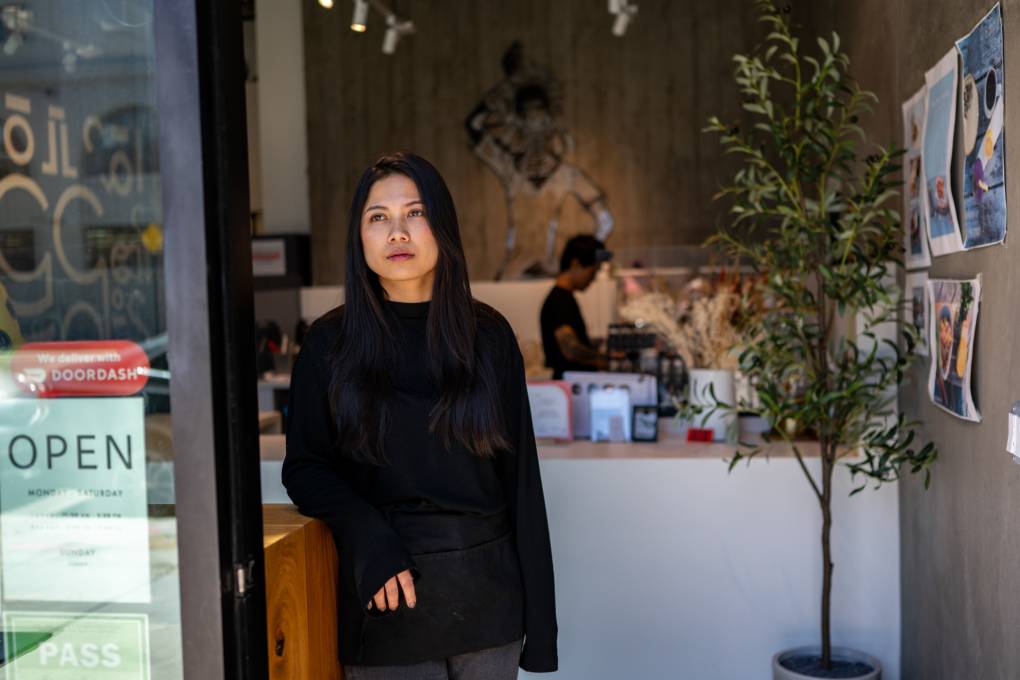
"caption": "Co-owner Ei Kay Khine Zin stands in the doorway of Bay of Burma in San Francisco’s South of Market neighborhood on May 5, 2025.",
"credit": "Beth LaBerge/KQED",
"altTag": null,
"description": null,
"imgSizes": {
"medium": {
"file": "https://cdn.kqed.org/wp-content/uploads/sites/10/2025/05/250505-SFSHELTEREQUITY-13-BL-KQED-800x533.jpg",
"width": 800,
"height": 533,
"mimeType": "image/jpeg"
},
"large": {
"file": "https://cdn.kqed.org/wp-content/uploads/sites/10/2025/05/250505-SFSHELTEREQUITY-13-BL-KQED-1020x680.jpg",
"width": 1020,
"height": 680,
"mimeType": "image/jpeg"
},
"thumbnail": {
"file": "https://cdn.kqed.org/wp-content/uploads/sites/10/2025/05/250505-SFSHELTEREQUITY-13-BL-KQED-160x107.jpg",
"width": 160,
"height": 107,
"mimeType": "image/jpeg"
},
"1536x1536": {
"file": "https://cdn.kqed.org/wp-content/uploads/sites/10/2025/05/250505-SFSHELTEREQUITY-13-BL-KQED-1536x1024.jpg",
"width": 1536,
"height": 1024,
"mimeType": "image/jpeg"
},
"post-thumbnail": {
"file": "https://cdn.kqed.org/wp-content/uploads/sites/10/2025/05/250505-SFSHELTEREQUITY-13-BL-KQED-672x372.jpg",
"width": 672,
"height": 372,
"mimeType": "image/jpeg"
},
"twentyfourteen-full-width": {
"file": "https://cdn.kqed.org/wp-content/uploads/sites/10/2025/05/250505-SFSHELTEREQUITY-13-BL-KQED-1038x576.jpg",
"width": 1038,
"height": 576,
"mimeType": "image/jpeg"
},
"full-width": {
"file": "https://cdn.kqed.org/wp-content/uploads/sites/10/2025/05/250505-SFSHELTEREQUITY-13-BL-KQED-1920x1280.jpg",
"width": 1920,
"height": 1280,
"mimeType": "image/jpeg"
},
"kqedFullSize": {
"file": "https://cdn.kqed.org/wp-content/uploads/sites/10/2025/05/250505-SFSHELTEREQUITY-13-BL-KQED.jpg",
"width": 2000,
"height": 1333
}
},
"isLoading": false,
"fetchFailed": false
},
"news_12034562": {
"type": "attachments",
"id": "news_12034562",
"meta": {
"index": "attachments_1716263798",
"site": "news",
"id": "12034562",
"found": true
},
"title": "Health And Human Services Department Employees Collect Their Belongings, As More Cuts Are Announced By Trump Administration",
"publishDate": 1743796488,
"status": "inherit",
"parent": 12034527,
"modified": 1743796529,
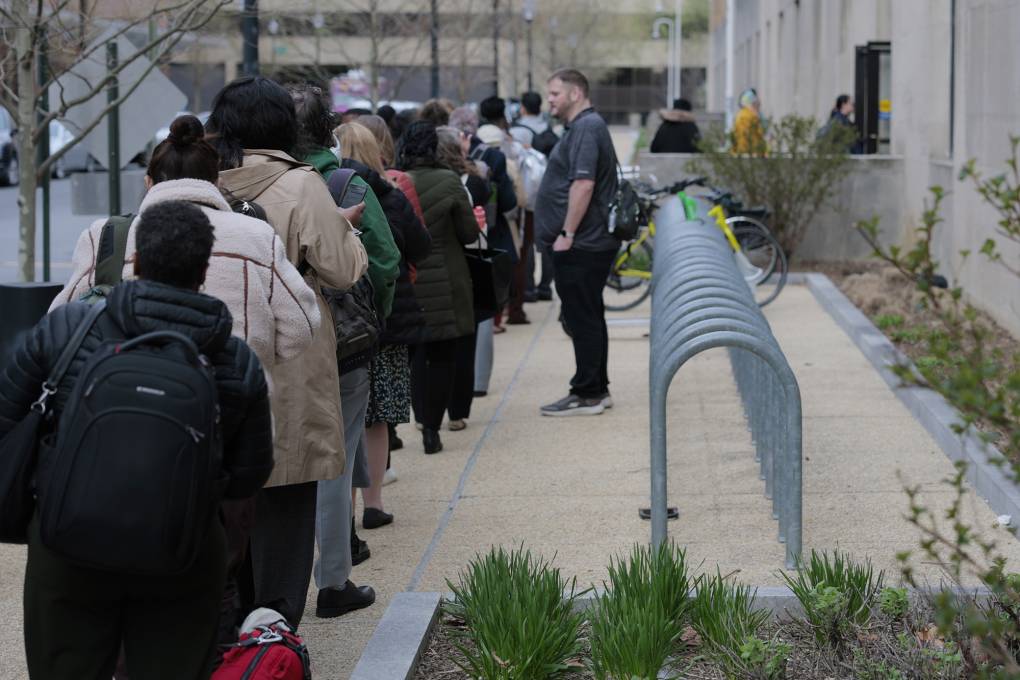
"caption": "Employees of the Department of Health and Human Services (HHS) stand in line to enter the Mary E. Switzer Memorial Building on April 2, 2025 in Washington, D.C. Layoffs began earlier this week at the Health and Human Service Administration offices after it was announced last week that the Trump Administration plans to cut 10,000 jobs at HHS. ",
"credit": "Anna Moneymaker/Getty Images",
"altTag": null,
"description": null,
"imgSizes": {
"medium": {
"file": "https://cdn.kqed.org/wp-content/uploads/sites/10/2025/04/HHSGetty-800x533.jpg",
"width": 800,
"height": 533,
"mimeType": "image/jpeg"
},
"large": {
"file": "https://cdn.kqed.org/wp-content/uploads/sites/10/2025/04/HHSGetty-1020x680.jpg",
"width": 1020,
"height": 680,
"mimeType": "image/jpeg"
},
"thumbnail": {
"file": "https://cdn.kqed.org/wp-content/uploads/sites/10/2025/04/HHSGetty-160x107.jpg",
"width": 160,
"height": 107,
"mimeType": "image/jpeg"
},
"1536x1536": {
"file": "https://cdn.kqed.org/wp-content/uploads/sites/10/2025/04/HHSGetty-1536x1024.jpg",
"width": 1536,
"height": 1024,
"mimeType": "image/jpeg"
},
"post-thumbnail": {
"file": "https://cdn.kqed.org/wp-content/uploads/sites/10/2025/04/HHSGetty-672x372.jpg",
"width": 672,
"height": 372,
"mimeType": "image/jpeg"
},
"twentyfourteen-full-width": {
"file": "https://cdn.kqed.org/wp-content/uploads/sites/10/2025/04/HHSGetty-1038x576.jpg",
"width": 1038,
"height": 576,
"mimeType": "image/jpeg"
},
"full-width": {
"file": "https://cdn.kqed.org/wp-content/uploads/sites/10/2025/04/HHSGetty-1920x1280.jpg",
"width": 1920,
"height": 1280,
"mimeType": "image/jpeg"
},
"kqedFullSize": {
"file": "https://cdn.kqed.org/wp-content/uploads/sites/10/2025/04/HHSGetty.jpg",
"width": 2000,
"height": 1333
}
},
"isLoading": false,
"fetchFailed": false
},
"news_12038603": {
"type": "attachments",
"id": "news_12038603",
"meta": {
"index": "attachments_1716263798",
"site": "news",
"id": "12038603",
"found": true
},
"title": "250502-TENDERLOINTRIAGECENTER-02-BL-KQED",
"publishDate": 1746219076,
"status": "inherit",
"parent": 12076293,
"modified": 1773354350,
"caption": "A new behavioral health center at 822 Geary Street, opened by the Department of Public Health, in San Francisco on May 2, 2025, is geared toward treating unhoused individuals experiencing a behavioral health crisis.",
"credit": "Beth LaBerge/KQED",
"altTag": null,
"description": null,
"imgSizes": {
"medium": {
"file": "https://cdn.kqed.org/wp-content/uploads/sites/10/2025/05/250502-TENDERLOINTRIAGECENTER-02-BL-KQED-800x533.jpg",
"width": 800,
"height": 533,
"mimeType": "image/jpeg"
},
"large": {
"file": "https://cdn.kqed.org/wp-content/uploads/sites/10/2025/05/250502-TENDERLOINTRIAGECENTER-02-BL-KQED-1020x680.jpg",
"width": 1020,
"height": 680,
"mimeType": "image/jpeg"
},
"thumbnail": {
"file": "https://cdn.kqed.org/wp-content/uploads/sites/10/2025/05/250502-TENDERLOINTRIAGECENTER-02-BL-KQED-160x107.jpg",
"width": 160,
"height": 107,
"mimeType": "image/jpeg"
},
"1536x1536": {
"file": "https://cdn.kqed.org/wp-content/uploads/sites/10/2025/05/250502-TENDERLOINTRIAGECENTER-02-BL-KQED-1536x1024.jpg",
"width": 1536,
"height": 1024,
"mimeType": "image/jpeg"
},
"post-thumbnail": {
"file": "https://cdn.kqed.org/wp-content/uploads/sites/10/2025/05/250502-TENDERLOINTRIAGECENTER-02-BL-KQED-672x372.jpg",
"width": 672,
"height": 372,
"mimeType": "image/jpeg"
},
"twentyfourteen-full-width": {
"file": "https://cdn.kqed.org/wp-content/uploads/sites/10/2025/05/250502-TENDERLOINTRIAGECENTER-02-BL-KQED-1038x576.jpg",
"width": 1038,
"height": 576,
"mimeType": "image/jpeg"
},
"full-width": {
"file": "https://cdn.kqed.org/wp-content/uploads/sites/10/2025/05/250502-TENDERLOINTRIAGECENTER-02-BL-KQED-1920x1280.jpg",
"width": 1920,
"height": 1280,
"mimeType": "image/jpeg"
},
"kqedFullSize": {
"file": "https://cdn.kqed.org/wp-content/uploads/sites/10/2025/05/250502-TENDERLOINTRIAGECENTER-02-BL-KQED.jpg",
"width": 2000,
"height": 1333
}
},
"isLoading": false,
"fetchFailed": false
},
"news_12038512": {
"type": "attachments",
"id": "news_12038512",
"meta": {
"index": "attachments_1716263798",
"site": "news",
"id": "12038512",
"found": true
},
"title": "250501-MAYDAYRALLYSF-14-BL-KQED",
"publishDate": 1746161928,
"status": "inherit",
"parent": 0,
"modified": 1746162062,
"caption": "Darcie Chan Blackburn (left), a San Francisco teacher, marches alongside thousands of demonstrators from Civic Center Plaza toward the Embarcadero during a May Day protest in San Francisco on Thursday, May 1, 2025.",
"credit": "Beth LaBerge/KQED",
"altTag": null,
"description": null,
"imgSizes": {
"medium": {
"file": "https://cdn.kqed.org/wp-content/uploads/sites/10/2025/05/250501-MAYDAYRALLYSF-14-BL-KQED-800x533.jpg",
"width": 800,
"height": 533,
"mimeType": "image/jpeg"
},
"large": {
"file": "https://cdn.kqed.org/wp-content/uploads/sites/10/2025/05/250501-MAYDAYRALLYSF-14-BL-KQED-1020x680.jpg",
"width": 1020,
"height": 680,
"mimeType": "image/jpeg"
},
"thumbnail": {
"file": "https://cdn.kqed.org/wp-content/uploads/sites/10/2025/05/250501-MAYDAYRALLYSF-14-BL-KQED-160x107.jpg",
"width": 160,
"height": 107,
"mimeType": "image/jpeg"
},
"1536x1536": {
"file": "https://cdn.kqed.org/wp-content/uploads/sites/10/2025/05/250501-MAYDAYRALLYSF-14-BL-KQED-1536x1024.jpg",
"width": 1536,
"height": 1024,
"mimeType": "image/jpeg"
},
"post-thumbnail": {
"file": "https://cdn.kqed.org/wp-content/uploads/sites/10/2025/05/250501-MAYDAYRALLYSF-14-BL-KQED-672x372.jpg",
"width": 672,
"height": 372,
"mimeType": "image/jpeg"
},
"twentyfourteen-full-width": {
"file": "https://cdn.kqed.org/wp-content/uploads/sites/10/2025/05/250501-MAYDAYRALLYSF-14-BL-KQED-1038x576.jpg",
"width": 1038,
"height": 576,
"mimeType": "image/jpeg"
},
"full-width": {
"file": "https://cdn.kqed.org/wp-content/uploads/sites/10/2025/05/250501-MAYDAYRALLYSF-14-BL-KQED-1920x1280.jpg",
"width": 1920,
"height": 1280,
"mimeType": "image/jpeg"
},
"kqedFullSize": {
"file": "https://cdn.kqed.org/wp-content/uploads/sites/10/2025/05/250501-MAYDAYRALLYSF-14-BL-KQED.jpg",
"width": 2000,
"height": 1333
}
},
"isLoading": false,
"fetchFailed": false
},
"news_12032353": {
"type": "attachments",
"id": "news_12032353",
"meta": {
"index": "attachments_1716263798",
"site": "news",
"id": "12032353",
"found": true
},
"title": "250318-PRIVATESCHOOLRATES-23-BL-KQED",
"publishDate": 1742509686,
"status": "inherit",
"parent": 0,
"modified": 1742510127,
"caption": "Second grade teacher Tira Sims works with students during class at Alta Vista School in San Francisco on March 18, 2025.",
"credit": "Beth LaBerge/KQED",
"altTag": null,
"description": null,
"imgSizes": {
"medium": {
"file": "https://cdn.kqed.org/wp-content/uploads/sites/10/2025/03/250318-PRIVATESCHOOLRATES-23-BL-KQED-800x533.jpg",
"width": 800,
"height": 533,
"mimeType": "image/jpeg"
},
"large": {
"file": "https://cdn.kqed.org/wp-content/uploads/sites/10/2025/03/250318-PRIVATESCHOOLRATES-23-BL-KQED-1020x680.jpg",
"width": 1020,
"height": 680,
"mimeType": "image/jpeg"
},
"thumbnail": {
"file": "https://cdn.kqed.org/wp-content/uploads/sites/10/2025/03/250318-PRIVATESCHOOLRATES-23-BL-KQED-160x107.jpg",
"width": 160,
"height": 107,
"mimeType": "image/jpeg"
},
"1536x1536": {
"file": "https://cdn.kqed.org/wp-content/uploads/sites/10/2025/03/250318-PRIVATESCHOOLRATES-23-BL-KQED-1536x1024.jpg",
"width": 1536,
"height": 1024,
"mimeType": "image/jpeg"
},
"post-thumbnail": {
"file": "https://cdn.kqed.org/wp-content/uploads/sites/10/2025/03/250318-PRIVATESCHOOLRATES-23-BL-KQED-672x372.jpg",
"width": 672,
"height": 372,
"mimeType": "image/jpeg"
},
"twentyfourteen-full-width": {
"file": "https://cdn.kqed.org/wp-content/uploads/sites/10/2025/03/250318-PRIVATESCHOOLRATES-23-BL-KQED-1038x576.jpg",
"width": 1038,
"height": 576,
"mimeType": "image/jpeg"
},
"full-width": {
"file": "https://cdn.kqed.org/wp-content/uploads/sites/10/2025/03/250318-PRIVATESCHOOLRATES-23-BL-KQED-1920x1280.jpg",
"width": 1920,
"height": 1280,
"mimeType": "image/jpeg"
},
"kqedFullSize": {
"file": "https://cdn.kqed.org/wp-content/uploads/sites/10/2025/03/250318-PRIVATESCHOOLRATES-23-BL-KQED.jpg",
"width": 2000,
"height": 1333
}
},
"isLoading": false,
"fetchFailed": false
},
"news_12001365": {
"type": "attachments",
"id": "news_12001365",
"meta": {
"index": "attachments_1716263798",
"site": "news",
"id": "12001365",
"found": true
},
"title": "The University of San Francisco campus in San Francisco on Aug. 21, 2024.",
"publishDate": 1724346037,
"status": "inherit",
"parent": 0,
"modified": 1724463519,
"caption": "The University of San Francisco campus in San Francisco on Aug. 21, 2024.",
"credit": "Beth LaBerge/KQED",
"altTag": null,
"description": null,
"imgSizes": {
"medium": {
"file": "https://cdn.kqed.org/wp-content/uploads/sites/10/2024/08/240821-GAZACAMPUSPROTESTS-09-BL-KQED-800x533.jpg",
"width": 800,
"height": 533,
"mimeType": "image/jpeg"
},
"large": {
"file": "https://cdn.kqed.org/wp-content/uploads/sites/10/2024/08/240821-GAZACAMPUSPROTESTS-09-BL-KQED-1020x680.jpg",
"width": 1020,
"height": 680,
"mimeType": "image/jpeg"
},
"thumbnail": {
"file": "https://cdn.kqed.org/wp-content/uploads/sites/10/2024/08/240821-GAZACAMPUSPROTESTS-09-BL-KQED-160x107.jpg",
"width": 160,
"height": 107,
"mimeType": "image/jpeg"
},
"1536x1536": {
"file": "https://cdn.kqed.org/wp-content/uploads/sites/10/2024/08/240821-GAZACAMPUSPROTESTS-09-BL-KQED-1536x1024.jpg",
"width": 1536,
"height": 1024,
"mimeType": "image/jpeg"
},
"post-thumbnail": {
"file": "https://cdn.kqed.org/wp-content/uploads/sites/10/2024/08/240821-GAZACAMPUSPROTESTS-09-BL-KQED-672x372.jpg",
"width": 672,
"height": 372,
"mimeType": "image/jpeg"
},
"twentyfourteen-full-width": {
"file": "https://cdn.kqed.org/wp-content/uploads/sites/10/2024/08/240821-GAZACAMPUSPROTESTS-09-BL-KQED-1038x576.jpg",
"width": 1038,
"height": 576,
"mimeType": "image/jpeg"
},
"full-width": {
"file": "https://cdn.kqed.org/wp-content/uploads/sites/10/2024/08/240821-GAZACAMPUSPROTESTS-09-BL-KQED-1920x1280.jpg",
"width": 1920,
"height": 1280,
"mimeType": "image/jpeg"
},
"kqedFullSize": {
"file": "https://cdn.kqed.org/wp-content/uploads/sites/10/2024/08/240821-GAZACAMPUSPROTESTS-09-BL-KQED.jpg",
"width": 2000,
"height": 1333
}
},
"isLoading": false,
"fetchFailed": false
},
"news_12038382": {
"type": "attachments",
"id": "news_12038382",
"meta": {
"index": "attachments_1716263798",
"site": "news",
"id": "12038382",
"found": true
},
"title": "Kamala Harris Speaks At The Emerge Gala In San Francisco",
"publishDate": 1746118359,
"status": "inherit",
"parent": 12030198,
"modified": 1751318190,
"caption": "Former Vice President Kamala Harris delivers a keynote address during the Emerge 20th anniversary gala at the Palace Hotel on April 30, 2025, in San Francisco. It was her first major political speech since leaving office in January.",
"credit": "Justin Sullivan/Getty Images",
"altTag": null,
"description": null,
"imgSizes": {
"medium": {
"file": "https://cdn.kqed.org/wp-content/uploads/sites/10/2025/05/GETTYIMAGES-2212828202-KQED-800x530.jpg",
"width": 800,
"height": 530,
"mimeType": "image/jpeg"
},
"large": {
"file": "https://cdn.kqed.org/wp-content/uploads/sites/10/2025/05/GETTYIMAGES-2212828202-KQED-1020x676.jpg",
"width": 1020,
"height": 676,
"mimeType": "image/jpeg"
},
"thumbnail": {
"file": "https://cdn.kqed.org/wp-content/uploads/sites/10/2025/05/GETTYIMAGES-2212828202-KQED-160x106.jpg",
"width": 160,
"height": 106,
"mimeType": "image/jpeg"
},
"1536x1536": {
"file": "https://cdn.kqed.org/wp-content/uploads/sites/10/2025/05/GETTYIMAGES-2212828202-KQED-1536x1018.jpg",
"width": 1536,
"height": 1018,
"mimeType": "image/jpeg"
},
"post-thumbnail": {
"file": "https://cdn.kqed.org/wp-content/uploads/sites/10/2025/05/GETTYIMAGES-2212828202-KQED-672x372.jpg",
"width": 672,
"height": 372,
"mimeType": "image/jpeg"
},
"twentyfourteen-full-width": {
"file": "https://cdn.kqed.org/wp-content/uploads/sites/10/2025/05/GETTYIMAGES-2212828202-KQED-1038x576.jpg",
"width": 1038,
"height": 576,
"mimeType": "image/jpeg"
},
"full-width": {
"file": "https://cdn.kqed.org/wp-content/uploads/sites/10/2025/05/GETTYIMAGES-2212828202-KQED-1920x1273.jpg",
"width": 1920,
"height": 1273,
"mimeType": "image/jpeg"
},
"kqedFullSize": {
"file": "https://cdn.kqed.org/wp-content/uploads/sites/10/2025/05/GETTYIMAGES-2212828202-KQED.jpg",
"width": 2000,
"height": 1326
}
},
"isLoading": false,
"fetchFailed": false
},
"news_12038252": {
"type": "attachments",
"id": "news_12038252",
"meta": {
"index": "attachments_1716263798",
"site": "news",
"id": "12038252",
"found": true
},
"title": "052_KQED_SheriffPressConference_06082023_qed",
"publishDate": 1746042645,
"status": "inherit",
"parent": 12038250,
"modified": 1746042687,
"caption": "San Francisco District Attorney Brooke Jenkins attends a news conference in Civic Center in San Francisco on June 8, 2023.",
"credit": "Beth LaBerge/KQED",
"altTag": null,
"description": null,
"imgSizes": {
"medium": {
"file": "https://cdn.kqed.org/wp-content/uploads/sites/10/2025/04/052_KQED_SheriffPressConference_06082023_qed-800x533.jpg",
"width": 800,
"height": 533,
"mimeType": "image/jpeg"
},
"large": {
"file": "https://cdn.kqed.org/wp-content/uploads/sites/10/2025/04/052_KQED_SheriffPressConference_06082023_qed-1020x680.jpg",
"width": 1020,
"height": 680,
"mimeType": "image/jpeg"
},
"thumbnail": {
"file": "https://cdn.kqed.org/wp-content/uploads/sites/10/2025/04/052_KQED_SheriffPressConference_06082023_qed-160x107.jpg",
"width": 160,
"height": 107,
"mimeType": "image/jpeg"
},
"1536x1536": {
"file": "https://cdn.kqed.org/wp-content/uploads/sites/10/2025/04/052_KQED_SheriffPressConference_06082023_qed-1536x1024.jpg",
"width": 1536,
"height": 1024,
"mimeType": "image/jpeg"
},
"post-thumbnail": {
"file": "https://cdn.kqed.org/wp-content/uploads/sites/10/2025/04/052_KQED_SheriffPressConference_06082023_qed-672x372.jpg",
"width": 672,
"height": 372,
"mimeType": "image/jpeg"
},
"twentyfourteen-full-width": {
"file": "https://cdn.kqed.org/wp-content/uploads/sites/10/2025/04/052_KQED_SheriffPressConference_06082023_qed-1038x576.jpg",
"width": 1038,
"height": 576,
"mimeType": "image/jpeg"
},
"full-width": {
"file": "https://cdn.kqed.org/wp-content/uploads/sites/10/2025/04/052_KQED_SheriffPressConference_06082023_qed-1920x1280.jpg",
"width": 1920,
"height": 1280,
"mimeType": "image/jpeg"
},
"kqedFullSize": {
"file": "https://cdn.kqed.org/wp-content/uploads/sites/10/2025/04/052_KQED_SheriffPressConference_06082023_qed.jpg",
"width": 2000,
"height": 1333
}
},
"isLoading": false,
"fetchFailed": false
},
"news_12000413": {
"type": "attachments",
"id": "news_12000413",
"meta": {
"index": "attachments_1716263798",
"site": "news",
"id": "12000413",
"found": true
},
"title": "240815-CITYATTORNEYDEEPFAKES-06-BL-KQED",
"publishDate": 1723748842,
"status": "inherit",
"parent": 12046379,
"modified": 1751062554,
"caption": "City Attorney David Chiu speaks during a press conference at City Hall in San Francisco on Aug. 15, 2024.",
"credit": "Beth LaBerge/KQED",
"altTag": null,
"description": null,
"imgSizes": {
"medium": {
"file": "https://cdn.kqed.org/wp-content/uploads/sites/10/2024/08/240815-CITYATTORNEYDEEPFAKES-06-BL-KQED-800x533.jpg",
"width": 800,
"height": 533,
"mimeType": "image/jpeg"
},
"large": {
"file": "https://cdn.kqed.org/wp-content/uploads/sites/10/2024/08/240815-CITYATTORNEYDEEPFAKES-06-BL-KQED-1020x680.jpg",
"width": 1020,
"height": 680,
"mimeType": "image/jpeg"
},
"thumbnail": {
"file": "https://cdn.kqed.org/wp-content/uploads/sites/10/2024/08/240815-CITYATTORNEYDEEPFAKES-06-BL-KQED-160x107.jpg",
"width": 160,
"height": 107,
"mimeType": "image/jpeg"
},
"1536x1536": {
"file": "https://cdn.kqed.org/wp-content/uploads/sites/10/2024/08/240815-CITYATTORNEYDEEPFAKES-06-BL-KQED-1536x1024.jpg",
"width": 1536,
"height": 1024,
"mimeType": "image/jpeg"
},
"post-thumbnail": {
"file": "https://cdn.kqed.org/wp-content/uploads/sites/10/2024/08/240815-CITYATTORNEYDEEPFAKES-06-BL-KQED-672x372.jpg",
"width": 672,
"height": 372,
"mimeType": "image/jpeg"
},
"twentyfourteen-full-width": {
"file": "https://cdn.kqed.org/wp-content/uploads/sites/10/2024/08/240815-CITYATTORNEYDEEPFAKES-06-BL-KQED-1038x576.jpg",
"width": 1038,
"height": 576,
"mimeType": "image/jpeg"
},
"full-width": {
"file": "https://cdn.kqed.org/wp-content/uploads/sites/10/2024/08/240815-CITYATTORNEYDEEPFAKES-06-BL-KQED-1920x1280.jpg",
"width": 1920,
"height": 1280,
"mimeType": "image/jpeg"
},
"kqedFullSize": {
"file": "https://cdn.kqed.org/wp-content/uploads/sites/10/2024/08/240815-CITYATTORNEYDEEPFAKES-06-BL-KQED.jpg",
"width": 2000,
"height": 1333
}
},
"isLoading": false,
"fetchFailed": false
},
"news_10846895": {
"type": "attachments",
"id": "news_10846895",
"meta": {
"index": "attachments_1716263798",
"site": "news",
"id": "10846895",
"found": true
},
"title": "California Voters Participate In The State's Pivotal Primary",
"publishDate": 1453931158,
"status": "inherit",
"parent": 10845688,
"modified": 1745886676,
"caption": "A \"Se Habla Español\" sign identifies a bilingual election official in the predominantly Latino neighborhood of Boyle Heights on Feb. 5, 2008, in Los Angeles.",
"credit": "David McNew/Getty Images",
"altTag": "A \"Se Habla Español\" sign identifies a bilingual election official in the predominantly Latino neighborhood of Boyle Heights on Feb. 5, 2008, in Los Angeles.",
"description": "A \"Se habla Espanol\" sign identifies a bilingual election official in the predominantly Latino neighborhood of Boyle Heights on Feb. 5, 2008, in Los Angeles.",
"imgSizes": {
"thumbnail": {
"file": "https://cdn.kqed.org/wp-content/uploads/sites/10/2016/01/3527_transform-400x267.jpg",
"width": 400,
"height": 267,
"mimeType": "image/jpeg"
},
"medium": {
"file": "https://cdn.kqed.org/wp-content/uploads/sites/10/2016/01/3527_transform-800x533.jpg",
"width": 800,
"height": 533,
"mimeType": "image/jpeg"
},
"medium_large": {
"file": "https://cdn.kqed.org/wp-content/uploads/sites/10/2016/01/3527_transform-768x512.jpg",
"width": 768,
"height": 512,
"mimeType": "image/jpeg"
},
"large": {
"file": "https://cdn.kqed.org/wp-content/uploads/sites/10/2016/01/3527_transform-1440x960.jpg",
"width": 1440,
"height": 960,
"mimeType": "image/jpeg"
},
"fd-lrg": {
"file": "https://cdn.kqed.org/wp-content/uploads/sites/10/2016/01/3527_transform-1920x1280.jpg",
"width": 1920,
"height": 1280,
"mimeType": "image/jpeg"
},
"fd-med": {
"file": "https://cdn.kqed.org/wp-content/uploads/sites/10/2016/01/3527_transform-1180x787.jpg",
"width": 1180,
"height": 787,
"mimeType": "image/jpeg"
},
"fd-sm": {
"file": "https://cdn.kqed.org/wp-content/uploads/sites/10/2016/01/3527_transform-960x640.jpg",
"width": 960,
"height": 640,
"mimeType": "image/jpeg"
},
"post-thumbnail": {
"file": "https://cdn.kqed.org/wp-content/uploads/sites/10/2016/01/3527_transform-672x372.jpg",
"width": 672,
"height": 372,
"mimeType": "image/jpeg"
},
"twentyfourteen-full-width": {
"file": "https://cdn.kqed.org/wp-content/uploads/sites/10/2016/01/3527_transform-1038x576.jpg",
"width": 1038,
"height": 576,
"mimeType": "image/jpeg"
},
"guest-author-32": {
"file": "https://cdn.kqed.org/wp-content/uploads/sites/10/2016/01/3527_transform-32x32.jpg",
"width": 32,
"height": 32,
"mimeType": "image/jpeg"
},
"guest-author-64": {
"file": "https://cdn.kqed.org/wp-content/uploads/sites/10/2016/01/3527_transform-64x64.jpg",
"width": 64,
"height": 64,
"mimeType": "image/jpeg"
},
"guest-author-96": {
"file": "https://cdn.kqed.org/wp-content/uploads/sites/10/2016/01/3527_transform-96x96.jpg",
"width": 96,
"height": 96,
"mimeType": "image/jpeg"
},
"guest-author-128": {
"file": "https://cdn.kqed.org/wp-content/uploads/sites/10/2016/01/3527_transform-128x128.jpg",
"width": 128,
"height": 128,
"mimeType": "image/jpeg"
},
"detail": {
"file": "https://cdn.kqed.org/wp-content/uploads/sites/10/2016/01/3527_transform-75x75.jpg",
"width": 75,
"height": 75,
"mimeType": "image/jpeg"
},
"jmtc-small-thumb": {
"file": "https://cdn.kqed.org/wp-content/uploads/sites/10/2016/01/3527_transform-280x150.jpg",
"width": 280,
"height": 150,
"mimeType": "image/jpeg"
},
"kqedFullSize": {
"file": "https://cdn.kqed.org/wp-content/uploads/sites/10/2016/01/3527_transform.jpg",
"width": 1920,
"height": 1280
}
},
"isLoading": false,
"fetchFailed": false
},
"news_12037949": {
"type": "attachments",
"id": "news_12037949",
"meta": {
"index": "attachments_1716263798",
"site": "news",
"id": "12037949",
"found": true
},
"title": "20250428_WARRANTLESSSEARCHES_GC-19-KQED",
"publishDate": 1745872932,
"status": "inherit",
"parent": 12053019,
"modified": 1755735334,
"caption": "San Francisco Sheriff Paul Miyamoto, center, speaks during a press conference announcing the San Francisco Sheriff’s Office’s plan to resume warrantless searches of criminal defendants who have been released and awaiting trial, outside of City Hall on April 28, 2025.",
"credit": "Gina Castro/KQED",
"altTag": null,
"description": null,
"imgSizes": {
"medium": {
"file": "https://cdn.kqed.org/wp-content/uploads/sites/10/2025/04/20250428_WARRANTLESSSEARCHES_GC-19-KQED-800x533.jpg",
"width": 800,
"height": 533,
"mimeType": "image/jpeg"
},
"large": {
"file": "https://cdn.kqed.org/wp-content/uploads/sites/10/2025/04/20250428_WARRANTLESSSEARCHES_GC-19-KQED-1020x680.jpg",
"width": 1020,
"height": 680,
"mimeType": "image/jpeg"
},
"thumbnail": {
"file": "https://cdn.kqed.org/wp-content/uploads/sites/10/2025/04/20250428_WARRANTLESSSEARCHES_GC-19-KQED-160x107.jpg",
"width": 160,
"height": 107,
"mimeType": "image/jpeg"
},
"1536x1536": {
"file": "https://cdn.kqed.org/wp-content/uploads/sites/10/2025/04/20250428_WARRANTLESSSEARCHES_GC-19-KQED-1536x1024.jpg",
"width": 1536,
"height": 1024,
"mimeType": "image/jpeg"
},
"post-thumbnail": {
"file": "https://cdn.kqed.org/wp-content/uploads/sites/10/2025/04/20250428_WARRANTLESSSEARCHES_GC-19-KQED-672x372.jpg",
"width": 672,
"height": 372,
"mimeType": "image/jpeg"
},
"twentyfourteen-full-width": {
"file": "https://cdn.kqed.org/wp-content/uploads/sites/10/2025/04/20250428_WARRANTLESSSEARCHES_GC-19-KQED-1038x576.jpg",
"width": 1038,
"height": 576,
"mimeType": "image/jpeg"
},
"full-width": {
"file": "https://cdn.kqed.org/wp-content/uploads/sites/10/2025/04/20250428_WARRANTLESSSEARCHES_GC-19-KQED-1920x1280.jpg",
"width": 1920,
"height": 1280,
"mimeType": "image/jpeg"
},
"kqedFullSize": {
"file": "https://cdn.kqed.org/wp-content/uploads/sites/10/2025/04/20250428_WARRANTLESSSEARCHES_GC-19-KQED.jpg",
"width": 2000,
"height": 1333
}
},
"isLoading": false,
"fetchFailed": false
}
},
"audioPlayerReducer": {
"postId": "stream_live",
"isPaused": true,
"isPlaying": false,
"pfsActive": false,
"pledgeModalIsOpen": true,
"playerDrawerIsOpen": false,
"liveAudioPlayStartedAt": 0,
"liveAudioPlayContext": ""
},
"authorsReducer": {
"kqed": {
"type": "authors",
"id": "236",
"meta": {
"index": "authors_1716337520",
"id": "236",
"found": true
},
"name": "KQED News Staff",
"firstName": "KQED News Staff",
"lastName": null,
"slug": "kqed",
"email": "faq@kqed.org",
"display_author_email": false,
"staff_mastheads": [],
"title": null,
"bio": null,
"avatar": "https://secure.gravatar.com/avatar/ef0e801a68c4c54afa9180db14084167?s=600&d=blank&r=g",
"twitter": null,
"facebook": null,
"instagram": null,
"linkedin": null,
"sites": [
{
"site": "arts",
"roles": [
"contributor"
]
},
{
"site": "news",
"roles": [
"editor"
]
},
{
"site": "futureofyou",
"roles": [
"author"
]
}
],
"headData": {
"title": "KQED News Staff | KQED",
"description": null,
"ogImgSrc": "https://secure.gravatar.com/avatar/ef0e801a68c4c54afa9180db14084167?s=600&d=blank&r=g",
"twImgSrc": "https://secure.gravatar.com/avatar/ef0e801a68c4c54afa9180db14084167?s=600&d=blank&r=g"
},
"isLoading": false,
"link": "/author/kqed"
},
"scottshafer": {
"type": "authors",
"id": "255",
"meta": {
"index": "authors_1716337520",
"id": "255",
"found": true
},
"name": "Scott Shafer",
"firstName": "Scott",
"lastName": "Shafer",
"slug": "scottshafer",
"email": "sshafer@kqed.org",
"display_author_email": false,
"staff_mastheads": [
"news"
],
"title": "KQED Contributor",
"bio": "Scott Shafer is the senior politics correspondent with the KQED Politics and Government desk. He is co-host of \u003cem>Political Breakdown\u003c/em>, the award-winning radio show and podcast with a personal take on the world of politics. Scott came to KQED in 1998 to host the statewide \u003cem>California Report\u003c/em>. Prior to that he had extended stints in politics and government. He uses that inside experience at KQED in his, reporting, hosting and analysis for the politics desk. Scott recently completed a 5-part podcast titled \u003cem>The Speaker\u003c/em>, examining Rep. Nancy Pelosi's life and legacy. Previously he collaborated on \u003cem>Political Breakdown\u003c/em> and on \u003cem>The Political Mind of Jerry Brown\u003c/em>, an eight-part series about the life and extraordinary political career of the former governor. For fun, he plays water polo and swims with the San Francisco Tsunami.",
"avatar": "https://secure.gravatar.com/avatar/a269f2db8e99b39bacd3dfb517e1aea56c8d9706cde1d375abfd9fba57eede2c?s=600&d=blank&r=g",
"twitter": "scottshafer",
"bluesky": null,
"facebook": null,
"instagram": null,
"linkedin": null,
"sites": [
{
"site": "news",
"roles": [
"editor"
]
},
{
"site": "stateofhealth",
"roles": [
"author"
]
},
{
"site": "science",
"roles": [
"author"
]
},
{
"site": "forum",
"roles": [
"subscriber"
]
},
{
"site": "liveblog",
"roles": [
"author"
]
}
],
"headData": {
"title": "Scott Shafer | KQED",
"description": "KQED Contributor",
"ogImgSrc": "https://secure.gravatar.com/avatar/a269f2db8e99b39bacd3dfb517e1aea56c8d9706cde1d375abfd9fba57eede2c?s=600&d=blank&r=g",
"twImgSrc": "https://secure.gravatar.com/avatar/a269f2db8e99b39bacd3dfb517e1aea56c8d9706cde1d375abfd9fba57eede2c?s=600&d=blank&r=g"
},
"isLoading": false,
"link": "/author/scottshafer"
},
"matthewgreen": {
"type": "authors",
"id": "1263",
"meta": {
"index": "authors_1716337520",
"id": "1263",
"found": true
},
"name": "Matthew Green",
"firstName": "Matthew",
"lastName": "Green",
"slug": "matthewgreen",
"email": "mgreen@kqed.org",
"display_author_email": false,
"staff_mastheads": [],
"title": "KQED Editor/Reporter",
"bio": "Matthew Green is a digital media producer for KQED News. He previously produced \u003ca href=\"http://www.kqed.org/lowdown\">The Lowdown\u003c/a>, KQED’s multimedia news education blog. Matthew's written for numerous Bay Area publications, including the Oakland Tribune and San Francisco Chronicle. He also taught journalism classes at Fremont High School in East Oakland.\r\n\r\nEmail: mgreen@kqed.org; Twitter: @MGreenKQED",
"avatar": "https://secure.gravatar.com/avatar/3bf498d1267ca02c8494f33d8cfc575e?s=600&d=blank&r=g",
"twitter": "MGreenKQED",
"facebook": null,
"instagram": null,
"linkedin": null,
"sites": [
{
"site": "news",
"roles": []
},
{
"site": "lowdown",
"roles": []
},
{
"site": "science",
"roles": []
},
{
"site": "education",
"roles": []
},
{
"site": "quest",
"roles": []
},
{
"site": "liveblog",
"roles": []
}
],
"headData": {
"title": "Matthew Green | KQED",
"description": "KQED Editor/Reporter",
"ogImgSrc": "https://secure.gravatar.com/avatar/3bf498d1267ca02c8494f33d8cfc575e?s=600&d=blank&r=g",
"twImgSrc": "https://secure.gravatar.com/avatar/3bf498d1267ca02c8494f33d8cfc575e?s=600&d=blank&r=g"
},
"isLoading": false,
"link": "/author/matthewgreen"
},
"vrancano": {
"type": "authors",
"id": "11276",
"meta": {
"index": "authors_1716337520",
"id": "11276",
"found": true
},
"name": "Vanessa Rancaño",
"firstName": "Vanessa",
"lastName": "Rancaño",
"slug": "vrancano",
"email": "vrancano@kqed.org",
"display_author_email": false,
"staff_mastheads": [
"news"
],
"title": "Reporter",
"bio": "Vanessa Rancaño is a features reporter for KQED. She’s also covered homelessness and education for the station and reported from the Central Valley. Her work has aired across public radio, from flagship national news shows to longform narrative podcasts. Before taking up a mic, she worked as a freelance print journalist. She’s been recognized with a number of national and regional awards. Vanessa grew up in California's Central Valley. She's a former NPR Kroc Fellow, and a graduate of the UC Berkeley Graduate School of Journalism.",
"avatar": "https://secure.gravatar.com/avatar/b3a383dfb0e7ee1c17568f2cf067904ab654d6e3de9743fc661f3c788ade1bed?s=600&d=blank&r=g",
"twitter": "vanessarancano",
"bluesky": null,
"facebook": null,
"instagram": null,
"linkedin": null,
"sites": [
{
"site": "arts",
"roles": [
"editor"
]
},
{
"site": "news",
"roles": [
"editor"
]
},
{
"site": "liveblog",
"roles": [
"contributor"
]
}
],
"headData": {
"title": "Vanessa Rancaño | KQED",
"description": "Reporter",
"ogImgSrc": "https://secure.gravatar.com/avatar/b3a383dfb0e7ee1c17568f2cf067904ab654d6e3de9743fc661f3c788ade1bed?s=600&d=blank&r=g",
"twImgSrc": "https://secure.gravatar.com/avatar/b3a383dfb0e7ee1c17568f2cf067904ab654d6e3de9743fc661f3c788ade1bed?s=600&d=blank&r=g"
},
"isLoading": false,
"link": "/author/vrancano"
},
"sjohnson": {
"type": "authors",
"id": "11840",
"meta": {
"index": "authors_1716337520",
"id": "11840",
"found": true
},
"name": "Sydney Johnson",
"firstName": "Sydney",
"lastName": "Johnson",
"slug": "sjohnson",
"email": "sjohnson@kqed.org",
"display_author_email": false,
"staff_mastheads": [
"news"
],
"title": "KQED Reporter",
"bio": "Sydney Johnson is a general assignment reporter at KQED. She previously reported on public health and city government at the San Francisco Examiner, and before that, she covered statewide education policy for EdSource. Her reporting has won multiple local, state and national awards. Sydney is a graduate of the University of California, Berkeley and lives in San Francisco.",
"avatar": "https://secure.gravatar.com/avatar/97855f2719b72ad6190b7c535fe642c8?s=600&d=blank&r=g",
"twitter": "sydneyfjohnson",
"facebook": null,
"instagram": null,
"linkedin": null,
"sites": [
{
"site": "news",
"roles": [
"editor"
]
}
],
"headData": {
"title": "Sydney Johnson | KQED",
"description": "KQED Reporter",
"ogImgSrc": "https://secure.gravatar.com/avatar/97855f2719b72ad6190b7c535fe642c8?s=600&d=blank&r=g",
"twImgSrc": "https://secure.gravatar.com/avatar/97855f2719b72ad6190b7c535fe642c8?s=600&d=blank&r=g"
},
"isLoading": false,
"link": "/author/sjohnson"
},
"pbartolone": {
"type": "authors",
"id": "11879",
"meta": {
"index": "authors_1716337520",
"id": "11879",
"found": true
},
"name": "Pauline Bartolone",
"firstName": "Pauline",
"lastName": "Bartolone",
"slug": "pbartolone",
"email": "pbartolone@kqed.org",
"display_author_email": false,
"staff_mastheads": [],
"title": "KQED Contributor",
"bio": "Pauline Bartolone has been a journalist for two decades, specializing in longform audio storytelling. Before editing and producing for podcasts like Bay Curious, she was a health care journalist for public radio and print outlets such as CalMatters and Kaiser Health News. Her reporting has won several regional Edward R. Murrow awards, national recognition from the Society of Professional Journalists and a first-place prize from the Association of Health Care Journalists.\r\n\r\nPauline’s work has aired frequently on National Public Radio, and bylines have appeared in The Los Angeles Times, CNN.com, Washingtonpost.com, USA Today and Scientific American.\r\n\r\nPauline has lived in Northern California for 20 years. Her other passions are crafts (now done in collaboration with her daughter) and the Brazilian martial art of capoeira.",
"avatar": "https://secure.gravatar.com/avatar/95001c30374b0d3878007af9cf1e120a?s=600&d=blank&r=g",
"twitter": "pbartolone",
"facebook": null,
"instagram": null,
"linkedin": null,
"sites": [
{
"site": "news",
"roles": [
"editor"
]
},
{
"site": "podcasts",
"roles": [
"subscriber"
]
}
],
"headData": {
"title": "Pauline Bartolone | KQED",
"description": "KQED Contributor",
"ogImgSrc": "https://secure.gravatar.com/avatar/95001c30374b0d3878007af9cf1e120a?s=600&d=blank&r=g",
"twImgSrc": "https://secure.gravatar.com/avatar/95001c30374b0d3878007af9cf1e120a?s=600&d=blank&r=g"
},
"isLoading": false,
"link": "/author/pbartolone"
},
"kdebenedetti": {
"type": "authors",
"id": "11913",
"meta": {
"index": "authors_1716337520",
"id": "11913",
"found": true
},
"name": "Katie DeBenedetti",
"firstName": "Katie",
"lastName": "DeBenedetti",
"slug": "kdebenedetti",
"email": "kdebenedetti@kqed.org",
"display_author_email": false,
"staff_mastheads": [
"news",
"science"
],
"title": "KQED Contributor",
"bio": "Katie DeBenedetti is a digital reporter covering daily news for the Express Desk. Prior to joining KQED as a culture reporting intern in January 2024, she covered education and city government for the Napa Valley Register.",
"avatar": "https://secure.gravatar.com/avatar/6e31073cb8f7e4214ab03f42771d0f45?s=600&d=blank&r=g",
"twitter": null,
"facebook": null,
"instagram": null,
"linkedin": null,
"sites": [
{
"site": "news",
"roles": [
"author"
]
},
{
"site": "science",
"roles": [
"author"
]
},
{
"site": "liveblog",
"roles": [
"author"
]
}
],
"headData": {
"title": "Katie DeBenedetti | KQED",
"description": "KQED Contributor",
"ogImgSrc": "https://secure.gravatar.com/avatar/6e31073cb8f7e4214ab03f42771d0f45?s=600&d=blank&r=g",
"twImgSrc": "https://secure.gravatar.com/avatar/6e31073cb8f7e4214ab03f42771d0f45?s=600&d=blank&r=g"
},
"isLoading": false,
"link": "/author/kdebenedetti"
},
"rcooke": {
"type": "authors",
"id": "11921",
"meta": {
"index": "authors_1716337520",
"id": "11921",
"found": true
},
"name": "Riley Cooke",
"firstName": "Riley",
"lastName": "Cooke",
"slug": "rcooke",
"email": "rcooke@kqed.org",
"display_author_email": true,
"staff_mastheads": [
"news"
],
"title": "KQED Contributor",
"bio": "Riley is a senior at UC Berkeley, where she studies political science and journalism. Her work has appeared in SFGate, NBC Bay Area, Local News Matters and more. She enjoys reporting on politics, housing and homelessness — and using as many em dashes as her editors will allow.",
"avatar": "https://secure.gravatar.com/avatar/792f98c126cc5e270a8a96f77f7224ea?s=600&d=blank&r=g",
"twitter": "rrileycooke",
"facebook": null,
"instagram": null,
"linkedin": null,
"sites": [
{
"site": "arts",
"roles": [
"author"
]
},
{
"site": "news",
"roles": [
"author"
]
}
],
"headData": {
"title": "Riley Cooke | KQED",
"description": "KQED Contributor",
"ogImgSrc": "https://secure.gravatar.com/avatar/792f98c126cc5e270a8a96f77f7224ea?s=600&d=blank&r=g",
"twImgSrc": "https://secure.gravatar.com/avatar/792f98c126cc5e270a8a96f77f7224ea?s=600&d=blank&r=g"
},
"isLoading": false,
"link": "/author/rcooke"
}
},
"pagesReducer": {
"news_tag_san-francisco": {
"type": "terms",
"id": "news_38",
"meta": {
"index": "terms_1716263798",
"site": "news",
"id": "38",
"score": 6.726884
},
"featImg": null,
"name": "San Francisco",
"description": null,
"taxonomy": "tag",
"headData": {
"twImgId": null,
"twTitle": null,
"ogTitle": null,
"ogImgId": null,
"twDescription": null,
"description": null,
"title": "San Francisco Archives | KQED News",
"ogDescription": null
},
"ttid": 58,
"slug": "san-francisco",
"isLoading": false,
"title": "San Francisco",
"pageMeta": {
"site": "news",
"WpPageTemplate": "page-topic-editorial",
"currentPage": 74
},
"blocks": [
{
"blockName": "kqed/post-list",
"attrs": {
"layout": "cardArticle2",
"query": "posts/news?tag=san-francisco",
"seeMore": false,
"paginated": true,
"page": 74
}
},
{
"blockName": "kqed/ad"
}
]
}
},
"pfsSessionReducer": {},
"postsReducer": {
"stream_live": {
"type": "live",
"id": "stream_live",
"audioUrl": "https://hls.kqed.org/hls/kqed_app/playlist.m3u8",
"title": "Live Stream",
"excerpt": "Live Stream information currently unavailable.",
"link": "/radio",
"featImg": "",
"label": {
"name": "KQED Live",
"link": "/"
}
},
"stream_kqedNewscast": {
"type": "posts",
"id": "stream_kqedNewscast",
"audioUrl": "https://www.kqed.org/.stream/anon/radio/RDnews/newscast.mp3?_=1",
"title": "KQED Newscast",
"featImg": "",
"label": {
"name": "88.5 FM",
"link": "/"
}
},
"news_12038896": {
"type": "posts",
"id": "news_12038896",
"meta": {
"index": "posts_1716263798",
"site": "news",
"id": "12038896",
"score": null,
"sort": [
1746564914000
]
},
"guestAuthors": [],
"slug": "student-hunger-strikers-want-sf-states-divestment-deal-to-spread-across-csu-system",
"title": "Student Hunger Strikers Want SF State’s Divestment Deal to Spread Across CSU System",
"publishDate": 1746564914,
"format": "standard",
"headTitle": "Student Hunger Strikers Want SF State’s Divestment Deal to Spread Across CSU System | KQED",
"labelTerm": {
"site": "news"
},
"content": "\u003cp>\u003cem>Updated 4:20 p.m. Tuesday\u003c/em>\u003c/p>\n\u003cp>Two dozen pro-Palestinian student activists are on a hunger strike calling for California State University to follow its San Francisco and Sacramento campuses in \u003ca href=\"https://www.kqed.org/news/12002307/san-francisco-state-divests-from-weapons-makers-after-working-with-student-activists\">divesting from companies\u003c/a> that supply weapons and surveillance technology to Israel.\u003c/p>\n\u003cp>The historic deal between activists and officials at San Francisco State University, which came as a result of the \u003ca href=\"https://www.kqed.org/news/11984403/sfsu-pro-palestinian-encampment-established-as-students-rally-for-divestment\">pro-Palestinian encampment that was set up on campus last spring\u003c/a>, pulled investments from weapons manufacturers Lockheed Martin and Leonardo, data analysis company and military contractor Palantir, and construction equipment maker Caterpillar.\u003c/p>\n\u003cp>Twenty-five hunger strikers at the Cal State campuses in San Francisco, Sacramento, San José and Long Beach are calling on San José and Long Beach to follow suit, along with the entire university system. The hunger strike includes seven students at San José State and six in San Francisco.\u003c/p>\n\u003cp>[ad fullwidth]\u003c/p>\n\u003cp>They said they are striving to raise awareness of Palestinians’ increasing risk of starvation more than two months into an Israeli blockade that has \u003ca href=\"https://www.npr.org/2025/05/05/nx-s1-5386511/israel-gaza-food-supplies-hamas-palestinians\">banned food and aid from entering Gaza\u003c/a>, a year and a half after Israel launched its offensive following Hamas’ attacks on Oct. 7, 2023.\u003c/p>\n\u003cp>“The California State University system remains complicit in the genocide of the Palestinian people through millions of dollars invested in defense companies and weapons manufacturers,” said Max Flynt, a member of the General Union of Palestine Students at San Francisco State University. “This act of solidarity aims to shed light on what exactly the people of Gaza are facing, and make it inescapable for the administrations of these universities.”\u003c/p>\n\u003cfigure id=\"attachment_12018066\" class=\"wp-caption aligncenter\" style=\"max-width: 2000px\">\u003cimg loading=\"lazy\" decoding=\"async\" class=\"size-full wp-image-12018066\" src=\"https://cdn.kqed.org/wp-content/uploads/sites/10/2024/12/20241212-SFSUInvestmentVote-JY-002.jpg\" alt=\"\" width=\"2000\" height=\"1332\" srcset=\"https://cdn.kqed.org/wp-content/uploads/sites/10/2024/12/20241212-SFSUInvestmentVote-JY-002.jpg 2000w, https://cdn.kqed.org/wp-content/uploads/sites/10/2024/12/20241212-SFSUInvestmentVote-JY-002-800x533.jpg 800w, https://cdn.kqed.org/wp-content/uploads/sites/10/2024/12/20241212-SFSUInvestmentVote-JY-002-1020x679.jpg 1020w, https://cdn.kqed.org/wp-content/uploads/sites/10/2024/12/20241212-SFSUInvestmentVote-JY-002-160x107.jpg 160w, https://cdn.kqed.org/wp-content/uploads/sites/10/2024/12/20241212-SFSUInvestmentVote-JY-002-1536x1023.jpg 1536w, https://cdn.kqed.org/wp-content/uploads/sites/10/2024/12/20241212-SFSUInvestmentVote-JY-002-1920x1279.jpg 1920w\" sizes=\"auto, (max-width: 2000px) 100vw, 2000px\">\u003cfigcaption class=\"wp-caption-text\">Max Flynt, an SF State student, makes a public comment during the SF State Foundation Board meeting to discuss investment in weapons manufacturing companies at the Seven Hills Conference Center on campus in San Francisco on Dec. 12, 2024. \u003ccite>(Juliana Yamada/KQED)\u003c/cite>\u003c/figcaption>\u003c/figure>\n\u003cp>Under the agreement between student activists and the SF State Foundation, an organization that supports the school by investing donations, \u003ca href=\"https://www.kqed.org/news/12017889/sf-state-limits-investments-weapons-manufacturers-after-student-activists-push\">investments are screened\u003c/a> to identify companies that earn more than 5% of their revenue from weapons manufacturing on an ongoing basis.\u003c/p>\n\u003cp>Potential investment targets that surpass the threshold would not be added to the foundation’s portfolio, and any existing holdings whose revenues change to cross the limit would be screened out, according to university spokesperson Bobby King.\u003c/p>\n\u003cp>The policy does not apply only to companies that supply weapons or surveillance technology to Israel. It says the foundation will “strive not to invest in companies that consistently, knowingly, and directly facilitate or enable severe violations of international law and human rights.”[aside postID=news_12038385 hero='https://cdn.kqed.org/wp-content/uploads/sites/10/2024/08/240821-GAZACAMPUSPROTESTS-09-BL-KQED-1020x680.jpg']The activists at all four universities are also calling on the Cal State system to divest from all companies that supply weapons, military and surveillance technology and infrastructure, as well as any other companies that “conduct activity that violates human rights” under international law. They mention Lockheed Martin, Caterpillar, Palantir and Leonardo by name.\u003c/p>\n\u003cp>Last week, the private University of San Francisco announced its own\u003ca href=\"https://www.kqed.org/news/12038385/usf-divests-from-defense-companies-tied-to-israel-after-pressure-from-students\"> plans to divest\u003c/a> from four U.S. defense companies, including Palantir, that have contracts with the Israeli military.\u003c/p>\n\u003cp>Cal State protesters said the school system has “millions of dollars invested in defense companies and weapons manufacturers.” In a letter to the campus community last spring, San José State University said that its philanthropic partner organization, the Tower Foundation, did not have any direct investments in specific companies that its academic senate wanted to divest from.\u003c/p>\n\u003cp>Some San José State-affiliated organizations had “nominal investments” in some of the companies, which are embedded in diversified mutual funds, according to the letter.\u003c/p>\n\u003cp>The hunger strikers are also calling for the Cal State system to end its international program at the University of Haifa in Israel, as well as any other study abroad programs with Israeli institutions.\u003c/p>\n\u003cfigure id=\"attachment_12002404\" class=\"wp-caption aligncenter\" style=\"max-width: 2560px\">\u003cimg loading=\"lazy\" decoding=\"async\" class=\"size-full wp-image-12002404\" src=\"https://cdn.kqed.org/wp-content/uploads/sites/10/2024/08/20240829-SFSUGazarally-JY-005-scaled.jpg\" alt=\"\" width=\"2560\" height=\"1707\" srcset=\"https://cdn.kqed.org/wp-content/uploads/sites/10/2024/08/20240829-SFSUGazarally-JY-005-scaled.jpg 2560w, https://cdn.kqed.org/wp-content/uploads/sites/10/2024/08/20240829-SFSUGazarally-JY-005-800x533.jpg 800w, https://cdn.kqed.org/wp-content/uploads/sites/10/2024/08/20240829-SFSUGazarally-JY-005-1020x680.jpg 1020w, https://cdn.kqed.org/wp-content/uploads/sites/10/2024/08/20240829-SFSUGazarally-JY-005-160x107.jpg 160w, https://cdn.kqed.org/wp-content/uploads/sites/10/2024/08/20240829-SFSUGazarally-JY-005-1536x1024.jpg 1536w, https://cdn.kqed.org/wp-content/uploads/sites/10/2024/08/20240829-SFSUGazarally-JY-005-2048x1365.jpg 2048w, https://cdn.kqed.org/wp-content/uploads/sites/10/2024/08/20240829-SFSUGazarally-JY-005-1920x1280.jpg 1920w\" sizes=\"auto, (max-width: 2560px) 100vw, 2560px\">\u003cfigcaption class=\"wp-caption-text\">Students gather for a San Francisco State University Students for Gaza press conference and rally to announce the university’s divestments from weapons manufacturers on SFSU’s campus on Aug. 29, 2024. \u003ccite>(Juliana Yamada/KQED)\u003c/cite>\u003c/figcaption>\u003c/figure>\n\u003cp>San José State spokesperson Michelle Smith McDonald said in an email that the school hasn’t had a student enrolled in the program at the University of Haifa in more than a decade, and that the program was not currently on the Cal State system’s list of available programs.\u003c/p>\n\u003cp>SF State also has no students currently studying abroad in Israel, according to King, but he said that the school does not support academic boycotts.\u003c/p>\n\u003cp>“They can have a negative effect on academic freedom, as the CSU experienced when California’s well-intentioned travel ban actually \u003ca href=\"https://www.capradio.org/articles/2023/07/25/california-democrats-want-to-reverse-a-travel-ban-to-anti-lgbtq-states-has-it-had-its-intended-effect/\">impeded important LGBTQ+ research\u003c/a>,” he said in a statement, referring to a California law that banned state-funded travel to states with discriminatory laws from 2016 to 2023.\u003c/p>\n\u003cp>Both universities confirmed that they are meeting with students in response to notifications about the hunger strike.\u003c/p>\n\u003cp>Haddy Barghouti, a student striking at San José State, said he hopes the demonstration will put pressure on his campus to reach a deal with students.\u003c/p>\n\u003cp>“We want our money to go to things that can help our campus and not towards weapons manufacturers,” he told KQED. “We wanted a way to use our voices and stop all of this.”\u003c/p>\n\u003cp>\u003cem>KQED’s \u003c/em>\u003ca href=\"https://www.kqed.org/author/adahlstromeckman\">\u003cem>Azul Dahlstrom-Eckman\u003c/em>\u003c/a>\u003cem> contributed to this report.\u003c/em>\u003c/p>\n\u003cp>\u003c/p>\n",
"blocks": [],
"excerpt": "Two dozen pro-Palestinian student activists launched a hunger strike to call on other California State University campuses to divest from companies that supply weapons to Israel.",
"status": "publish",
"parent": 0,
"modified": 1746573667,
"stats": {
"hasAudio": false,
"hasVideo": false,
"hasChartOrMap": false,
"iframeSrcs": [],
"hasGoogleForm": false,
"hasGallery": false,
"hasHearkenModule": false,
"hasPolis": false,
"paragraphCount": 22,
"wordCount": 925
},
"headData": {
"title": "Student Hunger Strikers Want SF State’s Divestment Deal to Spread Across CSU System | KQED",
"description": "Two dozen pro-Palestinian student activists launched a hunger strike to call on other California State University campuses to divest from companies that supply weapons to Israel.",
"ogTitle": "",
"ogDescription": "",
"ogImgId": "",
"twTitle": "",
"twDescription": "",
"twImgId": "",
"schema": {
"@context": "https://schema.org",
"@type": "NewsArticle",
"headline": "Student Hunger Strikers Want SF State’s Divestment Deal to Spread Across CSU System",
"datePublished": "2025-05-06T13:55:14-07:00",
"dateModified": "2025-05-06T16:21:07-07:00",
"image": "https://cdn.kqed.org/wp-content/uploads/2020/02/KQED-OG-Image@1x.png",
"isAccessibleForFree": "True",
"publisher": {
"@type": "NewsMediaOrganization",
"@id": "https://www.kqed.org/#organization",
"name": "KQED",
"logo": "https://cdn.kqed.org/wp-content/uploads/2020/02/KQED-OG-Image@1x.png",
"url": "https://www.kqed.org",
"sameAs": [
"https://www.facebook.com/KQED",
"https://twitter.com/KQED",
"https://www.instagram.com/kqed/",
"https://www.tiktok.com/@kqedofficial",
"https://www.linkedin.com/company/kqed",
"https://www.youtube.com/channel/UCeC0IOo7i1P_61zVUWbJ4nw"
]
}
}
},
"sticky": false,
"nprStoryId": "kqed-12038896",
"templateType": "standard",
"featuredImageType": "standard",
"excludeFromSiteSearch": "Include",
"articleAge": "0",
"path": "/news/12038896/student-hunger-strikers-want-sf-states-divestment-deal-to-spread-across-csu-system",
"audioTrackLength": null,
"parsedContent": [
{
"type": "contentString",
"content": "\u003cdiv class=\"post-body\">\u003cp>\u003cp>\u003cem>Updated 4:20 p.m. Tuesday\u003c/em>\u003c/p>\n\u003cp>Two dozen pro-Palestinian student activists are on a hunger strike calling for California State University to follow its San Francisco and Sacramento campuses in \u003ca href=\"https://www.kqed.org/news/12002307/san-francisco-state-divests-from-weapons-makers-after-working-with-student-activists\">divesting from companies\u003c/a> that supply weapons and surveillance technology to Israel.\u003c/p>\n\u003cp>The historic deal between activists and officials at San Francisco State University, which came as a result of the \u003ca href=\"https://www.kqed.org/news/11984403/sfsu-pro-palestinian-encampment-established-as-students-rally-for-divestment\">pro-Palestinian encampment that was set up on campus last spring\u003c/a>, pulled investments from weapons manufacturers Lockheed Martin and Leonardo, data analysis company and military contractor Palantir, and construction equipment maker Caterpillar.\u003c/p>\n\u003cp>Twenty-five hunger strikers at the Cal State campuses in San Francisco, Sacramento, San José and Long Beach are calling on San José and Long Beach to follow suit, along with the entire university system. The hunger strike includes seven students at San José State and six in San Francisco.\u003c/p>\n\u003cp>\u003c/p>\u003c/div>",
"attributes": {
"named": {},
"numeric": []
}
},
{
"type": "component",
"content": "",
"name": "ad",
"attributes": {
"named": {
"label": "fullwidth"
},
"numeric": [
"fullwidth"
]
}
},
{
"type": "contentString",
"content": "\u003cdiv class=\"post-body\">\u003cp>\u003c/p>\n\u003cp>They said they are striving to raise awareness of Palestinians’ increasing risk of starvation more than two months into an Israeli blockade that has \u003ca href=\"https://www.npr.org/2025/05/05/nx-s1-5386511/israel-gaza-food-supplies-hamas-palestinians\">banned food and aid from entering Gaza\u003c/a>, a year and a half after Israel launched its offensive following Hamas’ attacks on Oct. 7, 2023.\u003c/p>\n\u003cp>“The California State University system remains complicit in the genocide of the Palestinian people through millions of dollars invested in defense companies and weapons manufacturers,” said Max Flynt, a member of the General Union of Palestine Students at San Francisco State University. “This act of solidarity aims to shed light on what exactly the people of Gaza are facing, and make it inescapable for the administrations of these universities.”\u003c/p>\n\u003cfigure id=\"attachment_12018066\" class=\"wp-caption aligncenter\" style=\"max-width: 2000px\">\u003cimg loading=\"lazy\" decoding=\"async\" class=\"size-full wp-image-12018066\" src=\"https://cdn.kqed.org/wp-content/uploads/sites/10/2024/12/20241212-SFSUInvestmentVote-JY-002.jpg\" alt=\"\" width=\"2000\" height=\"1332\" srcset=\"https://cdn.kqed.org/wp-content/uploads/sites/10/2024/12/20241212-SFSUInvestmentVote-JY-002.jpg 2000w, https://cdn.kqed.org/wp-content/uploads/sites/10/2024/12/20241212-SFSUInvestmentVote-JY-002-800x533.jpg 800w, https://cdn.kqed.org/wp-content/uploads/sites/10/2024/12/20241212-SFSUInvestmentVote-JY-002-1020x679.jpg 1020w, https://cdn.kqed.org/wp-content/uploads/sites/10/2024/12/20241212-SFSUInvestmentVote-JY-002-160x107.jpg 160w, https://cdn.kqed.org/wp-content/uploads/sites/10/2024/12/20241212-SFSUInvestmentVote-JY-002-1536x1023.jpg 1536w, https://cdn.kqed.org/wp-content/uploads/sites/10/2024/12/20241212-SFSUInvestmentVote-JY-002-1920x1279.jpg 1920w\" sizes=\"auto, (max-width: 2000px) 100vw, 2000px\">\u003cfigcaption class=\"wp-caption-text\">Max Flynt, an SF State student, makes a public comment during the SF State Foundation Board meeting to discuss investment in weapons manufacturing companies at the Seven Hills Conference Center on campus in San Francisco on Dec. 12, 2024. \u003ccite>(Juliana Yamada/KQED)\u003c/cite>\u003c/figcaption>\u003c/figure>\n\u003cp>Under the agreement between student activists and the SF State Foundation, an organization that supports the school by investing donations, \u003ca href=\"https://www.kqed.org/news/12017889/sf-state-limits-investments-weapons-manufacturers-after-student-activists-push\">investments are screened\u003c/a> to identify companies that earn more than 5% of their revenue from weapons manufacturing on an ongoing basis.\u003c/p>\n\u003cp>Potential investment targets that surpass the threshold would not be added to the foundation’s portfolio, and any existing holdings whose revenues change to cross the limit would be screened out, according to university spokesperson Bobby King.\u003c/p>\n\u003cp>The policy does not apply only to companies that supply weapons or surveillance technology to Israel. It says the foundation will “strive not to invest in companies that consistently, knowingly, and directly facilitate or enable severe violations of international law and human rights.”\u003c/p>\u003c/div>",
"attributes": {
"named": {},
"numeric": []
}
},
{
"type": "component",
"content": "",
"name": "aside",
"attributes": {
"named": {
"postid": "news_12038385",
"hero": "https://cdn.kqed.org/wp-content/uploads/sites/10/2024/08/240821-GAZACAMPUSPROTESTS-09-BL-KQED-1020x680.jpg",
"label": ""
},
"numeric": []
}
},
{
"type": "contentString",
"content": "\u003cdiv class=\"post-body\">\u003cp>The activists at all four universities are also calling on the Cal State system to divest from all companies that supply weapons, military and surveillance technology and infrastructure, as well as any other companies that “conduct activity that violates human rights” under international law. They mention Lockheed Martin, Caterpillar, Palantir and Leonardo by name.\u003c/p>\n\u003cp>Last week, the private University of San Francisco announced its own\u003ca href=\"https://www.kqed.org/news/12038385/usf-divests-from-defense-companies-tied-to-israel-after-pressure-from-students\"> plans to divest\u003c/a> from four U.S. defense companies, including Palantir, that have contracts with the Israeli military.\u003c/p>\n\u003cp>Cal State protesters said the school system has “millions of dollars invested in defense companies and weapons manufacturers.” In a letter to the campus community last spring, San José State University said that its philanthropic partner organization, the Tower Foundation, did not have any direct investments in specific companies that its academic senate wanted to divest from.\u003c/p>\n\u003cp>Some San José State-affiliated organizations had “nominal investments” in some of the companies, which are embedded in diversified mutual funds, according to the letter.\u003c/p>\n\u003cp>The hunger strikers are also calling for the Cal State system to end its international program at the University of Haifa in Israel, as well as any other study abroad programs with Israeli institutions.\u003c/p>\n\u003cfigure id=\"attachment_12002404\" class=\"wp-caption aligncenter\" style=\"max-width: 2560px\">\u003cimg loading=\"lazy\" decoding=\"async\" class=\"size-full wp-image-12002404\" src=\"https://cdn.kqed.org/wp-content/uploads/sites/10/2024/08/20240829-SFSUGazarally-JY-005-scaled.jpg\" alt=\"\" width=\"2560\" height=\"1707\" srcset=\"https://cdn.kqed.org/wp-content/uploads/sites/10/2024/08/20240829-SFSUGazarally-JY-005-scaled.jpg 2560w, https://cdn.kqed.org/wp-content/uploads/sites/10/2024/08/20240829-SFSUGazarally-JY-005-800x533.jpg 800w, https://cdn.kqed.org/wp-content/uploads/sites/10/2024/08/20240829-SFSUGazarally-JY-005-1020x680.jpg 1020w, https://cdn.kqed.org/wp-content/uploads/sites/10/2024/08/20240829-SFSUGazarally-JY-005-160x107.jpg 160w, https://cdn.kqed.org/wp-content/uploads/sites/10/2024/08/20240829-SFSUGazarally-JY-005-1536x1024.jpg 1536w, https://cdn.kqed.org/wp-content/uploads/sites/10/2024/08/20240829-SFSUGazarally-JY-005-2048x1365.jpg 2048w, https://cdn.kqed.org/wp-content/uploads/sites/10/2024/08/20240829-SFSUGazarally-JY-005-1920x1280.jpg 1920w\" sizes=\"auto, (max-width: 2560px) 100vw, 2560px\">\u003cfigcaption class=\"wp-caption-text\">Students gather for a San Francisco State University Students for Gaza press conference and rally to announce the university’s divestments from weapons manufacturers on SFSU’s campus on Aug. 29, 2024. \u003ccite>(Juliana Yamada/KQED)\u003c/cite>\u003c/figcaption>\u003c/figure>\n\u003cp>San José State spokesperson Michelle Smith McDonald said in an email that the school hasn’t had a student enrolled in the program at the University of Haifa in more than a decade, and that the program was not currently on the Cal State system’s list of available programs.\u003c/p>\n\u003cp>SF State also has no students currently studying abroad in Israel, according to King, but he said that the school does not support academic boycotts.\u003c/p>\n\u003cp>“They can have a negative effect on academic freedom, as the CSU experienced when California’s well-intentioned travel ban actually \u003ca href=\"https://www.capradio.org/articles/2023/07/25/california-democrats-want-to-reverse-a-travel-ban-to-anti-lgbtq-states-has-it-had-its-intended-effect/\">impeded important LGBTQ+ research\u003c/a>,” he said in a statement, referring to a California law that banned state-funded travel to states with discriminatory laws from 2016 to 2023.\u003c/p>\n\u003cp>Both universities confirmed that they are meeting with students in response to notifications about the hunger strike.\u003c/p>\n\u003cp>Haddy Barghouti, a student striking at San José State, said he hopes the demonstration will put pressure on his campus to reach a deal with students.\u003c/p>\n\u003cp>“We want our money to go to things that can help our campus and not towards weapons manufacturers,” he told KQED. “We wanted a way to use our voices and stop all of this.”\u003c/p>\n\u003cp>\u003cem>KQED’s \u003c/em>\u003ca href=\"https://www.kqed.org/author/adahlstromeckman\">\u003cem>Azul Dahlstrom-Eckman\u003c/em>\u003c/a>\u003cem> contributed to this report.\u003c/em>\u003c/p>\n\u003cp>\u003c/p>\n\u003c/div>\u003c/p>",
"attributes": {
"named": {},
"numeric": []
}
}
],
"link": "/news/12038896/student-hunger-strikers-want-sf-states-divestment-deal-to-spread-across-csu-system",
"authors": [
"11913"
],
"categories": [
"news_31795",
"news_8",
"news_13"
],
"tags": [
"news_1386",
"news_18538",
"news_34377",
"news_6631",
"news_1925",
"news_33333",
"news_17968",
"news_33647",
"news_38",
"news_1260",
"news_2200",
"news_1405",
"news_5711"
],
"featImg": "news_12002402",
"label": "news"
},
"news_12037895": {
"type": "posts",
"id": "news_12037895",
"meta": {
"index": "posts_1716263798",
"site": "news",
"id": "12037895",
"score": null,
"sort": [
1746486247000
]
},
"guestAuthors": [],
"slug": "soma-and-tenderloin-residents-back-plan-to-spread-homeless-services-across-san-francisco",
"title": "SoMa and Tenderloin Residents Back Plan To Spread Homeless Services Across San Francisco",
"publishDate": 1746486247,
"format": "standard",
"headTitle": "SoMa and Tenderloin Residents Back Plan To Spread Homeless Services Across San Francisco | KQED",
"labelTerm": {
"site": "news"
},
"content": "\u003cp>When Ei Kay Khine Zin closed her \u003ca href=\"https://www.kqed.org/news/12038376/tenderloin-welcomes-mental-health-clinic-demands-broader-city-action-on-homelessness\">SoMa\u003c/a> restaurant for Thanksgiving two years ago, she returned to find someone had taken up residence inside. They’d broken in, eaten everything they could get their hands on and left behind a mess. It’s just one effect the Bay of Burma owner has felt from living in what she and her neighbors call a “containment zone” for the city’s \u003ca href=\"https://www.kqed.org/news/12038376/tenderloin-welcomes-mental-health-clinic-demands-broader-city-action-on-homelessness\">unhoused\u003c/a> residents.\u003c/p>\n\u003cp>Khine Zin blames the city for making the area a hub for shelters and services. “We really need to stop the city dumping all of those facilities in the same neighborhood. This really is not fair,” she said.\u003c/p>\n\u003cp>While she loves her city, working in SoMa means sweeping used syringes off the restaurant doorstep many mornings, and fending off drug-addled passersby who wander in to yell at customers and snatch food off their plates. Living here means that friends who live outside the city refuse to visit. “All my girlfriends are afraid,” she said. “That makes me really sad.”\u003c/p>\n\u003cp>[ad fullwidth]\u003c/p>\n\u003cp>Across SoMa and the Tenderloin, business owners, residents and service providers echo the sense of living in neighborhoods long compelled to absorb what the rest of the city has refused. They describe exhaustion, fear, economic strain — and tentative hope that something might finally shift as city leaders push legislation aimed at spreading homeless housing and services more equitably across San Francisco.\u003c/p>\n\u003cp>\u003ca href=\"https://www.sf.gov/reports--december-2024--assessment-san-francisco-shelter-system\">A recent assessment by the controller’s office\u003c/a> found shelters are concentrated in the eastern part of the city, especially the Tenderloin, while there aren’t any shelters in the western half of the city.\u003c/p>\n\u003cfigure id=\"attachment_12038814\" class=\"wp-caption aligncenter\" style=\"max-width: 2000px\">\u003ca href=\"https://cdn.kqed.org/wp-content/uploads/sites/10/2025/05/250505-SFSHELTEREQUITY-12-BL-KQED.jpg\">\u003cimg loading=\"lazy\" decoding=\"async\" class=\"size-full wp-image-12038814\" src=\"https://cdn.kqed.org/wp-content/uploads/sites/10/2025/05/250505-SFSHELTEREQUITY-12-BL-KQED.jpg\" alt=\"\" width=\"2000\" height=\"1333\" srcset=\"https://cdn.kqed.org/wp-content/uploads/sites/10/2025/05/250505-SFSHELTEREQUITY-12-BL-KQED.jpg 2000w, https://cdn.kqed.org/wp-content/uploads/sites/10/2025/05/250505-SFSHELTEREQUITY-12-BL-KQED-800x533.jpg 800w, https://cdn.kqed.org/wp-content/uploads/sites/10/2025/05/250505-SFSHELTEREQUITY-12-BL-KQED-1020x680.jpg 1020w, https://cdn.kqed.org/wp-content/uploads/sites/10/2025/05/250505-SFSHELTEREQUITY-12-BL-KQED-160x107.jpg 160w, https://cdn.kqed.org/wp-content/uploads/sites/10/2025/05/250505-SFSHELTEREQUITY-12-BL-KQED-1536x1024.jpg 1536w, https://cdn.kqed.org/wp-content/uploads/sites/10/2025/05/250505-SFSHELTEREQUITY-12-BL-KQED-1920x1280.jpg 1920w\" sizes=\"auto, (max-width: 2000px) 100vw, 2000px\">\u003c/a>\u003cfigcaption class=\"wp-caption-text\">Multi-Service Center South, one of San Francisco’s largest shelters for unhoused residents, in San Francisco’s South of Market neighborhood on May 5, 2025. \u003ccite>(Beth LaBerge/KQED)\u003c/cite>\u003c/figcaption>\u003c/figure>\n\u003cp>That’s in part because of the high density of single-room occupancy hotels and aging buildings in the Tenderloin and SoMa, which have tended to be easier for the city or nonprofits to lease or buy. As District 8 supervisor in the early 2000s, Bevan Dufty learned how hard it could be to bring services to other areas. “I couldn’t get department heads to work with me,” he said, of an effort to build permanent affordable housing in the Castro. “They were not interested. They were like, ‘This is far too expensive. We can get much more mileage for dollars spent elsewhere.’”\u003c/p>\n\u003cp>Plus, adds Dufty, now a member of the Homeless Oversight Commission, “Folks that live in the TL traditionally have not had a lot of sway with politicians.” Facing opposition elsewhere, officials repeatedly located shelters in these neighborhoods — until they became default zones.\u003c/p>\n\u003cp>With \u003ca href=\"https://www.documentcloud.org/documents/25930468-press-release-04-25-2025-supervisor-bilal-mahmood-to-introduce-legislation-mandating-geographic-equity-in-homelessness-services/#document/p1\">a proposal expected to be introduced Tuesday (PDF)\u003c/a>, Supervisor Bilal Mahmood, who represents the Tenderloin, said \u003ca href=\"https://www.kqed.org/news/12038376/tenderloin-welcomes-mental-health-clinic-demands-broader-city-action-on-homelessness\">the goal is to correct decades of imbalance\u003c/a>. “It’s time for the rest of the city to do their fair share,” he said.\u003c/p>\n\u003cp>When Patrick Eggen moved to SoMa a decade ago, it felt like a neighborhood on the rise. It was a hub for startups, and businesses were thriving. Since then, the area, already home to the city’s \u003ca href=\"https://svdp-sf.org/what-we-do/msc-shelter/\">largest shelter\u003c/a>, on Fifth Street, saw several new shelters and permanent supportive housing sites open.\u003c/p>\n\u003cp>[aside postID=science_1996611 hero='https://cdn.kqed.org/wp-content/uploads/sites/35/2025/04/250409-DELTAINSURANCE-05-BL-KQED-1-1020x680.jpg']\u003c/p>\n\u003cp>“There was such an obsession with just pushing housing at all costs without thinking about the incredible damage it has to our sidewalks, to our children, to our small business owners, to elderly,” said Eggen, a SoMa West Community Benefit District board member. “There is no meaningful investment back in the community to offset the impact.”\u003c/p>\n\u003cp>The pandemic worsened conditions as startups left, followed by their employees.”All the vices became much more visible,” Eggen said. He and his nine and five-year-olds now regularly have to navigate feces, syringes and people doubled over in a fentanyl-induced stupor.\u003c/p>\n\u003cp>He said he’s spent years trying to negotiate with the Department of Homelessness and Supportive Housing, often with little success, so he welcomes the new proposal and calls the city’s new leadership, especially Mayor Daniel Lurie, “a beacon in a sea of historical indifference.”\u003c/p>\n\u003cp>In the Tenderloin, Rev. Paul Trudeau runs a supportive housing program and cafe through his nonprofit City Hope SF and sees how the city’s strategy has frayed the fabric of the neighborhood around him.\u003c/p>\n\u003cp>“When we’re not really caring for the Tenderloin and we’re containing drug activity in open-air markets, that’s horrible. That’s just so unfair,” he said. “The things you can get away with in the Tenderloin are ridiculous compared to if somebody did this in Pac Heights. Why does one neighborhood get health and accountability and the other doesn’t?”\u003c/p>\n\u003cfigure id=\"attachment_12038811\" class=\"wp-caption aligncenter\" style=\"max-width: 2000px\">\u003ca href=\"https://cdn.kqed.org/wp-content/uploads/sites/10/2025/05/250505-SFSHELTEREQUITY-02-BL-KQED.jpg\">\u003cimg loading=\"lazy\" decoding=\"async\" class=\"size-full wp-image-12038811\" src=\"https://cdn.kqed.org/wp-content/uploads/sites/10/2025/05/250505-SFSHELTEREQUITY-02-BL-KQED.jpg\" alt=\"\" width=\"2000\" height=\"1333\" srcset=\"https://cdn.kqed.org/wp-content/uploads/sites/10/2025/05/250505-SFSHELTEREQUITY-02-BL-KQED.jpg 2000w, https://cdn.kqed.org/wp-content/uploads/sites/10/2025/05/250505-SFSHELTEREQUITY-02-BL-KQED-800x533.jpg 800w, https://cdn.kqed.org/wp-content/uploads/sites/10/2025/05/250505-SFSHELTEREQUITY-02-BL-KQED-1020x680.jpg 1020w, https://cdn.kqed.org/wp-content/uploads/sites/10/2025/05/250505-SFSHELTEREQUITY-02-BL-KQED-160x107.jpg 160w, https://cdn.kqed.org/wp-content/uploads/sites/10/2025/05/250505-SFSHELTEREQUITY-02-BL-KQED-1536x1024.jpg 1536w, https://cdn.kqed.org/wp-content/uploads/sites/10/2025/05/250505-SFSHELTEREQUITY-02-BL-KQED-1920x1280.jpg 1920w\" sizes=\"auto, (max-width: 2000px) 100vw, 2000px\">\u003c/a>\u003cfigcaption class=\"wp-caption-text\">Owners Ei Kay Khine Zin (left) and Ryan Zin work at Bay of Burma in San Francisco’s South of Market neighborhood on May 5, 2025. \u003ccite>(Beth LaBerge/KQED)\u003c/cite>\u003c/figcaption>\u003c/figure>\n\u003cp>For Trudeau, the \u003ca href=\"https://www.kqed.org/news/12000781/sf-encampment-crackdown-gets-tents-but-not-people-off-the-streets-neighbors-say\">burden is personal\u003c/a>. He’s been physically attacked by one of his own customers — a man split his head open with a metal rod after he announced the cafe wouldn’t be able to feed everyone waiting in line.\u003c/p>\n\u003cp>Still, he believes in the work and in his neighborhood. And while he’s encouraged by the spirit of the proposed ordinance, which would require each district to approve at least one facility by next summer and bar new sites from opening within 1,000 feet of an existing one, he’s torn on the specifics.\u003c/p>\n\u003cp>“You’re kind of handcuffing yourself,” he said of the 1000-foot limitation, explaining that he’s been trying to purchase an abandoned hotel next door to City Hope SF’s facilities. “That’s an opportunity,” he said. “No, we don’t want all services to be in the Tenderloin. But I don’t think we should only be thinking outward.”\u003c/p>\n\u003cp>[aside postID=news_12036934 hero='https://cdn.kqed.org/wp-content/uploads/sites/10/2019/03/RS35749_GettyImages-452284506-qut-1020x681.jpg']\u003c/p>\n\u003cp>Trudeau thinks the Tenderloin needs sober living facilities to better support people who are in recovery. “It’s not just trying to get more services out to a different neighborhood, it’s getting different services because we’re listening to those we’re serving.”\u003c/p>\n\u003cp>Joe Wilson, who leads shelter and services provider Hospitality House, agrees that the city needs to diversify — both the location and type of services it provides. “If the treatment programs are all concentrated in the very places that have the most incidents of drug-related behavior, that makes recovery extremely difficult,” he said, while acknowledging that facilities that take a harm reduction approach are also a vital part of the city’s tool kit. San Francisco’s \u003ca href=\"https://www.kqed.org/news/12034006/san-francisco-mans-housing-struggle-relapse-put-him-back-on-streets\">first drug-free housing facility is slated to open this summer\u003c/a>.\u003c/p>\n\u003cp>While Wilson anticipates push back from neighborhoods that haven’t historically housed services, he sees models for success in longstanding programs like the Delancey Street Foundation, which runs a treatment program, restaurant and moving company, centered on the Embarcadero, that have won over neighbors who were initially skeptical.\u003c/p>\n\u003cp>“There are a number of examples of anchor institutions in various communities that could rally together to promote the best of what’s possible when the community is engaged, involved, and we try to really appeal to the better aspects of our nature,” he said, “rather than knee-jerk prejudices and reactions.”\u003c/p>\n\u003cp>[ad floatright]\u003c/p>\n",
"blocks": [],
"excerpt": "After years of bearing the brunt of San Francisco’s homelessness crisis, residents and service providers in SoMa and the Tenderloin say it’s time for the rest of the city to step up.",
"status": "publish",
"parent": 0,
"modified": 1746488439,
"stats": {
"hasAudio": false,
"hasVideo": false,
"hasChartOrMap": false,
"iframeSrcs": [],
"hasGoogleForm": false,
"hasGallery": false,
"hasHearkenModule": false,
"hasPolis": false,
"paragraphCount": 25,
"wordCount": 1332
},
"headData": {
"title": "SoMa and Tenderloin Residents Back Plan To Spread Homeless Services Across San Francisco | KQED",
"description": "After years of bearing the brunt of San Francisco’s homelessness crisis, residents and service providers in SoMa and the Tenderloin say it’s time for the rest of the city to step up.",
"ogTitle": "",
"ogDescription": "",
"ogImgId": "",
"twTitle": "",
"twDescription": "",
"twImgId": "",
"schema": {
"@context": "https://schema.org",
"@type": "NewsArticle",
"headline": "SoMa and Tenderloin Residents Back Plan To Spread Homeless Services Across San Francisco",
"datePublished": "2025-05-05T16:04:07-07:00",
"dateModified": "2025-05-05T16:40:39-07:00",
"image": "https://cdn.kqed.org/wp-content/uploads/2020/02/KQED-OG-Image@1x.png",
"isAccessibleForFree": "True",
"publisher": {
"@type": "NewsMediaOrganization",
"@id": "https://www.kqed.org/#organization",
"name": "KQED",
"logo": "https://cdn.kqed.org/wp-content/uploads/2020/02/KQED-OG-Image@1x.png",
"url": "https://www.kqed.org",
"sameAs": [
"https://www.facebook.com/KQED",
"https://twitter.com/KQED",
"https://www.instagram.com/kqed/",
"https://www.tiktok.com/@kqedofficial",
"https://www.linkedin.com/company/kqed",
"https://www.youtube.com/channel/UCeC0IOo7i1P_61zVUWbJ4nw"
]
}
}
},
"sticky": false,
"nprStoryId": "kqed-12037895",
"templateType": "standard",
"featuredImageType": "standard",
"excludeFromSiteSearch": "Include",
"articleAge": "0",
"path": "/news/12037895/soma-and-tenderloin-residents-back-plan-to-spread-homeless-services-across-san-francisco",
"audioTrackLength": null,
"parsedContent": [
{
"type": "contentString",
"content": "\u003cdiv class=\"post-body\">\u003cp>\u003cp>When Ei Kay Khine Zin closed her \u003ca href=\"https://www.kqed.org/news/12038376/tenderloin-welcomes-mental-health-clinic-demands-broader-city-action-on-homelessness\">SoMa\u003c/a> restaurant for Thanksgiving two years ago, she returned to find someone had taken up residence inside. They’d broken in, eaten everything they could get their hands on and left behind a mess. It’s just one effect the Bay of Burma owner has felt from living in what she and her neighbors call a “containment zone” for the city’s \u003ca href=\"https://www.kqed.org/news/12038376/tenderloin-welcomes-mental-health-clinic-demands-broader-city-action-on-homelessness\">unhoused\u003c/a> residents.\u003c/p>\n\u003cp>Khine Zin blames the city for making the area a hub for shelters and services. “We really need to stop the city dumping all of those facilities in the same neighborhood. This really is not fair,” she said.\u003c/p>\n\u003cp>While she loves her city, working in SoMa means sweeping used syringes off the restaurant doorstep many mornings, and fending off drug-addled passersby who wander in to yell at customers and snatch food off their plates. Living here means that friends who live outside the city refuse to visit. “All my girlfriends are afraid,” she said. “That makes me really sad.”\u003c/p>\n\u003cp>\u003c/p>\u003c/div>",
"attributes": {
"named": {},
"numeric": []
}
},
{
"type": "component",
"content": "",
"name": "ad",
"attributes": {
"named": {
"label": "fullwidth"
},
"numeric": [
"fullwidth"
]
}
},
{
"type": "contentString",
"content": "\u003cdiv class=\"post-body\">\u003cp>\u003c/p>\n\u003cp>Across SoMa and the Tenderloin, business owners, residents and service providers echo the sense of living in neighborhoods long compelled to absorb what the rest of the city has refused. They describe exhaustion, fear, economic strain — and tentative hope that something might finally shift as city leaders push legislation aimed at spreading homeless housing and services more equitably across San Francisco.\u003c/p>\n\u003cp>\u003ca href=\"https://www.sf.gov/reports--december-2024--assessment-san-francisco-shelter-system\">A recent assessment by the controller’s office\u003c/a> found shelters are concentrated in the eastern part of the city, especially the Tenderloin, while there aren’t any shelters in the western half of the city.\u003c/p>\n\u003cfigure id=\"attachment_12038814\" class=\"wp-caption aligncenter\" style=\"max-width: 2000px\">\u003ca href=\"https://cdn.kqed.org/wp-content/uploads/sites/10/2025/05/250505-SFSHELTEREQUITY-12-BL-KQED.jpg\">\u003cimg loading=\"lazy\" decoding=\"async\" class=\"size-full wp-image-12038814\" src=\"https://cdn.kqed.org/wp-content/uploads/sites/10/2025/05/250505-SFSHELTEREQUITY-12-BL-KQED.jpg\" alt=\"\" width=\"2000\" height=\"1333\" srcset=\"https://cdn.kqed.org/wp-content/uploads/sites/10/2025/05/250505-SFSHELTEREQUITY-12-BL-KQED.jpg 2000w, https://cdn.kqed.org/wp-content/uploads/sites/10/2025/05/250505-SFSHELTEREQUITY-12-BL-KQED-800x533.jpg 800w, https://cdn.kqed.org/wp-content/uploads/sites/10/2025/05/250505-SFSHELTEREQUITY-12-BL-KQED-1020x680.jpg 1020w, https://cdn.kqed.org/wp-content/uploads/sites/10/2025/05/250505-SFSHELTEREQUITY-12-BL-KQED-160x107.jpg 160w, https://cdn.kqed.org/wp-content/uploads/sites/10/2025/05/250505-SFSHELTEREQUITY-12-BL-KQED-1536x1024.jpg 1536w, https://cdn.kqed.org/wp-content/uploads/sites/10/2025/05/250505-SFSHELTEREQUITY-12-BL-KQED-1920x1280.jpg 1920w\" sizes=\"auto, (max-width: 2000px) 100vw, 2000px\">\u003c/a>\u003cfigcaption class=\"wp-caption-text\">Multi-Service Center South, one of San Francisco’s largest shelters for unhoused residents, in San Francisco’s South of Market neighborhood on May 5, 2025. \u003ccite>(Beth LaBerge/KQED)\u003c/cite>\u003c/figcaption>\u003c/figure>\n\u003cp>That’s in part because of the high density of single-room occupancy hotels and aging buildings in the Tenderloin and SoMa, which have tended to be easier for the city or nonprofits to lease or buy. As District 8 supervisor in the early 2000s, Bevan Dufty learned how hard it could be to bring services to other areas. “I couldn’t get department heads to work with me,” he said, of an effort to build permanent affordable housing in the Castro. “They were not interested. They were like, ‘This is far too expensive. We can get much more mileage for dollars spent elsewhere.’”\u003c/p>\n\u003cp>Plus, adds Dufty, now a member of the Homeless Oversight Commission, “Folks that live in the TL traditionally have not had a lot of sway with politicians.” Facing opposition elsewhere, officials repeatedly located shelters in these neighborhoods — until they became default zones.\u003c/p>\n\u003cp>With \u003ca href=\"https://www.documentcloud.org/documents/25930468-press-release-04-25-2025-supervisor-bilal-mahmood-to-introduce-legislation-mandating-geographic-equity-in-homelessness-services/#document/p1\">a proposal expected to be introduced Tuesday (PDF)\u003c/a>, Supervisor Bilal Mahmood, who represents the Tenderloin, said \u003ca href=\"https://www.kqed.org/news/12038376/tenderloin-welcomes-mental-health-clinic-demands-broader-city-action-on-homelessness\">the goal is to correct decades of imbalance\u003c/a>. “It’s time for the rest of the city to do their fair share,” he said.\u003c/p>\n\u003cp>When Patrick Eggen moved to SoMa a decade ago, it felt like a neighborhood on the rise. It was a hub for startups, and businesses were thriving. Since then, the area, already home to the city’s \u003ca href=\"https://svdp-sf.org/what-we-do/msc-shelter/\">largest shelter\u003c/a>, on Fifth Street, saw several new shelters and permanent supportive housing sites open.\u003c/p>\n\u003cp>\u003c/p>\u003c/div>",
"attributes": {
"named": {},
"numeric": []
}
},
{
"type": "component",
"content": "",
"name": "aside",
"attributes": {
"named": {
"postid": "science_1996611",
"hero": "https://cdn.kqed.org/wp-content/uploads/sites/35/2025/04/250409-DELTAINSURANCE-05-BL-KQED-1-1020x680.jpg",
"label": ""
},
"numeric": []
}
},
{
"type": "contentString",
"content": "\u003cdiv class=\"post-body\">\u003cp>\u003c/p>\n\u003cp>“There was such an obsession with just pushing housing at all costs without thinking about the incredible damage it has to our sidewalks, to our children, to our small business owners, to elderly,” said Eggen, a SoMa West Community Benefit District board member. “There is no meaningful investment back in the community to offset the impact.”\u003c/p>\n\u003cp>The pandemic worsened conditions as startups left, followed by their employees.”All the vices became much more visible,” Eggen said. He and his nine and five-year-olds now regularly have to navigate feces, syringes and people doubled over in a fentanyl-induced stupor.\u003c/p>\n\u003cp>He said he’s spent years trying to negotiate with the Department of Homelessness and Supportive Housing, often with little success, so he welcomes the new proposal and calls the city’s new leadership, especially Mayor Daniel Lurie, “a beacon in a sea of historical indifference.”\u003c/p>\n\u003cp>In the Tenderloin, Rev. Paul Trudeau runs a supportive housing program and cafe through his nonprofit City Hope SF and sees how the city’s strategy has frayed the fabric of the neighborhood around him.\u003c/p>\n\u003cp>“When we’re not really caring for the Tenderloin and we’re containing drug activity in open-air markets, that’s horrible. That’s just so unfair,” he said. “The things you can get away with in the Tenderloin are ridiculous compared to if somebody did this in Pac Heights. Why does one neighborhood get health and accountability and the other doesn’t?”\u003c/p>\n\u003cfigure id=\"attachment_12038811\" class=\"wp-caption aligncenter\" style=\"max-width: 2000px\">\u003ca href=\"https://cdn.kqed.org/wp-content/uploads/sites/10/2025/05/250505-SFSHELTEREQUITY-02-BL-KQED.jpg\">\u003cimg loading=\"lazy\" decoding=\"async\" class=\"size-full wp-image-12038811\" src=\"https://cdn.kqed.org/wp-content/uploads/sites/10/2025/05/250505-SFSHELTEREQUITY-02-BL-KQED.jpg\" alt=\"\" width=\"2000\" height=\"1333\" srcset=\"https://cdn.kqed.org/wp-content/uploads/sites/10/2025/05/250505-SFSHELTEREQUITY-02-BL-KQED.jpg 2000w, https://cdn.kqed.org/wp-content/uploads/sites/10/2025/05/250505-SFSHELTEREQUITY-02-BL-KQED-800x533.jpg 800w, https://cdn.kqed.org/wp-content/uploads/sites/10/2025/05/250505-SFSHELTEREQUITY-02-BL-KQED-1020x680.jpg 1020w, https://cdn.kqed.org/wp-content/uploads/sites/10/2025/05/250505-SFSHELTEREQUITY-02-BL-KQED-160x107.jpg 160w, https://cdn.kqed.org/wp-content/uploads/sites/10/2025/05/250505-SFSHELTEREQUITY-02-BL-KQED-1536x1024.jpg 1536w, https://cdn.kqed.org/wp-content/uploads/sites/10/2025/05/250505-SFSHELTEREQUITY-02-BL-KQED-1920x1280.jpg 1920w\" sizes=\"auto, (max-width: 2000px) 100vw, 2000px\">\u003c/a>\u003cfigcaption class=\"wp-caption-text\">Owners Ei Kay Khine Zin (left) and Ryan Zin work at Bay of Burma in San Francisco’s South of Market neighborhood on May 5, 2025. \u003ccite>(Beth LaBerge/KQED)\u003c/cite>\u003c/figcaption>\u003c/figure>\n\u003cp>For Trudeau, the \u003ca href=\"https://www.kqed.org/news/12000781/sf-encampment-crackdown-gets-tents-but-not-people-off-the-streets-neighbors-say\">burden is personal\u003c/a>. He’s been physically attacked by one of his own customers — a man split his head open with a metal rod after he announced the cafe wouldn’t be able to feed everyone waiting in line.\u003c/p>\n\u003cp>Still, he believes in the work and in his neighborhood. And while he’s encouraged by the spirit of the proposed ordinance, which would require each district to approve at least one facility by next summer and bar new sites from opening within 1,000 feet of an existing one, he’s torn on the specifics.\u003c/p>\n\u003cp>“You’re kind of handcuffing yourself,” he said of the 1000-foot limitation, explaining that he’s been trying to purchase an abandoned hotel next door to City Hope SF’s facilities. “That’s an opportunity,” he said. “No, we don’t want all services to be in the Tenderloin. But I don’t think we should only be thinking outward.”\u003c/p>\n\u003cp>\u003c/p>\u003c/div>",
"attributes": {
"named": {},
"numeric": []
}
},
{
"type": "component",
"content": "",
"name": "aside",
"attributes": {
"named": {
"postid": "news_12036934",
"hero": "https://cdn.kqed.org/wp-content/uploads/sites/10/2019/03/RS35749_GettyImages-452284506-qut-1020x681.jpg",
"label": ""
},
"numeric": []
}
},
{
"type": "contentString",
"content": "\u003cdiv class=\"post-body\">\u003cp>\u003c/p>\n\u003cp>Trudeau thinks the Tenderloin needs sober living facilities to better support people who are in recovery. “It’s not just trying to get more services out to a different neighborhood, it’s getting different services because we’re listening to those we’re serving.”\u003c/p>\n\u003cp>Joe Wilson, who leads shelter and services provider Hospitality House, agrees that the city needs to diversify — both the location and type of services it provides. “If the treatment programs are all concentrated in the very places that have the most incidents of drug-related behavior, that makes recovery extremely difficult,” he said, while acknowledging that facilities that take a harm reduction approach are also a vital part of the city’s tool kit. San Francisco’s \u003ca href=\"https://www.kqed.org/news/12034006/san-francisco-mans-housing-struggle-relapse-put-him-back-on-streets\">first drug-free housing facility is slated to open this summer\u003c/a>.\u003c/p>\n\u003cp>While Wilson anticipates push back from neighborhoods that haven’t historically housed services, he sees models for success in longstanding programs like the Delancey Street Foundation, which runs a treatment program, restaurant and moving company, centered on the Embarcadero, that have won over neighbors who were initially skeptical.\u003c/p>\n\u003cp>“There are a number of examples of anchor institutions in various communities that could rally together to promote the best of what’s possible when the community is engaged, involved, and we try to really appeal to the better aspects of our nature,” he said, “rather than knee-jerk prejudices and reactions.”\u003c/p>\n\u003cp>\u003c/p>\u003c/div>",
"attributes": {
"named": {},
"numeric": []
}
},
{
"type": "component",
"content": "",
"name": "ad",
"attributes": {
"named": {
"label": "floatright"
},
"numeric": [
"floatright"
]
}
},
{
"type": "contentString",
"content": "\u003cdiv class=\"post-body\">\u003cp>\u003c/p>\n\u003c/div>\u003c/p>",
"attributes": {
"named": {},
"numeric": []
}
}
],
"link": "/news/12037895/soma-and-tenderloin-residents-back-plan-to-spread-homeless-services-across-san-francisco",
"authors": [
"11276"
],
"categories": [
"news_6266",
"news_28250",
"news_8"
],
"tags": [
"news_3921",
"news_1386",
"news_34055",
"news_27626",
"news_35213",
"news_1775",
"news_38",
"news_6544",
"news_3181"
],
"featImg": "news_12038815",
"label": "news"
},
"news_12038732": {
"type": "posts",
"id": "news_12038732",
"meta": {
"index": "posts_1716263798",
"site": "news",
"id": "12038732",
"score": null,
"sort": [
1746472406000
]
},
"guestAuthors": [],
"slug": "california-sues-to-block-trump-and-rfk-jr-health-cuts-that-shuttered-sf-office",
"title": "California Sues to Block Trump and RFK Jr. Health Cuts That Shuttered SF Office",
"publishDate": 1746472406,
"format": "standard",
"headTitle": "California Sues to Block Trump and RFK Jr. Health Cuts That Shuttered SF Office | KQED",
"labelTerm": {
"site": "news"
},
"content": "\u003cp>California is suing the Trump administration over an order that aimed to \u003ca href=\"https://www.kqed.org/news/12033968/san-franciscos-hhs-office-close-federal-health-cuts-pelosi\">shrink the U.S. Department of Health and Human Services\u003c/a> through mass layoffs and office closures, including in San Francisco.\u003c/p>\n\u003cp>Attorney General Rob Bonta joined 19 other attorneys general on the lawsuit filed Monday in Rhode Island federal court, which requests that a judge block the “Make America Healthy Again” directive announced by Health Secretary Robert F. Kennedy Jr. in March. The suit calls for reversing the department cuts, which \u003ca href=\"https://www.kqed.org/news/12034527/meals-on-wheels-child-welfare-hhs-staff-sf-woke-up-our-jobs-gone\">shut down San Francisco’s regional post\u003c/a> and could have ripple effects on programs like Medicare and Medicaid, \u003ca href=\"https://www.kqed.org/news/12035966/i-know-the-power-of-head-start-laid-off-worker-fears-for-programs-future\">Head Start\u003c/a> and Meals on Wheels.\u003c/p>\n\u003cp>“The Trump Administration does not have the power to incapacitate a department that Congress created, nor can it decline to spend funds that were appropriated by Congress for that department,” Bonta said in a statement. “That’s why my fellow attorneys general and I are taking the Trump Administration to court — [Health and Human Services] is under attack, and we won’t stand for it.”\u003c/p>\n\u003cp>[ad fullwidth]\u003c/p>\n\u003cp>The suit is the 17th that Bonta has filed against the Trump administration since he took office in January.\u003c/p>\n\u003cp>It alleges that Kennedy’s order, which called for the consolidation of HHS’s 28 divisions to 15 and the closure of five district offices, violated the Administrative Procedure Act and should be declared unconstitutional. The attorneys general say Kennedy’s directive was “arbitrary and capricious,” and has made it impossible for the department to perform functions required by law.\u003c/p>\n\u003cp>[aside postID=news_12034527 hero='https://cdn.kqed.org/wp-content/uploads/sites/10/2025/04/USDeptHealthHumanServicesGetty-1020x680.jpg']\u003c/p>\n\u003cp>The directive said it would \u003ca href=\"https://www.kqed.org/forum/2010101909725/trumps-first-100-days-how-doge-has-changed-government\">focus on “government efficiency,”\u003c/a> reducing the workforce of the department while maintaining its key services, but Bonta and the coalition suing the administration allege that it has ground work to a halt in several agencies.\u003c/p>\n\u003cp>“The Office of Compliance and Enforcement within the Center for Tobacco Products — a subagency within HHS — typically filed more than 100 complaints a week seeking civil monetary penalties against retailers that repeatedly sold tobacco to customers under 21,” Bonta’s office said in a statement. “The [Make America Healthy Again] Directive wiped out the Office of Compliance and Enforcement, straining the ability of remaining staff to seek penalties.”\u003c/p>\n\u003cp>A week after releasing the reorganization directive, Kennedy directed the closure of half of the agency’s 10 regional offices and fired about 10,000 employees. At \u003ca href=\"https://www.kqed.org/news/12034527/meals-on-wheels-child-welfare-hhs-staff-sf-woke-up-our-jobs-gone\">San Francisco’s shuttered office\u003c/a>, workers were locked out of the Speaker Nancy Pelosi Federal Building and cut off from access to their government email accounts and computers.\u003c/p>\n\u003cp>The city’s office housed federal HIV/AIDS research and carried out HHS programs in California, Arizona, Hawaii and Nevada, along with six American territories and more than 100 independent tribes.\u003c/p>\n\u003cp>Employees said at the time that the move would incapacitate some of their divisions’ ability to reach far-flung rural communities on the West Coast and where other regional offices were closed, and could set back tenuous gains in building trust with tribes and territories.\u003c/p>\n\u003cp>\u003c/p>\n",
"blocks": [],
"excerpt": "The lawsuit by several states calls the “Make America Healthy Again” directive unconstitutional and calls for a judge to reverse the cuts to the Department of Health and Human Services.\r\n",
"status": "publish",
"parent": 0,
"modified": 1746474817,
"stats": {
"hasAudio": false,
"hasVideo": false,
"hasChartOrMap": false,
"iframeSrcs": [],
"hasGoogleForm": false,
"hasGallery": false,
"hasHearkenModule": false,
"hasPolis": false,
"paragraphCount": 13,
"wordCount": 537
},
"headData": {
"title": "California Sues to Block Trump and RFK Jr. Health Cuts That Shuttered SF Office | KQED",
"description": "The lawsuit by several states calls the “Make America Healthy Again” directive unconstitutional and calls for a judge to reverse the cuts to the Department of Health and Human Services.\r\n",
"ogTitle": "",
"ogDescription": "",
"ogImgId": "",
"twTitle": "",
"twDescription": "",
"twImgId": "",
"schema": {
"@context": "https://schema.org",
"@type": "NewsArticle",
"headline": "California Sues to Block Trump and RFK Jr. Health Cuts That Shuttered SF Office",
"datePublished": "2025-05-05T12:13:26-07:00",
"dateModified": "2025-05-05T12:53:37-07:00",
"image": "https://cdn.kqed.org/wp-content/uploads/2020/02/KQED-OG-Image@1x.png",
"isAccessibleForFree": "True",
"publisher": {
"@type": "NewsMediaOrganization",
"@id": "https://www.kqed.org/#organization",
"name": "KQED",
"logo": "https://cdn.kqed.org/wp-content/uploads/2020/02/KQED-OG-Image@1x.png",
"url": "https://www.kqed.org",
"sameAs": [
"https://www.facebook.com/KQED",
"https://twitter.com/KQED",
"https://www.instagram.com/kqed/",
"https://www.tiktok.com/@kqedofficial",
"https://www.linkedin.com/company/kqed",
"https://www.youtube.com/channel/UCeC0IOo7i1P_61zVUWbJ4nw"
]
}
}
},
"sticky": false,
"nprStoryId": "kqed-12038732",
"templateType": "standard",
"featuredImageType": "standard",
"excludeFromSiteSearch": "Include",
"articleAge": "0",
"path": "/news/12038732/california-sues-to-block-trump-and-rfk-jr-health-cuts-that-shuttered-sf-office",
"audioTrackLength": null,
"parsedContent": [
{
"type": "contentString",
"content": "\u003cdiv class=\"post-body\">\u003cp>\u003cp>California is suing the Trump administration over an order that aimed to \u003ca href=\"https://www.kqed.org/news/12033968/san-franciscos-hhs-office-close-federal-health-cuts-pelosi\">shrink the U.S. Department of Health and Human Services\u003c/a> through mass layoffs and office closures, including in San Francisco.\u003c/p>\n\u003cp>Attorney General Rob Bonta joined 19 other attorneys general on the lawsuit filed Monday in Rhode Island federal court, which requests that a judge block the “Make America Healthy Again” directive announced by Health Secretary Robert F. Kennedy Jr. in March. The suit calls for reversing the department cuts, which \u003ca href=\"https://www.kqed.org/news/12034527/meals-on-wheels-child-welfare-hhs-staff-sf-woke-up-our-jobs-gone\">shut down San Francisco’s regional post\u003c/a> and could have ripple effects on programs like Medicare and Medicaid, \u003ca href=\"https://www.kqed.org/news/12035966/i-know-the-power-of-head-start-laid-off-worker-fears-for-programs-future\">Head Start\u003c/a> and Meals on Wheels.\u003c/p>\n\u003cp>“The Trump Administration does not have the power to incapacitate a department that Congress created, nor can it decline to spend funds that were appropriated by Congress for that department,” Bonta said in a statement. “That’s why my fellow attorneys general and I are taking the Trump Administration to court — [Health and Human Services] is under attack, and we won’t stand for it.”\u003c/p>\n\u003cp>\u003c/p>\u003c/div>",
"attributes": {
"named": {},
"numeric": []
}
},
{
"type": "component",
"content": "",
"name": "ad",
"attributes": {
"named": {
"label": "fullwidth"
},
"numeric": [
"fullwidth"
]
}
},
{
"type": "contentString",
"content": "\u003cdiv class=\"post-body\">\u003cp>\u003c/p>\n\u003cp>The suit is the 17th that Bonta has filed against the Trump administration since he took office in January.\u003c/p>\n\u003cp>It alleges that Kennedy’s order, which called for the consolidation of HHS’s 28 divisions to 15 and the closure of five district offices, violated the Administrative Procedure Act and should be declared unconstitutional. The attorneys general say Kennedy’s directive was “arbitrary and capricious,” and has made it impossible for the department to perform functions required by law.\u003c/p>\n\u003cp>\u003c/p>\u003c/div>",
"attributes": {
"named": {},
"numeric": []
}
},
{
"type": "component",
"content": "",
"name": "aside",
"attributes": {
"named": {
"postid": "news_12034527",
"hero": "https://cdn.kqed.org/wp-content/uploads/sites/10/2025/04/USDeptHealthHumanServicesGetty-1020x680.jpg",
"label": ""
},
"numeric": []
}
},
{
"type": "contentString",
"content": "\u003cdiv class=\"post-body\">\u003cp>\u003c/p>\n\u003cp>The directive said it would \u003ca href=\"https://www.kqed.org/forum/2010101909725/trumps-first-100-days-how-doge-has-changed-government\">focus on “government efficiency,”\u003c/a> reducing the workforce of the department while maintaining its key services, but Bonta and the coalition suing the administration allege that it has ground work to a halt in several agencies.\u003c/p>\n\u003cp>“The Office of Compliance and Enforcement within the Center for Tobacco Products — a subagency within HHS — typically filed more than 100 complaints a week seeking civil monetary penalties against retailers that repeatedly sold tobacco to customers under 21,” Bonta’s office said in a statement. “The [Make America Healthy Again] Directive wiped out the Office of Compliance and Enforcement, straining the ability of remaining staff to seek penalties.”\u003c/p>\n\u003cp>A week after releasing the reorganization directive, Kennedy directed the closure of half of the agency’s 10 regional offices and fired about 10,000 employees. At \u003ca href=\"https://www.kqed.org/news/12034527/meals-on-wheels-child-welfare-hhs-staff-sf-woke-up-our-jobs-gone\">San Francisco’s shuttered office\u003c/a>, workers were locked out of the Speaker Nancy Pelosi Federal Building and cut off from access to their government email accounts and computers.\u003c/p>\n\u003cp>The city’s office housed federal HIV/AIDS research and carried out HHS programs in California, Arizona, Hawaii and Nevada, along with six American territories and more than 100 independent tribes.\u003c/p>\n\u003cp>Employees said at the time that the move would incapacitate some of their divisions’ ability to reach far-flung rural communities on the West Coast and where other regional offices were closed, and could set back tenuous gains in building trust with tribes and territories.\u003c/p>\n\u003cp>\u003c/p>\n\u003c/div>\u003c/p>",
"attributes": {
"named": {},
"numeric": []
}
}
],
"link": "/news/12038732/california-sues-to-block-trump-and-rfk-jr-health-cuts-that-shuttered-sf-office",
"authors": [
"11913"
],
"categories": [
"news_31795",
"news_457",
"news_8"
],
"tags": [
"news_18538",
"news_23556",
"news_1323",
"news_18543",
"news_17968",
"news_19960",
"news_38",
"news_26203"
],
"featImg": "news_12034562",
"label": "news"
},
"news_12038376": {
"type": "posts",
"id": "news_12038376",
"meta": {
"index": "posts_1716263798",
"site": "news",
"id": "12038376",
"score": null,
"sort": [
1746367233000
]
},
"guestAuthors": [],
"slug": "tenderloin-welcomes-mental-health-clinic-demands-broader-city-action-on-homelessness",
"title": "Tenderloin Welcomes Mental Health Clinic, Demands Broader City Action on Homelessness",
"publishDate": 1746367233,
"format": "standard",
"headTitle": "Tenderloin Welcomes Mental Health Clinic, Demands Broader City Action on Homelessness | KQED",
"labelTerm": {
"site": "news"
},
"content": "\u003cp>Diana Josefsson strolled down Geary Boulevard on a recent Monday morning with a box of donuts for the block’s newest residents.\u003c/p>\n\u003cp>The neighborly gesture was an olive branch. Josefsson was welcoming staff and future clients at the opening day of a new drop-in mental health stabilization center at 822 Geary. It’s the city’s \u003ca href=\"https://www.kqed.org/news/12031581/first-look-sf-mayor-luries-yearlong-plan-homelessness-response\">latest effort to address street-level homelessness\u003c/a> and \u003ca href=\"https://www.kqed.org/news/12029456/supervisors-probe-san-franciscos-crackdown-outdoor-drug-use-dealing\">crack down\u003c/a> on \u003ca href=\"https://www.kqed.org/news/12034214/san-francisco-ends-health-programs-for-drug-users-not-active-in-treatment\">drug-related challenges\u003c/a> — issues locals say have been concentrated in the Tenderloin neighborhood for too long.\u003c/p>\n\u003cp>“We really hope that this is successful for the city in addressing some of the problems which have been pretty horrific since the pandemic,” said Josefsson, who lives around the corner from the new facility in a Lower Nob Hill apartment, where she’s witnessed the neighborhood’s ups and downs.\u003c/p>\n\u003cp>[ad fullwidth]\u003c/p>\n\u003cp>She and other residents toured the facility last week and told KQED they’re cautiously optimistic about the site, which is still ramping up staffing and expanding from its current capacity of four clients to eventually serve 16 people, who can stay for 23 hours at a time.\u003c/p>\n\u003cp>The neighbors are also urging other districts to shoulder their fair share in addressing the crises that have long been concentrated in the Tenderloin, South of Market and Bayview neighborhoods.\u003c/p>\n\u003cp>[aside postID=news_12026575 hero='https://cdn.kqed.org/wp-content/uploads/sites/10/2025/02/20250211_SFPOLICETRIAGE_GC-26-KQED-1020x680.jpg']\u003c/p>\n\u003cp>“We really would like to see other neighborhoods take on some of these burdens. It can’t all get stuffed into the Tenderloin and Lower Nob Hill,” Josefsson said after dropping off the pastries. “A neighborhood has to be a mix of services as well as storefronts, housing and other elements that go into creating a healthy neighborhood.”\u003c/p>\n\u003cp>The stabilization site is part of Mayor Daniel Lurie’s “\u003ca href=\"https://www.kqed.org/news/12031581/first-look-sf-mayor-luries-yearlong-plan-homelessness-response\">Breaking the Cycle\u003c/a>” program to reduce street homelessness and connect more people to drug treatment and mental health care. The site will be open 24 hours and primarily serve people experiencing mental health crises who don’t require an involuntary psychiatric hold, connecting them to next steps such as higher levels of care.\u003c/p>\n\u003cp>Staff will also direct clients to a scarce number of shelter beds. The city recently announced it is opening 279 interim housing beds, a far cry from Lurie’s campaign promise to create 1,500 new shelter beds in his first six months in office.\u003c/p>\n\u003cfigure id=\"attachment_12038607\" class=\"wp-caption aligncenter\" style=\"max-width: 2000px\">\u003cimg loading=\"lazy\" decoding=\"async\" class=\"size-full wp-image-12038607\" src=\"https://cdn.kqed.org/wp-content/uploads/sites/10/2025/05/250502-TENDERLOINTRIAGECENTER-25-BL-KQED.jpg\" alt=\"\" width=\"2000\" height=\"1333\" srcset=\"https://cdn.kqed.org/wp-content/uploads/sites/10/2025/05/250502-TENDERLOINTRIAGECENTER-25-BL-KQED.jpg 2000w, https://cdn.kqed.org/wp-content/uploads/sites/10/2025/05/250502-TENDERLOINTRIAGECENTER-25-BL-KQED-800x533.jpg 800w, https://cdn.kqed.org/wp-content/uploads/sites/10/2025/05/250502-TENDERLOINTRIAGECENTER-25-BL-KQED-1020x680.jpg 1020w, https://cdn.kqed.org/wp-content/uploads/sites/10/2025/05/250502-TENDERLOINTRIAGECENTER-25-BL-KQED-160x107.jpg 160w, https://cdn.kqed.org/wp-content/uploads/sites/10/2025/05/250502-TENDERLOINTRIAGECENTER-25-BL-KQED-1536x1024.jpg 1536w, https://cdn.kqed.org/wp-content/uploads/sites/10/2025/05/250502-TENDERLOINTRIAGECENTER-25-BL-KQED-1920x1280.jpg 1920w\" sizes=\"auto, (max-width: 2000px) 100vw, 2000px\">\u003cfigcaption class=\"wp-caption-text\">The Tenderloin neighborhood of San Francisco on May 2, 2025. \u003ccite>(Beth LaBerge/KQED)\u003c/cite>\u003c/figcaption>\u003c/figure>\n\u003cp>The site will provide a convenient drop-off point for police, paramedics and street crisis response teams, while alleviating overcrowded emergency rooms. It is staffed by nurses, doctors and behavioral health specialists who help clients stabilize during or after acute mental health emergencies, including those stemming from drug use, panic attacks, depression or suicidal ideation.\u003c/p>\n\u003cp>“We don’t have time to move slowly. If we want to help people who are struggling, we must act right now to get them off the streets and into treatment,” Lurie said at the ribbon-cutting ceremony. “That’s exactly what this 24–7 police-friendly stabilization center will be.”\u003c/p>\n\u003cp>The site is not yet fully operational. Construction was still underway during Monday’s soft-opening, as first-responders popped in to ask where to direct clients.\u003c/p>\n\u003cfigure id=\"attachment_12038608\" class=\"wp-caption aligncenter\" style=\"max-width: 2000px\">\u003cimg loading=\"lazy\" decoding=\"async\" class=\"size-full wp-image-12038608\" src=\"https://cdn.kqed.org/wp-content/uploads/sites/10/2025/05/250502-TENDERLOINTRIAGECENTER-26-BL-KQED.jpg\" alt=\"\" width=\"2000\" height=\"1333\" srcset=\"https://cdn.kqed.org/wp-content/uploads/sites/10/2025/05/250502-TENDERLOINTRIAGECENTER-26-BL-KQED.jpg 2000w, https://cdn.kqed.org/wp-content/uploads/sites/10/2025/05/250502-TENDERLOINTRIAGECENTER-26-BL-KQED-800x533.jpg 800w, https://cdn.kqed.org/wp-content/uploads/sites/10/2025/05/250502-TENDERLOINTRIAGECENTER-26-BL-KQED-1020x680.jpg 1020w, https://cdn.kqed.org/wp-content/uploads/sites/10/2025/05/250502-TENDERLOINTRIAGECENTER-26-BL-KQED-160x107.jpg 160w, https://cdn.kqed.org/wp-content/uploads/sites/10/2025/05/250502-TENDERLOINTRIAGECENTER-26-BL-KQED-1536x1024.jpg 1536w, https://cdn.kqed.org/wp-content/uploads/sites/10/2025/05/250502-TENDERLOINTRIAGECENTER-26-BL-KQED-1920x1280.jpg 1920w\" sizes=\"auto, (max-width: 2000px) 100vw, 2000px\">\u003cfigcaption class=\"wp-caption-text\">A shelter made of cardboard boxes and blankets sits on a sidewalk in the Tenderloin neighborhood of San Francisco on May 2, 2025. \u003ccite>(Beth LaBerge/KQED)\u003c/cite>\u003c/figcaption>\u003c/figure>\n\u003cp>Still, it’s a stark contrast to a pop-up services center the city rapidly erected on Sixth Street earlier this year. Unlike that site — \u003ca href=\"https://www.kqed.org/news/12026575/a-new-triage-center-opened-in-san-francisco-but-questions-remain\">a cluster of tents and picnic tables in a former Nordstrom parking lot\u003c/a>, where staff hand out free coffee and referrals — 822 Geary resembles a modern health clinic. Soft lighting and exposed wood ceilings surround recliner chairs where clients can rest. They can also take showers, do laundry, get a hot meal and refill psychiatric medications.\u003c/p>\n\u003cp>Clinical director Danny Hicks said the site opened up far faster than other locations typically do. That became possible after Lurie’s \u003ca href=\"https://www.kqed.org/news/12025495/luries-fentanyl-response-clears-san-francisco-board-of-supervisors\">fentanyl state of emergency ordinance\u003c/a> passed the Board of Supervisors in January, shortly after he took office. The measure allows Lurie to cut through red tape when hiring and contracting services aimed at overdoses and homelessness.\u003c/p>\n\u003cp>The Department of Public Health oversees the stabilization center, while Crestwood Behavioral Health Inc., which also operates the San Francisco Healing Center at St. Mary’s Hospital, will manage health care programs on site.[aside postID=news_12034214 hero='https://cdn.kqed.org/wp-content/uploads/sites/10/2025/04/250218-SFDowntown-07-BL_qed-1020x680.jpg']“There’s been a huge push from the mayor and from DPH to open this program very early, so Crestwood is trying to do as best as we can to oblige,” Hicks told KQED on the facility’s first official day.\u003c/p>\n\u003cp>“We’re opening our doors at noon and primarily getting referrals from the street crisis team and figuring out that workflow in real time,” Hicks continued. “We want to eventually allow walk-ins. We will get there. However, we are in the nuts and bolts phase of opening and have to start serving this community in some capacity.”\u003c/p>\n\u003cp>The site at 822 Geary, a former Goodwill the city purchased in 2021, has reignited long-standing frustrations over how the Tenderloin has historically borne the brunt of homelessness, outdoor drug use and dealing and other systemic challenges.\u003c/p>\n\u003cp>Opinion in the neighborhood is divided, with some residents advocating for more shelter beds and low-barrier services to meet existing needs, while others resist further concentration of more facilities.\u003c/p>\n\u003cp>Recently, as the stabilization center prepared to open, some neighbors fought back against plans to extend two Tenderloin hotels, the Adante and the Monarch, as interim housing for homeless people for up to five more years. The city compromised, extending the leases for one year instead.\u003c/p>\n\u003cp>Several supervisors are now taking the fight to City Hall.\u003c/p>\n\u003cfigure id=\"attachment_12038606\" class=\"wp-caption aligncenter\" style=\"max-width: 2000px\">\u003cimg loading=\"lazy\" decoding=\"async\" class=\"size-full wp-image-12038606\" src=\"https://cdn.kqed.org/wp-content/uploads/sites/10/2025/05/250502-TENDERLOINTRIAGECENTER-19-BL-KQED.jpg\" alt=\"\" width=\"2000\" height=\"1333\" srcset=\"https://cdn.kqed.org/wp-content/uploads/sites/10/2025/05/250502-TENDERLOINTRIAGECENTER-19-BL-KQED.jpg 2000w, https://cdn.kqed.org/wp-content/uploads/sites/10/2025/05/250502-TENDERLOINTRIAGECENTER-19-BL-KQED-800x533.jpg 800w, https://cdn.kqed.org/wp-content/uploads/sites/10/2025/05/250502-TENDERLOINTRIAGECENTER-19-BL-KQED-1020x680.jpg 1020w, https://cdn.kqed.org/wp-content/uploads/sites/10/2025/05/250502-TENDERLOINTRIAGECENTER-19-BL-KQED-160x107.jpg 160w, https://cdn.kqed.org/wp-content/uploads/sites/10/2025/05/250502-TENDERLOINTRIAGECENTER-19-BL-KQED-1536x1024.jpg 1536w, https://cdn.kqed.org/wp-content/uploads/sites/10/2025/05/250502-TENDERLOINTRIAGECENTER-19-BL-KQED-1920x1280.jpg 1920w\" sizes=\"auto, (max-width: 2000px) 100vw, 2000px\">\u003cfigcaption class=\"wp-caption-text\">A San Francisco Police Department officer drives through the Tenderloin neighborhood of San Francisco on May 2, 2025. \u003ccite>(Beth LaBerge/KQED)\u003c/cite>\u003c/figcaption>\u003c/figure>\n\u003cp>Supervisor Bilal Mahmood, who represents the Tenderloin, is proposing an ordinance that would require the city to approve at least one new facility — such as a shelter, transitional housing, residential care or drug treatment program — in every supervisorial district.\u003c/p>\n\u003cp>“We’ve overly concentrated (health and homelessness) services here for so long that there’s very little for the residents who live here to do,” Mahmood told KQED, adding that he supports the stabilization center. “This isn’t about taking people who live in the Tenderloin and moving them. This is about supporting your neighbors and giving them a place to stay when they fall on hard times.”\u003c/p>\n\u003cp>He noted the Tenderloin is home to nearly 3,500 children and he wants to see toy stores, ice cream shops and other family-friendly businesses open alongside service providers.\u003c/p>\n\u003cp>The proposal will be presented at the Board of Supervisors this week. Mahmood has support from supervisors representing SoMa, the Mission, North Beach, the Inner Sunset and parts of the West Side.\u003c/p>\n\u003cp>“We have seen the city leadership put resources and services for our unhoused community in low income communities and communities of color for a long time. And that’s been problematic,” said Supervisor Shamann Walton, whose district includes Bayview.\u003c/p>\n\u003cp>A safe parking site there recently \u003ca href=\"https://sfist.com/2025/03/03/its-curtains-for-the-bayview-rv-triage-center-closing-today-after-blowing-through-15-million/\">closed\u003c/a>, leaving families living in RVs to scatter across the city. Walton hopes the city can reopen the safe parking site or find an alternative, while expanding options across neighborhoods.\u003c/p>\n\u003cp>“The unhoused problem is a San Francisco problem, and so we all need to step up and play a role in addressing and providing services for this population,” Walton said.\u003c/p>\n\u003cfigure id=\"attachment_12038605\" class=\"wp-caption aligncenter\" style=\"max-width: 2000px\">\u003cimg loading=\"lazy\" decoding=\"async\" class=\"size-full wp-image-12038605\" src=\"https://cdn.kqed.org/wp-content/uploads/sites/10/2025/05/250502-TENDERLOINTRIAGECENTER-18-BL-KQED.jpg\" alt=\"\" width=\"2000\" height=\"1333\" srcset=\"https://cdn.kqed.org/wp-content/uploads/sites/10/2025/05/250502-TENDERLOINTRIAGECENTER-18-BL-KQED.jpg 2000w, https://cdn.kqed.org/wp-content/uploads/sites/10/2025/05/250502-TENDERLOINTRIAGECENTER-18-BL-KQED-800x533.jpg 800w, https://cdn.kqed.org/wp-content/uploads/sites/10/2025/05/250502-TENDERLOINTRIAGECENTER-18-BL-KQED-1020x680.jpg 1020w, https://cdn.kqed.org/wp-content/uploads/sites/10/2025/05/250502-TENDERLOINTRIAGECENTER-18-BL-KQED-160x107.jpg 160w, https://cdn.kqed.org/wp-content/uploads/sites/10/2025/05/250502-TENDERLOINTRIAGECENTER-18-BL-KQED-1536x1024.jpg 1536w, https://cdn.kqed.org/wp-content/uploads/sites/10/2025/05/250502-TENDERLOINTRIAGECENTER-18-BL-KQED-1920x1280.jpg 1920w\" sizes=\"auto, (max-width: 2000px) 100vw, 2000px\">\u003cfigcaption class=\"wp-caption-text\">The Tenderloin neighborhood of San Francisco on May 2, 2025. \u003ccite>(Beth LaBerge/KQED)\u003c/cite>\u003c/figcaption>\u003c/figure>\n\u003cp>Supervisor Myrna Melgar, who represents West Portal, Park Merced and other West Side communities, is also backing the proposal. Homelessness has increased in her district in recent years, particularly among people living in cars and RVs. But unlike in the Tenderloin or Bayview, many West Side neighborhoods lack homeless outreach crews, shelters or other low-barrier mental health services.\u003c/p>\n\u003cp>Melgar recalled a man from the Ingleside Terraces neighborhood who struggled with mental illness and substance use, becoming homeless after his family sold their home. He later died on the street in the neighborhood.\u003c/p>\n\u003cp>“The reality is folks are on our streets suffering,” Melgar said. “We have no services in District 7 — like none. For me, this is not so much about sharing the load, it’s about serving the people we have here who are obviously in distress and getting worse.”\u003c/p>\n\u003cp>But some supervisors representing wealthier, more resistant districts have yet to sign on. District 2 Supervisor Stephen Sherrill, who represents the Marina, praised the opening of 822 Geary, but has not expressed support for Mahmood’s plan. He did not respond to requests for comment on expanding mental health and homeless services citywide.\u003c/p>\n\u003cp>Lurie is weighing in delicately.\u003c/p>\n\u003cp>“Our team has been implementing a data-driven strategy to identify the right sites to meet the needs of those in crisis on our streets,” said Charles Lutvak, a spokesperson for the mayor. “We will continue working with Supervisor Mahmood and the entire board to build on that strategy and give people struggling on our streets a better option.”\u003c/p>\n\u003cp>[ad floatright]\u003c/p>\n",
"blocks": [],
"excerpt": "Locals say homeless and mental health services have been concentrated in San Francisco’s lowest-income neighborhoods for too long.",
"status": "publish",
"parent": 0,
"modified": 1746563252,
"stats": {
"hasAudio": false,
"hasVideo": false,
"hasChartOrMap": false,
"iframeSrcs": [],
"hasGoogleForm": false,
"hasGallery": false,
"hasHearkenModule": false,
"hasPolis": false,
"paragraphCount": 35,
"wordCount": 1624
},
"headData": {
"title": "Tenderloin Welcomes Mental Health Clinic, Demands Broader City Action on Homelessness | KQED",
"description": "Locals say homeless and mental health services have been concentrated in San Francisco’s lowest-income neighborhoods for too long.",
"ogTitle": "",
"ogDescription": "",
"ogImgId": "",
"twTitle": "",
"twDescription": "",
"twImgId": "",
"schema": {
"@context": "https://schema.org",
"@type": "NewsArticle",
"headline": "Tenderloin Welcomes Mental Health Clinic, Demands Broader City Action on Homelessness",
"datePublished": "2025-05-04T07:00:33-07:00",
"dateModified": "2025-05-06T13:27:32-07:00",
"image": "https://cdn.kqed.org/wp-content/uploads/2020/02/KQED-OG-Image@1x.png",
"isAccessibleForFree": "True",
"publisher": {
"@type": "NewsMediaOrganization",
"@id": "https://www.kqed.org/#organization",
"name": "KQED",
"logo": "https://cdn.kqed.org/wp-content/uploads/2020/02/KQED-OG-Image@1x.png",
"url": "https://www.kqed.org",
"sameAs": [
"https://www.facebook.com/KQED",
"https://twitter.com/KQED",
"https://www.instagram.com/kqed/",
"https://www.tiktok.com/@kqedofficial",
"https://www.linkedin.com/company/kqed",
"https://www.youtube.com/channel/UCeC0IOo7i1P_61zVUWbJ4nw"
]
}
}
},
"audioUrl": "https://traffic.omny.fm/d/clips/0af137ef-751e-4b19-a055-aaef00d2d578/ffca7e9f-6831-41c5-bcaf-aaef00f5a073/7cd434e0-8539-4ed8-9bc1-b2d501025dfb/audio.mp3",
"sticky": false,
"nprStoryId": "kqed-12038376",
"templateType": "standard",
"featuredImageType": "standard",
"excludeFromSiteSearch": "Include",
"articleAge": "0",
"path": "/news/12038376/tenderloin-welcomes-mental-health-clinic-demands-broader-city-action-on-homelessness",
"audioTrackLength": null,
"parsedContent": [
{
"type": "contentString",
"content": "\u003cdiv class=\"post-body\">\u003cp>\u003cp>Diana Josefsson strolled down Geary Boulevard on a recent Monday morning with a box of donuts for the block’s newest residents.\u003c/p>\n\u003cp>The neighborly gesture was an olive branch. Josefsson was welcoming staff and future clients at the opening day of a new drop-in mental health stabilization center at 822 Geary. It’s the city’s \u003ca href=\"https://www.kqed.org/news/12031581/first-look-sf-mayor-luries-yearlong-plan-homelessness-response\">latest effort to address street-level homelessness\u003c/a> and \u003ca href=\"https://www.kqed.org/news/12029456/supervisors-probe-san-franciscos-crackdown-outdoor-drug-use-dealing\">crack down\u003c/a> on \u003ca href=\"https://www.kqed.org/news/12034214/san-francisco-ends-health-programs-for-drug-users-not-active-in-treatment\">drug-related challenges\u003c/a> — issues locals say have been concentrated in the Tenderloin neighborhood for too long.\u003c/p>\n\u003cp>“We really hope that this is successful for the city in addressing some of the problems which have been pretty horrific since the pandemic,” said Josefsson, who lives around the corner from the new facility in a Lower Nob Hill apartment, where she’s witnessed the neighborhood’s ups and downs.\u003c/p>\n\u003cp>\u003c/p>\u003c/div>",
"attributes": {
"named": {},
"numeric": []
}
},
{
"type": "component",
"content": "",
"name": "ad",
"attributes": {
"named": {
"label": "fullwidth"
},
"numeric": [
"fullwidth"
]
}
},
{
"type": "contentString",
"content": "\u003cdiv class=\"post-body\">\u003cp>\u003c/p>\n\u003cp>She and other residents toured the facility last week and told KQED they’re cautiously optimistic about the site, which is still ramping up staffing and expanding from its current capacity of four clients to eventually serve 16 people, who can stay for 23 hours at a time.\u003c/p>\n\u003cp>The neighbors are also urging other districts to shoulder their fair share in addressing the crises that have long been concentrated in the Tenderloin, South of Market and Bayview neighborhoods.\u003c/p>\n\u003cp>\u003c/p>\u003c/div>",
"attributes": {
"named": {},
"numeric": []
}
},
{
"type": "component",
"content": "",
"name": "aside",
"attributes": {
"named": {
"postid": "news_12026575",
"hero": "https://cdn.kqed.org/wp-content/uploads/sites/10/2025/02/20250211_SFPOLICETRIAGE_GC-26-KQED-1020x680.jpg",
"label": ""
},
"numeric": []
}
},
{
"type": "contentString",
"content": "\u003cdiv class=\"post-body\">\u003cp>\u003c/p>\n\u003cp>“We really would like to see other neighborhoods take on some of these burdens. It can’t all get stuffed into the Tenderloin and Lower Nob Hill,” Josefsson said after dropping off the pastries. “A neighborhood has to be a mix of services as well as storefronts, housing and other elements that go into creating a healthy neighborhood.”\u003c/p>\n\u003cp>The stabilization site is part of Mayor Daniel Lurie’s “\u003ca href=\"https://www.kqed.org/news/12031581/first-look-sf-mayor-luries-yearlong-plan-homelessness-response\">Breaking the Cycle\u003c/a>” program to reduce street homelessness and connect more people to drug treatment and mental health care. The site will be open 24 hours and primarily serve people experiencing mental health crises who don’t require an involuntary psychiatric hold, connecting them to next steps such as higher levels of care.\u003c/p>\n\u003cp>Staff will also direct clients to a scarce number of shelter beds. The city recently announced it is opening 279 interim housing beds, a far cry from Lurie’s campaign promise to create 1,500 new shelter beds in his first six months in office.\u003c/p>\n\u003cfigure id=\"attachment_12038607\" class=\"wp-caption aligncenter\" style=\"max-width: 2000px\">\u003cimg loading=\"lazy\" decoding=\"async\" class=\"size-full wp-image-12038607\" src=\"https://cdn.kqed.org/wp-content/uploads/sites/10/2025/05/250502-TENDERLOINTRIAGECENTER-25-BL-KQED.jpg\" alt=\"\" width=\"2000\" height=\"1333\" srcset=\"https://cdn.kqed.org/wp-content/uploads/sites/10/2025/05/250502-TENDERLOINTRIAGECENTER-25-BL-KQED.jpg 2000w, https://cdn.kqed.org/wp-content/uploads/sites/10/2025/05/250502-TENDERLOINTRIAGECENTER-25-BL-KQED-800x533.jpg 800w, https://cdn.kqed.org/wp-content/uploads/sites/10/2025/05/250502-TENDERLOINTRIAGECENTER-25-BL-KQED-1020x680.jpg 1020w, https://cdn.kqed.org/wp-content/uploads/sites/10/2025/05/250502-TENDERLOINTRIAGECENTER-25-BL-KQED-160x107.jpg 160w, https://cdn.kqed.org/wp-content/uploads/sites/10/2025/05/250502-TENDERLOINTRIAGECENTER-25-BL-KQED-1536x1024.jpg 1536w, https://cdn.kqed.org/wp-content/uploads/sites/10/2025/05/250502-TENDERLOINTRIAGECENTER-25-BL-KQED-1920x1280.jpg 1920w\" sizes=\"auto, (max-width: 2000px) 100vw, 2000px\">\u003cfigcaption class=\"wp-caption-text\">The Tenderloin neighborhood of San Francisco on May 2, 2025. \u003ccite>(Beth LaBerge/KQED)\u003c/cite>\u003c/figcaption>\u003c/figure>\n\u003cp>The site will provide a convenient drop-off point for police, paramedics and street crisis response teams, while alleviating overcrowded emergency rooms. It is staffed by nurses, doctors and behavioral health specialists who help clients stabilize during or after acute mental health emergencies, including those stemming from drug use, panic attacks, depression or suicidal ideation.\u003c/p>\n\u003cp>“We don’t have time to move slowly. If we want to help people who are struggling, we must act right now to get them off the streets and into treatment,” Lurie said at the ribbon-cutting ceremony. “That’s exactly what this 24–7 police-friendly stabilization center will be.”\u003c/p>\n\u003cp>The site is not yet fully operational. Construction was still underway during Monday’s soft-opening, as first-responders popped in to ask where to direct clients.\u003c/p>\n\u003cfigure id=\"attachment_12038608\" class=\"wp-caption aligncenter\" style=\"max-width: 2000px\">\u003cimg loading=\"lazy\" decoding=\"async\" class=\"size-full wp-image-12038608\" src=\"https://cdn.kqed.org/wp-content/uploads/sites/10/2025/05/250502-TENDERLOINTRIAGECENTER-26-BL-KQED.jpg\" alt=\"\" width=\"2000\" height=\"1333\" srcset=\"https://cdn.kqed.org/wp-content/uploads/sites/10/2025/05/250502-TENDERLOINTRIAGECENTER-26-BL-KQED.jpg 2000w, https://cdn.kqed.org/wp-content/uploads/sites/10/2025/05/250502-TENDERLOINTRIAGECENTER-26-BL-KQED-800x533.jpg 800w, https://cdn.kqed.org/wp-content/uploads/sites/10/2025/05/250502-TENDERLOINTRIAGECENTER-26-BL-KQED-1020x680.jpg 1020w, https://cdn.kqed.org/wp-content/uploads/sites/10/2025/05/250502-TENDERLOINTRIAGECENTER-26-BL-KQED-160x107.jpg 160w, https://cdn.kqed.org/wp-content/uploads/sites/10/2025/05/250502-TENDERLOINTRIAGECENTER-26-BL-KQED-1536x1024.jpg 1536w, https://cdn.kqed.org/wp-content/uploads/sites/10/2025/05/250502-TENDERLOINTRIAGECENTER-26-BL-KQED-1920x1280.jpg 1920w\" sizes=\"auto, (max-width: 2000px) 100vw, 2000px\">\u003cfigcaption class=\"wp-caption-text\">A shelter made of cardboard boxes and blankets sits on a sidewalk in the Tenderloin neighborhood of San Francisco on May 2, 2025. \u003ccite>(Beth LaBerge/KQED)\u003c/cite>\u003c/figcaption>\u003c/figure>\n\u003cp>Still, it’s a stark contrast to a pop-up services center the city rapidly erected on Sixth Street earlier this year. Unlike that site — \u003ca href=\"https://www.kqed.org/news/12026575/a-new-triage-center-opened-in-san-francisco-but-questions-remain\">a cluster of tents and picnic tables in a former Nordstrom parking lot\u003c/a>, where staff hand out free coffee and referrals — 822 Geary resembles a modern health clinic. Soft lighting and exposed wood ceilings surround recliner chairs where clients can rest. They can also take showers, do laundry, get a hot meal and refill psychiatric medications.\u003c/p>\n\u003cp>Clinical director Danny Hicks said the site opened up far faster than other locations typically do. That became possible after Lurie’s \u003ca href=\"https://www.kqed.org/news/12025495/luries-fentanyl-response-clears-san-francisco-board-of-supervisors\">fentanyl state of emergency ordinance\u003c/a> passed the Board of Supervisors in January, shortly after he took office. The measure allows Lurie to cut through red tape when hiring and contracting services aimed at overdoses and homelessness.\u003c/p>\n\u003cp>The Department of Public Health oversees the stabilization center, while Crestwood Behavioral Health Inc., which also operates the San Francisco Healing Center at St. Mary’s Hospital, will manage health care programs on site.\u003c/p>\u003c/div>",
"attributes": {
"named": {},
"numeric": []
}
},
{
"type": "component",
"content": "",
"name": "aside",
"attributes": {
"named": {
"postid": "news_12034214",
"hero": "https://cdn.kqed.org/wp-content/uploads/sites/10/2025/04/250218-SFDowntown-07-BL_qed-1020x680.jpg",
"label": ""
},
"numeric": []
}
},
{
"type": "contentString",
"content": "\u003cdiv class=\"post-body\">\u003cp>“There’s been a huge push from the mayor and from DPH to open this program very early, so Crestwood is trying to do as best as we can to oblige,” Hicks told KQED on the facility’s first official day.\u003c/p>\n\u003cp>“We’re opening our doors at noon and primarily getting referrals from the street crisis team and figuring out that workflow in real time,” Hicks continued. “We want to eventually allow walk-ins. We will get there. However, we are in the nuts and bolts phase of opening and have to start serving this community in some capacity.”\u003c/p>\n\u003cp>The site at 822 Geary, a former Goodwill the city purchased in 2021, has reignited long-standing frustrations over how the Tenderloin has historically borne the brunt of homelessness, outdoor drug use and dealing and other systemic challenges.\u003c/p>\n\u003cp>Opinion in the neighborhood is divided, with some residents advocating for more shelter beds and low-barrier services to meet existing needs, while others resist further concentration of more facilities.\u003c/p>\n\u003cp>Recently, as the stabilization center prepared to open, some neighbors fought back against plans to extend two Tenderloin hotels, the Adante and the Monarch, as interim housing for homeless people for up to five more years. The city compromised, extending the leases for one year instead.\u003c/p>\n\u003cp>Several supervisors are now taking the fight to City Hall.\u003c/p>\n\u003cfigure id=\"attachment_12038606\" class=\"wp-caption aligncenter\" style=\"max-width: 2000px\">\u003cimg loading=\"lazy\" decoding=\"async\" class=\"size-full wp-image-12038606\" src=\"https://cdn.kqed.org/wp-content/uploads/sites/10/2025/05/250502-TENDERLOINTRIAGECENTER-19-BL-KQED.jpg\" alt=\"\" width=\"2000\" height=\"1333\" srcset=\"https://cdn.kqed.org/wp-content/uploads/sites/10/2025/05/250502-TENDERLOINTRIAGECENTER-19-BL-KQED.jpg 2000w, https://cdn.kqed.org/wp-content/uploads/sites/10/2025/05/250502-TENDERLOINTRIAGECENTER-19-BL-KQED-800x533.jpg 800w, https://cdn.kqed.org/wp-content/uploads/sites/10/2025/05/250502-TENDERLOINTRIAGECENTER-19-BL-KQED-1020x680.jpg 1020w, https://cdn.kqed.org/wp-content/uploads/sites/10/2025/05/250502-TENDERLOINTRIAGECENTER-19-BL-KQED-160x107.jpg 160w, https://cdn.kqed.org/wp-content/uploads/sites/10/2025/05/250502-TENDERLOINTRIAGECENTER-19-BL-KQED-1536x1024.jpg 1536w, https://cdn.kqed.org/wp-content/uploads/sites/10/2025/05/250502-TENDERLOINTRIAGECENTER-19-BL-KQED-1920x1280.jpg 1920w\" sizes=\"auto, (max-width: 2000px) 100vw, 2000px\">\u003cfigcaption class=\"wp-caption-text\">A San Francisco Police Department officer drives through the Tenderloin neighborhood of San Francisco on May 2, 2025. \u003ccite>(Beth LaBerge/KQED)\u003c/cite>\u003c/figcaption>\u003c/figure>\n\u003cp>Supervisor Bilal Mahmood, who represents the Tenderloin, is proposing an ordinance that would require the city to approve at least one new facility — such as a shelter, transitional housing, residential care or drug treatment program — in every supervisorial district.\u003c/p>\n\u003cp>“We’ve overly concentrated (health and homelessness) services here for so long that there’s very little for the residents who live here to do,” Mahmood told KQED, adding that he supports the stabilization center. “This isn’t about taking people who live in the Tenderloin and moving them. This is about supporting your neighbors and giving them a place to stay when they fall on hard times.”\u003c/p>\n\u003cp>He noted the Tenderloin is home to nearly 3,500 children and he wants to see toy stores, ice cream shops and other family-friendly businesses open alongside service providers.\u003c/p>\n\u003cp>The proposal will be presented at the Board of Supervisors this week. Mahmood has support from supervisors representing SoMa, the Mission, North Beach, the Inner Sunset and parts of the West Side.\u003c/p>\n\u003cp>“We have seen the city leadership put resources and services for our unhoused community in low income communities and communities of color for a long time. And that’s been problematic,” said Supervisor Shamann Walton, whose district includes Bayview.\u003c/p>\n\u003cp>A safe parking site there recently \u003ca href=\"https://sfist.com/2025/03/03/its-curtains-for-the-bayview-rv-triage-center-closing-today-after-blowing-through-15-million/\">closed\u003c/a>, leaving families living in RVs to scatter across the city. Walton hopes the city can reopen the safe parking site or find an alternative, while expanding options across neighborhoods.\u003c/p>\n\u003cp>“The unhoused problem is a San Francisco problem, and so we all need to step up and play a role in addressing and providing services for this population,” Walton said.\u003c/p>\n\u003cfigure id=\"attachment_12038605\" class=\"wp-caption aligncenter\" style=\"max-width: 2000px\">\u003cimg loading=\"lazy\" decoding=\"async\" class=\"size-full wp-image-12038605\" src=\"https://cdn.kqed.org/wp-content/uploads/sites/10/2025/05/250502-TENDERLOINTRIAGECENTER-18-BL-KQED.jpg\" alt=\"\" width=\"2000\" height=\"1333\" srcset=\"https://cdn.kqed.org/wp-content/uploads/sites/10/2025/05/250502-TENDERLOINTRIAGECENTER-18-BL-KQED.jpg 2000w, https://cdn.kqed.org/wp-content/uploads/sites/10/2025/05/250502-TENDERLOINTRIAGECENTER-18-BL-KQED-800x533.jpg 800w, https://cdn.kqed.org/wp-content/uploads/sites/10/2025/05/250502-TENDERLOINTRIAGECENTER-18-BL-KQED-1020x680.jpg 1020w, https://cdn.kqed.org/wp-content/uploads/sites/10/2025/05/250502-TENDERLOINTRIAGECENTER-18-BL-KQED-160x107.jpg 160w, https://cdn.kqed.org/wp-content/uploads/sites/10/2025/05/250502-TENDERLOINTRIAGECENTER-18-BL-KQED-1536x1024.jpg 1536w, https://cdn.kqed.org/wp-content/uploads/sites/10/2025/05/250502-TENDERLOINTRIAGECENTER-18-BL-KQED-1920x1280.jpg 1920w\" sizes=\"auto, (max-width: 2000px) 100vw, 2000px\">\u003cfigcaption class=\"wp-caption-text\">The Tenderloin neighborhood of San Francisco on May 2, 2025. \u003ccite>(Beth LaBerge/KQED)\u003c/cite>\u003c/figcaption>\u003c/figure>\n\u003cp>Supervisor Myrna Melgar, who represents West Portal, Park Merced and other West Side communities, is also backing the proposal. Homelessness has increased in her district in recent years, particularly among people living in cars and RVs. But unlike in the Tenderloin or Bayview, many West Side neighborhoods lack homeless outreach crews, shelters or other low-barrier mental health services.\u003c/p>\n\u003cp>Melgar recalled a man from the Ingleside Terraces neighborhood who struggled with mental illness and substance use, becoming homeless after his family sold their home. He later died on the street in the neighborhood.\u003c/p>\n\u003cp>“The reality is folks are on our streets suffering,” Melgar said. “We have no services in District 7 — like none. For me, this is not so much about sharing the load, it’s about serving the people we have here who are obviously in distress and getting worse.”\u003c/p>\n\u003cp>But some supervisors representing wealthier, more resistant districts have yet to sign on. District 2 Supervisor Stephen Sherrill, who represents the Marina, praised the opening of 822 Geary, but has not expressed support for Mahmood’s plan. He did not respond to requests for comment on expanding mental health and homeless services citywide.\u003c/p>\n\u003cp>Lurie is weighing in delicately.\u003c/p>\n\u003cp>“Our team has been implementing a data-driven strategy to identify the right sites to meet the needs of those in crisis on our streets,” said Charles Lutvak, a spokesperson for the mayor. “We will continue working with Supervisor Mahmood and the entire board to build on that strategy and give people struggling on our streets a better option.”\u003c/p>\n\u003cp>\u003c/p>\u003c/div>",
"attributes": {
"named": {},
"numeric": []
}
},
{
"type": "component",
"content": "",
"name": "ad",
"attributes": {
"named": {
"label": "floatright"
},
"numeric": [
"floatright"
]
}
},
{
"type": "contentString",
"content": "\u003cdiv class=\"post-body\">\u003cp>\u003c/p>\n\u003c/div>\u003c/p>",
"attributes": {
"named": {},
"numeric": []
}
}
],
"link": "/news/12038376/tenderloin-welcomes-mental-health-clinic-demands-broader-city-action-on-homelessness",
"authors": [
"11840"
],
"categories": [
"news_457",
"news_28250",
"news_8"
],
"tags": [
"news_27626",
"news_18543",
"news_19960",
"news_38",
"news_3181"
],
"featImg": "news_12038603",
"label": "news"
},
"news_12038481": {
"type": "posts",
"id": "news_12038481",
"meta": {
"index": "posts_1716263798",
"site": "news",
"id": "12038481",
"score": null,
"sort": [
1746316823000
]
},
"guestAuthors": [],
"slug": "may-day-thousands-bay-area-take-streets-immigrant-worker-rights",
"title": "May Day Photos: Thousands in Bay Area Take to the Streets for Immigrant, Worker Rights",
"publishDate": 1746316823,
"format": "standard",
"headTitle": "May Day Photos: Thousands in Bay Area Take to the Streets for Immigrant, Worker Rights | KQED",
"labelTerm": {
"site": "news"
},
"content": "\u003cp>Thousands of Bay Area residents, workers and labor activists \u003ca href=\"https://www.kqed.org/news/12038280/on-may-day-bay-area-workers-protest-trump-labor-battles\">rallied for May Day\u003c/a> in support of workers and immigrants, with protests calling out Trump administration policies.\u003c/p>\n\u003cp>In Oakland, around 200 marched Thursday afternoon from the Fruitvale BART Station to San Antonio Park.\u003c/p>\n\u003cp>“Even though the conditions that we are living in are frightening and terrifying, a lot of our communities know that this is nothing new and that the constant escalation is something that we want to be prepared for and organized for,” said Priya Prabhakar, a member of Critical Resistance Oakland, one of the organizers of the march.\u003c/p>\n\u003cp>[ad fullwidth]\u003c/p>\n\u003cp>Prabhakar said the Trump administration is not the root cause of struggles but rather the symptom of systems that are built to oppress people.\u003c/p>\n\u003cp>Organizers also drew parallels between rights for workers and immigrants and the push for a free Palestinian state.\u003c/p>\n\u003cp>Similar marches took place in San Francisco, Santa Rosa, San José and across the Bay Area. More than 50 marches and strikes were slated to take place on May Day, also known as International Workers’ Day, among thousands nationwide.\u003c/p>\n\u003cp>“We want to work freely,” said Socorro Diaz, a housekeeper in Sonoma County. Diaz said she felt compelled to start organizing fellow workers, many of them immigrants, when the administration launched its sweeping immigration crackdown.\u003c/p>\n\u003cp>“Our rights as immigrants are human rights, and we want worker rights to be respected,” Diaz said.\u003c/p>\n\u003cp>\u003cem>KQED’s \u003c/em>\u003ca href=\"https://www.kqed.org/author/skennedy\">\u003cem>Samantha Kennedy\u003c/em>\u003c/a>\u003cem> and \u003c/em>\u003ca href=\"https://www.kqed.org/author/matthewgreen\">\u003cem>Matthew Green\u003c/em>\u003c/a>\u003cem> contributed to this report.\u003c/em>\u003c/p>\n\u003ch2>May Day San Francisco: Rally and March for Immigrant and Workers’ Rights\u003c/h2>\n\u003cfigure id=\"attachment_12038509\" class=\"wp-caption aligncenter\" style=\"max-width: 2000px\">\u003cimg loading=\"lazy\" decoding=\"async\" class=\"size-full wp-image-12038509\" src=\"https://cdn.kqed.org/wp-content/uploads/sites/10/2025/05/250501-MAYDAYRALLYSF-03-BL-KQED.jpg\" alt=\"\" width=\"2000\" height=\"1333\" srcset=\"https://cdn.kqed.org/wp-content/uploads/sites/10/2025/05/250501-MAYDAYRALLYSF-03-BL-KQED.jpg 2000w, https://cdn.kqed.org/wp-content/uploads/sites/10/2025/05/250501-MAYDAYRALLYSF-03-BL-KQED-800x533.jpg 800w, https://cdn.kqed.org/wp-content/uploads/sites/10/2025/05/250501-MAYDAYRALLYSF-03-BL-KQED-1020x680.jpg 1020w, https://cdn.kqed.org/wp-content/uploads/sites/10/2025/05/250501-MAYDAYRALLYSF-03-BL-KQED-160x107.jpg 160w, https://cdn.kqed.org/wp-content/uploads/sites/10/2025/05/250501-MAYDAYRALLYSF-03-BL-KQED-1536x1024.jpg 1536w, https://cdn.kqed.org/wp-content/uploads/sites/10/2025/05/250501-MAYDAYRALLYSF-03-BL-KQED-1920x1280.jpg 1920w\" sizes=\"auto, (max-width: 2000px) 100vw, 2000px\">\u003cfigcaption class=\"wp-caption-text\">Thousands of demonstrators gather in Civic Center Plaza to listen to speakers during a May Day rally in San Francisco on Thursday, May 1, 2025. \u003ccite>(Beth LaBerge/KQED)\u003c/cite>\u003c/figcaption>\u003c/figure>\n\u003cfigure id=\"attachment_12038499\" class=\"wp-caption aligncenter\" style=\"max-width: 2000px\">\u003cimg loading=\"lazy\" decoding=\"async\" class=\"size-full wp-image-12038499\" src=\"https://cdn.kqed.org/wp-content/uploads/sites/10/2025/05/250501-MAY-DAY-DIPTYCH-1-KQED.jpg\" alt=\"\" width=\"2000\" height=\"670\" srcset=\"https://cdn.kqed.org/wp-content/uploads/sites/10/2025/05/250501-MAY-DAY-DIPTYCH-1-KQED.jpg 2000w, https://cdn.kqed.org/wp-content/uploads/sites/10/2025/05/250501-MAY-DAY-DIPTYCH-1-KQED-800x268.jpg 800w, https://cdn.kqed.org/wp-content/uploads/sites/10/2025/05/250501-MAY-DAY-DIPTYCH-1-KQED-1020x342.jpg 1020w, https://cdn.kqed.org/wp-content/uploads/sites/10/2025/05/250501-MAY-DAY-DIPTYCH-1-KQED-160x54.jpg 160w, https://cdn.kqed.org/wp-content/uploads/sites/10/2025/05/250501-MAY-DAY-DIPTYCH-1-KQED-1536x515.jpg 1536w, https://cdn.kqed.org/wp-content/uploads/sites/10/2025/05/250501-MAY-DAY-DIPTYCH-1-KQED-1920x643.jpg 1920w\" sizes=\"auto, (max-width: 2000px) 100vw, 2000px\">\u003cfigcaption class=\"wp-caption-text\">Supervisor Jackie Fielder speaks during a May Day rally in Civic Center Plaza in San Francisco on Thursday, May 1, 2025. \u003ccite>(Beth LaBerge/KQED)\u003c/cite>\u003c/figcaption>\u003c/figure>\n\u003cfigure id=\"attachment_12038508\" class=\"wp-caption aligncenter\" style=\"max-width: 2000px\">\u003cimg loading=\"lazy\" decoding=\"async\" class=\"size-full wp-image-12038508\" src=\"https://cdn.kqed.org/wp-content/uploads/sites/10/2025/05/250501-MAYDAYRALLYSF-01-BL-KQED.jpg\" alt=\"\" width=\"2000\" height=\"1333\" srcset=\"https://cdn.kqed.org/wp-content/uploads/sites/10/2025/05/250501-MAYDAYRALLYSF-01-BL-KQED.jpg 2000w, https://cdn.kqed.org/wp-content/uploads/sites/10/2025/05/250501-MAYDAYRALLYSF-01-BL-KQED-800x533.jpg 800w, https://cdn.kqed.org/wp-content/uploads/sites/10/2025/05/250501-MAYDAYRALLYSF-01-BL-KQED-1020x680.jpg 1020w, https://cdn.kqed.org/wp-content/uploads/sites/10/2025/05/250501-MAYDAYRALLYSF-01-BL-KQED-160x107.jpg 160w, https://cdn.kqed.org/wp-content/uploads/sites/10/2025/05/250501-MAYDAYRALLYSF-01-BL-KQED-1536x1024.jpg 1536w, https://cdn.kqed.org/wp-content/uploads/sites/10/2025/05/250501-MAYDAYRALLYSF-01-BL-KQED-1920x1280.jpg 1920w\" sizes=\"auto, (max-width: 2000px) 100vw, 2000px\">\u003cfigcaption class=\"wp-caption-text\">Demonstrators gather in Civic Center Plaza to listen to speakers during a May Day rally in San Francisco on Thursday, May 1, 2025. \u003ccite>(Beth LaBerge/KQED)\u003c/cite>\u003c/figcaption>\u003c/figure>\n\u003cfigure id=\"attachment_12038510\" class=\"wp-caption aligncenter\" style=\"max-width: 2000px\">\u003cimg loading=\"lazy\" decoding=\"async\" class=\"size-full wp-image-12038510\" src=\"https://cdn.kqed.org/wp-content/uploads/sites/10/2025/05/250501-MAYDAYRALLYSF-10-BL-KQED.jpg\" alt=\"\" width=\"2000\" height=\"1333\" srcset=\"https://cdn.kqed.org/wp-content/uploads/sites/10/2025/05/250501-MAYDAYRALLYSF-10-BL-KQED.jpg 2000w, https://cdn.kqed.org/wp-content/uploads/sites/10/2025/05/250501-MAYDAYRALLYSF-10-BL-KQED-800x533.jpg 800w, https://cdn.kqed.org/wp-content/uploads/sites/10/2025/05/250501-MAYDAYRALLYSF-10-BL-KQED-1020x680.jpg 1020w, https://cdn.kqed.org/wp-content/uploads/sites/10/2025/05/250501-MAYDAYRALLYSF-10-BL-KQED-160x107.jpg 160w, https://cdn.kqed.org/wp-content/uploads/sites/10/2025/05/250501-MAYDAYRALLYSF-10-BL-KQED-1536x1024.jpg 1536w, https://cdn.kqed.org/wp-content/uploads/sites/10/2025/05/250501-MAYDAYRALLYSF-10-BL-KQED-1920x1280.jpg 1920w\" sizes=\"auto, (max-width: 2000px) 100vw, 2000px\">\u003cfigcaption class=\"wp-caption-text\">Thousands of demonstrators march from Civic Center Plaza toward the Embarcadero during a May Day protest in San Francisco on Thursday, May 1, 2025. \u003ccite>(Beth LaBerge/KQED)\u003c/cite>\u003c/figcaption>\u003c/figure>\n\u003cfigure id=\"attachment_12038500\" class=\"wp-caption aligncenter\" style=\"max-width: 2000px\">\u003cimg loading=\"lazy\" decoding=\"async\" class=\"size-full wp-image-12038500\" src=\"https://cdn.kqed.org/wp-content/uploads/sites/10/2025/05/250501-MAY-DAY-DIPTYCH-2-KQED.jpg\" alt=\"\" width=\"2000\" height=\"670\" srcset=\"https://cdn.kqed.org/wp-content/uploads/sites/10/2025/05/250501-MAY-DAY-DIPTYCH-2-KQED.jpg 2000w, https://cdn.kqed.org/wp-content/uploads/sites/10/2025/05/250501-MAY-DAY-DIPTYCH-2-KQED-800x268.jpg 800w, https://cdn.kqed.org/wp-content/uploads/sites/10/2025/05/250501-MAY-DAY-DIPTYCH-2-KQED-1020x342.jpg 1020w, https://cdn.kqed.org/wp-content/uploads/sites/10/2025/05/250501-MAY-DAY-DIPTYCH-2-KQED-160x54.jpg 160w, https://cdn.kqed.org/wp-content/uploads/sites/10/2025/05/250501-MAY-DAY-DIPTYCH-2-KQED-1536x515.jpg 1536w, https://cdn.kqed.org/wp-content/uploads/sites/10/2025/05/250501-MAY-DAY-DIPTYCH-2-KQED-1920x643.jpg 1920w\" sizes=\"auto, (max-width: 2000px) 100vw, 2000px\">\u003cfigcaption class=\"wp-caption-text\">Demonstrators march from Civic Center Plaza toward the Embarcadero during a May Day protest in San Francisco on Thursday, May 1, 2025. \u003ccite>(Beth LaBerge/KQED)\u003c/cite>\u003c/figcaption>\u003c/figure>\n\u003ch2>May Day Strong: We Are the Many, Santa Rosa\u003c/h2>\n\u003cfigure id=\"attachment_12038513\" class=\"wp-caption aligncenter\" style=\"max-width: 2000px\">\u003cimg loading=\"lazy\" decoding=\"async\" class=\"size-full wp-image-12038513\" src=\"https://cdn.kqed.org/wp-content/uploads/sites/10/2025/05/20250501_MAYDAYRALLY_GC-2-KQED.jpg\" alt=\"\" width=\"2000\" height=\"1326\" srcset=\"https://cdn.kqed.org/wp-content/uploads/sites/10/2025/05/20250501_MAYDAYRALLY_GC-2-KQED.jpg 2000w, https://cdn.kqed.org/wp-content/uploads/sites/10/2025/05/20250501_MAYDAYRALLY_GC-2-KQED-800x530.jpg 800w, https://cdn.kqed.org/wp-content/uploads/sites/10/2025/05/20250501_MAYDAYRALLY_GC-2-KQED-1020x676.jpg 1020w, https://cdn.kqed.org/wp-content/uploads/sites/10/2025/05/20250501_MAYDAYRALLY_GC-2-KQED-160x106.jpg 160w, https://cdn.kqed.org/wp-content/uploads/sites/10/2025/05/20250501_MAYDAYRALLY_GC-2-KQED-1536x1018.jpg 1536w, https://cdn.kqed.org/wp-content/uploads/sites/10/2025/05/20250501_MAYDAYRALLY_GC-2-KQED-1920x1273.jpg 1920w\" sizes=\"auto, (max-width: 2000px) 100vw, 2000px\">\u003cfigcaption class=\"wp-caption-text\">Maureen Hayes holds an American flag during a May Day rally, calling for immigrant rights, on International Workers’ Day, in Santa Rosa on May 1, 2025. \u003ccite>(Gina Castro/KQED)\u003c/cite>\u003c/figcaption>\u003c/figure>\n\u003cfigure id=\"attachment_12038516\" class=\"wp-caption aligncenter\" style=\"max-width: 2000px\">\u003cimg loading=\"lazy\" decoding=\"async\" class=\"wp-image-12038516 size-full\" src=\"https://cdn.kqed.org/wp-content/uploads/sites/10/2025/05/20250501_MAYDAYRALLY_GC-14-KQED.jpg\" alt=\"\" width=\"2000\" height=\"1333\" srcset=\"https://cdn.kqed.org/wp-content/uploads/sites/10/2025/05/20250501_MAYDAYRALLY_GC-14-KQED.jpg 2000w, https://cdn.kqed.org/wp-content/uploads/sites/10/2025/05/20250501_MAYDAYRALLY_GC-14-KQED-800x533.jpg 800w, https://cdn.kqed.org/wp-content/uploads/sites/10/2025/05/20250501_MAYDAYRALLY_GC-14-KQED-1020x680.jpg 1020w, https://cdn.kqed.org/wp-content/uploads/sites/10/2025/05/20250501_MAYDAYRALLY_GC-14-KQED-160x107.jpg 160w, https://cdn.kqed.org/wp-content/uploads/sites/10/2025/05/20250501_MAYDAYRALLY_GC-14-KQED-1536x1024.jpg 1536w, https://cdn.kqed.org/wp-content/uploads/sites/10/2025/05/20250501_MAYDAYRALLY_GC-14-KQED-1920x1280.jpg 1920w\" sizes=\"auto, (max-width: 2000px) 100vw, 2000px\">\u003cfigcaption class=\"wp-caption-text\">Hundreds march during a May Day rally, calling for immigrant rights, on International Workers’ Day, in Santa Rosa on May 1, 2025. \u003ccite>(Gina Castro/KQED)\u003c/cite>\u003c/figcaption>\u003c/figure>\n\u003cfigure id=\"attachment_12038517\" class=\"wp-caption aligncenter\" style=\"max-width: 2000px\">\u003cimg loading=\"lazy\" decoding=\"async\" class=\"size-full wp-image-12038517\" src=\"https://cdn.kqed.org/wp-content/uploads/sites/10/2025/05/250501-MAY-DAY-DIPTYCH-4-KQED.jpg\" alt=\"\" width=\"2000\" height=\"670\" srcset=\"https://cdn.kqed.org/wp-content/uploads/sites/10/2025/05/250501-MAY-DAY-DIPTYCH-4-KQED.jpg 2000w, https://cdn.kqed.org/wp-content/uploads/sites/10/2025/05/250501-MAY-DAY-DIPTYCH-4-KQED-800x268.jpg 800w, https://cdn.kqed.org/wp-content/uploads/sites/10/2025/05/250501-MAY-DAY-DIPTYCH-4-KQED-1020x342.jpg 1020w, https://cdn.kqed.org/wp-content/uploads/sites/10/2025/05/250501-MAY-DAY-DIPTYCH-4-KQED-160x54.jpg 160w, https://cdn.kqed.org/wp-content/uploads/sites/10/2025/05/250501-MAY-DAY-DIPTYCH-4-KQED-1536x515.jpg 1536w, https://cdn.kqed.org/wp-content/uploads/sites/10/2025/05/250501-MAY-DAY-DIPTYCH-4-KQED-1920x643.jpg 1920w\" sizes=\"auto, (max-width: 2000px) 100vw, 2000px\">\u003cfigcaption class=\"wp-caption-text\">Hundreds march during a May Day rally, calling for immigrant rights, on International Workers’ Day, in Santa Rosa on May 1, 2025. \u003ccite>(Gina Castro/KQED)\u003c/cite>\u003c/figcaption>\u003c/figure>\n\u003cfigure id=\"attachment_12038514\" class=\"wp-caption aligncenter\" style=\"max-width: 2000px\">\u003cimg loading=\"lazy\" decoding=\"async\" class=\"size-full wp-image-12038514\" src=\"https://cdn.kqed.org/wp-content/uploads/sites/10/2025/05/20250501_MAYDAYRALLY_GC-4-KQED.jpg\" alt=\"\" width=\"2000\" height=\"1333\" srcset=\"https://cdn.kqed.org/wp-content/uploads/sites/10/2025/05/20250501_MAYDAYRALLY_GC-4-KQED.jpg 2000w, https://cdn.kqed.org/wp-content/uploads/sites/10/2025/05/20250501_MAYDAYRALLY_GC-4-KQED-800x533.jpg 800w, https://cdn.kqed.org/wp-content/uploads/sites/10/2025/05/20250501_MAYDAYRALLY_GC-4-KQED-1020x680.jpg 1020w, https://cdn.kqed.org/wp-content/uploads/sites/10/2025/05/20250501_MAYDAYRALLY_GC-4-KQED-160x107.jpg 160w, https://cdn.kqed.org/wp-content/uploads/sites/10/2025/05/20250501_MAYDAYRALLY_GC-4-KQED-1536x1024.jpg 1536w, https://cdn.kqed.org/wp-content/uploads/sites/10/2025/05/20250501_MAYDAYRALLY_GC-4-KQED-1920x1280.jpg 1920w\" sizes=\"auto, (max-width: 2000px) 100vw, 2000px\">\u003cfigcaption class=\"wp-caption-text\">Carol Bloom, center, chants during a May Day rally, calling for immigrant rights, on International Workers’ Day, in Santa Rosa on May 1, 2025. \u003ccite>(Gina Castro/KQED)\u003c/cite>\u003c/figcaption>\u003c/figure>\n\u003cfigure id=\"attachment_12038515\" class=\"wp-caption aligncenter\" style=\"max-width: 2000px\">\u003cimg loading=\"lazy\" decoding=\"async\" class=\"size-full wp-image-12038515\" src=\"https://cdn.kqed.org/wp-content/uploads/sites/10/2025/05/20250501_MAYDAYRALLY_GC-7-KQED.jpg\" alt=\"\" width=\"2000\" height=\"1333\" srcset=\"https://cdn.kqed.org/wp-content/uploads/sites/10/2025/05/20250501_MAYDAYRALLY_GC-7-KQED.jpg 2000w, https://cdn.kqed.org/wp-content/uploads/sites/10/2025/05/20250501_MAYDAYRALLY_GC-7-KQED-800x533.jpg 800w, https://cdn.kqed.org/wp-content/uploads/sites/10/2025/05/20250501_MAYDAYRALLY_GC-7-KQED-1020x680.jpg 1020w, https://cdn.kqed.org/wp-content/uploads/sites/10/2025/05/20250501_MAYDAYRALLY_GC-7-KQED-160x107.jpg 160w, https://cdn.kqed.org/wp-content/uploads/sites/10/2025/05/20250501_MAYDAYRALLY_GC-7-KQED-1536x1024.jpg 1536w, https://cdn.kqed.org/wp-content/uploads/sites/10/2025/05/20250501_MAYDAYRALLY_GC-7-KQED-1920x1280.jpg 1920w\" sizes=\"auto, (max-width: 2000px) 100vw, 2000px\">\u003cfigcaption class=\"wp-caption-text\">Hundreds gather at the Sonoma County Sheriff’s Office during a May Day rally, calling for immigrant rights, on International Workers’ Day, in Santa Rosa on May 1, 2025. \u003ccite>(Gina Castro/KQED)\u003c/cite>\u003c/figcaption>\u003c/figure>\n\u003cfigure id=\"attachment_12038518\" class=\"wp-caption aligncenter\" style=\"max-width: 2000px\">\u003cimg loading=\"lazy\" decoding=\"async\" class=\"size-full wp-image-12038518\" src=\"https://cdn.kqed.org/wp-content/uploads/sites/10/2025/05/250501-MAY-DAY-DIPTYCH-5-KQED.jpg\" alt=\"\" width=\"2000\" height=\"670\" srcset=\"https://cdn.kqed.org/wp-content/uploads/sites/10/2025/05/250501-MAY-DAY-DIPTYCH-5-KQED.jpg 2000w, https://cdn.kqed.org/wp-content/uploads/sites/10/2025/05/250501-MAY-DAY-DIPTYCH-5-KQED-800x268.jpg 800w, https://cdn.kqed.org/wp-content/uploads/sites/10/2025/05/250501-MAY-DAY-DIPTYCH-5-KQED-1020x342.jpg 1020w, https://cdn.kqed.org/wp-content/uploads/sites/10/2025/05/250501-MAY-DAY-DIPTYCH-5-KQED-160x54.jpg 160w, https://cdn.kqed.org/wp-content/uploads/sites/10/2025/05/250501-MAY-DAY-DIPTYCH-5-KQED-1536x515.jpg 1536w, https://cdn.kqed.org/wp-content/uploads/sites/10/2025/05/250501-MAY-DAY-DIPTYCH-5-KQED-1920x643.jpg 1920w\" sizes=\"auto, (max-width: 2000px) 100vw, 2000px\">\u003cfigcaption class=\"wp-caption-text\">La Banda Toxica performs as people dance at Old Courthouse Square, following a May Day rally, calling for immigrant rights, on International Workers’ Day, in Santa Rosa on May 1, 2025. \u003ccite>(Gina Castro/KQED)\u003c/cite>\u003c/figcaption>\u003c/figure>\n\u003ch2>Oakland Sin Fronteras May Day March for Labor & Immigrants\u003c/h2>\n\u003cfigure id=\"attachment_12038503\" class=\"wp-caption aligncenter\" style=\"max-width: 2000px\">\u003cimg loading=\"lazy\" decoding=\"async\" class=\"size-full wp-image-12038503\" src=\"https://cdn.kqed.org/wp-content/uploads/sites/10/2025/05/250501-MAY-DAY-MARCH-OAKLAND-MD-12-KQED.jpg\" alt=\"\" width=\"2000\" height=\"1334\" srcset=\"https://cdn.kqed.org/wp-content/uploads/sites/10/2025/05/250501-MAY-DAY-MARCH-OAKLAND-MD-12-KQED.jpg 2000w, https://cdn.kqed.org/wp-content/uploads/sites/10/2025/05/250501-MAY-DAY-MARCH-OAKLAND-MD-12-KQED-800x534.jpg 800w, https://cdn.kqed.org/wp-content/uploads/sites/10/2025/05/250501-MAY-DAY-MARCH-OAKLAND-MD-12-KQED-1020x680.jpg 1020w, https://cdn.kqed.org/wp-content/uploads/sites/10/2025/05/250501-MAY-DAY-MARCH-OAKLAND-MD-12-KQED-160x107.jpg 160w, https://cdn.kqed.org/wp-content/uploads/sites/10/2025/05/250501-MAY-DAY-MARCH-OAKLAND-MD-12-KQED-1536x1025.jpg 1536w, https://cdn.kqed.org/wp-content/uploads/sites/10/2025/05/250501-MAY-DAY-MARCH-OAKLAND-MD-12-KQED-1920x1281.jpg 1920w\" sizes=\"auto, (max-width: 2000px) 100vw, 2000px\">\u003cfigcaption class=\"wp-caption-text\">Hortencia M. (left) and Maria E. chant and play buckets as drums as part of the Oakland Sin Fronteras May Day March for Labor & Immigrants in Oakland on May 1, 2025. \u003ccite>(Martin do Nascimento/KQED)\u003c/cite>\u003c/figcaption>\u003c/figure>\n\u003cfigure id=\"attachment_12038506\" class=\"wp-caption aligncenter\" style=\"max-width: 2000px\">\u003cimg loading=\"lazy\" decoding=\"async\" class=\"size-full wp-image-12038506\" src=\"https://cdn.kqed.org/wp-content/uploads/sites/10/2025/05/250501-MAY-DAY-QUAD-1-KQED.jpg\" alt=\"\" width=\"2000\" height=\"1333\" srcset=\"https://cdn.kqed.org/wp-content/uploads/sites/10/2025/05/250501-MAY-DAY-QUAD-1-KQED.jpg 2000w, https://cdn.kqed.org/wp-content/uploads/sites/10/2025/05/250501-MAY-DAY-QUAD-1-KQED-800x533.jpg 800w, https://cdn.kqed.org/wp-content/uploads/sites/10/2025/05/250501-MAY-DAY-QUAD-1-KQED-1020x680.jpg 1020w, https://cdn.kqed.org/wp-content/uploads/sites/10/2025/05/250501-MAY-DAY-QUAD-1-KQED-160x107.jpg 160w, https://cdn.kqed.org/wp-content/uploads/sites/10/2025/05/250501-MAY-DAY-QUAD-1-KQED-1536x1024.jpg 1536w, https://cdn.kqed.org/wp-content/uploads/sites/10/2025/05/250501-MAY-DAY-QUAD-1-KQED-1920x1280.jpg 1920w\" sizes=\"auto, (max-width: 2000px) 100vw, 2000px\">\u003cfigcaption class=\"wp-caption-text\">ILWU Local 10 Drill team performs and Cat Brooks speaks in Fruitvale BART Plaza in Oakland prior to the Oakland Sin Fronteras May Day March for Labor & Immigrants in Oakland on May 1, 2025. \u003ccite>(Martin do Nascimento/KQED)\u003c/cite>\u003c/figcaption>\u003c/figure>\n\u003cfigure id=\"attachment_12038502\" class=\"wp-caption aligncenter\" style=\"max-width: 2000px\">\u003cimg loading=\"lazy\" decoding=\"async\" class=\"size-full wp-image-12038502\" src=\"https://cdn.kqed.org/wp-content/uploads/sites/10/2025/05/250501-MAY-DAY-MARCH-OAKLAND-MD-09-KQED.jpg\" alt=\"\" width=\"2000\" height=\"1334\" srcset=\"https://cdn.kqed.org/wp-content/uploads/sites/10/2025/05/250501-MAY-DAY-MARCH-OAKLAND-MD-09-KQED.jpg 2000w, https://cdn.kqed.org/wp-content/uploads/sites/10/2025/05/250501-MAY-DAY-MARCH-OAKLAND-MD-09-KQED-800x534.jpg 800w, https://cdn.kqed.org/wp-content/uploads/sites/10/2025/05/250501-MAY-DAY-MARCH-OAKLAND-MD-09-KQED-1020x680.jpg 1020w, https://cdn.kqed.org/wp-content/uploads/sites/10/2025/05/250501-MAY-DAY-MARCH-OAKLAND-MD-09-KQED-160x107.jpg 160w, https://cdn.kqed.org/wp-content/uploads/sites/10/2025/05/250501-MAY-DAY-MARCH-OAKLAND-MD-09-KQED-1536x1025.jpg 1536w, https://cdn.kqed.org/wp-content/uploads/sites/10/2025/05/250501-MAY-DAY-MARCH-OAKLAND-MD-09-KQED-1920x1281.jpg 1920w\" sizes=\"auto, (max-width: 2000px) 100vw, 2000px\">\u003cfigcaption class=\"wp-caption-text\">Demonstrators march down International Boulevard in Oakland as part of the Oakland Sin Fronteras May Day March for Labor & Immigrants on May 1, 2025. \u003ccite>(Martin do Nascimento/KQED)\u003c/cite>\u003c/figcaption>\u003c/figure>\n\u003cfigure id=\"attachment_12038504\" class=\"wp-caption aligncenter\" style=\"max-width: 2000px\">\u003cimg loading=\"lazy\" decoding=\"async\" class=\"wp-image-12038504 size-full\" src=\"https://cdn.kqed.org/wp-content/uploads/sites/10/2025/05/250501-MAY-DAY-MARCH-OAKLAND-MD-13-KQED.jpg\" alt=\"\" width=\"2000\" height=\"1334\" srcset=\"https://cdn.kqed.org/wp-content/uploads/sites/10/2025/05/250501-MAY-DAY-MARCH-OAKLAND-MD-13-KQED.jpg 2000w, https://cdn.kqed.org/wp-content/uploads/sites/10/2025/05/250501-MAY-DAY-MARCH-OAKLAND-MD-13-KQED-800x534.jpg 800w, https://cdn.kqed.org/wp-content/uploads/sites/10/2025/05/250501-MAY-DAY-MARCH-OAKLAND-MD-13-KQED-1020x680.jpg 1020w, https://cdn.kqed.org/wp-content/uploads/sites/10/2025/05/250501-MAY-DAY-MARCH-OAKLAND-MD-13-KQED-160x107.jpg 160w, https://cdn.kqed.org/wp-content/uploads/sites/10/2025/05/250501-MAY-DAY-MARCH-OAKLAND-MD-13-KQED-1536x1025.jpg 1536w, https://cdn.kqed.org/wp-content/uploads/sites/10/2025/05/250501-MAY-DAY-MARCH-OAKLAND-MD-13-KQED-1920x1281.jpg 1920w\" sizes=\"auto, (max-width: 2000px) 100vw, 2000px\">\u003cfigcaption class=\"wp-caption-text\">Spectators watch as the Oakland Sin Fronteras May Day March for Labor & Immigrants proceeds down International Boulevard in Oakland on May 1, 2025. \u003ccite>(Martin do Nascimento/KQED)\u003c/cite>\u003c/figcaption>\u003c/figure>\n\u003cfigure id=\"attachment_12038501\" class=\"wp-caption aligncenter\" style=\"max-width: 2000px\">\u003cimg loading=\"lazy\" decoding=\"async\" class=\"size-full wp-image-12038501\" src=\"https://cdn.kqed.org/wp-content/uploads/sites/10/2025/05/250501-MAY-DAY-DIPTYCH-3-KQED.jpg\" alt=\"\" width=\"2000\" height=\"670\" srcset=\"https://cdn.kqed.org/wp-content/uploads/sites/10/2025/05/250501-MAY-DAY-DIPTYCH-3-KQED.jpg 2000w, https://cdn.kqed.org/wp-content/uploads/sites/10/2025/05/250501-MAY-DAY-DIPTYCH-3-KQED-800x268.jpg 800w, https://cdn.kqed.org/wp-content/uploads/sites/10/2025/05/250501-MAY-DAY-DIPTYCH-3-KQED-1020x342.jpg 1020w, https://cdn.kqed.org/wp-content/uploads/sites/10/2025/05/250501-MAY-DAY-DIPTYCH-3-KQED-160x54.jpg 160w, https://cdn.kqed.org/wp-content/uploads/sites/10/2025/05/250501-MAY-DAY-DIPTYCH-3-KQED-1536x515.jpg 1536w, https://cdn.kqed.org/wp-content/uploads/sites/10/2025/05/250501-MAY-DAY-DIPTYCH-3-KQED-1920x643.jpg 1920w\" sizes=\"auto, (max-width: 2000px) 100vw, 2000px\">\u003cfigcaption class=\"wp-caption-text\">Spectators watch as the Oakland Sin Fronteras May Day March for Labor & Immigrants proceeds down International Boulevard in Oakland on May 1, 2025. \u003ccite>(Martin do Nascimento/KQED)\u003c/cite>\u003c/figcaption>\u003c/figure>\n\u003cfigure id=\"attachment_12038505\" class=\"wp-caption aligncenter\" style=\"max-width: 2000px\">\u003cimg loading=\"lazy\" decoding=\"async\" class=\"size-full wp-image-12038505\" src=\"https://cdn.kqed.org/wp-content/uploads/sites/10/2025/05/250501-MAY-DAY-MARCH-OAKLAND-MD-16-KQED.jpg\" alt=\"\" width=\"2000\" height=\"1333\" srcset=\"https://cdn.kqed.org/wp-content/uploads/sites/10/2025/05/250501-MAY-DAY-MARCH-OAKLAND-MD-16-KQED.jpg 2000w, https://cdn.kqed.org/wp-content/uploads/sites/10/2025/05/250501-MAY-DAY-MARCH-OAKLAND-MD-16-KQED-800x533.jpg 800w, https://cdn.kqed.org/wp-content/uploads/sites/10/2025/05/250501-MAY-DAY-MARCH-OAKLAND-MD-16-KQED-1020x680.jpg 1020w, https://cdn.kqed.org/wp-content/uploads/sites/10/2025/05/250501-MAY-DAY-MARCH-OAKLAND-MD-16-KQED-160x107.jpg 160w, https://cdn.kqed.org/wp-content/uploads/sites/10/2025/05/250501-MAY-DAY-MARCH-OAKLAND-MD-16-KQED-1536x1024.jpg 1536w, https://cdn.kqed.org/wp-content/uploads/sites/10/2025/05/250501-MAY-DAY-MARCH-OAKLAND-MD-16-KQED-1920x1280.jpg 1920w\" sizes=\"auto, (max-width: 2000px) 100vw, 2000px\">\u003cfigcaption class=\"wp-caption-text\">Demonstrators march down International Boulevard in Oakland as part of the Oakland Sin Fronteras May Day March for Labor & Immigrants on May 1, 2025. \u003ccite>(Martin do Nascimento/KQED)\u003c/cite>\u003c/figcaption>\u003c/figure>\n\u003cp>\u003c/p>\n",
"blocks": [],
"excerpt": "Thousands of Bay Area residents, workers and labor activists rallied for May Day in an annual demonstration made more urgent by the Trump administration’s policies.",
"status": "publish",
"parent": 0,
"modified": 1746450921,
"stats": {
"hasAudio": false,
"hasVideo": false,
"hasChartOrMap": false,
"iframeSrcs": [],
"hasGoogleForm": false,
"hasGallery": false,
"hasHearkenModule": false,
"hasPolis": false,
"paragraphCount": 11,
"wordCount": 784
},
"headData": {
"title": "May Day Photos: Thousands in Bay Area Take to the Streets for Immigrant, Worker Rights | KQED",
"description": "Thousands of Bay Area residents, workers and labor activists rallied for May Day in an annual demonstration made more urgent by the Trump administration’s policies.",
"ogTitle": "",
"ogDescription": "",
"ogImgId": "",
"twTitle": "",
"twDescription": "",
"twImgId": "",
"schema": {
"@context": "https://schema.org",
"@type": "NewsArticle",
"headline": "May Day Photos: Thousands in Bay Area Take to the Streets for Immigrant, Worker Rights",
"datePublished": "2025-05-03T17:00:23-07:00",
"dateModified": "2025-05-05T06:15:21-07:00",
"image": "https://cdn.kqed.org/wp-content/uploads/2020/02/KQED-OG-Image@1x.png",
"isAccessibleForFree": "True",
"publisher": {
"@type": "NewsMediaOrganization",
"@id": "https://www.kqed.org/#organization",
"name": "KQED",
"logo": "https://cdn.kqed.org/wp-content/uploads/2020/02/KQED-OG-Image@1x.png",
"url": "https://www.kqed.org",
"sameAs": [
"https://www.facebook.com/KQED",
"https://twitter.com/KQED",
"https://www.instagram.com/kqed/",
"https://www.tiktok.com/@kqedofficial",
"https://www.linkedin.com/company/kqed",
"https://www.youtube.com/channel/UCeC0IOo7i1P_61zVUWbJ4nw"
]
}
}
},
"sticky": false,
"nprStoryId": "kqed-12038481",
"templateType": "standard",
"featuredImageType": "standard",
"excludeFromSiteSearch": "Include",
"articleAge": "0",
"path": "/news/12038481/may-day-thousands-bay-area-take-streets-immigrant-worker-rights",
"audioTrackLength": null,
"parsedContent": [
{
"type": "contentString",
"content": "\u003cdiv class=\"post-body\">\u003cp>\u003cp>Thousands of Bay Area residents, workers and labor activists \u003ca href=\"https://www.kqed.org/news/12038280/on-may-day-bay-area-workers-protest-trump-labor-battles\">rallied for May Day\u003c/a> in support of workers and immigrants, with protests calling out Trump administration policies.\u003c/p>\n\u003cp>In Oakland, around 200 marched Thursday afternoon from the Fruitvale BART Station to San Antonio Park.\u003c/p>\n\u003cp>“Even though the conditions that we are living in are frightening and terrifying, a lot of our communities know that this is nothing new and that the constant escalation is something that we want to be prepared for and organized for,” said Priya Prabhakar, a member of Critical Resistance Oakland, one of the organizers of the march.\u003c/p>\n\u003cp>\u003c/p>\u003c/div>",
"attributes": {
"named": {},
"numeric": []
}
},
{
"type": "component",
"content": "",
"name": "ad",
"attributes": {
"named": {
"label": "fullwidth"
},
"numeric": [
"fullwidth"
]
}
},
{
"type": "contentString",
"content": "\u003cdiv class=\"post-body\">\u003cp>\u003c/p>\n\u003cp>Prabhakar said the Trump administration is not the root cause of struggles but rather the symptom of systems that are built to oppress people.\u003c/p>\n\u003cp>Organizers also drew parallels between rights for workers and immigrants and the push for a free Palestinian state.\u003c/p>\n\u003cp>Similar marches took place in San Francisco, Santa Rosa, San José and across the Bay Area. More than 50 marches and strikes were slated to take place on May Day, also known as International Workers’ Day, among thousands nationwide.\u003c/p>\n\u003cp>“We want to work freely,” said Socorro Diaz, a housekeeper in Sonoma County. Diaz said she felt compelled to start organizing fellow workers, many of them immigrants, when the administration launched its sweeping immigration crackdown.\u003c/p>\n\u003cp>“Our rights as immigrants are human rights, and we want worker rights to be respected,” Diaz said.\u003c/p>\n\u003cp>\u003cem>KQED’s \u003c/em>\u003ca href=\"https://www.kqed.org/author/skennedy\">\u003cem>Samantha Kennedy\u003c/em>\u003c/a>\u003cem> and \u003c/em>\u003ca href=\"https://www.kqed.org/author/matthewgreen\">\u003cem>Matthew Green\u003c/em>\u003c/a>\u003cem> contributed to this report.\u003c/em>\u003c/p>\n\u003ch2>May Day San Francisco: Rally and March for Immigrant and Workers’ Rights\u003c/h2>\n\u003cfigure id=\"attachment_12038509\" class=\"wp-caption aligncenter\" style=\"max-width: 2000px\">\u003cimg loading=\"lazy\" decoding=\"async\" class=\"size-full wp-image-12038509\" src=\"https://cdn.kqed.org/wp-content/uploads/sites/10/2025/05/250501-MAYDAYRALLYSF-03-BL-KQED.jpg\" alt=\"\" width=\"2000\" height=\"1333\" srcset=\"https://cdn.kqed.org/wp-content/uploads/sites/10/2025/05/250501-MAYDAYRALLYSF-03-BL-KQED.jpg 2000w, https://cdn.kqed.org/wp-content/uploads/sites/10/2025/05/250501-MAYDAYRALLYSF-03-BL-KQED-800x533.jpg 800w, https://cdn.kqed.org/wp-content/uploads/sites/10/2025/05/250501-MAYDAYRALLYSF-03-BL-KQED-1020x680.jpg 1020w, https://cdn.kqed.org/wp-content/uploads/sites/10/2025/05/250501-MAYDAYRALLYSF-03-BL-KQED-160x107.jpg 160w, https://cdn.kqed.org/wp-content/uploads/sites/10/2025/05/250501-MAYDAYRALLYSF-03-BL-KQED-1536x1024.jpg 1536w, https://cdn.kqed.org/wp-content/uploads/sites/10/2025/05/250501-MAYDAYRALLYSF-03-BL-KQED-1920x1280.jpg 1920w\" sizes=\"auto, (max-width: 2000px) 100vw, 2000px\">\u003cfigcaption class=\"wp-caption-text\">Thousands of demonstrators gather in Civic Center Plaza to listen to speakers during a May Day rally in San Francisco on Thursday, May 1, 2025. \u003ccite>(Beth LaBerge/KQED)\u003c/cite>\u003c/figcaption>\u003c/figure>\n\u003cfigure id=\"attachment_12038499\" class=\"wp-caption aligncenter\" style=\"max-width: 2000px\">\u003cimg loading=\"lazy\" decoding=\"async\" class=\"size-full wp-image-12038499\" src=\"https://cdn.kqed.org/wp-content/uploads/sites/10/2025/05/250501-MAY-DAY-DIPTYCH-1-KQED.jpg\" alt=\"\" width=\"2000\" height=\"670\" srcset=\"https://cdn.kqed.org/wp-content/uploads/sites/10/2025/05/250501-MAY-DAY-DIPTYCH-1-KQED.jpg 2000w, https://cdn.kqed.org/wp-content/uploads/sites/10/2025/05/250501-MAY-DAY-DIPTYCH-1-KQED-800x268.jpg 800w, https://cdn.kqed.org/wp-content/uploads/sites/10/2025/05/250501-MAY-DAY-DIPTYCH-1-KQED-1020x342.jpg 1020w, https://cdn.kqed.org/wp-content/uploads/sites/10/2025/05/250501-MAY-DAY-DIPTYCH-1-KQED-160x54.jpg 160w, https://cdn.kqed.org/wp-content/uploads/sites/10/2025/05/250501-MAY-DAY-DIPTYCH-1-KQED-1536x515.jpg 1536w, https://cdn.kqed.org/wp-content/uploads/sites/10/2025/05/250501-MAY-DAY-DIPTYCH-1-KQED-1920x643.jpg 1920w\" sizes=\"auto, (max-width: 2000px) 100vw, 2000px\">\u003cfigcaption class=\"wp-caption-text\">Supervisor Jackie Fielder speaks during a May Day rally in Civic Center Plaza in San Francisco on Thursday, May 1, 2025. \u003ccite>(Beth LaBerge/KQED)\u003c/cite>\u003c/figcaption>\u003c/figure>\n\u003cfigure id=\"attachment_12038508\" class=\"wp-caption aligncenter\" style=\"max-width: 2000px\">\u003cimg loading=\"lazy\" decoding=\"async\" class=\"size-full wp-image-12038508\" src=\"https://cdn.kqed.org/wp-content/uploads/sites/10/2025/05/250501-MAYDAYRALLYSF-01-BL-KQED.jpg\" alt=\"\" width=\"2000\" height=\"1333\" srcset=\"https://cdn.kqed.org/wp-content/uploads/sites/10/2025/05/250501-MAYDAYRALLYSF-01-BL-KQED.jpg 2000w, https://cdn.kqed.org/wp-content/uploads/sites/10/2025/05/250501-MAYDAYRALLYSF-01-BL-KQED-800x533.jpg 800w, https://cdn.kqed.org/wp-content/uploads/sites/10/2025/05/250501-MAYDAYRALLYSF-01-BL-KQED-1020x680.jpg 1020w, https://cdn.kqed.org/wp-content/uploads/sites/10/2025/05/250501-MAYDAYRALLYSF-01-BL-KQED-160x107.jpg 160w, https://cdn.kqed.org/wp-content/uploads/sites/10/2025/05/250501-MAYDAYRALLYSF-01-BL-KQED-1536x1024.jpg 1536w, https://cdn.kqed.org/wp-content/uploads/sites/10/2025/05/250501-MAYDAYRALLYSF-01-BL-KQED-1920x1280.jpg 1920w\" sizes=\"auto, (max-width: 2000px) 100vw, 2000px\">\u003cfigcaption class=\"wp-caption-text\">Demonstrators gather in Civic Center Plaza to listen to speakers during a May Day rally in San Francisco on Thursday, May 1, 2025. \u003ccite>(Beth LaBerge/KQED)\u003c/cite>\u003c/figcaption>\u003c/figure>\n\u003cfigure id=\"attachment_12038510\" class=\"wp-caption aligncenter\" style=\"max-width: 2000px\">\u003cimg loading=\"lazy\" decoding=\"async\" class=\"size-full wp-image-12038510\" src=\"https://cdn.kqed.org/wp-content/uploads/sites/10/2025/05/250501-MAYDAYRALLYSF-10-BL-KQED.jpg\" alt=\"\" width=\"2000\" height=\"1333\" srcset=\"https://cdn.kqed.org/wp-content/uploads/sites/10/2025/05/250501-MAYDAYRALLYSF-10-BL-KQED.jpg 2000w, https://cdn.kqed.org/wp-content/uploads/sites/10/2025/05/250501-MAYDAYRALLYSF-10-BL-KQED-800x533.jpg 800w, https://cdn.kqed.org/wp-content/uploads/sites/10/2025/05/250501-MAYDAYRALLYSF-10-BL-KQED-1020x680.jpg 1020w, https://cdn.kqed.org/wp-content/uploads/sites/10/2025/05/250501-MAYDAYRALLYSF-10-BL-KQED-160x107.jpg 160w, https://cdn.kqed.org/wp-content/uploads/sites/10/2025/05/250501-MAYDAYRALLYSF-10-BL-KQED-1536x1024.jpg 1536w, https://cdn.kqed.org/wp-content/uploads/sites/10/2025/05/250501-MAYDAYRALLYSF-10-BL-KQED-1920x1280.jpg 1920w\" sizes=\"auto, (max-width: 2000px) 100vw, 2000px\">\u003cfigcaption class=\"wp-caption-text\">Thousands of demonstrators march from Civic Center Plaza toward the Embarcadero during a May Day protest in San Francisco on Thursday, May 1, 2025. \u003ccite>(Beth LaBerge/KQED)\u003c/cite>\u003c/figcaption>\u003c/figure>\n\u003cfigure id=\"attachment_12038500\" class=\"wp-caption aligncenter\" style=\"max-width: 2000px\">\u003cimg loading=\"lazy\" decoding=\"async\" class=\"size-full wp-image-12038500\" src=\"https://cdn.kqed.org/wp-content/uploads/sites/10/2025/05/250501-MAY-DAY-DIPTYCH-2-KQED.jpg\" alt=\"\" width=\"2000\" height=\"670\" srcset=\"https://cdn.kqed.org/wp-content/uploads/sites/10/2025/05/250501-MAY-DAY-DIPTYCH-2-KQED.jpg 2000w, https://cdn.kqed.org/wp-content/uploads/sites/10/2025/05/250501-MAY-DAY-DIPTYCH-2-KQED-800x268.jpg 800w, https://cdn.kqed.org/wp-content/uploads/sites/10/2025/05/250501-MAY-DAY-DIPTYCH-2-KQED-1020x342.jpg 1020w, https://cdn.kqed.org/wp-content/uploads/sites/10/2025/05/250501-MAY-DAY-DIPTYCH-2-KQED-160x54.jpg 160w, https://cdn.kqed.org/wp-content/uploads/sites/10/2025/05/250501-MAY-DAY-DIPTYCH-2-KQED-1536x515.jpg 1536w, https://cdn.kqed.org/wp-content/uploads/sites/10/2025/05/250501-MAY-DAY-DIPTYCH-2-KQED-1920x643.jpg 1920w\" sizes=\"auto, (max-width: 2000px) 100vw, 2000px\">\u003cfigcaption class=\"wp-caption-text\">Demonstrators march from Civic Center Plaza toward the Embarcadero during a May Day protest in San Francisco on Thursday, May 1, 2025. \u003ccite>(Beth LaBerge/KQED)\u003c/cite>\u003c/figcaption>\u003c/figure>\n\u003ch2>May Day Strong: We Are the Many, Santa Rosa\u003c/h2>\n\u003cfigure id=\"attachment_12038513\" class=\"wp-caption aligncenter\" style=\"max-width: 2000px\">\u003cimg loading=\"lazy\" decoding=\"async\" class=\"size-full wp-image-12038513\" src=\"https://cdn.kqed.org/wp-content/uploads/sites/10/2025/05/20250501_MAYDAYRALLY_GC-2-KQED.jpg\" alt=\"\" width=\"2000\" height=\"1326\" srcset=\"https://cdn.kqed.org/wp-content/uploads/sites/10/2025/05/20250501_MAYDAYRALLY_GC-2-KQED.jpg 2000w, https://cdn.kqed.org/wp-content/uploads/sites/10/2025/05/20250501_MAYDAYRALLY_GC-2-KQED-800x530.jpg 800w, https://cdn.kqed.org/wp-content/uploads/sites/10/2025/05/20250501_MAYDAYRALLY_GC-2-KQED-1020x676.jpg 1020w, https://cdn.kqed.org/wp-content/uploads/sites/10/2025/05/20250501_MAYDAYRALLY_GC-2-KQED-160x106.jpg 160w, https://cdn.kqed.org/wp-content/uploads/sites/10/2025/05/20250501_MAYDAYRALLY_GC-2-KQED-1536x1018.jpg 1536w, https://cdn.kqed.org/wp-content/uploads/sites/10/2025/05/20250501_MAYDAYRALLY_GC-2-KQED-1920x1273.jpg 1920w\" sizes=\"auto, (max-width: 2000px) 100vw, 2000px\">\u003cfigcaption class=\"wp-caption-text\">Maureen Hayes holds an American flag during a May Day rally, calling for immigrant rights, on International Workers’ Day, in Santa Rosa on May 1, 2025. \u003ccite>(Gina Castro/KQED)\u003c/cite>\u003c/figcaption>\u003c/figure>\n\u003cfigure id=\"attachment_12038516\" class=\"wp-caption aligncenter\" style=\"max-width: 2000px\">\u003cimg loading=\"lazy\" decoding=\"async\" class=\"wp-image-12038516 size-full\" src=\"https://cdn.kqed.org/wp-content/uploads/sites/10/2025/05/20250501_MAYDAYRALLY_GC-14-KQED.jpg\" alt=\"\" width=\"2000\" height=\"1333\" srcset=\"https://cdn.kqed.org/wp-content/uploads/sites/10/2025/05/20250501_MAYDAYRALLY_GC-14-KQED.jpg 2000w, https://cdn.kqed.org/wp-content/uploads/sites/10/2025/05/20250501_MAYDAYRALLY_GC-14-KQED-800x533.jpg 800w, https://cdn.kqed.org/wp-content/uploads/sites/10/2025/05/20250501_MAYDAYRALLY_GC-14-KQED-1020x680.jpg 1020w, https://cdn.kqed.org/wp-content/uploads/sites/10/2025/05/20250501_MAYDAYRALLY_GC-14-KQED-160x107.jpg 160w, https://cdn.kqed.org/wp-content/uploads/sites/10/2025/05/20250501_MAYDAYRALLY_GC-14-KQED-1536x1024.jpg 1536w, https://cdn.kqed.org/wp-content/uploads/sites/10/2025/05/20250501_MAYDAYRALLY_GC-14-KQED-1920x1280.jpg 1920w\" sizes=\"auto, (max-width: 2000px) 100vw, 2000px\">\u003cfigcaption class=\"wp-caption-text\">Hundreds march during a May Day rally, calling for immigrant rights, on International Workers’ Day, in Santa Rosa on May 1, 2025. \u003ccite>(Gina Castro/KQED)\u003c/cite>\u003c/figcaption>\u003c/figure>\n\u003cfigure id=\"attachment_12038517\" class=\"wp-caption aligncenter\" style=\"max-width: 2000px\">\u003cimg loading=\"lazy\" decoding=\"async\" class=\"size-full wp-image-12038517\" src=\"https://cdn.kqed.org/wp-content/uploads/sites/10/2025/05/250501-MAY-DAY-DIPTYCH-4-KQED.jpg\" alt=\"\" width=\"2000\" height=\"670\" srcset=\"https://cdn.kqed.org/wp-content/uploads/sites/10/2025/05/250501-MAY-DAY-DIPTYCH-4-KQED.jpg 2000w, https://cdn.kqed.org/wp-content/uploads/sites/10/2025/05/250501-MAY-DAY-DIPTYCH-4-KQED-800x268.jpg 800w, https://cdn.kqed.org/wp-content/uploads/sites/10/2025/05/250501-MAY-DAY-DIPTYCH-4-KQED-1020x342.jpg 1020w, https://cdn.kqed.org/wp-content/uploads/sites/10/2025/05/250501-MAY-DAY-DIPTYCH-4-KQED-160x54.jpg 160w, https://cdn.kqed.org/wp-content/uploads/sites/10/2025/05/250501-MAY-DAY-DIPTYCH-4-KQED-1536x515.jpg 1536w, https://cdn.kqed.org/wp-content/uploads/sites/10/2025/05/250501-MAY-DAY-DIPTYCH-4-KQED-1920x643.jpg 1920w\" sizes=\"auto, (max-width: 2000px) 100vw, 2000px\">\u003cfigcaption class=\"wp-caption-text\">Hundreds march during a May Day rally, calling for immigrant rights, on International Workers’ Day, in Santa Rosa on May 1, 2025. \u003ccite>(Gina Castro/KQED)\u003c/cite>\u003c/figcaption>\u003c/figure>\n\u003cfigure id=\"attachment_12038514\" class=\"wp-caption aligncenter\" style=\"max-width: 2000px\">\u003cimg loading=\"lazy\" decoding=\"async\" class=\"size-full wp-image-12038514\" src=\"https://cdn.kqed.org/wp-content/uploads/sites/10/2025/05/20250501_MAYDAYRALLY_GC-4-KQED.jpg\" alt=\"\" width=\"2000\" height=\"1333\" srcset=\"https://cdn.kqed.org/wp-content/uploads/sites/10/2025/05/20250501_MAYDAYRALLY_GC-4-KQED.jpg 2000w, https://cdn.kqed.org/wp-content/uploads/sites/10/2025/05/20250501_MAYDAYRALLY_GC-4-KQED-800x533.jpg 800w, https://cdn.kqed.org/wp-content/uploads/sites/10/2025/05/20250501_MAYDAYRALLY_GC-4-KQED-1020x680.jpg 1020w, https://cdn.kqed.org/wp-content/uploads/sites/10/2025/05/20250501_MAYDAYRALLY_GC-4-KQED-160x107.jpg 160w, https://cdn.kqed.org/wp-content/uploads/sites/10/2025/05/20250501_MAYDAYRALLY_GC-4-KQED-1536x1024.jpg 1536w, https://cdn.kqed.org/wp-content/uploads/sites/10/2025/05/20250501_MAYDAYRALLY_GC-4-KQED-1920x1280.jpg 1920w\" sizes=\"auto, (max-width: 2000px) 100vw, 2000px\">\u003cfigcaption class=\"wp-caption-text\">Carol Bloom, center, chants during a May Day rally, calling for immigrant rights, on International Workers’ Day, in Santa Rosa on May 1, 2025. \u003ccite>(Gina Castro/KQED)\u003c/cite>\u003c/figcaption>\u003c/figure>\n\u003cfigure id=\"attachment_12038515\" class=\"wp-caption aligncenter\" style=\"max-width: 2000px\">\u003cimg loading=\"lazy\" decoding=\"async\" class=\"size-full wp-image-12038515\" src=\"https://cdn.kqed.org/wp-content/uploads/sites/10/2025/05/20250501_MAYDAYRALLY_GC-7-KQED.jpg\" alt=\"\" width=\"2000\" height=\"1333\" srcset=\"https://cdn.kqed.org/wp-content/uploads/sites/10/2025/05/20250501_MAYDAYRALLY_GC-7-KQED.jpg 2000w, https://cdn.kqed.org/wp-content/uploads/sites/10/2025/05/20250501_MAYDAYRALLY_GC-7-KQED-800x533.jpg 800w, https://cdn.kqed.org/wp-content/uploads/sites/10/2025/05/20250501_MAYDAYRALLY_GC-7-KQED-1020x680.jpg 1020w, https://cdn.kqed.org/wp-content/uploads/sites/10/2025/05/20250501_MAYDAYRALLY_GC-7-KQED-160x107.jpg 160w, https://cdn.kqed.org/wp-content/uploads/sites/10/2025/05/20250501_MAYDAYRALLY_GC-7-KQED-1536x1024.jpg 1536w, https://cdn.kqed.org/wp-content/uploads/sites/10/2025/05/20250501_MAYDAYRALLY_GC-7-KQED-1920x1280.jpg 1920w\" sizes=\"auto, (max-width: 2000px) 100vw, 2000px\">\u003cfigcaption class=\"wp-caption-text\">Hundreds gather at the Sonoma County Sheriff’s Office during a May Day rally, calling for immigrant rights, on International Workers’ Day, in Santa Rosa on May 1, 2025. \u003ccite>(Gina Castro/KQED)\u003c/cite>\u003c/figcaption>\u003c/figure>\n\u003cfigure id=\"attachment_12038518\" class=\"wp-caption aligncenter\" style=\"max-width: 2000px\">\u003cimg loading=\"lazy\" decoding=\"async\" class=\"size-full wp-image-12038518\" src=\"https://cdn.kqed.org/wp-content/uploads/sites/10/2025/05/250501-MAY-DAY-DIPTYCH-5-KQED.jpg\" alt=\"\" width=\"2000\" height=\"670\" srcset=\"https://cdn.kqed.org/wp-content/uploads/sites/10/2025/05/250501-MAY-DAY-DIPTYCH-5-KQED.jpg 2000w, https://cdn.kqed.org/wp-content/uploads/sites/10/2025/05/250501-MAY-DAY-DIPTYCH-5-KQED-800x268.jpg 800w, https://cdn.kqed.org/wp-content/uploads/sites/10/2025/05/250501-MAY-DAY-DIPTYCH-5-KQED-1020x342.jpg 1020w, https://cdn.kqed.org/wp-content/uploads/sites/10/2025/05/250501-MAY-DAY-DIPTYCH-5-KQED-160x54.jpg 160w, https://cdn.kqed.org/wp-content/uploads/sites/10/2025/05/250501-MAY-DAY-DIPTYCH-5-KQED-1536x515.jpg 1536w, https://cdn.kqed.org/wp-content/uploads/sites/10/2025/05/250501-MAY-DAY-DIPTYCH-5-KQED-1920x643.jpg 1920w\" sizes=\"auto, (max-width: 2000px) 100vw, 2000px\">\u003cfigcaption class=\"wp-caption-text\">La Banda Toxica performs as people dance at Old Courthouse Square, following a May Day rally, calling for immigrant rights, on International Workers’ Day, in Santa Rosa on May 1, 2025. \u003ccite>(Gina Castro/KQED)\u003c/cite>\u003c/figcaption>\u003c/figure>\n\u003ch2>Oakland Sin Fronteras May Day March for Labor & Immigrants\u003c/h2>\n\u003cfigure id=\"attachment_12038503\" class=\"wp-caption aligncenter\" style=\"max-width: 2000px\">\u003cimg loading=\"lazy\" decoding=\"async\" class=\"size-full wp-image-12038503\" src=\"https://cdn.kqed.org/wp-content/uploads/sites/10/2025/05/250501-MAY-DAY-MARCH-OAKLAND-MD-12-KQED.jpg\" alt=\"\" width=\"2000\" height=\"1334\" srcset=\"https://cdn.kqed.org/wp-content/uploads/sites/10/2025/05/250501-MAY-DAY-MARCH-OAKLAND-MD-12-KQED.jpg 2000w, https://cdn.kqed.org/wp-content/uploads/sites/10/2025/05/250501-MAY-DAY-MARCH-OAKLAND-MD-12-KQED-800x534.jpg 800w, https://cdn.kqed.org/wp-content/uploads/sites/10/2025/05/250501-MAY-DAY-MARCH-OAKLAND-MD-12-KQED-1020x680.jpg 1020w, https://cdn.kqed.org/wp-content/uploads/sites/10/2025/05/250501-MAY-DAY-MARCH-OAKLAND-MD-12-KQED-160x107.jpg 160w, https://cdn.kqed.org/wp-content/uploads/sites/10/2025/05/250501-MAY-DAY-MARCH-OAKLAND-MD-12-KQED-1536x1025.jpg 1536w, https://cdn.kqed.org/wp-content/uploads/sites/10/2025/05/250501-MAY-DAY-MARCH-OAKLAND-MD-12-KQED-1920x1281.jpg 1920w\" sizes=\"auto, (max-width: 2000px) 100vw, 2000px\">\u003cfigcaption class=\"wp-caption-text\">Hortencia M. (left) and Maria E. chant and play buckets as drums as part of the Oakland Sin Fronteras May Day March for Labor & Immigrants in Oakland on May 1, 2025. \u003ccite>(Martin do Nascimento/KQED)\u003c/cite>\u003c/figcaption>\u003c/figure>\n\u003cfigure id=\"attachment_12038506\" class=\"wp-caption aligncenter\" style=\"max-width: 2000px\">\u003cimg loading=\"lazy\" decoding=\"async\" class=\"size-full wp-image-12038506\" src=\"https://cdn.kqed.org/wp-content/uploads/sites/10/2025/05/250501-MAY-DAY-QUAD-1-KQED.jpg\" alt=\"\" width=\"2000\" height=\"1333\" srcset=\"https://cdn.kqed.org/wp-content/uploads/sites/10/2025/05/250501-MAY-DAY-QUAD-1-KQED.jpg 2000w, https://cdn.kqed.org/wp-content/uploads/sites/10/2025/05/250501-MAY-DAY-QUAD-1-KQED-800x533.jpg 800w, https://cdn.kqed.org/wp-content/uploads/sites/10/2025/05/250501-MAY-DAY-QUAD-1-KQED-1020x680.jpg 1020w, https://cdn.kqed.org/wp-content/uploads/sites/10/2025/05/250501-MAY-DAY-QUAD-1-KQED-160x107.jpg 160w, https://cdn.kqed.org/wp-content/uploads/sites/10/2025/05/250501-MAY-DAY-QUAD-1-KQED-1536x1024.jpg 1536w, https://cdn.kqed.org/wp-content/uploads/sites/10/2025/05/250501-MAY-DAY-QUAD-1-KQED-1920x1280.jpg 1920w\" sizes=\"auto, (max-width: 2000px) 100vw, 2000px\">\u003cfigcaption class=\"wp-caption-text\">ILWU Local 10 Drill team performs and Cat Brooks speaks in Fruitvale BART Plaza in Oakland prior to the Oakland Sin Fronteras May Day March for Labor & Immigrants in Oakland on May 1, 2025. \u003ccite>(Martin do Nascimento/KQED)\u003c/cite>\u003c/figcaption>\u003c/figure>\n\u003cfigure id=\"attachment_12038502\" class=\"wp-caption aligncenter\" style=\"max-width: 2000px\">\u003cimg loading=\"lazy\" decoding=\"async\" class=\"size-full wp-image-12038502\" src=\"https://cdn.kqed.org/wp-content/uploads/sites/10/2025/05/250501-MAY-DAY-MARCH-OAKLAND-MD-09-KQED.jpg\" alt=\"\" width=\"2000\" height=\"1334\" srcset=\"https://cdn.kqed.org/wp-content/uploads/sites/10/2025/05/250501-MAY-DAY-MARCH-OAKLAND-MD-09-KQED.jpg 2000w, https://cdn.kqed.org/wp-content/uploads/sites/10/2025/05/250501-MAY-DAY-MARCH-OAKLAND-MD-09-KQED-800x534.jpg 800w, https://cdn.kqed.org/wp-content/uploads/sites/10/2025/05/250501-MAY-DAY-MARCH-OAKLAND-MD-09-KQED-1020x680.jpg 1020w, https://cdn.kqed.org/wp-content/uploads/sites/10/2025/05/250501-MAY-DAY-MARCH-OAKLAND-MD-09-KQED-160x107.jpg 160w, https://cdn.kqed.org/wp-content/uploads/sites/10/2025/05/250501-MAY-DAY-MARCH-OAKLAND-MD-09-KQED-1536x1025.jpg 1536w, https://cdn.kqed.org/wp-content/uploads/sites/10/2025/05/250501-MAY-DAY-MARCH-OAKLAND-MD-09-KQED-1920x1281.jpg 1920w\" sizes=\"auto, (max-width: 2000px) 100vw, 2000px\">\u003cfigcaption class=\"wp-caption-text\">Demonstrators march down International Boulevard in Oakland as part of the Oakland Sin Fronteras May Day March for Labor & Immigrants on May 1, 2025. \u003ccite>(Martin do Nascimento/KQED)\u003c/cite>\u003c/figcaption>\u003c/figure>\n\u003cfigure id=\"attachment_12038504\" class=\"wp-caption aligncenter\" style=\"max-width: 2000px\">\u003cimg loading=\"lazy\" decoding=\"async\" class=\"wp-image-12038504 size-full\" src=\"https://cdn.kqed.org/wp-content/uploads/sites/10/2025/05/250501-MAY-DAY-MARCH-OAKLAND-MD-13-KQED.jpg\" alt=\"\" width=\"2000\" height=\"1334\" srcset=\"https://cdn.kqed.org/wp-content/uploads/sites/10/2025/05/250501-MAY-DAY-MARCH-OAKLAND-MD-13-KQED.jpg 2000w, https://cdn.kqed.org/wp-content/uploads/sites/10/2025/05/250501-MAY-DAY-MARCH-OAKLAND-MD-13-KQED-800x534.jpg 800w, https://cdn.kqed.org/wp-content/uploads/sites/10/2025/05/250501-MAY-DAY-MARCH-OAKLAND-MD-13-KQED-1020x680.jpg 1020w, https://cdn.kqed.org/wp-content/uploads/sites/10/2025/05/250501-MAY-DAY-MARCH-OAKLAND-MD-13-KQED-160x107.jpg 160w, https://cdn.kqed.org/wp-content/uploads/sites/10/2025/05/250501-MAY-DAY-MARCH-OAKLAND-MD-13-KQED-1536x1025.jpg 1536w, https://cdn.kqed.org/wp-content/uploads/sites/10/2025/05/250501-MAY-DAY-MARCH-OAKLAND-MD-13-KQED-1920x1281.jpg 1920w\" sizes=\"auto, (max-width: 2000px) 100vw, 2000px\">\u003cfigcaption class=\"wp-caption-text\">Spectators watch as the Oakland Sin Fronteras May Day March for Labor & Immigrants proceeds down International Boulevard in Oakland on May 1, 2025. \u003ccite>(Martin do Nascimento/KQED)\u003c/cite>\u003c/figcaption>\u003c/figure>\n\u003cfigure id=\"attachment_12038501\" class=\"wp-caption aligncenter\" style=\"max-width: 2000px\">\u003cimg loading=\"lazy\" decoding=\"async\" class=\"size-full wp-image-12038501\" src=\"https://cdn.kqed.org/wp-content/uploads/sites/10/2025/05/250501-MAY-DAY-DIPTYCH-3-KQED.jpg\" alt=\"\" width=\"2000\" height=\"670\" srcset=\"https://cdn.kqed.org/wp-content/uploads/sites/10/2025/05/250501-MAY-DAY-DIPTYCH-3-KQED.jpg 2000w, https://cdn.kqed.org/wp-content/uploads/sites/10/2025/05/250501-MAY-DAY-DIPTYCH-3-KQED-800x268.jpg 800w, https://cdn.kqed.org/wp-content/uploads/sites/10/2025/05/250501-MAY-DAY-DIPTYCH-3-KQED-1020x342.jpg 1020w, https://cdn.kqed.org/wp-content/uploads/sites/10/2025/05/250501-MAY-DAY-DIPTYCH-3-KQED-160x54.jpg 160w, https://cdn.kqed.org/wp-content/uploads/sites/10/2025/05/250501-MAY-DAY-DIPTYCH-3-KQED-1536x515.jpg 1536w, https://cdn.kqed.org/wp-content/uploads/sites/10/2025/05/250501-MAY-DAY-DIPTYCH-3-KQED-1920x643.jpg 1920w\" sizes=\"auto, (max-width: 2000px) 100vw, 2000px\">\u003cfigcaption class=\"wp-caption-text\">Spectators watch as the Oakland Sin Fronteras May Day March for Labor & Immigrants proceeds down International Boulevard in Oakland on May 1, 2025. \u003ccite>(Martin do Nascimento/KQED)\u003c/cite>\u003c/figcaption>\u003c/figure>\n\u003cfigure id=\"attachment_12038505\" class=\"wp-caption aligncenter\" style=\"max-width: 2000px\">\u003cimg loading=\"lazy\" decoding=\"async\" class=\"size-full wp-image-12038505\" src=\"https://cdn.kqed.org/wp-content/uploads/sites/10/2025/05/250501-MAY-DAY-MARCH-OAKLAND-MD-16-KQED.jpg\" alt=\"\" width=\"2000\" height=\"1333\" srcset=\"https://cdn.kqed.org/wp-content/uploads/sites/10/2025/05/250501-MAY-DAY-MARCH-OAKLAND-MD-16-KQED.jpg 2000w, https://cdn.kqed.org/wp-content/uploads/sites/10/2025/05/250501-MAY-DAY-MARCH-OAKLAND-MD-16-KQED-800x533.jpg 800w, https://cdn.kqed.org/wp-content/uploads/sites/10/2025/05/250501-MAY-DAY-MARCH-OAKLAND-MD-16-KQED-1020x680.jpg 1020w, https://cdn.kqed.org/wp-content/uploads/sites/10/2025/05/250501-MAY-DAY-MARCH-OAKLAND-MD-16-KQED-160x107.jpg 160w, https://cdn.kqed.org/wp-content/uploads/sites/10/2025/05/250501-MAY-DAY-MARCH-OAKLAND-MD-16-KQED-1536x1024.jpg 1536w, https://cdn.kqed.org/wp-content/uploads/sites/10/2025/05/250501-MAY-DAY-MARCH-OAKLAND-MD-16-KQED-1920x1280.jpg 1920w\" sizes=\"auto, (max-width: 2000px) 100vw, 2000px\">\u003cfigcaption class=\"wp-caption-text\">Demonstrators march down International Boulevard in Oakland as part of the Oakland Sin Fronteras May Day March for Labor & Immigrants on May 1, 2025. \u003ccite>(Martin do Nascimento/KQED)\u003c/cite>\u003c/figcaption>\u003c/figure>\n\u003cp>\u003c/p>\n\u003c/div>\u003c/p>",
"attributes": {
"named": {},
"numeric": []
}
}
],
"link": "/news/12038481/may-day-thousands-bay-area-take-streets-immigrant-worker-rights",
"authors": [
"236"
],
"categories": [
"news_31795",
"news_34551",
"news_8"
],
"tags": [
"news_1386",
"news_18538",
"news_1323",
"news_20466",
"news_27626",
"news_24939",
"news_20202",
"news_19904",
"news_2494",
"news_34054",
"news_2672",
"news_17968",
"news_38",
"news_474"
],
"featImg": "news_12038512",
"label": "news"
},
"news_12037206": {
"type": "posts",
"id": "news_12037206",
"meta": {
"index": "posts_1716263798",
"site": "news",
"id": "12037206",
"score": null,
"sort": [
1746216036000
]
},
"guestAuthors": [],
"slug": "why-is-private-schooling-so-popular-in-the-san-francisco-bay-area",
"title": "Why Is Private Schooling So Popular in the San Francisco Bay Area?",
"publishDate": 1746216036,
"format": "standard",
"headTitle": "Why Is Private Schooling So Popular in the San Francisco Bay Area? | KQED",
"labelTerm": {
"term": 33523,
"site": "news"
},
"content": "\u003cp>\u003cem>\u003ca href=\"#A\">View the full episode transcript.\u003c/a>\u003c/em>\u003c/p>\n\u003cp>When Aaron Rothman and his wife decided to stay in San Francisco to raise their child, the cost of private school was part of their financial equation. That was the way most of their friends with two working parents did school in San Francisco.\u003c/p>\n\u003cp>“It’s no secret, right? Public schools are not well funded in California, and that story isn’t getting any better,” said Rothman, who lives in Miraloma Park and works as a recruiter in the tech industry.\u003c/p>\n\u003cp>[baycuriousbug]\u003c/p>\n\u003cp>Rothman’s son had a great experience at their local public elementary school. But when high school was around the corner, Rothman said he felt public schools were a better fit for high achievers or kids with a lot of needs. He worried his son would fall through the cracks.\u003c/p>\n\u003cp>“The student population that sort of fell in the middle of the bell curve, we felt, was oftentimes just shuffled through in a way. And we were looking for something a little bit different,” he said.\u003c/p>\n\u003cp>Rothman’s son goes to a local Catholic high school now — even though they’re not religious — and the family pays roughly $30,000 a year for their son’s tuition. Rothman said they make sacrifices, but it’s worth it.\u003c/p>\n\u003cp>“He’s thriving,” Rothman said. “He’s got straight As.”\u003c/p>\n\u003cp>[ad fullwidth]\u003c/p>\n\u003ch2>The Bay Area does have high private school rates\u003c/h2>\n\u003cp>A staggering 30% of kindergarten through 12th graders in San Francisco went to private schools during the 2023–24 school year. That’s more than triple California’s statewide average of 8% among kids who aren’t homeschooled.\u003c/p>\n\u003cp>In fact, most of the nine Bay Area counties are higher than the state average when it comes to private schooling, with the exception of Sonoma and Solano. Three Bay Area counties’ private schooling rates are double the statewide average — Santa Clara (16%), San Mateo (17%) and Marin (19%).\u003c/p>\n\u003cp>\u003c!-- iframe plugin v.4.3 wordpress.org/plugins/iframe/ -->\u003cbr>\n\u003ciframe loading=\"lazy\" title=\"Percentage of K-12 students attending private schools (2023-24)\" aria-label=\"Map\" id=\"datawrapper-chart-NUfF7\" src=\"https://datawrapper.dwcdn.net/NUfF7/5/\" scrolling=\"no\" frameborder=\"0\" style=\"border: none;\" width=\"800\" height=\"687\" data-external=\"1\" class=\"iframe-class\">\u003c/iframe>\u003c/p>\n\u003cp>The Bay Area’s private schooling prevalence is notable compared to other large counties in California. Los Angeles’s private schooling rate is 10.4%, Sacramento nearly 7.5%, and Fresno, less than 3%.\u003c/p>\n\u003cp>There are roughly 115 private schools in the city of San Francisco alone, and annual tuition can cost anywhere from $10,000 to $65,000.\u003c/p>\n\u003cp>Stanford education economist Tom Dee said there could be many reasons why the private schooling rate in San Francisco is so high, including the city’s pockets of affluence, and “concerns about the quality and stability” of public schools.\u003c/p>\n\u003cp>Dee said San Francisco has historically had a robust Catholic schooling system — there are now 34 Catholic schools in the city — which provide families with a parallel schooling track.[aside postID=mindshift_51909 hero='https://ww2.kqed.org/app/uploads/sites/23/2018/08/Horizons1-1180x664.jpg']While San Francisco Unified did lose 4,000 students over the past seven years, the high private schooling rate in the city has persisted for decades. According to California Department of Education data, private schooling in San Francisco was 30% dating all the way back to the 1998–99 school year, and roughly that rate in many of the years since.\u003c/p>\n\u003cp>“The large share of private school enrollment in [San Francisco] has been true ever since I started teaching in SFUSD in the mid-1990s,” Commissioner Alexander shared with KQED in an email, adding that he believed the trend started when the district began racially integrating schools back in the early 1970s.\u003c/p>\n\u003cp>“That’s when the big declines in SFUSD enrollment began,” Alexander wrote, “due to wealthier, mostly white families leaving SFUSD to avoid integrated public schools.”\u003c/p>\n\u003ch2>\u003cstrong>Desegregation prompts demand for more private options\u003c/strong>\u003c/h2>\n\u003cp>Alexander’s hunch about the origins of private schooling in the Bay Area is supported by research.\u003c/p>\n\u003cp>In \u003ca href=\"https://www.amazon.com/Class-Action-Desegregation-Diversity-Francisco/dp/1517904765\">\u003cem>Class Action: Desegregation and Diversity in San Francisco Schools\u003c/em>\u003c/a>, University of Pennsylvania professor Rand Quinn recounts the history of San Francisco’s efforts to mix up racial diversity in public schools by busing kids out of their neighborhoods.\u003c/p>\n\u003cp>“Private school enrollment surged,” said Quinn, about the desegregation era in the 1970s. “This surge essentially created a permanent shift away from public education that we see today.”\u003c/p>\n\u003cp>Busing wasn’t popular among any ethnic group, according to Quinn, but white and Asian families were the most dissatisfied. Some parents believed that racial integration would lower educational standards, and there were robust private schooling options for them.\u003c/p>\n\u003cp>\u003c!-- iframe plugin v.4.3 wordpress.org/plugins/iframe/ -->\u003cbr>\n\u003ciframe loading=\"lazy\" title=\"Private grade schools in San Francisco \" aria-label=\"Map\" id=\"datawrapper-chart-P50qB\" src=\"https://datawrapper.dwcdn.net/P50qB/1/\" scrolling=\"no\" frameborder=\"0\" style=\"border: none;\" width=\"800\" height=\"682\" data-external=\"1\" class=\"iframe-class\">\u003c/iframe>\u003c/p>\n\u003cp>“White flight in San Francisco was among the worst in the country — more than 20,000 white students left SFUSD” after the busing program was implemented, \u003ca href=\"https://www.sfusd.edu/facing-our-past-changing-our-future-part-ii-five-decades-desegregation-sfusd-1971-today#:~:text=The%20Plan,for%20students%20across%20the%20country.\">reads a district blog post. \u003c/a>\u003c/p>\n\u003ch2>\u003cstrong>Why do many local parents choose private school?\u003c/strong>\u003c/h2>\n\u003cp>Nowadays, the reasons parents choose private schools are complex and highly individual.\u003c/p>\n\u003cp>\u003ca href=\"https://sso.nais.org/sso/login?appCode=NAIS&returnUrl=https:%2F%2Fwww.nais.org:443%2Faccount%2Fssosignin\">National surveys\u003c/a> suggest that parents go private because they believe it will give their kids a safe learning environment, nurture their child’s intellectual, social, and emotional skills, and give them a boost in college applications.\u003c/p>\n\u003cp>For example, at Alta Vista, a K–8 private school in San Francisco’s Portola neighborhood, kids benefit from small class sizes.\u003c/p>\n\u003cp>Each first-grade class has two teachers attending to 16 students. In comparison, at a nearby public school, a first-grade class could be 22 students with one teacher, per the teacher’s union agreement.\u003c/p>\n\u003cp>During a recent Friday morning math lesson, Alta Vista first graders spread out in small groups all around their classroom. Some played with plastic learning toys while sitting on a carpeted floor with a teacher. Others stood next to each other at a long table, using playing cards and rolling dice with another teacher.\u003c/p>\n\u003cfigure id=\"attachment_12032350\" class=\"wp-caption aligncenter\" style=\"max-width: 2000px\">\u003cimg loading=\"lazy\" decoding=\"async\" class=\"size-full wp-image-12032350\" src=\"https://cdn.kqed.org/wp-content/uploads/sites/10/2025/03/250318-PRIVATESCHOOLRATES-11-BL-KQED.jpg\" alt=\"\" width=\"2000\" height=\"1333\" srcset=\"https://cdn.kqed.org/wp-content/uploads/sites/10/2025/03/250318-PRIVATESCHOOLRATES-11-BL-KQED.jpg 2000w, https://cdn.kqed.org/wp-content/uploads/sites/10/2025/03/250318-PRIVATESCHOOLRATES-11-BL-KQED-800x533.jpg 800w, https://cdn.kqed.org/wp-content/uploads/sites/10/2025/03/250318-PRIVATESCHOOLRATES-11-BL-KQED-1020x680.jpg 1020w, https://cdn.kqed.org/wp-content/uploads/sites/10/2025/03/250318-PRIVATESCHOOLRATES-11-BL-KQED-160x107.jpg 160w, https://cdn.kqed.org/wp-content/uploads/sites/10/2025/03/250318-PRIVATESCHOOLRATES-11-BL-KQED-1536x1024.jpg 1536w, https://cdn.kqed.org/wp-content/uploads/sites/10/2025/03/250318-PRIVATESCHOOLRATES-11-BL-KQED-1920x1280.jpg 1920w\" sizes=\"auto, (max-width: 2000px) 100vw, 2000px\">\u003cfigcaption class=\"wp-caption-text\">Mamie Pepper teaches a kindergarten class at Alta Vista School in San Francisco on March 18, 2025. \u003ccite>(Beth LaBerge/KQED)\u003c/cite>\u003c/figcaption>\u003c/figure>\n\u003cfigure id=\"attachment_12037216\" class=\"wp-caption aligncenter\" style=\"max-width: 2500px\">\u003cimg loading=\"lazy\" decoding=\"async\" class=\"size-full wp-image-12037216\" src=\"https://cdn.kqed.org/wp-content/uploads/sites/10/2025/05/Copy-of-KQED-side-by-side-downpage-image-1.jpg\" alt=\"\" width=\"2500\" height=\"833\" srcset=\"https://cdn.kqed.org/wp-content/uploads/sites/10/2025/05/Copy-of-KQED-side-by-side-downpage-image-1.jpg 2500w, https://cdn.kqed.org/wp-content/uploads/sites/10/2025/05/Copy-of-KQED-side-by-side-downpage-image-1-800x267.jpg 800w, https://cdn.kqed.org/wp-content/uploads/sites/10/2025/05/Copy-of-KQED-side-by-side-downpage-image-1-1020x340.jpg 1020w, https://cdn.kqed.org/wp-content/uploads/sites/10/2025/05/Copy-of-KQED-side-by-side-downpage-image-1-160x53.jpg 160w, https://cdn.kqed.org/wp-content/uploads/sites/10/2025/05/Copy-of-KQED-side-by-side-downpage-image-1-1536x512.jpg 1536w, https://cdn.kqed.org/wp-content/uploads/sites/10/2025/05/Copy-of-KQED-side-by-side-downpage-image-1-2048x682.jpg 2048w, https://cdn.kqed.org/wp-content/uploads/sites/10/2025/05/Copy-of-KQED-side-by-side-downpage-image-1-1920x640.jpg 1920w\" sizes=\"auto, (max-width: 2500px) 100vw, 2500px\">\u003cfigcaption class=\"wp-caption-text\">Left: Alta Vista School in San Francisco on March 18, 2025. Right: Students in Mamie Pepper’s kindergarten work on a lesson at Alta Vista School.\u003c/figcaption>\u003c/figure>\n\u003cp>But the hands-on learning environment comes with a hefty price tag. Tuition here is more than $41,000 a year, although some kids receive financial aid. And Alta Vista, along with other private schools, accepts less than two-thirds of the kids who apply.\u003c/p>\n\u003cp>Parents are willing to jump through the hoops and pony up the cash to get specialized education and attention for their kids, according to USF researcher Julia Roehl. \u003ca href=\"https://repository.usfca.edu/cgi/viewcontent.cgi?article=2677&context=capstone\">San Francisco private school parents gave Roehl many reasons \u003c/a>for keeping their kids out of the public system, including the desire for the “network effect” private school brings, which they believed can set their children up with opportunities for life.\u003c/p>\n\u003cp>But Roehl said some parents send their kids to private school for much simpler reasons, like proximity or a desire for community. One parent she interviewed wanted her child to be able to walk to class and have neighbors help with pick-ups.\u003c/p>\n\u003cfigure id=\"attachment_12032354\" class=\"wp-caption aligncenter\" style=\"max-width: 2000px\">\u003cimg loading=\"lazy\" decoding=\"async\" class=\"size-full wp-image-12032354\" src=\"https://cdn.kqed.org/wp-content/uploads/sites/10/2025/03/250318-PRIVATESCHOOLRATES-29-BL-KQED.jpg\" alt=\"\" width=\"2000\" height=\"1333\" srcset=\"https://cdn.kqed.org/wp-content/uploads/sites/10/2025/03/250318-PRIVATESCHOOLRATES-29-BL-KQED.jpg 2000w, https://cdn.kqed.org/wp-content/uploads/sites/10/2025/03/250318-PRIVATESCHOOLRATES-29-BL-KQED-800x533.jpg 800w, https://cdn.kqed.org/wp-content/uploads/sites/10/2025/03/250318-PRIVATESCHOOLRATES-29-BL-KQED-1020x680.jpg 1020w, https://cdn.kqed.org/wp-content/uploads/sites/10/2025/03/250318-PRIVATESCHOOLRATES-29-BL-KQED-160x107.jpg 160w, https://cdn.kqed.org/wp-content/uploads/sites/10/2025/03/250318-PRIVATESCHOOLRATES-29-BL-KQED-1536x1024.jpg 1536w, https://cdn.kqed.org/wp-content/uploads/sites/10/2025/03/250318-PRIVATESCHOOLRATES-29-BL-KQED-1920x1280.jpg 1920w\" sizes=\"auto, (max-width: 2000px) 100vw, 2000px\">\u003cfigcaption class=\"wp-caption-text\">Second-grade teacher Sarah Jashington works with students during class at Alta Vista School in San Francisco on March 18, 2025. \u003ccite>(Beth LaBerge/KQED)\u003c/cite>\u003c/figcaption>\u003c/figure>\n\u003cp>“It was a very case-by-case basis on what worked best,” Roehl said.\u003c/p>\n\u003cp>For other parents, private school is about faith and morals. In the Bay Area, there are dozens of \u003ca href=\"https://schools.sfarch.org/schools\">religious schools,\u003c/a> and they tend to be less expensive than other private options.\u003c/p>\n\u003cp>“My husband and I still go to church,” said Ada Bajada, a nurse practitioner in South San Francisco who has three kids in Christian schools. Her youngest two attend the same school that Bajada went to as a child. She and her husband, who is an electrician, pay a total of $33,000 a year in school tuition for all three of her kids.\u003c/p>\n\u003cp>“We can’t take back the years,” Bajada said. “Whatever we can invest in them to help develop them, secure them as a person inside … is a positive investment.”\u003c/p>\n\u003cfigure id=\"attachment_12032348\" class=\"wp-caption aligncenter\" style=\"max-width: 2000px\">\u003cimg loading=\"lazy\" decoding=\"async\" class=\"size-full wp-image-12032348\" src=\"https://cdn.kqed.org/wp-content/uploads/sites/10/2025/03/250317-PRIVATESCHOOLRATES-01-BL-KQED.jpg\" alt=\"\" width=\"2000\" height=\"1333\" srcset=\"https://cdn.kqed.org/wp-content/uploads/sites/10/2025/03/250317-PRIVATESCHOOLRATES-01-BL-KQED.jpg 2000w, https://cdn.kqed.org/wp-content/uploads/sites/10/2025/03/250317-PRIVATESCHOOLRATES-01-BL-KQED-800x533.jpg 800w, https://cdn.kqed.org/wp-content/uploads/sites/10/2025/03/250317-PRIVATESCHOOLRATES-01-BL-KQED-1020x680.jpg 1020w, https://cdn.kqed.org/wp-content/uploads/sites/10/2025/03/250317-PRIVATESCHOOLRATES-01-BL-KQED-160x107.jpg 160w, https://cdn.kqed.org/wp-content/uploads/sites/10/2025/03/250317-PRIVATESCHOOLRATES-01-BL-KQED-1536x1024.jpg 1536w, https://cdn.kqed.org/wp-content/uploads/sites/10/2025/03/250317-PRIVATESCHOOLRATES-01-BL-KQED-1920x1280.jpg 1920w\" sizes=\"auto, (max-width: 2000px) 100vw, 2000px\">\u003cfigcaption class=\"wp-caption-text\">Ada Bajada at her home in South San Francisco on March 17, 2025. \u003ccite>(Beth LaBerge/KQED)\u003c/cite>\u003c/figcaption>\u003c/figure>\n\u003ch2>\u003cstrong>How the private school system affects public schools\u003c/strong>\u003c/h2>\n\u003cp>Economists say there are real consequences of siphoning students away from the public system.\u003c/p>\n\u003cp>“If you have fewer kids, you expect to get less money,” Tom Dee said.\u003c/p>\n\u003cp>Public school districts receive state money based on how many kids are enrolled. So when parents choose to pull their kids out of public schools, the district loses out on funding.[aside postID=mindshift_47765 hero='https://ww2.kqed.org/app/uploads/sites/23/2017/03/integration_slide-73a0e20c5d0a2f5a4039222add76a0fc10921e1c-1180x787.jpg']For example, SFUSD said the 4,000 kids who left San Francisco public schools over the past seven years represent $80 million in per-pupil funding. On average, that’s a loss of $20,000 per kid.\u003c/p>\n\u003cp>And San Francisco is not the only public school system grappling with “gut-wrenching decisions” about cuts because of COVID-era enrollment decline, Dee said. Even if there are fewer kids using resources, districts still have fixed costs of running buildings and maintaining staff.\u003c/p>\n\u003cp>“The lights still have to be on, the building still has to be heated,” Dee said.\u003c/p>\n\u003cp>When families flood out of a public school system, it can kick off a negative cycle of enrollment decline that’s hard to reverse, said Rand Quinn. When funding dwindles, the district may be compelled to close school buildings or end programs. And when cuts make big news, the community’s confidence in the school system erodes.\u003c/p>\n\u003cp>“Even more families may opt out of the district and send their kids to private schools, especially middle-class families with the means to leave,” Quinn said. “So the burden of under-resourced schools falls disproportionately on working-class and poor families.”\u003c/p>\n\u003ch2>\u003cstrong>Public schools don’t get the ‘credit [they] deserve’\u003c/strong>\u003c/h2>\n\u003cp>Today, more than half of the students at San Francisco public schools are considered lower-income or otherwise at-risk. And total enrollment in the district is about half of what it was in the late 1960s.\u003c/p>\n\u003cp>Still, public school advocates say there’s a lot to brag about at San Francisco Unified. Students benefit from a number of language programs, from \u003ca href=\"https://www.sfusd.edu/learning/language-pathways-language\">Spanish to Arabic and Vietnamese\u003c/a>, and high schoolers can get ahead \u003ca href=\"https://www.sfusd.edu/learning/curriculum/high-school-curriculum-assessments/dual-enrollment?search_api_fulltext=dual%20enrollment\">by enrolling in college courses\u003c/a>.\u003c/p>\n\u003cp>Vanessa Marerro with Parents for Public Schools of San Francisco said some of the negativity about public schools is more rumor than fact. If parents saw classrooms in action, they’d see all the merits.\u003c/p>\n\u003cp>“Ask for a tour. You can see what the students are doing. You can see how teachers are attending to them,” she said.\u003c/p>\n\u003cp>Kendall Fleming agrees. She has two kids at a public elementary school in the Sunset, and she’s been “wowed” by the teachers, who have shown deep knowledge, versatility and responsiveness.\u003c/p>\n\u003cp>Fleming said she feels her kids’ teachers are invested in them. During a recent parent-teacher conference about her kindergartner, the teacher recounted her child’s facial expressions while she was learning to read.\u003c/p>\n\u003cp>“That’s exciting as a parent to know that someone not only sees your child … but is rooting for them and guiding them,” she said.\u003c/p>\n\u003ch2>\u003cstrong>What do we collectively value?\u003c/strong>\u003c/h2>\n\u003cp>The choice to leave — or to stay — in the public school system is complex and so different parent to parent. But economist Tom Dee said if fewer and fewer people are choosing public schools, over time, the trend can change basic notions about what we collectively value — and are willing to pay for — as a society.[aside postID=mindshift_50777 hero='https://ww2.kqed.org/app/uploads/sites/23/2018/03/navigating-public-school-for-creativity_slide-1c13e7cd9067d550921287d4d2f5f0c26475577a-1180x787.jpg']The people who don’t use public schools may say, “This is not a public good that matters to me. Why should I look fondly on income and sales taxes and property taxes that fund it?” Dee said.\u003c/p>\n\u003cp>However, \u003ca href=\"https://www.kqed.org/mindshift/44078/research-shows-diverse-classrooms-improve-learning-for-everyone\">psychology research\u003c/a> suggests that being exposed to racial and economic diversity at school is linked to a number of benefits, including development of critical thinking, building self-confidence and combating bias.\u003c/p>\n\u003cp>“Just having intergroup contact is really important because when you just engage with people, you’re more likely to see them as individualized humans,” Dee said.\u003c/p>\n\u003cp>Marrero said parents can witness these social bridges in many SFUSD classrooms. “The science said it all, but the heart said more,” she said. “When you get learners in the same classroom that have different backgrounds, it’s just like, no walls at all.”\u003c/p>\n\u003cp>[baycuriousquestion]\u003c/p>\n\u003ch2>\u003ca id=\"A\">\u003c/a>Episode Transcript\u003c/h2>\n\u003cp>\u003cem>This is a computer-generated transcript. While our team has reviewed it, there may be errors.\u003c/em>\u003c/p>\n\u003cp>\u003cb>Katrina Schwartz:\u003c/b> I’m Katrina Schwartz filling in for Olivia Allen-Price. Today on Bay Curious, we’re going to school.\u003c/p>\n\u003cp>\u003cb>Abby Gudich: \u003c/b>So we’re out here on the schoolyard and we’re lining up for snack. It’s a beautiful San Francisco day.\u003c/p>\n\u003cp>\u003cb>Katrina Schwartz:\u003c/b> To private school, Alta Vista, a K-8 school in the Portola neighborhood. Enrollment director Abby Gudich is showing us around.\u003c/p>\n\u003cp>\u003cb>Abby Gudich: \u003c/b>So we have life size legos. We have an awesome play structure.\u003c/p>\n\u003cp>\u003cb>Katrina Schwartz: \u003c/b>There’s a basketball court that’s been covered with soil and transformed into a garden.\u003c/p>\n\u003cp>\u003cb>Abby Gudich: \u003c/b>See the kids back here picking herbs and making garden tacos.\u003c/p>\n\u003cp>\u003cb>Katrina Schwartz:\u003c/b> Math and science are the focus here, through hands-on project based learning.\u003c/p>\n\u003cp>\u003cb>Abby Gudich:\u003c/b> These are our engineering challenge projects and they had to design a tower to withstand wind. And they could only use recycled materials.\u003c/p>\n\u003cp>\u003cb>Katrina Schwartz: \u003c/b>Private schools like this one are a popular option in San Francisco. Almost a third of K-12 kids go the private route even though it can cost anywhere from $10,000 to $65,000.\u003c/p>\n\u003cp>\u003cb>Michelle Boire:\u003c/b> I just remember thinking this is so many schools, like there are so many schools here\u003ci>.\u003c/i>\u003c/p>\n\u003cp>\u003cb>Katrina Schwartz: \u003c/b>Bay Curious listener Michelle Boire was surprised when she saw a list of all the private schools in the Bay Area. She grew up on the peninsula in the early 2000s and says she remembers a few big college prep or Catholic schools. But now she says it seems like there are a lot more independent schools.\u003c/p>\n\u003cp>\u003cb>Michelle Boire:\u003c/b> My question is, why are there so many private and independent schools in the Bay Area? And I guess I’m curious about the good, the bad, and the ugly. I’m very curious about all sides of why these exist.\u003c/p>\n\u003cp>\u003cb>Katrina Schwartz: \u003c/b>Today on Bay Curious, we’re on a mission to unravel the complex and personal question of why families choose the schools they do. We’ll talk to private school parents, learn when the shift to private schools started and hear about some of the consequences for public schools and families. Stay with us.\u003c/p>\n\u003cp>\u003cb>Katrina Schwartz:\u003c/b> To figure out why there are so many independent schools in the San Francisco Bay Area, we need to understand why so many parents choose to send their children to private school. Reporter Pauline Bartolone zeroed in on San Francisco where the numbers are highest to find out.\u003c/p>\n\u003cp>\u003cb>Pauline Bartolone:\u003c/b> Michelle, our question asker, seems to be on to something. When I looked at the state data on enrollment at private schools many Bay Area counties are higher than the state average of 8%. Santa Clara, San Mateo and Marin counties are all at least double. But if you look at San Francisco, the private school numbers are staggering. Thirty percent of K-12 kids go to private school. Thirty percent. So, why are there so many private schools here? Well, because parents want them and there are enough people who can pay for what is often pricey tuition.\u003c/p>\n\u003cp>\u003cb>Aaron Rothman:\u003c/b> I mean, it’s no secret, right? Public schools are not well funded in California, and that story isn’t getting any better.\u003c/p>\n\u003cp>\u003cb>Pauline Bartolone: \u003c/b>Aaron Rothman and his wife have a teenage son, and they live in the Miraloma Park neighborhood of San Francisco. Aaron’s a recruiter in tech, and his wife is in the art business. When they decided to stay in the city to raise their child, Aaron says, they just factored in the cost of private school.\u003c/p>\n\u003cp>\u003cb>Aaron Rothman: \u003c/b>We knew that probably fifth grade, you know, towards the end of elementary school, that we’re going to have to be thinking about this.\u003c/p>\n\u003cp>\u003cb>Pauline Bartolone:\u003c/b> For elementary school, Aaron’s son went to his neighborhood public school, and had a great experience. But when it came to high school, Aaron says public schools may be good for high achievers or maybe kids with a lot of needs. But he worried his son would fall through the cracks.\u003c/p>\n\u003cp>\u003cb>Aaron Rothman: \u003c/b>A large amount of the student population that sort of fell in the middle of the bell curve we felt was oftentimes just shuffled through in a way. And we were looking for something a little bit different.\u003c/p>\n\u003cp>\u003cb>Pauline Bartolone: \u003c/b>So Aaron and his wife looked for a private high school where their son could get a little more attention and learning support. They chose a private Catholic school near them, even though they’re not religious. Aaron says he likes the variety of classes there, and the college guidance. And the school has so many ways to support students to get good grades.\u003c/p>\n\u003cp>\u003cb>Aaron Rothman:\u003c/b> They almost sort of demand it in a way, whether it’s office hours in the morning, whether it was the opportunity to retake tests, whether it was the opportunity of having upperclassmen that were tutors.\u003c/p>\n\u003cp>\u003cb>Pauline Bartolone: \u003c/b>The tuition is about thirty thousand a year, so Aaron says they make sacrifices. But he says it’s worth it. Their son, who is a junior now, is getting terrific grades.\u003c/p>\n\u003cp>\u003cb>Aaron Rothman:\u003c/b> He’s thriving. He’s got straight A’s.\u003c/p>\n\u003cp>\u003cb>Pauline Bartolone: \u003c/b>If you zoom out and look at the bigger picture of how schools are funded, the private school trend is more troubling. Economists say there are real consequences of siphoning students away from the public system. \u003cb>Tom Dee:\u003c/b> There’s little doubt that if you have fewer kids, you expect to get less money.\u003c/p>\n\u003cp>\u003cb>Pauline Bartolone: \u003c/b>Stanford education professor Tom Dee says public school districts receive state money based on how many kids are enrolled. So when parents choose to pull their kids out of public schools, the district loses out on funding. He says he saw the consequences of this when kids fled public schools during COVID.\u003c/p>\n\u003cp>\u003cb>Tom Dee:\u003c/b> Many districts and I know San Francisco is among them are struggling with gut-wrenching decisions about which schools to close.\u003c/p>\n\u003cp>\u003cb>Pauline Bartolone: \u003c/b>Tom says school buildings alone cost a lot to run.\u003c/p>\n\u003cp>\u003cb>Tom Dee: \u003c/b>The lights still have to be on, the building still has to be heated. Also there’s certain staffing you might want in that school in terms of counselors and nurses and administration, etc., that are comparatively fixed even in the face of enrollment decline.\u003c/p>\n\u003cp>\u003cb>Pauline Bartolone: \u003c/b>Thousands of kids did leave San Francisco schools in the past few years. The district says it gets $80 million less a year now because of it. On average that’s a loss of about twenty thousand per kid. But this private school trend in the city, it’s not a new phenomenon. Private school attendance in San Francisco has been very high for a long time.\u003c/p>\n\u003cp>\u003cb>Rand Quinn:\u003c/b> It most certainly has roots in the desegregation process.\u003c/p>\n\u003cp>\u003cb>Pauline Bartolone: \u003c/b>Rand Quinn once worked in San Francisco public schools. That experience inspired him to get a doctorate in education, and to write a book on the history of racial integration in the city during the late 1960s and 70s. In the beginning, kids were bussed out of their neighborhoods as a way to mix up each school’s student population.\u003c/p>\n\u003cp>\u003cb>Rand Quinn:\u003c/b> When the courts demanded that San Francisco Unified School District desegregate, private school enrollment surged. And that this surge essentially created a permanent shift away from public education that we see today.\u003c/p>\n\u003cp>\u003cb>Pauline Bartolone: \u003c/b>Busing wasn’t popular among any ethnic group, but research shows, white and Asian families were the most dissatisfied. Some parents believed that racial integration would lower educational standards. Tens of thousands of kids left San Francisco public schools over the next couple of decades.\u003c/p>\n\u003cp>\u003cb>Rand Quinn:\u003c/b> There were robust options both in terms of Catholic schools and private independent schools for San Francisco families.\u003c/p>\n\u003cp>\u003cb>Pauline Bartolone: \u003c/b>The flood of families opting out of the public system was the beginning of a negative cycle that’s been hard to reverse, Rand says. Kids leave, funding dwindles. The district responds by closing school buildings, maybe ending programs. Then, perhaps, cuts to staff make big news. The thinner the resources are at public schools, the more the community’s confidence in them erodes.\u003c/p>\n\u003cp>\u003cb>Rand Quinn:\u003c/b> So even more families may opt out of the district and send their kids to private schools, especially middle class families with the means to leave. And so the burden of under-resourced schools falls disproportionately on working class and poor families.\u003c/p>\n\u003cp>\u003cb>Pauline Bartolone:\u003c/b> Today, more than half of the students at San Francisco public schools are considered low-income or otherwise at risk. And total enrollment in the district is about half of what it was in the late 1960s.\u003c/p>\n\u003cp>\u003cb>Kendall Fleming:\u003c/b> When people enter the public school system, I think they’re worried. I think they’re worried about the size of schools, the size of classrooms. They’re curious if the leadership can handle it. And our experience has just been a definitive yes.\u003c/p>\n\u003cp>\u003cb>Pauline Bartolone: \u003c/b>Kendall Fleming lives in the Sunset neighborhood of San Francisco, and has two kids in the public elementary school there. She raves about their experience.\u003c/p>\n\u003cp>\u003cb>Kendall Fleming:\u003c/b> We’ve been totally wowed by the teaching staff, the depth of knowledge, the comfort with the material.\u003c/p>\n\u003cp>\u003cb>Pauline Bartolone: \u003c/b>She says her kids’ teachers are super invested. During a recent parent-teacher conference about her kindergartner, the teacher — who has a class of 22 students — talked about the facial expression of Kendall’s kid while she was learning to read.\u003c/p>\n\u003cp>\u003cb>Kendall Fleming:\u003c/b> Teaching reading is very hard. They’re all different levels. They’re slightly different ages. And she knows enough about our child to know when our child is nervous and faking it, and then conquering it.\u003c/p>\n\u003cp>\u003cb>Pauline Bartolone: \u003c/b>Kendall says she knows her experience may be different from other public school parents. The local school her kids attend has had a good reputation for a long time. Her kids feel safe there, and they’re proud to go to their school.\u003c/p>\n\u003cp>\u003cb>Kendall Fleming:\u003c/b> There is so much to San Francisco schools that I think people may just not know about. And that’s a shame. I’m not sure it gets the credit it deserves.\u003c/p>\n\u003cp>\u003cb>Pauline Bartolone:\u003c/b> But still, there are over a hundred private schools in San Francisco alone. At Alta Vista, for example, the K-8 private school you heard in the beginning of the show, they have small class sizes. This first grade class has 16 students, and two teachers. A public school nearby may have 22 kids, and one teacher.\u003c/p>\n\u003cp>These Alta Vista first graders are learning math but they’re not sitting stiffly in desks. They’re spread out in groups all around the room, learning addition using playing cards, rolling dice, and plastic toys. It may seem like an ideal learning environment. But the trade off is tuition here is more than $41,000 a year. And more than a third of the kids who apply here each year are rejected altogether. For some parents, choosing a school isn’t just about the teaching, it’s also about faith and morals. In the Bay Area, there are dozens of religious schools, and they tend to be less expensive than other private schools.\u003c/p>\n\u003cp>\u003ci>Sounds of Ada Bajada picking up her kid in the car\u003c/i>\u003c/p>\n\u003cp>\u003cb>Pauline Bartolone:\u003c/b> Ada Bajada has three kids in Christian schools. I went with her to pick up her youngest, at the same school Ada attended as a child.\u003c/p>\n\u003cp>\u003cb>Ada Bajada:\u003c/b> I grew up in a Christian home, so my husband and I still go to church. We’re still practicing our faith. And so we wanted just that additional support with good fundamentals, morals, and just kind of raising our kids along the same ways that we were raised.\u003c/p>\n\u003cp>\u003cb>Pauline Bartolone:\u003c/b> Ada grew up in the outer Mission District in the 80s and 90s where the threat of gang violence was real. She says her parents didn’t have a lot of money. Her mom worked at an insurance agency and her dad made pasta at a restaurant. But they found a way to pay.\u003c/p>\n\u003cp>\u003cb>Ada Bajada:\u003c/b> My parents came from El Salvador during the war and so it was different. It was more about keeping us protected, like ultra protected.\u003c/p>\n\u003cp>\u003cb>Pauline Bartolone: \u003c/b>Ada lives in South San Francisco now. There was a stabbing at the local high school recently. Like her parents, she’s worried about school safety, so she and her husband pay a total of $33,000 a year in school tuition for all three of her kids. She’s a nurse, and her husband is an electrician. And she says it’s 100% worth the money.\u003c/p>\n\u003cp>\u003cb>Ada Bajada: \u003c/b>This is we consider an investment for them. It’s not something that we’ll be able to ever redo, no matter if we’re rich down the line or poor. So whatever we can invest in them to help develop them, secure them as a person inside and just help them so that their adulthood can be fruitful, then I think it’s a positive investment.\u003c/p>\n\u003cp>\u003cb>Pauline Bartolone: \u003c/b>The choice to leave — or to stay — in the public school system is complex and so different parent to parent. To answer our question asker, Michelle, there are a lot of private schools in the Bay Area because there’s demand for them, and people here can afford to pay. But economist Tom Dee says, over time the trend can change basic notions about what we collectively pay for as a society.\u003c/p>\n\u003cp>\u003cb>Tom Dee:\u003c/b> If fewer and fewer people are using public schools, they’re saying this is not a public good that matters to me. Why should I look fondly on income and sales taxes and property taxes that fund it.\u003c/p>\n\u003cp>\u003cb>Pauline Bartolone: \u003c/b>Tom says, the school a kid goes to also affects how many opportunities they have to connect with people who are different from them.\u003c/p>\n\u003cp>\u003cb>Tom Dee:\u003c/b> Just having intergroup contact is really important because when you just engage with people you’re more likely to see them as individualized humans and not through some kind of racialized stereotype.\u003c/p>\n\u003cp>\u003cb>Pauline Bartolone: \u003c/b>Parents don’t have control over who their child sits next to at the school lunch table. But their decisions do have an impact on what schooling will look like in the future.\u003c/p>\n\u003cp>\u003cb>Katrina Schwartz:\u003c/b> That was KQED reporter Pauline Bartolone. If you want to see the private schooling rate in your county, check out our website to see some maps and graphics we’ve put together. That’s at kqed.org. And while you’re there, sign up for our newsletter. In it we answer even more of your questions. Find it at \u003ca href=\"http://kqed.org/baycurious\">kqed.org/baycurious\u003c/a>.\u003c/p>\n\u003cp>Bay Curious is made in San Francisco at member-supported KQED. Our show is produced by Gabriela Glueck, Christopher Beale, and me, Katrina Schwartz. Extra support from Alana Walker, Maha Sanad, Katie Sprenger, Jen Chien, Holly Kernan and everyone on Team KQED. Some members of the KQED podcast team are represented by The Screen Actors Guild, American Federation of Television and Radio Artists, San Francisco Northern California Local. Have a great week!\u003c/p>\n\u003cp>[ad floatright]\u003c/p>\n",
"blocks": [],
"excerpt": "Santa Clara, San Mateo and Marin counties all have private school attendance rates that double the state average. But San Francisco has by far the highest rate.",
"status": "publish",
"parent": 0,
"modified": 1747334812,
"stats": {
"hasAudio": false,
"hasVideo": false,
"hasChartOrMap": true,
"iframeSrcs": [
"https://datawrapper.dwcdn.net/NUfF7/5/",
"https://datawrapper.dwcdn.net/P50qB/1/"
],
"hasGoogleForm": false,
"hasGallery": false,
"hasHearkenModule": true,
"hasPolis": false,
"paragraphCount": 118,
"wordCount": 4785
},
"headData": {
"title": "Why Is Private Schooling So Popular in the San Francisco Bay Area? | KQED",
"description": "Santa Clara, San Mateo and Marin counties all have private school attendance rates that double the state average. But San Francisco has by far the highest rate.",
"ogTitle": "",
"ogDescription": "",
"ogImgId": "",
"twTitle": "",
"twDescription": "",
"twImgId": "",
"schema": {
"@context": "https://schema.org",
"@type": "NewsArticle",
"headline": "Why Is Private Schooling So Popular in the San Francisco Bay Area?",
"datePublished": "2025-05-02T13:00:36-07:00",
"dateModified": "2025-05-15T11:46:52-07:00",
"image": "https://cdn.kqed.org/wp-content/uploads/2020/02/KQED-OG-Image@1x.png",
"isAccessibleForFree": "True",
"publisher": {
"@type": "NewsMediaOrganization",
"@id": "https://www.kqed.org/#organization",
"name": "KQED",
"logo": "https://cdn.kqed.org/wp-content/uploads/2020/02/KQED-OG-Image@1x.png",
"url": "https://www.kqed.org",
"sameAs": [
"https://www.facebook.com/KQED",
"https://twitter.com/KQED",
"https://www.instagram.com/kqed/",
"https://www.tiktok.com/@kqedofficial",
"https://www.linkedin.com/company/kqed",
"https://www.youtube.com/channel/UCeC0IOo7i1P_61zVUWbJ4nw"
]
}
}
},
"audioUrl": "https://www.podtrac.com/pts/redirect.mp3/pdst.fm/e/chrt.fm/track/G6C7C3/traffic.megaphone.fm/KQINC8582900232.mp3?updated=1746032005",
"sticky": false,
"nprStoryId": "kqed-12037206",
"templateType": "standard",
"featuredImageType": "standard",
"excludeFromSiteSearch": "Include",
"articleAge": "0",
"path": "/news/12037206/why-is-private-schooling-so-popular-in-the-san-francisco-bay-area",
"audioTrackLength": null,
"parsedContent": [
{
"type": "contentString",
"content": "\u003cdiv class=\"post-body\">\u003cp>\u003cp>\u003cem>\u003ca href=\"#A\">View the full episode transcript.\u003c/a>\u003c/em>\u003c/p>\n\u003cp>When Aaron Rothman and his wife decided to stay in San Francisco to raise their child, the cost of private school was part of their financial equation. That was the way most of their friends with two working parents did school in San Francisco.\u003c/p>\n\u003cp>“It’s no secret, right? Public schools are not well funded in California, and that story isn’t getting any better,” said Rothman, who lives in Miraloma Park and works as a recruiter in the tech industry.\u003c/p>\n\u003cp>\u003c/p>\u003cp>\u003caside class=\"alignleft utils-parseShortcode-shortcodes-__bayCuriousPodcastShortcode__bayCurious\">\u003cimg src=https://cdn.kqed.org/wp-content/uploads/2023/02/bayCuriousLogo.png alt=\"Bay Curious Podcast\" loading=\"lazy\" />\n What do you wonder about the Bay Area, its culture or people that you want KQED to investigate?\n \u003ca href=\"/news/series/baycurious\">Ask Bay Curious.\u003c/a>\u003c/aside>\u003c/p>\u003cp>\u003c/p>\n\u003cp>Rothman’s son had a great experience at their local public elementary school. But when high school was around the corner, Rothman said he felt public schools were a better fit for high achievers or kids with a lot of needs. He worried his son would fall through the cracks.\u003c/p>\n\u003cp>“The student population that sort of fell in the middle of the bell curve, we felt, was oftentimes just shuffled through in a way. And we were looking for something a little bit different,” he said.\u003c/p>\n\u003cp>Rothman’s son goes to a local Catholic high school now — even though they’re not religious — and the family pays roughly $30,000 a year for their son’s tuition. Rothman said they make sacrifices, but it’s worth it.\u003c/p>\n\u003cp>“He’s thriving,” Rothman said. “He’s got straight As.”\u003c/p>\n\u003cp>\u003c/p>\u003c/div>",
"attributes": {
"named": {},
"numeric": []
}
},
{
"type": "component",
"content": "",
"name": "ad",
"attributes": {
"named": {
"label": "fullwidth"
},
"numeric": [
"fullwidth"
]
}
},
{
"type": "contentString",
"content": "\u003cdiv class=\"post-body\">\u003cp>\u003c/p>\n\u003ch2>The Bay Area does have high private school rates\u003c/h2>\n\u003cp>A staggering 30% of kindergarten through 12th graders in San Francisco went to private schools during the 2023–24 school year. That’s more than triple California’s statewide average of 8% among kids who aren’t homeschooled.\u003c/p>\n\u003cp>In fact, most of the nine Bay Area counties are higher than the state average when it comes to private schooling, with the exception of Sonoma and Solano. Three Bay Area counties’ private schooling rates are double the statewide average — Santa Clara (16%), San Mateo (17%) and Marin (19%).\u003c/p>\n\u003cp>\u003c!-- iframe plugin v.4.3 wordpress.org/plugins/iframe/ -->\u003cbr>\n\u003ciframe loading=\"lazy\" title=\"Percentage of K-12 students attending private schools (2023-24)\" aria-label=\"Map\" id=\"datawrapper-chart-NUfF7\" src=\"https://datawrapper.dwcdn.net/NUfF7/5/\" scrolling=\"no\" frameborder=\"0\" style=\"border: none;\" width=\"800\" height=\"687\" data-external=\"1\" class=\"iframe-class\">\u003c/iframe>\u003c/p>\n\u003cp>The Bay Area’s private schooling prevalence is notable compared to other large counties in California. Los Angeles’s private schooling rate is 10.4%, Sacramento nearly 7.5%, and Fresno, less than 3%.\u003c/p>\n\u003cp>There are roughly 115 private schools in the city of San Francisco alone, and annual tuition can cost anywhere from $10,000 to $65,000.\u003c/p>\n\u003cp>Stanford education economist Tom Dee said there could be many reasons why the private schooling rate in San Francisco is so high, including the city’s pockets of affluence, and “concerns about the quality and stability” of public schools.\u003c/p>\n\u003cp>Dee said San Francisco has historically had a robust Catholic schooling system — there are now 34 Catholic schools in the city — which provide families with a parallel schooling track.\u003c/p>\u003c/div>",
"attributes": {
"named": {},
"numeric": []
}
},
{
"type": "component",
"content": "",
"name": "aside",
"attributes": {
"named": {
"postid": "mindshift_51909",
"hero": "https://ww2.kqed.org/app/uploads/sites/23/2018/08/Horizons1-1180x664.jpg",
"label": ""
},
"numeric": []
}
},
{
"type": "contentString",
"content": "\u003cdiv class=\"post-body\">\u003cp>While San Francisco Unified did lose 4,000 students over the past seven years, the high private schooling rate in the city has persisted for decades. According to California Department of Education data, private schooling in San Francisco was 30% dating all the way back to the 1998–99 school year, and roughly that rate in many of the years since.\u003c/p>\n\u003cp>“The large share of private school enrollment in [San Francisco] has been true ever since I started teaching in SFUSD in the mid-1990s,” Commissioner Alexander shared with KQED in an email, adding that he believed the trend started when the district began racially integrating schools back in the early 1970s.\u003c/p>\n\u003cp>“That’s when the big declines in SFUSD enrollment began,” Alexander wrote, “due to wealthier, mostly white families leaving SFUSD to avoid integrated public schools.”\u003c/p>\n\u003ch2>\u003cstrong>Desegregation prompts demand for more private options\u003c/strong>\u003c/h2>\n\u003cp>Alexander’s hunch about the origins of private schooling in the Bay Area is supported by research.\u003c/p>\n\u003cp>In \u003ca href=\"https://www.amazon.com/Class-Action-Desegregation-Diversity-Francisco/dp/1517904765\">\u003cem>Class Action: Desegregation and Diversity in San Francisco Schools\u003c/em>\u003c/a>, University of Pennsylvania professor Rand Quinn recounts the history of San Francisco’s efforts to mix up racial diversity in public schools by busing kids out of their neighborhoods.\u003c/p>\n\u003cp>“Private school enrollment surged,” said Quinn, about the desegregation era in the 1970s. “This surge essentially created a permanent shift away from public education that we see today.”\u003c/p>\n\u003cp>Busing wasn’t popular among any ethnic group, according to Quinn, but white and Asian families were the most dissatisfied. Some parents believed that racial integration would lower educational standards, and there were robust private schooling options for them.\u003c/p>\n\u003cp>\u003c!-- iframe plugin v.4.3 wordpress.org/plugins/iframe/ -->\u003cbr>\n\u003ciframe loading=\"lazy\" title=\"Private grade schools in San Francisco \" aria-label=\"Map\" id=\"datawrapper-chart-P50qB\" src=\"https://datawrapper.dwcdn.net/P50qB/1/\" scrolling=\"no\" frameborder=\"0\" style=\"border: none;\" width=\"800\" height=\"682\" data-external=\"1\" class=\"iframe-class\">\u003c/iframe>\u003c/p>\n\u003cp>“White flight in San Francisco was among the worst in the country — more than 20,000 white students left SFUSD” after the busing program was implemented, \u003ca href=\"https://www.sfusd.edu/facing-our-past-changing-our-future-part-ii-five-decades-desegregation-sfusd-1971-today#:~:text=The%20Plan,for%20students%20across%20the%20country.\">reads a district blog post. \u003c/a>\u003c/p>\n\u003ch2>\u003cstrong>Why do many local parents choose private school?\u003c/strong>\u003c/h2>\n\u003cp>Nowadays, the reasons parents choose private schools are complex and highly individual.\u003c/p>\n\u003cp>\u003ca href=\"https://sso.nais.org/sso/login?appCode=NAIS&returnUrl=https:%2F%2Fwww.nais.org:443%2Faccount%2Fssosignin\">National surveys\u003c/a> suggest that parents go private because they believe it will give their kids a safe learning environment, nurture their child’s intellectual, social, and emotional skills, and give them a boost in college applications.\u003c/p>\n\u003cp>For example, at Alta Vista, a K–8 private school in San Francisco’s Portola neighborhood, kids benefit from small class sizes.\u003c/p>\n\u003cp>Each first-grade class has two teachers attending to 16 students. In comparison, at a nearby public school, a first-grade class could be 22 students with one teacher, per the teacher’s union agreement.\u003c/p>\n\u003cp>During a recent Friday morning math lesson, Alta Vista first graders spread out in small groups all around their classroom. Some played with plastic learning toys while sitting on a carpeted floor with a teacher. Others stood next to each other at a long table, using playing cards and rolling dice with another teacher.\u003c/p>\n\u003cfigure id=\"attachment_12032350\" class=\"wp-caption aligncenter\" style=\"max-width: 2000px\">\u003cimg loading=\"lazy\" decoding=\"async\" class=\"size-full wp-image-12032350\" src=\"https://cdn.kqed.org/wp-content/uploads/sites/10/2025/03/250318-PRIVATESCHOOLRATES-11-BL-KQED.jpg\" alt=\"\" width=\"2000\" height=\"1333\" srcset=\"https://cdn.kqed.org/wp-content/uploads/sites/10/2025/03/250318-PRIVATESCHOOLRATES-11-BL-KQED.jpg 2000w, https://cdn.kqed.org/wp-content/uploads/sites/10/2025/03/250318-PRIVATESCHOOLRATES-11-BL-KQED-800x533.jpg 800w, https://cdn.kqed.org/wp-content/uploads/sites/10/2025/03/250318-PRIVATESCHOOLRATES-11-BL-KQED-1020x680.jpg 1020w, https://cdn.kqed.org/wp-content/uploads/sites/10/2025/03/250318-PRIVATESCHOOLRATES-11-BL-KQED-160x107.jpg 160w, https://cdn.kqed.org/wp-content/uploads/sites/10/2025/03/250318-PRIVATESCHOOLRATES-11-BL-KQED-1536x1024.jpg 1536w, https://cdn.kqed.org/wp-content/uploads/sites/10/2025/03/250318-PRIVATESCHOOLRATES-11-BL-KQED-1920x1280.jpg 1920w\" sizes=\"auto, (max-width: 2000px) 100vw, 2000px\">\u003cfigcaption class=\"wp-caption-text\">Mamie Pepper teaches a kindergarten class at Alta Vista School in San Francisco on March 18, 2025. \u003ccite>(Beth LaBerge/KQED)\u003c/cite>\u003c/figcaption>\u003c/figure>\n\u003cfigure id=\"attachment_12037216\" class=\"wp-caption aligncenter\" style=\"max-width: 2500px\">\u003cimg loading=\"lazy\" decoding=\"async\" class=\"size-full wp-image-12037216\" src=\"https://cdn.kqed.org/wp-content/uploads/sites/10/2025/05/Copy-of-KQED-side-by-side-downpage-image-1.jpg\" alt=\"\" width=\"2500\" height=\"833\" srcset=\"https://cdn.kqed.org/wp-content/uploads/sites/10/2025/05/Copy-of-KQED-side-by-side-downpage-image-1.jpg 2500w, https://cdn.kqed.org/wp-content/uploads/sites/10/2025/05/Copy-of-KQED-side-by-side-downpage-image-1-800x267.jpg 800w, https://cdn.kqed.org/wp-content/uploads/sites/10/2025/05/Copy-of-KQED-side-by-side-downpage-image-1-1020x340.jpg 1020w, https://cdn.kqed.org/wp-content/uploads/sites/10/2025/05/Copy-of-KQED-side-by-side-downpage-image-1-160x53.jpg 160w, https://cdn.kqed.org/wp-content/uploads/sites/10/2025/05/Copy-of-KQED-side-by-side-downpage-image-1-1536x512.jpg 1536w, https://cdn.kqed.org/wp-content/uploads/sites/10/2025/05/Copy-of-KQED-side-by-side-downpage-image-1-2048x682.jpg 2048w, https://cdn.kqed.org/wp-content/uploads/sites/10/2025/05/Copy-of-KQED-side-by-side-downpage-image-1-1920x640.jpg 1920w\" sizes=\"auto, (max-width: 2500px) 100vw, 2500px\">\u003cfigcaption class=\"wp-caption-text\">Left: Alta Vista School in San Francisco on March 18, 2025. Right: Students in Mamie Pepper’s kindergarten work on a lesson at Alta Vista School.\u003c/figcaption>\u003c/figure>\n\u003cp>But the hands-on learning environment comes with a hefty price tag. Tuition here is more than $41,000 a year, although some kids receive financial aid. And Alta Vista, along with other private schools, accepts less than two-thirds of the kids who apply.\u003c/p>\n\u003cp>Parents are willing to jump through the hoops and pony up the cash to get specialized education and attention for their kids, according to USF researcher Julia Roehl. \u003ca href=\"https://repository.usfca.edu/cgi/viewcontent.cgi?article=2677&context=capstone\">San Francisco private school parents gave Roehl many reasons \u003c/a>for keeping their kids out of the public system, including the desire for the “network effect” private school brings, which they believed can set their children up with opportunities for life.\u003c/p>\n\u003cp>But Roehl said some parents send their kids to private school for much simpler reasons, like proximity or a desire for community. One parent she interviewed wanted her child to be able to walk to class and have neighbors help with pick-ups.\u003c/p>\n\u003cfigure id=\"attachment_12032354\" class=\"wp-caption aligncenter\" style=\"max-width: 2000px\">\u003cimg loading=\"lazy\" decoding=\"async\" class=\"size-full wp-image-12032354\" src=\"https://cdn.kqed.org/wp-content/uploads/sites/10/2025/03/250318-PRIVATESCHOOLRATES-29-BL-KQED.jpg\" alt=\"\" width=\"2000\" height=\"1333\" srcset=\"https://cdn.kqed.org/wp-content/uploads/sites/10/2025/03/250318-PRIVATESCHOOLRATES-29-BL-KQED.jpg 2000w, https://cdn.kqed.org/wp-content/uploads/sites/10/2025/03/250318-PRIVATESCHOOLRATES-29-BL-KQED-800x533.jpg 800w, https://cdn.kqed.org/wp-content/uploads/sites/10/2025/03/250318-PRIVATESCHOOLRATES-29-BL-KQED-1020x680.jpg 1020w, https://cdn.kqed.org/wp-content/uploads/sites/10/2025/03/250318-PRIVATESCHOOLRATES-29-BL-KQED-160x107.jpg 160w, https://cdn.kqed.org/wp-content/uploads/sites/10/2025/03/250318-PRIVATESCHOOLRATES-29-BL-KQED-1536x1024.jpg 1536w, https://cdn.kqed.org/wp-content/uploads/sites/10/2025/03/250318-PRIVATESCHOOLRATES-29-BL-KQED-1920x1280.jpg 1920w\" sizes=\"auto, (max-width: 2000px) 100vw, 2000px\">\u003cfigcaption class=\"wp-caption-text\">Second-grade teacher Sarah Jashington works with students during class at Alta Vista School in San Francisco on March 18, 2025. \u003ccite>(Beth LaBerge/KQED)\u003c/cite>\u003c/figcaption>\u003c/figure>\n\u003cp>“It was a very case-by-case basis on what worked best,” Roehl said.\u003c/p>\n\u003cp>For other parents, private school is about faith and morals. In the Bay Area, there are dozens of \u003ca href=\"https://schools.sfarch.org/schools\">religious schools,\u003c/a> and they tend to be less expensive than other private options.\u003c/p>\n\u003cp>“My husband and I still go to church,” said Ada Bajada, a nurse practitioner in South San Francisco who has three kids in Christian schools. Her youngest two attend the same school that Bajada went to as a child. She and her husband, who is an electrician, pay a total of $33,000 a year in school tuition for all three of her kids.\u003c/p>\n\u003cp>“We can’t take back the years,” Bajada said. “Whatever we can invest in them to help develop them, secure them as a person inside … is a positive investment.”\u003c/p>\n\u003cfigure id=\"attachment_12032348\" class=\"wp-caption aligncenter\" style=\"max-width: 2000px\">\u003cimg loading=\"lazy\" decoding=\"async\" class=\"size-full wp-image-12032348\" src=\"https://cdn.kqed.org/wp-content/uploads/sites/10/2025/03/250317-PRIVATESCHOOLRATES-01-BL-KQED.jpg\" alt=\"\" width=\"2000\" height=\"1333\" srcset=\"https://cdn.kqed.org/wp-content/uploads/sites/10/2025/03/250317-PRIVATESCHOOLRATES-01-BL-KQED.jpg 2000w, https://cdn.kqed.org/wp-content/uploads/sites/10/2025/03/250317-PRIVATESCHOOLRATES-01-BL-KQED-800x533.jpg 800w, https://cdn.kqed.org/wp-content/uploads/sites/10/2025/03/250317-PRIVATESCHOOLRATES-01-BL-KQED-1020x680.jpg 1020w, https://cdn.kqed.org/wp-content/uploads/sites/10/2025/03/250317-PRIVATESCHOOLRATES-01-BL-KQED-160x107.jpg 160w, https://cdn.kqed.org/wp-content/uploads/sites/10/2025/03/250317-PRIVATESCHOOLRATES-01-BL-KQED-1536x1024.jpg 1536w, https://cdn.kqed.org/wp-content/uploads/sites/10/2025/03/250317-PRIVATESCHOOLRATES-01-BL-KQED-1920x1280.jpg 1920w\" sizes=\"auto, (max-width: 2000px) 100vw, 2000px\">\u003cfigcaption class=\"wp-caption-text\">Ada Bajada at her home in South San Francisco on March 17, 2025. \u003ccite>(Beth LaBerge/KQED)\u003c/cite>\u003c/figcaption>\u003c/figure>\n\u003ch2>\u003cstrong>How the private school system affects public schools\u003c/strong>\u003c/h2>\n\u003cp>Economists say there are real consequences of siphoning students away from the public system.\u003c/p>\n\u003cp>“If you have fewer kids, you expect to get less money,” Tom Dee said.\u003c/p>\n\u003cp>Public school districts receive state money based on how many kids are enrolled. So when parents choose to pull their kids out of public schools, the district loses out on funding.\u003c/p>\u003c/div>",
"attributes": {
"named": {},
"numeric": []
}
},
{
"type": "component",
"content": "",
"name": "aside",
"attributes": {
"named": {
"postid": "mindshift_47765",
"hero": "https://ww2.kqed.org/app/uploads/sites/23/2017/03/integration_slide-73a0e20c5d0a2f5a4039222add76a0fc10921e1c-1180x787.jpg",
"label": ""
},
"numeric": []
}
},
{
"type": "contentString",
"content": "\u003cdiv class=\"post-body\">\u003cp>For example, SFUSD said the 4,000 kids who left San Francisco public schools over the past seven years represent $80 million in per-pupil funding. On average, that’s a loss of $20,000 per kid.\u003c/p>\n\u003cp>And San Francisco is not the only public school system grappling with “gut-wrenching decisions” about cuts because of COVID-era enrollment decline, Dee said. Even if there are fewer kids using resources, districts still have fixed costs of running buildings and maintaining staff.\u003c/p>\n\u003cp>“The lights still have to be on, the building still has to be heated,” Dee said.\u003c/p>\n\u003cp>When families flood out of a public school system, it can kick off a negative cycle of enrollment decline that’s hard to reverse, said Rand Quinn. When funding dwindles, the district may be compelled to close school buildings or end programs. And when cuts make big news, the community’s confidence in the school system erodes.\u003c/p>\n\u003cp>“Even more families may opt out of the district and send their kids to private schools, especially middle-class families with the means to leave,” Quinn said. “So the burden of under-resourced schools falls disproportionately on working-class and poor families.”\u003c/p>\n\u003ch2>\u003cstrong>Public schools don’t get the ‘credit [they] deserve’\u003c/strong>\u003c/h2>\n\u003cp>Today, more than half of the students at San Francisco public schools are considered lower-income or otherwise at-risk. And total enrollment in the district is about half of what it was in the late 1960s.\u003c/p>\n\u003cp>Still, public school advocates say there’s a lot to brag about at San Francisco Unified. Students benefit from a number of language programs, from \u003ca href=\"https://www.sfusd.edu/learning/language-pathways-language\">Spanish to Arabic and Vietnamese\u003c/a>, and high schoolers can get ahead \u003ca href=\"https://www.sfusd.edu/learning/curriculum/high-school-curriculum-assessments/dual-enrollment?search_api_fulltext=dual%20enrollment\">by enrolling in college courses\u003c/a>.\u003c/p>\n\u003cp>Vanessa Marerro with Parents for Public Schools of San Francisco said some of the negativity about public schools is more rumor than fact. If parents saw classrooms in action, they’d see all the merits.\u003c/p>\n\u003cp>“Ask for a tour. You can see what the students are doing. You can see how teachers are attending to them,” she said.\u003c/p>\n\u003cp>Kendall Fleming agrees. She has two kids at a public elementary school in the Sunset, and she’s been “wowed” by the teachers, who have shown deep knowledge, versatility and responsiveness.\u003c/p>\n\u003cp>Fleming said she feels her kids’ teachers are invested in them. During a recent parent-teacher conference about her kindergartner, the teacher recounted her child’s facial expressions while she was learning to read.\u003c/p>\n\u003cp>“That’s exciting as a parent to know that someone not only sees your child … but is rooting for them and guiding them,” she said.\u003c/p>\n\u003ch2>\u003cstrong>What do we collectively value?\u003c/strong>\u003c/h2>\n\u003cp>The choice to leave — or to stay — in the public school system is complex and so different parent to parent. But economist Tom Dee said if fewer and fewer people are choosing public schools, over time, the trend can change basic notions about what we collectively value — and are willing to pay for — as a society.\u003c/p>\u003c/div>",
"attributes": {
"named": {},
"numeric": []
}
},
{
"type": "component",
"content": "",
"name": "aside",
"attributes": {
"named": {
"postid": "mindshift_50777",
"hero": "https://ww2.kqed.org/app/uploads/sites/23/2018/03/navigating-public-school-for-creativity_slide-1c13e7cd9067d550921287d4d2f5f0c26475577a-1180x787.jpg",
"label": ""
},
"numeric": []
}
},
{
"type": "contentString",
"content": "\u003cdiv class=\"post-body\">\u003cp>The people who don’t use public schools may say, “This is not a public good that matters to me. Why should I look fondly on income and sales taxes and property taxes that fund it?” Dee said.\u003c/p>\n\u003cp>However, \u003ca href=\"https://www.kqed.org/mindshift/44078/research-shows-diverse-classrooms-improve-learning-for-everyone\">psychology research\u003c/a> suggests that being exposed to racial and economic diversity at school is linked to a number of benefits, including development of critical thinking, building self-confidence and combating bias.\u003c/p>\n\u003cp>“Just having intergroup contact is really important because when you just engage with people, you’re more likely to see them as individualized humans,” Dee said.\u003c/p>\n\u003cp>Marrero said parents can witness these social bridges in many SFUSD classrooms. “The science said it all, but the heart said more,” she said. “When you get learners in the same classroom that have different backgrounds, it’s just like, no walls at all.”\u003c/p>\n\u003cp>\u003c/p>\u003c/div>",
"attributes": {
"named": {},
"numeric": []
}
},
{
"type": "component",
"content": "",
"name": "baycuriousquestion",
"attributes": {
"named": {
"label": ""
},
"numeric": []
}
},
{
"type": "contentString",
"content": "\u003cdiv class=\"post-body\">\u003cp>\u003c/p>\n\u003ch2>\u003ca id=\"A\">\u003c/a>Episode Transcript\u003c/h2>\n\u003cp>\u003cem>This is a computer-generated transcript. While our team has reviewed it, there may be errors.\u003c/em>\u003c/p>\n\u003cp>\u003cb>Katrina Schwartz:\u003c/b> I’m Katrina Schwartz filling in for Olivia Allen-Price. Today on Bay Curious, we’re going to school.\u003c/p>\n\u003cp>\u003cb>Abby Gudich: \u003c/b>So we’re out here on the schoolyard and we’re lining up for snack. It’s a beautiful San Francisco day.\u003c/p>\n\u003cp>\u003cb>Katrina Schwartz:\u003c/b> To private school, Alta Vista, a K-8 school in the Portola neighborhood. Enrollment director Abby Gudich is showing us around.\u003c/p>\n\u003cp>\u003cb>Abby Gudich: \u003c/b>So we have life size legos. We have an awesome play structure.\u003c/p>\n\u003cp>\u003cb>Katrina Schwartz: \u003c/b>There’s a basketball court that’s been covered with soil and transformed into a garden.\u003c/p>\n\u003cp>\u003cb>Abby Gudich: \u003c/b>See the kids back here picking herbs and making garden tacos.\u003c/p>\n\u003cp>\u003cb>Katrina Schwartz:\u003c/b> Math and science are the focus here, through hands-on project based learning.\u003c/p>\n\u003cp>\u003cb>Abby Gudich:\u003c/b> These are our engineering challenge projects and they had to design a tower to withstand wind. And they could only use recycled materials.\u003c/p>\n\u003cp>\u003cb>Katrina Schwartz: \u003c/b>Private schools like this one are a popular option in San Francisco. Almost a third of K-12 kids go the private route even though it can cost anywhere from $10,000 to $65,000.\u003c/p>\n\u003cp>\u003cb>Michelle Boire:\u003c/b> I just remember thinking this is so many schools, like there are so many schools here\u003ci>.\u003c/i>\u003c/p>\n\u003cp>\u003cb>Katrina Schwartz: \u003c/b>Bay Curious listener Michelle Boire was surprised when she saw a list of all the private schools in the Bay Area. She grew up on the peninsula in the early 2000s and says she remembers a few big college prep or Catholic schools. But now she says it seems like there are a lot more independent schools.\u003c/p>\n\u003cp>\u003cb>Michelle Boire:\u003c/b> My question is, why are there so many private and independent schools in the Bay Area? And I guess I’m curious about the good, the bad, and the ugly. I’m very curious about all sides of why these exist.\u003c/p>\n\u003cp>\u003cb>Katrina Schwartz: \u003c/b>Today on Bay Curious, we’re on a mission to unravel the complex and personal question of why families choose the schools they do. We’ll talk to private school parents, learn when the shift to private schools started and hear about some of the consequences for public schools and families. Stay with us.\u003c/p>\n\u003cp>\u003cb>Katrina Schwartz:\u003c/b> To figure out why there are so many independent schools in the San Francisco Bay Area, we need to understand why so many parents choose to send their children to private school. Reporter Pauline Bartolone zeroed in on San Francisco where the numbers are highest to find out.\u003c/p>\n\u003cp>\u003cb>Pauline Bartolone:\u003c/b> Michelle, our question asker, seems to be on to something. When I looked at the state data on enrollment at private schools many Bay Area counties are higher than the state average of 8%. Santa Clara, San Mateo and Marin counties are all at least double. But if you look at San Francisco, the private school numbers are staggering. Thirty percent of K-12 kids go to private school. Thirty percent. So, why are there so many private schools here? Well, because parents want them and there are enough people who can pay for what is often pricey tuition.\u003c/p>\n\u003cp>\u003cb>Aaron Rothman:\u003c/b> I mean, it’s no secret, right? Public schools are not well funded in California, and that story isn’t getting any better.\u003c/p>\n\u003cp>\u003cb>Pauline Bartolone: \u003c/b>Aaron Rothman and his wife have a teenage son, and they live in the Miraloma Park neighborhood of San Francisco. Aaron’s a recruiter in tech, and his wife is in the art business. When they decided to stay in the city to raise their child, Aaron says, they just factored in the cost of private school.\u003c/p>\n\u003cp>\u003cb>Aaron Rothman: \u003c/b>We knew that probably fifth grade, you know, towards the end of elementary school, that we’re going to have to be thinking about this.\u003c/p>\n\u003cp>\u003cb>Pauline Bartolone:\u003c/b> For elementary school, Aaron’s son went to his neighborhood public school, and had a great experience. But when it came to high school, Aaron says public schools may be good for high achievers or maybe kids with a lot of needs. But he worried his son would fall through the cracks.\u003c/p>\n\u003cp>\u003cb>Aaron Rothman: \u003c/b>A large amount of the student population that sort of fell in the middle of the bell curve we felt was oftentimes just shuffled through in a way. And we were looking for something a little bit different.\u003c/p>\n\u003cp>\u003cb>Pauline Bartolone: \u003c/b>So Aaron and his wife looked for a private high school where their son could get a little more attention and learning support. They chose a private Catholic school near them, even though they’re not religious. Aaron says he likes the variety of classes there, and the college guidance. And the school has so many ways to support students to get good grades.\u003c/p>\n\u003cp>\u003cb>Aaron Rothman:\u003c/b> They almost sort of demand it in a way, whether it’s office hours in the morning, whether it was the opportunity to retake tests, whether it was the opportunity of having upperclassmen that were tutors.\u003c/p>\n\u003cp>\u003cb>Pauline Bartolone: \u003c/b>The tuition is about thirty thousand a year, so Aaron says they make sacrifices. But he says it’s worth it. Their son, who is a junior now, is getting terrific grades.\u003c/p>\n\u003cp>\u003cb>Aaron Rothman:\u003c/b> He’s thriving. He’s got straight A’s.\u003c/p>\n\u003cp>\u003cb>Pauline Bartolone: \u003c/b>If you zoom out and look at the bigger picture of how schools are funded, the private school trend is more troubling. Economists say there are real consequences of siphoning students away from the public system. \u003cb>Tom Dee:\u003c/b> There’s little doubt that if you have fewer kids, you expect to get less money.\u003c/p>\n\u003cp>\u003cb>Pauline Bartolone: \u003c/b>Stanford education professor Tom Dee says public school districts receive state money based on how many kids are enrolled. So when parents choose to pull their kids out of public schools, the district loses out on funding. He says he saw the consequences of this when kids fled public schools during COVID.\u003c/p>\n\u003cp>\u003cb>Tom Dee:\u003c/b> Many districts and I know San Francisco is among them are struggling with gut-wrenching decisions about which schools to close.\u003c/p>\n\u003cp>\u003cb>Pauline Bartolone: \u003c/b>Tom says school buildings alone cost a lot to run.\u003c/p>\n\u003cp>\u003cb>Tom Dee: \u003c/b>The lights still have to be on, the building still has to be heated. Also there’s certain staffing you might want in that school in terms of counselors and nurses and administration, etc., that are comparatively fixed even in the face of enrollment decline.\u003c/p>\n\u003cp>\u003cb>Pauline Bartolone: \u003c/b>Thousands of kids did leave San Francisco schools in the past few years. The district says it gets $80 million less a year now because of it. On average that’s a loss of about twenty thousand per kid. But this private school trend in the city, it’s not a new phenomenon. Private school attendance in San Francisco has been very high for a long time.\u003c/p>\n\u003cp>\u003cb>Rand Quinn:\u003c/b> It most certainly has roots in the desegregation process.\u003c/p>\n\u003cp>\u003cb>Pauline Bartolone: \u003c/b>Rand Quinn once worked in San Francisco public schools. That experience inspired him to get a doctorate in education, and to write a book on the history of racial integration in the city during the late 1960s and 70s. In the beginning, kids were bussed out of their neighborhoods as a way to mix up each school’s student population.\u003c/p>\n\u003cp>\u003cb>Rand Quinn:\u003c/b> When the courts demanded that San Francisco Unified School District desegregate, private school enrollment surged. And that this surge essentially created a permanent shift away from public education that we see today.\u003c/p>\n\u003cp>\u003cb>Pauline Bartolone: \u003c/b>Busing wasn’t popular among any ethnic group, but research shows, white and Asian families were the most dissatisfied. Some parents believed that racial integration would lower educational standards. Tens of thousands of kids left San Francisco public schools over the next couple of decades.\u003c/p>\n\u003cp>\u003cb>Rand Quinn:\u003c/b> There were robust options both in terms of Catholic schools and private independent schools for San Francisco families.\u003c/p>\n\u003cp>\u003cb>Pauline Bartolone: \u003c/b>The flood of families opting out of the public system was the beginning of a negative cycle that’s been hard to reverse, Rand says. Kids leave, funding dwindles. The district responds by closing school buildings, maybe ending programs. Then, perhaps, cuts to staff make big news. The thinner the resources are at public schools, the more the community’s confidence in them erodes.\u003c/p>\n\u003cp>\u003cb>Rand Quinn:\u003c/b> So even more families may opt out of the district and send their kids to private schools, especially middle class families with the means to leave. And so the burden of under-resourced schools falls disproportionately on working class and poor families.\u003c/p>\n\u003cp>\u003cb>Pauline Bartolone:\u003c/b> Today, more than half of the students at San Francisco public schools are considered low-income or otherwise at risk. And total enrollment in the district is about half of what it was in the late 1960s.\u003c/p>\n\u003cp>\u003cb>Kendall Fleming:\u003c/b> When people enter the public school system, I think they’re worried. I think they’re worried about the size of schools, the size of classrooms. They’re curious if the leadership can handle it. And our experience has just been a definitive yes.\u003c/p>\n\u003cp>\u003cb>Pauline Bartolone: \u003c/b>Kendall Fleming lives in the Sunset neighborhood of San Francisco, and has two kids in the public elementary school there. She raves about their experience.\u003c/p>\n\u003cp>\u003cb>Kendall Fleming:\u003c/b> We’ve been totally wowed by the teaching staff, the depth of knowledge, the comfort with the material.\u003c/p>\n\u003cp>\u003cb>Pauline Bartolone: \u003c/b>She says her kids’ teachers are super invested. During a recent parent-teacher conference about her kindergartner, the teacher — who has a class of 22 students — talked about the facial expression of Kendall’s kid while she was learning to read.\u003c/p>\n\u003cp>\u003cb>Kendall Fleming:\u003c/b> Teaching reading is very hard. They’re all different levels. They’re slightly different ages. And she knows enough about our child to know when our child is nervous and faking it, and then conquering it.\u003c/p>\n\u003cp>\u003cb>Pauline Bartolone: \u003c/b>Kendall says she knows her experience may be different from other public school parents. The local school her kids attend has had a good reputation for a long time. Her kids feel safe there, and they’re proud to go to their school.\u003c/p>\n\u003cp>\u003cb>Kendall Fleming:\u003c/b> There is so much to San Francisco schools that I think people may just not know about. And that’s a shame. I’m not sure it gets the credit it deserves.\u003c/p>\n\u003cp>\u003cb>Pauline Bartolone:\u003c/b> But still, there are over a hundred private schools in San Francisco alone. At Alta Vista, for example, the K-8 private school you heard in the beginning of the show, they have small class sizes. This first grade class has 16 students, and two teachers. A public school nearby may have 22 kids, and one teacher.\u003c/p>\n\u003cp>These Alta Vista first graders are learning math but they’re not sitting stiffly in desks. They’re spread out in groups all around the room, learning addition using playing cards, rolling dice, and plastic toys. It may seem like an ideal learning environment. But the trade off is tuition here is more than $41,000 a year. And more than a third of the kids who apply here each year are rejected altogether. For some parents, choosing a school isn’t just about the teaching, it’s also about faith and morals. In the Bay Area, there are dozens of religious schools, and they tend to be less expensive than other private schools.\u003c/p>\n\u003cp>\u003ci>Sounds of Ada Bajada picking up her kid in the car\u003c/i>\u003c/p>\n\u003cp>\u003cb>Pauline Bartolone:\u003c/b> Ada Bajada has three kids in Christian schools. I went with her to pick up her youngest, at the same school Ada attended as a child.\u003c/p>\n\u003cp>\u003cb>Ada Bajada:\u003c/b> I grew up in a Christian home, so my husband and I still go to church. We’re still practicing our faith. And so we wanted just that additional support with good fundamentals, morals, and just kind of raising our kids along the same ways that we were raised.\u003c/p>\n\u003cp>\u003cb>Pauline Bartolone:\u003c/b> Ada grew up in the outer Mission District in the 80s and 90s where the threat of gang violence was real. She says her parents didn’t have a lot of money. Her mom worked at an insurance agency and her dad made pasta at a restaurant. But they found a way to pay.\u003c/p>\n\u003cp>\u003cb>Ada Bajada:\u003c/b> My parents came from El Salvador during the war and so it was different. It was more about keeping us protected, like ultra protected.\u003c/p>\n\u003cp>\u003cb>Pauline Bartolone: \u003c/b>Ada lives in South San Francisco now. There was a stabbing at the local high school recently. Like her parents, she’s worried about school safety, so she and her husband pay a total of $33,000 a year in school tuition for all three of her kids. She’s a nurse, and her husband is an electrician. And she says it’s 100% worth the money.\u003c/p>\n\u003cp>\u003cb>Ada Bajada: \u003c/b>This is we consider an investment for them. It’s not something that we’ll be able to ever redo, no matter if we’re rich down the line or poor. So whatever we can invest in them to help develop them, secure them as a person inside and just help them so that their adulthood can be fruitful, then I think it’s a positive investment.\u003c/p>\n\u003cp>\u003cb>Pauline Bartolone: \u003c/b>The choice to leave — or to stay — in the public school system is complex and so different parent to parent. To answer our question asker, Michelle, there are a lot of private schools in the Bay Area because there’s demand for them, and people here can afford to pay. But economist Tom Dee says, over time the trend can change basic notions about what we collectively pay for as a society.\u003c/p>\n\u003cp>\u003cb>Tom Dee:\u003c/b> If fewer and fewer people are using public schools, they’re saying this is not a public good that matters to me. Why should I look fondly on income and sales taxes and property taxes that fund it.\u003c/p>\n\u003cp>\u003cb>Pauline Bartolone: \u003c/b>Tom says, the school a kid goes to also affects how many opportunities they have to connect with people who are different from them.\u003c/p>\n\u003cp>\u003cb>Tom Dee:\u003c/b> Just having intergroup contact is really important because when you just engage with people you’re more likely to see them as individualized humans and not through some kind of racialized stereotype.\u003c/p>\n\u003cp>\u003cb>Pauline Bartolone: \u003c/b>Parents don’t have control over who their child sits next to at the school lunch table. But their decisions do have an impact on what schooling will look like in the future.\u003c/p>\n\u003cp>\u003cb>Katrina Schwartz:\u003c/b> That was KQED reporter Pauline Bartolone. If you want to see the private schooling rate in your county, check out our website to see some maps and graphics we’ve put together. That’s at kqed.org. And while you’re there, sign up for our newsletter. In it we answer even more of your questions. Find it at \u003ca href=\"http://kqed.org/baycurious\">kqed.org/baycurious\u003c/a>.\u003c/p>\n\u003cp>Bay Curious is made in San Francisco at member-supported KQED. Our show is produced by Gabriela Glueck, Christopher Beale, and me, Katrina Schwartz. Extra support from Alana Walker, Maha Sanad, Katie Sprenger, Jen Chien, Holly Kernan and everyone on Team KQED. Some members of the KQED podcast team are represented by The Screen Actors Guild, American Federation of Television and Radio Artists, San Francisco Northern California Local. Have a great week!\u003c/p>\n\u003cp>\u003c/p>\u003c/div>",
"attributes": {
"named": {},
"numeric": []
}
},
{
"type": "component",
"content": "",
"name": "ad",
"attributes": {
"named": {
"label": "floatright"
},
"numeric": [
"floatright"
]
}
},
{
"type": "contentString",
"content": "\u003cdiv class=\"post-body\">\u003cp>\u003c/p>\n\u003c/div>\u003c/p>",
"attributes": {
"named": {},
"numeric": []
}
}
],
"link": "/news/12037206/why-is-private-schooling-so-popular-in-the-san-francisco-bay-area",
"authors": [
"11879"
],
"programs": [
"news_33523"
],
"series": [
"news_17986"
],
"categories": [
"news_18540",
"news_8"
],
"tags": [
"news_18426",
"news_20013",
"news_38"
],
"featImg": "news_12032353",
"label": "news_33523"
},
"news_12038385": {
"type": "posts",
"id": "news_12038385",
"meta": {
"index": "posts_1716263798",
"site": "news",
"id": "12038385",
"score": null,
"sort": [
1746187258000
]
},
"guestAuthors": [],
"slug": "usf-divests-from-defense-companies-tied-to-israel-after-pressure-from-students",
"title": "USF Divests From Defense Companies Tied to Israel After Pressure From Students",
"publishDate": 1746187258,
"format": "standard",
"headTitle": "USF Divests From Defense Companies Tied to Israel After Pressure From Students | KQED",
"labelTerm": {
"site": "news"
},
"content": "\u003cp>The University of San Francisco this week announced plans to divest from four U.S. defense companies that have contracts with the Israeli military, a rare win for pro-Palestinian student activists in the campus divestment movement.\u003c/p>\n\u003cp>The school’s endowment fund will sell off its direct investments in Palantir, L3Harris, GE Aerospace and RTX Corporation by June 1, the university confirmed. The four companies, which provide weapons technologies and military intelligence tools to Israel, had been specifically targeted by student activists.\u003c/p>\n\u003cp>“After several months of careful consideration, the University of San Francisco is updating the policies that shape its investment practices and making changes to its endowment holdings,” USF spokesperson Kellie Samson told KQED in an email. “These decisions were reached with input from USF’s Socially Responsible Task Force, made up of a representative group of students, faculty and staff.”\u003c/p>\n\u003cp>USF’s investments in the four companies account for less than .5% of its total portfolio, Samson said.\u003c/p>\n\u003cp>[ad fullwidth]\u003c/p>\n\u003cp>Moving forward, the university’s endowment, \u003ca href=\"https://myusf.usfca.edu/finance-treasury/endowment-investment-management\">valued at about $566 million\u003c/a>, will be exclusively invested in index funds “or other commingled funds, in which it will not be possible to make individual security selections,” Samson said. She said the school has also revised the social responsibility section of its investment policy statement to include a line stating that “ethical, moral and social considerations will be incorporated as part of the investment process.”\u003c/p>\n\u003cp>At a press briefing on campus on Thursday, members of Students for Justice in Palestine celebrated their hard-fought victory, one that comes after some 18 months of concerted activism, including \u003ca href=\"https://www.kqed.org/news/11987577/usf-suspends-15-pro-palestinian-student-protesters-after-encampment-is-disbanded\">campus protests and encampments\u003c/a>, and countless meetings with school administrators.\u003c/p>\n\u003cp>“These companies are those we have highlighted as the most problematic in their portfolio of direct holdings, as they are all complicit in the Israeli occupation’s genocide of Palestinians — supplying Israel with the weapons it uses to slaughter Palestinians,” Alia Sky, a law school student who helped lead the effort, told supporters.\u003c/p>\n\u003cp>[aside postID=news_11984845 hero='https://cdn.kqed.org/wp-content/uploads/sites/10/2024/05/240429-SFSU-GAZA-RALLY-MD-16_qut-1020x680.jpg']\u003c/p>\n\u003cp>“We welcome these steps as a major … win and as an acknowledgement by the university that these companies were problematic and it does not wish to directly hold shares in companies that engage with these activities,” she said.\u003c/p>\n\u003cp>In a final push to pressure the university, student activists briefly occupied the atrium of the university’s main library on Tuesday, renaming the space in honor of \u003ca href=\"https://www.aljazeera.com/features/2025/3/25/on-a-journey-family-mourns-hossam-shabat-journalist-killed-by-israel\">Hossam Shabat\u003c/a>, a young journalist from Gaza who was recently killed by Israeli forces.\u003c/p>\n\u003cp>Sky said that although the university made its divestment decision in February, it did not relay the news to student activists until the library takeover.\u003c/p>\n\u003cp>“The university did not share this information until now, after we resorted to escalating our campaign because the university was no longer communicating with us,” Sky said. She called on USF to further divest from all holdings and programs affiliated with Israel, including academic opportunities, trips, scholarships and to make the campus a sanctuary “for all students who are pro-Palestine, immigrants and non-citizens.”\u003c/p>\n\u003cp>USF said the divestment announcement it sent to students on Tuesday was part of a planned process, and had not been prompted by the library takeover action.\u003c/p>\n\u003cp>The university’s decision follows a similar move last year by \u003ca href=\"https://www.kqed.org/news/12002307/san-francisco-state-divests-from-weapons-makers-after-working-with-student-activists\">San Francisco State\u003c/a> to pull investments from companies that derive more than 5% of their revenue from weapons manufacturing, a move celebrated by student activists \u003ca href=\"https://www.kqed.org/news/11985130/sfsu-president-begins-negotiations-with-campus-gaza-protesters\">whose protests\u003c/a> brought campus administrators to the negotiating table.\u003c/p>\n\u003cp>Despite months of fierce pro-Palestinian student protests at scores of college campuses across the country last year, USF and SF State are among just a handful of schools that have actually agreed to unload certain holdings. Most universities have flat-out rejected students’ divestment demands, while a smaller number, including \u003ca href=\"https://www.dailycal.org/news/campus/uc-berkeley-foundation-task-force-opts-not-to-recommend-divestment-of-weapons-manufacturing-holdings/article_ad7b776a-c0f7-11ef-85e3-7b940695e4c7.html#:~:text=According%20to%20a%20statement%20from,context%20around%20SJP%27s%20press%20release.\">UC Berkeley\u003c/a> and \u003ca href=\"https://www.brown.edu/news/2024-10-09/divestment-decision\">Brown, \u003c/a>agreed to consider selling off certain holdings but ultimately declined to do so.\u003c/p>\n\u003cfigure id=\"attachment_12001855\" class=\"wp-caption aligncenter\" style=\"max-width: 2000px\">\u003cimg loading=\"lazy\" decoding=\"async\" class=\"size-full wp-image-12001855\" src=\"https://cdn.kqed.org/wp-content/uploads/sites/10/2024/08/240430-USF-GAZA-ENCAMPMENT-MD-09_qed.jpg\" alt=\"\" width=\"2000\" height=\"1333\" srcset=\"https://cdn.kqed.org/wp-content/uploads/sites/10/2024/08/240430-USF-GAZA-ENCAMPMENT-MD-09_qed.jpg 2000w, https://cdn.kqed.org/wp-content/uploads/sites/10/2024/08/240430-USF-GAZA-ENCAMPMENT-MD-09_qed-800x533.jpg 800w, https://cdn.kqed.org/wp-content/uploads/sites/10/2024/08/240430-USF-GAZA-ENCAMPMENT-MD-09_qed-1020x680.jpg 1020w, https://cdn.kqed.org/wp-content/uploads/sites/10/2024/08/240430-USF-GAZA-ENCAMPMENT-MD-09_qed-160x107.jpg 160w, https://cdn.kqed.org/wp-content/uploads/sites/10/2024/08/240430-USF-GAZA-ENCAMPMENT-MD-09_qed-1536x1024.jpg 1536w, https://cdn.kqed.org/wp-content/uploads/sites/10/2024/08/240430-USF-GAZA-ENCAMPMENT-MD-09_qed-1920x1280.jpg 1920w\" sizes=\"auto, (max-width: 2000px) 100vw, 2000px\">\u003cfigcaption class=\"wp-caption-text\">A pro-Palestinian student encampment at the University of San Francisco on April 30, 2024. \u003ccite>(Martin do Nascimento/KQED)\u003c/cite>\u003c/figcaption>\u003c/figure>\n\u003cp>The unusual student win at USF comes 19 months into Israel’s relentless assault on Gaza that has \u003ca href=\"https://www.nbcnews.com/now/video/gaza-health-ministry-reports-overall-death-toll-from-israeli-strikes-reaches-52-000-238461509830\">killed more than 52,000 Palestinians\u003c/a>, according to Gaza authorities, and leveled much of the enclave. Israel launched the military campaign in response to Hamas’ surprise attack on Oct. 7, 2023, when its militants killed about 1,200 Israelis and took more than 250 hostages, Israel said.\u003c/p>\n\u003cp>Student-led divestment campaigns on university campuses \u003ca href=\"https://www.npr.org/2024/04/30/1248088063/divest-divestment-university-college-protesters-campus-israel-gaza-invasion\">go back decades\u003c/a>, including successful efforts in the 1970s and ’80s to push administrators to sell off investments in companies that did business with South Africa because of its apartheid policies. More recently, some schools have also agreed to dump investments in fossil fuel-related industries in response to student demands.\u003c/p>\n\u003cp>But unlike those campaigns, which focused on causes that had broad consensus, the push to divest from Israel has proven much more divisive, generating staunch opposition among some students and faculty \u003ca href=\"https://www.kqed.org/news/11984403/sfsu-pro-palestinian-encampment-established-as-students-rally-for-divestment\">who claim the effort is antisemitic\u003c/a>.\u003c/p>\n\u003cp>In light of that backdrop, USF student activists on Thursday took a moment to acknowledge the significance of their victory, even as many said they were far from satisfied.\u003c/p>\n\u003cp>\u003cstrong>“\u003c/strong>A lot of us organizers are celebrating this win, but we know there is so much more work to be done,” said Ani De Lira Lopez, a USF junior, who said her group will continue to pressure the university to cut ties with Israel.\u003c/p>\n\u003cp>“There truly is a sense of urgency,” she added. “Gaza is starving.”\u003c/p>\n\u003cp>\u003cem>KQED’s Juan Carlos Lara contributed reporting to this story.\u003c/em>\u003c/p>\n\u003cp>\u003c/p>\n",
"blocks": [],
"excerpt": "Pro-Palestinian student activists celebrated the divestment from Palantir, L3Harris, GE Aerospace and RTX Corporation following 18 months of protest.",
"status": "publish",
"parent": 0,
"modified": 1747073508,
"stats": {
"hasAudio": false,
"hasVideo": false,
"hasChartOrMap": false,
"iframeSrcs": [],
"hasGoogleForm": false,
"hasGallery": false,
"hasHearkenModule": false,
"hasPolis": false,
"paragraphCount": 24,
"wordCount": 971
},
"headData": {
"title": "USF Divests From Defense Companies Tied to Israel After Pressure From Students | KQED",
"description": "Pro-Palestinian student activists celebrated the divestment from Palantir, L3Harris, GE Aerospace and RTX Corporation following 18 months of protest.",
"ogTitle": "",
"ogDescription": "",
"ogImgId": "",
"twTitle": "",
"twDescription": "",
"twImgId": "",
"schema": {
"@context": "https://schema.org",
"@type": "NewsArticle",
"headline": "USF Divests From Defense Companies Tied to Israel After Pressure From Students",
"datePublished": "2025-05-02T05:00:58-07:00",
"dateModified": "2025-05-12T11:11:48-07:00",
"image": "https://cdn.kqed.org/wp-content/uploads/2020/02/KQED-OG-Image@1x.png",
"isAccessibleForFree": "True",
"publisher": {
"@type": "NewsMediaOrganization",
"@id": "https://www.kqed.org/#organization",
"name": "KQED",
"logo": "https://cdn.kqed.org/wp-content/uploads/2020/02/KQED-OG-Image@1x.png",
"url": "https://www.kqed.org",
"sameAs": [
"https://www.facebook.com/KQED",
"https://twitter.com/KQED",
"https://www.instagram.com/kqed/",
"https://www.tiktok.com/@kqedofficial",
"https://www.linkedin.com/company/kqed",
"https://www.youtube.com/channel/UCeC0IOo7i1P_61zVUWbJ4nw"
]
}
}
},
"sticky": false,
"nprStoryId": "kqed-12038385",
"templateType": "standard",
"featuredImageType": "standard",
"excludeFromSiteSearch": "Include",
"articleAge": "0",
"path": "/news/12038385/usf-divests-from-defense-companies-tied-to-israel-after-pressure-from-students",
"audioTrackLength": null,
"parsedContent": [
{
"type": "contentString",
"content": "\u003cdiv class=\"post-body\">\u003cp>\u003cp>The University of San Francisco this week announced plans to divest from four U.S. defense companies that have contracts with the Israeli military, a rare win for pro-Palestinian student activists in the campus divestment movement.\u003c/p>\n\u003cp>The school’s endowment fund will sell off its direct investments in Palantir, L3Harris, GE Aerospace and RTX Corporation by June 1, the university confirmed. The four companies, which provide weapons technologies and military intelligence tools to Israel, had been specifically targeted by student activists.\u003c/p>\n\u003cp>“After several months of careful consideration, the University of San Francisco is updating the policies that shape its investment practices and making changes to its endowment holdings,” USF spokesperson Kellie Samson told KQED in an email. “These decisions were reached with input from USF’s Socially Responsible Task Force, made up of a representative group of students, faculty and staff.”\u003c/p>\n\u003cp>USF’s investments in the four companies account for less than .5% of its total portfolio, Samson said.\u003c/p>\n\u003cp>\u003c/p>\u003c/div>",
"attributes": {
"named": {},
"numeric": []
}
},
{
"type": "component",
"content": "",
"name": "ad",
"attributes": {
"named": {
"label": "fullwidth"
},
"numeric": [
"fullwidth"
]
}
},
{
"type": "contentString",
"content": "\u003cdiv class=\"post-body\">\u003cp>\u003c/p>\n\u003cp>Moving forward, the university’s endowment, \u003ca href=\"https://myusf.usfca.edu/finance-treasury/endowment-investment-management\">valued at about $566 million\u003c/a>, will be exclusively invested in index funds “or other commingled funds, in which it will not be possible to make individual security selections,” Samson said. She said the school has also revised the social responsibility section of its investment policy statement to include a line stating that “ethical, moral and social considerations will be incorporated as part of the investment process.”\u003c/p>\n\u003cp>At a press briefing on campus on Thursday, members of Students for Justice in Palestine celebrated their hard-fought victory, one that comes after some 18 months of concerted activism, including \u003ca href=\"https://www.kqed.org/news/11987577/usf-suspends-15-pro-palestinian-student-protesters-after-encampment-is-disbanded\">campus protests and encampments\u003c/a>, and countless meetings with school administrators.\u003c/p>\n\u003cp>“These companies are those we have highlighted as the most problematic in their portfolio of direct holdings, as they are all complicit in the Israeli occupation’s genocide of Palestinians — supplying Israel with the weapons it uses to slaughter Palestinians,” Alia Sky, a law school student who helped lead the effort, told supporters.\u003c/p>\n\u003cp>\u003c/p>\u003c/div>",
"attributes": {
"named": {},
"numeric": []
}
},
{
"type": "component",
"content": "",
"name": "aside",
"attributes": {
"named": {
"postid": "news_11984845",
"hero": "https://cdn.kqed.org/wp-content/uploads/sites/10/2024/05/240429-SFSU-GAZA-RALLY-MD-16_qut-1020x680.jpg",
"label": ""
},
"numeric": []
}
},
{
"type": "contentString",
"content": "\u003cdiv class=\"post-body\">\u003cp>\u003c/p>\n\u003cp>“We welcome these steps as a major … win and as an acknowledgement by the university that these companies were problematic and it does not wish to directly hold shares in companies that engage with these activities,” she said.\u003c/p>\n\u003cp>In a final push to pressure the university, student activists briefly occupied the atrium of the university’s main library on Tuesday, renaming the space in honor of \u003ca href=\"https://www.aljazeera.com/features/2025/3/25/on-a-journey-family-mourns-hossam-shabat-journalist-killed-by-israel\">Hossam Shabat\u003c/a>, a young journalist from Gaza who was recently killed by Israeli forces.\u003c/p>\n\u003cp>Sky said that although the university made its divestment decision in February, it did not relay the news to student activists until the library takeover.\u003c/p>\n\u003cp>“The university did not share this information until now, after we resorted to escalating our campaign because the university was no longer communicating with us,” Sky said. She called on USF to further divest from all holdings and programs affiliated with Israel, including academic opportunities, trips, scholarships and to make the campus a sanctuary “for all students who are pro-Palestine, immigrants and non-citizens.”\u003c/p>\n\u003cp>USF said the divestment announcement it sent to students on Tuesday was part of a planned process, and had not been prompted by the library takeover action.\u003c/p>\n\u003cp>The university’s decision follows a similar move last year by \u003ca href=\"https://www.kqed.org/news/12002307/san-francisco-state-divests-from-weapons-makers-after-working-with-student-activists\">San Francisco State\u003c/a> to pull investments from companies that derive more than 5% of their revenue from weapons manufacturing, a move celebrated by student activists \u003ca href=\"https://www.kqed.org/news/11985130/sfsu-president-begins-negotiations-with-campus-gaza-protesters\">whose protests\u003c/a> brought campus administrators to the negotiating table.\u003c/p>\n\u003cp>Despite months of fierce pro-Palestinian student protests at scores of college campuses across the country last year, USF and SF State are among just a handful of schools that have actually agreed to unload certain holdings. Most universities have flat-out rejected students’ divestment demands, while a smaller number, including \u003ca href=\"https://www.dailycal.org/news/campus/uc-berkeley-foundation-task-force-opts-not-to-recommend-divestment-of-weapons-manufacturing-holdings/article_ad7b776a-c0f7-11ef-85e3-7b940695e4c7.html#:~:text=According%20to%20a%20statement%20from,context%20around%20SJP%27s%20press%20release.\">UC Berkeley\u003c/a> and \u003ca href=\"https://www.brown.edu/news/2024-10-09/divestment-decision\">Brown, \u003c/a>agreed to consider selling off certain holdings but ultimately declined to do so.\u003c/p>\n\u003cfigure id=\"attachment_12001855\" class=\"wp-caption aligncenter\" style=\"max-width: 2000px\">\u003cimg loading=\"lazy\" decoding=\"async\" class=\"size-full wp-image-12001855\" src=\"https://cdn.kqed.org/wp-content/uploads/sites/10/2024/08/240430-USF-GAZA-ENCAMPMENT-MD-09_qed.jpg\" alt=\"\" width=\"2000\" height=\"1333\" srcset=\"https://cdn.kqed.org/wp-content/uploads/sites/10/2024/08/240430-USF-GAZA-ENCAMPMENT-MD-09_qed.jpg 2000w, https://cdn.kqed.org/wp-content/uploads/sites/10/2024/08/240430-USF-GAZA-ENCAMPMENT-MD-09_qed-800x533.jpg 800w, https://cdn.kqed.org/wp-content/uploads/sites/10/2024/08/240430-USF-GAZA-ENCAMPMENT-MD-09_qed-1020x680.jpg 1020w, https://cdn.kqed.org/wp-content/uploads/sites/10/2024/08/240430-USF-GAZA-ENCAMPMENT-MD-09_qed-160x107.jpg 160w, https://cdn.kqed.org/wp-content/uploads/sites/10/2024/08/240430-USF-GAZA-ENCAMPMENT-MD-09_qed-1536x1024.jpg 1536w, https://cdn.kqed.org/wp-content/uploads/sites/10/2024/08/240430-USF-GAZA-ENCAMPMENT-MD-09_qed-1920x1280.jpg 1920w\" sizes=\"auto, (max-width: 2000px) 100vw, 2000px\">\u003cfigcaption class=\"wp-caption-text\">A pro-Palestinian student encampment at the University of San Francisco on April 30, 2024. \u003ccite>(Martin do Nascimento/KQED)\u003c/cite>\u003c/figcaption>\u003c/figure>\n\u003cp>The unusual student win at USF comes 19 months into Israel’s relentless assault on Gaza that has \u003ca href=\"https://www.nbcnews.com/now/video/gaza-health-ministry-reports-overall-death-toll-from-israeli-strikes-reaches-52-000-238461509830\">killed more than 52,000 Palestinians\u003c/a>, according to Gaza authorities, and leveled much of the enclave. Israel launched the military campaign in response to Hamas’ surprise attack on Oct. 7, 2023, when its militants killed about 1,200 Israelis and took more than 250 hostages, Israel said.\u003c/p>\n\u003cp>Student-led divestment campaigns on university campuses \u003ca href=\"https://www.npr.org/2024/04/30/1248088063/divest-divestment-university-college-protesters-campus-israel-gaza-invasion\">go back decades\u003c/a>, including successful efforts in the 1970s and ’80s to push administrators to sell off investments in companies that did business with South Africa because of its apartheid policies. More recently, some schools have also agreed to dump investments in fossil fuel-related industries in response to student demands.\u003c/p>\n\u003cp>But unlike those campaigns, which focused on causes that had broad consensus, the push to divest from Israel has proven much more divisive, generating staunch opposition among some students and faculty \u003ca href=\"https://www.kqed.org/news/11984403/sfsu-pro-palestinian-encampment-established-as-students-rally-for-divestment\">who claim the effort is antisemitic\u003c/a>.\u003c/p>\n\u003cp>In light of that backdrop, USF student activists on Thursday took a moment to acknowledge the significance of their victory, even as many said they were far from satisfied.\u003c/p>\n\u003cp>\u003cstrong>“\u003c/strong>A lot of us organizers are celebrating this win, but we know there is so much more work to be done,” said Ani De Lira Lopez, a USF junior, who said her group will continue to pressure the university to cut ties with Israel.\u003c/p>\n\u003cp>“There truly is a sense of urgency,” she added. “Gaza is starving.”\u003c/p>\n\u003cp>\u003cem>KQED’s Juan Carlos Lara contributed reporting to this story.\u003c/em>\u003c/p>\n\u003cp>\u003c/p>\n\u003c/div>\u003c/p>",
"attributes": {
"named": {},
"numeric": []
}
}
],
"link": "/news/12038385/usf-divests-from-defense-companies-tied-to-israel-after-pressure-from-students",
"authors": [
"1263"
],
"categories": [
"news_18540",
"news_8",
"news_13"
],
"tags": [
"news_20013",
"news_38",
"news_676"
],
"featImg": "news_12001365",
"label": "news"
},
"news_12037919": {
"type": "posts",
"id": "news_12037919",
"meta": {
"index": "posts_1716263798",
"site": "news",
"id": "12037919",
"score": null,
"sort": [
1746110875000
]
},
"guestAuthors": [],
"slug": "san-francisco-kamala-harris-speech-warns-constitutional-crisis",
"title": "In SF, Kamala Harris Retakes Political Stage to Warn of Constitutional Crisis",
"publishDate": 1746110875,
"format": "standard",
"headTitle": "In SF, Kamala Harris Retakes Political Stage to Warn of Constitutional Crisis | KQED",
"labelTerm": {
"site": "news"
},
"content": "\u003cp>In her first major political speech since leaving office in January, former \u003ca href=\"https://www.kqed.org/news/tag/kamala-harris\">Vice President Kamala Harris\u003c/a> warned that in the first 100 days of the Trump administration, the constitutional system of checks and balances “have begun to buckle.”\u003c/p>\n\u003cp>“And if that happens,” she said, warning of a constitutional crisis, “the one check, the balance, the power that must not fail is the voice of the people.”\u003c/p>\n\u003cp>Her remarks at the Palace Hotel in San Francisco on Wednesday night were delivered at the 20th anniversary gala of Emerge America, a nonprofit that recruits and trains Democratic women to run for political office.\u003c/p>\n\u003cp>[ad fullwidth]\u003c/p>\n\u003cp>“What we are, in fact, witnessing is a high-velocity event,” Harris said. “Where a vessel is being used for the swift implementation of an agenda that has been decades in the making.”\u003c/p>\n\u003cp>Harris sharply criticized Trump’s “reckless” tariffs and said they are \u003ca href=\"https://www.kqed.org/news/12037850/how-trump-tariffs-could-upend-california-farms-wine-businesses-and-ports\">hurting workers and families,\u003c/a> calling it “the greatest man-made economic crisis in modern presidential history.”\u003c/p>\n\u003cp>She told the crowd that Trump and his allies are counting on fear to divide the country.\u003c/p>\n\u003cp>“But what they’re overlooking, what they have overlooked, is that fear is not the only thing that’s contagious,” she said. “Courage is contagious.”\u003c/p>\n\u003cp>She pointed to examples of resistance she found inspiring — including Americans protesting possible cuts to Social Security and Medicaid, and elected officials like Sens. Cory Booker and Bernie Sanders and Rep. Alexandria Ocasio-Cortez, who have been vocal against Trump’s policies.\u003c/p>\n\u003cp>Harris did not reveal what her political future holds, but in a surprise appearance at a national conference of Black women leaders in Orange County earlier this month, she said: “I’ll see you out there. I’m not going anywhere.”\u003c/p>\n\u003cp>Sources close to Harris say she’s \u003ca href=\"https://www.kqed.org/news/12026900/could-kamala-harris-shake-up-californias-governor-race-democrats-weigh-in\">mulling a run for California governor\u003c/a>. \u003ca href=\"https://www.politico.com/news/2025/03/07/kamala-harris-california-governor-decision-deadline-00216737\">Politico reported\u003c/a> last month that she plans to make a decision by the end of summer.\u003c/p>\n\u003cp>A run for governor would preclude another race for president in 2028, since the presidential campaign will be well underway by the time Californians vote for governor in 2026.\u003c/p>\n\u003cp>Amanda Gallo of Oakland, who attended the San Francisco event, said that she liked the speech and that the message of uniting against Trump’s agenda resonated with her.\u003c/p>\n\u003cp>“She didn’t win the office, but she’s still leading — by example, leading by the values of our country,” Gallo said. “I can’t wait to see what she does next.” Gallo added that she hopes Harris runs for governor.\u003c/p>\n\u003cp>Andrea Dew Steele, who founded Emerge America in 2005, helped Harris in her first run for office, a successful campaign for San Francisco district attorney in 2003. That same year, she co-founded Emerge California, whose graduates include former San Francisco Mayor London Breed and former Oakland Mayor Libby Schaff.\u003c/p>\n\u003cp>Steele said she’s excited by the prospect of Harris running for governor.\u003c/p>\n\u003cp>[aside postID=news_12037185 hero='https://cdn.kqed.org/wp-content/uploads/sites/10/2025/04/gettyimages-2210243092-1020x680.jpeg']\u003c/p>\n\u003cp>“We need somebody who can go toe-to-toe with Donald Trump,” Steele said. “And we saw her do that during the election, during the debate. She is a prosecutor. I think she could really prosecute that case — as governor of California. I certainly would love to see her run.”\u003c/p>\n\u003cp>If Harris runs, it could upend the gubernatorial campaign for one Emerge graduate: Lt. Gov. Eleni Kounalakis.\u003c/p>\n\u003cp>“I adore Eleni and I’d love to see her as governor as well,” said Steele, but “it’s going to be really tough” to run against Harris’ statewide name recognition, fundraising network and history of electoral wins.\u003c/p>\n\u003cp>Kounalakis, who attended the Emerge event, called Harris a close friend, adding that “it’s absolutely appropriate that she have time to get readjusted and figure out what her leadership can mean to the country and in the state of California.”\u003c/p>\n\u003cp>Two other Democrats already in the governor’s race — former Health and Human Services Secretary \u003ca href=\"https://www.kqed.org/news/12034105/xavier-becerra-enters-california-governors-race-citing-break-glass-moment\">Xavier Becerra\u003c/a> and former Los Angeles Mayor Antonio Villaraigosa — have signaled they’ll remain in the race whether or not Harris decides to run. Another announced candidate, \u003ca href=\"https://www.kqed.org/news/12030744/porter-enters-crowded-field-for-california-governor-as-kamala-harris-weighs-run\">former Rep. Katie Porter\u003c/a>, attended Wednesday night’s event. Her campaign has indicated she would not run against Harris.\u003c/p>\n\u003cp>A \u003ca href=\"https://emersoncollegepolling.com/february-2025-california-poll-kamala-harris-emerges-as-democratic-frontrunner-for-governor/\">recent poll\u003c/a> by Emerson College Polling/Inside California Politics/The Hill shows Harris would be an instant front-runner if she enters the gubernatorial race. But, as \u003ca href=\"https://www.youtube.com/watch?v=Eu7gRDFfuA8\">Richard Nixon\u003c/a> discovered in 1962, being vice president does not guarantee you can run for governor of California and win.\u003c/p>\n\u003cp>Harris’ choice to deliver remarks in San Francisco, the city that launched her political career, also represented something of a homecoming. She has kept a relatively low profile since losing the November election, with Wednesday’s speech marking her strongest rebuke of Trump’s presidency.\u003c/p>\n\u003cp>“Things are probably going to get worse before they get better,” Harris told the crowd in closing. “But we are ready for it.”\u003c/p>\n\u003cp>\u003c/p>\n",
"blocks": [],
"excerpt": "In her first major speech since leaving office, Harris delivered a sharp critique of President Trump and rallied Democrats to fight back.",
"status": "publish",
"parent": 0,
"modified": 1746131857,
"stats": {
"hasAudio": false,
"hasVideo": false,
"hasChartOrMap": false,
"iframeSrcs": [],
"hasGoogleForm": false,
"hasGallery": false,
"hasHearkenModule": false,
"hasPolis": false,
"paragraphCount": 26,
"wordCount": 886
},
"headData": {
"title": "In SF, Kamala Harris Retakes Political Stage to Warn of Constitutional Crisis | KQED",
"description": "In her first major speech since leaving office, Harris delivered a sharp critique of President Trump and rallied Democrats to fight back.",
"ogTitle": "",
"ogDescription": "",
"ogImgId": "",
"twTitle": "",
"twDescription": "",
"twImgId": "",
"schema": {
"@context": "https://schema.org",
"@type": "NewsArticle",
"headline": "In SF, Kamala Harris Retakes Political Stage to Warn of Constitutional Crisis",
"datePublished": "2025-05-01T07:47:55-07:00",
"dateModified": "2025-05-01T13:37:37-07:00",
"image": "https://cdn.kqed.org/wp-content/uploads/2020/02/KQED-OG-Image@1x.png",
"isAccessibleForFree": "True",
"publisher": {
"@type": "NewsMediaOrganization",
"@id": "https://www.kqed.org/#organization",
"name": "KQED",
"logo": "https://cdn.kqed.org/wp-content/uploads/2020/02/KQED-OG-Image@1x.png",
"url": "https://www.kqed.org",
"sameAs": [
"https://www.facebook.com/KQED",
"https://twitter.com/KQED",
"https://www.instagram.com/kqed/",
"https://www.tiktok.com/@kqedofficial",
"https://www.linkedin.com/company/kqed",
"https://www.youtube.com/channel/UCeC0IOo7i1P_61zVUWbJ4nw"
]
}
}
},
"sticky": false,
"nprStoryId": "kqed-12037919",
"templateType": "standard",
"featuredImageType": "standard",
"excludeFromSiteSearch": "Include",
"articleAge": "0",
"path": "/news/12037919/san-francisco-kamala-harris-speech-warns-constitutional-crisis",
"audioTrackLength": null,
"parsedContent": [
{
"type": "contentString",
"content": "\u003cdiv class=\"post-body\">\u003cp>\u003cp>In her first major political speech since leaving office in January, former \u003ca href=\"https://www.kqed.org/news/tag/kamala-harris\">Vice President Kamala Harris\u003c/a> warned that in the first 100 days of the Trump administration, the constitutional system of checks and balances “have begun to buckle.”\u003c/p>\n\u003cp>“And if that happens,” she said, warning of a constitutional crisis, “the one check, the balance, the power that must not fail is the voice of the people.”\u003c/p>\n\u003cp>Her remarks at the Palace Hotel in San Francisco on Wednesday night were delivered at the 20th anniversary gala of Emerge America, a nonprofit that recruits and trains Democratic women to run for political office.\u003c/p>\n\u003cp>\u003c/p>\u003c/div>",
"attributes": {
"named": {},
"numeric": []
}
},
{
"type": "component",
"content": "",
"name": "ad",
"attributes": {
"named": {
"label": "fullwidth"
},
"numeric": [
"fullwidth"
]
}
},
{
"type": "contentString",
"content": "\u003cdiv class=\"post-body\">\u003cp>\u003c/p>\n\u003cp>“What we are, in fact, witnessing is a high-velocity event,” Harris said. “Where a vessel is being used for the swift implementation of an agenda that has been decades in the making.”\u003c/p>\n\u003cp>Harris sharply criticized Trump’s “reckless” tariffs and said they are \u003ca href=\"https://www.kqed.org/news/12037850/how-trump-tariffs-could-upend-california-farms-wine-businesses-and-ports\">hurting workers and families,\u003c/a> calling it “the greatest man-made economic crisis in modern presidential history.”\u003c/p>\n\u003cp>She told the crowd that Trump and his allies are counting on fear to divide the country.\u003c/p>\n\u003cp>“But what they’re overlooking, what they have overlooked, is that fear is not the only thing that’s contagious,” she said. “Courage is contagious.”\u003c/p>\n\u003cp>She pointed to examples of resistance she found inspiring — including Americans protesting possible cuts to Social Security and Medicaid, and elected officials like Sens. Cory Booker and Bernie Sanders and Rep. Alexandria Ocasio-Cortez, who have been vocal against Trump’s policies.\u003c/p>\n\u003cp>Harris did not reveal what her political future holds, but in a surprise appearance at a national conference of Black women leaders in Orange County earlier this month, she said: “I’ll see you out there. I’m not going anywhere.”\u003c/p>\n\u003cp>Sources close to Harris say she’s \u003ca href=\"https://www.kqed.org/news/12026900/could-kamala-harris-shake-up-californias-governor-race-democrats-weigh-in\">mulling a run for California governor\u003c/a>. \u003ca href=\"https://www.politico.com/news/2025/03/07/kamala-harris-california-governor-decision-deadline-00216737\">Politico reported\u003c/a> last month that she plans to make a decision by the end of summer.\u003c/p>\n\u003cp>A run for governor would preclude another race for president in 2028, since the presidential campaign will be well underway by the time Californians vote for governor in 2026.\u003c/p>\n\u003cp>Amanda Gallo of Oakland, who attended the San Francisco event, said that she liked the speech and that the message of uniting against Trump’s agenda resonated with her.\u003c/p>\n\u003cp>“She didn’t win the office, but she’s still leading — by example, leading by the values of our country,” Gallo said. “I can’t wait to see what she does next.” Gallo added that she hopes Harris runs for governor.\u003c/p>\n\u003cp>Andrea Dew Steele, who founded Emerge America in 2005, helped Harris in her first run for office, a successful campaign for San Francisco district attorney in 2003. That same year, she co-founded Emerge California, whose graduates include former San Francisco Mayor London Breed and former Oakland Mayor Libby Schaff.\u003c/p>\n\u003cp>Steele said she’s excited by the prospect of Harris running for governor.\u003c/p>\n\u003cp>\u003c/p>\u003c/div>",
"attributes": {
"named": {},
"numeric": []
}
},
{
"type": "component",
"content": "",
"name": "aside",
"attributes": {
"named": {
"postid": "news_12037185",
"hero": "https://cdn.kqed.org/wp-content/uploads/sites/10/2025/04/gettyimages-2210243092-1020x680.jpeg",
"label": ""
},
"numeric": []
}
},
{
"type": "contentString",
"content": "\u003cdiv class=\"post-body\">\u003cp>\u003c/p>\n\u003cp>“We need somebody who can go toe-to-toe with Donald Trump,” Steele said. “And we saw her do that during the election, during the debate. She is a prosecutor. I think she could really prosecute that case — as governor of California. I certainly would love to see her run.”\u003c/p>\n\u003cp>If Harris runs, it could upend the gubernatorial campaign for one Emerge graduate: Lt. Gov. Eleni Kounalakis.\u003c/p>\n\u003cp>“I adore Eleni and I’d love to see her as governor as well,” said Steele, but “it’s going to be really tough” to run against Harris’ statewide name recognition, fundraising network and history of electoral wins.\u003c/p>\n\u003cp>Kounalakis, who attended the Emerge event, called Harris a close friend, adding that “it’s absolutely appropriate that she have time to get readjusted and figure out what her leadership can mean to the country and in the state of California.”\u003c/p>\n\u003cp>Two other Democrats already in the governor’s race — former Health and Human Services Secretary \u003ca href=\"https://www.kqed.org/news/12034105/xavier-becerra-enters-california-governors-race-citing-break-glass-moment\">Xavier Becerra\u003c/a> and former Los Angeles Mayor Antonio Villaraigosa — have signaled they’ll remain in the race whether or not Harris decides to run. Another announced candidate, \u003ca href=\"https://www.kqed.org/news/12030744/porter-enters-crowded-field-for-california-governor-as-kamala-harris-weighs-run\">former Rep. Katie Porter\u003c/a>, attended Wednesday night’s event. Her campaign has indicated she would not run against Harris.\u003c/p>\n\u003cp>A \u003ca href=\"https://emersoncollegepolling.com/february-2025-california-poll-kamala-harris-emerges-as-democratic-frontrunner-for-governor/\">recent poll\u003c/a> by Emerson College Polling/Inside California Politics/The Hill shows Harris would be an instant front-runner if she enters the gubernatorial race. But, as \u003ca href=\"https://www.youtube.com/watch?v=Eu7gRDFfuA8\">Richard Nixon\u003c/a> discovered in 1962, being vice president does not guarantee you can run for governor of California and win.\u003c/p>\n\u003cp>Harris’ choice to deliver remarks in San Francisco, the city that launched her political career, also represented something of a homecoming. She has kept a relatively low profile since losing the November election, with Wednesday’s speech marking her strongest rebuke of Trump’s presidency.\u003c/p>\n\u003cp>“Things are probably going to get worse before they get better,” Harris told the crowd in closing. “But we are ready for it.”\u003c/p>\n\u003cp>\u003c/p>\n\u003c/div>\u003c/p>",
"attributes": {
"named": {},
"numeric": []
}
}
],
"link": "/news/12037919/san-francisco-kamala-harris-speech-warns-constitutional-crisis",
"authors": [
"255"
],
"categories": [
"news_28250",
"news_8",
"news_13"
],
"tags": [
"news_1386",
"news_1323",
"news_34377",
"news_61",
"news_17968",
"news_38"
],
"featImg": "news_12038382",
"label": "news"
},
"news_12038250": {
"type": "posts",
"id": "news_12038250",
"meta": {
"index": "posts_1716263798",
"site": "news",
"id": "12038250",
"score": null,
"sort": [
1746055787000
]
},
"guestAuthors": [],
"slug": "da-jenkins-accused-personal-attacks-against-judges-state-bar-complaint",
"title": "DA Jenkins Accused of Personal Attacks Against Judges in State Bar Complaint",
"publishDate": 1746055787,
"format": "standard",
"headTitle": "DA Jenkins Accused of Personal Attacks Against Judges in State Bar Complaint | KQED",
"labelTerm": {
"site": "news"
},
"content": "\u003cp>\u003cem>Updated 11:00 a.m. Thursday\u003c/em>\u003c/p>\n\u003cp>A retired judge is accusing San Francisco District Attorney \u003ca href=\"https://www.kqed.org/news/tag/brooke-jenkins\">Brooke Jenkins\u003c/a> of “incendiary attacks” toward local Superior Court judges in a complaint filed with the State Bar last week.\u003c/p>\n\u003cp>Behind the complaint is LaDoris Cordell, who used to work for the District Attorney’s Innocence Commission reviewing wrongful conviction claims. But Cordell resigned in March, citing Jenkins’ behavior toward judges when she disagreed with their rulings.\u003c/p>\n\u003cp>“It was important for me not to remain silent, because I believe if you remain silent, then you’re complicit,” Cordell told KQED. “Having been a judge, I know how important judicial independence is and respect for the judiciary, which I do not see coming from the leader of the District Attorney’s office.”\u003c/p>\n\u003cp>[ad fullwidth]\u003c/p>\n\u003cp>Cordell argued in the complaint that Jenkins’ behavior violates the California Business and Professions Code and the State Bar Rules of Professional Conduct.\u003c/p>\n\u003cp>In the complaint, she cited three cases where Jenkins spoke out against a judge’s ruling, either in a public setting or on social media.\u003c/p>\n\u003cp>One involved Superior Court Judge Kay Tsenin, who issued a suspended sentence last March for a mentally disturbed man who stabbed an elderly Asian American woman. Because of the ruling, the man was released from jail and required to undergo mental health treatment instead.\u003c/p>\n\u003cfigure id=\"attachment_12038256\" class=\"wp-caption aligncenter\" style=\"max-width: 2000px\">\u003cimg loading=\"lazy\" decoding=\"async\" class=\"size-full wp-image-12038256\" src=\"https://cdn.kqed.org/wp-content/uploads/sites/10/2025/04/LaDorisCordellGetty.jpg\" alt=\"\" width=\"2000\" height=\"1410\" srcset=\"https://cdn.kqed.org/wp-content/uploads/sites/10/2025/04/LaDorisCordellGetty.jpg 2000w, https://cdn.kqed.org/wp-content/uploads/sites/10/2025/04/LaDorisCordellGetty-800x564.jpg 800w, https://cdn.kqed.org/wp-content/uploads/sites/10/2025/04/LaDorisCordellGetty-1020x719.jpg 1020w, https://cdn.kqed.org/wp-content/uploads/sites/10/2025/04/LaDorisCordellGetty-160x113.jpg 160w, https://cdn.kqed.org/wp-content/uploads/sites/10/2025/04/LaDorisCordellGetty-1536x1083.jpg 1536w, https://cdn.kqed.org/wp-content/uploads/sites/10/2025/04/LaDorisCordellGetty-1920x1354.jpg 1920w\" sizes=\"auto, (max-width: 2000px) 100vw, 2000px\">\u003cfigcaption class=\"wp-caption-text\">LaDoris Cordell, right, a retired judge and former San José police auditor, speaks regarding the recall election drive for Santa Clara County Superior Court judge Aaron Persky, left, with the editorial board of the Mercury News at the Mercury News offices in downtown San José, California, on April 19, 2018. \u003ccite>(Nhat V. Meyer/Bay Area News Group via Getty Images)\u003c/cite>\u003c/figcaption>\u003c/figure>\n\u003cp>After Jenkins condemned the ruling at a protest, the judge faced death threats that forced her to hear cases remotely.\u003c/p>\n\u003cp>Earlier this year, Jenkins also used her account on the social media platform X to describe a ruling from Superior Court Judge Gerardo Sandoval as “[epitomizing] the broken laissez-faire culture at the Hall of Justice.”\u003c/p>\n\u003cp>Cordell said that Jenkins’ behavior is especially concerning given a rise in threats to judges around the country, including attacks from President Donald Trump.\u003c/p>\n\u003cp>“Jenkins’ outspoken disrespect to the San Francisco judiciary has contributed to an atmosphere of public hostility against the Court,” Cordell wrote in the complaint. “Judges are not immune from criticism. However, there is a difference between criticizing a judge’s ruling and personally attacking the judge and smearing an entire judiciary.”[aside postID=news_12037898 hero='https://cdn.kqed.org/wp-content/uploads/sites/10/2025/04/20250428_WARRANTLESSSEARCHES_GC-19-KQED-1020x680.jpg']“Once again, my political opponents are abusing the state bar complaint process by attempting to weaponize it against me in an effort to curtail my First Amendment right to free speech and attack my character,” Jenkins said in a statement. “Judges, as elected government officials, while entitled to judicial independence, are not entitled to secrecy, nor immune from comment or criticism.”\u003c/p>\n\u003cp>The State Bar recently took disciplinary action against Jenkins for a separate misconduct case, sending her to a diversion program over ethics complaints, \u003ca href=\"https://www.sfchronicle.com/sf/article/brooke-jenkins-diversion-ethics-20259223.php\">the \u003cem>San Francisco Chronicle\u003c/em> reported.\u003c/a> Among them was the allegation that Jenkins misrepresented herself as a volunteer on the campaign to recall former District Attorney Chesa Boudin more than two years ago, when she actually earned more than $120,000 consulting for nonprofits with connections to the campaign. She was also accused of sharing a confidential “rap sheet” of a defendant in a case where she was not involved.\u003c/p>\n\u003cp>However, the Bar did not reach a formal decision on whether Jenkins did anything wrong. According to the state bar letters, Jenkins has less than a year to comply with the conditions of her diversion program, although it’s not clear when that process began.\u003c/p>\n\u003cp>Angela Chan, an assistant chief attorney at the Public Defender’s Office, said Jenkins’ behavior also puts pressure on judges to rule in her favor “even if the cases don’t merit that.”\u003c/p>\n\u003cp>“We’ve noticed that judges are more cautious of what they say and definitely feel more pressure to keep people in jail, especially pre-trial,” Chan said.\u003c/p>\n\u003cp>Cordell, a Santa Clara County Judge from 1982 to 2001, and the first Black female jurist to sit on a superior court in Northern California, was also \u003ca href=\"https://www.kqed.org/news/12037502/embattled-san-mateo-sheriff-brings-back-former-aide-alleged-romantic-partner\">the investigator\u003c/a> behind a scathing 408-page report into San Mateo County Sheriff Christina Corpus and her former chief of staff — and alleged boyfriend — Victor Aenlle.\u003c/p>\n\u003cp>Attorneys at the State Bar have up to 60 days to review Cordell’s complaint against Jenkins and decide whether to pursue a formal investigation.\u003c/p>\n\u003cp>“The place for a prosecutor to respectfully disagree with a judge’s ruling is in the courtroom, not on social media and not in the streets, pandering to voters,” Cordell wrote.\u003c/p>\n\u003cp>\u003c/p>\n",
"blocks": [],
"excerpt": "The complaint, filed by a retired Santa Clara County judge against the San Francisco district attorney, alleged that Jenkins showed “outspoken disrespect” for the judiciary.",
"status": "publish",
"parent": 0,
"modified": 1746122438,
"stats": {
"hasAudio": false,
"hasVideo": false,
"hasChartOrMap": false,
"iframeSrcs": [],
"hasGoogleForm": false,
"hasGallery": false,
"hasHearkenModule": false,
"hasPolis": false,
"paragraphCount": 20,
"wordCount": 843
},
"headData": {
"title": "DA Jenkins Accused of Personal Attacks Against Judges in State Bar Complaint | KQED",
"description": "The complaint, filed by a retired Santa Clara County judge against the San Francisco district attorney, alleged that Jenkins showed “outspoken disrespect” for the judiciary.",
"ogTitle": "",
"ogDescription": "",
"ogImgId": "",
"twTitle": "",
"twDescription": "",
"twImgId": "",
"schema": {
"@context": "https://schema.org",
"@type": "NewsArticle",
"headline": "DA Jenkins Accused of Personal Attacks Against Judges in State Bar Complaint",
"datePublished": "2025-04-30T16:29:47-07:00",
"dateModified": "2025-05-01T11:00:38-07:00",
"image": "https://cdn.kqed.org/wp-content/uploads/2020/02/KQED-OG-Image@1x.png",
"isAccessibleForFree": "True",
"publisher": {
"@type": "NewsMediaOrganization",
"@id": "https://www.kqed.org/#organization",
"name": "KQED",
"logo": "https://cdn.kqed.org/wp-content/uploads/2020/02/KQED-OG-Image@1x.png",
"url": "https://www.kqed.org",
"sameAs": [
"https://www.facebook.com/KQED",
"https://twitter.com/KQED",
"https://www.instagram.com/kqed/",
"https://www.tiktok.com/@kqedofficial",
"https://www.linkedin.com/company/kqed",
"https://www.youtube.com/channel/UCeC0IOo7i1P_61zVUWbJ4nw"
]
}
}
},
"sticky": false,
"nprStoryId": "kqed-12038250",
"templateType": "standard",
"featuredImageType": "standard",
"excludeFromSiteSearch": "Include",
"articleAge": "0",
"path": "/news/12038250/da-jenkins-accused-personal-attacks-against-judges-state-bar-complaint",
"audioTrackLength": null,
"parsedContent": [
{
"type": "contentString",
"content": "\u003cdiv class=\"post-body\">\u003cp>\u003cp>\u003cem>Updated 11:00 a.m. Thursday\u003c/em>\u003c/p>\n\u003cp>A retired judge is accusing San Francisco District Attorney \u003ca href=\"https://www.kqed.org/news/tag/brooke-jenkins\">Brooke Jenkins\u003c/a> of “incendiary attacks” toward local Superior Court judges in a complaint filed with the State Bar last week.\u003c/p>\n\u003cp>Behind the complaint is LaDoris Cordell, who used to work for the District Attorney’s Innocence Commission reviewing wrongful conviction claims. But Cordell resigned in March, citing Jenkins’ behavior toward judges when she disagreed with their rulings.\u003c/p>\n\u003cp>“It was important for me not to remain silent, because I believe if you remain silent, then you’re complicit,” Cordell told KQED. “Having been a judge, I know how important judicial independence is and respect for the judiciary, which I do not see coming from the leader of the District Attorney’s office.”\u003c/p>\n\u003cp>\u003c/p>\u003c/div>",
"attributes": {
"named": {},
"numeric": []
}
},
{
"type": "component",
"content": "",
"name": "ad",
"attributes": {
"named": {
"label": "fullwidth"
},
"numeric": [
"fullwidth"
]
}
},
{
"type": "contentString",
"content": "\u003cdiv class=\"post-body\">\u003cp>\u003c/p>\n\u003cp>Cordell argued in the complaint that Jenkins’ behavior violates the California Business and Professions Code and the State Bar Rules of Professional Conduct.\u003c/p>\n\u003cp>In the complaint, she cited three cases where Jenkins spoke out against a judge’s ruling, either in a public setting or on social media.\u003c/p>\n\u003cp>One involved Superior Court Judge Kay Tsenin, who issued a suspended sentence last March for a mentally disturbed man who stabbed an elderly Asian American woman. Because of the ruling, the man was released from jail and required to undergo mental health treatment instead.\u003c/p>\n\u003cfigure id=\"attachment_12038256\" class=\"wp-caption aligncenter\" style=\"max-width: 2000px\">\u003cimg loading=\"lazy\" decoding=\"async\" class=\"size-full wp-image-12038256\" src=\"https://cdn.kqed.org/wp-content/uploads/sites/10/2025/04/LaDorisCordellGetty.jpg\" alt=\"\" width=\"2000\" height=\"1410\" srcset=\"https://cdn.kqed.org/wp-content/uploads/sites/10/2025/04/LaDorisCordellGetty.jpg 2000w, https://cdn.kqed.org/wp-content/uploads/sites/10/2025/04/LaDorisCordellGetty-800x564.jpg 800w, https://cdn.kqed.org/wp-content/uploads/sites/10/2025/04/LaDorisCordellGetty-1020x719.jpg 1020w, https://cdn.kqed.org/wp-content/uploads/sites/10/2025/04/LaDorisCordellGetty-160x113.jpg 160w, https://cdn.kqed.org/wp-content/uploads/sites/10/2025/04/LaDorisCordellGetty-1536x1083.jpg 1536w, https://cdn.kqed.org/wp-content/uploads/sites/10/2025/04/LaDorisCordellGetty-1920x1354.jpg 1920w\" sizes=\"auto, (max-width: 2000px) 100vw, 2000px\">\u003cfigcaption class=\"wp-caption-text\">LaDoris Cordell, right, a retired judge and former San José police auditor, speaks regarding the recall election drive for Santa Clara County Superior Court judge Aaron Persky, left, with the editorial board of the Mercury News at the Mercury News offices in downtown San José, California, on April 19, 2018. \u003ccite>(Nhat V. Meyer/Bay Area News Group via Getty Images)\u003c/cite>\u003c/figcaption>\u003c/figure>\n\u003cp>After Jenkins condemned the ruling at a protest, the judge faced death threats that forced her to hear cases remotely.\u003c/p>\n\u003cp>Earlier this year, Jenkins also used her account on the social media platform X to describe a ruling from Superior Court Judge Gerardo Sandoval as “[epitomizing] the broken laissez-faire culture at the Hall of Justice.”\u003c/p>\n\u003cp>Cordell said that Jenkins’ behavior is especially concerning given a rise in threats to judges around the country, including attacks from President Donald Trump.\u003c/p>\n\u003cp>“Jenkins’ outspoken disrespect to the San Francisco judiciary has contributed to an atmosphere of public hostility against the Court,” Cordell wrote in the complaint. “Judges are not immune from criticism. However, there is a difference between criticizing a judge’s ruling and personally attacking the judge and smearing an entire judiciary.”\u003c/p>\u003c/div>",
"attributes": {
"named": {},
"numeric": []
}
},
{
"type": "component",
"content": "",
"name": "aside",
"attributes": {
"named": {
"postid": "news_12037898",
"hero": "https://cdn.kqed.org/wp-content/uploads/sites/10/2025/04/20250428_WARRANTLESSSEARCHES_GC-19-KQED-1020x680.jpg",
"label": ""
},
"numeric": []
}
},
{
"type": "contentString",
"content": "\u003cdiv class=\"post-body\">\u003cp>“Once again, my political opponents are abusing the state bar complaint process by attempting to weaponize it against me in an effort to curtail my First Amendment right to free speech and attack my character,” Jenkins said in a statement. “Judges, as elected government officials, while entitled to judicial independence, are not entitled to secrecy, nor immune from comment or criticism.”\u003c/p>\n\u003cp>The State Bar recently took disciplinary action against Jenkins for a separate misconduct case, sending her to a diversion program over ethics complaints, \u003ca href=\"https://www.sfchronicle.com/sf/article/brooke-jenkins-diversion-ethics-20259223.php\">the \u003cem>San Francisco Chronicle\u003c/em> reported.\u003c/a> Among them was the allegation that Jenkins misrepresented herself as a volunteer on the campaign to recall former District Attorney Chesa Boudin more than two years ago, when she actually earned more than $120,000 consulting for nonprofits with connections to the campaign. She was also accused of sharing a confidential “rap sheet” of a defendant in a case where she was not involved.\u003c/p>\n\u003cp>However, the Bar did not reach a formal decision on whether Jenkins did anything wrong. According to the state bar letters, Jenkins has less than a year to comply with the conditions of her diversion program, although it’s not clear when that process began.\u003c/p>\n\u003cp>Angela Chan, an assistant chief attorney at the Public Defender’s Office, said Jenkins’ behavior also puts pressure on judges to rule in her favor “even if the cases don’t merit that.”\u003c/p>\n\u003cp>“We’ve noticed that judges are more cautious of what they say and definitely feel more pressure to keep people in jail, especially pre-trial,” Chan said.\u003c/p>\n\u003cp>Cordell, a Santa Clara County Judge from 1982 to 2001, and the first Black female jurist to sit on a superior court in Northern California, was also \u003ca href=\"https://www.kqed.org/news/12037502/embattled-san-mateo-sheriff-brings-back-former-aide-alleged-romantic-partner\">the investigator\u003c/a> behind a scathing 408-page report into San Mateo County Sheriff Christina Corpus and her former chief of staff — and alleged boyfriend — Victor Aenlle.\u003c/p>\n\u003cp>Attorneys at the State Bar have up to 60 days to review Cordell’s complaint against Jenkins and decide whether to pursue a formal investigation.\u003c/p>\n\u003cp>“The place for a prosecutor to respectfully disagree with a judge’s ruling is in the courtroom, not on social media and not in the streets, pandering to voters,” Cordell wrote.\u003c/p>\n\u003cp>\u003c/p>\n\u003c/div>\u003c/p>",
"attributes": {
"named": {},
"numeric": []
}
}
],
"link": "/news/12038250/da-jenkins-accused-personal-attacks-against-judges-state-bar-complaint",
"authors": [
"11921"
],
"categories": [
"news_28250",
"news_8",
"news_13"
],
"tags": [
"news_31298",
"news_18538",
"news_1333",
"news_38",
"news_559"
],
"featImg": "news_12038252",
"label": "news"
},
"news_12038026": {
"type": "posts",
"id": "news_12038026",
"meta": {
"index": "posts_1716263798",
"site": "news",
"id": "12038026",
"score": null,
"sort": [
1745951361000
]
},
"guestAuthors": [],
"slug": "san-francisco-santa-clara-counties-sue-trump-over-mass-doge-led-firings",
"title": "San Francisco, Santa Clara Counties Sue Trump Over Mass DOGE-Led Firings",
"publishDate": 1745951361,
"format": "standard",
"headTitle": "San Francisco, Santa Clara Counties Sue Trump Over Mass DOGE-Led Firings | KQED",
"labelTerm": {
"site": "news"
},
"content": "\u003cp>\u003cem>Updated 1:05 p.m. Tuesday\u003c/em>\u003c/p>\n\u003cp>Two Bay Area counties are suing the \u003ca href=\"https://www.kqed.org/news/tag/donald-trump\">Trump administration\u003c/a> over its reorganization and \u003ca href=\"https://www.kqed.org/news/12034478/federal-workers-fired-thousands-california-wants-hire-them\">downsizing of the federal government\u003c/a> without congressional approval, their top attorneys announced Tuesday.\u003c/p>\n\u003cp>San Francisco City Attorney David Chiu and Santa Clara County Counsel Tony LoPresti joined cities and counties in Texas, Illinois, Washington and Maryland, as well as labor unions representing affected workers, to bring the suit alleging that the mass restructuring violates the constitutional principle of separation of powers.\u003c/p>\n\u003cp>The suit, which names President Donald Trump, the Department of Government Efficiency, the Office of Personnel Management and the Office of Management and Budget, was filed Monday evening in the U.S. District Court of Northern California.\u003c/p>\n\u003cp>[ad fullwidth]\u003c/p>\n\u003cp>“This case really boils down to the basic civics that we all learned in high school. There are three co-equal branches of government,” LoPresti said at a Tuesday press conference in San José. “The president’s job is to execute the laws, not to make the laws. When the president attempts to take the legislative power away from the legislative branch and claim it as his own, we are facing an existential threat to democracy.”\u003c/p>\n\u003cp>The plaintiffs allege that Trump’s executive orders, which demand reductions in the function and workforce of federal departments, exceed his executive authority and illegally take away Congress’ exclusive authority to create U.S. law.\u003c/p>\n\u003cp>Chiu and LoPresti argue that Trump needs the legislative branch’s permission to make these significant changes to the size and structure of the federal government — a rule he should know, the lawsuit said, since he “tried and failed to obtain that authorization during his first term in office.”\u003c/p>\n\u003cfigure id=\"attachment_12028373\" class=\"wp-caption aligncenter\" style=\"max-width: 2000px\">\u003cimg loading=\"lazy\" decoding=\"async\" class=\"size-full wp-image-12028373\" src=\"https://cdn.kqed.org/wp-content/uploads/sites/10/2025/02/GettyImages-2195560285-scaled-e1745951058371.jpg\" alt=\"\" width=\"2000\" height=\"1334\">\u003cfigcaption class=\"wp-caption-text\">President Donald Trump holds up a signed executive order in the Oval Office of the White House on Jan. 23. \u003ccite>(Anna Moneymaker/Getty Images)\u003c/cite>\u003c/figcaption>\u003c/figure>\n\u003cp>“President Trump determined that in his second term, he would proceed without Congress,” the lawsuit alleges.\u003c/p>\n\u003cp>In his first weeks in office, Trump created the \u003ca href=\"https://www.kqed.org/news/12033139/doge-says-it-needs-to-know-the-governments-most-sensitive-data-but-cant-say-why\">Department of Government Efficiency\u003c/a>, which, despite its name, is set up as a White House executive office, not an official Cabinet-level department. Headed by Elon Musk, DOGE was tasked with carrying out an 18-month agenda to reduce the government’s “waste, bloat, and insularity.”\u003c/p>\n\u003cp>In February, Trump introduced an \u003ca href=\"https://www.whitehouse.gov/presidential-actions/2025/02/implementing-the-presidents-department-of-government-efficiency-workforce-optimization-initiative/\">executive order on his “Workforce Optimization Initiative,”\u003c/a> which required all government agencies to submit downsizing plans to DOGE, along with the offices of Management and Budget, and Personnel Management.\u003c/p>\n\u003cp>So far, more than 58,000 employees have been fired as part of the DOGE-led restructuring, while 76,000 more took a buyout offered by the Trump administration in January, \u003ca href=\"https://www.nytimes.com/interactive/2025/03/28/us/politics/trump-doge-federal-job-cuts.html\">according to data tracked by the \u003cem>New York Times\u003c/em>\u003c/a>\u003cem>. \u003c/em>(The federal government has kept no official tally of the number of affected workers.)\u003cem> \u003c/em>\u003c/p>\n\u003cp>Planned cuts could hit more than 148,000 additional federal workers, according to the \u003cem>Times\u003c/em> tracker, and multiple government agencies have been all but shut down through hiring and funding freezes and executive orders from the president.\u003c/p>\n\u003cp>“Our federal government has been decimated and thrown into complete disarray,” Chiu said Tuesday. “These dramatic and illegal changes have made it extremely difficult for local communities and local governments to effectively deliver our programs and services, as massive layoffs and staffing shortages have ground intergovernmental work to a halt.”[aside postID=news_12037889 hero='https://cdn.kqed.org/wp-content/uploads/sites/10/2025/04/TravisAirForceBaseGetty-1020x602.jpg']This week’s lawsuit alleges that Trump’s executive order on the federal workforce and three others targeting a dozen specific government agencies — including the \u003ca href=\"https://www.kqed.org/mindshift/65308/the-education-department-is-being-cut-in-half-heres-whats-being-lost\">Department of Education\u003c/a>, the Institute of Peace, and the \u003ca href=\"https://www.kqed.org/news/12027864/trump-moves-slash-presidio-trust-agency-runs-historic-sf-park\">Presidio Trust\u003c/a> in San Francisco — violate the requirement for congressional approval.\u003c/p>\n\u003cp>“The Workforce Executive Order does not simply suggest or encourage agencies to exercise their own statutory authority to effectuate a government-wide reorganization: it orders them to act according to the President’s vision, regardless of that statutory authority,” the lawsuit reads.\u003c/p>\n\u003cp>The local governments and labor unions are requesting that a federal judge vacate the executive order to downsize the federal workforce and declare that Trump acted unconstitutionally. It also asks the judge to find that departments carrying out Trump’s requests have acted unlawfully and outside the authority granted to them by Congress.\u003c/p>\n\u003cp>“When the president takes for himself the legislative power of Congress to recreate federal agencies in the manner he sees fit, he violates the Constitution,” the suit said. “And when the president does so across every federal agency, he threatens the very constitutional foundation of this nation.”\u003c/p>\n\u003cp>If successful, the parties aim to halt future reduction-in-force plans at federal agencies and reverse cuts they say were made unconstitutionally, which have already affected Bay Area \u003ca href=\"https://www.kqed.org/news/12029178/trumps-mass-layoffs-noaa-cut-into-bay-area-weather-service\">National Oceanic and Atmospheric Administration\u003c/a> workers, \u003ca href=\"https://www.kqed.org/news/12033338/bay-area-air-traffic-control-is-down-to-1-meteorologist-after-trumps-hiring-freeze\">air traffic controllers\u003c/a>, and \u003ca href=\"https://www.kqed.org/news/12034527/meals-on-wheels-child-welfare-hhs-staff-sf-woke-up-our-jobs-gone\">Health and Human Services \u003c/a>employees.\u003c/p>\n\u003cp>“As far as I know, we still live in a democracy, and what is happening is illegal and authoritarian,” Chiu said. “This is why San Francisco stands with this coalition and this lawsuit to stand up for the constitution and our rule of law while it still exists.”\u003c/p>\n\u003cp>\u003c/p>\n",
"blocks": [],
"excerpt": "The Bay Area counties join other cities, counties and labor unions in the lawsuit alleging that the mass federal downsizing without congressional approval violates the Constitution.",
"status": "publish",
"parent": 0,
"modified": 1745960703,
"stats": {
"hasAudio": false,
"hasVideo": false,
"hasChartOrMap": false,
"iframeSrcs": [],
"hasGoogleForm": false,
"hasGallery": false,
"hasHearkenModule": false,
"hasPolis": false,
"paragraphCount": 20,
"wordCount": 886
},
"headData": {
"title": "San Francisco, Santa Clara Counties Sue Trump Over Mass DOGE-Led Firings | KQED",
"description": "The Bay Area counties join other cities, counties and labor unions in the lawsuit alleging that the mass federal downsizing without congressional approval violates the Constitution.",
"ogTitle": "",
"ogDescription": "",
"ogImgId": "",
"twTitle": "",
"twDescription": "",
"twImgId": "",
"schema": {
"@context": "https://schema.org",
"@type": "NewsArticle",
"headline": "San Francisco, Santa Clara Counties Sue Trump Over Mass DOGE-Led Firings",
"datePublished": "2025-04-29T11:29:21-07:00",
"dateModified": "2025-04-29T14:05:03-07:00",
"image": "https://cdn.kqed.org/wp-content/uploads/2020/02/KQED-OG-Image@1x.png",
"isAccessibleForFree": "True",
"publisher": {
"@type": "NewsMediaOrganization",
"@id": "https://www.kqed.org/#organization",
"name": "KQED",
"logo": "https://cdn.kqed.org/wp-content/uploads/2020/02/KQED-OG-Image@1x.png",
"url": "https://www.kqed.org",
"sameAs": [
"https://www.facebook.com/KQED",
"https://twitter.com/KQED",
"https://www.instagram.com/kqed/",
"https://www.tiktok.com/@kqedofficial",
"https://www.linkedin.com/company/kqed",
"https://www.youtube.com/channel/UCeC0IOo7i1P_61zVUWbJ4nw"
]
}
}
},
"sticky": false,
"nprStoryId": "kqed-12038026",
"templateType": "standard",
"featuredImageType": "standard",
"excludeFromSiteSearch": "Include",
"articleAge": "0",
"path": "/news/12038026/san-francisco-santa-clara-counties-sue-trump-over-mass-doge-led-firings",
"audioTrackLength": null,
"parsedContent": [
{
"type": "contentString",
"content": "\u003cdiv class=\"post-body\">\u003cp>\u003cp>\u003cem>Updated 1:05 p.m. Tuesday\u003c/em>\u003c/p>\n\u003cp>Two Bay Area counties are suing the \u003ca href=\"https://www.kqed.org/news/tag/donald-trump\">Trump administration\u003c/a> over its reorganization and \u003ca href=\"https://www.kqed.org/news/12034478/federal-workers-fired-thousands-california-wants-hire-them\">downsizing of the federal government\u003c/a> without congressional approval, their top attorneys announced Tuesday.\u003c/p>\n\u003cp>San Francisco City Attorney David Chiu and Santa Clara County Counsel Tony LoPresti joined cities and counties in Texas, Illinois, Washington and Maryland, as well as labor unions representing affected workers, to bring the suit alleging that the mass restructuring violates the constitutional principle of separation of powers.\u003c/p>\n\u003cp>The suit, which names President Donald Trump, the Department of Government Efficiency, the Office of Personnel Management and the Office of Management and Budget, was filed Monday evening in the U.S. District Court of Northern California.\u003c/p>\n\u003cp>\u003c/p>\u003c/div>",
"attributes": {
"named": {},
"numeric": []
}
},
{
"type": "component",
"content": "",
"name": "ad",
"attributes": {
"named": {
"label": "fullwidth"
},
"numeric": [
"fullwidth"
]
}
},
{
"type": "contentString",
"content": "\u003cdiv class=\"post-body\">\u003cp>\u003c/p>\n\u003cp>“This case really boils down to the basic civics that we all learned in high school. There are three co-equal branches of government,” LoPresti said at a Tuesday press conference in San José. “The president’s job is to execute the laws, not to make the laws. When the president attempts to take the legislative power away from the legislative branch and claim it as his own, we are facing an existential threat to democracy.”\u003c/p>\n\u003cp>The plaintiffs allege that Trump’s executive orders, which demand reductions in the function and workforce of federal departments, exceed his executive authority and illegally take away Congress’ exclusive authority to create U.S. law.\u003c/p>\n\u003cp>Chiu and LoPresti argue that Trump needs the legislative branch’s permission to make these significant changes to the size and structure of the federal government — a rule he should know, the lawsuit said, since he “tried and failed to obtain that authorization during his first term in office.”\u003c/p>\n\u003cfigure id=\"attachment_12028373\" class=\"wp-caption aligncenter\" style=\"max-width: 2000px\">\u003cimg loading=\"lazy\" decoding=\"async\" class=\"size-full wp-image-12028373\" src=\"https://cdn.kqed.org/wp-content/uploads/sites/10/2025/02/GettyImages-2195560285-scaled-e1745951058371.jpg\" alt=\"\" width=\"2000\" height=\"1334\">\u003cfigcaption class=\"wp-caption-text\">President Donald Trump holds up a signed executive order in the Oval Office of the White House on Jan. 23. \u003ccite>(Anna Moneymaker/Getty Images)\u003c/cite>\u003c/figcaption>\u003c/figure>\n\u003cp>“President Trump determined that in his second term, he would proceed without Congress,” the lawsuit alleges.\u003c/p>\n\u003cp>In his first weeks in office, Trump created the \u003ca href=\"https://www.kqed.org/news/12033139/doge-says-it-needs-to-know-the-governments-most-sensitive-data-but-cant-say-why\">Department of Government Efficiency\u003c/a>, which, despite its name, is set up as a White House executive office, not an official Cabinet-level department. Headed by Elon Musk, DOGE was tasked with carrying out an 18-month agenda to reduce the government’s “waste, bloat, and insularity.”\u003c/p>\n\u003cp>In February, Trump introduced an \u003ca href=\"https://www.whitehouse.gov/presidential-actions/2025/02/implementing-the-presidents-department-of-government-efficiency-workforce-optimization-initiative/\">executive order on his “Workforce Optimization Initiative,”\u003c/a> which required all government agencies to submit downsizing plans to DOGE, along with the offices of Management and Budget, and Personnel Management.\u003c/p>\n\u003cp>So far, more than 58,000 employees have been fired as part of the DOGE-led restructuring, while 76,000 more took a buyout offered by the Trump administration in January, \u003ca href=\"https://www.nytimes.com/interactive/2025/03/28/us/politics/trump-doge-federal-job-cuts.html\">according to data tracked by the \u003cem>New York Times\u003c/em>\u003c/a>\u003cem>. \u003c/em>(The federal government has kept no official tally of the number of affected workers.)\u003cem> \u003c/em>\u003c/p>\n\u003cp>Planned cuts could hit more than 148,000 additional federal workers, according to the \u003cem>Times\u003c/em> tracker, and multiple government agencies have been all but shut down through hiring and funding freezes and executive orders from the president.\u003c/p>\n\u003cp>“Our federal government has been decimated and thrown into complete disarray,” Chiu said Tuesday. “These dramatic and illegal changes have made it extremely difficult for local communities and local governments to effectively deliver our programs and services, as massive layoffs and staffing shortages have ground intergovernmental work to a halt.”\u003c/p>\u003c/div>",
"attributes": {
"named": {},
"numeric": []
}
},
{
"type": "component",
"content": "",
"name": "aside",
"attributes": {
"named": {
"postid": "news_12037889",
"hero": "https://cdn.kqed.org/wp-content/uploads/sites/10/2025/04/TravisAirForceBaseGetty-1020x602.jpg",
"label": ""
},
"numeric": []
}
},
{
"type": "contentString",
"content": "\u003cdiv class=\"post-body\">\u003cp>This week’s lawsuit alleges that Trump’s executive order on the federal workforce and three others targeting a dozen specific government agencies — including the \u003ca href=\"https://www.kqed.org/mindshift/65308/the-education-department-is-being-cut-in-half-heres-whats-being-lost\">Department of Education\u003c/a>, the Institute of Peace, and the \u003ca href=\"https://www.kqed.org/news/12027864/trump-moves-slash-presidio-trust-agency-runs-historic-sf-park\">Presidio Trust\u003c/a> in San Francisco — violate the requirement for congressional approval.\u003c/p>\n\u003cp>“The Workforce Executive Order does not simply suggest or encourage agencies to exercise their own statutory authority to effectuate a government-wide reorganization: it orders them to act according to the President’s vision, regardless of that statutory authority,” the lawsuit reads.\u003c/p>\n\u003cp>The local governments and labor unions are requesting that a federal judge vacate the executive order to downsize the federal workforce and declare that Trump acted unconstitutionally. It also asks the judge to find that departments carrying out Trump’s requests have acted unlawfully and outside the authority granted to them by Congress.\u003c/p>\n\u003cp>“When the president takes for himself the legislative power of Congress to recreate federal agencies in the manner he sees fit, he violates the Constitution,” the suit said. “And when the president does so across every federal agency, he threatens the very constitutional foundation of this nation.”\u003c/p>\n\u003cp>If successful, the parties aim to halt future reduction-in-force plans at federal agencies and reverse cuts they say were made unconstitutionally, which have already affected Bay Area \u003ca href=\"https://www.kqed.org/news/12029178/trumps-mass-layoffs-noaa-cut-into-bay-area-weather-service\">National Oceanic and Atmospheric Administration\u003c/a> workers, \u003ca href=\"https://www.kqed.org/news/12033338/bay-area-air-traffic-control-is-down-to-1-meteorologist-after-trumps-hiring-freeze\">air traffic controllers\u003c/a>, and \u003ca href=\"https://www.kqed.org/news/12034527/meals-on-wheels-child-welfare-hhs-staff-sf-woke-up-our-jobs-gone\">Health and Human Services \u003c/a>employees.\u003c/p>\n\u003cp>“As far as I know, we still live in a democracy, and what is happening is illegal and authoritarian,” Chiu said. “This is why San Francisco stands with this coalition and this lawsuit to stand up for the constitution and our rule of law while it still exists.”\u003c/p>\n\u003cp>\u003c/p>\n\u003c/div>\u003c/p>",
"attributes": {
"named": {},
"numeric": []
}
}
],
"link": "/news/12038026/san-francisco-santa-clara-counties-sue-trump-over-mass-doge-led-firings",
"authors": [
"11913"
],
"categories": [
"news_31795",
"news_34551",
"news_8",
"news_13"
],
"tags": [
"news_1386",
"news_167",
"news_34975",
"news_1323",
"news_3897",
"news_34377",
"news_34974",
"news_19904",
"news_21891",
"news_17968",
"news_38",
"news_18188"
],
"featImg": "news_12000413",
"label": "news"
},
"news_12037900": {
"type": "posts",
"id": "news_12037900",
"meta": {
"index": "posts_1716263798",
"site": "news",
"id": "12037900",
"score": null,
"sort": [
1745931610000
]
},
"guestAuthors": [],
"slug": "latino-voters-say-trump-is-missing-the-mark-in-first-100-days-new-poll-finds",
"title": "Trump Is ‘Missing the Mark’ With Latino Voters in First 100 Days, New Poll Finds",
"publishDate": 1745931610,
"format": "standard",
"headTitle": "Trump Is ‘Missing the Mark’ With Latino Voters in First 100 Days, New Poll Finds | KQED",
"labelTerm": {
"site": "news"
},
"content": "\u003cp>“Worried, angry and afraid.”\u003c/p>\n\u003cp>That’s how most Latino voters say they’re feeling about President Donald Trump’s frenetic first 100 days in office, according to \u003ca href=\"https://latinocf.org/wp-content/uploads/2025/04/FULL-RESULTS_LCF_VL_Poll-Results-1.pdf\">a new nationwide poll\u003c/a> out this week from the San Francisco-based Latino Community Foundation and Voto Latino.\u003c/p>\n\u003cp>“The poll reflects that there’s a lot of anxiety, disappointment, and sometimes anger, especially around the economy,” said Julián Castro, CEO of the Latino Community Foundation. “People feel like the administration has made things worse in a lot of instances. And also they feel like he’s gone too far on immigration enforcement.”\u003c/p>\n\u003cp>[ad fullwidth]\u003c/p>\n\u003cp>The survey — of 1,000 Latino voters across the country who cast ballots in the 2024 election — found inflation and the cost of living to be the top concern (66%), followed by the economy and jobs (50%), and the cost of health care (34%).\u003c/p>\n\u003cp>“Across the board, whether you’re talking about the Latino community or just all Americans, people are giving him low marks for his handling of the economy,” said Castro, a Democratic presidential candidate in 2020, who previously served as U.S. secretary of housing and urban development during President Barack Obama’s second term.\u003c/p>\n\u003cfigure id=\"attachment_12037989\" class=\"wp-caption aligncenter\" style=\"max-width: 2000px\">\u003cimg loading=\"lazy\" decoding=\"async\" class=\"size-full wp-image-12037989\" src=\"https://cdn.kqed.org/wp-content/uploads/sites/10/2025/04/Julian-Castro-AP.jpg\" alt=\"\" width=\"2000\" height=\"1312\" srcset=\"https://cdn.kqed.org/wp-content/uploads/sites/10/2025/04/Julian-Castro-AP.jpg 2000w, https://cdn.kqed.org/wp-content/uploads/sites/10/2025/04/Julian-Castro-AP-800x525.jpg 800w, https://cdn.kqed.org/wp-content/uploads/sites/10/2025/04/Julian-Castro-AP-1020x669.jpg 1020w, https://cdn.kqed.org/wp-content/uploads/sites/10/2025/04/Julian-Castro-AP-160x105.jpg 160w, https://cdn.kqed.org/wp-content/uploads/sites/10/2025/04/Julian-Castro-AP-1536x1008.jpg 1536w, https://cdn.kqed.org/wp-content/uploads/sites/10/2025/04/Julian-Castro-AP-1920x1260.jpg 1920w\" sizes=\"auto, (max-width: 2000px) 100vw, 2000px\">\u003cfigcaption class=\"wp-caption-text\">Former Housing and Urban Development Secretary and Democratic presidential candidate Julian Castro speaks at the Iowa Democratic Wing Ding at the Surf Ballroom on Aug. 9, 2019, in Clear Lake, Iowa. \u003ccite>(John Locher/AP Photo)\u003c/cite>\u003c/figcaption>\u003c/figure>\n\u003cp>The chaos and instability Trump has injected into the economy, through a barrage of tariffs and trade wars, have left voters feeling deeply concerned about “their own pocketbook and their family’s future,” Castro added.\u003c/p>\n\u003cp>“Time and again, when people have said they support him, it was because they believed that he could make the economy better. He’s not doing it. They feel like he’s made the economy worse,” Castro added, noting that continued economic instability could spell serious trouble for Republicans heading into the 2026 midterm elections.\u003c/p>\n\u003cp>The poll, conducted in mid-April, also found that the surge in support for Trump among Latino voters, especially among young men, that helped propel him to the White House in November, had fallen considerably — from 46% in November to under 40%. That roughly tracks with the president’s overall approval rating of just 41%, the lowest for any newly elected president at the 100-day mark in at least seven decades, \u003ca href=\"https://www.cnn.com/2025/04/27/politics/approval-rating-trump-100-days/index.html\">according to CNN\u003c/a>.[aside postID=news_12037247 hero='https://cdn.kqed.org/wp-content/uploads/sites/10/2025/04/download-6808ee26cc542-1020x574.jpg']More than 36 million Hispanic citizens in the U.S. \u003ca href=\"https://www.pewresearch.org/short-reads/2024/01/10/key-facts-about-hispanic-eligible-voters-in-2024/\">were eligible to vote\u003c/a> in 2024 — up 12% since 2020 — accounting for nearly 15% of the electorate.\u003c/p>\n\u003cp>Inflation and the cost of living were a serious concern for Latino voters before the election, and a big reason why many who didn’t vote for Trump in 2020 chose to back him this time around, said Elizabeth Sena of the polling firm GQR, which helped conduct the survey.\u003c/p>\n\u003cp>“The fact that he hasn’t been able to reduce that level of concern, I think, is really a standout issue,” she said. “So he’s very much missing the mark with what Latino voters want.”\u003c/p>\n\u003cp>A significant majority also said they were critical of the Trump administration’s aggressive immigration crackdown, with 63% saying it had gone too far in trying to stop illegal immigration and deport undocumented migrants.\u003c/p>\n\u003cp>More than 1 in 10 people surveyed said they know someone who has been deported since Trump took office, and nearly half said they feared for people in their communities.\u003c/p>\n\u003cp>Despite Trump’s campaign pledge to conduct the largest mass deportation in U.S. history, Castro said most Latino voters thought that the crackdown would be largely focused on people who had committed serious offenses.\u003c/p>\n\u003cp>“They convinced a large segment of the Latino community that who they really meant in terms of deporting people were people who were rapists and murderers and committed major crimes,” he said. “Not that they were going to deport people regardless of what they’ve done, even people that don’t have any kind of criminal record in the United States.”\u003c/p>\n\u003cp>A majority also had negative views of both major political parties, although Democrats fared slightly better, garnering 43% approval, compared to just 37% for Republicans.\u003c/p>\n\u003cp>In reviewing a list of political figures on the national stage, respondents had the most favorable impression of Bernie Sanders, the 83-year-old independent senator from Vermont who has drawn huge crowds across the country on his \u003ca href=\"https://www.nytimes.com/2025/04/16/us/politics/bernie-sanders-aoc-trump-democrats.html\">“Fighting Oligarchy” tour\u003c/a>. More than 50% said they appreciated the self-described democratic socialist and the message he was delivering. (By contrast, just 33% held a favorable view of Vice President JD Vance, 31% of Elon Musk, and 18% of Sen. Minority Leader Chuck Schumer.)\u003c/p>\n\u003cp>“A lot of what Bernie’s talking about resonates with not only Latinos, but [all] Americans these days — about billionaires running the United States at the expense of regular everyday Americans,” Castro said. “Perhaps there’s no politician right now whose message more meets the moment, in some ways, than Bernie Sanders.”\u003c/p>\n\u003cp>\u003c/p>\n",
"blocks": [],
"excerpt": "Latino voters nationwide said inflation, the cost of living and the economy are their top concerns, with many reporting that Trump’s policies have made conditions worse. ",
"status": "publish",
"parent": 0,
"modified": 1745948665,
"stats": {
"hasAudio": false,
"hasVideo": false,
"hasChartOrMap": false,
"iframeSrcs": [],
"hasGoogleForm": false,
"hasGallery": false,
"hasHearkenModule": false,
"hasPolis": false,
"paragraphCount": 19,
"wordCount": 905
},
"headData": {
"title": "Trump Is ‘Missing the Mark’ With Latino Voters in First 100 Days, New Poll Finds | KQED",
"description": "Latino voters nationwide said inflation, the cost of living and the economy are their top concerns, with many reporting that Trump’s policies have made conditions worse. ",
"ogTitle": "",
"ogDescription": "",
"ogImgId": "",
"twTitle": "",
"twDescription": "",
"twImgId": "",
"schema": {
"@context": "https://schema.org",
"@type": "NewsArticle",
"headline": "Trump Is ‘Missing the Mark’ With Latino Voters in First 100 Days, New Poll Finds",
"datePublished": "2025-04-29T06:00:10-07:00",
"dateModified": "2025-04-29T10:44:25-07:00",
"image": "https://cdn.kqed.org/wp-content/uploads/2020/02/KQED-OG-Image@1x.png",
"isAccessibleForFree": "True",
"publisher": {
"@type": "NewsMediaOrganization",
"@id": "https://www.kqed.org/#organization",
"name": "KQED",
"logo": "https://cdn.kqed.org/wp-content/uploads/2020/02/KQED-OG-Image@1x.png",
"url": "https://www.kqed.org",
"sameAs": [
"https://www.facebook.com/KQED",
"https://twitter.com/KQED",
"https://www.instagram.com/kqed/",
"https://www.tiktok.com/@kqedofficial",
"https://www.linkedin.com/company/kqed",
"https://www.youtube.com/channel/UCeC0IOo7i1P_61zVUWbJ4nw"
]
}
}
},
"sticky": false,
"nprStoryId": "kqed-12037900",
"templateType": "standard",
"featuredImageType": "standard",
"excludeFromSiteSearch": "Include",
"articleAge": "0",
"path": "/news/12037900/latino-voters-say-trump-is-missing-the-mark-in-first-100-days-new-poll-finds",
"audioTrackLength": null,
"parsedContent": [
{
"type": "contentString",
"content": "\u003cdiv class=\"post-body\">\u003cp>\u003cp>“Worried, angry and afraid.”\u003c/p>\n\u003cp>That’s how most Latino voters say they’re feeling about President Donald Trump’s frenetic first 100 days in office, according to \u003ca href=\"https://latinocf.org/wp-content/uploads/2025/04/FULL-RESULTS_LCF_VL_Poll-Results-1.pdf\">a new nationwide poll\u003c/a> out this week from the San Francisco-based Latino Community Foundation and Voto Latino.\u003c/p>\n\u003cp>“The poll reflects that there’s a lot of anxiety, disappointment, and sometimes anger, especially around the economy,” said Julián Castro, CEO of the Latino Community Foundation. “People feel like the administration has made things worse in a lot of instances. And also they feel like he’s gone too far on immigration enforcement.”\u003c/p>\n\u003cp>\u003c/p>\u003c/div>",
"attributes": {
"named": {},
"numeric": []
}
},
{
"type": "component",
"content": "",
"name": "ad",
"attributes": {
"named": {
"label": "fullwidth"
},
"numeric": [
"fullwidth"
]
}
},
{
"type": "contentString",
"content": "\u003cdiv class=\"post-body\">\u003cp>\u003c/p>\n\u003cp>The survey — of 1,000 Latino voters across the country who cast ballots in the 2024 election — found inflation and the cost of living to be the top concern (66%), followed by the economy and jobs (50%), and the cost of health care (34%).\u003c/p>\n\u003cp>“Across the board, whether you’re talking about the Latino community or just all Americans, people are giving him low marks for his handling of the economy,” said Castro, a Democratic presidential candidate in 2020, who previously served as U.S. secretary of housing and urban development during President Barack Obama’s second term.\u003c/p>\n\u003cfigure id=\"attachment_12037989\" class=\"wp-caption aligncenter\" style=\"max-width: 2000px\">\u003cimg loading=\"lazy\" decoding=\"async\" class=\"size-full wp-image-12037989\" src=\"https://cdn.kqed.org/wp-content/uploads/sites/10/2025/04/Julian-Castro-AP.jpg\" alt=\"\" width=\"2000\" height=\"1312\" srcset=\"https://cdn.kqed.org/wp-content/uploads/sites/10/2025/04/Julian-Castro-AP.jpg 2000w, https://cdn.kqed.org/wp-content/uploads/sites/10/2025/04/Julian-Castro-AP-800x525.jpg 800w, https://cdn.kqed.org/wp-content/uploads/sites/10/2025/04/Julian-Castro-AP-1020x669.jpg 1020w, https://cdn.kqed.org/wp-content/uploads/sites/10/2025/04/Julian-Castro-AP-160x105.jpg 160w, https://cdn.kqed.org/wp-content/uploads/sites/10/2025/04/Julian-Castro-AP-1536x1008.jpg 1536w, https://cdn.kqed.org/wp-content/uploads/sites/10/2025/04/Julian-Castro-AP-1920x1260.jpg 1920w\" sizes=\"auto, (max-width: 2000px) 100vw, 2000px\">\u003cfigcaption class=\"wp-caption-text\">Former Housing and Urban Development Secretary and Democratic presidential candidate Julian Castro speaks at the Iowa Democratic Wing Ding at the Surf Ballroom on Aug. 9, 2019, in Clear Lake, Iowa. \u003ccite>(John Locher/AP Photo)\u003c/cite>\u003c/figcaption>\u003c/figure>\n\u003cp>The chaos and instability Trump has injected into the economy, through a barrage of tariffs and trade wars, have left voters feeling deeply concerned about “their own pocketbook and their family’s future,” Castro added.\u003c/p>\n\u003cp>“Time and again, when people have said they support him, it was because they believed that he could make the economy better. He’s not doing it. They feel like he’s made the economy worse,” Castro added, noting that continued economic instability could spell serious trouble for Republicans heading into the 2026 midterm elections.\u003c/p>\n\u003cp>The poll, conducted in mid-April, also found that the surge in support for Trump among Latino voters, especially among young men, that helped propel him to the White House in November, had fallen considerably — from 46% in November to under 40%. That roughly tracks with the president’s overall approval rating of just 41%, the lowest for any newly elected president at the 100-day mark in at least seven decades, \u003ca href=\"https://www.cnn.com/2025/04/27/politics/approval-rating-trump-100-days/index.html\">according to CNN\u003c/a>.\u003c/p>\u003c/div>",
"attributes": {
"named": {},
"numeric": []
}
},
{
"type": "component",
"content": "",
"name": "aside",
"attributes": {
"named": {
"postid": "news_12037247",
"hero": "https://cdn.kqed.org/wp-content/uploads/sites/10/2025/04/download-6808ee26cc542-1020x574.jpg",
"label": ""
},
"numeric": []
}
},
{
"type": "contentString",
"content": "\u003cdiv class=\"post-body\">\u003cp>More than 36 million Hispanic citizens in the U.S. \u003ca href=\"https://www.pewresearch.org/short-reads/2024/01/10/key-facts-about-hispanic-eligible-voters-in-2024/\">were eligible to vote\u003c/a> in 2024 — up 12% since 2020 — accounting for nearly 15% of the electorate.\u003c/p>\n\u003cp>Inflation and the cost of living were a serious concern for Latino voters before the election, and a big reason why many who didn’t vote for Trump in 2020 chose to back him this time around, said Elizabeth Sena of the polling firm GQR, which helped conduct the survey.\u003c/p>\n\u003cp>“The fact that he hasn’t been able to reduce that level of concern, I think, is really a standout issue,” she said. “So he’s very much missing the mark with what Latino voters want.”\u003c/p>\n\u003cp>A significant majority also said they were critical of the Trump administration’s aggressive immigration crackdown, with 63% saying it had gone too far in trying to stop illegal immigration and deport undocumented migrants.\u003c/p>\n\u003cp>More than 1 in 10 people surveyed said they know someone who has been deported since Trump took office, and nearly half said they feared for people in their communities.\u003c/p>\n\u003cp>Despite Trump’s campaign pledge to conduct the largest mass deportation in U.S. history, Castro said most Latino voters thought that the crackdown would be largely focused on people who had committed serious offenses.\u003c/p>\n\u003cp>“They convinced a large segment of the Latino community that who they really meant in terms of deporting people were people who were rapists and murderers and committed major crimes,” he said. “Not that they were going to deport people regardless of what they’ve done, even people that don’t have any kind of criminal record in the United States.”\u003c/p>\n\u003cp>A majority also had negative views of both major political parties, although Democrats fared slightly better, garnering 43% approval, compared to just 37% for Republicans.\u003c/p>\n\u003cp>In reviewing a list of political figures on the national stage, respondents had the most favorable impression of Bernie Sanders, the 83-year-old independent senator from Vermont who has drawn huge crowds across the country on his \u003ca href=\"https://www.nytimes.com/2025/04/16/us/politics/bernie-sanders-aoc-trump-democrats.html\">“Fighting Oligarchy” tour\u003c/a>. More than 50% said they appreciated the self-described democratic socialist and the message he was delivering. (By contrast, just 33% held a favorable view of Vice President JD Vance, 31% of Elon Musk, and 18% of Sen. Minority Leader Chuck Schumer.)\u003c/p>\n\u003cp>“A lot of what Bernie’s talking about resonates with not only Latinos, but [all] Americans these days — about billionaires running the United States at the expense of regular everyday Americans,” Castro said. “Perhaps there’s no politician right now whose message more meets the moment, in some ways, than Bernie Sanders.”\u003c/p>\n\u003cp>\u003c/p>\n\u003c/div>\u003c/p>",
"attributes": {
"named": {},
"numeric": []
}
}
],
"link": "/news/12037900/latino-voters-say-trump-is-missing-the-mark-in-first-100-days-new-poll-finds",
"authors": [
"1263"
],
"categories": [
"news_28250",
"news_8",
"news_13"
],
"tags": [
"news_1386",
"news_18538",
"news_1323",
"news_34377",
"news_20202",
"news_31420",
"news_27600",
"news_18142",
"news_25409",
"news_17968",
"news_38"
],
"featImg": "news_10846895",
"label": "news"
},
"news_12037898": {
"type": "posts",
"id": "news_12037898",
"meta": {
"index": "posts_1716263798",
"site": "news",
"id": "12037898",
"score": null,
"sort": [
1745878612000
]
},
"guestAuthors": [],
"slug": "sf-to-bring-back-warrantless-searches-and-gps-monitoring-for-pretrial-release",
"title": "SF to Bring Back Warrantless Searches and GPS Monitoring for Pretrial Release",
"publishDate": 1745878612,
"format": "standard",
"headTitle": "SF to Bring Back Warrantless Searches and GPS Monitoring for Pretrial Release | KQED",
"labelTerm": {
"site": "news"
},
"content": "\u003cp>The \u003ca href=\"https://www.kqed.org/news/tag/san-francisco-sheriff\">San Francisco Sheriff’s Office\u003c/a> will resume warrantless searches and GPS monitoring of criminal defendants in its pretrial release program “as soon as possible,” officials announced Monday after an appellate court overturned a block on the controversial practice.\u003c/p>\n\u003cp>A panel of three U.S. 9th Circuit Court of Appeals judges ruled 2–1 last week to reverse a preliminary injunction ordering the sheriff to stop conducting the warrantless searches and sharing defendants’ GPS information with other law enforcement agencies. The program \u003ca href=\"https://www.kqed.org/news/12008089/san-francisco-appeals-federal-court-injunction-on-warrantless-searches-shuts-down-pretrial-release-program\">was suspended for new enrollees in October\u003c/a>, a week after a federal judge found that the sheriff’s office had been \u003ca href=\"https://www.kqed.org/news/12006835/federal-judge-san-francisco-could-be-held-in-contempt-for-violating-warrantless-search-ban\">routinely violating that order\u003c/a>.\u003c/p>\n\u003cp>After the GPS monitoring program was suspended, advocates and authorities prepared for an increase in the jail population due to fewer people being released pretrial.\u003c/p>\n\u003cp>“We can now reopen this program and move forward,” Sheriff Paul Miyamoto said during a press conference on Monday. “We’re currently in the planning process, conferring with Superior Court first and making sure our next steps are consistent with the opinion. Our priority is to roll out new enrollments in a thoughtful and deliberate way.”\u003c/p>\n\u003cp>[ad fullwidth]\u003c/p>\n\u003cp>The appellate ruling stems from a class action lawsuit filed by the American Civil Liberties Union of Northern California in 2022 on behalf of three criminal defendants. The suit alleged that the defendants had their Fourth Amendment right to privacy violated when they enrolled in the sheriff’s pretrial electronic monitoring program, which requires consenting to searches of their person and property without probable cause.\u003c/p>\n\u003cp>The ACLU argued that the monitoring program’s warrantless search requirement oversteps the sheriff department’s authority in cases where the trial court judge does not specifically order such a condition for pretrial release.\u003c/p>\n\u003cfigure id=\"attachment_11827707\" class=\"wp-caption aligncenter\" style=\"max-width: 1920px\">\u003ca href=\"https://cdn.kqed.org/wp-content/uploads/sites/10/2020/07/RS24072_RS6733_2504549-qut.jpg\">\u003cimg loading=\"lazy\" decoding=\"async\" class=\"size-full wp-image-11827707\" src=\"https://cdn.kqed.org/wp-content/uploads/sites/10/2020/07/RS24072_RS6733_2504549-qut.jpg\" alt=\"\" width=\"1920\" height=\"1324\" srcset=\"https://cdn.kqed.org/wp-content/uploads/sites/10/2020/07/RS24072_RS6733_2504549-qut.jpg 1920w, https://cdn.kqed.org/wp-content/uploads/sites/10/2020/07/RS24072_RS6733_2504549-qut-800x552.jpg 800w, https://cdn.kqed.org/wp-content/uploads/sites/10/2020/07/RS24072_RS6733_2504549-qut-1020x703.jpg 1020w, https://cdn.kqed.org/wp-content/uploads/sites/10/2020/07/RS24072_RS6733_2504549-qut-160x110.jpg 160w, https://cdn.kqed.org/wp-content/uploads/sites/10/2020/07/RS24072_RS6733_2504549-qut-1536x1059.jpg 1536w\" sizes=\"auto, (max-width: 1920px) 100vw, 1920px\">\u003c/a>\u003cfigcaption class=\"wp-caption-text\">The United States Court of Appeals for the Ninth Circuit building is seen Feb. 6, 2017, in San Francisco, California. \u003ccite>(Justin Sullivan/Getty Images)\u003c/cite>\u003c/figcaption>\u003c/figure>\n\u003cp>After the 9th Circuit panel declared the search requirement legal, Mayor Daniel Lurie said the ruling will bolster public safety efforts in San Francisco.\u003c/p>\n\u003cp>“This federal ruling reinstates an important tool for our law enforcement partners,” he said. “If you are charged with a serious crime and are released before trial, the public has a right to expect that there are safeguards in place. The pretrial electronic monitoring program will help keep neighborhoods safer while offering people a pathway to succeed outside of jail.”\u003c/p>\n\u003cp>9th Circuit Judge Jay S. Bybee wrote in last week’s majority opinion that the monitoring program’s requirements do not exceed the sheriff’s authority because the Superior Court maintains the right to order the release conditions it deems appropriate. Enrollment in the pretrial electronic monitoring program, which he called a “standardized program,” is one option.\u003c/p>\n\u003cp>[aside postID=news_12037299 hero='https://cdn.kqed.org/wp-content/uploads/sites/10/2025/03/IMG_5881-KQED-1020x574.jpg']\u003c/p>\n\u003cp>“The sheriff’s office has designed a program, complete with a set of clear, mandatory rules that it believes it can reasonably administer,” the decision reads. “The sheriff, therefore, has some control over the set-up and administration of the … program, but no control over whether the courts will actually order any defendants to participate as a condition of release.”\u003c/p>\n\u003cp>Judge Salvador Mendoza dissented, saying the program’s requirements “defeat” and “impair” the court’s power to order that released defendants enroll in GPS monitoring.\u003c/p>\n\u003cp>“When the Sheriff requires and enforces his conditions-on-conditions, he unequivocally ‘undermine[s] the authority and independence’ of the Superior Court to decide how far a pretrial defendant’s liberty ought to be curtailed to accomplish the goals of own recognizance release,” he wrote.\u003c/p>\n\u003cp>The ACLU of Northern California said in a statement last week that it plans to appeal the 9th Circuit’s decision.\u003c/p>\n\u003cp>“It is notable that the court did not reach consensus,” said Shilpi Agarwal, the organization’s legal director. “We disagree with the majority’s opinion and maintain that the San Francisco Sheriff’s Office exceeded its authority by intruding on the privacy of people released pretrial on electronic monitoring.”\u003c/p>\n\u003cp>\u003c/p>\n",
"blocks": [],
"excerpt": "The San Francisco Sheriff’s Office will resume its pretrial release program after 9th Circuit judges ruled that the requirement for warrantless searches and ankle monitors is legal.\r\n",
"status": "publish",
"parent": 0,
"modified": 1745881892,
"stats": {
"hasAudio": false,
"hasVideo": false,
"hasChartOrMap": false,
"iframeSrcs": [],
"hasGoogleForm": false,
"hasGallery": false,
"hasHearkenModule": false,
"hasPolis": false,
"paragraphCount": 17,
"wordCount": 721
},
"headData": {
"title": "SF to Bring Back Warrantless Searches and GPS Monitoring for Pretrial Release | KQED",
"description": "The San Francisco Sheriff’s Office will resume its pretrial release program after 9th Circuit judges ruled that the requirement for warrantless searches and ankle monitors is legal.\r\n",
"ogTitle": "",
"ogDescription": "",
"ogImgId": "",
"twTitle": "",
"twDescription": "",
"twImgId": "",
"schema": {
"@context": "https://schema.org",
"@type": "NewsArticle",
"headline": "SF to Bring Back Warrantless Searches and GPS Monitoring for Pretrial Release",
"datePublished": "2025-04-28T15:16:52-07:00",
"dateModified": "2025-04-28T16:11:32-07:00",
"image": "https://cdn.kqed.org/wp-content/uploads/2020/02/KQED-OG-Image@1x.png",
"isAccessibleForFree": "True",
"publisher": {
"@type": "NewsMediaOrganization",
"@id": "https://www.kqed.org/#organization",
"name": "KQED",
"logo": "https://cdn.kqed.org/wp-content/uploads/2020/02/KQED-OG-Image@1x.png",
"url": "https://www.kqed.org",
"sameAs": [
"https://www.facebook.com/KQED",
"https://twitter.com/KQED",
"https://www.instagram.com/kqed/",
"https://www.tiktok.com/@kqedofficial",
"https://www.linkedin.com/company/kqed",
"https://www.youtube.com/channel/UCeC0IOo7i1P_61zVUWbJ4nw"
]
}
}
},
"sticky": false,
"nprStoryId": "kqed-12037898",
"templateType": "standard",
"featuredImageType": "standard",
"excludeFromSiteSearch": "Include",
"articleAge": "0",
"path": "/news/12037898/sf-to-bring-back-warrantless-searches-and-gps-monitoring-for-pretrial-release",
"audioTrackLength": null,
"parsedContent": [
{
"type": "contentString",
"content": "\u003cdiv class=\"post-body\">\u003cp>\u003cp>The \u003ca href=\"https://www.kqed.org/news/tag/san-francisco-sheriff\">San Francisco Sheriff’s Office\u003c/a> will resume warrantless searches and GPS monitoring of criminal defendants in its pretrial release program “as soon as possible,” officials announced Monday after an appellate court overturned a block on the controversial practice.\u003c/p>\n\u003cp>A panel of three U.S. 9th Circuit Court of Appeals judges ruled 2–1 last week to reverse a preliminary injunction ordering the sheriff to stop conducting the warrantless searches and sharing defendants’ GPS information with other law enforcement agencies. The program \u003ca href=\"https://www.kqed.org/news/12008089/san-francisco-appeals-federal-court-injunction-on-warrantless-searches-shuts-down-pretrial-release-program\">was suspended for new enrollees in October\u003c/a>, a week after a federal judge found that the sheriff’s office had been \u003ca href=\"https://www.kqed.org/news/12006835/federal-judge-san-francisco-could-be-held-in-contempt-for-violating-warrantless-search-ban\">routinely violating that order\u003c/a>.\u003c/p>\n\u003cp>After the GPS monitoring program was suspended, advocates and authorities prepared for an increase in the jail population due to fewer people being released pretrial.\u003c/p>\n\u003cp>“We can now reopen this program and move forward,” Sheriff Paul Miyamoto said during a press conference on Monday. “We’re currently in the planning process, conferring with Superior Court first and making sure our next steps are consistent with the opinion. Our priority is to roll out new enrollments in a thoughtful and deliberate way.”\u003c/p>\n\u003cp>\u003c/p>\u003c/div>",
"attributes": {
"named": {},
"numeric": []
}
},
{
"type": "component",
"content": "",
"name": "ad",
"attributes": {
"named": {
"label": "fullwidth"
},
"numeric": [
"fullwidth"
]
}
},
{
"type": "contentString",
"content": "\u003cdiv class=\"post-body\">\u003cp>\u003c/p>\n\u003cp>The appellate ruling stems from a class action lawsuit filed by the American Civil Liberties Union of Northern California in 2022 on behalf of three criminal defendants. The suit alleged that the defendants had their Fourth Amendment right to privacy violated when they enrolled in the sheriff’s pretrial electronic monitoring program, which requires consenting to searches of their person and property without probable cause.\u003c/p>\n\u003cp>The ACLU argued that the monitoring program’s warrantless search requirement oversteps the sheriff department’s authority in cases where the trial court judge does not specifically order such a condition for pretrial release.\u003c/p>\n\u003cfigure id=\"attachment_11827707\" class=\"wp-caption aligncenter\" style=\"max-width: 1920px\">\u003ca href=\"https://cdn.kqed.org/wp-content/uploads/sites/10/2020/07/RS24072_RS6733_2504549-qut.jpg\">\u003cimg loading=\"lazy\" decoding=\"async\" class=\"size-full wp-image-11827707\" src=\"https://cdn.kqed.org/wp-content/uploads/sites/10/2020/07/RS24072_RS6733_2504549-qut.jpg\" alt=\"\" width=\"1920\" height=\"1324\" srcset=\"https://cdn.kqed.org/wp-content/uploads/sites/10/2020/07/RS24072_RS6733_2504549-qut.jpg 1920w, https://cdn.kqed.org/wp-content/uploads/sites/10/2020/07/RS24072_RS6733_2504549-qut-800x552.jpg 800w, https://cdn.kqed.org/wp-content/uploads/sites/10/2020/07/RS24072_RS6733_2504549-qut-1020x703.jpg 1020w, https://cdn.kqed.org/wp-content/uploads/sites/10/2020/07/RS24072_RS6733_2504549-qut-160x110.jpg 160w, https://cdn.kqed.org/wp-content/uploads/sites/10/2020/07/RS24072_RS6733_2504549-qut-1536x1059.jpg 1536w\" sizes=\"auto, (max-width: 1920px) 100vw, 1920px\">\u003c/a>\u003cfigcaption class=\"wp-caption-text\">The United States Court of Appeals for the Ninth Circuit building is seen Feb. 6, 2017, in San Francisco, California. \u003ccite>(Justin Sullivan/Getty Images)\u003c/cite>\u003c/figcaption>\u003c/figure>\n\u003cp>After the 9th Circuit panel declared the search requirement legal, Mayor Daniel Lurie said the ruling will bolster public safety efforts in San Francisco.\u003c/p>\n\u003cp>“This federal ruling reinstates an important tool for our law enforcement partners,” he said. “If you are charged with a serious crime and are released before trial, the public has a right to expect that there are safeguards in place. The pretrial electronic monitoring program will help keep neighborhoods safer while offering people a pathway to succeed outside of jail.”\u003c/p>\n\u003cp>9th Circuit Judge Jay S. Bybee wrote in last week’s majority opinion that the monitoring program’s requirements do not exceed the sheriff’s authority because the Superior Court maintains the right to order the release conditions it deems appropriate. Enrollment in the pretrial electronic monitoring program, which he called a “standardized program,” is one option.\u003c/p>\n\u003cp>\u003c/p>\u003c/div>",
"attributes": {
"named": {},
"numeric": []
}
},
{
"type": "component",
"content": "",
"name": "aside",
"attributes": {
"named": {
"postid": "news_12037299",
"hero": "https://cdn.kqed.org/wp-content/uploads/sites/10/2025/03/IMG_5881-KQED-1020x574.jpg",
"label": ""
},
"numeric": []
}
},
{
"type": "contentString",
"content": "\u003cdiv class=\"post-body\">\u003cp>\u003c/p>\n\u003cp>“The sheriff’s office has designed a program, complete with a set of clear, mandatory rules that it believes it can reasonably administer,” the decision reads. “The sheriff, therefore, has some control over the set-up and administration of the … program, but no control over whether the courts will actually order any defendants to participate as a condition of release.”\u003c/p>\n\u003cp>Judge Salvador Mendoza dissented, saying the program’s requirements “defeat” and “impair” the court’s power to order that released defendants enroll in GPS monitoring.\u003c/p>\n\u003cp>“When the Sheriff requires and enforces his conditions-on-conditions, he unequivocally ‘undermine[s] the authority and independence’ of the Superior Court to decide how far a pretrial defendant’s liberty ought to be curtailed to accomplish the goals of own recognizance release,” he wrote.\u003c/p>\n\u003cp>The ACLU of Northern California said in a statement last week that it plans to appeal the 9th Circuit’s decision.\u003c/p>\n\u003cp>“It is notable that the court did not reach consensus,” said Shilpi Agarwal, the organization’s legal director. “We disagree with the majority’s opinion and maintain that the San Francisco Sheriff’s Office exceeded its authority by intruding on the privacy of people released pretrial on electronic monitoring.”\u003c/p>\n\u003cp>\u003c/p>\n\u003c/div>\u003c/p>",
"attributes": {
"named": {},
"numeric": []
}
}
],
"link": "/news/12037898/sf-to-bring-back-warrantless-searches-and-gps-monitoring-for-pretrial-release",
"authors": [
"11913"
],
"categories": [
"news_34167",
"news_28250",
"news_8"
],
"tags": [
"news_1386",
"news_17725",
"news_19954",
"news_38",
"news_34766"
],
"featImg": "news_12037949",
"label": "news"
}
},
"podcastsReducer": {
"isFetching": false,
"fetchFailed": false,
"hasFetched": false,
"podcasts": {}
},
"radioProgramsReducer": {
"isFetching": false,
"fetchFailed": false,
"hasFetched": false,
"radioPrograms": {}
},
"radioSearchSegmentsReducer": {},
"programsReducer": {
"all-things-considered": {
"id": "all-things-considered",
"title": "All Things Considered",
"info": "Every weekday, \u003cem>All Things Considered\u003c/em> hosts Robert Siegel, Audie Cornish, Ari Shapiro, and Kelly McEvers present the program's trademark mix of news, interviews, commentaries, reviews, and offbeat features. Michel Martin hosts on the weekends.",
"airtime": "MON-FRI 1pm-2pm, 4:30pm-6:30pm\u003cbr />SAT-SUN 5pm-6pm",
"imageSrc": "https://cdn.kqed.org/wp-content/uploads/2024/04/All-Things-Considered-Podcast-Tile-360x360-1.jpg",
"officialWebsiteLink": "https://www.npr.org/programs/all-things-considered/",
"meta": {
"site": "news",
"source": "npr"
},
"link": "/radio/program/all-things-considered"
},
"american-suburb-podcast": {
"id": "american-suburb-podcast",
"title": "American Suburb: The Podcast",
"tagline": "The flip side of gentrification, told through one town",
"info": "Gentrification is changing cities across America, forcing people from neighborhoods they have long called home. Call them the displaced. Now those priced out of the Bay Area are looking for a better life in an unlikely place. American Suburb follows this migration to one California town along the Delta, 45 miles from San Francisco. But is this once sleepy suburb ready for them?",
"imageSrc": "https://cdn.kqed.org/wp-content/uploads/2024/04/American-Suburb-Podcast-Tile-703x703-1.jpg",
"officialWebsiteLink": "/news/series/american-suburb-podcast",
"meta": {
"site": "news",
"source": "kqed",
"order": 19
},
"link": "/news/series/american-suburb-podcast/",
"subscribe": {
"npr": "https://rpb3r.app.goo.gl/RBrW",
"apple": "https://itunes.apple.com/WebObjects/MZStore.woa/wa/viewPodcast?mt=2&id=1287748328",
"tuneIn": "https://tunein.com/radio/American-Suburb-p1086805/",
"rss": "https://ww2.kqed.org/news/series/american-suburb-podcast/feed/podcast",
"google": "https://podcasts.google.com/feed/aHR0cHM6Ly9mZWVkcy5tZWdhcGhvbmUuZm0vS1FJTkMzMDExODgxNjA5"
}
},
"baycurious": {
"id": "baycurious",
"title": "Bay Curious",
"tagline": "Exploring the Bay Area, one question at a time",
"info": "KQED’s new podcast, Bay Curious, gets to the bottom of the mysteries — both profound and peculiar — that give the Bay Area its unique identity. And we’ll do it with your help! You ask the questions. You decide what Bay Curious investigates. And you join us on the journey to find the answers.",
"imageSrc": "https://cdn.kqed.org/wp-content/uploads/2024/04/Bay-Curious-Podcast-Tile-703x703-1.jpg",
"imageAlt": "KQED Bay Curious",
"officialWebsiteLink": "/news/series/baycurious",
"meta": {
"site": "news",
"source": "kqed",
"order": 3
},
"link": "/podcasts/baycurious",
"subscribe": {
"apple": "https://podcasts.apple.com/us/podcast/bay-curious/id1172473406",
"npr": "https://www.npr.org/podcasts/500557090/bay-curious",
"rss": "https://ww2.kqed.org/news/category/bay-curious-podcast/feed/podcast",
"amazon": "https://music.amazon.com/podcasts/9a90d476-aa04-455d-9a4c-0871ed6216d4/bay-curious",
"stitcher": "https://www.stitcher.com/podcast/kqed/bay-curious",
"spotify": "https://open.spotify.com/show/6O76IdmhixfijmhTZLIJ8k"
}
},
"bbc-world-service": {
"id": "bbc-world-service",
"title": "BBC World Service",
"info": "The day's top stories from BBC News compiled twice daily in the week, once at weekends.",
"airtime": "MON-FRI 9pm-10pm, TUE-FRI 1am-2am",
"imageSrc": "https://cdn.kqed.org/wp-content/uploads/2024/04/BBC-World-Service-Podcast-Tile-360x360-1.jpg",
"officialWebsiteLink": "https://www.bbc.co.uk/sounds/play/live:bbc_world_service",
"meta": {
"site": "news",
"source": "BBC World Service"
},
"link": "/radio/program/bbc-world-service",
"subscribe": {
"apple": "https://itunes.apple.com/us/podcast/global-news-podcast/id135067274?mt=2",
"tuneIn": "https://tunein.com/radio/BBC-World-Service-p455581/",
"rss": "https://podcasts.files.bbci.co.uk/p02nq0gn.rss"
}
},
"californiareport": {
"id": "californiareport",
"title": "The California Report",
"tagline": "California, day by day",
"info": "KQED’s statewide radio news program providing daily coverage of issues, trends and public policy decisions.",
"imageSrc": "https://cdn.kqed.org/wp-content/uploads/2024/04/The-California-Report-Podcast-Tile-703x703-1.jpg",
"imageAlt": "KQED The California Report",
"officialWebsiteLink": "/californiareport",
"meta": {
"site": "news",
"source": "kqed",
"order": 8
},
"link": "/californiareport",
"subscribe": {
"apple": "https://podcasts.apple.com/us/podcast/kqeds-the-california-report/id79681292",
"amazon": "https://music.amazon.com/podcasts/26099305-72af-4542-9dde-ac1807fe36d5/kqed-s-the-california-report",
"npr": "https://www.npr.org/podcasts/432285393/the-california-report",
"stitcher": "https://www.stitcher.com/podcast/kqedfm-kqeds-the-california-report-podcast-8838",
"rss": "https://ww2.kqed.org/news/tag/tcram/feed/podcast"
}
},
"californiareportmagazine": {
"id": "californiareportmagazine",
"title": "The California Report Magazine",
"tagline": "Your state, your stories",
"info": "Every week, The California Report Magazine takes you on a road trip for the ears: to visit the places and meet the people who make California unique. The in-depth storytelling podcast from the California Report.",
"airtime": "FRI 4:30pm-5pm, 6:30pm-7pm, 11pm-11:30pm",
"imageSrc": "https://cdn.kqed.org/wp-content/uploads/2024/04/The-California-Report-Magazine-Podcast-Tile-703x703-1.jpg",
"imageAlt": "KQED The California Report Magazine",
"officialWebsiteLink": "/californiareportmagazine",
"meta": {
"site": "news",
"source": "kqed",
"order": 10
},
"link": "/californiareportmagazine",
"subscribe": {
"apple": "https://podcasts.apple.com/us/podcast/the-california-report-magazine/id1314750545",
"google": "https://podcasts.google.com/feed/aHR0cHM6Ly9mZWVkcy5tZWdhcGhvbmUuZm0vS1FJTkM3NjkwNjk1OTAz",
"npr": "https://www.npr.org/podcasts/564733126/the-california-report-magazine",
"stitcher": "https://www.stitcher.com/podcast/kqed/the-california-report-magazine",
"rss": "https://ww2.kqed.org/news/tag/tcrmag/feed/podcast"
}
},
"city-arts": {
"id": "city-arts",
"title": "City Arts & Lectures",
"info": "A one-hour radio program to hear celebrated writers, artists and thinkers address contemporary ideas and values, often discussing the creative process. Please note: tapes or transcripts are not available",
"imageSrc": "https://ww2.kqed.org/radio/wp-content/uploads/sites/50/2018/05/cityartsandlecture-300x300.jpg",
"officialWebsiteLink": "https://www.cityarts.net/",
"airtime": "SUN 1pm-2pm, TUE 10pm, WED 1am",
"meta": {
"site": "news",
"source": "City Arts & Lectures"
},
"link": "https://www.cityarts.net",
"subscribe": {
"tuneIn": "https://tunein.com/radio/City-Arts-and-Lectures-p692/",
"rss": "https://www.cityarts.net/feed/"
}
},
"closealltabs": {
"id": "closealltabs",
"title": "Close All Tabs",
"tagline": "Your irreverent guide to the trends redefining our world",
"info": "Close All Tabs breaks down how digital culture shapes our world through thoughtful insights and irreverent humor.",
"imageSrc": "https://cdn.kqed.org/wp-content/uploads/2025/02/CAT_2_Tile-scaled.jpg",
"imageAlt": "KQED Close All Tabs",
"officialWebsiteLink": "/podcasts/closealltabs",
"meta": {
"site": "news",
"source": "kqed",
"order": 1
},
"link": "/podcasts/closealltabs",
"subscribe": {
"apple": "https://podcasts.apple.com/us/podcast/close-all-tabs/id214663465",
"rss": "https://feeds.megaphone.fm/KQINC6993880386",
"amazon": "https://music.amazon.com/podcasts/92d9d4ac-67a3-4eed-b10a-fb45d45b1ef2/close-all-tabs",
"spotify": "https://open.spotify.com/show/6LAJFHnGK1pYXYzv6SIol6?si=deb0cae19813417c"
}
},
"code-switch-life-kit": {
"id": "code-switch-life-kit",
"title": "Code Switch / Life Kit",
"info": "\u003cem>Code Switch\u003c/em>, which listeners will hear in the first part of the hour, has fearless and much-needed conversations about race. Hosted by journalists of color, the show tackles the subject of race head-on, exploring how it impacts every part of society — from politics and pop culture to history, sports and more.\u003cbr />\u003cbr />\u003cem>Life Kit\u003c/em>, which will be in the second part of the hour, guides you through spaces and feelings no one prepares you for — from finances to mental health, from workplace microaggressions to imposter syndrome, from relationships to parenting. The show features experts with real world experience and shares their knowledge. Because everyone needs a little help being human.\u003cbr />\u003cbr />\u003ca href=\"https://www.npr.org/podcasts/510312/codeswitch\">\u003cem>Code Switch\u003c/em> offical site and podcast\u003c/a>\u003cbr />\u003ca href=\"https://www.npr.org/lifekit\">\u003cem>Life Kit\u003c/em> offical site and podcast\u003c/a>\u003cbr />",
"airtime": "SUN 9pm-10pm",
"imageSrc": "https://cdn.kqed.org/wp-content/uploads/2024/04/Code-Switch-Life-Kit-Podcast-Tile-360x360-1.jpg",
"meta": {
"site": "radio",
"source": "npr"
},
"link": "/radio/program/code-switch-life-kit",
"subscribe": {
"apple": "https://podcasts.apple.com/podcast/1112190608?mt=2&at=11l79Y&ct=nprdirectory",
"google": "https://podcasts.google.com/feed/aHR0cHM6Ly93d3cubnByLm9yZy9yc3MvcG9kY2FzdC5waHA_aWQ9NTEwMzEy",
"spotify": "https://open.spotify.com/show/3bExJ9JQpkwNhoHvaIIuyV",
"rss": "https://feeds.npr.org/510312/podcast.xml"
}
},
"commonwealth-club": {
"id": "commonwealth-club",
"title": "Commonwealth Club of California Podcast",
"info": "The Commonwealth Club of California is the nation's oldest and largest public affairs forum. As a non-partisan forum, The Club brings to the public airwaves diverse viewpoints on important topics. The Club's weekly radio broadcast - the oldest in the U.S., dating back to 1924 - is carried across the nation on public radio stations and is now podcasting. Our website archive features audio of our recent programs, as well as selected speeches from our long and distinguished history. This podcast feed is usually updated twice a week and is always un-edited.",
"airtime": "THU 10pm, FRI 1am",
"imageSrc": "https://cdn.kqed.org/wp-content/uploads/2024/04/Commonwealth-Club-Podcast-Tile-360x360-1.jpg",
"officialWebsiteLink": "https://www.commonwealthclub.org/podcasts",
"meta": {
"site": "news",
"source": "Commonwealth Club of California"
},
"link": "/radio/program/commonwealth-club",
"subscribe": {
"apple": "https://itunes.apple.com/us/podcast/commonwealth-club-of-california-podcast/id976334034?mt=2",
"google": "https://podcasts.google.com/feed/aHR0cDovL3d3dy5jb21tb253ZWFsdGhjbHViLm9yZy9hdWRpby9wb2RjYXN0L3dlZWtseS54bWw",
"tuneIn": "https://tunein.com/radio/Commonwealth-Club-of-California-p1060/"
}
},
"forum": {
"id": "forum",
"title": "Forum",
"tagline": "The conversation starts here",
"info": "KQED’s live call-in program discussing local, state, national and international issues, as well as in-depth interviews.",
"airtime": "MON-FRI 9am-11am, 10pm-11pm",
"imageSrc": "https://cdn.kqed.org/wp-content/uploads/2024/04/Forum-Podcast-Tile-703x703-1.jpg",
"imageAlt": "KQED Forum with Mina Kim and Alexis Madrigal",
"officialWebsiteLink": "/forum",
"meta": {
"site": "news",
"source": "kqed",
"order": 9
},
"link": "/forum",
"subscribe": {
"apple": "https://podcasts.apple.com/us/podcast/kqeds-forum/id73329719",
"google": "https://podcasts.google.com/feed/aHR0cHM6Ly9mZWVkcy5tZWdhcGhvbmUuZm0vS1FJTkM5NTU3MzgxNjMz",
"npr": "https://www.npr.org/podcasts/432307980/forum",
"stitcher": "https://www.stitcher.com/podcast/kqedfm-kqeds-forum-podcast",
"rss": "https://feeds.megaphone.fm/KQINC9557381633"
}
},
"freakonomics-radio": {
"id": "freakonomics-radio",
"title": "Freakonomics Radio",
"info": "Freakonomics Radio is a one-hour award-winning podcast and public-radio project hosted by Stephen Dubner, with co-author Steve Levitt as a regular guest. It is produced in partnership with WNYC.",
"imageSrc": "https://ww2.kqed.org/news/wp-content/uploads/sites/10/2018/05/freakonomicsRadio.png",
"officialWebsiteLink": "http://freakonomics.com/",
"airtime": "SUN 1am-2am, SAT 3pm-4pm",
"meta": {
"site": "radio",
"source": "WNYC"
},
"link": "/radio/program/freakonomics-radio",
"subscribe": {
"npr": "https://rpb3r.app.goo.gl/4s8b",
"apple": "https://itunes.apple.com/us/podcast/freakonomics-radio/id354668519",
"tuneIn": "https://tunein.com/podcasts/WNYC-Podcasts/Freakonomics-Radio-p272293/",
"rss": "https://feeds.feedburner.com/freakonomicsradio"
}
},
"fresh-air": {
"id": "fresh-air",
"title": "Fresh Air",
"info": "Hosted by Terry Gross, \u003cem>Fresh Air from WHYY\u003c/em> is the Peabody Award-winning weekday magazine of contemporary arts and issues. One of public radio's most popular programs, Fresh Air features intimate conversations with today's biggest luminaries.",
"airtime": "MON-FRI 7pm-8pm",
"imageSrc": "https://cdn.kqed.org/wp-content/uploads/2024/04/Fresh-Air-Podcast-Tile-360x360-1.jpg",
"officialWebsiteLink": "https://www.npr.org/programs/fresh-air/",
"meta": {
"site": "radio",
"source": "npr"
},
"link": "/radio/program/fresh-air",
"subscribe": {
"npr": "https://rpb3r.app.goo.gl/4s8b",
"apple": "https://itunes.apple.com/WebObjects/MZStore.woa/wa/viewPodcast?s=143441&mt=2&id=214089682&at=11l79Y&ct=nprdirectory",
"tuneIn": "https://tunein.com/radio/Fresh-Air-p17/",
"rss": "https://feeds.npr.org/381444908/podcast.xml"
}
},
"here-and-now": {
"id": "here-and-now",
"title": "Here & Now",
"info": "A live production of NPR and WBUR Boston, in collaboration with stations across the country, Here & Now reflects the fluid world of news as it's happening in the middle of the day, with timely, in-depth news, interviews and conversation. Hosted by Robin Young, Jeremy Hobson and Tonya Mosley.",
"airtime": "MON-THU 11am-12pm",
"imageSrc": "https://cdn.kqed.org/wp-content/uploads/2024/04/Here-And-Now-Podcast-Tile-360x360-1.jpg",
"officialWebsiteLink": "http://www.wbur.org/hereandnow",
"meta": {
"site": "news",
"source": "npr"
},
"link": "/radio/program/here-and-now",
"subsdcribe": {
"apple": "https://itunes.apple.com/WebObjects/MZStore.woa/wa/viewPodcast?mt=2&id=426698661",
"tuneIn": "https://tunein.com/radio/Here--Now-p211/",
"rss": "https://feeds.npr.org/510051/podcast.xml"
}
},
"hidden-brain": {
"id": "hidden-brain",
"title": "Hidden Brain",
"info": "Shankar Vedantam uses science and storytelling to reveal the unconscious patterns that drive human behavior, shape our choices and direct our relationships.",
"imageSrc": "https://ww2.kqed.org/radio/wp-content/uploads/sites/50/2018/05/hiddenbrain.jpg",
"officialWebsiteLink": "https://www.npr.org/series/423302056/hidden-brain",
"airtime": "SUN 7pm-8pm",
"meta": {
"site": "news",
"source": "NPR"
},
"link": "/radio/program/hidden-brain",
"subscribe": {
"apple": "https://itunes.apple.com/us/podcast/hidden-brain/id1028908750?mt=2",
"tuneIn": "https://tunein.com/podcasts/Science-Podcasts/Hidden-Brain-p787503/",
"rss": "https://feeds.npr.org/510308/podcast.xml"
}
},
"how-i-built-this": {
"id": "how-i-built-this",
"title": "How I Built This with Guy Raz",
"info": "Guy Raz dives into the stories behind some of the world's best known companies. How I Built This weaves a narrative journey about innovators, entrepreneurs and idealists—and the movements they built.",
"imageSrc": "https://ww2.kqed.org/news/wp-content/uploads/sites/10/2018/05/howIBuiltThis.png",
"officialWebsiteLink": "https://www.npr.org/podcasts/510313/how-i-built-this",
"airtime": "SUN 7:30pm-8pm",
"meta": {
"site": "news",
"source": "npr"
},
"link": "/radio/program/how-i-built-this",
"subscribe": {
"npr": "https://rpb3r.app.goo.gl/3zxy",
"apple": "https://itunes.apple.com/us/podcast/how-i-built-this-with-guy-raz/id1150510297?mt=2",
"tuneIn": "https://tunein.com/podcasts/Arts--Culture-Podcasts/How-I-Built-This-p910896/",
"rss": "https://feeds.npr.org/510313/podcast.xml"
}
},
"hyphenacion": {
"id": "hyphenacion",
"title": "Hyphenación",
"tagline": "Where conversation and cultura meet",
"info": "What kind of no sabo word is Hyphenación? For us, it’s about living within a hyphenation. Like being a third-gen Mexican-American from the Texas border now living that Bay Area Chicano life. Like Xorje! Each week we bring together a couple of hyphenated Latinos to talk all about personal life choices: family, careers, relationships, belonging … everything is on the table. ",
"imageSrc": "https://cdn.kqed.org/wp-content/uploads/2025/03/Hyphenacion_FinalAssets_PodcastTile.png",
"imageAlt": "KQED Hyphenación",
"officialWebsiteLink": "/podcasts/hyphenacion",
"meta": {
"site": "news",
"source": "kqed",
"order": 15
},
"link": "/podcasts/hyphenacion",
"subscribe": {
"apple": "https://podcasts.apple.com/us/podcast/hyphenaci%C3%B3n/id1191591838",
"spotify": "https://open.spotify.com/show/2p3Fifq96nw9BPcmFdIq0o?si=39209f7b25774f38",
"youtube": "https://www.youtube.com/c/kqedarts",
"amazon": "https://music.amazon.com/podcasts/6c3dd23c-93fb-4aab-97ba-1725fa6315f1/hyphenaci%C3%B3n",
"rss": "https://feeds.megaphone.fm/KQINC2275451163"
}
},
"jerrybrown": {
"id": "jerrybrown",
"title": "The Political Mind of Jerry Brown",
"tagline": "Lessons from a lifetime in politics",
"info": "The Political Mind of Jerry Brown brings listeners the wisdom of the former Governor, Mayor, and presidential candidate. Scott Shafer interviewed Brown for more than 40 hours, covering the former governor's life and half-century in the political game – and Brown has some lessons he'd like to share. ",
"imageSrc": "https://cdn.kqed.org/wp-content/uploads/2024/04/The-Political-Mind-of-Jerry-Brown-Podcast-Tile-703x703-1.jpg",
"imageAlt": "KQED The Political Mind of Jerry Brown",
"officialWebsiteLink": "/podcasts/jerrybrown",
"meta": {
"site": "news",
"source": "kqed",
"order": 18
},
"link": "/podcasts/jerrybrown",
"subscribe": {
"npr": "https://www.npr.org/podcasts/790253322/the-political-mind-of-jerry-brown",
"apple": "https://itunes.apple.com/us/podcast/id1492194549",
"rss": "https://ww2.kqed.org/news/series/jerrybrown/feed/podcast/",
"tuneIn": "http://tun.in/pjGcK",
"stitcher": "https://www.stitcher.com/podcast/kqed/the-political-mind-of-jerry-brown",
"spotify": "https://open.spotify.com/show/54C1dmuyFyKMFttY6X2j6r?si=K8SgRCoISNK6ZbjpXrX5-w",
"amazon": "https://music.amazon.com/podcasts/44420f75-3b0e-4301-ab3b-16da6b09e543/the-political-mind-of-jerry-brown"
}
},
"latino-usa": {
"id": "latino-usa",
"title": "Latino USA",
"airtime": "MON 1am-2am, SUN 6pm-7pm",
"info": "Latino USA, the radio journal of news and culture, is the only national, English-language radio program produced from a Latino perspective.",
"imageSrc": "https://ww2.kqed.org/radio/wp-content/uploads/sites/50/2018/04/latinoUsa.jpg",
"officialWebsiteLink": "http://latinousa.org/",
"meta": {
"site": "news",
"source": "npr"
},
"link": "/radio/program/latino-usa",
"subscribe": {
"npr": "https://rpb3r.app.goo.gl/xtTd",
"apple": "https://itunes.apple.com/WebObjects/MZStore.woa/wa/viewPodcast?s=143441&mt=2&id=79681317&at=11l79Y&ct=nprdirectory",
"tuneIn": "https://tunein.com/radio/Latino-USA-p621/",
"rss": "https://feeds.npr.org/510016/podcast.xml"
}
},
"marketplace": {
"id": "marketplace",
"title": "Marketplace",
"info": "Our flagship program, helmed by Kai Ryssdal, examines what the day in money delivered, through stories, conversations, newsworthy numbers and more. Updated Monday through Friday at about 3:30 p.m. PT.",
"airtime": "MON-FRI 4pm-4:30pm, MON-WED 6:30pm-7pm",
"imageSrc": "https://cdn.kqed.org/wp-content/uploads/2024/04/Marketplace-Podcast-Tile-360x360-1.jpg",
"officialWebsiteLink": "https://www.marketplace.org/",
"meta": {
"site": "news",
"source": "American Public Media"
},
"link": "/radio/program/marketplace",
"subscribe": {
"apple": "https://itunes.apple.com/WebObjects/MZStore.woa/wa/viewPodcast?s=143441&mt=2&id=201853034&at=11l79Y&ct=nprdirectory",
"tuneIn": "https://tunein.com/radio/APM-Marketplace-p88/",
"rss": "https://feeds.publicradio.org/public_feeds/marketplace-pm/rss/rss"
}
},
"masters-of-scale": {
"id": "masters-of-scale",
"title": "Masters of Scale",
"info": "Masters of Scale is an original podcast in which LinkedIn co-founder and Greylock Partner Reid Hoffman sets out to describe and prove theories that explain how great entrepreneurs take their companies from zero to a gazillion in ingenious fashion.",
"airtime": "Every other Wednesday June 12 through October 16 at 8pm (repeats Thursdays at 2am)",
"imageSrc": "https://cdn.kqed.org/wp-content/uploads/2024/04/Masters-of-Scale-Podcast-Tile-360x360-1.jpg",
"officialWebsiteLink": "https://mastersofscale.com/",
"meta": {
"site": "radio",
"source": "WaitWhat"
},
"link": "/radio/program/masters-of-scale",
"subscribe": {
"apple": "http://mastersofscale.app.link/",
"rss": "https://rss.art19.com/masters-of-scale"
}
},
"mindshift": {
"id": "mindshift",
"title": "MindShift",
"tagline": "A podcast about the future of learning and how we raise our kids",
"info": "The MindShift podcast explores the innovations in education that are shaping how kids learn. Hosts Ki Sung and Katrina Schwartz introduce listeners to educators, researchers, parents and students who are developing effective ways to improve how kids learn. We cover topics like how fed-up administrators are developing surprising tactics to deal with classroom disruptions; how listening to podcasts are helping kids develop reading skills; the consequences of overparenting; and why interdisciplinary learning can engage students on all ends of the traditional achievement spectrum. This podcast is part of the MindShift education site, a division of KQED News. KQED is an NPR/PBS member station based in San Francisco. You can also visit the MindShift website for episodes and supplemental blog posts or tweet us \u003ca href=\"https://twitter.com/MindShiftKQED\">@MindShiftKQED\u003c/a> or visit us at \u003ca href=\"/mindshift\">MindShift.KQED.org\u003c/a>",
"imageSrc": "https://cdn.kqed.org/wp-content/uploads/2024/04/Mindshift-Podcast-Tile-703x703-1.jpg",
"imageAlt": "KQED MindShift: How We Will Learn",
"officialWebsiteLink": "/mindshift/",
"meta": {
"site": "news",
"source": "kqed",
"order": 12
},
"link": "/podcasts/mindshift",
"subscribe": {
"apple": "https://podcasts.apple.com/us/podcast/mindshift-podcast/id1078765985",
"google": "https://podcasts.google.com/feed/aHR0cHM6Ly9mZWVkcy5tZWdhcGhvbmUuZm0vS1FJTkM1NzY0NjAwNDI5",
"npr": "https://www.npr.org/podcasts/464615685/mind-shift-podcast",
"stitcher": "https://www.stitcher.com/podcast/kqed/stories-teachers-share",
"spotify": "https://open.spotify.com/show/0MxSpNYZKNprFLCl7eEtyx"
}
},
"morning-edition": {
"id": "morning-edition",
"title": "Morning Edition",
"info": "\u003cem>Morning Edition\u003c/em> takes listeners around the country and the world with multi-faceted stories and commentaries every weekday. Hosts Steve Inskeep, David Greene and Rachel Martin bring you the latest breaking news and features to prepare you for the day.",
"airtime": "MON-FRI 3am-9am",
"imageSrc": "https://cdn.kqed.org/wp-content/uploads/2024/04/Morning-Edition-Podcast-Tile-360x360-1.jpg",
"officialWebsiteLink": "https://www.npr.org/programs/morning-edition/",
"meta": {
"site": "news",
"source": "npr"
},
"link": "/radio/program/morning-edition"
},
"onourwatch": {
"id": "onourwatch",
"title": "On Our Watch",
"tagline": "Deeply-reported investigative journalism",
"info": "For decades, the process for how police police themselves has been inconsistent – if not opaque. In some states, like California, these proceedings were completely hidden. After a new police transparency law unsealed scores of internal affairs files, our reporters set out to examine these cases and the shadow world of police discipline. On Our Watch brings listeners into the rooms where officers are questioned and witnesses are interrogated to find out who this system is really protecting. Is it the officers, or the public they've sworn to serve?",
"imageSrc": "https://cdn.kqed.org/wp-content/uploads/2024/04/On-Our-Watch-Podcast-Tile-703x703-1.jpg",
"imageAlt": "On Our Watch from NPR and KQED",
"officialWebsiteLink": "/podcasts/onourwatch",
"meta": {
"site": "news",
"source": "kqed",
"order": 11
},
"link": "/podcasts/onourwatch",
"subscribe": {
"apple": "https://podcasts.apple.com/podcast/id1567098962",
"google": "https://podcasts.google.com/feed/aHR0cHM6Ly9mZWVkcy5ucHIub3JnLzUxMDM2MC9wb2RjYXN0LnhtbD9zYz1nb29nbGVwb2RjYXN0cw",
"npr": "https://rpb3r.app.goo.gl/onourwatch",
"spotify": "https://open.spotify.com/show/0OLWoyizopu6tY1XiuX70x",
"tuneIn": "https://tunein.com/radio/On-Our-Watch-p1436229/",
"stitcher": "https://www.stitcher.com/show/on-our-watch",
"rss": "https://feeds.npr.org/510360/podcast.xml"
}
},
"on-the-media": {
"id": "on-the-media",
"title": "On The Media",
"info": "Our weekly podcast explores how the media 'sausage' is made, casts an incisive eye on fluctuations in the marketplace of ideas, and examines threats to the freedom of information and expression in America and abroad. For one hour a week, the show tries to lift the veil from the process of \"making media,\" especially news media, because it's through that lens that we see the world and the world sees us",
"airtime": "SUN 2pm-3pm, MON 12am-1am",
"imageSrc": "https://ww2.kqed.org/radio/wp-content/uploads/sites/50/2018/04/onTheMedia.png",
"officialWebsiteLink": "https://www.wnycstudios.org/shows/otm",
"meta": {
"site": "news",
"source": "wnyc"
},
"link": "/radio/program/on-the-media",
"subscribe": {
"apple": "https://itunes.apple.com/us/podcast/on-the-media/id73330715?mt=2",
"tuneIn": "https://tunein.com/radio/On-the-Media-p69/",
"rss": "http://feeds.wnyc.org/onthemedia"
}
},
"pbs-newshour": {
"id": "pbs-newshour",
"title": "PBS NewsHour",
"info": "Analysis, background reports and updates from the PBS NewsHour putting today's news in context.",
"airtime": "MON-FRI 3pm-4pm",
"imageSrc": "https://cdn.kqed.org/wp-content/uploads/2024/04/PBS-News-Hour-Podcast-Tile-360x360-1.jpg",
"officialWebsiteLink": "https://www.pbs.org/newshour/",
"meta": {
"site": "news",
"source": "pbs"
},
"link": "/radio/program/pbs-newshour",
"subscribe": {
"apple": "https://itunes.apple.com/us/podcast/pbs-newshour-full-show/id394432287?mt=2",
"tuneIn": "https://tunein.com/radio/PBS-NewsHour---Full-Show-p425698/",
"rss": "https://www.pbs.org/newshour/feeds/rss/podcasts/show"
}
},
"perspectives": {
"id": "perspectives",
"title": "Perspectives",
"tagline": "KQED's series of daily listener commentaries since 1991",
"info": "KQED's series of daily listener commentaries since 1991.",
"imageSrc": "https://cdn.kqed.org/wp-content/uploads/2025/01/Perspectives_Tile_Final.jpg",
"imageAlt": "KQED Perspectives",
"officialWebsiteLink": "/perspectives/",
"meta": {
"site": "radio",
"source": "kqed",
"order": 14
},
"link": "/perspectives",
"subscribe": {
"apple": "https://podcasts.apple.com/us/podcast/id73801135",
"npr": "https://www.npr.org/podcasts/432309616/perspectives",
"rss": "https://ww2.kqed.org/perspectives/category/perspectives/feed/",
"google": "https://podcasts.google.com/feed/aHR0cHM6Ly93dzIua3FlZC5vcmcvcGVyc3BlY3RpdmVzL2NhdGVnb3J5L3BlcnNwZWN0aXZlcy9mZWVkLw"
}
},
"planet-money": {
"id": "planet-money",
"title": "Planet Money",
"info": "The economy explained. Imagine you could call up a friend and say, Meet me at the bar and tell me what's going on with the economy. Now imagine that's actually a fun evening.",
"airtime": "SUN 3pm-4pm",
"imageSrc": "https://ww2.kqed.org/radio/wp-content/uploads/sites/50/2018/04/planetmoney.jpg",
"officialWebsiteLink": "https://www.npr.org/sections/money/",
"meta": {
"site": "news",
"source": "npr"
},
"link": "/radio/program/planet-money",
"subscribe": {
"npr": "https://rpb3r.app.goo.gl/M4f5",
"apple": "https://itunes.apple.com/us/podcast/planet-money/id290783428?mt=2",
"tuneIn": "https://tunein.com/podcasts/Business--Economics-Podcasts/Planet-Money-p164680/",
"rss": "https://feeds.npr.org/510289/podcast.xml"
}
},
"politicalbreakdown": {
"id": "politicalbreakdown",
"title": "Political Breakdown",
"tagline": "Politics from a personal perspective",
"info": "Political Breakdown is a new series that explores the political intersection of California and the nation. Each week hosts Scott Shafer and Marisa Lagos are joined with a new special guest to unpack politics -- with personality — and offer an insider’s glimpse at how politics happens.",
"airtime": "THU 6:30pm-7pm",
"imageSrc": "https://cdn.kqed.org/wp-content/uploads/2024/04/Political-Breakdown-2024-Podcast-Tile-703x703-1.jpg",
"imageAlt": "KQED Political Breakdown",
"officialWebsiteLink": "/podcasts/politicalbreakdown",
"meta": {
"site": "radio",
"source": "kqed",
"order": 5
},
"link": "/podcasts/politicalbreakdown",
"subscribe": {
"apple": "https://podcasts.apple.com/us/podcast/political-breakdown/id1327641087",
"amazon": "https://music.amazon.com/podcasts/e0c2d153-ad36-4c8d-901d-f1da6a724824/political-breakdown",
"npr": "https://www.npr.org/podcasts/572155894/political-breakdown",
"stitcher": "https://www.stitcher.com/podcast/kqed/political-breakdown",
"spotify": "https://open.spotify.com/show/07RVyIjIdk2WDuVehvBMoN",
"rss": "https://ww2.kqed.org/news/tag/political-breakdown/feed/podcast"
}
},
"possible": {
"id": "possible",
"title": "Possible",
"info": "Possible is hosted by entrepreneur Reid Hoffman and writer Aria Finger. Together in Possible, Hoffman and Finger lead enlightening discussions about building a brighter collective future. The show features interviews with visionary guests like Trevor Noah, Sam Altman and Janette Sadik-Khan. Possible paints an optimistic portrait of the world we can create through science, policy, business, art and our shared humanity. It asks: What if everything goes right for once? How can we get there? Each episode also includes a short fiction story generated by advanced AI GPT-4, serving as a thought-provoking springboard to speculate how humanity could leverage technology for good.",
"airtime": "SUN 2pm",
"imageSrc": "https://cdn.kqed.org/wp-content/uploads/2024/04/Possible-Podcast-Tile-360x360-1.jpg",
"officialWebsiteLink": "https://www.possible.fm/",
"meta": {
"site": "news",
"source": "Possible"
},
"link": "/radio/program/possible",
"subscribe": {
"apple": "https://podcasts.apple.com/us/podcast/possible/id1677184070",
"spotify": "https://open.spotify.com/show/730YpdUSNlMyPQwNnyjp4k"
}
},
"pri-the-world": {
"id": "pri-the-world",
"title": "PRI's The World: Latest Edition",
"info": "Each weekday, host Marco Werman and his team of producers bring you the world's most interesting stories in an hour of radio that reminds us just how small our planet really is.",
"airtime": "MON-FRI 2pm-3pm",
"imageSrc": "https://cdn.kqed.org/wp-content/uploads/2024/04/The-World-Podcast-Tile-360x360-1.jpg",
"officialWebsiteLink": "https://www.pri.org/programs/the-world",
"meta": {
"site": "news",
"source": "PRI"
},
"link": "/radio/program/pri-the-world",
"subscribe": {
"apple": "https://itunes.apple.com/us/podcast/pris-the-world-latest-edition/id278196007?mt=2",
"tuneIn": "https://tunein.com/podcasts/News--Politics-Podcasts/PRIs-The-World-p24/",
"rss": "http://feeds.feedburner.com/pri/theworld"
}
},
"radiolab": {
"id": "radiolab",
"title": "Radiolab",
"info": "A two-time Peabody Award-winner, Radiolab is an investigation told through sounds and stories, and centered around one big idea. In the Radiolab world, information sounds like music and science and culture collide. Hosted by Jad Abumrad and Robert Krulwich, the show is designed for listeners who demand skepticism, but appreciate wonder. WNYC Studios is the producer of other leading podcasts including Freakonomics Radio, Death, Sex & Money, On the Media and many more.",
"airtime": "SUN 12am-1am, SAT 2pm-3pm",
"imageSrc": "https://ww2.kqed.org/radio/wp-content/uploads/sites/50/2018/04/radiolab1400.png",
"officialWebsiteLink": "https://www.wnycstudios.org/shows/radiolab/",
"meta": {
"site": "science",
"source": "WNYC"
},
"link": "/radio/program/radiolab",
"subscribe": {
"apple": "https://itunes.apple.com/us/podcast/radiolab/id152249110?mt=2",
"tuneIn": "https://tunein.com/radio/RadioLab-p68032/",
"rss": "https://feeds.wnyc.org/radiolab"
}
},
"reveal": {
"id": "reveal",
"title": "Reveal",
"info": "Created by The Center for Investigative Reporting and PRX, Reveal is public radios first one-hour weekly radio show and podcast dedicated to investigative reporting. Credible, fact based and without a partisan agenda, Reveal combines the power and artistry of driveway moment storytelling with data-rich reporting on critically important issues. The result is stories that inform and inspire, arming our listeners with information to right injustices, hold the powerful accountable and improve lives.Reveal is hosted by Al Letson and showcases the award-winning work of CIR and newsrooms large and small across the nation. In a radio and podcast market crowded with choices, Reveal focuses on important and often surprising stories that illuminate the world for our listeners.",
"airtime": "SAT 4pm-5pm",
"imageSrc": "https://ww2.kqed.org/radio/wp-content/uploads/sites/50/2018/04/reveal300px.png",
"officialWebsiteLink": "https://www.revealnews.org/episodes/",
"meta": {
"site": "news",
"source": "npr"
},
"link": "/radio/program/reveal",
"subscribe": {
"apple": "https://itunes.apple.com/us/podcast/reveal/id886009669",
"tuneIn": "https://tunein.com/radio/Reveal-p679597/",
"rss": "http://feeds.revealradio.org/revealpodcast"
}
},
"rightnowish": {
"id": "rightnowish",
"title": "Rightnowish",
"tagline": "Art is where you find it",
"info": "Rightnowish digs into life in the Bay Area right now… ish. Journalist Pendarvis Harshaw takes us to galleries painted on the sides of liquor stores in West Oakland. We'll dance in warehouses in the Bayview, make smoothies with kids in South Berkeley, and listen to classical music in a 1984 Cutlass Supreme in Richmond. Every week, Pen talks to movers and shakers about how the Bay Area shapes what they create, and how they shape the place we call home.",
"imageSrc": "https://cdn.kqed.org/wp-content/uploads/2024/04/Rightnowish-Podcast-Tile-500x500-1.jpg",
"imageAlt": "KQED Rightnowish with Pendarvis Harshaw",
"officialWebsiteLink": "/podcasts/rightnowish",
"meta": {
"site": "arts",
"source": "kqed",
"order": 16
},
"link": "/podcasts/rightnowish",
"subscribe": {
"npr": "https://www.npr.org/podcasts/721590300/rightnowish",
"rss": "https://ww2.kqed.org/arts/programs/rightnowish/feed/podcast",
"apple": "https://podcasts.apple.com/us/podcast/rightnowish/id1482187648",
"stitcher": "https://www.stitcher.com/podcast/kqed/rightnowish",
"google": "https://podcasts.google.com/feed/aHR0cHM6Ly9mZWVkcy5tZWdhcGhvbmUuZm0vS1FJTkMxMjU5MTY3NDc4",
"spotify": "https://open.spotify.com/show/7kEJuafTzTVan7B78ttz1I"
}
},
"science-friday": {
"id": "science-friday",
"title": "Science Friday",
"info": "Science Friday is a weekly science talk show, broadcast live over public radio stations nationwide. Each week, the show focuses on science topics that are in the news and tries to bring an educated, balanced discussion to bear on the scientific issues at hand. Panels of expert guests join host Ira Flatow, a veteran science journalist, to discuss science and to take questions from listeners during the call-in portion of the program.",
"airtime": "FRI 11am-1pm",
"imageSrc": "https://cdn.kqed.org/wp-content/uploads/2024/04/Science-Friday-Podcast-Tile-360x360-1.jpg",
"officialWebsiteLink": "https://www.wnycstudios.org/shows/science-friday",
"meta": {
"site": "news",
"source": "npr"
},
"link": "/radio/program/science-friday",
"subscribe": {
"apple": "https://itunes.apple.com/WebObjects/MZStore.woa/wa/viewPodcast?s=143441&mt=2&id=73329284&at=11l79Y&ct=nprdirectory",
"tuneIn": "https://tunein.com/radio/Science-Friday-p394/",
"rss": "http://feeds.wnyc.org/science-friday"
}
},
"snap-judgment": {
"id": "snap-judgment",
"title": "Snap Judgment",
"tagline": "Real stories with killer beats",
"info": "The Snap Judgment radio show and podcast mixes real stories with killer beats to produce cinematic, dramatic radio. Snap's musical brand of storytelling dares listeners to see the world through the eyes of another. This is storytelling... with a BEAT!! Snap first aired on public radio stations nationwide in July 2010. Today, Snap Judgment airs on over 450 public radio stations and is brought to the airwaves by KQED & PRX.",
"airtime": "SAT 1pm-2pm, 9pm-10pm",
"imageSrc": "https://cdn.kqed.org/wp-content/uploads/2024/05/Snap-Judgment-Podcast-Tile-703x703-1.jpg",
"imageAlt": "KQED Snap Judgment",
"officialWebsiteLink": "https://snapjudgment.org",
"meta": {
"site": "arts",
"source": "kqed",
"order": 4
},
"link": "https://snapjudgment.org",
"subscribe": {
"apple": "https://podcasts.apple.com/us/podcast/snap-judgment/id283657561",
"npr": "https://www.npr.org/podcasts/449018144/snap-judgment",
"stitcher": "https://www.pandora.com/podcast/snap-judgment/PC:241?source=stitcher-sunset",
"spotify": "https://open.spotify.com/show/3Cct7ZWmxHNAtLgBTqjC5v",
"rss": "https://snap.feed.snapjudgment.org/"
}
},
"soldout": {
"id": "soldout",
"title": "SOLD OUT: Rethinking Housing in America",
"tagline": "A new future for housing",
"info": "Sold Out: Rethinking Housing in America",
"imageSrc": "https://cdn.kqed.org/wp-content/uploads/2024/04/Sold-Out-Podcast-Tile-703x703-1.jpg",
"imageAlt": "KQED Sold Out: Rethinking Housing in America",
"officialWebsiteLink": "/podcasts/soldout",
"meta": {
"site": "news",
"source": "kqed",
"order": 13
},
"link": "/podcasts/soldout",
"subscribe": {
"npr": "https://www.npr.org/podcasts/911586047/s-o-l-d-o-u-t-a-new-future-for-housing",
"apple": "https://podcasts.apple.com/us/podcast/introducing-sold-out-rethinking-housing-in-america/id1531354937",
"rss": "https://feeds.megaphone.fm/soldout",
"spotify": "https://open.spotify.com/show/38dTBSk2ISFoPiyYNoKn1X",
"stitcher": "https://www.stitcher.com/podcast/kqed/sold-out-rethinking-housing-in-america",
"tunein": "https://tunein.com/radio/SOLD-OUT-Rethinking-Housing-in-America-p1365871/"
}
},
"spooked": {
"id": "spooked",
"title": "Spooked",
"tagline": "True-life supernatural stories",
"info": "",
"imageSrc": "https://cdn.kqed.org/wp-content/uploads/2024/10/Spooked-Podcast-Tile-703x703-1.jpg",
"imageAlt": "KQED Spooked",
"officialWebsiteLink": "https://spookedpodcast.org/",
"meta": {
"site": "news",
"source": "kqed",
"order": 7
},
"link": "https://spookedpodcast.org/",
"subscribe": {
"apple": "https://podcasts.apple.com/us/podcast/spooked/id1279361017",
"npr": "https://www.npr.org/podcasts/549547848/snap-judgment-presents-spooked",
"spotify": "https://open.spotify.com/show/76571Rfl3m7PLJQZKQIGCT",
"rss": "https://feeds.simplecast.com/TBotaapn"
}
},
"tech-nation": {
"id": "tech-nation",
"title": "Tech Nation Radio Podcast",
"info": "Tech Nation is a weekly public radio program, hosted by Dr. Moira Gunn. Founded in 1993, it has grown from a simple interview show to a multi-faceted production, featuring conversations with noted technology and science leaders, and a weekly science and technology-related commentary.",
"airtime": "FRI 10pm",
"imageSrc": "https://cdn.kqed.org/wp-content/uploads/2024/04/Tech-Nation-Radio-Podcast-Tile-360x360-1.jpg",
"officialWebsiteLink": "http://technation.podomatic.com/",
"meta": {
"site": "science",
"source": "Tech Nation Media"
},
"link": "/radio/program/tech-nation",
"subscribe": {
"rss": "https://technation.podomatic.com/rss2.xml"
}
},
"ted-radio-hour": {
"id": "ted-radio-hour",
"title": "TED Radio Hour",
"info": "The TED Radio Hour is a journey through fascinating ideas, astonishing inventions, fresh approaches to old problems, and new ways to think and create.",
"airtime": "SUN 3pm-4pm, SAT 10pm-11pm",
"imageSrc": "https://ww2.kqed.org/radio/wp-content/uploads/sites/50/2018/04/tedRadioHour.jpg",
"officialWebsiteLink": "https://www.npr.org/programs/ted-radio-hour/?showDate=2018-06-22",
"meta": {
"site": "news",
"source": "npr"
},
"link": "/radio/program/ted-radio-hour",
"subscribe": {
"npr": "https://rpb3r.app.goo.gl/8vsS",
"apple": "https://itunes.apple.com/WebObjects/MZStore.woa/wa/viewPodcast?s=143441&mt=2&id=523121474&at=11l79Y&ct=nprdirectory",
"tuneIn": "https://tunein.com/radio/TED-Radio-Hour-p418021/",
"rss": "https://feeds.npr.org/510298/podcast.xml"
}
},
"thebay": {
"id": "thebay",
"title": "The Bay",
"tagline": "Local news to keep you rooted",
"info": "Host Devin Katayama walks you through the biggest story of the day with reporters and newsmakers.",
"imageSrc": "https://cdn.kqed.org/wp-content/uploads/2024/04/The-Bay-Podcast-Tile-703x703-1.jpg",
"imageAlt": "KQED The Bay",
"officialWebsiteLink": "/podcasts/thebay",
"meta": {
"site": "radio",
"source": "kqed",
"order": 2
},
"link": "/podcasts/thebay",
"subscribe": {
"apple": "https://podcasts.apple.com/us/podcast/the-bay/id1350043452",
"amazon": "https://music.amazon.com/podcasts/d800ea4c-7a2c-42f2-b861-edaf78a5db0b/the-bay",
"npr": "https://www.npr.org/podcasts/586725995/the-bay",
"stitcher": "https://www.stitcher.com/podcast/kqed/the-bay",
"spotify": "https://open.spotify.com/show/4BIKBKIujizLHlIlBNaAqQ",
"rss": "https://feeds.megaphone.fm/KQINC8259786327"
}
},
"thelatest": {
"id": "thelatest",
"title": "The Latest",
"tagline": "Trusted local news in real time",
"info": "",
"imageSrc": "https://cdn.kqed.org/wp-content/uploads/2025/05/The-Latest-2025-Podcast-Tile-703x703-1.jpg",
"imageAlt": "KQED The Latest",
"officialWebsiteLink": "/thelatest",
"meta": {
"site": "news",
"source": "kqed",
"order": 6
},
"link": "/thelatest",
"subscribe": {
"apple": "https://podcasts.apple.com/us/podcast/the-latest-from-kqed/id1197721799",
"npr": "https://www.npr.org/podcasts/1257949365/the-latest-from-k-q-e-d",
"spotify": "https://open.spotify.com/show/5KIIXMgM9GTi5AepwOYvIZ?si=bd3053fec7244dba",
"rss": "https://feeds.megaphone.fm/KQINC9137121918"
}
},
"theleap": {
"id": "theleap",
"title": "The Leap",
"tagline": "What if you closed your eyes, and jumped?",
"info": "Stories about people making dramatic, risky changes, told by award-winning public radio reporter Judy Campbell.",
"imageSrc": "https://cdn.kqed.org/wp-content/uploads/2024/04/The-Leap-Podcast-Tile-703x703-1.jpg",
"imageAlt": "KQED The Leap",
"officialWebsiteLink": "/podcasts/theleap",
"meta": {
"site": "news",
"source": "kqed",
"order": 17
},
"link": "/podcasts/theleap",
"subscribe": {
"apple": "https://podcasts.apple.com/us/podcast/the-leap/id1046668171",
"npr": "https://www.npr.org/podcasts/447248267/the-leap",
"stitcher": "https://www.stitcher.com/podcast/kqed/the-leap",
"spotify": "https://open.spotify.com/show/3sSlVHHzU0ytLwuGs1SD1U",
"rss": "https://ww2.kqed.org/news/programs/the-leap/feed/podcast"
}
},
"the-moth-radio-hour": {
"id": "the-moth-radio-hour",
"title": "The Moth Radio Hour",
"info": "Since its launch in 1997, The Moth has presented thousands of true stories, told live and without notes, to standing-room-only crowds worldwide. Moth storytellers stand alone, under a spotlight, with only a microphone and a roomful of strangers. The storyteller and the audience embark on a high-wire act of shared experience which is both terrifying and exhilarating. Since 2008, The Moth podcast has featured many of our favorite stories told live on Moth stages around the country. For information on all of our programs and live events, visit themoth.org.",
"airtime": "SAT 8pm-9pm and SUN 11am-12pm",
"imageSrc": "https://ww2.kqed.org/radio/wp-content/uploads/sites/50/2018/04/theMoth.jpg",
"officialWebsiteLink": "https://themoth.org/",
"meta": {
"site": "arts",
"source": "prx"
},
"link": "/radio/program/the-moth-radio-hour",
"subscribe": {
"apple": "https://itunes.apple.com/us/podcast/the-moth-podcast/id275699983?mt=2",
"tuneIn": "https://tunein.com/radio/The-Moth-p273888/",
"rss": "http://feeds.themoth.org/themothpodcast"
}
},
"the-new-yorker-radio-hour": {
"id": "the-new-yorker-radio-hour",
"title": "The New Yorker Radio Hour",
"info": "The New Yorker Radio Hour is a weekly program presented by the magazine's editor, David Remnick, and produced by WNYC Studios and The New Yorker. Each episode features a diverse mix of interviews, profiles, storytelling, and an occasional burst of humor inspired by the magazine, and shaped by its writers, artists, and editors. This isn't a radio version of a magazine, but something all its own, reflecting the rich possibilities of audio storytelling and conversation. Theme music for the show was composed and performed by Merrill Garbus of tUnE-YArDs.",
"airtime": "SAT 10am-11am",
"imageSrc": "https://cdn.kqed.org/wp-content/uploads/2024/04/The-New-Yorker-Podcast-Tile-360x360-1.jpg",
"officialWebsiteLink": "https://www.wnycstudios.org/shows/tnyradiohour",
"meta": {
"site": "arts",
"source": "WNYC"
},
"link": "/radio/program/the-new-yorker-radio-hour",
"subscribe": {
"apple": "https://itunes.apple.com/us/podcast/id1050430296",
"tuneIn": "https://tunein.com/podcasts/WNYC-Podcasts/New-Yorker-Radio-Hour-p803804/",
"rss": "https://feeds.feedburner.com/newyorkerradiohour"
}
},
"the-sam-sanders-show": {
"id": "the-sam-sanders-show",
"title": "The Sam Sanders Show",
"info": "One of public radio's most dynamic voices, Sam Sanders helped launch The NPR Politics Podcast and hosted NPR's hit show It's Been A Minute. Now, the award-winning host returns with something brand new, The Sam Sanders Show. Every week, Sam Sanders and friends dig into the culture that shapes our lives: what's driving the biggest trends, how artists really think, and even the memes you can't stop scrolling past. Sam is beloved for his way of unpacking the world and bringing you up close to fresh currents and engaging conversations. The Sam Sanders Show is smart, funny and always a good time.",
"airtime": "FRI 12-1pm AND SAT 11am-12pm",
"imageSrc": "https://cdn.kqed.org/wp-content/uploads/2025/11/The-Sam-Sanders-Show-Podcast-Tile-400x400-1.jpg",
"officialWebsiteLink": "https://www.kcrw.com/shows/the-sam-sanders-show/latest",
"meta": {
"site": "arts",
"source": "KCRW"
},
"link": "https://www.kcrw.com/shows/the-sam-sanders-show/latest",
"subscribe": {
"rss": "https://feed.cdnstream1.com/zjb/feed/download/ac/28/59/ac28594c-e1d0-4231-8728-61865cdc80e8.xml"
}
},
"the-splendid-table": {
"id": "the-splendid-table",
"title": "The Splendid Table",
"info": "\u003cem>The Splendid Table\u003c/em> hosts our nation's conversations about cooking, sustainability and food culture.",
"imageSrc": "https://cdn.kqed.org/wp-content/uploads/2024/04/The-Splendid-Table-Podcast-Tile-360x360-1.jpg",
"officialWebsiteLink": "https://www.splendidtable.org/",
"airtime": "SUN 10-11 pm",
"meta": {
"site": "radio",
"source": "npr"
},
"link": "/radio/program/the-splendid-table"
},
"this-american-life": {
"id": "this-american-life",
"title": "This American Life",
"info": "This American Life is a weekly public radio show, heard by 2.2 million people on more than 500 stations. Another 2.5 million people download the weekly podcast. It is hosted by Ira Glass, produced in collaboration with Chicago Public Media, delivered to stations by PRX The Public Radio Exchange, and has won all of the major broadcasting awards.",
"airtime": "SAT 12pm-1pm, 7pm-8pm",
"imageSrc": "https://ww2.kqed.org/radio/wp-content/uploads/sites/50/2018/04/thisAmericanLife.png",
"officialWebsiteLink": "https://www.thisamericanlife.org/",
"meta": {
"site": "news",
"source": "wbez"
},
"link": "/radio/program/this-american-life",
"subscribe": {
"apple": "https://itunes.apple.com/WebObjects/MZStore.woa/wa/viewPodcast?s=143441&mt=2&id=201671138&at=11l79Y&ct=nprdirectory",
"rss": "https://www.thisamericanlife.org/podcast/rss.xml"
}
},
"tinydeskradio": {
"id": "tinydeskradio",
"title": "Tiny Desk Radio",
"info": "We're bringing the best of Tiny Desk to the airwaves, only on public radio.",
"airtime": "SUN 8pm and SAT 9pm",
"imageSrc": "https://cdn.kqed.org/wp-content/uploads/2025/04/300x300-For-Member-Station-Logo-Tiny-Desk-Radio-@2x.png",
"officialWebsiteLink": "https://www.npr.org/series/g-s1-52030/tiny-desk-radio",
"meta": {
"site": "news",
"source": "npr"
},
"link": "/radio/program/tinydeskradio",
"subscribe": {
"rss": "https://feeds.npr.org/g-s1-52030/rss.xml"
}
},
"wait-wait-dont-tell-me": {
"id": "wait-wait-dont-tell-me",
"title": "Wait Wait... Don't Tell Me!",
"info": "Peter Sagal and Bill Kurtis host the weekly NPR News quiz show alongside some of the best and brightest news and entertainment personalities.",
"airtime": "SUN 10am-11am, SAT 11am-12pm, SAT 6pm-7pm",
"imageSrc": "https://cdn.kqed.org/wp-content/uploads/2024/04/Wait-Wait-Podcast-Tile-300x300-1.jpg",
"officialWebsiteLink": "https://www.npr.org/programs/wait-wait-dont-tell-me/",
"meta": {
"site": "news",
"source": "npr"
},
"link": "/radio/program/wait-wait-dont-tell-me",
"subscribe": {
"npr": "https://rpb3r.app.goo.gl/Xogv",
"apple": "https://itunes.apple.com/WebObjects/MZStore.woa/wa/viewPodcast?s=143441&mt=2&id=121493804&at=11l79Y&ct=nprdirectory",
"tuneIn": "https://tunein.com/radio/Wait-Wait-Dont-Tell-Me-p46/",
"rss": "https://feeds.npr.org/344098539/podcast.xml"
}
},
"weekend-edition-saturday": {
"id": "weekend-edition-saturday",
"title": "Weekend Edition Saturday",
"info": "Weekend Edition Saturday wraps up the week's news and offers a mix of analysis and features on a wide range of topics, including arts, sports, entertainment, and human interest stories. The two-hour program is hosted by NPR's Peabody Award-winning Scott Simon.",
"airtime": "SAT 5am-10am",
"imageSrc": "https://cdn.kqed.org/wp-content/uploads/2024/04/Weekend-Edition-Podcast-Tile-360x360-1.jpg",
"officialWebsiteLink": "https://www.npr.org/programs/weekend-edition-saturday/",
"meta": {
"site": "news",
"source": "npr"
},
"link": "/radio/program/weekend-edition-saturday"
},
"weekend-edition-sunday": {
"id": "weekend-edition-sunday",
"title": "Weekend Edition Sunday",
"info": "Weekend Edition Sunday features interviews with newsmakers, artists, scientists, politicians, musicians, writers, theologians and historians. The program has covered news events from Nelson Mandela's 1990 release from a South African prison to the capture of Saddam Hussein.",
"airtime": "SUN 5am-10am",
"imageSrc": "https://cdn.kqed.org/wp-content/uploads/2024/04/Weekend-Edition-Podcast-Tile-360x360-1.jpg",
"officialWebsiteLink": "https://www.npr.org/programs/weekend-edition-sunday/",
"meta": {
"site": "news",
"source": "npr"
},
"link": "/radio/program/weekend-edition-sunday"
}
},
"racesReducer": {},
"racesGenElectionReducer": {},
"racesGenElection2026Reducer": {},
"racesGeneralEl2026Reducer": {},
"radioSchedulesReducer": {},
"listsReducer": {
"posts/news?tag=san-francisco": {
"isFetching": false,
"latestQuery": {
"from": 876,
"size": 12
},
"vitalsOnly": false,
"totalRequested": 12,
"isLoading": false,
"isLoadingMore": true,
"total": {
"value": 3312,
"relation": "eq"
},
"items": [
"news_12038896",
"news_12037895",
"news_12038732",
"news_12038376",
"news_12038481",
"news_12037206",
"news_12038385",
"news_12037919",
"news_12038250",
"news_12038026",
"news_12037900",
"news_12037898"
],
"complete": true
}
},
"recallGuideReducer": {
"intros": {},
"policy": {},
"candidates": {}
},
"savedArticleReducer": {
"articles": [],
"status": {}
},
"newslettersReducer": {
"isFetching": false,
"fetchFailed": false,
"hasFetched": false,
"newsletters": {},
"isSubscribing": false,
"isUnsubscribing": false,
"subscribedNewsletters": {}
},
"termsReducer": {
"about": {
"name": "About",
"type": "terms",
"id": "about",
"slug": "about",
"link": "/about",
"taxonomy": "site"
},
"arts": {
"name": "Arts & Culture",
"grouping": [
"arts",
"pop",
"trulyca"
],
"description": "KQED Arts provides daily in-depth coverage of the Bay Area's music, art, film, performing arts, literature and arts news, as well as cultural commentary and criticism.",
"type": "terms",
"id": "arts",
"slug": "arts",
"link": "/arts",
"taxonomy": "site"
},
"artschool": {
"name": "Art School",
"parent": "arts",
"type": "terms",
"id": "artschool",
"slug": "artschool",
"link": "/artschool",
"taxonomy": "site"
},
"bayareabites": {
"name": "KQED food",
"grouping": [
"food",
"bayareabites",
"checkplease"
],
"parent": "food",
"type": "terms",
"id": "bayareabites",
"slug": "bayareabites",
"link": "/food",
"taxonomy": "site"
},
"bayareahiphop": {
"name": "Bay Area Hiphop",
"type": "terms",
"id": "bayareahiphop",
"slug": "bayareahiphop",
"link": "/bayareahiphop",
"taxonomy": "site"
},
"campaign21": {
"name": "Campaign 21",
"type": "terms",
"id": "campaign21",
"slug": "campaign21",
"link": "/campaign21",
"taxonomy": "site"
},
"careers": {
"name": "Careers",
"type": "terms",
"id": "careers",
"slug": "careers",
"link": "/careers",
"taxonomy": "site"
},
"checkplease": {
"name": "KQED food",
"grouping": [
"food",
"bayareabites",
"checkplease"
],
"parent": "food",
"type": "terms",
"id": "checkplease",
"slug": "checkplease",
"link": "/food",
"taxonomy": "site"
},
"education": {
"name": "Education",
"grouping": [
"education"
],
"type": "terms",
"id": "education",
"slug": "education",
"link": "/education",
"taxonomy": "site"
},
"elections": {
"name": "Elections",
"type": "terms",
"id": "elections",
"slug": "elections",
"link": "/elections",
"taxonomy": "site"
},
"events": {
"name": "Events",
"type": "terms",
"id": "events",
"slug": "events",
"link": "/events",
"taxonomy": "site"
},
"event": {
"name": "Event",
"alias": "events",
"type": "terms",
"id": "event",
"slug": "event",
"link": "/event",
"taxonomy": "site"
},
"filmschoolshorts": {
"name": "Film School Shorts",
"type": "terms",
"id": "filmschoolshorts",
"slug": "filmschoolshorts",
"link": "/filmschoolshorts",
"taxonomy": "site"
},
"food": {
"name": "KQED food",
"grouping": [
"food",
"bayareabites",
"checkplease"
],
"type": "terms",
"id": "food",
"slug": "food",
"link": "/food",
"taxonomy": "site"
},
"forum": {
"name": "Forum",
"relatedContentQuery": "posts/forum?",
"parent": "news",
"type": "terms",
"id": "forum",
"slug": "forum",
"link": "/forum",
"taxonomy": "site"
},
"futureofyou": {
"name": "Future of You",
"grouping": [
"science",
"futureofyou"
],
"parent": "science",
"type": "terms",
"id": "futureofyou",
"slug": "futureofyou",
"link": "/futureofyou",
"taxonomy": "site"
},
"jpepinheart": {
"name": "KQED food",
"relatedContentQuery": "posts/food,bayareabites,checkplease",
"parent": "food",
"type": "terms",
"id": "jpepinheart",
"slug": "jpepinheart",
"link": "/food",
"taxonomy": "site"
},
"liveblog": {
"name": "Live Blog",
"type": "terms",
"id": "liveblog",
"slug": "liveblog",
"link": "/liveblog",
"taxonomy": "site"
},
"livetv": {
"name": "Live TV",
"parent": "tv",
"type": "terms",
"id": "livetv",
"slug": "livetv",
"link": "/livetv",
"taxonomy": "site"
},
"lowdown": {
"name": "The Lowdown",
"relatedContentQuery": "posts/lowdown?",
"parent": "news",
"type": "terms",
"id": "lowdown",
"slug": "lowdown",
"link": "/lowdown",
"taxonomy": "site"
},
"mindshift": {
"name": "Mindshift",
"parent": "news",
"description": "MindShift explores the future of education by highlighting the innovative – and sometimes counterintuitive – ways educators and parents are helping all children succeed.",
"type": "terms",
"id": "mindshift",
"slug": "mindshift",
"link": "/mindshift",
"taxonomy": "site"
},
"news": {
"name": "News",
"grouping": [
"news",
"forum"
],
"type": "terms",
"id": "news",
"slug": "news",
"link": "/news",
"taxonomy": "site"
},
"newsletters": {
"name": "newsletters",
"type": "terms",
"id": "newsletters",
"slug": "newsletters",
"link": "/newsletters",
"taxonomy": "site"
},
"perspectives": {
"name": "Perspectives",
"parent": "radio",
"type": "terms",
"id": "perspectives",
"slug": "perspectives",
"link": "/perspectives",
"taxonomy": "site"
},
"podcasts": {
"name": "Podcasts",
"type": "terms",
"id": "podcasts",
"slug": "podcasts",
"link": "/podcasts",
"taxonomy": "site"
},
"pop": {
"name": "Pop",
"parent": "arts",
"type": "terms",
"id": "pop",
"slug": "pop",
"link": "/pop",
"taxonomy": "site"
},
"pressroom": {
"name": "Pressroom",
"type": "terms",
"id": "pressroom",
"slug": "pressroom",
"link": "/pressroom",
"taxonomy": "site"
},
"quest": {
"name": "Quest",
"parent": "science",
"type": "terms",
"id": "quest",
"slug": "quest",
"link": "/quest",
"taxonomy": "site"
},
"radio": {
"name": "Radio",
"grouping": [
"forum",
"perspectives"
],
"description": "Listen to KQED Public Radio – home of Forum and The California Report – on 88.5 FM in San Francisco, 89.3 FM in Sacramento, 88.3 FM in Santa Rosa and 88.1 FM in Martinez.",
"type": "terms",
"id": "radio",
"slug": "radio",
"link": "/radio",
"taxonomy": "site"
},
"root": {
"name": "KQED",
"image": "https://ww2.kqed.org/app/uploads/2020/02/KQED-OG-Image@1x.png",
"imageWidth": 1200,
"imageHeight": 630,
"headData": {
"title": "KQED | News, Radio, Podcasts, TV | Public Media for Northern California",
"description": "KQED provides public radio, television, and independent reporting on issues that matter to the Bay Area. We’re the NPR and PBS member station for Northern California."
},
"type": "terms",
"id": "root",
"slug": "root",
"link": "/root",
"taxonomy": "site"
},
"science": {
"name": "Science",
"grouping": [
"science",
"futureofyou"
],
"description": "KQED Science brings you award-winning science and environment coverage from the Bay Area and beyond.",
"type": "terms",
"id": "science",
"slug": "science",
"link": "/science",
"taxonomy": "site"
},
"stateofhealth": {
"name": "State of Health",
"parent": "science",
"type": "terms",
"id": "stateofhealth",
"slug": "stateofhealth",
"link": "/stateofhealth",
"taxonomy": "site"
},
"support": {
"name": "Support",
"type": "terms",
"id": "support",
"slug": "support",
"link": "/support",
"taxonomy": "site"
},
"thedolist": {
"name": "The Do List",
"parent": "arts",
"type": "terms",
"id": "thedolist",
"slug": "thedolist",
"link": "/thedolist",
"taxonomy": "site"
},
"trulyca": {
"name": "Truly CA",
"grouping": [
"arts",
"pop",
"trulyca"
],
"parent": "arts",
"type": "terms",
"id": "trulyca",
"slug": "trulyca",
"link": "/trulyca",
"taxonomy": "site"
},
"tv": {
"name": "TV",
"type": "terms",
"id": "tv",
"slug": "tv",
"link": "/tv",
"taxonomy": "site"
},
"voterguide": {
"name": "Voter Guide",
"parent": "elections",
"alias": "elections",
"type": "terms",
"id": "voterguide",
"slug": "voterguide",
"link": "/voterguide",
"taxonomy": "site"
},
"guiaelectoral": {
"name": "Guia Electoral",
"parent": "elections",
"alias": "elections",
"type": "terms",
"id": "guiaelectoral",
"slug": "guiaelectoral",
"link": "/guiaelectoral",
"taxonomy": "site"
},
"news_tag_san-francisco": {
"isLoading": true
},
"news_38": {
"type": "terms",
"id": "news_38",
"meta": {
"index": "terms_1716263798",
"site": "news",
"id": "38",
"found": true
},
"relationships": {},
"featImg": null,
"name": "San Francisco",
"description": null,
"taxonomy": "tag",
"headData": {
"twImgId": null,
"twTitle": null,
"ogTitle": null,
"ogImgId": null,
"twDescription": null,
"description": null,
"title": "San Francisco Archives | KQED News",
"ogDescription": null
},
"ttid": 58,
"slug": "san-francisco",
"isLoading": false,
"link": "/news/tag/san-francisco"
},
"news_31795": {
"type": "terms",
"id": "news_31795",
"meta": {
"index": "terms_1716263798",
"site": "news",
"id": "31795",
"found": true
},
"relationships": {},
"featImg": null,
"name": "California",
"description": null,
"taxonomy": "category",
"headData": {
"twImgId": null,
"twTitle": null,
"ogTitle": null,
"ogImgId": null,
"twDescription": null,
"description": null,
"title": "California Archives | KQED News",
"ogDescription": null
},
"ttid": 31812,
"slug": "california",
"isLoading": false,
"link": "/news/category/california"
},
"news_8": {
"type": "terms",
"id": "news_8",
"meta": {
"index": "terms_1716263798",
"site": "news",
"id": "8",
"found": true
},
"relationships": {},
"featImg": null,
"name": "News",
"description": null,
"taxonomy": "category",
"headData": {
"twImgId": null,
"twTitle": null,
"ogTitle": null,
"ogImgId": null,
"twDescription": null,
"description": null,
"title": "News Archives | KQED News",
"ogDescription": null
},
"ttid": 8,
"slug": "news",
"isLoading": false,
"link": "/news/category/news"
},
"news_13": {
"type": "terms",
"id": "news_13",
"meta": {
"index": "terms_1716263798",
"site": "news",
"id": "13",
"found": true
},
"relationships": {},
"name": "Politics",
"slug": "politics",
"taxonomy": "category",
"description": null,
"featImg": null,
"headData": {
"title": "Politics | KQED News",
"description": null,
"ogTitle": null,
"ogDescription": null,
"ogImgId": null,
"twTitle": null,
"twDescription": null,
"twImgId": null
},
"ttid": 13,
"isLoading": false,
"link": "/news/category/politics"
},
"news_1386": {
"type": "terms",
"id": "news_1386",
"meta": {
"index": "terms_1716263798",
"site": "news",
"id": "1386",
"found": true
},
"relationships": {},
"featImg": null,
"name": "Bay Area",
"description": null,
"taxonomy": "tag",
"headData": {
"twImgId": null,
"twTitle": null,
"ogTitle": null,
"ogImgId": null,
"twDescription": null,
"description": null,
"title": "Bay Area Archives | KQED News",
"ogDescription": null
},
"ttid": 1398,
"slug": "bay-area",
"isLoading": false,
"link": "/news/tag/bay-area"
},
"news_18538": {
"type": "terms",
"id": "news_18538",
"meta": {
"index": "terms_1716263798",
"site": "news",
"id": "18538",
"found": true
},
"relationships": {},
"featImg": null,
"name": "California",
"description": null,
"taxonomy": "tag",
"headData": {
"twImgId": null,
"twTitle": null,
"ogTitle": null,
"ogImgId": null,
"twDescription": null,
"description": null,
"title": "California Archives | KQED News",
"ogDescription": null
},
"ttid": 31,
"slug": "california",
"isLoading": false,
"link": "/news/tag/california"
},
"news_34377": {
"type": "terms",
"id": "news_34377",
"meta": {
"index": "terms_1716263798",
"site": "news",
"id": "34377",
"found": true
},
"relationships": {},
"name": "featured-politics",
"slug": "featured-politics",
"taxonomy": "tag",
"description": null,
"featImg": null,
"headData": {
"title": "featured-politics Archives | KQED News",
"description": null,
"ogTitle": null,
"ogDescription": null,
"ogImgId": null,
"twTitle": null,
"twDescription": null,
"twImgId": null
},
"ttid": 34394,
"isLoading": false,
"link": "/news/tag/featured-politics"
},
"news_6631": {
"type": "terms",
"id": "news_6631",
"meta": {
"index": "terms_1716263798",
"site": "news",
"id": "6631",
"found": true
},
"relationships": {},
"featImg": null,
"name": "Gaza",
"description": null,
"taxonomy": "tag",
"headData": {
"twImgId": null,
"twTitle": null,
"ogTitle": null,
"ogImgId": null,
"twDescription": null,
"description": null,
"title": "Gaza Archives | KQED News",
"ogDescription": null
},
"ttid": 6655,
"slug": "gaza",
"isLoading": false,
"link": "/news/tag/gaza"
},
"news_1925": {
"type": "terms",
"id": "news_1925",
"meta": {
"index": "terms_1716263798",
"site": "news",
"id": "1925",
"found": true
},
"relationships": {},
"featImg": null,
"name": "hunger strike",
"description": null,
"taxonomy": "tag",
"headData": {
"twImgId": null,
"twTitle": null,
"ogTitle": null,
"ogImgId": null,
"twDescription": null,
"description": null,
"title": "hunger strike Archives | KQED News",
"ogDescription": null
},
"ttid": 1940,
"slug": "hunger-strike",
"isLoading": false,
"link": "/news/tag/hunger-strike"
},
"news_33333": {
"type": "terms",
"id": "news_33333",
"meta": {
"index": "terms_1716263798",
"site": "news",
"id": "33333",
"found": true
},
"relationships": {},
"featImg": null,
"name": "Israel-Hamas War",
"description": null,
"taxonomy": "tag",
"headData": {
"twImgId": null,
"twTitle": null,
"ogTitle": null,
"ogImgId": null,
"twDescription": null,
"description": null,
"title": "Israel-Hamas War Archives | KQED News",
"ogDescription": null
},
"ttid": 33350,
"slug": "israel-hamas-war",
"isLoading": false,
"link": "/news/tag/israel-hamas-war"
},
"news_17968": {
"type": "terms",
"id": "news_17968",
"meta": {
"index": "terms_1716263798",
"site": "news",
"id": "17968",
"found": true
},
"relationships": {},
"name": "Politics",
"slug": "politics",
"taxonomy": "tag",
"description": null,
"featImg": null,
"headData": {
"title": "Politics | KQED News",
"description": null,
"ogTitle": null,
"ogDescription": null,
"ogImgId": null,
"twTitle": null,
"twDescription": null,
"twImgId": null
},
"ttid": 18002,
"isLoading": false,
"link": "/news/tag/politics"
},
"news_33647": {
"type": "terms",
"id": "news_33647",
"meta": {
"index": "terms_1716263798",
"site": "news",
"id": "33647",
"found": true
},
"relationships": {},
"featImg": null,
"name": "pro-palestinian protest",
"description": null,
"taxonomy": "tag",
"headData": {
"twImgId": null,
"twTitle": null,
"ogTitle": null,
"ogImgId": null,
"twDescription": null,
"description": null,
"title": "pro-palestinian protest Archives | KQED News",
"ogDescription": null
},
"ttid": 33664,
"slug": "pro-palestinian-protest",
"isLoading": false,
"link": "/news/tag/pro-palestinian-protest"
},
"news_1260": {
"type": "terms",
"id": "news_1260",
"meta": {
"index": "terms_1716263798",
"site": "news",
"id": "1260",
"found": true
},
"relationships": {},
"featImg": null,
"name": "San Francisco State",
"description": null,
"taxonomy": "tag",
"headData": {
"twImgId": null,
"twTitle": null,
"ogTitle": null,
"ogImgId": null,
"twDescription": null,
"description": null,
"title": "San Francisco State Archives | KQED News",
"ogDescription": null
},
"ttid": 1272,
"slug": "san-francisco-state",
"isLoading": false,
"link": "/news/tag/san-francisco-state"
},
"news_2200": {
"type": "terms",
"id": "news_2200",
"meta": {
"index": "terms_1716263798",
"site": "news",
"id": "2200",
"found": true
},
"relationships": {},
"featImg": null,
"name": "San Francisco State University",
"description": null,
"taxonomy": "tag",
"headData": {
"twImgId": null,
"twTitle": null,
"ogTitle": null,
"ogImgId": null,
"twDescription": null,
"description": null,
"title": "San Francisco State University Archives | KQED News",
"ogDescription": null
},
"ttid": 2215,
"slug": "san-francisco-state-university",
"isLoading": false,
"link": "/news/tag/san-francisco-state-university"
},
"news_1405": {
"type": "terms",
"id": "news_1405",
"meta": {
"index": "terms_1716263798",
"site": "news",
"id": "1405",
"found": true
},
"relationships": {},
"featImg": null,
"name": "San Jose State",
"description": null,
"taxonomy": "tag",
"headData": {
"twImgId": null,
"twTitle": null,
"ogTitle": null,
"ogImgId": null,
"twDescription": null,
"description": null,
"title": "San Jose State Archives | KQED News",
"ogDescription": null
},
"ttid": 1417,
"slug": "san-jose-state",
"isLoading": false,
"link": "/news/tag/san-jose-state"
},
"news_5711": {
"type": "terms",
"id": "news_5711",
"meta": {
"index": "terms_1716263798",
"site": "news",
"id": "5711",
"found": true
},
"relationships": {},
"featImg": null,
"name": "San Jose State University",
"description": null,
"taxonomy": "tag",
"headData": {
"twImgId": null,
"twTitle": null,
"ogTitle": null,
"ogImgId": null,
"twDescription": null,
"description": null,
"title": "San Jose State University Archives | KQED News",
"ogDescription": null
},
"ttid": 5735,
"slug": "san-jose-state-university",
"isLoading": false,
"link": "/news/tag/san-jose-state-university"
},
"news_33738": {
"type": "terms",
"id": "news_33738",
"meta": {
"index": "terms_1716263798",
"site": "news",
"id": "33738",
"found": true
},
"relationships": {},
"featImg": null,
"name": "California",
"description": null,
"taxonomy": "interest",
"headData": {
"twImgId": null,
"twTitle": null,
"ogTitle": null,
"ogImgId": null,
"twDescription": null,
"description": null,
"title": "California Archives | KQED News",
"ogDescription": null
},
"ttid": 33755,
"slug": "california",
"isLoading": false,
"link": "/news/interest/california"
},
"news_33734": {
"type": "terms",
"id": "news_33734",
"meta": {
"index": "terms_1716263798",
"site": "news",
"id": "33734",
"found": true
},
"relationships": {},
"featImg": null,
"name": "Local Politics",
"description": null,
"taxonomy": "interest",
"headData": {
"twImgId": null,
"twTitle": null,
"ogTitle": null,
"ogImgId": null,
"twDescription": null,
"description": null,
"title": "Local Politics Archives | KQED News",
"ogDescription": null
},
"ttid": 33751,
"slug": "local-politics",
"isLoading": false,
"link": "/news/interest/local-politics"
},
"news_33733": {
"type": "terms",
"id": "news_33733",
"meta": {
"index": "terms_1716263798",
"site": "news",
"id": "33733",
"found": true
},
"relationships": {},
"featImg": null,
"name": "News",
"description": null,
"taxonomy": "interest",
"headData": {
"twImgId": null,
"twTitle": null,
"ogTitle": null,
"ogImgId": null,
"twDescription": null,
"description": null,
"title": "News Archives | KQED News",
"ogDescription": null
},
"ttid": 33750,
"slug": "news",
"isLoading": false,
"link": "/news/interest/news"
},
"news_6266": {
"type": "terms",
"id": "news_6266",
"meta": {
"index": "terms_1716263798",
"site": "news",
"id": "6266",
"found": true
},
"relationships": {},
"featImg": null,
"name": "Housing",
"description": null,
"taxonomy": "category",
"headData": {
"twImgId": null,
"twTitle": null,
"ogTitle": null,
"ogImgId": null,
"twDescription": null,
"description": null,
"title": "Housing Archives | KQED News",
"ogDescription": null
},
"ttid": 6290,
"slug": "housing",
"isLoading": false,
"link": "/news/category/housing"
},
"news_28250": {
"type": "terms",
"id": "news_28250",
"meta": {
"index": "terms_1716263798",
"site": "news",
"id": "28250",
"found": true
},
"relationships": {},
"featImg": null,
"name": "Local",
"description": null,
"taxonomy": "category",
"headData": {
"twImgId": null,
"twTitle": null,
"ogTitle": null,
"ogImgId": null,
"twDescription": null,
"description": null,
"title": "Local Archives | KQED News",
"ogDescription": null
},
"ttid": 28267,
"slug": "local",
"isLoading": false,
"link": "/news/category/local"
},
"news_3921": {
"type": "terms",
"id": "news_3921",
"meta": {
"index": "terms_1716263798",
"site": "news",
"id": "3921",
"found": true
},
"relationships": {},
"featImg": null,
"name": "affordable housing",
"description": null,
"taxonomy": "tag",
"headData": {
"twImgId": null,
"twTitle": null,
"ogTitle": null,
"ogImgId": null,
"twDescription": null,
"description": null,
"title": "affordable housing Archives | KQED News",
"ogDescription": null
},
"ttid": 3940,
"slug": "affordable-housing",
"isLoading": false,
"link": "/news/tag/affordable-housing"
},
"news_34055": {
"type": "terms",
"id": "news_34055",
"meta": {
"index": "terms_1716263798",
"site": "news",
"id": "34055",
"found": true
},
"relationships": {},
"name": "Daniel Lurie",
"slug": "daniel-lurie",
"taxonomy": "tag",
"description": null,
"featImg": null,
"headData": {
"title": "Daniel Lurie | KQED News",
"description": null,
"ogTitle": null,
"ogDescription": null,
"ogImgId": null,
"twTitle": null,
"twDescription": null,
"twImgId": null
},
"ttid": 34072,
"isLoading": false,
"link": "/news/tag/daniel-lurie"
},
"news_27626": {
"type": "terms",
"id": "news_27626",
"meta": {
"index": "terms_1716263798",
"site": "news",
"id": "27626",
"found": true
},
"relationships": {},
"featImg": null,
"name": "featured-news",
"description": null,
"taxonomy": "tag",
"headData": {
"twImgId": null,
"twTitle": null,
"ogTitle": null,
"ogImgId": null,
"twDescription": null,
"description": null,
"title": "featured-news Archives | KQED News",
"ogDescription": null
},
"ttid": 27643,
"slug": "featured-news",
"isLoading": false,
"link": "/news/tag/featured-news"
},
"news_35213": {
"type": "terms",
"id": "news_35213",
"meta": {
"index": "terms_1716263798",
"site": "news",
"id": "35213",
"found": true
},
"relationships": {},
"name": "homeless shelters",
"slug": "homeless-shelters",
"taxonomy": "tag",
"description": null,
"featImg": null,
"headData": {
"title": "homeless shelters | KQED News",
"description": null,
"ogTitle": null,
"ogDescription": null,
"ogImgId": null,
"twTitle": null,
"twDescription": null,
"twImgId": null
},
"ttid": 35230,
"isLoading": false,
"link": "/news/tag/homeless-shelters"
},
"news_1775": {
"type": "terms",
"id": "news_1775",
"meta": {
"index": "terms_1716263798",
"site": "news",
"id": "1775",
"found": true
},
"relationships": {},
"featImg": null,
"name": "housing",
"description": null,
"taxonomy": "tag",
"headData": {
"twImgId": null,
"twTitle": null,
"ogTitle": null,
"ogImgId": null,
"twDescription": null,
"description": null,
"title": "housing Archives | KQED News",
"ogDescription": null
},
"ttid": 1790,
"slug": "housing",
"isLoading": false,
"link": "/news/tag/housing"
},
"news_6544": {
"type": "terms",
"id": "news_6544",
"meta": {
"index": "terms_1716263798",
"site": "news",
"id": "6544",
"found": true
},
"relationships": {},
"featImg": null,
"name": "SOMA",
"description": null,
"taxonomy": "tag",
"headData": {
"twImgId": null,
"twTitle": null,
"ogTitle": null,
"ogImgId": null,
"twDescription": null,
"description": null,
"title": "SOMA Archives | KQED News",
"ogDescription": null
},
"ttid": 6568,
"slug": "soma",
"isLoading": false,
"link": "/news/tag/soma"
},
"news_3181": {
"type": "terms",
"id": "news_3181",
"meta": {
"index": "terms_1716263798",
"site": "news",
"id": "3181",
"found": true
},
"relationships": {},
"featImg": null,
"name": "Tenderloin",
"description": null,
"taxonomy": "tag",
"headData": {
"twImgId": null,
"twTitle": null,
"ogTitle": null,
"ogImgId": null,
"twDescription": null,
"description": null,
"title": "Tenderloin Archives | KQED News",
"ogDescription": null
},
"ttid": 3199,
"slug": "tenderloin",
"isLoading": false,
"link": "/news/tag/tenderloin"
},
"news_33739": {
"type": "terms",
"id": "news_33739",
"meta": {
"index": "terms_1716263798",
"site": "news",
"id": "33739",
"found": true
},
"relationships": {},
"featImg": null,
"name": "Housing",
"description": null,
"taxonomy": "interest",
"headData": {
"twImgId": null,
"twTitle": null,
"ogTitle": null,
"ogImgId": null,
"twDescription": null,
"description": null,
"title": "Housing Archives | KQED News",
"ogDescription": null
},
"ttid": 33756,
"slug": "housing",
"isLoading": false,
"link": "/news/interest/housing"
},
"news_33729": {
"type": "terms",
"id": "news_33729",
"meta": {
"index": "terms_1716263798",
"site": "news",
"id": "33729",
"found": true
},
"relationships": {},
"featImg": null,
"name": "San Francisco",
"description": null,
"taxonomy": "interest",
"headData": {
"twImgId": null,
"twTitle": null,
"ogTitle": null,
"ogImgId": null,
"twDescription": null,
"description": null,
"title": "San Francisco Archives | KQED News",
"ogDescription": null
},
"ttid": 33746,
"slug": "san-francisco",
"isLoading": false,
"link": "/news/interest/san-francisco"
},
"news_457": {
"type": "terms",
"id": "news_457",
"meta": {
"index": "terms_1716263798",
"site": "news",
"id": "457",
"found": true
},
"relationships": {},
"featImg": null,
"name": "Health",
"description": null,
"taxonomy": "category",
"headData": {
"twImgId": null,
"twTitle": null,
"ogTitle": null,
"ogImgId": null,
"twDescription": null,
"description": null,
"title": "Health Archives | KQED News",
"ogDescription": null
},
"ttid": 16998,
"slug": "health",
"isLoading": false,
"link": "/news/category/health"
},
"news_23556": {
"type": "terms",
"id": "news_23556",
"meta": {
"index": "terms_1716263798",
"site": "news",
"id": "23556",
"found": true
},
"relationships": {},
"featImg": null,
"name": "Department of Health and Human Services",
"description": null,
"taxonomy": "tag",
"headData": {
"twImgId": null,
"twTitle": null,
"ogTitle": null,
"ogImgId": null,
"twDescription": null,
"description": null,
"title": "Department of Health and Human Services Archives | KQED News",
"ogDescription": null
},
"ttid": 23573,
"slug": "department-of-health-and-human-services",
"isLoading": false,
"link": "/news/tag/department-of-health-and-human-services"
},
"news_1323": {
"type": "terms",
"id": "news_1323",
"meta": {
"index": "terms_1716263798",
"site": "news",
"id": "1323",
"found": true
},
"relationships": {},
"featImg": null,
"name": "Donald Trump",
"description": null,
"taxonomy": "tag",
"headData": {
"twImgId": null,
"twTitle": null,
"ogTitle": null,
"ogImgId": null,
"twDescription": null,
"description": null,
"title": "Donald Trump Archives | KQED News",
"ogDescription": null
},
"ttid": 1335,
"slug": "donald-trump",
"isLoading": false,
"link": "/news/tag/donald-trump"
},
"news_18543": {
"type": "terms",
"id": "news_18543",
"meta": {
"index": "terms_1716263798",
"site": "news",
"id": "18543",
"found": true
},
"relationships": {},
"featImg": null,
"name": "Health",
"description": null,
"taxonomy": "tag",
"headData": {
"twImgId": null,
"twTitle": null,
"ogTitle": null,
"ogImgId": null,
"twDescription": null,
"description": null,
"title": "Health Archives | KQED News",
"ogDescription": null
},
"ttid": 466,
"slug": "health",
"isLoading": false,
"link": "/news/tag/health"
},
"news_19960": {
"type": "terms",
"id": "news_19960",
"meta": {
"index": "terms_1716263798",
"site": "news",
"id": "19960",
"found": true
},
"relationships": {},
"featImg": null,
"name": "public health",
"description": null,
"taxonomy": "tag",
"headData": {
"twImgId": null,
"twTitle": null,
"ogTitle": null,
"ogImgId": null,
"twDescription": null,
"description": null,
"title": "public health Archives | KQED News",
"ogDescription": null
},
"ttid": 19977,
"slug": "public-health",
"isLoading": false,
"link": "/news/tag/public-health"
},
"news_26203": {
"type": "terms",
"id": "news_26203",
"meta": {
"index": "terms_1716263798",
"site": "news",
"id": "26203",
"found": true
},
"relationships": {},
"featImg": null,
"name": "San Francisco Department of Public Health",
"description": null,
"taxonomy": "tag",
"headData": {
"twImgId": null,
"twTitle": null,
"ogTitle": null,
"ogImgId": null,
"twDescription": null,
"description": null,
"title": "San Francisco Department of Public Health Archives | KQED News",
"ogDescription": null
},
"ttid": 26220,
"slug": "san-francisco-department-of-public-health",
"isLoading": false,
"link": "/news/tag/san-francisco-department-of-public-health"
},
"news_33747": {
"type": "terms",
"id": "news_33747",
"meta": {
"index": "terms_1716263798",
"site": "news",
"id": "33747",
"found": true
},
"relationships": {},
"featImg": null,
"name": "Health",
"description": null,
"taxonomy": "interest",
"headData": {
"twImgId": null,
"twTitle": null,
"ogTitle": null,
"ogImgId": null,
"twDescription": null,
"description": null,
"title": "Health Archives | KQED News",
"ogDescription": null
},
"ttid": 33764,
"slug": "health",
"isLoading": false,
"link": "/news/interest/health"
},
"news_34551": {
"type": "terms",
"id": "news_34551",
"meta": {
"index": "terms_1716263798",
"site": "news",
"id": "34551",
"found": true
},
"relationships": {},
"name": "Labor",
"slug": "labor",
"taxonomy": "category",
"description": "We examine worker safety, workplace regulation, employment trends and union organizing.",
"featImg": null,
"headData": {
"title": "Labor | KQED News",
"description": "We examine worker safety, workplace regulation, employment trends and union organizing.",
"ogTitle": null,
"ogDescription": null,
"ogImgId": null,
"twTitle": null,
"twDescription": null,
"twImgId": null
},
"ttid": 34568,
"isLoading": false,
"link": "/news/category/labor"
},
"news_20466": {
"type": "terms",
"id": "news_20466",
"meta": {
"index": "terms_1716263798",
"site": "news",
"id": "20466",
"found": true
},
"relationships": {},
"featImg": null,
"name": "Executive Order",
"description": null,
"taxonomy": "tag",
"headData": {
"twImgId": null,
"twTitle": null,
"ogTitle": null,
"ogImgId": null,
"twDescription": null,
"description": null,
"title": "Executive Order Archives | KQED News",
"ogDescription": null
},
"ttid": 20483,
"slug": "executive-order",
"isLoading": false,
"link": "/news/tag/executive-order"
},
"news_24939": {
"type": "terms",
"id": "news_24939",
"meta": {
"index": "terms_1716263798",
"site": "news",
"id": "24939",
"found": true
},
"relationships": {},
"featImg": null,
"name": "health care workers",
"description": null,
"taxonomy": "tag",
"headData": {
"twImgId": null,
"twTitle": null,
"ogTitle": null,
"ogImgId": null,
"twDescription": null,
"description": null,
"title": "health care workers Archives | KQED News",
"ogDescription": null
},
"ttid": 24956,
"slug": "health-care-workers",
"isLoading": false,
"link": "/news/tag/health-care-workers"
},
"news_20202": {
"type": "terms",
"id": "news_20202",
"meta": {
"index": "terms_1716263798",
"site": "news",
"id": "20202",
"found": true
},
"relationships": {},
"featImg": null,
"name": "immigration",
"description": null,
"taxonomy": "tag",
"headData": {
"twImgId": null,
"twTitle": null,
"ogTitle": null,
"ogImgId": null,
"twDescription": null,
"description": null,
"title": "immigration Archives | KQED News",
"ogDescription": null
},
"ttid": 20219,
"slug": "immigration",
"isLoading": false,
"link": "/news/tag/immigration"
},
"news_19904": {
"type": "terms",
"id": "news_19904",
"meta": {
"index": "terms_1716263798",
"site": "news",
"id": "19904",
"found": true
},
"relationships": {},
"name": "Labor",
"slug": "labor",
"taxonomy": "tag",
"description": null,
"featImg": null,
"headData": {
"title": "Labor | KQED News",
"description": null,
"ogTitle": null,
"ogDescription": null,
"ogImgId": null,
"twTitle": null,
"twDescription": null,
"twImgId": null
},
"ttid": 19921,
"isLoading": false,
"link": "/news/tag/labor"
},
"news_2494": {
"type": "terms",
"id": "news_2494",
"meta": {
"index": "terms_1716263798",
"site": "news",
"id": "2494",
"found": true
},
"relationships": {},
"featImg": null,
"name": "May Day",
"description": null,
"taxonomy": "tag",
"headData": {
"twImgId": null,
"twTitle": null,
"ogTitle": null,
"ogImgId": null,
"twDescription": null,
"description": null,
"title": "May Day Archives | KQED News",
"ogDescription": null
},
"ttid": 2509,
"slug": "may-day",
"isLoading": false,
"link": "/news/tag/may-day"
},
"news_34054": {
"type": "terms",
"id": "news_34054",
"meta": {
"index": "terms_1716263798",
"site": "news",
"id": "34054",
"found": true
},
"relationships": {},
"featImg": null,
"name": "oakland",
"description": null,
"taxonomy": "tag",
"headData": {
"twImgId": null,
"twTitle": null,
"ogTitle": null,
"ogImgId": null,
"twDescription": null,
"description": null,
"title": "oakland Archives | KQED News",
"ogDescription": null
},
"ttid": 34071,
"slug": "oakland",
"isLoading": false,
"link": "/news/tag/oakland"
},
"news_2672": {
"type": "terms",
"id": "news_2672",
"meta": {
"index": "terms_1716263798",
"site": "news",
"id": "2672",
"found": true
},
"relationships": {},
"featImg": null,
"name": "Photography",
"description": "Witness the Bay Area through captivating images and compelling narratives. Explore the latest visually-driven storytelling by KQED and immerse yourself in the heart of our community.",
"taxonomy": "tag",
"headData": {
"twImgId": null,
"twTitle": null,
"ogTitle": null,
"ogImgId": null,
"twDescription": null,
"description": "Witness the Bay Area through captivating images and compelling narratives. Explore the latest visually-driven storytelling by KQED and immerse yourself in the heart of our community.",
"title": "Photography Archives | KQED News",
"ogDescription": null
},
"ttid": 2689,
"slug": "photography",
"isLoading": false,
"link": "/news/tag/photography"
},
"news_474": {
"type": "terms",
"id": "news_474",
"meta": {
"index": "terms_1716263798",
"site": "news",
"id": "474",
"found": true
},
"relationships": {},
"featImg": null,
"name": "Santa Rosa",
"description": null,
"taxonomy": "tag",
"headData": {
"twImgId": null,
"twTitle": null,
"ogTitle": null,
"ogImgId": null,
"twDescription": null,
"description": null,
"title": "Santa Rosa Archives | KQED News",
"ogDescription": null
},
"ttid": 483,
"slug": "santa-rosa",
"isLoading": false,
"link": "/news/tag/santa-rosa"
},
"news_33523": {
"type": "terms",
"id": "news_33523",
"meta": {
"index": "terms_1716263798",
"site": "news",
"id": "33523",
"found": true
},
"relationships": {},
"featImg": null,
"name": "Bay Curious",
"description": null,
"taxonomy": "program",
"headData": {
"twImgId": null,
"twTitle": null,
"ogTitle": null,
"ogImgId": null,
"twDescription": null,
"description": null,
"title": "Bay Curious Archives | KQED News",
"ogDescription": null
},
"ttid": 33540,
"slug": "bay-curious",
"isLoading": false,
"link": "/news/program/bay-curious"
},
"news_17986": {
"type": "terms",
"id": "news_17986",
"meta": {
"index": "terms_1716263798",
"site": "news",
"id": "17986",
"found": true
},
"relationships": {},
"featImg": "https://ww2.kqed.org/app/uploads/sites/10/2016/11/BayCuriousLogoFinal01-e1493662037229.png",
"name": "Bay Curious",
"description": "\u003ch2>A podcast exploring the Bay Area one question at a time\u003c/h2>\r\n\r\n\u003caside>\r\n\u003cdiv style=\"width: 100%; padding-right: 20px;\">\r\n\r\nKQED’s \u003cstrong>Bay Curious\u003c/strong> gets to the bottom of the mysteries — both profound and peculiar — that give the Bay Area its unique identity. And we’ll do it with your help! You ask the questions. You decide what Bay Curious investigates. And you join us on the journey to find the answers.\r\n\u003cbr />\r\n\u003cspan class=\"alignleft\">\u003ca href=\"https://itunes.apple.com/us/podcast/id1172473406\">\u003cimg width=\"75px\" src=\"https://ww2.kqed.org/news/wp-content/uploads/sites/10/2016/11/DownloadOniTunes_100x100.png\">\u003c/a> \u003ca href=\"https://goo.gl/app/playmusic?ibi=com.google.PlayMusic&isi=691797987&ius=googleplaymusic&link=https://play.google.com/music/m/Ipi2mc5aqfen4nr2daayiziiyuy?t%3DBay_Curious\">\u003cimg width=\"75px\" src=\"https://ww2.kqed.org/news/wp-content/uploads/sites/10/2016/11/Google_Play_100x100.png\">\u003c/a>\u003c/span>\u003c/div>\r\n\u003c/aside> \r\n\u003ch2>What's your question?\u003c/h2>\r\n\u003cdiv id=\"huxq6\" class=\"curiosity-module\" data-pym-src=\"//modules.wearehearken.com/kqed/curiosity_modules/133\">\u003c/div>\r\n\u003cscript src=\"//assets.wearehearken.com/production/thirdparty/p.m.js\">\u003c/script>\r\n\u003ch2>Bay Curious monthly newsletter\u003c/h2>\r\nWe're launching it soon! \u003ca href=\"https://docs.google.com/forms/d/e/1FAIpQLSdEtzbyNbSQkRHCCAkKhoGiAl3Bd0zWxhk0ZseJ1KH_o_ZDjQ/viewform\" target=\"_blank\">Sign up\u003c/a> so you don't miss it when it drops.\r\n",
"taxonomy": "series",
"headData": {
"twImgId": null,
"twTitle": null,
"ogTitle": null,
"ogImgId": null,
"twDescription": null,
"description": "A podcast exploring the Bay Area one question at a time KQED’s Bay Curious gets to the bottom of the mysteries — both profound and peculiar — that give the Bay Area its unique identity. And we’ll do it with your help! You ask the questions. You decide what Bay Curious investigates. And you join us on the journey to find the answers. What's your question? Bay Curious monthly newsletter We're launching it soon! Sign up so you don't miss it when it drops.",
"title": "Bay Curious Archives | KQED News",
"ogDescription": null
},
"ttid": 18020,
"slug": "baycurious",
"isLoading": false,
"link": "/news/series/baycurious"
},
"news_18540": {
"type": "terms",
"id": "news_18540",
"meta": {
"index": "terms_1716263798",
"site": "news",
"id": "18540",
"found": true
},
"relationships": {},
"featImg": null,
"name": "Education",
"description": null,
"taxonomy": "category",
"headData": {
"twImgId": null,
"twTitle": null,
"ogTitle": null,
"ogImgId": null,
"twDescription": null,
"description": null,
"title": "Education Archives | KQED News",
"ogDescription": null
},
"ttid": 2595,
"slug": "education",
"isLoading": false,
"link": "/news/category/education"
},
"news_18426": {
"type": "terms",
"id": "news_18426",
"meta": {
"index": "terms_1716263798",
"site": "news",
"id": "18426",
"found": true
},
"relationships": {},
"featImg": null,
"name": "Bay Curious",
"description": null,
"taxonomy": "tag",
"headData": {
"twImgId": null,
"twTitle": null,
"ogTitle": null,
"ogImgId": null,
"twDescription": null,
"description": null,
"title": "Bay Curious Archives | KQED News",
"ogDescription": null
},
"ttid": 18460,
"slug": "bay-curious",
"isLoading": false,
"link": "/news/tag/bay-curious"
},
"news_20013": {
"type": "terms",
"id": "news_20013",
"meta": {
"index": "terms_1716263798",
"site": "news",
"id": "20013",
"found": true
},
"relationships": {},
"featImg": null,
"name": "education",
"description": null,
"taxonomy": "tag",
"headData": {
"twImgId": null,
"twTitle": null,
"ogTitle": null,
"ogImgId": null,
"twDescription": null,
"description": null,
"title": "education Archives | KQED News",
"ogDescription": null
},
"ttid": 20030,
"slug": "education",
"isLoading": false,
"link": "/news/tag/education"
},
"news_33746": {
"type": "terms",
"id": "news_33746",
"meta": {
"index": "terms_1716263798",
"site": "news",
"id": "33746",
"found": true
},
"relationships": {},
"featImg": null,
"name": "Education",
"description": null,
"taxonomy": "interest",
"headData": {
"twImgId": null,
"twTitle": null,
"ogTitle": null,
"ogImgId": null,
"twDescription": null,
"description": null,
"title": "Education Archives | KQED News",
"ogDescription": null
},
"ttid": 33763,
"slug": "education",
"isLoading": false,
"link": "/news/interest/education"
},
"news_676": {
"type": "terms",
"id": "news_676",
"meta": {
"index": "terms_1716263798",
"site": "news",
"id": "676",
"found": true
},
"relationships": {},
"featImg": null,
"name": "University of San Francisco",
"description": null,
"taxonomy": "tag",
"headData": {
"twImgId": null,
"twTitle": null,
"ogTitle": null,
"ogImgId": null,
"twDescription": null,
"description": null,
"title": "University of San Francisco Archives | KQED News",
"ogDescription": null
},
"ttid": 685,
"slug": "university-of-san-francisco",
"isLoading": false,
"link": "/news/tag/university-of-san-francisco"
},
"news_61": {
"type": "terms",
"id": "news_61",
"meta": {
"index": "terms_1716263798",
"site": "news",
"id": "61",
"found": true
},
"relationships": {},
"name": "Kamala Harris",
"slug": "kamala-harris",
"taxonomy": "tag",
"description": "Browse all our stories on Vice President Kamala Harris, including archive coverage of her accomplishments — and controversies — during her time in Bay Area and California politics before 2020.\r\n\r\nThe Oakland-born, Berkeley-raised Harris was San Francisco district attorney from 2004–10, California attorney general from 2011–17 and United States senator for California from 2017–21. In 2020, she became the first woman, the first Black woman and the first South Asian woman to be elected to vice president.",
"featImg": null,
"headData": {
"title": "Kamala Harris Archives | KQED News",
"description": "Browse all our stories on Vice President Kamala Harris, including archive coverage of her accomplishments — and controversies — during her time in Bay Area and California politics before 2020. The Oakland-born, Berkeley-raised Harris was San Francisco district attorney from 2004–10, California attorney general from 2011–17 and United States senator for California from 2017–21. In 2020, she became the first woman, the first Black woman and the first South Asian woman to be elected to vice president.",
"ogTitle": null,
"ogDescription": null,
"ogImgId": null,
"twTitle": null,
"twDescription": null,
"twImgId": null
},
"ttid": 62,
"isLoading": false,
"link": "/news/tag/kamala-harris"
},
"news_31298": {
"type": "terms",
"id": "news_31298",
"meta": {
"index": "terms_1716263798",
"site": "news",
"id": "31298",
"found": true
},
"relationships": {},
"name": "Brooke Jenkins",
"slug": "brooke-jenkins",
"taxonomy": "tag",
"description": null,
"featImg": null,
"headData": {
"title": "Brooke Jenkins | KQED News",
"description": null,
"ogTitle": null,
"ogDescription": null,
"ogImgId": null,
"twTitle": null,
"twDescription": null,
"twImgId": null,
"metaRobotsNoIndex": "index"
},
"ttid": 31315,
"isLoading": false,
"link": "/news/tag/brooke-jenkins"
},
"news_1333": {
"type": "terms",
"id": "news_1333",
"meta": {
"index": "terms_1716263798",
"site": "news",
"id": "1333",
"found": true
},
"relationships": {},
"featImg": null,
"name": "LaDoris Cordell",
"description": null,
"taxonomy": "tag",
"headData": {
"twImgId": null,
"twTitle": null,
"ogTitle": null,
"ogImgId": null,
"twDescription": null,
"description": null,
"title": "LaDoris Cordell Archives | KQED News",
"ogDescription": null
},
"ttid": 1345,
"slug": "ladoris-cordell",
"isLoading": false,
"link": "/news/tag/ladoris-cordell"
},
"news_559": {
"type": "terms",
"id": "news_559",
"meta": {
"index": "terms_1716263798",
"site": "news",
"id": "559",
"found": true
},
"relationships": {},
"featImg": null,
"name": "San Francisco District Attorney",
"description": null,
"taxonomy": "tag",
"headData": {
"twImgId": null,
"twTitle": null,
"ogTitle": null,
"ogImgId": null,
"twDescription": null,
"description": null,
"title": "San Francisco District Attorney Archives | KQED News",
"ogDescription": null
},
"ttid": 568,
"slug": "san-francisco-district-attorney",
"isLoading": false,
"link": "/news/tag/san-francisco-district-attorney"
},
"news_167": {
"type": "terms",
"id": "news_167",
"meta": {
"index": "terms_1716263798",
"site": "news",
"id": "167",
"found": true
},
"relationships": {},
"featImg": null,
"name": "David Chiu",
"description": null,
"taxonomy": "tag",
"headData": {
"twImgId": null,
"twTitle": null,
"ogTitle": null,
"ogImgId": null,
"twDescription": null,
"description": null,
"title": "David Chiu Archives | KQED News",
"ogDescription": null
},
"ttid": 174,
"slug": "david-chiu",
"isLoading": false,
"link": "/news/tag/david-chiu"
},
"news_34975": {
"type": "terms",
"id": "news_34975",
"meta": {
"index": "terms_1716263798",
"site": "news",
"id": "34975",
"found": true
},
"relationships": {},
"name": "doge",
"slug": "doge",
"taxonomy": "tag",
"description": null,
"featImg": null,
"headData": {
"title": "doge | KQED News",
"description": null,
"ogTitle": null,
"ogDescription": null,
"ogImgId": null,
"twTitle": null,
"twDescription": null,
"twImgId": null
},
"ttid": 34992,
"isLoading": false,
"link": "/news/tag/doge"
},
"news_3897": {
"type": "terms",
"id": "news_3897",
"meta": {
"index": "terms_1716263798",
"site": "news",
"id": "3897",
"found": true
},
"relationships": {},
"featImg": null,
"name": "Elon Musk",
"description": null,
"taxonomy": "tag",
"headData": {
"twImgId": null,
"twTitle": null,
"ogTitle": null,
"ogImgId": null,
"twDescription": null,
"description": null,
"title": "Elon Musk Archives | KQED News",
"ogDescription": null
},
"ttid": 3916,
"slug": "elon-musk",
"isLoading": false,
"link": "/news/tag/elon-musk"
},
"news_34974": {
"type": "terms",
"id": "news_34974",
"meta": {
"index": "terms_1716263798",
"site": "news",
"id": "34974",
"found": true
},
"relationships": {},
"name": "federal workers",
"slug": "federal-workers",
"taxonomy": "tag",
"description": null,
"featImg": null,
"headData": {
"title": "federal workers | KQED News",
"description": null,
"ogTitle": null,
"ogDescription": null,
"ogImgId": null,
"twTitle": null,
"twDescription": null,
"twImgId": null
},
"ttid": 34991,
"isLoading": false,
"link": "/news/tag/federal-workers"
},
"news_21891": {
"type": "terms",
"id": "news_21891",
"meta": {
"index": "terms_1716263798",
"site": "news",
"id": "21891",
"found": true
},
"relationships": {},
"featImg": null,
"name": "lawsuits",
"description": null,
"taxonomy": "tag",
"headData": {
"twImgId": null,
"twTitle": null,
"ogTitle": null,
"ogImgId": null,
"twDescription": null,
"description": null,
"title": "lawsuits Archives | KQED News",
"ogDescription": null
},
"ttid": 21908,
"slug": "lawsuits",
"isLoading": false,
"link": "/news/tag/lawsuits"
},
"news_18188": {
"type": "terms",
"id": "news_18188",
"meta": {
"index": "terms_1716263798",
"site": "news",
"id": "18188",
"found": true
},
"relationships": {},
"featImg": null,
"name": "Santa Clara County",
"description": null,
"taxonomy": "tag",
"headData": {
"twImgId": null,
"twTitle": null,
"ogTitle": null,
"ogImgId": null,
"twDescription": null,
"description": null,
"title": "Santa Clara County Archives | KQED News",
"ogDescription": null
},
"ttid": 18222,
"slug": "santa-clara-county",
"isLoading": false,
"link": "/news/tag/santa-clara-county"
},
"news_33731": {
"type": "terms",
"id": "news_33731",
"meta": {
"index": "terms_1716263798",
"site": "news",
"id": "33731",
"found": true
},
"relationships": {},
"featImg": null,
"name": "South Bay",
"description": null,
"taxonomy": "interest",
"headData": {
"twImgId": null,
"twTitle": null,
"ogTitle": null,
"ogImgId": null,
"twDescription": null,
"description": null,
"title": "South Bay Archives | KQED News",
"ogDescription": null
},
"ttid": 33748,
"slug": "south-bay",
"isLoading": false,
"link": "/news/interest/south-bay"
},
"news_31420": {
"type": "terms",
"id": "news_31420",
"meta": {
"index": "terms_1716263798",
"site": "news",
"id": "31420",
"found": true
},
"relationships": {},
"featImg": null,
"name": "latino community",
"description": null,
"taxonomy": "tag",
"headData": {
"twImgId": null,
"twTitle": null,
"ogTitle": null,
"ogImgId": null,
"twDescription": null,
"description": null,
"title": "latino community Archives | KQED News",
"ogDescription": null
},
"ttid": 31437,
"slug": "latino-community",
"isLoading": false,
"link": "/news/tag/latino-community"
},
"news_27600": {
"type": "terms",
"id": "news_27600",
"meta": {
"index": "terms_1716263798",
"site": "news",
"id": "27600",
"found": true
},
"relationships": {},
"featImg": null,
"name": "Latino voters",
"description": null,
"taxonomy": "tag",
"headData": {
"twImgId": null,
"twTitle": null,
"ogTitle": null,
"ogImgId": null,
"twDescription": null,
"description": null,
"title": "Latino voters Archives | KQED News",
"ogDescription": null
},
"ttid": 27617,
"slug": "latino-voters",
"isLoading": false,
"link": "/news/tag/latino-voters"
},
"news_18142": {
"type": "terms",
"id": "news_18142",
"meta": {
"index": "terms_1716263798",
"site": "news",
"id": "18142",
"found": true
},
"relationships": {},
"featImg": null,
"name": "Latinos",
"description": null,
"taxonomy": "tag",
"headData": {
"twImgId": null,
"twTitle": null,
"ogTitle": null,
"ogImgId": null,
"twDescription": null,
"description": null,
"title": "Latinos Archives | KQED News",
"ogDescription": null
},
"ttid": 18176,
"slug": "latinos",
"isLoading": false,
"link": "/news/tag/latinos"
},
"news_25409": {
"type": "terms",
"id": "news_25409",
"meta": {
"index": "terms_1716263798",
"site": "news",
"id": "25409",
"found": true
},
"relationships": {},
"featImg": null,
"name": "Latinx",
"description": null,
"taxonomy": "tag",
"headData": {
"twImgId": null,
"twTitle": null,
"ogTitle": null,
"ogImgId": null,
"twDescription": null,
"description": null,
"title": "Latinx Archives | KQED News",
"ogDescription": null
},
"ttid": 25426,
"slug": "latinx",
"isLoading": false,
"link": "/news/tag/latinx"
},
"news_34167": {
"type": "terms",
"id": "news_34167",
"meta": {
"index": "terms_1716263798",
"site": "news",
"id": "34167",
"found": true
},
"relationships": {},
"name": "Criminal Justice",
"slug": "criminal-justice",
"taxonomy": "category",
"description": null,
"featImg": null,
"headData": {
"title": "Criminal Justice Archives | KQED News",
"description": null,
"ogTitle": null,
"ogDescription": null,
"ogImgId": null,
"twTitle": null,
"twDescription": null,
"twImgId": null
},
"ttid": 34184,
"isLoading": false,
"link": "/news/category/criminal-justice"
},
"news_17725": {
"type": "terms",
"id": "news_17725",
"meta": {
"index": "terms_1716263798",
"site": "news",
"id": "17725",
"found": true
},
"relationships": {},
"featImg": null,
"name": "criminal justice",
"description": null,
"taxonomy": "tag",
"headData": {
"twImgId": null,
"twTitle": null,
"ogTitle": null,
"ogImgId": null,
"twDescription": null,
"description": null,
"title": "criminal justice Archives | KQED News",
"ogDescription": null
},
"ttid": 17759,
"slug": "criminal-justice",
"isLoading": false,
"link": "/news/tag/criminal-justice"
},
"news_19954": {
"type": "terms",
"id": "news_19954",
"meta": {
"index": "terms_1716263798",
"site": "news",
"id": "19954",
"found": true
},
"relationships": {},
"featImg": null,
"name": "Law and Justice",
"description": null,
"taxonomy": "tag",
"headData": {
"twImgId": null,
"twTitle": null,
"ogTitle": null,
"ogImgId": null,
"twDescription": null,
"description": null,
"title": "Law and Justice Archives | KQED News",
"ogDescription": null
},
"ttid": 19971,
"slug": "law-and-justice",
"isLoading": false,
"link": "/news/tag/law-and-justice"
},
"news_34766": {
"type": "terms",
"id": "news_34766",
"meta": {
"index": "terms_1716263798",
"site": "news",
"id": "34766",
"found": true
},
"relationships": {},
"name": "san francisco sheriff's department",
"slug": "san-francisco-sheriffs-department",
"taxonomy": "tag",
"description": null,
"featImg": null,
"headData": {
"title": "san francisco sheriff's department | KQED News",
"description": null,
"ogTitle": null,
"ogDescription": null,
"ogImgId": null,
"twTitle": null,
"twDescription": null,
"twImgId": null
},
"ttid": 34783,
"isLoading": false,
"link": "/news/tag/san-francisco-sheriffs-department"
},
"news_33745": {
"type": "terms",
"id": "news_33745",
"meta": {
"index": "terms_1716263798",
"site": "news",
"id": "33745",
"found": true
},
"relationships": {},
"featImg": null,
"name": "Criminal Justice",
"description": null,
"taxonomy": "interest",
"headData": {
"twImgId": null,
"twTitle": null,
"ogTitle": null,
"ogImgId": null,
"twDescription": null,
"description": null,
"title": "Criminal Justice Archives | KQED News",
"ogDescription": null
},
"ttid": 33762,
"slug": "criminal-justice",
"isLoading": false,
"link": "/news/interest/criminal-justice"
}
},
"userPermissionsReducer": {
"wpLoggedIn": false
},
"eventsReducer": {},
"fssReducer": {},
"tvDailyScheduleReducer": {},
"tvWeeklyScheduleReducer": {},
"tvPrimetimeScheduleReducer": {},
"tvMonthlyScheduleReducer": {},
"userAccountReducer": {
"user": {
"email": null,
"emailStatus": "EMAIL_UNVALIDATED",
"loggedStatus": "LOGGED_OUT",
"loggingChecked": false,
"articles": [],
"firstName": null,
"lastName": null,
"phoneNumber": null,
"fetchingMembership": false,
"membershipError": false,
"memberships": [
{
"id": null,
"startDate": null,
"firstName": null,
"lastName": null,
"familyNumber": null,
"memberNumber": null,
"memberSince": null,
"expirationDate": null,
"pfsEligible": false,
"isSustaining": false,
"membershipLevel": "Prospect",
"membershipStatus": "Non Member",
"lastGiftDate": null,
"renewalDate": null,
"lastDonationAmount": null
}
]
},
"authModal": {
"isOpen": false,
"view": "LANDING_VIEW"
},
"error": null
},
"youthMediaReducer": {},
"checkPleaseReducer": {
"filterData": {
"region": {
"key": "Restaurant Region",
"filters": [
"Any Region"
]
},
"cuisine": {
"key": "Restaurant Cuisine",
"filters": [
"Any Cuisine"
]
}
},
"restaurantDataById": {},
"restaurantIdsSorted": [],
"error": null
},
"userAgentReducer": {
"userAgent": "Mozilla/5.0 AppleWebKit/537.36 (KHTML, like Gecko; compatible; ClaudeBot/1.0; +claudebot@anthropic.com)",
"isBot": true
},
"requestOutcomesReducer": {
"notFound": []
},
"navPromosReducer": {
"isFetching": false,
"fetchFailed": false,
"hasFetched": true,
"promos": {
"news": {
"name": "2026 Voter Guide",
"link": "/voterguide",
"imageURL": "https://cdn.kqed.org/wp-content/uploads/2026/10/Nav-News-Nov2026ElectionCoverage@2x-7bd4aad4.png",
"description": "Get informed in minutes with our Voter Guide for California’s November 3 election."
},
"podcasts-radio": {},
"video-tv": {},
"events": {},
"support": {}
}
}
}