window.__IS_SSR__=true
window.__INITIAL_STATE__={
"attachmentsReducer": {
"audio_0": {
"type": "attachments",
"id": "audio_0",
"imgSizes": {
"kqedFullSize": {
"file": "https://ww2.kqed.org/news/wp-content/themes/KQED-unified/img/audio_bgs/background0.jpg"
}
}
},
"audio_1": {
"type": "attachments",
"id": "audio_1",
"imgSizes": {
"kqedFullSize": {
"file": "https://ww2.kqed.org/news/wp-content/themes/KQED-unified/img/audio_bgs/background1.jpg"
}
}
},
"audio_2": {
"type": "attachments",
"id": "audio_2",
"imgSizes": {
"kqedFullSize": {
"file": "https://ww2.kqed.org/news/wp-content/themes/KQED-unified/img/audio_bgs/background2.jpg"
}
}
},
"audio_3": {
"type": "attachments",
"id": "audio_3",
"imgSizes": {
"kqedFullSize": {
"file": "https://ww2.kqed.org/news/wp-content/themes/KQED-unified/img/audio_bgs/background3.jpg"
}
}
},
"audio_4": {
"type": "attachments",
"id": "audio_4",
"imgSizes": {
"kqedFullSize": {
"file": "https://ww2.kqed.org/news/wp-content/themes/KQED-unified/img/audio_bgs/background4.jpg"
}
}
},
"placeholder": {
"type": "attachments",
"id": "placeholder",
"imgSizes": {
"thumbnail": {
"file": "https://cdn.kqed.org/wp-content/uploads/2024/12/KQED-Default-Image-816638274-2000x1333-1-160x107.jpg",
"width": 160,
"height": 107,
"mimeType": "image/jpeg"
},
"medium": {
"file": "https://cdn.kqed.org/wp-content/uploads/2024/12/KQED-Default-Image-816638274-2000x1333-1-800x533.jpg",
"width": 800,
"height": 533,
"mimeType": "image/jpeg"
},
"medium_large": {
"file": "https://cdn.kqed.org/wp-content/uploads/2024/12/KQED-Default-Image-816638274-2000x1333-1-768x512.jpg",
"width": 768,
"height": 512,
"mimeType": "image/jpeg"
},
"large": {
"file": "https://cdn.kqed.org/wp-content/uploads/2024/12/KQED-Default-Image-816638274-2000x1333-1-1020x680.jpg",
"width": 1020,
"height": 680,
"mimeType": "image/jpeg"
},
"1536x1536": {
"file": "https://cdn.kqed.org/wp-content/uploads/2024/12/KQED-Default-Image-816638274-2000x1333-1-1536x1024.jpg",
"width": 1536,
"height": 1024,
"mimeType": "image/jpeg"
},
"fd-lrg": {
"file": "https://cdn.kqed.org/wp-content/uploads/2024/12/KQED-Default-Image-816638274-2000x1333-1-1536x1024.jpg",
"width": 1536,
"height": 1024,
"mimeType": "image/jpeg"
},
"fd-med": {
"file": "https://cdn.kqed.org/wp-content/uploads/2024/12/KQED-Default-Image-816638274-2000x1333-1-1020x680.jpg",
"width": 1020,
"height": 680,
"mimeType": "image/jpeg"
},
"fd-sm": {
"file": "https://cdn.kqed.org/wp-content/uploads/2024/12/KQED-Default-Image-816638274-2000x1333-1-800x533.jpg",
"width": 800,
"height": 533,
"mimeType": "image/jpeg"
},
"post-thumbnail": {
"file": "https://cdn.kqed.org/wp-content/uploads/2024/12/KQED-Default-Image-816638274-2000x1333-1-672x372.jpg",
"width": 672,
"height": 372,
"mimeType": "image/jpeg"
},
"twentyfourteen-full-width": {
"file": "https://cdn.kqed.org/wp-content/uploads/2024/12/KQED-Default-Image-816638274-2000x1333-1-1038x576.jpg",
"width": 1038,
"height": 576,
"mimeType": "image/jpeg"
},
"xxsmall": {
"file": "https://cdn.kqed.org/wp-content/uploads/2024/12/KQED-Default-Image-816638274-2000x1333-1-160x107.jpg",
"width": 160,
"height": 107,
"mimeType": "image/jpeg"
},
"xsmall": {
"file": "https://cdn.kqed.org/wp-content/uploads/2024/12/KQED-Default-Image-816638274-2000x1333-1-672x372.jpg",
"width": 672,
"height": 372,
"mimeType": "image/jpeg"
},
"small": {
"file": "https://cdn.kqed.org/wp-content/uploads/2024/12/KQED-Default-Image-816638274-2000x1333-1-672x372.jpg",
"width": 672,
"height": 372,
"mimeType": "image/jpeg"
},
"xlarge": {
"file": "https://cdn.kqed.org/wp-content/uploads/2024/12/KQED-Default-Image-816638274-2000x1333-1-1020x680.jpg",
"width": 1020,
"height": 680,
"mimeType": "image/jpeg"
},
"full-width": {
"file": "https://cdn.kqed.org/wp-content/uploads/2024/12/KQED-Default-Image-816638274-2000x1333-1-1920x1280.jpg",
"width": 1920,
"height": 1280,
"mimeType": "image/jpeg"
},
"guest-author-32": {
"file": "https://cdn.kqed.org/wp-content/uploads/2025/01/KQED-Default-Image-816638274-1333x1333-1-160x160.jpg",
"width": 32,
"height": 32,
"mimeType": "image/jpeg"
},
"guest-author-50": {
"file": "https://cdn.kqed.org/wp-content/uploads/2025/01/KQED-Default-Image-816638274-1333x1333-1-160x160.jpg",
"width": 50,
"height": 50,
"mimeType": "image/jpeg"
},
"guest-author-64": {
"file": "https://cdn.kqed.org/wp-content/uploads/2025/01/KQED-Default-Image-816638274-1333x1333-1-160x160.jpg",
"width": 64,
"height": 64,
"mimeType": "image/jpeg"
},
"guest-author-96": {
"file": "https://cdn.kqed.org/wp-content/uploads/2025/01/KQED-Default-Image-816638274-1333x1333-1-160x160.jpg",
"width": 96,
"height": 96,
"mimeType": "image/jpeg"
},
"guest-author-128": {
"file": "https://cdn.kqed.org/wp-content/uploads/2025/01/KQED-Default-Image-816638274-1333x1333-1-160x160.jpg",
"width": 128,
"height": 128,
"mimeType": "image/jpeg"
},
"detail": {
"file": "https://cdn.kqed.org/wp-content/uploads/2025/01/KQED-Default-Image-816638274-1333x1333-1-160x160.jpg",
"width": 160,
"height": 160,
"mimeType": "image/jpeg"
},
"kqedFullSize": {
"file": "https://cdn.kqed.org/wp-content/uploads/2024/12/KQED-Default-Image-816638274-2000x1333-1.jpg",
"width": 2000,
"height": 1333
}
}
},
"news_12037928": {
"type": "attachments",
"id": "news_12037928",
"meta": {
"index": "attachments_1716263798",
"site": "news",
"id": "12037928",
"found": true
},
"title": "250424-DANGERDOGS-10-BL-KQED",
"publishDate": 1745867189,
"status": "inherit",
"parent": 12038600,
"modified": 1747427071,
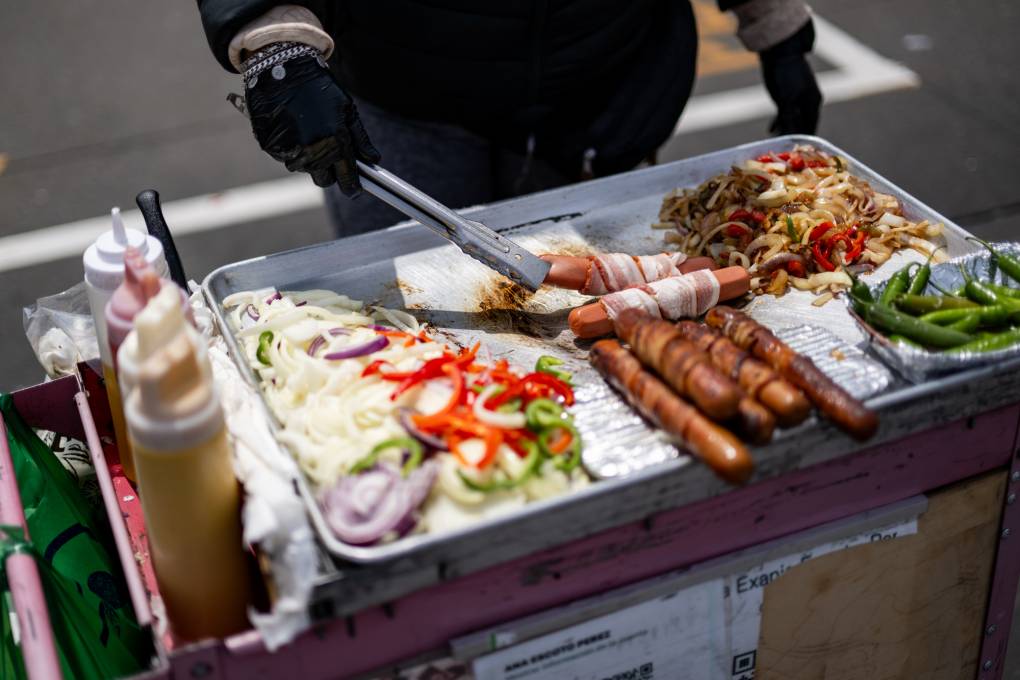
"caption": "A vendor sells bacon-wrapped hot dogs at Fisherman’s Wharf in San Francisco on April 24, 2025.",
"credit": "Beth LaBerge/KQED",
"altTag": null,
"description": null,
"imgSizes": {
"medium": {
"file": "https://cdn.kqed.org/wp-content/uploads/sites/10/2025/04/250424-DANGERDOGS-10-BL-KQED-800x533.jpg",
"width": 800,
"height": 533,
"mimeType": "image/jpeg"
},
"large": {
"file": "https://cdn.kqed.org/wp-content/uploads/sites/10/2025/04/250424-DANGERDOGS-10-BL-KQED-1020x680.jpg",
"width": 1020,
"height": 680,
"mimeType": "image/jpeg"
},
"thumbnail": {
"file": "https://cdn.kqed.org/wp-content/uploads/sites/10/2025/04/250424-DANGERDOGS-10-BL-KQED-160x107.jpg",
"width": 160,
"height": 107,
"mimeType": "image/jpeg"
},
"1536x1536": {
"file": "https://cdn.kqed.org/wp-content/uploads/sites/10/2025/04/250424-DANGERDOGS-10-BL-KQED-1536x1024.jpg",
"width": 1536,
"height": 1024,
"mimeType": "image/jpeg"
},
"post-thumbnail": {
"file": "https://cdn.kqed.org/wp-content/uploads/sites/10/2025/04/250424-DANGERDOGS-10-BL-KQED-672x372.jpg",
"width": 672,
"height": 372,
"mimeType": "image/jpeg"
},
"twentyfourteen-full-width": {
"file": "https://cdn.kqed.org/wp-content/uploads/sites/10/2025/04/250424-DANGERDOGS-10-BL-KQED-1038x576.jpg",
"width": 1038,
"height": 576,
"mimeType": "image/jpeg"
},
"full-width": {
"file": "https://cdn.kqed.org/wp-content/uploads/sites/10/2025/04/250424-DANGERDOGS-10-BL-KQED-1920x1280.jpg",
"width": 1920,
"height": 1280,
"mimeType": "image/jpeg"
},
"kqedFullSize": {
"file": "https://cdn.kqed.org/wp-content/uploads/sites/10/2025/04/250424-DANGERDOGS-10-BL-KQED.jpg",
"width": 2000,
"height": 1333
}
},
"isLoading": false,
"fetchFailed": false
},
"news_11993195": {
"type": "attachments",
"id": "news_11993195",
"meta": {
"index": "attachments_1716263798",
"site": "news",
"id": "11993195",
"found": true
},
"title": "240313-BART CRISIS INTERVENTION UNIT-MD-16_qed",
"publishDate": 1720461197,
"status": "inherit",
"parent": 11993189,
"modified": 1747766652,
"caption": "A train approaches the San Leandro BART station on March 13, 2024.",
"credit": "Martin do Nascimento/KQED",
"altTag": null,
"description": null,
"imgSizes": {
"medium": {
"file": "https://cdn.kqed.org/wp-content/uploads/sites/10/2024/07/240313-BART-CRISIS-INTERVENTION-UNIT-MD-16_qed-800x533.jpg",
"width": 800,
"height": 533,
"mimeType": "image/jpeg"
},
"large": {
"file": "https://cdn.kqed.org/wp-content/uploads/sites/10/2024/07/240313-BART-CRISIS-INTERVENTION-UNIT-MD-16_qed-1020x680.jpg",
"width": 1020,
"height": 680,
"mimeType": "image/jpeg"
},
"thumbnail": {
"file": "https://cdn.kqed.org/wp-content/uploads/sites/10/2024/07/240313-BART-CRISIS-INTERVENTION-UNIT-MD-16_qed-160x107.jpg",
"width": 160,
"height": 107,
"mimeType": "image/jpeg"
},
"1536x1536": {
"file": "https://cdn.kqed.org/wp-content/uploads/sites/10/2024/07/240313-BART-CRISIS-INTERVENTION-UNIT-MD-16_qed-1536x1024.jpg",
"width": 1536,
"height": 1024,
"mimeType": "image/jpeg"
},
"post-thumbnail": {
"file": "https://cdn.kqed.org/wp-content/uploads/sites/10/2024/07/240313-BART-CRISIS-INTERVENTION-UNIT-MD-16_qed-672x372.jpg",
"width": 672,
"height": 372,
"mimeType": "image/jpeg"
},
"twentyfourteen-full-width": {
"file": "https://cdn.kqed.org/wp-content/uploads/sites/10/2024/07/240313-BART-CRISIS-INTERVENTION-UNIT-MD-16_qed-1038x576.jpg",
"width": 1038,
"height": 576,
"mimeType": "image/jpeg"
},
"full-width": {
"file": "https://cdn.kqed.org/wp-content/uploads/sites/10/2024/07/240313-BART-CRISIS-INTERVENTION-UNIT-MD-16_qed-1920x1280.jpg",
"width": 1920,
"height": 1280,
"mimeType": "image/jpeg"
},
"kqedFullSize": {
"file": "https://cdn.kqed.org/wp-content/uploads/sites/10/2024/07/240313-BART-CRISIS-INTERVENTION-UNIT-MD-16_qed.jpg",
"width": 1999,
"height": 1333
}
},
"isLoading": false,
"fetchFailed": false
},
"news_12040761": {
"type": "attachments",
"id": "news_12040761",
"meta": {
"index": "attachments_1716263798",
"site": "news",
"id": "12040761",
"found": true
},
"title": "250204-WeCantWait-04-BL_qed",
"publishDate": 1747675497,
"status": "inherit",
"parent": 12040756,
"modified": 1747675513,
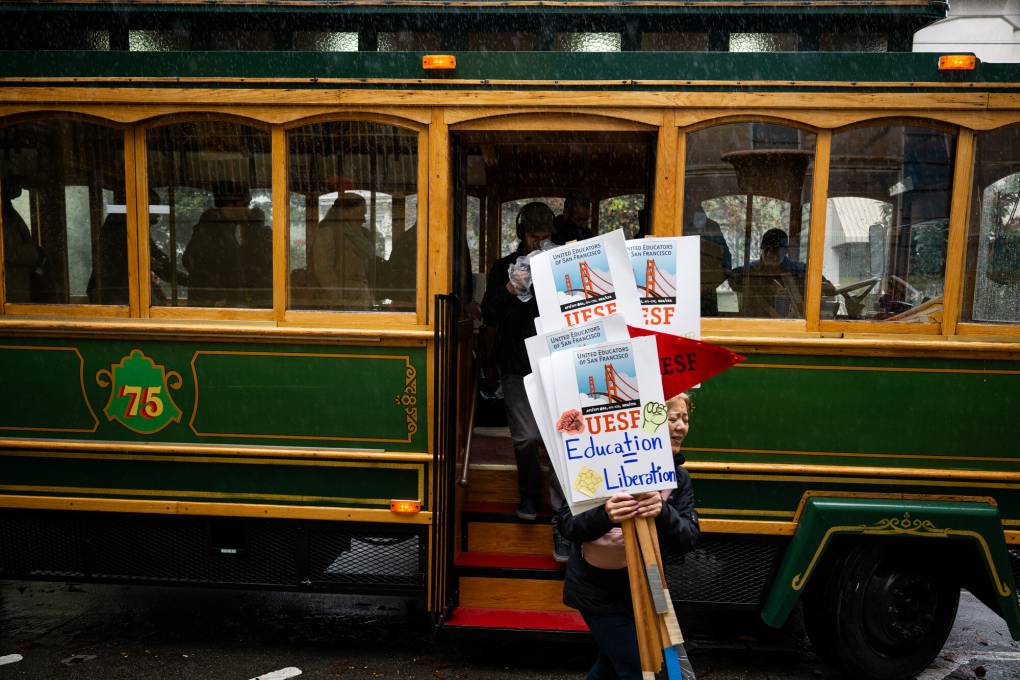
"caption": "Educators and union leaders ride on a trolley car from Malcolm X Academy Elementary School to Buena Vista Horace Mann K-8 Community School in San Francisco’s Mission District on Tuesday, Feb. 4, 2025, for a press conference to announce the launch of the ‘We Can’t Wait’ campaign, a statewide effort advocating for improved class sizes, better wages, and safer schools for educators and students.",
"credit": "Beth LaBerge/KQED",
"altTag": null,
"description": null,
"imgSizes": {
"medium": {
"file": "https://cdn.kqed.org/wp-content/uploads/sites/10/2025/05/250204-WeCantWait-04-BL_qed-800x533.jpg",
"width": 800,
"height": 533,
"mimeType": "image/jpeg"
},
"large": {
"file": "https://cdn.kqed.org/wp-content/uploads/sites/10/2025/05/250204-WeCantWait-04-BL_qed-1020x680.jpg",
"width": 1020,
"height": 680,
"mimeType": "image/jpeg"
},
"thumbnail": {
"file": "https://cdn.kqed.org/wp-content/uploads/sites/10/2025/05/250204-WeCantWait-04-BL_qed-160x107.jpg",
"width": 160,
"height": 107,
"mimeType": "image/jpeg"
},
"1536x1536": {
"file": "https://cdn.kqed.org/wp-content/uploads/sites/10/2025/05/250204-WeCantWait-04-BL_qed-1536x1024.jpg",
"width": 1536,
"height": 1024,
"mimeType": "image/jpeg"
},
"post-thumbnail": {
"file": "https://cdn.kqed.org/wp-content/uploads/sites/10/2025/05/250204-WeCantWait-04-BL_qed-672x372.jpg",
"width": 672,
"height": 372,
"mimeType": "image/jpeg"
},
"twentyfourteen-full-width": {
"file": "https://cdn.kqed.org/wp-content/uploads/sites/10/2025/05/250204-WeCantWait-04-BL_qed-1038x576.jpg",
"width": 1038,
"height": 576,
"mimeType": "image/jpeg"
},
"full-width": {
"file": "https://cdn.kqed.org/wp-content/uploads/sites/10/2025/05/250204-WeCantWait-04-BL_qed-1920x1280.jpg",
"width": 1920,
"height": 1280,
"mimeType": "image/jpeg"
},
"kqedFullSize": {
"file": "https://cdn.kqed.org/wp-content/uploads/sites/10/2025/05/250204-WeCantWait-04-BL_qed.jpg",
"width": 2000,
"height": 1333
}
},
"isLoading": false,
"fetchFailed": false
},
"news_12030646": {
"type": "attachments",
"id": "news_12030646",
"meta": {
"index": "attachments_1716263798",
"site": "news",
"id": "12030646",
"found": true
},
"title": "250310-TRUMP SF-MD-06-KQED",
"publishDate": 1741642336,
"status": "inherit",
"parent": 12032892,
"modified": 1742942029,
"caption": "San Francisco Mayor Daniel Lurie speaks at the opening of the new OpenAI headquarters in Mission Bay in San Francisco on March 10, 2025.",
"credit": "Martin do Nascimento/KQED",
"altTag": null,
"description": null,
"imgSizes": {
"medium": {
"file": "https://cdn.kqed.org/wp-content/uploads/sites/10/2025/03/250310-TRUMP-SF-MD-06-KQED-800x533.jpg",
"width": 800,
"height": 533,
"mimeType": "image/jpeg"
},
"large": {
"file": "https://cdn.kqed.org/wp-content/uploads/sites/10/2025/03/250310-TRUMP-SF-MD-06-KQED-1020x680.jpg",
"width": 1020,
"height": 680,
"mimeType": "image/jpeg"
},
"thumbnail": {
"file": "https://cdn.kqed.org/wp-content/uploads/sites/10/2025/03/250310-TRUMP-SF-MD-06-KQED-160x107.jpg",
"width": 160,
"height": 107,
"mimeType": "image/jpeg"
},
"1536x1536": {
"file": "https://cdn.kqed.org/wp-content/uploads/sites/10/2025/03/250310-TRUMP-SF-MD-06-KQED-1536x1024.jpg",
"width": 1536,
"height": 1024,
"mimeType": "image/jpeg"
},
"post-thumbnail": {
"file": "https://cdn.kqed.org/wp-content/uploads/sites/10/2025/03/250310-TRUMP-SF-MD-06-KQED-672x372.jpg",
"width": 672,
"height": 372,
"mimeType": "image/jpeg"
},
"twentyfourteen-full-width": {
"file": "https://cdn.kqed.org/wp-content/uploads/sites/10/2025/03/250310-TRUMP-SF-MD-06-KQED-1038x576.jpg",
"width": 1038,
"height": 576,
"mimeType": "image/jpeg"
},
"full-width": {
"file": "https://cdn.kqed.org/wp-content/uploads/sites/10/2025/03/250310-TRUMP-SF-MD-06-KQED-1920x1280.jpg",
"width": 1920,
"height": 1280,
"mimeType": "image/jpeg"
},
"kqedFullSize": {
"file": "https://cdn.kqed.org/wp-content/uploads/sites/10/2025/03/250310-TRUMP-SF-MD-06-KQED.jpg?ver=1741789324",
"width": 2000,
"height": 1333
}
},
"isLoading": false,
"fetchFailed": false
},
"news_12040499": {
"type": "attachments",
"id": "news_12040499",
"meta": {
"index": "attachments_1716263798",
"site": "news",
"id": "12040499",
"found": true
},
"title": "250516-AMERICORPS-07-BL-KQED",
"publishDate": 1747418970,
"status": "inherit",
"parent": 0,
"modified": 1747419064,
"caption": "AmeriCorps member Dylan Lalanne-Perkins works with San Francisco Unified School District students during a Poetry Lab and Podcasting Field Trip at 826 Valencia’s Tenderloin Center in San Francisco on May 16, 2025.",
"credit": "Beth LaBerge/KQED",
"altTag": null,
"description": null,
"imgSizes": {
"medium": {
"file": "https://cdn.kqed.org/wp-content/uploads/sites/10/2025/05/250516-AMERICORPS-07-BL-KQED-800x533.jpg",
"width": 800,
"height": 533,
"mimeType": "image/jpeg"
},
"large": {
"file": "https://cdn.kqed.org/wp-content/uploads/sites/10/2025/05/250516-AMERICORPS-07-BL-KQED-1020x680.jpg",
"width": 1020,
"height": 680,
"mimeType": "image/jpeg"
},
"thumbnail": {
"file": "https://cdn.kqed.org/wp-content/uploads/sites/10/2025/05/250516-AMERICORPS-07-BL-KQED-160x107.jpg",
"width": 160,
"height": 107,
"mimeType": "image/jpeg"
},
"1536x1536": {
"file": "https://cdn.kqed.org/wp-content/uploads/sites/10/2025/05/250516-AMERICORPS-07-BL-KQED-1536x1024.jpg",
"width": 1536,
"height": 1024,
"mimeType": "image/jpeg"
},
"post-thumbnail": {
"file": "https://cdn.kqed.org/wp-content/uploads/sites/10/2025/05/250516-AMERICORPS-07-BL-KQED-672x372.jpg",
"width": 672,
"height": 372,
"mimeType": "image/jpeg"
},
"twentyfourteen-full-width": {
"file": "https://cdn.kqed.org/wp-content/uploads/sites/10/2025/05/250516-AMERICORPS-07-BL-KQED-1038x576.jpg",
"width": 1038,
"height": 576,
"mimeType": "image/jpeg"
},
"full-width": {
"file": "https://cdn.kqed.org/wp-content/uploads/sites/10/2025/05/250516-AMERICORPS-07-BL-KQED-1920x1280.jpg",
"width": 1920,
"height": 1280,
"mimeType": "image/jpeg"
},
"kqedFullSize": {
"file": "https://cdn.kqed.org/wp-content/uploads/sites/10/2025/05/250516-AMERICORPS-07-BL-KQED.jpg",
"width": 2000,
"height": 1333
}
},
"isLoading": false,
"fetchFailed": false
},
"news_12040493": {
"type": "attachments",
"id": "news_12040493",
"meta": {
"index": "attachments_1716263798",
"site": "news",
"id": "12040493",
"found": true
},
"title": "San Francisco Zoo director Tanya Peterson visits the giraffes the African Savanna exhibit in San Francisco, Calif., on Friday, Jan. 7, 2011",
"publishDate": 1747418176,
"status": "inherit",
"parent": 12040473,
"modified": 1747418409,
"caption": "San Francisco Zoo director Tanya Peterson visits the giraffes the African Savanna exhibit in San Francisco, California, on Jan. 7, 2011.",
"credit": "Paul Chinn/The San Francisco Chronicle via Getty Images",
"altTag": null,
"description": null,
"imgSizes": {
"medium": {
"file": "https://cdn.kqed.org/wp-content/uploads/sites/10/2025/05/SFZooGetty1-800x590.jpg",
"width": 800,
"height": 590,
"mimeType": "image/jpeg"
},
"large": {
"file": "https://cdn.kqed.org/wp-content/uploads/sites/10/2025/05/SFZooGetty1-1020x752.jpg",
"width": 1020,
"height": 752,
"mimeType": "image/jpeg"
},
"thumbnail": {
"file": "https://cdn.kqed.org/wp-content/uploads/sites/10/2025/05/SFZooGetty1-160x118.jpg",
"width": 160,
"height": 118,
"mimeType": "image/jpeg"
},
"1536x1536": {
"file": "https://cdn.kqed.org/wp-content/uploads/sites/10/2025/05/SFZooGetty1-1536x1132.jpg",
"width": 1536,
"height": 1132,
"mimeType": "image/jpeg"
},
"post-thumbnail": {
"file": "https://cdn.kqed.org/wp-content/uploads/sites/10/2025/05/SFZooGetty1-672x372.jpg",
"width": 672,
"height": 372,
"mimeType": "image/jpeg"
},
"twentyfourteen-full-width": {
"file": "https://cdn.kqed.org/wp-content/uploads/sites/10/2025/05/SFZooGetty1-1038x576.jpg",
"width": 1038,
"height": 576,
"mimeType": "image/jpeg"
},
"full-width": {
"file": "https://cdn.kqed.org/wp-content/uploads/sites/10/2025/05/SFZooGetty1-1920x1415.jpg",
"width": 1920,
"height": 1415,
"mimeType": "image/jpeg"
},
"kqedFullSize": {
"file": "https://cdn.kqed.org/wp-content/uploads/sites/10/2025/05/SFZooGetty1.jpg",
"width": 2000,
"height": 1474
}
},
"isLoading": false,
"fetchFailed": false
},
"news_12038780": {
"type": "attachments",
"id": "news_12038780",
"meta": {
"index": "attachments_1716263798",
"site": "news",
"id": "12038780",
"found": true
},
"title": "250501-VALKYRIESOPENERTEAMPROFILE-07-BL-KQED",
"publishDate": 1746474343,
"status": "inherit",
"parent": 0,
"modified": 1746474663,
"caption": "Golden State Valkyries’ Monique Billings practices during training camp held at the Sephora Performance Center in Oakland on May 1, 2025.",
"credit": "Beth LaBerge/KQED",
"altTag": null,
"description": null,
"imgSizes": {
"medium": {
"file": "https://cdn.kqed.org/wp-content/uploads/sites/10/2025/05/250501-VALKYRIESOPENERTEAMPROFILE-07-BL-KQED-800x533.jpg",
"width": 800,
"height": 533,
"mimeType": "image/jpeg"
},
"large": {
"file": "https://cdn.kqed.org/wp-content/uploads/sites/10/2025/05/250501-VALKYRIESOPENERTEAMPROFILE-07-BL-KQED-1020x680.jpg",
"width": 1020,
"height": 680,
"mimeType": "image/jpeg"
},
"thumbnail": {
"file": "https://cdn.kqed.org/wp-content/uploads/sites/10/2025/05/250501-VALKYRIESOPENERTEAMPROFILE-07-BL-KQED-160x107.jpg",
"width": 160,
"height": 107,
"mimeType": "image/jpeg"
},
"1536x1536": {
"file": "https://cdn.kqed.org/wp-content/uploads/sites/10/2025/05/250501-VALKYRIESOPENERTEAMPROFILE-07-BL-KQED-1536x1024.jpg",
"width": 1536,
"height": 1024,
"mimeType": "image/jpeg"
},
"post-thumbnail": {
"file": "https://cdn.kqed.org/wp-content/uploads/sites/10/2025/05/250501-VALKYRIESOPENERTEAMPROFILE-07-BL-KQED-672x372.jpg",
"width": 672,
"height": 372,
"mimeType": "image/jpeg"
},
"twentyfourteen-full-width": {
"file": "https://cdn.kqed.org/wp-content/uploads/sites/10/2025/05/250501-VALKYRIESOPENERTEAMPROFILE-07-BL-KQED-1038x576.jpg",
"width": 1038,
"height": 576,
"mimeType": "image/jpeg"
},
"full-width": {
"file": "https://cdn.kqed.org/wp-content/uploads/sites/10/2025/05/250501-VALKYRIESOPENERTEAMPROFILE-07-BL-KQED-1920x1280.jpg",
"width": 1920,
"height": 1280,
"mimeType": "image/jpeg"
},
"kqedFullSize": {
"file": "https://cdn.kqed.org/wp-content/uploads/sites/10/2025/05/250501-VALKYRIESOPENERTEAMPROFILE-07-BL-KQED.jpg",
"width": 2000,
"height": 1333
}
},
"isLoading": false,
"fetchFailed": false
},
"news_12040369": {
"type": "attachments",
"id": "news_12040369",
"meta": {
"index": "attachments_1716263798",
"site": "news",
"id": "12040369",
"found": true
},
"title": "UCRegents1",
"publishDate": 1747336938,
"status": "inherit",
"parent": 12040282,
"modified": 1747337073,
"caption": "During Thursday's UC Regents meeting, some union members refused to leave the room and were arrested, including Lorena Gonzalez, California Labor Federation President.",
"credit": "Juan Carlos Lara/KQED",
"altTag": null,
"description": null,
"imgSizes": {
"medium": {
"file": "https://cdn.kqed.org/wp-content/uploads/sites/10/2025/05/UCRegents1-800x600.jpg",
"width": 800,
"height": 600,
"mimeType": "image/jpeg"
},
"large": {
"file": "https://cdn.kqed.org/wp-content/uploads/sites/10/2025/05/UCRegents1-1020x765.jpg",
"width": 1020,
"height": 765,
"mimeType": "image/jpeg"
},
"thumbnail": {
"file": "https://cdn.kqed.org/wp-content/uploads/sites/10/2025/05/UCRegents1-160x120.jpg",
"width": 160,
"height": 120,
"mimeType": "image/jpeg"
},
"1536x1536": {
"file": "https://cdn.kqed.org/wp-content/uploads/sites/10/2025/05/UCRegents1-1536x1152.jpg",
"width": 1536,
"height": 1152,
"mimeType": "image/jpeg"
},
"post-thumbnail": {
"file": "https://cdn.kqed.org/wp-content/uploads/sites/10/2025/05/UCRegents1-672x372.jpg",
"width": 672,
"height": 372,
"mimeType": "image/jpeg"
},
"twentyfourteen-full-width": {
"file": "https://cdn.kqed.org/wp-content/uploads/sites/10/2025/05/UCRegents1-1038x576.jpg",
"width": 1038,
"height": 576,
"mimeType": "image/jpeg"
},
"full-width": {
"file": "https://cdn.kqed.org/wp-content/uploads/sites/10/2025/05/UCRegents1-1920x1440.jpg",
"width": 1920,
"height": 1440,
"mimeType": "image/jpeg"
},
"kqedFullSize": {
"file": "https://cdn.kqed.org/wp-content/uploads/sites/10/2025/05/UCRegents1.jpg",
"width": 2000,
"height": 1500
}
},
"isLoading": false,
"fetchFailed": false
},
"news_11995374": {
"type": "attachments",
"id": "news_11995374",
"meta": {
"index": "attachments_1716263798",
"site": "news",
"id": "11995374",
"found": true
},
"title": "Police line belt",
"publishDate": 1721148501,
"status": "inherit",
"parent": 11995320,
"modified": 1721148635,
"caption": "A 1-year-old boy, Wesley Killian, who was injured in a domestic shooting in Alameda last week, has died at a local hospital, the Alameda Police Department announced Monday.",
"credit": "Getty Images",
"altTag": null,
"description": null,
"imgSizes": {
"medium": {
"file": "https://cdn.kqed.org/wp-content/uploads/sites/10/2024/07/PoliceCrimeSceneTape-800x533.jpg",
"width": 800,
"height": 533,
"mimeType": "image/jpeg"
},
"large": {
"file": "https://cdn.kqed.org/wp-content/uploads/sites/10/2024/07/PoliceCrimeSceneTape-1020x680.jpg",
"width": 1020,
"height": 680,
"mimeType": "image/jpeg"
},
"thumbnail": {
"file": "https://cdn.kqed.org/wp-content/uploads/sites/10/2024/07/PoliceCrimeSceneTape-160x107.jpg",
"width": 160,
"height": 107,
"mimeType": "image/jpeg"
},
"1536x1536": {
"file": "https://cdn.kqed.org/wp-content/uploads/sites/10/2024/07/PoliceCrimeSceneTape-1536x1024.jpg",
"width": 1536,
"height": 1024,
"mimeType": "image/jpeg"
},
"post-thumbnail": {
"file": "https://cdn.kqed.org/wp-content/uploads/sites/10/2024/07/PoliceCrimeSceneTape-672x372.jpg",
"width": 672,
"height": 372,
"mimeType": "image/jpeg"
},
"twentyfourteen-full-width": {
"file": "https://cdn.kqed.org/wp-content/uploads/sites/10/2024/07/PoliceCrimeSceneTape-1038x576.jpg",
"width": 1038,
"height": 576,
"mimeType": "image/jpeg"
},
"full-width": {
"file": "https://cdn.kqed.org/wp-content/uploads/sites/10/2024/07/PoliceCrimeSceneTape-1920x1280.jpg",
"width": 1920,
"height": 1280,
"mimeType": "image/jpeg"
},
"kqedFullSize": {
"file": "https://cdn.kqed.org/wp-content/uploads/sites/10/2024/07/PoliceCrimeSceneTape.jpg",
"width": 2000,
"height": 1333
}
},
"isLoading": false,
"fetchFailed": false
},
"news_12032140": {
"type": "attachments",
"id": "news_12032140",
"meta": {
"index": "attachments_1716263798",
"site": "news",
"id": "12032140",
"found": true
},
"title": "Speed cameras on Geary St. in San Francisco on March 19, 2025.",
"publishDate": 1742423081,
"status": "inherit",
"parent": 12032036,
"modified": 1742500032,
"caption": "A speed camera on Geary Street in San Francisco on March 19, 2025.",
"credit": "Martin do Nascimento/KQED",
"altTag": null,
"description": null,
"imgSizes": {
"medium": {
"file": "https://cdn.kqed.org/wp-content/uploads/sites/10/2025/03/250319-SF-SPEED-CAMERAS-MD-03-KQED-800x533.jpg",
"width": 800,
"height": 533,
"mimeType": "image/jpeg"
},
"large": {
"file": "https://cdn.kqed.org/wp-content/uploads/sites/10/2025/03/250319-SF-SPEED-CAMERAS-MD-03-KQED-1020x680.jpg",
"width": 1020,
"height": 680,
"mimeType": "image/jpeg"
},
"thumbnail": {
"file": "https://cdn.kqed.org/wp-content/uploads/sites/10/2025/03/250319-SF-SPEED-CAMERAS-MD-03-KQED-160x107.jpg",
"width": 160,
"height": 107,
"mimeType": "image/jpeg"
},
"1536x1536": {
"file": "https://cdn.kqed.org/wp-content/uploads/sites/10/2025/03/250319-SF-SPEED-CAMERAS-MD-03-KQED-1536x1024.jpg",
"width": 1536,
"height": 1024,
"mimeType": "image/jpeg"
},
"post-thumbnail": {
"file": "https://cdn.kqed.org/wp-content/uploads/sites/10/2025/03/250319-SF-SPEED-CAMERAS-MD-03-KQED-672x372.jpg",
"width": 672,
"height": 372,
"mimeType": "image/jpeg"
},
"twentyfourteen-full-width": {
"file": "https://cdn.kqed.org/wp-content/uploads/sites/10/2025/03/250319-SF-SPEED-CAMERAS-MD-03-KQED-1038x576.jpg",
"width": 1038,
"height": 576,
"mimeType": "image/jpeg"
},
"full-width": {
"file": "https://cdn.kqed.org/wp-content/uploads/sites/10/2025/03/250319-SF-SPEED-CAMERAS-MD-03-KQED-1920x1280.jpg",
"width": 1920,
"height": 1280,
"mimeType": "image/jpeg"
},
"kqedFullSize": {
"file": "https://cdn.kqed.org/wp-content/uploads/sites/10/2025/03/250319-SF-SPEED-CAMERAS-MD-03-KQED.jpg",
"width": 2000,
"height": 1333
}
},
"isLoading": false,
"fetchFailed": false
},
"news_12039307": {
"type": "attachments",
"id": "news_12039307",
"meta": {
"index": "attachments_1716263798",
"site": "news",
"id": "12039307",
"found": true
},
"title": "250505-NATIONALSMILESMONTH-29-BL-KQED",
"publishDate": 1746724806,
"status": "inherit",
"parent": 12039893,
"modified": 1747164348,
"caption": "Dr. Jessica Ngo, a dentist at Total Health Dental Care, talks with patient Otis R. Taylor Jr. in the Berkeley offices on May 5, 2025.",
"credit": "Beth LaBerge/KQED",
"altTag": null,
"description": null,
"imgSizes": {
"medium": {
"file": "https://cdn.kqed.org/wp-content/uploads/sites/10/2025/05/250505-NATIONALSMILESMONTH-29-BL-KQED-800x533.jpg",
"width": 800,
"height": 533,
"mimeType": "image/jpeg"
},
"large": {
"file": "https://cdn.kqed.org/wp-content/uploads/sites/10/2025/05/250505-NATIONALSMILESMONTH-29-BL-KQED-1020x680.jpg",
"width": 1020,
"height": 680,
"mimeType": "image/jpeg"
},
"thumbnail": {
"file": "https://cdn.kqed.org/wp-content/uploads/sites/10/2025/05/250505-NATIONALSMILESMONTH-29-BL-KQED-160x107.jpg",
"width": 160,
"height": 107,
"mimeType": "image/jpeg"
},
"1536x1536": {
"file": "https://cdn.kqed.org/wp-content/uploads/sites/10/2025/05/250505-NATIONALSMILESMONTH-29-BL-KQED-1536x1024.jpg",
"width": 1536,
"height": 1024,
"mimeType": "image/jpeg"
},
"post-thumbnail": {
"file": "https://cdn.kqed.org/wp-content/uploads/sites/10/2025/05/250505-NATIONALSMILESMONTH-29-BL-KQED-672x372.jpg",
"width": 672,
"height": 372,
"mimeType": "image/jpeg"
},
"twentyfourteen-full-width": {
"file": "https://cdn.kqed.org/wp-content/uploads/sites/10/2025/05/250505-NATIONALSMILESMONTH-29-BL-KQED-1038x576.jpg",
"width": 1038,
"height": 576,
"mimeType": "image/jpeg"
},
"full-width": {
"file": "https://cdn.kqed.org/wp-content/uploads/sites/10/2025/05/250505-NATIONALSMILESMONTH-29-BL-KQED-1920x1280.jpg",
"width": 1920,
"height": 1280,
"mimeType": "image/jpeg"
},
"kqedFullSize": {
"file": "https://cdn.kqed.org/wp-content/uploads/sites/10/2025/05/250505-NATIONALSMILESMONTH-29-BL-KQED.jpg",
"width": 2000,
"height": 1333
}
},
"isLoading": false,
"fetchFailed": false
},
"news_12036443": {
"type": "attachments",
"id": "news_12036443",
"meta": {
"index": "attachments_1716263798",
"site": "news",
"id": "12036443",
"found": true
},
"title": "20250417_LURIE100DAYS_GC-9-KQED",
"publishDate": 1744918112,
"status": "inherit",
"parent": 12036408,
"modified": 1744922151,
"caption": "Mayor Daniel Lurie delivers remarks on a progress report of his first 100 days in office at the San Francisco Conservatory of Music in San Francisco on April 17, 2025.",
"credit": "Gina Castro/KQED",
"altTag": null,
"description": null,
"imgSizes": {
"medium": {
"file": "https://cdn.kqed.org/wp-content/uploads/sites/10/2025/04/20250417_LURIE100DAYS_GC-9-KQED-800x533.jpg",
"width": 800,
"height": 533,
"mimeType": "image/jpeg"
},
"large": {
"file": "https://cdn.kqed.org/wp-content/uploads/sites/10/2025/04/20250417_LURIE100DAYS_GC-9-KQED-1020x680.jpg",
"width": 1020,
"height": 680,
"mimeType": "image/jpeg"
},
"thumbnail": {
"file": "https://cdn.kqed.org/wp-content/uploads/sites/10/2025/04/20250417_LURIE100DAYS_GC-9-KQED-160x107.jpg",
"width": 160,
"height": 107,
"mimeType": "image/jpeg"
},
"1536x1536": {
"file": "https://cdn.kqed.org/wp-content/uploads/sites/10/2025/04/20250417_LURIE100DAYS_GC-9-KQED-1536x1024.jpg",
"width": 1536,
"height": 1024,
"mimeType": "image/jpeg"
},
"post-thumbnail": {
"file": "https://cdn.kqed.org/wp-content/uploads/sites/10/2025/04/20250417_LURIE100DAYS_GC-9-KQED-672x372.jpg",
"width": 672,
"height": 372,
"mimeType": "image/jpeg"
},
"twentyfourteen-full-width": {
"file": "https://cdn.kqed.org/wp-content/uploads/sites/10/2025/04/20250417_LURIE100DAYS_GC-9-KQED-1038x576.jpg",
"width": 1038,
"height": 576,
"mimeType": "image/jpeg"
},
"full-width": {
"file": "https://cdn.kqed.org/wp-content/uploads/sites/10/2025/04/20250417_LURIE100DAYS_GC-9-KQED-1920x1280.jpg",
"width": 1920,
"height": 1280,
"mimeType": "image/jpeg"
},
"kqedFullSize": {
"file": "https://cdn.kqed.org/wp-content/uploads/sites/10/2025/04/20250417_LURIE100DAYS_GC-9-KQED.jpg",
"width": 2000,
"height": 1333
}
},
"isLoading": false,
"fetchFailed": false
}
},
"audioPlayerReducer": {
"postId": "stream_live",
"isPaused": true,
"isPlaying": false,
"pfsActive": false,
"pledgeModalIsOpen": true,
"playerDrawerIsOpen": false,
"liveAudioPlayStartedAt": 0,
"liveAudioPlayContext": ""
},
"authorsReducer": {
"danbrekke": {
"type": "authors",
"id": "222",
"meta": {
"index": "authors_1716337520",
"id": "222",
"found": true
},
"name": "Dan Brekke",
"firstName": "Dan",
"lastName": "Brekke",
"slug": "danbrekke",
"email": "dbrekke@kqed.org",
"display_author_email": true,
"staff_mastheads": [
"news",
"science"
],
"title": "KQED Editor and Reporter",
"bio": "Dan Brekke is a reporter and editor for KQED News, responsible for coverage of topics ranging from California water issues to the Bay Area's transportation challenges. In a newsroom career that began in Chicago in 1972, Dan has worked for \u003cem>The San Francisco Examiner,\u003c/em> Wired and TechTV and has been published in The New York Times, The New York Times Magazine, Business 2.0, Salon and elsewhere.\r\n\r\nSince joining KQED in 2007, Dan has reported, edited and produced both radio and online features and breaking news pieces. He has shared as both editor and reporter in four Society of Professional Journalists Norcal Excellence in Journalism awards and one Edward R. Murrow regional award. He was chosen for a spring 2017 residency at the Mesa Refuge to advance his research on California salmon.\r\n\r\nEmail Dan at: \u003ca href=\"mailto:dbrekke@kqed.org\">dbrekke@kqed.org\u003c/a>\r\n\r\n\u003cstrong>Twitter:\u003c/strong> \u003ca href=\"https://twitter.com/danbrekke\" rel=\"noopener noreferrer\">twitter.com/danbrekke\u003c/a>\r\n\u003cstrong>Facebook:\u003c/strong> \u003ca href=\"https://www.facebook.com/danbrekke\" rel=\"noopener noreferrer\">www.facebook.com/danbrekke\u003c/a>\r\n\u003cstrong>LinkedIn:\u003c/strong> \u003ca href=\"https://www.linkedin.com/in/danbrekke\" rel=\"noopener noreferrer\">www.linkedin.com/in/danbrekke\u003c/a>",
"avatar": "https://secure.gravatar.com/avatar/8f1f0d2a978fb3b23426c922c7e2af558fa36905b49c4ce76a97dc3c72d27226?s=600&d=mm&r=g",
"twitter": "danbrekke",
"bluesky": null,
"facebook": null,
"instagram": "https://www.instagram.com/dan.brekke/",
"linkedin": "https://www.linkedin.com/in/danbrekke/",
"sites": [
{
"site": "news",
"roles": [
"administrator",
"create_posts"
]
},
{
"site": "stateofhealth",
"roles": [
"editor"
]
},
{
"site": "science",
"roles": [
"editor"
]
},
{
"site": "quest",
"roles": [
"contributor"
]
},
{
"site": "food",
"roles": [
"contributor"
]
},
{
"site": "forum",
"roles": [
"contributor"
]
},
{
"site": "elections",
"roles": [
"editor"
]
},
{
"site": "liveblog",
"roles": [
"editor"
]
}
],
"headData": {
"title": "Dan Brekke | KQED",
"description": "KQED Editor and Reporter",
"ogImgSrc": "https://secure.gravatar.com/avatar/8f1f0d2a978fb3b23426c922c7e2af558fa36905b49c4ce76a97dc3c72d27226?s=600&d=mm&r=g",
"twImgSrc": "https://secure.gravatar.com/avatar/8f1f0d2a978fb3b23426c922c7e2af558fa36905b49c4ce76a97dc3c72d27226?s=600&d=mm&r=g"
},
"isLoading": false,
"link": "/author/danbrekke"
},
"matthewgreen": {
"type": "authors",
"id": "1263",
"meta": {
"index": "authors_1716337520",
"id": "1263",
"found": true
},
"name": "Matthew Green",
"firstName": "Matthew",
"lastName": "Green",
"slug": "matthewgreen",
"email": "mgreen@kqed.org",
"display_author_email": false,
"staff_mastheads": [],
"title": "KQED Editor/Reporter",
"bio": "Matthew Green is a digital media producer for KQED News. He previously produced \u003ca href=\"http://www.kqed.org/lowdown\">The Lowdown\u003c/a>, KQED’s multimedia news education blog. Matthew's written for numerous Bay Area publications, including the Oakland Tribune and San Francisco Chronicle. He also taught journalism classes at Fremont High School in East Oakland.\r\n\r\nEmail: mgreen@kqed.org; Twitter: @MGreenKQED",
"avatar": "https://secure.gravatar.com/avatar/3bf498d1267ca02c8494f33d8cfc575e?s=600&d=blank&r=g",
"twitter": "MGreenKQED",
"facebook": null,
"instagram": null,
"linkedin": null,
"sites": [
{
"site": "news",
"roles": []
},
{
"site": "lowdown",
"roles": []
},
{
"site": "science",
"roles": []
},
{
"site": "education",
"roles": []
},
{
"site": "quest",
"roles": []
},
{
"site": "liveblog",
"roles": []
}
],
"headData": {
"title": "Matthew Green | KQED",
"description": "KQED Editor/Reporter",
"ogImgSrc": "https://secure.gravatar.com/avatar/3bf498d1267ca02c8494f33d8cfc575e?s=600&d=blank&r=g",
"twImgSrc": "https://secure.gravatar.com/avatar/3bf498d1267ca02c8494f33d8cfc575e?s=600&d=blank&r=g"
},
"isLoading": false,
"link": "/author/matthewgreen"
},
"ecruzguevarra": {
"type": "authors",
"id": "8654",
"meta": {
"index": "authors_1716337520",
"id": "8654",
"found": true
},
"name": "Ericka Cruz Guevarra",
"firstName": "Ericka",
"lastName": "Cruz Guevarra",
"slug": "ecruzguevarra",
"email": "ecruzguevarra@kqed.org",
"display_author_email": true,
"staff_mastheads": [
"news"
],
"title": "Producer, The Bay Podcast",
"bio": "Ericka Cruz Guevarra is host of \u003ca href=\"https://www.kqed.org/podcasts/thebay\">\u003cem>The Bay\u003c/em>\u003c/a> podcast at KQED. Before host, she was the show’s producer. Her work in that capacity includes a three-part reported series on policing in Vallejo, which won a 2020 excellence in journalism award from the Society of Professional Journalists. Ericka has worked as a breaking news reporter at Oregon Public Broadcasting, helped produce the Code Switch podcast, and was KQED’s inaugural Raul Ramirez Diversity Fund intern. She’s also an alumna of NPR’s Next Generation Radio program. Send her an email if you have strong feelings about whether Fairfield and Suisun City are the Bay. Ericka is represented by SAG-AFTRA.",
"avatar": "https://secure.gravatar.com/avatar/accefc1de4bafc7e234b69bcb9b6f6536c130fd84709bc3069ef11a78787e1bb?s=600&d=blank&r=g",
"twitter": "NotoriousECG",
"bluesky": null,
"facebook": null,
"instagram": null,
"linkedin": null,
"sites": [
{
"site": "arts",
"roles": [
"subscriber"
]
},
{
"site": "news",
"roles": [
"editor",
"manage_categories"
]
},
{
"site": "futureofyou",
"roles": [
"subscriber"
]
},
{
"site": "stateofhealth",
"roles": [
"subscriber"
]
},
{
"site": "science",
"roles": [
"editor"
]
},
{
"site": "forum",
"roles": [
"subscriber"
]
}
],
"headData": {
"title": "Ericka Cruz Guevarra | KQED",
"description": "Producer, The Bay Podcast",
"ogImgSrc": "https://secure.gravatar.com/avatar/accefc1de4bafc7e234b69bcb9b6f6536c130fd84709bc3069ef11a78787e1bb?s=600&d=blank&r=g",
"twImgSrc": "https://secure.gravatar.com/avatar/accefc1de4bafc7e234b69bcb9b6f6536c130fd84709bc3069ef11a78787e1bb?s=600&d=blank&r=g"
},
"isLoading": false,
"link": "/author/ecruzguevarra"
},
"btaylor": {
"type": "authors",
"id": "11365",
"meta": {
"index": "authors_1716337520",
"id": "11365",
"found": true
},
"name": "Bianca Taylor",
"firstName": "Bianca",
"lastName": "Taylor",
"slug": "btaylor",
"email": "btaylor@KQED.org",
"display_author_email": false,
"staff_mastheads": [
"news"
],
"title": "Host and Producer ",
"bio": "Bianca Taylor is a news producer and host of KQED's The Latest podcast.\r\n\r\nHer work with KQED has been honored by the Society of Professional Journalists NorCal, the Webby's, the Regional Murrow Awards, and ONA. She has also worked with NPR, the BBC World Service, and the Washington Post Creative Group.\r\n\r\nBianca is represented by SAG-AFTRA.",
"avatar": "https://secure.gravatar.com/avatar/6b9d3f6552dd10470c5d1c2e58cfe717?s=600&d=blank&r=g",
"twitter": "SoundsLkeBianca",
"facebook": null,
"instagram": null,
"linkedin": null,
"sites": [
{
"site": "arts",
"roles": [
"editor"
]
},
{
"site": "news",
"roles": [
"edit_others_posts",
"editor"
]
},
{
"site": "pop",
"roles": [
"editor"
]
},
{
"site": "bayareabites",
"roles": [
"author"
]
},
{
"site": "science",
"roles": [
"editor"
]
},
{
"site": "forum",
"roles": [
"editor"
]
},
{
"site": "radio",
"roles": [
"editor"
]
},
{
"site": "podcasts",
"roles": [
"editor"
]
}
],
"headData": {
"title": "Bianca Taylor | KQED",
"description": "Host and Producer ",
"ogImgSrc": "https://secure.gravatar.com/avatar/6b9d3f6552dd10470c5d1c2e58cfe717?s=600&d=blank&r=g",
"twImgSrc": "https://secure.gravatar.com/avatar/6b9d3f6552dd10470c5d1c2e58cfe717?s=600&d=blank&r=g"
},
"isLoading": false,
"link": "/author/btaylor"
},
"amontecillo": {
"type": "authors",
"id": "11649",
"meta": {
"index": "authors_1716337520",
"id": "11649",
"found": true
},
"name": "Alan Montecillo",
"firstName": "Alan",
"lastName": "Montecillo",
"slug": "amontecillo",
"email": "amontecillo@kqed.org",
"display_author_email": false,
"staff_mastheads": [
"news"
],
"title": "KQED Contributor",
"bio": "Alan Montecillo is the senior editor of \u003cem>\u003ca href=\"http://kqed.org/thebay\">The Bay\u003c/a>, \u003c/em> KQED's local news podcast. Before moving to the Bay Area, he worked as a senior talk show producer for WILL in Champaign-Urbana, Illinois and at Oregon Public Broadcasting in Portland, Oregon. He has won journalism awards from the Society of Professional Journalists Northern California, the Public Media Journalists Association, The Signal Awards, and has also received a regional Edward R. Murrow award. Alan is a Filipino American from Hong Kong and a graduate of Reed College.",
"avatar": "https://secure.gravatar.com/avatar/268f53a2066899ea9efdd8a5900218b17c822d9862cbc9326cccec53ef41d349?s=600&d=blank&r=g",
"twitter": "alanmontecillo",
"bluesky": null,
"facebook": null,
"instagram": null,
"linkedin": null,
"sites": [
{
"site": "",
"roles": [
"editor"
]
},
{
"site": "news",
"roles": [
"editor",
"manage_categories"
]
}
],
"headData": {
"title": "Alan Montecillo | KQED",
"description": "KQED Contributor",
"ogImgSrc": "https://secure.gravatar.com/avatar/268f53a2066899ea9efdd8a5900218b17c822d9862cbc9326cccec53ef41d349?s=600&d=blank&r=g",
"twImgSrc": "https://secure.gravatar.com/avatar/268f53a2066899ea9efdd8a5900218b17c822d9862cbc9326cccec53ef41d349?s=600&d=blank&r=g"
},
"isLoading": false,
"link": "/author/amontecillo"
},
"otaylor": {
"type": "authors",
"id": "11770",
"meta": {
"index": "authors_1716337520",
"id": "11770",
"found": true
},
"name": "Otis R. Taylor Jr.",
"firstName": "Otis R.",
"lastName": "Taylor Jr.",
"slug": "otaylor",
"email": "otaylor@kqed.org",
"display_author_email": false,
"staff_mastheads": [
"news"
],
"title": "KQED Editor",
"bio": null,
"avatar": "https://secure.gravatar.com/avatar/fe73e14d4842ac8e1c03d57def2530f57f1c5b0ca7d4a987ccc5bd90956cb7c6?s=600&d=blank&r=g",
"twitter": "otisrtaylorjr",
"bluesky": null,
"facebook": null,
"instagram": null,
"linkedin": null,
"sites": [
{
"site": "arts",
"roles": [
"subscriber"
]
},
{
"site": "news",
"roles": [
"subscriber"
]
},
{
"site": "science",
"roles": [
"subscriber"
]
},
{
"site": "liveblog",
"roles": [
"subscriber"
]
}
],
"headData": {
"title": "Otis R. Taylor Jr. | KQED",
"description": "KQED Editor",
"ogImgSrc": "https://secure.gravatar.com/avatar/fe73e14d4842ac8e1c03d57def2530f57f1c5b0ca7d4a987ccc5bd90956cb7c6?s=600&d=blank&r=g",
"twImgSrc": "https://secure.gravatar.com/avatar/fe73e14d4842ac8e1c03d57def2530f57f1c5b0ca7d4a987ccc5bd90956cb7c6?s=600&d=blank&r=g"
},
"isLoading": false,
"link": "/author/otaylor"
},
"adahlstromeckman": {
"type": "authors",
"id": "11785",
"meta": {
"index": "authors_1716337520",
"id": "11785",
"found": true
},
"name": "Azul Dahlstrom-Eckman",
"firstName": "Azul",
"lastName": "Dahlstrom-Eckman",
"slug": "adahlstromeckman",
"email": "adahlstrom-eckman@kqed.org",
"display_author_email": true,
"staff_mastheads": [],
"title": "Reporter",
"bio": "Azul is a reporter for KQED focusing on transportation and features. He joined KQED in 2021 as an alumnus of KALW's Audio Academy radio journalism training program.",
"avatar": "https://secure.gravatar.com/avatar/9cb750298435add7815a777f55bf1f46845c1386bb8452555c60a7b820b5aba3?s=600&d=blank&r=g",
"twitter": "@zuliemann",
"bluesky": "@azul415.bsky.social",
"facebook": null,
"instagram": null,
"linkedin": null,
"sites": [
{
"site": "arts",
"roles": [
"editor"
]
},
{
"site": "news",
"roles": [
"editor"
]
},
{
"site": "science",
"roles": [
"editor"
]
},
{
"site": "liveblog",
"roles": [
"author"
]
}
],
"headData": {
"title": "Azul Dahlstrom-Eckman | KQED",
"description": "Reporter",
"ogImgSrc": "https://secure.gravatar.com/avatar/9cb750298435add7815a777f55bf1f46845c1386bb8452555c60a7b820b5aba3?s=600&d=blank&r=g",
"twImgSrc": "https://secure.gravatar.com/avatar/9cb750298435add7815a777f55bf1f46845c1386bb8452555c60a7b820b5aba3?s=600&d=blank&r=g"
},
"isLoading": false,
"link": "/author/adahlstromeckman"
},
"jessicakariisa": {
"type": "authors",
"id": "11831",
"meta": {
"index": "authors_1716337520",
"id": "11831",
"found": true
},
"name": "Jessica Kariisa",
"firstName": "Jessica",
"lastName": "Kariisa",
"slug": "jessicakariisa",
"email": "jkariisa@kqed.org",
"display_author_email": false,
"staff_mastheads": [],
"title": "Producer, The Bay",
"bio": "Jessica Kariisa is the producer of The Bay. She first joined KQED as an intern for The California Report Magazine, after which she became an on-call producer. She reported a Bay Curious episode on the use of rap lyrics in criminal trials which won a Society of Professional Journalists award in 2023 for Excellence in Features Journalism and the 2023 Signal Award for Best Conversation Starter. She’s worked on podcasts for Snap Judgment and American Public Media. Before embarking on her audio career, she was a music journalist.\r\n\r\nJessica Kariisa is represented by SAG-AFTRA.",
"avatar": "https://secure.gravatar.com/avatar/522e97b28ac0b3d411621c0fde8f3419c7b71ea2c5c262c57c4bb600963f328c?s=600&d=blank&r=g",
"twitter": null,
"bluesky": null,
"facebook": null,
"instagram": null,
"linkedin": null,
"sites": [
{
"site": "arts",
"roles": [
"author"
]
},
{
"site": "news",
"roles": [
"editor",
"manage_categories"
]
}
],
"headData": {
"title": "Jessica Kariisa | KQED",
"description": "Producer, The Bay",
"ogImgSrc": "https://secure.gravatar.com/avatar/522e97b28ac0b3d411621c0fde8f3419c7b71ea2c5c262c57c4bb600963f328c?s=600&d=blank&r=g",
"twImgSrc": "https://secure.gravatar.com/avatar/522e97b28ac0b3d411621c0fde8f3419c7b71ea2c5c262c57c4bb600963f328c?s=600&d=blank&r=g"
},
"isLoading": false,
"link": "/author/jessicakariisa"
},
"sjohnson": {
"type": "authors",
"id": "11840",
"meta": {
"index": "authors_1716337520",
"id": "11840",
"found": true
},
"name": "Sydney Johnson",
"firstName": "Sydney",
"lastName": "Johnson",
"slug": "sjohnson",
"email": "sjohnson@kqed.org",
"display_author_email": false,
"staff_mastheads": [
"news"
],
"title": "KQED Reporter",
"bio": "Sydney Johnson is a general assignment reporter at KQED. She previously reported on public health and city government at the San Francisco Examiner, and before that, she covered statewide education policy for EdSource. Her reporting has won multiple local, state and national awards. Sydney is a graduate of the University of California, Berkeley and lives in San Francisco.",
"avatar": "https://secure.gravatar.com/avatar/97855f2719b72ad6190b7c535fe642c8?s=600&d=blank&r=g",
"twitter": "sydneyfjohnson",
"facebook": null,
"instagram": null,
"linkedin": null,
"sites": [
{
"site": "news",
"roles": [
"editor"
]
}
],
"headData": {
"title": "Sydney Johnson | KQED",
"description": "KQED Reporter",
"ogImgSrc": "https://secure.gravatar.com/avatar/97855f2719b72ad6190b7c535fe642c8?s=600&d=blank&r=g",
"twImgSrc": "https://secure.gravatar.com/avatar/97855f2719b72ad6190b7c535fe642c8?s=600&d=blank&r=g"
},
"isLoading": false,
"link": "/author/sjohnson"
},
"kdebenedetti": {
"type": "authors",
"id": "11913",
"meta": {
"index": "authors_1716337520",
"id": "11913",
"found": true
},
"name": "Katie DeBenedetti",
"firstName": "Katie",
"lastName": "DeBenedetti",
"slug": "kdebenedetti",
"email": "kdebenedetti@kqed.org",
"display_author_email": false,
"staff_mastheads": [
"news",
"science"
],
"title": "KQED Contributor",
"bio": "Katie DeBenedetti is a digital reporter covering daily news for the Express Desk. Prior to joining KQED as a culture reporting intern in January 2024, she covered education and city government for the Napa Valley Register.",
"avatar": "https://secure.gravatar.com/avatar/6e31073cb8f7e4214ab03f42771d0f45?s=600&d=blank&r=g",
"twitter": null,
"facebook": null,
"instagram": null,
"linkedin": null,
"sites": [
{
"site": "news",
"roles": [
"author"
]
},
{
"site": "science",
"roles": [
"author"
]
},
{
"site": "liveblog",
"roles": [
"author"
]
}
],
"headData": {
"title": "Katie DeBenedetti | KQED",
"description": "KQED Contributor",
"ogImgSrc": "https://secure.gravatar.com/avatar/6e31073cb8f7e4214ab03f42771d0f45?s=600&d=blank&r=g",
"twImgSrc": "https://secure.gravatar.com/avatar/6e31073cb8f7e4214ab03f42771d0f45?s=600&d=blank&r=g"
},
"isLoading": false,
"link": "/author/kdebenedetti"
},
"rcooke": {
"type": "authors",
"id": "11921",
"meta": {
"index": "authors_1716337520",
"id": "11921",
"found": true
},
"name": "Riley Cooke",
"firstName": "Riley",
"lastName": "Cooke",
"slug": "rcooke",
"email": "rcooke@kqed.org",
"display_author_email": true,
"staff_mastheads": [
"news"
],
"title": "KQED Contributor",
"bio": "Riley is a senior at UC Berkeley, where she studies political science and journalism. Her work has appeared in SFGate, NBC Bay Area, Local News Matters and more. She enjoys reporting on politics, housing and homelessness — and using as many em dashes as her editors will allow.",
"avatar": "https://secure.gravatar.com/avatar/792f98c126cc5e270a8a96f77f7224ea?s=600&d=blank&r=g",
"twitter": "rrileycooke",
"facebook": null,
"instagram": null,
"linkedin": null,
"sites": [
{
"site": "arts",
"roles": [
"author"
]
},
{
"site": "news",
"roles": [
"author"
]
}
],
"headData": {
"title": "Riley Cooke | KQED",
"description": "KQED Contributor",
"ogImgSrc": "https://secure.gravatar.com/avatar/792f98c126cc5e270a8a96f77f7224ea?s=600&d=blank&r=g",
"twImgSrc": "https://secure.gravatar.com/avatar/792f98c126cc5e270a8a96f77f7224ea?s=600&d=blank&r=g"
},
"isLoading": false,
"link": "/author/rcooke"
},
"mvelasquez": {
"type": "authors",
"id": "11939",
"meta": {
"index": "authors_1716337520",
"id": "11939",
"found": true
},
"name": "Mel Velasquez",
"firstName": "Mel",
"lastName": "Velasquez",
"slug": "mvelasquez",
"email": "mvelasquez@kqed.org",
"display_author_email": false,
"staff_mastheads": [],
"title": "KQED Contributor",
"bio": null,
"avatar": "https://secure.gravatar.com/avatar/409094312d56fab09fef4251e949ffa6?s=600&d=blank&r=g",
"twitter": null,
"facebook": null,
"instagram": null,
"linkedin": "www.linkedin.com/in/melanievelasquezz",
"sites": [
{
"site": "news",
"roles": [
"editor"
]
}
],
"headData": {
"title": "Mel Velasquez | KQED",
"description": "KQED Contributor",
"ogImgSrc": "https://secure.gravatar.com/avatar/409094312d56fab09fef4251e949ffa6?s=600&d=blank&r=g",
"twImgSrc": "https://secure.gravatar.com/avatar/409094312d56fab09fef4251e949ffa6?s=600&d=blank&r=g"
},
"isLoading": false,
"link": "/author/mvelasquez"
}
},
"pagesReducer": {
"news_tag_san-francisco": {
"type": "terms",
"id": "news_38",
"meta": {
"index": "terms_1716263798",
"site": "news",
"id": "38",
"score": 6.726884
},
"featImg": null,
"name": "San Francisco",
"description": null,
"taxonomy": "tag",
"headData": {
"twImgId": null,
"twTitle": null,
"ogTitle": null,
"ogImgId": null,
"twDescription": null,
"description": null,
"title": "San Francisco Archives | KQED News",
"ogDescription": null
},
"ttid": 58,
"slug": "san-francisco",
"isLoading": false,
"title": "San Francisco",
"pageMeta": {
"site": "news",
"WpPageTemplate": "page-topic-editorial",
"currentPage": 72
},
"blocks": [
{
"blockName": "kqed/post-list",
"attrs": {
"layout": "cardArticle2",
"query": "posts/news?tag=san-francisco",
"seeMore": false,
"paginated": true,
"page": 72
}
},
{
"blockName": "kqed/ad"
}
]
}
},
"pfsSessionReducer": {},
"postsReducer": {
"stream_live": {
"type": "live",
"id": "stream_live",
"audioUrl": "https://hls.kqed.org/hls/kqed_app/playlist.m3u8",
"title": "Live Stream",
"excerpt": "Live Stream information currently unavailable.",
"link": "/radio",
"featImg": "",
"label": {
"name": "KQED Live",
"link": "/"
}
},
"stream_kqedNewscast": {
"type": "posts",
"id": "stream_kqedNewscast",
"audioUrl": "https://www.kqed.org/.stream/anon/radio/RDnews/newscast.mp3?_=1",
"title": "KQED Newscast",
"featImg": "",
"label": {
"name": "88.5 FM",
"link": "/"
}
},
"news_12038600": {
"type": "posts",
"id": "news_12038600",
"meta": {
"index": "posts_1716263798",
"site": "news",
"id": "12038600",
"score": null,
"sort": [
1747908014000
]
},
"guestAuthors": [],
"slug": "how-bacon-wrapped-hot-dogs-became-one-of-the-bay-areas-most-popular-street-foods",
"title": "How Bacon-Wrapped Hot Dogs Became One of the Bay Area’s Most Popular Street Foods",
"publishDate": 1747908014,
"format": "standard",
"headTitle": "How Bacon-Wrapped Hot Dogs Became One of the Bay Area’s Most Popular Street Foods | KQED",
"labelTerm": {},
"content": "\u003cp>\u003cem>\u003ca href=\"#A\">View the full episode transcript.\u003c/a>\u003c/em>\u003c/p>\n\u003cp>Every arrival and departure of an Alcatraz ferry brings a flurry of activity to San Francisco’s Pier 33. As tourists shuffle in and out of the busy terminal, bacon-wrapped hot dog vendors are there, drumming up customers.\u003c/p>\n\u003cp>[baycuriousbug]\u003c/p>\n\u003cp>The air is perfumed with the intoxicating smell of onions, peppers and bacon-wrapped hot dogs sizzling on makeshift cooktops. A normal day brings around a dozen vendors who click their tongs and yell “hot dog, hot dog, hot dog!” as they try to make a buck.\u003c/p>\n\u003cp>It’s a scene. But the Embarcadero isn’t the only place you can find a bacon-wrapped hot dog in the Bay Area these days.\u003c/p>\n\u003cp>“The hot dog people are everywhere,” Bay Curious listener Olivia Godfrey said. “You see them every time you leave a venue, anytime you’re walking around the city.”\u003c/p>\n\u003cp>[ad fullwidth]\u003c/p>\n\u003cp>Godfrey works as an usher at Bay Area music venues like the Fox Theater and Bill Graham Auditorium, and it’s at those places that she began to suspect that the number of people selling bacon-wrapped hot dogs has grown in recent years. That got her wondering:\u003c/p>\n\u003cp>“How much money do they make every year? What’s the history of them? How do they organize?” Godfrey asked, “I’d love to know how they came to be and how they’ve become such a Bay Area staple.”\u003c/p>\n\u003cp>This simple street food has a complicated legacy. The history crosses international borders, and there’s a fierce controversy around how these vendors work in the San Francisco Bay Area.\u003c/p>\n\u003cfigure id=\"attachment_12037931\" class=\"wp-caption aligncenter\" style=\"max-width: 2000px\">\u003cimg loading=\"lazy\" decoding=\"async\" class=\"size-full wp-image-12037931\" src=\"https://cdn.kqed.org/wp-content/uploads/sites/10/2025/04/250424-DANGERDOGS-17-BL-KQED.jpg\" alt=\"\" width=\"2000\" height=\"1333\" srcset=\"https://cdn.kqed.org/wp-content/uploads/sites/10/2025/04/250424-DANGERDOGS-17-BL-KQED.jpg 2000w, https://cdn.kqed.org/wp-content/uploads/sites/10/2025/04/250424-DANGERDOGS-17-BL-KQED-800x533.jpg 800w, https://cdn.kqed.org/wp-content/uploads/sites/10/2025/04/250424-DANGERDOGS-17-BL-KQED-1020x680.jpg 1020w, https://cdn.kqed.org/wp-content/uploads/sites/10/2025/04/250424-DANGERDOGS-17-BL-KQED-160x107.jpg 160w, https://cdn.kqed.org/wp-content/uploads/sites/10/2025/04/250424-DANGERDOGS-17-BL-KQED-1536x1024.jpg 1536w, https://cdn.kqed.org/wp-content/uploads/sites/10/2025/04/250424-DANGERDOGS-17-BL-KQED-1920x1280.jpg 1920w\" sizes=\"auto, (max-width: 2000px) 100vw, 2000px\">\u003cfigcaption class=\"wp-caption-text\">People walk past The Dog House, a hot dog stand, in Fisherman’s Wharf on April 24, 2025. \u003ccite>(Beth LaBerge/KQED)\u003c/cite>\u003c/figcaption>\u003c/figure>\n\u003ch2>Where do bacon-wrapped hot dogs come from?\u003c/h2>\n\u003cp>Just south of the Arizona border in the Mexican State of Sonora, there is an especially famous type of hot dog. It’s known as a Sonoran dog, or a \u003cem>dogo, \u003c/em>as the locals call it.\u003c/p>\n\u003cp>“It’s really important to them that the hot dogs are a big meal with all these flavors,” said Bill Esparza, a food writer and a \u003ca href=\"https://www.eater.com/authors/bill-esparza\">senior contributor at Eater LA.\u003c/a>\u003c/p>\n\u003cp>It’s got a big wheat bun, like a lobster roll. But what really makes it stand out are the condiments people put on top, such as canned mushrooms, pickled jalapenos, and liquid cheese, to name a few, according to Esparza.\u003c/p>\n\u003cp>The arrival of the hot dog in Sonora can be traced back to one person. \u003ca href=\"https://oem.com.mx/elsoldehermosillo/tendencias/como-llegaron-los-dogos-a-hermosillo-te-contamos-la-historia-19055503\">A Sonoran man named Don Cipriano Lucero\u003c/a>, who had worked in the United States and brought hot dogs back to the city of Hermosillo. He opened a restaurant there in 1947 called Cafe KiKi.\u003c/p>\n\u003cfigure id=\"attachment_12040596\" class=\"wp-caption aligncenter\" style=\"max-width: 1024px\">\u003cimg loading=\"lazy\" decoding=\"async\" class=\"size-full wp-image-12040596\" src=\"https://cdn.kqed.org/wp-content/uploads/sites/10/2025/05/GettyImages-2158959446.jpg\" alt=\"\" width=\"1024\" height=\"683\" srcset=\"https://cdn.kqed.org/wp-content/uploads/sites/10/2025/05/GettyImages-2158959446.jpg 1024w, https://cdn.kqed.org/wp-content/uploads/sites/10/2025/05/GettyImages-2158959446-800x534.jpg 800w, https://cdn.kqed.org/wp-content/uploads/sites/10/2025/05/GettyImages-2158959446-1020x680.jpg 1020w, https://cdn.kqed.org/wp-content/uploads/sites/10/2025/05/GettyImages-2158959446-160x107.jpg 160w\" sizes=\"auto, (max-width: 1024px) 100vw, 1024px\">\u003cfigcaption class=\"wp-caption-text\">A Sonoran Hot Dog — or ‘dogo’ — photographed in Washington, D.C., on June 24, 2024. \u003ccite>(Scott Suchman with food styling by Lisa Cherkasky for The Washington Post via Getty Images)\u003c/cite>\u003c/figcaption>\u003c/figure>\n\u003cp>Don Cipriano served regular hot dogs, American style. But while Americans might be content with just a little mustard or ketchup, Esparza said the locals probably found it a little boring.\u003c/p>\n\u003cp>“Mexicans want spice, and also Mexicans very much like sweet,” Esparza said.\u003c/p>\n\u003cp>So they started tinkering, perfecting the hot dog for their taste buds by adding spice, and flavor, and richness. There’s a Spanish word for this process — \u003cem>tropicalizado\u003c/em>.\u003c/p>\n\u003cp>“When the bacon came on, who knows, but it started to become a thing in the colleges, probably starting in the sixties,” Esparza said.\u003c/p>\n\u003cp>Just as hot dogs were brought from the United States to Mexico, it was only a matter of time before \u003cem>dogos \u003c/em>made it back to the United States, shedding the wheat bun and all the extra toppings for the pared-down version on Bay Area streets today.\u003c/p>\n\u003cfigure id=\"attachment_12037929\" class=\"wp-caption aligncenter\" style=\"max-width: 2000px\">\u003cimg loading=\"lazy\" decoding=\"async\" class=\"size-full wp-image-12037929\" src=\"https://cdn.kqed.org/wp-content/uploads/sites/10/2025/04/250424-DANGERDOGS-12-BL-KQED.jpg\" alt=\"\" width=\"2000\" height=\"1333\" srcset=\"https://cdn.kqed.org/wp-content/uploads/sites/10/2025/04/250424-DANGERDOGS-12-BL-KQED.jpg 2000w, https://cdn.kqed.org/wp-content/uploads/sites/10/2025/04/250424-DANGERDOGS-12-BL-KQED-800x533.jpg 800w, https://cdn.kqed.org/wp-content/uploads/sites/10/2025/04/250424-DANGERDOGS-12-BL-KQED-1020x680.jpg 1020w, https://cdn.kqed.org/wp-content/uploads/sites/10/2025/04/250424-DANGERDOGS-12-BL-KQED-160x107.jpg 160w, https://cdn.kqed.org/wp-content/uploads/sites/10/2025/04/250424-DANGERDOGS-12-BL-KQED-1536x1024.jpg 1536w, https://cdn.kqed.org/wp-content/uploads/sites/10/2025/04/250424-DANGERDOGS-12-BL-KQED-1920x1280.jpg 1920w\" sizes=\"auto, (max-width: 2000px) 100vw, 2000px\">\u003cfigcaption class=\"wp-caption-text\">Vendors sell bacon-wrapped hot dogs at Fisherman’s Wharf on April 24, 2025. \u003ccite>(Beth LaBerge/KQED)\u003c/cite>\u003c/figcaption>\u003c/figure>\n\u003ch2>A day on the wharf\u003c/h2>\n\u003cp>And these dogs are popular. A vendor named Exania works a cart outside Pier 33 in San Francisco. She asked KQED not to share her full name due to fears about her immigration status.\u003c/p>\n\u003cp>“I work so that my children can continue studying, and to help my mother,” Exania said in Spanish.\u003c/p>\n\u003cp>She said she left her home and family in Nicaragua in 2021 and made an asylum claim upon getting to the U.S. She’s been selling bacon-wrapped hot dogs at Pier 33 for the past three years. Much of her earnings go to paying back the $14,000 debt she took on in order to pay for her journey here. She owes, not a bank, but a person that money. And she said she had to put up her mother’s house as collateral for the loan.\u003c/p>\n\u003cp>“That’s why you will see me here every day, no matter if it’s sunny, rainy, or cold,” Exania said. “If I don’t pay my debt, my family will end up in the street.”\u003c/p>\n\u003cp>If she doesn’t pay every month, the person who loaned her the money threatens to take her mom’s house. There’s a running tab of how much she owes on a WhatsApp thread with the collector. She still owes about $12,000.\u003c/p>\n\u003cp>“It’s very painful, but it’s reality,” Exania said.\u003c/p>\n\u003cfigure id=\"attachment_12040575\" class=\"wp-caption aligncenter\" style=\"max-width: 2500px\">\u003cimg loading=\"lazy\" decoding=\"async\" class=\"size-full wp-image-12040575\" src=\"https://cdn.kqed.org/wp-content/uploads/sites/10/2025/05/Side-by-side-Downpage-1.jpg\" alt=\"\" width=\"2500\" height=\"833\" srcset=\"https://cdn.kqed.org/wp-content/uploads/sites/10/2025/05/Side-by-side-Downpage-1.jpg 2500w, https://cdn.kqed.org/wp-content/uploads/sites/10/2025/05/Side-by-side-Downpage-1-800x267.jpg 800w, https://cdn.kqed.org/wp-content/uploads/sites/10/2025/05/Side-by-side-Downpage-1-1020x340.jpg 1020w, https://cdn.kqed.org/wp-content/uploads/sites/10/2025/05/Side-by-side-Downpage-1-160x53.jpg 160w, https://cdn.kqed.org/wp-content/uploads/sites/10/2025/05/Side-by-side-Downpage-1-1536x512.jpg 1536w, https://cdn.kqed.org/wp-content/uploads/sites/10/2025/05/Side-by-side-Downpage-1-2048x682.jpg 2048w, https://cdn.kqed.org/wp-content/uploads/sites/10/2025/05/Side-by-side-Downpage-1-1920x640.jpg 1920w\" sizes=\"auto, (max-width: 2500px) 100vw, 2500px\">\u003cfigcaption class=\"wp-caption-text\">Bacon-wrapped hot dogs from a vendor at Fisherman’s Wharf on April 24, 2025. \u003ccite>(Beth LaBerge/KQED)\u003c/cite>\u003c/figcaption>\u003c/figure>\n\u003cp>A friend sold her a cart for cheap and showed her the ropes, she said. She insisted she works for herself and said she feels good selling at Pier 33. She owns three hot dog carts and sometimes loans them to people who need work. They split the earnings 50–50. She also drives a van to move them all around.\u003c/p>\n\u003cp>Sales can be fickle. In winter, it’s slow, so she might only sell one or two hot dogs in a day, barely enough to cover parking and supplies. On a good day, she could sell more than 20, which would get her over $200. She buys her ingredients at stores like Restaurant Depot and Chef’s Stores, where she can buy 50 hot dogs for less than a dollar a piece.\u003c/p>\n\u003ch2>Tension on the Embarcadero\u003c/h2>\n\u003cp>In the area where Exania works, merchants of all kinds compete with each other for tourists’ attention and money. Some said the bacon-wrapped hot dog vendors unfairly take business from them.[aside postID=news_12004487 hero='https://cdn.kqed.org/wp-content/uploads/sites/10/2024/09/IMG_2406_qed-1020x680.jpg']Erik has been driving a pedicab for eight years and said Pier 33 used to be one of the best places for pedicabbers to make money. But, around 2021, as the COVID-19 pandemic started to ease, he said bacon-wrapped hot dog vendors started showing up in large numbers outside the terminal. He declined to give his full name due to fear of repercussion if he spoke out against the hot dog vendors.\u003c/p>\n\u003cp>“Part of the challenge of our job is to engage people so they’ll get in the bike with us,” Erik explained. “And if the vendors are yelling ‘hot dog, hot dog, hot dog,’ so loud that people can’t hear us, then we get drowned out. We get moved to the back row.”\u003c/p>\n\u003cp>Erik said it’s unfair that many, if not all, bacon-wrapped hot dog vendors don’t carry any kind of license with the city, when pedicabbers and other businesses on the wharf have to carry permits and pass inspections. He claimed that if people buy a bacon-wrapped hot dog, they don’t patronize restaurants, and they’re less likely to hire a pedicab to take them to a place to eat.\u003c/p>\n\u003cp>“That not only hurts us, the pedicabbers, but that hurts all the restaurants at Pier 39 and North Beach,” Erik said. “So find a way to do it in a legal and healthy, safe way. I’m all in, but that’s not what we have today.”\u003c/p>\n\u003cfigure id=\"attachment_12040599\" class=\"wp-caption aligncenter\" style=\"max-width: 2000px\">\u003cimg loading=\"lazy\" decoding=\"async\" class=\"size-full wp-image-12040599\" src=\"https://cdn.kqed.org/wp-content/uploads/sites/10/2025/05/250424-DangerDogs-04-BL_qed.jpg\" alt=\"\" width=\"2000\" height=\"1333\" srcset=\"https://cdn.kqed.org/wp-content/uploads/sites/10/2025/05/250424-DangerDogs-04-BL_qed.jpg 2000w, https://cdn.kqed.org/wp-content/uploads/sites/10/2025/05/250424-DangerDogs-04-BL_qed-800x533.jpg 800w, https://cdn.kqed.org/wp-content/uploads/sites/10/2025/05/250424-DangerDogs-04-BL_qed-1020x680.jpg 1020w, https://cdn.kqed.org/wp-content/uploads/sites/10/2025/05/250424-DangerDogs-04-BL_qed-160x107.jpg 160w, https://cdn.kqed.org/wp-content/uploads/sites/10/2025/05/250424-DangerDogs-04-BL_qed-1536x1024.jpg 1536w, https://cdn.kqed.org/wp-content/uploads/sites/10/2025/05/250424-DangerDogs-04-BL_qed-1920x1280.jpg 1920w\" sizes=\"auto, (max-width: 2000px) 100vw, 2000px\">\u003cfigcaption class=\"wp-caption-text\">Vendors sell bacon-wrapped hot dogs at Fisherman’s Wharf on April 24, 2025. \u003ccite>(Beth LaBerge/KQED)\u003c/cite>\u003c/figcaption>\u003c/figure>\n\u003ch2>The rise of street vending — and crackdowns\u003c/h2>\n\u003cp>Since 2022, San Francisco has been conducting regular inspections of unpermitted street vending seven days a week, including food vendors.\u003c/p>\n\u003cp>“The main issues are foodborne illness, and that is what we are really concerned about,” said Dr. Susan Philip, the director of the population health division at the San Francisco Department of Public Health (SFDPH).\u003c/p>\n\u003cfigure id=\"attachment_12040608\" class=\"wp-caption alignright\" style=\"max-width: 800px\">\u003cimg loading=\"lazy\" decoding=\"async\" class=\"wp-image-12040608 size-medium\" src=\"https://cdn.kqed.org/wp-content/uploads/sites/10/2025/05/IMG_5828-800x1067.jpg\" alt=\"\" width=\"800\" height=\"1067\" srcset=\"https://cdn.kqed.org/wp-content/uploads/sites/10/2025/05/IMG_5828-800x1067.jpg 800w, https://cdn.kqed.org/wp-content/uploads/sites/10/2025/05/IMG_5828-1020x1360.jpg 1020w, https://cdn.kqed.org/wp-content/uploads/sites/10/2025/05/IMG_5828-160x213.jpg 160w, https://cdn.kqed.org/wp-content/uploads/sites/10/2025/05/IMG_5828-1152x1536.jpg 1152w, https://cdn.kqed.org/wp-content/uploads/sites/10/2025/05/IMG_5828-1536x2048.jpg 1536w, https://cdn.kqed.org/wp-content/uploads/sites/10/2025/05/IMG_5828-scaled.jpg 1920w\" sizes=\"auto, (max-width: 800px) 100vw, 800px\">\u003cfigcaption class=\"wp-caption-text\">A San Francisco city worker confiscated a hot dog vendor’s cart. \u003ccite>(Azul Dahlstrom-Eckman/KQED)\u003c/cite>\u003c/figcaption>\u003c/figure>\n\u003cp>Philip said the inspections are to make sure that food vendors comply with state health laws, like having adequate refrigeration and handwashing, which she said many bacon-wrapped hot dog vendors lack.\u003c/p>\n\u003cp>Philip said that when SFDPH workers do unpermitted vending inspections, they lead with education and information about how to come into compliance with the health code. However, if vendors continue to sell in an unsafe manner, city workers can confiscate their food and equipment.\u003c/p>\n\u003cp>“ Because we want to decrease the chance that it will end up being sold to someone who could potentially get sick,” Philip said.\u003c/p>\n\u003cp>From July 1, 2023, to Dec. 19, 2024, Philip said SFDPH had carried out enforcement action against 239 vendors in which the city impounded unsafe food or unsafe equipment. The department does not keep track of how many of those actions are related specifically to bacon-wrapped hot dog vendors.\u003c/p>\n\u003cp>The city has seen a rise in street vending of all kinds in recent years, not just bacon-wrapped hot dogs, partly because of the passage of two statewide bills. \u003ca href=\"https://leginfo.legislature.ca.gov/faces/billNavClient.xhtml?bill_id=201720180SB946\">Senate Bill 946\u003c/a>, passed in 2018, broadly decriminalized street vending throughout the state. And \u003ca href=\"https://leginfo.legislature.ca.gov/faces/billTextClient.xhtml?bill_id=202120220SB972\">SB 972,\u003c/a> which went into effect in 2023, reduced enforcement of sidewalk food vending from a criminal offense to one that can only incur administrative citations.\u003c/p>\n\u003cp>“So that timeline is consistent with some of the increase that we’re seeing,” Philip said.\u003c/p>\n\u003cfigure id=\"attachment_12040603\" class=\"wp-caption aligncenter\" style=\"max-width: 2000px\">\u003cimg loading=\"lazy\" decoding=\"async\" class=\"size-full wp-image-12040603\" src=\"https://cdn.kqed.org/wp-content/uploads/sites/10/2025/05/250424-DangerDogs-01-BL_qed-1.jpg\" alt=\"\" width=\"2000\" height=\"1333\" srcset=\"https://cdn.kqed.org/wp-content/uploads/sites/10/2025/05/250424-DangerDogs-01-BL_qed-1.jpg 2000w, https://cdn.kqed.org/wp-content/uploads/sites/10/2025/05/250424-DangerDogs-01-BL_qed-1-800x533.jpg 800w, https://cdn.kqed.org/wp-content/uploads/sites/10/2025/05/250424-DangerDogs-01-BL_qed-1-1020x680.jpg 1020w, https://cdn.kqed.org/wp-content/uploads/sites/10/2025/05/250424-DangerDogs-01-BL_qed-1-160x107.jpg 160w, https://cdn.kqed.org/wp-content/uploads/sites/10/2025/05/250424-DangerDogs-01-BL_qed-1-1536x1024.jpg 1536w, https://cdn.kqed.org/wp-content/uploads/sites/10/2025/05/250424-DangerDogs-01-BL_qed-1-1920x1280.jpg 1920w\" sizes=\"auto, (max-width: 2000px) 100vw, 2000px\">\u003cfigcaption class=\"wp-caption-text\">A customer holds a bacon-wrapped hot dog from a vendor at Fisherman’s Wharf on April 24, 2025. \u003ccite>(Beth LaBerge/KQED)\u003c/cite>\u003c/figcaption>\u003c/figure>\n\u003ch2>The only option\u003c/h2>\n\u003cp>When the inspectors confiscate a vendor’s cart, they take it to the San Francisco Port property, where it’s held for 30 days. Vendors are allowed to recover their carts, but SFDPH can issue hefty fines — almost $3,000, in some cases.\u003c/p>\n\u003cp>Exania said that when her cart gets confiscated, she just buys a new one.\u003c/p>\n\u003cp>“Even if we pay the fine, they would just come back and fine us again, only that time the fine would be more expensive,” Exania said.\u003c/p>\n\u003cp>At the end of the day, this is her only option for work. She said everywhere else she has tried, they want proof of residency, something she can’t provide. So she keeps working here.\u003c/p>\n\u003cp>[baycuriousquestion]\u003c/p>\n\u003ch2>\u003ca id=\"A\">\u003c/a>Episode Transcript\u003c/h2>\n\u003cp>\u003cem>This is a computer-generated transcript. While our team has reviewed it, there may be errors.\u003c/em>\u003c/p>\n\u003cp>Katrina Schwartz: You smell them before you see them.\u003c/p>\n\u003cp>Exania: Hot dog, hot dog, hot dog!\u003c/p>\n\u003cp>Katrina Schwartz: The scent is almost heavenly and they’ve become a Bay Area staple outside of sporting events, concerts, and late night bars. We’re talking of course about the bacon-wrapped hot dog. Chances are, if you live in the Bay Area, you’ve seen people selling this iconic street food.\u003c/p>\n\u003cp>Olivia Godfrey: It’s like an ice cream cart, but for hot dogs with just like their griddle on top and they always just have a stock of bacon-wrapped hot dogs, like ready to go.\u003c/p>\n\u003cp>Katrina Schwartz: That’s Olivia Godfrey. She grew up in Alameda, now lives in Oakland, and works as an usher at local venues like the Fox and the Greek Theatre. It’s in those places that she started to notice just how abundant these vendors are.\u003c/p>\n\u003cp>Olivia Godfrey: The hot dog people are everywhere. You see them every time you leave a venue, anytime you’re walking around the city.\u003c/p>\n\u003cp>Katrina Schwartz: She felt like their numbers had grown in recent years, and that got her wondering.\u003c/p>\n\u003cp>Olivia Godfrey: How much money do they make every year? Kind of like, what’s the history of them? How do they organize? I’d love to know how they like kind of came to be and like how they’ve become such a Bay Area staple.\u003c/p>\n\u003cp>Katrina Schwartz: I’m Katrina Schwartz, and today on Bay Curious, bacon-wrapped hot dogs! The roots of this culinary tradition, who sells them, what it’s like to do this work, and why some city governments are trying to stop them. Stay with us.\u003c/p>\n\u003cp>Katrina Schwartz: These days, it seems like bacon-wrapped hot dog vendors are anywhere there’s a crowd, concerts, sports games, touristy areas. It’s not uncommon to see dozens of people selling them from identical carts. For some, the relatively cheap, easy salty delicious snack is just what they’re craving. Others see issues with the fact that many of these vendors are unpermitted. KQED’s Azul Dahlstrom-Eckman looked into the controversy surrounding this porky problem, and how bacon-wrapped hot dogs became such a part of Bay Area street food culture.\u003c/p>\n\u003cp>Exania: Hot dog, amigo hot dog!\u003c/p>\n\u003cp>Azul Dahlstrom-Eckman: It’s 11 a.m. on a Saturday and Exania just got her first customers of the day. Her hot dog cart is one of about a dozen, parked outside the Alcatraz Ferry Terminal on San Francisco’s Embarcadero.\u003c/p>\n\u003cp>Exania: Ketchup, mustard, mayo?\u003c/p>\n\u003cp>Customer: Umm, I’m not going to do any of that.\u003c/p>\n\u003cp>Exania: Only onions?\u003c/p>\n\u003cp>Customer: Uhhh, yeah.\u003c/p>\n\u003cp>Exania: Okay.\u003c/p>\n\u003cp>Azul Dahlstrom-Eckman: Nick and Cameron Nelson just got off the Alcatraz Ferry and they’re hungry.\u003c/p>\n\u003cp>Customer: Oh, look at that.\u003c/p>\n\u003cp>Azul Dahlstrom-Eckman: Even my mouth starts to water as we watch the onions, peppers, and bacon-wrapped hot dogs heat up over a propane flame. Exania skillfully assembles the greasy delicious mess onto a bun and hands it over.\u003c/p>\n\u003cp>Customer: Do you take cards?\u003c/p>\n\u003cp>Exania: Yeah.\u003c/p>\n\u003cp>Azul Dahlstrom-Eckman: For $10 a pop. Nick and Cameron walk away with a quick bite to eat. Nick is stoked.\u003c/p>\n\u003cp>Nick Nelson: I mean, all the onions on them are cool. I didn’t put all, like, the mayonnaise and ketchup on that, but I just, you know, who doesn’t like a bacon-wrapped hot dog? I feel like that’s, that’s really good, so.\u003c/p>\n\u003cp>Azul Dahlstrom-Eckman: Cameron, the dad, also appreciates a cheap meal in an expensive city.\u003c/p>\n\u003cp>Cameron Nelson: Yeah, going out to restaurants, this is sitting down, you’re looking at $80, can just keep walking and keep doing what we’re doing for $20.\u003c/p>\n\u003cp>Azul Dahlstrom-Eckman: They amble off towards Pier 39. But Exania’s got work to do. We’re only using her first name due to fears about her immigration status.\u003c/p>\n\u003cp>Exania: Tengo tres años de vender acá y pues me siento bien.\u003c/p>\n\u003cp>Azul Dahlstrom-Eckman: She says she has been selling at this exact spot for the past three years. Basically the whole time she has been in the United States.\u003c/p>\n\u003cp>Exania: Cuando nosotros entramos acá por migración, nosotros pedimos asilo.\u003c/p>\n\u003cp>Azul Dahlstrom-Eckman: She says she left her home in Nicaragua in 2021, and made an asylum claim upon getting to the U.S. She says she was frightened to make the journey, but a lack of work and the political situation there left her few options.\u003c/p>\n\u003cp>Exania: Tenemos miedo, porque tú sabes cuántas cosas uno pasa para venir a este país.\u003c/p>\n\u003cp>Azul Dahlstrom-Eckman: She’s working to send money to her mother and three children back home in Nicaragua. But she says she’s also paying back the debt to the people who helped bring her here.\u003c/p>\n\u003cp>Exania: Aqui nosotros venimos endeudada. Con una deuda que dejamos en nuestro país y es una deuda que tenemos que pagarla, sino que quedamos en la calle. Mi familia quedaría en la calle.\u003c/p>\n\u003cp>Azul Dahlstrom-Eckman: To pay for the trip, she says she took out a $14,000 loan. According to Exania, this loan wasn’t from a bank, but from a person. To get the loan, she had to use her mother’s house as collateral. If she doesn’t pay every month, the person who loaned her the money threatens to take her mom’s house. She showed me a WhatsApp thread where they keep a running tab. She still owes about $12,000.\u003c/p>\n\u003cp>Exania: Es algo muy, muy penoso, pero es la realidad.\u003c/p>\n\u003cp>Azul Dahlstrom-Eckman: She says when she first got to the U.S., the people who brought her here supposedly had a job for her. But she says she was treated badly, working long hours selling things like jewelry and ponchos on the street and making just $600 a month.\u003cbr>\nExania: Bajo lluvia, bajo sol, con hambre, con frío que tuve trabajando y en la temporada que yo le estuve trabajando a ella y yo me enfermé muchísimo.\u003c/p>\n\u003cp>Azul Dahlstrom-Eckman: She started selling bacon-wrapped hot dogs, she says, when a friend told her she was being exploited, and that she should start her own business.\u003c/p>\n\u003cp>Exania: Y me dice no le sigas ayudando a ella. Te está explotando. Ella está viviendo de ti. No sé. Y entonces, pues ya fue cuando él me animó a meterme a este negocio.\u003c/p>\n\u003cp>Azul Dahlstrom-Eckman: She says a friend sold her a cart for cheap, showed her the ropes, and she got started selling hot dogs. Exania says now she works for herself, she owns three hot dog carts and sometimes loans them to people who need work. They split the earnings 50,50. She also drives a van to move them all around.\u003cbr>\nShe says she feels good working at Pier 33, but sales can be fickle. In winter, it’s slow, she might only sell one or two hot dogs in a day, barely enough to cover parking and supplies. On a good day, she could sell more than 20, which would get her over $200 in a day. She buys her ingredients at stores like Restaurant Depot and chef stores, where she can buy 50 hot dogs for less than a dollar a piece.\u003cbr>\nThe area around the Embarcadero where Exania works is kind of like one big tourist attraction. Businesses of all kinds compete with each other. Of course there’s restaurants and museums, but there are also people who work outside.\u003c/p>\n\u003cp>Street Entertainer: Everybody’s say, woo. Everybody’s say, wow. Ladies and gentlemen….\u003c/p>\n\u003cp>Azul Dahlstrom-Eckman: And pedicabbers who earn their living by giving people bike rides up and down the wharf.\u003c/p>\n\u003cp>Erik: Rides up to the sourdough, the sea lions, the chowder.\u003c/p>\n\u003cp>Azul Dahlstrom-Eckman: And I quickly learned, there’s tension between the pedicabbers and the hot dog vendors. As I’m interviewing Exania, one pedicab driver approaches me.\u003c/p>\n\u003cp>Pedicab Driver: Are you going to go and interview legitimate businesses who pay taxes?\u003c/p>\n\u003cp>Azul Dahlstrom-Eckman: Am I going to?\u003c/p>\n\u003cp>Pedicab Driver: Yeah, I would hope you do. I’d hope you go to the restaurants that have been closed.\u003c/p>\n\u003cp>Azul Dahlstrom-Eckman: The atmosphere becomes pretty tense. He asks me if I am going to interview legitimate businesses who pay taxes.\u003c/p>\n\u003cp>Pedicab Driver: These guys cost me about $5,000 a year. How do they, how do they? Because when they buy a hot dog, they don’t go to the wharf. Okay? Yeah, I pay taxes. I pay for a license. We pay permits. F*** these people.\u003c/p>\n\u003cp>Azul Dahlstrom-Eckman: It’s a pretty open display of hostility. I can tell there is some bad blood. But I wanted to find out why so I asked another pedicab driver. He offered to fill me in, but suggested we go somewhere quieter.\u003c/p>\n\u003cp>Erik: We’re going for a pedicab ride.\u003c/p>\n\u003cp>Azul Dahlstrom-Eckman: Where better to talk, than the back seat of a pedicab?\u003c/p>\n\u003cp>Erik: I had a passenger once describe it as, uh, it’s like riding a couch down the sidewalk.\u003c/p>\n\u003cp>Azul Dahlstrom-Eckman: This is Erik. He told me he’s been a pedicabber for eight years. He declined to give his last name because of fear of repercussions to his business if he spoke out against the hot dog vendors.\u003c/p>\n\u003cp>Erik: They’re playing their music loud. They’re making a lot of noise soliciting the selling of hot dogs. Um, and they’ve crowded out the prime spot.\u003c/p>\n\u003cp>Azul Dahlstrom-Eckman: You might be thinking how would the pedicab business be affected by bacon-wrapped hot dog vendors? Well, Erik says many of his best customers are hungry tourists headed to eat out. Pier 33 used to be his number one place to pick people up and make some money.\u003c/p>\n\u003cp>Erik: We’re not just bike riders, we’re tour guides.\u003c/p>\n\u003cp>Azul Dahlstrom-Eckman: But around 2021, as the COVID-19 pandemic started to ease, he says bacon-wrapped hot dog vendors started showing up in large numbers outside the terminal.\u003c/p>\n\u003cp>Erik: Part of our job, part of our challenge is to engage people. So they’ll get in the bike with us. And, um, if they’re playing their music really loud, so they can’t hear us or if they’re yelling hot dog, hot dog, hot dog, so loud that they can’t hear us, then yeah, we, we get drowned out. We get, uh, moved to the back row.\u003c/p>\n\u003cp>Azul Dahlstrom-Eckman: Instead of getting a ride to lunch at a restaurant with a pedicabber, he says people at the ferry terminal started choosing to buy a bacon-wrapped hot dog instead, and just keep walking. Much like Nick and Cameron Nelson did at the beginning of this story.\u003c/p>\n\u003cp>Erik: And that not only hurts us, the pedicabbers, but that hurts all the restaurants at Pier 39, all the restaurants down here, all the restaurants up at North Beach.\u003c/p>\n\u003cp>Azul Dahlstrom-Eckman: Erik says it’s unfair that many, if not all bacon-wrapped hot dog vendors don’t carry any kind of license with the city.\u003c/p>\n\u003cp>Erik: We all have permits, the bikes have permits, we’re doing everything by regulation and they’re not.\u003c/p>\n\u003cp>Azul Dahlstrom-Eckman: Erik pays a yearly fee of $347 for a pedicab operator’s license. And his employer likely spends more. Other brick and mortar shops on the wharf have to pass health inspections and pay for building permits.\u003c/p>\n\u003cp>Erik: So there’s a lot of local businesses that are paying the price for those people to be out there.\u003c/p>\n\u003cp>Azul Dahlstrom-Eckman: Erik says he supports the hot dog vendors’ right to make a living and hustle on the wharf just like he does. But he says it has to be fair.\u003c/p>\n\u003cp>Erik: So find a way to do it right and legal and in a healthy, safe way. I’m all in, but that’s not what we have today.\u003c/p>\n\u003cp>Azul Dahlstrom-Eckman: We take a ride back to Pier 33.\u003c/p>\n\u003cp>Erik: Rickshaw rides, rides up to where you should be having lunch.\u003c/p>\n\u003cp>Azul Dahlstrom-Eckman: Erik points out that the sidewalk outside the Ferry Terminal is covered in grease splatters from all the hot dog carts. He raises another complaint commonly leveled against the hot dog vendors. Many don’t have adequate handwashing and refrigeration, and that’s a violation of food safety laws. Just then, something illustrates his point.\u003c/p>\n\u003cp>Erik: Oh, look, look, look. See what happened over there. That knife hit the ground. It’s on that greasy sidewalk and wipe it with a napkin and let’s cut some more tomatoes or onions or whatever. That’s, it’s a health issue. Nobody, nobody at the city is doing anything about it.\u003c/p>\n\u003cp>Azul Dahlstrom-Eckman: Erik clearly isn’t satisfied with how the city is responding, but since 2022, the city has been conducting regular inspections of unpermitted street vending seven days a week, including food vendors. That work is done by a multi-agency task force, which includes the San Francisco Department of Public Health.\u003c/p>\n\u003cp>Dr. Susan Philip: The main issues are, are foodborne, foodborne illness, and that that is what we are really concerned about.\u003c/p>\n\u003cp>Azul Dahlstrom-Eckman: Dr. Susan Philip is the director of the population health division at the San Francisco Department of Public Health. She says the main purpose of these inspections is to make sure that food vendors are in compliance with state health laws. Things like having adequate refrigeration and handwashing.\u003c/p>\n\u003cp>Dr. Susan Philip: Which many of the carts do not have those capabilities.\u003c/p>\n\u003cp>Azul Dahlstrom-Eckman: I’ve seen pictures on social showing hot dogs for sale kept in moldy cardboard boxes below the carts. Dr. Philip says when DPH workers do unpermitted vending inspections, they lead with education and information about how to come into compliance with the health code. But if vendors are not willing to do that, city workers can confiscate their food and equipment.\u003c/p>\n\u003cp>Dr. Susan Philip: Because we want to decrease the chance that It will end up being sold to someone who could potentially get sick.\u003c/p>\n\u003cp>Azul Dahlstrom-Eckman: She says in a roughly year and a half period, 239 vendors had an enforcement action carried out against them, where the city impounded unsafe food or unsafe equipment. The department does not keep track of how many of those actions related specifically to bacon-wrapped hot dog vendors. Dr. Philip said these inspections aren’t just about food safety, city teams also look out for people selling stolen goods, or people blocking the public right of way.\u003c/p>\n\u003cp>Dr. Susan Philip: That is why this task force came about. And it really also is because of this, uh, increase, increase in overall vending that has been occurring in the city, um, as you know, the result of some of the, the changes in the state law.\u003c/p>\n\u003cp>Azul Dahlstrom-Eckman: Senate Bill 946, passed in 2018, broadly decriminalized street vending throughout the state. And SB 972 which went into effect in 2023, reduced enforcement of sidewalk food vending from a criminal offense to one that can only incur administrative citations.\u003c/p>\n\u003cp>Dr. Susan Philip: So that timeline is, is consistent with some of the increase that we’re, that we are seeing.\u003c/p>\n\u003cp>Azul Dahlstrom-Eckman: So our question asker Olivia, is right: there has been an increase in street vending over the past few years. She also wanted to know where these hot dogs came from and while you might think of a hot dog as the classic all American food, to understand the origins of bacon-wrapped hot dogs, you have to check out Mexico.\u003c/p>\n\u003cp>Bill Esparza: It has been one of my goals as I travel to new Latin American countries all the time is to try their local version of the hot dog and, and I’ve never been disappointed.\u003c/p>\n\u003cp>Azul Dahlstrom-Eckman: This is Bill Esparza, he’s a food writer, senior contributor at Eater LA, and a bit of a hot dog expert.\u003c/p>\n\u003cp>Bill Esparza: I went to Brazil and I was having hot dogs there and there’s are also very full of ingredients and wild toppings, you know, they put quail eggs on the hot dogs in Colombia.\u003c/p>\n\u003cp>Azul Dahlstrom-Eckman: He says just south of the Arizona border in the Mexican State of Sonora, there is an especially famous type of hot dog. It’s known as a Sonoran dog, or a Dogo as the locals call it.\u003c/p>\n\u003cp>Bill Esparza: It’s like really important to them that, that the hot dogs are just like this. They’re like this big meal with all these flavors.\u003c/p>\n\u003cp>Azul Dahlstrom-Eckman: It’s got a big wheat bun, think like a lobster roll. But what really makes it stand out are the condiments people put on top. Here are just some them:\u003c/p>\n\u003cp>Bill Esparza: Canned mushrooms, pickled jalapenos , liquid cheese, ruffles potato chips, black olives, sweet corn.\u003c/p>\n\u003cp>Azul Dahlstrom-Eckman: The list goes on. Esparza says as best as we can tell, the arrival of the hot dog in Sonora can be traced back to one person. A Sonoran man named Don Cipriano Lucero, who opened a restaurant called Cafe KiKi in Hermosillo in 1947.\u003c/p>\n\u003cp>Bill Esparza: So Don Cipriano Lucero brought the hot dog back from the United States and, um, started serving them there.\u003c/p>\n\u003cp>Azul Dahlstrom-Eckman: Don Cipriano served regular hot dogs, American style. But while Americans might be content with just a little mustard or ketchup, Esparza says the locals probably found it a little boring.\u003c/p>\n\u003cp>Bill Esparza: Mexicans want spice and also Mexican very much like sweet.\u003c/p>\n\u003cp>Azul Dahlstrom-Eckman: And there’s a Spanish word for what he says people did next. Tropicalizado. It means tropicalized. Over the years people in Sonora perfected the hot dog for their taste buds. They made the American hot dog to be more, well, Mexican. By adding spice, flavor, and richness.\u003c/p>\n\u003cp>Bill Esparza: When the bacon came on, who knows, but it started to become a thing in the colleges in, uh, probably starting in the sixties.\u003c/p>\n\u003cp>Azul Dahlstrom-Eckman: Just as hot dogs were brought from the United States to Mexico, it was only a matter of time before dogos that had been tropicalizado and made it back to the United States.\u003c/p>\n\u003cp>Bill Esparza: So it’s very possible that once hot dogs became popular in Sonora, that somebody came and brought them to Tijuana because those, those people are connected. Those two states are so connected.\u003c/p>\n\u003cp>Azul Dahlstrom-Eckman: Once in Tijuana, people traveling from Mexico into California might bring this culinary tradition with them. When it makes this cross-border journey, the dog changes again. Shedding the big wheaty bun and all the extra toppings for a pared down version you can see on Bay Area streets today.\u003cbr>\nBacon-wrapped hot dogs are celebrated in places like Hermosillo, but back at Pier 33, the vendors are constantly on the lookout for city inspection teams.\u003c/p>\n\u003cp>Johanna: ¿Alo? Aquí bajo, no, no, hay aquí venta.\u003c/p>\n\u003cp>Azul Dahlstrom-Eckman: I’m speaking with a bacon-wrapped hot dog vendor named Johanna when she gets a call from another vendor down the street. They exchange information about sales, and also if anyone has seen city inspection teams around.\u003c/p>\n\u003cp>Johanna: No amiga, esta más abajo, por que como ayer cayó abajo, entonces nos avisaron que había la cuidad y nos movimos todo.\u003c/p>\n\u003cp>Azul Dahlstrom-Eckman: She asked to use her middle name due to fears about her immigration status. Johanna says it varies how often the city inspection teams come, sometimes as many as four times a day, sometimes not at all.\u003c/p>\n\u003cp>Johanna: Ayer cayeron dos veces y anteayer cayeron cuatro veces.\u003c/p>\n\u003cp>Azul Dahlstrom-Eckman: There’s this strange sort of rhythm to the area around where the vendors work. It’s almost tidal. Every 30 minutes or so, a ferry from Alcatraz arrives at the pier, and drops off a boatload of tourists. As they exit the terminal, the pedicabbers and the hot dog vendors hock their wares, rides to the wharf, a quick snack.\u003c/p>\n\u003cp>Johanna: Algunos barcos son buenos.\u003c/p>\n\u003cp>Azul Dahlstrom-Eckman: Johanna says some boats are good, People are hungry. But others, nobody buys anything. Once the tourists leave, a strange quiet settles over the place. Vendors idly click their tongs. People joke with their neighbors, the pedicabbers take a nap in the back of their cab. They wait for the next boat. But city inspection teams can also come at any moment. When that happens it’s chaos.\u003cbr>\nJohanna shows me a video of one enforcement action by the city in March. City staff roll up in vehicles, Johanna and others run away, pushing their carts ahead of them. Johanna got caught, city workers took her cart, and that’s the third time that’s happened in about a year of vending. She says she had a panic attack and city workers called an ambulance for her.\u003c/p>\n\u003cp>Johanna: Llamaron a los bomberos primero, vinieron y me tomaron el pulso y dijeron de que no, que y había entrado, dicen en un pánico.\u003c/p>\n\u003cp>Azul Dahlstrom-Eckman: When the inspectors confiscate a vendor’s cart, they take it to SF Port property where it’s held for 30 days. Vendors can try to get their carts back, but SFDPH can issue hefty fines, almost $3,000 in some cases.\u003c/p>\n\u003cp>Exania: Preferimos que se pierda.\u003c/p>\n\u003cp>Azul Dahlstrom-Eckman: Standing next to Johanna is Exania. Exania says when her cart gets confiscated, she just buys a new one.\u003c/p>\n\u003cp>Exania: Porque igual compramos otros los quitan. Aunque vayamos a pagar esa multa, vienen de nuevo y los quitan entonces, ¿qué hacemos?\u003c/p>\n\u003cp>Azul Dahlstrom-Eckman: She says even if she was to pay the fine and get her cart back, the city would just come and take it again, only this time with a heftier fine.\u003c/p>\n\u003cp>Exania: De todas maneras nos agarran nuestros nombres y en otra nos viene una multa más cara.\u003c/p>\n\u003cp>Azul Dahlstrom-Eckman: She shows me the Amazon listing for these exact carts. It’s a $50 tool cart, but outfitting it with a stove and cooktop and everything else they need brings the price up to around $450. Exania says it can take a while to get the money and supplies together.\u003c/p>\n\u003cp>Exania: Hay que hacer un proceso primero a juntar dinero para armarlo, porque a veces cuando nos dejan sin nada, imaginate, tenemos que ver por otro lado, para comprar el material\u003c/p>\n\u003cp>Azul Dahlstrom-Eckman: But at the end of the day, she says this is her only option for work. She says everywhere else she has tried, they want proof of residency. Something she can’t provide. So she keeps working here.\u003c/p>\n\u003cp>Exania: Es la única manera que tenemos para trabajar. Sí, porque donde quiera que vayamos, nos piden papeles.\u003c/p>\n\u003cp>Azul Dahlstrom-Eckman: Exania says she’s well aware that she’s working without permits from the city, but says she tries to follow the health code as best she can.\u003c/p>\n\u003cp>Exania: Compramos diarios lo que podemos vender y lo que ya sobra, lo metemos a la hielera, a la refri, para que no se nos dañe.\u003c/p>\n\u003cp>Azul Dahlstrom-Eckman: She brings fresh ingredients, the hot dogs are frozen at the start of the day, and she refrigerates what she doesn’t sell. Exania says if she could say one thing to the city, it would be this:\u003c/p>\n\u003cp>Exania: Que nos dejen de maltratar, de seguirnos. Porque aquí nosotros trabajamos decentemente, no le robamos a nadie, no dañamos a nadie.\u003c/p>\n\u003cp>Azul Dahlstrom-Eckman: Stop treating us badly. We’re just here to work decently. We’re not robbing anybody, and we’re not hurting anyone.\u003cbr>\nAfter all this, I caught back up with Olivia Godfrey, the question asker. I told her about Exania, and the pedicabbers, and the health department, and the history of bacon-wrapped hot dogs, and everything else. When she asked this question, she came from a place of wanting to know how to support these vendors.\u003c/p>\n\u003cp>Olivia Godfrey: I think we should be able to support our community around us.\u003c/p>\n\u003cp>Azul Dahlstrom-Eckman: But I raised the pedicabbers’ concerns, that many local businesses say they’re hurting because of these vendors. And aren’t they also part of our community?\u003c/p>\n\u003cp>Azul Dahlstrom-Eckman: How can we support both? Or like, like do you think that like supporting a bacon-wrapped hot dog vendor is to the detriment of other businesses?\u003c/p>\n\u003cp>Olivia Godfrey: Oh man, that’s so tough.\u003c/p>\n\u003cp>Azul Dahlstrom-Eckman: I also asked her about the food safety aspect. Knowing that these hot dogs likely weren’t up to the food code, did she feel safe eating them?\u003c/p>\n\u003cp>Olivia Godfrey: Oh, no, that’s definitely something that you’re aware of, of like, you might take your chances on like maybe not feeling well afterwards.\u003c/p>\n\u003cp>Azul Dahlstrom-Eckman: I know what she means, growing up in San Francisco, my friends and I called them Danger Dogs.\u003c/p>\n\u003cp>Azul Dahlstrom-Eckman: Knowing what you know now, do you think that you would still buy a bacon-wrapped hot dog?\u003c/p>\n\u003cp>Olivia Godfrey: Yes, definitely. I kind of sympathize with people like the industry or the other folks in that like Pier 39 area that might be struggling because of this, but where I’m frequenting them is like concert venues and things like that. And I’ll of course support those folks because who doesn’t love a good bacon-wrapped hot dog after a concert?\u003c/p>\n\u003cp>Azul Dahlstrom-Eckman: There’s some people who definitely don’t love them. But the bacon-wrapped hot dog has undeniably become an iconic Bay Area Street food.\u003c/p>\n\u003cp>Katrina Schwartz: That was KQED’s Azul Dahlstrom-Eckman. Bay Curious is made in San Francisco at member-supported KQED. Our show is produced by: Gabriela Glueck, Christopher Beale, and me, Katrina Schwartz. With extra support from Alana Walker, Maha Sanad, Katie Springer, Jen Chien, Holly Kernan, and everyone on team KQED. Some members of the KQED podcast team are represented by The Screen Actors Guild, American Federation of Television and Radio Artists. San Francisco Northern California Local.\u003cbr>\nThanks for listening. Have a great week!\u003c/p>\n\u003cp>[ad floatright]\u003c/p>\n",
"blocks": [],
"excerpt": "You can get them at Pier 39, outside The Fillmore or when leaving Chase Center. However, this popular street food is causing tension with some local businesses and city officials.",
"status": "publish",
"parent": 0,
"modified": 1747862359,
"stats": {
"hasAudio": false,
"hasVideo": false,
"hasChartOrMap": false,
"iframeSrcs": [],
"hasGoogleForm": false,
"hasGallery": false,
"hasHearkenModule": true,
"hasPolis": false,
"paragraphCount": 179,
"wordCount": 6491
},
"headData": {
"title": "How Bacon-Wrapped Hot Dogs Became One of the Bay Area’s Most Popular Street Foods | KQED",
"description": "You can get them at Pier 39, outside The Fillmore or when leaving Chase Center. However, this popular street food is causing tension with some local businesses and city officials.",
"ogTitle": "",
"ogDescription": "",
"ogImgId": "",
"twTitle": "",
"twDescription": "",
"twImgId": "",
"schema": {
"@context": "https://schema.org",
"@type": "NewsArticle",
"headline": "How Bacon-Wrapped Hot Dogs Became One of the Bay Area’s Most Popular Street Foods",
"datePublished": "2025-05-22T03:00:14-07:00",
"dateModified": "2025-05-21T14:19:19-07:00",
"image": "https://cdn.kqed.org/wp-content/uploads/2020/02/KQED-OG-Image@1x.png",
"isAccessibleForFree": "True",
"publisher": {
"@type": "NewsMediaOrganization",
"@id": "https://www.kqed.org/#organization",
"name": "KQED",
"logo": "https://cdn.kqed.org/wp-content/uploads/2020/02/KQED-OG-Image@1x.png",
"url": "https://www.kqed.org",
"sameAs": [
"https://www.facebook.com/KQED",
"https://twitter.com/KQED",
"https://www.instagram.com/kqed/",
"https://www.tiktok.com/@kqedofficial",
"https://www.linkedin.com/company/kqed",
"https://www.youtube.com/channel/UCeC0IOo7i1P_61zVUWbJ4nw"
]
}
}
},
"source": "Bay Curious",
"sourceUrl": "https://www.kqed.org/news/program/bay-curious",
"audioUrl": "https://www.podtrac.com/pts/redirect.mp3/pdst.fm/e/chrt.fm/track/G6C7C3/traffic.megaphone.fm/KQINC6053276295.mp3?updated=1747859992",
"sticky": false,
"templateType": "standard",
"featuredImageType": "standard",
"excludeFromSiteSearch": "Include",
"articleAge": "0",
"path": "/news/12038600/how-bacon-wrapped-hot-dogs-became-one-of-the-bay-areas-most-popular-street-foods",
"audioTrackLength": null,
"parsedContent": [
{
"type": "contentString",
"content": "\u003cdiv class=\"post-body\">\u003cp>\u003cp>\u003cem>\u003ca href=\"#A\">View the full episode transcript.\u003c/a>\u003c/em>\u003c/p>\n\u003cp>Every arrival and departure of an Alcatraz ferry brings a flurry of activity to San Francisco’s Pier 33. As tourists shuffle in and out of the busy terminal, bacon-wrapped hot dog vendors are there, drumming up customers.\u003c/p>\n\u003cp>\u003c/p>\u003cp>\u003caside class=\"alignleft utils-parseShortcode-shortcodes-__bayCuriousPodcastShortcode__bayCurious\">\u003cimg src=https://cdn.kqed.org/wp-content/uploads/2023/02/bayCuriousLogo.png alt=\"Bay Curious Podcast\" loading=\"lazy\" />\n What do you wonder about the Bay Area, its culture or people that you want KQED to investigate?\n \u003ca href=\"/news/series/baycurious\">Ask Bay Curious.\u003c/a>\u003c/aside>\u003c/p>\u003cp>\u003c/p>\n\u003cp>The air is perfumed with the intoxicating smell of onions, peppers and bacon-wrapped hot dogs sizzling on makeshift cooktops. A normal day brings around a dozen vendors who click their tongs and yell “hot dog, hot dog, hot dog!” as they try to make a buck.\u003c/p>\n\u003cp>It’s a scene. But the Embarcadero isn’t the only place you can find a bacon-wrapped hot dog in the Bay Area these days.\u003c/p>\n\u003cp>“The hot dog people are everywhere,” Bay Curious listener Olivia Godfrey said. “You see them every time you leave a venue, anytime you’re walking around the city.”\u003c/p>\n\u003cp>\u003c/p>\u003c/div>",
"attributes": {
"named": {},
"numeric": []
}
},
{
"type": "component",
"content": "",
"name": "ad",
"attributes": {
"named": {
"label": "fullwidth"
},
"numeric": [
"fullwidth"
]
}
},
{
"type": "contentString",
"content": "\u003cdiv class=\"post-body\">\u003cp>\u003c/p>\n\u003cp>Godfrey works as an usher at Bay Area music venues like the Fox Theater and Bill Graham Auditorium, and it’s at those places that she began to suspect that the number of people selling bacon-wrapped hot dogs has grown in recent years. That got her wondering:\u003c/p>\n\u003cp>“How much money do they make every year? What’s the history of them? How do they organize?” Godfrey asked, “I’d love to know how they came to be and how they’ve become such a Bay Area staple.”\u003c/p>\n\u003cp>This simple street food has a complicated legacy. The history crosses international borders, and there’s a fierce controversy around how these vendors work in the San Francisco Bay Area.\u003c/p>\n\u003cfigure id=\"attachment_12037931\" class=\"wp-caption aligncenter\" style=\"max-width: 2000px\">\u003cimg loading=\"lazy\" decoding=\"async\" class=\"size-full wp-image-12037931\" src=\"https://cdn.kqed.org/wp-content/uploads/sites/10/2025/04/250424-DANGERDOGS-17-BL-KQED.jpg\" alt=\"\" width=\"2000\" height=\"1333\" srcset=\"https://cdn.kqed.org/wp-content/uploads/sites/10/2025/04/250424-DANGERDOGS-17-BL-KQED.jpg 2000w, https://cdn.kqed.org/wp-content/uploads/sites/10/2025/04/250424-DANGERDOGS-17-BL-KQED-800x533.jpg 800w, https://cdn.kqed.org/wp-content/uploads/sites/10/2025/04/250424-DANGERDOGS-17-BL-KQED-1020x680.jpg 1020w, https://cdn.kqed.org/wp-content/uploads/sites/10/2025/04/250424-DANGERDOGS-17-BL-KQED-160x107.jpg 160w, https://cdn.kqed.org/wp-content/uploads/sites/10/2025/04/250424-DANGERDOGS-17-BL-KQED-1536x1024.jpg 1536w, https://cdn.kqed.org/wp-content/uploads/sites/10/2025/04/250424-DANGERDOGS-17-BL-KQED-1920x1280.jpg 1920w\" sizes=\"auto, (max-width: 2000px) 100vw, 2000px\">\u003cfigcaption class=\"wp-caption-text\">People walk past The Dog House, a hot dog stand, in Fisherman’s Wharf on April 24, 2025. \u003ccite>(Beth LaBerge/KQED)\u003c/cite>\u003c/figcaption>\u003c/figure>\n\u003ch2>Where do bacon-wrapped hot dogs come from?\u003c/h2>\n\u003cp>Just south of the Arizona border in the Mexican State of Sonora, there is an especially famous type of hot dog. It’s known as a Sonoran dog, or a \u003cem>dogo, \u003c/em>as the locals call it.\u003c/p>\n\u003cp>“It’s really important to them that the hot dogs are a big meal with all these flavors,” said Bill Esparza, a food writer and a \u003ca href=\"https://www.eater.com/authors/bill-esparza\">senior contributor at Eater LA.\u003c/a>\u003c/p>\n\u003cp>It’s got a big wheat bun, like a lobster roll. But what really makes it stand out are the condiments people put on top, such as canned mushrooms, pickled jalapenos, and liquid cheese, to name a few, according to Esparza.\u003c/p>\n\u003cp>The arrival of the hot dog in Sonora can be traced back to one person. \u003ca href=\"https://oem.com.mx/elsoldehermosillo/tendencias/como-llegaron-los-dogos-a-hermosillo-te-contamos-la-historia-19055503\">A Sonoran man named Don Cipriano Lucero\u003c/a>, who had worked in the United States and brought hot dogs back to the city of Hermosillo. He opened a restaurant there in 1947 called Cafe KiKi.\u003c/p>\n\u003cfigure id=\"attachment_12040596\" class=\"wp-caption aligncenter\" style=\"max-width: 1024px\">\u003cimg loading=\"lazy\" decoding=\"async\" class=\"size-full wp-image-12040596\" src=\"https://cdn.kqed.org/wp-content/uploads/sites/10/2025/05/GettyImages-2158959446.jpg\" alt=\"\" width=\"1024\" height=\"683\" srcset=\"https://cdn.kqed.org/wp-content/uploads/sites/10/2025/05/GettyImages-2158959446.jpg 1024w, https://cdn.kqed.org/wp-content/uploads/sites/10/2025/05/GettyImages-2158959446-800x534.jpg 800w, https://cdn.kqed.org/wp-content/uploads/sites/10/2025/05/GettyImages-2158959446-1020x680.jpg 1020w, https://cdn.kqed.org/wp-content/uploads/sites/10/2025/05/GettyImages-2158959446-160x107.jpg 160w\" sizes=\"auto, (max-width: 1024px) 100vw, 1024px\">\u003cfigcaption class=\"wp-caption-text\">A Sonoran Hot Dog — or ‘dogo’ — photographed in Washington, D.C., on June 24, 2024. \u003ccite>(Scott Suchman with food styling by Lisa Cherkasky for The Washington Post via Getty Images)\u003c/cite>\u003c/figcaption>\u003c/figure>\n\u003cp>Don Cipriano served regular hot dogs, American style. But while Americans might be content with just a little mustard or ketchup, Esparza said the locals probably found it a little boring.\u003c/p>\n\u003cp>“Mexicans want spice, and also Mexicans very much like sweet,” Esparza said.\u003c/p>\n\u003cp>So they started tinkering, perfecting the hot dog for their taste buds by adding spice, and flavor, and richness. There’s a Spanish word for this process — \u003cem>tropicalizado\u003c/em>.\u003c/p>\n\u003cp>“When the bacon came on, who knows, but it started to become a thing in the colleges, probably starting in the sixties,” Esparza said.\u003c/p>\n\u003cp>Just as hot dogs were brought from the United States to Mexico, it was only a matter of time before \u003cem>dogos \u003c/em>made it back to the United States, shedding the wheat bun and all the extra toppings for the pared-down version on Bay Area streets today.\u003c/p>\n\u003cfigure id=\"attachment_12037929\" class=\"wp-caption aligncenter\" style=\"max-width: 2000px\">\u003cimg loading=\"lazy\" decoding=\"async\" class=\"size-full wp-image-12037929\" src=\"https://cdn.kqed.org/wp-content/uploads/sites/10/2025/04/250424-DANGERDOGS-12-BL-KQED.jpg\" alt=\"\" width=\"2000\" height=\"1333\" srcset=\"https://cdn.kqed.org/wp-content/uploads/sites/10/2025/04/250424-DANGERDOGS-12-BL-KQED.jpg 2000w, https://cdn.kqed.org/wp-content/uploads/sites/10/2025/04/250424-DANGERDOGS-12-BL-KQED-800x533.jpg 800w, https://cdn.kqed.org/wp-content/uploads/sites/10/2025/04/250424-DANGERDOGS-12-BL-KQED-1020x680.jpg 1020w, https://cdn.kqed.org/wp-content/uploads/sites/10/2025/04/250424-DANGERDOGS-12-BL-KQED-160x107.jpg 160w, https://cdn.kqed.org/wp-content/uploads/sites/10/2025/04/250424-DANGERDOGS-12-BL-KQED-1536x1024.jpg 1536w, https://cdn.kqed.org/wp-content/uploads/sites/10/2025/04/250424-DANGERDOGS-12-BL-KQED-1920x1280.jpg 1920w\" sizes=\"auto, (max-width: 2000px) 100vw, 2000px\">\u003cfigcaption class=\"wp-caption-text\">Vendors sell bacon-wrapped hot dogs at Fisherman’s Wharf on April 24, 2025. \u003ccite>(Beth LaBerge/KQED)\u003c/cite>\u003c/figcaption>\u003c/figure>\n\u003ch2>A day on the wharf\u003c/h2>\n\u003cp>And these dogs are popular. A vendor named Exania works a cart outside Pier 33 in San Francisco. She asked KQED not to share her full name due to fears about her immigration status.\u003c/p>\n\u003cp>“I work so that my children can continue studying, and to help my mother,” Exania said in Spanish.\u003c/p>\n\u003cp>She said she left her home and family in Nicaragua in 2021 and made an asylum claim upon getting to the U.S. She’s been selling bacon-wrapped hot dogs at Pier 33 for the past three years. Much of her earnings go to paying back the $14,000 debt she took on in order to pay for her journey here. She owes, not a bank, but a person that money. And she said she had to put up her mother’s house as collateral for the loan.\u003c/p>\n\u003cp>“That’s why you will see me here every day, no matter if it’s sunny, rainy, or cold,” Exania said. “If I don’t pay my debt, my family will end up in the street.”\u003c/p>\n\u003cp>If she doesn’t pay every month, the person who loaned her the money threatens to take her mom’s house. There’s a running tab of how much she owes on a WhatsApp thread with the collector. She still owes about $12,000.\u003c/p>\n\u003cp>“It’s very painful, but it’s reality,” Exania said.\u003c/p>\n\u003cfigure id=\"attachment_12040575\" class=\"wp-caption aligncenter\" style=\"max-width: 2500px\">\u003cimg loading=\"lazy\" decoding=\"async\" class=\"size-full wp-image-12040575\" src=\"https://cdn.kqed.org/wp-content/uploads/sites/10/2025/05/Side-by-side-Downpage-1.jpg\" alt=\"\" width=\"2500\" height=\"833\" srcset=\"https://cdn.kqed.org/wp-content/uploads/sites/10/2025/05/Side-by-side-Downpage-1.jpg 2500w, https://cdn.kqed.org/wp-content/uploads/sites/10/2025/05/Side-by-side-Downpage-1-800x267.jpg 800w, https://cdn.kqed.org/wp-content/uploads/sites/10/2025/05/Side-by-side-Downpage-1-1020x340.jpg 1020w, https://cdn.kqed.org/wp-content/uploads/sites/10/2025/05/Side-by-side-Downpage-1-160x53.jpg 160w, https://cdn.kqed.org/wp-content/uploads/sites/10/2025/05/Side-by-side-Downpage-1-1536x512.jpg 1536w, https://cdn.kqed.org/wp-content/uploads/sites/10/2025/05/Side-by-side-Downpage-1-2048x682.jpg 2048w, https://cdn.kqed.org/wp-content/uploads/sites/10/2025/05/Side-by-side-Downpage-1-1920x640.jpg 1920w\" sizes=\"auto, (max-width: 2500px) 100vw, 2500px\">\u003cfigcaption class=\"wp-caption-text\">Bacon-wrapped hot dogs from a vendor at Fisherman’s Wharf on April 24, 2025. \u003ccite>(Beth LaBerge/KQED)\u003c/cite>\u003c/figcaption>\u003c/figure>\n\u003cp>A friend sold her a cart for cheap and showed her the ropes, she said. She insisted she works for herself and said she feels good selling at Pier 33. She owns three hot dog carts and sometimes loans them to people who need work. They split the earnings 50–50. She also drives a van to move them all around.\u003c/p>\n\u003cp>Sales can be fickle. In winter, it’s slow, so she might only sell one or two hot dogs in a day, barely enough to cover parking and supplies. On a good day, she could sell more than 20, which would get her over $200. She buys her ingredients at stores like Restaurant Depot and Chef’s Stores, where she can buy 50 hot dogs for less than a dollar a piece.\u003c/p>\n\u003ch2>Tension on the Embarcadero\u003c/h2>\n\u003cp>In the area where Exania works, merchants of all kinds compete with each other for tourists’ attention and money. Some said the bacon-wrapped hot dog vendors unfairly take business from them.\u003c/p>\u003c/div>",
"attributes": {
"named": {},
"numeric": []
}
},
{
"type": "component",
"content": "",
"name": "aside",
"attributes": {
"named": {
"postid": "news_12004487",
"hero": "https://cdn.kqed.org/wp-content/uploads/sites/10/2024/09/IMG_2406_qed-1020x680.jpg",
"label": ""
},
"numeric": []
}
},
{
"type": "contentString",
"content": "\u003cdiv class=\"post-body\">\u003cp>Erik has been driving a pedicab for eight years and said Pier 33 used to be one of the best places for pedicabbers to make money. But, around 2021, as the COVID-19 pandemic started to ease, he said bacon-wrapped hot dog vendors started showing up in large numbers outside the terminal. He declined to give his full name due to fear of repercussion if he spoke out against the hot dog vendors.\u003c/p>\n\u003cp>“Part of the challenge of our job is to engage people so they’ll get in the bike with us,” Erik explained. “And if the vendors are yelling ‘hot dog, hot dog, hot dog,’ so loud that people can’t hear us, then we get drowned out. We get moved to the back row.”\u003c/p>\n\u003cp>Erik said it’s unfair that many, if not all, bacon-wrapped hot dog vendors don’t carry any kind of license with the city, when pedicabbers and other businesses on the wharf have to carry permits and pass inspections. He claimed that if people buy a bacon-wrapped hot dog, they don’t patronize restaurants, and they’re less likely to hire a pedicab to take them to a place to eat.\u003c/p>\n\u003cp>“That not only hurts us, the pedicabbers, but that hurts all the restaurants at Pier 39 and North Beach,” Erik said. “So find a way to do it in a legal and healthy, safe way. I’m all in, but that’s not what we have today.”\u003c/p>\n\u003cfigure id=\"attachment_12040599\" class=\"wp-caption aligncenter\" style=\"max-width: 2000px\">\u003cimg loading=\"lazy\" decoding=\"async\" class=\"size-full wp-image-12040599\" src=\"https://cdn.kqed.org/wp-content/uploads/sites/10/2025/05/250424-DangerDogs-04-BL_qed.jpg\" alt=\"\" width=\"2000\" height=\"1333\" srcset=\"https://cdn.kqed.org/wp-content/uploads/sites/10/2025/05/250424-DangerDogs-04-BL_qed.jpg 2000w, https://cdn.kqed.org/wp-content/uploads/sites/10/2025/05/250424-DangerDogs-04-BL_qed-800x533.jpg 800w, https://cdn.kqed.org/wp-content/uploads/sites/10/2025/05/250424-DangerDogs-04-BL_qed-1020x680.jpg 1020w, https://cdn.kqed.org/wp-content/uploads/sites/10/2025/05/250424-DangerDogs-04-BL_qed-160x107.jpg 160w, https://cdn.kqed.org/wp-content/uploads/sites/10/2025/05/250424-DangerDogs-04-BL_qed-1536x1024.jpg 1536w, https://cdn.kqed.org/wp-content/uploads/sites/10/2025/05/250424-DangerDogs-04-BL_qed-1920x1280.jpg 1920w\" sizes=\"auto, (max-width: 2000px) 100vw, 2000px\">\u003cfigcaption class=\"wp-caption-text\">Vendors sell bacon-wrapped hot dogs at Fisherman’s Wharf on April 24, 2025. \u003ccite>(Beth LaBerge/KQED)\u003c/cite>\u003c/figcaption>\u003c/figure>\n\u003ch2>The rise of street vending — and crackdowns\u003c/h2>\n\u003cp>Since 2022, San Francisco has been conducting regular inspections of unpermitted street vending seven days a week, including food vendors.\u003c/p>\n\u003cp>“The main issues are foodborne illness, and that is what we are really concerned about,” said Dr. Susan Philip, the director of the population health division at the San Francisco Department of Public Health (SFDPH).\u003c/p>\n\u003cfigure id=\"attachment_12040608\" class=\"wp-caption alignright\" style=\"max-width: 800px\">\u003cimg loading=\"lazy\" decoding=\"async\" class=\"wp-image-12040608 size-medium\" src=\"https://cdn.kqed.org/wp-content/uploads/sites/10/2025/05/IMG_5828-800x1067.jpg\" alt=\"\" width=\"800\" height=\"1067\" srcset=\"https://cdn.kqed.org/wp-content/uploads/sites/10/2025/05/IMG_5828-800x1067.jpg 800w, https://cdn.kqed.org/wp-content/uploads/sites/10/2025/05/IMG_5828-1020x1360.jpg 1020w, https://cdn.kqed.org/wp-content/uploads/sites/10/2025/05/IMG_5828-160x213.jpg 160w, https://cdn.kqed.org/wp-content/uploads/sites/10/2025/05/IMG_5828-1152x1536.jpg 1152w, https://cdn.kqed.org/wp-content/uploads/sites/10/2025/05/IMG_5828-1536x2048.jpg 1536w, https://cdn.kqed.org/wp-content/uploads/sites/10/2025/05/IMG_5828-scaled.jpg 1920w\" sizes=\"auto, (max-width: 800px) 100vw, 800px\">\u003cfigcaption class=\"wp-caption-text\">A San Francisco city worker confiscated a hot dog vendor’s cart. \u003ccite>(Azul Dahlstrom-Eckman/KQED)\u003c/cite>\u003c/figcaption>\u003c/figure>\n\u003cp>Philip said the inspections are to make sure that food vendors comply with state health laws, like having adequate refrigeration and handwashing, which she said many bacon-wrapped hot dog vendors lack.\u003c/p>\n\u003cp>Philip said that when SFDPH workers do unpermitted vending inspections, they lead with education and information about how to come into compliance with the health code. However, if vendors continue to sell in an unsafe manner, city workers can confiscate their food and equipment.\u003c/p>\n\u003cp>“ Because we want to decrease the chance that it will end up being sold to someone who could potentially get sick,” Philip said.\u003c/p>\n\u003cp>From July 1, 2023, to Dec. 19, 2024, Philip said SFDPH had carried out enforcement action against 239 vendors in which the city impounded unsafe food or unsafe equipment. The department does not keep track of how many of those actions are related specifically to bacon-wrapped hot dog vendors.\u003c/p>\n\u003cp>The city has seen a rise in street vending of all kinds in recent years, not just bacon-wrapped hot dogs, partly because of the passage of two statewide bills. \u003ca href=\"https://leginfo.legislature.ca.gov/faces/billNavClient.xhtml?bill_id=201720180SB946\">Senate Bill 946\u003c/a>, passed in 2018, broadly decriminalized street vending throughout the state. And \u003ca href=\"https://leginfo.legislature.ca.gov/faces/billTextClient.xhtml?bill_id=202120220SB972\">SB 972,\u003c/a> which went into effect in 2023, reduced enforcement of sidewalk food vending from a criminal offense to one that can only incur administrative citations.\u003c/p>\n\u003cp>“So that timeline is consistent with some of the increase that we’re seeing,” Philip said.\u003c/p>\n\u003cfigure id=\"attachment_12040603\" class=\"wp-caption aligncenter\" style=\"max-width: 2000px\">\u003cimg loading=\"lazy\" decoding=\"async\" class=\"size-full wp-image-12040603\" src=\"https://cdn.kqed.org/wp-content/uploads/sites/10/2025/05/250424-DangerDogs-01-BL_qed-1.jpg\" alt=\"\" width=\"2000\" height=\"1333\" srcset=\"https://cdn.kqed.org/wp-content/uploads/sites/10/2025/05/250424-DangerDogs-01-BL_qed-1.jpg 2000w, https://cdn.kqed.org/wp-content/uploads/sites/10/2025/05/250424-DangerDogs-01-BL_qed-1-800x533.jpg 800w, https://cdn.kqed.org/wp-content/uploads/sites/10/2025/05/250424-DangerDogs-01-BL_qed-1-1020x680.jpg 1020w, https://cdn.kqed.org/wp-content/uploads/sites/10/2025/05/250424-DangerDogs-01-BL_qed-1-160x107.jpg 160w, https://cdn.kqed.org/wp-content/uploads/sites/10/2025/05/250424-DangerDogs-01-BL_qed-1-1536x1024.jpg 1536w, https://cdn.kqed.org/wp-content/uploads/sites/10/2025/05/250424-DangerDogs-01-BL_qed-1-1920x1280.jpg 1920w\" sizes=\"auto, (max-width: 2000px) 100vw, 2000px\">\u003cfigcaption class=\"wp-caption-text\">A customer holds a bacon-wrapped hot dog from a vendor at Fisherman’s Wharf on April 24, 2025. \u003ccite>(Beth LaBerge/KQED)\u003c/cite>\u003c/figcaption>\u003c/figure>\n\u003ch2>The only option\u003c/h2>\n\u003cp>When the inspectors confiscate a vendor’s cart, they take it to the San Francisco Port property, where it’s held for 30 days. Vendors are allowed to recover their carts, but SFDPH can issue hefty fines — almost $3,000, in some cases.\u003c/p>\n\u003cp>Exania said that when her cart gets confiscated, she just buys a new one.\u003c/p>\n\u003cp>“Even if we pay the fine, they would just come back and fine us again, only that time the fine would be more expensive,” Exania said.\u003c/p>\n\u003cp>At the end of the day, this is her only option for work. She said everywhere else she has tried, they want proof of residency, something she can’t provide. So she keeps working here.\u003c/p>\n\u003cp>\u003c/p>\u003c/div>",
"attributes": {
"named": {},
"numeric": []
}
},
{
"type": "component",
"content": "",
"name": "baycuriousquestion",
"attributes": {
"named": {
"label": ""
},
"numeric": []
}
},
{
"type": "contentString",
"content": "\u003cdiv class=\"post-body\">\u003cp>\u003c/p>\n\u003ch2>\u003ca id=\"A\">\u003c/a>Episode Transcript\u003c/h2>\n\u003cp>\u003cem>This is a computer-generated transcript. While our team has reviewed it, there may be errors.\u003c/em>\u003c/p>\n\u003cp>Katrina Schwartz: You smell them before you see them.\u003c/p>\n\u003cp>Exania: Hot dog, hot dog, hot dog!\u003c/p>\n\u003cp>Katrina Schwartz: The scent is almost heavenly and they’ve become a Bay Area staple outside of sporting events, concerts, and late night bars. We’re talking of course about the bacon-wrapped hot dog. Chances are, if you live in the Bay Area, you’ve seen people selling this iconic street food.\u003c/p>\n\u003cp>Olivia Godfrey: It’s like an ice cream cart, but for hot dogs with just like their griddle on top and they always just have a stock of bacon-wrapped hot dogs, like ready to go.\u003c/p>\n\u003cp>Katrina Schwartz: That’s Olivia Godfrey. She grew up in Alameda, now lives in Oakland, and works as an usher at local venues like the Fox and the Greek Theatre. It’s in those places that she started to notice just how abundant these vendors are.\u003c/p>\n\u003cp>Olivia Godfrey: The hot dog people are everywhere. You see them every time you leave a venue, anytime you’re walking around the city.\u003c/p>\n\u003cp>Katrina Schwartz: She felt like their numbers had grown in recent years, and that got her wondering.\u003c/p>\n\u003cp>Olivia Godfrey: How much money do they make every year? Kind of like, what’s the history of them? How do they organize? I’d love to know how they like kind of came to be and like how they’ve become such a Bay Area staple.\u003c/p>\n\u003cp>Katrina Schwartz: I’m Katrina Schwartz, and today on Bay Curious, bacon-wrapped hot dogs! The roots of this culinary tradition, who sells them, what it’s like to do this work, and why some city governments are trying to stop them. Stay with us.\u003c/p>\n\u003cp>Katrina Schwartz: These days, it seems like bacon-wrapped hot dog vendors are anywhere there’s a crowd, concerts, sports games, touristy areas. It’s not uncommon to see dozens of people selling them from identical carts. For some, the relatively cheap, easy salty delicious snack is just what they’re craving. Others see issues with the fact that many of these vendors are unpermitted. KQED’s Azul Dahlstrom-Eckman looked into the controversy surrounding this porky problem, and how bacon-wrapped hot dogs became such a part of Bay Area street food culture.\u003c/p>\n\u003cp>Exania: Hot dog, amigo hot dog!\u003c/p>\n\u003cp>Azul Dahlstrom-Eckman: It’s 11 a.m. on a Saturday and Exania just got her first customers of the day. Her hot dog cart is one of about a dozen, parked outside the Alcatraz Ferry Terminal on San Francisco’s Embarcadero.\u003c/p>\n\u003cp>Exania: Ketchup, mustard, mayo?\u003c/p>\n\u003cp>Customer: Umm, I’m not going to do any of that.\u003c/p>\n\u003cp>Exania: Only onions?\u003c/p>\n\u003cp>Customer: Uhhh, yeah.\u003c/p>\n\u003cp>Exania: Okay.\u003c/p>\n\u003cp>Azul Dahlstrom-Eckman: Nick and Cameron Nelson just got off the Alcatraz Ferry and they’re hungry.\u003c/p>\n\u003cp>Customer: Oh, look at that.\u003c/p>\n\u003cp>Azul Dahlstrom-Eckman: Even my mouth starts to water as we watch the onions, peppers, and bacon-wrapped hot dogs heat up over a propane flame. Exania skillfully assembles the greasy delicious mess onto a bun and hands it over.\u003c/p>\n\u003cp>Customer: Do you take cards?\u003c/p>\n\u003cp>Exania: Yeah.\u003c/p>\n\u003cp>Azul Dahlstrom-Eckman: For $10 a pop. Nick and Cameron walk away with a quick bite to eat. Nick is stoked.\u003c/p>\n\u003cp>Nick Nelson: I mean, all the onions on them are cool. I didn’t put all, like, the mayonnaise and ketchup on that, but I just, you know, who doesn’t like a bacon-wrapped hot dog? I feel like that’s, that’s really good, so.\u003c/p>\n\u003cp>Azul Dahlstrom-Eckman: Cameron, the dad, also appreciates a cheap meal in an expensive city.\u003c/p>\n\u003cp>Cameron Nelson: Yeah, going out to restaurants, this is sitting down, you’re looking at $80, can just keep walking and keep doing what we’re doing for $20.\u003c/p>\n\u003cp>Azul Dahlstrom-Eckman: They amble off towards Pier 39. But Exania’s got work to do. We’re only using her first name due to fears about her immigration status.\u003c/p>\n\u003cp>Exania: Tengo tres años de vender acá y pues me siento bien.\u003c/p>\n\u003cp>Azul Dahlstrom-Eckman: She says she has been selling at this exact spot for the past three years. Basically the whole time she has been in the United States.\u003c/p>\n\u003cp>Exania: Cuando nosotros entramos acá por migración, nosotros pedimos asilo.\u003c/p>\n\u003cp>Azul Dahlstrom-Eckman: She says she left her home in Nicaragua in 2021, and made an asylum claim upon getting to the U.S. She says she was frightened to make the journey, but a lack of work and the political situation there left her few options.\u003c/p>\n\u003cp>Exania: Tenemos miedo, porque tú sabes cuántas cosas uno pasa para venir a este país.\u003c/p>\n\u003cp>Azul Dahlstrom-Eckman: She’s working to send money to her mother and three children back home in Nicaragua. But she says she’s also paying back the debt to the people who helped bring her here.\u003c/p>\n\u003cp>Exania: Aqui nosotros venimos endeudada. Con una deuda que dejamos en nuestro país y es una deuda que tenemos que pagarla, sino que quedamos en la calle. Mi familia quedaría en la calle.\u003c/p>\n\u003cp>Azul Dahlstrom-Eckman: To pay for the trip, she says she took out a $14,000 loan. According to Exania, this loan wasn’t from a bank, but from a person. To get the loan, she had to use her mother’s house as collateral. If she doesn’t pay every month, the person who loaned her the money threatens to take her mom’s house. She showed me a WhatsApp thread where they keep a running tab. She still owes about $12,000.\u003c/p>\n\u003cp>Exania: Es algo muy, muy penoso, pero es la realidad.\u003c/p>\n\u003cp>Azul Dahlstrom-Eckman: She says when she first got to the U.S., the people who brought her here supposedly had a job for her. But she says she was treated badly, working long hours selling things like jewelry and ponchos on the street and making just $600 a month.\u003cbr>\nExania: Bajo lluvia, bajo sol, con hambre, con frío que tuve trabajando y en la temporada que yo le estuve trabajando a ella y yo me enfermé muchísimo.\u003c/p>\n\u003cp>Azul Dahlstrom-Eckman: She started selling bacon-wrapped hot dogs, she says, when a friend told her she was being exploited, and that she should start her own business.\u003c/p>\n\u003cp>Exania: Y me dice no le sigas ayudando a ella. Te está explotando. Ella está viviendo de ti. No sé. Y entonces, pues ya fue cuando él me animó a meterme a este negocio.\u003c/p>\n\u003cp>Azul Dahlstrom-Eckman: She says a friend sold her a cart for cheap, showed her the ropes, and she got started selling hot dogs. Exania says now she works for herself, she owns three hot dog carts and sometimes loans them to people who need work. They split the earnings 50,50. She also drives a van to move them all around.\u003cbr>\nShe says she feels good working at Pier 33, but sales can be fickle. In winter, it’s slow, she might only sell one or two hot dogs in a day, barely enough to cover parking and supplies. On a good day, she could sell more than 20, which would get her over $200 in a day. She buys her ingredients at stores like Restaurant Depot and chef stores, where she can buy 50 hot dogs for less than a dollar a piece.\u003cbr>\nThe area around the Embarcadero where Exania works is kind of like one big tourist attraction. Businesses of all kinds compete with each other. Of course there’s restaurants and museums, but there are also people who work outside.\u003c/p>\n\u003cp>Street Entertainer: Everybody’s say, woo. Everybody’s say, wow. Ladies and gentlemen….\u003c/p>\n\u003cp>Azul Dahlstrom-Eckman: And pedicabbers who earn their living by giving people bike rides up and down the wharf.\u003c/p>\n\u003cp>Erik: Rides up to the sourdough, the sea lions, the chowder.\u003c/p>\n\u003cp>Azul Dahlstrom-Eckman: And I quickly learned, there’s tension between the pedicabbers and the hot dog vendors. As I’m interviewing Exania, one pedicab driver approaches me.\u003c/p>\n\u003cp>Pedicab Driver: Are you going to go and interview legitimate businesses who pay taxes?\u003c/p>\n\u003cp>Azul Dahlstrom-Eckman: Am I going to?\u003c/p>\n\u003cp>Pedicab Driver: Yeah, I would hope you do. I’d hope you go to the restaurants that have been closed.\u003c/p>\n\u003cp>Azul Dahlstrom-Eckman: The atmosphere becomes pretty tense. He asks me if I am going to interview legitimate businesses who pay taxes.\u003c/p>\n\u003cp>Pedicab Driver: These guys cost me about $5,000 a year. How do they, how do they? Because when they buy a hot dog, they don’t go to the wharf. Okay? Yeah, I pay taxes. I pay for a license. We pay permits. F*** these people.\u003c/p>\n\u003cp>Azul Dahlstrom-Eckman: It’s a pretty open display of hostility. I can tell there is some bad blood. But I wanted to find out why so I asked another pedicab driver. He offered to fill me in, but suggested we go somewhere quieter.\u003c/p>\n\u003cp>Erik: We’re going for a pedicab ride.\u003c/p>\n\u003cp>Azul Dahlstrom-Eckman: Where better to talk, than the back seat of a pedicab?\u003c/p>\n\u003cp>Erik: I had a passenger once describe it as, uh, it’s like riding a couch down the sidewalk.\u003c/p>\n\u003cp>Azul Dahlstrom-Eckman: This is Erik. He told me he’s been a pedicabber for eight years. He declined to give his last name because of fear of repercussions to his business if he spoke out against the hot dog vendors.\u003c/p>\n\u003cp>Erik: They’re playing their music loud. They’re making a lot of noise soliciting the selling of hot dogs. Um, and they’ve crowded out the prime spot.\u003c/p>\n\u003cp>Azul Dahlstrom-Eckman: You might be thinking how would the pedicab business be affected by bacon-wrapped hot dog vendors? Well, Erik says many of his best customers are hungry tourists headed to eat out. Pier 33 used to be his number one place to pick people up and make some money.\u003c/p>\n\u003cp>Erik: We’re not just bike riders, we’re tour guides.\u003c/p>\n\u003cp>Azul Dahlstrom-Eckman: But around 2021, as the COVID-19 pandemic started to ease, he says bacon-wrapped hot dog vendors started showing up in large numbers outside the terminal.\u003c/p>\n\u003cp>Erik: Part of our job, part of our challenge is to engage people. So they’ll get in the bike with us. And, um, if they’re playing their music really loud, so they can’t hear us or if they’re yelling hot dog, hot dog, hot dog, so loud that they can’t hear us, then yeah, we, we get drowned out. We get, uh, moved to the back row.\u003c/p>\n\u003cp>Azul Dahlstrom-Eckman: Instead of getting a ride to lunch at a restaurant with a pedicabber, he says people at the ferry terminal started choosing to buy a bacon-wrapped hot dog instead, and just keep walking. Much like Nick and Cameron Nelson did at the beginning of this story.\u003c/p>\n\u003cp>Erik: And that not only hurts us, the pedicabbers, but that hurts all the restaurants at Pier 39, all the restaurants down here, all the restaurants up at North Beach.\u003c/p>\n\u003cp>Azul Dahlstrom-Eckman: Erik says it’s unfair that many, if not all bacon-wrapped hot dog vendors don’t carry any kind of license with the city.\u003c/p>\n\u003cp>Erik: We all have permits, the bikes have permits, we’re doing everything by regulation and they’re not.\u003c/p>\n\u003cp>Azul Dahlstrom-Eckman: Erik pays a yearly fee of $347 for a pedicab operator’s license. And his employer likely spends more. Other brick and mortar shops on the wharf have to pass health inspections and pay for building permits.\u003c/p>\n\u003cp>Erik: So there’s a lot of local businesses that are paying the price for those people to be out there.\u003c/p>\n\u003cp>Azul Dahlstrom-Eckman: Erik says he supports the hot dog vendors’ right to make a living and hustle on the wharf just like he does. But he says it has to be fair.\u003c/p>\n\u003cp>Erik: So find a way to do it right and legal and in a healthy, safe way. I’m all in, but that’s not what we have today.\u003c/p>\n\u003cp>Azul Dahlstrom-Eckman: We take a ride back to Pier 33.\u003c/p>\n\u003cp>Erik: Rickshaw rides, rides up to where you should be having lunch.\u003c/p>\n\u003cp>Azul Dahlstrom-Eckman: Erik points out that the sidewalk outside the Ferry Terminal is covered in grease splatters from all the hot dog carts. He raises another complaint commonly leveled against the hot dog vendors. Many don’t have adequate handwashing and refrigeration, and that’s a violation of food safety laws. Just then, something illustrates his point.\u003c/p>\n\u003cp>Erik: Oh, look, look, look. See what happened over there. That knife hit the ground. It’s on that greasy sidewalk and wipe it with a napkin and let’s cut some more tomatoes or onions or whatever. That’s, it’s a health issue. Nobody, nobody at the city is doing anything about it.\u003c/p>\n\u003cp>Azul Dahlstrom-Eckman: Erik clearly isn’t satisfied with how the city is responding, but since 2022, the city has been conducting regular inspections of unpermitted street vending seven days a week, including food vendors. That work is done by a multi-agency task force, which includes the San Francisco Department of Public Health.\u003c/p>\n\u003cp>Dr. Susan Philip: The main issues are, are foodborne, foodborne illness, and that that is what we are really concerned about.\u003c/p>\n\u003cp>Azul Dahlstrom-Eckman: Dr. Susan Philip is the director of the population health division at the San Francisco Department of Public Health. She says the main purpose of these inspections is to make sure that food vendors are in compliance with state health laws. Things like having adequate refrigeration and handwashing.\u003c/p>\n\u003cp>Dr. Susan Philip: Which many of the carts do not have those capabilities.\u003c/p>\n\u003cp>Azul Dahlstrom-Eckman: I’ve seen pictures on social showing hot dogs for sale kept in moldy cardboard boxes below the carts. Dr. Philip says when DPH workers do unpermitted vending inspections, they lead with education and information about how to come into compliance with the health code. But if vendors are not willing to do that, city workers can confiscate their food and equipment.\u003c/p>\n\u003cp>Dr. Susan Philip: Because we want to decrease the chance that It will end up being sold to someone who could potentially get sick.\u003c/p>\n\u003cp>Azul Dahlstrom-Eckman: She says in a roughly year and a half period, 239 vendors had an enforcement action carried out against them, where the city impounded unsafe food or unsafe equipment. The department does not keep track of how many of those actions related specifically to bacon-wrapped hot dog vendors. Dr. Philip said these inspections aren’t just about food safety, city teams also look out for people selling stolen goods, or people blocking the public right of way.\u003c/p>\n\u003cp>Dr. Susan Philip: That is why this task force came about. And it really also is because of this, uh, increase, increase in overall vending that has been occurring in the city, um, as you know, the result of some of the, the changes in the state law.\u003c/p>\n\u003cp>Azul Dahlstrom-Eckman: Senate Bill 946, passed in 2018, broadly decriminalized street vending throughout the state. And SB 972 which went into effect in 2023, reduced enforcement of sidewalk food vending from a criminal offense to one that can only incur administrative citations.\u003c/p>\n\u003cp>Dr. Susan Philip: So that timeline is, is consistent with some of the increase that we’re, that we are seeing.\u003c/p>\n\u003cp>Azul Dahlstrom-Eckman: So our question asker Olivia, is right: there has been an increase in street vending over the past few years. She also wanted to know where these hot dogs came from and while you might think of a hot dog as the classic all American food, to understand the origins of bacon-wrapped hot dogs, you have to check out Mexico.\u003c/p>\n\u003cp>Bill Esparza: It has been one of my goals as I travel to new Latin American countries all the time is to try their local version of the hot dog and, and I’ve never been disappointed.\u003c/p>\n\u003cp>Azul Dahlstrom-Eckman: This is Bill Esparza, he’s a food writer, senior contributor at Eater LA, and a bit of a hot dog expert.\u003c/p>\n\u003cp>Bill Esparza: I went to Brazil and I was having hot dogs there and there’s are also very full of ingredients and wild toppings, you know, they put quail eggs on the hot dogs in Colombia.\u003c/p>\n\u003cp>Azul Dahlstrom-Eckman: He says just south of the Arizona border in the Mexican State of Sonora, there is an especially famous type of hot dog. It’s known as a Sonoran dog, or a Dogo as the locals call it.\u003c/p>\n\u003cp>Bill Esparza: It’s like really important to them that, that the hot dogs are just like this. They’re like this big meal with all these flavors.\u003c/p>\n\u003cp>Azul Dahlstrom-Eckman: It’s got a big wheat bun, think like a lobster roll. But what really makes it stand out are the condiments people put on top. Here are just some them:\u003c/p>\n\u003cp>Bill Esparza: Canned mushrooms, pickled jalapenos , liquid cheese, ruffles potato chips, black olives, sweet corn.\u003c/p>\n\u003cp>Azul Dahlstrom-Eckman: The list goes on. Esparza says as best as we can tell, the arrival of the hot dog in Sonora can be traced back to one person. A Sonoran man named Don Cipriano Lucero, who opened a restaurant called Cafe KiKi in Hermosillo in 1947.\u003c/p>\n\u003cp>Bill Esparza: So Don Cipriano Lucero brought the hot dog back from the United States and, um, started serving them there.\u003c/p>\n\u003cp>Azul Dahlstrom-Eckman: Don Cipriano served regular hot dogs, American style. But while Americans might be content with just a little mustard or ketchup, Esparza says the locals probably found it a little boring.\u003c/p>\n\u003cp>Bill Esparza: Mexicans want spice and also Mexican very much like sweet.\u003c/p>\n\u003cp>Azul Dahlstrom-Eckman: And there’s a Spanish word for what he says people did next. Tropicalizado. It means tropicalized. Over the years people in Sonora perfected the hot dog for their taste buds. They made the American hot dog to be more, well, Mexican. By adding spice, flavor, and richness.\u003c/p>\n\u003cp>Bill Esparza: When the bacon came on, who knows, but it started to become a thing in the colleges in, uh, probably starting in the sixties.\u003c/p>\n\u003cp>Azul Dahlstrom-Eckman: Just as hot dogs were brought from the United States to Mexico, it was only a matter of time before dogos that had been tropicalizado and made it back to the United States.\u003c/p>\n\u003cp>Bill Esparza: So it’s very possible that once hot dogs became popular in Sonora, that somebody came and brought them to Tijuana because those, those people are connected. Those two states are so connected.\u003c/p>\n\u003cp>Azul Dahlstrom-Eckman: Once in Tijuana, people traveling from Mexico into California might bring this culinary tradition with them. When it makes this cross-border journey, the dog changes again. Shedding the big wheaty bun and all the extra toppings for a pared down version you can see on Bay Area streets today.\u003cbr>\nBacon-wrapped hot dogs are celebrated in places like Hermosillo, but back at Pier 33, the vendors are constantly on the lookout for city inspection teams.\u003c/p>\n\u003cp>Johanna: ¿Alo? Aquí bajo, no, no, hay aquí venta.\u003c/p>\n\u003cp>Azul Dahlstrom-Eckman: I’m speaking with a bacon-wrapped hot dog vendor named Johanna when she gets a call from another vendor down the street. They exchange information about sales, and also if anyone has seen city inspection teams around.\u003c/p>\n\u003cp>Johanna: No amiga, esta más abajo, por que como ayer cayó abajo, entonces nos avisaron que había la cuidad y nos movimos todo.\u003c/p>\n\u003cp>Azul Dahlstrom-Eckman: She asked to use her middle name due to fears about her immigration status. Johanna says it varies how often the city inspection teams come, sometimes as many as four times a day, sometimes not at all.\u003c/p>\n\u003cp>Johanna: Ayer cayeron dos veces y anteayer cayeron cuatro veces.\u003c/p>\n\u003cp>Azul Dahlstrom-Eckman: There’s this strange sort of rhythm to the area around where the vendors work. It’s almost tidal. Every 30 minutes or so, a ferry from Alcatraz arrives at the pier, and drops off a boatload of tourists. As they exit the terminal, the pedicabbers and the hot dog vendors hock their wares, rides to the wharf, a quick snack.\u003c/p>\n\u003cp>Johanna: Algunos barcos son buenos.\u003c/p>\n\u003cp>Azul Dahlstrom-Eckman: Johanna says some boats are good, People are hungry. But others, nobody buys anything. Once the tourists leave, a strange quiet settles over the place. Vendors idly click their tongs. People joke with their neighbors, the pedicabbers take a nap in the back of their cab. They wait for the next boat. But city inspection teams can also come at any moment. When that happens it’s chaos.\u003cbr>\nJohanna shows me a video of one enforcement action by the city in March. City staff roll up in vehicles, Johanna and others run away, pushing their carts ahead of them. Johanna got caught, city workers took her cart, and that’s the third time that’s happened in about a year of vending. She says she had a panic attack and city workers called an ambulance for her.\u003c/p>\n\u003cp>Johanna: Llamaron a los bomberos primero, vinieron y me tomaron el pulso y dijeron de que no, que y había entrado, dicen en un pánico.\u003c/p>\n\u003cp>Azul Dahlstrom-Eckman: When the inspectors confiscate a vendor’s cart, they take it to SF Port property where it’s held for 30 days. Vendors can try to get their carts back, but SFDPH can issue hefty fines, almost $3,000 in some cases.\u003c/p>\n\u003cp>Exania: Preferimos que se pierda.\u003c/p>\n\u003cp>Azul Dahlstrom-Eckman: Standing next to Johanna is Exania. Exania says when her cart gets confiscated, she just buys a new one.\u003c/p>\n\u003cp>Exania: Porque igual compramos otros los quitan. Aunque vayamos a pagar esa multa, vienen de nuevo y los quitan entonces, ¿qué hacemos?\u003c/p>\n\u003cp>Azul Dahlstrom-Eckman: She says even if she was to pay the fine and get her cart back, the city would just come and take it again, only this time with a heftier fine.\u003c/p>\n\u003cp>Exania: De todas maneras nos agarran nuestros nombres y en otra nos viene una multa más cara.\u003c/p>\n\u003cp>Azul Dahlstrom-Eckman: She shows me the Amazon listing for these exact carts. It’s a $50 tool cart, but outfitting it with a stove and cooktop and everything else they need brings the price up to around $450. Exania says it can take a while to get the money and supplies together.\u003c/p>\n\u003cp>Exania: Hay que hacer un proceso primero a juntar dinero para armarlo, porque a veces cuando nos dejan sin nada, imaginate, tenemos que ver por otro lado, para comprar el material\u003c/p>\n\u003cp>Azul Dahlstrom-Eckman: But at the end of the day, she says this is her only option for work. She says everywhere else she has tried, they want proof of residency. Something she can’t provide. So she keeps working here.\u003c/p>\n\u003cp>Exania: Es la única manera que tenemos para trabajar. Sí, porque donde quiera que vayamos, nos piden papeles.\u003c/p>\n\u003cp>Azul Dahlstrom-Eckman: Exania says she’s well aware that she’s working without permits from the city, but says she tries to follow the health code as best she can.\u003c/p>\n\u003cp>Exania: Compramos diarios lo que podemos vender y lo que ya sobra, lo metemos a la hielera, a la refri, para que no se nos dañe.\u003c/p>\n\u003cp>Azul Dahlstrom-Eckman: She brings fresh ingredients, the hot dogs are frozen at the start of the day, and she refrigerates what she doesn’t sell. Exania says if she could say one thing to the city, it would be this:\u003c/p>\n\u003cp>Exania: Que nos dejen de maltratar, de seguirnos. Porque aquí nosotros trabajamos decentemente, no le robamos a nadie, no dañamos a nadie.\u003c/p>\n\u003cp>Azul Dahlstrom-Eckman: Stop treating us badly. We’re just here to work decently. We’re not robbing anybody, and we’re not hurting anyone.\u003cbr>\nAfter all this, I caught back up with Olivia Godfrey, the question asker. I told her about Exania, and the pedicabbers, and the health department, and the history of bacon-wrapped hot dogs, and everything else. When she asked this question, she came from a place of wanting to know how to support these vendors.\u003c/p>\n\u003cp>Olivia Godfrey: I think we should be able to support our community around us.\u003c/p>\n\u003cp>Azul Dahlstrom-Eckman: But I raised the pedicabbers’ concerns, that many local businesses say they’re hurting because of these vendors. And aren’t they also part of our community?\u003c/p>\n\u003cp>Azul Dahlstrom-Eckman: How can we support both? Or like, like do you think that like supporting a bacon-wrapped hot dog vendor is to the detriment of other businesses?\u003c/p>\n\u003cp>Olivia Godfrey: Oh man, that’s so tough.\u003c/p>\n\u003cp>Azul Dahlstrom-Eckman: I also asked her about the food safety aspect. Knowing that these hot dogs likely weren’t up to the food code, did she feel safe eating them?\u003c/p>\n\u003cp>Olivia Godfrey: Oh, no, that’s definitely something that you’re aware of, of like, you might take your chances on like maybe not feeling well afterwards.\u003c/p>\n\u003cp>Azul Dahlstrom-Eckman: I know what she means, growing up in San Francisco, my friends and I called them Danger Dogs.\u003c/p>\n\u003cp>Azul Dahlstrom-Eckman: Knowing what you know now, do you think that you would still buy a bacon-wrapped hot dog?\u003c/p>\n\u003cp>Olivia Godfrey: Yes, definitely. I kind of sympathize with people like the industry or the other folks in that like Pier 39 area that might be struggling because of this, but where I’m frequenting them is like concert venues and things like that. And I’ll of course support those folks because who doesn’t love a good bacon-wrapped hot dog after a concert?\u003c/p>\n\u003cp>Azul Dahlstrom-Eckman: There’s some people who definitely don’t love them. But the bacon-wrapped hot dog has undeniably become an iconic Bay Area Street food.\u003c/p>\n\u003cp>Katrina Schwartz: That was KQED’s Azul Dahlstrom-Eckman. Bay Curious is made in San Francisco at member-supported KQED. Our show is produced by: Gabriela Glueck, Christopher Beale, and me, Katrina Schwartz. With extra support from Alana Walker, Maha Sanad, Katie Springer, Jen Chien, Holly Kernan, and everyone on team KQED. Some members of the KQED podcast team are represented by The Screen Actors Guild, American Federation of Television and Radio Artists. San Francisco Northern California Local.\u003cbr>\nThanks for listening. Have a great week!\u003c/p>\n\u003cp>\u003c/p>\u003c/div>",
"attributes": {
"named": {},
"numeric": []
}
},
{
"type": "component",
"content": "",
"name": "ad",
"attributes": {
"named": {
"label": "floatright"
},
"numeric": [
"floatright"
]
}
},
{
"type": "contentString",
"content": "\u003cdiv class=\"post-body\">\u003cp>\u003c/p>\n\u003c/div>\u003c/p>",
"attributes": {
"named": {},
"numeric": []
}
}
],
"link": "/news/12038600/how-bacon-wrapped-hot-dogs-became-one-of-the-bay-areas-most-popular-street-foods",
"authors": [
"11785"
],
"programs": [
"news_33523"
],
"series": [
"news_17986"
],
"categories": [
"news_24114",
"news_8"
],
"tags": [
"news_18426",
"news_38",
"news_34676",
"news_34287"
],
"featImg": "news_12037928",
"label": "source_news_12038600"
},
"news_12040881": {
"type": "posts",
"id": "news_12040881",
"meta": {
"index": "posts_1716263798",
"site": "news",
"id": "12040881",
"score": null,
"sort": [
1747759608000
]
},
"guestAuthors": [],
"slug": "fire-barts-san-leandro-station-causes-widespread-service-disruptions",
"title": "Fire at BART’s San Leandro Station Causes Widespread Service Disruptions",
"publishDate": 1747759608,
"format": "standard",
"headTitle": "Fire at BART’s San Leandro Station Causes Widespread Service Disruptions | KQED",
"labelTerm": {
"site": "news"
},
"content": "\u003cp>\u003cem>Updated 3:45 p.m. Tuesday\u003c/em>\u003c/p>\n\u003cp>A fire at \u003ca href=\"https://www.kqed.org/news/tag/bart\">BART\u003c/a>‘s San Leandro station early Tuesday triggered the system’s second major service disruption this month, halting trains in much of the East Bay and South Bay.\u003c/p>\n\u003cp>BART didn’t immediately provide details about the blaze, but \u003ca href=\"https://x.com/mattbiglerradio/status/1924824585448652964\">video posted on social media\u003c/a> showed what appeared to be an electrical fire along the trackway at the station shortly before 5 a.m.\u003c/p>\n\u003cp>Spokesperson Chris Filippi told reporters at the San Leandro station that the fire had damaged train control equipment and a high-voltage electrical cable that feeds power to the system’s third rail.\u003c/p>\n\u003cp>[ad fullwidth]\u003c/p>\n\u003cp>The fire shut down all BART service south of Oakland’s Lake Merritt station, stranding passengers on the Green Line between San Jose’s Berryessa station and Daly City, on the Blue Line between Dublin/Pleasanton and Daly City, and on the Orange Line between Richmond and Berryessa.[aside postID=news_12040762 hero='https://cdn.kqed.org/wp-content/uploads/sites/10/2024/06/240313-BART-CRISIS-INTERVENTION-UNIT-MD-15-1020x679.jpg']\u003c/p>\n\u003cp>Into the early afternoon, the smell of burnt plastic hung in the air at the San Leandro station as police cordoned off the area with yellow tape. Crews were working on removing burned insulation and cables from under the track when Jonathan Woods walked up to the station, only for members of BART’s Crisis Intervention Team to turn him away because the power was off.\u003c/p>\n\u003cp>Woods was there to put money on his Clipper card ahead of a trip to San Francisco on Wednesday.\u003c/p>\n\u003cp>“I only take Bart when I go to the city, and so I can leave my car parked here,” he said.\u003c/p>\n\u003cp>The agency \u003ca href=\"https://x.com/SFBART/status/1924867958662431049\">said on social media\u003c/a> just before 10 a.m. that it could still take six to eight hours to restore normal service. It advised customers to seek alternate transportation.\u003c/p>\n\u003cp>Hali Shannon of Oakland tugged on the Lake Merritt BART station doors only to discover they were locked. She was running late for a business appointment in San Francisco, so a KQED reporter gave her a ride to West Oakland BART, which was open.\u003c/p>\n\u003cp>“I’m working on getting a new car,” she said. “So recently, I have been depending on Bart and a few other means of transportation, like Uber and things like that.”\u003c/p>\n\u003cp>Shannon said she primarily uses BART to avoid traffic when traveling to San Francisco, where she was headed to Powell Station. She’s experienced BART disruptions before.\u003c/p>\n\u003cp>“In the past when I used to take it all the time, but normally I drive so I haven’t had any major issues since I’ve been taking BART,” she said.\u003c/p>\n\u003cp>The agency said \u003ca href=\"https://x.com/SFBART/status/1924867958662431049\">on social media\u003c/a> just before 10 a.m. that it could still take six to eight hours to restore normal service. It advised customers to seek alternate transportation.\u003c/p>\n\u003cp>AC Transit is offering replacement service between the Lake Merritt and Fremont stations. VTA is running substitute service between the Milpitas and Berryessa stations.\u003c/p>\n\u003cp>Tuesday’s incident marked the second time in recent weeks that BART has suffered a service meltdown. On May 9, \u003ca href=\"https://www.kqed.org/news/12039472/bart-shuts-down-entire-train-service-due-to-computer-networking-problem\">a still-unexplained computer network failure\u003c/a> shut down the system for several hours.\u003c/p>\n\u003cp>\u003cem>KQED’s \u003ca href=\"https://www.kqed.org/author/bkrans\">Brian Krans\u003c/a> contributed to this report.\u003c/em>\u003c/p>\n\u003cp>\u003c/p>\n",
"blocks": [],
"excerpt": "Trains were halted in much of the East Bay and South Bay on Tuesday morning, marking the system’s second major service disruption this month.",
"status": "publish",
"parent": 0,
"modified": 1747781152,
"stats": {
"hasAudio": false,
"hasVideo": false,
"hasChartOrMap": false,
"iframeSrcs": [],
"hasGoogleForm": false,
"hasGallery": false,
"hasHearkenModule": false,
"hasPolis": false,
"paragraphCount": 19,
"wordCount": 566
},
"headData": {
"title": "Fire at BART’s San Leandro Station Causes Widespread Service Disruptions | KQED",
"description": "Trains were halted in much of the East Bay and South Bay on Tuesday morning, marking the system’s second major service disruption this month.",
"ogTitle": "",
"ogDescription": "",
"ogImgId": "",
"twTitle": "",
"twDescription": "",
"twImgId": "",
"schema": {
"@context": "https://schema.org",
"@type": "NewsArticle",
"headline": "Fire at BART’s San Leandro Station Causes Widespread Service Disruptions",
"datePublished": "2025-05-20T09:46:48-07:00",
"dateModified": "2025-05-20T15:45:52-07:00",
"image": "https://cdn.kqed.org/wp-content/uploads/2020/02/KQED-OG-Image@1x.png",
"isAccessibleForFree": "True",
"publisher": {
"@type": "NewsMediaOrganization",
"@id": "https://www.kqed.org/#organization",
"name": "KQED",
"logo": "https://cdn.kqed.org/wp-content/uploads/2020/02/KQED-OG-Image@1x.png",
"url": "https://www.kqed.org",
"sameAs": [
"https://www.facebook.com/KQED",
"https://twitter.com/KQED",
"https://www.instagram.com/kqed/",
"https://www.tiktok.com/@kqedofficial",
"https://www.linkedin.com/company/kqed",
"https://www.youtube.com/channel/UCeC0IOo7i1P_61zVUWbJ4nw"
]
}
}
},
"sticky": false,
"nprStoryId": "kqed-12040881",
"templateType": "standard",
"featuredImageType": "standard",
"excludeFromSiteSearch": "Include",
"articleAge": "0",
"path": "/news/12040881/fire-barts-san-leandro-station-causes-widespread-service-disruptions",
"audioTrackLength": null,
"parsedContent": [
{
"type": "contentString",
"content": "\u003cdiv class=\"post-body\">\u003cp>\u003cp>\u003cem>Updated 3:45 p.m. Tuesday\u003c/em>\u003c/p>\n\u003cp>A fire at \u003ca href=\"https://www.kqed.org/news/tag/bart\">BART\u003c/a>‘s San Leandro station early Tuesday triggered the system’s second major service disruption this month, halting trains in much of the East Bay and South Bay.\u003c/p>\n\u003cp>BART didn’t immediately provide details about the blaze, but \u003ca href=\"https://x.com/mattbiglerradio/status/1924824585448652964\">video posted on social media\u003c/a> showed what appeared to be an electrical fire along the trackway at the station shortly before 5 a.m.\u003c/p>\n\u003cp>Spokesperson Chris Filippi told reporters at the San Leandro station that the fire had damaged train control equipment and a high-voltage electrical cable that feeds power to the system’s third rail.\u003c/p>\n\u003cp>\u003c/p>\u003c/div>",
"attributes": {
"named": {},
"numeric": []
}
},
{
"type": "component",
"content": "",
"name": "ad",
"attributes": {
"named": {
"label": "fullwidth"
},
"numeric": [
"fullwidth"
]
}
},
{
"type": "contentString",
"content": "\u003cdiv class=\"post-body\">\u003cp>\u003c/p>\n\u003cp>The fire shut down all BART service south of Oakland’s Lake Merritt station, stranding passengers on the Green Line between San Jose’s Berryessa station and Daly City, on the Blue Line between Dublin/Pleasanton and Daly City, and on the Orange Line between Richmond and Berryessa.\u003c/p>\u003c/div>",
"attributes": {
"named": {},
"numeric": []
}
},
{
"type": "component",
"content": "",
"name": "aside",
"attributes": {
"named": {
"postid": "news_12040762",
"hero": "https://cdn.kqed.org/wp-content/uploads/sites/10/2024/06/240313-BART-CRISIS-INTERVENTION-UNIT-MD-15-1020x679.jpg",
"label": ""
},
"numeric": []
}
},
{
"type": "contentString",
"content": "\u003cdiv class=\"post-body\">\u003cp>\u003c/p>\n\u003cp>Into the early afternoon, the smell of burnt plastic hung in the air at the San Leandro station as police cordoned off the area with yellow tape. Crews were working on removing burned insulation and cables from under the track when Jonathan Woods walked up to the station, only for members of BART’s Crisis Intervention Team to turn him away because the power was off.\u003c/p>\n\u003cp>Woods was there to put money on his Clipper card ahead of a trip to San Francisco on Wednesday.\u003c/p>\n\u003cp>“I only take Bart when I go to the city, and so I can leave my car parked here,” he said.\u003c/p>\n\u003cp>The agency \u003ca href=\"https://x.com/SFBART/status/1924867958662431049\">said on social media\u003c/a> just before 10 a.m. that it could still take six to eight hours to restore normal service. It advised customers to seek alternate transportation.\u003c/p>\n\u003cp>Hali Shannon of Oakland tugged on the Lake Merritt BART station doors only to discover they were locked. She was running late for a business appointment in San Francisco, so a KQED reporter gave her a ride to West Oakland BART, which was open.\u003c/p>\n\u003cp>“I’m working on getting a new car,” she said. “So recently, I have been depending on Bart and a few other means of transportation, like Uber and things like that.”\u003c/p>\n\u003cp>Shannon said she primarily uses BART to avoid traffic when traveling to San Francisco, where she was headed to Powell Station. She’s experienced BART disruptions before.\u003c/p>\n\u003cp>“In the past when I used to take it all the time, but normally I drive so I haven’t had any major issues since I’ve been taking BART,” she said.\u003c/p>\n\u003cp>The agency said \u003ca href=\"https://x.com/SFBART/status/1924867958662431049\">on social media\u003c/a> just before 10 a.m. that it could still take six to eight hours to restore normal service. It advised customers to seek alternate transportation.\u003c/p>\n\u003cp>AC Transit is offering replacement service between the Lake Merritt and Fremont stations. VTA is running substitute service between the Milpitas and Berryessa stations.\u003c/p>\n\u003cp>Tuesday’s incident marked the second time in recent weeks that BART has suffered a service meltdown. On May 9, \u003ca href=\"https://www.kqed.org/news/12039472/bart-shuts-down-entire-train-service-due-to-computer-networking-problem\">a still-unexplained computer network failure\u003c/a> shut down the system for several hours.\u003c/p>\n\u003cp>\u003cem>KQED’s \u003ca href=\"https://www.kqed.org/author/bkrans\">Brian Krans\u003c/a> contributed to this report.\u003c/em>\u003c/p>\n\u003cp>\u003c/p>\n\u003c/div>\u003c/p>",
"attributes": {
"named": {},
"numeric": []
}
}
],
"link": "/news/12040881/fire-barts-san-leandro-station-causes-widespread-service-disruptions",
"authors": [
"222"
],
"categories": [
"news_28250",
"news_8",
"news_1397"
],
"tags": [
"news_269",
"news_5226",
"news_33084",
"news_1386",
"news_17768",
"news_18352",
"news_34054",
"news_1764",
"news_1533",
"news_38",
"news_23276",
"news_20517"
],
"featImg": "news_11993195",
"label": "news"
},
"news_12040756": {
"type": "posts",
"id": "news_12040756",
"meta": {
"index": "posts_1716263798",
"site": "news",
"id": "12040756",
"score": null,
"sort": [
1747692083000
]
},
"guestAuthors": [],
"slug": "sfusd-reverses-over-150-layoffs-but-hiring-teachers-may-still-be-an-uphill-battle",
"title": "SFUSD Reverses Over 150 Layoffs, But Hiring Teachers May Still Be an Uphill Battle",
"publishDate": 1747692083,
"format": "standard",
"headTitle": "SFUSD Reverses Over 150 Layoffs, But Hiring Teachers May Still Be an Uphill Battle | KQED",
"labelTerm": {
"site": "news"
},
"content": "\u003cp>After months of uncertainty, San Francisco’s teachers union is celebrating a win in the district’s move to rescind nearly all of the layoff notices it had planned for school-site staffers. Now, union representatives say the district’s staffing woes have shifted to \u003ca href=\"https://www.kqed.org/news/12039904/sfusd-cuts-spending-dozens-classroom-roles-still-need-filled\">filling classrooms that will be left empty\u003c/a> by retiring and resigning teachers next month.\u003c/p>\n\u003cp>Earlier this year, grim budget predictions suggested that hundreds of teachers, counselors and other San Francisco Unified School District employees \u003ca href=\"https://www.kqed.org/news/12028317/sf-schools-brace-hundreds-layoffs-including-teachers-librarians-counselors\">could be laid off\u003c/a> as part of significant cuts to patch a $114 million deficit. But on Friday afternoon, the district announced that it would pull back pink slips that had been approved for 34 school counselors and 117 paraeducators, who provide instructional support to teachers, leaving just nine remaining notices going out to school-site staffers.\u003c/p>\n\u003cp>District officials said they were able to cut the number down significantly through collaboration with the county and state boards of education, along with a successful early retirement buyout offer to educators. About 100 staffers in SFUSD’s administrative central office \u003ca href=\"https://www.kqed.org/news/12036914/more-sfusd-layoffs-to-target-central-office-bringing-budget-gap-closer-to-zero\">were also laid off\u003c/a>.\u003c/p>\n\u003cp>[ad fullwidth]\u003c/p>\n\u003cp>Frank Lara, the vice president of SFUSD’s teachers union, called the announcement a victory and commended the district for its work to balance the budget, but he emphasized that there is still work to be done. Before children return to campuses next fall, he said, the district will have to replace classroom teachers \u003ca href=\"https://www.kqed.org/news/12031347/san-francisco-schools-may-cut-staff-face-backlash-over-new-hiring-limits\">taking the voluntary buyout\u003c/a> as well as others who could announce their resignations this summer.\u003c/p>\n\u003cp>“We still have a lot of work to do to fully staff classrooms, and we very much are in collaboration with the district to get that done,” he told KQED.\u003c/p>\n\u003cfigure id=\"attachment_12037008\" class=\"wp-caption aligncenter\" style=\"max-width: 2000px\">\u003ca href=\"https://cdn.kqed.org/wp-content/uploads/sites/10/2025/04/250421-SFUSDCentralCuts-11-BL_qed.jpg\">\u003cimg loading=\"lazy\" decoding=\"async\" class=\"size-full wp-image-12037008\" src=\"https://cdn.kqed.org/wp-content/uploads/sites/10/2025/04/250421-SFUSDCentralCuts-11-BL_qed.jpg\" alt=\"\" width=\"2000\" height=\"1333\" srcset=\"https://cdn.kqed.org/wp-content/uploads/sites/10/2025/04/250421-SFUSDCentralCuts-11-BL_qed.jpg 2000w, https://cdn.kqed.org/wp-content/uploads/sites/10/2025/04/250421-SFUSDCentralCuts-11-BL_qed-800x533.jpg 800w, https://cdn.kqed.org/wp-content/uploads/sites/10/2025/04/250421-SFUSDCentralCuts-11-BL_qed-1020x680.jpg 1020w, https://cdn.kqed.org/wp-content/uploads/sites/10/2025/04/250421-SFUSDCentralCuts-11-BL_qed-160x107.jpg 160w, https://cdn.kqed.org/wp-content/uploads/sites/10/2025/04/250421-SFUSDCentralCuts-11-BL_qed-1536x1024.jpg 1536w, https://cdn.kqed.org/wp-content/uploads/sites/10/2025/04/250421-SFUSDCentralCuts-11-BL_qed-1920x1280.jpg 1920w\" sizes=\"auto, (max-width: 2000px) 100vw, 2000px\">\u003c/a>\u003cfigcaption class=\"wp-caption-text\">San Francisco Unified School District Superintendent Dr. Maria Su speaks during a press conference at the school district offices in San Francisco on April 21, 2025. \u003ccite>(Beth LaBerge/KQED)\u003c/cite>\u003c/figcaption>\u003c/figure>\n\u003cp>A spokesperson for SFUSD said the exact number of classroom vacancies throughout the district’s 120 campuses fluctuates significantly, but each year, a couple of hundred teachers often leave their roles.\u003c/p>\n\u003cp>A hiring freeze has limited the district’s ability to make staffing decisions without state approval for the last year, but according to a spokesperson, it’s been approved to hire 77 additional classroom teachers, on top of the 162 hires it was granted to fill open positions earlier this month.\u003c/p>\n\u003cp>Lara said SFUSD’s hiring allowance is enough to offer every eligible temporary teacher in the district a new contract for next year.\u003c/p>\n\u003cp>“Right now, principals have a list of all these individuals and principals are calling these folks to get into the classroom and offering them contracts,” Lara said.\u003c/p>\n\u003cp>He’s more worried that some schools will be unable to fill classroom openings, especially if the number grows.\u003c/p>\n\u003cp>“Once they end the school year, [teachers] often announce in their email threads to their school community that they’re leaving, so we expect that number to increase while the pool of candidates will decrease,” Lara said. “We’re not out of the woodwork yet in terms of staffing, but at least everybody now knows what the rules are.”\u003c/p>\n\u003cp>[aside postID=news_12039904 hero='https://cdn.kqed.org/wp-content/uploads/sites/10/2025/04/250418-SFUSD-06-BL-KQED-1020x680.jpg']\u003c/p>\n\u003cp>The volume of open positions at this point in the school year has some principals worried, according to Anna Klafter, the president of the district’s administrators union and principal at Independence High School.\u003c/p>\n\u003cp>Every school has open positions, she said, and a principal at one of the westside high schools is looking to fill about 30 open roles.\u003c/p>\n\u003cp>“School is over in two and a half weeks,” she said, adding that principals aren’t paid to work throughout all of summer break. “Principals will be forced to work over the summer to staff their schools because the alternative is not working and not having staff in your schools, and that’s just not OK. And then we’ll be asking for money to be paid because it is a lot of work.”\u003c/p>\n\u003cp>SFUSD said it plans to first offer open roles to internal candidates who were laid off from the central office or are on temporary contracts, then open hiring to others, which could extend the hiring timeline.\u003c/p>\n\u003cp>Klafter said her union is pushing to open hiring to all as soon as possible.\u003c/p>\n\u003cp>“We’re quite late in the hiring season to have this many open positions,” Klafter told KQED. “Other districts around us are done hiring teachers in May, and we’re just beginning our opening hiring. That makes school leaders nervous because we have to assume first, are we going to get enough candidates for these positions? And then second, are these going to be the best candidates out there?”\u003c/p>\n\u003cp>\u003c/p>\n",
"blocks": [],
"excerpt": "San Francisco’s teachers union is celebrating a win after the district rescinded the layoff notices late last week, but many classroom openings still need to be filled.",
"status": "publish",
"parent": 0,
"modified": 1747693459,
"stats": {
"hasAudio": false,
"hasVideo": false,
"hasChartOrMap": false,
"iframeSrcs": [],
"hasGoogleForm": false,
"hasGallery": false,
"hasHearkenModule": false,
"hasPolis": false,
"paragraphCount": 20,
"wordCount": 831
},
"headData": {
"title": "SFUSD Reverses Over 150 Layoffs, But Hiring Teachers May Still Be an Uphill Battle | KQED",
"description": "San Francisco’s teachers union is celebrating a win after the district rescinded the layoff notices late last week, but many classroom openings still need to be filled.",
"ogTitle": "",
"ogDescription": "",
"ogImgId": "",
"twTitle": "",
"twDescription": "",
"twImgId": "",
"schema": {
"@context": "https://schema.org",
"@type": "NewsArticle",
"headline": "SFUSD Reverses Over 150 Layoffs, But Hiring Teachers May Still Be an Uphill Battle",
"datePublished": "2025-05-19T15:01:23-07:00",
"dateModified": "2025-05-19T15:24:19-07:00",
"image": "https://cdn.kqed.org/wp-content/uploads/2020/02/KQED-OG-Image@1x.png",
"isAccessibleForFree": "True",
"publisher": {
"@type": "NewsMediaOrganization",
"@id": "https://www.kqed.org/#organization",
"name": "KQED",
"logo": "https://cdn.kqed.org/wp-content/uploads/2020/02/KQED-OG-Image@1x.png",
"url": "https://www.kqed.org",
"sameAs": [
"https://www.facebook.com/KQED",
"https://twitter.com/KQED",
"https://www.instagram.com/kqed/",
"https://www.tiktok.com/@kqedofficial",
"https://www.linkedin.com/company/kqed",
"https://www.youtube.com/channel/UCeC0IOo7i1P_61zVUWbJ4nw"
]
}
}
},
"sticky": false,
"nprStoryId": "kqed-12040756",
"templateType": "standard",
"featuredImageType": "standard",
"excludeFromSiteSearch": "Include",
"articleAge": "0",
"path": "/news/12040756/sfusd-reverses-over-150-layoffs-but-hiring-teachers-may-still-be-an-uphill-battle",
"audioTrackLength": null,
"parsedContent": [
{
"type": "contentString",
"content": "\u003cdiv class=\"post-body\">\u003cp>\u003cp>After months of uncertainty, San Francisco’s teachers union is celebrating a win in the district’s move to rescind nearly all of the layoff notices it had planned for school-site staffers. Now, union representatives say the district’s staffing woes have shifted to \u003ca href=\"https://www.kqed.org/news/12039904/sfusd-cuts-spending-dozens-classroom-roles-still-need-filled\">filling classrooms that will be left empty\u003c/a> by retiring and resigning teachers next month.\u003c/p>\n\u003cp>Earlier this year, grim budget predictions suggested that hundreds of teachers, counselors and other San Francisco Unified School District employees \u003ca href=\"https://www.kqed.org/news/12028317/sf-schools-brace-hundreds-layoffs-including-teachers-librarians-counselors\">could be laid off\u003c/a> as part of significant cuts to patch a $114 million deficit. But on Friday afternoon, the district announced that it would pull back pink slips that had been approved for 34 school counselors and 117 paraeducators, who provide instructional support to teachers, leaving just nine remaining notices going out to school-site staffers.\u003c/p>\n\u003cp>District officials said they were able to cut the number down significantly through collaboration with the county and state boards of education, along with a successful early retirement buyout offer to educators. About 100 staffers in SFUSD’s administrative central office \u003ca href=\"https://www.kqed.org/news/12036914/more-sfusd-layoffs-to-target-central-office-bringing-budget-gap-closer-to-zero\">were also laid off\u003c/a>.\u003c/p>\n\u003cp>\u003c/p>\u003c/div>",
"attributes": {
"named": {},
"numeric": []
}
},
{
"type": "component",
"content": "",
"name": "ad",
"attributes": {
"named": {
"label": "fullwidth"
},
"numeric": [
"fullwidth"
]
}
},
{
"type": "contentString",
"content": "\u003cdiv class=\"post-body\">\u003cp>\u003c/p>\n\u003cp>Frank Lara, the vice president of SFUSD’s teachers union, called the announcement a victory and commended the district for its work to balance the budget, but he emphasized that there is still work to be done. Before children return to campuses next fall, he said, the district will have to replace classroom teachers \u003ca href=\"https://www.kqed.org/news/12031347/san-francisco-schools-may-cut-staff-face-backlash-over-new-hiring-limits\">taking the voluntary buyout\u003c/a> as well as others who could announce their resignations this summer.\u003c/p>\n\u003cp>“We still have a lot of work to do to fully staff classrooms, and we very much are in collaboration with the district to get that done,” he told KQED.\u003c/p>\n\u003cfigure id=\"attachment_12037008\" class=\"wp-caption aligncenter\" style=\"max-width: 2000px\">\u003ca href=\"https://cdn.kqed.org/wp-content/uploads/sites/10/2025/04/250421-SFUSDCentralCuts-11-BL_qed.jpg\">\u003cimg loading=\"lazy\" decoding=\"async\" class=\"size-full wp-image-12037008\" src=\"https://cdn.kqed.org/wp-content/uploads/sites/10/2025/04/250421-SFUSDCentralCuts-11-BL_qed.jpg\" alt=\"\" width=\"2000\" height=\"1333\" srcset=\"https://cdn.kqed.org/wp-content/uploads/sites/10/2025/04/250421-SFUSDCentralCuts-11-BL_qed.jpg 2000w, https://cdn.kqed.org/wp-content/uploads/sites/10/2025/04/250421-SFUSDCentralCuts-11-BL_qed-800x533.jpg 800w, https://cdn.kqed.org/wp-content/uploads/sites/10/2025/04/250421-SFUSDCentralCuts-11-BL_qed-1020x680.jpg 1020w, https://cdn.kqed.org/wp-content/uploads/sites/10/2025/04/250421-SFUSDCentralCuts-11-BL_qed-160x107.jpg 160w, https://cdn.kqed.org/wp-content/uploads/sites/10/2025/04/250421-SFUSDCentralCuts-11-BL_qed-1536x1024.jpg 1536w, https://cdn.kqed.org/wp-content/uploads/sites/10/2025/04/250421-SFUSDCentralCuts-11-BL_qed-1920x1280.jpg 1920w\" sizes=\"auto, (max-width: 2000px) 100vw, 2000px\">\u003c/a>\u003cfigcaption class=\"wp-caption-text\">San Francisco Unified School District Superintendent Dr. Maria Su speaks during a press conference at the school district offices in San Francisco on April 21, 2025. \u003ccite>(Beth LaBerge/KQED)\u003c/cite>\u003c/figcaption>\u003c/figure>\n\u003cp>A spokesperson for SFUSD said the exact number of classroom vacancies throughout the district’s 120 campuses fluctuates significantly, but each year, a couple of hundred teachers often leave their roles.\u003c/p>\n\u003cp>A hiring freeze has limited the district’s ability to make staffing decisions without state approval for the last year, but according to a spokesperson, it’s been approved to hire 77 additional classroom teachers, on top of the 162 hires it was granted to fill open positions earlier this month.\u003c/p>\n\u003cp>Lara said SFUSD’s hiring allowance is enough to offer every eligible temporary teacher in the district a new contract for next year.\u003c/p>\n\u003cp>“Right now, principals have a list of all these individuals and principals are calling these folks to get into the classroom and offering them contracts,” Lara said.\u003c/p>\n\u003cp>He’s more worried that some schools will be unable to fill classroom openings, especially if the number grows.\u003c/p>\n\u003cp>“Once they end the school year, [teachers] often announce in their email threads to their school community that they’re leaving, so we expect that number to increase while the pool of candidates will decrease,” Lara said. “We’re not out of the woodwork yet in terms of staffing, but at least everybody now knows what the rules are.”\u003c/p>\n\u003cp>\u003c/p>\u003c/div>",
"attributes": {
"named": {},
"numeric": []
}
},
{
"type": "component",
"content": "",
"name": "aside",
"attributes": {
"named": {
"postid": "news_12039904",
"hero": "https://cdn.kqed.org/wp-content/uploads/sites/10/2025/04/250418-SFUSD-06-BL-KQED-1020x680.jpg",
"label": ""
},
"numeric": []
}
},
{
"type": "contentString",
"content": "\u003cdiv class=\"post-body\">\u003cp>\u003c/p>\n\u003cp>The volume of open positions at this point in the school year has some principals worried, according to Anna Klafter, the president of the district’s administrators union and principal at Independence High School.\u003c/p>\n\u003cp>Every school has open positions, she said, and a principal at one of the westside high schools is looking to fill about 30 open roles.\u003c/p>\n\u003cp>“School is over in two and a half weeks,” she said, adding that principals aren’t paid to work throughout all of summer break. “Principals will be forced to work over the summer to staff their schools because the alternative is not working and not having staff in your schools, and that’s just not OK. And then we’ll be asking for money to be paid because it is a lot of work.”\u003c/p>\n\u003cp>SFUSD said it plans to first offer open roles to internal candidates who were laid off from the central office or are on temporary contracts, then open hiring to others, which could extend the hiring timeline.\u003c/p>\n\u003cp>Klafter said her union is pushing to open hiring to all as soon as possible.\u003c/p>\n\u003cp>“We’re quite late in the hiring season to have this many open positions,” Klafter told KQED. “Other districts around us are done hiring teachers in May, and we’re just beginning our opening hiring. That makes school leaders nervous because we have to assume first, are we going to get enough candidates for these positions? And then second, are these going to be the best candidates out there?”\u003c/p>\n\u003cp>\u003c/p>\n\u003c/div>\u003c/p>",
"attributes": {
"named": {},
"numeric": []
}
}
],
"link": "/news/12040756/sfusd-reverses-over-150-layoffs-but-hiring-teachers-may-still-be-an-uphill-battle",
"authors": [
"11913"
],
"categories": [
"news_18540",
"news_34551",
"news_28250",
"news_8"
],
"tags": [
"news_1386",
"news_20013",
"news_19904",
"news_352",
"news_38",
"news_30812",
"news_33375",
"news_3946",
"news_1290"
],
"featImg": "news_12040761",
"label": "news"
},
"news_12040581": {
"type": "posts",
"id": "news_12040581",
"meta": {
"index": "posts_1716263798",
"site": "news",
"id": "12040581",
"score": null,
"sort": [
1747648812000
]
},
"guestAuthors": [],
"slug": "to-revitalize-downtown-sf-mayor-daniel-lurie-taps-citys-wealthy-elite",
"title": "To Revitalize Downtown SF, Mayor Daniel Lurie Taps City’s Wealthy Elite",
"publishDate": 1747648812,
"format": "audio",
"headTitle": "To Revitalize Downtown SF, Mayor Daniel Lurie Taps City’s Wealthy Elite | KQED",
"labelTerm": {},
"content": "\u003cp>San Francisco Mayor Daniel Lurie has tapped some of the city’s richest people to run a new nonprofit aimed at raising money to revitalize the city’s downtown, and also recently announced a fund that will use private dollars to help address homelessness. But how much power should the city’s ultrarich have over the city’s comeback?\u003c/p>\n\u003cp>\u003cem>\u003ci>Some members of the KQED podcast team are represented by The Screen Actors Guild, American Federation of Television and Radio Artists. San Francisco Northern California Local.\u003c/i>\u003c/em>\u003c/p>\n\u003cp>\u003c!-- iframe plugin v.4.3 wordpress.org/plugins/iframe/ -->\u003cbr>\n\u003ciframe loading=\"lazy\" frameborder=\"0\" height=\"200\" scrolling=\"no\" src=\"https://playlist.megaphone.fm?e=KQINC1859134600\" width=\"100%\" class=\"iframe-class\">\u003c/iframe>\u003c/p>\n\u003cp>\u003cem>This is a computer-generated transcript. While our team has reviewed it, there may be errors.\u003c/em>\u003c/p>\n\u003cp>\u003cstrong>Ericka Cruz Guevarra \u003c/strong>[00:01:23] Bringing back downtown was one of Mayor Daniel Lurie’s priorities when he was campaigning for mayor. How would you describe his approach to that so far?\u003c/p>\n\u003cp>[ad fullwidth]\u003c/p>\n\u003cp>\u003cstrong>Sydney Johnson \u003c/strong>[00:01:35] A few different things come to mind. He’s definitely trying to balance, at least publicly, both changing this whole, you know, the city is in a doom loop narrative, while being honest about issues that he sees like street homelessness and outdoor drug use. Behind the camera, though, you know, he’s really promoting the private sector enormously as part of this downtown revitalization. As you’ll probably recall, Ericka, we’ve talked about before, Lurie is an heir to the Levi Strauss fortune, and he started a major philanthropy organization called the Tipping Point Community. And it’s no secret, actually an explicit part of his transition plan, to make public-private partnerships and business alliances help restore trust and fill vacant storefronts downtown and to fund things like shelter beds that the city needs.\u003c/p>\n\u003cp>\u003cstrong>Ericka Cruz Guevarra \u003c/strong>[00:02:42] And recently, Lurie announced the Downtown Development Corporation or DDC, what is that set up to do exactly?\u003c/p>\n\u003cp>\u003cstrong>Sydney Johnson \u003c/strong>[00:02:50] Yeah, the DDC is a private nonprofit group and their main north star is to raise money from wealthy people to revitalize the city’s central business core. Members of the group include Meg Whitman, who’s the former CEO of eBay and Hewlett-Packard. Crypto billionaire Chris Larson, also Bob Fisher of the Gap Retail Company. And so this group is focused on raising large amounts of money for anything from beautification, you know, restaurant outdoor seating, planting trees, to potentially even housing projects.\u003c/p>\n\u003cp>\u003cstrong>Ericka Cruz Guevarra \u003c/strong>[00:03:36] And it’s not just downtown revitalization being funded in this sort of way, right, Sydney?\u003c/p>\n\u003cp>\u003cstrong>Sydney Johnson \u003c/strong>[00:03:47] Just last week, Lurie announced a new fund as part of his, quote, “Breaking the Cycle” program, which is targeting largely street homelessness.\u003c/p>\n\u003cp>\u003cstrong>Daniel Lurie \u003c/strong>[00:03:57] Today I am proud to launch the Breaking the Cycle Fund. A novel public-private partnership that will help us accelerate the work of expanding interim housing.\u003c/p>\n\u003cp>\u003cstrong>Sydney Johnson \u003c/strong>[00:04:09] So this is a public fund that the city can use to raise private dollars for things like building shelter to get people off the street quicker. Even though this Breaking the Cycle fund is not part of the DDC, there are some similar goals, you know, in terms of wanting to have sort of the optics of homelessness change really fast.\u003c/p>\n\u003cp>\u003cstrong>Daniel Lurie \u003c/strong>[00:04:34] The people of this city have given us a clear mandate. To create a safe, clean and thriving San Francisco. That begins with clean and safe streets.\u003c/p>\n\u003cp>\u003cstrong>Sydney Johnson \u003c/strong>[00:04:47] So when Lurie announced the Breaking the Cycle fund, he said that the group had already raised more than $37 million, and that came from groups like the Charles and Helen Schwab Foundation. A group called Crankstart, which was founded by Michael Moritz, who you’ll recall is a billionaire who’s very much involved in San Francisco politics. Also, Lurie’s own nonprofit, the Tipping Point Community contributed $11 million to that fund. That was the largest donation in this initial kind of announcement.\u003c/p>\n\u003cp>\u003cstrong>Ericka Cruz Guevarra \u003c/strong>[00:05:20] What does Lurie say about why he is doing this this way, like what is the rationale behind tapping san Francisco’s super wealthy elite?\u003c/p>\n\u003cp>\u003cstrong>Sydney Johnson \u003c/strong>[00:05:31] Lurie is staring down a massive budget deficit that could balloon even larger if federal funds are withheld from San Francisco as well.\u003c/p>\n\u003cp>\u003cstrong>Daniel Lurie \u003c/strong>[00:05:43] We can no longer invest in the same solutions and expect different outcomes. Our system and services must become more effective. And the opportunity to invest in private resources for public good must deliver tangible results.\u003c/p>\n\u003cp>\u003cstrong>Sydney Johnson \u003c/strong>[00:06:02] Supporters of this model say, you know, the city desperately needs money injected into these kinds of efforts and services and that the business community should step up.\u003c/p>\n\u003cp>\u003cstrong>David Stiepleman \u003c/strong>[00:06:17] The DDC is going to be a helper. It’s going to raise money in order to supplement those plans and go and execute those plans.\u003c/p>\n\u003cp>\u003cstrong>Sydney Johnson \u003c/strong>[00:06:26] I spoke with David Stiepelman, who is the chief organizer behind the DDC. He’s also co-president of Sixth Street, which is an investment firm.\u003c/p>\n\u003cp>\u003cstrong>David Stiepleman \u003c/strong>[00:06:37] We’ll plant trees, we’ll do some greening, we will help restaurants with outdoor seating and figuring that out.\u003c/p>\n\u003cp>\u003cstrong>Sydney Johnson \u003c/strong>[00:06:44] He said that this is really going to be used to quickly get some things moving. And I think that there, as we saw in this last election cycle, was frustration from a lot of voters over, you know, this sluggish recovery downtown. So folks like Stiepleman are saying that, you know, they can raise some of these monies and actually start to make some changes that voters will see in their day-to-day commutes and walks to school and whatever it may be.\u003c/p>\n\u003cp>\u003cstrong>David Stiepleman \u003c/strong>[00:07:16] If we’ve done our job correctly, this becomes a sustained generational kind of effort. And I think eventually that has to be something that’s generated from public funds, but in the meantime we’re gonna get a going with the substantial private capital base to make sure that downtown is vibrant and resilient and is you know, re-imagined.\u003c/p>\n\u003cp>\u003cstrong>Ericka Cruz Guevarra \u003c/strong>[00:07:47] What is new about this approach? Is this a unique way of addressing the city’s problems?\u003c/p>\n\u003cp>\u003cstrong>Sydney Johnson \u003c/strong>[00:07:54] Yeah, I think that’s a great question because it’s not like private money has never been a part of politics. It certainly has and it certainly has here in San Francisco. What is new is that we have a mayor who ra the most expensive mayoral campaign in the city’s history, largely funded through his own wealth. And we’re seeing his connections to the business class, to philanthropy, to technology really come with him to City Hall in some very direct relationship building and direct fundraising from his connections in tech and business and real estate.\u003c/p>\n\u003cp>\u003cstrong>Ericka Cruz Guevarra \u003c/strong>[00:08:53] What kind of authority do the people in charge of these funds actually have? Are they deciding how this money is then used to beautify downtown?\u003c/p>\n\u003cp>\u003cstrong>Sydney Johnson \u003c/strong>[00:09:06] It’s a little vague, and that’s partly because some of the actual projects and things that they’re going to be doing are somewhat vague still. We don’t know. You know, so it depends, like if there’s, you know, potential housing or shelter project that they’re funding, that is something that would need to go through City Hall you know, likely pass certain approvals. There are still some guardrails. But it is somewhat vague also when you consider that people who are putting a lot of money towards these things are probably gonna care where it goes to, so even if there’s not a memo attached to the check you know, it’s likely that there’s some sort of conversation and there’s convincing that needs to be done to get people to open up their pockets.\u003c/p>\n\u003cp>\u003cstrong>Ericka Cruz Guevarra \u003c/strong>[00:09:51] Yeah, I mean, it sounds like this public-private approach is normal, but perhaps the scale of it and the embrace of it is what is maybe different. I mean, is anyone concerned about this approach of of tapping san Francisco’s wealthy elite to solve these problems?\u003c/p>\n\u003cp>\u003cstrong>Sydney Johnson \u003c/strong>[00:10:13] Absolutely.\u003c/p>\n\u003cp>\u003cstrong>Sean McMorris \u003c/strong>[00:10:15] It’s not that it’s not a worthy cause, but it always raises the issue of purchasing Influence.\u003c/p>\n\u003cp>\u003cstrong>Sydney Johnson \u003c/strong>[00:10:21] I spoke with Sean McMorris, who follows money in politics for a nonprofit called Common Cause.\u003c/p>\n\u003cp>\u003cstrong>Sean McMorris \u003c/strong>[00:10:28] I’m sure the people who are going to, he’s going to be soliciting, are probably pretty well healed and probably have their own interests within the city.\u003c/p>\n\u003cp>\u003cstrong>Sydney Johnson \u003c/strong>[00:10:38] We are definitely seeing a real close alliance between the mayor and the city’s wealthy elite class. And that alone, I think, concerns plenty of people. Sean McMorris also talked about this.\u003c/p>\n\u003cp>\u003cstrong>Sean McMorris \u003c/strong>[00:10:55] It’s kind of this game that gets played where the politicians know the people who have the special interests and they reach out to those people. And in return, those people understand that, I do a good thing here, I’m going to be putting myself in good stead with the mayor you know when certain issues come before us or those people are looking for contracts or they’re looking for zone tax change amendments or they’re just looking for certain things that might benefit them individually.\u003c/p>\n\u003cp>\u003cstrong>Sydney Johnson \u003c/strong>[00:11:28] Another concern that I’ve heard from folks across the political spectrum is you know, what happens when private investment dries up? Or when private donors are not as generous, are not willing to give? Even if you agree and understand that the city needs money right now to function and pay its employees and provide the services that it does, the question of sustainability comes up if that’s not coming through tax revenues.\u003c/p>\n\u003cp>\u003cstrong>Ericka Cruz Guevarra \u003c/strong>[00:12:04] And I mean, do we know anything about whether some of the people that Lurie is tapping to fund the Downtown Redevelopment Fund, or this homelessness fund, if they do, in fact, have any sort of political agendas ?\u003c/p>\n\u003cp>\u003cstrong>Sydney Johnson \u003c/strong>[00:12:21] One that gets mentioned a lot in the media is Chris Larson. He was the founder of Ripple, which is a major cryptocurrency company. And he, for a long time, has been very involved in the city’s politics, has put a lot of money into different candidates and ballot measures. And yeah, I think that it’s fair to say that folks who are, you know, using their money in order to get certain ballot measures passed or get certain candidates elected have interests that go beyond just goodwill of the city.\u003c/p>\n\u003cp>\u003cstrong>Ericka Cruz Guevarra \u003c/strong>[00:13:01] Well, Sydney, what is, I guess, the timeline here with these funds? What’s next, and when will we actually see these funds, I guess, turning into actual action like, are changes to downtown or are shelters being built?\u003c/p>\n\u003cp>\u003cstrong>Sydney Johnson \u003c/strong>[00:13:18] Yeah, for the DDC. In particular, it’s a little vague still. In terms of the Breaking the Cycle Fund, some of that money is already being put to use. Like I mentioned before, the Tipping Point’s, $11 million donation is being used for family homelessness prevention. The city announced that it is going to open over 70 new behavioral healthcare beds and so that is slowly starting to take shape already as well.\u003c/p>\n\u003cp>\u003cstrong>Ericka Cruz Guevarra \u003c/strong>[00:13:54] And I guess what are you going to be watching for moving forward with these two funds?\u003c/p>\n\u003cp>[ad floatright]\u003c/p>\n\u003cp>\u003cstrong>Sydney Johnson \u003c/strong>[00:14:00] Yeah, I mean I will of course be trying to keep an eye on what these funds are actually, you know, producing. The neighborhoods that they are focusing on. Even block by block, I think it’s fascinating here in San Francisco since you can see just such a range. I’m waiting to see what the big picture is. You know, I think that a lot of these solutions are in some ways band-aids to bigger societal structural problems that the city is facing, like wealth inequality. Building more shelter beds as much as the city needs them does not address that. And so I think I’m curious to see if that’s something that the city is taking seriously, how to actually make it more affordable to live here. And not just how to make it. You know, a more beautiful city for those who can’t afford to live here.\u003c/p>\n\n",
"blocks": [],
"excerpt": "San Francisco Mayor Daniel Lurie has tapped some of the city’s wealthy elite to run a new nonprofit aimed at raising money to revitalize the city’s downtown.",
"status": "publish",
"parent": 0,
"modified": 1747680751,
"stats": {
"hasAudio": true,
"hasVideo": false,
"hasChartOrMap": false,
"iframeSrcs": [],
"hasGoogleForm": false,
"hasGallery": false,
"hasHearkenModule": false,
"hasPolis": false,
"paragraphCount": 43,
"wordCount": 2216
},
"headData": {
"title": "To Revitalize Downtown SF, Mayor Daniel Lurie Taps City’s Wealthy Elite | KQED",
"description": "San Francisco Mayor Daniel Lurie has tapped some of the city’s wealthy elite to run a new nonprofit aimed at raising money to revitalize the city’s downtown.",
"ogTitle": "",
"ogDescription": "",
"ogImgId": "",
"twTitle": "",
"twDescription": "",
"twImgId": "",
"schema": {
"@context": "https://schema.org",
"@type": "NewsArticle",
"headline": "To Revitalize Downtown SF, Mayor Daniel Lurie Taps City’s Wealthy Elite",
"datePublished": "2025-05-19T03:00:12-07:00",
"dateModified": "2025-05-19T11:52:31-07:00",
"image": "https://cdn.kqed.org/wp-content/uploads/2020/02/KQED-OG-Image@1x.png",
"isAccessibleForFree": "True",
"publisher": {
"@type": "NewsMediaOrganization",
"@id": "https://www.kqed.org/#organization",
"name": "KQED",
"logo": "https://cdn.kqed.org/wp-content/uploads/2020/02/KQED-OG-Image@1x.png",
"url": "https://www.kqed.org",
"sameAs": [
"https://www.facebook.com/KQED",
"https://twitter.com/KQED",
"https://www.instagram.com/kqed/",
"https://www.tiktok.com/@kqedofficial",
"https://www.linkedin.com/company/kqed",
"https://www.youtube.com/channel/UCeC0IOo7i1P_61zVUWbJ4nw"
]
}
}
},
"source": "The Bay",
"sourceUrl": "https://www.kqed.org/podcasts/thebay",
"audioUrl": "https://www.podtrac.com/pts/redirect.mp3/chrt.fm/track/G6C7C3/traffic.megaphone.fm/KQINC1859134600.mp3?updated=1747434731",
"sticky": false,
"nprStoryId": "kqed-12040581",
"templateType": "standard",
"featuredImageType": "standard",
"excludeFromSiteSearch": "Include",
"articleAge": "0",
"path": "/news/12040581/to-revitalize-downtown-sf-mayor-daniel-lurie-taps-citys-wealthy-elite",
"audioTrackLength": null,
"parsedContent": [
{
"type": "contentString",
"content": "\u003cdiv class=\"post-body\">\u003cp>\u003cp>San Francisco Mayor Daniel Lurie has tapped some of the city’s richest people to run a new nonprofit aimed at raising money to revitalize the city’s downtown, and also recently announced a fund that will use private dollars to help address homelessness. But how much power should the city’s ultrarich have over the city’s comeback?\u003c/p>\n\u003cp>\u003cem>\u003ci>Some members of the KQED podcast team are represented by The Screen Actors Guild, American Federation of Television and Radio Artists. San Francisco Northern California Local.\u003c/i>\u003c/em>\u003c/p>\n\u003cp>\u003c!-- iframe plugin v.4.3 wordpress.org/plugins/iframe/ -->\u003cbr>\n\u003ciframe loading=\"lazy\" frameborder=\"0\" height=\"200\" scrolling=\"no\" src=\"https://playlist.megaphone.fm?e=KQINC1859134600\" width=\"100%\" class=\"iframe-class\">\u003c/iframe>\u003c/p>\n\u003cp>\u003cem>This is a computer-generated transcript. While our team has reviewed it, there may be errors.\u003c/em>\u003c/p>\n\u003cp>\u003cstrong>Ericka Cruz Guevarra \u003c/strong>[00:01:23] Bringing back downtown was one of Mayor Daniel Lurie’s priorities when he was campaigning for mayor. How would you describe his approach to that so far?\u003c/p>\n\u003cp>\u003c/p>\u003c/div>",
"attributes": {
"named": {},
"numeric": []
}
},
{
"type": "component",
"content": "",
"name": "ad",
"attributes": {
"named": {
"label": "fullwidth"
},
"numeric": [
"fullwidth"
]
}
},
{
"type": "contentString",
"content": "\u003cdiv class=\"post-body\">\u003cp>\u003c/p>\n\u003cp>\u003cstrong>Sydney Johnson \u003c/strong>[00:01:35] A few different things come to mind. He’s definitely trying to balance, at least publicly, both changing this whole, you know, the city is in a doom loop narrative, while being honest about issues that he sees like street homelessness and outdoor drug use. Behind the camera, though, you know, he’s really promoting the private sector enormously as part of this downtown revitalization. As you’ll probably recall, Ericka, we’ve talked about before, Lurie is an heir to the Levi Strauss fortune, and he started a major philanthropy organization called the Tipping Point Community. And it’s no secret, actually an explicit part of his transition plan, to make public-private partnerships and business alliances help restore trust and fill vacant storefronts downtown and to fund things like shelter beds that the city needs.\u003c/p>\n\u003cp>\u003cstrong>Ericka Cruz Guevarra \u003c/strong>[00:02:42] And recently, Lurie announced the Downtown Development Corporation or DDC, what is that set up to do exactly?\u003c/p>\n\u003cp>\u003cstrong>Sydney Johnson \u003c/strong>[00:02:50] Yeah, the DDC is a private nonprofit group and their main north star is to raise money from wealthy people to revitalize the city’s central business core. Members of the group include Meg Whitman, who’s the former CEO of eBay and Hewlett-Packard. Crypto billionaire Chris Larson, also Bob Fisher of the Gap Retail Company. And so this group is focused on raising large amounts of money for anything from beautification, you know, restaurant outdoor seating, planting trees, to potentially even housing projects.\u003c/p>\n\u003cp>\u003cstrong>Ericka Cruz Guevarra \u003c/strong>[00:03:36] And it’s not just downtown revitalization being funded in this sort of way, right, Sydney?\u003c/p>\n\u003cp>\u003cstrong>Sydney Johnson \u003c/strong>[00:03:47] Just last week, Lurie announced a new fund as part of his, quote, “Breaking the Cycle” program, which is targeting largely street homelessness.\u003c/p>\n\u003cp>\u003cstrong>Daniel Lurie \u003c/strong>[00:03:57] Today I am proud to launch the Breaking the Cycle Fund. A novel public-private partnership that will help us accelerate the work of expanding interim housing.\u003c/p>\n\u003cp>\u003cstrong>Sydney Johnson \u003c/strong>[00:04:09] So this is a public fund that the city can use to raise private dollars for things like building shelter to get people off the street quicker. Even though this Breaking the Cycle fund is not part of the DDC, there are some similar goals, you know, in terms of wanting to have sort of the optics of homelessness change really fast.\u003c/p>\n\u003cp>\u003cstrong>Daniel Lurie \u003c/strong>[00:04:34] The people of this city have given us a clear mandate. To create a safe, clean and thriving San Francisco. That begins with clean and safe streets.\u003c/p>\n\u003cp>\u003cstrong>Sydney Johnson \u003c/strong>[00:04:47] So when Lurie announced the Breaking the Cycle fund, he said that the group had already raised more than $37 million, and that came from groups like the Charles and Helen Schwab Foundation. A group called Crankstart, which was founded by Michael Moritz, who you’ll recall is a billionaire who’s very much involved in San Francisco politics. Also, Lurie’s own nonprofit, the Tipping Point Community contributed $11 million to that fund. That was the largest donation in this initial kind of announcement.\u003c/p>\n\u003cp>\u003cstrong>Ericka Cruz Guevarra \u003c/strong>[00:05:20] What does Lurie say about why he is doing this this way, like what is the rationale behind tapping san Francisco’s super wealthy elite?\u003c/p>\n\u003cp>\u003cstrong>Sydney Johnson \u003c/strong>[00:05:31] Lurie is staring down a massive budget deficit that could balloon even larger if federal funds are withheld from San Francisco as well.\u003c/p>\n\u003cp>\u003cstrong>Daniel Lurie \u003c/strong>[00:05:43] We can no longer invest in the same solutions and expect different outcomes. Our system and services must become more effective. And the opportunity to invest in private resources for public good must deliver tangible results.\u003c/p>\n\u003cp>\u003cstrong>Sydney Johnson \u003c/strong>[00:06:02] Supporters of this model say, you know, the city desperately needs money injected into these kinds of efforts and services and that the business community should step up.\u003c/p>\n\u003cp>\u003cstrong>David Stiepleman \u003c/strong>[00:06:17] The DDC is going to be a helper. It’s going to raise money in order to supplement those plans and go and execute those plans.\u003c/p>\n\u003cp>\u003cstrong>Sydney Johnson \u003c/strong>[00:06:26] I spoke with David Stiepelman, who is the chief organizer behind the DDC. He’s also co-president of Sixth Street, which is an investment firm.\u003c/p>\n\u003cp>\u003cstrong>David Stiepleman \u003c/strong>[00:06:37] We’ll plant trees, we’ll do some greening, we will help restaurants with outdoor seating and figuring that out.\u003c/p>\n\u003cp>\u003cstrong>Sydney Johnson \u003c/strong>[00:06:44] He said that this is really going to be used to quickly get some things moving. And I think that there, as we saw in this last election cycle, was frustration from a lot of voters over, you know, this sluggish recovery downtown. So folks like Stiepleman are saying that, you know, they can raise some of these monies and actually start to make some changes that voters will see in their day-to-day commutes and walks to school and whatever it may be.\u003c/p>\n\u003cp>\u003cstrong>David Stiepleman \u003c/strong>[00:07:16] If we’ve done our job correctly, this becomes a sustained generational kind of effort. And I think eventually that has to be something that’s generated from public funds, but in the meantime we’re gonna get a going with the substantial private capital base to make sure that downtown is vibrant and resilient and is you know, re-imagined.\u003c/p>\n\u003cp>\u003cstrong>Ericka Cruz Guevarra \u003c/strong>[00:07:47] What is new about this approach? Is this a unique way of addressing the city’s problems?\u003c/p>\n\u003cp>\u003cstrong>Sydney Johnson \u003c/strong>[00:07:54] Yeah, I think that’s a great question because it’s not like private money has never been a part of politics. It certainly has and it certainly has here in San Francisco. What is new is that we have a mayor who ra the most expensive mayoral campaign in the city’s history, largely funded through his own wealth. And we’re seeing his connections to the business class, to philanthropy, to technology really come with him to City Hall in some very direct relationship building and direct fundraising from his connections in tech and business and real estate.\u003c/p>\n\u003cp>\u003cstrong>Ericka Cruz Guevarra \u003c/strong>[00:08:53] What kind of authority do the people in charge of these funds actually have? Are they deciding how this money is then used to beautify downtown?\u003c/p>\n\u003cp>\u003cstrong>Sydney Johnson \u003c/strong>[00:09:06] It’s a little vague, and that’s partly because some of the actual projects and things that they’re going to be doing are somewhat vague still. We don’t know. You know, so it depends, like if there’s, you know, potential housing or shelter project that they’re funding, that is something that would need to go through City Hall you know, likely pass certain approvals. There are still some guardrails. But it is somewhat vague also when you consider that people who are putting a lot of money towards these things are probably gonna care where it goes to, so even if there’s not a memo attached to the check you know, it’s likely that there’s some sort of conversation and there’s convincing that needs to be done to get people to open up their pockets.\u003c/p>\n\u003cp>\u003cstrong>Ericka Cruz Guevarra \u003c/strong>[00:09:51] Yeah, I mean, it sounds like this public-private approach is normal, but perhaps the scale of it and the embrace of it is what is maybe different. I mean, is anyone concerned about this approach of of tapping san Francisco’s wealthy elite to solve these problems?\u003c/p>\n\u003cp>\u003cstrong>Sydney Johnson \u003c/strong>[00:10:13] Absolutely.\u003c/p>\n\u003cp>\u003cstrong>Sean McMorris \u003c/strong>[00:10:15] It’s not that it’s not a worthy cause, but it always raises the issue of purchasing Influence.\u003c/p>\n\u003cp>\u003cstrong>Sydney Johnson \u003c/strong>[00:10:21] I spoke with Sean McMorris, who follows money in politics for a nonprofit called Common Cause.\u003c/p>\n\u003cp>\u003cstrong>Sean McMorris \u003c/strong>[00:10:28] I’m sure the people who are going to, he’s going to be soliciting, are probably pretty well healed and probably have their own interests within the city.\u003c/p>\n\u003cp>\u003cstrong>Sydney Johnson \u003c/strong>[00:10:38] We are definitely seeing a real close alliance between the mayor and the city’s wealthy elite class. And that alone, I think, concerns plenty of people. Sean McMorris also talked about this.\u003c/p>\n\u003cp>\u003cstrong>Sean McMorris \u003c/strong>[00:10:55] It’s kind of this game that gets played where the politicians know the people who have the special interests and they reach out to those people. And in return, those people understand that, I do a good thing here, I’m going to be putting myself in good stead with the mayor you know when certain issues come before us or those people are looking for contracts or they’re looking for zone tax change amendments or they’re just looking for certain things that might benefit them individually.\u003c/p>\n\u003cp>\u003cstrong>Sydney Johnson \u003c/strong>[00:11:28] Another concern that I’ve heard from folks across the political spectrum is you know, what happens when private investment dries up? Or when private donors are not as generous, are not willing to give? Even if you agree and understand that the city needs money right now to function and pay its employees and provide the services that it does, the question of sustainability comes up if that’s not coming through tax revenues.\u003c/p>\n\u003cp>\u003cstrong>Ericka Cruz Guevarra \u003c/strong>[00:12:04] And I mean, do we know anything about whether some of the people that Lurie is tapping to fund the Downtown Redevelopment Fund, or this homelessness fund, if they do, in fact, have any sort of political agendas ?\u003c/p>\n\u003cp>\u003cstrong>Sydney Johnson \u003c/strong>[00:12:21] One that gets mentioned a lot in the media is Chris Larson. He was the founder of Ripple, which is a major cryptocurrency company. And he, for a long time, has been very involved in the city’s politics, has put a lot of money into different candidates and ballot measures. And yeah, I think that it’s fair to say that folks who are, you know, using their money in order to get certain ballot measures passed or get certain candidates elected have interests that go beyond just goodwill of the city.\u003c/p>\n\u003cp>\u003cstrong>Ericka Cruz Guevarra \u003c/strong>[00:13:01] Well, Sydney, what is, I guess, the timeline here with these funds? What’s next, and when will we actually see these funds, I guess, turning into actual action like, are changes to downtown or are shelters being built?\u003c/p>\n\u003cp>\u003cstrong>Sydney Johnson \u003c/strong>[00:13:18] Yeah, for the DDC. In particular, it’s a little vague still. In terms of the Breaking the Cycle Fund, some of that money is already being put to use. Like I mentioned before, the Tipping Point’s, $11 million donation is being used for family homelessness prevention. The city announced that it is going to open over 70 new behavioral healthcare beds and so that is slowly starting to take shape already as well.\u003c/p>\n\u003cp>\u003cstrong>Ericka Cruz Guevarra \u003c/strong>[00:13:54] And I guess what are you going to be watching for moving forward with these two funds?\u003c/p>\n\u003cp>\u003c/p>\u003c/div>",
"attributes": {
"named": {},
"numeric": []
}
},
{
"type": "component",
"content": "",
"name": "ad",
"attributes": {
"named": {
"label": "floatright"
},
"numeric": [
"floatright"
]
}
},
{
"type": "contentString",
"content": "\u003cdiv class=\"post-body\">\u003cp>\u003c/p>\n\u003cp>\u003cstrong>Sydney Johnson \u003c/strong>[00:14:00] Yeah, I mean I will of course be trying to keep an eye on what these funds are actually, you know, producing. The neighborhoods that they are focusing on. Even block by block, I think it’s fascinating here in San Francisco since you can see just such a range. I’m waiting to see what the big picture is. You know, I think that a lot of these solutions are in some ways band-aids to bigger societal structural problems that the city is facing, like wealth inequality. Building more shelter beds as much as the city needs them does not address that. And so I think I’m curious to see if that’s something that the city is taking seriously, how to actually make it more affordable to live here. And not just how to make it. You know, a more beautiful city for those who can’t afford to live here.\u003c/p>\n\n\u003c/div>\u003c/p>",
"attributes": {
"named": {},
"numeric": []
}
}
],
"link": "/news/12040581/to-revitalize-downtown-sf-mayor-daniel-lurie-taps-citys-wealthy-elite",
"authors": [
"8654",
"11840",
"11831",
"11939",
"11649"
],
"categories": [
"news_8"
],
"tags": [
"news_34055",
"news_32847",
"news_33812",
"news_38",
"news_22598"
],
"featImg": "news_12030646",
"label": "source_news_12040581"
},
"news_12040314": {
"type": "posts",
"id": "news_12040314",
"meta": {
"index": "posts_1716263798",
"site": "news",
"id": "12040314",
"score": null,
"sort": [
1747492231000
]
},
"guestAuthors": [],
"slug": "after-trump-gutted-americorps-how-do-bay-area-nonprofits-move-forward",
"title": "After Trump Gutted AmeriCorps, How Do Bay Area Nonprofits Move Forward?",
"publishDate": 1747492231,
"format": "standard",
"headTitle": "After Trump Gutted AmeriCorps, How Do Bay Area Nonprofits Move Forward? | KQED",
"labelTerm": {
"site": "news"
},
"content": "\u003cp>Scores of Bay Area nonprofits are scrambling after hundreds of AmeriCorps staff members who filled crucial support roles were abruptly terminated last month, amid \u003ca href=\"https://www.kqed.org/news/12038670/trump-administration-slashes-400-million-in-americorps-funding\">sweeping cuts to the national service program\u003c/a>.\u003c/p>\n\u003cp>The workers, who are paid a modest monthly stipend to work on education, anti-poverty and disaster recovery initiatives in low-income communities, received notice from the program in late April instructing them not to come back in the next day.\u003c/p>\n\u003cp>“The note was essentially like, ‘Don’t report to work tomorrow,’” said Bita Nazarian, executive director of 826 Valencia, whose youth centers in San Francisco’s Mission, Tenderloin and Mission Bay neighborhoods offer free writing workshops and tutoring to low-income students.\u003c/p>\n\u003cp>[ad fullwidth]\u003c/p>\n\u003cp>The nonprofit, co-founded by \u003ca href=\"https://www.kqed.org/arts/13969159/dave-eggers-international-youth-library-san-francisco\">Bay Area novelist Dave Eggers\u003c/a>, has for years relied on 15 AmeriCorps members to lead the tutoring services that form the core of its mission to provide students with the kind of individualized academic support they often don’t receive in school.\u003c/p>\n\u003cp>Although 826 Valencia scraped together funds to continue paying AmeriCorps members through July, when their terms were set to end, Nazarian said she isn’t sure if they can afford to do so for future cohorts.\u003c/p>\n\u003cp>“We’re paying our people from our own budget just to maintain our programs and keep them whole,” she said. “They had committed to us, so I felt committed to them.”\u003c/p>\n\u003cfigure id=\"attachment_12040498\" class=\"wp-caption aligncenter\" style=\"max-width: 2000px\">\u003cimg loading=\"lazy\" decoding=\"async\" class=\"size-full wp-image-12040498\" src=\"https://cdn.kqed.org/wp-content/uploads/sites/10/2025/05/250516-AMERICORPS-06-BL-KQED.jpg\" alt=\"\" width=\"2000\" height=\"1333\" srcset=\"https://cdn.kqed.org/wp-content/uploads/sites/10/2025/05/250516-AMERICORPS-06-BL-KQED.jpg 2000w, https://cdn.kqed.org/wp-content/uploads/sites/10/2025/05/250516-AMERICORPS-06-BL-KQED-800x533.jpg 800w, https://cdn.kqed.org/wp-content/uploads/sites/10/2025/05/250516-AMERICORPS-06-BL-KQED-1020x680.jpg 1020w, https://cdn.kqed.org/wp-content/uploads/sites/10/2025/05/250516-AMERICORPS-06-BL-KQED-160x107.jpg 160w, https://cdn.kqed.org/wp-content/uploads/sites/10/2025/05/250516-AMERICORPS-06-BL-KQED-1536x1024.jpg 1536w, https://cdn.kqed.org/wp-content/uploads/sites/10/2025/05/250516-AMERICORPS-06-BL-KQED-1920x1280.jpg 1920w\" sizes=\"auto, (max-width: 2000px) 100vw, 2000px\">\u003cfigcaption class=\"wp-caption-text\">AmeriCorps member Dylan Lalanne-Perkins works with San Francisco Unified School District students during a Poetry Lab and Podcasting Field Trip at 826 Valencia’s Tenderloin Center in San Francisco on May 16, 2025. \u003ccite>(Beth LaBerge/KQED)\u003c/cite>\u003c/figcaption>\u003c/figure>\n\u003cp>But many other organizations don’t have the financial leeway to do that, Nazarian said. She described a recent call with other local nonprofits in which a number said they couldn’t continue paying their AmeriCorps members.\u003c/p>\n\u003cp>“People were freaking out,” she said. “How do you deliver the services that you have committed to delivering without your people?”\u003c/p>\n\u003cp>A domestic version of the Peace Corps, AmeriCorps was created three decades ago to foster public service and volunteerism, primarily drawing young people fresh out of college.\u003c/p>\n\u003cp>“These are people who are signing up to help their own country, because we have needs, there’s gaps to be filled,” said Adolfo Rivera, the director of national service programs at Bay Area Community Resources. “People always think that the way to serve the country is the military. But there are other ways too.”[aside postID=news_12040042 hero='https://cdn.kqed.org/wp-content/uploads/sites/10/2025/05/20241204-BART-JY-002_qed-1020x680.jpg']Rivera’s nonprofit manages AmeriCorps programs in about 30 educational and disaster relief organizations in the region — including 826 Valencia. He had the unfortunate job of informing the roughly 600 AmeriCorps members he oversees that their positions had been cut, effective immediately.\u003c/p>\n\u003cp>That included a group that was dispatched to Los Angeles after the devastating January wildfires and has been there since to help with \u003ca href=\"https://www.kqed.org/news/12029129/volunteers-rush-to-save-historic-tiles-from-bulldozers-in-wake-of-altadena-fires\">recovery efforts\u003c/a>.\u003c/p>\n\u003cp>“I think that one to me is almost the most heartbreaking,” said Rivera, who’s been involved with AmeriCorps since the agency’s inception in 1994. “These folks lived in hotels for months, serving people at their lowest moments, not making a lot of money, and then get an email saying the federal government has cut your grant. That their service was no longer needed or wanted.”\u003c/p>\n\u003cp>Even after watching the Trump administration ransack other government agencies, Rivera said he never expected AmeriCorps, a program that has always garnered bipartisan support, to be on the chopping block.\u003c/p>\n\u003cp>“It’s in red states, it’s in blue states. It’s in rural counties, it’s in urban counties,” he said. “AmeriCorps is everywhere.”\u003c/p>\n\u003cp>The disruption to AmeriCorps comes after the Elon Musk-led Department of Government Efficiency on April 25 quietly ordered the national service agency to \u003ca href=\"https://www.statecommissions.org/index.php?option=com_content&view=article&id=342:asc-statement-on-the-termination-of-americorps-grants&catid=23:news&Itemid=191\">cancel nearly $400 million in grants\u003c/a> — about 40% of its remaining funding — which paid for its members’ stipends, health care and education awards.\u003c/p>\n\u003cfigure id=\"attachment_12040497\" class=\"wp-caption aligncenter\" style=\"max-width: 2000px\">\u003cimg loading=\"lazy\" decoding=\"async\" class=\"size-full wp-image-12040497\" src=\"https://cdn.kqed.org/wp-content/uploads/sites/10/2025/05/250516-AMERICORPS-01-BL-KQED.jpg\" alt=\"\" width=\"2000\" height=\"1333\" srcset=\"https://cdn.kqed.org/wp-content/uploads/sites/10/2025/05/250516-AMERICORPS-01-BL-KQED.jpg 2000w, https://cdn.kqed.org/wp-content/uploads/sites/10/2025/05/250516-AMERICORPS-01-BL-KQED-800x533.jpg 800w, https://cdn.kqed.org/wp-content/uploads/sites/10/2025/05/250516-AMERICORPS-01-BL-KQED-1020x680.jpg 1020w, https://cdn.kqed.org/wp-content/uploads/sites/10/2025/05/250516-AMERICORPS-01-BL-KQED-160x107.jpg 160w, https://cdn.kqed.org/wp-content/uploads/sites/10/2025/05/250516-AMERICORPS-01-BL-KQED-1536x1024.jpg 1536w, https://cdn.kqed.org/wp-content/uploads/sites/10/2025/05/250516-AMERICORPS-01-BL-KQED-1920x1280.jpg 1920w\" sizes=\"auto, (max-width: 2000px) 100vw, 2000px\">\u003cfigcaption class=\"wp-caption-text\">AmeriCorps member Emely Baisa works with San Francisco Unified School District students during a Poetry Lab and Podcasting Field Trip at 826 Valencia’s Tenderloin Center in San Francisco on May 16, 2025. \u003ccite>(Beth LaBerge/KQED)\u003c/cite>\u003c/figcaption>\u003c/figure>\n\u003cp>“It has been determined that the award no longer meets agency priorities and you must immediately cease all award activities,” AmeriCorps wrote in an email on April 27 to national and regional organizations that help distribute grant funding, according to communications shared with KQED. “This is a final agency action, and it is not administratively appealable.”\u003c/p>\n\u003cp>The cuts have already prompted a number of local nonprofits to scale back or fully suspend their services, \u003ca href=\"https://sfstandard.com/2025/05/01/sfusd-americorps-cuts-gardening-san-francisco/\">including some garden programs\u003c/a> in San Francisco schools that AmeriCorps members primarily staff.\u003c/p>\n\u003cp>Across the country, the sudden termination could shutter more than 1,000 programs and cut short the terms of over 32,000 service members, who will immediately lose their health care benefits and only receive a percentage of the education grants they had been promised, according to America’s Service Commissions, a nonprofit organization that helps support AmeriCorps programs.\u003c/p>\n\u003cp>AmeriCorps did not respond to KQED’s request for comment.\u003c/p>\n\u003cp>Several states, including California, which has long been one of the biggest recipients of the AmeriCorps grants, had their entire funding cut, ASC said.[aside postID=news_12040025 hero='https://cdn.kqed.org/wp-content/uploads/sites/10/2025/05/GavinNewsom2025AP2-1020x680.jpg']Within days, California joined more than 20 other states in \u003ca href=\"http://ers.com/world/us/us-states-sue-block-trump-dismantling-americorps-2025-04-29/\">suing the Trump administration\u003c/a> over the cut, calling it “an unauthorized decision by the administration to dismantle” an agency that was formed, and is funded, by Congress.\u003c/p>\n\u003cp>In a separate lawsuit, filed more than a month before the cuts were announced, the San Francisco Unified School District and the city of Santa Fe \u003ca href=\"https://www.sfcityattorney.org/2025/04/01/federal-court-blocks-trump-administrations-illegal-conditions-on-americorps-funding/\">also sued the administration\u003c/a> for making AmeriCorps funding contingent on compliance with its anti-DEI policy agenda — an action that a court order temporarily blocked.\u003c/p>\n\u003cp>While DOGE and the Trump administration say they are seeking to root out wasteful government spending, Rivera said that what’s often misunderstood about AmeriCorps is that it relies on matching funds from private donors and the states, and is only partially funded by the federal government.\u003c/p>\n\u003cp>“For an administration that’s talking about making cuts to increase efficiency and decrease waste, there is no world where AmeriCorps should be part of that equation,” said Eddie Kaufman, the executive director of Mission Graduates, an education equity organization in San Francisco that until last month hosted five AmeriCorps members. “These are people who are stepping up to be a part of their community, to give their time, to give their energy, and get paid very little to do it.”\u003c/p>\n\u003cp>Kaufman said he can only think that the purge is part of the administration’s ongoing assault on institutions it considers even remotely related to DEI initiatives.\u003c/p>\n\u003cp>“AmeriCorps members are working in so many under-resourced communities and communities of color. And this administration doesn’t want to recognize that there’s additional needs that those communities have,” he said. “And so this is a way to level the playing field from their perspective, by taking out these supports that are really targeted to the communities that need it most.”\u003c/p>\n\u003cp>[ad floatright]\u003c/p>\n",
"blocks": [],
"excerpt": "Local organizations are scrambling after hundreds of AmeriCorps staff members were abruptly terminated amid sweeping cuts to the national service program.",
"status": "publish",
"parent": 0,
"modified": 1747494856,
"stats": {
"hasAudio": false,
"hasVideo": false,
"hasChartOrMap": false,
"iframeSrcs": [],
"hasGoogleForm": false,
"hasGallery": false,
"hasHearkenModule": false,
"hasPolis": false,
"paragraphCount": 27,
"wordCount": 1273
},
"headData": {
"title": "After Trump Gutted AmeriCorps, How Do Bay Area Nonprofits Move Forward? | KQED",
"description": "Local organizations are scrambling after hundreds of AmeriCorps staff members were abruptly terminated amid sweeping cuts to the national service program.",
"ogTitle": "",
"ogDescription": "",
"ogImgId": "",
"twTitle": "",
"twDescription": "",
"twImgId": "",
"schema": {
"@context": "https://schema.org",
"@type": "NewsArticle",
"headline": "After Trump Gutted AmeriCorps, How Do Bay Area Nonprofits Move Forward?",
"datePublished": "2025-05-17T07:30:31-07:00",
"dateModified": "2025-05-17T08:14:16-07:00",
"image": "https://cdn.kqed.org/wp-content/uploads/2020/02/KQED-OG-Image@1x.png",
"isAccessibleForFree": "True",
"publisher": {
"@type": "NewsMediaOrganization",
"@id": "https://www.kqed.org/#organization",
"name": "KQED",
"logo": "https://cdn.kqed.org/wp-content/uploads/2020/02/KQED-OG-Image@1x.png",
"url": "https://www.kqed.org",
"sameAs": [
"https://www.facebook.com/KQED",
"https://twitter.com/KQED",
"https://www.instagram.com/kqed/",
"https://www.tiktok.com/@kqedofficial",
"https://www.linkedin.com/company/kqed",
"https://www.youtube.com/channel/UCeC0IOo7i1P_61zVUWbJ4nw"
]
}
}
},
"sticky": false,
"nprStoryId": "kqed-12040314",
"templateType": "standard",
"featuredImageType": "standard",
"excludeFromSiteSearch": "Include",
"articleAge": "0",
"path": "/news/12040314/after-trump-gutted-americorps-how-do-bay-area-nonprofits-move-forward",
"audioTrackLength": null,
"parsedContent": [
{
"type": "contentString",
"content": "\u003cdiv class=\"post-body\">\u003cp>\u003cp>Scores of Bay Area nonprofits are scrambling after hundreds of AmeriCorps staff members who filled crucial support roles were abruptly terminated last month, amid \u003ca href=\"https://www.kqed.org/news/12038670/trump-administration-slashes-400-million-in-americorps-funding\">sweeping cuts to the national service program\u003c/a>.\u003c/p>\n\u003cp>The workers, who are paid a modest monthly stipend to work on education, anti-poverty and disaster recovery initiatives in low-income communities, received notice from the program in late April instructing them not to come back in the next day.\u003c/p>\n\u003cp>“The note was essentially like, ‘Don’t report to work tomorrow,’” said Bita Nazarian, executive director of 826 Valencia, whose youth centers in San Francisco’s Mission, Tenderloin and Mission Bay neighborhoods offer free writing workshops and tutoring to low-income students.\u003c/p>\n\u003cp>\u003c/p>\u003c/div>",
"attributes": {
"named": {},
"numeric": []
}
},
{
"type": "component",
"content": "",
"name": "ad",
"attributes": {
"named": {
"label": "fullwidth"
},
"numeric": [
"fullwidth"
]
}
},
{
"type": "contentString",
"content": "\u003cdiv class=\"post-body\">\u003cp>\u003c/p>\n\u003cp>The nonprofit, co-founded by \u003ca href=\"https://www.kqed.org/arts/13969159/dave-eggers-international-youth-library-san-francisco\">Bay Area novelist Dave Eggers\u003c/a>, has for years relied on 15 AmeriCorps members to lead the tutoring services that form the core of its mission to provide students with the kind of individualized academic support they often don’t receive in school.\u003c/p>\n\u003cp>Although 826 Valencia scraped together funds to continue paying AmeriCorps members through July, when their terms were set to end, Nazarian said she isn’t sure if they can afford to do so for future cohorts.\u003c/p>\n\u003cp>“We’re paying our people from our own budget just to maintain our programs and keep them whole,” she said. “They had committed to us, so I felt committed to them.”\u003c/p>\n\u003cfigure id=\"attachment_12040498\" class=\"wp-caption aligncenter\" style=\"max-width: 2000px\">\u003cimg loading=\"lazy\" decoding=\"async\" class=\"size-full wp-image-12040498\" src=\"https://cdn.kqed.org/wp-content/uploads/sites/10/2025/05/250516-AMERICORPS-06-BL-KQED.jpg\" alt=\"\" width=\"2000\" height=\"1333\" srcset=\"https://cdn.kqed.org/wp-content/uploads/sites/10/2025/05/250516-AMERICORPS-06-BL-KQED.jpg 2000w, https://cdn.kqed.org/wp-content/uploads/sites/10/2025/05/250516-AMERICORPS-06-BL-KQED-800x533.jpg 800w, https://cdn.kqed.org/wp-content/uploads/sites/10/2025/05/250516-AMERICORPS-06-BL-KQED-1020x680.jpg 1020w, https://cdn.kqed.org/wp-content/uploads/sites/10/2025/05/250516-AMERICORPS-06-BL-KQED-160x107.jpg 160w, https://cdn.kqed.org/wp-content/uploads/sites/10/2025/05/250516-AMERICORPS-06-BL-KQED-1536x1024.jpg 1536w, https://cdn.kqed.org/wp-content/uploads/sites/10/2025/05/250516-AMERICORPS-06-BL-KQED-1920x1280.jpg 1920w\" sizes=\"auto, (max-width: 2000px) 100vw, 2000px\">\u003cfigcaption class=\"wp-caption-text\">AmeriCorps member Dylan Lalanne-Perkins works with San Francisco Unified School District students during a Poetry Lab and Podcasting Field Trip at 826 Valencia’s Tenderloin Center in San Francisco on May 16, 2025. \u003ccite>(Beth LaBerge/KQED)\u003c/cite>\u003c/figcaption>\u003c/figure>\n\u003cp>But many other organizations don’t have the financial leeway to do that, Nazarian said. She described a recent call with other local nonprofits in which a number said they couldn’t continue paying their AmeriCorps members.\u003c/p>\n\u003cp>“People were freaking out,” she said. “How do you deliver the services that you have committed to delivering without your people?”\u003c/p>\n\u003cp>A domestic version of the Peace Corps, AmeriCorps was created three decades ago to foster public service and volunteerism, primarily drawing young people fresh out of college.\u003c/p>\n\u003cp>“These are people who are signing up to help their own country, because we have needs, there’s gaps to be filled,” said Adolfo Rivera, the director of national service programs at Bay Area Community Resources. “People always think that the way to serve the country is the military. But there are other ways too.”\u003c/p>\u003c/div>",
"attributes": {
"named": {},
"numeric": []
}
},
{
"type": "component",
"content": "",
"name": "aside",
"attributes": {
"named": {
"postid": "news_12040042",
"hero": "https://cdn.kqed.org/wp-content/uploads/sites/10/2025/05/20241204-BART-JY-002_qed-1020x680.jpg",
"label": ""
},
"numeric": []
}
},
{
"type": "contentString",
"content": "\u003cdiv class=\"post-body\">\u003cp>Rivera’s nonprofit manages AmeriCorps programs in about 30 educational and disaster relief organizations in the region — including 826 Valencia. He had the unfortunate job of informing the roughly 600 AmeriCorps members he oversees that their positions had been cut, effective immediately.\u003c/p>\n\u003cp>That included a group that was dispatched to Los Angeles after the devastating January wildfires and has been there since to help with \u003ca href=\"https://www.kqed.org/news/12029129/volunteers-rush-to-save-historic-tiles-from-bulldozers-in-wake-of-altadena-fires\">recovery efforts\u003c/a>.\u003c/p>\n\u003cp>“I think that one to me is almost the most heartbreaking,” said Rivera, who’s been involved with AmeriCorps since the agency’s inception in 1994. “These folks lived in hotels for months, serving people at their lowest moments, not making a lot of money, and then get an email saying the federal government has cut your grant. That their service was no longer needed or wanted.”\u003c/p>\n\u003cp>Even after watching the Trump administration ransack other government agencies, Rivera said he never expected AmeriCorps, a program that has always garnered bipartisan support, to be on the chopping block.\u003c/p>\n\u003cp>“It’s in red states, it’s in blue states. It’s in rural counties, it’s in urban counties,” he said. “AmeriCorps is everywhere.”\u003c/p>\n\u003cp>The disruption to AmeriCorps comes after the Elon Musk-led Department of Government Efficiency on April 25 quietly ordered the national service agency to \u003ca href=\"https://www.statecommissions.org/index.php?option=com_content&view=article&id=342:asc-statement-on-the-termination-of-americorps-grants&catid=23:news&Itemid=191\">cancel nearly $400 million in grants\u003c/a> — about 40% of its remaining funding — which paid for its members’ stipends, health care and education awards.\u003c/p>\n\u003cfigure id=\"attachment_12040497\" class=\"wp-caption aligncenter\" style=\"max-width: 2000px\">\u003cimg loading=\"lazy\" decoding=\"async\" class=\"size-full wp-image-12040497\" src=\"https://cdn.kqed.org/wp-content/uploads/sites/10/2025/05/250516-AMERICORPS-01-BL-KQED.jpg\" alt=\"\" width=\"2000\" height=\"1333\" srcset=\"https://cdn.kqed.org/wp-content/uploads/sites/10/2025/05/250516-AMERICORPS-01-BL-KQED.jpg 2000w, https://cdn.kqed.org/wp-content/uploads/sites/10/2025/05/250516-AMERICORPS-01-BL-KQED-800x533.jpg 800w, https://cdn.kqed.org/wp-content/uploads/sites/10/2025/05/250516-AMERICORPS-01-BL-KQED-1020x680.jpg 1020w, https://cdn.kqed.org/wp-content/uploads/sites/10/2025/05/250516-AMERICORPS-01-BL-KQED-160x107.jpg 160w, https://cdn.kqed.org/wp-content/uploads/sites/10/2025/05/250516-AMERICORPS-01-BL-KQED-1536x1024.jpg 1536w, https://cdn.kqed.org/wp-content/uploads/sites/10/2025/05/250516-AMERICORPS-01-BL-KQED-1920x1280.jpg 1920w\" sizes=\"auto, (max-width: 2000px) 100vw, 2000px\">\u003cfigcaption class=\"wp-caption-text\">AmeriCorps member Emely Baisa works with San Francisco Unified School District students during a Poetry Lab and Podcasting Field Trip at 826 Valencia’s Tenderloin Center in San Francisco on May 16, 2025. \u003ccite>(Beth LaBerge/KQED)\u003c/cite>\u003c/figcaption>\u003c/figure>\n\u003cp>“It has been determined that the award no longer meets agency priorities and you must immediately cease all award activities,” AmeriCorps wrote in an email on April 27 to national and regional organizations that help distribute grant funding, according to communications shared with KQED. “This is a final agency action, and it is not administratively appealable.”\u003c/p>\n\u003cp>The cuts have already prompted a number of local nonprofits to scale back or fully suspend their services, \u003ca href=\"https://sfstandard.com/2025/05/01/sfusd-americorps-cuts-gardening-san-francisco/\">including some garden programs\u003c/a> in San Francisco schools that AmeriCorps members primarily staff.\u003c/p>\n\u003cp>Across the country, the sudden termination could shutter more than 1,000 programs and cut short the terms of over 32,000 service members, who will immediately lose their health care benefits and only receive a percentage of the education grants they had been promised, according to America’s Service Commissions, a nonprofit organization that helps support AmeriCorps programs.\u003c/p>\n\u003cp>AmeriCorps did not respond to KQED’s request for comment.\u003c/p>\n\u003cp>Several states, including California, which has long been one of the biggest recipients of the AmeriCorps grants, had their entire funding cut, ASC said.\u003c/p>\u003c/div>",
"attributes": {
"named": {},
"numeric": []
}
},
{
"type": "component",
"content": "",
"name": "aside",
"attributes": {
"named": {
"postid": "news_12040025",
"hero": "https://cdn.kqed.org/wp-content/uploads/sites/10/2025/05/GavinNewsom2025AP2-1020x680.jpg",
"label": ""
},
"numeric": []
}
},
{
"type": "contentString",
"content": "\u003cdiv class=\"post-body\">\u003cp>Within days, California joined more than 20 other states in \u003ca href=\"http://ers.com/world/us/us-states-sue-block-trump-dismantling-americorps-2025-04-29/\">suing the Trump administration\u003c/a> over the cut, calling it “an unauthorized decision by the administration to dismantle” an agency that was formed, and is funded, by Congress.\u003c/p>\n\u003cp>In a separate lawsuit, filed more than a month before the cuts were announced, the San Francisco Unified School District and the city of Santa Fe \u003ca href=\"https://www.sfcityattorney.org/2025/04/01/federal-court-blocks-trump-administrations-illegal-conditions-on-americorps-funding/\">also sued the administration\u003c/a> for making AmeriCorps funding contingent on compliance with its anti-DEI policy agenda — an action that a court order temporarily blocked.\u003c/p>\n\u003cp>While DOGE and the Trump administration say they are seeking to root out wasteful government spending, Rivera said that what’s often misunderstood about AmeriCorps is that it relies on matching funds from private donors and the states, and is only partially funded by the federal government.\u003c/p>\n\u003cp>“For an administration that’s talking about making cuts to increase efficiency and decrease waste, there is no world where AmeriCorps should be part of that equation,” said Eddie Kaufman, the executive director of Mission Graduates, an education equity organization in San Francisco that until last month hosted five AmeriCorps members. “These are people who are stepping up to be a part of their community, to give their time, to give their energy, and get paid very little to do it.”\u003c/p>\n\u003cp>Kaufman said he can only think that the purge is part of the administration’s ongoing assault on institutions it considers even remotely related to DEI initiatives.\u003c/p>\n\u003cp>“AmeriCorps members are working in so many under-resourced communities and communities of color. And this administration doesn’t want to recognize that there’s additional needs that those communities have,” he said. “And so this is a way to level the playing field from their perspective, by taking out these supports that are really targeted to the communities that need it most.”\u003c/p>\n\u003cp>\u003c/p>\u003c/div>",
"attributes": {
"named": {},
"numeric": []
}
},
{
"type": "component",
"content": "",
"name": "ad",
"attributes": {
"named": {
"label": "floatright"
},
"numeric": [
"floatright"
]
}
},
{
"type": "contentString",
"content": "\u003cdiv class=\"post-body\">\u003cp>\u003c/p>\n\u003c/div>\u003c/p>",
"attributes": {
"named": {},
"numeric": []
}
}
],
"link": "/news/12040314/after-trump-gutted-americorps-how-do-bay-area-nonprofits-move-forward",
"authors": [
"1263"
],
"categories": [
"news_28250",
"news_8",
"news_13"
],
"tags": [
"news_1386",
"news_1323",
"news_27626",
"news_35063",
"news_3424",
"news_38",
"news_519"
],
"featImg": "news_12040499",
"label": "news"
},
"news_12040473": {
"type": "posts",
"id": "news_12040473",
"meta": {
"index": "posts_1716263798",
"site": "news",
"id": "12040473",
"score": null,
"sort": [
1747425705000
]
},
"guestAuthors": [],
"slug": "trouble-at-san-francisco-zoo-could-soon-lead-to-ceos-removal",
"title": "Trouble at San Francisco Zoo Could Soon Lead to CEO’s Removal",
"publishDate": 1747425705,
"format": "standard",
"headTitle": "Trouble at San Francisco Zoo Could Soon Lead to CEO’s Removal | KQED",
"labelTerm": {
"site": "news"
},
"content": "\u003cp>Dissatisfaction with the \u003ca href=\"https://www.kqed.org/news/tag/san-francisco-zoo\">San Francisco Zoo\u003c/a>’s leadership appears to have hit a breaking point.\u003c/p>\n\u003cp>Embattled CEO Tanya Peterson, who has been under fire since questions about the facility’s safety and her ability to lead it began swirling in recent years, could face a vote to remove her next week, according to a union representative.\u003c/p>\n\u003cp>“The executive board [of the nonprofit San Francisco Zoological Society] is holding an emergency meeting on Tuesday next week where they are going to be discussing the removal of Tanya Peterson from the executive director role,” Corey Hallman of Teamsters Local Union 856, which represents about 100 zookeepers, dieticians, gardeners and other zoo workers, told KQED.\u003c/p>\n\u003cp>[ad fullwidth]\u003c/p>\n\u003cp>News of Peterson’s potential ouster was \u003ca href=\"https://www.sfchronicle.com/sf/article/zoo-tanya-peterson-20313664.php\">first reported\u003c/a> by the \u003cem>San Francisco Chronicle\u003c/em> late Thursday.\u003c/p>\n\u003cp>A spokesperson for Peterson, who has helmed the organization for nearly 17 years, said the CEO wasn’t aware of a vote on her employment.\u003c/p>\n\u003cp>Instead, Peterson said she accepted the resignation last week of the board chair of the San Francisco Zoological Society, which runs the zoo.\u003c/p>\n\u003cfigure id=\"attachment_12017694\" class=\"wp-caption aligncenter\" style=\"max-width: 2000px\">\u003cimg loading=\"lazy\" decoding=\"async\" class=\"size-full wp-image-12017694\" src=\"https://cdn.kqed.org/wp-content/uploads/sites/10/2024/12/SFZooGetty.jpg\" alt=\"\" width=\"2000\" height=\"1818\" srcset=\"https://cdn.kqed.org/wp-content/uploads/sites/10/2024/12/SFZooGetty.jpg 2000w, https://cdn.kqed.org/wp-content/uploads/sites/10/2024/12/SFZooGetty-800x727.jpg 800w, https://cdn.kqed.org/wp-content/uploads/sites/10/2024/12/SFZooGetty-1020x927.jpg 1020w, https://cdn.kqed.org/wp-content/uploads/sites/10/2024/12/SFZooGetty-160x145.jpg 160w, https://cdn.kqed.org/wp-content/uploads/sites/10/2024/12/SFZooGetty-1536x1396.jpg 1536w, https://cdn.kqed.org/wp-content/uploads/sites/10/2024/12/SFZooGetty-1920x1745.jpg 1920w\" sizes=\"auto, (max-width: 2000px) 100vw, 2000px\">\u003cfigcaption class=\"wp-caption-text\">A pair of macaws perch on a tree inside the newly renovated South American Tropical Forest exhibit at the San Francisco Zoo in San Francisco, California, on Sept. 17, 2010. \u003ccite>(Paul Chinn/The San Francisco Chronicle via Getty Images)\u003c/cite>\u003c/figcaption>\u003c/figure>\n\u003cp>On May 7, Peterson wrote in an email to chair Melinda Dunn and Mindy Henderson, another board member, that she had received Dunn’s written resignation.\u003c/p>\n\u003cp>“While you verbally proffered a different reason for your resignation, your written resignation states that it is because you no longer get along with me as CEO,” the email reads.\u003c/p>\n\u003cp>Henderson confirmed that she had received the message, but an email sent to board members on May 9 by attorney Christina Bouchot, who identifies herself as its human resources counsel, said that Dunn never submitted a formal resignation.\u003c/p>\n\u003cp>“I understand that Tanya has informed some of you that Melinda has resigned from the Board. However, this is incorrect for several important reasons,” the message from Bouchot reads.\u003c/p>\n\u003cp>Bouchot said that while Dunn did send some board members communication late last year discussing a possible “transition in leadership,” she never sent any resignation to Peterson, as required by the organization’s bylaws, and later followed up with a “clear decision to remain as chair.”\u003c/p>\n\u003cp>Peterson’s spokesperson said Bouchot was hired by Dunn hired and does not work for the zoo.[aside postID=news_12036582 hero='https://cdn.kqed.org/wp-content/uploads/sites/10/2025/04/PandaGetty-1020x764.jpg']Dunn declined to comment on whether or not there is a vote next week, citing an employment matter.\u003c/p>\n\u003cp>But Hallman said the vote is coming. Since hearing of the meeting, he said, current and former employees and community organizations have begun a “grassroots movement” asking the board to remove Peterson after a few rough years for her and the zoo.\u003c/p>\n\u003cp>In December, the San Francisco Board of Supervisors requested an audit of the facility following a scathing report produced by the Animal Control and Welfare Commission, which found that it was \u003ca href=\"https://www.kqed.org/forum/2010101907448/sf-zoo-is-unsafe-for-visitors-and-animals-according-to-city-report\">“unsafe for visitors and animals.”\u003c/a>\u003c/p>\n\u003cp>In April 2024, the union took a vote of no confidence in Peterson, passed by 93% of voting members, after news that a grizzly bear had briefly chased a zookeeper raised alarms in 2023.\u003c/p>\n\u003cp>Throughout the controversy, Peterson has been leading the charge to bring a pair of giant pandas to San Francisco in an effort to revive the zoo’s declining attendance and profitability.\u003c/p>\n\u003cp>\u003ca href=\"https://www.kqed.org/news/11989335/sf-mayors-bid-to-raise-25-million-for-pandas-spurs-skepticism-amid-budget-crunch\">Launched\u003c/a> in partnership with then-Mayor London Breed last year, the $25 million plan to borrow the pair of pandas from China for three years is not a done deal, even though they’re expected to be on exhibit by next spring.\u003c/p>\n\u003cp>Mayor Daniel Lurie has been \u003ca href=\"https://www.kqed.org/news/12036582/sf-zoo-says-on-track-pandas-no-tariffs-endangered-species\">hesitant to promise their arrival\u003c/a> since his election, and increasingly tense relations between the federal government and China could mean reversing course.\u003c/p>\n\u003cp>Whether the pandas arrive in San Francisco or whether Peterson will be around to welcome them is unknown.\u003c/p>\n\u003cp>“I’m just hopeful that the board makes the right decision,” Hallman told KQED. That, he said, would be “a change in leadership at the zoo and the removal of Tanya Peterson from her role as the executive director.”\u003c/p>\n\u003cp>\u003c/p>\n",
"blocks": [],
"excerpt": "Embattled CEO Tanya Peterson could face a board vote to oust her next week, a union representative said, after concerns about the zoo’s safety and her leadership. ",
"status": "publish",
"parent": 0,
"modified": 1747431433,
"stats": {
"hasAudio": false,
"hasVideo": false,
"hasChartOrMap": false,
"iframeSrcs": [],
"hasGoogleForm": false,
"hasGallery": false,
"hasHearkenModule": false,
"hasPolis": false,
"paragraphCount": 22,
"wordCount": 736
},
"headData": {
"title": "Trouble at San Francisco Zoo Could Soon Lead to CEO’s Removal | KQED",
"description": "Embattled CEO Tanya Peterson could face a board vote to oust her next week, a union representative said, after concerns about the zoo’s safety and her leadership. ",
"ogTitle": "",
"ogDescription": "",
"ogImgId": "",
"twTitle": "",
"twDescription": "",
"twImgId": "",
"schema": {
"@context": "https://schema.org",
"@type": "NewsArticle",
"headline": "Trouble at San Francisco Zoo Could Soon Lead to CEO’s Removal",
"datePublished": "2025-05-16T13:01:45-07:00",
"dateModified": "2025-05-16T14:37:13-07:00",
"image": "https://cdn.kqed.org/wp-content/uploads/2020/02/KQED-OG-Image@1x.png",
"isAccessibleForFree": "True",
"publisher": {
"@type": "NewsMediaOrganization",
"@id": "https://www.kqed.org/#organization",
"name": "KQED",
"logo": "https://cdn.kqed.org/wp-content/uploads/2020/02/KQED-OG-Image@1x.png",
"url": "https://www.kqed.org",
"sameAs": [
"https://www.facebook.com/KQED",
"https://twitter.com/KQED",
"https://www.instagram.com/kqed/",
"https://www.tiktok.com/@kqedofficial",
"https://www.linkedin.com/company/kqed",
"https://www.youtube.com/channel/UCeC0IOo7i1P_61zVUWbJ4nw"
]
}
}
},
"sticky": false,
"nprStoryId": "kqed-12040473",
"templateType": "standard",
"featuredImageType": "standard",
"excludeFromSiteSearch": "Include",
"articleAge": "0",
"path": "/news/12040473/trouble-at-san-francisco-zoo-could-soon-lead-to-ceos-removal",
"audioTrackLength": null,
"parsedContent": [
{
"type": "contentString",
"content": "\u003cdiv class=\"post-body\">\u003cp>\u003cp>Dissatisfaction with the \u003ca href=\"https://www.kqed.org/news/tag/san-francisco-zoo\">San Francisco Zoo\u003c/a>’s leadership appears to have hit a breaking point.\u003c/p>\n\u003cp>Embattled CEO Tanya Peterson, who has been under fire since questions about the facility’s safety and her ability to lead it began swirling in recent years, could face a vote to remove her next week, according to a union representative.\u003c/p>\n\u003cp>“The executive board [of the nonprofit San Francisco Zoological Society] is holding an emergency meeting on Tuesday next week where they are going to be discussing the removal of Tanya Peterson from the executive director role,” Corey Hallman of Teamsters Local Union 856, which represents about 100 zookeepers, dieticians, gardeners and other zoo workers, told KQED.\u003c/p>\n\u003cp>\u003c/p>\u003c/div>",
"attributes": {
"named": {},
"numeric": []
}
},
{
"type": "component",
"content": "",
"name": "ad",
"attributes": {
"named": {
"label": "fullwidth"
},
"numeric": [
"fullwidth"
]
}
},
{
"type": "contentString",
"content": "\u003cdiv class=\"post-body\">\u003cp>\u003c/p>\n\u003cp>News of Peterson’s potential ouster was \u003ca href=\"https://www.sfchronicle.com/sf/article/zoo-tanya-peterson-20313664.php\">first reported\u003c/a> by the \u003cem>San Francisco Chronicle\u003c/em> late Thursday.\u003c/p>\n\u003cp>A spokesperson for Peterson, who has helmed the organization for nearly 17 years, said the CEO wasn’t aware of a vote on her employment.\u003c/p>\n\u003cp>Instead, Peterson said she accepted the resignation last week of the board chair of the San Francisco Zoological Society, which runs the zoo.\u003c/p>\n\u003cfigure id=\"attachment_12017694\" class=\"wp-caption aligncenter\" style=\"max-width: 2000px\">\u003cimg loading=\"lazy\" decoding=\"async\" class=\"size-full wp-image-12017694\" src=\"https://cdn.kqed.org/wp-content/uploads/sites/10/2024/12/SFZooGetty.jpg\" alt=\"\" width=\"2000\" height=\"1818\" srcset=\"https://cdn.kqed.org/wp-content/uploads/sites/10/2024/12/SFZooGetty.jpg 2000w, https://cdn.kqed.org/wp-content/uploads/sites/10/2024/12/SFZooGetty-800x727.jpg 800w, https://cdn.kqed.org/wp-content/uploads/sites/10/2024/12/SFZooGetty-1020x927.jpg 1020w, https://cdn.kqed.org/wp-content/uploads/sites/10/2024/12/SFZooGetty-160x145.jpg 160w, https://cdn.kqed.org/wp-content/uploads/sites/10/2024/12/SFZooGetty-1536x1396.jpg 1536w, https://cdn.kqed.org/wp-content/uploads/sites/10/2024/12/SFZooGetty-1920x1745.jpg 1920w\" sizes=\"auto, (max-width: 2000px) 100vw, 2000px\">\u003cfigcaption class=\"wp-caption-text\">A pair of macaws perch on a tree inside the newly renovated South American Tropical Forest exhibit at the San Francisco Zoo in San Francisco, California, on Sept. 17, 2010. \u003ccite>(Paul Chinn/The San Francisco Chronicle via Getty Images)\u003c/cite>\u003c/figcaption>\u003c/figure>\n\u003cp>On May 7, Peterson wrote in an email to chair Melinda Dunn and Mindy Henderson, another board member, that she had received Dunn’s written resignation.\u003c/p>\n\u003cp>“While you verbally proffered a different reason for your resignation, your written resignation states that it is because you no longer get along with me as CEO,” the email reads.\u003c/p>\n\u003cp>Henderson confirmed that she had received the message, but an email sent to board members on May 9 by attorney Christina Bouchot, who identifies herself as its human resources counsel, said that Dunn never submitted a formal resignation.\u003c/p>\n\u003cp>“I understand that Tanya has informed some of you that Melinda has resigned from the Board. However, this is incorrect for several important reasons,” the message from Bouchot reads.\u003c/p>\n\u003cp>Bouchot said that while Dunn did send some board members communication late last year discussing a possible “transition in leadership,” she never sent any resignation to Peterson, as required by the organization’s bylaws, and later followed up with a “clear decision to remain as chair.”\u003c/p>\n\u003cp>Peterson’s spokesperson said Bouchot was hired by Dunn hired and does not work for the zoo.\u003c/p>\u003c/div>",
"attributes": {
"named": {},
"numeric": []
}
},
{
"type": "component",
"content": "",
"name": "aside",
"attributes": {
"named": {
"postid": "news_12036582",
"hero": "https://cdn.kqed.org/wp-content/uploads/sites/10/2025/04/PandaGetty-1020x764.jpg",
"label": ""
},
"numeric": []
}
},
{
"type": "contentString",
"content": "\u003cdiv class=\"post-body\">\u003cp>Dunn declined to comment on whether or not there is a vote next week, citing an employment matter.\u003c/p>\n\u003cp>But Hallman said the vote is coming. Since hearing of the meeting, he said, current and former employees and community organizations have begun a “grassroots movement” asking the board to remove Peterson after a few rough years for her and the zoo.\u003c/p>\n\u003cp>In December, the San Francisco Board of Supervisors requested an audit of the facility following a scathing report produced by the Animal Control and Welfare Commission, which found that it was \u003ca href=\"https://www.kqed.org/forum/2010101907448/sf-zoo-is-unsafe-for-visitors-and-animals-according-to-city-report\">“unsafe for visitors and animals.”\u003c/a>\u003c/p>\n\u003cp>In April 2024, the union took a vote of no confidence in Peterson, passed by 93% of voting members, after news that a grizzly bear had briefly chased a zookeeper raised alarms in 2023.\u003c/p>\n\u003cp>Throughout the controversy, Peterson has been leading the charge to bring a pair of giant pandas to San Francisco in an effort to revive the zoo’s declining attendance and profitability.\u003c/p>\n\u003cp>\u003ca href=\"https://www.kqed.org/news/11989335/sf-mayors-bid-to-raise-25-million-for-pandas-spurs-skepticism-amid-budget-crunch\">Launched\u003c/a> in partnership with then-Mayor London Breed last year, the $25 million plan to borrow the pair of pandas from China for three years is not a done deal, even though they’re expected to be on exhibit by next spring.\u003c/p>\n\u003cp>Mayor Daniel Lurie has been \u003ca href=\"https://www.kqed.org/news/12036582/sf-zoo-says-on-track-pandas-no-tariffs-endangered-species\">hesitant to promise their arrival\u003c/a> since his election, and increasingly tense relations between the federal government and China could mean reversing course.\u003c/p>\n\u003cp>Whether the pandas arrive in San Francisco or whether Peterson will be around to welcome them is unknown.\u003c/p>\n\u003cp>“I’m just hopeful that the board makes the right decision,” Hallman told KQED. That, he said, would be “a change in leadership at the zoo and the removal of Tanya Peterson from her role as the executive director.”\u003c/p>\n\u003cp>\u003c/p>\n\u003c/div>\u003c/p>",
"attributes": {
"named": {},
"numeric": []
}
}
],
"link": "/news/12040473/trouble-at-san-francisco-zoo-could-soon-lead-to-ceos-removal",
"authors": [
"11913"
],
"categories": [
"news_34551",
"news_28250",
"news_8",
"news_13"
],
"tags": [
"news_18132",
"news_1386",
"news_19904",
"news_17968",
"news_38",
"news_303",
"news_1421"
],
"featImg": "news_12040493",
"label": "news"
},
"news_12039501": {
"type": "posts",
"id": "news_12039501",
"meta": {
"index": "posts_1716263798",
"site": "news",
"id": "12039501",
"score": null,
"sort": [
1747420555000
]
},
"guestAuthors": [],
"slug": "wnbas-newest-team-golden-state-valkyries-kick-off-first-season",
"title": "Golden State Valkyries Begin Inaugural Season in WNBA Tonight",
"publishDate": 1747420555,
"format": "standard",
"headTitle": "Golden State Valkyries Begin Inaugural Season in WNBA Tonight | KQED",
"labelTerm": {
"site": "news"
},
"content": "\u003cp>Kaitlyn Chen has had a busy spring.\u003c/p>\n\u003cp>Just weeks after she hoisted the NCAA \u003ca href=\"https://www.kqed.org/news/tag/womens-basketball\">women’s basketball\u003c/a> championship trophy with her University of Connecticut teammates, the point guard, originally from Southern California, was drafted by the WNBA’s newest team, the \u003ca href=\"https://www.kqed.org/news/11986061/get-ready-for-the-golden-state-valkyries-bay-areas-new-wnba-team\">Golden State Valkyries\u003c/a>.\u003c/p>\n\u003cp>“It’s been hectic,” Chen told KQED during preseason training camp in Oakland to determine the team’s final 12-player roster ahead of the May 16 home opener at Chase Center. “The best part is how much everyone cares and everyone really wants you to succeed.”\u003c/p>\n\u003cp>If she makes the team, Chen’s first game with the Valkyries will be against the Los Angeles Sparks — a team she grew up watching play at Crypto.com Arena, formerly Staples Center.\u003c/p>\n\u003cp>[ad fullwidth]\u003c/p>\n\u003cp>“It’s definitely a surreal experience,” she said, smiling.\u003c/p>\n\u003cp>It’s been about a year since the Golden State Valkyries were officially named a WNBA franchise in the league’s first expansion in 17 years.\u003c/p>\n\u003cp>“It’s a huge deal,” said Dr. Bonnie Morris, professor of women’s history at UC Berkeley and author of the book \u003cem>What’s the Score? 25 Years of Teaching Women’s Sports History\u003c/em>.\u003c/p>\n\u003cfigure id=\"attachment_12038785\" class=\"wp-caption aligncenter\" style=\"max-width: 2000px\">\u003cimg loading=\"lazy\" decoding=\"async\" class=\"size-full wp-image-12038785\" src=\"https://cdn.kqed.org/wp-content/uploads/sites/10/2025/05/250501-VALKYRIESOPENERTEAMPROFILE-36-BL-KQED.jpg\" alt=\"\" width=\"2000\" height=\"1333\" srcset=\"https://cdn.kqed.org/wp-content/uploads/sites/10/2025/05/250501-VALKYRIESOPENERTEAMPROFILE-36-BL-KQED.jpg 2000w, https://cdn.kqed.org/wp-content/uploads/sites/10/2025/05/250501-VALKYRIESOPENERTEAMPROFILE-36-BL-KQED-800x533.jpg 800w, https://cdn.kqed.org/wp-content/uploads/sites/10/2025/05/250501-VALKYRIESOPENERTEAMPROFILE-36-BL-KQED-1020x680.jpg 1020w, https://cdn.kqed.org/wp-content/uploads/sites/10/2025/05/250501-VALKYRIESOPENERTEAMPROFILE-36-BL-KQED-160x107.jpg 160w, https://cdn.kqed.org/wp-content/uploads/sites/10/2025/05/250501-VALKYRIESOPENERTEAMPROFILE-36-BL-KQED-1536x1024.jpg 1536w, https://cdn.kqed.org/wp-content/uploads/sites/10/2025/05/250501-VALKYRIESOPENERTEAMPROFILE-36-BL-KQED-1920x1280.jpg 1920w\" sizes=\"auto, (max-width: 2000px) 100vw, 2000px\">\u003cfigcaption class=\"wp-caption-text\">Golden State Valkyries’ Kaitlyn Chen speaks with the press during training camp held at the Sephora Performance Center in Oakland on May 1, 2025. \u003ccite>(Beth LaBerge/KQED)\u003c/cite>\u003c/figcaption>\u003c/figure>\n\u003cp>According to Morris, the expansion of the league increases opportunities for women to make a living from the professional sports industry — not just as athletes, but in support roles that range from media to officiating to management.\u003c/p>\n\u003cp>“We have more women playing sports than ever before, but we haven’t seen the same revolution in terms of staffing,” Morris said.\u003c/p>\n\u003cp>Women make up much of the Valkyries’ senior leadership, including the president, vice presidents, general manager, director of player development, director of performance, head athletic trainer and head coach.[aside postID=news_12040376 hero='https://cdn.kqed.org/wp-content/uploads/sites/10/2025/05/250501-VALKYRIESOPENERTEAMPROFILE-21-BL-KQED.jpg']“We get to write our own story,” head coach Natalie Nakase said during a press event on May 1. “I think that’s one of the coolest things. But I’m also telling our players to just be present. Just be where your feet are.”\u003c/p>\n\u003cp>Eighteen players were invited to the 19-day training camp at the Sephora Performance Center in downtown Oakland. Many players have played with or against each other in college, the WNBA and international leagues.\u003c/p>\n\u003cp>“We all have been in each other’s spheres in one way or the other throughout the years. So the communication and the chemistry came a bit more easily because of that,” said Temi Fágbénlé, a center who was one of the Valkyries’ nine expansion draft selections.\u003c/p>\n\u003cp>Fágbénlé, who most recently played for the Indiana Fever, won a WNBA championship with the Minnesota Lynx in 2017 and represented Great Britain in women’s basketball at the 2012 Summer Olympics.\u003c/p>\n\u003cfigure id=\"attachment_12038781\" class=\"wp-caption aligncenter\" style=\"max-width: 2000px\">\u003cimg loading=\"lazy\" decoding=\"async\" class=\"size-full wp-image-12038781\" src=\"https://cdn.kqed.org/wp-content/uploads/sites/10/2025/05/250501-VALKYRIESOPENERTEAMPROFILE-11-BL-KQED.jpg\" alt=\"\" width=\"2000\" height=\"1333\" srcset=\"https://cdn.kqed.org/wp-content/uploads/sites/10/2025/05/250501-VALKYRIESOPENERTEAMPROFILE-11-BL-KQED.jpg 2000w, https://cdn.kqed.org/wp-content/uploads/sites/10/2025/05/250501-VALKYRIESOPENERTEAMPROFILE-11-BL-KQED-800x533.jpg 800w, https://cdn.kqed.org/wp-content/uploads/sites/10/2025/05/250501-VALKYRIESOPENERTEAMPROFILE-11-BL-KQED-1020x680.jpg 1020w, https://cdn.kqed.org/wp-content/uploads/sites/10/2025/05/250501-VALKYRIESOPENERTEAMPROFILE-11-BL-KQED-160x107.jpg 160w, https://cdn.kqed.org/wp-content/uploads/sites/10/2025/05/250501-VALKYRIESOPENERTEAMPROFILE-11-BL-KQED-1536x1024.jpg 1536w, https://cdn.kqed.org/wp-content/uploads/sites/10/2025/05/250501-VALKYRIESOPENERTEAMPROFILE-11-BL-KQED-1920x1280.jpg 1920w\" sizes=\"auto, (max-width: 2000px) 100vw, 2000px\">\u003cfigcaption class=\"wp-caption-text\">Golden State Valkyries’ Kaitlyn Chen (right) practices during training camp held at the Sephora Performance Center in Oakland on May 1, 2025. \u003ccite>(Beth LaBerge/KQED)\u003c/cite>\u003c/figcaption>\u003c/figure>\n\u003cp>Other WNBA competitors-turned-teammates include guard Kate Martin, formerly with the Las Vegas Aces; forward Monique Billings, who previously played for the Phoenix Mercury; and forward Kayla Thornton, who played for the New York Liberty last season.\u003c/p>\n\u003cp>When it comes to creating chemistry between veterans and rookies like Chen, Nakase said she’s trying to foster a team philosophy that’s “competitive and connected.”\u003c/p>\n\u003cp>This means running practices where players aren’t afraid to push and shove, but also making sure players are feeling healthy both mentally and physically, she said.\u003c/p>\n\u003cp>“I’m big on just having them have a free mind. So whatever that takes — whether I have to adjust to more shooting, to less shooting, to more defense — I’m very flexible. Health is important,” Nakase added. “Once we step on that floor, I want Chase Center and all our fans to feel that.”\u003c/p>\n\u003cfigure id=\"attachment_12038786\" class=\"wp-caption aligncenter\" style=\"max-width: 2000px\">\u003cimg loading=\"lazy\" decoding=\"async\" class=\"size-full wp-image-12038786\" src=\"https://cdn.kqed.org/wp-content/uploads/sites/10/2025/05/250501-VALKYRIESOPENERTEAMPROFILE-38-BL-KQED.jpg\" alt=\"\" width=\"2000\" height=\"1333\" srcset=\"https://cdn.kqed.org/wp-content/uploads/sites/10/2025/05/250501-VALKYRIESOPENERTEAMPROFILE-38-BL-KQED.jpg 2000w, https://cdn.kqed.org/wp-content/uploads/sites/10/2025/05/250501-VALKYRIESOPENERTEAMPROFILE-38-BL-KQED-800x533.jpg 800w, https://cdn.kqed.org/wp-content/uploads/sites/10/2025/05/250501-VALKYRIESOPENERTEAMPROFILE-38-BL-KQED-1020x680.jpg 1020w, https://cdn.kqed.org/wp-content/uploads/sites/10/2025/05/250501-VALKYRIESOPENERTEAMPROFILE-38-BL-KQED-160x107.jpg 160w, https://cdn.kqed.org/wp-content/uploads/sites/10/2025/05/250501-VALKYRIESOPENERTEAMPROFILE-38-BL-KQED-1536x1024.jpg 1536w, https://cdn.kqed.org/wp-content/uploads/sites/10/2025/05/250501-VALKYRIESOPENERTEAMPROFILE-38-BL-KQED-1920x1280.jpg 1920w\" sizes=\"auto, (max-width: 2000px) 100vw, 2000px\">\u003cfigcaption class=\"wp-caption-text\">Golden State Valkyries’ Head Coach Natalie Nakase speaks with the press during training camp held at the Sephora Performance Center in Oakland on May 1, 2025. \u003ccite>(Beth LaBerge/KQED)\u003c/cite>\u003c/figcaption>\u003c/figure>\n\u003cp>Jessie Lin, a lifelong basketball player and UC Berkeley student, said her family already has tickets to two Valkyries games.\u003c/p>\n\u003cp>“I think a lot of young girls are going to be like, ‘This is doable,’” said Lin, who, as an Asian American, is particularly inspired by the drafting of Chen, whose parents are Taiwanese immigrants. “This is the profession I can pursue. And I’m so excited for the visibility.”\u003c/p>\n\u003cp>Despite all the excitement, Morris acknowledged that a “social lag” in the United States persists when considering professional women’s sports “high level.”\u003c/p>\n\u003cp>“The question is now: Can women, fans and investors make the difference for professional women’s leagues?” she said. “I hope so.”\u003c/p>\n\u003cp>\u003c/p>\n",
"blocks": [],
"excerpt": "A week before their home opener, the Golden State Valkyries gear up to make history as the Bay Area’s first WNBA team. ",
"status": "publish",
"parent": 0,
"modified": 1747420117,
"stats": {
"hasAudio": false,
"hasVideo": false,
"hasChartOrMap": false,
"iframeSrcs": [],
"hasGoogleForm": false,
"hasGallery": false,
"hasHearkenModule": false,
"hasPolis": false,
"paragraphCount": 23,
"wordCount": 886
},
"headData": {
"title": "Golden State Valkyries Begin Inaugural Season in WNBA Tonight | KQED",
"description": "A week before their home opener, the Golden State Valkyries gear up to make history as the Bay Area’s first WNBA team. ",
"ogTitle": "",
"ogDescription": "",
"ogImgId": "",
"twTitle": "",
"twDescription": "",
"twImgId": "",
"schema": {
"@context": "https://schema.org",
"@type": "NewsArticle",
"headline": "Golden State Valkyries Begin Inaugural Season in WNBA Tonight",
"datePublished": "2025-05-16T11:35:55-07:00",
"dateModified": "2025-05-16T11:28:37-07:00",
"image": "https://cdn.kqed.org/wp-content/uploads/2020/02/KQED-OG-Image@1x.png",
"isAccessibleForFree": "True",
"publisher": {
"@type": "NewsMediaOrganization",
"@id": "https://www.kqed.org/#organization",
"name": "KQED",
"logo": "https://cdn.kqed.org/wp-content/uploads/2020/02/KQED-OG-Image@1x.png",
"url": "https://www.kqed.org",
"sameAs": [
"https://www.facebook.com/KQED",
"https://twitter.com/KQED",
"https://www.instagram.com/kqed/",
"https://www.tiktok.com/@kqedofficial",
"https://www.linkedin.com/company/kqed",
"https://www.youtube.com/channel/UCeC0IOo7i1P_61zVUWbJ4nw"
]
}
}
},
"audioUrl": "https://traffic.omny.fm/d/clips/0af137ef-751e-4b19-a055-aaef00d2d578/ffca7e9f-6831-4[…]f-aaef00f5a073/9e7595a9-e4b4-46ab-9252-b2df01001058/audio.mp3",
"sticky": false,
"nprStoryId": "kqed-12039501",
"templateType": "standard",
"featuredImageType": "standard",
"excludeFromSiteSearch": "Include",
"articleAge": "0",
"path": "/news/12039501/wnbas-newest-team-golden-state-valkyries-kick-off-first-season",
"audioTrackLength": null,
"parsedContent": [
{
"type": "contentString",
"content": "\u003cdiv class=\"post-body\">\u003cp>\u003cp>Kaitlyn Chen has had a busy spring.\u003c/p>\n\u003cp>Just weeks after she hoisted the NCAA \u003ca href=\"https://www.kqed.org/news/tag/womens-basketball\">women’s basketball\u003c/a> championship trophy with her University of Connecticut teammates, the point guard, originally from Southern California, was drafted by the WNBA’s newest team, the \u003ca href=\"https://www.kqed.org/news/11986061/get-ready-for-the-golden-state-valkyries-bay-areas-new-wnba-team\">Golden State Valkyries\u003c/a>.\u003c/p>\n\u003cp>“It’s been hectic,” Chen told KQED during preseason training camp in Oakland to determine the team’s final 12-player roster ahead of the May 16 home opener at Chase Center. “The best part is how much everyone cares and everyone really wants you to succeed.”\u003c/p>\n\u003cp>If she makes the team, Chen’s first game with the Valkyries will be against the Los Angeles Sparks — a team she grew up watching play at Crypto.com Arena, formerly Staples Center.\u003c/p>\n\u003cp>\u003c/p>\u003c/div>",
"attributes": {
"named": {},
"numeric": []
}
},
{
"type": "component",
"content": "",
"name": "ad",
"attributes": {
"named": {
"label": "fullwidth"
},
"numeric": [
"fullwidth"
]
}
},
{
"type": "contentString",
"content": "\u003cdiv class=\"post-body\">\u003cp>\u003c/p>\n\u003cp>“It’s definitely a surreal experience,” she said, smiling.\u003c/p>\n\u003cp>It’s been about a year since the Golden State Valkyries were officially named a WNBA franchise in the league’s first expansion in 17 years.\u003c/p>\n\u003cp>“It’s a huge deal,” said Dr. Bonnie Morris, professor of women’s history at UC Berkeley and author of the book \u003cem>What’s the Score? 25 Years of Teaching Women’s Sports History\u003c/em>.\u003c/p>\n\u003cfigure id=\"attachment_12038785\" class=\"wp-caption aligncenter\" style=\"max-width: 2000px\">\u003cimg loading=\"lazy\" decoding=\"async\" class=\"size-full wp-image-12038785\" src=\"https://cdn.kqed.org/wp-content/uploads/sites/10/2025/05/250501-VALKYRIESOPENERTEAMPROFILE-36-BL-KQED.jpg\" alt=\"\" width=\"2000\" height=\"1333\" srcset=\"https://cdn.kqed.org/wp-content/uploads/sites/10/2025/05/250501-VALKYRIESOPENERTEAMPROFILE-36-BL-KQED.jpg 2000w, https://cdn.kqed.org/wp-content/uploads/sites/10/2025/05/250501-VALKYRIESOPENERTEAMPROFILE-36-BL-KQED-800x533.jpg 800w, https://cdn.kqed.org/wp-content/uploads/sites/10/2025/05/250501-VALKYRIESOPENERTEAMPROFILE-36-BL-KQED-1020x680.jpg 1020w, https://cdn.kqed.org/wp-content/uploads/sites/10/2025/05/250501-VALKYRIESOPENERTEAMPROFILE-36-BL-KQED-160x107.jpg 160w, https://cdn.kqed.org/wp-content/uploads/sites/10/2025/05/250501-VALKYRIESOPENERTEAMPROFILE-36-BL-KQED-1536x1024.jpg 1536w, https://cdn.kqed.org/wp-content/uploads/sites/10/2025/05/250501-VALKYRIESOPENERTEAMPROFILE-36-BL-KQED-1920x1280.jpg 1920w\" sizes=\"auto, (max-width: 2000px) 100vw, 2000px\">\u003cfigcaption class=\"wp-caption-text\">Golden State Valkyries’ Kaitlyn Chen speaks with the press during training camp held at the Sephora Performance Center in Oakland on May 1, 2025. \u003ccite>(Beth LaBerge/KQED)\u003c/cite>\u003c/figcaption>\u003c/figure>\n\u003cp>According to Morris, the expansion of the league increases opportunities for women to make a living from the professional sports industry — not just as athletes, but in support roles that range from media to officiating to management.\u003c/p>\n\u003cp>“We have more women playing sports than ever before, but we haven’t seen the same revolution in terms of staffing,” Morris said.\u003c/p>\n\u003cp>Women make up much of the Valkyries’ senior leadership, including the president, vice presidents, general manager, director of player development, director of performance, head athletic trainer and head coach.\u003c/p>\u003c/div>",
"attributes": {
"named": {},
"numeric": []
}
},
{
"type": "component",
"content": "",
"name": "aside",
"attributes": {
"named": {
"postid": "news_12040376",
"hero": "https://cdn.kqed.org/wp-content/uploads/sites/10/2025/05/250501-VALKYRIESOPENERTEAMPROFILE-21-BL-KQED.jpg",
"label": ""
},
"numeric": []
}
},
{
"type": "contentString",
"content": "\u003cdiv class=\"post-body\">\u003cp>“We get to write our own story,” head coach Natalie Nakase said during a press event on May 1. “I think that’s one of the coolest things. But I’m also telling our players to just be present. Just be where your feet are.”\u003c/p>\n\u003cp>Eighteen players were invited to the 19-day training camp at the Sephora Performance Center in downtown Oakland. Many players have played with or against each other in college, the WNBA and international leagues.\u003c/p>\n\u003cp>“We all have been in each other’s spheres in one way or the other throughout the years. So the communication and the chemistry came a bit more easily because of that,” said Temi Fágbénlé, a center who was one of the Valkyries’ nine expansion draft selections.\u003c/p>\n\u003cp>Fágbénlé, who most recently played for the Indiana Fever, won a WNBA championship with the Minnesota Lynx in 2017 and represented Great Britain in women’s basketball at the 2012 Summer Olympics.\u003c/p>\n\u003cfigure id=\"attachment_12038781\" class=\"wp-caption aligncenter\" style=\"max-width: 2000px\">\u003cimg loading=\"lazy\" decoding=\"async\" class=\"size-full wp-image-12038781\" src=\"https://cdn.kqed.org/wp-content/uploads/sites/10/2025/05/250501-VALKYRIESOPENERTEAMPROFILE-11-BL-KQED.jpg\" alt=\"\" width=\"2000\" height=\"1333\" srcset=\"https://cdn.kqed.org/wp-content/uploads/sites/10/2025/05/250501-VALKYRIESOPENERTEAMPROFILE-11-BL-KQED.jpg 2000w, https://cdn.kqed.org/wp-content/uploads/sites/10/2025/05/250501-VALKYRIESOPENERTEAMPROFILE-11-BL-KQED-800x533.jpg 800w, https://cdn.kqed.org/wp-content/uploads/sites/10/2025/05/250501-VALKYRIESOPENERTEAMPROFILE-11-BL-KQED-1020x680.jpg 1020w, https://cdn.kqed.org/wp-content/uploads/sites/10/2025/05/250501-VALKYRIESOPENERTEAMPROFILE-11-BL-KQED-160x107.jpg 160w, https://cdn.kqed.org/wp-content/uploads/sites/10/2025/05/250501-VALKYRIESOPENERTEAMPROFILE-11-BL-KQED-1536x1024.jpg 1536w, https://cdn.kqed.org/wp-content/uploads/sites/10/2025/05/250501-VALKYRIESOPENERTEAMPROFILE-11-BL-KQED-1920x1280.jpg 1920w\" sizes=\"auto, (max-width: 2000px) 100vw, 2000px\">\u003cfigcaption class=\"wp-caption-text\">Golden State Valkyries’ Kaitlyn Chen (right) practices during training camp held at the Sephora Performance Center in Oakland on May 1, 2025. \u003ccite>(Beth LaBerge/KQED)\u003c/cite>\u003c/figcaption>\u003c/figure>\n\u003cp>Other WNBA competitors-turned-teammates include guard Kate Martin, formerly with the Las Vegas Aces; forward Monique Billings, who previously played for the Phoenix Mercury; and forward Kayla Thornton, who played for the New York Liberty last season.\u003c/p>\n\u003cp>When it comes to creating chemistry between veterans and rookies like Chen, Nakase said she’s trying to foster a team philosophy that’s “competitive and connected.”\u003c/p>\n\u003cp>This means running practices where players aren’t afraid to push and shove, but also making sure players are feeling healthy both mentally and physically, she said.\u003c/p>\n\u003cp>“I’m big on just having them have a free mind. So whatever that takes — whether I have to adjust to more shooting, to less shooting, to more defense — I’m very flexible. Health is important,” Nakase added. “Once we step on that floor, I want Chase Center and all our fans to feel that.”\u003c/p>\n\u003cfigure id=\"attachment_12038786\" class=\"wp-caption aligncenter\" style=\"max-width: 2000px\">\u003cimg loading=\"lazy\" decoding=\"async\" class=\"size-full wp-image-12038786\" src=\"https://cdn.kqed.org/wp-content/uploads/sites/10/2025/05/250501-VALKYRIESOPENERTEAMPROFILE-38-BL-KQED.jpg\" alt=\"\" width=\"2000\" height=\"1333\" srcset=\"https://cdn.kqed.org/wp-content/uploads/sites/10/2025/05/250501-VALKYRIESOPENERTEAMPROFILE-38-BL-KQED.jpg 2000w, https://cdn.kqed.org/wp-content/uploads/sites/10/2025/05/250501-VALKYRIESOPENERTEAMPROFILE-38-BL-KQED-800x533.jpg 800w, https://cdn.kqed.org/wp-content/uploads/sites/10/2025/05/250501-VALKYRIESOPENERTEAMPROFILE-38-BL-KQED-1020x680.jpg 1020w, https://cdn.kqed.org/wp-content/uploads/sites/10/2025/05/250501-VALKYRIESOPENERTEAMPROFILE-38-BL-KQED-160x107.jpg 160w, https://cdn.kqed.org/wp-content/uploads/sites/10/2025/05/250501-VALKYRIESOPENERTEAMPROFILE-38-BL-KQED-1536x1024.jpg 1536w, https://cdn.kqed.org/wp-content/uploads/sites/10/2025/05/250501-VALKYRIESOPENERTEAMPROFILE-38-BL-KQED-1920x1280.jpg 1920w\" sizes=\"auto, (max-width: 2000px) 100vw, 2000px\">\u003cfigcaption class=\"wp-caption-text\">Golden State Valkyries’ Head Coach Natalie Nakase speaks with the press during training camp held at the Sephora Performance Center in Oakland on May 1, 2025. \u003ccite>(Beth LaBerge/KQED)\u003c/cite>\u003c/figcaption>\u003c/figure>\n\u003cp>Jessie Lin, a lifelong basketball player and UC Berkeley student, said her family already has tickets to two Valkyries games.\u003c/p>\n\u003cp>“I think a lot of young girls are going to be like, ‘This is doable,’” said Lin, who, as an Asian American, is particularly inspired by the drafting of Chen, whose parents are Taiwanese immigrants. “This is the profession I can pursue. And I’m so excited for the visibility.”\u003c/p>\n\u003cp>Despite all the excitement, Morris acknowledged that a “social lag” in the United States persists when considering professional women’s sports “high level.”\u003c/p>\n\u003cp>“The question is now: Can women, fans and investors make the difference for professional women’s leagues?” she said. “I hope so.”\u003c/p>\n\u003cp>\u003c/p>\n\u003c/div>\u003c/p>",
"attributes": {
"named": {},
"numeric": []
}
}
],
"link": "/news/12039501/wnbas-newest-team-golden-state-valkyries-kick-off-first-season",
"authors": [
"11365"
],
"categories": [
"news_28250",
"news_8",
"news_10"
],
"tags": [
"news_18058",
"news_33130",
"news_18538",
"news_26589",
"news_27626",
"news_34044",
"news_34054",
"news_38",
"news_34078",
"news_1131",
"news_25293"
],
"featImg": "news_12038780",
"label": "news"
},
"news_12040282": {
"type": "posts",
"id": "news_12040282",
"meta": {
"index": "posts_1716263798",
"site": "news",
"id": "12040282",
"score": null,
"sort": [
1747342936000
]
},
"guestAuthors": [],
"slug": "dozens-of-uc-workers-labor-leaders-arrested-while-protesting-understaffing-unfair-wages",
"title": "Dozens of UC Workers, Labor Leaders Arrested While Protesting Understaffing, Unfair Wages",
"publishDate": 1747342936,
"format": "standard",
"headTitle": "Dozens of UC Workers, Labor Leaders Arrested While Protesting Understaffing, Unfair Wages | KQED",
"labelTerm": {
"site": "news"
},
"content": "\u003cp>About two dozen demonstrators were arrested Wednesday morning after staging a sit-in to support UC laborers during the final day of the \u003ca href=\"https://www.kqed.org/news/tag/university-of-california\">University of California’\u003c/a>s Board of Regents meeting in San Francisco.\u003c/p>\n\u003cp>Lorena Gonzalez, the president of the California Labor Federation, and Teresa Romero, the national president of United Farm Workers, joined about 20 union-backed UC workers who were zip-tied and removed from the William J. Rutter Center at UC San Francisco’s Mission Bay campus just after 9:30 a.m.\u003c/p>\n\u003cp>Demonstrators refused to leave the room as the board prepared to go into a closed-door meeting, chanting “Whose university? Our university” in an effort to call out UC leadership for what they say are unsafe job vacancy rates and unfair wages amid ongoing contract negotiations.\u003c/p>\n\u003cp>“Our UC unions have been on strike four times, they’ve been without a contract since November, and it’s time for the UC Regents to intervene and settle the contract,” Gonzalez said as campus police officers arrested her and others who remained in the conference hall after the public comment period of the Regents’ regularly scheduled bi-monthly meeting.\u003c/p>\n\u003cp>[ad fullwidth]\u003c/p>\n\u003cp>In a statement, the UC said it “supports our employees’ rights to engage in lawful protests and free speech activities. At the same time, all community members must abide by the University’s reasonable time, place and manner rules.”\u003c/p>\n\u003cp>The action follows four recent \u003ca href=\"https://www.kqed.org/news/12034098/nearly-60000-uc-workers-hit-picket-lines-in-3rd-statewide-strike-in-recent-months\">work stoppages by members\u003c/a> of the American Federation of State, County and Municipal Employees (AFSCME) Local 3299 and University Professional and Technical Employees (UPTE) Local 9119 unions, which represent a collective 55,000 UC employees, since they kicked off bargaining campaigns last June and January, respectively.\u003c/p>\n\u003cfigure id=\"attachment_12040397\" class=\"wp-caption aligncenter\" style=\"max-width: 2000px\">\u003ca href=\"https://cdn.kqed.org/wp-content/uploads/sites/10/2025/05/IMG_7525-scaled-e1747342689641.jpg\">\u003cimg loading=\"lazy\" decoding=\"async\" class=\"size-full wp-image-12040397\" src=\"https://cdn.kqed.org/wp-content/uploads/sites/10/2025/05/IMG_7525-scaled-e1747342689641.jpg\" alt=\"\" width=\"2000\" height=\"1500\">\u003c/a>\u003cfigcaption class=\"wp-caption-text\">About two dozen demonstrators were arrested on May 15, 2025, after staging a sit-in to protest what they called “unsafe job vacancy rates and unfair wages amid ongoing contract negotiations” on the final day of the University of California’s Board of Regents meeting in San Francisco. \u003ccite>(Juan Carlos Lara/KQED)\u003c/cite>\u003c/figcaption>\u003c/figure>\n\u003cp>Both negotiations have been in a stalemate for months as the unions lobby for higher wages, which they say haven’t kept up with the cost of living around UC campuses, leaving some workers without stable housing and others with hour-long commutes to their jobs.\u003c/p>\n\u003cp>The university has offered UPTE a 5% wage increase starting July 1, 2025, followed by a 3% raise both in 2026 and 2027. Its “best and final” offer for AFSCME in April included raises of 5% in 2025, 4% in 2026 and 3% in 2027, 2028 and 2029.\u003c/p>\n\u003cp>While university officials said earlier this month that they have attempted to negotiate “mutually beneficial contracts” with both unions repeatedly, the unions have said the proposals are insufficient.\u003c/p>\n\u003cp>“They want these workers to accept a permanent wage cut, higher healthcare costs, continued desperate under-staffing, no assistance with housing, even though they’re giving all the assistance in the world to their wealthiest executives who clearly don’t need it,” said Todd Steinhaus, a spokesperson for AFSCME. The union’s stance is that meager wage increases are outpaced by inflation, netting a loss of income.\u003c/p>\n\u003cp>Workers are also pushing for increased staffing at medical sites, like UCSF, that they say are chronically understaffed, contributing to employee burnout and poor patient care.\u003c/p>\n\u003cp>[aside postID=news_12039972 hero='https://cdn.kqed.org/wp-content/uploads/sites/10/2025/05/DSC06624_qed-1020x680.jpg']\u003c/p>\n\u003cp>UPTE said UCSF’s social workers are paid 32% less than hospital-based workers, compounding staffing shortages within the school’s citywide case management programs through San Francisco’s public-private partnership with Tipping Point Community, Mayor Daniel Lurie’s anti-poverty nonprofit, that offers housing-focused services.\u003c/p>\n\u003cp>In March, the school enacted a \u003ca href=\"https://ucnet.universityofcalifornia.edu/employee-news/president-drake-on-the-university-of-california-financial-outlook/\">systemwide hiring freeze\u003c/a> in response to the Trump administration’s threats to university funding, prompting complaints with state workforce regulators alleging that the UC failed to notify them of the hiring freeze or to allow bargaining over it ahead of time.\u003c/p>\n\u003cp>After the arrests on Wednesday, hundreds of union members marched through the campus, holding signs that read “Safe Staffing Now” and “Fair Contract Now.”\u003c/p>\n\u003cp>“Given the continued threats to federal funding, the University is grateful it has been able to provide its UPTE and AFSCME-represented employees with fair and reasonable wage and health care offers,” the UC statement said. It said that AFSCME has only provided one counteroffer, and UPTE has yet to provide a counteroffer to its deal proposed late last year.\u003c/p>\n\u003cp>Elizabeth Strater, the national vice president of United Farm Workers, was among the crowd gathered to oppose UC leaders. She said the wider labor movement in the state is watching to see how the school system handles its contract negotiations with workers moving forward.\u003c/p>\n\u003cp>“The whole of the California labor movement has got their eyes on UC right now,” she told KQED at the meeting. “We’ve been watching people really try to get some justice for these frontline workers for a long period of time, and I think we’re at a point right now where we’re not asking anymore. We really do expect [the UC] to do right by these workers.”\u003c/p>\n\u003cp>\u003cem>KQED’s \u003c/em>\u003ca href=\"https://www.kqed.org/author/jlara\">\u003cem>Juan Carlos Lara\u003c/em>\u003c/a>\u003cem> contributed to this story.\u003c/em>\u003c/p>\n\u003cp>\u003c/p>\n",
"blocks": [],
"excerpt": "The demonstrators were staging a sit-in at the University of California’s Board of Regents meeting at UC San Francisco Wednesday morning.\r\n\r\n",
"status": "publish",
"parent": 0,
"modified": 1747344815,
"stats": {
"hasAudio": false,
"hasVideo": false,
"hasChartOrMap": false,
"iframeSrcs": [],
"hasGoogleForm": false,
"hasGallery": false,
"hasHearkenModule": false,
"hasPolis": false,
"paragraphCount": 21,
"wordCount": 916
},
"headData": {
"title": "Dozens of UC Workers, Labor Leaders Arrested While Protesting Understaffing, Unfair Wages | KQED",
"description": "The demonstrators were staging a sit-in at the University of California’s Board of Regents meeting at UC San Francisco Wednesday morning.\r\n\r\n",
"ogTitle": "",
"ogDescription": "",
"ogImgId": "",
"twTitle": "",
"twDescription": "",
"twImgId": "",
"schema": {
"@context": "https://schema.org",
"@type": "NewsArticle",
"headline": "Dozens of UC Workers, Labor Leaders Arrested While Protesting Understaffing, Unfair Wages",
"datePublished": "2025-05-15T14:02:16-07:00",
"dateModified": "2025-05-15T14:33:35-07:00",
"image": "https://cdn.kqed.org/wp-content/uploads/2020/02/KQED-OG-Image@1x.png",
"isAccessibleForFree": "True",
"publisher": {
"@type": "NewsMediaOrganization",
"@id": "https://www.kqed.org/#organization",
"name": "KQED",
"logo": "https://cdn.kqed.org/wp-content/uploads/2020/02/KQED-OG-Image@1x.png",
"url": "https://www.kqed.org",
"sameAs": [
"https://www.facebook.com/KQED",
"https://twitter.com/KQED",
"https://www.instagram.com/kqed/",
"https://www.tiktok.com/@kqedofficial",
"https://www.linkedin.com/company/kqed",
"https://www.youtube.com/channel/UCeC0IOo7i1P_61zVUWbJ4nw"
]
}
}
},
"sticky": false,
"nprStoryId": "kqed-12040282",
"templateType": "standard",
"featuredImageType": "standard",
"excludeFromSiteSearch": "Include",
"articleAge": "0",
"path": "/news/12040282/dozens-of-uc-workers-labor-leaders-arrested-while-protesting-understaffing-unfair-wages",
"audioTrackLength": null,
"parsedContent": [
{
"type": "contentString",
"content": "\u003cdiv class=\"post-body\">\u003cp>\u003cp>About two dozen demonstrators were arrested Wednesday morning after staging a sit-in to support UC laborers during the final day of the \u003ca href=\"https://www.kqed.org/news/tag/university-of-california\">University of California’\u003c/a>s Board of Regents meeting in San Francisco.\u003c/p>\n\u003cp>Lorena Gonzalez, the president of the California Labor Federation, and Teresa Romero, the national president of United Farm Workers, joined about 20 union-backed UC workers who were zip-tied and removed from the William J. Rutter Center at UC San Francisco’s Mission Bay campus just after 9:30 a.m.\u003c/p>\n\u003cp>Demonstrators refused to leave the room as the board prepared to go into a closed-door meeting, chanting “Whose university? Our university” in an effort to call out UC leadership for what they say are unsafe job vacancy rates and unfair wages amid ongoing contract negotiations.\u003c/p>\n\u003cp>“Our UC unions have been on strike four times, they’ve been without a contract since November, and it’s time for the UC Regents to intervene and settle the contract,” Gonzalez said as campus police officers arrested her and others who remained in the conference hall after the public comment period of the Regents’ regularly scheduled bi-monthly meeting.\u003c/p>\n\u003cp>\u003c/p>\u003c/div>",
"attributes": {
"named": {},
"numeric": []
}
},
{
"type": "component",
"content": "",
"name": "ad",
"attributes": {
"named": {
"label": "fullwidth"
},
"numeric": [
"fullwidth"
]
}
},
{
"type": "contentString",
"content": "\u003cdiv class=\"post-body\">\u003cp>\u003c/p>\n\u003cp>In a statement, the UC said it “supports our employees’ rights to engage in lawful protests and free speech activities. At the same time, all community members must abide by the University’s reasonable time, place and manner rules.”\u003c/p>\n\u003cp>The action follows four recent \u003ca href=\"https://www.kqed.org/news/12034098/nearly-60000-uc-workers-hit-picket-lines-in-3rd-statewide-strike-in-recent-months\">work stoppages by members\u003c/a> of the American Federation of State, County and Municipal Employees (AFSCME) Local 3299 and University Professional and Technical Employees (UPTE) Local 9119 unions, which represent a collective 55,000 UC employees, since they kicked off bargaining campaigns last June and January, respectively.\u003c/p>\n\u003cfigure id=\"attachment_12040397\" class=\"wp-caption aligncenter\" style=\"max-width: 2000px\">\u003ca href=\"https://cdn.kqed.org/wp-content/uploads/sites/10/2025/05/IMG_7525-scaled-e1747342689641.jpg\">\u003cimg loading=\"lazy\" decoding=\"async\" class=\"size-full wp-image-12040397\" src=\"https://cdn.kqed.org/wp-content/uploads/sites/10/2025/05/IMG_7525-scaled-e1747342689641.jpg\" alt=\"\" width=\"2000\" height=\"1500\">\u003c/a>\u003cfigcaption class=\"wp-caption-text\">About two dozen demonstrators were arrested on May 15, 2025, after staging a sit-in to protest what they called “unsafe job vacancy rates and unfair wages amid ongoing contract negotiations” on the final day of the University of California’s Board of Regents meeting in San Francisco. \u003ccite>(Juan Carlos Lara/KQED)\u003c/cite>\u003c/figcaption>\u003c/figure>\n\u003cp>Both negotiations have been in a stalemate for months as the unions lobby for higher wages, which they say haven’t kept up with the cost of living around UC campuses, leaving some workers without stable housing and others with hour-long commutes to their jobs.\u003c/p>\n\u003cp>The university has offered UPTE a 5% wage increase starting July 1, 2025, followed by a 3% raise both in 2026 and 2027. Its “best and final” offer for AFSCME in April included raises of 5% in 2025, 4% in 2026 and 3% in 2027, 2028 and 2029.\u003c/p>\n\u003cp>While university officials said earlier this month that they have attempted to negotiate “mutually beneficial contracts” with both unions repeatedly, the unions have said the proposals are insufficient.\u003c/p>\n\u003cp>“They want these workers to accept a permanent wage cut, higher healthcare costs, continued desperate under-staffing, no assistance with housing, even though they’re giving all the assistance in the world to their wealthiest executives who clearly don’t need it,” said Todd Steinhaus, a spokesperson for AFSCME. The union’s stance is that meager wage increases are outpaced by inflation, netting a loss of income.\u003c/p>\n\u003cp>Workers are also pushing for increased staffing at medical sites, like UCSF, that they say are chronically understaffed, contributing to employee burnout and poor patient care.\u003c/p>\n\u003cp>\u003c/p>\u003c/div>",
"attributes": {
"named": {},
"numeric": []
}
},
{
"type": "component",
"content": "",
"name": "aside",
"attributes": {
"named": {
"postid": "news_12039972",
"hero": "https://cdn.kqed.org/wp-content/uploads/sites/10/2025/05/DSC06624_qed-1020x680.jpg",
"label": ""
},
"numeric": []
}
},
{
"type": "contentString",
"content": "\u003cdiv class=\"post-body\">\u003cp>\u003c/p>\n\u003cp>UPTE said UCSF’s social workers are paid 32% less than hospital-based workers, compounding staffing shortages within the school’s citywide case management programs through San Francisco’s public-private partnership with Tipping Point Community, Mayor Daniel Lurie’s anti-poverty nonprofit, that offers housing-focused services.\u003c/p>\n\u003cp>In March, the school enacted a \u003ca href=\"https://ucnet.universityofcalifornia.edu/employee-news/president-drake-on-the-university-of-california-financial-outlook/\">systemwide hiring freeze\u003c/a> in response to the Trump administration’s threats to university funding, prompting complaints with state workforce regulators alleging that the UC failed to notify them of the hiring freeze or to allow bargaining over it ahead of time.\u003c/p>\n\u003cp>After the arrests on Wednesday, hundreds of union members marched through the campus, holding signs that read “Safe Staffing Now” and “Fair Contract Now.”\u003c/p>\n\u003cp>“Given the continued threats to federal funding, the University is grateful it has been able to provide its UPTE and AFSCME-represented employees with fair and reasonable wage and health care offers,” the UC statement said. It said that AFSCME has only provided one counteroffer, and UPTE has yet to provide a counteroffer to its deal proposed late last year.\u003c/p>\n\u003cp>Elizabeth Strater, the national vice president of United Farm Workers, was among the crowd gathered to oppose UC leaders. She said the wider labor movement in the state is watching to see how the school system handles its contract negotiations with workers moving forward.\u003c/p>\n\u003cp>“The whole of the California labor movement has got their eyes on UC right now,” she told KQED at the meeting. “We’ve been watching people really try to get some justice for these frontline workers for a long period of time, and I think we’re at a point right now where we’re not asking anymore. We really do expect [the UC] to do right by these workers.”\u003c/p>\n\u003cp>\u003cem>KQED’s \u003c/em>\u003ca href=\"https://www.kqed.org/author/jlara\">\u003cem>Juan Carlos Lara\u003c/em>\u003c/a>\u003cem> contributed to this story.\u003c/em>\u003c/p>\n\u003cp>\u003c/p>\n\u003c/div>\u003c/p>",
"attributes": {
"named": {},
"numeric": []
}
}
],
"link": "/news/12040282/dozens-of-uc-workers-labor-leaders-arrested-while-protesting-understaffing-unfair-wages",
"authors": [
"11913"
],
"categories": [
"news_457",
"news_34551",
"news_28250",
"news_8"
],
"tags": [
"news_1386",
"news_18543",
"news_35118",
"news_24939",
"news_19904",
"news_20482",
"news_38",
"news_2100",
"news_922"
],
"featImg": "news_12040369",
"label": "news"
},
"news_12040271": {
"type": "posts",
"id": "news_12040271",
"meta": {
"index": "posts_1716263798",
"site": "news",
"id": "12040271",
"score": null,
"sort": [
1747327006000
]
},
"guestAuthors": [],
"slug": "tk",
"title": "Police Officers Shoot, Kill Man Wielding a Fake Gun in South San Francisco",
"publishDate": 1747327006,
"format": "standard",
"headTitle": "Police Officers Shoot, Kill Man Wielding a Fake Gun in South San Francisco | KQED",
"labelTerm": {
"site": "news"
},
"content": "\u003cp>Police officers shot and killed a man in South San Francisco Wednesday night, marking the second fatal police shooting in the city in the past month.\u003c/p>\n\u003cp>Police officials said three officers from the South San Francisco and \u003ca href=\"https://www.kqed.org/news/tag/san-bruno\">San Bruno\u003c/a> police departments shot and killed the man after he pointed a replica gun at them.\u003c/p>\n\u003cp>Officers responded to the 300 block of Oyster Point Boulevard around 7 p.m. after receiving multiple calls that a man was reportedly yelling obscenities and trying to break into a public restroom on the street.\u003c/p>\n\u003cp>[ad fullwidth]\u003c/p>\n\u003cp>According to police, they found the suspect, a white man who appeared to be in his 40s, breaking into the restroom and attempted to contact him, asking him to identify himself.\u003c/p>\n\u003cp>He reportedly fled, running along a busy public trail while holding “what appeared to be a firearm,” according to police.\u003c/p>\n\u003cp>“Officers attempted to subdue the suspect using less-lethal force, which proved ineffective,” the South San Francisco Police Department said in a press release. After the suspect pointed the apparent gun at officers, “two officers from the South San Francisco Police Department and one officer from the San Bruno Police Department discharged their service weapons.”\u003c/p>\n\u003cp>Medical personnel from South San Francisco’s fire department were standing by to assess the suspect, who was pronounced dead at the scene. After the incident, the apparent gun was found to be a replica.\u003c/p>\n\u003cp>The department has not released the man’s identity.\u003c/p>\n\u003cp>The shooting is being investigated by the California Department of Justice and the officers involved have been placed on administrative leave, per department policy.\u003c/p>\n\u003cp>It was the second fatal shooting involving South San Francisco police in the last month. On April 28, officers shot and killed Brian Montana, 60, after seeing him firing a gun into a home on the 300 block of Arroyo Drive. Police said that Montana, armed with multiple firearms, shot at officers for about 25 minutes before two officers fatally shot him.\u003c/p>\n\u003cp>Those officers were also placed on administrative leave, and the case is also under investigation.\u003c/p>\n\u003cp>\u003c/p>\n",
"blocks": [],
"excerpt": "Three officers from the South San Francisco and San Bruno police departments are on administrative leave after killing the man Wednesday night.",
"status": "publish",
"parent": 0,
"modified": 1747331672,
"stats": {
"hasAudio": false,
"hasVideo": false,
"hasChartOrMap": false,
"iframeSrcs": [],
"hasGoogleForm": false,
"hasGallery": false,
"hasHearkenModule": false,
"hasPolis": false,
"paragraphCount": 13,
"wordCount": 351
},
"headData": {
"title": "Police Officers Shoot, Kill Man Wielding a Fake Gun in South San Francisco | KQED",
"description": "Three officers from the South San Francisco and San Bruno police departments are on administrative leave after killing the man Wednesday night.",
"ogTitle": "",
"ogDescription": "",
"ogImgId": "",
"twTitle": "",
"twDescription": "",
"twImgId": "",
"schema": {
"@context": "https://schema.org",
"@type": "NewsArticle",
"headline": "Police Officers Shoot, Kill Man Wielding a Fake Gun in South San Francisco",
"datePublished": "2025-05-15T09:36:46-07:00",
"dateModified": "2025-05-15T10:54:32-07:00",
"image": "https://cdn.kqed.org/wp-content/uploads/2020/02/KQED-OG-Image@1x.png",
"isAccessibleForFree": "True",
"publisher": {
"@type": "NewsMediaOrganization",
"@id": "https://www.kqed.org/#organization",
"name": "KQED",
"logo": "https://cdn.kqed.org/wp-content/uploads/2020/02/KQED-OG-Image@1x.png",
"url": "https://www.kqed.org",
"sameAs": [
"https://www.facebook.com/KQED",
"https://twitter.com/KQED",
"https://www.instagram.com/kqed/",
"https://www.tiktok.com/@kqedofficial",
"https://www.linkedin.com/company/kqed",
"https://www.youtube.com/channel/UCeC0IOo7i1P_61zVUWbJ4nw"
]
}
}
},
"sticky": false,
"WpOldSlug": "police-officers-shoot-kill-man-wielding-fake-gun-south-san-francisco",
"nprStoryId": "kqed-12040271",
"templateType": "standard",
"featuredImageType": "standard",
"excludeFromSiteSearch": "Include",
"articleAge": "0",
"path": "/news/12040271/tk",
"audioTrackLength": null,
"parsedContent": [
{
"type": "contentString",
"content": "\u003cdiv class=\"post-body\">\u003cp>\u003cp>Police officers shot and killed a man in South San Francisco Wednesday night, marking the second fatal police shooting in the city in the past month.\u003c/p>\n\u003cp>Police officials said three officers from the South San Francisco and \u003ca href=\"https://www.kqed.org/news/tag/san-bruno\">San Bruno\u003c/a> police departments shot and killed the man after he pointed a replica gun at them.\u003c/p>\n\u003cp>Officers responded to the 300 block of Oyster Point Boulevard around 7 p.m. after receiving multiple calls that a man was reportedly yelling obscenities and trying to break into a public restroom on the street.\u003c/p>\n\u003cp>\u003c/p>\u003c/div>",
"attributes": {
"named": {},
"numeric": []
}
},
{
"type": "component",
"content": "",
"name": "ad",
"attributes": {
"named": {
"label": "fullwidth"
},
"numeric": [
"fullwidth"
]
}
},
{
"type": "contentString",
"content": "\u003cdiv class=\"post-body\">\u003cp>\u003c/p>\n\u003cp>According to police, they found the suspect, a white man who appeared to be in his 40s, breaking into the restroom and attempted to contact him, asking him to identify himself.\u003c/p>\n\u003cp>He reportedly fled, running along a busy public trail while holding “what appeared to be a firearm,” according to police.\u003c/p>\n\u003cp>“Officers attempted to subdue the suspect using less-lethal force, which proved ineffective,” the South San Francisco Police Department said in a press release. After the suspect pointed the apparent gun at officers, “two officers from the South San Francisco Police Department and one officer from the San Bruno Police Department discharged their service weapons.”\u003c/p>\n\u003cp>Medical personnel from South San Francisco’s fire department were standing by to assess the suspect, who was pronounced dead at the scene. After the incident, the apparent gun was found to be a replica.\u003c/p>\n\u003cp>The department has not released the man’s identity.\u003c/p>\n\u003cp>The shooting is being investigated by the California Department of Justice and the officers involved have been placed on administrative leave, per department policy.\u003c/p>\n\u003cp>It was the second fatal shooting involving South San Francisco police in the last month. On April 28, officers shot and killed Brian Montana, 60, after seeing him firing a gun into a home on the 300 block of Arroyo Drive. Police said that Montana, armed with multiple firearms, shot at officers for about 25 minutes before two officers fatally shot him.\u003c/p>\n\u003cp>Those officers were also placed on administrative leave, and the case is also under investigation.\u003c/p>\n\u003cp>\u003c/p>\n\u003c/div>\u003c/p>",
"attributes": {
"named": {},
"numeric": []
}
}
],
"link": "/news/12040271/tk",
"authors": [
"11913"
],
"categories": [
"news_31795",
"news_8"
],
"tags": [
"news_18538",
"news_22850",
"news_38",
"news_1460"
],
"featImg": "news_11995374",
"label": "news"
},
"news_12039914": {
"type": "posts",
"id": "news_12039914",
"meta": {
"index": "posts_1716263798",
"site": "news",
"id": "12039914",
"score": null,
"sort": [
1747265319000
]
},
"guestAuthors": [],
"slug": "just-over-half-sfs-speed-cameras-operational-whats-with-slowdown",
"title": "Just Over Half of SF’s Speed Cameras Are Operational. What’s With the Slowdown?",
"publishDate": 1747265319,
"format": "standard",
"headTitle": "Just Over Half of SF’s Speed Cameras Are Operational. What’s With the Slowdown? | KQED",
"labelTerm": {
"site": "news"
},
"content": "\u003cp>Nearly two months after San Francisco \u003ca href=\"https://www.kqed.org/news/12032036/sf-speed-cameras-first-in-state-turn-on-today-heres-where-they-are\">installed the first\u003c/a> of 33 speed safety cameras throughout the city, city transit officials told KQED there is no expected date for all the cameras to be made fully operational.\u003c/p>\n\u003cp>That means that the cameras will continue to issue $0 warning citations, instead of fines, for the foreseeable future, according to Shannon Hake, the Speed Safety Camera program manager for the San Francisco Municipal Transportation Agency.\u003c/p>\n\u003cp>In a bid to make streets safer, San Francisco is attempting a five-year pilot of \u003ca href=\"https://www.sfmta.com/projects/speed-safety-cameras\">speed safety cameras\u003c/a> after a 2023 bill — AB 645 — authorized six cities in the state to install cameras that automatically ticket drivers for speeding. Transit safety advocates have hailed the program as an effective tool to help reduce collisions on city streets. But delays are frustrating those same advocates who say there’s no time to waste in making streets safer.\u003c/p>\n\u003cp>[ad fullwidth]\u003c/p>\n\u003cp>Hake said the reason for the project’s uncertain completion date is due to a new permit process the city is undertaking with PG&E to hook up the new cameras.\u003c/p>\n\u003cp>“ This is the first time that any city in California is connecting speed cameras to an overall system. We’re excited, but that also means there’s no clear process for how to do this,” Hake said. “We’ve been working with PG&E very closely for months now to develop a process that makes sure that our cameras won’t overload their system.”\u003c/p>\n\u003cfigure id=\"attachment_12022122\" class=\"wp-caption aligncenter\" style=\"max-width: 1999px\">\u003cimg loading=\"lazy\" decoding=\"async\" class=\"size-full wp-image-12022122\" src=\"https://cdn.kqed.org/wp-content/uploads/sites/10/2025/01/006_KQED_CarFreeMarketSt_01222020_8373_qed.jpg\" alt=\"\" width=\"1999\" height=\"1333\" srcset=\"https://cdn.kqed.org/wp-content/uploads/sites/10/2025/01/006_KQED_CarFreeMarketSt_01222020_8373_qed.jpg 1999w, https://cdn.kqed.org/wp-content/uploads/sites/10/2025/01/006_KQED_CarFreeMarketSt_01222020_8373_qed-800x533.jpg 800w, https://cdn.kqed.org/wp-content/uploads/sites/10/2025/01/006_KQED_CarFreeMarketSt_01222020_8373_qed-1020x680.jpg 1020w, https://cdn.kqed.org/wp-content/uploads/sites/10/2025/01/006_KQED_CarFreeMarketSt_01222020_8373_qed-160x107.jpg 160w, https://cdn.kqed.org/wp-content/uploads/sites/10/2025/01/006_KQED_CarFreeMarketSt_01222020_8373_qed-1536x1024.jpg 1536w, https://cdn.kqed.org/wp-content/uploads/sites/10/2025/01/006_KQED_CarFreeMarketSt_01222020_8373_qed-1920x1280.jpg 1920w\" sizes=\"auto, (max-width: 1999px) 100vw, 1999px\">\u003cfigcaption class=\"wp-caption-text\">Starting in March, speed cameras will be installed at different locations around San Francisco. Advocates hope it’ll make San Francisco streets safer. \u003ccite>(Beth LaBerge/KQED)\u003c/cite>\u003c/figcaption>\u003c/figure>\n\u003cp>PG&E spokesperson Megan McFarland said that the San Francisco Public Utilities Commission is requesting to install the cameras under a “\u003ca href=\"https://www.pge.com/assets/pge/docs/about/doing-business-with-pge/wd-tariff.pdf\">wholesale distribution tariff\u003c/a>,” as opposed to under retail service, and that requires extra steps to “ensure community safety.”\u003c/p>\n\u003cp>“These types of connections are not allowed under the wholesale distribution tariff. PG&E agreed to provide SFPUC with an exception to the wholesale tariff and allow SFPUC to apply for wholesale service for the speed cameras — while PG&E negotiates an agreement to expedite this process in the future,” McFarland said.\u003c/p>\n\u003cp>According to McFarland, PG&E has provided the San Francisco Public Utilities Commission with a list of requirements for the safe installation of cameras, including “submitting requests through their online portal and providing a badge number for which speed cameras will be installed on which assets.”[aside postID=news_12032036 hero='https://cdn.kqed.org/wp-content/uploads/sites/10/2025/03/250319-SF-SPEED-CAMERAS-MD-02-KQED-1020x680.jpg']“Once we have this information, PG&E looks forward to proceeding with this project safely and efficiently,” McFarland said.\u003c/p>\n\u003cp>AB 645 mandates that newly installed cameras must give out $0 warning citations for at least 60 days before they begin to issue citations. Currently, just 18 of the system’s total 33 cameras are operational. The system launched on March 20 with 12 cameras.\u003c/p>\n\u003cp>Hake said the agency will wait until all 33 of the cameras pass the 60-day warning period before issuing citations to avoid potential confusion among drivers.\u003c/p>\n\u003cp>“ Our intent from the beginning of the program has always been to have one moment when every camera switches from the warning period to the citation period,” Hake said.\u003c/p>\n\u003cp>SFMTA has said that speed is the\u003ca href=\"https://www.sfmta.com/media/39052/download?inline\"> leading cause of death\u003c/a> and serious injury on San Francisco’s streets, and that speed safety cameras are a “proven tool to address excessive speeding and reduce severe and fatal injury traffic collisions.”\u003c/p>\n\u003cp>Six pedestrians have been killed in San Francisco so far this year. One was fatally struck by a hit-and-run driver in the city’s Bayview neighborhood this week.\u003c/p>\n\u003cfigure id=\"attachment_12022941\" class=\"wp-caption aligncenter\" style=\"max-width: 2000px\">\u003cimg loading=\"lazy\" decoding=\"async\" class=\"size-full wp-image-12022941\" src=\"https://cdn.kqed.org/wp-content/uploads/sites/10/2025/01/250107-PedestrianDeathStepback-15_qed-1.jpg\" alt=\"\" width=\"2000\" height=\"1333\" srcset=\"https://cdn.kqed.org/wp-content/uploads/sites/10/2025/01/250107-PedestrianDeathStepback-15_qed-1.jpg 2000w, https://cdn.kqed.org/wp-content/uploads/sites/10/2025/01/250107-PedestrianDeathStepback-15_qed-1-800x533.jpg 800w, https://cdn.kqed.org/wp-content/uploads/sites/10/2025/01/250107-PedestrianDeathStepback-15_qed-1-1020x680.jpg 1020w, https://cdn.kqed.org/wp-content/uploads/sites/10/2025/01/250107-PedestrianDeathStepback-15_qed-1-160x107.jpg 160w, https://cdn.kqed.org/wp-content/uploads/sites/10/2025/01/250107-PedestrianDeathStepback-15_qed-1-1536x1024.jpg 1536w, https://cdn.kqed.org/wp-content/uploads/sites/10/2025/01/250107-PedestrianDeathStepback-15_qed-1-1920x1280.jpg 1920w\" sizes=\"auto, (max-width: 2000px) 100vw, 2000px\">\u003cfigcaption class=\"wp-caption-text\">A memorial sign hangs at the site of San Francisco’s first pedestrian fatality of 2025 at the intersection of Colby Street and Silver Avenue in the Portola neighborhood of San Francisco on Jan. 7, 2025. \u003ccite>(Beth LaBerge/KQED)\u003c/cite>\u003c/figcaption>\u003c/figure>\n\u003cp>Since 2014, San Francisco has had a goal of \u003ca href=\"https://www.kqed.org/news/12010882/tragic-sf-pedestrian-death-raises-question-vision-zero-failure\">zero traffic deaths\u003c/a> in the city, but 2024 was \u003ca href=\"https://www.kqed.org/news/12020559/can-san-francisco-stop-traffic-violence-so-far-efforts-failing\">the deadliest year on city streets\u003c/a> for nearly 2 decades, with the city recording 42 traffic fatalities that year.\u003c/p>\n\u003cp>“Every day these aren’t fully activated is painful because we know how high the stakes are,” said Jodie Medeiros, the executive director of Walk SF, “Speed kills. We desperately need speed cameras to start doing their job in reducing dangerous driver behavior and saving lives.”\u003c/p>\n\u003cp>Hake said the cameras are currently recording about 1,000 warnings a day.[aside postID=news_12020559 hero='https://cdn.kqed.org/wp-content/uploads/sites/10/2025/01/250107-PedestrianDeathStepback-26-1020x680.jpg']“ The overall goal here is changing behavior. We’re not trying to issue citations,” Hake said. “So we see this warning period as an opportunity to just continue to spread the word,”\u003c/p>\n\u003cp>Once all cameras begin issuing citations, motorists caught driving 11 miles per hour to 15 miles per hour over the posted speed limit will receive a $50 citation.\u003c/p>\n\u003cp>Citations can reach up to $500 if a motorist is caught driving over 100 mph. In October of last year, SFMTA contracted Verra Mobility, a smart transportation company based in Mesa, Arizona, to install and maintain the cameras, as well as process the tickets issued by the cameras.\u003c/p>\n\u003cp>Hake said SFMTA is making progress towards getting all the cameras online. She said over the past week, the agency installed four additional cameras, and that they have preliminary approvals for eight more. Those should be up by the end of May, leaving the remaining cameras left to be installed in the single digits.\u003c/p>\n\u003cp>“ We know that this is life-saving technology and that every time we have a speed camera activated, it’s making the street around it much safer,” Hake said. “So we want all of our cameras to be online as quickly as we can.”\u003c/p>\n\u003cp>\u003c/p>\n",
"blocks": [],
"excerpt": "The cameras will issue $0 citations for the foreseeable future, while San Francisco will try to get all the cameras online. ",
"status": "publish",
"parent": 0,
"modified": 1747329784,
"stats": {
"hasAudio": false,
"hasVideo": false,
"hasChartOrMap": false,
"iframeSrcs": [],
"hasGoogleForm": false,
"hasGallery": false,
"hasHearkenModule": false,
"hasPolis": false,
"paragraphCount": 22,
"wordCount": 1040
},
"headData": {
"title": "Just Over Half of SF’s Speed Cameras Are Operational. What’s With the Slowdown? | KQED",
"description": "The cameras will issue $0 citations for the foreseeable future, while San Francisco will try to get all the cameras online. ",
"ogTitle": "",
"ogDescription": "",
"ogImgId": "",
"twTitle": "",
"twDescription": "",
"twImgId": "",
"schema": {
"@context": "https://schema.org",
"@type": "NewsArticle",
"headline": "Just Over Half of SF’s Speed Cameras Are Operational. What’s With the Slowdown?",
"datePublished": "2025-05-14T16:28:39-07:00",
"dateModified": "2025-05-15T10:23:04-07:00",
"image": "https://cdn.kqed.org/wp-content/uploads/2020/02/KQED-OG-Image@1x.png",
"isAccessibleForFree": "True",
"publisher": {
"@type": "NewsMediaOrganization",
"@id": "https://www.kqed.org/#organization",
"name": "KQED",
"logo": "https://cdn.kqed.org/wp-content/uploads/2020/02/KQED-OG-Image@1x.png",
"url": "https://www.kqed.org",
"sameAs": [
"https://www.facebook.com/KQED",
"https://twitter.com/KQED",
"https://www.instagram.com/kqed/",
"https://www.tiktok.com/@kqedofficial",
"https://www.linkedin.com/company/kqed",
"https://www.youtube.com/channel/UCeC0IOo7i1P_61zVUWbJ4nw"
]
}
}
},
"sticky": false,
"nprStoryId": "kqed-12039914",
"templateType": "standard",
"featuredImageType": "standard",
"excludeFromSiteSearch": "Include",
"articleAge": "0",
"path": "/news/12039914/just-over-half-sfs-speed-cameras-operational-whats-with-slowdown",
"audioTrackLength": null,
"parsedContent": [
{
"type": "contentString",
"content": "\u003cdiv class=\"post-body\">\u003cp>\u003cp>Nearly two months after San Francisco \u003ca href=\"https://www.kqed.org/news/12032036/sf-speed-cameras-first-in-state-turn-on-today-heres-where-they-are\">installed the first\u003c/a> of 33 speed safety cameras throughout the city, city transit officials told KQED there is no expected date for all the cameras to be made fully operational.\u003c/p>\n\u003cp>That means that the cameras will continue to issue $0 warning citations, instead of fines, for the foreseeable future, according to Shannon Hake, the Speed Safety Camera program manager for the San Francisco Municipal Transportation Agency.\u003c/p>\n\u003cp>In a bid to make streets safer, San Francisco is attempting a five-year pilot of \u003ca href=\"https://www.sfmta.com/projects/speed-safety-cameras\">speed safety cameras\u003c/a> after a 2023 bill — AB 645 — authorized six cities in the state to install cameras that automatically ticket drivers for speeding. Transit safety advocates have hailed the program as an effective tool to help reduce collisions on city streets. But delays are frustrating those same advocates who say there’s no time to waste in making streets safer.\u003c/p>\n\u003cp>\u003c/p>\u003c/div>",
"attributes": {
"named": {},
"numeric": []
}
},
{
"type": "component",
"content": "",
"name": "ad",
"attributes": {
"named": {
"label": "fullwidth"
},
"numeric": [
"fullwidth"
]
}
},
{
"type": "contentString",
"content": "\u003cdiv class=\"post-body\">\u003cp>\u003c/p>\n\u003cp>Hake said the reason for the project’s uncertain completion date is due to a new permit process the city is undertaking with PG&E to hook up the new cameras.\u003c/p>\n\u003cp>“ This is the first time that any city in California is connecting speed cameras to an overall system. We’re excited, but that also means there’s no clear process for how to do this,” Hake said. “We’ve been working with PG&E very closely for months now to develop a process that makes sure that our cameras won’t overload their system.”\u003c/p>\n\u003cfigure id=\"attachment_12022122\" class=\"wp-caption aligncenter\" style=\"max-width: 1999px\">\u003cimg loading=\"lazy\" decoding=\"async\" class=\"size-full wp-image-12022122\" src=\"https://cdn.kqed.org/wp-content/uploads/sites/10/2025/01/006_KQED_CarFreeMarketSt_01222020_8373_qed.jpg\" alt=\"\" width=\"1999\" height=\"1333\" srcset=\"https://cdn.kqed.org/wp-content/uploads/sites/10/2025/01/006_KQED_CarFreeMarketSt_01222020_8373_qed.jpg 1999w, https://cdn.kqed.org/wp-content/uploads/sites/10/2025/01/006_KQED_CarFreeMarketSt_01222020_8373_qed-800x533.jpg 800w, https://cdn.kqed.org/wp-content/uploads/sites/10/2025/01/006_KQED_CarFreeMarketSt_01222020_8373_qed-1020x680.jpg 1020w, https://cdn.kqed.org/wp-content/uploads/sites/10/2025/01/006_KQED_CarFreeMarketSt_01222020_8373_qed-160x107.jpg 160w, https://cdn.kqed.org/wp-content/uploads/sites/10/2025/01/006_KQED_CarFreeMarketSt_01222020_8373_qed-1536x1024.jpg 1536w, https://cdn.kqed.org/wp-content/uploads/sites/10/2025/01/006_KQED_CarFreeMarketSt_01222020_8373_qed-1920x1280.jpg 1920w\" sizes=\"auto, (max-width: 1999px) 100vw, 1999px\">\u003cfigcaption class=\"wp-caption-text\">Starting in March, speed cameras will be installed at different locations around San Francisco. Advocates hope it’ll make San Francisco streets safer. \u003ccite>(Beth LaBerge/KQED)\u003c/cite>\u003c/figcaption>\u003c/figure>\n\u003cp>PG&E spokesperson Megan McFarland said that the San Francisco Public Utilities Commission is requesting to install the cameras under a “\u003ca href=\"https://www.pge.com/assets/pge/docs/about/doing-business-with-pge/wd-tariff.pdf\">wholesale distribution tariff\u003c/a>,” as opposed to under retail service, and that requires extra steps to “ensure community safety.”\u003c/p>\n\u003cp>“These types of connections are not allowed under the wholesale distribution tariff. PG&E agreed to provide SFPUC with an exception to the wholesale tariff and allow SFPUC to apply for wholesale service for the speed cameras — while PG&E negotiates an agreement to expedite this process in the future,” McFarland said.\u003c/p>\n\u003cp>According to McFarland, PG&E has provided the San Francisco Public Utilities Commission with a list of requirements for the safe installation of cameras, including “submitting requests through their online portal and providing a badge number for which speed cameras will be installed on which assets.”\u003c/p>\u003c/div>",
"attributes": {
"named": {},
"numeric": []
}
},
{
"type": "component",
"content": "",
"name": "aside",
"attributes": {
"named": {
"postid": "news_12032036",
"hero": "https://cdn.kqed.org/wp-content/uploads/sites/10/2025/03/250319-SF-SPEED-CAMERAS-MD-02-KQED-1020x680.jpg",
"label": ""
},
"numeric": []
}
},
{
"type": "contentString",
"content": "\u003cdiv class=\"post-body\">\u003cp>“Once we have this information, PG&E looks forward to proceeding with this project safely and efficiently,” McFarland said.\u003c/p>\n\u003cp>AB 645 mandates that newly installed cameras must give out $0 warning citations for at least 60 days before they begin to issue citations. Currently, just 18 of the system’s total 33 cameras are operational. The system launched on March 20 with 12 cameras.\u003c/p>\n\u003cp>Hake said the agency will wait until all 33 of the cameras pass the 60-day warning period before issuing citations to avoid potential confusion among drivers.\u003c/p>\n\u003cp>“ Our intent from the beginning of the program has always been to have one moment when every camera switches from the warning period to the citation period,” Hake said.\u003c/p>\n\u003cp>SFMTA has said that speed is the\u003ca href=\"https://www.sfmta.com/media/39052/download?inline\"> leading cause of death\u003c/a> and serious injury on San Francisco’s streets, and that speed safety cameras are a “proven tool to address excessive speeding and reduce severe and fatal injury traffic collisions.”\u003c/p>\n\u003cp>Six pedestrians have been killed in San Francisco so far this year. One was fatally struck by a hit-and-run driver in the city’s Bayview neighborhood this week.\u003c/p>\n\u003cfigure id=\"attachment_12022941\" class=\"wp-caption aligncenter\" style=\"max-width: 2000px\">\u003cimg loading=\"lazy\" decoding=\"async\" class=\"size-full wp-image-12022941\" src=\"https://cdn.kqed.org/wp-content/uploads/sites/10/2025/01/250107-PedestrianDeathStepback-15_qed-1.jpg\" alt=\"\" width=\"2000\" height=\"1333\" srcset=\"https://cdn.kqed.org/wp-content/uploads/sites/10/2025/01/250107-PedestrianDeathStepback-15_qed-1.jpg 2000w, https://cdn.kqed.org/wp-content/uploads/sites/10/2025/01/250107-PedestrianDeathStepback-15_qed-1-800x533.jpg 800w, https://cdn.kqed.org/wp-content/uploads/sites/10/2025/01/250107-PedestrianDeathStepback-15_qed-1-1020x680.jpg 1020w, https://cdn.kqed.org/wp-content/uploads/sites/10/2025/01/250107-PedestrianDeathStepback-15_qed-1-160x107.jpg 160w, https://cdn.kqed.org/wp-content/uploads/sites/10/2025/01/250107-PedestrianDeathStepback-15_qed-1-1536x1024.jpg 1536w, https://cdn.kqed.org/wp-content/uploads/sites/10/2025/01/250107-PedestrianDeathStepback-15_qed-1-1920x1280.jpg 1920w\" sizes=\"auto, (max-width: 2000px) 100vw, 2000px\">\u003cfigcaption class=\"wp-caption-text\">A memorial sign hangs at the site of San Francisco’s first pedestrian fatality of 2025 at the intersection of Colby Street and Silver Avenue in the Portola neighborhood of San Francisco on Jan. 7, 2025. \u003ccite>(Beth LaBerge/KQED)\u003c/cite>\u003c/figcaption>\u003c/figure>\n\u003cp>Since 2014, San Francisco has had a goal of \u003ca href=\"https://www.kqed.org/news/12010882/tragic-sf-pedestrian-death-raises-question-vision-zero-failure\">zero traffic deaths\u003c/a> in the city, but 2024 was \u003ca href=\"https://www.kqed.org/news/12020559/can-san-francisco-stop-traffic-violence-so-far-efforts-failing\">the deadliest year on city streets\u003c/a> for nearly 2 decades, with the city recording 42 traffic fatalities that year.\u003c/p>\n\u003cp>“Every day these aren’t fully activated is painful because we know how high the stakes are,” said Jodie Medeiros, the executive director of Walk SF, “Speed kills. We desperately need speed cameras to start doing their job in reducing dangerous driver behavior and saving lives.”\u003c/p>\n\u003cp>Hake said the cameras are currently recording about 1,000 warnings a day.\u003c/p>\u003c/div>",
"attributes": {
"named": {},
"numeric": []
}
},
{
"type": "component",
"content": "",
"name": "aside",
"attributes": {
"named": {
"postid": "news_12020559",
"hero": "https://cdn.kqed.org/wp-content/uploads/sites/10/2025/01/250107-PedestrianDeathStepback-26-1020x680.jpg",
"label": ""
},
"numeric": []
}
},
{
"type": "contentString",
"content": "\u003cdiv class=\"post-body\">\u003cp>“ The overall goal here is changing behavior. We’re not trying to issue citations,” Hake said. “So we see this warning period as an opportunity to just continue to spread the word,”\u003c/p>\n\u003cp>Once all cameras begin issuing citations, motorists caught driving 11 miles per hour to 15 miles per hour over the posted speed limit will receive a $50 citation.\u003c/p>\n\u003cp>Citations can reach up to $500 if a motorist is caught driving over 100 mph. In October of last year, SFMTA contracted Verra Mobility, a smart transportation company based in Mesa, Arizona, to install and maintain the cameras, as well as process the tickets issued by the cameras.\u003c/p>\n\u003cp>Hake said SFMTA is making progress towards getting all the cameras online. She said over the past week, the agency installed four additional cameras, and that they have preliminary approvals for eight more. Those should be up by the end of May, leaving the remaining cameras left to be installed in the single digits.\u003c/p>\n\u003cp>“ We know that this is life-saving technology and that every time we have a speed camera activated, it’s making the street around it much safer,” Hake said. “So we want all of our cameras to be online as quickly as we can.”\u003c/p>\n\u003cp>\u003c/p>\n\u003c/div>\u003c/p>",
"attributes": {
"named": {},
"numeric": []
}
}
],
"link": "/news/12039914/just-over-half-sfs-speed-cameras-operational-whats-with-slowdown",
"authors": [
"11785"
],
"categories": [
"news_28250",
"news_8",
"news_248",
"news_1397"
],
"tags": [
"news_32939",
"news_17725",
"news_5535",
"news_22456",
"news_38",
"news_4096",
"news_1334",
"news_20517"
],
"featImg": "news_12032140",
"label": "news"
},
"news_12039893": {
"type": "posts",
"id": "news_12039893",
"meta": {
"index": "posts_1716263798",
"site": "news",
"id": "12039893",
"score": null,
"sort": [
1747231226000
]
},
"guestAuthors": [],
"slug": "whats-a-dentist-to-do-when-theres-not-much-to-smile-about-ask-dr-j",
"title": "Berkeley Dentist Known for Her Sneakers and Smiles Connects Through Compassionate Care",
"publishDate": 1747231226,
"format": "standard",
"headTitle": "Berkeley Dentist Known for Her Sneakers and Smiles Connects Through Compassionate Care | KQED",
"labelTerm": {},
"content": "\u003cp>The three-way syringe hisses — a dry \u003cem>pssst\u003c/em> followed by the rhythmic \u003cem>chik-chik-chik\u003c/em> of the metal dental scaler on enamel, as hardened tartar is scraped from my teeth, a sound I can almost feel.\u003c/p>\n\u003cp>It had been four years since I last saw my dentist, Dr. Jessica Ngo, and a lot had happened since then.\u003c/p>\n\u003cp>Through the safety glasses I wore to shield my eyes from splashes and debris, I caught sight of her dark eyes and the mole on the skin fold below her left eye. She wore Orascoptic dental loupes — high-powered lenses designed for spotting what eludes the naked eye. I hummed along with Taylor Swift’s “Shake It Off” as I followed the stray wisps of black hair slipping from beneath the satin headgear she wore.\u003c/p>\n\u003cp>“Are you really wearing a bonnet?” I asked.\u003c/p>\n\u003cp>[ad fullwidth]\u003c/p>\n\u003cp>Ngo — or Dr. J, as I call her — laughed behind her surgical mask.\u003c/p>\n\u003cp>I told her I also wear a bonnet to protect my locs while sleeping. It’s a hair thing. I \u003cem>get\u003c/em> it. We laughed together.\u003c/p>\n\u003cp>Maybe you could use some more laughter these days. National Smile Month, an annual campaign to promote \u003ca href=\"https://www.dentalhealth.org/national-smile-month\">oral health\u003c/a>, began Tuesday, but in 2025, there hasn’t been much to smile about for the people I care for. The ripple effects of \u003ca href=\"https://www.kqed.org/news/12034478/federal-workers-fired-thousands-california-wants-hire-them\">mass layoffs\u003c/a>, \u003ca href=\"https://www.kqed.org/news/12037889/trump-administration-considers-immigration-detention-bay-area-military-base-records-show\">detentions\u003c/a>, \u003ca href=\"https://www.kqed.org/news/12030273/if-trump-revokes-ukrainian-refugees-legal-status-many-in-california-fear-deportation\">deportations\u003c/a>, \u003ca href=\"https://www.kqed.org/news/12034742/california-students-visa-cancellations-sue-trump-administration\">visa cancellations\u003c/a>, trade threats, and the volatility of the stock market and retirement accounts leave many people stressed, \u003ca href=\"https://www.sfchronicle.com/news/article/Author-finds-happiness-not-misery-loves-company-9961102.php\">anxious\u003c/a> — and kissing their teeth.\u003c/p>\n\u003cfigure id=\"attachment_12039305\" class=\"wp-caption aligncenter\" style=\"max-width: 2000px\">\u003cimg loading=\"lazy\" decoding=\"async\" class=\"size-full wp-image-12039305\" src=\"https://cdn.kqed.org/wp-content/uploads/sites/10/2025/05/250505-NATIONALSMILESMONTH-07-BL-KQED.jpg\" alt=\"\" width=\"2000\" height=\"1333\" srcset=\"https://cdn.kqed.org/wp-content/uploads/sites/10/2025/05/250505-NATIONALSMILESMONTH-07-BL-KQED.jpg 2000w, https://cdn.kqed.org/wp-content/uploads/sites/10/2025/05/250505-NATIONALSMILESMONTH-07-BL-KQED-800x533.jpg 800w, https://cdn.kqed.org/wp-content/uploads/sites/10/2025/05/250505-NATIONALSMILESMONTH-07-BL-KQED-1020x680.jpg 1020w, https://cdn.kqed.org/wp-content/uploads/sites/10/2025/05/250505-NATIONALSMILESMONTH-07-BL-KQED-160x107.jpg 160w, https://cdn.kqed.org/wp-content/uploads/sites/10/2025/05/250505-NATIONALSMILESMONTH-07-BL-KQED-1536x1024.jpg 1536w, https://cdn.kqed.org/wp-content/uploads/sites/10/2025/05/250505-NATIONALSMILESMONTH-07-BL-KQED-1920x1280.jpg 1920w\" sizes=\"auto, (max-width: 2000px) 100vw, 2000px\">\u003cfigcaption class=\"wp-caption-text\">Dr. Jessica Ngo, a dentist at Total Health Dental Care, talks with patient Otis R. Taylor Jr. in the Berkeley offices on May 5, 2025. \u003ccite>(Beth LaBerge/KQED)\u003c/cite>\u003c/figcaption>\u003c/figure>\n\u003cp>I returned to Dr. J’s office at \u003ca href=\"https://totalhealthdentalcare.com/jessica-ngo\">Total Health Dental Care\u003c/a> on Telegraph Avenue in Berkeley because I’ve been grinding my teeth. And eating too many Skittles. And I missed the care she offers — the kind of sensitivity I haven’t found elsewhere.\u003c/p>\n\u003cp>Poor oral health is closely linked to chronic diseases such as stroke, heart disease and diabetes. Proper oral hygiene can extend life expectancy. However, for people without dental insurance to reduce out-of-pocket expenses, preventative care is inaccessible.\u003c/p>\n\u003cp>“I actually had terrible teeth growing up,” Dr. J, a San Francisco native and one of five children raised by Chinese immigrants, told me. “I probably have over 20 fillings, and I have a root canal, a few crowns.”\u003c/p>\n\u003cp>Wait, what?[aside postID=news_12039102 hero='https://cdn.kqed.org/wp-content/uploads/sites/10/2025/03/072820-Doctor-Pediatrician-Kid-GETTY-CM-01-copy-1020x680.jpg']“They were working all the time,” she said of her parents. “I don’t think we had very much supervision. They didn’t double-check if we were brushing properly. They didn’t really restrict us on what we were eating, so we ate a lot of junk food and had a lot of candy.”\u003c/p>\n\u003cp>Dr. J, who is married with two young daughters, told me she doesn’t recall her family having insurance when she was a child growing up in the Ingleside neighborhood. If she did go to the dentist, it was an emergency.\u003c/p>\n\u003cp>“As a result of that, I had a lot of cavities that probably went untreated for a period of time before I saw dentists in my teenage years, and that’s when I needed all of that dental work,” she said. “I actually enjoyed going to the dentist, because it was something that wasn’t always available to me.”\u003c/p>\n\u003cp>That is why she does what she does.\u003c/p>\n\u003cp>This is why I go to see her: My mother, who once dug through the garbage for a baby tooth I wanted to put under my pillow for the tooth fairy, has always stressed the importance of a healthy mouth. Going to the dentist wasn’t always available to her.\u003c/p>\n\u003cp>I balked at braces, because I didn’t want to get teased, even though my misaligned central incisors — buck teeth — were clowned. Braces gave me a straighter smile — and made me less prone to gum disease, which slowly erodes the bone and tissue that anchor your teeth.\u003c/p>\n\u003cfigure id=\"attachment_12039309\" class=\"wp-caption aligncenter\" style=\"max-width: 2000px\">\u003cimg loading=\"lazy\" decoding=\"async\" class=\"size-full wp-image-12039309\" src=\"https://cdn.kqed.org/wp-content/uploads/sites/10/2025/05/250505-NATIONALSMILESMONTH-35-BL-KQED.jpg\" alt=\"\" width=\"2000\" height=\"1333\" srcset=\"https://cdn.kqed.org/wp-content/uploads/sites/10/2025/05/250505-NATIONALSMILESMONTH-35-BL-KQED.jpg 2000w, https://cdn.kqed.org/wp-content/uploads/sites/10/2025/05/250505-NATIONALSMILESMONTH-35-BL-KQED-800x533.jpg 800w, https://cdn.kqed.org/wp-content/uploads/sites/10/2025/05/250505-NATIONALSMILESMONTH-35-BL-KQED-1020x680.jpg 1020w, https://cdn.kqed.org/wp-content/uploads/sites/10/2025/05/250505-NATIONALSMILESMONTH-35-BL-KQED-160x107.jpg 160w, https://cdn.kqed.org/wp-content/uploads/sites/10/2025/05/250505-NATIONALSMILESMONTH-35-BL-KQED-1536x1024.jpg 1536w, https://cdn.kqed.org/wp-content/uploads/sites/10/2025/05/250505-NATIONALSMILESMONTH-35-BL-KQED-1920x1280.jpg 1920w\" sizes=\"auto, (max-width: 2000px) 100vw, 2000px\">\u003cfigcaption class=\"wp-caption-text\">Chusang Nhasang talks with patient Otis Taylor at the front desk of the Total Health Dental Care Berkeley offices on May 5, 2025. \u003ccite>(Beth LaBerge/KQED)\u003c/cite>\u003c/figcaption>\u003c/figure>\n\u003cp>If left untreated, gum disease can lead to tooth loss and lingering bad breath. The problems can go far beyond your mouth. The bacteria behind gum disease can enter the bloodstream, traveling to organs like the heart, lungs and kidneys.\u003c/p>\n\u003cp>“Gum issues, if you’re not taking care of it, become a lot more complicated to treat as time goes on, so your mom was definitely right in that regard,” Dr. J, 36, said. “It’s rare to have that prevention or preventative care if there is a financial barrier or the patient isn’t covered, and so lower-income individuals have a harder time with that.”\u003c/p>\n\u003cp>Republicans in Congress are debating how to cut billions from Medicaid over the next decade — known as Medi-Cal in California — the safety-net program that covers health care for low-income families, children, seniors and people with disabilities. In California, roughly 15 million people rely on it.[aside postID=news_12039390 hero='https://cdn.kqed.org/wp-content/uploads/sites/10/2025/05/IMG_1018-1020x765.jpg']According to one IGS poll, \u003ca href=\"https://www.kqed.org/news/12039465/medicaid-cuts-divide-california-house-members-as-budget-deadline-looms\">more than half — 56% — of California voters\u003c/a> believe the state will be negatively impacted by proposed changes to Medi-Cal, which offers preventative and restorative dental benefits to children and adults. More than two-thirds of Medi-Cal recipients express concern about \u003ca href=\"https://www.kqed.org/news/12039102/californians-worried-about-medi-cal-congressional-republicans-consider-cuts\">their own health insurance coverage\u003c/a>.\u003c/p>\n\u003cp>And get this: The prevalence of periodontal disease is higher among Black and Mexican American adults age 30 and older, according to \u003ca href=\"https://www.nidcr.nih.gov/research/oralhealthinamerica\">Oral Health in America: Advances and Challenges\u003c/a> — a report from the National Institute of Dental and Craniofacial Research, part of the National Institutes of Health.\u003c/p>\n\u003cp>That’s why the \u003ca href=\"https://www.kqed.org/reparations\">California Reparations Task Force\u003c/a>, the first statewide body to study reparations for Black people, released a report with 115 policy recommendations, including a section on \u003ca href=\"https://oag.ca.gov/system/files/media/ch29-ca-reparations.pdf\">remedying disparities\u003c/a> in oral health care.\u003c/p>\n\u003cp>What kept me away from Dr. J’s office was insurance — Total Health didn’t take KQED’s plan. That changed this year when KQED switched providers. With age, I’ve come to value doctors I can truly connect with — where care feels human, not just clinical.\u003c/p>\n\u003cp>Dr. J’s office has been renovated with slat wood paneling and wood floors, but the energy remains the same. I crack jokes with Chusang Nhasang, the financial manager. The music is from personal playlists.\u003c/p>\n\u003cfigure id=\"attachment_12039306\" class=\"wp-caption aligncenter\" style=\"max-width: 2000px\">\u003cimg loading=\"lazy\" decoding=\"async\" class=\"size-full wp-image-12039306\" src=\"https://cdn.kqed.org/wp-content/uploads/sites/10/2025/05/250505-NATIONALSMILESMONTH-25-BL-KQED.jpg\" alt=\"\" width=\"2000\" height=\"1333\" srcset=\"https://cdn.kqed.org/wp-content/uploads/sites/10/2025/05/250505-NATIONALSMILESMONTH-25-BL-KQED.jpg 2000w, https://cdn.kqed.org/wp-content/uploads/sites/10/2025/05/250505-NATIONALSMILESMONTH-25-BL-KQED-800x533.jpg 800w, https://cdn.kqed.org/wp-content/uploads/sites/10/2025/05/250505-NATIONALSMILESMONTH-25-BL-KQED-1020x680.jpg 1020w, https://cdn.kqed.org/wp-content/uploads/sites/10/2025/05/250505-NATIONALSMILESMONTH-25-BL-KQED-160x107.jpg 160w, https://cdn.kqed.org/wp-content/uploads/sites/10/2025/05/250505-NATIONALSMILESMONTH-25-BL-KQED-1536x1024.jpg 1536w, https://cdn.kqed.org/wp-content/uploads/sites/10/2025/05/250505-NATIONALSMILESMONTH-25-BL-KQED-1920x1280.jpg 1920w\" sizes=\"auto, (max-width: 2000px) 100vw, 2000px\">\u003cfigcaption class=\"wp-caption-text\">Dr. Jessica Ngo, a dentist at Total Health Dental Care, holds her Orascoptic dental loupes in Berkeley on May 5, 2025. \u003ccite>(Beth LaBerge/KQED)\u003c/cite>\u003c/figcaption>\u003c/figure>\n\u003cp>It’s the kind of place where dental anxiety melts away like butter on a pancake fresh off the griddle, a dental office where talk of sneaker collecting feels just as natural as a cleaning. Dental hygienists and dental assistants move around the office on lightweight performance shoes, such as On or Hoka. Dr. J said Adidas Ultraboosts are her go-to, but the last time I saw her, she was rocking the orange-accented Adidas Yeezy Boost 350 V2 Beluga Reflective.\u003c/p>\n\u003cp>“At some point, I was a major collector,” she said as she peeled off her gloves and pulled out her phone to play Jubel’s electronic dance cover of “\u003ca href=\"https://www.youtube.com/watch?v=tYwBRlgeK9Q\">Dancing in the Moonlight\u003c/a>,” a \u003ca href=\"https://www.youtube.com/watch?v=g5JqPxmYhlo\">1972 hit by King Harvest\u003c/a>. “I had shoe boxes — a line of them. I actually have a ton of shoes I’ve never opened, and so I became more practical. I don’t buy them just to store them anymore. I buy them to wear them.”\u003c/p>\n\u003cp>She’s going to give the shoes to her daughters, who, like me, love going to the dentist. Dr. J pointed out my Air Max 1 Dirty Denim. I clean my sneakers with a toothbrush.\u003c/p>\n\u003cp>Dr. J guided a pen-like intraoral scanner over my molars, its soft, mechanical hum rising as it created 3D images of my teeth.\u003c/p>\n\u003cp>“I wanted to show you — that crack is dangerous,” she said, pointing to a monitor. “We’re hoping that we put the crown over and it stops the crack, but sometimes when they’re too deep, it can still propagate. So we shall see.”\u003c/p>\n\u003cp>I floss after every snack and meal. Sometimes I walk around the newsroom handing out chocolate after lunch. I have a devastating sweet tooth.\u003c/p>\n\u003cp>“Otherwise, your teeth are beautiful,” she said, swiveling to take off her gloves. “You’re taking good care of them. The gum looks really healthy.”\u003c/p>\n\u003cp>As she peeled the plastic from her wrist, a soft, suctioned \u003cem>shffft\u003c/em> gave way to a crisp \u003cem>snap\u003c/em>.\u003c/p>\n\u003cp>[ad floatright]\u003c/p>\n",
"blocks": [],
"excerpt": "After four years, Otis R. Taylor Jr. reunited with Dr. Jessica Ngo, a San Francisco native who might have the coolest dental practice in the Bay Area. He was kept away because of insurance. ",
"status": "publish",
"parent": 0,
"modified": 1747410620,
"stats": {
"hasAudio": false,
"hasVideo": false,
"hasChartOrMap": false,
"iframeSrcs": [],
"hasGoogleForm": false,
"hasGallery": false,
"hasHearkenModule": false,
"hasPolis": false,
"paragraphCount": 33,
"wordCount": 1543
},
"headData": {
"title": "Berkeley Dentist Known for Her Sneakers and Smiles Connects Through Compassionate Care | KQED",
"description": "After four years, Otis R. Taylor Jr. reunited with Dr. Jessica Ngo, a San Francisco native who might have the coolest dental practice in the Bay Area. He was kept away because of insurance. ",
"ogTitle": "",
"ogDescription": "",
"ogImgId": "",
"twTitle": "",
"twDescription": "",
"twImgId": "",
"schema": {
"@context": "https://schema.org",
"@type": "NewsArticle",
"headline": "Berkeley Dentist Known for Her Sneakers and Smiles Connects Through Compassionate Care",
"datePublished": "2025-05-14T07:00:26-07:00",
"dateModified": "2025-05-16T08:50:20-07:00",
"image": "https://cdn.kqed.org/wp-content/uploads/2020/02/KQED-OG-Image@1x.png",
"isAccessibleForFree": "True",
"publisher": {
"@type": "NewsMediaOrganization",
"@id": "https://www.kqed.org/#organization",
"name": "KQED",
"logo": "https://cdn.kqed.org/wp-content/uploads/2020/02/KQED-OG-Image@1x.png",
"url": "https://www.kqed.org",
"sameAs": [
"https://www.facebook.com/KQED",
"https://twitter.com/KQED",
"https://www.instagram.com/kqed/",
"https://www.tiktok.com/@kqedofficial",
"https://www.linkedin.com/company/kqed",
"https://www.youtube.com/channel/UCeC0IOo7i1P_61zVUWbJ4nw"
]
}
}
},
"source": "COMMENTARY",
"sticky": false,
"nprStoryId": "kqed-12039893",
"templateType": "standard",
"featuredImageType": "standard",
"excludeFromSiteSearch": "Include",
"showOnAuthorArchivePages": "No",
"articleAge": "0",
"path": "/news/12039893/whats-a-dentist-to-do-when-theres-not-much-to-smile-about-ask-dr-j",
"audioTrackLength": null,
"parsedContent": [
{
"type": "contentString",
"content": "\u003cdiv class=\"post-body\">\u003cp>\u003cp>The three-way syringe hisses — a dry \u003cem>pssst\u003c/em> followed by the rhythmic \u003cem>chik-chik-chik\u003c/em> of the metal dental scaler on enamel, as hardened tartar is scraped from my teeth, a sound I can almost feel.\u003c/p>\n\u003cp>It had been four years since I last saw my dentist, Dr. Jessica Ngo, and a lot had happened since then.\u003c/p>\n\u003cp>Through the safety glasses I wore to shield my eyes from splashes and debris, I caught sight of her dark eyes and the mole on the skin fold below her left eye. She wore Orascoptic dental loupes — high-powered lenses designed for spotting what eludes the naked eye. I hummed along with Taylor Swift’s “Shake It Off” as I followed the stray wisps of black hair slipping from beneath the satin headgear she wore.\u003c/p>\n\u003cp>“Are you really wearing a bonnet?” I asked.\u003c/p>\n\u003cp>\u003c/p>\u003c/div>",
"attributes": {
"named": {},
"numeric": []
}
},
{
"type": "component",
"content": "",
"name": "ad",
"attributes": {
"named": {
"label": "fullwidth"
},
"numeric": [
"fullwidth"
]
}
},
{
"type": "contentString",
"content": "\u003cdiv class=\"post-body\">\u003cp>\u003c/p>\n\u003cp>Ngo — or Dr. J, as I call her — laughed behind her surgical mask.\u003c/p>\n\u003cp>I told her I also wear a bonnet to protect my locs while sleeping. It’s a hair thing. I \u003cem>get\u003c/em> it. We laughed together.\u003c/p>\n\u003cp>Maybe you could use some more laughter these days. National Smile Month, an annual campaign to promote \u003ca href=\"https://www.dentalhealth.org/national-smile-month\">oral health\u003c/a>, began Tuesday, but in 2025, there hasn’t been much to smile about for the people I care for. The ripple effects of \u003ca href=\"https://www.kqed.org/news/12034478/federal-workers-fired-thousands-california-wants-hire-them\">mass layoffs\u003c/a>, \u003ca href=\"https://www.kqed.org/news/12037889/trump-administration-considers-immigration-detention-bay-area-military-base-records-show\">detentions\u003c/a>, \u003ca href=\"https://www.kqed.org/news/12030273/if-trump-revokes-ukrainian-refugees-legal-status-many-in-california-fear-deportation\">deportations\u003c/a>, \u003ca href=\"https://www.kqed.org/news/12034742/california-students-visa-cancellations-sue-trump-administration\">visa cancellations\u003c/a>, trade threats, and the volatility of the stock market and retirement accounts leave many people stressed, \u003ca href=\"https://www.sfchronicle.com/news/article/Author-finds-happiness-not-misery-loves-company-9961102.php\">anxious\u003c/a> — and kissing their teeth.\u003c/p>\n\u003cfigure id=\"attachment_12039305\" class=\"wp-caption aligncenter\" style=\"max-width: 2000px\">\u003cimg loading=\"lazy\" decoding=\"async\" class=\"size-full wp-image-12039305\" src=\"https://cdn.kqed.org/wp-content/uploads/sites/10/2025/05/250505-NATIONALSMILESMONTH-07-BL-KQED.jpg\" alt=\"\" width=\"2000\" height=\"1333\" srcset=\"https://cdn.kqed.org/wp-content/uploads/sites/10/2025/05/250505-NATIONALSMILESMONTH-07-BL-KQED.jpg 2000w, https://cdn.kqed.org/wp-content/uploads/sites/10/2025/05/250505-NATIONALSMILESMONTH-07-BL-KQED-800x533.jpg 800w, https://cdn.kqed.org/wp-content/uploads/sites/10/2025/05/250505-NATIONALSMILESMONTH-07-BL-KQED-1020x680.jpg 1020w, https://cdn.kqed.org/wp-content/uploads/sites/10/2025/05/250505-NATIONALSMILESMONTH-07-BL-KQED-160x107.jpg 160w, https://cdn.kqed.org/wp-content/uploads/sites/10/2025/05/250505-NATIONALSMILESMONTH-07-BL-KQED-1536x1024.jpg 1536w, https://cdn.kqed.org/wp-content/uploads/sites/10/2025/05/250505-NATIONALSMILESMONTH-07-BL-KQED-1920x1280.jpg 1920w\" sizes=\"auto, (max-width: 2000px) 100vw, 2000px\">\u003cfigcaption class=\"wp-caption-text\">Dr. Jessica Ngo, a dentist at Total Health Dental Care, talks with patient Otis R. Taylor Jr. in the Berkeley offices on May 5, 2025. \u003ccite>(Beth LaBerge/KQED)\u003c/cite>\u003c/figcaption>\u003c/figure>\n\u003cp>I returned to Dr. J’s office at \u003ca href=\"https://totalhealthdentalcare.com/jessica-ngo\">Total Health Dental Care\u003c/a> on Telegraph Avenue in Berkeley because I’ve been grinding my teeth. And eating too many Skittles. And I missed the care she offers — the kind of sensitivity I haven’t found elsewhere.\u003c/p>\n\u003cp>Poor oral health is closely linked to chronic diseases such as stroke, heart disease and diabetes. Proper oral hygiene can extend life expectancy. However, for people without dental insurance to reduce out-of-pocket expenses, preventative care is inaccessible.\u003c/p>\n\u003cp>“I actually had terrible teeth growing up,” Dr. J, a San Francisco native and one of five children raised by Chinese immigrants, told me. “I probably have over 20 fillings, and I have a root canal, a few crowns.”\u003c/p>\n\u003cp>Wait, what?\u003c/p>\u003c/div>",
"attributes": {
"named": {},
"numeric": []
}
},
{
"type": "component",
"content": "",
"name": "aside",
"attributes": {
"named": {
"postid": "news_12039102",
"hero": "https://cdn.kqed.org/wp-content/uploads/sites/10/2025/03/072820-Doctor-Pediatrician-Kid-GETTY-CM-01-copy-1020x680.jpg",
"label": ""
},
"numeric": []
}
},
{
"type": "contentString",
"content": "\u003cdiv class=\"post-body\">\u003cp>“They were working all the time,” she said of her parents. “I don’t think we had very much supervision. They didn’t double-check if we were brushing properly. They didn’t really restrict us on what we were eating, so we ate a lot of junk food and had a lot of candy.”\u003c/p>\n\u003cp>Dr. J, who is married with two young daughters, told me she doesn’t recall her family having insurance when she was a child growing up in the Ingleside neighborhood. If she did go to the dentist, it was an emergency.\u003c/p>\n\u003cp>“As a result of that, I had a lot of cavities that probably went untreated for a period of time before I saw dentists in my teenage years, and that’s when I needed all of that dental work,” she said. “I actually enjoyed going to the dentist, because it was something that wasn’t always available to me.”\u003c/p>\n\u003cp>That is why she does what she does.\u003c/p>\n\u003cp>This is why I go to see her: My mother, who once dug through the garbage for a baby tooth I wanted to put under my pillow for the tooth fairy, has always stressed the importance of a healthy mouth. Going to the dentist wasn’t always available to her.\u003c/p>\n\u003cp>I balked at braces, because I didn’t want to get teased, even though my misaligned central incisors — buck teeth — were clowned. Braces gave me a straighter smile — and made me less prone to gum disease, which slowly erodes the bone and tissue that anchor your teeth.\u003c/p>\n\u003cfigure id=\"attachment_12039309\" class=\"wp-caption aligncenter\" style=\"max-width: 2000px\">\u003cimg loading=\"lazy\" decoding=\"async\" class=\"size-full wp-image-12039309\" src=\"https://cdn.kqed.org/wp-content/uploads/sites/10/2025/05/250505-NATIONALSMILESMONTH-35-BL-KQED.jpg\" alt=\"\" width=\"2000\" height=\"1333\" srcset=\"https://cdn.kqed.org/wp-content/uploads/sites/10/2025/05/250505-NATIONALSMILESMONTH-35-BL-KQED.jpg 2000w, https://cdn.kqed.org/wp-content/uploads/sites/10/2025/05/250505-NATIONALSMILESMONTH-35-BL-KQED-800x533.jpg 800w, https://cdn.kqed.org/wp-content/uploads/sites/10/2025/05/250505-NATIONALSMILESMONTH-35-BL-KQED-1020x680.jpg 1020w, https://cdn.kqed.org/wp-content/uploads/sites/10/2025/05/250505-NATIONALSMILESMONTH-35-BL-KQED-160x107.jpg 160w, https://cdn.kqed.org/wp-content/uploads/sites/10/2025/05/250505-NATIONALSMILESMONTH-35-BL-KQED-1536x1024.jpg 1536w, https://cdn.kqed.org/wp-content/uploads/sites/10/2025/05/250505-NATIONALSMILESMONTH-35-BL-KQED-1920x1280.jpg 1920w\" sizes=\"auto, (max-width: 2000px) 100vw, 2000px\">\u003cfigcaption class=\"wp-caption-text\">Chusang Nhasang talks with patient Otis Taylor at the front desk of the Total Health Dental Care Berkeley offices on May 5, 2025. \u003ccite>(Beth LaBerge/KQED)\u003c/cite>\u003c/figcaption>\u003c/figure>\n\u003cp>If left untreated, gum disease can lead to tooth loss and lingering bad breath. The problems can go far beyond your mouth. The bacteria behind gum disease can enter the bloodstream, traveling to organs like the heart, lungs and kidneys.\u003c/p>\n\u003cp>“Gum issues, if you’re not taking care of it, become a lot more complicated to treat as time goes on, so your mom was definitely right in that regard,” Dr. J, 36, said. “It’s rare to have that prevention or preventative care if there is a financial barrier or the patient isn’t covered, and so lower-income individuals have a harder time with that.”\u003c/p>\n\u003cp>Republicans in Congress are debating how to cut billions from Medicaid over the next decade — known as Medi-Cal in California — the safety-net program that covers health care for low-income families, children, seniors and people with disabilities. In California, roughly 15 million people rely on it.\u003c/p>\u003c/div>",
"attributes": {
"named": {},
"numeric": []
}
},
{
"type": "component",
"content": "",
"name": "aside",
"attributes": {
"named": {
"postid": "news_12039390",
"hero": "https://cdn.kqed.org/wp-content/uploads/sites/10/2025/05/IMG_1018-1020x765.jpg",
"label": ""
},
"numeric": []
}
},
{
"type": "contentString",
"content": "\u003cdiv class=\"post-body\">\u003cp>According to one IGS poll, \u003ca href=\"https://www.kqed.org/news/12039465/medicaid-cuts-divide-california-house-members-as-budget-deadline-looms\">more than half — 56% — of California voters\u003c/a> believe the state will be negatively impacted by proposed changes to Medi-Cal, which offers preventative and restorative dental benefits to children and adults. More than two-thirds of Medi-Cal recipients express concern about \u003ca href=\"https://www.kqed.org/news/12039102/californians-worried-about-medi-cal-congressional-republicans-consider-cuts\">their own health insurance coverage\u003c/a>.\u003c/p>\n\u003cp>And get this: The prevalence of periodontal disease is higher among Black and Mexican American adults age 30 and older, according to \u003ca href=\"https://www.nidcr.nih.gov/research/oralhealthinamerica\">Oral Health in America: Advances and Challenges\u003c/a> — a report from the National Institute of Dental and Craniofacial Research, part of the National Institutes of Health.\u003c/p>\n\u003cp>That’s why the \u003ca href=\"https://www.kqed.org/reparations\">California Reparations Task Force\u003c/a>, the first statewide body to study reparations for Black people, released a report with 115 policy recommendations, including a section on \u003ca href=\"https://oag.ca.gov/system/files/media/ch29-ca-reparations.pdf\">remedying disparities\u003c/a> in oral health care.\u003c/p>\n\u003cp>What kept me away from Dr. J’s office was insurance — Total Health didn’t take KQED’s plan. That changed this year when KQED switched providers. With age, I’ve come to value doctors I can truly connect with — where care feels human, not just clinical.\u003c/p>\n\u003cp>Dr. J’s office has been renovated with slat wood paneling and wood floors, but the energy remains the same. I crack jokes with Chusang Nhasang, the financial manager. The music is from personal playlists.\u003c/p>\n\u003cfigure id=\"attachment_12039306\" class=\"wp-caption aligncenter\" style=\"max-width: 2000px\">\u003cimg loading=\"lazy\" decoding=\"async\" class=\"size-full wp-image-12039306\" src=\"https://cdn.kqed.org/wp-content/uploads/sites/10/2025/05/250505-NATIONALSMILESMONTH-25-BL-KQED.jpg\" alt=\"\" width=\"2000\" height=\"1333\" srcset=\"https://cdn.kqed.org/wp-content/uploads/sites/10/2025/05/250505-NATIONALSMILESMONTH-25-BL-KQED.jpg 2000w, https://cdn.kqed.org/wp-content/uploads/sites/10/2025/05/250505-NATIONALSMILESMONTH-25-BL-KQED-800x533.jpg 800w, https://cdn.kqed.org/wp-content/uploads/sites/10/2025/05/250505-NATIONALSMILESMONTH-25-BL-KQED-1020x680.jpg 1020w, https://cdn.kqed.org/wp-content/uploads/sites/10/2025/05/250505-NATIONALSMILESMONTH-25-BL-KQED-160x107.jpg 160w, https://cdn.kqed.org/wp-content/uploads/sites/10/2025/05/250505-NATIONALSMILESMONTH-25-BL-KQED-1536x1024.jpg 1536w, https://cdn.kqed.org/wp-content/uploads/sites/10/2025/05/250505-NATIONALSMILESMONTH-25-BL-KQED-1920x1280.jpg 1920w\" sizes=\"auto, (max-width: 2000px) 100vw, 2000px\">\u003cfigcaption class=\"wp-caption-text\">Dr. Jessica Ngo, a dentist at Total Health Dental Care, holds her Orascoptic dental loupes in Berkeley on May 5, 2025. \u003ccite>(Beth LaBerge/KQED)\u003c/cite>\u003c/figcaption>\u003c/figure>\n\u003cp>It’s the kind of place where dental anxiety melts away like butter on a pancake fresh off the griddle, a dental office where talk of sneaker collecting feels just as natural as a cleaning. Dental hygienists and dental assistants move around the office on lightweight performance shoes, such as On or Hoka. Dr. J said Adidas Ultraboosts are her go-to, but the last time I saw her, she was rocking the orange-accented Adidas Yeezy Boost 350 V2 Beluga Reflective.\u003c/p>\n\u003cp>“At some point, I was a major collector,” she said as she peeled off her gloves and pulled out her phone to play Jubel’s electronic dance cover of “\u003ca href=\"https://www.youtube.com/watch?v=tYwBRlgeK9Q\">Dancing in the Moonlight\u003c/a>,” a \u003ca href=\"https://www.youtube.com/watch?v=g5JqPxmYhlo\">1972 hit by King Harvest\u003c/a>. “I had shoe boxes — a line of them. I actually have a ton of shoes I’ve never opened, and so I became more practical. I don’t buy them just to store them anymore. I buy them to wear them.”\u003c/p>\n\u003cp>She’s going to give the shoes to her daughters, who, like me, love going to the dentist. Dr. J pointed out my Air Max 1 Dirty Denim. I clean my sneakers with a toothbrush.\u003c/p>\n\u003cp>Dr. J guided a pen-like intraoral scanner over my molars, its soft, mechanical hum rising as it created 3D images of my teeth.\u003c/p>\n\u003cp>“I wanted to show you — that crack is dangerous,” she said, pointing to a monitor. “We’re hoping that we put the crown over and it stops the crack, but sometimes when they’re too deep, it can still propagate. So we shall see.”\u003c/p>\n\u003cp>I floss after every snack and meal. Sometimes I walk around the newsroom handing out chocolate after lunch. I have a devastating sweet tooth.\u003c/p>\n\u003cp>“Otherwise, your teeth are beautiful,” she said, swiveling to take off her gloves. “You’re taking good care of them. The gum looks really healthy.”\u003c/p>\n\u003cp>As she peeled the plastic from her wrist, a soft, suctioned \u003cem>shffft\u003c/em> gave way to a crisp \u003cem>snap\u003c/em>.\u003c/p>\n\u003cp>\u003c/p>\u003c/div>",
"attributes": {
"named": {},
"numeric": []
}
},
{
"type": "component",
"content": "",
"name": "ad",
"attributes": {
"named": {
"label": "floatright"
},
"numeric": [
"floatright"
]
}
},
{
"type": "contentString",
"content": "\u003cdiv class=\"post-body\">\u003cp>\u003c/p>\n\u003c/div>\u003c/p>",
"attributes": {
"named": {},
"numeric": []
}
}
],
"link": "/news/12039893/whats-a-dentist-to-do-when-theres-not-much-to-smile-about-ask-dr-j",
"authors": [
"11770"
],
"categories": [
"news_31795",
"news_457",
"news_8"
],
"tags": [
"news_1386",
"news_129",
"news_18538",
"news_33935",
"news_27626",
"news_18543",
"news_1054",
"news_19960",
"news_38"
],
"featImg": "news_12039307",
"label": "source_news_12039893"
},
"news_12039906": {
"type": "posts",
"id": "news_12039906",
"meta": {
"index": "posts_1716263798",
"site": "news",
"id": "12039906",
"score": null,
"sort": [
1747178446000
]
},
"guestAuthors": [],
"slug": "lurie-said-he-will-rebuild-sfs-police-force-whats-his-plan",
"title": "Lurie Said He Will ‘Rebuild’ SF’s Police Force. What’s His Plan?",
"publishDate": 1747178446,
"format": "standard",
"headTitle": "Lurie Said He Will ‘Rebuild’ SF’s Police Force. What’s His Plan? | KQED",
"labelTerm": {
"site": "news"
},
"content": "\u003cp>\u003ca href=\"https://www.kqed.org/news/tag/daniel-lurie\">Mayor Daniel Lurie\u003c/a> said he will address chronic police understaffing by paying officers to come out of retirement — on top of their pensions.\u003c/p>\n\u003cp>The “Rebuilding the Ranks” program, announced Tuesday, is intended to help San Francisco fill police and sheriff’s staffing gaps — and \u003ca href=\"https://www.kqed.org/news/12036408/sf-mayor-daniel-lurie-touts-progress-crime-homelessness-first-100-days\">address public safety concerns\u003c/a>, Lurie’s stated top priority.\u003c/p>\n\u003cp>As the city looks to rein in overspending in the face of a looming deficit, Lurie said the new program will be cheaper than relying on overtime — but he does not have a dollar amount for the savings yet.\u003c/p>\n\u003cp>[ad fullwidth]\u003c/p>\n\u003cp>“We inherited a historic budget deficit that we must tackle while we bring crime down,” he said at a press conference Tuesday. “Fully staffing our police and sheriff’s department saves the city money by reducing our reliance on expensive overtime and improving how we deploy resources.”\u003c/p>\n\u003cp>Lurie said SFPD is more than 500 officers below minimum staffing levels, while the Sheriff’s Office is around 200 deputies short. SFPD also has around two dozen volunteer reserve officers, who Lurie has ordered can now be paid police officer wages instead of the small stipend they currently receive.\u003c/p>\n\u003cfigure id=\"attachment_12038606\" class=\"wp-caption aligncenter\" style=\"max-width: 2000px\">\u003cimg loading=\"lazy\" decoding=\"async\" class=\"size-full wp-image-12038606\" src=\"https://cdn.kqed.org/wp-content/uploads/sites/10/2025/05/250502-TENDERLOINTRIAGECENTER-19-BL-KQED.jpg\" alt=\"\" width=\"2000\" height=\"1333\" srcset=\"https://cdn.kqed.org/wp-content/uploads/sites/10/2025/05/250502-TENDERLOINTRIAGECENTER-19-BL-KQED.jpg 2000w, https://cdn.kqed.org/wp-content/uploads/sites/10/2025/05/250502-TENDERLOINTRIAGECENTER-19-BL-KQED-800x533.jpg 800w, https://cdn.kqed.org/wp-content/uploads/sites/10/2025/05/250502-TENDERLOINTRIAGECENTER-19-BL-KQED-1020x680.jpg 1020w, https://cdn.kqed.org/wp-content/uploads/sites/10/2025/05/250502-TENDERLOINTRIAGECENTER-19-BL-KQED-160x107.jpg 160w, https://cdn.kqed.org/wp-content/uploads/sites/10/2025/05/250502-TENDERLOINTRIAGECENTER-19-BL-KQED-1536x1024.jpg 1536w, https://cdn.kqed.org/wp-content/uploads/sites/10/2025/05/250502-TENDERLOINTRIAGECENTER-19-BL-KQED-1920x1280.jpg 1920w\" sizes=\"auto, (max-width: 2000px) 100vw, 2000px\">\u003cfigcaption class=\"wp-caption-text\">A San Francisco Police Department officer drives through the Tenderloin neighborhood of San Francisco on May 2, 2025. \u003ccite>(Beth LaBerge/KQED)\u003c/cite>\u003c/figcaption>\u003c/figure>\n\u003cp>To meet the understaffing challenge, Lurie said SFPD will launch a Reserve Officer Program and a Sheriff’s Office Retention Program within the next 100 days to retain those who recently retired. At the meeting, former Police Chief Bill Scott said the program dips into a City Charter stipulation that allows retired officers to work 960 hours per fiscal year.\u003c/p>\n\u003cp>The order also establishes a Special Events Officer Program to allow recently retired peace officers to work security at parades, concerts and other events to take additional pressure off the police department, Lurie said.\u003c/p>\n\u003cp>“We have been living on overtime and that is not sustainable,” Scott said. “We’re fortunate that we have the overtime, and that the Board and the mayor has granted us that funding to fill in the gaps, but we know that’s not a sustainable model.”[aside postID=news_12039092 hero='https://cdn.kqed.org/wp-content/uploads/sites/10/2019/05/GettyImages-942761860-1020x680.jpg']A recent audit found that the police department was billing excessive overtime hours for the past five years, something that Scott has\u003ca href=\"https://www.kqed.org/news/12017456/san-francisco-police-audit-finds-excessive-overtime-spending-since-2019\"> repeatedly attributed to understaffing\u003c/a>.\u003c/p>\n\u003cp>In six months, the program will be evaluated in a public report for specific practices like sick leave, overtime pay and “10B” assignments — where sworn officers work as private security.\u003c/p>\n\u003cp>Supervisor Jackie Fielder, one of only two supervisors to vote against a $91 million budget allocation for sworn officer overtime last week, said she is “cautiously optimistic” about the new program.\u003c/p>\n\u003cp>“We will be closely watching to ensure that this report will lead to actionable change,” she said in a statement.\u003c/p>\n\u003cp>Despite introducing the program as needed to address public safety, Lurie and other city officials acknowledged the fact that crime is generally down in San Francisco. Car break-ins are at a 22-year low, and there was an overall 28% decrease in crime during the first four months of Lurie’s term, compared to the year prior.\u003c/p>\n\u003cp>“Mayor Lurie’s Executive Directive addresses a critical need to relieve the pressure on our public safety personnel by reducing overtime, exhaustion, burnout, and backlog in our jails and courts,” said Sheriff Paul Miyamoto. “This isn’t just about supporting my deputies and SFPD officers, it’s about making sure crime is fought, justice is served, rights are protected, and San Francisco is safer for everyone.”\u003c/p>\n\u003cp>\u003c/p>\n",
"blocks": [],
"excerpt": "Mayor Daniel Lurie said San Francisco will entice retired officers and volunteers to temporarily rejoin the city’s police force.",
"status": "publish",
"parent": 0,
"modified": 1747179607,
"stats": {
"hasAudio": false,
"hasVideo": false,
"hasChartOrMap": false,
"iframeSrcs": [],
"hasGoogleForm": false,
"hasGallery": false,
"hasHearkenModule": false,
"hasPolis": false,
"paragraphCount": 15,
"wordCount": 638
},
"headData": {
"title": "Lurie Said He Will ‘Rebuild’ SF’s Police Force. What’s His Plan? | KQED",
"description": "Mayor Daniel Lurie said San Francisco will entice retired officers and volunteers to temporarily rejoin the city’s police force.",
"ogTitle": "",
"ogDescription": "",
"ogImgId": "",
"twTitle": "",
"twDescription": "",
"twImgId": "",
"schema": {
"@context": "https://schema.org",
"@type": "NewsArticle",
"headline": "Lurie Said He Will ‘Rebuild’ SF’s Police Force. What’s His Plan?",
"datePublished": "2025-05-13T16:20:46-07:00",
"dateModified": "2025-05-13T16:40:07-07:00",
"image": "https://cdn.kqed.org/wp-content/uploads/2020/02/KQED-OG-Image@1x.png",
"isAccessibleForFree": "True",
"publisher": {
"@type": "NewsMediaOrganization",
"@id": "https://www.kqed.org/#organization",
"name": "KQED",
"logo": "https://cdn.kqed.org/wp-content/uploads/2020/02/KQED-OG-Image@1x.png",
"url": "https://www.kqed.org",
"sameAs": [
"https://www.facebook.com/KQED",
"https://twitter.com/KQED",
"https://www.instagram.com/kqed/",
"https://www.tiktok.com/@kqedofficial",
"https://www.linkedin.com/company/kqed",
"https://www.youtube.com/channel/UCeC0IOo7i1P_61zVUWbJ4nw"
]
}
}
},
"sticky": false,
"nprStoryId": "kqed-12039906",
"templateType": "standard",
"featuredImageType": "standard",
"excludeFromSiteSearch": "Include",
"articleAge": "0",
"path": "/news/12039906/lurie-said-he-will-rebuild-sfs-police-force-whats-his-plan",
"audioTrackLength": null,
"parsedContent": [
{
"type": "contentString",
"content": "\u003cdiv class=\"post-body\">\u003cp>\u003cp>\u003ca href=\"https://www.kqed.org/news/tag/daniel-lurie\">Mayor Daniel Lurie\u003c/a> said he will address chronic police understaffing by paying officers to come out of retirement — on top of their pensions.\u003c/p>\n\u003cp>The “Rebuilding the Ranks” program, announced Tuesday, is intended to help San Francisco fill police and sheriff’s staffing gaps — and \u003ca href=\"https://www.kqed.org/news/12036408/sf-mayor-daniel-lurie-touts-progress-crime-homelessness-first-100-days\">address public safety concerns\u003c/a>, Lurie’s stated top priority.\u003c/p>\n\u003cp>As the city looks to rein in overspending in the face of a looming deficit, Lurie said the new program will be cheaper than relying on overtime — but he does not have a dollar amount for the savings yet.\u003c/p>\n\u003cp>\u003c/p>\u003c/div>",
"attributes": {
"named": {},
"numeric": []
}
},
{
"type": "component",
"content": "",
"name": "ad",
"attributes": {
"named": {
"label": "fullwidth"
},
"numeric": [
"fullwidth"
]
}
},
{
"type": "contentString",
"content": "\u003cdiv class=\"post-body\">\u003cp>\u003c/p>\n\u003cp>“We inherited a historic budget deficit that we must tackle while we bring crime down,” he said at a press conference Tuesday. “Fully staffing our police and sheriff’s department saves the city money by reducing our reliance on expensive overtime and improving how we deploy resources.”\u003c/p>\n\u003cp>Lurie said SFPD is more than 500 officers below minimum staffing levels, while the Sheriff’s Office is around 200 deputies short. SFPD also has around two dozen volunteer reserve officers, who Lurie has ordered can now be paid police officer wages instead of the small stipend they currently receive.\u003c/p>\n\u003cfigure id=\"attachment_12038606\" class=\"wp-caption aligncenter\" style=\"max-width: 2000px\">\u003cimg loading=\"lazy\" decoding=\"async\" class=\"size-full wp-image-12038606\" src=\"https://cdn.kqed.org/wp-content/uploads/sites/10/2025/05/250502-TENDERLOINTRIAGECENTER-19-BL-KQED.jpg\" alt=\"\" width=\"2000\" height=\"1333\" srcset=\"https://cdn.kqed.org/wp-content/uploads/sites/10/2025/05/250502-TENDERLOINTRIAGECENTER-19-BL-KQED.jpg 2000w, https://cdn.kqed.org/wp-content/uploads/sites/10/2025/05/250502-TENDERLOINTRIAGECENTER-19-BL-KQED-800x533.jpg 800w, https://cdn.kqed.org/wp-content/uploads/sites/10/2025/05/250502-TENDERLOINTRIAGECENTER-19-BL-KQED-1020x680.jpg 1020w, https://cdn.kqed.org/wp-content/uploads/sites/10/2025/05/250502-TENDERLOINTRIAGECENTER-19-BL-KQED-160x107.jpg 160w, https://cdn.kqed.org/wp-content/uploads/sites/10/2025/05/250502-TENDERLOINTRIAGECENTER-19-BL-KQED-1536x1024.jpg 1536w, https://cdn.kqed.org/wp-content/uploads/sites/10/2025/05/250502-TENDERLOINTRIAGECENTER-19-BL-KQED-1920x1280.jpg 1920w\" sizes=\"auto, (max-width: 2000px) 100vw, 2000px\">\u003cfigcaption class=\"wp-caption-text\">A San Francisco Police Department officer drives through the Tenderloin neighborhood of San Francisco on May 2, 2025. \u003ccite>(Beth LaBerge/KQED)\u003c/cite>\u003c/figcaption>\u003c/figure>\n\u003cp>To meet the understaffing challenge, Lurie said SFPD will launch a Reserve Officer Program and a Sheriff’s Office Retention Program within the next 100 days to retain those who recently retired. At the meeting, former Police Chief Bill Scott said the program dips into a City Charter stipulation that allows retired officers to work 960 hours per fiscal year.\u003c/p>\n\u003cp>The order also establishes a Special Events Officer Program to allow recently retired peace officers to work security at parades, concerts and other events to take additional pressure off the police department, Lurie said.\u003c/p>\n\u003cp>“We have been living on overtime and that is not sustainable,” Scott said. “We’re fortunate that we have the overtime, and that the Board and the mayor has granted us that funding to fill in the gaps, but we know that’s not a sustainable model.”\u003c/p>\u003c/div>",
"attributes": {
"named": {},
"numeric": []
}
},
{
"type": "component",
"content": "",
"name": "aside",
"attributes": {
"named": {
"postid": "news_12039092",
"hero": "https://cdn.kqed.org/wp-content/uploads/sites/10/2019/05/GettyImages-942761860-1020x680.jpg",
"label": ""
},
"numeric": []
}
},
{
"type": "contentString",
"content": "\u003cdiv class=\"post-body\">\u003cp>A recent audit found that the police department was billing excessive overtime hours for the past five years, something that Scott has\u003ca href=\"https://www.kqed.org/news/12017456/san-francisco-police-audit-finds-excessive-overtime-spending-since-2019\"> repeatedly attributed to understaffing\u003c/a>.\u003c/p>\n\u003cp>In six months, the program will be evaluated in a public report for specific practices like sick leave, overtime pay and “10B” assignments — where sworn officers work as private security.\u003c/p>\n\u003cp>Supervisor Jackie Fielder, one of only two supervisors to vote against a $91 million budget allocation for sworn officer overtime last week, said she is “cautiously optimistic” about the new program.\u003c/p>\n\u003cp>“We will be closely watching to ensure that this report will lead to actionable change,” she said in a statement.\u003c/p>\n\u003cp>Despite introducing the program as needed to address public safety, Lurie and other city officials acknowledged the fact that crime is generally down in San Francisco. Car break-ins are at a 22-year low, and there was an overall 28% decrease in crime during the first four months of Lurie’s term, compared to the year prior.\u003c/p>\n\u003cp>“Mayor Lurie’s Executive Directive addresses a critical need to relieve the pressure on our public safety personnel by reducing overtime, exhaustion, burnout, and backlog in our jails and courts,” said Sheriff Paul Miyamoto. “This isn’t just about supporting my deputies and SFPD officers, it’s about making sure crime is fought, justice is served, rights are protected, and San Francisco is safer for everyone.”\u003c/p>\n\u003cp>\u003c/p>\n\u003c/div>\u003c/p>",
"attributes": {
"named": {},
"numeric": []
}
}
],
"link": "/news/12039906/lurie-said-he-will-rebuild-sfs-police-force-whats-his-plan",
"authors": [
"11921"
],
"categories": [
"news_28250",
"news_8",
"news_13"
],
"tags": [
"news_34055",
"news_34377",
"news_17968",
"news_22456",
"news_38"
],
"featImg": "news_12036443",
"label": "news"
}
},
"podcastsReducer": {
"isFetching": false,
"fetchFailed": false,
"hasFetched": false,
"podcasts": {}
},
"radioProgramsReducer": {
"isFetching": false,
"fetchFailed": false,
"hasFetched": false,
"radioPrograms": {}
},
"radioSearchSegmentsReducer": {},
"programsReducer": {
"all-things-considered": {
"id": "all-things-considered",
"title": "All Things Considered",
"info": "Every weekday, \u003cem>All Things Considered\u003c/em> hosts Robert Siegel, Audie Cornish, Ari Shapiro, and Kelly McEvers present the program's trademark mix of news, interviews, commentaries, reviews, and offbeat features. Michel Martin hosts on the weekends.",
"airtime": "MON-FRI 1pm-2pm, 4:30pm-6:30pm\u003cbr />SAT-SUN 5pm-6pm",
"imageSrc": "https://cdn.kqed.org/wp-content/uploads/2024/04/All-Things-Considered-Podcast-Tile-360x360-1.jpg",
"officialWebsiteLink": "https://www.npr.org/programs/all-things-considered/",
"meta": {
"site": "news",
"source": "npr"
},
"link": "/radio/program/all-things-considered"
},
"american-suburb-podcast": {
"id": "american-suburb-podcast",
"title": "American Suburb: The Podcast",
"tagline": "The flip side of gentrification, told through one town",
"info": "Gentrification is changing cities across America, forcing people from neighborhoods they have long called home. Call them the displaced. Now those priced out of the Bay Area are looking for a better life in an unlikely place. American Suburb follows this migration to one California town along the Delta, 45 miles from San Francisco. But is this once sleepy suburb ready for them?",
"imageSrc": "https://cdn.kqed.org/wp-content/uploads/2024/04/American-Suburb-Podcast-Tile-703x703-1.jpg",
"officialWebsiteLink": "/news/series/american-suburb-podcast",
"meta": {
"site": "news",
"source": "kqed",
"order": 19
},
"link": "/news/series/american-suburb-podcast/",
"subscribe": {
"npr": "https://rpb3r.app.goo.gl/RBrW",
"apple": "https://itunes.apple.com/WebObjects/MZStore.woa/wa/viewPodcast?mt=2&id=1287748328",
"tuneIn": "https://tunein.com/radio/American-Suburb-p1086805/",
"rss": "https://ww2.kqed.org/news/series/american-suburb-podcast/feed/podcast",
"google": "https://podcasts.google.com/feed/aHR0cHM6Ly9mZWVkcy5tZWdhcGhvbmUuZm0vS1FJTkMzMDExODgxNjA5"
}
},
"baycurious": {
"id": "baycurious",
"title": "Bay Curious",
"tagline": "Exploring the Bay Area, one question at a time",
"info": "KQED’s new podcast, Bay Curious, gets to the bottom of the mysteries — both profound and peculiar — that give the Bay Area its unique identity. And we’ll do it with your help! You ask the questions. You decide what Bay Curious investigates. And you join us on the journey to find the answers.",
"imageSrc": "https://cdn.kqed.org/wp-content/uploads/2024/04/Bay-Curious-Podcast-Tile-703x703-1.jpg",
"imageAlt": "KQED Bay Curious",
"officialWebsiteLink": "/news/series/baycurious",
"meta": {
"site": "news",
"source": "kqed",
"order": 3
},
"link": "/podcasts/baycurious",
"subscribe": {
"apple": "https://podcasts.apple.com/us/podcast/bay-curious/id1172473406",
"npr": "https://www.npr.org/podcasts/500557090/bay-curious",
"rss": "https://ww2.kqed.org/news/category/bay-curious-podcast/feed/podcast",
"amazon": "https://music.amazon.com/podcasts/9a90d476-aa04-455d-9a4c-0871ed6216d4/bay-curious",
"stitcher": "https://www.stitcher.com/podcast/kqed/bay-curious",
"spotify": "https://open.spotify.com/show/6O76IdmhixfijmhTZLIJ8k"
}
},
"bbc-world-service": {
"id": "bbc-world-service",
"title": "BBC World Service",
"info": "The day's top stories from BBC News compiled twice daily in the week, once at weekends.",
"airtime": "MON-FRI 9pm-10pm, TUE-FRI 1am-2am",
"imageSrc": "https://cdn.kqed.org/wp-content/uploads/2024/04/BBC-World-Service-Podcast-Tile-360x360-1.jpg",
"officialWebsiteLink": "https://www.bbc.co.uk/sounds/play/live:bbc_world_service",
"meta": {
"site": "news",
"source": "BBC World Service"
},
"link": "/radio/program/bbc-world-service",
"subscribe": {
"apple": "https://itunes.apple.com/us/podcast/global-news-podcast/id135067274?mt=2",
"tuneIn": "https://tunein.com/radio/BBC-World-Service-p455581/",
"rss": "https://podcasts.files.bbci.co.uk/p02nq0gn.rss"
}
},
"californiareport": {
"id": "californiareport",
"title": "The California Report",
"tagline": "California, day by day",
"info": "KQED’s statewide radio news program providing daily coverage of issues, trends and public policy decisions.",
"imageSrc": "https://cdn.kqed.org/wp-content/uploads/2024/04/The-California-Report-Podcast-Tile-703x703-1.jpg",
"imageAlt": "KQED The California Report",
"officialWebsiteLink": "/californiareport",
"meta": {
"site": "news",
"source": "kqed",
"order": 8
},
"link": "/californiareport",
"subscribe": {
"apple": "https://podcasts.apple.com/us/podcast/kqeds-the-california-report/id79681292",
"amazon": "https://music.amazon.com/podcasts/26099305-72af-4542-9dde-ac1807fe36d5/kqed-s-the-california-report",
"npr": "https://www.npr.org/podcasts/432285393/the-california-report",
"stitcher": "https://www.stitcher.com/podcast/kqedfm-kqeds-the-california-report-podcast-8838",
"rss": "https://ww2.kqed.org/news/tag/tcram/feed/podcast"
}
},
"californiareportmagazine": {
"id": "californiareportmagazine",
"title": "The California Report Magazine",
"tagline": "Your state, your stories",
"info": "Every week, The California Report Magazine takes you on a road trip for the ears: to visit the places and meet the people who make California unique. The in-depth storytelling podcast from the California Report.",
"airtime": "FRI 4:30pm-5pm, 6:30pm-7pm, 11pm-11:30pm",
"imageSrc": "https://cdn.kqed.org/wp-content/uploads/2024/04/The-California-Report-Magazine-Podcast-Tile-703x703-1.jpg",
"imageAlt": "KQED The California Report Magazine",
"officialWebsiteLink": "/californiareportmagazine",
"meta": {
"site": "news",
"source": "kqed",
"order": 10
},
"link": "/californiareportmagazine",
"subscribe": {
"apple": "https://podcasts.apple.com/us/podcast/the-california-report-magazine/id1314750545",
"google": "https://podcasts.google.com/feed/aHR0cHM6Ly9mZWVkcy5tZWdhcGhvbmUuZm0vS1FJTkM3NjkwNjk1OTAz",
"npr": "https://www.npr.org/podcasts/564733126/the-california-report-magazine",
"stitcher": "https://www.stitcher.com/podcast/kqed/the-california-report-magazine",
"rss": "https://ww2.kqed.org/news/tag/tcrmag/feed/podcast"
}
},
"city-arts": {
"id": "city-arts",
"title": "City Arts & Lectures",
"info": "A one-hour radio program to hear celebrated writers, artists and thinkers address contemporary ideas and values, often discussing the creative process. Please note: tapes or transcripts are not available",
"imageSrc": "https://ww2.kqed.org/radio/wp-content/uploads/sites/50/2018/05/cityartsandlecture-300x300.jpg",
"officialWebsiteLink": "https://www.cityarts.net/",
"airtime": "SUN 1pm-2pm, TUE 10pm, WED 1am",
"meta": {
"site": "news",
"source": "City Arts & Lectures"
},
"link": "https://www.cityarts.net",
"subscribe": {
"tuneIn": "https://tunein.com/radio/City-Arts-and-Lectures-p692/",
"rss": "https://www.cityarts.net/feed/"
}
},
"closealltabs": {
"id": "closealltabs",
"title": "Close All Tabs",
"tagline": "Your irreverent guide to the trends redefining our world",
"info": "Close All Tabs breaks down how digital culture shapes our world through thoughtful insights and irreverent humor.",
"imageSrc": "https://cdn.kqed.org/wp-content/uploads/2025/02/CAT_2_Tile-scaled.jpg",
"imageAlt": "KQED Close All Tabs",
"officialWebsiteLink": "/podcasts/closealltabs",
"meta": {
"site": "news",
"source": "kqed",
"order": 1
},
"link": "/podcasts/closealltabs",
"subscribe": {
"apple": "https://podcasts.apple.com/us/podcast/close-all-tabs/id214663465",
"rss": "https://feeds.megaphone.fm/KQINC6993880386",
"amazon": "https://music.amazon.com/podcasts/92d9d4ac-67a3-4eed-b10a-fb45d45b1ef2/close-all-tabs",
"spotify": "https://open.spotify.com/show/6LAJFHnGK1pYXYzv6SIol6?si=deb0cae19813417c"
}
},
"code-switch-life-kit": {
"id": "code-switch-life-kit",
"title": "Code Switch / Life Kit",
"info": "\u003cem>Code Switch\u003c/em>, which listeners will hear in the first part of the hour, has fearless and much-needed conversations about race. Hosted by journalists of color, the show tackles the subject of race head-on, exploring how it impacts every part of society — from politics and pop culture to history, sports and more.\u003cbr />\u003cbr />\u003cem>Life Kit\u003c/em>, which will be in the second part of the hour, guides you through spaces and feelings no one prepares you for — from finances to mental health, from workplace microaggressions to imposter syndrome, from relationships to parenting. The show features experts with real world experience and shares their knowledge. Because everyone needs a little help being human.\u003cbr />\u003cbr />\u003ca href=\"https://www.npr.org/podcasts/510312/codeswitch\">\u003cem>Code Switch\u003c/em> offical site and podcast\u003c/a>\u003cbr />\u003ca href=\"https://www.npr.org/lifekit\">\u003cem>Life Kit\u003c/em> offical site and podcast\u003c/a>\u003cbr />",
"airtime": "SUN 9pm-10pm",
"imageSrc": "https://cdn.kqed.org/wp-content/uploads/2024/04/Code-Switch-Life-Kit-Podcast-Tile-360x360-1.jpg",
"meta": {
"site": "radio",
"source": "npr"
},
"link": "/radio/program/code-switch-life-kit",
"subscribe": {
"apple": "https://podcasts.apple.com/podcast/1112190608?mt=2&at=11l79Y&ct=nprdirectory",
"google": "https://podcasts.google.com/feed/aHR0cHM6Ly93d3cubnByLm9yZy9yc3MvcG9kY2FzdC5waHA_aWQ9NTEwMzEy",
"spotify": "https://open.spotify.com/show/3bExJ9JQpkwNhoHvaIIuyV",
"rss": "https://feeds.npr.org/510312/podcast.xml"
}
},
"commonwealth-club": {
"id": "commonwealth-club",
"title": "Commonwealth Club of California Podcast",
"info": "The Commonwealth Club of California is the nation's oldest and largest public affairs forum. As a non-partisan forum, The Club brings to the public airwaves diverse viewpoints on important topics. The Club's weekly radio broadcast - the oldest in the U.S., dating back to 1924 - is carried across the nation on public radio stations and is now podcasting. Our website archive features audio of our recent programs, as well as selected speeches from our long and distinguished history. This podcast feed is usually updated twice a week and is always un-edited.",
"airtime": "THU 10pm, FRI 1am",
"imageSrc": "https://cdn.kqed.org/wp-content/uploads/2024/04/Commonwealth-Club-Podcast-Tile-360x360-1.jpg",
"officialWebsiteLink": "https://www.commonwealthclub.org/podcasts",
"meta": {
"site": "news",
"source": "Commonwealth Club of California"
},
"link": "/radio/program/commonwealth-club",
"subscribe": {
"apple": "https://itunes.apple.com/us/podcast/commonwealth-club-of-california-podcast/id976334034?mt=2",
"google": "https://podcasts.google.com/feed/aHR0cDovL3d3dy5jb21tb253ZWFsdGhjbHViLm9yZy9hdWRpby9wb2RjYXN0L3dlZWtseS54bWw",
"tuneIn": "https://tunein.com/radio/Commonwealth-Club-of-California-p1060/"
}
},
"forum": {
"id": "forum",
"title": "Forum",
"tagline": "The conversation starts here",
"info": "KQED’s live call-in program discussing local, state, national and international issues, as well as in-depth interviews.",
"airtime": "MON-FRI 9am-11am, 10pm-11pm",
"imageSrc": "https://cdn.kqed.org/wp-content/uploads/2024/04/Forum-Podcast-Tile-703x703-1.jpg",
"imageAlt": "KQED Forum with Mina Kim and Alexis Madrigal",
"officialWebsiteLink": "/forum",
"meta": {
"site": "news",
"source": "kqed",
"order": 9
},
"link": "/forum",
"subscribe": {
"apple": "https://podcasts.apple.com/us/podcast/kqeds-forum/id73329719",
"google": "https://podcasts.google.com/feed/aHR0cHM6Ly9mZWVkcy5tZWdhcGhvbmUuZm0vS1FJTkM5NTU3MzgxNjMz",
"npr": "https://www.npr.org/podcasts/432307980/forum",
"stitcher": "https://www.stitcher.com/podcast/kqedfm-kqeds-forum-podcast",
"rss": "https://feeds.megaphone.fm/KQINC9557381633"
}
},
"freakonomics-radio": {
"id": "freakonomics-radio",
"title": "Freakonomics Radio",
"info": "Freakonomics Radio is a one-hour award-winning podcast and public-radio project hosted by Stephen Dubner, with co-author Steve Levitt as a regular guest. It is produced in partnership with WNYC.",
"imageSrc": "https://ww2.kqed.org/news/wp-content/uploads/sites/10/2018/05/freakonomicsRadio.png",
"officialWebsiteLink": "http://freakonomics.com/",
"airtime": "SUN 1am-2am, SAT 3pm-4pm",
"meta": {
"site": "radio",
"source": "WNYC"
},
"link": "/radio/program/freakonomics-radio",
"subscribe": {
"npr": "https://rpb3r.app.goo.gl/4s8b",
"apple": "https://itunes.apple.com/us/podcast/freakonomics-radio/id354668519",
"tuneIn": "https://tunein.com/podcasts/WNYC-Podcasts/Freakonomics-Radio-p272293/",
"rss": "https://feeds.feedburner.com/freakonomicsradio"
}
},
"fresh-air": {
"id": "fresh-air",
"title": "Fresh Air",
"info": "Hosted by Terry Gross, \u003cem>Fresh Air from WHYY\u003c/em> is the Peabody Award-winning weekday magazine of contemporary arts and issues. One of public radio's most popular programs, Fresh Air features intimate conversations with today's biggest luminaries.",
"airtime": "MON-FRI 7pm-8pm",
"imageSrc": "https://cdn.kqed.org/wp-content/uploads/2024/04/Fresh-Air-Podcast-Tile-360x360-1.jpg",
"officialWebsiteLink": "https://www.npr.org/programs/fresh-air/",
"meta": {
"site": "radio",
"source": "npr"
},
"link": "/radio/program/fresh-air",
"subscribe": {
"npr": "https://rpb3r.app.goo.gl/4s8b",
"apple": "https://itunes.apple.com/WebObjects/MZStore.woa/wa/viewPodcast?s=143441&mt=2&id=214089682&at=11l79Y&ct=nprdirectory",
"tuneIn": "https://tunein.com/radio/Fresh-Air-p17/",
"rss": "https://feeds.npr.org/381444908/podcast.xml"
}
},
"here-and-now": {
"id": "here-and-now",
"title": "Here & Now",
"info": "A live production of NPR and WBUR Boston, in collaboration with stations across the country, Here & Now reflects the fluid world of news as it's happening in the middle of the day, with timely, in-depth news, interviews and conversation. Hosted by Robin Young, Jeremy Hobson and Tonya Mosley.",
"airtime": "MON-THU 11am-12pm",
"imageSrc": "https://cdn.kqed.org/wp-content/uploads/2024/04/Here-And-Now-Podcast-Tile-360x360-1.jpg",
"officialWebsiteLink": "http://www.wbur.org/hereandnow",
"meta": {
"site": "news",
"source": "npr"
},
"link": "/radio/program/here-and-now",
"subsdcribe": {
"apple": "https://itunes.apple.com/WebObjects/MZStore.woa/wa/viewPodcast?mt=2&id=426698661",
"tuneIn": "https://tunein.com/radio/Here--Now-p211/",
"rss": "https://feeds.npr.org/510051/podcast.xml"
}
},
"hidden-brain": {
"id": "hidden-brain",
"title": "Hidden Brain",
"info": "Shankar Vedantam uses science and storytelling to reveal the unconscious patterns that drive human behavior, shape our choices and direct our relationships.",
"imageSrc": "https://ww2.kqed.org/radio/wp-content/uploads/sites/50/2018/05/hiddenbrain.jpg",
"officialWebsiteLink": "https://www.npr.org/series/423302056/hidden-brain",
"airtime": "SUN 7pm-8pm",
"meta": {
"site": "news",
"source": "NPR"
},
"link": "/radio/program/hidden-brain",
"subscribe": {
"apple": "https://itunes.apple.com/us/podcast/hidden-brain/id1028908750?mt=2",
"tuneIn": "https://tunein.com/podcasts/Science-Podcasts/Hidden-Brain-p787503/",
"rss": "https://feeds.npr.org/510308/podcast.xml"
}
},
"how-i-built-this": {
"id": "how-i-built-this",
"title": "How I Built This with Guy Raz",
"info": "Guy Raz dives into the stories behind some of the world's best known companies. How I Built This weaves a narrative journey about innovators, entrepreneurs and idealists—and the movements they built.",
"imageSrc": "https://ww2.kqed.org/news/wp-content/uploads/sites/10/2018/05/howIBuiltThis.png",
"officialWebsiteLink": "https://www.npr.org/podcasts/510313/how-i-built-this",
"airtime": "SUN 7:30pm-8pm",
"meta": {
"site": "news",
"source": "npr"
},
"link": "/radio/program/how-i-built-this",
"subscribe": {
"npr": "https://rpb3r.app.goo.gl/3zxy",
"apple": "https://itunes.apple.com/us/podcast/how-i-built-this-with-guy-raz/id1150510297?mt=2",
"tuneIn": "https://tunein.com/podcasts/Arts--Culture-Podcasts/How-I-Built-This-p910896/",
"rss": "https://feeds.npr.org/510313/podcast.xml"
}
},
"hyphenacion": {
"id": "hyphenacion",
"title": "Hyphenación",
"tagline": "Where conversation and cultura meet",
"info": "What kind of no sabo word is Hyphenación? For us, it’s about living within a hyphenation. Like being a third-gen Mexican-American from the Texas border now living that Bay Area Chicano life. Like Xorje! Each week we bring together a couple of hyphenated Latinos to talk all about personal life choices: family, careers, relationships, belonging … everything is on the table. ",
"imageSrc": "https://cdn.kqed.org/wp-content/uploads/2025/03/Hyphenacion_FinalAssets_PodcastTile.png",
"imageAlt": "KQED Hyphenación",
"officialWebsiteLink": "/podcasts/hyphenacion",
"meta": {
"site": "news",
"source": "kqed",
"order": 15
},
"link": "/podcasts/hyphenacion",
"subscribe": {
"apple": "https://podcasts.apple.com/us/podcast/hyphenaci%C3%B3n/id1191591838",
"spotify": "https://open.spotify.com/show/2p3Fifq96nw9BPcmFdIq0o?si=39209f7b25774f38",
"youtube": "https://www.youtube.com/c/kqedarts",
"amazon": "https://music.amazon.com/podcasts/6c3dd23c-93fb-4aab-97ba-1725fa6315f1/hyphenaci%C3%B3n",
"rss": "https://feeds.megaphone.fm/KQINC2275451163"
}
},
"jerrybrown": {
"id": "jerrybrown",
"title": "The Political Mind of Jerry Brown",
"tagline": "Lessons from a lifetime in politics",
"info": "The Political Mind of Jerry Brown brings listeners the wisdom of the former Governor, Mayor, and presidential candidate. Scott Shafer interviewed Brown for more than 40 hours, covering the former governor's life and half-century in the political game – and Brown has some lessons he'd like to share. ",
"imageSrc": "https://cdn.kqed.org/wp-content/uploads/2024/04/The-Political-Mind-of-Jerry-Brown-Podcast-Tile-703x703-1.jpg",
"imageAlt": "KQED The Political Mind of Jerry Brown",
"officialWebsiteLink": "/podcasts/jerrybrown",
"meta": {
"site": "news",
"source": "kqed",
"order": 18
},
"link": "/podcasts/jerrybrown",
"subscribe": {
"npr": "https://www.npr.org/podcasts/790253322/the-political-mind-of-jerry-brown",
"apple": "https://itunes.apple.com/us/podcast/id1492194549",
"rss": "https://ww2.kqed.org/news/series/jerrybrown/feed/podcast/",
"tuneIn": "http://tun.in/pjGcK",
"stitcher": "https://www.stitcher.com/podcast/kqed/the-political-mind-of-jerry-brown",
"spotify": "https://open.spotify.com/show/54C1dmuyFyKMFttY6X2j6r?si=K8SgRCoISNK6ZbjpXrX5-w",
"amazon": "https://music.amazon.com/podcasts/44420f75-3b0e-4301-ab3b-16da6b09e543/the-political-mind-of-jerry-brown"
}
},
"latino-usa": {
"id": "latino-usa",
"title": "Latino USA",
"airtime": "MON 1am-2am, SUN 6pm-7pm",
"info": "Latino USA, the radio journal of news and culture, is the only national, English-language radio program produced from a Latino perspective.",
"imageSrc": "https://ww2.kqed.org/radio/wp-content/uploads/sites/50/2018/04/latinoUsa.jpg",
"officialWebsiteLink": "http://latinousa.org/",
"meta": {
"site": "news",
"source": "npr"
},
"link": "/radio/program/latino-usa",
"subscribe": {
"npr": "https://rpb3r.app.goo.gl/xtTd",
"apple": "https://itunes.apple.com/WebObjects/MZStore.woa/wa/viewPodcast?s=143441&mt=2&id=79681317&at=11l79Y&ct=nprdirectory",
"tuneIn": "https://tunein.com/radio/Latino-USA-p621/",
"rss": "https://feeds.npr.org/510016/podcast.xml"
}
},
"marketplace": {
"id": "marketplace",
"title": "Marketplace",
"info": "Our flagship program, helmed by Kai Ryssdal, examines what the day in money delivered, through stories, conversations, newsworthy numbers and more. Updated Monday through Friday at about 3:30 p.m. PT.",
"airtime": "MON-FRI 4pm-4:30pm, MON-WED 6:30pm-7pm",
"imageSrc": "https://cdn.kqed.org/wp-content/uploads/2024/04/Marketplace-Podcast-Tile-360x360-1.jpg",
"officialWebsiteLink": "https://www.marketplace.org/",
"meta": {
"site": "news",
"source": "American Public Media"
},
"link": "/radio/program/marketplace",
"subscribe": {
"apple": "https://itunes.apple.com/WebObjects/MZStore.woa/wa/viewPodcast?s=143441&mt=2&id=201853034&at=11l79Y&ct=nprdirectory",
"tuneIn": "https://tunein.com/radio/APM-Marketplace-p88/",
"rss": "https://feeds.publicradio.org/public_feeds/marketplace-pm/rss/rss"
}
},
"masters-of-scale": {
"id": "masters-of-scale",
"title": "Masters of Scale",
"info": "Masters of Scale is an original podcast in which LinkedIn co-founder and Greylock Partner Reid Hoffman sets out to describe and prove theories that explain how great entrepreneurs take their companies from zero to a gazillion in ingenious fashion.",
"airtime": "Every other Wednesday June 12 through October 16 at 8pm (repeats Thursdays at 2am)",
"imageSrc": "https://cdn.kqed.org/wp-content/uploads/2024/04/Masters-of-Scale-Podcast-Tile-360x360-1.jpg",
"officialWebsiteLink": "https://mastersofscale.com/",
"meta": {
"site": "radio",
"source": "WaitWhat"
},
"link": "/radio/program/masters-of-scale",
"subscribe": {
"apple": "http://mastersofscale.app.link/",
"rss": "https://rss.art19.com/masters-of-scale"
}
},
"mindshift": {
"id": "mindshift",
"title": "MindShift",
"tagline": "A podcast about the future of learning and how we raise our kids",
"info": "The MindShift podcast explores the innovations in education that are shaping how kids learn. Hosts Ki Sung and Katrina Schwartz introduce listeners to educators, researchers, parents and students who are developing effective ways to improve how kids learn. We cover topics like how fed-up administrators are developing surprising tactics to deal with classroom disruptions; how listening to podcasts are helping kids develop reading skills; the consequences of overparenting; and why interdisciplinary learning can engage students on all ends of the traditional achievement spectrum. This podcast is part of the MindShift education site, a division of KQED News. KQED is an NPR/PBS member station based in San Francisco. You can also visit the MindShift website for episodes and supplemental blog posts or tweet us \u003ca href=\"https://twitter.com/MindShiftKQED\">@MindShiftKQED\u003c/a> or visit us at \u003ca href=\"/mindshift\">MindShift.KQED.org\u003c/a>",
"imageSrc": "https://cdn.kqed.org/wp-content/uploads/2024/04/Mindshift-Podcast-Tile-703x703-1.jpg",
"imageAlt": "KQED MindShift: How We Will Learn",
"officialWebsiteLink": "/mindshift/",
"meta": {
"site": "news",
"source": "kqed",
"order": 12
},
"link": "/podcasts/mindshift",
"subscribe": {
"apple": "https://podcasts.apple.com/us/podcast/mindshift-podcast/id1078765985",
"google": "https://podcasts.google.com/feed/aHR0cHM6Ly9mZWVkcy5tZWdhcGhvbmUuZm0vS1FJTkM1NzY0NjAwNDI5",
"npr": "https://www.npr.org/podcasts/464615685/mind-shift-podcast",
"stitcher": "https://www.stitcher.com/podcast/kqed/stories-teachers-share",
"spotify": "https://open.spotify.com/show/0MxSpNYZKNprFLCl7eEtyx"
}
},
"morning-edition": {
"id": "morning-edition",
"title": "Morning Edition",
"info": "\u003cem>Morning Edition\u003c/em> takes listeners around the country and the world with multi-faceted stories and commentaries every weekday. Hosts Steve Inskeep, David Greene and Rachel Martin bring you the latest breaking news and features to prepare you for the day.",
"airtime": "MON-FRI 3am-9am",
"imageSrc": "https://cdn.kqed.org/wp-content/uploads/2024/04/Morning-Edition-Podcast-Tile-360x360-1.jpg",
"officialWebsiteLink": "https://www.npr.org/programs/morning-edition/",
"meta": {
"site": "news",
"source": "npr"
},
"link": "/radio/program/morning-edition"
},
"onourwatch": {
"id": "onourwatch",
"title": "On Our Watch",
"tagline": "Deeply-reported investigative journalism",
"info": "For decades, the process for how police police themselves has been inconsistent – if not opaque. In some states, like California, these proceedings were completely hidden. After a new police transparency law unsealed scores of internal affairs files, our reporters set out to examine these cases and the shadow world of police discipline. On Our Watch brings listeners into the rooms where officers are questioned and witnesses are interrogated to find out who this system is really protecting. Is it the officers, or the public they've sworn to serve?",
"imageSrc": "https://cdn.kqed.org/wp-content/uploads/2024/04/On-Our-Watch-Podcast-Tile-703x703-1.jpg",
"imageAlt": "On Our Watch from NPR and KQED",
"officialWebsiteLink": "/podcasts/onourwatch",
"meta": {
"site": "news",
"source": "kqed",
"order": 11
},
"link": "/podcasts/onourwatch",
"subscribe": {
"apple": "https://podcasts.apple.com/podcast/id1567098962",
"google": "https://podcasts.google.com/feed/aHR0cHM6Ly9mZWVkcy5ucHIub3JnLzUxMDM2MC9wb2RjYXN0LnhtbD9zYz1nb29nbGVwb2RjYXN0cw",
"npr": "https://rpb3r.app.goo.gl/onourwatch",
"spotify": "https://open.spotify.com/show/0OLWoyizopu6tY1XiuX70x",
"tuneIn": "https://tunein.com/radio/On-Our-Watch-p1436229/",
"stitcher": "https://www.stitcher.com/show/on-our-watch",
"rss": "https://feeds.npr.org/510360/podcast.xml"
}
},
"on-the-media": {
"id": "on-the-media",
"title": "On The Media",
"info": "Our weekly podcast explores how the media 'sausage' is made, casts an incisive eye on fluctuations in the marketplace of ideas, and examines threats to the freedom of information and expression in America and abroad. For one hour a week, the show tries to lift the veil from the process of \"making media,\" especially news media, because it's through that lens that we see the world and the world sees us",
"airtime": "SUN 2pm-3pm, MON 12am-1am",
"imageSrc": "https://ww2.kqed.org/radio/wp-content/uploads/sites/50/2018/04/onTheMedia.png",
"officialWebsiteLink": "https://www.wnycstudios.org/shows/otm",
"meta": {
"site": "news",
"source": "wnyc"
},
"link": "/radio/program/on-the-media",
"subscribe": {
"apple": "https://itunes.apple.com/us/podcast/on-the-media/id73330715?mt=2",
"tuneIn": "https://tunein.com/radio/On-the-Media-p69/",
"rss": "http://feeds.wnyc.org/onthemedia"
}
},
"pbs-newshour": {
"id": "pbs-newshour",
"title": "PBS NewsHour",
"info": "Analysis, background reports and updates from the PBS NewsHour putting today's news in context.",
"airtime": "MON-FRI 3pm-4pm",
"imageSrc": "https://cdn.kqed.org/wp-content/uploads/2024/04/PBS-News-Hour-Podcast-Tile-360x360-1.jpg",
"officialWebsiteLink": "https://www.pbs.org/newshour/",
"meta": {
"site": "news",
"source": "pbs"
},
"link": "/radio/program/pbs-newshour",
"subscribe": {
"apple": "https://itunes.apple.com/us/podcast/pbs-newshour-full-show/id394432287?mt=2",
"tuneIn": "https://tunein.com/radio/PBS-NewsHour---Full-Show-p425698/",
"rss": "https://www.pbs.org/newshour/feeds/rss/podcasts/show"
}
},
"perspectives": {
"id": "perspectives",
"title": "Perspectives",
"tagline": "KQED's series of daily listener commentaries since 1991",
"info": "KQED's series of daily listener commentaries since 1991.",
"imageSrc": "https://cdn.kqed.org/wp-content/uploads/2025/01/Perspectives_Tile_Final.jpg",
"imageAlt": "KQED Perspectives",
"officialWebsiteLink": "/perspectives/",
"meta": {
"site": "radio",
"source": "kqed",
"order": 14
},
"link": "/perspectives",
"subscribe": {
"apple": "https://podcasts.apple.com/us/podcast/id73801135",
"npr": "https://www.npr.org/podcasts/432309616/perspectives",
"rss": "https://ww2.kqed.org/perspectives/category/perspectives/feed/",
"google": "https://podcasts.google.com/feed/aHR0cHM6Ly93dzIua3FlZC5vcmcvcGVyc3BlY3RpdmVzL2NhdGVnb3J5L3BlcnNwZWN0aXZlcy9mZWVkLw"
}
},
"planet-money": {
"id": "planet-money",
"title": "Planet Money",
"info": "The economy explained. Imagine you could call up a friend and say, Meet me at the bar and tell me what's going on with the economy. Now imagine that's actually a fun evening.",
"airtime": "SUN 3pm-4pm",
"imageSrc": "https://ww2.kqed.org/radio/wp-content/uploads/sites/50/2018/04/planetmoney.jpg",
"officialWebsiteLink": "https://www.npr.org/sections/money/",
"meta": {
"site": "news",
"source": "npr"
},
"link": "/radio/program/planet-money",
"subscribe": {
"npr": "https://rpb3r.app.goo.gl/M4f5",
"apple": "https://itunes.apple.com/us/podcast/planet-money/id290783428?mt=2",
"tuneIn": "https://tunein.com/podcasts/Business--Economics-Podcasts/Planet-Money-p164680/",
"rss": "https://feeds.npr.org/510289/podcast.xml"
}
},
"politicalbreakdown": {
"id": "politicalbreakdown",
"title": "Political Breakdown",
"tagline": "Politics from a personal perspective",
"info": "Political Breakdown is a new series that explores the political intersection of California and the nation. Each week hosts Scott Shafer and Marisa Lagos are joined with a new special guest to unpack politics -- with personality — and offer an insider’s glimpse at how politics happens.",
"airtime": "THU 6:30pm-7pm",
"imageSrc": "https://cdn.kqed.org/wp-content/uploads/2024/04/Political-Breakdown-2024-Podcast-Tile-703x703-1.jpg",
"imageAlt": "KQED Political Breakdown",
"officialWebsiteLink": "/podcasts/politicalbreakdown",
"meta": {
"site": "radio",
"source": "kqed",
"order": 5
},
"link": "/podcasts/politicalbreakdown",
"subscribe": {
"apple": "https://podcasts.apple.com/us/podcast/political-breakdown/id1327641087",
"amazon": "https://music.amazon.com/podcasts/e0c2d153-ad36-4c8d-901d-f1da6a724824/political-breakdown",
"npr": "https://www.npr.org/podcasts/572155894/political-breakdown",
"stitcher": "https://www.stitcher.com/podcast/kqed/political-breakdown",
"spotify": "https://open.spotify.com/show/07RVyIjIdk2WDuVehvBMoN",
"rss": "https://ww2.kqed.org/news/tag/political-breakdown/feed/podcast"
}
},
"possible": {
"id": "possible",
"title": "Possible",
"info": "Possible is hosted by entrepreneur Reid Hoffman and writer Aria Finger. Together in Possible, Hoffman and Finger lead enlightening discussions about building a brighter collective future. The show features interviews with visionary guests like Trevor Noah, Sam Altman and Janette Sadik-Khan. Possible paints an optimistic portrait of the world we can create through science, policy, business, art and our shared humanity. It asks: What if everything goes right for once? How can we get there? Each episode also includes a short fiction story generated by advanced AI GPT-4, serving as a thought-provoking springboard to speculate how humanity could leverage technology for good.",
"airtime": "SUN 2pm",
"imageSrc": "https://cdn.kqed.org/wp-content/uploads/2024/04/Possible-Podcast-Tile-360x360-1.jpg",
"officialWebsiteLink": "https://www.possible.fm/",
"meta": {
"site": "news",
"source": "Possible"
},
"link": "/radio/program/possible",
"subscribe": {
"apple": "https://podcasts.apple.com/us/podcast/possible/id1677184070",
"spotify": "https://open.spotify.com/show/730YpdUSNlMyPQwNnyjp4k"
}
},
"pri-the-world": {
"id": "pri-the-world",
"title": "PRI's The World: Latest Edition",
"info": "Each weekday, host Marco Werman and his team of producers bring you the world's most interesting stories in an hour of radio that reminds us just how small our planet really is.",
"airtime": "MON-FRI 2pm-3pm",
"imageSrc": "https://cdn.kqed.org/wp-content/uploads/2024/04/The-World-Podcast-Tile-360x360-1.jpg",
"officialWebsiteLink": "https://www.pri.org/programs/the-world",
"meta": {
"site": "news",
"source": "PRI"
},
"link": "/radio/program/pri-the-world",
"subscribe": {
"apple": "https://itunes.apple.com/us/podcast/pris-the-world-latest-edition/id278196007?mt=2",
"tuneIn": "https://tunein.com/podcasts/News--Politics-Podcasts/PRIs-The-World-p24/",
"rss": "http://feeds.feedburner.com/pri/theworld"
}
},
"radiolab": {
"id": "radiolab",
"title": "Radiolab",
"info": "A two-time Peabody Award-winner, Radiolab is an investigation told through sounds and stories, and centered around one big idea. In the Radiolab world, information sounds like music and science and culture collide. Hosted by Jad Abumrad and Robert Krulwich, the show is designed for listeners who demand skepticism, but appreciate wonder. WNYC Studios is the producer of other leading podcasts including Freakonomics Radio, Death, Sex & Money, On the Media and many more.",
"airtime": "SUN 12am-1am, SAT 2pm-3pm",
"imageSrc": "https://ww2.kqed.org/radio/wp-content/uploads/sites/50/2018/04/radiolab1400.png",
"officialWebsiteLink": "https://www.wnycstudios.org/shows/radiolab/",
"meta": {
"site": "science",
"source": "WNYC"
},
"link": "/radio/program/radiolab",
"subscribe": {
"apple": "https://itunes.apple.com/us/podcast/radiolab/id152249110?mt=2",
"tuneIn": "https://tunein.com/radio/RadioLab-p68032/",
"rss": "https://feeds.wnyc.org/radiolab"
}
},
"reveal": {
"id": "reveal",
"title": "Reveal",
"info": "Created by The Center for Investigative Reporting and PRX, Reveal is public radios first one-hour weekly radio show and podcast dedicated to investigative reporting. Credible, fact based and without a partisan agenda, Reveal combines the power and artistry of driveway moment storytelling with data-rich reporting on critically important issues. The result is stories that inform and inspire, arming our listeners with information to right injustices, hold the powerful accountable and improve lives.Reveal is hosted by Al Letson and showcases the award-winning work of CIR and newsrooms large and small across the nation. In a radio and podcast market crowded with choices, Reveal focuses on important and often surprising stories that illuminate the world for our listeners.",
"airtime": "SAT 4pm-5pm",
"imageSrc": "https://ww2.kqed.org/radio/wp-content/uploads/sites/50/2018/04/reveal300px.png",
"officialWebsiteLink": "https://www.revealnews.org/episodes/",
"meta": {
"site": "news",
"source": "npr"
},
"link": "/radio/program/reveal",
"subscribe": {
"apple": "https://itunes.apple.com/us/podcast/reveal/id886009669",
"tuneIn": "https://tunein.com/radio/Reveal-p679597/",
"rss": "http://feeds.revealradio.org/revealpodcast"
}
},
"rightnowish": {
"id": "rightnowish",
"title": "Rightnowish",
"tagline": "Art is where you find it",
"info": "Rightnowish digs into life in the Bay Area right now… ish. Journalist Pendarvis Harshaw takes us to galleries painted on the sides of liquor stores in West Oakland. We'll dance in warehouses in the Bayview, make smoothies with kids in South Berkeley, and listen to classical music in a 1984 Cutlass Supreme in Richmond. Every week, Pen talks to movers and shakers about how the Bay Area shapes what they create, and how they shape the place we call home.",
"imageSrc": "https://cdn.kqed.org/wp-content/uploads/2024/04/Rightnowish-Podcast-Tile-500x500-1.jpg",
"imageAlt": "KQED Rightnowish with Pendarvis Harshaw",
"officialWebsiteLink": "/podcasts/rightnowish",
"meta": {
"site": "arts",
"source": "kqed",
"order": 16
},
"link": "/podcasts/rightnowish",
"subscribe": {
"npr": "https://www.npr.org/podcasts/721590300/rightnowish",
"rss": "https://ww2.kqed.org/arts/programs/rightnowish/feed/podcast",
"apple": "https://podcasts.apple.com/us/podcast/rightnowish/id1482187648",
"stitcher": "https://www.stitcher.com/podcast/kqed/rightnowish",
"google": "https://podcasts.google.com/feed/aHR0cHM6Ly9mZWVkcy5tZWdhcGhvbmUuZm0vS1FJTkMxMjU5MTY3NDc4",
"spotify": "https://open.spotify.com/show/7kEJuafTzTVan7B78ttz1I"
}
},
"science-friday": {
"id": "science-friday",
"title": "Science Friday",
"info": "Science Friday is a weekly science talk show, broadcast live over public radio stations nationwide. Each week, the show focuses on science topics that are in the news and tries to bring an educated, balanced discussion to bear on the scientific issues at hand. Panels of expert guests join host Ira Flatow, a veteran science journalist, to discuss science and to take questions from listeners during the call-in portion of the program.",
"airtime": "FRI 11am-1pm",
"imageSrc": "https://cdn.kqed.org/wp-content/uploads/2024/04/Science-Friday-Podcast-Tile-360x360-1.jpg",
"officialWebsiteLink": "https://www.wnycstudios.org/shows/science-friday",
"meta": {
"site": "news",
"source": "npr"
},
"link": "/radio/program/science-friday",
"subscribe": {
"apple": "https://itunes.apple.com/WebObjects/MZStore.woa/wa/viewPodcast?s=143441&mt=2&id=73329284&at=11l79Y&ct=nprdirectory",
"tuneIn": "https://tunein.com/radio/Science-Friday-p394/",
"rss": "http://feeds.wnyc.org/science-friday"
}
},
"snap-judgment": {
"id": "snap-judgment",
"title": "Snap Judgment",
"tagline": "Real stories with killer beats",
"info": "The Snap Judgment radio show and podcast mixes real stories with killer beats to produce cinematic, dramatic radio. Snap's musical brand of storytelling dares listeners to see the world through the eyes of another. This is storytelling... with a BEAT!! Snap first aired on public radio stations nationwide in July 2010. Today, Snap Judgment airs on over 450 public radio stations and is brought to the airwaves by KQED & PRX.",
"airtime": "SAT 1pm-2pm, 9pm-10pm",
"imageSrc": "https://cdn.kqed.org/wp-content/uploads/2024/05/Snap-Judgment-Podcast-Tile-703x703-1.jpg",
"imageAlt": "KQED Snap Judgment",
"officialWebsiteLink": "https://snapjudgment.org",
"meta": {
"site": "arts",
"source": "kqed",
"order": 4
},
"link": "https://snapjudgment.org",
"subscribe": {
"apple": "https://podcasts.apple.com/us/podcast/snap-judgment/id283657561",
"npr": "https://www.npr.org/podcasts/449018144/snap-judgment",
"stitcher": "https://www.pandora.com/podcast/snap-judgment/PC:241?source=stitcher-sunset",
"spotify": "https://open.spotify.com/show/3Cct7ZWmxHNAtLgBTqjC5v",
"rss": "https://snap.feed.snapjudgment.org/"
}
},
"soldout": {
"id": "soldout",
"title": "SOLD OUT: Rethinking Housing in America",
"tagline": "A new future for housing",
"info": "Sold Out: Rethinking Housing in America",
"imageSrc": "https://cdn.kqed.org/wp-content/uploads/2024/04/Sold-Out-Podcast-Tile-703x703-1.jpg",
"imageAlt": "KQED Sold Out: Rethinking Housing in America",
"officialWebsiteLink": "/podcasts/soldout",
"meta": {
"site": "news",
"source": "kqed",
"order": 13
},
"link": "/podcasts/soldout",
"subscribe": {
"npr": "https://www.npr.org/podcasts/911586047/s-o-l-d-o-u-t-a-new-future-for-housing",
"apple": "https://podcasts.apple.com/us/podcast/introducing-sold-out-rethinking-housing-in-america/id1531354937",
"rss": "https://feeds.megaphone.fm/soldout",
"spotify": "https://open.spotify.com/show/38dTBSk2ISFoPiyYNoKn1X",
"stitcher": "https://www.stitcher.com/podcast/kqed/sold-out-rethinking-housing-in-america",
"tunein": "https://tunein.com/radio/SOLD-OUT-Rethinking-Housing-in-America-p1365871/"
}
},
"spooked": {
"id": "spooked",
"title": "Spooked",
"tagline": "True-life supernatural stories",
"info": "",
"imageSrc": "https://cdn.kqed.org/wp-content/uploads/2024/10/Spooked-Podcast-Tile-703x703-1.jpg",
"imageAlt": "KQED Spooked",
"officialWebsiteLink": "https://spookedpodcast.org/",
"meta": {
"site": "news",
"source": "kqed",
"order": 7
},
"link": "https://spookedpodcast.org/",
"subscribe": {
"apple": "https://podcasts.apple.com/us/podcast/spooked/id1279361017",
"npr": "https://www.npr.org/podcasts/549547848/snap-judgment-presents-spooked",
"spotify": "https://open.spotify.com/show/76571Rfl3m7PLJQZKQIGCT",
"rss": "https://feeds.simplecast.com/TBotaapn"
}
},
"tech-nation": {
"id": "tech-nation",
"title": "Tech Nation Radio Podcast",
"info": "Tech Nation is a weekly public radio program, hosted by Dr. Moira Gunn. Founded in 1993, it has grown from a simple interview show to a multi-faceted production, featuring conversations with noted technology and science leaders, and a weekly science and technology-related commentary.",
"airtime": "FRI 10pm",
"imageSrc": "https://cdn.kqed.org/wp-content/uploads/2024/04/Tech-Nation-Radio-Podcast-Tile-360x360-1.jpg",
"officialWebsiteLink": "http://technation.podomatic.com/",
"meta": {
"site": "science",
"source": "Tech Nation Media"
},
"link": "/radio/program/tech-nation",
"subscribe": {
"rss": "https://technation.podomatic.com/rss2.xml"
}
},
"ted-radio-hour": {
"id": "ted-radio-hour",
"title": "TED Radio Hour",
"info": "The TED Radio Hour is a journey through fascinating ideas, astonishing inventions, fresh approaches to old problems, and new ways to think and create.",
"airtime": "SUN 3pm-4pm, SAT 10pm-11pm",
"imageSrc": "https://ww2.kqed.org/radio/wp-content/uploads/sites/50/2018/04/tedRadioHour.jpg",
"officialWebsiteLink": "https://www.npr.org/programs/ted-radio-hour/?showDate=2018-06-22",
"meta": {
"site": "news",
"source": "npr"
},
"link": "/radio/program/ted-radio-hour",
"subscribe": {
"npr": "https://rpb3r.app.goo.gl/8vsS",
"apple": "https://itunes.apple.com/WebObjects/MZStore.woa/wa/viewPodcast?s=143441&mt=2&id=523121474&at=11l79Y&ct=nprdirectory",
"tuneIn": "https://tunein.com/radio/TED-Radio-Hour-p418021/",
"rss": "https://feeds.npr.org/510298/podcast.xml"
}
},
"thebay": {
"id": "thebay",
"title": "The Bay",
"tagline": "Local news to keep you rooted",
"info": "Host Devin Katayama walks you through the biggest story of the day with reporters and newsmakers.",
"imageSrc": "https://cdn.kqed.org/wp-content/uploads/2024/04/The-Bay-Podcast-Tile-703x703-1.jpg",
"imageAlt": "KQED The Bay",
"officialWebsiteLink": "/podcasts/thebay",
"meta": {
"site": "radio",
"source": "kqed",
"order": 2
},
"link": "/podcasts/thebay",
"subscribe": {
"apple": "https://podcasts.apple.com/us/podcast/the-bay/id1350043452",
"amazon": "https://music.amazon.com/podcasts/d800ea4c-7a2c-42f2-b861-edaf78a5db0b/the-bay",
"npr": "https://www.npr.org/podcasts/586725995/the-bay",
"stitcher": "https://www.stitcher.com/podcast/kqed/the-bay",
"spotify": "https://open.spotify.com/show/4BIKBKIujizLHlIlBNaAqQ",
"rss": "https://feeds.megaphone.fm/KQINC8259786327"
}
},
"thelatest": {
"id": "thelatest",
"title": "The Latest",
"tagline": "Trusted local news in real time",
"info": "",
"imageSrc": "https://cdn.kqed.org/wp-content/uploads/2025/05/The-Latest-2025-Podcast-Tile-703x703-1.jpg",
"imageAlt": "KQED The Latest",
"officialWebsiteLink": "/thelatest",
"meta": {
"site": "news",
"source": "kqed",
"order": 6
},
"link": "/thelatest",
"subscribe": {
"apple": "https://podcasts.apple.com/us/podcast/the-latest-from-kqed/id1197721799",
"npr": "https://www.npr.org/podcasts/1257949365/the-latest-from-k-q-e-d",
"spotify": "https://open.spotify.com/show/5KIIXMgM9GTi5AepwOYvIZ?si=bd3053fec7244dba",
"rss": "https://feeds.megaphone.fm/KQINC9137121918"
}
},
"theleap": {
"id": "theleap",
"title": "The Leap",
"tagline": "What if you closed your eyes, and jumped?",
"info": "Stories about people making dramatic, risky changes, told by award-winning public radio reporter Judy Campbell.",
"imageSrc": "https://cdn.kqed.org/wp-content/uploads/2024/04/The-Leap-Podcast-Tile-703x703-1.jpg",
"imageAlt": "KQED The Leap",
"officialWebsiteLink": "/podcasts/theleap",
"meta": {
"site": "news",
"source": "kqed",
"order": 17
},
"link": "/podcasts/theleap",
"subscribe": {
"apple": "https://podcasts.apple.com/us/podcast/the-leap/id1046668171",
"npr": "https://www.npr.org/podcasts/447248267/the-leap",
"stitcher": "https://www.stitcher.com/podcast/kqed/the-leap",
"spotify": "https://open.spotify.com/show/3sSlVHHzU0ytLwuGs1SD1U",
"rss": "https://ww2.kqed.org/news/programs/the-leap/feed/podcast"
}
},
"the-moth-radio-hour": {
"id": "the-moth-radio-hour",
"title": "The Moth Radio Hour",
"info": "Since its launch in 1997, The Moth has presented thousands of true stories, told live and without notes, to standing-room-only crowds worldwide. Moth storytellers stand alone, under a spotlight, with only a microphone and a roomful of strangers. The storyteller and the audience embark on a high-wire act of shared experience which is both terrifying and exhilarating. Since 2008, The Moth podcast has featured many of our favorite stories told live on Moth stages around the country. For information on all of our programs and live events, visit themoth.org.",
"airtime": "SAT 8pm-9pm and SUN 11am-12pm",
"imageSrc": "https://ww2.kqed.org/radio/wp-content/uploads/sites/50/2018/04/theMoth.jpg",
"officialWebsiteLink": "https://themoth.org/",
"meta": {
"site": "arts",
"source": "prx"
},
"link": "/radio/program/the-moth-radio-hour",
"subscribe": {
"apple": "https://itunes.apple.com/us/podcast/the-moth-podcast/id275699983?mt=2",
"tuneIn": "https://tunein.com/radio/The-Moth-p273888/",
"rss": "http://feeds.themoth.org/themothpodcast"
}
},
"the-new-yorker-radio-hour": {
"id": "the-new-yorker-radio-hour",
"title": "The New Yorker Radio Hour",
"info": "The New Yorker Radio Hour is a weekly program presented by the magazine's editor, David Remnick, and produced by WNYC Studios and The New Yorker. Each episode features a diverse mix of interviews, profiles, storytelling, and an occasional burst of humor inspired by the magazine, and shaped by its writers, artists, and editors. This isn't a radio version of a magazine, but something all its own, reflecting the rich possibilities of audio storytelling and conversation. Theme music for the show was composed and performed by Merrill Garbus of tUnE-YArDs.",
"airtime": "SAT 10am-11am",
"imageSrc": "https://cdn.kqed.org/wp-content/uploads/2024/04/The-New-Yorker-Podcast-Tile-360x360-1.jpg",
"officialWebsiteLink": "https://www.wnycstudios.org/shows/tnyradiohour",
"meta": {
"site": "arts",
"source": "WNYC"
},
"link": "/radio/program/the-new-yorker-radio-hour",
"subscribe": {
"apple": "https://itunes.apple.com/us/podcast/id1050430296",
"tuneIn": "https://tunein.com/podcasts/WNYC-Podcasts/New-Yorker-Radio-Hour-p803804/",
"rss": "https://feeds.feedburner.com/newyorkerradiohour"
}
},
"the-sam-sanders-show": {
"id": "the-sam-sanders-show",
"title": "The Sam Sanders Show",
"info": "One of public radio's most dynamic voices, Sam Sanders helped launch The NPR Politics Podcast and hosted NPR's hit show It's Been A Minute. Now, the award-winning host returns with something brand new, The Sam Sanders Show. Every week, Sam Sanders and friends dig into the culture that shapes our lives: what's driving the biggest trends, how artists really think, and even the memes you can't stop scrolling past. Sam is beloved for his way of unpacking the world and bringing you up close to fresh currents and engaging conversations. The Sam Sanders Show is smart, funny and always a good time.",
"airtime": "FRI 12-1pm AND SAT 11am-12pm",
"imageSrc": "https://cdn.kqed.org/wp-content/uploads/2025/11/The-Sam-Sanders-Show-Podcast-Tile-400x400-1.jpg",
"officialWebsiteLink": "https://www.kcrw.com/shows/the-sam-sanders-show/latest",
"meta": {
"site": "arts",
"source": "KCRW"
},
"link": "https://www.kcrw.com/shows/the-sam-sanders-show/latest",
"subscribe": {
"rss": "https://feed.cdnstream1.com/zjb/feed/download/ac/28/59/ac28594c-e1d0-4231-8728-61865cdc80e8.xml"
}
},
"the-splendid-table": {
"id": "the-splendid-table",
"title": "The Splendid Table",
"info": "\u003cem>The Splendid Table\u003c/em> hosts our nation's conversations about cooking, sustainability and food culture.",
"imageSrc": "https://cdn.kqed.org/wp-content/uploads/2024/04/The-Splendid-Table-Podcast-Tile-360x360-1.jpg",
"officialWebsiteLink": "https://www.splendidtable.org/",
"airtime": "SUN 10-11 pm",
"meta": {
"site": "radio",
"source": "npr"
},
"link": "/radio/program/the-splendid-table"
},
"this-american-life": {
"id": "this-american-life",
"title": "This American Life",
"info": "This American Life is a weekly public radio show, heard by 2.2 million people on more than 500 stations. Another 2.5 million people download the weekly podcast. It is hosted by Ira Glass, produced in collaboration with Chicago Public Media, delivered to stations by PRX The Public Radio Exchange, and has won all of the major broadcasting awards.",
"airtime": "SAT 12pm-1pm, 7pm-8pm",
"imageSrc": "https://ww2.kqed.org/radio/wp-content/uploads/sites/50/2018/04/thisAmericanLife.png",
"officialWebsiteLink": "https://www.thisamericanlife.org/",
"meta": {
"site": "news",
"source": "wbez"
},
"link": "/radio/program/this-american-life",
"subscribe": {
"apple": "https://itunes.apple.com/WebObjects/MZStore.woa/wa/viewPodcast?s=143441&mt=2&id=201671138&at=11l79Y&ct=nprdirectory",
"rss": "https://www.thisamericanlife.org/podcast/rss.xml"
}
},
"tinydeskradio": {
"id": "tinydeskradio",
"title": "Tiny Desk Radio",
"info": "We're bringing the best of Tiny Desk to the airwaves, only on public radio.",
"airtime": "SUN 8pm and SAT 9pm",
"imageSrc": "https://cdn.kqed.org/wp-content/uploads/2025/04/300x300-For-Member-Station-Logo-Tiny-Desk-Radio-@2x.png",
"officialWebsiteLink": "https://www.npr.org/series/g-s1-52030/tiny-desk-radio",
"meta": {
"site": "news",
"source": "npr"
},
"link": "/radio/program/tinydeskradio",
"subscribe": {
"rss": "https://feeds.npr.org/g-s1-52030/rss.xml"
}
},
"wait-wait-dont-tell-me": {
"id": "wait-wait-dont-tell-me",
"title": "Wait Wait... Don't Tell Me!",
"info": "Peter Sagal and Bill Kurtis host the weekly NPR News quiz show alongside some of the best and brightest news and entertainment personalities.",
"airtime": "SUN 10am-11am, SAT 11am-12pm, SAT 6pm-7pm",
"imageSrc": "https://cdn.kqed.org/wp-content/uploads/2024/04/Wait-Wait-Podcast-Tile-300x300-1.jpg",
"officialWebsiteLink": "https://www.npr.org/programs/wait-wait-dont-tell-me/",
"meta": {
"site": "news",
"source": "npr"
},
"link": "/radio/program/wait-wait-dont-tell-me",
"subscribe": {
"npr": "https://rpb3r.app.goo.gl/Xogv",
"apple": "https://itunes.apple.com/WebObjects/MZStore.woa/wa/viewPodcast?s=143441&mt=2&id=121493804&at=11l79Y&ct=nprdirectory",
"tuneIn": "https://tunein.com/radio/Wait-Wait-Dont-Tell-Me-p46/",
"rss": "https://feeds.npr.org/344098539/podcast.xml"
}
},
"weekend-edition-saturday": {
"id": "weekend-edition-saturday",
"title": "Weekend Edition Saturday",
"info": "Weekend Edition Saturday wraps up the week's news and offers a mix of analysis and features on a wide range of topics, including arts, sports, entertainment, and human interest stories. The two-hour program is hosted by NPR's Peabody Award-winning Scott Simon.",
"airtime": "SAT 5am-10am",
"imageSrc": "https://cdn.kqed.org/wp-content/uploads/2024/04/Weekend-Edition-Podcast-Tile-360x360-1.jpg",
"officialWebsiteLink": "https://www.npr.org/programs/weekend-edition-saturday/",
"meta": {
"site": "news",
"source": "npr"
},
"link": "/radio/program/weekend-edition-saturday"
},
"weekend-edition-sunday": {
"id": "weekend-edition-sunday",
"title": "Weekend Edition Sunday",
"info": "Weekend Edition Sunday features interviews with newsmakers, artists, scientists, politicians, musicians, writers, theologians and historians. The program has covered news events from Nelson Mandela's 1990 release from a South African prison to the capture of Saddam Hussein.",
"airtime": "SUN 5am-10am",
"imageSrc": "https://cdn.kqed.org/wp-content/uploads/2024/04/Weekend-Edition-Podcast-Tile-360x360-1.jpg",
"officialWebsiteLink": "https://www.npr.org/programs/weekend-edition-sunday/",
"meta": {
"site": "news",
"source": "npr"
},
"link": "/radio/program/weekend-edition-sunday"
}
},
"racesReducer": {},
"racesGenElectionReducer": {},
"racesGenElection2026Reducer": {},
"racesGeneralEl2026Reducer": {},
"radioSchedulesReducer": {},
"listsReducer": {
"posts/news?tag=san-francisco": {
"isFetching": false,
"latestQuery": {
"from": 852,
"size": 12
},
"vitalsOnly": false,
"totalRequested": 12,
"isLoading": false,
"isLoadingMore": true,
"total": {
"value": 3312,
"relation": "eq"
},
"items": [
"news_12038600",
"news_12040881",
"news_12040756",
"news_12040581",
"news_12040314",
"news_12040473",
"news_12039501",
"news_12040282",
"news_12040271",
"news_12039914",
"news_12039893",
"news_12039906"
],
"complete": true
}
},
"recallGuideReducer": {
"intros": {},
"policy": {},
"candidates": {}
},
"savedArticleReducer": {
"articles": [],
"status": {}
},
"newslettersReducer": {
"isFetching": false,
"fetchFailed": false,
"hasFetched": false,
"newsletters": {},
"isSubscribing": false,
"isUnsubscribing": false,
"subscribedNewsletters": {}
},
"termsReducer": {
"about": {
"name": "About",
"type": "terms",
"id": "about",
"slug": "about",
"link": "/about",
"taxonomy": "site"
},
"arts": {
"name": "Arts & Culture",
"grouping": [
"arts",
"pop",
"trulyca"
],
"description": "KQED Arts provides daily in-depth coverage of the Bay Area's music, art, film, performing arts, literature and arts news, as well as cultural commentary and criticism.",
"type": "terms",
"id": "arts",
"slug": "arts",
"link": "/arts",
"taxonomy": "site"
},
"artschool": {
"name": "Art School",
"parent": "arts",
"type": "terms",
"id": "artschool",
"slug": "artschool",
"link": "/artschool",
"taxonomy": "site"
},
"bayareabites": {
"name": "KQED food",
"grouping": [
"food",
"bayareabites",
"checkplease"
],
"parent": "food",
"type": "terms",
"id": "bayareabites",
"slug": "bayareabites",
"link": "/food",
"taxonomy": "site"
},
"bayareahiphop": {
"name": "Bay Area Hiphop",
"type": "terms",
"id": "bayareahiphop",
"slug": "bayareahiphop",
"link": "/bayareahiphop",
"taxonomy": "site"
},
"campaign21": {
"name": "Campaign 21",
"type": "terms",
"id": "campaign21",
"slug": "campaign21",
"link": "/campaign21",
"taxonomy": "site"
},
"careers": {
"name": "Careers",
"type": "terms",
"id": "careers",
"slug": "careers",
"link": "/careers",
"taxonomy": "site"
},
"checkplease": {
"name": "KQED food",
"grouping": [
"food",
"bayareabites",
"checkplease"
],
"parent": "food",
"type": "terms",
"id": "checkplease",
"slug": "checkplease",
"link": "/food",
"taxonomy": "site"
},
"education": {
"name": "Education",
"grouping": [
"education"
],
"type": "terms",
"id": "education",
"slug": "education",
"link": "/education",
"taxonomy": "site"
},
"elections": {
"name": "Elections",
"type": "terms",
"id": "elections",
"slug": "elections",
"link": "/elections",
"taxonomy": "site"
},
"events": {
"name": "Events",
"type": "terms",
"id": "events",
"slug": "events",
"link": "/events",
"taxonomy": "site"
},
"event": {
"name": "Event",
"alias": "events",
"type": "terms",
"id": "event",
"slug": "event",
"link": "/event",
"taxonomy": "site"
},
"filmschoolshorts": {
"name": "Film School Shorts",
"type": "terms",
"id": "filmschoolshorts",
"slug": "filmschoolshorts",
"link": "/filmschoolshorts",
"taxonomy": "site"
},
"food": {
"name": "KQED food",
"grouping": [
"food",
"bayareabites",
"checkplease"
],
"type": "terms",
"id": "food",
"slug": "food",
"link": "/food",
"taxonomy": "site"
},
"forum": {
"name": "Forum",
"relatedContentQuery": "posts/forum?",
"parent": "news",
"type": "terms",
"id": "forum",
"slug": "forum",
"link": "/forum",
"taxonomy": "site"
},
"futureofyou": {
"name": "Future of You",
"grouping": [
"science",
"futureofyou"
],
"parent": "science",
"type": "terms",
"id": "futureofyou",
"slug": "futureofyou",
"link": "/futureofyou",
"taxonomy": "site"
},
"jpepinheart": {
"name": "KQED food",
"relatedContentQuery": "posts/food,bayareabites,checkplease",
"parent": "food",
"type": "terms",
"id": "jpepinheart",
"slug": "jpepinheart",
"link": "/food",
"taxonomy": "site"
},
"liveblog": {
"name": "Live Blog",
"type": "terms",
"id": "liveblog",
"slug": "liveblog",
"link": "/liveblog",
"taxonomy": "site"
},
"livetv": {
"name": "Live TV",
"parent": "tv",
"type": "terms",
"id": "livetv",
"slug": "livetv",
"link": "/livetv",
"taxonomy": "site"
},
"lowdown": {
"name": "The Lowdown",
"relatedContentQuery": "posts/lowdown?",
"parent": "news",
"type": "terms",
"id": "lowdown",
"slug": "lowdown",
"link": "/lowdown",
"taxonomy": "site"
},
"mindshift": {
"name": "Mindshift",
"parent": "news",
"description": "MindShift explores the future of education by highlighting the innovative – and sometimes counterintuitive – ways educators and parents are helping all children succeed.",
"type": "terms",
"id": "mindshift",
"slug": "mindshift",
"link": "/mindshift",
"taxonomy": "site"
},
"news": {
"name": "News",
"grouping": [
"news",
"forum"
],
"type": "terms",
"id": "news",
"slug": "news",
"link": "/news",
"taxonomy": "site"
},
"newsletters": {
"name": "newsletters",
"type": "terms",
"id": "newsletters",
"slug": "newsletters",
"link": "/newsletters",
"taxonomy": "site"
},
"perspectives": {
"name": "Perspectives",
"parent": "radio",
"type": "terms",
"id": "perspectives",
"slug": "perspectives",
"link": "/perspectives",
"taxonomy": "site"
},
"podcasts": {
"name": "Podcasts",
"type": "terms",
"id": "podcasts",
"slug": "podcasts",
"link": "/podcasts",
"taxonomy": "site"
},
"pop": {
"name": "Pop",
"parent": "arts",
"type": "terms",
"id": "pop",
"slug": "pop",
"link": "/pop",
"taxonomy": "site"
},
"pressroom": {
"name": "Pressroom",
"type": "terms",
"id": "pressroom",
"slug": "pressroom",
"link": "/pressroom",
"taxonomy": "site"
},
"quest": {
"name": "Quest",
"parent": "science",
"type": "terms",
"id": "quest",
"slug": "quest",
"link": "/quest",
"taxonomy": "site"
},
"radio": {
"name": "Radio",
"grouping": [
"forum",
"perspectives"
],
"description": "Listen to KQED Public Radio – home of Forum and The California Report – on 88.5 FM in San Francisco, 89.3 FM in Sacramento, 88.3 FM in Santa Rosa and 88.1 FM in Martinez.",
"type": "terms",
"id": "radio",
"slug": "radio",
"link": "/radio",
"taxonomy": "site"
},
"root": {
"name": "KQED",
"image": "https://ww2.kqed.org/app/uploads/2020/02/KQED-OG-Image@1x.png",
"imageWidth": 1200,
"imageHeight": 630,
"headData": {
"title": "KQED | News, Radio, Podcasts, TV | Public Media for Northern California",
"description": "KQED provides public radio, television, and independent reporting on issues that matter to the Bay Area. We’re the NPR and PBS member station for Northern California."
},
"type": "terms",
"id": "root",
"slug": "root",
"link": "/root",
"taxonomy": "site"
},
"science": {
"name": "Science",
"grouping": [
"science",
"futureofyou"
],
"description": "KQED Science brings you award-winning science and environment coverage from the Bay Area and beyond.",
"type": "terms",
"id": "science",
"slug": "science",
"link": "/science",
"taxonomy": "site"
},
"stateofhealth": {
"name": "State of Health",
"parent": "science",
"type": "terms",
"id": "stateofhealth",
"slug": "stateofhealth",
"link": "/stateofhealth",
"taxonomy": "site"
},
"support": {
"name": "Support",
"type": "terms",
"id": "support",
"slug": "support",
"link": "/support",
"taxonomy": "site"
},
"thedolist": {
"name": "The Do List",
"parent": "arts",
"type": "terms",
"id": "thedolist",
"slug": "thedolist",
"link": "/thedolist",
"taxonomy": "site"
},
"trulyca": {
"name": "Truly CA",
"grouping": [
"arts",
"pop",
"trulyca"
],
"parent": "arts",
"type": "terms",
"id": "trulyca",
"slug": "trulyca",
"link": "/trulyca",
"taxonomy": "site"
},
"tv": {
"name": "TV",
"type": "terms",
"id": "tv",
"slug": "tv",
"link": "/tv",
"taxonomy": "site"
},
"voterguide": {
"name": "Voter Guide",
"parent": "elections",
"alias": "elections",
"type": "terms",
"id": "voterguide",
"slug": "voterguide",
"link": "/voterguide",
"taxonomy": "site"
},
"guiaelectoral": {
"name": "Guia Electoral",
"parent": "elections",
"alias": "elections",
"type": "terms",
"id": "guiaelectoral",
"slug": "guiaelectoral",
"link": "/guiaelectoral",
"taxonomy": "site"
},
"news_tag_san-francisco": {
"isLoading": true
},
"news_38": {
"type": "terms",
"id": "news_38",
"meta": {
"index": "terms_1716263798",
"site": "news",
"id": "38",
"found": true
},
"relationships": {},
"featImg": null,
"name": "San Francisco",
"description": null,
"taxonomy": "tag",
"headData": {
"twImgId": null,
"twTitle": null,
"ogTitle": null,
"ogImgId": null,
"twDescription": null,
"description": null,
"title": "San Francisco Archives | KQED News",
"ogDescription": null
},
"ttid": 58,
"slug": "san-francisco",
"isLoading": false,
"link": "/news/tag/san-francisco"
},
"source_news_12038600": {
"type": "terms",
"id": "source_news_12038600",
"meta": {
"override": true
},
"name": "Bay Curious",
"link": "https://www.kqed.org/news/program/bay-curious",
"isLoading": false
},
"source_news_12040581": {
"type": "terms",
"id": "source_news_12040581",
"meta": {
"override": true
},
"name": "The Bay",
"link": "https://www.kqed.org/podcasts/thebay",
"isLoading": false
},
"source_news_12039893": {
"type": "terms",
"id": "source_news_12039893",
"meta": {
"override": true
},
"name": "COMMENTARY",
"isLoading": false
},
"news_33523": {
"type": "terms",
"id": "news_33523",
"meta": {
"index": "terms_1716263798",
"site": "news",
"id": "33523",
"found": true
},
"relationships": {},
"featImg": null,
"name": "Bay Curious",
"description": null,
"taxonomy": "program",
"headData": {
"twImgId": null,
"twTitle": null,
"ogTitle": null,
"ogImgId": null,
"twDescription": null,
"description": null,
"title": "Bay Curious Archives | KQED News",
"ogDescription": null
},
"ttid": 33540,
"slug": "bay-curious",
"isLoading": false,
"link": "/news/program/bay-curious"
},
"news_17986": {
"type": "terms",
"id": "news_17986",
"meta": {
"index": "terms_1716263798",
"site": "news",
"id": "17986",
"found": true
},
"relationships": {},
"featImg": "https://ww2.kqed.org/app/uploads/sites/10/2016/11/BayCuriousLogoFinal01-e1493662037229.png",
"name": "Bay Curious",
"description": "\u003ch2>A podcast exploring the Bay Area one question at a time\u003c/h2>\r\n\r\n\u003caside>\r\n\u003cdiv style=\"width: 100%; padding-right: 20px;\">\r\n\r\nKQED’s \u003cstrong>Bay Curious\u003c/strong> gets to the bottom of the mysteries — both profound and peculiar — that give the Bay Area its unique identity. And we’ll do it with your help! You ask the questions. You decide what Bay Curious investigates. And you join us on the journey to find the answers.\r\n\u003cbr />\r\n\u003cspan class=\"alignleft\">\u003ca href=\"https://itunes.apple.com/us/podcast/id1172473406\">\u003cimg width=\"75px\" src=\"https://ww2.kqed.org/news/wp-content/uploads/sites/10/2016/11/DownloadOniTunes_100x100.png\">\u003c/a> \u003ca href=\"https://goo.gl/app/playmusic?ibi=com.google.PlayMusic&isi=691797987&ius=googleplaymusic&link=https://play.google.com/music/m/Ipi2mc5aqfen4nr2daayiziiyuy?t%3DBay_Curious\">\u003cimg width=\"75px\" src=\"https://ww2.kqed.org/news/wp-content/uploads/sites/10/2016/11/Google_Play_100x100.png\">\u003c/a>\u003c/span>\u003c/div>\r\n\u003c/aside> \r\n\u003ch2>What's your question?\u003c/h2>\r\n\u003cdiv id=\"huxq6\" class=\"curiosity-module\" data-pym-src=\"//modules.wearehearken.com/kqed/curiosity_modules/133\">\u003c/div>\r\n\u003cscript src=\"//assets.wearehearken.com/production/thirdparty/p.m.js\">\u003c/script>\r\n\u003ch2>Bay Curious monthly newsletter\u003c/h2>\r\nWe're launching it soon! \u003ca href=\"https://docs.google.com/forms/d/e/1FAIpQLSdEtzbyNbSQkRHCCAkKhoGiAl3Bd0zWxhk0ZseJ1KH_o_ZDjQ/viewform\" target=\"_blank\">Sign up\u003c/a> so you don't miss it when it drops.\r\n",
"taxonomy": "series",
"headData": {
"twImgId": null,
"twTitle": null,
"ogTitle": null,
"ogImgId": null,
"twDescription": null,
"description": "A podcast exploring the Bay Area one question at a time KQED’s Bay Curious gets to the bottom of the mysteries — both profound and peculiar — that give the Bay Area its unique identity. And we’ll do it with your help! You ask the questions. You decide what Bay Curious investigates. And you join us on the journey to find the answers. What's your question? Bay Curious monthly newsletter We're launching it soon! Sign up so you don't miss it when it drops.",
"title": "Bay Curious Archives | KQED News",
"ogDescription": null
},
"ttid": 18020,
"slug": "baycurious",
"isLoading": false,
"link": "/news/series/baycurious"
},
"news_24114": {
"type": "terms",
"id": "news_24114",
"meta": {
"index": "terms_1716263798",
"site": "news",
"id": "24114",
"found": true
},
"relationships": {},
"featImg": null,
"name": "Food",
"description": null,
"taxonomy": "category",
"headData": {
"twImgId": null,
"twTitle": null,
"ogTitle": null,
"ogImgId": null,
"twDescription": null,
"description": null,
"title": "Food Archives | KQED News",
"ogDescription": null
},
"ttid": 24131,
"slug": "food",
"isLoading": false,
"link": "/news/category/food"
},
"news_8": {
"type": "terms",
"id": "news_8",
"meta": {
"index": "terms_1716263798",
"site": "news",
"id": "8",
"found": true
},
"relationships": {},
"featImg": null,
"name": "News",
"description": null,
"taxonomy": "category",
"headData": {
"twImgId": null,
"twTitle": null,
"ogTitle": null,
"ogImgId": null,
"twDescription": null,
"description": null,
"title": "News Archives | KQED News",
"ogDescription": null
},
"ttid": 8,
"slug": "news",
"isLoading": false,
"link": "/news/category/news"
},
"news_18426": {
"type": "terms",
"id": "news_18426",
"meta": {
"index": "terms_1716263798",
"site": "news",
"id": "18426",
"found": true
},
"relationships": {},
"featImg": null,
"name": "Bay Curious",
"description": null,
"taxonomy": "tag",
"headData": {
"twImgId": null,
"twTitle": null,
"ogTitle": null,
"ogImgId": null,
"twDescription": null,
"description": null,
"title": "Bay Curious Archives | KQED News",
"ogDescription": null
},
"ttid": 18460,
"slug": "bay-curious",
"isLoading": false,
"link": "/news/tag/bay-curious"
},
"news_34676": {
"type": "terms",
"id": "news_34676",
"meta": {
"index": "terms_1716263798",
"site": "news",
"id": "34676",
"found": true
},
"relationships": {},
"name": "street food",
"slug": "street-food",
"taxonomy": "tag",
"description": null,
"featImg": null,
"headData": {
"title": "street food | KQED News",
"description": null,
"ogTitle": null,
"ogDescription": null,
"ogImgId": null,
"twTitle": null,
"twDescription": null,
"twImgId": null
},
"ttid": 34693,
"isLoading": false,
"link": "/news/tag/street-food"
},
"news_34287": {
"type": "terms",
"id": "news_34287",
"meta": {
"index": "terms_1716263798",
"site": "news",
"id": "34287",
"found": true
},
"relationships": {},
"name": "street vendors",
"slug": "street-vendors",
"taxonomy": "tag",
"description": null,
"featImg": null,
"headData": {
"title": "street vendors Archives | KQED News",
"description": null,
"ogTitle": null,
"ogDescription": null,
"ogImgId": null,
"twTitle": null,
"twDescription": null,
"twImgId": null
},
"ttid": 34304,
"isLoading": false,
"link": "/news/tag/street-vendors"
},
"news_33735": {
"type": "terms",
"id": "news_33735",
"meta": {
"index": "terms_1716263798",
"site": "news",
"id": "33735",
"found": true
},
"relationships": {},
"featImg": null,
"name": "Food and Drink",
"description": null,
"taxonomy": "interest",
"headData": {
"twImgId": null,
"twTitle": null,
"ogTitle": null,
"ogImgId": null,
"twDescription": null,
"description": null,
"title": "Food and Drink Archives | KQED News",
"ogDescription": null
},
"ttid": 33752,
"slug": "food-and-drink",
"isLoading": false,
"link": "/news/interest/food-and-drink"
},
"news_33733": {
"type": "terms",
"id": "news_33733",
"meta": {
"index": "terms_1716263798",
"site": "news",
"id": "33733",
"found": true
},
"relationships": {},
"featImg": null,
"name": "News",
"description": null,
"taxonomy": "interest",
"headData": {
"twImgId": null,
"twTitle": null,
"ogTitle": null,
"ogImgId": null,
"twDescription": null,
"description": null,
"title": "News Archives | KQED News",
"ogDescription": null
},
"ttid": 33750,
"slug": "news",
"isLoading": false,
"link": "/news/interest/news"
},
"news_33729": {
"type": "terms",
"id": "news_33729",
"meta": {
"index": "terms_1716263798",
"site": "news",
"id": "33729",
"found": true
},
"relationships": {},
"featImg": null,
"name": "San Francisco",
"description": null,
"taxonomy": "interest",
"headData": {
"twImgId": null,
"twTitle": null,
"ogTitle": null,
"ogImgId": null,
"twDescription": null,
"description": null,
"title": "San Francisco Archives | KQED News",
"ogDescription": null
},
"ttid": 33746,
"slug": "san-francisco",
"isLoading": false,
"link": "/news/interest/san-francisco"
},
"news_28250": {
"type": "terms",
"id": "news_28250",
"meta": {
"index": "terms_1716263798",
"site": "news",
"id": "28250",
"found": true
},
"relationships": {},
"featImg": null,
"name": "Local",
"description": null,
"taxonomy": "category",
"headData": {
"twImgId": null,
"twTitle": null,
"ogTitle": null,
"ogImgId": null,
"twDescription": null,
"description": null,
"title": "Local Archives | KQED News",
"ogDescription": null
},
"ttid": 28267,
"slug": "local",
"isLoading": false,
"link": "/news/category/local"
},
"news_1397": {
"type": "terms",
"id": "news_1397",
"meta": {
"index": "terms_1716263798",
"site": "news",
"id": "1397",
"found": true
},
"relationships": {},
"featImg": null,
"name": "Transportation",
"description": null,
"taxonomy": "category",
"headData": {
"twImgId": null,
"twTitle": null,
"ogTitle": null,
"ogImgId": null,
"twDescription": null,
"description": null,
"title": "Transportation Archives | KQED News",
"ogDescription": null
},
"ttid": 1409,
"slug": "transportation",
"isLoading": false,
"link": "/news/category/transportation"
},
"news_269": {
"type": "terms",
"id": "news_269",
"meta": {
"index": "terms_1716263798",
"site": "news",
"id": "269",
"found": true
},
"relationships": {},
"featImg": null,
"name": "BART",
"description": null,
"taxonomy": "tag",
"headData": {
"twImgId": null,
"twTitle": null,
"ogTitle": null,
"ogImgId": null,
"twDescription": null,
"description": null,
"title": "BART Archives | KQED News",
"ogDescription": null
},
"ttid": 277,
"slug": "bart",
"isLoading": false,
"link": "/news/tag/bart"
},
"news_5226": {
"type": "terms",
"id": "news_5226",
"meta": {
"index": "terms_1716263798",
"site": "news",
"id": "5226",
"found": true
},
"relationships": {},
"featImg": null,
"name": "BART delays",
"description": null,
"taxonomy": "tag",
"headData": {
"twImgId": null,
"twTitle": null,
"ogTitle": null,
"ogImgId": null,
"twDescription": null,
"description": null,
"title": "BART delays Archives | KQED News",
"ogDescription": null
},
"ttid": 5247,
"slug": "bart-delays",
"isLoading": false,
"link": "/news/tag/bart-delays"
},
"news_33084": {
"type": "terms",
"id": "news_33084",
"meta": {
"index": "terms_1716263798",
"site": "news",
"id": "33084",
"found": true
},
"relationships": {},
"featImg": null,
"name": "BART schedule",
"description": null,
"taxonomy": "tag",
"headData": {
"twImgId": null,
"twTitle": null,
"ogTitle": null,
"ogImgId": null,
"twDescription": null,
"description": null,
"title": "BART schedule Archives | KQED News",
"ogDescription": null
},
"ttid": 33101,
"slug": "bart-schedule",
"isLoading": false,
"link": "/news/tag/bart-schedule"
},
"news_1386": {
"type": "terms",
"id": "news_1386",
"meta": {
"index": "terms_1716263798",
"site": "news",
"id": "1386",
"found": true
},
"relationships": {},
"featImg": null,
"name": "Bay Area",
"description": null,
"taxonomy": "tag",
"headData": {
"twImgId": null,
"twTitle": null,
"ogTitle": null,
"ogImgId": null,
"twDescription": null,
"description": null,
"title": "Bay Area Archives | KQED News",
"ogDescription": null
},
"ttid": 1398,
"slug": "bay-area",
"isLoading": false,
"link": "/news/tag/bay-area"
},
"news_17768": {
"type": "terms",
"id": "news_17768",
"meta": {
"index": "terms_1716263798",
"site": "news",
"id": "17768",
"found": true
},
"relationships": {},
"featImg": null,
"name": "commuting",
"description": null,
"taxonomy": "tag",
"headData": {
"twImgId": null,
"twTitle": null,
"ogTitle": null,
"ogImgId": null,
"twDescription": null,
"description": null,
"title": "commuting Archives | KQED News",
"ogDescription": null
},
"ttid": 17802,
"slug": "commuting",
"isLoading": false,
"link": "/news/tag/commuting"
},
"news_18352": {
"type": "terms",
"id": "news_18352",
"meta": {
"index": "terms_1716263798",
"site": "news",
"id": "18352",
"found": true
},
"relationships": {},
"featImg": null,
"name": "East Bay",
"description": null,
"taxonomy": "tag",
"headData": {
"twImgId": null,
"twTitle": null,
"ogTitle": null,
"ogImgId": null,
"twDescription": null,
"description": null,
"title": "East Bay Archives | KQED News",
"ogDescription": null
},
"ttid": 18386,
"slug": "east-bay",
"isLoading": false,
"link": "/news/tag/east-bay"
},
"news_34054": {
"type": "terms",
"id": "news_34054",
"meta": {
"index": "terms_1716263798",
"site": "news",
"id": "34054",
"found": true
},
"relationships": {},
"featImg": null,
"name": "oakland",
"description": null,
"taxonomy": "tag",
"headData": {
"twImgId": null,
"twTitle": null,
"ogTitle": null,
"ogImgId": null,
"twDescription": null,
"description": null,
"title": "oakland Archives | KQED News",
"ogDescription": null
},
"ttid": 34071,
"slug": "oakland",
"isLoading": false,
"link": "/news/tag/oakland"
},
"news_1764": {
"type": "terms",
"id": "news_1764",
"meta": {
"index": "terms_1716263798",
"site": "news",
"id": "1764",
"found": true
},
"relationships": {},
"featImg": null,
"name": "public transit",
"description": null,
"taxonomy": "tag",
"headData": {
"twImgId": null,
"twTitle": null,
"ogTitle": null,
"ogImgId": null,
"twDescription": null,
"description": null,
"title": "public transit Archives | KQED News",
"ogDescription": null
},
"ttid": 1777,
"slug": "public-transit",
"isLoading": false,
"link": "/news/tag/public-transit"
},
"news_1533": {
"type": "terms",
"id": "news_1533",
"meta": {
"index": "terms_1716263798",
"site": "news",
"id": "1533",
"found": true
},
"relationships": {},
"featImg": null,
"name": "public transportation",
"description": null,
"taxonomy": "tag",
"headData": {
"twImgId": null,
"twTitle": null,
"ogTitle": null,
"ogImgId": null,
"twDescription": null,
"description": null,
"title": "public transportation Archives | KQED News",
"ogDescription": null
},
"ttid": 1545,
"slug": "public-transportation",
"isLoading": false,
"link": "/news/tag/public-transportation"
},
"news_23276": {
"type": "terms",
"id": "news_23276",
"meta": {
"index": "terms_1716263798",
"site": "news",
"id": "23276",
"found": true
},
"relationships": {},
"featImg": null,
"name": "San Leandro",
"description": null,
"taxonomy": "tag",
"headData": {
"twImgId": null,
"twTitle": null,
"ogTitle": null,
"ogImgId": null,
"twDescription": null,
"description": null,
"title": "San Leandro Archives | KQED News",
"ogDescription": null
},
"ttid": 23293,
"slug": "san-leandro",
"isLoading": false,
"link": "/news/tag/san-leandro"
},
"news_20517": {
"type": "terms",
"id": "news_20517",
"meta": {
"index": "terms_1716263798",
"site": "news",
"id": "20517",
"found": true
},
"relationships": {},
"featImg": null,
"name": "transportation",
"description": null,
"taxonomy": "tag",
"headData": {
"twImgId": null,
"twTitle": null,
"ogTitle": null,
"ogImgId": null,
"twDescription": null,
"description": null,
"title": "transportation Archives | KQED News",
"ogDescription": null
},
"ttid": 20534,
"slug": "transportation",
"isLoading": false,
"link": "/news/tag/transportation"
},
"news_33741": {
"type": "terms",
"id": "news_33741",
"meta": {
"index": "terms_1716263798",
"site": "news",
"id": "33741",
"found": true
},
"relationships": {},
"featImg": null,
"name": "East Bay",
"description": null,
"taxonomy": "interest",
"headData": {
"twImgId": null,
"twTitle": null,
"ogTitle": null,
"ogImgId": null,
"twDescription": null,
"description": null,
"title": "East Bay Archives | KQED News",
"ogDescription": null
},
"ttid": 33758,
"slug": "east-bay",
"isLoading": false,
"link": "/news/interest/east-bay"
},
"news_18540": {
"type": "terms",
"id": "news_18540",
"meta": {
"index": "terms_1716263798",
"site": "news",
"id": "18540",
"found": true
},
"relationships": {},
"featImg": null,
"name": "Education",
"description": null,
"taxonomy": "category",
"headData": {
"twImgId": null,
"twTitle": null,
"ogTitle": null,
"ogImgId": null,
"twDescription": null,
"description": null,
"title": "Education Archives | KQED News",
"ogDescription": null
},
"ttid": 2595,
"slug": "education",
"isLoading": false,
"link": "/news/category/education"
},
"news_34551": {
"type": "terms",
"id": "news_34551",
"meta": {
"index": "terms_1716263798",
"site": "news",
"id": "34551",
"found": true
},
"relationships": {},
"name": "Labor",
"slug": "labor",
"taxonomy": "category",
"description": "We examine worker safety, workplace regulation, employment trends and union organizing.",
"featImg": null,
"headData": {
"title": "Labor | KQED News",
"description": "We examine worker safety, workplace regulation, employment trends and union organizing.",
"ogTitle": null,
"ogDescription": null,
"ogImgId": null,
"twTitle": null,
"twDescription": null,
"twImgId": null
},
"ttid": 34568,
"isLoading": false,
"link": "/news/category/labor"
},
"news_20013": {
"type": "terms",
"id": "news_20013",
"meta": {
"index": "terms_1716263798",
"site": "news",
"id": "20013",
"found": true
},
"relationships": {},
"featImg": null,
"name": "education",
"description": null,
"taxonomy": "tag",
"headData": {
"twImgId": null,
"twTitle": null,
"ogTitle": null,
"ogImgId": null,
"twDescription": null,
"description": null,
"title": "education Archives | KQED News",
"ogDescription": null
},
"ttid": 20030,
"slug": "education",
"isLoading": false,
"link": "/news/tag/education"
},
"news_19904": {
"type": "terms",
"id": "news_19904",
"meta": {
"index": "terms_1716263798",
"site": "news",
"id": "19904",
"found": true
},
"relationships": {},
"name": "Labor",
"slug": "labor",
"taxonomy": "tag",
"description": null,
"featImg": null,
"headData": {
"title": "Labor | KQED News",
"description": null,
"ogTitle": null,
"ogDescription": null,
"ogImgId": null,
"twTitle": null,
"twDescription": null,
"twImgId": null
},
"ttid": 19921,
"isLoading": false,
"link": "/news/tag/labor"
},
"news_352": {
"type": "terms",
"id": "news_352",
"meta": {
"index": "terms_1716263798",
"site": "news",
"id": "352",
"found": true
},
"relationships": {},
"featImg": null,
"name": "layoffs",
"description": null,
"taxonomy": "tag",
"headData": {
"twImgId": null,
"twTitle": null,
"ogTitle": null,
"ogImgId": null,
"twDescription": null,
"description": null,
"title": "layoffs Archives | KQED News",
"ogDescription": null
},
"ttid": 360,
"slug": "layoffs",
"isLoading": false,
"link": "/news/tag/layoffs"
},
"news_30812": {
"type": "terms",
"id": "news_30812",
"meta": {
"index": "terms_1716263798",
"site": "news",
"id": "30812",
"found": true
},
"relationships": {},
"featImg": null,
"name": "san francisco teachers",
"description": null,
"taxonomy": "tag",
"headData": {
"twImgId": null,
"twTitle": null,
"ogTitle": null,
"ogImgId": null,
"twDescription": null,
"description": null,
"title": "san francisco teachers Archives | KQED News",
"ogDescription": null
},
"ttid": 30829,
"slug": "san-francisco-teachers",
"isLoading": false,
"link": "/news/tag/san-francisco-teachers"
},
"news_33375": {
"type": "terms",
"id": "news_33375",
"meta": {
"index": "terms_1716263798",
"site": "news",
"id": "33375",
"found": true
},
"relationships": {},
"featImg": null,
"name": "san francisco teachers' union",
"description": null,
"taxonomy": "tag",
"headData": {
"twImgId": null,
"twTitle": null,
"ogTitle": null,
"ogImgId": null,
"twDescription": null,
"description": null,
"title": "san francisco teachers' union Archives | KQED News",
"ogDescription": null
},
"ttid": 33392,
"slug": "san-francisco-teachers-union",
"isLoading": false,
"link": "/news/tag/san-francisco-teachers-union"
},
"news_3946": {
"type": "terms",
"id": "news_3946",
"meta": {
"index": "terms_1716263798",
"site": "news",
"id": "3946",
"found": true
},
"relationships": {},
"featImg": null,
"name": "San Francisco Unified School District",
"description": null,
"taxonomy": "tag",
"headData": {
"twImgId": null,
"twTitle": null,
"ogTitle": null,
"ogImgId": null,
"twDescription": null,
"description": null,
"title": "San Francisco Unified School District Archives | KQED News",
"ogDescription": null
},
"ttid": 3965,
"slug": "san-francisco-unified-school-district",
"isLoading": false,
"link": "/news/tag/san-francisco-unified-school-district"
},
"news_1290": {
"type": "terms",
"id": "news_1290",
"meta": {
"index": "terms_1716263798",
"site": "news",
"id": "1290",
"found": true
},
"relationships": {},
"featImg": null,
"name": "SFUSD",
"description": null,
"taxonomy": "tag",
"headData": {
"twImgId": null,
"twTitle": null,
"ogTitle": null,
"ogImgId": null,
"twDescription": null,
"description": null,
"title": "SFUSD Archives | KQED News",
"ogDescription": null
},
"ttid": 1302,
"slug": "sfusd",
"isLoading": false,
"link": "/news/tag/sfusd"
},
"news_33746": {
"type": "terms",
"id": "news_33746",
"meta": {
"index": "terms_1716263798",
"site": "news",
"id": "33746",
"found": true
},
"relationships": {},
"featImg": null,
"name": "Education",
"description": null,
"taxonomy": "interest",
"headData": {
"twImgId": null,
"twTitle": null,
"ogTitle": null,
"ogImgId": null,
"twDescription": null,
"description": null,
"title": "Education Archives | KQED News",
"ogDescription": null
},
"ttid": 33763,
"slug": "education",
"isLoading": false,
"link": "/news/interest/education"
},
"news_34055": {
"type": "terms",
"id": "news_34055",
"meta": {
"index": "terms_1716263798",
"site": "news",
"id": "34055",
"found": true
},
"relationships": {},
"name": "Daniel Lurie",
"slug": "daniel-lurie",
"taxonomy": "tag",
"description": null,
"featImg": null,
"headData": {
"title": "Daniel Lurie | KQED News",
"description": null,
"ogTitle": null,
"ogDescription": null,
"ogImgId": null,
"twTitle": null,
"twDescription": null,
"twImgId": null
},
"ttid": 34072,
"isLoading": false,
"link": "/news/tag/daniel-lurie"
},
"news_32847": {
"type": "terms",
"id": "news_32847",
"meta": {
"index": "terms_1716263798",
"site": "news",
"id": "32847",
"found": true
},
"relationships": {},
"featImg": null,
"name": "downtown",
"description": null,
"taxonomy": "tag",
"headData": {
"twImgId": null,
"twTitle": null,
"ogTitle": null,
"ogImgId": null,
"twDescription": null,
"description": null,
"title": "downtown Archives | KQED News",
"ogDescription": null
},
"ttid": 32864,
"slug": "downtown",
"isLoading": false,
"link": "/news/tag/downtown"
},
"news_33812": {
"type": "terms",
"id": "news_33812",
"meta": {
"index": "terms_1716263798",
"site": "news",
"id": "33812",
"found": true
},
"relationships": {},
"featImg": null,
"name": "Interests",
"description": null,
"taxonomy": "tag",
"headData": {
"twImgId": null,
"twTitle": null,
"ogTitle": null,
"ogImgId": null,
"twDescription": null,
"description": null,
"title": "Interests Archives | KQED News",
"ogDescription": null
},
"ttid": 33829,
"slug": "interests",
"isLoading": false,
"link": "/news/tag/interests"
},
"news_22598": {
"type": "terms",
"id": "news_22598",
"meta": {
"index": "terms_1716263798",
"site": "news",
"id": "22598",
"found": true
},
"relationships": {},
"featImg": null,
"name": "The Bay",
"description": "\u003cimg class=\"alignnone size-medium wp-image-11638190\" src=\"https://ww2.kqed.org/news/wp-content/uploads/sites/10/2018/02/TheBay_1200x6301.png\" alt=\"\" />\r\n\u003cbr/>\r\n\r\nEvery good story starts local. So that’s where we start. \u003ci>The Bay\u003c/i> is storytelling for daily news. KQED host Devin Katayama talks with reporters to help us make sense of what’s happening in the Bay Area. One story. One conversation. One idea.\r\n\r\n\u003cstrong>Subscribe to The Bay:\u003c/strong>\r\n\r\n\u003ca href=\"https://itunes.apple.com/us/podcast/the-bay/id1350043452?mt=2\">\u003cimg src=\"https://ww2.kqed.org/news/wp-content/uploads/sites/10/2018/01/Listen_on_Apple_Podcasts_sRGB_US-e1515635079510.png\" />\u003c/a>",
"taxonomy": "tag",
"headData": {
"twImgId": null,
"twTitle": null,
"ogTitle": null,
"ogImgId": null,
"twDescription": null,
"description": "Every good story starts local. So that’s where we start. The Bay is storytelling for daily news. KQED host Devin Katayama talks with reporters to help us make sense of what’s happening in the Bay Area. One story. One conversation. One idea. Subscribe to The Bay:",
"title": "The Bay Archives | KQED News",
"ogDescription": null
},
"ttid": 22615,
"slug": "the-bay",
"isLoading": false,
"link": "/news/tag/the-bay"
},
"news_13": {
"type": "terms",
"id": "news_13",
"meta": {
"index": "terms_1716263798",
"site": "news",
"id": "13",
"found": true
},
"relationships": {},
"name": "Politics",
"slug": "politics",
"taxonomy": "category",
"description": null,
"featImg": null,
"headData": {
"title": "Politics | KQED News",
"description": null,
"ogTitle": null,
"ogDescription": null,
"ogImgId": null,
"twTitle": null,
"twDescription": null,
"twImgId": null
},
"ttid": 13,
"isLoading": false,
"link": "/news/category/politics"
},
"news_1323": {
"type": "terms",
"id": "news_1323",
"meta": {
"index": "terms_1716263798",
"site": "news",
"id": "1323",
"found": true
},
"relationships": {},
"featImg": null,
"name": "Donald Trump",
"description": null,
"taxonomy": "tag",
"headData": {
"twImgId": null,
"twTitle": null,
"ogTitle": null,
"ogImgId": null,
"twDescription": null,
"description": null,
"title": "Donald Trump Archives | KQED News",
"ogDescription": null
},
"ttid": 1335,
"slug": "donald-trump",
"isLoading": false,
"link": "/news/tag/donald-trump"
},
"news_27626": {
"type": "terms",
"id": "news_27626",
"meta": {
"index": "terms_1716263798",
"site": "news",
"id": "27626",
"found": true
},
"relationships": {},
"featImg": null,
"name": "featured-news",
"description": null,
"taxonomy": "tag",
"headData": {
"twImgId": null,
"twTitle": null,
"ogTitle": null,
"ogImgId": null,
"twDescription": null,
"description": null,
"title": "featured-news Archives | KQED News",
"ogDescription": null
},
"ttid": 27643,
"slug": "featured-news",
"isLoading": false,
"link": "/news/tag/featured-news"
},
"news_35063": {
"type": "terms",
"id": "news_35063",
"meta": {
"index": "terms_1716263798",
"site": "news",
"id": "35063",
"found": true
},
"relationships": {},
"name": "federal funding",
"slug": "federal-funding",
"taxonomy": "tag",
"description": null,
"featImg": null,
"headData": {
"title": "federal funding | KQED News",
"description": null,
"ogTitle": null,
"ogDescription": null,
"ogImgId": null,
"twTitle": null,
"twDescription": null,
"twImgId": null
},
"ttid": 35080,
"isLoading": false,
"link": "/news/tag/federal-funding"
},
"news_3424": {
"type": "terms",
"id": "news_3424",
"meta": {
"index": "terms_1716263798",
"site": "news",
"id": "3424",
"found": true
},
"relationships": {},
"featImg": null,
"name": "nonprofits",
"description": null,
"taxonomy": "tag",
"headData": {
"twImgId": null,
"twTitle": null,
"ogTitle": null,
"ogImgId": null,
"twDescription": null,
"description": null,
"title": "nonprofits Archives | KQED News",
"ogDescription": null
},
"ttid": 3442,
"slug": "nonprofits",
"isLoading": false,
"link": "/news/tag/nonprofits"
},
"news_519": {
"type": "terms",
"id": "news_519",
"meta": {
"index": "terms_1716263798",
"site": "news",
"id": "519",
"found": true
},
"relationships": {},
"featImg": null,
"name": "the Mission",
"description": null,
"taxonomy": "tag",
"headData": {
"twImgId": null,
"twTitle": null,
"ogTitle": null,
"ogImgId": null,
"twDescription": null,
"description": null,
"title": "the Mission Archives | KQED News",
"ogDescription": null
},
"ttid": 528,
"slug": "the-mission",
"isLoading": false,
"link": "/news/tag/the-mission"
},
"news_33734": {
"type": "terms",
"id": "news_33734",
"meta": {
"index": "terms_1716263798",
"site": "news",
"id": "33734",
"found": true
},
"relationships": {},
"featImg": null,
"name": "Local Politics",
"description": null,
"taxonomy": "interest",
"headData": {
"twImgId": null,
"twTitle": null,
"ogTitle": null,
"ogImgId": null,
"twDescription": null,
"description": null,
"title": "Local Politics Archives | KQED News",
"ogDescription": null
},
"ttid": 33751,
"slug": "local-politics",
"isLoading": false,
"link": "/news/interest/local-politics"
},
"news_18132": {
"type": "terms",
"id": "news_18132",
"meta": {
"index": "terms_1716263798",
"site": "news",
"id": "18132",
"found": true
},
"relationships": {},
"featImg": null,
"name": "animals",
"description": null,
"taxonomy": "tag",
"headData": {
"twImgId": null,
"twTitle": null,
"ogTitle": null,
"ogImgId": null,
"twDescription": null,
"description": null,
"title": "animals Archives | KQED News",
"ogDescription": null
},
"ttid": 18166,
"slug": "animals",
"isLoading": false,
"link": "/news/tag/animals"
},
"news_17968": {
"type": "terms",
"id": "news_17968",
"meta": {
"index": "terms_1716263798",
"site": "news",
"id": "17968",
"found": true
},
"relationships": {},
"name": "Politics",
"slug": "politics",
"taxonomy": "tag",
"description": null,
"featImg": null,
"headData": {
"title": "Politics | KQED News",
"description": null,
"ogTitle": null,
"ogDescription": null,
"ogImgId": null,
"twTitle": null,
"twDescription": null,
"twImgId": null
},
"ttid": 18002,
"isLoading": false,
"link": "/news/tag/politics"
},
"news_303": {
"type": "terms",
"id": "news_303",
"meta": {
"index": "terms_1716263798",
"site": "news",
"id": "303",
"found": true
},
"relationships": {},
"featImg": null,
"name": "San Francisco Zoo",
"description": null,
"taxonomy": "tag",
"headData": {
"twImgId": null,
"twTitle": null,
"ogTitle": null,
"ogImgId": null,
"twDescription": null,
"description": null,
"title": "San Francisco Zoo Archives | KQED News",
"ogDescription": null
},
"ttid": 311,
"slug": "san-francisco-zoo",
"isLoading": false,
"link": "/news/tag/san-francisco-zoo"
},
"news_1421": {
"type": "terms",
"id": "news_1421",
"meta": {
"index": "terms_1716263798",
"site": "news",
"id": "1421",
"found": true
},
"relationships": {},
"featImg": null,
"name": "wildlife",
"description": null,
"taxonomy": "tag",
"headData": {
"twImgId": null,
"twTitle": null,
"ogTitle": null,
"ogImgId": null,
"twDescription": null,
"description": null,
"title": "wildlife Archives | KQED News",
"ogDescription": null
},
"ttid": 1433,
"slug": "wildlife",
"isLoading": false,
"link": "/news/tag/wildlife"
},
"news_33738": {
"type": "terms",
"id": "news_33738",
"meta": {
"index": "terms_1716263798",
"site": "news",
"id": "33738",
"found": true
},
"relationships": {},
"featImg": null,
"name": "California",
"description": null,
"taxonomy": "interest",
"headData": {
"twImgId": null,
"twTitle": null,
"ogTitle": null,
"ogImgId": null,
"twDescription": null,
"description": null,
"title": "California Archives | KQED News",
"ogDescription": null
},
"ttid": 33755,
"slug": "california",
"isLoading": false,
"link": "/news/interest/california"
},
"news_10": {
"type": "terms",
"id": "news_10",
"meta": {
"index": "terms_1716263798",
"site": "news",
"id": "10",
"found": true
},
"relationships": {},
"featImg": null,
"name": "Sports",
"description": null,
"taxonomy": "category",
"headData": {
"twImgId": null,
"twTitle": null,
"ogTitle": null,
"ogImgId": null,
"twDescription": null,
"description": null,
"title": "Sports Archives | KQED News",
"ogDescription": null
},
"ttid": 10,
"slug": "sports",
"isLoading": false,
"link": "/news/category/sports"
},
"news_18058": {
"type": "terms",
"id": "news_18058",
"meta": {
"index": "terms_1716263798",
"site": "news",
"id": "18058",
"found": true
},
"relationships": {},
"featImg": null,
"name": "basketball",
"description": null,
"taxonomy": "tag",
"headData": {
"twImgId": null,
"twTitle": null,
"ogTitle": null,
"ogImgId": null,
"twDescription": null,
"description": null,
"title": "basketball Archives | KQED News",
"ogDescription": null
},
"ttid": 18092,
"slug": "basketball",
"isLoading": false,
"link": "/news/tag/basketball"
},
"news_33130": {
"type": "terms",
"id": "news_33130",
"meta": {
"index": "terms_1716263798",
"site": "news",
"id": "33130",
"found": true
},
"relationships": {},
"featImg": null,
"name": "Bay Area sports",
"description": null,
"taxonomy": "tag",
"headData": {
"twImgId": null,
"twTitle": null,
"ogTitle": null,
"ogImgId": null,
"twDescription": null,
"description": null,
"title": "Bay Area sports Archives | KQED News",
"ogDescription": null
},
"ttid": 33147,
"slug": "bay-area-sports",
"isLoading": false,
"link": "/news/tag/bay-area-sports"
},
"news_18538": {
"type": "terms",
"id": "news_18538",
"meta": {
"index": "terms_1716263798",
"site": "news",
"id": "18538",
"found": true
},
"relationships": {},
"featImg": null,
"name": "California",
"description": null,
"taxonomy": "tag",
"headData": {
"twImgId": null,
"twTitle": null,
"ogTitle": null,
"ogImgId": null,
"twDescription": null,
"description": null,
"title": "California Archives | KQED News",
"ogDescription": null
},
"ttid": 31,
"slug": "california",
"isLoading": false,
"link": "/news/tag/california"
},
"news_26589": {
"type": "terms",
"id": "news_26589",
"meta": {
"index": "terms_1716263798",
"site": "news",
"id": "26589",
"found": true
},
"relationships": {},
"featImg": null,
"name": "chase center",
"description": null,
"taxonomy": "tag",
"headData": {
"twImgId": null,
"twTitle": null,
"ogTitle": null,
"ogImgId": null,
"twDescription": null,
"description": null,
"title": "chase center Archives | KQED News",
"ogDescription": null
},
"ttid": 26606,
"slug": "chase-center",
"isLoading": false,
"link": "/news/tag/chase-center"
},
"news_34044": {
"type": "terms",
"id": "news_34044",
"meta": {
"index": "terms_1716263798",
"site": "news",
"id": "34044",
"found": true
},
"relationships": {},
"name": "Golden State Valkyries",
"slug": "golden-state-valkyries",
"taxonomy": "tag",
"description": null,
"featImg": null,
"headData": {
"title": "Golden State Valkyries | KQED News",
"description": null,
"ogTitle": null,
"ogDescription": null,
"ogImgId": null,
"twTitle": null,
"twDescription": null,
"twImgId": null
},
"ttid": 34061,
"isLoading": false,
"link": "/news/tag/golden-state-valkyries"
},
"news_34078": {
"type": "terms",
"id": "news_34078",
"meta": {
"index": "terms_1716263798",
"site": "news",
"id": "34078",
"found": true
},
"relationships": {},
"featImg": null,
"name": "sports",
"description": null,
"taxonomy": "tag",
"headData": {
"twImgId": null,
"twTitle": null,
"ogTitle": null,
"ogImgId": null,
"twDescription": null,
"description": null,
"title": "sports Archives | KQED News",
"ogDescription": null
},
"ttid": 34095,
"slug": "sports",
"isLoading": false,
"link": "/news/tag/sports"
},
"news_1131": {
"type": "terms",
"id": "news_1131",
"meta": {
"index": "terms_1716263798",
"site": "news",
"id": "1131",
"found": true
},
"relationships": {},
"featImg": null,
"name": "women's basketball",
"description": null,
"taxonomy": "tag",
"headData": {
"twImgId": null,
"twTitle": null,
"ogTitle": null,
"ogImgId": null,
"twDescription": null,
"description": null,
"title": "women's basketball Archives | KQED News",
"ogDescription": null
},
"ttid": 1142,
"slug": "womens-basketball",
"isLoading": false,
"link": "/news/tag/womens-basketball"
},
"news_25293": {
"type": "terms",
"id": "news_25293",
"meta": {
"index": "terms_1716263798",
"site": "news",
"id": "25293",
"found": true
},
"relationships": {},
"featImg": null,
"name": "women's sports",
"description": null,
"taxonomy": "tag",
"headData": {
"twImgId": null,
"twTitle": null,
"ogTitle": null,
"ogImgId": null,
"twDescription": null,
"description": null,
"title": "women's sports Archives | KQED News",
"ogDescription": null
},
"ttid": 25310,
"slug": "womens-sports",
"isLoading": false,
"link": "/news/tag/womens-sports"
},
"news_33749": {
"type": "terms",
"id": "news_33749",
"meta": {
"index": "terms_1716263798",
"site": "news",
"id": "33749",
"found": true
},
"relationships": {},
"featImg": null,
"name": "Entertainment",
"description": null,
"taxonomy": "interest",
"headData": {
"twImgId": null,
"twTitle": null,
"ogTitle": null,
"ogImgId": null,
"twDescription": null,
"description": null,
"title": "Entertainment Archives | KQED News",
"ogDescription": null
},
"ttid": 33766,
"slug": "entertainment",
"isLoading": false,
"link": "/news/interest/entertainment"
},
"news_457": {
"type": "terms",
"id": "news_457",
"meta": {
"index": "terms_1716263798",
"site": "news",
"id": "457",
"found": true
},
"relationships": {},
"featImg": null,
"name": "Health",
"description": null,
"taxonomy": "category",
"headData": {
"twImgId": null,
"twTitle": null,
"ogTitle": null,
"ogImgId": null,
"twDescription": null,
"description": null,
"title": "Health Archives | KQED News",
"ogDescription": null
},
"ttid": 16998,
"slug": "health",
"isLoading": false,
"link": "/news/category/health"
},
"news_18543": {
"type": "terms",
"id": "news_18543",
"meta": {
"index": "terms_1716263798",
"site": "news",
"id": "18543",
"found": true
},
"relationships": {},
"featImg": null,
"name": "Health",
"description": null,
"taxonomy": "tag",
"headData": {
"twImgId": null,
"twTitle": null,
"ogTitle": null,
"ogImgId": null,
"twDescription": null,
"description": null,
"title": "Health Archives | KQED News",
"ogDescription": null
},
"ttid": 466,
"slug": "health",
"isLoading": false,
"link": "/news/tag/health"
},
"news_35118": {
"type": "terms",
"id": "news_35118",
"meta": {
"index": "terms_1716263798",
"site": "news",
"id": "35118",
"found": true
},
"relationships": {},
"name": "health care",
"slug": "health-care",
"taxonomy": "tag",
"description": null,
"featImg": null,
"headData": {
"title": "health care | KQED News",
"description": null,
"ogTitle": null,
"ogDescription": null,
"ogImgId": null,
"twTitle": null,
"twDescription": null,
"twImgId": null
},
"ttid": 35135,
"isLoading": false,
"link": "/news/tag/health-care"
},
"news_24939": {
"type": "terms",
"id": "news_24939",
"meta": {
"index": "terms_1716263798",
"site": "news",
"id": "24939",
"found": true
},
"relationships": {},
"featImg": null,
"name": "health care workers",
"description": null,
"taxonomy": "tag",
"headData": {
"twImgId": null,
"twTitle": null,
"ogTitle": null,
"ogImgId": null,
"twDescription": null,
"description": null,
"title": "health care workers Archives | KQED News",
"ogDescription": null
},
"ttid": 24956,
"slug": "health-care-workers",
"isLoading": false,
"link": "/news/tag/health-care-workers"
},
"news_20482": {
"type": "terms",
"id": "news_20482",
"meta": {
"index": "terms_1716263798",
"site": "news",
"id": "20482",
"found": true
},
"relationships": {},
"featImg": null,
"name": "labor unions",
"description": null,
"taxonomy": "tag",
"headData": {
"twImgId": null,
"twTitle": null,
"ogTitle": null,
"ogImgId": null,
"twDescription": null,
"description": null,
"title": "labor unions Archives | KQED News",
"ogDescription": null
},
"ttid": 20499,
"slug": "labor-unions",
"isLoading": false,
"link": "/news/tag/labor-unions"
},
"news_2100": {
"type": "terms",
"id": "news_2100",
"meta": {
"index": "terms_1716263798",
"site": "news",
"id": "2100",
"found": true
},
"relationships": {},
"featImg": null,
"name": "UC regents",
"description": null,
"taxonomy": "tag",
"headData": {
"twImgId": null,
"twTitle": null,
"ogTitle": null,
"ogImgId": null,
"twDescription": null,
"description": null,
"title": "UC regents Archives | KQED News",
"ogDescription": null
},
"ttid": 2115,
"slug": "uc-regents",
"isLoading": false,
"link": "/news/tag/uc-regents"
},
"news_922": {
"type": "terms",
"id": "news_922",
"meta": {
"index": "terms_1716263798",
"site": "news",
"id": "922",
"found": true
},
"relationships": {},
"featImg": null,
"name": "ucsf",
"description": null,
"taxonomy": "tag",
"headData": {
"twImgId": null,
"twTitle": null,
"ogTitle": null,
"ogImgId": null,
"twDescription": null,
"description": null,
"title": "ucsf Archives | KQED News",
"ogDescription": null
},
"ttid": 932,
"slug": "ucsf",
"isLoading": false,
"link": "/news/tag/ucsf"
},
"news_33747": {
"type": "terms",
"id": "news_33747",
"meta": {
"index": "terms_1716263798",
"site": "news",
"id": "33747",
"found": true
},
"relationships": {},
"featImg": null,
"name": "Health",
"description": null,
"taxonomy": "interest",
"headData": {
"twImgId": null,
"twTitle": null,
"ogTitle": null,
"ogImgId": null,
"twDescription": null,
"description": null,
"title": "Health Archives | KQED News",
"ogDescription": null
},
"ttid": 33764,
"slug": "health",
"isLoading": false,
"link": "/news/interest/health"
},
"news_31795": {
"type": "terms",
"id": "news_31795",
"meta": {
"index": "terms_1716263798",
"site": "news",
"id": "31795",
"found": true
},
"relationships": {},
"featImg": null,
"name": "California",
"description": null,
"taxonomy": "category",
"headData": {
"twImgId": null,
"twTitle": null,
"ogTitle": null,
"ogImgId": null,
"twDescription": null,
"description": null,
"title": "California Archives | KQED News",
"ogDescription": null
},
"ttid": 31812,
"slug": "california",
"isLoading": false,
"link": "/news/category/california"
},
"news_22850": {
"type": "terms",
"id": "news_22850",
"meta": {
"index": "terms_1716263798",
"site": "news",
"id": "22850",
"found": true
},
"relationships": {},
"featImg": null,
"name": "Police shooting",
"description": null,
"taxonomy": "tag",
"headData": {
"twImgId": null,
"twTitle": null,
"ogTitle": null,
"ogImgId": null,
"twDescription": null,
"description": null,
"title": "Police shooting Archives | KQED News",
"ogDescription": null
},
"ttid": 22867,
"slug": "police-shooting",
"isLoading": false,
"link": "/news/tag/police-shooting"
},
"news_1460": {
"type": "terms",
"id": "news_1460",
"meta": {
"index": "terms_1716263798",
"site": "news",
"id": "1460",
"found": true
},
"relationships": {},
"featImg": null,
"name": "South San Francisco",
"description": null,
"taxonomy": "tag",
"headData": {
"twImgId": null,
"twTitle": null,
"ogTitle": null,
"ogImgId": null,
"twDescription": null,
"description": null,
"title": "South San Francisco Archives | KQED News",
"ogDescription": null
},
"ttid": 1472,
"slug": "south-san-francisco",
"isLoading": false,
"link": "/news/tag/south-san-francisco"
},
"news_33744": {
"type": "terms",
"id": "news_33744",
"meta": {
"index": "terms_1716263798",
"site": "news",
"id": "33744",
"found": true
},
"relationships": {},
"featImg": null,
"name": "Peninsula",
"description": null,
"taxonomy": "interest",
"headData": {
"twImgId": null,
"twTitle": null,
"ogTitle": null,
"ogImgId": null,
"twDescription": null,
"description": null,
"title": "Peninsula Archives | KQED News",
"ogDescription": null
},
"ttid": 33761,
"slug": "peninsula",
"isLoading": false,
"link": "/news/interest/peninsula"
},
"news_248": {
"type": "terms",
"id": "news_248",
"meta": {
"index": "terms_1716263798",
"site": "news",
"id": "248",
"found": true
},
"relationships": {},
"featImg": null,
"name": "Technology",
"description": null,
"taxonomy": "category",
"headData": {
"twImgId": null,
"twTitle": null,
"ogTitle": null,
"ogImgId": null,
"twDescription": null,
"description": null,
"title": "Technology Archives | KQED News",
"ogDescription": null
},
"ttid": 256,
"slug": "technology",
"isLoading": false,
"link": "/news/category/technology"
},
"news_32939": {
"type": "terms",
"id": "news_32939",
"meta": {
"index": "terms_1716263798",
"site": "news",
"id": "32939",
"found": true
},
"relationships": {},
"featImg": null,
"name": "automated speeding tickets",
"description": null,
"taxonomy": "tag",
"headData": {
"twImgId": null,
"twTitle": null,
"ogTitle": null,
"ogImgId": null,
"twDescription": null,
"description": null,
"title": "automated speeding tickets Archives | KQED News",
"ogDescription": null
},
"ttid": 32956,
"slug": "automated-speeding-tickets",
"isLoading": false,
"link": "/news/tag/automated-speeding-tickets"
},
"news_17725": {
"type": "terms",
"id": "news_17725",
"meta": {
"index": "terms_1716263798",
"site": "news",
"id": "17725",
"found": true
},
"relationships": {},
"featImg": null,
"name": "criminal justice",
"description": null,
"taxonomy": "tag",
"headData": {
"twImgId": null,
"twTitle": null,
"ogTitle": null,
"ogImgId": null,
"twDescription": null,
"description": null,
"title": "criminal justice Archives | KQED News",
"ogDescription": null
},
"ttid": 17759,
"slug": "criminal-justice",
"isLoading": false,
"link": "/news/tag/criminal-justice"
},
"news_5535": {
"type": "terms",
"id": "news_5535",
"meta": {
"index": "terms_1716263798",
"site": "news",
"id": "5535",
"found": true
},
"relationships": {},
"featImg": null,
"name": "pedestrian safety",
"description": null,
"taxonomy": "tag",
"headData": {
"twImgId": null,
"twTitle": null,
"ogTitle": null,
"ogImgId": null,
"twDescription": null,
"description": null,
"title": "pedestrian safety Archives | KQED News",
"ogDescription": null
},
"ttid": 5558,
"slug": "pedestrian-safety",
"isLoading": false,
"link": "/news/tag/pedestrian-safety"
},
"news_22456": {
"type": "terms",
"id": "news_22456",
"meta": {
"index": "terms_1716263798",
"site": "news",
"id": "22456",
"found": true
},
"relationships": {},
"featImg": null,
"name": "public safety",
"description": null,
"taxonomy": "tag",
"headData": {
"twImgId": null,
"twTitle": null,
"ogTitle": null,
"ogImgId": null,
"twDescription": null,
"description": null,
"title": "public safety Archives | KQED News",
"ogDescription": null
},
"ttid": 22473,
"slug": "public-safety",
"isLoading": false,
"link": "/news/tag/public-safety"
},
"news_4096": {
"type": "terms",
"id": "news_4096",
"meta": {
"index": "terms_1716263798",
"site": "news",
"id": "4096",
"found": true
},
"relationships": {},
"featImg": null,
"name": "San Francisco Municipal Transportation Agency",
"description": null,
"taxonomy": "tag",
"headData": {
"twImgId": null,
"twTitle": null,
"ogTitle": null,
"ogImgId": null,
"twDescription": null,
"description": null,
"title": "San Francisco Municipal Transportation Agency Archives | KQED News",
"ogDescription": null
},
"ttid": 4115,
"slug": "san-francisco-municipal-transportation-agency",
"isLoading": false,
"link": "/news/tag/san-francisco-municipal-transportation-agency"
},
"news_1334": {
"type": "terms",
"id": "news_1334",
"meta": {
"index": "terms_1716263798",
"site": "news",
"id": "1334",
"found": true
},
"relationships": {},
"featImg": null,
"name": "SFMTA",
"description": null,
"taxonomy": "tag",
"headData": {
"twImgId": null,
"twTitle": null,
"ogTitle": null,
"ogImgId": null,
"twDescription": null,
"description": null,
"title": "SFMTA Archives | KQED News",
"ogDescription": null
},
"ttid": 1346,
"slug": "sfmta",
"isLoading": false,
"link": "/news/tag/sfmta"
},
"news_33745": {
"type": "terms",
"id": "news_33745",
"meta": {
"index": "terms_1716263798",
"site": "news",
"id": "33745",
"found": true
},
"relationships": {},
"featImg": null,
"name": "Criminal Justice",
"description": null,
"taxonomy": "interest",
"headData": {
"twImgId": null,
"twTitle": null,
"ogTitle": null,
"ogImgId": null,
"twDescription": null,
"description": null,
"title": "Criminal Justice Archives | KQED News",
"ogDescription": null
},
"ttid": 33762,
"slug": "criminal-justice",
"isLoading": false,
"link": "/news/interest/criminal-justice"
},
"news_129": {
"type": "terms",
"id": "news_129",
"meta": {
"index": "terms_1716263798",
"site": "news",
"id": "129",
"found": true
},
"relationships": {},
"featImg": null,
"name": "Berkeley",
"description": null,
"taxonomy": "tag",
"headData": {
"twImgId": null,
"twTitle": null,
"ogTitle": null,
"ogImgId": null,
"twDescription": null,
"description": null,
"title": "Berkeley Archives | KQED News",
"ogDescription": null
},
"ttid": 133,
"slug": "berkeley",
"isLoading": false,
"link": "/news/tag/berkeley"
},
"news_33935": {
"type": "terms",
"id": "news_33935",
"meta": {
"index": "terms_1716263798",
"site": "news",
"id": "33935",
"found": true
},
"relationships": {},
"featImg": null,
"name": "featured-california-reparations",
"description": null,
"taxonomy": "tag",
"headData": {
"twImgId": null,
"twTitle": null,
"ogTitle": null,
"ogImgId": null,
"twDescription": null,
"description": null,
"title": "featured-california-reparations Archives | KQED News",
"ogDescription": null
},
"ttid": 33952,
"slug": "featured-california-reparations",
"isLoading": false,
"link": "/news/tag/featured-california-reparations"
},
"news_1054": {
"type": "terms",
"id": "news_1054",
"meta": {
"index": "terms_1716263798",
"site": "news",
"id": "1054",
"found": true
},
"relationships": {},
"featImg": null,
"name": "health insurance",
"description": null,
"taxonomy": "tag",
"headData": {
"twImgId": null,
"twTitle": null,
"ogTitle": null,
"ogImgId": null,
"twDescription": null,
"description": null,
"title": "health insurance Archives | KQED News",
"ogDescription": null
},
"ttid": 1065,
"slug": "health-insurance",
"isLoading": false,
"link": "/news/tag/health-insurance"
},
"news_19960": {
"type": "terms",
"id": "news_19960",
"meta": {
"index": "terms_1716263798",
"site": "news",
"id": "19960",
"found": true
},
"relationships": {},
"featImg": null,
"name": "public health",
"description": null,
"taxonomy": "tag",
"headData": {
"twImgId": null,
"twTitle": null,
"ogTitle": null,
"ogImgId": null,
"twDescription": null,
"description": null,
"title": "public health Archives | KQED News",
"ogDescription": null
},
"ttid": 19977,
"slug": "public-health",
"isLoading": false,
"link": "/news/tag/public-health"
},
"news_34377": {
"type": "terms",
"id": "news_34377",
"meta": {
"index": "terms_1716263798",
"site": "news",
"id": "34377",
"found": true
},
"relationships": {},
"name": "featured-politics",
"slug": "featured-politics",
"taxonomy": "tag",
"description": null,
"featImg": null,
"headData": {
"title": "featured-politics Archives | KQED News",
"description": null,
"ogTitle": null,
"ogDescription": null,
"ogImgId": null,
"twTitle": null,
"twDescription": null,
"twImgId": null
},
"ttid": 34394,
"isLoading": false,
"link": "/news/tag/featured-politics"
}
},
"userPermissionsReducer": {
"wpLoggedIn": false
},
"eventsReducer": {},
"fssReducer": {},
"tvDailyScheduleReducer": {},
"tvWeeklyScheduleReducer": {},
"tvPrimetimeScheduleReducer": {},
"tvMonthlyScheduleReducer": {},
"userAccountReducer": {
"user": {
"email": null,
"emailStatus": "EMAIL_UNVALIDATED",
"loggedStatus": "LOGGED_OUT",
"loggingChecked": false,
"articles": [],
"firstName": null,
"lastName": null,
"phoneNumber": null,
"fetchingMembership": false,
"membershipError": false,
"memberships": [
{
"id": null,
"startDate": null,
"firstName": null,
"lastName": null,
"familyNumber": null,
"memberNumber": null,
"memberSince": null,
"expirationDate": null,
"pfsEligible": false,
"isSustaining": false,
"membershipLevel": "Prospect",
"membershipStatus": "Non Member",
"lastGiftDate": null,
"renewalDate": null,
"lastDonationAmount": null
}
]
},
"authModal": {
"isOpen": false,
"view": "LANDING_VIEW"
},
"error": null
},
"youthMediaReducer": {},
"checkPleaseReducer": {
"filterData": {
"region": {
"key": "Restaurant Region",
"filters": [
"Any Region"
]
},
"cuisine": {
"key": "Restaurant Cuisine",
"filters": [
"Any Cuisine"
]
}
},
"restaurantDataById": {},
"restaurantIdsSorted": [],
"error": null
},
"userAgentReducer": {
"userAgent": "Mozilla/5.0 AppleWebKit/537.36 (KHTML, like Gecko; compatible; ClaudeBot/1.0; +claudebot@anthropic.com)",
"isBot": true
},
"requestOutcomesReducer": {
"notFound": []
},
"navPromosReducer": {
"isFetching": false,
"fetchFailed": false,
"hasFetched": true,
"promos": {
"news": {
"name": "2026 Voter Guide",
"link": "/voterguide",
"imageURL": "https://cdn.kqed.org/wp-content/uploads/2026/10/Nav-News-Nov2026ElectionCoverage@2x-7bd4aad4.png",
"description": "Get informed in minutes with our Voter Guide for California’s November 3 election."
},
"podcasts-radio": {},
"video-tv": {},
"events": {},
"support": {}
}
}
}