window.__IS_SSR__=true
window.__INITIAL_STATE__={
"attachmentsReducer": {
"audio_0": {
"type": "attachments",
"id": "audio_0",
"imgSizes": {
"kqedFullSize": {
"file": "https://ww2.kqed.org/news/wp-content/themes/KQED-unified/img/audio_bgs/background0.jpg"
}
}
},
"audio_1": {
"type": "attachments",
"id": "audio_1",
"imgSizes": {
"kqedFullSize": {
"file": "https://ww2.kqed.org/news/wp-content/themes/KQED-unified/img/audio_bgs/background1.jpg"
}
}
},
"audio_2": {
"type": "attachments",
"id": "audio_2",
"imgSizes": {
"kqedFullSize": {
"file": "https://ww2.kqed.org/news/wp-content/themes/KQED-unified/img/audio_bgs/background2.jpg"
}
}
},
"audio_3": {
"type": "attachments",
"id": "audio_3",
"imgSizes": {
"kqedFullSize": {
"file": "https://ww2.kqed.org/news/wp-content/themes/KQED-unified/img/audio_bgs/background3.jpg"
}
}
},
"audio_4": {
"type": "attachments",
"id": "audio_4",
"imgSizes": {
"kqedFullSize": {
"file": "https://ww2.kqed.org/news/wp-content/themes/KQED-unified/img/audio_bgs/background4.jpg"
}
}
},
"placeholder": {
"type": "attachments",
"id": "placeholder",
"imgSizes": {
"thumbnail": {
"file": "https://cdn.kqed.org/wp-content/uploads/2024/12/KQED-Default-Image-816638274-2000x1333-1-160x107.jpg",
"width": 160,
"height": 107,
"mimeType": "image/jpeg"
},
"medium": {
"file": "https://cdn.kqed.org/wp-content/uploads/2024/12/KQED-Default-Image-816638274-2000x1333-1-800x533.jpg",
"width": 800,
"height": 533,
"mimeType": "image/jpeg"
},
"medium_large": {
"file": "https://cdn.kqed.org/wp-content/uploads/2024/12/KQED-Default-Image-816638274-2000x1333-1-768x512.jpg",
"width": 768,
"height": 512,
"mimeType": "image/jpeg"
},
"large": {
"file": "https://cdn.kqed.org/wp-content/uploads/2024/12/KQED-Default-Image-816638274-2000x1333-1-1020x680.jpg",
"width": 1020,
"height": 680,
"mimeType": "image/jpeg"
},
"1536x1536": {
"file": "https://cdn.kqed.org/wp-content/uploads/2024/12/KQED-Default-Image-816638274-2000x1333-1-1536x1024.jpg",
"width": 1536,
"height": 1024,
"mimeType": "image/jpeg"
},
"fd-lrg": {
"file": "https://cdn.kqed.org/wp-content/uploads/2024/12/KQED-Default-Image-816638274-2000x1333-1-1536x1024.jpg",
"width": 1536,
"height": 1024,
"mimeType": "image/jpeg"
},
"fd-med": {
"file": "https://cdn.kqed.org/wp-content/uploads/2024/12/KQED-Default-Image-816638274-2000x1333-1-1020x680.jpg",
"width": 1020,
"height": 680,
"mimeType": "image/jpeg"
},
"fd-sm": {
"file": "https://cdn.kqed.org/wp-content/uploads/2024/12/KQED-Default-Image-816638274-2000x1333-1-800x533.jpg",
"width": 800,
"height": 533,
"mimeType": "image/jpeg"
},
"post-thumbnail": {
"file": "https://cdn.kqed.org/wp-content/uploads/2024/12/KQED-Default-Image-816638274-2000x1333-1-672x372.jpg",
"width": 672,
"height": 372,
"mimeType": "image/jpeg"
},
"twentyfourteen-full-width": {
"file": "https://cdn.kqed.org/wp-content/uploads/2024/12/KQED-Default-Image-816638274-2000x1333-1-1038x576.jpg",
"width": 1038,
"height": 576,
"mimeType": "image/jpeg"
},
"xxsmall": {
"file": "https://cdn.kqed.org/wp-content/uploads/2024/12/KQED-Default-Image-816638274-2000x1333-1-160x107.jpg",
"width": 160,
"height": 107,
"mimeType": "image/jpeg"
},
"xsmall": {
"file": "https://cdn.kqed.org/wp-content/uploads/2024/12/KQED-Default-Image-816638274-2000x1333-1-672x372.jpg",
"width": 672,
"height": 372,
"mimeType": "image/jpeg"
},
"small": {
"file": "https://cdn.kqed.org/wp-content/uploads/2024/12/KQED-Default-Image-816638274-2000x1333-1-672x372.jpg",
"width": 672,
"height": 372,
"mimeType": "image/jpeg"
},
"xlarge": {
"file": "https://cdn.kqed.org/wp-content/uploads/2024/12/KQED-Default-Image-816638274-2000x1333-1-1020x680.jpg",
"width": 1020,
"height": 680,
"mimeType": "image/jpeg"
},
"full-width": {
"file": "https://cdn.kqed.org/wp-content/uploads/2024/12/KQED-Default-Image-816638274-2000x1333-1-1920x1280.jpg",
"width": 1920,
"height": 1280,
"mimeType": "image/jpeg"
},
"guest-author-32": {
"file": "https://cdn.kqed.org/wp-content/uploads/2025/01/KQED-Default-Image-816638274-1333x1333-1-160x160.jpg",
"width": 32,
"height": 32,
"mimeType": "image/jpeg"
},
"guest-author-50": {
"file": "https://cdn.kqed.org/wp-content/uploads/2025/01/KQED-Default-Image-816638274-1333x1333-1-160x160.jpg",
"width": 50,
"height": 50,
"mimeType": "image/jpeg"
},
"guest-author-64": {
"file": "https://cdn.kqed.org/wp-content/uploads/2025/01/KQED-Default-Image-816638274-1333x1333-1-160x160.jpg",
"width": 64,
"height": 64,
"mimeType": "image/jpeg"
},
"guest-author-96": {
"file": "https://cdn.kqed.org/wp-content/uploads/2025/01/KQED-Default-Image-816638274-1333x1333-1-160x160.jpg",
"width": 96,
"height": 96,
"mimeType": "image/jpeg"
},
"guest-author-128": {
"file": "https://cdn.kqed.org/wp-content/uploads/2025/01/KQED-Default-Image-816638274-1333x1333-1-160x160.jpg",
"width": 128,
"height": 128,
"mimeType": "image/jpeg"
},
"detail": {
"file": "https://cdn.kqed.org/wp-content/uploads/2025/01/KQED-Default-Image-816638274-1333x1333-1-160x160.jpg",
"width": 160,
"height": 160,
"mimeType": "image/jpeg"
},
"kqedFullSize": {
"file": "https://cdn.kqed.org/wp-content/uploads/2024/12/KQED-Default-Image-816638274-2000x1333-1.jpg",
"width": 2000,
"height": 1333
}
}
},
"news_11966292": {
"type": "attachments",
"id": "news_11966292",
"meta": {
"index": "attachments_1716263798",
"site": "news",
"id": "11966292",
"found": true
},
"parent": 11966281,
"imgSizes": {
"twentyfourteen-full-width": {
"file": "https://ww2.kqed.org/app/uploads/sites/10/2023/11/20230915-SunsetNightMarket-44-JY-qut-1038x576.jpg",
"width": 1038,
"mimeType": "image/jpeg",
"height": 576
},
"thumbnail": {
"file": "https://ww2.kqed.org/app/uploads/sites/10/2023/11/20230915-SunsetNightMarket-44-JY-qut-160x107.jpg",
"width": 160,
"mimeType": "image/jpeg",
"height": 107
},
"post-thumbnail": {
"file": "https://ww2.kqed.org/app/uploads/sites/10/2023/11/20230915-SunsetNightMarket-44-JY-qut-672x372.jpg",
"width": 672,
"mimeType": "image/jpeg",
"height": 372
},
"kqedFullSize": {
"file": "https://ww2.kqed.org/app/uploads/sites/10/2023/11/20230915-SunsetNightMarket-44-JY-qut.jpg",
"width": 1920,
"height": 1280
},
"large": {
"file": "https://ww2.kqed.org/app/uploads/sites/10/2023/11/20230915-SunsetNightMarket-44-JY-qut-1020x680.jpg",
"width": 1020,
"mimeType": "image/jpeg",
"height": 680
},
"1536x1536": {
"file": "https://ww2.kqed.org/app/uploads/sites/10/2023/11/20230915-SunsetNightMarket-44-JY-qut-1536x1024.jpg",
"width": 1536,
"mimeType": "image/jpeg",
"height": 1024
},
"medium": {
"file": "https://ww2.kqed.org/app/uploads/sites/10/2023/11/20230915-SunsetNightMarket-44-JY-qut-800x533.jpg",
"width": 800,
"mimeType": "image/jpeg",
"height": 533
}
},
"publishDate": 1698968908,
"modified": 1698969059,
"caption": "Dozens of people wait in line at Wooly Pig at the Sunset Night market in San Francisco on Friday, Sept. 15, 2023. The market’s inaugural night drew thousands of attendees, who enjoyed shops, food, games and live performances. News that the popular San Francisco event is on pause comes amid a heated recall campaign in the Sunset District. But organizers and city officials say funding disputes are to blame.",
"description": null,
"title": "20230915-SunsetNightMarket-44-JY-qut",
"credit": "Juliana Yamada/KQED",
"status": "inherit",
"altTag": "A bustling night market with food and live performances sees crowds of patrons.",
"isLoading": false,
"fetchFailed": false
},
"news_12047567": {
"type": "attachments",
"id": "news_12047567",
"meta": {
"index": "attachments_1716263798",
"site": "news",
"id": "12047567",
"found": true
},
"title": "FireworksExplosionEspartoCalFire1",
"publishDate": 1752170832,
"status": "inherit",
"parent": 0,
"modified": 1752171018,
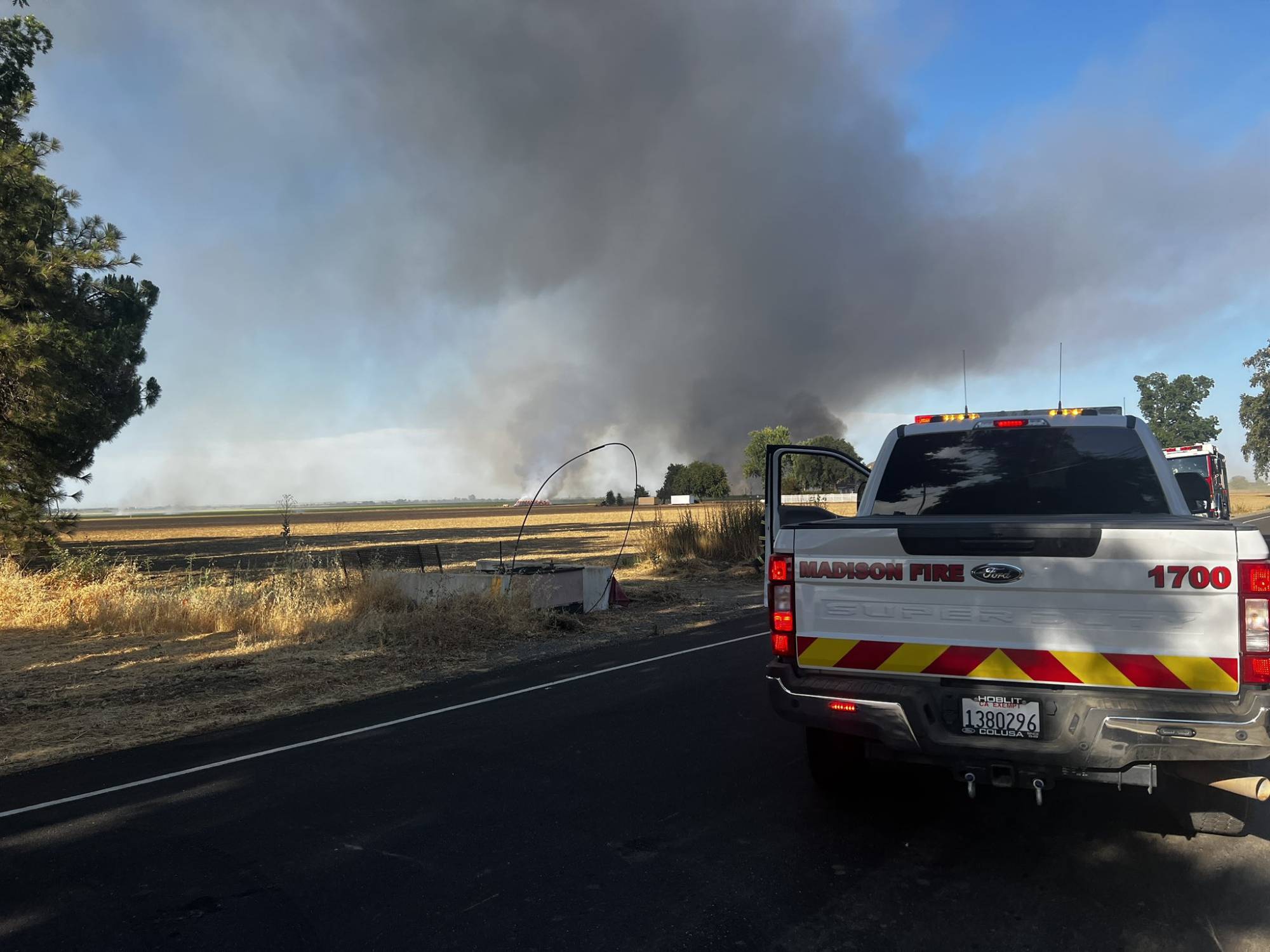
"caption": "Firefighters assisting Yolo County at the scene of a commercial fire that spread into nearby vegetation on Highway 16 and Oakdale Ranch Lane, in Esparto, California, on July 1, 2025. Cal Fire LNU sent air and ground resources to assist with the incident.",
"credit": "Courtesy of Cal Fire LNU",
"altTag": null,
"description": null,
"imgSizes": {
"medium": {
"file": "https://cdn.kqed.org/wp-content/uploads/sites/10/2025/07/FireworksExplosionEspartoCalFire1-2000x1500.jpg",
"width": 2000,
"height": 1500,
"mimeType": "image/jpeg"
},
"large": {
"file": "https://cdn.kqed.org/wp-content/uploads/sites/10/2025/07/FireworksExplosionEspartoCalFire1-2000x1500.jpg",
"width": 2000,
"height": 1500,
"mimeType": "image/jpeg"
},
"thumbnail": {
"file": "https://cdn.kqed.org/wp-content/uploads/sites/10/2025/07/FireworksExplosionEspartoCalFire1-160x120.jpg",
"width": 160,
"height": 120,
"mimeType": "image/jpeg"
},
"1536x1536": {
"file": "https://cdn.kqed.org/wp-content/uploads/sites/10/2025/07/FireworksExplosionEspartoCalFire1-1536x1152.jpg",
"width": 1536,
"height": 1152,
"mimeType": "image/jpeg"
},
"post-thumbnail": {
"file": "https://cdn.kqed.org/wp-content/uploads/sites/10/2025/07/FireworksExplosionEspartoCalFire1-672x372.jpg",
"width": 672,
"height": 372,
"mimeType": "image/jpeg"
},
"twentyfourteen-full-width": {
"file": "https://cdn.kqed.org/wp-content/uploads/sites/10/2025/07/FireworksExplosionEspartoCalFire1-1038x576.jpg",
"width": 1038,
"height": 576,
"mimeType": "image/jpeg"
},
"full-width": {
"file": "https://cdn.kqed.org/wp-content/uploads/sites/10/2025/07/FireworksExplosionEspartoCalFire1-2000x1500.jpg",
"width": 2000,
"height": 1500,
"mimeType": "image/jpeg"
},
"kqedFullSize": {
"file": "https://cdn.kqed.org/wp-content/uploads/sites/10/2025/07/FireworksExplosionEspartoCalFire1.jpg",
"width": 2048,
"height": 1536
}
},
"isLoading": false,
"fetchFailed": false
},
"news_12047651": {
"type": "attachments",
"id": "news_12047651",
"meta": {
"index": "attachments_1716263798",
"site": "news",
"id": "12047651",
"found": true
},
"title": "Oakland International Airport on April 14, 2020.",
"publishDate": 1752255952,
"status": "inherit",
"parent": 12047645,
"modified": 1752255969,
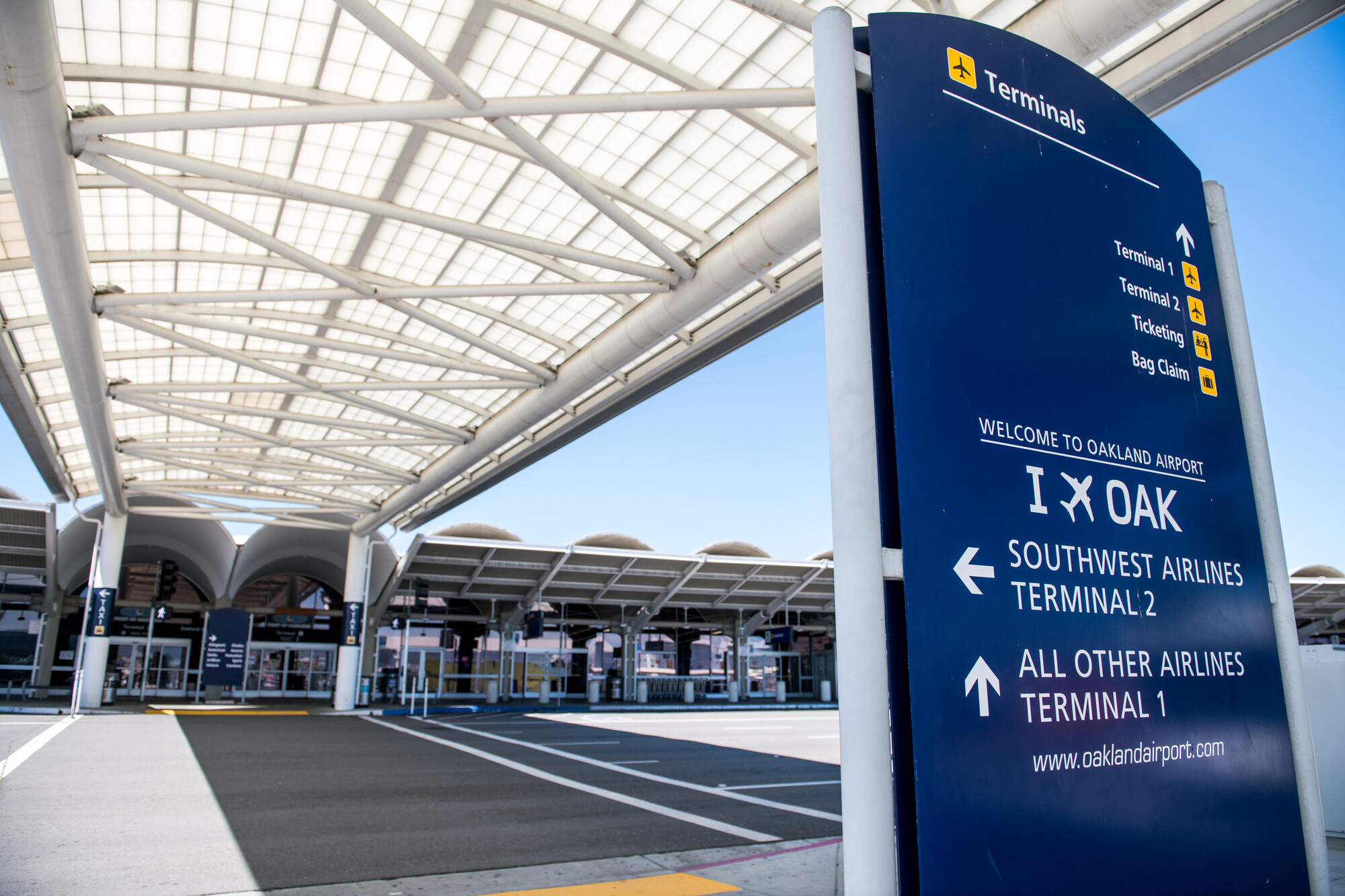
"caption": "Oakland International Airport on April 14, 2020.",
"credit": "Beth LaBerge/KQED",
"altTag": null,
"description": null,
"imgSizes": {
"thumbnail": {
"file": "https://cdn.kqed.org/wp-content/uploads/sites/10/2025/07/003_KQED_Oakland_Airport_04142020_qed-160x107.jpg",
"width": 160,
"height": 107,
"mimeType": "image/jpeg"
},
"1536x1536": {
"file": "https://cdn.kqed.org/wp-content/uploads/sites/10/2025/07/003_KQED_Oakland_Airport_04142020_qed-1536x1024.jpg",
"width": 1536,
"height": 1024,
"mimeType": "image/jpeg"
},
"post-thumbnail": {
"file": "https://cdn.kqed.org/wp-content/uploads/sites/10/2025/07/003_KQED_Oakland_Airport_04142020_qed-672x372.jpg",
"width": 672,
"height": 372,
"mimeType": "image/jpeg"
},
"twentyfourteen-full-width": {
"file": "https://cdn.kqed.org/wp-content/uploads/sites/10/2025/07/003_KQED_Oakland_Airport_04142020_qed-1038x576.jpg",
"width": 1038,
"height": 576,
"mimeType": "image/jpeg"
},
"kqedFullSize": {
"file": "https://cdn.kqed.org/wp-content/uploads/sites/10/2025/07/003_KQED_Oakland_Airport_04142020_qed.jpg",
"width": 2000,
"height": 1333
}
},
"isLoading": false,
"fetchFailed": false
},
"news_12047573": {
"type": "attachments",
"id": "news_12047573",
"meta": {
"index": "attachments_1716263798",
"site": "news",
"id": "12047573",
"found": true
},
"title": "231017-LakeMercedRVs-023-BL_qed",
"publishDate": 1752174460,
"status": "inherit",
"parent": 12047562,
"modified": 1752175079,
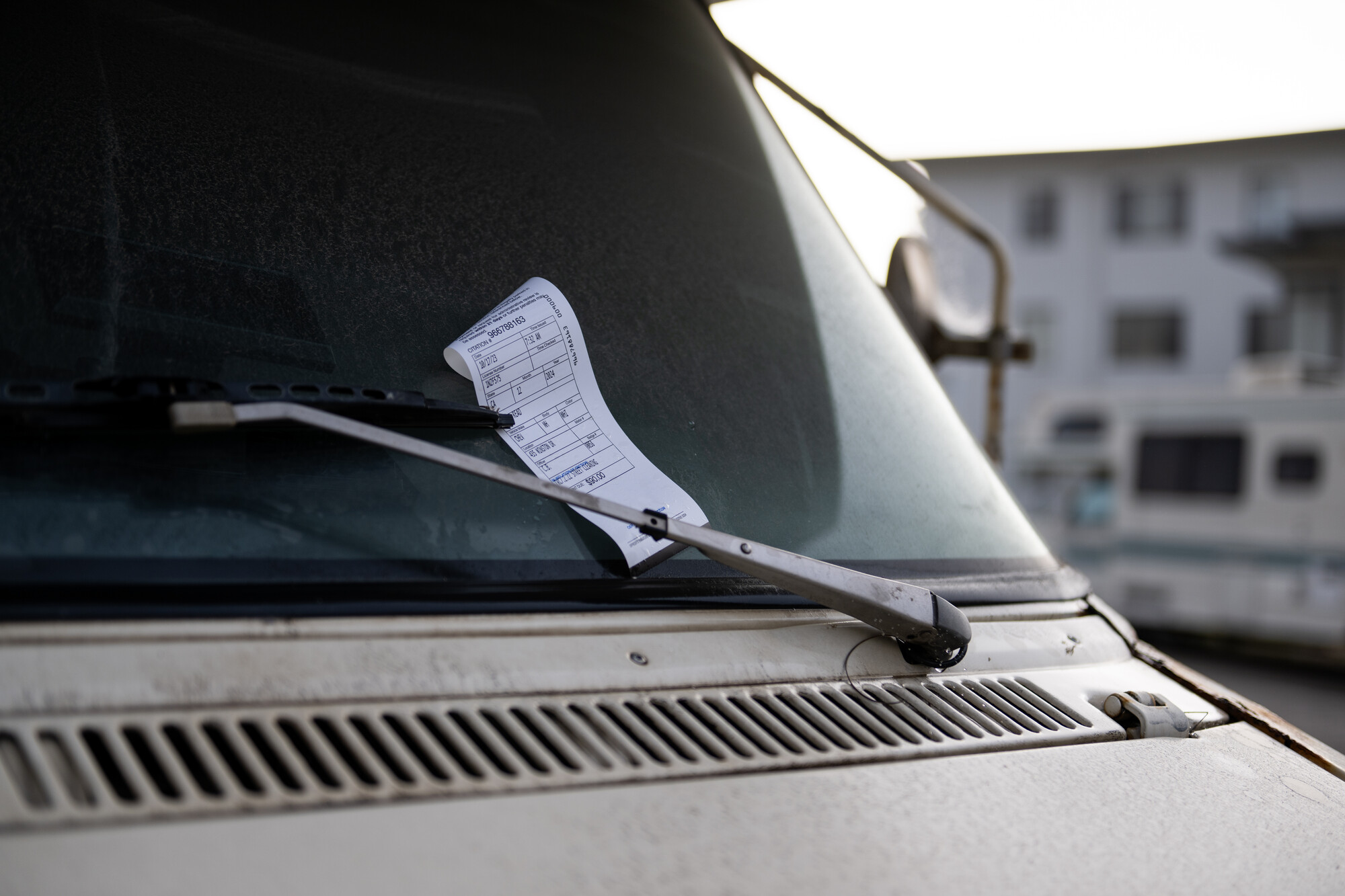
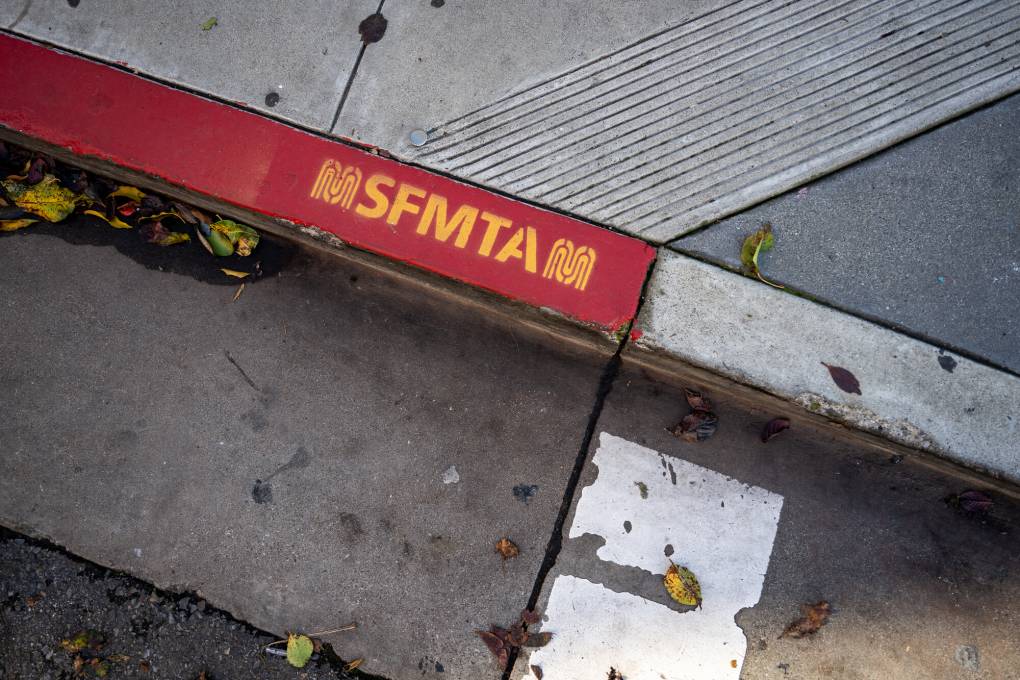
"caption": "An SFMTA parking ticket for street cleaning sits on the windshield of an RV along Winston Drive in San Francisco, California, on Oct. 17, 2023, near San Francisco State University.",
"credit": "Beth LaBerge/KQED",
"altTag": null,
"description": null,
"imgSizes": {
"thumbnail": {
"file": "https://cdn.kqed.org/wp-content/uploads/sites/10/2025/07/231017-LakeMercedRVs-023-BL_qed-160x107.jpg",
"width": 160,
"height": 107,
"mimeType": "image/jpeg"
},
"1536x1536": {
"file": "https://cdn.kqed.org/wp-content/uploads/sites/10/2025/07/231017-LakeMercedRVs-023-BL_qed-1536x1024.jpg",
"width": 1536,
"height": 1024,
"mimeType": "image/jpeg"
},
"post-thumbnail": {
"file": "https://cdn.kqed.org/wp-content/uploads/sites/10/2025/07/231017-LakeMercedRVs-023-BL_qed-672x372.jpg",
"width": 672,
"height": 372,
"mimeType": "image/jpeg"
},
"twentyfourteen-full-width": {
"file": "https://cdn.kqed.org/wp-content/uploads/sites/10/2025/07/231017-LakeMercedRVs-023-BL_qed-1038x576.jpg",
"width": 1038,
"height": 576,
"mimeType": "image/jpeg"
},
"kqedFullSize": {
"file": "https://cdn.kqed.org/wp-content/uploads/sites/10/2025/07/231017-LakeMercedRVs-023-BL_qed.jpg",
"width": 2000,
"height": 1333
}
},
"isLoading": false,
"fetchFailed": false
},
"news_11883278": {
"type": "attachments",
"id": "news_11883278",
"meta": {
"index": "attachments_1716263798",
"site": "news",
"id": "11883278",
"found": true
},
"parent": 11883227,
"imgSizes": {
"twentyfourteen-full-width": {
"file": "https://ww2.kqed.org/app/uploads/sites/10/2021/07/immigration-protest-1038x576.jpeg",
"width": 1038,
"mimeType": "image/jpeg",
"height": 576
},
"thumbnail": {
"file": "https://ww2.kqed.org/app/uploads/sites/10/2021/07/immigration-protest-160x107.jpeg",
"width": 160,
"mimeType": "image/jpeg",
"height": 107
},
"post-thumbnail": {
"file": "https://ww2.kqed.org/app/uploads/sites/10/2021/07/immigration-protest-672x372.jpeg",
"width": 672,
"mimeType": "image/jpeg",
"height": 372
},
"kqedFullSize": {
"file": "https://ww2.kqed.org/app/uploads/sites/10/2021/07/immigration-protest.jpeg",
"width": 1600,
"height": 1067
},
"large": {
"file": "https://ww2.kqed.org/app/uploads/sites/10/2021/07/immigration-protest-1020x680.jpeg",
"width": 1020,
"mimeType": "image/jpeg",
"height": 680
},
"1536x1536": {
"file": "https://ww2.kqed.org/app/uploads/sites/10/2021/07/immigration-protest-1536x1024.jpeg",
"width": 1536,
"mimeType": "image/jpeg",
"height": 1024
},
"medium": {
"file": "https://ww2.kqed.org/app/uploads/sites/10/2021/07/immigration-protest-800x534.jpeg",
"width": 800,
"mimeType": "image/jpeg",
"height": 534
}
},
"publishDate": 1627692006,
"modified": 1627692069,
"caption": "A protester holds up a sign outside of the U.S. Immigration and Customs Enforcement processing center and immigration court at 630 Sansome St. in San Francisco.",
"description": "A protester holds up a sign outside of the U.S. Immigration and Customs Enforcement processing center and immigration court at 630 Sansome St. in San Francisco.",
"title": "immigration-protest",
"credit": "JoeBill Muñoz/KQED",
"status": "inherit",
"altTag": "Protester holds up a sign that says \"everyone is welcome Here\"",
"isLoading": false,
"fetchFailed": false
},
"news_12038608": {
"type": "attachments",
"id": "news_12038608",
"meta": {
"index": "attachments_1716263798",
"site": "news",
"id": "12038608",
"found": true
},
"title": "250502-TENDERLOINTRIAGECENTER-26-BL-KQED",
"publishDate": 1746219107,
"status": "inherit",
"parent": 12038376,
"modified": 1746232323,
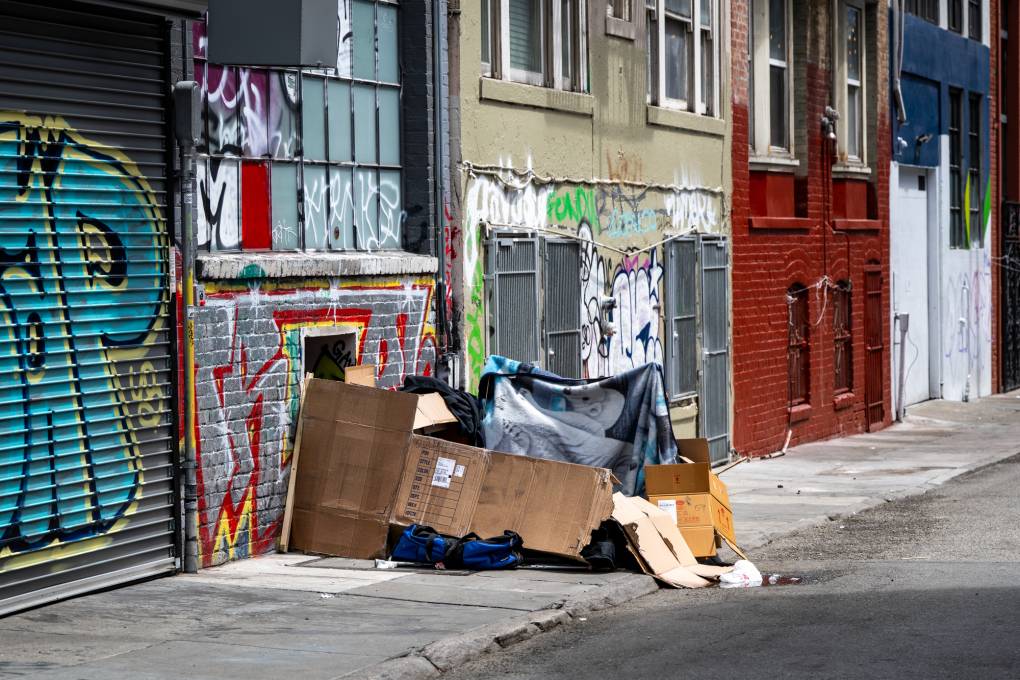
"caption": "A shelter made of cardboard boxes and blankets sits on a sidewalk in the Tenderloin neighborhood of San Francisco on May 2, 2025.",
"credit": "Beth LaBerge/KQED",
"altTag": null,
"description": null,
"imgSizes": {
"medium": {
"file": "https://cdn.kqed.org/wp-content/uploads/sites/10/2025/05/250502-TENDERLOINTRIAGECENTER-26-BL-KQED-800x533.jpg",
"width": 800,
"height": 533,
"mimeType": "image/jpeg"
},
"large": {
"file": "https://cdn.kqed.org/wp-content/uploads/sites/10/2025/05/250502-TENDERLOINTRIAGECENTER-26-BL-KQED-1020x680.jpg",
"width": 1020,
"height": 680,
"mimeType": "image/jpeg"
},
"thumbnail": {
"file": "https://cdn.kqed.org/wp-content/uploads/sites/10/2025/05/250502-TENDERLOINTRIAGECENTER-26-BL-KQED-160x107.jpg",
"width": 160,
"height": 107,
"mimeType": "image/jpeg"
},
"1536x1536": {
"file": "https://cdn.kqed.org/wp-content/uploads/sites/10/2025/05/250502-TENDERLOINTRIAGECENTER-26-BL-KQED-1536x1024.jpg",
"width": 1536,
"height": 1024,
"mimeType": "image/jpeg"
},
"post-thumbnail": {
"file": "https://cdn.kqed.org/wp-content/uploads/sites/10/2025/05/250502-TENDERLOINTRIAGECENTER-26-BL-KQED-672x372.jpg",
"width": 672,
"height": 372,
"mimeType": "image/jpeg"
},
"twentyfourteen-full-width": {
"file": "https://cdn.kqed.org/wp-content/uploads/sites/10/2025/05/250502-TENDERLOINTRIAGECENTER-26-BL-KQED-1038x576.jpg",
"width": 1038,
"height": 576,
"mimeType": "image/jpeg"
},
"full-width": {
"file": "https://cdn.kqed.org/wp-content/uploads/sites/10/2025/05/250502-TENDERLOINTRIAGECENTER-26-BL-KQED-1920x1280.jpg",
"width": 1920,
"height": 1280,
"mimeType": "image/jpeg"
},
"kqedFullSize": {
"file": "https://cdn.kqed.org/wp-content/uploads/sites/10/2025/05/250502-TENDERLOINTRIAGECENTER-26-BL-KQED.jpg",
"width": 2000,
"height": 1333
}
},
"isLoading": false,
"fetchFailed": false
},
"news_12046800": {
"type": "attachments",
"id": "news_12046800",
"meta": {
"index": "attachments_1716263798",
"site": "news",
"id": "12046800",
"found": true
},
"title": "Marisela Gonzalez at the Levi's offices in San Francisco on July 1, 2025.",
"publishDate": 1751473743,
"status": "inherit",
"parent": 0,
"modified": 1751473855,
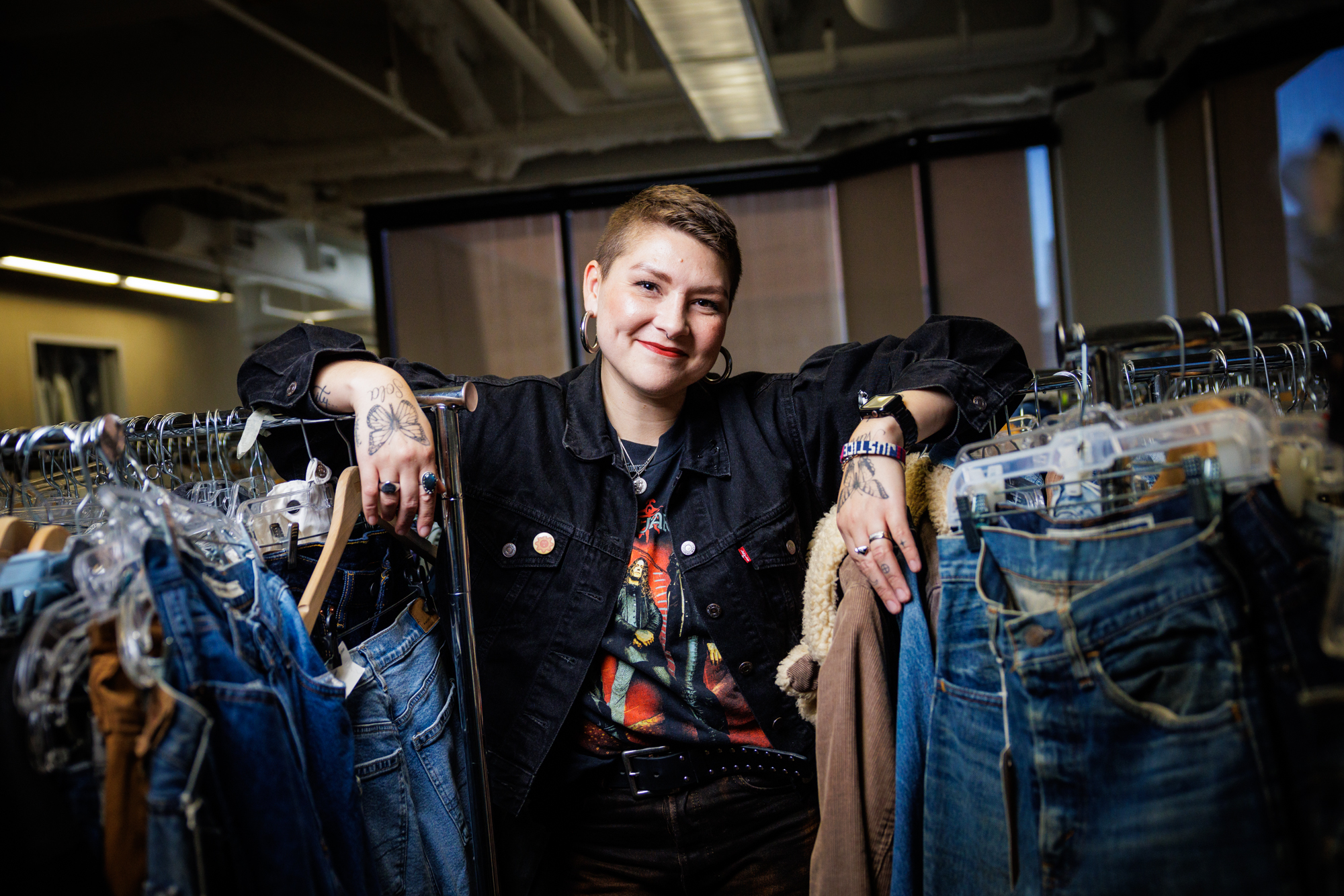
"caption": "Marisela Gonzáles Ginestra at the Levi's offices in San Francisco on July 1, 2025.",
"credit": "Martin do Nascimento/KQED",
"altTag": null,
"description": null,
"imgSizes": {
"thumbnail": {
"file": "https://cdn.kqed.org/wp-content/uploads/sites/10/2025/07/250701-K-ONDA-JULY-MD-01-KQED-160x107.jpg",
"width": 160,
"height": 107,
"mimeType": "image/jpeg"
},
"1536x1536": {
"file": "https://cdn.kqed.org/wp-content/uploads/sites/10/2025/07/250701-K-ONDA-JULY-MD-01-KQED-1536x1025.jpg",
"width": 1536,
"height": 1025,
"mimeType": "image/jpeg"
},
"post-thumbnail": {
"file": "https://cdn.kqed.org/wp-content/uploads/sites/10/2025/07/250701-K-ONDA-JULY-MD-01-KQED-672x372.jpg",
"width": 672,
"height": 372,
"mimeType": "image/jpeg"
},
"twentyfourteen-full-width": {
"file": "https://cdn.kqed.org/wp-content/uploads/sites/10/2025/07/250701-K-ONDA-JULY-MD-01-KQED-1038x576.jpg",
"width": 1038,
"height": 576,
"mimeType": "image/jpeg"
},
"kqedFullSize": {
"file": "https://cdn.kqed.org/wp-content/uploads/sites/10/2025/07/250701-K-ONDA-JULY-MD-01-KQED.jpg",
"width": 2000,
"height": 1334
}
},
"isLoading": false,
"fetchFailed": false
},
"news_12046907": {
"type": "attachments",
"id": "news_12046907",
"meta": {
"index": "attachments_1716263798",
"site": "news",
"id": "12046907",
"found": true
},
"title": "ICE-immigration-courrt",
"publishDate": 1751493110,
"status": "inherit",
"parent": 12057278,
"modified": 1758656897,
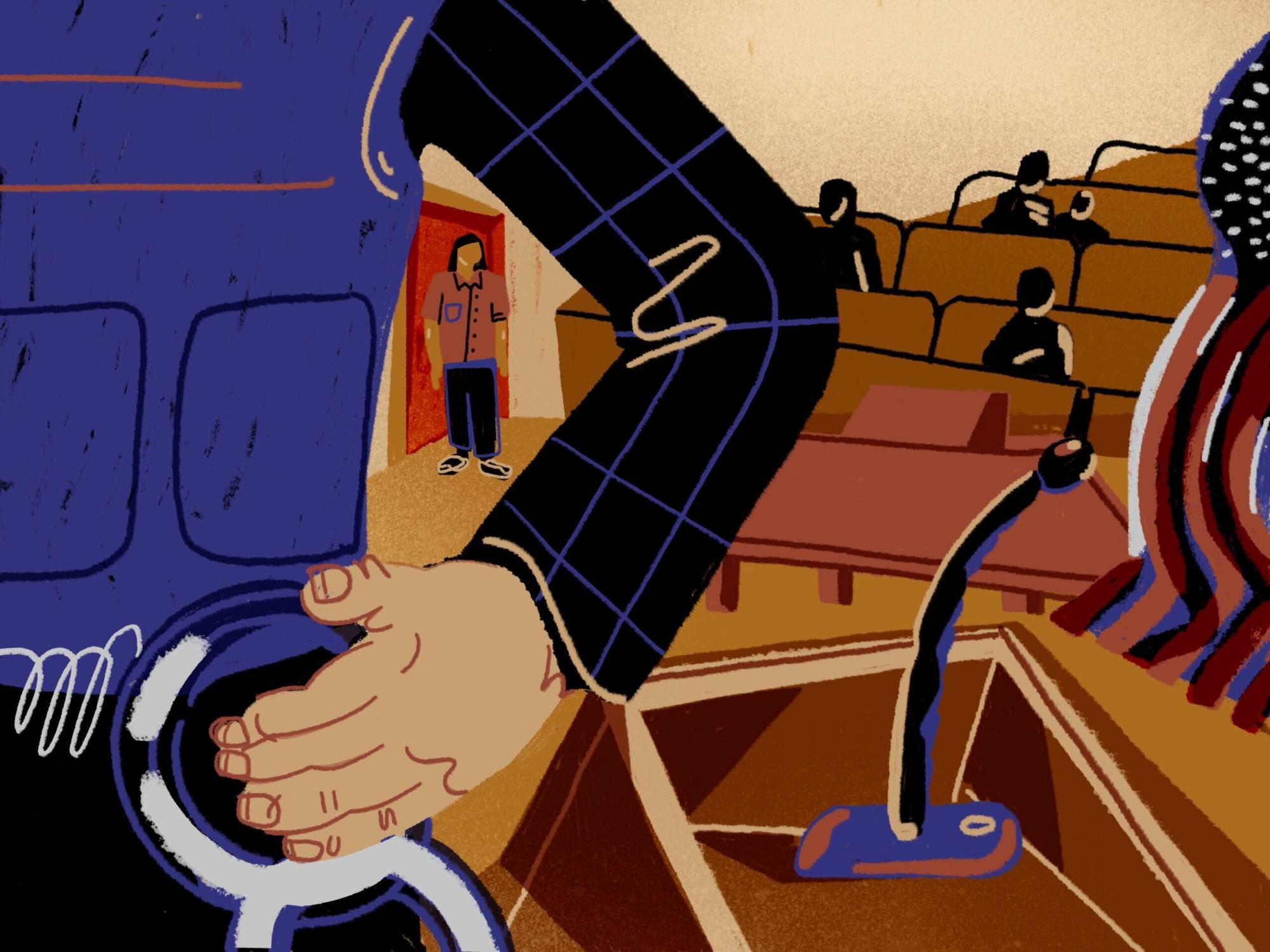
"caption": "With increased ICE presence in immigration courts, how are lawyers, volunteers and advocates responding?",
"credit": "Anna Vignet/KQED",
"altTag": null,
"description": null,
"imgSizes": {
"medium": {
"file": "https://cdn.kqed.org/wp-content/uploads/sites/10/2025/07/IMG_1067-2000x1500.jpg",
"width": 2000,
"height": 1500,
"mimeType": "image/jpeg"
},
"large": {
"file": "https://cdn.kqed.org/wp-content/uploads/sites/10/2025/07/IMG_1067-2000x1500.jpg",
"width": 2000,
"height": 1500,
"mimeType": "image/jpeg"
},
"thumbnail": {
"file": "https://cdn.kqed.org/wp-content/uploads/sites/10/2025/07/IMG_1067-160x120.jpg",
"width": 160,
"height": 120,
"mimeType": "image/jpeg"
},
"1536x1536": {
"file": "https://cdn.kqed.org/wp-content/uploads/sites/10/2025/07/IMG_1067-1536x1152.jpg",
"width": 1536,
"height": 1152,
"mimeType": "image/jpeg"
},
"2048x2048": {
"file": "https://cdn.kqed.org/wp-content/uploads/sites/10/2025/07/IMG_1067-2048x1536.jpg",
"width": 2048,
"height": 1536,
"mimeType": "image/jpeg"
},
"post-thumbnail": {
"file": "https://cdn.kqed.org/wp-content/uploads/sites/10/2025/07/IMG_1067-672x372.jpg",
"width": 672,
"height": 372,
"mimeType": "image/jpeg"
},
"twentyfourteen-full-width": {
"file": "https://cdn.kqed.org/wp-content/uploads/sites/10/2025/07/IMG_1067-1038x576.jpg",
"width": 1038,
"height": 576,
"mimeType": "image/jpeg"
},
"full-width": {
"file": "https://cdn.kqed.org/wp-content/uploads/sites/10/2025/07/IMG_1067-2000x1500.jpg",
"width": 2000,
"height": 1500,
"mimeType": "image/jpeg"
},
"kqedFullSize": {
"file": "https://cdn.kqed.org/wp-content/uploads/sites/10/2025/07/IMG_1067.jpg",
"width": 2560,
"height": 1920
}
},
"isLoading": false,
"fetchFailed": false
},
"news_11954350": {
"type": "attachments",
"id": "news_11954350",
"meta": {
"index": "attachments_1716263798",
"site": "news",
"id": "11954350",
"found": true
},
"title": "fireworks-near-me-july-4",
"publishDate": 1687972126,
"status": "inherit",
"parent": 11992781,
"modified": 1782234882,
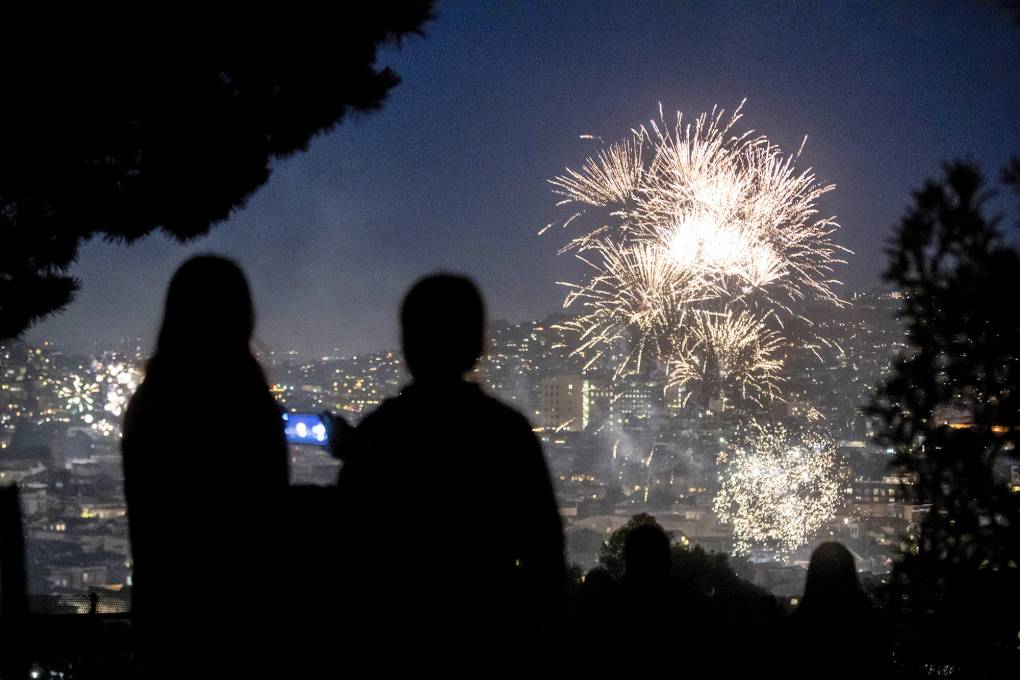
"caption": "Illegal fireworks light up the sky in the Potrero Hill neighborhood on July 4, 2020, in San Francisco.",
"credit": "Santiago Mejia/The San Francisco Chronicle via Getty Images",
"altTag": "The silhouettes of two or more people are thrown into relief by the explosions of fireworks in the distance over a city setting.",
"description": null,
"imgSizes": {
"medium": {
"file": "https://cdn.kqed.org/wp-content/uploads/sites/10/2023/06/230628-SAN-FRANCISCO-FIREWORKS-GETTY-SM-KQED-800x533.jpg",
"width": 800,
"height": 533,
"mimeType": "image/jpeg"
},
"large": {
"file": "https://cdn.kqed.org/wp-content/uploads/sites/10/2023/06/230628-SAN-FRANCISCO-FIREWORKS-GETTY-SM-KQED-1020x680.jpg",
"width": 1020,
"height": 680,
"mimeType": "image/jpeg"
},
"thumbnail": {
"file": "https://cdn.kqed.org/wp-content/uploads/sites/10/2023/06/230628-SAN-FRANCISCO-FIREWORKS-GETTY-SM-KQED-160x107.jpg",
"width": 160,
"height": 107,
"mimeType": "image/jpeg"
},
"1536x1536": {
"file": "https://cdn.kqed.org/wp-content/uploads/sites/10/2023/06/230628-SAN-FRANCISCO-FIREWORKS-GETTY-SM-KQED-1536x1024.jpg",
"width": 1536,
"height": 1024,
"mimeType": "image/jpeg"
},
"post-thumbnail": {
"file": "https://cdn.kqed.org/wp-content/uploads/sites/10/2023/06/230628-SAN-FRANCISCO-FIREWORKS-GETTY-SM-KQED-672x372.jpg",
"width": 672,
"height": 372,
"mimeType": "image/jpeg"
},
"twentyfourteen-full-width": {
"file": "https://cdn.kqed.org/wp-content/uploads/sites/10/2023/06/230628-SAN-FRANCISCO-FIREWORKS-GETTY-SM-KQED-1038x576.jpg",
"width": 1038,
"height": 576,
"mimeType": "image/jpeg"
},
"full-width": {
"file": "https://cdn.kqed.org/wp-content/uploads/sites/10/2023/06/230628-SAN-FRANCISCO-FIREWORKS-GETTY-SM-KQED-1920x1280.jpg",
"width": 1920,
"height": 1280,
"mimeType": "image/jpeg"
},
"kqedFullSize": {
"file": "https://cdn.kqed.org/wp-content/uploads/sites/10/2023/06/230628-SAN-FRANCISCO-FIREWORKS-GETTY-SM-KQED.jpg",
"width": 2000,
"height": 1333
}
},
"isLoading": false,
"fetchFailed": false
},
"news_12046858": {
"type": "attachments",
"id": "news_12046858",
"meta": {
"index": "attachments_1716263798",
"site": "news",
"id": "12046858",
"found": true
},
"title": "021_SanFrancisco_Housing_07292021_qed",
"publishDate": 1751483863,
"status": "inherit",
"parent": 12046854,
"modified": 1751483882,
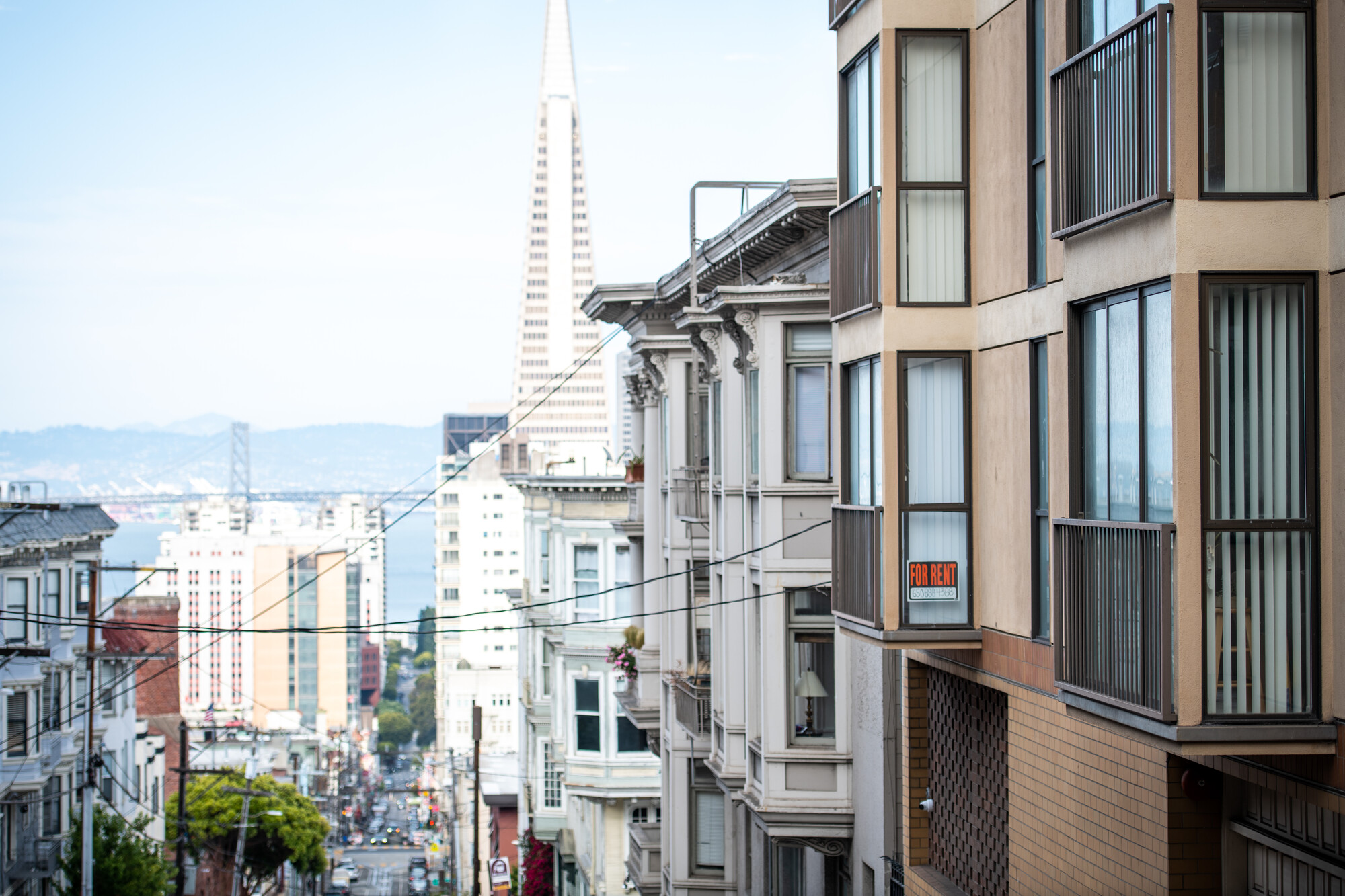
"caption": "A \"For Rent\" sign hangs in the window of an apartment building in Nob Hill in San Francisco on July 29, 2021.",
"credit": "Beth LaBerge/KQED",
"altTag": null,
"description": null,
"imgSizes": {
"thumbnail": {
"file": "https://cdn.kqed.org/wp-content/uploads/sites/10/2025/07/021_SanFrancisco_Housing_07292021_qed-160x107.jpg",
"width": 160,
"height": 107,
"mimeType": "image/jpeg"
},
"1536x1536": {
"file": "https://cdn.kqed.org/wp-content/uploads/sites/10/2025/07/021_SanFrancisco_Housing_07292021_qed-1536x1024.jpg",
"width": 1536,
"height": 1024,
"mimeType": "image/jpeg"
},
"post-thumbnail": {
"file": "https://cdn.kqed.org/wp-content/uploads/sites/10/2025/07/021_SanFrancisco_Housing_07292021_qed-672x372.jpg",
"width": 672,
"height": 372,
"mimeType": "image/jpeg"
},
"twentyfourteen-full-width": {
"file": "https://cdn.kqed.org/wp-content/uploads/sites/10/2025/07/021_SanFrancisco_Housing_07292021_qed-1038x576.jpg",
"width": 1038,
"height": 576,
"mimeType": "image/jpeg"
},
"kqedFullSize": {
"file": "https://cdn.kqed.org/wp-content/uploads/sites/10/2025/07/021_SanFrancisco_Housing_07292021_qed.jpg",
"width": 2000,
"height": 1333
}
},
"isLoading": false,
"fetchFailed": false
},
"news_12046827": {
"type": "attachments",
"id": "news_12046827",
"meta": {
"index": "attachments_1716263798",
"site": "news",
"id": "12046827",
"found": true
},
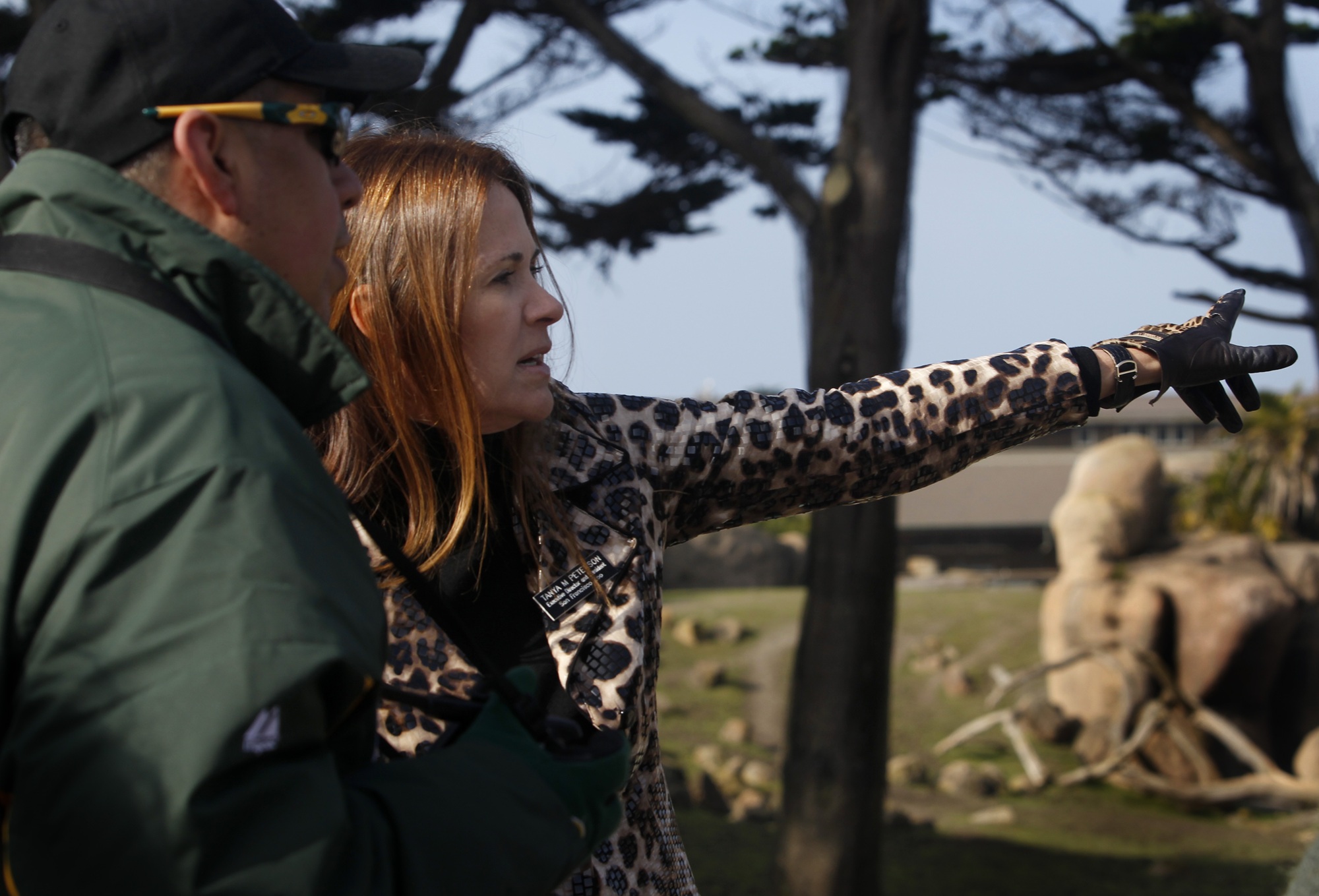
"title": "San Francisco Zoo director Tanya Peterson describes details of the African Savanna exhibit to a visitor in San Francisco, Calif., on Friday, Jan. 7, 2011",
"publishDate": 1751480629,
"status": "inherit",
"parent": 12046822,
"modified": 1751480662,
"caption": "San Francisco Zoo director Tanya Peterson describes details of the African Savanna exhibit to a visitor in San Francisco, California, on Friday, Jan. 7, 2011. ",
"credit": "Paul Chinn/The San Francisco Chronicle via Getty Images",
"altTag": null,
"description": null,
"imgSizes": {
"thumbnail": {
"file": "https://cdn.kqed.org/wp-content/uploads/sites/10/2025/07/SFZooGetty4-160x109.jpg",
"width": 160,
"height": 109,
"mimeType": "image/jpeg"
},
"1536x1536": {
"file": "https://cdn.kqed.org/wp-content/uploads/sites/10/2025/07/SFZooGetty4-1536x1044.jpg",
"width": 1536,
"height": 1044,
"mimeType": "image/jpeg"
},
"post-thumbnail": {
"file": "https://cdn.kqed.org/wp-content/uploads/sites/10/2025/07/SFZooGetty4-672x372.jpg",
"width": 672,
"height": 372,
"mimeType": "image/jpeg"
},
"twentyfourteen-full-width": {
"file": "https://cdn.kqed.org/wp-content/uploads/sites/10/2025/07/SFZooGetty4-1038x576.jpg",
"width": 1038,
"height": 576,
"mimeType": "image/jpeg"
},
"kqedFullSize": {
"file": "https://cdn.kqed.org/wp-content/uploads/sites/10/2025/07/SFZooGetty4.jpg",
"width": 2000,
"height": 1359
}
},
"isLoading": false,
"fetchFailed": false
},
"news_12025128": {
"type": "attachments",
"id": "news_12025128",
"meta": {
"index": "attachments_1716263798",
"site": "news",
"id": "12025128",
"found": true
},
"title": "241217-DaylightingLaws-01-BL_qed",
"publishDate": 1738356744,
"status": "inherit",
"parent": 12025187,
"modified": 1738367248,
"caption": "A red curb indicates a no parking area near a crosswalk on San Carlos Street in San Francisco on Dec. 17, 2024.",
"credit": "Beth LaBerge/KQED",
"altTag": null,
"description": null,
"imgSizes": {
"medium": {
"file": "https://cdn.kqed.org/wp-content/uploads/sites/10/2025/01/241217-DaylightingLaws-01-BL_qed-800x533.jpg",
"width": 800,
"height": 533,
"mimeType": "image/jpeg"
},
"large": {
"file": "https://cdn.kqed.org/wp-content/uploads/sites/10/2025/01/241217-DaylightingLaws-01-BL_qed-1020x680.jpg",
"width": 1020,
"height": 680,
"mimeType": "image/jpeg"
},
"thumbnail": {
"file": "https://cdn.kqed.org/wp-content/uploads/sites/10/2025/01/241217-DaylightingLaws-01-BL_qed-160x107.jpg",
"width": 160,
"height": 107,
"mimeType": "image/jpeg"
},
"1536x1536": {
"file": "https://cdn.kqed.org/wp-content/uploads/sites/10/2025/01/241217-DaylightingLaws-01-BL_qed-1536x1024.jpg",
"width": 1536,
"height": 1024,
"mimeType": "image/jpeg"
},
"post-thumbnail": {
"file": "https://cdn.kqed.org/wp-content/uploads/sites/10/2025/01/241217-DaylightingLaws-01-BL_qed-672x372.jpg",
"width": 672,
"height": 372,
"mimeType": "image/jpeg"
},
"twentyfourteen-full-width": {
"file": "https://cdn.kqed.org/wp-content/uploads/sites/10/2025/01/241217-DaylightingLaws-01-BL_qed-1038x576.jpg",
"width": 1038,
"height": 576,
"mimeType": "image/jpeg"
},
"full-width": {
"file": "https://cdn.kqed.org/wp-content/uploads/sites/10/2025/01/241217-DaylightingLaws-01-BL_qed-1920x1280.jpg",
"width": 1920,
"height": 1280,
"mimeType": "image/jpeg"
},
"kqedFullSize": {
"file": "https://cdn.kqed.org/wp-content/uploads/sites/10/2025/01/241217-DaylightingLaws-01-BL_qed.jpg",
"width": 2000,
"height": 1333
}
},
"isLoading": false,
"fetchFailed": false
}
},
"audioPlayerReducer": {
"postId": "stream_live",
"isPaused": true,
"isPlaying": false,
"pfsActive": false,
"pledgeModalIsOpen": true,
"playerDrawerIsOpen": false,
"liveAudioPlayStartedAt": 0,
"liveAudioPlayContext": ""
},
"authorsReducer": {
"btorres": {
"type": "authors",
"id": "11666",
"meta": {
"index": "authors_1716337520",
"id": "11666",
"found": true
},
"name": "Blanca Torres",
"firstName": "Blanca",
"lastName": "Torres",
"slug": "btorres",
"email": "btorres@kqed.org",
"display_author_email": true,
"staff_mastheads": [
"news"
],
"title": "Producer, Forum",
"bio": "Blanca Torres brings sharp news judgement and keen sense of lively conversation to her work as producer for Forum. She loves producing shows that leave listeners feeling like they heard distinctive voices, learned something new and gained a fresh perspective.\r\n\r\nShe joined KQED in January of 2020 after 16 years of working as a newspaper reporter most recently at the \u003cem>San Francisco Business Times,\u003c/em> where she wrote about real estate and economic development. Before that, she covered a variety of beats including crime, education, retail, workplace, the economy, consumer issues, and small business for the \u003cem>Contra Costa Times, Baltimore Sun\u003c/em> and\u003cem> The Seattle Times\u003c/em>. In addition to reporting, she worked as an editorial writer and columnist for the \u003cem>Seattle Times\u003c/em>. From 2017 to 2020, Blanca won a total of ten awards from the National Association of Real Estate Editors and won first place for land use reporting from the California News Publishers Association two years in a row. She is also a member and former board member for the National Association of Hispanic Journalists.\r\n\r\nA native of the Pacific Northwest, Blanca earned her bachelor's degree from Vanderbilt University in Nashville and a master's in fine arts in creative writing at Mills College. She lives in the East Bay with her family.",
"avatar": "https://secure.gravatar.com/avatar/50b49d19b14a1eed34f26ebf4681152cdd81574ed21851100871ccd29e578cdc?s=600&d=blank&r=g",
"twitter": "@blancawrites",
"bluesky": null,
"facebook": null,
"instagram": null,
"linkedin": null,
"sites": [
{
"site": "arts",
"roles": [
"editor"
]
},
{
"site": "news",
"roles": [
"editor"
]
},
{
"site": "forum",
"roles": [
"editor"
]
}
],
"headData": {
"title": "Blanca Torres | KQED",
"description": "Producer, Forum",
"ogImgSrc": "https://secure.gravatar.com/avatar/50b49d19b14a1eed34f26ebf4681152cdd81574ed21851100871ccd29e578cdc?s=600&d=blank&r=g",
"twImgSrc": "https://secure.gravatar.com/avatar/50b49d19b14a1eed34f26ebf4681152cdd81574ed21851100871ccd29e578cdc?s=600&d=blank&r=g"
},
"isLoading": false,
"link": "/author/btorres"
},
"nkhan": {
"type": "authors",
"id": "11867",
"meta": {
"index": "authors_1716337520",
"id": "11867",
"found": true
},
"name": "Nisa Khan",
"firstName": "Nisa",
"lastName": "Khan",
"slug": "nkhan",
"email": "nkhan@kqed.org",
"display_author_email": false,
"staff_mastheads": [],
"title": "KQED Contributor",
"bio": "Nisa Khan is a reporter for KQED's Audience News Desk. She was formerly a data reporter at Michigan Radio. She earned a Bachelor of Science in Information from the University of Michigan and a Master of Arts in Communication from Stanford University.",
"avatar": "https://secure.gravatar.com/avatar/8720459eef081ff64582b3506b124d58523e80e120704a0cbd9892533c914991?s=600&d=blank&r=g",
"twitter": "mnisakhan",
"bluesky": null,
"facebook": null,
"instagram": null,
"linkedin": null,
"sites": [
{
"site": "arts",
"roles": [
"editor"
]
},
{
"site": "news",
"roles": [
"editor"
]
},
{
"site": "science",
"roles": [
"editor",
"author"
]
},
{
"site": "forum",
"roles": [
"editor"
]
},
{
"site": "liveblog",
"roles": [
"contributor"
]
}
],
"headData": {
"title": "Nisa Khan | KQED",
"description": "KQED Contributor",
"ogImgSrc": "https://secure.gravatar.com/avatar/8720459eef081ff64582b3506b124d58523e80e120704a0cbd9892533c914991?s=600&d=blank&r=g",
"twImgSrc": "https://secure.gravatar.com/avatar/8720459eef081ff64582b3506b124d58523e80e120704a0cbd9892533c914991?s=600&d=blank&r=g"
},
"isLoading": false,
"link": "/author/nkhan"
},
"kdebenedetti": {
"type": "authors",
"id": "11913",
"meta": {
"index": "authors_1716337520",
"id": "11913",
"found": true
},
"name": "Katie DeBenedetti",
"firstName": "Katie",
"lastName": "DeBenedetti",
"slug": "kdebenedetti",
"email": "kdebenedetti@kqed.org",
"display_author_email": false,
"staff_mastheads": [
"news",
"science"
],
"title": "KQED Contributor",
"bio": "Katie DeBenedetti is a digital reporter covering daily news for the Express Desk. Prior to joining KQED as a culture reporting intern in January 2024, she covered education and city government for the Napa Valley Register.",
"avatar": "https://secure.gravatar.com/avatar/6e31073cb8f7e4214ab03f42771d0f45?s=600&d=blank&r=g",
"twitter": null,
"facebook": null,
"instagram": null,
"linkedin": null,
"sites": [
{
"site": "news",
"roles": [
"author"
]
},
{
"site": "science",
"roles": [
"author"
]
},
{
"site": "liveblog",
"roles": [
"author"
]
}
],
"headData": {
"title": "Katie DeBenedetti | KQED",
"description": "KQED Contributor",
"ogImgSrc": "https://secure.gravatar.com/avatar/6e31073cb8f7e4214ab03f42771d0f45?s=600&d=blank&r=g",
"twImgSrc": "https://secure.gravatar.com/avatar/6e31073cb8f7e4214ab03f42771d0f45?s=600&d=blank&r=g"
},
"isLoading": false,
"link": "/author/kdebenedetti"
},
"slim": {
"type": "authors",
"id": "11920",
"meta": {
"index": "authors_1716337520",
"id": "11920",
"found": true
},
"name": "Samantha Lim",
"firstName": "Samantha",
"lastName": "Lim",
"slug": "slim",
"email": "slim@KQED.org",
"display_author_email": false,
"staff_mastheads": [],
"title": "KQED Contributor",
"bio": null,
"avatar": "https://secure.gravatar.com/avatar/82e592e6c15fe1a04d385e8ad0fb0b4e?s=600&d=blank&r=g",
"twitter": null,
"facebook": null,
"instagram": null,
"linkedin": null,
"sites": [
{
"site": "news",
"roles": []
}
],
"headData": {
"title": "Samantha Lim | KQED",
"description": "KQED Contributor",
"ogImgSrc": "https://secure.gravatar.com/avatar/82e592e6c15fe1a04d385e8ad0fb0b4e?s=600&d=blank&r=g",
"twImgSrc": "https://secure.gravatar.com/avatar/82e592e6c15fe1a04d385e8ad0fb0b4e?s=600&d=blank&r=g"
},
"isLoading": false,
"link": "/author/slim"
},
"gzada": {
"type": "authors",
"id": "11929",
"meta": {
"index": "authors_1716337520",
"id": "11929",
"found": true
},
"name": "Gilare Zada",
"firstName": "Gilare",
"lastName": "Zada",
"slug": "gzada",
"email": "gzada@kqed.org",
"display_author_email": true,
"staff_mastheads": [
"news"
],
"title": null,
"bio": "Gilare Zada is a Kurdish-American from San Diego, CA. Storytelling, fitness, and binge reading are some of her passions outside of news reporting. Her work has appeared in Mission Local, the Peninsula Press, the San Francisco Press Club, and more. She also writes as a class correspondent for the Stanford Magazine - go Card!",
"avatar": "https://secure.gravatar.com/avatar/33a75f2b947669a488a805edec3fbf3838c1cedaedda710e983770633b4d6a75?s=600&d=blank&r=g",
"twitter": null,
"bluesky": null,
"facebook": null,
"instagram": null,
"linkedin": null,
"sites": [
{
"site": "arts",
"roles": [
"editor"
]
},
{
"site": "news",
"roles": [
"administrator"
]
},
{
"site": "science",
"roles": [
"editor"
]
}
],
"headData": {
"title": "Gilare Zada | KQED",
"description": null,
"ogImgSrc": "https://secure.gravatar.com/avatar/33a75f2b947669a488a805edec3fbf3838c1cedaedda710e983770633b4d6a75?s=600&d=blank&r=g",
"twImgSrc": "https://secure.gravatar.com/avatar/33a75f2b947669a488a805edec3fbf3838c1cedaedda710e983770633b4d6a75?s=600&d=blank&r=g"
},
"isLoading": false,
"link": "/author/gzada"
}
},
"pagesReducer": {
"news_tag_san-francisco": {
"type": "terms",
"id": "news_38",
"meta": {
"index": "terms_1716263798",
"site": "news",
"id": "38",
"score": 6.7228813
},
"featImg": null,
"name": "San Francisco",
"description": null,
"taxonomy": "tag",
"headData": {
"twImgId": null,
"twTitle": null,
"ogTitle": null,
"ogImgId": null,
"twDescription": null,
"description": null,
"title": "San Francisco Archives | KQED News",
"ogDescription": null
},
"ttid": 58,
"slug": "san-francisco",
"isLoading": false,
"title": "San Francisco",
"pageMeta": {
"site": "news",
"WpPageTemplate": "page-topic-editorial",
"currentPage": 57
},
"blocks": [
{
"blockName": "kqed/post-list",
"attrs": {
"layout": "cardArticle2",
"query": "posts/news?tag=san-francisco",
"seeMore": false,
"paginated": true,
"page": 57
}
},
{
"blockName": "kqed/ad"
}
]
}
},
"pfsSessionReducer": {},
"postsReducer": {
"stream_live": {
"type": "live",
"id": "stream_live",
"audioUrl": "https://streams.kqed.org/kqedradio",
"title": "Live Stream",
"excerpt": "Live Stream information currently unavailable.",
"link": "/radio",
"featImg": "",
"label": {
"name": "KQED Live",
"link": "/"
}
},
"stream_kqedNewscast": {
"type": "posts",
"id": "stream_kqedNewscast",
"audioUrl": "https://www.kqed.org/.stream/anon/radio/RDnews/newscast.mp3?_=1",
"title": "KQED Newscast",
"featImg": "",
"label": {
"name": "88.5 FM",
"link": "/"
}
},
"news_12047656": {
"type": "posts",
"id": "news_12047656",
"meta": {
"index": "posts_1716263798",
"site": "news",
"id": "12047656",
"score": null,
"sort": [
1752330643000
]
},
"guestAuthors": [],
"slug": "sfs-sunset-night-market-wont-happen-this-summer-is-local-politics-to-blame",
"title": "SF’s Sunset Night Market Won’t Happen This Summer. Is Local Politics to Blame?",
"publishDate": 1752330643,
"format": "standard",
"headTitle": "SF’s Sunset Night Market Won’t Happen This Summer. Is Local Politics to Blame? | KQED",
"labelTerm": {
"site": "news"
},
"content": "\u003cp>Although news that the \u003ca href=\"https://www.kqed.org/news/11961526/smiles-and-slurps-san-franciscos-sunset-neighborhood-night-market-kicks-off\">Sunset Night Market\u003c/a> in San Francisco will not take place this summer spurred reports and speculation that it was a victim of political strife in the Sunset District, organizers and city officials are blaming funding disputes instead.\u003c/p>\n\u003cp>Community partners who organized the market said the city did not issue reimbursements for last year’s event until May, which frustrated organizers who fronted initial expenses. Meanwhile, the unexpected popularity of last year’s market also overwhelmed organizers and local merchants, and highlighted the need for further planning, they added.\u003c/p>\n\u003cp>“There’s a lot of pieces to the puzzle that need to come into place before you launch an event,” said Angie Petitt, founder and owner of Sunset Mercantile. “There’s a lot to iron out before we can relaunch it, and it have a positive impact on the community.”\u003c/p>\n\u003cp>[ad fullwidth]\u003c/p>\n\u003cp>Petitt said the event is not canceled and added that organizers are in the process of working with the Office of Employment and Workforce Development to figure out a different date and night market set-up that works better for the area. It’s just on pause, she said.\u003c/p>\n\u003cp>Before its launch in 2023, the Sunset Night Market on Irving Street was expected to be a three-block community event featuring a few merchants and no more than 2,000 visitors. It quickly grew into a behemoth — last year’s market drew more than 10,000 attendees and featured over 100 food and retail vendors spread across seven blocks in the Outer Sunset.\u003c/p>\n\u003cfigure id=\"attachment_12047660\" class=\"wp-caption aligncenter\" style=\"max-width: 2000px\">\u003cimg loading=\"lazy\" decoding=\"async\" class=\"size-full wp-image-12047660\" src=\"https://cdn.kqed.org/wp-content/uploads/sites/10/2025/07/20230915-SunsetNightMarket-30-JY_qed.jpg\" alt=\"\" width=\"2000\" height=\"1333\" srcset=\"https://cdn.kqed.org/wp-content/uploads/sites/10/2025/07/20230915-SunsetNightMarket-30-JY_qed.jpg 2000w, https://cdn.kqed.org/wp-content/uploads/sites/10/2025/07/20230915-SunsetNightMarket-30-JY_qed-160x107.jpg 160w, https://cdn.kqed.org/wp-content/uploads/sites/10/2025/07/20230915-SunsetNightMarket-30-JY_qed-1536x1024.jpg 1536w\" sizes=\"auto, (max-width: 2000px) 100vw, 2000px\">\u003cfigcaption class=\"wp-caption-text\">People grab mochi donuts during Dear Community’s food tour at the Sunset Night market in San Francisco on Sept.15, 2023. \u003ccite>(Juliana Yamada/KQED)\u003c/cite>\u003c/figcaption>\u003c/figure>\n\u003cp>“It’s a community event that we’ve been trying to grow organically, and it kind of became bigger and a little more unwieldy than we expected,” Petitt said.\u003c/p>\n\u003cp>Community partners, including Sunset Mercantile and the Sunset Chinese Cultural District, secured a grant from the city last year, amounting to $120,000, to put on the night market. The funds have since been fully disbursed, according to the Office of Employment and Workforce Development.\u003c/p>\n\u003cp>A spokesperson for the department said delays in reimbursement were caused by issues with the paperwork and the office’s severe staffing shortage. With the summer night market on pause, the city is now in conversation with local partners to figure out alternative events for later this year, and $100,000 has been allocated for future activation.[aside postID=news_12042017 hero='https://cdn.kqed.org/wp-content/uploads/sites/10/2025/05/20250412_SUNSETDUNESGRANDOPENING_GC-9-KQED-1-1020x680.jpg']“After the last night market in September 2024, the Sunset Night Market Collaborative wanted to learn from the previous events and improve and enhance any future night markets for our Sunset community,” said Lily Wong, director of the Sunset Chinese Cultural District. “We are working with OEWD to create a night market more in scale with our community, and something the Sunset can be proud to have.”\u003c/p>\n\u003cp>Jennifer Leung, co-owner of Pineapple King Bakery, said she was disappointed to hear that the night market had been postponed. Although she had heard some complaints about increased traffic and noise last year, Leung said the event brought more business to her bakery and was a “vibrant” addition to the community.\u003c/p>\n\u003cp>“It was a win-win for small businesses, as well as for people who attended it,” she said. “People are really happy when they are shopping around, enjoying different types of food. You could get barbecue, dumplings, fresh-pressed sugarcane juice. It’s also very diverse, and what San Francisco is about.”\u003c/p>\n\u003cp>Leung said she hopes the night market comes back to the Sunset soon, with even more local businesses featured.\u003c/p>\n\u003cp>The loss of this summer’s Sunset Night Market comes as one of its major proponents, San Francisco Supervisor Joel Engardio, faces a wave of political backlash.\u003c/p>\n\u003cfigure id=\"attachment_11961532\" class=\"wp-caption aligncenter\" style=\"max-width: 1920px\">\u003cimg loading=\"lazy\" decoding=\"async\" class=\"size-full wp-image-11961532\" src=\"https://cdn.kqed.org/wp-content/uploads/sites/10/2030/09/20230915-SunsetNightMarket-17-JY-qut.jpg\" alt=\"\" width=\"1920\" height=\"1280\" srcset=\"https://cdn.kqed.org/wp-content/uploads/sites/10/2030/09/20230915-SunsetNightMarket-17-JY-qut.jpg 1920w, https://cdn.kqed.org/wp-content/uploads/sites/10/2030/09/20230915-SunsetNightMarket-17-JY-qut-800x533.jpg 800w, https://cdn.kqed.org/wp-content/uploads/sites/10/2030/09/20230915-SunsetNightMarket-17-JY-qut-1020x680.jpg 1020w, https://cdn.kqed.org/wp-content/uploads/sites/10/2030/09/20230915-SunsetNightMarket-17-JY-qut-160x107.jpg 160w, https://cdn.kqed.org/wp-content/uploads/sites/10/2030/09/20230915-SunsetNightMarket-17-JY-qut-1536x1024.jpg 1536w\" sizes=\"auto, (max-width: 1920px) 100vw, 1920px\">\u003cfigcaption class=\"wp-caption-text\">Supervisor Joel Engardio (left), District Attorney Brooke Jenkins (center) and Engardio’s husband Lionel Hsu (right) at the Sunset Night Market. \u003ccite>(Juliana Yamada/KQED)\u003c/cite>\u003c/figcaption>\u003c/figure>\n\u003cp>Some residents have speculated that the event was called off because of ongoing tension between Engardio and community members calling for his recall, according to a \u003ca href=\"https://sfstandard.com/2025/07/10/sunset-irving-street-night-market-cancelled-recall/\">report\u003c/a> by the \u003cem>San Francisco Standard\u003c/em>.\u003c/p>\n\u003cp>Engardio shared that article \u003ca href=\"https://x.com/JoelEngardio/status/1943424313258054056\">on social media\u003c/a> on Thursday, saying the night market was “gone — not because of lack of interest, but because the recall campaign poisoned local politics.” His office did not respond to a request for comment on Friday.\u003c/p>\n\u003cp>The \u003ca href=\"https://www.kqed.org/news/12042017/recall-against-sf-supervisor-joel-engardio-heads-to-the-ballot\">campaign to oust\u003c/a> Engardio began earlier this year after he sponsored a proposition that led to the closure of part of the Great Highway and its conversion to the Sunset Dunes park. The recall petition garnered thousands of signatures, and a special election for District 4 voters is scheduled for September.\u003c/p>\n\u003cp>Albert Chow, a vocal recall supporter and owner of Great Wall Hardware, previously told the \u003cem>Standard \u003c/em>that local businesses had turned away from the night market because of frustrations with Engardio’s leadership. When KQED reached him for comment, he said he did not believe the recall campaign or its supporters were responsible for the event’s postponement, and called it a matter of funding.\u003c/p>\n\u003cp>“[The recall] has nothing to do … with the night market. The night market was a great success and we advocated for it heavily,” Chow said. “The coffers were empty to fund the night market this year, and that is what happened. It wasn’t because of sabotage or subterfuge. It was simply because of bureaucracy.”\u003c/p>\n\u003cp>\u003cem>KQED’s \u003c/em>\u003ca href=\"https://www.kqed.org/author/jlara\">\u003cem>Juan Carlos Lara\u003c/em>\u003c/a>\u003cem> contributed to this report.\u003c/em>\u003c/p>\n\u003cp>\u003c/p>\n",
"blocks": [],
"excerpt": "News that the popular San Francisco event is on pause comes amid a heated recall campaign in the Sunset District. But organizers and city officials say funding disputes are to blame.",
"status": "publish",
"parent": 0,
"modified": 1752281683,
"stats": {
"hasAudio": false,
"hasVideo": false,
"hasChartOrMap": false,
"iframeSrcs": [],
"hasGoogleForm": false,
"hasGallery": false,
"hasHearkenModule": false,
"hasPolis": false,
"paragraphCount": 20,
"wordCount": 971
},
"headData": {
"title": "SF’s Sunset Night Market Won’t Happen This Summer. Is Local Politics to Blame? | KQED",
"description": "News that the popular San Francisco event is on pause comes amid a heated recall campaign in the Sunset District. But organizers and city officials say funding disputes are to blame.",
"ogTitle": "",
"ogDescription": "",
"ogImgId": "",
"twTitle": "",
"twDescription": "",
"twImgId": "",
"schema": {
"@context": "https://schema.org",
"@type": "NewsArticle",
"headline": "SF’s Sunset Night Market Won’t Happen This Summer. Is Local Politics to Blame?",
"datePublished": "2025-07-12T07:30:43-07:00",
"dateModified": "2025-07-11T17:54:43-07:00",
"image": "https://cdn.kqed.org/wp-content/uploads/2020/02/KQED-OG-Image@1x.png",
"isAccessibleForFree": "True",
"publisher": {
"@type": "NewsMediaOrganization",
"@id": "https://www.kqed.org/#organization",
"name": "KQED",
"logo": "https://cdn.kqed.org/wp-content/uploads/2020/02/KQED-OG-Image@1x.png",
"url": "https://www.kqed.org",
"sameAs": [
"https://www.facebook.com/KQED",
"https://twitter.com/KQED",
"https://www.instagram.com/kqed/",
"https://www.tiktok.com/@kqedofficial",
"https://www.linkedin.com/company/kqed",
"https://www.youtube.com/channel/UCeC0IOo7i1P_61zVUWbJ4nw"
]
}
}
},
"primaryCategory": {
"termId": 8,
"slug": "news",
"name": "News"
},
"sticky": false,
"templateType": "standard",
"featuredImageType": "standard",
"excludeFromSiteSearch": "Include",
"articleAge": "0",
"path": "/news/12047656/sfs-sunset-night-market-wont-happen-this-summer-is-local-politics-to-blame",
"audioTrackLength": null,
"parsedContent": [
{
"type": "contentString",
"content": "\u003cdiv class=\"post-body\">\u003cp>\u003cp>Although news that the \u003ca href=\"https://www.kqed.org/news/11961526/smiles-and-slurps-san-franciscos-sunset-neighborhood-night-market-kicks-off\">Sunset Night Market\u003c/a> in San Francisco will not take place this summer spurred reports and speculation that it was a victim of political strife in the Sunset District, organizers and city officials are blaming funding disputes instead.\u003c/p>\n\u003cp>Community partners who organized the market said the city did not issue reimbursements for last year’s event until May, which frustrated organizers who fronted initial expenses. Meanwhile, the unexpected popularity of last year’s market also overwhelmed organizers and local merchants, and highlighted the need for further planning, they added.\u003c/p>\n\u003cp>“There’s a lot of pieces to the puzzle that need to come into place before you launch an event,” said Angie Petitt, founder and owner of Sunset Mercantile. “There’s a lot to iron out before we can relaunch it, and it have a positive impact on the community.”\u003c/p>\n\u003cp>\u003c/p>\u003c/div>",
"attributes": {
"named": {},
"numeric": []
}
},
{
"type": "component",
"content": "",
"name": "ad",
"attributes": {
"named": {
"label": "fullwidth"
},
"numeric": [
"fullwidth"
]
}
},
{
"type": "contentString",
"content": "\u003cdiv class=\"post-body\">\u003cp>\u003c/p>\n\u003cp>Petitt said the event is not canceled and added that organizers are in the process of working with the Office of Employment and Workforce Development to figure out a different date and night market set-up that works better for the area. It’s just on pause, she said.\u003c/p>\n\u003cp>Before its launch in 2023, the Sunset Night Market on Irving Street was expected to be a three-block community event featuring a few merchants and no more than 2,000 visitors. It quickly grew into a behemoth — last year’s market drew more than 10,000 attendees and featured over 100 food and retail vendors spread across seven blocks in the Outer Sunset.\u003c/p>\n\u003cfigure id=\"attachment_12047660\" class=\"wp-caption aligncenter\" style=\"max-width: 2000px\">\u003cimg loading=\"lazy\" decoding=\"async\" class=\"size-full wp-image-12047660\" src=\"https://cdn.kqed.org/wp-content/uploads/sites/10/2025/07/20230915-SunsetNightMarket-30-JY_qed.jpg\" alt=\"\" width=\"2000\" height=\"1333\" srcset=\"https://cdn.kqed.org/wp-content/uploads/sites/10/2025/07/20230915-SunsetNightMarket-30-JY_qed.jpg 2000w, https://cdn.kqed.org/wp-content/uploads/sites/10/2025/07/20230915-SunsetNightMarket-30-JY_qed-160x107.jpg 160w, https://cdn.kqed.org/wp-content/uploads/sites/10/2025/07/20230915-SunsetNightMarket-30-JY_qed-1536x1024.jpg 1536w\" sizes=\"auto, (max-width: 2000px) 100vw, 2000px\">\u003cfigcaption class=\"wp-caption-text\">People grab mochi donuts during Dear Community’s food tour at the Sunset Night market in San Francisco on Sept.15, 2023. \u003ccite>(Juliana Yamada/KQED)\u003c/cite>\u003c/figcaption>\u003c/figure>\n\u003cp>“It’s a community event that we’ve been trying to grow organically, and it kind of became bigger and a little more unwieldy than we expected,” Petitt said.\u003c/p>\n\u003cp>Community partners, including Sunset Mercantile and the Sunset Chinese Cultural District, secured a grant from the city last year, amounting to $120,000, to put on the night market. The funds have since been fully disbursed, according to the Office of Employment and Workforce Development.\u003c/p>\n\u003cp>A spokesperson for the department said delays in reimbursement were caused by issues with the paperwork and the office’s severe staffing shortage. With the summer night market on pause, the city is now in conversation with local partners to figure out alternative events for later this year, and $100,000 has been allocated for future activation.\u003c/p>\u003c/div>",
"attributes": {
"named": {},
"numeric": []
}
},
{
"type": "component",
"content": "",
"name": "aside",
"attributes": {
"named": {
"postid": "news_12042017",
"hero": "https://cdn.kqed.org/wp-content/uploads/sites/10/2025/05/20250412_SUNSETDUNESGRANDOPENING_GC-9-KQED-1-1020x680.jpg",
"label": ""
},
"numeric": []
}
},
{
"type": "contentString",
"content": "\u003cdiv class=\"post-body\">\u003cp>“After the last night market in September 2024, the Sunset Night Market Collaborative wanted to learn from the previous events and improve and enhance any future night markets for our Sunset community,” said Lily Wong, director of the Sunset Chinese Cultural District. “We are working with OEWD to create a night market more in scale with our community, and something the Sunset can be proud to have.”\u003c/p>\n\u003cp>Jennifer Leung, co-owner of Pineapple King Bakery, said she was disappointed to hear that the night market had been postponed. Although she had heard some complaints about increased traffic and noise last year, Leung said the event brought more business to her bakery and was a “vibrant” addition to the community.\u003c/p>\n\u003cp>“It was a win-win for small businesses, as well as for people who attended it,” she said. “People are really happy when they are shopping around, enjoying different types of food. You could get barbecue, dumplings, fresh-pressed sugarcane juice. It’s also very diverse, and what San Francisco is about.”\u003c/p>\n\u003cp>Leung said she hopes the night market comes back to the Sunset soon, with even more local businesses featured.\u003c/p>\n\u003cp>The loss of this summer’s Sunset Night Market comes as one of its major proponents, San Francisco Supervisor Joel Engardio, faces a wave of political backlash.\u003c/p>\n\u003cfigure id=\"attachment_11961532\" class=\"wp-caption aligncenter\" style=\"max-width: 1920px\">\u003cimg loading=\"lazy\" decoding=\"async\" class=\"size-full wp-image-11961532\" src=\"https://cdn.kqed.org/wp-content/uploads/sites/10/2030/09/20230915-SunsetNightMarket-17-JY-qut.jpg\" alt=\"\" width=\"1920\" height=\"1280\" srcset=\"https://cdn.kqed.org/wp-content/uploads/sites/10/2030/09/20230915-SunsetNightMarket-17-JY-qut.jpg 1920w, https://cdn.kqed.org/wp-content/uploads/sites/10/2030/09/20230915-SunsetNightMarket-17-JY-qut-800x533.jpg 800w, https://cdn.kqed.org/wp-content/uploads/sites/10/2030/09/20230915-SunsetNightMarket-17-JY-qut-1020x680.jpg 1020w, https://cdn.kqed.org/wp-content/uploads/sites/10/2030/09/20230915-SunsetNightMarket-17-JY-qut-160x107.jpg 160w, https://cdn.kqed.org/wp-content/uploads/sites/10/2030/09/20230915-SunsetNightMarket-17-JY-qut-1536x1024.jpg 1536w\" sizes=\"auto, (max-width: 1920px) 100vw, 1920px\">\u003cfigcaption class=\"wp-caption-text\">Supervisor Joel Engardio (left), District Attorney Brooke Jenkins (center) and Engardio’s husband Lionel Hsu (right) at the Sunset Night Market. \u003ccite>(Juliana Yamada/KQED)\u003c/cite>\u003c/figcaption>\u003c/figure>\n\u003cp>Some residents have speculated that the event was called off because of ongoing tension between Engardio and community members calling for his recall, according to a \u003ca href=\"https://sfstandard.com/2025/07/10/sunset-irving-street-night-market-cancelled-recall/\">report\u003c/a> by the \u003cem>San Francisco Standard\u003c/em>.\u003c/p>\n\u003cp>Engardio shared that article \u003ca href=\"https://x.com/JoelEngardio/status/1943424313258054056\">on social media\u003c/a> on Thursday, saying the night market was “gone — not because of lack of interest, but because the recall campaign poisoned local politics.” His office did not respond to a request for comment on Friday.\u003c/p>\n\u003cp>The \u003ca href=\"https://www.kqed.org/news/12042017/recall-against-sf-supervisor-joel-engardio-heads-to-the-ballot\">campaign to oust\u003c/a> Engardio began earlier this year after he sponsored a proposition that led to the closure of part of the Great Highway and its conversion to the Sunset Dunes park. The recall petition garnered thousands of signatures, and a special election for District 4 voters is scheduled for September.\u003c/p>\n\u003cp>Albert Chow, a vocal recall supporter and owner of Great Wall Hardware, previously told the \u003cem>Standard \u003c/em>that local businesses had turned away from the night market because of frustrations with Engardio’s leadership. When KQED reached him for comment, he said he did not believe the recall campaign or its supporters were responsible for the event’s postponement, and called it a matter of funding.\u003c/p>\n\u003cp>“[The recall] has nothing to do … with the night market. The night market was a great success and we advocated for it heavily,” Chow said. “The coffers were empty to fund the night market this year, and that is what happened. It wasn’t because of sabotage or subterfuge. It was simply because of bureaucracy.”\u003c/p>\n\u003cp>\u003cem>KQED’s \u003c/em>\u003ca href=\"https://www.kqed.org/author/jlara\">\u003cem>Juan Carlos Lara\u003c/em>\u003c/a>\u003cem> contributed to this report.\u003c/em>\u003c/p>\n\u003cp>\u003c/p>\n\u003c/div>\u003c/p>",
"attributes": {
"named": {},
"numeric": []
}
}
],
"link": "/news/12047656/sfs-sunset-night-market-wont-happen-this-summer-is-local-politics-to-blame",
"authors": [
"11920"
],
"categories": [
"news_28250",
"news_8",
"news_13"
],
"tags": [
"news_27626",
"news_34377",
"news_31578",
"news_32915",
"news_17968",
"news_38",
"news_31584",
"news_33206"
],
"featImg": "news_11966292",
"label": "news"
},
"news_12047736": {
"type": "posts",
"id": "news_12047736",
"meta": {
"index": "posts_1716263798",
"site": "news",
"id": "12047736",
"score": null,
"sort": [
1752276631000
]
},
"guestAuthors": [],
"slug": "fireworks-warehouse-explosion-victims-included-4-from-bay-area-heres-what-we-know",
"title": "Fireworks Warehouse Explosion Victims Included 4 From Bay Area. Here’s What We Know",
"publishDate": 1752276631,
"format": "standard",
"headTitle": "Fireworks Warehouse Explosion Victims Included 4 From Bay Area. Here’s What We Know | KQED",
"labelTerm": {
"site": "news"
},
"content": "\u003cp>Four Bay Area residents were identified Friday as victims of a \u003ca href=\"https://www.kqed.org/news/12046998/fireworks-warehouse-in-yolo-county-a-major-bay-area-fireworks-supplier-goes-up-in-smoke\">deadly explosion at a fireworks warehouse\u003c/a> in Yolo County last week.\u003c/p>\n\u003cp>Neil Justin Li, 41, and Christopher Goltiao Bocog, 45, of San Francisco, as well as brothers Jesus Manaces Ramos, 18, and Jhony Ernesto Ramos, 22, of San Pablo, were among seven victims named by the Yolo County coroner’s office. The three others killed in the blast were Joel Jeremias Melendez, 28, of Sacramento; Angel Mathew Voller, 18, of Stockton; and Carlos Javier Rodriguez-Mora, 43, of San Andreas.\u003c/p>\n\u003cp>The July 1 blast, which released a mushroom cloud of explosives, debris and smoke and started a fire that spread for nearly 80 acres, is believed to have originated at the Esparto warehouse where the San Francisco-based company Devastating Pyrotechnics stored fireworks.\u003c/p>\n\u003cp>[ad fullwidth]\u003c/p>\n\u003cp>In the days since, local and state officials have been working to determine how the “very rare” incident began.\u003c/p>\n\u003cp>“I have not seen anything like this,” Esparto Fire Protection District Chief Curtis Lawrence said at a news conference the day after the explosion. “This is obviously an incident of great magnitude.”\u003c/p>\n\u003cp>In the weeks since, details have been slowly coming to light.\u003c/p>\n\u003cp>Here’s what we know so far about the explosion and the ongoing investigation.\u003c/p>\n\u003ch2>The explosion\u003c/h2>\n\u003cp>On the evening of July 1, the Esparto Fire Protection District and Cal Fire crews responded to reports of a potential fire and explosion at a commercial warehouse near County Roads 23 and 86A, about three miles west of Interstate 505.\u003c/p>\n\u003cp>Lawrence said the department arrived around 6 p.m. and worked to put out the blaze into the night. The incident prompted multi-day evacuation orders, and seven people were reported missing.\u003c/p>\n\u003cfigure id=\"attachment_12047755\" class=\"wp-caption aligncenter\" style=\"max-width: 2000px\">\u003cimg loading=\"lazy\" decoding=\"async\" class=\"size-full wp-image-12047755\" src=\"https://cdn.kqed.org/wp-content/uploads/sites/10/2025/07/FireworksExplosionEspartoCalFire2.jpg\" alt=\"\" width=\"2000\" height=\"1500\" srcset=\"https://cdn.kqed.org/wp-content/uploads/sites/10/2025/07/FireworksExplosionEspartoCalFire2.jpg 2000w, https://cdn.kqed.org/wp-content/uploads/sites/10/2025/07/FireworksExplosionEspartoCalFire2-160x120.jpg 160w, https://cdn.kqed.org/wp-content/uploads/sites/10/2025/07/FireworksExplosionEspartoCalFire2-1536x1152.jpg 1536w\" sizes=\"auto, (max-width: 2000px) 100vw, 2000px\">\u003cfigcaption class=\"wp-caption-text\">Firefighters assisting Yolo County at the scene of a commercial fire that spread into nearby vegetation on Highway 16 and Oakdale Ranch Lane, in Esparto, California, on July 1, 2025. \u003ccite>(Courtesy of Cal Fire LNU)\u003c/cite>\u003c/figcaption>\u003c/figure>\n\u003cp>On July 5, Yolo County sheriff’s officials announced they had found the bodies of the seven individuals, \u003ca href=\"https://www.kqed.org/news/12047521/a-week-after-deadly-fireworks-blast-families-wait-for-answers\">multiple of whom had already been identified by relatives\u003c/a>, including Jesus and Jhony Ramos, Contra Costa County residents who formerly attended school in San Francisco.\u003c/p>\n\u003cp>“We are deeply saddened to learn that two SFUSD alumni are impacted by the explosion at the fireworks factory in Yolo County. Our thoughts are with their family, friends, and loved ones during this difficult time,” the San Francisco Unified School District wrote on Facebook earlier this week.\u003c/p>\n\u003cp>According to a GoFundMe organized by SFUSD teacher Jeff Steeno, Jhony and Jesus had recently started working at the fireworks warehouse. Jesus, who was also expecting a child, was there for his first shift on the day of the explosion.\u003c/p>\n\u003cp>Both brothers were alumni of Buena Vista Horace Mann K-8 School in the Mission District, \u003ca href=\"https://missionlocal.org/2025/07/buena-vista-horace-mann-mourns-jesus-and-jhony-ramos-brothers-killed-in-yolo-county-fireworks-explosion/\">according to\u003cem> Mission Local.\u003c/em> \u003c/a>\u003c/p>\n\u003cp>The news outlet reported that the brothers had gotten the jobs at Devastating Pyrotechnics through their step-brother, Joel Melendez, 28, who was an employee.\u003c/p>\n\u003ch2>A larger investigation\u003c/h2>\n\u003cp>The unusual circumstances of the explosion and \u003ca href=\"https://www.capradio.org/articles/2025/07/10/this-is-a-huge-red-flag-fireworks-expert-raises-concerns-over-deadly-esparto-explosion/\">concerns from firework experts\u003c/a> have raised questions about the facility’s safety and compliance, especially after the Yolo County Sheriff’s Office told reporters that the incident was being treated as an active crime scene investigation and primarily as a “law enforcement incident.”\u003c/p>\n\u003cp>On Tuesday, investigators with the Office of the California State Fire Marshal, along with officials from the Yolo and Sacramento county sheriffs’ offices and the San Francisco Police Department, were seen conducting a search at a residence in San Francisco’s Inner Richmond District. The home is listed as Devastating Pyrotechnics’ business address on its state licenses.\u003c/p>\n\u003cfigure id=\"attachment_12047757\" class=\"wp-caption aligncenter\" style=\"max-width: 2000px\">\u003cimg loading=\"lazy\" decoding=\"async\" class=\"size-full wp-image-12047757\" src=\"https://cdn.kqed.org/wp-content/uploads/sites/10/2025/07/250418-SFPDFile-39-BL_qed-1.jpg\" alt=\"\" width=\"2000\" height=\"1333\" srcset=\"https://cdn.kqed.org/wp-content/uploads/sites/10/2025/07/250418-SFPDFile-39-BL_qed-1.jpg 2000w, https://cdn.kqed.org/wp-content/uploads/sites/10/2025/07/250418-SFPDFile-39-BL_qed-1-160x107.jpg 160w, https://cdn.kqed.org/wp-content/uploads/sites/10/2025/07/250418-SFPDFile-39-BL_qed-1-1536x1024.jpg 1536w\" sizes=\"auto, (max-width: 2000px) 100vw, 2000px\">\u003cfigcaption class=\"wp-caption-text\">A San Francisco Police Department officer in San Francisco on April 18, 2025. \u003ccite>(Beth LaBerge/KQED)\u003c/cite>\u003c/figcaption>\u003c/figure>\n\u003cp>While Devastating Pyrotechnics owner Kenneth Chee has three state-level fireworks licenses for importing and exporting, wholesale and public display, law enforcement officials said that facilities like the one in Esparto must also meet federal explosive storage requirements.\u003c/p>\n\u003cp>\u003ca href=\"https://www.sfchronicle.com/bayarea/article/fireworks-explosion-20761991.php\">The \u003cem>San Francisco Chronicle\u003c/em> reported\u003c/a> last week that Chee, who was previously convicted of assault with a firearm and firing a gun from a motor vehicle at a person, was denied a federal license by the Bureau of Alcohol, Tobacco, Firearms and Explosives.[aside postID=news_12046998 hero='https://cdn.kqed.org/wp-content/uploads/sites/10/2023/06/230628-SAN-FRANCISCO-FIREWORKS-GETTY-SM-KQED-1020x680.jpg']The Chronicle reported that another man, Gary Chan Jr., obtained a federal license to run Devastating Pyrotechnics in 2023.\u003c/p>\n\u003cp>The home on the 400 block of 2nd Avenue, where \u003ca href=\"https://hoodline.com/2025/07/bomb-squad-raids-inner-richmond-home-associated-with-devastating-pyrotechnics-after-deadly-blast-kills-seven/\">Hoodline San Francisco\u003c/a> observed officers conducting the search, is a previous address of Chee. The property is owned by Jack Lee, who is named as an employee of Devastating Pyrotechnics in contract proposals and company documents extending over multiple years.\u003c/p>\n\u003cp>The Office of the State Fire Marshal and other agencies KQED contacted for comment would not confirm that they had conducted a search of the site, but said, “Investigators are actively tracking down numerous leads and have served multiple search warrants as part of the investigation process.”\u003c/p>\n\u003cp>In a statement on Wednesday, Douglas Horngrad, an attorney who is representing Chee, said: “Kenny [Chee] is innocent of any wrongdoing in connection with the Yolo fire. This incident is currently under investigation. Until such investigation is completed, we will have no further public comment.”\u003c/p>\n\u003ch2>Ties to local public safety agencies\u003c/h2>\n\u003cp>The Esparto property where Devastating Pyrotechnics’ warehouse was located is also the home base for Blackstar Fireworks, which Craig Cutright, a volunteer with the Esparto Fire Protection District, owns.\u003c/p>\n\u003cp>Blackstar has an active public display fireworks license, according to Cal Fire.\u003c/p>\n\u003cp>In text messages to \u003ca href=\"https://www.abc10.com/article/news/investigations/investigating-northern-californias-fireworks-explosion/103-2cae9b54-25c6-4d45-a9c6-9c639d7e1514\">ABC 10\u003c/a> the night of the explosion, Cutright denied that any of his fireworks were involved, the TV station reported. He pointed to Devastating Pyrotechnics.\u003c/p>\n\u003cp>Company documents name Cutright as an employee of Devastating Pyrotechnics as recently as 2022. He’s described as a “senior show producer” on proposals for fireworks contracts with city governments.\u003c/p>\n\u003cp>The property where the warehouses are located is owned by Sam Machado, who operates his own ATF-licensed business, Sam’s Gun Sales, on the site and is a sheriff’s deputy in Yolo County.\u003c/p>\n\u003cp>Few details about the Office of the State Fire Marshal’s investigation have been made public thus far, but the agency said in a statement that it is ongoing, adding, “Please know that we are committed to conducting a thorough and comprehensive investigation.”\u003c/p>\n\u003cp>\u003cem>Correction: The fire that originated at the Esparto warehouse spread for nearly 80 acres, not miles, as this article previously stated.\u003c/em>\u003c/p>\n\u003cp>[ad floatright]\u003c/p>\n",
"blocks": [],
"excerpt": "Authorities identified the seven people who were killed last week when a Northern California fireworks warehouse exploded. Meanwhile, an investigation is ongoing.",
"status": "publish",
"parent": 0,
"modified": 1752425576,
"stats": {
"hasAudio": false,
"hasVideo": false,
"hasChartOrMap": false,
"iframeSrcs": [],
"hasGoogleForm": false,
"hasGallery": false,
"hasHearkenModule": false,
"hasPolis": false,
"paragraphCount": 30,
"wordCount": 1129
},
"headData": {
"title": "Fireworks Warehouse Explosion Victims Included 4 From Bay Area. Here’s What We Know | KQED",
"description": "Authorities identified the seven people who were killed last week when a Northern California fireworks warehouse exploded. Meanwhile, an investigation is ongoing.",
"ogTitle": "",
"ogDescription": "",
"ogImgId": "",
"twTitle": "",
"twDescription": "",
"twImgId": "",
"schema": {
"@context": "https://schema.org",
"@type": "NewsArticle",
"headline": "Fireworks Warehouse Explosion Victims Included 4 From Bay Area. Here’s What We Know",
"datePublished": "2025-07-11T16:30:31-07:00",
"dateModified": "2025-07-13T09:52:56-07:00",
"image": "https://cdn.kqed.org/wp-content/uploads/2020/02/KQED-OG-Image@1x.png",
"isAccessibleForFree": "True",
"publisher": {
"@type": "NewsMediaOrganization",
"@id": "https://www.kqed.org/#organization",
"name": "KQED",
"logo": "https://cdn.kqed.org/wp-content/uploads/2020/02/KQED-OG-Image@1x.png",
"url": "https://www.kqed.org",
"sameAs": [
"https://www.facebook.com/KQED",
"https://twitter.com/KQED",
"https://www.instagram.com/kqed/",
"https://www.tiktok.com/@kqedofficial",
"https://www.linkedin.com/company/kqed",
"https://www.youtube.com/channel/UCeC0IOo7i1P_61zVUWbJ4nw"
]
}
}
},
"primaryCategory": {
"termId": 8,
"slug": "news",
"name": "News"
},
"sticky": false,
"nprStoryId": "kqed-12047736",
"templateType": "standard",
"featuredImageType": "standard",
"excludeFromSiteSearch": "Include",
"articleAge": "0",
"path": "/news/12047736/fireworks-warehouse-explosion-victims-included-4-from-bay-area-heres-what-we-know",
"audioTrackLength": null,
"parsedContent": [
{
"type": "contentString",
"content": "\u003cdiv class=\"post-body\">\u003cp>\u003cp>Four Bay Area residents were identified Friday as victims of a \u003ca href=\"https://www.kqed.org/news/12046998/fireworks-warehouse-in-yolo-county-a-major-bay-area-fireworks-supplier-goes-up-in-smoke\">deadly explosion at a fireworks warehouse\u003c/a> in Yolo County last week.\u003c/p>\n\u003cp>Neil Justin Li, 41, and Christopher Goltiao Bocog, 45, of San Francisco, as well as brothers Jesus Manaces Ramos, 18, and Jhony Ernesto Ramos, 22, of San Pablo, were among seven victims named by the Yolo County coroner’s office. The three others killed in the blast were Joel Jeremias Melendez, 28, of Sacramento; Angel Mathew Voller, 18, of Stockton; and Carlos Javier Rodriguez-Mora, 43, of San Andreas.\u003c/p>\n\u003cp>The July 1 blast, which released a mushroom cloud of explosives, debris and smoke and started a fire that spread for nearly 80 acres, is believed to have originated at the Esparto warehouse where the San Francisco-based company Devastating Pyrotechnics stored fireworks.\u003c/p>\n\u003cp>\u003c/p>\u003c/div>",
"attributes": {
"named": {},
"numeric": []
}
},
{
"type": "component",
"content": "",
"name": "ad",
"attributes": {
"named": {
"label": "fullwidth"
},
"numeric": [
"fullwidth"
]
}
},
{
"type": "contentString",
"content": "\u003cdiv class=\"post-body\">\u003cp>\u003c/p>\n\u003cp>In the days since, local and state officials have been working to determine how the “very rare” incident began.\u003c/p>\n\u003cp>“I have not seen anything like this,” Esparto Fire Protection District Chief Curtis Lawrence said at a news conference the day after the explosion. “This is obviously an incident of great magnitude.”\u003c/p>\n\u003cp>In the weeks since, details have been slowly coming to light.\u003c/p>\n\u003cp>Here’s what we know so far about the explosion and the ongoing investigation.\u003c/p>\n\u003ch2>The explosion\u003c/h2>\n\u003cp>On the evening of July 1, the Esparto Fire Protection District and Cal Fire crews responded to reports of a potential fire and explosion at a commercial warehouse near County Roads 23 and 86A, about three miles west of Interstate 505.\u003c/p>\n\u003cp>Lawrence said the department arrived around 6 p.m. and worked to put out the blaze into the night. The incident prompted multi-day evacuation orders, and seven people were reported missing.\u003c/p>\n\u003cfigure id=\"attachment_12047755\" class=\"wp-caption aligncenter\" style=\"max-width: 2000px\">\u003cimg loading=\"lazy\" decoding=\"async\" class=\"size-full wp-image-12047755\" src=\"https://cdn.kqed.org/wp-content/uploads/sites/10/2025/07/FireworksExplosionEspartoCalFire2.jpg\" alt=\"\" width=\"2000\" height=\"1500\" srcset=\"https://cdn.kqed.org/wp-content/uploads/sites/10/2025/07/FireworksExplosionEspartoCalFire2.jpg 2000w, https://cdn.kqed.org/wp-content/uploads/sites/10/2025/07/FireworksExplosionEspartoCalFire2-160x120.jpg 160w, https://cdn.kqed.org/wp-content/uploads/sites/10/2025/07/FireworksExplosionEspartoCalFire2-1536x1152.jpg 1536w\" sizes=\"auto, (max-width: 2000px) 100vw, 2000px\">\u003cfigcaption class=\"wp-caption-text\">Firefighters assisting Yolo County at the scene of a commercial fire that spread into nearby vegetation on Highway 16 and Oakdale Ranch Lane, in Esparto, California, on July 1, 2025. \u003ccite>(Courtesy of Cal Fire LNU)\u003c/cite>\u003c/figcaption>\u003c/figure>\n\u003cp>On July 5, Yolo County sheriff’s officials announced they had found the bodies of the seven individuals, \u003ca href=\"https://www.kqed.org/news/12047521/a-week-after-deadly-fireworks-blast-families-wait-for-answers\">multiple of whom had already been identified by relatives\u003c/a>, including Jesus and Jhony Ramos, Contra Costa County residents who formerly attended school in San Francisco.\u003c/p>\n\u003cp>“We are deeply saddened to learn that two SFUSD alumni are impacted by the explosion at the fireworks factory in Yolo County. Our thoughts are with their family, friends, and loved ones during this difficult time,” the San Francisco Unified School District wrote on Facebook earlier this week.\u003c/p>\n\u003cp>According to a GoFundMe organized by SFUSD teacher Jeff Steeno, Jhony and Jesus had recently started working at the fireworks warehouse. Jesus, who was also expecting a child, was there for his first shift on the day of the explosion.\u003c/p>\n\u003cp>Both brothers were alumni of Buena Vista Horace Mann K-8 School in the Mission District, \u003ca href=\"https://missionlocal.org/2025/07/buena-vista-horace-mann-mourns-jesus-and-jhony-ramos-brothers-killed-in-yolo-county-fireworks-explosion/\">according to\u003cem> Mission Local.\u003c/em> \u003c/a>\u003c/p>\n\u003cp>The news outlet reported that the brothers had gotten the jobs at Devastating Pyrotechnics through their step-brother, Joel Melendez, 28, who was an employee.\u003c/p>\n\u003ch2>A larger investigation\u003c/h2>\n\u003cp>The unusual circumstances of the explosion and \u003ca href=\"https://www.capradio.org/articles/2025/07/10/this-is-a-huge-red-flag-fireworks-expert-raises-concerns-over-deadly-esparto-explosion/\">concerns from firework experts\u003c/a> have raised questions about the facility’s safety and compliance, especially after the Yolo County Sheriff’s Office told reporters that the incident was being treated as an active crime scene investigation and primarily as a “law enforcement incident.”\u003c/p>\n\u003cp>On Tuesday, investigators with the Office of the California State Fire Marshal, along with officials from the Yolo and Sacramento county sheriffs’ offices and the San Francisco Police Department, were seen conducting a search at a residence in San Francisco’s Inner Richmond District. The home is listed as Devastating Pyrotechnics’ business address on its state licenses.\u003c/p>\n\u003cfigure id=\"attachment_12047757\" class=\"wp-caption aligncenter\" style=\"max-width: 2000px\">\u003cimg loading=\"lazy\" decoding=\"async\" class=\"size-full wp-image-12047757\" src=\"https://cdn.kqed.org/wp-content/uploads/sites/10/2025/07/250418-SFPDFile-39-BL_qed-1.jpg\" alt=\"\" width=\"2000\" height=\"1333\" srcset=\"https://cdn.kqed.org/wp-content/uploads/sites/10/2025/07/250418-SFPDFile-39-BL_qed-1.jpg 2000w, https://cdn.kqed.org/wp-content/uploads/sites/10/2025/07/250418-SFPDFile-39-BL_qed-1-160x107.jpg 160w, https://cdn.kqed.org/wp-content/uploads/sites/10/2025/07/250418-SFPDFile-39-BL_qed-1-1536x1024.jpg 1536w\" sizes=\"auto, (max-width: 2000px) 100vw, 2000px\">\u003cfigcaption class=\"wp-caption-text\">A San Francisco Police Department officer in San Francisco on April 18, 2025. \u003ccite>(Beth LaBerge/KQED)\u003c/cite>\u003c/figcaption>\u003c/figure>\n\u003cp>While Devastating Pyrotechnics owner Kenneth Chee has three state-level fireworks licenses for importing and exporting, wholesale and public display, law enforcement officials said that facilities like the one in Esparto must also meet federal explosive storage requirements.\u003c/p>\n\u003cp>\u003ca href=\"https://www.sfchronicle.com/bayarea/article/fireworks-explosion-20761991.php\">The \u003cem>San Francisco Chronicle\u003c/em> reported\u003c/a> last week that Chee, who was previously convicted of assault with a firearm and firing a gun from a motor vehicle at a person, was denied a federal license by the Bureau of Alcohol, Tobacco, Firearms and Explosives.\u003c/p>\u003c/div>",
"attributes": {
"named": {},
"numeric": []
}
},
{
"type": "component",
"content": "",
"name": "aside",
"attributes": {
"named": {
"postid": "news_12046998",
"hero": "https://cdn.kqed.org/wp-content/uploads/sites/10/2023/06/230628-SAN-FRANCISCO-FIREWORKS-GETTY-SM-KQED-1020x680.jpg",
"label": ""
},
"numeric": []
}
},
{
"type": "contentString",
"content": "\u003cdiv class=\"post-body\">\u003cp>The Chronicle reported that another man, Gary Chan Jr., obtained a federal license to run Devastating Pyrotechnics in 2023.\u003c/p>\n\u003cp>The home on the 400 block of 2nd Avenue, where \u003ca href=\"https://hoodline.com/2025/07/bomb-squad-raids-inner-richmond-home-associated-with-devastating-pyrotechnics-after-deadly-blast-kills-seven/\">Hoodline San Francisco\u003c/a> observed officers conducting the search, is a previous address of Chee. The property is owned by Jack Lee, who is named as an employee of Devastating Pyrotechnics in contract proposals and company documents extending over multiple years.\u003c/p>\n\u003cp>The Office of the State Fire Marshal and other agencies KQED contacted for comment would not confirm that they had conducted a search of the site, but said, “Investigators are actively tracking down numerous leads and have served multiple search warrants as part of the investigation process.”\u003c/p>\n\u003cp>In a statement on Wednesday, Douglas Horngrad, an attorney who is representing Chee, said: “Kenny [Chee] is innocent of any wrongdoing in connection with the Yolo fire. This incident is currently under investigation. Until such investigation is completed, we will have no further public comment.”\u003c/p>\n\u003ch2>Ties to local public safety agencies\u003c/h2>\n\u003cp>The Esparto property where Devastating Pyrotechnics’ warehouse was located is also the home base for Blackstar Fireworks, which Craig Cutright, a volunteer with the Esparto Fire Protection District, owns.\u003c/p>\n\u003cp>Blackstar has an active public display fireworks license, according to Cal Fire.\u003c/p>\n\u003cp>In text messages to \u003ca href=\"https://www.abc10.com/article/news/investigations/investigating-northern-californias-fireworks-explosion/103-2cae9b54-25c6-4d45-a9c6-9c639d7e1514\">ABC 10\u003c/a> the night of the explosion, Cutright denied that any of his fireworks were involved, the TV station reported. He pointed to Devastating Pyrotechnics.\u003c/p>\n\u003cp>Company documents name Cutright as an employee of Devastating Pyrotechnics as recently as 2022. He’s described as a “senior show producer” on proposals for fireworks contracts with city governments.\u003c/p>\n\u003cp>The property where the warehouses are located is owned by Sam Machado, who operates his own ATF-licensed business, Sam’s Gun Sales, on the site and is a sheriff’s deputy in Yolo County.\u003c/p>\n\u003cp>Few details about the Office of the State Fire Marshal’s investigation have been made public thus far, but the agency said in a statement that it is ongoing, adding, “Please know that we are committed to conducting a thorough and comprehensive investigation.”\u003c/p>\n\u003cp>\u003cem>Correction: The fire that originated at the Esparto warehouse spread for nearly 80 acres, not miles, as this article previously stated.\u003c/em>\u003c/p>\n\u003cp>\u003c/p>\u003c/div>",
"attributes": {
"named": {},
"numeric": []
}
},
{
"type": "component",
"content": "",
"name": "ad",
"attributes": {
"named": {
"label": "floatright"
},
"numeric": [
"floatright"
]
}
},
{
"type": "contentString",
"content": "\u003cdiv class=\"post-body\">\u003cp>\u003c/p>\n\u003c/div>\u003c/p>",
"attributes": {
"named": {},
"numeric": []
}
}
],
"link": "/news/12047736/fireworks-warehouse-explosion-victims-included-4-from-bay-area-heres-what-we-know",
"authors": [
"11913"
],
"categories": [
"news_31795",
"news_34167",
"news_8"
],
"tags": [
"news_18538",
"news_17725",
"news_22434",
"news_1619",
"news_22456",
"news_95",
"news_38",
"news_34487",
"news_23623"
],
"featImg": "news_12047567",
"label": "news"
},
"news_12047645": {
"type": "posts",
"id": "news_12047645",
"meta": {
"index": "posts_1716263798",
"site": "news",
"id": "12047645",
"score": null,
"sort": [
1752266638000
]
},
"guestAuthors": [],
"slug": "now-its-the-oakland-san-francisco-bay-airport-sfo-still-isnt-happy",
"title": "Now It’s the Oakland San Francisco Bay Airport? SFO Still Isn’t Happy",
"publishDate": 1752266638,
"format": "standard",
"headTitle": "Now It’s the Oakland San Francisco Bay Airport? SFO Still Isn’t Happy | KQED",
"labelTerm": {
"site": "news"
},
"content": "\u003cp>They say imitation is the highest form of flattery, but \u003ca href=\"https://www.kqed.org/news/tag/san-francisco-international-airport\">SFO\u003c/a> is not buying it.\u003c/p>\n\u003cp>After Oakland’s airport announced last month it would \u003ca href=\"https://www.kqed.org/news/12046379/oakland-airport-renamed-again-in-ongoing-legal-dispute-with-san-francisco\">change its name for a second time\u003c/a> in just over a year amid a legal battle with San Francisco, the city across the bay still isn’t satisfied.\u003c/p>\n\u003cp>Port of Oakland officials say the latest rebrand — which changes its official title from “\u003ca href=\"https://www.kqed.org/news/11983384/san-francisco-sues-oakland-over-plan-to-change-airport-name\">San Francisco Bay Oakland International Airport\u003c/a>” to “Oakland San Francisco Bay Airport” — puts its East Bay roots first. The city of San Francisco, however, has the same problem with the new name as it did with the one Oakland adopted last year, which it alleges infringes on SFO’s trademark privileges.\u003c/p>\n\u003cp>[ad fullwidth]\u003c/p>\n\u003cp>“The Oakland San Francisco Bay name is just more of the same,” San Francisco International Airport spokesperson Doug Yakel said during public comment at a heated Oakland port commissioners meeting on Thursday afternoon, where the board unanimously approved the second name change.\u003c/p>\n\u003cp>“Once again, the port has chosen to ignore the city’s rights and the interests of travelers, and the end result will be detrimental to the public,” Yakel said. “Once again, the port has chosen to surprise the city of San Francisco with this latest renaming announcement barely over a week before voting on it.”\u003c/p>\n\u003cfigure id=\"attachment_11985763\" class=\"wp-caption aligncenter\" style=\"max-width: 1920px\">\u003cimg loading=\"lazy\" decoding=\"async\" class=\"size-full wp-image-11985763\" src=\"https://cdn.kqed.org/wp-content/uploads/sites/10/2024/05/240412-OAKAirport-011-BL_qut.jpg\" alt=\"\" width=\"1920\" height=\"1280\" srcset=\"https://cdn.kqed.org/wp-content/uploads/sites/10/2024/05/240412-OAKAirport-011-BL_qut.jpg 1920w, https://cdn.kqed.org/wp-content/uploads/sites/10/2024/05/240412-OAKAirport-011-BL_qut-800x533.jpg 800w, https://cdn.kqed.org/wp-content/uploads/sites/10/2024/05/240412-OAKAirport-011-BL_qut-1020x680.jpg 1020w, https://cdn.kqed.org/wp-content/uploads/sites/10/2024/05/240412-OAKAirport-011-BL_qut-160x107.jpg 160w, https://cdn.kqed.org/wp-content/uploads/sites/10/2024/05/240412-OAKAirport-011-BL_qut-1536x1024.jpg 1536w\" sizes=\"auto, (max-width: 1920px) 100vw, 1920px\">\u003cfigcaption class=\"wp-caption-text\">Passengers walk into Oakland International Airport in Oakland on April 12, 2024. \u003ccite>(Beth LaBerge/KQED)\u003c/cite>\u003c/figcaption>\u003c/figure>\n\u003cp>Yakel’s comments came after San Francisco City Attorney David Chiu’s office released a statement accusing the Port of Oakland of continuing to try to capitalize on SFO’s international reputation. When he took the public comment podium, commission president Michael Colbruno shot back, welcoming him with faux niceties.\u003c/p>\n\u003cp>“Welcome across San Francisco Bay,” he said to laughs from around the meeting room.\u003c/p>\n\u003cp>In his comments before the vote, Colbruno slammed SFO as hypocritical and disingenuous, reminding meeting attendees that San Francisco International is actually located in Millbrae — which, he said, is only considered inside the bounds of San Francisco “because you guys got a little carve-out.”[aside postID=news_12046379 hero='https://cdn.kqed.org/wp-content/uploads/sites/10/2025/06/240412-OAKAirport-009-BL_qed.jpg']“In 1927, the San Francisco airport in Millbrae was named Mills Field,” Colbruno said. “They changed the name because people didn’t know where Mills Field and Millbrae was.\u003c/p>\n\u003cp>“I just want to be crystal clear, so you can come here and ask about our name change when you did the exact same thing,” he continued. “It’s really upsetting to me … to bring that kind of elitism over here and to talk about us, when you think you’re special and privileged.”\u003c/p>\n\u003cp>Tension between the airports has built since the Port of Oakland, which operates the city’s airport, announced in a video message last March that the “Metropolitan Oakland International Airport” would be \u003ca href=\"https://www.kqed.org/news/11982744/oakland-officials-to-proceed-with-controversial-move-to-rename-airport\">renamed the “San Francisco Bay Oakland International Airport.\u003c/a>” The move was meant to improve the public’s geographic awareness and increase the number of flights in and out of the East Bay airport, port officials said.\u003c/p>\n\u003cp>After the first name change was approved by Port of Oakland commissioners in April 2024, it was \u003ca href=\"https://www.kqed.org/news/11983384/san-francisco-sues-oakland-over-plan-to-change-airport-name\">quickly slapped with a lawsuit\u003c/a> from Chiu and the city of San Francisco, which operates SFO.\u003c/p>\n\u003cp>In the suit, Chiu wrote that the Port of Oakland failed to give San Francisco officials reasonable notice of the coming change and said the move was an escalation of years of “jabs” Oakland’s airport has made toward SFO.\u003c/p>\n\u003cfigure id=\"attachment_12009320\" class=\"wp-caption aligncenter\" style=\"max-width: 1999px\">\u003cimg loading=\"lazy\" decoding=\"async\" class=\"size-full wp-image-12009320\" src=\"https://cdn.kqed.org/wp-content/uploads/sites/10/2024/10/240815-CityAttorneyDeepfakes-10-BL_qed.jpg\" alt=\"\" width=\"1999\" height=\"1333\" srcset=\"https://cdn.kqed.org/wp-content/uploads/sites/10/2024/10/240815-CityAttorneyDeepfakes-10-BL_qed.jpg 1999w, https://cdn.kqed.org/wp-content/uploads/sites/10/2024/10/240815-CityAttorneyDeepfakes-10-BL_qed-800x533.jpg 800w, https://cdn.kqed.org/wp-content/uploads/sites/10/2024/10/240815-CityAttorneyDeepfakes-10-BL_qed-1020x680.jpg 1020w, https://cdn.kqed.org/wp-content/uploads/sites/10/2024/10/240815-CityAttorneyDeepfakes-10-BL_qed-160x107.jpg 160w, https://cdn.kqed.org/wp-content/uploads/sites/10/2024/10/240815-CityAttorneyDeepfakes-10-BL_qed-1536x1024.jpg 1536w, https://cdn.kqed.org/wp-content/uploads/sites/10/2024/10/240815-CityAttorneyDeepfakes-10-BL_qed-1920x1280.jpg 1920w\" sizes=\"auto, (max-width: 1999px) 100vw, 1999px\">\u003cfigcaption class=\"wp-caption-text\">City Attorney David Chiu speaks during a press conference at City Hall in San Francisco on Aug. 15, 2024. \u003ccite>(Beth LaBerge/KQED)\u003c/cite>\u003c/figcaption>\u003c/figure>\n\u003cp>“Oakland has perceived itself to be in a rivalry with [San Francisco] over airlines and passengers,” Chiu wrote in legal documents. “Oakland’s fixation on and negativity toward SFO is exemplified by a pre-pandemic video ad campaign titled ‘Inferiority Complex,’ which features ‘stereotypical’ San Franciscans touting the superiority of the Oakland airport.”\u003c/p>\n\u003cp>For another event with airline partners, OAK also made custom fortune cookies containing paper slips that read “SFO? Just say no,” according to the suit.\u003c/p>\n\u003cp>The Port of Oakland counter-sued San Francisco in May, asking a judge to rule that its new name was not a trademark infringement.[aside postID=news_12043328 hero='https://cdn.kqed.org/wp-content/uploads/sites/10/2024/06/240614-VTAGROUNDBREAKING-JG-01_qut-1020x680.jpg']Both of those suits are pending, and in the meantime, each side is growing increasingly hostile.\u003c/p>\n\u003cp>The Oakland airport was\u003ca href=\"https://www.kqed.org/news/12014130/judge-blocks-oakland-from-using-san-francisco-bay-in-airport-name\"> temporarily blocked from calling itself “San Francisco Bay Oakland International”\u003c/a> after a judge granted SFO a preliminary injunction in November. While the Port of Oakland\u003ca href=\"https://www.kqed.org/news/12018113/oakland-airport-puts-up-fight-keep-san-francisco-bay-new-name\"> continues to appeal that injunction\u003c/a>, officials last month unveiled the second name change.\u003c/p>\n\u003cp>“This year’s name, like last year’s name, invites traveler confusion and risks jeopardizing the brand identity we have built through decades of investment and service to the region,” Jen Kwart, spokesperson for the San Francisco city attorney’s office, said in a statement ahead of the Port of Oakland’s Thursday meeting.\u003c/p>\n\u003cp>It’s unclear whether San Francisco plans to pursue further litigation in response to the now-approved name.\u003c/p>\n\u003cp>Kwart said the office was still assessing next steps, adding that since the city’s original suit is now tied up with a preliminary injunction appeal, “we can’t drop the lawsuit right now even if we wanted to.”\u003c/p>\n\u003cp>A trial for that suit is set for August 2026.\u003c/p>\n\u003cp>“My advice to you is let it be for the benefit of the whole region,” Colbruno said to Yakel. “It’s a benefit to travelers; it’s to the benefit of people coming to the East Bay, who may be going to Livermore or Berkeley or Napa — or San Francisco, which is actually closer [to Oakland] than Millbrae.”\u003c/p>\n\u003cp>\u003c/p>\n",
"blocks": [],
"excerpt": "Oakland port commissioners approved the airport’s second name change in just over a year amid a legal battle with San Francisco, accusing SFO of “elitism” over its reaction to the rebrand.",
"status": "publish",
"parent": 0,
"modified": 1752704047,
"stats": {
"hasAudio": false,
"hasVideo": false,
"hasChartOrMap": false,
"iframeSrcs": [],
"hasGoogleForm": false,
"hasGallery": false,
"hasHearkenModule": false,
"hasPolis": false,
"paragraphCount": 23,
"wordCount": 1041
},
"headData": {
"title": "Now It’s the Oakland San Francisco Bay Airport? SFO Still Isn’t Happy | KQED",
"description": "Oakland port commissioners approved the airport’s second name change in just over a year amid a legal battle with San Francisco, accusing SFO of “elitism” over its reaction to the rebrand.",
"ogTitle": "",
"ogDescription": "",
"ogImgId": "",
"twTitle": "",
"twDescription": "",
"twImgId": "",
"schema": {
"@context": "https://schema.org",
"@type": "NewsArticle",
"headline": "Now It’s the Oakland San Francisco Bay Airport? SFO Still Isn’t Happy",
"datePublished": "2025-07-11T13:43:58-07:00",
"dateModified": "2025-07-16T15:14:07-07:00",
"image": "https://cdn.kqed.org/wp-content/uploads/2020/02/KQED-OG-Image@1x.png",
"isAccessibleForFree": "True",
"publisher": {
"@type": "NewsMediaOrganization",
"@id": "https://www.kqed.org/#organization",
"name": "KQED",
"logo": "https://cdn.kqed.org/wp-content/uploads/2020/02/KQED-OG-Image@1x.png",
"url": "https://www.kqed.org",
"sameAs": [
"https://www.facebook.com/KQED",
"https://twitter.com/KQED",
"https://www.instagram.com/kqed/",
"https://www.tiktok.com/@kqedofficial",
"https://www.linkedin.com/company/kqed",
"https://www.youtube.com/channel/UCeC0IOo7i1P_61zVUWbJ4nw"
]
}
}
},
"primaryCategory": {
"termId": 8,
"slug": "news",
"name": "News"
},
"audioUrl": "https://traffic.omny.fm/d/clips/0af137ef-751e-4b19-a055-aaef00d2d578/ffca7e9f-6831-41c5-bcaf-aaef00f5a073/9ed19b2c-1354-475d-8479-b31c0111dfcb/audio.mp3",
"sticky": false,
"nprStoryId": "kqed-12047645",
"templateType": "standard",
"featuredImageType": "standard",
"excludeFromSiteSearch": "Include",
"articleAge": "0",
"path": "/news/12047645/now-its-the-oakland-san-francisco-bay-airport-sfo-still-isnt-happy",
"audioTrackLength": null,
"parsedContent": [
{
"type": "contentString",
"content": "\u003cdiv class=\"post-body\">\u003cp>\u003cp>They say imitation is the highest form of flattery, but \u003ca href=\"https://www.kqed.org/news/tag/san-francisco-international-airport\">SFO\u003c/a> is not buying it.\u003c/p>\n\u003cp>After Oakland’s airport announced last month it would \u003ca href=\"https://www.kqed.org/news/12046379/oakland-airport-renamed-again-in-ongoing-legal-dispute-with-san-francisco\">change its name for a second time\u003c/a> in just over a year amid a legal battle with San Francisco, the city across the bay still isn’t satisfied.\u003c/p>\n\u003cp>Port of Oakland officials say the latest rebrand — which changes its official title from “\u003ca href=\"https://www.kqed.org/news/11983384/san-francisco-sues-oakland-over-plan-to-change-airport-name\">San Francisco Bay Oakland International Airport\u003c/a>” to “Oakland San Francisco Bay Airport” — puts its East Bay roots first. The city of San Francisco, however, has the same problem with the new name as it did with the one Oakland adopted last year, which it alleges infringes on SFO’s trademark privileges.\u003c/p>\n\u003cp>\u003c/p>\u003c/div>",
"attributes": {
"named": {},
"numeric": []
}
},
{
"type": "component",
"content": "",
"name": "ad",
"attributes": {
"named": {
"label": "fullwidth"
},
"numeric": [
"fullwidth"
]
}
},
{
"type": "contentString",
"content": "\u003cdiv class=\"post-body\">\u003cp>\u003c/p>\n\u003cp>“The Oakland San Francisco Bay name is just more of the same,” San Francisco International Airport spokesperson Doug Yakel said during public comment at a heated Oakland port commissioners meeting on Thursday afternoon, where the board unanimously approved the second name change.\u003c/p>\n\u003cp>“Once again, the port has chosen to ignore the city’s rights and the interests of travelers, and the end result will be detrimental to the public,” Yakel said. “Once again, the port has chosen to surprise the city of San Francisco with this latest renaming announcement barely over a week before voting on it.”\u003c/p>\n\u003cfigure id=\"attachment_11985763\" class=\"wp-caption aligncenter\" style=\"max-width: 1920px\">\u003cimg loading=\"lazy\" decoding=\"async\" class=\"size-full wp-image-11985763\" src=\"https://cdn.kqed.org/wp-content/uploads/sites/10/2024/05/240412-OAKAirport-011-BL_qut.jpg\" alt=\"\" width=\"1920\" height=\"1280\" srcset=\"https://cdn.kqed.org/wp-content/uploads/sites/10/2024/05/240412-OAKAirport-011-BL_qut.jpg 1920w, https://cdn.kqed.org/wp-content/uploads/sites/10/2024/05/240412-OAKAirport-011-BL_qut-800x533.jpg 800w, https://cdn.kqed.org/wp-content/uploads/sites/10/2024/05/240412-OAKAirport-011-BL_qut-1020x680.jpg 1020w, https://cdn.kqed.org/wp-content/uploads/sites/10/2024/05/240412-OAKAirport-011-BL_qut-160x107.jpg 160w, https://cdn.kqed.org/wp-content/uploads/sites/10/2024/05/240412-OAKAirport-011-BL_qut-1536x1024.jpg 1536w\" sizes=\"auto, (max-width: 1920px) 100vw, 1920px\">\u003cfigcaption class=\"wp-caption-text\">Passengers walk into Oakland International Airport in Oakland on April 12, 2024. \u003ccite>(Beth LaBerge/KQED)\u003c/cite>\u003c/figcaption>\u003c/figure>\n\u003cp>Yakel’s comments came after San Francisco City Attorney David Chiu’s office released a statement accusing the Port of Oakland of continuing to try to capitalize on SFO’s international reputation. When he took the public comment podium, commission president Michael Colbruno shot back, welcoming him with faux niceties.\u003c/p>\n\u003cp>“Welcome across San Francisco Bay,” he said to laughs from around the meeting room.\u003c/p>\n\u003cp>In his comments before the vote, Colbruno slammed SFO as hypocritical and disingenuous, reminding meeting attendees that San Francisco International is actually located in Millbrae — which, he said, is only considered inside the bounds of San Francisco “because you guys got a little carve-out.”\u003c/p>\u003c/div>",
"attributes": {
"named": {},
"numeric": []
}
},
{
"type": "component",
"content": "",
"name": "aside",
"attributes": {
"named": {
"postid": "news_12046379",
"hero": "https://cdn.kqed.org/wp-content/uploads/sites/10/2025/06/240412-OAKAirport-009-BL_qed.jpg",
"label": ""
},
"numeric": []
}
},
{
"type": "contentString",
"content": "\u003cdiv class=\"post-body\">\u003cp>“In 1927, the San Francisco airport in Millbrae was named Mills Field,” Colbruno said. “They changed the name because people didn’t know where Mills Field and Millbrae was.\u003c/p>\n\u003cp>“I just want to be crystal clear, so you can come here and ask about our name change when you did the exact same thing,” he continued. “It’s really upsetting to me … to bring that kind of elitism over here and to talk about us, when you think you’re special and privileged.”\u003c/p>\n\u003cp>Tension between the airports has built since the Port of Oakland, which operates the city’s airport, announced in a video message last March that the “Metropolitan Oakland International Airport” would be \u003ca href=\"https://www.kqed.org/news/11982744/oakland-officials-to-proceed-with-controversial-move-to-rename-airport\">renamed the “San Francisco Bay Oakland International Airport.\u003c/a>” The move was meant to improve the public’s geographic awareness and increase the number of flights in and out of the East Bay airport, port officials said.\u003c/p>\n\u003cp>After the first name change was approved by Port of Oakland commissioners in April 2024, it was \u003ca href=\"https://www.kqed.org/news/11983384/san-francisco-sues-oakland-over-plan-to-change-airport-name\">quickly slapped with a lawsuit\u003c/a> from Chiu and the city of San Francisco, which operates SFO.\u003c/p>\n\u003cp>In the suit, Chiu wrote that the Port of Oakland failed to give San Francisco officials reasonable notice of the coming change and said the move was an escalation of years of “jabs” Oakland’s airport has made toward SFO.\u003c/p>\n\u003cfigure id=\"attachment_12009320\" class=\"wp-caption aligncenter\" style=\"max-width: 1999px\">\u003cimg loading=\"lazy\" decoding=\"async\" class=\"size-full wp-image-12009320\" src=\"https://cdn.kqed.org/wp-content/uploads/sites/10/2024/10/240815-CityAttorneyDeepfakes-10-BL_qed.jpg\" alt=\"\" width=\"1999\" height=\"1333\" srcset=\"https://cdn.kqed.org/wp-content/uploads/sites/10/2024/10/240815-CityAttorneyDeepfakes-10-BL_qed.jpg 1999w, https://cdn.kqed.org/wp-content/uploads/sites/10/2024/10/240815-CityAttorneyDeepfakes-10-BL_qed-800x533.jpg 800w, https://cdn.kqed.org/wp-content/uploads/sites/10/2024/10/240815-CityAttorneyDeepfakes-10-BL_qed-1020x680.jpg 1020w, https://cdn.kqed.org/wp-content/uploads/sites/10/2024/10/240815-CityAttorneyDeepfakes-10-BL_qed-160x107.jpg 160w, https://cdn.kqed.org/wp-content/uploads/sites/10/2024/10/240815-CityAttorneyDeepfakes-10-BL_qed-1536x1024.jpg 1536w, https://cdn.kqed.org/wp-content/uploads/sites/10/2024/10/240815-CityAttorneyDeepfakes-10-BL_qed-1920x1280.jpg 1920w\" sizes=\"auto, (max-width: 1999px) 100vw, 1999px\">\u003cfigcaption class=\"wp-caption-text\">City Attorney David Chiu speaks during a press conference at City Hall in San Francisco on Aug. 15, 2024. \u003ccite>(Beth LaBerge/KQED)\u003c/cite>\u003c/figcaption>\u003c/figure>\n\u003cp>“Oakland has perceived itself to be in a rivalry with [San Francisco] over airlines and passengers,” Chiu wrote in legal documents. “Oakland’s fixation on and negativity toward SFO is exemplified by a pre-pandemic video ad campaign titled ‘Inferiority Complex,’ which features ‘stereotypical’ San Franciscans touting the superiority of the Oakland airport.”\u003c/p>\n\u003cp>For another event with airline partners, OAK also made custom fortune cookies containing paper slips that read “SFO? Just say no,” according to the suit.\u003c/p>\n\u003cp>The Port of Oakland counter-sued San Francisco in May, asking a judge to rule that its new name was not a trademark infringement.\u003c/p>\u003c/div>",
"attributes": {
"named": {},
"numeric": []
}
},
{
"type": "component",
"content": "",
"name": "aside",
"attributes": {
"named": {
"postid": "news_12043328",
"hero": "https://cdn.kqed.org/wp-content/uploads/sites/10/2024/06/240614-VTAGROUNDBREAKING-JG-01_qut-1020x680.jpg",
"label": ""
},
"numeric": []
}
},
{
"type": "contentString",
"content": "\u003cdiv class=\"post-body\">\u003cp>Both of those suits are pending, and in the meantime, each side is growing increasingly hostile.\u003c/p>\n\u003cp>The Oakland airport was\u003ca href=\"https://www.kqed.org/news/12014130/judge-blocks-oakland-from-using-san-francisco-bay-in-airport-name\"> temporarily blocked from calling itself “San Francisco Bay Oakland International”\u003c/a> after a judge granted SFO a preliminary injunction in November. While the Port of Oakland\u003ca href=\"https://www.kqed.org/news/12018113/oakland-airport-puts-up-fight-keep-san-francisco-bay-new-name\"> continues to appeal that injunction\u003c/a>, officials last month unveiled the second name change.\u003c/p>\n\u003cp>“This year’s name, like last year’s name, invites traveler confusion and risks jeopardizing the brand identity we have built through decades of investment and service to the region,” Jen Kwart, spokesperson for the San Francisco city attorney’s office, said in a statement ahead of the Port of Oakland’s Thursday meeting.\u003c/p>\n\u003cp>It’s unclear whether San Francisco plans to pursue further litigation in response to the now-approved name.\u003c/p>\n\u003cp>Kwart said the office was still assessing next steps, adding that since the city’s original suit is now tied up with a preliminary injunction appeal, “we can’t drop the lawsuit right now even if we wanted to.”\u003c/p>\n\u003cp>A trial for that suit is set for August 2026.\u003c/p>\n\u003cp>“My advice to you is let it be for the benefit of the whole region,” Colbruno said to Yakel. “It’s a benefit to travelers; it’s to the benefit of people coming to the East Bay, who may be going to Livermore or Berkeley or Napa — or San Francisco, which is actually closer [to Oakland] than Millbrae.”\u003c/p>\n\u003cp>\u003c/p>\n\u003c/div>\u003c/p>",
"attributes": {
"named": {},
"numeric": []
}
}
],
"link": "/news/12047645/now-its-the-oakland-san-francisco-bay-airport-sfo-still-isnt-happy",
"authors": [
"11913"
],
"categories": [
"news_31795",
"news_28250",
"news_8",
"news_1397"
],
"tags": [
"news_18352",
"news_34054",
"news_33915",
"news_38",
"news_34040",
"news_20517"
],
"featImg": "news_12047651",
"label": "news"
},
"news_12047562": {
"type": "posts",
"id": "news_12047562",
"meta": {
"index": "posts_1716263798",
"site": "news",
"id": "12047562",
"score": null,
"sort": [
1752180925000
]
},
"guestAuthors": [],
"slug": "please-just-let-us-be-san-francisco-rv-crackdown-advances-despite-families-pleas",
"title": "‘Please Just Let Us Be’: San Francisco RV Crackdown Advances Despite Families’ Pleas",
"publishDate": 1752180925,
"format": "standard",
"headTitle": "‘Please Just Let Us Be’: San Francisco RV Crackdown Advances Despite Families’ Pleas | KQED",
"labelTerm": {
"site": "news"
},
"content": "\u003cp>San Francisco’s proposed \u003ca href=\"https://www.kqed.org/news/12043568/san-francisco-mayor-proposes-to-ban-rvs-from-long-term-street-parking\">crackdown on RV parking\u003c/a> is one step closer to reality after a key committee gave it the green light on Wednesday, despite unhoused residents and advocates’ pleas to reconsider.\u003c/p>\n\u003cp>The city’s Budget and Finance Committee voted unanimously to recommend policy changes limiting the amount of time RVs can park on streets citywide to two hours, sending the ordinance to the full Board of Supervisors after years of strife over the large vehicles.\u003c/p>\n\u003cp>During the meeting, San Franciscans who have lived in RVs for years asked board members to drop the legislation proposed by Mayor Daniel Lurie, which they said would exacerbate their housing difficulties and pose challenges for their families.\u003c/p>\n\u003cp>[ad fullwidth]\u003c/p>\n\u003cp>“I’m asking you to please legislate from your heart,” a woman named Lucy told the supervisors in Spanish. She was one of dozens who opposed the policy during public comment. “We feel like we were not heard. I feel personally destroyed.\u003c/p>\n\u003cp>“We don’t bother anybody, we’re not asking for money, please just let us be in a place where we can have our home and be at peace,” she continued, speaking through tears.\u003c/p>\n\u003cfigure id=\"attachment_12017563\" class=\"wp-caption aligncenter\" style=\"max-width: 2000px\">\u003cimg loading=\"lazy\" decoding=\"async\" class=\"size-full wp-image-12017563\" src=\"https://cdn.kqed.org/wp-content/uploads/sites/10/2024/12/231017-LakeMercedRVs-020-BL_qed.jpg\" alt=\"\" width=\"2000\" height=\"1333\" srcset=\"https://cdn.kqed.org/wp-content/uploads/sites/10/2024/12/231017-LakeMercedRVs-020-BL_qed.jpg 2000w, https://cdn.kqed.org/wp-content/uploads/sites/10/2024/12/231017-LakeMercedRVs-020-BL_qed-800x533.jpg 800w, https://cdn.kqed.org/wp-content/uploads/sites/10/2024/12/231017-LakeMercedRVs-020-BL_qed-1020x680.jpg 1020w, https://cdn.kqed.org/wp-content/uploads/sites/10/2024/12/231017-LakeMercedRVs-020-BL_qed-160x107.jpg 160w, https://cdn.kqed.org/wp-content/uploads/sites/10/2024/12/231017-LakeMercedRVs-020-BL_qed-1536x1024.jpg 1536w, https://cdn.kqed.org/wp-content/uploads/sites/10/2024/12/231017-LakeMercedRVs-020-BL_qed-1920x1280.jpg 1920w\" sizes=\"auto, (max-width: 2000px) 100vw, 2000px\">\u003cfigcaption class=\"wp-caption-text\">RVs line Winston Drive in San Francisco on Oct. 17, 2023, near San Francisco State University. \u003ccite>(Beth LaBerge/KQED)\u003c/cite>\u003c/figcaption>\u003c/figure>\n\u003cp>Lurie’s plan is the latest effort to reduce the number of people living in RVs in pockets of the city, estimated to total hundreds citywide. The vehicles have blocked sidewalks, caused traffic congestion and created health hazards that harm surrounding neighborhoods, Lurie’s chief of health, homelessness and family services, Kunal Modi, told the supervisors on Wednesday.\u003c/p>\n\u003cp>Much of the ongoing controversy has centered on the quiet westside streets around Lake Merced, where \u003ca href=\"https://www.kqed.org/news/11965352/san-francisco-rv-community-fears-new-parking-rules-could-push-them-closer-to-homelessness\">dozens of families have lived for years\u003c/a>.\u003c/p>\n\u003cp>Residents parked along Winston Drive behind Stonestown Galleria were forced to move last year after the San Francisco Municipal Transportation Agency passed new parking restrictions for the area in 2023. The changes came amid mounting complaints from neighbors and were meant to clear space for San Francisco State students and staff to park.\u003c/p>\n\u003cp>When those limits briefly went into effect over the summer of 2024, RV dwellers \u003ca href=\"https://www.kqed.org/news/11999643/unhoused-san-francisco-rv-families-forced-to-move-yet-again-with-nowhere-to-go\">moved to Zoo Road near Lake Merced\u003c/a> before facing similar pushback and notices to vacate.[aside postID=news_12047353 hero='https://cdn.kqed.org/wp-content/uploads/sites/10/2025/05/250502-TENDERLOINTRIAGECENTER-26-BL-KQED-1020x680.jpg']In the months since, oversized vehicles have \u003ca href=\"https://www.kqed.org/news/12000285/unhoused-rv-families-return-to-winston-drive-after-eviction-from-s-f-zoo-road\">shuffled around the area\u003c/a> as then-Mayor London Breed and now Lurie proposed plans that sought to appease residents in surrounding neighborhoods while coming up with housing solutions, including promises to find \u003ca href=\"https://www.kqed.org/news/11970299/city-delays-parking-restrictions-near-sf-state-offering-brief-reprieve-to-rv-community\">new westside spaces for a safe parking site\u003c/a> similar to one \u003ca href=\"https://www.allhomeca.org/solutions/bayview-vehicle-triage-center/\">opened in the Bayview\u003c/a> during the pandemic.\u003c/p>\n\u003cp>Last fall, Breed proposed a plan that would have allowed SFMTA to tow large vehicles if people living in them refused shelter and housing services. That ban on overnight parking was set to go into effect in November, but an \u003ca href=\"https://sfgov.legistar.com/View.ashx?M=F&ID=13531123&GUID=EE66C5B2-A7B2-4941-B9E6-1F0B62A1DC95\">appeal\u003c/a> from homelessness advocates delayed it, and \u003ca href=\"https://www.kqed.org/news/12017544/sf-supes-reverse-citys-controversial-rv-parking-ban\">the Board of Supervisors later reversed it\u003c/a>.\u003c/p>\n\u003cp>Modi told the board’s Budget and Finance Committee that his plan, which seems to have wider support, differs from previous attempts to restrict RV parking.\u003c/p>\n\u003cp>“We owe our small businesses and residents safe and clean public spaces,” he said. “People experiencing RV homelessness deserve compassion and pathways to stability. At the same time, our neighborhoods and small businesses deserve safe and clean streets. We really do believe that we can do both.”\u003c/p>\n\u003cp>The three-person committee — including Supervisors Connie Chan and Myrna Melgar, who had voted to overturn Breed’s policy — unanimously forwarded the proposal with a positive recommendation. It also has support from Board President Rafael Mandelman and Supervisors Stephen Sherrill, Matt Dorsey and Joel Engardio, who are co-sponsors of the ordinance.\u003c/p>\n\u003cfigure id=\"attachment_12047592\" class=\"wp-caption aligncenter\" style=\"max-width: 2000px\">\u003cimg loading=\"lazy\" decoding=\"async\" class=\"size-full wp-image-12047592\" src=\"https://cdn.kqed.org/wp-content/uploads/sites/10/2025/07/231017-LakeMercedRVs-011-BL_qed.jpg\" alt=\"\" width=\"2000\" height=\"1333\" srcset=\"https://cdn.kqed.org/wp-content/uploads/sites/10/2025/07/231017-LakeMercedRVs-011-BL_qed.jpg 2000w, https://cdn.kqed.org/wp-content/uploads/sites/10/2025/07/231017-LakeMercedRVs-011-BL_qed-160x107.jpg 160w, https://cdn.kqed.org/wp-content/uploads/sites/10/2025/07/231017-LakeMercedRVs-011-BL_qed-1536x1024.jpg 1536w\" sizes=\"auto, (max-width: 2000px) 100vw, 2000px\">\u003cfigcaption class=\"wp-caption-text\">RVs line Winston Drive in San Francisco on Oct. 17, 2023. \u003ccite>(Beth LaBerge/KQED)\u003c/cite>\u003c/figcaption>\u003c/figure>\n\u003cp>Under the proposal, some RV dwellers who are actively pursuing housing options would be eligible to receive temporary parking permits for up to six months while they wait to relocate, Modi said.\u003c/p>\n\u003cp>It also includes funding to subsidize 65 rapid rehousing slots, which policy documents say would be in addition to over 300 of these subsidies added to the Department of Homelessness and Supportive Housing’s annual budget for families, adults and young people this year. About 437 vehicles are currently being used as housing in San Francisco, according to city documents.\u003c/p>\n\u003cp>A new half-million-dollar \u003ca href=\"https://www.kqed.org/news/12043568/san-francisco-mayor-proposes-to-ban-rvs-from-long-term-street-parking\">rebate program\u003c/a> would also allow residents to sell their vehicles back to the city — an idea some advocates believe \u003ca href=\"https://www.kqed.org/news/12043516/rv-encampments-are-notoriously-hard-to-close-this-city-found-something-that-works\">could be valuable\u003c/a> so long as RV owners get fair compensation, but others view as possibly coercive.\u003c/p>\n\u003cp>Christin Evans, co-chair of San Francisco’s Homeless Oversight Commission, warned that the ban on long-term parking might not have a significant effect on the level of street homelessness in the city, since it’s unlikely many families will agree to a communal or highly regulated housing option over their vehicles.\u003c/p>\n\u003cp>“That is not really a rational choice for somebody to make to switch out of a vehicle where they have privacy, a private bathroom, and move into a congregate shelter where they’re in a very crowded situation,” Evans \u003ca href=\"https://www.kqed.org/news/12047353/heres-why-sf-homeless-advocates-are-glad-lurie-ditched-push-for-1500-shelter-beds\">told KQED earlier this week\u003c/a>.\u003c/p>\n\u003cp>If vehicles are towed or impounded as a result of the crackdown, she said, it could increase the strain on the city’s shelters and housing resources.\u003c/p>\n\u003cp>“If we don’t have those resources, I don’t know that that should be our priority,” she said.\u003c/p>\n\u003cp>She and other homelessness advocates have urged supervisors to reconsider before the whole board is expected to hear the proposal in September.\u003c/p>\n\u003cp>\u003c/p>\n",
"blocks": [],
"excerpt": "A key city committee gave the green light to Mayor Daniel Lurie’s proposal to limit RV parking to two hours, after years of strife over the large vehicles and those who live in them.",
"status": "publish",
"parent": 0,
"modified": 1752181885,
"stats": {
"hasAudio": false,
"hasVideo": false,
"hasChartOrMap": false,
"iframeSrcs": [],
"hasGoogleForm": false,
"hasGallery": false,
"hasHearkenModule": false,
"hasPolis": false,
"paragraphCount": 23,
"wordCount": 978
},
"headData": {
"title": "‘Please Just Let Us Be’: San Francisco RV Crackdown Advances Despite Families’ Pleas | KQED",
"description": "A key city committee gave the green light to Mayor Daniel Lurie’s proposal to limit RV parking to two hours, after years of strife over the large vehicles and those who live in them.",
"ogTitle": "",
"ogDescription": "",
"ogImgId": "",
"twTitle": "",
"twDescription": "",
"twImgId": "",
"schema": {
"@context": "https://schema.org",
"@type": "NewsArticle",
"headline": "‘Please Just Let Us Be’: San Francisco RV Crackdown Advances Despite Families’ Pleas",
"datePublished": "2025-07-10T13:55:25-07:00",
"dateModified": "2025-07-10T14:11:25-07:00",
"image": "https://cdn.kqed.org/wp-content/uploads/2020/02/KQED-OG-Image@1x.png",
"isAccessibleForFree": "True",
"publisher": {
"@type": "NewsMediaOrganization",
"@id": "https://www.kqed.org/#organization",
"name": "KQED",
"logo": "https://cdn.kqed.org/wp-content/uploads/2020/02/KQED-OG-Image@1x.png",
"url": "https://www.kqed.org",
"sameAs": [
"https://www.facebook.com/KQED",
"https://twitter.com/KQED",
"https://www.instagram.com/kqed/",
"https://www.tiktok.com/@kqedofficial",
"https://www.linkedin.com/company/kqed",
"https://www.youtube.com/channel/UCeC0IOo7i1P_61zVUWbJ4nw"
]
}
}
},
"primaryCategory": {
"termId": 8,
"slug": "news",
"name": "News"
},
"sticky": false,
"nprStoryId": "kqed-12047562",
"templateType": "standard",
"featuredImageType": "standard",
"excludeFromSiteSearch": "Include",
"articleAge": "0",
"path": "/news/12047562/please-just-let-us-be-san-francisco-rv-crackdown-advances-despite-families-pleas",
"audioTrackLength": null,
"parsedContent": [
{
"type": "contentString",
"content": "\u003cdiv class=\"post-body\">\u003cp>\u003cp>San Francisco’s proposed \u003ca href=\"https://www.kqed.org/news/12043568/san-francisco-mayor-proposes-to-ban-rvs-from-long-term-street-parking\">crackdown on RV parking\u003c/a> is one step closer to reality after a key committee gave it the green light on Wednesday, despite unhoused residents and advocates’ pleas to reconsider.\u003c/p>\n\u003cp>The city’s Budget and Finance Committee voted unanimously to recommend policy changes limiting the amount of time RVs can park on streets citywide to two hours, sending the ordinance to the full Board of Supervisors after years of strife over the large vehicles.\u003c/p>\n\u003cp>During the meeting, San Franciscans who have lived in RVs for years asked board members to drop the legislation proposed by Mayor Daniel Lurie, which they said would exacerbate their housing difficulties and pose challenges for their families.\u003c/p>\n\u003cp>\u003c/p>\u003c/div>",
"attributes": {
"named": {},
"numeric": []
}
},
{
"type": "component",
"content": "",
"name": "ad",
"attributes": {
"named": {
"label": "fullwidth"
},
"numeric": [
"fullwidth"
]
}
},
{
"type": "contentString",
"content": "\u003cdiv class=\"post-body\">\u003cp>\u003c/p>\n\u003cp>“I’m asking you to please legislate from your heart,” a woman named Lucy told the supervisors in Spanish. She was one of dozens who opposed the policy during public comment. “We feel like we were not heard. I feel personally destroyed.\u003c/p>\n\u003cp>“We don’t bother anybody, we’re not asking for money, please just let us be in a place where we can have our home and be at peace,” she continued, speaking through tears.\u003c/p>\n\u003cfigure id=\"attachment_12017563\" class=\"wp-caption aligncenter\" style=\"max-width: 2000px\">\u003cimg loading=\"lazy\" decoding=\"async\" class=\"size-full wp-image-12017563\" src=\"https://cdn.kqed.org/wp-content/uploads/sites/10/2024/12/231017-LakeMercedRVs-020-BL_qed.jpg\" alt=\"\" width=\"2000\" height=\"1333\" srcset=\"https://cdn.kqed.org/wp-content/uploads/sites/10/2024/12/231017-LakeMercedRVs-020-BL_qed.jpg 2000w, https://cdn.kqed.org/wp-content/uploads/sites/10/2024/12/231017-LakeMercedRVs-020-BL_qed-800x533.jpg 800w, https://cdn.kqed.org/wp-content/uploads/sites/10/2024/12/231017-LakeMercedRVs-020-BL_qed-1020x680.jpg 1020w, https://cdn.kqed.org/wp-content/uploads/sites/10/2024/12/231017-LakeMercedRVs-020-BL_qed-160x107.jpg 160w, https://cdn.kqed.org/wp-content/uploads/sites/10/2024/12/231017-LakeMercedRVs-020-BL_qed-1536x1024.jpg 1536w, https://cdn.kqed.org/wp-content/uploads/sites/10/2024/12/231017-LakeMercedRVs-020-BL_qed-1920x1280.jpg 1920w\" sizes=\"auto, (max-width: 2000px) 100vw, 2000px\">\u003cfigcaption class=\"wp-caption-text\">RVs line Winston Drive in San Francisco on Oct. 17, 2023, near San Francisco State University. \u003ccite>(Beth LaBerge/KQED)\u003c/cite>\u003c/figcaption>\u003c/figure>\n\u003cp>Lurie’s plan is the latest effort to reduce the number of people living in RVs in pockets of the city, estimated to total hundreds citywide. The vehicles have blocked sidewalks, caused traffic congestion and created health hazards that harm surrounding neighborhoods, Lurie’s chief of health, homelessness and family services, Kunal Modi, told the supervisors on Wednesday.\u003c/p>\n\u003cp>Much of the ongoing controversy has centered on the quiet westside streets around Lake Merced, where \u003ca href=\"https://www.kqed.org/news/11965352/san-francisco-rv-community-fears-new-parking-rules-could-push-them-closer-to-homelessness\">dozens of families have lived for years\u003c/a>.\u003c/p>\n\u003cp>Residents parked along Winston Drive behind Stonestown Galleria were forced to move last year after the San Francisco Municipal Transportation Agency passed new parking restrictions for the area in 2023. The changes came amid mounting complaints from neighbors and were meant to clear space for San Francisco State students and staff to park.\u003c/p>\n\u003cp>When those limits briefly went into effect over the summer of 2024, RV dwellers \u003ca href=\"https://www.kqed.org/news/11999643/unhoused-san-francisco-rv-families-forced-to-move-yet-again-with-nowhere-to-go\">moved to Zoo Road near Lake Merced\u003c/a> before facing similar pushback and notices to vacate.\u003c/p>\u003c/div>",
"attributes": {
"named": {},
"numeric": []
}
},
{
"type": "component",
"content": "",
"name": "aside",
"attributes": {
"named": {
"postid": "news_12047353",
"hero": "https://cdn.kqed.org/wp-content/uploads/sites/10/2025/05/250502-TENDERLOINTRIAGECENTER-26-BL-KQED-1020x680.jpg",
"label": ""
},
"numeric": []
}
},
{
"type": "contentString",
"content": "\u003cdiv class=\"post-body\">\u003cp>In the months since, oversized vehicles have \u003ca href=\"https://www.kqed.org/news/12000285/unhoused-rv-families-return-to-winston-drive-after-eviction-from-s-f-zoo-road\">shuffled around the area\u003c/a> as then-Mayor London Breed and now Lurie proposed plans that sought to appease residents in surrounding neighborhoods while coming up with housing solutions, including promises to find \u003ca href=\"https://www.kqed.org/news/11970299/city-delays-parking-restrictions-near-sf-state-offering-brief-reprieve-to-rv-community\">new westside spaces for a safe parking site\u003c/a> similar to one \u003ca href=\"https://www.allhomeca.org/solutions/bayview-vehicle-triage-center/\">opened in the Bayview\u003c/a> during the pandemic.\u003c/p>\n\u003cp>Last fall, Breed proposed a plan that would have allowed SFMTA to tow large vehicles if people living in them refused shelter and housing services. That ban on overnight parking was set to go into effect in November, but an \u003ca href=\"https://sfgov.legistar.com/View.ashx?M=F&ID=13531123&GUID=EE66C5B2-A7B2-4941-B9E6-1F0B62A1DC95\">appeal\u003c/a> from homelessness advocates delayed it, and \u003ca href=\"https://www.kqed.org/news/12017544/sf-supes-reverse-citys-controversial-rv-parking-ban\">the Board of Supervisors later reversed it\u003c/a>.\u003c/p>\n\u003cp>Modi told the board’s Budget and Finance Committee that his plan, which seems to have wider support, differs from previous attempts to restrict RV parking.\u003c/p>\n\u003cp>“We owe our small businesses and residents safe and clean public spaces,” he said. “People experiencing RV homelessness deserve compassion and pathways to stability. At the same time, our neighborhoods and small businesses deserve safe and clean streets. We really do believe that we can do both.”\u003c/p>\n\u003cp>The three-person committee — including Supervisors Connie Chan and Myrna Melgar, who had voted to overturn Breed’s policy — unanimously forwarded the proposal with a positive recommendation. It also has support from Board President Rafael Mandelman and Supervisors Stephen Sherrill, Matt Dorsey and Joel Engardio, who are co-sponsors of the ordinance.\u003c/p>\n\u003cfigure id=\"attachment_12047592\" class=\"wp-caption aligncenter\" style=\"max-width: 2000px\">\u003cimg loading=\"lazy\" decoding=\"async\" class=\"size-full wp-image-12047592\" src=\"https://cdn.kqed.org/wp-content/uploads/sites/10/2025/07/231017-LakeMercedRVs-011-BL_qed.jpg\" alt=\"\" width=\"2000\" height=\"1333\" srcset=\"https://cdn.kqed.org/wp-content/uploads/sites/10/2025/07/231017-LakeMercedRVs-011-BL_qed.jpg 2000w, https://cdn.kqed.org/wp-content/uploads/sites/10/2025/07/231017-LakeMercedRVs-011-BL_qed-160x107.jpg 160w, https://cdn.kqed.org/wp-content/uploads/sites/10/2025/07/231017-LakeMercedRVs-011-BL_qed-1536x1024.jpg 1536w\" sizes=\"auto, (max-width: 2000px) 100vw, 2000px\">\u003cfigcaption class=\"wp-caption-text\">RVs line Winston Drive in San Francisco on Oct. 17, 2023. \u003ccite>(Beth LaBerge/KQED)\u003c/cite>\u003c/figcaption>\u003c/figure>\n\u003cp>Under the proposal, some RV dwellers who are actively pursuing housing options would be eligible to receive temporary parking permits for up to six months while they wait to relocate, Modi said.\u003c/p>\n\u003cp>It also includes funding to subsidize 65 rapid rehousing slots, which policy documents say would be in addition to over 300 of these subsidies added to the Department of Homelessness and Supportive Housing’s annual budget for families, adults and young people this year. About 437 vehicles are currently being used as housing in San Francisco, according to city documents.\u003c/p>\n\u003cp>A new half-million-dollar \u003ca href=\"https://www.kqed.org/news/12043568/san-francisco-mayor-proposes-to-ban-rvs-from-long-term-street-parking\">rebate program\u003c/a> would also allow residents to sell their vehicles back to the city — an idea some advocates believe \u003ca href=\"https://www.kqed.org/news/12043516/rv-encampments-are-notoriously-hard-to-close-this-city-found-something-that-works\">could be valuable\u003c/a> so long as RV owners get fair compensation, but others view as possibly coercive.\u003c/p>\n\u003cp>Christin Evans, co-chair of San Francisco’s Homeless Oversight Commission, warned that the ban on long-term parking might not have a significant effect on the level of street homelessness in the city, since it’s unlikely many families will agree to a communal or highly regulated housing option over their vehicles.\u003c/p>\n\u003cp>“That is not really a rational choice for somebody to make to switch out of a vehicle where they have privacy, a private bathroom, and move into a congregate shelter where they’re in a very crowded situation,” Evans \u003ca href=\"https://www.kqed.org/news/12047353/heres-why-sf-homeless-advocates-are-glad-lurie-ditched-push-for-1500-shelter-beds\">told KQED earlier this week\u003c/a>.\u003c/p>\n\u003cp>If vehicles are towed or impounded as a result of the crackdown, she said, it could increase the strain on the city’s shelters and housing resources.\u003c/p>\n\u003cp>“If we don’t have those resources, I don’t know that that should be our priority,” she said.\u003c/p>\n\u003cp>She and other homelessness advocates have urged supervisors to reconsider before the whole board is expected to hear the proposal in September.\u003c/p>\n\u003cp>\u003c/p>\n\u003c/div>\u003c/p>",
"attributes": {
"named": {},
"numeric": []
}
}
],
"link": "/news/12047562/please-just-let-us-be-san-francisco-rv-crackdown-advances-despite-families-pleas",
"authors": [
"11913"
],
"categories": [
"news_31795",
"news_6266",
"news_28250",
"news_8"
],
"tags": [
"news_3921",
"news_1386",
"news_34055",
"news_4020",
"news_1775",
"news_38"
],
"featImg": "news_12047573",
"label": "news"
},
"news_12047397": {
"type": "posts",
"id": "news_12047397",
"meta": {
"index": "posts_1716263798",
"site": "news",
"id": "12047397",
"score": null,
"sort": [
1752015485000
]
},
"guestAuthors": [],
"slug": "ice-officers-drive-through-protesters-trying-to-stop-arrest-at-sf-immigration-court",
"title": "ICE Officers Drive Through Protesters Trying to Stop Arrest at SF Immigration Court",
"publishDate": 1752015485,
"format": "standard",
"headTitle": "ICE Officers Drive Through Protesters Trying to Stop Arrest at SF Immigration Court | KQED",
"labelTerm": {
"site": "news"
},
"content": "\u003cp>Federal officials drove through a group of protesters outside San Francisco’s \u003ca href=\"https://www.kqed.org/news/12047018/how-legal-experts-advocates-are-responding-to-the-detention-of-asylum-seekers\">immigration court\u003c/a> on Tuesday after violent clashes between the officers and demonstrators at the downtown office building.\u003c/p>\n\u003cp>In \u003ca href=\"https://www.instagram.com/p/DL2-Y7zB-Hr/\">videos captured by protesters and journalists\u003c/a>, about a dozen protesters faced off with immigration enforcement officials trying to move a man who had been detained inside the courthouse into a van waiting outside. When they appeared to try to block the van from driving away, it accelerated through the group, dragging one protester who was clinging to the hood.\u003c/p>\n\u003cp>Immigration and Customs Enforcement officials were not immediately available to comment.\u003c/p>\n\u003cp>[ad fullwidth]\u003c/p>\n\u003cp>Over the last month, immigration officials began making frequent appearances at the city’s immigration court on Montgomery Street and \u003ca href=\"https://www.kqed.org/news/12044592/bay-area-lawmaker-demands-answers-after-ice-arrests-at-immigration-courts\">arresting people\u003c/a> after court-mandated asylum hearings. About 25 people have been detained there since May, according to Milli Atkinson, the director of the Immigrant Legal Defense Program at the San Francisco Bar Association.\u003c/p>\n\u003cp>In response, protesters have made a habit of gathering outside the building, where there have been multiple altercations between immigration officials and community members, including one that led the court to \u003ca href=\"https://www.kqed.org/news/12043596/protesters-swarm-sf-immigration-court-after-more-ice-arrests\">shut down early one day last month\u003c/a>.\u003c/p>\n\u003cp>One of the most violent altercations to date came after about 10 ICE officers arrived in unmarked vans at the Montgomery Street courthouse around 11:20 a.m. Tuesday, \u003ca href=\"https://missionlocal.org/2025/07/video-ice-agents-brandish-rifles-drive-through-protesters-at-s-f-immigration-court/\">according to \u003cem>Mission Local\u003c/em>\u003c/a>. They tried to enter the building to aid another group of officers inside who were blocked by a group of protesters after detaining a man, the local news nonprofit reported.[aside postID=news_12047018 hero='https://cdn.kqed.org/wp-content/uploads/sites/10/2025/07/IMG_1067-2000x1500.jpg']In videos, the protesters can be seen standing in front of the glass doors and using bikes to block the sidewalk between the building and waiting vehicles.\u003c/p>\n\u003cp>The officers, wearing masks and green “ICE Police” vests, yell “Get back” and “Fuck you” at protesters as they try to push through the crowd and clear the path to the front doors, grabbing onto multiple people’s bicycles and pushing others away from the doors. Protesters can be heard shrieking and yelling, “Shame on you.”\u003c/p>\n\u003cp>After about a minute, the ICE officers who were inside exited the building, surrounding a man in handcuffs. As they lead him to one of the waiting vans, protesters grab at the group, with one even reaching for the man in handcuffs, trying to pull him away from agents.\u003c/p>\n\u003cp>After the man is forced into the back of one of the waiting vans, video footage shows protesters continuing to yell and bang on the doors and sides of the vehicle. Officers try to pull them off the van, shoving one person with a bicycle and throwing another onto a non-ICE vehicle stopped in the next lane.\u003c/p>\n\u003cp>As the van pulls away from the courthouse, at least half a dozen people stand in front of it and jump on its hood to block its path. After most of the protesters clear the lane, one person continues hanging onto the van’s hood as it breaks away from the crowd. In videos, the person can be seen falling from the side of the vehicle seconds later as it crosses an intersection about half a block away from the court.\u003c/p>\n\u003cp>Atkinson, the Immigrant Legal Defense Program director, confirmed the arrest made on Tuesday, adding that an attorney with the Rapid Response Network was meeting with the person.\u003c/p>\n\u003cp>\u003c/p>\n",
"blocks": [],
"excerpt": "Videos captured by protesters and journalists showed violent clashes between federal officers and demonstrators outside the downtown San Francisco immigration court.",
"status": "publish",
"parent": 0,
"modified": 1752016706,
"stats": {
"hasAudio": false,
"hasVideo": false,
"hasChartOrMap": false,
"iframeSrcs": [],
"hasGoogleForm": false,
"hasGallery": false,
"hasHearkenModule": false,
"hasPolis": false,
"paragraphCount": 13,
"wordCount": 585
},
"headData": {
"title": "ICE Officers Drive Through Protesters Trying to Stop Arrest at SF Immigration Court | KQED",
"description": "Videos captured by protesters and journalists showed violent clashes between federal officers and demonstrators outside the downtown San Francisco immigration court.",
"ogTitle": "",
"ogDescription": "",
"ogImgId": "",
"twTitle": "",
"twDescription": "",
"twImgId": "",
"schema": {
"@context": "https://schema.org",
"@type": "NewsArticle",
"headline": "ICE Officers Drive Through Protesters Trying to Stop Arrest at SF Immigration Court",
"datePublished": "2025-07-08T15:58:05-07:00",
"dateModified": "2025-07-08T16:18:26-07:00",
"image": "https://cdn.kqed.org/wp-content/uploads/2020/02/KQED-OG-Image@1x.png",
"isAccessibleForFree": "True",
"publisher": {
"@type": "NewsMediaOrganization",
"@id": "https://www.kqed.org/#organization",
"name": "KQED",
"logo": "https://cdn.kqed.org/wp-content/uploads/2020/02/KQED-OG-Image@1x.png",
"url": "https://www.kqed.org",
"sameAs": [
"https://www.facebook.com/KQED",
"https://twitter.com/KQED",
"https://www.instagram.com/kqed/",
"https://www.tiktok.com/@kqedofficial",
"https://www.linkedin.com/company/kqed",
"https://www.youtube.com/channel/UCeC0IOo7i1P_61zVUWbJ4nw"
]
}
}
},
"primaryCategory": {
"termId": 8,
"slug": "news",
"name": "News"
},
"sticky": false,
"nprStoryId": "kqed-12047397",
"templateType": "standard",
"featuredImageType": "standard",
"excludeFromSiteSearch": "Include",
"articleAge": "0",
"path": "/news/12047397/ice-officers-drive-through-protesters-trying-to-stop-arrest-at-sf-immigration-court",
"audioTrackLength": null,
"parsedContent": [
{
"type": "contentString",
"content": "\u003cdiv class=\"post-body\">\u003cp>\u003cp>Federal officials drove through a group of protesters outside San Francisco’s \u003ca href=\"https://www.kqed.org/news/12047018/how-legal-experts-advocates-are-responding-to-the-detention-of-asylum-seekers\">immigration court\u003c/a> on Tuesday after violent clashes between the officers and demonstrators at the downtown office building.\u003c/p>\n\u003cp>In \u003ca href=\"https://www.instagram.com/p/DL2-Y7zB-Hr/\">videos captured by protesters and journalists\u003c/a>, about a dozen protesters faced off with immigration enforcement officials trying to move a man who had been detained inside the courthouse into a van waiting outside. When they appeared to try to block the van from driving away, it accelerated through the group, dragging one protester who was clinging to the hood.\u003c/p>\n\u003cp>Immigration and Customs Enforcement officials were not immediately available to comment.\u003c/p>\n\u003cp>\u003c/p>\u003c/div>",
"attributes": {
"named": {},
"numeric": []
}
},
{
"type": "component",
"content": "",
"name": "ad",
"attributes": {
"named": {
"label": "fullwidth"
},
"numeric": [
"fullwidth"
]
}
},
{
"type": "contentString",
"content": "\u003cdiv class=\"post-body\">\u003cp>\u003c/p>\n\u003cp>Over the last month, immigration officials began making frequent appearances at the city’s immigration court on Montgomery Street and \u003ca href=\"https://www.kqed.org/news/12044592/bay-area-lawmaker-demands-answers-after-ice-arrests-at-immigration-courts\">arresting people\u003c/a> after court-mandated asylum hearings. About 25 people have been detained there since May, according to Milli Atkinson, the director of the Immigrant Legal Defense Program at the San Francisco Bar Association.\u003c/p>\n\u003cp>In response, protesters have made a habit of gathering outside the building, where there have been multiple altercations between immigration officials and community members, including one that led the court to \u003ca href=\"https://www.kqed.org/news/12043596/protesters-swarm-sf-immigration-court-after-more-ice-arrests\">shut down early one day last month\u003c/a>.\u003c/p>\n\u003cp>One of the most violent altercations to date came after about 10 ICE officers arrived in unmarked vans at the Montgomery Street courthouse around 11:20 a.m. Tuesday, \u003ca href=\"https://missionlocal.org/2025/07/video-ice-agents-brandish-rifles-drive-through-protesters-at-s-f-immigration-court/\">according to \u003cem>Mission Local\u003c/em>\u003c/a>. They tried to enter the building to aid another group of officers inside who were blocked by a group of protesters after detaining a man, the local news nonprofit reported.\u003c/p>\u003c/div>",
"attributes": {
"named": {},
"numeric": []
}
},
{
"type": "component",
"content": "",
"name": "aside",
"attributes": {
"named": {
"postid": "news_12047018",
"hero": "https://cdn.kqed.org/wp-content/uploads/sites/10/2025/07/IMG_1067-2000x1500.jpg",
"label": ""
},
"numeric": []
}
},
{
"type": "contentString",
"content": "\u003cdiv class=\"post-body\">\u003cp>In videos, the protesters can be seen standing in front of the glass doors and using bikes to block the sidewalk between the building and waiting vehicles.\u003c/p>\n\u003cp>The officers, wearing masks and green “ICE Police” vests, yell “Get back” and “Fuck you” at protesters as they try to push through the crowd and clear the path to the front doors, grabbing onto multiple people’s bicycles and pushing others away from the doors. Protesters can be heard shrieking and yelling, “Shame on you.”\u003c/p>\n\u003cp>After about a minute, the ICE officers who were inside exited the building, surrounding a man in handcuffs. As they lead him to one of the waiting vans, protesters grab at the group, with one even reaching for the man in handcuffs, trying to pull him away from agents.\u003c/p>\n\u003cp>After the man is forced into the back of one of the waiting vans, video footage shows protesters continuing to yell and bang on the doors and sides of the vehicle. Officers try to pull them off the van, shoving one person with a bicycle and throwing another onto a non-ICE vehicle stopped in the next lane.\u003c/p>\n\u003cp>As the van pulls away from the courthouse, at least half a dozen people stand in front of it and jump on its hood to block its path. After most of the protesters clear the lane, one person continues hanging onto the van’s hood as it breaks away from the crowd. In videos, the person can be seen falling from the side of the vehicle seconds later as it crosses an intersection about half a block away from the court.\u003c/p>\n\u003cp>Atkinson, the Immigrant Legal Defense Program director, confirmed the arrest made on Tuesday, adding that an attorney with the Rapid Response Network was meeting with the person.\u003c/p>\n\u003cp>\u003c/p>\n\u003c/div>\u003c/p>",
"attributes": {
"named": {},
"numeric": []
}
}
],
"link": "/news/12047397/ice-officers-drive-through-protesters-trying-to-stop-arrest-at-sf-immigration-court",
"authors": [
"11913"
],
"categories": [
"news_31795",
"news_1169",
"news_8",
"news_13"
],
"tags": [
"news_1323",
"news_27626",
"news_34377",
"news_20579",
"news_20202",
"news_6883",
"news_17968",
"news_38",
"news_20529",
"news_244"
],
"featImg": "news_11883278",
"label": "news"
},
"news_12047353": {
"type": "posts",
"id": "news_12047353",
"meta": {
"index": "posts_1716263798",
"site": "news",
"id": "12047353",
"score": null,
"sort": [
1752012934000
]
},
"guestAuthors": [],
"slug": "heres-why-sf-homeless-advocates-are-glad-lurie-ditched-push-for-1500-shelter-beds",
"title": "Here’s Why SF Homeless Advocates Are Glad Lurie Ditched Push for 1,500 Shelter Beds",
"publishDate": 1752012934,
"format": "standard",
"headTitle": "Here’s Why SF Homeless Advocates Are Glad Lurie Ditched Push for 1,500 Shelter Beds | KQED",
"labelTerm": {
"site": "news"
},
"content": "\u003cp>Six months into his term, San Francisco Mayor \u003ca href=\"https://www.kqed.org/news/tag/daniel-lurie\">Daniel Lurie\u003c/a> is abandoning his headline-making campaign promise to build 1,500 shelter beds in that time, but homelessness experts and nonprofit leaders are optimistic about the shift in priorities.\u003c/p>\n\u003cp>On the campaign trail, Lurie vowed to help end unsheltered homelessness by significantly expanding the city’s shelter capacity in his first six months, a lofty goal that some homelessness advocates warned at the time was likely both unattainable and unproductive.\u003c/p>\n\u003cp>After his election, though, Lurie doubled down on the plan in \u003ca href=\"https://www.kqed.org/news/12031581/first-look-sf-mayor-luries-yearlong-plan-homelessness-response\">an executive order\u003c/a>, and in May, he announced he’d raised nearly $40 million toward the goal.\u003c/p>\n\u003cp>[ad fullwidth]\u003c/p>\n\u003cp>But at the six-month mark, Lurie has fallen short, with just 400 beds opening during his term so far. Now, the pivot suggests he is coming to terms with advocates’ warnings that the huge investment in short-term housing might not be the best way to address San Francisco’s homelessness and behavioral health crises.\u003c/p>\n\u003cp>Instead, Lurie’s chief of homelessness policy, Kunal Modi, wrote in an \u003ca href=\"https://sfstandard.com/opinion/2025/07/07/we-promised-the-city-1500-shelter-beds-heres-what-were-doing-instead/\">op-ed published by the \u003cem>San Francisco Standard\u003c/em>\u003c/a> on Monday that the administration will focus on “making our system more effective, not building toward a specific number of beds.”\u003c/p>\n\u003cfigure id=\"attachment_12036906\" class=\"wp-caption aligncenter\" style=\"max-width: 2000px\">\u003cimg loading=\"lazy\" decoding=\"async\" class=\"size-full wp-image-12036906\" src=\"https://cdn.kqed.org/wp-content/uploads/sites/10/2025/04/250418-SFPDFILE-35-BL-KQED.jpg\" alt=\"\" width=\"2000\" height=\"1333\" srcset=\"https://cdn.kqed.org/wp-content/uploads/sites/10/2025/04/250418-SFPDFILE-35-BL-KQED.jpg 2000w, https://cdn.kqed.org/wp-content/uploads/sites/10/2025/04/250418-SFPDFILE-35-BL-KQED-800x533.jpg 800w, https://cdn.kqed.org/wp-content/uploads/sites/10/2025/04/250418-SFPDFILE-35-BL-KQED-1020x680.jpg 1020w, https://cdn.kqed.org/wp-content/uploads/sites/10/2025/04/250418-SFPDFILE-35-BL-KQED-160x107.jpg 160w, https://cdn.kqed.org/wp-content/uploads/sites/10/2025/04/250418-SFPDFILE-35-BL-KQED-1536x1024.jpg 1536w, https://cdn.kqed.org/wp-content/uploads/sites/10/2025/04/250418-SFPDFILE-35-BL-KQED-1920x1280.jpg 1920w\" sizes=\"auto, (max-width: 2000px) 100vw, 2000px\">\u003cfigcaption class=\"wp-caption-text\">Mayor Daniel Lurie speaks with San Francisco Homeless Outreach Team members at 16th and Mission streets in San Francisco on April 18, 2025. \u003ccite>(Beth LaBerge/KQED)\u003c/cite>\u003c/figcaption>\u003c/figure>\n\u003cp>Modi said that while San Francisco’s unsheltered homeless population needs places to sleep, many also \u003ca href=\"https://www.kqed.org/news/12045893/sf-supervisors-preserve-millions-for-homeless-prevention-housing-in-budget\">need wraparound services\u003c/a> like drug treatment options, mental health care and more permanent housing support.\u003c/p>\n\u003cp>Advocates expressed optimism about the Lurie administration’s pivot, but they’re also urging the mayor not to bow to constituent pressure and initiatives that are more focused on the public’s perception of homelessness than on systemic improvement.\u003c/p>\n\u003cp>Without access to resources like those wraparound services, many people who are placed in short-term shelters remain homeless, said Jennifer Friedenbach, the executive director of the Coalition on Homelessness.[aside postID=news_12046854 hero='https://cdn.kqed.org/wp-content/uploads/sites/10/2025/07/021_SanFrancisco_Housing_07292021_qed.jpg']Right now, only 13% of people who make use of San Francisco’s different shelter types move into permanent housing, according to Friedenbach.\u003c/p>\n\u003cp>“Their health outcomes are still diminished. They don’t have the stability. They don’t have that opportunity for the transformation that often takes place once folks leave homelessness behind and have a safe and dignified home,” she told KQED.\u003c/p>\n\u003cp>“What you really want to do is make sure that folks have housing so that they can move out of shelter and then that bed can be available for someone else,” Friedenbach said. “You want to invest in prevention. That really has been our recommendation all along.”\u003c/p>\n\u003cp>Friedenbach said that ideally, when the city adds a shelter bed, it should also be adding two to three longer-term housing exits for people to move into next.\u003c/p>\n\u003cp>In recent years, San Francisco has overinvested in shelter beds compared to other types of supportive housing, she said, which often results in a short-term reprieve from street homelessness, followed by a strong resurgence. Similarly, San Franciscans who go into \u003ca href=\"https://www.kqed.org/news/12036307/sf-expand-combination-shelter-opioid-treatment-program-homeless-residents\">drug treatment\u003c/a> but don’t have a suitable housing option to transition to often end up back on the street, she told KQED.\u003c/p>\n\u003cp>“The systems that work the best … really concentrate on system flow,” Friedenbach said. “We’ve done massive expansion to shelter over the past few years, and that has not resulted in a dramatic difference, but it’s been quite expensive. You [have] got to have this more balanced approach.”\u003c/p>\n\u003cfigure id=\"attachment_11950986\" class=\"wp-caption aligncenter\" style=\"max-width: 1024px\">\u003cimg loading=\"lazy\" decoding=\"async\" class=\"size-full wp-image-11950986\" src=\"https://cdn.kqed.org/wp-content/uploads/sites/10/2023/05/GettyImages-1321591779.jpg\" alt=\"A white woman standings preparing a document, wearing a blue dress, and a man and woman beside her in a large crowded hall.\" width=\"1024\" height=\"683\" srcset=\"https://cdn.kqed.org/wp-content/uploads/sites/10/2023/05/GettyImages-1321591779.jpg 1024w, https://cdn.kqed.org/wp-content/uploads/sites/10/2023/05/GettyImages-1321591779-800x534.jpg 800w, https://cdn.kqed.org/wp-content/uploads/sites/10/2023/05/GettyImages-1321591779-1020x680.jpg 1020w, https://cdn.kqed.org/wp-content/uploads/sites/10/2023/05/GettyImages-1321591779-160x107.jpg 160w\" sizes=\"auto, (max-width: 1024px) 100vw, 1024px\">\u003cfigcaption class=\"wp-caption-text\">Jennifer Friedenbach (right) from the Coalition on Homelessness helps people lining up to place questions for the speakers in the first in a series of town hall city budget meetings at Tenderloin Community School, in San Francisco, with then-mayor Ed Lee and then-supervisor Jane Kim on March 16, 2011. \u003ccite>(Liz Hafalia/The San Francisco Chronicle via Getty Images)\u003c/cite>\u003c/figcaption>\u003c/figure>\n\u003cp>Modi said Lurie’s office would aim to improve the existing homelessness services system by investing in programs that support people who are within the first 48 hours of getting housed, coordinating street teams and upping the number of shelter, short-term and permanent supportive housing options that offer clinical care.\u003c/p>\n\u003cp>Both Friedenbach and Homeless Oversight Commission co-chair Christin Evans commended Lurie’s pivot, but they also warned that other policies in the pipeline to reduce visible homelessness could similarly backfire.\u003c/p>\n\u003cp>Evans pointed to Lurie’s proposed \u003ca href=\"https://www.kqed.org/news/12043568/san-francisco-mayor-proposes-to-ban-rvs-from-long-term-street-parking\">ban on long-term RV parking\u003c/a> as an example. The new ordinance would allocate $3 million for enforcement of a two-hour limit on large vehicle parking on all city streets, along with funding for housing subsidies and a \u003ca href=\"https://www.kqed.org/news/12043516/rv-encampments-are-notoriously-hard-to-close-this-city-found-something-that-works\">vehicle buyback option\u003c/a>.[aside postID=news_12045893 hero='https://cdn.kqed.org/wp-content/uploads/sites/10/2025/06/GETTYIMAGES-2197492442-KQED.jpg']“He’s getting constituent pressure. The visible homelessness signs have clearly been a priority of his,” she said. But of the RV ban, she added, “It’s not as much about actually reducing homelessness, unfortunately.”\u003c/p>\n\u003cp>The strategy probably won’t significantly decrease the number of unhoused San Franciscans, Evans said, but it could increase the strain on shelters and housing resources. Many people living in vehicles also won’t likely be willing to accept the housing offered.\u003c/p>\n\u003cp>“That is not really a rational choice for somebody to make to switch out of a vehicle where they have privacy, a private bathroom, and move into a congregate shelter where they’re in a very crowded situation,” Evans said.\u003c/p>\n\u003cp>“If we don’t have those resources, I don’t know that that should be our priority,” she said.\u003c/p>\n\u003cp>Both she and Friedenbach also worry about the mayor’s request for the Board of Supervisors to weaken its legislative check on Proposition C spending, which is mostly aimed at homeless family housing.\u003c/p>\n\u003cfigure id=\"attachment_12043580\" class=\"wp-caption aligncenter\" style=\"max-width: 2000px\">\u003cimg loading=\"lazy\" decoding=\"async\" class=\"size-full wp-image-12043580\" src=\"https://cdn.kqed.org/wp-content/uploads/sites/10/2025/06/240130-HomelessCount-46-BL_qed.jpg\" alt=\"\" width=\"2000\" height=\"1333\" srcset=\"https://cdn.kqed.org/wp-content/uploads/sites/10/2025/06/240130-HomelessCount-46-BL_qed.jpg 2000w, https://cdn.kqed.org/wp-content/uploads/sites/10/2025/06/240130-HomelessCount-46-BL_qed-160x107.jpg 160w, https://cdn.kqed.org/wp-content/uploads/sites/10/2025/06/240130-HomelessCount-46-BL_qed-1536x1024.jpg 1536w\" sizes=\"auto, (max-width: 2000px) 100vw, 2000px\">\u003cfigcaption class=\"wp-caption-text\">San Francisco Homeless Outreach Team members look for vehicles and RVs serving as shelters during a point-in-time homeless population count in the Bayview-Hunters Point neighborhood in San Francisco on Jan. 30, 2024. Teams spread out through San Francisco to count sheltered and unsheltered people experiencing homelessness on a single night. \u003ccite>(Beth LaBerge/KQED)\u003c/cite>\u003c/figcaption>\u003c/figure>\n\u003cp>The measure, which instituted an additional tax on businesses and people who make more than $50 million a year, passed in 2018, creating the Our City, Our Home Fund to help pay for access to permanent housing, with large portions of the revenue funding family and youth housing.\u003c/p>\n\u003cp>Lurie’s original budget proposal this spring would have used unspent money and interest earned on the Our City, Our Home Fund \u003ca href=\"https://www.kqed.org/news/12045893/sf-supervisors-preserve-millions-for-homeless-prevention-housing-in-budget\">to fund additional adult shelter beds\u003c/a>, but he faced pushback from homelessness advocates who said the focus on young people was important.\u003c/p>\n\u003cp>“Children, when they experience homelessness, are more likely to become homeless themselves later in life if they experience that homelessness longer than six months,” Evans said.\u003c/p>\n\u003cp>After negotiations, the revised budget retains much of the family homelessness support, but Lurie has still asked supervisors to remove a requirement that a supermajority of the board approve changes in how he allocates leftover Our City, Our Home funding in future years.\u003c/p>\n\u003cp>“For the past three years, mayors keep proposing moving money … three years ago, it was $60 million from family and youth housing. This year, $88.5 million being taken away primarily from family youth housing and moving it over primarily to single adult shelter,” Friedenbach said ahead of a rally opposing the policy change, which was scheduled for a vote on Tuesday.\u003c/p>\n\u003cp>“Families have doubled in San Francisco in homelessness, and this is where we’re failing and we need the most resources,” she said.\u003c/p>\n\u003cp>[ad floatright]\u003c/p>\n",
"blocks": [],
"excerpt": "San Francisco Mayor Daniel Lurie is abandoning his campaign promise to build 1,500 new shelter beds in his first six months, but advocates are optimistic about a shift toward services.",
"status": "publish",
"parent": 0,
"modified": 1752014426,
"stats": {
"hasAudio": false,
"hasVideo": false,
"hasChartOrMap": false,
"iframeSrcs": [],
"hasGoogleForm": false,
"hasGallery": false,
"hasHearkenModule": false,
"hasPolis": false,
"paragraphCount": 28,
"wordCount": 1340
},
"headData": {
"title": "Here’s Why SF Homeless Advocates Are Glad Lurie Ditched Push for 1,500 Shelter Beds | KQED",
"description": "San Francisco Mayor Daniel Lurie is abandoning his campaign promise to build 1,500 new shelter beds in his first six months, but advocates are optimistic about a shift toward services.",
"ogTitle": "",
"ogDescription": "",
"ogImgId": "",
"twTitle": "",
"twDescription": "",
"twImgId": "",
"schema": {
"@context": "https://schema.org",
"@type": "NewsArticle",
"headline": "Here’s Why SF Homeless Advocates Are Glad Lurie Ditched Push for 1,500 Shelter Beds",
"datePublished": "2025-07-08T15:15:34-07:00",
"dateModified": "2025-07-08T15:40:26-07:00",
"image": "https://cdn.kqed.org/wp-content/uploads/2020/02/KQED-OG-Image@1x.png",
"isAccessibleForFree": "True",
"publisher": {
"@type": "NewsMediaOrganization",
"@id": "https://www.kqed.org/#organization",
"name": "KQED",
"logo": "https://cdn.kqed.org/wp-content/uploads/2020/02/KQED-OG-Image@1x.png",
"url": "https://www.kqed.org",
"sameAs": [
"https://www.facebook.com/KQED",
"https://twitter.com/KQED",
"https://www.instagram.com/kqed/",
"https://www.tiktok.com/@kqedofficial",
"https://www.linkedin.com/company/kqed",
"https://www.youtube.com/channel/UCeC0IOo7i1P_61zVUWbJ4nw"
]
}
}
},
"primaryCategory": {
"termId": 8,
"slug": "news",
"name": "News"
},
"sticky": false,
"nprStoryId": "kqed-12047353",
"templateType": "standard",
"featuredImageType": "standard",
"excludeFromSiteSearch": "Include",
"articleAge": "0",
"path": "/news/12047353/heres-why-sf-homeless-advocates-are-glad-lurie-ditched-push-for-1500-shelter-beds",
"audioTrackLength": null,
"parsedContent": [
{
"type": "contentString",
"content": "\u003cdiv class=\"post-body\">\u003cp>\u003cp>Six months into his term, San Francisco Mayor \u003ca href=\"https://www.kqed.org/news/tag/daniel-lurie\">Daniel Lurie\u003c/a> is abandoning his headline-making campaign promise to build 1,500 shelter beds in that time, but homelessness experts and nonprofit leaders are optimistic about the shift in priorities.\u003c/p>\n\u003cp>On the campaign trail, Lurie vowed to help end unsheltered homelessness by significantly expanding the city’s shelter capacity in his first six months, a lofty goal that some homelessness advocates warned at the time was likely both unattainable and unproductive.\u003c/p>\n\u003cp>After his election, though, Lurie doubled down on the plan in \u003ca href=\"https://www.kqed.org/news/12031581/first-look-sf-mayor-luries-yearlong-plan-homelessness-response\">an executive order\u003c/a>, and in May, he announced he’d raised nearly $40 million toward the goal.\u003c/p>\n\u003cp>\u003c/p>\u003c/div>",
"attributes": {
"named": {},
"numeric": []
}
},
{
"type": "component",
"content": "",
"name": "ad",
"attributes": {
"named": {
"label": "fullwidth"
},
"numeric": [
"fullwidth"
]
}
},
{
"type": "contentString",
"content": "\u003cdiv class=\"post-body\">\u003cp>\u003c/p>\n\u003cp>But at the six-month mark, Lurie has fallen short, with just 400 beds opening during his term so far. Now, the pivot suggests he is coming to terms with advocates’ warnings that the huge investment in short-term housing might not be the best way to address San Francisco’s homelessness and behavioral health crises.\u003c/p>\n\u003cp>Instead, Lurie’s chief of homelessness policy, Kunal Modi, wrote in an \u003ca href=\"https://sfstandard.com/opinion/2025/07/07/we-promised-the-city-1500-shelter-beds-heres-what-were-doing-instead/\">op-ed published by the \u003cem>San Francisco Standard\u003c/em>\u003c/a> on Monday that the administration will focus on “making our system more effective, not building toward a specific number of beds.”\u003c/p>\n\u003cfigure id=\"attachment_12036906\" class=\"wp-caption aligncenter\" style=\"max-width: 2000px\">\u003cimg loading=\"lazy\" decoding=\"async\" class=\"size-full wp-image-12036906\" src=\"https://cdn.kqed.org/wp-content/uploads/sites/10/2025/04/250418-SFPDFILE-35-BL-KQED.jpg\" alt=\"\" width=\"2000\" height=\"1333\" srcset=\"https://cdn.kqed.org/wp-content/uploads/sites/10/2025/04/250418-SFPDFILE-35-BL-KQED.jpg 2000w, https://cdn.kqed.org/wp-content/uploads/sites/10/2025/04/250418-SFPDFILE-35-BL-KQED-800x533.jpg 800w, https://cdn.kqed.org/wp-content/uploads/sites/10/2025/04/250418-SFPDFILE-35-BL-KQED-1020x680.jpg 1020w, https://cdn.kqed.org/wp-content/uploads/sites/10/2025/04/250418-SFPDFILE-35-BL-KQED-160x107.jpg 160w, https://cdn.kqed.org/wp-content/uploads/sites/10/2025/04/250418-SFPDFILE-35-BL-KQED-1536x1024.jpg 1536w, https://cdn.kqed.org/wp-content/uploads/sites/10/2025/04/250418-SFPDFILE-35-BL-KQED-1920x1280.jpg 1920w\" sizes=\"auto, (max-width: 2000px) 100vw, 2000px\">\u003cfigcaption class=\"wp-caption-text\">Mayor Daniel Lurie speaks with San Francisco Homeless Outreach Team members at 16th and Mission streets in San Francisco on April 18, 2025. \u003ccite>(Beth LaBerge/KQED)\u003c/cite>\u003c/figcaption>\u003c/figure>\n\u003cp>Modi said that while San Francisco’s unsheltered homeless population needs places to sleep, many also \u003ca href=\"https://www.kqed.org/news/12045893/sf-supervisors-preserve-millions-for-homeless-prevention-housing-in-budget\">need wraparound services\u003c/a> like drug treatment options, mental health care and more permanent housing support.\u003c/p>\n\u003cp>Advocates expressed optimism about the Lurie administration’s pivot, but they’re also urging the mayor not to bow to constituent pressure and initiatives that are more focused on the public’s perception of homelessness than on systemic improvement.\u003c/p>\n\u003cp>Without access to resources like those wraparound services, many people who are placed in short-term shelters remain homeless, said Jennifer Friedenbach, the executive director of the Coalition on Homelessness.\u003c/p>\u003c/div>",
"attributes": {
"named": {},
"numeric": []
}
},
{
"type": "component",
"content": "",
"name": "aside",
"attributes": {
"named": {
"postid": "news_12046854",
"hero": "https://cdn.kqed.org/wp-content/uploads/sites/10/2025/07/021_SanFrancisco_Housing_07292021_qed.jpg",
"label": ""
},
"numeric": []
}
},
{
"type": "contentString",
"content": "\u003cdiv class=\"post-body\">\u003cp>Right now, only 13% of people who make use of San Francisco’s different shelter types move into permanent housing, according to Friedenbach.\u003c/p>\n\u003cp>“Their health outcomes are still diminished. They don’t have the stability. They don’t have that opportunity for the transformation that often takes place once folks leave homelessness behind and have a safe and dignified home,” she told KQED.\u003c/p>\n\u003cp>“What you really want to do is make sure that folks have housing so that they can move out of shelter and then that bed can be available for someone else,” Friedenbach said. “You want to invest in prevention. That really has been our recommendation all along.”\u003c/p>\n\u003cp>Friedenbach said that ideally, when the city adds a shelter bed, it should also be adding two to three longer-term housing exits for people to move into next.\u003c/p>\n\u003cp>In recent years, San Francisco has overinvested in shelter beds compared to other types of supportive housing, she said, which often results in a short-term reprieve from street homelessness, followed by a strong resurgence. Similarly, San Franciscans who go into \u003ca href=\"https://www.kqed.org/news/12036307/sf-expand-combination-shelter-opioid-treatment-program-homeless-residents\">drug treatment\u003c/a> but don’t have a suitable housing option to transition to often end up back on the street, she told KQED.\u003c/p>\n\u003cp>“The systems that work the best … really concentrate on system flow,” Friedenbach said. “We’ve done massive expansion to shelter over the past few years, and that has not resulted in a dramatic difference, but it’s been quite expensive. You [have] got to have this more balanced approach.”\u003c/p>\n\u003cfigure id=\"attachment_11950986\" class=\"wp-caption aligncenter\" style=\"max-width: 1024px\">\u003cimg loading=\"lazy\" decoding=\"async\" class=\"size-full wp-image-11950986\" src=\"https://cdn.kqed.org/wp-content/uploads/sites/10/2023/05/GettyImages-1321591779.jpg\" alt=\"A white woman standings preparing a document, wearing a blue dress, and a man and woman beside her in a large crowded hall.\" width=\"1024\" height=\"683\" srcset=\"https://cdn.kqed.org/wp-content/uploads/sites/10/2023/05/GettyImages-1321591779.jpg 1024w, https://cdn.kqed.org/wp-content/uploads/sites/10/2023/05/GettyImages-1321591779-800x534.jpg 800w, https://cdn.kqed.org/wp-content/uploads/sites/10/2023/05/GettyImages-1321591779-1020x680.jpg 1020w, https://cdn.kqed.org/wp-content/uploads/sites/10/2023/05/GettyImages-1321591779-160x107.jpg 160w\" sizes=\"auto, (max-width: 1024px) 100vw, 1024px\">\u003cfigcaption class=\"wp-caption-text\">Jennifer Friedenbach (right) from the Coalition on Homelessness helps people lining up to place questions for the speakers in the first in a series of town hall city budget meetings at Tenderloin Community School, in San Francisco, with then-mayor Ed Lee and then-supervisor Jane Kim on March 16, 2011. \u003ccite>(Liz Hafalia/The San Francisco Chronicle via Getty Images)\u003c/cite>\u003c/figcaption>\u003c/figure>\n\u003cp>Modi said Lurie’s office would aim to improve the existing homelessness services system by investing in programs that support people who are within the first 48 hours of getting housed, coordinating street teams and upping the number of shelter, short-term and permanent supportive housing options that offer clinical care.\u003c/p>\n\u003cp>Both Friedenbach and Homeless Oversight Commission co-chair Christin Evans commended Lurie’s pivot, but they also warned that other policies in the pipeline to reduce visible homelessness could similarly backfire.\u003c/p>\n\u003cp>Evans pointed to Lurie’s proposed \u003ca href=\"https://www.kqed.org/news/12043568/san-francisco-mayor-proposes-to-ban-rvs-from-long-term-street-parking\">ban on long-term RV parking\u003c/a> as an example. The new ordinance would allocate $3 million for enforcement of a two-hour limit on large vehicle parking on all city streets, along with funding for housing subsidies and a \u003ca href=\"https://www.kqed.org/news/12043516/rv-encampments-are-notoriously-hard-to-close-this-city-found-something-that-works\">vehicle buyback option\u003c/a>.\u003c/p>\u003c/div>",
"attributes": {
"named": {},
"numeric": []
}
},
{
"type": "component",
"content": "",
"name": "aside",
"attributes": {
"named": {
"postid": "news_12045893",
"hero": "https://cdn.kqed.org/wp-content/uploads/sites/10/2025/06/GETTYIMAGES-2197492442-KQED.jpg",
"label": ""
},
"numeric": []
}
},
{
"type": "contentString",
"content": "\u003cdiv class=\"post-body\">\u003cp>“He’s getting constituent pressure. The visible homelessness signs have clearly been a priority of his,” she said. But of the RV ban, she added, “It’s not as much about actually reducing homelessness, unfortunately.”\u003c/p>\n\u003cp>The strategy probably won’t significantly decrease the number of unhoused San Franciscans, Evans said, but it could increase the strain on shelters and housing resources. Many people living in vehicles also won’t likely be willing to accept the housing offered.\u003c/p>\n\u003cp>“That is not really a rational choice for somebody to make to switch out of a vehicle where they have privacy, a private bathroom, and move into a congregate shelter where they’re in a very crowded situation,” Evans said.\u003c/p>\n\u003cp>“If we don’t have those resources, I don’t know that that should be our priority,” she said.\u003c/p>\n\u003cp>Both she and Friedenbach also worry about the mayor’s request for the Board of Supervisors to weaken its legislative check on Proposition C spending, which is mostly aimed at homeless family housing.\u003c/p>\n\u003cfigure id=\"attachment_12043580\" class=\"wp-caption aligncenter\" style=\"max-width: 2000px\">\u003cimg loading=\"lazy\" decoding=\"async\" class=\"size-full wp-image-12043580\" src=\"https://cdn.kqed.org/wp-content/uploads/sites/10/2025/06/240130-HomelessCount-46-BL_qed.jpg\" alt=\"\" width=\"2000\" height=\"1333\" srcset=\"https://cdn.kqed.org/wp-content/uploads/sites/10/2025/06/240130-HomelessCount-46-BL_qed.jpg 2000w, https://cdn.kqed.org/wp-content/uploads/sites/10/2025/06/240130-HomelessCount-46-BL_qed-160x107.jpg 160w, https://cdn.kqed.org/wp-content/uploads/sites/10/2025/06/240130-HomelessCount-46-BL_qed-1536x1024.jpg 1536w\" sizes=\"auto, (max-width: 2000px) 100vw, 2000px\">\u003cfigcaption class=\"wp-caption-text\">San Francisco Homeless Outreach Team members look for vehicles and RVs serving as shelters during a point-in-time homeless population count in the Bayview-Hunters Point neighborhood in San Francisco on Jan. 30, 2024. Teams spread out through San Francisco to count sheltered and unsheltered people experiencing homelessness on a single night. \u003ccite>(Beth LaBerge/KQED)\u003c/cite>\u003c/figcaption>\u003c/figure>\n\u003cp>The measure, which instituted an additional tax on businesses and people who make more than $50 million a year, passed in 2018, creating the Our City, Our Home Fund to help pay for access to permanent housing, with large portions of the revenue funding family and youth housing.\u003c/p>\n\u003cp>Lurie’s original budget proposal this spring would have used unspent money and interest earned on the Our City, Our Home Fund \u003ca href=\"https://www.kqed.org/news/12045893/sf-supervisors-preserve-millions-for-homeless-prevention-housing-in-budget\">to fund additional adult shelter beds\u003c/a>, but he faced pushback from homelessness advocates who said the focus on young people was important.\u003c/p>\n\u003cp>“Children, when they experience homelessness, are more likely to become homeless themselves later in life if they experience that homelessness longer than six months,” Evans said.\u003c/p>\n\u003cp>After negotiations, the revised budget retains much of the family homelessness support, but Lurie has still asked supervisors to remove a requirement that a supermajority of the board approve changes in how he allocates leftover Our City, Our Home funding in future years.\u003c/p>\n\u003cp>“For the past three years, mayors keep proposing moving money … three years ago, it was $60 million from family and youth housing. This year, $88.5 million being taken away primarily from family youth housing and moving it over primarily to single adult shelter,” Friedenbach said ahead of a rally opposing the policy change, which was scheduled for a vote on Tuesday.\u003c/p>\n\u003cp>“Families have doubled in San Francisco in homelessness, and this is where we’re failing and we need the most resources,” she said.\u003c/p>\n\u003cp>\u003c/p>\u003c/div>",
"attributes": {
"named": {},
"numeric": []
}
},
{
"type": "component",
"content": "",
"name": "ad",
"attributes": {
"named": {
"label": "floatright"
},
"numeric": [
"floatright"
]
}
},
{
"type": "contentString",
"content": "\u003cdiv class=\"post-body\">\u003cp>\u003c/p>\n\u003c/div>\u003c/p>",
"attributes": {
"named": {},
"numeric": []
}
}
],
"link": "/news/12047353/heres-why-sf-homeless-advocates-are-glad-lurie-ditched-push-for-1500-shelter-beds",
"authors": [
"11913"
],
"categories": [
"news_6266",
"news_28250",
"news_8"
],
"tags": [
"news_3921",
"news_34055",
"news_35213",
"news_4020",
"news_1775",
"news_38",
"news_3327",
"news_29607"
],
"featImg": "news_12038608",
"label": "news"
},
"news_12045274": {
"type": "posts",
"id": "news_12045274",
"meta": {
"index": "posts_1716263798",
"site": "news",
"id": "12045274",
"score": null,
"sort": [
1751979603000
]
},
"guestAuthors": [],
"slug": "levis-denim-gets-a-fresh-look-thanks-to-a-latinx-designer",
"title": "Levi’s Denim Gets a Fresh Look Thanks to a Latinx Designer",
"publishDate": 1751979603,
"format": "standard",
"headTitle": "Levi’s Denim Gets a Fresh Look Thanks to a Latinx Designer | KQED",
"labelTerm": {},
"content": "\u003cp>\u003cstrong>\u003cem>This story was reported for K Onda KQED, a monthly newsletter focused on the Bay Area’s Latinx community. \u003ca href=\"https://www.kqed.org/newsletters/k-onda\">Click here to subscribe\u003c/a>.\u003c/em>\u003c/strong>\u003c/p>\n\u003cp>Marisela Gonzáles Ginestra spends her days designing the final touches on \u003ca href=\"https://www.kqed.org/arts/13929529/sewing-new-life-into-levis-jeans\">Levi’s jeans\u003c/a>, obsessing over details like colors, fading, whiskering and the perfect placement for rips and tears.\u003c/p>\n\u003cp>The \u003ca href=\"https://www.kqed.org/news/12039171/built-to-last-some-san-francisco-businesses-date-back-to-the-gold-rush\">iconic Levi’s Strauss & Co.\u003c/a>, founded in San Francisco in 1853, invented denim pants the way we know them today. But to survive, the company has to stay relevant. That’s where designers like Gonzáles Ginestra come in. She describes her work as “making sure that we have newness to this heritage garment.”\u003c/p>\n\u003cp>[ad fullwidth]\u003c/p>\n\u003cp>Last fall, some of her finishing touches were featured in an ad where global superstar Beyoncé walks into a laundromat, takes off the jeans she’s wearing and washes them with a bucket of diamonds. When she created the design a year prior, Gonzáles Ginestra had no idea it would be part of the singer’s campaign with Levi’s.\u003c/p>\n\u003cp>“Denim is a blank canvas and I can do whatever I want with it,” she said. “It’s my job to just take my canvas, that is a pair of jeans, and apply trends to it.”\u003c/p>\n\u003cp>https://www.youtube.com/watch?v=q40oimgnN00\u003c/p>\n\u003cp>Before landing at Levi’s six years ago, Gonzáles Ginestra designed everything from leather handbags for Kenneth Cole to bedsheets for teen boys at Pottery Barn. She worked on fashion shows for Paris Fashion Week and pajamas for a small family-owned company in the East Bay.\u003c/p>\n\u003cp>For years, however, Gonzáles Ginestra wasn’t sure she could craft a career in the fashion industry. Like many Latines in creative fields, she had no roadmap to follow and no role models she could identify with.\u003c/p>\n\u003cp>The 36-year-old grew up in a middle-class Mexican American family in San José that encouraged her to pursue a stable career. Designing clothes was not what they had in mind. But no matter how hard she tried, Gonzáles Ginestra couldn’t shake the artistic bug. She built a creative career that defied cultural expectations while helping other Latinx creatives along the way.\u003c/p>\n\u003cp>“Until I got to Levi’s, I really was often the one Latina in the room,” she said. “I say this for fashion, and I say this for every industry, we need to be everywhere, especially in consumer goods. No one is going to be able to speak up for us.”\u003c/p>\n\u003cfigure id=\"attachment_12046801\" class=\"wp-caption aligncenter\" style=\"max-width: 2000px\">\u003cimg loading=\"lazy\" decoding=\"async\" class=\"size-full wp-image-12046801\" src=\"https://cdn.kqed.org/wp-content/uploads/sites/10/2025/07/250701-K-ONDA-JULY-MD-04-KQED.jpg\" alt=\"\" width=\"2000\" height=\"1334\" srcset=\"https://cdn.kqed.org/wp-content/uploads/sites/10/2025/07/250701-K-ONDA-JULY-MD-04-KQED.jpg 2000w, https://cdn.kqed.org/wp-content/uploads/sites/10/2025/07/250701-K-ONDA-JULY-MD-04-KQED-160x107.jpg 160w, https://cdn.kqed.org/wp-content/uploads/sites/10/2025/07/250701-K-ONDA-JULY-MD-04-KQED-1536x1025.jpg 1536w\" sizes=\"auto, (max-width: 2000px) 100vw, 2000px\">\u003cfigcaption class=\"wp-caption-text\">Marisela Gonzáles Ginestra holds a photo of her grandmother drying jeans in the sun in the 1960s that she keeps at her desk at the Levi’s offices in San Francisco on July 1, 2025. \u003ccite>(Martin do Nascimento/KQED)\u003c/cite>\u003c/figcaption>\u003c/figure>\n\u003cp>Gonzáles Ginestra’s experience resonates with me as a journalist — another field where Latinos are underrepresented. Diversity advocates say things like, “You need to see it to be it,” but for many Latinx professionals, that’s a luxury we don’t have. We’re often told to dream big, which is great, but getting started — or charting a path — is often full of uncertainty.[aside postID=news_12039171 hero='https://cdn.kqed.org/wp-content/uploads/sites/10/2025/05/GettyImages-2208524376.jpg']\u003c/p>\n\u003cp>Gonzáles Ginestra’s parents grew up in modest homes in the Central Valley, harvesting fruit and vegetables on farms alongside her grandparents. They were the first in their families to earn college degrees and later moved into the middle class.\u003c/p>\n\u003cp>It brought along a new set of pressures, Gonzáles Ginestra told me.\u003c/p>\n\u003cp>“We were the Mexican family in the affluent San José neighborhood. We weren’t allowed to look schlubby.”\u003c/p>\n\u003cp>That meant having her hair long and perfectly in place, and wearing clean, pressed — even if they were hand-me-downs. In high school, Gonzalez Ginestra longed to cut her hair short and wear all black, embracing an emo aesthetic that went against her parents’ wishes. Her mother taught her to sew, opening up her artistic sensibilities.\u003c/p>\n\u003cp>“I was the one emo kid on the Folklorico team, and I was up there with a fake bun in my hair because my hair was so short, I couldn’t put it in a high pony. We made it work,” she said.\u003c/p>\n\u003cp>“It was easier to be myself if I had control of making the clothes and making the look rather than just buying off the shelf. That agency really brought me peace. I fell in love with clothes and with shaping myself to be who I wanted to be rather than how someone else was telling me to be.”\u003c/p>\n\u003cfigure id=\"attachment_12046802\" class=\"wp-caption aligncenter\" style=\"max-width: 2000px\">\u003cimg loading=\"lazy\" decoding=\"async\" class=\"size-full wp-image-12046802\" src=\"https://cdn.kqed.org/wp-content/uploads/sites/10/2025/07/250701-K-ONDA-JULY-MD-06-KQED.jpg\" alt=\"\" width=\"2000\" height=\"1334\" srcset=\"https://cdn.kqed.org/wp-content/uploads/sites/10/2025/07/250701-K-ONDA-JULY-MD-06-KQED.jpg 2000w, https://cdn.kqed.org/wp-content/uploads/sites/10/2025/07/250701-K-ONDA-JULY-MD-06-KQED-160x107.jpg 160w, https://cdn.kqed.org/wp-content/uploads/sites/10/2025/07/250701-K-ONDA-JULY-MD-06-KQED-1536x1025.jpg 1536w\" sizes=\"auto, (max-width: 2000px) 100vw, 2000px\">\u003cfigcaption class=\"wp-caption-text\">Marisela Gonzáles Ginestra at the Levi’s offices in San Francisco on July 1, 2025. \u003ccite>(Martin do Nascimento/KQED)\u003c/cite>\u003c/figcaption>\u003c/figure>\n\u003cp>After high school, she enrolled at UC Santa Cruz, where she was excited to take Chicano studies classes and, as she put it, “be radicalized.” And, as the first person in her family to attend a UC, just being there felt like an accomplishment. But within a year and a half, her enthusiasm dissipated when she realized reading books and writing papers was not how she wanted to spend her college years.\u003c/p>\n\u003cp>Her then-boyfriend, now husband, Alex Ginestra, encouraged her to transfer to the school where he was studying — the Academy of Art in San Francisco — to pursue fashion design. Her parents were opposed at first, but finally agreed after months of pleading and making the case that she would be able to find a job after graduation.\u003c/p>\n\u003cp>During her time in college, she landed an internship with Kenneth Cole and spent time in London, Paris and New York doing internships and short-term jobs before returning to the Bay Area. She eventually took a job with Pottery Barn, then worked for four years at Tart Collections, a local brand, until she was laid off in 2018, three months after returning from maternity leave.[aside postID=news_12043304 hero='https://cdn.kqed.org/wp-content/uploads/sites/10/2025/06/2025BURITTOSHOWDOWN_PHOTOS_ESTEFANYGONZALEZ049-KQED.jpg']While collecting unemployment and caring for her newborn, a recruiter called to say a denim company needed designers.\u003c/p>\n\u003cp>“I was like, ‘I have no denim experience, but I think my resume indicates I can do anything,’” she said. “It was a three-month sketch temporary gig, and now I’ve been here for six years.”\u003c/p>\n\u003cp>Representing Latine culture has been a big part of Gonzáles Ginestra’s work at Levi’s. For years, she led the company’s employee resource group for Latinos.\u003c/p>\n\u003cp>She also focuses on helping younger creatives find their footing in the fashion industry through mentoring and guidance. Young people often turn to her for encouragement or to fill the role model gap she experienced. The most important advice she offers is to speak up for themselves and their ideas in the workplace.\u003c/p>\n\u003cp>She had to unlearn some cultural habits, like not speaking unless spoken to and deferring to others in group settings — behaviors she learned in her Mexican family that she realized were not serving her at work.\u003c/p>\n\u003cp>“You can’t wait for someone to ask for your opinion in fashion. You have to say the thing. And if people agree with you, then they agree with you, and if they don’t, they don’t, but at least you said it,” she said. “I want to give young people a heads-up because if someone gave me a heads-up, I would have really appreciated it.”\u003c/p>\n\u003cp>[ad floatright]\u003c/p>\n",
"blocks": [],
"excerpt": "San José native Marisela Gonzáles Ginestra, a designer at Levi’s, brings fresh creativity to iconic denim while championing Latinx representation in the fashion industry.\r\n",
"status": "publish",
"parent": 0,
"modified": 1751956045,
"stats": {
"hasAudio": false,
"hasVideo": true,
"hasChartOrMap": false,
"iframeSrcs": [],
"hasGoogleForm": false,
"hasGallery": false,
"hasHearkenModule": false,
"hasPolis": false,
"paragraphCount": 26,
"wordCount": 1329
},
"headData": {
"title": "Levi’s Denim Gets a Fresh Look Thanks to a Latinx Designer | KQED",
"description": "San José native Marisela Gonzáles Ginestra, a designer at Levi’s, brings fresh creativity to iconic denim while championing Latinx representation in the fashion industry.\r\n",
"ogTitle": "",
"ogDescription": "",
"ogImgId": "",
"twTitle": "",
"twDescription": "",
"twImgId": "",
"schema": {
"@context": "https://schema.org",
"@type": "NewsArticle",
"headline": "Levi’s Denim Gets a Fresh Look Thanks to a Latinx Designer",
"datePublished": "2025-07-08T06:00:03-07:00",
"dateModified": "2025-07-07T23:27:25-07:00",
"image": "https://cdn.kqed.org/wp-content/uploads/2020/02/KQED-OG-Image@1x.png",
"isAccessibleForFree": "True",
"publisher": {
"@type": "NewsMediaOrganization",
"@id": "https://www.kqed.org/#organization",
"name": "KQED",
"logo": "https://cdn.kqed.org/wp-content/uploads/2020/02/KQED-OG-Image@1x.png",
"url": "https://www.kqed.org",
"sameAs": [
"https://www.facebook.com/KQED",
"https://twitter.com/KQED",
"https://www.instagram.com/kqed/",
"https://www.tiktok.com/@kqedofficial",
"https://www.linkedin.com/company/kqed",
"https://www.youtube.com/channel/UCeC0IOo7i1P_61zVUWbJ4nw"
]
}
}
},
"primaryCategory": {
"termId": 8,
"slug": "news",
"name": "News"
},
"source": "COMMENTARY",
"sticky": false,
"templateType": "standard",
"featuredImageType": "standard",
"excludeFromSiteSearch": "Include",
"articleAge": "0",
"path": "/news/12045274/levis-denim-gets-a-fresh-look-thanks-to-a-latinx-designer",
"audioTrackLength": null,
"parsedContent": [
{
"type": "contentString",
"content": "\u003cdiv class=\"post-body\">\u003cp>\u003cp>\u003cstrong>\u003cem>This story was reported for K Onda KQED, a monthly newsletter focused on the Bay Area’s Latinx community. \u003ca href=\"https://www.kqed.org/newsletters/k-onda\">Click here to subscribe\u003c/a>.\u003c/em>\u003c/strong>\u003c/p>\n\u003cp>Marisela Gonzáles Ginestra spends her days designing the final touches on \u003ca href=\"https://www.kqed.org/arts/13929529/sewing-new-life-into-levis-jeans\">Levi’s jeans\u003c/a>, obsessing over details like colors, fading, whiskering and the perfect placement for rips and tears.\u003c/p>\n\u003cp>The \u003ca href=\"https://www.kqed.org/news/12039171/built-to-last-some-san-francisco-businesses-date-back-to-the-gold-rush\">iconic Levi’s Strauss & Co.\u003c/a>, founded in San Francisco in 1853, invented denim pants the way we know them today. But to survive, the company has to stay relevant. That’s where designers like Gonzáles Ginestra come in. She describes her work as “making sure that we have newness to this heritage garment.”\u003c/p>\n\u003cp>\u003c/p>\u003c/div>",
"attributes": {
"named": {},
"numeric": []
}
},
{
"type": "component",
"content": "",
"name": "ad",
"attributes": {
"named": {
"label": "fullwidth"
},
"numeric": [
"fullwidth"
]
}
},
{
"type": "contentString",
"content": "\u003cdiv class=\"post-body\">\u003cp>\u003c/p>\n\u003cp>Last fall, some of her finishing touches were featured in an ad where global superstar Beyoncé walks into a laundromat, takes off the jeans she’s wearing and washes them with a bucket of diamonds. When she created the design a year prior, Gonzáles Ginestra had no idea it would be part of the singer’s campaign with Levi’s.\u003c/p>\n\u003cp>“Denim is a blank canvas and I can do whatever I want with it,” she said. “It’s my job to just take my canvas, that is a pair of jeans, and apply trends to it.”\u003c/p>\u003c/p>\u003cp>\u003cspan class='utils-parseShortcode-shortcodes-__youtubeShortcode__embedYoutube'>\n \u003cspan class='utils-parseShortcode-shortcodes-__youtubeShortcode__embedYoutubeInside'>\n \u003ciframe\n loading='lazy'\n class='utils-parseShortcode-shortcodes-__youtubeShortcode__youtubePlayer'\n type='text/html'\n src='//www.youtube.com/embed/q40oimgnN00'\n title='//www.youtube.com/embed/q40oimgnN00'\n allowfullscreen='true'\n style='border:0;'>\u003c/iframe>\n \u003c/span>\n \u003c/span>\u003c/p>\u003cp>\u003cp>Before landing at Levi’s six years ago, Gonzáles Ginestra designed everything from leather handbags for Kenneth Cole to bedsheets for teen boys at Pottery Barn. She worked on fashion shows for Paris Fashion Week and pajamas for a small family-owned company in the East Bay.\u003c/p>\n\u003cp>For years, however, Gonzáles Ginestra wasn’t sure she could craft a career in the fashion industry. Like many Latines in creative fields, she had no roadmap to follow and no role models she could identify with.\u003c/p>\n\u003cp>The 36-year-old grew up in a middle-class Mexican American family in San José that encouraged her to pursue a stable career. Designing clothes was not what they had in mind. But no matter how hard she tried, Gonzáles Ginestra couldn’t shake the artistic bug. She built a creative career that defied cultural expectations while helping other Latinx creatives along the way.\u003c/p>\n\u003cp>“Until I got to Levi’s, I really was often the one Latina in the room,” she said. “I say this for fashion, and I say this for every industry, we need to be everywhere, especially in consumer goods. No one is going to be able to speak up for us.”\u003c/p>\n\u003cfigure id=\"attachment_12046801\" class=\"wp-caption aligncenter\" style=\"max-width: 2000px\">\u003cimg loading=\"lazy\" decoding=\"async\" class=\"size-full wp-image-12046801\" src=\"https://cdn.kqed.org/wp-content/uploads/sites/10/2025/07/250701-K-ONDA-JULY-MD-04-KQED.jpg\" alt=\"\" width=\"2000\" height=\"1334\" srcset=\"https://cdn.kqed.org/wp-content/uploads/sites/10/2025/07/250701-K-ONDA-JULY-MD-04-KQED.jpg 2000w, https://cdn.kqed.org/wp-content/uploads/sites/10/2025/07/250701-K-ONDA-JULY-MD-04-KQED-160x107.jpg 160w, https://cdn.kqed.org/wp-content/uploads/sites/10/2025/07/250701-K-ONDA-JULY-MD-04-KQED-1536x1025.jpg 1536w\" sizes=\"auto, (max-width: 2000px) 100vw, 2000px\">\u003cfigcaption class=\"wp-caption-text\">Marisela Gonzáles Ginestra holds a photo of her grandmother drying jeans in the sun in the 1960s that she keeps at her desk at the Levi’s offices in San Francisco on July 1, 2025. \u003ccite>(Martin do Nascimento/KQED)\u003c/cite>\u003c/figcaption>\u003c/figure>\n\u003cp>Gonzáles Ginestra’s experience resonates with me as a journalist — another field where Latinos are underrepresented. Diversity advocates say things like, “You need to see it to be it,” but for many Latinx professionals, that’s a luxury we don’t have. We’re often told to dream big, which is great, but getting started — or charting a path — is often full of uncertainty.\u003c/p>\u003c/div>",
"attributes": {
"named": {},
"numeric": []
}
},
{
"type": "component",
"content": "",
"name": "aside",
"attributes": {
"named": {
"postid": "news_12039171",
"hero": "https://cdn.kqed.org/wp-content/uploads/sites/10/2025/05/GettyImages-2208524376.jpg",
"label": ""
},
"numeric": []
}
},
{
"type": "contentString",
"content": "\u003cdiv class=\"post-body\">\u003cp>\u003c/p>\n\u003cp>Gonzáles Ginestra’s parents grew up in modest homes in the Central Valley, harvesting fruit and vegetables on farms alongside her grandparents. They were the first in their families to earn college degrees and later moved into the middle class.\u003c/p>\n\u003cp>It brought along a new set of pressures, Gonzáles Ginestra told me.\u003c/p>\n\u003cp>“We were the Mexican family in the affluent San José neighborhood. We weren’t allowed to look schlubby.”\u003c/p>\n\u003cp>That meant having her hair long and perfectly in place, and wearing clean, pressed — even if they were hand-me-downs. In high school, Gonzalez Ginestra longed to cut her hair short and wear all black, embracing an emo aesthetic that went against her parents’ wishes. Her mother taught her to sew, opening up her artistic sensibilities.\u003c/p>\n\u003cp>“I was the one emo kid on the Folklorico team, and I was up there with a fake bun in my hair because my hair was so short, I couldn’t put it in a high pony. We made it work,” she said.\u003c/p>\n\u003cp>“It was easier to be myself if I had control of making the clothes and making the look rather than just buying off the shelf. That agency really brought me peace. I fell in love with clothes and with shaping myself to be who I wanted to be rather than how someone else was telling me to be.”\u003c/p>\n\u003cfigure id=\"attachment_12046802\" class=\"wp-caption aligncenter\" style=\"max-width: 2000px\">\u003cimg loading=\"lazy\" decoding=\"async\" class=\"size-full wp-image-12046802\" src=\"https://cdn.kqed.org/wp-content/uploads/sites/10/2025/07/250701-K-ONDA-JULY-MD-06-KQED.jpg\" alt=\"\" width=\"2000\" height=\"1334\" srcset=\"https://cdn.kqed.org/wp-content/uploads/sites/10/2025/07/250701-K-ONDA-JULY-MD-06-KQED.jpg 2000w, https://cdn.kqed.org/wp-content/uploads/sites/10/2025/07/250701-K-ONDA-JULY-MD-06-KQED-160x107.jpg 160w, https://cdn.kqed.org/wp-content/uploads/sites/10/2025/07/250701-K-ONDA-JULY-MD-06-KQED-1536x1025.jpg 1536w\" sizes=\"auto, (max-width: 2000px) 100vw, 2000px\">\u003cfigcaption class=\"wp-caption-text\">Marisela Gonzáles Ginestra at the Levi’s offices in San Francisco on July 1, 2025. \u003ccite>(Martin do Nascimento/KQED)\u003c/cite>\u003c/figcaption>\u003c/figure>\n\u003cp>After high school, she enrolled at UC Santa Cruz, where she was excited to take Chicano studies classes and, as she put it, “be radicalized.” And, as the first person in her family to attend a UC, just being there felt like an accomplishment. But within a year and a half, her enthusiasm dissipated when she realized reading books and writing papers was not how she wanted to spend her college years.\u003c/p>\n\u003cp>Her then-boyfriend, now husband, Alex Ginestra, encouraged her to transfer to the school where he was studying — the Academy of Art in San Francisco — to pursue fashion design. Her parents were opposed at first, but finally agreed after months of pleading and making the case that she would be able to find a job after graduation.\u003c/p>\n\u003cp>During her time in college, she landed an internship with Kenneth Cole and spent time in London, Paris and New York doing internships and short-term jobs before returning to the Bay Area. She eventually took a job with Pottery Barn, then worked for four years at Tart Collections, a local brand, until she was laid off in 2018, three months after returning from maternity leave.\u003c/p>\u003c/div>",
"attributes": {
"named": {},
"numeric": []
}
},
{
"type": "component",
"content": "",
"name": "aside",
"attributes": {
"named": {
"postid": "news_12043304",
"hero": "https://cdn.kqed.org/wp-content/uploads/sites/10/2025/06/2025BURITTOSHOWDOWN_PHOTOS_ESTEFANYGONZALEZ049-KQED.jpg",
"label": ""
},
"numeric": []
}
},
{
"type": "contentString",
"content": "\u003cdiv class=\"post-body\">\u003cp>While collecting unemployment and caring for her newborn, a recruiter called to say a denim company needed designers.\u003c/p>\n\u003cp>“I was like, ‘I have no denim experience, but I think my resume indicates I can do anything,’” she said. “It was a three-month sketch temporary gig, and now I’ve been here for six years.”\u003c/p>\n\u003cp>Representing Latine culture has been a big part of Gonzáles Ginestra’s work at Levi’s. For years, she led the company’s employee resource group for Latinos.\u003c/p>\n\u003cp>She also focuses on helping younger creatives find their footing in the fashion industry through mentoring and guidance. Young people often turn to her for encouragement or to fill the role model gap she experienced. The most important advice she offers is to speak up for themselves and their ideas in the workplace.\u003c/p>\n\u003cp>She had to unlearn some cultural habits, like not speaking unless spoken to and deferring to others in group settings — behaviors she learned in her Mexican family that she realized were not serving her at work.\u003c/p>\n\u003cp>“You can’t wait for someone to ask for your opinion in fashion. You have to say the thing. And if people agree with you, then they agree with you, and if they don’t, they don’t, but at least you said it,” she said. “I want to give young people a heads-up because if someone gave me a heads-up, I would have really appreciated it.”\u003c/p>\n\u003cp>\u003c/p>\u003c/div>",
"attributes": {
"named": {},
"numeric": []
}
},
{
"type": "component",
"content": "",
"name": "ad",
"attributes": {
"named": {
"label": "floatright"
},
"numeric": [
"floatright"
]
}
},
{
"type": "contentString",
"content": "\u003cdiv class=\"post-body\">\u003cp>\u003c/p>\n\u003c/div>\u003c/p>",
"attributes": {
"named": {},
"numeric": []
}
}
],
"link": "/news/12045274/levis-denim-gets-a-fresh-look-thanks-to-a-latinx-designer",
"authors": [
"11666"
],
"categories": [
"news_223",
"news_1169",
"news_34551",
"news_8"
],
"tags": [
"news_18538",
"news_27626",
"news_20605",
"news_25409",
"news_38",
"news_18541"
],
"featImg": "news_12046800",
"label": "source_news_12045274"
},
"news_12047018": {
"type": "posts",
"id": "news_12047018",
"meta": {
"index": "posts_1716263798",
"site": "news",
"id": "12047018",
"score": null,
"sort": [
1751900436000
]
},
"guestAuthors": [],
"slug": "how-legal-experts-advocates-are-responding-to-the-detention-of-asylum-seekers",
"title": "When ICE Is Waiting at Immigration Court, What Can Advocates Do?",
"publishDate": 1751900436,
"format": "standard",
"headTitle": "When ICE Is Waiting at Immigration Court, What Can Advocates Do? | KQED",
"labelTerm": {
"site": "news"
},
"content": "\u003cp>President Donald Trump’s administration has directed U.S. Immigration and Customs Enforcement to increase immigration arrests and raids to meet a quota of \u003ca href=\"https://www.npr.org/2025/06/12/nx-s1-5409403/trump-immigration-courts-arrests\">3,000 arrests per day\u003c/a> — with a stated special focus on \u003ca href=\"https://www.kqed.org/news/12043346/sf-rallies-for-david-huerta-california-union-leader-arrested-in-la-immigration-raid\">Democratic-led cities like Los Angeles\u003c/a>.\u003c/p>\n\u003cp>\u003ca href=\"https://www.npr.org/2025/06/12/nx-s1-5409403/trump-immigration-courts-arrests\">And according to NPR and local attorneys\u003c/a>, one strategy ICE agents have used to meet those demands is to arrest people — or fast-track their removal — at \u003ca href=\"https://www.kqed.org/news/12041473/unprecedented-ice-officers-operating-inside-bay-area-immigration-courts-lawyers-say\">their immigration court hearings\u003c/a>.\u003c/p>\n\u003cp>The Bay Area is no exception. In San Francisco, \u003ca href=\"https://missionlocal.org/2025/06/sf-ice-arrests-tracker/\">at least six people\u003c/a> have been arrested and detained at the city’s immigration court since June — prompting protests by activists that \u003ca href=\"https://www.kqed.org/news/12043596/protesters-swarm-sf-immigration-court-after-more-ice-arrests\">shut down the building for a day\u003c/a>.\u003c/p>\n\u003cp>[ad fullwidth]\u003c/p>\n\u003cp>“I’ve been [in] immigration law for over 10 years, and I’ve never seen anything like this,” said Jordan Weiner, the legal director of the Removal Defense Program at \u003ca href=\"https://www.lrcl.org/\">La Raza Centro Legal\u003c/a> in San Francisco.\u003c/p>\n\u003cp>Risk levels for deportation are always changing, Weiner said. But currently, the most vulnerable immigrant groups she’s seeing are people who have received deportation orders, those who’ve been deported then returned and people who’ve been in the U.S. for less than two years.\u003c/p>\n\u003cp>[aside postID=forum_2010101910383 hero='https://cdn.kqed.org/wp-content/uploads/sites/43/2025/06/immigrationupdate.png']\u003c/p>\n\u003cp>According to the \u003ca href=\"https://deportationdata.org/about.html\">Deportation Data Project\u003c/a>, a database led by a UC Berkeley law professor, ICE has \u003ca href=\"https://www.nytimes.com/interactive/2025/06/27/us/ice-arrests-trump.html\">arrested over 5,800 immigrants statewide\u003c/a> since the inauguration — \u003ca href=\"https://www.nytimes.com/interactive/2025/06/27/us/ice-arrests-trump.html?smid=url-share&rsrc=deeplink#ice_arrests_California\">a 123% increase\u003c/a> from 2024 — in locations ranging from private homes and bus stops to job sites and store parking lots.\u003c/p>\n\u003cp>The crackdowns have especially sparked a \u003ca href=\"https://www.kqed.org/news/12045336/growing-south-bay-ice-fears-lead-to-surge-in-immigrant-hotline-calls\">wave of fear\u003c/a> and \u003ca href=\"https://www.kqed.org/news/12044426/no-kings-protests-draw-thousands-across-the-bay-area-to-rally-against-president-trump\">anger\u003c/a> across California, the state with \u003ca href=\"https://www.ppic.org/publication/immigrants-in-california/\">the largest share of immigrants in the country\u003c/a>. According to \u003ca href=\"https://www.ppic.org/publication/immigrants-in-california/\">a Public Policy Institute of California report\u003c/a>, more than a quarter of California’s population is foreign-born, and nearly half of California’s children have at least one immigrant parent.\u003c/p>\n\u003ch2>\u003cstrong>‘An impossible decision’\u003c/strong>\u003c/h2>\n\u003cp>Showing up for immigration court is a routine reality for many, including those who entered the United States to apply for asylum for reasons including fear of persecution in their home country. Immigration court proceedings are already a stressful process that can take years, especially in a place like San Francisco, where the court faces a backlog of \u003ca href=\"https://tracreports.org/phptools/immigration/backlog/\">over 123,000 pending cases\u003c/a>.\u003c/p>\n\u003cp>But in recent weeks, ICE appears to be \u003ca href=\"https://www.npr.org/2025/06/12/nx-s1-5409403/trump-immigration-courts-arrests\">collaborating with Department of Homeland Security lawyers\u003c/a> to get judges to dismiss asylum cases, Weiner said. If the applicant has been in the United States for less than two years, having their case dismissed this way makes them immediately subject to expedited removal — deportation without the right to see a judge.\u003c/p>\n\u003cfigure id=\"attachment_12046556\" class=\"wp-caption aligncenter\" style=\"max-width: 1999px\">\u003cimg loading=\"lazy\" decoding=\"async\" class=\"size-full wp-image-12046556\" src=\"https://cdn.kqed.org/wp-content/uploads/sites/10/2025/06/250629-IMMIGRANT-ADVOCATES-MD-6_qed.jpg\" alt=\"\" width=\"1999\" height=\"1333\" srcset=\"https://cdn.kqed.org/wp-content/uploads/sites/10/2025/06/250629-IMMIGRANT-ADVOCATES-MD-6_qed.jpg 1999w, https://cdn.kqed.org/wp-content/uploads/sites/10/2025/06/250629-IMMIGRANT-ADVOCATES-MD-6_qed-160x107.jpg 160w, https://cdn.kqed.org/wp-content/uploads/sites/10/2025/06/250629-IMMIGRANT-ADVOCATES-MD-6_qed-1536x1024.jpg 1536w\" sizes=\"auto, (max-width: 1999px) 100vw, 1999px\">\u003cfigcaption class=\"wp-caption-text\">Jordan Weiner at Centro Legal de la Raza in San Francisco on June 29, 2025. \u003ccite>(Martin do Nascimento/KQED)\u003c/cite>\u003c/figcaption>\u003c/figure>\n\u003cp>Homeland Security lawyers will “ask the immigration judge to dismiss their case in the courtroom,” Weiner said. “And if the judge agrees, the person will walk out in the hallway and ICE is waiting there for them to arrest them.”\u003c/p>\n\u003cp>In some cases, judges have given applicants at least 10 days to respond to ICE’s request to dismiss. However, the impact is already apparent, Weiner said. Her office is also receiving fewer calls from prospective asylum applicants.\u003c/p>\n\u003cp>“If people have to decide between fighting their asylum case and potentially getting deported to a country where they fear persecution, or just missing court and living in the shadows — that’s an impossible decision,” she said.\u003c/p>\n\u003cp>“Immigration court is just over,” Weiner said. “I don’t know how the institution can recover from this.”\u003c/p>\n\u003ch2>\u003cstrong>Amid fear, volunteers show up\u003c/strong>\u003c/h2>\n\u003cp>Milli Atkinson, the director of the Immigrant Legal Defense Program with the Bar Association of San Francisco, said the organization has observers in the courtroom “every day.”\u003c/p>\n\u003cp>Nonetheless, Atkinson said they have also anecdotally observed “a marked increase in the number of individuals not appearing for their hearings at the hearings we are able to cover.”\u003c/p>\n\u003cp>In these cases, time is of the essence. Since immigration courts are generally open to the public, an extra pair of eyes from a volunteer can help lawyers form a quick response plan, said Autumn Gonzalez, a Sacramento-based lawyer who volunteers with \u003ca href=\"https://www.norcalresist.org/\">NorCal Resist\u003c/a>, a nonprofit that organizes bail funds, food distribution and asylum workshops.[aside postID=news_12044592 hero='https://cdn.kqed.org/wp-content/uploads/sites/10/2024/02/240206-IMMIGRATIONCOURT-26-BL-KQED-1020x680.jpg']“Those instances where people are going in for their usual check-in, and not being released — having someone there accompanying you means that we can immediately request legal assistance,” Gonzalez said. “We can make sure your family knows what happened to you … and hopefully prevent expedited deportations.”\u003c/p>\n\u003cp>Alison Maciejewski Cortez is one of those volunteers. After 13 years outside the United States, she moved to Sacramento last September and almost immediately began volunteering for NorCal Resist.\u003c/p>\n\u003cp>“Coming back this time, I knew the political climate was going to be scary for my community,” said Maciejewski Cortez, who has experience working with Latin American, immigrant and refugee organizations. “I wanted to make sure that I had a way to give back.”\u003c/p>\n\u003cp>As an American citizen who is fluent in several languages, including English, Spanish and Thai, Maciejewski Cortez particularly works with people going through the asylum-seeking process. Primed by NorCal Resist on what the organization calls “accompaniment training,” Maciejewski Cortez helps people with the administrative side of court hearings, including translating, going through paperwork and taking notes.\u003c/p>\n\u003cp>“I just want to make sure that they have the best chance at being heard,” Maciejewski Cortez said. “I have perfect English and \u003cem>I\u003c/em> still find some of these forms and terminology to be confusing and complicated.”\u003c/p>\n\u003cp>In addition to supporting court logistics, accompaniment volunteers like Maciejewski Cortez also help provide a sense of protection and safety for the asylum seeker.\u003c/p>\n\u003cp>“I’ve been in a lot of immigration offices around the world, and it’s really scary to go alone,” she said. “I can’t imagine how somebody, who has recently arrived and has lived through a traumatic life experience, [is] trying to navigate this system,” she said.\u003c/p>\n\u003cfigure id=\"attachment_12046555\" class=\"wp-caption aligncenter\" style=\"max-width: 1998px\">\u003cimg loading=\"lazy\" decoding=\"async\" class=\"size-full wp-image-12046555\" src=\"https://cdn.kqed.org/wp-content/uploads/sites/10/2025/06/250629-IMMIGRANT-ADVOCATES-MD-3_qed.jpg\" alt=\"\" width=\"1998\" height=\"1333\" srcset=\"https://cdn.kqed.org/wp-content/uploads/sites/10/2025/06/250629-IMMIGRANT-ADVOCATES-MD-3_qed.jpg 1998w, https://cdn.kqed.org/wp-content/uploads/sites/10/2025/06/250629-IMMIGRANT-ADVOCATES-MD-3_qed-160x107.jpg 160w, https://cdn.kqed.org/wp-content/uploads/sites/10/2025/06/250629-IMMIGRANT-ADVOCATES-MD-3_qed-1536x1025.jpg 1536w\" sizes=\"auto, (max-width: 1998px) 100vw, 1998px\">\u003cfigcaption class=\"wp-caption-text\">The Centro Legal de la Raza offices in San Francisco on June 29, 2025. \u003ccite>(Martin do Nascimento/KQED)\u003c/cite>\u003c/figcaption>\u003c/figure>\n\u003ch2>\u003cstrong>‘I don’t know what would have happened to him’\u003c/strong>\u003c/h2>\n\u003cp>The idea of accompaniment work grew from faith communities in the 1980s, Gonzalez said. Volunteers would help new immigrants and refugees find apartments and enroll their kids into schools — supporting every step of settling into a new country.\u003c/p>\n\u003cp>Now, accompaniment to immigration court — and to check-ins with ICE — has become the primary need, Gonzalez said. And in recent months, volunteers have found themselves with an increasingly important extra role: keeping watch on applicants in the event that ICE detains a person.\u003c/p>\n\u003cp>At that point, the volunteer then immediately alerts the person’s legal support team or \u003ca href=\"https://www.kqed.org/news/12024332/ice-raids-in-california-how-to-sort-fact-from-rumor-online\">a local Rapid Response Network\u003c/a>, a separate group of dedicated volunteers and attorneys who respond to reports of possible ICE activity around the clock.\u003c/p>\n\u003cp>“Hopefully, the fact that we have folks there with their eyes on what’s going on will provide deterrence to ICE from taking these actions,” Gonzalez said.\u003c/p>\n\u003cp>This is something Maciejewski Cortez witnessed. In mid-June, while accompanying an applicant to immigration court in Sacramento, she saw ICE agents walking down the hall with handcuffs “hanging off their side.” After turning to follow them, she watched them apprehend a man whose case had been dismissed.\u003c/p>\n\u003cp>Maciejewski Cortez immediately tracked down the man’s details and alerted the local Rapid Response network. A pro bono lawyer with NorCal Resist promptly arrived at the courthouse and met with the detainee “and they both were out of the courthouse in two hours,” she said.\u003c/p>\n\u003cp>“If I hadn’t seen who it was or caught the name of the man in the court, I don’t know what would have happened to him,” she said. “I don’t know how long he would have been in their custody.”\u003c/p>\n\u003cfigure id=\"attachment_12043500\" class=\"wp-caption aligncenter\" style=\"max-width: 2000px\">\u003cimg loading=\"lazy\" decoding=\"async\" class=\"size-full wp-image-12043500\" src=\"https://cdn.kqed.org/wp-content/uploads/sites/10/2025/06/250609-SF-IMMIGRATION-PROTESTS-MD-17-KQED.jpg\" alt=\"\" width=\"2000\" height=\"1334\" srcset=\"https://cdn.kqed.org/wp-content/uploads/sites/10/2025/06/250609-SF-IMMIGRATION-PROTESTS-MD-17-KQED.jpg 2000w, https://cdn.kqed.org/wp-content/uploads/sites/10/2025/06/250609-SF-IMMIGRATION-PROTESTS-MD-17-KQED-160x107.jpg 160w, https://cdn.kqed.org/wp-content/uploads/sites/10/2025/06/250609-SF-IMMIGRATION-PROTESTS-MD-17-KQED-1536x1025.jpg 1536w\" sizes=\"auto, (max-width: 2000px) 100vw, 2000px\">\u003cfigcaption class=\"wp-caption-text\">Protesters march down Mission Street in San Francisco in opposition to the Trump Administration’s immigration policy and enforcement on June 9, 2025. \u003ccite>(Martin do Nascimento/KQED)\u003c/cite>\u003c/figcaption>\u003c/figure>\n\u003ch2>\u003cstrong>Access and alternatives\u003c/strong>\u003c/h2>\n\u003cp>Some advocates are now reporting they’re having trouble even accessing courtrooms to accompany immigrants.\u003c/p>\n\u003cp>Immigration court hearings are “generally open to the public but can be closed or held with limited attendance at any time,” according to a representative of the federal Department of Justice’s \u003ca href=\"https://www.justice.gov/eoir\">Executive Office for Immigration Review\u003c/a>. Scenarios where \u003ca href=\"https://www.justice.gov/eoir/media/1333591/dl?inline\">proceedings can be closed\u003c/a> include cases involving protective orders or domestic abuse.\u003c/p>\n\u003cp>Gonzalez said that the court in Sacramento has had “inconsistent rules regarding our access.” Maciejewski Cortez said she’d experienced being denied access to the Sacramento immigration courtroom in late June during the start of a hearing after court staff told her the courtroom would be full. Despite this, she said she saw empty seats still available.[aside postID=news_12043596 hero='https://cdn.kqed.org/wp-content/uploads/sites/10/2025/06/250609-SF-IMMIGRATION-PROTESTS-MD-12-KQED.jpg']“This arbitrary restriction makes it difficult to catch important information announced by the judge within the early minutes of proceedings, such as the name of the DHS attorney or the respondents to be addressed first,” Maciejewski Cortez said.\u003c/p>\n\u003cp>Amid this uncertainty and the anxiety caused by in-person appearances, lawyers are scrambling to find other ways to support their clients and \u003ca href=\"https://www.kqed.org/news/12025647/what-to-do-if-you-encounter-ice\">remind them of their civil rights\u003c/a>.\u003c/p>\n\u003cp>La Raza Centro Legal’s Weiner said her “first line of defense” is to file motions for all of her cases to be heard online, rather than at the courthouse.\u003c/p>\n\u003cp>Moving a case online — using \u003ca href=\"https://help.asylumadvocacy.org/virtual-hearings-in-immigration-court/\">the Zoom-like application WebEx —\u003c/a> is actually something anyone with an immigration court hearing can do, Weiner said, by filing \u003ca href=\"https://nipnlg.org/sites/default/files/2025-06/pro-se-web.pdf\">a “Motion to Change Hearing Format\u003c/a>” and mailing it to their court. Applicants can work with a nonprofit to help them fill out this legal document. (KQED has a guide to seeking \u003ca href=\"https://www.kqed.org/news/12013522/free-legal-aid-in-the-bay-area-how-it-works-where-to-find-it\">free legal aid in the Bay Area\u003c/a>.)\u003c/p>\n\u003cp>Just filing the motion isn’t enough to get a person’s hearing moved online, Weiner said— an applicant still needs to wait for the judge’s decision to grant it or not. While “you don’t need a special reason to ask for your hearing to be online,” Weiner recommended that applicants still provide one — which could include a \u003ca href=\"https://missionlocal.org/2025/06/asylum-video-court-heari/\">lack of child care or transportation\u003c/a> — “because it gives the judge more of a reason to say yes.”\u003c/p>\n\u003cp>If an applicant \u003cem>is \u003c/em>detained at court and ICE immediately begins the expedited removal process, the applicant should ask the immigration officer for a “\u003ca href=\"https://www.uscis.gov/humanitarian/refugees-and-asylum/asylum/questions-and-answers-credible-fear-screening\">credible fear interview\u003c/a>” — loudly and clearly, since \u003ca href=\"https://humanrightsfirst.org/library/human-rights-first-analysis-of-the-trump-administrations-initial-immigration-executive-actions/\">the officer may not ask if they want one\u003c/a>, Weiner said.\u003c/p>\n\u003cp>The applicant will have to prove they are afraid to return to their country for safety reasons, either due to persecution or torture.\u003c/p>\n\u003cp>“If they can pass that interview, then they may be able to see a judge again,” Weiner said. “They might be detained during that process, but at least they just won’t be quickly deported.”\u003c/p>\n\u003cfigure id=\"attachment_12047029\" class=\"wp-caption aligncenter\" style=\"max-width: 1999px\">\u003cimg loading=\"lazy\" decoding=\"async\" class=\"size-full wp-image-12047029\" src=\"https://cdn.kqed.org/wp-content/uploads/sites/10/2025/07/250629-IMMIGRANT-ADVOCATES-MD-1_qed.jpg\" alt=\"\" width=\"1999\" height=\"1333\" srcset=\"https://cdn.kqed.org/wp-content/uploads/sites/10/2025/07/250629-IMMIGRANT-ADVOCATES-MD-1_qed.jpg 1999w, https://cdn.kqed.org/wp-content/uploads/sites/10/2025/07/250629-IMMIGRANT-ADVOCATES-MD-1_qed-160x107.jpg 160w, https://cdn.kqed.org/wp-content/uploads/sites/10/2025/07/250629-IMMIGRANT-ADVOCATES-MD-1_qed-1536x1024.jpg 1536w\" sizes=\"auto, (max-width: 1999px) 100vw, 1999px\">\u003cfigcaption class=\"wp-caption-text\">Pamphlets at Centro Legal de la Raza in San Francisco on June 29, 2025. \u003ccite>(Martin do Nascimento/KQED)\u003c/cite>\u003c/figcaption>\u003c/figure>\n\u003ch2>\u003cstrong>‘Hope for the best and prepare for the worst’\u003c/strong>\u003c/h2>\n\u003cp>Weiner said that while she didn’t want to “be part of scaring people from going to court,” immigrants should nonetheless be as prepared as possible before heading to any court appearance — not just for their individual asylum case, but also for the very real risk of detention.\u003c/p>\n\u003cp>This includes having a plan for any children they may have, key phone numbers for lawyers and family on hand or memorized, and leaving copies of all of their documents with their lawyer. (KQED has \u003ca href=\"https://www.kqed.org/news/12026817/ice-schools-and-children-what-families-should-know\">a thorough guide on how to create a family preparedness plan\u003c/a> in the event that a parent is deported.)\u003c/p>\n\u003cp>It’s a scenario Maciejewski Cortez said terrifies the people she works with. They often ask her, “‘Can ICE do this? I read in the news that this happened. Is that allowed? Can that happen to me?’” she said.\u003c/p>\n\u003cp>“I feel awful because I’d love to tell them, ‘No, that’s not going to happen to you. You have a current case status. You’ve already submitted your application for asylum. You’re in good standing. You have no criminal history,’” she said. “None of these things matter.”\u003c/p>\n\u003cp>She continued: “And so I have to tell them, ‘Honestly, anything can happen. But we will be there in case it does.’ We’re going to hope for the best and prepare for the worst.”\u003c/p>\n\u003cp>[ad floatright]\u003c/p>\n",
"blocks": [],
"excerpt": "At least six people have been arrested and detained at immigration courts in San Francisco since June, prompting protests by activists that shut down the building for a day.",
"status": "publish",
"parent": 0,
"modified": 1752613384,
"stats": {
"hasAudio": false,
"hasVideo": false,
"hasChartOrMap": false,
"iframeSrcs": [],
"hasGoogleForm": false,
"hasGallery": false,
"hasHearkenModule": false,
"hasPolis": false,
"paragraphCount": 47,
"wordCount": 2247
},
"headData": {
"title": "When ICE Is Waiting at Immigration Court, What Can Advocates Do? | KQED",
"description": "At least six people have been arrested and detained at immigration courts in San Francisco since June, prompting protests by activists that shut down the building for a day.",
"ogTitle": "",
"ogDescription": "",
"ogImgId": "",
"twTitle": "",
"twDescription": "",
"twImgId": "",
"schema": {
"@context": "https://schema.org",
"@type": "NewsArticle",
"headline": "When ICE Is Waiting at Immigration Court, What Can Advocates Do?",
"datePublished": "2025-07-07T08:00:36-07:00",
"dateModified": "2025-07-15T14:03:04-07:00",
"image": "https://cdn.kqed.org/wp-content/uploads/2020/02/KQED-OG-Image@1x.png",
"isAccessibleForFree": "True",
"publisher": {
"@type": "NewsMediaOrganization",
"@id": "https://www.kqed.org/#organization",
"name": "KQED",
"logo": "https://cdn.kqed.org/wp-content/uploads/2020/02/KQED-OG-Image@1x.png",
"url": "https://www.kqed.org",
"sameAs": [
"https://www.facebook.com/KQED",
"https://twitter.com/KQED",
"https://www.instagram.com/kqed/",
"https://www.tiktok.com/@kqedofficial",
"https://www.linkedin.com/company/kqed",
"https://www.youtube.com/channel/UCeC0IOo7i1P_61zVUWbJ4nw"
]
}
}
},
"primaryCategory": {
"termId": 8,
"slug": "news",
"name": "News"
},
"sticky": false,
"nprStoryId": "kqed-12047018",
"templateType": "standard",
"featuredImageType": "standard",
"excludeFromSiteSearch": "Include",
"articleAge": "0",
"path": "/news/12047018/how-legal-experts-advocates-are-responding-to-the-detention-of-asylum-seekers",
"audioTrackLength": null,
"parsedContent": [
{
"type": "contentString",
"content": "\u003cdiv class=\"post-body\">\u003cp>\u003cp>President Donald Trump’s administration has directed U.S. Immigration and Customs Enforcement to increase immigration arrests and raids to meet a quota of \u003ca href=\"https://www.npr.org/2025/06/12/nx-s1-5409403/trump-immigration-courts-arrests\">3,000 arrests per day\u003c/a> — with a stated special focus on \u003ca href=\"https://www.kqed.org/news/12043346/sf-rallies-for-david-huerta-california-union-leader-arrested-in-la-immigration-raid\">Democratic-led cities like Los Angeles\u003c/a>.\u003c/p>\n\u003cp>\u003ca href=\"https://www.npr.org/2025/06/12/nx-s1-5409403/trump-immigration-courts-arrests\">And according to NPR and local attorneys\u003c/a>, one strategy ICE agents have used to meet those demands is to arrest people — or fast-track their removal — at \u003ca href=\"https://www.kqed.org/news/12041473/unprecedented-ice-officers-operating-inside-bay-area-immigration-courts-lawyers-say\">their immigration court hearings\u003c/a>.\u003c/p>\n\u003cp>The Bay Area is no exception. In San Francisco, \u003ca href=\"https://missionlocal.org/2025/06/sf-ice-arrests-tracker/\">at least six people\u003c/a> have been arrested and detained at the city’s immigration court since June — prompting protests by activists that \u003ca href=\"https://www.kqed.org/news/12043596/protesters-swarm-sf-immigration-court-after-more-ice-arrests\">shut down the building for a day\u003c/a>.\u003c/p>\n\u003cp>\u003c/p>\u003c/div>",
"attributes": {
"named": {},
"numeric": []
}
},
{
"type": "component",
"content": "",
"name": "ad",
"attributes": {
"named": {
"label": "fullwidth"
},
"numeric": [
"fullwidth"
]
}
},
{
"type": "contentString",
"content": "\u003cdiv class=\"post-body\">\u003cp>\u003c/p>\n\u003cp>“I’ve been [in] immigration law for over 10 years, and I’ve never seen anything like this,” said Jordan Weiner, the legal director of the Removal Defense Program at \u003ca href=\"https://www.lrcl.org/\">La Raza Centro Legal\u003c/a> in San Francisco.\u003c/p>\n\u003cp>Risk levels for deportation are always changing, Weiner said. But currently, the most vulnerable immigrant groups she’s seeing are people who have received deportation orders, those who’ve been deported then returned and people who’ve been in the U.S. for less than two years.\u003c/p>\n\u003cp>\u003c/p>\u003c/div>",
"attributes": {
"named": {},
"numeric": []
}
},
{
"type": "component",
"content": "",
"name": "aside",
"attributes": {
"named": {
"postid": "forum_2010101910383",
"hero": "https://cdn.kqed.org/wp-content/uploads/sites/43/2025/06/immigrationupdate.png",
"label": ""
},
"numeric": []
}
},
{
"type": "contentString",
"content": "\u003cdiv class=\"post-body\">\u003cp>\u003c/p>\n\u003cp>According to the \u003ca href=\"https://deportationdata.org/about.html\">Deportation Data Project\u003c/a>, a database led by a UC Berkeley law professor, ICE has \u003ca href=\"https://www.nytimes.com/interactive/2025/06/27/us/ice-arrests-trump.html\">arrested over 5,800 immigrants statewide\u003c/a> since the inauguration — \u003ca href=\"https://www.nytimes.com/interactive/2025/06/27/us/ice-arrests-trump.html?smid=url-share&rsrc=deeplink#ice_arrests_California\">a 123% increase\u003c/a> from 2024 — in locations ranging from private homes and bus stops to job sites and store parking lots.\u003c/p>\n\u003cp>The crackdowns have especially sparked a \u003ca href=\"https://www.kqed.org/news/12045336/growing-south-bay-ice-fears-lead-to-surge-in-immigrant-hotline-calls\">wave of fear\u003c/a> and \u003ca href=\"https://www.kqed.org/news/12044426/no-kings-protests-draw-thousands-across-the-bay-area-to-rally-against-president-trump\">anger\u003c/a> across California, the state with \u003ca href=\"https://www.ppic.org/publication/immigrants-in-california/\">the largest share of immigrants in the country\u003c/a>. According to \u003ca href=\"https://www.ppic.org/publication/immigrants-in-california/\">a Public Policy Institute of California report\u003c/a>, more than a quarter of California’s population is foreign-born, and nearly half of California’s children have at least one immigrant parent.\u003c/p>\n\u003ch2>\u003cstrong>‘An impossible decision’\u003c/strong>\u003c/h2>\n\u003cp>Showing up for immigration court is a routine reality for many, including those who entered the United States to apply for asylum for reasons including fear of persecution in their home country. Immigration court proceedings are already a stressful process that can take years, especially in a place like San Francisco, where the court faces a backlog of \u003ca href=\"https://tracreports.org/phptools/immigration/backlog/\">over 123,000 pending cases\u003c/a>.\u003c/p>\n\u003cp>But in recent weeks, ICE appears to be \u003ca href=\"https://www.npr.org/2025/06/12/nx-s1-5409403/trump-immigration-courts-arrests\">collaborating with Department of Homeland Security lawyers\u003c/a> to get judges to dismiss asylum cases, Weiner said. If the applicant has been in the United States for less than two years, having their case dismissed this way makes them immediately subject to expedited removal — deportation without the right to see a judge.\u003c/p>\n\u003cfigure id=\"attachment_12046556\" class=\"wp-caption aligncenter\" style=\"max-width: 1999px\">\u003cimg loading=\"lazy\" decoding=\"async\" class=\"size-full wp-image-12046556\" src=\"https://cdn.kqed.org/wp-content/uploads/sites/10/2025/06/250629-IMMIGRANT-ADVOCATES-MD-6_qed.jpg\" alt=\"\" width=\"1999\" height=\"1333\" srcset=\"https://cdn.kqed.org/wp-content/uploads/sites/10/2025/06/250629-IMMIGRANT-ADVOCATES-MD-6_qed.jpg 1999w, https://cdn.kqed.org/wp-content/uploads/sites/10/2025/06/250629-IMMIGRANT-ADVOCATES-MD-6_qed-160x107.jpg 160w, https://cdn.kqed.org/wp-content/uploads/sites/10/2025/06/250629-IMMIGRANT-ADVOCATES-MD-6_qed-1536x1024.jpg 1536w\" sizes=\"auto, (max-width: 1999px) 100vw, 1999px\">\u003cfigcaption class=\"wp-caption-text\">Jordan Weiner at Centro Legal de la Raza in San Francisco on June 29, 2025. \u003ccite>(Martin do Nascimento/KQED)\u003c/cite>\u003c/figcaption>\u003c/figure>\n\u003cp>Homeland Security lawyers will “ask the immigration judge to dismiss their case in the courtroom,” Weiner said. “And if the judge agrees, the person will walk out in the hallway and ICE is waiting there for them to arrest them.”\u003c/p>\n\u003cp>In some cases, judges have given applicants at least 10 days to respond to ICE’s request to dismiss. However, the impact is already apparent, Weiner said. Her office is also receiving fewer calls from prospective asylum applicants.\u003c/p>\n\u003cp>“If people have to decide between fighting their asylum case and potentially getting deported to a country where they fear persecution, or just missing court and living in the shadows — that’s an impossible decision,” she said.\u003c/p>\n\u003cp>“Immigration court is just over,” Weiner said. “I don’t know how the institution can recover from this.”\u003c/p>\n\u003ch2>\u003cstrong>Amid fear, volunteers show up\u003c/strong>\u003c/h2>\n\u003cp>Milli Atkinson, the director of the Immigrant Legal Defense Program with the Bar Association of San Francisco, said the organization has observers in the courtroom “every day.”\u003c/p>\n\u003cp>Nonetheless, Atkinson said they have also anecdotally observed “a marked increase in the number of individuals not appearing for their hearings at the hearings we are able to cover.”\u003c/p>\n\u003cp>In these cases, time is of the essence. Since immigration courts are generally open to the public, an extra pair of eyes from a volunteer can help lawyers form a quick response plan, said Autumn Gonzalez, a Sacramento-based lawyer who volunteers with \u003ca href=\"https://www.norcalresist.org/\">NorCal Resist\u003c/a>, a nonprofit that organizes bail funds, food distribution and asylum workshops.\u003c/p>\u003c/div>",
"attributes": {
"named": {},
"numeric": []
}
},
{
"type": "component",
"content": "",
"name": "aside",
"attributes": {
"named": {
"postid": "news_12044592",
"hero": "https://cdn.kqed.org/wp-content/uploads/sites/10/2024/02/240206-IMMIGRATIONCOURT-26-BL-KQED-1020x680.jpg",
"label": ""
},
"numeric": []
}
},
{
"type": "contentString",
"content": "\u003cdiv class=\"post-body\">\u003cp>“Those instances where people are going in for their usual check-in, and not being released — having someone there accompanying you means that we can immediately request legal assistance,” Gonzalez said. “We can make sure your family knows what happened to you … and hopefully prevent expedited deportations.”\u003c/p>\n\u003cp>Alison Maciejewski Cortez is one of those volunteers. After 13 years outside the United States, she moved to Sacramento last September and almost immediately began volunteering for NorCal Resist.\u003c/p>\n\u003cp>“Coming back this time, I knew the political climate was going to be scary for my community,” said Maciejewski Cortez, who has experience working with Latin American, immigrant and refugee organizations. “I wanted to make sure that I had a way to give back.”\u003c/p>\n\u003cp>As an American citizen who is fluent in several languages, including English, Spanish and Thai, Maciejewski Cortez particularly works with people going through the asylum-seeking process. Primed by NorCal Resist on what the organization calls “accompaniment training,” Maciejewski Cortez helps people with the administrative side of court hearings, including translating, going through paperwork and taking notes.\u003c/p>\n\u003cp>“I just want to make sure that they have the best chance at being heard,” Maciejewski Cortez said. “I have perfect English and \u003cem>I\u003c/em> still find some of these forms and terminology to be confusing and complicated.”\u003c/p>\n\u003cp>In addition to supporting court logistics, accompaniment volunteers like Maciejewski Cortez also help provide a sense of protection and safety for the asylum seeker.\u003c/p>\n\u003cp>“I’ve been in a lot of immigration offices around the world, and it’s really scary to go alone,” she said. “I can’t imagine how somebody, who has recently arrived and has lived through a traumatic life experience, [is] trying to navigate this system,” she said.\u003c/p>\n\u003cfigure id=\"attachment_12046555\" class=\"wp-caption aligncenter\" style=\"max-width: 1998px\">\u003cimg loading=\"lazy\" decoding=\"async\" class=\"size-full wp-image-12046555\" src=\"https://cdn.kqed.org/wp-content/uploads/sites/10/2025/06/250629-IMMIGRANT-ADVOCATES-MD-3_qed.jpg\" alt=\"\" width=\"1998\" height=\"1333\" srcset=\"https://cdn.kqed.org/wp-content/uploads/sites/10/2025/06/250629-IMMIGRANT-ADVOCATES-MD-3_qed.jpg 1998w, https://cdn.kqed.org/wp-content/uploads/sites/10/2025/06/250629-IMMIGRANT-ADVOCATES-MD-3_qed-160x107.jpg 160w, https://cdn.kqed.org/wp-content/uploads/sites/10/2025/06/250629-IMMIGRANT-ADVOCATES-MD-3_qed-1536x1025.jpg 1536w\" sizes=\"auto, (max-width: 1998px) 100vw, 1998px\">\u003cfigcaption class=\"wp-caption-text\">The Centro Legal de la Raza offices in San Francisco on June 29, 2025. \u003ccite>(Martin do Nascimento/KQED)\u003c/cite>\u003c/figcaption>\u003c/figure>\n\u003ch2>\u003cstrong>‘I don’t know what would have happened to him’\u003c/strong>\u003c/h2>\n\u003cp>The idea of accompaniment work grew from faith communities in the 1980s, Gonzalez said. Volunteers would help new immigrants and refugees find apartments and enroll their kids into schools — supporting every step of settling into a new country.\u003c/p>\n\u003cp>Now, accompaniment to immigration court — and to check-ins with ICE — has become the primary need, Gonzalez said. And in recent months, volunteers have found themselves with an increasingly important extra role: keeping watch on applicants in the event that ICE detains a person.\u003c/p>\n\u003cp>At that point, the volunteer then immediately alerts the person’s legal support team or \u003ca href=\"https://www.kqed.org/news/12024332/ice-raids-in-california-how-to-sort-fact-from-rumor-online\">a local Rapid Response Network\u003c/a>, a separate group of dedicated volunteers and attorneys who respond to reports of possible ICE activity around the clock.\u003c/p>\n\u003cp>“Hopefully, the fact that we have folks there with their eyes on what’s going on will provide deterrence to ICE from taking these actions,” Gonzalez said.\u003c/p>\n\u003cp>This is something Maciejewski Cortez witnessed. In mid-June, while accompanying an applicant to immigration court in Sacramento, she saw ICE agents walking down the hall with handcuffs “hanging off their side.” After turning to follow them, she watched them apprehend a man whose case had been dismissed.\u003c/p>\n\u003cp>Maciejewski Cortez immediately tracked down the man’s details and alerted the local Rapid Response network. A pro bono lawyer with NorCal Resist promptly arrived at the courthouse and met with the detainee “and they both were out of the courthouse in two hours,” she said.\u003c/p>\n\u003cp>“If I hadn’t seen who it was or caught the name of the man in the court, I don’t know what would have happened to him,” she said. “I don’t know how long he would have been in their custody.”\u003c/p>\n\u003cfigure id=\"attachment_12043500\" class=\"wp-caption aligncenter\" style=\"max-width: 2000px\">\u003cimg loading=\"lazy\" decoding=\"async\" class=\"size-full wp-image-12043500\" src=\"https://cdn.kqed.org/wp-content/uploads/sites/10/2025/06/250609-SF-IMMIGRATION-PROTESTS-MD-17-KQED.jpg\" alt=\"\" width=\"2000\" height=\"1334\" srcset=\"https://cdn.kqed.org/wp-content/uploads/sites/10/2025/06/250609-SF-IMMIGRATION-PROTESTS-MD-17-KQED.jpg 2000w, https://cdn.kqed.org/wp-content/uploads/sites/10/2025/06/250609-SF-IMMIGRATION-PROTESTS-MD-17-KQED-160x107.jpg 160w, https://cdn.kqed.org/wp-content/uploads/sites/10/2025/06/250609-SF-IMMIGRATION-PROTESTS-MD-17-KQED-1536x1025.jpg 1536w\" sizes=\"auto, (max-width: 2000px) 100vw, 2000px\">\u003cfigcaption class=\"wp-caption-text\">Protesters march down Mission Street in San Francisco in opposition to the Trump Administration’s immigration policy and enforcement on June 9, 2025. \u003ccite>(Martin do Nascimento/KQED)\u003c/cite>\u003c/figcaption>\u003c/figure>\n\u003ch2>\u003cstrong>Access and alternatives\u003c/strong>\u003c/h2>\n\u003cp>Some advocates are now reporting they’re having trouble even accessing courtrooms to accompany immigrants.\u003c/p>\n\u003cp>Immigration court hearings are “generally open to the public but can be closed or held with limited attendance at any time,” according to a representative of the federal Department of Justice’s \u003ca href=\"https://www.justice.gov/eoir\">Executive Office for Immigration Review\u003c/a>. Scenarios where \u003ca href=\"https://www.justice.gov/eoir/media/1333591/dl?inline\">proceedings can be closed\u003c/a> include cases involving protective orders or domestic abuse.\u003c/p>\n\u003cp>Gonzalez said that the court in Sacramento has had “inconsistent rules regarding our access.” Maciejewski Cortez said she’d experienced being denied access to the Sacramento immigration courtroom in late June during the start of a hearing after court staff told her the courtroom would be full. Despite this, she said she saw empty seats still available.\u003c/p>\u003c/div>",
"attributes": {
"named": {},
"numeric": []
}
},
{
"type": "component",
"content": "",
"name": "aside",
"attributes": {
"named": {
"postid": "news_12043596",
"hero": "https://cdn.kqed.org/wp-content/uploads/sites/10/2025/06/250609-SF-IMMIGRATION-PROTESTS-MD-12-KQED.jpg",
"label": ""
},
"numeric": []
}
},
{
"type": "contentString",
"content": "\u003cdiv class=\"post-body\">\u003cp>“This arbitrary restriction makes it difficult to catch important information announced by the judge within the early minutes of proceedings, such as the name of the DHS attorney or the respondents to be addressed first,” Maciejewski Cortez said.\u003c/p>\n\u003cp>Amid this uncertainty and the anxiety caused by in-person appearances, lawyers are scrambling to find other ways to support their clients and \u003ca href=\"https://www.kqed.org/news/12025647/what-to-do-if-you-encounter-ice\">remind them of their civil rights\u003c/a>.\u003c/p>\n\u003cp>La Raza Centro Legal’s Weiner said her “first line of defense” is to file motions for all of her cases to be heard online, rather than at the courthouse.\u003c/p>\n\u003cp>Moving a case online — using \u003ca href=\"https://help.asylumadvocacy.org/virtual-hearings-in-immigration-court/\">the Zoom-like application WebEx —\u003c/a> is actually something anyone with an immigration court hearing can do, Weiner said, by filing \u003ca href=\"https://nipnlg.org/sites/default/files/2025-06/pro-se-web.pdf\">a “Motion to Change Hearing Format\u003c/a>” and mailing it to their court. Applicants can work with a nonprofit to help them fill out this legal document. (KQED has a guide to seeking \u003ca href=\"https://www.kqed.org/news/12013522/free-legal-aid-in-the-bay-area-how-it-works-where-to-find-it\">free legal aid in the Bay Area\u003c/a>.)\u003c/p>\n\u003cp>Just filing the motion isn’t enough to get a person’s hearing moved online, Weiner said— an applicant still needs to wait for the judge’s decision to grant it or not. While “you don’t need a special reason to ask for your hearing to be online,” Weiner recommended that applicants still provide one — which could include a \u003ca href=\"https://missionlocal.org/2025/06/asylum-video-court-heari/\">lack of child care or transportation\u003c/a> — “because it gives the judge more of a reason to say yes.”\u003c/p>\n\u003cp>If an applicant \u003cem>is \u003c/em>detained at court and ICE immediately begins the expedited removal process, the applicant should ask the immigration officer for a “\u003ca href=\"https://www.uscis.gov/humanitarian/refugees-and-asylum/asylum/questions-and-answers-credible-fear-screening\">credible fear interview\u003c/a>” — loudly and clearly, since \u003ca href=\"https://humanrightsfirst.org/library/human-rights-first-analysis-of-the-trump-administrations-initial-immigration-executive-actions/\">the officer may not ask if they want one\u003c/a>, Weiner said.\u003c/p>\n\u003cp>The applicant will have to prove they are afraid to return to their country for safety reasons, either due to persecution or torture.\u003c/p>\n\u003cp>“If they can pass that interview, then they may be able to see a judge again,” Weiner said. “They might be detained during that process, but at least they just won’t be quickly deported.”\u003c/p>\n\u003cfigure id=\"attachment_12047029\" class=\"wp-caption aligncenter\" style=\"max-width: 1999px\">\u003cimg loading=\"lazy\" decoding=\"async\" class=\"size-full wp-image-12047029\" src=\"https://cdn.kqed.org/wp-content/uploads/sites/10/2025/07/250629-IMMIGRANT-ADVOCATES-MD-1_qed.jpg\" alt=\"\" width=\"1999\" height=\"1333\" srcset=\"https://cdn.kqed.org/wp-content/uploads/sites/10/2025/07/250629-IMMIGRANT-ADVOCATES-MD-1_qed.jpg 1999w, https://cdn.kqed.org/wp-content/uploads/sites/10/2025/07/250629-IMMIGRANT-ADVOCATES-MD-1_qed-160x107.jpg 160w, https://cdn.kqed.org/wp-content/uploads/sites/10/2025/07/250629-IMMIGRANT-ADVOCATES-MD-1_qed-1536x1024.jpg 1536w\" sizes=\"auto, (max-width: 1999px) 100vw, 1999px\">\u003cfigcaption class=\"wp-caption-text\">Pamphlets at Centro Legal de la Raza in San Francisco on June 29, 2025. \u003ccite>(Martin do Nascimento/KQED)\u003c/cite>\u003c/figcaption>\u003c/figure>\n\u003ch2>\u003cstrong>‘Hope for the best and prepare for the worst’\u003c/strong>\u003c/h2>\n\u003cp>Weiner said that while she didn’t want to “be part of scaring people from going to court,” immigrants should nonetheless be as prepared as possible before heading to any court appearance — not just for their individual asylum case, but also for the very real risk of detention.\u003c/p>\n\u003cp>This includes having a plan for any children they may have, key phone numbers for lawyers and family on hand or memorized, and leaving copies of all of their documents with their lawyer. (KQED has \u003ca href=\"https://www.kqed.org/news/12026817/ice-schools-and-children-what-families-should-know\">a thorough guide on how to create a family preparedness plan\u003c/a> in the event that a parent is deported.)\u003c/p>\n\u003cp>It’s a scenario Maciejewski Cortez said terrifies the people she works with. They often ask her, “‘Can ICE do this? I read in the news that this happened. Is that allowed? Can that happen to me?’” she said.\u003c/p>\n\u003cp>“I feel awful because I’d love to tell them, ‘No, that’s not going to happen to you. You have a current case status. You’ve already submitted your application for asylum. You’re in good standing. You have no criminal history,’” she said. “None of these things matter.”\u003c/p>\n\u003cp>She continued: “And so I have to tell them, ‘Honestly, anything can happen. But we will be there in case it does.’ We’re going to hope for the best and prepare for the worst.”\u003c/p>\n\u003cp>\u003c/p>\u003c/div>",
"attributes": {
"named": {},
"numeric": []
}
},
{
"type": "component",
"content": "",
"name": "ad",
"attributes": {
"named": {
"label": "floatright"
},
"numeric": [
"floatright"
]
}
},
{
"type": "contentString",
"content": "\u003cdiv class=\"post-body\">\u003cp>\u003c/p>\n\u003c/div>\u003c/p>",
"attributes": {
"named": {},
"numeric": []
}
}
],
"link": "/news/12047018/how-legal-experts-advocates-are-responding-to-the-detention-of-asylum-seekers",
"authors": [
"11867"
],
"categories": [
"news_34168",
"news_1169",
"news_6188",
"news_8",
"news_13"
],
"tags": [
"news_23087",
"news_26233",
"news_32707",
"news_1323",
"news_27626",
"news_20202",
"news_6883",
"news_35086",
"news_38",
"news_35256",
"news_20529"
],
"featImg": "news_12046907",
"label": "news"
},
"news_12046998": {
"type": "posts",
"id": "news_12046998",
"meta": {
"index": "posts_1716263798",
"site": "news",
"id": "12046998",
"score": null,
"sort": [
1751581702000
]
},
"guestAuthors": [],
"slug": "fireworks-warehouse-in-yolo-county-a-major-bay-area-fireworks-supplier-goes-up-in-smoke",
"title": "Fireworks Warehouse in Yolo County, a Major Bay Area Fireworks Supplier, Goes Up in Smoke",
"publishDate": 1751581702,
"format": "standard",
"headTitle": "Fireworks Warehouse in Yolo County, a Major Bay Area Fireworks Supplier, Goes Up in Smoke | KQED",
"labelTerm": {
"site": "news"
},
"content": "\u003cp>Several \u003ca href=\"https://www.kqed.org/news/tag/bay-area\">Bay Area\u003c/a> firework shows scheduled for the upcoming holiday weekend have been cancelled after a pyrotechnics warehouse in Yolo County was destroyed in a massive explosion.\u003c/p>\n\u003cp>The facility, which was owned and operated by the company Devastating Pyrotechnics, contained fireworks that were reserved for multiple Fourth of July celebrations across the Bay. Fireworks displays in three cities have been cancelled, although other festivities are still set to take place.\u003c/p>\n\u003cp>The explosion occurred near County Road 23 and County Road 86A in Esparto on Tuesday evening. It resulted in several small fires after debris and sparks from the blast landed in nearby vegetation. The fires have since been contained, and teams are working to clear the area and to locate survivors, according to Lt. Don Harmon of the Yolo County Sheriff’s Office.\u003c/p>\n\u003cp>[ad fullwidth]\u003c/p>\n\u003cp>Seven people who are believed to be employees at the facility are still missing.\u003c/p>\n\u003cp>In San José, the explosion forced officials to cancel a fireworks show that was supposed to take place at Lake Cunningham Park. Instead, the city will have its first-ever drone show in addition to food trucks, live performances and other activities.\u003c/p>\n\u003cp>“The tragedy in Yolo County has affected multiple fireworks displays across the state,” San José Councilmember Domingo Candelas said in a statement. “While we have to cancel the fireworks, the celebration is still on. … Our hope is to still unite our community in celebration but also deter the use of illegal fireworks in our neighborhood.”[aside postID=news_12046961 hero='https://cdn.kqed.org/wp-content/uploads/sites/10/2025/07/MadreFire1.jpg']A fireworks display in Sonoma County, arranged by the Cloverdale Lion Club, was also cancelled as a result of the warehouse explosion. St. Helena in Napa County also announced that it would not be moving forward with its show.\u003c/p>\n\u003cp>“This incident goes well beyond any product or any show, as we know there are still individuals that are unaccounted for,” said Dave Jahns, director of community services in St. Helena. The city’s fireworks display was cancelled after the explosion destroyed its reserve of fireworks.\u003c/p>\n\u003cp>“Some people may be disappointed that we’re not able to move forward with fireworks,” he continued. “We just want everyone to understand that due to the circumstances and due to the tragedy at hand … we really think this is the right decision to move forward with.”\u003c/p>\n\u003cp>Other festivities, such as a bicycle parade and a festival with live music and food vendors, are continuing as planned, Jahns said, adding that he hopes families will come and celebrate despite the change in plans.\u003c/p>\n\u003cp>First responders from the Yolo County Sheriff’s Office and Cal Fire, as well as federal agents with the Bureau of Alcohol, Tobacco, Firearms and Explosives, are looking into what may have caused the incident. Officials with the Sheriff’s Office are calling it an active crime scene investigation.\u003c/p>\n\u003cp>An evacuation order was issued for the area around the warehouse, and officers are urging residents to avoid the site until investigators determine that the area is secure.\u003c/p>\n\u003cp>“We will try to release information as it becomes available,” Harmon said. “Our priority is to make it safe and to recover any victims.”\u003c/p>\n\u003cp>\u003c/p>\n",
"blocks": [],
"excerpt": "Fourth of July fireworks displays in San José and other cities are cancelled, as Yolo County Sheriffs investigate what caused the dangerous explosion. ",
"status": "publish",
"parent": 0,
"modified": 1751649507,
"stats": {
"hasAudio": false,
"hasVideo": false,
"hasChartOrMap": false,
"iframeSrcs": [],
"hasGoogleForm": false,
"hasGallery": false,
"hasHearkenModule": false,
"hasPolis": false,
"paragraphCount": 14,
"wordCount": 556
},
"headData": {
"title": "Fireworks Warehouse in Yolo County, a Major Bay Area Fireworks Supplier, Goes Up in Smoke | KQED",
"description": "Fourth of July fireworks displays in San José and other cities are cancelled, as Yolo County Sheriffs investigate what caused the dangerous explosion. ",
"ogTitle": "",
"ogDescription": "",
"ogImgId": "",
"twTitle": "",
"twDescription": "",
"twImgId": "",
"schema": {
"@context": "https://schema.org",
"@type": "NewsArticle",
"headline": "Fireworks Warehouse in Yolo County, a Major Bay Area Fireworks Supplier, Goes Up in Smoke",
"datePublished": "2025-07-03T15:28:22-07:00",
"dateModified": "2025-07-04T10:18:27-07:00",
"image": "https://cdn.kqed.org/wp-content/uploads/2020/02/KQED-OG-Image@1x.png",
"isAccessibleForFree": "True",
"publisher": {
"@type": "NewsMediaOrganization",
"@id": "https://www.kqed.org/#organization",
"name": "KQED",
"logo": "https://cdn.kqed.org/wp-content/uploads/2020/02/KQED-OG-Image@1x.png",
"url": "https://www.kqed.org",
"sameAs": [
"https://www.facebook.com/KQED",
"https://twitter.com/KQED",
"https://www.instagram.com/kqed/",
"https://www.tiktok.com/@kqedofficial",
"https://www.linkedin.com/company/kqed",
"https://www.youtube.com/channel/UCeC0IOo7i1P_61zVUWbJ4nw"
]
}
}
},
"primaryCategory": {
"termId": 8,
"slug": "news",
"name": "News"
},
"sticky": false,
"nprStoryId": "kqed-12046998",
"templateType": "standard",
"featuredImageType": "standard",
"excludeFromSiteSearch": "Include",
"articleAge": "0",
"path": "/news/12046998/fireworks-warehouse-in-yolo-county-a-major-bay-area-fireworks-supplier-goes-up-in-smoke",
"audioTrackLength": null,
"parsedContent": [
{
"type": "contentString",
"content": "\u003cdiv class=\"post-body\">\u003cp>\u003cp>Several \u003ca href=\"https://www.kqed.org/news/tag/bay-area\">Bay Area\u003c/a> firework shows scheduled for the upcoming holiday weekend have been cancelled after a pyrotechnics warehouse in Yolo County was destroyed in a massive explosion.\u003c/p>\n\u003cp>The facility, which was owned and operated by the company Devastating Pyrotechnics, contained fireworks that were reserved for multiple Fourth of July celebrations across the Bay. Fireworks displays in three cities have been cancelled, although other festivities are still set to take place.\u003c/p>\n\u003cp>The explosion occurred near County Road 23 and County Road 86A in Esparto on Tuesday evening. It resulted in several small fires after debris and sparks from the blast landed in nearby vegetation. The fires have since been contained, and teams are working to clear the area and to locate survivors, according to Lt. Don Harmon of the Yolo County Sheriff’s Office.\u003c/p>\n\u003cp>\u003c/p>\u003c/div>",
"attributes": {
"named": {},
"numeric": []
}
},
{
"type": "component",
"content": "",
"name": "ad",
"attributes": {
"named": {
"label": "fullwidth"
},
"numeric": [
"fullwidth"
]
}
},
{
"type": "contentString",
"content": "\u003cdiv class=\"post-body\">\u003cp>\u003c/p>\n\u003cp>Seven people who are believed to be employees at the facility are still missing.\u003c/p>\n\u003cp>In San José, the explosion forced officials to cancel a fireworks show that was supposed to take place at Lake Cunningham Park. Instead, the city will have its first-ever drone show in addition to food trucks, live performances and other activities.\u003c/p>\n\u003cp>“The tragedy in Yolo County has affected multiple fireworks displays across the state,” San José Councilmember Domingo Candelas said in a statement. “While we have to cancel the fireworks, the celebration is still on. … Our hope is to still unite our community in celebration but also deter the use of illegal fireworks in our neighborhood.”\u003c/p>\u003c/div>",
"attributes": {
"named": {},
"numeric": []
}
},
{
"type": "component",
"content": "",
"name": "aside",
"attributes": {
"named": {
"postid": "news_12046961",
"hero": "https://cdn.kqed.org/wp-content/uploads/sites/10/2025/07/MadreFire1.jpg",
"label": ""
},
"numeric": []
}
},
{
"type": "contentString",
"content": "\u003cdiv class=\"post-body\">\u003cp>A fireworks display in Sonoma County, arranged by the Cloverdale Lion Club, was also cancelled as a result of the warehouse explosion. St. Helena in Napa County also announced that it would not be moving forward with its show.\u003c/p>\n\u003cp>“This incident goes well beyond any product or any show, as we know there are still individuals that are unaccounted for,” said Dave Jahns, director of community services in St. Helena. The city’s fireworks display was cancelled after the explosion destroyed its reserve of fireworks.\u003c/p>\n\u003cp>“Some people may be disappointed that we’re not able to move forward with fireworks,” he continued. “We just want everyone to understand that due to the circumstances and due to the tragedy at hand … we really think this is the right decision to move forward with.”\u003c/p>\n\u003cp>Other festivities, such as a bicycle parade and a festival with live music and food vendors, are continuing as planned, Jahns said, adding that he hopes families will come and celebrate despite the change in plans.\u003c/p>\n\u003cp>First responders from the Yolo County Sheriff’s Office and Cal Fire, as well as federal agents with the Bureau of Alcohol, Tobacco, Firearms and Explosives, are looking into what may have caused the incident. Officials with the Sheriff’s Office are calling it an active crime scene investigation.\u003c/p>\n\u003cp>An evacuation order was issued for the area around the warehouse, and officers are urging residents to avoid the site until investigators determine that the area is secure.\u003c/p>\n\u003cp>“We will try to release information as it becomes available,” Harmon said. “Our priority is to make it safe and to recover any victims.”\u003c/p>\n\u003cp>\u003c/p>\n\u003c/div>\u003c/p>",
"attributes": {
"named": {},
"numeric": []
}
}
],
"link": "/news/12046998/fireworks-warehouse-in-yolo-county-a-major-bay-area-fireworks-supplier-goes-up-in-smoke",
"authors": [
"11920"
],
"categories": [
"news_31795",
"news_28250",
"news_8"
],
"tags": [
"news_6383",
"news_25135",
"news_22434",
"news_18352",
"news_1619",
"news_5930",
"news_38",
"news_34456",
"news_23623"
],
"featImg": "news_11954350",
"label": "news"
},
"news_12046854": {
"type": "posts",
"id": "news_12046854",
"meta": {
"index": "posts_1716263798",
"site": "news",
"id": "12046854",
"score": null,
"sort": [
1751500331000
]
},
"guestAuthors": [],
"slug": "sf-supervisor-proposes-overhauling-outdated-housing-code-to-allow-shared-living",
"title": "SF Supervisor Proposes Overhauling ‘Outdated’ Housing Code to Allow Shared Living",
"publishDate": 1751500331,
"format": "standard",
"headTitle": "SF Supervisor Proposes Overhauling ‘Outdated’ Housing Code to Allow Shared Living | KQED",
"labelTerm": {
"site": "news"
},
"content": "\u003cp>San Francisco Supervisor Bilal Mahmood is introducing legislation that could \u003ca href=\"https://www.kqed.org/housing\">expand access to shared housing\u003c/a> by removing the city’s current cap on the number of unrelated individuals who can legally live together.\u003c/p>\n\u003cp>Mahmood’s proposal this week calls for an update of an obscure city planning code which restricts the number of individuals who can legally live together in the same “dwelling unit” to five — unless they’re legally related or share meals and groceries.\u003c/p>\n\u003cp>Mahmood’s legislation would replace the term “family” with “household” throughout the Planning Code.\u003c/p>\n\u003cp>[ad fullwidth]\u003c/p>\n\u003cp>“We’re one of the last cities to actually amend our city code to make sure that we’re not discriminating between how people want to live,” Mahmood told KQED, alluding to a state \u003ca href=\"https://calcivilrights.ca.gov/housing/#:~:text=California%20law%20protects%20individuals%20from,roommate%2C%20or%20any%20other%20associate.\">law \u003c/a>that bars discrimination between related and unrelated people.\u003c/p>\n\u003cp>“So I think it’s time that San Francisco has our city code reflect our inclusive values,” he said.\u003c/p>\n\u003cp>The proposed change comes as young people have left San Francisco in droves, with the share of the population of residents in their 20s decreasing from 18% to 14% between 2013 and 2023 — the largest drop of any big city in the U.S., the San Francisco Chronicle \u003ca href=\"https://www.sfchronicle.com/sf/article/san-francisco-20somethings-exodus-20178534.php\">reported\u003c/a>.\u003c/p>\n\u003cfigure id=\"attachment_12046919\" class=\"wp-caption aligncenter\" style=\"max-width: 1999px\">\u003cimg loading=\"lazy\" decoding=\"async\" class=\"size-full wp-image-12046919\" src=\"https://cdn.kqed.org/wp-content/uploads/sites/10/2025/07/230609-InTheBlack-41-BL_qed.jpg\" alt=\"\" width=\"1999\" height=\"1333\" srcset=\"https://cdn.kqed.org/wp-content/uploads/sites/10/2025/07/230609-InTheBlack-41-BL_qed.jpg 1999w, https://cdn.kqed.org/wp-content/uploads/sites/10/2025/07/230609-InTheBlack-41-BL_qed-160x107.jpg 160w, https://cdn.kqed.org/wp-content/uploads/sites/10/2025/07/230609-InTheBlack-41-BL_qed-1536x1024.jpg 1536w\" sizes=\"auto, (max-width: 1999px) 100vw, 1999px\">\u003cfigcaption class=\"wp-caption-text\">A bus passes by a Victorian home next to a modern apartment building in the Fillmore district of San Francisco on June 9, 2023. \u003ccite>(Beth LaBerge/KQED)\u003c/cite>\u003c/figcaption>\u003c/figure>\n\u003cp>Josh Masimore, a 30-year-old property manager of a co-living space in Russian Hill, said he received over 400 applications for a single spot in his shared space this year.\u003c/p>\n\u003cp>While San Francisco has long embraced co-living arrangements in tech dorms or “pods,” single-family homes and large apartments have been off-limits.\u003c/p>\n\u003cp>Turning down so many people was disheartening, Masimore said, and he reached out to real estate agents and architects about the prospect of potentially acquiring another property to make into a co-living space and expanding his community.\u003c/p>\n\u003cp>“Well, this property has more than five bedrooms, you’re breaking the law, you shouldn’t do that,” Masimore said, recounting realtors’ responses to their inquiries. “We were just hearing pushback.”[aside postID=news_12046558 hero='https://cdn.kqed.org/wp-content/uploads/sites/10/2025/06/GavinNewsomAP3.jpg']Those reactions emphasized the need, Masimore said, for a legislative overhaul.\u003c/p>\n\u003cp>“The industry creates their housing products with that rule in mind,” Masimore said.\u003c/p>\n\u003cp>Under San Francisco’s present \u003ca href=\"https://generalplan.sfplanning.org/I1_Housing_Implementing_Programs.htm\">code\u003c/a>, households with more than five unrelated residents must meet more stringent “group housing standards”. This includes barring group housing units from having a full kitchen, and allowing only “limited cooking facilities.”\u003c/p>\n\u003cp>Dan Sider, the city planning department’s chief of staff, confirmed that since 2020, his agency has taken action against those violating the five-person law 14 times.\u003c/p>\n\u003cp>Mahmood, who was elected in November, said developers and residents have already reached out to his office with reservations about breaking the law.\u003c/p>\n\u003cp>“When they found out about this law, they were afraid of building more co-ops and more shared housing,” Mahmood said. “They didn’t want to cross this five-person threshold.”\u003cbr>\nMasimore said he believes this new legislation could see more co-living spaces and co-ops sprouting in the city.\u003c/p>\n\u003cp>“If we just completely fail to deliver on this type of housing product, the housing option that so many young people want, they’re gonna go to the places where they can have it.”\u003c/p>\n\u003cp>\u003c/p>\n",
"blocks": [],
"excerpt": "New legislation from Supervisor Bilal Mahmood could reform the city’s housing stock to allow more unrelated roommates in San Francisco.",
"status": "publish",
"parent": 0,
"modified": 1751509682,
"stats": {
"hasAudio": false,
"hasVideo": false,
"hasChartOrMap": false,
"iframeSrcs": [],
"hasGoogleForm": false,
"hasGallery": false,
"hasHearkenModule": false,
"hasPolis": false,
"paragraphCount": 18,
"wordCount": 613
},
"headData": {
"title": "SF Supervisor Proposes Overhauling ‘Outdated’ Housing Code to Allow Shared Living | KQED",
"description": "New legislation from Supervisor Bilal Mahmood could reform the city’s housing stock to allow more unrelated roommates in San Francisco.",
"ogTitle": "",
"ogDescription": "",
"ogImgId": "",
"twTitle": "",
"twDescription": "",
"twImgId": "",
"schema": {
"@context": "https://schema.org",
"@type": "NewsArticle",
"headline": "SF Supervisor Proposes Overhauling ‘Outdated’ Housing Code to Allow Shared Living",
"datePublished": "2025-07-02T16:52:11-07:00",
"dateModified": "2025-07-02T19:28:02-07:00",
"image": "https://cdn.kqed.org/wp-content/uploads/2020/02/KQED-OG-Image@1x.png",
"isAccessibleForFree": "True",
"publisher": {
"@type": "NewsMediaOrganization",
"@id": "https://www.kqed.org/#organization",
"name": "KQED",
"logo": "https://cdn.kqed.org/wp-content/uploads/2020/02/KQED-OG-Image@1x.png",
"url": "https://www.kqed.org",
"sameAs": [
"https://www.facebook.com/KQED",
"https://twitter.com/KQED",
"https://www.instagram.com/kqed/",
"https://www.tiktok.com/@kqedofficial",
"https://www.linkedin.com/company/kqed",
"https://www.youtube.com/channel/UCeC0IOo7i1P_61zVUWbJ4nw"
]
}
}
},
"primaryCategory": {
"termId": 8,
"slug": "news",
"name": "News"
},
"sticky": false,
"nprStoryId": "kqed-12046854",
"templateType": "standard",
"featuredImageType": "standard",
"excludeFromSiteSearch": "Include",
"articleAge": "0",
"path": "/news/12046854/sf-supervisor-proposes-overhauling-outdated-housing-code-to-allow-shared-living",
"audioTrackLength": null,
"parsedContent": [
{
"type": "contentString",
"content": "\u003cdiv class=\"post-body\">\u003cp>\u003cp>San Francisco Supervisor Bilal Mahmood is introducing legislation that could \u003ca href=\"https://www.kqed.org/housing\">expand access to shared housing\u003c/a> by removing the city’s current cap on the number of unrelated individuals who can legally live together.\u003c/p>\n\u003cp>Mahmood’s proposal this week calls for an update of an obscure city planning code which restricts the number of individuals who can legally live together in the same “dwelling unit” to five — unless they’re legally related or share meals and groceries.\u003c/p>\n\u003cp>Mahmood’s legislation would replace the term “family” with “household” throughout the Planning Code.\u003c/p>\n\u003cp>\u003c/p>\u003c/div>",
"attributes": {
"named": {},
"numeric": []
}
},
{
"type": "component",
"content": "",
"name": "ad",
"attributes": {
"named": {
"label": "fullwidth"
},
"numeric": [
"fullwidth"
]
}
},
{
"type": "contentString",
"content": "\u003cdiv class=\"post-body\">\u003cp>\u003c/p>\n\u003cp>“We’re one of the last cities to actually amend our city code to make sure that we’re not discriminating between how people want to live,” Mahmood told KQED, alluding to a state \u003ca href=\"https://calcivilrights.ca.gov/housing/#:~:text=California%20law%20protects%20individuals%20from,roommate%2C%20or%20any%20other%20associate.\">law \u003c/a>that bars discrimination between related and unrelated people.\u003c/p>\n\u003cp>“So I think it’s time that San Francisco has our city code reflect our inclusive values,” he said.\u003c/p>\n\u003cp>The proposed change comes as young people have left San Francisco in droves, with the share of the population of residents in their 20s decreasing from 18% to 14% between 2013 and 2023 — the largest drop of any big city in the U.S., the San Francisco Chronicle \u003ca href=\"https://www.sfchronicle.com/sf/article/san-francisco-20somethings-exodus-20178534.php\">reported\u003c/a>.\u003c/p>\n\u003cfigure id=\"attachment_12046919\" class=\"wp-caption aligncenter\" style=\"max-width: 1999px\">\u003cimg loading=\"lazy\" decoding=\"async\" class=\"size-full wp-image-12046919\" src=\"https://cdn.kqed.org/wp-content/uploads/sites/10/2025/07/230609-InTheBlack-41-BL_qed.jpg\" alt=\"\" width=\"1999\" height=\"1333\" srcset=\"https://cdn.kqed.org/wp-content/uploads/sites/10/2025/07/230609-InTheBlack-41-BL_qed.jpg 1999w, https://cdn.kqed.org/wp-content/uploads/sites/10/2025/07/230609-InTheBlack-41-BL_qed-160x107.jpg 160w, https://cdn.kqed.org/wp-content/uploads/sites/10/2025/07/230609-InTheBlack-41-BL_qed-1536x1024.jpg 1536w\" sizes=\"auto, (max-width: 1999px) 100vw, 1999px\">\u003cfigcaption class=\"wp-caption-text\">A bus passes by a Victorian home next to a modern apartment building in the Fillmore district of San Francisco on June 9, 2023. \u003ccite>(Beth LaBerge/KQED)\u003c/cite>\u003c/figcaption>\u003c/figure>\n\u003cp>Josh Masimore, a 30-year-old property manager of a co-living space in Russian Hill, said he received over 400 applications for a single spot in his shared space this year.\u003c/p>\n\u003cp>While San Francisco has long embraced co-living arrangements in tech dorms or “pods,” single-family homes and large apartments have been off-limits.\u003c/p>\n\u003cp>Turning down so many people was disheartening, Masimore said, and he reached out to real estate agents and architects about the prospect of potentially acquiring another property to make into a co-living space and expanding his community.\u003c/p>\n\u003cp>“Well, this property has more than five bedrooms, you’re breaking the law, you shouldn’t do that,” Masimore said, recounting realtors’ responses to their inquiries. “We were just hearing pushback.”\u003c/p>\u003c/div>",
"attributes": {
"named": {},
"numeric": []
}
},
{
"type": "component",
"content": "",
"name": "aside",
"attributes": {
"named": {
"postid": "news_12046558",
"hero": "https://cdn.kqed.org/wp-content/uploads/sites/10/2025/06/GavinNewsomAP3.jpg",
"label": ""
},
"numeric": []
}
},
{
"type": "contentString",
"content": "\u003cdiv class=\"post-body\">\u003cp>Those reactions emphasized the need, Masimore said, for a legislative overhaul.\u003c/p>\n\u003cp>“The industry creates their housing products with that rule in mind,” Masimore said.\u003c/p>\n\u003cp>Under San Francisco’s present \u003ca href=\"https://generalplan.sfplanning.org/I1_Housing_Implementing_Programs.htm\">code\u003c/a>, households with more than five unrelated residents must meet more stringent “group housing standards”. This includes barring group housing units from having a full kitchen, and allowing only “limited cooking facilities.”\u003c/p>\n\u003cp>Dan Sider, the city planning department’s chief of staff, confirmed that since 2020, his agency has taken action against those violating the five-person law 14 times.\u003c/p>\n\u003cp>Mahmood, who was elected in November, said developers and residents have already reached out to his office with reservations about breaking the law.\u003c/p>\n\u003cp>“When they found out about this law, they were afraid of building more co-ops and more shared housing,” Mahmood said. “They didn’t want to cross this five-person threshold.”\u003cbr>\nMasimore said he believes this new legislation could see more co-living spaces and co-ops sprouting in the city.\u003c/p>\n\u003cp>“If we just completely fail to deliver on this type of housing product, the housing option that so many young people want, they’re gonna go to the places where they can have it.”\u003c/p>\n\u003cp>\u003c/p>\n\u003c/div>\u003c/p>",
"attributes": {
"named": {},
"numeric": []
}
}
],
"link": "/news/12046854/sf-supervisor-proposes-overhauling-outdated-housing-code-to-allow-shared-living",
"authors": [
"11929"
],
"categories": [
"news_31795",
"news_6266",
"news_28250",
"news_8"
],
"tags": [
"news_3921",
"news_1775",
"news_20967",
"news_38"
],
"featImg": "news_12046858",
"label": "news"
},
"news_12046822": {
"type": "posts",
"id": "news_12046822",
"meta": {
"index": "posts_1716263798",
"site": "news",
"id": "12046822",
"score": null,
"sort": [
1751480884000
]
},
"guestAuthors": [],
"slug": "embattled-sf-zoo-chief-steps-down-just-days-after-saying-shed-keep-the-job",
"title": "Embattled SF Zoo Chief Steps Down Just Days After Saying She’d Keep the Job",
"publishDate": 1751480884,
"format": "standard",
"headTitle": "Embattled SF Zoo Chief Steps Down Just Days After Saying She’d Keep the Job | KQED",
"labelTerm": {
"site": "news"
},
"content": "\u003cp>Following \u003ca href=\"https://www.kqed.org/news/12040473/trouble-at-san-francisco-zoo-could-soon-lead-to-ceos-removal\">months of controversy\u003c/a>, the San Francisco Zoo’s embattled CEO will step down in August, \u003ca href=\"https://www.kqed.org/news/12046574/lurie-and-sf-zoo-ceo-at-odds-about-her-resignation\">just days after saying she had no intention to leave\u003c/a> the post.\u003c/p>\n\u003cp>Tanya Peterson had been \u003ca href=\"https://www.kqed.org/news/12042148/in-power-struggle-at-sf-zoo-embattled-ceo-appears-to-come-out-on-top\">plagued with calls to resign\u003c/a>, a vote of no confidence from employees and concerns over her ability to run the facility for more than a year. On Tuesday, she announced her retirement to the Executive Committee of the San Francisco Zoological Society, and her last day will be Aug. 1, according to her spokesperson.\u003c/p>\n\u003cp>“She thanked the board and employees and animals at the San Francisco Zoo & Gardens, saying it has been an honor to serve the loyal constituents of this amazing community,” public relations consultant Sam Singer said via text.\u003c/p>\n\u003cp>[ad fullwidth]\u003c/p>\n\u003cp>Criticism of the zoo intensified after a 2024 \u003ca href=\"https://www.sfchronicle.com/bayarea/article/san-francisco-zoo-safety-18986471.php\">\u003cem>San Francisco Chronicle\u003c/em> investigation\u003c/a> raised questions about its conditions for animals and facility safety. A scathing report from the city’s Animal Control and Welfare Commission later that year doubled down on those concerns, finding the zoo’s aging infrastructure “extremely outdated,” with some facilities lacking running water and others prone to flooding.\u003c/p>\n\u003cp>Since December, the city has been conducting a performance audit of the zoo requested by the Board of Supervisors. Last month, Dan Goncher, a principal in the Budget and Legislative Analyst’s Office, sent a letter to Peterson \u003ca href=\"https://www.kqed.org/news/12042683/as-turmoil-mounts-at-sf-zoo-city-auditor-threatens-to-step-up-investigation\">threatening to escalate requests for compliance\u003c/a> back to the board, saying the zoo had dodged records requests since January, failed to turn over dozens of documents, made false claims about the status of others and submitted contradictory financial statements.\u003c/p>\n\u003cfigure id=\"attachment_12042161\" class=\"wp-caption aligncenter\" style=\"max-width: 2000px\">\u003cimg loading=\"lazy\" decoding=\"async\" class=\"size-full wp-image-12042161\" src=\"https://cdn.kqed.org/wp-content/uploads/sites/10/2025/05/SanFranciscoZoo.jpg\" alt=\"\" width=\"2000\" height=\"1378\" srcset=\"https://cdn.kqed.org/wp-content/uploads/sites/10/2025/05/SanFranciscoZoo.jpg 2000w, https://cdn.kqed.org/wp-content/uploads/sites/10/2025/05/SanFranciscoZoo-800x551.jpg 800w, https://cdn.kqed.org/wp-content/uploads/sites/10/2025/05/SanFranciscoZoo-1020x703.jpg 1020w, https://cdn.kqed.org/wp-content/uploads/sites/10/2025/05/SanFranciscoZoo-160x110.jpg 160w, https://cdn.kqed.org/wp-content/uploads/sites/10/2025/05/SanFranciscoZoo-1536x1058.jpg 1536w, https://cdn.kqed.org/wp-content/uploads/sites/10/2025/05/SanFranciscoZoo-1920x1323.jpg 1920w\" sizes=\"auto, (max-width: 2000px) 100vw, 2000px\">\u003cfigcaption class=\"wp-caption-text\">A bicyclist rolls past the San Francisco Zoo on Sloat Boulevard in San Francisco, California, on March 20, 2020. \u003ccite>(Paul Chinn/The San Francisco Chronicle via Getty Images)\u003c/cite>\u003c/figcaption>\u003c/figure>\n\u003cp>Supervisor Myrna Melgar, whose district includes the zoo, said she’s already asked the chair of the Budget and Finance Committee to hold the zoo’s $4 million in annual funding in reserve until it complies. The Board of Supervisors will vote on that request next month.\u003c/p>\n\u003cp>Amid the facility’s problems, there has also been a months-long struggle over Peterson’s position. Last year, the union that represents about 100 zookeepers, dieticians, gardeners and other zoo workers passed an overwhelming vote of no confidence in Peterson’s leadership, and in May, members of the zoo’s board of directors mounted an unsuccessful effort to oust her.[aside postID=news_12046574 hero='https://cdn.kqed.org/wp-content/uploads/sites/10/2025/06/SFZooGetty3.jpg']Since at least five board members have resigned, including Matthew Miller, who said his decision to step down was directly related to the board’s inability to decide on the CEO.\u003c/p>\n\u003cp>Last week, questions surrounding Peterson’s employment intensified again after Mayor Daniel Lurie released a statement suggesting his support for new leadership at the zoo.\u003c/p>\n\u003cp>While Lurie seemed to be under the impression that Peterson would resign following a phone conversation they had Thursday, Peterson said she had not offered, and did not plan to give, her resignation.\u003c/p>\n\u003cp>After Peterson’s announcement on Tuesday, Lurie thanked her for her service to the zoo and praised the opportunity for new leadership as the city is in the final lead-up to \u003ca href=\"https://www.kqed.org/news/11989335/sf-mayors-bid-to-raise-25-million-for-pandas-spurs-skepticism-amid-budget-crunch\">welcoming a pair of giant pandas\u003c/a> from China to the site next year.\u003c/p>\n\u003cp>“I look forward to working with the board and the new leadership to improve our zoo and fulfill the rare and exciting opportunity to bring pandas to our city,” he said in a statement.\u003c/p>\n\u003cp>\u003c/p>\n",
"blocks": [],
"excerpt": "San Francisco Zoo CEO Tanya Peterson announced her retirement to the board on Tuesday, following months of controversy and calls for her to resign.",
"status": "publish",
"parent": 0,
"modified": 1751482912,
"stats": {
"hasAudio": false,
"hasVideo": false,
"hasChartOrMap": false,
"iframeSrcs": [],
"hasGoogleForm": false,
"hasGallery": false,
"hasHearkenModule": false,
"hasPolis": false,
"paragraphCount": 13,
"wordCount": 604
},
"headData": {
"title": "Embattled SF Zoo Chief Steps Down Just Days After Saying She’d Keep the Job | KQED",
"description": "San Francisco Zoo CEO Tanya Peterson announced her retirement to the board on Tuesday, following months of controversy and calls for her to resign.",
"ogTitle": "",
"ogDescription": "",
"ogImgId": "",
"twTitle": "",
"twDescription": "",
"twImgId": "",
"schema": {
"@context": "https://schema.org",
"@type": "NewsArticle",
"headline": "Embattled SF Zoo Chief Steps Down Just Days After Saying She’d Keep the Job",
"datePublished": "2025-07-02T11:28:04-07:00",
"dateModified": "2025-07-02T12:01:52-07:00",
"image": "https://cdn.kqed.org/wp-content/uploads/2020/02/KQED-OG-Image@1x.png",
"isAccessibleForFree": "True",
"publisher": {
"@type": "NewsMediaOrganization",
"@id": "https://www.kqed.org/#organization",
"name": "KQED",
"logo": "https://cdn.kqed.org/wp-content/uploads/2020/02/KQED-OG-Image@1x.png",
"url": "https://www.kqed.org",
"sameAs": [
"https://www.facebook.com/KQED",
"https://twitter.com/KQED",
"https://www.instagram.com/kqed/",
"https://www.tiktok.com/@kqedofficial",
"https://www.linkedin.com/company/kqed",
"https://www.youtube.com/channel/UCeC0IOo7i1P_61zVUWbJ4nw"
]
}
}
},
"primaryCategory": {
"termId": 8,
"slug": "news",
"name": "News"
},
"sticky": false,
"nprStoryId": "kqed-12046822",
"templateType": "standard",
"featuredImageType": "standard",
"excludeFromSiteSearch": "Include",
"articleAge": "0",
"path": "/news/12046822/embattled-sf-zoo-chief-steps-down-just-days-after-saying-shed-keep-the-job",
"audioTrackLength": null,
"parsedContent": [
{
"type": "contentString",
"content": "\u003cdiv class=\"post-body\">\u003cp>\u003cp>Following \u003ca href=\"https://www.kqed.org/news/12040473/trouble-at-san-francisco-zoo-could-soon-lead-to-ceos-removal\">months of controversy\u003c/a>, the San Francisco Zoo’s embattled CEO will step down in August, \u003ca href=\"https://www.kqed.org/news/12046574/lurie-and-sf-zoo-ceo-at-odds-about-her-resignation\">just days after saying she had no intention to leave\u003c/a> the post.\u003c/p>\n\u003cp>Tanya Peterson had been \u003ca href=\"https://www.kqed.org/news/12042148/in-power-struggle-at-sf-zoo-embattled-ceo-appears-to-come-out-on-top\">plagued with calls to resign\u003c/a>, a vote of no confidence from employees and concerns over her ability to run the facility for more than a year. On Tuesday, she announced her retirement to the Executive Committee of the San Francisco Zoological Society, and her last day will be Aug. 1, according to her spokesperson.\u003c/p>\n\u003cp>“She thanked the board and employees and animals at the San Francisco Zoo & Gardens, saying it has been an honor to serve the loyal constituents of this amazing community,” public relations consultant Sam Singer said via text.\u003c/p>\n\u003cp>\u003c/p>\u003c/div>",
"attributes": {
"named": {},
"numeric": []
}
},
{
"type": "component",
"content": "",
"name": "ad",
"attributes": {
"named": {
"label": "fullwidth"
},
"numeric": [
"fullwidth"
]
}
},
{
"type": "contentString",
"content": "\u003cdiv class=\"post-body\">\u003cp>\u003c/p>\n\u003cp>Criticism of the zoo intensified after a 2024 \u003ca href=\"https://www.sfchronicle.com/bayarea/article/san-francisco-zoo-safety-18986471.php\">\u003cem>San Francisco Chronicle\u003c/em> investigation\u003c/a> raised questions about its conditions for animals and facility safety. A scathing report from the city’s Animal Control and Welfare Commission later that year doubled down on those concerns, finding the zoo’s aging infrastructure “extremely outdated,” with some facilities lacking running water and others prone to flooding.\u003c/p>\n\u003cp>Since December, the city has been conducting a performance audit of the zoo requested by the Board of Supervisors. Last month, Dan Goncher, a principal in the Budget and Legislative Analyst’s Office, sent a letter to Peterson \u003ca href=\"https://www.kqed.org/news/12042683/as-turmoil-mounts-at-sf-zoo-city-auditor-threatens-to-step-up-investigation\">threatening to escalate requests for compliance\u003c/a> back to the board, saying the zoo had dodged records requests since January, failed to turn over dozens of documents, made false claims about the status of others and submitted contradictory financial statements.\u003c/p>\n\u003cfigure id=\"attachment_12042161\" class=\"wp-caption aligncenter\" style=\"max-width: 2000px\">\u003cimg loading=\"lazy\" decoding=\"async\" class=\"size-full wp-image-12042161\" src=\"https://cdn.kqed.org/wp-content/uploads/sites/10/2025/05/SanFranciscoZoo.jpg\" alt=\"\" width=\"2000\" height=\"1378\" srcset=\"https://cdn.kqed.org/wp-content/uploads/sites/10/2025/05/SanFranciscoZoo.jpg 2000w, https://cdn.kqed.org/wp-content/uploads/sites/10/2025/05/SanFranciscoZoo-800x551.jpg 800w, https://cdn.kqed.org/wp-content/uploads/sites/10/2025/05/SanFranciscoZoo-1020x703.jpg 1020w, https://cdn.kqed.org/wp-content/uploads/sites/10/2025/05/SanFranciscoZoo-160x110.jpg 160w, https://cdn.kqed.org/wp-content/uploads/sites/10/2025/05/SanFranciscoZoo-1536x1058.jpg 1536w, https://cdn.kqed.org/wp-content/uploads/sites/10/2025/05/SanFranciscoZoo-1920x1323.jpg 1920w\" sizes=\"auto, (max-width: 2000px) 100vw, 2000px\">\u003cfigcaption class=\"wp-caption-text\">A bicyclist rolls past the San Francisco Zoo on Sloat Boulevard in San Francisco, California, on March 20, 2020. \u003ccite>(Paul Chinn/The San Francisco Chronicle via Getty Images)\u003c/cite>\u003c/figcaption>\u003c/figure>\n\u003cp>Supervisor Myrna Melgar, whose district includes the zoo, said she’s already asked the chair of the Budget and Finance Committee to hold the zoo’s $4 million in annual funding in reserve until it complies. The Board of Supervisors will vote on that request next month.\u003c/p>\n\u003cp>Amid the facility’s problems, there has also been a months-long struggle over Peterson’s position. Last year, the union that represents about 100 zookeepers, dieticians, gardeners and other zoo workers passed an overwhelming vote of no confidence in Peterson’s leadership, and in May, members of the zoo’s board of directors mounted an unsuccessful effort to oust her.\u003c/p>\u003c/div>",
"attributes": {
"named": {},
"numeric": []
}
},
{
"type": "component",
"content": "",
"name": "aside",
"attributes": {
"named": {
"postid": "news_12046574",
"hero": "https://cdn.kqed.org/wp-content/uploads/sites/10/2025/06/SFZooGetty3.jpg",
"label": ""
},
"numeric": []
}
},
{
"type": "contentString",
"content": "\u003cdiv class=\"post-body\">\u003cp>Since at least five board members have resigned, including Matthew Miller, who said his decision to step down was directly related to the board’s inability to decide on the CEO.\u003c/p>\n\u003cp>Last week, questions surrounding Peterson’s employment intensified again after Mayor Daniel Lurie released a statement suggesting his support for new leadership at the zoo.\u003c/p>\n\u003cp>While Lurie seemed to be under the impression that Peterson would resign following a phone conversation they had Thursday, Peterson said she had not offered, and did not plan to give, her resignation.\u003c/p>\n\u003cp>After Peterson’s announcement on Tuesday, Lurie thanked her for her service to the zoo and praised the opportunity for new leadership as the city is in the final lead-up to \u003ca href=\"https://www.kqed.org/news/11989335/sf-mayors-bid-to-raise-25-million-for-pandas-spurs-skepticism-amid-budget-crunch\">welcoming a pair of giant pandas\u003c/a> from China to the site next year.\u003c/p>\n\u003cp>“I look forward to working with the board and the new leadership to improve our zoo and fulfill the rare and exciting opportunity to bring pandas to our city,” he said in a statement.\u003c/p>\n\u003cp>\u003c/p>\n\u003c/div>\u003c/p>",
"attributes": {
"named": {},
"numeric": []
}
}
],
"link": "/news/12046822/embattled-sf-zoo-chief-steps-down-just-days-after-saying-shed-keep-the-job",
"authors": [
"11913"
],
"categories": [
"news_31795",
"news_34551",
"news_28250",
"news_8"
],
"tags": [
"news_18132",
"news_1386",
"news_18538",
"news_19904",
"news_17968",
"news_22456",
"news_38",
"news_303",
"news_1421",
"news_35597"
],
"featImg": "news_12046827",
"label": "news"
},
"news_12046690": {
"type": "posts",
"id": "news_12046690",
"meta": {
"index": "posts_1716263798",
"site": "news",
"id": "12046690",
"score": null,
"sort": [
1751463024000
]
},
"guestAuthors": [],
"slug": "sfmta-coming-up-short-on-daylighting-sfs-red-curbs-parents-say",
"title": "SFMTA Coming Up Short on Daylighting SF’s Red Curbs, Parents Say",
"publishDate": 1751463024,
"format": "standard",
"headTitle": "SFMTA Coming Up Short on Daylighting SF’s Red Curbs, Parents Say | KQED",
"labelTerm": {
"site": "news"
},
"content": "\u003cp>Frustrated San Francisco parents are calling on city leaders to address what they say is the\u003ca href=\"https://www.kqed.org/news/tag/sfmta\"> San Francisco Municipal Transportation Agency’s\u003c/a> noncompliance with the \u003ca href=\"https://www.kqed.org/news/12019725/daylighting-laws-will-be-enforced-in-the-bay-area-in-2025-heres-how-to-avoid-a-ticket\">state’s daylighting law\u003c/a>.\u003c/p>\n\u003cp>Assembly Bill 413, which went into effect last year, makes it illegal for drivers to park or stop their vehicles within 20 feet of a crosswalk or within 15 feet of a curb extension. The practice makes people crossing the street more visible to drivers — reducing the risk of someone getting hit.\u003c/p>\n\u003cp>As part of their enforcement, San Francisco transportation officials have begun painting curbs red to indicate where parking is prohibited, with a plan to daylight all intersections by the end of 2026.\u003c/p>\n\u003cp>[ad fullwidth]\u003c/p>\n\u003cp>But since the city began enforcing the law earlier this year, some parents have reported seeing painted curbs extending to just 10 feet or less, even in areas considered high risk.\u003c/p>\n\u003cp>Jen Nossokoff, a mother of two who lives in the Inner Richmond, said she reached out to the city after she noticed that four of the eight no-parking “buffers” near her child’s elementary school were of insufficient length.\u003c/p>\n\u003cfigure id=\"attachment_12019140\" class=\"wp-caption aligncenter\" style=\"max-width: 2000px\">\u003cimg loading=\"lazy\" decoding=\"async\" class=\"size-full wp-image-12019140\" src=\"https://cdn.kqed.org/wp-content/uploads/sites/10/2024/12/241218-DaylightingLaws-22-BL.jpg\" alt=\"\" width=\"2000\" height=\"1332\" srcset=\"https://cdn.kqed.org/wp-content/uploads/sites/10/2024/12/241218-DaylightingLaws-22-BL.jpg 2000w, https://cdn.kqed.org/wp-content/uploads/sites/10/2024/12/241218-DaylightingLaws-22-BL-800x533.jpg 800w, https://cdn.kqed.org/wp-content/uploads/sites/10/2024/12/241218-DaylightingLaws-22-BL-1020x679.jpg 1020w, https://cdn.kqed.org/wp-content/uploads/sites/10/2024/12/241218-DaylightingLaws-22-BL-160x107.jpg 160w, https://cdn.kqed.org/wp-content/uploads/sites/10/2024/12/241218-DaylightingLaws-22-BL-1536x1023.jpg 1536w, https://cdn.kqed.org/wp-content/uploads/sites/10/2024/12/241218-DaylightingLaws-22-BL-1920x1279.jpg 1920w\" sizes=\"auto, (max-width: 2000px) 100vw, 2000px\">\u003cfigcaption class=\"wp-caption-text\">A red curb designates a no-parking area at the intersection of Sutter and Leavenworth Streets in San Francisco on Dec. 18, 2024.\u003c/figcaption>\u003c/figure>\n\u003cp>After a brief back-and-forth with the city’s traffic engineer, which Nossokoff said “was fruitless,” she and other parents formally requested that the SFMTA conduct a review of the curbs to determine whether they are in compliance with the daylighting law and next steps if they are not.\u003c/p>\n\u003cp>According to Nossokoff, officials with the transportation agency said they would get the intersections under compliance, but made no mention of addressing curbs in other parts of the city. No changes have been made to the curbs near the school either, she said.[aside postID=news_12045959 hero='https://cdn.kqed.org/wp-content/uploads/sites/10/2025/06/250228-WaterCitiesSF-06-BL_qed.jpg']“Nobody appears to be doing anything, and that’s where my frustration as a parent comes from,” Nossokoff said.\u003c/p>\n\u003cp>In a statement, SFMTA said daylighting lengths throughout the city’s high-collision areas vary based on engineering reviews that show how much space is necessary to maintain street safety. To be more consistent and “in compliance with state law,” the agency said it will move forward with 20-foot daylighting zones throughout the city.\u003c/p>\n\u003cp>Under AB 314, local authorities are allowed to establish a different distance for the approach if the change is marked by paint or a sign. An ordinance must also be passed that explicitly includes data proving that the shortened distance is justified by existing safety standards.\u003c/p>\n\u003cp>Other community members have also said they have expressed concerns about the curbs to the SFMTA, and the dangers created by parked cars near intersections. Danielle Jezienicki, a mother of three who also lives in the Richmond, was waiting for her husband to pick their son up from school when she received news that the 6-year-old was involved in a life-threatening crash.\u003c/p>\n\u003cp>The crash, which happened in October, took place only 100 feet away from her child’s elementary school. The boy’s father had just picked him up on the family’s bike when a distracted driver struck the pair at the intersection of 7th Avenue and Balboa Street.\u003c/p>\n\u003cfigure id=\"attachment_12025207\" class=\"wp-caption aligncenter\" style=\"max-width: 1920px\">\u003cimg loading=\"lazy\" decoding=\"async\" class=\"size-full wp-image-12025207\" src=\"https://cdn.kqed.org/wp-content/uploads/sites/10/2025/02/IMG_5889-2-scaled-e1738366873752.jpg\" alt=\"\" width=\"1920\" height=\"1330\" srcset=\"https://cdn.kqed.org/wp-content/uploads/sites/10/2025/02/IMG_5889-2-scaled-e1738366873752.jpg 1920w, https://cdn.kqed.org/wp-content/uploads/sites/10/2025/02/IMG_5889-2-scaled-e1738366873752-800x554.jpg 800w, https://cdn.kqed.org/wp-content/uploads/sites/10/2025/02/IMG_5889-2-scaled-e1738366873752-1020x707.jpg 1020w, https://cdn.kqed.org/wp-content/uploads/sites/10/2025/02/IMG_5889-2-scaled-e1738366873752-160x111.jpg 160w, https://cdn.kqed.org/wp-content/uploads/sites/10/2025/02/IMG_5889-2-scaled-e1738366873752-1536x1064.jpg 1536w\" sizes=\"auto, (max-width: 1920px) 100vw, 1920px\">\u003cfigcaption class=\"wp-caption-text\">A curb at the intersection of 19th Avenue and Balboa Street in San Francisco’s Richmond District. The curb had previously been painted red by an unknown source, but was soon repainted by the city (as shown here). \u003ccite>(Azul Dahlstrom-Eckman/KQED)\u003c/cite>\u003c/figcaption>\u003c/figure>\n\u003cp>The curb where Jezienicki’s son was hit is one of the buffer zones that is painted to less than 20 feet, Nossokoff noted. The intersection is also part of \u003ca href=\"https://www.kqed.org/news/12041243/san-franciscos-streets-still-deadly-advocates-want-lurie-to-do-more\">San Francisco’s high-injury network\u003c/a>, a collection of streets with the highest percentage of serious injuries and fatalities caused by car crashes.\u003c/p>\n\u003cp>Jezienicki said she doesn’t know whether daylighting law enforcement would have prevented the driver from veering into her husband and son, but noted that it could have given the driver more time to see them.\u003c/p>\n\u003cp>The city needs to enforce laws that protect pedestrians and cyclists, especially in areas that are already considered high-collision corridors, such as Balboa Street, she said.[aside postID=news_12041243 hero='https://cdn.kqed.org/wp-content/uploads/sites/10/2025/05/250519-VISIONZEROACTIVISM-15-BL-KQED-1020x680.jpg']“Daylighting costs almost nothing,” Jezienicki said. “Logic would lead you to believe that if they just implemented safety measures they know would work, you can reduce accidents and fatalities.”\u003c/p>\n\u003cp>“Our son would have been killed if he wasn’t wearing a helmet,” she continued. “It’s very frustrating to hear that they can’t enforce things that have no reason not to be enforced, especially in school districts.”\u003c/p>\n\u003cp>Nossokoff said she and other parents are demanding that the Board of Supervisors step in if the SFMTA fails to fix the compliance issues with the curbs. She also wants to see education campaigns teaching residents and drivers about the daylighting law and why it’s important for pedestrian safety.\u003c/p>\n\u003cp>Fortunately, Jezienicki’s child has made what appears to be a full recovery, she said.\u003c/p>\n\u003cp>But her family has not used the bike since the crash, she said, and she feels paranoid every time she crosses the street. Jezienicki said she also struggles with crossing the intersection at Balboa Street when she picks her son up or drops him off at school.\u003c/p>\n\u003cp>“It’s just an unpleasant reminder of the worst day and moments of my life,” she said.\u003c/p>\n\u003cp>Haunted by reminders of the accident, Jezienicki is now working with groups such as Walk San Francisco to advocate for safer streets.\u003c/p>\n\u003cp>\u003c/p>\n",
"blocks": [],
"excerpt": "San Francisco’s transit agency says it will change its daylighting policy to ensure compliance with a California traffic safety law intended to protect pedestrians and cyclists. ",
"status": "publish",
"parent": 0,
"modified": 1751414296,
"stats": {
"hasAudio": false,
"hasVideo": false,
"hasChartOrMap": false,
"iframeSrcs": [],
"hasGoogleForm": false,
"hasGallery": false,
"hasHearkenModule": false,
"hasPolis": false,
"paragraphCount": 22,
"wordCount": 992
},
"headData": {
"title": "SFMTA Coming Up Short on Daylighting SF’s Red Curbs, Parents Say | KQED",
"description": "San Francisco’s transit agency says it will change its daylighting policy to ensure compliance with a California traffic safety law intended to protect pedestrians and cyclists. ",
"ogTitle": "",
"ogDescription": "",
"ogImgId": "",
"twTitle": "",
"twDescription": "",
"twImgId": "",
"schema": {
"@context": "https://schema.org",
"@type": "NewsArticle",
"headline": "SFMTA Coming Up Short on Daylighting SF’s Red Curbs, Parents Say",
"datePublished": "2025-07-02T06:30:24-07:00",
"dateModified": "2025-07-01T16:58:16-07:00",
"image": "https://cdn.kqed.org/wp-content/uploads/2020/02/KQED-OG-Image@1x.png",
"isAccessibleForFree": "True",
"publisher": {
"@type": "NewsMediaOrganization",
"@id": "https://www.kqed.org/#organization",
"name": "KQED",
"logo": "https://cdn.kqed.org/wp-content/uploads/2020/02/KQED-OG-Image@1x.png",
"url": "https://www.kqed.org",
"sameAs": [
"https://www.facebook.com/KQED",
"https://twitter.com/KQED",
"https://www.instagram.com/kqed/",
"https://www.tiktok.com/@kqedofficial",
"https://www.linkedin.com/company/kqed",
"https://www.youtube.com/channel/UCeC0IOo7i1P_61zVUWbJ4nw"
]
}
}
},
"primaryCategory": {
"termId": 8,
"slug": "news",
"name": "News"
},
"sticky": false,
"templateType": "standard",
"featuredImageType": "standard",
"excludeFromSiteSearch": "Include",
"articleAge": "0",
"path": "/news/12046690/sfmta-coming-up-short-on-daylighting-sfs-red-curbs-parents-say",
"audioTrackLength": null,
"parsedContent": [
{
"type": "contentString",
"content": "\u003cdiv class=\"post-body\">\u003cp>\u003cp>Frustrated San Francisco parents are calling on city leaders to address what they say is the\u003ca href=\"https://www.kqed.org/news/tag/sfmta\"> San Francisco Municipal Transportation Agency’s\u003c/a> noncompliance with the \u003ca href=\"https://www.kqed.org/news/12019725/daylighting-laws-will-be-enforced-in-the-bay-area-in-2025-heres-how-to-avoid-a-ticket\">state’s daylighting law\u003c/a>.\u003c/p>\n\u003cp>Assembly Bill 413, which went into effect last year, makes it illegal for drivers to park or stop their vehicles within 20 feet of a crosswalk or within 15 feet of a curb extension. The practice makes people crossing the street more visible to drivers — reducing the risk of someone getting hit.\u003c/p>\n\u003cp>As part of their enforcement, San Francisco transportation officials have begun painting curbs red to indicate where parking is prohibited, with a plan to daylight all intersections by the end of 2026.\u003c/p>\n\u003cp>\u003c/p>\u003c/div>",
"attributes": {
"named": {},
"numeric": []
}
},
{
"type": "component",
"content": "",
"name": "ad",
"attributes": {
"named": {
"label": "fullwidth"
},
"numeric": [
"fullwidth"
]
}
},
{
"type": "contentString",
"content": "\u003cdiv class=\"post-body\">\u003cp>\u003c/p>\n\u003cp>But since the city began enforcing the law earlier this year, some parents have reported seeing painted curbs extending to just 10 feet or less, even in areas considered high risk.\u003c/p>\n\u003cp>Jen Nossokoff, a mother of two who lives in the Inner Richmond, said she reached out to the city after she noticed that four of the eight no-parking “buffers” near her child’s elementary school were of insufficient length.\u003c/p>\n\u003cfigure id=\"attachment_12019140\" class=\"wp-caption aligncenter\" style=\"max-width: 2000px\">\u003cimg loading=\"lazy\" decoding=\"async\" class=\"size-full wp-image-12019140\" src=\"https://cdn.kqed.org/wp-content/uploads/sites/10/2024/12/241218-DaylightingLaws-22-BL.jpg\" alt=\"\" width=\"2000\" height=\"1332\" srcset=\"https://cdn.kqed.org/wp-content/uploads/sites/10/2024/12/241218-DaylightingLaws-22-BL.jpg 2000w, https://cdn.kqed.org/wp-content/uploads/sites/10/2024/12/241218-DaylightingLaws-22-BL-800x533.jpg 800w, https://cdn.kqed.org/wp-content/uploads/sites/10/2024/12/241218-DaylightingLaws-22-BL-1020x679.jpg 1020w, https://cdn.kqed.org/wp-content/uploads/sites/10/2024/12/241218-DaylightingLaws-22-BL-160x107.jpg 160w, https://cdn.kqed.org/wp-content/uploads/sites/10/2024/12/241218-DaylightingLaws-22-BL-1536x1023.jpg 1536w, https://cdn.kqed.org/wp-content/uploads/sites/10/2024/12/241218-DaylightingLaws-22-BL-1920x1279.jpg 1920w\" sizes=\"auto, (max-width: 2000px) 100vw, 2000px\">\u003cfigcaption class=\"wp-caption-text\">A red curb designates a no-parking area at the intersection of Sutter and Leavenworth Streets in San Francisco on Dec. 18, 2024.\u003c/figcaption>\u003c/figure>\n\u003cp>After a brief back-and-forth with the city’s traffic engineer, which Nossokoff said “was fruitless,” she and other parents formally requested that the SFMTA conduct a review of the curbs to determine whether they are in compliance with the daylighting law and next steps if they are not.\u003c/p>\n\u003cp>According to Nossokoff, officials with the transportation agency said they would get the intersections under compliance, but made no mention of addressing curbs in other parts of the city. No changes have been made to the curbs near the school either, she said.\u003c/p>\u003c/div>",
"attributes": {
"named": {},
"numeric": []
}
},
{
"type": "component",
"content": "",
"name": "aside",
"attributes": {
"named": {
"postid": "news_12045959",
"hero": "https://cdn.kqed.org/wp-content/uploads/sites/10/2025/06/250228-WaterCitiesSF-06-BL_qed.jpg",
"label": ""
},
"numeric": []
}
},
{
"type": "contentString",
"content": "\u003cdiv class=\"post-body\">\u003cp>“Nobody appears to be doing anything, and that’s where my frustration as a parent comes from,” Nossokoff said.\u003c/p>\n\u003cp>In a statement, SFMTA said daylighting lengths throughout the city’s high-collision areas vary based on engineering reviews that show how much space is necessary to maintain street safety. To be more consistent and “in compliance with state law,” the agency said it will move forward with 20-foot daylighting zones throughout the city.\u003c/p>\n\u003cp>Under AB 314, local authorities are allowed to establish a different distance for the approach if the change is marked by paint or a sign. An ordinance must also be passed that explicitly includes data proving that the shortened distance is justified by existing safety standards.\u003c/p>\n\u003cp>Other community members have also said they have expressed concerns about the curbs to the SFMTA, and the dangers created by parked cars near intersections. Danielle Jezienicki, a mother of three who also lives in the Richmond, was waiting for her husband to pick their son up from school when she received news that the 6-year-old was involved in a life-threatening crash.\u003c/p>\n\u003cp>The crash, which happened in October, took place only 100 feet away from her child’s elementary school. The boy’s father had just picked him up on the family’s bike when a distracted driver struck the pair at the intersection of 7th Avenue and Balboa Street.\u003c/p>\n\u003cfigure id=\"attachment_12025207\" class=\"wp-caption aligncenter\" style=\"max-width: 1920px\">\u003cimg loading=\"lazy\" decoding=\"async\" class=\"size-full wp-image-12025207\" src=\"https://cdn.kqed.org/wp-content/uploads/sites/10/2025/02/IMG_5889-2-scaled-e1738366873752.jpg\" alt=\"\" width=\"1920\" height=\"1330\" srcset=\"https://cdn.kqed.org/wp-content/uploads/sites/10/2025/02/IMG_5889-2-scaled-e1738366873752.jpg 1920w, https://cdn.kqed.org/wp-content/uploads/sites/10/2025/02/IMG_5889-2-scaled-e1738366873752-800x554.jpg 800w, https://cdn.kqed.org/wp-content/uploads/sites/10/2025/02/IMG_5889-2-scaled-e1738366873752-1020x707.jpg 1020w, https://cdn.kqed.org/wp-content/uploads/sites/10/2025/02/IMG_5889-2-scaled-e1738366873752-160x111.jpg 160w, https://cdn.kqed.org/wp-content/uploads/sites/10/2025/02/IMG_5889-2-scaled-e1738366873752-1536x1064.jpg 1536w\" sizes=\"auto, (max-width: 1920px) 100vw, 1920px\">\u003cfigcaption class=\"wp-caption-text\">A curb at the intersection of 19th Avenue and Balboa Street in San Francisco’s Richmond District. The curb had previously been painted red by an unknown source, but was soon repainted by the city (as shown here). \u003ccite>(Azul Dahlstrom-Eckman/KQED)\u003c/cite>\u003c/figcaption>\u003c/figure>\n\u003cp>The curb where Jezienicki’s son was hit is one of the buffer zones that is painted to less than 20 feet, Nossokoff noted. The intersection is also part of \u003ca href=\"https://www.kqed.org/news/12041243/san-franciscos-streets-still-deadly-advocates-want-lurie-to-do-more\">San Francisco’s high-injury network\u003c/a>, a collection of streets with the highest percentage of serious injuries and fatalities caused by car crashes.\u003c/p>\n\u003cp>Jezienicki said she doesn’t know whether daylighting law enforcement would have prevented the driver from veering into her husband and son, but noted that it could have given the driver more time to see them.\u003c/p>\n\u003cp>The city needs to enforce laws that protect pedestrians and cyclists, especially in areas that are already considered high-collision corridors, such as Balboa Street, she said.\u003c/p>\u003c/div>",
"attributes": {
"named": {},
"numeric": []
}
},
{
"type": "component",
"content": "",
"name": "aside",
"attributes": {
"named": {
"postid": "news_12041243",
"hero": "https://cdn.kqed.org/wp-content/uploads/sites/10/2025/05/250519-VISIONZEROACTIVISM-15-BL-KQED-1020x680.jpg",
"label": ""
},
"numeric": []
}
},
{
"type": "contentString",
"content": "\u003cdiv class=\"post-body\">\u003cp>“Daylighting costs almost nothing,” Jezienicki said. “Logic would lead you to believe that if they just implemented safety measures they know would work, you can reduce accidents and fatalities.”\u003c/p>\n\u003cp>“Our son would have been killed if he wasn’t wearing a helmet,” she continued. “It’s very frustrating to hear that they can’t enforce things that have no reason not to be enforced, especially in school districts.”\u003c/p>\n\u003cp>Nossokoff said she and other parents are demanding that the Board of Supervisors step in if the SFMTA fails to fix the compliance issues with the curbs. She also wants to see education campaigns teaching residents and drivers about the daylighting law and why it’s important for pedestrian safety.\u003c/p>\n\u003cp>Fortunately, Jezienicki’s child has made what appears to be a full recovery, she said.\u003c/p>\n\u003cp>But her family has not used the bike since the crash, she said, and she feels paranoid every time she crosses the street. Jezienicki said she also struggles with crossing the intersection at Balboa Street when she picks her son up or drops him off at school.\u003c/p>\n\u003cp>“It’s just an unpleasant reminder of the worst day and moments of my life,” she said.\u003c/p>\n\u003cp>Haunted by reminders of the accident, Jezienicki is now working with groups such as Walk San Francisco to advocate for safer streets.\u003c/p>\n\u003cp>\u003c/p>\n\u003c/div>\u003c/p>",
"attributes": {
"named": {},
"numeric": []
}
}
],
"link": "/news/12046690/sfmta-coming-up-short-on-daylighting-sfs-red-curbs-parents-say",
"authors": [
"11920"
],
"categories": [
"news_31795",
"news_6188",
"news_28250",
"news_8"
],
"tags": [
"news_1386",
"news_18538",
"news_27626",
"news_5535",
"news_22456",
"news_38",
"news_1334"
],
"featImg": "news_12025128",
"label": "news"
}
},
"podcastsReducer": {
"isFetching": false,
"fetchFailed": false,
"hasFetched": false,
"podcasts": {}
},
"radioProgramsReducer": {
"isFetching": false,
"fetchFailed": false,
"hasFetched": false,
"radioPrograms": {}
},
"radioSearchSegmentsReducer": {},
"programsReducer": {
"all-things-considered": {
"id": "all-things-considered",
"title": "All Things Considered",
"info": "Every weekday, \u003cem>All Things Considered\u003c/em> hosts Robert Siegel, Audie Cornish, Ari Shapiro, and Kelly McEvers present the program's trademark mix of news, interviews, commentaries, reviews, and offbeat features. Michel Martin hosts on the weekends.",
"airtime": "MON-FRI 1pm-2pm, 4:30pm-6:30pm\u003cbr />SAT-SUN 5pm-6pm",
"imageSrc": "https://cdn.kqed.org/wp-content/uploads/2024/04/All-Things-Considered-Podcast-Tile-360x360-1.jpg",
"officialWebsiteLink": "https://www.npr.org/programs/all-things-considered/",
"meta": {
"site": "news",
"source": "npr"
},
"link": "/radio/program/all-things-considered"
},
"american-suburb-podcast": {
"id": "american-suburb-podcast",
"title": "American Suburb: The Podcast",
"tagline": "The flip side of gentrification, told through one town",
"info": "Gentrification is changing cities across America, forcing people from neighborhoods they have long called home. Call them the displaced. Now those priced out of the Bay Area are looking for a better life in an unlikely place. American Suburb follows this migration to one California town along the Delta, 45 miles from San Francisco. But is this once sleepy suburb ready for them?",
"imageSrc": "https://cdn.kqed.org/wp-content/uploads/2024/04/American-Suburb-Podcast-Tile-703x703-1.jpg",
"officialWebsiteLink": "/news/series/american-suburb-podcast",
"meta": {
"site": "news",
"source": "kqed",
"order": 19
},
"link": "/news/series/american-suburb-podcast/",
"subscribe": {
"npr": "https://rpb3r.app.goo.gl/RBrW",
"apple": "https://itunes.apple.com/WebObjects/MZStore.woa/wa/viewPodcast?mt=2&id=1287748328",
"tuneIn": "https://tunein.com/radio/American-Suburb-p1086805/",
"rss": "https://ww2.kqed.org/news/series/american-suburb-podcast/feed/podcast",
"google": "https://podcasts.google.com/feed/aHR0cHM6Ly9mZWVkcy5tZWdhcGhvbmUuZm0vS1FJTkMzMDExODgxNjA5"
}
},
"baycurious": {
"id": "baycurious",
"title": "Bay Curious",
"tagline": "Exploring the Bay Area, one question at a time",
"info": "KQED’s new podcast, Bay Curious, gets to the bottom of the mysteries — both profound and peculiar — that give the Bay Area its unique identity. And we’ll do it with your help! You ask the questions. You decide what Bay Curious investigates. And you join us on the journey to find the answers.",
"imageSrc": "https://cdn.kqed.org/wp-content/uploads/2024/04/Bay-Curious-Podcast-Tile-703x703-1.jpg",
"imageAlt": "KQED Bay Curious",
"officialWebsiteLink": "/news/series/baycurious",
"meta": {
"site": "news",
"source": "kqed",
"order": 3
},
"link": "/podcasts/baycurious",
"subscribe": {
"apple": "https://podcasts.apple.com/us/podcast/bay-curious/id1172473406",
"npr": "https://www.npr.org/podcasts/500557090/bay-curious",
"rss": "https://ww2.kqed.org/news/category/bay-curious-podcast/feed/podcast",
"amazon": "https://music.amazon.com/podcasts/9a90d476-aa04-455d-9a4c-0871ed6216d4/bay-curious",
"stitcher": "https://www.stitcher.com/podcast/kqed/bay-curious",
"spotify": "https://open.spotify.com/show/6O76IdmhixfijmhTZLIJ8k"
}
},
"bbc-world-service": {
"id": "bbc-world-service",
"title": "BBC World Service",
"info": "The day's top stories from BBC News compiled twice daily in the week, once at weekends.",
"airtime": "MON-FRI 9pm-10pm, TUE-FRI 1am-2am",
"imageSrc": "https://cdn.kqed.org/wp-content/uploads/2024/04/BBC-World-Service-Podcast-Tile-360x360-1.jpg",
"officialWebsiteLink": "https://www.bbc.co.uk/sounds/play/live:bbc_world_service",
"meta": {
"site": "news",
"source": "BBC World Service"
},
"link": "/radio/program/bbc-world-service",
"subscribe": {
"apple": "https://itunes.apple.com/us/podcast/global-news-podcast/id135067274?mt=2",
"tuneIn": "https://tunein.com/radio/BBC-World-Service-p455581/",
"rss": "https://podcasts.files.bbci.co.uk/p02nq0gn.rss"
}
},
"californiareport": {
"id": "californiareport",
"title": "The California Report",
"tagline": "California, day by day",
"info": "KQED’s statewide radio news program providing daily coverage of issues, trends and public policy decisions.",
"imageSrc": "https://cdn.kqed.org/wp-content/uploads/2024/04/The-California-Report-Podcast-Tile-703x703-1.jpg",
"imageAlt": "KQED The California Report",
"officialWebsiteLink": "/californiareport",
"meta": {
"site": "news",
"source": "kqed",
"order": 8
},
"link": "/californiareport",
"subscribe": {
"apple": "https://podcasts.apple.com/us/podcast/kqeds-the-california-report/id79681292",
"amazon": "https://music.amazon.com/podcasts/26099305-72af-4542-9dde-ac1807fe36d5/kqed-s-the-california-report",
"npr": "https://www.npr.org/podcasts/432285393/the-california-report",
"stitcher": "https://www.stitcher.com/podcast/kqedfm-kqeds-the-california-report-podcast-8838",
"rss": "https://ww2.kqed.org/news/tag/tcram/feed/podcast"
}
},
"californiareportmagazine": {
"id": "californiareportmagazine",
"title": "The California Report Magazine",
"tagline": "Your state, your stories",
"info": "Every week, The California Report Magazine takes you on a road trip for the ears: to visit the places and meet the people who make California unique. The in-depth storytelling podcast from the California Report.",
"airtime": "FRI 4:30pm-5pm, 6:30pm-7pm, 11pm-11:30pm",
"imageSrc": "https://cdn.kqed.org/wp-content/uploads/2024/04/The-California-Report-Magazine-Podcast-Tile-703x703-1.jpg",
"imageAlt": "KQED The California Report Magazine",
"officialWebsiteLink": "/californiareportmagazine",
"meta": {
"site": "news",
"source": "kqed",
"order": 10
},
"link": "/californiareportmagazine",
"subscribe": {
"apple": "https://podcasts.apple.com/us/podcast/the-california-report-magazine/id1314750545",
"google": "https://podcasts.google.com/feed/aHR0cHM6Ly9mZWVkcy5tZWdhcGhvbmUuZm0vS1FJTkM3NjkwNjk1OTAz",
"npr": "https://www.npr.org/podcasts/564733126/the-california-report-magazine",
"stitcher": "https://www.stitcher.com/podcast/kqed/the-california-report-magazine",
"rss": "https://ww2.kqed.org/news/tag/tcrmag/feed/podcast"
}
},
"city-arts": {
"id": "city-arts",
"title": "City Arts & Lectures",
"info": "A one-hour radio program to hear celebrated writers, artists and thinkers address contemporary ideas and values, often discussing the creative process. Please note: tapes or transcripts are not available",
"imageSrc": "https://ww2.kqed.org/radio/wp-content/uploads/sites/50/2018/05/cityartsandlecture-300x300.jpg",
"officialWebsiteLink": "https://www.cityarts.net/",
"airtime": "SUN 1pm-2pm, TUE 10pm, WED 1am",
"meta": {
"site": "news",
"source": "City Arts & Lectures"
},
"link": "https://www.cityarts.net",
"subscribe": {
"tuneIn": "https://tunein.com/radio/City-Arts-and-Lectures-p692/",
"rss": "https://www.cityarts.net/feed/"
}
},
"closealltabs": {
"id": "closealltabs",
"title": "Close All Tabs",
"tagline": "Your irreverent guide to the trends redefining our world",
"info": "Close All Tabs breaks down how digital culture shapes our world through thoughtful insights and irreverent humor.",
"imageSrc": "https://cdn.kqed.org/wp-content/uploads/2025/02/CAT_2_Tile-scaled.jpg",
"imageAlt": "KQED Close All Tabs",
"officialWebsiteLink": "/podcasts/closealltabs",
"meta": {
"site": "news",
"source": "kqed",
"order": 1
},
"link": "/podcasts/closealltabs",
"subscribe": {
"apple": "https://podcasts.apple.com/us/podcast/close-all-tabs/id214663465",
"rss": "https://feeds.megaphone.fm/KQINC6993880386",
"amazon": "https://music.amazon.com/podcasts/92d9d4ac-67a3-4eed-b10a-fb45d45b1ef2/close-all-tabs",
"spotify": "https://open.spotify.com/show/6LAJFHnGK1pYXYzv6SIol6?si=deb0cae19813417c"
}
},
"code-switch-life-kit": {
"id": "code-switch-life-kit",
"title": "Code Switch / Life Kit",
"info": "\u003cem>Code Switch\u003c/em>, which listeners will hear in the first part of the hour, has fearless and much-needed conversations about race. Hosted by journalists of color, the show tackles the subject of race head-on, exploring how it impacts every part of society — from politics and pop culture to history, sports and more.\u003cbr />\u003cbr />\u003cem>Life Kit\u003c/em>, which will be in the second part of the hour, guides you through spaces and feelings no one prepares you for — from finances to mental health, from workplace microaggressions to imposter syndrome, from relationships to parenting. The show features experts with real world experience and shares their knowledge. Because everyone needs a little help being human.\u003cbr />\u003cbr />\u003ca href=\"https://www.npr.org/podcasts/510312/codeswitch\">\u003cem>Code Switch\u003c/em> offical site and podcast\u003c/a>\u003cbr />\u003ca href=\"https://www.npr.org/lifekit\">\u003cem>Life Kit\u003c/em> offical site and podcast\u003c/a>\u003cbr />",
"airtime": "SUN 9pm-10pm",
"imageSrc": "https://cdn.kqed.org/wp-content/uploads/2024/04/Code-Switch-Life-Kit-Podcast-Tile-360x360-1.jpg",
"meta": {
"site": "radio",
"source": "npr"
},
"link": "/radio/program/code-switch-life-kit",
"subscribe": {
"apple": "https://podcasts.apple.com/podcast/1112190608?mt=2&at=11l79Y&ct=nprdirectory",
"google": "https://podcasts.google.com/feed/aHR0cHM6Ly93d3cubnByLm9yZy9yc3MvcG9kY2FzdC5waHA_aWQ9NTEwMzEy",
"spotify": "https://open.spotify.com/show/3bExJ9JQpkwNhoHvaIIuyV",
"rss": "https://feeds.npr.org/510312/podcast.xml"
}
},
"commonwealth-club": {
"id": "commonwealth-club",
"title": "Commonwealth Club of California Podcast",
"info": "The Commonwealth Club of California is the nation's oldest and largest public affairs forum. As a non-partisan forum, The Club brings to the public airwaves diverse viewpoints on important topics. The Club's weekly radio broadcast - the oldest in the U.S., dating back to 1924 - is carried across the nation on public radio stations and is now podcasting. Our website archive features audio of our recent programs, as well as selected speeches from our long and distinguished history. This podcast feed is usually updated twice a week and is always un-edited.",
"airtime": "THU 10pm, FRI 1am",
"imageSrc": "https://cdn.kqed.org/wp-content/uploads/2024/04/Commonwealth-Club-Podcast-Tile-360x360-1.jpg",
"officialWebsiteLink": "https://www.commonwealthclub.org/podcasts",
"meta": {
"site": "news",
"source": "Commonwealth Club of California"
},
"link": "/radio/program/commonwealth-club",
"subscribe": {
"apple": "https://itunes.apple.com/us/podcast/commonwealth-club-of-california-podcast/id976334034?mt=2",
"google": "https://podcasts.google.com/feed/aHR0cDovL3d3dy5jb21tb253ZWFsdGhjbHViLm9yZy9hdWRpby9wb2RjYXN0L3dlZWtseS54bWw",
"tuneIn": "https://tunein.com/radio/Commonwealth-Club-of-California-p1060/"
}
},
"forum": {
"id": "forum",
"title": "Forum",
"tagline": "The conversation starts here",
"info": "KQED’s live call-in program discussing local, state, national and international issues, as well as in-depth interviews.",
"airtime": "MON-FRI 9am-11am, 10pm-11pm",
"imageSrc": "https://cdn.kqed.org/wp-content/uploads/2024/04/Forum-Podcast-Tile-703x703-1.jpg",
"imageAlt": "KQED Forum with Mina Kim and Alexis Madrigal",
"officialWebsiteLink": "/forum",
"meta": {
"site": "news",
"source": "kqed",
"order": 9
},
"link": "/forum",
"subscribe": {
"apple": "https://podcasts.apple.com/us/podcast/kqeds-forum/id73329719",
"google": "https://podcasts.google.com/feed/aHR0cHM6Ly9mZWVkcy5tZWdhcGhvbmUuZm0vS1FJTkM5NTU3MzgxNjMz",
"npr": "https://www.npr.org/podcasts/432307980/forum",
"stitcher": "https://www.stitcher.com/podcast/kqedfm-kqeds-forum-podcast",
"rss": "https://feeds.megaphone.fm/KQINC9557381633"
}
},
"freakonomics-radio": {
"id": "freakonomics-radio",
"title": "Freakonomics Radio",
"info": "Freakonomics Radio is a one-hour award-winning podcast and public-radio project hosted by Stephen Dubner, with co-author Steve Levitt as a regular guest. It is produced in partnership with WNYC.",
"imageSrc": "https://ww2.kqed.org/news/wp-content/uploads/sites/10/2018/05/freakonomicsRadio.png",
"officialWebsiteLink": "http://freakonomics.com/",
"airtime": "SUN 1am-2am, SAT 3pm-4pm",
"meta": {
"site": "radio",
"source": "WNYC"
},
"link": "/radio/program/freakonomics-radio",
"subscribe": {
"npr": "https://rpb3r.app.goo.gl/4s8b",
"apple": "https://itunes.apple.com/us/podcast/freakonomics-radio/id354668519",
"tuneIn": "https://tunein.com/podcasts/WNYC-Podcasts/Freakonomics-Radio-p272293/",
"rss": "https://feeds.feedburner.com/freakonomicsradio"
}
},
"fresh-air": {
"id": "fresh-air",
"title": "Fresh Air",
"info": "Hosted by Terry Gross, \u003cem>Fresh Air from WHYY\u003c/em> is the Peabody Award-winning weekday magazine of contemporary arts and issues. One of public radio's most popular programs, Fresh Air features intimate conversations with today's biggest luminaries.",
"airtime": "MON-FRI 7pm-8pm",
"imageSrc": "https://cdn.kqed.org/wp-content/uploads/2024/04/Fresh-Air-Podcast-Tile-360x360-1.jpg",
"officialWebsiteLink": "https://www.npr.org/programs/fresh-air/",
"meta": {
"site": "radio",
"source": "npr"
},
"link": "/radio/program/fresh-air",
"subscribe": {
"npr": "https://rpb3r.app.goo.gl/4s8b",
"apple": "https://itunes.apple.com/WebObjects/MZStore.woa/wa/viewPodcast?s=143441&mt=2&id=214089682&at=11l79Y&ct=nprdirectory",
"tuneIn": "https://tunein.com/radio/Fresh-Air-p17/",
"rss": "https://feeds.npr.org/381444908/podcast.xml"
}
},
"here-and-now": {
"id": "here-and-now",
"title": "Here & Now",
"info": "A live production of NPR and WBUR Boston, in collaboration with stations across the country, Here & Now reflects the fluid world of news as it's happening in the middle of the day, with timely, in-depth news, interviews and conversation. Hosted by Robin Young, Jeremy Hobson and Tonya Mosley.",
"airtime": "MON-THU 11am-12pm",
"imageSrc": "https://cdn.kqed.org/wp-content/uploads/2024/04/Here-And-Now-Podcast-Tile-360x360-1.jpg",
"officialWebsiteLink": "http://www.wbur.org/hereandnow",
"meta": {
"site": "news",
"source": "npr"
},
"link": "/radio/program/here-and-now",
"subsdcribe": {
"apple": "https://itunes.apple.com/WebObjects/MZStore.woa/wa/viewPodcast?mt=2&id=426698661",
"tuneIn": "https://tunein.com/radio/Here--Now-p211/",
"rss": "https://feeds.npr.org/510051/podcast.xml"
}
},
"hidden-brain": {
"id": "hidden-brain",
"title": "Hidden Brain",
"info": "Shankar Vedantam uses science and storytelling to reveal the unconscious patterns that drive human behavior, shape our choices and direct our relationships.",
"imageSrc": "https://ww2.kqed.org/radio/wp-content/uploads/sites/50/2018/05/hiddenbrain.jpg",
"officialWebsiteLink": "https://www.npr.org/series/423302056/hidden-brain",
"airtime": "SUN 7pm-8pm",
"meta": {
"site": "news",
"source": "NPR"
},
"link": "/radio/program/hidden-brain",
"subscribe": {
"apple": "https://itunes.apple.com/us/podcast/hidden-brain/id1028908750?mt=2",
"tuneIn": "https://tunein.com/podcasts/Science-Podcasts/Hidden-Brain-p787503/",
"rss": "https://feeds.npr.org/510308/podcast.xml"
}
},
"how-i-built-this": {
"id": "how-i-built-this",
"title": "How I Built This with Guy Raz",
"info": "Guy Raz dives into the stories behind some of the world's best known companies. How I Built This weaves a narrative journey about innovators, entrepreneurs and idealists—and the movements they built.",
"imageSrc": "https://ww2.kqed.org/news/wp-content/uploads/sites/10/2018/05/howIBuiltThis.png",
"officialWebsiteLink": "https://www.npr.org/podcasts/510313/how-i-built-this",
"airtime": "SUN 7:30pm-8pm",
"meta": {
"site": "news",
"source": "npr"
},
"link": "/radio/program/how-i-built-this",
"subscribe": {
"npr": "https://rpb3r.app.goo.gl/3zxy",
"apple": "https://itunes.apple.com/us/podcast/how-i-built-this-with-guy-raz/id1150510297?mt=2",
"tuneIn": "https://tunein.com/podcasts/Arts--Culture-Podcasts/How-I-Built-This-p910896/",
"rss": "https://feeds.npr.org/510313/podcast.xml"
}
},
"hyphenacion": {
"id": "hyphenacion",
"title": "Hyphenación",
"tagline": "Where conversation and cultura meet",
"info": "What kind of no sabo word is Hyphenación? For us, it’s about living within a hyphenation. Like being a third-gen Mexican-American from the Texas border now living that Bay Area Chicano life. Like Xorje! Each week we bring together a couple of hyphenated Latinos to talk all about personal life choices: family, careers, relationships, belonging … everything is on the table. ",
"imageSrc": "https://cdn.kqed.org/wp-content/uploads/2025/03/Hyphenacion_FinalAssets_PodcastTile.png",
"imageAlt": "KQED Hyphenación",
"officialWebsiteLink": "/podcasts/hyphenacion",
"meta": {
"site": "news",
"source": "kqed",
"order": 15
},
"link": "/podcasts/hyphenacion",
"subscribe": {
"apple": "https://podcasts.apple.com/us/podcast/hyphenaci%C3%B3n/id1191591838",
"spotify": "https://open.spotify.com/show/2p3Fifq96nw9BPcmFdIq0o?si=39209f7b25774f38",
"youtube": "https://www.youtube.com/c/kqedarts",
"amazon": "https://music.amazon.com/podcasts/6c3dd23c-93fb-4aab-97ba-1725fa6315f1/hyphenaci%C3%B3n",
"rss": "https://feeds.megaphone.fm/KQINC2275451163"
}
},
"jerrybrown": {
"id": "jerrybrown",
"title": "The Political Mind of Jerry Brown",
"tagline": "Lessons from a lifetime in politics",
"info": "The Political Mind of Jerry Brown brings listeners the wisdom of the former Governor, Mayor, and presidential candidate. Scott Shafer interviewed Brown for more than 40 hours, covering the former governor's life and half-century in the political game – and Brown has some lessons he'd like to share. ",
"imageSrc": "https://cdn.kqed.org/wp-content/uploads/2024/04/The-Political-Mind-of-Jerry-Brown-Podcast-Tile-703x703-1.jpg",
"imageAlt": "KQED The Political Mind of Jerry Brown",
"officialWebsiteLink": "/podcasts/jerrybrown",
"meta": {
"site": "news",
"source": "kqed",
"order": 18
},
"link": "/podcasts/jerrybrown",
"subscribe": {
"npr": "https://www.npr.org/podcasts/790253322/the-political-mind-of-jerry-brown",
"apple": "https://itunes.apple.com/us/podcast/id1492194549",
"rss": "https://ww2.kqed.org/news/series/jerrybrown/feed/podcast/",
"tuneIn": "http://tun.in/pjGcK",
"stitcher": "https://www.stitcher.com/podcast/kqed/the-political-mind-of-jerry-brown",
"spotify": "https://open.spotify.com/show/54C1dmuyFyKMFttY6X2j6r?si=K8SgRCoISNK6ZbjpXrX5-w",
"amazon": "https://music.amazon.com/podcasts/44420f75-3b0e-4301-ab3b-16da6b09e543/the-political-mind-of-jerry-brown"
}
},
"latino-usa": {
"id": "latino-usa",
"title": "Latino USA",
"airtime": "MON 1am-2am, SUN 6pm-7pm",
"info": "Latino USA, the radio journal of news and culture, is the only national, English-language radio program produced from a Latino perspective.",
"imageSrc": "https://ww2.kqed.org/radio/wp-content/uploads/sites/50/2018/04/latinoUsa.jpg",
"officialWebsiteLink": "http://latinousa.org/",
"meta": {
"site": "news",
"source": "npr"
},
"link": "/radio/program/latino-usa",
"subscribe": {
"npr": "https://rpb3r.app.goo.gl/xtTd",
"apple": "https://itunes.apple.com/WebObjects/MZStore.woa/wa/viewPodcast?s=143441&mt=2&id=79681317&at=11l79Y&ct=nprdirectory",
"tuneIn": "https://tunein.com/radio/Latino-USA-p621/",
"rss": "https://feeds.npr.org/510016/podcast.xml"
}
},
"marketplace": {
"id": "marketplace",
"title": "Marketplace",
"info": "Our flagship program, helmed by Kai Ryssdal, examines what the day in money delivered, through stories, conversations, newsworthy numbers and more. Updated Monday through Friday at about 3:30 p.m. PT.",
"airtime": "MON-FRI 4pm-4:30pm, MON-WED 6:30pm-7pm",
"imageSrc": "https://cdn.kqed.org/wp-content/uploads/2024/04/Marketplace-Podcast-Tile-360x360-1.jpg",
"officialWebsiteLink": "https://www.marketplace.org/",
"meta": {
"site": "news",
"source": "American Public Media"
},
"link": "/radio/program/marketplace",
"subscribe": {
"apple": "https://itunes.apple.com/WebObjects/MZStore.woa/wa/viewPodcast?s=143441&mt=2&id=201853034&at=11l79Y&ct=nprdirectory",
"tuneIn": "https://tunein.com/radio/APM-Marketplace-p88/",
"rss": "https://feeds.publicradio.org/public_feeds/marketplace-pm/rss/rss"
}
},
"masters-of-scale": {
"id": "masters-of-scale",
"title": "Masters of Scale",
"info": "Masters of Scale is an original podcast in which LinkedIn co-founder and Greylock Partner Reid Hoffman sets out to describe and prove theories that explain how great entrepreneurs take their companies from zero to a gazillion in ingenious fashion.",
"airtime": "Every other Wednesday June 12 through October 16 at 8pm (repeats Thursdays at 2am)",
"imageSrc": "https://cdn.kqed.org/wp-content/uploads/2024/04/Masters-of-Scale-Podcast-Tile-360x360-1.jpg",
"officialWebsiteLink": "https://mastersofscale.com/",
"meta": {
"site": "radio",
"source": "WaitWhat"
},
"link": "/radio/program/masters-of-scale",
"subscribe": {
"apple": "http://mastersofscale.app.link/",
"rss": "https://rss.art19.com/masters-of-scale"
}
},
"mindshift": {
"id": "mindshift",
"title": "MindShift",
"tagline": "A podcast about the future of learning and how we raise our kids",
"info": "The MindShift podcast explores the innovations in education that are shaping how kids learn. Hosts Ki Sung and Katrina Schwartz introduce listeners to educators, researchers, parents and students who are developing effective ways to improve how kids learn. We cover topics like how fed-up administrators are developing surprising tactics to deal with classroom disruptions; how listening to podcasts are helping kids develop reading skills; the consequences of overparenting; and why interdisciplinary learning can engage students on all ends of the traditional achievement spectrum. This podcast is part of the MindShift education site, a division of KQED News. KQED is an NPR/PBS member station based in San Francisco. You can also visit the MindShift website for episodes and supplemental blog posts or tweet us \u003ca href=\"https://twitter.com/MindShiftKQED\">@MindShiftKQED\u003c/a> or visit us at \u003ca href=\"/mindshift\">MindShift.KQED.org\u003c/a>",
"imageSrc": "https://cdn.kqed.org/wp-content/uploads/2024/04/Mindshift-Podcast-Tile-703x703-1.jpg",
"imageAlt": "KQED MindShift: How We Will Learn",
"officialWebsiteLink": "/mindshift/",
"meta": {
"site": "news",
"source": "kqed",
"order": 12
},
"link": "/podcasts/mindshift",
"subscribe": {
"apple": "https://podcasts.apple.com/us/podcast/mindshift-podcast/id1078765985",
"google": "https://podcasts.google.com/feed/aHR0cHM6Ly9mZWVkcy5tZWdhcGhvbmUuZm0vS1FJTkM1NzY0NjAwNDI5",
"npr": "https://www.npr.org/podcasts/464615685/mind-shift-podcast",
"stitcher": "https://www.stitcher.com/podcast/kqed/stories-teachers-share",
"spotify": "https://open.spotify.com/show/0MxSpNYZKNprFLCl7eEtyx"
}
},
"morning-edition": {
"id": "morning-edition",
"title": "Morning Edition",
"info": "\u003cem>Morning Edition\u003c/em> takes listeners around the country and the world with multi-faceted stories and commentaries every weekday. Hosts Steve Inskeep, David Greene and Rachel Martin bring you the latest breaking news and features to prepare you for the day.",
"airtime": "MON-FRI 3am-9am",
"imageSrc": "https://cdn.kqed.org/wp-content/uploads/2024/04/Morning-Edition-Podcast-Tile-360x360-1.jpg",
"officialWebsiteLink": "https://www.npr.org/programs/morning-edition/",
"meta": {
"site": "news",
"source": "npr"
},
"link": "/radio/program/morning-edition"
},
"onourwatch": {
"id": "onourwatch",
"title": "On Our Watch",
"tagline": "Deeply-reported investigative journalism",
"info": "For decades, the process for how police police themselves has been inconsistent – if not opaque. In some states, like California, these proceedings were completely hidden. After a new police transparency law unsealed scores of internal affairs files, our reporters set out to examine these cases and the shadow world of police discipline. On Our Watch brings listeners into the rooms where officers are questioned and witnesses are interrogated to find out who this system is really protecting. Is it the officers, or the public they've sworn to serve?",
"imageSrc": "https://cdn.kqed.org/wp-content/uploads/2024/04/On-Our-Watch-Podcast-Tile-703x703-1.jpg",
"imageAlt": "On Our Watch from NPR and KQED",
"officialWebsiteLink": "/podcasts/onourwatch",
"meta": {
"site": "news",
"source": "kqed",
"order": 11
},
"link": "/podcasts/onourwatch",
"subscribe": {
"apple": "https://podcasts.apple.com/podcast/id1567098962",
"google": "https://podcasts.google.com/feed/aHR0cHM6Ly9mZWVkcy5ucHIub3JnLzUxMDM2MC9wb2RjYXN0LnhtbD9zYz1nb29nbGVwb2RjYXN0cw",
"npr": "https://rpb3r.app.goo.gl/onourwatch",
"spotify": "https://open.spotify.com/show/0OLWoyizopu6tY1XiuX70x",
"tuneIn": "https://tunein.com/radio/On-Our-Watch-p1436229/",
"stitcher": "https://www.stitcher.com/show/on-our-watch",
"rss": "https://feeds.npr.org/510360/podcast.xml"
}
},
"on-the-media": {
"id": "on-the-media",
"title": "On The Media",
"info": "Our weekly podcast explores how the media 'sausage' is made, casts an incisive eye on fluctuations in the marketplace of ideas, and examines threats to the freedom of information and expression in America and abroad. For one hour a week, the show tries to lift the veil from the process of \"making media,\" especially news media, because it's through that lens that we see the world and the world sees us",
"airtime": "SUN 2pm-3pm, MON 12am-1am",
"imageSrc": "https://ww2.kqed.org/radio/wp-content/uploads/sites/50/2018/04/onTheMedia.png",
"officialWebsiteLink": "https://www.wnycstudios.org/shows/otm",
"meta": {
"site": "news",
"source": "wnyc"
},
"link": "/radio/program/on-the-media",
"subscribe": {
"apple": "https://itunes.apple.com/us/podcast/on-the-media/id73330715?mt=2",
"tuneIn": "https://tunein.com/radio/On-the-Media-p69/",
"rss": "http://feeds.wnyc.org/onthemedia"
}
},
"pbs-newshour": {
"id": "pbs-newshour",
"title": "PBS NewsHour",
"info": "Analysis, background reports and updates from the PBS NewsHour putting today's news in context.",
"airtime": "MON-FRI 3pm-4pm",
"imageSrc": "https://cdn.kqed.org/wp-content/uploads/2024/04/PBS-News-Hour-Podcast-Tile-360x360-1.jpg",
"officialWebsiteLink": "https://www.pbs.org/newshour/",
"meta": {
"site": "news",
"source": "pbs"
},
"link": "/radio/program/pbs-newshour",
"subscribe": {
"apple": "https://itunes.apple.com/us/podcast/pbs-newshour-full-show/id394432287?mt=2",
"tuneIn": "https://tunein.com/radio/PBS-NewsHour---Full-Show-p425698/",
"rss": "https://www.pbs.org/newshour/feeds/rss/podcasts/show"
}
},
"perspectives": {
"id": "perspectives",
"title": "Perspectives",
"tagline": "KQED's series of daily listener commentaries since 1991",
"info": "KQED's series of daily listener commentaries since 1991.",
"imageSrc": "https://cdn.kqed.org/wp-content/uploads/2025/01/Perspectives_Tile_Final.jpg",
"imageAlt": "KQED Perspectives",
"officialWebsiteLink": "/perspectives/",
"meta": {
"site": "radio",
"source": "kqed",
"order": 14
},
"link": "/perspectives",
"subscribe": {
"apple": "https://podcasts.apple.com/us/podcast/id73801135",
"npr": "https://www.npr.org/podcasts/432309616/perspectives",
"rss": "https://ww2.kqed.org/perspectives/category/perspectives/feed/",
"google": "https://podcasts.google.com/feed/aHR0cHM6Ly93dzIua3FlZC5vcmcvcGVyc3BlY3RpdmVzL2NhdGVnb3J5L3BlcnNwZWN0aXZlcy9mZWVkLw"
}
},
"planet-money": {
"id": "planet-money",
"title": "Planet Money",
"info": "The economy explained. Imagine you could call up a friend and say, Meet me at the bar and tell me what's going on with the economy. Now imagine that's actually a fun evening.",
"airtime": "SUN 3pm-4pm",
"imageSrc": "https://ww2.kqed.org/radio/wp-content/uploads/sites/50/2018/04/planetmoney.jpg",
"officialWebsiteLink": "https://www.npr.org/sections/money/",
"meta": {
"site": "news",
"source": "npr"
},
"link": "/radio/program/planet-money",
"subscribe": {
"npr": "https://rpb3r.app.goo.gl/M4f5",
"apple": "https://itunes.apple.com/us/podcast/planet-money/id290783428?mt=2",
"tuneIn": "https://tunein.com/podcasts/Business--Economics-Podcasts/Planet-Money-p164680/",
"rss": "https://feeds.npr.org/510289/podcast.xml"
}
},
"politicalbreakdown": {
"id": "politicalbreakdown",
"title": "Political Breakdown",
"tagline": "Politics from a personal perspective",
"info": "Political Breakdown is a new series that explores the political intersection of California and the nation. Each week hosts Scott Shafer and Marisa Lagos are joined with a new special guest to unpack politics -- with personality — and offer an insider’s glimpse at how politics happens.",
"airtime": "THU 6:30pm-7pm",
"imageSrc": "https://cdn.kqed.org/wp-content/uploads/2024/04/Political-Breakdown-2024-Podcast-Tile-703x703-1.jpg",
"imageAlt": "KQED Political Breakdown",
"officialWebsiteLink": "/podcasts/politicalbreakdown",
"meta": {
"site": "radio",
"source": "kqed",
"order": 5
},
"link": "/podcasts/politicalbreakdown",
"subscribe": {
"apple": "https://podcasts.apple.com/us/podcast/political-breakdown/id1327641087",
"amazon": "https://music.amazon.com/podcasts/e0c2d153-ad36-4c8d-901d-f1da6a724824/political-breakdown",
"npr": "https://www.npr.org/podcasts/572155894/political-breakdown",
"stitcher": "https://www.stitcher.com/podcast/kqed/political-breakdown",
"spotify": "https://open.spotify.com/show/07RVyIjIdk2WDuVehvBMoN",
"rss": "https://ww2.kqed.org/news/tag/political-breakdown/feed/podcast"
}
},
"possible": {
"id": "possible",
"title": "Possible",
"info": "Possible is hosted by entrepreneur Reid Hoffman and writer Aria Finger. Together in Possible, Hoffman and Finger lead enlightening discussions about building a brighter collective future. The show features interviews with visionary guests like Trevor Noah, Sam Altman and Janette Sadik-Khan. Possible paints an optimistic portrait of the world we can create through science, policy, business, art and our shared humanity. It asks: What if everything goes right for once? How can we get there? Each episode also includes a short fiction story generated by advanced AI GPT-4, serving as a thought-provoking springboard to speculate how humanity could leverage technology for good.",
"airtime": "SUN 2pm",
"imageSrc": "https://cdn.kqed.org/wp-content/uploads/2024/04/Possible-Podcast-Tile-360x360-1.jpg",
"officialWebsiteLink": "https://www.possible.fm/",
"meta": {
"site": "news",
"source": "Possible"
},
"link": "/radio/program/possible",
"subscribe": {
"apple": "https://podcasts.apple.com/us/podcast/possible/id1677184070",
"spotify": "https://open.spotify.com/show/730YpdUSNlMyPQwNnyjp4k"
}
},
"pri-the-world": {
"id": "pri-the-world",
"title": "PRI's The World: Latest Edition",
"info": "Each weekday, host Marco Werman and his team of producers bring you the world's most interesting stories in an hour of radio that reminds us just how small our planet really is.",
"airtime": "MON-FRI 2pm-3pm",
"imageSrc": "https://cdn.kqed.org/wp-content/uploads/2024/04/The-World-Podcast-Tile-360x360-1.jpg",
"officialWebsiteLink": "https://www.pri.org/programs/the-world",
"meta": {
"site": "news",
"source": "PRI"
},
"link": "/radio/program/pri-the-world",
"subscribe": {
"apple": "https://itunes.apple.com/us/podcast/pris-the-world-latest-edition/id278196007?mt=2",
"tuneIn": "https://tunein.com/podcasts/News--Politics-Podcasts/PRIs-The-World-p24/",
"rss": "http://feeds.feedburner.com/pri/theworld"
}
},
"radiolab": {
"id": "radiolab",
"title": "Radiolab",
"info": "A two-time Peabody Award-winner, Radiolab is an investigation told through sounds and stories, and centered around one big idea. In the Radiolab world, information sounds like music and science and culture collide. Hosted by Jad Abumrad and Robert Krulwich, the show is designed for listeners who demand skepticism, but appreciate wonder. WNYC Studios is the producer of other leading podcasts including Freakonomics Radio, Death, Sex & Money, On the Media and many more.",
"airtime": "SUN 12am-1am, SAT 2pm-3pm",
"imageSrc": "https://ww2.kqed.org/radio/wp-content/uploads/sites/50/2018/04/radiolab1400.png",
"officialWebsiteLink": "https://www.wnycstudios.org/shows/radiolab/",
"meta": {
"site": "science",
"source": "WNYC"
},
"link": "/radio/program/radiolab",
"subscribe": {
"apple": "https://itunes.apple.com/us/podcast/radiolab/id152249110?mt=2",
"tuneIn": "https://tunein.com/radio/RadioLab-p68032/",
"rss": "https://feeds.wnyc.org/radiolab"
}
},
"reveal": {
"id": "reveal",
"title": "Reveal",
"info": "Created by The Center for Investigative Reporting and PRX, Reveal is public radios first one-hour weekly radio show and podcast dedicated to investigative reporting. Credible, fact based and without a partisan agenda, Reveal combines the power and artistry of driveway moment storytelling with data-rich reporting on critically important issues. The result is stories that inform and inspire, arming our listeners with information to right injustices, hold the powerful accountable and improve lives.Reveal is hosted by Al Letson and showcases the award-winning work of CIR and newsrooms large and small across the nation. In a radio and podcast market crowded with choices, Reveal focuses on important and often surprising stories that illuminate the world for our listeners.",
"airtime": "SAT 4pm-5pm",
"imageSrc": "https://ww2.kqed.org/radio/wp-content/uploads/sites/50/2018/04/reveal300px.png",
"officialWebsiteLink": "https://www.revealnews.org/episodes/",
"meta": {
"site": "news",
"source": "npr"
},
"link": "/radio/program/reveal",
"subscribe": {
"apple": "https://itunes.apple.com/us/podcast/reveal/id886009669",
"tuneIn": "https://tunein.com/radio/Reveal-p679597/",
"rss": "http://feeds.revealradio.org/revealpodcast"
}
},
"rightnowish": {
"id": "rightnowish",
"title": "Rightnowish",
"tagline": "Art is where you find it",
"info": "Rightnowish digs into life in the Bay Area right now… ish. Journalist Pendarvis Harshaw takes us to galleries painted on the sides of liquor stores in West Oakland. We'll dance in warehouses in the Bayview, make smoothies with kids in South Berkeley, and listen to classical music in a 1984 Cutlass Supreme in Richmond. Every week, Pen talks to movers and shakers about how the Bay Area shapes what they create, and how they shape the place we call home.",
"imageSrc": "https://cdn.kqed.org/wp-content/uploads/2024/04/Rightnowish-Podcast-Tile-500x500-1.jpg",
"imageAlt": "KQED Rightnowish with Pendarvis Harshaw",
"officialWebsiteLink": "/podcasts/rightnowish",
"meta": {
"site": "arts",
"source": "kqed",
"order": 16
},
"link": "/podcasts/rightnowish",
"subscribe": {
"npr": "https://www.npr.org/podcasts/721590300/rightnowish",
"rss": "https://ww2.kqed.org/arts/programs/rightnowish/feed/podcast",
"apple": "https://podcasts.apple.com/us/podcast/rightnowish/id1482187648",
"stitcher": "https://www.stitcher.com/podcast/kqed/rightnowish",
"google": "https://podcasts.google.com/feed/aHR0cHM6Ly9mZWVkcy5tZWdhcGhvbmUuZm0vS1FJTkMxMjU5MTY3NDc4",
"spotify": "https://open.spotify.com/show/7kEJuafTzTVan7B78ttz1I"
}
},
"science-friday": {
"id": "science-friday",
"title": "Science Friday",
"info": "Science Friday is a weekly science talk show, broadcast live over public radio stations nationwide. Each week, the show focuses on science topics that are in the news and tries to bring an educated, balanced discussion to bear on the scientific issues at hand. Panels of expert guests join host Ira Flatow, a veteran science journalist, to discuss science and to take questions from listeners during the call-in portion of the program.",
"airtime": "FRI 11am-1pm",
"imageSrc": "https://cdn.kqed.org/wp-content/uploads/2024/04/Science-Friday-Podcast-Tile-360x360-1.jpg",
"officialWebsiteLink": "https://www.wnycstudios.org/shows/science-friday",
"meta": {
"site": "news",
"source": "npr"
},
"link": "/radio/program/science-friday",
"subscribe": {
"apple": "https://itunes.apple.com/WebObjects/MZStore.woa/wa/viewPodcast?s=143441&mt=2&id=73329284&at=11l79Y&ct=nprdirectory",
"tuneIn": "https://tunein.com/radio/Science-Friday-p394/",
"rss": "http://feeds.wnyc.org/science-friday"
}
},
"snap-judgment": {
"id": "snap-judgment",
"title": "Snap Judgment",
"tagline": "Real stories with killer beats",
"info": "The Snap Judgment radio show and podcast mixes real stories with killer beats to produce cinematic, dramatic radio. Snap's musical brand of storytelling dares listeners to see the world through the eyes of another. This is storytelling... with a BEAT!! Snap first aired on public radio stations nationwide in July 2010. Today, Snap Judgment airs on over 450 public radio stations and is brought to the airwaves by KQED & PRX.",
"airtime": "SAT 1pm-2pm, 9pm-10pm",
"imageSrc": "https://cdn.kqed.org/wp-content/uploads/2024/05/Snap-Judgment-Podcast-Tile-703x703-1.jpg",
"imageAlt": "KQED Snap Judgment",
"officialWebsiteLink": "https://snapjudgment.org",
"meta": {
"site": "arts",
"source": "kqed",
"order": 4
},
"link": "https://snapjudgment.org",
"subscribe": {
"apple": "https://podcasts.apple.com/us/podcast/snap-judgment/id283657561",
"npr": "https://www.npr.org/podcasts/449018144/snap-judgment",
"stitcher": "https://www.pandora.com/podcast/snap-judgment/PC:241?source=stitcher-sunset",
"spotify": "https://open.spotify.com/show/3Cct7ZWmxHNAtLgBTqjC5v",
"rss": "https://snap.feed.snapjudgment.org/"
}
},
"soldout": {
"id": "soldout",
"title": "SOLD OUT: Rethinking Housing in America",
"tagline": "A new future for housing",
"info": "Sold Out: Rethinking Housing in America",
"imageSrc": "https://cdn.kqed.org/wp-content/uploads/2024/04/Sold-Out-Podcast-Tile-703x703-1.jpg",
"imageAlt": "KQED Sold Out: Rethinking Housing in America",
"officialWebsiteLink": "/podcasts/soldout",
"meta": {
"site": "news",
"source": "kqed",
"order": 13
},
"link": "/podcasts/soldout",
"subscribe": {
"npr": "https://www.npr.org/podcasts/911586047/s-o-l-d-o-u-t-a-new-future-for-housing",
"apple": "https://podcasts.apple.com/us/podcast/introducing-sold-out-rethinking-housing-in-america/id1531354937",
"rss": "https://feeds.megaphone.fm/soldout",
"spotify": "https://open.spotify.com/show/38dTBSk2ISFoPiyYNoKn1X",
"stitcher": "https://www.stitcher.com/podcast/kqed/sold-out-rethinking-housing-in-america",
"tunein": "https://tunein.com/radio/SOLD-OUT-Rethinking-Housing-in-America-p1365871/"
}
},
"spooked": {
"id": "spooked",
"title": "Spooked",
"tagline": "True-life supernatural stories",
"info": "",
"imageSrc": "https://cdn.kqed.org/wp-content/uploads/2024/10/Spooked-Podcast-Tile-703x703-1.jpg",
"imageAlt": "KQED Spooked",
"officialWebsiteLink": "https://spookedpodcast.org/",
"meta": {
"site": "news",
"source": "kqed",
"order": 7
},
"link": "https://spookedpodcast.org/",
"subscribe": {
"apple": "https://podcasts.apple.com/us/podcast/spooked/id1279361017",
"npr": "https://www.npr.org/podcasts/549547848/snap-judgment-presents-spooked",
"spotify": "https://open.spotify.com/show/76571Rfl3m7PLJQZKQIGCT",
"rss": "https://feeds.simplecast.com/TBotaapn"
}
},
"tech-nation": {
"id": "tech-nation",
"title": "Tech Nation Radio Podcast",
"info": "Tech Nation is a weekly public radio program, hosted by Dr. Moira Gunn. Founded in 1993, it has grown from a simple interview show to a multi-faceted production, featuring conversations with noted technology and science leaders, and a weekly science and technology-related commentary.",
"airtime": "FRI 10pm",
"imageSrc": "https://cdn.kqed.org/wp-content/uploads/2024/04/Tech-Nation-Radio-Podcast-Tile-360x360-1.jpg",
"officialWebsiteLink": "http://technation.podomatic.com/",
"meta": {
"site": "science",
"source": "Tech Nation Media"
},
"link": "/radio/program/tech-nation",
"subscribe": {
"rss": "https://technation.podomatic.com/rss2.xml"
}
},
"ted-radio-hour": {
"id": "ted-radio-hour",
"title": "TED Radio Hour",
"info": "The TED Radio Hour is a journey through fascinating ideas, astonishing inventions, fresh approaches to old problems, and new ways to think and create.",
"airtime": "SUN 3pm-4pm, SAT 10pm-11pm",
"imageSrc": "https://ww2.kqed.org/radio/wp-content/uploads/sites/50/2018/04/tedRadioHour.jpg",
"officialWebsiteLink": "https://www.npr.org/programs/ted-radio-hour/?showDate=2018-06-22",
"meta": {
"site": "news",
"source": "npr"
},
"link": "/radio/program/ted-radio-hour",
"subscribe": {
"npr": "https://rpb3r.app.goo.gl/8vsS",
"apple": "https://itunes.apple.com/WebObjects/MZStore.woa/wa/viewPodcast?s=143441&mt=2&id=523121474&at=11l79Y&ct=nprdirectory",
"tuneIn": "https://tunein.com/radio/TED-Radio-Hour-p418021/",
"rss": "https://feeds.npr.org/510298/podcast.xml"
}
},
"thebay": {
"id": "thebay",
"title": "The Bay",
"tagline": "Local news to keep you rooted",
"info": "Host Devin Katayama walks you through the biggest story of the day with reporters and newsmakers.",
"imageSrc": "https://cdn.kqed.org/wp-content/uploads/2024/04/The-Bay-Podcast-Tile-703x703-1.jpg",
"imageAlt": "KQED The Bay",
"officialWebsiteLink": "/podcasts/thebay",
"meta": {
"site": "radio",
"source": "kqed",
"order": 2
},
"link": "/podcasts/thebay",
"subscribe": {
"apple": "https://podcasts.apple.com/us/podcast/the-bay/id1350043452",
"amazon": "https://music.amazon.com/podcasts/d800ea4c-7a2c-42f2-b861-edaf78a5db0b/the-bay",
"npr": "https://www.npr.org/podcasts/586725995/the-bay",
"stitcher": "https://www.stitcher.com/podcast/kqed/the-bay",
"spotify": "https://open.spotify.com/show/4BIKBKIujizLHlIlBNaAqQ",
"rss": "https://feeds.megaphone.fm/KQINC8259786327"
}
},
"thelatest": {
"id": "thelatest",
"title": "The Latest",
"tagline": "Trusted local news in real time",
"info": "",
"imageSrc": "https://cdn.kqed.org/wp-content/uploads/2025/05/The-Latest-2025-Podcast-Tile-703x703-1.jpg",
"imageAlt": "KQED The Latest",
"officialWebsiteLink": "/thelatest",
"meta": {
"site": "news",
"source": "kqed",
"order": 6
},
"link": "/thelatest",
"subscribe": {
"apple": "https://podcasts.apple.com/us/podcast/the-latest-from-kqed/id1197721799",
"npr": "https://www.npr.org/podcasts/1257949365/the-latest-from-k-q-e-d",
"spotify": "https://open.spotify.com/show/5KIIXMgM9GTi5AepwOYvIZ?si=bd3053fec7244dba",
"rss": "https://feeds.megaphone.fm/KQINC9137121918"
}
},
"theleap": {
"id": "theleap",
"title": "The Leap",
"tagline": "What if you closed your eyes, and jumped?",
"info": "Stories about people making dramatic, risky changes, told by award-winning public radio reporter Judy Campbell.",
"imageSrc": "https://cdn.kqed.org/wp-content/uploads/2024/04/The-Leap-Podcast-Tile-703x703-1.jpg",
"imageAlt": "KQED The Leap",
"officialWebsiteLink": "/podcasts/theleap",
"meta": {
"site": "news",
"source": "kqed",
"order": 17
},
"link": "/podcasts/theleap",
"subscribe": {
"apple": "https://podcasts.apple.com/us/podcast/the-leap/id1046668171",
"npr": "https://www.npr.org/podcasts/447248267/the-leap",
"stitcher": "https://www.stitcher.com/podcast/kqed/the-leap",
"spotify": "https://open.spotify.com/show/3sSlVHHzU0ytLwuGs1SD1U",
"rss": "https://ww2.kqed.org/news/programs/the-leap/feed/podcast"
}
},
"the-moth-radio-hour": {
"id": "the-moth-radio-hour",
"title": "The Moth Radio Hour",
"info": "Since its launch in 1997, The Moth has presented thousands of true stories, told live and without notes, to standing-room-only crowds worldwide. Moth storytellers stand alone, under a spotlight, with only a microphone and a roomful of strangers. The storyteller and the audience embark on a high-wire act of shared experience which is both terrifying and exhilarating. Since 2008, The Moth podcast has featured many of our favorite stories told live on Moth stages around the country. For information on all of our programs and live events, visit themoth.org.",
"airtime": "SAT 8pm-9pm and SUN 11am-12pm",
"imageSrc": "https://ww2.kqed.org/radio/wp-content/uploads/sites/50/2018/04/theMoth.jpg",
"officialWebsiteLink": "https://themoth.org/",
"meta": {
"site": "arts",
"source": "prx"
},
"link": "/radio/program/the-moth-radio-hour",
"subscribe": {
"apple": "https://itunes.apple.com/us/podcast/the-moth-podcast/id275699983?mt=2",
"tuneIn": "https://tunein.com/radio/The-Moth-p273888/",
"rss": "http://feeds.themoth.org/themothpodcast"
}
},
"the-new-yorker-radio-hour": {
"id": "the-new-yorker-radio-hour",
"title": "The New Yorker Radio Hour",
"info": "The New Yorker Radio Hour is a weekly program presented by the magazine's editor, David Remnick, and produced by WNYC Studios and The New Yorker. Each episode features a diverse mix of interviews, profiles, storytelling, and an occasional burst of humor inspired by the magazine, and shaped by its writers, artists, and editors. This isn't a radio version of a magazine, but something all its own, reflecting the rich possibilities of audio storytelling and conversation. Theme music for the show was composed and performed by Merrill Garbus of tUnE-YArDs.",
"airtime": "SAT 10am-11am",
"imageSrc": "https://cdn.kqed.org/wp-content/uploads/2024/04/The-New-Yorker-Podcast-Tile-360x360-1.jpg",
"officialWebsiteLink": "https://www.wnycstudios.org/shows/tnyradiohour",
"meta": {
"site": "arts",
"source": "WNYC"
},
"link": "/radio/program/the-new-yorker-radio-hour",
"subscribe": {
"apple": "https://itunes.apple.com/us/podcast/id1050430296",
"tuneIn": "https://tunein.com/podcasts/WNYC-Podcasts/New-Yorker-Radio-Hour-p803804/",
"rss": "https://feeds.feedburner.com/newyorkerradiohour"
}
},
"the-sam-sanders-show": {
"id": "the-sam-sanders-show",
"title": "The Sam Sanders Show",
"info": "One of public radio's most dynamic voices, Sam Sanders helped launch The NPR Politics Podcast and hosted NPR's hit show It's Been A Minute. Now, the award-winning host returns with something brand new, The Sam Sanders Show. Every week, Sam Sanders and friends dig into the culture that shapes our lives: what's driving the biggest trends, how artists really think, and even the memes you can't stop scrolling past. Sam is beloved for his way of unpacking the world and bringing you up close to fresh currents and engaging conversations. The Sam Sanders Show is smart, funny and always a good time.",
"airtime": "FRI 12-1pm AND SAT 11am-12pm",
"imageSrc": "https://cdn.kqed.org/wp-content/uploads/2025/11/The-Sam-Sanders-Show-Podcast-Tile-400x400-1.jpg",
"officialWebsiteLink": "https://www.kcrw.com/shows/the-sam-sanders-show/latest",
"meta": {
"site": "arts",
"source": "KCRW"
},
"link": "https://www.kcrw.com/shows/the-sam-sanders-show/latest",
"subscribe": {
"rss": "https://feed.cdnstream1.com/zjb/feed/download/ac/28/59/ac28594c-e1d0-4231-8728-61865cdc80e8.xml"
}
},
"the-splendid-table": {
"id": "the-splendid-table",
"title": "The Splendid Table",
"info": "\u003cem>The Splendid Table\u003c/em> hosts our nation's conversations about cooking, sustainability and food culture.",
"imageSrc": "https://cdn.kqed.org/wp-content/uploads/2024/04/The-Splendid-Table-Podcast-Tile-360x360-1.jpg",
"officialWebsiteLink": "https://www.splendidtable.org/",
"airtime": "SUN 10-11 pm",
"meta": {
"site": "radio",
"source": "npr"
},
"link": "/radio/program/the-splendid-table"
},
"this-american-life": {
"id": "this-american-life",
"title": "This American Life",
"info": "This American Life is a weekly public radio show, heard by 2.2 million people on more than 500 stations. Another 2.5 million people download the weekly podcast. It is hosted by Ira Glass, produced in collaboration with Chicago Public Media, delivered to stations by PRX The Public Radio Exchange, and has won all of the major broadcasting awards.",
"airtime": "SAT 12pm-1pm, 7pm-8pm",
"imageSrc": "https://ww2.kqed.org/radio/wp-content/uploads/sites/50/2018/04/thisAmericanLife.png",
"officialWebsiteLink": "https://www.thisamericanlife.org/",
"meta": {
"site": "news",
"source": "wbez"
},
"link": "/radio/program/this-american-life",
"subscribe": {
"apple": "https://itunes.apple.com/WebObjects/MZStore.woa/wa/viewPodcast?s=143441&mt=2&id=201671138&at=11l79Y&ct=nprdirectory",
"rss": "https://www.thisamericanlife.org/podcast/rss.xml"
}
},
"tinydeskradio": {
"id": "tinydeskradio",
"title": "Tiny Desk Radio",
"info": "We're bringing the best of Tiny Desk to the airwaves, only on public radio.",
"airtime": "SUN 8pm and SAT 9pm",
"imageSrc": "https://cdn.kqed.org/wp-content/uploads/2025/04/300x300-For-Member-Station-Logo-Tiny-Desk-Radio-@2x.png",
"officialWebsiteLink": "https://www.npr.org/series/g-s1-52030/tiny-desk-radio",
"meta": {
"site": "news",
"source": "npr"
},
"link": "/radio/program/tinydeskradio",
"subscribe": {
"rss": "https://feeds.npr.org/g-s1-52030/rss.xml"
}
},
"wait-wait-dont-tell-me": {
"id": "wait-wait-dont-tell-me",
"title": "Wait Wait... Don't Tell Me!",
"info": "Peter Sagal and Bill Kurtis host the weekly NPR News quiz show alongside some of the best and brightest news and entertainment personalities.",
"airtime": "SUN 10am-11am, SAT 11am-12pm, SAT 6pm-7pm",
"imageSrc": "https://cdn.kqed.org/wp-content/uploads/2024/04/Wait-Wait-Podcast-Tile-300x300-1.jpg",
"officialWebsiteLink": "https://www.npr.org/programs/wait-wait-dont-tell-me/",
"meta": {
"site": "news",
"source": "npr"
},
"link": "/radio/program/wait-wait-dont-tell-me",
"subscribe": {
"npr": "https://rpb3r.app.goo.gl/Xogv",
"apple": "https://itunes.apple.com/WebObjects/MZStore.woa/wa/viewPodcast?s=143441&mt=2&id=121493804&at=11l79Y&ct=nprdirectory",
"tuneIn": "https://tunein.com/radio/Wait-Wait-Dont-Tell-Me-p46/",
"rss": "https://feeds.npr.org/344098539/podcast.xml"
}
},
"weekend-edition-saturday": {
"id": "weekend-edition-saturday",
"title": "Weekend Edition Saturday",
"info": "Weekend Edition Saturday wraps up the week's news and offers a mix of analysis and features on a wide range of topics, including arts, sports, entertainment, and human interest stories. The two-hour program is hosted by NPR's Peabody Award-winning Scott Simon.",
"airtime": "SAT 5am-10am",
"imageSrc": "https://cdn.kqed.org/wp-content/uploads/2024/04/Weekend-Edition-Podcast-Tile-360x360-1.jpg",
"officialWebsiteLink": "https://www.npr.org/programs/weekend-edition-saturday/",
"meta": {
"site": "news",
"source": "npr"
},
"link": "/radio/program/weekend-edition-saturday"
},
"weekend-edition-sunday": {
"id": "weekend-edition-sunday",
"title": "Weekend Edition Sunday",
"info": "Weekend Edition Sunday features interviews with newsmakers, artists, scientists, politicians, musicians, writers, theologians and historians. The program has covered news events from Nelson Mandela's 1990 release from a South African prison to the capture of Saddam Hussein.",
"airtime": "SUN 5am-10am",
"imageSrc": "https://cdn.kqed.org/wp-content/uploads/2024/04/Weekend-Edition-Podcast-Tile-360x360-1.jpg",
"officialWebsiteLink": "https://www.npr.org/programs/weekend-edition-sunday/",
"meta": {
"site": "news",
"source": "npr"
},
"link": "/radio/program/weekend-edition-sunday"
}
},
"racesReducer": {},
"racesGenElectionReducer": {},
"racesGenElection2026Reducer": {},
"radioSchedulesReducer": {},
"listsReducer": {
"posts/news?tag=san-francisco": {
"isFetching": false,
"latestQuery": {
"from": 672,
"size": 12
},
"vitalsOnly": false,
"totalRequested": 12,
"isLoading": false,
"isLoadingMore": true,
"total": {
"value": 3221,
"relation": "eq"
},
"items": [
"news_12047656",
"news_12047736",
"news_12047645",
"news_12047562",
"news_12047397",
"news_12047353",
"news_12045274",
"news_12047018",
"news_12046998",
"news_12046854",
"news_12046822",
"news_12046690"
],
"complete": true
}
},
"recallGuideReducer": {
"intros": {},
"policy": {},
"candidates": {}
},
"savedArticleReducer": {
"articles": [],
"status": {}
},
"newslettersReducer": {
"isFetching": false,
"fetchFailed": false,
"hasFetched": false,
"newsletters": {},
"isSubscribing": false,
"isUnsubscribing": false,
"subscribedNewsletters": {}
},
"termsReducer": {
"about": {
"name": "About",
"type": "terms",
"id": "about",
"slug": "about",
"link": "/about",
"taxonomy": "site"
},
"arts": {
"name": "Arts & Culture",
"grouping": [
"arts",
"pop",
"trulyca"
],
"description": "KQED Arts provides daily in-depth coverage of the Bay Area's music, art, film, performing arts, literature and arts news, as well as cultural commentary and criticism.",
"type": "terms",
"id": "arts",
"slug": "arts",
"link": "/arts",
"taxonomy": "site"
},
"artschool": {
"name": "Art School",
"parent": "arts",
"type": "terms",
"id": "artschool",
"slug": "artschool",
"link": "/artschool",
"taxonomy": "site"
},
"bayareabites": {
"name": "KQED food",
"grouping": [
"food",
"bayareabites",
"checkplease"
],
"parent": "food",
"type": "terms",
"id": "bayareabites",
"slug": "bayareabites",
"link": "/food",
"taxonomy": "site"
},
"bayareahiphop": {
"name": "Bay Area Hiphop",
"type": "terms",
"id": "bayareahiphop",
"slug": "bayareahiphop",
"link": "/bayareahiphop",
"taxonomy": "site"
},
"campaign21": {
"name": "Campaign 21",
"type": "terms",
"id": "campaign21",
"slug": "campaign21",
"link": "/campaign21",
"taxonomy": "site"
},
"careers": {
"name": "Careers",
"type": "terms",
"id": "careers",
"slug": "careers",
"link": "/careers",
"taxonomy": "site"
},
"checkplease": {
"name": "KQED food",
"grouping": [
"food",
"bayareabites",
"checkplease"
],
"parent": "food",
"type": "terms",
"id": "checkplease",
"slug": "checkplease",
"link": "/food",
"taxonomy": "site"
},
"education": {
"name": "Education",
"grouping": [
"education"
],
"type": "terms",
"id": "education",
"slug": "education",
"link": "/education",
"taxonomy": "site"
},
"elections": {
"name": "Elections",
"type": "terms",
"id": "elections",
"slug": "elections",
"link": "/elections",
"taxonomy": "site"
},
"events": {
"name": "Events",
"type": "terms",
"id": "events",
"slug": "events",
"link": "/events",
"taxonomy": "site"
},
"event": {
"name": "Event",
"alias": "events",
"type": "terms",
"id": "event",
"slug": "event",
"link": "/event",
"taxonomy": "site"
},
"filmschoolshorts": {
"name": "Film School Shorts",
"type": "terms",
"id": "filmschoolshorts",
"slug": "filmschoolshorts",
"link": "/filmschoolshorts",
"taxonomy": "site"
},
"food": {
"name": "KQED food",
"grouping": [
"food",
"bayareabites",
"checkplease"
],
"type": "terms",
"id": "food",
"slug": "food",
"link": "/food",
"taxonomy": "site"
},
"forum": {
"name": "Forum",
"relatedContentQuery": "posts/forum?",
"parent": "news",
"type": "terms",
"id": "forum",
"slug": "forum",
"link": "/forum",
"taxonomy": "site"
},
"futureofyou": {
"name": "Future of You",
"grouping": [
"science",
"futureofyou"
],
"parent": "science",
"type": "terms",
"id": "futureofyou",
"slug": "futureofyou",
"link": "/futureofyou",
"taxonomy": "site"
},
"jpepinheart": {
"name": "KQED food",
"relatedContentQuery": "posts/food,bayareabites,checkplease",
"parent": "food",
"type": "terms",
"id": "jpepinheart",
"slug": "jpepinheart",
"link": "/food",
"taxonomy": "site"
},
"liveblog": {
"name": "Live Blog",
"type": "terms",
"id": "liveblog",
"slug": "liveblog",
"link": "/liveblog",
"taxonomy": "site"
},
"livetv": {
"name": "Live TV",
"parent": "tv",
"type": "terms",
"id": "livetv",
"slug": "livetv",
"link": "/livetv",
"taxonomy": "site"
},
"lowdown": {
"name": "The Lowdown",
"relatedContentQuery": "posts/lowdown?",
"parent": "news",
"type": "terms",
"id": "lowdown",
"slug": "lowdown",
"link": "/lowdown",
"taxonomy": "site"
},
"mindshift": {
"name": "Mindshift",
"parent": "news",
"description": "MindShift explores the future of education by highlighting the innovative – and sometimes counterintuitive – ways educators and parents are helping all children succeed.",
"type": "terms",
"id": "mindshift",
"slug": "mindshift",
"link": "/mindshift",
"taxonomy": "site"
},
"news": {
"name": "News",
"grouping": [
"news",
"forum"
],
"type": "terms",
"id": "news",
"slug": "news",
"link": "/news",
"taxonomy": "site"
},
"newsletters": {
"name": "newsletters",
"type": "terms",
"id": "newsletters",
"slug": "newsletters",
"link": "/newsletters",
"taxonomy": "site"
},
"perspectives": {
"name": "Perspectives",
"parent": "radio",
"type": "terms",
"id": "perspectives",
"slug": "perspectives",
"link": "/perspectives",
"taxonomy": "site"
},
"podcasts": {
"name": "Podcasts",
"type": "terms",
"id": "podcasts",
"slug": "podcasts",
"link": "/podcasts",
"taxonomy": "site"
},
"pop": {
"name": "Pop",
"parent": "arts",
"type": "terms",
"id": "pop",
"slug": "pop",
"link": "/pop",
"taxonomy": "site"
},
"pressroom": {
"name": "Pressroom",
"type": "terms",
"id": "pressroom",
"slug": "pressroom",
"link": "/pressroom",
"taxonomy": "site"
},
"quest": {
"name": "Quest",
"parent": "science",
"type": "terms",
"id": "quest",
"slug": "quest",
"link": "/quest",
"taxonomy": "site"
},
"radio": {
"name": "Radio",
"grouping": [
"forum",
"perspectives"
],
"description": "Listen to KQED Public Radio – home of Forum and The California Report – on 88.5 FM in San Francisco, 89.3 FM in Sacramento, 88.3 FM in Santa Rosa and 88.1 FM in Martinez.",
"type": "terms",
"id": "radio",
"slug": "radio",
"link": "/radio",
"taxonomy": "site"
},
"root": {
"name": "KQED",
"image": "https://ww2.kqed.org/app/uploads/2020/02/KQED-OG-Image@1x.png",
"imageWidth": 1200,
"imageHeight": 630,
"headData": {
"title": "KQED | News, Radio, Podcasts, TV | Public Media for Northern California",
"description": "KQED provides public radio, television, and independent reporting on issues that matter to the Bay Area. We’re the NPR and PBS member station for Northern California."
},
"type": "terms",
"id": "root",
"slug": "root",
"link": "/root",
"taxonomy": "site"
},
"science": {
"name": "Science",
"grouping": [
"science",
"futureofyou"
],
"description": "KQED Science brings you award-winning science and environment coverage from the Bay Area and beyond.",
"type": "terms",
"id": "science",
"slug": "science",
"link": "/science",
"taxonomy": "site"
},
"stateofhealth": {
"name": "State of Health",
"parent": "science",
"type": "terms",
"id": "stateofhealth",
"slug": "stateofhealth",
"link": "/stateofhealth",
"taxonomy": "site"
},
"support": {
"name": "Support",
"type": "terms",
"id": "support",
"slug": "support",
"link": "/support",
"taxonomy": "site"
},
"thedolist": {
"name": "The Do List",
"parent": "arts",
"type": "terms",
"id": "thedolist",
"slug": "thedolist",
"link": "/thedolist",
"taxonomy": "site"
},
"trulyca": {
"name": "Truly CA",
"grouping": [
"arts",
"pop",
"trulyca"
],
"parent": "arts",
"type": "terms",
"id": "trulyca",
"slug": "trulyca",
"link": "/trulyca",
"taxonomy": "site"
},
"tv": {
"name": "TV",
"type": "terms",
"id": "tv",
"slug": "tv",
"link": "/tv",
"taxonomy": "site"
},
"voterguide": {
"name": "Voter Guide",
"parent": "elections",
"alias": "elections",
"type": "terms",
"id": "voterguide",
"slug": "voterguide",
"link": "/voterguide",
"taxonomy": "site"
},
"guiaelectoral": {
"name": "Guia Electoral",
"parent": "elections",
"alias": "elections",
"type": "terms",
"id": "guiaelectoral",
"slug": "guiaelectoral",
"link": "/guiaelectoral",
"taxonomy": "site"
},
"news_tag_san-francisco": {
"isLoading": true
},
"news_38": {
"type": "terms",
"id": "news_38",
"meta": {
"index": "terms_1716263798",
"site": "news",
"id": "38",
"found": true
},
"relationships": {},
"featImg": null,
"name": "San Francisco",
"description": null,
"taxonomy": "tag",
"headData": {
"twImgId": null,
"twTitle": null,
"ogTitle": null,
"ogImgId": null,
"twDescription": null,
"description": null,
"title": "San Francisco Archives | KQED News",
"ogDescription": null
},
"ttid": 58,
"slug": "san-francisco",
"isLoading": false,
"link": "/news/tag/san-francisco"
},
"source_news_12045274": {
"type": "terms",
"id": "source_news_12045274",
"meta": {
"override": true
},
"name": "COMMENTARY",
"isLoading": false
},
"news_28250": {
"type": "terms",
"id": "news_28250",
"meta": {
"index": "terms_1716263798",
"site": "news",
"id": "28250",
"found": true
},
"relationships": {},
"featImg": null,
"name": "Local",
"description": null,
"taxonomy": "category",
"headData": {
"twImgId": null,
"twTitle": null,
"ogTitle": null,
"ogImgId": null,
"twDescription": null,
"description": null,
"title": "Local Archives | KQED News",
"ogDescription": null
},
"ttid": 28267,
"slug": "local",
"isLoading": false,
"link": "/news/category/local"
},
"news_8": {
"type": "terms",
"id": "news_8",
"meta": {
"index": "terms_1716263798",
"site": "news",
"id": "8",
"found": true
},
"relationships": {},
"featImg": null,
"name": "News",
"description": null,
"taxonomy": "category",
"headData": {
"twImgId": null,
"twTitle": null,
"ogTitle": null,
"ogImgId": null,
"twDescription": null,
"description": null,
"title": "News Archives | KQED News",
"ogDescription": null
},
"ttid": 8,
"slug": "news",
"isLoading": false,
"link": "/news/category/news"
},
"news_13": {
"type": "terms",
"id": "news_13",
"meta": {
"index": "terms_1716263798",
"site": "news",
"id": "13",
"found": true
},
"relationships": {},
"name": "Politics",
"slug": "politics",
"taxonomy": "category",
"description": null,
"featImg": null,
"headData": {
"title": "Politics | KQED News",
"description": null,
"ogTitle": null,
"ogDescription": null,
"ogImgId": null,
"twTitle": null,
"twDescription": null,
"twImgId": null
},
"ttid": 13,
"isLoading": false,
"link": "/news/category/politics"
},
"news_27626": {
"type": "terms",
"id": "news_27626",
"meta": {
"index": "terms_1716263798",
"site": "news",
"id": "27626",
"found": true
},
"relationships": {},
"featImg": null,
"name": "featured-news",
"description": null,
"taxonomy": "tag",
"headData": {
"twImgId": null,
"twTitle": null,
"ogTitle": null,
"ogImgId": null,
"twDescription": null,
"description": null,
"title": "featured-news Archives | KQED News",
"ogDescription": null
},
"ttid": 27643,
"slug": "featured-news",
"isLoading": false,
"link": "/news/tag/featured-news"
},
"news_34377": {
"type": "terms",
"id": "news_34377",
"meta": {
"index": "terms_1716263798",
"site": "news",
"id": "34377",
"found": true
},
"relationships": {},
"name": "featured-politics",
"slug": "featured-politics",
"taxonomy": "tag",
"description": null,
"featImg": null,
"headData": {
"title": "featured-politics Archives | KQED News",
"description": null,
"ogTitle": null,
"ogDescription": null,
"ogImgId": null,
"twTitle": null,
"twDescription": null,
"twImgId": null
},
"ttid": 34394,
"isLoading": false,
"link": "/news/tag/featured-politics"
},
"news_31578": {
"type": "terms",
"id": "news_31578",
"meta": {
"index": "terms_1716263798",
"site": "news",
"id": "31578",
"found": true
},
"relationships": {},
"featImg": null,
"name": "Joel Engardio",
"description": null,
"taxonomy": "tag",
"headData": {
"twImgId": null,
"twTitle": null,
"ogTitle": null,
"ogImgId": null,
"twDescription": null,
"description": null,
"title": "Joel Engardio Archives | KQED News",
"ogDescription": null
},
"ttid": 31595,
"slug": "joel-engardio",
"isLoading": false,
"link": "/news/tag/joel-engardio"
},
"news_32915": {
"type": "terms",
"id": "news_32915",
"meta": {
"index": "terms_1716263798",
"site": "news",
"id": "32915",
"found": true
},
"relationships": {},
"featImg": null,
"name": "night market",
"description": null,
"taxonomy": "tag",
"headData": {
"twImgId": null,
"twTitle": null,
"ogTitle": null,
"ogImgId": null,
"twDescription": null,
"description": null,
"title": "night market Archives | KQED News",
"ogDescription": null
},
"ttid": 32932,
"slug": "night-market",
"isLoading": false,
"link": "/news/tag/night-market"
},
"news_17968": {
"type": "terms",
"id": "news_17968",
"meta": {
"index": "terms_1716263798",
"site": "news",
"id": "17968",
"found": true
},
"relationships": {},
"name": "Politics",
"slug": "politics",
"taxonomy": "tag",
"description": null,
"featImg": null,
"headData": {
"title": "Politics | KQED News",
"description": null,
"ogTitle": null,
"ogDescription": null,
"ogImgId": null,
"twTitle": null,
"twDescription": null,
"twImgId": null
},
"ttid": 18002,
"isLoading": false,
"link": "/news/tag/politics"
},
"news_31584": {
"type": "terms",
"id": "news_31584",
"meta": {
"index": "terms_1716263798",
"site": "news",
"id": "31584",
"found": true
},
"relationships": {},
"featImg": null,
"name": "sunset district",
"description": null,
"taxonomy": "tag",
"headData": {
"twImgId": null,
"twTitle": null,
"ogTitle": null,
"ogImgId": null,
"twDescription": null,
"description": null,
"title": "sunset district Archives | KQED News",
"ogDescription": null
},
"ttid": 31601,
"slug": "sunset-district",
"isLoading": false,
"link": "/news/tag/sunset-district"
},
"news_33206": {
"type": "terms",
"id": "news_33206",
"meta": {
"index": "terms_1716263798",
"site": "news",
"id": "33206",
"found": true
},
"relationships": {},
"featImg": null,
"name": "Sunset Night Market",
"description": null,
"taxonomy": "tag",
"headData": {
"twImgId": null,
"twTitle": null,
"ogTitle": null,
"ogImgId": null,
"twDescription": null,
"description": null,
"title": "Sunset Night Market Archives | KQED News",
"ogDescription": null
},
"ttid": 33223,
"slug": "sunset-night-market",
"isLoading": false,
"link": "/news/tag/sunset-night-market"
},
"news_33734": {
"type": "terms",
"id": "news_33734",
"meta": {
"index": "terms_1716263798",
"site": "news",
"id": "33734",
"found": true
},
"relationships": {},
"featImg": null,
"name": "Local Politics",
"description": null,
"taxonomy": "interest",
"headData": {
"twImgId": null,
"twTitle": null,
"ogTitle": null,
"ogImgId": null,
"twDescription": null,
"description": null,
"title": "Local Politics Archives | KQED News",
"ogDescription": null
},
"ttid": 33751,
"slug": "local-politics",
"isLoading": false,
"link": "/news/interest/local-politics"
},
"news_33733": {
"type": "terms",
"id": "news_33733",
"meta": {
"index": "terms_1716263798",
"site": "news",
"id": "33733",
"found": true
},
"relationships": {},
"featImg": null,
"name": "News",
"description": null,
"taxonomy": "interest",
"headData": {
"twImgId": null,
"twTitle": null,
"ogTitle": null,
"ogImgId": null,
"twDescription": null,
"description": null,
"title": "News Archives | KQED News",
"ogDescription": null
},
"ttid": 33750,
"slug": "news",
"isLoading": false,
"link": "/news/interest/news"
},
"news_33729": {
"type": "terms",
"id": "news_33729",
"meta": {
"index": "terms_1716263798",
"site": "news",
"id": "33729",
"found": true
},
"relationships": {},
"featImg": null,
"name": "San Francisco",
"description": null,
"taxonomy": "interest",
"headData": {
"twImgId": null,
"twTitle": null,
"ogTitle": null,
"ogImgId": null,
"twDescription": null,
"description": null,
"title": "San Francisco Archives | KQED News",
"ogDescription": null
},
"ttid": 33746,
"slug": "san-francisco",
"isLoading": false,
"link": "/news/interest/san-francisco"
},
"news_31795": {
"type": "terms",
"id": "news_31795",
"meta": {
"index": "terms_1716263798",
"site": "news",
"id": "31795",
"found": true
},
"relationships": {},
"featImg": null,
"name": "California",
"description": null,
"taxonomy": "category",
"headData": {
"twImgId": null,
"twTitle": null,
"ogTitle": null,
"ogImgId": null,
"twDescription": null,
"description": null,
"title": "California Archives | KQED News",
"ogDescription": null
},
"ttid": 31812,
"slug": "california",
"isLoading": false,
"link": "/news/category/california"
},
"news_34167": {
"type": "terms",
"id": "news_34167",
"meta": {
"index": "terms_1716263798",
"site": "news",
"id": "34167",
"found": true
},
"relationships": {},
"name": "Criminal Justice",
"slug": "criminal-justice",
"taxonomy": "category",
"description": null,
"featImg": null,
"headData": {
"title": "Criminal Justice Archives | KQED News",
"description": null,
"ogTitle": null,
"ogDescription": null,
"ogImgId": null,
"twTitle": null,
"twDescription": null,
"twImgId": null
},
"ttid": 34184,
"isLoading": false,
"link": "/news/category/criminal-justice"
},
"news_18538": {
"type": "terms",
"id": "news_18538",
"meta": {
"index": "terms_1716263798",
"site": "news",
"id": "18538",
"found": true
},
"relationships": {},
"featImg": null,
"name": "California",
"description": null,
"taxonomy": "tag",
"headData": {
"twImgId": null,
"twTitle": null,
"ogTitle": null,
"ogImgId": null,
"twDescription": null,
"description": null,
"title": "California Archives | KQED News",
"ogDescription": null
},
"ttid": 31,
"slug": "california",
"isLoading": false,
"link": "/news/tag/california"
},
"news_17725": {
"type": "terms",
"id": "news_17725",
"meta": {
"index": "terms_1716263798",
"site": "news",
"id": "17725",
"found": true
},
"relationships": {},
"featImg": null,
"name": "criminal justice",
"description": null,
"taxonomy": "tag",
"headData": {
"twImgId": null,
"twTitle": null,
"ogTitle": null,
"ogImgId": null,
"twDescription": null,
"description": null,
"title": "criminal justice Archives | KQED News",
"ogDescription": null
},
"ttid": 17759,
"slug": "criminal-justice",
"isLoading": false,
"link": "/news/tag/criminal-justice"
},
"news_22434": {
"type": "terms",
"id": "news_22434",
"meta": {
"index": "terms_1716263798",
"site": "news",
"id": "22434",
"found": true
},
"relationships": {},
"featImg": null,
"name": "death",
"description": null,
"taxonomy": "tag",
"headData": {
"twImgId": null,
"twTitle": null,
"ogTitle": null,
"ogImgId": null,
"twDescription": null,
"description": null,
"title": "death Archives | KQED News",
"ogDescription": null
},
"ttid": 22451,
"slug": "death",
"isLoading": false,
"link": "/news/tag/death"
},
"news_1619": {
"type": "terms",
"id": "news_1619",
"meta": {
"index": "terms_1716263798",
"site": "news",
"id": "1619",
"found": true
},
"relationships": {},
"featImg": null,
"name": "fireworks",
"description": null,
"taxonomy": "tag",
"headData": {
"twImgId": null,
"twTitle": null,
"ogTitle": null,
"ogImgId": null,
"twDescription": null,
"description": null,
"title": "fireworks Archives | KQED News",
"ogDescription": null
},
"ttid": 1631,
"slug": "fireworks",
"isLoading": false,
"link": "/news/tag/fireworks"
},
"news_22456": {
"type": "terms",
"id": "news_22456",
"meta": {
"index": "terms_1716263798",
"site": "news",
"id": "22456",
"found": true
},
"relationships": {},
"featImg": null,
"name": "public safety",
"description": null,
"taxonomy": "tag",
"headData": {
"twImgId": null,
"twTitle": null,
"ogTitle": null,
"ogImgId": null,
"twDescription": null,
"description": null,
"title": "public safety Archives | KQED News",
"ogDescription": null
},
"ttid": 22473,
"slug": "public-safety",
"isLoading": false,
"link": "/news/tag/public-safety"
},
"news_95": {
"type": "terms",
"id": "news_95",
"meta": {
"index": "terms_1716263798",
"site": "news",
"id": "95",
"found": true
},
"relationships": {},
"featImg": null,
"name": "Sacramento",
"description": null,
"taxonomy": "tag",
"headData": {
"twImgId": null,
"twTitle": null,
"ogTitle": null,
"ogImgId": null,
"twDescription": null,
"description": null,
"title": "Sacramento Archives | KQED News",
"ogDescription": null
},
"ttid": 411,
"slug": "sacramento",
"isLoading": false,
"link": "/news/tag/sacramento"
},
"news_34487": {
"type": "terms",
"id": "news_34487",
"meta": {
"index": "terms_1716263798",
"site": "news",
"id": "34487",
"found": true
},
"relationships": {},
"name": "warehouses",
"slug": "warehouses",
"taxonomy": "tag",
"description": null,
"featImg": null,
"headData": {
"title": "warehouses | KQED News",
"description": null,
"ogTitle": null,
"ogDescription": null,
"ogImgId": null,
"twTitle": null,
"twDescription": null,
"twImgId": null
},
"ttid": 34504,
"isLoading": false,
"link": "/news/tag/warehouses"
},
"news_23623": {
"type": "terms",
"id": "news_23623",
"meta": {
"index": "terms_1716263798",
"site": "news",
"id": "23623",
"found": true
},
"relationships": {},
"featImg": null,
"name": "yolo county",
"description": null,
"taxonomy": "tag",
"headData": {
"twImgId": null,
"twTitle": null,
"ogTitle": null,
"ogImgId": null,
"twDescription": null,
"description": null,
"title": "yolo county Archives | KQED News",
"ogDescription": null
},
"ttid": 23640,
"slug": "yolo-county",
"isLoading": false,
"link": "/news/tag/yolo-county"
},
"news_33738": {
"type": "terms",
"id": "news_33738",
"meta": {
"index": "terms_1716263798",
"site": "news",
"id": "33738",
"found": true
},
"relationships": {},
"featImg": null,
"name": "California",
"description": null,
"taxonomy": "interest",
"headData": {
"twImgId": null,
"twTitle": null,
"ogTitle": null,
"ogImgId": null,
"twDescription": null,
"description": null,
"title": "California Archives | KQED News",
"ogDescription": null
},
"ttid": 33755,
"slug": "california",
"isLoading": false,
"link": "/news/interest/california"
},
"news_33745": {
"type": "terms",
"id": "news_33745",
"meta": {
"index": "terms_1716263798",
"site": "news",
"id": "33745",
"found": true
},
"relationships": {},
"featImg": null,
"name": "Criminal Justice",
"description": null,
"taxonomy": "interest",
"headData": {
"twImgId": null,
"twTitle": null,
"ogTitle": null,
"ogImgId": null,
"twDescription": null,
"description": null,
"title": "Criminal Justice Archives | KQED News",
"ogDescription": null
},
"ttid": 33762,
"slug": "criminal-justice",
"isLoading": false,
"link": "/news/interest/criminal-justice"
},
"news_1397": {
"type": "terms",
"id": "news_1397",
"meta": {
"index": "terms_1716263798",
"site": "news",
"id": "1397",
"found": true
},
"relationships": {},
"featImg": null,
"name": "Transportation",
"description": null,
"taxonomy": "category",
"headData": {
"twImgId": null,
"twTitle": null,
"ogTitle": null,
"ogImgId": null,
"twDescription": null,
"description": null,
"title": "Transportation Archives | KQED News",
"ogDescription": null
},
"ttid": 1409,
"slug": "transportation",
"isLoading": false,
"link": "/news/category/transportation"
},
"news_18352": {
"type": "terms",
"id": "news_18352",
"meta": {
"index": "terms_1716263798",
"site": "news",
"id": "18352",
"found": true
},
"relationships": {},
"featImg": null,
"name": "East Bay",
"description": null,
"taxonomy": "tag",
"headData": {
"twImgId": null,
"twTitle": null,
"ogTitle": null,
"ogImgId": null,
"twDescription": null,
"description": null,
"title": "East Bay Archives | KQED News",
"ogDescription": null
},
"ttid": 18386,
"slug": "east-bay",
"isLoading": false,
"link": "/news/tag/east-bay"
},
"news_34054": {
"type": "terms",
"id": "news_34054",
"meta": {
"index": "terms_1716263798",
"site": "news",
"id": "34054",
"found": true
},
"relationships": {},
"featImg": null,
"name": "oakland",
"description": null,
"taxonomy": "tag",
"headData": {
"twImgId": null,
"twTitle": null,
"ogTitle": null,
"ogImgId": null,
"twDescription": null,
"description": null,
"title": "oakland Archives | KQED News",
"ogDescription": null
},
"ttid": 34071,
"slug": "oakland",
"isLoading": false,
"link": "/news/tag/oakland"
},
"news_33915": {
"type": "terms",
"id": "news_33915",
"meta": {
"index": "terms_1716263798",
"site": "news",
"id": "33915",
"found": true
},
"relationships": {},
"featImg": null,
"name": "Oakland Airport",
"description": null,
"taxonomy": "tag",
"headData": {
"twImgId": null,
"twTitle": null,
"ogTitle": null,
"ogImgId": null,
"twDescription": null,
"description": null,
"title": "Oakland Airport Archives | KQED News",
"ogDescription": null
},
"ttid": 33932,
"slug": "oakland-airport",
"isLoading": false,
"link": "/news/tag/oakland-airport"
},
"news_34040": {
"type": "terms",
"id": "news_34040",
"meta": {
"index": "terms_1716263798",
"site": "news",
"id": "34040",
"found": true
},
"relationships": {},
"featImg": null,
"name": "San Francisco Bay Oakland International Airport",
"description": null,
"taxonomy": "tag",
"headData": {
"twImgId": null,
"twTitle": null,
"ogTitle": null,
"ogImgId": null,
"twDescription": null,
"description": null,
"title": "San Francisco Bay Oakland International Airport Archives | KQED News",
"ogDescription": null
},
"ttid": 34057,
"slug": "san-francisco-bay-oakland-international-airport",
"isLoading": false,
"link": "/news/tag/san-francisco-bay-oakland-international-airport"
},
"news_20517": {
"type": "terms",
"id": "news_20517",
"meta": {
"index": "terms_1716263798",
"site": "news",
"id": "20517",
"found": true
},
"relationships": {},
"featImg": null,
"name": "transportation",
"description": null,
"taxonomy": "tag",
"headData": {
"twImgId": null,
"twTitle": null,
"ogTitle": null,
"ogImgId": null,
"twDescription": null,
"description": null,
"title": "transportation Archives | KQED News",
"ogDescription": null
},
"ttid": 20534,
"slug": "transportation",
"isLoading": false,
"link": "/news/tag/transportation"
},
"news_33730": {
"type": "terms",
"id": "news_33730",
"meta": {
"index": "terms_1716263798",
"site": "news",
"id": "33730",
"found": true
},
"relationships": {},
"featImg": null,
"name": "Oakland",
"description": null,
"taxonomy": "interest",
"headData": {
"twImgId": null,
"twTitle": null,
"ogTitle": null,
"ogImgId": null,
"twDescription": null,
"description": null,
"title": "Oakland Archives | KQED News",
"ogDescription": null
},
"ttid": 33747,
"slug": "oakland",
"isLoading": false,
"link": "/news/interest/oakland"
},
"news_6266": {
"type": "terms",
"id": "news_6266",
"meta": {
"index": "terms_1716263798",
"site": "news",
"id": "6266",
"found": true
},
"relationships": {},
"featImg": null,
"name": "Housing",
"description": null,
"taxonomy": "category",
"headData": {
"twImgId": null,
"twTitle": null,
"ogTitle": null,
"ogImgId": null,
"twDescription": null,
"description": null,
"title": "Housing Archives | KQED News",
"ogDescription": null
},
"ttid": 6290,
"slug": "housing",
"isLoading": false,
"link": "/news/category/housing"
},
"news_3921": {
"type": "terms",
"id": "news_3921",
"meta": {
"index": "terms_1716263798",
"site": "news",
"id": "3921",
"found": true
},
"relationships": {},
"featImg": null,
"name": "affordable housing",
"description": null,
"taxonomy": "tag",
"headData": {
"twImgId": null,
"twTitle": null,
"ogTitle": null,
"ogImgId": null,
"twDescription": null,
"description": null,
"title": "affordable housing Archives | KQED News",
"ogDescription": null
},
"ttid": 3940,
"slug": "affordable-housing",
"isLoading": false,
"link": "/news/tag/affordable-housing"
},
"news_1386": {
"type": "terms",
"id": "news_1386",
"meta": {
"index": "terms_1716263798",
"site": "news",
"id": "1386",
"found": true
},
"relationships": {},
"featImg": null,
"name": "Bay Area",
"description": null,
"taxonomy": "tag",
"headData": {
"twImgId": null,
"twTitle": null,
"ogTitle": null,
"ogImgId": null,
"twDescription": null,
"description": null,
"title": "Bay Area Archives | KQED News",
"ogDescription": null
},
"ttid": 1398,
"slug": "bay-area",
"isLoading": false,
"link": "/news/tag/bay-area"
},
"news_34055": {
"type": "terms",
"id": "news_34055",
"meta": {
"index": "terms_1716263798",
"site": "news",
"id": "34055",
"found": true
},
"relationships": {},
"name": "Daniel Lurie",
"slug": "daniel-lurie",
"taxonomy": "tag",
"description": null,
"featImg": null,
"headData": {
"title": "Daniel Lurie | KQED News",
"description": null,
"ogTitle": null,
"ogDescription": null,
"ogImgId": null,
"twTitle": null,
"twDescription": null,
"twImgId": null
},
"ttid": 34072,
"isLoading": false,
"link": "/news/tag/daniel-lurie"
},
"news_4020": {
"type": "terms",
"id": "news_4020",
"meta": {
"index": "terms_1716263798",
"site": "news",
"id": "4020",
"found": true
},
"relationships": {},
"name": "Homelessness",
"slug": "homelessness",
"taxonomy": "tag",
"description": null,
"featImg": null,
"headData": {
"title": "Homelessness | KQED News",
"description": null,
"ogTitle": null,
"ogDescription": null,
"ogImgId": null,
"twTitle": null,
"twDescription": null,
"twImgId": null,
"metaRobotsNoIndex": "index"
},
"ttid": 4039,
"isLoading": false,
"link": "/news/tag/homelessness"
},
"news_1775": {
"type": "terms",
"id": "news_1775",
"meta": {
"index": "terms_1716263798",
"site": "news",
"id": "1775",
"found": true
},
"relationships": {},
"featImg": null,
"name": "housing",
"description": null,
"taxonomy": "tag",
"headData": {
"twImgId": null,
"twTitle": null,
"ogTitle": null,
"ogImgId": null,
"twDescription": null,
"description": null,
"title": "housing Archives | KQED News",
"ogDescription": null
},
"ttid": 1790,
"slug": "housing",
"isLoading": false,
"link": "/news/tag/housing"
},
"news_33739": {
"type": "terms",
"id": "news_33739",
"meta": {
"index": "terms_1716263798",
"site": "news",
"id": "33739",
"found": true
},
"relationships": {},
"featImg": null,
"name": "Housing",
"description": null,
"taxonomy": "interest",
"headData": {
"twImgId": null,
"twTitle": null,
"ogTitle": null,
"ogImgId": null,
"twDescription": null,
"description": null,
"title": "Housing Archives | KQED News",
"ogDescription": null
},
"ttid": 33756,
"slug": "housing",
"isLoading": false,
"link": "/news/interest/housing"
},
"news_1169": {
"type": "terms",
"id": "news_1169",
"meta": {
"index": "terms_1716263798",
"site": "news",
"id": "1169",
"found": true
},
"relationships": {},
"featImg": null,
"name": "Immigration",
"description": null,
"taxonomy": "category",
"headData": {
"twImgId": null,
"twTitle": null,
"ogTitle": null,
"ogImgId": null,
"twDescription": null,
"description": null,
"title": "Immigration Archives | KQED News",
"ogDescription": null
},
"ttid": 1180,
"slug": "immigration",
"isLoading": false,
"link": "/news/category/immigration"
},
"news_1323": {
"type": "terms",
"id": "news_1323",
"meta": {
"index": "terms_1716263798",
"site": "news",
"id": "1323",
"found": true
},
"relationships": {},
"featImg": null,
"name": "Donald Trump",
"description": null,
"taxonomy": "tag",
"headData": {
"twImgId": null,
"twTitle": null,
"ogTitle": null,
"ogImgId": null,
"twDescription": null,
"description": null,
"title": "Donald Trump Archives | KQED News",
"ogDescription": null
},
"ttid": 1335,
"slug": "donald-trump",
"isLoading": false,
"link": "/news/tag/donald-trump"
},
"news_20579": {
"type": "terms",
"id": "news_20579",
"meta": {
"index": "terms_1716263798",
"site": "news",
"id": "20579",
"found": true
},
"relationships": {},
"featImg": null,
"name": "immigrant rights",
"description": null,
"taxonomy": "tag",
"headData": {
"twImgId": null,
"twTitle": null,
"ogTitle": null,
"ogImgId": null,
"twDescription": null,
"description": null,
"title": "immigrant rights Archives | KQED News",
"ogDescription": null
},
"ttid": 20596,
"slug": "immigrant-rights",
"isLoading": false,
"link": "/news/tag/immigrant-rights"
},
"news_20202": {
"type": "terms",
"id": "news_20202",
"meta": {
"index": "terms_1716263798",
"site": "news",
"id": "20202",
"found": true
},
"relationships": {},
"featImg": null,
"name": "immigration",
"description": null,
"taxonomy": "tag",
"headData": {
"twImgId": null,
"twTitle": null,
"ogTitle": null,
"ogImgId": null,
"twDescription": null,
"description": null,
"title": "immigration Archives | KQED News",
"ogDescription": null
},
"ttid": 20219,
"slug": "immigration",
"isLoading": false,
"link": "/news/tag/immigration"
},
"news_6883": {
"type": "terms",
"id": "news_6883",
"meta": {
"index": "terms_1716263798",
"site": "news",
"id": "6883",
"found": true
},
"relationships": {},
"featImg": null,
"name": "immigration courts",
"description": null,
"taxonomy": "tag",
"headData": {
"twImgId": null,
"twTitle": null,
"ogTitle": null,
"ogImgId": null,
"twDescription": null,
"description": null,
"title": "immigration courts Archives | KQED News",
"ogDescription": null
},
"ttid": 6907,
"slug": "immigration-courts",
"isLoading": false,
"link": "/news/tag/immigration-courts"
},
"news_20529": {
"type": "terms",
"id": "news_20529",
"meta": {
"index": "terms_1716263798",
"site": "news",
"id": "20529",
"found": true
},
"relationships": {},
"featImg": null,
"name": "U.S. Immigration and Customs Enforcement",
"description": null,
"taxonomy": "tag",
"headData": {
"twImgId": null,
"twTitle": null,
"ogTitle": null,
"ogImgId": null,
"twDescription": null,
"description": null,
"title": "U.S. Immigration and Customs Enforcement Archives | KQED News",
"ogDescription": null
},
"ttid": 20546,
"slug": "u-s-immigration-and-customs-enforcement",
"isLoading": false,
"link": "/news/tag/u-s-immigration-and-customs-enforcement"
},
"news_244": {
"type": "terms",
"id": "news_244",
"meta": {
"index": "terms_1716263798",
"site": "news",
"id": "244",
"found": true
},
"relationships": {},
"featImg": null,
"name": "undocumented immigrants",
"description": null,
"taxonomy": "tag",
"headData": {
"twImgId": null,
"twTitle": null,
"ogTitle": null,
"ogImgId": null,
"twDescription": null,
"description": null,
"title": "undocumented immigrants Archives | KQED News",
"ogDescription": null
},
"ttid": 252,
"slug": "undocumented-immigrants",
"isLoading": false,
"link": "/news/tag/undocumented-immigrants"
},
"news_33748": {
"type": "terms",
"id": "news_33748",
"meta": {
"index": "terms_1716263798",
"site": "news",
"id": "33748",
"found": true
},
"relationships": {},
"featImg": null,
"name": "Immigration",
"description": null,
"taxonomy": "interest",
"headData": {
"twImgId": null,
"twTitle": null,
"ogTitle": null,
"ogImgId": null,
"twDescription": null,
"description": null,
"title": "Immigration Archives | KQED News",
"ogDescription": null
},
"ttid": 33765,
"slug": "immigration",
"isLoading": false,
"link": "/news/interest/immigration"
},
"news_35213": {
"type": "terms",
"id": "news_35213",
"meta": {
"index": "terms_1716263798",
"site": "news",
"id": "35213",
"found": true
},
"relationships": {},
"name": "homeless shelters",
"slug": "homeless-shelters",
"taxonomy": "tag",
"description": null,
"featImg": null,
"headData": {
"title": "homeless shelters | KQED News",
"description": null,
"ogTitle": null,
"ogDescription": null,
"ogImgId": null,
"twTitle": null,
"twDescription": null,
"twImgId": null
},
"ttid": 35230,
"isLoading": false,
"link": "/news/tag/homeless-shelters"
},
"news_3327": {
"type": "terms",
"id": "news_3327",
"meta": {
"index": "terms_1716263798",
"site": "news",
"id": "3327",
"found": true
},
"relationships": {},
"featImg": null,
"name": "shelter",
"description": null,
"taxonomy": "tag",
"headData": {
"twImgId": null,
"twTitle": null,
"ogTitle": null,
"ogImgId": null,
"twDescription": null,
"description": null,
"title": "shelter Archives | KQED News",
"ogDescription": null
},
"ttid": 3345,
"slug": "shelter",
"isLoading": false,
"link": "/news/tag/shelter"
},
"news_29607": {
"type": "terms",
"id": "news_29607",
"meta": {
"index": "terms_1716263798",
"site": "news",
"id": "29607",
"found": true
},
"relationships": {},
"featImg": null,
"name": "unhoused",
"description": null,
"taxonomy": "tag",
"headData": {
"twImgId": null,
"twTitle": null,
"ogTitle": null,
"ogImgId": null,
"twDescription": null,
"description": null,
"title": "unhoused Archives | KQED News",
"ogDescription": null
},
"ttid": 29624,
"slug": "unhoused",
"isLoading": false,
"link": "/news/tag/unhoused"
},
"news_223": {
"type": "terms",
"id": "news_223",
"meta": {
"index": "terms_1716263798",
"site": "news",
"id": "223",
"found": true
},
"relationships": {},
"featImg": null,
"name": "Arts and Culture",
"description": null,
"taxonomy": "category",
"headData": {
"twImgId": null,
"twTitle": null,
"ogTitle": null,
"ogImgId": null,
"twDescription": null,
"description": null,
"title": "Arts and Culture Archives | KQED News",
"ogDescription": null
},
"ttid": 231,
"slug": "arts-and-culture",
"isLoading": false,
"link": "/news/category/arts-and-culture"
},
"news_34551": {
"type": "terms",
"id": "news_34551",
"meta": {
"index": "terms_1716263798",
"site": "news",
"id": "34551",
"found": true
},
"relationships": {},
"name": "Labor",
"slug": "labor",
"taxonomy": "category",
"description": "We examine worker safety, workplace regulation, employment trends and union organizing.",
"featImg": null,
"headData": {
"title": "Labor | KQED News",
"description": "We examine worker safety, workplace regulation, employment trends and union organizing.",
"ogTitle": null,
"ogDescription": null,
"ogImgId": null,
"twTitle": null,
"twDescription": null,
"twImgId": null
},
"ttid": 34568,
"isLoading": false,
"link": "/news/category/labor"
},
"news_20605": {
"type": "terms",
"id": "news_20605",
"meta": {
"index": "terms_1716263798",
"site": "news",
"id": "20605",
"found": true
},
"relationships": {},
"featImg": null,
"name": "Latino",
"description": null,
"taxonomy": "tag",
"headData": {
"twImgId": null,
"twTitle": null,
"ogTitle": null,
"ogImgId": null,
"twDescription": null,
"description": null,
"title": "Latino Archives | KQED News",
"ogDescription": null
},
"ttid": 20622,
"slug": "latino",
"isLoading": false,
"link": "/news/tag/latino"
},
"news_25409": {
"type": "terms",
"id": "news_25409",
"meta": {
"index": "terms_1716263798",
"site": "news",
"id": "25409",
"found": true
},
"relationships": {},
"featImg": null,
"name": "Latinx",
"description": null,
"taxonomy": "tag",
"headData": {
"twImgId": null,
"twTitle": null,
"ogTitle": null,
"ogImgId": null,
"twDescription": null,
"description": null,
"title": "Latinx Archives | KQED News",
"ogDescription": null
},
"ttid": 25426,
"slug": "latinx",
"isLoading": false,
"link": "/news/tag/latinx"
},
"news_18541": {
"type": "terms",
"id": "news_18541",
"meta": {
"index": "terms_1716263798",
"site": "news",
"id": "18541",
"found": true
},
"relationships": {},
"featImg": null,
"name": "San Jose",
"description": null,
"taxonomy": "tag",
"headData": {
"twImgId": null,
"twTitle": null,
"ogTitle": null,
"ogImgId": null,
"twDescription": null,
"description": null,
"title": "San Jose Archives | KQED News",
"ogDescription": null
},
"ttid": 91,
"slug": "san-jose",
"isLoading": false,
"link": "/news/tag/san-jose"
},
"news_33731": {
"type": "terms",
"id": "news_33731",
"meta": {
"index": "terms_1716263798",
"site": "news",
"id": "33731",
"found": true
},
"relationships": {},
"featImg": null,
"name": "South Bay",
"description": null,
"taxonomy": "interest",
"headData": {
"twImgId": null,
"twTitle": null,
"ogTitle": null,
"ogImgId": null,
"twDescription": null,
"description": null,
"title": "South Bay Archives | KQED News",
"ogDescription": null
},
"ttid": 33748,
"slug": "south-bay",
"isLoading": false,
"link": "/news/interest/south-bay"
},
"news_34168": {
"type": "terms",
"id": "news_34168",
"meta": {
"index": "terms_1716263798",
"site": "news",
"id": "34168",
"found": true
},
"relationships": {},
"name": "Guides and Explainers",
"slug": "guides-and-explainers",
"taxonomy": "category",
"description": null,
"featImg": null,
"headData": {
"title": "Guides and Explainers Archives | KQED News",
"description": null,
"ogTitle": null,
"ogDescription": null,
"ogImgId": null,
"twTitle": null,
"twDescription": null,
"twImgId": null
},
"ttid": 34185,
"isLoading": false,
"link": "/news/category/guides-and-explainers"
},
"news_6188": {
"type": "terms",
"id": "news_6188",
"meta": {
"index": "terms_1716263798",
"site": "news",
"id": "6188",
"found": true
},
"relationships": {},
"featImg": null,
"name": "Law and Justice",
"description": null,
"taxonomy": "category",
"headData": {
"twImgId": null,
"twTitle": null,
"ogTitle": null,
"ogImgId": null,
"twDescription": null,
"description": null,
"title": "Law and Justice Archives | KQED News",
"ogDescription": null
},
"ttid": 6212,
"slug": "law-and-justice",
"isLoading": false,
"link": "/news/category/law-and-justice"
},
"news_23087": {
"type": "terms",
"id": "news_23087",
"meta": {
"index": "terms_1716263798",
"site": "news",
"id": "23087",
"found": true
},
"relationships": {},
"featImg": null,
"name": "Asylum",
"description": null,
"taxonomy": "tag",
"headData": {
"twImgId": null,
"twTitle": null,
"ogTitle": null,
"ogImgId": null,
"twDescription": null,
"description": null,
"title": "Asylum Archives | KQED News",
"ogDescription": null
},
"ttid": 23104,
"slug": "asylum",
"isLoading": false,
"link": "/news/tag/asylum"
},
"news_26233": {
"type": "terms",
"id": "news_26233",
"meta": {
"index": "terms_1716263798",
"site": "news",
"id": "26233",
"found": true
},
"relationships": {},
"featImg": null,
"name": "asylum seeker",
"description": null,
"taxonomy": "tag",
"headData": {
"twImgId": null,
"twTitle": null,
"ogTitle": null,
"ogImgId": null,
"twDescription": null,
"description": null,
"title": "asylum seeker Archives | KQED News",
"ogDescription": null
},
"ttid": 26250,
"slug": "asylum-seeker",
"isLoading": false,
"link": "/news/tag/asylum-seeker"
},
"news_32707": {
"type": "terms",
"id": "news_32707",
"meta": {
"index": "terms_1716263798",
"site": "news",
"id": "32707",
"found": true
},
"relationships": {},
"featImg": null,
"name": "audience-news",
"description": null,
"taxonomy": "tag",
"headData": {
"twImgId": null,
"twTitle": null,
"ogTitle": null,
"ogImgId": null,
"twDescription": null,
"description": null,
"title": "audience-news Archives | KQED News",
"ogDescription": null
},
"ttid": 32724,
"slug": "audience-news",
"isLoading": false,
"link": "/news/tag/audience-news"
},
"news_35086": {
"type": "terms",
"id": "news_35086",
"meta": {
"index": "terms_1716263798",
"site": "news",
"id": "35086",
"found": true
},
"relationships": {},
"name": "immigration crackdown",
"slug": "immigration-crackdown",
"taxonomy": "tag",
"description": null,
"featImg": null,
"headData": {
"title": "immigration crackdown | KQED News",
"description": null,
"ogTitle": null,
"ogDescription": null,
"ogImgId": null,
"twTitle": null,
"twDescription": null,
"twImgId": null,
"metaRobotsNoIndex": "noindex"
},
"ttid": 35103,
"isLoading": false,
"link": "/news/tag/immigration-crackdown"
},
"news_35256": {
"type": "terms",
"id": "news_35256",
"meta": {
"index": "terms_1716263798",
"site": "news",
"id": "35256",
"found": true
},
"relationships": {},
"name": "Trump Administration",
"slug": "trump-administration",
"taxonomy": "tag",
"description": null,
"featImg": null,
"headData": {
"title": "Trump Administration | KQED News",
"description": null,
"ogTitle": null,
"ogDescription": null,
"ogImgId": null,
"twTitle": null,
"twDescription": null,
"twImgId": null
},
"ttid": 35273,
"isLoading": false,
"link": "/news/tag/trump-administration"
},
"news_6383": {
"type": "terms",
"id": "news_6383",
"meta": {
"index": "terms_1716263798",
"site": "news",
"id": "6383",
"found": true
},
"relationships": {},
"featImg": null,
"name": "Cal Fire",
"description": null,
"taxonomy": "tag",
"headData": {
"twImgId": null,
"twTitle": null,
"ogTitle": null,
"ogImgId": null,
"twDescription": null,
"description": null,
"title": "Cal Fire Archives | KQED News",
"ogDescription": null
},
"ttid": 6407,
"slug": "cal-fire",
"isLoading": false,
"link": "/news/tag/cal-fire"
},
"news_25135": {
"type": "terms",
"id": "news_25135",
"meta": {
"index": "terms_1716263798",
"site": "news",
"id": "25135",
"found": true
},
"relationships": {},
"featImg": null,
"name": "California fires",
"description": null,
"taxonomy": "tag",
"headData": {
"twImgId": null,
"twTitle": null,
"ogTitle": null,
"ogImgId": null,
"twDescription": null,
"description": null,
"title": "California fires Archives | KQED News",
"ogDescription": null
},
"ttid": 25152,
"slug": "california-fires",
"isLoading": false,
"link": "/news/tag/california-fires"
},
"news_5930": {
"type": "terms",
"id": "news_5930",
"meta": {
"index": "terms_1716263798",
"site": "news",
"id": "5930",
"found": true
},
"relationships": {},
"featImg": null,
"name": "Northern California",
"description": null,
"taxonomy": "tag",
"headData": {
"twImgId": null,
"twTitle": null,
"ogTitle": null,
"ogImgId": null,
"twDescription": null,
"description": null,
"title": "Northern California Archives | KQED News",
"ogDescription": null
},
"ttid": 5954,
"slug": "northern-california",
"isLoading": false,
"link": "/news/tag/northern-california"
},
"news_34456": {
"type": "terms",
"id": "news_34456",
"meta": {
"index": "terms_1716263798",
"site": "news",
"id": "34456",
"found": true
},
"relationships": {},
"name": "worker deaths",
"slug": "worker-deaths",
"taxonomy": "tag",
"description": null,
"featImg": null,
"headData": {
"title": "worker deaths | KQED News",
"description": null,
"ogTitle": null,
"ogDescription": null,
"ogImgId": null,
"twTitle": null,
"twDescription": null,
"twImgId": null
},
"ttid": 34473,
"isLoading": false,
"link": "/news/tag/worker-deaths"
},
"news_20967": {
"type": "terms",
"id": "news_20967",
"meta": {
"index": "terms_1716263798",
"site": "news",
"id": "20967",
"found": true
},
"relationships": {},
"featImg": null,
"name": "Rent",
"description": null,
"taxonomy": "tag",
"headData": {
"twImgId": null,
"twTitle": null,
"ogTitle": null,
"ogImgId": null,
"twDescription": null,
"description": null,
"title": "Rent Archives | KQED News",
"ogDescription": null
},
"ttid": 20984,
"slug": "rent",
"isLoading": false,
"link": "/news/tag/rent"
},
"news_18132": {
"type": "terms",
"id": "news_18132",
"meta": {
"index": "terms_1716263798",
"site": "news",
"id": "18132",
"found": true
},
"relationships": {},
"featImg": null,
"name": "animals",
"description": null,
"taxonomy": "tag",
"headData": {
"twImgId": null,
"twTitle": null,
"ogTitle": null,
"ogImgId": null,
"twDescription": null,
"description": null,
"title": "animals Archives | KQED News",
"ogDescription": null
},
"ttid": 18166,
"slug": "animals",
"isLoading": false,
"link": "/news/tag/animals"
},
"news_19904": {
"type": "terms",
"id": "news_19904",
"meta": {
"index": "terms_1716263798",
"site": "news",
"id": "19904",
"found": true
},
"relationships": {},
"name": "Labor",
"slug": "labor",
"taxonomy": "tag",
"description": null,
"featImg": null,
"headData": {
"title": "Labor | KQED News",
"description": null,
"ogTitle": null,
"ogDescription": null,
"ogImgId": null,
"twTitle": null,
"twDescription": null,
"twImgId": null
},
"ttid": 19921,
"isLoading": false,
"link": "/news/tag/labor"
},
"news_303": {
"type": "terms",
"id": "news_303",
"meta": {
"index": "terms_1716263798",
"site": "news",
"id": "303",
"found": true
},
"relationships": {},
"featImg": null,
"name": "San Francisco Zoo",
"description": null,
"taxonomy": "tag",
"headData": {
"twImgId": null,
"twTitle": null,
"ogTitle": null,
"ogImgId": null,
"twDescription": null,
"description": null,
"title": "San Francisco Zoo Archives | KQED News",
"ogDescription": null
},
"ttid": 311,
"slug": "san-francisco-zoo",
"isLoading": false,
"link": "/news/tag/san-francisco-zoo"
},
"news_1421": {
"type": "terms",
"id": "news_1421",
"meta": {
"index": "terms_1716263798",
"site": "news",
"id": "1421",
"found": true
},
"relationships": {},
"featImg": null,
"name": "wildlife",
"description": null,
"taxonomy": "tag",
"headData": {
"twImgId": null,
"twTitle": null,
"ogTitle": null,
"ogImgId": null,
"twDescription": null,
"description": null,
"title": "wildlife Archives | KQED News",
"ogDescription": null
},
"ttid": 1433,
"slug": "wildlife",
"isLoading": false,
"link": "/news/tag/wildlife"
},
"news_35597": {
"type": "terms",
"id": "news_35597",
"meta": {
"index": "terms_1716263798",
"site": "news",
"id": "35597",
"found": true
},
"relationships": {},
"name": "zoo",
"slug": "zoo",
"taxonomy": "tag",
"description": null,
"featImg": null,
"headData": {
"title": "zoo | KQED News",
"description": null,
"ogTitle": null,
"ogDescription": null,
"ogImgId": null,
"twTitle": null,
"twDescription": null,
"twImgId": null
},
"ttid": 35614,
"isLoading": false,
"link": "/news/tag/zoo"
},
"news_5535": {
"type": "terms",
"id": "news_5535",
"meta": {
"index": "terms_1716263798",
"site": "news",
"id": "5535",
"found": true
},
"relationships": {},
"featImg": null,
"name": "pedestrian safety",
"description": null,
"taxonomy": "tag",
"headData": {
"twImgId": null,
"twTitle": null,
"ogTitle": null,
"ogImgId": null,
"twDescription": null,
"description": null,
"title": "pedestrian safety Archives | KQED News",
"ogDescription": null
},
"ttid": 5558,
"slug": "pedestrian-safety",
"isLoading": false,
"link": "/news/tag/pedestrian-safety"
},
"news_1334": {
"type": "terms",
"id": "news_1334",
"meta": {
"index": "terms_1716263798",
"site": "news",
"id": "1334",
"found": true
},
"relationships": {},
"featImg": null,
"name": "SFMTA",
"description": null,
"taxonomy": "tag",
"headData": {
"twImgId": null,
"twTitle": null,
"ogTitle": null,
"ogImgId": null,
"twDescription": null,
"description": null,
"title": "SFMTA Archives | KQED News",
"ogDescription": null
},
"ttid": 1346,
"slug": "sfmta",
"isLoading": false,
"link": "/news/tag/sfmta"
}
},
"userPermissionsReducer": {
"wpLoggedIn": false
},
"eventsReducer": {},
"fssReducer": {},
"tvDailyScheduleReducer": {},
"tvWeeklyScheduleReducer": {},
"tvPrimetimeScheduleReducer": {},
"tvMonthlyScheduleReducer": {},
"userAccountReducer": {
"user": {
"email": null,
"emailStatus": "EMAIL_UNVALIDATED",
"loggedStatus": "LOGGED_OUT",
"loggingChecked": false,
"articles": [],
"firstName": null,
"lastName": null,
"phoneNumber": null,
"fetchingMembership": false,
"membershipError": false,
"memberships": [
{
"id": null,
"startDate": null,
"firstName": null,
"lastName": null,
"familyNumber": null,
"memberNumber": null,
"memberSince": null,
"expirationDate": null,
"pfsEligible": false,
"isSustaining": false,
"membershipLevel": "Prospect",
"membershipStatus": "Non Member",
"lastGiftDate": null,
"renewalDate": null,
"lastDonationAmount": null
}
]
},
"authModal": {
"isOpen": false,
"view": "LANDING_VIEW"
},
"error": null
},
"youthMediaReducer": {},
"checkPleaseReducer": {
"filterData": {
"region": {
"key": "Restaurant Region",
"filters": [
"Any Region"
]
},
"cuisine": {
"key": "Restaurant Cuisine",
"filters": [
"Any Cuisine"
]
}
},
"restaurantDataById": {},
"restaurantIdsSorted": [],
"error": null
},
"userAgentReducer": {
"userAgent": "Mozilla/5.0 AppleWebKit/537.36 (KHTML, like Gecko; compatible; ClaudeBot/1.0; +claudebot@anthropic.com)",
"isBot": true
},
"requestOutcomesReducer": {
"notFound": []
}
}