window.__IS_SSR__=true
window.__INITIAL_STATE__={
"attachmentsReducer": {
"audio_0": {
"type": "attachments",
"id": "audio_0",
"imgSizes": {
"kqedFullSize": {
"file": "https://ww2.kqed.org/news/wp-content/themes/KQED-unified/img/audio_bgs/background0.jpg"
}
}
},
"audio_1": {
"type": "attachments",
"id": "audio_1",
"imgSizes": {
"kqedFullSize": {
"file": "https://ww2.kqed.org/news/wp-content/themes/KQED-unified/img/audio_bgs/background1.jpg"
}
}
},
"audio_2": {
"type": "attachments",
"id": "audio_2",
"imgSizes": {
"kqedFullSize": {
"file": "https://ww2.kqed.org/news/wp-content/themes/KQED-unified/img/audio_bgs/background2.jpg"
}
}
},
"audio_3": {
"type": "attachments",
"id": "audio_3",
"imgSizes": {
"kqedFullSize": {
"file": "https://ww2.kqed.org/news/wp-content/themes/KQED-unified/img/audio_bgs/background3.jpg"
}
}
},
"audio_4": {
"type": "attachments",
"id": "audio_4",
"imgSizes": {
"kqedFullSize": {
"file": "https://ww2.kqed.org/news/wp-content/themes/KQED-unified/img/audio_bgs/background4.jpg"
}
}
},
"placeholder": {
"type": "attachments",
"id": "placeholder",
"imgSizes": {
"thumbnail": {
"file": "https://cdn.kqed.org/wp-content/uploads/2024/12/KQED-Default-Image-816638274-2000x1333-1-160x107.jpg",
"width": 160,
"height": 107,
"mimeType": "image/jpeg"
},
"medium": {
"file": "https://cdn.kqed.org/wp-content/uploads/2024/12/KQED-Default-Image-816638274-2000x1333-1-800x533.jpg",
"width": 800,
"height": 533,
"mimeType": "image/jpeg"
},
"medium_large": {
"file": "https://cdn.kqed.org/wp-content/uploads/2024/12/KQED-Default-Image-816638274-2000x1333-1-768x512.jpg",
"width": 768,
"height": 512,
"mimeType": "image/jpeg"
},
"large": {
"file": "https://cdn.kqed.org/wp-content/uploads/2024/12/KQED-Default-Image-816638274-2000x1333-1-1020x680.jpg",
"width": 1020,
"height": 680,
"mimeType": "image/jpeg"
},
"1536x1536": {
"file": "https://cdn.kqed.org/wp-content/uploads/2024/12/KQED-Default-Image-816638274-2000x1333-1-1536x1024.jpg",
"width": 1536,
"height": 1024,
"mimeType": "image/jpeg"
},
"fd-lrg": {
"file": "https://cdn.kqed.org/wp-content/uploads/2024/12/KQED-Default-Image-816638274-2000x1333-1-1536x1024.jpg",
"width": 1536,
"height": 1024,
"mimeType": "image/jpeg"
},
"fd-med": {
"file": "https://cdn.kqed.org/wp-content/uploads/2024/12/KQED-Default-Image-816638274-2000x1333-1-1020x680.jpg",
"width": 1020,
"height": 680,
"mimeType": "image/jpeg"
},
"fd-sm": {
"file": "https://cdn.kqed.org/wp-content/uploads/2024/12/KQED-Default-Image-816638274-2000x1333-1-800x533.jpg",
"width": 800,
"height": 533,
"mimeType": "image/jpeg"
},
"post-thumbnail": {
"file": "https://cdn.kqed.org/wp-content/uploads/2024/12/KQED-Default-Image-816638274-2000x1333-1-672x372.jpg",
"width": 672,
"height": 372,
"mimeType": "image/jpeg"
},
"twentyfourteen-full-width": {
"file": "https://cdn.kqed.org/wp-content/uploads/2024/12/KQED-Default-Image-816638274-2000x1333-1-1038x576.jpg",
"width": 1038,
"height": 576,
"mimeType": "image/jpeg"
},
"xxsmall": {
"file": "https://cdn.kqed.org/wp-content/uploads/2024/12/KQED-Default-Image-816638274-2000x1333-1-160x107.jpg",
"width": 160,
"height": 107,
"mimeType": "image/jpeg"
},
"xsmall": {
"file": "https://cdn.kqed.org/wp-content/uploads/2024/12/KQED-Default-Image-816638274-2000x1333-1-672x372.jpg",
"width": 672,
"height": 372,
"mimeType": "image/jpeg"
},
"small": {
"file": "https://cdn.kqed.org/wp-content/uploads/2024/12/KQED-Default-Image-816638274-2000x1333-1-672x372.jpg",
"width": 672,
"height": 372,
"mimeType": "image/jpeg"
},
"xlarge": {
"file": "https://cdn.kqed.org/wp-content/uploads/2024/12/KQED-Default-Image-816638274-2000x1333-1-1020x680.jpg",
"width": 1020,
"height": 680,
"mimeType": "image/jpeg"
},
"full-width": {
"file": "https://cdn.kqed.org/wp-content/uploads/2024/12/KQED-Default-Image-816638274-2000x1333-1-1920x1280.jpg",
"width": 1920,
"height": 1280,
"mimeType": "image/jpeg"
},
"guest-author-32": {
"file": "https://cdn.kqed.org/wp-content/uploads/2025/01/KQED-Default-Image-816638274-1333x1333-1-160x160.jpg",
"width": 32,
"height": 32,
"mimeType": "image/jpeg"
},
"guest-author-50": {
"file": "https://cdn.kqed.org/wp-content/uploads/2025/01/KQED-Default-Image-816638274-1333x1333-1-160x160.jpg",
"width": 50,
"height": 50,
"mimeType": "image/jpeg"
},
"guest-author-64": {
"file": "https://cdn.kqed.org/wp-content/uploads/2025/01/KQED-Default-Image-816638274-1333x1333-1-160x160.jpg",
"width": 64,
"height": 64,
"mimeType": "image/jpeg"
},
"guest-author-96": {
"file": "https://cdn.kqed.org/wp-content/uploads/2025/01/KQED-Default-Image-816638274-1333x1333-1-160x160.jpg",
"width": 96,
"height": 96,
"mimeType": "image/jpeg"
},
"guest-author-128": {
"file": "https://cdn.kqed.org/wp-content/uploads/2025/01/KQED-Default-Image-816638274-1333x1333-1-160x160.jpg",
"width": 128,
"height": 128,
"mimeType": "image/jpeg"
},
"detail": {
"file": "https://cdn.kqed.org/wp-content/uploads/2025/01/KQED-Default-Image-816638274-1333x1333-1-160x160.jpg",
"width": 160,
"height": 160,
"mimeType": "image/jpeg"
},
"kqedFullSize": {
"file": "https://cdn.kqed.org/wp-content/uploads/2024/12/KQED-Default-Image-816638274-2000x1333-1.jpg",
"width": 2000,
"height": 1333
}
}
},
"news_12025128": {
"type": "attachments",
"id": "news_12025128",
"meta": {
"index": "attachments_1716263798",
"site": "news",
"id": "12025128",
"found": true
},
"title": "241217-DaylightingLaws-01-BL_qed",
"publishDate": 1738356744,
"status": "inherit",
"parent": 12025187,
"modified": 1738367248,
"caption": "A red curb indicates a no parking area near a crosswalk on San Carlos Street in San Francisco on Dec. 17, 2024. San Francisco’s transit agency says it will change its daylighting policy to ensure compliance with a California traffic safety law intended to protect pedestrians and cyclists. ",
"credit": "Beth LaBerge/KQED",
"altTag": null,
"description": null,
"imgSizes": {
"medium": {
"file": "https://cdn.kqed.org/wp-content/uploads/sites/10/2025/01/241217-DaylightingLaws-01-BL_qed-800x533.jpg",
"width": 800,
"height": 533,
"mimeType": "image/jpeg"
},
"large": {
"file": "https://cdn.kqed.org/wp-content/uploads/sites/10/2025/01/241217-DaylightingLaws-01-BL_qed-1020x680.jpg",
"width": 1020,
"height": 680,
"mimeType": "image/jpeg"
},
"thumbnail": {
"file": "https://cdn.kqed.org/wp-content/uploads/sites/10/2025/01/241217-DaylightingLaws-01-BL_qed-160x107.jpg",
"width": 160,
"height": 107,
"mimeType": "image/jpeg"
},
"1536x1536": {
"file": "https://cdn.kqed.org/wp-content/uploads/sites/10/2025/01/241217-DaylightingLaws-01-BL_qed-1536x1024.jpg",
"width": 1536,
"height": 1024,
"mimeType": "image/jpeg"
},
"post-thumbnail": {
"file": "https://cdn.kqed.org/wp-content/uploads/sites/10/2025/01/241217-DaylightingLaws-01-BL_qed-672x372.jpg",
"width": 672,
"height": 372,
"mimeType": "image/jpeg"
},
"twentyfourteen-full-width": {
"file": "https://cdn.kqed.org/wp-content/uploads/sites/10/2025/01/241217-DaylightingLaws-01-BL_qed-1038x576.jpg",
"width": 1038,
"height": 576,
"mimeType": "image/jpeg"
},
"full-width": {
"file": "https://cdn.kqed.org/wp-content/uploads/sites/10/2025/01/241217-DaylightingLaws-01-BL_qed-1920x1280.jpg",
"width": 1920,
"height": 1280,
"mimeType": "image/jpeg"
},
"kqedFullSize": {
"file": "https://cdn.kqed.org/wp-content/uploads/sites/10/2025/01/241217-DaylightingLaws-01-BL_qed.jpg",
"width": 2000,
"height": 1333
}
},
"isLoading": false,
"fetchFailed": false
},
"news_12046578": {
"type": "attachments",
"id": "news_12046578",
"meta": {
"index": "attachments_1716263798",
"site": "news",
"id": "12046578",
"found": true
},
"title": "San Francisco Zoo Remains Closed For Investigation Into Tiger Tragedy",
"publishDate": 1751309026,
"status": "inherit",
"parent": 12046574,
"modified": 1751309088,
"caption": "A sign hangs at the entrance of the San Francisco Zoo on Dec. 27, 2007, in San Francisco, California.",
"credit": "DavPaul Morris/Getty Images",
"altTag": null,
"description": null,
"imgSizes": {
"thumbnail": {
"file": "https://cdn.kqed.org/wp-content/uploads/sites/10/2025/06/SFZooGetty3-160x107.jpg",
"width": 160,
"height": 107,
"mimeType": "image/jpeg"
},
"1536x1536": {
"file": "https://cdn.kqed.org/wp-content/uploads/sites/10/2025/06/SFZooGetty3-1536x1025.jpg",
"width": 1536,
"height": 1025,
"mimeType": "image/jpeg"
},
"post-thumbnail": {
"file": "https://cdn.kqed.org/wp-content/uploads/sites/10/2025/06/SFZooGetty3-672x372.jpg",
"width": 672,
"height": 372,
"mimeType": "image/jpeg"
},
"twentyfourteen-full-width": {
"file": "https://cdn.kqed.org/wp-content/uploads/sites/10/2025/06/SFZooGetty3-1038x576.jpg",
"width": 1038,
"height": 576,
"mimeType": "image/jpeg"
},
"kqedFullSize": {
"file": "https://cdn.kqed.org/wp-content/uploads/sites/10/2025/06/SFZooGetty3.jpg",
"width": 2000,
"height": 1334
}
},
"isLoading": false,
"fetchFailed": false
},
"news_12046361": {
"type": "attachments",
"id": "news_12046361",
"meta": {
"index": "attachments_1716263798",
"site": "news",
"id": "12046361",
"found": true
},
"title": "250421-SFUSDCentralCuts-06-BL_qed (1)",
"publishDate": 1751052877,
"status": "inherit",
"parent": 12046122,
"modified": 1751052886,
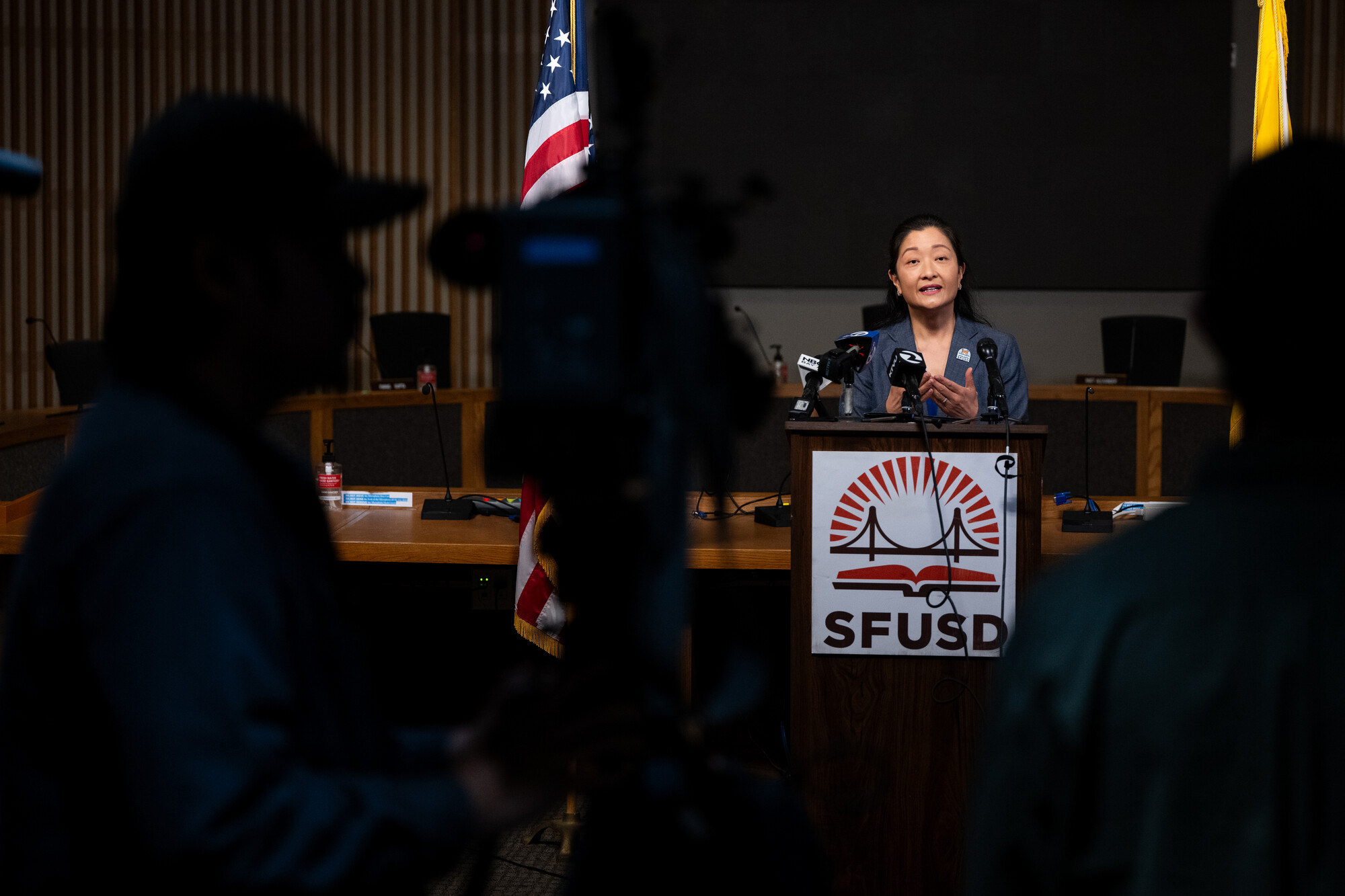
"caption": "San Francisco Unified School District Superintendent Dr. Maria Su speaks during a press conference at the school district offices in San Francisco on April 21, 2025.",
"credit": "Beth LaBerge/KQED",
"altTag": null,
"description": null,
"imgSizes": {
"thumbnail": {
"file": "https://cdn.kqed.org/wp-content/uploads/sites/10/2025/06/250421-SFUSDCentralCuts-06-BL_qed-1-160x107.jpg",
"width": 160,
"height": 107,
"mimeType": "image/jpeg"
},
"1536x1536": {
"file": "https://cdn.kqed.org/wp-content/uploads/sites/10/2025/06/250421-SFUSDCentralCuts-06-BL_qed-1-1536x1024.jpg",
"width": 1536,
"height": 1024,
"mimeType": "image/jpeg"
},
"post-thumbnail": {
"file": "https://cdn.kqed.org/wp-content/uploads/sites/10/2025/06/250421-SFUSDCentralCuts-06-BL_qed-1-672x372.jpg",
"width": 672,
"height": 372,
"mimeType": "image/jpeg"
},
"twentyfourteen-full-width": {
"file": "https://cdn.kqed.org/wp-content/uploads/sites/10/2025/06/250421-SFUSDCentralCuts-06-BL_qed-1-1038x576.jpg",
"width": 1038,
"height": 576,
"mimeType": "image/jpeg"
},
"kqedFullSize": {
"file": "https://cdn.kqed.org/wp-content/uploads/sites/10/2025/06/250421-SFUSDCentralCuts-06-BL_qed-1.jpg",
"width": 1999,
"height": 1333
}
},
"isLoading": false,
"fetchFailed": false
},
"news_12046496": {
"type": "attachments",
"id": "news_12046496",
"meta": {
"index": "attachments_1716263798",
"site": "news",
"id": "12046496",
"found": true
},
"title": "250629-SFPrideParade-04-BL",
"publishDate": 1751233790,
"status": "inherit",
"parent": 0,
"modified": 1751234683,
"caption": "Juanita MORE! (center), drag performer and longtime LGBTQ+ activist, marches in the San Francisco Pride Parade on June 29, 2025.",
"credit": "Beth LaBerge/KQED",
"altTag": "Three people walk ahead of a parade with thousands of people marching behind them holding signs.",
"description": null,
"imgSizes": {
"thumbnail": {
"file": "https://cdn.kqed.org/wp-content/uploads/sites/10/2025/06/250629-SFPrideParade-04-BL-160x107.jpg",
"width": 160,
"height": 107,
"mimeType": "image/jpeg"
},
"1536x1536": {
"file": "https://cdn.kqed.org/wp-content/uploads/sites/10/2025/06/250629-SFPrideParade-04-BL-1536x1024.jpg",
"width": 1536,
"height": 1024,
"mimeType": "image/jpeg"
},
"post-thumbnail": {
"file": "https://cdn.kqed.org/wp-content/uploads/sites/10/2025/06/250629-SFPrideParade-04-BL-672x372.jpg",
"width": 672,
"height": 372,
"mimeType": "image/jpeg"
},
"twentyfourteen-full-width": {
"file": "https://cdn.kqed.org/wp-content/uploads/sites/10/2025/06/250629-SFPrideParade-04-BL-1038x576.jpg",
"width": 1038,
"height": 576,
"mimeType": "image/jpeg"
},
"kqedFullSize": {
"file": "https://cdn.kqed.org/wp-content/uploads/sites/10/2025/06/250629-SFPrideParade-04-BL.jpg",
"width": 2000,
"height": 1333
}
},
"isLoading": false,
"fetchFailed": false
},
"news_11808346": {
"type": "attachments",
"id": "news_11808346",
"meta": {
"index": "attachments_1716263798",
"site": "news",
"id": "11808346",
"found": true
},
"parent": 11807639,
"imgSizes": {
"apple_news_ca_landscape_5_5": {
"file": "https://ww2.kqed.org/app/uploads/sites/10/2020/03/004_KQED_DomesticAbuse_StagedPhoto_03232020_9827-1044x783.jpg",
"width": 1044,
"mimeType": "image/jpeg",
"height": 783
},
"apple_news_ca_square_4_0": {
"file": "https://ww2.kqed.org/app/uploads/sites/10/2020/03/004_KQED_DomesticAbuse_StagedPhoto_03232020_9827-470x470.jpg",
"width": 470,
"mimeType": "image/jpeg",
"height": 470
},
"twentyfourteen-full-width": {
"file": "https://ww2.kqed.org/app/uploads/sites/10/2020/03/004_KQED_DomesticAbuse_StagedPhoto_03232020_9827-1038x576.jpg",
"width": 1038,
"mimeType": "image/jpeg",
"height": 576
},
"thumbnail": {
"file": "https://ww2.kqed.org/app/uploads/sites/10/2020/03/004_KQED_DomesticAbuse_StagedPhoto_03232020_9827-160x107.jpg",
"width": 160,
"mimeType": "image/jpeg",
"height": 107
},
"post-thumbnail": {
"file": "https://ww2.kqed.org/app/uploads/sites/10/2020/03/004_KQED_DomesticAbuse_StagedPhoto_03232020_9827-672x372.jpg",
"width": 672,
"mimeType": "image/jpeg",
"height": 372
},
"kqedFullSize": {
"file": "https://ww2.kqed.org/app/uploads/sites/10/2020/03/004_KQED_DomesticAbuse_StagedPhoto_03232020_9827.jpg",
"width": 1920,
"height": 1280
},
"apple_news_ca_landscape_4_7": {
"file": "https://ww2.kqed.org/app/uploads/sites/10/2020/03/004_KQED_DomesticAbuse_StagedPhoto_03232020_9827-632x474.jpg",
"width": 632,
"mimeType": "image/jpeg",
"height": 474
},
"large": {
"file": "https://ww2.kqed.org/app/uploads/sites/10/2020/03/004_KQED_DomesticAbuse_StagedPhoto_03232020_9827-1020x680.jpg",
"width": 1020,
"mimeType": "image/jpeg",
"height": 680
},
"apple_news_ca_landscape_4_0": {
"file": "https://ww2.kqed.org/app/uploads/sites/10/2020/03/004_KQED_DomesticAbuse_StagedPhoto_03232020_9827-536x402.jpg",
"width": 536,
"mimeType": "image/jpeg",
"height": 402
},
"apple_news_ca_portrait_12_9": {
"file": "https://ww2.kqed.org/app/uploads/sites/10/2020/03/004_KQED_DomesticAbuse_StagedPhoto_03232020_9827-1122x1280.jpg",
"width": 1122,
"mimeType": "image/jpeg",
"height": 1280
},
"medium": {
"file": "https://ww2.kqed.org/app/uploads/sites/10/2020/03/004_KQED_DomesticAbuse_StagedPhoto_03232020_9827-800x533.jpg",
"width": 800,
"mimeType": "image/jpeg",
"height": 533
},
"apple_news_ca_portrait_4_0": {
"file": "https://ww2.kqed.org/app/uploads/sites/10/2020/03/004_KQED_DomesticAbuse_StagedPhoto_03232020_9827-354x472.jpg",
"width": 354,
"mimeType": "image/jpeg",
"height": 472
},
"apple_news_ca_portrait_9_7": {
"file": "https://ww2.kqed.org/app/uploads/sites/10/2020/03/004_KQED_DomesticAbuse_StagedPhoto_03232020_9827-840x1120.jpg",
"width": 840,
"mimeType": "image/jpeg",
"height": 1120
},
"apple_news_ca_landscape_12_9": {
"file": "https://ww2.kqed.org/app/uploads/sites/10/2020/03/004_KQED_DomesticAbuse_StagedPhoto_03232020_9827-1832x1280.jpg",
"width": 1832,
"mimeType": "image/jpeg",
"height": 1280
},
"apple_news_ca_square_9_7": {
"file": "https://ww2.kqed.org/app/uploads/sites/10/2020/03/004_KQED_DomesticAbuse_StagedPhoto_03232020_9827-1104x1104.jpg",
"width": 1104,
"mimeType": "image/jpeg",
"height": 1104
},
"apple_news_ca_portrait_4_7": {
"file": "https://ww2.kqed.org/app/uploads/sites/10/2020/03/004_KQED_DomesticAbuse_StagedPhoto_03232020_9827-414x552.jpg",
"width": 414,
"mimeType": "image/jpeg",
"height": 552
},
"apple_news_ca_square_12_9": {
"file": "https://ww2.kqed.org/app/uploads/sites/10/2020/03/004_KQED_DomesticAbuse_StagedPhoto_03232020_9827-1472x1280.jpg",
"width": 1472,
"mimeType": "image/jpeg",
"height": 1280
},
"apple_news_ca_portrait_5_5": {
"file": "https://ww2.kqed.org/app/uploads/sites/10/2020/03/004_KQED_DomesticAbuse_StagedPhoto_03232020_9827-687x916.jpg",
"width": 687,
"mimeType": "image/jpeg",
"height": 916
},
"full-width": {
"file": "https://ww2.kqed.org/app/uploads/sites/10/2020/03/004_KQED_DomesticAbuse_StagedPhoto_03232020_9827-1920x1280.jpg",
"width": 1920,
"mimeType": "image/jpeg",
"height": 1280
},
"apple_news_ca_square_4_7": {
"file": "https://ww2.kqed.org/app/uploads/sites/10/2020/03/004_KQED_DomesticAbuse_StagedPhoto_03232020_9827-550x550.jpg",
"width": 550,
"mimeType": "image/jpeg",
"height": 550
},
"apple_news_ca_landscape_9_7": {
"file": "https://ww2.kqed.org/app/uploads/sites/10/2020/03/004_KQED_DomesticAbuse_StagedPhoto_03232020_9827-1376x1032.jpg",
"width": 1376,
"mimeType": "image/jpeg",
"height": 1032
},
"apple_news_ca_square_5_5": {
"file": "https://ww2.kqed.org/app/uploads/sites/10/2020/03/004_KQED_DomesticAbuse_StagedPhoto_03232020_9827-912x912.jpg",
"width": 912,
"mimeType": "image/jpeg",
"height": 912
}
},
"publishDate": 1585009118,
"modified": 1585009217,
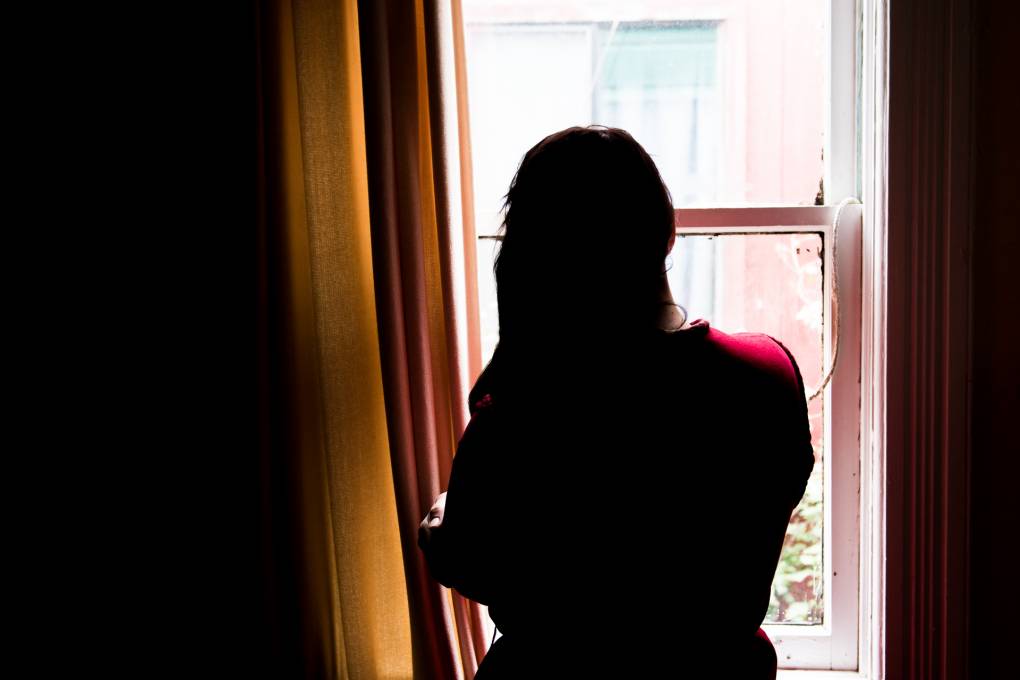
"caption": "For many survivors of domestic violence in California, sheltering in place can feel strangely familiar. Many survivors are targets of their abusers’ undivided attention — often controlling their every movement and isolating them from the outside world.",
"description": "For many survivors of domestic violence in California, sheltering in place can feel strangely familiar. Many survivors are targets of their abusers’ undivided attention — often controlling their every movement and isolating them from the outside world.",
"title": "004_KQED_DomesticAbuse_StagedPhoto_03232020_9827",
"credit": "Beth LaBerge/KQED",
"status": "inherit",
"isLoading": false,
"fetchFailed": false
},
"news_12036911": {
"type": "attachments",
"id": "news_12036911",
"meta": {
"index": "attachments_1716263798",
"site": "news",
"id": "12036911",
"found": true
},
"title": "250418-SFUSD-06-BL-KQED",
"publishDate": 1745253406,
"status": "inherit",
"parent": 12036914,
"modified": 1745274516,
"caption": "The San Francisco Unified School District Administrative Offices in San Francisco on April 18, 2025.",
"credit": "Beth LaBerge/KQED",
"altTag": null,
"description": null,
"imgSizes": {
"medium": {
"file": "https://cdn.kqed.org/wp-content/uploads/sites/10/2025/04/250418-SFUSD-06-BL-KQED-800x533.jpg",
"width": 800,
"height": 533,
"mimeType": "image/jpeg"
},
"large": {
"file": "https://cdn.kqed.org/wp-content/uploads/sites/10/2025/04/250418-SFUSD-06-BL-KQED-1020x680.jpg",
"width": 1020,
"height": 680,
"mimeType": "image/jpeg"
},
"thumbnail": {
"file": "https://cdn.kqed.org/wp-content/uploads/sites/10/2025/04/250418-SFUSD-06-BL-KQED-160x107.jpg",
"width": 160,
"height": 107,
"mimeType": "image/jpeg"
},
"1536x1536": {
"file": "https://cdn.kqed.org/wp-content/uploads/sites/10/2025/04/250418-SFUSD-06-BL-KQED-1536x1024.jpg",
"width": 1536,
"height": 1024,
"mimeType": "image/jpeg"
},
"post-thumbnail": {
"file": "https://cdn.kqed.org/wp-content/uploads/sites/10/2025/04/250418-SFUSD-06-BL-KQED-672x372.jpg",
"width": 672,
"height": 372,
"mimeType": "image/jpeg"
},
"twentyfourteen-full-width": {
"file": "https://cdn.kqed.org/wp-content/uploads/sites/10/2025/04/250418-SFUSD-06-BL-KQED-1038x576.jpg",
"width": 1038,
"height": 576,
"mimeType": "image/jpeg"
},
"full-width": {
"file": "https://cdn.kqed.org/wp-content/uploads/sites/10/2025/04/250418-SFUSD-06-BL-KQED-1920x1280.jpg",
"width": 1920,
"height": 1280,
"mimeType": "image/jpeg"
},
"kqedFullSize": {
"file": "https://cdn.kqed.org/wp-content/uploads/sites/10/2025/04/250418-SFUSD-06-BL-KQED.jpg",
"width": 2000,
"height": 1333
}
},
"isLoading": false,
"fetchFailed": false
},
"news_12046383": {
"type": "attachments",
"id": "news_12046383",
"meta": {
"index": "attachments_1716263798",
"site": "news",
"id": "12046383",
"found": true
},
"title": "240412-OAKAirport-009-BL_qed",
"publishDate": 1751057311,
"status": "inherit",
"parent": 12046379,
"modified": 1751057324,
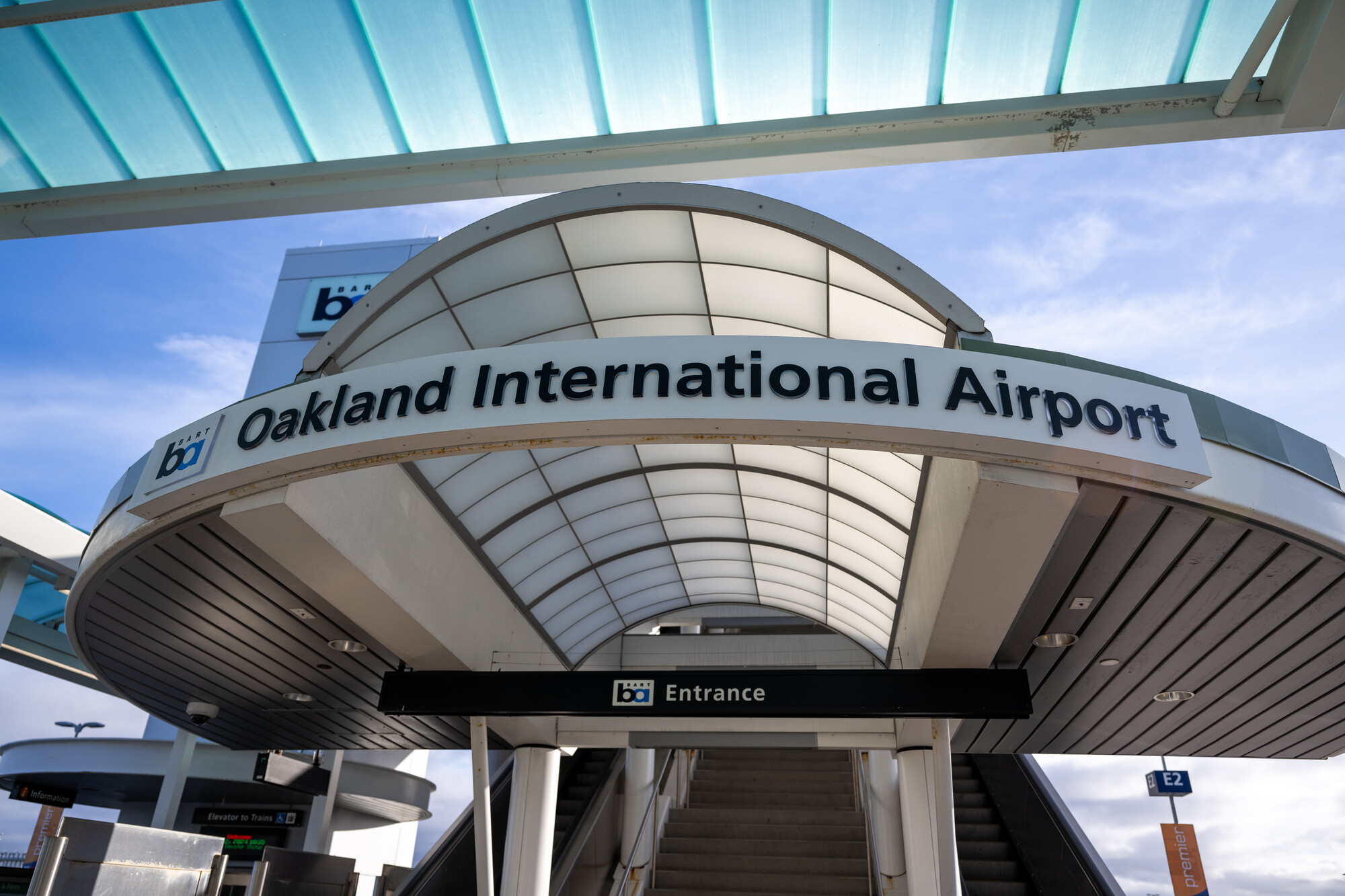
"caption": "A sign for the Oakland International Airport hangs above a BART station at the airport in Oakland on April 12, 2024.",
"credit": "Beth LaBerge/KQED",
"altTag": null,
"description": null,
"imgSizes": {
"thumbnail": {
"file": "https://cdn.kqed.org/wp-content/uploads/sites/10/2025/06/240412-OAKAirport-009-BL_qed-160x107.jpg",
"width": 160,
"height": 107,
"mimeType": "image/jpeg"
},
"1536x1536": {
"file": "https://cdn.kqed.org/wp-content/uploads/sites/10/2025/06/240412-OAKAirport-009-BL_qed-1536x1024.jpg",
"width": 1536,
"height": 1024,
"mimeType": "image/jpeg"
},
"post-thumbnail": {
"file": "https://cdn.kqed.org/wp-content/uploads/sites/10/2025/06/240412-OAKAirport-009-BL_qed-672x372.jpg",
"width": 672,
"height": 372,
"mimeType": "image/jpeg"
},
"twentyfourteen-full-width": {
"file": "https://cdn.kqed.org/wp-content/uploads/sites/10/2025/06/240412-OAKAirport-009-BL_qed-1038x576.jpg",
"width": 1038,
"height": 576,
"mimeType": "image/jpeg"
},
"kqedFullSize": {
"file": "https://cdn.kqed.org/wp-content/uploads/sites/10/2025/06/240412-OAKAirport-009-BL_qed.jpg",
"width": 2000,
"height": 1333
}
},
"isLoading": false,
"fetchFailed": false
},
"news_12045890": {
"type": "attachments",
"id": "news_12045890",
"meta": {
"index": "attachments_1716263798",
"site": "news",
"id": "12045890",
"found": true
},
"title": "ggbridge_003_qed",
"publishDate": 1750872107,
"status": "inherit",
"parent": 12045887,
"modified": 1750872136,
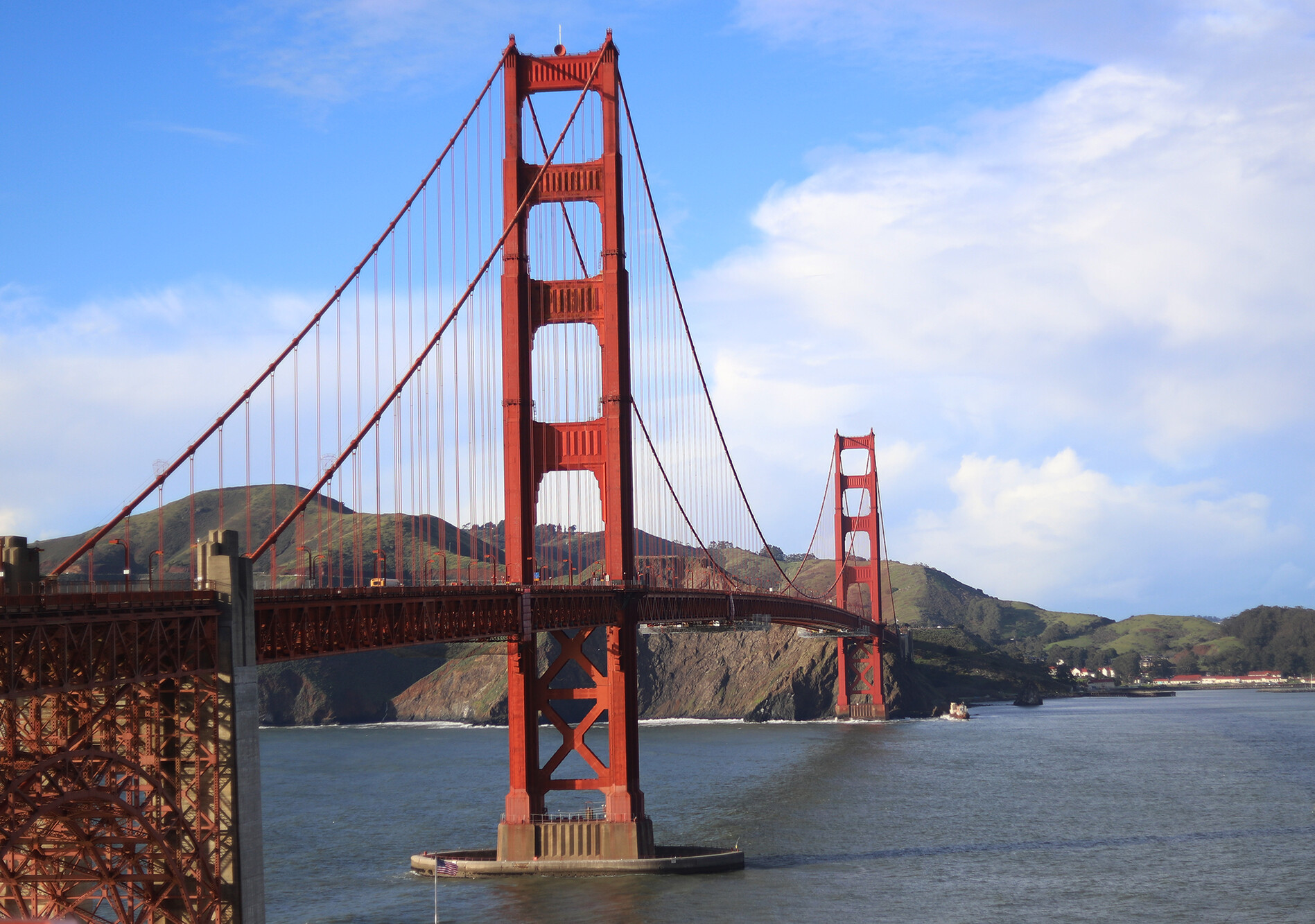
"caption": "The Golden Gate Bridge in San Francisco on Feb. 15, 2019.",
"credit": "Lindsey Moore/KQED",
"altTag": null,
"description": null,
"imgSizes": {
"thumbnail": {
"file": "https://cdn.kqed.org/wp-content/uploads/sites/10/2025/06/ggbridge_003_qed-160x112.jpg",
"width": 160,
"height": 112,
"mimeType": "image/jpeg"
},
"1536x1536": {
"file": "https://cdn.kqed.org/wp-content/uploads/sites/10/2025/06/ggbridge_003_qed-1536x1079.jpg",
"width": 1536,
"height": 1079,
"mimeType": "image/jpeg"
},
"post-thumbnail": {
"file": "https://cdn.kqed.org/wp-content/uploads/sites/10/2025/06/ggbridge_003_qed-672x372.jpg",
"width": 672,
"height": 372,
"mimeType": "image/jpeg"
},
"twentyfourteen-full-width": {
"file": "https://cdn.kqed.org/wp-content/uploads/sites/10/2025/06/ggbridge_003_qed-1038x576.jpg",
"width": 1038,
"height": 576,
"mimeType": "image/jpeg"
},
"kqedFullSize": {
"file": "https://cdn.kqed.org/wp-content/uploads/sites/10/2025/06/ggbridge_003_qed.jpg",
"width": 1897,
"height": 1333
}
},
"isLoading": false,
"fetchFailed": false
},
"news_12046127": {
"type": "attachments",
"id": "news_12046127",
"meta": {
"index": "attachments_1716263798",
"site": "news",
"id": "12046127",
"found": true
},
"title": "250421-SFUSDCentralCuts-09-BL_qed",
"publishDate": 1750965461,
"status": "inherit",
"parent": 12051862,
"modified": 1755024878,
"caption": "San Francisco Unified School District Superintendent Dr. Maria Su speaks during a press conference at the school district offices in San Francisco on April 21, 2025.",
"credit": "Beth LaBerge/KQED",
"altTag": null,
"description": null,
"imgSizes": {
"thumbnail": {
"file": "https://cdn.kqed.org/wp-content/uploads/sites/10/2025/06/250421-SFUSDCentralCuts-09-BL_qed-160x107.jpg",
"width": 160,
"height": 107,
"mimeType": "image/jpeg"
},
"1536x1536": {
"file": "https://cdn.kqed.org/wp-content/uploads/sites/10/2025/06/250421-SFUSDCentralCuts-09-BL_qed-1536x1024.jpg",
"width": 1536,
"height": 1024,
"mimeType": "image/jpeg"
},
"post-thumbnail": {
"file": "https://cdn.kqed.org/wp-content/uploads/sites/10/2025/06/250421-SFUSDCentralCuts-09-BL_qed-672x372.jpg",
"width": 672,
"height": 372,
"mimeType": "image/jpeg"
},
"twentyfourteen-full-width": {
"file": "https://cdn.kqed.org/wp-content/uploads/sites/10/2025/06/250421-SFUSDCentralCuts-09-BL_qed-1038x576.jpg",
"width": 1038,
"height": 576,
"mimeType": "image/jpeg"
},
"kqedFullSize": {
"file": "https://cdn.kqed.org/wp-content/uploads/sites/10/2025/06/250421-SFUSDCentralCuts-09-BL_qed.jpg",
"width": 2000,
"height": 1333
}
},
"isLoading": false,
"fetchFailed": false
},
"news_12042569": {
"type": "attachments",
"id": "news_12042569",
"meta": {
"index": "attachments_1716263798",
"site": "news",
"id": "12042569",
"found": true
},
"title": "US-MILITARY-NAVY-HARVEY MILK",
"publishDate": 1748986634,
"status": "inherit",
"parent": 12042566,
"modified": 1748995401,
"caption": "USNS Harvey Milk departs the General Dynamics NASSCO shipyard after a ceremonial address in San Diego, California, on Nov. 6, 2021. ",
"credit": "Ariana Drehsler/AFP via Getty Images",
"altTag": null,
"description": null,
"imgSizes": {
"medium": {
"file": "https://cdn.kqed.org/wp-content/uploads/sites/10/2025/06/USNS-Harvey-Milk-Getty-800x533.jpg",
"width": 800,
"height": 533,
"mimeType": "image/jpeg"
},
"large": {
"file": "https://cdn.kqed.org/wp-content/uploads/sites/10/2025/06/USNS-Harvey-Milk-Getty-1020x680.jpg",
"width": 1020,
"height": 680,
"mimeType": "image/jpeg"
},
"thumbnail": {
"file": "https://cdn.kqed.org/wp-content/uploads/sites/10/2025/06/USNS-Harvey-Milk-Getty-160x107.jpg",
"width": 160,
"height": 107,
"mimeType": "image/jpeg"
},
"1536x1536": {
"file": "https://cdn.kqed.org/wp-content/uploads/sites/10/2025/06/USNS-Harvey-Milk-Getty-1536x1024.jpg",
"width": 1536,
"height": 1024,
"mimeType": "image/jpeg"
},
"post-thumbnail": {
"file": "https://cdn.kqed.org/wp-content/uploads/sites/10/2025/06/USNS-Harvey-Milk-Getty-672x372.jpg",
"width": 672,
"height": 372,
"mimeType": "image/jpeg"
},
"twentyfourteen-full-width": {
"file": "https://cdn.kqed.org/wp-content/uploads/sites/10/2025/06/USNS-Harvey-Milk-Getty-1038x576.jpg",
"width": 1038,
"height": 576,
"mimeType": "image/jpeg"
},
"full-width": {
"file": "https://cdn.kqed.org/wp-content/uploads/sites/10/2025/06/USNS-Harvey-Milk-Getty-1920x1280.jpg",
"width": 1920,
"height": 1280,
"mimeType": "image/jpeg"
},
"kqedFullSize": {
"file": "https://cdn.kqed.org/wp-content/uploads/sites/10/2025/06/USNS-Harvey-Milk-Getty.jpg",
"width": 2000,
"height": 1333
}
},
"isLoading": false,
"fetchFailed": false
},
"news_12041664": {
"type": "attachments",
"id": "news_12041664",
"meta": {
"index": "attachments_1716263798",
"site": "news",
"id": "12041664",
"found": true
},
"title": "Chinatown Pride 2025",
"publishDate": 1748352201,
"status": "inherit",
"parent": 12045988,
"modified": 1750889785,
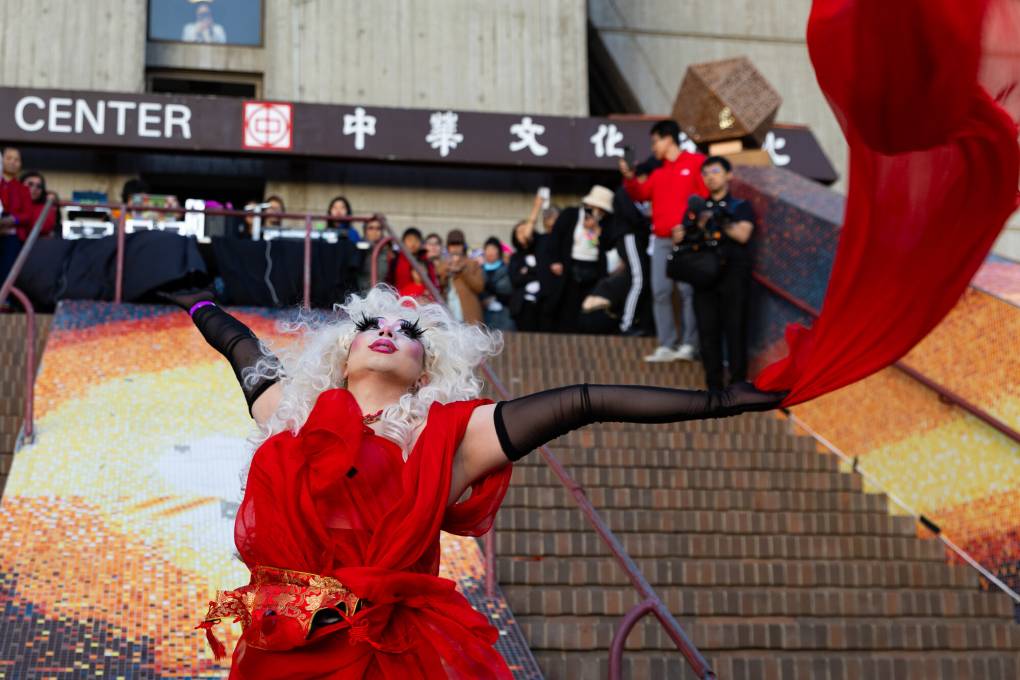
"caption": "Peipei Ma’Bilz performs outside of the Chinese Culture Center in San Francisco during the 2025 Chinatown Pride celebration on Saturday, May 24, 2025.",
"credit": "Estefany Gonzalez for KQED",
"altTag": null,
"description": null,
"imgSizes": {
"medium": {
"file": "https://cdn.kqed.org/wp-content/uploads/sites/10/2025/05/05242025_CHINATOWNPRIDEWALKINGTOUR_EG060_QED-KQED-800x533.jpg",
"width": 800,
"height": 533,
"mimeType": "image/jpeg"
},
"large": {
"file": "https://cdn.kqed.org/wp-content/uploads/sites/10/2025/05/05242025_CHINATOWNPRIDEWALKINGTOUR_EG060_QED-KQED-1020x680.jpg",
"width": 1020,
"height": 680,
"mimeType": "image/jpeg"
},
"thumbnail": {
"file": "https://cdn.kqed.org/wp-content/uploads/sites/10/2025/05/05242025_CHINATOWNPRIDEWALKINGTOUR_EG060_QED-KQED-160x107.jpg",
"width": 160,
"height": 107,
"mimeType": "image/jpeg"
},
"1536x1536": {
"file": "https://cdn.kqed.org/wp-content/uploads/sites/10/2025/05/05242025_CHINATOWNPRIDEWALKINGTOUR_EG060_QED-KQED-1536x1024.jpg",
"width": 1536,
"height": 1024,
"mimeType": "image/jpeg"
},
"post-thumbnail": {
"file": "https://cdn.kqed.org/wp-content/uploads/sites/10/2025/05/05242025_CHINATOWNPRIDEWALKINGTOUR_EG060_QED-KQED-672x372.jpg",
"width": 672,
"height": 372,
"mimeType": "image/jpeg"
},
"twentyfourteen-full-width": {
"file": "https://cdn.kqed.org/wp-content/uploads/sites/10/2025/05/05242025_CHINATOWNPRIDEWALKINGTOUR_EG060_QED-KQED-1038x576.jpg",
"width": 1038,
"height": 576,
"mimeType": "image/jpeg"
},
"full-width": {
"file": "https://cdn.kqed.org/wp-content/uploads/sites/10/2025/05/05242025_CHINATOWNPRIDEWALKINGTOUR_EG060_QED-KQED-1920x1280.jpg",
"width": 1920,
"height": 1280,
"mimeType": "image/jpeg"
},
"kqedFullSize": {
"file": "https://cdn.kqed.org/wp-content/uploads/sites/10/2025/05/05242025_CHINATOWNPRIDEWALKINGTOUR_EG060_QED-KQED.jpg",
"width": 2000,
"height": 1333
}
},
"isLoading": false,
"fetchFailed": false
},
"news_12046078": {
"type": "attachments",
"id": "news_12046078",
"meta": {
"index": "attachments_1716263798",
"site": "news",
"id": "12046078",
"found": true
},
"title": "Tahoe1",
"publishDate": 1750960169,
"status": "inherit",
"parent": 12046061,
"modified": 1750960228,
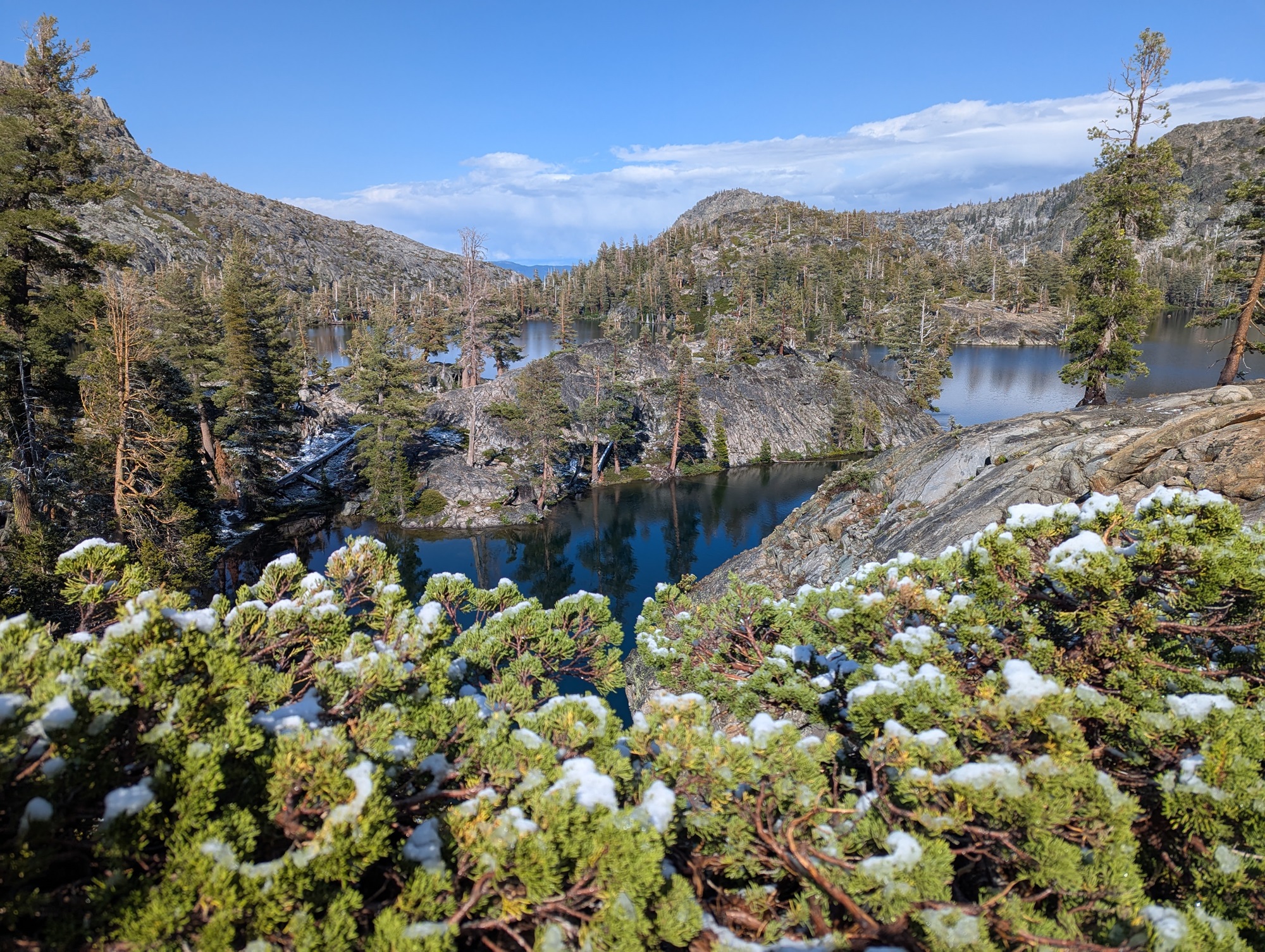
"caption": "Dick’s Peak in Desolation Wilderness near Lake Tahoe on June 21, 2025.",
"credit": "Courtesy of Matt Savener",
"altTag": null,
"description": null,
"imgSizes": {
"thumbnail": {
"file": "https://cdn.kqed.org/wp-content/uploads/sites/10/2025/06/Tahoe1-160x120.jpg",
"width": 160,
"height": 120,
"mimeType": "image/jpeg"
},
"1536x1536": {
"file": "https://cdn.kqed.org/wp-content/uploads/sites/10/2025/06/Tahoe1-1536x1156.jpg",
"width": 1536,
"height": 1156,
"mimeType": "image/jpeg"
},
"post-thumbnail": {
"file": "https://cdn.kqed.org/wp-content/uploads/sites/10/2025/06/Tahoe1-672x372.jpg",
"width": 672,
"height": 372,
"mimeType": "image/jpeg"
},
"twentyfourteen-full-width": {
"file": "https://cdn.kqed.org/wp-content/uploads/sites/10/2025/06/Tahoe1-1038x576.jpg",
"width": 1038,
"height": 576,
"mimeType": "image/jpeg"
},
"kqedFullSize": {
"file": "https://cdn.kqed.org/wp-content/uploads/sites/10/2025/06/Tahoe1.jpg",
"width": 2000,
"height": 1505
}
},
"isLoading": false,
"fetchFailed": false
}
},
"audioPlayerReducer": {
"postId": "stream_live",
"isPaused": true,
"isPlaying": false,
"pfsActive": false,
"pledgeModalIsOpen": true,
"playerDrawerIsOpen": false,
"liveAudioPlayStartedAt": 0,
"liveAudioPlayContext": ""
},
"authorsReducer": {
"danbrekke": {
"type": "authors",
"id": "222",
"meta": {
"index": "authors_1716337520",
"id": "222",
"found": true
},
"name": "Dan Brekke",
"firstName": "Dan",
"lastName": "Brekke",
"slug": "danbrekke",
"email": "dbrekke@kqed.org",
"display_author_email": true,
"staff_mastheads": [
"news",
"science"
],
"title": "KQED Editor and Reporter",
"bio": "Dan Brekke is a reporter and editor for KQED News, responsible for coverage of topics ranging from California water issues to the Bay Area's transportation challenges. In a newsroom career that began in Chicago in 1972, Dan has worked for \u003cem>The San Francisco Examiner,\u003c/em> Wired and TechTV and has been published in The New York Times, The New York Times Magazine, Business 2.0, Salon and elsewhere.\r\n\r\nSince joining KQED in 2007, Dan has reported, edited and produced both radio and online features and breaking news pieces. He has shared as both editor and reporter in four Society of Professional Journalists Norcal Excellence in Journalism awards and one Edward R. Murrow regional award. He was chosen for a spring 2017 residency at the Mesa Refuge to advance his research on California salmon.\r\n\r\nEmail Dan at: \u003ca href=\"mailto:dbrekke@kqed.org\">dbrekke@kqed.org\u003c/a>\r\n\r\n\u003cstrong>Twitter:\u003c/strong> \u003ca href=\"https://twitter.com/danbrekke\" rel=\"noopener noreferrer\">twitter.com/danbrekke\u003c/a>\r\n\u003cstrong>Facebook:\u003c/strong> \u003ca href=\"https://www.facebook.com/danbrekke\" rel=\"noopener noreferrer\">www.facebook.com/danbrekke\u003c/a>\r\n\u003cstrong>LinkedIn:\u003c/strong> \u003ca href=\"https://www.linkedin.com/in/danbrekke\" rel=\"noopener noreferrer\">www.linkedin.com/in/danbrekke\u003c/a>",
"avatar": "https://secure.gravatar.com/avatar/c8126230345efca3f7aa89b1a402be45?s=600&d=mm&r=g",
"twitter": "danbrekke",
"facebook": null,
"instagram": "https://www.instagram.com/dan.brekke/",
"linkedin": "https://www.linkedin.com/in/danbrekke/",
"sites": [
{
"site": "news",
"roles": [
"administrator",
"create_posts"
]
},
{
"site": "stateofhealth",
"roles": [
"editor"
]
},
{
"site": "science",
"roles": [
"editor"
]
},
{
"site": "quest",
"roles": [
"contributor"
]
},
{
"site": "food",
"roles": [
"contributor"
]
},
{
"site": "forum",
"roles": [
"contributor"
]
},
{
"site": "liveblog",
"roles": [
"editor"
]
}
],
"headData": {
"title": "Dan Brekke | KQED",
"description": "KQED Editor and Reporter",
"ogImgSrc": "https://secure.gravatar.com/avatar/c8126230345efca3f7aa89b1a402be45?s=600&d=mm&r=g",
"twImgSrc": "https://secure.gravatar.com/avatar/c8126230345efca3f7aa89b1a402be45?s=600&d=mm&r=g"
},
"isLoading": false,
"link": "/author/danbrekke"
},
"kqed": {
"type": "authors",
"id": "236",
"meta": {
"index": "authors_1716337520",
"id": "236",
"found": true
},
"name": "KQED News Staff",
"firstName": "KQED News Staff",
"lastName": null,
"slug": "kqed",
"email": "faq@kqed.org",
"display_author_email": false,
"staff_mastheads": [],
"title": null,
"bio": null,
"avatar": "https://secure.gravatar.com/avatar/ef0e801a68c4c54afa9180db14084167?s=600&d=blank&r=g",
"twitter": null,
"facebook": null,
"instagram": null,
"linkedin": null,
"sites": [
{
"site": "arts",
"roles": [
"contributor"
]
},
{
"site": "news",
"roles": [
"editor"
]
},
{
"site": "futureofyou",
"roles": [
"author"
]
}
],
"headData": {
"title": "KQED News Staff | KQED",
"description": null,
"ogImgSrc": "https://secure.gravatar.com/avatar/ef0e801a68c4c54afa9180db14084167?s=600&d=blank&r=g",
"twImgSrc": "https://secure.gravatar.com/avatar/ef0e801a68c4c54afa9180db14084167?s=600&d=blank&r=g"
},
"isLoading": false,
"link": "/author/kqed"
},
"matthewgreen": {
"type": "authors",
"id": "1263",
"meta": {
"index": "authors_1716337520",
"id": "1263",
"found": true
},
"name": "Matthew Green",
"firstName": "Matthew",
"lastName": "Green",
"slug": "matthewgreen",
"email": "mgreen@kqed.org",
"display_author_email": false,
"staff_mastheads": [],
"title": "KQED Editor/Reporter",
"bio": "Matthew Green is a digital media producer for KQED News. He previously produced \u003ca href=\"http://www.kqed.org/lowdown\">The Lowdown\u003c/a>, KQED’s multimedia news education blog. Matthew's written for numerous Bay Area publications, including the Oakland Tribune and San Francisco Chronicle. He also taught journalism classes at Fremont High School in East Oakland.\r\n\r\nEmail: mgreen@kqed.org; Twitter: @MGreenKQED",
"avatar": "https://secure.gravatar.com/avatar/3bf498d1267ca02c8494f33d8cfc575e?s=600&d=blank&r=g",
"twitter": "MGreenKQED",
"facebook": null,
"instagram": null,
"linkedin": null,
"sites": [
{
"site": "news",
"roles": []
},
{
"site": "lowdown",
"roles": []
},
{
"site": "science",
"roles": []
},
{
"site": "education",
"roles": []
},
{
"site": "quest",
"roles": []
},
{
"site": "liveblog",
"roles": []
}
],
"headData": {
"title": "Matthew Green | KQED",
"description": "KQED Editor/Reporter",
"ogImgSrc": "https://secure.gravatar.com/avatar/3bf498d1267ca02c8494f33d8cfc575e?s=600&d=blank&r=g",
"twImgSrc": "https://secure.gravatar.com/avatar/3bf498d1267ca02c8494f33d8cfc575e?s=600&d=blank&r=g"
},
"isLoading": false,
"link": "/author/matthewgreen"
},
"eromero": {
"type": "authors",
"id": "11746",
"meta": {
"index": "authors_1716337520",
"id": "11746",
"found": true
},
"name": "Ezra David Romero",
"firstName": "Ezra David",
"lastName": "Romero",
"slug": "eromero",
"email": "eromero@kqed.org",
"display_author_email": true,
"staff_mastheads": [
"news",
"science"
],
"title": "Climate Reporter",
"bio": "Ezra David Romero is a climate reporter for KQED News. He covers the absence and excess of water in the Bay Area — think sea level rise, flooding and drought. For nearly a decade he’s covered how warming temperatures are altering the lives of Californians. He’s reported on farmers worried their pistachio trees aren’t getting enough sleep, families desperate for water, scientists studying dying giant sequoias, and alongside firefighters containing wildfires. His work has appeared on local stations across California and nationally on public radio shows like Morning Edition, Here and Now, All Things Considered and Science Friday. ",
"avatar": "https://secure.gravatar.com/avatar/c76404d287c10ed40224227551ac36e24352c7306f106632caf6fead76f8801f?s=600&d=blank&r=g",
"twitter": "ezraromero",
"bluesky": null,
"facebook": null,
"instagram": null,
"linkedin": null,
"sites": [
{
"site": "arts",
"roles": [
"editor"
]
},
{
"site": "news",
"roles": [
"editor"
]
},
{
"site": "science",
"roles": [
"editor"
]
},
{
"site": "liveblog",
"roles": [
"author"
]
}
],
"headData": {
"title": "Ezra David Romero | KQED",
"description": "Climate Reporter",
"ogImgSrc": "https://secure.gravatar.com/avatar/c76404d287c10ed40224227551ac36e24352c7306f106632caf6fead76f8801f?s=600&d=blank&r=g",
"twImgSrc": "https://secure.gravatar.com/avatar/c76404d287c10ed40224227551ac36e24352c7306f106632caf6fead76f8801f?s=600&d=blank&r=g"
},
"isLoading": false,
"link": "/author/eromero"
},
"kdebenedetti": {
"type": "authors",
"id": "11913",
"meta": {
"index": "authors_1716337520",
"id": "11913",
"found": true
},
"name": "Katie DeBenedetti",
"firstName": "Katie",
"lastName": "DeBenedetti",
"slug": "kdebenedetti",
"email": "kdebenedetti@kqed.org",
"display_author_email": false,
"staff_mastheads": [
"news",
"science"
],
"title": "KQED Contributor",
"bio": "Katie DeBenedetti is a digital reporter covering daily news for the Express Desk. Prior to joining KQED as a culture reporting intern in January 2024, she covered education and city government for the Napa Valley Register.",
"avatar": "https://secure.gravatar.com/avatar/6e31073cb8f7e4214ab03f42771d0f45?s=600&d=blank&r=g",
"twitter": null,
"facebook": null,
"instagram": null,
"linkedin": null,
"sites": [
{
"site": "news",
"roles": [
"author"
]
},
{
"site": "science",
"roles": [
"author"
]
},
{
"site": "liveblog",
"roles": [
"author"
]
}
],
"headData": {
"title": "Katie DeBenedetti | KQED",
"description": "KQED Contributor",
"ogImgSrc": "https://secure.gravatar.com/avatar/6e31073cb8f7e4214ab03f42771d0f45?s=600&d=blank&r=g",
"twImgSrc": "https://secure.gravatar.com/avatar/6e31073cb8f7e4214ab03f42771d0f45?s=600&d=blank&r=g"
},
"isLoading": false,
"link": "/author/kdebenedetti"
},
"slim": {
"type": "authors",
"id": "11920",
"meta": {
"index": "authors_1716337520",
"id": "11920",
"found": true
},
"name": "Samantha Lim",
"firstName": "Samantha",
"lastName": "Lim",
"slug": "slim",
"email": "slim@KQED.org",
"display_author_email": false,
"staff_mastheads": [],
"title": "KQED Contributor",
"bio": null,
"avatar": "https://secure.gravatar.com/avatar/82e592e6c15fe1a04d385e8ad0fb0b4e?s=600&d=blank&r=g",
"twitter": null,
"facebook": null,
"instagram": null,
"linkedin": null,
"sites": [
{
"site": "news",
"roles": []
}
],
"headData": {
"title": "Samantha Lim | KQED",
"description": "KQED Contributor",
"ogImgSrc": "https://secure.gravatar.com/avatar/82e592e6c15fe1a04d385e8ad0fb0b4e?s=600&d=blank&r=g",
"twImgSrc": "https://secure.gravatar.com/avatar/82e592e6c15fe1a04d385e8ad0fb0b4e?s=600&d=blank&r=g"
},
"isLoading": false,
"link": "/author/slim"
},
"sarahwright": {
"type": "authors",
"id": "11956",
"meta": {
"index": "authors_1716337520",
"id": "11956",
"found": true
},
"name": "Sarah Wright",
"firstName": "Sarah",
"lastName": "Wright",
"slug": "sarahwright",
"email": "swright@kqed.org",
"display_author_email": true,
"staff_mastheads": [],
"title": "Outdoors Engagement Reporter",
"bio": "Sarah Wright is KQED's Outdoors Engagement Reporter. Originally from Lake Tahoe, she completed a thru-hike of the Pacific Crest Trail in 2019 and was a U.S. Fulbright Program grantee to Argentina in 2023. Her journalism has appeared in The Guardian, The San Francisco Standard, The Palo Alto Weekly and the Half Moon Bay Review.",
"avatar": "https://secure.gravatar.com/avatar/c161a3d6441865cba25e6db4fa561099ad665799e9432e34da2b84d7e371524c?s=600&d=blank&r=g",
"twitter": null,
"bluesky": null,
"facebook": null,
"instagram": null,
"linkedin": null,
"sites": [
{
"site": "arts",
"roles": [
"editor"
]
},
{
"site": "news",
"roles": [
"editor"
]
},
{
"site": "science",
"roles": [
"contributor",
"author"
]
},
{
"site": "forum",
"roles": [
"editor"
]
}
],
"headData": {
"title": "Sarah Wright | KQED",
"description": "Outdoors Engagement Reporter",
"ogImgSrc": "https://secure.gravatar.com/avatar/c161a3d6441865cba25e6db4fa561099ad665799e9432e34da2b84d7e371524c?s=600&d=blank&r=g",
"twImgSrc": "https://secure.gravatar.com/avatar/c161a3d6441865cba25e6db4fa561099ad665799e9432e34da2b84d7e371524c?s=600&d=blank&r=g"
},
"isLoading": false,
"link": "/author/sarahwright"
}
},
"pagesReducer": {
"news_tag_san-francisco": {
"type": "terms",
"id": "news_38",
"meta": {
"index": "terms_1716263798",
"site": "news",
"id": "38",
"score": 6.7229023
},
"featImg": null,
"name": "San Francisco",
"description": null,
"taxonomy": "tag",
"headData": {
"twImgId": null,
"twTitle": null,
"ogTitle": null,
"ogImgId": null,
"twDescription": null,
"description": null,
"title": "San Francisco Archives | KQED News",
"ogDescription": null
},
"ttid": 58,
"slug": "san-francisco",
"isLoading": false,
"title": "San Francisco",
"pageMeta": {
"site": "news",
"WpPageTemplate": "page-topic-editorial",
"currentPage": 58
},
"blocks": [
{
"blockName": "kqed/post-list",
"attrs": {
"layout": "cardArticle2",
"query": "posts/news?tag=san-francisco",
"seeMore": false,
"paginated": true,
"page": 58
}
},
{
"blockName": "kqed/ad"
}
]
}
},
"pfsSessionReducer": {},
"postsReducer": {
"stream_live": {
"type": "live",
"id": "stream_live",
"audioUrl": "https://streams.kqed.org/kqedradio",
"title": "Live Stream",
"excerpt": "Live Stream information currently unavailable.",
"link": "/radio",
"featImg": "",
"label": {
"name": "KQED Live",
"link": "/"
}
},
"stream_kqedNewscast": {
"type": "posts",
"id": "stream_kqedNewscast",
"audioUrl": "https://www.kqed.org/.stream/anon/radio/RDnews/newscast.mp3?_=1",
"title": "KQED Newscast",
"featImg": "",
"label": {
"name": "88.5 FM",
"link": "/"
}
},
"news_12046690": {
"type": "posts",
"id": "news_12046690",
"meta": {
"index": "posts_1716263798",
"site": "news",
"id": "12046690",
"score": null,
"sort": [
1751463024000
]
},
"guestAuthors": [],
"slug": "sfmta-coming-up-short-on-daylighting-sfs-red-curbs-parents-say",
"title": "SFMTA Coming Up Short on Daylighting SF’s Red Curbs, Parents Say",
"publishDate": 1751463024,
"format": "standard",
"headTitle": "SFMTA Coming Up Short on Daylighting SF’s Red Curbs, Parents Say | KQED",
"labelTerm": {
"site": "news"
},
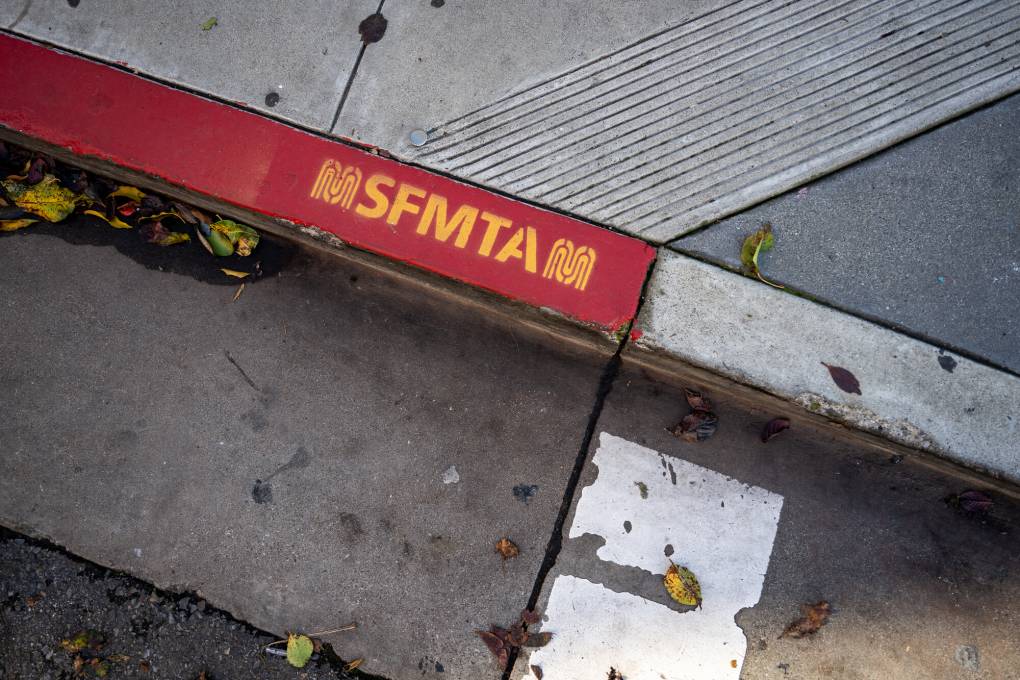
"content": "\u003cp>Frustrated San Francisco parents are calling on city leaders to address what they say is the\u003ca href=\"https://www.kqed.org/news/tag/sfmta\"> San Francisco Municipal Transportation Agency’s\u003c/a> noncompliance with the \u003ca href=\"https://www.kqed.org/news/12019725/daylighting-laws-will-be-enforced-in-the-bay-area-in-2025-heres-how-to-avoid-a-ticket\">state’s daylighting law\u003c/a>.\u003c/p>\n\u003cp>Assembly Bill 413, which went into effect last year, makes it illegal for drivers to park or stop their vehicles within 20 feet of a crosswalk or within 15 feet of a curb extension. The practice makes people crossing the street more visible to drivers — reducing the risk of someone getting hit.\u003c/p>\n\u003cp>As part of their enforcement, San Francisco transportation officials have begun painting curbs red to indicate where parking is prohibited, with a plan to daylight all intersections by the end of 2026.\u003c/p>\n\u003cp>[ad fullwidth]\u003c/p>\n\u003cp>But since the city began enforcing the law earlier this year, some parents have reported seeing painted curbs extending to just 10 feet or less, even in areas considered high risk.\u003c/p>\n\u003cp>Jen Nossokoff, a mother of two who lives in the Inner Richmond, said she reached out to the city after she noticed that four of the eight no-parking “buffers” near her child’s elementary school were of insufficient length.\u003c/p>\n\u003cfigure id=\"attachment_12019140\" class=\"wp-caption aligncenter\" style=\"max-width: 2000px\">\u003cimg loading=\"lazy\" decoding=\"async\" class=\"size-full wp-image-12019140\" src=\"https://cdn.kqed.org/wp-content/uploads/sites/10/2024/12/241218-DaylightingLaws-22-BL.jpg\" alt=\"\" width=\"2000\" height=\"1332\" srcset=\"https://cdn.kqed.org/wp-content/uploads/sites/10/2024/12/241218-DaylightingLaws-22-BL.jpg 2000w, https://cdn.kqed.org/wp-content/uploads/sites/10/2024/12/241218-DaylightingLaws-22-BL-800x533.jpg 800w, https://cdn.kqed.org/wp-content/uploads/sites/10/2024/12/241218-DaylightingLaws-22-BL-1020x679.jpg 1020w, https://cdn.kqed.org/wp-content/uploads/sites/10/2024/12/241218-DaylightingLaws-22-BL-160x107.jpg 160w, https://cdn.kqed.org/wp-content/uploads/sites/10/2024/12/241218-DaylightingLaws-22-BL-1536x1023.jpg 1536w, https://cdn.kqed.org/wp-content/uploads/sites/10/2024/12/241218-DaylightingLaws-22-BL-1920x1279.jpg 1920w\" sizes=\"auto, (max-width: 2000px) 100vw, 2000px\">\u003cfigcaption class=\"wp-caption-text\">A red curb designates a no-parking area at the intersection of Sutter and Leavenworth Streets in San Francisco on Dec. 18, 2024.\u003c/figcaption>\u003c/figure>\n\u003cp>After a brief back-and-forth with the city’s traffic engineer, which Nossokoff said “was fruitless,” she and other parents formally requested that the SFMTA conduct a review of the curbs to determine whether they are in compliance with the daylighting law and next steps if they are not.\u003c/p>\n\u003cp>According to Nossokoff, officials with the transportation agency said they would get the intersections under compliance, but made no mention of addressing curbs in other parts of the city. No changes have been made to the curbs near the school either, she said.[aside postID=news_12045959 hero='https://cdn.kqed.org/wp-content/uploads/sites/10/2025/06/250228-WaterCitiesSF-06-BL_qed.jpg']“Nobody appears to be doing anything, and that’s where my frustration as a parent comes from,” Nossokoff said.\u003c/p>\n\u003cp>In a statement, SFMTA said daylighting lengths throughout the city’s high-collision areas vary based on engineering reviews that show how much space is necessary to maintain street safety. To be more consistent and “in compliance with state law,” the agency said it will move forward with 20-foot daylighting zones throughout the city.\u003c/p>\n\u003cp>Under AB 314, local authorities are allowed to establish a different distance for the approach if the change is marked by paint or a sign. An ordinance must also be passed that explicitly includes data proving that the shortened distance is justified by existing safety standards.\u003c/p>\n\u003cp>Other community members have also said they have expressed concerns about the curbs to the SFMTA, and the dangers created by parked cars near intersections. Danielle Jezienicki, a mother of three who also lives in the Richmond, was waiting for her husband to pick their son up from school when she received news that the 6-year-old was involved in a life-threatening crash.\u003c/p>\n\u003cp>The crash, which happened in October, took place only 100 feet away from her child’s elementary school. The boy’s father had just picked him up on the family’s bike when a distracted driver struck the pair at the intersection of 7th Avenue and Balboa Street.\u003c/p>\n\u003cfigure id=\"attachment_12025207\" class=\"wp-caption aligncenter\" style=\"max-width: 1920px\">\u003cimg loading=\"lazy\" decoding=\"async\" class=\"size-full wp-image-12025207\" src=\"https://cdn.kqed.org/wp-content/uploads/sites/10/2025/02/IMG_5889-2-scaled-e1738366873752.jpg\" alt=\"\" width=\"1920\" height=\"1330\" srcset=\"https://cdn.kqed.org/wp-content/uploads/sites/10/2025/02/IMG_5889-2-scaled-e1738366873752.jpg 1920w, https://cdn.kqed.org/wp-content/uploads/sites/10/2025/02/IMG_5889-2-scaled-e1738366873752-800x554.jpg 800w, https://cdn.kqed.org/wp-content/uploads/sites/10/2025/02/IMG_5889-2-scaled-e1738366873752-1020x707.jpg 1020w, https://cdn.kqed.org/wp-content/uploads/sites/10/2025/02/IMG_5889-2-scaled-e1738366873752-160x111.jpg 160w, https://cdn.kqed.org/wp-content/uploads/sites/10/2025/02/IMG_5889-2-scaled-e1738366873752-1536x1064.jpg 1536w\" sizes=\"auto, (max-width: 1920px) 100vw, 1920px\">\u003cfigcaption class=\"wp-caption-text\">A curb at the intersection of 19th Avenue and Balboa Street in San Francisco’s Richmond District. The curb had previously been painted red by an unknown source, but was soon repainted by the city (as shown here). \u003ccite>(Azul Dahlstrom-Eckman/KQED)\u003c/cite>\u003c/figcaption>\u003c/figure>\n\u003cp>The curb where Jezienicki’s son was hit is one of the buffer zones that is painted to less than 20 feet, Nossokoff noted. The intersection is also part of \u003ca href=\"https://www.kqed.org/news/12041243/san-franciscos-streets-still-deadly-advocates-want-lurie-to-do-more\">San Francisco’s high-injury network\u003c/a>, a collection of streets with the highest percentage of serious injuries and fatalities caused by car crashes.\u003c/p>\n\u003cp>Jezienicki said she doesn’t know whether daylighting law enforcement would have prevented the driver from veering into her husband and son, but noted that it could have given the driver more time to see them.\u003c/p>\n\u003cp>The city needs to enforce laws that protect pedestrians and cyclists, especially in areas that are already considered high-collision corridors, such as Balboa Street, she said.[aside postID=news_12041243 hero='https://cdn.kqed.org/wp-content/uploads/sites/10/2025/05/250519-VISIONZEROACTIVISM-15-BL-KQED-1020x680.jpg']“Daylighting costs almost nothing,” Jezienicki said. “Logic would lead you to believe that if they just implemented safety measures they know would work, you can reduce accidents and fatalities.”\u003c/p>\n\u003cp>“Our son would have been killed if he wasn’t wearing a helmet,” she continued. “It’s very frustrating to hear that they can’t enforce things that have no reason not to be enforced, especially in school districts.”\u003c/p>\n\u003cp>Nossokoff said she and other parents are demanding that the Board of Supervisors step in if the SFMTA fails to fix the compliance issues with the curbs. She also wants to see education campaigns teaching residents and drivers about the daylighting law and why it’s important for pedestrian safety.\u003c/p>\n\u003cp>Fortunately, Jezienicki’s child has made what appears to be a full recovery, she said.\u003c/p>\n\u003cp>But her family has not used the bike since the crash, she said, and she feels paranoid every time she crosses the street. Jezienicki said she also struggles with crossing the intersection at Balboa Street when she picks her son up or drops him off at school.\u003c/p>\n\u003cp>“It’s just an unpleasant reminder of the worst day and moments of my life,” she said.\u003c/p>\n\u003cp>Haunted by reminders of the accident, Jezienicki is now working with groups such as Walk San Francisco to advocate for safer streets.\u003c/p>\n\u003cp>\u003c/p>\n",
"blocks": [],
"excerpt": "San Francisco’s transit agency says it will change its daylighting policy to ensure compliance with a California traffic safety law intended to protect pedestrians and cyclists. ",
"status": "publish",
"parent": 0,
"modified": 1751414296,
"stats": {
"hasAudio": false,
"hasVideo": false,
"hasChartOrMap": false,
"iframeSrcs": [],
"hasGoogleForm": false,
"hasGallery": false,
"hasHearkenModule": false,
"hasPolis": false,
"paragraphCount": 22,
"wordCount": 992
},
"headData": {
"title": "SFMTA Coming Up Short on Daylighting SF’s Red Curbs, Parents Say | KQED",
"description": "San Francisco’s transit agency says it will change its daylighting policy to ensure compliance with a California traffic safety law intended to protect pedestrians and cyclists. ",
"ogTitle": "",
"ogDescription": "",
"ogImgId": "",
"twTitle": "",
"twDescription": "",
"twImgId": "",
"schema": {
"@context": "https://schema.org",
"@type": "NewsArticle",
"headline": "SFMTA Coming Up Short on Daylighting SF’s Red Curbs, Parents Say",
"datePublished": "2025-07-02T06:30:24-07:00",
"dateModified": "2025-07-01T16:58:16-07:00",
"image": "https://cdn.kqed.org/wp-content/uploads/2020/02/KQED-OG-Image@1x.png",
"isAccessibleForFree": "True",
"publisher": {
"@type": "NewsMediaOrganization",
"@id": "https://www.kqed.org/#organization",
"name": "KQED",
"logo": "https://cdn.kqed.org/wp-content/uploads/2020/02/KQED-OG-Image@1x.png",
"url": "https://www.kqed.org",
"sameAs": [
"https://www.facebook.com/KQED",
"https://twitter.com/KQED",
"https://www.instagram.com/kqed/",
"https://www.tiktok.com/@kqedofficial",
"https://www.linkedin.com/company/kqed",
"https://www.youtube.com/channel/UCeC0IOo7i1P_61zVUWbJ4nw"
]
}
}
},
"primaryCategory": {
"termId": 8,
"slug": "news",
"name": "News"
},
"sticky": false,
"templateType": "standard",
"featuredImageType": "standard",
"excludeFromSiteSearch": "Include",
"articleAge": "0",
"path": "/news/12046690/sfmta-coming-up-short-on-daylighting-sfs-red-curbs-parents-say",
"audioTrackLength": null,
"parsedContent": [
{
"type": "contentString",
"content": "\u003cdiv class=\"post-body\">\u003cp>\u003cp>Frustrated San Francisco parents are calling on city leaders to address what they say is the\u003ca href=\"https://www.kqed.org/news/tag/sfmta\"> San Francisco Municipal Transportation Agency’s\u003c/a> noncompliance with the \u003ca href=\"https://www.kqed.org/news/12019725/daylighting-laws-will-be-enforced-in-the-bay-area-in-2025-heres-how-to-avoid-a-ticket\">state’s daylighting law\u003c/a>.\u003c/p>\n\u003cp>Assembly Bill 413, which went into effect last year, makes it illegal for drivers to park or stop their vehicles within 20 feet of a crosswalk or within 15 feet of a curb extension. The practice makes people crossing the street more visible to drivers — reducing the risk of someone getting hit.\u003c/p>\n\u003cp>As part of their enforcement, San Francisco transportation officials have begun painting curbs red to indicate where parking is prohibited, with a plan to daylight all intersections by the end of 2026.\u003c/p>\n\u003cp>\u003c/p>\u003c/div>",
"attributes": {
"named": {},
"numeric": []
}
},
{
"type": "component",
"content": "",
"name": "ad",
"attributes": {
"named": {
"label": "fullwidth"
},
"numeric": [
"fullwidth"
]
}
},
{
"type": "contentString",
"content": "\u003cdiv class=\"post-body\">\u003cp>\u003c/p>\n\u003cp>But since the city began enforcing the law earlier this year, some parents have reported seeing painted curbs extending to just 10 feet or less, even in areas considered high risk.\u003c/p>\n\u003cp>Jen Nossokoff, a mother of two who lives in the Inner Richmond, said she reached out to the city after she noticed that four of the eight no-parking “buffers” near her child’s elementary school were of insufficient length.\u003c/p>\n\u003cfigure id=\"attachment_12019140\" class=\"wp-caption aligncenter\" style=\"max-width: 2000px\">\u003cimg loading=\"lazy\" decoding=\"async\" class=\"size-full wp-image-12019140\" src=\"https://cdn.kqed.org/wp-content/uploads/sites/10/2024/12/241218-DaylightingLaws-22-BL.jpg\" alt=\"\" width=\"2000\" height=\"1332\" srcset=\"https://cdn.kqed.org/wp-content/uploads/sites/10/2024/12/241218-DaylightingLaws-22-BL.jpg 2000w, https://cdn.kqed.org/wp-content/uploads/sites/10/2024/12/241218-DaylightingLaws-22-BL-800x533.jpg 800w, https://cdn.kqed.org/wp-content/uploads/sites/10/2024/12/241218-DaylightingLaws-22-BL-1020x679.jpg 1020w, https://cdn.kqed.org/wp-content/uploads/sites/10/2024/12/241218-DaylightingLaws-22-BL-160x107.jpg 160w, https://cdn.kqed.org/wp-content/uploads/sites/10/2024/12/241218-DaylightingLaws-22-BL-1536x1023.jpg 1536w, https://cdn.kqed.org/wp-content/uploads/sites/10/2024/12/241218-DaylightingLaws-22-BL-1920x1279.jpg 1920w\" sizes=\"auto, (max-width: 2000px) 100vw, 2000px\">\u003cfigcaption class=\"wp-caption-text\">A red curb designates a no-parking area at the intersection of Sutter and Leavenworth Streets in San Francisco on Dec. 18, 2024.\u003c/figcaption>\u003c/figure>\n\u003cp>After a brief back-and-forth with the city’s traffic engineer, which Nossokoff said “was fruitless,” she and other parents formally requested that the SFMTA conduct a review of the curbs to determine whether they are in compliance with the daylighting law and next steps if they are not.\u003c/p>\n\u003cp>According to Nossokoff, officials with the transportation agency said they would get the intersections under compliance, but made no mention of addressing curbs in other parts of the city. No changes have been made to the curbs near the school either, she said.\u003c/p>\u003c/div>",
"attributes": {
"named": {},
"numeric": []
}
},
{
"type": "component",
"content": "",
"name": "aside",
"attributes": {
"named": {
"postid": "news_12045959",
"hero": "https://cdn.kqed.org/wp-content/uploads/sites/10/2025/06/250228-WaterCitiesSF-06-BL_qed.jpg",
"label": ""
},
"numeric": []
}
},
{
"type": "contentString",
"content": "\u003cdiv class=\"post-body\">\u003cp>“Nobody appears to be doing anything, and that’s where my frustration as a parent comes from,” Nossokoff said.\u003c/p>\n\u003cp>In a statement, SFMTA said daylighting lengths throughout the city’s high-collision areas vary based on engineering reviews that show how much space is necessary to maintain street safety. To be more consistent and “in compliance with state law,” the agency said it will move forward with 20-foot daylighting zones throughout the city.\u003c/p>\n\u003cp>Under AB 314, local authorities are allowed to establish a different distance for the approach if the change is marked by paint or a sign. An ordinance must also be passed that explicitly includes data proving that the shortened distance is justified by existing safety standards.\u003c/p>\n\u003cp>Other community members have also said they have expressed concerns about the curbs to the SFMTA, and the dangers created by parked cars near intersections. Danielle Jezienicki, a mother of three who also lives in the Richmond, was waiting for her husband to pick their son up from school when she received news that the 6-year-old was involved in a life-threatening crash.\u003c/p>\n\u003cp>The crash, which happened in October, took place only 100 feet away from her child’s elementary school. The boy’s father had just picked him up on the family’s bike when a distracted driver struck the pair at the intersection of 7th Avenue and Balboa Street.\u003c/p>\n\u003cfigure id=\"attachment_12025207\" class=\"wp-caption aligncenter\" style=\"max-width: 1920px\">\u003cimg loading=\"lazy\" decoding=\"async\" class=\"size-full wp-image-12025207\" src=\"https://cdn.kqed.org/wp-content/uploads/sites/10/2025/02/IMG_5889-2-scaled-e1738366873752.jpg\" alt=\"\" width=\"1920\" height=\"1330\" srcset=\"https://cdn.kqed.org/wp-content/uploads/sites/10/2025/02/IMG_5889-2-scaled-e1738366873752.jpg 1920w, https://cdn.kqed.org/wp-content/uploads/sites/10/2025/02/IMG_5889-2-scaled-e1738366873752-800x554.jpg 800w, https://cdn.kqed.org/wp-content/uploads/sites/10/2025/02/IMG_5889-2-scaled-e1738366873752-1020x707.jpg 1020w, https://cdn.kqed.org/wp-content/uploads/sites/10/2025/02/IMG_5889-2-scaled-e1738366873752-160x111.jpg 160w, https://cdn.kqed.org/wp-content/uploads/sites/10/2025/02/IMG_5889-2-scaled-e1738366873752-1536x1064.jpg 1536w\" sizes=\"auto, (max-width: 1920px) 100vw, 1920px\">\u003cfigcaption class=\"wp-caption-text\">A curb at the intersection of 19th Avenue and Balboa Street in San Francisco’s Richmond District. The curb had previously been painted red by an unknown source, but was soon repainted by the city (as shown here). \u003ccite>(Azul Dahlstrom-Eckman/KQED)\u003c/cite>\u003c/figcaption>\u003c/figure>\n\u003cp>The curb where Jezienicki’s son was hit is one of the buffer zones that is painted to less than 20 feet, Nossokoff noted. The intersection is also part of \u003ca href=\"https://www.kqed.org/news/12041243/san-franciscos-streets-still-deadly-advocates-want-lurie-to-do-more\">San Francisco’s high-injury network\u003c/a>, a collection of streets with the highest percentage of serious injuries and fatalities caused by car crashes.\u003c/p>\n\u003cp>Jezienicki said she doesn’t know whether daylighting law enforcement would have prevented the driver from veering into her husband and son, but noted that it could have given the driver more time to see them.\u003c/p>\n\u003cp>The city needs to enforce laws that protect pedestrians and cyclists, especially in areas that are already considered high-collision corridors, such as Balboa Street, she said.\u003c/p>\u003c/div>",
"attributes": {
"named": {},
"numeric": []
}
},
{
"type": "component",
"content": "",
"name": "aside",
"attributes": {
"named": {
"postid": "news_12041243",
"hero": "https://cdn.kqed.org/wp-content/uploads/sites/10/2025/05/250519-VISIONZEROACTIVISM-15-BL-KQED-1020x680.jpg",
"label": ""
},
"numeric": []
}
},
{
"type": "contentString",
"content": "\u003cdiv class=\"post-body\">\u003cp>“Daylighting costs almost nothing,” Jezienicki said. “Logic would lead you to believe that if they just implemented safety measures they know would work, you can reduce accidents and fatalities.”\u003c/p>\n\u003cp>“Our son would have been killed if he wasn’t wearing a helmet,” she continued. “It’s very frustrating to hear that they can’t enforce things that have no reason not to be enforced, especially in school districts.”\u003c/p>\n\u003cp>Nossokoff said she and other parents are demanding that the Board of Supervisors step in if the SFMTA fails to fix the compliance issues with the curbs. She also wants to see education campaigns teaching residents and drivers about the daylighting law and why it’s important for pedestrian safety.\u003c/p>\n\u003cp>Fortunately, Jezienicki’s child has made what appears to be a full recovery, she said.\u003c/p>\n\u003cp>But her family has not used the bike since the crash, she said, and she feels paranoid every time she crosses the street. Jezienicki said she also struggles with crossing the intersection at Balboa Street when she picks her son up or drops him off at school.\u003c/p>\n\u003cp>“It’s just an unpleasant reminder of the worst day and moments of my life,” she said.\u003c/p>\n\u003cp>Haunted by reminders of the accident, Jezienicki is now working with groups such as Walk San Francisco to advocate for safer streets.\u003c/p>\n\u003cp>\u003c/p>\n\u003c/div>\u003c/p>",
"attributes": {
"named": {},
"numeric": []
}
}
],
"link": "/news/12046690/sfmta-coming-up-short-on-daylighting-sfs-red-curbs-parents-say",
"authors": [
"11920"
],
"categories": [
"news_31795",
"news_6188",
"news_28250",
"news_8"
],
"tags": [
"news_1386",
"news_18538",
"news_27626",
"news_5535",
"news_22456",
"news_38",
"news_1334"
],
"featImg": "news_12025128",
"label": "news"
},
"news_12046574": {
"type": "posts",
"id": "news_12046574",
"meta": {
"index": "posts_1716263798",
"site": "news",
"id": "12046574",
"score": null,
"sort": [
1751315688000
]
},
"guestAuthors": [],
"slug": "lurie-and-sf-zoo-ceo-at-odds-about-her-resignation",
"title": "Lurie and SF Zoo CEO at Odds About Her Resignation",
"publishDate": 1751315688,
"format": "standard",
"headTitle": "Lurie and SF Zoo CEO at Odds About Her Resignation | KQED",
"labelTerm": {
"site": "news"
},
"content": "\u003cp>Mayor Daniel Lurie joined the chorus of voices \u003ca href=\"https://www.kqed.org/news/12040473/trouble-at-san-francisco-zoo-could-soon-lead-to-ceos-removal\">calling for the San Francisco Zoo’s CEO to resign\u003c/a> over the weekend, following more than a year of scandal and instability at the beloved Bay Area institution. But Tanya Peterson, the zoo’s embattled leader, has said she’s not going anywhere.\u003c/p>\n\u003cp>The confusion arose after Lurie said in a statement on Friday that new leadership would be a step in the right direction for the zoo — whose image has suffered following months of strife between Peterson and the zoo’s board of directors and staff, noncompliance with a city audit and a scathing report that found the facility \u003ca href=\"https://www.kqed.org/forum/2010101907448/sf-zoo-is-unsafe-for-visitors-and-animals-according-to-city-report\">unsafe for employees and animals\u003c/a>.\u003c/p>\n\u003cp>But according to a spokesperson for Peterson, after a phone call with Lurie on Thursday, she had no intention to leave her role.\u003c/p>\n\u003cp>[ad fullwidth]\u003c/p>\n\u003cp>“[Peterson] has always said that she would do what is in the best interest of the zoo and its visitors. She never was asked to resign, nor did she offer to resign,” public relations consultant Sam Singer told KQED.\u003c/p>\n\u003cp>Peterson’s \u003ca href=\"https://www.kqed.org/news/12042148/in-power-struggle-at-sf-zoo-embattled-ceo-appears-to-come-out-on-top\">position at the zoo has been hard-fought\u003c/a> in recent months. In May, the San Francisco Zoological Society, the nonprofit that runs the facility, held a series of closed-door discussions as part of an effort to oust her.\u003c/p>\n\u003cfigure id=\"attachment_12040493\" class=\"wp-caption aligncenter\" style=\"max-width: 2000px\">\u003cimg loading=\"lazy\" decoding=\"async\" class=\"size-full wp-image-12040493\" src=\"https://cdn.kqed.org/wp-content/uploads/sites/10/2025/05/SFZooGetty1.jpg\" alt=\"\" width=\"2000\" height=\"1474\" srcset=\"https://cdn.kqed.org/wp-content/uploads/sites/10/2025/05/SFZooGetty1.jpg 2000w, https://cdn.kqed.org/wp-content/uploads/sites/10/2025/05/SFZooGetty1-800x590.jpg 800w, https://cdn.kqed.org/wp-content/uploads/sites/10/2025/05/SFZooGetty1-1020x752.jpg 1020w, https://cdn.kqed.org/wp-content/uploads/sites/10/2025/05/SFZooGetty1-160x118.jpg 160w, https://cdn.kqed.org/wp-content/uploads/sites/10/2025/05/SFZooGetty1-1536x1132.jpg 1536w, https://cdn.kqed.org/wp-content/uploads/sites/10/2025/05/SFZooGetty1-1920x1415.jpg 1920w\" sizes=\"auto, (max-width: 2000px) 100vw, 2000px\">\u003cfigcaption class=\"wp-caption-text\">San Francisco Zoo director Tanya Peterson visits the giraffes in the African Savanna exhibit in San Francisco, California, on Jan. 7, 2011. \u003ccite>(Paul Chinn/The San Francisco Chronicle via Getty Images)\u003c/cite>\u003c/figcaption>\u003c/figure>\n\u003cp>While she ultimately stayed, at least five members of the board of directors have resigned since. Matthew Miller, the former chair of the society’s risk committee, cited the board’s inability to decide on Peterson’s employment as the reason for his departure.\u003c/p>\n\u003cp>The effort to remove Peterson followed a scathing report from the city’s Animal Control and Welfare Commission that found the zoo’s infrastructure was “extremely outdated,” lacked running water in some areas, flooded in others and was unsafe for animals and visitors last October.\u003c/p>\n\u003cp>In the months following, the union that represents about 100 zoo workers took an overwhelming vote of no confidence in Peterson and the Board of Supervisors requested a performance audit of the zoo, which is ongoing.[aside postID=news_12042683 hero='https://cdn.kqed.org/wp-content/uploads/sites/10/2025/06/SanFranciscoZooGetty-1020x744.jpg']The zoo is now \u003ca href=\"https://www.kqed.org/news/12042683/as-turmoil-mounts-at-sf-zoo-city-auditor-threatens-to-step-up-investigation\">at risk of losing $4 million in annual funding\u003c/a> for failing to comply with that audit.\u003c/p>\n\u003cp>Earlier this month, the Budget and Legislative Analyst’s office accused Peterson and zoo management of being uncooperative with its process, failing to turn over dozens of documents requested as far back as January, while making false claims about the status of others and providing contradictory financial statements.\u003c/p>\n\u003cp>The city’s audit threatens to escalate to the San Francisco Board of Supervisors for further action to force compliance. Supervisor Myrna Melgar, who told the \u003cem>San Francisco Chronicle \u003c/em>that Lurie told her Peterson was planning to resign, has already asked the chair of the Budget and Finance Committee to hold the zoo’s annual funding in reserve until it complies. The board will vote on that request next month.\u003c/p>\n\u003cp>Amid disarray at the zoo, Peterson and city leaders, led by former mayor London Breed, have been negotiating a $25 million deal to bring a pair of giant pandas from China to the site next year.\u003c/p>\n\u003cp>In his statement on Friday, Lurie said the plan, which aims to help the zoo rebound from low visitorship and profits, is among the reasons new leadership is needed.\u003c/p>\n\u003cp>“I am confident that stable, permanent leadership will strengthen the zoo and our city’s ability to welcome pandas,” he said, adding that the zoo’s board had decided to develop a plan to name a new CEO.\u003c/p>\n\u003cp>\u003c/p>\n",
"blocks": [],
"excerpt": "Following a year of scandal at the San Francisco Zoo, Mayor Daniel Lurie said finding a new CEO would usher in stability.",
"status": "publish",
"parent": 0,
"modified": 1751316975,
"stats": {
"hasAudio": false,
"hasVideo": false,
"hasChartOrMap": false,
"iframeSrcs": [],
"hasGoogleForm": false,
"hasGallery": false,
"hasHearkenModule": false,
"hasPolis": false,
"paragraphCount": 15,
"wordCount": 655
},
"headData": {
"title": "Lurie and SF Zoo CEO at Odds About Her Resignation | KQED",
"description": "Following a year of scandal at the San Francisco Zoo, Mayor Daniel Lurie said finding a new CEO would usher in stability.",
"ogTitle": "",
"ogDescription": "",
"ogImgId": "",
"twTitle": "",
"twDescription": "",
"twImgId": "",
"schema": {
"@context": "https://schema.org",
"@type": "NewsArticle",
"headline": "Lurie and SF Zoo CEO at Odds About Her Resignation",
"datePublished": "2025-06-30T13:34:48-07:00",
"dateModified": "2025-06-30T13:56:15-07:00",
"image": "https://cdn.kqed.org/wp-content/uploads/2020/02/KQED-OG-Image@1x.png",
"isAccessibleForFree": "True",
"publisher": {
"@type": "NewsMediaOrganization",
"@id": "https://www.kqed.org/#organization",
"name": "KQED",
"logo": "https://cdn.kqed.org/wp-content/uploads/2020/02/KQED-OG-Image@1x.png",
"url": "https://www.kqed.org",
"sameAs": [
"https://www.facebook.com/KQED",
"https://twitter.com/KQED",
"https://www.instagram.com/kqed/",
"https://www.tiktok.com/@kqedofficial",
"https://www.linkedin.com/company/kqed",
"https://www.youtube.com/channel/UCeC0IOo7i1P_61zVUWbJ4nw"
]
}
}
},
"primaryCategory": {
"termId": 8,
"slug": "news",
"name": "News"
},
"sticky": false,
"nprStoryId": "kqed-12046574",
"templateType": "standard",
"featuredImageType": "standard",
"excludeFromSiteSearch": "Include",
"articleAge": "0",
"path": "/news/12046574/lurie-and-sf-zoo-ceo-at-odds-about-her-resignation",
"audioTrackLength": null,
"parsedContent": [
{
"type": "contentString",
"content": "\u003cdiv class=\"post-body\">\u003cp>\u003cp>Mayor Daniel Lurie joined the chorus of voices \u003ca href=\"https://www.kqed.org/news/12040473/trouble-at-san-francisco-zoo-could-soon-lead-to-ceos-removal\">calling for the San Francisco Zoo’s CEO to resign\u003c/a> over the weekend, following more than a year of scandal and instability at the beloved Bay Area institution. But Tanya Peterson, the zoo’s embattled leader, has said she’s not going anywhere.\u003c/p>\n\u003cp>The confusion arose after Lurie said in a statement on Friday that new leadership would be a step in the right direction for the zoo — whose image has suffered following months of strife between Peterson and the zoo’s board of directors and staff, noncompliance with a city audit and a scathing report that found the facility \u003ca href=\"https://www.kqed.org/forum/2010101907448/sf-zoo-is-unsafe-for-visitors-and-animals-according-to-city-report\">unsafe for employees and animals\u003c/a>.\u003c/p>\n\u003cp>But according to a spokesperson for Peterson, after a phone call with Lurie on Thursday, she had no intention to leave her role.\u003c/p>\n\u003cp>\u003c/p>\u003c/div>",
"attributes": {
"named": {},
"numeric": []
}
},
{
"type": "component",
"content": "",
"name": "ad",
"attributes": {
"named": {
"label": "fullwidth"
},
"numeric": [
"fullwidth"
]
}
},
{
"type": "contentString",
"content": "\u003cdiv class=\"post-body\">\u003cp>\u003c/p>\n\u003cp>“[Peterson] has always said that she would do what is in the best interest of the zoo and its visitors. She never was asked to resign, nor did she offer to resign,” public relations consultant Sam Singer told KQED.\u003c/p>\n\u003cp>Peterson’s \u003ca href=\"https://www.kqed.org/news/12042148/in-power-struggle-at-sf-zoo-embattled-ceo-appears-to-come-out-on-top\">position at the zoo has been hard-fought\u003c/a> in recent months. In May, the San Francisco Zoological Society, the nonprofit that runs the facility, held a series of closed-door discussions as part of an effort to oust her.\u003c/p>\n\u003cfigure id=\"attachment_12040493\" class=\"wp-caption aligncenter\" style=\"max-width: 2000px\">\u003cimg loading=\"lazy\" decoding=\"async\" class=\"size-full wp-image-12040493\" src=\"https://cdn.kqed.org/wp-content/uploads/sites/10/2025/05/SFZooGetty1.jpg\" alt=\"\" width=\"2000\" height=\"1474\" srcset=\"https://cdn.kqed.org/wp-content/uploads/sites/10/2025/05/SFZooGetty1.jpg 2000w, https://cdn.kqed.org/wp-content/uploads/sites/10/2025/05/SFZooGetty1-800x590.jpg 800w, https://cdn.kqed.org/wp-content/uploads/sites/10/2025/05/SFZooGetty1-1020x752.jpg 1020w, https://cdn.kqed.org/wp-content/uploads/sites/10/2025/05/SFZooGetty1-160x118.jpg 160w, https://cdn.kqed.org/wp-content/uploads/sites/10/2025/05/SFZooGetty1-1536x1132.jpg 1536w, https://cdn.kqed.org/wp-content/uploads/sites/10/2025/05/SFZooGetty1-1920x1415.jpg 1920w\" sizes=\"auto, (max-width: 2000px) 100vw, 2000px\">\u003cfigcaption class=\"wp-caption-text\">San Francisco Zoo director Tanya Peterson visits the giraffes in the African Savanna exhibit in San Francisco, California, on Jan. 7, 2011. \u003ccite>(Paul Chinn/The San Francisco Chronicle via Getty Images)\u003c/cite>\u003c/figcaption>\u003c/figure>\n\u003cp>While she ultimately stayed, at least five members of the board of directors have resigned since. Matthew Miller, the former chair of the society’s risk committee, cited the board’s inability to decide on Peterson’s employment as the reason for his departure.\u003c/p>\n\u003cp>The effort to remove Peterson followed a scathing report from the city’s Animal Control and Welfare Commission that found the zoo’s infrastructure was “extremely outdated,” lacked running water in some areas, flooded in others and was unsafe for animals and visitors last October.\u003c/p>\n\u003cp>In the months following, the union that represents about 100 zoo workers took an overwhelming vote of no confidence in Peterson and the Board of Supervisors requested a performance audit of the zoo, which is ongoing.\u003c/p>\u003c/div>",
"attributes": {
"named": {},
"numeric": []
}
},
{
"type": "component",
"content": "",
"name": "aside",
"attributes": {
"named": {
"postid": "news_12042683",
"hero": "https://cdn.kqed.org/wp-content/uploads/sites/10/2025/06/SanFranciscoZooGetty-1020x744.jpg",
"label": ""
},
"numeric": []
}
},
{
"type": "contentString",
"content": "\u003cdiv class=\"post-body\">\u003cp>The zoo is now \u003ca href=\"https://www.kqed.org/news/12042683/as-turmoil-mounts-at-sf-zoo-city-auditor-threatens-to-step-up-investigation\">at risk of losing $4 million in annual funding\u003c/a> for failing to comply with that audit.\u003c/p>\n\u003cp>Earlier this month, the Budget and Legislative Analyst’s office accused Peterson and zoo management of being uncooperative with its process, failing to turn over dozens of documents requested as far back as January, while making false claims about the status of others and providing contradictory financial statements.\u003c/p>\n\u003cp>The city’s audit threatens to escalate to the San Francisco Board of Supervisors for further action to force compliance. Supervisor Myrna Melgar, who told the \u003cem>San Francisco Chronicle \u003c/em>that Lurie told her Peterson was planning to resign, has already asked the chair of the Budget and Finance Committee to hold the zoo’s annual funding in reserve until it complies. The board will vote on that request next month.\u003c/p>\n\u003cp>Amid disarray at the zoo, Peterson and city leaders, led by former mayor London Breed, have been negotiating a $25 million deal to bring a pair of giant pandas from China to the site next year.\u003c/p>\n\u003cp>In his statement on Friday, Lurie said the plan, which aims to help the zoo rebound from low visitorship and profits, is among the reasons new leadership is needed.\u003c/p>\n\u003cp>“I am confident that stable, permanent leadership will strengthen the zoo and our city’s ability to welcome pandas,” he said, adding that the zoo’s board had decided to develop a plan to name a new CEO.\u003c/p>\n\u003cp>\u003c/p>\n\u003c/div>\u003c/p>",
"attributes": {
"named": {},
"numeric": []
}
}
],
"link": "/news/12046574/lurie-and-sf-zoo-ceo-at-odds-about-her-resignation",
"authors": [
"11913"
],
"categories": [
"news_28250",
"news_8",
"news_13"
],
"tags": [
"news_18132",
"news_1386",
"news_34055",
"news_34377",
"news_17968",
"news_38",
"news_303",
"news_1421"
],
"featImg": "news_12046578",
"label": "news"
},
"news_12046580": {
"type": "posts",
"id": "news_12046580",
"meta": {
"index": "posts_1716263798",
"site": "news",
"id": "12046580",
"score": null,
"sort": [
1751311402000
]
},
"guestAuthors": [],
"slug": "sf-school-district-wont-cancel-ethnic-studies-but-pauses-its-homegrown-curriculum",
"title": "SF School District Won’t Cancel Ethnic Studies, But Pauses Its Homegrown Curriculum",
"publishDate": 1751311402,
"format": "standard",
"headTitle": "SF School District Won’t Cancel Ethnic Studies, But Pauses Its Homegrown Curriculum | KQED",
"labelTerm": {
"site": "news"
},
"content": "\u003cp>After \u003ca href=\"https://www.kqed.org/news/12046122/sfusd-was-a-pioneer-in-ethnic-studies-now-the-program-could-be-put-on-pause\">controversy over its ethnic studies program\u003c/a>, San Francisco’s school district announced Monday that it would continue teaching the class but put a pause on its homegrown curriculum to audit course materials.\u003c/p>\n\u003cp>Last week, ethnic studies teachers, district employees and a school board member raised alarms after they said Superintendent Maria Su met with school leaders to discuss a possible plan to pause the \u003ca href=\"https://www.kqed.org/news/tag/san-francisco-unified-school-district\">San Francisco Unified School District\u003c/a>’s \u003ca href=\"https://www.kqed.org/news/tag/ethnic-studies\">ethnic studies\u003c/a> program entirely. For months, the course had come under fire from some parents who found it biased and “activist-driven.”\u003c/p>\n\u003cp>The district said Monday that it plans to keep ninth graders enrolled in ethnic studies this fall, but it will pilot a new interim curriculum used by other California school districts that meets state board of education guidelines as it reviews its own program.\u003c/p>\n\u003cp>[ad fullwidth]\u003c/p>\n\u003cp>Over the next year, SFUSD will conduct an audit of the ethnic studies curriculum that teachers have developed and taught since the district was among the first in the U.S. to introduce such a course in 2010. District officials said they aim to develop a curriculum to bring to the city’s board of education for approval during that time.\u003c/p>\n\u003cp>“I remain deeply committed to the importance of Ethnic Studies in developing critical thinking, cultural understanding, and civic engagement among our students,” Su said in a statement. “As we prepare for a successful start to the school year, my goal is for SFUSD to offer Ethnic Studies with intention, quality, and shared purpose.”\u003c/p>\n\u003cfigure id=\"attachment_12046596\" class=\"wp-caption aligncenter\" style=\"max-width: 2000px\">\u003cimg loading=\"lazy\" decoding=\"async\" class=\"size-full wp-image-12046596\" src=\"https://cdn.kqed.org/wp-content/uploads/sites/10/2025/06/018_KQED_MichaelRosenbergBalboaHS_04202023_qed.jpg\" alt=\"\" width=\"2000\" height=\"1333\" srcset=\"https://cdn.kqed.org/wp-content/uploads/sites/10/2025/06/018_KQED_MichaelRosenbergBalboaHS_04202023_qed.jpg 2000w, https://cdn.kqed.org/wp-content/uploads/sites/10/2025/06/018_KQED_MichaelRosenbergBalboaHS_04202023_qed-160x107.jpg 160w, https://cdn.kqed.org/wp-content/uploads/sites/10/2025/06/018_KQED_MichaelRosenbergBalboaHS_04202023_qed-1536x1024.jpg 1536w\" sizes=\"auto, (max-width: 2000px) 100vw, 2000px\">\u003cfigcaption class=\"wp-caption-text\">A student works on a written assignment at Balboa High School in San Francisco on April 20, 2023. \u003ccite>(Beth LaBerge/KQED)\u003c/cite>\u003c/figcaption>\u003c/figure>\n\u003cp>The class came under fire this spring after a national education group published an “incident report” criticizing curriculum focused on “white supremacy culture,” gender ideology and support for undocumented immigrants.\u003c/p>\n\u003cp>A flurry of articles weeks later found lesson plans asking students to role-play as Israeli soldiers and Palestinian refugees, and noting the Chinese youth militants known as the Red Guards among social movements that have “pushed for change and justice.”\u003c/p>\n\u003cp>Ethnic studies teachers in the district told KQED they had never used those course materials or heard of their colleagues teaching them.\u003c/p>\n\u003cp>The course has “been in the district for a decade and has never been an issue,” said Sam Aguirre, who has taught the course since 2015.[aside postID=news_12046122 hero='https://cdn.kqed.org/wp-content/uploads/sites/10/2025/06/250421-SFUSDCentralCuts-09-BL_qed.jpg']After SFUSD launched its ethnic studies pilot program in 2010, it has had the course available as an elective for all high school students since the 2015–16 school year.\u003c/p>\n\u003cp>It became a graduation requirement for ninth graders last fall.\u003c/p>\n\u003cp>“We’re teaching the same units that have always been around, the same core values, the same mission statement for a decade,” Aguirre said.\u003c/p>\n\u003cp>A 2021 study from Stanford’s Graduate School of Education found that low-achieving students in the SFUSD class were more likely to attend and be engaged in school, graduate and go to college. New research from UC Irvine shows that taking the course in ninth grade boosted GPAs, especially among Black and Latino students.\u003c/p>\n\u003cp>Aguirre and other district teachers worried a pause to the class could turn into a repeal, as momentum surrounding the expansion of ethnic studies wanes more broadly.\u003c/p>\n\u003cp>California’s state budget, signed by Gov. Gavin Newsom over the weekend, excludes funding to implement a state mandate for ethnic studies in public schools, which was set to go into effect this fall.\u003c/p>\n\u003cp>Other districts in the Bay Area have also faced \u003ca href=\"https://www.sfchronicle.com/bayarea/article/palo-alto-ethnic-studies-19588959.php\">legal pushback\u003c/a> to plans to expand the course, many of which have stemmed from Israel’s war in Gaza and concerns over allegations of \u003ca href=\"https://www.kqed.org/news/12008739/sfusd-antisemitism-training-sparks-controversy-as-some-educators-opt-for-alternative\">antisemitism in schools\u003c/a>.\u003c/p>\n\u003cp>In addition to the audit, SFUSD plans to introduce a new administrative regulation on supplemental instructional materials in response to the backlash.\u003c/p>\n\u003cp>The rule will require that resources teachers plan to use in their classrooms be reviewed to ensure they are “aligned with district curriculum objectives,” directly related to the course they’re used in and age-appropriate.\u003c/p>\n\u003cp>\u003c/p>\n",
"blocks": [],
"excerpt": "San Francisco schools will adopt an interim curriculum used by other California districts as SFUSD audits its own course materials following backlash from some parents.",
"status": "publish",
"parent": 0,
"modified": 1751314159,
"stats": {
"hasAudio": false,
"hasVideo": false,
"hasChartOrMap": false,
"iframeSrcs": [],
"hasGoogleForm": false,
"hasGallery": false,
"hasHearkenModule": false,
"hasPolis": false,
"paragraphCount": 19,
"wordCount": 714
},
"headData": {
"title": "SF School District Won’t Cancel Ethnic Studies, But Pauses Its Homegrown Curriculum | KQED",
"description": "San Francisco schools will adopt an interim curriculum used by other California districts as SFUSD audits its own course materials following backlash from some parents.",
"ogTitle": "",
"ogDescription": "",
"ogImgId": "",
"twTitle": "",
"twDescription": "",
"twImgId": "",
"schema": {
"@context": "https://schema.org",
"@type": "NewsArticle",
"headline": "SF School District Won’t Cancel Ethnic Studies, But Pauses Its Homegrown Curriculum",
"datePublished": "2025-06-30T12:23:22-07:00",
"dateModified": "2025-06-30T13:09:19-07:00",
"image": "https://cdn.kqed.org/wp-content/uploads/2020/02/KQED-OG-Image@1x.png",
"isAccessibleForFree": "True",
"publisher": {
"@type": "NewsMediaOrganization",
"@id": "https://www.kqed.org/#organization",
"name": "KQED",
"logo": "https://cdn.kqed.org/wp-content/uploads/2020/02/KQED-OG-Image@1x.png",
"url": "https://www.kqed.org",
"sameAs": [
"https://www.facebook.com/KQED",
"https://twitter.com/KQED",
"https://www.instagram.com/kqed/",
"https://www.tiktok.com/@kqedofficial",
"https://www.linkedin.com/company/kqed",
"https://www.youtube.com/channel/UCeC0IOo7i1P_61zVUWbJ4nw"
]
}
}
},
"primaryCategory": {
"termId": 8,
"slug": "news",
"name": "News"
},
"sticky": false,
"nprStoryId": "kqed-12046580",
"templateType": "standard",
"featuredImageType": "standard",
"excludeFromSiteSearch": "Include",
"articleAge": "0",
"path": "/news/12046580/sf-school-district-wont-cancel-ethnic-studies-but-pauses-its-homegrown-curriculum",
"audioTrackLength": null,
"parsedContent": [
{
"type": "contentString",
"content": "\u003cdiv class=\"post-body\">\u003cp>\u003cp>After \u003ca href=\"https://www.kqed.org/news/12046122/sfusd-was-a-pioneer-in-ethnic-studies-now-the-program-could-be-put-on-pause\">controversy over its ethnic studies program\u003c/a>, San Francisco’s school district announced Monday that it would continue teaching the class but put a pause on its homegrown curriculum to audit course materials.\u003c/p>\n\u003cp>Last week, ethnic studies teachers, district employees and a school board member raised alarms after they said Superintendent Maria Su met with school leaders to discuss a possible plan to pause the \u003ca href=\"https://www.kqed.org/news/tag/san-francisco-unified-school-district\">San Francisco Unified School District\u003c/a>’s \u003ca href=\"https://www.kqed.org/news/tag/ethnic-studies\">ethnic studies\u003c/a> program entirely. For months, the course had come under fire from some parents who found it biased and “activist-driven.”\u003c/p>\n\u003cp>The district said Monday that it plans to keep ninth graders enrolled in ethnic studies this fall, but it will pilot a new interim curriculum used by other California school districts that meets state board of education guidelines as it reviews its own program.\u003c/p>\n\u003cp>\u003c/p>\u003c/div>",
"attributes": {
"named": {},
"numeric": []
}
},
{
"type": "component",
"content": "",
"name": "ad",
"attributes": {
"named": {
"label": "fullwidth"
},
"numeric": [
"fullwidth"
]
}
},
{
"type": "contentString",
"content": "\u003cdiv class=\"post-body\">\u003cp>\u003c/p>\n\u003cp>Over the next year, SFUSD will conduct an audit of the ethnic studies curriculum that teachers have developed and taught since the district was among the first in the U.S. to introduce such a course in 2010. District officials said they aim to develop a curriculum to bring to the city’s board of education for approval during that time.\u003c/p>\n\u003cp>“I remain deeply committed to the importance of Ethnic Studies in developing critical thinking, cultural understanding, and civic engagement among our students,” Su said in a statement. “As we prepare for a successful start to the school year, my goal is for SFUSD to offer Ethnic Studies with intention, quality, and shared purpose.”\u003c/p>\n\u003cfigure id=\"attachment_12046596\" class=\"wp-caption aligncenter\" style=\"max-width: 2000px\">\u003cimg loading=\"lazy\" decoding=\"async\" class=\"size-full wp-image-12046596\" src=\"https://cdn.kqed.org/wp-content/uploads/sites/10/2025/06/018_KQED_MichaelRosenbergBalboaHS_04202023_qed.jpg\" alt=\"\" width=\"2000\" height=\"1333\" srcset=\"https://cdn.kqed.org/wp-content/uploads/sites/10/2025/06/018_KQED_MichaelRosenbergBalboaHS_04202023_qed.jpg 2000w, https://cdn.kqed.org/wp-content/uploads/sites/10/2025/06/018_KQED_MichaelRosenbergBalboaHS_04202023_qed-160x107.jpg 160w, https://cdn.kqed.org/wp-content/uploads/sites/10/2025/06/018_KQED_MichaelRosenbergBalboaHS_04202023_qed-1536x1024.jpg 1536w\" sizes=\"auto, (max-width: 2000px) 100vw, 2000px\">\u003cfigcaption class=\"wp-caption-text\">A student works on a written assignment at Balboa High School in San Francisco on April 20, 2023. \u003ccite>(Beth LaBerge/KQED)\u003c/cite>\u003c/figcaption>\u003c/figure>\n\u003cp>The class came under fire this spring after a national education group published an “incident report” criticizing curriculum focused on “white supremacy culture,” gender ideology and support for undocumented immigrants.\u003c/p>\n\u003cp>A flurry of articles weeks later found lesson plans asking students to role-play as Israeli soldiers and Palestinian refugees, and noting the Chinese youth militants known as the Red Guards among social movements that have “pushed for change and justice.”\u003c/p>\n\u003cp>Ethnic studies teachers in the district told KQED they had never used those course materials or heard of their colleagues teaching them.\u003c/p>\n\u003cp>The course has “been in the district for a decade and has never been an issue,” said Sam Aguirre, who has taught the course since 2015.\u003c/p>\u003c/div>",
"attributes": {
"named": {},
"numeric": []
}
},
{
"type": "component",
"content": "",
"name": "aside",
"attributes": {
"named": {
"postid": "news_12046122",
"hero": "https://cdn.kqed.org/wp-content/uploads/sites/10/2025/06/250421-SFUSDCentralCuts-09-BL_qed.jpg",
"label": ""
},
"numeric": []
}
},
{
"type": "contentString",
"content": "\u003cdiv class=\"post-body\">\u003cp>After SFUSD launched its ethnic studies pilot program in 2010, it has had the course available as an elective for all high school students since the 2015–16 school year.\u003c/p>\n\u003cp>It became a graduation requirement for ninth graders last fall.\u003c/p>\n\u003cp>“We’re teaching the same units that have always been around, the same core values, the same mission statement for a decade,” Aguirre said.\u003c/p>\n\u003cp>A 2021 study from Stanford’s Graduate School of Education found that low-achieving students in the SFUSD class were more likely to attend and be engaged in school, graduate and go to college. New research from UC Irvine shows that taking the course in ninth grade boosted GPAs, especially among Black and Latino students.\u003c/p>\n\u003cp>Aguirre and other district teachers worried a pause to the class could turn into a repeal, as momentum surrounding the expansion of ethnic studies wanes more broadly.\u003c/p>\n\u003cp>California’s state budget, signed by Gov. Gavin Newsom over the weekend, excludes funding to implement a state mandate for ethnic studies in public schools, which was set to go into effect this fall.\u003c/p>\n\u003cp>Other districts in the Bay Area have also faced \u003ca href=\"https://www.sfchronicle.com/bayarea/article/palo-alto-ethnic-studies-19588959.php\">legal pushback\u003c/a> to plans to expand the course, many of which have stemmed from Israel’s war in Gaza and concerns over allegations of \u003ca href=\"https://www.kqed.org/news/12008739/sfusd-antisemitism-training-sparks-controversy-as-some-educators-opt-for-alternative\">antisemitism in schools\u003c/a>.\u003c/p>\n\u003cp>In addition to the audit, SFUSD plans to introduce a new administrative regulation on supplemental instructional materials in response to the backlash.\u003c/p>\n\u003cp>The rule will require that resources teachers plan to use in their classrooms be reviewed to ensure they are “aligned with district curriculum objectives,” directly related to the course they’re used in and age-appropriate.\u003c/p>\n\u003cp>\u003c/p>\n\u003c/div>\u003c/p>",
"attributes": {
"named": {},
"numeric": []
}
}
],
"link": "/news/12046580/sf-school-district-wont-cancel-ethnic-studies-but-pauses-its-homegrown-curriculum",
"authors": [
"11913"
],
"categories": [
"news_18540",
"news_28250",
"news_8"
],
"tags": [
"news_3854",
"news_22973",
"news_20013",
"news_19203",
"news_27626",
"news_34709",
"news_38",
"news_3946",
"news_1290"
],
"featImg": "news_12046361",
"label": "news"
},
"news_12046464": {
"type": "posts",
"id": "news_12046464",
"meta": {
"index": "posts_1716263798",
"site": "news",
"id": "12046464",
"score": null,
"sort": [
1751223632000
]
},
"guestAuthors": [],
"slug": "55th-annual-sf-pride-parade-focuses-on-queer-joy-as-resistance",
"title": "55th Annual SF Pride Parade Focuses on Queer Joy as Resistance",
"publishDate": 1751223632,
"format": "standard",
"headTitle": "55th Annual SF Pride Parade Focuses on Queer Joy as Resistance | KQED",
"labelTerm": {
"site": "news"
},
"content": "\u003cp>San Francisco’s Pride Festival culminated in its annual parade on a cloudless Sunday morning, bringing big crowds and a sea of rainbows into the heart of the city for a celebration centered around joy and resistance.\u003c/p>\n\u003cfigure id=\"attachment_12046503\" class=\"wp-caption aligncenter\" style=\"max-width: 2000px\">\u003ca href=\"https://cdn.kqed.org/wp-content/uploads/sites/10/2025/06/250629-SFPrideParade-19-BL.jpg\">\u003cimg loading=\"lazy\" decoding=\"async\" class=\"size-full wp-image-12046503\" src=\"https://cdn.kqed.org/wp-content/uploads/sites/10/2025/06/250629-SFPrideParade-19-BL.jpg\" alt='People march in the street holding a multicolored sign that reads \"SF LGBT CENTER.\"' width=\"2000\" height=\"1333\" srcset=\"https://cdn.kqed.org/wp-content/uploads/sites/10/2025/06/250629-SFPrideParade-19-BL.jpg 2000w, https://cdn.kqed.org/wp-content/uploads/sites/10/2025/06/250629-SFPrideParade-19-BL-160x107.jpg 160w, https://cdn.kqed.org/wp-content/uploads/sites/10/2025/06/250629-SFPrideParade-19-BL-1536x1024.jpg 1536w\" sizes=\"auto, (max-width: 2000px) 100vw, 2000px\">\u003c/a>\u003cfigcaption class=\"wp-caption-text\">Members of the San Francisco LGBT Center march in the San Francisco Pride Parade. \u003ccite>(Beth LaBerge/KQED)\u003c/cite>\u003c/figcaption>\u003c/figure>\n\u003cp>The parade stretched down Market Street, from Embarcadero to Civic Center. [aside postID=news_12044243 hero='https://cdn.kqed.org/wp-content/uploads/sites/10/2024/06/017_KQED_SFPrideParade_06262022-1020x680.jpg']Organizers say the event brings in nearly a million people every year, making it one of the largest Pride celebrations in the world.\u003c/p>\n\u003cp>The theme of this year’s festival – which spans the whole weekend – is “Queer Joy is Resistance,” which resonated with many in attendance, who said it not only tapped into Pride’s roots in the Stonewall riots in 1969 but also the continued attacks on the LGBTQ community from President Trump and his followers.\u003c/p>\n\u003cfigure id=\"attachment_12046494\" class=\"wp-caption aligncenter\" style=\"max-width: 2000px\">\u003ca href=\"https://cdn.kqed.org/wp-content/uploads/sites/10/2025/06/250629-SFPrideParade-01-BL.jpg\">\u003cimg loading=\"lazy\" decoding=\"async\" class=\"size-full wp-image-12046494\" src=\"https://cdn.kqed.org/wp-content/uploads/sites/10/2025/06/250629-SFPrideParade-01-BL.jpg\" alt=\"Two people wearing colorful outfits embrace on the street.\" width=\"2000\" height=\"1333\" srcset=\"https://cdn.kqed.org/wp-content/uploads/sites/10/2025/06/250629-SFPrideParade-01-BL.jpg 2000w, https://cdn.kqed.org/wp-content/uploads/sites/10/2025/06/250629-SFPrideParade-01-BL-160x107.jpg 160w, https://cdn.kqed.org/wp-content/uploads/sites/10/2025/06/250629-SFPrideParade-01-BL-1536x1024.jpg 1536w\" sizes=\"auto, (max-width: 2000px) 100vw, 2000px\">\u003c/a>\u003cfigcaption class=\"wp-caption-text\">Kitty hugs a friend before walking with Openhouse, a nonprofit supporting LGBTQ+ seniors, in the San Francisco Pride Parade. \u003ccite>(Beth LaBerge/KQED)\u003c/cite>\u003c/figcaption>\u003c/figure>\n\u003cp>“It is so important to be visible, to be out, to be loud, to push back [and] to not let what’s happening in Washington get you down,” said Lara Starr, a member of Free Mom Hugs, a nationwide organization that focuses on celebrating the LGBTQ community. “It is exhausting, but we got to keep turning out.”\u003c/p>\n\u003cfigure id=\"attachment_12046499\" class=\"wp-caption aligncenter\" style=\"max-width: 2000px\">\u003ca href=\"https://cdn.kqed.org/wp-content/uploads/sites/10/2025/06/250629-SFPrideParade-09-BL.jpg\">\u003cimg loading=\"lazy\" decoding=\"async\" class=\"size-full wp-image-12046499\" src=\"https://cdn.kqed.org/wp-content/uploads/sites/10/2025/06/250629-SFPrideParade-09-BL.jpg\" alt=\"A person wearing multicolored indigenous clothing dances in the street.\" width=\"2000\" height=\"1333\" srcset=\"https://cdn.kqed.org/wp-content/uploads/sites/10/2025/06/250629-SFPrideParade-09-BL.jpg 2000w, https://cdn.kqed.org/wp-content/uploads/sites/10/2025/06/250629-SFPrideParade-09-BL-160x107.jpg 160w, https://cdn.kqed.org/wp-content/uploads/sites/10/2025/06/250629-SFPrideParade-09-BL-1536x1024.jpg 1536w\" sizes=\"auto, (max-width: 2000px) 100vw, 2000px\">\u003c/a>\u003cfigcaption class=\"wp-caption-text\">A member of BAAITS ((Bay Area American Indian Two‑Spirits), a group supporting Two-Spirit Indigenous people, walks in the San Francisco Pride Parade. \u003ccite>(Beth LaBerge/KQED)\u003c/cite>\u003c/figcaption>\u003c/figure>\n\u003cfigure id=\"attachment_12046498\" class=\"wp-caption aligncenter\" style=\"max-width: 2000px\">\u003ca href=\"https://cdn.kqed.org/wp-content/uploads/sites/10/2025/06/250629-SFPrideParade-07-BL.jpg\">\u003cimg loading=\"lazy\" decoding=\"async\" class=\"size-full wp-image-12046498\" src=\"https://cdn.kqed.org/wp-content/uploads/sites/10/2025/06/250629-SFPrideParade-07-BL.jpg\" alt=\"A person wearing beads a white t-shirt and holding a rainbow flag and bubble gun walks in the street.\" width=\"2000\" height=\"1333\" srcset=\"https://cdn.kqed.org/wp-content/uploads/sites/10/2025/06/250629-SFPrideParade-07-BL.jpg 2000w, https://cdn.kqed.org/wp-content/uploads/sites/10/2025/06/250629-SFPrideParade-07-BL-160x107.jpg 160w, https://cdn.kqed.org/wp-content/uploads/sites/10/2025/06/250629-SFPrideParade-07-BL-1536x1024.jpg 1536w\" sizes=\"auto, (max-width: 2000px) 100vw, 2000px\">\u003c/a>\u003cfigcaption class=\"wp-caption-text\">Members of the Marin LGBTQ+ Center march in the San Francisco Pride Parade. \u003ccite>(Beth LaBerge/KQED)\u003c/cite>\u003c/figcaption>\u003c/figure>\n\u003cp>Jessy Ruiz, one of the Community Grand Marshals selected by the SF Pride Board of Directors, said he wanted to come out to support the Latinx community.\u003c/p>\n\u003cfigure id=\"attachment_12046504\" class=\"wp-caption aligncenter\" style=\"max-width: 2000px\">\u003ca href=\"https://cdn.kqed.org/wp-content/uploads/sites/10/2025/06/250629-SFPrideParade-23-BL.jpg\">\u003cimg loading=\"lazy\" decoding=\"async\" class=\"size-full wp-image-12046504\" src=\"https://cdn.kqed.org/wp-content/uploads/sites/10/2025/06/250629-SFPrideParade-23-BL.jpg\" alt=\"A person wearing a pink top and a holding a white fan above their head in the street among several people.\" width=\"2000\" height=\"1333\" srcset=\"https://cdn.kqed.org/wp-content/uploads/sites/10/2025/06/250629-SFPrideParade-23-BL.jpg 2000w, https://cdn.kqed.org/wp-content/uploads/sites/10/2025/06/250629-SFPrideParade-23-BL-160x107.jpg 160w, https://cdn.kqed.org/wp-content/uploads/sites/10/2025/06/250629-SFPrideParade-23-BL-1536x1024.jpg 1536w\" sizes=\"auto, (max-width: 2000px) 100vw, 2000px\">\u003c/a>\u003cfigcaption class=\"wp-caption-text\">San Francisco Pride Parade participants wave to the crowd. \u003ccite>(Beth LaBerge/KQED)\u003c/cite>\u003c/figcaption>\u003c/figure>\n\u003cp>“It is very important [for] everyone to support each other,” said Ruiz. “I tell everyone, ‘Don’t be scared in these hard times’ and [to] come and enjoy Pride.”\u003c/p>\n\u003cfigure id=\"attachment_12046509\" class=\"wp-caption aligncenter\" style=\"max-width: 2000px\">\u003ca href=\"https://cdn.kqed.org/wp-content/uploads/sites/10/2025/06/250629-SFPrideParade-21-BL.jpg\">\u003cimg loading=\"lazy\" decoding=\"async\" class=\"size-full wp-image-12046509\" src=\"https://cdn.kqed.org/wp-content/uploads/sites/10/2025/06/250629-SFPrideParade-21-BL.jpg\" alt=\"Several people wearing colorful clothing stand next to each other behind a barricade.\" width=\"2000\" height=\"1333\" srcset=\"https://cdn.kqed.org/wp-content/uploads/sites/10/2025/06/250629-SFPrideParade-21-BL.jpg 2000w, https://cdn.kqed.org/wp-content/uploads/sites/10/2025/06/250629-SFPrideParade-21-BL-160x107.jpg 160w, https://cdn.kqed.org/wp-content/uploads/sites/10/2025/06/250629-SFPrideParade-21-BL-1536x1024.jpg 1536w\" sizes=\"auto, (max-width: 2000px) 100vw, 2000px\">\u003c/a>\u003cfigcaption class=\"wp-caption-text\">A crowd watches the San Francisco Pride Parade on June 29, 2025. \u003ccite>(Beth LaBerge/KQED)\u003c/cite>\u003c/figcaption>\u003c/figure>\n\u003cp>“Our administration is not recognizing us equally like the rest of the population,” said Jesse Crosslin, a 63-year-old San Francisco resident who has attended Pride with his friends for decades. “We celebrate through love and unity and just show a positive resistance through peace.”\u003c/p>\n\u003cfigure id=\"attachment_12046505\" class=\"wp-caption aligncenter\" style=\"max-width: 2000px\">\u003ca href=\"https://cdn.kqed.org/wp-content/uploads/sites/10/2025/06/250629-SFPrideParade-24-BL.jpg\">\u003cimg loading=\"lazy\" decoding=\"async\" class=\"size-full wp-image-12046505\" src=\"https://cdn.kqed.org/wp-content/uploads/sites/10/2025/06/250629-SFPrideParade-24-BL.jpg\" alt=\"Several people behind barricades hold rainbow flags as a man wearing a white dress shirt points at them.\" width=\"2000\" height=\"1333\" srcset=\"https://cdn.kqed.org/wp-content/uploads/sites/10/2025/06/250629-SFPrideParade-24-BL.jpg 2000w, https://cdn.kqed.org/wp-content/uploads/sites/10/2025/06/250629-SFPrideParade-24-BL-160x107.jpg 160w, https://cdn.kqed.org/wp-content/uploads/sites/10/2025/06/250629-SFPrideParade-24-BL-1536x1024.jpg 1536w\" sizes=\"auto, (max-width: 2000px) 100vw, 2000px\">\u003c/a>\u003cfigcaption class=\"wp-caption-text\">San Francisco Mayor Daniel Lurie marches in the San Francisco Pride Parade. \u003ccite>(Beth LaBerge/KQED)\u003c/cite>\u003c/figcaption>\u003c/figure>\n\u003cp>Also in attendance on Sunday was San Francisco Mayor Daniel Lurie, who marched in the parade and spoke to attendees at the Civic Center afterward.\u003c/p>\n\u003cp>[ad fullwidth]\u003c/p>\n\u003cp>“We stand side to side with our LGBTQ+ community,” he said. “This is the city that knows how to take care of every single person.”\u003c/p>\n\u003cfigure id=\"attachment_12046495\" class=\"wp-caption aligncenter\" style=\"max-width: 2000px\">\u003ca href=\"https://cdn.kqed.org/wp-content/uploads/sites/10/2025/06/250629-SFPrideParade-02-BL.jpg\">\u003cimg loading=\"lazy\" decoding=\"async\" class=\"size-full wp-image-12046495\" src=\"https://cdn.kqed.org/wp-content/uploads/sites/10/2025/06/250629-SFPrideParade-02-BL.jpg\" alt=\"Two people ride on a motorcycle together with a rainbow flag behind them.\" width=\"2000\" height=\"1333\" srcset=\"https://cdn.kqed.org/wp-content/uploads/sites/10/2025/06/250629-SFPrideParade-02-BL.jpg 2000w, https://cdn.kqed.org/wp-content/uploads/sites/10/2025/06/250629-SFPrideParade-02-BL-160x107.jpg 160w, https://cdn.kqed.org/wp-content/uploads/sites/10/2025/06/250629-SFPrideParade-02-BL-1536x1024.jpg 1536w\" sizes=\"auto, (max-width: 2000px) 100vw, 2000px\">\u003c/a>\u003cfigcaption class=\"wp-caption-text\">Members of the Dykes on Bikes contingent lead the San Francisco Pride Parade through downtown San Francisco. \u003ccite>(Beth LaBerge/KQED)\u003c/cite>\u003c/figcaption>\u003c/figure>\n\u003cp>Pride festivities kicked off Saturday, where Michelle Gutierrez from Sunnyvale was at the Free Mom Hugs booth “sharing the love with not just sons and daughters, but grandsons, brothers, and sisters.”\u003c/p>\n\u003cfigure id=\"attachment_12046501\" class=\"wp-caption aligncenter\" style=\"max-width: 2000px\">\u003ca href=\"https://cdn.kqed.org/wp-content/uploads/sites/10/2025/06/250629-SFPrideParade-13-BL.jpg\">\u003cimg loading=\"lazy\" decoding=\"async\" class=\"size-full wp-image-12046501\" src=\"https://cdn.kqed.org/wp-content/uploads/sites/10/2025/06/250629-SFPrideParade-13-BL.jpg\" alt=\"A person wearing blue paint and a colorful costume on the street surrounded by people.\" width=\"2000\" height=\"1333\" srcset=\"https://cdn.kqed.org/wp-content/uploads/sites/10/2025/06/250629-SFPrideParade-13-BL.jpg 2000w, https://cdn.kqed.org/wp-content/uploads/sites/10/2025/06/250629-SFPrideParade-13-BL-160x107.jpg 160w, https://cdn.kqed.org/wp-content/uploads/sites/10/2025/06/250629-SFPrideParade-13-BL-1536x1024.jpg 1536w\" sizes=\"auto, (max-width: 2000px) 100vw, 2000px\">\u003c/a>\u003cfigcaption class=\"wp-caption-text\">Members of the Openhouse contingent, a nonprofit serving LGBTQ+ seniors, walk in the San Francisco Pride Parade. \u003ccite>(Beth LaBerge/KQED)\u003c/cite>\u003c/figcaption>\u003c/figure>\n\u003cp>“We feel that love overcomes hate, leading into this year’s theme regarding resistance,” Gutierrez said. “Love ultimately has more power, and it’s a form of peaceful protest, if you will, because we can fight back without using bullets and weapons. We can fight back with the love we have to give.”\u003c/p>\n\u003cfigure id=\"attachment_12046502\" class=\"wp-caption aligncenter\" style=\"max-width: 2000px\">\u003ca href=\"https://cdn.kqed.org/wp-content/uploads/sites/10/2025/06/250629-SFPrideParade-15-BL.jpg\">\u003cimg loading=\"lazy\" decoding=\"async\" class=\"size-full wp-image-12046502\" src=\"https://cdn.kqed.org/wp-content/uploads/sites/10/2025/06/250629-SFPrideParade-15-BL.jpg\" alt=\"Two people wearing blue costumes walk on the street.\" width=\"2000\" height=\"1333\" srcset=\"https://cdn.kqed.org/wp-content/uploads/sites/10/2025/06/250629-SFPrideParade-15-BL.jpg 2000w, https://cdn.kqed.org/wp-content/uploads/sites/10/2025/06/250629-SFPrideParade-15-BL-160x107.jpg 160w, https://cdn.kqed.org/wp-content/uploads/sites/10/2025/06/250629-SFPrideParade-15-BL-1536x1024.jpg 1536w\" sizes=\"auto, (max-width: 2000px) 100vw, 2000px\">\u003c/a>\u003cfigcaption class=\"wp-caption-text\">Members of the Openhouse contingent, a nonprofit supporting LGBTQ+ seniors, walk in the San Francisco Pride Parade. \u003ccite>(Beth LaBerge/KQED)\u003c/cite>\u003c/figcaption>\u003c/figure>\n\u003cp>[aside postID=arts_13978009 hero='https://cdn.kqed.org/wp-content/uploads/sites/2/2025/06/GettyImages-1501334621.jpg'] Jeff Cotter, founder and president of \u003ca href=\"https://www.rainbowfund.org/\">Rainbow World Fund\u003c/a>, had their bus parked outside Civic Center plaza Saturday. The organization is celebrating 25 years of educating and developing philanthropy within the LGBTQ community for humanitarian aid.\u003c/p>\n\u003cp>“It’s important that we don’t let people take our joy away,” Cotter said. “Having joy is one of the most important things we can do and showing up for Pride is one of the most important ways that we can practice our civil disobedience.”\u003c/p>\n\u003cfigure id=\"attachment_12046511\" class=\"wp-caption aligncenter\" style=\"max-width: 2000px\">\u003ca href=\"https://cdn.kqed.org/wp-content/uploads/sites/10/2025/06/250629-SFPrideParade-22-BL.jpg\">\u003cimg loading=\"lazy\" decoding=\"async\" class=\"size-full wp-image-12046511\" src=\"https://cdn.kqed.org/wp-content/uploads/sites/10/2025/06/250629-SFPrideParade-22-BL.jpg\" alt=\"A person wearing an elaborate dress walks in the street.\" width=\"2000\" height=\"1333\" srcset=\"https://cdn.kqed.org/wp-content/uploads/sites/10/2025/06/250629-SFPrideParade-22-BL.jpg 2000w, https://cdn.kqed.org/wp-content/uploads/sites/10/2025/06/250629-SFPrideParade-22-BL-160x107.jpg 160w, https://cdn.kqed.org/wp-content/uploads/sites/10/2025/06/250629-SFPrideParade-22-BL-1536x1024.jpg 1536w\" sizes=\"auto, (max-width: 2000px) 100vw, 2000px\">\u003c/a>\u003cfigcaption class=\"wp-caption-text\">Siam Phusri, a Thai drag performer, marches in the San Francisco Pride Parade. \u003ccite>(Beth LaBerge/KQED)\u003c/cite>\u003c/figcaption>\u003c/figure>\n\u003cp>elita layà with \u003ca href=\"https://www.stopcopcitybayarea.com/\">Stop Cop City Bay Area\u003c/a>, which opposes the $47 million regional police training facility being built in San Pablo, said joy as resistance recognizes that pride is “rooted in disrupting hyper surveillance and disrupting police surveillance.”\u003c/p>\n\u003cfigure id=\"attachment_12046500\" class=\"wp-caption aligncenter\" style=\"max-width: 2000px\">\u003ca href=\"https://cdn.kqed.org/wp-content/uploads/sites/10/2025/06/250629-SFPrideParade-11-BL.jpg\">\u003cimg loading=\"lazy\" decoding=\"async\" class=\"size-full wp-image-12046500\" src=\"https://cdn.kqed.org/wp-content/uploads/sites/10/2025/06/250629-SFPrideParade-11-BL.jpg\" alt=\"Two people hug amongst a large crowd on the street.\" width=\"2000\" height=\"1333\" srcset=\"https://cdn.kqed.org/wp-content/uploads/sites/10/2025/06/250629-SFPrideParade-11-BL.jpg 2000w, https://cdn.kqed.org/wp-content/uploads/sites/10/2025/06/250629-SFPrideParade-11-BL-160x107.jpg 160w, https://cdn.kqed.org/wp-content/uploads/sites/10/2025/06/250629-SFPrideParade-11-BL-1536x1024.jpg 1536w\" sizes=\"auto, (max-width: 2000px) 100vw, 2000px\">\u003c/a>\u003cfigcaption class=\"wp-caption-text\">A member of BAAITS (Bay Area American Indian Two‑Spirits), a group supporting Two-Spirit Indigenous people, hugs a person in the crowd during the San Francisco Pride Parade. \u003ccite>(Beth LaBerge/KQED)\u003c/cite>\u003c/figcaption>\u003c/figure>\n\u003cp>“We’re seeing our neighbors be kidnapped. We’re seeing that folks are losing faith in the system, and so I see joy and restoring and reminding ourselves of the faith that we should have in one another,” they said.\u003c/p>\n\u003cfigure id=\"attachment_12046506\" class=\"wp-caption aligncenter\" style=\"max-width: 2000px\">\u003ca href=\"https://cdn.kqed.org/wp-content/uploads/sites/10/2025/06/250629-SFPrideParade-26-BL.jpg\">\u003cimg loading=\"lazy\" decoding=\"async\" class=\"size-full wp-image-12046506\" src=\"https://cdn.kqed.org/wp-content/uploads/sites/10/2025/06/250629-SFPrideParade-26-BL.jpg\" alt=\"A person wearing a pink shirt holds a rainbow flag.\" width=\"2000\" height=\"1333\" srcset=\"https://cdn.kqed.org/wp-content/uploads/sites/10/2025/06/250629-SFPrideParade-26-BL.jpg 2000w, https://cdn.kqed.org/wp-content/uploads/sites/10/2025/06/250629-SFPrideParade-26-BL-160x107.jpg 160w, https://cdn.kqed.org/wp-content/uploads/sites/10/2025/06/250629-SFPrideParade-26-BL-1536x1024.jpg 1536w\" sizes=\"auto, (max-width: 2000px) 100vw, 2000px\">\u003c/a>\u003cfigcaption class=\"wp-caption-text\">A participant waves a rainbow flag. \u003ccite>(Beth LaBerge/KQED)\u003c/cite>\u003c/figcaption>\u003c/figure>\n\u003cp>On Friday, thousands of people participated in the annual Trans March according to organizers, taking over Dolores Park along Market Street to Turk and Taylor in the Tenderloin where an anti-police brutality riot led by transgender people took place in 1966 at Compton’s Cafeteria.\u003c/p>\n\u003cfigure id=\"attachment_12046508\" class=\"wp-caption aligncenter\" style=\"max-width: 2000px\">\u003ca href=\"https://cdn.kqed.org/wp-content/uploads/sites/10/2025/06/250629-SFPrideParade-31-BL.jpg\">\u003cimg loading=\"lazy\" decoding=\"async\" class=\"size-full wp-image-12046508\" src=\"https://cdn.kqed.org/wp-content/uploads/sites/10/2025/06/250629-SFPrideParade-31-BL.jpg\" alt=\"Several people in a red car wave to people standing behind barricades.\" width=\"2000\" height=\"1333\" srcset=\"https://cdn.kqed.org/wp-content/uploads/sites/10/2025/06/250629-SFPrideParade-31-BL.jpg 2000w, https://cdn.kqed.org/wp-content/uploads/sites/10/2025/06/250629-SFPrideParade-31-BL-160x107.jpg 160w, https://cdn.kqed.org/wp-content/uploads/sites/10/2025/06/250629-SFPrideParade-31-BL-1536x1024.jpg 1536w\" sizes=\"auto, (max-width: 2000px) 100vw, 2000px\">\u003c/a>\u003cfigcaption class=\"wp-caption-text\">Assemblymember Matt Haney waves to the crowd. \u003ccite>(Beth LaBerge/KQED)\u003c/cite>\u003c/figcaption>\u003c/figure>\n\u003cp>And Saturday saw the return of the city’s Dyke March, which hasn’t taken place in an official capacity since before the COVID-19 pandemic.\u003c/p>\n\u003cp>\u003c/p>\n\u003cp>\u003cem>KQED’s Brian Krans, Billy Cruz, Spencer Whitney and Dana Cronin contributed to this story.\u003c/em>\u003c/p>\n\n",
"blocks": [],
"excerpt": "Big crowds lined Market Street Sunday morning for the annual San Francisco Pride parade, which organizers say is one of the largest in the world.",
"status": "publish",
"parent": 0,
"modified": 1751287257,
"stats": {
"hasAudio": false,
"hasVideo": false,
"hasChartOrMap": false,
"iframeSrcs": [],
"hasGoogleForm": false,
"hasGallery": false,
"hasHearkenModule": false,
"hasPolis": false,
"paragraphCount": 20,
"wordCount": 1010
},
"headData": {
"title": "55th Annual SF Pride Parade Focuses on Queer Joy as Resistance | KQED",
"description": "Big crowds lined Market Street Sunday morning for the annual San Francisco Pride parade, which organizers say is one of the largest in the world.",
"ogTitle": "",
"ogDescription": "",
"ogImgId": "",
"twTitle": "",
"twDescription": "",
"twImgId": "",
"schema": {
"@context": "https://schema.org",
"@type": "NewsArticle",
"headline": "55th Annual SF Pride Parade Focuses on Queer Joy as Resistance",
"datePublished": "2025-06-29T12:00:32-07:00",
"dateModified": "2025-06-30T05:40:57-07:00",
"image": "https://cdn.kqed.org/wp-content/uploads/2020/02/KQED-OG-Image@1x.png",
"isAccessibleForFree": "True",
"publisher": {
"@type": "NewsMediaOrganization",
"@id": "https://www.kqed.org/#organization",
"name": "KQED",
"logo": "https://cdn.kqed.org/wp-content/uploads/2020/02/KQED-OG-Image@1x.png",
"url": "https://www.kqed.org",
"sameAs": [
"https://www.facebook.com/KQED",
"https://twitter.com/KQED",
"https://www.instagram.com/kqed/",
"https://www.tiktok.com/@kqedofficial",
"https://www.linkedin.com/company/kqed",
"https://www.youtube.com/channel/UCeC0IOo7i1P_61zVUWbJ4nw"
]
}
}
},
"primaryCategory": {
"termId": 8,
"slug": "news",
"name": "News"
},
"sticky": false,
"nprStoryId": "kqed-12046464",
"templateType": "standard",
"featuredImageType": "standard",
"excludeFromSiteSearch": "Include",
"articleAge": "0",
"path": "/news/12046464/55th-annual-sf-pride-parade-focuses-on-queer-joy-as-resistance",
"audioTrackLength": null,
"parsedContent": [
{
"type": "contentString",
"content": "\u003cdiv class=\"post-body\">\u003cp>\u003cp>San Francisco’s Pride Festival culminated in its annual parade on a cloudless Sunday morning, bringing big crowds and a sea of rainbows into the heart of the city for a celebration centered around joy and resistance.\u003c/p>\n\u003cfigure id=\"attachment_12046503\" class=\"wp-caption aligncenter\" style=\"max-width: 2000px\">\u003ca href=\"https://cdn.kqed.org/wp-content/uploads/sites/10/2025/06/250629-SFPrideParade-19-BL.jpg\">\u003cimg loading=\"lazy\" decoding=\"async\" class=\"size-full wp-image-12046503\" src=\"https://cdn.kqed.org/wp-content/uploads/sites/10/2025/06/250629-SFPrideParade-19-BL.jpg\" alt='People march in the street holding a multicolored sign that reads \"SF LGBT CENTER.\"' width=\"2000\" height=\"1333\" srcset=\"https://cdn.kqed.org/wp-content/uploads/sites/10/2025/06/250629-SFPrideParade-19-BL.jpg 2000w, https://cdn.kqed.org/wp-content/uploads/sites/10/2025/06/250629-SFPrideParade-19-BL-160x107.jpg 160w, https://cdn.kqed.org/wp-content/uploads/sites/10/2025/06/250629-SFPrideParade-19-BL-1536x1024.jpg 1536w\" sizes=\"auto, (max-width: 2000px) 100vw, 2000px\">\u003c/a>\u003cfigcaption class=\"wp-caption-text\">Members of the San Francisco LGBT Center march in the San Francisco Pride Parade. \u003ccite>(Beth LaBerge/KQED)\u003c/cite>\u003c/figcaption>\u003c/figure>\n\u003cp>The parade stretched down Market Street, from Embarcadero to Civic Center. \u003c/p>\u003c/div>",
"attributes": {
"named": {},
"numeric": []
}
},
{
"type": "component",
"content": "",
"name": "aside",
"attributes": {
"named": {
"postid": "news_12044243",
"hero": "https://cdn.kqed.org/wp-content/uploads/sites/10/2024/06/017_KQED_SFPrideParade_06262022-1020x680.jpg",
"label": ""
},
"numeric": []
}
},
{
"type": "contentString",
"content": "\u003cdiv class=\"post-body\">\u003cp>Organizers say the event brings in nearly a million people every year, making it one of the largest Pride celebrations in the world.\u003c/p>\n\u003cp>The theme of this year’s festival – which spans the whole weekend – is “Queer Joy is Resistance,” which resonated with many in attendance, who said it not only tapped into Pride’s roots in the Stonewall riots in 1969 but also the continued attacks on the LGBTQ community from President Trump and his followers.\u003c/p>\n\u003cfigure id=\"attachment_12046494\" class=\"wp-caption aligncenter\" style=\"max-width: 2000px\">\u003ca href=\"https://cdn.kqed.org/wp-content/uploads/sites/10/2025/06/250629-SFPrideParade-01-BL.jpg\">\u003cimg loading=\"lazy\" decoding=\"async\" class=\"size-full wp-image-12046494\" src=\"https://cdn.kqed.org/wp-content/uploads/sites/10/2025/06/250629-SFPrideParade-01-BL.jpg\" alt=\"Two people wearing colorful outfits embrace on the street.\" width=\"2000\" height=\"1333\" srcset=\"https://cdn.kqed.org/wp-content/uploads/sites/10/2025/06/250629-SFPrideParade-01-BL.jpg 2000w, https://cdn.kqed.org/wp-content/uploads/sites/10/2025/06/250629-SFPrideParade-01-BL-160x107.jpg 160w, https://cdn.kqed.org/wp-content/uploads/sites/10/2025/06/250629-SFPrideParade-01-BL-1536x1024.jpg 1536w\" sizes=\"auto, (max-width: 2000px) 100vw, 2000px\">\u003c/a>\u003cfigcaption class=\"wp-caption-text\">Kitty hugs a friend before walking with Openhouse, a nonprofit supporting LGBTQ+ seniors, in the San Francisco Pride Parade. \u003ccite>(Beth LaBerge/KQED)\u003c/cite>\u003c/figcaption>\u003c/figure>\n\u003cp>“It is so important to be visible, to be out, to be loud, to push back [and] to not let what’s happening in Washington get you down,” said Lara Starr, a member of Free Mom Hugs, a nationwide organization that focuses on celebrating the LGBTQ community. “It is exhausting, but we got to keep turning out.”\u003c/p>\n\u003cfigure id=\"attachment_12046499\" class=\"wp-caption aligncenter\" style=\"max-width: 2000px\">\u003ca href=\"https://cdn.kqed.org/wp-content/uploads/sites/10/2025/06/250629-SFPrideParade-09-BL.jpg\">\u003cimg loading=\"lazy\" decoding=\"async\" class=\"size-full wp-image-12046499\" src=\"https://cdn.kqed.org/wp-content/uploads/sites/10/2025/06/250629-SFPrideParade-09-BL.jpg\" alt=\"A person wearing multicolored indigenous clothing dances in the street.\" width=\"2000\" height=\"1333\" srcset=\"https://cdn.kqed.org/wp-content/uploads/sites/10/2025/06/250629-SFPrideParade-09-BL.jpg 2000w, https://cdn.kqed.org/wp-content/uploads/sites/10/2025/06/250629-SFPrideParade-09-BL-160x107.jpg 160w, https://cdn.kqed.org/wp-content/uploads/sites/10/2025/06/250629-SFPrideParade-09-BL-1536x1024.jpg 1536w\" sizes=\"auto, (max-width: 2000px) 100vw, 2000px\">\u003c/a>\u003cfigcaption class=\"wp-caption-text\">A member of BAAITS ((Bay Area American Indian Two‑Spirits), a group supporting Two-Spirit Indigenous people, walks in the San Francisco Pride Parade. \u003ccite>(Beth LaBerge/KQED)\u003c/cite>\u003c/figcaption>\u003c/figure>\n\u003cfigure id=\"attachment_12046498\" class=\"wp-caption aligncenter\" style=\"max-width: 2000px\">\u003ca href=\"https://cdn.kqed.org/wp-content/uploads/sites/10/2025/06/250629-SFPrideParade-07-BL.jpg\">\u003cimg loading=\"lazy\" decoding=\"async\" class=\"size-full wp-image-12046498\" src=\"https://cdn.kqed.org/wp-content/uploads/sites/10/2025/06/250629-SFPrideParade-07-BL.jpg\" alt=\"A person wearing beads a white t-shirt and holding a rainbow flag and bubble gun walks in the street.\" width=\"2000\" height=\"1333\" srcset=\"https://cdn.kqed.org/wp-content/uploads/sites/10/2025/06/250629-SFPrideParade-07-BL.jpg 2000w, https://cdn.kqed.org/wp-content/uploads/sites/10/2025/06/250629-SFPrideParade-07-BL-160x107.jpg 160w, https://cdn.kqed.org/wp-content/uploads/sites/10/2025/06/250629-SFPrideParade-07-BL-1536x1024.jpg 1536w\" sizes=\"auto, (max-width: 2000px) 100vw, 2000px\">\u003c/a>\u003cfigcaption class=\"wp-caption-text\">Members of the Marin LGBTQ+ Center march in the San Francisco Pride Parade. \u003ccite>(Beth LaBerge/KQED)\u003c/cite>\u003c/figcaption>\u003c/figure>\n\u003cp>Jessy Ruiz, one of the Community Grand Marshals selected by the SF Pride Board of Directors, said he wanted to come out to support the Latinx community.\u003c/p>\n\u003cfigure id=\"attachment_12046504\" class=\"wp-caption aligncenter\" style=\"max-width: 2000px\">\u003ca href=\"https://cdn.kqed.org/wp-content/uploads/sites/10/2025/06/250629-SFPrideParade-23-BL.jpg\">\u003cimg loading=\"lazy\" decoding=\"async\" class=\"size-full wp-image-12046504\" src=\"https://cdn.kqed.org/wp-content/uploads/sites/10/2025/06/250629-SFPrideParade-23-BL.jpg\" alt=\"A person wearing a pink top and a holding a white fan above their head in the street among several people.\" width=\"2000\" height=\"1333\" srcset=\"https://cdn.kqed.org/wp-content/uploads/sites/10/2025/06/250629-SFPrideParade-23-BL.jpg 2000w, https://cdn.kqed.org/wp-content/uploads/sites/10/2025/06/250629-SFPrideParade-23-BL-160x107.jpg 160w, https://cdn.kqed.org/wp-content/uploads/sites/10/2025/06/250629-SFPrideParade-23-BL-1536x1024.jpg 1536w\" sizes=\"auto, (max-width: 2000px) 100vw, 2000px\">\u003c/a>\u003cfigcaption class=\"wp-caption-text\">San Francisco Pride Parade participants wave to the crowd. \u003ccite>(Beth LaBerge/KQED)\u003c/cite>\u003c/figcaption>\u003c/figure>\n\u003cp>“It is very important [for] everyone to support each other,” said Ruiz. “I tell everyone, ‘Don’t be scared in these hard times’ and [to] come and enjoy Pride.”\u003c/p>\n\u003cfigure id=\"attachment_12046509\" class=\"wp-caption aligncenter\" style=\"max-width: 2000px\">\u003ca href=\"https://cdn.kqed.org/wp-content/uploads/sites/10/2025/06/250629-SFPrideParade-21-BL.jpg\">\u003cimg loading=\"lazy\" decoding=\"async\" class=\"size-full wp-image-12046509\" src=\"https://cdn.kqed.org/wp-content/uploads/sites/10/2025/06/250629-SFPrideParade-21-BL.jpg\" alt=\"Several people wearing colorful clothing stand next to each other behind a barricade.\" width=\"2000\" height=\"1333\" srcset=\"https://cdn.kqed.org/wp-content/uploads/sites/10/2025/06/250629-SFPrideParade-21-BL.jpg 2000w, https://cdn.kqed.org/wp-content/uploads/sites/10/2025/06/250629-SFPrideParade-21-BL-160x107.jpg 160w, https://cdn.kqed.org/wp-content/uploads/sites/10/2025/06/250629-SFPrideParade-21-BL-1536x1024.jpg 1536w\" sizes=\"auto, (max-width: 2000px) 100vw, 2000px\">\u003c/a>\u003cfigcaption class=\"wp-caption-text\">A crowd watches the San Francisco Pride Parade on June 29, 2025. \u003ccite>(Beth LaBerge/KQED)\u003c/cite>\u003c/figcaption>\u003c/figure>\n\u003cp>“Our administration is not recognizing us equally like the rest of the population,” said Jesse Crosslin, a 63-year-old San Francisco resident who has attended Pride with his friends for decades. “We celebrate through love and unity and just show a positive resistance through peace.”\u003c/p>\n\u003cfigure id=\"attachment_12046505\" class=\"wp-caption aligncenter\" style=\"max-width: 2000px\">\u003ca href=\"https://cdn.kqed.org/wp-content/uploads/sites/10/2025/06/250629-SFPrideParade-24-BL.jpg\">\u003cimg loading=\"lazy\" decoding=\"async\" class=\"size-full wp-image-12046505\" src=\"https://cdn.kqed.org/wp-content/uploads/sites/10/2025/06/250629-SFPrideParade-24-BL.jpg\" alt=\"Several people behind barricades hold rainbow flags as a man wearing a white dress shirt points at them.\" width=\"2000\" height=\"1333\" srcset=\"https://cdn.kqed.org/wp-content/uploads/sites/10/2025/06/250629-SFPrideParade-24-BL.jpg 2000w, https://cdn.kqed.org/wp-content/uploads/sites/10/2025/06/250629-SFPrideParade-24-BL-160x107.jpg 160w, https://cdn.kqed.org/wp-content/uploads/sites/10/2025/06/250629-SFPrideParade-24-BL-1536x1024.jpg 1536w\" sizes=\"auto, (max-width: 2000px) 100vw, 2000px\">\u003c/a>\u003cfigcaption class=\"wp-caption-text\">San Francisco Mayor Daniel Lurie marches in the San Francisco Pride Parade. \u003ccite>(Beth LaBerge/KQED)\u003c/cite>\u003c/figcaption>\u003c/figure>\n\u003cp>Also in attendance on Sunday was San Francisco Mayor Daniel Lurie, who marched in the parade and spoke to attendees at the Civic Center afterward.\u003c/p>\n\u003cp>\u003c/p>\u003c/div>",
"attributes": {
"named": {},
"numeric": []
}
},
{
"type": "component",
"content": "",
"name": "ad",
"attributes": {
"named": {
"label": "fullwidth"
},
"numeric": [
"fullwidth"
]
}
},
{
"type": "contentString",
"content": "\u003cdiv class=\"post-body\">\u003cp>\u003c/p>\n\u003cp>“We stand side to side with our LGBTQ+ community,” he said. “This is the city that knows how to take care of every single person.”\u003c/p>\n\u003cfigure id=\"attachment_12046495\" class=\"wp-caption aligncenter\" style=\"max-width: 2000px\">\u003ca href=\"https://cdn.kqed.org/wp-content/uploads/sites/10/2025/06/250629-SFPrideParade-02-BL.jpg\">\u003cimg loading=\"lazy\" decoding=\"async\" class=\"size-full wp-image-12046495\" src=\"https://cdn.kqed.org/wp-content/uploads/sites/10/2025/06/250629-SFPrideParade-02-BL.jpg\" alt=\"Two people ride on a motorcycle together with a rainbow flag behind them.\" width=\"2000\" height=\"1333\" srcset=\"https://cdn.kqed.org/wp-content/uploads/sites/10/2025/06/250629-SFPrideParade-02-BL.jpg 2000w, https://cdn.kqed.org/wp-content/uploads/sites/10/2025/06/250629-SFPrideParade-02-BL-160x107.jpg 160w, https://cdn.kqed.org/wp-content/uploads/sites/10/2025/06/250629-SFPrideParade-02-BL-1536x1024.jpg 1536w\" sizes=\"auto, (max-width: 2000px) 100vw, 2000px\">\u003c/a>\u003cfigcaption class=\"wp-caption-text\">Members of the Dykes on Bikes contingent lead the San Francisco Pride Parade through downtown San Francisco. \u003ccite>(Beth LaBerge/KQED)\u003c/cite>\u003c/figcaption>\u003c/figure>\n\u003cp>Pride festivities kicked off Saturday, where Michelle Gutierrez from Sunnyvale was at the Free Mom Hugs booth “sharing the love with not just sons and daughters, but grandsons, brothers, and sisters.”\u003c/p>\n\u003cfigure id=\"attachment_12046501\" class=\"wp-caption aligncenter\" style=\"max-width: 2000px\">\u003ca href=\"https://cdn.kqed.org/wp-content/uploads/sites/10/2025/06/250629-SFPrideParade-13-BL.jpg\">\u003cimg loading=\"lazy\" decoding=\"async\" class=\"size-full wp-image-12046501\" src=\"https://cdn.kqed.org/wp-content/uploads/sites/10/2025/06/250629-SFPrideParade-13-BL.jpg\" alt=\"A person wearing blue paint and a colorful costume on the street surrounded by people.\" width=\"2000\" height=\"1333\" srcset=\"https://cdn.kqed.org/wp-content/uploads/sites/10/2025/06/250629-SFPrideParade-13-BL.jpg 2000w, https://cdn.kqed.org/wp-content/uploads/sites/10/2025/06/250629-SFPrideParade-13-BL-160x107.jpg 160w, https://cdn.kqed.org/wp-content/uploads/sites/10/2025/06/250629-SFPrideParade-13-BL-1536x1024.jpg 1536w\" sizes=\"auto, (max-width: 2000px) 100vw, 2000px\">\u003c/a>\u003cfigcaption class=\"wp-caption-text\">Members of the Openhouse contingent, a nonprofit serving LGBTQ+ seniors, walk in the San Francisco Pride Parade. \u003ccite>(Beth LaBerge/KQED)\u003c/cite>\u003c/figcaption>\u003c/figure>\n\u003cp>“We feel that love overcomes hate, leading into this year’s theme regarding resistance,” Gutierrez said. “Love ultimately has more power, and it’s a form of peaceful protest, if you will, because we can fight back without using bullets and weapons. We can fight back with the love we have to give.”\u003c/p>\n\u003cfigure id=\"attachment_12046502\" class=\"wp-caption aligncenter\" style=\"max-width: 2000px\">\u003ca href=\"https://cdn.kqed.org/wp-content/uploads/sites/10/2025/06/250629-SFPrideParade-15-BL.jpg\">\u003cimg loading=\"lazy\" decoding=\"async\" class=\"size-full wp-image-12046502\" src=\"https://cdn.kqed.org/wp-content/uploads/sites/10/2025/06/250629-SFPrideParade-15-BL.jpg\" alt=\"Two people wearing blue costumes walk on the street.\" width=\"2000\" height=\"1333\" srcset=\"https://cdn.kqed.org/wp-content/uploads/sites/10/2025/06/250629-SFPrideParade-15-BL.jpg 2000w, https://cdn.kqed.org/wp-content/uploads/sites/10/2025/06/250629-SFPrideParade-15-BL-160x107.jpg 160w, https://cdn.kqed.org/wp-content/uploads/sites/10/2025/06/250629-SFPrideParade-15-BL-1536x1024.jpg 1536w\" sizes=\"auto, (max-width: 2000px) 100vw, 2000px\">\u003c/a>\u003cfigcaption class=\"wp-caption-text\">Members of the Openhouse contingent, a nonprofit supporting LGBTQ+ seniors, walk in the San Francisco Pride Parade. \u003ccite>(Beth LaBerge/KQED)\u003c/cite>\u003c/figcaption>\u003c/figure>\n\u003cp>\u003c/p>\u003c/div>",
"attributes": {
"named": {},
"numeric": []
}
},
{
"type": "component",
"content": "",
"name": "aside",
"attributes": {
"named": {
"postid": "arts_13978009",
"hero": "https://cdn.kqed.org/wp-content/uploads/sites/2/2025/06/GettyImages-1501334621.jpg",
"label": ""
},
"numeric": []
}
},
{
"type": "contentString",
"content": "\u003cdiv class=\"post-body\">\u003cp> Jeff Cotter, founder and president of \u003ca href=\"https://www.rainbowfund.org/\">Rainbow World Fund\u003c/a>, had their bus parked outside Civic Center plaza Saturday. The organization is celebrating 25 years of educating and developing philanthropy within the LGBTQ community for humanitarian aid.\u003c/p>\n\u003cp>“It’s important that we don’t let people take our joy away,” Cotter said. “Having joy is one of the most important things we can do and showing up for Pride is one of the most important ways that we can practice our civil disobedience.”\u003c/p>\n\u003cfigure id=\"attachment_12046511\" class=\"wp-caption aligncenter\" style=\"max-width: 2000px\">\u003ca href=\"https://cdn.kqed.org/wp-content/uploads/sites/10/2025/06/250629-SFPrideParade-22-BL.jpg\">\u003cimg loading=\"lazy\" decoding=\"async\" class=\"size-full wp-image-12046511\" src=\"https://cdn.kqed.org/wp-content/uploads/sites/10/2025/06/250629-SFPrideParade-22-BL.jpg\" alt=\"A person wearing an elaborate dress walks in the street.\" width=\"2000\" height=\"1333\" srcset=\"https://cdn.kqed.org/wp-content/uploads/sites/10/2025/06/250629-SFPrideParade-22-BL.jpg 2000w, https://cdn.kqed.org/wp-content/uploads/sites/10/2025/06/250629-SFPrideParade-22-BL-160x107.jpg 160w, https://cdn.kqed.org/wp-content/uploads/sites/10/2025/06/250629-SFPrideParade-22-BL-1536x1024.jpg 1536w\" sizes=\"auto, (max-width: 2000px) 100vw, 2000px\">\u003c/a>\u003cfigcaption class=\"wp-caption-text\">Siam Phusri, a Thai drag performer, marches in the San Francisco Pride Parade. \u003ccite>(Beth LaBerge/KQED)\u003c/cite>\u003c/figcaption>\u003c/figure>\n\u003cp>elita layà with \u003ca href=\"https://www.stopcopcitybayarea.com/\">Stop Cop City Bay Area\u003c/a>, which opposes the $47 million regional police training facility being built in San Pablo, said joy as resistance recognizes that pride is “rooted in disrupting hyper surveillance and disrupting police surveillance.”\u003c/p>\n\u003cfigure id=\"attachment_12046500\" class=\"wp-caption aligncenter\" style=\"max-width: 2000px\">\u003ca href=\"https://cdn.kqed.org/wp-content/uploads/sites/10/2025/06/250629-SFPrideParade-11-BL.jpg\">\u003cimg loading=\"lazy\" decoding=\"async\" class=\"size-full wp-image-12046500\" src=\"https://cdn.kqed.org/wp-content/uploads/sites/10/2025/06/250629-SFPrideParade-11-BL.jpg\" alt=\"Two people hug amongst a large crowd on the street.\" width=\"2000\" height=\"1333\" srcset=\"https://cdn.kqed.org/wp-content/uploads/sites/10/2025/06/250629-SFPrideParade-11-BL.jpg 2000w, https://cdn.kqed.org/wp-content/uploads/sites/10/2025/06/250629-SFPrideParade-11-BL-160x107.jpg 160w, https://cdn.kqed.org/wp-content/uploads/sites/10/2025/06/250629-SFPrideParade-11-BL-1536x1024.jpg 1536w\" sizes=\"auto, (max-width: 2000px) 100vw, 2000px\">\u003c/a>\u003cfigcaption class=\"wp-caption-text\">A member of BAAITS (Bay Area American Indian Two‑Spirits), a group supporting Two-Spirit Indigenous people, hugs a person in the crowd during the San Francisco Pride Parade. \u003ccite>(Beth LaBerge/KQED)\u003c/cite>\u003c/figcaption>\u003c/figure>\n\u003cp>“We’re seeing our neighbors be kidnapped. We’re seeing that folks are losing faith in the system, and so I see joy and restoring and reminding ourselves of the faith that we should have in one another,” they said.\u003c/p>\n\u003cfigure id=\"attachment_12046506\" class=\"wp-caption aligncenter\" style=\"max-width: 2000px\">\u003ca href=\"https://cdn.kqed.org/wp-content/uploads/sites/10/2025/06/250629-SFPrideParade-26-BL.jpg\">\u003cimg loading=\"lazy\" decoding=\"async\" class=\"size-full wp-image-12046506\" src=\"https://cdn.kqed.org/wp-content/uploads/sites/10/2025/06/250629-SFPrideParade-26-BL.jpg\" alt=\"A person wearing a pink shirt holds a rainbow flag.\" width=\"2000\" height=\"1333\" srcset=\"https://cdn.kqed.org/wp-content/uploads/sites/10/2025/06/250629-SFPrideParade-26-BL.jpg 2000w, https://cdn.kqed.org/wp-content/uploads/sites/10/2025/06/250629-SFPrideParade-26-BL-160x107.jpg 160w, https://cdn.kqed.org/wp-content/uploads/sites/10/2025/06/250629-SFPrideParade-26-BL-1536x1024.jpg 1536w\" sizes=\"auto, (max-width: 2000px) 100vw, 2000px\">\u003c/a>\u003cfigcaption class=\"wp-caption-text\">A participant waves a rainbow flag. \u003ccite>(Beth LaBerge/KQED)\u003c/cite>\u003c/figcaption>\u003c/figure>\n\u003cp>On Friday, thousands of people participated in the annual Trans March according to organizers, taking over Dolores Park along Market Street to Turk and Taylor in the Tenderloin where an anti-police brutality riot led by transgender people took place in 1966 at Compton’s Cafeteria.\u003c/p>\n\u003cfigure id=\"attachment_12046508\" class=\"wp-caption aligncenter\" style=\"max-width: 2000px\">\u003ca href=\"https://cdn.kqed.org/wp-content/uploads/sites/10/2025/06/250629-SFPrideParade-31-BL.jpg\">\u003cimg loading=\"lazy\" decoding=\"async\" class=\"size-full wp-image-12046508\" src=\"https://cdn.kqed.org/wp-content/uploads/sites/10/2025/06/250629-SFPrideParade-31-BL.jpg\" alt=\"Several people in a red car wave to people standing behind barricades.\" width=\"2000\" height=\"1333\" srcset=\"https://cdn.kqed.org/wp-content/uploads/sites/10/2025/06/250629-SFPrideParade-31-BL.jpg 2000w, https://cdn.kqed.org/wp-content/uploads/sites/10/2025/06/250629-SFPrideParade-31-BL-160x107.jpg 160w, https://cdn.kqed.org/wp-content/uploads/sites/10/2025/06/250629-SFPrideParade-31-BL-1536x1024.jpg 1536w\" sizes=\"auto, (max-width: 2000px) 100vw, 2000px\">\u003c/a>\u003cfigcaption class=\"wp-caption-text\">Assemblymember Matt Haney waves to the crowd. \u003ccite>(Beth LaBerge/KQED)\u003c/cite>\u003c/figcaption>\u003c/figure>\n\u003cp>And Saturday saw the return of the city’s Dyke March, which hasn’t taken place in an official capacity since before the COVID-19 pandemic.\u003c/p>\n\u003cp>\u003c/p>\n\u003cp>\u003cem>KQED’s Brian Krans, Billy Cruz, Spencer Whitney and Dana Cronin contributed to this story.\u003c/em>\u003c/p>\n\n\u003c/div>\u003c/p>",
"attributes": {
"named": {},
"numeric": []
}
}
],
"link": "/news/12046464/55th-annual-sf-pride-parade-focuses-on-queer-joy-as-resistance",
"authors": [
"236"
],
"categories": [
"news_223",
"news_8"
],
"tags": [
"news_27626",
"news_138",
"news_20004",
"news_20003",
"news_2672",
"news_3123",
"news_38",
"news_1345"
],
"featImg": "news_12046496",
"label": "news"
},
"news_12043890": {
"type": "posts",
"id": "news_12043890",
"meta": {
"index": "posts_1716263798",
"site": "news",
"id": "12043890",
"score": null,
"sort": [
1751220037000
]
},
"guestAuthors": [],
"slug": "your-voice-matters-help-kqed-report-on-domestic-violence-in-the-bay-area",
"title": "Your Story Can Help: KQED Is Reporting on Domestic Violence in the Bay Area",
"publishDate": 1751220037,
"format": "standard",
"headTitle": "Your Story Can Help: KQED Is Reporting on Domestic Violence in the Bay Area | KQED",
"labelTerm": {
"site": "news"
},
"content": "\u003cp>Domestic violence is a public health crisis that exists behind closed doors.\u003c/p>\n\u003cp>In California, around 35% of women and 31% of men have experienced some form of intimate partner violence in their lifetimes, according to the National Coalition Against Domestic Violence.\u003c/p>\n\u003cp>When you break the statistics down by race, the picture looks even bleaker.\u003c/p>\n\u003cp>According to the National Intimate Partner and Sexual Violence Survey from 2016 and 2017, 53.6% of Black women and 57.6% of Black men in the state experienced sexual violence, physical violence and/or stalking by an intimate partner.\u003c/p>\n\u003cp>Meanwhile, the Asian Pacific Institute on Gender-Based Violence estimates that 16 to 55% of Asian American women report experiencing some form of domestic violence during their lifetimes.\u003c/p>\n\u003cp>[ad fullwidth]\u003c/p>\n\u003cp>KQED will be reporting on how systemic and cultural factors affect how people respond to domestic violence. We will be speaking with survivors, community leaders and service providers in the Bay Area to see what can be done to address violence in the home.\u003c/p>\n\u003cp>We want to speak with you.\u003c/p>\n\u003cp>If domestic violence in the Asian or Black communities is an issue that resonates with you, or if you have a personal story or experience you would like to share, we’d love to listen.\u003c/p>\n\u003cp>Here are three ways to share your story:\u003c/p>\n\u003cul>\n\u003cli>Fill out the short form below\u003c/li>\n\u003cli>Email me at slim@kqed.org\u003c/li>\n\u003cli>Call 415-553-2313\u003c/li>\n\u003c/ul>\n\u003cp>Please include your first name — or a preferred alias — and the best way to contact you. Your information will not be shared publicly, and nothing you write or say will be published without your consent.\u003c/p>\n\u003cp>If you or someone you love needs immediate assistance addressing domestic violence, call the National Domestic Violence Hotline: 800-799-7233 or 800-799-7233 for TTY. If you’re unable to speak safely, go online or text LOVEIS to 22522.\u003c/p>\n\u003cp>https://docs.google.com/forms/d/e/1FAIpQLSd-vrnygvyvcbmzFLi8IUby4gNh7uqOvE7ESszmB537-UJmvQ/viewform?embedded=true\u003c/p>\n\u003cp>\u003c/p>\n\u003cp>\u003cem>\u003cstrong>Editor’s note:\u003c/strong> This project is supported by the USC Annenberg Center for Health Journalism’s California Health Equity Fellowship.\u003c/em>\u003c/p>\n\n",
"blocks": [],
"excerpt": "Domestic violence is a public health crisis that exists behind closed doors.",
"status": "publish",
"parent": 0,
"modified": 1751064399,
"stats": {
"hasAudio": false,
"hasVideo": false,
"hasChartOrMap": false,
"iframeSrcs": [],
"hasGoogleForm": true,
"hasGallery": false,
"hasHearkenModule": false,
"hasPolis": false,
"paragraphCount": 14,
"wordCount": 348
},
"headData": {
"title": "Your Story Can Help: KQED Is Reporting on Domestic Violence in the Bay Area | KQED",
"description": "Domestic violence is a public health crisis that exists behind closed doors.",
"ogTitle": "",
"ogDescription": "",
"ogImgId": "",
"twTitle": "",
"twDescription": "",
"twImgId": "",
"schema": {
"@context": "https://schema.org",
"@type": "NewsArticle",
"headline": "Your Story Can Help: KQED Is Reporting on Domestic Violence in the Bay Area",
"datePublished": "2025-06-29T11:00:37-07:00",
"dateModified": "2025-06-27T15:46:39-07:00",
"image": "https://cdn.kqed.org/wp-content/uploads/2020/02/KQED-OG-Image@1x.png",
"isAccessibleForFree": "True",
"publisher": {
"@type": "NewsMediaOrganization",
"@id": "https://www.kqed.org/#organization",
"name": "KQED",
"logo": "https://cdn.kqed.org/wp-content/uploads/2020/02/KQED-OG-Image@1x.png",
"url": "https://www.kqed.org",
"sameAs": [
"https://www.facebook.com/KQED",
"https://twitter.com/KQED",
"https://www.instagram.com/kqed/",
"https://www.tiktok.com/@kqedofficial",
"https://www.linkedin.com/company/kqed",
"https://www.youtube.com/channel/UCeC0IOo7i1P_61zVUWbJ4nw"
]
}
}
},
"primaryCategory": {
"termId": 8,
"slug": "news",
"name": "News"
},
"sticky": false,
"nprStoryId": "kqed-12043890",
"templateType": "standard",
"featuredImageType": "standard",
"excludeFromSiteSearch": "Include",
"articleAge": "0",
"path": "/news/12043890/your-voice-matters-help-kqed-report-on-domestic-violence-in-the-bay-area",
"audioTrackLength": null,
"parsedContent": [
{
"type": "contentString",
"content": "\u003cdiv class=\"post-body\">\u003cp>\u003cp>Domestic violence is a public health crisis that exists behind closed doors.\u003c/p>\n\u003cp>In California, around 35% of women and 31% of men have experienced some form of intimate partner violence in their lifetimes, according to the National Coalition Against Domestic Violence.\u003c/p>\n\u003cp>When you break the statistics down by race, the picture looks even bleaker.\u003c/p>\n\u003cp>According to the National Intimate Partner and Sexual Violence Survey from 2016 and 2017, 53.6% of Black women and 57.6% of Black men in the state experienced sexual violence, physical violence and/or stalking by an intimate partner.\u003c/p>\n\u003cp>Meanwhile, the Asian Pacific Institute on Gender-Based Violence estimates that 16 to 55% of Asian American women report experiencing some form of domestic violence during their lifetimes.\u003c/p>\n\u003cp>\u003c/p>\u003c/div>",
"attributes": {
"named": {},
"numeric": []
}
},
{
"type": "component",
"content": "",
"name": "ad",
"attributes": {
"named": {
"label": "fullwidth"
},
"numeric": [
"fullwidth"
]
}
},
{
"type": "contentString",
"content": "\u003cdiv class=\"post-body\">\u003cp>\u003c/p>\n\u003cp>KQED will be reporting on how systemic and cultural factors affect how people respond to domestic violence. We will be speaking with survivors, community leaders and service providers in the Bay Area to see what can be done to address violence in the home.\u003c/p>\n\u003cp>We want to speak with you.\u003c/p>\n\u003cp>If domestic violence in the Asian or Black communities is an issue that resonates with you, or if you have a personal story or experience you would like to share, we’d love to listen.\u003c/p>\n\u003cp>Here are three ways to share your story:\u003c/p>\n\u003cul>\n\u003cli>Fill out the short form below\u003c/li>\n\u003cli>Email me at slim@kqed.org\u003c/li>\n\u003cli>Call 415-553-2313\u003c/li>\n\u003c/ul>\n\u003cp>Please include your first name — or a preferred alias — and the best way to contact you. Your information will not be shared publicly, and nothing you write or say will be published without your consent.\u003c/p>\n\u003cp>If you or someone you love needs immediate assistance addressing domestic violence, call the National Domestic Violence Hotline: 800-799-7233 or 800-799-7233 for TTY. If you’re unable to speak safely, go online or text LOVEIS to 22522.\u003c/p>\u003c/p>\u003cp>\u003cdiv class='utils-parseShortcode-shortcodes-__shortcodes__shortcodeWrapper'>\n \u003ciframe\n src='https://docs.google.com/forms/d/e/1FAIpQLSd-vrnygvyvcbmzFLi8IUby4gNh7uqOvE7ESszmB537-UJmvQ/viewform?embedded=true?embedded=true'\n title='https://docs.google.com/forms/d/e/1FAIpQLSd-vrnygvyvcbmzFLi8IUby4gNh7uqOvE7ESszmB537-UJmvQ/viewform?embedded=true'\n width='760' height='500'\n frameborder='0'\n marginheight='0' marginwidth='0'>\u003c/iframe>\u003c/div>\u003c/p>\u003cp>\u003cp>\u003c/p>\n\u003cp>\u003cem>\u003cstrong>Editor’s note:\u003c/strong> This project is supported by the USC Annenberg Center for Health Journalism’s California Health Equity Fellowship.\u003c/em>\u003c/p>\n\n\u003c/div>\u003c/p>",
"attributes": {
"named": {},
"numeric": []
}
}
],
"link": "/news/12043890/your-voice-matters-help-kqed-report-on-domestic-violence-in-the-bay-area",
"authors": [
"11920"
],
"categories": [
"news_31795",
"news_34167",
"news_8"
],
"tags": [
"news_18538",
"news_30652",
"news_17759",
"news_34054",
"news_38"
],
"featImg": "news_11808346",
"label": "news"
},
"news_12044978": {
"type": "posts",
"id": "news_12044978",
"meta": {
"index": "posts_1716263798",
"site": "news",
"id": "12044978",
"score": null,
"sort": [
1751121031000
]
},
"guestAuthors": [],
"slug": "sfusd-pays-millions-for-special-ed-this-change-could-save-money-and-help-families",
"title": "SFUSD Pays Millions for Special Ed. This Change Could Save Money — and Help Families",
"publishDate": 1751121031,
"format": "standard",
"headTitle": "SFUSD Pays Millions for Special Ed. This Change Could Save Money — and Help Families | KQED",
"labelTerm": {
"site": "news"
},
"content": "\u003cp>As the \u003ca href=\"https://www.kqed.org/news/tag/san-francisco-unified-school-district\">San Francisco Unified School District\u003c/a> still has a long-term budget problem despite widespread cuts, it could look to save money by revisiting the way it handles special education — an idea that many families are hesitant to get their hopes up for but desperately want to believe.\u003c/p>\n\u003cp>Amid dwindling enrollment and state funding, SFUSD is still hemorrhaging cash, spending outside its means this year, and expecting to run another deficit of nearly $60 million next year without restoring \u003ca href=\"https://www.kqed.org/news/12044768/sf-school-district-unveils-balanced-budget-after-cutting-over-110-million-in-spending\">cut positions and services\u003c/a>. Superintendent Maria Su told reporters last month that one of the drivers of the district’s annual shortfalls is the ballooning cost of special education, particularly for the 12% or so of special education students who require services the district has opted to outsource.\u003c/p>\n\u003cp>SFUSD is federally mandated to be responsible for all students’ special education within its geographical region, or SELPA, but the district alone cannot provide all services. It has about 200 students in private school programs that enroll students with individualized learning plans (IEPs) whose needs cannot be met by their public school district.\u003c/p>\n\u003cp>[ad fullwidth]\u003c/p>\n\u003cp>Next year, SFUSD estimates that it will pay $42.1 million to these non-public school programs, along with other independent agencies and consultants that provide special education services.\u003c/p>\n\u003cp>Su believes that expanding the district’s internal special education services could recoup some of this funding. It could also improve the learning experience for students who require nontraditional services.\u003c/p>\n\u003cp>“If SFUSD could find more options for kids like my son, families like [ours] would take it in a heartbeat,” said Havah Kelley, whose child has been in a non-public school program for three years.\u003c/p>\n\u003cfigure id=\"attachment_11969382\" class=\"wp-caption aligncenter\" style=\"max-width: 2560px\">\u003cimg loading=\"lazy\" decoding=\"async\" class=\"size-full wp-image-11969382\" src=\"https://cdn.kqed.org/wp-content/uploads/sites/10/2023/12/11132022_apmreports_soldastory312-scaled.jpg\" alt=\"\" width=\"2560\" height=\"1709\" srcset=\"https://cdn.kqed.org/wp-content/uploads/sites/10/2023/12/11132022_apmreports_soldastory312-scaled.jpg 2560w, https://cdn.kqed.org/wp-content/uploads/sites/10/2023/12/11132022_apmreports_soldastory312-800x534.jpg 800w, https://cdn.kqed.org/wp-content/uploads/sites/10/2023/12/11132022_apmreports_soldastory312-1020x681.jpg 1020w, https://cdn.kqed.org/wp-content/uploads/sites/10/2023/12/11132022_apmreports_soldastory312-160x107.jpg 160w, https://cdn.kqed.org/wp-content/uploads/sites/10/2023/12/11132022_apmreports_soldastory312-1536x1026.jpg 1536w, https://cdn.kqed.org/wp-content/uploads/sites/10/2023/12/11132022_apmreports_soldastory312-2048x1367.jpg 2048w, https://cdn.kqed.org/wp-content/uploads/sites/10/2023/12/11132022_apmreports_soldastory312-1920x1282.jpg 1920w\" sizes=\"auto, (max-width: 2560px) 100vw, 2560px\">\u003cfigcaption class=\"wp-caption-text\">Havah Kelley poses for a portrait on Nov. 13, 2022, near McLaren Park in San Francisco.\u003c/figcaption>\u003c/figure>\n\u003cp>“I want my son to go to a local public school,” she told KQED. “I want to be a part of that community. I want my son to be part of the community. I want him to meet friends who actually live in San Francisco and aren’t spread out, so he can never connect.”\u003c/p>\n\u003cp>Kelley’s son, who is entering ninth grade in the fall, has had an IEP since he was 3. He attended elementary school in a regular SFUSD classroom, but as he was gearing up for middle school, Kelley noticed him falling behind, despite the extra resources he had already received through the district’s special education department.\u003c/p>\n\u003cp>“He was just not making progress,” she said. “COVID hit, and that really, really derailed us further. Staffing shortages hit, it was a culmination of many different things happening at once, but by … the beginning of sixth grade, I was very gravely concerned.”[aside postID=news_12044768 hero='https://cdn.kqed.org/wp-content/uploads/sites/10/2025/06/250421-SFUSDCentralCuts-07-BL_qed.jpg']That summer, Kelley, who is a member of the district’s community advisory commission for special education, said she initiated the long, stressful process of moving her son into a non-public school program (NPS).\u003c/p>\n\u003cp>She requested a meeting with the special education team who’d worked with her family throughout her son’s education, and said she had to prove that the district couldn’t provide legally mandated resources, she told KQED.\u003c/p>\n\u003cp>Once SFUSD officials agreed that Kelley’s son needed an NPS placement, the district referred her to one program, where she and her son went through an application process similar to a private school — written questionnaire, interviews and a school tour — before hearing whether he would be offered a spot.\u003c/p>\n\u003cp>Parents don’t get much choice in which NPS their child attends, which can also stir up frustration and sometimes lead to costly lawsuits.\u003c/p>\n\u003cp>Instead, Kelley said, SFUSD refers families to one school at a time, and at the end of the application process, the parent can only decide whether to accept or reject the placement.\u003c/p>\n\u003cp>If they feel it’s the wrong fit, they start again from square one.\u003c/p>\n\u003cp>“It’s very rarely a straight shot,” Kelley said.\u003c/p>\n\u003ch2>A difficult path back to SFUSD\u003c/h2>\n\u003cp>California has 265 certified NPS programs. Some, like the one Kelley’s son attends, provide smaller student-to-teacher ratios and more individualized attention than SFUSD’s general education classrooms can offer, but less extensive services than some of its internal special day classes, which Kelley said would be too restrictive.\u003c/p>\n\u003cp>Others, such as Edgewood Community School, are geared toward students who need significant mental health support.\u003c/p>\n\u003cfigure id=\"attachment_12008414\" class=\"wp-caption aligncenter\" style=\"max-width: 2000px\">\u003cimg loading=\"lazy\" decoding=\"async\" class=\"size-full wp-image-12008414\" src=\"https://cdn.kqed.org/wp-content/uploads/sites/10/2024/10/SFUSDStudentsGetty.jpg\" alt=\"\" width=\"2000\" height=\"1336\" srcset=\"https://cdn.kqed.org/wp-content/uploads/sites/10/2024/10/SFUSDStudentsGetty.jpg 2000w, https://cdn.kqed.org/wp-content/uploads/sites/10/2024/10/SFUSDStudentsGetty-800x534.jpg 800w, https://cdn.kqed.org/wp-content/uploads/sites/10/2024/10/SFUSDStudentsGetty-1020x681.jpg 1020w, https://cdn.kqed.org/wp-content/uploads/sites/10/2024/10/SFUSDStudentsGetty-160x107.jpg 160w, https://cdn.kqed.org/wp-content/uploads/sites/10/2024/10/SFUSDStudentsGetty-1536x1026.jpg 1536w, https://cdn.kqed.org/wp-content/uploads/sites/10/2024/10/SFUSDStudentsGetty-1920x1283.jpg 1920w\" sizes=\"auto, (max-width: 2000px) 100vw, 2000px\">\u003cfigcaption class=\"wp-caption-text\">Students from the San Francisco Unified School District return to their buses after a field trip in San Francisco on Sept. 13, 2012. \u003ccite>(Liz Hafalia/The San Francisco Chronicle via Getty Images)\u003c/cite>\u003c/figcaption>\u003c/figure>\n\u003cp>The San Francisco campus serves high school students who have been diagnosed with anxiety, depression, PTSD and other mental health conditions, according to program director Roberto Orozco.\u003c/p>\n\u003cp>“The class schedule that we create for the students is individualized to make sure that they’re able to make up for the lost credit that they may have not accrued throughout their high school careers,” he said, adding that when they come to Edgewood, “a lot of the students have been out of school for anywhere from months to sometimes years.”\u003c/p>\n\u003cp>Academic courses, coupled with in-house individual, group and family therapy and case management, are geared toward two tracks — one to graduate from Edgewood, and another to move to a general education classroom in SFUSD.[aside postID=news_12044911 hero='https://cdn.kqed.org/wp-content/uploads/sites/10/2025/06/250618-NEWTEACHERHOUSING-09-BL-KQED.jpg']Orozco said that while seven students graduated from Edgewood last month, many are working toward returning to general education classrooms.\u003c/p>\n\u003cp>“Once progress has been made and maintained, we’re able to start having [students] go to a general education setting, where they’ll be there for about an hour,” he said. “They’ll come back, and then if it all goes well, after a month we increase the time … until finally the student is able to return to the least restrictive setting in their general education high school.”\u003c/p>\n\u003cp>This year though, no students were able to step down from Edgewood’s program, which isn’t a unique problem.\u003c/p>\n\u003cp>“When [my son] started, I was hopeful that he would go back to San Francisco for high school,” Kelley said.\u003c/p>\n\u003cp>She initially thought he would be out of the district for one to two years while he caught up after distance learning during the COVID-19 pandemic and got some targeted support. But next year will be her son’s fourth in an NPS.\u003c/p>\n\u003cp>“It’s really, really hard,” she told KQED.\u003c/p>\n\u003ch2>Outside services pose a major cost\u003c/h2>\n\u003cp>To get to his school, Kelley’s son travels three hours round-trip each day. She said that in addition to isolating them from other SFUSD families, the commute has affected her son’s attendance.\u003c/p>\n\u003cp>“He’s exhausted having to get up at 5:30 [or] 5:45 in the morning and not getting home until almost 5 o’clock,” she said. That’s without participating in any extracurriculars or hanging around after school with friends.\u003c/p>\n\u003cp>Long travel days are also a strain on the district.\u003c/p>\n\u003cfigure id=\"attachment_12046126\" class=\"wp-caption aligncenter\" style=\"max-width: 1999px\">\u003cimg loading=\"lazy\" decoding=\"async\" class=\"size-full wp-image-12046126\" src=\"https://cdn.kqed.org/wp-content/uploads/sites/10/2025/06/250418-SFUSD-01-BL_qed.jpg\" alt=\"\" width=\"1999\" height=\"1333\" srcset=\"https://cdn.kqed.org/wp-content/uploads/sites/10/2025/06/250418-SFUSD-01-BL_qed.jpg 1999w, https://cdn.kqed.org/wp-content/uploads/sites/10/2025/06/250418-SFUSD-01-BL_qed-160x107.jpg 160w, https://cdn.kqed.org/wp-content/uploads/sites/10/2025/06/250418-SFUSD-01-BL_qed-1536x1024.jpg 1536w\" sizes=\"auto, (max-width: 1999px) 100vw, 1999px\">\u003cfigcaption class=\"wp-caption-text\">The San Francisco Unified School District Administrative Offices in San Francisco on April 18, 2025. \u003ccite>(Beth LaBerge/KQED)\u003c/cite>\u003c/figcaption>\u003c/figure>\n\u003cp>SFUSD is required to pay for transportation for students at NPS programs, which are spread throughout the state, often hours away from San Francisco. Only two of the state-approved programs are within city limits.\u003c/p>\n\u003cp>Transportation often represents the biggest part of NPS programs’ cost to the district, Kelley said.\u003c/p>\n\u003cp>That price tag is getting higher, Su said, as more students require outside services.\u003c/p>\n\u003cp>“The reason why we’re spending so much money on special education is because we’re providing funding to serve our students outside of the district,” she said. “Imagine if we can serve these students inside the district, we can then keep these resources here.”[aside postID=news_12041122 hero='https://cdn.kqed.org/wp-content/uploads/sites/10/2024/05/240517-TKBilingualLearners-98-BL_qut-1020x680.jpg']In addition to transportation, the district pays for private school tuition, case managers who are SFUSD employees and serve as liaisons between the district and NPS schools, and for settlements to families who have sued the district over its inability to provide adequate services.\u003c/p>\n\u003cp>When parents have conflicts with the district over their child’s IEP and the services they’re allotted, lawsuits can arise, Kelley said.\u003c/p>\n\u003cp>“If a parent is upset about something … sometimes they just go straight for [legal action],” she said. “They’re just done and they don’t want to have these conversations.”\u003c/p>\n\u003cp>If the parents win a settlement, they can enroll their student in a private or parochial school that the district has to pay for. Currently, there are about 400 special education students in the district’s region in these schools.\u003c/p>\n\u003cp>The district is also in legal heat after a \u003ca href=\"https://www.sfchronicle.com/bayarea/article/sfusd-superintendent-special-education-20253658.php\">special education fiasco\u003c/a> left nearly 200 students without required teachers and services at the start of the school year. The misstep is estimated to cost the district more than $1.18 million to pay for the unmet services, plus legal fees and additional resources to determine the cause of the blunder and make amends with families.\u003c/p>\n\u003ch2>Su turns focus to special education\u003c/h2>\n\u003cp>Su said now that she’s completed her first school year as the superintendent, working to balance a massive budget deficit and rebuild families’ trust, she’s looking at how special education — and possibly \u003ca href=\"https://www.kqed.org/news/12010349/sf-school-closures-halted-for-now-but-districts-new-leader-will-be-tested\">school mergers and closures\u003c/a> — factor into the district’s future.\u003c/p>\n\u003cp>“What I’m going to do next year is review and survey all of our facilities and determine which facilities can be converted to transitional kindergarten classrooms and … which facilities can be used to serve our special education students,” she said. “Then at the end of the day … if we have to close or merge, we will determine that, but at a later time.”\u003c/p>\n\u003cfigure id=\"attachment_12037008\" class=\"wp-caption aligncenter\" style=\"max-width: 2000px\">\u003cimg loading=\"lazy\" decoding=\"async\" class=\"size-full wp-image-12037008\" src=\"https://cdn.kqed.org/wp-content/uploads/sites/10/2025/04/250421-SFUSDCentralCuts-11-BL_qed.jpg\" alt=\"\" width=\"2000\" height=\"1333\" srcset=\"https://cdn.kqed.org/wp-content/uploads/sites/10/2025/04/250421-SFUSDCentralCuts-11-BL_qed.jpg 2000w, https://cdn.kqed.org/wp-content/uploads/sites/10/2025/04/250421-SFUSDCentralCuts-11-BL_qed-800x533.jpg 800w, https://cdn.kqed.org/wp-content/uploads/sites/10/2025/04/250421-SFUSDCentralCuts-11-BL_qed-1020x680.jpg 1020w, https://cdn.kqed.org/wp-content/uploads/sites/10/2025/04/250421-SFUSDCentralCuts-11-BL_qed-160x107.jpg 160w, https://cdn.kqed.org/wp-content/uploads/sites/10/2025/04/250421-SFUSDCentralCuts-11-BL_qed-1536x1024.jpg 1536w, https://cdn.kqed.org/wp-content/uploads/sites/10/2025/04/250421-SFUSDCentralCuts-11-BL_qed-1920x1280.jpg 1920w\" sizes=\"auto, (max-width: 2000px) 100vw, 2000px\">\u003cfigcaption class=\"wp-caption-text\">San Francisco Unified School District Superintendent Dr. Maria Su speaks during a press conference at the school district offices in San Francisco on April 21, 2025. \u003ccite>(Beth LaBerge/KQED)\u003c/cite>\u003c/figcaption>\u003c/figure>\n\u003cp>A review of SFUSD’s special education earlier this year by FCMAT, a financial company tasked with assisting California districts with financial management, recommended that the district assess where it might be able to shift kids whose NPS programs provide similar services into a district or county-operated class.\u003c/p>\n\u003cp>While many special education regions cover multiple school districts, SFUSD is the only district in San Francisco’s geographic area. Because of this, it doesn’t look at county-operated special education programs the way others do, according to FCMAT’s analysis.\u003c/p>\n\u003cp>County classes can be a placement between NPS and SFUSD-operated programs, offering different student-to-teacher ratios and levels of support for students with similar needs currently placed in various NPS programs.\u003c/p>\n\u003cp>“This lack of differentiation does not occur in most other [special education areas], and it may be causing the SFUSD to miss an opportunity to meet students’ needs in a [district or county] class instead of placing them in a more expensive and restrictive environment like an NPS,” FCMAT Executive Director Mike Fine said in an email.\u003c/p>\n\u003cp>“Our sense is that SFUSD could bring quite a few students back from an NPS, at a significant savings, but the specifics of this are well beyond our analysis,” he added.\u003c/p>\n\u003cp>“Oftentimes, as you’re looking at keeping students in [the] least restrictive environment, you can create programs that have different class size ratios, different types of support from specialists, and maybe perhaps serve more students in a district program as opposed to a non-public school,” Carolynne Beno, a FCMAT analyst, told SFUSD’s board of education in March.\u003c/p>\n\u003cfigure id=\"attachment_12004914\" class=\"wp-caption aligncenter\" style=\"max-width: 2000px\">\u003cimg loading=\"lazy\" decoding=\"async\" class=\"size-full wp-image-12004914\" src=\"https://cdn.kqed.org/wp-content/uploads/sites/10/2024/09/240916-UNIONSFSCHOOLCLOSURES-33-BL-KQED.jpg\" alt=\"\" width=\"2000\" height=\"1333\" srcset=\"https://cdn.kqed.org/wp-content/uploads/sites/10/2024/09/240916-UNIONSFSCHOOLCLOSURES-33-BL-KQED.jpg 2000w, https://cdn.kqed.org/wp-content/uploads/sites/10/2024/09/240916-UNIONSFSCHOOLCLOSURES-33-BL-KQED-800x533.jpg 800w, https://cdn.kqed.org/wp-content/uploads/sites/10/2024/09/240916-UNIONSFSCHOOLCLOSURES-33-BL-KQED-1020x680.jpg 1020w, https://cdn.kqed.org/wp-content/uploads/sites/10/2024/09/240916-UNIONSFSCHOOLCLOSURES-33-BL-KQED-160x107.jpg 160w, https://cdn.kqed.org/wp-content/uploads/sites/10/2024/09/240916-UNIONSFSCHOOLCLOSURES-33-BL-KQED-1536x1024.jpg 1536w, https://cdn.kqed.org/wp-content/uploads/sites/10/2024/09/240916-UNIONSFSCHOOLCLOSURES-33-BL-KQED-1920x1280.jpg 1920w\" sizes=\"auto, (max-width: 2000px) 100vw, 2000px\">\u003cfigcaption class=\"wp-caption-text\">Parent Havah Kelley speaks during a press conference held by the United Educators of San Francisco outside of the San Francisco Unified School District offices on Sept. 16, 2024. \u003ccite>(Beth LaBerge/KQED)\u003c/cite>\u003c/figcaption>\u003c/figure>\n\u003cp>Although some students will continue to need services the district can’t provide, Kelley said the idea of returning to a district school is hopeful.\u003c/p>\n\u003cp>“I really want for SFUSD to have more options for kids like my son who are just a little more complicated,” she said.\u003c/p>\n\u003cp>She said that expanded in-district options would help catch some of the kids like hers, who “fall through the cracks” of SFUSD’s offerings.\u003c/p>\n\u003cp>“His needs were more expensive than [general education] could provide, but [special day classes] were not appropriate because his needs were not as severe in some cases for [that] model, so it would be too restrictive,” she said.\u003c/p>\n\u003cp>How the district plans to expand its options for special education beyond identifying classrooms isn’t yet clear, but the district said it is “committed to transforming how we support our students, families and staff.”\u003c/p>\n\u003cp>“The structural and systemic improvements that are already underway are not just necessary — they are long overdue, especially given the threats against the U.S. Department of Education,” district officials said in a statement. “We will continue to push forward with urgency and unwavering dedication.”\u003c/p>\n\u003cp>[ad floatright]\u003c/p>\n",
"blocks": [],
"excerpt": "San Francisco’s school district outsources services for some students whose needs it can’t meet. It is weighing more in-house options — a change many families desperately want.",
"status": "publish",
"parent": 0,
"modified": 1751136975,
"stats": {
"hasAudio": false,
"hasVideo": false,
"hasChartOrMap": false,
"iframeSrcs": [],
"hasGoogleForm": false,
"hasGallery": false,
"hasHearkenModule": false,
"hasPolis": false,
"paragraphCount": 52,
"wordCount": 2302
},
"headData": {
"title": "SFUSD Pays Millions for Special Ed. This Change Could Save Money — and Help Families | KQED",
"description": "San Francisco’s school district outsources services for some students whose needs it can’t meet. It is weighing more in-house options — a change many families desperately want.",
"ogTitle": "",
"ogDescription": "",
"ogImgId": "",
"twTitle": "",
"twDescription": "",
"twImgId": "",
"schema": {
"@context": "https://schema.org",
"@type": "NewsArticle",
"headline": "SFUSD Pays Millions for Special Ed. This Change Could Save Money — and Help Families",
"datePublished": "2025-06-28T07:30:31-07:00",
"dateModified": "2025-06-28T11:56:15-07:00",
"image": "https://cdn.kqed.org/wp-content/uploads/2020/02/KQED-OG-Image@1x.png",
"isAccessibleForFree": "True",
"publisher": {
"@type": "NewsMediaOrganization",
"@id": "https://www.kqed.org/#organization",
"name": "KQED",
"logo": "https://cdn.kqed.org/wp-content/uploads/2020/02/KQED-OG-Image@1x.png",
"url": "https://www.kqed.org",
"sameAs": [
"https://www.facebook.com/KQED",
"https://twitter.com/KQED",
"https://www.instagram.com/kqed/",
"https://www.tiktok.com/@kqedofficial",
"https://www.linkedin.com/company/kqed",
"https://www.youtube.com/channel/UCeC0IOo7i1P_61zVUWbJ4nw"
]
}
}
},
"primaryCategory": {
"termId": 8,
"slug": "news",
"name": "News"
},
"sticky": false,
"nprStoryId": "kqed-12044978",
"templateType": "standard",
"featuredImageType": "standard",
"excludeFromSiteSearch": "Include",
"articleAge": "0",
"path": "/news/12044978/sfusd-pays-millions-for-special-ed-this-change-could-save-money-and-help-families",
"audioTrackLength": null,
"parsedContent": [
{
"type": "contentString",
"content": "\u003cdiv class=\"post-body\">\u003cp>\u003cp>As the \u003ca href=\"https://www.kqed.org/news/tag/san-francisco-unified-school-district\">San Francisco Unified School District\u003c/a> still has a long-term budget problem despite widespread cuts, it could look to save money by revisiting the way it handles special education — an idea that many families are hesitant to get their hopes up for but desperately want to believe.\u003c/p>\n\u003cp>Amid dwindling enrollment and state funding, SFUSD is still hemorrhaging cash, spending outside its means this year, and expecting to run another deficit of nearly $60 million next year without restoring \u003ca href=\"https://www.kqed.org/news/12044768/sf-school-district-unveils-balanced-budget-after-cutting-over-110-million-in-spending\">cut positions and services\u003c/a>. Superintendent Maria Su told reporters last month that one of the drivers of the district’s annual shortfalls is the ballooning cost of special education, particularly for the 12% or so of special education students who require services the district has opted to outsource.\u003c/p>\n\u003cp>SFUSD is federally mandated to be responsible for all students’ special education within its geographical region, or SELPA, but the district alone cannot provide all services. It has about 200 students in private school programs that enroll students with individualized learning plans (IEPs) whose needs cannot be met by their public school district.\u003c/p>\n\u003cp>\u003c/p>\u003c/div>",
"attributes": {
"named": {},
"numeric": []
}
},
{
"type": "component",
"content": "",
"name": "ad",
"attributes": {
"named": {
"label": "fullwidth"
},
"numeric": [
"fullwidth"
]
}
},
{
"type": "contentString",
"content": "\u003cdiv class=\"post-body\">\u003cp>\u003c/p>\n\u003cp>Next year, SFUSD estimates that it will pay $42.1 million to these non-public school programs, along with other independent agencies and consultants that provide special education services.\u003c/p>\n\u003cp>Su believes that expanding the district’s internal special education services could recoup some of this funding. It could also improve the learning experience for students who require nontraditional services.\u003c/p>\n\u003cp>“If SFUSD could find more options for kids like my son, families like [ours] would take it in a heartbeat,” said Havah Kelley, whose child has been in a non-public school program for three years.\u003c/p>\n\u003cfigure id=\"attachment_11969382\" class=\"wp-caption aligncenter\" style=\"max-width: 2560px\">\u003cimg loading=\"lazy\" decoding=\"async\" class=\"size-full wp-image-11969382\" src=\"https://cdn.kqed.org/wp-content/uploads/sites/10/2023/12/11132022_apmreports_soldastory312-scaled.jpg\" alt=\"\" width=\"2560\" height=\"1709\" srcset=\"https://cdn.kqed.org/wp-content/uploads/sites/10/2023/12/11132022_apmreports_soldastory312-scaled.jpg 2560w, https://cdn.kqed.org/wp-content/uploads/sites/10/2023/12/11132022_apmreports_soldastory312-800x534.jpg 800w, https://cdn.kqed.org/wp-content/uploads/sites/10/2023/12/11132022_apmreports_soldastory312-1020x681.jpg 1020w, https://cdn.kqed.org/wp-content/uploads/sites/10/2023/12/11132022_apmreports_soldastory312-160x107.jpg 160w, https://cdn.kqed.org/wp-content/uploads/sites/10/2023/12/11132022_apmreports_soldastory312-1536x1026.jpg 1536w, https://cdn.kqed.org/wp-content/uploads/sites/10/2023/12/11132022_apmreports_soldastory312-2048x1367.jpg 2048w, https://cdn.kqed.org/wp-content/uploads/sites/10/2023/12/11132022_apmreports_soldastory312-1920x1282.jpg 1920w\" sizes=\"auto, (max-width: 2560px) 100vw, 2560px\">\u003cfigcaption class=\"wp-caption-text\">Havah Kelley poses for a portrait on Nov. 13, 2022, near McLaren Park in San Francisco.\u003c/figcaption>\u003c/figure>\n\u003cp>“I want my son to go to a local public school,” she told KQED. “I want to be a part of that community. I want my son to be part of the community. I want him to meet friends who actually live in San Francisco and aren’t spread out, so he can never connect.”\u003c/p>\n\u003cp>Kelley’s son, who is entering ninth grade in the fall, has had an IEP since he was 3. He attended elementary school in a regular SFUSD classroom, but as he was gearing up for middle school, Kelley noticed him falling behind, despite the extra resources he had already received through the district’s special education department.\u003c/p>\n\u003cp>“He was just not making progress,” she said. “COVID hit, and that really, really derailed us further. Staffing shortages hit, it was a culmination of many different things happening at once, but by … the beginning of sixth grade, I was very gravely concerned.”\u003c/p>\u003c/div>",
"attributes": {
"named": {},
"numeric": []
}
},
{
"type": "component",
"content": "",
"name": "aside",
"attributes": {
"named": {
"postid": "news_12044768",
"hero": "https://cdn.kqed.org/wp-content/uploads/sites/10/2025/06/250421-SFUSDCentralCuts-07-BL_qed.jpg",
"label": ""
},
"numeric": []
}
},
{
"type": "contentString",
"content": "\u003cdiv class=\"post-body\">\u003cp>That summer, Kelley, who is a member of the district’s community advisory commission for special education, said she initiated the long, stressful process of moving her son into a non-public school program (NPS).\u003c/p>\n\u003cp>She requested a meeting with the special education team who’d worked with her family throughout her son’s education, and said she had to prove that the district couldn’t provide legally mandated resources, she told KQED.\u003c/p>\n\u003cp>Once SFUSD officials agreed that Kelley’s son needed an NPS placement, the district referred her to one program, where she and her son went through an application process similar to a private school — written questionnaire, interviews and a school tour — before hearing whether he would be offered a spot.\u003c/p>\n\u003cp>Parents don’t get much choice in which NPS their child attends, which can also stir up frustration and sometimes lead to costly lawsuits.\u003c/p>\n\u003cp>Instead, Kelley said, SFUSD refers families to one school at a time, and at the end of the application process, the parent can only decide whether to accept or reject the placement.\u003c/p>\n\u003cp>If they feel it’s the wrong fit, they start again from square one.\u003c/p>\n\u003cp>“It’s very rarely a straight shot,” Kelley said.\u003c/p>\n\u003ch2>A difficult path back to SFUSD\u003c/h2>\n\u003cp>California has 265 certified NPS programs. Some, like the one Kelley’s son attends, provide smaller student-to-teacher ratios and more individualized attention than SFUSD’s general education classrooms can offer, but less extensive services than some of its internal special day classes, which Kelley said would be too restrictive.\u003c/p>\n\u003cp>Others, such as Edgewood Community School, are geared toward students who need significant mental health support.\u003c/p>\n\u003cfigure id=\"attachment_12008414\" class=\"wp-caption aligncenter\" style=\"max-width: 2000px\">\u003cimg loading=\"lazy\" decoding=\"async\" class=\"size-full wp-image-12008414\" src=\"https://cdn.kqed.org/wp-content/uploads/sites/10/2024/10/SFUSDStudentsGetty.jpg\" alt=\"\" width=\"2000\" height=\"1336\" srcset=\"https://cdn.kqed.org/wp-content/uploads/sites/10/2024/10/SFUSDStudentsGetty.jpg 2000w, https://cdn.kqed.org/wp-content/uploads/sites/10/2024/10/SFUSDStudentsGetty-800x534.jpg 800w, https://cdn.kqed.org/wp-content/uploads/sites/10/2024/10/SFUSDStudentsGetty-1020x681.jpg 1020w, https://cdn.kqed.org/wp-content/uploads/sites/10/2024/10/SFUSDStudentsGetty-160x107.jpg 160w, https://cdn.kqed.org/wp-content/uploads/sites/10/2024/10/SFUSDStudentsGetty-1536x1026.jpg 1536w, https://cdn.kqed.org/wp-content/uploads/sites/10/2024/10/SFUSDStudentsGetty-1920x1283.jpg 1920w\" sizes=\"auto, (max-width: 2000px) 100vw, 2000px\">\u003cfigcaption class=\"wp-caption-text\">Students from the San Francisco Unified School District return to their buses after a field trip in San Francisco on Sept. 13, 2012. \u003ccite>(Liz Hafalia/The San Francisco Chronicle via Getty Images)\u003c/cite>\u003c/figcaption>\u003c/figure>\n\u003cp>The San Francisco campus serves high school students who have been diagnosed with anxiety, depression, PTSD and other mental health conditions, according to program director Roberto Orozco.\u003c/p>\n\u003cp>“The class schedule that we create for the students is individualized to make sure that they’re able to make up for the lost credit that they may have not accrued throughout their high school careers,” he said, adding that when they come to Edgewood, “a lot of the students have been out of school for anywhere from months to sometimes years.”\u003c/p>\n\u003cp>Academic courses, coupled with in-house individual, group and family therapy and case management, are geared toward two tracks — one to graduate from Edgewood, and another to move to a general education classroom in SFUSD.\u003c/p>\u003c/div>",
"attributes": {
"named": {},
"numeric": []
}
},
{
"type": "component",
"content": "",
"name": "aside",
"attributes": {
"named": {
"postid": "news_12044911",
"hero": "https://cdn.kqed.org/wp-content/uploads/sites/10/2025/06/250618-NEWTEACHERHOUSING-09-BL-KQED.jpg",
"label": ""
},
"numeric": []
}
},
{
"type": "contentString",
"content": "\u003cdiv class=\"post-body\">\u003cp>Orozco said that while seven students graduated from Edgewood last month, many are working toward returning to general education classrooms.\u003c/p>\n\u003cp>“Once progress has been made and maintained, we’re able to start having [students] go to a general education setting, where they’ll be there for about an hour,” he said. “They’ll come back, and then if it all goes well, after a month we increase the time … until finally the student is able to return to the least restrictive setting in their general education high school.”\u003c/p>\n\u003cp>This year though, no students were able to step down from Edgewood’s program, which isn’t a unique problem.\u003c/p>\n\u003cp>“When [my son] started, I was hopeful that he would go back to San Francisco for high school,” Kelley said.\u003c/p>\n\u003cp>She initially thought he would be out of the district for one to two years while he caught up after distance learning during the COVID-19 pandemic and got some targeted support. But next year will be her son’s fourth in an NPS.\u003c/p>\n\u003cp>“It’s really, really hard,” she told KQED.\u003c/p>\n\u003ch2>Outside services pose a major cost\u003c/h2>\n\u003cp>To get to his school, Kelley’s son travels three hours round-trip each day. She said that in addition to isolating them from other SFUSD families, the commute has affected her son’s attendance.\u003c/p>\n\u003cp>“He’s exhausted having to get up at 5:30 [or] 5:45 in the morning and not getting home until almost 5 o’clock,” she said. That’s without participating in any extracurriculars or hanging around after school with friends.\u003c/p>\n\u003cp>Long travel days are also a strain on the district.\u003c/p>\n\u003cfigure id=\"attachment_12046126\" class=\"wp-caption aligncenter\" style=\"max-width: 1999px\">\u003cimg loading=\"lazy\" decoding=\"async\" class=\"size-full wp-image-12046126\" src=\"https://cdn.kqed.org/wp-content/uploads/sites/10/2025/06/250418-SFUSD-01-BL_qed.jpg\" alt=\"\" width=\"1999\" height=\"1333\" srcset=\"https://cdn.kqed.org/wp-content/uploads/sites/10/2025/06/250418-SFUSD-01-BL_qed.jpg 1999w, https://cdn.kqed.org/wp-content/uploads/sites/10/2025/06/250418-SFUSD-01-BL_qed-160x107.jpg 160w, https://cdn.kqed.org/wp-content/uploads/sites/10/2025/06/250418-SFUSD-01-BL_qed-1536x1024.jpg 1536w\" sizes=\"auto, (max-width: 1999px) 100vw, 1999px\">\u003cfigcaption class=\"wp-caption-text\">The San Francisco Unified School District Administrative Offices in San Francisco on April 18, 2025. \u003ccite>(Beth LaBerge/KQED)\u003c/cite>\u003c/figcaption>\u003c/figure>\n\u003cp>SFUSD is required to pay for transportation for students at NPS programs, which are spread throughout the state, often hours away from San Francisco. Only two of the state-approved programs are within city limits.\u003c/p>\n\u003cp>Transportation often represents the biggest part of NPS programs’ cost to the district, Kelley said.\u003c/p>\n\u003cp>That price tag is getting higher, Su said, as more students require outside services.\u003c/p>\n\u003cp>“The reason why we’re spending so much money on special education is because we’re providing funding to serve our students outside of the district,” she said. “Imagine if we can serve these students inside the district, we can then keep these resources here.”\u003c/p>\u003c/div>",
"attributes": {
"named": {},
"numeric": []
}
},
{
"type": "component",
"content": "",
"name": "aside",
"attributes": {
"named": {
"postid": "news_12041122",
"hero": "https://cdn.kqed.org/wp-content/uploads/sites/10/2024/05/240517-TKBilingualLearners-98-BL_qut-1020x680.jpg",
"label": ""
},
"numeric": []
}
},
{
"type": "contentString",
"content": "\u003cdiv class=\"post-body\">\u003cp>In addition to transportation, the district pays for private school tuition, case managers who are SFUSD employees and serve as liaisons between the district and NPS schools, and for settlements to families who have sued the district over its inability to provide adequate services.\u003c/p>\n\u003cp>When parents have conflicts with the district over their child’s IEP and the services they’re allotted, lawsuits can arise, Kelley said.\u003c/p>\n\u003cp>“If a parent is upset about something … sometimes they just go straight for [legal action],” she said. “They’re just done and they don’t want to have these conversations.”\u003c/p>\n\u003cp>If the parents win a settlement, they can enroll their student in a private or parochial school that the district has to pay for. Currently, there are about 400 special education students in the district’s region in these schools.\u003c/p>\n\u003cp>The district is also in legal heat after a \u003ca href=\"https://www.sfchronicle.com/bayarea/article/sfusd-superintendent-special-education-20253658.php\">special education fiasco\u003c/a> left nearly 200 students without required teachers and services at the start of the school year. The misstep is estimated to cost the district more than $1.18 million to pay for the unmet services, plus legal fees and additional resources to determine the cause of the blunder and make amends with families.\u003c/p>\n\u003ch2>Su turns focus to special education\u003c/h2>\n\u003cp>Su said now that she’s completed her first school year as the superintendent, working to balance a massive budget deficit and rebuild families’ trust, she’s looking at how special education — and possibly \u003ca href=\"https://www.kqed.org/news/12010349/sf-school-closures-halted-for-now-but-districts-new-leader-will-be-tested\">school mergers and closures\u003c/a> — factor into the district’s future.\u003c/p>\n\u003cp>“What I’m going to do next year is review and survey all of our facilities and determine which facilities can be converted to transitional kindergarten classrooms and … which facilities can be used to serve our special education students,” she said. “Then at the end of the day … if we have to close or merge, we will determine that, but at a later time.”\u003c/p>\n\u003cfigure id=\"attachment_12037008\" class=\"wp-caption aligncenter\" style=\"max-width: 2000px\">\u003cimg loading=\"lazy\" decoding=\"async\" class=\"size-full wp-image-12037008\" src=\"https://cdn.kqed.org/wp-content/uploads/sites/10/2025/04/250421-SFUSDCentralCuts-11-BL_qed.jpg\" alt=\"\" width=\"2000\" height=\"1333\" srcset=\"https://cdn.kqed.org/wp-content/uploads/sites/10/2025/04/250421-SFUSDCentralCuts-11-BL_qed.jpg 2000w, https://cdn.kqed.org/wp-content/uploads/sites/10/2025/04/250421-SFUSDCentralCuts-11-BL_qed-800x533.jpg 800w, https://cdn.kqed.org/wp-content/uploads/sites/10/2025/04/250421-SFUSDCentralCuts-11-BL_qed-1020x680.jpg 1020w, https://cdn.kqed.org/wp-content/uploads/sites/10/2025/04/250421-SFUSDCentralCuts-11-BL_qed-160x107.jpg 160w, https://cdn.kqed.org/wp-content/uploads/sites/10/2025/04/250421-SFUSDCentralCuts-11-BL_qed-1536x1024.jpg 1536w, https://cdn.kqed.org/wp-content/uploads/sites/10/2025/04/250421-SFUSDCentralCuts-11-BL_qed-1920x1280.jpg 1920w\" sizes=\"auto, (max-width: 2000px) 100vw, 2000px\">\u003cfigcaption class=\"wp-caption-text\">San Francisco Unified School District Superintendent Dr. Maria Su speaks during a press conference at the school district offices in San Francisco on April 21, 2025. \u003ccite>(Beth LaBerge/KQED)\u003c/cite>\u003c/figcaption>\u003c/figure>\n\u003cp>A review of SFUSD’s special education earlier this year by FCMAT, a financial company tasked with assisting California districts with financial management, recommended that the district assess where it might be able to shift kids whose NPS programs provide similar services into a district or county-operated class.\u003c/p>\n\u003cp>While many special education regions cover multiple school districts, SFUSD is the only district in San Francisco’s geographic area. Because of this, it doesn’t look at county-operated special education programs the way others do, according to FCMAT’s analysis.\u003c/p>\n\u003cp>County classes can be a placement between NPS and SFUSD-operated programs, offering different student-to-teacher ratios and levels of support for students with similar needs currently placed in various NPS programs.\u003c/p>\n\u003cp>“This lack of differentiation does not occur in most other [special education areas], and it may be causing the SFUSD to miss an opportunity to meet students’ needs in a [district or county] class instead of placing them in a more expensive and restrictive environment like an NPS,” FCMAT Executive Director Mike Fine said in an email.\u003c/p>\n\u003cp>“Our sense is that SFUSD could bring quite a few students back from an NPS, at a significant savings, but the specifics of this are well beyond our analysis,” he added.\u003c/p>\n\u003cp>“Oftentimes, as you’re looking at keeping students in [the] least restrictive environment, you can create programs that have different class size ratios, different types of support from specialists, and maybe perhaps serve more students in a district program as opposed to a non-public school,” Carolynne Beno, a FCMAT analyst, told SFUSD’s board of education in March.\u003c/p>\n\u003cfigure id=\"attachment_12004914\" class=\"wp-caption aligncenter\" style=\"max-width: 2000px\">\u003cimg loading=\"lazy\" decoding=\"async\" class=\"size-full wp-image-12004914\" src=\"https://cdn.kqed.org/wp-content/uploads/sites/10/2024/09/240916-UNIONSFSCHOOLCLOSURES-33-BL-KQED.jpg\" alt=\"\" width=\"2000\" height=\"1333\" srcset=\"https://cdn.kqed.org/wp-content/uploads/sites/10/2024/09/240916-UNIONSFSCHOOLCLOSURES-33-BL-KQED.jpg 2000w, https://cdn.kqed.org/wp-content/uploads/sites/10/2024/09/240916-UNIONSFSCHOOLCLOSURES-33-BL-KQED-800x533.jpg 800w, https://cdn.kqed.org/wp-content/uploads/sites/10/2024/09/240916-UNIONSFSCHOOLCLOSURES-33-BL-KQED-1020x680.jpg 1020w, https://cdn.kqed.org/wp-content/uploads/sites/10/2024/09/240916-UNIONSFSCHOOLCLOSURES-33-BL-KQED-160x107.jpg 160w, https://cdn.kqed.org/wp-content/uploads/sites/10/2024/09/240916-UNIONSFSCHOOLCLOSURES-33-BL-KQED-1536x1024.jpg 1536w, https://cdn.kqed.org/wp-content/uploads/sites/10/2024/09/240916-UNIONSFSCHOOLCLOSURES-33-BL-KQED-1920x1280.jpg 1920w\" sizes=\"auto, (max-width: 2000px) 100vw, 2000px\">\u003cfigcaption class=\"wp-caption-text\">Parent Havah Kelley speaks during a press conference held by the United Educators of San Francisco outside of the San Francisco Unified School District offices on Sept. 16, 2024. \u003ccite>(Beth LaBerge/KQED)\u003c/cite>\u003c/figcaption>\u003c/figure>\n\u003cp>Although some students will continue to need services the district can’t provide, Kelley said the idea of returning to a district school is hopeful.\u003c/p>\n\u003cp>“I really want for SFUSD to have more options for kids like my son who are just a little more complicated,” she said.\u003c/p>\n\u003cp>She said that expanded in-district options would help catch some of the kids like hers, who “fall through the cracks” of SFUSD’s offerings.\u003c/p>\n\u003cp>“His needs were more expensive than [general education] could provide, but [special day classes] were not appropriate because his needs were not as severe in some cases for [that] model, so it would be too restrictive,” she said.\u003c/p>\n\u003cp>How the district plans to expand its options for special education beyond identifying classrooms isn’t yet clear, but the district said it is “committed to transforming how we support our students, families and staff.”\u003c/p>\n\u003cp>“The structural and systemic improvements that are already underway are not just necessary — they are long overdue, especially given the threats against the U.S. Department of Education,” district officials said in a statement. “We will continue to push forward with urgency and unwavering dedication.”\u003c/p>\n\u003cp>\u003c/p>\u003c/div>",
"attributes": {
"named": {},
"numeric": []
}
},
{
"type": "component",
"content": "",
"name": "ad",
"attributes": {
"named": {
"label": "floatright"
},
"numeric": [
"floatright"
]
}
},
{
"type": "contentString",
"content": "\u003cdiv class=\"post-body\">\u003cp>\u003c/p>\n\u003c/div>\u003c/p>",
"attributes": {
"named": {},
"numeric": []
}
}
],
"link": "/news/12044978/sfusd-pays-millions-for-special-ed-this-change-could-save-money-and-help-families",
"authors": [
"11913"
],
"categories": [
"news_18540",
"news_28250",
"news_8"
],
"tags": [
"news_20013",
"news_27626",
"news_38",
"news_30812",
"news_3946",
"news_1290",
"news_4449"
],
"featImg": "news_12036911",
"label": "news"
},
"news_12046379": {
"type": "posts",
"id": "news_12046379",
"meta": {
"index": "posts_1716263798",
"site": "news",
"id": "12046379",
"score": null,
"sort": [
1751062675000
]
},
"guestAuthors": [],
"slug": "oakland-airport-renamed-again-in-ongoing-legal-dispute-with-san-francisco",
"title": "Oakland Airport Renamed Again in Ongoing Legal Dispute With San Francisco",
"publishDate": 1751062675,
"format": "standard",
"headTitle": "Oakland Airport Renamed Again in Ongoing Legal Dispute With San Francisco | KQED",
"labelTerm": {
"site": "news"
},
"content": "\u003cp>After the airport’s rebrand from Metropolitan Oakland International Airport to \u003ca href=\"https://www.kqed.org/news/11983384/san-francisco-sues-oakland-over-plan-to-change-airport-name\">San Francisco Bay Oakland International Airport\u003c/a> prompted a lawsuit from San Francisco, the Port of Oakland is asking its board to approve another name change as the case makes its way through the court.\u003c/p>\n\u003cp>If approved, OAK airport will be called the “Oakland San Francisco Bay Airport,” which Port of Oakland Director of Aviation Craig Simon said highlights its position in the city and the larger East Bay.\u003c/p>\n\u003cp>“We’re proud to embrace a name that reflects both our local roots and regional reach,” he said in a letter to SFO on Friday. “‘Oakland San Francisco Bay Airport’ does both, putting Oakland first and highlighting our central location in the Bay Area for all visitors.”\u003c/p>\n\u003cp>[ad fullwidth]\u003c/p>\n\u003cp>The Port’s board will consider the new name at its meeting on July 10. Last April, the body officially \u003ca href=\"https://www.kqed.org/news/11982744/oakland-officials-to-proceed-with-controversial-move-to-rename-airport\">approved the change to “Oakland San Francisco Bay Airport\u003c/a>,” which officials said aimed to raise visitors’ geographic awareness of the airport.\u003c/p>\n\u003cp>It was \u003ca href=\"https://www.kqed.org/news/11985760/oakland-airport-new-name-lawsuit-against-san-francisco\">swiftly slapped with a lawsuit\u003c/a> from the city of San Francisco, which argued that the new name infringed on the trademark for San Francisco International (SFO) Airport, which it owns. City Attorney David Chiu said the change confused travellers and, in some cases, led them to the wrong airport.\u003c/p>\n\u003cfigure id=\"attachment_12000413\" class=\"wp-caption aligncenter\" style=\"max-width: 2000px\">\u003cimg loading=\"lazy\" decoding=\"async\" class=\"size-full wp-image-12000413\" src=\"https://cdn.kqed.org/wp-content/uploads/sites/10/2024/08/240815-CITYATTORNEYDEEPFAKES-06-BL-KQED.jpg\" alt=\"\" width=\"2000\" height=\"1333\" srcset=\"https://cdn.kqed.org/wp-content/uploads/sites/10/2024/08/240815-CITYATTORNEYDEEPFAKES-06-BL-KQED.jpg 2000w, https://cdn.kqed.org/wp-content/uploads/sites/10/2024/08/240815-CITYATTORNEYDEEPFAKES-06-BL-KQED-800x533.jpg 800w, https://cdn.kqed.org/wp-content/uploads/sites/10/2024/08/240815-CITYATTORNEYDEEPFAKES-06-BL-KQED-1020x680.jpg 1020w, https://cdn.kqed.org/wp-content/uploads/sites/10/2024/08/240815-CITYATTORNEYDEEPFAKES-06-BL-KQED-160x107.jpg 160w, https://cdn.kqed.org/wp-content/uploads/sites/10/2024/08/240815-CITYATTORNEYDEEPFAKES-06-BL-KQED-1536x1024.jpg 1536w, https://cdn.kqed.org/wp-content/uploads/sites/10/2024/08/240815-CITYATTORNEYDEEPFAKES-06-BL-KQED-1920x1280.jpg 1920w\" sizes=\"auto, (max-width: 2000px) 100vw, 2000px\">\u003cfigcaption class=\"wp-caption-text\">City Attorney David Chiu speaks during a press conference at City Hall in San Francisco on Aug. 15, 2024. \u003ccite>(Beth LaBerge/KQED)\u003c/cite>\u003c/figcaption>\u003c/figure>\n\u003cp>“We believe that Oakland intentionally designed their new rename to divert those who were unfamiliar with Bay Area geography, and also is trying to mislead the public in suggesting that Oakland might have a business relationship with SFO, which it does not,” Chiu told KQED at the time.\u003c/p>\n\u003cp>Simon pushed back on the assertion, saying the decision wasn’t intended to stoke confusion, but to improve marketing for the airport.\u003c/p>\n\u003cp>“Really, we were not seeing a significant amount of confusion happening whatsoever,” he said. “The intent of this is to really get our airline partners to put more operations and more flights into Oakland and get us the ability to have more flights that stick going towards the East Coast.”[aside postID=news_12018113 hero='https://cdn.kqed.org/wp-content/uploads/sites/10/2024/12/240412-OAKAirport-007-BL_qed-1-1020x680.jpg']A district judge awarded San Francisco a \u003ca href=\"https://www.kqed.org/news/12005052/san-francisco-seeks-court-order-to-block-oakland-airports-new-name\">preliminary injunction\u003c/a> in November, which requires Oakland to halt its name change until a trial is held. Right now, that’s scheduled for next August.\u003c/p>\n\u003cp>The Port of Oakland has filed an appeal to San Francisco’s suit, and Simon said he’s confident the original name change doesn’t infringe on San Francisco’s trademark.\u003c/p>\n\u003cp>“In the meantime, however, the port needs to implement a new name for OAK while we wait for final legal resolution,” he said.\u003c/p>\n\u003cp>Chiu’s office said in a statement it was just learning about the development, and would assess any steps necessary to protect SFO’s trademark.\u003c/p>\n\u003cp>Oakland officials say the new name responds to concerns in the court’s injunction by removing the entirety of SFO’s name and reordering the title not to lead with “San Francisco.”\u003c/p>\n\u003cp>“This really puts Oakland first and increases the already immense economic value that the airport brings to the region,” Simon told KQED.\u003c/p>\n\u003cp>\u003c/p>\n",
"blocks": [],
"excerpt": "Following a legal challenge from San Francisco, Oakland’s airport will be re-renamed Oakland San Francisco Bay Airport.",
"status": "publish",
"parent": 0,
"modified": 1751065719,
"stats": {
"hasAudio": false,
"hasVideo": false,
"hasChartOrMap": false,
"iframeSrcs": [],
"hasGoogleForm": false,
"hasGallery": false,
"hasHearkenModule": false,
"hasPolis": false,
"paragraphCount": 15,
"wordCount": 585
},
"headData": {
"title": "Oakland Airport Renamed Again in Ongoing Legal Dispute With San Francisco | KQED",
"description": "Following a legal challenge from San Francisco, Oakland’s airport will be re-renamed Oakland San Francisco Bay Airport.",
"ogTitle": "",
"ogDescription": "",
"ogImgId": "",
"twTitle": "",
"twDescription": "",
"twImgId": "",
"schema": {
"@context": "https://schema.org",
"@type": "NewsArticle",
"headline": "Oakland Airport Renamed Again in Ongoing Legal Dispute With San Francisco",
"datePublished": "2025-06-27T15:17:55-07:00",
"dateModified": "2025-06-27T16:08:39-07:00",
"image": "https://cdn.kqed.org/wp-content/uploads/2020/02/KQED-OG-Image@1x.png",
"isAccessibleForFree": "True",
"publisher": {
"@type": "NewsMediaOrganization",
"@id": "https://www.kqed.org/#organization",
"name": "KQED",
"logo": "https://cdn.kqed.org/wp-content/uploads/2020/02/KQED-OG-Image@1x.png",
"url": "https://www.kqed.org",
"sameAs": [
"https://www.facebook.com/KQED",
"https://twitter.com/KQED",
"https://www.instagram.com/kqed/",
"https://www.tiktok.com/@kqedofficial",
"https://www.linkedin.com/company/kqed",
"https://www.youtube.com/channel/UCeC0IOo7i1P_61zVUWbJ4nw"
]
}
}
},
"primaryCategory": {
"termId": 8,
"slug": "news",
"name": "News"
},
"sticky": false,
"nprStoryId": "kqed-12046379",
"templateType": "standard",
"featuredImageType": "standard",
"excludeFromSiteSearch": "Include",
"articleAge": "0",
"path": "/news/12046379/oakland-airport-renamed-again-in-ongoing-legal-dispute-with-san-francisco",
"audioTrackLength": null,
"parsedContent": [
{
"type": "contentString",
"content": "\u003cdiv class=\"post-body\">\u003cp>\u003cp>After the airport’s rebrand from Metropolitan Oakland International Airport to \u003ca href=\"https://www.kqed.org/news/11983384/san-francisco-sues-oakland-over-plan-to-change-airport-name\">San Francisco Bay Oakland International Airport\u003c/a> prompted a lawsuit from San Francisco, the Port of Oakland is asking its board to approve another name change as the case makes its way through the court.\u003c/p>\n\u003cp>If approved, OAK airport will be called the “Oakland San Francisco Bay Airport,” which Port of Oakland Director of Aviation Craig Simon said highlights its position in the city and the larger East Bay.\u003c/p>\n\u003cp>“We’re proud to embrace a name that reflects both our local roots and regional reach,” he said in a letter to SFO on Friday. “‘Oakland San Francisco Bay Airport’ does both, putting Oakland first and highlighting our central location in the Bay Area for all visitors.”\u003c/p>\n\u003cp>\u003c/p>\u003c/div>",
"attributes": {
"named": {},
"numeric": []
}
},
{
"type": "component",
"content": "",
"name": "ad",
"attributes": {
"named": {
"label": "fullwidth"
},
"numeric": [
"fullwidth"
]
}
},
{
"type": "contentString",
"content": "\u003cdiv class=\"post-body\">\u003cp>\u003c/p>\n\u003cp>The Port’s board will consider the new name at its meeting on July 10. Last April, the body officially \u003ca href=\"https://www.kqed.org/news/11982744/oakland-officials-to-proceed-with-controversial-move-to-rename-airport\">approved the change to “Oakland San Francisco Bay Airport\u003c/a>,” which officials said aimed to raise visitors’ geographic awareness of the airport.\u003c/p>\n\u003cp>It was \u003ca href=\"https://www.kqed.org/news/11985760/oakland-airport-new-name-lawsuit-against-san-francisco\">swiftly slapped with a lawsuit\u003c/a> from the city of San Francisco, which argued that the new name infringed on the trademark for San Francisco International (SFO) Airport, which it owns. City Attorney David Chiu said the change confused travellers and, in some cases, led them to the wrong airport.\u003c/p>\n\u003cfigure id=\"attachment_12000413\" class=\"wp-caption aligncenter\" style=\"max-width: 2000px\">\u003cimg loading=\"lazy\" decoding=\"async\" class=\"size-full wp-image-12000413\" src=\"https://cdn.kqed.org/wp-content/uploads/sites/10/2024/08/240815-CITYATTORNEYDEEPFAKES-06-BL-KQED.jpg\" alt=\"\" width=\"2000\" height=\"1333\" srcset=\"https://cdn.kqed.org/wp-content/uploads/sites/10/2024/08/240815-CITYATTORNEYDEEPFAKES-06-BL-KQED.jpg 2000w, https://cdn.kqed.org/wp-content/uploads/sites/10/2024/08/240815-CITYATTORNEYDEEPFAKES-06-BL-KQED-800x533.jpg 800w, https://cdn.kqed.org/wp-content/uploads/sites/10/2024/08/240815-CITYATTORNEYDEEPFAKES-06-BL-KQED-1020x680.jpg 1020w, https://cdn.kqed.org/wp-content/uploads/sites/10/2024/08/240815-CITYATTORNEYDEEPFAKES-06-BL-KQED-160x107.jpg 160w, https://cdn.kqed.org/wp-content/uploads/sites/10/2024/08/240815-CITYATTORNEYDEEPFAKES-06-BL-KQED-1536x1024.jpg 1536w, https://cdn.kqed.org/wp-content/uploads/sites/10/2024/08/240815-CITYATTORNEYDEEPFAKES-06-BL-KQED-1920x1280.jpg 1920w\" sizes=\"auto, (max-width: 2000px) 100vw, 2000px\">\u003cfigcaption class=\"wp-caption-text\">City Attorney David Chiu speaks during a press conference at City Hall in San Francisco on Aug. 15, 2024. \u003ccite>(Beth LaBerge/KQED)\u003c/cite>\u003c/figcaption>\u003c/figure>\n\u003cp>“We believe that Oakland intentionally designed their new rename to divert those who were unfamiliar with Bay Area geography, and also is trying to mislead the public in suggesting that Oakland might have a business relationship with SFO, which it does not,” Chiu told KQED at the time.\u003c/p>\n\u003cp>Simon pushed back on the assertion, saying the decision wasn’t intended to stoke confusion, but to improve marketing for the airport.\u003c/p>\n\u003cp>“Really, we were not seeing a significant amount of confusion happening whatsoever,” he said. “The intent of this is to really get our airline partners to put more operations and more flights into Oakland and get us the ability to have more flights that stick going towards the East Coast.”\u003c/p>\u003c/div>",
"attributes": {
"named": {},
"numeric": []
}
},
{
"type": "component",
"content": "",
"name": "aside",
"attributes": {
"named": {
"postid": "news_12018113",
"hero": "https://cdn.kqed.org/wp-content/uploads/sites/10/2024/12/240412-OAKAirport-007-BL_qed-1-1020x680.jpg",
"label": ""
},
"numeric": []
}
},
{
"type": "contentString",
"content": "\u003cdiv class=\"post-body\">\u003cp>A district judge awarded San Francisco a \u003ca href=\"https://www.kqed.org/news/12005052/san-francisco-seeks-court-order-to-block-oakland-airports-new-name\">preliminary injunction\u003c/a> in November, which requires Oakland to halt its name change until a trial is held. Right now, that’s scheduled for next August.\u003c/p>\n\u003cp>The Port of Oakland has filed an appeal to San Francisco’s suit, and Simon said he’s confident the original name change doesn’t infringe on San Francisco’s trademark.\u003c/p>\n\u003cp>“In the meantime, however, the port needs to implement a new name for OAK while we wait for final legal resolution,” he said.\u003c/p>\n\u003cp>Chiu’s office said in a statement it was just learning about the development, and would assess any steps necessary to protect SFO’s trademark.\u003c/p>\n\u003cp>Oakland officials say the new name responds to concerns in the court’s injunction by removing the entirety of SFO’s name and reordering the title not to lead with “San Francisco.”\u003c/p>\n\u003cp>“This really puts Oakland first and increases the already immense economic value that the airport brings to the region,” Simon told KQED.\u003c/p>\n\u003cp>\u003c/p>\n\u003c/div>\u003c/p>",
"attributes": {
"named": {},
"numeric": []
}
}
],
"link": "/news/12046379/oakland-airport-renamed-again-in-ongoing-legal-dispute-with-san-francisco",
"authors": [
"11913"
],
"categories": [
"news_31795",
"news_28250",
"news_8",
"news_1397"
],
"tags": [
"news_1386",
"news_34054",
"news_33915",
"news_38",
"news_34040",
"news_451",
"news_20517"
],
"featImg": "news_12046383",
"label": "news"
},
"news_12045887": {
"type": "posts",
"id": "news_12045887",
"meta": {
"index": "posts_1716263798",
"site": "news",
"id": "12045887",
"score": null,
"sort": [
1751061696000
]
},
"guestAuthors": [],
"slug": "golden-gate-bridge-district-aims-to-drop-dei-fearing-loss-of-federal-funds",
"title": "Golden Gate Bridge District Drops DEI Language, Fearing Loss of Federal Funds",
"publishDate": 1751061696,
"format": "standard",
"headTitle": "Golden Gate Bridge District Drops DEI Language, Fearing Loss of Federal Funds | KQED",
"labelTerm": {
"site": "news"
},
"content": "\u003cp>\u003cstrong>Update, 2:50 p.m. Friday:\u003c/strong>\u003c/p>\n\u003cp>The board that oversees the \u003ca href=\"https://www.kqed.org/news/tag/golden-gate-bridge\">Golden Gate Bridge\u003c/a>, Highway and Transportation District voted Friday to approve a compromise resolution that declares the agency’s support for human rights while rescinding previously approved policies that supported diversity, equity and inclusion.\u003c/p>\n\u003cp>The move was designed to adhere to new Trump administration funding rules that would deny federal grants to agencies that have adopted DEI policies. The funding rules are based on the administration’s position that diversity, equity and inclusion policies are discriminatory and illegal under federal law, including the Civil Rights Act of 1964.\u003c/p>\n\u003cp>Bridge district General Manager Denis Mulligan had argued it was necessary for the board to rescind earlier district resolutions containing DEI language in order to preserve access to a $400 million Department of Transportation grant the agency is counting on for a seismic retrofit of the bridge.\u003c/p>\n\u003cp>[ad fullwidth]\u003c/p>\n\u003cp>Several board members said they were uneasy with abandoning support for equity programs under pressure from the Trump administration, saying they believe it could embolden federal authorities to impose even more restrictive conditions on future funding.\u003c/p>\n\u003cp>“Clearly the choices in front of us are awful,” said Sonoma County board member Gerard Giudice. He offered a compromise: replacing a 2020 board resolution with one containing a more general declaration.\u003c/p>\n\u003cfigure id=\"attachment_12010374\" class=\"wp-caption aligncenter\" style=\"max-width: 2000px\">\u003cimg loading=\"lazy\" decoding=\"async\" class=\"size-full wp-image-12010374\" src=\"https://cdn.kqed.org/wp-content/uploads/sites/10/2024/10/GGBridgeProtestAprilGetty.jpg\" alt=\"\" width=\"2000\" height=\"1372\" srcset=\"https://cdn.kqed.org/wp-content/uploads/sites/10/2024/10/GGBridgeProtestAprilGetty.jpg 2000w, https://cdn.kqed.org/wp-content/uploads/sites/10/2024/10/GGBridgeProtestAprilGetty-800x549.jpg 800w, https://cdn.kqed.org/wp-content/uploads/sites/10/2024/10/GGBridgeProtestAprilGetty-1020x700.jpg 1020w, https://cdn.kqed.org/wp-content/uploads/sites/10/2024/10/GGBridgeProtestAprilGetty-160x110.jpg 160w, https://cdn.kqed.org/wp-content/uploads/sites/10/2024/10/GGBridgeProtestAprilGetty-1536x1054.jpg 1536w, https://cdn.kqed.org/wp-content/uploads/sites/10/2024/10/GGBridgeProtestAprilGetty-1920x1317.jpg 1920w\" sizes=\"auto, (max-width: 2000px) 100vw, 2000px\">\u003cfigcaption class=\"wp-caption-text\">San Francisco’s Golden Gate Bridge on April 15, 2024. \u003ccite>(Paul Kuroda/AFP via Getty Images)\u003c/cite>\u003c/figcaption>\u003c/figure>\n\u003cp>“Let’s craft a resolution that is based on our values, that the district believes every person has the right to be respected and to be safe,” Giudice said. “That the district and the board of directors show honor, compassion, and the qualities of character that support equal justice and due process for all.”\u003c/p>\n\u003cp>The 2020 resolution, passed a month after the Minneapolis police murder of George Floyd, originally read:\u003c/p>\n\u003cp>“The District believes every person, regardless of race, color, national origin, religion, creed, sex (including pregnancy, sexual orientation, gender identity or transgender status), age, or disability, deserves the right to feel respected and safe within our organization, to feel welcome in using our Bridge and public transit facilities, and to be afforded opportunities on a fair and equitable basis in all transactions involving the District.”\u003c/p>\n\u003cp>The new resolution says:\u003c/p>\n\u003cp>“The District believes every person deserves the right to feel respected and safe within our organization, to feel welcome in using our Bridge and public transit facilities, and to be afforded opportunities on a fair and equal basis in all transactions involving the District.”\u003c/p>\n\u003cp>The board voted to accept the amended resolution by a vote of 11–3, with members Joel Engardio and Danny Sauter of San Francisco and Holli Thier of Marin County voting no.\u003c/p>\n\u003cp>\u003cstrong>Original story:\u003c/strong>\u003c/p>\n\u003cp>The head of the agency that operates the \u003ca href=\"https://www.kqed.org/news/tag/golden-gate-bridge\">Golden Gate Bridge\u003c/a> is asking its board to repeal commitments to diversity, equity and inclusion programs in response to Trump administration funding restrictions.\u003c/p>\n\u003cp>Agency General Manager Denis Mulligan called the action “a business decision” that is necessary to ensure the Golden Gate Bridge, Highway and Transportation District receives \u003ca href=\"https://highways.dot.gov/newsroom/biden-harris-administration-announces-400-million-improve-golden-gate-bridge-through\">$400 million in federal funding\u003c/a> it’s counting on for a seismic retrofit of the bridge.\u003c/p>\n\u003cfigure id=\"attachment_12045403\" class=\"wp-caption aligncenter\" style=\"max-width: 2560px\">\u003cimg loading=\"lazy\" decoding=\"async\" class=\"size-full wp-image-12045403\" src=\"https://cdn.kqed.org/wp-content/uploads/sites/10/2025/06/gettyimages-2220605099-1-scaled.jpeg\" alt=\"President Trump pumps his fist after stepping off Air Force One at Joint Base Andrews in Maryland on Saturday.\" width=\"2560\" height=\"1705\" srcset=\"https://cdn.kqed.org/wp-content/uploads/sites/10/2025/06/gettyimages-2220605099-1-scaled.jpeg 2560w, https://cdn.kqed.org/wp-content/uploads/sites/10/2025/06/gettyimages-2220605099-1-2000x1332.jpeg 2000w, https://cdn.kqed.org/wp-content/uploads/sites/10/2025/06/gettyimages-2220605099-1-160x107.jpeg 160w, https://cdn.kqed.org/wp-content/uploads/sites/10/2025/06/gettyimages-2220605099-1-1536x1023.jpeg 1536w, https://cdn.kqed.org/wp-content/uploads/sites/10/2025/06/gettyimages-2220605099-1-2048x1364.jpeg 2048w\" sizes=\"auto, (max-width: 2560px) 100vw, 2560px\">\u003cfigcaption class=\"wp-caption-text\">President Trump pumps his fist after stepping off Air Force One at Joint Base Andrews in Maryland on Saturday.\u003c/figcaption>\u003c/figure>\n\u003cp>It comes as the Trump administration’s new conditions on funding have pushed agencies across California and the U.S. to review their DEI policies and priorities.\u003c/p>\n\u003cp>“It’s not $400 million we could get someplace else,” Mulligan said in an interview. “The question is, should we undo a couple of policies that we know are problematic words to access [these] funds or not?”\u003c/p>\n\u003cp>But the proposed move faces criticism from the district’s nine-member board, with one representative saying it represents a retreat in the face of an attack on local values.\u003c/p>\n\u003cp>“We can’t just live our lives only thinking about business decisions,” said San Francisco Supervisor Joel Engardio, who serves on the bridge district board. “There are things called moral decisions, and this is one of them.”\u003c/p>\n\u003cfigure id=\"attachment_12016406\" class=\"wp-caption aligncenter\" style=\"max-width: 1999px\">\u003cimg loading=\"lazy\" decoding=\"async\" class=\"size-full wp-image-12016406\" src=\"https://cdn.kqed.org/wp-content/uploads/sites/10/2024/12/20230915-SunsetNightMarket-13-JY_qed.jpg\" alt=\"\" width=\"1999\" height=\"1333\" srcset=\"https://cdn.kqed.org/wp-content/uploads/sites/10/2024/12/20230915-SunsetNightMarket-13-JY_qed.jpg 1999w, https://cdn.kqed.org/wp-content/uploads/sites/10/2024/12/20230915-SunsetNightMarket-13-JY_qed-800x533.jpg 800w, https://cdn.kqed.org/wp-content/uploads/sites/10/2024/12/20230915-SunsetNightMarket-13-JY_qed-1020x680.jpg 1020w, https://cdn.kqed.org/wp-content/uploads/sites/10/2024/12/20230915-SunsetNightMarket-13-JY_qed-160x107.jpg 160w, https://cdn.kqed.org/wp-content/uploads/sites/10/2024/12/20230915-SunsetNightMarket-13-JY_qed-1536x1024.jpg 1536w, https://cdn.kqed.org/wp-content/uploads/sites/10/2024/12/20230915-SunsetNightMarket-13-JY_qed-1920x1280.jpg 1920w\" sizes=\"auto, (max-width: 1999px) 100vw, 1999px\">\u003cfigcaption class=\"wp-caption-text\">Supervisor Joel Engardio speaks on stage at the Sunset Night Market on Irving Street in San Francisco on Sept. 15, 2023. \u003ccite>(Juliana Yamada/KQED)\u003c/cite>\u003c/figcaption>\u003c/figure>\n\u003cp>Mulligan’s staff has introduced \u003ca href=\"https://www.goldengate.org/assets/1/25/2025-0627-rulescomm-no3-gmrescindresosrevstratplancomplyftafhwadot.pdf?12860\">a resolution\u003c/a> for a Friday district board meeting that would rescind DEI-related measures adopted in 2020 and 2023.\u003c/p>\n\u003cp>The\u003ca href=\"https://www.documentcloud.org/documents/25983828-ggbhtd-resolution-20-049/\"> 2020 resolution\u003c/a> was essentially a solidarity statement condemning \u003ca href=\"https://www.kqed.org/news/11821834/bay-area-protests-over-death-of-george-floyd\">the police murder of George Floyd\u003c/a>, denouncing racism and committing the agency, among other things, to “recruit, hire, train and retain talent from Black People, Indigenous People, and other People of Color.” The \u003ca href=\"https://www.documentcloud.org/documents/25983902-2023-0127-boardmeeting-no8d-rulessum/\">2023 policy\u003c/a> approved by the board added “social equity” as one of the factors the district could consider in awarding contracts.\u003c/p>\n\u003cp>A staff report accompanying the Friday resolution notes that although neither of the prior board actions is in apparent violation of federal anti-discrimination law, they could run afoul of a pair of directives from the U.S. Department of Transportation.\u003c/p>\n\u003cp>The first of those was \u003ca href=\"https://www.transportation.gov/sites/dot.gov/files/2025-04/Follow%20the%20Law%20Letter%20to%20Applicants%204.24.25.pdf\">an April 24 letter\u003c/a> from Transportation Secretary Sean Duffy to all grant recipients. The letter warned “any policy, program or activity that is premised on a prohibited classification, including discriminatory policies or practices designed to achieve socalled ‘diversity, equity, and inclusion,’ or ‘DEI,’ goals, presumptively violates federal law.”[aside postID=news_12044945 hero='https://cdn.kqed.org/wp-content/uploads/sites/10/2025/06/20241204-BART-JY-009_qed.jpg']The next day, the Federal Transit Administration issued funding guidelines requiring grant recipients to certify that they do not “operate any programs promoting diversity, equity, and inclusion (DEI) initiatives that violate any applicable federal anti-discrimination laws.”\u003c/p>\n\u003cp>Mulligan argued that the Trump administration directives leave the district with just three “unpleasant choices.”\u003c/p>\n\u003cp>The district could sign a funding agreement for the $400 million grant, which was awarded in 2023, with its current policies in place, but he said that would run the risk of having the grant denied or clawed back.\u003c/p>\n\u003cp>The district could instead challenge the orders in court, following the lead of about 30 other agencies that sued the administration in a Washington state federal court.\u003c/p>\n\u003cp>But Mulligan said that would mean engaging in a process that could take years to play out and delay the seismic project indefinitely.\u003c/p>\n\u003cp>Finally, he said, the district can rescind its policies and avoid the uncertainty and delay of the first two options.\u003c/p>\n\u003cp>“That will allow us to award a construction contract, start strengthening the bridge and put people to work, hundreds of people to work,” Mulligan said. “And so when you look at the three options from a business perspective, that seems to be the most prudent” course of action.\u003c/p>\n\u003cfigure id=\"attachment_11972459\" class=\"wp-caption aligncenter\" style=\"max-width: 2000px\">\u003cimg loading=\"lazy\" decoding=\"async\" class=\"size-full wp-image-11972459\" src=\"https://cdn.kqed.org/wp-content/uploads/sites/10/2024/01/240108-BridgeSafetyNet-26-BL-KQED.jpg\" alt=\"A white man with suit and sunglasses gazes out over the edge of Golden Gate Bridge.\" width=\"2000\" height=\"1333\" srcset=\"https://cdn.kqed.org/wp-content/uploads/sites/10/2024/01/240108-BridgeSafetyNet-26-BL-KQED.jpg 2000w, https://cdn.kqed.org/wp-content/uploads/sites/10/2024/01/240108-BridgeSafetyNet-26-BL-KQED-800x533.jpg 800w, https://cdn.kqed.org/wp-content/uploads/sites/10/2024/01/240108-BridgeSafetyNet-26-BL-KQED-1020x680.jpg 1020w, https://cdn.kqed.org/wp-content/uploads/sites/10/2024/01/240108-BridgeSafetyNet-26-BL-KQED-160x107.jpg 160w, https://cdn.kqed.org/wp-content/uploads/sites/10/2024/01/240108-BridgeSafetyNet-26-BL-KQED-1536x1024.jpg 1536w, https://cdn.kqed.org/wp-content/uploads/sites/10/2024/01/240108-BridgeSafetyNet-26-BL-KQED-1920x1280.jpg 1920w\" sizes=\"auto, (max-width: 2000px) 100vw, 2000px\">\u003cfigcaption class=\"wp-caption-text\">Denis Mulligan, general manager of the Golden Gate Bridge Highway and Transportation District, looks at the safety net being installed below the sidewalk on the Golden Gate Bridge on Jan. 8, 2024. \u003ccite>(Beth LaBerge/KQED)\u003c/cite>\u003c/figcaption>\u003c/figure>\n\u003cp>The general manager also argued that repealing the board’s previous actions will not alter the district’s commitment to the Bay Area community.\u003c/p>\n\u003cp>“If we undo two policies, we’re still the Golden Gate Bridge District,” Mulligan said. “You know, this was a bridge that was built with all union labor in the 1930s. It’s a bridge of the people. We provide first-class bus and ferry service to everybody. We treat our employees with dignity and respect. You know, if you’re a vendor, we’re a trusted partner that you can do business with. So none of that changes.”\u003c/p>\n\u003cp>But board member Engardio called it “disappointing and alarming” that the district would back away from values that should be celebrated.[aside postID=news_12042706 hero='https://ww2.kqed.org/app/uploads/sites/10/2022/05/IMG_7164-1020x765.jpeg']“We are talking about a simple statement that said people should be treated with respect, feel safe, and be free from discrimination,” he said, referring to the 2020 resolution. “There is nothing controversial about that statement. And if we start retreating from statements like that, where does it end?”\u003c/p>\n\u003cp>He added that the district retreating from its positions on DEI would send a negative message to its workforce.\u003c/p>\n\u003cp>“If we’re rescinding statements that say, ‘Folks should be free from discrimination,’ what kind of signal does that send to our workers and to the people?” he asked.\u003c/p>\n\u003cp>The bridge district is just one of many agencies contending with the implications of the Trump administration’s new demands on recipients of federal funds.\u003c/p>\n\u003cp>BART has apparently taken down \u003ca href=\"https://web.archive.org/web/20250301063106/https:/www.bart.gov/about/business/ocr/diversity\">a page\u003c/a> that promoted its DEI efforts. The page, which was live as recently as early March, has been scrubbed of content and now displays the message “\u003ca href=\"https://www.bart.gov/about/business/ocr/diversity\">access denied\u003c/a>.”\u003c/p>\n\u003cp>In response to emailed questions about the page, a BART spokesperson wrote: “The district has reviewed federal guidelines and taken steps to bring its programs into compliance. We are not providing any more details beyond that at this time.”\u003c/p>\n\u003cp>Thirty-one jurisdictions nationwide, including San Francisco, Santa Clara and Sonoma counties and the city of San José, filed a federal suit in Washington state in May challenging the administration’s authority to impose new conditions on funding that had already been awarded. The grants at risk would help pay for homelessness prevention, housing assistance and transportation infrastructure.\u003c/p>\n\u003cp>A federal judge in Seattle issued \u003ca href=\"https://storage.courtlistener.com/recap/gov.uscourts.wawd.347622/gov.uscourts.wawd.347622.169.0.pdf\">a preliminary injunction\u003c/a> against the Trump administration earlier this month, an order now under appeal to the 9th U.S. Circuit Court.\u003c/p>\n\u003cp>[ad floatright]\u003c/p>\n",
"blocks": [],
"excerpt": "The head of the Golden Gate Bridge agency said abandoning earlier positions on equity is the “most prudent” course to secure a $400 million grant for a seismic retrofit. ",
"status": "publish",
"parent": 0,
"modified": 1751301249,
"stats": {
"hasAudio": false,
"hasVideo": false,
"hasChartOrMap": false,
"iframeSrcs": [],
"hasGoogleForm": false,
"hasGallery": false,
"hasHearkenModule": false,
"hasPolis": false,
"paragraphCount": 41,
"wordCount": 1642
},
"headData": {
"title": "Golden Gate Bridge District Drops DEI Language, Fearing Loss of Federal Funds | KQED",
"description": "The head of the Golden Gate Bridge agency said abandoning earlier positions on equity is the “most prudent” course to secure a $400 million grant for a seismic retrofit. ",
"ogTitle": "",
"ogDescription": "",
"ogImgId": "",
"twTitle": "",
"twDescription": "",
"twImgId": "",
"schema": {
"@context": "https://schema.org",
"@type": "NewsArticle",
"headline": "Golden Gate Bridge District Drops DEI Language, Fearing Loss of Federal Funds",
"datePublished": "2025-06-27T15:01:36-07:00",
"dateModified": "2025-06-30T09:34:09-07:00",
"image": "https://cdn.kqed.org/wp-content/uploads/2020/02/KQED-OG-Image@1x.png",
"isAccessibleForFree": "True",
"publisher": {
"@type": "NewsMediaOrganization",
"@id": "https://www.kqed.org/#organization",
"name": "KQED",
"logo": "https://cdn.kqed.org/wp-content/uploads/2020/02/KQED-OG-Image@1x.png",
"url": "https://www.kqed.org",
"sameAs": [
"https://www.facebook.com/KQED",
"https://twitter.com/KQED",
"https://www.instagram.com/kqed/",
"https://www.tiktok.com/@kqedofficial",
"https://www.linkedin.com/company/kqed",
"https://www.youtube.com/channel/UCeC0IOo7i1P_61zVUWbJ4nw"
]
}
}
},
"primaryCategory": {
"termId": 8,
"slug": "news",
"name": "News"
},
"sticky": false,
"nprStoryId": "kqed-12045887",
"templateType": "standard",
"featuredImageType": "standard",
"excludeFromSiteSearch": "Include",
"articleAge": "0",
"path": "/news/12045887/golden-gate-bridge-district-aims-to-drop-dei-fearing-loss-of-federal-funds",
"audioTrackLength": null,
"parsedContent": [
{
"type": "contentString",
"content": "\u003cdiv class=\"post-body\">\u003cp>\u003cp>\u003cstrong>Update, 2:50 p.m. Friday:\u003c/strong>\u003c/p>\n\u003cp>The board that oversees the \u003ca href=\"https://www.kqed.org/news/tag/golden-gate-bridge\">Golden Gate Bridge\u003c/a>, Highway and Transportation District voted Friday to approve a compromise resolution that declares the agency’s support for human rights while rescinding previously approved policies that supported diversity, equity and inclusion.\u003c/p>\n\u003cp>The move was designed to adhere to new Trump administration funding rules that would deny federal grants to agencies that have adopted DEI policies. The funding rules are based on the administration’s position that diversity, equity and inclusion policies are discriminatory and illegal under federal law, including the Civil Rights Act of 1964.\u003c/p>\n\u003cp>Bridge district General Manager Denis Mulligan had argued it was necessary for the board to rescind earlier district resolutions containing DEI language in order to preserve access to a $400 million Department of Transportation grant the agency is counting on for a seismic retrofit of the bridge.\u003c/p>\n\u003cp>\u003c/p>\u003c/div>",
"attributes": {
"named": {},
"numeric": []
}
},
{
"type": "component",
"content": "",
"name": "ad",
"attributes": {
"named": {
"label": "fullwidth"
},
"numeric": [
"fullwidth"
]
}
},
{
"type": "contentString",
"content": "\u003cdiv class=\"post-body\">\u003cp>\u003c/p>\n\u003cp>Several board members said they were uneasy with abandoning support for equity programs under pressure from the Trump administration, saying they believe it could embolden federal authorities to impose even more restrictive conditions on future funding.\u003c/p>\n\u003cp>“Clearly the choices in front of us are awful,” said Sonoma County board member Gerard Giudice. He offered a compromise: replacing a 2020 board resolution with one containing a more general declaration.\u003c/p>\n\u003cfigure id=\"attachment_12010374\" class=\"wp-caption aligncenter\" style=\"max-width: 2000px\">\u003cimg loading=\"lazy\" decoding=\"async\" class=\"size-full wp-image-12010374\" src=\"https://cdn.kqed.org/wp-content/uploads/sites/10/2024/10/GGBridgeProtestAprilGetty.jpg\" alt=\"\" width=\"2000\" height=\"1372\" srcset=\"https://cdn.kqed.org/wp-content/uploads/sites/10/2024/10/GGBridgeProtestAprilGetty.jpg 2000w, https://cdn.kqed.org/wp-content/uploads/sites/10/2024/10/GGBridgeProtestAprilGetty-800x549.jpg 800w, https://cdn.kqed.org/wp-content/uploads/sites/10/2024/10/GGBridgeProtestAprilGetty-1020x700.jpg 1020w, https://cdn.kqed.org/wp-content/uploads/sites/10/2024/10/GGBridgeProtestAprilGetty-160x110.jpg 160w, https://cdn.kqed.org/wp-content/uploads/sites/10/2024/10/GGBridgeProtestAprilGetty-1536x1054.jpg 1536w, https://cdn.kqed.org/wp-content/uploads/sites/10/2024/10/GGBridgeProtestAprilGetty-1920x1317.jpg 1920w\" sizes=\"auto, (max-width: 2000px) 100vw, 2000px\">\u003cfigcaption class=\"wp-caption-text\">San Francisco’s Golden Gate Bridge on April 15, 2024. \u003ccite>(Paul Kuroda/AFP via Getty Images)\u003c/cite>\u003c/figcaption>\u003c/figure>\n\u003cp>“Let’s craft a resolution that is based on our values, that the district believes every person has the right to be respected and to be safe,” Giudice said. “That the district and the board of directors show honor, compassion, and the qualities of character that support equal justice and due process for all.”\u003c/p>\n\u003cp>The 2020 resolution, passed a month after the Minneapolis police murder of George Floyd, originally read:\u003c/p>\n\u003cp>“The District believes every person, regardless of race, color, national origin, religion, creed, sex (including pregnancy, sexual orientation, gender identity or transgender status), age, or disability, deserves the right to feel respected and safe within our organization, to feel welcome in using our Bridge and public transit facilities, and to be afforded opportunities on a fair and equitable basis in all transactions involving the District.”\u003c/p>\n\u003cp>The new resolution says:\u003c/p>\n\u003cp>“The District believes every person deserves the right to feel respected and safe within our organization, to feel welcome in using our Bridge and public transit facilities, and to be afforded opportunities on a fair and equal basis in all transactions involving the District.”\u003c/p>\n\u003cp>The board voted to accept the amended resolution by a vote of 11–3, with members Joel Engardio and Danny Sauter of San Francisco and Holli Thier of Marin County voting no.\u003c/p>\n\u003cp>\u003cstrong>Original story:\u003c/strong>\u003c/p>\n\u003cp>The head of the agency that operates the \u003ca href=\"https://www.kqed.org/news/tag/golden-gate-bridge\">Golden Gate Bridge\u003c/a> is asking its board to repeal commitments to diversity, equity and inclusion programs in response to Trump administration funding restrictions.\u003c/p>\n\u003cp>Agency General Manager Denis Mulligan called the action “a business decision” that is necessary to ensure the Golden Gate Bridge, Highway and Transportation District receives \u003ca href=\"https://highways.dot.gov/newsroom/biden-harris-administration-announces-400-million-improve-golden-gate-bridge-through\">$400 million in federal funding\u003c/a> it’s counting on for a seismic retrofit of the bridge.\u003c/p>\n\u003cfigure id=\"attachment_12045403\" class=\"wp-caption aligncenter\" style=\"max-width: 2560px\">\u003cimg loading=\"lazy\" decoding=\"async\" class=\"size-full wp-image-12045403\" src=\"https://cdn.kqed.org/wp-content/uploads/sites/10/2025/06/gettyimages-2220605099-1-scaled.jpeg\" alt=\"President Trump pumps his fist after stepping off Air Force One at Joint Base Andrews in Maryland on Saturday.\" width=\"2560\" height=\"1705\" srcset=\"https://cdn.kqed.org/wp-content/uploads/sites/10/2025/06/gettyimages-2220605099-1-scaled.jpeg 2560w, https://cdn.kqed.org/wp-content/uploads/sites/10/2025/06/gettyimages-2220605099-1-2000x1332.jpeg 2000w, https://cdn.kqed.org/wp-content/uploads/sites/10/2025/06/gettyimages-2220605099-1-160x107.jpeg 160w, https://cdn.kqed.org/wp-content/uploads/sites/10/2025/06/gettyimages-2220605099-1-1536x1023.jpeg 1536w, https://cdn.kqed.org/wp-content/uploads/sites/10/2025/06/gettyimages-2220605099-1-2048x1364.jpeg 2048w\" sizes=\"auto, (max-width: 2560px) 100vw, 2560px\">\u003cfigcaption class=\"wp-caption-text\">President Trump pumps his fist after stepping off Air Force One at Joint Base Andrews in Maryland on Saturday.\u003c/figcaption>\u003c/figure>\n\u003cp>It comes as the Trump administration’s new conditions on funding have pushed agencies across California and the U.S. to review their DEI policies and priorities.\u003c/p>\n\u003cp>“It’s not $400 million we could get someplace else,” Mulligan said in an interview. “The question is, should we undo a couple of policies that we know are problematic words to access [these] funds or not?”\u003c/p>\n\u003cp>But the proposed move faces criticism from the district’s nine-member board, with one representative saying it represents a retreat in the face of an attack on local values.\u003c/p>\n\u003cp>“We can’t just live our lives only thinking about business decisions,” said San Francisco Supervisor Joel Engardio, who serves on the bridge district board. “There are things called moral decisions, and this is one of them.”\u003c/p>\n\u003cfigure id=\"attachment_12016406\" class=\"wp-caption aligncenter\" style=\"max-width: 1999px\">\u003cimg loading=\"lazy\" decoding=\"async\" class=\"size-full wp-image-12016406\" src=\"https://cdn.kqed.org/wp-content/uploads/sites/10/2024/12/20230915-SunsetNightMarket-13-JY_qed.jpg\" alt=\"\" width=\"1999\" height=\"1333\" srcset=\"https://cdn.kqed.org/wp-content/uploads/sites/10/2024/12/20230915-SunsetNightMarket-13-JY_qed.jpg 1999w, https://cdn.kqed.org/wp-content/uploads/sites/10/2024/12/20230915-SunsetNightMarket-13-JY_qed-800x533.jpg 800w, https://cdn.kqed.org/wp-content/uploads/sites/10/2024/12/20230915-SunsetNightMarket-13-JY_qed-1020x680.jpg 1020w, https://cdn.kqed.org/wp-content/uploads/sites/10/2024/12/20230915-SunsetNightMarket-13-JY_qed-160x107.jpg 160w, https://cdn.kqed.org/wp-content/uploads/sites/10/2024/12/20230915-SunsetNightMarket-13-JY_qed-1536x1024.jpg 1536w, https://cdn.kqed.org/wp-content/uploads/sites/10/2024/12/20230915-SunsetNightMarket-13-JY_qed-1920x1280.jpg 1920w\" sizes=\"auto, (max-width: 1999px) 100vw, 1999px\">\u003cfigcaption class=\"wp-caption-text\">Supervisor Joel Engardio speaks on stage at the Sunset Night Market on Irving Street in San Francisco on Sept. 15, 2023. \u003ccite>(Juliana Yamada/KQED)\u003c/cite>\u003c/figcaption>\u003c/figure>\n\u003cp>Mulligan’s staff has introduced \u003ca href=\"https://www.goldengate.org/assets/1/25/2025-0627-rulescomm-no3-gmrescindresosrevstratplancomplyftafhwadot.pdf?12860\">a resolution\u003c/a> for a Friday district board meeting that would rescind DEI-related measures adopted in 2020 and 2023.\u003c/p>\n\u003cp>The\u003ca href=\"https://www.documentcloud.org/documents/25983828-ggbhtd-resolution-20-049/\"> 2020 resolution\u003c/a> was essentially a solidarity statement condemning \u003ca href=\"https://www.kqed.org/news/11821834/bay-area-protests-over-death-of-george-floyd\">the police murder of George Floyd\u003c/a>, denouncing racism and committing the agency, among other things, to “recruit, hire, train and retain talent from Black People, Indigenous People, and other People of Color.” The \u003ca href=\"https://www.documentcloud.org/documents/25983902-2023-0127-boardmeeting-no8d-rulessum/\">2023 policy\u003c/a> approved by the board added “social equity” as one of the factors the district could consider in awarding contracts.\u003c/p>\n\u003cp>A staff report accompanying the Friday resolution notes that although neither of the prior board actions is in apparent violation of federal anti-discrimination law, they could run afoul of a pair of directives from the U.S. Department of Transportation.\u003c/p>\n\u003cp>The first of those was \u003ca href=\"https://www.transportation.gov/sites/dot.gov/files/2025-04/Follow%20the%20Law%20Letter%20to%20Applicants%204.24.25.pdf\">an April 24 letter\u003c/a> from Transportation Secretary Sean Duffy to all grant recipients. The letter warned “any policy, program or activity that is premised on a prohibited classification, including discriminatory policies or practices designed to achieve socalled ‘diversity, equity, and inclusion,’ or ‘DEI,’ goals, presumptively violates federal law.”\u003c/p>\u003c/div>",
"attributes": {
"named": {},
"numeric": []
}
},
{
"type": "component",
"content": "",
"name": "aside",
"attributes": {
"named": {
"postid": "news_12044945",
"hero": "https://cdn.kqed.org/wp-content/uploads/sites/10/2025/06/20241204-BART-JY-009_qed.jpg",
"label": ""
},
"numeric": []
}
},
{
"type": "contentString",
"content": "\u003cdiv class=\"post-body\">\u003cp>The next day, the Federal Transit Administration issued funding guidelines requiring grant recipients to certify that they do not “operate any programs promoting diversity, equity, and inclusion (DEI) initiatives that violate any applicable federal anti-discrimination laws.”\u003c/p>\n\u003cp>Mulligan argued that the Trump administration directives leave the district with just three “unpleasant choices.”\u003c/p>\n\u003cp>The district could sign a funding agreement for the $400 million grant, which was awarded in 2023, with its current policies in place, but he said that would run the risk of having the grant denied or clawed back.\u003c/p>\n\u003cp>The district could instead challenge the orders in court, following the lead of about 30 other agencies that sued the administration in a Washington state federal court.\u003c/p>\n\u003cp>But Mulligan said that would mean engaging in a process that could take years to play out and delay the seismic project indefinitely.\u003c/p>\n\u003cp>Finally, he said, the district can rescind its policies and avoid the uncertainty and delay of the first two options.\u003c/p>\n\u003cp>“That will allow us to award a construction contract, start strengthening the bridge and put people to work, hundreds of people to work,” Mulligan said. “And so when you look at the three options from a business perspective, that seems to be the most prudent” course of action.\u003c/p>\n\u003cfigure id=\"attachment_11972459\" class=\"wp-caption aligncenter\" style=\"max-width: 2000px\">\u003cimg loading=\"lazy\" decoding=\"async\" class=\"size-full wp-image-11972459\" src=\"https://cdn.kqed.org/wp-content/uploads/sites/10/2024/01/240108-BridgeSafetyNet-26-BL-KQED.jpg\" alt=\"A white man with suit and sunglasses gazes out over the edge of Golden Gate Bridge.\" width=\"2000\" height=\"1333\" srcset=\"https://cdn.kqed.org/wp-content/uploads/sites/10/2024/01/240108-BridgeSafetyNet-26-BL-KQED.jpg 2000w, https://cdn.kqed.org/wp-content/uploads/sites/10/2024/01/240108-BridgeSafetyNet-26-BL-KQED-800x533.jpg 800w, https://cdn.kqed.org/wp-content/uploads/sites/10/2024/01/240108-BridgeSafetyNet-26-BL-KQED-1020x680.jpg 1020w, https://cdn.kqed.org/wp-content/uploads/sites/10/2024/01/240108-BridgeSafetyNet-26-BL-KQED-160x107.jpg 160w, https://cdn.kqed.org/wp-content/uploads/sites/10/2024/01/240108-BridgeSafetyNet-26-BL-KQED-1536x1024.jpg 1536w, https://cdn.kqed.org/wp-content/uploads/sites/10/2024/01/240108-BridgeSafetyNet-26-BL-KQED-1920x1280.jpg 1920w\" sizes=\"auto, (max-width: 2000px) 100vw, 2000px\">\u003cfigcaption class=\"wp-caption-text\">Denis Mulligan, general manager of the Golden Gate Bridge Highway and Transportation District, looks at the safety net being installed below the sidewalk on the Golden Gate Bridge on Jan. 8, 2024. \u003ccite>(Beth LaBerge/KQED)\u003c/cite>\u003c/figcaption>\u003c/figure>\n\u003cp>The general manager also argued that repealing the board’s previous actions will not alter the district’s commitment to the Bay Area community.\u003c/p>\n\u003cp>“If we undo two policies, we’re still the Golden Gate Bridge District,” Mulligan said. “You know, this was a bridge that was built with all union labor in the 1930s. It’s a bridge of the people. We provide first-class bus and ferry service to everybody. We treat our employees with dignity and respect. You know, if you’re a vendor, we’re a trusted partner that you can do business with. So none of that changes.”\u003c/p>\n\u003cp>But board member Engardio called it “disappointing and alarming” that the district would back away from values that should be celebrated.\u003c/p>\u003c/div>",
"attributes": {
"named": {},
"numeric": []
}
},
{
"type": "component",
"content": "",
"name": "aside",
"attributes": {
"named": {
"postid": "news_12042706",
"hero": "https://ww2.kqed.org/app/uploads/sites/10/2022/05/IMG_7164-1020x765.jpeg",
"label": ""
},
"numeric": []
}
},
{
"type": "contentString",
"content": "\u003cdiv class=\"post-body\">\u003cp>“We are talking about a simple statement that said people should be treated with respect, feel safe, and be free from discrimination,” he said, referring to the 2020 resolution. “There is nothing controversial about that statement. And if we start retreating from statements like that, where does it end?”\u003c/p>\n\u003cp>He added that the district retreating from its positions on DEI would send a negative message to its workforce.\u003c/p>\n\u003cp>“If we’re rescinding statements that say, ‘Folks should be free from discrimination,’ what kind of signal does that send to our workers and to the people?” he asked.\u003c/p>\n\u003cp>The bridge district is just one of many agencies contending with the implications of the Trump administration’s new demands on recipients of federal funds.\u003c/p>\n\u003cp>BART has apparently taken down \u003ca href=\"https://web.archive.org/web/20250301063106/https:/www.bart.gov/about/business/ocr/diversity\">a page\u003c/a> that promoted its DEI efforts. The page, which was live as recently as early March, has been scrubbed of content and now displays the message “\u003ca href=\"https://www.bart.gov/about/business/ocr/diversity\">access denied\u003c/a>.”\u003c/p>\n\u003cp>In response to emailed questions about the page, a BART spokesperson wrote: “The district has reviewed federal guidelines and taken steps to bring its programs into compliance. We are not providing any more details beyond that at this time.”\u003c/p>\n\u003cp>Thirty-one jurisdictions nationwide, including San Francisco, Santa Clara and Sonoma counties and the city of San José, filed a federal suit in Washington state in May challenging the administration’s authority to impose new conditions on funding that had already been awarded. The grants at risk would help pay for homelessness prevention, housing assistance and transportation infrastructure.\u003c/p>\n\u003cp>A federal judge in Seattle issued \u003ca href=\"https://storage.courtlistener.com/recap/gov.uscourts.wawd.347622/gov.uscourts.wawd.347622.169.0.pdf\">a preliminary injunction\u003c/a> against the Trump administration earlier this month, an order now under appeal to the 9th U.S. Circuit Court.\u003c/p>\n\u003cp>\u003c/p>\u003c/div>",
"attributes": {
"named": {},
"numeric": []
}
},
{
"type": "component",
"content": "",
"name": "ad",
"attributes": {
"named": {
"label": "floatright"
},
"numeric": [
"floatright"
]
}
},
{
"type": "contentString",
"content": "\u003cdiv class=\"post-body\">\u003cp>\u003c/p>\n\u003c/div>\u003c/p>",
"attributes": {
"named": {},
"numeric": []
}
}
],
"link": "/news/12045887/golden-gate-bridge-district-aims-to-drop-dei-fearing-loss-of-federal-funds",
"authors": [
"222"
],
"categories": [
"news_28250",
"news_8",
"news_13"
],
"tags": [
"news_32395",
"news_1323",
"news_35063",
"news_1276",
"news_17968",
"news_38",
"news_20517"
],
"featImg": "news_12045890",
"label": "news"
},
"news_12046122": {
"type": "posts",
"id": "news_12046122",
"meta": {
"index": "posts_1716263798",
"site": "news",
"id": "12046122",
"score": null,
"sort": [
1751053159000
]
},
"guestAuthors": [],
"slug": "sfusd-was-a-pioneer-in-ethnic-studies-now-the-program-could-be-put-on-pause",
"title": "SFUSD Was a Pioneer in Ethnic Studies. Now the Program Could Be Put on Pause",
"publishDate": 1751053159,
"format": "standard",
"headTitle": "SFUSD Was a Pioneer in Ethnic Studies. Now the Program Could Be Put on Pause | KQED",
"labelTerm": {
"site": "news"
},
"content": "\u003cp>\u003cem>Updated 3:45 p.m. Friday\u003c/em>\u003c/p>\n\u003cp>After months of mounting pushback, San Francisco’s superintendent of schools is in talks to pause the district’s \u003ca href=\"https://www.kqed.org/news/tag/ethnic-studies\">ethnic studies\u003c/a> program, according to teachers and a member of the school board who have raised concerns over the move.\u003c/p>\n\u003cp>The program — which covers topics including identity, white supremacy, sexuality and social movements — has come under increasing scrutiny from some parents and a national education group that have criticized its course materials as biased and “activist-driven.”\u003c/p>\n\u003cp>Now, Superintendent Maria Su is considering reassigning ninth graders enrolled in the course next fall while the district conducts an audit of the curriculum, according to ethnic studies teachers and school board member Matt Alexander.\u003c/p>\n\u003cp>[ad fullwidth]\u003c/p>\n\u003cp>They say that the move would deviate from the district’s past protocols for handling curriculum changes and raises concerns about the future of the course, which has been heralded as a success for more than a decade.\u003c/p>\n\u003cp>“We have a course that’s worked for a very long time,” Alexander said. “There doesn’t seem to be any reason for a pause, and it’s something that’s very effective. In fact, it may be the only initiative that we have that actually increases college and career outcomes for students.”\u003c/p>\n\u003ch2>More than a decade of ethnic studies\u003c/h2>\n\u003cp>The San Francisco Unified School District became one of the first in the nation to introduce ethnic studies after its board of education called for creating a dedicated course in 2008. The field, which has roots in Bay Area \u003ca href=\"https://www.kqed.org/news/11830384/how-the-longest-student-strike-in-u-s-history-created-ethnic-studies\">student activism\u003c/a> in the 1960s, includes and examines the experiences of minorities in the United States, typically focusing on the experiences of Indigenous people, as well as Black, Latino and Asian Americans.\u003c/p>\n\u003cp>In 2010, SFUSD launched a pilot program as an elective for high schoolers, which has been offered on all campuses since the 2015–16 school year.\u003c/p>\n\u003cfigure id=\"attachment_11918617\" class=\"wp-caption aligncenter\" style=\"max-width: 1920px\">\u003cimg loading=\"lazy\" decoding=\"async\" class=\"size-full wp-image-11918617\" src=\"https://cdn.kqed.org/wp-content/uploads/sites/10/2022/06/IMG_8133.jpg\" alt=\"Children and adults hold signs at a demonstration to save a Filipino language program.\" width=\"1920\" height=\"1440\" srcset=\"https://cdn.kqed.org/wp-content/uploads/sites/10/2022/06/IMG_8133.jpg 1920w, https://cdn.kqed.org/wp-content/uploads/sites/10/2022/06/IMG_8133-800x600.jpg 800w, https://cdn.kqed.org/wp-content/uploads/sites/10/2022/06/IMG_8133-1020x765.jpg 1020w, https://cdn.kqed.org/wp-content/uploads/sites/10/2022/06/IMG_8133-160x120.jpg 160w, https://cdn.kqed.org/wp-content/uploads/sites/10/2022/06/IMG_8133-1536x1152.jpg 1536w\" sizes=\"auto, (max-width: 1920px) 100vw, 1920px\">\u003cfigcaption class=\"wp-caption-text\">A group of students and community members demonstrates outside SFUSD headquarters on June 7, 2022, to protest the district’s plan to downsize the Filipino language program at Longfellow Elementary School. \u003ccite>(Julia McEvoy/KQED)\u003c/cite>\u003c/figcaption>\u003c/figure>\n\u003cp>A \u003ca href=\"https://ed.stanford.edu/news/ninth-grade-ethnic-studies-helped-students-years-stanford-researchers-find\">2021 study\u003c/a> by Stanford’s Graduate School of Education raised the program’s profile when it found that low-achieving students who participated in SFUSD’s course were more likely to attend and be engaged in school, had higher probabilities of graduating and were more likely to go to college. And a new draft study from UC Irvine this year shows that over the 15 years SFUSD has offered the class, taking ethnic studies in ninth grade boosted the GPAs of students throughout their high school careers, especially among those who identify as Black and Latino.\u003c/p>\n\u003cp>The 2021 study persuaded policymakers at the state and local levels. That year, California lawmakers enacted a mandate for public schools to require a semester of ethnic studies, which is set to take effect in 2025. That same year, the San Francisco school board passed legislation making the two-semester course a graduation requirement, beginning with ninth graders entering high school in the fall of 2024.\u003c/p>\n\u003cp>But one year after lawmakers passed those measures, three of the school board members who backed the SFUSD plan — and other social justice-oriented changes within the district, including renaming schools and eliminating merit-based admissions at Lowell High School — were overwhelmingly recalled. The contentious vote followed a swell of criticism from parents, particularly in the Asian American community.\u003c/p>\n\u003ch2>Parents and advocacy groups push back\u003c/h2>\n\u003cp>Samantha Aguirre, who has taught ethnic studies in SFUSD since 2015, said she had not heard widespread pushback specifically about the course until this year.\u003c/p>\n\u003cp>One parent, Vivian Safrin, began raising concerns about the curriculum to district officials last year, after she said she was shown class materials that concerned her.\u003c/p>\n\u003cfigure id=\"attachment_12036911\" class=\"wp-caption aligncenter\" style=\"max-width: 2000px\">\u003cimg loading=\"lazy\" decoding=\"async\" class=\"size-full wp-image-12036911\" src=\"https://cdn.kqed.org/wp-content/uploads/sites/10/2025/04/250418-SFUSD-06-BL-KQED.jpg\" alt=\"\" width=\"2000\" height=\"1333\" srcset=\"https://cdn.kqed.org/wp-content/uploads/sites/10/2025/04/250418-SFUSD-06-BL-KQED.jpg 2000w, https://cdn.kqed.org/wp-content/uploads/sites/10/2025/04/250418-SFUSD-06-BL-KQED-800x533.jpg 800w, https://cdn.kqed.org/wp-content/uploads/sites/10/2025/04/250418-SFUSD-06-BL-KQED-1020x680.jpg 1020w, https://cdn.kqed.org/wp-content/uploads/sites/10/2025/04/250418-SFUSD-06-BL-KQED-160x107.jpg 160w, https://cdn.kqed.org/wp-content/uploads/sites/10/2025/04/250418-SFUSD-06-BL-KQED-1536x1024.jpg 1536w, https://cdn.kqed.org/wp-content/uploads/sites/10/2025/04/250418-SFUSD-06-BL-KQED-1920x1280.jpg 1920w\" sizes=\"auto, (max-width: 2000px) 100vw, 2000px\">\u003cfigcaption class=\"wp-caption-text\">The San Francisco Unified School District Administrative Offices in San Francisco on April 18, 2025. \u003ccite>(Beth LaBerge/KQED)\u003c/cite>\u003c/figcaption>\u003c/figure>\n\u003cp>“[Ethnic studies] is supposed to be an opportunity for students to learn about the histories, cultures, struggles and contributions of ethnic groups in California,” she said. “And at this time, the course in San Francisco is a lot of one-sided political dogma.\u003c/p>\n\u003cp>“Our kids don’t have context to be able to analyze this material, given that it is being taught before world history, before U.S. history,” she said.\u003c/p>\n\u003cp>Criticism of the course didn’t break into the mainstream until May, though, following media coverage and a report from a national parents’ group about the class’ content.\u003c/p>\n\u003cp>Parents Defending Education, which said it aims to protect school districts from “activists imposing harmful agendas,” published an “incident report” criticizing the ethnic studies curriculum’s focus on “white supremacy culture” and support for undocumented immigrants.[aside postID=news_12044768 hero='https://cdn.kqed.org/wp-content/uploads/sites/10/2025/06/250421-SFUSDCentralCuts-07-BL_qed.jpg']Weeks later, an \u003ca href=\"https://sfstandard.com/2025/05/30/sfusd-new-ethnic-studies-mandate/\">article\u003c/a> published in the \u003cem>San Francisco Standard\u003c/em> said that one lesson plan viewed by parents asked students to role-play as Israeli soldiers putting Palestinians into refugee camps.\u003c/p>\n\u003cp>The \u003cem>San Francisco Chronicle \u003c/em>\u003ca href=\"https://www.sfchronicle.com/bayarea/article/sfusd-ethic-studies-school-20353723.php\">reported\u003c/a> that a lesson about social movements included as an example the Red Guards, an often-violent militant youth movement that backed Chinese Communist Party leader Mao Zedong during the country’s cultural revolution in the 1960s.\u003c/p>\n\u003cp>Aguirre, along with SFUSD ethnic studies teacher Sarita Lavin and a third who requested anonymity for fear of retaliation since they are not tenured, all told KQED they had never used, or heard of any of their colleagues using, those materials in their classrooms.\u003c/p>\n\u003cp>None of the district’s publicly posted ethnic studies materials currently reference such lesson plans, though at least one of the unit curriculum slide decks contains broken links to slides that it said have been deleted, and it’s unclear when or if changes have been made.\u003c/p>\n\u003cp>“That is not something as an ethnic studies department that we are promoting or teaching en masse,” Lavin said. “I think that that’s just been wildly overblown.”\u003c/p>\n\u003cfigure id=\"attachment_12046354\" class=\"wp-caption aligncenter\" style=\"max-width: 2000px\">\u003cimg loading=\"lazy\" decoding=\"async\" class=\"size-full wp-image-12046354\" src=\"https://cdn.kqed.org/wp-content/uploads/sites/10/2025/06/001_KQED_MichaelRosenbergBalboaHS_04202023_qed.jpg\" alt=\"\" width=\"2000\" height=\"1333\" srcset=\"https://cdn.kqed.org/wp-content/uploads/sites/10/2025/06/001_KQED_MichaelRosenbergBalboaHS_04202023_qed.jpg 2000w, https://cdn.kqed.org/wp-content/uploads/sites/10/2025/06/001_KQED_MichaelRosenbergBalboaHS_04202023_qed-160x107.jpg 160w, https://cdn.kqed.org/wp-content/uploads/sites/10/2025/06/001_KQED_MichaelRosenbergBalboaHS_04202023_qed-1536x1024.jpg 1536w\" sizes=\"auto, (max-width: 2000px) 100vw, 2000px\">\u003cfigcaption class=\"wp-caption-text\">Student drawings hang on the wall of a classroom at Balboa High School in San Francisco on April 20, 2023. \u003ccite>(Beth LaBerge/KQED)\u003c/cite>\u003c/figcaption>\u003c/figure>\n\u003cp>And not all families have had negative experiences with ethnic studies.\u003c/p>\n\u003cp>Maria Elena Francis said that when her children took the course, they came home from school feeling like they saw themselves reflected in their curriculum for one of the first times ever.\u003c/p>\n\u003cp>“Both of my children are Puerto Rican, Chicano and Indigenous, so they’re multiracial, multi-ethnic, and don’t often hear their different histories in a classroom,” she said.\u003c/p>\n\u003cp>Her son is a rising 11th grader, and her daughter, who took the honors course when she was in high school, graduated from UC Berkeley last month with an ethnic studies degree.\u003c/p>\n\u003cp>“It was important to me, it was important to my husband that we saw them coming back and saying, ‘We learned about this and I made this connection with this person,’” she said. “This program did for my children what I did not have as a student in SFUSD. I had never felt that way … and I’m so glad that my children had a different experience.”\u003c/p>\n\u003ch2>‘We were in the middle of the process’\u003c/h2>\n\u003cp>The teachers who spoke with KQED acknowledged that one of many parents’ resounding concerns with the class was valid: a standardized curriculum for it isn’t complete.\u003c/p>\n\u003cp>According to Aguirre, in the summer of 2021, amid the wider push to expand ethnic studies requirements in the district and across the state, she and other teachers were asked to participate in a working group to develop and vet a more standardized curriculum.\u003c/p>\n\u003cfigure id=\"attachment_12046126\" class=\"wp-caption aligncenter\" style=\"max-width: 1999px\">\u003cimg loading=\"lazy\" decoding=\"async\" class=\"size-full wp-image-12046126\" src=\"https://cdn.kqed.org/wp-content/uploads/sites/10/2025/06/250418-SFUSD-01-BL_qed.jpg\" alt=\"\" width=\"1999\" height=\"1333\" srcset=\"https://cdn.kqed.org/wp-content/uploads/sites/10/2025/06/250418-SFUSD-01-BL_qed.jpg 1999w, https://cdn.kqed.org/wp-content/uploads/sites/10/2025/06/250418-SFUSD-01-BL_qed-160x107.jpg 160w, https://cdn.kqed.org/wp-content/uploads/sites/10/2025/06/250418-SFUSD-01-BL_qed-1536x1024.jpg 1536w\" sizes=\"auto, (max-width: 1999px) 100vw, 1999px\">\u003cfigcaption class=\"wp-caption-text\">The San Francisco Unified School District Administrative Offices in San Francisco on April 18, 2025. \u003ccite>(Beth LaBerge/KQED)\u003c/cite>\u003c/figcaption>\u003c/figure>\n\u003cp>They split into small cohorts focused on each of the course’s four units, swapped and refined lesson plans, and came up with a draft for each of the class’s sections throughout the summers of 2021 and 2022.\u003c/p>\n\u003cp>She said the working group had planned to gather to assess their first drafts, give each other feedback and make further changes before delivering a final product.\u003c/p>\n\u003cp>But that never happened.\u003c/p>\n\u003cp>“After the summer of 2022, there was no more money or funding to keep doing the process of making the pilot curriculum,” she said.[aside postID=news_12036406 hero='https://cdn.kqed.org/wp-content/uploads/sites/10/2025/04/250417-HIGHEREDPROTESTS-08-BL-KQED-1020x680.jpg']The work was cut short amid the return to classrooms and mass exodus of district employees after the COVID-19 pandemic and a growing budget deficit, she told KQED.\u003c/p>\n\u003cp>“What’s available right now on the website when you look at SFUSD curriculum is a lot of our draft work,” Aguirre said. “We were in the middle of the process. Project specialists went in and kind of just made it presentable and put it out there.”\u003c/p>\n\u003cp>Those drafts — in the form of Google slide presentations for each of the class’s four units — include writing prompts, in-class group projects, links to articles and external resources that align with the class’s broader focus areas. The specific materials, Aguirre said, are suggestions, not requirements.\u003c/p>\n\u003cp>There is no standardized curriculum for the course, nor is there one for any of the district’s history classes, Aguirre said. Instead, teachers are required to teach based on a bullet-point list of content standards handed down by the state.\u003c/p>\n\u003cp>“It’s not a curriculum … that doesn’t exist,” she said, adding that the textbook she’s been using in her world history courses was developed 20 years ago.\u003c/p>\n\u003ch2>Pausing the course\u003c/h2>\n\u003cp>Despite the pushback that’s plagued the end of the school year, the educators said they went into the summer working on updates to their lesson plans and preparing to teach ethnic studies again in the fall.\u003c/p>\n\u003cp>“Then, about last week, I started hearing murmurs through the different ethnic study teachers that I was already working with over the summer that something might happen and that there was some sort of plan that things might not be the same in the fall,” said the teacher who requested anonymity.\u003c/p>\n\u003cfigure id=\"attachment_12046361\" class=\"wp-caption aligncenter\" style=\"max-width: 1999px\">\u003cimg loading=\"lazy\" decoding=\"async\" class=\"size-full wp-image-12046361\" src=\"https://cdn.kqed.org/wp-content/uploads/sites/10/2025/06/250421-SFUSDCentralCuts-06-BL_qed-1.jpg\" alt=\"\" width=\"1999\" height=\"1333\" srcset=\"https://cdn.kqed.org/wp-content/uploads/sites/10/2025/06/250421-SFUSDCentralCuts-06-BL_qed-1.jpg 1999w, https://cdn.kqed.org/wp-content/uploads/sites/10/2025/06/250421-SFUSDCentralCuts-06-BL_qed-1-160x107.jpg 160w, https://cdn.kqed.org/wp-content/uploads/sites/10/2025/06/250421-SFUSDCentralCuts-06-BL_qed-1-1536x1024.jpg 1536w\" sizes=\"auto, (max-width: 1999px) 100vw, 1999px\">\u003cfigcaption class=\"wp-caption-text\">San Francisco Unified School District Superintendent Dr. Maria Su speaks during a press conference at the school district offices in San Francisco on April 21, 2025. \u003ccite>(Beth LaBerge/KQED)\u003c/cite>\u003c/figcaption>\u003c/figure>\n\u003cp>In a statement, a district spokesperson said, “The superintendent is currently in active discussions with principals and various stakeholders regarding high school curriculum and course sequencing for social studies, including Ethnic Studies, in fall 2025.”\u003c/p>\n\u003cp>The district said there was no anticipated change to the ethnic studies graduation requirement, which is mandated by school board policy.\u003c/p>\n\u003cp>“We are committed to keeping our community informed as soon as we have an official update,” the statement said.[aside postID=news_12024203 hero='https://cdn.kqed.org/wp-content/uploads/sites/10/2024/11/005_KQED_StanfordGradUnion_05302023_qed-1020x680.jpg']Ethnic studies teachers told KQED they’re worried that a potential pause could turn into a repeal of the class altogether.\u003c/p>\n\u003cp>“There’s no more teachers on special assignment, nobody’s actually teaching ethnic studies, I’ve heard no talk of work groups, there’s no funding to get teachers together to keep on working on the curriculum … then you run into the same issue about access to resources,” Aguirre said.\u003c/p>\n\u003cp>Alexander said that an audit of the curriculum is a good idea — especially given valid concerns about certain class materials — but he believes the class should continue in the interim.\u003c/p>\n\u003cp>He said that a few years ago, when a group of parents approached the district with concerns about racism in the U.S. history curriculum, prompting an audit, “we didn’t stop teaching U.S. history.”\u003c/p>\n\u003cp>“We analyzed the curriculum and looked at ways that we could improve [it] and make them anti-racist in line with our values,” Alexander told KQED. “That to me seems like the appropriate response when this kind of thing comes up. I’ve never heard of stopping a course because of curriculum concerns.”\u003c/p>\n\u003ch2>A larger movement\u003c/h2>\n\u003cp>The decision comes as the state also seems to be backing away from its push to broaden ethnic studies education.\u003c/p>\n\u003cp>Gov. Gavin Newsom signed legislation in 2021 mandating a semester in the course for all public school students beginning with the class of 2030, who will enter ninth grade in the fall. The same year, the state board of education adopted a model curriculum for the course.\u003c/p>\n\u003cfigure id=\"attachment_12008270\" class=\"wp-caption aligncenter\" style=\"max-width: 2000px\">\u003cimg loading=\"lazy\" decoding=\"async\" class=\"size-full wp-image-12008270\" src=\"https://cdn.kqed.org/wp-content/uploads/sites/10/2024/10/10.02.2024-SB1016-03-scaled-1-e1733162494960.jpg\" alt=\"A white man wearing a suit sits at a desk in an office, writing on a piece of paper with an American flag behind him.\" width=\"2000\" height=\"1300\">\u003cfigcaption class=\"wp-caption-text\">Gov. Gavin Newsom on Sept. 28, 2024. \u003ccite>(Photo Courtesy of Governor of California via Flickr)\u003c/cite>\u003c/figcaption>\u003c/figure>\n\u003cp>However, California’s current 2025–26 budget plan, which needs to be adopted by the end of this month, doesn’t include funding to implement ethnic studies statewide.\u003c/p>\n\u003cp>Under the 2021 law that created the ethnic studies requirement, the state had to provide money to pay for course materials, teachers and training for the mandate to take effect.\u003c/p>\n\u003cp>At the same time, districts around the Bay Area and the state have also been backing off plans to expand the course in the face of \u003ca href=\"https://www.sfchronicle.com/bayarea/article/palo-alto-ethnic-studies-19588959.php\">legal challenges\u003c/a>, many of which have stemmed from Israel’s war in Gaza and concerns over allegations of \u003ca href=\"https://www.kqed.org/news/12008739/sfusd-antisemitism-training-sparks-controversy-as-some-educators-opt-for-alternative\">antisemitism in schools\u003c/a>.\u003c/p>\n\u003cp>A \u003ca href=\"https://calmatters.digitaldemocracy.org/bills/ca_202520260ab715\">bill making its way through California’s Legislature\u003c/a> that aims to strengthen protections against discrimination and antisemitism has also been criticized by some teachers and \u003ca href=\"https://ca.cair.com/action/stop-ab-715-in-the-senate-defend-our-classrooms/\">advocacy groups\u003c/a> who worry it could prohibit students from learning about Palestine and human rights more broadly.\u003c/p>\n\u003cp>“The reason why ethnic studies was created in the 1960s in San Francisco was because of the lack of education for students of color about their own identities,” Lavin said. Without ethnic studies, she asked, “Where exactly are those students supposed to get their representation?”\u003c/p>\n\u003cp>[ad floatright]\u003c/p>\n",
"blocks": [],
"excerpt": "After mounting pushback, San Francisco’s superintendent of schools is considering pausing the district’s ethnic studies program, according to teachers and a school board member.",
"status": "publish",
"parent": 0,
"modified": 1751064259,
"stats": {
"hasAudio": false,
"hasVideo": false,
"hasChartOrMap": false,
"iframeSrcs": [],
"hasGoogleForm": false,
"hasGallery": false,
"hasHearkenModule": false,
"hasPolis": false,
"paragraphCount": 54,
"wordCount": 2392
},
"headData": {
"title": "SFUSD Was a Pioneer in Ethnic Studies. Now the Program Could Be Put on Pause | KQED",
"description": "After mounting pushback, San Francisco’s superintendent of schools is considering pausing the district’s ethnic studies program, according to teachers and a school board member.",
"ogTitle": "",
"ogDescription": "",
"ogImgId": "",
"twTitle": "",
"twDescription": "",
"twImgId": "",
"schema": {
"@context": "https://schema.org",
"@type": "NewsArticle",
"headline": "SFUSD Was a Pioneer in Ethnic Studies. Now the Program Could Be Put on Pause",
"datePublished": "2025-06-27T12:39:19-07:00",
"dateModified": "2025-06-27T15:44:19-07:00",
"image": "https://cdn.kqed.org/wp-content/uploads/2020/02/KQED-OG-Image@1x.png",
"isAccessibleForFree": "True",
"publisher": {
"@type": "NewsMediaOrganization",
"@id": "https://www.kqed.org/#organization",
"name": "KQED",
"logo": "https://cdn.kqed.org/wp-content/uploads/2020/02/KQED-OG-Image@1x.png",
"url": "https://www.kqed.org",
"sameAs": [
"https://www.facebook.com/KQED",
"https://twitter.com/KQED",
"https://www.instagram.com/kqed/",
"https://www.tiktok.com/@kqedofficial",
"https://www.linkedin.com/company/kqed",
"https://www.youtube.com/channel/UCeC0IOo7i1P_61zVUWbJ4nw"
]
}
}
},
"primaryCategory": {
"termId": 8,
"slug": "news",
"name": "News"
},
"sticky": false,
"nprStoryId": "kqed-12046122",
"templateType": "standard",
"featuredImageType": "standard",
"excludeFromSiteSearch": "Include",
"articleAge": "0",
"path": "/news/12046122/sfusd-was-a-pioneer-in-ethnic-studies-now-the-program-could-be-put-on-pause",
"audioTrackLength": null,
"parsedContent": [
{
"type": "contentString",
"content": "\u003cdiv class=\"post-body\">\u003cp>\u003cp>\u003cem>Updated 3:45 p.m. Friday\u003c/em>\u003c/p>\n\u003cp>After months of mounting pushback, San Francisco’s superintendent of schools is in talks to pause the district’s \u003ca href=\"https://www.kqed.org/news/tag/ethnic-studies\">ethnic studies\u003c/a> program, according to teachers and a member of the school board who have raised concerns over the move.\u003c/p>\n\u003cp>The program — which covers topics including identity, white supremacy, sexuality and social movements — has come under increasing scrutiny from some parents and a national education group that have criticized its course materials as biased and “activist-driven.”\u003c/p>\n\u003cp>Now, Superintendent Maria Su is considering reassigning ninth graders enrolled in the course next fall while the district conducts an audit of the curriculum, according to ethnic studies teachers and school board member Matt Alexander.\u003c/p>\n\u003cp>\u003c/p>\u003c/div>",
"attributes": {
"named": {},
"numeric": []
}
},
{
"type": "component",
"content": "",
"name": "ad",
"attributes": {
"named": {
"label": "fullwidth"
},
"numeric": [
"fullwidth"
]
}
},
{
"type": "contentString",
"content": "\u003cdiv class=\"post-body\">\u003cp>\u003c/p>\n\u003cp>They say that the move would deviate from the district’s past protocols for handling curriculum changes and raises concerns about the future of the course, which has been heralded as a success for more than a decade.\u003c/p>\n\u003cp>“We have a course that’s worked for a very long time,” Alexander said. “There doesn’t seem to be any reason for a pause, and it’s something that’s very effective. In fact, it may be the only initiative that we have that actually increases college and career outcomes for students.”\u003c/p>\n\u003ch2>More than a decade of ethnic studies\u003c/h2>\n\u003cp>The San Francisco Unified School District became one of the first in the nation to introduce ethnic studies after its board of education called for creating a dedicated course in 2008. The field, which has roots in Bay Area \u003ca href=\"https://www.kqed.org/news/11830384/how-the-longest-student-strike-in-u-s-history-created-ethnic-studies\">student activism\u003c/a> in the 1960s, includes and examines the experiences of minorities in the United States, typically focusing on the experiences of Indigenous people, as well as Black, Latino and Asian Americans.\u003c/p>\n\u003cp>In 2010, SFUSD launched a pilot program as an elective for high schoolers, which has been offered on all campuses since the 2015–16 school year.\u003c/p>\n\u003cfigure id=\"attachment_11918617\" class=\"wp-caption aligncenter\" style=\"max-width: 1920px\">\u003cimg loading=\"lazy\" decoding=\"async\" class=\"size-full wp-image-11918617\" src=\"https://cdn.kqed.org/wp-content/uploads/sites/10/2022/06/IMG_8133.jpg\" alt=\"Children and adults hold signs at a demonstration to save a Filipino language program.\" width=\"1920\" height=\"1440\" srcset=\"https://cdn.kqed.org/wp-content/uploads/sites/10/2022/06/IMG_8133.jpg 1920w, https://cdn.kqed.org/wp-content/uploads/sites/10/2022/06/IMG_8133-800x600.jpg 800w, https://cdn.kqed.org/wp-content/uploads/sites/10/2022/06/IMG_8133-1020x765.jpg 1020w, https://cdn.kqed.org/wp-content/uploads/sites/10/2022/06/IMG_8133-160x120.jpg 160w, https://cdn.kqed.org/wp-content/uploads/sites/10/2022/06/IMG_8133-1536x1152.jpg 1536w\" sizes=\"auto, (max-width: 1920px) 100vw, 1920px\">\u003cfigcaption class=\"wp-caption-text\">A group of students and community members demonstrates outside SFUSD headquarters on June 7, 2022, to protest the district’s plan to downsize the Filipino language program at Longfellow Elementary School. \u003ccite>(Julia McEvoy/KQED)\u003c/cite>\u003c/figcaption>\u003c/figure>\n\u003cp>A \u003ca href=\"https://ed.stanford.edu/news/ninth-grade-ethnic-studies-helped-students-years-stanford-researchers-find\">2021 study\u003c/a> by Stanford’s Graduate School of Education raised the program’s profile when it found that low-achieving students who participated in SFUSD’s course were more likely to attend and be engaged in school, had higher probabilities of graduating and were more likely to go to college. And a new draft study from UC Irvine this year shows that over the 15 years SFUSD has offered the class, taking ethnic studies in ninth grade boosted the GPAs of students throughout their high school careers, especially among those who identify as Black and Latino.\u003c/p>\n\u003cp>The 2021 study persuaded policymakers at the state and local levels. That year, California lawmakers enacted a mandate for public schools to require a semester of ethnic studies, which is set to take effect in 2025. That same year, the San Francisco school board passed legislation making the two-semester course a graduation requirement, beginning with ninth graders entering high school in the fall of 2024.\u003c/p>\n\u003cp>But one year after lawmakers passed those measures, three of the school board members who backed the SFUSD plan — and other social justice-oriented changes within the district, including renaming schools and eliminating merit-based admissions at Lowell High School — were overwhelmingly recalled. The contentious vote followed a swell of criticism from parents, particularly in the Asian American community.\u003c/p>\n\u003ch2>Parents and advocacy groups push back\u003c/h2>\n\u003cp>Samantha Aguirre, who has taught ethnic studies in SFUSD since 2015, said she had not heard widespread pushback specifically about the course until this year.\u003c/p>\n\u003cp>One parent, Vivian Safrin, began raising concerns about the curriculum to district officials last year, after she said she was shown class materials that concerned her.\u003c/p>\n\u003cfigure id=\"attachment_12036911\" class=\"wp-caption aligncenter\" style=\"max-width: 2000px\">\u003cimg loading=\"lazy\" decoding=\"async\" class=\"size-full wp-image-12036911\" src=\"https://cdn.kqed.org/wp-content/uploads/sites/10/2025/04/250418-SFUSD-06-BL-KQED.jpg\" alt=\"\" width=\"2000\" height=\"1333\" srcset=\"https://cdn.kqed.org/wp-content/uploads/sites/10/2025/04/250418-SFUSD-06-BL-KQED.jpg 2000w, https://cdn.kqed.org/wp-content/uploads/sites/10/2025/04/250418-SFUSD-06-BL-KQED-800x533.jpg 800w, https://cdn.kqed.org/wp-content/uploads/sites/10/2025/04/250418-SFUSD-06-BL-KQED-1020x680.jpg 1020w, https://cdn.kqed.org/wp-content/uploads/sites/10/2025/04/250418-SFUSD-06-BL-KQED-160x107.jpg 160w, https://cdn.kqed.org/wp-content/uploads/sites/10/2025/04/250418-SFUSD-06-BL-KQED-1536x1024.jpg 1536w, https://cdn.kqed.org/wp-content/uploads/sites/10/2025/04/250418-SFUSD-06-BL-KQED-1920x1280.jpg 1920w\" sizes=\"auto, (max-width: 2000px) 100vw, 2000px\">\u003cfigcaption class=\"wp-caption-text\">The San Francisco Unified School District Administrative Offices in San Francisco on April 18, 2025. \u003ccite>(Beth LaBerge/KQED)\u003c/cite>\u003c/figcaption>\u003c/figure>\n\u003cp>“[Ethnic studies] is supposed to be an opportunity for students to learn about the histories, cultures, struggles and contributions of ethnic groups in California,” she said. “And at this time, the course in San Francisco is a lot of one-sided political dogma.\u003c/p>\n\u003cp>“Our kids don’t have context to be able to analyze this material, given that it is being taught before world history, before U.S. history,” she said.\u003c/p>\n\u003cp>Criticism of the course didn’t break into the mainstream until May, though, following media coverage and a report from a national parents’ group about the class’ content.\u003c/p>\n\u003cp>Parents Defending Education, which said it aims to protect school districts from “activists imposing harmful agendas,” published an “incident report” criticizing the ethnic studies curriculum’s focus on “white supremacy culture” and support for undocumented immigrants.\u003c/p>\u003c/div>",
"attributes": {
"named": {},
"numeric": []
}
},
{
"type": "component",
"content": "",
"name": "aside",
"attributes": {
"named": {
"postid": "news_12044768",
"hero": "https://cdn.kqed.org/wp-content/uploads/sites/10/2025/06/250421-SFUSDCentralCuts-07-BL_qed.jpg",
"label": ""
},
"numeric": []
}
},
{
"type": "contentString",
"content": "\u003cdiv class=\"post-body\">\u003cp>Weeks later, an \u003ca href=\"https://sfstandard.com/2025/05/30/sfusd-new-ethnic-studies-mandate/\">article\u003c/a> published in the \u003cem>San Francisco Standard\u003c/em> said that one lesson plan viewed by parents asked students to role-play as Israeli soldiers putting Palestinians into refugee camps.\u003c/p>\n\u003cp>The \u003cem>San Francisco Chronicle \u003c/em>\u003ca href=\"https://www.sfchronicle.com/bayarea/article/sfusd-ethic-studies-school-20353723.php\">reported\u003c/a> that a lesson about social movements included as an example the Red Guards, an often-violent militant youth movement that backed Chinese Communist Party leader Mao Zedong during the country’s cultural revolution in the 1960s.\u003c/p>\n\u003cp>Aguirre, along with SFUSD ethnic studies teacher Sarita Lavin and a third who requested anonymity for fear of retaliation since they are not tenured, all told KQED they had never used, or heard of any of their colleagues using, those materials in their classrooms.\u003c/p>\n\u003cp>None of the district’s publicly posted ethnic studies materials currently reference such lesson plans, though at least one of the unit curriculum slide decks contains broken links to slides that it said have been deleted, and it’s unclear when or if changes have been made.\u003c/p>\n\u003cp>“That is not something as an ethnic studies department that we are promoting or teaching en masse,” Lavin said. “I think that that’s just been wildly overblown.”\u003c/p>\n\u003cfigure id=\"attachment_12046354\" class=\"wp-caption aligncenter\" style=\"max-width: 2000px\">\u003cimg loading=\"lazy\" decoding=\"async\" class=\"size-full wp-image-12046354\" src=\"https://cdn.kqed.org/wp-content/uploads/sites/10/2025/06/001_KQED_MichaelRosenbergBalboaHS_04202023_qed.jpg\" alt=\"\" width=\"2000\" height=\"1333\" srcset=\"https://cdn.kqed.org/wp-content/uploads/sites/10/2025/06/001_KQED_MichaelRosenbergBalboaHS_04202023_qed.jpg 2000w, https://cdn.kqed.org/wp-content/uploads/sites/10/2025/06/001_KQED_MichaelRosenbergBalboaHS_04202023_qed-160x107.jpg 160w, https://cdn.kqed.org/wp-content/uploads/sites/10/2025/06/001_KQED_MichaelRosenbergBalboaHS_04202023_qed-1536x1024.jpg 1536w\" sizes=\"auto, (max-width: 2000px) 100vw, 2000px\">\u003cfigcaption class=\"wp-caption-text\">Student drawings hang on the wall of a classroom at Balboa High School in San Francisco on April 20, 2023. \u003ccite>(Beth LaBerge/KQED)\u003c/cite>\u003c/figcaption>\u003c/figure>\n\u003cp>And not all families have had negative experiences with ethnic studies.\u003c/p>\n\u003cp>Maria Elena Francis said that when her children took the course, they came home from school feeling like they saw themselves reflected in their curriculum for one of the first times ever.\u003c/p>\n\u003cp>“Both of my children are Puerto Rican, Chicano and Indigenous, so they’re multiracial, multi-ethnic, and don’t often hear their different histories in a classroom,” she said.\u003c/p>\n\u003cp>Her son is a rising 11th grader, and her daughter, who took the honors course when she was in high school, graduated from UC Berkeley last month with an ethnic studies degree.\u003c/p>\n\u003cp>“It was important to me, it was important to my husband that we saw them coming back and saying, ‘We learned about this and I made this connection with this person,’” she said. “This program did for my children what I did not have as a student in SFUSD. I had never felt that way … and I’m so glad that my children had a different experience.”\u003c/p>\n\u003ch2>‘We were in the middle of the process’\u003c/h2>\n\u003cp>The teachers who spoke with KQED acknowledged that one of many parents’ resounding concerns with the class was valid: a standardized curriculum for it isn’t complete.\u003c/p>\n\u003cp>According to Aguirre, in the summer of 2021, amid the wider push to expand ethnic studies requirements in the district and across the state, she and other teachers were asked to participate in a working group to develop and vet a more standardized curriculum.\u003c/p>\n\u003cfigure id=\"attachment_12046126\" class=\"wp-caption aligncenter\" style=\"max-width: 1999px\">\u003cimg loading=\"lazy\" decoding=\"async\" class=\"size-full wp-image-12046126\" src=\"https://cdn.kqed.org/wp-content/uploads/sites/10/2025/06/250418-SFUSD-01-BL_qed.jpg\" alt=\"\" width=\"1999\" height=\"1333\" srcset=\"https://cdn.kqed.org/wp-content/uploads/sites/10/2025/06/250418-SFUSD-01-BL_qed.jpg 1999w, https://cdn.kqed.org/wp-content/uploads/sites/10/2025/06/250418-SFUSD-01-BL_qed-160x107.jpg 160w, https://cdn.kqed.org/wp-content/uploads/sites/10/2025/06/250418-SFUSD-01-BL_qed-1536x1024.jpg 1536w\" sizes=\"auto, (max-width: 1999px) 100vw, 1999px\">\u003cfigcaption class=\"wp-caption-text\">The San Francisco Unified School District Administrative Offices in San Francisco on April 18, 2025. \u003ccite>(Beth LaBerge/KQED)\u003c/cite>\u003c/figcaption>\u003c/figure>\n\u003cp>They split into small cohorts focused on each of the course’s four units, swapped and refined lesson plans, and came up with a draft for each of the class’s sections throughout the summers of 2021 and 2022.\u003c/p>\n\u003cp>She said the working group had planned to gather to assess their first drafts, give each other feedback and make further changes before delivering a final product.\u003c/p>\n\u003cp>But that never happened.\u003c/p>\n\u003cp>“After the summer of 2022, there was no more money or funding to keep doing the process of making the pilot curriculum,” she said.\u003c/p>\u003c/div>",
"attributes": {
"named": {},
"numeric": []
}
},
{
"type": "component",
"content": "",
"name": "aside",
"attributes": {
"named": {
"postid": "news_12036406",
"hero": "https://cdn.kqed.org/wp-content/uploads/sites/10/2025/04/250417-HIGHEREDPROTESTS-08-BL-KQED-1020x680.jpg",
"label": ""
},
"numeric": []
}
},
{
"type": "contentString",
"content": "\u003cdiv class=\"post-body\">\u003cp>The work was cut short amid the return to classrooms and mass exodus of district employees after the COVID-19 pandemic and a growing budget deficit, she told KQED.\u003c/p>\n\u003cp>“What’s available right now on the website when you look at SFUSD curriculum is a lot of our draft work,” Aguirre said. “We were in the middle of the process. Project specialists went in and kind of just made it presentable and put it out there.”\u003c/p>\n\u003cp>Those drafts — in the form of Google slide presentations for each of the class’s four units — include writing prompts, in-class group projects, links to articles and external resources that align with the class’s broader focus areas. The specific materials, Aguirre said, are suggestions, not requirements.\u003c/p>\n\u003cp>There is no standardized curriculum for the course, nor is there one for any of the district’s history classes, Aguirre said. Instead, teachers are required to teach based on a bullet-point list of content standards handed down by the state.\u003c/p>\n\u003cp>“It’s not a curriculum … that doesn’t exist,” she said, adding that the textbook she’s been using in her world history courses was developed 20 years ago.\u003c/p>\n\u003ch2>Pausing the course\u003c/h2>\n\u003cp>Despite the pushback that’s plagued the end of the school year, the educators said they went into the summer working on updates to their lesson plans and preparing to teach ethnic studies again in the fall.\u003c/p>\n\u003cp>“Then, about last week, I started hearing murmurs through the different ethnic study teachers that I was already working with over the summer that something might happen and that there was some sort of plan that things might not be the same in the fall,” said the teacher who requested anonymity.\u003c/p>\n\u003cfigure id=\"attachment_12046361\" class=\"wp-caption aligncenter\" style=\"max-width: 1999px\">\u003cimg loading=\"lazy\" decoding=\"async\" class=\"size-full wp-image-12046361\" src=\"https://cdn.kqed.org/wp-content/uploads/sites/10/2025/06/250421-SFUSDCentralCuts-06-BL_qed-1.jpg\" alt=\"\" width=\"1999\" height=\"1333\" srcset=\"https://cdn.kqed.org/wp-content/uploads/sites/10/2025/06/250421-SFUSDCentralCuts-06-BL_qed-1.jpg 1999w, https://cdn.kqed.org/wp-content/uploads/sites/10/2025/06/250421-SFUSDCentralCuts-06-BL_qed-1-160x107.jpg 160w, https://cdn.kqed.org/wp-content/uploads/sites/10/2025/06/250421-SFUSDCentralCuts-06-BL_qed-1-1536x1024.jpg 1536w\" sizes=\"auto, (max-width: 1999px) 100vw, 1999px\">\u003cfigcaption class=\"wp-caption-text\">San Francisco Unified School District Superintendent Dr. Maria Su speaks during a press conference at the school district offices in San Francisco on April 21, 2025. \u003ccite>(Beth LaBerge/KQED)\u003c/cite>\u003c/figcaption>\u003c/figure>\n\u003cp>In a statement, a district spokesperson said, “The superintendent is currently in active discussions with principals and various stakeholders regarding high school curriculum and course sequencing for social studies, including Ethnic Studies, in fall 2025.”\u003c/p>\n\u003cp>The district said there was no anticipated change to the ethnic studies graduation requirement, which is mandated by school board policy.\u003c/p>\n\u003cp>“We are committed to keeping our community informed as soon as we have an official update,” the statement said.\u003c/p>\u003c/div>",
"attributes": {
"named": {},
"numeric": []
}
},
{
"type": "component",
"content": "",
"name": "aside",
"attributes": {
"named": {
"postid": "news_12024203",
"hero": "https://cdn.kqed.org/wp-content/uploads/sites/10/2024/11/005_KQED_StanfordGradUnion_05302023_qed-1020x680.jpg",
"label": ""
},
"numeric": []
}
},
{
"type": "contentString",
"content": "\u003cdiv class=\"post-body\">\u003cp>Ethnic studies teachers told KQED they’re worried that a potential pause could turn into a repeal of the class altogether.\u003c/p>\n\u003cp>“There’s no more teachers on special assignment, nobody’s actually teaching ethnic studies, I’ve heard no talk of work groups, there’s no funding to get teachers together to keep on working on the curriculum … then you run into the same issue about access to resources,” Aguirre said.\u003c/p>\n\u003cp>Alexander said that an audit of the curriculum is a good idea — especially given valid concerns about certain class materials — but he believes the class should continue in the interim.\u003c/p>\n\u003cp>He said that a few years ago, when a group of parents approached the district with concerns about racism in the U.S. history curriculum, prompting an audit, “we didn’t stop teaching U.S. history.”\u003c/p>\n\u003cp>“We analyzed the curriculum and looked at ways that we could improve [it] and make them anti-racist in line with our values,” Alexander told KQED. “That to me seems like the appropriate response when this kind of thing comes up. I’ve never heard of stopping a course because of curriculum concerns.”\u003c/p>\n\u003ch2>A larger movement\u003c/h2>\n\u003cp>The decision comes as the state also seems to be backing away from its push to broaden ethnic studies education.\u003c/p>\n\u003cp>Gov. Gavin Newsom signed legislation in 2021 mandating a semester in the course for all public school students beginning with the class of 2030, who will enter ninth grade in the fall. The same year, the state board of education adopted a model curriculum for the course.\u003c/p>\n\u003cfigure id=\"attachment_12008270\" class=\"wp-caption aligncenter\" style=\"max-width: 2000px\">\u003cimg loading=\"lazy\" decoding=\"async\" class=\"size-full wp-image-12008270\" src=\"https://cdn.kqed.org/wp-content/uploads/sites/10/2024/10/10.02.2024-SB1016-03-scaled-1-e1733162494960.jpg\" alt=\"A white man wearing a suit sits at a desk in an office, writing on a piece of paper with an American flag behind him.\" width=\"2000\" height=\"1300\">\u003cfigcaption class=\"wp-caption-text\">Gov. Gavin Newsom on Sept. 28, 2024. \u003ccite>(Photo Courtesy of Governor of California via Flickr)\u003c/cite>\u003c/figcaption>\u003c/figure>\n\u003cp>However, California’s current 2025–26 budget plan, which needs to be adopted by the end of this month, doesn’t include funding to implement ethnic studies statewide.\u003c/p>\n\u003cp>Under the 2021 law that created the ethnic studies requirement, the state had to provide money to pay for course materials, teachers and training for the mandate to take effect.\u003c/p>\n\u003cp>At the same time, districts around the Bay Area and the state have also been backing off plans to expand the course in the face of \u003ca href=\"https://www.sfchronicle.com/bayarea/article/palo-alto-ethnic-studies-19588959.php\">legal challenges\u003c/a>, many of which have stemmed from Israel’s war in Gaza and concerns over allegations of \u003ca href=\"https://www.kqed.org/news/12008739/sfusd-antisemitism-training-sparks-controversy-as-some-educators-opt-for-alternative\">antisemitism in schools\u003c/a>.\u003c/p>\n\u003cp>A \u003ca href=\"https://calmatters.digitaldemocracy.org/bills/ca_202520260ab715\">bill making its way through California’s Legislature\u003c/a> that aims to strengthen protections against discrimination and antisemitism has also been criticized by some teachers and \u003ca href=\"https://ca.cair.com/action/stop-ab-715-in-the-senate-defend-our-classrooms/\">advocacy groups\u003c/a> who worry it could prohibit students from learning about Palestine and human rights more broadly.\u003c/p>\n\u003cp>“The reason why ethnic studies was created in the 1960s in San Francisco was because of the lack of education for students of color about their own identities,” Lavin said. Without ethnic studies, she asked, “Where exactly are those students supposed to get their representation?”\u003c/p>\n\u003cp>\u003c/p>\u003c/div>",
"attributes": {
"named": {},
"numeric": []
}
},
{
"type": "component",
"content": "",
"name": "ad",
"attributes": {
"named": {
"label": "floatright"
},
"numeric": [
"floatright"
]
}
},
{
"type": "contentString",
"content": "\u003cdiv class=\"post-body\">\u003cp>\u003c/p>\n\u003c/div>\u003c/p>",
"attributes": {
"named": {},
"numeric": []
}
}
],
"link": "/news/12046122/sfusd-was-a-pioneer-in-ethnic-studies-now-the-program-could-be-put-on-pause",
"authors": [
"11913"
],
"categories": [
"news_18540",
"news_28250",
"news_8"
],
"tags": [
"news_1386",
"news_3854",
"news_22973",
"news_20013",
"news_38",
"news_2876",
"news_3946",
"news_1290"
],
"featImg": "news_12046127",
"label": "news"
},
"news_12046285": {
"type": "posts",
"id": "news_12046285",
"meta": {
"index": "posts_1716263798",
"site": "news",
"id": "12046285",
"score": null,
"sort": [
1751052744000
]
},
"guestAuthors": [],
"slug": "harvey-milks-name-stripped-from-navy-ship-during-pride-month-angering-lgbtq-community",
"title": "Harvey Milk’s Name Stripped From Navy Ship During Pride Month, Angering LGBTQ+ Community",
"publishDate": 1751052744,
"format": "standard",
"headTitle": "Harvey Milk’s Name Stripped From Navy Ship During Pride Month, Angering LGBTQ+ Community | KQED",
"labelTerm": {
"site": "news"
},
"content": "\u003cp>Just ahead of \u003ca href=\"https://www.kqed.org/news/12044243/san-francisco-pride-2025-parade-route-times-street-closures-safety-lgbtq\">Pride festivities\u003c/a> in San Francisco, Defense Secretary Pete Hegseth’s move to strip the name of gay rights trailblazer and veteran \u003ca href=\"https://www.kqed.org/news/12043115/despicable-bay-area-leaders-slam-plan-to-rename-usns-harvey-milk\">Harvey Milk\u003c/a> from a naval ship drew widespread criticism from the LGBTQ+ community and allies.\u003c/p>\n\u003cp>The ship will now be named after Oscar V. Peterson, a U.S. Navy chief who posthumously received the Medal of Honor for valor during World War II, Hegseth said in a \u003ca href=\"https://x.com/SecDef/status/1938568563838886269\">video posted on the social media platform X on Friday\u003c/a>.\u003c/p>\n\u003cp>“We are taking the politics out of ship naming,” he said. “We’re not renaming this ship to anything political.”\u003c/p>\n\u003cp>[ad fullwidth]\u003c/p>\n\u003cp>LGBTQ+ advocates and allies called the renaming inherently political, a slap in the face for all queer people and a sign of a step back on equal rights nationally.\u003c/p>\n\u003cp>San Francisco Supervisor Matt Dorsey sits at Milk’s former desk in the supervisors’ chambers. He questioned whether the U.S. military has anything better to do than performative actions when there are “other issues the country should be focusing on.”\u003c/p>\n\u003cfigure id=\"attachment_11950274\" class=\"wp-caption aligncenter\" style=\"max-width: 1024px\">\u003cimg loading=\"lazy\" decoding=\"async\" class=\"size-full wp-image-11950274\" src=\"https://cdn.kqed.org/wp-content/uploads/sites/10/2030/05/GettyImages-517285578.jpg\" alt=\"A white man in a suit and tie leans back in his chair behind a desk in his office and smiles at the camera.\" width=\"1024\" height=\"687\" srcset=\"https://cdn.kqed.org/wp-content/uploads/sites/10/2030/05/GettyImages-517285578.jpg 1024w, https://cdn.kqed.org/wp-content/uploads/sites/10/2030/05/GettyImages-517285578-800x537.jpg 800w, https://cdn.kqed.org/wp-content/uploads/sites/10/2030/05/GettyImages-517285578-1020x684.jpg 1020w, https://cdn.kqed.org/wp-content/uploads/sites/10/2030/05/GettyImages-517285578-160x107.jpg 160w\" sizes=\"auto, (max-width: 1024px) 100vw, 1024px\">\u003cfigcaption class=\"wp-caption-text\">Member of the San Francisco Board of Supervisors, Harvey Milk, Dec. 4, 1977. \u003ccite>(Bettmann/Getty Images)\u003c/cite>\u003c/figcaption>\u003c/figure>\n\u003cp>“What is troubling to see is there is a mean-spiritedness that is pervading the conservative movement right now,” he said. “This is an example of right-wing woke. It is deeply unserious.”\u003c/p>\n\u003cp>Nicole Murray-Ramirez, an LGBTQ+ rights activist who helped launch the letter campaign to get Milk’s name on the ship, learned about the name change on Friday morning after speaking at the Stonewall Inn in New York City the previous evening.\u003c/p>\n\u003cp>“To do this on a Pride weekend is beyond evil and it’s cruel,” said Murray-Ramirez, who leads the International Imperial Courts of the United States, Canada and Mexico, a grassroots LGBTQ+ network. “But Harvey Milk’s legacy will last forever, we are not going to let this stand.”\u003c/p>\n\u003cp>Murray-Ramirez said he hopes the renaming mobilizes LGBTQ+ people to vote and protest as the Trump administration targets queer people.[aside postID=news_12043115 hero='https://cdn.kqed.org/wp-content/uploads/sites/10/2025/06/HarveyMilkFolo2.jpg']“We’re a resilient community, we will continue the fight and this is absolutely a war,” he said. “We also have to be prepared to return to the streets.”\u003c/p>\n\u003cp>Milk, one of the first openly gay elected officials in the country, served as a U.S. Navy officer before he was forced to retire after his sexuality was made public. He was elected to the San Francisco Board of Supervisors in 1977 and served until his assassination the following year. The USNS Harvey Milk was christened in 2021 in honor of the civil rights icon.\u003c/p>\n\u003cp>Milk’s nephew and Harvey Milk Foundation co-founder Stuart Milk wrote in a \u003ca href=\"https://www.facebook.com/stuart.milk\">Facebook post \u003c/a>that the renaming is “petty and dishonest” since his uncle “served honorably” in the Navy.\u003c/p>\n\u003cp>“Neither the bullets that took his life, nor the stripping of his name from this ship will stop my uncle’s message of hope, hope unshamed, hope unafraid, from reaching all that yearn for acceptance and love across the globe,” Milk wrote.\u003c/p>\n\u003cp>While some on social media lauded Hegseth’s decision, others like the progressive veterans group VoteVets wrote that “\u003ca href=\"https://x.com/votevets/status/1938661551277257206?s=46&t=8L9OHVE58oUXKjH2wCBDtA\">erasing LGBTQ+ veterans is a disgrace.\u003c/a>”\u003c/p>\n\u003cfigure id=\"attachment_12043150\" class=\"wp-caption aligncenter\" style=\"max-width: 2000px\">\u003cimg loading=\"lazy\" decoding=\"async\" class=\"size-full wp-image-12043150\" src=\"https://cdn.kqed.org/wp-content/uploads/sites/10/2025/06/HarveyMilkFolo3.jpg\" alt=\"\" width=\"2000\" height=\"1500\" srcset=\"https://cdn.kqed.org/wp-content/uploads/sites/10/2025/06/HarveyMilkFolo3.jpg 2000w, https://cdn.kqed.org/wp-content/uploads/sites/10/2025/06/HarveyMilkFolo3-160x120.jpg 160w, https://cdn.kqed.org/wp-content/uploads/sites/10/2025/06/HarveyMilkFolo3-1536x1152.jpg 1536w\" sizes=\"auto, (max-width: 2000px) 100vw, 2000px\">\u003cfigcaption class=\"wp-caption-text\">Zoe Dunning, a gay veteran, speaks at a press conference at San Francisco’s Jane Warner Plaza, on June 6, 2025. \u003ccite>(Samantha Kennedy/KQED)\u003c/cite>\u003c/figcaption>\u003c/figure>\n\u003cp>The renaming comes after Hegseth in early June ordered a review of vessels named after civil rights leaders, including Harvey Milk.\u003c/p>\n\u003cp>“This is not about political activists, unlike the previous administration,” Hegseth said.\u003c/p>\n\u003cp>At the time, state Sen. Scott Wiener, D-San Francisco, called the decision part of the Trump administration’s “campaign to erase all LGBTQ people from public life.”\u003c/p>\n\u003cp>For many in the LGBTQ+ community, Milk’s legacy is deeply tied to the Bay Area’s gay rights movement, Wiener said, and the ship served as a powerful acknowledgment of that history and his leadership.\u003c/p>\n\u003cp>It will take up to six months to repaint the name and any branding on the ship, according to a spokesperson for the Department of Defense. “There are no plans to rename any other ships in this class,” the spokesperson said.\u003c/p>\n\u003cp>\u003c/p>\n",
"blocks": [],
"excerpt": "Defense Secretary Pete Hegseth announced that the USNS Harvey Milk would be renamed after a Medal of Honor recipient, saying they \"are taking the politics out of ship naming.\"",
"status": "publish",
"parent": 0,
"modified": 1751053977,
"stats": {
"hasAudio": false,
"hasVideo": false,
"hasChartOrMap": false,
"iframeSrcs": [],
"hasGoogleForm": false,
"hasGallery": false,
"hasHearkenModule": false,
"hasPolis": false,
"paragraphCount": 20,
"wordCount": 753
},
"headData": {
"title": "Harvey Milk’s Name Stripped From Navy Ship During Pride Month, Angering LGBTQ+ Community | KQED",
"description": "Defense Secretary Pete Hegseth announced that the USNS Harvey Milk would be renamed after a Medal of Honor recipient, saying they "are taking the politics out of ship naming."",
"ogTitle": "",
"ogDescription": "",
"ogImgId": "",
"twTitle": "",
"twDescription": "",
"twImgId": "",
"schema": {
"@context": "https://schema.org",
"@type": "NewsArticle",
"headline": "Harvey Milk’s Name Stripped From Navy Ship During Pride Month, Angering LGBTQ+ Community",
"datePublished": "2025-06-27T12:32:24-07:00",
"dateModified": "2025-06-27T12:52:57-07:00",
"image": "https://cdn.kqed.org/wp-content/uploads/2020/02/KQED-OG-Image@1x.png",
"isAccessibleForFree": "True",
"publisher": {
"@type": "NewsMediaOrganization",
"@id": "https://www.kqed.org/#organization",
"name": "KQED",
"logo": "https://cdn.kqed.org/wp-content/uploads/2020/02/KQED-OG-Image@1x.png",
"url": "https://www.kqed.org",
"sameAs": [
"https://www.facebook.com/KQED",
"https://twitter.com/KQED",
"https://www.instagram.com/kqed/",
"https://www.tiktok.com/@kqedofficial",
"https://www.linkedin.com/company/kqed",
"https://www.youtube.com/channel/UCeC0IOo7i1P_61zVUWbJ4nw"
]
}
}
},
"primaryCategory": {
"termId": 8,
"slug": "news",
"name": "News"
},
"sticky": false,
"nprStoryId": "kqed-12046285",
"templateType": "standard",
"featuredImageType": "standard",
"excludeFromSiteSearch": "Include",
"articleAge": "0",
"path": "/news/12046285/harvey-milks-name-stripped-from-navy-ship-during-pride-month-angering-lgbtq-community",
"audioTrackLength": null,
"parsedContent": [
{
"type": "contentString",
"content": "\u003cdiv class=\"post-body\">\u003cp>\u003cp>Just ahead of \u003ca href=\"https://www.kqed.org/news/12044243/san-francisco-pride-2025-parade-route-times-street-closures-safety-lgbtq\">Pride festivities\u003c/a> in San Francisco, Defense Secretary Pete Hegseth’s move to strip the name of gay rights trailblazer and veteran \u003ca href=\"https://www.kqed.org/news/12043115/despicable-bay-area-leaders-slam-plan-to-rename-usns-harvey-milk\">Harvey Milk\u003c/a> from a naval ship drew widespread criticism from the LGBTQ+ community and allies.\u003c/p>\n\u003cp>The ship will now be named after Oscar V. Peterson, a U.S. Navy chief who posthumously received the Medal of Honor for valor during World War II, Hegseth said in a \u003ca href=\"https://x.com/SecDef/status/1938568563838886269\">video posted on the social media platform X on Friday\u003c/a>.\u003c/p>\n\u003cp>“We are taking the politics out of ship naming,” he said. “We’re not renaming this ship to anything political.”\u003c/p>\n\u003cp>\u003c/p>\u003c/div>",
"attributes": {
"named": {},
"numeric": []
}
},
{
"type": "component",
"content": "",
"name": "ad",
"attributes": {
"named": {
"label": "fullwidth"
},
"numeric": [
"fullwidth"
]
}
},
{
"type": "contentString",
"content": "\u003cdiv class=\"post-body\">\u003cp>\u003c/p>\n\u003cp>LGBTQ+ advocates and allies called the renaming inherently political, a slap in the face for all queer people and a sign of a step back on equal rights nationally.\u003c/p>\n\u003cp>San Francisco Supervisor Matt Dorsey sits at Milk’s former desk in the supervisors’ chambers. He questioned whether the U.S. military has anything better to do than performative actions when there are “other issues the country should be focusing on.”\u003c/p>\n\u003cfigure id=\"attachment_11950274\" class=\"wp-caption aligncenter\" style=\"max-width: 1024px\">\u003cimg loading=\"lazy\" decoding=\"async\" class=\"size-full wp-image-11950274\" src=\"https://cdn.kqed.org/wp-content/uploads/sites/10/2030/05/GettyImages-517285578.jpg\" alt=\"A white man in a suit and tie leans back in his chair behind a desk in his office and smiles at the camera.\" width=\"1024\" height=\"687\" srcset=\"https://cdn.kqed.org/wp-content/uploads/sites/10/2030/05/GettyImages-517285578.jpg 1024w, https://cdn.kqed.org/wp-content/uploads/sites/10/2030/05/GettyImages-517285578-800x537.jpg 800w, https://cdn.kqed.org/wp-content/uploads/sites/10/2030/05/GettyImages-517285578-1020x684.jpg 1020w, https://cdn.kqed.org/wp-content/uploads/sites/10/2030/05/GettyImages-517285578-160x107.jpg 160w\" sizes=\"auto, (max-width: 1024px) 100vw, 1024px\">\u003cfigcaption class=\"wp-caption-text\">Member of the San Francisco Board of Supervisors, Harvey Milk, Dec. 4, 1977. \u003ccite>(Bettmann/Getty Images)\u003c/cite>\u003c/figcaption>\u003c/figure>\n\u003cp>“What is troubling to see is there is a mean-spiritedness that is pervading the conservative movement right now,” he said. “This is an example of right-wing woke. It is deeply unserious.”\u003c/p>\n\u003cp>Nicole Murray-Ramirez, an LGBTQ+ rights activist who helped launch the letter campaign to get Milk’s name on the ship, learned about the name change on Friday morning after speaking at the Stonewall Inn in New York City the previous evening.\u003c/p>\n\u003cp>“To do this on a Pride weekend is beyond evil and it’s cruel,” said Murray-Ramirez, who leads the International Imperial Courts of the United States, Canada and Mexico, a grassroots LGBTQ+ network. “But Harvey Milk’s legacy will last forever, we are not going to let this stand.”\u003c/p>\n\u003cp>Murray-Ramirez said he hopes the renaming mobilizes LGBTQ+ people to vote and protest as the Trump administration targets queer people.\u003c/p>\u003c/div>",
"attributes": {
"named": {},
"numeric": []
}
},
{
"type": "component",
"content": "",
"name": "aside",
"attributes": {
"named": {
"postid": "news_12043115",
"hero": "https://cdn.kqed.org/wp-content/uploads/sites/10/2025/06/HarveyMilkFolo2.jpg",
"label": ""
},
"numeric": []
}
},
{
"type": "contentString",
"content": "\u003cdiv class=\"post-body\">\u003cp>“We’re a resilient community, we will continue the fight and this is absolutely a war,” he said. “We also have to be prepared to return to the streets.”\u003c/p>\n\u003cp>Milk, one of the first openly gay elected officials in the country, served as a U.S. Navy officer before he was forced to retire after his sexuality was made public. He was elected to the San Francisco Board of Supervisors in 1977 and served until his assassination the following year. The USNS Harvey Milk was christened in 2021 in honor of the civil rights icon.\u003c/p>\n\u003cp>Milk’s nephew and Harvey Milk Foundation co-founder Stuart Milk wrote in a \u003ca href=\"https://www.facebook.com/stuart.milk\">Facebook post \u003c/a>that the renaming is “petty and dishonest” since his uncle “served honorably” in the Navy.\u003c/p>\n\u003cp>“Neither the bullets that took his life, nor the stripping of his name from this ship will stop my uncle’s message of hope, hope unshamed, hope unafraid, from reaching all that yearn for acceptance and love across the globe,” Milk wrote.\u003c/p>\n\u003cp>While some on social media lauded Hegseth’s decision, others like the progressive veterans group VoteVets wrote that “\u003ca href=\"https://x.com/votevets/status/1938661551277257206?s=46&t=8L9OHVE58oUXKjH2wCBDtA\">erasing LGBTQ+ veterans is a disgrace.\u003c/a>”\u003c/p>\n\u003cfigure id=\"attachment_12043150\" class=\"wp-caption aligncenter\" style=\"max-width: 2000px\">\u003cimg loading=\"lazy\" decoding=\"async\" class=\"size-full wp-image-12043150\" src=\"https://cdn.kqed.org/wp-content/uploads/sites/10/2025/06/HarveyMilkFolo3.jpg\" alt=\"\" width=\"2000\" height=\"1500\" srcset=\"https://cdn.kqed.org/wp-content/uploads/sites/10/2025/06/HarveyMilkFolo3.jpg 2000w, https://cdn.kqed.org/wp-content/uploads/sites/10/2025/06/HarveyMilkFolo3-160x120.jpg 160w, https://cdn.kqed.org/wp-content/uploads/sites/10/2025/06/HarveyMilkFolo3-1536x1152.jpg 1536w\" sizes=\"auto, (max-width: 2000px) 100vw, 2000px\">\u003cfigcaption class=\"wp-caption-text\">Zoe Dunning, a gay veteran, speaks at a press conference at San Francisco’s Jane Warner Plaza, on June 6, 2025. \u003ccite>(Samantha Kennedy/KQED)\u003c/cite>\u003c/figcaption>\u003c/figure>\n\u003cp>The renaming comes after Hegseth in early June ordered a review of vessels named after civil rights leaders, including Harvey Milk.\u003c/p>\n\u003cp>“This is not about political activists, unlike the previous administration,” Hegseth said.\u003c/p>\n\u003cp>At the time, state Sen. Scott Wiener, D-San Francisco, called the decision part of the Trump administration’s “campaign to erase all LGBTQ people from public life.”\u003c/p>\n\u003cp>For many in the LGBTQ+ community, Milk’s legacy is deeply tied to the Bay Area’s gay rights movement, Wiener said, and the ship served as a powerful acknowledgment of that history and his leadership.\u003c/p>\n\u003cp>It will take up to six months to repaint the name and any branding on the ship, according to a spokesperson for the Department of Defense. “There are no plans to rename any other ships in this class,” the spokesperson said.\u003c/p>\n\u003cp>\u003c/p>\n\u003c/div>\u003c/p>",
"attributes": {
"named": {},
"numeric": []
}
}
],
"link": "/news/12046285/harvey-milks-name-stripped-from-navy-ship-during-pride-month-angering-lgbtq-community",
"authors": [
"11746"
],
"categories": [
"news_31795",
"news_8",
"news_13"
],
"tags": [
"news_32395",
"news_34377",
"news_1682",
"news_20003",
"news_17968",
"news_38"
],
"featImg": "news_12042569",
"label": "news"
},
"news_12046129": {
"type": "posts",
"id": "news_12046129",
"meta": {
"index": "posts_1716263798",
"site": "news",
"id": "12046129",
"score": null,
"sort": [
1750973108000
]
},
"guestAuthors": [],
"slug": "party-like-public-safety-is-watching-city-leaders-say-ahead-of-sf-pride",
"title": "‘Party Like Public Safety Is Watching’ City Leaders Say, Ahead of SF Pride",
"publishDate": 1750973108,
"format": "standard",
"headTitle": "‘Party Like Public Safety Is Watching’ City Leaders Say, Ahead of SF Pride | KQED",
"labelTerm": {
"site": "news"
},
"content": "\u003cp>In reviewing safety preparations for this weekend’s massive \u003ca href=\"https://www.kqed.org/arts/13978009/2025-san-francisco-pride-party-guide-lgbtq-queer-events\">Pride festivities\u003c/a> in \u003ca href=\"https://www.kqed.org/news/tag/san-francisco\">San Francisco\u003c/a>, Sheriff Paul Miyamoto delivered an unambiguous, if cautionary, message:\u003c/p>\n\u003cp>“Dance like nobody’s watching, but party like public safety \u003cem>is\u003c/em> watching,” he said at a Thursday press conference outside police department headquarters, flanked by Mayor Daniel Lurie and the city’s top public safety officials.\u003c/p>\n\u003cp>As happens every year, hundreds of thousands of people are expected to descend on the city throughout the weekend for one of the largest celebrations of LGBTQ+ rights and culture in the world. But city leaders noted the exceptional circumstances heading into this year’s festivities that they say warrant a heightened level of vigilance and increased public safety presence.\u003c/p>\n\u003cp>[ad fullwidth]\u003c/p>\n\u003cp>“My top priority remains making sure everyone feels safe and free to be themselves,” Lurie said, listing a spate of city agencies, including the Fire Department and Department of Emergency Management, that have been working closely to “make that happen.”\u003c/p>\n\u003cp>“We will be appropriately staffed and resources effectively deployed throughout the city,” he added. “San Francisco is on the rise, and we’re bringing that momentum into pride.”\u003c/p>\n\u003cp>Lurie, who spoke to reporters just hours after \u003ca href=\"https://www.kqed.org/news/12045893/sf-supervisors-preserve-millions-for-homeless-prevention-housing-in-budget\">reaching a hard-fought deal\u003c/a> over his two-year budget proposal, called Pride one of the city’s largest and “most meaningful events.”\u003c/p>\n\u003cfigure id=\"attachment_12046133\" class=\"wp-caption aligncenter\" style=\"max-width: 2000px\">\u003cimg loading=\"lazy\" decoding=\"async\" class=\"size-full wp-image-12046133\" src=\"https://cdn.kqed.org/wp-content/uploads/sites/10/2025/06/20240630_Pride_GC-29_qed.jpg\" alt=\"\" width=\"2000\" height=\"1333\" srcset=\"https://cdn.kqed.org/wp-content/uploads/sites/10/2025/06/20240630_Pride_GC-29_qed.jpg 2000w, https://cdn.kqed.org/wp-content/uploads/sites/10/2025/06/20240630_Pride_GC-29_qed-160x107.jpg 160w, https://cdn.kqed.org/wp-content/uploads/sites/10/2025/06/20240630_Pride_GC-29_qed-1536x1024.jpg 1536w\" sizes=\"auto, (max-width: 2000px) 100vw, 2000px\">\u003cfigcaption class=\"wp-caption-text\">Spectators celebrate the Pride Parade in San Francisco on June 30, 2024. \u003ccite>(Gina Castro/KQED)\u003c/cite>\u003c/figcaption>\u003c/figure>\n\u003cp>“It’s a true example of San Franciscans coming together for their values,” he said. “And I know our city will show up like we always do.”\u003c/p>\n\u003cp>\u003ca href=\"https://www.kqed.org/news/12044243/san-francisco-pride-2025-parade-route-times-street-closures-safety-lgbtq\">This year’s festivities\u003c/a>, which include headliner events at Civic Center, marches and parties throughout the city, and Sunday’s culminating Pride Parade, take place against the backdrop of the Trump administration’s \u003ca href=\"https://www.kqed.org/news/12023784/after-trumps-order-on-two-genders-trans-rights-groups-taking-action\">assault on trans rights\u003c/a> and its aggressive crackdown on \u003ca href=\"https://www.kqed.org/news/tag/dei\">diversity, equity and inclusion efforts\u003c/a>. Of the 932 reported anti-LGBTQ+ incidents across the United States in the past year, more than half targeted transgender and gender-nonconforming people, a marked increase over the previous year, according to a May \u003ca href=\"https://glaad.org/glaad-alert-desk-data-shows-dramatic-rise-in-anti-trans-hate-incidents/\">report\u003c/a> from the LGBTQ advocacy group GLAAD.\u003c/p>\n\u003cp>As such, the theme of this year’s \u003ca href=\"https://sfpride.org/theme/\">event \u003c/a>is “Queer Joy is Resistance,” which organizers said “serves as a unifying message and a reflection of the current social and political climate.”\u003c/p>\n\u003cp>The celebration comes as a growing number of longtime corporate sponsors of the event have \u003ca href=\"https://www.kqed.org/news/12031588/san-francisco-pride-struggles-secure-sponsorships-ahead-2025-parade\">withdrawn their financial support\u003c/a> this year — seemingly to avoid retaliation from the Trump administration — leaving SF Pride about $180,000 short of its $2.3 million fundraising goal, the \u003cem>San Francisco Standard \u003c/em>\u003ca href=\"https://sfstandard.com/2025/06/20/sf-pride-fundraising-struggles-donor-dropouts-trump/\">reported\u003c/a>.[aside postID=news_12044243 hero='https://cdn.kqed.org/wp-content/uploads/sites/10/2024/06/017_KQED_SFPrideParade_06262022-1020x680.jpg']SF Pride declined KQED’s request for an interview. In a statement, the group said it has been working closely with the Mayor’s office and Police Department, enlisted scores of volunteers, and invested heavily in safety infrastructure, including private security and barricades.\u003c/p>\n\u003cp>“While we recognize heightened concerns nationally, our level of preparation this year is consistent with what we do every year to keep our community safe and proud,” Suzanne Ford, SF Pride executive director, said in the statement.\u003c/p>\n\u003cp>At Thursday’s press conference, San Francisco Deputy Police Chief Derrick Lew acknowledged the event was a “heavy lift” for law enforcement, but said it was “also an opportunity to show SF is a safe city” and a refuge for the queer community.\u003c/p>\n\u003cp>\u003cstrong>“\u003c/strong>As you all are aware, this year also brings new concerns and challenges,” he said. “Tensions are heightened due to national and global events, but our message is clear: San Francisco is ready.”\u003c/p>\n\u003cp>Along with increased staffing over the weekend, Lew said his department is prepared to call up additional resources if necessary, in light of the “unknowns coming from the spontaneous protests and whatnot.”\u003c/p>\n\u003cp>“We also know in law enforcement that historically this has been a weekend where we often experience a great deal of crime,” added San Francisco District Attorney Brooke Jenkins, who said her office is ready to prosecute any lawbreakers.\u003c/p>\n\u003cp>“And so I’m here to say that we are setting the tone now, that if you were thinking of committing hate crimes, robberies, breaking into anyone’s car, San Francisco is not the place,” she said. “So celebrate safely, celebrate wisely. And happy Pride.”\u003c/p>\n\u003cp>\u003cem>Safety officials are encouraging people to call 911 for emergencies and 311 for non-emergencies. Attendees can also sign up for text message alerts at alertsf.org or by texting their zip code to 888-777. \u003c/em>\u003c/p>\n\u003cp>\u003c/p>\n",
"blocks": [],
"excerpt": "Officials noted the exceptional circumstances heading into this year’s festivities that they say warrant a heightened vigilance and increased police presence.",
"status": "publish",
"parent": 0,
"modified": 1750983225,
"stats": {
"hasAudio": false,
"hasVideo": false,
"hasChartOrMap": false,
"iframeSrcs": [],
"hasGoogleForm": false,
"hasGallery": false,
"hasHearkenModule": false,
"hasPolis": false,
"paragraphCount": 19,
"wordCount": 814
},
"headData": {
"title": "‘Party Like Public Safety Is Watching’ City Leaders Say, Ahead of SF Pride | KQED",
"description": "Officials noted the exceptional circumstances heading into this year’s festivities that they say warrant a heightened vigilance and increased police presence.",
"ogTitle": "",
"ogDescription": "",
"ogImgId": "",
"twTitle": "",
"twDescription": "",
"twImgId": "",
"schema": {
"@context": "https://schema.org",
"@type": "NewsArticle",
"headline": "‘Party Like Public Safety Is Watching’ City Leaders Say, Ahead of SF Pride",
"datePublished": "2025-06-26T14:25:08-07:00",
"dateModified": "2025-06-26T17:13:45-07:00",
"image": "https://cdn.kqed.org/wp-content/uploads/2020/02/KQED-OG-Image@1x.png",
"isAccessibleForFree": "True",
"publisher": {
"@type": "NewsMediaOrganization",
"@id": "https://www.kqed.org/#organization",
"name": "KQED",
"logo": "https://cdn.kqed.org/wp-content/uploads/2020/02/KQED-OG-Image@1x.png",
"url": "https://www.kqed.org",
"sameAs": [
"https://www.facebook.com/KQED",
"https://twitter.com/KQED",
"https://www.instagram.com/kqed/",
"https://www.tiktok.com/@kqedofficial",
"https://www.linkedin.com/company/kqed",
"https://www.youtube.com/channel/UCeC0IOo7i1P_61zVUWbJ4nw"
]
}
}
},
"primaryCategory": {
"termId": 8,
"slug": "news",
"name": "News"
},
"sticky": false,
"nprStoryId": "kqed-12046129",
"templateType": "standard",
"featuredImageType": "standard",
"excludeFromSiteSearch": "Include",
"articleAge": "0",
"path": "/news/12046129/party-like-public-safety-is-watching-city-leaders-say-ahead-of-sf-pride",
"audioTrackLength": null,
"parsedContent": [
{
"type": "contentString",
"content": "\u003cdiv class=\"post-body\">\u003cp>\u003cp>In reviewing safety preparations for this weekend’s massive \u003ca href=\"https://www.kqed.org/arts/13978009/2025-san-francisco-pride-party-guide-lgbtq-queer-events\">Pride festivities\u003c/a> in \u003ca href=\"https://www.kqed.org/news/tag/san-francisco\">San Francisco\u003c/a>, Sheriff Paul Miyamoto delivered an unambiguous, if cautionary, message:\u003c/p>\n\u003cp>“Dance like nobody’s watching, but party like public safety \u003cem>is\u003c/em> watching,” he said at a Thursday press conference outside police department headquarters, flanked by Mayor Daniel Lurie and the city’s top public safety officials.\u003c/p>\n\u003cp>As happens every year, hundreds of thousands of people are expected to descend on the city throughout the weekend for one of the largest celebrations of LGBTQ+ rights and culture in the world. But city leaders noted the exceptional circumstances heading into this year’s festivities that they say warrant a heightened level of vigilance and increased public safety presence.\u003c/p>\n\u003cp>\u003c/p>\u003c/div>",
"attributes": {
"named": {},
"numeric": []
}
},
{
"type": "component",
"content": "",
"name": "ad",
"attributes": {
"named": {
"label": "fullwidth"
},
"numeric": [
"fullwidth"
]
}
},
{
"type": "contentString",
"content": "\u003cdiv class=\"post-body\">\u003cp>\u003c/p>\n\u003cp>“My top priority remains making sure everyone feels safe and free to be themselves,” Lurie said, listing a spate of city agencies, including the Fire Department and Department of Emergency Management, that have been working closely to “make that happen.”\u003c/p>\n\u003cp>“We will be appropriately staffed and resources effectively deployed throughout the city,” he added. “San Francisco is on the rise, and we’re bringing that momentum into pride.”\u003c/p>\n\u003cp>Lurie, who spoke to reporters just hours after \u003ca href=\"https://www.kqed.org/news/12045893/sf-supervisors-preserve-millions-for-homeless-prevention-housing-in-budget\">reaching a hard-fought deal\u003c/a> over his two-year budget proposal, called Pride one of the city’s largest and “most meaningful events.”\u003c/p>\n\u003cfigure id=\"attachment_12046133\" class=\"wp-caption aligncenter\" style=\"max-width: 2000px\">\u003cimg loading=\"lazy\" decoding=\"async\" class=\"size-full wp-image-12046133\" src=\"https://cdn.kqed.org/wp-content/uploads/sites/10/2025/06/20240630_Pride_GC-29_qed.jpg\" alt=\"\" width=\"2000\" height=\"1333\" srcset=\"https://cdn.kqed.org/wp-content/uploads/sites/10/2025/06/20240630_Pride_GC-29_qed.jpg 2000w, https://cdn.kqed.org/wp-content/uploads/sites/10/2025/06/20240630_Pride_GC-29_qed-160x107.jpg 160w, https://cdn.kqed.org/wp-content/uploads/sites/10/2025/06/20240630_Pride_GC-29_qed-1536x1024.jpg 1536w\" sizes=\"auto, (max-width: 2000px) 100vw, 2000px\">\u003cfigcaption class=\"wp-caption-text\">Spectators celebrate the Pride Parade in San Francisco on June 30, 2024. \u003ccite>(Gina Castro/KQED)\u003c/cite>\u003c/figcaption>\u003c/figure>\n\u003cp>“It’s a true example of San Franciscans coming together for their values,” he said. “And I know our city will show up like we always do.”\u003c/p>\n\u003cp>\u003ca href=\"https://www.kqed.org/news/12044243/san-francisco-pride-2025-parade-route-times-street-closures-safety-lgbtq\">This year’s festivities\u003c/a>, which include headliner events at Civic Center, marches and parties throughout the city, and Sunday’s culminating Pride Parade, take place against the backdrop of the Trump administration’s \u003ca href=\"https://www.kqed.org/news/12023784/after-trumps-order-on-two-genders-trans-rights-groups-taking-action\">assault on trans rights\u003c/a> and its aggressive crackdown on \u003ca href=\"https://www.kqed.org/news/tag/dei\">diversity, equity and inclusion efforts\u003c/a>. Of the 932 reported anti-LGBTQ+ incidents across the United States in the past year, more than half targeted transgender and gender-nonconforming people, a marked increase over the previous year, according to a May \u003ca href=\"https://glaad.org/glaad-alert-desk-data-shows-dramatic-rise-in-anti-trans-hate-incidents/\">report\u003c/a> from the LGBTQ advocacy group GLAAD.\u003c/p>\n\u003cp>As such, the theme of this year’s \u003ca href=\"https://sfpride.org/theme/\">event \u003c/a>is “Queer Joy is Resistance,” which organizers said “serves as a unifying message and a reflection of the current social and political climate.”\u003c/p>\n\u003cp>The celebration comes as a growing number of longtime corporate sponsors of the event have \u003ca href=\"https://www.kqed.org/news/12031588/san-francisco-pride-struggles-secure-sponsorships-ahead-2025-parade\">withdrawn their financial support\u003c/a> this year — seemingly to avoid retaliation from the Trump administration — leaving SF Pride about $180,000 short of its $2.3 million fundraising goal, the \u003cem>San Francisco Standard \u003c/em>\u003ca href=\"https://sfstandard.com/2025/06/20/sf-pride-fundraising-struggles-donor-dropouts-trump/\">reported\u003c/a>.\u003c/p>\u003c/div>",
"attributes": {
"named": {},
"numeric": []
}
},
{
"type": "component",
"content": "",
"name": "aside",
"attributes": {
"named": {
"postid": "news_12044243",
"hero": "https://cdn.kqed.org/wp-content/uploads/sites/10/2024/06/017_KQED_SFPrideParade_06262022-1020x680.jpg",
"label": ""
},
"numeric": []
}
},
{
"type": "contentString",
"content": "\u003cdiv class=\"post-body\">\u003cp>SF Pride declined KQED’s request for an interview. In a statement, the group said it has been working closely with the Mayor’s office and Police Department, enlisted scores of volunteers, and invested heavily in safety infrastructure, including private security and barricades.\u003c/p>\n\u003cp>“While we recognize heightened concerns nationally, our level of preparation this year is consistent with what we do every year to keep our community safe and proud,” Suzanne Ford, SF Pride executive director, said in the statement.\u003c/p>\n\u003cp>At Thursday’s press conference, San Francisco Deputy Police Chief Derrick Lew acknowledged the event was a “heavy lift” for law enforcement, but said it was “also an opportunity to show SF is a safe city” and a refuge for the queer community.\u003c/p>\n\u003cp>\u003cstrong>“\u003c/strong>As you all are aware, this year also brings new concerns and challenges,” he said. “Tensions are heightened due to national and global events, but our message is clear: San Francisco is ready.”\u003c/p>\n\u003cp>Along with increased staffing over the weekend, Lew said his department is prepared to call up additional resources if necessary, in light of the “unknowns coming from the spontaneous protests and whatnot.”\u003c/p>\n\u003cp>“We also know in law enforcement that historically this has been a weekend where we often experience a great deal of crime,” added San Francisco District Attorney Brooke Jenkins, who said her office is ready to prosecute any lawbreakers.\u003c/p>\n\u003cp>“And so I’m here to say that we are setting the tone now, that if you were thinking of committing hate crimes, robberies, breaking into anyone’s car, San Francisco is not the place,” she said. “So celebrate safely, celebrate wisely. And happy Pride.”\u003c/p>\n\u003cp>\u003cem>Safety officials are encouraging people to call 911 for emergencies and 311 for non-emergencies. Attendees can also sign up for text message alerts at alertsf.org or by texting their zip code to 888-777. \u003c/em>\u003c/p>\n\u003cp>\u003c/p>\n\u003c/div>\u003c/p>",
"attributes": {
"named": {},
"numeric": []
}
}
],
"link": "/news/12046129/party-like-public-safety-is-watching-city-leaders-say-ahead-of-sf-pride",
"authors": [
"1263"
],
"categories": [
"news_223",
"news_31795",
"news_28250",
"news_8"
],
"tags": [
"news_32662",
"news_22973",
"news_27626",
"news_20004",
"news_20003",
"news_22456",
"news_38",
"news_1579",
"news_1345"
],
"featImg": "news_12041664",
"label": "news"
},
"news_12046061": {
"type": "posts",
"id": "news_12046061",
"meta": {
"index": "posts_1716263798",
"site": "news",
"id": "12046061",
"score": null,
"sort": [
1750964438000
]
},
"guestAuthors": [],
"slug": "lake-tahoe-boat-accident-storm-sierra-summer-weather-safety",
"title": "Tahoe’s Fatal June Snowstorm Was Rare — but Not Unheard of. What Summer Sierra Visitors Should Know",
"publishDate": 1750964438,
"format": "standard",
"headTitle": "Tahoe’s Fatal June Snowstorm Was Rare — but Not Unheard of. What Summer Sierra Visitors Should Know | KQED",
"labelTerm": {
"site": "news"
},
"content": "\u003cp>\u003ca href=\"https://www.kqed.org/news/12045531/lake-tahoe-boat-accidents-7th-victim-is-found-by-divers-1-person-still-missing\">Eight people died last weekend on Lake Tahoe\u003c/a> in a boat accident during a rare June storm, three of them from the Bay Area.\u003c/p>\n\u003cp>The powerful storm flipped their boat near the southern reaches of the lake, in a sudden weather shift that took aback beachgoers on the shore, who were expecting a warm summer day out on the lake, and also dusted \u003ca href=\"https://www.powder.com/news/summer-snow-blankets-california-ski-resort\">nearby mountaintops with fresh snow.\u003c/a>\u003c/p>\n\u003cp>This storm, known as a \u003ca href=\"https://www.weather.gov/bmx/outreach_microbursts\">microburst\u003c/a>, blew through the region quickly, bringing wind gusts up to 35 mph and creating waves up to 10 feet high, witnessed at the lake, according to the National Weather Service.\u003c/p>\n\u003cp>[ad fullwidth]\u003c/p>\n\u003cp>“I’ve never seen anything like this,” said Oakland resident Matt Savener, an avid backpacker who was on a camping trip in Desolation Wilderness, and who called off his attempt to summit \u003ca href=\"https://www.peakbagger.com/peak.aspx?pid=2568\">Dick’s Peak \u003c/a>when the storm rolled in. “And just with no warning whatsoever.”\u003c/p>\n\u003cp>Data from monitoring stations in Tahoe City since 1910 compiled by Jan Null, certified consulting meteorologist for Golden Gate Weather Services, shows snow in Tahoe in June is uncommon. Nonetheless, it \u003cem>does \u003c/em>happen about once every five years.\u003c/p>\n\u003cp>\u003c!-- iframe plugin v.4.3 wordpress.org/plugins/iframe/ -->\u003cbr>\n\u003ciframe loading=\"lazy\" title=\"June snowfall (in inches) in Tahoe City from 1910 to 2024\" aria-label=\"Column Chart\" id=\"datawrapper-chart-0mcZf\" src=\"https://datawrapper.dwcdn.net/0mcZf/1/\" scrolling=\"no\" frameborder=\"0\" style=\"border: none;\" width=\"800\" height=\"475\" data-external=\"1\" class=\"iframe-class\">\u003c/iframe>\u003c/p>\n\u003cp>Here’s what you need to know to stay prepared for any weather event when visiting the mountains in the summer, especially if you have never considered that these types of storms could happen to you at this time of year.\u003c/p>\n\u003cp>Jump straight to:\u003c/p>\n\u003cul>\n\u003cli>\u003cstrong>\u003ca href=\"#Alwayschecktheforecastfirst\">Always check the forecast first\u003c/a>\u003c/strong>\u003c/li>\n\u003cli>\u003cstrong>\u003ca href=\"#Whattoknowifyoureouthikingduringamicroburst\">What to know if you’re out hiking during a microburst\u003c/a>\u003c/strong>\u003c/li>\n\u003cli>\u003cstrong>\u003ca href=\"#Ifyouredrivingoveramountainpasshereswhattoknow\">If you’re driving over a mountain pass, here’s what to know\u003c/a>\u003c/strong>\u003c/li>\n\u003cli>\u003cstrong>\u003ca href=\"#Howtoprepareifyoureheadingoutonthewaterthissummer\">How to prepare if you’re heading out on the water this summer\u003c/a>\u003c/strong>\u003c/li>\n\u003c/ul>\n\u003ch2>\u003ca id=\"Alwayschecktheforecastfirst\">\u003c/a>Always check the forecast, but prepare for the worst\u003c/h2>\n\u003cp>Matthew Chyba, a meteorologist with the National Weather Service, said that while these kinds of afternoon thunderstorms aren’t uncommon for Tahoe in the summer, the suddenness of this storm took many people by surprise.\u003c/p>\n\u003cp>\u003ca href=\"https://forecast.weather.gov/MapClick.php?lat=39.2095&lon=-119.9299\">That’s why checking the forecast\u003c/a> and paying attention to any signs of \u003cem>potential \u003c/em>bad weather is important, he said.\u003c/p>\n\u003cblockquote class=\"tiktok-embed\" style=\"max-width: 605px;min-width: 325px\" cite=\"https://www.tiktok.com/@cnn/video/7519214997893942583\" data-video-id=\"7519214997893942583\">\n\u003csection>\u003ca title=\"@cnn\" href=\"https://www.tiktok.com/@cnn?refer=embed\" target=\"_blank\" rel=\"noopener\">@cnn\u003c/a>A sudden storm rolled in over Lake Tahoe causing extreme conditions while people were enjoying a sunny summer day.\u003ca title=\"♬ original sound - CNN\" href=\"https://www.tiktok.com/music/original-sound-7519215123274189581?refer=embed\" target=\"_blank\" rel=\"noopener\">♬ original sound – CNN\u003c/a>\u003c/section>\n\u003c/blockquote>\n\u003cp>On the Saturday of the storm, the Tahoe region had “about a 30% to 50% chance of rain, with about a 15% chance for an isolated thunderstorm in there,” Chyba said, in addition to a dramatic temperature drop from the week’s warmer weather. “Calm conditions could turn really dangerous suddenly if a sudden shower or thunderstorm pops up.”\u003c/p>\n\u003cp>But Coast Guard Petty Officer 3rd Class Hunter Schnabel said the weather conditions around Lake Tahoe deteriorated so rapidly and unexpectedly over the course of the day that “even if you were paying attention to the forecast, you probably would not have seen this coming,” he said. So, preparing for any worst-case weather is key, Schnabel said.\u003c/p>\n\u003cp>“No matter what, when you’re headed out in the water, ensure you have all your safety equipment with you, you check the weather and have emergency plans,” he said. “Try to prepare for what you can with these incidents.”\u003c/p>\n\u003ch2>If you’re \u003ca id=\"Whattoknowifyoureouthikingduringamicroburst\">\u003c/a>out hiking, bring rain gear just in case\u003c/h2>\n\u003cp>The \u003ca href=\"https://www.fs.usda.gov/r05/laketahoebasin/safety-ethics\">U.S. Forest Service’s safety advice\u003c/a> for Lake Tahoe visitors is clear: Every hiker, whether you’re out for a couple of hours or a couple of days, should keep in mind that weather conditions can change rapidly.\u003c/p>\n\u003cp>The site also advises travelers to carry a basic first aid kit, to try to save any dangerous travel for daylight hours and to check the weather before you go.\u003c/p>\n\u003cfigure id=\"attachment_12046086\" class=\"wp-caption aligncenter\" style=\"max-width: 2000px\">\u003cimg loading=\"lazy\" decoding=\"async\" class=\"size-full wp-image-12046086\" src=\"https://cdn.kqed.org/wp-content/uploads/sites/10/2025/06/Tahoe2.jpg\" alt=\"\" width=\"2000\" height=\"1505\" srcset=\"https://cdn.kqed.org/wp-content/uploads/sites/10/2025/06/Tahoe2.jpg 2000w, https://cdn.kqed.org/wp-content/uploads/sites/10/2025/06/Tahoe2-160x120.jpg 160w, https://cdn.kqed.org/wp-content/uploads/sites/10/2025/06/Tahoe2-1536x1156.jpg 1536w\" sizes=\"auto, (max-width: 2000px) 100vw, 2000px\">\u003cfigcaption class=\"wp-caption-text\">Matt Savener and his group of backpackers were heading to the summit of Dick’s Peak in Desolation Wilderness near Lake Tahoe when a storm rolled through, dusting snow on the mountains on June 21, 2025. \u003ccite>(Courtesy of Matt Savener)\u003c/cite>\u003c/figcaption>\u003c/figure>\n\u003cp>Savener, who was using \u003ca href=\"https://www.alltrails.com/trail/us/california/bayview-trail-to-velma-lakes\">Lower Velma Lake\u003c/a> as his group’s camping spot for three nights in Desolation Wilderness, said he checked the forecast before heading out and knew there would be some cold weather coming in, “so we packed accordingly,” he said.\u003c/p>\n\u003cp>Even so, he was the only hiker of his group to bring a rain layer; all his other friends only had puffy jackets, which soaked through easily. And when he used his InReach satellite messaging device to get the weather forecast the morning of the storm, it showed 0% chance of precipitation, “so we weren’t worried about precipitation at all,” he said. So with sunny skies overhead, he and his group headed out to summit Dick’s Peak.[aside postID=news_11910495 hero='https://cdn.kqed.org/wp-content/uploads/sites/10/2022/04/RS55017_GettyImages-1387412608-qut-672x372.jpg']By the time they got up to the pass, where you can see \u003ca href=\"https://www.alltrails.com/trail/us/california/dicks-peak--2\">sweeping views of Lake Tahoe\u003c/a>, he saw the storm gathering and the rain beginning from afar. Knowing how technical and exposed the terrain would be at the top, since summiting this peak requires some amount of rock scrambling, Savener decided to turn around just around 200 feet short of the top.\u003c/p>\n\u003cp>“The snow started shortly after we left Dick’s Pass and started to descend,” Savener said. “It snowed on us for a solid hour while we were hiking, and it collected quite a bit. There was probably about an inch of snow on the ground and on us.”\u003c/p>\n\u003cp>By the time they got back to camp, the weather had passed and the group “just enjoyed our luck, basically,” he said.\u003c/p>\n\u003cp>“If [the storm] had moved in any faster … that could have been super dangerous. That’s ‘fall and die’ kind of territory,” Savener said.\u003c/p>\n\u003cp>“The wilderness is humbling, and I learn something every time I go out there.”\u003c/p>\n\u003ch2>\u003ca id=\"Ifyouredrivingoveramountainpasshereswhattoknow\">\u003c/a>If you’re driving, go slow and stay aware\u003c/h2>\n\u003cp>Last weekend’s snow even caught drivers off guard, as the California Highway Patrol reported \u003ca href=\"https://x.com/CHP_Truckee/status/1936537204198666554\">multiple collisions over Donner Summit during the storm. \u003c/a>\u003c/p>\n\u003cp>https://twitter.com/CHP_Truckee/status/1936537708186472910\u003c/p>\n\u003cp>If you usually avoid Tahoe in the winter or aren’t comfortable driving in snow, \u003ca href=\"https://www.chp.ca.gov/programs-services/services-information/winter-driving-tips\">the California Highway Patrol publishes a helpful guide for navigating snow country in your car\u003c/a>, and \u003ca href=\"https://www.kqed.org/news/11937204/lake-tahoe-weather-forecast-road-conditions-snow-chains\">KQED also has a guide to navigating winter driving\u003c/a>.\u003c/p>\n\u003cp>Some key things to keep in mind:\u003c/p>\n\u003cul>\n\u003cli>Move slowly, the wetter the roads, the less safe you are at high speeds\u003c/li>\n\u003cli>Keep your gas tank full in case you have to change routes or have to turn around\u003c/li>\n\u003cli>Bring extra food, water and clothing in case of an emergency.\u003c/li>\n\u003c/ul>\n\u003cp>If bad weather rolls in, you can always \u003ca href=\"https://www.chp.ca.gov/news-alerts\">check road conditions on the CHP website\u003c/a>, \u003ca href=\"https://quickmap.dot.ca.gov/\">the CalTrans QuickMap app\u003c/a> or by calling the Caltrans hotline at 1-800-427-ROAD.\u003c/p>\n\u003ch2>\u003ca id=\"Howtoprepareifyoureheadingoutonthewaterthissummer\">\u003c/a>If you’re in a boat, wear a life jacket …\u003c/h2>\n\u003cp>Scnhabel said while the weekend storm was unexpected, it’s important to stay prepared for any weather event when visiting Tahoe. That includes having and using life jackets, \u003ca href=\"https://laketahoewatertrail.org/boating-regulations/#:~:text=Carry%20or%20wear%20a%20Coast,during%20times%20of%20restricted%20visibility\">no matter what size boat you are on.\u003c/a>\u003c/p>\n\u003cp>“No matter what, when you’re headed out in the water, ensure you have all your safety equipment with you, you check the weather and have emergency plans,” Schnabel said.\u003c/p>\n\u003cp>You can also \u003ca href=\"https://tahoe.ucdavis.edu/lake-conditions\">check water conditions ahead of time\u003c/a>. The UC Davis Tahoe Environmental Research Center has 10 nearshore monitoring stations and four buoy-based stations that \u003ca href=\"https://tahoe.ucdavis.edu/real-time-conditions\">provide real-time information about conditions at the lake\u003c/a>, plus \u003ca href=\"https://tahoe.ucdavis.edu/modeled-conditions\">a three-day forecast\u003c/a>, which Hollis said can help you prepare for any trip on the water.\u003c/p>\n\u003cp>“We can help you plan your trips based on water temperature, water currents, and wave heights,” said Cara Hollis, communications and marketing specialist at TERC.\u003c/p>\n\u003ch2>… and watch for winds on the water\u003c/h2>\n\u003cp>In the case of last weekend, the day went from calm to not-so-calm very quickly, which can happen as a storm builds in the basin, Hollis said.\u003c/p>\n\u003cp>“Winds do typically come in from the west, but that’s going to be extremely variable as winds swirl and then, of course, as storm directions change,” Hollis said.\u003c/p>\n\u003cp>Last weekend, “the storm came from the north,” Chyba said. “It traveled across the entire lake. And it was building up, building up and reached its peak in the southern part,” contributing to Saturday’s fatal boat accident.\u003c/p>\n\u003cfigure id=\"attachment_12046093\" class=\"wp-caption aligncenter\" style=\"max-width: 2000px\">\u003cimg loading=\"lazy\" decoding=\"async\" class=\"size-full wp-image-12046093\" src=\"https://cdn.kqed.org/wp-content/uploads/sites/10/2025/06/Tahoe3.jpg\" alt=\"\" width=\"2000\" height=\"1505\" srcset=\"https://cdn.kqed.org/wp-content/uploads/sites/10/2025/06/Tahoe3.jpg 2000w, https://cdn.kqed.org/wp-content/uploads/sites/10/2025/06/Tahoe3-160x120.jpg 160w, https://cdn.kqed.org/wp-content/uploads/sites/10/2025/06/Tahoe3-1536x1156.jpg 1536w\" sizes=\"auto, (max-width: 2000px) 100vw, 2000px\">\u003cfigcaption class=\"wp-caption-text\">Heading to the summit of Dick’s Peak in Desolation Wilderness near Lake Tahoe as a storm rolled in, dusting snow on the mountains on June 21, 2025. \u003ccite>(Courtesy of Matt Savener)\u003c/cite>\u003c/figcaption>\u003c/figure>\n\u003cp>TERC’s wave height monitors only measure up to 5 feet, so they didn’t capture the full extent of the conditions last weekend, Hollis said. But data from their monitors at some locations does \u003ca href=\"https://tahoe.ucdavis.edu/real-time-conditions\">show the sharp decrease in water temperatures\u003c/a> that the NWS reported.\u003c/p>\n\u003cp>“Typically, what happens when it’s very windy is you’ll get mixing, which will bring colder water up from deeper depths,” Hollis said. “That’s when you get those big temperature drops.”\u003c/p>\n\u003cp>Michael Cane, field lab director for TERC, said being able to recognize the signs of a storm coming in — and being ready to make decisions to keep yourself safe — is key.\u003c/p>\n\u003cp>“I’ll pay attention to large clouds falling over the mountains, which could signify thundershowers — or look in the distance to see if there’s \u003ca href=\"https://www.surfertoday.com/environment/what-are-whitecaps\">whitecaps\u003c/a> coming towards me,” Cane said.\u003c/p>\n\u003cp>“Don’t wait until [things] get so bad to where it’s actually a dangerous situation,” he urged.\u003c/p>\n\u003cp>\u003cem>This story contains reporting by KQED’s \u003c/em>\u003ca href=\"https://www.kqed.org/author/kdebenedetti\">\u003cem>Katie DeBenedetti\u003c/em>\u003c/a>\u003cem>.\u003c/em>\u003c/p>\n\u003cp>[ad floatright]\u003c/p>\n",
"blocks": [],
"excerpt": "After the deadly Lake Tahoe boat accident, here's what to know about sudden changes in Sierra weather, whether you’re hiking, driving or on the water.",
"status": "publish",
"parent": 0,
"modified": 1751055909,
"stats": {
"hasAudio": false,
"hasVideo": false,
"hasChartOrMap": true,
"iframeSrcs": [
"https://datawrapper.dwcdn.net/0mcZf/1/"
],
"hasGoogleForm": false,
"hasGallery": false,
"hasHearkenModule": false,
"hasPolis": false,
"paragraphCount": 40,
"wordCount": 1667
},
"headData": {
"title": "Tahoe’s Fatal June Snowstorm Was Rare — but Not Unheard of. What Summer Sierra Visitors Should Know | KQED",
"description": "After the deadly Lake Tahoe boat accident, here's what to know about sudden changes in Sierra weather, whether you’re hiking, driving or on the water.",
"ogTitle": "",
"ogDescription": "",
"ogImgId": "",
"twTitle": "",
"twDescription": "",
"twImgId": "",
"schema": {
"@context": "https://schema.org",
"@type": "NewsArticle",
"headline": "Tahoe’s Fatal June Snowstorm Was Rare — but Not Unheard of. What Summer Sierra Visitors Should Know",
"datePublished": "2025-06-26T12:00:38-07:00",
"dateModified": "2025-06-27T13:25:09-07:00",
"image": "https://cdn.kqed.org/wp-content/uploads/2020/02/KQED-OG-Image@1x.png",
"isAccessibleForFree": "True",
"publisher": {
"@type": "NewsMediaOrganization",
"@id": "https://www.kqed.org/#organization",
"name": "KQED",
"logo": "https://cdn.kqed.org/wp-content/uploads/2020/02/KQED-OG-Image@1x.png",
"url": "https://www.kqed.org",
"sameAs": [
"https://www.facebook.com/KQED",
"https://twitter.com/KQED",
"https://www.instagram.com/kqed/",
"https://www.tiktok.com/@kqedofficial",
"https://www.linkedin.com/company/kqed",
"https://www.youtube.com/channel/UCeC0IOo7i1P_61zVUWbJ4nw"
]
}
}
},
"primaryCategory": {
"termId": 8,
"slug": "news",
"name": "News"
},
"sticky": false,
"nprStoryId": "kqed-12046061",
"templateType": "standard",
"featuredImageType": "standard",
"excludeFromSiteSearch": "Include",
"articleAge": "0",
"path": "/news/12046061/lake-tahoe-boat-accident-storm-sierra-summer-weather-safety",
"audioTrackLength": null,
"parsedContent": [
{
"type": "contentString",
"content": "\u003cdiv class=\"post-body\">\u003cp>\u003cp>\u003ca href=\"https://www.kqed.org/news/12045531/lake-tahoe-boat-accidents-7th-victim-is-found-by-divers-1-person-still-missing\">Eight people died last weekend on Lake Tahoe\u003c/a> in a boat accident during a rare June storm, three of them from the Bay Area.\u003c/p>\n\u003cp>The powerful storm flipped their boat near the southern reaches of the lake, in a sudden weather shift that took aback beachgoers on the shore, who were expecting a warm summer day out on the lake, and also dusted \u003ca href=\"https://www.powder.com/news/summer-snow-blankets-california-ski-resort\">nearby mountaintops with fresh snow.\u003c/a>\u003c/p>\n\u003cp>This storm, known as a \u003ca href=\"https://www.weather.gov/bmx/outreach_microbursts\">microburst\u003c/a>, blew through the region quickly, bringing wind gusts up to 35 mph and creating waves up to 10 feet high, witnessed at the lake, according to the National Weather Service.\u003c/p>\n\u003cp>\u003c/p>\u003c/div>",
"attributes": {
"named": {},
"numeric": []
}
},
{
"type": "component",
"content": "",
"name": "ad",
"attributes": {
"named": {
"label": "fullwidth"
},
"numeric": [
"fullwidth"
]
}
},
{
"type": "contentString",
"content": "\u003cdiv class=\"post-body\">\u003cp>\u003c/p>\n\u003cp>“I’ve never seen anything like this,” said Oakland resident Matt Savener, an avid backpacker who was on a camping trip in Desolation Wilderness, and who called off his attempt to summit \u003ca href=\"https://www.peakbagger.com/peak.aspx?pid=2568\">Dick’s Peak \u003c/a>when the storm rolled in. “And just with no warning whatsoever.”\u003c/p>\n\u003cp>Data from monitoring stations in Tahoe City since 1910 compiled by Jan Null, certified consulting meteorologist for Golden Gate Weather Services, shows snow in Tahoe in June is uncommon. Nonetheless, it \u003cem>does \u003c/em>happen about once every five years.\u003c/p>\n\u003cp>\u003c!-- iframe plugin v.4.3 wordpress.org/plugins/iframe/ -->\u003cbr>\n\u003ciframe loading=\"lazy\" title=\"June snowfall (in inches) in Tahoe City from 1910 to 2024\" aria-label=\"Column Chart\" id=\"datawrapper-chart-0mcZf\" src=\"https://datawrapper.dwcdn.net/0mcZf/1/\" scrolling=\"no\" frameborder=\"0\" style=\"border: none;\" width=\"800\" height=\"475\" data-external=\"1\" class=\"iframe-class\">\u003c/iframe>\u003c/p>\n\u003cp>Here’s what you need to know to stay prepared for any weather event when visiting the mountains in the summer, especially if you have never considered that these types of storms could happen to you at this time of year.\u003c/p>\n\u003cp>Jump straight to:\u003c/p>\n\u003cul>\n\u003cli>\u003cstrong>\u003ca href=\"#Alwayschecktheforecastfirst\">Always check the forecast first\u003c/a>\u003c/strong>\u003c/li>\n\u003cli>\u003cstrong>\u003ca href=\"#Whattoknowifyoureouthikingduringamicroburst\">What to know if you’re out hiking during a microburst\u003c/a>\u003c/strong>\u003c/li>\n\u003cli>\u003cstrong>\u003ca href=\"#Ifyouredrivingoveramountainpasshereswhattoknow\">If you’re driving over a mountain pass, here’s what to know\u003c/a>\u003c/strong>\u003c/li>\n\u003cli>\u003cstrong>\u003ca href=\"#Howtoprepareifyoureheadingoutonthewaterthissummer\">How to prepare if you’re heading out on the water this summer\u003c/a>\u003c/strong>\u003c/li>\n\u003c/ul>\n\u003ch2>\u003ca id=\"Alwayschecktheforecastfirst\">\u003c/a>Always check the forecast, but prepare for the worst\u003c/h2>\n\u003cp>Matthew Chyba, a meteorologist with the National Weather Service, said that while these kinds of afternoon thunderstorms aren’t uncommon for Tahoe in the summer, the suddenness of this storm took many people by surprise.\u003c/p>\n\u003cp>\u003ca href=\"https://forecast.weather.gov/MapClick.php?lat=39.2095&lon=-119.9299\">That’s why checking the forecast\u003c/a> and paying attention to any signs of \u003cem>potential \u003c/em>bad weather is important, he said.\u003c/p>\n\u003cblockquote class=\"tiktok-embed\" style=\"max-width: 605px;min-width: 325px\" cite=\"https://www.tiktok.com/@cnn/video/7519214997893942583\" data-video-id=\"7519214997893942583\">\n\u003csection>\u003ca title=\"@cnn\" href=\"https://www.tiktok.com/@cnn?refer=embed\" target=\"_blank\" rel=\"noopener\">@cnn\u003c/a>A sudden storm rolled in over Lake Tahoe causing extreme conditions while people were enjoying a sunny summer day.\u003ca title=\"♬ original sound - CNN\" href=\"https://www.tiktok.com/music/original-sound-7519215123274189581?refer=embed\" target=\"_blank\" rel=\"noopener\">♬ original sound – CNN\u003c/a>\u003c/section>\n\u003c/blockquote>\n\u003cp>On the Saturday of the storm, the Tahoe region had “about a 30% to 50% chance of rain, with about a 15% chance for an isolated thunderstorm in there,” Chyba said, in addition to a dramatic temperature drop from the week’s warmer weather. “Calm conditions could turn really dangerous suddenly if a sudden shower or thunderstorm pops up.”\u003c/p>\n\u003cp>But Coast Guard Petty Officer 3rd Class Hunter Schnabel said the weather conditions around Lake Tahoe deteriorated so rapidly and unexpectedly over the course of the day that “even if you were paying attention to the forecast, you probably would not have seen this coming,” he said. So, preparing for any worst-case weather is key, Schnabel said.\u003c/p>\n\u003cp>“No matter what, when you’re headed out in the water, ensure you have all your safety equipment with you, you check the weather and have emergency plans,” he said. “Try to prepare for what you can with these incidents.”\u003c/p>\n\u003ch2>If you’re \u003ca id=\"Whattoknowifyoureouthikingduringamicroburst\">\u003c/a>out hiking, bring rain gear just in case\u003c/h2>\n\u003cp>The \u003ca href=\"https://www.fs.usda.gov/r05/laketahoebasin/safety-ethics\">U.S. Forest Service’s safety advice\u003c/a> for Lake Tahoe visitors is clear: Every hiker, whether you’re out for a couple of hours or a couple of days, should keep in mind that weather conditions can change rapidly.\u003c/p>\n\u003cp>The site also advises travelers to carry a basic first aid kit, to try to save any dangerous travel for daylight hours and to check the weather before you go.\u003c/p>\n\u003cfigure id=\"attachment_12046086\" class=\"wp-caption aligncenter\" style=\"max-width: 2000px\">\u003cimg loading=\"lazy\" decoding=\"async\" class=\"size-full wp-image-12046086\" src=\"https://cdn.kqed.org/wp-content/uploads/sites/10/2025/06/Tahoe2.jpg\" alt=\"\" width=\"2000\" height=\"1505\" srcset=\"https://cdn.kqed.org/wp-content/uploads/sites/10/2025/06/Tahoe2.jpg 2000w, https://cdn.kqed.org/wp-content/uploads/sites/10/2025/06/Tahoe2-160x120.jpg 160w, https://cdn.kqed.org/wp-content/uploads/sites/10/2025/06/Tahoe2-1536x1156.jpg 1536w\" sizes=\"auto, (max-width: 2000px) 100vw, 2000px\">\u003cfigcaption class=\"wp-caption-text\">Matt Savener and his group of backpackers were heading to the summit of Dick’s Peak in Desolation Wilderness near Lake Tahoe when a storm rolled through, dusting snow on the mountains on June 21, 2025. \u003ccite>(Courtesy of Matt Savener)\u003c/cite>\u003c/figcaption>\u003c/figure>\n\u003cp>Savener, who was using \u003ca href=\"https://www.alltrails.com/trail/us/california/bayview-trail-to-velma-lakes\">Lower Velma Lake\u003c/a> as his group’s camping spot for three nights in Desolation Wilderness, said he checked the forecast before heading out and knew there would be some cold weather coming in, “so we packed accordingly,” he said.\u003c/p>\n\u003cp>Even so, he was the only hiker of his group to bring a rain layer; all his other friends only had puffy jackets, which soaked through easily. And when he used his InReach satellite messaging device to get the weather forecast the morning of the storm, it showed 0% chance of precipitation, “so we weren’t worried about precipitation at all,” he said. So with sunny skies overhead, he and his group headed out to summit Dick’s Peak.\u003c/p>\u003c/div>",
"attributes": {
"named": {},
"numeric": []
}
},
{
"type": "component",
"content": "",
"name": "aside",
"attributes": {
"named": {
"postid": "news_11910495",
"hero": "https://cdn.kqed.org/wp-content/uploads/sites/10/2022/04/RS55017_GettyImages-1387412608-qut-672x372.jpg",
"label": ""
},
"numeric": []
}
},
{
"type": "contentString",
"content": "\u003cdiv class=\"post-body\">\u003cp>By the time they got up to the pass, where you can see \u003ca href=\"https://www.alltrails.com/trail/us/california/dicks-peak--2\">sweeping views of Lake Tahoe\u003c/a>, he saw the storm gathering and the rain beginning from afar. Knowing how technical and exposed the terrain would be at the top, since summiting this peak requires some amount of rock scrambling, Savener decided to turn around just around 200 feet short of the top.\u003c/p>\n\u003cp>“The snow started shortly after we left Dick’s Pass and started to descend,” Savener said. “It snowed on us for a solid hour while we were hiking, and it collected quite a bit. There was probably about an inch of snow on the ground and on us.”\u003c/p>\n\u003cp>By the time they got back to camp, the weather had passed and the group “just enjoyed our luck, basically,” he said.\u003c/p>\n\u003cp>“If [the storm] had moved in any faster … that could have been super dangerous. That’s ‘fall and die’ kind of territory,” Savener said.\u003c/p>\n\u003cp>“The wilderness is humbling, and I learn something every time I go out there.”\u003c/p>\n\u003ch2>\u003ca id=\"Ifyouredrivingoveramountainpasshereswhattoknow\">\u003c/a>If you’re driving, go slow and stay aware\u003c/h2>\n\u003cp>Last weekend’s snow even caught drivers off guard, as the California Highway Patrol reported \u003ca href=\"https://x.com/CHP_Truckee/status/1936537204198666554\">multiple collisions over Donner Summit during the storm. \u003c/a>\u003c/p>\u003c/p>\u003c/div>",
"attributes": {
"named": {},
"numeric": []
}
},
{
"type": "component",
"content": "",
"name": "singleTwitterStatus",
"attributes": {
"named": {
"id": "1936537708186472910"
},
"numeric": []
}
},
{
"type": "contentString",
"content": "\u003cdiv class=\"post-body\">\u003cp>\n\u003cp>If you usually avoid Tahoe in the winter or aren’t comfortable driving in snow, \u003ca href=\"https://www.chp.ca.gov/programs-services/services-information/winter-driving-tips\">the California Highway Patrol publishes a helpful guide for navigating snow country in your car\u003c/a>, and \u003ca href=\"https://www.kqed.org/news/11937204/lake-tahoe-weather-forecast-road-conditions-snow-chains\">KQED also has a guide to navigating winter driving\u003c/a>.\u003c/p>\n\u003cp>Some key things to keep in mind:\u003c/p>\n\u003cul>\n\u003cli>Move slowly, the wetter the roads, the less safe you are at high speeds\u003c/li>\n\u003cli>Keep your gas tank full in case you have to change routes or have to turn around\u003c/li>\n\u003cli>Bring extra food, water and clothing in case of an emergency.\u003c/li>\n\u003c/ul>\n\u003cp>If bad weather rolls in, you can always \u003ca href=\"https://www.chp.ca.gov/news-alerts\">check road conditions on the CHP website\u003c/a>, \u003ca href=\"https://quickmap.dot.ca.gov/\">the CalTrans QuickMap app\u003c/a> or by calling the Caltrans hotline at 1-800-427-ROAD.\u003c/p>\n\u003ch2>\u003ca id=\"Howtoprepareifyoureheadingoutonthewaterthissummer\">\u003c/a>If you’re in a boat, wear a life jacket …\u003c/h2>\n\u003cp>Scnhabel said while the weekend storm was unexpected, it’s important to stay prepared for any weather event when visiting Tahoe. That includes having and using life jackets, \u003ca href=\"https://laketahoewatertrail.org/boating-regulations/#:~:text=Carry%20or%20wear%20a%20Coast,during%20times%20of%20restricted%20visibility\">no matter what size boat you are on.\u003c/a>\u003c/p>\n\u003cp>“No matter what, when you’re headed out in the water, ensure you have all your safety equipment with you, you check the weather and have emergency plans,” Schnabel said.\u003c/p>\n\u003cp>You can also \u003ca href=\"https://tahoe.ucdavis.edu/lake-conditions\">check water conditions ahead of time\u003c/a>. The UC Davis Tahoe Environmental Research Center has 10 nearshore monitoring stations and four buoy-based stations that \u003ca href=\"https://tahoe.ucdavis.edu/real-time-conditions\">provide real-time information about conditions at the lake\u003c/a>, plus \u003ca href=\"https://tahoe.ucdavis.edu/modeled-conditions\">a three-day forecast\u003c/a>, which Hollis said can help you prepare for any trip on the water.\u003c/p>\n\u003cp>“We can help you plan your trips based on water temperature, water currents, and wave heights,” said Cara Hollis, communications and marketing specialist at TERC.\u003c/p>\n\u003ch2>… and watch for winds on the water\u003c/h2>\n\u003cp>In the case of last weekend, the day went from calm to not-so-calm very quickly, which can happen as a storm builds in the basin, Hollis said.\u003c/p>\n\u003cp>“Winds do typically come in from the west, but that’s going to be extremely variable as winds swirl and then, of course, as storm directions change,” Hollis said.\u003c/p>\n\u003cp>Last weekend, “the storm came from the north,” Chyba said. “It traveled across the entire lake. And it was building up, building up and reached its peak in the southern part,” contributing to Saturday’s fatal boat accident.\u003c/p>\n\u003cfigure id=\"attachment_12046093\" class=\"wp-caption aligncenter\" style=\"max-width: 2000px\">\u003cimg loading=\"lazy\" decoding=\"async\" class=\"size-full wp-image-12046093\" src=\"https://cdn.kqed.org/wp-content/uploads/sites/10/2025/06/Tahoe3.jpg\" alt=\"\" width=\"2000\" height=\"1505\" srcset=\"https://cdn.kqed.org/wp-content/uploads/sites/10/2025/06/Tahoe3.jpg 2000w, https://cdn.kqed.org/wp-content/uploads/sites/10/2025/06/Tahoe3-160x120.jpg 160w, https://cdn.kqed.org/wp-content/uploads/sites/10/2025/06/Tahoe3-1536x1156.jpg 1536w\" sizes=\"auto, (max-width: 2000px) 100vw, 2000px\">\u003cfigcaption class=\"wp-caption-text\">Heading to the summit of Dick’s Peak in Desolation Wilderness near Lake Tahoe as a storm rolled in, dusting snow on the mountains on June 21, 2025. \u003ccite>(Courtesy of Matt Savener)\u003c/cite>\u003c/figcaption>\u003c/figure>\n\u003cp>TERC’s wave height monitors only measure up to 5 feet, so they didn’t capture the full extent of the conditions last weekend, Hollis said. But data from their monitors at some locations does \u003ca href=\"https://tahoe.ucdavis.edu/real-time-conditions\">show the sharp decrease in water temperatures\u003c/a> that the NWS reported.\u003c/p>\n\u003cp>“Typically, what happens when it’s very windy is you’ll get mixing, which will bring colder water up from deeper depths,” Hollis said. “That’s when you get those big temperature drops.”\u003c/p>\n\u003cp>Michael Cane, field lab director for TERC, said being able to recognize the signs of a storm coming in — and being ready to make decisions to keep yourself safe — is key.\u003c/p>\n\u003cp>“I’ll pay attention to large clouds falling over the mountains, which could signify thundershowers — or look in the distance to see if there’s \u003ca href=\"https://www.surfertoday.com/environment/what-are-whitecaps\">whitecaps\u003c/a> coming towards me,” Cane said.\u003c/p>\n\u003cp>“Don’t wait until [things] get so bad to where it’s actually a dangerous situation,” he urged.\u003c/p>\n\u003cp>\u003cem>This story contains reporting by KQED’s \u003c/em>\u003ca href=\"https://www.kqed.org/author/kdebenedetti\">\u003cem>Katie DeBenedetti\u003c/em>\u003c/a>\u003cem>.\u003c/em>\u003c/p>\n\u003cp>\u003c/p>\u003c/div>",
"attributes": {
"named": {},
"numeric": []
}
},
{
"type": "component",
"content": "",
"name": "ad",
"attributes": {
"named": {
"label": "floatright"
},
"numeric": [
"floatright"
]
}
},
{
"type": "contentString",
"content": "\u003cdiv class=\"post-body\">\u003cp>\u003c/p>\n\u003c/div>\u003c/p>",
"attributes": {
"named": {},
"numeric": []
}
}
],
"link": "/news/12046061/lake-tahoe-boat-accident-storm-sierra-summer-weather-safety",
"authors": [
"11956"
],
"categories": [
"news_31795",
"news_34165",
"news_8"
],
"tags": [
"news_32707",
"news_1386",
"news_19204",
"news_255",
"news_22434",
"news_26532",
"news_1430",
"news_22456",
"news_38",
"news_25259",
"news_1083",
"news_35370"
],
"featImg": "news_12046078",
"label": "news"
}
},
"podcastsReducer": {
"isFetching": false,
"fetchFailed": false,
"hasFetched": false,
"podcasts": {}
},
"radioProgramsReducer": {
"isFetching": false,
"fetchFailed": false,
"hasFetched": false,
"radioPrograms": {}
},
"radioSearchSegmentsReducer": {},
"programsReducer": {
"all-things-considered": {
"id": "all-things-considered",
"title": "All Things Considered",
"info": "Every weekday, \u003cem>All Things Considered\u003c/em> hosts Robert Siegel, Audie Cornish, Ari Shapiro, and Kelly McEvers present the program's trademark mix of news, interviews, commentaries, reviews, and offbeat features. Michel Martin hosts on the weekends.",
"airtime": "MON-FRI 1pm-2pm, 4:30pm-6:30pm\u003cbr />SAT-SUN 5pm-6pm",
"imageSrc": "https://cdn.kqed.org/wp-content/uploads/2024/04/All-Things-Considered-Podcast-Tile-360x360-1.jpg",
"officialWebsiteLink": "https://www.npr.org/programs/all-things-considered/",
"meta": {
"site": "news",
"source": "npr"
},
"link": "/radio/program/all-things-considered"
},
"american-suburb-podcast": {
"id": "american-suburb-podcast",
"title": "American Suburb: The Podcast",
"tagline": "The flip side of gentrification, told through one town",
"info": "Gentrification is changing cities across America, forcing people from neighborhoods they have long called home. Call them the displaced. Now those priced out of the Bay Area are looking for a better life in an unlikely place. American Suburb follows this migration to one California town along the Delta, 45 miles from San Francisco. But is this once sleepy suburb ready for them?",
"imageSrc": "https://cdn.kqed.org/wp-content/uploads/2024/04/American-Suburb-Podcast-Tile-703x703-1.jpg",
"officialWebsiteLink": "/news/series/american-suburb-podcast",
"meta": {
"site": "news",
"source": "kqed",
"order": 19
},
"link": "/news/series/american-suburb-podcast/",
"subscribe": {
"npr": "https://rpb3r.app.goo.gl/RBrW",
"apple": "https://itunes.apple.com/WebObjects/MZStore.woa/wa/viewPodcast?mt=2&id=1287748328",
"tuneIn": "https://tunein.com/radio/American-Suburb-p1086805/",
"rss": "https://ww2.kqed.org/news/series/american-suburb-podcast/feed/podcast",
"google": "https://podcasts.google.com/feed/aHR0cHM6Ly9mZWVkcy5tZWdhcGhvbmUuZm0vS1FJTkMzMDExODgxNjA5"
}
},
"baycurious": {
"id": "baycurious",
"title": "Bay Curious",
"tagline": "Exploring the Bay Area, one question at a time",
"info": "KQED’s new podcast, Bay Curious, gets to the bottom of the mysteries — both profound and peculiar — that give the Bay Area its unique identity. And we’ll do it with your help! You ask the questions. You decide what Bay Curious investigates. And you join us on the journey to find the answers.",
"imageSrc": "https://cdn.kqed.org/wp-content/uploads/2024/04/Bay-Curious-Podcast-Tile-703x703-1.jpg",
"imageAlt": "KQED Bay Curious",
"officialWebsiteLink": "/news/series/baycurious",
"meta": {
"site": "news",
"source": "kqed",
"order": 3
},
"link": "/podcasts/baycurious",
"subscribe": {
"apple": "https://podcasts.apple.com/us/podcast/bay-curious/id1172473406",
"npr": "https://www.npr.org/podcasts/500557090/bay-curious",
"rss": "https://ww2.kqed.org/news/category/bay-curious-podcast/feed/podcast",
"amazon": "https://music.amazon.com/podcasts/9a90d476-aa04-455d-9a4c-0871ed6216d4/bay-curious",
"stitcher": "https://www.stitcher.com/podcast/kqed/bay-curious",
"spotify": "https://open.spotify.com/show/6O76IdmhixfijmhTZLIJ8k"
}
},
"bbc-world-service": {
"id": "bbc-world-service",
"title": "BBC World Service",
"info": "The day's top stories from BBC News compiled twice daily in the week, once at weekends.",
"airtime": "MON-FRI 9pm-10pm, TUE-FRI 1am-2am",
"imageSrc": "https://cdn.kqed.org/wp-content/uploads/2024/04/BBC-World-Service-Podcast-Tile-360x360-1.jpg",
"officialWebsiteLink": "https://www.bbc.co.uk/sounds/play/live:bbc_world_service",
"meta": {
"site": "news",
"source": "BBC World Service"
},
"link": "/radio/program/bbc-world-service",
"subscribe": {
"apple": "https://itunes.apple.com/us/podcast/global-news-podcast/id135067274?mt=2",
"tuneIn": "https://tunein.com/radio/BBC-World-Service-p455581/",
"rss": "https://podcasts.files.bbci.co.uk/p02nq0gn.rss"
}
},
"californiareport": {
"id": "californiareport",
"title": "The California Report",
"tagline": "California, day by day",
"info": "KQED’s statewide radio news program providing daily coverage of issues, trends and public policy decisions.",
"imageSrc": "https://cdn.kqed.org/wp-content/uploads/2024/04/The-California-Report-Podcast-Tile-703x703-1.jpg",
"imageAlt": "KQED The California Report",
"officialWebsiteLink": "/californiareport",
"meta": {
"site": "news",
"source": "kqed",
"order": 8
},
"link": "/californiareport",
"subscribe": {
"apple": "https://podcasts.apple.com/us/podcast/kqeds-the-california-report/id79681292",
"amazon": "https://music.amazon.com/podcasts/26099305-72af-4542-9dde-ac1807fe36d5/kqed-s-the-california-report",
"npr": "https://www.npr.org/podcasts/432285393/the-california-report",
"stitcher": "https://www.stitcher.com/podcast/kqedfm-kqeds-the-california-report-podcast-8838",
"rss": "https://ww2.kqed.org/news/tag/tcram/feed/podcast"
}
},
"californiareportmagazine": {
"id": "californiareportmagazine",
"title": "The California Report Magazine",
"tagline": "Your state, your stories",
"info": "Every week, The California Report Magazine takes you on a road trip for the ears: to visit the places and meet the people who make California unique. The in-depth storytelling podcast from the California Report.",
"airtime": "FRI 4:30pm-5pm, 6:30pm-7pm, 11pm-11:30pm",
"imageSrc": "https://cdn.kqed.org/wp-content/uploads/2024/04/The-California-Report-Magazine-Podcast-Tile-703x703-1.jpg",
"imageAlt": "KQED The California Report Magazine",
"officialWebsiteLink": "/californiareportmagazine",
"meta": {
"site": "news",
"source": "kqed",
"order": 10
},
"link": "/californiareportmagazine",
"subscribe": {
"apple": "https://podcasts.apple.com/us/podcast/the-california-report-magazine/id1314750545",
"google": "https://podcasts.google.com/feed/aHR0cHM6Ly9mZWVkcy5tZWdhcGhvbmUuZm0vS1FJTkM3NjkwNjk1OTAz",
"npr": "https://www.npr.org/podcasts/564733126/the-california-report-magazine",
"stitcher": "https://www.stitcher.com/podcast/kqed/the-california-report-magazine",
"rss": "https://ww2.kqed.org/news/tag/tcrmag/feed/podcast"
}
},
"city-arts": {
"id": "city-arts",
"title": "City Arts & Lectures",
"info": "A one-hour radio program to hear celebrated writers, artists and thinkers address contemporary ideas and values, often discussing the creative process. Please note: tapes or transcripts are not available",
"imageSrc": "https://ww2.kqed.org/radio/wp-content/uploads/sites/50/2018/05/cityartsandlecture-300x300.jpg",
"officialWebsiteLink": "https://www.cityarts.net/",
"airtime": "SUN 1pm-2pm, TUE 10pm, WED 1am",
"meta": {
"site": "news",
"source": "City Arts & Lectures"
},
"link": "https://www.cityarts.net",
"subscribe": {
"tuneIn": "https://tunein.com/radio/City-Arts-and-Lectures-p692/",
"rss": "https://www.cityarts.net/feed/"
}
},
"closealltabs": {
"id": "closealltabs",
"title": "Close All Tabs",
"tagline": "Your irreverent guide to the trends redefining our world",
"info": "Close All Tabs breaks down how digital culture shapes our world through thoughtful insights and irreverent humor.",
"imageSrc": "https://cdn.kqed.org/wp-content/uploads/2025/02/CAT_2_Tile-scaled.jpg",
"imageAlt": "KQED Close All Tabs",
"officialWebsiteLink": "/podcasts/closealltabs",
"meta": {
"site": "news",
"source": "kqed",
"order": 1
},
"link": "/podcasts/closealltabs",
"subscribe": {
"apple": "https://podcasts.apple.com/us/podcast/close-all-tabs/id214663465",
"rss": "https://feeds.megaphone.fm/KQINC6993880386",
"amazon": "https://music.amazon.com/podcasts/92d9d4ac-67a3-4eed-b10a-fb45d45b1ef2/close-all-tabs",
"spotify": "https://open.spotify.com/show/6LAJFHnGK1pYXYzv6SIol6?si=deb0cae19813417c"
}
},
"code-switch-life-kit": {
"id": "code-switch-life-kit",
"title": "Code Switch / Life Kit",
"info": "\u003cem>Code Switch\u003c/em>, which listeners will hear in the first part of the hour, has fearless and much-needed conversations about race. Hosted by journalists of color, the show tackles the subject of race head-on, exploring how it impacts every part of society — from politics and pop culture to history, sports and more.\u003cbr />\u003cbr />\u003cem>Life Kit\u003c/em>, which will be in the second part of the hour, guides you through spaces and feelings no one prepares you for — from finances to mental health, from workplace microaggressions to imposter syndrome, from relationships to parenting. The show features experts with real world experience and shares their knowledge. Because everyone needs a little help being human.\u003cbr />\u003cbr />\u003ca href=\"https://www.npr.org/podcasts/510312/codeswitch\">\u003cem>Code Switch\u003c/em> offical site and podcast\u003c/a>\u003cbr />\u003ca href=\"https://www.npr.org/lifekit\">\u003cem>Life Kit\u003c/em> offical site and podcast\u003c/a>\u003cbr />",
"airtime": "SUN 9pm-10pm",
"imageSrc": "https://cdn.kqed.org/wp-content/uploads/2024/04/Code-Switch-Life-Kit-Podcast-Tile-360x360-1.jpg",
"meta": {
"site": "radio",
"source": "npr"
},
"link": "/radio/program/code-switch-life-kit",
"subscribe": {
"apple": "https://podcasts.apple.com/podcast/1112190608?mt=2&at=11l79Y&ct=nprdirectory",
"google": "https://podcasts.google.com/feed/aHR0cHM6Ly93d3cubnByLm9yZy9yc3MvcG9kY2FzdC5waHA_aWQ9NTEwMzEy",
"spotify": "https://open.spotify.com/show/3bExJ9JQpkwNhoHvaIIuyV",
"rss": "https://feeds.npr.org/510312/podcast.xml"
}
},
"commonwealth-club": {
"id": "commonwealth-club",
"title": "Commonwealth Club of California Podcast",
"info": "The Commonwealth Club of California is the nation's oldest and largest public affairs forum. As a non-partisan forum, The Club brings to the public airwaves diverse viewpoints on important topics. The Club's weekly radio broadcast - the oldest in the U.S., dating back to 1924 - is carried across the nation on public radio stations and is now podcasting. Our website archive features audio of our recent programs, as well as selected speeches from our long and distinguished history. This podcast feed is usually updated twice a week and is always un-edited.",
"airtime": "THU 10pm, FRI 1am",
"imageSrc": "https://cdn.kqed.org/wp-content/uploads/2024/04/Commonwealth-Club-Podcast-Tile-360x360-1.jpg",
"officialWebsiteLink": "https://www.commonwealthclub.org/podcasts",
"meta": {
"site": "news",
"source": "Commonwealth Club of California"
},
"link": "/radio/program/commonwealth-club",
"subscribe": {
"apple": "https://itunes.apple.com/us/podcast/commonwealth-club-of-california-podcast/id976334034?mt=2",
"google": "https://podcasts.google.com/feed/aHR0cDovL3d3dy5jb21tb253ZWFsdGhjbHViLm9yZy9hdWRpby9wb2RjYXN0L3dlZWtseS54bWw",
"tuneIn": "https://tunein.com/radio/Commonwealth-Club-of-California-p1060/"
}
},
"forum": {
"id": "forum",
"title": "Forum",
"tagline": "The conversation starts here",
"info": "KQED’s live call-in program discussing local, state, national and international issues, as well as in-depth interviews.",
"airtime": "MON-FRI 9am-11am, 10pm-11pm",
"imageSrc": "https://cdn.kqed.org/wp-content/uploads/2024/04/Forum-Podcast-Tile-703x703-1.jpg",
"imageAlt": "KQED Forum with Mina Kim and Alexis Madrigal",
"officialWebsiteLink": "/forum",
"meta": {
"site": "news",
"source": "kqed",
"order": 9
},
"link": "/forum",
"subscribe": {
"apple": "https://podcasts.apple.com/us/podcast/kqeds-forum/id73329719",
"google": "https://podcasts.google.com/feed/aHR0cHM6Ly9mZWVkcy5tZWdhcGhvbmUuZm0vS1FJTkM5NTU3MzgxNjMz",
"npr": "https://www.npr.org/podcasts/432307980/forum",
"stitcher": "https://www.stitcher.com/podcast/kqedfm-kqeds-forum-podcast",
"rss": "https://feeds.megaphone.fm/KQINC9557381633"
}
},
"freakonomics-radio": {
"id": "freakonomics-radio",
"title": "Freakonomics Radio",
"info": "Freakonomics Radio is a one-hour award-winning podcast and public-radio project hosted by Stephen Dubner, with co-author Steve Levitt as a regular guest. It is produced in partnership with WNYC.",
"imageSrc": "https://ww2.kqed.org/news/wp-content/uploads/sites/10/2018/05/freakonomicsRadio.png",
"officialWebsiteLink": "http://freakonomics.com/",
"airtime": "SUN 1am-2am, SAT 3pm-4pm",
"meta": {
"site": "radio",
"source": "WNYC"
},
"link": "/radio/program/freakonomics-radio",
"subscribe": {
"npr": "https://rpb3r.app.goo.gl/4s8b",
"apple": "https://itunes.apple.com/us/podcast/freakonomics-radio/id354668519",
"tuneIn": "https://tunein.com/podcasts/WNYC-Podcasts/Freakonomics-Radio-p272293/",
"rss": "https://feeds.feedburner.com/freakonomicsradio"
}
},
"fresh-air": {
"id": "fresh-air",
"title": "Fresh Air",
"info": "Hosted by Terry Gross, \u003cem>Fresh Air from WHYY\u003c/em> is the Peabody Award-winning weekday magazine of contemporary arts and issues. One of public radio's most popular programs, Fresh Air features intimate conversations with today's biggest luminaries.",
"airtime": "MON-FRI 7pm-8pm",
"imageSrc": "https://cdn.kqed.org/wp-content/uploads/2024/04/Fresh-Air-Podcast-Tile-360x360-1.jpg",
"officialWebsiteLink": "https://www.npr.org/programs/fresh-air/",
"meta": {
"site": "radio",
"source": "npr"
},
"link": "/radio/program/fresh-air",
"subscribe": {
"npr": "https://rpb3r.app.goo.gl/4s8b",
"apple": "https://itunes.apple.com/WebObjects/MZStore.woa/wa/viewPodcast?s=143441&mt=2&id=214089682&at=11l79Y&ct=nprdirectory",
"tuneIn": "https://tunein.com/radio/Fresh-Air-p17/",
"rss": "https://feeds.npr.org/381444908/podcast.xml"
}
},
"here-and-now": {
"id": "here-and-now",
"title": "Here & Now",
"info": "A live production of NPR and WBUR Boston, in collaboration with stations across the country, Here & Now reflects the fluid world of news as it's happening in the middle of the day, with timely, in-depth news, interviews and conversation. Hosted by Robin Young, Jeremy Hobson and Tonya Mosley.",
"airtime": "MON-THU 11am-12pm",
"imageSrc": "https://cdn.kqed.org/wp-content/uploads/2024/04/Here-And-Now-Podcast-Tile-360x360-1.jpg",
"officialWebsiteLink": "http://www.wbur.org/hereandnow",
"meta": {
"site": "news",
"source": "npr"
},
"link": "/radio/program/here-and-now",
"subsdcribe": {
"apple": "https://itunes.apple.com/WebObjects/MZStore.woa/wa/viewPodcast?mt=2&id=426698661",
"tuneIn": "https://tunein.com/radio/Here--Now-p211/",
"rss": "https://feeds.npr.org/510051/podcast.xml"
}
},
"hidden-brain": {
"id": "hidden-brain",
"title": "Hidden Brain",
"info": "Shankar Vedantam uses science and storytelling to reveal the unconscious patterns that drive human behavior, shape our choices and direct our relationships.",
"imageSrc": "https://ww2.kqed.org/radio/wp-content/uploads/sites/50/2018/05/hiddenbrain.jpg",
"officialWebsiteLink": "https://www.npr.org/series/423302056/hidden-brain",
"airtime": "SUN 7pm-8pm",
"meta": {
"site": "news",
"source": "NPR"
},
"link": "/radio/program/hidden-brain",
"subscribe": {
"apple": "https://itunes.apple.com/us/podcast/hidden-brain/id1028908750?mt=2",
"tuneIn": "https://tunein.com/podcasts/Science-Podcasts/Hidden-Brain-p787503/",
"rss": "https://feeds.npr.org/510308/podcast.xml"
}
},
"how-i-built-this": {
"id": "how-i-built-this",
"title": "How I Built This with Guy Raz",
"info": "Guy Raz dives into the stories behind some of the world's best known companies. How I Built This weaves a narrative journey about innovators, entrepreneurs and idealists—and the movements they built.",
"imageSrc": "https://ww2.kqed.org/news/wp-content/uploads/sites/10/2018/05/howIBuiltThis.png",
"officialWebsiteLink": "https://www.npr.org/podcasts/510313/how-i-built-this",
"airtime": "SUN 7:30pm-8pm",
"meta": {
"site": "news",
"source": "npr"
},
"link": "/radio/program/how-i-built-this",
"subscribe": {
"npr": "https://rpb3r.app.goo.gl/3zxy",
"apple": "https://itunes.apple.com/us/podcast/how-i-built-this-with-guy-raz/id1150510297?mt=2",
"tuneIn": "https://tunein.com/podcasts/Arts--Culture-Podcasts/How-I-Built-This-p910896/",
"rss": "https://feeds.npr.org/510313/podcast.xml"
}
},
"hyphenacion": {
"id": "hyphenacion",
"title": "Hyphenación",
"tagline": "Where conversation and cultura meet",
"info": "What kind of no sabo word is Hyphenación? For us, it’s about living within a hyphenation. Like being a third-gen Mexican-American from the Texas border now living that Bay Area Chicano life. Like Xorje! Each week we bring together a couple of hyphenated Latinos to talk all about personal life choices: family, careers, relationships, belonging … everything is on the table. ",
"imageSrc": "https://cdn.kqed.org/wp-content/uploads/2025/03/Hyphenacion_FinalAssets_PodcastTile.png",
"imageAlt": "KQED Hyphenación",
"officialWebsiteLink": "/podcasts/hyphenacion",
"meta": {
"site": "news",
"source": "kqed",
"order": 15
},
"link": "/podcasts/hyphenacion",
"subscribe": {
"apple": "https://podcasts.apple.com/us/podcast/hyphenaci%C3%B3n/id1191591838",
"spotify": "https://open.spotify.com/show/2p3Fifq96nw9BPcmFdIq0o?si=39209f7b25774f38",
"youtube": "https://www.youtube.com/c/kqedarts",
"amazon": "https://music.amazon.com/podcasts/6c3dd23c-93fb-4aab-97ba-1725fa6315f1/hyphenaci%C3%B3n",
"rss": "https://feeds.megaphone.fm/KQINC2275451163"
}
},
"jerrybrown": {
"id": "jerrybrown",
"title": "The Political Mind of Jerry Brown",
"tagline": "Lessons from a lifetime in politics",
"info": "The Political Mind of Jerry Brown brings listeners the wisdom of the former Governor, Mayor, and presidential candidate. Scott Shafer interviewed Brown for more than 40 hours, covering the former governor's life and half-century in the political game – and Brown has some lessons he'd like to share. ",
"imageSrc": "https://cdn.kqed.org/wp-content/uploads/2024/04/The-Political-Mind-of-Jerry-Brown-Podcast-Tile-703x703-1.jpg",
"imageAlt": "KQED The Political Mind of Jerry Brown",
"officialWebsiteLink": "/podcasts/jerrybrown",
"meta": {
"site": "news",
"source": "kqed",
"order": 18
},
"link": "/podcasts/jerrybrown",
"subscribe": {
"npr": "https://www.npr.org/podcasts/790253322/the-political-mind-of-jerry-brown",
"apple": "https://itunes.apple.com/us/podcast/id1492194549",
"rss": "https://ww2.kqed.org/news/series/jerrybrown/feed/podcast/",
"tuneIn": "http://tun.in/pjGcK",
"stitcher": "https://www.stitcher.com/podcast/kqed/the-political-mind-of-jerry-brown",
"spotify": "https://open.spotify.com/show/54C1dmuyFyKMFttY6X2j6r?si=K8SgRCoISNK6ZbjpXrX5-w",
"amazon": "https://music.amazon.com/podcasts/44420f75-3b0e-4301-ab3b-16da6b09e543/the-political-mind-of-jerry-brown"
}
},
"latino-usa": {
"id": "latino-usa",
"title": "Latino USA",
"airtime": "MON 1am-2am, SUN 6pm-7pm",
"info": "Latino USA, the radio journal of news and culture, is the only national, English-language radio program produced from a Latino perspective.",
"imageSrc": "https://ww2.kqed.org/radio/wp-content/uploads/sites/50/2018/04/latinoUsa.jpg",
"officialWebsiteLink": "http://latinousa.org/",
"meta": {
"site": "news",
"source": "npr"
},
"link": "/radio/program/latino-usa",
"subscribe": {
"npr": "https://rpb3r.app.goo.gl/xtTd",
"apple": "https://itunes.apple.com/WebObjects/MZStore.woa/wa/viewPodcast?s=143441&mt=2&id=79681317&at=11l79Y&ct=nprdirectory",
"tuneIn": "https://tunein.com/radio/Latino-USA-p621/",
"rss": "https://feeds.npr.org/510016/podcast.xml"
}
},
"marketplace": {
"id": "marketplace",
"title": "Marketplace",
"info": "Our flagship program, helmed by Kai Ryssdal, examines what the day in money delivered, through stories, conversations, newsworthy numbers and more. Updated Monday through Friday at about 3:30 p.m. PT.",
"airtime": "MON-FRI 4pm-4:30pm, MON-WED 6:30pm-7pm",
"imageSrc": "https://cdn.kqed.org/wp-content/uploads/2024/04/Marketplace-Podcast-Tile-360x360-1.jpg",
"officialWebsiteLink": "https://www.marketplace.org/",
"meta": {
"site": "news",
"source": "American Public Media"
},
"link": "/radio/program/marketplace",
"subscribe": {
"apple": "https://itunes.apple.com/WebObjects/MZStore.woa/wa/viewPodcast?s=143441&mt=2&id=201853034&at=11l79Y&ct=nprdirectory",
"tuneIn": "https://tunein.com/radio/APM-Marketplace-p88/",
"rss": "https://feeds.publicradio.org/public_feeds/marketplace-pm/rss/rss"
}
},
"masters-of-scale": {
"id": "masters-of-scale",
"title": "Masters of Scale",
"info": "Masters of Scale is an original podcast in which LinkedIn co-founder and Greylock Partner Reid Hoffman sets out to describe and prove theories that explain how great entrepreneurs take their companies from zero to a gazillion in ingenious fashion.",
"airtime": "Every other Wednesday June 12 through October 16 at 8pm (repeats Thursdays at 2am)",
"imageSrc": "https://cdn.kqed.org/wp-content/uploads/2024/04/Masters-of-Scale-Podcast-Tile-360x360-1.jpg",
"officialWebsiteLink": "https://mastersofscale.com/",
"meta": {
"site": "radio",
"source": "WaitWhat"
},
"link": "/radio/program/masters-of-scale",
"subscribe": {
"apple": "http://mastersofscale.app.link/",
"rss": "https://rss.art19.com/masters-of-scale"
}
},
"mindshift": {
"id": "mindshift",
"title": "MindShift",
"tagline": "A podcast about the future of learning and how we raise our kids",
"info": "The MindShift podcast explores the innovations in education that are shaping how kids learn. Hosts Ki Sung and Katrina Schwartz introduce listeners to educators, researchers, parents and students who are developing effective ways to improve how kids learn. We cover topics like how fed-up administrators are developing surprising tactics to deal with classroom disruptions; how listening to podcasts are helping kids develop reading skills; the consequences of overparenting; and why interdisciplinary learning can engage students on all ends of the traditional achievement spectrum. This podcast is part of the MindShift education site, a division of KQED News. KQED is an NPR/PBS member station based in San Francisco. You can also visit the MindShift website for episodes and supplemental blog posts or tweet us \u003ca href=\"https://twitter.com/MindShiftKQED\">@MindShiftKQED\u003c/a> or visit us at \u003ca href=\"/mindshift\">MindShift.KQED.org\u003c/a>",
"imageSrc": "https://cdn.kqed.org/wp-content/uploads/2024/04/Mindshift-Podcast-Tile-703x703-1.jpg",
"imageAlt": "KQED MindShift: How We Will Learn",
"officialWebsiteLink": "/mindshift/",
"meta": {
"site": "news",
"source": "kqed",
"order": 12
},
"link": "/podcasts/mindshift",
"subscribe": {
"apple": "https://podcasts.apple.com/us/podcast/mindshift-podcast/id1078765985",
"google": "https://podcasts.google.com/feed/aHR0cHM6Ly9mZWVkcy5tZWdhcGhvbmUuZm0vS1FJTkM1NzY0NjAwNDI5",
"npr": "https://www.npr.org/podcasts/464615685/mind-shift-podcast",
"stitcher": "https://www.stitcher.com/podcast/kqed/stories-teachers-share",
"spotify": "https://open.spotify.com/show/0MxSpNYZKNprFLCl7eEtyx"
}
},
"morning-edition": {
"id": "morning-edition",
"title": "Morning Edition",
"info": "\u003cem>Morning Edition\u003c/em> takes listeners around the country and the world with multi-faceted stories and commentaries every weekday. Hosts Steve Inskeep, David Greene and Rachel Martin bring you the latest breaking news and features to prepare you for the day.",
"airtime": "MON-FRI 3am-9am",
"imageSrc": "https://cdn.kqed.org/wp-content/uploads/2024/04/Morning-Edition-Podcast-Tile-360x360-1.jpg",
"officialWebsiteLink": "https://www.npr.org/programs/morning-edition/",
"meta": {
"site": "news",
"source": "npr"
},
"link": "/radio/program/morning-edition"
},
"onourwatch": {
"id": "onourwatch",
"title": "On Our Watch",
"tagline": "Deeply-reported investigative journalism",
"info": "For decades, the process for how police police themselves has been inconsistent – if not opaque. In some states, like California, these proceedings were completely hidden. After a new police transparency law unsealed scores of internal affairs files, our reporters set out to examine these cases and the shadow world of police discipline. On Our Watch brings listeners into the rooms where officers are questioned and witnesses are interrogated to find out who this system is really protecting. Is it the officers, or the public they've sworn to serve?",
"imageSrc": "https://cdn.kqed.org/wp-content/uploads/2024/04/On-Our-Watch-Podcast-Tile-703x703-1.jpg",
"imageAlt": "On Our Watch from NPR and KQED",
"officialWebsiteLink": "/podcasts/onourwatch",
"meta": {
"site": "news",
"source": "kqed",
"order": 11
},
"link": "/podcasts/onourwatch",
"subscribe": {
"apple": "https://podcasts.apple.com/podcast/id1567098962",
"google": "https://podcasts.google.com/feed/aHR0cHM6Ly9mZWVkcy5ucHIub3JnLzUxMDM2MC9wb2RjYXN0LnhtbD9zYz1nb29nbGVwb2RjYXN0cw",
"npr": "https://rpb3r.app.goo.gl/onourwatch",
"spotify": "https://open.spotify.com/show/0OLWoyizopu6tY1XiuX70x",
"tuneIn": "https://tunein.com/radio/On-Our-Watch-p1436229/",
"stitcher": "https://www.stitcher.com/show/on-our-watch",
"rss": "https://feeds.npr.org/510360/podcast.xml"
}
},
"on-the-media": {
"id": "on-the-media",
"title": "On The Media",
"info": "Our weekly podcast explores how the media 'sausage' is made, casts an incisive eye on fluctuations in the marketplace of ideas, and examines threats to the freedom of information and expression in America and abroad. For one hour a week, the show tries to lift the veil from the process of \"making media,\" especially news media, because it's through that lens that we see the world and the world sees us",
"airtime": "SUN 2pm-3pm, MON 12am-1am",
"imageSrc": "https://ww2.kqed.org/radio/wp-content/uploads/sites/50/2018/04/onTheMedia.png",
"officialWebsiteLink": "https://www.wnycstudios.org/shows/otm",
"meta": {
"site": "news",
"source": "wnyc"
},
"link": "/radio/program/on-the-media",
"subscribe": {
"apple": "https://itunes.apple.com/us/podcast/on-the-media/id73330715?mt=2",
"tuneIn": "https://tunein.com/radio/On-the-Media-p69/",
"rss": "http://feeds.wnyc.org/onthemedia"
}
},
"pbs-newshour": {
"id": "pbs-newshour",
"title": "PBS NewsHour",
"info": "Analysis, background reports and updates from the PBS NewsHour putting today's news in context.",
"airtime": "MON-FRI 3pm-4pm",
"imageSrc": "https://cdn.kqed.org/wp-content/uploads/2024/04/PBS-News-Hour-Podcast-Tile-360x360-1.jpg",
"officialWebsiteLink": "https://www.pbs.org/newshour/",
"meta": {
"site": "news",
"source": "pbs"
},
"link": "/radio/program/pbs-newshour",
"subscribe": {
"apple": "https://itunes.apple.com/us/podcast/pbs-newshour-full-show/id394432287?mt=2",
"tuneIn": "https://tunein.com/radio/PBS-NewsHour---Full-Show-p425698/",
"rss": "https://www.pbs.org/newshour/feeds/rss/podcasts/show"
}
},
"perspectives": {
"id": "perspectives",
"title": "Perspectives",
"tagline": "KQED's series of daily listener commentaries since 1991",
"info": "KQED's series of daily listener commentaries since 1991.",
"imageSrc": "https://cdn.kqed.org/wp-content/uploads/2025/01/Perspectives_Tile_Final.jpg",
"imageAlt": "KQED Perspectives",
"officialWebsiteLink": "/perspectives/",
"meta": {
"site": "radio",
"source": "kqed",
"order": 14
},
"link": "/perspectives",
"subscribe": {
"apple": "https://podcasts.apple.com/us/podcast/id73801135",
"npr": "https://www.npr.org/podcasts/432309616/perspectives",
"rss": "https://ww2.kqed.org/perspectives/category/perspectives/feed/",
"google": "https://podcasts.google.com/feed/aHR0cHM6Ly93dzIua3FlZC5vcmcvcGVyc3BlY3RpdmVzL2NhdGVnb3J5L3BlcnNwZWN0aXZlcy9mZWVkLw"
}
},
"planet-money": {
"id": "planet-money",
"title": "Planet Money",
"info": "The economy explained. Imagine you could call up a friend and say, Meet me at the bar and tell me what's going on with the economy. Now imagine that's actually a fun evening.",
"airtime": "SUN 3pm-4pm",
"imageSrc": "https://ww2.kqed.org/radio/wp-content/uploads/sites/50/2018/04/planetmoney.jpg",
"officialWebsiteLink": "https://www.npr.org/sections/money/",
"meta": {
"site": "news",
"source": "npr"
},
"link": "/radio/program/planet-money",
"subscribe": {
"npr": "https://rpb3r.app.goo.gl/M4f5",
"apple": "https://itunes.apple.com/us/podcast/planet-money/id290783428?mt=2",
"tuneIn": "https://tunein.com/podcasts/Business--Economics-Podcasts/Planet-Money-p164680/",
"rss": "https://feeds.npr.org/510289/podcast.xml"
}
},
"politicalbreakdown": {
"id": "politicalbreakdown",
"title": "Political Breakdown",
"tagline": "Politics from a personal perspective",
"info": "Political Breakdown is a new series that explores the political intersection of California and the nation. Each week hosts Scott Shafer and Marisa Lagos are joined with a new special guest to unpack politics -- with personality — and offer an insider’s glimpse at how politics happens.",
"airtime": "THU 6:30pm-7pm",
"imageSrc": "https://cdn.kqed.org/wp-content/uploads/2024/04/Political-Breakdown-2024-Podcast-Tile-703x703-1.jpg",
"imageAlt": "KQED Political Breakdown",
"officialWebsiteLink": "/podcasts/politicalbreakdown",
"meta": {
"site": "radio",
"source": "kqed",
"order": 5
},
"link": "/podcasts/politicalbreakdown",
"subscribe": {
"apple": "https://podcasts.apple.com/us/podcast/political-breakdown/id1327641087",
"amazon": "https://music.amazon.com/podcasts/e0c2d153-ad36-4c8d-901d-f1da6a724824/political-breakdown",
"npr": "https://www.npr.org/podcasts/572155894/political-breakdown",
"stitcher": "https://www.stitcher.com/podcast/kqed/political-breakdown",
"spotify": "https://open.spotify.com/show/07RVyIjIdk2WDuVehvBMoN",
"rss": "https://ww2.kqed.org/news/tag/political-breakdown/feed/podcast"
}
},
"possible": {
"id": "possible",
"title": "Possible",
"info": "Possible is hosted by entrepreneur Reid Hoffman and writer Aria Finger. Together in Possible, Hoffman and Finger lead enlightening discussions about building a brighter collective future. The show features interviews with visionary guests like Trevor Noah, Sam Altman and Janette Sadik-Khan. Possible paints an optimistic portrait of the world we can create through science, policy, business, art and our shared humanity. It asks: What if everything goes right for once? How can we get there? Each episode also includes a short fiction story generated by advanced AI GPT-4, serving as a thought-provoking springboard to speculate how humanity could leverage technology for good.",
"airtime": "SUN 2pm",
"imageSrc": "https://cdn.kqed.org/wp-content/uploads/2024/04/Possible-Podcast-Tile-360x360-1.jpg",
"officialWebsiteLink": "https://www.possible.fm/",
"meta": {
"site": "news",
"source": "Possible"
},
"link": "/radio/program/possible",
"subscribe": {
"apple": "https://podcasts.apple.com/us/podcast/possible/id1677184070",
"spotify": "https://open.spotify.com/show/730YpdUSNlMyPQwNnyjp4k"
}
},
"pri-the-world": {
"id": "pri-the-world",
"title": "PRI's The World: Latest Edition",
"info": "Each weekday, host Marco Werman and his team of producers bring you the world's most interesting stories in an hour of radio that reminds us just how small our planet really is.",
"airtime": "MON-FRI 2pm-3pm",
"imageSrc": "https://cdn.kqed.org/wp-content/uploads/2024/04/The-World-Podcast-Tile-360x360-1.jpg",
"officialWebsiteLink": "https://www.pri.org/programs/the-world",
"meta": {
"site": "news",
"source": "PRI"
},
"link": "/radio/program/pri-the-world",
"subscribe": {
"apple": "https://itunes.apple.com/us/podcast/pris-the-world-latest-edition/id278196007?mt=2",
"tuneIn": "https://tunein.com/podcasts/News--Politics-Podcasts/PRIs-The-World-p24/",
"rss": "http://feeds.feedburner.com/pri/theworld"
}
},
"radiolab": {
"id": "radiolab",
"title": "Radiolab",
"info": "A two-time Peabody Award-winner, Radiolab is an investigation told through sounds and stories, and centered around one big idea. In the Radiolab world, information sounds like music and science and culture collide. Hosted by Jad Abumrad and Robert Krulwich, the show is designed for listeners who demand skepticism, but appreciate wonder. WNYC Studios is the producer of other leading podcasts including Freakonomics Radio, Death, Sex & Money, On the Media and many more.",
"airtime": "SUN 12am-1am, SAT 2pm-3pm",
"imageSrc": "https://ww2.kqed.org/radio/wp-content/uploads/sites/50/2018/04/radiolab1400.png",
"officialWebsiteLink": "https://www.wnycstudios.org/shows/radiolab/",
"meta": {
"site": "science",
"source": "WNYC"
},
"link": "/radio/program/radiolab",
"subscribe": {
"apple": "https://itunes.apple.com/us/podcast/radiolab/id152249110?mt=2",
"tuneIn": "https://tunein.com/radio/RadioLab-p68032/",
"rss": "https://feeds.wnyc.org/radiolab"
}
},
"reveal": {
"id": "reveal",
"title": "Reveal",
"info": "Created by The Center for Investigative Reporting and PRX, Reveal is public radios first one-hour weekly radio show and podcast dedicated to investigative reporting. Credible, fact based and without a partisan agenda, Reveal combines the power and artistry of driveway moment storytelling with data-rich reporting on critically important issues. The result is stories that inform and inspire, arming our listeners with information to right injustices, hold the powerful accountable and improve lives.Reveal is hosted by Al Letson and showcases the award-winning work of CIR and newsrooms large and small across the nation. In a radio and podcast market crowded with choices, Reveal focuses on important and often surprising stories that illuminate the world for our listeners.",
"airtime": "SAT 4pm-5pm",
"imageSrc": "https://ww2.kqed.org/radio/wp-content/uploads/sites/50/2018/04/reveal300px.png",
"officialWebsiteLink": "https://www.revealnews.org/episodes/",
"meta": {
"site": "news",
"source": "npr"
},
"link": "/radio/program/reveal",
"subscribe": {
"apple": "https://itunes.apple.com/us/podcast/reveal/id886009669",
"tuneIn": "https://tunein.com/radio/Reveal-p679597/",
"rss": "http://feeds.revealradio.org/revealpodcast"
}
},
"rightnowish": {
"id": "rightnowish",
"title": "Rightnowish",
"tagline": "Art is where you find it",
"info": "Rightnowish digs into life in the Bay Area right now… ish. Journalist Pendarvis Harshaw takes us to galleries painted on the sides of liquor stores in West Oakland. We'll dance in warehouses in the Bayview, make smoothies with kids in South Berkeley, and listen to classical music in a 1984 Cutlass Supreme in Richmond. Every week, Pen talks to movers and shakers about how the Bay Area shapes what they create, and how they shape the place we call home.",
"imageSrc": "https://cdn.kqed.org/wp-content/uploads/2024/04/Rightnowish-Podcast-Tile-500x500-1.jpg",
"imageAlt": "KQED Rightnowish with Pendarvis Harshaw",
"officialWebsiteLink": "/podcasts/rightnowish",
"meta": {
"site": "arts",
"source": "kqed",
"order": 16
},
"link": "/podcasts/rightnowish",
"subscribe": {
"npr": "https://www.npr.org/podcasts/721590300/rightnowish",
"rss": "https://ww2.kqed.org/arts/programs/rightnowish/feed/podcast",
"apple": "https://podcasts.apple.com/us/podcast/rightnowish/id1482187648",
"stitcher": "https://www.stitcher.com/podcast/kqed/rightnowish",
"google": "https://podcasts.google.com/feed/aHR0cHM6Ly9mZWVkcy5tZWdhcGhvbmUuZm0vS1FJTkMxMjU5MTY3NDc4",
"spotify": "https://open.spotify.com/show/7kEJuafTzTVan7B78ttz1I"
}
},
"science-friday": {
"id": "science-friday",
"title": "Science Friday",
"info": "Science Friday is a weekly science talk show, broadcast live over public radio stations nationwide. Each week, the show focuses on science topics that are in the news and tries to bring an educated, balanced discussion to bear on the scientific issues at hand. Panels of expert guests join host Ira Flatow, a veteran science journalist, to discuss science and to take questions from listeners during the call-in portion of the program.",
"airtime": "FRI 11am-1pm",
"imageSrc": "https://cdn.kqed.org/wp-content/uploads/2024/04/Science-Friday-Podcast-Tile-360x360-1.jpg",
"officialWebsiteLink": "https://www.wnycstudios.org/shows/science-friday",
"meta": {
"site": "news",
"source": "npr"
},
"link": "/radio/program/science-friday",
"subscribe": {
"apple": "https://itunes.apple.com/WebObjects/MZStore.woa/wa/viewPodcast?s=143441&mt=2&id=73329284&at=11l79Y&ct=nprdirectory",
"tuneIn": "https://tunein.com/radio/Science-Friday-p394/",
"rss": "http://feeds.wnyc.org/science-friday"
}
},
"snap-judgment": {
"id": "snap-judgment",
"title": "Snap Judgment",
"tagline": "Real stories with killer beats",
"info": "The Snap Judgment radio show and podcast mixes real stories with killer beats to produce cinematic, dramatic radio. Snap's musical brand of storytelling dares listeners to see the world through the eyes of another. This is storytelling... with a BEAT!! Snap first aired on public radio stations nationwide in July 2010. Today, Snap Judgment airs on over 450 public radio stations and is brought to the airwaves by KQED & PRX.",
"airtime": "SAT 1pm-2pm, 9pm-10pm",
"imageSrc": "https://cdn.kqed.org/wp-content/uploads/2024/05/Snap-Judgment-Podcast-Tile-703x703-1.jpg",
"imageAlt": "KQED Snap Judgment",
"officialWebsiteLink": "https://snapjudgment.org",
"meta": {
"site": "arts",
"source": "kqed",
"order": 4
},
"link": "https://snapjudgment.org",
"subscribe": {
"apple": "https://podcasts.apple.com/us/podcast/snap-judgment/id283657561",
"npr": "https://www.npr.org/podcasts/449018144/snap-judgment",
"stitcher": "https://www.pandora.com/podcast/snap-judgment/PC:241?source=stitcher-sunset",
"spotify": "https://open.spotify.com/show/3Cct7ZWmxHNAtLgBTqjC5v",
"rss": "https://snap.feed.snapjudgment.org/"
}
},
"soldout": {
"id": "soldout",
"title": "SOLD OUT: Rethinking Housing in America",
"tagline": "A new future for housing",
"info": "Sold Out: Rethinking Housing in America",
"imageSrc": "https://cdn.kqed.org/wp-content/uploads/2024/04/Sold-Out-Podcast-Tile-703x703-1.jpg",
"imageAlt": "KQED Sold Out: Rethinking Housing in America",
"officialWebsiteLink": "/podcasts/soldout",
"meta": {
"site": "news",
"source": "kqed",
"order": 13
},
"link": "/podcasts/soldout",
"subscribe": {
"npr": "https://www.npr.org/podcasts/911586047/s-o-l-d-o-u-t-a-new-future-for-housing",
"apple": "https://podcasts.apple.com/us/podcast/introducing-sold-out-rethinking-housing-in-america/id1531354937",
"rss": "https://feeds.megaphone.fm/soldout",
"spotify": "https://open.spotify.com/show/38dTBSk2ISFoPiyYNoKn1X",
"stitcher": "https://www.stitcher.com/podcast/kqed/sold-out-rethinking-housing-in-america",
"tunein": "https://tunein.com/radio/SOLD-OUT-Rethinking-Housing-in-America-p1365871/"
}
},
"spooked": {
"id": "spooked",
"title": "Spooked",
"tagline": "True-life supernatural stories",
"info": "",
"imageSrc": "https://cdn.kqed.org/wp-content/uploads/2024/10/Spooked-Podcast-Tile-703x703-1.jpg",
"imageAlt": "KQED Spooked",
"officialWebsiteLink": "https://spookedpodcast.org/",
"meta": {
"site": "news",
"source": "kqed",
"order": 7
},
"link": "https://spookedpodcast.org/",
"subscribe": {
"apple": "https://podcasts.apple.com/us/podcast/spooked/id1279361017",
"npr": "https://www.npr.org/podcasts/549547848/snap-judgment-presents-spooked",
"spotify": "https://open.spotify.com/show/76571Rfl3m7PLJQZKQIGCT",
"rss": "https://feeds.simplecast.com/TBotaapn"
}
},
"tech-nation": {
"id": "tech-nation",
"title": "Tech Nation Radio Podcast",
"info": "Tech Nation is a weekly public radio program, hosted by Dr. Moira Gunn. Founded in 1993, it has grown from a simple interview show to a multi-faceted production, featuring conversations with noted technology and science leaders, and a weekly science and technology-related commentary.",
"airtime": "FRI 10pm",
"imageSrc": "https://cdn.kqed.org/wp-content/uploads/2024/04/Tech-Nation-Radio-Podcast-Tile-360x360-1.jpg",
"officialWebsiteLink": "http://technation.podomatic.com/",
"meta": {
"site": "science",
"source": "Tech Nation Media"
},
"link": "/radio/program/tech-nation",
"subscribe": {
"rss": "https://technation.podomatic.com/rss2.xml"
}
},
"ted-radio-hour": {
"id": "ted-radio-hour",
"title": "TED Radio Hour",
"info": "The TED Radio Hour is a journey through fascinating ideas, astonishing inventions, fresh approaches to old problems, and new ways to think and create.",
"airtime": "SUN 3pm-4pm, SAT 10pm-11pm",
"imageSrc": "https://ww2.kqed.org/radio/wp-content/uploads/sites/50/2018/04/tedRadioHour.jpg",
"officialWebsiteLink": "https://www.npr.org/programs/ted-radio-hour/?showDate=2018-06-22",
"meta": {
"site": "news",
"source": "npr"
},
"link": "/radio/program/ted-radio-hour",
"subscribe": {
"npr": "https://rpb3r.app.goo.gl/8vsS",
"apple": "https://itunes.apple.com/WebObjects/MZStore.woa/wa/viewPodcast?s=143441&mt=2&id=523121474&at=11l79Y&ct=nprdirectory",
"tuneIn": "https://tunein.com/radio/TED-Radio-Hour-p418021/",
"rss": "https://feeds.npr.org/510298/podcast.xml"
}
},
"thebay": {
"id": "thebay",
"title": "The Bay",
"tagline": "Local news to keep you rooted",
"info": "Host Devin Katayama walks you through the biggest story of the day with reporters and newsmakers.",
"imageSrc": "https://cdn.kqed.org/wp-content/uploads/2024/04/The-Bay-Podcast-Tile-703x703-1.jpg",
"imageAlt": "KQED The Bay",
"officialWebsiteLink": "/podcasts/thebay",
"meta": {
"site": "radio",
"source": "kqed",
"order": 2
},
"link": "/podcasts/thebay",
"subscribe": {
"apple": "https://podcasts.apple.com/us/podcast/the-bay/id1350043452",
"amazon": "https://music.amazon.com/podcasts/d800ea4c-7a2c-42f2-b861-edaf78a5db0b/the-bay",
"npr": "https://www.npr.org/podcasts/586725995/the-bay",
"stitcher": "https://www.stitcher.com/podcast/kqed/the-bay",
"spotify": "https://open.spotify.com/show/4BIKBKIujizLHlIlBNaAqQ",
"rss": "https://feeds.megaphone.fm/KQINC8259786327"
}
},
"thelatest": {
"id": "thelatest",
"title": "The Latest",
"tagline": "Trusted local news in real time",
"info": "",
"imageSrc": "https://cdn.kqed.org/wp-content/uploads/2025/05/The-Latest-2025-Podcast-Tile-703x703-1.jpg",
"imageAlt": "KQED The Latest",
"officialWebsiteLink": "/thelatest",
"meta": {
"site": "news",
"source": "kqed",
"order": 6
},
"link": "/thelatest",
"subscribe": {
"apple": "https://podcasts.apple.com/us/podcast/the-latest-from-kqed/id1197721799",
"npr": "https://www.npr.org/podcasts/1257949365/the-latest-from-k-q-e-d",
"spotify": "https://open.spotify.com/show/5KIIXMgM9GTi5AepwOYvIZ?si=bd3053fec7244dba",
"rss": "https://feeds.megaphone.fm/KQINC9137121918"
}
},
"theleap": {
"id": "theleap",
"title": "The Leap",
"tagline": "What if you closed your eyes, and jumped?",
"info": "Stories about people making dramatic, risky changes, told by award-winning public radio reporter Judy Campbell.",
"imageSrc": "https://cdn.kqed.org/wp-content/uploads/2024/04/The-Leap-Podcast-Tile-703x703-1.jpg",
"imageAlt": "KQED The Leap",
"officialWebsiteLink": "/podcasts/theleap",
"meta": {
"site": "news",
"source": "kqed",
"order": 17
},
"link": "/podcasts/theleap",
"subscribe": {
"apple": "https://podcasts.apple.com/us/podcast/the-leap/id1046668171",
"npr": "https://www.npr.org/podcasts/447248267/the-leap",
"stitcher": "https://www.stitcher.com/podcast/kqed/the-leap",
"spotify": "https://open.spotify.com/show/3sSlVHHzU0ytLwuGs1SD1U",
"rss": "https://ww2.kqed.org/news/programs/the-leap/feed/podcast"
}
},
"the-moth-radio-hour": {
"id": "the-moth-radio-hour",
"title": "The Moth Radio Hour",
"info": "Since its launch in 1997, The Moth has presented thousands of true stories, told live and without notes, to standing-room-only crowds worldwide. Moth storytellers stand alone, under a spotlight, with only a microphone and a roomful of strangers. The storyteller and the audience embark on a high-wire act of shared experience which is both terrifying and exhilarating. Since 2008, The Moth podcast has featured many of our favorite stories told live on Moth stages around the country. For information on all of our programs and live events, visit themoth.org.",
"airtime": "SAT 8pm-9pm and SUN 11am-12pm",
"imageSrc": "https://ww2.kqed.org/radio/wp-content/uploads/sites/50/2018/04/theMoth.jpg",
"officialWebsiteLink": "https://themoth.org/",
"meta": {
"site": "arts",
"source": "prx"
},
"link": "/radio/program/the-moth-radio-hour",
"subscribe": {
"apple": "https://itunes.apple.com/us/podcast/the-moth-podcast/id275699983?mt=2",
"tuneIn": "https://tunein.com/radio/The-Moth-p273888/",
"rss": "http://feeds.themoth.org/themothpodcast"
}
},
"the-new-yorker-radio-hour": {
"id": "the-new-yorker-radio-hour",
"title": "The New Yorker Radio Hour",
"info": "The New Yorker Radio Hour is a weekly program presented by the magazine's editor, David Remnick, and produced by WNYC Studios and The New Yorker. Each episode features a diverse mix of interviews, profiles, storytelling, and an occasional burst of humor inspired by the magazine, and shaped by its writers, artists, and editors. This isn't a radio version of a magazine, but something all its own, reflecting the rich possibilities of audio storytelling and conversation. Theme music for the show was composed and performed by Merrill Garbus of tUnE-YArDs.",
"airtime": "SAT 10am-11am",
"imageSrc": "https://cdn.kqed.org/wp-content/uploads/2024/04/The-New-Yorker-Podcast-Tile-360x360-1.jpg",
"officialWebsiteLink": "https://www.wnycstudios.org/shows/tnyradiohour",
"meta": {
"site": "arts",
"source": "WNYC"
},
"link": "/radio/program/the-new-yorker-radio-hour",
"subscribe": {
"apple": "https://itunes.apple.com/us/podcast/id1050430296",
"tuneIn": "https://tunein.com/podcasts/WNYC-Podcasts/New-Yorker-Radio-Hour-p803804/",
"rss": "https://feeds.feedburner.com/newyorkerradiohour"
}
},
"the-sam-sanders-show": {
"id": "the-sam-sanders-show",
"title": "The Sam Sanders Show",
"info": "One of public radio's most dynamic voices, Sam Sanders helped launch The NPR Politics Podcast and hosted NPR's hit show It's Been A Minute. Now, the award-winning host returns with something brand new, The Sam Sanders Show. Every week, Sam Sanders and friends dig into the culture that shapes our lives: what's driving the biggest trends, how artists really think, and even the memes you can't stop scrolling past. Sam is beloved for his way of unpacking the world and bringing you up close to fresh currents and engaging conversations. The Sam Sanders Show is smart, funny and always a good time.",
"airtime": "FRI 12-1pm AND SAT 11am-12pm",
"imageSrc": "https://cdn.kqed.org/wp-content/uploads/2025/11/The-Sam-Sanders-Show-Podcast-Tile-400x400-1.jpg",
"officialWebsiteLink": "https://www.kcrw.com/shows/the-sam-sanders-show/latest",
"meta": {
"site": "arts",
"source": "KCRW"
},
"link": "https://www.kcrw.com/shows/the-sam-sanders-show/latest",
"subscribe": {
"rss": "https://feed.cdnstream1.com/zjb/feed/download/ac/28/59/ac28594c-e1d0-4231-8728-61865cdc80e8.xml"
}
},
"the-splendid-table": {
"id": "the-splendid-table",
"title": "The Splendid Table",
"info": "\u003cem>The Splendid Table\u003c/em> hosts our nation's conversations about cooking, sustainability and food culture.",
"imageSrc": "https://cdn.kqed.org/wp-content/uploads/2024/04/The-Splendid-Table-Podcast-Tile-360x360-1.jpg",
"officialWebsiteLink": "https://www.splendidtable.org/",
"airtime": "SUN 10-11 pm",
"meta": {
"site": "radio",
"source": "npr"
},
"link": "/radio/program/the-splendid-table"
},
"this-american-life": {
"id": "this-american-life",
"title": "This American Life",
"info": "This American Life is a weekly public radio show, heard by 2.2 million people on more than 500 stations. Another 2.5 million people download the weekly podcast. It is hosted by Ira Glass, produced in collaboration with Chicago Public Media, delivered to stations by PRX The Public Radio Exchange, and has won all of the major broadcasting awards.",
"airtime": "SAT 12pm-1pm, 7pm-8pm",
"imageSrc": "https://ww2.kqed.org/radio/wp-content/uploads/sites/50/2018/04/thisAmericanLife.png",
"officialWebsiteLink": "https://www.thisamericanlife.org/",
"meta": {
"site": "news",
"source": "wbez"
},
"link": "/radio/program/this-american-life",
"subscribe": {
"apple": "https://itunes.apple.com/WebObjects/MZStore.woa/wa/viewPodcast?s=143441&mt=2&id=201671138&at=11l79Y&ct=nprdirectory",
"rss": "https://www.thisamericanlife.org/podcast/rss.xml"
}
},
"tinydeskradio": {
"id": "tinydeskradio",
"title": "Tiny Desk Radio",
"info": "We're bringing the best of Tiny Desk to the airwaves, only on public radio.",
"airtime": "SUN 8pm and SAT 9pm",
"imageSrc": "https://cdn.kqed.org/wp-content/uploads/2025/04/300x300-For-Member-Station-Logo-Tiny-Desk-Radio-@2x.png",
"officialWebsiteLink": "https://www.npr.org/series/g-s1-52030/tiny-desk-radio",
"meta": {
"site": "news",
"source": "npr"
},
"link": "/radio/program/tinydeskradio",
"subscribe": {
"rss": "https://feeds.npr.org/g-s1-52030/rss.xml"
}
},
"wait-wait-dont-tell-me": {
"id": "wait-wait-dont-tell-me",
"title": "Wait Wait... Don't Tell Me!",
"info": "Peter Sagal and Bill Kurtis host the weekly NPR News quiz show alongside some of the best and brightest news and entertainment personalities.",
"airtime": "SUN 10am-11am, SAT 11am-12pm, SAT 6pm-7pm",
"imageSrc": "https://cdn.kqed.org/wp-content/uploads/2024/04/Wait-Wait-Podcast-Tile-300x300-1.jpg",
"officialWebsiteLink": "https://www.npr.org/programs/wait-wait-dont-tell-me/",
"meta": {
"site": "news",
"source": "npr"
},
"link": "/radio/program/wait-wait-dont-tell-me",
"subscribe": {
"npr": "https://rpb3r.app.goo.gl/Xogv",
"apple": "https://itunes.apple.com/WebObjects/MZStore.woa/wa/viewPodcast?s=143441&mt=2&id=121493804&at=11l79Y&ct=nprdirectory",
"tuneIn": "https://tunein.com/radio/Wait-Wait-Dont-Tell-Me-p46/",
"rss": "https://feeds.npr.org/344098539/podcast.xml"
}
},
"weekend-edition-saturday": {
"id": "weekend-edition-saturday",
"title": "Weekend Edition Saturday",
"info": "Weekend Edition Saturday wraps up the week's news and offers a mix of analysis and features on a wide range of topics, including arts, sports, entertainment, and human interest stories. The two-hour program is hosted by NPR's Peabody Award-winning Scott Simon.",
"airtime": "SAT 5am-10am",
"imageSrc": "https://cdn.kqed.org/wp-content/uploads/2024/04/Weekend-Edition-Podcast-Tile-360x360-1.jpg",
"officialWebsiteLink": "https://www.npr.org/programs/weekend-edition-saturday/",
"meta": {
"site": "news",
"source": "npr"
},
"link": "/radio/program/weekend-edition-saturday"
},
"weekend-edition-sunday": {
"id": "weekend-edition-sunday",
"title": "Weekend Edition Sunday",
"info": "Weekend Edition Sunday features interviews with newsmakers, artists, scientists, politicians, musicians, writers, theologians and historians. The program has covered news events from Nelson Mandela's 1990 release from a South African prison to the capture of Saddam Hussein.",
"airtime": "SUN 5am-10am",
"imageSrc": "https://cdn.kqed.org/wp-content/uploads/2024/04/Weekend-Edition-Podcast-Tile-360x360-1.jpg",
"officialWebsiteLink": "https://www.npr.org/programs/weekend-edition-sunday/",
"meta": {
"site": "news",
"source": "npr"
},
"link": "/radio/program/weekend-edition-sunday"
}
},
"racesReducer": {},
"racesGenElectionReducer": {},
"racesGenElection2026Reducer": {},
"radioSchedulesReducer": {},
"listsReducer": {
"posts/news?tag=san-francisco": {
"isFetching": false,
"latestQuery": {
"from": 684,
"size": 12
},
"vitalsOnly": false,
"totalRequested": 12,
"isLoading": false,
"isLoadingMore": true,
"total": {
"value": 3222,
"relation": "eq"
},
"items": [
"news_12046690",
"news_12046574",
"news_12046580",
"news_12046464",
"news_12043890",
"news_12044978",
"news_12046379",
"news_12045887",
"news_12046122",
"news_12046285",
"news_12046129",
"news_12046061"
],
"complete": true
}
},
"recallGuideReducer": {
"intros": {},
"policy": {},
"candidates": {}
},
"savedArticleReducer": {
"articles": [],
"status": {}
},
"newslettersReducer": {
"isFetching": false,
"fetchFailed": false,
"hasFetched": false,
"newsletters": {},
"isSubscribing": false,
"isUnsubscribing": false,
"subscribedNewsletters": {}
},
"termsReducer": {
"about": {
"name": "About",
"type": "terms",
"id": "about",
"slug": "about",
"link": "/about",
"taxonomy": "site"
},
"arts": {
"name": "Arts & Culture",
"grouping": [
"arts",
"pop",
"trulyca"
],
"description": "KQED Arts provides daily in-depth coverage of the Bay Area's music, art, film, performing arts, literature and arts news, as well as cultural commentary and criticism.",
"type": "terms",
"id": "arts",
"slug": "arts",
"link": "/arts",
"taxonomy": "site"
},
"artschool": {
"name": "Art School",
"parent": "arts",
"type": "terms",
"id": "artschool",
"slug": "artschool",
"link": "/artschool",
"taxonomy": "site"
},
"bayareabites": {
"name": "KQED food",
"grouping": [
"food",
"bayareabites",
"checkplease"
],
"parent": "food",
"type": "terms",
"id": "bayareabites",
"slug": "bayareabites",
"link": "/food",
"taxonomy": "site"
},
"bayareahiphop": {
"name": "Bay Area Hiphop",
"type": "terms",
"id": "bayareahiphop",
"slug": "bayareahiphop",
"link": "/bayareahiphop",
"taxonomy": "site"
},
"campaign21": {
"name": "Campaign 21",
"type": "terms",
"id": "campaign21",
"slug": "campaign21",
"link": "/campaign21",
"taxonomy": "site"
},
"careers": {
"name": "Careers",
"type": "terms",
"id": "careers",
"slug": "careers",
"link": "/careers",
"taxonomy": "site"
},
"checkplease": {
"name": "KQED food",
"grouping": [
"food",
"bayareabites",
"checkplease"
],
"parent": "food",
"type": "terms",
"id": "checkplease",
"slug": "checkplease",
"link": "/food",
"taxonomy": "site"
},
"education": {
"name": "Education",
"grouping": [
"education"
],
"type": "terms",
"id": "education",
"slug": "education",
"link": "/education",
"taxonomy": "site"
},
"elections": {
"name": "Elections",
"type": "terms",
"id": "elections",
"slug": "elections",
"link": "/elections",
"taxonomy": "site"
},
"events": {
"name": "Events",
"type": "terms",
"id": "events",
"slug": "events",
"link": "/events",
"taxonomy": "site"
},
"event": {
"name": "Event",
"alias": "events",
"type": "terms",
"id": "event",
"slug": "event",
"link": "/event",
"taxonomy": "site"
},
"filmschoolshorts": {
"name": "Film School Shorts",
"type": "terms",
"id": "filmschoolshorts",
"slug": "filmschoolshorts",
"link": "/filmschoolshorts",
"taxonomy": "site"
},
"food": {
"name": "KQED food",
"grouping": [
"food",
"bayareabites",
"checkplease"
],
"type": "terms",
"id": "food",
"slug": "food",
"link": "/food",
"taxonomy": "site"
},
"forum": {
"name": "Forum",
"relatedContentQuery": "posts/forum?",
"parent": "news",
"type": "terms",
"id": "forum",
"slug": "forum",
"link": "/forum",
"taxonomy": "site"
},
"futureofyou": {
"name": "Future of You",
"grouping": [
"science",
"futureofyou"
],
"parent": "science",
"type": "terms",
"id": "futureofyou",
"slug": "futureofyou",
"link": "/futureofyou",
"taxonomy": "site"
},
"jpepinheart": {
"name": "KQED food",
"relatedContentQuery": "posts/food,bayareabites,checkplease",
"parent": "food",
"type": "terms",
"id": "jpepinheart",
"slug": "jpepinheart",
"link": "/food",
"taxonomy": "site"
},
"liveblog": {
"name": "Live Blog",
"type": "terms",
"id": "liveblog",
"slug": "liveblog",
"link": "/liveblog",
"taxonomy": "site"
},
"livetv": {
"name": "Live TV",
"parent": "tv",
"type": "terms",
"id": "livetv",
"slug": "livetv",
"link": "/livetv",
"taxonomy": "site"
},
"lowdown": {
"name": "The Lowdown",
"relatedContentQuery": "posts/lowdown?",
"parent": "news",
"type": "terms",
"id": "lowdown",
"slug": "lowdown",
"link": "/lowdown",
"taxonomy": "site"
},
"mindshift": {
"name": "Mindshift",
"parent": "news",
"description": "MindShift explores the future of education by highlighting the innovative – and sometimes counterintuitive – ways educators and parents are helping all children succeed.",
"type": "terms",
"id": "mindshift",
"slug": "mindshift",
"link": "/mindshift",
"taxonomy": "site"
},
"news": {
"name": "News",
"grouping": [
"news",
"forum"
],
"type": "terms",
"id": "news",
"slug": "news",
"link": "/news",
"taxonomy": "site"
},
"newsletters": {
"name": "newsletters",
"type": "terms",
"id": "newsletters",
"slug": "newsletters",
"link": "/newsletters",
"taxonomy": "site"
},
"perspectives": {
"name": "Perspectives",
"parent": "radio",
"type": "terms",
"id": "perspectives",
"slug": "perspectives",
"link": "/perspectives",
"taxonomy": "site"
},
"podcasts": {
"name": "Podcasts",
"type": "terms",
"id": "podcasts",
"slug": "podcasts",
"link": "/podcasts",
"taxonomy": "site"
},
"pop": {
"name": "Pop",
"parent": "arts",
"type": "terms",
"id": "pop",
"slug": "pop",
"link": "/pop",
"taxonomy": "site"
},
"pressroom": {
"name": "Pressroom",
"type": "terms",
"id": "pressroom",
"slug": "pressroom",
"link": "/pressroom",
"taxonomy": "site"
},
"quest": {
"name": "Quest",
"parent": "science",
"type": "terms",
"id": "quest",
"slug": "quest",
"link": "/quest",
"taxonomy": "site"
},
"radio": {
"name": "Radio",
"grouping": [
"forum",
"perspectives"
],
"description": "Listen to KQED Public Radio – home of Forum and The California Report – on 88.5 FM in San Francisco, 89.3 FM in Sacramento, 88.3 FM in Santa Rosa and 88.1 FM in Martinez.",
"type": "terms",
"id": "radio",
"slug": "radio",
"link": "/radio",
"taxonomy": "site"
},
"root": {
"name": "KQED",
"image": "https://ww2.kqed.org/app/uploads/2020/02/KQED-OG-Image@1x.png",
"imageWidth": 1200,
"imageHeight": 630,
"headData": {
"title": "KQED | News, Radio, Podcasts, TV | Public Media for Northern California",
"description": "KQED provides public radio, television, and independent reporting on issues that matter to the Bay Area. We’re the NPR and PBS member station for Northern California."
},
"type": "terms",
"id": "root",
"slug": "root",
"link": "/root",
"taxonomy": "site"
},
"science": {
"name": "Science",
"grouping": [
"science",
"futureofyou"
],
"description": "KQED Science brings you award-winning science and environment coverage from the Bay Area and beyond.",
"type": "terms",
"id": "science",
"slug": "science",
"link": "/science",
"taxonomy": "site"
},
"stateofhealth": {
"name": "State of Health",
"parent": "science",
"type": "terms",
"id": "stateofhealth",
"slug": "stateofhealth",
"link": "/stateofhealth",
"taxonomy": "site"
},
"support": {
"name": "Support",
"type": "terms",
"id": "support",
"slug": "support",
"link": "/support",
"taxonomy": "site"
},
"thedolist": {
"name": "The Do List",
"parent": "arts",
"type": "terms",
"id": "thedolist",
"slug": "thedolist",
"link": "/thedolist",
"taxonomy": "site"
},
"trulyca": {
"name": "Truly CA",
"grouping": [
"arts",
"pop",
"trulyca"
],
"parent": "arts",
"type": "terms",
"id": "trulyca",
"slug": "trulyca",
"link": "/trulyca",
"taxonomy": "site"
},
"tv": {
"name": "TV",
"type": "terms",
"id": "tv",
"slug": "tv",
"link": "/tv",
"taxonomy": "site"
},
"voterguide": {
"name": "Voter Guide",
"parent": "elections",
"alias": "elections",
"type": "terms",
"id": "voterguide",
"slug": "voterguide",
"link": "/voterguide",
"taxonomy": "site"
},
"guiaelectoral": {
"name": "Guia Electoral",
"parent": "elections",
"alias": "elections",
"type": "terms",
"id": "guiaelectoral",
"slug": "guiaelectoral",
"link": "/guiaelectoral",
"taxonomy": "site"
},
"news_tag_san-francisco": {
"isLoading": true
},
"news_38": {
"type": "terms",
"id": "news_38",
"meta": {
"index": "terms_1716263798",
"site": "news",
"id": "38",
"found": true
},
"relationships": {},
"featImg": null,
"name": "San Francisco",
"description": null,
"taxonomy": "tag",
"headData": {
"twImgId": null,
"twTitle": null,
"ogTitle": null,
"ogImgId": null,
"twDescription": null,
"description": null,
"title": "San Francisco Archives | KQED News",
"ogDescription": null
},
"ttid": 58,
"slug": "san-francisco",
"isLoading": false,
"link": "/news/tag/san-francisco"
},
"news_31795": {
"type": "terms",
"id": "news_31795",
"meta": {
"index": "terms_1716263798",
"site": "news",
"id": "31795",
"found": true
},
"relationships": {},
"featImg": null,
"name": "California",
"description": null,
"taxonomy": "category",
"headData": {
"twImgId": null,
"twTitle": null,
"ogTitle": null,
"ogImgId": null,
"twDescription": null,
"description": null,
"title": "California Archives | KQED News",
"ogDescription": null
},
"ttid": 31812,
"slug": "california",
"isLoading": false,
"link": "/news/category/california"
},
"news_6188": {
"type": "terms",
"id": "news_6188",
"meta": {
"index": "terms_1716263798",
"site": "news",
"id": "6188",
"found": true
},
"relationships": {},
"featImg": null,
"name": "Law and Justice",
"description": null,
"taxonomy": "category",
"headData": {
"twImgId": null,
"twTitle": null,
"ogTitle": null,
"ogImgId": null,
"twDescription": null,
"description": null,
"title": "Law and Justice Archives | KQED News",
"ogDescription": null
},
"ttid": 6212,
"slug": "law-and-justice",
"isLoading": false,
"link": "/news/category/law-and-justice"
},
"news_28250": {
"type": "terms",
"id": "news_28250",
"meta": {
"index": "terms_1716263798",
"site": "news",
"id": "28250",
"found": true
},
"relationships": {},
"featImg": null,
"name": "Local",
"description": null,
"taxonomy": "category",
"headData": {
"twImgId": null,
"twTitle": null,
"ogTitle": null,
"ogImgId": null,
"twDescription": null,
"description": null,
"title": "Local Archives | KQED News",
"ogDescription": null
},
"ttid": 28267,
"slug": "local",
"isLoading": false,
"link": "/news/category/local"
},
"news_8": {
"type": "terms",
"id": "news_8",
"meta": {
"index": "terms_1716263798",
"site": "news",
"id": "8",
"found": true
},
"relationships": {},
"featImg": null,
"name": "News",
"description": null,
"taxonomy": "category",
"headData": {
"twImgId": null,
"twTitle": null,
"ogTitle": null,
"ogImgId": null,
"twDescription": null,
"description": null,
"title": "News Archives | KQED News",
"ogDescription": null
},
"ttid": 8,
"slug": "news",
"isLoading": false,
"link": "/news/category/news"
},
"news_1386": {
"type": "terms",
"id": "news_1386",
"meta": {
"index": "terms_1716263798",
"site": "news",
"id": "1386",
"found": true
},
"relationships": {},
"featImg": null,
"name": "Bay Area",
"description": null,
"taxonomy": "tag",
"headData": {
"twImgId": null,
"twTitle": null,
"ogTitle": null,
"ogImgId": null,
"twDescription": null,
"description": null,
"title": "Bay Area Archives | KQED News",
"ogDescription": null
},
"ttid": 1398,
"slug": "bay-area",
"isLoading": false,
"link": "/news/tag/bay-area"
},
"news_18538": {
"type": "terms",
"id": "news_18538",
"meta": {
"index": "terms_1716263798",
"site": "news",
"id": "18538",
"found": true
},
"relationships": {},
"featImg": null,
"name": "California",
"description": null,
"taxonomy": "tag",
"headData": {
"twImgId": null,
"twTitle": null,
"ogTitle": null,
"ogImgId": null,
"twDescription": null,
"description": null,
"title": "California Archives | KQED News",
"ogDescription": null
},
"ttid": 31,
"slug": "california",
"isLoading": false,
"link": "/news/tag/california"
},
"news_27626": {
"type": "terms",
"id": "news_27626",
"meta": {
"index": "terms_1716263798",
"site": "news",
"id": "27626",
"found": true
},
"relationships": {},
"featImg": null,
"name": "featured-news",
"description": null,
"taxonomy": "tag",
"headData": {
"twImgId": null,
"twTitle": null,
"ogTitle": null,
"ogImgId": null,
"twDescription": null,
"description": null,
"title": "featured-news Archives | KQED News",
"ogDescription": null
},
"ttid": 27643,
"slug": "featured-news",
"isLoading": false,
"link": "/news/tag/featured-news"
},
"news_5535": {
"type": "terms",
"id": "news_5535",
"meta": {
"index": "terms_1716263798",
"site": "news",
"id": "5535",
"found": true
},
"relationships": {},
"featImg": null,
"name": "pedestrian safety",
"description": null,
"taxonomy": "tag",
"headData": {
"twImgId": null,
"twTitle": null,
"ogTitle": null,
"ogImgId": null,
"twDescription": null,
"description": null,
"title": "pedestrian safety Archives | KQED News",
"ogDescription": null
},
"ttid": 5558,
"slug": "pedestrian-safety",
"isLoading": false,
"link": "/news/tag/pedestrian-safety"
},
"news_22456": {
"type": "terms",
"id": "news_22456",
"meta": {
"index": "terms_1716263798",
"site": "news",
"id": "22456",
"found": true
},
"relationships": {},
"featImg": null,
"name": "public safety",
"description": null,
"taxonomy": "tag",
"headData": {
"twImgId": null,
"twTitle": null,
"ogTitle": null,
"ogImgId": null,
"twDescription": null,
"description": null,
"title": "public safety Archives | KQED News",
"ogDescription": null
},
"ttid": 22473,
"slug": "public-safety",
"isLoading": false,
"link": "/news/tag/public-safety"
},
"news_1334": {
"type": "terms",
"id": "news_1334",
"meta": {
"index": "terms_1716263798",
"site": "news",
"id": "1334",
"found": true
},
"relationships": {},
"featImg": null,
"name": "SFMTA",
"description": null,
"taxonomy": "tag",
"headData": {
"twImgId": null,
"twTitle": null,
"ogTitle": null,
"ogImgId": null,
"twDescription": null,
"description": null,
"title": "SFMTA Archives | KQED News",
"ogDescription": null
},
"ttid": 1346,
"slug": "sfmta",
"isLoading": false,
"link": "/news/tag/sfmta"
},
"news_33738": {
"type": "terms",
"id": "news_33738",
"meta": {
"index": "terms_1716263798",
"site": "news",
"id": "33738",
"found": true
},
"relationships": {},
"featImg": null,
"name": "California",
"description": null,
"taxonomy": "interest",
"headData": {
"twImgId": null,
"twTitle": null,
"ogTitle": null,
"ogImgId": null,
"twDescription": null,
"description": null,
"title": "California Archives | KQED News",
"ogDescription": null
},
"ttid": 33755,
"slug": "california",
"isLoading": false,
"link": "/news/interest/california"
},
"news_33733": {
"type": "terms",
"id": "news_33733",
"meta": {
"index": "terms_1716263798",
"site": "news",
"id": "33733",
"found": true
},
"relationships": {},
"featImg": null,
"name": "News",
"description": null,
"taxonomy": "interest",
"headData": {
"twImgId": null,
"twTitle": null,
"ogTitle": null,
"ogImgId": null,
"twDescription": null,
"description": null,
"title": "News Archives | KQED News",
"ogDescription": null
},
"ttid": 33750,
"slug": "news",
"isLoading": false,
"link": "/news/interest/news"
},
"news_33729": {
"type": "terms",
"id": "news_33729",
"meta": {
"index": "terms_1716263798",
"site": "news",
"id": "33729",
"found": true
},
"relationships": {},
"featImg": null,
"name": "San Francisco",
"description": null,
"taxonomy": "interest",
"headData": {
"twImgId": null,
"twTitle": null,
"ogTitle": null,
"ogImgId": null,
"twDescription": null,
"description": null,
"title": "San Francisco Archives | KQED News",
"ogDescription": null
},
"ttid": 33746,
"slug": "san-francisco",
"isLoading": false,
"link": "/news/interest/san-francisco"
},
"news_13": {
"type": "terms",
"id": "news_13",
"meta": {
"index": "terms_1716263798",
"site": "news",
"id": "13",
"found": true
},
"relationships": {},
"name": "Politics",
"slug": "politics",
"taxonomy": "category",
"description": null,
"featImg": null,
"headData": {
"title": "Politics | KQED News",
"description": null,
"ogTitle": null,
"ogDescription": null,
"ogImgId": null,
"twTitle": null,
"twDescription": null,
"twImgId": null
},
"ttid": 13,
"isLoading": false,
"link": "/news/category/politics"
},
"news_18132": {
"type": "terms",
"id": "news_18132",
"meta": {
"index": "terms_1716263798",
"site": "news",
"id": "18132",
"found": true
},
"relationships": {},
"featImg": null,
"name": "animals",
"description": null,
"taxonomy": "tag",
"headData": {
"twImgId": null,
"twTitle": null,
"ogTitle": null,
"ogImgId": null,
"twDescription": null,
"description": null,
"title": "animals Archives | KQED News",
"ogDescription": null
},
"ttid": 18166,
"slug": "animals",
"isLoading": false,
"link": "/news/tag/animals"
},
"news_34055": {
"type": "terms",
"id": "news_34055",
"meta": {
"index": "terms_1716263798",
"site": "news",
"id": "34055",
"found": true
},
"relationships": {},
"name": "Daniel Lurie",
"slug": "daniel-lurie",
"taxonomy": "tag",
"description": null,
"featImg": null,
"headData": {
"title": "Daniel Lurie | KQED News",
"description": null,
"ogTitle": null,
"ogDescription": null,
"ogImgId": null,
"twTitle": null,
"twDescription": null,
"twImgId": null
},
"ttid": 34072,
"isLoading": false,
"link": "/news/tag/daniel-lurie"
},
"news_34377": {
"type": "terms",
"id": "news_34377",
"meta": {
"index": "terms_1716263798",
"site": "news",
"id": "34377",
"found": true
},
"relationships": {},
"name": "featured-politics",
"slug": "featured-politics",
"taxonomy": "tag",
"description": null,
"featImg": null,
"headData": {
"title": "featured-politics Archives | KQED News",
"description": null,
"ogTitle": null,
"ogDescription": null,
"ogImgId": null,
"twTitle": null,
"twDescription": null,
"twImgId": null
},
"ttid": 34394,
"isLoading": false,
"link": "/news/tag/featured-politics"
},
"news_17968": {
"type": "terms",
"id": "news_17968",
"meta": {
"index": "terms_1716263798",
"site": "news",
"id": "17968",
"found": true
},
"relationships": {},
"name": "Politics",
"slug": "politics",
"taxonomy": "tag",
"description": null,
"featImg": null,
"headData": {
"title": "Politics | KQED News",
"description": null,
"ogTitle": null,
"ogDescription": null,
"ogImgId": null,
"twTitle": null,
"twDescription": null,
"twImgId": null
},
"ttid": 18002,
"isLoading": false,
"link": "/news/tag/politics"
},
"news_303": {
"type": "terms",
"id": "news_303",
"meta": {
"index": "terms_1716263798",
"site": "news",
"id": "303",
"found": true
},
"relationships": {},
"featImg": null,
"name": "San Francisco Zoo",
"description": null,
"taxonomy": "tag",
"headData": {
"twImgId": null,
"twTitle": null,
"ogTitle": null,
"ogImgId": null,
"twDescription": null,
"description": null,
"title": "San Francisco Zoo Archives | KQED News",
"ogDescription": null
},
"ttid": 311,
"slug": "san-francisco-zoo",
"isLoading": false,
"link": "/news/tag/san-francisco-zoo"
},
"news_1421": {
"type": "terms",
"id": "news_1421",
"meta": {
"index": "terms_1716263798",
"site": "news",
"id": "1421",
"found": true
},
"relationships": {},
"featImg": null,
"name": "wildlife",
"description": null,
"taxonomy": "tag",
"headData": {
"twImgId": null,
"twTitle": null,
"ogTitle": null,
"ogImgId": null,
"twDescription": null,
"description": null,
"title": "wildlife Archives | KQED News",
"ogDescription": null
},
"ttid": 1433,
"slug": "wildlife",
"isLoading": false,
"link": "/news/tag/wildlife"
},
"news_33734": {
"type": "terms",
"id": "news_33734",
"meta": {
"index": "terms_1716263798",
"site": "news",
"id": "33734",
"found": true
},
"relationships": {},
"featImg": null,
"name": "Local Politics",
"description": null,
"taxonomy": "interest",
"headData": {
"twImgId": null,
"twTitle": null,
"ogTitle": null,
"ogImgId": null,
"twDescription": null,
"description": null,
"title": "Local Politics Archives | KQED News",
"ogDescription": null
},
"ttid": 33751,
"slug": "local-politics",
"isLoading": false,
"link": "/news/interest/local-politics"
},
"news_18540": {
"type": "terms",
"id": "news_18540",
"meta": {
"index": "terms_1716263798",
"site": "news",
"id": "18540",
"found": true
},
"relationships": {},
"featImg": null,
"name": "Education",
"description": null,
"taxonomy": "category",
"headData": {
"twImgId": null,
"twTitle": null,
"ogTitle": null,
"ogImgId": null,
"twDescription": null,
"description": null,
"title": "Education Archives | KQED News",
"ogDescription": null
},
"ttid": 2595,
"slug": "education",
"isLoading": false,
"link": "/news/category/education"
},
"news_3854": {
"type": "terms",
"id": "news_3854",
"meta": {
"index": "terms_1716263798",
"site": "news",
"id": "3854",
"found": true
},
"relationships": {},
"featImg": null,
"name": "budget cuts",
"description": null,
"taxonomy": "tag",
"headData": {
"twImgId": null,
"twTitle": null,
"ogTitle": null,
"ogImgId": null,
"twDescription": null,
"description": null,
"title": "budget cuts Archives | KQED News",
"ogDescription": null
},
"ttid": 3873,
"slug": "budget-cuts",
"isLoading": false,
"link": "/news/tag/budget-cuts"
},
"news_22973": {
"type": "terms",
"id": "news_22973",
"meta": {
"index": "terms_1716263798",
"site": "news",
"id": "22973",
"found": true
},
"relationships": {},
"featImg": null,
"name": "culture",
"description": null,
"taxonomy": "tag",
"headData": {
"twImgId": null,
"twTitle": null,
"ogTitle": null,
"ogImgId": null,
"twDescription": null,
"description": null,
"title": "culture Archives | KQED News",
"ogDescription": null
},
"ttid": 22990,
"slug": "culture",
"isLoading": false,
"link": "/news/tag/culture"
},
"news_20013": {
"type": "terms",
"id": "news_20013",
"meta": {
"index": "terms_1716263798",
"site": "news",
"id": "20013",
"found": true
},
"relationships": {},
"featImg": null,
"name": "education",
"description": null,
"taxonomy": "tag",
"headData": {
"twImgId": null,
"twTitle": null,
"ogTitle": null,
"ogImgId": null,
"twDescription": null,
"description": null,
"title": "education Archives | KQED News",
"ogDescription": null
},
"ttid": 20030,
"slug": "education",
"isLoading": false,
"link": "/news/tag/education"
},
"news_19203": {
"type": "terms",
"id": "news_19203",
"meta": {
"index": "terms_1716263798",
"site": "news",
"id": "19203",
"found": true
},
"relationships": {},
"featImg": null,
"name": "ethnic studies",
"description": null,
"taxonomy": "tag",
"headData": {
"twImgId": null,
"twTitle": null,
"ogTitle": null,
"ogImgId": null,
"twDescription": null,
"description": null,
"title": "ethnic studies Archives | KQED News",
"ogDescription": null
},
"ttid": 19220,
"slug": "ethnic-studies",
"isLoading": false,
"link": "/news/tag/ethnic-studies"
},
"news_34709": {
"type": "terms",
"id": "news_34709",
"meta": {
"index": "terms_1716263798",
"site": "news",
"id": "34709",
"found": true
},
"relationships": {},
"name": "race and ethnicity",
"slug": "race-and-ethnicity",
"taxonomy": "tag",
"description": null,
"featImg": null,
"headData": {
"title": "race and ethnicity | KQED News",
"description": null,
"ogTitle": null,
"ogDescription": null,
"ogImgId": null,
"twTitle": null,
"twDescription": null,
"twImgId": null,
"metaRobotsNoIndex": "noindex"
},
"ttid": 34726,
"isLoading": false,
"link": "/news/tag/race-and-ethnicity"
},
"news_3946": {
"type": "terms",
"id": "news_3946",
"meta": {
"index": "terms_1716263798",
"site": "news",
"id": "3946",
"found": true
},
"relationships": {},
"featImg": null,
"name": "San Francisco Unified School District",
"description": null,
"taxonomy": "tag",
"headData": {
"twImgId": null,
"twTitle": null,
"ogTitle": null,
"ogImgId": null,
"twDescription": null,
"description": null,
"title": "San Francisco Unified School District Archives | KQED News",
"ogDescription": null
},
"ttid": 3965,
"slug": "san-francisco-unified-school-district",
"isLoading": false,
"link": "/news/tag/san-francisco-unified-school-district"
},
"news_1290": {
"type": "terms",
"id": "news_1290",
"meta": {
"index": "terms_1716263798",
"site": "news",
"id": "1290",
"found": true
},
"relationships": {},
"featImg": null,
"name": "SFUSD",
"description": null,
"taxonomy": "tag",
"headData": {
"twImgId": null,
"twTitle": null,
"ogTitle": null,
"ogImgId": null,
"twDescription": null,
"description": null,
"title": "SFUSD Archives | KQED News",
"ogDescription": null
},
"ttid": 1302,
"slug": "sfusd",
"isLoading": false,
"link": "/news/tag/sfusd"
},
"news_33746": {
"type": "terms",
"id": "news_33746",
"meta": {
"index": "terms_1716263798",
"site": "news",
"id": "33746",
"found": true
},
"relationships": {},
"featImg": null,
"name": "Education",
"description": null,
"taxonomy": "interest",
"headData": {
"twImgId": null,
"twTitle": null,
"ogTitle": null,
"ogImgId": null,
"twDescription": null,
"description": null,
"title": "Education Archives | KQED News",
"ogDescription": null
},
"ttid": 33763,
"slug": "education",
"isLoading": false,
"link": "/news/interest/education"
},
"news_223": {
"type": "terms",
"id": "news_223",
"meta": {
"index": "terms_1716263798",
"site": "news",
"id": "223",
"found": true
},
"relationships": {},
"featImg": null,
"name": "Arts and Culture",
"description": null,
"taxonomy": "category",
"headData": {
"twImgId": null,
"twTitle": null,
"ogTitle": null,
"ogImgId": null,
"twDescription": null,
"description": null,
"title": "Arts and Culture Archives | KQED News",
"ogDescription": null
},
"ttid": 231,
"slug": "arts-and-culture",
"isLoading": false,
"link": "/news/category/arts-and-culture"
},
"news_138": {
"type": "terms",
"id": "news_138",
"meta": {
"index": "terms_1716263798",
"site": "news",
"id": "138",
"found": true
},
"relationships": {},
"featImg": null,
"name": "Gay Pride",
"description": null,
"taxonomy": "tag",
"headData": {
"twImgId": null,
"twTitle": null,
"ogTitle": null,
"ogImgId": null,
"twDescription": null,
"description": null,
"title": "Gay Pride Archives | KQED News",
"ogDescription": null
},
"ttid": 142,
"slug": "gay-pride",
"isLoading": false,
"link": "/news/tag/gay-pride"
},
"news_20004": {
"type": "terms",
"id": "news_20004",
"meta": {
"index": "terms_1716263798",
"site": "news",
"id": "20004",
"found": true
},
"relationships": {},
"featImg": null,
"name": "LGBTQ",
"description": null,
"taxonomy": "tag",
"headData": {
"twImgId": null,
"twTitle": null,
"ogTitle": null,
"ogImgId": null,
"twDescription": null,
"description": null,
"title": "LGBTQ Archives | KQED News",
"ogDescription": null
},
"ttid": 20021,
"slug": "lgbtq",
"isLoading": false,
"link": "/news/tag/lgbtq"
},
"news_20003": {
"type": "terms",
"id": "news_20003",
"meta": {
"index": "terms_1716263798",
"site": "news",
"id": "20003",
"found": true
},
"relationships": {},
"featImg": null,
"name": "LGBTQ community",
"description": null,
"taxonomy": "tag",
"headData": {
"twImgId": null,
"twTitle": null,
"ogTitle": null,
"ogImgId": null,
"twDescription": null,
"description": null,
"title": "LGBTQ community Archives | KQED News",
"ogDescription": null
},
"ttid": 20020,
"slug": "lgbtq-community",
"isLoading": false,
"link": "/news/tag/lgbtq-community"
},
"news_2672": {
"type": "terms",
"id": "news_2672",
"meta": {
"index": "terms_1716263798",
"site": "news",
"id": "2672",
"found": true
},
"relationships": {},
"featImg": null,
"name": "Photography",
"description": "Witness the Bay Area through captivating images and compelling narratives. Explore the latest visually-driven storytelling by KQED and immerse yourself in the heart of our community.",
"taxonomy": "tag",
"headData": {
"twImgId": null,
"twTitle": null,
"ogTitle": null,
"ogImgId": null,
"twDescription": null,
"description": "Witness the Bay Area through captivating images and compelling narratives. Explore the latest visually-driven storytelling by KQED and immerse yourself in the heart of our community.",
"title": "Photography Archives | KQED News",
"ogDescription": null
},
"ttid": 2689,
"slug": "photography",
"isLoading": false,
"link": "/news/tag/photography"
},
"news_3123": {
"type": "terms",
"id": "news_3123",
"meta": {
"index": "terms_1716263798",
"site": "news",
"id": "3123",
"found": true
},
"relationships": {},
"featImg": null,
"name": "pride",
"description": null,
"taxonomy": "tag",
"headData": {
"twImgId": null,
"twTitle": null,
"ogTitle": null,
"ogImgId": null,
"twDescription": null,
"description": null,
"title": "pride Archives | KQED News",
"ogDescription": null
},
"ttid": 3141,
"slug": "pride",
"isLoading": false,
"link": "/news/tag/pride"
},
"news_1345": {
"type": "terms",
"id": "news_1345",
"meta": {
"index": "terms_1716263798",
"site": "news",
"id": "1345",
"found": true
},
"relationships": {},
"featImg": null,
"name": "SF Pride",
"description": null,
"taxonomy": "tag",
"headData": {
"twImgId": null,
"twTitle": null,
"ogTitle": null,
"ogImgId": null,
"twDescription": null,
"description": null,
"title": "SF Pride Archives | KQED News",
"ogDescription": null
},
"ttid": 1357,
"slug": "sf-pride",
"isLoading": false,
"link": "/news/tag/sf-pride"
},
"news_33736": {
"type": "terms",
"id": "news_33736",
"meta": {
"index": "terms_1716263798",
"site": "news",
"id": "33736",
"found": true
},
"relationships": {},
"featImg": null,
"name": "Arts and Culture",
"description": null,
"taxonomy": "interest",
"headData": {
"twImgId": null,
"twTitle": null,
"ogTitle": null,
"ogImgId": null,
"twDescription": null,
"description": null,
"title": "Arts and Culture Archives | KQED News",
"ogDescription": null
},
"ttid": 33753,
"slug": "arts-and-culture",
"isLoading": false,
"link": "/news/interest/arts-and-culture"
},
"news_33749": {
"type": "terms",
"id": "news_33749",
"meta": {
"index": "terms_1716263798",
"site": "news",
"id": "33749",
"found": true
},
"relationships": {},
"featImg": null,
"name": "Entertainment",
"description": null,
"taxonomy": "interest",
"headData": {
"twImgId": null,
"twTitle": null,
"ogTitle": null,
"ogImgId": null,
"twDescription": null,
"description": null,
"title": "Entertainment Archives | KQED News",
"ogDescription": null
},
"ttid": 33766,
"slug": "entertainment",
"isLoading": false,
"link": "/news/interest/entertainment"
},
"news_33740": {
"type": "terms",
"id": "news_33740",
"meta": {
"index": "terms_1716263798",
"site": "news",
"id": "33740",
"found": true
},
"relationships": {},
"featImg": null,
"name": "Events",
"description": null,
"taxonomy": "interest",
"headData": {
"twImgId": null,
"twTitle": null,
"ogTitle": null,
"ogImgId": null,
"twDescription": null,
"description": null,
"title": "Events Archives | KQED News",
"ogDescription": null
},
"ttid": 33757,
"slug": "events",
"isLoading": false,
"link": "/news/interest/events"
},
"news_34167": {
"type": "terms",
"id": "news_34167",
"meta": {
"index": "terms_1716263798",
"site": "news",
"id": "34167",
"found": true
},
"relationships": {},
"name": "Criminal Justice",
"slug": "criminal-justice",
"taxonomy": "category",
"description": null,
"featImg": null,
"headData": {
"title": "Criminal Justice Archives | KQED News",
"description": null,
"ogTitle": null,
"ogDescription": null,
"ogImgId": null,
"twTitle": null,
"twDescription": null,
"twImgId": null
},
"ttid": 34184,
"isLoading": false,
"link": "/news/category/criminal-justice"
},
"news_30652": {
"type": "terms",
"id": "news_30652",
"meta": {
"index": "terms_1716263798",
"site": "news",
"id": "30652",
"found": true
},
"relationships": {},
"featImg": null,
"name": "california-reparations",
"description": null,
"taxonomy": "tag",
"headData": {
"twImgId": null,
"twTitle": null,
"ogTitle": null,
"ogImgId": null,
"twDescription": null,
"description": null,
"title": "california-reparations Archives | KQED News",
"ogDescription": null
},
"ttid": 30669,
"slug": "california-reparations",
"isLoading": false,
"link": "/news/tag/california-reparations"
},
"news_17759": {
"type": "terms",
"id": "news_17759",
"meta": {
"index": "terms_1716263798",
"site": "news",
"id": "17759",
"found": true
},
"relationships": {},
"featImg": null,
"name": "domestic violence",
"description": null,
"taxonomy": "tag",
"headData": {
"twImgId": null,
"twTitle": null,
"ogTitle": null,
"ogImgId": null,
"twDescription": null,
"description": null,
"title": "domestic violence Archives | KQED News",
"ogDescription": null
},
"ttid": 17793,
"slug": "domestic-violence",
"isLoading": false,
"link": "/news/tag/domestic-violence"
},
"news_34054": {
"type": "terms",
"id": "news_34054",
"meta": {
"index": "terms_1716263798",
"site": "news",
"id": "34054",
"found": true
},
"relationships": {},
"featImg": null,
"name": "oakland",
"description": null,
"taxonomy": "tag",
"headData": {
"twImgId": null,
"twTitle": null,
"ogTitle": null,
"ogImgId": null,
"twDescription": null,
"description": null,
"title": "oakland Archives | KQED News",
"ogDescription": null
},
"ttid": 34071,
"slug": "oakland",
"isLoading": false,
"link": "/news/tag/oakland"
},
"news_33745": {
"type": "terms",
"id": "news_33745",
"meta": {
"index": "terms_1716263798",
"site": "news",
"id": "33745",
"found": true
},
"relationships": {},
"featImg": null,
"name": "Criminal Justice",
"description": null,
"taxonomy": "interest",
"headData": {
"twImgId": null,
"twTitle": null,
"ogTitle": null,
"ogImgId": null,
"twDescription": null,
"description": null,
"title": "Criminal Justice Archives | KQED News",
"ogDescription": null
},
"ttid": 33762,
"slug": "criminal-justice",
"isLoading": false,
"link": "/news/interest/criminal-justice"
},
"news_33741": {
"type": "terms",
"id": "news_33741",
"meta": {
"index": "terms_1716263798",
"site": "news",
"id": "33741",
"found": true
},
"relationships": {},
"featImg": null,
"name": "East Bay",
"description": null,
"taxonomy": "interest",
"headData": {
"twImgId": null,
"twTitle": null,
"ogTitle": null,
"ogImgId": null,
"twDescription": null,
"description": null,
"title": "East Bay Archives | KQED News",
"ogDescription": null
},
"ttid": 33758,
"slug": "east-bay",
"isLoading": false,
"link": "/news/interest/east-bay"
},
"news_33730": {
"type": "terms",
"id": "news_33730",
"meta": {
"index": "terms_1716263798",
"site": "news",
"id": "33730",
"found": true
},
"relationships": {},
"featImg": null,
"name": "Oakland",
"description": null,
"taxonomy": "interest",
"headData": {
"twImgId": null,
"twTitle": null,
"ogTitle": null,
"ogImgId": null,
"twDescription": null,
"description": null,
"title": "Oakland Archives | KQED News",
"ogDescription": null
},
"ttid": 33747,
"slug": "oakland",
"isLoading": false,
"link": "/news/interest/oakland"
},
"news_30812": {
"type": "terms",
"id": "news_30812",
"meta": {
"index": "terms_1716263798",
"site": "news",
"id": "30812",
"found": true
},
"relationships": {},
"featImg": null,
"name": "san francisco teachers",
"description": null,
"taxonomy": "tag",
"headData": {
"twImgId": null,
"twTitle": null,
"ogTitle": null,
"ogImgId": null,
"twDescription": null,
"description": null,
"title": "san francisco teachers Archives | KQED News",
"ogDescription": null
},
"ttid": 30829,
"slug": "san-francisco-teachers",
"isLoading": false,
"link": "/news/tag/san-francisco-teachers"
},
"news_4449": {
"type": "terms",
"id": "news_4449",
"meta": {
"index": "terms_1716263798",
"site": "news",
"id": "4449",
"found": true
},
"relationships": {},
"featImg": null,
"name": "special education",
"description": null,
"taxonomy": "tag",
"headData": {
"twImgId": null,
"twTitle": null,
"ogTitle": null,
"ogImgId": null,
"twDescription": null,
"description": null,
"title": "special education Archives | KQED News",
"ogDescription": null
},
"ttid": 4468,
"slug": "special-education",
"isLoading": false,
"link": "/news/tag/special-education"
},
"news_1397": {
"type": "terms",
"id": "news_1397",
"meta": {
"index": "terms_1716263798",
"site": "news",
"id": "1397",
"found": true
},
"relationships": {},
"featImg": null,
"name": "Transportation",
"description": null,
"taxonomy": "category",
"headData": {
"twImgId": null,
"twTitle": null,
"ogTitle": null,
"ogImgId": null,
"twDescription": null,
"description": null,
"title": "Transportation Archives | KQED News",
"ogDescription": null
},
"ttid": 1409,
"slug": "transportation",
"isLoading": false,
"link": "/news/category/transportation"
},
"news_33915": {
"type": "terms",
"id": "news_33915",
"meta": {
"index": "terms_1716263798",
"site": "news",
"id": "33915",
"found": true
},
"relationships": {},
"featImg": null,
"name": "Oakland Airport",
"description": null,
"taxonomy": "tag",
"headData": {
"twImgId": null,
"twTitle": null,
"ogTitle": null,
"ogImgId": null,
"twDescription": null,
"description": null,
"title": "Oakland Airport Archives | KQED News",
"ogDescription": null
},
"ttid": 33932,
"slug": "oakland-airport",
"isLoading": false,
"link": "/news/tag/oakland-airport"
},
"news_34040": {
"type": "terms",
"id": "news_34040",
"meta": {
"index": "terms_1716263798",
"site": "news",
"id": "34040",
"found": true
},
"relationships": {},
"featImg": null,
"name": "San Francisco Bay Oakland International Airport",
"description": null,
"taxonomy": "tag",
"headData": {
"twImgId": null,
"twTitle": null,
"ogTitle": null,
"ogImgId": null,
"twDescription": null,
"description": null,
"title": "San Francisco Bay Oakland International Airport Archives | KQED News",
"ogDescription": null
},
"ttid": 34057,
"slug": "san-francisco-bay-oakland-international-airport",
"isLoading": false,
"link": "/news/tag/san-francisco-bay-oakland-international-airport"
},
"news_451": {
"type": "terms",
"id": "news_451",
"meta": {
"index": "terms_1716263798",
"site": "news",
"id": "451",
"found": true
},
"relationships": {},
"featImg": null,
"name": "SFO",
"description": null,
"taxonomy": "tag",
"headData": {
"twImgId": null,
"twTitle": null,
"ogTitle": null,
"ogImgId": null,
"twDescription": null,
"description": null,
"title": "SFO Archives | KQED News",
"ogDescription": null
},
"ttid": 460,
"slug": "sfo",
"isLoading": false,
"link": "/news/tag/sfo"
},
"news_20517": {
"type": "terms",
"id": "news_20517",
"meta": {
"index": "terms_1716263798",
"site": "news",
"id": "20517",
"found": true
},
"relationships": {},
"featImg": null,
"name": "transportation",
"description": null,
"taxonomy": "tag",
"headData": {
"twImgId": null,
"twTitle": null,
"ogTitle": null,
"ogImgId": null,
"twDescription": null,
"description": null,
"title": "transportation Archives | KQED News",
"ogDescription": null
},
"ttid": 20534,
"slug": "transportation",
"isLoading": false,
"link": "/news/tag/transportation"
},
"news_32395": {
"type": "terms",
"id": "news_32395",
"meta": {
"index": "terms_1716263798",
"site": "news",
"id": "32395",
"found": true
},
"relationships": {},
"featImg": null,
"name": "DEI",
"description": null,
"taxonomy": "tag",
"headData": {
"twImgId": null,
"twTitle": null,
"ogTitle": null,
"ogImgId": null,
"twDescription": null,
"description": null,
"title": "DEI Archives | KQED News",
"ogDescription": null
},
"ttid": 32412,
"slug": "dei",
"isLoading": false,
"link": "/news/tag/dei"
},
"news_1323": {
"type": "terms",
"id": "news_1323",
"meta": {
"index": "terms_1716263798",
"site": "news",
"id": "1323",
"found": true
},
"relationships": {},
"featImg": null,
"name": "Donald Trump",
"description": null,
"taxonomy": "tag",
"headData": {
"twImgId": null,
"twTitle": null,
"ogTitle": null,
"ogImgId": null,
"twDescription": null,
"description": null,
"title": "Donald Trump Archives | KQED News",
"ogDescription": null
},
"ttid": 1335,
"slug": "donald-trump",
"isLoading": false,
"link": "/news/tag/donald-trump"
},
"news_35063": {
"type": "terms",
"id": "news_35063",
"meta": {
"index": "terms_1716263798",
"site": "news",
"id": "35063",
"found": true
},
"relationships": {},
"name": "federal funding",
"slug": "federal-funding",
"taxonomy": "tag",
"description": null,
"featImg": null,
"headData": {
"title": "federal funding | KQED News",
"description": null,
"ogTitle": null,
"ogDescription": null,
"ogImgId": null,
"twTitle": null,
"twDescription": null,
"twImgId": null
},
"ttid": 35080,
"isLoading": false,
"link": "/news/tag/federal-funding"
},
"news_1276": {
"type": "terms",
"id": "news_1276",
"meta": {
"index": "terms_1716263798",
"site": "news",
"id": "1276",
"found": true
},
"relationships": {},
"featImg": null,
"name": "Golden Gate Bridge",
"description": null,
"taxonomy": "tag",
"headData": {
"twImgId": null,
"twTitle": null,
"ogTitle": null,
"ogImgId": null,
"twDescription": null,
"description": null,
"title": "Golden Gate Bridge Archives | KQED News",
"ogDescription": null
},
"ttid": 1288,
"slug": "golden-gate-bridge",
"isLoading": false,
"link": "/news/tag/golden-gate-bridge"
},
"news_2876": {
"type": "terms",
"id": "news_2876",
"meta": {
"index": "terms_1716263798",
"site": "news",
"id": "2876",
"found": true
},
"relationships": {},
"featImg": null,
"name": "San Francisco School District",
"description": null,
"taxonomy": "tag",
"headData": {
"twImgId": null,
"twTitle": null,
"ogTitle": null,
"ogImgId": null,
"twDescription": null,
"description": null,
"title": "San Francisco School District Archives | KQED News",
"ogDescription": null
},
"ttid": 2894,
"slug": "san-francisco-school-district",
"isLoading": false,
"link": "/news/tag/san-francisco-school-district"
},
"news_1682": {
"type": "terms",
"id": "news_1682",
"meta": {
"index": "terms_1716263798",
"site": "news",
"id": "1682",
"found": true
},
"relationships": {},
"featImg": null,
"name": "Harvey Milk",
"description": null,
"taxonomy": "tag",
"headData": {
"twImgId": null,
"twTitle": null,
"ogTitle": null,
"ogImgId": null,
"twDescription": null,
"description": null,
"title": "Harvey Milk Archives | KQED News",
"ogDescription": null
},
"ttid": 1694,
"slug": "harvey-milk",
"isLoading": false,
"link": "/news/tag/harvey-milk"
},
"news_32662": {
"type": "terms",
"id": "news_32662",
"meta": {
"index": "terms_1716263798",
"site": "news",
"id": "32662",
"found": true
},
"relationships": {},
"featImg": null,
"name": "arts and culture",
"description": null,
"taxonomy": "tag",
"headData": {
"twImgId": null,
"twTitle": null,
"ogTitle": null,
"ogImgId": null,
"twDescription": null,
"description": null,
"title": "arts and culture Archives | KQED News",
"ogDescription": null
},
"ttid": 32679,
"slug": "arts-and-culture",
"isLoading": false,
"link": "/news/tag/arts-and-culture"
},
"news_1579": {
"type": "terms",
"id": "news_1579",
"meta": {
"index": "terms_1716263798",
"site": "news",
"id": "1579",
"found": true
},
"relationships": {},
"featImg": null,
"name": "San Francisco Pride",
"description": null,
"taxonomy": "tag",
"headData": {
"twImgId": null,
"twTitle": null,
"ogTitle": null,
"ogImgId": null,
"twDescription": null,
"description": null,
"title": "San Francisco Pride Archives | KQED News",
"ogDescription": null
},
"ttid": 1591,
"slug": "san-francisco-pride",
"isLoading": false,
"link": "/news/tag/san-francisco-pride"
},
"news_34165": {
"type": "terms",
"id": "news_34165",
"meta": {
"index": "terms_1716263798",
"site": "news",
"id": "34165",
"found": true
},
"relationships": {},
"name": "Climate",
"slug": "climate",
"taxonomy": "category",
"description": null,
"featImg": null,
"headData": {
"title": "Climate Archives | KQED News",
"description": null,
"ogTitle": null,
"ogDescription": null,
"ogImgId": null,
"twTitle": null,
"twDescription": null,
"twImgId": null
},
"ttid": 34182,
"isLoading": false,
"link": "/news/category/climate"
},
"news_32707": {
"type": "terms",
"id": "news_32707",
"meta": {
"index": "terms_1716263798",
"site": "news",
"id": "32707",
"found": true
},
"relationships": {},
"featImg": null,
"name": "audience-news",
"description": null,
"taxonomy": "tag",
"headData": {
"twImgId": null,
"twTitle": null,
"ogTitle": null,
"ogImgId": null,
"twDescription": null,
"description": null,
"title": "audience-news Archives | KQED News",
"ogDescription": null
},
"ttid": 32724,
"slug": "audience-news",
"isLoading": false,
"link": "/news/tag/audience-news"
},
"news_19204": {
"type": "terms",
"id": "news_19204",
"meta": {
"index": "terms_1716263798",
"site": "news",
"id": "19204",
"found": true
},
"relationships": {},
"featImg": null,
"name": "climate",
"description": null,
"taxonomy": "tag",
"headData": {
"twImgId": null,
"twTitle": null,
"ogTitle": null,
"ogImgId": null,
"twDescription": null,
"description": null,
"title": "climate Archives | KQED News",
"ogDescription": null
},
"ttid": 19221,
"slug": "climate",
"isLoading": false,
"link": "/news/tag/climate"
},
"news_255": {
"type": "terms",
"id": "news_255",
"meta": {
"index": "terms_1716263798",
"site": "news",
"id": "255",
"found": true
},
"relationships": {},
"featImg": null,
"name": "climate change",
"description": null,
"taxonomy": "tag",
"headData": {
"twImgId": null,
"twTitle": null,
"ogTitle": null,
"ogImgId": null,
"twDescription": null,
"description": null,
"title": "climate change Archives | KQED News",
"ogDescription": null
},
"ttid": 263,
"slug": "climate-change",
"isLoading": false,
"link": "/news/tag/climate-change"
},
"news_22434": {
"type": "terms",
"id": "news_22434",
"meta": {
"index": "terms_1716263798",
"site": "news",
"id": "22434",
"found": true
},
"relationships": {},
"featImg": null,
"name": "death",
"description": null,
"taxonomy": "tag",
"headData": {
"twImgId": null,
"twTitle": null,
"ogTitle": null,
"ogImgId": null,
"twDescription": null,
"description": null,
"title": "death Archives | KQED News",
"ogDescription": null
},
"ttid": 22451,
"slug": "death",
"isLoading": false,
"link": "/news/tag/death"
},
"news_26532": {
"type": "terms",
"id": "news_26532",
"meta": {
"index": "terms_1716263798",
"site": "news",
"id": "26532",
"found": true
},
"relationships": {},
"featImg": null,
"name": "doordash",
"description": null,
"taxonomy": "tag",
"headData": {
"twImgId": null,
"twTitle": null,
"ogTitle": null,
"ogImgId": null,
"twDescription": null,
"description": null,
"title": "doordash Archives | KQED News",
"ogDescription": null
},
"ttid": 26549,
"slug": "doordash",
"isLoading": false,
"link": "/news/tag/doordash"
},
"news_1430": {
"type": "terms",
"id": "news_1430",
"meta": {
"index": "terms_1716263798",
"site": "news",
"id": "1430",
"found": true
},
"relationships": {},
"featImg": null,
"name": "Lake Tahoe",
"description": null,
"taxonomy": "tag",
"headData": {
"twImgId": null,
"twTitle": null,
"ogTitle": null,
"ogImgId": null,
"twDescription": null,
"description": null,
"title": "Lake Tahoe Archives | KQED News",
"ogDescription": null
},
"ttid": 1442,
"slug": "lake-tahoe",
"isLoading": false,
"link": "/news/tag/lake-tahoe"
},
"news_25259": {
"type": "terms",
"id": "news_25259",
"meta": {
"index": "terms_1716263798",
"site": "news",
"id": "25259",
"found": true
},
"relationships": {},
"featImg": null,
"name": "South Lake Tahoe",
"description": null,
"taxonomy": "tag",
"headData": {
"twImgId": null,
"twTitle": null,
"ogTitle": null,
"ogImgId": null,
"twDescription": null,
"description": null,
"title": "South Lake Tahoe Archives | KQED News",
"ogDescription": null
},
"ttid": 25276,
"slug": "south-lake-tahoe",
"isLoading": false,
"link": "/news/tag/south-lake-tahoe"
},
"news_1083": {
"type": "terms",
"id": "news_1083",
"meta": {
"index": "terms_1716263798",
"site": "news",
"id": "1083",
"found": true
},
"relationships": {},
"featImg": null,
"name": "storm",
"description": null,
"taxonomy": "tag",
"headData": {
"twImgId": null,
"twTitle": null,
"ogTitle": null,
"ogImgId": null,
"twDescription": null,
"description": null,
"title": "storm Archives | KQED News",
"ogDescription": null
},
"ttid": 1094,
"slug": "storm",
"isLoading": false,
"link": "/news/tag/storm"
},
"news_35370": {
"type": "terms",
"id": "news_35370",
"meta": {
"index": "terms_1716263798",
"site": "news",
"id": "35370",
"found": true
},
"relationships": {},
"name": "storms",
"slug": "storms",
"taxonomy": "tag",
"description": null,
"featImg": null,
"headData": {
"title": "storms | KQED News",
"description": null,
"ogTitle": null,
"ogDescription": null,
"ogImgId": null,
"twTitle": null,
"twDescription": null,
"twImgId": null
},
"ttid": 35387,
"isLoading": false,
"link": "/news/tag/storms"
},
"news_33750": {
"type": "terms",
"id": "news_33750",
"meta": {
"index": "terms_1716263798",
"site": "news",
"id": "33750",
"found": true
},
"relationships": {},
"featImg": null,
"name": "Climate",
"description": null,
"taxonomy": "interest",
"headData": {
"twImgId": null,
"twTitle": null,
"ogTitle": null,
"ogImgId": null,
"twDescription": null,
"description": null,
"title": "Climate Archives | KQED News",
"ogDescription": null
},
"ttid": 33767,
"slug": "climate",
"isLoading": false,
"link": "/news/interest/climate"
}
},
"userPermissionsReducer": {
"wpLoggedIn": false
},
"eventsReducer": {},
"fssReducer": {},
"tvDailyScheduleReducer": {},
"tvWeeklyScheduleReducer": {},
"tvPrimetimeScheduleReducer": {},
"tvMonthlyScheduleReducer": {},
"userAccountReducer": {
"user": {
"email": null,
"emailStatus": "EMAIL_UNVALIDATED",
"loggedStatus": "LOGGED_OUT",
"loggingChecked": false,
"articles": [],
"firstName": null,
"lastName": null,
"phoneNumber": null,
"fetchingMembership": false,
"membershipError": false,
"memberships": [
{
"id": null,
"startDate": null,
"firstName": null,
"lastName": null,
"familyNumber": null,
"memberNumber": null,
"memberSince": null,
"expirationDate": null,
"pfsEligible": false,
"isSustaining": false,
"membershipLevel": "Prospect",
"membershipStatus": "Non Member",
"lastGiftDate": null,
"renewalDate": null,
"lastDonationAmount": null
}
]
},
"authModal": {
"isOpen": false,
"view": "LANDING_VIEW"
},
"error": null
},
"youthMediaReducer": {},
"checkPleaseReducer": {
"filterData": {
"region": {
"key": "Restaurant Region",
"filters": [
"Any Region"
]
},
"cuisine": {
"key": "Restaurant Cuisine",
"filters": [
"Any Cuisine"
]
}
},
"restaurantDataById": {},
"restaurantIdsSorted": [],
"error": null
},
"userAgentReducer": {
"userAgent": "Mozilla/5.0 AppleWebKit/537.36 (KHTML, like Gecko; compatible; ClaudeBot/1.0; +claudebot@anthropic.com)",
"isBot": true
},
"requestOutcomesReducer": {
"notFound": []
}
}