window.__IS_SSR__=true
window.__INITIAL_STATE__={
"attachmentsReducer": {
"audio_0": {
"type": "attachments",
"id": "audio_0",
"imgSizes": {
"kqedFullSize": {
"file": "https://ww2.kqed.org/news/wp-content/themes/KQED-unified/img/audio_bgs/background0.jpg"
}
}
},
"audio_1": {
"type": "attachments",
"id": "audio_1",
"imgSizes": {
"kqedFullSize": {
"file": "https://ww2.kqed.org/news/wp-content/themes/KQED-unified/img/audio_bgs/background1.jpg"
}
}
},
"audio_2": {
"type": "attachments",
"id": "audio_2",
"imgSizes": {
"kqedFullSize": {
"file": "https://ww2.kqed.org/news/wp-content/themes/KQED-unified/img/audio_bgs/background2.jpg"
}
}
},
"audio_3": {
"type": "attachments",
"id": "audio_3",
"imgSizes": {
"kqedFullSize": {
"file": "https://ww2.kqed.org/news/wp-content/themes/KQED-unified/img/audio_bgs/background3.jpg"
}
}
},
"audio_4": {
"type": "attachments",
"id": "audio_4",
"imgSizes": {
"kqedFullSize": {
"file": "https://ww2.kqed.org/news/wp-content/themes/KQED-unified/img/audio_bgs/background4.jpg"
}
}
},
"placeholder": {
"type": "attachments",
"id": "placeholder",
"imgSizes": {
"thumbnail": {
"file": "https://cdn.kqed.org/wp-content/uploads/2024/12/KQED-Default-Image-816638274-2000x1333-1-160x107.jpg",
"width": 160,
"height": 107,
"mimeType": "image/jpeg"
},
"medium": {
"file": "https://cdn.kqed.org/wp-content/uploads/2024/12/KQED-Default-Image-816638274-2000x1333-1-800x533.jpg",
"width": 800,
"height": 533,
"mimeType": "image/jpeg"
},
"medium_large": {
"file": "https://cdn.kqed.org/wp-content/uploads/2024/12/KQED-Default-Image-816638274-2000x1333-1-768x512.jpg",
"width": 768,
"height": 512,
"mimeType": "image/jpeg"
},
"large": {
"file": "https://cdn.kqed.org/wp-content/uploads/2024/12/KQED-Default-Image-816638274-2000x1333-1-1020x680.jpg",
"width": 1020,
"height": 680,
"mimeType": "image/jpeg"
},
"1536x1536": {
"file": "https://cdn.kqed.org/wp-content/uploads/2024/12/KQED-Default-Image-816638274-2000x1333-1-1536x1024.jpg",
"width": 1536,
"height": 1024,
"mimeType": "image/jpeg"
},
"fd-lrg": {
"file": "https://cdn.kqed.org/wp-content/uploads/2024/12/KQED-Default-Image-816638274-2000x1333-1-1536x1024.jpg",
"width": 1536,
"height": 1024,
"mimeType": "image/jpeg"
},
"fd-med": {
"file": "https://cdn.kqed.org/wp-content/uploads/2024/12/KQED-Default-Image-816638274-2000x1333-1-1020x680.jpg",
"width": 1020,
"height": 680,
"mimeType": "image/jpeg"
},
"fd-sm": {
"file": "https://cdn.kqed.org/wp-content/uploads/2024/12/KQED-Default-Image-816638274-2000x1333-1-800x533.jpg",
"width": 800,
"height": 533,
"mimeType": "image/jpeg"
},
"post-thumbnail": {
"file": "https://cdn.kqed.org/wp-content/uploads/2024/12/KQED-Default-Image-816638274-2000x1333-1-672x372.jpg",
"width": 672,
"height": 372,
"mimeType": "image/jpeg"
},
"twentyfourteen-full-width": {
"file": "https://cdn.kqed.org/wp-content/uploads/2024/12/KQED-Default-Image-816638274-2000x1333-1-1038x576.jpg",
"width": 1038,
"height": 576,
"mimeType": "image/jpeg"
},
"xxsmall": {
"file": "https://cdn.kqed.org/wp-content/uploads/2024/12/KQED-Default-Image-816638274-2000x1333-1-160x107.jpg",
"width": 160,
"height": 107,
"mimeType": "image/jpeg"
},
"xsmall": {
"file": "https://cdn.kqed.org/wp-content/uploads/2024/12/KQED-Default-Image-816638274-2000x1333-1-672x372.jpg",
"width": 672,
"height": 372,
"mimeType": "image/jpeg"
},
"small": {
"file": "https://cdn.kqed.org/wp-content/uploads/2024/12/KQED-Default-Image-816638274-2000x1333-1-672x372.jpg",
"width": 672,
"height": 372,
"mimeType": "image/jpeg"
},
"xlarge": {
"file": "https://cdn.kqed.org/wp-content/uploads/2024/12/KQED-Default-Image-816638274-2000x1333-1-1020x680.jpg",
"width": 1020,
"height": 680,
"mimeType": "image/jpeg"
},
"full-width": {
"file": "https://cdn.kqed.org/wp-content/uploads/2024/12/KQED-Default-Image-816638274-2000x1333-1-1920x1280.jpg",
"width": 1920,
"height": 1280,
"mimeType": "image/jpeg"
},
"guest-author-32": {
"file": "https://cdn.kqed.org/wp-content/uploads/2025/01/KQED-Default-Image-816638274-1333x1333-1-160x160.jpg",
"width": 32,
"height": 32,
"mimeType": "image/jpeg"
},
"guest-author-50": {
"file": "https://cdn.kqed.org/wp-content/uploads/2025/01/KQED-Default-Image-816638274-1333x1333-1-160x160.jpg",
"width": 50,
"height": 50,
"mimeType": "image/jpeg"
},
"guest-author-64": {
"file": "https://cdn.kqed.org/wp-content/uploads/2025/01/KQED-Default-Image-816638274-1333x1333-1-160x160.jpg",
"width": 64,
"height": 64,
"mimeType": "image/jpeg"
},
"guest-author-96": {
"file": "https://cdn.kqed.org/wp-content/uploads/2025/01/KQED-Default-Image-816638274-1333x1333-1-160x160.jpg",
"width": 96,
"height": 96,
"mimeType": "image/jpeg"
},
"guest-author-128": {
"file": "https://cdn.kqed.org/wp-content/uploads/2025/01/KQED-Default-Image-816638274-1333x1333-1-160x160.jpg",
"width": 128,
"height": 128,
"mimeType": "image/jpeg"
},
"detail": {
"file": "https://cdn.kqed.org/wp-content/uploads/2025/01/KQED-Default-Image-816638274-1333x1333-1-160x160.jpg",
"width": 160,
"height": 160,
"mimeType": "image/jpeg"
},
"kqedFullSize": {
"file": "https://cdn.kqed.org/wp-content/uploads/2024/12/KQED-Default-Image-816638274-2000x1333-1.jpg",
"width": 2000,
"height": 1333
}
}
},
"news_12049845": {
"type": "attachments",
"id": "news_12049845",
"meta": {
"index": "attachments_1716263798",
"site": "news",
"id": "12049845",
"found": true
},
"title": "20250516_ValkyriesHomeOpener_GC-79_qed",
"publishDate": 1753476325,
"status": "inherit",
"parent": 12049841,
"modified": 1753476335,
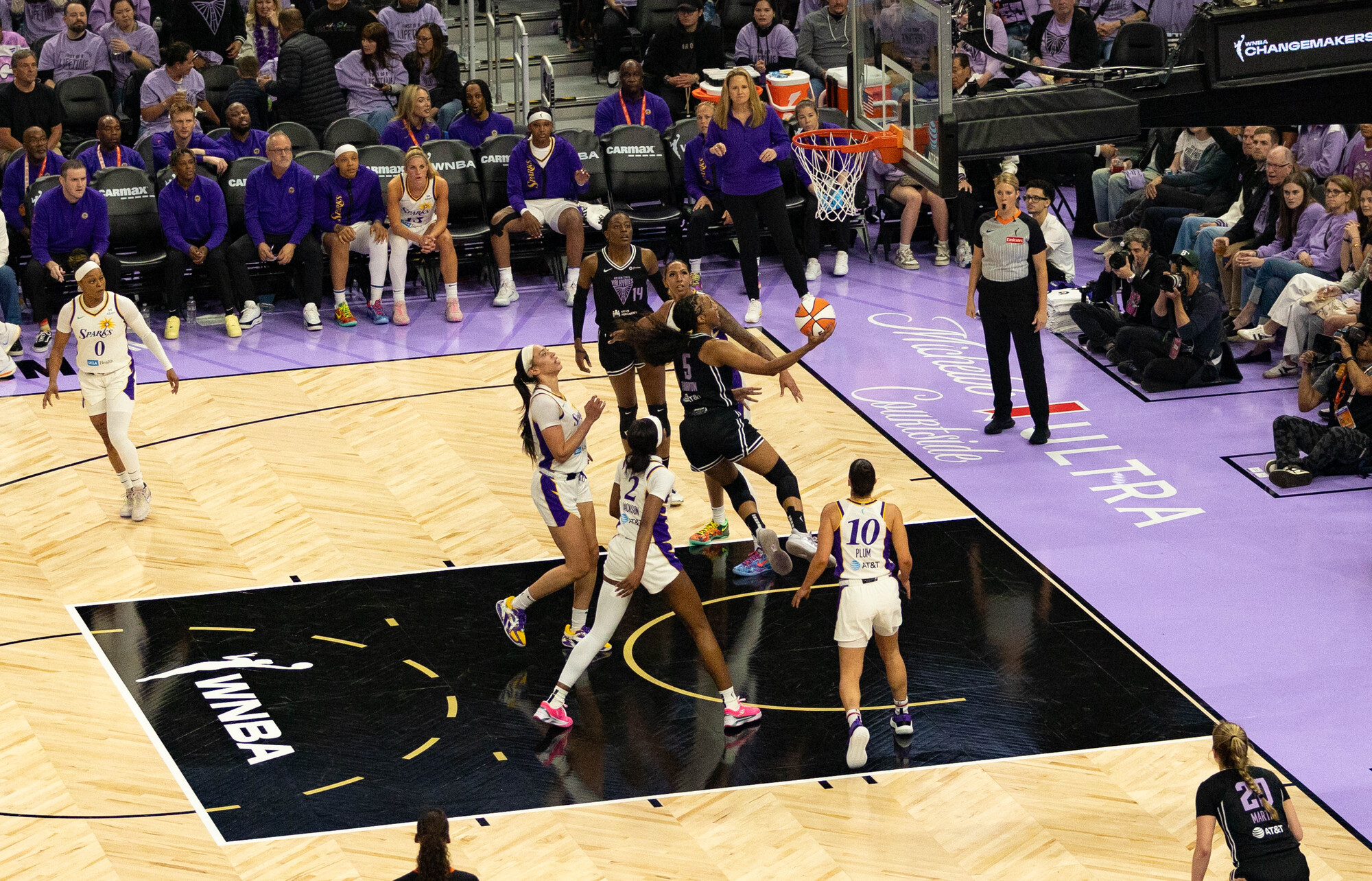
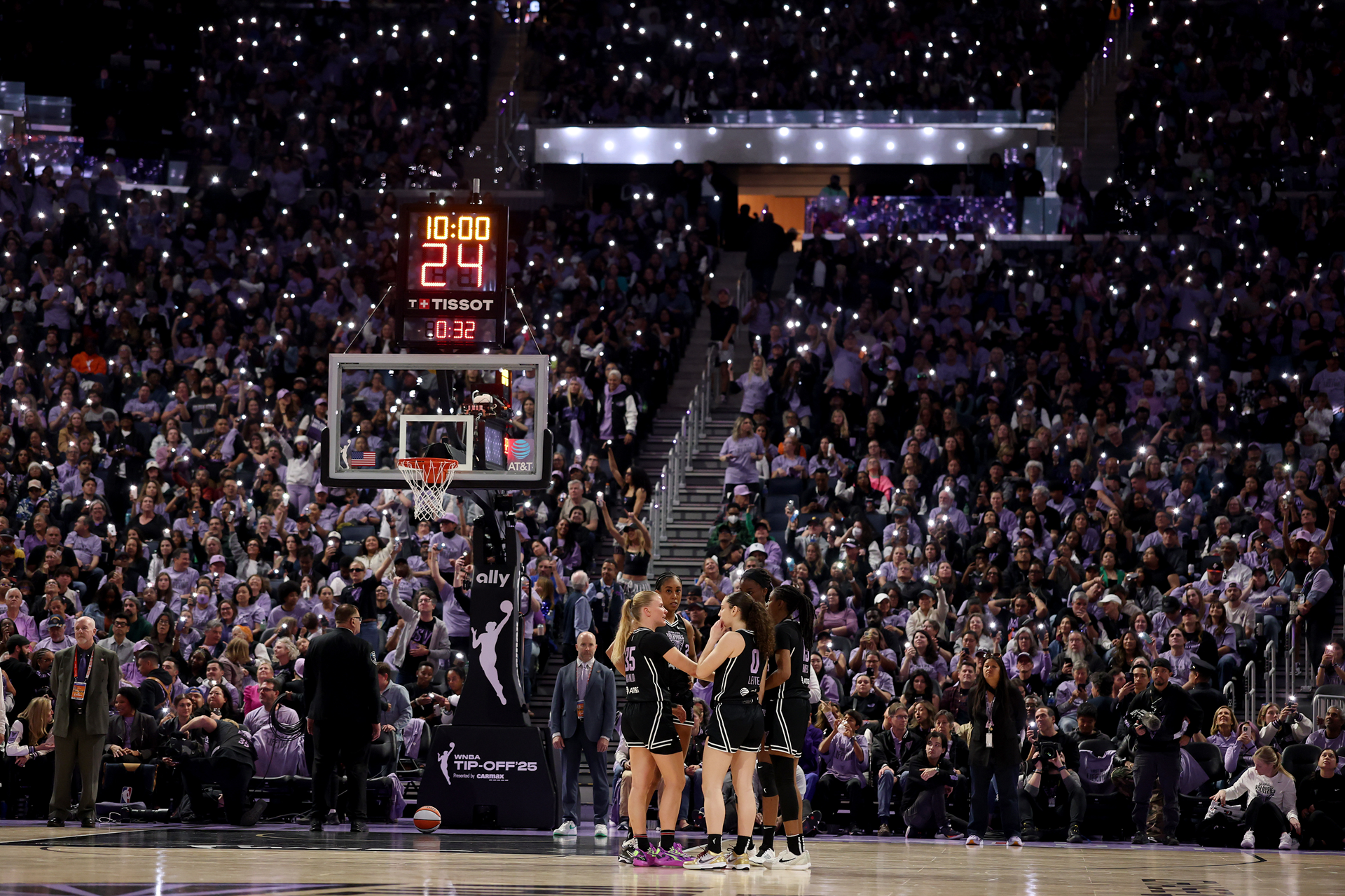
"caption": "Golden State Valkyries forward Kayla Thornton (5) attempts to make a basket during the 1st quarter at the Valkyries’ home opener at Chase Center on May 16, 2025. A fan favorite, Thornton is out for the rest of the Golden State Valkyries’ inaugural WNBA season, after suffering a serious injury during practice.",
"credit": "Gina Castro/KQED",
"altTag": null,
"description": null,
"imgSizes": {
"thumbnail": {
"file": "https://cdn.kqed.org/wp-content/uploads/sites/10/2025/07/20250516_ValkyriesHomeOpener_GC-79_qed-160x103.jpg",
"width": 160,
"height": 103,
"mimeType": "image/jpeg"
},
"1536x1536": {
"file": "https://cdn.kqed.org/wp-content/uploads/sites/10/2025/07/20250516_ValkyriesHomeOpener_GC-79_qed-1536x986.jpg",
"width": 1536,
"height": 986,
"mimeType": "image/jpeg"
},
"post-thumbnail": {
"file": "https://cdn.kqed.org/wp-content/uploads/sites/10/2025/07/20250516_ValkyriesHomeOpener_GC-79_qed-672x372.jpg",
"width": 672,
"height": 372,
"mimeType": "image/jpeg"
},
"twentyfourteen-full-width": {
"file": "https://cdn.kqed.org/wp-content/uploads/sites/10/2025/07/20250516_ValkyriesHomeOpener_GC-79_qed-1038x576.jpg",
"width": 1038,
"height": 576,
"mimeType": "image/jpeg"
},
"kqedFullSize": {
"file": "https://cdn.kqed.org/wp-content/uploads/sites/10/2025/07/20250516_ValkyriesHomeOpener_GC-79_qed.jpg",
"width": 2000,
"height": 1284
}
},
"isLoading": false,
"fetchFailed": false
},
"news_12049544": {
"type": "attachments",
"id": "news_12049544",
"meta": {
"index": "attachments_1716263798",
"site": "news",
"id": "12049544",
"found": true
},
"title": "CCSF board member, Rodrigo Santos listens to the findings of the state's Fiscal Crisis & MAnagement Assistance Team, as members of the team speak to the board at a meeting at CCSF. The team put together to look into the financial crisis at City College of",
"publishDate": 1753377779,
"status": "inherit",
"parent": 12049532,
"modified": 1753378048,
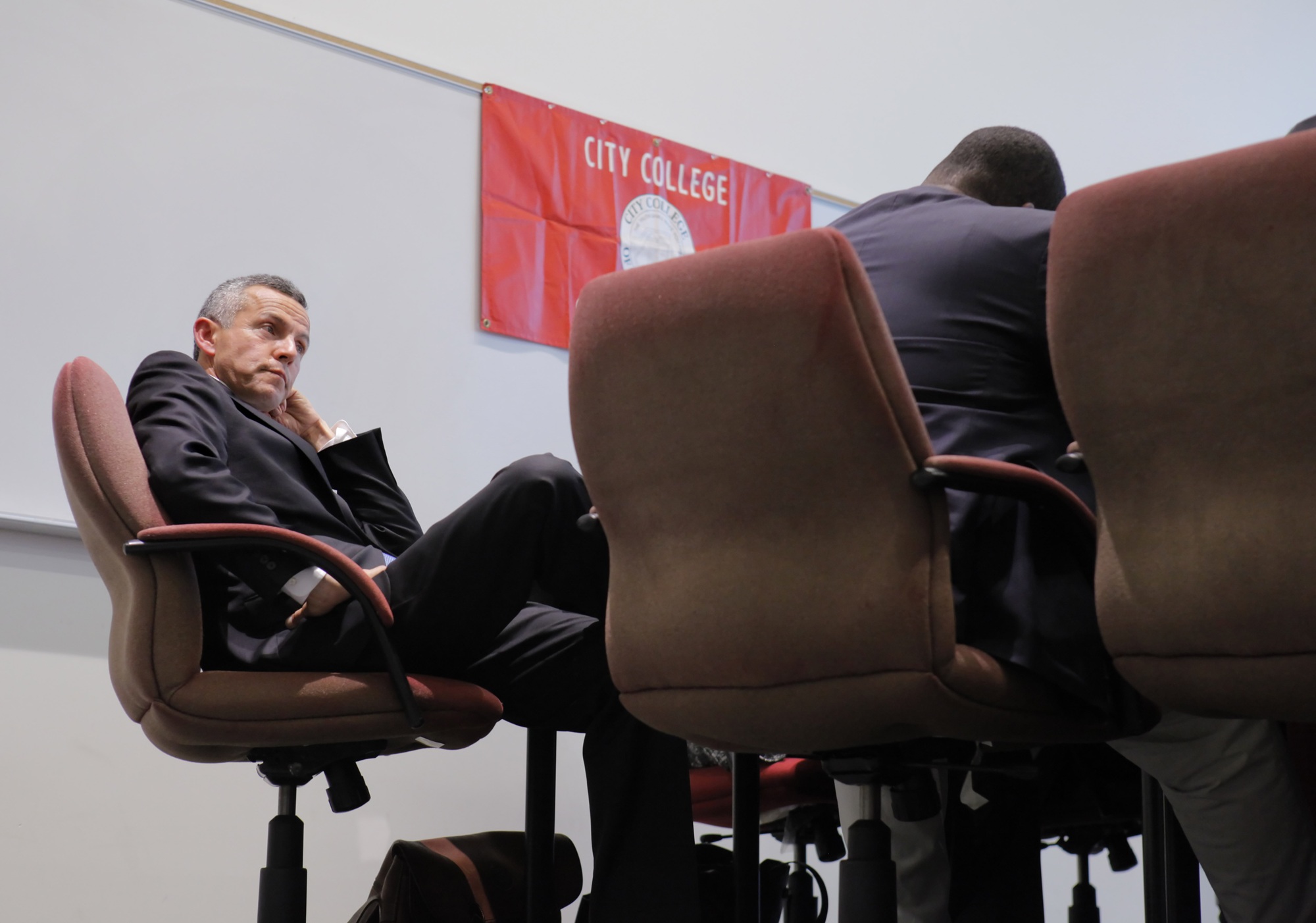
"caption": "Former City College of San Francisco board member, Rodrigo Santos (left), listens to the findings of the state's Fiscal Crisis & Management Assistance Team as members speak to the board at a meeting at CCSF on Sept. 18, 2012. ",
"credit": "Carlos Avila Gonzalez/The San Francisco Chronicle via Getty Images",
"altTag": null,
"description": null,
"imgSizes": {
"thumbnail": {
"file": "https://cdn.kqed.org/wp-content/uploads/sites/10/2025/07/RodrigoSantosSFGetty-160x112.jpg",
"width": 160,
"height": 112,
"mimeType": "image/jpeg"
},
"1536x1536": {
"file": "https://cdn.kqed.org/wp-content/uploads/sites/10/2025/07/RodrigoSantosSFGetty-1536x1077.jpg",
"width": 1536,
"height": 1077,
"mimeType": "image/jpeg"
},
"post-thumbnail": {
"file": "https://cdn.kqed.org/wp-content/uploads/sites/10/2025/07/RodrigoSantosSFGetty-672x372.jpg",
"width": 672,
"height": 372,
"mimeType": "image/jpeg"
},
"twentyfourteen-full-width": {
"file": "https://cdn.kqed.org/wp-content/uploads/sites/10/2025/07/RodrigoSantosSFGetty-1038x576.jpg",
"width": 1038,
"height": 576,
"mimeType": "image/jpeg"
},
"kqedFullSize": {
"file": "https://cdn.kqed.org/wp-content/uploads/sites/10/2025/07/RodrigoSantosSFGetty.jpg",
"width": 2000,
"height": 1402
}
},
"isLoading": false,
"fetchFailed": false
},
"news_12049492": {
"type": "attachments",
"id": "news_12049492",
"meta": {
"index": "attachments_1716263798",
"site": "news",
"id": "12049492",
"found": true
},
"title": "010_KQED_InternetArchiveOffices_03242023_qed",
"publishDate": 1753313633,
"status": "inherit",
"parent": 12049420,
"modified": 1753313642,
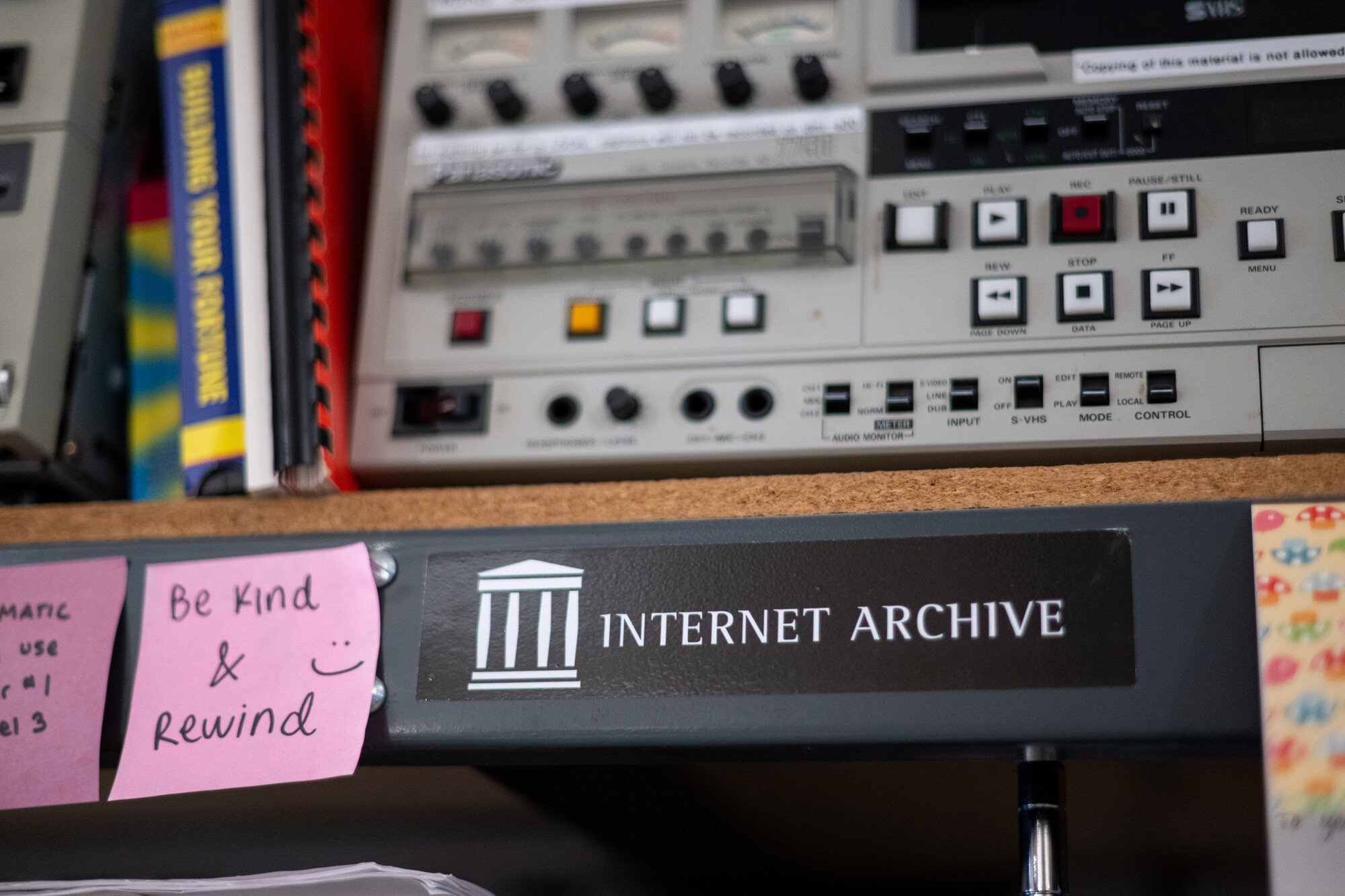
"caption": "Various types of electronics sit on a shelf at the Internet Archive offices in San Francisco on March 24, 2023.",
"credit": "Beth LaBerge/KQED",
"altTag": null,
"description": null,
"imgSizes": {
"thumbnail": {
"file": "https://cdn.kqed.org/wp-content/uploads/sites/10/2025/07/010_KQED_InternetArchiveOffices_03242023_qed-160x107.jpg",
"width": 160,
"height": 107,
"mimeType": "image/jpeg"
},
"1536x1536": {
"file": "https://cdn.kqed.org/wp-content/uploads/sites/10/2025/07/010_KQED_InternetArchiveOffices_03242023_qed-1536x1024.jpg",
"width": 1536,
"height": 1024,
"mimeType": "image/jpeg"
},
"post-thumbnail": {
"file": "https://cdn.kqed.org/wp-content/uploads/sites/10/2025/07/010_KQED_InternetArchiveOffices_03242023_qed-672x372.jpg",
"width": 672,
"height": 372,
"mimeType": "image/jpeg"
},
"twentyfourteen-full-width": {
"file": "https://cdn.kqed.org/wp-content/uploads/sites/10/2025/07/010_KQED_InternetArchiveOffices_03242023_qed-1038x576.jpg",
"width": 1038,
"height": 576,
"mimeType": "image/jpeg"
},
"kqedFullSize": {
"file": "https://cdn.kqed.org/wp-content/uploads/sites/10/2025/07/010_KQED_InternetArchiveOffices_03242023_qed.jpg",
"width": 2000,
"height": 1333
}
},
"isLoading": false,
"fetchFailed": false
},
"news_11997608": {
"type": "attachments",
"id": "news_11997608",
"meta": {
"index": "attachments_1716263798",
"site": "news",
"id": "11997608",
"found": true
},
"title": "2013 San Francisco Marathon",
"publishDate": 1722025402,
"status": "inherit",
"parent": 11997524,
"modified": 1722026405,
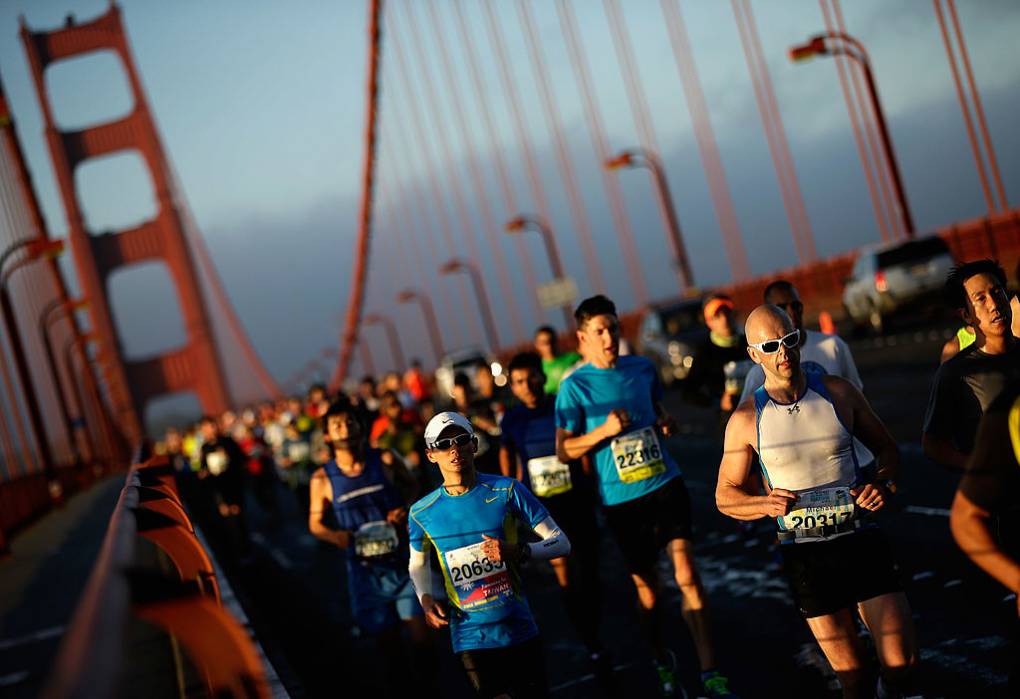
"caption": "Runners cross the Golden Gate Bridge during the 2013 San Francisco Marathon and Half-Marathon on June 16, 2013, in San Francisco. ",
"credit": "Ezra Shaw/Getty Images",
"altTag": null,
"description": null,
"imgSizes": {
"medium": {
"file": "https://cdn.kqed.org/wp-content/uploads/sites/10/2024/07/GettyImages-170700422-800x548.jpg",
"width": 800,
"height": 548,
"mimeType": "image/jpeg"
},
"large": {
"file": "https://cdn.kqed.org/wp-content/uploads/sites/10/2024/07/GettyImages-170700422-1020x699.jpg",
"width": 1020,
"height": 699,
"mimeType": "image/jpeg"
},
"thumbnail": {
"file": "https://cdn.kqed.org/wp-content/uploads/sites/10/2024/07/GettyImages-170700422-160x110.jpg",
"width": 160,
"height": 110,
"mimeType": "image/jpeg"
},
"post-thumbnail": {
"file": "https://cdn.kqed.org/wp-content/uploads/sites/10/2024/07/GettyImages-170700422-672x372.jpg",
"width": 672,
"height": 372,
"mimeType": "image/jpeg"
},
"twentyfourteen-full-width": {
"file": "https://cdn.kqed.org/wp-content/uploads/sites/10/2024/07/GettyImages-170700422-1024x576.jpg",
"width": 1024,
"height": 576,
"mimeType": "image/jpeg"
},
"kqedFullSize": {
"file": "https://cdn.kqed.org/wp-content/uploads/sites/10/2024/07/GettyImages-170700422.jpg",
"width": 1024,
"height": 702
}
},
"isLoading": false,
"fetchFailed": false
},
"news_12049477": {
"type": "attachments",
"id": "news_12049477",
"meta": {
"index": "attachments_1716263798",
"site": "news",
"id": "12049477",
"found": true
},
"title": "240822-ACTION-AGAINST-HOMELESS-SWEEPS-MD-01-KQED-2",
"publishDate": 1753312235,
"status": "inherit",
"parent": 0,
"modified": 1753312267,
"caption": "Advocates rally against San Francisco’s homeless encampment sweeps outside City Hall on Aug. 22, 2024.",
"credit": "Martin do Nascimento/KQED",
"altTag": null,
"description": null,
"imgSizes": {
"thumbnail": {
"file": "https://cdn.kqed.org/wp-content/uploads/sites/10/2025/07/240822-ACTION-AGAINST-HOMELESS-SWEEPS-MD-01-KQED-2-160x107.jpg",
"width": 160,
"height": 107,
"mimeType": "image/jpeg"
},
"1536x1536": {
"file": "https://cdn.kqed.org/wp-content/uploads/sites/10/2025/07/240822-ACTION-AGAINST-HOMELESS-SWEEPS-MD-01-KQED-2-1536x1024.jpg",
"width": 1536,
"height": 1024,
"mimeType": "image/jpeg"
},
"post-thumbnail": {
"file": "https://cdn.kqed.org/wp-content/uploads/sites/10/2025/07/240822-ACTION-AGAINST-HOMELESS-SWEEPS-MD-01-KQED-2-672x372.jpg",
"width": 672,
"height": 372,
"mimeType": "image/jpeg"
},
"twentyfourteen-full-width": {
"file": "https://cdn.kqed.org/wp-content/uploads/sites/10/2025/07/240822-ACTION-AGAINST-HOMELESS-SWEEPS-MD-01-KQED-2-1038x576.jpg",
"width": 1038,
"height": 576,
"mimeType": "image/jpeg"
},
"kqedFullSize": {
"file": "https://cdn.kqed.org/wp-content/uploads/sites/10/2025/07/240822-ACTION-AGAINST-HOMELESS-SWEEPS-MD-01-KQED-2.jpg",
"width": 2000,
"height": 1333
}
},
"isLoading": false,
"fetchFailed": false
},
"news_12049328": {
"type": "attachments",
"id": "news_12049328",
"meta": {
"index": "attachments_1716263798",
"site": "news",
"id": "12049328",
"found": true
},
"title": "240610-HomelessFamilies-12-BL_qed",
"publishDate": 1753290695,
"status": "inherit",
"parent": 12049323,
"modified": 1753290712,
"caption": "Shelter beds are set up in an auditorium at Buena Vista Horace Mann Community School on June 10, 2024, which operates as one of San Francisco's largest homeless shelters. The nonprofit Dolores Street Community Services runs the shelter after hours and during the summer when school is not in session for San Francisco Unified School District students and their families.",
"credit": "Beth LaBerge/KQED",
"altTag": null,
"description": null,
"imgSizes": {
"thumbnail": {
"file": "https://cdn.kqed.org/wp-content/uploads/sites/10/2025/07/240610-HomelessFamilies-12-BL_qed-160x107.jpg",
"width": 160,
"height": 107,
"mimeType": "image/jpeg"
},
"1536x1536": {
"file": "https://cdn.kqed.org/wp-content/uploads/sites/10/2025/07/240610-HomelessFamilies-12-BL_qed-1536x1024.jpg",
"width": 1536,
"height": 1024,
"mimeType": "image/jpeg"
},
"post-thumbnail": {
"file": "https://cdn.kqed.org/wp-content/uploads/sites/10/2025/07/240610-HomelessFamilies-12-BL_qed-672x372.jpg",
"width": 672,
"height": 372,
"mimeType": "image/jpeg"
},
"twentyfourteen-full-width": {
"file": "https://cdn.kqed.org/wp-content/uploads/sites/10/2025/07/240610-HomelessFamilies-12-BL_qed-1038x576.jpg",
"width": 1038,
"height": 576,
"mimeType": "image/jpeg"
},
"kqedFullSize": {
"file": "https://cdn.kqed.org/wp-content/uploads/sites/10/2025/07/240610-HomelessFamilies-12-BL_qed.jpg",
"width": 2000,
"height": 1333
}
},
"isLoading": false,
"fetchFailed": false
},
"news_12049285": {
"type": "attachments",
"id": "news_12049285",
"meta": {
"index": "attachments_1716263798",
"site": "news",
"id": "12049285",
"found": true
},
"title": "Permanente Creek2",
"publishDate": 1753224942,
"status": "inherit",
"parent": 0,
"modified": 1753225067,
"caption": "Supervisor Margaret Abe-Koga (center) wielded a pair of hedge clippers for the official \"ribbon-cutting\" hosted by Heidelberg Materials to kick off the start of the Permanente Creek Restoration Project, which must be completed in five years, per the consent decree from the lawsuit filed by the Sierra Club. Also pictured: Members of the Sierra Club, Santa Clara County staff, which approved the project, David Perkins of Heidelberg Materials (next to Abe-Koga) and several stakeholders, ranging from the Midpeninsula Regional Open Space District, whose Rancho San Antonio Open Space Preserve abuts the sprawling property, to residents and engineers for the restoration project.",
"credit": "Courtesy of L.A. Chung",
"altTag": null,
"description": null,
"imgSizes": {
"thumbnail": {
"file": "https://cdn.kqed.org/wp-content/uploads/sites/10/2025/07/Permanente-Creek2-160x120.jpg",
"width": 160,
"height": 120,
"mimeType": "image/jpeg"
},
"1536x1536": {
"file": "https://cdn.kqed.org/wp-content/uploads/sites/10/2025/07/Permanente-Creek2-1536x1152.jpg",
"width": 1536,
"height": 1152,
"mimeType": "image/jpeg"
},
"post-thumbnail": {
"file": "https://cdn.kqed.org/wp-content/uploads/sites/10/2025/07/Permanente-Creek2-672x372.jpg",
"width": 672,
"height": 372,
"mimeType": "image/jpeg"
},
"twentyfourteen-full-width": {
"file": "https://cdn.kqed.org/wp-content/uploads/sites/10/2025/07/Permanente-Creek2-1038x576.jpg",
"width": 1038,
"height": 576,
"mimeType": "image/jpeg"
},
"kqedFullSize": {
"file": "https://cdn.kqed.org/wp-content/uploads/sites/10/2025/07/Permanente-Creek2.jpg",
"width": 2000,
"height": 1500
}
},
"isLoading": false,
"fetchFailed": false
},
"news_12049486": {
"type": "attachments",
"id": "news_12049486",
"meta": {
"index": "attachments_1716263798",
"site": "news",
"id": "12049486",
"found": true
},
"title": "250723_EVCHARGERS_GH-9-KQED",
"publishDate": 1753313125,
"status": "inherit",
"parent": 12049202,
"modified": 1753313158,
"caption": "An electric vehicle charges in San Francisco’s Bernal Heights neighborhood on July 23, 2025. ",
"credit": "Gustavo Hernandez/KQED",
"altTag": null,
"description": null,
"imgSizes": {
"thumbnail": {
"file": "https://cdn.kqed.org/wp-content/uploads/sites/10/2025/07/250723_EVCHARGERS_GH-9-KQED-160x107.jpg",
"width": 160,
"height": 107,
"mimeType": "image/jpeg"
},
"1536x1536": {
"file": "https://cdn.kqed.org/wp-content/uploads/sites/10/2025/07/250723_EVCHARGERS_GH-9-KQED-1536x1024.jpg",
"width": 1536,
"height": 1024,
"mimeType": "image/jpeg"
},
"post-thumbnail": {
"file": "https://cdn.kqed.org/wp-content/uploads/sites/10/2025/07/250723_EVCHARGERS_GH-9-KQED-672x372.jpg",
"width": 672,
"height": 372,
"mimeType": "image/jpeg"
},
"twentyfourteen-full-width": {
"file": "https://cdn.kqed.org/wp-content/uploads/sites/10/2025/07/250723_EVCHARGERS_GH-9-KQED-1038x576.jpg",
"width": 1038,
"height": 576,
"mimeType": "image/jpeg"
},
"kqedFullSize": {
"file": "https://cdn.kqed.org/wp-content/uploads/sites/10/2025/07/250723_EVCHARGERS_GH-9-KQED.jpg",
"width": 2000,
"height": 1333
}
},
"isLoading": false,
"fetchFailed": false
},
"news_12049260": {
"type": "attachments",
"id": "news_12049260",
"meta": {
"index": "attachments_1716263798",
"site": "news",
"id": "12049260",
"found": true
},
"title": "golden-state-valkyries",
"publishDate": 1753221636,
"status": "inherit",
"parent": 12047885,
"modified": 1753221670,
"caption": "The Golden State Valkyries huddle together before the start of the fourth quarter against the Los Angeles Sparks at Chase Center on May 16, 2025 in San Francisco, California. ",
"credit": "Ezra Shaw/Getty Images",
"altTag": null,
"description": null,
"imgSizes": {
"thumbnail": {
"file": "https://cdn.kqed.org/wp-content/uploads/sites/10/2025/07/golden-state-valkyries-160x107.png",
"width": 160,
"height": 107,
"mimeType": "image/png"
},
"1536x1536": {
"file": "https://cdn.kqed.org/wp-content/uploads/sites/10/2025/07/golden-state-valkyries-1536x1023.png",
"width": 1536,
"height": 1023,
"mimeType": "image/png"
},
"post-thumbnail": {
"file": "https://cdn.kqed.org/wp-content/uploads/sites/10/2025/07/golden-state-valkyries-672x372.png",
"width": 672,
"height": 372,
"mimeType": "image/png"
},
"twentyfourteen-full-width": {
"file": "https://cdn.kqed.org/wp-content/uploads/sites/10/2025/07/golden-state-valkyries-1038x576.png",
"width": 1038,
"height": 576,
"mimeType": "image/png"
},
"kqedFullSize": {
"file": "https://cdn.kqed.org/wp-content/uploads/sites/10/2025/07/golden-state-valkyries.png",
"width": 1920,
"height": 1279
}
},
"isLoading": false,
"fetchFailed": false
},
"news_11779437": {
"type": "attachments",
"id": "news_11779437",
"meta": {
"index": "attachments_1716263798",
"site": "news",
"id": "11779437",
"found": true
},
"title": "San Francisco Battles New Electric Scooters",
"publishDate": 1570753149,
"status": "inherit",
"parent": 11778738,
"modified": 1753225351,
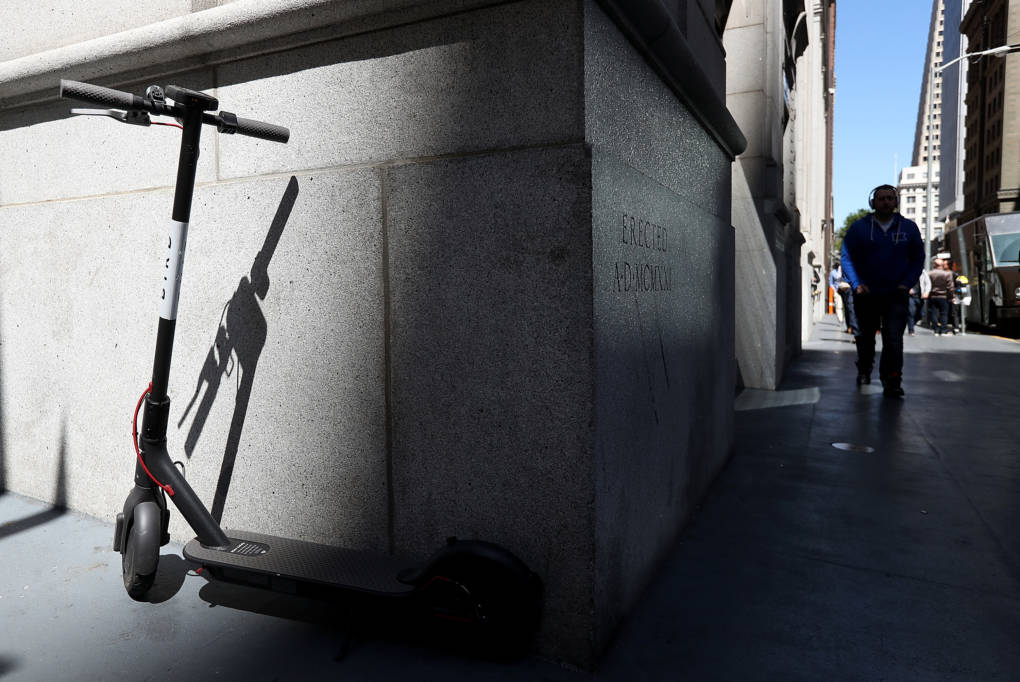
"caption": "An e-scooter sits parked on a street corner in San Francisco on April 17, 2018.\n",
"credit": "Justin Sullivan/Getty Images",
"altTag": null,
"description": null,
"imgSizes": {
"thumbnail": {
"file": "https://cdn.kqed.org/wp-content/uploads/sites/10/2019/10/GettyImages-947735006-160x107.jpg",
"width": 160,
"height": 107,
"mimeType": "image/jpeg"
},
"medium": {
"file": "https://cdn.kqed.org/wp-content/uploads/sites/10/2019/10/GettyImages-947735006-800x535.jpg",
"width": 800,
"height": 535,
"mimeType": "image/jpeg"
},
"large": {
"file": "https://cdn.kqed.org/wp-content/uploads/sites/10/2019/10/GettyImages-947735006-1020x682.jpg",
"width": 1020,
"height": 682,
"mimeType": "image/jpeg"
},
"complete_open_graph": {
"file": "https://cdn.kqed.org/wp-content/uploads/sites/10/2019/10/GettyImages-947735006-1200x802.jpg",
"width": 1200,
"height": 802,
"mimeType": "image/jpeg"
},
"post-thumbnail": {
"file": "https://cdn.kqed.org/wp-content/uploads/sites/10/2019/10/GettyImages-947735006-672x372.jpg",
"width": 672,
"height": 372,
"mimeType": "image/jpeg"
},
"twentyfourteen-full-width": {
"file": "https://cdn.kqed.org/wp-content/uploads/sites/10/2019/10/GettyImages-947735006-1038x576.jpg",
"width": 1038,
"height": 576,
"mimeType": "image/jpeg"
},
"full-width": {
"file": "https://cdn.kqed.org/wp-content/uploads/sites/10/2019/10/GettyImages-947735006-1920x1283.jpg",
"width": 1920,
"height": 1283,
"mimeType": "image/jpeg"
},
"apple_news_ca_landscape_12_9": {
"file": "https://cdn.kqed.org/wp-content/uploads/sites/10/2019/10/GettyImages-947735006-1832x1374.jpg",
"width": 1832,
"height": 1374,
"mimeType": "image/jpeg"
},
"apple_news_ca_landscape_9_7": {
"file": "https://cdn.kqed.org/wp-content/uploads/sites/10/2019/10/GettyImages-947735006-1376x1032.jpg",
"width": 1376,
"height": 1032,
"mimeType": "image/jpeg"
},
"apple_news_ca_landscape_5_5": {
"file": "https://cdn.kqed.org/wp-content/uploads/sites/10/2019/10/GettyImages-947735006-1044x783.jpg",
"width": 1044,
"height": 783,
"mimeType": "image/jpeg"
},
"apple_news_ca_landscape_4_7": {
"file": "https://cdn.kqed.org/wp-content/uploads/sites/10/2019/10/GettyImages-947735006-632x474.jpg",
"width": 632,
"height": 474,
"mimeType": "image/jpeg"
},
"apple_news_ca_landscape_4_0": {
"file": "https://cdn.kqed.org/wp-content/uploads/sites/10/2019/10/GettyImages-947735006-536x402.jpg",
"width": 536,
"height": 402,
"mimeType": "image/jpeg"
},
"apple_news_ca_portrait_12_9": {
"file": "https://cdn.kqed.org/wp-content/uploads/sites/10/2019/10/GettyImages-947735006-1122x1496.jpg",
"width": 1122,
"height": 1496,
"mimeType": "image/jpeg"
},
"apple_news_ca_portrait_9_7": {
"file": "https://cdn.kqed.org/wp-content/uploads/sites/10/2019/10/GettyImages-947735006-840x1120.jpg",
"width": 840,
"height": 1120,
"mimeType": "image/jpeg"
},
"apple_news_ca_portrait_5_5": {
"file": "https://cdn.kqed.org/wp-content/uploads/sites/10/2019/10/GettyImages-947735006-687x916.jpg",
"width": 687,
"height": 916,
"mimeType": "image/jpeg"
},
"apple_news_ca_portrait_4_7": {
"file": "https://cdn.kqed.org/wp-content/uploads/sites/10/2019/10/GettyImages-947735006-414x552.jpg",
"width": 414,
"height": 552,
"mimeType": "image/jpeg"
},
"apple_news_ca_portrait_4_0": {
"file": "https://cdn.kqed.org/wp-content/uploads/sites/10/2019/10/GettyImages-947735006-354x472.jpg",
"width": 354,
"height": 472,
"mimeType": "image/jpeg"
},
"apple_news_ca_square_12_9": {
"file": "https://cdn.kqed.org/wp-content/uploads/sites/10/2019/10/GettyImages-947735006-1472x1472.jpg",
"width": 1472,
"height": 1472,
"mimeType": "image/jpeg"
},
"apple_news_ca_square_9_7": {
"file": "https://cdn.kqed.org/wp-content/uploads/sites/10/2019/10/GettyImages-947735006-1104x1104.jpg",
"width": 1104,
"height": 1104,
"mimeType": "image/jpeg"
},
"apple_news_ca_square_5_5": {
"file": "https://cdn.kqed.org/wp-content/uploads/sites/10/2019/10/GettyImages-947735006-912x912.jpg",
"width": 912,
"height": 912,
"mimeType": "image/jpeg"
},
"apple_news_ca_square_4_7": {
"file": "https://cdn.kqed.org/wp-content/uploads/sites/10/2019/10/GettyImages-947735006-550x550.jpg",
"width": 550,
"height": 550,
"mimeType": "image/jpeg"
},
"apple_news_ca_square_4_0": {
"file": "https://cdn.kqed.org/wp-content/uploads/sites/10/2019/10/GettyImages-947735006-470x470.jpg",
"width": 470,
"height": 470,
"mimeType": "image/jpeg"
},
"kqedFullSize": {
"file": "https://cdn.kqed.org/wp-content/uploads/sites/10/2019/10/GettyImages-947735006-e1570815142990.jpg",
"width": 1920,
"height": 1283
}
},
"isLoading": false,
"fetchFailed": false
},
"news_12049213": {
"type": "attachments",
"id": "news_12049213",
"meta": {
"index": "attachments_1716263798",
"site": "news",
"id": "12049213",
"found": true
},
"title": "250722-DEADCOMUNI_00014_TV-KQED",
"publishDate": 1753213865,
"status": "inherit",
"parent": 0,
"modified": 1753222205,
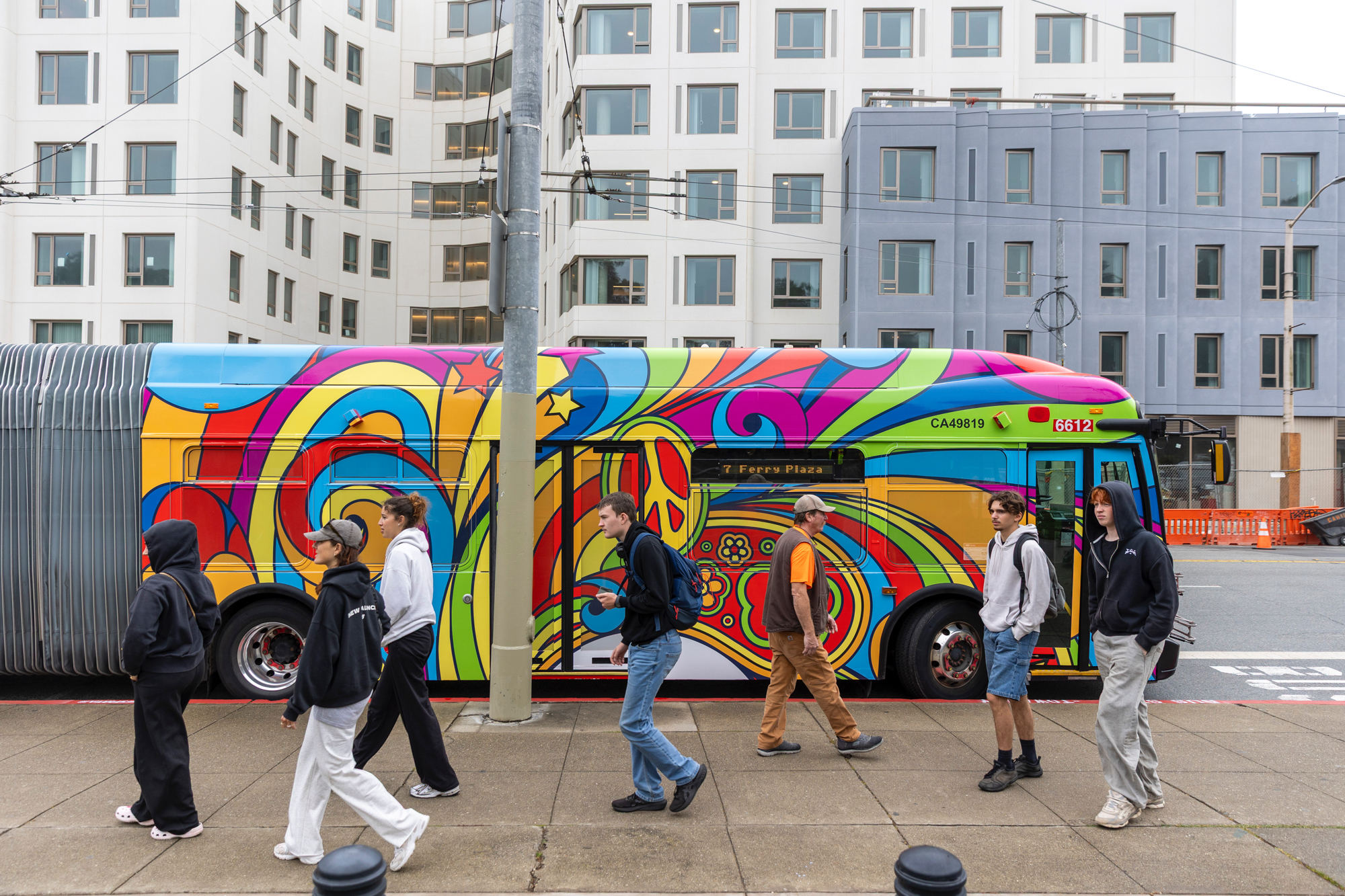
"caption": "Pedestrians walk past one of the psychedelic-themed buses in the Haight Ashbury District in San Francisco on July 22, 2025. Mayor Daniel Lurie and the SFMTA unveil one of several tie-dye Muni buses in celebration of the Dead & Company 60th anniversary concert.",
"credit": "Tâm Vũ/KQED",
"altTag": null,
"description": null,
"imgSizes": {
"thumbnail": {
"file": "https://cdn.kqed.org/wp-content/uploads/sites/10/2025/07/250722-DEADCOMUNI_00014_TV-KQED-160x107.jpg",
"width": 160,
"height": 107,
"mimeType": "image/jpeg"
},
"1536x1536": {
"file": "https://cdn.kqed.org/wp-content/uploads/sites/10/2025/07/250722-DEADCOMUNI_00014_TV-KQED-1536x1024.jpg",
"width": 1536,
"height": 1024,
"mimeType": "image/jpeg"
},
"post-thumbnail": {
"file": "https://cdn.kqed.org/wp-content/uploads/sites/10/2025/07/250722-DEADCOMUNI_00014_TV-KQED-672x372.jpg",
"width": 672,
"height": 372,
"mimeType": "image/jpeg"
},
"twentyfourteen-full-width": {
"file": "https://cdn.kqed.org/wp-content/uploads/sites/10/2025/07/250722-DEADCOMUNI_00014_TV-KQED-1038x576.jpg",
"width": 1038,
"height": 576,
"mimeType": "image/jpeg"
},
"kqedFullSize": {
"file": "https://cdn.kqed.org/wp-content/uploads/sites/10/2025/07/250722-DEADCOMUNI_00014_TV-KQED.jpg",
"width": 2000,
"height": 1333
}
},
"isLoading": false,
"fetchFailed": false
},
"news_12048478": {
"type": "attachments",
"id": "news_12048478",
"meta": {
"index": "attachments_1716263798",
"site": "news",
"id": "12048478",
"found": true
},
"title": "250716_Compton'sCafeteriaBuilding_GH_qed",
"publishDate": 1752728285,
"status": "inherit",
"parent": 0,
"modified": 1753208198,
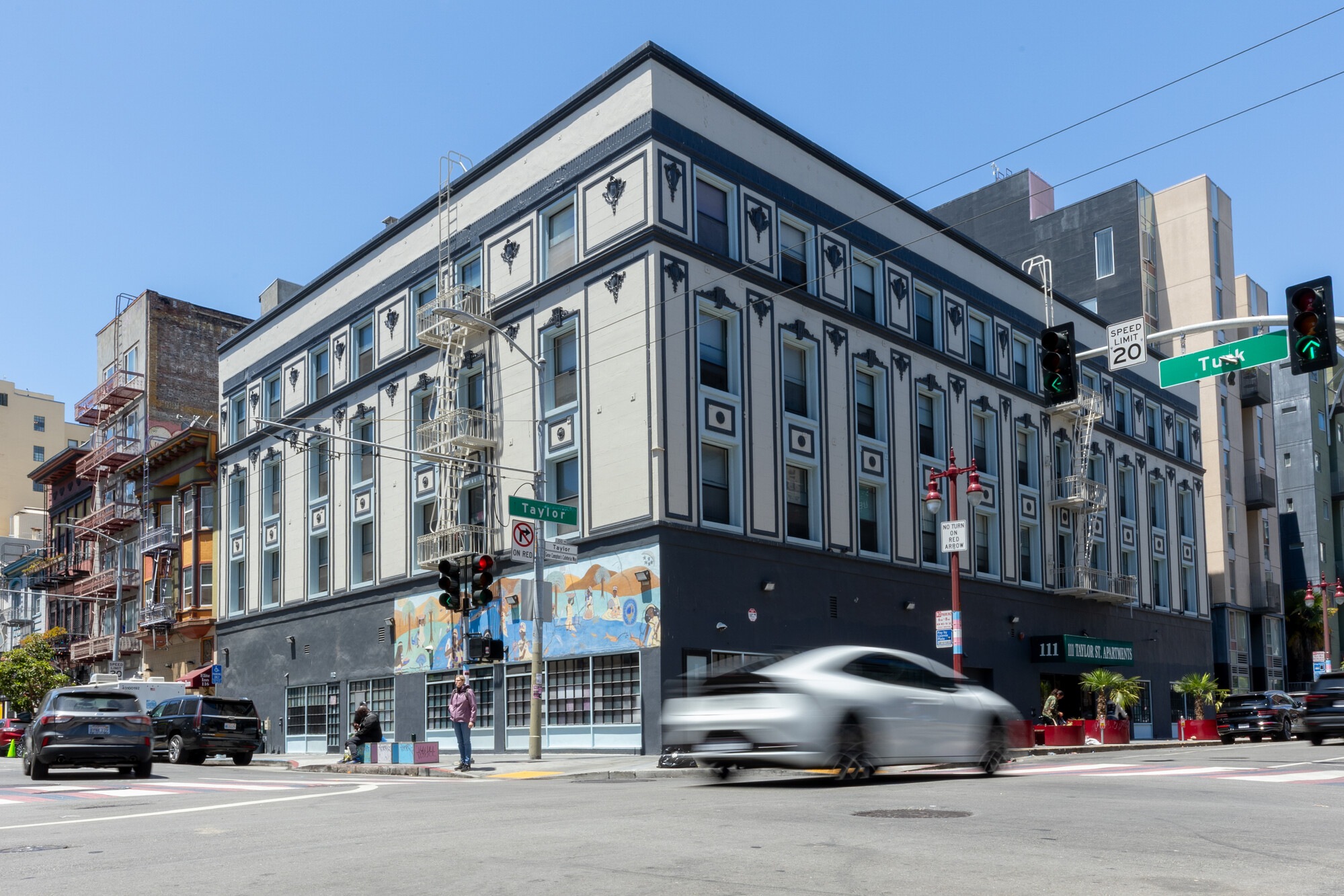
"caption": "111 Taylor St., the former Compton’s Cafeteria site now operated as a GEO Group halfway house, stands in San Francisco’s Tenderloin on July 16, 2025.",
"credit": "Gustavo Hernandez/KQED",
"altTag": null,
"description": null,
"imgSizes": {
"thumbnail": {
"file": "https://cdn.kqed.org/wp-content/uploads/sites/10/2025/07/250716_ComptonsCafeteriaBuilding_GH_qed-160x107.jpg",
"width": 160,
"height": 107,
"mimeType": "image/jpeg"
},
"1536x1536": {
"file": "https://cdn.kqed.org/wp-content/uploads/sites/10/2025/07/250716_ComptonsCafeteriaBuilding_GH_qed-1536x1024.jpg",
"width": 1536,
"height": 1024,
"mimeType": "image/jpeg"
},
"post-thumbnail": {
"file": "https://cdn.kqed.org/wp-content/uploads/sites/10/2025/07/250716_ComptonsCafeteriaBuilding_GH_qed-672x372.jpg",
"width": 672,
"height": 372,
"mimeType": "image/jpeg"
},
"twentyfourteen-full-width": {
"file": "https://cdn.kqed.org/wp-content/uploads/sites/10/2025/07/250716_ComptonsCafeteriaBuilding_GH_qed-1038x576.jpg",
"width": 1038,
"height": 576,
"mimeType": "image/jpeg"
},
"kqedFullSize": {
"file": "https://cdn.kqed.org/wp-content/uploads/sites/10/2025/07/250716_ComptonsCafeteriaBuilding_GH_qed.jpg",
"width": 1999,
"height": 1333
}
},
"isLoading": false,
"fetchFailed": false
}
},
"audioPlayerReducer": {
"postId": "stream_live",
"isPaused": true,
"isPlaying": false,
"pfsActive": false,
"pledgeModalIsOpen": true,
"playerDrawerIsOpen": false,
"liveAudioPlayStartedAt": 0,
"liveAudioPlayContext": ""
},
"authorsReducer": {
"matthewgreen": {
"type": "authors",
"id": "1263",
"meta": {
"index": "authors_1716337520",
"id": "1263",
"found": true
},
"name": "Matthew Green",
"firstName": "Matthew",
"lastName": "Green",
"slug": "matthewgreen",
"email": "mgreen@kqed.org",
"display_author_email": false,
"staff_mastheads": [],
"title": "KQED Editor/Reporter",
"bio": "Matthew Green is a digital media producer for KQED News. He previously produced \u003ca href=\"http://www.kqed.org/lowdown\">The Lowdown\u003c/a>, KQED’s multimedia news education blog. Matthew's written for numerous Bay Area publications, including the Oakland Tribune and San Francisco Chronicle. He also taught journalism classes at Fremont High School in East Oakland.\r\n\r\nEmail: mgreen@kqed.org; Twitter: @MGreenKQED",
"avatar": "https://secure.gravatar.com/avatar/3bf498d1267ca02c8494f33d8cfc575e?s=600&d=blank&r=g",
"twitter": "MGreenKQED",
"facebook": null,
"instagram": null,
"linkedin": null,
"sites": [
{
"site": "news",
"roles": []
},
{
"site": "lowdown",
"roles": []
},
{
"site": "science",
"roles": []
},
{
"site": "education",
"roles": []
},
{
"site": "quest",
"roles": []
},
{
"site": "liveblog",
"roles": []
}
],
"headData": {
"title": "Matthew Green | KQED",
"description": "KQED Editor/Reporter",
"ogImgSrc": "https://secure.gravatar.com/avatar/3bf498d1267ca02c8494f33d8cfc575e?s=600&d=blank&r=g",
"twImgSrc": "https://secure.gravatar.com/avatar/3bf498d1267ca02c8494f33d8cfc575e?s=600&d=blank&r=g"
},
"isLoading": false,
"link": "/author/matthewgreen"
},
"sjohnson": {
"type": "authors",
"id": "11840",
"meta": {
"index": "authors_1716337520",
"id": "11840",
"found": true
},
"name": "Sydney Johnson",
"firstName": "Sydney",
"lastName": "Johnson",
"slug": "sjohnson",
"email": "sjohnson@kqed.org",
"display_author_email": false,
"staff_mastheads": [
"news"
],
"title": "KQED Reporter",
"bio": "Sydney Johnson is a general assignment reporter at KQED. She previously reported on public health and city government at the San Francisco Examiner, and before that, she covered statewide education policy for EdSource. Her reporting has won multiple local, state and national awards. Sydney is a graduate of the University of California, Berkeley and lives in San Francisco.",
"avatar": "https://secure.gravatar.com/avatar/97855f2719b72ad6190b7c535fe642c8?s=600&d=blank&r=g",
"twitter": "sydneyfjohnson",
"facebook": null,
"instagram": null,
"linkedin": null,
"sites": [
{
"site": "news",
"roles": [
"editor"
]
}
],
"headData": {
"title": "Sydney Johnson | KQED",
"description": "KQED Reporter",
"ogImgSrc": "https://secure.gravatar.com/avatar/97855f2719b72ad6190b7c535fe642c8?s=600&d=blank&r=g",
"twImgSrc": "https://secure.gravatar.com/avatar/97855f2719b72ad6190b7c535fe642c8?s=600&d=blank&r=g"
},
"isLoading": false,
"link": "/author/sjohnson"
},
"nkhan": {
"type": "authors",
"id": "11867",
"meta": {
"index": "authors_1716337520",
"id": "11867",
"found": true
},
"name": "Nisa Khan",
"firstName": "Nisa",
"lastName": "Khan",
"slug": "nkhan",
"email": "nkhan@kqed.org",
"display_author_email": false,
"staff_mastheads": [],
"title": "KQED Contributor",
"bio": "Nisa Khan is a reporter for KQED's Audience News Desk. She was formerly a data reporter at Michigan Radio. She earned a Bachelor of Science in Information from the University of Michigan and a Master of Arts in Communication from Stanford University.",
"avatar": "https://secure.gravatar.com/avatar/8720459eef081ff64582b3506b124d58523e80e120704a0cbd9892533c914991?s=600&d=blank&r=g",
"twitter": "mnisakhan",
"bluesky": null,
"facebook": null,
"instagram": null,
"linkedin": null,
"sites": [
{
"site": "arts",
"roles": [
"editor"
]
},
{
"site": "news",
"roles": [
"editor"
]
},
{
"site": "science",
"roles": [
"editor",
"author"
]
},
{
"site": "forum",
"roles": [
"editor"
]
},
{
"site": "liveblog",
"roles": [
"contributor"
]
}
],
"headData": {
"title": "Nisa Khan | KQED",
"description": "KQED Contributor",
"ogImgSrc": "https://secure.gravatar.com/avatar/8720459eef081ff64582b3506b124d58523e80e120704a0cbd9892533c914991?s=600&d=blank&r=g",
"twImgSrc": "https://secure.gravatar.com/avatar/8720459eef081ff64582b3506b124d58523e80e120704a0cbd9892533c914991?s=600&d=blank&r=g"
},
"isLoading": false,
"link": "/author/nkhan"
},
"kdebenedetti": {
"type": "authors",
"id": "11913",
"meta": {
"index": "authors_1716337520",
"id": "11913",
"found": true
},
"name": "Katie DeBenedetti",
"firstName": "Katie",
"lastName": "DeBenedetti",
"slug": "kdebenedetti",
"email": "kdebenedetti@kqed.org",
"display_author_email": false,
"staff_mastheads": [
"news",
"science"
],
"title": "KQED Contributor",
"bio": "Katie DeBenedetti is a digital reporter covering daily news for the Express Desk. Prior to joining KQED as a culture reporting intern in January 2024, she covered education and city government for the Napa Valley Register.",
"avatar": "https://secure.gravatar.com/avatar/6e31073cb8f7e4214ab03f42771d0f45?s=600&d=blank&r=g",
"twitter": null,
"facebook": null,
"instagram": null,
"linkedin": null,
"sites": [
{
"site": "news",
"roles": [
"author"
]
},
{
"site": "science",
"roles": [
"author"
]
},
{
"site": "liveblog",
"roles": [
"author"
]
}
],
"headData": {
"title": "Katie DeBenedetti | KQED",
"description": "KQED Contributor",
"ogImgSrc": "https://secure.gravatar.com/avatar/6e31073cb8f7e4214ab03f42771d0f45?s=600&d=blank&r=g",
"twImgSrc": "https://secure.gravatar.com/avatar/6e31073cb8f7e4214ab03f42771d0f45?s=600&d=blank&r=g"
},
"isLoading": false,
"link": "/author/kdebenedetti"
},
"slim": {
"type": "authors",
"id": "11920",
"meta": {
"index": "authors_1716337520",
"id": "11920",
"found": true
},
"name": "Samantha Lim",
"firstName": "Samantha",
"lastName": "Lim",
"slug": "slim",
"email": "slim@KQED.org",
"display_author_email": false,
"staff_mastheads": [],
"title": "KQED Contributor",
"bio": null,
"avatar": "https://secure.gravatar.com/avatar/82e592e6c15fe1a04d385e8ad0fb0b4e?s=600&d=blank&r=g",
"twitter": null,
"facebook": null,
"instagram": null,
"linkedin": null,
"sites": [
{
"site": "news",
"roles": []
}
],
"headData": {
"title": "Samantha Lim | KQED",
"description": "KQED Contributor",
"ogImgSrc": "https://secure.gravatar.com/avatar/82e592e6c15fe1a04d385e8ad0fb0b4e?s=600&d=blank&r=g",
"twImgSrc": "https://secure.gravatar.com/avatar/82e592e6c15fe1a04d385e8ad0fb0b4e?s=600&d=blank&r=g"
},
"isLoading": false,
"link": "/author/slim"
},
"gzada": {
"type": "authors",
"id": "11929",
"meta": {
"index": "authors_1716337520",
"id": "11929",
"found": true
},
"name": "Gilare Zada",
"firstName": "Gilare",
"lastName": "Zada",
"slug": "gzada",
"email": "gzada@kqed.org",
"display_author_email": true,
"staff_mastheads": [
"news"
],
"title": null,
"bio": "Gilare Zada is a Kurdish-American from San Diego, CA. Storytelling, fitness, and binge reading are some of her passions outside of news reporting. Her work has appeared in Mission Local, the Peninsula Press, the San Francisco Press Club, and more. She also writes as a class correspondent for the Stanford Magazine - go Card!",
"avatar": "https://secure.gravatar.com/avatar/33a75f2b947669a488a805edec3fbf3838c1cedaedda710e983770633b4d6a75?s=600&d=blank&r=g",
"twitter": null,
"bluesky": null,
"facebook": null,
"instagram": null,
"linkedin": null,
"sites": [
{
"site": "arts",
"roles": [
"editor"
]
},
{
"site": "news",
"roles": [
"administrator"
]
},
{
"site": "science",
"roles": [
"editor"
]
}
],
"headData": {
"title": "Gilare Zada | KQED",
"description": null,
"ogImgSrc": "https://secure.gravatar.com/avatar/33a75f2b947669a488a805edec3fbf3838c1cedaedda710e983770633b4d6a75?s=600&d=blank&r=g",
"twImgSrc": "https://secure.gravatar.com/avatar/33a75f2b947669a488a805edec3fbf3838c1cedaedda710e983770633b4d6a75?s=600&d=blank&r=g"
},
"isLoading": false,
"link": "/author/gzada"
},
"msung": {
"type": "authors",
"id": "11944",
"meta": {
"index": "authors_1716337520",
"id": "11944",
"found": true
},
"name": "Morgan Sung",
"firstName": "Morgan",
"lastName": "Sung",
"slug": "msung",
"email": "msung@kqed.org",
"display_author_email": false,
"staff_mastheads": [],
"title": "Close All Tabs Host",
"bio": null,
"avatar": "https://secure.gravatar.com/avatar/34033b8d232ee6c987ca6f0a1a28f0e5?s=600&d=blank&r=g",
"twitter": null,
"facebook": null,
"instagram": null,
"linkedin": null,
"sites": [
{
"site": "news",
"roles": [
"editor"
]
}
],
"headData": {
"title": "Morgan Sung | KQED",
"description": "Close All Tabs Host",
"ogImgSrc": "https://secure.gravatar.com/avatar/34033b8d232ee6c987ca6f0a1a28f0e5?s=600&d=blank&r=g",
"twImgSrc": "https://secure.gravatar.com/avatar/34033b8d232ee6c987ca6f0a1a28f0e5?s=600&d=blank&r=g"
},
"isLoading": false,
"link": "/author/msung"
}
},
"pagesReducer": {
"news_tag_san-francisco": {
"type": "terms",
"id": "news_38",
"meta": {
"index": "terms_1716263798",
"site": "news",
"id": "38",
"score": 6.7229023
},
"featImg": null,
"name": "San Francisco",
"description": null,
"taxonomy": "tag",
"headData": {
"twImgId": null,
"twTitle": null,
"ogTitle": null,
"ogImgId": null,
"twDescription": null,
"description": null,
"title": "San Francisco Archives | KQED News",
"ogDescription": null
},
"ttid": 58,
"slug": "san-francisco",
"isLoading": false,
"title": "San Francisco",
"pageMeta": {
"site": "news",
"WpPageTemplate": "page-topic-editorial",
"currentPage": 55
},
"blocks": [
{
"blockName": "kqed/post-list",
"attrs": {
"layout": "cardArticle2",
"query": "posts/news?tag=san-francisco",
"seeMore": false,
"paginated": true,
"page": 55
}
},
{
"blockName": "kqed/ad"
}
]
}
},
"pfsSessionReducer": {},
"postsReducer": {
"stream_live": {
"type": "live",
"id": "stream_live",
"audioUrl": "https://streams.kqed.org/kqedradio",
"title": "Live Stream",
"excerpt": "Live Stream information currently unavailable.",
"link": "/radio",
"featImg": "",
"label": {
"name": "KQED Live",
"link": "/"
}
},
"stream_kqedNewscast": {
"type": "posts",
"id": "stream_kqedNewscast",
"audioUrl": "https://www.kqed.org/.stream/anon/radio/RDnews/newscast.mp3?_=1",
"title": "KQED Newscast",
"featImg": "",
"label": {
"name": "88.5 FM",
"link": "/"
}
},
"news_12049841": {
"type": "posts",
"id": "news_12049841",
"meta": {
"index": "posts_1716263798",
"site": "news",
"id": "12049841",
"score": null,
"sort": [
1753486292000
]
},
"guestAuthors": [],
"slug": "injury-ends-valkyries-star-thorntons-season-raising-questions-about-playoff-hopes",
"title": "Injury Ends Valkyries Star Thornton’s Season, Raising Questions About Playoff Hopes",
"publishDate": 1753486292,
"format": "standard",
"headTitle": "Injury Ends Valkyries Star Thornton’s Season, Raising Questions About Playoff Hopes | KQED",
"labelTerm": {
"site": "news"
},
"content": "\u003cp>\u003ca href=\"https://www.kqed.org/news/12047885/golden-state-valkyries-wnba-schedule-fandom-chase-center-san-francisco-ballhalla\">Golden State Valkyries\u003c/a> forward Kayla Thornton is out for the remainder of the team’s inaugural season after suffering a serious injury during practice earlier this week, the Valkyries announced Friday.\u003c/p>\n\u003cp>Over the last few months, Thornton has become a fan favorite among the thousands who visit “Ballhalla” — a nickname for the Chase Center — to watch her and her teammates play. Some of Thornton’s supporters are concerned about what her absence could mean for the team as playoffs approach.\u003c/p>\n\u003cp>A spokesperson for the Valkyries said in a statement that Thornton’s surgery on Friday was successful and that she will begin her rehabilitation process immediately. The team did not confirm whether Thornton is expected to return next season.\u003c/p>\n\u003cp>[ad fullwidth]\u003c/p>\n\u003cp>“I’m just gutted for her,” said Lindsay Myers, one of the team’s many die-hard fans. While Myers resides in Sacramento, she and her wife are proud season ticket holders and frequently travel to San Francisco to watch the Valkyries play. “[Thornton] is having a career season. … For that season to be cut short, it’s really heartbreaking.”\u003c/p>\n\u003cp>It’s been an incredible season for Thornton. In addition to playing a career-high 30 minutes per game, she was named an All-Star earlier this month for the first time in her nine-year WNBA career. It’s also the first time that Thornton has been in a starting lineup, a “leadership role” that Myers said the forward has flourished in.\u003c/p>\n\u003cfigure id=\"attachment_12040673\" class=\"wp-caption aligncenter\" style=\"max-width: 1943px\">\u003cimg loading=\"lazy\" decoding=\"async\" class=\"size-full wp-image-12040673\" src=\"https://cdn.kqed.org/wp-content/uploads/sites/10/2025/05/20250516_ValkyriesHomeOpener_GC-63_qed.jpg\" alt=\"\" width=\"1943\" height=\"1333\" srcset=\"https://cdn.kqed.org/wp-content/uploads/sites/10/2025/05/20250516_ValkyriesHomeOpener_GC-63_qed.jpg 1943w, https://cdn.kqed.org/wp-content/uploads/sites/10/2025/05/20250516_ValkyriesHomeOpener_GC-63_qed-800x549.jpg 800w, https://cdn.kqed.org/wp-content/uploads/sites/10/2025/05/20250516_ValkyriesHomeOpener_GC-63_qed-1020x700.jpg 1020w, https://cdn.kqed.org/wp-content/uploads/sites/10/2025/05/20250516_ValkyriesHomeOpener_GC-63_qed-160x110.jpg 160w, https://cdn.kqed.org/wp-content/uploads/sites/10/2025/05/20250516_ValkyriesHomeOpener_GC-63_qed-1536x1054.jpg 1536w, https://cdn.kqed.org/wp-content/uploads/sites/10/2025/05/20250516_ValkyriesHomeOpener_GC-63_qed-1920x1317.jpg 1920w\" sizes=\"auto, (max-width: 1943px) 100vw, 1943px\">\u003cfigcaption class=\"wp-caption-text\">Golden State Valkyries guard Tiffany Hayes (15) advances toward the basket during the Valkyries’ home opener at Chase Center on May 16, 2025. \u003ccite>(Gina Castro/KQED)\u003c/cite>\u003c/figcaption>\u003c/figure>\n\u003cp>Myers said she’s worried about the Valkyries’ chances of getting to the playoffs with Thornton off the court. While she has faith in the team’s grit, she said it’s going to be a lot harder as the players deal with unexpected changes to their roster and the loss of a key player.\u003c/p>\n\u003cp>“You’re at a point where you want your team to start really gelling, and that takes leadership and relationships and time,” Myers said. “But these women must have all gone in 100% to go as hard as they’ve gone. … We just have to trust them to keep doing that.”\u003c/p>\n\u003cp>Since their introduction as the league’s newest team in nearly 20 years, the Valkyries have had an intense season both on and off the court. They sold out 11 home games at the Chase Center and have the ninth-best record in the WNBA at 10–12. They play against Paige Bueckers and the Dallas Wings at “Ballhalla” on Friday.[aside postID=news_12047885 hero='https://cdn.kqed.org/wp-content/uploads/sites/10/2025/07/golden-state-valkyries.png']There have been some bumps along the way, however. The Valkyries faced criticism from fans earlier this month after Belgian player Julie Vanloo was waived from the team following her temporary departure to play in the EuroBasket Tournament. Shyanne Sellers, another fan favorite, was also cut from the team in May.\u003c/p>\n\u003cp>With Thornton sidelined, the team could see more changes in the coming weeks. The Valkyries recently added center Iliana Rupert from France, and she is expected to appear in Friday’s game.\u003c/p>\n\u003cp>While Myers said she’s disappointed she won’t see Thornton on the court again this season, she’s still excited to see how the rest of the team performs. One thing she loves about being a Valkyries fan is the community’s support — for both the players and each other.\u003c/p>\n\u003cp>At a time when there is so much political tension and fear, Myers said she feels fortunate whenever she has the chance to be in the stands, having fun and watching the Valkyries. It’s a source of light during a dark time, she added.\u003c/p>\n\u003cp>“It’s just an amazing space because we’re at a really perfect nexus of appreciating female athletes, sports and just the beauty of this game,” Myers said. “Having it be in our backyard is so fantastic.”\u003c/p>\n\u003cp>\u003c/p>\n",
"blocks": [],
"excerpt": "Fan favorite Kayla Thornton is out for the rest of the Golden State Valkyries’ inaugural WNBA season after suffering a serious injury during practice.",
"status": "publish",
"parent": 0,
"modified": 1753486991,
"stats": {
"hasAudio": false,
"hasVideo": false,
"hasChartOrMap": false,
"iframeSrcs": [],
"hasGoogleForm": false,
"hasGallery": false,
"hasHearkenModule": false,
"hasPolis": false,
"paragraphCount": 14,
"wordCount": 720
},
"headData": {
"title": "Injury Ends Valkyries Star Thornton’s Season, Raising Questions About Playoff Hopes | KQED",
"description": "Fan favorite Kayla Thornton is out for the rest of the Golden State Valkyries’ inaugural WNBA season after suffering a serious injury during practice.",
"ogTitle": "",
"ogDescription": "",
"ogImgId": "",
"twTitle": "",
"twDescription": "",
"twImgId": "",
"schema": {
"@context": "https://schema.org",
"@type": "NewsArticle",
"headline": "Injury Ends Valkyries Star Thornton’s Season, Raising Questions About Playoff Hopes",
"datePublished": "2025-07-25T16:31:32-07:00",
"dateModified": "2025-07-25T16:43:11-07:00",
"image": "https://cdn.kqed.org/wp-content/uploads/2020/02/KQED-OG-Image@1x.png",
"isAccessibleForFree": "True",
"publisher": {
"@type": "NewsMediaOrganization",
"@id": "https://www.kqed.org/#organization",
"name": "KQED",
"logo": "https://cdn.kqed.org/wp-content/uploads/2020/02/KQED-OG-Image@1x.png",
"url": "https://www.kqed.org",
"sameAs": [
"https://www.facebook.com/KQED",
"https://twitter.com/KQED",
"https://www.instagram.com/kqed/",
"https://www.tiktok.com/@kqedofficial",
"https://www.linkedin.com/company/kqed",
"https://www.youtube.com/channel/UCeC0IOo7i1P_61zVUWbJ4nw"
]
}
}
},
"primaryCategory": {
"termId": 8,
"slug": "news",
"name": "News"
},
"sticky": false,
"nprStoryId": "kqed-12049841",
"templateType": "standard",
"featuredImageType": "standard",
"excludeFromSiteSearch": "Include",
"articleAge": "0",
"path": "/news/12049841/injury-ends-valkyries-star-thorntons-season-raising-questions-about-playoff-hopes",
"audioTrackLength": null,
"parsedContent": [
{
"type": "contentString",
"content": "\u003cdiv class=\"post-body\">\u003cp>\u003cp>\u003ca href=\"https://www.kqed.org/news/12047885/golden-state-valkyries-wnba-schedule-fandom-chase-center-san-francisco-ballhalla\">Golden State Valkyries\u003c/a> forward Kayla Thornton is out for the remainder of the team’s inaugural season after suffering a serious injury during practice earlier this week, the Valkyries announced Friday.\u003c/p>\n\u003cp>Over the last few months, Thornton has become a fan favorite among the thousands who visit “Ballhalla” — a nickname for the Chase Center — to watch her and her teammates play. Some of Thornton’s supporters are concerned about what her absence could mean for the team as playoffs approach.\u003c/p>\n\u003cp>A spokesperson for the Valkyries said in a statement that Thornton’s surgery on Friday was successful and that she will begin her rehabilitation process immediately. The team did not confirm whether Thornton is expected to return next season.\u003c/p>\n\u003cp>\u003c/p>\u003c/div>",
"attributes": {
"named": {},
"numeric": []
}
},
{
"type": "component",
"content": "",
"name": "ad",
"attributes": {
"named": {
"label": "fullwidth"
},
"numeric": [
"fullwidth"
]
}
},
{
"type": "contentString",
"content": "\u003cdiv class=\"post-body\">\u003cp>\u003c/p>\n\u003cp>“I’m just gutted for her,” said Lindsay Myers, one of the team’s many die-hard fans. While Myers resides in Sacramento, she and her wife are proud season ticket holders and frequently travel to San Francisco to watch the Valkyries play. “[Thornton] is having a career season. … For that season to be cut short, it’s really heartbreaking.”\u003c/p>\n\u003cp>It’s been an incredible season for Thornton. In addition to playing a career-high 30 minutes per game, she was named an All-Star earlier this month for the first time in her nine-year WNBA career. It’s also the first time that Thornton has been in a starting lineup, a “leadership role” that Myers said the forward has flourished in.\u003c/p>\n\u003cfigure id=\"attachment_12040673\" class=\"wp-caption aligncenter\" style=\"max-width: 1943px\">\u003cimg loading=\"lazy\" decoding=\"async\" class=\"size-full wp-image-12040673\" src=\"https://cdn.kqed.org/wp-content/uploads/sites/10/2025/05/20250516_ValkyriesHomeOpener_GC-63_qed.jpg\" alt=\"\" width=\"1943\" height=\"1333\" srcset=\"https://cdn.kqed.org/wp-content/uploads/sites/10/2025/05/20250516_ValkyriesHomeOpener_GC-63_qed.jpg 1943w, https://cdn.kqed.org/wp-content/uploads/sites/10/2025/05/20250516_ValkyriesHomeOpener_GC-63_qed-800x549.jpg 800w, https://cdn.kqed.org/wp-content/uploads/sites/10/2025/05/20250516_ValkyriesHomeOpener_GC-63_qed-1020x700.jpg 1020w, https://cdn.kqed.org/wp-content/uploads/sites/10/2025/05/20250516_ValkyriesHomeOpener_GC-63_qed-160x110.jpg 160w, https://cdn.kqed.org/wp-content/uploads/sites/10/2025/05/20250516_ValkyriesHomeOpener_GC-63_qed-1536x1054.jpg 1536w, https://cdn.kqed.org/wp-content/uploads/sites/10/2025/05/20250516_ValkyriesHomeOpener_GC-63_qed-1920x1317.jpg 1920w\" sizes=\"auto, (max-width: 1943px) 100vw, 1943px\">\u003cfigcaption class=\"wp-caption-text\">Golden State Valkyries guard Tiffany Hayes (15) advances toward the basket during the Valkyries’ home opener at Chase Center on May 16, 2025. \u003ccite>(Gina Castro/KQED)\u003c/cite>\u003c/figcaption>\u003c/figure>\n\u003cp>Myers said she’s worried about the Valkyries’ chances of getting to the playoffs with Thornton off the court. While she has faith in the team’s grit, she said it’s going to be a lot harder as the players deal with unexpected changes to their roster and the loss of a key player.\u003c/p>\n\u003cp>“You’re at a point where you want your team to start really gelling, and that takes leadership and relationships and time,” Myers said. “But these women must have all gone in 100% to go as hard as they’ve gone. … We just have to trust them to keep doing that.”\u003c/p>\n\u003cp>Since their introduction as the league’s newest team in nearly 20 years, the Valkyries have had an intense season both on and off the court. They sold out 11 home games at the Chase Center and have the ninth-best record in the WNBA at 10–12. They play against Paige Bueckers and the Dallas Wings at “Ballhalla” on Friday.\u003c/p>\u003c/div>",
"attributes": {
"named": {},
"numeric": []
}
},
{
"type": "component",
"content": "",
"name": "aside",
"attributes": {
"named": {
"postid": "news_12047885",
"hero": "https://cdn.kqed.org/wp-content/uploads/sites/10/2025/07/golden-state-valkyries.png",
"label": ""
},
"numeric": []
}
},
{
"type": "contentString",
"content": "\u003cdiv class=\"post-body\">\u003cp>There have been some bumps along the way, however. The Valkyries faced criticism from fans earlier this month after Belgian player Julie Vanloo was waived from the team following her temporary departure to play in the EuroBasket Tournament. Shyanne Sellers, another fan favorite, was also cut from the team in May.\u003c/p>\n\u003cp>With Thornton sidelined, the team could see more changes in the coming weeks. The Valkyries recently added center Iliana Rupert from France, and she is expected to appear in Friday’s game.\u003c/p>\n\u003cp>While Myers said she’s disappointed she won’t see Thornton on the court again this season, she’s still excited to see how the rest of the team performs. One thing she loves about being a Valkyries fan is the community’s support — for both the players and each other.\u003c/p>\n\u003cp>At a time when there is so much political tension and fear, Myers said she feels fortunate whenever she has the chance to be in the stands, having fun and watching the Valkyries. It’s a source of light during a dark time, she added.\u003c/p>\n\u003cp>“It’s just an amazing space because we’re at a really perfect nexus of appreciating female athletes, sports and just the beauty of this game,” Myers said. “Having it be in our backyard is so fantastic.”\u003c/p>\n\u003cp>\u003c/p>\n\u003c/div>\u003c/p>",
"attributes": {
"named": {},
"numeric": []
}
}
],
"link": "/news/12049841/injury-ends-valkyries-star-thorntons-season-raising-questions-about-playoff-hopes",
"authors": [
"11920"
],
"categories": [
"news_31795",
"news_8",
"news_10"
],
"tags": [
"news_33130",
"news_18538",
"news_34044",
"news_38",
"news_34078",
"news_1131",
"news_25293"
],
"featImg": "news_12049845",
"label": "news"
},
"news_12049532": {
"type": "posts",
"id": "news_12049532",
"meta": {
"index": "posts_1716263798",
"site": "news",
"id": "12049532",
"score": null,
"sort": [
1753386147000
]
},
"guestAuthors": [],
"slug": "disgraced-ex-sf-building-commissioner-fined-1-4-million-for-fraud",
"title": "Disgraced Ex-SF Building Commissioner Fined $1.4 Million for Fraud",
"publishDate": 1753386147,
"format": "standard",
"headTitle": "Disgraced Ex-SF Building Commissioner Fined $1.4 Million for Fraud | KQED",
"labelTerm": {
"site": "news"
},
"content": "\u003cp>Former San Francisco official \u003ca href=\"https://www.kqed.org/news/11817788/former-sf-building-inspection-commissioner-arrested-and-charged-with-bank-fraud\">Rodrigo Santos\u003c/a> and his associates will pay the city a settlement of $1.4 million — two years after the structural engineer was sentenced to 30 months in prison for defrauding clients and forging building permits and other documents, City Attorney David Chiu announced Thursday.\u003c/p>\n\u003cp>The settlement marks the end of a yearslong saga involving lawsuits, a criminal investigation and Santos’ “elaborate scheme” to steal hundreds of thousands of dollars from the city and customers in his capacity as a building commissioner, officials said.\u003c/p>\n\u003cp>“Rodrigo Santos defrauded his clients and the City,” Chiu said in a statement. “Santos aided and abetted unauthorized excavations, creating safety hazards and putting his clients and their neighbors at risk. And, Santos profited significantly from all of this illegal conduct. This settlement brings accountability to the matter.”\u003c/p>\n\u003cp>[ad fullwidth]\u003c/p>\n\u003cp>Santos, who previously served as president of the city’s Building Inspection Commission, is also barred from holding an engineering license for five years, Chiu added.\u003c/p>\n\u003cp>The City Attorney’s Office filed a lawsuit against Santos, Albert Urrutia and their construction firm in 2018 after city investigators discovered that they had defrauded the city by submitting false building plans, worked with unlicensed contractors and endangered civilians by excavating under San Francisco homes without permits to avoid regulatory oversight and to speed up building processes.\u003c/p>\n\u003cfigure id=\"attachment_12020020\" class=\"wp-caption aligncenter\" style=\"max-width: 2000px\">\u003cimg loading=\"lazy\" decoding=\"async\" class=\"size-full wp-image-12020020\" src=\"https://cdn.kqed.org/wp-content/uploads/sites/10/2300/12/GettyImages-2174968250-e1736293413905.jpg\" alt=\"\" width=\"2000\" height=\"1333\">\u003cfigcaption class=\"wp-caption-text\">San Francisco City Hall in November 2024. \u003ccite>(James Carter-Johnson/Getty Images)\u003c/cite>\u003c/figcaption>\u003c/figure>\n\u003cp>Santos also stole over $400,000 from his clients over the course of three years by instructing them to sign blank checks addressed to city departments, according to Chiu’s office. He would later fill in dollar amounts and deposit the checks into his personal accounts by altering payee information to reflect his name — checks addressed to “DBI,” or the Department of Building Inspection, were altered to read “RODBIGO SANTOS.”\u003c/p>\n\u003cp>An investigator in the City Attorney’s Office was the first to discover the check fraud, prompting a criminal investigation into Santos’ shady business dealings.\u003c/p>\n\u003cp>He was charged with various crimes, including bank fraud and interfering in a federal investigation, and pleaded guilty in federal court to bank fraud, honest services fraud, tax evasion amounting to $1.6 million and falsifying records, according to \u003ca href=\"https://www.justice.gov/usao-ndca/pr/former-san-francisco-building-inspection-commission-president-pleads-guilty-multiple#:~:text=The%20complaint%20described%20that%20Santos,City%20College%20Board%20of%20Trustees.\">federal officials\u003c/a>. Santos was sentenced to 30 months in prison in 2023, and he has since completed his sentence.[aside postID=news_12043932 hero='https://cdn.kqed.org/wp-content/uploads/sites/10/2025/06/250624-PARKFILE-39-BL-KQED.jpg']A city official confirmed that some of Santos’ victims were able to receive restitution through the criminal case. The city found other individuals who Santos defrauded to be allegedly complicit in Santos’ illegal activity. One of those clients, Kevin O’ Connor, is awaiting a court decision in his civil trial.\u003c/p>\n\u003cp>“Our office was really looking forward to this long-standing lawsuit and investigation ending,” said Alex Barrett-Shorter, a spokesperson for the City Attorney’s Office. “We’re really proud of the many people in our office who worked on this and who even uncovered this in the first place.”\u003c/p>\n\u003cp>San Francisco is currently facing a\u003ca href=\"https://www.kqed.org/news/12041773/san-francisco-mayor-daniel-lurie-plans-to-cut-1400-jobs-in-city-budget-proposal\"> projected budget shortfall\u003c/a> of more than $800 million for fiscal years 2026 and 2027.\u003c/p>\n\u003cp>Barrett-Shorter confirmed that while the lawsuit and settlement involving Santos have been in the works for years and are unrelated to the city’s financial troubles, the money will go toward the city’s dwindling budget as “penalties and fees for the harm that [Santos] has caused the city.”\u003c/p>\n\u003cp>As part of the settlement, Santos and his associates are required to pay the city $250,000 within 30 days and monthly installments of $33,571 over the next three years.\u003c/p>\n\u003cp>\u003c/p>\n",
"blocks": [],
"excerpt": "Former San Francisco engineer and official Rodrigo Santos reached a settlement after a 2018 lawsuit filed by the City Attorney’s office. ",
"status": "publish",
"parent": 0,
"modified": 1753388061,
"stats": {
"hasAudio": false,
"hasVideo": false,
"hasChartOrMap": false,
"iframeSrcs": [],
"hasGoogleForm": false,
"hasGallery": false,
"hasHearkenModule": false,
"hasPolis": false,
"paragraphCount": 14,
"wordCount": 639
},
"headData": {
"title": "Disgraced Ex-SF Building Commissioner Fined $1.4 Million for Fraud | KQED",
"description": "Former San Francisco engineer and official Rodrigo Santos reached a settlement after a 2018 lawsuit filed by the City Attorney’s office. ",
"ogTitle": "",
"ogDescription": "",
"ogImgId": "",
"twTitle": "",
"twDescription": "",
"twImgId": "",
"schema": {
"@context": "https://schema.org",
"@type": "NewsArticle",
"headline": "Disgraced Ex-SF Building Commissioner Fined $1.4 Million for Fraud",
"datePublished": "2025-07-24T12:42:27-07:00",
"dateModified": "2025-07-24T13:14:21-07:00",
"image": "https://cdn.kqed.org/wp-content/uploads/2020/02/KQED-OG-Image@1x.png",
"isAccessibleForFree": "True",
"publisher": {
"@type": "NewsMediaOrganization",
"@id": "https://www.kqed.org/#organization",
"name": "KQED",
"logo": "https://cdn.kqed.org/wp-content/uploads/2020/02/KQED-OG-Image@1x.png",
"url": "https://www.kqed.org",
"sameAs": [
"https://www.facebook.com/KQED",
"https://twitter.com/KQED",
"https://www.instagram.com/kqed/",
"https://www.tiktok.com/@kqedofficial",
"https://www.linkedin.com/company/kqed",
"https://www.youtube.com/channel/UCeC0IOo7i1P_61zVUWbJ4nw"
]
}
}
},
"primaryCategory": {
"termId": 8,
"slug": "news",
"name": "News"
},
"sticky": false,
"nprStoryId": "kqed-12049532",
"templateType": "standard",
"featuredImageType": "standard",
"excludeFromSiteSearch": "Include",
"articleAge": "0",
"path": "/news/12049532/disgraced-ex-sf-building-commissioner-fined-1-4-million-for-fraud",
"audioTrackLength": null,
"parsedContent": [
{
"type": "contentString",
"content": "\u003cdiv class=\"post-body\">\u003cp>\u003cp>Former San Francisco official \u003ca href=\"https://www.kqed.org/news/11817788/former-sf-building-inspection-commissioner-arrested-and-charged-with-bank-fraud\">Rodrigo Santos\u003c/a> and his associates will pay the city a settlement of $1.4 million — two years after the structural engineer was sentenced to 30 months in prison for defrauding clients and forging building permits and other documents, City Attorney David Chiu announced Thursday.\u003c/p>\n\u003cp>The settlement marks the end of a yearslong saga involving lawsuits, a criminal investigation and Santos’ “elaborate scheme” to steal hundreds of thousands of dollars from the city and customers in his capacity as a building commissioner, officials said.\u003c/p>\n\u003cp>“Rodrigo Santos defrauded his clients and the City,” Chiu said in a statement. “Santos aided and abetted unauthorized excavations, creating safety hazards and putting his clients and their neighbors at risk. And, Santos profited significantly from all of this illegal conduct. This settlement brings accountability to the matter.”\u003c/p>\n\u003cp>\u003c/p>\u003c/div>",
"attributes": {
"named": {},
"numeric": []
}
},
{
"type": "component",
"content": "",
"name": "ad",
"attributes": {
"named": {
"label": "fullwidth"
},
"numeric": [
"fullwidth"
]
}
},
{
"type": "contentString",
"content": "\u003cdiv class=\"post-body\">\u003cp>\u003c/p>\n\u003cp>Santos, who previously served as president of the city’s Building Inspection Commission, is also barred from holding an engineering license for five years, Chiu added.\u003c/p>\n\u003cp>The City Attorney’s Office filed a lawsuit against Santos, Albert Urrutia and their construction firm in 2018 after city investigators discovered that they had defrauded the city by submitting false building plans, worked with unlicensed contractors and endangered civilians by excavating under San Francisco homes without permits to avoid regulatory oversight and to speed up building processes.\u003c/p>\n\u003cfigure id=\"attachment_12020020\" class=\"wp-caption aligncenter\" style=\"max-width: 2000px\">\u003cimg loading=\"lazy\" decoding=\"async\" class=\"size-full wp-image-12020020\" src=\"https://cdn.kqed.org/wp-content/uploads/sites/10/2300/12/GettyImages-2174968250-e1736293413905.jpg\" alt=\"\" width=\"2000\" height=\"1333\">\u003cfigcaption class=\"wp-caption-text\">San Francisco City Hall in November 2024. \u003ccite>(James Carter-Johnson/Getty Images)\u003c/cite>\u003c/figcaption>\u003c/figure>\n\u003cp>Santos also stole over $400,000 from his clients over the course of three years by instructing them to sign blank checks addressed to city departments, according to Chiu’s office. He would later fill in dollar amounts and deposit the checks into his personal accounts by altering payee information to reflect his name — checks addressed to “DBI,” or the Department of Building Inspection, were altered to read “RODBIGO SANTOS.”\u003c/p>\n\u003cp>An investigator in the City Attorney’s Office was the first to discover the check fraud, prompting a criminal investigation into Santos’ shady business dealings.\u003c/p>\n\u003cp>He was charged with various crimes, including bank fraud and interfering in a federal investigation, and pleaded guilty in federal court to bank fraud, honest services fraud, tax evasion amounting to $1.6 million and falsifying records, according to \u003ca href=\"https://www.justice.gov/usao-ndca/pr/former-san-francisco-building-inspection-commission-president-pleads-guilty-multiple#:~:text=The%20complaint%20described%20that%20Santos,City%20College%20Board%20of%20Trustees.\">federal officials\u003c/a>. Santos was sentenced to 30 months in prison in 2023, and he has since completed his sentence.\u003c/p>\u003c/div>",
"attributes": {
"named": {},
"numeric": []
}
},
{
"type": "component",
"content": "",
"name": "aside",
"attributes": {
"named": {
"postid": "news_12043932",
"hero": "https://cdn.kqed.org/wp-content/uploads/sites/10/2025/06/250624-PARKFILE-39-BL-KQED.jpg",
"label": ""
},
"numeric": []
}
},
{
"type": "contentString",
"content": "\u003cdiv class=\"post-body\">\u003cp>A city official confirmed that some of Santos’ victims were able to receive restitution through the criminal case. The city found other individuals who Santos defrauded to be allegedly complicit in Santos’ illegal activity. One of those clients, Kevin O’ Connor, is awaiting a court decision in his civil trial.\u003c/p>\n\u003cp>“Our office was really looking forward to this long-standing lawsuit and investigation ending,” said Alex Barrett-Shorter, a spokesperson for the City Attorney’s Office. “We’re really proud of the many people in our office who worked on this and who even uncovered this in the first place.”\u003c/p>\n\u003cp>San Francisco is currently facing a\u003ca href=\"https://www.kqed.org/news/12041773/san-francisco-mayor-daniel-lurie-plans-to-cut-1400-jobs-in-city-budget-proposal\"> projected budget shortfall\u003c/a> of more than $800 million for fiscal years 2026 and 2027.\u003c/p>\n\u003cp>Barrett-Shorter confirmed that while the lawsuit and settlement involving Santos have been in the works for years and are unrelated to the city’s financial troubles, the money will go toward the city’s dwindling budget as “penalties and fees for the harm that [Santos] has caused the city.”\u003c/p>\n\u003cp>As part of the settlement, Santos and his associates are required to pay the city $250,000 within 30 days and monthly installments of $33,571 over the next three years.\u003c/p>\n\u003cp>\u003c/p>\n\u003c/div>\u003c/p>",
"attributes": {
"named": {},
"numeric": []
}
}
],
"link": "/news/12049532/disgraced-ex-sf-building-commissioner-fined-1-4-million-for-fraud",
"authors": [
"11920"
],
"categories": [
"news_34167",
"news_28250",
"news_8"
],
"tags": [
"news_17626",
"news_17725",
"news_167",
"news_23052",
"news_19954",
"news_17968",
"news_38"
],
"featImg": "news_12049544",
"label": "news"
},
"news_12049420": {
"type": "posts",
"id": "news_12049420",
"meta": {
"index": "posts_1716263798",
"site": "news",
"id": "12049420",
"score": null,
"sort": [
1753376411000
]
},
"guestAuthors": [],
"slug": "sf-based-internet-archive-is-now-a-federal-depository-library-what-does-that-mean",
"title": "SF-Based Internet Archive Is Now a Federal Depository Library. What Does That Mean?",
"publishDate": 1753376411,
"format": "standard",
"headTitle": "SF-Based Internet Archive Is Now a Federal Depository Library. What Does That Mean? | KQED",
"labelTerm": {},
"content": "\u003cp>The San Francisco-based \u003ca href=\"https://www.kqed.org/news/12031980/what-happens-if-the-internet-archive-goes-dark\">Internet Archive\u003c/a> now has federal depository status, joining a network of over 1,100 libraries that archive government documents and make them accessible to the public — even as ongoing legal challenges pose an existential threat to the organization.\u003c/p>\n\u003cp>California Sen. Alex Padilla made the designation in \u003ca href=\"https://drive.google.com/file/d/1kDxXsYfhc0QRMGBURP5X5JmfUftjIM_U/view?usp=sharing\">a letter\u003c/a> sent Thursday to the Government Publishing Office, which \u003ca href=\"https://www.gpo.gov/how-to-work-with-us/agency/services-for-agencies/federal-depository-library-program\">oversees the program\u003c/a>. In the letter, shared exclusively with KQED, Padilla praised the Internet Archive for its “digital focus” and said it “is leading the way when it comes to providing online library services.”\u003c/p>\n\u003cp>“The Archive’s digital-first approach makes it the perfect fit for a modern federal depository library, expanding access to federal government publications amid an increasingly digital landscape,” Padilla said in a statement to KQED. “The Internet Archive has broken down countless barriers to accessing information, and it is my honor to provide this designation to help further their mission of providing ‘Universal Access to All Knowledge.’”\u003c/p>\n\u003cp>[ad fullwidth]\u003c/p>\n\u003cp>Under federal law, members of Congress can designate up to two qualified libraries for federal depository status.\u003c/p>\n\u003cp>Internet Archive founder Brewster Kahle said that while the nonprofit organization has always functioned as a library, this new designation makes it easier to work with the other federal depository libraries. That, he said, is a service to everyone.\u003c/p>\n\u003cfigure id=\"attachment_11945692\" class=\"wp-caption aligncenter\" style=\"max-width: 1920px\">\u003cimg loading=\"lazy\" decoding=\"async\" class=\"size-full wp-image-11945692\" src=\"https://cdn.kqed.org/wp-content/uploads/sites/10/2023/04/021_KQED_InternetArchiveWarehouse_03302023.jpg\" alt=\"An older white man with grey-white hair wearing a dark sweater reaches out to close a grey metallic door as huge cardboard boxes labeled as containing books sit in the background\" width=\"1920\" height=\"1280\" srcset=\"https://cdn.kqed.org/wp-content/uploads/sites/10/2023/04/021_KQED_InternetArchiveWarehouse_03302023.jpg 1920w, https://cdn.kqed.org/wp-content/uploads/sites/10/2023/04/021_KQED_InternetArchiveWarehouse_03302023-800x533.jpg 800w, https://cdn.kqed.org/wp-content/uploads/sites/10/2023/04/021_KQED_InternetArchiveWarehouse_03302023-1020x680.jpg 1020w, https://cdn.kqed.org/wp-content/uploads/sites/10/2023/04/021_KQED_InternetArchiveWarehouse_03302023-160x107.jpg 160w, https://cdn.kqed.org/wp-content/uploads/sites/10/2023/04/021_KQED_InternetArchiveWarehouse_03302023-1536x1024.jpg 1536w\" sizes=\"auto, (max-width: 1920px) 100vw, 1920px\">\u003cfigcaption class=\"wp-caption-text\">Brewster Kahle closes a storage container with books from the Allen County Public Library at an Internet Archive storage facility in Richmond on March 30. \u003ccite>(Beth LaBerge/KQED)\u003c/cite>\u003c/figcaption>\u003c/figure>\n\u003cp>“ I think there is a great deal of excitement to have an organization such as the Internet Archive, which has physical collections of materials, but is really known mostly for being accessible as part of the internet,” Kahle said. “And helping integrate these materials into things like Wikipedia, so that the whole internet ecosystem gets stronger as digital learners get closer access into the government materials.”\u003c/p>\n\u003cp>The Federal Depository Library Program was established by Congress in 1813, with the intention of ensuring that government records would be accessible to the American public. It includes maps, environmental reports, health studies, congressional records, newspapers and books.\u003c/p>\n\u003cp>These records account for “millions and millions of pages” that can take up entire floors of public libraries, Kahle said. San Diego’s public library \u003ca href=\"https://www.latimes.com/california/story/2020-02-26/san-diego-library-giving-up-federal-document-depository-status-after-137-years\">decided to give up its federal depository status in 2020\u003c/a> because its government documents took up so much space and often went unused. The library \u003ca href=\"https://www.sandiegouniontribune.com/2020/12/23/san-diego-library-reverses-decision-to-give-up-federal-government-document-status-will-keep-small-collection/\">reversed the decision\u003c/a> later that year after \u003ca href=\"https://www.sandiegouniontribune.com/2020/06/25/group-protesting-san-diegos-decision-to-give-up-librarys-federal-document-depository-status/\">local protest\u003c/a>, though it culled documents unrelated to the city. Now, it maintains a smaller, more selective collection.[aside postID=news_12003819 hero='https://cdn.kqed.org/wp-content/uploads/sites/10/2024/09/045_KQED_InternetArchiveOffices_03242023_qed-1020x680.jpg']While documents stored on microfiche or microfilm are easy to copy, they aren’t easy to access. The GPO has been moving toward digital preservation since 2016 and runs an \u003ca href=\"https://www.govinfo.gov/about\">online database\u003c/a> of government records, and in recent years, it has \u003ca href=\"https://www.gpo.gov/who-we-are/news-media/news-and-press-releases/task-force-recommends-a-digital-federal-depository-library-program\">ramped up efforts\u003c/a> to digitize the Federal Depository Library Program.\u003c/p>\n\u003cp>Participating libraries have largely pivoted to the GPO’s digital approach, but digitizing countless physical documents is a massive undertaking — one that the Internet Archive has experience with.\u003c/p>\n\u003cp>For years, the Internet Archive has helped libraries and other academic institutions in digitizing their collections and hosting them online. In 2022, it launched \u003ca href=\"https://blog.archive.org/2022/10/19/announcing-democracys-library/\">Democracy’s Library\u003c/a>, a free online compendium of government research and publications.\u003c/p>\n\u003cp>Joining the Federal Depository Library Program is the next step in the evolution of Democracy’s Library, Kahle said. The Archive is “just doing what it’s always been doing,” but now, it’s more convenient.\u003c/p>\n\u003cp>“By being part of the program itself, it just gets us closer to the source of where the materials are coming from, so that it’s more reliably delivered to the Internet Archive, to then be made available to the patrons of the Internet Archive or partner libraries,” he continued.\u003c/p>\n\u003cfigure id=\"attachment_11945699\" class=\"wp-caption aligncenter\" style=\"max-width: 1920px\">\u003cimg loading=\"lazy\" decoding=\"async\" class=\"size-full wp-image-11945699\" src=\"https://cdn.kqed.org/wp-content/uploads/sites/10/2023/04/031_KQED_InternetArchiveOffices_03242023.jpg\" alt=\"A middle-aged white woman with glasses and grey hair stands in front of what appears to be a large shelving unit full of memorabilia in a large, clean, well lit room\" width=\"1920\" height=\"1280\" srcset=\"https://cdn.kqed.org/wp-content/uploads/sites/10/2023/04/031_KQED_InternetArchiveOffices_03242023.jpg 1920w, https://cdn.kqed.org/wp-content/uploads/sites/10/2023/04/031_KQED_InternetArchiveOffices_03242023-800x533.jpg 800w, https://cdn.kqed.org/wp-content/uploads/sites/10/2023/04/031_KQED_InternetArchiveOffices_03242023-1020x680.jpg 1020w, https://cdn.kqed.org/wp-content/uploads/sites/10/2023/04/031_KQED_InternetArchiveOffices_03242023-160x107.jpg 160w, https://cdn.kqed.org/wp-content/uploads/sites/10/2023/04/031_KQED_InternetArchiveOffices_03242023-1536x1024.jpg 1536w\" sizes=\"auto, (max-width: 1920px) 100vw, 1920px\">\u003cfigcaption class=\"wp-caption-text\">Laura Gibbs looks at memorabilia at the Internet Archive offices in San Francisco. \u003ccite>(Beth LaBerge/KQED)\u003c/cite>\u003c/figcaption>\u003c/figure>\n\u003cp>The organization has faced legal challenges over some of its archival practices. Its Open Library was at the center of a yearslong \u003ca href=\"https://www.kqed.org/news/12003100/internet-archive-loses-appeal-in-major-copyright-case\">legal battle\u003c/a> after four major publishers sued the Internet Archive for\u003ca href=\"https://www.kqed.org/news/12003819/internet-archives-open-library-faces-uncertain-future-after-court-sides-with-publishers\"> temporarily lifting its waitlists\u003c/a> in 2020 — instead of loaning its digital copies to one user at a time. By doing so, the publishers alleged, the Internet Archive illegally provided free e-books.\u003c/p>\n\u003cp>Last year, an appeals court upheld a 2023 federal court decision that ruled against the Internet Archive. The organization has had to remove more than half a million titles since the lawsuit started.\u003c/p>\n\u003cp>The Internet Archive has also been targeted by major music labels, including Sony Music Entertainment and Universal Music Group, over the \u003ca href=\"https://www.engadget.com/entertainment/music/musicians-demand-music-labels-drop-their-internet-archive-lawsuit-214139644.html?guccounter=1&guce_referrer=aHR0cHM6Ly93d3cuZ29vZ2xlLmNvbS8&guce_referrer_sig=AQAAAK2IFY7PAMZw0BT91Rg2Pvhx66osGJFtnuFHxCEEx9slXFq6Lu1c6VJvuUZm0sVSQBFj11ViHZ6hZN6a_JMUEDU_hhjxeh_HxVHNP47DDOj9w5pnFaUWg81zH_miG2pKzGHH68STu0eXU_K2zFYpaJcNSunaSm1U71VVfyL2DIlF\">Great 78 Project\u003c/a>, an initiative to preserve 78 RPM records. Though most of the records are out of print, 4,000 of the 400,000 digitized recordings are copyrighted, including Bing Crosby’s “White Christmas.” The organization could owe \u003ca href=\"https://blog.archive.org/2025/04/17/take-action-defend-the-internet-archive/\">upwards of $700 million\u003c/a> in damages if the labels win the lawsuit — a financial hit that would threaten to shut it down.\u003c/p>\n\u003cp>“I think we’re really starting to understand, in our digital era, what it means for libraries to exist, to have copies of materials for the long term,” Kahle said. “To go and make those available is ever important.”\u003c/p>\n\u003cfigure id=\"attachment_11945695\" class=\"wp-caption aligncenter\" style=\"max-width: 1920px\">\u003cimg loading=\"lazy\" decoding=\"async\" class=\"size-full wp-image-11945695\" src=\"https://cdn.kqed.org/wp-content/uploads/sites/10/2023/04/021_KQED_InternetArchiveOffices_03242023.jpg\" alt=\"A white woman with short brown hair stands facing a middle-aged white man, both smiling and engaged in conversation, with an old time record player in the background within a corridor which appears to be lined with vinyl records\" width=\"1920\" height=\"1280\" srcset=\"https://cdn.kqed.org/wp-content/uploads/sites/10/2023/04/021_KQED_InternetArchiveOffices_03242023.jpg 1920w, https://cdn.kqed.org/wp-content/uploads/sites/10/2023/04/021_KQED_InternetArchiveOffices_03242023-800x533.jpg 800w, https://cdn.kqed.org/wp-content/uploads/sites/10/2023/04/021_KQED_InternetArchiveOffices_03242023-1020x680.jpg 1020w, https://cdn.kqed.org/wp-content/uploads/sites/10/2023/04/021_KQED_InternetArchiveOffices_03242023-160x107.jpg 160w, https://cdn.kqed.org/wp-content/uploads/sites/10/2023/04/021_KQED_InternetArchiveOffices_03242023-1536x1024.jpg 1536w\" sizes=\"auto, (max-width: 1920px) 100vw, 1920px\">\u003cfigcaption class=\"wp-caption-text\">Brewster Kahle shows Amsterdam-based novelist Bette Adriaanse an early record player at the Internet Archive offices in San Francisco. \u003ccite>(Beth LaBerge/KQED)\u003c/cite>\u003c/figcaption>\u003c/figure>\n\u003cp>The ongoing copyright conflicts have put the Internet Archive’s status as a library \u003ca href=\"https://www.cjr.org/the_media_today/internet_archive_library_case.php\">up for debate\u003c/a>. The \u003ca href=\"https://publishers.org/news/statement-from-terrence-hart-general-counsel-association-of-american-publishers-on-the-internet-archive-case/\">American Association of Publishers\u003c/a> argues that the Internet Archive “is not a library,” but an “unlicensed digital copyrighting and distribution business.”\u003c/p>\n\u003cp>Others disagree, including a \u003ca href=\"https://lithub.com/hundreds-of-authors-signed-a-letter-in-support-of-libraries-digital-rights/\">coalition of hundreds of authors\u003c/a>. A group of current and former university librarians \u003ca href=\"https://www.insidehighered.com/opinion/views/2023/03/16/librarians-should-stand-internet-archive-opinion\">wrote an op-ed\u003c/a> in support of the Internet Archive, calling the organization “the most significant specialized library to emerge in decades” and a “modern-day cultural institution built intentionally in response to the technological revolution.”\u003c/p>\n\u003cp>It’s unclear whether joining the Federal Depository Library Program would do anything to bolster the Internet Archive’s defense in copyright lawsuits. Kahle said that the designation doesn’t change the organization’s practices and clarified that government publications, such as environmental reports and congressional records, are not copyrighted, so they can be digitized, archived and distributed without issue.[aside postID=news_12049405 hero='https://cdn.kqed.org/wp-content/uploads/sites/10/2025/07/Muir-Woods-Exhibit-1.png']“And so they can be free flowing and be woven in the fabric of our knowledge ecosystem if they’re in digital form,” Kahle added. “So this kind of change of adapting to the digital era, it’s just another step, just the same way that we all adapted from print to microfilm, to CDs, to DVDs, and now, to digital. It’s just a natural step that we libraries are all going through.”\u003c/p>\n\u003cp>The Internet Archive also operates the \u003ca href=\"https://web.archive.org/\">Wayback Machine\u003c/a>, which saves webpages across the internet and stores archived versions in a searchable online database. Following President Trump’s return to the White House, it \u003ca href=\"https://www.npr.org/2025/03/23/nx-s1-5326573/internet-archive-wayback-machine-trump\">scrambled to preserve\u003c/a> government agencies’ pages that were being wiped in a purge of mentions of climate change, reproductive health, gender and sexuality and public health information.\u003c/p>\n\u003cp>Joining the Federal Depository Library Program, Kahle said, is part of the Internet Archive’s mission to keep knowledge accessible.\u003c/p>\n\u003cp>“Toward the fantasticness and vastness of what’s going on online, in October, the Internet Archive will hit a milestone of 1 trillion pages. And that 1 trillion is not just a testament to what libraries are able to do, but actually the sharing that people and governments have to try and create an educated populace,” Kahle continued. “We should be celebrating what it is that’s going on in the broader internet, towards sharing and creating materials that we’re all learning from, and we’re very happy to be part of the Federal Depository Library Program.”\u003c/p>\n\u003cp>\u003cem>KQED’s \u003c/em>\u003ca href=\"https://www.kqed.org/author/cegusa\">\u003cem>Chris Egusa\u003c/em>\u003c/a>\u003cem> contributed to this report.\u003c/em>\u003c/p>\n\u003cp>\u003cem>Correction: A previous version of this article misstated the San Diego Public Library’s federal depository status. The library considered withdrawing from the program in early 2020 but ultimately retained its status.\u003c/em>\u003c/p>\n\u003cp>\u003cem>This story is a follow-up to our Close All Tabs episode about the Internet Archive and the legal fight over digital book lending. You can listen to that original episode \u003c/em>\u003ca href=\"https://www.kqed.org/news/12031980/what-happens-if-the-internet-archive-goes-dark\">\u003cem>here\u003c/em>\u003c/a>\u003cem>. \u003c/em>\u003c/p>\n\u003cp>\u003cem>We’re also covering this latest development in a new audio update on our podcast feed — find it by searching Close All Tabs wherever you get your podcasts. \u003c/em>\u003c/p>\n\u003cp>[ad floatright]\u003c/p>\n",
"blocks": [],
"excerpt": "The Internet Archive, thanks to its designation by California Sen. Alex Padilla, joins a network of over 1,100 libraries that make government documents accessible to the public.",
"status": "publish",
"parent": 0,
"modified": 1753509747,
"stats": {
"hasAudio": false,
"hasVideo": false,
"hasChartOrMap": false,
"iframeSrcs": [],
"hasGoogleForm": false,
"hasGallery": false,
"hasHearkenModule": false,
"hasPolis": false,
"paragraphCount": 28,
"wordCount": 1507
},
"headData": {
"title": "SF-Based Internet Archive Is Now a Federal Depository Library. What Does That Mean? | KQED",
"description": "The Internet Archive, thanks to its designation by California Sen. Alex Padilla, joins a network of over 1,100 libraries that make government documents accessible to the public.",
"ogTitle": "",
"ogDescription": "",
"ogImgId": "",
"twTitle": "",
"twDescription": "",
"twImgId": "",
"schema": {
"@context": "https://schema.org",
"@type": "NewsArticle",
"headline": "SF-Based Internet Archive Is Now a Federal Depository Library. What Does That Mean?",
"datePublished": "2025-07-24T10:00:11-07:00",
"dateModified": "2025-07-25T23:02:27-07:00",
"image": "https://cdn.kqed.org/wp-content/uploads/2020/02/KQED-OG-Image@1x.png",
"isAccessibleForFree": "True",
"publisher": {
"@type": "NewsMediaOrganization",
"@id": "https://www.kqed.org/#organization",
"name": "KQED",
"logo": "https://cdn.kqed.org/wp-content/uploads/2020/02/KQED-OG-Image@1x.png",
"url": "https://www.kqed.org",
"sameAs": [
"https://www.facebook.com/KQED",
"https://twitter.com/KQED",
"https://www.instagram.com/kqed/",
"https://www.tiktok.com/@kqedofficial",
"https://www.linkedin.com/company/kqed",
"https://www.youtube.com/channel/UCeC0IOo7i1P_61zVUWbJ4nw"
]
}
}
},
"primaryCategory": {
"termId": 8,
"slug": "news",
"name": "News"
},
"source": "Close All Tabs",
"sourceUrl": "https://www.kqed.org/podcasts/closealltabs",
"sticky": false,
"nprStoryId": "kqed-12049420",
"templateType": "standard",
"featuredImageType": "standard",
"excludeFromSiteSearch": "Include",
"articleAge": "0",
"path": "/news/12049420/sf-based-internet-archive-is-now-a-federal-depository-library-what-does-that-mean",
"audioTrackLength": null,
"parsedContent": [
{
"type": "contentString",
"content": "\u003cdiv class=\"post-body\">\u003cp>\u003cp>The San Francisco-based \u003ca href=\"https://www.kqed.org/news/12031980/what-happens-if-the-internet-archive-goes-dark\">Internet Archive\u003c/a> now has federal depository status, joining a network of over 1,100 libraries that archive government documents and make them accessible to the public — even as ongoing legal challenges pose an existential threat to the organization.\u003c/p>\n\u003cp>California Sen. Alex Padilla made the designation in \u003ca href=\"https://drive.google.com/file/d/1kDxXsYfhc0QRMGBURP5X5JmfUftjIM_U/view?usp=sharing\">a letter\u003c/a> sent Thursday to the Government Publishing Office, which \u003ca href=\"https://www.gpo.gov/how-to-work-with-us/agency/services-for-agencies/federal-depository-library-program\">oversees the program\u003c/a>. In the letter, shared exclusively with KQED, Padilla praised the Internet Archive for its “digital focus” and said it “is leading the way when it comes to providing online library services.”\u003c/p>\n\u003cp>“The Archive’s digital-first approach makes it the perfect fit for a modern federal depository library, expanding access to federal government publications amid an increasingly digital landscape,” Padilla said in a statement to KQED. “The Internet Archive has broken down countless barriers to accessing information, and it is my honor to provide this designation to help further their mission of providing ‘Universal Access to All Knowledge.’”\u003c/p>\n\u003cp>\u003c/p>\u003c/div>",
"attributes": {
"named": {},
"numeric": []
}
},
{
"type": "component",
"content": "",
"name": "ad",
"attributes": {
"named": {
"label": "fullwidth"
},
"numeric": [
"fullwidth"
]
}
},
{
"type": "contentString",
"content": "\u003cdiv class=\"post-body\">\u003cp>\u003c/p>\n\u003cp>Under federal law, members of Congress can designate up to two qualified libraries for federal depository status.\u003c/p>\n\u003cp>Internet Archive founder Brewster Kahle said that while the nonprofit organization has always functioned as a library, this new designation makes it easier to work with the other federal depository libraries. That, he said, is a service to everyone.\u003c/p>\n\u003cfigure id=\"attachment_11945692\" class=\"wp-caption aligncenter\" style=\"max-width: 1920px\">\u003cimg loading=\"lazy\" decoding=\"async\" class=\"size-full wp-image-11945692\" src=\"https://cdn.kqed.org/wp-content/uploads/sites/10/2023/04/021_KQED_InternetArchiveWarehouse_03302023.jpg\" alt=\"An older white man with grey-white hair wearing a dark sweater reaches out to close a grey metallic door as huge cardboard boxes labeled as containing books sit in the background\" width=\"1920\" height=\"1280\" srcset=\"https://cdn.kqed.org/wp-content/uploads/sites/10/2023/04/021_KQED_InternetArchiveWarehouse_03302023.jpg 1920w, https://cdn.kqed.org/wp-content/uploads/sites/10/2023/04/021_KQED_InternetArchiveWarehouse_03302023-800x533.jpg 800w, https://cdn.kqed.org/wp-content/uploads/sites/10/2023/04/021_KQED_InternetArchiveWarehouse_03302023-1020x680.jpg 1020w, https://cdn.kqed.org/wp-content/uploads/sites/10/2023/04/021_KQED_InternetArchiveWarehouse_03302023-160x107.jpg 160w, https://cdn.kqed.org/wp-content/uploads/sites/10/2023/04/021_KQED_InternetArchiveWarehouse_03302023-1536x1024.jpg 1536w\" sizes=\"auto, (max-width: 1920px) 100vw, 1920px\">\u003cfigcaption class=\"wp-caption-text\">Brewster Kahle closes a storage container with books from the Allen County Public Library at an Internet Archive storage facility in Richmond on March 30. \u003ccite>(Beth LaBerge/KQED)\u003c/cite>\u003c/figcaption>\u003c/figure>\n\u003cp>“ I think there is a great deal of excitement to have an organization such as the Internet Archive, which has physical collections of materials, but is really known mostly for being accessible as part of the internet,” Kahle said. “And helping integrate these materials into things like Wikipedia, so that the whole internet ecosystem gets stronger as digital learners get closer access into the government materials.”\u003c/p>\n\u003cp>The Federal Depository Library Program was established by Congress in 1813, with the intention of ensuring that government records would be accessible to the American public. It includes maps, environmental reports, health studies, congressional records, newspapers and books.\u003c/p>\n\u003cp>These records account for “millions and millions of pages” that can take up entire floors of public libraries, Kahle said. San Diego’s public library \u003ca href=\"https://www.latimes.com/california/story/2020-02-26/san-diego-library-giving-up-federal-document-depository-status-after-137-years\">decided to give up its federal depository status in 2020\u003c/a> because its government documents took up so much space and often went unused. The library \u003ca href=\"https://www.sandiegouniontribune.com/2020/12/23/san-diego-library-reverses-decision-to-give-up-federal-government-document-status-will-keep-small-collection/\">reversed the decision\u003c/a> later that year after \u003ca href=\"https://www.sandiegouniontribune.com/2020/06/25/group-protesting-san-diegos-decision-to-give-up-librarys-federal-document-depository-status/\">local protest\u003c/a>, though it culled documents unrelated to the city. Now, it maintains a smaller, more selective collection.\u003c/p>\u003c/div>",
"attributes": {
"named": {},
"numeric": []
}
},
{
"type": "component",
"content": "",
"name": "aside",
"attributes": {
"named": {
"postid": "news_12003819",
"hero": "https://cdn.kqed.org/wp-content/uploads/sites/10/2024/09/045_KQED_InternetArchiveOffices_03242023_qed-1020x680.jpg",
"label": ""
},
"numeric": []
}
},
{
"type": "contentString",
"content": "\u003cdiv class=\"post-body\">\u003cp>While documents stored on microfiche or microfilm are easy to copy, they aren’t easy to access. The GPO has been moving toward digital preservation since 2016 and runs an \u003ca href=\"https://www.govinfo.gov/about\">online database\u003c/a> of government records, and in recent years, it has \u003ca href=\"https://www.gpo.gov/who-we-are/news-media/news-and-press-releases/task-force-recommends-a-digital-federal-depository-library-program\">ramped up efforts\u003c/a> to digitize the Federal Depository Library Program.\u003c/p>\n\u003cp>Participating libraries have largely pivoted to the GPO’s digital approach, but digitizing countless physical documents is a massive undertaking — one that the Internet Archive has experience with.\u003c/p>\n\u003cp>For years, the Internet Archive has helped libraries and other academic institutions in digitizing their collections and hosting them online. In 2022, it launched \u003ca href=\"https://blog.archive.org/2022/10/19/announcing-democracys-library/\">Democracy’s Library\u003c/a>, a free online compendium of government research and publications.\u003c/p>\n\u003cp>Joining the Federal Depository Library Program is the next step in the evolution of Democracy’s Library, Kahle said. The Archive is “just doing what it’s always been doing,” but now, it’s more convenient.\u003c/p>\n\u003cp>“By being part of the program itself, it just gets us closer to the source of where the materials are coming from, so that it’s more reliably delivered to the Internet Archive, to then be made available to the patrons of the Internet Archive or partner libraries,” he continued.\u003c/p>\n\u003cfigure id=\"attachment_11945699\" class=\"wp-caption aligncenter\" style=\"max-width: 1920px\">\u003cimg loading=\"lazy\" decoding=\"async\" class=\"size-full wp-image-11945699\" src=\"https://cdn.kqed.org/wp-content/uploads/sites/10/2023/04/031_KQED_InternetArchiveOffices_03242023.jpg\" alt=\"A middle-aged white woman with glasses and grey hair stands in front of what appears to be a large shelving unit full of memorabilia in a large, clean, well lit room\" width=\"1920\" height=\"1280\" srcset=\"https://cdn.kqed.org/wp-content/uploads/sites/10/2023/04/031_KQED_InternetArchiveOffices_03242023.jpg 1920w, https://cdn.kqed.org/wp-content/uploads/sites/10/2023/04/031_KQED_InternetArchiveOffices_03242023-800x533.jpg 800w, https://cdn.kqed.org/wp-content/uploads/sites/10/2023/04/031_KQED_InternetArchiveOffices_03242023-1020x680.jpg 1020w, https://cdn.kqed.org/wp-content/uploads/sites/10/2023/04/031_KQED_InternetArchiveOffices_03242023-160x107.jpg 160w, https://cdn.kqed.org/wp-content/uploads/sites/10/2023/04/031_KQED_InternetArchiveOffices_03242023-1536x1024.jpg 1536w\" sizes=\"auto, (max-width: 1920px) 100vw, 1920px\">\u003cfigcaption class=\"wp-caption-text\">Laura Gibbs looks at memorabilia at the Internet Archive offices in San Francisco. \u003ccite>(Beth LaBerge/KQED)\u003c/cite>\u003c/figcaption>\u003c/figure>\n\u003cp>The organization has faced legal challenges over some of its archival practices. Its Open Library was at the center of a yearslong \u003ca href=\"https://www.kqed.org/news/12003100/internet-archive-loses-appeal-in-major-copyright-case\">legal battle\u003c/a> after four major publishers sued the Internet Archive for\u003ca href=\"https://www.kqed.org/news/12003819/internet-archives-open-library-faces-uncertain-future-after-court-sides-with-publishers\"> temporarily lifting its waitlists\u003c/a> in 2020 — instead of loaning its digital copies to one user at a time. By doing so, the publishers alleged, the Internet Archive illegally provided free e-books.\u003c/p>\n\u003cp>Last year, an appeals court upheld a 2023 federal court decision that ruled against the Internet Archive. The organization has had to remove more than half a million titles since the lawsuit started.\u003c/p>\n\u003cp>The Internet Archive has also been targeted by major music labels, including Sony Music Entertainment and Universal Music Group, over the \u003ca href=\"https://www.engadget.com/entertainment/music/musicians-demand-music-labels-drop-their-internet-archive-lawsuit-214139644.html?guccounter=1&guce_referrer=aHR0cHM6Ly93d3cuZ29vZ2xlLmNvbS8&guce_referrer_sig=AQAAAK2IFY7PAMZw0BT91Rg2Pvhx66osGJFtnuFHxCEEx9slXFq6Lu1c6VJvuUZm0sVSQBFj11ViHZ6hZN6a_JMUEDU_hhjxeh_HxVHNP47DDOj9w5pnFaUWg81zH_miG2pKzGHH68STu0eXU_K2zFYpaJcNSunaSm1U71VVfyL2DIlF\">Great 78 Project\u003c/a>, an initiative to preserve 78 RPM records. Though most of the records are out of print, 4,000 of the 400,000 digitized recordings are copyrighted, including Bing Crosby’s “White Christmas.” The organization could owe \u003ca href=\"https://blog.archive.org/2025/04/17/take-action-defend-the-internet-archive/\">upwards of $700 million\u003c/a> in damages if the labels win the lawsuit — a financial hit that would threaten to shut it down.\u003c/p>\n\u003cp>“I think we’re really starting to understand, in our digital era, what it means for libraries to exist, to have copies of materials for the long term,” Kahle said. “To go and make those available is ever important.”\u003c/p>\n\u003cfigure id=\"attachment_11945695\" class=\"wp-caption aligncenter\" style=\"max-width: 1920px\">\u003cimg loading=\"lazy\" decoding=\"async\" class=\"size-full wp-image-11945695\" src=\"https://cdn.kqed.org/wp-content/uploads/sites/10/2023/04/021_KQED_InternetArchiveOffices_03242023.jpg\" alt=\"A white woman with short brown hair stands facing a middle-aged white man, both smiling and engaged in conversation, with an old time record player in the background within a corridor which appears to be lined with vinyl records\" width=\"1920\" height=\"1280\" srcset=\"https://cdn.kqed.org/wp-content/uploads/sites/10/2023/04/021_KQED_InternetArchiveOffices_03242023.jpg 1920w, https://cdn.kqed.org/wp-content/uploads/sites/10/2023/04/021_KQED_InternetArchiveOffices_03242023-800x533.jpg 800w, https://cdn.kqed.org/wp-content/uploads/sites/10/2023/04/021_KQED_InternetArchiveOffices_03242023-1020x680.jpg 1020w, https://cdn.kqed.org/wp-content/uploads/sites/10/2023/04/021_KQED_InternetArchiveOffices_03242023-160x107.jpg 160w, https://cdn.kqed.org/wp-content/uploads/sites/10/2023/04/021_KQED_InternetArchiveOffices_03242023-1536x1024.jpg 1536w\" sizes=\"auto, (max-width: 1920px) 100vw, 1920px\">\u003cfigcaption class=\"wp-caption-text\">Brewster Kahle shows Amsterdam-based novelist Bette Adriaanse an early record player at the Internet Archive offices in San Francisco. \u003ccite>(Beth LaBerge/KQED)\u003c/cite>\u003c/figcaption>\u003c/figure>\n\u003cp>The ongoing copyright conflicts have put the Internet Archive’s status as a library \u003ca href=\"https://www.cjr.org/the_media_today/internet_archive_library_case.php\">up for debate\u003c/a>. The \u003ca href=\"https://publishers.org/news/statement-from-terrence-hart-general-counsel-association-of-american-publishers-on-the-internet-archive-case/\">American Association of Publishers\u003c/a> argues that the Internet Archive “is not a library,” but an “unlicensed digital copyrighting and distribution business.”\u003c/p>\n\u003cp>Others disagree, including a \u003ca href=\"https://lithub.com/hundreds-of-authors-signed-a-letter-in-support-of-libraries-digital-rights/\">coalition of hundreds of authors\u003c/a>. A group of current and former university librarians \u003ca href=\"https://www.insidehighered.com/opinion/views/2023/03/16/librarians-should-stand-internet-archive-opinion\">wrote an op-ed\u003c/a> in support of the Internet Archive, calling the organization “the most significant specialized library to emerge in decades” and a “modern-day cultural institution built intentionally in response to the technological revolution.”\u003c/p>\n\u003cp>It’s unclear whether joining the Federal Depository Library Program would do anything to bolster the Internet Archive’s defense in copyright lawsuits. Kahle said that the designation doesn’t change the organization’s practices and clarified that government publications, such as environmental reports and congressional records, are not copyrighted, so they can be digitized, archived and distributed without issue.\u003c/p>\u003c/div>",
"attributes": {
"named": {},
"numeric": []
}
},
{
"type": "component",
"content": "",
"name": "aside",
"attributes": {
"named": {
"postid": "news_12049405",
"hero": "https://cdn.kqed.org/wp-content/uploads/sites/10/2025/07/Muir-Woods-Exhibit-1.png",
"label": ""
},
"numeric": []
}
},
{
"type": "contentString",
"content": "\u003cdiv class=\"post-body\">\u003cp>“And so they can be free flowing and be woven in the fabric of our knowledge ecosystem if they’re in digital form,” Kahle added. “So this kind of change of adapting to the digital era, it’s just another step, just the same way that we all adapted from print to microfilm, to CDs, to DVDs, and now, to digital. It’s just a natural step that we libraries are all going through.”\u003c/p>\n\u003cp>The Internet Archive also operates the \u003ca href=\"https://web.archive.org/\">Wayback Machine\u003c/a>, which saves webpages across the internet and stores archived versions in a searchable online database. Following President Trump’s return to the White House, it \u003ca href=\"https://www.npr.org/2025/03/23/nx-s1-5326573/internet-archive-wayback-machine-trump\">scrambled to preserve\u003c/a> government agencies’ pages that were being wiped in a purge of mentions of climate change, reproductive health, gender and sexuality and public health information.\u003c/p>\n\u003cp>Joining the Federal Depository Library Program, Kahle said, is part of the Internet Archive’s mission to keep knowledge accessible.\u003c/p>\n\u003cp>“Toward the fantasticness and vastness of what’s going on online, in October, the Internet Archive will hit a milestone of 1 trillion pages. And that 1 trillion is not just a testament to what libraries are able to do, but actually the sharing that people and governments have to try and create an educated populace,” Kahle continued. “We should be celebrating what it is that’s going on in the broader internet, towards sharing and creating materials that we’re all learning from, and we’re very happy to be part of the Federal Depository Library Program.”\u003c/p>\n\u003cp>\u003cem>KQED’s \u003c/em>\u003ca href=\"https://www.kqed.org/author/cegusa\">\u003cem>Chris Egusa\u003c/em>\u003c/a>\u003cem> contributed to this report.\u003c/em>\u003c/p>\n\u003cp>\u003cem>Correction: A previous version of this article misstated the San Diego Public Library’s federal depository status. The library considered withdrawing from the program in early 2020 but ultimately retained its status.\u003c/em>\u003c/p>\n\u003cp>\u003cem>This story is a follow-up to our Close All Tabs episode about the Internet Archive and the legal fight over digital book lending. You can listen to that original episode \u003c/em>\u003ca href=\"https://www.kqed.org/news/12031980/what-happens-if-the-internet-archive-goes-dark\">\u003cem>here\u003c/em>\u003c/a>\u003cem>. \u003c/em>\u003c/p>\n\u003cp>\u003cem>We’re also covering this latest development in a new audio update on our podcast feed — find it by searching Close All Tabs wherever you get your podcasts. \u003c/em>\u003c/p>\n\u003cp>\u003c/p>\u003c/div>",
"attributes": {
"named": {},
"numeric": []
}
},
{
"type": "component",
"content": "",
"name": "ad",
"attributes": {
"named": {
"label": "floatright"
},
"numeric": [
"floatright"
]
}
},
{
"type": "contentString",
"content": "\u003cdiv class=\"post-body\">\u003cp>\u003c/p>\n\u003c/div>\u003c/p>",
"attributes": {
"named": {},
"numeric": []
}
}
],
"link": "/news/12049420/sf-based-internet-archive-is-now-a-federal-depository-library-what-does-that-mean",
"authors": [
"11944"
],
"programs": [
"news_35082"
],
"categories": [
"news_28250",
"news_8",
"news_13"
],
"tags": [
"news_19112",
"news_1386",
"news_18538",
"news_34645",
"news_35092",
"news_27626",
"news_2582",
"news_3137",
"news_18179",
"news_17968",
"news_38"
],
"featImg": "news_12049492",
"label": "source_news_12049420"
},
"news_12047632": {
"type": "posts",
"id": "news_12047632",
"meta": {
"index": "posts_1716263798",
"site": "news",
"id": "12047632",
"score": null,
"sort": [
1753365324000
]
},
"guestAuthors": [],
"slug": "sf-marathon-2025-routes-road-closures-registration-muni-how-to-watch-july-26-27",
"title": "SF Marathon 2025: The Races, Routes and Road Closures This Weekend (Plus How to Watch It All)",
"publishDate": 1753365324,
"format": "standard",
"headTitle": "SF Marathon 2025: The Races, Routes and Road Closures This Weekend (Plus How to Watch It All) | KQED",
"labelTerm": {
"site": "news"
},
"content": "\u003cp>On your mark, get set: the \u003ca href=\"https://www.thesfmarathon.com/history/\">2025 San Francisco Marathon\u003c/a> is returning to the city this weekend, on Saturday and Sunday.\u003c/p>\n\u003cp>It’s the ultimate event for runners in the Bay Area — and according to organizers, \u003ca href=\"https://www.thesfmarathon.com/\">the race is almost sold out.\u003c/a>\u003c/p>\n\u003cp>All this also means that this weekend may be tricky for pedestrians and drivers to move around the city, with the multiple road closures the San Francisco Marathon will bring to the city to accommodate thousands of runners.\u003c/p>\n\u003cp>[ad fullwidth]\u003c/p>\n\u003cp>Keep reading for the 2025 SF Marathon route, which roads will be closed, where to find public transit changes and how to watch from the sidelines if you’re a spectator.\u003c/p>\n\u003cp>We’ll also give an overview of the weekend’s events and races themselves if you’re feeling spontaneously athletic (or \u003ca href=\"https://www.thecut.com/article/are-running-clubs-a-good-alternative-to-dating-apps.html\">want to meet people?\u003c/a>) and decide to join the big challenge at short notice. And yes, several of these races now allow dogs.\u003c/p>\n\u003cp>\u003cstrong>Jump straight to:\u003c/strong>\u003c/p>\n\u003cul>\n\u003cli>\u003cstrong>\u003ca href=\"#sfmarathonsignup\">Can I still sign up for the full marathon or one of the shorter races?\u003c/a>\u003c/strong>\u003c/li>\n\u003cli>\u003cstrong>\u003ca href=\"#watchsfmarathon\">How can I cheer my friends on in the SF Marathon, or just spectate?\u003c/a>\u003c/strong>\u003c/li>\n\u003cli>\u003ca href=\"#sfmarathonroute\">\u003cstrong>What routes within San Francisco will be closed to cars and public transit?\u003c/strong>\u003c/a>\u003c/li>\n\u003c/ul>\n\u003ch2>What is the SF Marathon route, and when are the races?\u003c/h2>\n\u003cp>The 26.2-mile main event — \u003ca href=\"https://www.thesfmarathon.com/full-marathon/\">the full SF Marathon\u003c/a> — is on Sunday, July 27. The full marathon starts at 5:15 a.m. on Embarcadero Street at Market Street and finishes on Embarcadero Street at Howard Street.\u003c/p>\n\u003cfigure id=\"attachment_12048112\" class=\"wp-caption alignnone\" style=\"max-width: 1219px\">\u003cimg loading=\"lazy\" decoding=\"async\" class=\"size-full wp-image-12048112\" src=\"https://cdn.kqed.org/wp-content/uploads/sites/10/2025/07/2025sfmap.png\" alt=\"\" width=\"1219\" height=\"789\" srcset=\"https://cdn.kqed.org/wp-content/uploads/sites/10/2025/07/2025sfmap.png 1219w, https://cdn.kqed.org/wp-content/uploads/sites/10/2025/07/2025sfmap-160x104.png 160w\" sizes=\"auto, (max-width: 1219px) 100vw, 1219px\">\u003cfigcaption class=\"wp-caption-text\">The SF Marathon’s website has a map illustrating the route for the full San Francisco marathon taking place on Sunday.\u003c/figcaption>\u003c/figure>\n\u003cp>There are several other races taking place both Saturday, July 26, and Sunday, July 27, including half marathons, 10K races and 5K races, as well as a family-friendly run and a dog-friendly race. And if that’s not enough, you can run an ultramarathon this weekend in San Francisco, too. Jump to \u003ca href=\"#sfmarathonsignup\">more information about the races taking place around the SF Marathon\u003c/a> this weekend and how to register.\u003c/p>\n\u003ch2>What will the weather be like in San Francisco this weekend for the marathon?\u003c/h2>\n\u003cp>\u003ca href=\"https://forecast.weather.gov/MapClick.php?lat=37.7771&lon=-122.4196\">Check the weather forecast again\u003c/a> before you head out, as San Francisco weather can turn on a dime. \u003ca href=\"https://forecast.weather.gov/MapClick.php?lat=37.7771&lon=-122.4196\">The National Weather Service forecasts\u003c/a> the weather a week out, so you’ll be able to get an idea of the prediction for July 26-27 starting this weekend.\u003c/p>\n\u003cp>Whether you’re planning to participate in a race or just spectate, be sure to drink plenty of water well before going out. You can also \u003ca href=\"https://www.kqed.org/news/11878134/bay-area-heat-wave-how-to-stay-safe-during-dangerously-hot-weather\">be strategic about how to combat heat\u003c/a> by cooling your body’s pulse points such as your neck, inside your elbows, and behind your knees. It can bring quick relief. In case things get toasty, KQED has \u003ca href=\"https://www.kqed.org/news/11878134/bay-area-heat-wave-how-to-stay-safe-during-dangerously-hot-weather\">a thorough guide on how to stay safe during a heat wave\u003c/a>.\u003c/p>\n\u003cp>\u003ca href=\"https://support.thesfmarathon.com/hc/en-us/articles/5199699746067-How-many-water-and-fuel-stops-are-on-course-\">The full marathon has 14 hydration stations\u003c/a>, which include water, electrolytes, medical assistance, and toilets. The SF Marathon encourages runners to bring refillable water bottles that are 50 gallons or less.\u003c/p>\n\u003cfigure id=\"attachment_11956031\" class=\"wp-caption alignnone\" style=\"max-width: 1920px\">\u003cimg loading=\"lazy\" decoding=\"async\" class=\"size-full wp-image-11956031\" src=\"https://ww2.kqed.org/app/uploads/sites/10/2023/07/RS67104_GettyImages-1437937016-qut.jpg\" alt=\"An image of a person with lighter skin crouching with one knee bent to tie the laces of their neon orange running shoes. We can't see their face.\" width=\"1920\" height=\"1280\" srcset=\"https://cdn.kqed.org/wp-content/uploads/sites/10/2023/07/RS67104_GettyImages-1437937016-qut.jpg 1920w, https://cdn.kqed.org/wp-content/uploads/sites/10/2023/07/RS67104_GettyImages-1437937016-qut-800x533.jpg 800w, https://cdn.kqed.org/wp-content/uploads/sites/10/2023/07/RS67104_GettyImages-1437937016-qut-1020x680.jpg 1020w, https://cdn.kqed.org/wp-content/uploads/sites/10/2023/07/RS67104_GettyImages-1437937016-qut-160x107.jpg 160w, https://cdn.kqed.org/wp-content/uploads/sites/10/2023/07/RS67104_GettyImages-1437937016-qut-1536x1024.jpg 1536w\" sizes=\"auto, (max-width: 1920px) 100vw, 1920px\">\u003cfigcaption class=\"wp-caption-text\">If you still want to sign up for the SF Marathon, you still have time. \u003ccite>(AN Studio/Getty)\u003c/cite>\u003c/figcaption>\u003c/figure>\n\u003ch2>I need to bail. Can I defer my SF Marathon registration until next year?\u003c/h2>\n\u003cp>In the marathon but not feeling up to the task this weekend? You can \u003ca href=\"https://support.thesfmarathon.com/hc/en-us/articles/9410510855315-Can-I-defer-my-entry-to-next-year-?_gl=1*sii0x1*_gcl_au*MjA1OTc5MTE4LjE2ODk3MDQ0NTA.&_ga=2.182608742.1703521653.1689704450-11086041.1689704450\">defer your registration to next year \u003c/a>for a $39 fee. The ability to defer has extended to the weekend of the race, but the SF Marathon says organizers “reserve the right to end the option to defer at any time for any reason.”\u003c/p>\n\u003ch2>\u003ca id=\"sfmarathonsignup\">\u003c/a>I want to run in the SF Marathon or one of the other races. What do I need to know?\u003c/h2>\n\u003cp>Feeling motivated all of a sudden? You can still \u003ca href=\"https://register.thereghub.com/register/1?day=5&_gl=1*1ul998c*_gcl_au*NzQ5MzYwMjEzLjE3MjIwMTE5Nzk.*_ga*Mzc1OTc2MzguMTcyMjAxMTk3OA..*_ga_49LDBFFZ2M*MTcyMjAxMTk3OS4xLjEuMTcyMjAxMjgxNS42MC4wLjA.\">register for one of the SF Marathon races online. \u003c/a>The last day to register is July 26.\u003c/p>\n\u003cp>Prices went up after July 20, so the cost of attending now ranges from $408.11 for the big marathon to $44.64 for the smaller events.\u003c/p>\n\u003cul>\n\u003cli>\u003cstrong>\u003ca href=\"https://www.thesfmarathon.com/full-marathon/\">The Full Marathon\u003c/a> (Sunday)\u003c/strong> is 26.2 miles with a six-hour time limit. It starts at 5:15 a.m. from Embarcadero at Market to Howard.\u003c/li>\n\u003cli>\u003cstrong>\u003ca href=\"https://www.thesfmarathon.com/1st-half-marathon/\">The Bridge Half Marathon\u003c/a> (Sunday)\u003c/strong> is the one where you get to run the Golden Gate Bridge. It is 13.1 miles with a three-hour time limit. It starts at 6:30 a.m. from Embarcadero at Market to Presidio, Lincoln at Ralston.\u003c/li>\n\u003cli>\u003cstrong>\u003ca href=\"https://www.thesfmarathon.com/2nd-half-marathon/\">The City Half Marathon\u003c/a> (Sunday)\u003c/strong> is the race where you get to run through the neighborhoods. It is 13.1 miles with a 3.5-hour time limit. It starts at 8:30 a.m. from MLK Jr. Drive at Golden Gate Park to Embarcadero at Howard. You can save 13% on this purchase by using the code 13SFM.\u003c/li>\n\u003cli>\u003cstrong>\u003ca href=\"https://www.thesfmarathon.com/10k/\">The Alexi Pappas SFM 10K\u003c/a> (Sunday)\u003c/strong> is \u003ca href=\"https://runningmagazine.ca/the-scene/alexi-pappas-gets-a-race-named-after-her-at-san-francisco-marathon/\">named after the Olympian\u003c/a>. It is a flat 6.2 miles and starts at 7 a.m. from The Embarcadero near Mission Street to the Embarcadero near Washington Street. Dogs are now welcome for this race.\u003c/li>\n\u003c/ul>\n\u003cp>There are also two 5K runs taking place over the weekend:\u003c/p>\n\u003cul>\n\u003cli>\u003ca href=\"https://www.thesfmarathon.com/saturday-5k/\">The Saturday 5K race\u003c/a> allows your dog to run with you on the waterfront. It starts at 7 a.m. and is at Crissy Field Stadium. It is a 3.1-mile course, and you have an hour.\u003c/li>\n\u003cli>There’s \u003ca href=\"https://www.thesfmarathon.com/sunday-5k/\">another 5K run on Sunday down the Embarcadero\u003c/a>, at which dogs are also allowed. It starts at 9 a.m., and it is a 3.1-mile course, and you have an hour.\u003c/li>\n\u003c/ul>\n\u003cp>If all this sounds a little \u003cem>too\u003c/em> relaxed, you can also \u003ca href=\"https://www.thesfmarathon.com/ultramarathon/\">do the marathon on both Saturday and Sunday as an ultramarathon\u003c/a>.\u003c/p>\n\u003cp>Looking for something more family-friendly and chill? There is the \u003ca href=\"https://www.thesfmarathon.com/family-lollipop-1k/\">Lollipop Family 1K race\u003c/a> on Saturday, which is a little under a mile. It starts at 8 a.m. from the Presidio Sports Basement, near the water, and is $44.64 to register.\u003c/p>\n\u003cp>If you can’t make it to San Francisco, you can \u003ca href=\"https://www.thesfmarathon.com/the-races/virtual/\">join the race virtually by registering on the SF Marathon’s app\u003c/a>. It is $131.44 to join, and you’ll need to download the SF Marathon tracking app to follow your progress.\u003c/p>\n\u003cp>You can get all of the \u003ca href=\"https://www.thesfmarathon.com/race-results-and-photos/\">results and photos on the SF Marathon website\u003c/a> after the end of the race.\u003c/p>\n\u003cfigure id=\"attachment_11956032\" class=\"wp-caption alignnone\" style=\"max-width: 1920px\">\u003cimg loading=\"lazy\" decoding=\"async\" class=\"size-full wp-image-11956032\" src=\"https://ww2.kqed.org/app/uploads/sites/10/2023/07/RS67105_GettyImages-1426678862-qut.jpg\" alt=\"An image of several people's legs photographed in a running motion.\" width=\"1920\" height=\"1080\" srcset=\"https://cdn.kqed.org/wp-content/uploads/sites/10/2023/07/RS67105_GettyImages-1426678862-qut.jpg 1920w, https://cdn.kqed.org/wp-content/uploads/sites/10/2023/07/RS67105_GettyImages-1426678862-qut-800x450.jpg 800w, https://cdn.kqed.org/wp-content/uploads/sites/10/2023/07/RS67105_GettyImages-1426678862-qut-1020x574.jpg 1020w, https://cdn.kqed.org/wp-content/uploads/sites/10/2023/07/RS67105_GettyImages-1426678862-qut-160x90.jpg 160w, https://cdn.kqed.org/wp-content/uploads/sites/10/2023/07/RS67105_GettyImages-1426678862-qut-1536x864.jpg 1536w\" sizes=\"auto, (max-width: 1920px) 100vw, 1920px\">\u003cfigcaption class=\"wp-caption-text\">Be aware of street closures and changes to Muni this weekend because of the SF Marathon. \u003ccite>(Elena Popova/Getty)\u003c/cite>\u003c/figcaption>\u003c/figure>\n\u003ch2>\u003ca id=\"watchsfmarathon\">\u003c/a>How can I cheer the SF Marathon runners on?\u003c/h2>\n\u003cp>Are you a good friend cheering on a runner? \u003ca href=\"https://www.thesfmarathon.com/events-summary/\">Make sure you know which race they are running in\u003c/a> — after all, there are six of them. Look at the above section to check out the times and routes. You can also \u003ca href=\"https://www.thesfmarathon.com/race-weekend/spectator-information-and-busing/\">track a runner’s progress using the SF Marathon app\u003c/a> using a bib number.\u003c/p>\n\u003cp>Whether you’re just planning to watch for fun or will be looking out for someone, \u003ca href=\"https://www.thesfmarathon.com/race-weekend/spectator-information-and-busing/\">read the SF Marathon’s tips for getting to the race as a spectator.\u003c/a>\u003c/p>\n\u003ch2>\u003ca id=\"sfmarathonroute\">\u003c/a>What routes within San Francisco will be closed to cars and public transit?\u003c/h2>\n\u003cp>If you’re trying to get to the race for the full marathon’s 5:15 a.m. start time on Sunday, remember: \u003ca href=\"https://support.thesfmarathon.com/hc/en-us/articles/5199725062675-Does-BART-run-on-race-morning-\">BART service does not start early enough to get you there\u003c/a>.\u003c/p>\n\u003cp>Instead, \u003ca href=\"https://www.thesfmarathon.com/race-weekend/hotel-and-travel-info/\">the SF Marathon will have shuttles from six BART stations\u003c/a> to get you to the starting line. Buses will run very early in the morning from Walnut Creek, El Cerrito Plaza, MacArthur, Bay Fair, Daly City, and Millbrae BART stations and arrive by 4:30 a.m. at the Main Start Line on the Embarcadero. \u003ca href=\"https://www.thesfmarathon.com/race-weekend/hotel-and-travel-info/\">You’ll need to purchase your bus ticket ahead of time, though.\u003c/a>\u003c/p>\n\u003cfigure id=\"attachment_12048123\" class=\"wp-caption alignnone\" style=\"max-width: 2000px\">\u003cimg loading=\"lazy\" decoding=\"async\" class=\"size-medium wp-image-12048123\" src=\"https://cdn.kqed.org/wp-content/uploads/sites/10/2025/07/SFM-2025-2000x1303.jpg\" alt=\"\" width=\"2000\" height=\"1303\" srcset=\"https://cdn.kqed.org/wp-content/uploads/sites/10/2025/07/SFM-2025-2000x1303.jpg 2000w, https://cdn.kqed.org/wp-content/uploads/sites/10/2025/07/SFM-2025-160x104.jpg 160w, https://cdn.kqed.org/wp-content/uploads/sites/10/2025/07/SFM-2025-1536x1001.jpg 1536w, https://cdn.kqed.org/wp-content/uploads/sites/10/2025/07/SFM-2025-2048x1334.jpg 2048w\" sizes=\"auto, (max-width: 2000px) 100vw, 2000px\">\u003cfigcaption class=\"wp-caption-text\">Road closures, as detailed by the SF Marathon.\u003c/figcaption>\u003c/figure>\n\u003cp>The SF Marathon website breaks down \u003ca href=\"https://www.thesfmarathon.com/race-weekend/traffic-advisory/\">which city streets will be closed for races at what time\u003c/a>, along with some recommended detours. Vehicle traffic on the Golden Gate Bridge, which is on the route, will remain open in both directions throughout the marathon.\u003c/p>\n\u003cp>A lot of SF Muni lines will be rerouted due to marathon weekend events. SFMTA has a regularly updated list of \u003ca href=\"https://www.sfmta.com/project-updates/san-francisco-marathon\">route alterations, changes and closures on its website.\u003c/a>\u003c/p>\n\u003cp>Working out closures and timings isn’t super simple, and the SFMTA encourages people to \u003ca href=\"https://www.sfmta.com/people/311-customer-service-center\">call 415-701-2311 with any questions about transit\u003c/a>. The SF Marathon event hotline is 415-684-7458.\u003c/p>\n\u003cp>\u003cem>This story was originally published on July 17.\u003c/em>\u003c/p>\n\u003cp>[ad floatright]\u003c/p>\n",
"blocks": [],
"excerpt": "Everything you need to know about the 2025 San Francisco Marathon on July 26-27, including the route, how to watch a friend race, road closures and whether it's too late to sign up (it isn't).",
"status": "publish",
"parent": 0,
"modified": 1753366043,
"stats": {
"hasAudio": false,
"hasVideo": false,
"hasChartOrMap": false,
"iframeSrcs": [],
"hasGoogleForm": false,
"hasGallery": false,
"hasHearkenModule": false,
"hasPolis": false,
"paragraphCount": 29,
"wordCount": 1441
},
"headData": {
"title": "SF Marathon 2025: The Races, Routes and Road Closures This Weekend (Plus How to Watch It All) | KQED",
"description": "Everything you need to know about the 2025 San Francisco Marathon on July 26-27, including the route, how to watch a friend race, road closures and whether it's too late to sign up (it isn't).",
"ogTitle": "",
"ogDescription": "",
"ogImgId": "",
"twTitle": "",
"twDescription": "",
"twImgId": "",
"schema": {
"@context": "https://schema.org",
"@type": "NewsArticle",
"headline": "SF Marathon 2025: The Races, Routes and Road Closures This Weekend (Plus How to Watch It All)",
"datePublished": "2025-07-24T06:55:24-07:00",
"dateModified": "2025-07-24T07:07:23-07:00",
"image": "https://cdn.kqed.org/wp-content/uploads/2020/02/KQED-OG-Image@1x.png",
"isAccessibleForFree": "True",
"publisher": {
"@type": "NewsMediaOrganization",
"@id": "https://www.kqed.org/#organization",
"name": "KQED",
"logo": "https://cdn.kqed.org/wp-content/uploads/2020/02/KQED-OG-Image@1x.png",
"url": "https://www.kqed.org",
"sameAs": [
"https://www.facebook.com/KQED",
"https://twitter.com/KQED",
"https://www.instagram.com/kqed/",
"https://www.tiktok.com/@kqedofficial",
"https://www.linkedin.com/company/kqed",
"https://www.youtube.com/channel/UCeC0IOo7i1P_61zVUWbJ4nw"
]
}
}
},
"primaryCategory": {
"termId": 8,
"slug": "news",
"name": "News"
},
"sticky": false,
"WpOldSlug": "sf-marathon-2025-routes-road-closures-registration-muni-how-to-watch",
"templateType": "standard",
"featuredImageType": "standard",
"excludeFromSiteSearch": "Include",
"articleAge": "0",
"path": "/news/12047632/sf-marathon-2025-routes-road-closures-registration-muni-how-to-watch-july-26-27",
"audioTrackLength": null,
"parsedContent": [
{
"type": "contentString",
"content": "\u003cdiv class=\"post-body\">\u003cp>\u003cp>On your mark, get set: the \u003ca href=\"https://www.thesfmarathon.com/history/\">2025 San Francisco Marathon\u003c/a> is returning to the city this weekend, on Saturday and Sunday.\u003c/p>\n\u003cp>It’s the ultimate event for runners in the Bay Area — and according to organizers, \u003ca href=\"https://www.thesfmarathon.com/\">the race is almost sold out.\u003c/a>\u003c/p>\n\u003cp>All this also means that this weekend may be tricky for pedestrians and drivers to move around the city, with the multiple road closures the San Francisco Marathon will bring to the city to accommodate thousands of runners.\u003c/p>\n\u003cp>\u003c/p>\u003c/div>",
"attributes": {
"named": {},
"numeric": []
}
},
{
"type": "component",
"content": "",
"name": "ad",
"attributes": {
"named": {
"label": "fullwidth"
},
"numeric": [
"fullwidth"
]
}
},
{
"type": "contentString",
"content": "\u003cdiv class=\"post-body\">\u003cp>\u003c/p>\n\u003cp>Keep reading for the 2025 SF Marathon route, which roads will be closed, where to find public transit changes and how to watch from the sidelines if you’re a spectator.\u003c/p>\n\u003cp>We’ll also give an overview of the weekend’s events and races themselves if you’re feeling spontaneously athletic (or \u003ca href=\"https://www.thecut.com/article/are-running-clubs-a-good-alternative-to-dating-apps.html\">want to meet people?\u003c/a>) and decide to join the big challenge at short notice. And yes, several of these races now allow dogs.\u003c/p>\n\u003cp>\u003cstrong>Jump straight to:\u003c/strong>\u003c/p>\n\u003cul>\n\u003cli>\u003cstrong>\u003ca href=\"#sfmarathonsignup\">Can I still sign up for the full marathon or one of the shorter races?\u003c/a>\u003c/strong>\u003c/li>\n\u003cli>\u003cstrong>\u003ca href=\"#watchsfmarathon\">How can I cheer my friends on in the SF Marathon, or just spectate?\u003c/a>\u003c/strong>\u003c/li>\n\u003cli>\u003ca href=\"#sfmarathonroute\">\u003cstrong>What routes within San Francisco will be closed to cars and public transit?\u003c/strong>\u003c/a>\u003c/li>\n\u003c/ul>\n\u003ch2>What is the SF Marathon route, and when are the races?\u003c/h2>\n\u003cp>The 26.2-mile main event — \u003ca href=\"https://www.thesfmarathon.com/full-marathon/\">the full SF Marathon\u003c/a> — is on Sunday, July 27. The full marathon starts at 5:15 a.m. on Embarcadero Street at Market Street and finishes on Embarcadero Street at Howard Street.\u003c/p>\n\u003cfigure id=\"attachment_12048112\" class=\"wp-caption alignnone\" style=\"max-width: 1219px\">\u003cimg loading=\"lazy\" decoding=\"async\" class=\"size-full wp-image-12048112\" src=\"https://cdn.kqed.org/wp-content/uploads/sites/10/2025/07/2025sfmap.png\" alt=\"\" width=\"1219\" height=\"789\" srcset=\"https://cdn.kqed.org/wp-content/uploads/sites/10/2025/07/2025sfmap.png 1219w, https://cdn.kqed.org/wp-content/uploads/sites/10/2025/07/2025sfmap-160x104.png 160w\" sizes=\"auto, (max-width: 1219px) 100vw, 1219px\">\u003cfigcaption class=\"wp-caption-text\">The SF Marathon’s website has a map illustrating the route for the full San Francisco marathon taking place on Sunday.\u003c/figcaption>\u003c/figure>\n\u003cp>There are several other races taking place both Saturday, July 26, and Sunday, July 27, including half marathons, 10K races and 5K races, as well as a family-friendly run and a dog-friendly race. And if that’s not enough, you can run an ultramarathon this weekend in San Francisco, too. Jump to \u003ca href=\"#sfmarathonsignup\">more information about the races taking place around the SF Marathon\u003c/a> this weekend and how to register.\u003c/p>\n\u003ch2>What will the weather be like in San Francisco this weekend for the marathon?\u003c/h2>\n\u003cp>\u003ca href=\"https://forecast.weather.gov/MapClick.php?lat=37.7771&lon=-122.4196\">Check the weather forecast again\u003c/a> before you head out, as San Francisco weather can turn on a dime. \u003ca href=\"https://forecast.weather.gov/MapClick.php?lat=37.7771&lon=-122.4196\">The National Weather Service forecasts\u003c/a> the weather a week out, so you’ll be able to get an idea of the prediction for July 26-27 starting this weekend.\u003c/p>\n\u003cp>Whether you’re planning to participate in a race or just spectate, be sure to drink plenty of water well before going out. You can also \u003ca href=\"https://www.kqed.org/news/11878134/bay-area-heat-wave-how-to-stay-safe-during-dangerously-hot-weather\">be strategic about how to combat heat\u003c/a> by cooling your body’s pulse points such as your neck, inside your elbows, and behind your knees. It can bring quick relief. In case things get toasty, KQED has \u003ca href=\"https://www.kqed.org/news/11878134/bay-area-heat-wave-how-to-stay-safe-during-dangerously-hot-weather\">a thorough guide on how to stay safe during a heat wave\u003c/a>.\u003c/p>\n\u003cp>\u003ca href=\"https://support.thesfmarathon.com/hc/en-us/articles/5199699746067-How-many-water-and-fuel-stops-are-on-course-\">The full marathon has 14 hydration stations\u003c/a>, which include water, electrolytes, medical assistance, and toilets. The SF Marathon encourages runners to bring refillable water bottles that are 50 gallons or less.\u003c/p>\n\u003cfigure id=\"attachment_11956031\" class=\"wp-caption alignnone\" style=\"max-width: 1920px\">\u003cimg loading=\"lazy\" decoding=\"async\" class=\"size-full wp-image-11956031\" src=\"https://ww2.kqed.org/app/uploads/sites/10/2023/07/RS67104_GettyImages-1437937016-qut.jpg\" alt=\"An image of a person with lighter skin crouching with one knee bent to tie the laces of their neon orange running shoes. We can't see their face.\" width=\"1920\" height=\"1280\" srcset=\"https://cdn.kqed.org/wp-content/uploads/sites/10/2023/07/RS67104_GettyImages-1437937016-qut.jpg 1920w, https://cdn.kqed.org/wp-content/uploads/sites/10/2023/07/RS67104_GettyImages-1437937016-qut-800x533.jpg 800w, https://cdn.kqed.org/wp-content/uploads/sites/10/2023/07/RS67104_GettyImages-1437937016-qut-1020x680.jpg 1020w, https://cdn.kqed.org/wp-content/uploads/sites/10/2023/07/RS67104_GettyImages-1437937016-qut-160x107.jpg 160w, https://cdn.kqed.org/wp-content/uploads/sites/10/2023/07/RS67104_GettyImages-1437937016-qut-1536x1024.jpg 1536w\" sizes=\"auto, (max-width: 1920px) 100vw, 1920px\">\u003cfigcaption class=\"wp-caption-text\">If you still want to sign up for the SF Marathon, you still have time. \u003ccite>(AN Studio/Getty)\u003c/cite>\u003c/figcaption>\u003c/figure>\n\u003ch2>I need to bail. Can I defer my SF Marathon registration until next year?\u003c/h2>\n\u003cp>In the marathon but not feeling up to the task this weekend? You can \u003ca href=\"https://support.thesfmarathon.com/hc/en-us/articles/9410510855315-Can-I-defer-my-entry-to-next-year-?_gl=1*sii0x1*_gcl_au*MjA1OTc5MTE4LjE2ODk3MDQ0NTA.&_ga=2.182608742.1703521653.1689704450-11086041.1689704450\">defer your registration to next year \u003c/a>for a $39 fee. The ability to defer has extended to the weekend of the race, but the SF Marathon says organizers “reserve the right to end the option to defer at any time for any reason.”\u003c/p>\n\u003ch2>\u003ca id=\"sfmarathonsignup\">\u003c/a>I want to run in the SF Marathon or one of the other races. What do I need to know?\u003c/h2>\n\u003cp>Feeling motivated all of a sudden? You can still \u003ca href=\"https://register.thereghub.com/register/1?day=5&_gl=1*1ul998c*_gcl_au*NzQ5MzYwMjEzLjE3MjIwMTE5Nzk.*_ga*Mzc1OTc2MzguMTcyMjAxMTk3OA..*_ga_49LDBFFZ2M*MTcyMjAxMTk3OS4xLjEuMTcyMjAxMjgxNS42MC4wLjA.\">register for one of the SF Marathon races online. \u003c/a>The last day to register is July 26.\u003c/p>\n\u003cp>Prices went up after July 20, so the cost of attending now ranges from $408.11 for the big marathon to $44.64 for the smaller events.\u003c/p>\n\u003cul>\n\u003cli>\u003cstrong>\u003ca href=\"https://www.thesfmarathon.com/full-marathon/\">The Full Marathon\u003c/a> (Sunday)\u003c/strong> is 26.2 miles with a six-hour time limit. It starts at 5:15 a.m. from Embarcadero at Market to Howard.\u003c/li>\n\u003cli>\u003cstrong>\u003ca href=\"https://www.thesfmarathon.com/1st-half-marathon/\">The Bridge Half Marathon\u003c/a> (Sunday)\u003c/strong> is the one where you get to run the Golden Gate Bridge. It is 13.1 miles with a three-hour time limit. It starts at 6:30 a.m. from Embarcadero at Market to Presidio, Lincoln at Ralston.\u003c/li>\n\u003cli>\u003cstrong>\u003ca href=\"https://www.thesfmarathon.com/2nd-half-marathon/\">The City Half Marathon\u003c/a> (Sunday)\u003c/strong> is the race where you get to run through the neighborhoods. It is 13.1 miles with a 3.5-hour time limit. It starts at 8:30 a.m. from MLK Jr. Drive at Golden Gate Park to Embarcadero at Howard. You can save 13% on this purchase by using the code 13SFM.\u003c/li>\n\u003cli>\u003cstrong>\u003ca href=\"https://www.thesfmarathon.com/10k/\">The Alexi Pappas SFM 10K\u003c/a> (Sunday)\u003c/strong> is \u003ca href=\"https://runningmagazine.ca/the-scene/alexi-pappas-gets-a-race-named-after-her-at-san-francisco-marathon/\">named after the Olympian\u003c/a>. It is a flat 6.2 miles and starts at 7 a.m. from The Embarcadero near Mission Street to the Embarcadero near Washington Street. Dogs are now welcome for this race.\u003c/li>\n\u003c/ul>\n\u003cp>There are also two 5K runs taking place over the weekend:\u003c/p>\n\u003cul>\n\u003cli>\u003ca href=\"https://www.thesfmarathon.com/saturday-5k/\">The Saturday 5K race\u003c/a> allows your dog to run with you on the waterfront. It starts at 7 a.m. and is at Crissy Field Stadium. It is a 3.1-mile course, and you have an hour.\u003c/li>\n\u003cli>There’s \u003ca href=\"https://www.thesfmarathon.com/sunday-5k/\">another 5K run on Sunday down the Embarcadero\u003c/a>, at which dogs are also allowed. It starts at 9 a.m., and it is a 3.1-mile course, and you have an hour.\u003c/li>\n\u003c/ul>\n\u003cp>If all this sounds a little \u003cem>too\u003c/em> relaxed, you can also \u003ca href=\"https://www.thesfmarathon.com/ultramarathon/\">do the marathon on both Saturday and Sunday as an ultramarathon\u003c/a>.\u003c/p>\n\u003cp>Looking for something more family-friendly and chill? There is the \u003ca href=\"https://www.thesfmarathon.com/family-lollipop-1k/\">Lollipop Family 1K race\u003c/a> on Saturday, which is a little under a mile. It starts at 8 a.m. from the Presidio Sports Basement, near the water, and is $44.64 to register.\u003c/p>\n\u003cp>If you can’t make it to San Francisco, you can \u003ca href=\"https://www.thesfmarathon.com/the-races/virtual/\">join the race virtually by registering on the SF Marathon’s app\u003c/a>. It is $131.44 to join, and you’ll need to download the SF Marathon tracking app to follow your progress.\u003c/p>\n\u003cp>You can get all of the \u003ca href=\"https://www.thesfmarathon.com/race-results-and-photos/\">results and photos on the SF Marathon website\u003c/a> after the end of the race.\u003c/p>\n\u003cfigure id=\"attachment_11956032\" class=\"wp-caption alignnone\" style=\"max-width: 1920px\">\u003cimg loading=\"lazy\" decoding=\"async\" class=\"size-full wp-image-11956032\" src=\"https://ww2.kqed.org/app/uploads/sites/10/2023/07/RS67105_GettyImages-1426678862-qut.jpg\" alt=\"An image of several people's legs photographed in a running motion.\" width=\"1920\" height=\"1080\" srcset=\"https://cdn.kqed.org/wp-content/uploads/sites/10/2023/07/RS67105_GettyImages-1426678862-qut.jpg 1920w, https://cdn.kqed.org/wp-content/uploads/sites/10/2023/07/RS67105_GettyImages-1426678862-qut-800x450.jpg 800w, https://cdn.kqed.org/wp-content/uploads/sites/10/2023/07/RS67105_GettyImages-1426678862-qut-1020x574.jpg 1020w, https://cdn.kqed.org/wp-content/uploads/sites/10/2023/07/RS67105_GettyImages-1426678862-qut-160x90.jpg 160w, https://cdn.kqed.org/wp-content/uploads/sites/10/2023/07/RS67105_GettyImages-1426678862-qut-1536x864.jpg 1536w\" sizes=\"auto, (max-width: 1920px) 100vw, 1920px\">\u003cfigcaption class=\"wp-caption-text\">Be aware of street closures and changes to Muni this weekend because of the SF Marathon. \u003ccite>(Elena Popova/Getty)\u003c/cite>\u003c/figcaption>\u003c/figure>\n\u003ch2>\u003ca id=\"watchsfmarathon\">\u003c/a>How can I cheer the SF Marathon runners on?\u003c/h2>\n\u003cp>Are you a good friend cheering on a runner? \u003ca href=\"https://www.thesfmarathon.com/events-summary/\">Make sure you know which race they are running in\u003c/a> — after all, there are six of them. Look at the above section to check out the times and routes. You can also \u003ca href=\"https://www.thesfmarathon.com/race-weekend/spectator-information-and-busing/\">track a runner’s progress using the SF Marathon app\u003c/a> using a bib number.\u003c/p>\n\u003cp>Whether you’re just planning to watch for fun or will be looking out for someone, \u003ca href=\"https://www.thesfmarathon.com/race-weekend/spectator-information-and-busing/\">read the SF Marathon’s tips for getting to the race as a spectator.\u003c/a>\u003c/p>\n\u003ch2>\u003ca id=\"sfmarathonroute\">\u003c/a>What routes within San Francisco will be closed to cars and public transit?\u003c/h2>\n\u003cp>If you’re trying to get to the race for the full marathon’s 5:15 a.m. start time on Sunday, remember: \u003ca href=\"https://support.thesfmarathon.com/hc/en-us/articles/5199725062675-Does-BART-run-on-race-morning-\">BART service does not start early enough to get you there\u003c/a>.\u003c/p>\n\u003cp>Instead, \u003ca href=\"https://www.thesfmarathon.com/race-weekend/hotel-and-travel-info/\">the SF Marathon will have shuttles from six BART stations\u003c/a> to get you to the starting line. Buses will run very early in the morning from Walnut Creek, El Cerrito Plaza, MacArthur, Bay Fair, Daly City, and Millbrae BART stations and arrive by 4:30 a.m. at the Main Start Line on the Embarcadero. \u003ca href=\"https://www.thesfmarathon.com/race-weekend/hotel-and-travel-info/\">You’ll need to purchase your bus ticket ahead of time, though.\u003c/a>\u003c/p>\n\u003cfigure id=\"attachment_12048123\" class=\"wp-caption alignnone\" style=\"max-width: 2000px\">\u003cimg loading=\"lazy\" decoding=\"async\" class=\"size-medium wp-image-12048123\" src=\"https://cdn.kqed.org/wp-content/uploads/sites/10/2025/07/SFM-2025-2000x1303.jpg\" alt=\"\" width=\"2000\" height=\"1303\" srcset=\"https://cdn.kqed.org/wp-content/uploads/sites/10/2025/07/SFM-2025-2000x1303.jpg 2000w, https://cdn.kqed.org/wp-content/uploads/sites/10/2025/07/SFM-2025-160x104.jpg 160w, https://cdn.kqed.org/wp-content/uploads/sites/10/2025/07/SFM-2025-1536x1001.jpg 1536w, https://cdn.kqed.org/wp-content/uploads/sites/10/2025/07/SFM-2025-2048x1334.jpg 2048w\" sizes=\"auto, (max-width: 2000px) 100vw, 2000px\">\u003cfigcaption class=\"wp-caption-text\">Road closures, as detailed by the SF Marathon.\u003c/figcaption>\u003c/figure>\n\u003cp>The SF Marathon website breaks down \u003ca href=\"https://www.thesfmarathon.com/race-weekend/traffic-advisory/\">which city streets will be closed for races at what time\u003c/a>, along with some recommended detours. Vehicle traffic on the Golden Gate Bridge, which is on the route, will remain open in both directions throughout the marathon.\u003c/p>\n\u003cp>A lot of SF Muni lines will be rerouted due to marathon weekend events. SFMTA has a regularly updated list of \u003ca href=\"https://www.sfmta.com/project-updates/san-francisco-marathon\">route alterations, changes and closures on its website.\u003c/a>\u003c/p>\n\u003cp>Working out closures and timings isn’t super simple, and the SFMTA encourages people to \u003ca href=\"https://www.sfmta.com/people/311-customer-service-center\">call 415-701-2311 with any questions about transit\u003c/a>. The SF Marathon event hotline is 415-684-7458.\u003c/p>\n\u003cp>\u003cem>This story was originally published on July 17.\u003c/em>\u003c/p>\n\u003cp>\u003c/p>\u003c/div>",
"attributes": {
"named": {},
"numeric": []
}
},
{
"type": "component",
"content": "",
"name": "ad",
"attributes": {
"named": {
"label": "floatright"
},
"numeric": [
"floatright"
]
}
},
{
"type": "contentString",
"content": "\u003cdiv class=\"post-body\">\u003cp>\u003c/p>\n\u003c/div>\u003c/p>",
"attributes": {
"named": {},
"numeric": []
}
}
],
"link": "/news/12047632/sf-marathon-2025-routes-road-closures-registration-muni-how-to-watch-july-26-27",
"authors": [
"11867"
],
"categories": [
"news_31795",
"news_34168",
"news_28250",
"news_8",
"news_10"
],
"tags": [
"news_29692",
"news_32707",
"news_1386",
"news_33130",
"news_18538",
"news_1426",
"news_38",
"news_6658",
"news_34078",
"news_2746"
],
"featImg": "news_11997608",
"label": "news"
},
"news_12049434": {
"type": "posts",
"id": "news_12049434",
"meta": {
"index": "posts_1716263798",
"site": "news",
"id": "12049434",
"score": null,
"sort": [
1753310567000
]
},
"guestAuthors": [],
"slug": "sf-agrees-to-2-8-million-settlement-plans-reform-of-homeless-encampment-sweeps",
"title": "SF Agrees to $2.8 Million Settlement, Plans Reform of Homeless Encampment Sweeps",
"publishDate": 1753310567,
"format": "standard",
"headTitle": "SF Agrees to $2.8 Million Settlement, Plans Reform of Homeless Encampment Sweeps | KQED",
"labelTerm": {
"site": "news"
},
"content": "\u003cp>\u003cstrong>\u003cem>Updated at 4:55 p.m.\u003c/em>\u003c/strong>\u003c/p>\n\u003cp>San Francisco will settle a \u003ca href=\"https://www.kqed.org/news/11926891/unhoused-san-francisco-residents-sue-city-over-displacement-rights-violations\">yearslong legal battle\u003c/a> over its approach to homeless encampment sweeps, which advocates say violated state and federal laws, the city attorney’s office announced Wednesday.\u003c/p>\n\u003cp>The city said it was able to reach an agreement with the Coalition on Homelessness and seven unhoused residents who sued in 2022, alleging some of its policies displaced them and destroyed their property in violation of their constitutional rights.\u003c/p>\n\u003cp>The city has agreed to pay the attorneys representing the Coalition on Homelessness more than $2.8 million, abide by existing policies governing sweeps and follow new requirements that promote transparency, including providing reports to the suit’s attorneys and giving them access to confiscated property.\u003c/p>\n\u003cp>[ad fullwidth]\u003c/p>\n\u003cp>In a statement on Wednesday, City Attorney David Chiu’s office said the agreement was the “best outcome for all parties.”\u003c/p>\n\u003cp>“We are happy to be putting this lawsuit behind us so that all sides can focus on providing services and addressing homelessness,” spokesperson Jen Kwart said in a statement. “Homelessness is a complex, nationwide problem that San Francisco has put immense resources towards alleviating.[aside postID=news_11926891 hero='https://cdn.kqed.org/wp-content/uploads/sites/10/2025/03/20241217-UnhousedDemonstrations-JY-111_qed.jpg']“There are many people on our streets who are in crisis, and San Francisco genuinely wants to help them onto a better path. But, the law must appropriately balance the rights of unhoused people with the rights of governments to keep order on the streets,” her statement continued.\u003c/p>\n\u003cp>The legal battle began in September 2022, when attorneys with the Lawyers’ Committee for Civil Rights of the San Francisco Bay Area and the ACLU of Northern California sued the city of San Francisco, then-Mayor London Breed and multiple city departments, alleging that the city’s street sweeps constituted cruel and unusual punishment.\u003c/p>\n\u003cp>The complaint — filed on behalf of the coalition and residents — said the people experiencing “involuntary” homelessness should not be punished for sleeping on public property unless the city could confirm that every unhoused resident had “immediately available, appropriate, accessible and voluntary shelter.”\u003c/p>\n\u003cp>In December 2022, U.S. District Judge Donna M. Ryu granted the plaintiffs a temporary injunction that prevented the city from enforcing city rules and related California laws that would “punish” sleeping or camping on public property. It also barred the city from violating its “bag and tag policy,” which requires it to mark any unattended personal property that is collected at a sweep and store it for 90 days, give unhoused residents advanced notice of planned sweeps and document them with photographs and a written report.\u003c/p>\n\u003cfigure id=\"attachment_12029622\" class=\"wp-caption aligncenter\" style=\"max-width: 2000px\">\u003cimg loading=\"lazy\" decoding=\"async\" class=\"size-full wp-image-12029622\" src=\"https://cdn.kqed.org/wp-content/uploads/sites/10/2025/03/20241217-UnhousedDemonstrations-JY-355_qed.jpg\" alt=\"\" width=\"2000\" height=\"1333\" srcset=\"https://cdn.kqed.org/wp-content/uploads/sites/10/2025/03/20241217-UnhousedDemonstrations-JY-355_qed.jpg 2000w, https://cdn.kqed.org/wp-content/uploads/sites/10/2025/03/20241217-UnhousedDemonstrations-JY-355_qed-800x533.jpg 800w, https://cdn.kqed.org/wp-content/uploads/sites/10/2025/03/20241217-UnhousedDemonstrations-JY-355_qed-1020x680.jpg 1020w, https://cdn.kqed.org/wp-content/uploads/sites/10/2025/03/20241217-UnhousedDemonstrations-JY-355_qed-160x107.jpg 160w, https://cdn.kqed.org/wp-content/uploads/sites/10/2025/03/20241217-UnhousedDemonstrations-JY-355_qed-1536x1024.jpg 1536w, https://cdn.kqed.org/wp-content/uploads/sites/10/2025/03/20241217-UnhousedDemonstrations-JY-355_qed-1920x1280.jpg 1920w\" sizes=\"auto, (max-width: 2000px) 100vw, 2000px\">\u003cfigcaption class=\"wp-caption-text\">Maks Doulton paints on a tent during a demonstration against the rise in encampment sweeps in front of City Hall in San Francisco on Tuesday, Dec. 17, 2024. \u003ccite>(Juliana Yamada/KQED)\u003c/cite>\u003c/figcaption>\u003c/figure>\n\u003cp>The order was set to last until the city no longer had more unhoused residents than housing options available, but its restrictions were lifted by a magistrate judge last year after the Supreme Court’s landmark \u003ca href=\"https://www.kqed.org/news/11983492/how-a-pivotal-case-on-homelessness-could-redefine-policies-in-california-and-the-nation\">Grants Pass ruling\u003c/a>, which allowed cities to sweep encampments even when shelter wasn’t available. The part of the injunction requiring the city to follow its “bag and tag” policy was left in place.\u003c/p>\n\u003cp>In the new settlement, the city will ensure that the Department of Public Works follows its “bag and tag” and increases transparency measures, including providing the suit’s attorneys with quarterly reports of records related to sweeps and giving them access to the yard where the Department of Public Works keeps unhoused residents’ possessions.\u003c/p>\n\u003cp>Before the settlement can be final, it will need the approval of both the Board of Supervisors and a district judge.\u003c/p>\n\u003cp>“We are pleased that the parties have reached a settlement in this case that is so important to our unhoused neighbors and look forward to approval by the San Francisco Board of Supervisors and the Mayor,” Coalition on Homelessness Executive Director Jennifer Friedenbach said in a statement. “The settlement has important mechanisms to ensure that the city complies with its policy for handling unhoused people’s property.”\u003c/p>\n\u003cp>\u003cem>\u003cstrong>Clarification:\u003c/strong> An earlier version of this story said the city agreed to pay the Coalition on Homelessness more than $2.8 million. To clarify, the settlement funds will be paid directly to the attorneys representing the plaintiffs, not to the Coalition itself.\u003c/em>\u003c/p>\n\u003cp>\u003c/p>\n",
"blocks": [],
"excerpt": "San Francisco will overhaul how it conducts homeless encampment sweeps and increase transparency as part of a $2.8 million legal settlement with unhoused residents and advocacy groups who alleged civil rights violations.",
"status": "publish",
"parent": 0,
"modified": 1753316555,
"stats": {
"hasAudio": false,
"hasVideo": false,
"hasChartOrMap": false,
"iframeSrcs": [],
"hasGoogleForm": false,
"hasGallery": false,
"hasHearkenModule": false,
"hasPolis": false,
"paragraphCount": 16,
"wordCount": 760
},
"headData": {
"title": "SF Agrees to $2.8 Million Settlement, Plans Reform of Homeless Encampment Sweeps | KQED",
"description": "San Francisco will overhaul how it conducts homeless encampment sweeps and increase transparency as part of a $2.8 million legal settlement with unhoused residents and advocacy groups who alleged civil rights violations.",
"ogTitle": "",
"ogDescription": "",
"ogImgId": "",
"twTitle": "",
"twDescription": "",
"twImgId": "",
"schema": {
"@context": "https://schema.org",
"@type": "NewsArticle",
"headline": "SF Agrees to $2.8 Million Settlement, Plans Reform of Homeless Encampment Sweeps",
"datePublished": "2025-07-23T15:42:47-07:00",
"dateModified": "2025-07-23T17:22:35-07:00",
"image": "https://cdn.kqed.org/wp-content/uploads/2020/02/KQED-OG-Image@1x.png",
"isAccessibleForFree": "True",
"publisher": {
"@type": "NewsMediaOrganization",
"@id": "https://www.kqed.org/#organization",
"name": "KQED",
"logo": "https://cdn.kqed.org/wp-content/uploads/2020/02/KQED-OG-Image@1x.png",
"url": "https://www.kqed.org",
"sameAs": [
"https://www.facebook.com/KQED",
"https://twitter.com/KQED",
"https://www.instagram.com/kqed/",
"https://www.tiktok.com/@kqedofficial",
"https://www.linkedin.com/company/kqed",
"https://www.youtube.com/channel/UCeC0IOo7i1P_61zVUWbJ4nw"
]
}
}
},
"primaryCategory": {
"termId": 8,
"slug": "news",
"name": "News"
},
"sticky": false,
"nprStoryId": "kqed-12049434",
"templateType": "standard",
"featuredImageType": "standard",
"excludeFromSiteSearch": "Include",
"articleAge": "0",
"path": "/news/12049434/sf-agrees-to-2-8-million-settlement-plans-reform-of-homeless-encampment-sweeps",
"audioTrackLength": null,
"parsedContent": [
{
"type": "contentString",
"content": "\u003cdiv class=\"post-body\">\u003cp>\u003cp>\u003cstrong>\u003cem>Updated at 4:55 p.m.\u003c/em>\u003c/strong>\u003c/p>\n\u003cp>San Francisco will settle a \u003ca href=\"https://www.kqed.org/news/11926891/unhoused-san-francisco-residents-sue-city-over-displacement-rights-violations\">yearslong legal battle\u003c/a> over its approach to homeless encampment sweeps, which advocates say violated state and federal laws, the city attorney’s office announced Wednesday.\u003c/p>\n\u003cp>The city said it was able to reach an agreement with the Coalition on Homelessness and seven unhoused residents who sued in 2022, alleging some of its policies displaced them and destroyed their property in violation of their constitutional rights.\u003c/p>\n\u003cp>The city has agreed to pay the attorneys representing the Coalition on Homelessness more than $2.8 million, abide by existing policies governing sweeps and follow new requirements that promote transparency, including providing reports to the suit’s attorneys and giving them access to confiscated property.\u003c/p>\n\u003cp>\u003c/p>\u003c/div>",
"attributes": {
"named": {},
"numeric": []
}
},
{
"type": "component",
"content": "",
"name": "ad",
"attributes": {
"named": {
"label": "fullwidth"
},
"numeric": [
"fullwidth"
]
}
},
{
"type": "contentString",
"content": "\u003cdiv class=\"post-body\">\u003cp>\u003c/p>\n\u003cp>In a statement on Wednesday, City Attorney David Chiu’s office said the agreement was the “best outcome for all parties.”\u003c/p>\n\u003cp>“We are happy to be putting this lawsuit behind us so that all sides can focus on providing services and addressing homelessness,” spokesperson Jen Kwart said in a statement. “Homelessness is a complex, nationwide problem that San Francisco has put immense resources towards alleviating.\u003c/p>\u003c/div>",
"attributes": {
"named": {},
"numeric": []
}
},
{
"type": "component",
"content": "",
"name": "aside",
"attributes": {
"named": {
"postid": "news_11926891",
"hero": "https://cdn.kqed.org/wp-content/uploads/sites/10/2025/03/20241217-UnhousedDemonstrations-JY-111_qed.jpg",
"label": ""
},
"numeric": []
}
},
{
"type": "contentString",
"content": "\u003cdiv class=\"post-body\">\u003cp>“There are many people on our streets who are in crisis, and San Francisco genuinely wants to help them onto a better path. But, the law must appropriately balance the rights of unhoused people with the rights of governments to keep order on the streets,” her statement continued.\u003c/p>\n\u003cp>The legal battle began in September 2022, when attorneys with the Lawyers’ Committee for Civil Rights of the San Francisco Bay Area and the ACLU of Northern California sued the city of San Francisco, then-Mayor London Breed and multiple city departments, alleging that the city’s street sweeps constituted cruel and unusual punishment.\u003c/p>\n\u003cp>The complaint — filed on behalf of the coalition and residents — said the people experiencing “involuntary” homelessness should not be punished for sleeping on public property unless the city could confirm that every unhoused resident had “immediately available, appropriate, accessible and voluntary shelter.”\u003c/p>\n\u003cp>In December 2022, U.S. District Judge Donna M. Ryu granted the plaintiffs a temporary injunction that prevented the city from enforcing city rules and related California laws that would “punish” sleeping or camping on public property. It also barred the city from violating its “bag and tag policy,” which requires it to mark any unattended personal property that is collected at a sweep and store it for 90 days, give unhoused residents advanced notice of planned sweeps and document them with photographs and a written report.\u003c/p>\n\u003cfigure id=\"attachment_12029622\" class=\"wp-caption aligncenter\" style=\"max-width: 2000px\">\u003cimg loading=\"lazy\" decoding=\"async\" class=\"size-full wp-image-12029622\" src=\"https://cdn.kqed.org/wp-content/uploads/sites/10/2025/03/20241217-UnhousedDemonstrations-JY-355_qed.jpg\" alt=\"\" width=\"2000\" height=\"1333\" srcset=\"https://cdn.kqed.org/wp-content/uploads/sites/10/2025/03/20241217-UnhousedDemonstrations-JY-355_qed.jpg 2000w, https://cdn.kqed.org/wp-content/uploads/sites/10/2025/03/20241217-UnhousedDemonstrations-JY-355_qed-800x533.jpg 800w, https://cdn.kqed.org/wp-content/uploads/sites/10/2025/03/20241217-UnhousedDemonstrations-JY-355_qed-1020x680.jpg 1020w, https://cdn.kqed.org/wp-content/uploads/sites/10/2025/03/20241217-UnhousedDemonstrations-JY-355_qed-160x107.jpg 160w, https://cdn.kqed.org/wp-content/uploads/sites/10/2025/03/20241217-UnhousedDemonstrations-JY-355_qed-1536x1024.jpg 1536w, https://cdn.kqed.org/wp-content/uploads/sites/10/2025/03/20241217-UnhousedDemonstrations-JY-355_qed-1920x1280.jpg 1920w\" sizes=\"auto, (max-width: 2000px) 100vw, 2000px\">\u003cfigcaption class=\"wp-caption-text\">Maks Doulton paints on a tent during a demonstration against the rise in encampment sweeps in front of City Hall in San Francisco on Tuesday, Dec. 17, 2024. \u003ccite>(Juliana Yamada/KQED)\u003c/cite>\u003c/figcaption>\u003c/figure>\n\u003cp>The order was set to last until the city no longer had more unhoused residents than housing options available, but its restrictions were lifted by a magistrate judge last year after the Supreme Court’s landmark \u003ca href=\"https://www.kqed.org/news/11983492/how-a-pivotal-case-on-homelessness-could-redefine-policies-in-california-and-the-nation\">Grants Pass ruling\u003c/a>, which allowed cities to sweep encampments even when shelter wasn’t available. The part of the injunction requiring the city to follow its “bag and tag” policy was left in place.\u003c/p>\n\u003cp>In the new settlement, the city will ensure that the Department of Public Works follows its “bag and tag” and increases transparency measures, including providing the suit’s attorneys with quarterly reports of records related to sweeps and giving them access to the yard where the Department of Public Works keeps unhoused residents’ possessions.\u003c/p>\n\u003cp>Before the settlement can be final, it will need the approval of both the Board of Supervisors and a district judge.\u003c/p>\n\u003cp>“We are pleased that the parties have reached a settlement in this case that is so important to our unhoused neighbors and look forward to approval by the San Francisco Board of Supervisors and the Mayor,” Coalition on Homelessness Executive Director Jennifer Friedenbach said in a statement. “The settlement has important mechanisms to ensure that the city complies with its policy for handling unhoused people’s property.”\u003c/p>\n\u003cp>\u003cem>\u003cstrong>Clarification:\u003c/strong> An earlier version of this story said the city agreed to pay the Coalition on Homelessness more than $2.8 million. To clarify, the settlement funds will be paid directly to the attorneys representing the plaintiffs, not to the Coalition itself.\u003c/em>\u003c/p>\n\u003cp>\u003c/p>\n\u003c/div>\u003c/p>",
"attributes": {
"named": {},
"numeric": []
}
}
],
"link": "/news/12049434/sf-agrees-to-2-8-million-settlement-plans-reform-of-homeless-encampment-sweeps",
"authors": [
"11913"
],
"categories": [
"news_31795",
"news_6266",
"news_8"
],
"tags": [
"news_18538",
"news_167",
"news_27626",
"news_34377",
"news_35129",
"news_21214",
"news_38"
],
"featImg": "news_12049477",
"label": "news"
},
"news_12049323": {
"type": "posts",
"id": "news_12049323",
"meta": {
"index": "posts_1716263798",
"site": "news",
"id": "12049323",
"score": null,
"sort": [
1753299126000
]
},
"guestAuthors": [],
"slug": "sf-homeless-agency-walks-back-more-restrictive-policy-on-family-shelter-stays",
"title": "SF Homeless Agency Walks Back More Restrictive Policy on Family Shelter Stays",
"publishDate": 1753299126,
"format": "standard",
"headTitle": "SF Homeless Agency Walks Back More Restrictive Policy on Family Shelter Stays | KQED",
"labelTerm": {
"site": "news"
},
"content": "\u003cp>San Francisco will make it easier for \u003ca href=\"https://www.kqed.org/news/12029619/luries-nonprofit-giving-san-francisco-11-million-prevent-family-homelessness\">families\u003c/a> to remain in its temporary shelters for longer this fall, according to a Department of Homelessness and Supportive Housing memo sent to the Board of Supervisors this month.\u003c/p>\n\u003cp>Beginning Oct. 1, the department will allow people in its temporary family shelter system to apply for an unlimited number of 90-day extensions, so long as they meet eligibility requirements.\u003c/p>\n\u003cp>The policy shift comes after months of pushback against a reinstated rule, implemented in December, that requires families to apply for 30-day extensions after their initial 90-day stay in one of the temporary shelters.\u003c/p>\n\u003cp>[ad fullwidth]\u003c/p>\n\u003cp>“In response to listening sessions with families using the shelter system, analysis of shelter outcomes data, and input from our service providers, HSH is moving forward with making the following changes to the Family Shelter Length of Stay policy,” the July 8 memo from HSH’s Executive Director Shireen McSpadden reads.\u003c/p>\n\u003cp>Currently, families enrolled in either of the department’s temporary family housing programs — which offer 14-day emergency and 90-day temporary shelter placements — are eligible for 30-day extensions, as long as they continue to engage with case managers and search for more stable housing. The shelter itself can approve the first three-monthlong stints itself, but additional extensions require HSH’s approval.\u003c/p>\n\u003cfigure id=\"attachment_12041396\" class=\"wp-caption aligncenter\" style=\"max-width: 2000px\">\u003cimg loading=\"lazy\" decoding=\"async\" class=\"size-full wp-image-12041396\" src=\"https://cdn.kqed.org/wp-content/uploads/sites/10/2025/05/250128-SFImmigration-25-BL_qed.jpg\" alt=\"\" width=\"2000\" height=\"1333\" srcset=\"https://cdn.kqed.org/wp-content/uploads/sites/10/2025/05/250128-SFImmigration-25-BL_qed.jpg 2000w, https://cdn.kqed.org/wp-content/uploads/sites/10/2025/05/250128-SFImmigration-25-BL_qed-800x533.jpg 800w, https://cdn.kqed.org/wp-content/uploads/sites/10/2025/05/250128-SFImmigration-25-BL_qed-1020x680.jpg 1020w, https://cdn.kqed.org/wp-content/uploads/sites/10/2025/05/250128-SFImmigration-25-BL_qed-160x107.jpg 160w, https://cdn.kqed.org/wp-content/uploads/sites/10/2025/05/250128-SFImmigration-25-BL_qed-1536x1024.jpg 1536w, https://cdn.kqed.org/wp-content/uploads/sites/10/2025/05/250128-SFImmigration-25-BL_qed-1920x1280.jpg 1920w\" sizes=\"auto, (max-width: 2000px) 100vw, 2000px\">\u003cfigcaption class=\"wp-caption-text\">San Francisco Supervisor Jackie Fielder speaks during a press conference with elected and public safety officials and labor leaders in front of City Hall in San Francisco on Tuesday, Jan. 28, 2025, to reaffirm San Francisco’s commitment to being a Sanctuary City. \u003ccite>(Beth LaBerge/KQED)\u003c/cite>\u003c/figcaption>\u003c/figure>\n\u003cp>Among the leading critics of the limited-extensions policy, which was suspended during the pandemic, was Supervisor Jackie Fielder, who said eviction warnings sent to families at the end of their 90-day housing placement “caused undue harm and stress.”\u003c/p>\n\u003cp>In April, Fielder proposed legislation that would allow families to receive extensions to remain in shelters for up to a year as they search for permanent accommodations.\u003c/p>\n\u003cp>“[The new policy] was designed to protect children who were at risk of being sent back out to the street under the previous policy,” she said in a statement provided Wednesday.\u003c/p>\n\u003cp>When she put forward the legislation, cosponsored by Supervisors Shamann Walton, Chyanne Chen, Myrna Melgar and Connie Chan, Fielder \u003ca href=\"https://www.sfchronicle.com/sf/article/s-f-leader-pushes-back-on-90-days-family-shelter-20275675.php\">told the \u003cem>San Francisco Chronicle\u003c/em>\u003c/a> that Mayor Daniel Lurie’s office had refused to direct HSH to rescind the December policy when she asked.[aside postID=news_12048307 hero='https://cdn.kqed.org/wp-content/uploads/sites/10/2025/07/240130-HomelessCount-24-BL_qed.jpg']Now, the department appears to be bending to the supervisors’ requests.\u003c/p>\n\u003cp>The changes HSH plans to make will make extensions longer. Shelter providers will be allowed to authorize a first 90-day extension themselves, while HSH will need to grant further extensions.\u003c/p>\n\u003cp>Christin Evans, the vice chair of San Francisco’s Homelessness Oversight Commission, said the new policy will help prevent families who are seeking more permanent housing from slipping \u003ca href=\"https://www.kqed.org/news/12047353/heres-why-sf-homeless-advocates-are-glad-lurie-ditched-push-for-1500-shelter-beds\">back into unsheltered homelessness\u003c/a>. She said there are hundreds of families vying for a limited number of support services, including rapid re-housing vouchers and supportive housing placements.\u003c/p>\n\u003cp>“There are very long waitlists for people to get those resources,” she told KQED. “It’s really concerning that they know that there’s these limited resources and they’re essentially giving people very limited time in the shelter and knowing that this will result in people reentering homelessness, unsheltered homelessness.”\u003c/p>\n\u003cp>HSH said the updated policy reflects conversations with service providers and families as well as an analysis of shelter outcome data, which revealed that the gap threatened to let families in the supportive housing system backslide.\u003c/p>\n\u003cp>“This updated policy leads with compassion for those in shelter trying to provide for their families while helping them access permanent housing opportunities,” Mayor Daniel Lurie said in a statement. “And it will help encourage flow in our system, opening up much-needed space for families on the street right now.\u003c/p>\n\u003cp>“When government isn’t afraid to try things and listen to feedback, we can craft thoughtful, effective policies, and that’s what we’ve done here,” he said.\u003c/p>\n\u003cp>\u003cem>KQED’s \u003c/em>\u003ca href=\"https://www.kqed.org/author/sjohnson\">\u003cem>Sydney Johnson\u003c/em>\u003c/a>\u003cem> contributed to this report.\u003c/em>\u003c/p>\n\u003cp>\u003c/p>\n",
"blocks": [],
"excerpt": "San Francisco will make it easier for families to stay in temporary shelters for longer, following criticism from some supervisors and advocates of limits put in place in December.",
"status": "publish",
"parent": 0,
"modified": 1753299992,
"stats": {
"hasAudio": false,
"hasVideo": false,
"hasChartOrMap": false,
"iframeSrcs": [],
"hasGoogleForm": false,
"hasGallery": false,
"hasHearkenModule": false,
"hasPolis": false,
"paragraphCount": 18,
"wordCount": 730
},
"headData": {
"title": "SF Homeless Agency Walks Back More Restrictive Policy on Family Shelter Stays | KQED",
"description": "San Francisco will make it easier for families to stay in temporary shelters for longer, following criticism from some supervisors and advocates of limits put in place in December.",
"ogTitle": "",
"ogDescription": "",
"ogImgId": "",
"twTitle": "",
"twDescription": "",
"twImgId": "",
"schema": {
"@context": "https://schema.org",
"@type": "NewsArticle",
"headline": "SF Homeless Agency Walks Back More Restrictive Policy on Family Shelter Stays",
"datePublished": "2025-07-23T12:32:06-07:00",
"dateModified": "2025-07-23T12:46:32-07:00",
"image": "https://cdn.kqed.org/wp-content/uploads/2020/02/KQED-OG-Image@1x.png",
"isAccessibleForFree": "True",
"publisher": {
"@type": "NewsMediaOrganization",
"@id": "https://www.kqed.org/#organization",
"name": "KQED",
"logo": "https://cdn.kqed.org/wp-content/uploads/2020/02/KQED-OG-Image@1x.png",
"url": "https://www.kqed.org",
"sameAs": [
"https://www.facebook.com/KQED",
"https://twitter.com/KQED",
"https://www.instagram.com/kqed/",
"https://www.tiktok.com/@kqedofficial",
"https://www.linkedin.com/company/kqed",
"https://www.youtube.com/channel/UCeC0IOo7i1P_61zVUWbJ4nw"
]
}
}
},
"primaryCategory": {
"termId": 8,
"slug": "news",
"name": "News"
},
"sticky": false,
"nprStoryId": "kqed-12049323",
"templateType": "standard",
"featuredImageType": "standard",
"excludeFromSiteSearch": "Include",
"articleAge": "0",
"path": "/news/12049323/sf-homeless-agency-walks-back-more-restrictive-policy-on-family-shelter-stays",
"audioTrackLength": null,
"parsedContent": [
{
"type": "contentString",
"content": "\u003cdiv class=\"post-body\">\u003cp>\u003cp>San Francisco will make it easier for \u003ca href=\"https://www.kqed.org/news/12029619/luries-nonprofit-giving-san-francisco-11-million-prevent-family-homelessness\">families\u003c/a> to remain in its temporary shelters for longer this fall, according to a Department of Homelessness and Supportive Housing memo sent to the Board of Supervisors this month.\u003c/p>\n\u003cp>Beginning Oct. 1, the department will allow people in its temporary family shelter system to apply for an unlimited number of 90-day extensions, so long as they meet eligibility requirements.\u003c/p>\n\u003cp>The policy shift comes after months of pushback against a reinstated rule, implemented in December, that requires families to apply for 30-day extensions after their initial 90-day stay in one of the temporary shelters.\u003c/p>\n\u003cp>\u003c/p>\u003c/div>",
"attributes": {
"named": {},
"numeric": []
}
},
{
"type": "component",
"content": "",
"name": "ad",
"attributes": {
"named": {
"label": "fullwidth"
},
"numeric": [
"fullwidth"
]
}
},
{
"type": "contentString",
"content": "\u003cdiv class=\"post-body\">\u003cp>\u003c/p>\n\u003cp>“In response to listening sessions with families using the shelter system, analysis of shelter outcomes data, and input from our service providers, HSH is moving forward with making the following changes to the Family Shelter Length of Stay policy,” the July 8 memo from HSH’s Executive Director Shireen McSpadden reads.\u003c/p>\n\u003cp>Currently, families enrolled in either of the department’s temporary family housing programs — which offer 14-day emergency and 90-day temporary shelter placements — are eligible for 30-day extensions, as long as they continue to engage with case managers and search for more stable housing. The shelter itself can approve the first three-monthlong stints itself, but additional extensions require HSH’s approval.\u003c/p>\n\u003cfigure id=\"attachment_12041396\" class=\"wp-caption aligncenter\" style=\"max-width: 2000px\">\u003cimg loading=\"lazy\" decoding=\"async\" class=\"size-full wp-image-12041396\" src=\"https://cdn.kqed.org/wp-content/uploads/sites/10/2025/05/250128-SFImmigration-25-BL_qed.jpg\" alt=\"\" width=\"2000\" height=\"1333\" srcset=\"https://cdn.kqed.org/wp-content/uploads/sites/10/2025/05/250128-SFImmigration-25-BL_qed.jpg 2000w, https://cdn.kqed.org/wp-content/uploads/sites/10/2025/05/250128-SFImmigration-25-BL_qed-800x533.jpg 800w, https://cdn.kqed.org/wp-content/uploads/sites/10/2025/05/250128-SFImmigration-25-BL_qed-1020x680.jpg 1020w, https://cdn.kqed.org/wp-content/uploads/sites/10/2025/05/250128-SFImmigration-25-BL_qed-160x107.jpg 160w, https://cdn.kqed.org/wp-content/uploads/sites/10/2025/05/250128-SFImmigration-25-BL_qed-1536x1024.jpg 1536w, https://cdn.kqed.org/wp-content/uploads/sites/10/2025/05/250128-SFImmigration-25-BL_qed-1920x1280.jpg 1920w\" sizes=\"auto, (max-width: 2000px) 100vw, 2000px\">\u003cfigcaption class=\"wp-caption-text\">San Francisco Supervisor Jackie Fielder speaks during a press conference with elected and public safety officials and labor leaders in front of City Hall in San Francisco on Tuesday, Jan. 28, 2025, to reaffirm San Francisco’s commitment to being a Sanctuary City. \u003ccite>(Beth LaBerge/KQED)\u003c/cite>\u003c/figcaption>\u003c/figure>\n\u003cp>Among the leading critics of the limited-extensions policy, which was suspended during the pandemic, was Supervisor Jackie Fielder, who said eviction warnings sent to families at the end of their 90-day housing placement “caused undue harm and stress.”\u003c/p>\n\u003cp>In April, Fielder proposed legislation that would allow families to receive extensions to remain in shelters for up to a year as they search for permanent accommodations.\u003c/p>\n\u003cp>“[The new policy] was designed to protect children who were at risk of being sent back out to the street under the previous policy,” she said in a statement provided Wednesday.\u003c/p>\n\u003cp>When she put forward the legislation, cosponsored by Supervisors Shamann Walton, Chyanne Chen, Myrna Melgar and Connie Chan, Fielder \u003ca href=\"https://www.sfchronicle.com/sf/article/s-f-leader-pushes-back-on-90-days-family-shelter-20275675.php\">told the \u003cem>San Francisco Chronicle\u003c/em>\u003c/a> that Mayor Daniel Lurie’s office had refused to direct HSH to rescind the December policy when she asked.\u003c/p>\u003c/div>",
"attributes": {
"named": {},
"numeric": []
}
},
{
"type": "component",
"content": "",
"name": "aside",
"attributes": {
"named": {
"postid": "news_12048307",
"hero": "https://cdn.kqed.org/wp-content/uploads/sites/10/2025/07/240130-HomelessCount-24-BL_qed.jpg",
"label": ""
},
"numeric": []
}
},
{
"type": "contentString",
"content": "\u003cdiv class=\"post-body\">\u003cp>Now, the department appears to be bending to the supervisors’ requests.\u003c/p>\n\u003cp>The changes HSH plans to make will make extensions longer. Shelter providers will be allowed to authorize a first 90-day extension themselves, while HSH will need to grant further extensions.\u003c/p>\n\u003cp>Christin Evans, the vice chair of San Francisco’s Homelessness Oversight Commission, said the new policy will help prevent families who are seeking more permanent housing from slipping \u003ca href=\"https://www.kqed.org/news/12047353/heres-why-sf-homeless-advocates-are-glad-lurie-ditched-push-for-1500-shelter-beds\">back into unsheltered homelessness\u003c/a>. She said there are hundreds of families vying for a limited number of support services, including rapid re-housing vouchers and supportive housing placements.\u003c/p>\n\u003cp>“There are very long waitlists for people to get those resources,” she told KQED. “It’s really concerning that they know that there’s these limited resources and they’re essentially giving people very limited time in the shelter and knowing that this will result in people reentering homelessness, unsheltered homelessness.”\u003c/p>\n\u003cp>HSH said the updated policy reflects conversations with service providers and families as well as an analysis of shelter outcome data, which revealed that the gap threatened to let families in the supportive housing system backslide.\u003c/p>\n\u003cp>“This updated policy leads with compassion for those in shelter trying to provide for their families while helping them access permanent housing opportunities,” Mayor Daniel Lurie said in a statement. “And it will help encourage flow in our system, opening up much-needed space for families on the street right now.\u003c/p>\n\u003cp>“When government isn’t afraid to try things and listen to feedback, we can craft thoughtful, effective policies, and that’s what we’ve done here,” he said.\u003c/p>\n\u003cp>\u003cem>KQED’s \u003c/em>\u003ca href=\"https://www.kqed.org/author/sjohnson\">\u003cem>Sydney Johnson\u003c/em>\u003c/a>\u003cem> contributed to this report.\u003c/em>\u003c/p>\n\u003cp>\u003c/p>\n\u003c/div>\u003c/p>",
"attributes": {
"named": {},
"numeric": []
}
}
],
"link": "/news/12049323/sf-homeless-agency-walks-back-more-restrictive-policy-on-family-shelter-stays",
"authors": [
"11913"
],
"categories": [
"news_6266",
"news_28250",
"news_8"
],
"tags": [
"news_3921",
"news_2043",
"news_23333",
"news_27626",
"news_35213",
"news_4020",
"news_1775",
"news_38",
"news_3327"
],
"featImg": "news_12049328",
"label": "news"
},
"news_12049248": {
"type": "posts",
"id": "news_12049248",
"meta": {
"index": "posts_1716263798",
"site": "news",
"id": "12049248",
"score": null,
"sort": [
1753292322000
]
},
"guestAuthors": [],
"slug": "cupertino-quarry-owner-begins-25-million-permanente-creek-cleanup-effort",
"title": "Cupertino Quarry Owner Begins $25 Million Permanente Creek Cleanup Effort",
"publishDate": 1753292322,
"format": "standard",
"headTitle": "Cupertino Quarry Owner Begins $25 Million Permanente Creek Cleanup Effort | KQED",
"labelTerm": {
"site": "news"
},
"content": "\u003cp>The owners of a large South Bay quarry and cement plant broke ground this week on a massive effort to \u003ca href=\"https://www.kqed.org/news/category/environment\">remove tons of toxic waste\u003c/a> from a creek that flows from the Santa Cruz Mountains into the San Francisco Bay.\u003c/p>\n\u003cp>Heidelberg Materials, which owns the facility in the hills west of Cupertino, is required under a settlement with the Sierra Club to restore nearly two miles of the most contaminated stretches of Permanente Creek by 2030.\u003c/p>\n\u003cp>The undertaking comes 14 years after the environmental group sued the Lehigh Southwest Cement company, the plant’s previous owners. The lawsuit accused the company of illegally discharging selenium, nickel and other toxic metals into the creek, in violation of the federal Clean Water Act.\u003c/p>\n\u003cp>[ad fullwidth]\u003c/p>\n\u003cp>The U.S. Environmental Protection Agency in 2015 also \u003ca href=\"https://www.sfgate.com/bayarea/article/Cupertino-area-cement-plant-fined-7-million-for-6231855.php\">slapped\u003c/a> the company with more than $2.5 million in fines for water quality violations and forced it to spend another $5 million on a new wastewater treatment plant to protect the creek from toxic discharges.\u003c/p>\n\u003cp>As part of the settlement, Heidelberg has agreed to restore roughly 9,000 feet of the creek over a six-year period, at an estimated cost of $25 million, the company said.\u003c/p>\n\u003cp>The project includes the removal of thousands of tons of contaminated sediment and mining infrastructure. The company has also committed to replanting native vegetation, building pools for trout and stabilizing creek banks, among other restoration efforts.\u003c/p>\n\u003cfigure id=\"attachment_12049283\" class=\"wp-caption aligncenter\" style=\"max-width: 2000px\">\u003cimg loading=\"lazy\" decoding=\"async\" class=\"wp-image-12049283 size-full\" src=\"https://cdn.kqed.org/wp-content/uploads/sites/10/2025/07/Permanente-Creek1.jpg\" alt=\"\" width=\"2000\" height=\"1500\" srcset=\"https://cdn.kqed.org/wp-content/uploads/sites/10/2025/07/Permanente-Creek1.jpg 2000w, https://cdn.kqed.org/wp-content/uploads/sites/10/2025/07/Permanente-Creek1-160x120.jpg 160w, https://cdn.kqed.org/wp-content/uploads/sites/10/2025/07/Permanente-Creek1-1536x1152.jpg 1536w\" sizes=\"auto, (max-width: 2000px) 100vw, 2000px\">\u003cfigcaption class=\"wp-caption-text\">Santa Clara Supervisor Margaret Abe-Koga chats with David Perkin, Heidelberg Materials spokesperson, of the Texas-based international company. \u003ccite>(Courtesy of L.A. Chung)\u003c/cite>\u003c/figcaption>\u003c/figure>\n\u003cp>Mike Ferreira, chair of the Sierra Club’s Loma Prieta chapter, said the restoration project is long overdue and will finally address “decades of toxic pollution that residents have been forced to live with.”\u003c/p>\n\u003cp>“We are relieved that we have finally gotten to this point,” he said.\u003c/p>\n\u003cp>Permanente Creek flows past the facility before heading north through Mountain View and Los Altos as it makes its way to the bay. The waterway provides important habitat for rainbow trout and California red-legged frogs, which are listed as threatened under the Endangered Species Act, the Sierra Club said.\u003c/p>\n\u003cp>“It’s an exciting day, and much anticipated for a very long time,” said Santa Clara County Supervisor Margaret Abe-Koga, whose district encompasses the creek. “Today was a milestone, but it will be many years in the making, and it will be important for community members to continue to be engaged in the process.”[aside postID=news_12020340 hero='https://cdn.kqed.org/wp-content/uploads/sites/10/2025/01/20250104_SantaCruzWharfReopen_DMB_00288-1020x680.jpg']Heidelberg, a German company with U.S. headquarters in Texas, signed an \u003ca href=\"https://www.supervisorsimitian.com/press-releases/end-supervisors-approve-agreement-close-lehigh-cement-plant.html\">agreement \u003c/a>in 2023 with the \u003ca href=\"https://www.kqed.org/news/tag/santa-clara-county\">Santa Clara County\u003c/a> Board of Supervisors to wind down operations at its nearly century-old cement plant, which has long been one of the region’s largest sources of air and water pollution.\u003c/p>\n\u003cp>David Perkins, a Heidelberg spokesperson, said the creek project will improve conditions on dozens of acres around the creek bed, and “exemplifies” the company’s commitment to delivering on its restoration promises.\u003c/p>\n\u003cp>Calling the effort “ambitious in scope,” he pledged his company would see it through to completion.\u003c/p>\n\u003cp>“Our work continues, and we’re committed to staying engaged and responsive over the long term,” Perkins said in a statement.\u003c/p>\n\u003cp>But Reed Zars, the lead attorney representing the Sierra Club, said the company had been “a reluctant defendant” in the prolonged legal battle over the creek cleanup, and is only now taking action after being compelled to do so.\u003c/p>\n\u003cp>Nonetheless, he said, the beginning of the restoration effort marks a significant environmental victory.\u003c/p>\n\u003cp>“Where we are now is to bring that creek back to its natural state,” he said. “It’s just very exciting for us to see it now take place on the ground.”\u003c/p>\n\u003cp>Zars noted that the fight against the company was largely driven by community members involved with the Sierra Club, not by local and federal regulators, who he said fell short of adequately holding the company accountable.\u003c/p>\n\u003cp>“We brought the action even though the California Water Board could have, even though EPA could have,” he said. “But that hadn’t happened.”\u003c/p>\n\u003cp>\u003c/p>\n",
"blocks": [],
"excerpt": "After a lawsuit filed by the Sierra Club more than a decade ago, the owner of a Santa Clara County quarry and cement plant will remove thousands of tons of mining waste from the creek’s waters.",
"status": "publish",
"parent": 0,
"modified": 1753294172,
"stats": {
"hasAudio": false,
"hasVideo": false,
"hasChartOrMap": false,
"iframeSrcs": [],
"hasGoogleForm": false,
"hasGallery": false,
"hasHearkenModule": false,
"hasPolis": false,
"paragraphCount": 20,
"wordCount": 726
},
"headData": {
"title": "Cupertino Quarry Owner Begins $25 Million Permanente Creek Cleanup Effort | KQED",
"description": "After a lawsuit filed by the Sierra Club more than a decade ago, the owner of a Santa Clara County quarry and cement plant will remove thousands of tons of mining waste from the creek’s waters.",
"ogTitle": "",
"ogDescription": "",
"ogImgId": "",
"twTitle": "",
"twDescription": "",
"twImgId": "",
"schema": {
"@context": "https://schema.org",
"@type": "NewsArticle",
"headline": "Cupertino Quarry Owner Begins $25 Million Permanente Creek Cleanup Effort",
"datePublished": "2025-07-23T10:38:42-07:00",
"dateModified": "2025-07-23T11:09:32-07:00",
"image": "https://cdn.kqed.org/wp-content/uploads/2020/02/KQED-OG-Image@1x.png",
"isAccessibleForFree": "True",
"publisher": {
"@type": "NewsMediaOrganization",
"@id": "https://www.kqed.org/#organization",
"name": "KQED",
"logo": "https://cdn.kqed.org/wp-content/uploads/2020/02/KQED-OG-Image@1x.png",
"url": "https://www.kqed.org",
"sameAs": [
"https://www.facebook.com/KQED",
"https://twitter.com/KQED",
"https://www.instagram.com/kqed/",
"https://www.tiktok.com/@kqedofficial",
"https://www.linkedin.com/company/kqed",
"https://www.youtube.com/channel/UCeC0IOo7i1P_61zVUWbJ4nw"
]
}
}
},
"primaryCategory": {
"termId": 8,
"slug": "news",
"name": "News"
},
"sticky": false,
"nprStoryId": "kqed-12049248",
"templateType": "standard",
"featuredImageType": "standard",
"excludeFromSiteSearch": "Include",
"articleAge": "0",
"path": "/news/12049248/cupertino-quarry-owner-begins-25-million-permanente-creek-cleanup-effort",
"audioTrackLength": null,
"parsedContent": [
{
"type": "contentString",
"content": "\u003cdiv class=\"post-body\">\u003cp>\u003cp>The owners of a large South Bay quarry and cement plant broke ground this week on a massive effort to \u003ca href=\"https://www.kqed.org/news/category/environment\">remove tons of toxic waste\u003c/a> from a creek that flows from the Santa Cruz Mountains into the San Francisco Bay.\u003c/p>\n\u003cp>Heidelberg Materials, which owns the facility in the hills west of Cupertino, is required under a settlement with the Sierra Club to restore nearly two miles of the most contaminated stretches of Permanente Creek by 2030.\u003c/p>\n\u003cp>The undertaking comes 14 years after the environmental group sued the Lehigh Southwest Cement company, the plant’s previous owners. The lawsuit accused the company of illegally discharging selenium, nickel and other toxic metals into the creek, in violation of the federal Clean Water Act.\u003c/p>\n\u003cp>\u003c/p>\u003c/div>",
"attributes": {
"named": {},
"numeric": []
}
},
{
"type": "component",
"content": "",
"name": "ad",
"attributes": {
"named": {
"label": "fullwidth"
},
"numeric": [
"fullwidth"
]
}
},
{
"type": "contentString",
"content": "\u003cdiv class=\"post-body\">\u003cp>\u003c/p>\n\u003cp>The U.S. Environmental Protection Agency in 2015 also \u003ca href=\"https://www.sfgate.com/bayarea/article/Cupertino-area-cement-plant-fined-7-million-for-6231855.php\">slapped\u003c/a> the company with more than $2.5 million in fines for water quality violations and forced it to spend another $5 million on a new wastewater treatment plant to protect the creek from toxic discharges.\u003c/p>\n\u003cp>As part of the settlement, Heidelberg has agreed to restore roughly 9,000 feet of the creek over a six-year period, at an estimated cost of $25 million, the company said.\u003c/p>\n\u003cp>The project includes the removal of thousands of tons of contaminated sediment and mining infrastructure. The company has also committed to replanting native vegetation, building pools for trout and stabilizing creek banks, among other restoration efforts.\u003c/p>\n\u003cfigure id=\"attachment_12049283\" class=\"wp-caption aligncenter\" style=\"max-width: 2000px\">\u003cimg loading=\"lazy\" decoding=\"async\" class=\"wp-image-12049283 size-full\" src=\"https://cdn.kqed.org/wp-content/uploads/sites/10/2025/07/Permanente-Creek1.jpg\" alt=\"\" width=\"2000\" height=\"1500\" srcset=\"https://cdn.kqed.org/wp-content/uploads/sites/10/2025/07/Permanente-Creek1.jpg 2000w, https://cdn.kqed.org/wp-content/uploads/sites/10/2025/07/Permanente-Creek1-160x120.jpg 160w, https://cdn.kqed.org/wp-content/uploads/sites/10/2025/07/Permanente-Creek1-1536x1152.jpg 1536w\" sizes=\"auto, (max-width: 2000px) 100vw, 2000px\">\u003cfigcaption class=\"wp-caption-text\">Santa Clara Supervisor Margaret Abe-Koga chats with David Perkin, Heidelberg Materials spokesperson, of the Texas-based international company. \u003ccite>(Courtesy of L.A. Chung)\u003c/cite>\u003c/figcaption>\u003c/figure>\n\u003cp>Mike Ferreira, chair of the Sierra Club’s Loma Prieta chapter, said the restoration project is long overdue and will finally address “decades of toxic pollution that residents have been forced to live with.”\u003c/p>\n\u003cp>“We are relieved that we have finally gotten to this point,” he said.\u003c/p>\n\u003cp>Permanente Creek flows past the facility before heading north through Mountain View and Los Altos as it makes its way to the bay. The waterway provides important habitat for rainbow trout and California red-legged frogs, which are listed as threatened under the Endangered Species Act, the Sierra Club said.\u003c/p>\n\u003cp>“It’s an exciting day, and much anticipated for a very long time,” said Santa Clara County Supervisor Margaret Abe-Koga, whose district encompasses the creek. “Today was a milestone, but it will be many years in the making, and it will be important for community members to continue to be engaged in the process.”\u003c/p>\u003c/div>",
"attributes": {
"named": {},
"numeric": []
}
},
{
"type": "component",
"content": "",
"name": "aside",
"attributes": {
"named": {
"postid": "news_12020340",
"hero": "https://cdn.kqed.org/wp-content/uploads/sites/10/2025/01/20250104_SantaCruzWharfReopen_DMB_00288-1020x680.jpg",
"label": ""
},
"numeric": []
}
},
{
"type": "contentString",
"content": "\u003cdiv class=\"post-body\">\u003cp>Heidelberg, a German company with U.S. headquarters in Texas, signed an \u003ca href=\"https://www.supervisorsimitian.com/press-releases/end-supervisors-approve-agreement-close-lehigh-cement-plant.html\">agreement \u003c/a>in 2023 with the \u003ca href=\"https://www.kqed.org/news/tag/santa-clara-county\">Santa Clara County\u003c/a> Board of Supervisors to wind down operations at its nearly century-old cement plant, which has long been one of the region’s largest sources of air and water pollution.\u003c/p>\n\u003cp>David Perkins, a Heidelberg spokesperson, said the creek project will improve conditions on dozens of acres around the creek bed, and “exemplifies” the company’s commitment to delivering on its restoration promises.\u003c/p>\n\u003cp>Calling the effort “ambitious in scope,” he pledged his company would see it through to completion.\u003c/p>\n\u003cp>“Our work continues, and we’re committed to staying engaged and responsive over the long term,” Perkins said in a statement.\u003c/p>\n\u003cp>But Reed Zars, the lead attorney representing the Sierra Club, said the company had been “a reluctant defendant” in the prolonged legal battle over the creek cleanup, and is only now taking action after being compelled to do so.\u003c/p>\n\u003cp>Nonetheless, he said, the beginning of the restoration effort marks a significant environmental victory.\u003c/p>\n\u003cp>“Where we are now is to bring that creek back to its natural state,” he said. “It’s just very exciting for us to see it now take place on the ground.”\u003c/p>\n\u003cp>Zars noted that the fight against the company was largely driven by community members involved with the Sierra Club, not by local and federal regulators, who he said fell short of adequately holding the company accountable.\u003c/p>\n\u003cp>“We brought the action even though the California Water Board could have, even though EPA could have,” he said. “But that hadn’t happened.”\u003c/p>\n\u003cp>\u003c/p>\n\u003c/div>\u003c/p>",
"attributes": {
"named": {},
"numeric": []
}
}
],
"link": "/news/12049248/cupertino-quarry-owner-begins-25-million-permanente-creek-cleanup-effort",
"authors": [
"1263"
],
"categories": [
"news_31795",
"news_28250",
"news_8"
],
"tags": [
"news_18538",
"news_255",
"news_19960",
"news_38",
"news_1861",
"news_721",
"news_21801"
],
"featImg": "news_12049285",
"label": "news"
},
"news_12049202": {
"type": "posts",
"id": "news_12049202",
"meta": {
"index": "posts_1716263798",
"site": "news",
"id": "12049202",
"score": null,
"sort": [
1753289248000
]
},
"guestAuthors": [],
"slug": "san-francisco-approves-plan-to-add-hundreds-of-ev-chargers-at-city-facilities",
"title": "San Francisco Approves Plan to Add Hundreds of EV Chargers at City Facilities",
"publishDate": 1753289248,
"format": "standard",
"headTitle": "San Francisco Approves Plan to Add Hundreds of EV Chargers at City Facilities | KQED",
"labelTerm": {
"site": "news"
},
"content": "\u003cp>\u003ca href=\"https://www.kqed.org/news/tag/san-francisco\">San Francisco\u003c/a> is one step closer to transitioning to a green fleet on Tuesday, after the Board of Supervisors unanimously approved a plan to install roughly 400 electric vehicle chargers at city-owned facilities.\u003c/p>\n\u003cp>The initiative, which draws on a $5 million California Energy Commission grant and $3 million in city funds, is part of a larger push to \u003ca href=\"https://www.kqed.org/news/12020242/san-francisco-1st-curbside-ev-charging-stations-debut-these-2-neighborhoods\">expand\u003c/a> electric vehicle infrastructure and expedite progress toward the city’s goal of becoming 100% zero-emission by 2040.\u003c/p>\n\u003cp>Mayor Daniel Lurie’s office and City Administrator Carmen Chu estimate the new chargers will power around 800 vehicles, about 40% of what is needed to transition the city’s cars, vans and trucks to electric.\u003c/p>\n\u003cp>[ad fullwidth]\u003c/p>\n\u003cp>The lack of chargers has been a major barrier to the transition, Chu said.\u003c/p>\n\u003cp>“Now, with this grant, we’ll be able to have the infrastructure in place,” Chu said.\u003c/p>\n\u003cp>With more chargers in place, the city will be able to move ahead with new EV purchases.\u003c/p>\n\u003cp>William Riggs, a USF professor and director of the Autonomous Vehicles and the City Initiative, said the grant is a good step toward meeting the city’s zero-emission benchmark but added that other considerations remain.\u003c/p>\n\u003cp>“You can’t just invest in EV infrastructure for private automobiles,” he said. “You have to invest in EV and infrastructure for transit vehicles, and invest in walking and cycling infrastructure alongside that.”[aside postID=news_12023483 hero='https://cdn.kqed.org/wp-content/uploads/sites/10/2025/01/ElectricVehicleChargingStatonSFGetty-1020x680.jpg']Ted Lamm, an associate director at UC Berkeley’s Center for Law, Energy, & the Environment, echoed the sentiment, noting that the next step should be to ensure that public transportation services like BART are also powered by clean electricity.\u003c/p>\n\u003cp>“As more and more vehicles become electrified and are plugging into the electric grid — that has the real long-term potential to lower electricity costs for everyone,” he said.\u003c/p>\n\u003cp>Lamm also raised concerns about the city’s broader plan to install over 1,500 public chargers citywide for residents, pointing out that underserved communities often rely on street parking.\u003c/p>\n\u003cp>“At the end of the day, the best place for electric vehicle charging is in private garages,” Lamm said. “It needs to be done in areas where we know there’s sufficient need, or there will be sufficient need, for that curbside charging.”\u003c/p>\n\u003cp>Riggs reiterated Lamm’s concerns. “Execution is everything, but we have to guard against this idea of EVs being the one and only answer,” he said.\u003c/p>\n\u003cp>City officials said they expect the new chargers to be fully installed by 2027.\u003c/p>\n\u003cp>\u003c/p>\n",
"blocks": [],
"excerpt": "San Francisco is investing $8 million to install 400 EV chargers at city sites, accelerating its push toward a 100% zero-emission vehicle fleet by 2040.",
"status": "publish",
"parent": 0,
"modified": 1753313179,
"stats": {
"hasAudio": false,
"hasVideo": false,
"hasChartOrMap": false,
"iframeSrcs": [],
"hasGoogleForm": false,
"hasGallery": false,
"hasHearkenModule": false,
"hasPolis": false,
"paragraphCount": 15,
"wordCount": 457
},
"headData": {
"title": "San Francisco Approves Plan to Add Hundreds of EV Chargers at City Facilities | KQED",
"description": "San Francisco is investing $8 million to install 400 EV chargers at city sites, accelerating its push toward a 100% zero-emission vehicle fleet by 2040.",
"ogTitle": "",
"ogDescription": "",
"ogImgId": "",
"twTitle": "",
"twDescription": "",
"twImgId": "",
"schema": {
"@context": "https://schema.org",
"@type": "NewsArticle",
"headline": "San Francisco Approves Plan to Add Hundreds of EV Chargers at City Facilities",
"datePublished": "2025-07-23T09:47:28-07:00",
"dateModified": "2025-07-23T16:26:19-07:00",
"image": "https://cdn.kqed.org/wp-content/uploads/2020/02/KQED-OG-Image@1x.png",
"isAccessibleForFree": "True",
"publisher": {
"@type": "NewsMediaOrganization",
"@id": "https://www.kqed.org/#organization",
"name": "KQED",
"logo": "https://cdn.kqed.org/wp-content/uploads/2020/02/KQED-OG-Image@1x.png",
"url": "https://www.kqed.org",
"sameAs": [
"https://www.facebook.com/KQED",
"https://twitter.com/KQED",
"https://www.instagram.com/kqed/",
"https://www.tiktok.com/@kqedofficial",
"https://www.linkedin.com/company/kqed",
"https://www.youtube.com/channel/UCeC0IOo7i1P_61zVUWbJ4nw"
]
}
}
},
"primaryCategory": {
"termId": 8,
"slug": "news",
"name": "News"
},
"sticky": false,
"nprStoryId": "kqed-12049202",
"templateType": "standard",
"featuredImageType": "standard",
"excludeFromSiteSearch": "Include",
"articleAge": "0",
"path": "/news/12049202/san-francisco-approves-plan-to-add-hundreds-of-ev-chargers-at-city-facilities",
"audioTrackLength": null,
"parsedContent": [
{
"type": "contentString",
"content": "\u003cdiv class=\"post-body\">\u003cp>\u003cp>\u003ca href=\"https://www.kqed.org/news/tag/san-francisco\">San Francisco\u003c/a> is one step closer to transitioning to a green fleet on Tuesday, after the Board of Supervisors unanimously approved a plan to install roughly 400 electric vehicle chargers at city-owned facilities.\u003c/p>\n\u003cp>The initiative, which draws on a $5 million California Energy Commission grant and $3 million in city funds, is part of a larger push to \u003ca href=\"https://www.kqed.org/news/12020242/san-francisco-1st-curbside-ev-charging-stations-debut-these-2-neighborhoods\">expand\u003c/a> electric vehicle infrastructure and expedite progress toward the city’s goal of becoming 100% zero-emission by 2040.\u003c/p>\n\u003cp>Mayor Daniel Lurie’s office and City Administrator Carmen Chu estimate the new chargers will power around 800 vehicles, about 40% of what is needed to transition the city’s cars, vans and trucks to electric.\u003c/p>\n\u003cp>\u003c/p>\u003c/div>",
"attributes": {
"named": {},
"numeric": []
}
},
{
"type": "component",
"content": "",
"name": "ad",
"attributes": {
"named": {
"label": "fullwidth"
},
"numeric": [
"fullwidth"
]
}
},
{
"type": "contentString",
"content": "\u003cdiv class=\"post-body\">\u003cp>\u003c/p>\n\u003cp>The lack of chargers has been a major barrier to the transition, Chu said.\u003c/p>\n\u003cp>“Now, with this grant, we’ll be able to have the infrastructure in place,” Chu said.\u003c/p>\n\u003cp>With more chargers in place, the city will be able to move ahead with new EV purchases.\u003c/p>\n\u003cp>William Riggs, a USF professor and director of the Autonomous Vehicles and the City Initiative, said the grant is a good step toward meeting the city’s zero-emission benchmark but added that other considerations remain.\u003c/p>\n\u003cp>“You can’t just invest in EV infrastructure for private automobiles,” he said. “You have to invest in EV and infrastructure for transit vehicles, and invest in walking and cycling infrastructure alongside that.”\u003c/p>\u003c/div>",
"attributes": {
"named": {},
"numeric": []
}
},
{
"type": "component",
"content": "",
"name": "aside",
"attributes": {
"named": {
"postid": "news_12023483",
"hero": "https://cdn.kqed.org/wp-content/uploads/sites/10/2025/01/ElectricVehicleChargingStatonSFGetty-1020x680.jpg",
"label": ""
},
"numeric": []
}
},
{
"type": "contentString",
"content": "\u003cdiv class=\"post-body\">\u003cp>Ted Lamm, an associate director at UC Berkeley’s Center for Law, Energy, & the Environment, echoed the sentiment, noting that the next step should be to ensure that public transportation services like BART are also powered by clean electricity.\u003c/p>\n\u003cp>“As more and more vehicles become electrified and are plugging into the electric grid — that has the real long-term potential to lower electricity costs for everyone,” he said.\u003c/p>\n\u003cp>Lamm also raised concerns about the city’s broader plan to install over 1,500 public chargers citywide for residents, pointing out that underserved communities often rely on street parking.\u003c/p>\n\u003cp>“At the end of the day, the best place for electric vehicle charging is in private garages,” Lamm said. “It needs to be done in areas where we know there’s sufficient need, or there will be sufficient need, for that curbside charging.”\u003c/p>\n\u003cp>Riggs reiterated Lamm’s concerns. “Execution is everything, but we have to guard against this idea of EVs being the one and only answer,” he said.\u003c/p>\n\u003cp>City officials said they expect the new chargers to be fully installed by 2027.\u003c/p>\n\u003cp>\u003c/p>\n\u003c/div>\u003c/p>",
"attributes": {
"named": {},
"numeric": []
}
}
],
"link": "/news/12049202/san-francisco-approves-plan-to-add-hundreds-of-ev-chargers-at-city-facilities",
"authors": [
"11929"
],
"categories": [
"news_31795",
"news_19906",
"news_28250",
"news_8",
"news_248",
"news_1397"
],
"tags": [
"news_20591",
"news_22457",
"news_35477",
"news_34146",
"news_2582",
"news_38",
"news_196",
"news_1631",
"news_20517"
],
"featImg": "news_12049486",
"label": "news"
},
"news_12047885": {
"type": "posts",
"id": "news_12047885",
"meta": {
"index": "posts_1716263798",
"site": "news",
"id": "12047885",
"score": null,
"sort": [
1753284026000
]
},
"guestAuthors": [],
"slug": "golden-state-valkyries-wnba-schedule-fandom-chase-center-san-francisco-ballhalla",
"title": "Golden State Valkyries: Level Up Your Bay Area WNBA Fandom With Our Primer",
"publishDate": 1753284026,
"format": "standard",
"headTitle": "Golden State Valkyries: Level Up Your Bay Area WNBA Fandom With Our Primer | KQED",
"labelTerm": {
"site": "news"
},
"content": "\u003cp>The Golden State Valkyries — the WNBA’s \u003ca href=\"https://www.kqed.org/news/12039501/wnbas-newest-team-golden-state-valkyries-kick-off-first-season\">first new team\u003c/a> in nearly 20 years — are halfway through their inaugural season, and the Bay Area’s hunger for the team has been apparent.\u003c/p>\n\u003cp>So far, 11 home games at Chase Center have been \u003ca href=\"https://frontofficesports.com/valkyries-have-stunned-the-wnba-nothing-has-held-us-back/#:~:text=The%20team%20sold%20out%20its,rebrand%20of%20the%20Chase%20Center.\">sold out\u003c/a>, with thousands of fans repping the team in its now-signature royal violet. On \u003ca href=\"https://www.reddit.com/r/warriors/comments/1lfu3np/why_is_the_valkyries_crowd_so_much_better_than/\">social\u003c/a> \u003ca href=\"https://www.threads.com/@beltzner/post/DLG5Ur_RgiP/holy-moly-the-chase-center-sounds-as-loud-for-the-valkyries-at-least-on-the-broa\">media\u003c/a>, you can see opposing players and their fans alike have remarked on the intense excitement in the arena.\u003c/p>\n\u003cp>The Valkyries play their next game on Friday at Chase Center. \u003ca href=\"https://www.wnba.com/standings\">The Dallas Wings are currently the 12th best team\u003c/a> in the WNBA, while the Valkyries are the ninth best with a 10–12 record.\u003c/p>\n\u003cp>[ad fullwidth]\u003c/p>\n\u003cp>For many people, a WNBA team in the Bay Area has been a long time coming. Third-generation San Franciscan Megan Doherty-Baker said her family has been following local sports history for years. Her grandfather was even a sports photographer for the \u003cem>San Francisco Examiner. \u003c/em>\u003c/p>\n\u003cp>“We just all grew up in my family knowing that to show love for this place was to be really connected to the teams that we loved too,” she said. “So it extends now to the Valkyries.”\u003c/p>\n\u003cfigure id=\"attachment_12047879\" class=\"wp-caption aligncenter\" style=\"max-width: 2000px\">\u003cimg loading=\"lazy\" decoding=\"async\" class=\"size-full wp-image-12047879\" src=\"https://cdn.kqed.org/wp-content/uploads/sites/10/2025/07/250712-valkyries101_00275_TV_qed.jpg\" alt=\"\" width=\"2000\" height=\"1333\" srcset=\"https://cdn.kqed.org/wp-content/uploads/sites/10/2025/07/250712-valkyries101_00275_TV_qed.jpg 2000w, https://cdn.kqed.org/wp-content/uploads/sites/10/2025/07/250712-valkyries101_00275_TV_qed-160x107.jpg 160w, https://cdn.kqed.org/wp-content/uploads/sites/10/2025/07/250712-valkyries101_00275_TV_qed-1536x1024.jpg 1536w\" sizes=\"auto, (max-width: 2000px) 100vw, 2000px\">\u003cfigcaption class=\"wp-caption-text\">Megan Doherty-Baker, a ValQueeries organizer, chats with fellow fans at a Valkyries watch party at White Horse Bar in Oakland on July 12, 2025. \u003ccite>(Tâm Vũ/KQED)\u003c/cite>\u003c/figcaption>\u003c/figure>\n\u003cp>For others, like this reporter, basketball knowledge goes as far as \u003ca href=\"https://www.youtube.com/watch?v=A_QRHJoXXYw&list=RDA_QRHJoXXYw&start_radio=1&pp=ygUZZ2V0IHlvdXIgaGVhZCBpbiB0aGUgZ2FtZaAHAQ%3D%3D\">Troy Bolton’s angst in \u003cem>High School Musical\u003c/em>\u003c/a>. But the Valkyries’ arrival in the Bay makes this season the perfect opportunity to get into the rapidly growing world of the WNBA.[pullquote size='medium' align='right']🏀 \u003cstrong>GLOSSARY: Valkyries \u003c/strong>are female \u003ca href=\"https://www.pbs.org/video/valkyries-the-real-story-behind-these-warriors-of-legend-ibrnw7/\">warriors who guide the souls of the dead in Norse mythology\u003c/a>. (If you are less of a mythology fan, it’s what \u003ca href=\"https://www.youtube.com/watch?v=NNvUjCNYUrk\">Tessa Thompson’s character is in \u003cem>Thor\u003c/em>\u003c/a>\u003cem>.)\u003c/em>[/pullquote]\u003c/p>\n\u003cp>“I’m not a sports person. I didn’t grow up playing sports,” San Francisco resident Robin Yang said. “Then a couple of years ago, when we found out that we were getting our team here, I was like, ‘Oh, I would love to be like, on the ground floor of something like that.’”\u003c/p>\n\u003cp>Yang’s basketball “hyperfixation” developed quickly. She has been to six of the home games so far.\u003c/p>\n\u003cp>“People love to find reasons to hate on the Bay Area,” Yang said. Supporting the Valkyries has been a way for her to take a stand and say, ‘No, there are really cool things happening here.’”\u003c/p>\n\u003cp>Are you itching to join the Valkyries hype but not sure where to start? KQED has you covered with a comprehensive primer explaining the world of the WNBA for very, \u003cem>very \u003c/em>new fans.\u003c/p>\n\u003cfigure id=\"attachment_12040692\" class=\"wp-caption aligncenter\" style=\"max-width: 2000px\">\u003cimg loading=\"lazy\" decoding=\"async\" class=\"size-full wp-image-12040692\" src=\"https://cdn.kqed.org/wp-content/uploads/sites/10/2025/05/20250516_ValkyriesHomeOpener_GC-23_qed-1.jpg\" alt=\"\" width=\"2000\" height=\"1243\" srcset=\"https://cdn.kqed.org/wp-content/uploads/sites/10/2025/05/20250516_ValkyriesHomeOpener_GC-23_qed-1.jpg 2000w, https://cdn.kqed.org/wp-content/uploads/sites/10/2025/05/20250516_ValkyriesHomeOpener_GC-23_qed-1-800x497.jpg 800w, https://cdn.kqed.org/wp-content/uploads/sites/10/2025/05/20250516_ValkyriesHomeOpener_GC-23_qed-1-1020x634.jpg 1020w, https://cdn.kqed.org/wp-content/uploads/sites/10/2025/05/20250516_ValkyriesHomeOpener_GC-23_qed-1-160x99.jpg 160w, https://cdn.kqed.org/wp-content/uploads/sites/10/2025/05/20250516_ValkyriesHomeOpener_GC-23_qed-1-1536x955.jpg 1536w, https://cdn.kqed.org/wp-content/uploads/sites/10/2025/05/20250516_ValkyriesHomeOpener_GC-23_qed-1-1920x1193.jpg 1920w\" sizes=\"auto, (max-width: 2000px) 100vw, 2000px\">\u003cfigcaption class=\"wp-caption-text\">The Golden State Valkyries at their home opener at Chase Center on May 16, 2025. \u003ccite>(Gina Castro/KQED)\u003c/cite>\u003c/figcaption>\u003c/figure>\n\u003cp>This is a long guide, so if you prefer you can \u003cstrong>jump straight to key questions like\u003c/strong>:\u003c/p>\n\u003cul>\n\u003cli>\u003cstrong>\u003ca href=\"#valkyries-schedule\">What is the Golden State Valkyries’ schedule, and how do I get tickets?\u003c/a>\u003c/strong>\u003c/li>\n\u003cli>\u003cstrong>\u003ca href=\"#chase-center-san-francisco-parking\">What should I know about my first time at Chase Center?\u003c/a>\u003c/strong>\u003c/li>\n\u003cli>\u003cstrong>\u003ca href=\"#storylines\">What are the storylines this season?\u003c/a>\u003c/strong>\u003c/li>\n\u003cli>\u003cstrong>\u003ca href=\"#wnba-fandom\">How do I get involved with the WNBA fandom?\u003c/a>\u003c/strong>\u003c/li>\n\u003c/ul>\n\u003ch2>\u003cstrong>\u003ca id=\"roster\">\u003c/a>What does the roster for the Valkyries look like? \u003c/strong>\u003c/h2>\n\u003cp>The team is made up of 12 players and coached by Natalie Nakase. You can learn more about the team and their game highlights by \u003ca href=\"https://public.flourish.studio/visualisation/24130218/\">clicking through the panels\u003c/a>.\u003c/p>\n\u003cp>\u003c!-- iframe plugin v.4.3 wordpress.org/plugins/iframe/ -->\u003cbr>\n\u003ciframe loading=\"lazy\" src=\"https://flo.uri.sh/visualisation/24130218/embed\" title=\"Interactive or visual content\" class=\"flourish-embed-iframe\" frameborder=\"0\" scrolling=\"no\" style=\"width:100%;height:600px;\" sandbox=\"allow-same-origin allow-forms allow-scripts allow-downloads allow-popups allow-popups-to-escape-sandbox allow-top-navigation-by-user-activation\" width=\"100%\" height=\"500\">\u003c/iframe>\u003c/p>\n\u003cdiv style=\"width: 100%!;margin-top: 4px!important;text-align: right!important\">\n\u003cp>\u003ca class=\"flourish-credit\" style=\"text-decoration: none!important\" href=\"https://public.flourish.studio/visualisation/24130218/?utm_source=embed&utm_campaign=visualisation/24130218\" target=\"_top\">\u003cimg decoding=\"async\" style=\"width: 105px!important;height: 16px!important;border: none!important;margin: 0!important\" src=\"https://public.flourish.studio/resources/made_with_flourish.svg\" alt=\"Made with Flourish\">\u003c/a>\u003c/p>\n\u003c/div>\n\u003cp>As the Valkyries’ veteran player, Tiffany “Tip” Hayes is a crucial presence, explained Portland-based designer Alexandria Haigh, who is also one of the founders of women’s basketball publication \u003ca href=\"https://www.flagrantmag.com/pages/about-us\">Flagrant Magazine\u003c/a>.\u003c/p>\n\u003cp>“For both the team and the fans, having that vet presence is really important to sort of draw the connection between the old WNBA and a new team,” Haigh said.\u003c/p>\n\u003cp>Other players to keep an eye on include fan favorites like Kayla Thornton, who became a \u003ca href=\"https://www.sfchronicle.com/sports/article/kayla-thornton-consistent-scorer-valkyries-20759239.php\">first-time All-Star\u003c/a> this season, Temi Fagbenle, Kate Martin and Kaitlyn Chen.\u003c/p>\n\u003cp>But all of the players have their own passionate stans. “These are like Renaissance women,” said San Francisco’s Vanessa Hutchinson-Szekely, co-host of the podcast \u003ca href=\"https://www.instagram.com/valkyriessayless/\">Valkyries Say Less.\u003c/a> “They’ve got their fashion lines, they’re authors … They’re coming with excellent stats from either their time in the WNBA or college or from overseas.”\u003c/p>\n\u003ch2>\u003cstrong>Why does the team keep changing? \u003c/strong>\u003c/h2>\n\u003cp>If you have already been to a few Valkyries games, you may have noticed that the team is not the same from game to game.\u003c/p>\n\u003cp>For example, in the past few weeks, many Valkyries players went to play for their home country in the \u003ca href=\"https://www.thenexthoops.com/features/valkyries-have-to-defy-expectations-again-following-eurobasket-exodus/\">EuroBasket Tournament\u003c/a>, prompting the team to temporarily sign new players. However, not every player who left is guaranteed a spot when they return. In early July, Belgian basketball player Julie Vanloo, who was part of the winning team in the European tournament, had just landed in San Francisco when she found out that the Valkyries had waived her.\u003c/p>\n\u003cfigure id=\"attachment_12040681\" class=\"wp-caption aligncenter\" style=\"max-width: 2000px\">\u003cimg loading=\"lazy\" decoding=\"async\" class=\"size-full wp-image-12040681\" src=\"https://cdn.kqed.org/wp-content/uploads/sites/10/2025/05/20250516_ValkyriesHomeOpener_GC-69_qed.jpg\" alt=\"\" width=\"2000\" height=\"1304\" srcset=\"https://cdn.kqed.org/wp-content/uploads/sites/10/2025/05/20250516_ValkyriesHomeOpener_GC-69_qed.jpg 2000w, https://cdn.kqed.org/wp-content/uploads/sites/10/2025/05/20250516_ValkyriesHomeOpener_GC-69_qed-800x522.jpg 800w, https://cdn.kqed.org/wp-content/uploads/sites/10/2025/05/20250516_ValkyriesHomeOpener_GC-69_qed-1020x665.jpg 1020w, https://cdn.kqed.org/wp-content/uploads/sites/10/2025/05/20250516_ValkyriesHomeOpener_GC-69_qed-160x104.jpg 160w, https://cdn.kqed.org/wp-content/uploads/sites/10/2025/05/20250516_ValkyriesHomeOpener_GC-69_qed-1536x1001.jpg 1536w, https://cdn.kqed.org/wp-content/uploads/sites/10/2025/05/20250516_ValkyriesHomeOpener_GC-69_qed-1920x1252.jpg 1920w\" sizes=\"auto, (max-width: 2000px) 100vw, 2000px\">\u003cfigcaption class=\"wp-caption-text\">Golden State Valkyries guard Julie Vanloo (35) advances toward the basket at the Valkyries’ home opener against the Los Angeles Sparks at Chase Center on May 16, 2025. \u003ccite>(Gina Castro/KQED)\u003c/cite>\u003c/figcaption>\u003c/figure>\n\u003cp>“After traveling 18 hours back to the Bay, I missed the fan ceremony and the chance to share that special medal moment with my family and friends,” Vanloo, who the Los Angeles Sparks snatched up, wrote on \u003ca href=\"https://www.instagram.com/p/DLk_ORxhfxK/?img_index=1\">Instagram\u003c/a>. “Honestly, that stung. I understand it’s business, but nothing prepares you for the loneliness that comes with getting cut.”\u003c/p>\n\u003cp>The Golden State Valkyries have drummed up some decent amount of anger for some of their choices, including waiving another favorite, Shyanne Sellers, said Oakland and Chicago-based journalist Maya Goldberg-Safir, \u003ca href=\"https://wnbaroughnotes.substack.com/p/rough-notes-guide-to-being-a-golden\">who writes Rough Notes\u003c/a>.\u003c/p>\n\u003cp>As women’s basketball gets more popular and players get more visibility, attachment to certain people grows — and so does disappointment and sadness when they get cut.[pullquote size='medium' align='right']🏀 \u003cstrong>GLOSSARY: Waived \u003c/strong>is when a player is \u003ca href=\"https://ftw.usatoday.com/story/sports/wnba/2025/05/06/what-does-it-mean-to-be-waived-wnba/83472043007/\">released before their contract ends\u003c/a>. There is a 48-hour period in which another team can take over that player’s contract and add them to \u003cem>their\u003c/em> team. If this doesn’t happen in 48 hours, the player becomes a free agent and can sign with a new team.[/pullquote]\u003c/p>\n\u003cp>“The WNBA is still figuring a lot of things out,” Goldberg-Safir said. “One of the things that they’re still figuring out is how to waive players in this moment, when the league is so popular and people are so invested.\u003c/p>\n\u003cp>“There are truly not enough spots for the number of really talented folks that are playing in the league or trying to play in the league.”\u003c/p>\n\u003cp>WNBA teams are allowed a maximum of 12 players, while NBA rosters typically carry 15.\u003c/p>\n\u003cp>“Not only is there a lot more pressure for (players) to be physically able to play every single game, but it means that you can’t essentially train a bunch of additional people that can come in and be easily slotted into the team,” Yang said.\u003c/p>\n\u003cfigure id=\"attachment_12047881\" class=\"wp-caption aligncenter\" style=\"max-width: 2000px\">\u003cimg loading=\"lazy\" decoding=\"async\" class=\"size-full wp-image-12047881\" src=\"https://cdn.kqed.org/wp-content/uploads/sites/10/2025/07/250712-valkyries101_00420_TV_qed.jpg\" alt=\"\" width=\"2000\" height=\"1333\" srcset=\"https://cdn.kqed.org/wp-content/uploads/sites/10/2025/07/250712-valkyries101_00420_TV_qed.jpg 2000w, https://cdn.kqed.org/wp-content/uploads/sites/10/2025/07/250712-valkyries101_00420_TV_qed-160x107.jpg 160w, https://cdn.kqed.org/wp-content/uploads/sites/10/2025/07/250712-valkyries101_00420_TV_qed-1536x1024.jpg 1536w\" sizes=\"auto, (max-width: 2000px) 100vw, 2000px\">\u003cfigcaption class=\"wp-caption-text\">Fans cheer for the Valkyries at a watch party at White Horse Bar in Oakland on July 12, 2025. The fan group, ValQueeries, hosted a watch party. \u003ccite>(Tâm Vũ/KQED)\u003c/cite>\u003c/figcaption>\u003c/figure>\n\u003cfigure id=\"attachment_12047878\" class=\"wp-caption aligncenter\" style=\"max-width: 2000px\">\u003cimg loading=\"lazy\" decoding=\"async\" class=\"size-full wp-image-12047878\" src=\"https://cdn.kqed.org/wp-content/uploads/sites/10/2025/07/250712-valkyries101_00163_TV_qed.jpg\" alt=\"\" width=\"2000\" height=\"1333\" srcset=\"https://cdn.kqed.org/wp-content/uploads/sites/10/2025/07/250712-valkyries101_00163_TV_qed.jpg 2000w, https://cdn.kqed.org/wp-content/uploads/sites/10/2025/07/250712-valkyries101_00163_TV_qed-160x107.jpg 160w, https://cdn.kqed.org/wp-content/uploads/sites/10/2025/07/250712-valkyries101_00163_TV_qed-1536x1024.jpg 1536w\" sizes=\"auto, (max-width: 2000px) 100vw, 2000px\">\u003cfigcaption class=\"wp-caption-text\">Meggie B. (center, no last name given) watches the Valkyries in anticipation at a watch party at White Horse Bar in Oakland. \u003ccite>(Tâm Vũ/KQED)\u003c/cite>\u003c/figcaption>\u003c/figure>\n\u003cp>This year, members of the Women’s National Basketball Players Association are renegotiating their \u003ca href=\"https://www.wnbpa.com/thecba\">collective bargaining agreement\u003c/a> — and one of their demands is expanding team rosters, Goldberg-Safir said.\u003c/p>\n\u003cp>The players are also bargaining for better pay, working off the long-time \u003ca href=\"https://www.kalw.org/bounce-the-valkyries-first-season-in-the-bay/2025-07-01/ep-4-valkyries-and-the-gender-pay-gap\">disparity between women’s and men’s sports stars\u003c/a>.\u003c/p>\n\u003cp>“The W is making more money than ever,” Yang said. WNBA teams increased in value by \u003ca href=\"https://www.cnn.com/2025/06/24/sport/wnba-franchise-increase-value-sportico-spt\">an average of 180% over the last year\u003c/a>, with the Valkyries valued the highest at $500 million.\u003c/p>\n\u003ch2>\u003cstrong>Do I need to understand basketball stats? \u003c/strong>\u003c/h2>\n\u003cp>When you go to a basketball game, you will see a flurry of numbers on large screens that can feel almost Wall Street-esque. Those are the player’s stats, and they can be quite overwhelming.[aside postID=news_12040665 hero='https://cdn.kqed.org/wp-content/uploads/sites/10/2025/05/20250516_ValkyriesHomeOpener_GC-63_qed-1020x700.jpg']\u003c/p>\n\u003cp>“I would say you don’t have to know too much about basketball to be able to enjoy it in person,” Haigh said. “You can kind of tell when something goes right and when something goes wrong.\u003c/p>\n\u003cp>“There’s a lot of details that can muddy those waters, but don’t obsess over stats and rules too much if you’re trying to just go watch and see if you enjoy it.”\u003c/p>\n\u003cp>Haigh said that the stats can help understand a player’s performance and their value in the WNBA, so to speak. The \u003ca href=\"https://www.hometeamsonline.com/teams/popups/Glossary.asp?s=basketball\">major stat categories\u003c/a> to know are:\u003c/p>\n\u003cul>\n\u003cli>\u003cstrong>PPG \u003c/strong>is \u003cstrong>Points Per Game: \u003c/strong>The average number of a player’s points per game.\u003c/li>\n\u003cli>\u003cstrong>RPG\u003c/strong> is \u003cstrong>Rebounds Per Game\u003c/strong>: The average number of a player’s rebounds. A rebound is when a player collects a missed shot on the offensive or defensive end of the court.\u003c/li>\n\u003cli>\u003cstrong>APG \u003c/strong>is \u003cstrong>Assists Per Game: \u003c/strong>The average number of assists a player makes. An assist is the last pass to a teammate that directly leads to a field goal.\u003c/li>\n\u003c/ul>\n\u003cfigure id=\"attachment_12040680\" class=\"wp-caption aligncenter\" style=\"max-width: 2000px\">\u003cimg loading=\"lazy\" decoding=\"async\" class=\"size-full wp-image-12040680\" src=\"https://cdn.kqed.org/wp-content/uploads/sites/10/2025/05/20250516_ValkyriesHomeOpener_GC-47_qed.jpg\" alt=\"\" width=\"2000\" height=\"1333\" srcset=\"https://cdn.kqed.org/wp-content/uploads/sites/10/2025/05/20250516_ValkyriesHomeOpener_GC-47_qed.jpg 2000w, https://cdn.kqed.org/wp-content/uploads/sites/10/2025/05/20250516_ValkyriesHomeOpener_GC-47_qed-800x533.jpg 800w, https://cdn.kqed.org/wp-content/uploads/sites/10/2025/05/20250516_ValkyriesHomeOpener_GC-47_qed-1020x680.jpg 1020w, https://cdn.kqed.org/wp-content/uploads/sites/10/2025/05/20250516_ValkyriesHomeOpener_GC-47_qed-160x107.jpg 160w, https://cdn.kqed.org/wp-content/uploads/sites/10/2025/05/20250516_ValkyriesHomeOpener_GC-47_qed-1536x1024.jpg 1536w, https://cdn.kqed.org/wp-content/uploads/sites/10/2025/05/20250516_ValkyriesHomeOpener_GC-47_qed-1920x1280.jpg 1920w\" sizes=\"auto, (max-width: 2000px) 100vw, 2000px\">\u003cfigcaption class=\"wp-caption-text\">Fans cheer as the Golden State Valkyries score at their home opener against the Los Angeles Sparks at Chase Center on May 16, 2025. \u003ccite>(Gina Castro/KQED)\u003c/cite>\u003c/figcaption>\u003c/figure>\n\u003cp>Learn more about positions in basketball:\u003c/p>\n\u003cp>https://www.youtube.com/watch?v=4_4CymXARWQ\u003c/p>\n\u003ch2>\u003cstrong>\u003ca id=\"valkyries-schedule\">\u003c/a>When do the Valkyries play? \u003c/strong>\u003c/h2>\n\u003cp>For the current season, each team will \u003ca href=\"https://www.wnba.com/faq\">play 44 games\u003c/a>. Here is \u003ca href=\"https://valkyries.wnba.com/schedule\">what the schedule\u003c/a> for upcoming Valkyries games looks like.\u003c/p>\n\u003cp>\u003cstrong>Home games\u003c/strong>\u003c/p>\n\u003cul>\n\u003cli>\u003cstrong>Friday, July 25 at 7 p.m. \u003c/strong>Valkyries vs. Dallas Wings\u003c/li>\n\u003cli>\u003cstrong>Wednesday, Aug. 6 at 7 p.m. \u003c/strong>Valkyries vs. Las Vegas Aces\u003c/li>\n\u003cli>\u003cstrong>Saturday, Aug. 9 at 5:30 p.m. \u003c/strong>Valkyries vs. Los Angeles Sparks\u003c/li>\n\u003cli>\u003cstrong>Monday, Aug. 11 at 7 p.m. \u003c/strong>Valkyries vs. Connecticut Sun\u003c/li>\n\u003cli>\u003cstrong>Sunday, Aug. 17 at 5:30 p.m. \u003c/strong>Valkyries vs Atlanta Dream\u003c/li>\n\u003cli>\u003cstrong>Tuesday, Aug. 19 at 7 p.m. \u003c/strong>Valkyries vs. Phoenix Mercury\u003c/li>\n\u003cli>\u003cstrong>Saturday, Aug. 30 at 5:30 p.m. \u003c/strong>Valkyries vs. Washington Mystics\u003c/li>\n\u003cli>\u003cstrong>Sunday, Aug. 31 at 5:30 p.m. \u003c/strong>Valkyries vs. Indiana Fever\u003c/li>\n\u003cli>\u003cstrong>Tuesday, Sept. 2 at 7 p.m. \u003c/strong>Valkyries vs. New York Liberty\u003c/li>\n\u003cli>\u003cstrong>Thursday, Sept. 4 at 7 p.m. \u003c/strong>Valkyries vs. Dallas Wings\u003c/li>\n\u003cli>\u003cstrong>Saturday, Sept. 6 at 5:30 p.m. \u003c/strong>Valkyries vs. Minnesota Lynx\u003c/li>\n\u003c/ul>\n\u003cfigure id=\"attachment_12040685\" class=\"wp-caption aligncenter\" style=\"max-width: 2000px\">\u003cimg loading=\"lazy\" decoding=\"async\" class=\"size-full wp-image-12040685\" src=\"https://cdn.kqed.org/wp-content/uploads/sites/10/2025/05/20250516_ValkyriesHomeOpener_GC-49_qed.jpg\" alt=\"\" width=\"2000\" height=\"1333\" srcset=\"https://cdn.kqed.org/wp-content/uploads/sites/10/2025/05/20250516_ValkyriesHomeOpener_GC-49_qed.jpg 2000w, https://cdn.kqed.org/wp-content/uploads/sites/10/2025/05/20250516_ValkyriesHomeOpener_GC-49_qed-800x533.jpg 800w, https://cdn.kqed.org/wp-content/uploads/sites/10/2025/05/20250516_ValkyriesHomeOpener_GC-49_qed-1020x680.jpg 1020w, https://cdn.kqed.org/wp-content/uploads/sites/10/2025/05/20250516_ValkyriesHomeOpener_GC-49_qed-160x107.jpg 160w, https://cdn.kqed.org/wp-content/uploads/sites/10/2025/05/20250516_ValkyriesHomeOpener_GC-49_qed-1536x1024.jpg 1536w, https://cdn.kqed.org/wp-content/uploads/sites/10/2025/05/20250516_ValkyriesHomeOpener_GC-49_qed-1920x1280.jpg 1920w\" sizes=\"auto, (max-width: 2000px) 100vw, 2000px\">\u003cfigcaption class=\"wp-caption-text\">A fan cheers after the Golden State Valkyries scored during their home opener against the Los Angeles Sparks at Chase Center on May 16, 2025. \u003ccite>(Gina Castro/KQED)\u003c/cite>\u003c/figcaption>\u003c/figure>\n\u003cp>\u003cstrong>Away games\u003c/strong>\u003c/p>\n\u003cul>\n\u003cli>\u003cstrong>Sunday, July 27 at 10 a.m. \u003c/strong>Valkyries vs. Connecticut Sun \u003cstrong>in Connecticut\u003c/strong>\u003c/li>\n\u003cli>\u003cstrong>Tuesday, July 29 at 4:30 p.m. \u003c/strong>Valkyries vs. Atlanta Dream \u003cstrong>in Georgia\u003c/strong>\u003c/li>\n\u003cli>\u003cstrong>Thursday, July 31 at 4:30 p.m. \u003c/strong>Valkyries vs. Washington Mystics \u003cstrong>in D.C.\u003c/strong>\u003c/li>\n\u003cli>\u003cstrong>Friday, Aug. 1 at 4:30 p.m. \u003c/strong>Valkyries vs.Chicago Sky \u003cstrong>in Illinois\u003c/strong>\u003c/li>\n\u003cli>\u003cstrong>Sunday, Aug. 3 at 3 p.m. \u003c/strong>Valkyries vs. Las Vegas Aces \u003cstrong>in Nevada\u003c/strong>\u003c/li>\n\u003cli>\u003cstrong>Wednesday, Aug. 13 at 4:30 p.m. \u003c/strong>Valkyries vs. Washington Mystics \u003cstrong>in D.C.\u003c/strong>\u003c/li>\n\u003cli>\u003cstrong>Friday, Aug. 15 at 4:30 p.m. \u003c/strong>Valkyries vs. Chicago Sky \u003cstrong>in Illinois\u003c/strong>\u003c/li>\n\u003cli>\u003cstrong>Friday, Aug. 22 at 7 p.m. \u003c/strong>Valkyries vs. Phoenix Mercury \u003cstrong>in Arizona\u003c/strong>\u003c/li>\n\u003cli>\u003cstrong>Sunday, Aug. 24 at 1 p.m. \u003c/strong>Valkyries vs. Dallas Wings \u003cstrong>in Texas\u003c/strong>\u003c/li>\n\u003cli>\u003cstrong>Tuesday, Sept. 9 at 7 p.m. \u003c/strong>Valkyries vs. Seattle Storm \u003cstrong>in Washington\u003c/strong>\u003c/li>\n\u003cli>\u003cstrong>Thursday, Sept. 11 at 5 p.m. \u003c/strong>Valkyries vs. Minnesota Lynx \u003cstrong>in Minnesota\u003c/strong>\u003c/li>\n\u003c/ul>\n\u003ch2>\u003cstrong>How do I get tickets to home games? \u003c/strong>\u003c/h2>\n\u003cp>You can get tickets for home games at \u003ca href=\"https://valkyries.wnba.com/tickets\">the Valkyries’ official website\u003c/a>, where options include \u003ca href=\"https://valkyries.wnba.com/tickets/mini-plans\">mini-plans for multiple games \u003c/a>or season tickets. Season ticket holders become part of the \u003ca href=\"https://valkyries.wnba.com/founding-guard\">“Founding Guard,\u003c/a>” with access to perks like on-court appearances.[aside postID=arts_13977457 hero='https://cdn.kqed.org/wp-content/uploads/sites/2/2025/06/RIKKIS-0326-fave.jpg']The most economical option is \u003ca href=\"https://valkyries.wnba.com/schedule?season=2025&month=all&location=home&opponent=all\">the single game tickets\u003c/a>, which are relatively more affordable than Warriors tickets. The upcoming Dallas Wings game is pricier than the last home game against the Phoenix Mercury, however. \u003ca href=\"https://www.ticketmaster.com/golden-state-valkyries-vs-dallas-wings-san-francisco-california-07-25-2025/event/1C00618BB84925EB?brand=valkyries&artistid=3369949&wt.mc_id=WNBA_TEAM_GS_SCHED_PG_GM12&utm_source=WNBA.com&utm_medium=client&utm_campaign=WNBA_TEAM_GS&utm_content=SCHED_PG_GM12\">The cheapest ticket for the Friday game\u003c/a> against the Dallas Wings is around $125.\u003c/p>\n\u003cp>Some fans who have season tickets may sell individual games to other people. You may be able to find these offers on social media sites like Facebook groups. Doherty-Baker said fan groups like the Valqueeries, which she helps run, may also have a quick connection to people who are looking to sell or just generously give out.\u003c/p>\n\u003cp>(But be careful, and verify the person before sending any money since \u003ca href=\"https://www.kqed.org/news/11956083/taylor-swift-levis-stadium-eras-santa-clara-tickets#taylorswifttickets\">ticket scams have been common in recent years\u003c/a>.)\u003c/p>\n\u003cfigure id=\"attachment_12040686\" class=\"wp-caption aligncenter\" style=\"max-width: 2000px\">\u003cimg loading=\"lazy\" decoding=\"async\" class=\"size-full wp-image-12040686\" src=\"https://cdn.kqed.org/wp-content/uploads/sites/10/2025/05/20250516_ValkyriesHomeOpener_GC-36_qed.jpg\" alt=\"\" width=\"2000\" height=\"1333\" srcset=\"https://cdn.kqed.org/wp-content/uploads/sites/10/2025/05/20250516_ValkyriesHomeOpener_GC-36_qed.jpg 2000w, https://cdn.kqed.org/wp-content/uploads/sites/10/2025/05/20250516_ValkyriesHomeOpener_GC-36_qed-800x533.jpg 800w, https://cdn.kqed.org/wp-content/uploads/sites/10/2025/05/20250516_ValkyriesHomeOpener_GC-36_qed-1020x680.jpg 1020w, https://cdn.kqed.org/wp-content/uploads/sites/10/2025/05/20250516_ValkyriesHomeOpener_GC-36_qed-160x107.jpg 160w, https://cdn.kqed.org/wp-content/uploads/sites/10/2025/05/20250516_ValkyriesHomeOpener_GC-36_qed-1536x1024.jpg 1536w, https://cdn.kqed.org/wp-content/uploads/sites/10/2025/05/20250516_ValkyriesHomeOpener_GC-36_qed-1920x1280.jpg 1920w\" sizes=\"auto, (max-width: 2000px) 100vw, 2000px\">\u003cfigcaption class=\"wp-caption-text\">Mychal Threets takes a photo with E-40 after the WNBA game between the Golden State Valkyries and Los Angeles Sparks at Chase Center on May 16, 2025. \u003ccite>(Gina Castro/KQED)\u003c/cite>\u003c/figcaption>\u003c/figure>\n\u003ch2>\u003cstrong>Are there any watch parties in the Bay Area?\u003c/strong>\u003c/h2>\n\u003cp>If you are craving the vibe of cheering fans but tickets may be out of your reach, there may be a local group or venue that is hosting a (possibly free) watch party.\u003c/p>\n\u003cul>\n\u003cli>\u003cstrong>Thrive Center\u003c/strong> (the venue connected to Chase Center) often shows the game on a large screen outside the arena.\u003c/li>\n\u003cli>Fan groups like \u003cstrong>the Valqueeries\u003c/strong>, which is for queer WNBA fans, often host watch parties for away games at local bars like Mother in the Mission District. You can get updates for the next event on \u003ca href=\"https://www.instagram.com/valqueeries/\">the Valqueeries’ Instagram\u003c/a>.\u003c/li>\n\u003cli>\u003cstrong>Rikki’s \u003c/strong>in San Francisco’s Castro District is the area’s \u003ca href=\"https://www.kqed.org/arts/13977457/rikkis-first-womens-sports-bar-bay-area-open-castro-sf-valkyries\">first bar dedicated to women’s sports\u003c/a> and aims to show every Valkyries game.\u003c/li>\n\u003cli>Line 51 Brewing in Oakland has two watch parties on \u003ca href=\"https://www.eventbrite.com/e/golden-state-valkyries-watch-party-line-51-tickets-1364587902149?aff=ebdssbdestsearch\">July 25 (home game)\u003c/a> and \u003ca href=\"https://www.eventbrite.com/e/golden-state-valkyries-watch-party-line-51-tickets-1364587902149?aff=ebdssbdestsearch\">July 31 (away game.) \u003c/a>\u003c/li>\n\u003cli>\u003cstrong>George & Walt’s \u003c/strong>in Oakland is \u003cstrong>\u003ca href=\"https://www.instagram.com/georgeandwaltsbar/?hl=en\">a woman-owned sports bar\u003c/a>\u003c/strong> with a watch party on July 27 at 10 a,m.\u003c/li>\n\u003cli>\u003cstrong>Line 51 Brewing\u003c/strong> in Oakland has two watch parties on \u003ca href=\"https://www.eventbrite.com/e/golden-state-valkyries-watch-party-line-51-tickets-1364587902149?aff=ebdssbdestsearch\">July 25 (home game)\u003c/a> and \u003ca href=\"https://www.eventbrite.com/e/golden-state-valkyries-watch-party-line-51-tickets-1364587902149?aff=ebdssbdestsearch\">July 31\u003c/a> (away game).\u003c/li>\n\u003cli>\u003cstrong>Xingones Cantina\u003c/strong> in Oakland is hosting watch parties on July 29 at 4:30 p.m., on August 3 at 3 p.m., on August 22 at 7 p.m. and on September 11 at 7 p.m.\u003c/li>\n\u003c/ul>\n\u003cfigure id=\"attachment_12047880\" class=\"wp-caption aligncenter\" style=\"max-width: 1999px\">\u003cimg loading=\"lazy\" decoding=\"async\" class=\"size-full wp-image-12047880\" src=\"https://cdn.kqed.org/wp-content/uploads/sites/10/2025/07/250712-valkyries101_00321_TV_qed.jpg\" alt=\"\" width=\"1999\" height=\"1333\" srcset=\"https://cdn.kqed.org/wp-content/uploads/sites/10/2025/07/250712-valkyries101_00321_TV_qed.jpg 1999w, https://cdn.kqed.org/wp-content/uploads/sites/10/2025/07/250712-valkyries101_00321_TV_qed-160x107.jpg 160w, https://cdn.kqed.org/wp-content/uploads/sites/10/2025/07/250712-valkyries101_00321_TV_qed-1536x1024.jpg 1536w\" sizes=\"auto, (max-width: 1999px) 100vw, 1999px\">\u003cfigcaption class=\"wp-caption-text\">Miles Ott watches the game at a Valkyries watch party at White Horse Bar in Oakland on July 12, 2025. The fan group, ValQueeries, hosted a watch party. \u003ccite>(Tâm Vũ/KQED)\u003c/cite>\u003c/figcaption>\u003c/figure>\n\u003ch2>\u003cstrong>Where can I watch the Valkyries online or on TV?\u003c/strong>\u003c/h2>\n\u003cp>The TV broadcast schedule for the Valkyries can be found on \u003ca href=\"https://valkyries.wnba.com/schedule/broadcast-schedule\">the official website\u003c/a>. But it’s straight up confusing, because it’s not consistent and rights to stream vary from game to game.\u003c/p>\n\u003cp>For example, some games can sometimes be watched on KPIX+ in the Bay Area or KMAX in Sacramento. Other games may be on ION, which is a TV network and you can find what channel it is on locally on its \u003ca href=\"https://www.ionwnba.com/\">website\u003c/a>.\u003c/p>\n\u003cp>You can stream some games on \u003ca href=\"https://www.amazon.com/gp/video/tournament/amzn1.dv.icid.9128d05b-2c57-491d-89da-c49d779c5db4\">Amazon Prime\u003c/a>, \u003ca href=\"https://www.fubo.tv/stream/wnba/?irad=1707172&irmp=5579095&sharedid=PtnrUS_TA_Editorial_HTW_Articles\">Fubo\u003c/a> or even buy a League Pass to get \u003ca href=\"https://www.wnba.com/leaguepass\">access to more platforms\u003c/a>. The Athletic has \u003ca href=\"https://www.nytimes.com/athletic/6353404/2025/05/16/wnba-how-to-watch/\">a guide on some platforms to check out\u003c/a> and how to navigate WNBA schedules.\u003c/p>\n\u003ch2>\u003cstrong>\u003ca id=\"chase-center-san-francisco-parking\">\u003c/a>What should I know before going to Chase Center?\u003c/strong>\u003c/h2>\n\u003cfigure id=\"attachment_12040691\" class=\"wp-caption aligncenter\" style=\"max-width: 1873px\">\u003cimg loading=\"lazy\" decoding=\"async\" class=\"size-full wp-image-12040691\" src=\"https://cdn.kqed.org/wp-content/uploads/sites/10/2025/05/20250516_ValkyriesHomeOpener_GC-53_qed.jpg\" alt=\"\" width=\"1873\" height=\"1333\" srcset=\"https://cdn.kqed.org/wp-content/uploads/sites/10/2025/05/20250516_ValkyriesHomeOpener_GC-53_qed.jpg 1873w, https://cdn.kqed.org/wp-content/uploads/sites/10/2025/05/20250516_ValkyriesHomeOpener_GC-53_qed-800x569.jpg 800w, https://cdn.kqed.org/wp-content/uploads/sites/10/2025/05/20250516_ValkyriesHomeOpener_GC-53_qed-1020x726.jpg 1020w, https://cdn.kqed.org/wp-content/uploads/sites/10/2025/05/20250516_ValkyriesHomeOpener_GC-53_qed-160x114.jpg 160w, https://cdn.kqed.org/wp-content/uploads/sites/10/2025/05/20250516_ValkyriesHomeOpener_GC-53_qed-1536x1093.jpg 1536w\" sizes=\"auto, (max-width: 1873px) 100vw, 1873px\">\u003cfigcaption class=\"wp-caption-text\">Fans pose for a photo outside of Chase Center, following the WNBA game between the Golden State Valkyries and the Los Angeles Sparks on May 16, 2025. \u003ccite>(Gina Castro/KQED)\u003c/cite>\u003c/figcaption>\u003c/figure>\n\u003cp>Basketball games move fast. They are around two to two and a half hours long and split into quarters.\u003c/p>\n\u003cp>There is usually a halftime show during the Chase Center games, featuring performances by local acts. E-40 performed at the inaugural game against the Los Angeles Sparks.[pullquote size='medium' align='right']🏀 \u003cstrong>GLOSSARY: Ballhalla \u003c/strong>is what the Valkyries have been calling Chase Center. It’s a reference to \u003ca href=\"https://www.history.com/articles/viking-valhalla-valkyrie-afterlife\">Valhalla\u003c/a>, a type of afterlife for warriors overlooked by the Norse god Odin.[/pullquote]\u003c/p>\n\u003cp>You may also spot icons in women’s sports like \u003ca href=\"https://x.com/NBSMediaLIVE/status/1939482658993824234\">soccer star Megan Rapinoe\u003c/a> and see support from the Valkyries’ NBA counterparts, including \u003ca href=\"https://www.instagram.com/reel/DLgbcQyxEef/\">Warriors stars Stephen Curry\u003c/a> and \u003ca href=\"https://www.sfchronicle.com/sports/article/warriors-valkyries-brandin-podziemski-20421849.php\">Brandin Podziemski\u003c/a>, who has been a regular cheerleader of the new team.\u003c/p>\n\u003cp>KQED has \u003ca href=\"https://www.kqed.org/news/12046841/lady-gaga-mayhem-ball-tour-san-francisco-chase-center-parking-bag-policy#chase-center-bag-policy\">a thorough guide\u003c/a> on what to expect when \u003ca href=\"https://www.kqed.org/news/12046841/lady-gaga-mayhem-ball-tour-san-francisco-chase-center-parking-bag-policy#chase-center-bag-policy\">heading to a concert at Chase Center\u003c/a>. Here are some of the highlights.\u003c/p>\n\u003cp>\u003cstrong>Golden State Valkyries Merch\u003c/strong>\u003c/p>\n\u003cp>If you arrive at the home games early enough, you may also be able to snag some complimentary merch handed out at the gates or on your seat in the stadium. For example, the first 10,000 fans to tonight’s game can get \u003ca href=\"https://www.wnba.com/game/1022500138/PHX-vs-GSV\">a Valkyries wrist pouch\u003c/a>.\u003c/p>\n\u003cp>If you are on the hunt for merch — \u003ca href=\"https://shop.valkyries.com/en/\">the Valkyries have plenty\u003c/a> in its \u003ca href=\"https://www.nylon.com/entertainment/olivia-rodrigo-prince-hole-purple-pop-music-history\">pop-girl purple\u003c/a> — check out the \u003ca href=\"https://www.chasecenter.com/plan-your-visit/a-to-z-guide/\">stands\u003c/a> at Portals 10, 21, 41, 42, 47 and 59.\u003c/p>\n\u003cp>\u003cimg loading=\"lazy\" decoding=\"async\" class=\"aligncenter size-full wp-image-12047938\" src=\"https://cdn.kqed.org/wp-content/uploads/sites/10/2025/07/cc-portals.jpg\" alt=\"\" width=\"1600\" height=\"1000\" srcset=\"https://cdn.kqed.org/wp-content/uploads/sites/10/2025/07/cc-portals.jpg 1600w, https://cdn.kqed.org/wp-content/uploads/sites/10/2025/07/cc-portals-160x100.jpg 160w, https://cdn.kqed.org/wp-content/uploads/sites/10/2025/07/cc-portals-1536x960.jpg 1536w\" sizes=\"auto, (max-width: 1600px) 100vw, 1600px\">\u003c/p>\n\u003cp>There is also the Golden State Shop right outside Chase Center, which \u003ca href=\"https://goldenstate.com/shop/\">stays open late after games\u003c/a>. Keep in mind: The line for the merch after a game will be \u003cem>long\u003c/em>.\u003c/p>\n\u003cp>Merch can be found only online, like the very adorable Peanuts collab with the WNBA that features \u003ca href=\"https://www.homage.com/collections/wnba-x-peanuts/products/peanuts-peppermint-patty-x-golden-state-valkyries\">Peppermint Patty with the Valkyries’ logo\u003c/a>.\u003c/p>\n\u003cfigure id=\"attachment_12047882\" class=\"wp-caption aligncenter\" style=\"max-width: 2000px\">\u003cimg loading=\"lazy\" decoding=\"async\" class=\"size-full wp-image-12047882\" src=\"https://cdn.kqed.org/wp-content/uploads/sites/10/2025/07/250712-valkyries101_00453_TV_qed.jpg\" alt=\"\" width=\"2000\" height=\"1333\" srcset=\"https://cdn.kqed.org/wp-content/uploads/sites/10/2025/07/250712-valkyries101_00453_TV_qed.jpg 2000w, https://cdn.kqed.org/wp-content/uploads/sites/10/2025/07/250712-valkyries101_00453_TV_qed-160x107.jpg 160w, https://cdn.kqed.org/wp-content/uploads/sites/10/2025/07/250712-valkyries101_00453_TV_qed-1536x1024.jpg 1536w\" sizes=\"auto, (max-width: 2000px) 100vw, 2000px\">\u003cfigcaption class=\"wp-caption-text\">Fans watch the Valkyries in anticipation at a watch party at White Horse Bar in Oakland on July 12. \u003ccite>(Tâm Vũ/KQED)\u003c/cite>\u003c/figcaption>\u003c/figure>\n\u003cp>\u003cstrong>The Chase Center bag policy\u003c/strong>\u003c/p>\n\u003cp>Backpacks (except for single-compartment drawstring bags) of any kind are prohibited from entering the arena. Any other bag you bring, including diaper bags, must be smaller than 14 by 14 by 6 inches.\u003c/p>\n\u003cp>Bags that do not meet the requirements can be checked at one of Chase’s two bag check locations for $10. Bag check is at the corner of 16th Street and Terry A. Francois Boulevard.\u003c/p>\n\u003cp>Here are some more things \u003ca href=\"https://www.chasecenter.com/a-to-z-guide\">you cannot bring into Chase Center\u003c/a>:\u003c/p>\n\u003cul>\n\u003cli>Bottles and cans.\u003c/li>\n\u003cli>Refillable water bottles or cups.\u003c/li>\n\u003cli>Signs over 11 x 17 inches or attached to any pole or stick.\u003c/li>\n\u003cli>Masks that cover the whole face. (Face coverings to lower your risks of catching — or spreading — COVID-19, like N95 masks, are allowed. Limited face paint is accepted.)\u003c/li>\n\u003cli>Lights, tripods and professional recording equipment. Flash photography is not allowed.\u003c/li>\n\u003cli>Noise-making devices, such as air horns, whistles or cowbells.\u003c/li>\n\u003cli>Weapons and self-defense items of any kind, including mace, knives and tasers.\u003c/li>\n\u003cli>Selfie sticks.\u003c/li>\n\u003c/ul>\n\u003cp>You \u003cem>can \u003c/em>bring:\u003c/p>\n\u003cul>\n\u003cli>Baby bags, plastic bottles and formula.\u003c/li>\n\u003cli>Strollers that can be checked in at Portals 13 or 52 during the event.\u003c/li>\n\u003cli>Umbrellas.\u003c/li>\n\u003c/ul>\n\u003cp>\u003cstrong>Parking at and near Chase Center\u003c/strong>\u003c/p>\n\u003cp>Chase Center has \u003ca href=\"https://chasecenter.com/plan-your-visit/transportation/parking/\">a guide to its parking garage\u003c/a>. The venue’s website also refers fans to the \u003ca href=\"https://spothero.com/search?kind=destination&id=74629&%243p=a_hasoffers&%24affiliate_json=http%3A%2F%2Ftracking.spothero.com%2Faff_c%3Foffer_id%3D1%26aff_id%3D1753%26source%3Dchasecenter%26aff_sub2%3Dparkingpage%26aff_sub3%3Dlink%26format%3Djson&_branch_match_id=1355649275202063070&utm_source=Partnerships&utm_campaign=Tune_Platform&utm_medium=paid+advertising&_branch_referrer=H4sIAAAAAAAAA32SwW7DIAyGnyYc20KaVp2EpmnVjrtUOyNCnMKaAAOyqZc%2B%2B0y6pe2mTcoB%2Fzbm8%2B%2FolHy8m8%2Bjd0lDcDPp%2Fawz9jBPkXr2%2FLYDer93smOckYItS8%2Bl0DK6toUQSVQaeuA6dyEHYxveQEzGymScJSfVGXUQpuF0weolpU1dyrJSdKNozRpWYQgLtiHRDUEBV9gYFNgEgQyhO7ctyoeCPeH3CxG1C2RRYk2VAYtye4VYsNV4QApMUAwnqhz%2FyzUWu5iEGkIAq45442W3neR32Q2A2iIrSO5sI8NR%2BKHuTERUTGEmailk25rOyARf0jgvnq8mRnn0GVVGvpE5JV4mzW9GJbdQHJHyaqY3xGt0djRv8i4FqXA9%2B9lkonI96nhHKLTuh0VZPgfrqvybN5fFoc7IXobc38s9XBIlJs6LWrUu9DJhnNmIRn7%2Ba5%2FkylW%2BIDj9ernCv%2BMUAOkCthd1cB8RAn%2FUwfXwCT%2FpNYK9AgAA&view=dl\">third-party parking website SpotHero\u003c/a>, where you can find cheaper parking options farther away. So if you’re driving to the arena but haven’t secured your parking yet, consider wearing comfier shoes for the walk.\u003c/p>\n\u003cfigure id=\"attachment_12040673\" class=\"wp-caption aligncenter\" style=\"max-width: 1943px\">\u003cimg loading=\"lazy\" decoding=\"async\" class=\"size-full wp-image-12040673\" src=\"https://cdn.kqed.org/wp-content/uploads/sites/10/2025/05/20250516_ValkyriesHomeOpener_GC-63_qed.jpg\" alt=\"\" width=\"1943\" height=\"1333\" srcset=\"https://cdn.kqed.org/wp-content/uploads/sites/10/2025/05/20250516_ValkyriesHomeOpener_GC-63_qed.jpg 1943w, https://cdn.kqed.org/wp-content/uploads/sites/10/2025/05/20250516_ValkyriesHomeOpener_GC-63_qed-800x549.jpg 800w, https://cdn.kqed.org/wp-content/uploads/sites/10/2025/05/20250516_ValkyriesHomeOpener_GC-63_qed-1020x700.jpg 1020w, https://cdn.kqed.org/wp-content/uploads/sites/10/2025/05/20250516_ValkyriesHomeOpener_GC-63_qed-160x110.jpg 160w, https://cdn.kqed.org/wp-content/uploads/sites/10/2025/05/20250516_ValkyriesHomeOpener_GC-63_qed-1536x1054.jpg 1536w, https://cdn.kqed.org/wp-content/uploads/sites/10/2025/05/20250516_ValkyriesHomeOpener_GC-63_qed-1920x1317.jpg 1920w\" sizes=\"auto, (max-width: 1943px) 100vw, 1943px\">\u003cfigcaption class=\"wp-caption-text\">Golden State Valkyries guard Tiffany Hayes (15) advances toward the basket during the Valkyries’ home opener at Chase Center on May 16, 2025. \u003ccite>(Gina Castro/KQED)\u003c/cite>\u003c/figcaption>\u003c/figure>\n\u003cp>\u003cstrong>Rideshare services like Lyft and Uber at Chase Center\u003c/strong>\u003c/p>\n\u003cp>Getting to the venue using a rideshare service will likely be pretty smooth. It’s getting out of the area \u003cem>after\u003c/em> a game that is almost certainly going to be a challenge. And due to surge pricing, it will also be far more expensive to get an Uber or Lyft as you exit the venue.\u003c/p>\n\u003cp>There are \u003ca href=\"https://images.ctfassets.net/0lzgl3qjkmm1/6k8OJ6yu4tTfjV4wHsmKTG/0b4cc696d2b3f2360ad34bbc16ffbffd/uber-map.png\">multiple designated pickup and drop-off zones\u003c/a> located within one block of Chase Center. Upon arrival, use one of the designated passenger loading zones (white curbs) along Terry A. Francois Boulevard for a safe curbside drop-off. As you leave the venue, rideshare apps will automatically display the best places to get picked up within a five-minute walk radius.\u003c/p>\n\u003cp>\u003cstrong>Public transit to Chase Center\u003c/strong>\u003c/p>\n\u003cp>Public transit schedules can always be subject to change. Check the timings for your route on the day of the event and be sure of your very last service home. You can also read \u003ca href=\"https://www.kqed.org/news/12046841/lady-gaga-mayhem-ball-tour-san-francisco-chase-center-parking-bag-policy#chase-center-parking\">KQED’s guide on transportation at Chase Center\u003c/a>.\u003c/p>\n\u003cp>This map also gives a quick overview of the Muni, BART and Caltrain stops nearby:\u003c/p>\n\u003cp>\u003cimg loading=\"lazy\" decoding=\"async\" class=\"aligncenter size-full wp-image-12047939\" src=\"https://cdn.kqed.org/wp-content/uploads/sites/10/2025/07/CC_BM_20231005_CC_Transportation_MapCC_BM_20231005_CC_Transportation_Map_1080x1080.jpg\" alt=\"\" width=\"1080\" height=\"1080\" srcset=\"https://cdn.kqed.org/wp-content/uploads/sites/10/2025/07/CC_BM_20231005_CC_Transportation_MapCC_BM_20231005_CC_Transportation_Map_1080x1080.jpg 1080w, https://cdn.kqed.org/wp-content/uploads/sites/10/2025/07/CC_BM_20231005_CC_Transportation_MapCC_BM_20231005_CC_Transportation_Map_1080x1080-160x160.jpg 160w\" sizes=\"auto, (max-width: 1080px) 100vw, 1080px\">\u003c/p>\n\u003cp>Any Chase Center patron who shows their event ticket at Muni turnstiles and boarding platforms can \u003ca href=\"https://www.sfmta.com/fares/your-chase-center-event-ticket-your-muni-fare\">ride Muni without charge\u003c/a>.\u003c/p>\n\u003cp>\u003cstrong>Accessibility at Chase Center\u003c/strong>\u003c/p>\n\u003cp>Chase Center addresses questions about accessibility in \u003ca href=\"https://www.chasecenter.com/a-to-z-guide\">its online A-to-Z Guide\u003c/a>, which includes information about accessible parking, hearing assistance, ADA-compliant restrooms and service animals.\u003c/p>\n\u003cp>The venue said guests can request complimentary wheelchair escorts by visiting the kiosks located at Portal 13 or by texting 833-CC4-FANS.[pullquote size='medium' align='right']🏀 \u003cstrong>GLOSSARY: The W\u003c/strong> refers to the WNBA. Another major women’s basketball league is \u003ca href=\"https://www.unrivaled.basketball/\">Unrivaled\u003c/a>.[/pullquote]\u003c/p>\n\u003cp>To schedule an American Sign Language interpreter, guests should contact guestexperiences@warriors.com ahead of time.\u003c/p>\n\u003cp>Accessible parking is available on a first-come, first-served basis. You can email guestexperiences@warriors.com for more details.\u003c/p>\n\u003cp>Accessible drop-offs and pickups are along the curb of \u003ca href=\"https://www.chasecenter.com/plan-your-visit/visitor-info/\">16th Street and Terry A. Francois Boulevard\u003c/a>, with accessible entry and exit from the East Entrance.\u003c/p>\n\u003cfigure id=\"attachment_12040682\" class=\"wp-caption aligncenter\" style=\"max-width: 2000px\">\u003cimg loading=\"lazy\" decoding=\"async\" class=\"size-full wp-image-12040682\" src=\"https://cdn.kqed.org/wp-content/uploads/sites/10/2025/05/20250516_ValkyriesHomeOpener_GC-44_qed.jpg\" alt=\"\" width=\"2000\" height=\"1333\" srcset=\"https://cdn.kqed.org/wp-content/uploads/sites/10/2025/05/20250516_ValkyriesHomeOpener_GC-44_qed.jpg 2000w, https://cdn.kqed.org/wp-content/uploads/sites/10/2025/05/20250516_ValkyriesHomeOpener_GC-44_qed-800x533.jpg 800w, https://cdn.kqed.org/wp-content/uploads/sites/10/2025/05/20250516_ValkyriesHomeOpener_GC-44_qed-1020x680.jpg 1020w, https://cdn.kqed.org/wp-content/uploads/sites/10/2025/05/20250516_ValkyriesHomeOpener_GC-44_qed-160x107.jpg 160w, https://cdn.kqed.org/wp-content/uploads/sites/10/2025/05/20250516_ValkyriesHomeOpener_GC-44_qed-1536x1024.jpg 1536w, https://cdn.kqed.org/wp-content/uploads/sites/10/2025/05/20250516_ValkyriesHomeOpener_GC-44_qed-1920x1280.jpg 1920w\" sizes=\"auto, (max-width: 2000px) 100vw, 2000px\">\u003cfigcaption class=\"wp-caption-text\">Fans cheer as the Golden State Valkyries score during their WNBA season opener. \u003ccite>(Gina Castro/KQED)\u003c/cite>\u003c/figcaption>\u003c/figure>\n\u003ch2>\u003cstrong>\u003ca id=\"storylines\">\u003c/a>What are the storylines?\u003c/strong>\u003c/h2>\n\u003cp>\u003cstrong>New team, new coach, new dynamics\u003c/strong>\u003c/p>\n\u003cp>Since this is a brand-new team, the Valkyries have never \u003cem>played \u003c/em>together before, Doherty-Baker said. As a fan, it makes it all the more exciting to see how the team figures out its dynamics and relationships in real time.\u003c/p>\n\u003cp>“They learn so freaking quickly,” Doherty-Baker said.\u003c/p>\n\u003cblockquote class=\"tiktok-embed\" style=\"max-width: 605px;min-width: 325px\" cite=\"https://www.tiktok.com/@breezyhall_/video/7520853622213643533\" data-video-id=\"7520853622213643533\">\n\u003csection>\u003ca title=\"@breezyhall_\" href=\"https://www.tiktok.com/@breezyhall_?refer=embed\" target=\"_blank\" rel=\"noopener\">@breezyhall_\u003c/a> why are we shaking each other hand so aggressively 😂😂😂 \u003ca title=\"fyp\" href=\"https://www.tiktok.com/tag/fyp?refer=embed\" target=\"_blank\" rel=\"noopener\">#fyp\u003c/a> \u003ca title=\"foryou\" href=\"https://www.tiktok.com/tag/foryou?refer=embed\" target=\"_blank\" rel=\"noopener\">#foryou\u003c/a> \u003ca title=\"breezyhall\" href=\"https://www.tiktok.com/tag/breezyhall?refer=embed\" target=\"_blank\" rel=\"noopener\">#breezyhall\u003c/a> \u003ca title=\"wnba\" href=\"https://www.tiktok.com/tag/wnba?refer=embed\" target=\"_blank\" rel=\"noopener\">#wnba\u003c/a> \u003ca title=\"valkyries\" href=\"https://www.tiktok.com/tag/valkyries?refer=embed\" target=\"_blank\" rel=\"noopener\">#valkyries\u003c/a> \u003ca title=\"♬ Illegal - PinkPantheress\" href=\"https://www.tiktok.com/music/Illegal-7502057134566525713?refer=embed\" target=\"_blank\" rel=\"noopener\">♬ Illegal – PinkPantheress\u003c/a>\u003c/section>\n\u003c/blockquote>\n\u003cp>[tiktok]\u003c/p>\n\u003cp>“The Valkyries really are kind of a headline in the 2025 WNBA season,” Goldberg-Safir said. For California basketball fans, people “expected the team to do well. I don’t think they expected the team to do \u003cem>so \u003c/em>well … the vibes are truly pretty incredible … (and) there’s a number of players that are really outperforming their previous seasons.”\u003c/p>\n\u003cblockquote class=\"tiktok-embed\" style=\"max-width: 605px;min-width: 325px\" cite=\"https://www.tiktok.com/@laeticiaamihere/video/7520852847940963614\" data-video-id=\"7520852847940963614\">\n\u003csection>\u003ca title=\"@laeticiaamihere\" href=\"https://www.tiktok.com/@laeticiaamihere?refer=embed\" target=\"_blank\" rel=\"noopener\">@laeticiaamihere\u003c/a> \u003ca title=\"valkyries\" href=\"https://www.tiktok.com/tag/valkyries?refer=embed\" target=\"_blank\" rel=\"noopener\">#valkyries\u003c/a> \u003ca title=\"dubbs\" href=\"https://www.tiktok.com/tag/dubbs?refer=embed\" target=\"_blank\" rel=\"noopener\">#dubbs\u003c/a> \u003ca title=\"♬ Bunna Summa - BunnaB\" href=\"https://www.tiktok.com/music/Bunna-Summa-7492171577455593473?refer=embed\" target=\"_blank\" rel=\"noopener\">♬ Bunna Summa – BunnaB\u003c/a>\u003c/section>\n\u003c/blockquote>\n\u003cp>[tiktok]\u003c/p>\n\u003cp>Goldberg-Safir added that \u003ca href=\"https://wnbaroughnotes.substack.com/p/rough-notes-i-wrote-about-the-leagues\">Nakase\u003c/a> is “proving herself so far to be a really, really good coach.”\u003c/p>\n\u003cp>“I love seeing coaches who are former players, women and particularly women of color,” she said.\u003c/p>\n\u003cfigure id=\"attachment_12038786\" class=\"wp-caption aligncenter\" style=\"max-width: 2000px\">\u003cimg loading=\"lazy\" decoding=\"async\" class=\"size-full wp-image-12038786\" src=\"https://cdn.kqed.org/wp-content/uploads/sites/10/2025/05/250501-VALKYRIESOPENERTEAMPROFILE-38-BL-KQED.jpg\" alt=\"\" width=\"2000\" height=\"1333\" srcset=\"https://cdn.kqed.org/wp-content/uploads/sites/10/2025/05/250501-VALKYRIESOPENERTEAMPROFILE-38-BL-KQED.jpg 2000w, https://cdn.kqed.org/wp-content/uploads/sites/10/2025/05/250501-VALKYRIESOPENERTEAMPROFILE-38-BL-KQED-800x533.jpg 800w, https://cdn.kqed.org/wp-content/uploads/sites/10/2025/05/250501-VALKYRIESOPENERTEAMPROFILE-38-BL-KQED-1020x680.jpg 1020w, https://cdn.kqed.org/wp-content/uploads/sites/10/2025/05/250501-VALKYRIESOPENERTEAMPROFILE-38-BL-KQED-160x107.jpg 160w, https://cdn.kqed.org/wp-content/uploads/sites/10/2025/05/250501-VALKYRIESOPENERTEAMPROFILE-38-BL-KQED-1536x1024.jpg 1536w, https://cdn.kqed.org/wp-content/uploads/sites/10/2025/05/250501-VALKYRIESOPENERTEAMPROFILE-38-BL-KQED-1920x1280.jpg 1920w\" sizes=\"auto, (max-width: 2000px) 100vw, 2000px\">\u003cfigcaption class=\"wp-caption-text\">Golden State Valkyries’ Head Coach Natalie Nakase speaks with the press during training camp held at the Sephora Performance Center in Oakland on May 1, 2025. \u003ccite>(Beth LaBerge/KQED)\u003c/cite>\u003c/figcaption>\u003c/figure>\n\u003ch2>\u003cstrong>Who are the teams to beat?\u003c/strong>\u003c/h2>\n\u003cp>The Minnesota Lynx, Seattle Storm and Indiana Fever are strong teams that are playing well this season, Goldberg-Safir said.\u003c/p>\n\u003cp>Many are hoping to beat the New York Liberty in particular, since last year the Liberty won their first-ever WNBA championship. But it was a controversial win due to a “highly contested foul call at the end of the game” against the Minnesota Lynx, she said.\u003c/p>\n\u003cp>“As Bay Area fans, this is a good moment to shut them up,” she said with a laugh.\u003c/p>\n\u003ch2>\u003cstrong>Honoring the history of women’s basketball in the Bay\u003c/strong>\u003c/h2>\n\u003cp>For Goldberg-Safir, “the Golden State Valkyries coming to the Bay is like this lifelong dream-come-true in a lot of ways,” and she immediately dove into the history of women’s basketball in the Bay.\u003c/p>\n\u003cp>She learned that the Valkyries are, in fact, \u003cem>not\u003c/em> the first professional women’s team to play in San Francisco. That would be the San Francisco Pioneers, which played in the Women’s Professional Basketball League from 1979 to 1981. In fact, last week’s game honored the Pioneers, where \u003ca href=\"https://www.thenexthoops.com/wbl/pioneers-wbl-valkyries-wnba/\">several of the players reunited\u003c/a>.[aside postID=news_12047979 hero='https://cdn.kqed.org/wp-content/uploads/sites/10/2025/07/250711_WNBA-mom_013_BF_KQED.jpg']\u003c/p>\n\u003cp>“Most of (the players) are still around,” said Goldberg-Safir, who has been \u003ca href=\"https://www.eventbrite.com/e/bounce-honoring-the-san-francisco-pioneers-live-in-person-tickets-1420298634449?aff=ebdssbdestsearch\">dedicated to documenting the history of the Pioneers\u003c/a>. “They really wanna talk about their stories and share their experiences because they really helped pave the way for pro women’s basketball and the WNBA.”\u003c/p>\n\u003cp>In the larger Northern California area, there were also \u003ca href=\"https://www.youtube.com/watch?v=xngDgvMK28o\">the Sacramento Monarchs\u003c/a>, which played from the inaugural 1997 WNBA season to 2009. (They also had fans rocking purple.)\u003c/p>\n\u003cp>“There’s a lot of nostalgia for that and even sadness that they ever left that area,” said Doherty-Baker, who went to the games as a kid.\u003c/p>\n\u003ch2>\u003cstrong>\u003ca id=\"wnba-fandom\">\u003c/a>What should I know about fan culture?\u003c/strong>\u003c/h2>\n\u003cp>“WNBA fans are very, very passionate,” Haigh said. “A lot of them have been (here) since the inception years ago. They love their teams.”\u003c/p>\n\u003cp>Goldberg-Safir said that she sees a variety of reasons why people get into the WNBA. It can range from basketball stats, political history or even player fashion.\u003c/p>\n\u003cblockquote class=\"tiktok-embed\" style=\"max-width: 605px;min-width: 325px\" cite=\"https://www.tiktok.com/@brwsports/video/7515963003137707295\" data-video-id=\"7515963003137707295\">\n\u003csection>\u003ca title=\"@brwsports\" href=\"https://www.tiktok.com/@brwsports?refer=embed\" target=\"_blank\" rel=\"noopener\">@brwsports\u003c/a> 🤩 (Via @Golden State Valkyries) \u003ca title=\"wnba\" href=\"https://www.tiktok.com/tag/wnba?refer=embed\" target=\"_blank\" rel=\"noopener\">#wnba\u003c/a> \u003ca title=\"womensbasketball\" href=\"https://www.tiktok.com/tag/womensbasketball?refer=embed\" target=\"_blank\" rel=\"noopener\">#womensbasketball\u003c/a> \u003ca title=\"fashion\" href=\"https://www.tiktok.com/tag/fashion?refer=embed\" target=\"_blank\" rel=\"noopener\">#fashion\u003c/a> \u003ca title=\"tunnelfits\" href=\"https://www.tiktok.com/tag/tunnelfits?refer=embed\" target=\"_blank\" rel=\"noopener\">#tunnelfits\u003c/a> \u003ca title=\"♬ Under Pressure - bleacherreport\" href=\"https://www.tiktok.com/music/Under-Pressure-7398336470773189418?refer=embed\" target=\"_blank\" rel=\"noopener\">♬ Under Pressure – bleacherreport\u003c/a>\u003c/section>\n\u003c/blockquote>\n\u003cp>“There are a lot of folks who are finding fandom in the WNBA that haven’t felt welcomed or included in sports spaces before,” Goldberg-Safir said.\u003c/p>\n\u003ch2>\u003cstrong>Fans do like to know who is dating who\u003c/strong>\u003c/h2>\n\u003cp>Yang, the basketball fan from San Francisco, said there was a specific “inciting incident” that led to her piqued interest in the WNBA. It was a show where a comedian put together a PowerPoint of all of the ways the WNBA was better than the NBA, with the primary point being because all of the players are dating each other.[pullquote size='medium' align='right']🏀 \u003cstrong>GLOSSARY: MNBA\u003c/strong> — short for the Men’s National Basketball Association — is what some fans slyly call the NBA.[/pullquote]\u003c/p>\n\u003cp>“It’s that kind of stuff that you’re like, ‘Oh, there’s \u003cem>stories \u003c/em>here,” Yang said. “It’s not just, like, who’s winning.”\u003c/p>\n\u003cp>“I had a lot of people be like, ‘The WNBA is my reality TV,” Doherty-Baker said. “I think it is a really great way for folks (for whom) sports hasn’t been their jam to come in with an interest in the players.”\u003c/p>\n\u003cfigure id=\"attachment_12040679\" class=\"wp-caption aligncenter\" style=\"max-width: 2000px\">\u003cimg loading=\"lazy\" decoding=\"async\" class=\"size-full wp-image-12040679\" src=\"https://cdn.kqed.org/wp-content/uploads/sites/10/2025/05/20250516_ValkyriesHomeOpener_GC-80_qed.jpg\" alt=\"\" width=\"2000\" height=\"1333\" srcset=\"https://cdn.kqed.org/wp-content/uploads/sites/10/2025/05/20250516_ValkyriesHomeOpener_GC-80_qed.jpg 2000w, https://cdn.kqed.org/wp-content/uploads/sites/10/2025/05/20250516_ValkyriesHomeOpener_GC-80_qed-800x533.jpg 800w, https://cdn.kqed.org/wp-content/uploads/sites/10/2025/05/20250516_ValkyriesHomeOpener_GC-80_qed-1020x680.jpg 1020w, https://cdn.kqed.org/wp-content/uploads/sites/10/2025/05/20250516_ValkyriesHomeOpener_GC-80_qed-160x107.jpg 160w, https://cdn.kqed.org/wp-content/uploads/sites/10/2025/05/20250516_ValkyriesHomeOpener_GC-80_qed-1536x1024.jpg 1536w, https://cdn.kqed.org/wp-content/uploads/sites/10/2025/05/20250516_ValkyriesHomeOpener_GC-80_qed-1920x1280.jpg 1920w\" sizes=\"auto, (max-width: 2000px) 100vw, 2000px\">\u003cfigcaption class=\"wp-caption-text\">Golden State Valkyries center Temi Fágbénlé (14) makes a basket during the first quarter. \u003ccite>(Gina Castro/KQED)\u003c/cite>\u003c/figcaption>\u003c/figure>\n\u003ch2>\u003cstrong>It’s more than just the NBA …\u003c/strong>\u003c/h2>\n\u003cp>Haigh emphasized the importance of looking at the WNBA as “truly its own league” rather than an “extension of the NBA.”\u003c/p>\n\u003cp>One common — and sexist — criticism of the WNBA is that it’s not as fun “because they don’t dunk.”\u003c/p>\n\u003cp>“As a fan of both leagues, I don’t think that dunking makes the NBA miles and miles better than the W,” Haigh said. “There’s this idea that we should lower the rims in the W so they can dunk, and it’s just this weird obsession with dunking that I just frankly don’t understand.”\u003c/p>\n\u003ch2>\u003cstrong>… and it’s more than just one player\u003c/strong>\u003c/h2>\n\u003cp>Caitlin Clark of the Indiana Fever has been a major star in the women’s basketball world, but you will likely get an eye roll from a long-time fan for crediting all of the WNBA’s success to just her.\u003c/p>\n\u003cp>“(Clark) has done a lot, but the talent has been there. The skills, the vibes, the fans — they have been there since before Caitlin,” Haigh said.\u003c/p>\n\u003cp>There is also the coverage and commentary around Clark that is worth keeping in mind. \u003ca href=\"https://news.rice.edu/news/2025/study-suggests-racial-bias-angel-reese-caitlin-clark-debate-examines-how-social-media\">A March study by Rice University\u003c/a> analyzed thousands of tweets and found that comments about Clark, who is white, tend to be more positive when compared to comments about fellow WNBA star Angel Reese, who is Black.\u003c/p>\n\u003cp>“There are people who are sort of using women’s basketball as a kind of proxy to express racist agendas,” Goldberg-Safir said. “And that can oftentimes look like this emphatic support of specific white players as sort of a white savior role.”\u003c/p>\n\u003cp>Clark said \u003ca href=\"https://www.espn.com/wnba/story/_/id/40348389/caitlin-clark-speaks-racist-misogynistic-comments\">she denounced racist comments\u003c/a>, adding that “People should not be using my name to push those agendas. It’s disappointing. It’s not acceptable.”\u003c/p>\n\u003ch2>\u003cstrong>WNBA fans value inclusivity\u003c/strong>\u003c/h2>\n\u003cp>Goldberg-Safir said WNBA fans have a vested interest in social justice — a cause players have championed within the league, especially around \u003ca href=\"https://www.wnba.com/news/wnba-announces-a-2020-season-dedicated-to-social-justice\">racial justice\u003c/a> and queer visibility.\u003c/p>\n\u003cp>Raina Mast, San Francisco resident and \u003ca href=\"https://www.instagram.com/valkyriessayless/\">Valkyries Say Less podcast\u003c/a> cohost, said she will see people at protests with Valkyries gear, and then hop on the Muni towards the Chase Center for the game the same day.\u003c/p>\n\u003cp>It “is just so telling of what the Bay Area is about,” said Mast, whose father even played in the NBA.\u003c/p>\n\u003cp>The WNBA has evolved since its inception, said Goldberg-Safir: “More queer, more political, more proudly Black-led.”\u003c/p>\n\u003cp>“A lot of our elders, queer elders, lesbians, former basketball players, people who have been in the community for a long time as coaches or family members, those are the folks that have been around and stuck around,” Goldberg-Safir said. “It’s really important to continue to include those people actively and to learn from them about their knowledge of the WNBA.”\u003c/p>\n\u003cfigure id=\"attachment_12040690\" class=\"wp-caption aligncenter\" style=\"max-width: 1899px\">\u003cimg loading=\"lazy\" decoding=\"async\" class=\"size-full wp-image-12040690\" src=\"https://cdn.kqed.org/wp-content/uploads/sites/10/2025/05/20250516_ValkyriesHomeOpener_GC-48_qed.jpg\" alt=\"\" width=\"1899\" height=\"1333\" srcset=\"https://cdn.kqed.org/wp-content/uploads/sites/10/2025/05/20250516_ValkyriesHomeOpener_GC-48_qed.jpg 1899w, https://cdn.kqed.org/wp-content/uploads/sites/10/2025/05/20250516_ValkyriesHomeOpener_GC-48_qed-800x562.jpg 800w, https://cdn.kqed.org/wp-content/uploads/sites/10/2025/05/20250516_ValkyriesHomeOpener_GC-48_qed-1020x716.jpg 1020w, https://cdn.kqed.org/wp-content/uploads/sites/10/2025/05/20250516_ValkyriesHomeOpener_GC-48_qed-160x112.jpg 160w, https://cdn.kqed.org/wp-content/uploads/sites/10/2025/05/20250516_ValkyriesHomeOpener_GC-48_qed-1536x1078.jpg 1536w\" sizes=\"auto, (max-width: 1899px) 100vw, 1899px\">\u003cfigcaption class=\"wp-caption-text\">Jhunehl Fortaleza, left, dressed as a Valkyrie, dances outside of Chase Center, following the WNBA game between the Golden State Valkyries and the Los Angeles Sparks on May 16, 2025. \u003ccite>(Gina Castro/KQED)\u003c/cite>\u003c/figcaption>\u003c/figure>\n\u003cp>Representation of the players and coach Naskase has been big for young people too, said Hutchinson-Szekely, Mast’s co-host – who is also a teacher at a school with a large Asian American population.\u003c/p>\n\u003cp>“It was really incredible to see the impact of that on the students, when we first had Kaitlyn Chen,” she said. “I had a student who came up to me and was elated about the fact that her dad bought season tickets, and she got a Kaitlyn Chen jersey … and how connected that made [the student] feel to the team and to her culture.”\u003c/p>\n\u003cp>Queer fandom is a major part of WNBA culture, leading to fan groups like Doherty-Baker’s Valqueeries.\u003c/p>\n\u003cp>“The amount of times I’ve heard from other queer fans, like ‘I just wanna make queer friends,’” she said. “You would think in the Bay it would be easier, because there’s so many of us here, but I find that that’s not really the case.\u003c/p>\n\u003cp>“I can be really shy. I would just encourage anyone who’s thinking about it to just say ‘hi.’”\u003c/p>\n\u003cp>In a moment of political, economic and strife, it “feels really good” to be a part of “something bigger than yourself,” Yang said.\u003c/p>\n\u003cfigure id=\"attachment_12040684\" class=\"wp-caption aligncenter\" style=\"max-width: 2000px\">\u003cimg loading=\"lazy\" decoding=\"async\" class=\"size-full wp-image-12040684\" src=\"https://cdn.kqed.org/wp-content/uploads/sites/10/2025/05/20250516_ValkyriesHomeOpener_GC-29_qed.jpg\" alt=\"\" width=\"2000\" height=\"1333\" srcset=\"https://cdn.kqed.org/wp-content/uploads/sites/10/2025/05/20250516_ValkyriesHomeOpener_GC-29_qed.jpg 2000w, https://cdn.kqed.org/wp-content/uploads/sites/10/2025/05/20250516_ValkyriesHomeOpener_GC-29_qed-800x533.jpg 800w, https://cdn.kqed.org/wp-content/uploads/sites/10/2025/05/20250516_ValkyriesHomeOpener_GC-29_qed-1020x680.jpg 1020w, https://cdn.kqed.org/wp-content/uploads/sites/10/2025/05/20250516_ValkyriesHomeOpener_GC-29_qed-160x107.jpg 160w, https://cdn.kqed.org/wp-content/uploads/sites/10/2025/05/20250516_ValkyriesHomeOpener_GC-29_qed-1536x1024.jpg 1536w, https://cdn.kqed.org/wp-content/uploads/sites/10/2025/05/20250516_ValkyriesHomeOpener_GC-29_qed-1920x1280.jpg 1920w\" sizes=\"auto, (max-width: 2000px) 100vw, 2000px\">\u003cfigcaption class=\"wp-caption-text\">Fans cheer during the Golden State Valkyries’ WNBA season opener against the Los Angeles Sparks. \u003ccite>(Gina Castro/KQED)\u003c/cite>\u003c/figcaption>\u003c/figure>\n\u003cp>“It’s really cool to be walking into Chase Center on a game day and seeing all these families, all these older queer groups of friends or couples, all these people of color,” Yang said.\u003c/p>\n\u003cp>“I was taking the 22 across the city into Chase Center, and I just remember watching people get on the bus and like the bus becoming more and more saturated with this color. It just felt really, really wonderful to be in that presence.”\u003c/p>\n\u003cp>Yang said a major part of that feeling can be attributed to the fans and the way the Valkyries were rolled out.\u003c/p>\n\u003cp>“It allows the fans to buy into that as well and be like, ‘Oh yeah, that’s who we are,’” Yang said. “‘We’re gonna support you, like you are the future champions that we hope you are.’”\u003c/p>\n\u003cp>\u003cem>This story was originally published on July 14.\u003c/em>\u003c/p>\n\u003cp>[ad floatright]\u003c/p>\n",
"blocks": [],
"excerpt": "The Golden State Valkyries, the WNBA’s newest team, are electrifying Bay Area fans with sold-out games, star power and a bold new era for women’s basketball. Here's how to get involved.",
"status": "publish",
"parent": 0,
"modified": 1753290145,
"stats": {
"hasAudio": false,
"hasVideo": true,
"hasChartOrMap": true,
"iframeSrcs": [
"https://flo.uri.sh/visualisation/24130218/embed"
],
"hasGoogleForm": false,
"hasGallery": false,
"hasHearkenModule": false,
"hasPolis": false,
"paragraphCount": 124,
"wordCount": 5478
},
"headData": {
"title": "Golden State Valkyries: Level Up Your Bay Area WNBA Fandom With Our Primer | KQED",
"description": "The Golden State Valkyries, the WNBA’s newest team, are electrifying Bay Area fans with sold-out games, star power and a bold new era for women’s basketball. Here's how to get involved.",
"ogTitle": "",
"ogDescription": "",
"ogImgId": "",
"twTitle": "",
"twDescription": "",
"twImgId": "",
"schema": {
"@context": "https://schema.org",
"@type": "NewsArticle",
"headline": "Golden State Valkyries: Level Up Your Bay Area WNBA Fandom With Our Primer",
"datePublished": "2025-07-23T08:20:26-07:00",
"dateModified": "2025-07-23T10:02:25-07:00",
"image": "https://cdn.kqed.org/wp-content/uploads/2020/02/KQED-OG-Image@1x.png",
"isAccessibleForFree": "True",
"publisher": {
"@type": "NewsMediaOrganization",
"@id": "https://www.kqed.org/#organization",
"name": "KQED",
"logo": "https://cdn.kqed.org/wp-content/uploads/2020/02/KQED-OG-Image@1x.png",
"url": "https://www.kqed.org",
"sameAs": [
"https://www.facebook.com/KQED",
"https://twitter.com/KQED",
"https://www.instagram.com/kqed/",
"https://www.tiktok.com/@kqedofficial",
"https://www.linkedin.com/company/kqed",
"https://www.youtube.com/channel/UCeC0IOo7i1P_61zVUWbJ4nw"
]
}
}
},
"primaryCategory": {
"termId": 8,
"slug": "news",
"name": "News"
},
"audioUrl": "https://traffic.omny.fm/d/clips/0af137ef-751e-4b19-a055-aaef00d2d578/ffca7e9f-6831-41c5-bcaf-aaef00f5a073/74663d95-305f-480f-b09e-b323010e5786/audio.mp3",
"sticky": false,
"WpOldSlug": "how-to-be-a-valkyries-fan-a-beginners-guide-to-bay-area-wnba-fandom",
"nprStoryId": "kqed-12047885",
"templateType": "standard",
"featuredImageType": "standard",
"excludeFromSiteSearch": "Include",
"articleAge": "0",
"path": "/news/12047885/golden-state-valkyries-wnba-schedule-fandom-chase-center-san-francisco-ballhalla",
"audioTrackLength": null,
"parsedContent": [
{
"type": "contentString",
"content": "\u003cdiv class=\"post-body\">\u003cp>\u003cp>The Golden State Valkyries — the WNBA’s \u003ca href=\"https://www.kqed.org/news/12039501/wnbas-newest-team-golden-state-valkyries-kick-off-first-season\">first new team\u003c/a> in nearly 20 years — are halfway through their inaugural season, and the Bay Area’s hunger for the team has been apparent.\u003c/p>\n\u003cp>So far, 11 home games at Chase Center have been \u003ca href=\"https://frontofficesports.com/valkyries-have-stunned-the-wnba-nothing-has-held-us-back/#:~:text=The%20team%20sold%20out%20its,rebrand%20of%20the%20Chase%20Center.\">sold out\u003c/a>, with thousands of fans repping the team in its now-signature royal violet. On \u003ca href=\"https://www.reddit.com/r/warriors/comments/1lfu3np/why_is_the_valkyries_crowd_so_much_better_than/\">social\u003c/a> \u003ca href=\"https://www.threads.com/@beltzner/post/DLG5Ur_RgiP/holy-moly-the-chase-center-sounds-as-loud-for-the-valkyries-at-least-on-the-broa\">media\u003c/a>, you can see opposing players and their fans alike have remarked on the intense excitement in the arena.\u003c/p>\n\u003cp>The Valkyries play their next game on Friday at Chase Center. \u003ca href=\"https://www.wnba.com/standings\">The Dallas Wings are currently the 12th best team\u003c/a> in the WNBA, while the Valkyries are the ninth best with a 10–12 record.\u003c/p>\n\u003cp>\u003c/p>\u003c/div>",
"attributes": {
"named": {},
"numeric": []
}
},
{
"type": "component",
"content": "",
"name": "ad",
"attributes": {
"named": {
"label": "fullwidth"
},
"numeric": [
"fullwidth"
]
}
},
{
"type": "contentString",
"content": "\u003cdiv class=\"post-body\">\u003cp>\u003c/p>\n\u003cp>For many people, a WNBA team in the Bay Area has been a long time coming. Third-generation San Franciscan Megan Doherty-Baker said her family has been following local sports history for years. Her grandfather was even a sports photographer for the \u003cem>San Francisco Examiner. \u003c/em>\u003c/p>\n\u003cp>“We just all grew up in my family knowing that to show love for this place was to be really connected to the teams that we loved too,” she said. “So it extends now to the Valkyries.”\u003c/p>\n\u003cfigure id=\"attachment_12047879\" class=\"wp-caption aligncenter\" style=\"max-width: 2000px\">\u003cimg loading=\"lazy\" decoding=\"async\" class=\"size-full wp-image-12047879\" src=\"https://cdn.kqed.org/wp-content/uploads/sites/10/2025/07/250712-valkyries101_00275_TV_qed.jpg\" alt=\"\" width=\"2000\" height=\"1333\" srcset=\"https://cdn.kqed.org/wp-content/uploads/sites/10/2025/07/250712-valkyries101_00275_TV_qed.jpg 2000w, https://cdn.kqed.org/wp-content/uploads/sites/10/2025/07/250712-valkyries101_00275_TV_qed-160x107.jpg 160w, https://cdn.kqed.org/wp-content/uploads/sites/10/2025/07/250712-valkyries101_00275_TV_qed-1536x1024.jpg 1536w\" sizes=\"auto, (max-width: 2000px) 100vw, 2000px\">\u003cfigcaption class=\"wp-caption-text\">Megan Doherty-Baker, a ValQueeries organizer, chats with fellow fans at a Valkyries watch party at White Horse Bar in Oakland on July 12, 2025. \u003ccite>(Tâm Vũ/KQED)\u003c/cite>\u003c/figcaption>\u003c/figure>\n\u003cp>For others, like this reporter, basketball knowledge goes as far as \u003ca href=\"https://www.youtube.com/watch?v=A_QRHJoXXYw&list=RDA_QRHJoXXYw&start_radio=1&pp=ygUZZ2V0IHlvdXIgaGVhZCBpbiB0aGUgZ2FtZaAHAQ%3D%3D\">Troy Bolton’s angst in \u003cem>High School Musical\u003c/em>\u003c/a>. But the Valkyries’ arrival in the Bay makes this season the perfect opportunity to get into the rapidly growing world of the WNBA.\u003c/p>\u003c/div>",
"attributes": {
"named": {},
"numeric": []
}
},
{
"type": "component",
"content": "🏀 \u003cstrong>GLOSSARY: Valkyries \u003c/strong>are female \u003ca href=\"https://www.pbs.org/video/valkyries-the-real-story-behind-these-warriors-of-legend-ibrnw7/\">warriors who guide the souls of the dead in Norse mythology\u003c/a>. (If you are less of a mythology fan, it’s what \u003ca href=\"https://www.youtube.com/watch?v=NNvUjCNYUrk\">Tessa Thompson’s character is in \u003cem>Thor\u003c/em>\u003c/a>\u003cem>.)\u003c/em>",
"name": "pullquote",
"attributes": {
"named": {
"size": "medium",
"align": "right",
"label": ""
},
"numeric": []
}
},
{
"type": "contentString",
"content": "\u003cdiv class=\"post-body\">\u003cp>\u003c/p>\n\u003cp>“I’m not a sports person. I didn’t grow up playing sports,” San Francisco resident Robin Yang said. “Then a couple of years ago, when we found out that we were getting our team here, I was like, ‘Oh, I would love to be like, on the ground floor of something like that.’”\u003c/p>\n\u003cp>Yang’s basketball “hyperfixation” developed quickly. She has been to six of the home games so far.\u003c/p>\n\u003cp>“People love to find reasons to hate on the Bay Area,” Yang said. Supporting the Valkyries has been a way for her to take a stand and say, ‘No, there are really cool things happening here.’”\u003c/p>\n\u003cp>Are you itching to join the Valkyries hype but not sure where to start? KQED has you covered with a comprehensive primer explaining the world of the WNBA for very, \u003cem>very \u003c/em>new fans.\u003c/p>\n\u003cfigure id=\"attachment_12040692\" class=\"wp-caption aligncenter\" style=\"max-width: 2000px\">\u003cimg loading=\"lazy\" decoding=\"async\" class=\"size-full wp-image-12040692\" src=\"https://cdn.kqed.org/wp-content/uploads/sites/10/2025/05/20250516_ValkyriesHomeOpener_GC-23_qed-1.jpg\" alt=\"\" width=\"2000\" height=\"1243\" srcset=\"https://cdn.kqed.org/wp-content/uploads/sites/10/2025/05/20250516_ValkyriesHomeOpener_GC-23_qed-1.jpg 2000w, https://cdn.kqed.org/wp-content/uploads/sites/10/2025/05/20250516_ValkyriesHomeOpener_GC-23_qed-1-800x497.jpg 800w, https://cdn.kqed.org/wp-content/uploads/sites/10/2025/05/20250516_ValkyriesHomeOpener_GC-23_qed-1-1020x634.jpg 1020w, https://cdn.kqed.org/wp-content/uploads/sites/10/2025/05/20250516_ValkyriesHomeOpener_GC-23_qed-1-160x99.jpg 160w, https://cdn.kqed.org/wp-content/uploads/sites/10/2025/05/20250516_ValkyriesHomeOpener_GC-23_qed-1-1536x955.jpg 1536w, https://cdn.kqed.org/wp-content/uploads/sites/10/2025/05/20250516_ValkyriesHomeOpener_GC-23_qed-1-1920x1193.jpg 1920w\" sizes=\"auto, (max-width: 2000px) 100vw, 2000px\">\u003cfigcaption class=\"wp-caption-text\">The Golden State Valkyries at their home opener at Chase Center on May 16, 2025. \u003ccite>(Gina Castro/KQED)\u003c/cite>\u003c/figcaption>\u003c/figure>\n\u003cp>This is a long guide, so if you prefer you can \u003cstrong>jump straight to key questions like\u003c/strong>:\u003c/p>\n\u003cul>\n\u003cli>\u003cstrong>\u003ca href=\"#valkyries-schedule\">What is the Golden State Valkyries’ schedule, and how do I get tickets?\u003c/a>\u003c/strong>\u003c/li>\n\u003cli>\u003cstrong>\u003ca href=\"#chase-center-san-francisco-parking\">What should I know about my first time at Chase Center?\u003c/a>\u003c/strong>\u003c/li>\n\u003cli>\u003cstrong>\u003ca href=\"#storylines\">What are the storylines this season?\u003c/a>\u003c/strong>\u003c/li>\n\u003cli>\u003cstrong>\u003ca href=\"#wnba-fandom\">How do I get involved with the WNBA fandom?\u003c/a>\u003c/strong>\u003c/li>\n\u003c/ul>\n\u003ch2>\u003cstrong>\u003ca id=\"roster\">\u003c/a>What does the roster for the Valkyries look like? \u003c/strong>\u003c/h2>\n\u003cp>The team is made up of 12 players and coached by Natalie Nakase. You can learn more about the team and their game highlights by \u003ca href=\"https://public.flourish.studio/visualisation/24130218/\">clicking through the panels\u003c/a>.\u003c/p>\n\u003cp>\u003c!-- iframe plugin v.4.3 wordpress.org/plugins/iframe/ -->\u003cbr>\n\u003ciframe loading=\"lazy\" src=\"https://flo.uri.sh/visualisation/24130218/embed\" title=\"Interactive or visual content\" class=\"flourish-embed-iframe\" frameborder=\"0\" scrolling=\"no\" style=\"width:100%;height:600px;\" sandbox=\"allow-same-origin allow-forms allow-scripts allow-downloads allow-popups allow-popups-to-escape-sandbox allow-top-navigation-by-user-activation\" width=\"100%\" height=\"500\">\u003c/iframe>\u003c/p>\n\u003cdiv style=\"width: 100%!;margin-top: 4px!important;text-align: right!important\">\n\u003cp>\u003ca class=\"flourish-credit\" style=\"text-decoration: none!important\" href=\"https://public.flourish.studio/visualisation/24130218/?utm_source=embed&utm_campaign=visualisation/24130218\" target=\"_top\">\u003cimg decoding=\"async\" style=\"width: 105px!important;height: 16px!important;border: none!important;margin: 0!important\" src=\"https://public.flourish.studio/resources/made_with_flourish.svg\" alt=\"Made with Flourish\">\u003c/a>\u003c/p>\n\u003c/div>\n\u003cp>As the Valkyries’ veteran player, Tiffany “Tip” Hayes is a crucial presence, explained Portland-based designer Alexandria Haigh, who is also one of the founders of women’s basketball publication \u003ca href=\"https://www.flagrantmag.com/pages/about-us\">Flagrant Magazine\u003c/a>.\u003c/p>\n\u003cp>“For both the team and the fans, having that vet presence is really important to sort of draw the connection between the old WNBA and a new team,” Haigh said.\u003c/p>\n\u003cp>Other players to keep an eye on include fan favorites like Kayla Thornton, who became a \u003ca href=\"https://www.sfchronicle.com/sports/article/kayla-thornton-consistent-scorer-valkyries-20759239.php\">first-time All-Star\u003c/a> this season, Temi Fagbenle, Kate Martin and Kaitlyn Chen.\u003c/p>\n\u003cp>But all of the players have their own passionate stans. “These are like Renaissance women,” said San Francisco’s Vanessa Hutchinson-Szekely, co-host of the podcast \u003ca href=\"https://www.instagram.com/valkyriessayless/\">Valkyries Say Less.\u003c/a> “They’ve got their fashion lines, they’re authors … They’re coming with excellent stats from either their time in the WNBA or college or from overseas.”\u003c/p>\n\u003ch2>\u003cstrong>Why does the team keep changing? \u003c/strong>\u003c/h2>\n\u003cp>If you have already been to a few Valkyries games, you may have noticed that the team is not the same from game to game.\u003c/p>\n\u003cp>For example, in the past few weeks, many Valkyries players went to play for their home country in the \u003ca href=\"https://www.thenexthoops.com/features/valkyries-have-to-defy-expectations-again-following-eurobasket-exodus/\">EuroBasket Tournament\u003c/a>, prompting the team to temporarily sign new players. However, not every player who left is guaranteed a spot when they return. In early July, Belgian basketball player Julie Vanloo, who was part of the winning team in the European tournament, had just landed in San Francisco when she found out that the Valkyries had waived her.\u003c/p>\n\u003cfigure id=\"attachment_12040681\" class=\"wp-caption aligncenter\" style=\"max-width: 2000px\">\u003cimg loading=\"lazy\" decoding=\"async\" class=\"size-full wp-image-12040681\" src=\"https://cdn.kqed.org/wp-content/uploads/sites/10/2025/05/20250516_ValkyriesHomeOpener_GC-69_qed.jpg\" alt=\"\" width=\"2000\" height=\"1304\" srcset=\"https://cdn.kqed.org/wp-content/uploads/sites/10/2025/05/20250516_ValkyriesHomeOpener_GC-69_qed.jpg 2000w, https://cdn.kqed.org/wp-content/uploads/sites/10/2025/05/20250516_ValkyriesHomeOpener_GC-69_qed-800x522.jpg 800w, https://cdn.kqed.org/wp-content/uploads/sites/10/2025/05/20250516_ValkyriesHomeOpener_GC-69_qed-1020x665.jpg 1020w, https://cdn.kqed.org/wp-content/uploads/sites/10/2025/05/20250516_ValkyriesHomeOpener_GC-69_qed-160x104.jpg 160w, https://cdn.kqed.org/wp-content/uploads/sites/10/2025/05/20250516_ValkyriesHomeOpener_GC-69_qed-1536x1001.jpg 1536w, https://cdn.kqed.org/wp-content/uploads/sites/10/2025/05/20250516_ValkyriesHomeOpener_GC-69_qed-1920x1252.jpg 1920w\" sizes=\"auto, (max-width: 2000px) 100vw, 2000px\">\u003cfigcaption class=\"wp-caption-text\">Golden State Valkyries guard Julie Vanloo (35) advances toward the basket at the Valkyries’ home opener against the Los Angeles Sparks at Chase Center on May 16, 2025. \u003ccite>(Gina Castro/KQED)\u003c/cite>\u003c/figcaption>\u003c/figure>\n\u003cp>“After traveling 18 hours back to the Bay, I missed the fan ceremony and the chance to share that special medal moment with my family and friends,” Vanloo, who the Los Angeles Sparks snatched up, wrote on \u003ca href=\"https://www.instagram.com/p/DLk_ORxhfxK/?img_index=1\">Instagram\u003c/a>. “Honestly, that stung. I understand it’s business, but nothing prepares you for the loneliness that comes with getting cut.”\u003c/p>\n\u003cp>The Golden State Valkyries have drummed up some decent amount of anger for some of their choices, including waiving another favorite, Shyanne Sellers, said Oakland and Chicago-based journalist Maya Goldberg-Safir, \u003ca href=\"https://wnbaroughnotes.substack.com/p/rough-notes-guide-to-being-a-golden\">who writes Rough Notes\u003c/a>.\u003c/p>\n\u003cp>As women’s basketball gets more popular and players get more visibility, attachment to certain people grows — and so does disappointment and sadness when they get cut.\u003c/p>\u003c/div>",
"attributes": {
"named": {},
"numeric": []
}
},
{
"type": "component",
"content": "🏀 \u003cstrong>GLOSSARY: Waived \u003c/strong>is when a player is \u003ca href=\"https://ftw.usatoday.com/story/sports/wnba/2025/05/06/what-does-it-mean-to-be-waived-wnba/83472043007/\">released before their contract ends\u003c/a>. There is a 48-hour period in which another team can take over that player’s contract and add them to \u003cem>their\u003c/em> team. If this doesn’t happen in 48 hours, the player becomes a free agent and can sign with a new team.",
"name": "pullquote",
"attributes": {
"named": {
"size": "medium",
"align": "right",
"label": ""
},
"numeric": []
}
},
{
"type": "contentString",
"content": "\u003cdiv class=\"post-body\">\u003cp>\u003c/p>\n\u003cp>“The WNBA is still figuring a lot of things out,” Goldberg-Safir said. “One of the things that they’re still figuring out is how to waive players in this moment, when the league is so popular and people are so invested.\u003c/p>\n\u003cp>“There are truly not enough spots for the number of really talented folks that are playing in the league or trying to play in the league.”\u003c/p>\n\u003cp>WNBA teams are allowed a maximum of 12 players, while NBA rosters typically carry 15.\u003c/p>\n\u003cp>“Not only is there a lot more pressure for (players) to be physically able to play every single game, but it means that you can’t essentially train a bunch of additional people that can come in and be easily slotted into the team,” Yang said.\u003c/p>\n\u003cfigure id=\"attachment_12047881\" class=\"wp-caption aligncenter\" style=\"max-width: 2000px\">\u003cimg loading=\"lazy\" decoding=\"async\" class=\"size-full wp-image-12047881\" src=\"https://cdn.kqed.org/wp-content/uploads/sites/10/2025/07/250712-valkyries101_00420_TV_qed.jpg\" alt=\"\" width=\"2000\" height=\"1333\" srcset=\"https://cdn.kqed.org/wp-content/uploads/sites/10/2025/07/250712-valkyries101_00420_TV_qed.jpg 2000w, https://cdn.kqed.org/wp-content/uploads/sites/10/2025/07/250712-valkyries101_00420_TV_qed-160x107.jpg 160w, https://cdn.kqed.org/wp-content/uploads/sites/10/2025/07/250712-valkyries101_00420_TV_qed-1536x1024.jpg 1536w\" sizes=\"auto, (max-width: 2000px) 100vw, 2000px\">\u003cfigcaption class=\"wp-caption-text\">Fans cheer for the Valkyries at a watch party at White Horse Bar in Oakland on July 12, 2025. The fan group, ValQueeries, hosted a watch party. \u003ccite>(Tâm Vũ/KQED)\u003c/cite>\u003c/figcaption>\u003c/figure>\n\u003cfigure id=\"attachment_12047878\" class=\"wp-caption aligncenter\" style=\"max-width: 2000px\">\u003cimg loading=\"lazy\" decoding=\"async\" class=\"size-full wp-image-12047878\" src=\"https://cdn.kqed.org/wp-content/uploads/sites/10/2025/07/250712-valkyries101_00163_TV_qed.jpg\" alt=\"\" width=\"2000\" height=\"1333\" srcset=\"https://cdn.kqed.org/wp-content/uploads/sites/10/2025/07/250712-valkyries101_00163_TV_qed.jpg 2000w, https://cdn.kqed.org/wp-content/uploads/sites/10/2025/07/250712-valkyries101_00163_TV_qed-160x107.jpg 160w, https://cdn.kqed.org/wp-content/uploads/sites/10/2025/07/250712-valkyries101_00163_TV_qed-1536x1024.jpg 1536w\" sizes=\"auto, (max-width: 2000px) 100vw, 2000px\">\u003cfigcaption class=\"wp-caption-text\">Meggie B. (center, no last name given) watches the Valkyries in anticipation at a watch party at White Horse Bar in Oakland. \u003ccite>(Tâm Vũ/KQED)\u003c/cite>\u003c/figcaption>\u003c/figure>\n\u003cp>This year, members of the Women’s National Basketball Players Association are renegotiating their \u003ca href=\"https://www.wnbpa.com/thecba\">collective bargaining agreement\u003c/a> — and one of their demands is expanding team rosters, Goldberg-Safir said.\u003c/p>\n\u003cp>The players are also bargaining for better pay, working off the long-time \u003ca href=\"https://www.kalw.org/bounce-the-valkyries-first-season-in-the-bay/2025-07-01/ep-4-valkyries-and-the-gender-pay-gap\">disparity between women’s and men’s sports stars\u003c/a>.\u003c/p>\n\u003cp>“The W is making more money than ever,” Yang said. WNBA teams increased in value by \u003ca href=\"https://www.cnn.com/2025/06/24/sport/wnba-franchise-increase-value-sportico-spt\">an average of 180% over the last year\u003c/a>, with the Valkyries valued the highest at $500 million.\u003c/p>\n\u003ch2>\u003cstrong>Do I need to understand basketball stats? \u003c/strong>\u003c/h2>\n\u003cp>When you go to a basketball game, you will see a flurry of numbers on large screens that can feel almost Wall Street-esque. Those are the player’s stats, and they can be quite overwhelming.\u003c/p>\u003c/div>",
"attributes": {
"named": {},
"numeric": []
}
},
{
"type": "component",
"content": "",
"name": "aside",
"attributes": {
"named": {
"postid": "news_12040665",
"hero": "https://cdn.kqed.org/wp-content/uploads/sites/10/2025/05/20250516_ValkyriesHomeOpener_GC-63_qed-1020x700.jpg",
"label": ""
},
"numeric": []
}
},
{
"type": "contentString",
"content": "\u003cdiv class=\"post-body\">\u003cp>\u003c/p>\n\u003cp>“I would say you don’t have to know too much about basketball to be able to enjoy it in person,” Haigh said. “You can kind of tell when something goes right and when something goes wrong.\u003c/p>\n\u003cp>“There’s a lot of details that can muddy those waters, but don’t obsess over stats and rules too much if you’re trying to just go watch and see if you enjoy it.”\u003c/p>\n\u003cp>Haigh said that the stats can help understand a player’s performance and their value in the WNBA, so to speak. The \u003ca href=\"https://www.hometeamsonline.com/teams/popups/Glossary.asp?s=basketball\">major stat categories\u003c/a> to know are:\u003c/p>\n\u003cul>\n\u003cli>\u003cstrong>PPG \u003c/strong>is \u003cstrong>Points Per Game: \u003c/strong>The average number of a player’s points per game.\u003c/li>\n\u003cli>\u003cstrong>RPG\u003c/strong> is \u003cstrong>Rebounds Per Game\u003c/strong>: The average number of a player’s rebounds. A rebound is when a player collects a missed shot on the offensive or defensive end of the court.\u003c/li>\n\u003cli>\u003cstrong>APG \u003c/strong>is \u003cstrong>Assists Per Game: \u003c/strong>The average number of assists a player makes. An assist is the last pass to a teammate that directly leads to a field goal.\u003c/li>\n\u003c/ul>\n\u003cfigure id=\"attachment_12040680\" class=\"wp-caption aligncenter\" style=\"max-width: 2000px\">\u003cimg loading=\"lazy\" decoding=\"async\" class=\"size-full wp-image-12040680\" src=\"https://cdn.kqed.org/wp-content/uploads/sites/10/2025/05/20250516_ValkyriesHomeOpener_GC-47_qed.jpg\" alt=\"\" width=\"2000\" height=\"1333\" srcset=\"https://cdn.kqed.org/wp-content/uploads/sites/10/2025/05/20250516_ValkyriesHomeOpener_GC-47_qed.jpg 2000w, https://cdn.kqed.org/wp-content/uploads/sites/10/2025/05/20250516_ValkyriesHomeOpener_GC-47_qed-800x533.jpg 800w, https://cdn.kqed.org/wp-content/uploads/sites/10/2025/05/20250516_ValkyriesHomeOpener_GC-47_qed-1020x680.jpg 1020w, https://cdn.kqed.org/wp-content/uploads/sites/10/2025/05/20250516_ValkyriesHomeOpener_GC-47_qed-160x107.jpg 160w, https://cdn.kqed.org/wp-content/uploads/sites/10/2025/05/20250516_ValkyriesHomeOpener_GC-47_qed-1536x1024.jpg 1536w, https://cdn.kqed.org/wp-content/uploads/sites/10/2025/05/20250516_ValkyriesHomeOpener_GC-47_qed-1920x1280.jpg 1920w\" sizes=\"auto, (max-width: 2000px) 100vw, 2000px\">\u003cfigcaption class=\"wp-caption-text\">Fans cheer as the Golden State Valkyries score at their home opener against the Los Angeles Sparks at Chase Center on May 16, 2025. \u003ccite>(Gina Castro/KQED)\u003c/cite>\u003c/figcaption>\u003c/figure>\n\u003cp>Learn more about positions in basketball:\u003c/p>\u003c/p>\u003cp>\u003cspan class='utils-parseShortcode-shortcodes-__youtubeShortcode__embedYoutube'>\n \u003cspan class='utils-parseShortcode-shortcodes-__youtubeShortcode__embedYoutubeInside'>\n \u003ciframe\n loading='lazy'\n class='utils-parseShortcode-shortcodes-__youtubeShortcode__youtubePlayer'\n type='text/html'\n src='//www.youtube.com/embed/4_4CymXARWQ'\n title='//www.youtube.com/embed/4_4CymXARWQ'\n allowfullscreen='true'\n style='border:0;'>\u003c/iframe>\n \u003c/span>\n \u003c/span>\u003c/p>\u003cp>\u003ch2>\u003cstrong>\u003ca id=\"valkyries-schedule\">\u003c/a>When do the Valkyries play? \u003c/strong>\u003c/h2>\n\u003cp>For the current season, each team will \u003ca href=\"https://www.wnba.com/faq\">play 44 games\u003c/a>. Here is \u003ca href=\"https://valkyries.wnba.com/schedule\">what the schedule\u003c/a> for upcoming Valkyries games looks like.\u003c/p>\n\u003cp>\u003cstrong>Home games\u003c/strong>\u003c/p>\n\u003cul>\n\u003cli>\u003cstrong>Friday, July 25 at 7 p.m. \u003c/strong>Valkyries vs. Dallas Wings\u003c/li>\n\u003cli>\u003cstrong>Wednesday, Aug. 6 at 7 p.m. \u003c/strong>Valkyries vs. Las Vegas Aces\u003c/li>\n\u003cli>\u003cstrong>Saturday, Aug. 9 at 5:30 p.m. \u003c/strong>Valkyries vs. Los Angeles Sparks\u003c/li>\n\u003cli>\u003cstrong>Monday, Aug. 11 at 7 p.m. \u003c/strong>Valkyries vs. Connecticut Sun\u003c/li>\n\u003cli>\u003cstrong>Sunday, Aug. 17 at 5:30 p.m. \u003c/strong>Valkyries vs Atlanta Dream\u003c/li>\n\u003cli>\u003cstrong>Tuesday, Aug. 19 at 7 p.m. \u003c/strong>Valkyries vs. Phoenix Mercury\u003c/li>\n\u003cli>\u003cstrong>Saturday, Aug. 30 at 5:30 p.m. \u003c/strong>Valkyries vs. Washington Mystics\u003c/li>\n\u003cli>\u003cstrong>Sunday, Aug. 31 at 5:30 p.m. \u003c/strong>Valkyries vs. Indiana Fever\u003c/li>\n\u003cli>\u003cstrong>Tuesday, Sept. 2 at 7 p.m. \u003c/strong>Valkyries vs. New York Liberty\u003c/li>\n\u003cli>\u003cstrong>Thursday, Sept. 4 at 7 p.m. \u003c/strong>Valkyries vs. Dallas Wings\u003c/li>\n\u003cli>\u003cstrong>Saturday, Sept. 6 at 5:30 p.m. \u003c/strong>Valkyries vs. Minnesota Lynx\u003c/li>\n\u003c/ul>\n\u003cfigure id=\"attachment_12040685\" class=\"wp-caption aligncenter\" style=\"max-width: 2000px\">\u003cimg loading=\"lazy\" decoding=\"async\" class=\"size-full wp-image-12040685\" src=\"https://cdn.kqed.org/wp-content/uploads/sites/10/2025/05/20250516_ValkyriesHomeOpener_GC-49_qed.jpg\" alt=\"\" width=\"2000\" height=\"1333\" srcset=\"https://cdn.kqed.org/wp-content/uploads/sites/10/2025/05/20250516_ValkyriesHomeOpener_GC-49_qed.jpg 2000w, https://cdn.kqed.org/wp-content/uploads/sites/10/2025/05/20250516_ValkyriesHomeOpener_GC-49_qed-800x533.jpg 800w, https://cdn.kqed.org/wp-content/uploads/sites/10/2025/05/20250516_ValkyriesHomeOpener_GC-49_qed-1020x680.jpg 1020w, https://cdn.kqed.org/wp-content/uploads/sites/10/2025/05/20250516_ValkyriesHomeOpener_GC-49_qed-160x107.jpg 160w, https://cdn.kqed.org/wp-content/uploads/sites/10/2025/05/20250516_ValkyriesHomeOpener_GC-49_qed-1536x1024.jpg 1536w, https://cdn.kqed.org/wp-content/uploads/sites/10/2025/05/20250516_ValkyriesHomeOpener_GC-49_qed-1920x1280.jpg 1920w\" sizes=\"auto, (max-width: 2000px) 100vw, 2000px\">\u003cfigcaption class=\"wp-caption-text\">A fan cheers after the Golden State Valkyries scored during their home opener against the Los Angeles Sparks at Chase Center on May 16, 2025. \u003ccite>(Gina Castro/KQED)\u003c/cite>\u003c/figcaption>\u003c/figure>\n\u003cp>\u003cstrong>Away games\u003c/strong>\u003c/p>\n\u003cul>\n\u003cli>\u003cstrong>Sunday, July 27 at 10 a.m. \u003c/strong>Valkyries vs. Connecticut Sun \u003cstrong>in Connecticut\u003c/strong>\u003c/li>\n\u003cli>\u003cstrong>Tuesday, July 29 at 4:30 p.m. \u003c/strong>Valkyries vs. Atlanta Dream \u003cstrong>in Georgia\u003c/strong>\u003c/li>\n\u003cli>\u003cstrong>Thursday, July 31 at 4:30 p.m. \u003c/strong>Valkyries vs. Washington Mystics \u003cstrong>in D.C.\u003c/strong>\u003c/li>\n\u003cli>\u003cstrong>Friday, Aug. 1 at 4:30 p.m. \u003c/strong>Valkyries vs.Chicago Sky \u003cstrong>in Illinois\u003c/strong>\u003c/li>\n\u003cli>\u003cstrong>Sunday, Aug. 3 at 3 p.m. \u003c/strong>Valkyries vs. Las Vegas Aces \u003cstrong>in Nevada\u003c/strong>\u003c/li>\n\u003cli>\u003cstrong>Wednesday, Aug. 13 at 4:30 p.m. \u003c/strong>Valkyries vs. Washington Mystics \u003cstrong>in D.C.\u003c/strong>\u003c/li>\n\u003cli>\u003cstrong>Friday, Aug. 15 at 4:30 p.m. \u003c/strong>Valkyries vs. Chicago Sky \u003cstrong>in Illinois\u003c/strong>\u003c/li>\n\u003cli>\u003cstrong>Friday, Aug. 22 at 7 p.m. \u003c/strong>Valkyries vs. Phoenix Mercury \u003cstrong>in Arizona\u003c/strong>\u003c/li>\n\u003cli>\u003cstrong>Sunday, Aug. 24 at 1 p.m. \u003c/strong>Valkyries vs. Dallas Wings \u003cstrong>in Texas\u003c/strong>\u003c/li>\n\u003cli>\u003cstrong>Tuesday, Sept. 9 at 7 p.m. \u003c/strong>Valkyries vs. Seattle Storm \u003cstrong>in Washington\u003c/strong>\u003c/li>\n\u003cli>\u003cstrong>Thursday, Sept. 11 at 5 p.m. \u003c/strong>Valkyries vs. Minnesota Lynx \u003cstrong>in Minnesota\u003c/strong>\u003c/li>\n\u003c/ul>\n\u003ch2>\u003cstrong>How do I get tickets to home games? \u003c/strong>\u003c/h2>\n\u003cp>You can get tickets for home games at \u003ca href=\"https://valkyries.wnba.com/tickets\">the Valkyries’ official website\u003c/a>, where options include \u003ca href=\"https://valkyries.wnba.com/tickets/mini-plans\">mini-plans for multiple games \u003c/a>or season tickets. Season ticket holders become part of the \u003ca href=\"https://valkyries.wnba.com/founding-guard\">“Founding Guard,\u003c/a>” with access to perks like on-court appearances.\u003c/p>\u003c/div>",
"attributes": {
"named": {},
"numeric": []
}
},
{
"type": "component",
"content": "",
"name": "aside",
"attributes": {
"named": {
"postid": "arts_13977457",
"hero": "https://cdn.kqed.org/wp-content/uploads/sites/2/2025/06/RIKKIS-0326-fave.jpg",
"label": ""
},
"numeric": []
}
},
{
"type": "contentString",
"content": "\u003cdiv class=\"post-body\">\u003cp>The most economical option is \u003ca href=\"https://valkyries.wnba.com/schedule?season=2025&month=all&location=home&opponent=all\">the single game tickets\u003c/a>, which are relatively more affordable than Warriors tickets. The upcoming Dallas Wings game is pricier than the last home game against the Phoenix Mercury, however. \u003ca href=\"https://www.ticketmaster.com/golden-state-valkyries-vs-dallas-wings-san-francisco-california-07-25-2025/event/1C00618BB84925EB?brand=valkyries&artistid=3369949&wt.mc_id=WNBA_TEAM_GS_SCHED_PG_GM12&utm_source=WNBA.com&utm_medium=client&utm_campaign=WNBA_TEAM_GS&utm_content=SCHED_PG_GM12\">The cheapest ticket for the Friday game\u003c/a> against the Dallas Wings is around $125.\u003c/p>\n\u003cp>Some fans who have season tickets may sell individual games to other people. You may be able to find these offers on social media sites like Facebook groups. Doherty-Baker said fan groups like the Valqueeries, which she helps run, may also have a quick connection to people who are looking to sell or just generously give out.\u003c/p>\n\u003cp>(But be careful, and verify the person before sending any money since \u003ca href=\"https://www.kqed.org/news/11956083/taylor-swift-levis-stadium-eras-santa-clara-tickets#taylorswifttickets\">ticket scams have been common in recent years\u003c/a>.)\u003c/p>\n\u003cfigure id=\"attachment_12040686\" class=\"wp-caption aligncenter\" style=\"max-width: 2000px\">\u003cimg loading=\"lazy\" decoding=\"async\" class=\"size-full wp-image-12040686\" src=\"https://cdn.kqed.org/wp-content/uploads/sites/10/2025/05/20250516_ValkyriesHomeOpener_GC-36_qed.jpg\" alt=\"\" width=\"2000\" height=\"1333\" srcset=\"https://cdn.kqed.org/wp-content/uploads/sites/10/2025/05/20250516_ValkyriesHomeOpener_GC-36_qed.jpg 2000w, https://cdn.kqed.org/wp-content/uploads/sites/10/2025/05/20250516_ValkyriesHomeOpener_GC-36_qed-800x533.jpg 800w, https://cdn.kqed.org/wp-content/uploads/sites/10/2025/05/20250516_ValkyriesHomeOpener_GC-36_qed-1020x680.jpg 1020w, https://cdn.kqed.org/wp-content/uploads/sites/10/2025/05/20250516_ValkyriesHomeOpener_GC-36_qed-160x107.jpg 160w, https://cdn.kqed.org/wp-content/uploads/sites/10/2025/05/20250516_ValkyriesHomeOpener_GC-36_qed-1536x1024.jpg 1536w, https://cdn.kqed.org/wp-content/uploads/sites/10/2025/05/20250516_ValkyriesHomeOpener_GC-36_qed-1920x1280.jpg 1920w\" sizes=\"auto, (max-width: 2000px) 100vw, 2000px\">\u003cfigcaption class=\"wp-caption-text\">Mychal Threets takes a photo with E-40 after the WNBA game between the Golden State Valkyries and Los Angeles Sparks at Chase Center on May 16, 2025. \u003ccite>(Gina Castro/KQED)\u003c/cite>\u003c/figcaption>\u003c/figure>\n\u003ch2>\u003cstrong>Are there any watch parties in the Bay Area?\u003c/strong>\u003c/h2>\n\u003cp>If you are craving the vibe of cheering fans but tickets may be out of your reach, there may be a local group or venue that is hosting a (possibly free) watch party.\u003c/p>\n\u003cul>\n\u003cli>\u003cstrong>Thrive Center\u003c/strong> (the venue connected to Chase Center) often shows the game on a large screen outside the arena.\u003c/li>\n\u003cli>Fan groups like \u003cstrong>the Valqueeries\u003c/strong>, which is for queer WNBA fans, often host watch parties for away games at local bars like Mother in the Mission District. You can get updates for the next event on \u003ca href=\"https://www.instagram.com/valqueeries/\">the Valqueeries’ Instagram\u003c/a>.\u003c/li>\n\u003cli>\u003cstrong>Rikki’s \u003c/strong>in San Francisco’s Castro District is the area’s \u003ca href=\"https://www.kqed.org/arts/13977457/rikkis-first-womens-sports-bar-bay-area-open-castro-sf-valkyries\">first bar dedicated to women’s sports\u003c/a> and aims to show every Valkyries game.\u003c/li>\n\u003cli>Line 51 Brewing in Oakland has two watch parties on \u003ca href=\"https://www.eventbrite.com/e/golden-state-valkyries-watch-party-line-51-tickets-1364587902149?aff=ebdssbdestsearch\">July 25 (home game)\u003c/a> and \u003ca href=\"https://www.eventbrite.com/e/golden-state-valkyries-watch-party-line-51-tickets-1364587902149?aff=ebdssbdestsearch\">July 31 (away game.) \u003c/a>\u003c/li>\n\u003cli>\u003cstrong>George & Walt’s \u003c/strong>in Oakland is \u003cstrong>\u003ca href=\"https://www.instagram.com/georgeandwaltsbar/?hl=en\">a woman-owned sports bar\u003c/a>\u003c/strong> with a watch party on July 27 at 10 a,m.\u003c/li>\n\u003cli>\u003cstrong>Line 51 Brewing\u003c/strong> in Oakland has two watch parties on \u003ca href=\"https://www.eventbrite.com/e/golden-state-valkyries-watch-party-line-51-tickets-1364587902149?aff=ebdssbdestsearch\">July 25 (home game)\u003c/a> and \u003ca href=\"https://www.eventbrite.com/e/golden-state-valkyries-watch-party-line-51-tickets-1364587902149?aff=ebdssbdestsearch\">July 31\u003c/a> (away game).\u003c/li>\n\u003cli>\u003cstrong>Xingones Cantina\u003c/strong> in Oakland is hosting watch parties on July 29 at 4:30 p.m., on August 3 at 3 p.m., on August 22 at 7 p.m. and on September 11 at 7 p.m.\u003c/li>\n\u003c/ul>\n\u003cfigure id=\"attachment_12047880\" class=\"wp-caption aligncenter\" style=\"max-width: 1999px\">\u003cimg loading=\"lazy\" decoding=\"async\" class=\"size-full wp-image-12047880\" src=\"https://cdn.kqed.org/wp-content/uploads/sites/10/2025/07/250712-valkyries101_00321_TV_qed.jpg\" alt=\"\" width=\"1999\" height=\"1333\" srcset=\"https://cdn.kqed.org/wp-content/uploads/sites/10/2025/07/250712-valkyries101_00321_TV_qed.jpg 1999w, https://cdn.kqed.org/wp-content/uploads/sites/10/2025/07/250712-valkyries101_00321_TV_qed-160x107.jpg 160w, https://cdn.kqed.org/wp-content/uploads/sites/10/2025/07/250712-valkyries101_00321_TV_qed-1536x1024.jpg 1536w\" sizes=\"auto, (max-width: 1999px) 100vw, 1999px\">\u003cfigcaption class=\"wp-caption-text\">Miles Ott watches the game at a Valkyries watch party at White Horse Bar in Oakland on July 12, 2025. The fan group, ValQueeries, hosted a watch party. \u003ccite>(Tâm Vũ/KQED)\u003c/cite>\u003c/figcaption>\u003c/figure>\n\u003ch2>\u003cstrong>Where can I watch the Valkyries online or on TV?\u003c/strong>\u003c/h2>\n\u003cp>The TV broadcast schedule for the Valkyries can be found on \u003ca href=\"https://valkyries.wnba.com/schedule/broadcast-schedule\">the official website\u003c/a>. But it’s straight up confusing, because it’s not consistent and rights to stream vary from game to game.\u003c/p>\n\u003cp>For example, some games can sometimes be watched on KPIX+ in the Bay Area or KMAX in Sacramento. Other games may be on ION, which is a TV network and you can find what channel it is on locally on its \u003ca href=\"https://www.ionwnba.com/\">website\u003c/a>.\u003c/p>\n\u003cp>You can stream some games on \u003ca href=\"https://www.amazon.com/gp/video/tournament/amzn1.dv.icid.9128d05b-2c57-491d-89da-c49d779c5db4\">Amazon Prime\u003c/a>, \u003ca href=\"https://www.fubo.tv/stream/wnba/?irad=1707172&irmp=5579095&sharedid=PtnrUS_TA_Editorial_HTW_Articles\">Fubo\u003c/a> or even buy a League Pass to get \u003ca href=\"https://www.wnba.com/leaguepass\">access to more platforms\u003c/a>. The Athletic has \u003ca href=\"https://www.nytimes.com/athletic/6353404/2025/05/16/wnba-how-to-watch/\">a guide on some platforms to check out\u003c/a> and how to navigate WNBA schedules.\u003c/p>\n\u003ch2>\u003cstrong>\u003ca id=\"chase-center-san-francisco-parking\">\u003c/a>What should I know before going to Chase Center?\u003c/strong>\u003c/h2>\n\u003cfigure id=\"attachment_12040691\" class=\"wp-caption aligncenter\" style=\"max-width: 1873px\">\u003cimg loading=\"lazy\" decoding=\"async\" class=\"size-full wp-image-12040691\" src=\"https://cdn.kqed.org/wp-content/uploads/sites/10/2025/05/20250516_ValkyriesHomeOpener_GC-53_qed.jpg\" alt=\"\" width=\"1873\" height=\"1333\" srcset=\"https://cdn.kqed.org/wp-content/uploads/sites/10/2025/05/20250516_ValkyriesHomeOpener_GC-53_qed.jpg 1873w, https://cdn.kqed.org/wp-content/uploads/sites/10/2025/05/20250516_ValkyriesHomeOpener_GC-53_qed-800x569.jpg 800w, https://cdn.kqed.org/wp-content/uploads/sites/10/2025/05/20250516_ValkyriesHomeOpener_GC-53_qed-1020x726.jpg 1020w, https://cdn.kqed.org/wp-content/uploads/sites/10/2025/05/20250516_ValkyriesHomeOpener_GC-53_qed-160x114.jpg 160w, https://cdn.kqed.org/wp-content/uploads/sites/10/2025/05/20250516_ValkyriesHomeOpener_GC-53_qed-1536x1093.jpg 1536w\" sizes=\"auto, (max-width: 1873px) 100vw, 1873px\">\u003cfigcaption class=\"wp-caption-text\">Fans pose for a photo outside of Chase Center, following the WNBA game between the Golden State Valkyries and the Los Angeles Sparks on May 16, 2025. \u003ccite>(Gina Castro/KQED)\u003c/cite>\u003c/figcaption>\u003c/figure>\n\u003cp>Basketball games move fast. They are around two to two and a half hours long and split into quarters.\u003c/p>\n\u003cp>There is usually a halftime show during the Chase Center games, featuring performances by local acts. E-40 performed at the inaugural game against the Los Angeles Sparks.\u003c/p>\u003c/div>",
"attributes": {
"named": {},
"numeric": []
}
},
{
"type": "component",
"content": "🏀 \u003cstrong>GLOSSARY: Ballhalla \u003c/strong>is what the Valkyries have been calling Chase Center. It’s a reference to \u003ca href=\"https://www.history.com/articles/viking-valhalla-valkyrie-afterlife\">Valhalla\u003c/a>, a type of afterlife for warriors overlooked by the Norse god Odin.",
"name": "pullquote",
"attributes": {
"named": {
"size": "medium",
"align": "right",
"label": ""
},
"numeric": []
}
},
{
"type": "contentString",
"content": "\u003cdiv class=\"post-body\">\u003cp>\u003c/p>\n\u003cp>You may also spot icons in women’s sports like \u003ca href=\"https://x.com/NBSMediaLIVE/status/1939482658993824234\">soccer star Megan Rapinoe\u003c/a> and see support from the Valkyries’ NBA counterparts, including \u003ca href=\"https://www.instagram.com/reel/DLgbcQyxEef/\">Warriors stars Stephen Curry\u003c/a> and \u003ca href=\"https://www.sfchronicle.com/sports/article/warriors-valkyries-brandin-podziemski-20421849.php\">Brandin Podziemski\u003c/a>, who has been a regular cheerleader of the new team.\u003c/p>\n\u003cp>KQED has \u003ca href=\"https://www.kqed.org/news/12046841/lady-gaga-mayhem-ball-tour-san-francisco-chase-center-parking-bag-policy#chase-center-bag-policy\">a thorough guide\u003c/a> on what to expect when \u003ca href=\"https://www.kqed.org/news/12046841/lady-gaga-mayhem-ball-tour-san-francisco-chase-center-parking-bag-policy#chase-center-bag-policy\">heading to a concert at Chase Center\u003c/a>. Here are some of the highlights.\u003c/p>\n\u003cp>\u003cstrong>Golden State Valkyries Merch\u003c/strong>\u003c/p>\n\u003cp>If you arrive at the home games early enough, you may also be able to snag some complimentary merch handed out at the gates or on your seat in the stadium. For example, the first 10,000 fans to tonight’s game can get \u003ca href=\"https://www.wnba.com/game/1022500138/PHX-vs-GSV\">a Valkyries wrist pouch\u003c/a>.\u003c/p>\n\u003cp>If you are on the hunt for merch — \u003ca href=\"https://shop.valkyries.com/en/\">the Valkyries have plenty\u003c/a> in its \u003ca href=\"https://www.nylon.com/entertainment/olivia-rodrigo-prince-hole-purple-pop-music-history\">pop-girl purple\u003c/a> — check out the \u003ca href=\"https://www.chasecenter.com/plan-your-visit/a-to-z-guide/\">stands\u003c/a> at Portals 10, 21, 41, 42, 47 and 59.\u003c/p>\n\u003cp>\u003cimg loading=\"lazy\" decoding=\"async\" class=\"aligncenter size-full wp-image-12047938\" src=\"https://cdn.kqed.org/wp-content/uploads/sites/10/2025/07/cc-portals.jpg\" alt=\"\" width=\"1600\" height=\"1000\" srcset=\"https://cdn.kqed.org/wp-content/uploads/sites/10/2025/07/cc-portals.jpg 1600w, https://cdn.kqed.org/wp-content/uploads/sites/10/2025/07/cc-portals-160x100.jpg 160w, https://cdn.kqed.org/wp-content/uploads/sites/10/2025/07/cc-portals-1536x960.jpg 1536w\" sizes=\"auto, (max-width: 1600px) 100vw, 1600px\">\u003c/p>\n\u003cp>There is also the Golden State Shop right outside Chase Center, which \u003ca href=\"https://goldenstate.com/shop/\">stays open late after games\u003c/a>. Keep in mind: The line for the merch after a game will be \u003cem>long\u003c/em>.\u003c/p>\n\u003cp>Merch can be found only online, like the very adorable Peanuts collab with the WNBA that features \u003ca href=\"https://www.homage.com/collections/wnba-x-peanuts/products/peanuts-peppermint-patty-x-golden-state-valkyries\">Peppermint Patty with the Valkyries’ logo\u003c/a>.\u003c/p>\n\u003cfigure id=\"attachment_12047882\" class=\"wp-caption aligncenter\" style=\"max-width: 2000px\">\u003cimg loading=\"lazy\" decoding=\"async\" class=\"size-full wp-image-12047882\" src=\"https://cdn.kqed.org/wp-content/uploads/sites/10/2025/07/250712-valkyries101_00453_TV_qed.jpg\" alt=\"\" width=\"2000\" height=\"1333\" srcset=\"https://cdn.kqed.org/wp-content/uploads/sites/10/2025/07/250712-valkyries101_00453_TV_qed.jpg 2000w, https://cdn.kqed.org/wp-content/uploads/sites/10/2025/07/250712-valkyries101_00453_TV_qed-160x107.jpg 160w, https://cdn.kqed.org/wp-content/uploads/sites/10/2025/07/250712-valkyries101_00453_TV_qed-1536x1024.jpg 1536w\" sizes=\"auto, (max-width: 2000px) 100vw, 2000px\">\u003cfigcaption class=\"wp-caption-text\">Fans watch the Valkyries in anticipation at a watch party at White Horse Bar in Oakland on July 12. \u003ccite>(Tâm Vũ/KQED)\u003c/cite>\u003c/figcaption>\u003c/figure>\n\u003cp>\u003cstrong>The Chase Center bag policy\u003c/strong>\u003c/p>\n\u003cp>Backpacks (except for single-compartment drawstring bags) of any kind are prohibited from entering the arena. Any other bag you bring, including diaper bags, must be smaller than 14 by 14 by 6 inches.\u003c/p>\n\u003cp>Bags that do not meet the requirements can be checked at one of Chase’s two bag check locations for $10. Bag check is at the corner of 16th Street and Terry A. Francois Boulevard.\u003c/p>\n\u003cp>Here are some more things \u003ca href=\"https://www.chasecenter.com/a-to-z-guide\">you cannot bring into Chase Center\u003c/a>:\u003c/p>\n\u003cul>\n\u003cli>Bottles and cans.\u003c/li>\n\u003cli>Refillable water bottles or cups.\u003c/li>\n\u003cli>Signs over 11 x 17 inches or attached to any pole or stick.\u003c/li>\n\u003cli>Masks that cover the whole face. (Face coverings to lower your risks of catching — or spreading — COVID-19, like N95 masks, are allowed. Limited face paint is accepted.)\u003c/li>\n\u003cli>Lights, tripods and professional recording equipment. Flash photography is not allowed.\u003c/li>\n\u003cli>Noise-making devices, such as air horns, whistles or cowbells.\u003c/li>\n\u003cli>Weapons and self-defense items of any kind, including mace, knives and tasers.\u003c/li>\n\u003cli>Selfie sticks.\u003c/li>\n\u003c/ul>\n\u003cp>You \u003cem>can \u003c/em>bring:\u003c/p>\n\u003cul>\n\u003cli>Baby bags, plastic bottles and formula.\u003c/li>\n\u003cli>Strollers that can be checked in at Portals 13 or 52 during the event.\u003c/li>\n\u003cli>Umbrellas.\u003c/li>\n\u003c/ul>\n\u003cp>\u003cstrong>Parking at and near Chase Center\u003c/strong>\u003c/p>\n\u003cp>Chase Center has \u003ca href=\"https://chasecenter.com/plan-your-visit/transportation/parking/\">a guide to its parking garage\u003c/a>. The venue’s website also refers fans to the \u003ca href=\"https://spothero.com/search?kind=destination&id=74629&%243p=a_hasoffers&%24affiliate_json=http%3A%2F%2Ftracking.spothero.com%2Faff_c%3Foffer_id%3D1%26aff_id%3D1753%26source%3Dchasecenter%26aff_sub2%3Dparkingpage%26aff_sub3%3Dlink%26format%3Djson&_branch_match_id=1355649275202063070&utm_source=Partnerships&utm_campaign=Tune_Platform&utm_medium=paid+advertising&_branch_referrer=H4sIAAAAAAAAA32SwW7DIAyGnyYc20KaVp2EpmnVjrtUOyNCnMKaAAOyqZc%2B%2B0y6pe2mTcoB%2Fzbm8%2B%2FolHy8m8%2Bjd0lDcDPp%2Fawz9jBPkXr2%2FLYDer93smOckYItS8%2Bl0DK6toUQSVQaeuA6dyEHYxveQEzGymScJSfVGXUQpuF0weolpU1dyrJSdKNozRpWYQgLtiHRDUEBV9gYFNgEgQyhO7ctyoeCPeH3CxG1C2RRYk2VAYtye4VYsNV4QApMUAwnqhz%2FyzUWu5iEGkIAq45442W3neR32Q2A2iIrSO5sI8NR%2BKHuTERUTGEmailk25rOyARf0jgvnq8mRnn0GVVGvpE5JV4mzW9GJbdQHJHyaqY3xGt0djRv8i4FqXA9%2B9lkonI96nhHKLTuh0VZPgfrqvybN5fFoc7IXobc38s9XBIlJs6LWrUu9DJhnNmIRn7%2Ba5%2FkylW%2BIDj9ernCv%2BMUAOkCthd1cB8RAn%2FUwfXwCT%2FpNYK9AgAA&view=dl\">third-party parking website SpotHero\u003c/a>, where you can find cheaper parking options farther away. So if you’re driving to the arena but haven’t secured your parking yet, consider wearing comfier shoes for the walk.\u003c/p>\n\u003cfigure id=\"attachment_12040673\" class=\"wp-caption aligncenter\" style=\"max-width: 1943px\">\u003cimg loading=\"lazy\" decoding=\"async\" class=\"size-full wp-image-12040673\" src=\"https://cdn.kqed.org/wp-content/uploads/sites/10/2025/05/20250516_ValkyriesHomeOpener_GC-63_qed.jpg\" alt=\"\" width=\"1943\" height=\"1333\" srcset=\"https://cdn.kqed.org/wp-content/uploads/sites/10/2025/05/20250516_ValkyriesHomeOpener_GC-63_qed.jpg 1943w, https://cdn.kqed.org/wp-content/uploads/sites/10/2025/05/20250516_ValkyriesHomeOpener_GC-63_qed-800x549.jpg 800w, https://cdn.kqed.org/wp-content/uploads/sites/10/2025/05/20250516_ValkyriesHomeOpener_GC-63_qed-1020x700.jpg 1020w, https://cdn.kqed.org/wp-content/uploads/sites/10/2025/05/20250516_ValkyriesHomeOpener_GC-63_qed-160x110.jpg 160w, https://cdn.kqed.org/wp-content/uploads/sites/10/2025/05/20250516_ValkyriesHomeOpener_GC-63_qed-1536x1054.jpg 1536w, https://cdn.kqed.org/wp-content/uploads/sites/10/2025/05/20250516_ValkyriesHomeOpener_GC-63_qed-1920x1317.jpg 1920w\" sizes=\"auto, (max-width: 1943px) 100vw, 1943px\">\u003cfigcaption class=\"wp-caption-text\">Golden State Valkyries guard Tiffany Hayes (15) advances toward the basket during the Valkyries’ home opener at Chase Center on May 16, 2025. \u003ccite>(Gina Castro/KQED)\u003c/cite>\u003c/figcaption>\u003c/figure>\n\u003cp>\u003cstrong>Rideshare services like Lyft and Uber at Chase Center\u003c/strong>\u003c/p>\n\u003cp>Getting to the venue using a rideshare service will likely be pretty smooth. It’s getting out of the area \u003cem>after\u003c/em> a game that is almost certainly going to be a challenge. And due to surge pricing, it will also be far more expensive to get an Uber or Lyft as you exit the venue.\u003c/p>\n\u003cp>There are \u003ca href=\"https://images.ctfassets.net/0lzgl3qjkmm1/6k8OJ6yu4tTfjV4wHsmKTG/0b4cc696d2b3f2360ad34bbc16ffbffd/uber-map.png\">multiple designated pickup and drop-off zones\u003c/a> located within one block of Chase Center. Upon arrival, use one of the designated passenger loading zones (white curbs) along Terry A. Francois Boulevard for a safe curbside drop-off. As you leave the venue, rideshare apps will automatically display the best places to get picked up within a five-minute walk radius.\u003c/p>\n\u003cp>\u003cstrong>Public transit to Chase Center\u003c/strong>\u003c/p>\n\u003cp>Public transit schedules can always be subject to change. Check the timings for your route on the day of the event and be sure of your very last service home. You can also read \u003ca href=\"https://www.kqed.org/news/12046841/lady-gaga-mayhem-ball-tour-san-francisco-chase-center-parking-bag-policy#chase-center-parking\">KQED’s guide on transportation at Chase Center\u003c/a>.\u003c/p>\n\u003cp>This map also gives a quick overview of the Muni, BART and Caltrain stops nearby:\u003c/p>\n\u003cp>\u003cimg loading=\"lazy\" decoding=\"async\" class=\"aligncenter size-full wp-image-12047939\" src=\"https://cdn.kqed.org/wp-content/uploads/sites/10/2025/07/CC_BM_20231005_CC_Transportation_MapCC_BM_20231005_CC_Transportation_Map_1080x1080.jpg\" alt=\"\" width=\"1080\" height=\"1080\" srcset=\"https://cdn.kqed.org/wp-content/uploads/sites/10/2025/07/CC_BM_20231005_CC_Transportation_MapCC_BM_20231005_CC_Transportation_Map_1080x1080.jpg 1080w, https://cdn.kqed.org/wp-content/uploads/sites/10/2025/07/CC_BM_20231005_CC_Transportation_MapCC_BM_20231005_CC_Transportation_Map_1080x1080-160x160.jpg 160w\" sizes=\"auto, (max-width: 1080px) 100vw, 1080px\">\u003c/p>\n\u003cp>Any Chase Center patron who shows their event ticket at Muni turnstiles and boarding platforms can \u003ca href=\"https://www.sfmta.com/fares/your-chase-center-event-ticket-your-muni-fare\">ride Muni without charge\u003c/a>.\u003c/p>\n\u003cp>\u003cstrong>Accessibility at Chase Center\u003c/strong>\u003c/p>\n\u003cp>Chase Center addresses questions about accessibility in \u003ca href=\"https://www.chasecenter.com/a-to-z-guide\">its online A-to-Z Guide\u003c/a>, which includes information about accessible parking, hearing assistance, ADA-compliant restrooms and service animals.\u003c/p>\n\u003cp>The venue said guests can request complimentary wheelchair escorts by visiting the kiosks located at Portal 13 or by texting 833-CC4-FANS.\u003c/p>\u003c/div>",
"attributes": {
"named": {},
"numeric": []
}
},
{
"type": "component",
"content": "🏀 \u003cstrong>GLOSSARY: The W\u003c/strong> refers to the WNBA. Another major women’s basketball league is \u003ca href=\"https://www.unrivaled.basketball/\">Unrivaled\u003c/a>.",
"name": "pullquote",
"attributes": {
"named": {
"size": "medium",
"align": "right",
"label": ""
},
"numeric": []
}
},
{
"type": "contentString",
"content": "\u003cdiv class=\"post-body\">\u003cp>\u003c/p>\n\u003cp>To schedule an American Sign Language interpreter, guests should contact guestexperiences@warriors.com ahead of time.\u003c/p>\n\u003cp>Accessible parking is available on a first-come, first-served basis. You can email guestexperiences@warriors.com for more details.\u003c/p>\n\u003cp>Accessible drop-offs and pickups are along the curb of \u003ca href=\"https://www.chasecenter.com/plan-your-visit/visitor-info/\">16th Street and Terry A. Francois Boulevard\u003c/a>, with accessible entry and exit from the East Entrance.\u003c/p>\n\u003cfigure id=\"attachment_12040682\" class=\"wp-caption aligncenter\" style=\"max-width: 2000px\">\u003cimg loading=\"lazy\" decoding=\"async\" class=\"size-full wp-image-12040682\" src=\"https://cdn.kqed.org/wp-content/uploads/sites/10/2025/05/20250516_ValkyriesHomeOpener_GC-44_qed.jpg\" alt=\"\" width=\"2000\" height=\"1333\" srcset=\"https://cdn.kqed.org/wp-content/uploads/sites/10/2025/05/20250516_ValkyriesHomeOpener_GC-44_qed.jpg 2000w, https://cdn.kqed.org/wp-content/uploads/sites/10/2025/05/20250516_ValkyriesHomeOpener_GC-44_qed-800x533.jpg 800w, https://cdn.kqed.org/wp-content/uploads/sites/10/2025/05/20250516_ValkyriesHomeOpener_GC-44_qed-1020x680.jpg 1020w, https://cdn.kqed.org/wp-content/uploads/sites/10/2025/05/20250516_ValkyriesHomeOpener_GC-44_qed-160x107.jpg 160w, https://cdn.kqed.org/wp-content/uploads/sites/10/2025/05/20250516_ValkyriesHomeOpener_GC-44_qed-1536x1024.jpg 1536w, https://cdn.kqed.org/wp-content/uploads/sites/10/2025/05/20250516_ValkyriesHomeOpener_GC-44_qed-1920x1280.jpg 1920w\" sizes=\"auto, (max-width: 2000px) 100vw, 2000px\">\u003cfigcaption class=\"wp-caption-text\">Fans cheer as the Golden State Valkyries score during their WNBA season opener. \u003ccite>(Gina Castro/KQED)\u003c/cite>\u003c/figcaption>\u003c/figure>\n\u003ch2>\u003cstrong>\u003ca id=\"storylines\">\u003c/a>What are the storylines?\u003c/strong>\u003c/h2>\n\u003cp>\u003cstrong>New team, new coach, new dynamics\u003c/strong>\u003c/p>\n\u003cp>Since this is a brand-new team, the Valkyries have never \u003cem>played \u003c/em>together before, Doherty-Baker said. As a fan, it makes it all the more exciting to see how the team figures out its dynamics and relationships in real time.\u003c/p>\n\u003cp>“They learn so freaking quickly,” Doherty-Baker said.\u003c/p>\n\u003cblockquote class=\"tiktok-embed\" style=\"max-width: 605px;min-width: 325px\" cite=\"https://www.tiktok.com/@breezyhall_/video/7520853622213643533\" data-video-id=\"7520853622213643533\">\n\u003csection>\u003ca title=\"@breezyhall_\" href=\"https://www.tiktok.com/@breezyhall_?refer=embed\" target=\"_blank\" rel=\"noopener\">@breezyhall_\u003c/a> why are we shaking each other hand so aggressively 😂😂😂 \u003ca title=\"fyp\" href=\"https://www.tiktok.com/tag/fyp?refer=embed\" target=\"_blank\" rel=\"noopener\">#fyp\u003c/a> \u003ca title=\"foryou\" href=\"https://www.tiktok.com/tag/foryou?refer=embed\" target=\"_blank\" rel=\"noopener\">#foryou\u003c/a> \u003ca title=\"breezyhall\" href=\"https://www.tiktok.com/tag/breezyhall?refer=embed\" target=\"_blank\" rel=\"noopener\">#breezyhall\u003c/a> \u003ca title=\"wnba\" href=\"https://www.tiktok.com/tag/wnba?refer=embed\" target=\"_blank\" rel=\"noopener\">#wnba\u003c/a> \u003ca title=\"valkyries\" href=\"https://www.tiktok.com/tag/valkyries?refer=embed\" target=\"_blank\" rel=\"noopener\">#valkyries\u003c/a> \u003ca title=\"♬ Illegal - PinkPantheress\" href=\"https://www.tiktok.com/music/Illegal-7502057134566525713?refer=embed\" target=\"_blank\" rel=\"noopener\">♬ Illegal – PinkPantheress\u003c/a>\u003c/section>\n\u003c/blockquote>\n\u003cp>\u003c/p>\u003c/div>",
"attributes": {
"named": {},
"numeric": []
}
},
{
"type": "component",
"content": "",
"name": "tiktok",
"attributes": {
"named": {
"label": ""
},
"numeric": []
}
},
{
"type": "contentString",
"content": "\u003cdiv class=\"post-body\">\u003cp>\u003c/p>\n\u003cp>“The Valkyries really are kind of a headline in the 2025 WNBA season,” Goldberg-Safir said. For California basketball fans, people “expected the team to do well. I don’t think they expected the team to do \u003cem>so \u003c/em>well … the vibes are truly pretty incredible … (and) there’s a number of players that are really outperforming their previous seasons.”\u003c/p>\n\u003cblockquote class=\"tiktok-embed\" style=\"max-width: 605px;min-width: 325px\" cite=\"https://www.tiktok.com/@laeticiaamihere/video/7520852847940963614\" data-video-id=\"7520852847940963614\">\n\u003csection>\u003ca title=\"@laeticiaamihere\" href=\"https://www.tiktok.com/@laeticiaamihere?refer=embed\" target=\"_blank\" rel=\"noopener\">@laeticiaamihere\u003c/a> \u003ca title=\"valkyries\" href=\"https://www.tiktok.com/tag/valkyries?refer=embed\" target=\"_blank\" rel=\"noopener\">#valkyries\u003c/a> \u003ca title=\"dubbs\" href=\"https://www.tiktok.com/tag/dubbs?refer=embed\" target=\"_blank\" rel=\"noopener\">#dubbs\u003c/a> \u003ca title=\"♬ Bunna Summa - BunnaB\" href=\"https://www.tiktok.com/music/Bunna-Summa-7492171577455593473?refer=embed\" target=\"_blank\" rel=\"noopener\">♬ Bunna Summa – BunnaB\u003c/a>\u003c/section>\n\u003c/blockquote>\n\u003cp>\u003c/p>\u003c/div>",
"attributes": {
"named": {},
"numeric": []
}
},
{
"type": "component",
"content": "",
"name": "tiktok",
"attributes": {
"named": {
"label": ""
},
"numeric": []
}
},
{
"type": "contentString",
"content": "\u003cdiv class=\"post-body\">\u003cp>\u003c/p>\n\u003cp>Goldberg-Safir added that \u003ca href=\"https://wnbaroughnotes.substack.com/p/rough-notes-i-wrote-about-the-leagues\">Nakase\u003c/a> is “proving herself so far to be a really, really good coach.”\u003c/p>\n\u003cp>“I love seeing coaches who are former players, women and particularly women of color,” she said.\u003c/p>\n\u003cfigure id=\"attachment_12038786\" class=\"wp-caption aligncenter\" style=\"max-width: 2000px\">\u003cimg loading=\"lazy\" decoding=\"async\" class=\"size-full wp-image-12038786\" src=\"https://cdn.kqed.org/wp-content/uploads/sites/10/2025/05/250501-VALKYRIESOPENERTEAMPROFILE-38-BL-KQED.jpg\" alt=\"\" width=\"2000\" height=\"1333\" srcset=\"https://cdn.kqed.org/wp-content/uploads/sites/10/2025/05/250501-VALKYRIESOPENERTEAMPROFILE-38-BL-KQED.jpg 2000w, https://cdn.kqed.org/wp-content/uploads/sites/10/2025/05/250501-VALKYRIESOPENERTEAMPROFILE-38-BL-KQED-800x533.jpg 800w, https://cdn.kqed.org/wp-content/uploads/sites/10/2025/05/250501-VALKYRIESOPENERTEAMPROFILE-38-BL-KQED-1020x680.jpg 1020w, https://cdn.kqed.org/wp-content/uploads/sites/10/2025/05/250501-VALKYRIESOPENERTEAMPROFILE-38-BL-KQED-160x107.jpg 160w, https://cdn.kqed.org/wp-content/uploads/sites/10/2025/05/250501-VALKYRIESOPENERTEAMPROFILE-38-BL-KQED-1536x1024.jpg 1536w, https://cdn.kqed.org/wp-content/uploads/sites/10/2025/05/250501-VALKYRIESOPENERTEAMPROFILE-38-BL-KQED-1920x1280.jpg 1920w\" sizes=\"auto, (max-width: 2000px) 100vw, 2000px\">\u003cfigcaption class=\"wp-caption-text\">Golden State Valkyries’ Head Coach Natalie Nakase speaks with the press during training camp held at the Sephora Performance Center in Oakland on May 1, 2025. \u003ccite>(Beth LaBerge/KQED)\u003c/cite>\u003c/figcaption>\u003c/figure>\n\u003ch2>\u003cstrong>Who are the teams to beat?\u003c/strong>\u003c/h2>\n\u003cp>The Minnesota Lynx, Seattle Storm and Indiana Fever are strong teams that are playing well this season, Goldberg-Safir said.\u003c/p>\n\u003cp>Many are hoping to beat the New York Liberty in particular, since last year the Liberty won their first-ever WNBA championship. But it was a controversial win due to a “highly contested foul call at the end of the game” against the Minnesota Lynx, she said.\u003c/p>\n\u003cp>“As Bay Area fans, this is a good moment to shut them up,” she said with a laugh.\u003c/p>\n\u003ch2>\u003cstrong>Honoring the history of women’s basketball in the Bay\u003c/strong>\u003c/h2>\n\u003cp>For Goldberg-Safir, “the Golden State Valkyries coming to the Bay is like this lifelong dream-come-true in a lot of ways,” and she immediately dove into the history of women’s basketball in the Bay.\u003c/p>\n\u003cp>She learned that the Valkyries are, in fact, \u003cem>not\u003c/em> the first professional women’s team to play in San Francisco. That would be the San Francisco Pioneers, which played in the Women’s Professional Basketball League from 1979 to 1981. In fact, last week’s game honored the Pioneers, where \u003ca href=\"https://www.thenexthoops.com/wbl/pioneers-wbl-valkyries-wnba/\">several of the players reunited\u003c/a>.\u003c/p>\u003c/div>",
"attributes": {
"named": {},
"numeric": []
}
},
{
"type": "component",
"content": "",
"name": "aside",
"attributes": {
"named": {
"postid": "news_12047979",
"hero": "https://cdn.kqed.org/wp-content/uploads/sites/10/2025/07/250711_WNBA-mom_013_BF_KQED.jpg",
"label": ""
},
"numeric": []
}
},
{
"type": "contentString",
"content": "\u003cdiv class=\"post-body\">\u003cp>\u003c/p>\n\u003cp>“Most of (the players) are still around,” said Goldberg-Safir, who has been \u003ca href=\"https://www.eventbrite.com/e/bounce-honoring-the-san-francisco-pioneers-live-in-person-tickets-1420298634449?aff=ebdssbdestsearch\">dedicated to documenting the history of the Pioneers\u003c/a>. “They really wanna talk about their stories and share their experiences because they really helped pave the way for pro women’s basketball and the WNBA.”\u003c/p>\n\u003cp>In the larger Northern California area, there were also \u003ca href=\"https://www.youtube.com/watch?v=xngDgvMK28o\">the Sacramento Monarchs\u003c/a>, which played from the inaugural 1997 WNBA season to 2009. (They also had fans rocking purple.)\u003c/p>\n\u003cp>“There’s a lot of nostalgia for that and even sadness that they ever left that area,” said Doherty-Baker, who went to the games as a kid.\u003c/p>\n\u003ch2>\u003cstrong>\u003ca id=\"wnba-fandom\">\u003c/a>What should I know about fan culture?\u003c/strong>\u003c/h2>\n\u003cp>“WNBA fans are very, very passionate,” Haigh said. “A lot of them have been (here) since the inception years ago. They love their teams.”\u003c/p>\n\u003cp>Goldberg-Safir said that she sees a variety of reasons why people get into the WNBA. It can range from basketball stats, political history or even player fashion.\u003c/p>\n\u003cblockquote class=\"tiktok-embed\" style=\"max-width: 605px;min-width: 325px\" cite=\"https://www.tiktok.com/@brwsports/video/7515963003137707295\" data-video-id=\"7515963003137707295\">\n\u003csection>\u003ca title=\"@brwsports\" href=\"https://www.tiktok.com/@brwsports?refer=embed\" target=\"_blank\" rel=\"noopener\">@brwsports\u003c/a> 🤩 (Via @Golden State Valkyries) \u003ca title=\"wnba\" href=\"https://www.tiktok.com/tag/wnba?refer=embed\" target=\"_blank\" rel=\"noopener\">#wnba\u003c/a> \u003ca title=\"womensbasketball\" href=\"https://www.tiktok.com/tag/womensbasketball?refer=embed\" target=\"_blank\" rel=\"noopener\">#womensbasketball\u003c/a> \u003ca title=\"fashion\" href=\"https://www.tiktok.com/tag/fashion?refer=embed\" target=\"_blank\" rel=\"noopener\">#fashion\u003c/a> \u003ca title=\"tunnelfits\" href=\"https://www.tiktok.com/tag/tunnelfits?refer=embed\" target=\"_blank\" rel=\"noopener\">#tunnelfits\u003c/a> \u003ca title=\"♬ Under Pressure - bleacherreport\" href=\"https://www.tiktok.com/music/Under-Pressure-7398336470773189418?refer=embed\" target=\"_blank\" rel=\"noopener\">♬ Under Pressure – bleacherreport\u003c/a>\u003c/section>\n\u003c/blockquote>\n\u003cp>“There are a lot of folks who are finding fandom in the WNBA that haven’t felt welcomed or included in sports spaces before,” Goldberg-Safir said.\u003c/p>\n\u003ch2>\u003cstrong>Fans do like to know who is dating who\u003c/strong>\u003c/h2>\n\u003cp>Yang, the basketball fan from San Francisco, said there was a specific “inciting incident” that led to her piqued interest in the WNBA. It was a show where a comedian put together a PowerPoint of all of the ways the WNBA was better than the NBA, with the primary point being because all of the players are dating each other.\u003c/p>\u003c/div>",
"attributes": {
"named": {},
"numeric": []
}
},
{
"type": "component",
"content": "🏀 \u003cstrong>GLOSSARY: MNBA\u003c/strong> — short for the Men’s National Basketball Association — is what some fans slyly call the NBA.",
"name": "pullquote",
"attributes": {
"named": {
"size": "medium",
"align": "right",
"label": ""
},
"numeric": []
}
},
{
"type": "contentString",
"content": "\u003cdiv class=\"post-body\">\u003cp>\u003c/p>\n\u003cp>“It’s that kind of stuff that you’re like, ‘Oh, there’s \u003cem>stories \u003c/em>here,” Yang said. “It’s not just, like, who’s winning.”\u003c/p>\n\u003cp>“I had a lot of people be like, ‘The WNBA is my reality TV,” Doherty-Baker said. “I think it is a really great way for folks (for whom) sports hasn’t been their jam to come in with an interest in the players.”\u003c/p>\n\u003cfigure id=\"attachment_12040679\" class=\"wp-caption aligncenter\" style=\"max-width: 2000px\">\u003cimg loading=\"lazy\" decoding=\"async\" class=\"size-full wp-image-12040679\" src=\"https://cdn.kqed.org/wp-content/uploads/sites/10/2025/05/20250516_ValkyriesHomeOpener_GC-80_qed.jpg\" alt=\"\" width=\"2000\" height=\"1333\" srcset=\"https://cdn.kqed.org/wp-content/uploads/sites/10/2025/05/20250516_ValkyriesHomeOpener_GC-80_qed.jpg 2000w, https://cdn.kqed.org/wp-content/uploads/sites/10/2025/05/20250516_ValkyriesHomeOpener_GC-80_qed-800x533.jpg 800w, https://cdn.kqed.org/wp-content/uploads/sites/10/2025/05/20250516_ValkyriesHomeOpener_GC-80_qed-1020x680.jpg 1020w, https://cdn.kqed.org/wp-content/uploads/sites/10/2025/05/20250516_ValkyriesHomeOpener_GC-80_qed-160x107.jpg 160w, https://cdn.kqed.org/wp-content/uploads/sites/10/2025/05/20250516_ValkyriesHomeOpener_GC-80_qed-1536x1024.jpg 1536w, https://cdn.kqed.org/wp-content/uploads/sites/10/2025/05/20250516_ValkyriesHomeOpener_GC-80_qed-1920x1280.jpg 1920w\" sizes=\"auto, (max-width: 2000px) 100vw, 2000px\">\u003cfigcaption class=\"wp-caption-text\">Golden State Valkyries center Temi Fágbénlé (14) makes a basket during the first quarter. \u003ccite>(Gina Castro/KQED)\u003c/cite>\u003c/figcaption>\u003c/figure>\n\u003ch2>\u003cstrong>It’s more than just the NBA …\u003c/strong>\u003c/h2>\n\u003cp>Haigh emphasized the importance of looking at the WNBA as “truly its own league” rather than an “extension of the NBA.”\u003c/p>\n\u003cp>One common — and sexist — criticism of the WNBA is that it’s not as fun “because they don’t dunk.”\u003c/p>\n\u003cp>“As a fan of both leagues, I don’t think that dunking makes the NBA miles and miles better than the W,” Haigh said. “There’s this idea that we should lower the rims in the W so they can dunk, and it’s just this weird obsession with dunking that I just frankly don’t understand.”\u003c/p>\n\u003ch2>\u003cstrong>… and it’s more than just one player\u003c/strong>\u003c/h2>\n\u003cp>Caitlin Clark of the Indiana Fever has been a major star in the women’s basketball world, but you will likely get an eye roll from a long-time fan for crediting all of the WNBA’s success to just her.\u003c/p>\n\u003cp>“(Clark) has done a lot, but the talent has been there. The skills, the vibes, the fans — they have been there since before Caitlin,” Haigh said.\u003c/p>\n\u003cp>There is also the coverage and commentary around Clark that is worth keeping in mind. \u003ca href=\"https://news.rice.edu/news/2025/study-suggests-racial-bias-angel-reese-caitlin-clark-debate-examines-how-social-media\">A March study by Rice University\u003c/a> analyzed thousands of tweets and found that comments about Clark, who is white, tend to be more positive when compared to comments about fellow WNBA star Angel Reese, who is Black.\u003c/p>\n\u003cp>“There are people who are sort of using women’s basketball as a kind of proxy to express racist agendas,” Goldberg-Safir said. “And that can oftentimes look like this emphatic support of specific white players as sort of a white savior role.”\u003c/p>\n\u003cp>Clark said \u003ca href=\"https://www.espn.com/wnba/story/_/id/40348389/caitlin-clark-speaks-racist-misogynistic-comments\">she denounced racist comments\u003c/a>, adding that “People should not be using my name to push those agendas. It’s disappointing. It’s not acceptable.”\u003c/p>\n\u003ch2>\u003cstrong>WNBA fans value inclusivity\u003c/strong>\u003c/h2>\n\u003cp>Goldberg-Safir said WNBA fans have a vested interest in social justice — a cause players have championed within the league, especially around \u003ca href=\"https://www.wnba.com/news/wnba-announces-a-2020-season-dedicated-to-social-justice\">racial justice\u003c/a> and queer visibility.\u003c/p>\n\u003cp>Raina Mast, San Francisco resident and \u003ca href=\"https://www.instagram.com/valkyriessayless/\">Valkyries Say Less podcast\u003c/a> cohost, said she will see people at protests with Valkyries gear, and then hop on the Muni towards the Chase Center for the game the same day.\u003c/p>\n\u003cp>It “is just so telling of what the Bay Area is about,” said Mast, whose father even played in the NBA.\u003c/p>\n\u003cp>The WNBA has evolved since its inception, said Goldberg-Safir: “More queer, more political, more proudly Black-led.”\u003c/p>\n\u003cp>“A lot of our elders, queer elders, lesbians, former basketball players, people who have been in the community for a long time as coaches or family members, those are the folks that have been around and stuck around,” Goldberg-Safir said. “It’s really important to continue to include those people actively and to learn from them about their knowledge of the WNBA.”\u003c/p>\n\u003cfigure id=\"attachment_12040690\" class=\"wp-caption aligncenter\" style=\"max-width: 1899px\">\u003cimg loading=\"lazy\" decoding=\"async\" class=\"size-full wp-image-12040690\" src=\"https://cdn.kqed.org/wp-content/uploads/sites/10/2025/05/20250516_ValkyriesHomeOpener_GC-48_qed.jpg\" alt=\"\" width=\"1899\" height=\"1333\" srcset=\"https://cdn.kqed.org/wp-content/uploads/sites/10/2025/05/20250516_ValkyriesHomeOpener_GC-48_qed.jpg 1899w, https://cdn.kqed.org/wp-content/uploads/sites/10/2025/05/20250516_ValkyriesHomeOpener_GC-48_qed-800x562.jpg 800w, https://cdn.kqed.org/wp-content/uploads/sites/10/2025/05/20250516_ValkyriesHomeOpener_GC-48_qed-1020x716.jpg 1020w, https://cdn.kqed.org/wp-content/uploads/sites/10/2025/05/20250516_ValkyriesHomeOpener_GC-48_qed-160x112.jpg 160w, https://cdn.kqed.org/wp-content/uploads/sites/10/2025/05/20250516_ValkyriesHomeOpener_GC-48_qed-1536x1078.jpg 1536w\" sizes=\"auto, (max-width: 1899px) 100vw, 1899px\">\u003cfigcaption class=\"wp-caption-text\">Jhunehl Fortaleza, left, dressed as a Valkyrie, dances outside of Chase Center, following the WNBA game between the Golden State Valkyries and the Los Angeles Sparks on May 16, 2025. \u003ccite>(Gina Castro/KQED)\u003c/cite>\u003c/figcaption>\u003c/figure>\n\u003cp>Representation of the players and coach Naskase has been big for young people too, said Hutchinson-Szekely, Mast’s co-host – who is also a teacher at a school with a large Asian American population.\u003c/p>\n\u003cp>“It was really incredible to see the impact of that on the students, when we first had Kaitlyn Chen,” she said. “I had a student who came up to me and was elated about the fact that her dad bought season tickets, and she got a Kaitlyn Chen jersey … and how connected that made [the student] feel to the team and to her culture.”\u003c/p>\n\u003cp>Queer fandom is a major part of WNBA culture, leading to fan groups like Doherty-Baker’s Valqueeries.\u003c/p>\n\u003cp>“The amount of times I’ve heard from other queer fans, like ‘I just wanna make queer friends,’” she said. “You would think in the Bay it would be easier, because there’s so many of us here, but I find that that’s not really the case.\u003c/p>\n\u003cp>“I can be really shy. I would just encourage anyone who’s thinking about it to just say ‘hi.’”\u003c/p>\n\u003cp>In a moment of political, economic and strife, it “feels really good” to be a part of “something bigger than yourself,” Yang said.\u003c/p>\n\u003cfigure id=\"attachment_12040684\" class=\"wp-caption aligncenter\" style=\"max-width: 2000px\">\u003cimg loading=\"lazy\" decoding=\"async\" class=\"size-full wp-image-12040684\" src=\"https://cdn.kqed.org/wp-content/uploads/sites/10/2025/05/20250516_ValkyriesHomeOpener_GC-29_qed.jpg\" alt=\"\" width=\"2000\" height=\"1333\" srcset=\"https://cdn.kqed.org/wp-content/uploads/sites/10/2025/05/20250516_ValkyriesHomeOpener_GC-29_qed.jpg 2000w, https://cdn.kqed.org/wp-content/uploads/sites/10/2025/05/20250516_ValkyriesHomeOpener_GC-29_qed-800x533.jpg 800w, https://cdn.kqed.org/wp-content/uploads/sites/10/2025/05/20250516_ValkyriesHomeOpener_GC-29_qed-1020x680.jpg 1020w, https://cdn.kqed.org/wp-content/uploads/sites/10/2025/05/20250516_ValkyriesHomeOpener_GC-29_qed-160x107.jpg 160w, https://cdn.kqed.org/wp-content/uploads/sites/10/2025/05/20250516_ValkyriesHomeOpener_GC-29_qed-1536x1024.jpg 1536w, https://cdn.kqed.org/wp-content/uploads/sites/10/2025/05/20250516_ValkyriesHomeOpener_GC-29_qed-1920x1280.jpg 1920w\" sizes=\"auto, (max-width: 2000px) 100vw, 2000px\">\u003cfigcaption class=\"wp-caption-text\">Fans cheer during the Golden State Valkyries’ WNBA season opener against the Los Angeles Sparks. \u003ccite>(Gina Castro/KQED)\u003c/cite>\u003c/figcaption>\u003c/figure>\n\u003cp>“It’s really cool to be walking into Chase Center on a game day and seeing all these families, all these older queer groups of friends or couples, all these people of color,” Yang said.\u003c/p>\n\u003cp>“I was taking the 22 across the city into Chase Center, and I just remember watching people get on the bus and like the bus becoming more and more saturated with this color. It just felt really, really wonderful to be in that presence.”\u003c/p>\n\u003cp>Yang said a major part of that feeling can be attributed to the fans and the way the Valkyries were rolled out.\u003c/p>\n\u003cp>“It allows the fans to buy into that as well and be like, ‘Oh yeah, that’s who we are,’” Yang said. “‘We’re gonna support you, like you are the future champions that we hope you are.’”\u003c/p>\n\u003cp>\u003cem>This story was originally published on July 14.\u003c/em>\u003c/p>\n\u003cp>\u003c/p>\u003c/div>",
"attributes": {
"named": {},
"numeric": []
}
},
{
"type": "component",
"content": "",
"name": "ad",
"attributes": {
"named": {
"label": "floatright"
},
"numeric": [
"floatright"
]
}
},
{
"type": "contentString",
"content": "\u003cdiv class=\"post-body\">\u003cp>\u003c/p>\n\u003c/div>\u003c/p>",
"attributes": {
"named": {},
"numeric": []
}
}
],
"link": "/news/12047885/golden-state-valkyries-wnba-schedule-fandom-chase-center-san-francisco-ballhalla",
"authors": [
"11867"
],
"categories": [
"news_34168",
"news_8",
"news_10"
],
"tags": [
"news_32707",
"news_18058",
"news_33130",
"news_26589",
"news_34044",
"news_38",
"news_34078",
"news_33257",
"news_1131",
"news_25293"
],
"featImg": "news_12049260",
"label": "news"
},
"news_12049286": {
"type": "posts",
"id": "news_12049286",
"meta": {
"index": "posts_1716263798",
"site": "news",
"id": "12049286",
"score": null,
"sort": [
1753272030000
]
},
"guestAuthors": [],
"slug": "77-year-old-pedestrian-dies-in-sf-after-being-struck-by-an-electric-scooter",
"title": "77-Year-Old Pedestrian Dies in SF After Being Struck By an Electric Scooter",
"publishDate": 1753272030,
"format": "standard",
"headTitle": "77-Year-Old Pedestrian Dies in SF After Being Struck By an Electric Scooter | KQED",
"labelTerm": {
"site": "news"
},
"content": "\u003cp>An elderly man in downtown \u003ca href=\"https://www.kqed.org/news/tag/san-francisco\">San Francisco\u003c/a> was struck and killed by an electric scooter last week, San Francisco police said.\u003c/p>\n\u003cp>Officers on Friday afternoon responded to reports of a vehicle collision involving a pedestrian near Sixth and Market streets. The victim, 77, was crossing the intersection when a person on an electric scooter collided with him, SFPD reported.\u003c/p>\n\u003cp>The victim sustained life-threatening injuries and succumbed to his wounds after being transported to a local hospital by first responders, according to a statement by the police department. His identity has not been released.\u003c/p>\n\u003cp>[ad fullwidth]\u003c/p>\n\u003cp>“Our hearts break for the victim and his loved ones,” Marta Lindsey, a spokesperson for traffic safety advocacy group Walk San Francisco, said in a statement. “People walking in San Francisco shouldn’t have to worry about being hit by any type of vehicle, whether a car or an e-scooter.”\u003c/p>\n\u003cp>San Francisco police reported that the scooter driver stayed on the scene after officers arrived and cooperated with the investigation, adding that it does not appear that drugs or alcohol were involved in the collision.\u003c/p>\n\u003cfigure id=\"attachment_12022122\" class=\"wp-caption aligncenter\" style=\"max-width: 1999px\">\u003ca href=\"https://cdn.kqed.org/wp-content/uploads/sites/10/2025/01/006_KQED_CarFreeMarketSt_01222020_8373_qed.jpg\">\u003cimg loading=\"lazy\" decoding=\"async\" class=\"size-full wp-image-12022122\" src=\"https://cdn.kqed.org/wp-content/uploads/sites/10/2025/01/006_KQED_CarFreeMarketSt_01222020_8373_qed.jpg\" alt=\"\" width=\"1999\" height=\"1333\" srcset=\"https://cdn.kqed.org/wp-content/uploads/sites/10/2025/01/006_KQED_CarFreeMarketSt_01222020_8373_qed.jpg 1999w, https://cdn.kqed.org/wp-content/uploads/sites/10/2025/01/006_KQED_CarFreeMarketSt_01222020_8373_qed-800x533.jpg 800w, https://cdn.kqed.org/wp-content/uploads/sites/10/2025/01/006_KQED_CarFreeMarketSt_01222020_8373_qed-1020x680.jpg 1020w, https://cdn.kqed.org/wp-content/uploads/sites/10/2025/01/006_KQED_CarFreeMarketSt_01222020_8373_qed-160x107.jpg 160w, https://cdn.kqed.org/wp-content/uploads/sites/10/2025/01/006_KQED_CarFreeMarketSt_01222020_8373_qed-1536x1024.jpg 1536w, https://cdn.kqed.org/wp-content/uploads/sites/10/2025/01/006_KQED_CarFreeMarketSt_01222020_8373_qed-1920x1280.jpg 1920w\" sizes=\"auto, (max-width: 1999px) 100vw, 1999px\">\u003c/a>\u003cfigcaption class=\"wp-caption-text\">Starting in March, speed cameras will be installed at different locations around San Francisco. Advocates hope it’ll make San Francisco streets safer. \u003ccite>(Beth LaBerge/KQED)\u003c/cite>\u003c/figcaption>\u003c/figure>\n\u003cp>Lindsey said that vehicles like scooters and electric bicycles can pose a threat to people walking on the street because they can quickly accelerate to higher speeds, increasing the chances and severity of a possible crash.\u003c/p>\n\u003cp>Of the nine pedestrian deaths this year, seven of the victims were elderly, according to Walk SF.\u003c/p>\n\u003cp>The entirety of Market Street falls within the high injury network, streets with the highest concentration of traffic injuries and deaths. Since 2015, there have been more than 40 traffic collisions in the area of 6th and Market, Walk SF reported.\u003c/p>\n\u003cp>Recently, the San Francisco Municipal Transportation Agency introduced new pedestrian and transit safety improvements in the area, such as updated traffic signals, repaved sidewalks and curb ramps.\u003cbr>\n[aside postID=news_12020559 hero='https://cdn.kqed.org/wp-content/uploads/sites/10/2025/01/250107-PedestrianDeathStepback-26-1020x680.jpg']California also passed a daylighting law last year, which prohibits drivers from parking within 20 feet of a crosswalk or 15 feet of a curb extension to create increased visibility on roadways. SFMTA has come under fire recently over what some advocates say is the city’s noncompliance with the new law — painted curbs indicating where drivers are not allowed to park fall short of the mandated length.\u003c/p>\n\u003cp>Lindsey said the city can and should do more to protect those most vulnerable on city streets.\u003c/p>\n\u003cp>Vision Zero, a traffic safety policy that aims to reduce traffic and pedestrian casualties in San Francisco, expired in 2024 — the city’s deadliest year in at least two decades, with more than 40 crash-related deaths. Advocates have urged Mayor Daniel Lurie and other city officials to renew the policy or to introduce new strategies for maintaining public safety.\u003c/p>\n\u003cp>“We need streets to be designed and enforced to support safe behavior and protect our most vulnerable,” Lindsey said. “We can measure our city’s safety by how safe kids and seniors are. This tragedy shows how far San Francisco has to go with traffic safety and why it needs to be a priority for city leaders.”\u003c/p>\n\u003cp>\u003c/p>\n",
"blocks": [],
"excerpt": "The victim was crossing an intersection near Sixth and Market streets when a person on an electric scooter collided with him, San Francisco police reported. ",
"status": "publish",
"parent": 0,
"modified": 1754771666,
"stats": {
"hasAudio": false,
"hasVideo": false,
"hasChartOrMap": false,
"iframeSrcs": [],
"hasGoogleForm": false,
"hasGallery": false,
"hasHearkenModule": false,
"hasPolis": false,
"paragraphCount": 14,
"wordCount": 566
},
"headData": {
"title": "77-Year-Old Pedestrian Dies in SF After Being Struck By an Electric Scooter | KQED",
"description": "The victim was crossing an intersection near Sixth and Market streets when a person on an electric scooter collided with him, San Francisco police reported. ",
"ogTitle": "",
"ogDescription": "",
"ogImgId": "",
"twTitle": "",
"twDescription": "",
"twImgId": "",
"schema": {
"@context": "https://schema.org",
"@type": "NewsArticle",
"headline": "77-Year-Old Pedestrian Dies in SF After Being Struck By an Electric Scooter",
"datePublished": "2025-07-23T05:00:30-07:00",
"dateModified": "2025-08-09T13:34:26-07:00",
"image": "https://cdn.kqed.org/wp-content/uploads/2020/02/KQED-OG-Image@1x.png",
"isAccessibleForFree": "True",
"publisher": {
"@type": "NewsMediaOrganization",
"@id": "https://www.kqed.org/#organization",
"name": "KQED",
"logo": "https://cdn.kqed.org/wp-content/uploads/2020/02/KQED-OG-Image@1x.png",
"url": "https://www.kqed.org",
"sameAs": [
"https://www.facebook.com/KQED",
"https://twitter.com/KQED",
"https://www.instagram.com/kqed/",
"https://www.tiktok.com/@kqedofficial",
"https://www.linkedin.com/company/kqed",
"https://www.youtube.com/channel/UCeC0IOo7i1P_61zVUWbJ4nw"
]
}
}
},
"primaryCategory": {
"termId": 8,
"slug": "news",
"name": "News"
},
"sticky": false,
"nprStoryId": "kqed-12049286",
"templateType": "standard",
"featuredImageType": "standard",
"excludeFromSiteSearch": "Include",
"articleAge": "0",
"path": "/news/12049286/77-year-old-pedestrian-dies-in-sf-after-being-struck-by-an-electric-scooter",
"audioTrackLength": null,
"parsedContent": [
{
"type": "contentString",
"content": "\u003cdiv class=\"post-body\">\u003cp>\u003cp>An elderly man in downtown \u003ca href=\"https://www.kqed.org/news/tag/san-francisco\">San Francisco\u003c/a> was struck and killed by an electric scooter last week, San Francisco police said.\u003c/p>\n\u003cp>Officers on Friday afternoon responded to reports of a vehicle collision involving a pedestrian near Sixth and Market streets. The victim, 77, was crossing the intersection when a person on an electric scooter collided with him, SFPD reported.\u003c/p>\n\u003cp>The victim sustained life-threatening injuries and succumbed to his wounds after being transported to a local hospital by first responders, according to a statement by the police department. His identity has not been released.\u003c/p>\n\u003cp>\u003c/p>\u003c/div>",
"attributes": {
"named": {},
"numeric": []
}
},
{
"type": "component",
"content": "",
"name": "ad",
"attributes": {
"named": {
"label": "fullwidth"
},
"numeric": [
"fullwidth"
]
}
},
{
"type": "contentString",
"content": "\u003cdiv class=\"post-body\">\u003cp>\u003c/p>\n\u003cp>“Our hearts break for the victim and his loved ones,” Marta Lindsey, a spokesperson for traffic safety advocacy group Walk San Francisco, said in a statement. “People walking in San Francisco shouldn’t have to worry about being hit by any type of vehicle, whether a car or an e-scooter.”\u003c/p>\n\u003cp>San Francisco police reported that the scooter driver stayed on the scene after officers arrived and cooperated with the investigation, adding that it does not appear that drugs or alcohol were involved in the collision.\u003c/p>\n\u003cfigure id=\"attachment_12022122\" class=\"wp-caption aligncenter\" style=\"max-width: 1999px\">\u003ca href=\"https://cdn.kqed.org/wp-content/uploads/sites/10/2025/01/006_KQED_CarFreeMarketSt_01222020_8373_qed.jpg\">\u003cimg loading=\"lazy\" decoding=\"async\" class=\"size-full wp-image-12022122\" src=\"https://cdn.kqed.org/wp-content/uploads/sites/10/2025/01/006_KQED_CarFreeMarketSt_01222020_8373_qed.jpg\" alt=\"\" width=\"1999\" height=\"1333\" srcset=\"https://cdn.kqed.org/wp-content/uploads/sites/10/2025/01/006_KQED_CarFreeMarketSt_01222020_8373_qed.jpg 1999w, https://cdn.kqed.org/wp-content/uploads/sites/10/2025/01/006_KQED_CarFreeMarketSt_01222020_8373_qed-800x533.jpg 800w, https://cdn.kqed.org/wp-content/uploads/sites/10/2025/01/006_KQED_CarFreeMarketSt_01222020_8373_qed-1020x680.jpg 1020w, https://cdn.kqed.org/wp-content/uploads/sites/10/2025/01/006_KQED_CarFreeMarketSt_01222020_8373_qed-160x107.jpg 160w, https://cdn.kqed.org/wp-content/uploads/sites/10/2025/01/006_KQED_CarFreeMarketSt_01222020_8373_qed-1536x1024.jpg 1536w, https://cdn.kqed.org/wp-content/uploads/sites/10/2025/01/006_KQED_CarFreeMarketSt_01222020_8373_qed-1920x1280.jpg 1920w\" sizes=\"auto, (max-width: 1999px) 100vw, 1999px\">\u003c/a>\u003cfigcaption class=\"wp-caption-text\">Starting in March, speed cameras will be installed at different locations around San Francisco. Advocates hope it’ll make San Francisco streets safer. \u003ccite>(Beth LaBerge/KQED)\u003c/cite>\u003c/figcaption>\u003c/figure>\n\u003cp>Lindsey said that vehicles like scooters and electric bicycles can pose a threat to people walking on the street because they can quickly accelerate to higher speeds, increasing the chances and severity of a possible crash.\u003c/p>\n\u003cp>Of the nine pedestrian deaths this year, seven of the victims were elderly, according to Walk SF.\u003c/p>\n\u003cp>The entirety of Market Street falls within the high injury network, streets with the highest concentration of traffic injuries and deaths. Since 2015, there have been more than 40 traffic collisions in the area of 6th and Market, Walk SF reported.\u003c/p>\n\u003cp>Recently, the San Francisco Municipal Transportation Agency introduced new pedestrian and transit safety improvements in the area, such as updated traffic signals, repaved sidewalks and curb ramps.\u003cbr>\n\u003c/p>\u003c/div>",
"attributes": {
"named": {},
"numeric": []
}
},
{
"type": "component",
"content": "",
"name": "aside",
"attributes": {
"named": {
"postid": "news_12020559",
"hero": "https://cdn.kqed.org/wp-content/uploads/sites/10/2025/01/250107-PedestrianDeathStepback-26-1020x680.jpg",
"label": ""
},
"numeric": []
}
},
{
"type": "contentString",
"content": "\u003cdiv class=\"post-body\">\u003cp>California also passed a daylighting law last year, which prohibits drivers from parking within 20 feet of a crosswalk or 15 feet of a curb extension to create increased visibility on roadways. SFMTA has come under fire recently over what some advocates say is the city’s noncompliance with the new law — painted curbs indicating where drivers are not allowed to park fall short of the mandated length.\u003c/p>\n\u003cp>Lindsey said the city can and should do more to protect those most vulnerable on city streets.\u003c/p>\n\u003cp>Vision Zero, a traffic safety policy that aims to reduce traffic and pedestrian casualties in San Francisco, expired in 2024 — the city’s deadliest year in at least two decades, with more than 40 crash-related deaths. Advocates have urged Mayor Daniel Lurie and other city officials to renew the policy or to introduce new strategies for maintaining public safety.\u003c/p>\n\u003cp>“We need streets to be designed and enforced to support safe behavior and protect our most vulnerable,” Lindsey said. “We can measure our city’s safety by how safe kids and seniors are. This tragedy shows how far San Francisco has to go with traffic safety and why it needs to be a priority for city leaders.”\u003c/p>\n\u003cp>\u003c/p>\n\u003c/div>\u003c/p>",
"attributes": {
"named": {},
"numeric": []
}
}
],
"link": "/news/12049286/77-year-old-pedestrian-dies-in-sf-after-being-struck-by-an-electric-scooter",
"authors": [
"11920"
],
"categories": [
"news_28250",
"news_8"
],
"tags": [
"news_1386",
"news_22434",
"news_5535",
"news_22456",
"news_38",
"news_22983",
"news_20517"
],
"featImg": "news_11779437",
"label": "news"
},
"news_12049174": {
"type": "posts",
"id": "news_12049174",
"meta": {
"index": "posts_1716263798",
"site": "news",
"id": "12049174",
"score": null,
"sort": [
1753221902000
]
},
"guestAuthors": [],
"slug": "catch-them-if-you-can-man-sfmta-rolls-out-grateful-dead-inspired-muni-buses",
"title": "Catch Them If You Can, Man: SFMTA Rolls Out Grateful Dead-Inspired Muni Buses",
"publishDate": 1753221902,
"format": "standard",
"headTitle": "Catch Them If You Can, Man: SFMTA Rolls Out Grateful Dead-Inspired Muni Buses | KQED",
"labelTerm": {
"site": "news"
},
"content": "\u003cp>All aboard the “Trippy Train.”\u003c/p>\n\u003cp>Beginning Tuesday, the San Francisco Municipal Transit Agency is rolling out three Grateful Dead-inspired Muni vehicles, wrapped in fluorescent florals and psychedelic-inspired graphics, ready to transport riders back to the Summer of Love.\u003c/p>\n\u003cp>“There’s no better place to celebrate 60 years of the Grateful Dead than right here in San Francisco, and now that legacy is rolling through our neighborhoods literally,” Mayor Daniel Lurie said at a press conference on Tuesday morning.\u003c/p>\n\u003cp>[ad fullwidth]\u003c/p>\n\u003cp>San Franciscans riding the 5 Fulton, 7 Haight/Noriega or N Judah routes might get lucky enough to take a long, strange trip on one of the ‘60s-inspired, tie-dye vehicles now through the end of the Dead & Company’s highly-anticipated run of outdoor concerts at Golden Gate Park’s Polo Fields Aug. 1–3.\u003c/p>\n\u003cp>The two “Psychedeli-Buses” and the “Trippy” Metro Train will be a part of the fleets on those standard routes for the next three weeks, and a few of the dozens of vehicles Muni plans to run to and from the shows, which are expected to draw tens of thousands to the city per night.\u003c/p>\n\u003cfigure id=\"attachment_12049214\" class=\"wp-caption aligncenter\" style=\"max-width: 2000px\">\u003ca href=\"https://cdn.kqed.org/wp-content/uploads/sites/10/2025/07/250722-DEADCOMUNI_00045_TV-KQED.jpg\">\u003cimg loading=\"lazy\" decoding=\"async\" class=\"size-full wp-image-12049214\" src=\"https://cdn.kqed.org/wp-content/uploads/sites/10/2025/07/250722-DEADCOMUNI_00045_TV-KQED.jpg\" alt=\"\" width=\"2000\" height=\"1333\" srcset=\"https://cdn.kqed.org/wp-content/uploads/sites/10/2025/07/250722-DEADCOMUNI_00045_TV-KQED.jpg 2000w, https://cdn.kqed.org/wp-content/uploads/sites/10/2025/07/250722-DEADCOMUNI_00045_TV-KQED-160x107.jpg 160w, https://cdn.kqed.org/wp-content/uploads/sites/10/2025/07/250722-DEADCOMUNI_00045_TV-KQED-1536x1024.jpg 1536w\" sizes=\"auto, (max-width: 2000px) 100vw, 2000px\">\u003c/a>\u003cfigcaption class=\"wp-caption-text\">Captain and Field Operations Bureau of the Golden Gate Division Angela Wilhelm (left) and Mayor Daniel Lurie (right) chat before boarding one of the psychedelic-themed buses in the Haight Ashbury District in San Francisco on July 22, 2025. Mayor Daniel Lurie and the SFMTA unveil one of several tie-dye Muni buses in celebration of the Dead & Company 60th anniversary concert. \u003ccite>(Tâm Vũ/KQED)\u003c/cite>\u003c/figcaption>\u003c/figure>\n\u003cp>Most Muni wrap campaigns are targeted advertising — Kraft Heinz ran a more-than-$300,000 campaign in 2022 to cover 30 buses in Lunchable-inspired stacks of crackers, ham and cheese, according to a report by the \u003ca href=\"https://www.sfexaminer.com/news/the-city/how-much-money-muni-gets-for-those-lunchables-ads-and-why-it-matters/article_975e9704-4355-11ed-b1fb-ab8d1fce0497.html\">\u003cem>San Francisco Examiner\u003c/em>\u003c/a>.\u003c/p>\n\u003cp>Muni is financing these Grateful Dead vehicles from the agency’s own marketing budget. SFMTA did not respond to questions about how much the three-bus campaign will cost, which comes as Muni is in a tight position financially. The transit agency is currently projecting annual deficits above \u003ca href=\"https://www.kqed.org/news/12037653/sfmta-launches-major-reorganization-to-address-mounting-budget-shortfall\">$300 million \u003c/a>beginning in 2026, fueled by low post-pandemic ridership and decreased funding sources, as it makes cuts to staff and services.[aside postID=arts_13978193 hero='https://cdn.kqed.org/wp-content/uploads/sites/2/2025/07/0-2000x1333.jpg']The funky additions to the fleet may be a part of a push to reach younger residents, a strategy that has included the launch of \u003ca href=\"https://themunistore.com/\">merchandise\u003c/a> with its iconic worm logo earlier this year and partnering with the \u003ca href=\"https://shop.sfcityfc.com/collections/jerseys\">SF City FC soccer club\u003c/a> on a new line of jerseys with the signature emblem across the chest. A special tie-dye Muni shirt is available in honor of the wrapped buses and shows.\u003c/p>\n\u003cp>Lurie said the concerts — and multitude of city events built up around them — are bringing visitors, and Muni riders, to the city, boosting the city’s economy and tourism industry.\u003c/p>\n\u003cp>“This is not just about the music,” he said. “These events are going to generate major economic revenue for the city of San Francisco … Hotel demand for Thursday, July 31 to Sunday, Aug. 3rd, is up an average of 53%, tourism industry leaders are reporting bookings from fans across the country and the world and small business owners right here on Haight say their sales have already seen a noticeable increase in foot traffic.”\u003c/p>\n\u003cp>With their limited run, a ride on the hippie bus may be as coveted as concert passes themselves. With three-day tickets starting at $635, VIP passes to the festival — which will also feature special guests Sturgill Simpson, Billy Strings and the Trey Anastasio Band — are listed \u003ca href=\"https://www.stubhub.com/dead-company-san-francisco-tickets-8-1-2025/event/158351685/?quantity=2\">for as much as $10,000\u003c/a> apiece on the resale site StubHub.\u003c/p>\n\u003cp>\u003c/p>\n",
"blocks": [],
"excerpt": "Deadheads rejoice: a trio of Grateful Dead-themed MUNI vehicles are hitting San Francisco streets. ",
"status": "publish",
"parent": 0,
"modified": 1753224213,
"stats": {
"hasAudio": false,
"hasVideo": false,
"hasChartOrMap": false,
"iframeSrcs": [],
"hasGoogleForm": false,
"hasGallery": false,
"hasHearkenModule": false,
"hasPolis": false,
"paragraphCount": 12,
"wordCount": 652
},
"headData": {
"title": "Catch Them If You Can, Man: SFMTA Rolls Out Grateful Dead-Inspired Muni Buses | KQED",
"description": "Deadheads rejoice: a trio of Grateful Dead-themed MUNI vehicles are hitting San Francisco streets. ",
"ogTitle": "",
"ogDescription": "",
"ogImgId": "",
"twTitle": "",
"twDescription": "",
"twImgId": "",
"schema": {
"@context": "https://schema.org",
"@type": "NewsArticle",
"headline": "Catch Them If You Can, Man: SFMTA Rolls Out Grateful Dead-Inspired Muni Buses",
"datePublished": "2025-07-22T15:05:02-07:00",
"dateModified": "2025-07-22T15:43:33-07:00",
"image": "https://cdn.kqed.org/wp-content/uploads/2020/02/KQED-OG-Image@1x.png",
"isAccessibleForFree": "True",
"publisher": {
"@type": "NewsMediaOrganization",
"@id": "https://www.kqed.org/#organization",
"name": "KQED",
"logo": "https://cdn.kqed.org/wp-content/uploads/2020/02/KQED-OG-Image@1x.png",
"url": "https://www.kqed.org",
"sameAs": [
"https://www.facebook.com/KQED",
"https://twitter.com/KQED",
"https://www.instagram.com/kqed/",
"https://www.tiktok.com/@kqedofficial",
"https://www.linkedin.com/company/kqed",
"https://www.youtube.com/channel/UCeC0IOo7i1P_61zVUWbJ4nw"
]
}
}
},
"primaryCategory": {
"termId": 8,
"slug": "news",
"name": "News"
},
"sticky": false,
"nprStoryId": "kqed-12049174",
"templateType": "standard",
"featuredImageType": "standard",
"excludeFromSiteSearch": "Include",
"articleAge": "0",
"path": "/news/12049174/catch-them-if-you-can-man-sfmta-rolls-out-grateful-dead-inspired-muni-buses",
"audioTrackLength": null,
"parsedContent": [
{
"type": "contentString",
"content": "\u003cdiv class=\"post-body\">\u003cp>\u003cp>All aboard the “Trippy Train.”\u003c/p>\n\u003cp>Beginning Tuesday, the San Francisco Municipal Transit Agency is rolling out three Grateful Dead-inspired Muni vehicles, wrapped in fluorescent florals and psychedelic-inspired graphics, ready to transport riders back to the Summer of Love.\u003c/p>\n\u003cp>“There’s no better place to celebrate 60 years of the Grateful Dead than right here in San Francisco, and now that legacy is rolling through our neighborhoods literally,” Mayor Daniel Lurie said at a press conference on Tuesday morning.\u003c/p>\n\u003cp>\u003c/p>\u003c/div>",
"attributes": {
"named": {},
"numeric": []
}
},
{
"type": "component",
"content": "",
"name": "ad",
"attributes": {
"named": {
"label": "fullwidth"
},
"numeric": [
"fullwidth"
]
}
},
{
"type": "contentString",
"content": "\u003cdiv class=\"post-body\">\u003cp>\u003c/p>\n\u003cp>San Franciscans riding the 5 Fulton, 7 Haight/Noriega or N Judah routes might get lucky enough to take a long, strange trip on one of the ‘60s-inspired, tie-dye vehicles now through the end of the Dead & Company’s highly-anticipated run of outdoor concerts at Golden Gate Park’s Polo Fields Aug. 1–3.\u003c/p>\n\u003cp>The two “Psychedeli-Buses” and the “Trippy” Metro Train will be a part of the fleets on those standard routes for the next three weeks, and a few of the dozens of vehicles Muni plans to run to and from the shows, which are expected to draw tens of thousands to the city per night.\u003c/p>\n\u003cfigure id=\"attachment_12049214\" class=\"wp-caption aligncenter\" style=\"max-width: 2000px\">\u003ca href=\"https://cdn.kqed.org/wp-content/uploads/sites/10/2025/07/250722-DEADCOMUNI_00045_TV-KQED.jpg\">\u003cimg loading=\"lazy\" decoding=\"async\" class=\"size-full wp-image-12049214\" src=\"https://cdn.kqed.org/wp-content/uploads/sites/10/2025/07/250722-DEADCOMUNI_00045_TV-KQED.jpg\" alt=\"\" width=\"2000\" height=\"1333\" srcset=\"https://cdn.kqed.org/wp-content/uploads/sites/10/2025/07/250722-DEADCOMUNI_00045_TV-KQED.jpg 2000w, https://cdn.kqed.org/wp-content/uploads/sites/10/2025/07/250722-DEADCOMUNI_00045_TV-KQED-160x107.jpg 160w, https://cdn.kqed.org/wp-content/uploads/sites/10/2025/07/250722-DEADCOMUNI_00045_TV-KQED-1536x1024.jpg 1536w\" sizes=\"auto, (max-width: 2000px) 100vw, 2000px\">\u003c/a>\u003cfigcaption class=\"wp-caption-text\">Captain and Field Operations Bureau of the Golden Gate Division Angela Wilhelm (left) and Mayor Daniel Lurie (right) chat before boarding one of the psychedelic-themed buses in the Haight Ashbury District in San Francisco on July 22, 2025. Mayor Daniel Lurie and the SFMTA unveil one of several tie-dye Muni buses in celebration of the Dead & Company 60th anniversary concert. \u003ccite>(Tâm Vũ/KQED)\u003c/cite>\u003c/figcaption>\u003c/figure>\n\u003cp>Most Muni wrap campaigns are targeted advertising — Kraft Heinz ran a more-than-$300,000 campaign in 2022 to cover 30 buses in Lunchable-inspired stacks of crackers, ham and cheese, according to a report by the \u003ca href=\"https://www.sfexaminer.com/news/the-city/how-much-money-muni-gets-for-those-lunchables-ads-and-why-it-matters/article_975e9704-4355-11ed-b1fb-ab8d1fce0497.html\">\u003cem>San Francisco Examiner\u003c/em>\u003c/a>.\u003c/p>\n\u003cp>Muni is financing these Grateful Dead vehicles from the agency’s own marketing budget. SFMTA did not respond to questions about how much the three-bus campaign will cost, which comes as Muni is in a tight position financially. The transit agency is currently projecting annual deficits above \u003ca href=\"https://www.kqed.org/news/12037653/sfmta-launches-major-reorganization-to-address-mounting-budget-shortfall\">$300 million \u003c/a>beginning in 2026, fueled by low post-pandemic ridership and decreased funding sources, as it makes cuts to staff and services.\u003c/p>\u003c/div>",
"attributes": {
"named": {},
"numeric": []
}
},
{
"type": "component",
"content": "",
"name": "aside",
"attributes": {
"named": {
"postid": "arts_13978193",
"hero": "https://cdn.kqed.org/wp-content/uploads/sites/2/2025/07/0-2000x1333.jpg",
"label": ""
},
"numeric": []
}
},
{
"type": "contentString",
"content": "\u003cdiv class=\"post-body\">\u003cp>The funky additions to the fleet may be a part of a push to reach younger residents, a strategy that has included the launch of \u003ca href=\"https://themunistore.com/\">merchandise\u003c/a> with its iconic worm logo earlier this year and partnering with the \u003ca href=\"https://shop.sfcityfc.com/collections/jerseys\">SF City FC soccer club\u003c/a> on a new line of jerseys with the signature emblem across the chest. A special tie-dye Muni shirt is available in honor of the wrapped buses and shows.\u003c/p>\n\u003cp>Lurie said the concerts — and multitude of city events built up around them — are bringing visitors, and Muni riders, to the city, boosting the city’s economy and tourism industry.\u003c/p>\n\u003cp>“This is not just about the music,” he said. “These events are going to generate major economic revenue for the city of San Francisco … Hotel demand for Thursday, July 31 to Sunday, Aug. 3rd, is up an average of 53%, tourism industry leaders are reporting bookings from fans across the country and the world and small business owners right here on Haight say their sales have already seen a noticeable increase in foot traffic.”\u003c/p>\n\u003cp>With their limited run, a ride on the hippie bus may be as coveted as concert passes themselves. With three-day tickets starting at $635, VIP passes to the festival — which will also feature special guests Sturgill Simpson, Billy Strings and the Trey Anastasio Band — are listed \u003ca href=\"https://www.stubhub.com/dead-company-san-francisco-tickets-8-1-2025/event/158351685/?quantity=2\">for as much as $10,000\u003c/a> apiece on the resale site StubHub.\u003c/p>\n\u003cp>\u003c/p>\n\u003c/div>\u003c/p>",
"attributes": {
"named": {},
"numeric": []
}
}
],
"link": "/news/12049174/catch-them-if-you-can-man-sfmta-rolls-out-grateful-dead-inspired-muni-buses",
"authors": [
"11913"
],
"categories": [
"news_29992",
"news_8",
"news_1397"
],
"tags": [
"news_1386",
"news_17768",
"news_823",
"news_2472",
"news_320",
"news_1425",
"news_1764",
"news_1533",
"news_38",
"news_4096",
"news_1334",
"news_21156",
"news_20517"
],
"featImg": "news_12049213",
"label": "news"
},
"news_12049169": {
"type": "posts",
"id": "news_12049169",
"meta": {
"index": "posts_1716263798",
"site": "news",
"id": "12049169",
"score": null,
"sort": [
1753208794000
]
},
"guestAuthors": [],
"slug": "sf-supervisor-to-probe-ice-contractor-after-death-of-halfway-house-resident",
"title": "SF Supervisor to Probe ICE Contractor After Death of Halfway House Resident",
"publishDate": 1753208794,
"format": "standard",
"headTitle": "SF Supervisor to Probe ICE Contractor After Death of Halfway House Resident | KQED",
"labelTerm": {
"site": "news"
},
"content": "\u003cp>\u003cem>Updated 1:10 p.m. Tuesday\u003c/em>\u003c/p>\n\u003cp>A San Francisco supervisor is demanding a hearing with one of the country’s largest private prison corporations after the death of one of its residents at a transitional housing facility in the \u003ca href=\"https://www.kqed.org/news/tag/tenderloin\">Tenderloin\u003c/a>.\u003c/p>\n\u003cp>Supervisor Bilal Mahmood, who oversees the Tenderloin, will call for the probe into Geo Group at Tuesday’s Board of Supervisors meeting. The company, which is also a contractor for Immigration and Customs Enforcement facilities, has come under fire over its facility at 111 Taylor St., which holds a place in LGBTQ history as the site of a 1966 riot for trans rights.\u003c/p>\n\u003cp>“This company runs ICE detention facilities for the Trump administration across the country,” Mahmood told KQED. “If someone is describing a private facility in S.F. as worse than a prison, we want to know what’s going on there. … We want to know how they are operating a facility in our own backyard.”\u003c/p>\n\u003cp>[ad fullwidth]\u003c/p>\n\u003cp>The push comes after Melvin Bulauan was found dead on the street in the Tenderloin on July 14, according to a \u003ca href=\"https://www.gofundme.com/f/for-the-dad-who-never-stopped-trying\">GoFundMe organized by his family\u003c/a>. Before he died, according to his family, he said he would “rather be back in prison” than continue living at 111 Taylor.\u003c/p>\n\u003cp>The same week, activists spoke out during a San Francisco Board of Appeals hearing to support \u003ca href=\"https://www.kqed.org/arts/13978869/trans-activists-vow-to-liberate-comptons-after-sf-board-of-appeals-loss\">efforts to convert the facility into a community center\u003c/a> for transgender and other LGBTQ residents.\u003c/p>\n\u003cfigure id=\"attachment_12034876\" class=\"wp-caption aligncenter\" style=\"max-width: 2000px\">\u003cimg loading=\"lazy\" decoding=\"async\" class=\"wp-image-12034876 size-full\" src=\"https://cdn.kqed.org/wp-content/uploads/sites/10/2025/04/240410-BilalMahmood-038-BL_qed.jpg\" alt=\"\" width=\"2000\" height=\"1333\" srcset=\"https://cdn.kqed.org/wp-content/uploads/sites/10/2025/04/240410-BilalMahmood-038-BL_qed.jpg 2000w, https://cdn.kqed.org/wp-content/uploads/sites/10/2025/04/240410-BilalMahmood-038-BL_qed-800x533.jpg 800w, https://cdn.kqed.org/wp-content/uploads/sites/10/2025/04/240410-BilalMahmood-038-BL_qed-1020x680.jpg 1020w, https://cdn.kqed.org/wp-content/uploads/sites/10/2025/04/240410-BilalMahmood-038-BL_qed-160x107.jpg 160w, https://cdn.kqed.org/wp-content/uploads/sites/10/2025/04/240410-BilalMahmood-038-BL_qed-1536x1024.jpg 1536w, https://cdn.kqed.org/wp-content/uploads/sites/10/2025/04/240410-BilalMahmood-038-BL_qed-1920x1280.jpg 1920w\" sizes=\"auto, (max-width: 2000px) 100vw, 2000px\">\u003cfigcaption class=\"wp-caption-text\">Supervisor Bilal Mahmood poses for a portrait after a press conference in San Francisco on April 10, 2024. Mahmood, who oversees the Tenderloin, will call for the probe into Geo Group at Tuesday’s Board of Supervisors meeting. \u003ccite>(Beth LaBerge/KQED)\u003c/cite>\u003c/figcaption>\u003c/figure>\n\u003cp>Mahmood said he plans to subpoena representatives from Geo Group and ask about living conditions at the 111 Taylor facility, including reports of civil rights violations. City officials believe it would be the company’s first such hearing before an elected municipal body.\u003c/p>\n\u003cp>The supervisor said his office is also planning to ask about Geo Group’s interactions with the federal government in its detention of immigrants amid escalating ICE raids.\u003c/p>\n\u003cp>After last week’s packed, five-hour hearing, the Board of Appeals upheld Geo Group’s use of 111 Taylor despite activists’ push to use zoning law to oust the private prison corporation.[aside postID=news_12048631 hero='https://cdn.kqed.org/wp-content/uploads/sites/10/2025/07/Lurie_3.jpg']The building at the corner of Turk and Taylor streets was formerly a diner called Gene Compton’s Cafeteria, frequented by women, queer and trans people. It has become known as a birthplace of transgender resistance after patrons fought back against a police raid at the diner, known as the Compton Cafeteria Riot — three years before a similar riot at Stonewall Inn in New York City.\u003c/p>\n\u003cp>Today, 111 Taylor sits at the center of the city’s historic Transgender Cultural District.\u003c/p>\n\u003cp>Geo Group purchased the site in 1989 and has since operated it as a halfway house for people on parole. At the Board of Appeals hearing last week, dozens of speakers described the site as having “prison-like” conditions.\u003c/p>\n\u003cp>“His death is not an isolated tragedy, but part of a larger pattern of institutional failure,” said Anjru Jaezon de Leon, Bulauan’s son. “We do not want our father’s death to go unnoticed. We are seeking truth, accountability, and allies, especially those willing to speak out about the harmful conditions in and around 111 Taylor St. and help us demand better for families like ours.”\u003c/p>\n\u003cp>In a press release, the family said that when they contacted Bulauan’s parole officer at Geo Group after identifying his body, the officer claimed to have no knowledge that their father had left the facility.\u003c/p>\n\u003cfigure id=\"attachment_11883912\" class=\"wp-caption aligncenter\" style=\"max-width: 2000px\">\u003cimg loading=\"lazy\" decoding=\"async\" class=\"size-full wp-image-11883912\" src=\"https://cdn.kqed.org/wp-content/uploads/sites/10/2021/08/Not-One-More-Girl-_53_MJA_04022021-scaled-e1753208640930.jpg\" alt=\"\" width=\"2000\" height=\"1334\">\u003cfigcaption class=\"wp-caption-text\">Santana Tapia, with the Not One More Girl campaign and co-founder of Fluid Coffee and Events\u003cbr>(center) at the launch of BART’s Not One More Girl Campaign. \u003ccite>(Maria J. Avila/BART)\u003c/cite>\u003c/figcaption>\u003c/figure>\n\u003cp>“This is about more than reclaiming a sacred space for San Francisco’s trans and queer community; it’s about justice for everyone who has been incarcerated, brutalized and killed by Geo Group,” Santana Tapia, a spokeswoman for the Compton’s x Coalition that sought to turn 111 Taylor into a community center, said in a statement.\u003c/p>\n\u003cp>Mahmood told KQED that concerns around immigration enforcement have heightened in the Tenderloin, the home of many immigrant families, as ICE raids have escalated in San Francisco. After hearing of Bulauan’s death, Mahmood said he sped up his efforts to find out about the site at 111 Taylor, which he said he had not entered himself.\u003c/p>\n\u003cp>A date has not been set yet for the hearing with Geo Group, but it will take place this fall.\u003c/p>\n\u003cp>“It’s heartbreaking to hear what the Bulauan family has experienced — no child should have to lose a parent under such circumstances,” Mahmood said in a statement. “It takes great courage and strength to turn pain into action.”\u003c/p>\n\u003cp>\u003cem>July 22: A previous version of this story said Bulauan’s family spoke out at the same public hearing where activists pushed for converting the 111 Taylor St. facility into a community center. They spoke at a different meeting of the city’s reentry council.\u003c/em>\u003c/p>\n\u003cp>\u003c/p>\n",
"blocks": [],
"excerpt": "Activists criticized conditions at the Tenderloin facility, the site of the 1966 Compton’s Cafeteria Riot, which is now a halfway house operated by private prison corporation Geo Group. ",
"status": "publish",
"parent": 0,
"modified": 1753215324,
"stats": {
"hasAudio": false,
"hasVideo": false,
"hasChartOrMap": false,
"iframeSrcs": [],
"hasGoogleForm": false,
"hasGallery": false,
"hasHearkenModule": false,
"hasPolis": false,
"paragraphCount": 20,
"wordCount": 916
},
"headData": {
"title": "SF Supervisor to Probe ICE Contractor After Death of Halfway House Resident | KQED",
"description": "Activists criticized conditions at the Tenderloin facility, the site of the 1966 Compton’s Cafeteria Riot, which is now a halfway house operated by private prison corporation Geo Group. ",
"ogTitle": "",
"ogDescription": "",
"ogImgId": "",
"twTitle": "",
"twDescription": "",
"twImgId": "",
"schema": {
"@context": "https://schema.org",
"@type": "NewsArticle",
"headline": "SF Supervisor to Probe ICE Contractor After Death of Halfway House Resident",
"datePublished": "2025-07-22T11:26:34-07:00",
"dateModified": "2025-07-22T13:15:24-07:00",
"image": "https://cdn.kqed.org/wp-content/uploads/2020/02/KQED-OG-Image@1x.png",
"isAccessibleForFree": "True",
"publisher": {
"@type": "NewsMediaOrganization",
"@id": "https://www.kqed.org/#organization",
"name": "KQED",
"logo": "https://cdn.kqed.org/wp-content/uploads/2020/02/KQED-OG-Image@1x.png",
"url": "https://www.kqed.org",
"sameAs": [
"https://www.facebook.com/KQED",
"https://twitter.com/KQED",
"https://www.instagram.com/kqed/",
"https://www.tiktok.com/@kqedofficial",
"https://www.linkedin.com/company/kqed",
"https://www.youtube.com/channel/UCeC0IOo7i1P_61zVUWbJ4nw"
]
}
}
},
"primaryCategory": {
"termId": 8,
"slug": "news",
"name": "News"
},
"sticky": false,
"nprStoryId": "kqed-12049169",
"templateType": "standard",
"featuredImageType": "standard",
"excludeFromSiteSearch": "Include",
"articleAge": "0",
"path": "/news/12049169/sf-supervisor-to-probe-ice-contractor-after-death-of-halfway-house-resident",
"audioTrackLength": null,
"parsedContent": [
{
"type": "contentString",
"content": "\u003cdiv class=\"post-body\">\u003cp>\u003cp>\u003cem>Updated 1:10 p.m. Tuesday\u003c/em>\u003c/p>\n\u003cp>A San Francisco supervisor is demanding a hearing with one of the country’s largest private prison corporations after the death of one of its residents at a transitional housing facility in the \u003ca href=\"https://www.kqed.org/news/tag/tenderloin\">Tenderloin\u003c/a>.\u003c/p>\n\u003cp>Supervisor Bilal Mahmood, who oversees the Tenderloin, will call for the probe into Geo Group at Tuesday’s Board of Supervisors meeting. The company, which is also a contractor for Immigration and Customs Enforcement facilities, has come under fire over its facility at 111 Taylor St., which holds a place in LGBTQ history as the site of a 1966 riot for trans rights.\u003c/p>\n\u003cp>“This company runs ICE detention facilities for the Trump administration across the country,” Mahmood told KQED. “If someone is describing a private facility in S.F. as worse than a prison, we want to know what’s going on there. … We want to know how they are operating a facility in our own backyard.”\u003c/p>\n\u003cp>\u003c/p>\u003c/div>",
"attributes": {
"named": {},
"numeric": []
}
},
{
"type": "component",
"content": "",
"name": "ad",
"attributes": {
"named": {
"label": "fullwidth"
},
"numeric": [
"fullwidth"
]
}
},
{
"type": "contentString",
"content": "\u003cdiv class=\"post-body\">\u003cp>\u003c/p>\n\u003cp>The push comes after Melvin Bulauan was found dead on the street in the Tenderloin on July 14, according to a \u003ca href=\"https://www.gofundme.com/f/for-the-dad-who-never-stopped-trying\">GoFundMe organized by his family\u003c/a>. Before he died, according to his family, he said he would “rather be back in prison” than continue living at 111 Taylor.\u003c/p>\n\u003cp>The same week, activists spoke out during a San Francisco Board of Appeals hearing to support \u003ca href=\"https://www.kqed.org/arts/13978869/trans-activists-vow-to-liberate-comptons-after-sf-board-of-appeals-loss\">efforts to convert the facility into a community center\u003c/a> for transgender and other LGBTQ residents.\u003c/p>\n\u003cfigure id=\"attachment_12034876\" class=\"wp-caption aligncenter\" style=\"max-width: 2000px\">\u003cimg loading=\"lazy\" decoding=\"async\" class=\"wp-image-12034876 size-full\" src=\"https://cdn.kqed.org/wp-content/uploads/sites/10/2025/04/240410-BilalMahmood-038-BL_qed.jpg\" alt=\"\" width=\"2000\" height=\"1333\" srcset=\"https://cdn.kqed.org/wp-content/uploads/sites/10/2025/04/240410-BilalMahmood-038-BL_qed.jpg 2000w, https://cdn.kqed.org/wp-content/uploads/sites/10/2025/04/240410-BilalMahmood-038-BL_qed-800x533.jpg 800w, https://cdn.kqed.org/wp-content/uploads/sites/10/2025/04/240410-BilalMahmood-038-BL_qed-1020x680.jpg 1020w, https://cdn.kqed.org/wp-content/uploads/sites/10/2025/04/240410-BilalMahmood-038-BL_qed-160x107.jpg 160w, https://cdn.kqed.org/wp-content/uploads/sites/10/2025/04/240410-BilalMahmood-038-BL_qed-1536x1024.jpg 1536w, https://cdn.kqed.org/wp-content/uploads/sites/10/2025/04/240410-BilalMahmood-038-BL_qed-1920x1280.jpg 1920w\" sizes=\"auto, (max-width: 2000px) 100vw, 2000px\">\u003cfigcaption class=\"wp-caption-text\">Supervisor Bilal Mahmood poses for a portrait after a press conference in San Francisco on April 10, 2024. Mahmood, who oversees the Tenderloin, will call for the probe into Geo Group at Tuesday’s Board of Supervisors meeting. \u003ccite>(Beth LaBerge/KQED)\u003c/cite>\u003c/figcaption>\u003c/figure>\n\u003cp>Mahmood said he plans to subpoena representatives from Geo Group and ask about living conditions at the 111 Taylor facility, including reports of civil rights violations. City officials believe it would be the company’s first such hearing before an elected municipal body.\u003c/p>\n\u003cp>The supervisor said his office is also planning to ask about Geo Group’s interactions with the federal government in its detention of immigrants amid escalating ICE raids.\u003c/p>\n\u003cp>After last week’s packed, five-hour hearing, the Board of Appeals upheld Geo Group’s use of 111 Taylor despite activists’ push to use zoning law to oust the private prison corporation.\u003c/p>\u003c/div>",
"attributes": {
"named": {},
"numeric": []
}
},
{
"type": "component",
"content": "",
"name": "aside",
"attributes": {
"named": {
"postid": "news_12048631",
"hero": "https://cdn.kqed.org/wp-content/uploads/sites/10/2025/07/Lurie_3.jpg",
"label": ""
},
"numeric": []
}
},
{
"type": "contentString",
"content": "\u003cdiv class=\"post-body\">\u003cp>The building at the corner of Turk and Taylor streets was formerly a diner called Gene Compton’s Cafeteria, frequented by women, queer and trans people. It has become known as a birthplace of transgender resistance after patrons fought back against a police raid at the diner, known as the Compton Cafeteria Riot — three years before a similar riot at Stonewall Inn in New York City.\u003c/p>\n\u003cp>Today, 111 Taylor sits at the center of the city’s historic Transgender Cultural District.\u003c/p>\n\u003cp>Geo Group purchased the site in 1989 and has since operated it as a halfway house for people on parole. At the Board of Appeals hearing last week, dozens of speakers described the site as having “prison-like” conditions.\u003c/p>\n\u003cp>“His death is not an isolated tragedy, but part of a larger pattern of institutional failure,” said Anjru Jaezon de Leon, Bulauan’s son. “We do not want our father’s death to go unnoticed. We are seeking truth, accountability, and allies, especially those willing to speak out about the harmful conditions in and around 111 Taylor St. and help us demand better for families like ours.”\u003c/p>\n\u003cp>In a press release, the family said that when they contacted Bulauan’s parole officer at Geo Group after identifying his body, the officer claimed to have no knowledge that their father had left the facility.\u003c/p>\n\u003cfigure id=\"attachment_11883912\" class=\"wp-caption aligncenter\" style=\"max-width: 2000px\">\u003cimg loading=\"lazy\" decoding=\"async\" class=\"size-full wp-image-11883912\" src=\"https://cdn.kqed.org/wp-content/uploads/sites/10/2021/08/Not-One-More-Girl-_53_MJA_04022021-scaled-e1753208640930.jpg\" alt=\"\" width=\"2000\" height=\"1334\">\u003cfigcaption class=\"wp-caption-text\">Santana Tapia, with the Not One More Girl campaign and co-founder of Fluid Coffee and Events\u003cbr>(center) at the launch of BART’s Not One More Girl Campaign. \u003ccite>(Maria J. Avila/BART)\u003c/cite>\u003c/figcaption>\u003c/figure>\n\u003cp>“This is about more than reclaiming a sacred space for San Francisco’s trans and queer community; it’s about justice for everyone who has been incarcerated, brutalized and killed by Geo Group,” Santana Tapia, a spokeswoman for the Compton’s x Coalition that sought to turn 111 Taylor into a community center, said in a statement.\u003c/p>\n\u003cp>Mahmood told KQED that concerns around immigration enforcement have heightened in the Tenderloin, the home of many immigrant families, as ICE raids have escalated in San Francisco. After hearing of Bulauan’s death, Mahmood said he sped up his efforts to find out about the site at 111 Taylor, which he said he had not entered himself.\u003c/p>\n\u003cp>A date has not been set yet for the hearing with Geo Group, but it will take place this fall.\u003c/p>\n\u003cp>“It’s heartbreaking to hear what the Bulauan family has experienced — no child should have to lose a parent under such circumstances,” Mahmood said in a statement. “It takes great courage and strength to turn pain into action.”\u003c/p>\n\u003cp>\u003cem>July 22: A previous version of this story said Bulauan’s family spoke out at the same public hearing where activists pushed for converting the 111 Taylor St. facility into a community center. They spoke at a different meeting of the city’s reentry council.\u003c/em>\u003c/p>\n\u003cp>\u003c/p>\n\u003c/div>\u003c/p>",
"attributes": {
"named": {},
"numeric": []
}
}
],
"link": "/news/12049169/sf-supervisor-to-probe-ice-contractor-after-death-of-halfway-house-resident",
"authors": [
"11840"
],
"categories": [
"news_31795",
"news_34167",
"news_8",
"news_13"
],
"tags": [
"news_18538",
"news_23544",
"news_17725",
"news_22434",
"news_27626",
"news_34377",
"news_24238",
"news_17835",
"news_17968",
"news_35037",
"news_2728",
"news_38",
"news_3181"
],
"featImg": "news_12048478",
"label": "news"
}
},
"podcastsReducer": {
"isFetching": false,
"fetchFailed": false,
"hasFetched": false,
"podcasts": {}
},
"radioProgramsReducer": {
"isFetching": false,
"fetchFailed": false,
"hasFetched": false,
"radioPrograms": {}
},
"radioSearchSegmentsReducer": {},
"programsReducer": {
"all-things-considered": {
"id": "all-things-considered",
"title": "All Things Considered",
"info": "Every weekday, \u003cem>All Things Considered\u003c/em> hosts Robert Siegel, Audie Cornish, Ari Shapiro, and Kelly McEvers present the program's trademark mix of news, interviews, commentaries, reviews, and offbeat features. Michel Martin hosts on the weekends.",
"airtime": "MON-FRI 1pm-2pm, 4:30pm-6:30pm\u003cbr />SAT-SUN 5pm-6pm",
"imageSrc": "https://cdn.kqed.org/wp-content/uploads/2024/04/All-Things-Considered-Podcast-Tile-360x360-1.jpg",
"officialWebsiteLink": "https://www.npr.org/programs/all-things-considered/",
"meta": {
"site": "news",
"source": "npr"
},
"link": "/radio/program/all-things-considered"
},
"american-suburb-podcast": {
"id": "american-suburb-podcast",
"title": "American Suburb: The Podcast",
"tagline": "The flip side of gentrification, told through one town",
"info": "Gentrification is changing cities across America, forcing people from neighborhoods they have long called home. Call them the displaced. Now those priced out of the Bay Area are looking for a better life in an unlikely place. American Suburb follows this migration to one California town along the Delta, 45 miles from San Francisco. But is this once sleepy suburb ready for them?",
"imageSrc": "https://cdn.kqed.org/wp-content/uploads/2024/04/American-Suburb-Podcast-Tile-703x703-1.jpg",
"officialWebsiteLink": "/news/series/american-suburb-podcast",
"meta": {
"site": "news",
"source": "kqed",
"order": 19
},
"link": "/news/series/american-suburb-podcast/",
"subscribe": {
"npr": "https://rpb3r.app.goo.gl/RBrW",
"apple": "https://itunes.apple.com/WebObjects/MZStore.woa/wa/viewPodcast?mt=2&id=1287748328",
"tuneIn": "https://tunein.com/radio/American-Suburb-p1086805/",
"rss": "https://ww2.kqed.org/news/series/american-suburb-podcast/feed/podcast",
"google": "https://podcasts.google.com/feed/aHR0cHM6Ly9mZWVkcy5tZWdhcGhvbmUuZm0vS1FJTkMzMDExODgxNjA5"
}
},
"baycurious": {
"id": "baycurious",
"title": "Bay Curious",
"tagline": "Exploring the Bay Area, one question at a time",
"info": "KQED’s new podcast, Bay Curious, gets to the bottom of the mysteries — both profound and peculiar — that give the Bay Area its unique identity. And we’ll do it with your help! You ask the questions. You decide what Bay Curious investigates. And you join us on the journey to find the answers.",
"imageSrc": "https://cdn.kqed.org/wp-content/uploads/2024/04/Bay-Curious-Podcast-Tile-703x703-1.jpg",
"imageAlt": "KQED Bay Curious",
"officialWebsiteLink": "/news/series/baycurious",
"meta": {
"site": "news",
"source": "kqed",
"order": 3
},
"link": "/podcasts/baycurious",
"subscribe": {
"apple": "https://podcasts.apple.com/us/podcast/bay-curious/id1172473406",
"npr": "https://www.npr.org/podcasts/500557090/bay-curious",
"rss": "https://ww2.kqed.org/news/category/bay-curious-podcast/feed/podcast",
"amazon": "https://music.amazon.com/podcasts/9a90d476-aa04-455d-9a4c-0871ed6216d4/bay-curious",
"stitcher": "https://www.stitcher.com/podcast/kqed/bay-curious",
"spotify": "https://open.spotify.com/show/6O76IdmhixfijmhTZLIJ8k"
}
},
"bbc-world-service": {
"id": "bbc-world-service",
"title": "BBC World Service",
"info": "The day's top stories from BBC News compiled twice daily in the week, once at weekends.",
"airtime": "MON-FRI 9pm-10pm, TUE-FRI 1am-2am",
"imageSrc": "https://cdn.kqed.org/wp-content/uploads/2024/04/BBC-World-Service-Podcast-Tile-360x360-1.jpg",
"officialWebsiteLink": "https://www.bbc.co.uk/sounds/play/live:bbc_world_service",
"meta": {
"site": "news",
"source": "BBC World Service"
},
"link": "/radio/program/bbc-world-service",
"subscribe": {
"apple": "https://itunes.apple.com/us/podcast/global-news-podcast/id135067274?mt=2",
"tuneIn": "https://tunein.com/radio/BBC-World-Service-p455581/",
"rss": "https://podcasts.files.bbci.co.uk/p02nq0gn.rss"
}
},
"californiareport": {
"id": "californiareport",
"title": "The California Report",
"tagline": "California, day by day",
"info": "KQED’s statewide radio news program providing daily coverage of issues, trends and public policy decisions.",
"imageSrc": "https://cdn.kqed.org/wp-content/uploads/2024/04/The-California-Report-Podcast-Tile-703x703-1.jpg",
"imageAlt": "KQED The California Report",
"officialWebsiteLink": "/californiareport",
"meta": {
"site": "news",
"source": "kqed",
"order": 8
},
"link": "/californiareport",
"subscribe": {
"apple": "https://podcasts.apple.com/us/podcast/kqeds-the-california-report/id79681292",
"amazon": "https://music.amazon.com/podcasts/26099305-72af-4542-9dde-ac1807fe36d5/kqed-s-the-california-report",
"npr": "https://www.npr.org/podcasts/432285393/the-california-report",
"stitcher": "https://www.stitcher.com/podcast/kqedfm-kqeds-the-california-report-podcast-8838",
"rss": "https://ww2.kqed.org/news/tag/tcram/feed/podcast"
}
},
"californiareportmagazine": {
"id": "californiareportmagazine",
"title": "The California Report Magazine",
"tagline": "Your state, your stories",
"info": "Every week, The California Report Magazine takes you on a road trip for the ears: to visit the places and meet the people who make California unique. The in-depth storytelling podcast from the California Report.",
"airtime": "FRI 4:30pm-5pm, 6:30pm-7pm, 11pm-11:30pm",
"imageSrc": "https://cdn.kqed.org/wp-content/uploads/2024/04/The-California-Report-Magazine-Podcast-Tile-703x703-1.jpg",
"imageAlt": "KQED The California Report Magazine",
"officialWebsiteLink": "/californiareportmagazine",
"meta": {
"site": "news",
"source": "kqed",
"order": 10
},
"link": "/californiareportmagazine",
"subscribe": {
"apple": "https://podcasts.apple.com/us/podcast/the-california-report-magazine/id1314750545",
"google": "https://podcasts.google.com/feed/aHR0cHM6Ly9mZWVkcy5tZWdhcGhvbmUuZm0vS1FJTkM3NjkwNjk1OTAz",
"npr": "https://www.npr.org/podcasts/564733126/the-california-report-magazine",
"stitcher": "https://www.stitcher.com/podcast/kqed/the-california-report-magazine",
"rss": "https://ww2.kqed.org/news/tag/tcrmag/feed/podcast"
}
},
"city-arts": {
"id": "city-arts",
"title": "City Arts & Lectures",
"info": "A one-hour radio program to hear celebrated writers, artists and thinkers address contemporary ideas and values, often discussing the creative process. Please note: tapes or transcripts are not available",
"imageSrc": "https://ww2.kqed.org/radio/wp-content/uploads/sites/50/2018/05/cityartsandlecture-300x300.jpg",
"officialWebsiteLink": "https://www.cityarts.net/",
"airtime": "SUN 1pm-2pm, TUE 10pm, WED 1am",
"meta": {
"site": "news",
"source": "City Arts & Lectures"
},
"link": "https://www.cityarts.net",
"subscribe": {
"tuneIn": "https://tunein.com/radio/City-Arts-and-Lectures-p692/",
"rss": "https://www.cityarts.net/feed/"
}
},
"closealltabs": {
"id": "closealltabs",
"title": "Close All Tabs",
"tagline": "Your irreverent guide to the trends redefining our world",
"info": "Close All Tabs breaks down how digital culture shapes our world through thoughtful insights and irreverent humor.",
"imageSrc": "https://cdn.kqed.org/wp-content/uploads/2025/02/CAT_2_Tile-scaled.jpg",
"imageAlt": "KQED Close All Tabs",
"officialWebsiteLink": "/podcasts/closealltabs",
"meta": {
"site": "news",
"source": "kqed",
"order": 1
},
"link": "/podcasts/closealltabs",
"subscribe": {
"apple": "https://podcasts.apple.com/us/podcast/close-all-tabs/id214663465",
"rss": "https://feeds.megaphone.fm/KQINC6993880386",
"amazon": "https://music.amazon.com/podcasts/92d9d4ac-67a3-4eed-b10a-fb45d45b1ef2/close-all-tabs",
"spotify": "https://open.spotify.com/show/6LAJFHnGK1pYXYzv6SIol6?si=deb0cae19813417c"
}
},
"code-switch-life-kit": {
"id": "code-switch-life-kit",
"title": "Code Switch / Life Kit",
"info": "\u003cem>Code Switch\u003c/em>, which listeners will hear in the first part of the hour, has fearless and much-needed conversations about race. Hosted by journalists of color, the show tackles the subject of race head-on, exploring how it impacts every part of society — from politics and pop culture to history, sports and more.\u003cbr />\u003cbr />\u003cem>Life Kit\u003c/em>, which will be in the second part of the hour, guides you through spaces and feelings no one prepares you for — from finances to mental health, from workplace microaggressions to imposter syndrome, from relationships to parenting. The show features experts with real world experience and shares their knowledge. Because everyone needs a little help being human.\u003cbr />\u003cbr />\u003ca href=\"https://www.npr.org/podcasts/510312/codeswitch\">\u003cem>Code Switch\u003c/em> offical site and podcast\u003c/a>\u003cbr />\u003ca href=\"https://www.npr.org/lifekit\">\u003cem>Life Kit\u003c/em> offical site and podcast\u003c/a>\u003cbr />",
"airtime": "SUN 9pm-10pm",
"imageSrc": "https://cdn.kqed.org/wp-content/uploads/2024/04/Code-Switch-Life-Kit-Podcast-Tile-360x360-1.jpg",
"meta": {
"site": "radio",
"source": "npr"
},
"link": "/radio/program/code-switch-life-kit",
"subscribe": {
"apple": "https://podcasts.apple.com/podcast/1112190608?mt=2&at=11l79Y&ct=nprdirectory",
"google": "https://podcasts.google.com/feed/aHR0cHM6Ly93d3cubnByLm9yZy9yc3MvcG9kY2FzdC5waHA_aWQ9NTEwMzEy",
"spotify": "https://open.spotify.com/show/3bExJ9JQpkwNhoHvaIIuyV",
"rss": "https://feeds.npr.org/510312/podcast.xml"
}
},
"commonwealth-club": {
"id": "commonwealth-club",
"title": "Commonwealth Club of California Podcast",
"info": "The Commonwealth Club of California is the nation's oldest and largest public affairs forum. As a non-partisan forum, The Club brings to the public airwaves diverse viewpoints on important topics. The Club's weekly radio broadcast - the oldest in the U.S., dating back to 1924 - is carried across the nation on public radio stations and is now podcasting. Our website archive features audio of our recent programs, as well as selected speeches from our long and distinguished history. This podcast feed is usually updated twice a week and is always un-edited.",
"airtime": "THU 10pm, FRI 1am",
"imageSrc": "https://cdn.kqed.org/wp-content/uploads/2024/04/Commonwealth-Club-Podcast-Tile-360x360-1.jpg",
"officialWebsiteLink": "https://www.commonwealthclub.org/podcasts",
"meta": {
"site": "news",
"source": "Commonwealth Club of California"
},
"link": "/radio/program/commonwealth-club",
"subscribe": {
"apple": "https://itunes.apple.com/us/podcast/commonwealth-club-of-california-podcast/id976334034?mt=2",
"google": "https://podcasts.google.com/feed/aHR0cDovL3d3dy5jb21tb253ZWFsdGhjbHViLm9yZy9hdWRpby9wb2RjYXN0L3dlZWtseS54bWw",
"tuneIn": "https://tunein.com/radio/Commonwealth-Club-of-California-p1060/"
}
},
"forum": {
"id": "forum",
"title": "Forum",
"tagline": "The conversation starts here",
"info": "KQED’s live call-in program discussing local, state, national and international issues, as well as in-depth interviews.",
"airtime": "MON-FRI 9am-11am, 10pm-11pm",
"imageSrc": "https://cdn.kqed.org/wp-content/uploads/2024/04/Forum-Podcast-Tile-703x703-1.jpg",
"imageAlt": "KQED Forum with Mina Kim and Alexis Madrigal",
"officialWebsiteLink": "/forum",
"meta": {
"site": "news",
"source": "kqed",
"order": 9
},
"link": "/forum",
"subscribe": {
"apple": "https://podcasts.apple.com/us/podcast/kqeds-forum/id73329719",
"google": "https://podcasts.google.com/feed/aHR0cHM6Ly9mZWVkcy5tZWdhcGhvbmUuZm0vS1FJTkM5NTU3MzgxNjMz",
"npr": "https://www.npr.org/podcasts/432307980/forum",
"stitcher": "https://www.stitcher.com/podcast/kqedfm-kqeds-forum-podcast",
"rss": "https://feeds.megaphone.fm/KQINC9557381633"
}
},
"freakonomics-radio": {
"id": "freakonomics-radio",
"title": "Freakonomics Radio",
"info": "Freakonomics Radio is a one-hour award-winning podcast and public-radio project hosted by Stephen Dubner, with co-author Steve Levitt as a regular guest. It is produced in partnership with WNYC.",
"imageSrc": "https://ww2.kqed.org/news/wp-content/uploads/sites/10/2018/05/freakonomicsRadio.png",
"officialWebsiteLink": "http://freakonomics.com/",
"airtime": "SUN 1am-2am, SAT 3pm-4pm",
"meta": {
"site": "radio",
"source": "WNYC"
},
"link": "/radio/program/freakonomics-radio",
"subscribe": {
"npr": "https://rpb3r.app.goo.gl/4s8b",
"apple": "https://itunes.apple.com/us/podcast/freakonomics-radio/id354668519",
"tuneIn": "https://tunein.com/podcasts/WNYC-Podcasts/Freakonomics-Radio-p272293/",
"rss": "https://feeds.feedburner.com/freakonomicsradio"
}
},
"fresh-air": {
"id": "fresh-air",
"title": "Fresh Air",
"info": "Hosted by Terry Gross, \u003cem>Fresh Air from WHYY\u003c/em> is the Peabody Award-winning weekday magazine of contemporary arts and issues. One of public radio's most popular programs, Fresh Air features intimate conversations with today's biggest luminaries.",
"airtime": "MON-FRI 7pm-8pm",
"imageSrc": "https://cdn.kqed.org/wp-content/uploads/2024/04/Fresh-Air-Podcast-Tile-360x360-1.jpg",
"officialWebsiteLink": "https://www.npr.org/programs/fresh-air/",
"meta": {
"site": "radio",
"source": "npr"
},
"link": "/radio/program/fresh-air",
"subscribe": {
"npr": "https://rpb3r.app.goo.gl/4s8b",
"apple": "https://itunes.apple.com/WebObjects/MZStore.woa/wa/viewPodcast?s=143441&mt=2&id=214089682&at=11l79Y&ct=nprdirectory",
"tuneIn": "https://tunein.com/radio/Fresh-Air-p17/",
"rss": "https://feeds.npr.org/381444908/podcast.xml"
}
},
"here-and-now": {
"id": "here-and-now",
"title": "Here & Now",
"info": "A live production of NPR and WBUR Boston, in collaboration with stations across the country, Here & Now reflects the fluid world of news as it's happening in the middle of the day, with timely, in-depth news, interviews and conversation. Hosted by Robin Young, Jeremy Hobson and Tonya Mosley.",
"airtime": "MON-THU 11am-12pm",
"imageSrc": "https://cdn.kqed.org/wp-content/uploads/2024/04/Here-And-Now-Podcast-Tile-360x360-1.jpg",
"officialWebsiteLink": "http://www.wbur.org/hereandnow",
"meta": {
"site": "news",
"source": "npr"
},
"link": "/radio/program/here-and-now",
"subsdcribe": {
"apple": "https://itunes.apple.com/WebObjects/MZStore.woa/wa/viewPodcast?mt=2&id=426698661",
"tuneIn": "https://tunein.com/radio/Here--Now-p211/",
"rss": "https://feeds.npr.org/510051/podcast.xml"
}
},
"hidden-brain": {
"id": "hidden-brain",
"title": "Hidden Brain",
"info": "Shankar Vedantam uses science and storytelling to reveal the unconscious patterns that drive human behavior, shape our choices and direct our relationships.",
"imageSrc": "https://ww2.kqed.org/radio/wp-content/uploads/sites/50/2018/05/hiddenbrain.jpg",
"officialWebsiteLink": "https://www.npr.org/series/423302056/hidden-brain",
"airtime": "SUN 7pm-8pm",
"meta": {
"site": "news",
"source": "NPR"
},
"link": "/radio/program/hidden-brain",
"subscribe": {
"apple": "https://itunes.apple.com/us/podcast/hidden-brain/id1028908750?mt=2",
"tuneIn": "https://tunein.com/podcasts/Science-Podcasts/Hidden-Brain-p787503/",
"rss": "https://feeds.npr.org/510308/podcast.xml"
}
},
"how-i-built-this": {
"id": "how-i-built-this",
"title": "How I Built This with Guy Raz",
"info": "Guy Raz dives into the stories behind some of the world's best known companies. How I Built This weaves a narrative journey about innovators, entrepreneurs and idealists—and the movements they built.",
"imageSrc": "https://ww2.kqed.org/news/wp-content/uploads/sites/10/2018/05/howIBuiltThis.png",
"officialWebsiteLink": "https://www.npr.org/podcasts/510313/how-i-built-this",
"airtime": "SUN 7:30pm-8pm",
"meta": {
"site": "news",
"source": "npr"
},
"link": "/radio/program/how-i-built-this",
"subscribe": {
"npr": "https://rpb3r.app.goo.gl/3zxy",
"apple": "https://itunes.apple.com/us/podcast/how-i-built-this-with-guy-raz/id1150510297?mt=2",
"tuneIn": "https://tunein.com/podcasts/Arts--Culture-Podcasts/How-I-Built-This-p910896/",
"rss": "https://feeds.npr.org/510313/podcast.xml"
}
},
"hyphenacion": {
"id": "hyphenacion",
"title": "Hyphenación",
"tagline": "Where conversation and cultura meet",
"info": "What kind of no sabo word is Hyphenación? For us, it’s about living within a hyphenation. Like being a third-gen Mexican-American from the Texas border now living that Bay Area Chicano life. Like Xorje! Each week we bring together a couple of hyphenated Latinos to talk all about personal life choices: family, careers, relationships, belonging … everything is on the table. ",
"imageSrc": "https://cdn.kqed.org/wp-content/uploads/2025/03/Hyphenacion_FinalAssets_PodcastTile.png",
"imageAlt": "KQED Hyphenación",
"officialWebsiteLink": "/podcasts/hyphenacion",
"meta": {
"site": "news",
"source": "kqed",
"order": 15
},
"link": "/podcasts/hyphenacion",
"subscribe": {
"apple": "https://podcasts.apple.com/us/podcast/hyphenaci%C3%B3n/id1191591838",
"spotify": "https://open.spotify.com/show/2p3Fifq96nw9BPcmFdIq0o?si=39209f7b25774f38",
"youtube": "https://www.youtube.com/c/kqedarts",
"amazon": "https://music.amazon.com/podcasts/6c3dd23c-93fb-4aab-97ba-1725fa6315f1/hyphenaci%C3%B3n",
"rss": "https://feeds.megaphone.fm/KQINC2275451163"
}
},
"jerrybrown": {
"id": "jerrybrown",
"title": "The Political Mind of Jerry Brown",
"tagline": "Lessons from a lifetime in politics",
"info": "The Political Mind of Jerry Brown brings listeners the wisdom of the former Governor, Mayor, and presidential candidate. Scott Shafer interviewed Brown for more than 40 hours, covering the former governor's life and half-century in the political game – and Brown has some lessons he'd like to share. ",
"imageSrc": "https://cdn.kqed.org/wp-content/uploads/2024/04/The-Political-Mind-of-Jerry-Brown-Podcast-Tile-703x703-1.jpg",
"imageAlt": "KQED The Political Mind of Jerry Brown",
"officialWebsiteLink": "/podcasts/jerrybrown",
"meta": {
"site": "news",
"source": "kqed",
"order": 18
},
"link": "/podcasts/jerrybrown",
"subscribe": {
"npr": "https://www.npr.org/podcasts/790253322/the-political-mind-of-jerry-brown",
"apple": "https://itunes.apple.com/us/podcast/id1492194549",
"rss": "https://ww2.kqed.org/news/series/jerrybrown/feed/podcast/",
"tuneIn": "http://tun.in/pjGcK",
"stitcher": "https://www.stitcher.com/podcast/kqed/the-political-mind-of-jerry-brown",
"spotify": "https://open.spotify.com/show/54C1dmuyFyKMFttY6X2j6r?si=K8SgRCoISNK6ZbjpXrX5-w",
"amazon": "https://music.amazon.com/podcasts/44420f75-3b0e-4301-ab3b-16da6b09e543/the-political-mind-of-jerry-brown"
}
},
"latino-usa": {
"id": "latino-usa",
"title": "Latino USA",
"airtime": "MON 1am-2am, SUN 6pm-7pm",
"info": "Latino USA, the radio journal of news and culture, is the only national, English-language radio program produced from a Latino perspective.",
"imageSrc": "https://ww2.kqed.org/radio/wp-content/uploads/sites/50/2018/04/latinoUsa.jpg",
"officialWebsiteLink": "http://latinousa.org/",
"meta": {
"site": "news",
"source": "npr"
},
"link": "/radio/program/latino-usa",
"subscribe": {
"npr": "https://rpb3r.app.goo.gl/xtTd",
"apple": "https://itunes.apple.com/WebObjects/MZStore.woa/wa/viewPodcast?s=143441&mt=2&id=79681317&at=11l79Y&ct=nprdirectory",
"tuneIn": "https://tunein.com/radio/Latino-USA-p621/",
"rss": "https://feeds.npr.org/510016/podcast.xml"
}
},
"marketplace": {
"id": "marketplace",
"title": "Marketplace",
"info": "Our flagship program, helmed by Kai Ryssdal, examines what the day in money delivered, through stories, conversations, newsworthy numbers and more. Updated Monday through Friday at about 3:30 p.m. PT.",
"airtime": "MON-FRI 4pm-4:30pm, MON-WED 6:30pm-7pm",
"imageSrc": "https://cdn.kqed.org/wp-content/uploads/2024/04/Marketplace-Podcast-Tile-360x360-1.jpg",
"officialWebsiteLink": "https://www.marketplace.org/",
"meta": {
"site": "news",
"source": "American Public Media"
},
"link": "/radio/program/marketplace",
"subscribe": {
"apple": "https://itunes.apple.com/WebObjects/MZStore.woa/wa/viewPodcast?s=143441&mt=2&id=201853034&at=11l79Y&ct=nprdirectory",
"tuneIn": "https://tunein.com/radio/APM-Marketplace-p88/",
"rss": "https://feeds.publicradio.org/public_feeds/marketplace-pm/rss/rss"
}
},
"masters-of-scale": {
"id": "masters-of-scale",
"title": "Masters of Scale",
"info": "Masters of Scale is an original podcast in which LinkedIn co-founder and Greylock Partner Reid Hoffman sets out to describe and prove theories that explain how great entrepreneurs take their companies from zero to a gazillion in ingenious fashion.",
"airtime": "Every other Wednesday June 12 through October 16 at 8pm (repeats Thursdays at 2am)",
"imageSrc": "https://cdn.kqed.org/wp-content/uploads/2024/04/Masters-of-Scale-Podcast-Tile-360x360-1.jpg",
"officialWebsiteLink": "https://mastersofscale.com/",
"meta": {
"site": "radio",
"source": "WaitWhat"
},
"link": "/radio/program/masters-of-scale",
"subscribe": {
"apple": "http://mastersofscale.app.link/",
"rss": "https://rss.art19.com/masters-of-scale"
}
},
"mindshift": {
"id": "mindshift",
"title": "MindShift",
"tagline": "A podcast about the future of learning and how we raise our kids",
"info": "The MindShift podcast explores the innovations in education that are shaping how kids learn. Hosts Ki Sung and Katrina Schwartz introduce listeners to educators, researchers, parents and students who are developing effective ways to improve how kids learn. We cover topics like how fed-up administrators are developing surprising tactics to deal with classroom disruptions; how listening to podcasts are helping kids develop reading skills; the consequences of overparenting; and why interdisciplinary learning can engage students on all ends of the traditional achievement spectrum. This podcast is part of the MindShift education site, a division of KQED News. KQED is an NPR/PBS member station based in San Francisco. You can also visit the MindShift website for episodes and supplemental blog posts or tweet us \u003ca href=\"https://twitter.com/MindShiftKQED\">@MindShiftKQED\u003c/a> or visit us at \u003ca href=\"/mindshift\">MindShift.KQED.org\u003c/a>",
"imageSrc": "https://cdn.kqed.org/wp-content/uploads/2024/04/Mindshift-Podcast-Tile-703x703-1.jpg",
"imageAlt": "KQED MindShift: How We Will Learn",
"officialWebsiteLink": "/mindshift/",
"meta": {
"site": "news",
"source": "kqed",
"order": 12
},
"link": "/podcasts/mindshift",
"subscribe": {
"apple": "https://podcasts.apple.com/us/podcast/mindshift-podcast/id1078765985",
"google": "https://podcasts.google.com/feed/aHR0cHM6Ly9mZWVkcy5tZWdhcGhvbmUuZm0vS1FJTkM1NzY0NjAwNDI5",
"npr": "https://www.npr.org/podcasts/464615685/mind-shift-podcast",
"stitcher": "https://www.stitcher.com/podcast/kqed/stories-teachers-share",
"spotify": "https://open.spotify.com/show/0MxSpNYZKNprFLCl7eEtyx"
}
},
"morning-edition": {
"id": "morning-edition",
"title": "Morning Edition",
"info": "\u003cem>Morning Edition\u003c/em> takes listeners around the country and the world with multi-faceted stories and commentaries every weekday. Hosts Steve Inskeep, David Greene and Rachel Martin bring you the latest breaking news and features to prepare you for the day.",
"airtime": "MON-FRI 3am-9am",
"imageSrc": "https://cdn.kqed.org/wp-content/uploads/2024/04/Morning-Edition-Podcast-Tile-360x360-1.jpg",
"officialWebsiteLink": "https://www.npr.org/programs/morning-edition/",
"meta": {
"site": "news",
"source": "npr"
},
"link": "/radio/program/morning-edition"
},
"onourwatch": {
"id": "onourwatch",
"title": "On Our Watch",
"tagline": "Deeply-reported investigative journalism",
"info": "For decades, the process for how police police themselves has been inconsistent – if not opaque. In some states, like California, these proceedings were completely hidden. After a new police transparency law unsealed scores of internal affairs files, our reporters set out to examine these cases and the shadow world of police discipline. On Our Watch brings listeners into the rooms where officers are questioned and witnesses are interrogated to find out who this system is really protecting. Is it the officers, or the public they've sworn to serve?",
"imageSrc": "https://cdn.kqed.org/wp-content/uploads/2024/04/On-Our-Watch-Podcast-Tile-703x703-1.jpg",
"imageAlt": "On Our Watch from NPR and KQED",
"officialWebsiteLink": "/podcasts/onourwatch",
"meta": {
"site": "news",
"source": "kqed",
"order": 11
},
"link": "/podcasts/onourwatch",
"subscribe": {
"apple": "https://podcasts.apple.com/podcast/id1567098962",
"google": "https://podcasts.google.com/feed/aHR0cHM6Ly9mZWVkcy5ucHIub3JnLzUxMDM2MC9wb2RjYXN0LnhtbD9zYz1nb29nbGVwb2RjYXN0cw",
"npr": "https://rpb3r.app.goo.gl/onourwatch",
"spotify": "https://open.spotify.com/show/0OLWoyizopu6tY1XiuX70x",
"tuneIn": "https://tunein.com/radio/On-Our-Watch-p1436229/",
"stitcher": "https://www.stitcher.com/show/on-our-watch",
"rss": "https://feeds.npr.org/510360/podcast.xml"
}
},
"on-the-media": {
"id": "on-the-media",
"title": "On The Media",
"info": "Our weekly podcast explores how the media 'sausage' is made, casts an incisive eye on fluctuations in the marketplace of ideas, and examines threats to the freedom of information and expression in America and abroad. For one hour a week, the show tries to lift the veil from the process of \"making media,\" especially news media, because it's through that lens that we see the world and the world sees us",
"airtime": "SUN 2pm-3pm, MON 12am-1am",
"imageSrc": "https://ww2.kqed.org/radio/wp-content/uploads/sites/50/2018/04/onTheMedia.png",
"officialWebsiteLink": "https://www.wnycstudios.org/shows/otm",
"meta": {
"site": "news",
"source": "wnyc"
},
"link": "/radio/program/on-the-media",
"subscribe": {
"apple": "https://itunes.apple.com/us/podcast/on-the-media/id73330715?mt=2",
"tuneIn": "https://tunein.com/radio/On-the-Media-p69/",
"rss": "http://feeds.wnyc.org/onthemedia"
}
},
"pbs-newshour": {
"id": "pbs-newshour",
"title": "PBS NewsHour",
"info": "Analysis, background reports and updates from the PBS NewsHour putting today's news in context.",
"airtime": "MON-FRI 3pm-4pm",
"imageSrc": "https://cdn.kqed.org/wp-content/uploads/2024/04/PBS-News-Hour-Podcast-Tile-360x360-1.jpg",
"officialWebsiteLink": "https://www.pbs.org/newshour/",
"meta": {
"site": "news",
"source": "pbs"
},
"link": "/radio/program/pbs-newshour",
"subscribe": {
"apple": "https://itunes.apple.com/us/podcast/pbs-newshour-full-show/id394432287?mt=2",
"tuneIn": "https://tunein.com/radio/PBS-NewsHour---Full-Show-p425698/",
"rss": "https://www.pbs.org/newshour/feeds/rss/podcasts/show"
}
},
"perspectives": {
"id": "perspectives",
"title": "Perspectives",
"tagline": "KQED's series of daily listener commentaries since 1991",
"info": "KQED's series of daily listener commentaries since 1991.",
"imageSrc": "https://cdn.kqed.org/wp-content/uploads/2025/01/Perspectives_Tile_Final.jpg",
"imageAlt": "KQED Perspectives",
"officialWebsiteLink": "/perspectives/",
"meta": {
"site": "radio",
"source": "kqed",
"order": 14
},
"link": "/perspectives",
"subscribe": {
"apple": "https://podcasts.apple.com/us/podcast/id73801135",
"npr": "https://www.npr.org/podcasts/432309616/perspectives",
"rss": "https://ww2.kqed.org/perspectives/category/perspectives/feed/",
"google": "https://podcasts.google.com/feed/aHR0cHM6Ly93dzIua3FlZC5vcmcvcGVyc3BlY3RpdmVzL2NhdGVnb3J5L3BlcnNwZWN0aXZlcy9mZWVkLw"
}
},
"planet-money": {
"id": "planet-money",
"title": "Planet Money",
"info": "The economy explained. Imagine you could call up a friend and say, Meet me at the bar and tell me what's going on with the economy. Now imagine that's actually a fun evening.",
"airtime": "SUN 3pm-4pm",
"imageSrc": "https://ww2.kqed.org/radio/wp-content/uploads/sites/50/2018/04/planetmoney.jpg",
"officialWebsiteLink": "https://www.npr.org/sections/money/",
"meta": {
"site": "news",
"source": "npr"
},
"link": "/radio/program/planet-money",
"subscribe": {
"npr": "https://rpb3r.app.goo.gl/M4f5",
"apple": "https://itunes.apple.com/us/podcast/planet-money/id290783428?mt=2",
"tuneIn": "https://tunein.com/podcasts/Business--Economics-Podcasts/Planet-Money-p164680/",
"rss": "https://feeds.npr.org/510289/podcast.xml"
}
},
"politicalbreakdown": {
"id": "politicalbreakdown",
"title": "Political Breakdown",
"tagline": "Politics from a personal perspective",
"info": "Political Breakdown is a new series that explores the political intersection of California and the nation. Each week hosts Scott Shafer and Marisa Lagos are joined with a new special guest to unpack politics -- with personality — and offer an insider’s glimpse at how politics happens.",
"airtime": "THU 6:30pm-7pm",
"imageSrc": "https://cdn.kqed.org/wp-content/uploads/2024/04/Political-Breakdown-2024-Podcast-Tile-703x703-1.jpg",
"imageAlt": "KQED Political Breakdown",
"officialWebsiteLink": "/podcasts/politicalbreakdown",
"meta": {
"site": "radio",
"source": "kqed",
"order": 5
},
"link": "/podcasts/politicalbreakdown",
"subscribe": {
"apple": "https://podcasts.apple.com/us/podcast/political-breakdown/id1327641087",
"amazon": "https://music.amazon.com/podcasts/e0c2d153-ad36-4c8d-901d-f1da6a724824/political-breakdown",
"npr": "https://www.npr.org/podcasts/572155894/political-breakdown",
"stitcher": "https://www.stitcher.com/podcast/kqed/political-breakdown",
"spotify": "https://open.spotify.com/show/07RVyIjIdk2WDuVehvBMoN",
"rss": "https://ww2.kqed.org/news/tag/political-breakdown/feed/podcast"
}
},
"possible": {
"id": "possible",
"title": "Possible",
"info": "Possible is hosted by entrepreneur Reid Hoffman and writer Aria Finger. Together in Possible, Hoffman and Finger lead enlightening discussions about building a brighter collective future. The show features interviews with visionary guests like Trevor Noah, Sam Altman and Janette Sadik-Khan. Possible paints an optimistic portrait of the world we can create through science, policy, business, art and our shared humanity. It asks: What if everything goes right for once? How can we get there? Each episode also includes a short fiction story generated by advanced AI GPT-4, serving as a thought-provoking springboard to speculate how humanity could leverage technology for good.",
"airtime": "SUN 2pm",
"imageSrc": "https://cdn.kqed.org/wp-content/uploads/2024/04/Possible-Podcast-Tile-360x360-1.jpg",
"officialWebsiteLink": "https://www.possible.fm/",
"meta": {
"site": "news",
"source": "Possible"
},
"link": "/radio/program/possible",
"subscribe": {
"apple": "https://podcasts.apple.com/us/podcast/possible/id1677184070",
"spotify": "https://open.spotify.com/show/730YpdUSNlMyPQwNnyjp4k"
}
},
"pri-the-world": {
"id": "pri-the-world",
"title": "PRI's The World: Latest Edition",
"info": "Each weekday, host Marco Werman and his team of producers bring you the world's most interesting stories in an hour of radio that reminds us just how small our planet really is.",
"airtime": "MON-FRI 2pm-3pm",
"imageSrc": "https://cdn.kqed.org/wp-content/uploads/2024/04/The-World-Podcast-Tile-360x360-1.jpg",
"officialWebsiteLink": "https://www.pri.org/programs/the-world",
"meta": {
"site": "news",
"source": "PRI"
},
"link": "/radio/program/pri-the-world",
"subscribe": {
"apple": "https://itunes.apple.com/us/podcast/pris-the-world-latest-edition/id278196007?mt=2",
"tuneIn": "https://tunein.com/podcasts/News--Politics-Podcasts/PRIs-The-World-p24/",
"rss": "http://feeds.feedburner.com/pri/theworld"
}
},
"radiolab": {
"id": "radiolab",
"title": "Radiolab",
"info": "A two-time Peabody Award-winner, Radiolab is an investigation told through sounds and stories, and centered around one big idea. In the Radiolab world, information sounds like music and science and culture collide. Hosted by Jad Abumrad and Robert Krulwich, the show is designed for listeners who demand skepticism, but appreciate wonder. WNYC Studios is the producer of other leading podcasts including Freakonomics Radio, Death, Sex & Money, On the Media and many more.",
"airtime": "SUN 12am-1am, SAT 2pm-3pm",
"imageSrc": "https://ww2.kqed.org/radio/wp-content/uploads/sites/50/2018/04/radiolab1400.png",
"officialWebsiteLink": "https://www.wnycstudios.org/shows/radiolab/",
"meta": {
"site": "science",
"source": "WNYC"
},
"link": "/radio/program/radiolab",
"subscribe": {
"apple": "https://itunes.apple.com/us/podcast/radiolab/id152249110?mt=2",
"tuneIn": "https://tunein.com/radio/RadioLab-p68032/",
"rss": "https://feeds.wnyc.org/radiolab"
}
},
"reveal": {
"id": "reveal",
"title": "Reveal",
"info": "Created by The Center for Investigative Reporting and PRX, Reveal is public radios first one-hour weekly radio show and podcast dedicated to investigative reporting. Credible, fact based and without a partisan agenda, Reveal combines the power and artistry of driveway moment storytelling with data-rich reporting on critically important issues. The result is stories that inform and inspire, arming our listeners with information to right injustices, hold the powerful accountable and improve lives.Reveal is hosted by Al Letson and showcases the award-winning work of CIR and newsrooms large and small across the nation. In a radio and podcast market crowded with choices, Reveal focuses on important and often surprising stories that illuminate the world for our listeners.",
"airtime": "SAT 4pm-5pm",
"imageSrc": "https://ww2.kqed.org/radio/wp-content/uploads/sites/50/2018/04/reveal300px.png",
"officialWebsiteLink": "https://www.revealnews.org/episodes/",
"meta": {
"site": "news",
"source": "npr"
},
"link": "/radio/program/reveal",
"subscribe": {
"apple": "https://itunes.apple.com/us/podcast/reveal/id886009669",
"tuneIn": "https://tunein.com/radio/Reveal-p679597/",
"rss": "http://feeds.revealradio.org/revealpodcast"
}
},
"rightnowish": {
"id": "rightnowish",
"title": "Rightnowish",
"tagline": "Art is where you find it",
"info": "Rightnowish digs into life in the Bay Area right now… ish. Journalist Pendarvis Harshaw takes us to galleries painted on the sides of liquor stores in West Oakland. We'll dance in warehouses in the Bayview, make smoothies with kids in South Berkeley, and listen to classical music in a 1984 Cutlass Supreme in Richmond. Every week, Pen talks to movers and shakers about how the Bay Area shapes what they create, and how they shape the place we call home.",
"imageSrc": "https://cdn.kqed.org/wp-content/uploads/2024/04/Rightnowish-Podcast-Tile-500x500-1.jpg",
"imageAlt": "KQED Rightnowish with Pendarvis Harshaw",
"officialWebsiteLink": "/podcasts/rightnowish",
"meta": {
"site": "arts",
"source": "kqed",
"order": 16
},
"link": "/podcasts/rightnowish",
"subscribe": {
"npr": "https://www.npr.org/podcasts/721590300/rightnowish",
"rss": "https://ww2.kqed.org/arts/programs/rightnowish/feed/podcast",
"apple": "https://podcasts.apple.com/us/podcast/rightnowish/id1482187648",
"stitcher": "https://www.stitcher.com/podcast/kqed/rightnowish",
"google": "https://podcasts.google.com/feed/aHR0cHM6Ly9mZWVkcy5tZWdhcGhvbmUuZm0vS1FJTkMxMjU5MTY3NDc4",
"spotify": "https://open.spotify.com/show/7kEJuafTzTVan7B78ttz1I"
}
},
"science-friday": {
"id": "science-friday",
"title": "Science Friday",
"info": "Science Friday is a weekly science talk show, broadcast live over public radio stations nationwide. Each week, the show focuses on science topics that are in the news and tries to bring an educated, balanced discussion to bear on the scientific issues at hand. Panels of expert guests join host Ira Flatow, a veteran science journalist, to discuss science and to take questions from listeners during the call-in portion of the program.",
"airtime": "FRI 11am-1pm",
"imageSrc": "https://cdn.kqed.org/wp-content/uploads/2024/04/Science-Friday-Podcast-Tile-360x360-1.jpg",
"officialWebsiteLink": "https://www.wnycstudios.org/shows/science-friday",
"meta": {
"site": "news",
"source": "npr"
},
"link": "/radio/program/science-friday",
"subscribe": {
"apple": "https://itunes.apple.com/WebObjects/MZStore.woa/wa/viewPodcast?s=143441&mt=2&id=73329284&at=11l79Y&ct=nprdirectory",
"tuneIn": "https://tunein.com/radio/Science-Friday-p394/",
"rss": "http://feeds.wnyc.org/science-friday"
}
},
"snap-judgment": {
"id": "snap-judgment",
"title": "Snap Judgment",
"tagline": "Real stories with killer beats",
"info": "The Snap Judgment radio show and podcast mixes real stories with killer beats to produce cinematic, dramatic radio. Snap's musical brand of storytelling dares listeners to see the world through the eyes of another. This is storytelling... with a BEAT!! Snap first aired on public radio stations nationwide in July 2010. Today, Snap Judgment airs on over 450 public radio stations and is brought to the airwaves by KQED & PRX.",
"airtime": "SAT 1pm-2pm, 9pm-10pm",
"imageSrc": "https://cdn.kqed.org/wp-content/uploads/2024/05/Snap-Judgment-Podcast-Tile-703x703-1.jpg",
"imageAlt": "KQED Snap Judgment",
"officialWebsiteLink": "https://snapjudgment.org",
"meta": {
"site": "arts",
"source": "kqed",
"order": 4
},
"link": "https://snapjudgment.org",
"subscribe": {
"apple": "https://podcasts.apple.com/us/podcast/snap-judgment/id283657561",
"npr": "https://www.npr.org/podcasts/449018144/snap-judgment",
"stitcher": "https://www.pandora.com/podcast/snap-judgment/PC:241?source=stitcher-sunset",
"spotify": "https://open.spotify.com/show/3Cct7ZWmxHNAtLgBTqjC5v",
"rss": "https://snap.feed.snapjudgment.org/"
}
},
"soldout": {
"id": "soldout",
"title": "SOLD OUT: Rethinking Housing in America",
"tagline": "A new future for housing",
"info": "Sold Out: Rethinking Housing in America",
"imageSrc": "https://cdn.kqed.org/wp-content/uploads/2024/04/Sold-Out-Podcast-Tile-703x703-1.jpg",
"imageAlt": "KQED Sold Out: Rethinking Housing in America",
"officialWebsiteLink": "/podcasts/soldout",
"meta": {
"site": "news",
"source": "kqed",
"order": 13
},
"link": "/podcasts/soldout",
"subscribe": {
"npr": "https://www.npr.org/podcasts/911586047/s-o-l-d-o-u-t-a-new-future-for-housing",
"apple": "https://podcasts.apple.com/us/podcast/introducing-sold-out-rethinking-housing-in-america/id1531354937",
"rss": "https://feeds.megaphone.fm/soldout",
"spotify": "https://open.spotify.com/show/38dTBSk2ISFoPiyYNoKn1X",
"stitcher": "https://www.stitcher.com/podcast/kqed/sold-out-rethinking-housing-in-america",
"tunein": "https://tunein.com/radio/SOLD-OUT-Rethinking-Housing-in-America-p1365871/"
}
},
"spooked": {
"id": "spooked",
"title": "Spooked",
"tagline": "True-life supernatural stories",
"info": "",
"imageSrc": "https://cdn.kqed.org/wp-content/uploads/2024/10/Spooked-Podcast-Tile-703x703-1.jpg",
"imageAlt": "KQED Spooked",
"officialWebsiteLink": "https://spookedpodcast.org/",
"meta": {
"site": "news",
"source": "kqed",
"order": 7
},
"link": "https://spookedpodcast.org/",
"subscribe": {
"apple": "https://podcasts.apple.com/us/podcast/spooked/id1279361017",
"npr": "https://www.npr.org/podcasts/549547848/snap-judgment-presents-spooked",
"spotify": "https://open.spotify.com/show/76571Rfl3m7PLJQZKQIGCT",
"rss": "https://feeds.simplecast.com/TBotaapn"
}
},
"tech-nation": {
"id": "tech-nation",
"title": "Tech Nation Radio Podcast",
"info": "Tech Nation is a weekly public radio program, hosted by Dr. Moira Gunn. Founded in 1993, it has grown from a simple interview show to a multi-faceted production, featuring conversations with noted technology and science leaders, and a weekly science and technology-related commentary.",
"airtime": "FRI 10pm",
"imageSrc": "https://cdn.kqed.org/wp-content/uploads/2024/04/Tech-Nation-Radio-Podcast-Tile-360x360-1.jpg",
"officialWebsiteLink": "http://technation.podomatic.com/",
"meta": {
"site": "science",
"source": "Tech Nation Media"
},
"link": "/radio/program/tech-nation",
"subscribe": {
"rss": "https://technation.podomatic.com/rss2.xml"
}
},
"ted-radio-hour": {
"id": "ted-radio-hour",
"title": "TED Radio Hour",
"info": "The TED Radio Hour is a journey through fascinating ideas, astonishing inventions, fresh approaches to old problems, and new ways to think and create.",
"airtime": "SUN 3pm-4pm, SAT 10pm-11pm",
"imageSrc": "https://ww2.kqed.org/radio/wp-content/uploads/sites/50/2018/04/tedRadioHour.jpg",
"officialWebsiteLink": "https://www.npr.org/programs/ted-radio-hour/?showDate=2018-06-22",
"meta": {
"site": "news",
"source": "npr"
},
"link": "/radio/program/ted-radio-hour",
"subscribe": {
"npr": "https://rpb3r.app.goo.gl/8vsS",
"apple": "https://itunes.apple.com/WebObjects/MZStore.woa/wa/viewPodcast?s=143441&mt=2&id=523121474&at=11l79Y&ct=nprdirectory",
"tuneIn": "https://tunein.com/radio/TED-Radio-Hour-p418021/",
"rss": "https://feeds.npr.org/510298/podcast.xml"
}
},
"thebay": {
"id": "thebay",
"title": "The Bay",
"tagline": "Local news to keep you rooted",
"info": "Host Devin Katayama walks you through the biggest story of the day with reporters and newsmakers.",
"imageSrc": "https://cdn.kqed.org/wp-content/uploads/2024/04/The-Bay-Podcast-Tile-703x703-1.jpg",
"imageAlt": "KQED The Bay",
"officialWebsiteLink": "/podcasts/thebay",
"meta": {
"site": "radio",
"source": "kqed",
"order": 2
},
"link": "/podcasts/thebay",
"subscribe": {
"apple": "https://podcasts.apple.com/us/podcast/the-bay/id1350043452",
"amazon": "https://music.amazon.com/podcasts/d800ea4c-7a2c-42f2-b861-edaf78a5db0b/the-bay",
"npr": "https://www.npr.org/podcasts/586725995/the-bay",
"stitcher": "https://www.stitcher.com/podcast/kqed/the-bay",
"spotify": "https://open.spotify.com/show/4BIKBKIujizLHlIlBNaAqQ",
"rss": "https://feeds.megaphone.fm/KQINC8259786327"
}
},
"thelatest": {
"id": "thelatest",
"title": "The Latest",
"tagline": "Trusted local news in real time",
"info": "",
"imageSrc": "https://cdn.kqed.org/wp-content/uploads/2025/05/The-Latest-2025-Podcast-Tile-703x703-1.jpg",
"imageAlt": "KQED The Latest",
"officialWebsiteLink": "/thelatest",
"meta": {
"site": "news",
"source": "kqed",
"order": 6
},
"link": "/thelatest",
"subscribe": {
"apple": "https://podcasts.apple.com/us/podcast/the-latest-from-kqed/id1197721799",
"npr": "https://www.npr.org/podcasts/1257949365/the-latest-from-k-q-e-d",
"spotify": "https://open.spotify.com/show/5KIIXMgM9GTi5AepwOYvIZ?si=bd3053fec7244dba",
"rss": "https://feeds.megaphone.fm/KQINC9137121918"
}
},
"theleap": {
"id": "theleap",
"title": "The Leap",
"tagline": "What if you closed your eyes, and jumped?",
"info": "Stories about people making dramatic, risky changes, told by award-winning public radio reporter Judy Campbell.",
"imageSrc": "https://cdn.kqed.org/wp-content/uploads/2024/04/The-Leap-Podcast-Tile-703x703-1.jpg",
"imageAlt": "KQED The Leap",
"officialWebsiteLink": "/podcasts/theleap",
"meta": {
"site": "news",
"source": "kqed",
"order": 17
},
"link": "/podcasts/theleap",
"subscribe": {
"apple": "https://podcasts.apple.com/us/podcast/the-leap/id1046668171",
"npr": "https://www.npr.org/podcasts/447248267/the-leap",
"stitcher": "https://www.stitcher.com/podcast/kqed/the-leap",
"spotify": "https://open.spotify.com/show/3sSlVHHzU0ytLwuGs1SD1U",
"rss": "https://ww2.kqed.org/news/programs/the-leap/feed/podcast"
}
},
"the-moth-radio-hour": {
"id": "the-moth-radio-hour",
"title": "The Moth Radio Hour",
"info": "Since its launch in 1997, The Moth has presented thousands of true stories, told live and without notes, to standing-room-only crowds worldwide. Moth storytellers stand alone, under a spotlight, with only a microphone and a roomful of strangers. The storyteller and the audience embark on a high-wire act of shared experience which is both terrifying and exhilarating. Since 2008, The Moth podcast has featured many of our favorite stories told live on Moth stages around the country. For information on all of our programs and live events, visit themoth.org.",
"airtime": "SAT 8pm-9pm and SUN 11am-12pm",
"imageSrc": "https://ww2.kqed.org/radio/wp-content/uploads/sites/50/2018/04/theMoth.jpg",
"officialWebsiteLink": "https://themoth.org/",
"meta": {
"site": "arts",
"source": "prx"
},
"link": "/radio/program/the-moth-radio-hour",
"subscribe": {
"apple": "https://itunes.apple.com/us/podcast/the-moth-podcast/id275699983?mt=2",
"tuneIn": "https://tunein.com/radio/The-Moth-p273888/",
"rss": "http://feeds.themoth.org/themothpodcast"
}
},
"the-new-yorker-radio-hour": {
"id": "the-new-yorker-radio-hour",
"title": "The New Yorker Radio Hour",
"info": "The New Yorker Radio Hour is a weekly program presented by the magazine's editor, David Remnick, and produced by WNYC Studios and The New Yorker. Each episode features a diverse mix of interviews, profiles, storytelling, and an occasional burst of humor inspired by the magazine, and shaped by its writers, artists, and editors. This isn't a radio version of a magazine, but something all its own, reflecting the rich possibilities of audio storytelling and conversation. Theme music for the show was composed and performed by Merrill Garbus of tUnE-YArDs.",
"airtime": "SAT 10am-11am",
"imageSrc": "https://cdn.kqed.org/wp-content/uploads/2024/04/The-New-Yorker-Podcast-Tile-360x360-1.jpg",
"officialWebsiteLink": "https://www.wnycstudios.org/shows/tnyradiohour",
"meta": {
"site": "arts",
"source": "WNYC"
},
"link": "/radio/program/the-new-yorker-radio-hour",
"subscribe": {
"apple": "https://itunes.apple.com/us/podcast/id1050430296",
"tuneIn": "https://tunein.com/podcasts/WNYC-Podcasts/New-Yorker-Radio-Hour-p803804/",
"rss": "https://feeds.feedburner.com/newyorkerradiohour"
}
},
"the-sam-sanders-show": {
"id": "the-sam-sanders-show",
"title": "The Sam Sanders Show",
"info": "One of public radio's most dynamic voices, Sam Sanders helped launch The NPR Politics Podcast and hosted NPR's hit show It's Been A Minute. Now, the award-winning host returns with something brand new, The Sam Sanders Show. Every week, Sam Sanders and friends dig into the culture that shapes our lives: what's driving the biggest trends, how artists really think, and even the memes you can't stop scrolling past. Sam is beloved for his way of unpacking the world and bringing you up close to fresh currents and engaging conversations. The Sam Sanders Show is smart, funny and always a good time.",
"airtime": "FRI 12-1pm AND SAT 11am-12pm",
"imageSrc": "https://cdn.kqed.org/wp-content/uploads/2025/11/The-Sam-Sanders-Show-Podcast-Tile-400x400-1.jpg",
"officialWebsiteLink": "https://www.kcrw.com/shows/the-sam-sanders-show/latest",
"meta": {
"site": "arts",
"source": "KCRW"
},
"link": "https://www.kcrw.com/shows/the-sam-sanders-show/latest",
"subscribe": {
"rss": "https://feed.cdnstream1.com/zjb/feed/download/ac/28/59/ac28594c-e1d0-4231-8728-61865cdc80e8.xml"
}
},
"the-splendid-table": {
"id": "the-splendid-table",
"title": "The Splendid Table",
"info": "\u003cem>The Splendid Table\u003c/em> hosts our nation's conversations about cooking, sustainability and food culture.",
"imageSrc": "https://cdn.kqed.org/wp-content/uploads/2024/04/The-Splendid-Table-Podcast-Tile-360x360-1.jpg",
"officialWebsiteLink": "https://www.splendidtable.org/",
"airtime": "SUN 10-11 pm",
"meta": {
"site": "radio",
"source": "npr"
},
"link": "/radio/program/the-splendid-table"
},
"this-american-life": {
"id": "this-american-life",
"title": "This American Life",
"info": "This American Life is a weekly public radio show, heard by 2.2 million people on more than 500 stations. Another 2.5 million people download the weekly podcast. It is hosted by Ira Glass, produced in collaboration with Chicago Public Media, delivered to stations by PRX The Public Radio Exchange, and has won all of the major broadcasting awards.",
"airtime": "SAT 12pm-1pm, 7pm-8pm",
"imageSrc": "https://ww2.kqed.org/radio/wp-content/uploads/sites/50/2018/04/thisAmericanLife.png",
"officialWebsiteLink": "https://www.thisamericanlife.org/",
"meta": {
"site": "news",
"source": "wbez"
},
"link": "/radio/program/this-american-life",
"subscribe": {
"apple": "https://itunes.apple.com/WebObjects/MZStore.woa/wa/viewPodcast?s=143441&mt=2&id=201671138&at=11l79Y&ct=nprdirectory",
"rss": "https://www.thisamericanlife.org/podcast/rss.xml"
}
},
"tinydeskradio": {
"id": "tinydeskradio",
"title": "Tiny Desk Radio",
"info": "We're bringing the best of Tiny Desk to the airwaves, only on public radio.",
"airtime": "SUN 8pm and SAT 9pm",
"imageSrc": "https://cdn.kqed.org/wp-content/uploads/2025/04/300x300-For-Member-Station-Logo-Tiny-Desk-Radio-@2x.png",
"officialWebsiteLink": "https://www.npr.org/series/g-s1-52030/tiny-desk-radio",
"meta": {
"site": "news",
"source": "npr"
},
"link": "/radio/program/tinydeskradio",
"subscribe": {
"rss": "https://feeds.npr.org/g-s1-52030/rss.xml"
}
},
"wait-wait-dont-tell-me": {
"id": "wait-wait-dont-tell-me",
"title": "Wait Wait... Don't Tell Me!",
"info": "Peter Sagal and Bill Kurtis host the weekly NPR News quiz show alongside some of the best and brightest news and entertainment personalities.",
"airtime": "SUN 10am-11am, SAT 11am-12pm, SAT 6pm-7pm",
"imageSrc": "https://cdn.kqed.org/wp-content/uploads/2024/04/Wait-Wait-Podcast-Tile-300x300-1.jpg",
"officialWebsiteLink": "https://www.npr.org/programs/wait-wait-dont-tell-me/",
"meta": {
"site": "news",
"source": "npr"
},
"link": "/radio/program/wait-wait-dont-tell-me",
"subscribe": {
"npr": "https://rpb3r.app.goo.gl/Xogv",
"apple": "https://itunes.apple.com/WebObjects/MZStore.woa/wa/viewPodcast?s=143441&mt=2&id=121493804&at=11l79Y&ct=nprdirectory",
"tuneIn": "https://tunein.com/radio/Wait-Wait-Dont-Tell-Me-p46/",
"rss": "https://feeds.npr.org/344098539/podcast.xml"
}
},
"weekend-edition-saturday": {
"id": "weekend-edition-saturday",
"title": "Weekend Edition Saturday",
"info": "Weekend Edition Saturday wraps up the week's news and offers a mix of analysis and features on a wide range of topics, including arts, sports, entertainment, and human interest stories. The two-hour program is hosted by NPR's Peabody Award-winning Scott Simon.",
"airtime": "SAT 5am-10am",
"imageSrc": "https://cdn.kqed.org/wp-content/uploads/2024/04/Weekend-Edition-Podcast-Tile-360x360-1.jpg",
"officialWebsiteLink": "https://www.npr.org/programs/weekend-edition-saturday/",
"meta": {
"site": "news",
"source": "npr"
},
"link": "/radio/program/weekend-edition-saturday"
},
"weekend-edition-sunday": {
"id": "weekend-edition-sunday",
"title": "Weekend Edition Sunday",
"info": "Weekend Edition Sunday features interviews with newsmakers, artists, scientists, politicians, musicians, writers, theologians and historians. The program has covered news events from Nelson Mandela's 1990 release from a South African prison to the capture of Saddam Hussein.",
"airtime": "SUN 5am-10am",
"imageSrc": "https://cdn.kqed.org/wp-content/uploads/2024/04/Weekend-Edition-Podcast-Tile-360x360-1.jpg",
"officialWebsiteLink": "https://www.npr.org/programs/weekend-edition-sunday/",
"meta": {
"site": "news",
"source": "npr"
},
"link": "/radio/program/weekend-edition-sunday"
}
},
"racesReducer": {},
"racesGenElectionReducer": {},
"racesGenElection2026Reducer": {},
"radioSchedulesReducer": {},
"listsReducer": {
"posts/news?tag=san-francisco": {
"isFetching": false,
"latestQuery": {
"from": 648,
"size": 12
},
"vitalsOnly": false,
"totalRequested": 12,
"isLoading": false,
"isLoadingMore": true,
"total": {
"value": 3221,
"relation": "eq"
},
"items": [
"news_12049841",
"news_12049532",
"news_12049420",
"news_12047632",
"news_12049434",
"news_12049323",
"news_12049248",
"news_12049202",
"news_12047885",
"news_12049286",
"news_12049174",
"news_12049169"
],
"complete": true
}
},
"recallGuideReducer": {
"intros": {},
"policy": {},
"candidates": {}
},
"savedArticleReducer": {
"articles": [],
"status": {}
},
"newslettersReducer": {
"isFetching": false,
"fetchFailed": false,
"hasFetched": false,
"newsletters": {},
"isSubscribing": false,
"isUnsubscribing": false,
"subscribedNewsletters": {}
},
"termsReducer": {
"about": {
"name": "About",
"type": "terms",
"id": "about",
"slug": "about",
"link": "/about",
"taxonomy": "site"
},
"arts": {
"name": "Arts & Culture",
"grouping": [
"arts",
"pop",
"trulyca"
],
"description": "KQED Arts provides daily in-depth coverage of the Bay Area's music, art, film, performing arts, literature and arts news, as well as cultural commentary and criticism.",
"type": "terms",
"id": "arts",
"slug": "arts",
"link": "/arts",
"taxonomy": "site"
},
"artschool": {
"name": "Art School",
"parent": "arts",
"type": "terms",
"id": "artschool",
"slug": "artschool",
"link": "/artschool",
"taxonomy": "site"
},
"bayareabites": {
"name": "KQED food",
"grouping": [
"food",
"bayareabites",
"checkplease"
],
"parent": "food",
"type": "terms",
"id": "bayareabites",
"slug": "bayareabites",
"link": "/food",
"taxonomy": "site"
},
"bayareahiphop": {
"name": "Bay Area Hiphop",
"type": "terms",
"id": "bayareahiphop",
"slug": "bayareahiphop",
"link": "/bayareahiphop",
"taxonomy": "site"
},
"campaign21": {
"name": "Campaign 21",
"type": "terms",
"id": "campaign21",
"slug": "campaign21",
"link": "/campaign21",
"taxonomy": "site"
},
"careers": {
"name": "Careers",
"type": "terms",
"id": "careers",
"slug": "careers",
"link": "/careers",
"taxonomy": "site"
},
"checkplease": {
"name": "KQED food",
"grouping": [
"food",
"bayareabites",
"checkplease"
],
"parent": "food",
"type": "terms",
"id": "checkplease",
"slug": "checkplease",
"link": "/food",
"taxonomy": "site"
},
"education": {
"name": "Education",
"grouping": [
"education"
],
"type": "terms",
"id": "education",
"slug": "education",
"link": "/education",
"taxonomy": "site"
},
"elections": {
"name": "Elections",
"type": "terms",
"id": "elections",
"slug": "elections",
"link": "/elections",
"taxonomy": "site"
},
"events": {
"name": "Events",
"type": "terms",
"id": "events",
"slug": "events",
"link": "/events",
"taxonomy": "site"
},
"event": {
"name": "Event",
"alias": "events",
"type": "terms",
"id": "event",
"slug": "event",
"link": "/event",
"taxonomy": "site"
},
"filmschoolshorts": {
"name": "Film School Shorts",
"type": "terms",
"id": "filmschoolshorts",
"slug": "filmschoolshorts",
"link": "/filmschoolshorts",
"taxonomy": "site"
},
"food": {
"name": "KQED food",
"grouping": [
"food",
"bayareabites",
"checkplease"
],
"type": "terms",
"id": "food",
"slug": "food",
"link": "/food",
"taxonomy": "site"
},
"forum": {
"name": "Forum",
"relatedContentQuery": "posts/forum?",
"parent": "news",
"type": "terms",
"id": "forum",
"slug": "forum",
"link": "/forum",
"taxonomy": "site"
},
"futureofyou": {
"name": "Future of You",
"grouping": [
"science",
"futureofyou"
],
"parent": "science",
"type": "terms",
"id": "futureofyou",
"slug": "futureofyou",
"link": "/futureofyou",
"taxonomy": "site"
},
"jpepinheart": {
"name": "KQED food",
"relatedContentQuery": "posts/food,bayareabites,checkplease",
"parent": "food",
"type": "terms",
"id": "jpepinheart",
"slug": "jpepinheart",
"link": "/food",
"taxonomy": "site"
},
"liveblog": {
"name": "Live Blog",
"type": "terms",
"id": "liveblog",
"slug": "liveblog",
"link": "/liveblog",
"taxonomy": "site"
},
"livetv": {
"name": "Live TV",
"parent": "tv",
"type": "terms",
"id": "livetv",
"slug": "livetv",
"link": "/livetv",
"taxonomy": "site"
},
"lowdown": {
"name": "The Lowdown",
"relatedContentQuery": "posts/lowdown?",
"parent": "news",
"type": "terms",
"id": "lowdown",
"slug": "lowdown",
"link": "/lowdown",
"taxonomy": "site"
},
"mindshift": {
"name": "Mindshift",
"parent": "news",
"description": "MindShift explores the future of education by highlighting the innovative – and sometimes counterintuitive – ways educators and parents are helping all children succeed.",
"type": "terms",
"id": "mindshift",
"slug": "mindshift",
"link": "/mindshift",
"taxonomy": "site"
},
"news": {
"name": "News",
"grouping": [
"news",
"forum"
],
"type": "terms",
"id": "news",
"slug": "news",
"link": "/news",
"taxonomy": "site"
},
"newsletters": {
"name": "newsletters",
"type": "terms",
"id": "newsletters",
"slug": "newsletters",
"link": "/newsletters",
"taxonomy": "site"
},
"perspectives": {
"name": "Perspectives",
"parent": "radio",
"type": "terms",
"id": "perspectives",
"slug": "perspectives",
"link": "/perspectives",
"taxonomy": "site"
},
"podcasts": {
"name": "Podcasts",
"type": "terms",
"id": "podcasts",
"slug": "podcasts",
"link": "/podcasts",
"taxonomy": "site"
},
"pop": {
"name": "Pop",
"parent": "arts",
"type": "terms",
"id": "pop",
"slug": "pop",
"link": "/pop",
"taxonomy": "site"
},
"pressroom": {
"name": "Pressroom",
"type": "terms",
"id": "pressroom",
"slug": "pressroom",
"link": "/pressroom",
"taxonomy": "site"
},
"quest": {
"name": "Quest",
"parent": "science",
"type": "terms",
"id": "quest",
"slug": "quest",
"link": "/quest",
"taxonomy": "site"
},
"radio": {
"name": "Radio",
"grouping": [
"forum",
"perspectives"
],
"description": "Listen to KQED Public Radio – home of Forum and The California Report – on 88.5 FM in San Francisco, 89.3 FM in Sacramento, 88.3 FM in Santa Rosa and 88.1 FM in Martinez.",
"type": "terms",
"id": "radio",
"slug": "radio",
"link": "/radio",
"taxonomy": "site"
},
"root": {
"name": "KQED",
"image": "https://ww2.kqed.org/app/uploads/2020/02/KQED-OG-Image@1x.png",
"imageWidth": 1200,
"imageHeight": 630,
"headData": {
"title": "KQED | News, Radio, Podcasts, TV | Public Media for Northern California",
"description": "KQED provides public radio, television, and independent reporting on issues that matter to the Bay Area. We’re the NPR and PBS member station for Northern California."
},
"type": "terms",
"id": "root",
"slug": "root",
"link": "/root",
"taxonomy": "site"
},
"science": {
"name": "Science",
"grouping": [
"science",
"futureofyou"
],
"description": "KQED Science brings you award-winning science and environment coverage from the Bay Area and beyond.",
"type": "terms",
"id": "science",
"slug": "science",
"link": "/science",
"taxonomy": "site"
},
"stateofhealth": {
"name": "State of Health",
"parent": "science",
"type": "terms",
"id": "stateofhealth",
"slug": "stateofhealth",
"link": "/stateofhealth",
"taxonomy": "site"
},
"support": {
"name": "Support",
"type": "terms",
"id": "support",
"slug": "support",
"link": "/support",
"taxonomy": "site"
},
"thedolist": {
"name": "The Do List",
"parent": "arts",
"type": "terms",
"id": "thedolist",
"slug": "thedolist",
"link": "/thedolist",
"taxonomy": "site"
},
"trulyca": {
"name": "Truly CA",
"grouping": [
"arts",
"pop",
"trulyca"
],
"parent": "arts",
"type": "terms",
"id": "trulyca",
"slug": "trulyca",
"link": "/trulyca",
"taxonomy": "site"
},
"tv": {
"name": "TV",
"type": "terms",
"id": "tv",
"slug": "tv",
"link": "/tv",
"taxonomy": "site"
},
"voterguide": {
"name": "Voter Guide",
"parent": "elections",
"alias": "elections",
"type": "terms",
"id": "voterguide",
"slug": "voterguide",
"link": "/voterguide",
"taxonomy": "site"
},
"guiaelectoral": {
"name": "Guia Electoral",
"parent": "elections",
"alias": "elections",
"type": "terms",
"id": "guiaelectoral",
"slug": "guiaelectoral",
"link": "/guiaelectoral",
"taxonomy": "site"
},
"news_tag_san-francisco": {
"isLoading": true
},
"news_38": {
"type": "terms",
"id": "news_38",
"meta": {
"index": "terms_1716263798",
"site": "news",
"id": "38",
"found": true
},
"relationships": {},
"featImg": null,
"name": "San Francisco",
"description": null,
"taxonomy": "tag",
"headData": {
"twImgId": null,
"twTitle": null,
"ogTitle": null,
"ogImgId": null,
"twDescription": null,
"description": null,
"title": "San Francisco Archives | KQED News",
"ogDescription": null
},
"ttid": 58,
"slug": "san-francisco",
"isLoading": false,
"link": "/news/tag/san-francisco"
},
"source_news_12049420": {
"type": "terms",
"id": "source_news_12049420",
"meta": {
"override": true
},
"name": "Close All Tabs",
"link": "https://www.kqed.org/podcasts/closealltabs",
"isLoading": false
},
"news_31795": {
"type": "terms",
"id": "news_31795",
"meta": {
"index": "terms_1716263798",
"site": "news",
"id": "31795",
"found": true
},
"relationships": {},
"featImg": null,
"name": "California",
"description": null,
"taxonomy": "category",
"headData": {
"twImgId": null,
"twTitle": null,
"ogTitle": null,
"ogImgId": null,
"twDescription": null,
"description": null,
"title": "California Archives | KQED News",
"ogDescription": null
},
"ttid": 31812,
"slug": "california",
"isLoading": false,
"link": "/news/category/california"
},
"news_8": {
"type": "terms",
"id": "news_8",
"meta": {
"index": "terms_1716263798",
"site": "news",
"id": "8",
"found": true
},
"relationships": {},
"featImg": null,
"name": "News",
"description": null,
"taxonomy": "category",
"headData": {
"twImgId": null,
"twTitle": null,
"ogTitle": null,
"ogImgId": null,
"twDescription": null,
"description": null,
"title": "News Archives | KQED News",
"ogDescription": null
},
"ttid": 8,
"slug": "news",
"isLoading": false,
"link": "/news/category/news"
},
"news_10": {
"type": "terms",
"id": "news_10",
"meta": {
"index": "terms_1716263798",
"site": "news",
"id": "10",
"found": true
},
"relationships": {},
"featImg": null,
"name": "Sports",
"description": null,
"taxonomy": "category",
"headData": {
"twImgId": null,
"twTitle": null,
"ogTitle": null,
"ogImgId": null,
"twDescription": null,
"description": null,
"title": "Sports Archives | KQED News",
"ogDescription": null
},
"ttid": 10,
"slug": "sports",
"isLoading": false,
"link": "/news/category/sports"
},
"news_33130": {
"type": "terms",
"id": "news_33130",
"meta": {
"index": "terms_1716263798",
"site": "news",
"id": "33130",
"found": true
},
"relationships": {},
"featImg": null,
"name": "Bay Area sports",
"description": null,
"taxonomy": "tag",
"headData": {
"twImgId": null,
"twTitle": null,
"ogTitle": null,
"ogImgId": null,
"twDescription": null,
"description": null,
"title": "Bay Area sports Archives | KQED News",
"ogDescription": null
},
"ttid": 33147,
"slug": "bay-area-sports",
"isLoading": false,
"link": "/news/tag/bay-area-sports"
},
"news_18538": {
"type": "terms",
"id": "news_18538",
"meta": {
"index": "terms_1716263798",
"site": "news",
"id": "18538",
"found": true
},
"relationships": {},
"featImg": null,
"name": "California",
"description": null,
"taxonomy": "tag",
"headData": {
"twImgId": null,
"twTitle": null,
"ogTitle": null,
"ogImgId": null,
"twDescription": null,
"description": null,
"title": "California Archives | KQED News",
"ogDescription": null
},
"ttid": 31,
"slug": "california",
"isLoading": false,
"link": "/news/tag/california"
},
"news_34044": {
"type": "terms",
"id": "news_34044",
"meta": {
"index": "terms_1716263798",
"site": "news",
"id": "34044",
"found": true
},
"relationships": {},
"name": "Golden State Valkyries",
"slug": "golden-state-valkyries",
"taxonomy": "tag",
"description": null,
"featImg": null,
"headData": {
"title": "Golden State Valkyries | KQED News",
"description": null,
"ogTitle": null,
"ogDescription": null,
"ogImgId": null,
"twTitle": null,
"twDescription": null,
"twImgId": null
},
"ttid": 34061,
"isLoading": false,
"link": "/news/tag/golden-state-valkyries"
},
"news_34078": {
"type": "terms",
"id": "news_34078",
"meta": {
"index": "terms_1716263798",
"site": "news",
"id": "34078",
"found": true
},
"relationships": {},
"featImg": null,
"name": "sports",
"description": null,
"taxonomy": "tag",
"headData": {
"twImgId": null,
"twTitle": null,
"ogTitle": null,
"ogImgId": null,
"twDescription": null,
"description": null,
"title": "sports Archives | KQED News",
"ogDescription": null
},
"ttid": 34095,
"slug": "sports",
"isLoading": false,
"link": "/news/tag/sports"
},
"news_1131": {
"type": "terms",
"id": "news_1131",
"meta": {
"index": "terms_1716263798",
"site": "news",
"id": "1131",
"found": true
},
"relationships": {},
"featImg": null,
"name": "women's basketball",
"description": null,
"taxonomy": "tag",
"headData": {
"twImgId": null,
"twTitle": null,
"ogTitle": null,
"ogImgId": null,
"twDescription": null,
"description": null,
"title": "women's basketball Archives | KQED News",
"ogDescription": null
},
"ttid": 1142,
"slug": "womens-basketball",
"isLoading": false,
"link": "/news/tag/womens-basketball"
},
"news_25293": {
"type": "terms",
"id": "news_25293",
"meta": {
"index": "terms_1716263798",
"site": "news",
"id": "25293",
"found": true
},
"relationships": {},
"featImg": null,
"name": "women's sports",
"description": null,
"taxonomy": "tag",
"headData": {
"twImgId": null,
"twTitle": null,
"ogTitle": null,
"ogImgId": null,
"twDescription": null,
"description": null,
"title": "women's sports Archives | KQED News",
"ogDescription": null
},
"ttid": 25310,
"slug": "womens-sports",
"isLoading": false,
"link": "/news/tag/womens-sports"
},
"news_33738": {
"type": "terms",
"id": "news_33738",
"meta": {
"index": "terms_1716263798",
"site": "news",
"id": "33738",
"found": true
},
"relationships": {},
"featImg": null,
"name": "California",
"description": null,
"taxonomy": "interest",
"headData": {
"twImgId": null,
"twTitle": null,
"ogTitle": null,
"ogImgId": null,
"twDescription": null,
"description": null,
"title": "California Archives | KQED News",
"ogDescription": null
},
"ttid": 33755,
"slug": "california",
"isLoading": false,
"link": "/news/interest/california"
},
"news_33749": {
"type": "terms",
"id": "news_33749",
"meta": {
"index": "terms_1716263798",
"site": "news",
"id": "33749",
"found": true
},
"relationships": {},
"featImg": null,
"name": "Entertainment",
"description": null,
"taxonomy": "interest",
"headData": {
"twImgId": null,
"twTitle": null,
"ogTitle": null,
"ogImgId": null,
"twDescription": null,
"description": null,
"title": "Entertainment Archives | KQED News",
"ogDescription": null
},
"ttid": 33766,
"slug": "entertainment",
"isLoading": false,
"link": "/news/interest/entertainment"
},
"news_33733": {
"type": "terms",
"id": "news_33733",
"meta": {
"index": "terms_1716263798",
"site": "news",
"id": "33733",
"found": true
},
"relationships": {},
"featImg": null,
"name": "News",
"description": null,
"taxonomy": "interest",
"headData": {
"twImgId": null,
"twTitle": null,
"ogTitle": null,
"ogImgId": null,
"twDescription": null,
"description": null,
"title": "News Archives | KQED News",
"ogDescription": null
},
"ttid": 33750,
"slug": "news",
"isLoading": false,
"link": "/news/interest/news"
},
"news_34167": {
"type": "terms",
"id": "news_34167",
"meta": {
"index": "terms_1716263798",
"site": "news",
"id": "34167",
"found": true
},
"relationships": {},
"name": "Criminal Justice",
"slug": "criminal-justice",
"taxonomy": "category",
"description": null,
"featImg": null,
"headData": {
"title": "Criminal Justice Archives | KQED News",
"description": null,
"ogTitle": null,
"ogDescription": null,
"ogImgId": null,
"twTitle": null,
"twDescription": null,
"twImgId": null
},
"ttid": 34184,
"isLoading": false,
"link": "/news/category/criminal-justice"
},
"news_28250": {
"type": "terms",
"id": "news_28250",
"meta": {
"index": "terms_1716263798",
"site": "news",
"id": "28250",
"found": true
},
"relationships": {},
"featImg": null,
"name": "Local",
"description": null,
"taxonomy": "category",
"headData": {
"twImgId": null,
"twTitle": null,
"ogTitle": null,
"ogImgId": null,
"twDescription": null,
"description": null,
"title": "Local Archives | KQED News",
"ogDescription": null
},
"ttid": 28267,
"slug": "local",
"isLoading": false,
"link": "/news/category/local"
},
"news_17626": {
"type": "terms",
"id": "news_17626",
"meta": {
"index": "terms_1716263798",
"site": "news",
"id": "17626",
"found": true
},
"relationships": {},
"featImg": null,
"name": "crime",
"description": null,
"taxonomy": "tag",
"headData": {
"twImgId": null,
"twTitle": null,
"ogTitle": null,
"ogImgId": null,
"twDescription": null,
"description": null,
"title": "crime Archives | KQED News",
"ogDescription": null
},
"ttid": 17660,
"slug": "crime",
"isLoading": false,
"link": "/news/tag/crime"
},
"news_17725": {
"type": "terms",
"id": "news_17725",
"meta": {
"index": "terms_1716263798",
"site": "news",
"id": "17725",
"found": true
},
"relationships": {},
"featImg": null,
"name": "criminal justice",
"description": null,
"taxonomy": "tag",
"headData": {
"twImgId": null,
"twTitle": null,
"ogTitle": null,
"ogImgId": null,
"twDescription": null,
"description": null,
"title": "criminal justice Archives | KQED News",
"ogDescription": null
},
"ttid": 17759,
"slug": "criminal-justice",
"isLoading": false,
"link": "/news/tag/criminal-justice"
},
"news_167": {
"type": "terms",
"id": "news_167",
"meta": {
"index": "terms_1716263798",
"site": "news",
"id": "167",
"found": true
},
"relationships": {},
"featImg": null,
"name": "David Chiu",
"description": null,
"taxonomy": "tag",
"headData": {
"twImgId": null,
"twTitle": null,
"ogTitle": null,
"ogImgId": null,
"twDescription": null,
"description": null,
"title": "David Chiu Archives | KQED News",
"ogDescription": null
},
"ttid": 174,
"slug": "david-chiu",
"isLoading": false,
"link": "/news/tag/david-chiu"
},
"news_23052": {
"type": "terms",
"id": "news_23052",
"meta": {
"index": "terms_1716263798",
"site": "news",
"id": "23052",
"found": true
},
"relationships": {},
"featImg": null,
"name": "fraud",
"description": null,
"taxonomy": "tag",
"headData": {
"twImgId": null,
"twTitle": null,
"ogTitle": null,
"ogImgId": null,
"twDescription": null,
"description": null,
"title": "fraud Archives | KQED News",
"ogDescription": null
},
"ttid": 23069,
"slug": "fraud",
"isLoading": false,
"link": "/news/tag/fraud"
},
"news_19954": {
"type": "terms",
"id": "news_19954",
"meta": {
"index": "terms_1716263798",
"site": "news",
"id": "19954",
"found": true
},
"relationships": {},
"featImg": null,
"name": "Law and Justice",
"description": null,
"taxonomy": "tag",
"headData": {
"twImgId": null,
"twTitle": null,
"ogTitle": null,
"ogImgId": null,
"twDescription": null,
"description": null,
"title": "Law and Justice Archives | KQED News",
"ogDescription": null
},
"ttid": 19971,
"slug": "law-and-justice",
"isLoading": false,
"link": "/news/tag/law-and-justice"
},
"news_17968": {
"type": "terms",
"id": "news_17968",
"meta": {
"index": "terms_1716263798",
"site": "news",
"id": "17968",
"found": true
},
"relationships": {},
"name": "Politics",
"slug": "politics",
"taxonomy": "tag",
"description": null,
"featImg": null,
"headData": {
"title": "Politics | KQED News",
"description": null,
"ogTitle": null,
"ogDescription": null,
"ogImgId": null,
"twTitle": null,
"twDescription": null,
"twImgId": null
},
"ttid": 18002,
"isLoading": false,
"link": "/news/tag/politics"
},
"news_33745": {
"type": "terms",
"id": "news_33745",
"meta": {
"index": "terms_1716263798",
"site": "news",
"id": "33745",
"found": true
},
"relationships": {},
"featImg": null,
"name": "Criminal Justice",
"description": null,
"taxonomy": "interest",
"headData": {
"twImgId": null,
"twTitle": null,
"ogTitle": null,
"ogImgId": null,
"twDescription": null,
"description": null,
"title": "Criminal Justice Archives | KQED News",
"ogDescription": null
},
"ttid": 33762,
"slug": "criminal-justice",
"isLoading": false,
"link": "/news/interest/criminal-justice"
},
"news_33729": {
"type": "terms",
"id": "news_33729",
"meta": {
"index": "terms_1716263798",
"site": "news",
"id": "33729",
"found": true
},
"relationships": {},
"featImg": null,
"name": "San Francisco",
"description": null,
"taxonomy": "interest",
"headData": {
"twImgId": null,
"twTitle": null,
"ogTitle": null,
"ogImgId": null,
"twDescription": null,
"description": null,
"title": "San Francisco Archives | KQED News",
"ogDescription": null
},
"ttid": 33746,
"slug": "san-francisco",
"isLoading": false,
"link": "/news/interest/san-francisco"
},
"news_35082": {
"type": "terms",
"id": "news_35082",
"meta": {
"index": "terms_1716263798",
"site": "news",
"id": "35082",
"found": true
},
"relationships": {},
"name": "Close All Tabs",
"slug": "close-all-tabs",
"taxonomy": "program",
"description": null,
"featImg": null,
"headData": {
"title": "Close All Tabs | KQED News",
"description": null,
"ogTitle": null,
"ogDescription": null,
"ogImgId": null,
"twTitle": null,
"twDescription": null,
"twImgId": null
},
"ttid": 35099,
"isLoading": false,
"link": "/news/program/close-all-tabs"
},
"news_13": {
"type": "terms",
"id": "news_13",
"meta": {
"index": "terms_1716263798",
"site": "news",
"id": "13",
"found": true
},
"relationships": {},
"name": "Politics",
"slug": "politics",
"taxonomy": "category",
"description": null,
"featImg": null,
"headData": {
"title": "Politics | KQED News",
"description": null,
"ogTitle": null,
"ogDescription": null,
"ogImgId": null,
"twTitle": null,
"twDescription": null,
"twImgId": null
},
"ttid": 13,
"isLoading": false,
"link": "/news/category/politics"
},
"news_19112": {
"type": "terms",
"id": "news_19112",
"meta": {
"index": "terms_1716263798",
"site": "news",
"id": "19112",
"found": true
},
"relationships": {},
"featImg": null,
"name": "Alex Padilla",
"description": null,
"taxonomy": "tag",
"headData": {
"twImgId": null,
"twTitle": null,
"ogTitle": null,
"ogImgId": null,
"twDescription": null,
"description": null,
"title": "Alex Padilla Archives | KQED News",
"ogDescription": null
},
"ttid": 19129,
"slug": "alex-padilla",
"isLoading": false,
"link": "/news/tag/alex-padilla"
},
"news_1386": {
"type": "terms",
"id": "news_1386",
"meta": {
"index": "terms_1716263798",
"site": "news",
"id": "1386",
"found": true
},
"relationships": {},
"featImg": null,
"name": "Bay Area",
"description": null,
"taxonomy": "tag",
"headData": {
"twImgId": null,
"twTitle": null,
"ogTitle": null,
"ogImgId": null,
"twDescription": null,
"description": null,
"title": "Bay Area Archives | KQED News",
"ogDescription": null
},
"ttid": 1398,
"slug": "bay-area",
"isLoading": false,
"link": "/news/tag/bay-area"
},
"news_34645": {
"type": "terms",
"id": "news_34645",
"meta": {
"index": "terms_1716263798",
"site": "news",
"id": "34645",
"found": true
},
"relationships": {},
"name": "close all tabs",
"slug": "close-all-tabs",
"taxonomy": "tag",
"description": null,
"featImg": null,
"headData": {
"title": "close all tabs | KQED News",
"description": null,
"ogTitle": null,
"ogDescription": null,
"ogImgId": null,
"twTitle": null,
"twDescription": null,
"twImgId": null,
"metaRobotsNoIndex": "noindex"
},
"ttid": 34662,
"isLoading": false,
"link": "/news/tag/close-all-tabs"
},
"news_35092": {
"type": "terms",
"id": "news_35092",
"meta": {
"index": "terms_1716263798",
"site": "news",
"id": "35092",
"found": true
},
"relationships": {},
"name": "closealltabs",
"slug": "closealltabs",
"taxonomy": "tag",
"description": null,
"featImg": null,
"headData": {
"title": "closealltabs | KQED News",
"description": null,
"ogTitle": null,
"ogDescription": null,
"ogImgId": null,
"twTitle": null,
"twDescription": null,
"twImgId": null
},
"ttid": 35109,
"isLoading": false,
"link": "/news/tag/closealltabs"
},
"news_27626": {
"type": "terms",
"id": "news_27626",
"meta": {
"index": "terms_1716263798",
"site": "news",
"id": "27626",
"found": true
},
"relationships": {},
"featImg": null,
"name": "featured-news",
"description": null,
"taxonomy": "tag",
"headData": {
"twImgId": null,
"twTitle": null,
"ogTitle": null,
"ogImgId": null,
"twDescription": null,
"description": null,
"title": "featured-news Archives | KQED News",
"ogDescription": null
},
"ttid": 27643,
"slug": "featured-news",
"isLoading": false,
"link": "/news/tag/featured-news"
},
"news_2582": {
"type": "terms",
"id": "news_2582",
"meta": {
"index": "terms_1716263798",
"site": "news",
"id": "2582",
"found": true
},
"relationships": {},
"featImg": null,
"name": "government",
"description": null,
"taxonomy": "tag",
"headData": {
"twImgId": null,
"twTitle": null,
"ogTitle": null,
"ogImgId": null,
"twDescription": null,
"description": null,
"title": "government Archives | KQED News",
"ogDescription": null
},
"ttid": 2598,
"slug": "government-2",
"isLoading": false,
"link": "/news/tag/government-2"
},
"news_3137": {
"type": "terms",
"id": "news_3137",
"meta": {
"index": "terms_1716263798",
"site": "news",
"id": "3137",
"found": true
},
"relationships": {},
"featImg": null,
"name": "internet",
"description": null,
"taxonomy": "tag",
"headData": {
"twImgId": null,
"twTitle": null,
"ogTitle": null,
"ogImgId": null,
"twDescription": null,
"description": null,
"title": "internet Archives | KQED News",
"ogDescription": null
},
"ttid": 3155,
"slug": "internet",
"isLoading": false,
"link": "/news/tag/internet"
},
"news_18179": {
"type": "terms",
"id": "news_18179",
"meta": {
"index": "terms_1716263798",
"site": "news",
"id": "18179",
"found": true
},
"relationships": {},
"featImg": null,
"name": "libraries",
"description": null,
"taxonomy": "tag",
"headData": {
"twImgId": null,
"twTitle": null,
"ogTitle": null,
"ogImgId": null,
"twDescription": null,
"description": null,
"title": "libraries Archives | KQED News",
"ogDescription": null
},
"ttid": 18213,
"slug": "libraries",
"isLoading": false,
"link": "/news/tag/libraries"
},
"news_33734": {
"type": "terms",
"id": "news_33734",
"meta": {
"index": "terms_1716263798",
"site": "news",
"id": "33734",
"found": true
},
"relationships": {},
"featImg": null,
"name": "Local Politics",
"description": null,
"taxonomy": "interest",
"headData": {
"twImgId": null,
"twTitle": null,
"ogTitle": null,
"ogImgId": null,
"twDescription": null,
"description": null,
"title": "Local Politics Archives | KQED News",
"ogDescription": null
},
"ttid": 33751,
"slug": "local-politics",
"isLoading": false,
"link": "/news/interest/local-politics"
},
"news_34168": {
"type": "terms",
"id": "news_34168",
"meta": {
"index": "terms_1716263798",
"site": "news",
"id": "34168",
"found": true
},
"relationships": {},
"name": "Guides and Explainers",
"slug": "guides-and-explainers",
"taxonomy": "category",
"description": null,
"featImg": null,
"headData": {
"title": "Guides and Explainers Archives | KQED News",
"description": null,
"ogTitle": null,
"ogDescription": null,
"ogImgId": null,
"twTitle": null,
"twDescription": null,
"twImgId": null
},
"ttid": 34185,
"isLoading": false,
"link": "/news/category/guides-and-explainers"
},
"news_29692": {
"type": "terms",
"id": "news_29692",
"meta": {
"index": "terms_1716263798",
"site": "news",
"id": "29692",
"found": true
},
"relationships": {},
"featImg": null,
"name": "Athletics",
"description": null,
"taxonomy": "tag",
"headData": {
"twImgId": null,
"twTitle": null,
"ogTitle": null,
"ogImgId": null,
"twDescription": null,
"description": null,
"title": "Athletics Archives | KQED News",
"ogDescription": null
},
"ttid": 29709,
"slug": "athletics",
"isLoading": false,
"link": "/news/tag/athletics"
},
"news_32707": {
"type": "terms",
"id": "news_32707",
"meta": {
"index": "terms_1716263798",
"site": "news",
"id": "32707",
"found": true
},
"relationships": {},
"featImg": null,
"name": "audience-news",
"description": null,
"taxonomy": "tag",
"headData": {
"twImgId": null,
"twTitle": null,
"ogTitle": null,
"ogImgId": null,
"twDescription": null,
"description": null,
"title": "audience-news Archives | KQED News",
"ogDescription": null
},
"ttid": 32724,
"slug": "audience-news",
"isLoading": false,
"link": "/news/tag/audience-news"
},
"news_1426": {
"type": "terms",
"id": "news_1426",
"meta": {
"index": "terms_1716263798",
"site": "news",
"id": "1426",
"found": true
},
"relationships": {},
"featImg": null,
"name": "running",
"description": null,
"taxonomy": "tag",
"headData": {
"twImgId": null,
"twTitle": null,
"ogTitle": null,
"ogImgId": null,
"twDescription": null,
"description": null,
"title": "running Archives | KQED News",
"ogDescription": null
},
"ttid": 1438,
"slug": "running",
"isLoading": false,
"link": "/news/tag/running"
},
"news_6658": {
"type": "terms",
"id": "news_6658",
"meta": {
"index": "terms_1716263798",
"site": "news",
"id": "6658",
"found": true
},
"relationships": {},
"featImg": null,
"name": "San Francisco Half Marathon",
"description": null,
"taxonomy": "tag",
"headData": {
"twImgId": null,
"twTitle": null,
"ogTitle": null,
"ogImgId": null,
"twDescription": null,
"description": null,
"title": "San Francisco Half Marathon Archives | KQED News",
"ogDescription": null
},
"ttid": 6682,
"slug": "san-francisco-half-marathon",
"isLoading": false,
"link": "/news/tag/san-francisco-half-marathon"
},
"news_2746": {
"type": "terms",
"id": "news_2746",
"meta": {
"index": "terms_1716263798",
"site": "news",
"id": "2746",
"found": true
},
"relationships": {},
"featImg": null,
"name": "ultra marathon",
"description": null,
"taxonomy": "tag",
"headData": {
"twImgId": null,
"twTitle": null,
"ogTitle": null,
"ogImgId": null,
"twDescription": null,
"description": null,
"title": "ultra marathon Archives | KQED News",
"ogDescription": null
},
"ttid": 2764,
"slug": "ultra-marathon",
"isLoading": false,
"link": "/news/tag/ultra-marathon"
},
"news_33740": {
"type": "terms",
"id": "news_33740",
"meta": {
"index": "terms_1716263798",
"site": "news",
"id": "33740",
"found": true
},
"relationships": {},
"featImg": null,
"name": "Events",
"description": null,
"taxonomy": "interest",
"headData": {
"twImgId": null,
"twTitle": null,
"ogTitle": null,
"ogImgId": null,
"twDescription": null,
"description": null,
"title": "Events Archives | KQED News",
"ogDescription": null
},
"ttid": 33757,
"slug": "events",
"isLoading": false,
"link": "/news/interest/events"
},
"news_6266": {
"type": "terms",
"id": "news_6266",
"meta": {
"index": "terms_1716263798",
"site": "news",
"id": "6266",
"found": true
},
"relationships": {},
"featImg": null,
"name": "Housing",
"description": null,
"taxonomy": "category",
"headData": {
"twImgId": null,
"twTitle": null,
"ogTitle": null,
"ogImgId": null,
"twDescription": null,
"description": null,
"title": "Housing Archives | KQED News",
"ogDescription": null
},
"ttid": 6290,
"slug": "housing",
"isLoading": false,
"link": "/news/category/housing"
},
"news_34377": {
"type": "terms",
"id": "news_34377",
"meta": {
"index": "terms_1716263798",
"site": "news",
"id": "34377",
"found": true
},
"relationships": {},
"name": "featured-politics",
"slug": "featured-politics",
"taxonomy": "tag",
"description": null,
"featImg": null,
"headData": {
"title": "featured-politics Archives | KQED News",
"description": null,
"ogTitle": null,
"ogDescription": null,
"ogImgId": null,
"twTitle": null,
"twDescription": null,
"twImgId": null
},
"ttid": 34394,
"isLoading": false,
"link": "/news/tag/featured-politics"
},
"news_35129": {
"type": "terms",
"id": "news_35129",
"meta": {
"index": "terms_1716263798",
"site": "news",
"id": "35129",
"found": true
},
"relationships": {},
"name": "homeless",
"slug": "homeless",
"taxonomy": "tag",
"description": null,
"featImg": null,
"headData": {
"title": "homeless | KQED News",
"description": null,
"ogTitle": null,
"ogDescription": null,
"ogImgId": null,
"twTitle": null,
"twDescription": null,
"twImgId": null
},
"ttid": 35146,
"isLoading": false,
"link": "/news/tag/homeless"
},
"news_21214": {
"type": "terms",
"id": "news_21214",
"meta": {
"index": "terms_1716263798",
"site": "news",
"id": "21214",
"found": true
},
"relationships": {},
"featImg": null,
"name": "homeless encampments",
"description": null,
"taxonomy": "tag",
"headData": {
"twImgId": null,
"twTitle": null,
"ogTitle": null,
"ogImgId": null,
"twDescription": null,
"description": null,
"title": "homeless encampments Archives | KQED News",
"ogDescription": null
},
"ttid": 21231,
"slug": "homeless-encampments",
"isLoading": false,
"link": "/news/tag/homeless-encampments"
},
"news_3921": {
"type": "terms",
"id": "news_3921",
"meta": {
"index": "terms_1716263798",
"site": "news",
"id": "3921",
"found": true
},
"relationships": {},
"featImg": null,
"name": "affordable housing",
"description": null,
"taxonomy": "tag",
"headData": {
"twImgId": null,
"twTitle": null,
"ogTitle": null,
"ogImgId": null,
"twDescription": null,
"description": null,
"title": "affordable housing Archives | KQED News",
"ogDescription": null
},
"ttid": 3940,
"slug": "affordable-housing",
"isLoading": false,
"link": "/news/tag/affordable-housing"
},
"news_2043": {
"type": "terms",
"id": "news_2043",
"meta": {
"index": "terms_1716263798",
"site": "news",
"id": "2043",
"found": true
},
"relationships": {},
"featImg": null,
"name": "children",
"description": null,
"taxonomy": "tag",
"headData": {
"twImgId": null,
"twTitle": null,
"ogTitle": null,
"ogImgId": null,
"twDescription": null,
"description": null,
"title": "children Archives | KQED News",
"ogDescription": null
},
"ttid": 2058,
"slug": "children",
"isLoading": false,
"link": "/news/tag/children"
},
"news_23333": {
"type": "terms",
"id": "news_23333",
"meta": {
"index": "terms_1716263798",
"site": "news",
"id": "23333",
"found": true
},
"relationships": {},
"featImg": null,
"name": "families",
"description": null,
"taxonomy": "tag",
"headData": {
"twImgId": null,
"twTitle": null,
"ogTitle": null,
"ogImgId": null,
"twDescription": null,
"description": null,
"title": "families Archives | KQED News",
"ogDescription": null
},
"ttid": 23350,
"slug": "families",
"isLoading": false,
"link": "/news/tag/families"
},
"news_35213": {
"type": "terms",
"id": "news_35213",
"meta": {
"index": "terms_1716263798",
"site": "news",
"id": "35213",
"found": true
},
"relationships": {},
"name": "homeless shelters",
"slug": "homeless-shelters",
"taxonomy": "tag",
"description": null,
"featImg": null,
"headData": {
"title": "homeless shelters | KQED News",
"description": null,
"ogTitle": null,
"ogDescription": null,
"ogImgId": null,
"twTitle": null,
"twDescription": null,
"twImgId": null
},
"ttid": 35230,
"isLoading": false,
"link": "/news/tag/homeless-shelters"
},
"news_4020": {
"type": "terms",
"id": "news_4020",
"meta": {
"index": "terms_1716263798",
"site": "news",
"id": "4020",
"found": true
},
"relationships": {},
"name": "Homelessness",
"slug": "homelessness",
"taxonomy": "tag",
"description": null,
"featImg": null,
"headData": {
"title": "Homelessness | KQED News",
"description": null,
"ogTitle": null,
"ogDescription": null,
"ogImgId": null,
"twTitle": null,
"twDescription": null,
"twImgId": null,
"metaRobotsNoIndex": "index"
},
"ttid": 4039,
"isLoading": false,
"link": "/news/tag/homelessness"
},
"news_1775": {
"type": "terms",
"id": "news_1775",
"meta": {
"index": "terms_1716263798",
"site": "news",
"id": "1775",
"found": true
},
"relationships": {},
"featImg": null,
"name": "housing",
"description": null,
"taxonomy": "tag",
"headData": {
"twImgId": null,
"twTitle": null,
"ogTitle": null,
"ogImgId": null,
"twDescription": null,
"description": null,
"title": "housing Archives | KQED News",
"ogDescription": null
},
"ttid": 1790,
"slug": "housing",
"isLoading": false,
"link": "/news/tag/housing"
},
"news_3327": {
"type": "terms",
"id": "news_3327",
"meta": {
"index": "terms_1716263798",
"site": "news",
"id": "3327",
"found": true
},
"relationships": {},
"featImg": null,
"name": "shelter",
"description": null,
"taxonomy": "tag",
"headData": {
"twImgId": null,
"twTitle": null,
"ogTitle": null,
"ogImgId": null,
"twDescription": null,
"description": null,
"title": "shelter Archives | KQED News",
"ogDescription": null
},
"ttid": 3345,
"slug": "shelter",
"isLoading": false,
"link": "/news/tag/shelter"
},
"news_33739": {
"type": "terms",
"id": "news_33739",
"meta": {
"index": "terms_1716263798",
"site": "news",
"id": "33739",
"found": true
},
"relationships": {},
"featImg": null,
"name": "Housing",
"description": null,
"taxonomy": "interest",
"headData": {
"twImgId": null,
"twTitle": null,
"ogTitle": null,
"ogImgId": null,
"twDescription": null,
"description": null,
"title": "Housing Archives | KQED News",
"ogDescription": null
},
"ttid": 33756,
"slug": "housing",
"isLoading": false,
"link": "/news/interest/housing"
},
"news_255": {
"type": "terms",
"id": "news_255",
"meta": {
"index": "terms_1716263798",
"site": "news",
"id": "255",
"found": true
},
"relationships": {},
"featImg": null,
"name": "climate change",
"description": null,
"taxonomy": "tag",
"headData": {
"twImgId": null,
"twTitle": null,
"ogTitle": null,
"ogImgId": null,
"twDescription": null,
"description": null,
"title": "climate change Archives | KQED News",
"ogDescription": null
},
"ttid": 263,
"slug": "climate-change",
"isLoading": false,
"link": "/news/tag/climate-change"
},
"news_19960": {
"type": "terms",
"id": "news_19960",
"meta": {
"index": "terms_1716263798",
"site": "news",
"id": "19960",
"found": true
},
"relationships": {},
"featImg": null,
"name": "public health",
"description": null,
"taxonomy": "tag",
"headData": {
"twImgId": null,
"twTitle": null,
"ogTitle": null,
"ogImgId": null,
"twDescription": null,
"description": null,
"title": "public health Archives | KQED News",
"ogDescription": null
},
"ttid": 19977,
"slug": "public-health",
"isLoading": false,
"link": "/news/tag/public-health"
},
"news_1861": {
"type": "terms",
"id": "news_1861",
"meta": {
"index": "terms_1716263798",
"site": "news",
"id": "1861",
"found": true
},
"relationships": {},
"featImg": null,
"name": "San Francisco Bay",
"description": null,
"taxonomy": "tag",
"headData": {
"twImgId": null,
"twTitle": null,
"ogTitle": null,
"ogImgId": null,
"twDescription": null,
"description": null,
"title": "San Francisco Bay Archives | KQED News",
"ogDescription": null
},
"ttid": 1876,
"slug": "san-francisco-bay",
"isLoading": false,
"link": "/news/tag/san-francisco-bay"
},
"news_721": {
"type": "terms",
"id": "news_721",
"meta": {
"index": "terms_1716263798",
"site": "news",
"id": "721",
"found": true
},
"relationships": {},
"featImg": null,
"name": "Santa Cruz",
"description": null,
"taxonomy": "tag",
"headData": {
"twImgId": null,
"twTitle": null,
"ogTitle": null,
"ogImgId": null,
"twDescription": null,
"description": null,
"title": "Santa Cruz Archives | KQED News",
"ogDescription": null
},
"ttid": 730,
"slug": "santa-cruz",
"isLoading": false,
"link": "/news/tag/santa-cruz"
},
"news_21801": {
"type": "terms",
"id": "news_21801",
"meta": {
"index": "terms_1716263798",
"site": "news",
"id": "21801",
"found": true
},
"relationships": {},
"featImg": null,
"name": "Santa Cruz Mountains",
"description": null,
"taxonomy": "tag",
"headData": {
"twImgId": null,
"twTitle": null,
"ogTitle": null,
"ogImgId": null,
"twDescription": null,
"description": null,
"title": "Santa Cruz Mountains Archives | KQED News",
"ogDescription": null
},
"ttid": 21818,
"slug": "santa-cruz-mountains",
"isLoading": false,
"link": "/news/tag/santa-cruz-mountains"
},
"news_33750": {
"type": "terms",
"id": "news_33750",
"meta": {
"index": "terms_1716263798",
"site": "news",
"id": "33750",
"found": true
},
"relationships": {},
"featImg": null,
"name": "Climate",
"description": null,
"taxonomy": "interest",
"headData": {
"twImgId": null,
"twTitle": null,
"ogTitle": null,
"ogImgId": null,
"twDescription": null,
"description": null,
"title": "Climate Archives | KQED News",
"ogDescription": null
},
"ttid": 33767,
"slug": "climate",
"isLoading": false,
"link": "/news/interest/climate"
},
"news_19906": {
"type": "terms",
"id": "news_19906",
"meta": {
"index": "terms_1716263798",
"site": "news",
"id": "19906",
"found": true
},
"relationships": {},
"featImg": null,
"name": "Environment",
"description": null,
"taxonomy": "category",
"headData": {
"twImgId": null,
"twTitle": null,
"ogTitle": null,
"ogImgId": null,
"twDescription": null,
"description": null,
"title": "Environment Archives | KQED News",
"ogDescription": null
},
"ttid": 19923,
"slug": "environment",
"isLoading": false,
"link": "/news/category/environment"
},
"news_248": {
"type": "terms",
"id": "news_248",
"meta": {
"index": "terms_1716263798",
"site": "news",
"id": "248",
"found": true
},
"relationships": {},
"featImg": null,
"name": "Technology",
"description": null,
"taxonomy": "category",
"headData": {
"twImgId": null,
"twTitle": null,
"ogTitle": null,
"ogImgId": null,
"twDescription": null,
"description": null,
"title": "Technology Archives | KQED News",
"ogDescription": null
},
"ttid": 256,
"slug": "technology",
"isLoading": false,
"link": "/news/category/technology"
},
"news_1397": {
"type": "terms",
"id": "news_1397",
"meta": {
"index": "terms_1716263798",
"site": "news",
"id": "1397",
"found": true
},
"relationships": {},
"featImg": null,
"name": "Transportation",
"description": null,
"taxonomy": "category",
"headData": {
"twImgId": null,
"twTitle": null,
"ogTitle": null,
"ogImgId": null,
"twDescription": null,
"description": null,
"title": "Transportation Archives | KQED News",
"ogDescription": null
},
"ttid": 1409,
"slug": "transportation",
"isLoading": false,
"link": "/news/category/transportation"
},
"news_20591": {
"type": "terms",
"id": "news_20591",
"meta": {
"index": "terms_1716263798",
"site": "news",
"id": "20591",
"found": true
},
"relationships": {},
"featImg": null,
"name": "California Energy Commission",
"description": null,
"taxonomy": "tag",
"headData": {
"twImgId": null,
"twTitle": null,
"ogTitle": null,
"ogImgId": null,
"twDescription": null,
"description": null,
"title": "California Energy Commission Archives | KQED News",
"ogDescription": null
},
"ttid": 20608,
"slug": "california-energy-commission",
"isLoading": false,
"link": "/news/tag/california-energy-commission"
},
"news_22457": {
"type": "terms",
"id": "news_22457",
"meta": {
"index": "terms_1716263798",
"site": "news",
"id": "22457",
"found": true
},
"relationships": {},
"featImg": null,
"name": "electric cars",
"description": null,
"taxonomy": "tag",
"headData": {
"twImgId": null,
"twTitle": null,
"ogTitle": null,
"ogImgId": null,
"twDescription": null,
"description": null,
"title": "electric cars Archives | KQED News",
"ogDescription": null
},
"ttid": 22474,
"slug": "electric-cars",
"isLoading": false,
"link": "/news/tag/electric-cars"
},
"news_35477": {
"type": "terms",
"id": "news_35477",
"meta": {
"index": "terms_1716263798",
"site": "news",
"id": "35477",
"found": true
},
"relationships": {},
"name": "electric vehicle",
"slug": "electric-vehicle",
"taxonomy": "tag",
"description": null,
"featImg": null,
"headData": {
"title": "electric vehicle | KQED News",
"description": null,
"ogTitle": null,
"ogDescription": null,
"ogImgId": null,
"twTitle": null,
"twDescription": null,
"twImgId": null
},
"ttid": 35494,
"isLoading": false,
"link": "/news/tag/electric-vehicle"
},
"news_34146": {
"type": "terms",
"id": "news_34146",
"meta": {
"index": "terms_1716263798",
"site": "news",
"id": "34146",
"found": true
},
"relationships": {},
"name": "EVs",
"slug": "evs",
"taxonomy": "tag",
"description": null,
"featImg": null,
"headData": {
"title": "EVs Archives | KQED News",
"description": null,
"ogTitle": null,
"ogDescription": null,
"ogImgId": null,
"twTitle": null,
"twDescription": null,
"twImgId": null
},
"ttid": 34163,
"isLoading": false,
"link": "/news/tag/evs"
},
"news_196": {
"type": "terms",
"id": "news_196",
"meta": {
"index": "terms_1716263798",
"site": "news",
"id": "196",
"found": true
},
"relationships": {},
"featImg": null,
"name": "San Francisco Board of Supervisors",
"description": null,
"taxonomy": "tag",
"headData": {
"twImgId": null,
"twTitle": null,
"ogTitle": null,
"ogImgId": null,
"twDescription": null,
"description": null,
"title": "San Francisco Board of Supervisors Archives | KQED News",
"ogDescription": null
},
"ttid": 204,
"slug": "san-francisco-board-of-supervisors",
"isLoading": false,
"link": "/news/tag/san-francisco-board-of-supervisors"
},
"news_1631": {
"type": "terms",
"id": "news_1631",
"meta": {
"index": "terms_1716263798",
"site": "news",
"id": "1631",
"found": true
},
"relationships": {},
"name": "Technology",
"slug": "technology",
"taxonomy": "tag",
"description": null,
"featImg": null,
"headData": {
"title": "Technology | KQED News",
"description": null,
"ogTitle": null,
"ogDescription": null,
"ogImgId": null,
"twTitle": null,
"twDescription": null,
"twImgId": null
},
"ttid": 1643,
"isLoading": false,
"link": "/news/tag/technology"
},
"news_20517": {
"type": "terms",
"id": "news_20517",
"meta": {
"index": "terms_1716263798",
"site": "news",
"id": "20517",
"found": true
},
"relationships": {},
"featImg": null,
"name": "transportation",
"description": null,
"taxonomy": "tag",
"headData": {
"twImgId": null,
"twTitle": null,
"ogTitle": null,
"ogImgId": null,
"twDescription": null,
"description": null,
"title": "transportation Archives | KQED News",
"ogDescription": null
},
"ttid": 20534,
"slug": "transportation",
"isLoading": false,
"link": "/news/tag/transportation"
},
"news_33732": {
"type": "terms",
"id": "news_33732",
"meta": {
"index": "terms_1716263798",
"site": "news",
"id": "33732",
"found": true
},
"relationships": {},
"featImg": null,
"name": "Technology",
"description": null,
"taxonomy": "interest",
"headData": {
"twImgId": null,
"twTitle": null,
"ogTitle": null,
"ogImgId": null,
"twDescription": null,
"description": null,
"title": "Technology Archives | KQED News",
"ogDescription": null
},
"ttid": 33749,
"slug": "technology",
"isLoading": false,
"link": "/news/interest/technology"
},
"news_18058": {
"type": "terms",
"id": "news_18058",
"meta": {
"index": "terms_1716263798",
"site": "news",
"id": "18058",
"found": true
},
"relationships": {},
"featImg": null,
"name": "basketball",
"description": null,
"taxonomy": "tag",
"headData": {
"twImgId": null,
"twTitle": null,
"ogTitle": null,
"ogImgId": null,
"twDescription": null,
"description": null,
"title": "basketball Archives | KQED News",
"ogDescription": null
},
"ttid": 18092,
"slug": "basketball",
"isLoading": false,
"link": "/news/tag/basketball"
},
"news_26589": {
"type": "terms",
"id": "news_26589",
"meta": {
"index": "terms_1716263798",
"site": "news",
"id": "26589",
"found": true
},
"relationships": {},
"featImg": null,
"name": "chase center",
"description": null,
"taxonomy": "tag",
"headData": {
"twImgId": null,
"twTitle": null,
"ogTitle": null,
"ogImgId": null,
"twDescription": null,
"description": null,
"title": "chase center Archives | KQED News",
"ogDescription": null
},
"ttid": 26606,
"slug": "chase-center",
"isLoading": false,
"link": "/news/tag/chase-center"
},
"news_33257": {
"type": "terms",
"id": "news_33257",
"meta": {
"index": "terms_1716263798",
"site": "news",
"id": "33257",
"found": true
},
"relationships": {},
"featImg": null,
"name": "WNBA",
"description": null,
"taxonomy": "tag",
"headData": {
"twImgId": null,
"twTitle": null,
"ogTitle": null,
"ogImgId": null,
"twDescription": null,
"description": null,
"title": "WNBA Archives | KQED News",
"ogDescription": null
},
"ttid": 33274,
"slug": "wnba",
"isLoading": false,
"link": "/news/tag/wnba"
},
"news_22434": {
"type": "terms",
"id": "news_22434",
"meta": {
"index": "terms_1716263798",
"site": "news",
"id": "22434",
"found": true
},
"relationships": {},
"featImg": null,
"name": "death",
"description": null,
"taxonomy": "tag",
"headData": {
"twImgId": null,
"twTitle": null,
"ogTitle": null,
"ogImgId": null,
"twDescription": null,
"description": null,
"title": "death Archives | KQED News",
"ogDescription": null
},
"ttid": 22451,
"slug": "death",
"isLoading": false,
"link": "/news/tag/death"
},
"news_5535": {
"type": "terms",
"id": "news_5535",
"meta": {
"index": "terms_1716263798",
"site": "news",
"id": "5535",
"found": true
},
"relationships": {},
"featImg": null,
"name": "pedestrian safety",
"description": null,
"taxonomy": "tag",
"headData": {
"twImgId": null,
"twTitle": null,
"ogTitle": null,
"ogImgId": null,
"twDescription": null,
"description": null,
"title": "pedestrian safety Archives | KQED News",
"ogDescription": null
},
"ttid": 5558,
"slug": "pedestrian-safety",
"isLoading": false,
"link": "/news/tag/pedestrian-safety"
},
"news_22456": {
"type": "terms",
"id": "news_22456",
"meta": {
"index": "terms_1716263798",
"site": "news",
"id": "22456",
"found": true
},
"relationships": {},
"featImg": null,
"name": "public safety",
"description": null,
"taxonomy": "tag",
"headData": {
"twImgId": null,
"twTitle": null,
"ogTitle": null,
"ogImgId": null,
"twDescription": null,
"description": null,
"title": "public safety Archives | KQED News",
"ogDescription": null
},
"ttid": 22473,
"slug": "public-safety",
"isLoading": false,
"link": "/news/tag/public-safety"
},
"news_22983": {
"type": "terms",
"id": "news_22983",
"meta": {
"index": "terms_1716263798",
"site": "news",
"id": "22983",
"found": true
},
"relationships": {},
"featImg": null,
"name": "scooters",
"description": null,
"taxonomy": "tag",
"headData": {
"twImgId": null,
"twTitle": null,
"ogTitle": null,
"ogImgId": null,
"twDescription": null,
"description": null,
"title": "scooters Archives | KQED News",
"ogDescription": null
},
"ttid": 23000,
"slug": "scooters",
"isLoading": false,
"link": "/news/tag/scooters"
},
"news_29992": {
"type": "terms",
"id": "news_29992",
"meta": {
"index": "terms_1716263798",
"site": "news",
"id": "29992",
"found": true
},
"relationships": {},
"featImg": null,
"name": "Arts",
"description": null,
"taxonomy": "category",
"headData": {
"twImgId": null,
"twTitle": null,
"ogTitle": null,
"ogImgId": null,
"twDescription": null,
"description": null,
"title": "Arts Archives | KQED News",
"ogDescription": null
},
"ttid": 30009,
"slug": "arts",
"isLoading": false,
"link": "/news/category/arts"
},
"news_17768": {
"type": "terms",
"id": "news_17768",
"meta": {
"index": "terms_1716263798",
"site": "news",
"id": "17768",
"found": true
},
"relationships": {},
"featImg": null,
"name": "commuting",
"description": null,
"taxonomy": "tag",
"headData": {
"twImgId": null,
"twTitle": null,
"ogTitle": null,
"ogImgId": null,
"twDescription": null,
"description": null,
"title": "commuting Archives | KQED News",
"ogDescription": null
},
"ttid": 17802,
"slug": "commuting",
"isLoading": false,
"link": "/news/tag/commuting"
},
"news_823": {
"type": "terms",
"id": "news_823",
"meta": {
"index": "terms_1716263798",
"site": "news",
"id": "823",
"found": true
},
"relationships": {},
"featImg": null,
"name": "Golden Gate Park",
"description": null,
"taxonomy": "tag",
"headData": {
"twImgId": null,
"twTitle": null,
"ogTitle": null,
"ogImgId": null,
"twDescription": null,
"description": null,
"title": "Golden Gate Park Archives | KQED News",
"ogDescription": null
},
"ttid": 833,
"slug": "golden-gate-park",
"isLoading": false,
"link": "/news/tag/golden-gate-park"
},
"news_2472": {
"type": "terms",
"id": "news_2472",
"meta": {
"index": "terms_1716263798",
"site": "news",
"id": "2472",
"found": true
},
"relationships": {},
"featImg": null,
"name": "Grateful Dead",
"description": null,
"taxonomy": "tag",
"headData": {
"twImgId": null,
"twTitle": null,
"ogTitle": null,
"ogImgId": null,
"twDescription": null,
"description": null,
"title": "Grateful Dead Archives | KQED News",
"ogDescription": null
},
"ttid": 2487,
"slug": "grateful-dead",
"isLoading": false,
"link": "/news/tag/grateful-dead"
},
"news_320": {
"type": "terms",
"id": "news_320",
"meta": {
"index": "terms_1716263798",
"site": "news",
"id": "320",
"found": true
},
"relationships": {},
"featImg": null,
"name": "Muni",
"description": null,
"taxonomy": "tag",
"headData": {
"twImgId": null,
"twTitle": null,
"ogTitle": null,
"ogImgId": null,
"twDescription": null,
"description": null,
"title": "Muni Archives | KQED News",
"ogDescription": null
},
"ttid": 328,
"slug": "muni",
"isLoading": false,
"link": "/news/tag/muni"
},
"news_1425": {
"type": "terms",
"id": "news_1425",
"meta": {
"index": "terms_1716263798",
"site": "news",
"id": "1425",
"found": true
},
"relationships": {},
"featImg": null,
"name": "music",
"description": null,
"taxonomy": "tag",
"headData": {
"twImgId": null,
"twTitle": null,
"ogTitle": null,
"ogImgId": null,
"twDescription": null,
"description": null,
"title": "music Archives | KQED News",
"ogDescription": null
},
"ttid": 1437,
"slug": "music",
"isLoading": false,
"link": "/news/tag/music"
},
"news_1764": {
"type": "terms",
"id": "news_1764",
"meta": {
"index": "terms_1716263798",
"site": "news",
"id": "1764",
"found": true
},
"relationships": {},
"featImg": null,
"name": "public transit",
"description": null,
"taxonomy": "tag",
"headData": {
"twImgId": null,
"twTitle": null,
"ogTitle": null,
"ogImgId": null,
"twDescription": null,
"description": null,
"title": "public transit Archives | KQED News",
"ogDescription": null
},
"ttid": 1777,
"slug": "public-transit",
"isLoading": false,
"link": "/news/tag/public-transit"
},
"news_1533": {
"type": "terms",
"id": "news_1533",
"meta": {
"index": "terms_1716263798",
"site": "news",
"id": "1533",
"found": true
},
"relationships": {},
"featImg": null,
"name": "public transportation",
"description": null,
"taxonomy": "tag",
"headData": {
"twImgId": null,
"twTitle": null,
"ogTitle": null,
"ogImgId": null,
"twDescription": null,
"description": null,
"title": "public transportation Archives | KQED News",
"ogDescription": null
},
"ttid": 1545,
"slug": "public-transportation",
"isLoading": false,
"link": "/news/tag/public-transportation"
},
"news_4096": {
"type": "terms",
"id": "news_4096",
"meta": {
"index": "terms_1716263798",
"site": "news",
"id": "4096",
"found": true
},
"relationships": {},
"featImg": null,
"name": "San Francisco Municipal Transportation Agency",
"description": null,
"taxonomy": "tag",
"headData": {
"twImgId": null,
"twTitle": null,
"ogTitle": null,
"ogImgId": null,
"twDescription": null,
"description": null,
"title": "San Francisco Municipal Transportation Agency Archives | KQED News",
"ogDescription": null
},
"ttid": 4115,
"slug": "san-francisco-municipal-transportation-agency",
"isLoading": false,
"link": "/news/tag/san-francisco-municipal-transportation-agency"
},
"news_1334": {
"type": "terms",
"id": "news_1334",
"meta": {
"index": "terms_1716263798",
"site": "news",
"id": "1334",
"found": true
},
"relationships": {},
"featImg": null,
"name": "SFMTA",
"description": null,
"taxonomy": "tag",
"headData": {
"twImgId": null,
"twTitle": null,
"ogTitle": null,
"ogImgId": null,
"twDescription": null,
"description": null,
"title": "SFMTA Archives | KQED News",
"ogDescription": null
},
"ttid": 1346,
"slug": "sfmta",
"isLoading": false,
"link": "/news/tag/sfmta"
},
"news_21156": {
"type": "terms",
"id": "news_21156",
"meta": {
"index": "terms_1716263798",
"site": "news",
"id": "21156",
"found": true
},
"relationships": {},
"featImg": null,
"name": "The Grateful Dead",
"description": null,
"taxonomy": "tag",
"headData": {
"twImgId": null,
"twTitle": null,
"ogTitle": null,
"ogImgId": null,
"twDescription": null,
"description": null,
"title": "The Grateful Dead Archives | KQED News",
"ogDescription": null
},
"ttid": 21173,
"slug": "the-grateful-dead",
"isLoading": false,
"link": "/news/tag/the-grateful-dead"
},
"news_33736": {
"type": "terms",
"id": "news_33736",
"meta": {
"index": "terms_1716263798",
"site": "news",
"id": "33736",
"found": true
},
"relationships": {},
"featImg": null,
"name": "Arts and Culture",
"description": null,
"taxonomy": "interest",
"headData": {
"twImgId": null,
"twTitle": null,
"ogTitle": null,
"ogImgId": null,
"twDescription": null,
"description": null,
"title": "Arts and Culture Archives | KQED News",
"ogDescription": null
},
"ttid": 33753,
"slug": "arts-and-culture",
"isLoading": false,
"link": "/news/interest/arts-and-culture"
},
"news_23544": {
"type": "terms",
"id": "news_23544",
"meta": {
"index": "terms_1716263798",
"site": "news",
"id": "23544",
"found": true
},
"relationships": {},
"featImg": null,
"name": "Compton's Cafeteria Riot",
"description": null,
"taxonomy": "tag",
"headData": {
"twImgId": null,
"twTitle": null,
"ogTitle": null,
"ogImgId": null,
"twDescription": null,
"description": null,
"title": "Compton's Cafeteria Riot Archives | KQED News",
"ogDescription": null
},
"ttid": 23561,
"slug": "comptons-cafeteria-riot",
"isLoading": false,
"link": "/news/tag/comptons-cafeteria-riot"
},
"news_24238": {
"type": "terms",
"id": "news_24238",
"meta": {
"index": "terms_1716263798",
"site": "news",
"id": "24238",
"found": true
},
"relationships": {},
"featImg": null,
"name": "GEO Group",
"description": null,
"taxonomy": "tag",
"headData": {
"twImgId": null,
"twTitle": null,
"ogTitle": null,
"ogImgId": null,
"twDescription": null,
"description": null,
"title": "GEO Group Archives | KQED News",
"ogDescription": null
},
"ttid": 24255,
"slug": "geo-group",
"isLoading": false,
"link": "/news/tag/geo-group"
},
"news_17835": {
"type": "terms",
"id": "news_17835",
"meta": {
"index": "terms_1716263798",
"site": "news",
"id": "17835",
"found": true
},
"relationships": {},
"featImg": null,
"name": "parole",
"description": null,
"taxonomy": "tag",
"headData": {
"twImgId": null,
"twTitle": null,
"ogTitle": null,
"ogImgId": null,
"twDescription": null,
"description": null,
"title": "parole Archives | KQED News",
"ogDescription": null
},
"ttid": 17869,
"slug": "parole",
"isLoading": false,
"link": "/news/tag/parole"
},
"news_35037": {
"type": "terms",
"id": "news_35037",
"meta": {
"index": "terms_1716263798",
"site": "news",
"id": "35037",
"found": true
},
"relationships": {},
"name": "prison",
"slug": "prison",
"taxonomy": "tag",
"description": null,
"featImg": null,
"headData": {
"title": "prison | KQED News",
"description": null,
"ogTitle": null,
"ogDescription": null,
"ogImgId": null,
"twTitle": null,
"twDescription": null,
"twImgId": null
},
"ttid": 35054,
"isLoading": false,
"link": "/news/tag/prison"
},
"news_2728": {
"type": "terms",
"id": "news_2728",
"meta": {
"index": "terms_1716263798",
"site": "news",
"id": "2728",
"found": true
},
"relationships": {},
"featImg": null,
"name": "private prisons",
"description": null,
"taxonomy": "tag",
"headData": {
"twImgId": null,
"twTitle": null,
"ogTitle": null,
"ogImgId": null,
"twDescription": null,
"description": null,
"title": "private prisons Archives | KQED News",
"ogDescription": null
},
"ttid": 2746,
"slug": "private-prisons",
"isLoading": false,
"link": "/news/tag/private-prisons"
},
"news_3181": {
"type": "terms",
"id": "news_3181",
"meta": {
"index": "terms_1716263798",
"site": "news",
"id": "3181",
"found": true
},
"relationships": {},
"featImg": null,
"name": "Tenderloin",
"description": null,
"taxonomy": "tag",
"headData": {
"twImgId": null,
"twTitle": null,
"ogTitle": null,
"ogImgId": null,
"twDescription": null,
"description": null,
"title": "Tenderloin Archives | KQED News",
"ogDescription": null
},
"ttid": 3199,
"slug": "tenderloin",
"isLoading": false,
"link": "/news/tag/tenderloin"
}
},
"userPermissionsReducer": {
"wpLoggedIn": false
},
"eventsReducer": {},
"fssReducer": {},
"tvDailyScheduleReducer": {},
"tvWeeklyScheduleReducer": {},
"tvPrimetimeScheduleReducer": {},
"tvMonthlyScheduleReducer": {},
"userAccountReducer": {
"user": {
"email": null,
"emailStatus": "EMAIL_UNVALIDATED",
"loggedStatus": "LOGGED_OUT",
"loggingChecked": false,
"articles": [],
"firstName": null,
"lastName": null,
"phoneNumber": null,
"fetchingMembership": false,
"membershipError": false,
"memberships": [
{
"id": null,
"startDate": null,
"firstName": null,
"lastName": null,
"familyNumber": null,
"memberNumber": null,
"memberSince": null,
"expirationDate": null,
"pfsEligible": false,
"isSustaining": false,
"membershipLevel": "Prospect",
"membershipStatus": "Non Member",
"lastGiftDate": null,
"renewalDate": null,
"lastDonationAmount": null
}
]
},
"authModal": {
"isOpen": false,
"view": "LANDING_VIEW"
},
"error": null
},
"youthMediaReducer": {},
"checkPleaseReducer": {
"filterData": {
"region": {
"key": "Restaurant Region",
"filters": [
"Any Region"
]
},
"cuisine": {
"key": "Restaurant Cuisine",
"filters": [
"Any Cuisine"
]
}
},
"restaurantDataById": {},
"restaurantIdsSorted": [],
"error": null
},
"userAgentReducer": {
"userAgent": "Mozilla/5.0 AppleWebKit/537.36 (KHTML, like Gecko; compatible; ClaudeBot/1.0; +claudebot@anthropic.com)",
"isBot": true
},
"requestOutcomesReducer": {
"notFound": []
}
}