window.__IS_SSR__=true
window.__INITIAL_STATE__={
"attachmentsReducer": {
"audio_0": {
"type": "attachments",
"id": "audio_0",
"imgSizes": {
"kqedFullSize": {
"file": "https://ww2.kqed.org/news/wp-content/themes/KQED-unified/img/audio_bgs/background0.jpg"
}
}
},
"audio_1": {
"type": "attachments",
"id": "audio_1",
"imgSizes": {
"kqedFullSize": {
"file": "https://ww2.kqed.org/news/wp-content/themes/KQED-unified/img/audio_bgs/background1.jpg"
}
}
},
"audio_2": {
"type": "attachments",
"id": "audio_2",
"imgSizes": {
"kqedFullSize": {
"file": "https://ww2.kqed.org/news/wp-content/themes/KQED-unified/img/audio_bgs/background2.jpg"
}
}
},
"audio_3": {
"type": "attachments",
"id": "audio_3",
"imgSizes": {
"kqedFullSize": {
"file": "https://ww2.kqed.org/news/wp-content/themes/KQED-unified/img/audio_bgs/background3.jpg"
}
}
},
"audio_4": {
"type": "attachments",
"id": "audio_4",
"imgSizes": {
"kqedFullSize": {
"file": "https://ww2.kqed.org/news/wp-content/themes/KQED-unified/img/audio_bgs/background4.jpg"
}
}
},
"placeholder": {
"type": "attachments",
"id": "placeholder",
"imgSizes": {
"thumbnail": {
"file": "https://cdn.kqed.org/wp-content/uploads/2024/12/KQED-Default-Image-816638274-2000x1333-1-160x107.jpg",
"width": 160,
"height": 107,
"mimeType": "image/jpeg"
},
"medium": {
"file": "https://cdn.kqed.org/wp-content/uploads/2024/12/KQED-Default-Image-816638274-2000x1333-1-800x533.jpg",
"width": 800,
"height": 533,
"mimeType": "image/jpeg"
},
"medium_large": {
"file": "https://cdn.kqed.org/wp-content/uploads/2024/12/KQED-Default-Image-816638274-2000x1333-1-768x512.jpg",
"width": 768,
"height": 512,
"mimeType": "image/jpeg"
},
"large": {
"file": "https://cdn.kqed.org/wp-content/uploads/2024/12/KQED-Default-Image-816638274-2000x1333-1-1020x680.jpg",
"width": 1020,
"height": 680,
"mimeType": "image/jpeg"
},
"1536x1536": {
"file": "https://cdn.kqed.org/wp-content/uploads/2024/12/KQED-Default-Image-816638274-2000x1333-1-1536x1024.jpg",
"width": 1536,
"height": 1024,
"mimeType": "image/jpeg"
},
"fd-lrg": {
"file": "https://cdn.kqed.org/wp-content/uploads/2024/12/KQED-Default-Image-816638274-2000x1333-1-1536x1024.jpg",
"width": 1536,
"height": 1024,
"mimeType": "image/jpeg"
},
"fd-med": {
"file": "https://cdn.kqed.org/wp-content/uploads/2024/12/KQED-Default-Image-816638274-2000x1333-1-1020x680.jpg",
"width": 1020,
"height": 680,
"mimeType": "image/jpeg"
},
"fd-sm": {
"file": "https://cdn.kqed.org/wp-content/uploads/2024/12/KQED-Default-Image-816638274-2000x1333-1-800x533.jpg",
"width": 800,
"height": 533,
"mimeType": "image/jpeg"
},
"post-thumbnail": {
"file": "https://cdn.kqed.org/wp-content/uploads/2024/12/KQED-Default-Image-816638274-2000x1333-1-672x372.jpg",
"width": 672,
"height": 372,
"mimeType": "image/jpeg"
},
"twentyfourteen-full-width": {
"file": "https://cdn.kqed.org/wp-content/uploads/2024/12/KQED-Default-Image-816638274-2000x1333-1-1038x576.jpg",
"width": 1038,
"height": 576,
"mimeType": "image/jpeg"
},
"xxsmall": {
"file": "https://cdn.kqed.org/wp-content/uploads/2024/12/KQED-Default-Image-816638274-2000x1333-1-160x107.jpg",
"width": 160,
"height": 107,
"mimeType": "image/jpeg"
},
"xsmall": {
"file": "https://cdn.kqed.org/wp-content/uploads/2024/12/KQED-Default-Image-816638274-2000x1333-1-672x372.jpg",
"width": 672,
"height": 372,
"mimeType": "image/jpeg"
},
"small": {
"file": "https://cdn.kqed.org/wp-content/uploads/2024/12/KQED-Default-Image-816638274-2000x1333-1-672x372.jpg",
"width": 672,
"height": 372,
"mimeType": "image/jpeg"
},
"xlarge": {
"file": "https://cdn.kqed.org/wp-content/uploads/2024/12/KQED-Default-Image-816638274-2000x1333-1-1020x680.jpg",
"width": 1020,
"height": 680,
"mimeType": "image/jpeg"
},
"full-width": {
"file": "https://cdn.kqed.org/wp-content/uploads/2024/12/KQED-Default-Image-816638274-2000x1333-1-1920x1280.jpg",
"width": 1920,
"height": 1280,
"mimeType": "image/jpeg"
},
"guest-author-32": {
"file": "https://cdn.kqed.org/wp-content/uploads/2025/01/KQED-Default-Image-816638274-1333x1333-1-160x160.jpg",
"width": 32,
"height": 32,
"mimeType": "image/jpeg"
},
"guest-author-50": {
"file": "https://cdn.kqed.org/wp-content/uploads/2025/01/KQED-Default-Image-816638274-1333x1333-1-160x160.jpg",
"width": 50,
"height": 50,
"mimeType": "image/jpeg"
},
"guest-author-64": {
"file": "https://cdn.kqed.org/wp-content/uploads/2025/01/KQED-Default-Image-816638274-1333x1333-1-160x160.jpg",
"width": 64,
"height": 64,
"mimeType": "image/jpeg"
},
"guest-author-96": {
"file": "https://cdn.kqed.org/wp-content/uploads/2025/01/KQED-Default-Image-816638274-1333x1333-1-160x160.jpg",
"width": 96,
"height": 96,
"mimeType": "image/jpeg"
},
"guest-author-128": {
"file": "https://cdn.kqed.org/wp-content/uploads/2025/01/KQED-Default-Image-816638274-1333x1333-1-160x160.jpg",
"width": 128,
"height": 128,
"mimeType": "image/jpeg"
},
"detail": {
"file": "https://cdn.kqed.org/wp-content/uploads/2025/01/KQED-Default-Image-816638274-1333x1333-1-160x160.jpg",
"width": 160,
"height": 160,
"mimeType": "image/jpeg"
},
"kqedFullSize": {
"file": "https://cdn.kqed.org/wp-content/uploads/2024/12/KQED-Default-Image-816638274-2000x1333-1.jpg",
"width": 2000,
"height": 1333
}
}
},
"news_12050658": {
"type": "attachments",
"id": "news_12050658",
"meta": {
"index": "attachments_1716263798",
"site": "news",
"id": "12050658",
"found": true
},
"title": "07112025-ICECOUPLEDEPORTED-ET-PU-06-KQED",
"publishDate": 1754073904,
"status": "inherit",
"parent": 0,
"modified": 1754346713,
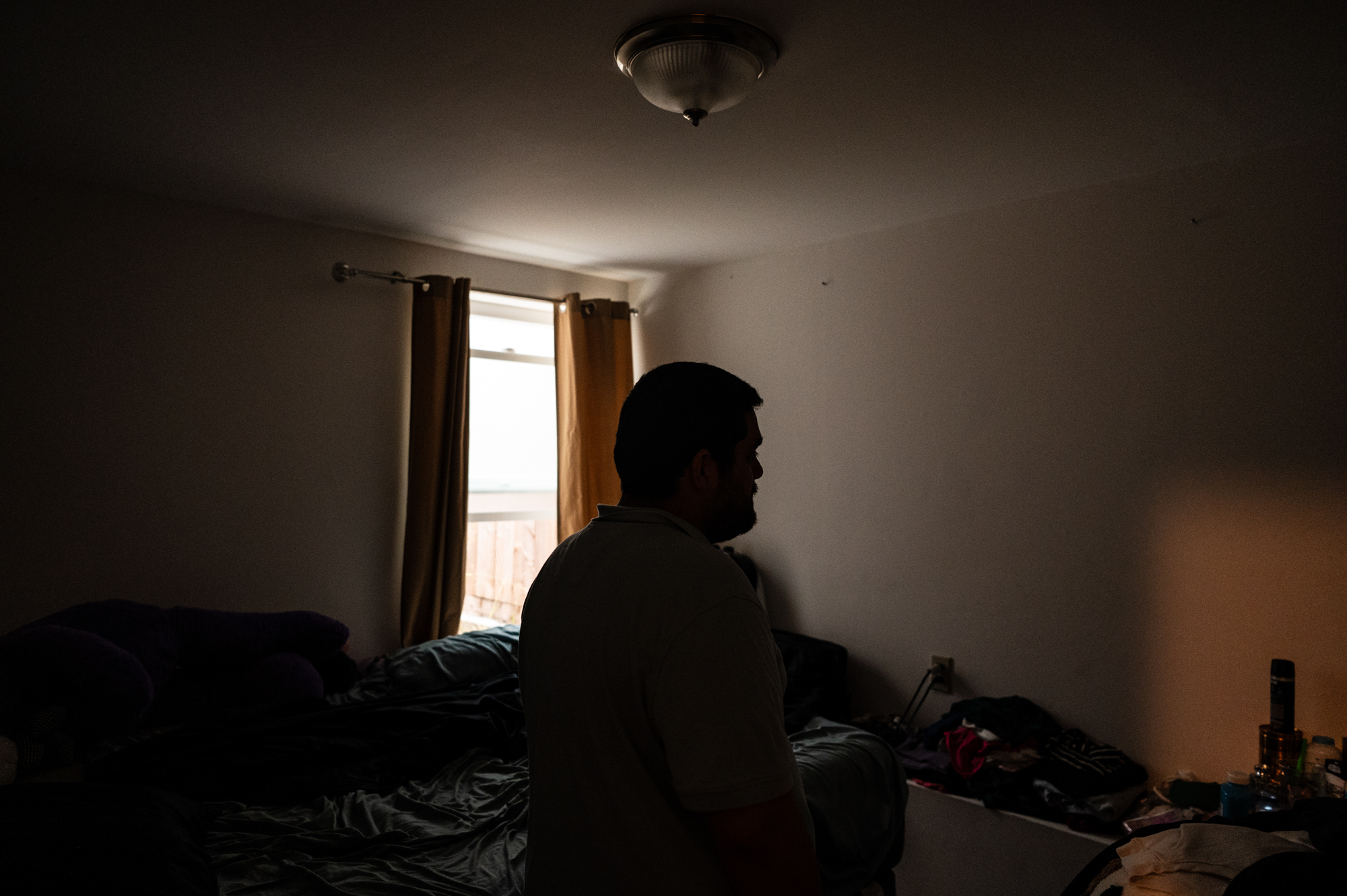
"caption": "Roberto stands in the bedroom of the apartment he shares with his wife, Sandra, whose belongings remain untouched after she was arrested and detained by immigration authorities during a check-in at ICE’s San Francisco office on July 11, 2025.",
"credit": "Pablo Unzueta for El Tecolote for CatchLight Local",
"altTag": null,
"description": null,
"imgSizes": {
"thumbnail": {
"file": "https://cdn.kqed.org/wp-content/uploads/sites/10/2025/08/07112025-ICECOUPLEDEPORTED-ET-PU-06-KQED-160x106.jpg",
"width": 160,
"height": 106,
"mimeType": "image/jpeg"
},
"1536x1536": {
"file": "https://cdn.kqed.org/wp-content/uploads/sites/10/2025/08/07112025-ICECOUPLEDEPORTED-ET-PU-06-KQED-1536x1022.jpg",
"width": 1536,
"height": 1022,
"mimeType": "image/jpeg"
},
"post-thumbnail": {
"file": "https://cdn.kqed.org/wp-content/uploads/sites/10/2025/08/07112025-ICECOUPLEDEPORTED-ET-PU-06-KQED-672x372.jpg",
"width": 672,
"height": 372,
"mimeType": "image/jpeg"
},
"twentyfourteen-full-width": {
"file": "https://cdn.kqed.org/wp-content/uploads/sites/10/2025/08/07112025-ICECOUPLEDEPORTED-ET-PU-06-KQED-1038x576.jpg",
"width": 1038,
"height": 576,
"mimeType": "image/jpeg"
},
"kqedFullSize": {
"file": "https://cdn.kqed.org/wp-content/uploads/sites/10/2025/08/07112025-ICECOUPLEDEPORTED-ET-PU-06-KQED.jpg",
"width": 2000,
"height": 1331
}
},
"isLoading": false,
"fetchFailed": false
},
"news_12049535": {
"type": "attachments",
"id": "news_12049535",
"meta": {
"index": "attachments_1716263798",
"site": "news",
"id": "12049535",
"found": true
},
"title": "250722-SHELTERFAMILIES-08-BL-KQED",
"publishDate": 1753377079,
"status": "inherit",
"parent": 12087973,
"modified": 1781737736,
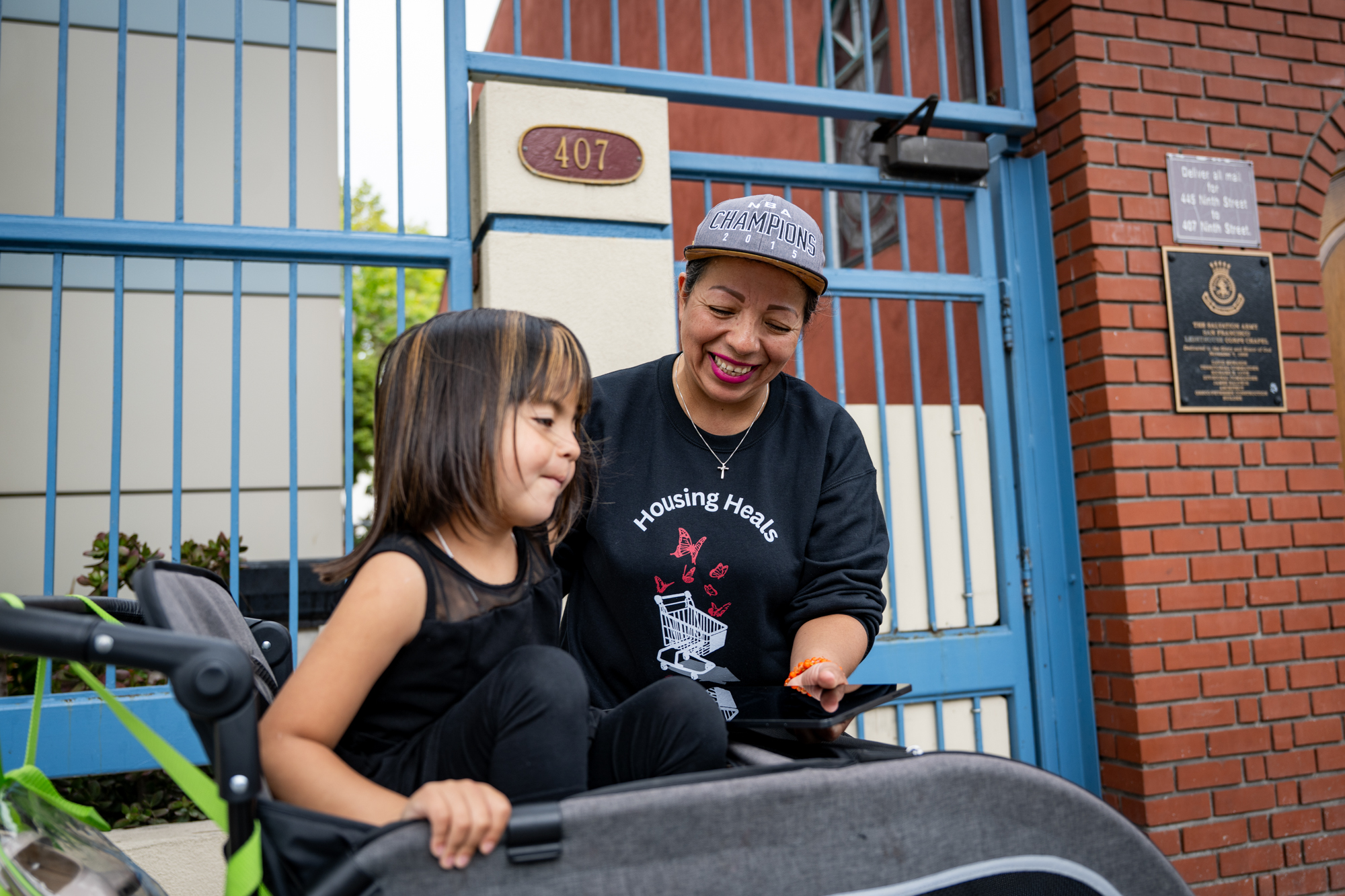
"caption": "Maritza Salinas arrives at The Salvation Army Harbor House, a temporary shelter, with her daughter Ranea, 4, in San Francisco on July 22, 2025.",
"credit": "Beth LaBerge/KQED",
"altTag": null,
"description": null,
"imgSizes": {
"thumbnail": {
"file": "https://cdn.kqed.org/wp-content/uploads/sites/10/2025/07/250722-SHELTERFAMILIES-08-BL-KQED-160x107.jpg",
"width": 160,
"height": 107,
"mimeType": "image/jpeg"
},
"1536x1536": {
"file": "https://cdn.kqed.org/wp-content/uploads/sites/10/2025/07/250722-SHELTERFAMILIES-08-BL-KQED-1536x1024.jpg",
"width": 1536,
"height": 1024,
"mimeType": "image/jpeg"
},
"post-thumbnail": {
"file": "https://cdn.kqed.org/wp-content/uploads/sites/10/2025/07/250722-SHELTERFAMILIES-08-BL-KQED-672x372.jpg",
"width": 672,
"height": 372,
"mimeType": "image/jpeg"
},
"twentyfourteen-full-width": {
"file": "https://cdn.kqed.org/wp-content/uploads/sites/10/2025/07/250722-SHELTERFAMILIES-08-BL-KQED-1038x576.jpg",
"width": 1038,
"height": 576,
"mimeType": "image/jpeg"
},
"kqedFullSize": {
"file": "https://cdn.kqed.org/wp-content/uploads/sites/10/2025/07/250722-SHELTERFAMILIES-08-BL-KQED.jpg",
"width": 2000,
"height": 1333
}
},
"isLoading": false,
"fetchFailed": false
},
"news_12050651": {
"type": "attachments",
"id": "news_12050651",
"meta": {
"index": "attachments_1716263798",
"site": "news",
"id": "12050651",
"found": true
},
"title": "20250428_WarrantlessSearches_GC-19_qed",
"publishDate": 1754073306,
"status": "inherit",
"parent": 12050648,
"modified": 1754073315,
"caption": "San Francisco Sheriff Paul Miyamoto, center, speaks during a press conference announcing the San Francisco Sheriff’s Office’s plan to resume warrantless searches of criminal defendants who have been released and awaiting trial, outside of City Hall on April 28, 2025.",
"credit": "Gina Castro/KQED",
"altTag": null,
"description": null,
"imgSizes": {
"thumbnail": {
"file": "https://cdn.kqed.org/wp-content/uploads/sites/10/2025/08/20250428_WarrantlessSearches_GC-19_qed-160x107.jpg",
"width": 160,
"height": 107,
"mimeType": "image/jpeg"
},
"1536x1536": {
"file": "https://cdn.kqed.org/wp-content/uploads/sites/10/2025/08/20250428_WarrantlessSearches_GC-19_qed-1536x1024.jpg",
"width": 1536,
"height": 1024,
"mimeType": "image/jpeg"
},
"post-thumbnail": {
"file": "https://cdn.kqed.org/wp-content/uploads/sites/10/2025/08/20250428_WarrantlessSearches_GC-19_qed-672x372.jpg",
"width": 672,
"height": 372,
"mimeType": "image/jpeg"
},
"twentyfourteen-full-width": {
"file": "https://cdn.kqed.org/wp-content/uploads/sites/10/2025/08/20250428_WarrantlessSearches_GC-19_qed-1038x576.jpg",
"width": 1038,
"height": 576,
"mimeType": "image/jpeg"
},
"kqedFullSize": {
"file": "https://cdn.kqed.org/wp-content/uploads/sites/10/2025/08/20250428_WarrantlessSearches_GC-19_qed.jpg",
"width": 2000,
"height": 1333
}
},
"isLoading": false,
"fetchFailed": false
},
"news_12050583": {
"type": "attachments",
"id": "news_12050583",
"meta": {
"index": "attachments_1716263798",
"site": "news",
"id": "12050583",
"found": true
},
"title": "250731-KINDESSCRAWL_00217_TV-KQED",
"publishDate": 1754056101,
"status": "inherit",
"parent": 0,
"modified": 1754071710,
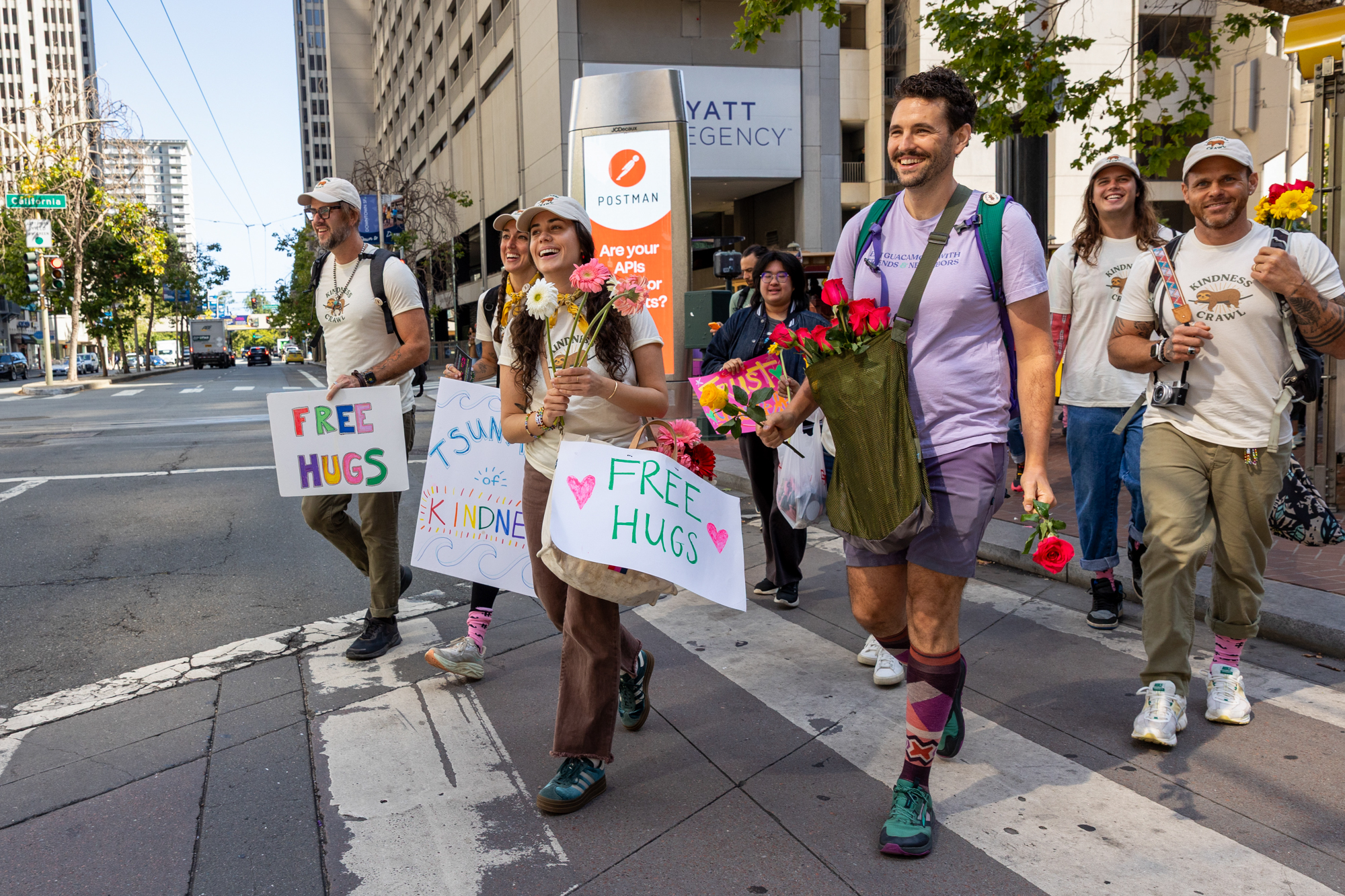
"caption": "Kindness Crawl participants walk through an intersection on Market Street during the Kindness Crawl in San Francisco on July 31, 2025.",
"credit": "Tâm Vũ/KQED",
"altTag": null,
"description": null,
"imgSizes": {
"thumbnail": {
"file": "https://cdn.kqed.org/wp-content/uploads/sites/10/2025/08/250731-KINDESSCRAWL_00217_TV-KQED-160x107.jpg",
"width": 160,
"height": 107,
"mimeType": "image/jpeg"
},
"1536x1536": {
"file": "https://cdn.kqed.org/wp-content/uploads/sites/10/2025/08/250731-KINDESSCRAWL_00217_TV-KQED-1536x1024.jpg",
"width": 1536,
"height": 1024,
"mimeType": "image/jpeg"
},
"post-thumbnail": {
"file": "https://cdn.kqed.org/wp-content/uploads/sites/10/2025/08/250731-KINDESSCRAWL_00217_TV-KQED-672x372.jpg",
"width": 672,
"height": 372,
"mimeType": "image/jpeg"
},
"twentyfourteen-full-width": {
"file": "https://cdn.kqed.org/wp-content/uploads/sites/10/2025/08/250731-KINDESSCRAWL_00217_TV-KQED-1038x576.jpg",
"width": 1038,
"height": 576,
"mimeType": "image/jpeg"
},
"kqedFullSize": {
"file": "https://cdn.kqed.org/wp-content/uploads/sites/10/2025/08/250731-KINDESSCRAWL_00217_TV-KQED.jpg",
"width": 2000,
"height": 1333
}
},
"isLoading": false,
"fetchFailed": false
},
"news_12050532": {
"type": "attachments",
"id": "news_12050532",
"meta": {
"index": "attachments_1716263798",
"site": "news",
"id": "12050532",
"found": true
},
"title": "Jerry Garcia [Death]",
"publishDate": 1754005383,
"status": "inherit",
"parent": 0,
"modified": 1754005420,
"caption": "Crowd of Deadheads gathered with arms up during a memorial service for Grateful Dead front man Jerry Garcia at Golden Gate Park. ",
"credit": "Kim Komenich/Getty Images",
"altTag": null,
"description": null,
"imgSizes": {
"thumbnail": {
"file": "https://cdn.kqed.org/wp-content/uploads/sites/10/2025/07/GratefulDeadGetty1-160x112.jpg",
"width": 160,
"height": 112,
"mimeType": "image/jpeg"
},
"1536x1536": {
"file": "https://cdn.kqed.org/wp-content/uploads/sites/10/2025/07/GratefulDeadGetty1-1536x1071.jpg",
"width": 1536,
"height": 1071,
"mimeType": "image/jpeg"
},
"post-thumbnail": {
"file": "https://cdn.kqed.org/wp-content/uploads/sites/10/2025/07/GratefulDeadGetty1-672x372.jpg",
"width": 672,
"height": 372,
"mimeType": "image/jpeg"
},
"twentyfourteen-full-width": {
"file": "https://cdn.kqed.org/wp-content/uploads/sites/10/2025/07/GratefulDeadGetty1-1038x576.jpg",
"width": 1038,
"height": 576,
"mimeType": "image/jpeg"
},
"kqedFullSize": {
"file": "https://cdn.kqed.org/wp-content/uploads/sites/10/2025/07/GratefulDeadGetty1.jpg",
"width": 2000,
"height": 1394
}
},
"isLoading": false,
"fetchFailed": false
},
"news_12049213": {
"type": "attachments",
"id": "news_12049213",
"meta": {
"index": "attachments_1716263798",
"site": "news",
"id": "12049213",
"found": true
},
"title": "250722-DEADCOMUNI_00014_TV-KQED",
"publishDate": 1753213865,
"status": "inherit",
"parent": 0,
"modified": 1753222205,
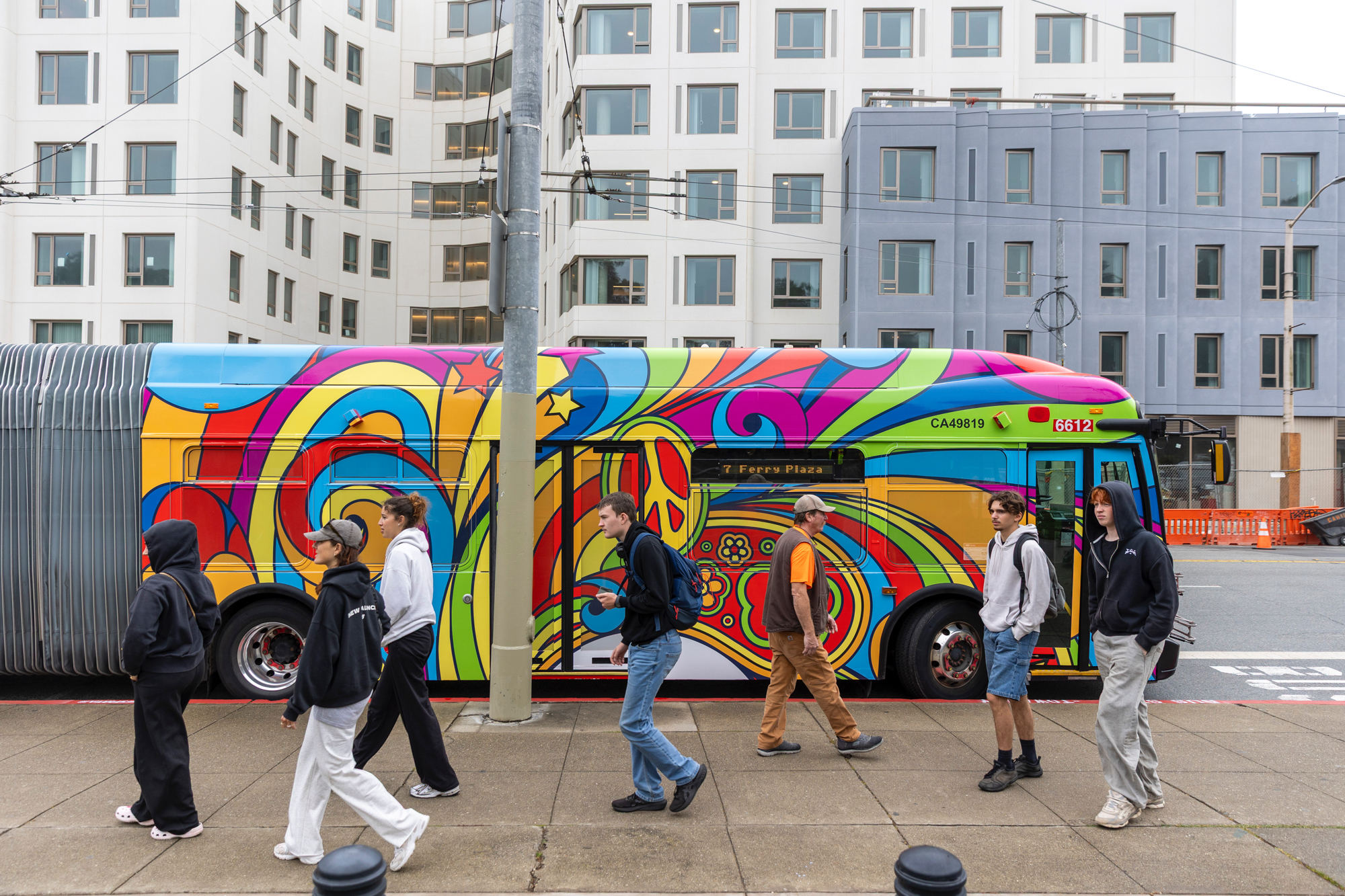
"caption": "Pedestrians walk past one of the psychedelic-themed buses in the Haight Ashbury District in San Francisco on July 22, 2025. Mayor Daniel Lurie and the SFMTA unveil one of several tie-dye Muni buses in celebration of the Dead & Company 60th anniversary concert.",
"credit": "Tâm Vũ/KQED",
"altTag": null,
"description": null,
"imgSizes": {
"thumbnail": {
"file": "https://cdn.kqed.org/wp-content/uploads/sites/10/2025/07/250722-DEADCOMUNI_00014_TV-KQED-160x107.jpg",
"width": 160,
"height": 107,
"mimeType": "image/jpeg"
},
"1536x1536": {
"file": "https://cdn.kqed.org/wp-content/uploads/sites/10/2025/07/250722-DEADCOMUNI_00014_TV-KQED-1536x1024.jpg",
"width": 1536,
"height": 1024,
"mimeType": "image/jpeg"
},
"post-thumbnail": {
"file": "https://cdn.kqed.org/wp-content/uploads/sites/10/2025/07/250722-DEADCOMUNI_00014_TV-KQED-672x372.jpg",
"width": 672,
"height": 372,
"mimeType": "image/jpeg"
},
"twentyfourteen-full-width": {
"file": "https://cdn.kqed.org/wp-content/uploads/sites/10/2025/07/250722-DEADCOMUNI_00014_TV-KQED-1038x576.jpg",
"width": 1038,
"height": 576,
"mimeType": "image/jpeg"
},
"kqedFullSize": {
"file": "https://cdn.kqed.org/wp-content/uploads/sites/10/2025/07/250722-DEADCOMUNI_00014_TV-KQED.jpg",
"width": 2000,
"height": 1333
}
},
"isLoading": false,
"fetchFailed": false
},
"news_12011901": {
"type": "attachments",
"id": "news_12011901",
"meta": {
"index": "attachments_1716263798",
"site": "news",
"id": "12011901",
"found": true
},
"title": "Early voting process ahead of presidential election in San Francisco",
"publishDate": 1730399191,
"status": "inherit",
"parent": 12011898,
"modified": 1730490547,
"caption": "A view of an official ballot drop box next to the Department of Elections at City Hall in San Francisco on Oct. 24, 2024. ",
"credit": "Tayfun Coskun/Anadolu via Getty Images",
"altTag": null,
"description": null,
"imgSizes": {
"medium": {
"file": "https://cdn.kqed.org/wp-content/uploads/sites/10/2025/10/GettyImages-2180061713_qed-800x533.jpg",
"width": 800,
"height": 533,
"mimeType": "image/jpeg"
},
"large": {
"file": "https://cdn.kqed.org/wp-content/uploads/sites/10/2025/10/GettyImages-2180061713_qed-1020x680.jpg",
"width": 1020,
"height": 680,
"mimeType": "image/jpeg"
},
"thumbnail": {
"file": "https://cdn.kqed.org/wp-content/uploads/sites/10/2025/10/GettyImages-2180061713_qed-160x107.jpg",
"width": 160,
"height": 107,
"mimeType": "image/jpeg"
},
"1536x1536": {
"file": "https://cdn.kqed.org/wp-content/uploads/sites/10/2025/10/GettyImages-2180061713_qed-1536x1024.jpg",
"width": 1536,
"height": 1024,
"mimeType": "image/jpeg"
},
"post-thumbnail": {
"file": "https://cdn.kqed.org/wp-content/uploads/sites/10/2025/10/GettyImages-2180061713_qed-672x372.jpg",
"width": 672,
"height": 372,
"mimeType": "image/jpeg"
},
"twentyfourteen-full-width": {
"file": "https://cdn.kqed.org/wp-content/uploads/sites/10/2025/10/GettyImages-2180061713_qed-1038x576.jpg",
"width": 1038,
"height": 576,
"mimeType": "image/jpeg"
},
"full-width": {
"file": "https://cdn.kqed.org/wp-content/uploads/sites/10/2025/10/GettyImages-2180061713_qed-1920x1280.jpg",
"width": 1920,
"height": 1280,
"mimeType": "image/jpeg"
},
"kqedFullSize": {
"file": "https://cdn.kqed.org/wp-content/uploads/sites/10/2025/10/GettyImages-2180061713_qed.jpg",
"width": 2000,
"height": 1333
}
},
"isLoading": false,
"fetchFailed": false
},
"news_12050261": {
"type": "attachments",
"id": "news_12050261",
"meta": {
"index": "attachments_1716263798",
"site": "news",
"id": "12050261",
"found": true
},
"title": "A speed camera on Geary St. in San Francisco on March 19, 2025.",
"publishDate": 1753903074,
"status": "inherit",
"parent": 12050256,
"modified": 1753903102,
"caption": "A speed camera on Geary Street in San Francisco on March 19, 2025.",
"credit": "Martin do Nascimento/KQED",
"altTag": null,
"description": null,
"imgSizes": {
"thumbnail": {
"file": "https://cdn.kqed.org/wp-content/uploads/sites/10/2025/07/250319-SF-SPEED-CAMERAS-MD-06_qed-160x107.jpg",
"width": 160,
"height": 107,
"mimeType": "image/jpeg"
},
"1536x1536": {
"file": "https://cdn.kqed.org/wp-content/uploads/sites/10/2025/07/250319-SF-SPEED-CAMERAS-MD-06_qed-1536x1024.jpg",
"width": 1536,
"height": 1024,
"mimeType": "image/jpeg"
},
"post-thumbnail": {
"file": "https://cdn.kqed.org/wp-content/uploads/sites/10/2025/07/250319-SF-SPEED-CAMERAS-MD-06_qed-672x372.jpg",
"width": 672,
"height": 372,
"mimeType": "image/jpeg"
},
"twentyfourteen-full-width": {
"file": "https://cdn.kqed.org/wp-content/uploads/sites/10/2025/07/250319-SF-SPEED-CAMERAS-MD-06_qed-1038x576.jpg",
"width": 1038,
"height": 576,
"mimeType": "image/jpeg"
},
"kqedFullSize": {
"file": "https://cdn.kqed.org/wp-content/uploads/sites/10/2025/07/250319-SF-SPEED-CAMERAS-MD-06_qed.jpg",
"width": 2000,
"height": 1333
}
},
"isLoading": false,
"fetchFailed": false
},
"news_12049780": {
"type": "attachments",
"id": "news_12049780",
"meta": {
"index": "attachments_1716263798",
"site": "news",
"id": "12049780",
"found": true
},
"title": "250722-COMMUNITYWORKS_00449_TV-KQED",
"publishDate": 1753468103,
"status": "inherit",
"parent": 0,
"modified": 1753741471,
"caption": "Lucia Castello (left), project architect of Designing Justice + Designing Spaces, and Adrienne Hogg (right), co-executive director of Community Works, pose for a portrait at Community Works in San Francisco on July 22, 2025. Community Works is a nonprofit organization that will open a new hub, which was designed by architecture firm Designing Justice + Designing Spaces, for formerly incarcerated people and their families to access resources.",
"credit": "Tâm Vũ/KQED",
"altTag": null,
"description": null,
"imgSizes": {
"thumbnail": {
"file": "https://cdn.kqed.org/wp-content/uploads/sites/10/2025/07/250722-COMMUNITYWORKS_00449_TV-KQED-160x107.jpg",
"width": 160,
"height": 107,
"mimeType": "image/jpeg"
},
"1536x1536": {
"file": "https://cdn.kqed.org/wp-content/uploads/sites/10/2025/07/250722-COMMUNITYWORKS_00449_TV-KQED-1536x1024.jpg",
"width": 1536,
"height": 1024,
"mimeType": "image/jpeg"
},
"post-thumbnail": {
"file": "https://cdn.kqed.org/wp-content/uploads/sites/10/2025/07/250722-COMMUNITYWORKS_00449_TV-KQED-672x372.jpg",
"width": 672,
"height": 372,
"mimeType": "image/jpeg"
},
"twentyfourteen-full-width": {
"file": "https://cdn.kqed.org/wp-content/uploads/sites/10/2025/07/250722-COMMUNITYWORKS_00449_TV-KQED-1038x576.jpg",
"width": 1038,
"height": 576,
"mimeType": "image/jpeg"
},
"kqedFullSize": {
"file": "https://cdn.kqed.org/wp-content/uploads/sites/10/2025/07/250722-COMMUNITYWORKS_00449_TV-KQED.jpg",
"width": 2000,
"height": 1333
}
},
"isLoading": false,
"fetchFailed": false
},
"news_12050041": {
"type": "attachments",
"id": "news_12050041",
"meta": {
"index": "attachments_1716263798",
"site": "news",
"id": "12050041",
"found": true
},
"title": "Planes at San Francisco International Airport (SFO)",
"publishDate": 1753737069,
"status": "inherit",
"parent": 12050036,
"modified": 1753737789,
"caption": "A Delta Airlines plane lands at San Francisco International Airport (SFO) in San Francisco, California, on July 24, 2025. ",
"credit": "Tayfun Coskun/Anadolu via Getty Images",
"altTag": null,
"description": null,
"imgSizes": {
"thumbnail": {
"file": "https://cdn.kqed.org/wp-content/uploads/sites/10/2025/07/DeltaSFOGetty-160x107.jpg",
"width": 160,
"height": 107,
"mimeType": "image/jpeg"
},
"1536x1536": {
"file": "https://cdn.kqed.org/wp-content/uploads/sites/10/2025/07/DeltaSFOGetty-1536x1023.jpg",
"width": 1536,
"height": 1023,
"mimeType": "image/jpeg"
},
"post-thumbnail": {
"file": "https://cdn.kqed.org/wp-content/uploads/sites/10/2025/07/DeltaSFOGetty-672x372.jpg",
"width": 672,
"height": 372,
"mimeType": "image/jpeg"
},
"twentyfourteen-full-width": {
"file": "https://cdn.kqed.org/wp-content/uploads/sites/10/2025/07/DeltaSFOGetty-1038x576.jpg",
"width": 1038,
"height": 576,
"mimeType": "image/jpeg"
},
"kqedFullSize": {
"file": "https://cdn.kqed.org/wp-content/uploads/sites/10/2025/07/DeltaSFOGetty.jpg",
"width": 2000,
"height": 1332
}
},
"isLoading": false,
"fetchFailed": false
},
"news_12049539": {
"type": "attachments",
"id": "news_12049539",
"meta": {
"index": "attachments_1716263798",
"site": "news",
"id": "12049539",
"found": true
},
"title": "250723-SHELTERFAMILIES-05-BL-KQED",
"publishDate": 1753377367,
"status": "inherit",
"parent": 0,
"modified": 1753377375,
"caption": "Maritza Salinas pushes her son, Matthew, 6, on a swing at a playground in San Francisco on July 22, 2025.",
"credit": "Beth LaBerge/KQED",
"altTag": null,
"description": null,
"imgSizes": {
"thumbnail": {
"file": "https://cdn.kqed.org/wp-content/uploads/sites/10/2025/07/250723-SHELTERFAMILIES-05-BL-KQED-160x107.jpg",
"width": 160,
"height": 107,
"mimeType": "image/jpeg"
},
"1536x1536": {
"file": "https://cdn.kqed.org/wp-content/uploads/sites/10/2025/07/250723-SHELTERFAMILIES-05-BL-KQED-1536x1024.jpg",
"width": 1536,
"height": 1024,
"mimeType": "image/jpeg"
},
"post-thumbnail": {
"file": "https://cdn.kqed.org/wp-content/uploads/sites/10/2025/07/250723-SHELTERFAMILIES-05-BL-KQED-672x372.jpg",
"width": 672,
"height": 372,
"mimeType": "image/jpeg"
},
"twentyfourteen-full-width": {
"file": "https://cdn.kqed.org/wp-content/uploads/sites/10/2025/07/250723-SHELTERFAMILIES-05-BL-KQED-1038x576.jpg",
"width": 1038,
"height": 576,
"mimeType": "image/jpeg"
},
"kqedFullSize": {
"file": "https://cdn.kqed.org/wp-content/uploads/sites/10/2025/07/250723-SHELTERFAMILIES-05-BL-KQED.jpg",
"width": 2000,
"height": 1333
}
},
"isLoading": false,
"fetchFailed": false
},
"news_12049926": {
"type": "attachments",
"id": "news_12049926",
"meta": {
"index": "attachments_1716263798",
"site": "news",
"id": "12049926",
"found": true
},
"title": "20250725_KaiserTransProtest_GC-31_qed",
"publishDate": 1753492678,
"status": "inherit",
"parent": 12049666,
"modified": 1753492700,
"caption": "Calder Storm waves a transgender flag at a rally and vigil, honoring transgender patients affected by Kaiser’s decision to halt gender-affirming care to minors, outside of Kaiser Permanente on July 25, 2025.",
"credit": "Gina Castro/KQED",
"altTag": null,
"description": null,
"imgSizes": {
"thumbnail": {
"file": "https://cdn.kqed.org/wp-content/uploads/sites/10/2025/07/20250725_KaiserTransProtest_GC-31_qed-160x107.jpg",
"width": 160,
"height": 107,
"mimeType": "image/jpeg"
},
"1536x1536": {
"file": "https://cdn.kqed.org/wp-content/uploads/sites/10/2025/07/20250725_KaiserTransProtest_GC-31_qed-1536x1024.jpg",
"width": 1536,
"height": 1024,
"mimeType": "image/jpeg"
},
"post-thumbnail": {
"file": "https://cdn.kqed.org/wp-content/uploads/sites/10/2025/07/20250725_KaiserTransProtest_GC-31_qed-672x372.jpg",
"width": 672,
"height": 372,
"mimeType": "image/jpeg"
},
"twentyfourteen-full-width": {
"file": "https://cdn.kqed.org/wp-content/uploads/sites/10/2025/07/20250725_KaiserTransProtest_GC-31_qed-1038x576.jpg",
"width": 1038,
"height": 576,
"mimeType": "image/jpeg"
},
"kqedFullSize": {
"file": "https://cdn.kqed.org/wp-content/uploads/sites/10/2025/07/20250725_KaiserTransProtest_GC-31_qed.jpg",
"width": 2000,
"height": 1333
}
},
"isLoading": false,
"fetchFailed": false
}
},
"audioPlayerReducer": {
"postId": "stream_live",
"isPaused": true,
"isPlaying": false,
"pfsActive": false,
"pledgeModalIsOpen": true,
"playerDrawerIsOpen": false,
"liveAudioPlayStartedAt": 0,
"liveAudioPlayContext": ""
},
"authorsReducer": {
"byline_news_12050841": {
"type": "authors",
"id": "byline_news_12050841",
"meta": {
"override": true
},
"slug": "byline_news_12050841",
"name": "Mariana Duran, El Tecolote",
"isLoading": false
},
"ecruzguevarra": {
"type": "authors",
"id": "8654",
"meta": {
"index": "authors_1716337520",
"id": "8654",
"found": true
},
"name": "Ericka Cruz Guevarra",
"firstName": "Ericka",
"lastName": "Cruz Guevarra",
"slug": "ecruzguevarra",
"email": "ecruzguevarra@kqed.org",
"display_author_email": true,
"staff_mastheads": [
"news"
],
"title": "Producer, The Bay Podcast",
"bio": "Ericka Cruz Guevarra is host of \u003ca href=\"https://www.kqed.org/podcasts/thebay\">\u003cem>The Bay\u003c/em>\u003c/a> podcast at KQED. Before host, she was the show’s producer. Her work in that capacity includes a three-part reported series on policing in Vallejo, which won a 2020 excellence in journalism award from the Society of Professional Journalists. Ericka has worked as a breaking news reporter at Oregon Public Broadcasting, helped produce the Code Switch podcast, and was KQED’s inaugural Raul Ramirez Diversity Fund intern. She’s also an alumna of NPR’s Next Generation Radio program. Send her an email if you have strong feelings about whether Fairfield and Suisun City are the Bay. Ericka is represented by SAG-AFTRA.",
"avatar": "https://secure.gravatar.com/avatar/accefc1de4bafc7e234b69bcb9b6f6536c130fd84709bc3069ef11a78787e1bb?s=600&d=blank&r=g",
"twitter": "NotoriousECG",
"bluesky": null,
"facebook": null,
"instagram": null,
"linkedin": null,
"sites": [
{
"site": "arts",
"roles": [
"subscriber"
]
},
{
"site": "news",
"roles": [
"editor",
"manage_categories"
]
},
{
"site": "futureofyou",
"roles": [
"subscriber"
]
},
{
"site": "stateofhealth",
"roles": [
"subscriber"
]
},
{
"site": "science",
"roles": [
"editor"
]
},
{
"site": "forum",
"roles": [
"subscriber"
]
}
],
"headData": {
"title": "Ericka Cruz Guevarra | KQED",
"description": "Producer, The Bay Podcast",
"ogImgSrc": "https://secure.gravatar.com/avatar/accefc1de4bafc7e234b69bcb9b6f6536c130fd84709bc3069ef11a78787e1bb?s=600&d=blank&r=g",
"twImgSrc": "https://secure.gravatar.com/avatar/accefc1de4bafc7e234b69bcb9b6f6536c130fd84709bc3069ef11a78787e1bb?s=600&d=blank&r=g"
},
"isLoading": false,
"link": "/author/ecruzguevarra"
},
"amontecillo": {
"type": "authors",
"id": "11649",
"meta": {
"index": "authors_1716337520",
"id": "11649",
"found": true
},
"name": "Alan Montecillo",
"firstName": "Alan",
"lastName": "Montecillo",
"slug": "amontecillo",
"email": "amontecillo@kqed.org",
"display_author_email": false,
"staff_mastheads": [
"news"
],
"title": "KQED Contributor",
"bio": "Alan Montecillo is the senior editor of \u003cem>\u003ca href=\"http://kqed.org/thebay\">The Bay\u003c/a>, \u003c/em> KQED's local news podcast. Before moving to the Bay Area, he worked as a senior talk show producer for WILL in Champaign-Urbana, Illinois and at Oregon Public Broadcasting in Portland, Oregon. He has won journalism awards from the Society of Professional Journalists Northern California, the Public Media Journalists Association, The Signal Awards, and has also received a regional Edward R. Murrow award. Alan is a Filipino American from Hong Kong and a graduate of Reed College.",
"avatar": "https://secure.gravatar.com/avatar/268f53a2066899ea9efdd8a5900218b17c822d9862cbc9326cccec53ef41d349?s=600&d=blank&r=g",
"twitter": "alanmontecillo",
"bluesky": null,
"facebook": null,
"instagram": null,
"linkedin": null,
"sites": [
{
"site": "",
"roles": [
"editor"
]
},
{
"site": "news",
"roles": [
"editor",
"manage_categories"
]
}
],
"headData": {
"title": "Alan Montecillo | KQED",
"description": "KQED Contributor",
"ogImgSrc": "https://secure.gravatar.com/avatar/268f53a2066899ea9efdd8a5900218b17c822d9862cbc9326cccec53ef41d349?s=600&d=blank&r=g",
"twImgSrc": "https://secure.gravatar.com/avatar/268f53a2066899ea9efdd8a5900218b17c822d9862cbc9326cccec53ef41d349?s=600&d=blank&r=g"
},
"isLoading": false,
"link": "/author/amontecillo"
},
"jlara": {
"type": "authors",
"id": "11761",
"meta": {
"index": "authors_1716337520",
"id": "11761",
"found": true
},
"name": "Juan Carlos Lara",
"firstName": "Juan Carlos",
"lastName": "Lara",
"slug": "jlara",
"email": "jlara@kqed.org",
"display_author_email": false,
"staff_mastheads": [],
"title": "KQED Contributor",
"bio": null,
"avatar": "https://secure.gravatar.com/avatar/19e2052b9b05657c5ff2af2121846e9c?s=600&d=blank&r=g",
"twitter": null,
"facebook": null,
"instagram": null,
"linkedin": null,
"sites": [
{
"site": "arts",
"roles": [
"editor"
]
},
{
"site": "news",
"roles": [
"editor"
]
},
{
"site": "forum",
"roles": [
"editor"
]
},
{
"site": "liveblog",
"roles": [
"contributor"
]
}
],
"headData": {
"title": "Juan Carlos Lara | KQED",
"description": "KQED Contributor",
"ogImgSrc": "https://secure.gravatar.com/avatar/19e2052b9b05657c5ff2af2121846e9c?s=600&d=blank&r=g",
"twImgSrc": "https://secure.gravatar.com/avatar/19e2052b9b05657c5ff2af2121846e9c?s=600&d=blank&r=g"
},
"isLoading": false,
"link": "/author/jlara"
},
"adahlstromeckman": {
"type": "authors",
"id": "11785",
"meta": {
"index": "authors_1716337520",
"id": "11785",
"found": true
},
"name": "Azul Dahlstrom-Eckman",
"firstName": "Azul",
"lastName": "Dahlstrom-Eckman",
"slug": "adahlstromeckman",
"email": "adahlstrom-eckman@kqed.org",
"display_author_email": true,
"staff_mastheads": [],
"title": "Reporter",
"bio": "Azul is a reporter for KQED focusing on transportation and features. He joined KQED in 2021 as an alumna of KALW's Audio Academy radio journalism training program.",
"avatar": "https://secure.gravatar.com/avatar/9cb750298435add7815a777f55bf1f46845c1386bb8452555c60a7b820b5aba3?s=600&d=blank&r=g",
"twitter": "@zuliemann",
"bluesky": "@azul415.bsky.social",
"facebook": null,
"instagram": null,
"linkedin": null,
"sites": [
{
"site": "arts",
"roles": [
"editor"
]
},
{
"site": "news",
"roles": [
"editor"
]
},
{
"site": "science",
"roles": [
"editor"
]
},
{
"site": "liveblog",
"roles": [
"author"
]
}
],
"headData": {
"title": "Azul Dahlstrom-Eckman | KQED",
"description": "Reporter",
"ogImgSrc": "https://secure.gravatar.com/avatar/9cb750298435add7815a777f55bf1f46845c1386bb8452555c60a7b820b5aba3?s=600&d=blank&r=g",
"twImgSrc": "https://secure.gravatar.com/avatar/9cb750298435add7815a777f55bf1f46845c1386bb8452555c60a7b820b5aba3?s=600&d=blank&r=g"
},
"isLoading": false,
"link": "/author/adahlstromeckman"
},
"jessicakariisa": {
"type": "authors",
"id": "11831",
"meta": {
"index": "authors_1716337520",
"id": "11831",
"found": true
},
"name": "Jessica Kariisa",
"firstName": "Jessica",
"lastName": "Kariisa",
"slug": "jessicakariisa",
"email": "jkariisa@kqed.org",
"display_author_email": false,
"staff_mastheads": [],
"title": "Producer, The Bay",
"bio": "Jessica Kariisa is the producer of The Bay. She first joined KQED as an intern for The California Report Magazine, after which she became an on-call producer. She reported a Bay Curious episode on the use of rap lyrics in criminal trials which won a Society of Professional Journalists award in 2023 for Excellence in Features Journalism and the 2023 Signal Award for Best Conversation Starter. She’s worked on podcasts for Snap Judgment and American Public Media. Before embarking on her audio career, she was a music journalist.\r\n\r\nJessica Kariisa is represented by SAG-AFTRA.",
"avatar": "https://secure.gravatar.com/avatar/522e97b28ac0b3d411621c0fde8f3419c7b71ea2c5c262c57c4bb600963f328c?s=600&d=blank&r=g",
"twitter": null,
"bluesky": null,
"facebook": null,
"instagram": null,
"linkedin": null,
"sites": [
{
"site": "arts",
"roles": [
"author"
]
},
{
"site": "news",
"roles": [
"editor",
"manage_categories"
]
}
],
"headData": {
"title": "Jessica Kariisa | KQED",
"description": "Producer, The Bay",
"ogImgSrc": "https://secure.gravatar.com/avatar/522e97b28ac0b3d411621c0fde8f3419c7b71ea2c5c262c57c4bb600963f328c?s=600&d=blank&r=g",
"twImgSrc": "https://secure.gravatar.com/avatar/522e97b28ac0b3d411621c0fde8f3419c7b71ea2c5c262c57c4bb600963f328c?s=600&d=blank&r=g"
},
"isLoading": false,
"link": "/author/jessicakariisa"
},
"sjohnson": {
"type": "authors",
"id": "11840",
"meta": {
"index": "authors_1716337520",
"id": "11840",
"found": true
},
"name": "Sydney Johnson",
"firstName": "Sydney",
"lastName": "Johnson",
"slug": "sjohnson",
"email": "sjohnson@kqed.org",
"display_author_email": false,
"staff_mastheads": [
"news"
],
"title": "KQED Reporter",
"bio": "Sydney Johnson is a general assignment reporter at KQED. She previously reported on public health and city government at the San Francisco Examiner, and before that, she covered statewide education policy for EdSource. Her reporting has won multiple local, state and national awards. Sydney is a graduate of the University of California, Berkeley and lives in San Francisco.",
"avatar": "https://secure.gravatar.com/avatar/97855f2719b72ad6190b7c535fe642c8?s=600&d=blank&r=g",
"twitter": "sydneyfjohnson",
"facebook": null,
"instagram": null,
"linkedin": null,
"sites": [
{
"site": "news",
"roles": [
"editor"
]
}
],
"headData": {
"title": "Sydney Johnson | KQED",
"description": "KQED Reporter",
"ogImgSrc": "https://secure.gravatar.com/avatar/97855f2719b72ad6190b7c535fe642c8?s=600&d=blank&r=g",
"twImgSrc": "https://secure.gravatar.com/avatar/97855f2719b72ad6190b7c535fe642c8?s=600&d=blank&r=g"
},
"isLoading": false,
"link": "/author/sjohnson"
},
"rvasquez": {
"type": "authors",
"id": "11860",
"meta": {
"index": "authors_1716337520",
"id": "11860",
"found": true
},
"name": "Rachael Vasquez",
"firstName": "Rachael",
"lastName": "Vasquez",
"slug": "rvasquez",
"email": "rvasquez@KQED.org",
"display_author_email": false,
"staff_mastheads": [
"news"
],
"title": "KQED Contributor",
"bio": "Rachael Vasquez is a weekend host and editor at KQED. She’s worked in public radio for years, most recently at Wisconsin Public Radio in Madison, Wis. where she woke up very early as a producer for the network’s statewide \"Morning Edition\" broadcast, later serving as a producer for the stations’s afternoon talk show \"Central Time,\" and going on to report on business and economics during the coronavirus pandemic. In addition to hearing her anchor the afternoon newscasts every weekend at KQED, you can find her working with a number of different teams including the weekday newsroom and \"Forum.\" Rachael is an East Bay native who loves watching old movies and cooking her abuelita’s recipes.",
"avatar": "https://secure.gravatar.com/avatar/a1defdae97cbdde04c13baacacd7c94a?s=600&d=blank&r=g",
"twitter": null,
"facebook": null,
"instagram": null,
"linkedin": null,
"sites": [
{
"site": "news",
"roles": [
"editor"
]
}
],
"headData": {
"title": "Rachael Vasquez | KQED",
"description": "KQED Contributor",
"ogImgSrc": "https://secure.gravatar.com/avatar/a1defdae97cbdde04c13baacacd7c94a?s=600&d=blank&r=g",
"twImgSrc": "https://secure.gravatar.com/avatar/a1defdae97cbdde04c13baacacd7c94a?s=600&d=blank&r=g"
},
"isLoading": false,
"link": "/author/rvasquez"
},
"bkrans": {
"type": "authors",
"id": "11923",
"meta": {
"index": "authors_1716337520",
"id": "11923",
"found": true
},
"name": "Brian Krans",
"firstName": "Brian",
"lastName": "Krans",
"slug": "bkrans",
"email": "bkrans@kqed.org",
"display_author_email": false,
"staff_mastheads": [
"news"
],
"title": "KQED Contributing Reporter",
"bio": "Brian Krans is an award-winning local news and investigative reporter who has been proudly working as a general assignment reporter for KQED since August 2023. He lives in Richmond, where he also reports on air pollution for Richmondside. He is also a founding member of the Vallejo Sun.",
"avatar": "https://secure.gravatar.com/avatar/d1014d604089314a94807d2c4f2d3e06?s=600&d=blank&r=g",
"twitter": "citizenkrans",
"facebook": null,
"instagram": null,
"linkedin": null,
"sites": [
{
"site": "news",
"roles": [
"editor"
]
}
],
"headData": {
"title": "Brian Krans | KQED",
"description": "KQED Contributing Reporter",
"ogImgSrc": "https://secure.gravatar.com/avatar/d1014d604089314a94807d2c4f2d3e06?s=600&d=blank&r=g",
"twImgSrc": "https://secure.gravatar.com/avatar/d1014d604089314a94807d2c4f2d3e06?s=600&d=blank&r=g"
},
"isLoading": false,
"link": "/author/bkrans"
},
"emanoukian": {
"type": "authors",
"id": "11925",
"meta": {
"index": "authors_1716337520",
"id": "11925",
"found": true
},
"name": "Elize Manoukian",
"firstName": "Elize",
"lastName": "Manoukian",
"slug": "emanoukian",
"email": "emanoukian@KQED.org",
"display_author_email": false,
"staff_mastheads": [
"news"
],
"title": "Digital News Editor",
"bio": "Elize Manoukian is an award-winning audio producer and Senior Editor on the Express Desk, KQED's digital news platform. Her work has appeared on KPFA, Interlochen Public Radio, Oregon Public Broadcast, the New York Daily News, LA Times and the San Diego Union-Tribune.",
"avatar": "https://secure.gravatar.com/avatar/4525f1a8e46ccb30933b32653d9772064cfefe3fa655eb45b3b3a80341f6bdad?s=600&d=blank&r=g",
"twitter": null,
"bluesky": null,
"facebook": null,
"instagram": null,
"linkedin": null,
"sites": [
{
"site": "arts",
"roles": [
"editor"
]
},
{
"site": "news",
"roles": [
"editor"
]
},
{
"site": "science",
"roles": [
"editor"
]
}
],
"headData": {
"title": "Elize Manoukian | KQED",
"description": "Digital News Editor",
"ogImgSrc": "https://secure.gravatar.com/avatar/4525f1a8e46ccb30933b32653d9772064cfefe3fa655eb45b3b3a80341f6bdad?s=600&d=blank&r=g",
"twImgSrc": "https://secure.gravatar.com/avatar/4525f1a8e46ccb30933b32653d9772064cfefe3fa655eb45b3b3a80341f6bdad?s=600&d=blank&r=g"
},
"isLoading": false,
"link": "/author/emanoukian"
},
"gzada": {
"type": "authors",
"id": "11929",
"meta": {
"index": "authors_1716337520",
"id": "11929",
"found": true
},
"name": "Gilare Zada",
"firstName": "Gilare",
"lastName": "Zada",
"slug": "gzada",
"email": "gzada@kqed.org",
"display_author_email": true,
"staff_mastheads": [
"news"
],
"title": null,
"bio": "Gilare Zada is a Kurdish-American from San Diego, CA. Storytelling, fitness, and binge reading are some of her passions outside of news reporting. Her work has appeared in Mission Local, the Peninsula Press, the San Francisco Press Club, and more. She also writes as a class correspondent for the Stanford Magazine - go Card!",
"avatar": "https://secure.gravatar.com/avatar/33a75f2b947669a488a805edec3fbf3838c1cedaedda710e983770633b4d6a75?s=600&d=blank&r=g",
"twitter": null,
"bluesky": null,
"facebook": null,
"instagram": null,
"linkedin": null,
"sites": [
{
"site": "arts",
"roles": [
"editor"
]
},
{
"site": "news",
"roles": [
"administrator"
]
},
{
"site": "science",
"roles": [
"editor"
]
}
],
"headData": {
"title": "Gilare Zada | KQED",
"description": null,
"ogImgSrc": "https://secure.gravatar.com/avatar/33a75f2b947669a488a805edec3fbf3838c1cedaedda710e983770633b4d6a75?s=600&d=blank&r=g",
"twImgSrc": "https://secure.gravatar.com/avatar/33a75f2b947669a488a805edec3fbf3838c1cedaedda710e983770633b4d6a75?s=600&d=blank&r=g"
},
"isLoading": false,
"link": "/author/gzada"
}
},
"pagesReducer": {
"news_tag_san-francisco": {
"type": "terms",
"id": "news_38",
"meta": {
"index": "terms_1716263798",
"site": "news",
"id": "38",
"score": 6.7228813
},
"featImg": null,
"name": "San Francisco",
"description": null,
"taxonomy": "tag",
"headData": {
"twImgId": null,
"twTitle": null,
"ogTitle": null,
"ogImgId": null,
"twDescription": null,
"description": null,
"title": "San Francisco Archives | KQED News",
"ogDescription": null
},
"ttid": 58,
"slug": "san-francisco",
"isLoading": false,
"title": "San Francisco",
"pageMeta": {
"site": "news",
"WpPageTemplate": "page-topic-editorial",
"currentPage": 54
},
"blocks": [
{
"blockName": "kqed/post-list",
"attrs": {
"layout": "cardArticle2",
"query": "posts/news?tag=san-francisco",
"seeMore": false,
"paginated": true,
"page": 54
}
},
{
"blockName": "kqed/ad"
}
]
}
},
"pfsSessionReducer": {},
"postsReducer": {
"stream_live": {
"type": "live",
"id": "stream_live",
"audioUrl": "https://streams.kqed.org/kqedradio",
"title": "Live Stream",
"excerpt": "Live Stream information currently unavailable.",
"link": "/radio",
"featImg": "",
"label": {
"name": "KQED Live",
"link": "/"
}
},
"stream_kqedNewscast": {
"type": "posts",
"id": "stream_kqedNewscast",
"audioUrl": "https://www.kqed.org/.stream/anon/radio/RDnews/newscast.mp3?_=1",
"title": "KQED Newscast",
"featImg": "",
"label": {
"name": "88.5 FM",
"link": "/"
}
},
"news_12050841": {
"type": "posts",
"id": "news_12050841",
"meta": {
"index": "posts_1716263798",
"site": "news",
"id": "12050841",
"score": null,
"sort": [
1754402401000
]
},
"guestAuthors": [],
"slug": "shes-my-home-an-sf-couples-life-unraveled-after-an-ice-check-in",
"title": "‘She’s My Home’: An SF Couple’s Life Unraveled After an ICE Check-In",
"publishDate": 1754402401,
"format": "standard",
"headTitle": "‘She’s My Home’: An SF Couple’s Life Unraveled After an ICE Check-In | KQED",
"labelTerm": {},
"content": "\u003cp>He hadn’t moved anything in the house. Their bed was still unmade — it had been like that for days, he said, since the last night they slept in it. Her shoes, tossed near the front door. On the small dining table were further scattered bits of her presence: the leaves of her morning mate, a stack of her unopened letters.\u003c/p>\n\u003cp>In the kitchen, their dishes still sat untouched in the sink. He said he couldn’t bring himself to wash the ones they had used to eat breakfast before they left the house that last morning.\u003c/p>\n\u003cp>“We didn’t know this was the last time she was going to come back,” he told \u003cem>El Tecolote\u003c/em>.\u003c/p>\n\u003cp>[ad fullwidth]\u003c/p>\n\u003cp>For the past weeks, Roberto has been sleeping on a friend’s couch, too distraught to spend the night alone in his house.\u003c/p>\n\u003cp>This July, Roberto’s wife Sandra was arrested by Immigration and Customs Enforcement during a routine check-in appointment at the agency’s San Francisco field office. Since then, she has been held in a detention center, waiting for updates on her pending asylum case.\u003c/p>\n\u003cp>For years, ICE has allowed many immigrants with pending cases, like Sandra, to remain in their communities and work while they go through immigration proceedings. As an alternative to detention, those individuals must comply with several ICE supervision guidelines, including attending regular check-in appointments at ICE’s field offices.\u003c/p>\n\u003cfigure id=\"attachment_12050656\" class=\"wp-caption aligncenter\" style=\"max-width: 2000px\">\u003cimg loading=\"lazy\" decoding=\"async\" class=\"size-full wp-image-12050656\" src=\"https://cdn.kqed.org/wp-content/uploads/sites/10/2025/08/07112025-ICECOUPLEDEPORTED-ET-PU-02-KQED.jpg\" alt=\"\" width=\"2000\" height=\"1331\" srcset=\"https://cdn.kqed.org/wp-content/uploads/sites/10/2025/08/07112025-ICECOUPLEDEPORTED-ET-PU-02-KQED.jpg 2000w, https://cdn.kqed.org/wp-content/uploads/sites/10/2025/08/07112025-ICECOUPLEDEPORTED-ET-PU-02-KQED-160x106.jpg 160w, https://cdn.kqed.org/wp-content/uploads/sites/10/2025/08/07112025-ICECOUPLEDEPORTED-ET-PU-02-KQED-1536x1022.jpg 1536w\" sizes=\"auto, (max-width: 2000px) 100vw, 2000px\">\u003cfigcaption class=\"wp-caption-text\">Sandra’s closet remains full in the home she shares with her husband, Roberto, after she was detained during a check-in with immigration authorities in San Francisco, California, on July 11, 2025. \u003ccite>(Pablo Unzueta for El Tecolote for CatchLight Local)\u003c/cite>\u003c/figcaption>\u003c/figure>\n\u003cp>But since the Trump administration raised ICE’s daily arrest quotas in late May, arrests at routine check-ins have \u003ca href=\"https://eltecolote.org/content/en/sf-ice-detentions-checkin-court-arrests/\">surged\u003c/a>, sparking protests in San Francisco and beyond. Immigration advocates warn that the trend, coupled with \u003ca href=\"https://www.nytimes.com/2025/06/28/us/immigrant-detention-conditions.html\">harsh detention conditions\u003c/a>, could pressure some asylum seekers to abandon viable claims.\u003c/p>\n\u003cp>Legal aid groups say dozens have been detained in recent weeks, with an estimated\u003ca href=\"https://missionlocal.org/2025/07/qa-meet-the-attorney-at-the-center-of-s-f-s-response-to-ice/\"> five to 15 arrests\u003c/a> daily at ICE’s San Francisco office, though shifting policies make the agency’s actions hard to predict.\u003c/p>\n\u003cp>Roberto said that the day Sandra was detained, ICE agents told him she could wait for updates on her case from inside a detention center, just as she had while living with him. Yet her process has already been ongoing for years. Sandra is still waiting for her first court date, according to ICE and immigration court records. With the backlog mounting, there is no telling when her case might move forward.[aside postID=news_12049817 hero='https://cdn.kqed.org/wp-content/uploads/sites/10/2023/08/230817-PETALUMA-VINEYARD-FARMWORKERS-AP-ER-KQED-1020x680.jpg']“For them, it’s very normal. But the result is a home destroyed,” Roberto said. “I’m really depressed. I haven’t eaten in days. I’m not hungry, I don’t want to eat anything.”\u003c/p>\n\u003cp>“She’s my family,” he added. “She’s my home.”\u003c/p>\n\u003cp style=\"text-align: center;\">…\u003c/p>\n\u003cp>Roberto met Sandra on Facebook in 2017, when they were still living on different continents. He was in San Francisco, working as a social worker and awaiting a decision on his own immigration case, when her profile popped up under the platform’s “People you might know” tab. Curious, he sent her a friendship request, and they began chatting, quickly discovering they had a world of commonalities.\u003c/p>\n\u003cp>She lived in the same small town that his parents had grown up in and that he had visited in his childhood. Her house was just three blocks away from his grandmother’s. She had spent 10 years living in the South American country where Roberto had been born and raised. Though they’d unknowingly walked the same streets, they had never crossed paths.\u003c/p>\n\u003cp>They dated online for a few months, but after a while, the relationship fizzled out. Still, they stayed in touch: liking each other’s pictures and celebrating each other’s birthdays. In 2021, Roberto asked a friend traveling to Sandra’s town to buy and bring her candies. Their relationship rekindled.\u003c/p>\n\u003cfigure id=\"attachment_12050659\" class=\"wp-caption aligncenter\" style=\"max-width: 2000px\">\u003cimg loading=\"lazy\" decoding=\"async\" class=\"size-full wp-image-12050659\" src=\"https://cdn.kqed.org/wp-content/uploads/sites/10/2025/08/07112025-ICECOUPLEDEPORTED-ET-PU-08-KQED.jpg\" alt=\"\" width=\"2000\" height=\"1331\" srcset=\"https://cdn.kqed.org/wp-content/uploads/sites/10/2025/08/07112025-ICECOUPLEDEPORTED-ET-PU-08-KQED.jpg 2000w, https://cdn.kqed.org/wp-content/uploads/sites/10/2025/08/07112025-ICECOUPLEDEPORTED-ET-PU-08-KQED-160x106.jpg 160w, https://cdn.kqed.org/wp-content/uploads/sites/10/2025/08/07112025-ICECOUPLEDEPORTED-ET-PU-08-KQED-1536x1022.jpg 1536w\" sizes=\"auto, (max-width: 2000px) 100vw, 2000px\">\u003cfigcaption class=\"wp-caption-text\">Roberto shows a photograph on his phone of a heart shape made with his and Sandra’s hands. Sandra was arrested and detained by immigration authorities during a check-in at the U.S. Immigration and Customs Enforcement office in San Francisco on July 11, 2025. \u003ccite>(Pablo Unzueta for El Tecolote for CatchLight Local)\u003c/cite>\u003c/figcaption>\u003c/figure>\n\u003cp>A year later, Sandra embarked on a months-long journey to meet him. She took several planes, crossed Central America on foot with some relatives, and got lost for 10 days in the Darien Gap, a dangerous stretch of rainforest between Colombia and Panama known as a major route for migrants. “She almost died,” Roberto said.\u003c/p>\n\u003cp>When she eventually made it out of the jungle, she reunited with the relatives she had been walking with. Together, they made their way to the U.S.-Mexico border, where she turned herself in to border officials.\u003c/p>\n\u003cp>After two months in detention, she was released to her uncle’s house in another U.S. state, and Roberto flew to see her for the first time.\u003c/p>\n\u003cp>“It was a magical moment,” he said. “I had been waiting for a long time to meet her.”\u003c/p>\n\u003cp>Over the next three years, the couple started building a life together in San Francisco as they waited for updates on their immigration cases. Sandra started taking English classes at City College. They traveled across the U.S., visiting landmarks and meeting each other’s families. They slowly covered their fridge with magnets of the places they visited: New York City, Las Vegas, and Arizona. They put up souvenirs that their new friends had brought them from their trips around the world. Early this year, they celebrated their wedding.[aside postID=news_12047506 hero='https://cdn.kqed.org/wp-content/uploads/sites/10/2025/07/250609-SEIUProtests-07-BL_qed.jpg']“We’re not just married,” Roberto said. “We go to the gym together, we’re together throughout the day and through the night. And we don’t get bored of each other.”\u003c/p>\n\u003cp>Sandra, he said, is someone “everyone loves.” She buys clothes to donate to homeless shelters. She cooks for her friends and Roberto’s coworkers, and always returns from her trips with gifts for them. She calls her parents regularly and is very close to his family.\u003c/p>\n\u003cp>This summer, Roberto said, “Many things started happening at once.” After almost a decade of waiting, Roberto secured legal status. In late June, they took a trip so Sandra could reunite with her two brothers. Soon after, he received a promotion at work. The couple was elated.\u003c/p>\n\u003cp>They were already planning their next trip to Washington D.C., and once Sandra obtained legal status, to visit the rest of the world, starting with Denmark and the Dominican Republic.\u003c/p>\n\u003cp>“We were looking to start a family,” he said.\u003c/p>\n\u003cp>But the morning after they learned of Roberto’s promotion, their lives took a turn when ICE arrested Sandra.\u003c/p>\n\u003cp style=\"text-align: center;\">…\u003c/p>\n\u003cp>Roberto can’t stop lamenting that day. That morning, as they waited for her appointment, she was “more affectionate than normal,” taking a selfie with Roberto and giving him small kisses.\u003c/p>\n\u003cp>She asked him to give her a hug, he said, and he told her she was being dramatic.\u003c/p>\n\u003cfigure id=\"attachment_12050657\" class=\"wp-caption aligncenter\" style=\"max-width: 2000px\">\u003cimg loading=\"lazy\" decoding=\"async\" class=\"size-full wp-image-12050657\" src=\"https://cdn.kqed.org/wp-content/uploads/sites/10/2025/08/07112025-ICECOUPLEDEPORTED-ET-PU-04-KQED.jpg\" alt=\"\" width=\"2000\" height=\"1331\" srcset=\"https://cdn.kqed.org/wp-content/uploads/sites/10/2025/08/07112025-ICECOUPLEDEPORTED-ET-PU-04-KQED.jpg 2000w, https://cdn.kqed.org/wp-content/uploads/sites/10/2025/08/07112025-ICECOUPLEDEPORTED-ET-PU-04-KQED-160x106.jpg 160w, https://cdn.kqed.org/wp-content/uploads/sites/10/2025/08/07112025-ICECOUPLEDEPORTED-ET-PU-04-KQED-1536x1022.jpg 1536w\" sizes=\"auto, (max-width: 2000px) 100vw, 2000px\">\u003cfigcaption class=\"wp-caption-text\">Sandra’s teddy bear remains untouched on the couple’s bed after she was arrested and detained by immigration authorities during a check-in at ICE’s San Francisco office on July 11, 2025. \u003ccite>(Pablo Unzueta for El Tecolote for CatchLight Local)\u003c/cite>\u003c/figcaption>\u003c/figure>\n\u003cp>As 9 a.m. approached, Roberto told Sandra he had to leave for work. She didn’t want to be left alone and asked him to call in sick. But he was scheduled to start in 30 minutes, and decided to go in for the first part of the work day.\u003c/p>\n\u003cp>“My love,” he said he told her, “I’ll come back.”\u003c/p>\n\u003cp>But by the time he was clocking in, his phone rang. The call, he said, came from an unidentified number. When he picked up, he heard Sandra’s voice. She had been arrested, she told him, and would soon be moved to a detention center. Roberto rushed out of work and began calling legal aid groups. It was already too late.\u003c/p>\n\u003cp>“It’s like she could feel like something was going to happen,” Roberto said. “And I was so stupid … I think that if I had been with her, maybe they wouldn’t have taken her. I don’t know.”\u003c/p>\n\u003cp>ICE transferred Sandra to a detention center where she remains, according to \u003ca href=\"https://locator.ice.gov/odls/\">the agency’s detainee locator\u003c/a>. And Roberto was left outside, facing new beginnings, but separated from the person he most wanted to share them with.\u003c/p>\n\u003cfigure id=\"attachment_12050660\" class=\"wp-caption aligncenter\" style=\"max-width: 2000px\">\u003cimg loading=\"lazy\" decoding=\"async\" class=\"size-full wp-image-12050660\" src=\"https://cdn.kqed.org/wp-content/uploads/sites/10/2025/08/07112025-ICECOUPLEDEPORTED-ET-PU-12-KQED.jpg\" alt=\"\" width=\"2000\" height=\"1331\" srcset=\"https://cdn.kqed.org/wp-content/uploads/sites/10/2025/08/07112025-ICECOUPLEDEPORTED-ET-PU-12-KQED.jpg 2000w, https://cdn.kqed.org/wp-content/uploads/sites/10/2025/08/07112025-ICECOUPLEDEPORTED-ET-PU-12-KQED-160x106.jpg 160w, https://cdn.kqed.org/wp-content/uploads/sites/10/2025/08/07112025-ICECOUPLEDEPORTED-ET-PU-12-KQED-1536x1022.jpg 1536w\" sizes=\"auto, (max-width: 2000px) 100vw, 2000px\">\u003cfigcaption class=\"wp-caption-text\">Roberto stands in the kitchen of the apartment he shares with his wife, Sandra. The space remains untouched after Sandra was arrested and detained by immigration authorities during a check-in at the U.S. Immigration and Customs Enforcement office in San Francisco on July 11, 2025. \u003ccite>(Pablo Unzueta for El Tecolote for CatchLight Local)\u003c/cite>\u003c/figcaption>\u003c/figure>\n\u003cp>“How can I stay focused?” he said. “I’ve gone to church a lot to beg God. I’ve gone to the beach because that’s where you feel the presence. And I’ve cried. I’ve cried so much. I won’t be at peace until we’re together again.”\u003c/p>\n\u003cp>Now, Roberto and Sandra call every day. He sends her money so she can rent a tablet from the facility and pay for video calls with him and her lawyer. Roberto said agents at the facility told Sandra that her case would take time to be resolved, making her feel hopeless.\u003c/p>\n\u003cp>“She doesn’t want to be there for a long time,” Roberto said.\u003c/p>\n\u003cp>Despite urging Sandra not to sign any documents, Roberto said lawyers and nonprofits haven’t given them much hope either.[aside postID=news_12050470 hero='https://cdn.kqed.org/wp-content/uploads/sites/10/2025/07/250731-DEPORTBILL-JG-2_qed.jpg']Some told him Sandra might be deported to her home country. Others said that she might be able to get out of detention, but that it will take time. Some said it might be easier for her to decide to leave on her own, and for Roberto to bring her back, a path that could take years. One supposed attorney claimed he could get Sandra out in a year for $25,000 up front — an offer many nonprofits warn immigrants to be wary of. Roberto walked out. Sandra’s attorney, meanwhile, continues to fight for her pending asylum application, which allows her to remain in the U.S.\u003c/p>\n\u003cp>ICE has also made it harder for many detained immigrants to be released, said Alex Mensing of the California Collaborative for Immigrant Justice (CCIJ). A new July policy made millions \u003ca href=\"https://abcnews.go.com/US/millions-undocumented-immigrants-longer-eligible-bond-hearings-ice/story?id=123761973\">ineligible for bond hearings\u003c/a>, and release decisions now often rely on ICE’s discretion, making outcomes “arbitrary and very political.” The current landscape could further complicate Roberto and Sandra’s desire to reunite.\u003c/p>\n\u003cp>“All I want is to have her with me,” Roberto said. “That’s all I want. I want my wife to be with me again, but it doesn’t seem like it will be possible.”\u003c/p>\n\u003cp>Roberto has considered visiting the detention center so he can see Sandra in person, but lawyers and family have warned him not to, fearing that, without citizenship, he might be at risk of detention as well.\u003c/p>\n\u003cp>Inside his house, he said, it’s impossible not to remember her. On a cabinet near the kitchen table are three framed photographs: the two of them bundled up in Lake Tahoe, Roberto kissing Sandra’s cheek at the edge of the Grand Canyon, and a portrait of Sandra’s parents, smiling. Her favorite snacks are still stocked in the drawers. Her makeup is still in the bathroom. Her gym bag sits by the door.\u003c/p>\n\u003cp>Roberto said he can’t bring himself to touch anything Sandra left behind.\u003c/p>\n\u003cp>“She’s my best friend,” he said. “And I don’t know when I’m going to be with her again. I don’t know why they’re doing this.”\u003c/p>\n\u003cp>\u003cstrong>Editor’s note:\u003c/strong> \u003ca href=\"https://eltecolote.org/content/en/ice-check-in-sf-separated/\">\u003cem>El Tecolote originally published this article\u003c/em>\u003c/a>\u003cem>. The couple’s names and countries of origin have been changed or withheld at their request, due to fear of retaliation. Key details were verified via ICE and immigration court records, documentation reviewed during a home visit and confirmation from legal advocates.\u003c/em>\u003c/p>\n\u003cp>[ad floatright]\u003c/p>\n",
"blocks": [],
"excerpt": "He fell in love with an asylum seeker. After building a life together in San Francisco, a routine Immigration and Customs Enforcement check-in tore them apart again.\r\n",
"status": "publish",
"parent": 0,
"modified": 1754412298,
"stats": {
"hasAudio": false,
"hasVideo": false,
"hasChartOrMap": false,
"iframeSrcs": [],
"hasGoogleForm": false,
"hasGallery": false,
"hasHearkenModule": false,
"hasPolis": false,
"paragraphCount": 43,
"wordCount": 2213
},
"headData": {
"title": "‘She’s My Home’: An SF Couple’s Life Unraveled After an ICE Check-In | KQED",
"description": "He fell in love with an asylum seeker. After building a life together in San Francisco, a routine Immigration and Customs Enforcement check-in tore them apart again.\r\n",
"ogTitle": "",
"ogDescription": "",
"ogImgId": "",
"twTitle": "",
"twDescription": "",
"twImgId": "",
"schema": {
"@context": "https://schema.org",
"@type": "NewsArticle",
"headline": "‘She’s My Home’: An SF Couple’s Life Unraveled After an ICE Check-In",
"datePublished": "2025-08-05T07:00:01-07:00",
"dateModified": "2025-08-05T09:44:58-07:00",
"image": "https://cdn.kqed.org/wp-content/uploads/2020/02/KQED-OG-Image@1x.png",
"isAccessibleForFree": "True",
"publisher": {
"@type": "NewsMediaOrganization",
"@id": "https://www.kqed.org/#organization",
"name": "KQED",
"logo": "https://cdn.kqed.org/wp-content/uploads/2020/02/KQED-OG-Image@1x.png",
"url": "https://www.kqed.org",
"sameAs": [
"https://www.facebook.com/KQED",
"https://twitter.com/KQED",
"https://www.instagram.com/kqed/",
"https://www.tiktok.com/@kqedofficial",
"https://www.linkedin.com/company/kqed",
"https://www.youtube.com/channel/UCeC0IOo7i1P_61zVUWbJ4nw"
]
}
}
},
"primaryCategory": {
"termId": 8,
"slug": "news",
"name": "News"
},
"source": "El Tecolote",
"sourceUrl": "https://eltecolote.org/content/en/",
"sticky": false,
"nprByline": "Mariana Duran, El Tecolote",
"nprStoryId": "kqed-12050841",
"templateType": "standard",
"featuredImageType": "standard",
"excludeFromSiteSearch": "Include",
"showOnAuthorArchivePages": "No",
"articleAge": "0",
"path": "/news/12050841/shes-my-home-an-sf-couples-life-unraveled-after-an-ice-check-in",
"audioTrackLength": null,
"parsedContent": [
{
"type": "contentString",
"content": "\u003cdiv class=\"post-body\">\u003cp>\u003cp>He hadn’t moved anything in the house. Their bed was still unmade — it had been like that for days, he said, since the last night they slept in it. Her shoes, tossed near the front door. On the small dining table were further scattered bits of her presence: the leaves of her morning mate, a stack of her unopened letters.\u003c/p>\n\u003cp>In the kitchen, their dishes still sat untouched in the sink. He said he couldn’t bring himself to wash the ones they had used to eat breakfast before they left the house that last morning.\u003c/p>\n\u003cp>“We didn’t know this was the last time she was going to come back,” he told \u003cem>El Tecolote\u003c/em>.\u003c/p>\n\u003cp>\u003c/p>\u003c/div>",
"attributes": {
"named": {},
"numeric": []
}
},
{
"type": "component",
"content": "",
"name": "ad",
"attributes": {
"named": {
"label": "fullwidth"
},
"numeric": [
"fullwidth"
]
}
},
{
"type": "contentString",
"content": "\u003cdiv class=\"post-body\">\u003cp>\u003c/p>\n\u003cp>For the past weeks, Roberto has been sleeping on a friend’s couch, too distraught to spend the night alone in his house.\u003c/p>\n\u003cp>This July, Roberto’s wife Sandra was arrested by Immigration and Customs Enforcement during a routine check-in appointment at the agency’s San Francisco field office. Since then, she has been held in a detention center, waiting for updates on her pending asylum case.\u003c/p>\n\u003cp>For years, ICE has allowed many immigrants with pending cases, like Sandra, to remain in their communities and work while they go through immigration proceedings. As an alternative to detention, those individuals must comply with several ICE supervision guidelines, including attending regular check-in appointments at ICE’s field offices.\u003c/p>\n\u003cfigure id=\"attachment_12050656\" class=\"wp-caption aligncenter\" style=\"max-width: 2000px\">\u003cimg loading=\"lazy\" decoding=\"async\" class=\"size-full wp-image-12050656\" src=\"https://cdn.kqed.org/wp-content/uploads/sites/10/2025/08/07112025-ICECOUPLEDEPORTED-ET-PU-02-KQED.jpg\" alt=\"\" width=\"2000\" height=\"1331\" srcset=\"https://cdn.kqed.org/wp-content/uploads/sites/10/2025/08/07112025-ICECOUPLEDEPORTED-ET-PU-02-KQED.jpg 2000w, https://cdn.kqed.org/wp-content/uploads/sites/10/2025/08/07112025-ICECOUPLEDEPORTED-ET-PU-02-KQED-160x106.jpg 160w, https://cdn.kqed.org/wp-content/uploads/sites/10/2025/08/07112025-ICECOUPLEDEPORTED-ET-PU-02-KQED-1536x1022.jpg 1536w\" sizes=\"auto, (max-width: 2000px) 100vw, 2000px\">\u003cfigcaption class=\"wp-caption-text\">Sandra’s closet remains full in the home she shares with her husband, Roberto, after she was detained during a check-in with immigration authorities in San Francisco, California, on July 11, 2025. \u003ccite>(Pablo Unzueta for El Tecolote for CatchLight Local)\u003c/cite>\u003c/figcaption>\u003c/figure>\n\u003cp>But since the Trump administration raised ICE’s daily arrest quotas in late May, arrests at routine check-ins have \u003ca href=\"https://eltecolote.org/content/en/sf-ice-detentions-checkin-court-arrests/\">surged\u003c/a>, sparking protests in San Francisco and beyond. Immigration advocates warn that the trend, coupled with \u003ca href=\"https://www.nytimes.com/2025/06/28/us/immigrant-detention-conditions.html\">harsh detention conditions\u003c/a>, could pressure some asylum seekers to abandon viable claims.\u003c/p>\n\u003cp>Legal aid groups say dozens have been detained in recent weeks, with an estimated\u003ca href=\"https://missionlocal.org/2025/07/qa-meet-the-attorney-at-the-center-of-s-f-s-response-to-ice/\"> five to 15 arrests\u003c/a> daily at ICE’s San Francisco office, though shifting policies make the agency’s actions hard to predict.\u003c/p>\n\u003cp>Roberto said that the day Sandra was detained, ICE agents told him she could wait for updates on her case from inside a detention center, just as she had while living with him. Yet her process has already been ongoing for years. Sandra is still waiting for her first court date, according to ICE and immigration court records. With the backlog mounting, there is no telling when her case might move forward.\u003c/p>\u003c/div>",
"attributes": {
"named": {},
"numeric": []
}
},
{
"type": "component",
"content": "",
"name": "aside",
"attributes": {
"named": {
"postid": "news_12049817",
"hero": "https://cdn.kqed.org/wp-content/uploads/sites/10/2023/08/230817-PETALUMA-VINEYARD-FARMWORKERS-AP-ER-KQED-1020x680.jpg",
"label": ""
},
"numeric": []
}
},
{
"type": "contentString",
"content": "\u003cdiv class=\"post-body\">\u003cp>“For them, it’s very normal. But the result is a home destroyed,” Roberto said. “I’m really depressed. I haven’t eaten in days. I’m not hungry, I don’t want to eat anything.”\u003c/p>\n\u003cp>“She’s my family,” he added. “She’s my home.”\u003c/p>\n\u003cp style=\"text-align: center;\">…\u003c/p>\n\u003cp>Roberto met Sandra on Facebook in 2017, when they were still living on different continents. He was in San Francisco, working as a social worker and awaiting a decision on his own immigration case, when her profile popped up under the platform’s “People you might know” tab. Curious, he sent her a friendship request, and they began chatting, quickly discovering they had a world of commonalities.\u003c/p>\n\u003cp>She lived in the same small town that his parents had grown up in and that he had visited in his childhood. Her house was just three blocks away from his grandmother’s. She had spent 10 years living in the South American country where Roberto had been born and raised. Though they’d unknowingly walked the same streets, they had never crossed paths.\u003c/p>\n\u003cp>They dated online for a few months, but after a while, the relationship fizzled out. Still, they stayed in touch: liking each other’s pictures and celebrating each other’s birthdays. In 2021, Roberto asked a friend traveling to Sandra’s town to buy and bring her candies. Their relationship rekindled.\u003c/p>\n\u003cfigure id=\"attachment_12050659\" class=\"wp-caption aligncenter\" style=\"max-width: 2000px\">\u003cimg loading=\"lazy\" decoding=\"async\" class=\"size-full wp-image-12050659\" src=\"https://cdn.kqed.org/wp-content/uploads/sites/10/2025/08/07112025-ICECOUPLEDEPORTED-ET-PU-08-KQED.jpg\" alt=\"\" width=\"2000\" height=\"1331\" srcset=\"https://cdn.kqed.org/wp-content/uploads/sites/10/2025/08/07112025-ICECOUPLEDEPORTED-ET-PU-08-KQED.jpg 2000w, https://cdn.kqed.org/wp-content/uploads/sites/10/2025/08/07112025-ICECOUPLEDEPORTED-ET-PU-08-KQED-160x106.jpg 160w, https://cdn.kqed.org/wp-content/uploads/sites/10/2025/08/07112025-ICECOUPLEDEPORTED-ET-PU-08-KQED-1536x1022.jpg 1536w\" sizes=\"auto, (max-width: 2000px) 100vw, 2000px\">\u003cfigcaption class=\"wp-caption-text\">Roberto shows a photograph on his phone of a heart shape made with his and Sandra’s hands. Sandra was arrested and detained by immigration authorities during a check-in at the U.S. Immigration and Customs Enforcement office in San Francisco on July 11, 2025. \u003ccite>(Pablo Unzueta for El Tecolote for CatchLight Local)\u003c/cite>\u003c/figcaption>\u003c/figure>\n\u003cp>A year later, Sandra embarked on a months-long journey to meet him. She took several planes, crossed Central America on foot with some relatives, and got lost for 10 days in the Darien Gap, a dangerous stretch of rainforest between Colombia and Panama known as a major route for migrants. “She almost died,” Roberto said.\u003c/p>\n\u003cp>When she eventually made it out of the jungle, she reunited with the relatives she had been walking with. Together, they made their way to the U.S.-Mexico border, where she turned herself in to border officials.\u003c/p>\n\u003cp>After two months in detention, she was released to her uncle’s house in another U.S. state, and Roberto flew to see her for the first time.\u003c/p>\n\u003cp>“It was a magical moment,” he said. “I had been waiting for a long time to meet her.”\u003c/p>\n\u003cp>Over the next three years, the couple started building a life together in San Francisco as they waited for updates on their immigration cases. Sandra started taking English classes at City College. They traveled across the U.S., visiting landmarks and meeting each other’s families. They slowly covered their fridge with magnets of the places they visited: New York City, Las Vegas, and Arizona. They put up souvenirs that their new friends had brought them from their trips around the world. Early this year, they celebrated their wedding.\u003c/p>\u003c/div>",
"attributes": {
"named": {},
"numeric": []
}
},
{
"type": "component",
"content": "",
"name": "aside",
"attributes": {
"named": {
"postid": "news_12047506",
"hero": "https://cdn.kqed.org/wp-content/uploads/sites/10/2025/07/250609-SEIUProtests-07-BL_qed.jpg",
"label": ""
},
"numeric": []
}
},
{
"type": "contentString",
"content": "\u003cdiv class=\"post-body\">\u003cp>“We’re not just married,” Roberto said. “We go to the gym together, we’re together throughout the day and through the night. And we don’t get bored of each other.”\u003c/p>\n\u003cp>Sandra, he said, is someone “everyone loves.” She buys clothes to donate to homeless shelters. She cooks for her friends and Roberto’s coworkers, and always returns from her trips with gifts for them. She calls her parents regularly and is very close to his family.\u003c/p>\n\u003cp>This summer, Roberto said, “Many things started happening at once.” After almost a decade of waiting, Roberto secured legal status. In late June, they took a trip so Sandra could reunite with her two brothers. Soon after, he received a promotion at work. The couple was elated.\u003c/p>\n\u003cp>They were already planning their next trip to Washington D.C., and once Sandra obtained legal status, to visit the rest of the world, starting with Denmark and the Dominican Republic.\u003c/p>\n\u003cp>“We were looking to start a family,” he said.\u003c/p>\n\u003cp>But the morning after they learned of Roberto’s promotion, their lives took a turn when ICE arrested Sandra.\u003c/p>\n\u003cp style=\"text-align: center;\">…\u003c/p>\n\u003cp>Roberto can’t stop lamenting that day. That morning, as they waited for her appointment, she was “more affectionate than normal,” taking a selfie with Roberto and giving him small kisses.\u003c/p>\n\u003cp>She asked him to give her a hug, he said, and he told her she was being dramatic.\u003c/p>\n\u003cfigure id=\"attachment_12050657\" class=\"wp-caption aligncenter\" style=\"max-width: 2000px\">\u003cimg loading=\"lazy\" decoding=\"async\" class=\"size-full wp-image-12050657\" src=\"https://cdn.kqed.org/wp-content/uploads/sites/10/2025/08/07112025-ICECOUPLEDEPORTED-ET-PU-04-KQED.jpg\" alt=\"\" width=\"2000\" height=\"1331\" srcset=\"https://cdn.kqed.org/wp-content/uploads/sites/10/2025/08/07112025-ICECOUPLEDEPORTED-ET-PU-04-KQED.jpg 2000w, https://cdn.kqed.org/wp-content/uploads/sites/10/2025/08/07112025-ICECOUPLEDEPORTED-ET-PU-04-KQED-160x106.jpg 160w, https://cdn.kqed.org/wp-content/uploads/sites/10/2025/08/07112025-ICECOUPLEDEPORTED-ET-PU-04-KQED-1536x1022.jpg 1536w\" sizes=\"auto, (max-width: 2000px) 100vw, 2000px\">\u003cfigcaption class=\"wp-caption-text\">Sandra’s teddy bear remains untouched on the couple’s bed after she was arrested and detained by immigration authorities during a check-in at ICE’s San Francisco office on July 11, 2025. \u003ccite>(Pablo Unzueta for El Tecolote for CatchLight Local)\u003c/cite>\u003c/figcaption>\u003c/figure>\n\u003cp>As 9 a.m. approached, Roberto told Sandra he had to leave for work. She didn’t want to be left alone and asked him to call in sick. But he was scheduled to start in 30 minutes, and decided to go in for the first part of the work day.\u003c/p>\n\u003cp>“My love,” he said he told her, “I’ll come back.”\u003c/p>\n\u003cp>But by the time he was clocking in, his phone rang. The call, he said, came from an unidentified number. When he picked up, he heard Sandra’s voice. She had been arrested, she told him, and would soon be moved to a detention center. Roberto rushed out of work and began calling legal aid groups. It was already too late.\u003c/p>\n\u003cp>“It’s like she could feel like something was going to happen,” Roberto said. “And I was so stupid … I think that if I had been with her, maybe they wouldn’t have taken her. I don’t know.”\u003c/p>\n\u003cp>ICE transferred Sandra to a detention center where she remains, according to \u003ca href=\"https://locator.ice.gov/odls/\">the agency’s detainee locator\u003c/a>. And Roberto was left outside, facing new beginnings, but separated from the person he most wanted to share them with.\u003c/p>\n\u003cfigure id=\"attachment_12050660\" class=\"wp-caption aligncenter\" style=\"max-width: 2000px\">\u003cimg loading=\"lazy\" decoding=\"async\" class=\"size-full wp-image-12050660\" src=\"https://cdn.kqed.org/wp-content/uploads/sites/10/2025/08/07112025-ICECOUPLEDEPORTED-ET-PU-12-KQED.jpg\" alt=\"\" width=\"2000\" height=\"1331\" srcset=\"https://cdn.kqed.org/wp-content/uploads/sites/10/2025/08/07112025-ICECOUPLEDEPORTED-ET-PU-12-KQED.jpg 2000w, https://cdn.kqed.org/wp-content/uploads/sites/10/2025/08/07112025-ICECOUPLEDEPORTED-ET-PU-12-KQED-160x106.jpg 160w, https://cdn.kqed.org/wp-content/uploads/sites/10/2025/08/07112025-ICECOUPLEDEPORTED-ET-PU-12-KQED-1536x1022.jpg 1536w\" sizes=\"auto, (max-width: 2000px) 100vw, 2000px\">\u003cfigcaption class=\"wp-caption-text\">Roberto stands in the kitchen of the apartment he shares with his wife, Sandra. The space remains untouched after Sandra was arrested and detained by immigration authorities during a check-in at the U.S. Immigration and Customs Enforcement office in San Francisco on July 11, 2025. \u003ccite>(Pablo Unzueta for El Tecolote for CatchLight Local)\u003c/cite>\u003c/figcaption>\u003c/figure>\n\u003cp>“How can I stay focused?” he said. “I’ve gone to church a lot to beg God. I’ve gone to the beach because that’s where you feel the presence. And I’ve cried. I’ve cried so much. I won’t be at peace until we’re together again.”\u003c/p>\n\u003cp>Now, Roberto and Sandra call every day. He sends her money so she can rent a tablet from the facility and pay for video calls with him and her lawyer. Roberto said agents at the facility told Sandra that her case would take time to be resolved, making her feel hopeless.\u003c/p>\n\u003cp>“She doesn’t want to be there for a long time,” Roberto said.\u003c/p>\n\u003cp>Despite urging Sandra not to sign any documents, Roberto said lawyers and nonprofits haven’t given them much hope either.\u003c/p>\u003c/div>",
"attributes": {
"named": {},
"numeric": []
}
},
{
"type": "component",
"content": "",
"name": "aside",
"attributes": {
"named": {
"postid": "news_12050470",
"hero": "https://cdn.kqed.org/wp-content/uploads/sites/10/2025/07/250731-DEPORTBILL-JG-2_qed.jpg",
"label": ""
},
"numeric": []
}
},
{
"type": "contentString",
"content": "\u003cdiv class=\"post-body\">\u003cp>Some told him Sandra might be deported to her home country. Others said that she might be able to get out of detention, but that it will take time. Some said it might be easier for her to decide to leave on her own, and for Roberto to bring her back, a path that could take years. One supposed attorney claimed he could get Sandra out in a year for $25,000 up front — an offer many nonprofits warn immigrants to be wary of. Roberto walked out. Sandra’s attorney, meanwhile, continues to fight for her pending asylum application, which allows her to remain in the U.S.\u003c/p>\n\u003cp>ICE has also made it harder for many detained immigrants to be released, said Alex Mensing of the California Collaborative for Immigrant Justice (CCIJ). A new July policy made millions \u003ca href=\"https://abcnews.go.com/US/millions-undocumented-immigrants-longer-eligible-bond-hearings-ice/story?id=123761973\">ineligible for bond hearings\u003c/a>, and release decisions now often rely on ICE’s discretion, making outcomes “arbitrary and very political.” The current landscape could further complicate Roberto and Sandra’s desire to reunite.\u003c/p>\n\u003cp>“All I want is to have her with me,” Roberto said. “That’s all I want. I want my wife to be with me again, but it doesn’t seem like it will be possible.”\u003c/p>\n\u003cp>Roberto has considered visiting the detention center so he can see Sandra in person, but lawyers and family have warned him not to, fearing that, without citizenship, he might be at risk of detention as well.\u003c/p>\n\u003cp>Inside his house, he said, it’s impossible not to remember her. On a cabinet near the kitchen table are three framed photographs: the two of them bundled up in Lake Tahoe, Roberto kissing Sandra’s cheek at the edge of the Grand Canyon, and a portrait of Sandra’s parents, smiling. Her favorite snacks are still stocked in the drawers. Her makeup is still in the bathroom. Her gym bag sits by the door.\u003c/p>\n\u003cp>Roberto said he can’t bring himself to touch anything Sandra left behind.\u003c/p>\n\u003cp>“She’s my best friend,” he said. “And I don’t know when I’m going to be with her again. I don’t know why they’re doing this.”\u003c/p>\n\u003cp>\u003cstrong>Editor’s note:\u003c/strong> \u003ca href=\"https://eltecolote.org/content/en/ice-check-in-sf-separated/\">\u003cem>El Tecolote originally published this article\u003c/em>\u003c/a>\u003cem>. The couple’s names and countries of origin have been changed or withheld at their request, due to fear of retaliation. Key details were verified via ICE and immigration court records, documentation reviewed during a home visit and confirmation from legal advocates.\u003c/em>\u003c/p>\n\u003cp>\u003c/p>\u003c/div>",
"attributes": {
"named": {},
"numeric": []
}
},
{
"type": "component",
"content": "",
"name": "ad",
"attributes": {
"named": {
"label": "floatright"
},
"numeric": [
"floatright"
]
}
},
{
"type": "contentString",
"content": "\u003cdiv class=\"post-body\">\u003cp>\u003c/p>\n\u003c/div>\u003c/p>",
"attributes": {
"named": {},
"numeric": []
}
}
],
"link": "/news/12050841/shes-my-home-an-sf-couples-life-unraveled-after-an-ice-check-in",
"authors": [
"byline_news_12050841"
],
"categories": [
"news_31795",
"news_1169",
"news_28250",
"news_8",
"news_13"
],
"tags": [
"news_23087",
"news_26233",
"news_23653",
"news_1386",
"news_18538",
"news_1323",
"news_20466",
"news_27626",
"news_35606",
"news_17708",
"news_20202",
"news_35278",
"news_17968",
"news_38",
"news_20529",
"news_244"
],
"affiliates": [
"news_28184"
],
"featImg": "news_12050658",
"label": "source_news_12050841"
},
"news_12050701": {
"type": "posts",
"id": "news_12050701",
"meta": {
"index": "posts_1716263798",
"site": "news",
"id": "12050701",
"score": null,
"sort": [
1754301626000
]
},
"guestAuthors": [],
"slug": "the-families-living-in-san-franciscos-homeless-shelters",
"title": "The Families Living in San Francisco’s Homeless Shelters ",
"publishDate": 1754301626,
"format": "audio",
"headTitle": "The Families Living in San Francisco’s Homeless Shelters | KQED",
"labelTerm": {},
"content": "\u003cp>When we talk about homelessness, especially in San Francisco, many of us are usually talking about individuals living on the streets.\u003c/p>\n\u003cp>But the number of \u003ci>families\u003c/i> experiencing homelessness in San Francisco nearly doubled from 2022 to 2024, according to the city’s Point In Time Count. And many of them move from shelter to shelter, in a system that’s meant to be temporary but has few permanent housing options to offer.\u003c/p>\n\u003cp>\u003c!-- iframe plugin v.4.3 wordpress.org/plugins/iframe/ -->\u003cbr>\n\u003ciframe loading=\"lazy\" frameborder=\"0\" height=\"200\" scrolling=\"no\" src=\"https://playlist.megaphone.fm?e=KQINC1400014884&light=true\" width=\"100%\" class=\"iframe-class\">\u003c/iframe>\u003c/p>\n\u003cp>\u003cstrong>Links:\u003c/strong>\u003c/p>\n\u003cul>\n\u003cli>\u003ca href=\"https://www.kqed.org/news/12049612/sf-families-win-shelter-extension-rights-still-face-long-waits-for-housing\">SF Families Win Shelter Extension Rights, Still Face Long Waits for Housing\u003c/a>\u003c/li>\n\u003c/ul>\n\u003cp>\u003cem>\u003ci>Some members of the KQED podcast team are represented by The Screen Actors Guild, American Federation of Television and Radio Artists. San Francisco Northern California Local.\u003c/i>\u003c/em>\u003c/p>\n\u003cp>[ad fullwidth]\u003c/p>\n\u003cp>\u003cem>This is a computer-generated transcript. While our team has reviewed it, there may be errors.\u003c/em>\u003c/p>\n\u003cp>\u003cstrong>Sydney Johnson \u003c/strong>[00:01:41] I wanted to focus on families because many of them already live in shelters and are not visible on the streets and are are not necessarily part of this population that the city is putting a lot of focus on right now.\u003c/p>\n\u003cp>\u003cstrong>Ericka Cruz Guevarra \u003c/strong>[00:01:56] Sydney Johnson is a reporter for KQED.\u003c/p>\n\u003cp>\u003cstrong>Sydney Johnson \u003c/strong>[00:01:59] They end up getting stuck in shelters and have had time limits for how long that they can stay there. And that can be a really tedious, onerous process to go through that extension while you’re waiting for housing to come through.\u003c/p>\n\u003cp>\u003cstrong>Ericka Cruz Guevarra \u003c/strong>[00:02:16] I know you met a family living in a shelter. Can you tell me a little bit about Maritza Salinas?\u003c/p>\n\u003cp>\u003cstrong>Sydney Johnson \u003c/strong>[00:02:22] Maritza is a mother of three and she’s living in one of the city’s homeless shelters for families. She’s originally from El Salvador, but moved to the Bay Area when she was 19 and has lived in San Francisco for many years now.\u003c/p>\n\u003cp>\u003cstrong>Sydney Johnson \u003c/strong>[00:02:38] Maritza, I’m curious what a, just like a typical day is like for you and your family.\u003c/p>\n\u003cp>\u003cstrong>Maritza Salinas \u003c/strong>[00:02:45] For me, as a single mom, it’s many things daily. And sometimes I am blessed to accomplish one thing.\u003c/p>\n\u003cp>\u003cstrong>Sydney Johnson \u003c/strong>[00:02:53] I spent some time with her and her two littlest ones, Matthew who’s six and Renee who’s four. And you know, they’re just adorable little kids.\u003c/p>\n\u003cp>\u003cstrong>Maritza Salinas \u003c/strong>[00:03:04] We get up daily, shower first thing, prayer, and we make food. We share kitchen and community so you have to get up very early when nobody else is awake so you can have time to cook.\u003c/p>\n\u003cp>\u003cstrong>Ericka Cruz Guevarra \u003c/strong>[00:03:28] How did she and her kids end up in a shelter?\u003c/p>\n\u003cp>\u003cstrong>Sydney Johnson \u003c/strong>[00:03:33] So Maritza became homeless after leaving an abusive relationship in 2022. And this is unfortunately a pretty common experience for many mothers and families who are in the city’s shelter system. And it’s also a reminder of why shelters are important. People often need a place to go, sometimes immediately, when they know it’s time to leave their situation or if they don’t have a choice and are evicted. So she now lives in a shelter for families in the south of Market. It’s one of several shelters she’s bounced around from, including shelters specifically for domestic violence survivors. But these place often have time limits for how long you can stay. And, you know, she’s grateful to have the shelter and says the staff there are helpful and kind to her kids and that her children have other kids to play with there too. But it’s been a really unstable situation bouncing from shelter to shelter, and they’re really just looking for a home to stay in.\u003c/p>\n\u003cp>\u003cstrong>Maritza Salinas \u003c/strong>[00:04:40] I have two extensions with Harbor House, which that comes to six months. And when those six months ends, that’s the question, right? Where we gonna go? What we gonna do?\u003c/p>\n\u003cp>\u003cstrong>Ericka Cruz Guevarra \u003c/strong>[00:04:57] Shelters aren’t meant to be forever homes, but affordable forever homes are just really hard to come by. At the same time, the city is focusing more on moving people off the streets and into these shelters, and they need more open beds to do that. So in December, San Francisco decided families could only stay in shelters for 90 days. And if they wanted to stay longer, they’d have to apply for it. When this rule was announced, families like Maritza’s pushed back because it felt like they were being punished for a system that just doesn’t move people into permanent housing fast enough.\u003c/p>\n\u003cp>\u003cstrong>Sydney Johnson \u003c/strong>[00:05:42] The shelter she’s staying at right now, she currently has a 90 day limit before she can apply for an extension. But at the last shelter she was at, she did reach that end of the term. And so she was waiting for an expansion to come through. She said it was an extremely confusing process.\u003c/p>\n\u003cp>\u003cstrong>Maritza Salinas \u003c/strong>[00:06:02] When I was being pushed away from Hamilton without an extension and it’s like y’all saying it’s so easy, it sounds so easy but I’m being pushed away, like what I’m supposed to do you know like where do I need to go?\u003c/p>\n\u003cp>\u003cstrong>Sydney Johnson \u003c/strong>[00:06:15] Families and advocates for people who are unhoused said this was incredibly stressful to essentially just be chasing application after application because they essentially were still just waiting for rapid rehousing vouchers or permanent housing placements to come through. For Maritza, she has stayed in shelters, but she has also stayed in cars. She has had her kids stay with family members. She stayed in hotels, and all of that change and disruption can be really taxing and demoralizing as you’re trying to move forward.\u003c/p>\n\u003cp>\u003cstrong>Ericka Cruz Guevarra \u003c/strong>[00:07:03] That said, we are talking about this because changes are coming to these shelter extension rules in San Francisco, right?\u003c/p>\n\u003cp>\u003cstrong>Sydney Johnson \u003c/strong>[00:07:12] Right. So the city recently announced that instead of requiring people who are in shelters to apply for extensions every 30 days, they now get about three months or 90 days at their shelter stay. You know, that still requires going through an application process, but it’s a bit more of a compromise, I think, between people in the city who are trying to deal with a limited number of beds and move people in and out of shelters. But also extending some grace to the families who are there and already stuck waiting for a housing opportunity to come through and don’t necessarily have somewhere else to go besides another shelter if that extension is not approved.\u003c/p>\n\u003cp>\u003cstrong>Ericka Cruz Guevarra \u003c/strong>[00:08:05] Why is this change happening? Like, how did it happen?\u003c/p>\n\u003cp>\u003cstrong>Sydney Johnson \u003c/strong>[00:08:09] The change came about really after a lot of activism and outcry from families themselves. That was actually how I met Maritza. She was one of many mothers who have been showing up to City Hall and telling city officials that this 30-day extension process was extremely taxing and telling them, you know, we don’t want to stay in shelters forever. We want housing. But it’s really stressful to have to go through this extra process week after week, month after month of ensuring that you can just stay where you’re at while you’re waiting for housing to come through.\u003c/p>\n\u003cp>\u003cstrong>Maritza Salinas \u003c/strong>[00:08:50] For my autistic kid. This is a challenge, like transfer from one shelter to the next shelter, there’s no stability. There is a lot of behavior issues because of that. It’s a lot a stress for him and for us.\u003c/p>\n\u003cp>\u003cstrong>Sydney Johnson \u003c/strong>[00:09:11] And the city listened. And they said, okay, we’ll space that out a bit more, give you a little more breathing room while other parts of the homelessness system are hopefully catching up.\u003c/p>\n\u003cp>\u003cstrong>Ericka Cruz Guevarra \u003c/strong>[00:09:41] I want to talk a little more about this instability in shelters for families, because obviously the best case scenario is that when you get sent into a shelter, you then get eventually moved into some sort of permanent, more stable housing. But how often is that even happening for families like Maritza’s in San Francisco?\u003c/p>\n\u003cp>\u003cstrong>Sydney Johnson \u003c/strong>[00:10:07] A report from March of this year found that just 13% of people in the city’s shelters exited to permanent housing. That was overall. And for families specifically, it was a little higher, around 21%. But that’s still, you know, less than a quarter of families who are leaving shelters for housing. Many are moving back into other shelters, or they are deciding to stay in cars or doubling up with friends and family. For the majority, the city just doesn’t know. They might reach the end of their time limit at the shelter and then exit the city’s system of care entirely.\u003c/p>\n\u003cp>\u003cstrong>Ericka Cruz Guevarra \u003c/strong>[00:10:47] Why are these numbers so low? Does it really all just come back down to the fact that there is simply not enough affordable housing in California and in San Francisco?\u003c/p>\n\u003cp>\u003cstrong>Sydney Johnson \u003c/strong>[00:10:58] That’s certainly a big part of it, and that’s what Christin Evans, who is a member of the city’s Homeless Oversight Board, shared with me.\u003c/p>\n\u003cp>\u003cstrong>Christin Evans \u003c/strong>[00:11:07] When people come into shelter, they’re seeking assistance to secure stable housing. They don’t want to remain in the shelter. They actually want to exit to a permanent housing situation. We have limited amount of funds that are going to rapid rehousing vouchers and permanent supportive housing placements and there are very long wait lists for people to get resources.\u003c/p>\n\u003cp>\u003cstrong>Sydney Johnson \u003c/strong>[00:11:28] It’s also some upstream effects too, like the city can also prevent homelessness by helping families who are facing eviction, providing legal aid to folks who maybe are going through a messy divorce that could cause them to lose their housing. You know, there are so many ways that people can become homeless. And so, yes, it’s certainly a deficit of affordable housing, specifically for people who have little to no income.\u003c/p>\n\u003cp>\u003cstrong>Christin Evans \u003c/strong>[00:12:03] I’ve been working with a senior that has three school-age children and he just doesn’t make enough money. So this is the problem. We just have a lack of affordable housing, especially if you had two or more children. It’s really hard to find housing that would be within minimum wage or low wage workers.\u003c/p>\n\u003cp>\u003cstrong>Sydney Johnson \u003c/strong>[00:12:29] There are people who are just living on razor thin margins and that can also be a really powerful place where the city can address homelessness before it reaches that point, before someone needs a shelter bed.\u003c/p>\n\u003cp>\u003cstrong>Ericka Cruz Guevarra \u003c/strong>[00:12:47] Coming back to Maritza here, what does she tell you about how this change to shelter stays and extensions are gonna help her in her daily life?\u003c/p>\n\u003cp>\u003cstrong>Sydney Johnson \u003c/strong>[00:13:00] Yeah, I mean, Maritza, I think is pretty clear-eyed about it. She’s grateful that she has, you know, one less thing that she had to do every four weeks or probably even more frequently than that, you know by not having to apply for a shelter extension so often.\u003c/p>\n\u003cp>\u003cstrong>Maritza Salinas \u003c/strong>[00:13:20] This is a new thing for me, and I’m just gonna follow through. I don’t know yet how is it gonna go.\u003c/p>\n\u003cp>\u003cstrong>Sydney Johnson \u003c/strong>[00:13:31] But she also recognizes that staying at the shelter is not the end goal for the city or for her and her family. Quite simply, she wants a home for her children. She is on the wait list for an apartment right now and has applied for housing vouchers and other support, but she’s still waiting to hear back. And in the meantime, her stay at the shelter is limited. And even though she can request extensions and doesn’t have to do so quite as frequently now, she still doesn’t wanna get caught there and wants to build a stable life for her kids.\u003c/p>\n\u003cp>\u003cstrong>Maritza Salinas \u003c/strong>[00:14:11] It will be nice for people to understand that we are humans, and it’s not that we want to be there. It is a process for us to move forward, and it will be for people to really see the children, our children, and that they have compassion and love for them.\u003c/p>\n\u003cp>\u003cstrong>Ericka Cruz Guevarra \u003c/strong>[00:14:30] I mean, you cover homelessness in San Francisco. You’ve been covering Mayor Daniel Lurie’s approach to homelessness. I’m curious what takeaways you might have on the challenges that families in particular are facing around homelessness in Francisco.\u003c/p>\n\u003cp>\u003cstrong>Sydney Johnson \u003c/strong>[00:14:49] You know, the city has put a lot of emphasis on clearing street homelessness, particularly for people with substance use disorder. And those people do need help, but families like Maritza’s, like we talked about, often go unnoticed. You know, her kids are in the city’s public schools. Her youngest daughter is starting kindergarten this fall. She’s active in her community and you just probably wouldn’t know she’s homeless if you saw her just picking up groceries at your local store. And at the same time, advocates say that families like hers are losing some attention and quite literal like material resources. In the city’s current fight over homeless funding and with this priority on clearing tents and sidewalks. The city is still planning to build more shelters, to be clear. The mayor’s office has said that they have about 1,000 shelter beds that they were planning to open by the end of the year. We’ll see if that actually comes about. It’s worth pointing out that many of these families, the city’s even quote unquote affordable housing doesn’t cut it. Vouchers and subsidized housing are really important and those are also limited resources. Because without places where people can move on to, the city kind of creates this bottleneck in the shelter system and beds become limited too.\u003c/p>\n\u003cp>\u003cstrong>Ericka Cruz Guevarra \u003c/strong>[00:16:28] Well, Sydney, thanks so much for sharing your reporting with us. I appreciate it.\u003c/p>\n\u003cp>[ad floatright]\u003c/p>\n\u003cp>\u003cstrong>Sydney Johnson \u003c/strong>[00:16:33] Thank you.\u003c/p>\n\n",
"blocks": [],
"excerpt": "The number of families experiencing homelessness in San Francisco nearly doubled from 2022 to 2024, according to the city’s Point In Time Count.",
"status": "publish",
"parent": 0,
"modified": 1755026276,
"stats": {
"hasAudio": true,
"hasVideo": false,
"hasChartOrMap": false,
"iframeSrcs": [],
"hasGoogleForm": false,
"hasGallery": false,
"hasHearkenModule": false,
"hasPolis": false,
"paragraphCount": 47,
"wordCount": 2532
},
"headData": {
"title": "The Families Living in San Francisco’s Homeless Shelters | KQED",
"description": "The number of families experiencing homelessness in San Francisco nearly doubled from 2022 to 2024, according to the city’s Point In Time Count.",
"ogTitle": "",
"ogDescription": "",
"ogImgId": "",
"twTitle": "",
"twDescription": "",
"twImgId": "",
"schema": {
"@context": "https://schema.org",
"@type": "NewsArticle",
"headline": "The Families Living in San Francisco’s Homeless Shelters ",
"datePublished": "2025-08-04T03:00:26-07:00",
"dateModified": "2025-08-12T12:17:56-07:00",
"image": "https://cdn.kqed.org/wp-content/uploads/2020/02/KQED-OG-Image@1x.png",
"isAccessibleForFree": "True",
"publisher": {
"@type": "NewsMediaOrganization",
"@id": "https://www.kqed.org/#organization",
"name": "KQED",
"logo": "https://cdn.kqed.org/wp-content/uploads/2020/02/KQED-OG-Image@1x.png",
"url": "https://www.kqed.org",
"sameAs": [
"https://www.facebook.com/KQED",
"https://twitter.com/KQED",
"https://www.instagram.com/kqed/",
"https://www.tiktok.com/@kqedofficial",
"https://www.linkedin.com/company/kqed",
"https://www.youtube.com/channel/UCeC0IOo7i1P_61zVUWbJ4nw"
]
}
}
},
"source": "The Bay",
"sourceUrl": "https://www.kqed.org/podcasts/thebay",
"audioUrl": "https://www.podtrac.com/pts/redirect.mp3/chrt.fm/track/G6C7C3/traffic.megaphone.fm/KQINC1400014884.mp3",
"sticky": false,
"nprStoryId": "kqed-12050701",
"templateType": "standard",
"featuredImageType": "standard",
"excludeFromSiteSearch": "Include",
"articleAge": "0",
"path": "/news/12050701/the-families-living-in-san-franciscos-homeless-shelters",
"audioTrackLength": null,
"parsedContent": [
{
"type": "contentString",
"content": "\u003cdiv class=\"post-body\">\u003cp>\u003cp>When we talk about homelessness, especially in San Francisco, many of us are usually talking about individuals living on the streets.\u003c/p>\n\u003cp>But the number of \u003ci>families\u003c/i> experiencing homelessness in San Francisco nearly doubled from 2022 to 2024, according to the city’s Point In Time Count. And many of them move from shelter to shelter, in a system that’s meant to be temporary but has few permanent housing options to offer.\u003c/p>\n\u003cp>\u003c!-- iframe plugin v.4.3 wordpress.org/plugins/iframe/ -->\u003cbr>\n\u003ciframe loading=\"lazy\" frameborder=\"0\" height=\"200\" scrolling=\"no\" src=\"https://playlist.megaphone.fm?e=KQINC1400014884&light=true\" width=\"100%\" class=\"iframe-class\">\u003c/iframe>\u003c/p>\n\u003cp>\u003cstrong>Links:\u003c/strong>\u003c/p>\n\u003cul>\n\u003cli>\u003ca href=\"https://www.kqed.org/news/12049612/sf-families-win-shelter-extension-rights-still-face-long-waits-for-housing\">SF Families Win Shelter Extension Rights, Still Face Long Waits for Housing\u003c/a>\u003c/li>\n\u003c/ul>\n\u003cp>\u003cem>\u003ci>Some members of the KQED podcast team are represented by The Screen Actors Guild, American Federation of Television and Radio Artists. San Francisco Northern California Local.\u003c/i>\u003c/em>\u003c/p>\n\u003cp>\u003c/p>\u003c/div>",
"attributes": {
"named": {},
"numeric": []
}
},
{
"type": "component",
"content": "",
"name": "ad",
"attributes": {
"named": {
"label": "fullwidth"
},
"numeric": [
"fullwidth"
]
}
},
{
"type": "contentString",
"content": "\u003cdiv class=\"post-body\">\u003cp>\u003c/p>\n\u003cp>\u003cem>This is a computer-generated transcript. While our team has reviewed it, there may be errors.\u003c/em>\u003c/p>\n\u003cp>\u003cstrong>Sydney Johnson \u003c/strong>[00:01:41] I wanted to focus on families because many of them already live in shelters and are not visible on the streets and are are not necessarily part of this population that the city is putting a lot of focus on right now.\u003c/p>\n\u003cp>\u003cstrong>Ericka Cruz Guevarra \u003c/strong>[00:01:56] Sydney Johnson is a reporter for KQED.\u003c/p>\n\u003cp>\u003cstrong>Sydney Johnson \u003c/strong>[00:01:59] They end up getting stuck in shelters and have had time limits for how long that they can stay there. And that can be a really tedious, onerous process to go through that extension while you’re waiting for housing to come through.\u003c/p>\n\u003cp>\u003cstrong>Ericka Cruz Guevarra \u003c/strong>[00:02:16] I know you met a family living in a shelter. Can you tell me a little bit about Maritza Salinas?\u003c/p>\n\u003cp>\u003cstrong>Sydney Johnson \u003c/strong>[00:02:22] Maritza is a mother of three and she’s living in one of the city’s homeless shelters for families. She’s originally from El Salvador, but moved to the Bay Area when she was 19 and has lived in San Francisco for many years now.\u003c/p>\n\u003cp>\u003cstrong>Sydney Johnson \u003c/strong>[00:02:38] Maritza, I’m curious what a, just like a typical day is like for you and your family.\u003c/p>\n\u003cp>\u003cstrong>Maritza Salinas \u003c/strong>[00:02:45] For me, as a single mom, it’s many things daily. And sometimes I am blessed to accomplish one thing.\u003c/p>\n\u003cp>\u003cstrong>Sydney Johnson \u003c/strong>[00:02:53] I spent some time with her and her two littlest ones, Matthew who’s six and Renee who’s four. And you know, they’re just adorable little kids.\u003c/p>\n\u003cp>\u003cstrong>Maritza Salinas \u003c/strong>[00:03:04] We get up daily, shower first thing, prayer, and we make food. We share kitchen and community so you have to get up very early when nobody else is awake so you can have time to cook.\u003c/p>\n\u003cp>\u003cstrong>Ericka Cruz Guevarra \u003c/strong>[00:03:28] How did she and her kids end up in a shelter?\u003c/p>\n\u003cp>\u003cstrong>Sydney Johnson \u003c/strong>[00:03:33] So Maritza became homeless after leaving an abusive relationship in 2022. And this is unfortunately a pretty common experience for many mothers and families who are in the city’s shelter system. And it’s also a reminder of why shelters are important. People often need a place to go, sometimes immediately, when they know it’s time to leave their situation or if they don’t have a choice and are evicted. So she now lives in a shelter for families in the south of Market. It’s one of several shelters she’s bounced around from, including shelters specifically for domestic violence survivors. But these place often have time limits for how long you can stay. And, you know, she’s grateful to have the shelter and says the staff there are helpful and kind to her kids and that her children have other kids to play with there too. But it’s been a really unstable situation bouncing from shelter to shelter, and they’re really just looking for a home to stay in.\u003c/p>\n\u003cp>\u003cstrong>Maritza Salinas \u003c/strong>[00:04:40] I have two extensions with Harbor House, which that comes to six months. And when those six months ends, that’s the question, right? Where we gonna go? What we gonna do?\u003c/p>\n\u003cp>\u003cstrong>Ericka Cruz Guevarra \u003c/strong>[00:04:57] Shelters aren’t meant to be forever homes, but affordable forever homes are just really hard to come by. At the same time, the city is focusing more on moving people off the streets and into these shelters, and they need more open beds to do that. So in December, San Francisco decided families could only stay in shelters for 90 days. And if they wanted to stay longer, they’d have to apply for it. When this rule was announced, families like Maritza’s pushed back because it felt like they were being punished for a system that just doesn’t move people into permanent housing fast enough.\u003c/p>\n\u003cp>\u003cstrong>Sydney Johnson \u003c/strong>[00:05:42] The shelter she’s staying at right now, she currently has a 90 day limit before she can apply for an extension. But at the last shelter she was at, she did reach that end of the term. And so she was waiting for an expansion to come through. She said it was an extremely confusing process.\u003c/p>\n\u003cp>\u003cstrong>Maritza Salinas \u003c/strong>[00:06:02] When I was being pushed away from Hamilton without an extension and it’s like y’all saying it’s so easy, it sounds so easy but I’m being pushed away, like what I’m supposed to do you know like where do I need to go?\u003c/p>\n\u003cp>\u003cstrong>Sydney Johnson \u003c/strong>[00:06:15] Families and advocates for people who are unhoused said this was incredibly stressful to essentially just be chasing application after application because they essentially were still just waiting for rapid rehousing vouchers or permanent housing placements to come through. For Maritza, she has stayed in shelters, but she has also stayed in cars. She has had her kids stay with family members. She stayed in hotels, and all of that change and disruption can be really taxing and demoralizing as you’re trying to move forward.\u003c/p>\n\u003cp>\u003cstrong>Ericka Cruz Guevarra \u003c/strong>[00:07:03] That said, we are talking about this because changes are coming to these shelter extension rules in San Francisco, right?\u003c/p>\n\u003cp>\u003cstrong>Sydney Johnson \u003c/strong>[00:07:12] Right. So the city recently announced that instead of requiring people who are in shelters to apply for extensions every 30 days, they now get about three months or 90 days at their shelter stay. You know, that still requires going through an application process, but it’s a bit more of a compromise, I think, between people in the city who are trying to deal with a limited number of beds and move people in and out of shelters. But also extending some grace to the families who are there and already stuck waiting for a housing opportunity to come through and don’t necessarily have somewhere else to go besides another shelter if that extension is not approved.\u003c/p>\n\u003cp>\u003cstrong>Ericka Cruz Guevarra \u003c/strong>[00:08:05] Why is this change happening? Like, how did it happen?\u003c/p>\n\u003cp>\u003cstrong>Sydney Johnson \u003c/strong>[00:08:09] The change came about really after a lot of activism and outcry from families themselves. That was actually how I met Maritza. She was one of many mothers who have been showing up to City Hall and telling city officials that this 30-day extension process was extremely taxing and telling them, you know, we don’t want to stay in shelters forever. We want housing. But it’s really stressful to have to go through this extra process week after week, month after month of ensuring that you can just stay where you’re at while you’re waiting for housing to come through.\u003c/p>\n\u003cp>\u003cstrong>Maritza Salinas \u003c/strong>[00:08:50] For my autistic kid. This is a challenge, like transfer from one shelter to the next shelter, there’s no stability. There is a lot of behavior issues because of that. It’s a lot a stress for him and for us.\u003c/p>\n\u003cp>\u003cstrong>Sydney Johnson \u003c/strong>[00:09:11] And the city listened. And they said, okay, we’ll space that out a bit more, give you a little more breathing room while other parts of the homelessness system are hopefully catching up.\u003c/p>\n\u003cp>\u003cstrong>Ericka Cruz Guevarra \u003c/strong>[00:09:41] I want to talk a little more about this instability in shelters for families, because obviously the best case scenario is that when you get sent into a shelter, you then get eventually moved into some sort of permanent, more stable housing. But how often is that even happening for families like Maritza’s in San Francisco?\u003c/p>\n\u003cp>\u003cstrong>Sydney Johnson \u003c/strong>[00:10:07] A report from March of this year found that just 13% of people in the city’s shelters exited to permanent housing. That was overall. And for families specifically, it was a little higher, around 21%. But that’s still, you know, less than a quarter of families who are leaving shelters for housing. Many are moving back into other shelters, or they are deciding to stay in cars or doubling up with friends and family. For the majority, the city just doesn’t know. They might reach the end of their time limit at the shelter and then exit the city’s system of care entirely.\u003c/p>\n\u003cp>\u003cstrong>Ericka Cruz Guevarra \u003c/strong>[00:10:47] Why are these numbers so low? Does it really all just come back down to the fact that there is simply not enough affordable housing in California and in San Francisco?\u003c/p>\n\u003cp>\u003cstrong>Sydney Johnson \u003c/strong>[00:10:58] That’s certainly a big part of it, and that’s what Christin Evans, who is a member of the city’s Homeless Oversight Board, shared with me.\u003c/p>\n\u003cp>\u003cstrong>Christin Evans \u003c/strong>[00:11:07] When people come into shelter, they’re seeking assistance to secure stable housing. They don’t want to remain in the shelter. They actually want to exit to a permanent housing situation. We have limited amount of funds that are going to rapid rehousing vouchers and permanent supportive housing placements and there are very long wait lists for people to get resources.\u003c/p>\n\u003cp>\u003cstrong>Sydney Johnson \u003c/strong>[00:11:28] It’s also some upstream effects too, like the city can also prevent homelessness by helping families who are facing eviction, providing legal aid to folks who maybe are going through a messy divorce that could cause them to lose their housing. You know, there are so many ways that people can become homeless. And so, yes, it’s certainly a deficit of affordable housing, specifically for people who have little to no income.\u003c/p>\n\u003cp>\u003cstrong>Christin Evans \u003c/strong>[00:12:03] I’ve been working with a senior that has three school-age children and he just doesn’t make enough money. So this is the problem. We just have a lack of affordable housing, especially if you had two or more children. It’s really hard to find housing that would be within minimum wage or low wage workers.\u003c/p>\n\u003cp>\u003cstrong>Sydney Johnson \u003c/strong>[00:12:29] There are people who are just living on razor thin margins and that can also be a really powerful place where the city can address homelessness before it reaches that point, before someone needs a shelter bed.\u003c/p>\n\u003cp>\u003cstrong>Ericka Cruz Guevarra \u003c/strong>[00:12:47] Coming back to Maritza here, what does she tell you about how this change to shelter stays and extensions are gonna help her in her daily life?\u003c/p>\n\u003cp>\u003cstrong>Sydney Johnson \u003c/strong>[00:13:00] Yeah, I mean, Maritza, I think is pretty clear-eyed about it. She’s grateful that she has, you know, one less thing that she had to do every four weeks or probably even more frequently than that, you know by not having to apply for a shelter extension so often.\u003c/p>\n\u003cp>\u003cstrong>Maritza Salinas \u003c/strong>[00:13:20] This is a new thing for me, and I’m just gonna follow through. I don’t know yet how is it gonna go.\u003c/p>\n\u003cp>\u003cstrong>Sydney Johnson \u003c/strong>[00:13:31] But she also recognizes that staying at the shelter is not the end goal for the city or for her and her family. Quite simply, she wants a home for her children. She is on the wait list for an apartment right now and has applied for housing vouchers and other support, but she’s still waiting to hear back. And in the meantime, her stay at the shelter is limited. And even though she can request extensions and doesn’t have to do so quite as frequently now, she still doesn’t wanna get caught there and wants to build a stable life for her kids.\u003c/p>\n\u003cp>\u003cstrong>Maritza Salinas \u003c/strong>[00:14:11] It will be nice for people to understand that we are humans, and it’s not that we want to be there. It is a process for us to move forward, and it will be for people to really see the children, our children, and that they have compassion and love for them.\u003c/p>\n\u003cp>\u003cstrong>Ericka Cruz Guevarra \u003c/strong>[00:14:30] I mean, you cover homelessness in San Francisco. You’ve been covering Mayor Daniel Lurie’s approach to homelessness. I’m curious what takeaways you might have on the challenges that families in particular are facing around homelessness in Francisco.\u003c/p>\n\u003cp>\u003cstrong>Sydney Johnson \u003c/strong>[00:14:49] You know, the city has put a lot of emphasis on clearing street homelessness, particularly for people with substance use disorder. And those people do need help, but families like Maritza’s, like we talked about, often go unnoticed. You know, her kids are in the city’s public schools. Her youngest daughter is starting kindergarten this fall. She’s active in her community and you just probably wouldn’t know she’s homeless if you saw her just picking up groceries at your local store. And at the same time, advocates say that families like hers are losing some attention and quite literal like material resources. In the city’s current fight over homeless funding and with this priority on clearing tents and sidewalks. The city is still planning to build more shelters, to be clear. The mayor’s office has said that they have about 1,000 shelter beds that they were planning to open by the end of the year. We’ll see if that actually comes about. It’s worth pointing out that many of these families, the city’s even quote unquote affordable housing doesn’t cut it. Vouchers and subsidized housing are really important and those are also limited resources. Because without places where people can move on to, the city kind of creates this bottleneck in the shelter system and beds become limited too.\u003c/p>\n\u003cp>\u003cstrong>Ericka Cruz Guevarra \u003c/strong>[00:16:28] Well, Sydney, thanks so much for sharing your reporting with us. I appreciate it.\u003c/p>\n\u003cp>\u003c/p>\u003c/div>",
"attributes": {
"named": {},
"numeric": []
}
},
{
"type": "component",
"content": "",
"name": "ad",
"attributes": {
"named": {
"label": "floatright"
},
"numeric": [
"floatright"
]
}
},
{
"type": "contentString",
"content": "\u003cdiv class=\"post-body\">\u003cp>\u003c/p>\n\u003cp>\u003cstrong>Sydney Johnson \u003c/strong>[00:16:33] Thank you.\u003c/p>\n\n\u003c/div>\u003c/p>",
"attributes": {
"named": {},
"numeric": []
}
}
],
"link": "/news/12050701/the-families-living-in-san-franciscos-homeless-shelters",
"authors": [
"8654",
"11840",
"11831",
"11649"
],
"categories": [
"news_8"
],
"tags": [
"news_3921",
"news_34055",
"news_35213",
"news_4020",
"news_33812",
"news_38",
"news_22598"
],
"featImg": "news_12049535",
"label": "source_news_12050701"
},
"news_12050648": {
"type": "posts",
"id": "news_12050648",
"meta": {
"index": "posts_1716263798",
"site": "news",
"id": "12050648",
"score": null,
"sort": [
1754092060000
]
},
"guestAuthors": [],
"slug": "were-both-sheriffs-sfs-miyamoto-endorses-maga-republican-for-ca-governor",
"title": "‘We’re Both Sheriffs’: SF’s Miyamoto Endorses MAGA Republican for CA Governor",
"publishDate": 1754092060,
"format": "standard",
"headTitle": "‘We’re Both Sheriffs’: SF’s Miyamoto Endorses MAGA Republican for CA Governor | KQED",
"labelTerm": {
"site": "news"
},
"content": "\u003cp>Paul Miyamoto, \u003ca href=\"https://www.kqed.org/news/tag/san-francisco\">San Francisco\u003c/a>’s Democratic sheriff, is defending his endorsement of Chad Bianco, a Trump-supporting Republican sheriff in Riverside County running to be California’s next governor.\u003c/p>\n\u003cp>Miyamoto’s name appears on Bianco’s campaign \u003ca href=\"https://biancoforgovernor.com/endorse-chad/\">website \u003c/a>for endorsements — first \u003ca href=\"https://missionlocal.org/2025/07/chad-bianco-paul-miyamoto-california-governor/\">reported \u003c/a>by Mission Local — along with the names of three dozen other California sheriffs. (The only other Bay Area sheriff on that list is Solano County Sheriff Tom Ferrara.)\u003c/p>\n\u003cp>In an interview with KQED on Friday, Miyamoto said he and other sheriffs signed a letter of support for Bianco, but his endorsement has limits: as a professional courtesy to a fellow law enforcement officer and member of the \u003ca href=\"https://www.calsheriffs.org/%5C\">California State Sheriffs Association\u003c/a>, the nonprofit professional organization representing all of California’s 58 elected sheriffs.\u003c/p>\n\u003cp>[ad fullwidth]\u003c/p>\n\u003cp>“I don’t support him in terms of political affiliation or political party,” Miyamoto said. “This is coming from the fact that we’re both sheriffs working together in a sheriffs’ association.”\u003c/p>\n\u003cp>Miyamoto’s endorsement raised eyebrows considering Bianco’s staunch support of President Trump, \u003ca href=\"https://www.cbsnews.com/losangeles/news/riverside-county-sheriff-says-hes-ready-to-put-a-felon-in-the-white-house/\">saying\u003c/a> in a video posted to social media last year, “I think it’s time we put a felon in the White House” as Trump sought a second term.\u003c/p>\n\u003cfigure id=\"attachment_12027241\" class=\"wp-caption aligncenter\" style=\"max-width: 2560px\">\u003cimg loading=\"lazy\" decoding=\"async\" class=\"size-full wp-image-12027241\" src=\"https://cdn.kqed.org/wp-content/uploads/sites/10/2025/02/GettyImages-2177538092-scaled.jpg\" alt=\"\" width=\"2560\" height=\"1573\" srcset=\"https://cdn.kqed.org/wp-content/uploads/sites/10/2025/02/GettyImages-2177538092-scaled.jpg 2560w, https://cdn.kqed.org/wp-content/uploads/sites/10/2025/02/GettyImages-2177538092-800x492.jpg 800w, https://cdn.kqed.org/wp-content/uploads/sites/10/2025/02/GettyImages-2177538092-1020x627.jpg 1020w, https://cdn.kqed.org/wp-content/uploads/sites/10/2025/02/GettyImages-2177538092-160x98.jpg 160w, https://cdn.kqed.org/wp-content/uploads/sites/10/2025/02/GettyImages-2177538092-1536x944.jpg 1536w, https://cdn.kqed.org/wp-content/uploads/sites/10/2025/02/GettyImages-2177538092-2048x1258.jpg 2048w, https://cdn.kqed.org/wp-content/uploads/sites/10/2025/02/GettyImages-2177538092-1920x1180.jpg 1920w\" sizes=\"auto, (max-width: 2560px) 100vw, 2560px\">\u003cfigcaption class=\"wp-caption-text\">Riverside County Sheriff Chad Bianco addresses supporters of U.S. President and Republican presidential candidate Donald Trump during a rally in Coachella, California, on Oct. 12, 2024. \u003ccite>(Frederic J. Brown/AFP via Getty Images)\u003c/cite>\u003c/figcaption>\u003c/figure>\n\u003cp>Bianco was also previously a \u003ca href=\"https://www.npr.org/2021/10/06/1043651361/oath-keepers-california-sheriff-chad-bianco-january-6-us-capitol\">paying member of the Oath Keepers\u003c/a>, one of the groups responsible for the Jan. 6 attack on the U.S. Capitol, among several other \u003ca href=\"https://www.theguardian.com/us-news/article/2024/jun/06/riverside-california-sheriff-chad-bianco-coroner\">scandals\u003c/a>.\u003c/p>\n\u003cp>Bianco was elected Riverside’s sheriff in 2018. By then, the department had already been under a federal consent decree for two years due to conditions in the county jails. That decree remains active to this day.\u003c/p>\n\u003cp>In 2022, at least 19 people died while held in Riverside County detention facilities. In response, Bianco used social media to shift blame from his department, even blaming the deceased and their families.[aside postID=news_12050346 hero='https://cdn.kqed.org/wp-content/uploads/sites/10/2025/06/GavinNewsomRobBontaGetty.jpg']The following year, California Attorney General Rob Bonta \u003ca href=\"https://oag.ca.gov/news/press-releases/attorney-general-bonta-launches-civil-rights-investigation-riverside-county\">announced\u003c/a> his office was opening a civil rights investigation into the Riverside County Sheriff’s Office to determine if it had “engaged in a pattern or practice of unconstitutional policing amid deeply concerning allegations relating to conditions of confinement in its jail facilities, excessive force, and other misconduct.”\u003c/p>\n\u003cp>In a video posted to social media, Bianco — wearing his sheriff’s uniform — has \u003ca href=\"https://www.cbsnews.com/losangeles/news/riverside-county-sheriff-says-hes-ready-to-put-a-felon-in-the-white-house/\">called Bonta\u003c/a> “an embarrassment to law enforcement.”\u003c/p>\n\u003cp>A board vote on Wednesday to establish whether Riverside County needed an oversight committee and inspector general to oversee the sheriff’s office failed. Bianco called the move \u003ca href=\"https://www.kvcrnews.org/2025-07-30/riverside-county-sheriff-oversight-committee-motion-fails\">“anti-law enforcement,”\u003c/a> according to NPR affiliate KVCR.\u003c/p>\n\u003cp>Miyamoto said he considers Bianco a friend whom he connected with through the quarterly meetings of the state sheriff’s association, and sees benefits in his relationship with Bianco, even if they don’t see eye-to-eye politically. In a \u003ca href=\"https://www.calsheriffs.org/about-us-mission-statement/\">group photo\u003c/a> on the CSSA website, Miyamoto is standing behind Bianco.\u003c/p>\n\u003cp>“One thing about law enforcement and public safety is that all sheriffs are consistent in wanting to keep their community safe,” Miyamoto said, “We all have different constituencies, but we have the underlying foundation of all working towards keeping people safe, and that’s something I know that Chad Bianco is earnest about.”\u003c/p>\n\u003cfigure id=\"attachment_12050730\" class=\"wp-caption aligncenter\" style=\"max-width: 1300px\">\u003cimg loading=\"lazy\" decoding=\"async\" class=\"size-full wp-image-12050730\" src=\"https://cdn.kqed.org/wp-content/uploads/sites/10/2025/08/Placer_County_CSSA_2025_Sheriff_Group_Shot_Website.jpg\" alt=\"\" width=\"1300\" height=\"867\" srcset=\"https://cdn.kqed.org/wp-content/uploads/sites/10/2025/08/Placer_County_CSSA_2025_Sheriff_Group_Shot_Website.jpg 1300w, https://cdn.kqed.org/wp-content/uploads/sites/10/2025/08/Placer_County_CSSA_2025_Sheriff_Group_Shot_Website-160x107.jpg 160w\" sizes=\"auto, (max-width: 1300px) 100vw, 1300px\">\u003cfigcaption class=\"wp-caption-text\">A group photo of the California State Sheriffs’ Association, a nonprofit professional organization comprised of the 58 sheriffs, along with thousands of law-abiding citizens throughout the state. \u003ccite>(Courtesy of the California State Sheriffs' Association)\u003c/cite>\u003c/figcaption>\u003c/figure>\n\u003cp>Miyamoto said he stands by his endorsement of Bianco from a law enforcement perspective, but he won’t be supporting his candidacy any further, including campaigning or donating to his campaign.\u003c/p>\n\u003cp>“I’m a true-blue Democrat,” Miyamoto said, emphasizing he is not supportive of President Trump, “and what he [Trump] represents.”\u003c/p>\n\u003cp>This week, Kamala Harris, the former vice president, San Francisco district attorney, and California attorney general, said \u003ca href=\"https://www.kqed.org/news/12030198/prewrite-kamala-harris-enters-california-governor-race-upending-democratic-landscape\">she wouldn’t be running for governor,\u003c/a> which Bianco called “the first right decision in a career full of wrong ones.” The state needs “real leadership – grounded in public safety, common sense, and accountability – not more empty promises from the political elite,” Bianco continued in a social media post. “I’m running to fix what they broke.”\u003c/p>\n\u003cp>While local political columnists have \u003ca href=\"https://www.sfchronicle.com/politics/joegarofoli/article/paul-miyamoto-chad-bianco-20796990.php\">highlighted \u003c/a>Bianco’s slim chances of being elected in left-leaning California, Miyamoto said relating to a “Governor Bianco” would be just as similar as his interactions with Sheriff Bianco.\u003c/p>\n\u003cp>“Even if we have polarizing or differences of opinion or approaches to things, being able to present different perspectives at a table is where we really work on meaningful change, and not one-sided or politically based change,” he said. “So I’m absolutely looking forward to doing something like that. We do it already at the sheriff’s association.”\u003c/p>\n\u003cp>\u003c/p>\n",
"blocks": [],
"excerpt": "San Francisco Sheriff Paul Miyamoto said he endorsed Riverside County Sheriff Chad Bianco, a MAGA Republican, for California governor, as a professional courtesy to a friend and fellow sheriff. ",
"status": "publish",
"parent": 0,
"modified": 1754092095,
"stats": {
"hasAudio": false,
"hasVideo": false,
"hasChartOrMap": false,
"iframeSrcs": [],
"hasGoogleForm": false,
"hasGallery": false,
"hasHearkenModule": false,
"hasPolis": false,
"paragraphCount": 19,
"wordCount": 890
},
"headData": {
"title": "‘We’re Both Sheriffs’: SF’s Miyamoto Endorses MAGA Republican for CA Governor | KQED",
"description": "San Francisco Sheriff Paul Miyamoto said he endorsed Riverside County Sheriff Chad Bianco, a MAGA Republican, for California governor, as a professional courtesy to a friend and fellow sheriff. ",
"ogTitle": "",
"ogDescription": "",
"ogImgId": "",
"twTitle": "",
"twDescription": "",
"twImgId": "",
"schema": {
"@context": "https://schema.org",
"@type": "NewsArticle",
"headline": "‘We’re Both Sheriffs’: SF’s Miyamoto Endorses MAGA Republican for CA Governor",
"datePublished": "2025-08-01T16:47:40-07:00",
"dateModified": "2025-08-01T16:48:15-07:00",
"image": "https://cdn.kqed.org/wp-content/uploads/2020/02/KQED-OG-Image@1x.png",
"isAccessibleForFree": "True",
"publisher": {
"@type": "NewsMediaOrganization",
"@id": "https://www.kqed.org/#organization",
"name": "KQED",
"logo": "https://cdn.kqed.org/wp-content/uploads/2020/02/KQED-OG-Image@1x.png",
"url": "https://www.kqed.org",
"sameAs": [
"https://www.facebook.com/KQED",
"https://twitter.com/KQED",
"https://www.instagram.com/kqed/",
"https://www.tiktok.com/@kqedofficial",
"https://www.linkedin.com/company/kqed",
"https://www.youtube.com/channel/UCeC0IOo7i1P_61zVUWbJ4nw"
]
}
}
},
"primaryCategory": {
"termId": 8,
"slug": "news",
"name": "News"
},
"sticky": false,
"nprStoryId": "kqed-12050648",
"templateType": "standard",
"featuredImageType": "standard",
"excludeFromSiteSearch": "Include",
"articleAge": "0",
"path": "/news/12050648/were-both-sheriffs-sfs-miyamoto-endorses-maga-republican-for-ca-governor",
"audioTrackLength": null,
"parsedContent": [
{
"type": "contentString",
"content": "\u003cdiv class=\"post-body\">\u003cp>\u003cp>Paul Miyamoto, \u003ca href=\"https://www.kqed.org/news/tag/san-francisco\">San Francisco\u003c/a>’s Democratic sheriff, is defending his endorsement of Chad Bianco, a Trump-supporting Republican sheriff in Riverside County running to be California’s next governor.\u003c/p>\n\u003cp>Miyamoto’s name appears on Bianco’s campaign \u003ca href=\"https://biancoforgovernor.com/endorse-chad/\">website \u003c/a>for endorsements — first \u003ca href=\"https://missionlocal.org/2025/07/chad-bianco-paul-miyamoto-california-governor/\">reported \u003c/a>by Mission Local — along with the names of three dozen other California sheriffs. (The only other Bay Area sheriff on that list is Solano County Sheriff Tom Ferrara.)\u003c/p>\n\u003cp>In an interview with KQED on Friday, Miyamoto said he and other sheriffs signed a letter of support for Bianco, but his endorsement has limits: as a professional courtesy to a fellow law enforcement officer and member of the \u003ca href=\"https://www.calsheriffs.org/%5C\">California State Sheriffs Association\u003c/a>, the nonprofit professional organization representing all of California’s 58 elected sheriffs.\u003c/p>\n\u003cp>\u003c/p>\u003c/div>",
"attributes": {
"named": {},
"numeric": []
}
},
{
"type": "component",
"content": "",
"name": "ad",
"attributes": {
"named": {
"label": "fullwidth"
},
"numeric": [
"fullwidth"
]
}
},
{
"type": "contentString",
"content": "\u003cdiv class=\"post-body\">\u003cp>\u003c/p>\n\u003cp>“I don’t support him in terms of political affiliation or political party,” Miyamoto said. “This is coming from the fact that we’re both sheriffs working together in a sheriffs’ association.”\u003c/p>\n\u003cp>Miyamoto’s endorsement raised eyebrows considering Bianco’s staunch support of President Trump, \u003ca href=\"https://www.cbsnews.com/losangeles/news/riverside-county-sheriff-says-hes-ready-to-put-a-felon-in-the-white-house/\">saying\u003c/a> in a video posted to social media last year, “I think it’s time we put a felon in the White House” as Trump sought a second term.\u003c/p>\n\u003cfigure id=\"attachment_12027241\" class=\"wp-caption aligncenter\" style=\"max-width: 2560px\">\u003cimg loading=\"lazy\" decoding=\"async\" class=\"size-full wp-image-12027241\" src=\"https://cdn.kqed.org/wp-content/uploads/sites/10/2025/02/GettyImages-2177538092-scaled.jpg\" alt=\"\" width=\"2560\" height=\"1573\" srcset=\"https://cdn.kqed.org/wp-content/uploads/sites/10/2025/02/GettyImages-2177538092-scaled.jpg 2560w, https://cdn.kqed.org/wp-content/uploads/sites/10/2025/02/GettyImages-2177538092-800x492.jpg 800w, https://cdn.kqed.org/wp-content/uploads/sites/10/2025/02/GettyImages-2177538092-1020x627.jpg 1020w, https://cdn.kqed.org/wp-content/uploads/sites/10/2025/02/GettyImages-2177538092-160x98.jpg 160w, https://cdn.kqed.org/wp-content/uploads/sites/10/2025/02/GettyImages-2177538092-1536x944.jpg 1536w, https://cdn.kqed.org/wp-content/uploads/sites/10/2025/02/GettyImages-2177538092-2048x1258.jpg 2048w, https://cdn.kqed.org/wp-content/uploads/sites/10/2025/02/GettyImages-2177538092-1920x1180.jpg 1920w\" sizes=\"auto, (max-width: 2560px) 100vw, 2560px\">\u003cfigcaption class=\"wp-caption-text\">Riverside County Sheriff Chad Bianco addresses supporters of U.S. President and Republican presidential candidate Donald Trump during a rally in Coachella, California, on Oct. 12, 2024. \u003ccite>(Frederic J. Brown/AFP via Getty Images)\u003c/cite>\u003c/figcaption>\u003c/figure>\n\u003cp>Bianco was also previously a \u003ca href=\"https://www.npr.org/2021/10/06/1043651361/oath-keepers-california-sheriff-chad-bianco-january-6-us-capitol\">paying member of the Oath Keepers\u003c/a>, one of the groups responsible for the Jan. 6 attack on the U.S. Capitol, among several other \u003ca href=\"https://www.theguardian.com/us-news/article/2024/jun/06/riverside-california-sheriff-chad-bianco-coroner\">scandals\u003c/a>.\u003c/p>\n\u003cp>Bianco was elected Riverside’s sheriff in 2018. By then, the department had already been under a federal consent decree for two years due to conditions in the county jails. That decree remains active to this day.\u003c/p>\n\u003cp>In 2022, at least 19 people died while held in Riverside County detention facilities. In response, Bianco used social media to shift blame from his department, even blaming the deceased and their families.\u003c/p>\u003c/div>",
"attributes": {
"named": {},
"numeric": []
}
},
{
"type": "component",
"content": "",
"name": "aside",
"attributes": {
"named": {
"postid": "news_12050346",
"hero": "https://cdn.kqed.org/wp-content/uploads/sites/10/2025/06/GavinNewsomRobBontaGetty.jpg",
"label": ""
},
"numeric": []
}
},
{
"type": "contentString",
"content": "\u003cdiv class=\"post-body\">\u003cp>The following year, California Attorney General Rob Bonta \u003ca href=\"https://oag.ca.gov/news/press-releases/attorney-general-bonta-launches-civil-rights-investigation-riverside-county\">announced\u003c/a> his office was opening a civil rights investigation into the Riverside County Sheriff’s Office to determine if it had “engaged in a pattern or practice of unconstitutional policing amid deeply concerning allegations relating to conditions of confinement in its jail facilities, excessive force, and other misconduct.”\u003c/p>\n\u003cp>In a video posted to social media, Bianco — wearing his sheriff’s uniform — has \u003ca href=\"https://www.cbsnews.com/losangeles/news/riverside-county-sheriff-says-hes-ready-to-put-a-felon-in-the-white-house/\">called Bonta\u003c/a> “an embarrassment to law enforcement.”\u003c/p>\n\u003cp>A board vote on Wednesday to establish whether Riverside County needed an oversight committee and inspector general to oversee the sheriff’s office failed. Bianco called the move \u003ca href=\"https://www.kvcrnews.org/2025-07-30/riverside-county-sheriff-oversight-committee-motion-fails\">“anti-law enforcement,”\u003c/a> according to NPR affiliate KVCR.\u003c/p>\n\u003cp>Miyamoto said he considers Bianco a friend whom he connected with through the quarterly meetings of the state sheriff’s association, and sees benefits in his relationship with Bianco, even if they don’t see eye-to-eye politically. In a \u003ca href=\"https://www.calsheriffs.org/about-us-mission-statement/\">group photo\u003c/a> on the CSSA website, Miyamoto is standing behind Bianco.\u003c/p>\n\u003cp>“One thing about law enforcement and public safety is that all sheriffs are consistent in wanting to keep their community safe,” Miyamoto said, “We all have different constituencies, but we have the underlying foundation of all working towards keeping people safe, and that’s something I know that Chad Bianco is earnest about.”\u003c/p>\n\u003cfigure id=\"attachment_12050730\" class=\"wp-caption aligncenter\" style=\"max-width: 1300px\">\u003cimg loading=\"lazy\" decoding=\"async\" class=\"size-full wp-image-12050730\" src=\"https://cdn.kqed.org/wp-content/uploads/sites/10/2025/08/Placer_County_CSSA_2025_Sheriff_Group_Shot_Website.jpg\" alt=\"\" width=\"1300\" height=\"867\" srcset=\"https://cdn.kqed.org/wp-content/uploads/sites/10/2025/08/Placer_County_CSSA_2025_Sheriff_Group_Shot_Website.jpg 1300w, https://cdn.kqed.org/wp-content/uploads/sites/10/2025/08/Placer_County_CSSA_2025_Sheriff_Group_Shot_Website-160x107.jpg 160w\" sizes=\"auto, (max-width: 1300px) 100vw, 1300px\">\u003cfigcaption class=\"wp-caption-text\">A group photo of the California State Sheriffs’ Association, a nonprofit professional organization comprised of the 58 sheriffs, along with thousands of law-abiding citizens throughout the state. \u003ccite>(Courtesy of the California State Sheriffs' Association)\u003c/cite>\u003c/figcaption>\u003c/figure>\n\u003cp>Miyamoto said he stands by his endorsement of Bianco from a law enforcement perspective, but he won’t be supporting his candidacy any further, including campaigning or donating to his campaign.\u003c/p>\n\u003cp>“I’m a true-blue Democrat,” Miyamoto said, emphasizing he is not supportive of President Trump, “and what he [Trump] represents.”\u003c/p>\n\u003cp>This week, Kamala Harris, the former vice president, San Francisco district attorney, and California attorney general, said \u003ca href=\"https://www.kqed.org/news/12030198/prewrite-kamala-harris-enters-california-governor-race-upending-democratic-landscape\">she wouldn’t be running for governor,\u003c/a> which Bianco called “the first right decision in a career full of wrong ones.” The state needs “real leadership – grounded in public safety, common sense, and accountability – not more empty promises from the political elite,” Bianco continued in a social media post. “I’m running to fix what they broke.”\u003c/p>\n\u003cp>While local political columnists have \u003ca href=\"https://www.sfchronicle.com/politics/joegarofoli/article/paul-miyamoto-chad-bianco-20796990.php\">highlighted \u003c/a>Bianco’s slim chances of being elected in left-leaning California, Miyamoto said relating to a “Governor Bianco” would be just as similar as his interactions with Sheriff Bianco.\u003c/p>\n\u003cp>“Even if we have polarizing or differences of opinion or approaches to things, being able to present different perspectives at a table is where we really work on meaningful change, and not one-sided or politically based change,” he said. “So I’m absolutely looking forward to doing something like that. We do it already at the sheriff’s association.”\u003c/p>\n\u003cp>\u003c/p>\n\u003c/div>\u003c/p>",
"attributes": {
"named": {},
"numeric": []
}
}
],
"link": "/news/12050648/were-both-sheriffs-sfs-miyamoto-endorses-maga-republican-for-ca-governor",
"authors": [
"11923"
],
"categories": [
"news_31795",
"news_28250",
"news_8",
"news_13"
],
"tags": [
"news_18538",
"news_29125",
"news_35699",
"news_35040",
"news_1323",
"news_27626",
"news_34377",
"news_16",
"news_34583",
"news_17968",
"news_22732",
"news_20859",
"news_38",
"news_1973",
"news_34766"
],
"featImg": "news_12050651",
"label": "news"
},
"news_12050105": {
"type": "posts",
"id": "news_12050105",
"meta": {
"index": "posts_1716263798",
"site": "news",
"id": "12050105",
"score": null,
"sort": [
1754079576000
]
},
"guestAuthors": [],
"slug": "sf-kindness-crawl-spreads-joy-on-market-street-ahead-of-grateful-dead-weekend",
"title": "SF ‘Kindness Crawl’ Spreads Joy on Market Street Ahead of Grateful Dead Weekend",
"publishDate": 1754079576,
"format": "standard",
"headTitle": "SF ‘Kindness Crawl’ Spreads Joy on Market Street Ahead of Grateful Dead Weekend | KQED",
"labelTerm": {
"site": "news"
},
"content": "\u003cp>As \u003ca href=\"https://www.kqed.org/news/tag/san-francisco\">San Francisco\u003c/a> gears up for a weekend-long celebration of the Grateful Dead, one group brought flower power revival to Market Street on Thursday.\u003c/p>\n\u003cp>Dozens of people, laden with good vibes, descended on the thoroughfare for a so-called \u003ca href=\"https://www.kindnesscrawl.com/\">Kindness Crawl\u003c/a> — a spontaneous celebration of joy, marked by random acts of kindness to strangers.\u003c/p>\n\u003cp>The group walked around four miles, from the Ferry Building to Golden Gate Park, handing out free flowers, art and hugs. The result: a trail of smiles.\u003c/p>\n\u003cp>[ad fullwidth]\u003c/p>\n\u003cp>“It makes me feel happy. I love seeing stuff like this,” said Akira Green of Hayward, who was visiting the city with friends. “It’s really great that people are doing this just because they want to.”\u003c/p>\n\u003cfigure id=\"attachment_12050579\" class=\"wp-caption aligncenter\" style=\"max-width: 2000px\">\u003cimg loading=\"lazy\" decoding=\"async\" class=\"size-full wp-image-12050579\" src=\"https://cdn.kqed.org/wp-content/uploads/sites/10/2025/08/250731-KINDESSCRAWL_00007_TV-KQED.jpg\" alt=\"\" width=\"2000\" height=\"1333\" srcset=\"https://cdn.kqed.org/wp-content/uploads/sites/10/2025/08/250731-KINDESSCRAWL_00007_TV-KQED.jpg 2000w, https://cdn.kqed.org/wp-content/uploads/sites/10/2025/08/250731-KINDESSCRAWL_00007_TV-KQED-160x107.jpg 160w, https://cdn.kqed.org/wp-content/uploads/sites/10/2025/08/250731-KINDESSCRAWL_00007_TV-KQED-1536x1024.jpg 1536w\" sizes=\"auto, (max-width: 2000px) 100vw, 2000px\">\u003cfigcaption class=\"wp-caption-text\">Pete Longworth makes a sign in preparation for the Kindness Crawl at the Ferry Building. \u003ccite>(Tâm Vũ/KQED)\u003c/cite>\u003c/figcaption>\u003c/figure>\n\u003cp>The people behind the effort are enrolled in Self Mastery Trilogy, a Healdsburg-based personal development program that requires a “Make a Difference” project.\u003c/p>\n\u003cfigure id=\"attachment_12050580\" class=\"wp-caption aligncenter\" style=\"max-width: 2000px\">\u003cimg loading=\"lazy\" decoding=\"async\" class=\"size-full wp-image-12050580\" src=\"https://cdn.kqed.org/wp-content/uploads/sites/10/2025/08/250731-KINDESSCRAWL_00050_TV-KQED.jpg\" alt=\"\" width=\"2000\" height=\"1333\" srcset=\"https://cdn.kqed.org/wp-content/uploads/sites/10/2025/08/250731-KINDESSCRAWL_00050_TV-KQED.jpg 2000w, https://cdn.kqed.org/wp-content/uploads/sites/10/2025/08/250731-KINDESSCRAWL_00050_TV-KQED-160x107.jpg 160w, https://cdn.kqed.org/wp-content/uploads/sites/10/2025/08/250731-KINDESSCRAWL_00050_TV-KQED-1536x1024.jpg 1536w\" sizes=\"auto, (max-width: 2000px) 100vw, 2000px\">\u003cfigcaption class=\"wp-caption-text\">Ashley Gates gives away a free hug while wearing a “free hugs” sign at the Ferry Building. \u003ccite>(Tâm Vũ/KQED)\u003c/cite>\u003c/figcaption>\u003c/figure>\n\u003cfigure id=\"attachment_12050602\" class=\"wp-caption aligncenter\" style=\"max-width: 2500px\">\u003cimg loading=\"lazy\" decoding=\"async\" class=\"size-full wp-image-12050602\" src=\"https://cdn.kqed.org/wp-content/uploads/sites/10/2025/08/Kindness-Crawl-DIP-1.jpg\" alt=\"\" width=\"2500\" height=\"876\" srcset=\"https://cdn.kqed.org/wp-content/uploads/sites/10/2025/08/Kindness-Crawl-DIP-1.jpg 2500w, https://cdn.kqed.org/wp-content/uploads/sites/10/2025/08/Kindness-Crawl-DIP-1-2000x701.jpg 2000w, https://cdn.kqed.org/wp-content/uploads/sites/10/2025/08/Kindness-Crawl-DIP-1-160x56.jpg 160w, https://cdn.kqed.org/wp-content/uploads/sites/10/2025/08/Kindness-Crawl-DIP-1-1536x538.jpg 1536w, https://cdn.kqed.org/wp-content/uploads/sites/10/2025/08/Kindness-Crawl-DIP-1-2048x718.jpg 2048w\" sizes=\"auto, (max-width: 2500px) 100vw, 2500px\">\u003cfigcaption class=\"wp-caption-text\">Left: A Kindness Crawl participant holds flowers in their tote bag. Right: Sebastian De Voogd wears a “Kindness Crawl’ T-shirt decorated with pins. \u003ccite>(Tâm Vũ/KQED)\u003c/cite>\u003c/figcaption>\u003c/figure>\n\u003cfigure id=\"attachment_12050603\" class=\"wp-caption aligncenter\" style=\"max-width: 2500px\">\u003cimg loading=\"lazy\" decoding=\"async\" class=\"size-full wp-image-12050603\" src=\"https://cdn.kqed.org/wp-content/uploads/sites/10/2025/08/Kindness-Crawl-DIP-2.jpg\" alt=\"\" width=\"2500\" height=\"876\" srcset=\"https://cdn.kqed.org/wp-content/uploads/sites/10/2025/08/Kindness-Crawl-DIP-2.jpg 2500w, https://cdn.kqed.org/wp-content/uploads/sites/10/2025/08/Kindness-Crawl-DIP-2-2000x701.jpg 2000w, https://cdn.kqed.org/wp-content/uploads/sites/10/2025/08/Kindness-Crawl-DIP-2-160x56.jpg 160w, https://cdn.kqed.org/wp-content/uploads/sites/10/2025/08/Kindness-Crawl-DIP-2-1536x538.jpg 1536w, https://cdn.kqed.org/wp-content/uploads/sites/10/2025/08/Kindness-Crawl-DIP-2-2048x718.jpg 2048w\" sizes=\"auto, (max-width: 2500px) 100vw, 2500px\">\u003cfigcaption class=\"wp-caption-text\">Left: Ashley Gates (left) hands a flower to a pedestrian on Market Street during the Kindness Crawl. Right: A Kindness Crawl participant hands a flower. \u003ccite>(Tâm Vũ/KQED)\u003c/cite>\u003c/figcaption>\u003c/figure>\n\u003cp>This led to the Kindness Crawl, which the group first tested earlier this year at the farmers market in Healdsburg.\u003c/p>\n\u003cfigure id=\"attachment_12050585\" class=\"wp-caption aligncenter\" style=\"max-width: 2000px\">\u003cimg loading=\"lazy\" decoding=\"async\" class=\"size-full wp-image-12050585\" src=\"https://cdn.kqed.org/wp-content/uploads/sites/10/2025/08/250731-KINDESSCRAWL_00253_TV-KQED.jpg\" alt=\"\" width=\"2000\" height=\"1333\" srcset=\"https://cdn.kqed.org/wp-content/uploads/sites/10/2025/08/250731-KINDESSCRAWL_00253_TV-KQED.jpg 2000w, https://cdn.kqed.org/wp-content/uploads/sites/10/2025/08/250731-KINDESSCRAWL_00253_TV-KQED-160x107.jpg 160w, https://cdn.kqed.org/wp-content/uploads/sites/10/2025/08/250731-KINDESSCRAWL_00253_TV-KQED-1536x1024.jpg 1536w\" sizes=\"auto, (max-width: 2000px) 100vw, 2000px\">\u003cfigcaption class=\"wp-caption-text\">Kindness Crawl participants give away flowers and postcards to a driver on Pine Street. \u003ccite>(Tâm Vũ/KQED)\u003c/cite>\u003c/figcaption>\u003c/figure>\n\u003cfigure id=\"attachment_12050587\" class=\"wp-caption aligncenter\" style=\"max-width: 2000px\">\u003cimg loading=\"lazy\" decoding=\"async\" class=\"size-full wp-image-12050587\" src=\"https://cdn.kqed.org/wp-content/uploads/sites/10/2025/08/250731-KINDESSCRAWL_00367_TV-KQED.jpg\" alt=\"\" width=\"2000\" height=\"1333\" srcset=\"https://cdn.kqed.org/wp-content/uploads/sites/10/2025/08/250731-KINDESSCRAWL_00367_TV-KQED.jpg 2000w, https://cdn.kqed.org/wp-content/uploads/sites/10/2025/08/250731-KINDESSCRAWL_00367_TV-KQED-160x107.jpg 160w, https://cdn.kqed.org/wp-content/uploads/sites/10/2025/08/250731-KINDESSCRAWL_00367_TV-KQED-1536x1024.jpg 1536w\" sizes=\"auto, (max-width: 2000px) 100vw, 2000px\">\u003cfigcaption class=\"wp-caption-text\">A Kindness Crawl participant hands a postcard to a pedestrian. \u003ccite>(Tâm Vũ/KQED)\u003c/cite>\u003c/figcaption>\u003c/figure>\n\u003cp>“We decided that something small, like spreading kindness, was actually the thing that could have the biggest impact and make the most ripples in the world,” said Kali de Voogd, a participant in the program.\u003c/p>\n\u003cfigure id=\"attachment_12050589\" class=\"wp-caption aligncenter\" style=\"max-width: 2000px\">\u003cimg loading=\"lazy\" decoding=\"async\" class=\"size-full wp-image-12050589\" src=\"https://cdn.kqed.org/wp-content/uploads/sites/10/2025/08/250731-KINDESSCRAWL_00442_TV-KQED.jpg\" alt=\"\" width=\"2000\" height=\"1333\" srcset=\"https://cdn.kqed.org/wp-content/uploads/sites/10/2025/08/250731-KINDESSCRAWL_00442_TV-KQED.jpg 2000w, https://cdn.kqed.org/wp-content/uploads/sites/10/2025/08/250731-KINDESSCRAWL_00442_TV-KQED-160x107.jpg 160w, https://cdn.kqed.org/wp-content/uploads/sites/10/2025/08/250731-KINDESSCRAWL_00442_TV-KQED-1536x1024.jpg 1536w\" sizes=\"auto, (max-width: 2000px) 100vw, 2000px\">\u003cfigcaption class=\"wp-caption-text\">Drea LaRox hands goodies to a bus driver in Union Square. \u003ccite>(Tâm Vũ/KQED)\u003c/cite>\u003c/figcaption>\u003c/figure>\n\u003cfigure id=\"attachment_12050588\" class=\"wp-caption aligncenter\" style=\"max-width: 2000px\">\u003cimg loading=\"lazy\" decoding=\"async\" class=\"size-full wp-image-12050588\" src=\"https://cdn.kqed.org/wp-content/uploads/sites/10/2025/08/250731-KINDESSCRAWL_00414_TV-KQED.jpg\" alt=\"\" width=\"2000\" height=\"1333\" srcset=\"https://cdn.kqed.org/wp-content/uploads/sites/10/2025/08/250731-KINDESSCRAWL_00414_TV-KQED.jpg 2000w, https://cdn.kqed.org/wp-content/uploads/sites/10/2025/08/250731-KINDESSCRAWL_00414_TV-KQED-160x107.jpg 160w, https://cdn.kqed.org/wp-content/uploads/sites/10/2025/08/250731-KINDESSCRAWL_00414_TV-KQED-1536x1024.jpg 1536w\" sizes=\"auto, (max-width: 2000px) 100vw, 2000px\">\u003cfigcaption class=\"wp-caption-text\">A pedestrian holds a flower she was gifted. \u003ccite>(Tâm Vũ/KQED)\u003c/cite>\u003c/figcaption>\u003c/figure>\n\u003cp>As the group continued its crawl, some people ignored them or brushed away the free flowers. But even folks reluctant to deal with strangers — like Derek Stone, on his lunch break at Union Square — accepted the offer.\u003c/p>\n\u003cfigure id=\"attachment_12050590\" class=\"wp-caption aligncenter\" style=\"max-width: 2000px\">\u003cimg loading=\"lazy\" decoding=\"async\" class=\"size-full wp-image-12050590\" src=\"https://cdn.kqed.org/wp-content/uploads/sites/10/2025/08/250731-KINDESSCRAWL_00477_TV-KQED.jpg\" alt=\"\" width=\"2000\" height=\"1333\" srcset=\"https://cdn.kqed.org/wp-content/uploads/sites/10/2025/08/250731-KINDESSCRAWL_00477_TV-KQED.jpg 2000w, https://cdn.kqed.org/wp-content/uploads/sites/10/2025/08/250731-KINDESSCRAWL_00477_TV-KQED-160x107.jpg 160w, https://cdn.kqed.org/wp-content/uploads/sites/10/2025/08/250731-KINDESSCRAWL_00477_TV-KQED-1536x1024.jpg 1536w\" sizes=\"auto, (max-width: 2000px) 100vw, 2000px\">\u003cfigcaption class=\"wp-caption-text\">A Kindness Crawl participant hands flowers to passersby in Union Square. \u003ccite>(Tâm Vũ/KQED)\u003c/cite>\u003c/figcaption>\u003c/figure>\n\u003cfigure id=\"attachment_12050571\" class=\"wp-caption aligncenter\" style=\"max-width: 2000px\">\u003cimg loading=\"lazy\" decoding=\"async\" class=\"size-full wp-image-12050571\" src=\"https://cdn.kqed.org/wp-content/uploads/sites/10/2025/08/250731_KINDNESSCRAWL_-0006_GH-KQED.jpg\" alt=\"\" width=\"2000\" height=\"1333\" srcset=\"https://cdn.kqed.org/wp-content/uploads/sites/10/2025/08/250731_KINDNESSCRAWL_-0006_GH-KQED.jpg 2000w, https://cdn.kqed.org/wp-content/uploads/sites/10/2025/08/250731_KINDNESSCRAWL_-0006_GH-KQED-160x107.jpg 160w, https://cdn.kqed.org/wp-content/uploads/sites/10/2025/08/250731_KINDNESSCRAWL_-0006_GH-KQED-1536x1024.jpg 1536w\" sizes=\"auto, (max-width: 2000px) 100vw, 2000px\">\u003cfigcaption class=\"wp-caption-text\">A Kindness Crawl participant holds up a sign reading “Unified by Joy” in front of City Hall in San Francisco. \u003ccite>(Gustavo Hernandez/KQED)\u003c/cite>\u003c/figcaption>\u003c/figure>\n\u003cfigure id=\"attachment_12050604\" class=\"wp-caption aligncenter\" style=\"max-width: 2500px\">\u003cimg loading=\"lazy\" decoding=\"async\" class=\"size-full wp-image-12050604\" src=\"https://cdn.kqed.org/wp-content/uploads/sites/10/2025/08/Kindness-Crawl-DIP-3.jpg\" alt=\"\" width=\"2500\" height=\"876\" srcset=\"https://cdn.kqed.org/wp-content/uploads/sites/10/2025/08/Kindness-Crawl-DIP-3.jpg 2500w, https://cdn.kqed.org/wp-content/uploads/sites/10/2025/08/Kindness-Crawl-DIP-3-2000x701.jpg 2000w, https://cdn.kqed.org/wp-content/uploads/sites/10/2025/08/Kindness-Crawl-DIP-3-160x56.jpg 160w, https://cdn.kqed.org/wp-content/uploads/sites/10/2025/08/Kindness-Crawl-DIP-3-1536x538.jpg 1536w, https://cdn.kqed.org/wp-content/uploads/sites/10/2025/08/Kindness-Crawl-DIP-3-2048x718.jpg 2048w\" sizes=\"auto, (max-width: 2500px) 100vw, 2500px\">\u003cfigcaption class=\"wp-caption-text\">Left: Kindness Crawl participants gather on the steps of San Francisco City Hall. Right: Kindness Crawl organizer Scott Keneally shares an embrace with a passerby near City Hall. \u003ccite>(Gustavo Hernandez/KQED)\u003c/cite>\u003c/figcaption>\u003c/figure>\n\u003cfigure id=\"attachment_12050576\" class=\"wp-caption aligncenter\" style=\"max-width: 2000px\">\u003cimg loading=\"lazy\" decoding=\"async\" class=\"size-full wp-image-12050576\" src=\"https://cdn.kqed.org/wp-content/uploads/sites/10/2025/08/250731_KINDNESSCRAWL_-0011_GH-KQED.jpg\" alt=\"\" width=\"2000\" height=\"1333\" srcset=\"https://cdn.kqed.org/wp-content/uploads/sites/10/2025/08/250731_KINDNESSCRAWL_-0011_GH-KQED.jpg 2000w, https://cdn.kqed.org/wp-content/uploads/sites/10/2025/08/250731_KINDNESSCRAWL_-0011_GH-KQED-160x107.jpg 160w, https://cdn.kqed.org/wp-content/uploads/sites/10/2025/08/250731_KINDNESSCRAWL_-0011_GH-KQED-1536x1024.jpg 1536w\" sizes=\"auto, (max-width: 2000px) 100vw, 2000px\">\u003cfigcaption class=\"wp-caption-text\">Kindness Crawl organizer Scott Keneally gives a hug to a pedestrian. \u003ccite>(Gustavo Hernandez/KQED)\u003c/cite>\u003c/figcaption>\u003c/figure>\n\u003cp>“ I’m gonna carry on this energy,” said Stone, who said he often has his guard up. “I’m gonna try to give someone else a compliment. I might even give this flower to someone. So it’s gonna go full circle.”\u003c/p>\n\u003cfigure id=\"attachment_12050577\" class=\"wp-caption aligncenter\" style=\"max-width: 2000px\">\u003cimg loading=\"lazy\" decoding=\"async\" class=\"size-full wp-image-12050577\" src=\"https://cdn.kqed.org/wp-content/uploads/sites/10/2025/08/250731_KINDNESSCRAWL_-0012_GH-KQED.jpg\" alt=\"\" width=\"2000\" height=\"1333\" srcset=\"https://cdn.kqed.org/wp-content/uploads/sites/10/2025/08/250731_KINDNESSCRAWL_-0012_GH-KQED.jpg 2000w, https://cdn.kqed.org/wp-content/uploads/sites/10/2025/08/250731_KINDNESSCRAWL_-0012_GH-KQED-160x107.jpg 160w, https://cdn.kqed.org/wp-content/uploads/sites/10/2025/08/250731_KINDNESSCRAWL_-0012_GH-KQED-1536x1024.jpg 1536w\" sizes=\"auto, (max-width: 2000px) 100vw, 2000px\">\u003cfigcaption class=\"wp-caption-text\">A Kindness Crawl volunteer fills a cart with bouquets of flowers at the Hayes Valley Trader Joe’s to replenish the group’s supply of flowers. \u003ccite>(Gustavo Hernandez/KQED)\u003c/cite>\u003c/figcaption>\u003c/figure>\n\u003cfigure id=\"attachment_12050568\" class=\"wp-caption aligncenter\" style=\"max-width: 2000px\">\u003cimg loading=\"lazy\" decoding=\"async\" class=\"size-full wp-image-12050568\" src=\"https://cdn.kqed.org/wp-content/uploads/sites/10/2025/08/250731_KINDNESSCRAWL_-0001_GH-KQED.jpg\" alt=\"\" width=\"2000\" height=\"1333\" srcset=\"https://cdn.kqed.org/wp-content/uploads/sites/10/2025/08/250731_KINDNESSCRAWL_-0001_GH-KQED.jpg 2000w, https://cdn.kqed.org/wp-content/uploads/sites/10/2025/08/250731_KINDNESSCRAWL_-0001_GH-KQED-160x107.jpg 160w, https://cdn.kqed.org/wp-content/uploads/sites/10/2025/08/250731_KINDNESSCRAWL_-0001_GH-KQED-1536x1024.jpg 1536w\" sizes=\"auto, (max-width: 2000px) 100vw, 2000px\">\u003cfigcaption class=\"wp-caption-text\">Kindness Crawl participants pause to buy more flowers midway through their walk to Alamo Square Park. \u003ccite>(Gustavo Hernandez/KQED)\u003c/cite>\u003c/figcaption>\u003c/figure>\n\u003cfigure id=\"attachment_12050605\" class=\"wp-caption aligncenter\" style=\"max-width: 2500px\">\u003cimg loading=\"lazy\" decoding=\"async\" class=\"size-full wp-image-12050605\" src=\"https://cdn.kqed.org/wp-content/uploads/sites/10/2025/08/Kindness-Crawl-DIP-4.jpg\" alt=\"\" width=\"2500\" height=\"876\" srcset=\"https://cdn.kqed.org/wp-content/uploads/sites/10/2025/08/Kindness-Crawl-DIP-4.jpg 2500w, https://cdn.kqed.org/wp-content/uploads/sites/10/2025/08/Kindness-Crawl-DIP-4-2000x701.jpg 2000w, https://cdn.kqed.org/wp-content/uploads/sites/10/2025/08/Kindness-Crawl-DIP-4-160x56.jpg 160w, https://cdn.kqed.org/wp-content/uploads/sites/10/2025/08/Kindness-Crawl-DIP-4-1536x538.jpg 1536w, https://cdn.kqed.org/wp-content/uploads/sites/10/2025/08/Kindness-Crawl-DIP-4-2048x718.jpg 2048w\" sizes=\"auto, (max-width: 2500px) 100vw, 2500px\">\u003cfigcaption class=\"wp-caption-text\">Left: A Kindness Crawl volunteer beams while handing roses and sunflowers to two people inside a van during a moment of street-side joy. Right: Kindness Crawl co-organizer Drea LaRox, 35, of Healdsburg, waves at passing cars while holding a sign that reads “Kindness is Gangster” in Hayes Valley. \u003ccite>(Gustavo Hernandez/KQED)\u003c/cite>\u003c/figcaption>\u003c/figure>\n\u003cp>Participants believe even a small gesture, such as hugging a stranger, can make a positive impact.\u003c/p>\n\u003cfigure id=\"attachment_12050573\" class=\"wp-caption aligncenter\" style=\"max-width: 2000px\">\u003cimg loading=\"lazy\" decoding=\"async\" class=\"size-full wp-image-12050573\" src=\"https://cdn.kqed.org/wp-content/uploads/sites/10/2025/08/250731_KINDNESSCRAWL_-0008_GH-KQED.jpg\" alt=\"\" width=\"2000\" height=\"1333\" srcset=\"https://cdn.kqed.org/wp-content/uploads/sites/10/2025/08/250731_KINDNESSCRAWL_-0008_GH-KQED.jpg 2000w, https://cdn.kqed.org/wp-content/uploads/sites/10/2025/08/250731_KINDNESSCRAWL_-0008_GH-KQED-160x107.jpg 160w, https://cdn.kqed.org/wp-content/uploads/sites/10/2025/08/250731_KINDNESSCRAWL_-0008_GH-KQED-1536x1024.jpg 1536w\" sizes=\"auto, (max-width: 2000px) 100vw, 2000px\">\u003cfigcaption class=\"wp-caption-text\">A Kindness Crawl volunteer places flowers on washing machines inside a Hayes Valley laundromat. \u003ccite>(Gustavo Hernandez/KQED)\u003c/cite>\u003c/figcaption>\u003c/figure>\n\u003cfigure id=\"attachment_12050575\" class=\"wp-caption aligncenter\" style=\"max-width: 2000px\">\u003cimg loading=\"lazy\" decoding=\"async\" class=\"size-full wp-image-12050575\" src=\"https://cdn.kqed.org/wp-content/uploads/sites/10/2025/08/250731_KINDNESSCRAWL_-0010_GH-KQED.jpg\" alt=\"\" width=\"2000\" height=\"1333\" srcset=\"https://cdn.kqed.org/wp-content/uploads/sites/10/2025/08/250731_KINDNESSCRAWL_-0010_GH-KQED.jpg 2000w, https://cdn.kqed.org/wp-content/uploads/sites/10/2025/08/250731_KINDNESSCRAWL_-0010_GH-KQED-160x107.jpg 160w, https://cdn.kqed.org/wp-content/uploads/sites/10/2025/08/250731_KINDNESSCRAWL_-0010_GH-KQED-1536x1024.jpg 1536w\" sizes=\"auto, (max-width: 2000px) 100vw, 2000px\">\u003cfigcaption class=\"wp-caption-text\">A vintage VW bus filled with flower recipients drives past Alamo Square Park. \u003ccite>(Gustavo Hernandez/KQED)\u003c/cite>\u003c/figcaption>\u003c/figure>\n\u003cfigure id=\"attachment_12050569\" class=\"wp-caption aligncenter\" style=\"max-width: 2000px\">\u003cimg loading=\"lazy\" decoding=\"async\" class=\"size-full wp-image-12050569\" src=\"https://cdn.kqed.org/wp-content/uploads/sites/10/2025/08/250731_KINDNESSCRAWL_-0002_GH-KQED.jpg\" alt=\"\" width=\"2000\" height=\"1333\" srcset=\"https://cdn.kqed.org/wp-content/uploads/sites/10/2025/08/250731_KINDNESSCRAWL_-0002_GH-KQED.jpg 2000w, https://cdn.kqed.org/wp-content/uploads/sites/10/2025/08/250731_KINDNESSCRAWL_-0002_GH-KQED-160x107.jpg 160w, https://cdn.kqed.org/wp-content/uploads/sites/10/2025/08/250731_KINDNESSCRAWL_-0002_GH-KQED-1536x1024.jpg 1536w\" sizes=\"auto, (max-width: 2000px) 100vw, 2000px\">\u003cfigcaption class=\"wp-caption-text\">A handwritten note reading “Even on your off days, you’re still worthy of love!” is left on a motorcycle seat near Hayes Valley. \u003ccite>(Gustavo Hernandez/KQED)\u003c/cite>\u003c/figcaption>\u003c/figure>\n\u003cp>“ It feels warm. It feels connecting. It feels loving to me,” said Drea La Rox, another participant. “It feels like I am a part of their life just for a second.”\u003c/p>\n\u003cp>\u003c/p>\n",
"blocks": [],
"excerpt": "In the spirit of the Grateful Dead and the “summer of love,” a grassroots group held a “Kindness Crawl,” giving out free hugs, art and flowers.",
"status": "publish",
"parent": 0,
"modified": 1754079594,
"stats": {
"hasAudio": false,
"hasVideo": false,
"hasChartOrMap": false,
"iframeSrcs": [],
"hasGoogleForm": false,
"hasGallery": false,
"hasHearkenModule": false,
"hasPolis": false,
"paragraphCount": 13,
"wordCount": 782
},
"headData": {
"title": "SF ‘Kindness Crawl’ Spreads Joy on Market Street Ahead of Grateful Dead Weekend | KQED",
"description": "In the spirit of the Grateful Dead and the “summer of love,” a grassroots group held a “Kindness Crawl,” giving out free hugs, art and flowers.",
"ogTitle": "",
"ogDescription": "",
"ogImgId": "",
"twTitle": "",
"twDescription": "",
"twImgId": "",
"schema": {
"@context": "https://schema.org",
"@type": "NewsArticle",
"headline": "SF ‘Kindness Crawl’ Spreads Joy on Market Street Ahead of Grateful Dead Weekend",
"datePublished": "2025-08-01T13:19:36-07:00",
"dateModified": "2025-08-01T13:19:54-07:00",
"image": "https://cdn.kqed.org/wp-content/uploads/2020/02/KQED-OG-Image@1x.png",
"isAccessibleForFree": "True",
"publisher": {
"@type": "NewsMediaOrganization",
"@id": "https://www.kqed.org/#organization",
"name": "KQED",
"logo": "https://cdn.kqed.org/wp-content/uploads/2020/02/KQED-OG-Image@1x.png",
"url": "https://www.kqed.org",
"sameAs": [
"https://www.facebook.com/KQED",
"https://twitter.com/KQED",
"https://www.instagram.com/kqed/",
"https://www.tiktok.com/@kqedofficial",
"https://www.linkedin.com/company/kqed",
"https://www.youtube.com/channel/UCeC0IOo7i1P_61zVUWbJ4nw"
]
}
}
},
"primaryCategory": {
"termId": 8,
"slug": "news",
"name": "News"
},
"audioUrl": "https://traffic.omny.fm/d/clips/0af137ef-751e-4b19-a055-aaef00d2d578/ffca7e9f-6831-41c5-bcaf-aaef00f5a073/25b3c365-c479-4efe-b4b5-b32c010b2cc7/audio.mp3",
"sticky": false,
"nprStoryId": "kqed-12050105",
"templateType": "standard",
"featuredImageType": "standard",
"excludeFromSiteSearch": "Include",
"articleAge": "0",
"path": "/news/12050105/sf-kindness-crawl-spreads-joy-on-market-street-ahead-of-grateful-dead-weekend",
"audioTrackLength": null,
"parsedContent": [
{
"type": "contentString",
"content": "\u003cdiv class=\"post-body\">\u003cp>\u003cp>As \u003ca href=\"https://www.kqed.org/news/tag/san-francisco\">San Francisco\u003c/a> gears up for a weekend-long celebration of the Grateful Dead, one group brought flower power revival to Market Street on Thursday.\u003c/p>\n\u003cp>Dozens of people, laden with good vibes, descended on the thoroughfare for a so-called \u003ca href=\"https://www.kindnesscrawl.com/\">Kindness Crawl\u003c/a> — a spontaneous celebration of joy, marked by random acts of kindness to strangers.\u003c/p>\n\u003cp>The group walked around four miles, from the Ferry Building to Golden Gate Park, handing out free flowers, art and hugs. The result: a trail of smiles.\u003c/p>\n\u003cp>\u003c/p>\u003c/div>",
"attributes": {
"named": {},
"numeric": []
}
},
{
"type": "component",
"content": "",
"name": "ad",
"attributes": {
"named": {
"label": "fullwidth"
},
"numeric": [
"fullwidth"
]
}
},
{
"type": "contentString",
"content": "\u003cdiv class=\"post-body\">\u003cp>\u003c/p>\n\u003cp>“It makes me feel happy. I love seeing stuff like this,” said Akira Green of Hayward, who was visiting the city with friends. “It’s really great that people are doing this just because they want to.”\u003c/p>\n\u003cfigure id=\"attachment_12050579\" class=\"wp-caption aligncenter\" style=\"max-width: 2000px\">\u003cimg loading=\"lazy\" decoding=\"async\" class=\"size-full wp-image-12050579\" src=\"https://cdn.kqed.org/wp-content/uploads/sites/10/2025/08/250731-KINDESSCRAWL_00007_TV-KQED.jpg\" alt=\"\" width=\"2000\" height=\"1333\" srcset=\"https://cdn.kqed.org/wp-content/uploads/sites/10/2025/08/250731-KINDESSCRAWL_00007_TV-KQED.jpg 2000w, https://cdn.kqed.org/wp-content/uploads/sites/10/2025/08/250731-KINDESSCRAWL_00007_TV-KQED-160x107.jpg 160w, https://cdn.kqed.org/wp-content/uploads/sites/10/2025/08/250731-KINDESSCRAWL_00007_TV-KQED-1536x1024.jpg 1536w\" sizes=\"auto, (max-width: 2000px) 100vw, 2000px\">\u003cfigcaption class=\"wp-caption-text\">Pete Longworth makes a sign in preparation for the Kindness Crawl at the Ferry Building. \u003ccite>(Tâm Vũ/KQED)\u003c/cite>\u003c/figcaption>\u003c/figure>\n\u003cp>The people behind the effort are enrolled in Self Mastery Trilogy, a Healdsburg-based personal development program that requires a “Make a Difference” project.\u003c/p>\n\u003cfigure id=\"attachment_12050580\" class=\"wp-caption aligncenter\" style=\"max-width: 2000px\">\u003cimg loading=\"lazy\" decoding=\"async\" class=\"size-full wp-image-12050580\" src=\"https://cdn.kqed.org/wp-content/uploads/sites/10/2025/08/250731-KINDESSCRAWL_00050_TV-KQED.jpg\" alt=\"\" width=\"2000\" height=\"1333\" srcset=\"https://cdn.kqed.org/wp-content/uploads/sites/10/2025/08/250731-KINDESSCRAWL_00050_TV-KQED.jpg 2000w, https://cdn.kqed.org/wp-content/uploads/sites/10/2025/08/250731-KINDESSCRAWL_00050_TV-KQED-160x107.jpg 160w, https://cdn.kqed.org/wp-content/uploads/sites/10/2025/08/250731-KINDESSCRAWL_00050_TV-KQED-1536x1024.jpg 1536w\" sizes=\"auto, (max-width: 2000px) 100vw, 2000px\">\u003cfigcaption class=\"wp-caption-text\">Ashley Gates gives away a free hug while wearing a “free hugs” sign at the Ferry Building. \u003ccite>(Tâm Vũ/KQED)\u003c/cite>\u003c/figcaption>\u003c/figure>\n\u003cfigure id=\"attachment_12050602\" class=\"wp-caption aligncenter\" style=\"max-width: 2500px\">\u003cimg loading=\"lazy\" decoding=\"async\" class=\"size-full wp-image-12050602\" src=\"https://cdn.kqed.org/wp-content/uploads/sites/10/2025/08/Kindness-Crawl-DIP-1.jpg\" alt=\"\" width=\"2500\" height=\"876\" srcset=\"https://cdn.kqed.org/wp-content/uploads/sites/10/2025/08/Kindness-Crawl-DIP-1.jpg 2500w, https://cdn.kqed.org/wp-content/uploads/sites/10/2025/08/Kindness-Crawl-DIP-1-2000x701.jpg 2000w, https://cdn.kqed.org/wp-content/uploads/sites/10/2025/08/Kindness-Crawl-DIP-1-160x56.jpg 160w, https://cdn.kqed.org/wp-content/uploads/sites/10/2025/08/Kindness-Crawl-DIP-1-1536x538.jpg 1536w, https://cdn.kqed.org/wp-content/uploads/sites/10/2025/08/Kindness-Crawl-DIP-1-2048x718.jpg 2048w\" sizes=\"auto, (max-width: 2500px) 100vw, 2500px\">\u003cfigcaption class=\"wp-caption-text\">Left: A Kindness Crawl participant holds flowers in their tote bag. Right: Sebastian De Voogd wears a “Kindness Crawl’ T-shirt decorated with pins. \u003ccite>(Tâm Vũ/KQED)\u003c/cite>\u003c/figcaption>\u003c/figure>\n\u003cfigure id=\"attachment_12050603\" class=\"wp-caption aligncenter\" style=\"max-width: 2500px\">\u003cimg loading=\"lazy\" decoding=\"async\" class=\"size-full wp-image-12050603\" src=\"https://cdn.kqed.org/wp-content/uploads/sites/10/2025/08/Kindness-Crawl-DIP-2.jpg\" alt=\"\" width=\"2500\" height=\"876\" srcset=\"https://cdn.kqed.org/wp-content/uploads/sites/10/2025/08/Kindness-Crawl-DIP-2.jpg 2500w, https://cdn.kqed.org/wp-content/uploads/sites/10/2025/08/Kindness-Crawl-DIP-2-2000x701.jpg 2000w, https://cdn.kqed.org/wp-content/uploads/sites/10/2025/08/Kindness-Crawl-DIP-2-160x56.jpg 160w, https://cdn.kqed.org/wp-content/uploads/sites/10/2025/08/Kindness-Crawl-DIP-2-1536x538.jpg 1536w, https://cdn.kqed.org/wp-content/uploads/sites/10/2025/08/Kindness-Crawl-DIP-2-2048x718.jpg 2048w\" sizes=\"auto, (max-width: 2500px) 100vw, 2500px\">\u003cfigcaption class=\"wp-caption-text\">Left: Ashley Gates (left) hands a flower to a pedestrian on Market Street during the Kindness Crawl. Right: A Kindness Crawl participant hands a flower. \u003ccite>(Tâm Vũ/KQED)\u003c/cite>\u003c/figcaption>\u003c/figure>\n\u003cp>This led to the Kindness Crawl, which the group first tested earlier this year at the farmers market in Healdsburg.\u003c/p>\n\u003cfigure id=\"attachment_12050585\" class=\"wp-caption aligncenter\" style=\"max-width: 2000px\">\u003cimg loading=\"lazy\" decoding=\"async\" class=\"size-full wp-image-12050585\" src=\"https://cdn.kqed.org/wp-content/uploads/sites/10/2025/08/250731-KINDESSCRAWL_00253_TV-KQED.jpg\" alt=\"\" width=\"2000\" height=\"1333\" srcset=\"https://cdn.kqed.org/wp-content/uploads/sites/10/2025/08/250731-KINDESSCRAWL_00253_TV-KQED.jpg 2000w, https://cdn.kqed.org/wp-content/uploads/sites/10/2025/08/250731-KINDESSCRAWL_00253_TV-KQED-160x107.jpg 160w, https://cdn.kqed.org/wp-content/uploads/sites/10/2025/08/250731-KINDESSCRAWL_00253_TV-KQED-1536x1024.jpg 1536w\" sizes=\"auto, (max-width: 2000px) 100vw, 2000px\">\u003cfigcaption class=\"wp-caption-text\">Kindness Crawl participants give away flowers and postcards to a driver on Pine Street. \u003ccite>(Tâm Vũ/KQED)\u003c/cite>\u003c/figcaption>\u003c/figure>\n\u003cfigure id=\"attachment_12050587\" class=\"wp-caption aligncenter\" style=\"max-width: 2000px\">\u003cimg loading=\"lazy\" decoding=\"async\" class=\"size-full wp-image-12050587\" src=\"https://cdn.kqed.org/wp-content/uploads/sites/10/2025/08/250731-KINDESSCRAWL_00367_TV-KQED.jpg\" alt=\"\" width=\"2000\" height=\"1333\" srcset=\"https://cdn.kqed.org/wp-content/uploads/sites/10/2025/08/250731-KINDESSCRAWL_00367_TV-KQED.jpg 2000w, https://cdn.kqed.org/wp-content/uploads/sites/10/2025/08/250731-KINDESSCRAWL_00367_TV-KQED-160x107.jpg 160w, https://cdn.kqed.org/wp-content/uploads/sites/10/2025/08/250731-KINDESSCRAWL_00367_TV-KQED-1536x1024.jpg 1536w\" sizes=\"auto, (max-width: 2000px) 100vw, 2000px\">\u003cfigcaption class=\"wp-caption-text\">A Kindness Crawl participant hands a postcard to a pedestrian. \u003ccite>(Tâm Vũ/KQED)\u003c/cite>\u003c/figcaption>\u003c/figure>\n\u003cp>“We decided that something small, like spreading kindness, was actually the thing that could have the biggest impact and make the most ripples in the world,” said Kali de Voogd, a participant in the program.\u003c/p>\n\u003cfigure id=\"attachment_12050589\" class=\"wp-caption aligncenter\" style=\"max-width: 2000px\">\u003cimg loading=\"lazy\" decoding=\"async\" class=\"size-full wp-image-12050589\" src=\"https://cdn.kqed.org/wp-content/uploads/sites/10/2025/08/250731-KINDESSCRAWL_00442_TV-KQED.jpg\" alt=\"\" width=\"2000\" height=\"1333\" srcset=\"https://cdn.kqed.org/wp-content/uploads/sites/10/2025/08/250731-KINDESSCRAWL_00442_TV-KQED.jpg 2000w, https://cdn.kqed.org/wp-content/uploads/sites/10/2025/08/250731-KINDESSCRAWL_00442_TV-KQED-160x107.jpg 160w, https://cdn.kqed.org/wp-content/uploads/sites/10/2025/08/250731-KINDESSCRAWL_00442_TV-KQED-1536x1024.jpg 1536w\" sizes=\"auto, (max-width: 2000px) 100vw, 2000px\">\u003cfigcaption class=\"wp-caption-text\">Drea LaRox hands goodies to a bus driver in Union Square. \u003ccite>(Tâm Vũ/KQED)\u003c/cite>\u003c/figcaption>\u003c/figure>\n\u003cfigure id=\"attachment_12050588\" class=\"wp-caption aligncenter\" style=\"max-width: 2000px\">\u003cimg loading=\"lazy\" decoding=\"async\" class=\"size-full wp-image-12050588\" src=\"https://cdn.kqed.org/wp-content/uploads/sites/10/2025/08/250731-KINDESSCRAWL_00414_TV-KQED.jpg\" alt=\"\" width=\"2000\" height=\"1333\" srcset=\"https://cdn.kqed.org/wp-content/uploads/sites/10/2025/08/250731-KINDESSCRAWL_00414_TV-KQED.jpg 2000w, https://cdn.kqed.org/wp-content/uploads/sites/10/2025/08/250731-KINDESSCRAWL_00414_TV-KQED-160x107.jpg 160w, https://cdn.kqed.org/wp-content/uploads/sites/10/2025/08/250731-KINDESSCRAWL_00414_TV-KQED-1536x1024.jpg 1536w\" sizes=\"auto, (max-width: 2000px) 100vw, 2000px\">\u003cfigcaption class=\"wp-caption-text\">A pedestrian holds a flower she was gifted. \u003ccite>(Tâm Vũ/KQED)\u003c/cite>\u003c/figcaption>\u003c/figure>\n\u003cp>As the group continued its crawl, some people ignored them or brushed away the free flowers. But even folks reluctant to deal with strangers — like Derek Stone, on his lunch break at Union Square — accepted the offer.\u003c/p>\n\u003cfigure id=\"attachment_12050590\" class=\"wp-caption aligncenter\" style=\"max-width: 2000px\">\u003cimg loading=\"lazy\" decoding=\"async\" class=\"size-full wp-image-12050590\" src=\"https://cdn.kqed.org/wp-content/uploads/sites/10/2025/08/250731-KINDESSCRAWL_00477_TV-KQED.jpg\" alt=\"\" width=\"2000\" height=\"1333\" srcset=\"https://cdn.kqed.org/wp-content/uploads/sites/10/2025/08/250731-KINDESSCRAWL_00477_TV-KQED.jpg 2000w, https://cdn.kqed.org/wp-content/uploads/sites/10/2025/08/250731-KINDESSCRAWL_00477_TV-KQED-160x107.jpg 160w, https://cdn.kqed.org/wp-content/uploads/sites/10/2025/08/250731-KINDESSCRAWL_00477_TV-KQED-1536x1024.jpg 1536w\" sizes=\"auto, (max-width: 2000px) 100vw, 2000px\">\u003cfigcaption class=\"wp-caption-text\">A Kindness Crawl participant hands flowers to passersby in Union Square. \u003ccite>(Tâm Vũ/KQED)\u003c/cite>\u003c/figcaption>\u003c/figure>\n\u003cfigure id=\"attachment_12050571\" class=\"wp-caption aligncenter\" style=\"max-width: 2000px\">\u003cimg loading=\"lazy\" decoding=\"async\" class=\"size-full wp-image-12050571\" src=\"https://cdn.kqed.org/wp-content/uploads/sites/10/2025/08/250731_KINDNESSCRAWL_-0006_GH-KQED.jpg\" alt=\"\" width=\"2000\" height=\"1333\" srcset=\"https://cdn.kqed.org/wp-content/uploads/sites/10/2025/08/250731_KINDNESSCRAWL_-0006_GH-KQED.jpg 2000w, https://cdn.kqed.org/wp-content/uploads/sites/10/2025/08/250731_KINDNESSCRAWL_-0006_GH-KQED-160x107.jpg 160w, https://cdn.kqed.org/wp-content/uploads/sites/10/2025/08/250731_KINDNESSCRAWL_-0006_GH-KQED-1536x1024.jpg 1536w\" sizes=\"auto, (max-width: 2000px) 100vw, 2000px\">\u003cfigcaption class=\"wp-caption-text\">A Kindness Crawl participant holds up a sign reading “Unified by Joy” in front of City Hall in San Francisco. \u003ccite>(Gustavo Hernandez/KQED)\u003c/cite>\u003c/figcaption>\u003c/figure>\n\u003cfigure id=\"attachment_12050604\" class=\"wp-caption aligncenter\" style=\"max-width: 2500px\">\u003cimg loading=\"lazy\" decoding=\"async\" class=\"size-full wp-image-12050604\" src=\"https://cdn.kqed.org/wp-content/uploads/sites/10/2025/08/Kindness-Crawl-DIP-3.jpg\" alt=\"\" width=\"2500\" height=\"876\" srcset=\"https://cdn.kqed.org/wp-content/uploads/sites/10/2025/08/Kindness-Crawl-DIP-3.jpg 2500w, https://cdn.kqed.org/wp-content/uploads/sites/10/2025/08/Kindness-Crawl-DIP-3-2000x701.jpg 2000w, https://cdn.kqed.org/wp-content/uploads/sites/10/2025/08/Kindness-Crawl-DIP-3-160x56.jpg 160w, https://cdn.kqed.org/wp-content/uploads/sites/10/2025/08/Kindness-Crawl-DIP-3-1536x538.jpg 1536w, https://cdn.kqed.org/wp-content/uploads/sites/10/2025/08/Kindness-Crawl-DIP-3-2048x718.jpg 2048w\" sizes=\"auto, (max-width: 2500px) 100vw, 2500px\">\u003cfigcaption class=\"wp-caption-text\">Left: Kindness Crawl participants gather on the steps of San Francisco City Hall. Right: Kindness Crawl organizer Scott Keneally shares an embrace with a passerby near City Hall. \u003ccite>(Gustavo Hernandez/KQED)\u003c/cite>\u003c/figcaption>\u003c/figure>\n\u003cfigure id=\"attachment_12050576\" class=\"wp-caption aligncenter\" style=\"max-width: 2000px\">\u003cimg loading=\"lazy\" decoding=\"async\" class=\"size-full wp-image-12050576\" src=\"https://cdn.kqed.org/wp-content/uploads/sites/10/2025/08/250731_KINDNESSCRAWL_-0011_GH-KQED.jpg\" alt=\"\" width=\"2000\" height=\"1333\" srcset=\"https://cdn.kqed.org/wp-content/uploads/sites/10/2025/08/250731_KINDNESSCRAWL_-0011_GH-KQED.jpg 2000w, https://cdn.kqed.org/wp-content/uploads/sites/10/2025/08/250731_KINDNESSCRAWL_-0011_GH-KQED-160x107.jpg 160w, https://cdn.kqed.org/wp-content/uploads/sites/10/2025/08/250731_KINDNESSCRAWL_-0011_GH-KQED-1536x1024.jpg 1536w\" sizes=\"auto, (max-width: 2000px) 100vw, 2000px\">\u003cfigcaption class=\"wp-caption-text\">Kindness Crawl organizer Scott Keneally gives a hug to a pedestrian. \u003ccite>(Gustavo Hernandez/KQED)\u003c/cite>\u003c/figcaption>\u003c/figure>\n\u003cp>“ I’m gonna carry on this energy,” said Stone, who said he often has his guard up. “I’m gonna try to give someone else a compliment. I might even give this flower to someone. So it’s gonna go full circle.”\u003c/p>\n\u003cfigure id=\"attachment_12050577\" class=\"wp-caption aligncenter\" style=\"max-width: 2000px\">\u003cimg loading=\"lazy\" decoding=\"async\" class=\"size-full wp-image-12050577\" src=\"https://cdn.kqed.org/wp-content/uploads/sites/10/2025/08/250731_KINDNESSCRAWL_-0012_GH-KQED.jpg\" alt=\"\" width=\"2000\" height=\"1333\" srcset=\"https://cdn.kqed.org/wp-content/uploads/sites/10/2025/08/250731_KINDNESSCRAWL_-0012_GH-KQED.jpg 2000w, https://cdn.kqed.org/wp-content/uploads/sites/10/2025/08/250731_KINDNESSCRAWL_-0012_GH-KQED-160x107.jpg 160w, https://cdn.kqed.org/wp-content/uploads/sites/10/2025/08/250731_KINDNESSCRAWL_-0012_GH-KQED-1536x1024.jpg 1536w\" sizes=\"auto, (max-width: 2000px) 100vw, 2000px\">\u003cfigcaption class=\"wp-caption-text\">A Kindness Crawl volunteer fills a cart with bouquets of flowers at the Hayes Valley Trader Joe’s to replenish the group’s supply of flowers. \u003ccite>(Gustavo Hernandez/KQED)\u003c/cite>\u003c/figcaption>\u003c/figure>\n\u003cfigure id=\"attachment_12050568\" class=\"wp-caption aligncenter\" style=\"max-width: 2000px\">\u003cimg loading=\"lazy\" decoding=\"async\" class=\"size-full wp-image-12050568\" src=\"https://cdn.kqed.org/wp-content/uploads/sites/10/2025/08/250731_KINDNESSCRAWL_-0001_GH-KQED.jpg\" alt=\"\" width=\"2000\" height=\"1333\" srcset=\"https://cdn.kqed.org/wp-content/uploads/sites/10/2025/08/250731_KINDNESSCRAWL_-0001_GH-KQED.jpg 2000w, https://cdn.kqed.org/wp-content/uploads/sites/10/2025/08/250731_KINDNESSCRAWL_-0001_GH-KQED-160x107.jpg 160w, https://cdn.kqed.org/wp-content/uploads/sites/10/2025/08/250731_KINDNESSCRAWL_-0001_GH-KQED-1536x1024.jpg 1536w\" sizes=\"auto, (max-width: 2000px) 100vw, 2000px\">\u003cfigcaption class=\"wp-caption-text\">Kindness Crawl participants pause to buy more flowers midway through their walk to Alamo Square Park. \u003ccite>(Gustavo Hernandez/KQED)\u003c/cite>\u003c/figcaption>\u003c/figure>\n\u003cfigure id=\"attachment_12050605\" class=\"wp-caption aligncenter\" style=\"max-width: 2500px\">\u003cimg loading=\"lazy\" decoding=\"async\" class=\"size-full wp-image-12050605\" src=\"https://cdn.kqed.org/wp-content/uploads/sites/10/2025/08/Kindness-Crawl-DIP-4.jpg\" alt=\"\" width=\"2500\" height=\"876\" srcset=\"https://cdn.kqed.org/wp-content/uploads/sites/10/2025/08/Kindness-Crawl-DIP-4.jpg 2500w, https://cdn.kqed.org/wp-content/uploads/sites/10/2025/08/Kindness-Crawl-DIP-4-2000x701.jpg 2000w, https://cdn.kqed.org/wp-content/uploads/sites/10/2025/08/Kindness-Crawl-DIP-4-160x56.jpg 160w, https://cdn.kqed.org/wp-content/uploads/sites/10/2025/08/Kindness-Crawl-DIP-4-1536x538.jpg 1536w, https://cdn.kqed.org/wp-content/uploads/sites/10/2025/08/Kindness-Crawl-DIP-4-2048x718.jpg 2048w\" sizes=\"auto, (max-width: 2500px) 100vw, 2500px\">\u003cfigcaption class=\"wp-caption-text\">Left: A Kindness Crawl volunteer beams while handing roses and sunflowers to two people inside a van during a moment of street-side joy. Right: Kindness Crawl co-organizer Drea LaRox, 35, of Healdsburg, waves at passing cars while holding a sign that reads “Kindness is Gangster” in Hayes Valley. \u003ccite>(Gustavo Hernandez/KQED)\u003c/cite>\u003c/figcaption>\u003c/figure>\n\u003cp>Participants believe even a small gesture, such as hugging a stranger, can make a positive impact.\u003c/p>\n\u003cfigure id=\"attachment_12050573\" class=\"wp-caption aligncenter\" style=\"max-width: 2000px\">\u003cimg loading=\"lazy\" decoding=\"async\" class=\"size-full wp-image-12050573\" src=\"https://cdn.kqed.org/wp-content/uploads/sites/10/2025/08/250731_KINDNESSCRAWL_-0008_GH-KQED.jpg\" alt=\"\" width=\"2000\" height=\"1333\" srcset=\"https://cdn.kqed.org/wp-content/uploads/sites/10/2025/08/250731_KINDNESSCRAWL_-0008_GH-KQED.jpg 2000w, https://cdn.kqed.org/wp-content/uploads/sites/10/2025/08/250731_KINDNESSCRAWL_-0008_GH-KQED-160x107.jpg 160w, https://cdn.kqed.org/wp-content/uploads/sites/10/2025/08/250731_KINDNESSCRAWL_-0008_GH-KQED-1536x1024.jpg 1536w\" sizes=\"auto, (max-width: 2000px) 100vw, 2000px\">\u003cfigcaption class=\"wp-caption-text\">A Kindness Crawl volunteer places flowers on washing machines inside a Hayes Valley laundromat. \u003ccite>(Gustavo Hernandez/KQED)\u003c/cite>\u003c/figcaption>\u003c/figure>\n\u003cfigure id=\"attachment_12050575\" class=\"wp-caption aligncenter\" style=\"max-width: 2000px\">\u003cimg loading=\"lazy\" decoding=\"async\" class=\"size-full wp-image-12050575\" src=\"https://cdn.kqed.org/wp-content/uploads/sites/10/2025/08/250731_KINDNESSCRAWL_-0010_GH-KQED.jpg\" alt=\"\" width=\"2000\" height=\"1333\" srcset=\"https://cdn.kqed.org/wp-content/uploads/sites/10/2025/08/250731_KINDNESSCRAWL_-0010_GH-KQED.jpg 2000w, https://cdn.kqed.org/wp-content/uploads/sites/10/2025/08/250731_KINDNESSCRAWL_-0010_GH-KQED-160x107.jpg 160w, https://cdn.kqed.org/wp-content/uploads/sites/10/2025/08/250731_KINDNESSCRAWL_-0010_GH-KQED-1536x1024.jpg 1536w\" sizes=\"auto, (max-width: 2000px) 100vw, 2000px\">\u003cfigcaption class=\"wp-caption-text\">A vintage VW bus filled with flower recipients drives past Alamo Square Park. \u003ccite>(Gustavo Hernandez/KQED)\u003c/cite>\u003c/figcaption>\u003c/figure>\n\u003cfigure id=\"attachment_12050569\" class=\"wp-caption aligncenter\" style=\"max-width: 2000px\">\u003cimg loading=\"lazy\" decoding=\"async\" class=\"size-full wp-image-12050569\" src=\"https://cdn.kqed.org/wp-content/uploads/sites/10/2025/08/250731_KINDNESSCRAWL_-0002_GH-KQED.jpg\" alt=\"\" width=\"2000\" height=\"1333\" srcset=\"https://cdn.kqed.org/wp-content/uploads/sites/10/2025/08/250731_KINDNESSCRAWL_-0002_GH-KQED.jpg 2000w, https://cdn.kqed.org/wp-content/uploads/sites/10/2025/08/250731_KINDNESSCRAWL_-0002_GH-KQED-160x107.jpg 160w, https://cdn.kqed.org/wp-content/uploads/sites/10/2025/08/250731_KINDNESSCRAWL_-0002_GH-KQED-1536x1024.jpg 1536w\" sizes=\"auto, (max-width: 2000px) 100vw, 2000px\">\u003cfigcaption class=\"wp-caption-text\">A handwritten note reading “Even on your off days, you’re still worthy of love!” is left on a motorcycle seat near Hayes Valley. \u003ccite>(Gustavo Hernandez/KQED)\u003c/cite>\u003c/figcaption>\u003c/figure>\n\u003cp>“ It feels warm. It feels connecting. It feels loving to me,” said Drea La Rox, another participant. “It feels like I am a part of their life just for a second.”\u003c/p>\n\u003cp>\u003c/p>\n\u003c/div>\u003c/p>",
"attributes": {
"named": {},
"numeric": []
}
}
],
"link": "/news/12050105/sf-kindness-crawl-spreads-joy-on-market-street-ahead-of-grateful-dead-weekend",
"authors": [
"11785"
],
"categories": [
"news_223",
"news_28250",
"news_8"
],
"tags": [
"news_19133",
"news_32662",
"news_22960",
"news_27626",
"news_823",
"news_2472",
"news_1425",
"news_2672",
"news_38",
"news_21156"
],
"featImg": "news_12050583",
"label": "news"
},
"news_12050476": {
"type": "posts",
"id": "news_12050476",
"meta": {
"index": "posts_1716263798",
"site": "news",
"id": "12050476",
"score": null,
"sort": [
1754056850000
]
},
"guestAuthors": [],
"slug": "the-deadheads-are-coming-and-sf-is-ready-next-up-2-more-weekends-of-live-music",
"title": "The Deadheads Are Coming, and SF Is Ready. Next Up, 2 More Weekends of Live Music",
"publishDate": 1754056850,
"format": "standard",
"headTitle": "The Deadheads Are Coming, and SF Is Ready. Next Up, 2 More Weekends of Live Music | KQED",
"labelTerm": {
"site": "news"
},
"content": "\u003cp>San Francisco is preparing to see up to 60,000 people a day for the \u003ca href=\"https://www.kqed.org/arts/13979310/dead-and-company-san-francisco-concerts-golden-gate-park-summer-of-love-grateful-deads-60th\">Grateful Dead’s 60th anniversary festival in Golden Gate Park\u003c/a> this weekend, and Mayor Daniel Lurie said the city is ready.\u003c/p>\n\u003cp>Even for those not attending the concerts, people on the west side can expect to hear Grateful Dead classics, see Deadheads roaming the streets and find difficulty getting around Golden Gate Park.\u003c/p>\n\u003cp>At the park’s polo field — where the Dead haven’t played since 1991 — workers on Thursday were erecting a large stage where remaining members of the Grateful Dead will \u003ca href=\"https://goldengateparkconcerts.com/event/dead-company/\">play as Dead & Company\u003c/a> through Sunday.\u003c/p>\n\u003cp>[ad fullwidth]\u003c/p>\n\u003cp>Lurie stood at a podium in front of the stage in the field’s northwest corner, where stagehands were testing lights and setting up equipment. Next to Lurie stood San Francisco law enforcement, fire and parks leaders who took turns assuring the public the event would be a safe one.\u003c/p>\n\u003cp>“Our public safety teams and local law enforcement will be operating at full staffing, with additional personnel to manage the increases with all of these attendees and visitors,” Lurie said. “Our teams are equipped and trained to handle a variety of situations, and we are fully prepared for any emergencies that may arise during these weekends.”\u003c/p>\n\u003cfigure id=\"attachment_12050533\" class=\"wp-caption aligncenter\" style=\"max-width: 2000px\">\u003cimg loading=\"lazy\" decoding=\"async\" class=\"wp-image-12050533 size-full\" src=\"https://cdn.kqed.org/wp-content/uploads/sites/10/2025/07/GratefulDeadSF1.jpg\" alt=\"\" width=\"2000\" height=\"1500\" srcset=\"https://cdn.kqed.org/wp-content/uploads/sites/10/2025/07/GratefulDeadSF1.jpg 2000w, https://cdn.kqed.org/wp-content/uploads/sites/10/2025/07/GratefulDeadSF1-160x120.jpg 160w, https://cdn.kqed.org/wp-content/uploads/sites/10/2025/07/GratefulDeadSF1-1536x1152.jpg 1536w\" sizes=\"auto, (max-width: 2000px) 100vw, 2000px\">\u003cfigcaption class=\"wp-caption-text\">San Francisco Mayor Daniel Lurie speaks at Golden Gate Park in San Francisco on Thursday, July 31, 2025, ahead of the Grateful Dead 60th anniversary celebrations this weekend with multiple performances by Dead & Company. \u003ccite>(Brian Krans/KQED)\u003c/cite>\u003c/figcaption>\u003c/figure>\n\u003cp>The \u003ca href=\"https://www.kqed.org/forum/2010101910768/grateful-dead-keep-on-truckin-for-their-60th-anniversary\">Dead & Company shows\u003c/a> kick off a busy few weeks for the park, which is hosting two more events — Outside Lands and country musician Zach Bryan — over subsequent weekends.\u003c/p>\n\u003cp>“This is the first time ever there’s been three weekends of concerts in a row in Golden Gate Park,” said Allen Scott, president of concerts and festivals for Another Planet Entertainment, which produces Outside Lands as well as the new \u003ca href=\"https://goldengateparkconcerts.com/\">Golden Gate Park Concerts series\u003c/a>.\u003c/p>\n\u003cp>Last year, the park hosted a bill led by \u003ca href=\"https://www.kqed.org/arts/13955656/deftones-system-of-a-down-tickets-presale-code-san-francisco-golden-gate-outside-lands\">System of a Down and the Deftones\u003c/a> the weekend after Outside Lands, the first such show put on by Another Planet after city officials \u003ca href=\"https://www.kqed.org/news/11960570/sfs-golden-gate-park-may-soon-host-new-concert-series-from-producers-of-outside-lands\">approved the expanded series\u003c/a>.[aside postID=news_12049174 hero='https://cdn.kqed.org/wp-content/uploads/sites/10/2025/07/250722-DEADCOMUNI_00014_TV-KQED.jpg']Scott said they’re expecting 450,000 people coming to San Francisco over the next three weekends, 290,000 of whom are from outside the Bay Area.\u003c/p>\n\u003cp>“San Francisco has always been a cultural destination and a world-class city, and this … these three weekends will prove it,” Scott said.\u003c/p>\n\u003cp>Lurie encouraged all concertgoers to sign up for AlertSF by texting GGPC to 888777 and make plans with friends and family, as cellphone reception in San Francisco during large-scale events is notoriously unreliable.\u003c/p>\n\u003cp>“Over the next few weeks, we are going to keep everyone safe,” Lurie said. “We are going to shine on the global stage.”\u003c/p>\n\u003cp>City officials estimate the three concert weekends will bring in over $150 million into the city.\u003c/p>\n\u003cp>Phil Ginsburg, head of San Francisco’s Recreation and Parks Department, said music is part of the city’s history, and the back-to-back-to-back festival weekends in Golden Gate Park are equally historic.\u003c/p>\n\u003cp>“We’re not just hosting concerts; we’re bringing people together, boosting our economy, showing the world that San Francisco is alive and thriving and, perhaps most importantly, facilitating joy,” Ginsburg said.\u003c/p>\n\u003cp>\u003c/p>\n",
"blocks": [],
"excerpt": "San Francisco is preparing to host Dead & Company, the Outside Lands Music Festival and country musician Zach Bryan over three successive weekends in Golden Gate Park.",
"status": "publish",
"parent": 0,
"modified": 1754068358,
"stats": {
"hasAudio": false,
"hasVideo": false,
"hasChartOrMap": false,
"iframeSrcs": [],
"hasGoogleForm": false,
"hasGallery": false,
"hasHearkenModule": false,
"hasPolis": false,
"paragraphCount": 16,
"wordCount": 603
},
"headData": {
"title": "The Deadheads Are Coming, and SF Is Ready. Next Up, 2 More Weekends of Live Music | KQED",
"description": "San Francisco is preparing to host Dead & Company, the Outside Lands Music Festival and country musician Zach Bryan over three successive weekends in Golden Gate Park.",
"ogTitle": "",
"ogDescription": "",
"ogImgId": "",
"twTitle": "",
"twDescription": "",
"twImgId": "",
"schema": {
"@context": "https://schema.org",
"@type": "NewsArticle",
"headline": "The Deadheads Are Coming, and SF Is Ready. Next Up, 2 More Weekends of Live Music",
"datePublished": "2025-08-01T07:00:50-07:00",
"dateModified": "2025-08-01T10:12:38-07:00",
"image": "https://cdn.kqed.org/wp-content/uploads/2020/02/KQED-OG-Image@1x.png",
"isAccessibleForFree": "True",
"publisher": {
"@type": "NewsMediaOrganization",
"@id": "https://www.kqed.org/#organization",
"name": "KQED",
"logo": "https://cdn.kqed.org/wp-content/uploads/2020/02/KQED-OG-Image@1x.png",
"url": "https://www.kqed.org",
"sameAs": [
"https://www.facebook.com/KQED",
"https://twitter.com/KQED",
"https://www.instagram.com/kqed/",
"https://www.tiktok.com/@kqedofficial",
"https://www.linkedin.com/company/kqed",
"https://www.youtube.com/channel/UCeC0IOo7i1P_61zVUWbJ4nw"
]
}
}
},
"primaryCategory": {
"termId": 8,
"slug": "news",
"name": "News"
},
"audioUrl": "https://traffic.omny.fm/d/clips/0af137ef-751e-4b19-a055-aaef00d2d578/ffca7e9f-6831-41c5-bcaf-aaef00f5a073/9f639d13-4ef8-456d-844f-b32c010b2cc8/audio.mp3",
"sticky": false,
"nprStoryId": "kqed-12050476",
"templateType": "standard",
"featuredImageType": "standard",
"excludeFromSiteSearch": "Include",
"articleAge": "0",
"path": "/news/12050476/the-deadheads-are-coming-and-sf-is-ready-next-up-2-more-weekends-of-live-music",
"audioTrackLength": null,
"parsedContent": [
{
"type": "contentString",
"content": "\u003cdiv class=\"post-body\">\u003cp>\u003cp>San Francisco is preparing to see up to 60,000 people a day for the \u003ca href=\"https://www.kqed.org/arts/13979310/dead-and-company-san-francisco-concerts-golden-gate-park-summer-of-love-grateful-deads-60th\">Grateful Dead’s 60th anniversary festival in Golden Gate Park\u003c/a> this weekend, and Mayor Daniel Lurie said the city is ready.\u003c/p>\n\u003cp>Even for those not attending the concerts, people on the west side can expect to hear Grateful Dead classics, see Deadheads roaming the streets and find difficulty getting around Golden Gate Park.\u003c/p>\n\u003cp>At the park’s polo field — where the Dead haven’t played since 1991 — workers on Thursday were erecting a large stage where remaining members of the Grateful Dead will \u003ca href=\"https://goldengateparkconcerts.com/event/dead-company/\">play as Dead & Company\u003c/a> through Sunday.\u003c/p>\n\u003cp>\u003c/p>\u003c/div>",
"attributes": {
"named": {},
"numeric": []
}
},
{
"type": "component",
"content": "",
"name": "ad",
"attributes": {
"named": {
"label": "fullwidth"
},
"numeric": [
"fullwidth"
]
}
},
{
"type": "contentString",
"content": "\u003cdiv class=\"post-body\">\u003cp>\u003c/p>\n\u003cp>Lurie stood at a podium in front of the stage in the field’s northwest corner, where stagehands were testing lights and setting up equipment. Next to Lurie stood San Francisco law enforcement, fire and parks leaders who took turns assuring the public the event would be a safe one.\u003c/p>\n\u003cp>“Our public safety teams and local law enforcement will be operating at full staffing, with additional personnel to manage the increases with all of these attendees and visitors,” Lurie said. “Our teams are equipped and trained to handle a variety of situations, and we are fully prepared for any emergencies that may arise during these weekends.”\u003c/p>\n\u003cfigure id=\"attachment_12050533\" class=\"wp-caption aligncenter\" style=\"max-width: 2000px\">\u003cimg loading=\"lazy\" decoding=\"async\" class=\"wp-image-12050533 size-full\" src=\"https://cdn.kqed.org/wp-content/uploads/sites/10/2025/07/GratefulDeadSF1.jpg\" alt=\"\" width=\"2000\" height=\"1500\" srcset=\"https://cdn.kqed.org/wp-content/uploads/sites/10/2025/07/GratefulDeadSF1.jpg 2000w, https://cdn.kqed.org/wp-content/uploads/sites/10/2025/07/GratefulDeadSF1-160x120.jpg 160w, https://cdn.kqed.org/wp-content/uploads/sites/10/2025/07/GratefulDeadSF1-1536x1152.jpg 1536w\" sizes=\"auto, (max-width: 2000px) 100vw, 2000px\">\u003cfigcaption class=\"wp-caption-text\">San Francisco Mayor Daniel Lurie speaks at Golden Gate Park in San Francisco on Thursday, July 31, 2025, ahead of the Grateful Dead 60th anniversary celebrations this weekend with multiple performances by Dead & Company. \u003ccite>(Brian Krans/KQED)\u003c/cite>\u003c/figcaption>\u003c/figure>\n\u003cp>The \u003ca href=\"https://www.kqed.org/forum/2010101910768/grateful-dead-keep-on-truckin-for-their-60th-anniversary\">Dead & Company shows\u003c/a> kick off a busy few weeks for the park, which is hosting two more events — Outside Lands and country musician Zach Bryan — over subsequent weekends.\u003c/p>\n\u003cp>“This is the first time ever there’s been three weekends of concerts in a row in Golden Gate Park,” said Allen Scott, president of concerts and festivals for Another Planet Entertainment, which produces Outside Lands as well as the new \u003ca href=\"https://goldengateparkconcerts.com/\">Golden Gate Park Concerts series\u003c/a>.\u003c/p>\n\u003cp>Last year, the park hosted a bill led by \u003ca href=\"https://www.kqed.org/arts/13955656/deftones-system-of-a-down-tickets-presale-code-san-francisco-golden-gate-outside-lands\">System of a Down and the Deftones\u003c/a> the weekend after Outside Lands, the first such show put on by Another Planet after city officials \u003ca href=\"https://www.kqed.org/news/11960570/sfs-golden-gate-park-may-soon-host-new-concert-series-from-producers-of-outside-lands\">approved the expanded series\u003c/a>.\u003c/p>\u003c/div>",
"attributes": {
"named": {},
"numeric": []
}
},
{
"type": "component",
"content": "",
"name": "aside",
"attributes": {
"named": {
"postid": "news_12049174",
"hero": "https://cdn.kqed.org/wp-content/uploads/sites/10/2025/07/250722-DEADCOMUNI_00014_TV-KQED.jpg",
"label": ""
},
"numeric": []
}
},
{
"type": "contentString",
"content": "\u003cdiv class=\"post-body\">\u003cp>Scott said they’re expecting 450,000 people coming to San Francisco over the next three weekends, 290,000 of whom are from outside the Bay Area.\u003c/p>\n\u003cp>“San Francisco has always been a cultural destination and a world-class city, and this … these three weekends will prove it,” Scott said.\u003c/p>\n\u003cp>Lurie encouraged all concertgoers to sign up for AlertSF by texting GGPC to 888777 and make plans with friends and family, as cellphone reception in San Francisco during large-scale events is notoriously unreliable.\u003c/p>\n\u003cp>“Over the next few weeks, we are going to keep everyone safe,” Lurie said. “We are going to shine on the global stage.”\u003c/p>\n\u003cp>City officials estimate the three concert weekends will bring in over $150 million into the city.\u003c/p>\n\u003cp>Phil Ginsburg, head of San Francisco’s Recreation and Parks Department, said music is part of the city’s history, and the back-to-back-to-back festival weekends in Golden Gate Park are equally historic.\u003c/p>\n\u003cp>“We’re not just hosting concerts; we’re bringing people together, boosting our economy, showing the world that San Francisco is alive and thriving and, perhaps most importantly, facilitating joy,” Ginsburg said.\u003c/p>\n\u003cp>\u003c/p>\n\u003c/div>\u003c/p>",
"attributes": {
"named": {},
"numeric": []
}
}
],
"link": "/news/12050476/the-deadheads-are-coming-and-sf-is-ready-next-up-2-more-weekends-of-live-music",
"authors": [
"11923"
],
"categories": [
"news_29992",
"news_223",
"news_31795",
"news_34168",
"news_28250",
"news_8"
],
"tags": [
"news_19133",
"news_32662",
"news_32707",
"news_22973",
"news_34055",
"news_823",
"news_2472",
"news_29577",
"news_1425",
"news_38",
"news_21156"
],
"featImg": "news_12050532",
"label": "news"
},
"news_12050492": {
"type": "posts",
"id": "news_12050492",
"meta": {
"index": "posts_1716263798",
"site": "news",
"id": "12050492",
"score": null,
"sort": [
1754042454000
]
},
"guestAuthors": [],
"slug": "deadhead-disneyland-sf-celebrates-60-years-of-the-grateful-deads-music",
"title": "‘Deadhead Disneyland’: SF Celebrates 60 Years of The Grateful Dead’s Music",
"publishDate": 1754042454,
"format": "audio",
"headTitle": "‘Deadhead Disneyland’: SF Celebrates 60 Years of The Grateful Dead’s Music | KQED",
"labelTerm": {},
"content": "\u003cp>\u003cspan style=\"font-weight: 400\">This weekend, San Francisco is hosting shows and celebrations honoring 60 years of the Grateful Dead’s music. Dead & Company, which performs Grateful Dead covers and includes former members of the original band, will be headlining three nights in Golden Gate Park.\u003c/span>\u003c/p>\n\u003cp>\u003cspan style=\"font-weight: 400\">For some Deadheads, it’s a chance to celebrate the Dead’s music in the city where the band became famous. Others say that the anniversary shows, which cost $635 for a three-day pass, go against everything the Dead stood for.\u003c/span>\u003c/p>\n\u003cp>\u003c!-- iframe plugin v.4.3 wordpress.org/plugins/iframe/ -->\u003cbr>\n\u003ciframe loading=\"lazy\" frameborder=\"0\" height=\"200\" scrolling=\"no\" src=\"https://playlist.megaphone.fm?e=KQINC1182036929\" width=\"100%\" class=\"iframe-class\">\u003c/iframe>\u003c/p>\n\u003cp>\u003cspan style=\"font-weight: 400\">Links:\u003c/span>\u003c/p>\n\u003cul>\n\u003cli style=\"font-weight: 400\">\u003ca href=\"https://sfstandard.com/2025/07/28/deadheads-boycotting-san-francisco-grateful-dead/\">\u003cspan style=\"font-weight: 400\">‘Jerry is rolling in his grave’: The Deadheads boycotting SF’s anniversary shows\u003c/span>\u003c/a>\u003c/li>\n\u003c/ul>\n\u003cp>\u003cem>\u003ci>Some members of the KQED podcast team are represented by The Screen Actors Guild, American Federation of Television and Radio Artists. San Francisco Northern California Local.\u003c/i>\u003c/em>\u003c/p>\n\u003cp>[ad fullwidth]\u003c/p>\n\u003cp>\u003cem>This is a computer-generated transcript. While our team has reviewed it, there may be errors.\u003c/em>\u003c/p>\n\n\u003cp>\u003cstrong>Ericka Cruz Guevarra \u003c/strong>[00:00:00] I’m Ericka Cruz Guevarra and welcome to The Bay, local news to keep you rooted. It was September 1972 at the Palace Theater, a roughly 2,500 seat rundown movie theater in Waterbury, Connecticut. And Chuck Schwartz was attending what would become his favorite Grateful Dead concert.\u003c/p>\n\u003cp>\u003cstrong>Chuck Schwartz \u003c/strong>[00:00:27] It was general admission, and we all got there at noon, and we were very close to the front when they were letting people in, and the tickets were like five bucks maybe. And I remember it clearly to this day.\u003c/p>\n\u003cp>\u003cstrong>Ericka Cruz Guevarra \u003c/strong>[00:00:45] For Chuck and many other deadheads, the Grateful Dead, best known for being pioneers of the jam band and the soundtrack of San Francisco’s Summer of Love, were renegades. They were these sort of outlaws whose shows were unique because they were freewheeling and surprising every time.\u003c/p>\n\u003cp>\u003cstrong>Chuck Schwartz \u003c/strong>[00:01:10] We were on Phil Lesh’s side, the other side, and Bob Weir always played in the middle. To see it and be in the the middle of it was just, it just locked me in and it was just fantastic. It was hard to describe. And the world, of course, was a very different place then.\u003c/p>\n\u003cp>\u003cstrong>Ericka Cruz Guevarra \u003c/strong>[00:01:37] San Francisco is gearing up for Deadhead Disneyland. The city is hosting shows for the Grateful Dead’s 60th anniversary, featuring a famous offshoot of the band, Dead and Company. Tickets are going for $635 for three-day general admission, and thousands of Deadheads are expected to attend the shows and related events. But not Chuck.\u003c/p>\n\u003cp>\u003cstrong>Chuck Schwartz \u003c/strong>[00:02:06] It just feels super commercialized and just not the spirit that I felt when I attended shows and got involved in the whole scene.\u003c/p>\n\u003cp>\u003cstrong>Ericka Cruz Guevarra \u003c/strong>[00:02:19] Today we talk with Chuck’s daughter and San Francisco-based writer Carly Schwartz about the Grateful Dead’s 60th anniversary shows and why some deadheads are boycotting them. Carly, Do you identify as a dead head?\u003c/p>\n\u003cp>\u003cstrong>Carly Schwartz \u003c/strong>[00:02:39] I feel like I might be disingenuous to say I’m, you know, a religiously fanatic deadhead. I am a religious fanatic fan of the band Phish, and so it’s kind of a cousin of the whole scene.\u003c/p>\n\u003cp>\u003cstrong>Ericka Cruz Guevarra \u003c/strong>[00:02:53] This is Carly Schwartz, a writer and author based in San Francisco. She recently wrote about the Grateful Dead for the San Francisco Standard.\u003c/p>\n\u003cp>\u003cstrong>Carly Schwartz \u003c/strong>[00:03:03] That was my entry point into Grateful Dead, obviously I heard it around the house.\u003c/p>\n\u003cp>\u003cstrong>Chuck Schwartz \u003c/strong>[00:03:07] The Grateful Dead got me my start in loving music.\u003c/p>\n\u003cp>\u003cstrong>Carly Schwartz \u003c/strong>[00:03:12] My father’s name is Chuck Schwartz. He lives in Connecticut now. And he basically raised me the way I say it is as the gospel according to Jerry. I mean, Jerry Garcia, who is I guess for all intents and purposes, he was considered the front man. He was the lead guitarist.\u003c/p>\n\u003cp>\u003cstrong>Chuck Schwartz \u003c/strong>[00:03:30] I guess I just had it on all the time when they were kids. And so I guess they just assimilated it by osmosis if nothing else.\u003c/p>\n\u003cp>\u003cstrong>Carly Schwartz \u003c/strong>[00:03:40] This was just such a big part of his life and therefore my life as his daughter. I have these memories of him mowing the lawn on a Sunday and just belting out some Jerry lyrics. And my mother, funnily enough, could not stand the Grateful Dead. To this day, she brags about how she never accompanied him to a show. And she called it “neer-ne-neer” music. She’s like, oh, there’s your dad and his “neer-ne-neer”. And my brother and I are just rolling our eyes. There’s dad blasting his Jerry again. But it really was this omnipresent force. I mean, in the car, when he’s gardening around the house, it was just, yeah, it was a soundtrack.\u003c/p>\n\u003cp>\u003cstrong>Carly Schwartz \u003c/strong>[00:04:34] As a kid I wanted to not be like my parents, so of course I found my way into the next generation Grateful Dead, which is Phish, and became equally fanatic about them. But yeah, I mean you can’t be as into Phish as I am without having deep respect for the Dead, what they do, the genre they basically invented. I think they’re the godfathers of just an incredible musical movement.\u003c/p>\n\u003cp>\u003cstrong>Ericka Cruz Guevarra \u003c/strong>[00:05:01] Yeah, the jam Band.\u003c/p>\n\u003cp>\u003cstrong>Carly Schwartz \u003c/strong>[00:05:03] Exactly.\u003c/p>\n\u003cp>\u003cstrong>Ericka Cruz Guevarra \u003c/strong>[00:05:04] Which I learned from your dad, actually, who I had the pleasure of speaking with on the phone. He was really breaking it down for me, because I have to admit, I’m not like, I didn’t grow up listening to Grateful Dead. It’s not something I’m totally familiar with.\u003c/p>\n\u003cp>\u003cstrong>Carly Schwartz \u003c/strong>[00:05:19] Well, it’s his favorite subject matter. He was telling me the one thing he was bummed that he forgot to tell you was his theory on the jam band gene. If you are at a show and you hear someone go off on a crazy guitar jam, you’ve got the gene if after 25 minutes you’re like, oh man, that wasn’t really long enough, but it was pretty good. But if after 90 seconds you’re like, ugh, I hope this ends soon, I just want to get back to the songs and the lyrics, then you do not have the gene.\u003c/p>\n\u003cp>\u003cstrong>Chuck Schwartz \u003c/strong>[00:05:48] I think with a jam band there comes a point where the players have played together for such a long time that they kind of morph into a single organism or they just can anticipate what their fellow musicians are going to play and I think that’s when the magic occurs.\u003c/p>\n\u003cp>\u003cstrong>Carly Schwartz \u003c/strong>[00:06:20] I think they’re much more of a live band than a studio band. I guess the way I describe the music is kind of if rock music had improvisational jazz but done with rock instruments. Different every time. Sure, it’s different every time, I mean it really is like incomprehensible to someone who’s not into them, why anyone would like it, you know it’s nonsensical, it’s noise. But it’s so cool to hear these instruments together doing this magic.\u003c/p>\n\u003cp>\u003cstrong>Ericka Cruz Guevarra \u003c/strong>[00:07:01] So Carly, there’s a bunch of stuff going on in San Francisco this weekend. Tell me about the 60th anniversary shows.\u003c/p>\n\u003cp>\u003cstrong>Carly Schwartz \u003c/strong>[00:07:07] Yeah, so in celebration of the band’s 60th anniversary, or what would be the 60th anniversary of the Grateful Dead, Dead and Company is playing three shows in Golden Gate Park. They are sold out. They have incredible headliners who are considered, you know, guitar gods in their own right. And around the city, a bunch of other stuff is happening. There’s a festival at one of the piers that’s put on by Phil Lesh’s son. There is a street naming after Jerry Garcia. Mickey Hart, the drummer, has an art exhibit somewhere in town, and then Jerry Day is also on Saturday. This is the annual celebration of Jerry Garcia, so I’m sure a lot of folks are coming out, even just for that in itself, is a huge celebration.\u003c/p>\n\u003cp>\u003cstrong>Ericka Cruz Guevarra \u003c/strong>[00:07:53] So there’s a 60th anniversary show happening in San Francisco this weekend with Dead and Co, which to be clear is not the same as Grateful Dead, but is sort of an offshoot, right?\u003c/p>\n\u003cp>\u003cstrong>Carly Schwartz \u003c/strong>[00:08:04] Yeah, so the Grateful Dead was started by Jerry Garcia. He is this mythological figure. I mean, Rolling Stone has ranked him, I think, in the top 50 guitar players of all time. He sort of invented this “neer-ne-neer” music, if you will, that my mother scorned in my childhood. And yeah, and he’s a local guy. He grew up in the Excelsior. We celebrate Jerry Day in San Francisco every year. And when Jerry Garcia died in 1995, a lot of people, my father included, considered that to be the end of the Grateful Dead. The Grateful dead, as it was known, was over. However many, many incarnations have sprouted in the subsequent years. And then Dead and Co. is the newest incarnation which has John Mayer playing Jerry’s guitar parts but has Bob Weir really as the front man. He’s still playing the rhythm guitar parts but he sings a lot of Jerry’s original lyrics and obviously his songs as well. That’s pretty much the closest we have to The Grateful Dead today, given two remaining members are in that band, including Bob Weir.\u003c/p>\n\u003cp>\u003cstrong>Carly Schwartz \u003c/strong>[00:09:18] Dead in Company does this sort of bluesy, slower John Mayer fronted thing, which I personally, as a millennial who grew up with John Mayor and was a big teeny-bopper fan in my teens, I love. I think he’s one of the most talented living guitar players. I love his sort of, bluesy bent on it.\u003c/p>\n\u003cp>\u003cstrong>Carly Schwartz \u003c/strong>[00:09:43] It is absolutely not Jerry Garcia, and I think that’s kind of the point. If they had found a Jerry clone, it would have been, I think, more sad, and this is just breathing new life in an absolutely more mainstream sort of stadium theater way, but I’m not offended by that, and I’m stoked. I mean, it’s Bob Weir in Golden Gate Park. I gotta go pay my respects.\u003c/p>\n\u003cp>\u003cstrong>Ericka Cruz Guevarra \u003c/strong>[00:10:08] It sounds like you were very excited about this show coming.\u003c/p>\n\u003cp>\u003cstrong>Carly Schwartz \u003c/strong>[00:10:11] Oh, yeah. I mean, when they announced, it didn’t even occur to me that this would be anything but something to celebrate, which is why I was shocked as I wrote in my Standard piece to hear my father’s response. I was thinking, oh my gosh, I’ll get my dad to come back to San Francisco, where I was born, and we’ll go to Golden Gate Park, where it all began, and see these shows together. And he was just like, abso-frickin’ Absolutely not.\u003c/p>\n\u003cp>\u003cstrong>Ericka Cruz Guevarra \u003c/strong>[00:11:00] Tell me a little bit more about your dad’s reaction and what about it was so surprising to you.\u003c/p>\n\u003cp>\u003cstrong>Carly Schwartz \u003c/strong>[00:11:05] I think the ticket price was what generated the most sort of indignance. I mean, I’ve heard words used like it’s unconscionable.\u003c/p>\n\u003cp>\u003cstrong>Chuck Schwartz \u003c/strong>[00:11:15] As a deadhead, it just felt very commercialized and kind of like a money grab or something.\u003c/p>\n\u003cp>\u003cstrong>Carly Schwartz \u003c/strong>[00:11:23] I was, you know, a little eyebrow-raisey at the prices. Over $200 for a day, over $600 for three.\u003c/p>\n\u003cp>\u003cstrong>Chuck Schwartz \u003c/strong>[00:11:30] I didn’t feel they were treating the long-time fan base barely.\u003c/p>\n\u003cp>\u003cstrong>Carly Schwartz \u003c/strong>[00:11:37] With the risk of sounding hyperbolic. It was kind of heartbreaking to talk to these folks for my article who just love this band and have built their lives around forming community around this band and are priced out of being able to do this really special thing, which is the 60th anniversary and the place where it all began.\u003c/p>\n\u003cp>\u003cstrong>Ericka Cruz Guevarra \u003c/strong>[00:11:56] I feel like concert tickets these days are just very expensive generally. I mean, I’m thinking Taylor Swift, I think Beyonce, just the biggest shows of our time seem just like so out of reach. But what was it about ticket prices for a Grateful Dead sort of cover band, offshoot that was so irritating in particular to Deadheads?\u003c/p>\n\u003cp>\u003cstrong>Carly Schwartz \u003c/strong>[00:12:21] Right. I mean, I think deadheads are used to a culture where this band was playing for free or for very accessible prices.\u003c/p>\n\u003cp>\u003cstrong>Chuck Schwartz \u003c/strong>[00:12:29] Their whole approach was that the band, the audience, was one big experience for everybody. And it just felt like they were integrated with their community. And this just doesn’t have that feel for me.\u003c/p>\n\u003cp>\u003cstrong>Carly Schwartz \u003c/strong>[00:12:47] You know, they did The Human Be-in in Golden Gate Park in the 60s for free. They did a free show in the early 70s. I ran the numbers as part of the Standard piece. And it was really fun tracking down old ticket stubs online. But I really didn’t see anything face value for more than, I think, $35 at the time, which translates to under $70 today, which even then, you know, is probably a hefty investment for some people, but orders of magnitude less than what you’re paying today. I think folks I spoke to were really turned off by this sort of corporate nature of it, this Ticketmaster, Live Nation ecosystem, you know, setting the prices from the get go to create this sort of scarcity.\u003c/p>\n\u003cp>\u003cstrong>Chuck Schwartz \u003c/strong>[00:13:30] It just feels super commercialized and just not the spirit that I felt when I attended shows and got involved in the whole scene.\u003c/p>\n\u003cp>\u003cstrong>Carly Schwartz \u003c/strong>[00:13:43] The numbers are showing this week on these resale sites that actually there is a supply of these tickets that are available for the face value or maybe even less.\u003c/p>\n\u003cp>\u003cstrong>Ericka Cruz Guevarra \u003c/strong>[00:13:54] Your dad talked about the sort of spirit of the dead and how this sort of modern version of ticket sales etc doesn’t seem to honor the spirit of a dead in that way and that that was sort of one of the things that also really put him off is this I mean in his eyes it seems like the grateful dead sort of died with Jerry Garcia probably the most well-known member of the group.\u003c/p>\n\u003cp>\u003cstrong>Carly Schwartz \u003c/strong>[00:14:22] Oh yeah, I mean that’s, he’ll say over and over again there, you know, the Grateful Dead ended in 1995, but that doesn’t mean their songs don’t live on through these other bands.\u003c/p>\n\u003cp>\u003cstrong>Chuck Schwartz \u003c/strong>[00:14:32] It astounds me that the Grateful Dead are as popular as they are, what is it, it’s 30 years after Jerry died.\u003c/p>\n\u003cp>\u003cstrong>Carly Schwartz \u003c/strong>[00:14:44] I mean, I feel that, you know, if and when we’re human beings, everyone’s going to die. When Trey Anastasio, the lead of Phish, goes, I mean I’m sure I will feel similar. I get it. You know, it’s like…\u003c/p>\n\u003cp>\u003cstrong>Ericka Cruz Guevarra \u003c/strong>[00:14:55] It’s like losing a family member. It’s, like, losing a-\u003c/p>\n\u003cp>\u003cstrong>Carly Schwartz \u003c/strong>[00:14:56] It’s like losing a source of joy. It’s losing, you’ll never be able to see this band live again in a new way.\u003c/p>\n\u003cp>\u003cstrong>Ericka Cruz Guevarra \u003c/strong>[00:15:05] Given that connection that your dad has with the Grateful Dead that you’ve seen all your life, what do you make of his reaction to the anniversary concert having this weekend?\u003c/p>\n\u003cp>[ad floatright]\u003c/p>\n\u003cp>\u003cstrong>Carly Schwartz \u003c/strong>[00:15:19] What do I make of it? I mean, I kind of just throw my hands up and say it’s 2025. You know, it feels like Deadhead Disneyland, like I said in my piece. It’s a bells and whistles version of what used to be. For me, I’m like, well, if I can, you know, have three days of something that makes me wildly happy and a couple of the folks I spoke to for the article feel the same way, then like, please give me this little bit of joy that I can hold onto right now. Please let me dance in the park with 60,000 of my closest friends. Life is short and this is what’s available to us now. It’s like my childhood come to life and the older I get, the more nostalgic I get. So I am just, it’s pretty cool that this band, that this city that was just so deeply celebrated in my household in Connecticut as a child is coming to life in now the city that I have the same reverence for that I consider my home.\u003c/p>\n\n",
"blocks": [],
"excerpt": "For some Deadheads, it’s a celebration. Others say the shows go against everything the Dead stood for.",
"status": "publish",
"parent": 0,
"modified": 1754426676,
"stats": {
"hasAudio": true,
"hasVideo": false,
"hasChartOrMap": false,
"iframeSrcs": [],
"hasGoogleForm": false,
"hasGallery": false,
"hasHearkenModule": false,
"hasPolis": false,
"paragraphCount": 57,
"wordCount": 3007
},
"headData": {
"title": "‘Deadhead Disneyland’: SF Celebrates 60 Years of The Grateful Dead’s Music | KQED",
"description": "For some Deadheads, it’s a celebration. Others say the shows go against everything the Dead stood for.",
"ogTitle": "",
"ogDescription": "",
"ogImgId": "",
"twTitle": "",
"twDescription": "",
"twImgId": "",
"schema": {
"@context": "https://schema.org",
"@type": "NewsArticle",
"headline": "‘Deadhead Disneyland’: SF Celebrates 60 Years of The Grateful Dead’s Music",
"datePublished": "2025-08-01T03:00:54-07:00",
"dateModified": "2025-08-05T13:44:36-07:00",
"image": "https://cdn.kqed.org/wp-content/uploads/2020/02/KQED-OG-Image@1x.png",
"isAccessibleForFree": "True",
"publisher": {
"@type": "NewsMediaOrganization",
"@id": "https://www.kqed.org/#organization",
"name": "KQED",
"logo": "https://cdn.kqed.org/wp-content/uploads/2020/02/KQED-OG-Image@1x.png",
"url": "https://www.kqed.org",
"sameAs": [
"https://www.facebook.com/KQED",
"https://twitter.com/KQED",
"https://www.instagram.com/kqed/",
"https://www.tiktok.com/@kqedofficial",
"https://www.linkedin.com/company/kqed",
"https://www.youtube.com/channel/UCeC0IOo7i1P_61zVUWbJ4nw"
]
}
}
},
"source": "The Bay",
"sourceUrl": "https://www.kqed.org/podcasts/thebay",
"audioUrl": "https://www.podtrac.com/pts/redirect.mp3/chrt.fm/track/G6C7C3/traffic.megaphone.fm/KQINC1182036929.mp3",
"sticky": false,
"nprStoryId": "kqed-12050492",
"templateType": "standard",
"featuredImageType": "standard",
"excludeFromSiteSearch": "Include",
"articleAge": "0",
"path": "/news/12050492/deadhead-disneyland-sf-celebrates-60-years-of-the-grateful-deads-music",
"audioTrackLength": null,
"parsedContent": [
{
"type": "contentString",
"content": "\u003cdiv class=\"post-body\">\u003cp>\u003cp>\u003cspan style=\"font-weight: 400\">This weekend, San Francisco is hosting shows and celebrations honoring 60 years of the Grateful Dead’s music. Dead & Company, which performs Grateful Dead covers and includes former members of the original band, will be headlining three nights in Golden Gate Park.\u003c/span>\u003c/p>\n\u003cp>\u003cspan style=\"font-weight: 400\">For some Deadheads, it’s a chance to celebrate the Dead’s music in the city where the band became famous. Others say that the anniversary shows, which cost $635 for a three-day pass, go against everything the Dead stood for.\u003c/span>\u003c/p>\n\u003cp>\u003c!-- iframe plugin v.4.3 wordpress.org/plugins/iframe/ -->\u003cbr>\n\u003ciframe loading=\"lazy\" frameborder=\"0\" height=\"200\" scrolling=\"no\" src=\"https://playlist.megaphone.fm?e=KQINC1182036929\" width=\"100%\" class=\"iframe-class\">\u003c/iframe>\u003c/p>\n\u003cp>\u003cspan style=\"font-weight: 400\">Links:\u003c/span>\u003c/p>\n\u003cul>\n\u003cli style=\"font-weight: 400\">\u003ca href=\"https://sfstandard.com/2025/07/28/deadheads-boycotting-san-francisco-grateful-dead/\">\u003cspan style=\"font-weight: 400\">‘Jerry is rolling in his grave’: The Deadheads boycotting SF’s anniversary shows\u003c/span>\u003c/a>\u003c/li>\n\u003c/ul>\n\u003cp>\u003cem>\u003ci>Some members of the KQED podcast team are represented by The Screen Actors Guild, American Federation of Television and Radio Artists. San Francisco Northern California Local.\u003c/i>\u003c/em>\u003c/p>\n\u003cp>\u003c/p>\u003c/div>",
"attributes": {
"named": {},
"numeric": []
}
},
{
"type": "component",
"content": "",
"name": "ad",
"attributes": {
"named": {
"label": "fullwidth"
},
"numeric": [
"fullwidth"
]
}
},
{
"type": "contentString",
"content": "\u003cdiv class=\"post-body\">\u003cp>\u003c/p>\n\u003cp>\u003cem>This is a computer-generated transcript. While our team has reviewed it, there may be errors.\u003c/em>\u003c/p>\n\n\u003cp>\u003cstrong>Ericka Cruz Guevarra \u003c/strong>[00:00:00] I’m Ericka Cruz Guevarra and welcome to The Bay, local news to keep you rooted. It was September 1972 at the Palace Theater, a roughly 2,500 seat rundown movie theater in Waterbury, Connecticut. And Chuck Schwartz was attending what would become his favorite Grateful Dead concert.\u003c/p>\n\u003cp>\u003cstrong>Chuck Schwartz \u003c/strong>[00:00:27] It was general admission, and we all got there at noon, and we were very close to the front when they were letting people in, and the tickets were like five bucks maybe. And I remember it clearly to this day.\u003c/p>\n\u003cp>\u003cstrong>Ericka Cruz Guevarra \u003c/strong>[00:00:45] For Chuck and many other deadheads, the Grateful Dead, best known for being pioneers of the jam band and the soundtrack of San Francisco’s Summer of Love, were renegades. They were these sort of outlaws whose shows were unique because they were freewheeling and surprising every time.\u003c/p>\n\u003cp>\u003cstrong>Chuck Schwartz \u003c/strong>[00:01:10] We were on Phil Lesh’s side, the other side, and Bob Weir always played in the middle. To see it and be in the the middle of it was just, it just locked me in and it was just fantastic. It was hard to describe. And the world, of course, was a very different place then.\u003c/p>\n\u003cp>\u003cstrong>Ericka Cruz Guevarra \u003c/strong>[00:01:37] San Francisco is gearing up for Deadhead Disneyland. The city is hosting shows for the Grateful Dead’s 60th anniversary, featuring a famous offshoot of the band, Dead and Company. Tickets are going for $635 for three-day general admission, and thousands of Deadheads are expected to attend the shows and related events. But not Chuck.\u003c/p>\n\u003cp>\u003cstrong>Chuck Schwartz \u003c/strong>[00:02:06] It just feels super commercialized and just not the spirit that I felt when I attended shows and got involved in the whole scene.\u003c/p>\n\u003cp>\u003cstrong>Ericka Cruz Guevarra \u003c/strong>[00:02:19] Today we talk with Chuck’s daughter and San Francisco-based writer Carly Schwartz about the Grateful Dead’s 60th anniversary shows and why some deadheads are boycotting them. Carly, Do you identify as a dead head?\u003c/p>\n\u003cp>\u003cstrong>Carly Schwartz \u003c/strong>[00:02:39] I feel like I might be disingenuous to say I’m, you know, a religiously fanatic deadhead. I am a religious fanatic fan of the band Phish, and so it’s kind of a cousin of the whole scene.\u003c/p>\n\u003cp>\u003cstrong>Ericka Cruz Guevarra \u003c/strong>[00:02:53] This is Carly Schwartz, a writer and author based in San Francisco. She recently wrote about the Grateful Dead for the San Francisco Standard.\u003c/p>\n\u003cp>\u003cstrong>Carly Schwartz \u003c/strong>[00:03:03] That was my entry point into Grateful Dead, obviously I heard it around the house.\u003c/p>\n\u003cp>\u003cstrong>Chuck Schwartz \u003c/strong>[00:03:07] The Grateful Dead got me my start in loving music.\u003c/p>\n\u003cp>\u003cstrong>Carly Schwartz \u003c/strong>[00:03:12] My father’s name is Chuck Schwartz. He lives in Connecticut now. And he basically raised me the way I say it is as the gospel according to Jerry. I mean, Jerry Garcia, who is I guess for all intents and purposes, he was considered the front man. He was the lead guitarist.\u003c/p>\n\u003cp>\u003cstrong>Chuck Schwartz \u003c/strong>[00:03:30] I guess I just had it on all the time when they were kids. And so I guess they just assimilated it by osmosis if nothing else.\u003c/p>\n\u003cp>\u003cstrong>Carly Schwartz \u003c/strong>[00:03:40] This was just such a big part of his life and therefore my life as his daughter. I have these memories of him mowing the lawn on a Sunday and just belting out some Jerry lyrics. And my mother, funnily enough, could not stand the Grateful Dead. To this day, she brags about how she never accompanied him to a show. And she called it “neer-ne-neer” music. She’s like, oh, there’s your dad and his “neer-ne-neer”. And my brother and I are just rolling our eyes. There’s dad blasting his Jerry again. But it really was this omnipresent force. I mean, in the car, when he’s gardening around the house, it was just, yeah, it was a soundtrack.\u003c/p>\n\u003cp>\u003cstrong>Carly Schwartz \u003c/strong>[00:04:34] As a kid I wanted to not be like my parents, so of course I found my way into the next generation Grateful Dead, which is Phish, and became equally fanatic about them. But yeah, I mean you can’t be as into Phish as I am without having deep respect for the Dead, what they do, the genre they basically invented. I think they’re the godfathers of just an incredible musical movement.\u003c/p>\n\u003cp>\u003cstrong>Ericka Cruz Guevarra \u003c/strong>[00:05:01] Yeah, the jam Band.\u003c/p>\n\u003cp>\u003cstrong>Carly Schwartz \u003c/strong>[00:05:03] Exactly.\u003c/p>\n\u003cp>\u003cstrong>Ericka Cruz Guevarra \u003c/strong>[00:05:04] Which I learned from your dad, actually, who I had the pleasure of speaking with on the phone. He was really breaking it down for me, because I have to admit, I’m not like, I didn’t grow up listening to Grateful Dead. It’s not something I’m totally familiar with.\u003c/p>\n\u003cp>\u003cstrong>Carly Schwartz \u003c/strong>[00:05:19] Well, it’s his favorite subject matter. He was telling me the one thing he was bummed that he forgot to tell you was his theory on the jam band gene. If you are at a show and you hear someone go off on a crazy guitar jam, you’ve got the gene if after 25 minutes you’re like, oh man, that wasn’t really long enough, but it was pretty good. But if after 90 seconds you’re like, ugh, I hope this ends soon, I just want to get back to the songs and the lyrics, then you do not have the gene.\u003c/p>\n\u003cp>\u003cstrong>Chuck Schwartz \u003c/strong>[00:05:48] I think with a jam band there comes a point where the players have played together for such a long time that they kind of morph into a single organism or they just can anticipate what their fellow musicians are going to play and I think that’s when the magic occurs.\u003c/p>\n\u003cp>\u003cstrong>Carly Schwartz \u003c/strong>[00:06:20] I think they’re much more of a live band than a studio band. I guess the way I describe the music is kind of if rock music had improvisational jazz but done with rock instruments. Different every time. Sure, it’s different every time, I mean it really is like incomprehensible to someone who’s not into them, why anyone would like it, you know it’s nonsensical, it’s noise. But it’s so cool to hear these instruments together doing this magic.\u003c/p>\n\u003cp>\u003cstrong>Ericka Cruz Guevarra \u003c/strong>[00:07:01] So Carly, there’s a bunch of stuff going on in San Francisco this weekend. Tell me about the 60th anniversary shows.\u003c/p>\n\u003cp>\u003cstrong>Carly Schwartz \u003c/strong>[00:07:07] Yeah, so in celebration of the band’s 60th anniversary, or what would be the 60th anniversary of the Grateful Dead, Dead and Company is playing three shows in Golden Gate Park. They are sold out. They have incredible headliners who are considered, you know, guitar gods in their own right. And around the city, a bunch of other stuff is happening. There’s a festival at one of the piers that’s put on by Phil Lesh’s son. There is a street naming after Jerry Garcia. Mickey Hart, the drummer, has an art exhibit somewhere in town, and then Jerry Day is also on Saturday. This is the annual celebration of Jerry Garcia, so I’m sure a lot of folks are coming out, even just for that in itself, is a huge celebration.\u003c/p>\n\u003cp>\u003cstrong>Ericka Cruz Guevarra \u003c/strong>[00:07:53] So there’s a 60th anniversary show happening in San Francisco this weekend with Dead and Co, which to be clear is not the same as Grateful Dead, but is sort of an offshoot, right?\u003c/p>\n\u003cp>\u003cstrong>Carly Schwartz \u003c/strong>[00:08:04] Yeah, so the Grateful Dead was started by Jerry Garcia. He is this mythological figure. I mean, Rolling Stone has ranked him, I think, in the top 50 guitar players of all time. He sort of invented this “neer-ne-neer” music, if you will, that my mother scorned in my childhood. And yeah, and he’s a local guy. He grew up in the Excelsior. We celebrate Jerry Day in San Francisco every year. And when Jerry Garcia died in 1995, a lot of people, my father included, considered that to be the end of the Grateful Dead. The Grateful dead, as it was known, was over. However many, many incarnations have sprouted in the subsequent years. And then Dead and Co. is the newest incarnation which has John Mayer playing Jerry’s guitar parts but has Bob Weir really as the front man. He’s still playing the rhythm guitar parts but he sings a lot of Jerry’s original lyrics and obviously his songs as well. That’s pretty much the closest we have to The Grateful Dead today, given two remaining members are in that band, including Bob Weir.\u003c/p>\n\u003cp>\u003cstrong>Carly Schwartz \u003c/strong>[00:09:18] Dead in Company does this sort of bluesy, slower John Mayer fronted thing, which I personally, as a millennial who grew up with John Mayor and was a big teeny-bopper fan in my teens, I love. I think he’s one of the most talented living guitar players. I love his sort of, bluesy bent on it.\u003c/p>\n\u003cp>\u003cstrong>Carly Schwartz \u003c/strong>[00:09:43] It is absolutely not Jerry Garcia, and I think that’s kind of the point. If they had found a Jerry clone, it would have been, I think, more sad, and this is just breathing new life in an absolutely more mainstream sort of stadium theater way, but I’m not offended by that, and I’m stoked. I mean, it’s Bob Weir in Golden Gate Park. I gotta go pay my respects.\u003c/p>\n\u003cp>\u003cstrong>Ericka Cruz Guevarra \u003c/strong>[00:10:08] It sounds like you were very excited about this show coming.\u003c/p>\n\u003cp>\u003cstrong>Carly Schwartz \u003c/strong>[00:10:11] Oh, yeah. I mean, when they announced, it didn’t even occur to me that this would be anything but something to celebrate, which is why I was shocked as I wrote in my Standard piece to hear my father’s response. I was thinking, oh my gosh, I’ll get my dad to come back to San Francisco, where I was born, and we’ll go to Golden Gate Park, where it all began, and see these shows together. And he was just like, abso-frickin’ Absolutely not.\u003c/p>\n\u003cp>\u003cstrong>Ericka Cruz Guevarra \u003c/strong>[00:11:00] Tell me a little bit more about your dad’s reaction and what about it was so surprising to you.\u003c/p>\n\u003cp>\u003cstrong>Carly Schwartz \u003c/strong>[00:11:05] I think the ticket price was what generated the most sort of indignance. I mean, I’ve heard words used like it’s unconscionable.\u003c/p>\n\u003cp>\u003cstrong>Chuck Schwartz \u003c/strong>[00:11:15] As a deadhead, it just felt very commercialized and kind of like a money grab or something.\u003c/p>\n\u003cp>\u003cstrong>Carly Schwartz \u003c/strong>[00:11:23] I was, you know, a little eyebrow-raisey at the prices. Over $200 for a day, over $600 for three.\u003c/p>\n\u003cp>\u003cstrong>Chuck Schwartz \u003c/strong>[00:11:30] I didn’t feel they were treating the long-time fan base barely.\u003c/p>\n\u003cp>\u003cstrong>Carly Schwartz \u003c/strong>[00:11:37] With the risk of sounding hyperbolic. It was kind of heartbreaking to talk to these folks for my article who just love this band and have built their lives around forming community around this band and are priced out of being able to do this really special thing, which is the 60th anniversary and the place where it all began.\u003c/p>\n\u003cp>\u003cstrong>Ericka Cruz Guevarra \u003c/strong>[00:11:56] I feel like concert tickets these days are just very expensive generally. I mean, I’m thinking Taylor Swift, I think Beyonce, just the biggest shows of our time seem just like so out of reach. But what was it about ticket prices for a Grateful Dead sort of cover band, offshoot that was so irritating in particular to Deadheads?\u003c/p>\n\u003cp>\u003cstrong>Carly Schwartz \u003c/strong>[00:12:21] Right. I mean, I think deadheads are used to a culture where this band was playing for free or for very accessible prices.\u003c/p>\n\u003cp>\u003cstrong>Chuck Schwartz \u003c/strong>[00:12:29] Their whole approach was that the band, the audience, was one big experience for everybody. And it just felt like they were integrated with their community. And this just doesn’t have that feel for me.\u003c/p>\n\u003cp>\u003cstrong>Carly Schwartz \u003c/strong>[00:12:47] You know, they did The Human Be-in in Golden Gate Park in the 60s for free. They did a free show in the early 70s. I ran the numbers as part of the Standard piece. And it was really fun tracking down old ticket stubs online. But I really didn’t see anything face value for more than, I think, $35 at the time, which translates to under $70 today, which even then, you know, is probably a hefty investment for some people, but orders of magnitude less than what you’re paying today. I think folks I spoke to were really turned off by this sort of corporate nature of it, this Ticketmaster, Live Nation ecosystem, you know, setting the prices from the get go to create this sort of scarcity.\u003c/p>\n\u003cp>\u003cstrong>Chuck Schwartz \u003c/strong>[00:13:30] It just feels super commercialized and just not the spirit that I felt when I attended shows and got involved in the whole scene.\u003c/p>\n\u003cp>\u003cstrong>Carly Schwartz \u003c/strong>[00:13:43] The numbers are showing this week on these resale sites that actually there is a supply of these tickets that are available for the face value or maybe even less.\u003c/p>\n\u003cp>\u003cstrong>Ericka Cruz Guevarra \u003c/strong>[00:13:54] Your dad talked about the sort of spirit of the dead and how this sort of modern version of ticket sales etc doesn’t seem to honor the spirit of a dead in that way and that that was sort of one of the things that also really put him off is this I mean in his eyes it seems like the grateful dead sort of died with Jerry Garcia probably the most well-known member of the group.\u003c/p>\n\u003cp>\u003cstrong>Carly Schwartz \u003c/strong>[00:14:22] Oh yeah, I mean that’s, he’ll say over and over again there, you know, the Grateful Dead ended in 1995, but that doesn’t mean their songs don’t live on through these other bands.\u003c/p>\n\u003cp>\u003cstrong>Chuck Schwartz \u003c/strong>[00:14:32] It astounds me that the Grateful Dead are as popular as they are, what is it, it’s 30 years after Jerry died.\u003c/p>\n\u003cp>\u003cstrong>Carly Schwartz \u003c/strong>[00:14:44] I mean, I feel that, you know, if and when we’re human beings, everyone’s going to die. When Trey Anastasio, the lead of Phish, goes, I mean I’m sure I will feel similar. I get it. You know, it’s like…\u003c/p>\n\u003cp>\u003cstrong>Ericka Cruz Guevarra \u003c/strong>[00:14:55] It’s like losing a family member. It’s, like, losing a-\u003c/p>\n\u003cp>\u003cstrong>Carly Schwartz \u003c/strong>[00:14:56] It’s like losing a source of joy. It’s losing, you’ll never be able to see this band live again in a new way.\u003c/p>\n\u003cp>\u003cstrong>Ericka Cruz Guevarra \u003c/strong>[00:15:05] Given that connection that your dad has with the Grateful Dead that you’ve seen all your life, what do you make of his reaction to the anniversary concert having this weekend?\u003c/p>\n\u003cp>\u003c/p>\u003c/div>",
"attributes": {
"named": {},
"numeric": []
}
},
{
"type": "component",
"content": "",
"name": "ad",
"attributes": {
"named": {
"label": "floatright"
},
"numeric": [
"floatright"
]
}
},
{
"type": "contentString",
"content": "\u003cdiv class=\"post-body\">\u003cp>\u003c/p>\n\u003cp>\u003cstrong>Carly Schwartz \u003c/strong>[00:15:19] What do I make of it? I mean, I kind of just throw my hands up and say it’s 2025. You know, it feels like Deadhead Disneyland, like I said in my piece. It’s a bells and whistles version of what used to be. For me, I’m like, well, if I can, you know, have three days of something that makes me wildly happy and a couple of the folks I spoke to for the article feel the same way, then like, please give me this little bit of joy that I can hold onto right now. Please let me dance in the park with 60,000 of my closest friends. Life is short and this is what’s available to us now. It’s like my childhood come to life and the older I get, the more nostalgic I get. So I am just, it’s pretty cool that this band, that this city that was just so deeply celebrated in my household in Connecticut as a child is coming to life in now the city that I have the same reverence for that I consider my home.\u003c/p>\n\n\u003c/div>\u003c/p>",
"attributes": {
"named": {},
"numeric": []
}
}
],
"link": "/news/12050492/deadhead-disneyland-sf-celebrates-60-years-of-the-grateful-deads-music",
"authors": [
"8654",
"11831",
"11649"
],
"categories": [
"news_8"
],
"tags": [
"news_823",
"news_38",
"news_22598",
"news_21156"
],
"featImg": "news_12049213",
"label": "source_news_12050492"
},
"news_12050403": {
"type": "posts",
"id": "news_12050403",
"meta": {
"index": "posts_1716263798",
"site": "news",
"id": "12050403",
"score": null,
"sort": [
1754004923000
]
},
"guestAuthors": [],
"slug": "sf-officials-push-back-as-doj-seeks-data-on-voters-removed-over-citizenship-rules",
"title": "SF Officials Push Back as DOJ Seeks Data on Voters Removed Over Citizenship Rules",
"publishDate": 1754004923,
"format": "standard",
"headTitle": "SF Officials Push Back as DOJ Seeks Data on Voters Removed Over Citizenship Rules | KQED",
"labelTerm": {
"site": "news"
},
"content": "\u003cp>The U.S. Department of Justice is demanding that \u003ca href=\"https://www.kqed.org/news/tag/san-francisco\">San Francisco\u003c/a> election officials share private information about voters whose registration was cancelled for failing to meet citizenship requirements.\u003c/p>\n\u003cp>That’s according to letters exchanged between the city and the federal department, as well as reports from election officials.\u003c/p>\n\u003cp>The DOJ’s \u003ca href=\"https://drive.google.com/file/d/1ROHHzMDHKMPn4sokEjA3V_0SE-YgnA6k/view?usp=sharing\">letter\u003c/a>, dated July 9, requested from the Department of Elections five years’ worth of records related to registered voters who were found ineligible due to citizenship status.\u003c/p>\n\u003cp>[ad fullwidth]\u003c/p>\n\u003cp>Maureen Riordan, a senior official and the letter’s author, also requested a range of personal information about those voters, including driver’s license numbers, Social Security numbers and dates of birth.\u003c/p>\n\u003cp>The move is the latest in a series of actions by the DOJ targeting major California cities over voter data. Last month, the department \u003ca href=\"https://www.justice.gov/opa/pr/justice-department-files-suit-against-orange-county-california-registrar-voters-refusing\">sued \u003c/a>Orange County’s Registrar of Voters for refusing to disclose the requested information.\u003c/p>\n\u003cfigure id=\"attachment_11680891\" class=\"wp-caption aligncenter\" style=\"max-width: 2000px\">\u003cimg loading=\"lazy\" decoding=\"async\" class=\"size-full wp-image-11680891\" src=\"https://cdn.kqed.org/wp-content/uploads/sites/10/2018/07/john-arntz-e1754004589666.jpg\" alt=\"John Arntz, director of San Francisco's elections department.\" width=\"2000\" height=\"1500\">\u003cfigcaption class=\"wp-caption-text\">John Arntz, director of San Francisco’s elections department. \u003ccite>(Chloe Veltman/KQED)\u003c/cite>\u003c/figcaption>\u003c/figure>\n\u003cp>San Francisco’s Director of Elections, John Arntz, \u003ca href=\"https://drive.google.com/file/d/1NnTgAb13j-5Y4lhEIyVFBQ-0qS1c1K4j/view?usp=sharing\">responded \u003c/a>to Riordan on July 23, saying he would review the request but asked the department to clarify “whether records produced will be kept confidential within the Department of Justice.”\u003c/p>\n\u003cp>Arntz, who didn’t respond to KQED’s requests for comment, raised questions about confidentiality that echo broader concerns over fears the Trump administration could use voter data to ramp up aggressive immigration enforcement.\u003c/p>\n\u003cp>David Becker, executive director of the Center for Election Innovation and Research, said the federal government has no legal standing in the case.\u003c/p>\n\u003cp>“The DOJ has absolutely no authority under any federal law to compel a state to look for non-civilians on their list, to dictate to states that state policy,” Becker said.[aside postID=news_12034004 hero='https://cdn.kqed.org/wp-content/uploads/sites/10/2025/01/250122-OaklandImmigrants-13-BL-1020x680.jpg']Riordan cited the Help America Vote Act in her letter to Arntz, but the act requires local officials to work with their state, not federal, counterparts.\u003c/p>\n\u003cp>Becker also noted a pattern in the counties that the DOJ seems to be most aggressively targeting: San Francisco County, Orange County, San Diego County and Los Angeles County — all Democrat strongholds.\u003c/p>\n\u003cp>“Probably four of the counties with the largest number of Democratic Party voters as opposed to Republican Party voters were targeted,” Becker said. “With little justification.”\u003c/p>\n\u003cp>While Becker believes the DOJ’s case lacks merit, UC Berkeley Law School’s Emily Zhang was more measured in her assessment.\u003c/p>\n\u003cp>“If we have some independent state authority not to disclose this information, are those rules superseded, or being preempted, by some federal law?” Zhang asked.\u003c/p>\n\u003cp>Contrary to claims by the Trump administration, noncitizen voting is “extremely rare,” according to Zhang.\u003c/p>\n\u003cp>“That’s the kind of fraud that they’re saying is happening,” Zhang said. “Now that they are in power, there is a pressure to kind of prove that claim, to demonstrate that this is actually a problem.”\u003c/p>\n\u003cp>\u003c/p>\n",
"blocks": [],
"excerpt": "The Department of Justice is pressuring San Francisco and other major California cities to release personal data on canceled voter registrations, raising legal and privacy questions.",
"status": "publish",
"parent": 0,
"modified": 1754008484,
"stats": {
"hasAudio": false,
"hasVideo": false,
"hasChartOrMap": false,
"iframeSrcs": [],
"hasGoogleForm": false,
"hasGallery": false,
"hasHearkenModule": false,
"hasPolis": false,
"paragraphCount": 17,
"wordCount": 524
},
"headData": {
"title": "SF Officials Push Back as DOJ Seeks Data on Voters Removed Over Citizenship Rules | KQED",
"description": "The Department of Justice is pressuring San Francisco and other major California cities to release personal data on canceled voter registrations, raising legal and privacy questions.",
"ogTitle": "",
"ogDescription": "",
"ogImgId": "",
"twTitle": "",
"twDescription": "",
"twImgId": "",
"schema": {
"@context": "https://schema.org",
"@type": "NewsArticle",
"headline": "SF Officials Push Back as DOJ Seeks Data on Voters Removed Over Citizenship Rules",
"datePublished": "2025-07-31T16:35:23-07:00",
"dateModified": "2025-07-31T17:34:44-07:00",
"image": "https://cdn.kqed.org/wp-content/uploads/2020/02/KQED-OG-Image@1x.png",
"isAccessibleForFree": "True",
"publisher": {
"@type": "NewsMediaOrganization",
"@id": "https://www.kqed.org/#organization",
"name": "KQED",
"logo": "https://cdn.kqed.org/wp-content/uploads/2020/02/KQED-OG-Image@1x.png",
"url": "https://www.kqed.org",
"sameAs": [
"https://www.facebook.com/KQED",
"https://twitter.com/KQED",
"https://www.instagram.com/kqed/",
"https://www.tiktok.com/@kqedofficial",
"https://www.linkedin.com/company/kqed",
"https://www.youtube.com/channel/UCeC0IOo7i1P_61zVUWbJ4nw"
]
}
}
},
"primaryCategory": {
"termId": 8,
"slug": "news",
"name": "News"
},
"sticky": false,
"nprStoryId": "kqed-12050403",
"templateType": "standard",
"featuredImageType": "standard",
"excludeFromSiteSearch": "Include",
"articleAge": "0",
"path": "/news/12050403/sf-officials-push-back-as-doj-seeks-data-on-voters-removed-over-citizenship-rules",
"audioTrackLength": null,
"parsedContent": [
{
"type": "contentString",
"content": "\u003cdiv class=\"post-body\">\u003cp>\u003cp>The U.S. Department of Justice is demanding that \u003ca href=\"https://www.kqed.org/news/tag/san-francisco\">San Francisco\u003c/a> election officials share private information about voters whose registration was cancelled for failing to meet citizenship requirements.\u003c/p>\n\u003cp>That’s according to letters exchanged between the city and the federal department, as well as reports from election officials.\u003c/p>\n\u003cp>The DOJ’s \u003ca href=\"https://drive.google.com/file/d/1ROHHzMDHKMPn4sokEjA3V_0SE-YgnA6k/view?usp=sharing\">letter\u003c/a>, dated July 9, requested from the Department of Elections five years’ worth of records related to registered voters who were found ineligible due to citizenship status.\u003c/p>\n\u003cp>\u003c/p>\u003c/div>",
"attributes": {
"named": {},
"numeric": []
}
},
{
"type": "component",
"content": "",
"name": "ad",
"attributes": {
"named": {
"label": "fullwidth"
},
"numeric": [
"fullwidth"
]
}
},
{
"type": "contentString",
"content": "\u003cdiv class=\"post-body\">\u003cp>\u003c/p>\n\u003cp>Maureen Riordan, a senior official and the letter’s author, also requested a range of personal information about those voters, including driver’s license numbers, Social Security numbers and dates of birth.\u003c/p>\n\u003cp>The move is the latest in a series of actions by the DOJ targeting major California cities over voter data. Last month, the department \u003ca href=\"https://www.justice.gov/opa/pr/justice-department-files-suit-against-orange-county-california-registrar-voters-refusing\">sued \u003c/a>Orange County’s Registrar of Voters for refusing to disclose the requested information.\u003c/p>\n\u003cfigure id=\"attachment_11680891\" class=\"wp-caption aligncenter\" style=\"max-width: 2000px\">\u003cimg loading=\"lazy\" decoding=\"async\" class=\"size-full wp-image-11680891\" src=\"https://cdn.kqed.org/wp-content/uploads/sites/10/2018/07/john-arntz-e1754004589666.jpg\" alt=\"John Arntz, director of San Francisco's elections department.\" width=\"2000\" height=\"1500\">\u003cfigcaption class=\"wp-caption-text\">John Arntz, director of San Francisco’s elections department. \u003ccite>(Chloe Veltman/KQED)\u003c/cite>\u003c/figcaption>\u003c/figure>\n\u003cp>San Francisco’s Director of Elections, John Arntz, \u003ca href=\"https://drive.google.com/file/d/1NnTgAb13j-5Y4lhEIyVFBQ-0qS1c1K4j/view?usp=sharing\">responded \u003c/a>to Riordan on July 23, saying he would review the request but asked the department to clarify “whether records produced will be kept confidential within the Department of Justice.”\u003c/p>\n\u003cp>Arntz, who didn’t respond to KQED’s requests for comment, raised questions about confidentiality that echo broader concerns over fears the Trump administration could use voter data to ramp up aggressive immigration enforcement.\u003c/p>\n\u003cp>David Becker, executive director of the Center for Election Innovation and Research, said the federal government has no legal standing in the case.\u003c/p>\n\u003cp>“The DOJ has absolutely no authority under any federal law to compel a state to look for non-civilians on their list, to dictate to states that state policy,” Becker said.\u003c/p>\u003c/div>",
"attributes": {
"named": {},
"numeric": []
}
},
{
"type": "component",
"content": "",
"name": "aside",
"attributes": {
"named": {
"postid": "news_12034004",
"hero": "https://cdn.kqed.org/wp-content/uploads/sites/10/2025/01/250122-OaklandImmigrants-13-BL-1020x680.jpg",
"label": ""
},
"numeric": []
}
},
{
"type": "contentString",
"content": "\u003cdiv class=\"post-body\">\u003cp>Riordan cited the Help America Vote Act in her letter to Arntz, but the act requires local officials to work with their state, not federal, counterparts.\u003c/p>\n\u003cp>Becker also noted a pattern in the counties that the DOJ seems to be most aggressively targeting: San Francisco County, Orange County, San Diego County and Los Angeles County — all Democrat strongholds.\u003c/p>\n\u003cp>“Probably four of the counties with the largest number of Democratic Party voters as opposed to Republican Party voters were targeted,” Becker said. “With little justification.”\u003c/p>\n\u003cp>While Becker believes the DOJ’s case lacks merit, UC Berkeley Law School’s Emily Zhang was more measured in her assessment.\u003c/p>\n\u003cp>“If we have some independent state authority not to disclose this information, are those rules superseded, or being preempted, by some federal law?” Zhang asked.\u003c/p>\n\u003cp>Contrary to claims by the Trump administration, noncitizen voting is “extremely rare,” according to Zhang.\u003c/p>\n\u003cp>“That’s the kind of fraud that they’re saying is happening,” Zhang said. “Now that they are in power, there is a pressure to kind of prove that claim, to demonstrate that this is actually a problem.”\u003c/p>\n\u003cp>\u003c/p>\n\u003c/div>\u003c/p>",
"attributes": {
"named": {},
"numeric": []
}
}
],
"link": "/news/12050403/sf-officials-push-back-as-doj-seeks-data-on-voters-removed-over-citizenship-rules",
"authors": [
"11929"
],
"categories": [
"news_28250",
"news_8",
"news_13"
],
"tags": [
"news_1386",
"news_3014",
"news_4016",
"news_1323",
"news_23394",
"news_34377",
"news_17708",
"news_20202",
"news_17968",
"news_38",
"news_244"
],
"featImg": "news_12011901",
"label": "news"
},
"news_12050256": {
"type": "posts",
"id": "news_12050256",
"meta": {
"index": "posts_1716263798",
"site": "news",
"id": "12050256",
"score": null,
"sort": [
1753910938000
]
},
"guestAuthors": [],
"slug": "sf-speed-cameras-are-about-to-start-ticketing-theyve-already-helped-officials-say",
"title": "SF Speed Cameras Are About to Start Ticketing. They’ve Already Helped, Officials Say",
"publishDate": 1753910938,
"format": "standard",
"headTitle": "SF Speed Cameras Are About to Start Ticketing. They’ve Already Helped, Officials Say | KQED",
"labelTerm": {
"site": "news"
},
"content": "\u003cp>\u003ca href=\"https://www.kqed.org/news/12020110/sf-speed-cameras-coming-march-will-they-help-cut-traffic-deaths\">A first-in-the-state program\u003c/a> designed to make drivers slow down is finally coming up to speed.\u003c/p>\n\u003cp>The San Francisco Municipal Transportation Agency announced Wednesday that the city’s 33 automated speed enforcement cameras, which have been operating on a warning-only basis so far, will begin issuing citations on Tuesday.\u003c/p>\n\u003cp>Even with only those $0 warning citations, the cameras have already been effective in reducing speeding, SFMTA Director of Streets Viktoriya Wise said Wednesday.\u003c/p>\n\u003cp>[ad fullwidth]\u003c/p>\n\u003cp>“Over 70% of vehicles that received a warning did not speed past our cameras again,” Wise said.\u003c/p>\n\u003cp>There are other early promising signs, Wise said.\u003c/p>\n\u003cp>\u003cspan style=\"background-color: transparent\">After seven weeks with all cameras activated across the entire system, incidents of speeding declined by 31%. At Fulton Street between Arguello Boulevard and Second Avenue, which Wise said recorded a particularly high volume of speeding incidents, SFMTA observed a 63% reduction in speeding after 13 weeks of a camera operating there.\u003c/span>\u003c/p>\n\u003cfigure id=\"attachment_12020112\" class=\"wp-caption aligncenter\" style=\"max-width: 2000px\">\u003cimg loading=\"lazy\" decoding=\"async\" class=\"size-full wp-image-12020112\" src=\"https://cdn.kqed.org/wp-content/uploads/sites/10/2025/01/SpeedCamerasSFGetty.jpg\" alt=\"\" width=\"2000\" height=\"1333\" srcset=\"https://cdn.kqed.org/wp-content/uploads/sites/10/2025/01/SpeedCamerasSFGetty.jpg 2000w, https://cdn.kqed.org/wp-content/uploads/sites/10/2025/01/SpeedCamerasSFGetty-800x533.jpg 800w, https://cdn.kqed.org/wp-content/uploads/sites/10/2025/01/SpeedCamerasSFGetty-1020x680.jpg 1020w, https://cdn.kqed.org/wp-content/uploads/sites/10/2025/01/SpeedCamerasSFGetty-160x107.jpg 160w, https://cdn.kqed.org/wp-content/uploads/sites/10/2025/01/SpeedCamerasSFGetty-1536x1024.jpg 1536w, https://cdn.kqed.org/wp-content/uploads/sites/10/2025/01/SpeedCamerasSFGetty-1920x1280.jpg 1920w\" sizes=\"auto, (max-width: 2000px) 100vw, 2000px\">\u003cfigcaption class=\"wp-caption-text\">Drivers course along the Embarcadero in San Francisco, on Nov. 12, 2015. The city of San Francisco is considering installing new speed cameras on several major thoroughfares. \u003ccite>(Carlos Avila Gonzalez/The San Francisco Chronicle via Getty Images)\u003c/cite>\u003c/figcaption>\u003c/figure>\n\u003cp>An SFMTA spokesperson told KQED that from March 20 to July 20, the cameras issued over 300,000 warnings total to speeding drivers. Most speeding in the city occurs between 6:00 a.m. and 8:00 a.m., Wise said.\u003c/p>\n\u003cp>The speed cameras are a major part of the city’s efforts to reduce traffic collisions and make streets safer, given that speeding is the leading cause of severe injuries and deaths on San Francisco streets.\u003c/p>\n\u003cp>The same day that SFMTA officials announced the cameras’ full rollout, city Supervisor Myrna Melgar introduced legislation to recommit the city to its failed Vision Zero goal of eliminating traffic deaths. When the 10-year campaign officially ended in 2024, San Francisco saw 42 traffic deaths — the deadliest year in a decade.\u003c/p>\n\u003cp>“Speed safety cameras are just one component of making sure that our streets are safe,” Wise said. “For example, treatments to slow down left turns are just part of the overall approach that this agency has to reducing the number of severe injuries and fatalities in the city and making everybody feel comfortable on our streets.”\u003c/p>\n\u003cp>The cameras are all \u003ca href=\"https://www.kqed.org/news/12032036/sf-speed-cameras-first-in-state-turn-on-today-heres-where-they-are\">on San Francisco’s High Injury Network\u003c/a>, the 12% of streets across the city that account for more than 68% of traffic-related severe injuries or fatalities.\u003c/p>\n\u003cp>Here’s what a driver caught speeding by a camera can expect to pay:\u003c/p>\n\u003cul>\n\u003cli>A $50 fee for going 11–15 mph over the posted speed limit;\u003c/li>\n\u003cli>$100 for going 16–25 mph over;\u003c/li>\n\u003cli>$200 for going 26 mph or more over the speed limit.\u003c/li>\n\u003cli>Additionally, any driver traveling more than 100 mph on city streets can expect a $500 ticket from the cameras.\u003c/li>\n\u003cli>The fees are reduced for low-income drivers and those on public assistance programs like SNAP, CalWorks and Medi-Cal.\u003c/li>\n\u003c/ul>\n\u003cp>Verra Mobility, a smart transportation company based in Mesa, Arizona, will be responsible for maintaining the cameras, as well as processing the tickets.\u003c/p>\n\u003cp>SFMTA officials don’t have an estimate yet on how much revenue the program will generate, but it will go toward covering administrative costs, and any leftover funds will go to other traffic calming projects or the state’s Active Transportation Fund.[aside postID=news_12041243 hero='https://cdn.kqed.org/wp-content/uploads/sites/10/2025/05/250519-VISIONZEROACTIVISM-15-BL-KQED-1020x680.jpg']The program is a five-year pilot made possible by \u003ca href=\"https://leginfo.legislature.ca.gov/faces/billNavClient.xhtml?bill_id=202320240AB645\">Assembly Bill 645\u003c/a>, which Gov. Gavin Newsom signed in 2023 to authorize Los Angeles, San José, Oakland, Glendale, Long Beach and San Francisco to test the effectiveness of speed cameras on road safety.\u003c/p>\n\u003cp>San Francisco is \u003ca href=\"https://www.kqed.org/news/12039914/just-over-half-sfs-speed-cameras-operational-whats-with-slowdown\">the first city of the six\u003c/a> selected for the pilot to make its cameras operational, and cities in the Bay Area generally appear to be further along in the process than those in Southern California.\u003c/p>\n\u003cp>\u003ca href=\"https://www.oaklandca.gov/Public-Safety-Streets/Traffic-Safety/Speed-Safety-Cameras-Pilot-Program\">Oakland\u003c/a> plans to install cameras in fall or winter of this year, and San José said it expects its program to begin in 2025 but has not \u003ca href=\"https://www.sanjoseca.gov/your-government/departments-offices/transportation/projects/speed-cameras-project\">posted an update to its website\u003c/a> since September 2024, noting that it is “a new program that is being built from the ground up.”\u003c/p>\n\u003cp>In Southern California, Glendale is in the process of collecting \u003ca href=\"https://engagekh.mysocialpinpoint.com/GlendaleSpeedSafety\">community feedback\u003c/a>, Long Beach had no information posted on its website about the project, and \u003ca href=\"https://ladot.lacity.gov/speed-safety-system\">Los Angeles\u003c/a> expects its system to become operational in mid-2026.\u003c/p>\n\u003cp>Speed cameras have been effective in other cities. \u003ca href=\"https://visionzerophl.com/wp-content/uploads/2024/05/Automated-Speed-Enforcement-Expansion-Report-05-2024.pdf\">Officials in Philadelphia\u003c/a> said speed cameras installed on a dangerous corridor reduced speeding by 95%.\u003c/p>\n\u003cp>SFMTA plans to issue an 18-month evaluation on the program in September 2026. The five-year pilot is set to end March 2030.\u003c/p>\n\u003cp>\u003c/p>\n",
"blocks": [],
"excerpt": "San Francisco’s 33 automated cameras have so far only given out warnings, but city transportation officials say they have already been effective in reducing speeding. ",
"status": "publish",
"parent": 0,
"modified": 1753985086,
"stats": {
"hasAudio": false,
"hasVideo": false,
"hasChartOrMap": false,
"iframeSrcs": [],
"hasGoogleForm": false,
"hasGallery": false,
"hasHearkenModule": false,
"hasPolis": false,
"paragraphCount": 21,
"wordCount": 813
},
"headData": {
"title": "SF Speed Cameras Are About to Start Ticketing. They’ve Already Helped, Officials Say | KQED",
"description": "San Francisco’s 33 automated cameras have so far only given out warnings, but city transportation officials say they have already been effective in reducing speeding. ",
"ogTitle": "",
"ogDescription": "",
"ogImgId": "",
"twTitle": "",
"twDescription": "",
"twImgId": "",
"schema": {
"@context": "https://schema.org",
"@type": "NewsArticle",
"headline": "SF Speed Cameras Are About to Start Ticketing. They’ve Already Helped, Officials Say",
"datePublished": "2025-07-30T14:28:58-07:00",
"dateModified": "2025-07-31T11:04:46-07:00",
"image": "https://cdn.kqed.org/wp-content/uploads/2020/02/KQED-OG-Image@1x.png",
"isAccessibleForFree": "True",
"publisher": {
"@type": "NewsMediaOrganization",
"@id": "https://www.kqed.org/#organization",
"name": "KQED",
"logo": "https://cdn.kqed.org/wp-content/uploads/2020/02/KQED-OG-Image@1x.png",
"url": "https://www.kqed.org",
"sameAs": [
"https://www.facebook.com/KQED",
"https://twitter.com/KQED",
"https://www.instagram.com/kqed/",
"https://www.tiktok.com/@kqedofficial",
"https://www.linkedin.com/company/kqed",
"https://www.youtube.com/channel/UCeC0IOo7i1P_61zVUWbJ4nw"
]
}
}
},
"primaryCategory": {
"termId": 8,
"slug": "news",
"name": "News"
},
"audioUrl": "https://traffic.omny.fm/d/clips/0af137ef-751e-4b19-a055-aaef00d2d578/ffca7e9f-6831-41c5-bcaf-aaef00f5a073/73a7a4a2-07a8-4354-9043-b32b012260cb/audio.mp3",
"sticky": false,
"nprStoryId": "kqed-12050256",
"templateType": "standard",
"featuredImageType": "standard",
"excludeFromSiteSearch": "Include",
"articleAge": "0",
"path": "/news/12050256/sf-speed-cameras-are-about-to-start-ticketing-theyve-already-helped-officials-say",
"audioTrackLength": null,
"parsedContent": [
{
"type": "contentString",
"content": "\u003cdiv class=\"post-body\">\u003cp>\u003cp>\u003ca href=\"https://www.kqed.org/news/12020110/sf-speed-cameras-coming-march-will-they-help-cut-traffic-deaths\">A first-in-the-state program\u003c/a> designed to make drivers slow down is finally coming up to speed.\u003c/p>\n\u003cp>The San Francisco Municipal Transportation Agency announced Wednesday that the city’s 33 automated speed enforcement cameras, which have been operating on a warning-only basis so far, will begin issuing citations on Tuesday.\u003c/p>\n\u003cp>Even with only those $0 warning citations, the cameras have already been effective in reducing speeding, SFMTA Director of Streets Viktoriya Wise said Wednesday.\u003c/p>\n\u003cp>\u003c/p>\u003c/div>",
"attributes": {
"named": {},
"numeric": []
}
},
{
"type": "component",
"content": "",
"name": "ad",
"attributes": {
"named": {
"label": "fullwidth"
},
"numeric": [
"fullwidth"
]
}
},
{
"type": "contentString",
"content": "\u003cdiv class=\"post-body\">\u003cp>\u003c/p>\n\u003cp>“Over 70% of vehicles that received a warning did not speed past our cameras again,” Wise said.\u003c/p>\n\u003cp>There are other early promising signs, Wise said.\u003c/p>\n\u003cp>\u003cspan style=\"background-color: transparent\">After seven weeks with all cameras activated across the entire system, incidents of speeding declined by 31%. At Fulton Street between Arguello Boulevard and Second Avenue, which Wise said recorded a particularly high volume of speeding incidents, SFMTA observed a 63% reduction in speeding after 13 weeks of a camera operating there.\u003c/span>\u003c/p>\n\u003cfigure id=\"attachment_12020112\" class=\"wp-caption aligncenter\" style=\"max-width: 2000px\">\u003cimg loading=\"lazy\" decoding=\"async\" class=\"size-full wp-image-12020112\" src=\"https://cdn.kqed.org/wp-content/uploads/sites/10/2025/01/SpeedCamerasSFGetty.jpg\" alt=\"\" width=\"2000\" height=\"1333\" srcset=\"https://cdn.kqed.org/wp-content/uploads/sites/10/2025/01/SpeedCamerasSFGetty.jpg 2000w, https://cdn.kqed.org/wp-content/uploads/sites/10/2025/01/SpeedCamerasSFGetty-800x533.jpg 800w, https://cdn.kqed.org/wp-content/uploads/sites/10/2025/01/SpeedCamerasSFGetty-1020x680.jpg 1020w, https://cdn.kqed.org/wp-content/uploads/sites/10/2025/01/SpeedCamerasSFGetty-160x107.jpg 160w, https://cdn.kqed.org/wp-content/uploads/sites/10/2025/01/SpeedCamerasSFGetty-1536x1024.jpg 1536w, https://cdn.kqed.org/wp-content/uploads/sites/10/2025/01/SpeedCamerasSFGetty-1920x1280.jpg 1920w\" sizes=\"auto, (max-width: 2000px) 100vw, 2000px\">\u003cfigcaption class=\"wp-caption-text\">Drivers course along the Embarcadero in San Francisco, on Nov. 12, 2015. The city of San Francisco is considering installing new speed cameras on several major thoroughfares. \u003ccite>(Carlos Avila Gonzalez/The San Francisco Chronicle via Getty Images)\u003c/cite>\u003c/figcaption>\u003c/figure>\n\u003cp>An SFMTA spokesperson told KQED that from March 20 to July 20, the cameras issued over 300,000 warnings total to speeding drivers. Most speeding in the city occurs between 6:00 a.m. and 8:00 a.m., Wise said.\u003c/p>\n\u003cp>The speed cameras are a major part of the city’s efforts to reduce traffic collisions and make streets safer, given that speeding is the leading cause of severe injuries and deaths on San Francisco streets.\u003c/p>\n\u003cp>The same day that SFMTA officials announced the cameras’ full rollout, city Supervisor Myrna Melgar introduced legislation to recommit the city to its failed Vision Zero goal of eliminating traffic deaths. When the 10-year campaign officially ended in 2024, San Francisco saw 42 traffic deaths — the deadliest year in a decade.\u003c/p>\n\u003cp>“Speed safety cameras are just one component of making sure that our streets are safe,” Wise said. “For example, treatments to slow down left turns are just part of the overall approach that this agency has to reducing the number of severe injuries and fatalities in the city and making everybody feel comfortable on our streets.”\u003c/p>\n\u003cp>The cameras are all \u003ca href=\"https://www.kqed.org/news/12032036/sf-speed-cameras-first-in-state-turn-on-today-heres-where-they-are\">on San Francisco’s High Injury Network\u003c/a>, the 12% of streets across the city that account for more than 68% of traffic-related severe injuries or fatalities.\u003c/p>\n\u003cp>Here’s what a driver caught speeding by a camera can expect to pay:\u003c/p>\n\u003cul>\n\u003cli>A $50 fee for going 11–15 mph over the posted speed limit;\u003c/li>\n\u003cli>$100 for going 16–25 mph over;\u003c/li>\n\u003cli>$200 for going 26 mph or more over the speed limit.\u003c/li>\n\u003cli>Additionally, any driver traveling more than 100 mph on city streets can expect a $500 ticket from the cameras.\u003c/li>\n\u003cli>The fees are reduced for low-income drivers and those on public assistance programs like SNAP, CalWorks and Medi-Cal.\u003c/li>\n\u003c/ul>\n\u003cp>Verra Mobility, a smart transportation company based in Mesa, Arizona, will be responsible for maintaining the cameras, as well as processing the tickets.\u003c/p>\n\u003cp>SFMTA officials don’t have an estimate yet on how much revenue the program will generate, but it will go toward covering administrative costs, and any leftover funds will go to other traffic calming projects or the state’s Active Transportation Fund.\u003c/p>\u003c/div>",
"attributes": {
"named": {},
"numeric": []
}
},
{
"type": "component",
"content": "",
"name": "aside",
"attributes": {
"named": {
"postid": "news_12041243",
"hero": "https://cdn.kqed.org/wp-content/uploads/sites/10/2025/05/250519-VISIONZEROACTIVISM-15-BL-KQED-1020x680.jpg",
"label": ""
},
"numeric": []
}
},
{
"type": "contentString",
"content": "\u003cdiv class=\"post-body\">\u003cp>The program is a five-year pilot made possible by \u003ca href=\"https://leginfo.legislature.ca.gov/faces/billNavClient.xhtml?bill_id=202320240AB645\">Assembly Bill 645\u003c/a>, which Gov. Gavin Newsom signed in 2023 to authorize Los Angeles, San José, Oakland, Glendale, Long Beach and San Francisco to test the effectiveness of speed cameras on road safety.\u003c/p>\n\u003cp>San Francisco is \u003ca href=\"https://www.kqed.org/news/12039914/just-over-half-sfs-speed-cameras-operational-whats-with-slowdown\">the first city of the six\u003c/a> selected for the pilot to make its cameras operational, and cities in the Bay Area generally appear to be further along in the process than those in Southern California.\u003c/p>\n\u003cp>\u003ca href=\"https://www.oaklandca.gov/Public-Safety-Streets/Traffic-Safety/Speed-Safety-Cameras-Pilot-Program\">Oakland\u003c/a> plans to install cameras in fall or winter of this year, and San José said it expects its program to begin in 2025 but has not \u003ca href=\"https://www.sanjoseca.gov/your-government/departments-offices/transportation/projects/speed-cameras-project\">posted an update to its website\u003c/a> since September 2024, noting that it is “a new program that is being built from the ground up.”\u003c/p>\n\u003cp>In Southern California, Glendale is in the process of collecting \u003ca href=\"https://engagekh.mysocialpinpoint.com/GlendaleSpeedSafety\">community feedback\u003c/a>, Long Beach had no information posted on its website about the project, and \u003ca href=\"https://ladot.lacity.gov/speed-safety-system\">Los Angeles\u003c/a> expects its system to become operational in mid-2026.\u003c/p>\n\u003cp>Speed cameras have been effective in other cities. \u003ca href=\"https://visionzerophl.com/wp-content/uploads/2024/05/Automated-Speed-Enforcement-Expansion-Report-05-2024.pdf\">Officials in Philadelphia\u003c/a> said speed cameras installed on a dangerous corridor reduced speeding by 95%.\u003c/p>\n\u003cp>SFMTA plans to issue an 18-month evaluation on the program in September 2026. The five-year pilot is set to end March 2030.\u003c/p>\n\u003cp>\u003c/p>\n\u003c/div>\u003c/p>",
"attributes": {
"named": {},
"numeric": []
}
}
],
"link": "/news/12050256/sf-speed-cameras-are-about-to-start-ticketing-theyve-already-helped-officials-say",
"authors": [
"11785"
],
"categories": [
"news_34167",
"news_28250",
"news_8",
"news_1397"
],
"tags": [
"news_32939",
"news_1386",
"news_5535",
"news_22456",
"news_38",
"news_545",
"news_20331",
"news_20517"
],
"featImg": "news_12050261",
"label": "news"
},
"news_12049979": {
"type": "posts",
"id": "news_12049979",
"meta": {
"index": "posts_1716263798",
"site": "news",
"id": "12049979",
"score": null,
"sort": [
1753797634000
]
},
"guestAuthors": [],
"slug": "at-this-bay-area-nonprofit-restorative-justice-starts-with-design",
"title": "At This Bay Area Nonprofit, Restorative Justice Starts With Design",
"publishDate": 1753797634,
"format": "standard",
"headTitle": "At This Bay Area Nonprofit, Restorative Justice Starts With Design | KQED",
"labelTerm": {
"site": "news"
},
"content": "\u003cp>Inside a new space completely designed for \u003ca href=\"https://www.kqed.org/news/tag/restorative-justice\">restorative justice\u003c/a>, no detail is too small. Even the chairs matter.\u003c/p>\n\u003cp>“The contrast of furniture in incarceration settings is that it’s bolted down. The environment itself speaks to we don’t trust you,” said Garrett Jacobs, director of research and evaluation for Designing Justice + Designing Spaces, the architecture firm that designed the new home for Community Works, a nonprofit that provides alternatives to the traditional criminal justice system.\u003c/p>\n\u003cp>This space, which officially opened Tuesday in San Francisco’s SOMA neighborhood, is bright and airy, with walls covered in wood paneling, soothing colors, and art, and yes, the furniture is movable.\u003c/p>\n\u003cp>[ad fullwidth]\u003c/p>\n\u003cp>“It immediately has undertones of trust and empowerment,” Jacobs said.\u003c/p>\n\u003cp>Adrienne Hogg, co-executive director of Community Works, said after nearly 30 years of working almost exclusively out of county jail facilities, the organization secured a 10-year lease on the 6,000-square-foot site, where it plans to house programs, including support for survivors of domestic violence, diversion programs for youth and young adults, and reentry programs for people exiting incarceration.\u003c/p>\n\u003cp>On a mezzanine level in the new space, past colorfully decorated kites, a group of teenagers took a break, playing a round of guess-the-celebrity. They’re part of a Community Works’ Project WHAT!, a youth leadership program for 12 to 18-year-olds who have a parent who is or was incarcerated or deported.\u003c/p>\n\u003cfigure id=\"attachment_12049777\" class=\"wp-caption aligncenter\" style=\"max-width: 2000px\">\u003cimg loading=\"lazy\" decoding=\"async\" class=\"size-full wp-image-12049777\" src=\"https://cdn.kqed.org/wp-content/uploads/sites/10/2025/07/250722-COMMUNITYWORKS_00310_TV-KQED.jpg\" alt=\"\" width=\"2000\" height=\"1333\" srcset=\"https://cdn.kqed.org/wp-content/uploads/sites/10/2025/07/250722-COMMUNITYWORKS_00310_TV-KQED.jpg 2000w, https://cdn.kqed.org/wp-content/uploads/sites/10/2025/07/250722-COMMUNITYWORKS_00310_TV-KQED-160x107.jpg 160w, https://cdn.kqed.org/wp-content/uploads/sites/10/2025/07/250722-COMMUNITYWORKS_00310_TV-KQED-1536x1024.jpg 1536w\" sizes=\"auto, (max-width: 2000px) 100vw, 2000px\">\u003cfigcaption class=\"wp-caption-text\">JC Foster, youth advocate and active member of Project W.H.A.T., poses for a portrait at Community Works in San Francisco on July 22, 2025. \u003ccite>(Tâm Vũ/KQED)\u003c/cite>\u003c/figcaption>\u003c/figure>\n\u003cp>JC Foster, a 20-year-old peer mentor with the program, said the kids are blowing off steam after a particularly “grueling” writing activity, where they wrote a letter to their incarcerated or deported parent, or a letter they wish they had gotten from them.\u003c/p>\n\u003cp>“ It’s really opened my eyes to the problems that a lot of people face in our communities, especially how certain people are targeted for incarceration,” said Foster, who joined the program when he was 14.\u003c/p>\n\u003cp>Foster said he’s been able to draw on his experience in Project WHAT! to advise other programs that work with children with incarcerated parents on best practices.\u003c/p>\n\u003cp>“I feel as though it’s changing the world a bit by bit at a time,” he added.[aside postID=news_12049605 hero='https://cdn.kqed.org/wp-content/uploads/sites/10/2025/07/240202-FixitClinic-KSM-07_qed.jpg']Community Works’ practice of restorative justice — which focuses on addressing the root causes of crimes, healing those affected by crimes, and making those who commit crimes understand the impacts and root causes of their actions — has had success in reducing recidivism rates among its participants. A 2022 study found that a program run by Community Works and another restorative justice nonprofit for youth ages 13 to 17 facing serious felony charges resulted in a 44% reduction in recidivism — compared to a control group who were prosecuted in the traditional juvenile justice system.\u003c/p>\n\u003cp>“ It’s not kumbaya, it’s not ‘Let’s hold hands and hand you a get out of jail free card.’ It’s really difficult work that most people spend their whole lives trying to avoid having to do,” said Lara Bazelon, a professor of law at the University of San Francisco and director of its racial justice clinic.\u003c/p>\n\u003cp>While the nonprofit is excited about the potential of its new brick-and-mortar, Hogg acknowledges that it faces political headwinds at the local and federal levels. She said the recall of both \u003ca href=\"https://www.kqed.org/news/11916212/chesa-boudin-recall-sf-voters-on-track-to-oust-district-attorney\">San Francisco’s\u003c/a> and \u003ca href=\"https://www.kqed.org/news/12013442/alameda-county-voters-recall-district-attorney-pamela-price\">Alameda County’s\u003c/a> progressive district attorneys in recent years has meant the nonprofit is getting fewer referrals for its programs, and less funding due to cuts to federal grants by the Trump administration.\u003c/p>\n\u003cfigure id=\"attachment_12049775\" class=\"wp-caption aligncenter\" style=\"max-width: 2000px\">\u003cimg loading=\"lazy\" decoding=\"async\" class=\"size-full wp-image-12049775\" src=\"https://cdn.kqed.org/wp-content/uploads/sites/10/2025/07/250722-COMMUNITYWORKS_00131_TV-KQED.jpg\" alt=\"\" width=\"2000\" height=\"1333\" srcset=\"https://cdn.kqed.org/wp-content/uploads/sites/10/2025/07/250722-COMMUNITYWORKS_00131_TV-KQED.jpg 2000w, https://cdn.kqed.org/wp-content/uploads/sites/10/2025/07/250722-COMMUNITYWORKS_00131_TV-KQED-160x107.jpg 160w, https://cdn.kqed.org/wp-content/uploads/sites/10/2025/07/250722-COMMUNITYWORKS_00131_TV-KQED-1536x1024.jpg 1536w\" sizes=\"auto, (max-width: 2000px) 100vw, 2000px\">\u003cfigcaption class=\"wp-caption-text\">An art installation titled “Under the Same Sky” decorates a wall at Community Works in San Francisco on July 22, 2025. \u003ccite>(Tâm Vũ/KQED)\u003c/cite>\u003c/figcaption>\u003c/figure>\n\u003cp>“That means we start to pull back on services that are supporting the very people that now we want to police against,” Hogg said. “Because what we’re doing is making kids accountable for themselves, their families and their community. So the narrative that is now out there about ‘tough on crime’ is actually doing the opposite of what folks say they want.”\u003c/p>\n\u003cp>In recent years, California has put more effort into rehabilitating incarcerated people. In 2023, Gov. Gavin Newsom\u003ca href=\"https://www.kqed.org/news/11943855/were-turning-a-new-page-infamous-san-quentin-prison-to-be-transformed-into-rehabilitation-center\"> redesignated San Quentin\u003c/a>, the state’s oldest prison, as a rehabilitation facility, and later that year, the state closed its \u003ca href=\"https://www.kqed.org/news/11942669/as-california-shutters-last-remaining-juvenile-lockups-counties-raise-concerns-about-preparedness-and-funding\">juvenile justice detention centers\u003c/a>, opting for more local control.\u003c/p>\n\u003cp>Bazelon said Community Works’ new space is a hopeful sign that there is still interest and funding in alternatives to traditional criminal justice.\u003c/p>\n\u003cp>“ It’s very important to not just consider, but really embrace and build up and study these alternatives, if for no other reason than we know that the current system that we have doesn’t work the way that it is designed,” she said.\u003c/p>\n\u003cp>\u003c/p>\n",
"blocks": [],
"excerpt": "After decades of work in the Bay Area, the nonprofit Community Works opens its first brick-and-mortar space in San Francisco focused on restorative justice work. ",
"status": "publish",
"parent": 0,
"modified": 1753811606,
"stats": {
"hasAudio": false,
"hasVideo": false,
"hasChartOrMap": false,
"iframeSrcs": [],
"hasGoogleForm": false,
"hasGallery": false,
"hasHearkenModule": false,
"hasPolis": false,
"paragraphCount": 18,
"wordCount": 893
},
"headData": {
"title": "At This Bay Area Nonprofit, Restorative Justice Starts With Design | KQED",
"description": "After decades of work in the Bay Area, the nonprofit Community Works opens its first brick-and-mortar space in San Francisco focused on restorative justice work. ",
"ogTitle": "",
"ogDescription": "",
"ogImgId": "",
"twTitle": "",
"twDescription": "",
"twImgId": "",
"schema": {
"@context": "https://schema.org",
"@type": "NewsArticle",
"headline": "At This Bay Area Nonprofit, Restorative Justice Starts With Design",
"datePublished": "2025-07-29T07:00:34-07:00",
"dateModified": "2025-07-29T10:53:26-07:00",
"image": "https://cdn.kqed.org/wp-content/uploads/2020/02/KQED-OG-Image@1x.png",
"isAccessibleForFree": "True",
"publisher": {
"@type": "NewsMediaOrganization",
"@id": "https://www.kqed.org/#organization",
"name": "KQED",
"logo": "https://cdn.kqed.org/wp-content/uploads/2020/02/KQED-OG-Image@1x.png",
"url": "https://www.kqed.org",
"sameAs": [
"https://www.facebook.com/KQED",
"https://twitter.com/KQED",
"https://www.instagram.com/kqed/",
"https://www.tiktok.com/@kqedofficial",
"https://www.linkedin.com/company/kqed",
"https://www.youtube.com/channel/UCeC0IOo7i1P_61zVUWbJ4nw"
]
}
}
},
"primaryCategory": {
"termId": 8,
"slug": "news",
"name": "News"
},
"audioUrl": "https://traffic.omny.fm/d/clips/0af137ef-751e-4b19-a055-aaef00d2d578/ffca7e9f-6831-41c5-bcaf-aaef00f5a073/970329e8-bb89-4a2d-855f-b3290118ec86/audio.mp3",
"sticky": false,
"nprStoryId": "kqed-12049979",
"templateType": "standard",
"featuredImageType": "standard",
"excludeFromSiteSearch": "Include",
"articleAge": "0",
"path": "/news/12049979/at-this-bay-area-nonprofit-restorative-justice-starts-with-design",
"audioTrackLength": null,
"parsedContent": [
{
"type": "contentString",
"content": "\u003cdiv class=\"post-body\">\u003cp>\u003cp>Inside a new space completely designed for \u003ca href=\"https://www.kqed.org/news/tag/restorative-justice\">restorative justice\u003c/a>, no detail is too small. Even the chairs matter.\u003c/p>\n\u003cp>“The contrast of furniture in incarceration settings is that it’s bolted down. The environment itself speaks to we don’t trust you,” said Garrett Jacobs, director of research and evaluation for Designing Justice + Designing Spaces, the architecture firm that designed the new home for Community Works, a nonprofit that provides alternatives to the traditional criminal justice system.\u003c/p>\n\u003cp>This space, which officially opened Tuesday in San Francisco’s SOMA neighborhood, is bright and airy, with walls covered in wood paneling, soothing colors, and art, and yes, the furniture is movable.\u003c/p>\n\u003cp>\u003c/p>\u003c/div>",
"attributes": {
"named": {},
"numeric": []
}
},
{
"type": "component",
"content": "",
"name": "ad",
"attributes": {
"named": {
"label": "fullwidth"
},
"numeric": [
"fullwidth"
]
}
},
{
"type": "contentString",
"content": "\u003cdiv class=\"post-body\">\u003cp>\u003c/p>\n\u003cp>“It immediately has undertones of trust and empowerment,” Jacobs said.\u003c/p>\n\u003cp>Adrienne Hogg, co-executive director of Community Works, said after nearly 30 years of working almost exclusively out of county jail facilities, the organization secured a 10-year lease on the 6,000-square-foot site, where it plans to house programs, including support for survivors of domestic violence, diversion programs for youth and young adults, and reentry programs for people exiting incarceration.\u003c/p>\n\u003cp>On a mezzanine level in the new space, past colorfully decorated kites, a group of teenagers took a break, playing a round of guess-the-celebrity. They’re part of a Community Works’ Project WHAT!, a youth leadership program for 12 to 18-year-olds who have a parent who is or was incarcerated or deported.\u003c/p>\n\u003cfigure id=\"attachment_12049777\" class=\"wp-caption aligncenter\" style=\"max-width: 2000px\">\u003cimg loading=\"lazy\" decoding=\"async\" class=\"size-full wp-image-12049777\" src=\"https://cdn.kqed.org/wp-content/uploads/sites/10/2025/07/250722-COMMUNITYWORKS_00310_TV-KQED.jpg\" alt=\"\" width=\"2000\" height=\"1333\" srcset=\"https://cdn.kqed.org/wp-content/uploads/sites/10/2025/07/250722-COMMUNITYWORKS_00310_TV-KQED.jpg 2000w, https://cdn.kqed.org/wp-content/uploads/sites/10/2025/07/250722-COMMUNITYWORKS_00310_TV-KQED-160x107.jpg 160w, https://cdn.kqed.org/wp-content/uploads/sites/10/2025/07/250722-COMMUNITYWORKS_00310_TV-KQED-1536x1024.jpg 1536w\" sizes=\"auto, (max-width: 2000px) 100vw, 2000px\">\u003cfigcaption class=\"wp-caption-text\">JC Foster, youth advocate and active member of Project W.H.A.T., poses for a portrait at Community Works in San Francisco on July 22, 2025. \u003ccite>(Tâm Vũ/KQED)\u003c/cite>\u003c/figcaption>\u003c/figure>\n\u003cp>JC Foster, a 20-year-old peer mentor with the program, said the kids are blowing off steam after a particularly “grueling” writing activity, where they wrote a letter to their incarcerated or deported parent, or a letter they wish they had gotten from them.\u003c/p>\n\u003cp>“ It’s really opened my eyes to the problems that a lot of people face in our communities, especially how certain people are targeted for incarceration,” said Foster, who joined the program when he was 14.\u003c/p>\n\u003cp>Foster said he’s been able to draw on his experience in Project WHAT! to advise other programs that work with children with incarcerated parents on best practices.\u003c/p>\n\u003cp>“I feel as though it’s changing the world a bit by bit at a time,” he added.\u003c/p>\u003c/div>",
"attributes": {
"named": {},
"numeric": []
}
},
{
"type": "component",
"content": "",
"name": "aside",
"attributes": {
"named": {
"postid": "news_12049605",
"hero": "https://cdn.kqed.org/wp-content/uploads/sites/10/2025/07/240202-FixitClinic-KSM-07_qed.jpg",
"label": ""
},
"numeric": []
}
},
{
"type": "contentString",
"content": "\u003cdiv class=\"post-body\">\u003cp>Community Works’ practice of restorative justice — which focuses on addressing the root causes of crimes, healing those affected by crimes, and making those who commit crimes understand the impacts and root causes of their actions — has had success in reducing recidivism rates among its participants. A 2022 study found that a program run by Community Works and another restorative justice nonprofit for youth ages 13 to 17 facing serious felony charges resulted in a 44% reduction in recidivism — compared to a control group who were prosecuted in the traditional juvenile justice system.\u003c/p>\n\u003cp>“ It’s not kumbaya, it’s not ‘Let’s hold hands and hand you a get out of jail free card.’ It’s really difficult work that most people spend their whole lives trying to avoid having to do,” said Lara Bazelon, a professor of law at the University of San Francisco and director of its racial justice clinic.\u003c/p>\n\u003cp>While the nonprofit is excited about the potential of its new brick-and-mortar, Hogg acknowledges that it faces political headwinds at the local and federal levels. She said the recall of both \u003ca href=\"https://www.kqed.org/news/11916212/chesa-boudin-recall-sf-voters-on-track-to-oust-district-attorney\">San Francisco’s\u003c/a> and \u003ca href=\"https://www.kqed.org/news/12013442/alameda-county-voters-recall-district-attorney-pamela-price\">Alameda County’s\u003c/a> progressive district attorneys in recent years has meant the nonprofit is getting fewer referrals for its programs, and less funding due to cuts to federal grants by the Trump administration.\u003c/p>\n\u003cfigure id=\"attachment_12049775\" class=\"wp-caption aligncenter\" style=\"max-width: 2000px\">\u003cimg loading=\"lazy\" decoding=\"async\" class=\"size-full wp-image-12049775\" src=\"https://cdn.kqed.org/wp-content/uploads/sites/10/2025/07/250722-COMMUNITYWORKS_00131_TV-KQED.jpg\" alt=\"\" width=\"2000\" height=\"1333\" srcset=\"https://cdn.kqed.org/wp-content/uploads/sites/10/2025/07/250722-COMMUNITYWORKS_00131_TV-KQED.jpg 2000w, https://cdn.kqed.org/wp-content/uploads/sites/10/2025/07/250722-COMMUNITYWORKS_00131_TV-KQED-160x107.jpg 160w, https://cdn.kqed.org/wp-content/uploads/sites/10/2025/07/250722-COMMUNITYWORKS_00131_TV-KQED-1536x1024.jpg 1536w\" sizes=\"auto, (max-width: 2000px) 100vw, 2000px\">\u003cfigcaption class=\"wp-caption-text\">An art installation titled “Under the Same Sky” decorates a wall at Community Works in San Francisco on July 22, 2025. \u003ccite>(Tâm Vũ/KQED)\u003c/cite>\u003c/figcaption>\u003c/figure>\n\u003cp>“That means we start to pull back on services that are supporting the very people that now we want to police against,” Hogg said. “Because what we’re doing is making kids accountable for themselves, their families and their community. So the narrative that is now out there about ‘tough on crime’ is actually doing the opposite of what folks say they want.”\u003c/p>\n\u003cp>In recent years, California has put more effort into rehabilitating incarcerated people. In 2023, Gov. Gavin Newsom\u003ca href=\"https://www.kqed.org/news/11943855/were-turning-a-new-page-infamous-san-quentin-prison-to-be-transformed-into-rehabilitation-center\"> redesignated San Quentin\u003c/a>, the state’s oldest prison, as a rehabilitation facility, and later that year, the state closed its \u003ca href=\"https://www.kqed.org/news/11942669/as-california-shutters-last-remaining-juvenile-lockups-counties-raise-concerns-about-preparedness-and-funding\">juvenile justice detention centers\u003c/a>, opting for more local control.\u003c/p>\n\u003cp>Bazelon said Community Works’ new space is a hopeful sign that there is still interest and funding in alternatives to traditional criminal justice.\u003c/p>\n\u003cp>“ It’s very important to not just consider, but really embrace and build up and study these alternatives, if for no other reason than we know that the current system that we have doesn’t work the way that it is designed,” she said.\u003c/p>\n\u003cp>\u003c/p>\n\u003c/div>\u003c/p>",
"attributes": {
"named": {},
"numeric": []
}
}
],
"link": "/news/12049979/at-this-bay-area-nonprofit-restorative-justice-starts-with-design",
"authors": [
"11785"
],
"categories": [
"news_28250",
"news_8"
],
"tags": [
"news_22960",
"news_17759",
"news_27626",
"news_32212",
"news_3424",
"news_18365",
"news_38",
"news_30212"
],
"featImg": "news_12049780",
"label": "news"
},
"news_12050036": {
"type": "posts",
"id": "news_12050036",
"meta": {
"index": "posts_1716263798",
"site": "news",
"id": "12050036",
"score": null,
"sort": [
1753737215000
]
},
"guestAuthors": [],
"slug": "delta-pilot-arrested-at-sfo-is-identified-as-suspect-in-child-sex-abuse-case",
"title": "Delta Pilot Arrested at SFO Is Identified as Suspect in Child Sex Abuse Case",
"publishDate": 1753737215,
"format": "standard",
"headTitle": "Delta Pilot Arrested at SFO Is Identified as Suspect in Child Sex Abuse Case | KQED",
"labelTerm": {
"site": "news"
},
"content": "\u003cp>A Delta Air Lines copilot was arrested and dragged off a plane by federal agents on suspicion of child sexual abuse just moments after landing in \u003ca href=\"https://www.kqed.org/news/tag/san-francisco\">San Francisco\u003c/a> on Saturday night, the Contra Costa County Sheriff’s Office confirmed Monday.\u003c/p>\n\u003cp>Rustom Bhagwagar, 34, a former San Ramon resident who currently lives in Florida, was detained just after 9:30 p.m. Saturday after the flight from Minneapolis landed and passengers were preparing to deplane.\u003c/p>\n\u003cp>The Contra Costa County Sheriff’s Office said in a statement that it had been investigating Bhagwagar as the primary suspect in a case related to sex crimes against a child since April 2025, when authorities learned he was an airline pilot due to fly into San Francisco International Airport on July 26.\u003c/p>\n\u003cp>[ad fullwidth]\u003c/p>\n\u003cp>Detectives obtained a Ramey warrant — a court-ordered arrest warrant issued before a suspect is charged, usually obtained when time is of the essence or evidence needs to be preserved — and boarded the plane with the assistance of Homeland Security Investigations.\u003c/p>\n\u003cp>In an email to KQED, a passenger described a group of law enforcement officers who “stormed the cockpit,” pushing their way through the aisles wearing HSI and sheriff’s badges and carrying guns, before handcuffing the copilot and removing him from the plane. A second set of officers retrieved Bhagwagar’s luggage and personal belongings.[aside postID=news_12049532 hero='https://cdn.kqed.org/wp-content/uploads/sites/10/2025/07/RodrigoSantosSFGetty.jpg']Stunned witnesses initially thought the officers on the scene with HSI badges were immigration enforcement.\u003c/p>\n\u003cp>“Everyone was confused and in disbelief at what was happening,” Sarah Christianson, a passenger seated in first class, wrote to KQED. “The 10 people that forced their way to the cockpit didn’t say much aside from ‘clear the aisle, sit down,’ but we did hear a few of them say they were there for ‘immigration.’”\u003c/p>\n\u003cp>The remaining pilot and the flight crew also appeared “shocked” and told passengers that they didn’t know what was happening, Christianson said.\u003c/p>\n\u003cp>In a statement, a Delta Air Lines spokesperson said the company has “zero tolerance for unlawful conduct” and will fully cooperate with law enforcement.\u003c/p>\n\u003cp>“We are appalled by reports of the charges related to the arrest and the individual in question has been suspended pending an investigation,” the spokesperson said.\u003c/p>\n\u003cp>SF Gate reported that Bhagwagar previously \u003ca href=\"https://www.city-data.com/pilots/san-ramon-city-california.html\">registered\u003c/a> as a pilot with an address in San Ramon on his license.\u003c/p>\n\u003cp>Bhagwagar is being held at the Martinez Detention Facility on five counts of oral copulation with a child under 10, in lieu of $5 million bail.\u003c/p>\n\u003cp>\u003c/p>\n",
"blocks": [],
"excerpt": "Rustom Bhagwagar, 34, a former San Ramon resident who currently lives in Florida, was arrested and dragged off a plane by federal agents just after landing in San Francisco on Saturday.",
"status": "publish",
"parent": 0,
"modified": 1753738219,
"stats": {
"hasAudio": false,
"hasVideo": false,
"hasChartOrMap": false,
"iframeSrcs": [],
"hasGoogleForm": false,
"hasGallery": false,
"hasHearkenModule": false,
"hasPolis": false,
"paragraphCount": 13,
"wordCount": 455
},
"headData": {
"title": "Delta Pilot Arrested at SFO Is Identified as Suspect in Child Sex Abuse Case | KQED",
"description": "Rustom Bhagwagar, 34, a former San Ramon resident who currently lives in Florida, was arrested and dragged off a plane by federal agents just after landing in San Francisco on Saturday.",
"ogTitle": "",
"ogDescription": "",
"ogImgId": "",
"twTitle": "",
"twDescription": "",
"twImgId": "",
"schema": {
"@context": "https://schema.org",
"@type": "NewsArticle",
"headline": "Delta Pilot Arrested at SFO Is Identified as Suspect in Child Sex Abuse Case",
"datePublished": "2025-07-28T14:13:35-07:00",
"dateModified": "2025-07-28T14:30:19-07:00",
"image": "https://cdn.kqed.org/wp-content/uploads/2020/02/KQED-OG-Image@1x.png",
"isAccessibleForFree": "True",
"publisher": {
"@type": "NewsMediaOrganization",
"@id": "https://www.kqed.org/#organization",
"name": "KQED",
"logo": "https://cdn.kqed.org/wp-content/uploads/2020/02/KQED-OG-Image@1x.png",
"url": "https://www.kqed.org",
"sameAs": [
"https://www.facebook.com/KQED",
"https://twitter.com/KQED",
"https://www.instagram.com/kqed/",
"https://www.tiktok.com/@kqedofficial",
"https://www.linkedin.com/company/kqed",
"https://www.youtube.com/channel/UCeC0IOo7i1P_61zVUWbJ4nw"
]
}
}
},
"primaryCategory": {
"termId": 8,
"slug": "news",
"name": "News"
},
"sticky": false,
"nprStoryId": "kqed-12050036",
"templateType": "standard",
"featuredImageType": "standard",
"excludeFromSiteSearch": "Include",
"articleAge": "0",
"path": "/news/12050036/delta-pilot-arrested-at-sfo-is-identified-as-suspect-in-child-sex-abuse-case",
"audioTrackLength": null,
"parsedContent": [
{
"type": "contentString",
"content": "\u003cdiv class=\"post-body\">\u003cp>\u003cp>A Delta Air Lines copilot was arrested and dragged off a plane by federal agents on suspicion of child sexual abuse just moments after landing in \u003ca href=\"https://www.kqed.org/news/tag/san-francisco\">San Francisco\u003c/a> on Saturday night, the Contra Costa County Sheriff’s Office confirmed Monday.\u003c/p>\n\u003cp>Rustom Bhagwagar, 34, a former San Ramon resident who currently lives in Florida, was detained just after 9:30 p.m. Saturday after the flight from Minneapolis landed and passengers were preparing to deplane.\u003c/p>\n\u003cp>The Contra Costa County Sheriff’s Office said in a statement that it had been investigating Bhagwagar as the primary suspect in a case related to sex crimes against a child since April 2025, when authorities learned he was an airline pilot due to fly into San Francisco International Airport on July 26.\u003c/p>\n\u003cp>\u003c/p>\u003c/div>",
"attributes": {
"named": {},
"numeric": []
}
},
{
"type": "component",
"content": "",
"name": "ad",
"attributes": {
"named": {
"label": "fullwidth"
},
"numeric": [
"fullwidth"
]
}
},
{
"type": "contentString",
"content": "\u003cdiv class=\"post-body\">\u003cp>\u003c/p>\n\u003cp>Detectives obtained a Ramey warrant — a court-ordered arrest warrant issued before a suspect is charged, usually obtained when time is of the essence or evidence needs to be preserved — and boarded the plane with the assistance of Homeland Security Investigations.\u003c/p>\n\u003cp>In an email to KQED, a passenger described a group of law enforcement officers who “stormed the cockpit,” pushing their way through the aisles wearing HSI and sheriff’s badges and carrying guns, before handcuffing the copilot and removing him from the plane. A second set of officers retrieved Bhagwagar’s luggage and personal belongings.\u003c/p>\u003c/div>",
"attributes": {
"named": {},
"numeric": []
}
},
{
"type": "component",
"content": "",
"name": "aside",
"attributes": {
"named": {
"postid": "news_12049532",
"hero": "https://cdn.kqed.org/wp-content/uploads/sites/10/2025/07/RodrigoSantosSFGetty.jpg",
"label": ""
},
"numeric": []
}
},
{
"type": "contentString",
"content": "\u003cdiv class=\"post-body\">\u003cp>Stunned witnesses initially thought the officers on the scene with HSI badges were immigration enforcement.\u003c/p>\n\u003cp>“Everyone was confused and in disbelief at what was happening,” Sarah Christianson, a passenger seated in first class, wrote to KQED. “The 10 people that forced their way to the cockpit didn’t say much aside from ‘clear the aisle, sit down,’ but we did hear a few of them say they were there for ‘immigration.’”\u003c/p>\n\u003cp>The remaining pilot and the flight crew also appeared “shocked” and told passengers that they didn’t know what was happening, Christianson said.\u003c/p>\n\u003cp>In a statement, a Delta Air Lines spokesperson said the company has “zero tolerance for unlawful conduct” and will fully cooperate with law enforcement.\u003c/p>\n\u003cp>“We are appalled by reports of the charges related to the arrest and the individual in question has been suspended pending an investigation,” the spokesperson said.\u003c/p>\n\u003cp>SF Gate reported that Bhagwagar previously \u003ca href=\"https://www.city-data.com/pilots/san-ramon-city-california.html\">registered\u003c/a> as a pilot with an address in San Ramon on his license.\u003c/p>\n\u003cp>Bhagwagar is being held at the Martinez Detention Facility on five counts of oral copulation with a child under 10, in lieu of $5 million bail.\u003c/p>\n\u003cp>\u003c/p>\n\u003c/div>\u003c/p>",
"attributes": {
"named": {},
"numeric": []
}
}
],
"link": "/news/12050036/delta-pilot-arrested-at-sfo-is-identified-as-suspect-in-child-sex-abuse-case",
"authors": [
"11860",
"11925"
],
"categories": [
"news_31795",
"news_34167",
"news_28250",
"news_8",
"news_1397"
],
"tags": [
"news_5559",
"news_2043",
"news_17725",
"news_18863",
"news_18352",
"news_22608",
"news_19954",
"news_22456",
"news_38",
"news_2767",
"news_2700",
"news_1527",
"news_451",
"news_20517"
],
"featImg": "news_12050041",
"label": "news"
},
"news_12049612": {
"type": "posts",
"id": "news_12049612",
"meta": {
"index": "posts_1716263798",
"site": "news",
"id": "12049612",
"score": null,
"sort": [
1753624827000
]
},
"guestAuthors": [],
"slug": "sf-families-win-shelter-extension-rights-still-face-long-waits-for-housing",
"title": "SF Families Win Shelter Extension Rights, Still Face Long Waits for Housing",
"publishDate": 1753624827,
"format": "standard",
"headTitle": "SF Families Win Shelter Extension Rights, Still Face Long Waits for Housing | KQED",
"labelTerm": {
"site": "news"
},
"content": "\u003cp>Space is limited in the \u003ca href=\"https://www.kqed.org/news/tag/soma\">South of Market\u003c/a> kitchen Maritza Salinas shares, so she gets up around 5:30 a.m. to make breakfast for her three kids.\u003c/p>\n\u003cp>It’s just one way living in a homeless shelter shapes her daily routine. On top of parenting duties, she frequently checks in with a case worker and looks for updates on the availability of a permanent home.\u003c/p>\n\u003cp>The cycle of moving in and out of shelters weighs heavily on Salinas and is especially hard for her 6-year-old son, who has autism. She dreams of the day she can bring them to a home they can stay in for good.\u003c/p>\n\u003cp>[ad fullwidth]\u003c/p>\n\u003cp>“I want to say to my kids, ‘We got a key. We’re going to our place,’” Salinas said while pushing a stroller with her two young children on Market Street. Her 4-year-old daughter often asks when they’re going to go home. “That’s one of the hardest things for me as a mom.”\u003c/p>\n\u003cp>San Francisco has intensified efforts to clear street-level homelessness, a key issue in Mayor Daniel Lurie’s \u003ca href=\"https://www.kqed.org/news/12047353/heres-why-sf-homeless-advocates-are-glad-lurie-ditched-push-for-1500-shelter-beds\">campaign platform\u003c/a>. Yet hundreds of families living in shelters still lack stable housing each night, as the city struggles with a shortage of affordable homes and limited subsidies for residents with extremely low income.\u003c/p>\n\u003cfigure id=\"attachment_12049536\" class=\"wp-caption aligncenter\" style=\"max-width: 2000px\">\u003cimg loading=\"lazy\" decoding=\"async\" class=\"size-full wp-image-12049536\" src=\"https://cdn.kqed.org/wp-content/uploads/sites/10/2025/07/250723-SHELTERFAMILIES-03-BL-KQED.jpg\" alt=\"\" width=\"2000\" height=\"1333\" srcset=\"https://cdn.kqed.org/wp-content/uploads/sites/10/2025/07/250723-SHELTERFAMILIES-03-BL-KQED.jpg 2000w, https://cdn.kqed.org/wp-content/uploads/sites/10/2025/07/250723-SHELTERFAMILIES-03-BL-KQED-160x107.jpg 160w, https://cdn.kqed.org/wp-content/uploads/sites/10/2025/07/250723-SHELTERFAMILIES-03-BL-KQED-1536x1024.jpg 1536w\" sizes=\"auto, (max-width: 2000px) 100vw, 2000px\">\u003cfigcaption class=\"wp-caption-text\">Maritza Salinas plays with her daughter Ranea, 4, at a playground in San Francisco on July 22, 2025. \u003ccite>(Beth LaBerge/KQED)\u003c/cite>\u003c/figcaption>\u003c/figure>\n\u003cp>Salinas has experienced homelessness since leaving an abusive relationship in 2022. She stayed in cars, on sidewalks and multiple shelters for domestic violence survivors before arriving at her current spot, Harbor House.\u003c/p>\n\u003cp>She’s on one of the city’s waitlists for housing, but her time at Harbor House is running out. She knows this feeling of stress and worry well. Last year, while at another shelter, she requested an extension to avoid ending up on the streets while her housing application was pending.\u003c/p>\n\u003cp>The process was confusing and frequently left her panicked about whether she’d have a place to live at the end of the month.\u003c/p>\n\u003cp>“It sounds so easy, but I was being pushed away,” Salinas said. “What am I supposed to do, you know? Where do I need to go?”[aside postID=news_12049323 hero='https://cdn.kqed.org/wp-content/uploads/sites/10/2025/07/240610-HomelessFamilies-12-BL_qed.jpg']San Francisco is \u003ca href=\"https://www.kqed.org/news/12049323/sf-homeless-agency-walks-back-more-restrictive-policy-on-family-shelter-stays\">making it easier for families to remain in temporary shelters\u003c/a> longer starting this fall, according to a Department of Homelessness and Supportive Housing memo sent to the board of supervisors this month. Beginning Oct. 1, people in temporary family shelters can apply for an unlimited number of 90-day extensions, so long as they meet eligibility requirements.\u003c/p>\n\u003cp>The policy shift came after months of pushback against a rule implemented in December that required families to apply for 30-day extensions after their initial 90-day stay.\u003c/p>\n\u003cp>“This win would not have happened without homeless families coming to City Hall themselves to tell their stories and organizing the community for months on end,” Supervisor Jackie Fielder, who advocated for the policy change, said in a statement.\u003c/p>\n\u003cp>It’s a welcome change for those repeatedly filing extension applications while waiting for permanent housing.\u003c/p>\n\u003cp>“We started receiving eviction notices almost every month,” said Yaneth Perez, who lives in the Oasis shelter, in a press statement. Perez and Salinas have both organized alongside groups such as Faith in Action and the Coalition on Homelessness, advocating for more funding and resources for homeless families. “It created incredible stress and anxiety for us and our kids.” Advocates held press conferences outside schools to protest the evictions and met with Mayor Lurie in February. “We’re glad he’s finally listening,” Perez said.\u003c/p>\n\u003cfigure id=\"attachment_12049534\" class=\"wp-caption aligncenter\" style=\"max-width: 2000px\">\u003cimg loading=\"lazy\" decoding=\"async\" class=\"size-full wp-image-12049534\" src=\"https://cdn.kqed.org/wp-content/uploads/sites/10/2025/07/250722-SHELTERFAMILIES-07-BL-KQED.jpg\" alt=\"\" width=\"2000\" height=\"1333\" srcset=\"https://cdn.kqed.org/wp-content/uploads/sites/10/2025/07/250722-SHELTERFAMILIES-07-BL-KQED.jpg 2000w, https://cdn.kqed.org/wp-content/uploads/sites/10/2025/07/250722-SHELTERFAMILIES-07-BL-KQED-160x107.jpg 160w, https://cdn.kqed.org/wp-content/uploads/sites/10/2025/07/250722-SHELTERFAMILIES-07-BL-KQED-1536x1024.jpg 1536w\" sizes=\"auto, (max-width: 2000px) 100vw, 2000px\">\u003cfigcaption class=\"wp-caption-text\">Maritza Salinas and her daughter Ranea, 4, and son Matthew, 6, attend a rally at City Hall in San Francisco on July 22, 2025, in opposition to a citywide RV ban. \u003ccite>(Beth LaBerge/KQED)\u003c/cite>\u003c/figcaption>\u003c/figure>\n\u003cp>But extensions don’t resolve the underlying need for more affordable housing.\u003c/p>\n\u003cp>Just 13% of people in San Francisco shelters exited into permanent housing, according \u003ca href=\"https://media.api.sf.gov/documents/CON_Shelter_Assessment_Report.pdf\" target=\"_blank\" rel=\"noopener\">to a March 2025 report\u003c/a> from the city controller.\u003c/p>\n\u003cp>That’s one of the fundamental problems, said Christin Evans, vice chair of the city’s homelessness oversight body. “When people come into shelter, they’re seeking assistance to secure stable housing. They don’t want to remain in the shelter,” she said.\u003c/p>\n\u003cp>Since taking office, Lurie has set up a public-private fund to build out more transitional beds, passed legislation to speed up contracts for homelessness service providers, and opened up a new drop-in facility for mental health care. The city has also \u003ca href=\"https://www.sfchronicle.com/sf/article/illegal-lodging-arrests-are-soaring-in-s-f-20269807.php\">increased citations and arrests\u003c/a> for people sleeping outside and is clearing more encampments.[aside postID=news_12044180 hero='https://cdn.kqed.org/wp-content/uploads/sites/10/2025/06/20250428_WarrantlessSearches_GC-29_qed.jpg']However, Lurie has \u003ca href=\"https://www.kqed.org/news/12047353/heres-why-sf-homeless-advocates-are-glad-lurie-ditched-push-for-1500-shelter-beds\">walked back a key\u003c/a> campaign trail promise to build 1,500 shelter beds within his first six months in office. Now, he’s focused on moving people more quickly through the homelessness response system and building more behavioral health and drug treatment beds.\u003c/p>\n\u003cp>\u003ca href=\"https://www.kqed.org/news/12041773/san-francisco-mayor-daniel-lurie-plans-to-cut-1400-jobs-in-city-budget-proposal\">His $16 billion budget\u003c/a> aligns with those new priorities. The board of supervisors approved his plan to reallocate funding for permanent supportive housing to improve existing parts of the shelter system. The budget deal restored $30 million for rental subsidies for homeless families, which was previously on the chopping block.\u003c/p>\n\u003cp>But Lurie’s initial budget proposal did not include any new investments in addressing family homelessness. Advocates and experts were alarmed, pointing out that the number of families experiencing homelessness nearly doubled from 2022 to 2024, \u003ca href=\"https://media.api.sf.gov/documents/2024_PIT_Slide_Brief.pdf\" target=\"_blank\" rel=\"noopener\">according to the city’s 2024 Point in Time count\u003c/a> of the homeless population.\u003c/p>\n\u003cp>“We have limited funds going to rapid rehousing vouchers and permanent supportive housing placements, and there are very long waitlists for people to get those resources,” Evans said.\u003c/p>\n\u003cp>Still, advocates for unhoused families celebrated the shelter extension policy and additions to the budget. Lurie praised the change, too.\u003c/p>\n\u003cfigure id=\"attachment_12036906\" class=\"wp-caption aligncenter\" style=\"max-width: 2000px\">\u003cimg loading=\"lazy\" decoding=\"async\" class=\"size-full wp-image-12036906\" src=\"https://cdn.kqed.org/wp-content/uploads/sites/10/2025/04/250418-SFPDFILE-35-BL-KQED.jpg\" alt=\"\" width=\"2000\" height=\"1333\" srcset=\"https://cdn.kqed.org/wp-content/uploads/sites/10/2025/04/250418-SFPDFILE-35-BL-KQED.jpg 2000w, https://cdn.kqed.org/wp-content/uploads/sites/10/2025/04/250418-SFPDFILE-35-BL-KQED-800x533.jpg 800w, https://cdn.kqed.org/wp-content/uploads/sites/10/2025/04/250418-SFPDFILE-35-BL-KQED-1020x680.jpg 1020w, https://cdn.kqed.org/wp-content/uploads/sites/10/2025/04/250418-SFPDFILE-35-BL-KQED-160x107.jpg 160w, https://cdn.kqed.org/wp-content/uploads/sites/10/2025/04/250418-SFPDFILE-35-BL-KQED-1536x1024.jpg 1536w, https://cdn.kqed.org/wp-content/uploads/sites/10/2025/04/250418-SFPDFILE-35-BL-KQED-1920x1280.jpg 1920w\" sizes=\"auto, (max-width: 2000px) 100vw, 2000px\">\u003cfigcaption class=\"wp-caption-text\">Mayor Daniel Lurie speaks with San Francisco Homeless Outreach Team members at 16th and Mission streets in San Francisco on April 18, 2025. \u003ccite>(Beth LaBerge/KQED)\u003c/cite>\u003c/figcaption>\u003c/figure>\n\u003cp>“So many families get stuck in our system, with kids growing up year after year in temporary shelter without a path to stable, permanent housing. Meanwhile, thousands of people sleep on the street every night, and the city has few indoor options to offer because our shelters are full,” Lurie said in a statement. “When government isn’t afraid to try things and listen to feedback, we can craft thoughtful, effective policies, and that’s what we’ve done here.”\u003c/p>\n\u003cp>But experts say the city still needs far more places for residents with extremely low income to live so shelter stays are brief and new people can move in and out.\u003c/p>\n\u003cp>Without that, efforts to open more shelter beds and improve flow through the system overall will fall short, said Margot Kushel, an expert on homelessness based at UCSF.\u003c/p>\n\u003cp>“Time limits are an effort to spread the limited resource of shelters around, but the only way to truly create enough shelter spots is to have reasonable options for people to leave shelter with housing,” Kushel said in an email. “We need to be sure that we create housing that front-line workers can afford, that those on disability can afford. And that is really hard to do, because the numbers don’t always pencil out.”\u003c/p>\n\u003cfigure id=\"attachment_12049537\" class=\"wp-caption aligncenter\" style=\"max-width: 2000px\">\u003cimg loading=\"lazy\" decoding=\"async\" class=\"size-full wp-image-12049537\" src=\"https://cdn.kqed.org/wp-content/uploads/sites/10/2025/07/250723-SHELTERFAMILIES-06-BL-KQED.jpg\" alt=\"\" width=\"2000\" height=\"1333\" srcset=\"https://cdn.kqed.org/wp-content/uploads/sites/10/2025/07/250723-SHELTERFAMILIES-06-BL-KQED.jpg 2000w, https://cdn.kqed.org/wp-content/uploads/sites/10/2025/07/250723-SHELTERFAMILIES-06-BL-KQED-160x107.jpg 160w, https://cdn.kqed.org/wp-content/uploads/sites/10/2025/07/250723-SHELTERFAMILIES-06-BL-KQED-1536x1024.jpg 1536w\" sizes=\"auto, (max-width: 2000px) 100vw, 2000px\">\u003cfigcaption class=\"wp-caption-text\">Maritza Salinas hugs her daughter, Ranea, 4, at a playground in San Francisco on July 22, 2025. \u003ccite>(Beth LaBerge/KQED)\u003c/cite>\u003c/figcaption>\u003c/figure>\n\u003cp>Mothers like Salinas are meanwhile stuck in line while trying to give their children a reliable routine.\u003c/p>\n\u003cp>Between check-ins with her case worker, she likes to walk her kids to a park near their shelter. In a stroller so large Salinas struggles to take it on the bus, her daughter looks up while chatting away about robots and “minions,” the yellow one-eyed characters from the movie \u003cem>Despicable Me\u003c/em>. Her son sits in the front of the carriage, playing a game on his iPad with headphones on.\u003c/p>\n\u003cp>Salinas is still on a waitlist for a subsidized three-bedroom unit, and doesn’t know if she’ll need to seek another extension after her 90-day stay at the shelter is up.\u003c/p>\n\u003cp>“You’re placed on a waiting list and you don’t know how many people are before you,” she said. “I’m just hoping for one of these days to be able to say to my kids, ‘We have a home to go to, and you’re going to have a room, with butterflies on the walls, and we’re going to be happy.’”\u003c/p>\n\u003cp>[ad floatright]\u003c/p>\n",
"blocks": [],
"excerpt": "San Francisco has intensified encampment sweeps, yet hundreds of sheltered families face long waits for stable housing, even as new policies extend shelter stays and Mayor Lurie shifts funding toward short-term solutions.",
"status": "publish",
"parent": 0,
"modified": 1753642303,
"stats": {
"hasAudio": false,
"hasVideo": false,
"hasChartOrMap": false,
"iframeSrcs": [],
"hasGoogleForm": false,
"hasGallery": false,
"hasHearkenModule": false,
"hasPolis": false,
"paragraphCount": 31,
"wordCount": 1521
},
"headData": {
"title": "SF Families Win Shelter Extension Rights, Still Face Long Waits for Housing | KQED",
"description": "San Francisco has intensified encampment sweeps, yet hundreds of sheltered families face long waits for stable housing, even as new policies extend shelter stays and Mayor Lurie shifts funding toward short-term solutions.",
"ogTitle": "",
"ogDescription": "",
"ogImgId": "",
"twTitle": "",
"twDescription": "",
"twImgId": "",
"schema": {
"@context": "https://schema.org",
"@type": "NewsArticle",
"headline": "SF Families Win Shelter Extension Rights, Still Face Long Waits for Housing",
"datePublished": "2025-07-27T07:00:27-07:00",
"dateModified": "2025-07-27T11:51:43-07:00",
"image": "https://cdn.kqed.org/wp-content/uploads/2020/02/KQED-OG-Image@1x.png",
"isAccessibleForFree": "True",
"publisher": {
"@type": "NewsMediaOrganization",
"@id": "https://www.kqed.org/#organization",
"name": "KQED",
"logo": "https://cdn.kqed.org/wp-content/uploads/2020/02/KQED-OG-Image@1x.png",
"url": "https://www.kqed.org",
"sameAs": [
"https://www.facebook.com/KQED",
"https://twitter.com/KQED",
"https://www.instagram.com/kqed/",
"https://www.tiktok.com/@kqedofficial",
"https://www.linkedin.com/company/kqed",
"https://www.youtube.com/channel/UCeC0IOo7i1P_61zVUWbJ4nw"
]
}
}
},
"primaryCategory": {
"termId": 8,
"slug": "news",
"name": "News"
},
"sticky": false,
"nprStoryId": "kqed-12049612",
"templateType": "standard",
"featuredImageType": "standard",
"excludeFromSiteSearch": "Include",
"articleAge": "0",
"path": "/news/12049612/sf-families-win-shelter-extension-rights-still-face-long-waits-for-housing",
"audioTrackLength": null,
"parsedContent": [
{
"type": "contentString",
"content": "\u003cdiv class=\"post-body\">\u003cp>\u003cp>Space is limited in the \u003ca href=\"https://www.kqed.org/news/tag/soma\">South of Market\u003c/a> kitchen Maritza Salinas shares, so she gets up around 5:30 a.m. to make breakfast for her three kids.\u003c/p>\n\u003cp>It’s just one way living in a homeless shelter shapes her daily routine. On top of parenting duties, she frequently checks in with a case worker and looks for updates on the availability of a permanent home.\u003c/p>\n\u003cp>The cycle of moving in and out of shelters weighs heavily on Salinas and is especially hard for her 6-year-old son, who has autism. She dreams of the day she can bring them to a home they can stay in for good.\u003c/p>\n\u003cp>\u003c/p>\u003c/div>",
"attributes": {
"named": {},
"numeric": []
}
},
{
"type": "component",
"content": "",
"name": "ad",
"attributes": {
"named": {
"label": "fullwidth"
},
"numeric": [
"fullwidth"
]
}
},
{
"type": "contentString",
"content": "\u003cdiv class=\"post-body\">\u003cp>\u003c/p>\n\u003cp>“I want to say to my kids, ‘We got a key. We’re going to our place,’” Salinas said while pushing a stroller with her two young children on Market Street. Her 4-year-old daughter often asks when they’re going to go home. “That’s one of the hardest things for me as a mom.”\u003c/p>\n\u003cp>San Francisco has intensified efforts to clear street-level homelessness, a key issue in Mayor Daniel Lurie’s \u003ca href=\"https://www.kqed.org/news/12047353/heres-why-sf-homeless-advocates-are-glad-lurie-ditched-push-for-1500-shelter-beds\">campaign platform\u003c/a>. Yet hundreds of families living in shelters still lack stable housing each night, as the city struggles with a shortage of affordable homes and limited subsidies for residents with extremely low income.\u003c/p>\n\u003cfigure id=\"attachment_12049536\" class=\"wp-caption aligncenter\" style=\"max-width: 2000px\">\u003cimg loading=\"lazy\" decoding=\"async\" class=\"size-full wp-image-12049536\" src=\"https://cdn.kqed.org/wp-content/uploads/sites/10/2025/07/250723-SHELTERFAMILIES-03-BL-KQED.jpg\" alt=\"\" width=\"2000\" height=\"1333\" srcset=\"https://cdn.kqed.org/wp-content/uploads/sites/10/2025/07/250723-SHELTERFAMILIES-03-BL-KQED.jpg 2000w, https://cdn.kqed.org/wp-content/uploads/sites/10/2025/07/250723-SHELTERFAMILIES-03-BL-KQED-160x107.jpg 160w, https://cdn.kqed.org/wp-content/uploads/sites/10/2025/07/250723-SHELTERFAMILIES-03-BL-KQED-1536x1024.jpg 1536w\" sizes=\"auto, (max-width: 2000px) 100vw, 2000px\">\u003cfigcaption class=\"wp-caption-text\">Maritza Salinas plays with her daughter Ranea, 4, at a playground in San Francisco on July 22, 2025. \u003ccite>(Beth LaBerge/KQED)\u003c/cite>\u003c/figcaption>\u003c/figure>\n\u003cp>Salinas has experienced homelessness since leaving an abusive relationship in 2022. She stayed in cars, on sidewalks and multiple shelters for domestic violence survivors before arriving at her current spot, Harbor House.\u003c/p>\n\u003cp>She’s on one of the city’s waitlists for housing, but her time at Harbor House is running out. She knows this feeling of stress and worry well. Last year, while at another shelter, she requested an extension to avoid ending up on the streets while her housing application was pending.\u003c/p>\n\u003cp>The process was confusing and frequently left her panicked about whether she’d have a place to live at the end of the month.\u003c/p>\n\u003cp>“It sounds so easy, but I was being pushed away,” Salinas said. “What am I supposed to do, you know? Where do I need to go?”\u003c/p>\u003c/div>",
"attributes": {
"named": {},
"numeric": []
}
},
{
"type": "component",
"content": "",
"name": "aside",
"attributes": {
"named": {
"postid": "news_12049323",
"hero": "https://cdn.kqed.org/wp-content/uploads/sites/10/2025/07/240610-HomelessFamilies-12-BL_qed.jpg",
"label": ""
},
"numeric": []
}
},
{
"type": "contentString",
"content": "\u003cdiv class=\"post-body\">\u003cp>San Francisco is \u003ca href=\"https://www.kqed.org/news/12049323/sf-homeless-agency-walks-back-more-restrictive-policy-on-family-shelter-stays\">making it easier for families to remain in temporary shelters\u003c/a> longer starting this fall, according to a Department of Homelessness and Supportive Housing memo sent to the board of supervisors this month. Beginning Oct. 1, people in temporary family shelters can apply for an unlimited number of 90-day extensions, so long as they meet eligibility requirements.\u003c/p>\n\u003cp>The policy shift came after months of pushback against a rule implemented in December that required families to apply for 30-day extensions after their initial 90-day stay.\u003c/p>\n\u003cp>“This win would not have happened without homeless families coming to City Hall themselves to tell their stories and organizing the community for months on end,” Supervisor Jackie Fielder, who advocated for the policy change, said in a statement.\u003c/p>\n\u003cp>It’s a welcome change for those repeatedly filing extension applications while waiting for permanent housing.\u003c/p>\n\u003cp>“We started receiving eviction notices almost every month,” said Yaneth Perez, who lives in the Oasis shelter, in a press statement. Perez and Salinas have both organized alongside groups such as Faith in Action and the Coalition on Homelessness, advocating for more funding and resources for homeless families. “It created incredible stress and anxiety for us and our kids.” Advocates held press conferences outside schools to protest the evictions and met with Mayor Lurie in February. “We’re glad he’s finally listening,” Perez said.\u003c/p>\n\u003cfigure id=\"attachment_12049534\" class=\"wp-caption aligncenter\" style=\"max-width: 2000px\">\u003cimg loading=\"lazy\" decoding=\"async\" class=\"size-full wp-image-12049534\" src=\"https://cdn.kqed.org/wp-content/uploads/sites/10/2025/07/250722-SHELTERFAMILIES-07-BL-KQED.jpg\" alt=\"\" width=\"2000\" height=\"1333\" srcset=\"https://cdn.kqed.org/wp-content/uploads/sites/10/2025/07/250722-SHELTERFAMILIES-07-BL-KQED.jpg 2000w, https://cdn.kqed.org/wp-content/uploads/sites/10/2025/07/250722-SHELTERFAMILIES-07-BL-KQED-160x107.jpg 160w, https://cdn.kqed.org/wp-content/uploads/sites/10/2025/07/250722-SHELTERFAMILIES-07-BL-KQED-1536x1024.jpg 1536w\" sizes=\"auto, (max-width: 2000px) 100vw, 2000px\">\u003cfigcaption class=\"wp-caption-text\">Maritza Salinas and her daughter Ranea, 4, and son Matthew, 6, attend a rally at City Hall in San Francisco on July 22, 2025, in opposition to a citywide RV ban. \u003ccite>(Beth LaBerge/KQED)\u003c/cite>\u003c/figcaption>\u003c/figure>\n\u003cp>But extensions don’t resolve the underlying need for more affordable housing.\u003c/p>\n\u003cp>Just 13% of people in San Francisco shelters exited into permanent housing, according \u003ca href=\"https://media.api.sf.gov/documents/CON_Shelter_Assessment_Report.pdf\" target=\"_blank\" rel=\"noopener\">to a March 2025 report\u003c/a> from the city controller.\u003c/p>\n\u003cp>That’s one of the fundamental problems, said Christin Evans, vice chair of the city’s homelessness oversight body. “When people come into shelter, they’re seeking assistance to secure stable housing. They don’t want to remain in the shelter,” she said.\u003c/p>\n\u003cp>Since taking office, Lurie has set up a public-private fund to build out more transitional beds, passed legislation to speed up contracts for homelessness service providers, and opened up a new drop-in facility for mental health care. The city has also \u003ca href=\"https://www.sfchronicle.com/sf/article/illegal-lodging-arrests-are-soaring-in-s-f-20269807.php\">increased citations and arrests\u003c/a> for people sleeping outside and is clearing more encampments.\u003c/p>\u003c/div>",
"attributes": {
"named": {},
"numeric": []
}
},
{
"type": "component",
"content": "",
"name": "aside",
"attributes": {
"named": {
"postid": "news_12044180",
"hero": "https://cdn.kqed.org/wp-content/uploads/sites/10/2025/06/20250428_WarrantlessSearches_GC-29_qed.jpg",
"label": ""
},
"numeric": []
}
},
{
"type": "contentString",
"content": "\u003cdiv class=\"post-body\">\u003cp>However, Lurie has \u003ca href=\"https://www.kqed.org/news/12047353/heres-why-sf-homeless-advocates-are-glad-lurie-ditched-push-for-1500-shelter-beds\">walked back a key\u003c/a> campaign trail promise to build 1,500 shelter beds within his first six months in office. Now, he’s focused on moving people more quickly through the homelessness response system and building more behavioral health and drug treatment beds.\u003c/p>\n\u003cp>\u003ca href=\"https://www.kqed.org/news/12041773/san-francisco-mayor-daniel-lurie-plans-to-cut-1400-jobs-in-city-budget-proposal\">His $16 billion budget\u003c/a> aligns with those new priorities. The board of supervisors approved his plan to reallocate funding for permanent supportive housing to improve existing parts of the shelter system. The budget deal restored $30 million for rental subsidies for homeless families, which was previously on the chopping block.\u003c/p>\n\u003cp>But Lurie’s initial budget proposal did not include any new investments in addressing family homelessness. Advocates and experts were alarmed, pointing out that the number of families experiencing homelessness nearly doubled from 2022 to 2024, \u003ca href=\"https://media.api.sf.gov/documents/2024_PIT_Slide_Brief.pdf\" target=\"_blank\" rel=\"noopener\">according to the city’s 2024 Point in Time count\u003c/a> of the homeless population.\u003c/p>\n\u003cp>“We have limited funds going to rapid rehousing vouchers and permanent supportive housing placements, and there are very long waitlists for people to get those resources,” Evans said.\u003c/p>\n\u003cp>Still, advocates for unhoused families celebrated the shelter extension policy and additions to the budget. Lurie praised the change, too.\u003c/p>\n\u003cfigure id=\"attachment_12036906\" class=\"wp-caption aligncenter\" style=\"max-width: 2000px\">\u003cimg loading=\"lazy\" decoding=\"async\" class=\"size-full wp-image-12036906\" src=\"https://cdn.kqed.org/wp-content/uploads/sites/10/2025/04/250418-SFPDFILE-35-BL-KQED.jpg\" alt=\"\" width=\"2000\" height=\"1333\" srcset=\"https://cdn.kqed.org/wp-content/uploads/sites/10/2025/04/250418-SFPDFILE-35-BL-KQED.jpg 2000w, https://cdn.kqed.org/wp-content/uploads/sites/10/2025/04/250418-SFPDFILE-35-BL-KQED-800x533.jpg 800w, https://cdn.kqed.org/wp-content/uploads/sites/10/2025/04/250418-SFPDFILE-35-BL-KQED-1020x680.jpg 1020w, https://cdn.kqed.org/wp-content/uploads/sites/10/2025/04/250418-SFPDFILE-35-BL-KQED-160x107.jpg 160w, https://cdn.kqed.org/wp-content/uploads/sites/10/2025/04/250418-SFPDFILE-35-BL-KQED-1536x1024.jpg 1536w, https://cdn.kqed.org/wp-content/uploads/sites/10/2025/04/250418-SFPDFILE-35-BL-KQED-1920x1280.jpg 1920w\" sizes=\"auto, (max-width: 2000px) 100vw, 2000px\">\u003cfigcaption class=\"wp-caption-text\">Mayor Daniel Lurie speaks with San Francisco Homeless Outreach Team members at 16th and Mission streets in San Francisco on April 18, 2025. \u003ccite>(Beth LaBerge/KQED)\u003c/cite>\u003c/figcaption>\u003c/figure>\n\u003cp>“So many families get stuck in our system, with kids growing up year after year in temporary shelter without a path to stable, permanent housing. Meanwhile, thousands of people sleep on the street every night, and the city has few indoor options to offer because our shelters are full,” Lurie said in a statement. “When government isn’t afraid to try things and listen to feedback, we can craft thoughtful, effective policies, and that’s what we’ve done here.”\u003c/p>\n\u003cp>But experts say the city still needs far more places for residents with extremely low income to live so shelter stays are brief and new people can move in and out.\u003c/p>\n\u003cp>Without that, efforts to open more shelter beds and improve flow through the system overall will fall short, said Margot Kushel, an expert on homelessness based at UCSF.\u003c/p>\n\u003cp>“Time limits are an effort to spread the limited resource of shelters around, but the only way to truly create enough shelter spots is to have reasonable options for people to leave shelter with housing,” Kushel said in an email. “We need to be sure that we create housing that front-line workers can afford, that those on disability can afford. And that is really hard to do, because the numbers don’t always pencil out.”\u003c/p>\n\u003cfigure id=\"attachment_12049537\" class=\"wp-caption aligncenter\" style=\"max-width: 2000px\">\u003cimg loading=\"lazy\" decoding=\"async\" class=\"size-full wp-image-12049537\" src=\"https://cdn.kqed.org/wp-content/uploads/sites/10/2025/07/250723-SHELTERFAMILIES-06-BL-KQED.jpg\" alt=\"\" width=\"2000\" height=\"1333\" srcset=\"https://cdn.kqed.org/wp-content/uploads/sites/10/2025/07/250723-SHELTERFAMILIES-06-BL-KQED.jpg 2000w, https://cdn.kqed.org/wp-content/uploads/sites/10/2025/07/250723-SHELTERFAMILIES-06-BL-KQED-160x107.jpg 160w, https://cdn.kqed.org/wp-content/uploads/sites/10/2025/07/250723-SHELTERFAMILIES-06-BL-KQED-1536x1024.jpg 1536w\" sizes=\"auto, (max-width: 2000px) 100vw, 2000px\">\u003cfigcaption class=\"wp-caption-text\">Maritza Salinas hugs her daughter, Ranea, 4, at a playground in San Francisco on July 22, 2025. \u003ccite>(Beth LaBerge/KQED)\u003c/cite>\u003c/figcaption>\u003c/figure>\n\u003cp>Mothers like Salinas are meanwhile stuck in line while trying to give their children a reliable routine.\u003c/p>\n\u003cp>Between check-ins with her case worker, she likes to walk her kids to a park near their shelter. In a stroller so large Salinas struggles to take it on the bus, her daughter looks up while chatting away about robots and “minions,” the yellow one-eyed characters from the movie \u003cem>Despicable Me\u003c/em>. Her son sits in the front of the carriage, playing a game on his iPad with headphones on.\u003c/p>\n\u003cp>Salinas is still on a waitlist for a subsidized three-bedroom unit, and doesn’t know if she’ll need to seek another extension after her 90-day stay at the shelter is up.\u003c/p>\n\u003cp>“You’re placed on a waiting list and you don’t know how many people are before you,” she said. “I’m just hoping for one of these days to be able to say to my kids, ‘We have a home to go to, and you’re going to have a room, with butterflies on the walls, and we’re going to be happy.’”\u003c/p>\n\u003cp>\u003c/p>\u003c/div>",
"attributes": {
"named": {},
"numeric": []
}
},
{
"type": "component",
"content": "",
"name": "ad",
"attributes": {
"named": {
"label": "floatright"
},
"numeric": [
"floatright"
]
}
},
{
"type": "contentString",
"content": "\u003cdiv class=\"post-body\">\u003cp>\u003c/p>\n\u003c/div>\u003c/p>",
"attributes": {
"named": {},
"numeric": []
}
}
],
"link": "/news/12049612/sf-families-win-shelter-extension-rights-still-face-long-waits-for-housing",
"authors": [
"11840"
],
"categories": [
"news_6266",
"news_28250",
"news_8"
],
"tags": [
"news_3921",
"news_2043",
"news_34055",
"news_23333",
"news_35213",
"news_4020",
"news_1775",
"news_38",
"news_3327"
],
"featImg": "news_12049539",
"label": "news"
},
"news_12049666": {
"type": "posts",
"id": "news_12049666",
"meta": {
"index": "posts_1716263798",
"site": "news",
"id": "12049666",
"score": null,
"sort": [
1753538404000
]
},
"guestAuthors": [],
"slug": "nowhere-else-to-go-sf-families-protest-kaisers-new-limits-on-gender-affirming-care",
"title": "‘Nowhere Else to Go': SF Families Protest Kaiser’s New Limits on Gender-Affirming Care",
"publishDate": 1753538404,
"format": "standard",
"headTitle": "‘Nowhere Else to Go’: SF Families Protest Kaiser’s New Limits on Gender-Affirming Care | KQED",
"labelTerm": {
"site": "news"
},
"content": "\u003cp>Dozens of caregivers, nurses and allies rallied at Kaiser Permanente’s San Francisco Medical Center on Friday afternoon to mourn the loss of what they say is critical and life-affirming care for trans and gender-diverse youth.\u003c/p>\n\u003cp>Days earlier, the California health care giant said it was \u003ca href=\"https://www.kqed.org/news/12049555/kaiser-to-stop-gender-affirming-surgeries-for-minors-leaving-trans-kids-with-fewer-options\">pausing surgical treatment for gender dysphoria\u003c/a> for patients who are younger than 19, under mounting political pressure from the Trump administration. All other gender-affirming care, including non-surgical treatment for minors and surgeries for patients 19 and older, will continue, a Kaiser spokesperson said in a statement.\u003c/p>\n\u003cp>The move sent shockwaves through the Bay Area’s LGBTQ+ community, many of whom turned to Kaiser for gender-affirming care when there was nowhere else to go.\u003c/p>\n\u003cp>[ad fullwidth]\u003c/p>\n\u003cp>Sydney Simpson, a registered Kaiser nurse and member of the California Nurses Association, said they came to the Golden State from Alabama because of the services their employer formerly provided.\u003c/p>\n\u003cp>“I’ve heard questions like, ‘Well, where can we go instead?’ And the answer is, I don’t know. And I don’t know that there will be an answer any time soon,” Simpson said.\u003c/p>\n\u003cfigure id=\"attachment_12049935\" class=\"wp-caption aligncenter\" style=\"max-width: 2000px\">\u003ca href=\"https://cdn.kqed.org/wp-content/uploads/sites/10/2025/07/20250725_KaiserTransProtest_GC-7_qed.jpg\">\u003cimg loading=\"lazy\" decoding=\"async\" src=\"https://cdn.kqed.org/wp-content/uploads/sites/10/2025/07/20250725_KaiserTransProtest_GC-7_qed.jpg\" alt=\"\" width=\"2000\" height=\"1333\" class=\"size-full wp-image-12049935\" srcset=\"https://cdn.kqed.org/wp-content/uploads/sites/10/2025/07/20250725_KaiserTransProtest_GC-7_qed.jpg 2000w, https://cdn.kqed.org/wp-content/uploads/sites/10/2025/07/20250725_KaiserTransProtest_GC-7_qed-160x107.jpg 160w, https://cdn.kqed.org/wp-content/uploads/sites/10/2025/07/20250725_KaiserTransProtest_GC-7_qed-1536x1024.jpg 1536w\" sizes=\"auto, (max-width: 2000px) 100vw, 2000px\">\u003c/a>\u003cfigcaption class=\"wp-caption-text\">Union nurses and community supporters rally outside of Kaiser Permanente, honoring transgender patients affected by Kaiser’s decision to halt gender-affirming care to minors, on July 25, 2025. \u003ccite>(Gina Castro/KQED)\u003c/cite>\u003c/figcaption>\u003c/figure>\n\u003cp>“There is nowhere else to go past San Francisco, past Northern California.”\u003c/p>\n\u003cp>The crowd, largely made up of Kaiser patients and their supporters, waved transgender pride flags, and carried signs saying, “Transgender rights are human rights.”\u003c/p>\n\u003cp>Jason Reiger is the parent of a transgender child who says the care they received at Kaiser helped save their life.\u003c/p>\n\u003cp>“My kid got the help they needed which they would not get today. But there are other kids who still need it because of Kaiser’s decision today and it is a dereliction of their medical, ethical, professional duties,” Reiger told KQED.[aside postID=news_12049555 hero='https://cdn.kqed.org/wp-content/uploads/sites/10/2023/10/231004-KAISER-STRIKE-MD-10-KQED-1020x680.jpg']Oakland-based Kaiser Permanente, which serves more than 12 million people across eight states, called the decision to pause treatment a “difficult” one, citing “the significant risks being created for health systems, clinicians, and patients” in the evolving legal and regulatory environment.\u003c/p>\n\u003cp>The Trump administration has aggressively targeted gender-related health care for trans youth, beginning with a series of executive orders instructing federal agencies to restrict access to care and funding. Most recently, the U.S. Department of Justice issued more than 20 subpoenas to \u003ca href=\"https://www.theguardian.com/us-news/2025/jul/09/gender-affirming-care-minors\">doctors and clinics\u003c/a> providing gender-affirming care to minors.\u003c/p>\n\u003cp>While other states have passed laws limiting such care, California has doubled down on \u003ca href=\"https://www.kqed.org/news/11929233/california-becomes-first-sanctuary-state-for-transgender-youth-seeking-medical-care\">protecting medical services for youth\u003c/a>. And in February, California Attorney General Rob Bonta \u003ca href=\"https://oag.ca.gov/news/press-releases/attorney-general-bonta-reminds-hospitals-and-clinics-anti-discrimination-laws#:~:text=Electing%20to%20refuse%20services%20to,are%20protected%20under%20state%20laws.&text=California%20has%20a%20number%20of,Health%20Care%27s%20TGI%20Care%20webpage\">warned hospitals\u003c/a> that denying or pausing care for trans youth based on political pressure could violate state law.\u003c/p>\n\u003cp>“I understand that the President’s executive order on gender affirming care has created some confusion,” Bonta said in a statement. “Let me be clear: California law has not changed, and hospitals and clinics have a legal obligation to provide equal access to healthcare services.”\u003c/p>\n\u003cp>But Kaiser is not the only health care provider in the state to have caved to Trump’s pressure in recent weeks. Palo Alto-based Stanford Medicine scaled back \u003ca href=\"https://www.kqed.org/science/1997491/stanford-scales-back-trans-care-for-minors-amid-federal-crackdown\">gender-related surgical procedures\u003c/a> for minors last month. And this week, Children’s Hospital Los Angeles closed its \u003ca href=\"https://www.kqed.org/news/12049310/childrens-hospital-los-angeles-ends-transgender-care\">Center for Transyouth Health and Development\u003c/a>, which had been a leader in gender-affirming care for the last 30 years.\u003c/p>\n\u003cp>Democratic State Sen. Scott Wiener of San Francisco, who authored a \u003ca href=\"https://sd11.senate.ca.gov/news/senator-wieners-historic-bill-provide-refuge-trans-kids-and-their-families-signed-law\">2022 law to make California a safe refuge\u003c/a> for transgender youth seeking medical care, also attended the protest and called Kaiser’s decision illegal under state law.\u003c/p>\n\u003cfigure id=\"attachment_12049936\" class=\"wp-caption aligncenter\" style=\"max-width: 2000px\">\u003ca href=\"https://cdn.kqed.org/wp-content/uploads/sites/10/2025/07/20250725_KaiserTransProtest_GC-26_qed.jpg\">\u003cimg loading=\"lazy\" decoding=\"async\" src=\"https://cdn.kqed.org/wp-content/uploads/sites/10/2025/07/20250725_KaiserTransProtest_GC-26_qed.jpg\" alt=\"\" width=\"2000\" height=\"1333\" class=\"size-full wp-image-12049936\" srcset=\"https://cdn.kqed.org/wp-content/uploads/sites/10/2025/07/20250725_KaiserTransProtest_GC-26_qed.jpg 2000w, https://cdn.kqed.org/wp-content/uploads/sites/10/2025/07/20250725_KaiserTransProtest_GC-26_qed-160x107.jpg 160w, https://cdn.kqed.org/wp-content/uploads/sites/10/2025/07/20250725_KaiserTransProtest_GC-26_qed-1536x1024.jpg 1536w\" sizes=\"auto, (max-width: 2000px) 100vw, 2000px\">\u003c/a>\u003cfigcaption class=\"wp-caption-text\">A counter protester, center, confronts a protester during a rally and vigil honoring transgender patients affected by Kaiser’s decision to halt gender-affirming care to minors, outside of Kaiser Permanente on July 25, 2025. \u003ccite>(Gina Castro/KQED)\u003c/cite>\u003c/figcaption>\u003c/figure>\n\u003cp>In a past interview, he acknowledged the challenges facing companies caught in between the needs of patients and the Trump administration’s pressure.\u003c/p>\n\u003cp>“It’s important for us not to just cave in to Donald Trump’s bullying. It’s hard and it’s scary, but this is how fascists succeed, when institutions start backing down and caving in and doing whatever the regime wants,” Wiener said.\u003c/p>\n\u003cp>A small group of counter-protesters stood mostly on the outskirts of the crowd, holding signs reading “No child can consent to be sterilized” and “No more profiting off of confused children.”\u003c/p>\n\u003cp>At certain points during the rally, counter-protesters interjected to shout down rally speakers, yelling, “Stop sterilizing children.” Tensions briefly escalated between the two sides when counter-protesters tried to move closer to the center of the rally, and advocates quickly moved to block them with their bodies. A brief shoving match ensued, and then quickly fizzled out.[aside postID=arts_13977595 hero='https://cdn.kqed.org/wp-content/uploads/sites/2/2025/06/2025.04.14_Middleton_SandyStone_15_qed.jpg']Medical interventions for transgender children and youth, which may include puberty blockers, hormones and, in rare cases, surgery, has become a lightning rod issue nationally and globally. Some parents, like Reiger, say that surgical medical care was lifesaving for their child.\u003c/p>\n\u003cp>The \u003ca href=\"https://www.ama-assn.org/press-center/ama-press-releases/ama-states-stop-interfering-health-care-transgender-children\">American Medical Association\u003c/a> and the \u003ca href=\"https://publications.aap.org/aapnews/news/25340/AAP-reaffirms-gender-affirming-care-policy?autologincheck=redirected\">American Pediatrics Association\u003c/a> maintain that gender-affirming care, including surgeries in some cases, can be medically necessary for both children and adults. A 2022 study by researchers at Stanford University \u003ca href=\"https://med.stanford.edu/news/all-news/2022/01/mental-health-hormone-treatment-transgender-people.html\">found better mental health outcomes\u003c/a> for transgender people who started receiving hormone therapy as teens compared with those who waited until they were adults.\u003c/p>\n\u003cp>However, some medical experts have \u003ca href=\"https://bmjgroup.com/gender-dysphoria-is-rising-and-so-is-professional-disagreement/\">urged caution\u003c/a>, calling for greater scrutiny of evidence underpinning these treatments and raising concerns about the potential irreversibility of certain interventions.\u003c/p>\n\u003cp>Amid this professional debate, frontline providers like Simpson continue to find ways to support families grappling with these life-changing decisions in real time.\u003c/p>\n\u003cp>“I think our options just sort of dwindle and dwindle,” Simpson said.\u003c/p>\n\u003cp>“I just hugged a parent and said, ‘We’ll figure this out.’ We’re gonna have to get very creative, but we’ll figure this out because again, for a lot of these kids, the option is death. And people don’t wanna talk about that, but it’s the truth.”\u003c/p>\n\u003cp>[ad floatright]\u003c/p>\n",
"blocks": [],
"excerpt": "The rally at Kaiser Permanente’s San Francisco Medical Center came after the California health care giant said it was pausing gender-affirming surgeries for patients younger than 19.\r\n",
"status": "publish",
"parent": 0,
"modified": 1753558278,
"stats": {
"hasAudio": false,
"hasVideo": false,
"hasChartOrMap": false,
"iframeSrcs": [],
"hasGoogleForm": false,
"hasGallery": false,
"hasHearkenModule": false,
"hasPolis": false,
"paragraphCount": 25,
"wordCount": 1119
},
"headData": {
"title": "‘Nowhere Else to Go': SF Families Protest Kaiser’s New Limits on Gender-Affirming Care | KQED",
"description": "The rally at Kaiser Permanente’s San Francisco Medical Center came after the California health care giant said it was pausing gender-affirming surgeries for patients younger than 19.\r\n",
"ogTitle": "",
"ogDescription": "",
"ogImgId": "",
"twTitle": "",
"twDescription": "",
"twImgId": "",
"schema": {
"@context": "https://schema.org",
"@type": "NewsArticle",
"headline": "‘Nowhere Else to Go': SF Families Protest Kaiser’s New Limits on Gender-Affirming Care",
"datePublished": "2025-07-26T07:00:04-07:00",
"dateModified": "2025-07-26T12:31:18-07:00",
"image": "https://cdn.kqed.org/wp-content/uploads/2020/02/KQED-OG-Image@1x.png",
"isAccessibleForFree": "True",
"publisher": {
"@type": "NewsMediaOrganization",
"@id": "https://www.kqed.org/#organization",
"name": "KQED",
"logo": "https://cdn.kqed.org/wp-content/uploads/2020/02/KQED-OG-Image@1x.png",
"url": "https://www.kqed.org",
"sameAs": [
"https://www.facebook.com/KQED",
"https://twitter.com/KQED",
"https://www.instagram.com/kqed/",
"https://www.tiktok.com/@kqedofficial",
"https://www.linkedin.com/company/kqed",
"https://www.youtube.com/channel/UCeC0IOo7i1P_61zVUWbJ4nw"
]
}
}
},
"primaryCategory": {
"termId": 8,
"slug": "news",
"name": "News"
},
"sticky": false,
"nprStoryId": "kqed-12049666",
"templateType": "standard",
"featuredImageType": "standard",
"excludeFromSiteSearch": "Include",
"articleAge": "0",
"path": "/news/12049666/nowhere-else-to-go-sf-families-protest-kaisers-new-limits-on-gender-affirming-care",
"audioTrackLength": null,
"parsedContent": [
{
"type": "contentString",
"content": "\u003cdiv class=\"post-body\">\u003cp>\u003cp>Dozens of caregivers, nurses and allies rallied at Kaiser Permanente’s San Francisco Medical Center on Friday afternoon to mourn the loss of what they say is critical and life-affirming care for trans and gender-diverse youth.\u003c/p>\n\u003cp>Days earlier, the California health care giant said it was \u003ca href=\"https://www.kqed.org/news/12049555/kaiser-to-stop-gender-affirming-surgeries-for-minors-leaving-trans-kids-with-fewer-options\">pausing surgical treatment for gender dysphoria\u003c/a> for patients who are younger than 19, under mounting political pressure from the Trump administration. All other gender-affirming care, including non-surgical treatment for minors and surgeries for patients 19 and older, will continue, a Kaiser spokesperson said in a statement.\u003c/p>\n\u003cp>The move sent shockwaves through the Bay Area’s LGBTQ+ community, many of whom turned to Kaiser for gender-affirming care when there was nowhere else to go.\u003c/p>\n\u003cp>\u003c/p>\u003c/div>",
"attributes": {
"named": {},
"numeric": []
}
},
{
"type": "component",
"content": "",
"name": "ad",
"attributes": {
"named": {
"label": "fullwidth"
},
"numeric": [
"fullwidth"
]
}
},
{
"type": "contentString",
"content": "\u003cdiv class=\"post-body\">\u003cp>\u003c/p>\n\u003cp>Sydney Simpson, a registered Kaiser nurse and member of the California Nurses Association, said they came to the Golden State from Alabama because of the services their employer formerly provided.\u003c/p>\n\u003cp>“I’ve heard questions like, ‘Well, where can we go instead?’ And the answer is, I don’t know. And I don’t know that there will be an answer any time soon,” Simpson said.\u003c/p>\n\u003cfigure id=\"attachment_12049935\" class=\"wp-caption aligncenter\" style=\"max-width: 2000px\">\u003ca href=\"https://cdn.kqed.org/wp-content/uploads/sites/10/2025/07/20250725_KaiserTransProtest_GC-7_qed.jpg\">\u003cimg loading=\"lazy\" decoding=\"async\" src=\"https://cdn.kqed.org/wp-content/uploads/sites/10/2025/07/20250725_KaiserTransProtest_GC-7_qed.jpg\" alt=\"\" width=\"2000\" height=\"1333\" class=\"size-full wp-image-12049935\" srcset=\"https://cdn.kqed.org/wp-content/uploads/sites/10/2025/07/20250725_KaiserTransProtest_GC-7_qed.jpg 2000w, https://cdn.kqed.org/wp-content/uploads/sites/10/2025/07/20250725_KaiserTransProtest_GC-7_qed-160x107.jpg 160w, https://cdn.kqed.org/wp-content/uploads/sites/10/2025/07/20250725_KaiserTransProtest_GC-7_qed-1536x1024.jpg 1536w\" sizes=\"auto, (max-width: 2000px) 100vw, 2000px\">\u003c/a>\u003cfigcaption class=\"wp-caption-text\">Union nurses and community supporters rally outside of Kaiser Permanente, honoring transgender patients affected by Kaiser’s decision to halt gender-affirming care to minors, on July 25, 2025. \u003ccite>(Gina Castro/KQED)\u003c/cite>\u003c/figcaption>\u003c/figure>\n\u003cp>“There is nowhere else to go past San Francisco, past Northern California.”\u003c/p>\n\u003cp>The crowd, largely made up of Kaiser patients and their supporters, waved transgender pride flags, and carried signs saying, “Transgender rights are human rights.”\u003c/p>\n\u003cp>Jason Reiger is the parent of a transgender child who says the care they received at Kaiser helped save their life.\u003c/p>\n\u003cp>“My kid got the help they needed which they would not get today. But there are other kids who still need it because of Kaiser’s decision today and it is a dereliction of their medical, ethical, professional duties,” Reiger told KQED.\u003c/p>\u003c/div>",
"attributes": {
"named": {},
"numeric": []
}
},
{
"type": "component",
"content": "",
"name": "aside",
"attributes": {
"named": {
"postid": "news_12049555",
"hero": "https://cdn.kqed.org/wp-content/uploads/sites/10/2023/10/231004-KAISER-STRIKE-MD-10-KQED-1020x680.jpg",
"label": ""
},
"numeric": []
}
},
{
"type": "contentString",
"content": "\u003cdiv class=\"post-body\">\u003cp>Oakland-based Kaiser Permanente, which serves more than 12 million people across eight states, called the decision to pause treatment a “difficult” one, citing “the significant risks being created for health systems, clinicians, and patients” in the evolving legal and regulatory environment.\u003c/p>\n\u003cp>The Trump administration has aggressively targeted gender-related health care for trans youth, beginning with a series of executive orders instructing federal agencies to restrict access to care and funding. Most recently, the U.S. Department of Justice issued more than 20 subpoenas to \u003ca href=\"https://www.theguardian.com/us-news/2025/jul/09/gender-affirming-care-minors\">doctors and clinics\u003c/a> providing gender-affirming care to minors.\u003c/p>\n\u003cp>While other states have passed laws limiting such care, California has doubled down on \u003ca href=\"https://www.kqed.org/news/11929233/california-becomes-first-sanctuary-state-for-transgender-youth-seeking-medical-care\">protecting medical services for youth\u003c/a>. And in February, California Attorney General Rob Bonta \u003ca href=\"https://oag.ca.gov/news/press-releases/attorney-general-bonta-reminds-hospitals-and-clinics-anti-discrimination-laws#:~:text=Electing%20to%20refuse%20services%20to,are%20protected%20under%20state%20laws.&text=California%20has%20a%20number%20of,Health%20Care%27s%20TGI%20Care%20webpage\">warned hospitals\u003c/a> that denying or pausing care for trans youth based on political pressure could violate state law.\u003c/p>\n\u003cp>“I understand that the President’s executive order on gender affirming care has created some confusion,” Bonta said in a statement. “Let me be clear: California law has not changed, and hospitals and clinics have a legal obligation to provide equal access to healthcare services.”\u003c/p>\n\u003cp>But Kaiser is not the only health care provider in the state to have caved to Trump’s pressure in recent weeks. Palo Alto-based Stanford Medicine scaled back \u003ca href=\"https://www.kqed.org/science/1997491/stanford-scales-back-trans-care-for-minors-amid-federal-crackdown\">gender-related surgical procedures\u003c/a> for minors last month. And this week, Children’s Hospital Los Angeles closed its \u003ca href=\"https://www.kqed.org/news/12049310/childrens-hospital-los-angeles-ends-transgender-care\">Center for Transyouth Health and Development\u003c/a>, which had been a leader in gender-affirming care for the last 30 years.\u003c/p>\n\u003cp>Democratic State Sen. Scott Wiener of San Francisco, who authored a \u003ca href=\"https://sd11.senate.ca.gov/news/senator-wieners-historic-bill-provide-refuge-trans-kids-and-their-families-signed-law\">2022 law to make California a safe refuge\u003c/a> for transgender youth seeking medical care, also attended the protest and called Kaiser’s decision illegal under state law.\u003c/p>\n\u003cfigure id=\"attachment_12049936\" class=\"wp-caption aligncenter\" style=\"max-width: 2000px\">\u003ca href=\"https://cdn.kqed.org/wp-content/uploads/sites/10/2025/07/20250725_KaiserTransProtest_GC-26_qed.jpg\">\u003cimg loading=\"lazy\" decoding=\"async\" src=\"https://cdn.kqed.org/wp-content/uploads/sites/10/2025/07/20250725_KaiserTransProtest_GC-26_qed.jpg\" alt=\"\" width=\"2000\" height=\"1333\" class=\"size-full wp-image-12049936\" srcset=\"https://cdn.kqed.org/wp-content/uploads/sites/10/2025/07/20250725_KaiserTransProtest_GC-26_qed.jpg 2000w, https://cdn.kqed.org/wp-content/uploads/sites/10/2025/07/20250725_KaiserTransProtest_GC-26_qed-160x107.jpg 160w, https://cdn.kqed.org/wp-content/uploads/sites/10/2025/07/20250725_KaiserTransProtest_GC-26_qed-1536x1024.jpg 1536w\" sizes=\"auto, (max-width: 2000px) 100vw, 2000px\">\u003c/a>\u003cfigcaption class=\"wp-caption-text\">A counter protester, center, confronts a protester during a rally and vigil honoring transgender patients affected by Kaiser’s decision to halt gender-affirming care to minors, outside of Kaiser Permanente on July 25, 2025. \u003ccite>(Gina Castro/KQED)\u003c/cite>\u003c/figcaption>\u003c/figure>\n\u003cp>In a past interview, he acknowledged the challenges facing companies caught in between the needs of patients and the Trump administration’s pressure.\u003c/p>\n\u003cp>“It’s important for us not to just cave in to Donald Trump’s bullying. It’s hard and it’s scary, but this is how fascists succeed, when institutions start backing down and caving in and doing whatever the regime wants,” Wiener said.\u003c/p>\n\u003cp>A small group of counter-protesters stood mostly on the outskirts of the crowd, holding signs reading “No child can consent to be sterilized” and “No more profiting off of confused children.”\u003c/p>\n\u003cp>At certain points during the rally, counter-protesters interjected to shout down rally speakers, yelling, “Stop sterilizing children.” Tensions briefly escalated between the two sides when counter-protesters tried to move closer to the center of the rally, and advocates quickly moved to block them with their bodies. A brief shoving match ensued, and then quickly fizzled out.\u003c/p>\u003c/div>",
"attributes": {
"named": {},
"numeric": []
}
},
{
"type": "component",
"content": "",
"name": "aside",
"attributes": {
"named": {
"postid": "arts_13977595",
"hero": "https://cdn.kqed.org/wp-content/uploads/sites/2/2025/06/2025.04.14_Middleton_SandyStone_15_qed.jpg",
"label": ""
},
"numeric": []
}
},
{
"type": "contentString",
"content": "\u003cdiv class=\"post-body\">\u003cp>Medical interventions for transgender children and youth, which may include puberty blockers, hormones and, in rare cases, surgery, has become a lightning rod issue nationally and globally. Some parents, like Reiger, say that surgical medical care was lifesaving for their child.\u003c/p>\n\u003cp>The \u003ca href=\"https://www.ama-assn.org/press-center/ama-press-releases/ama-states-stop-interfering-health-care-transgender-children\">American Medical Association\u003c/a> and the \u003ca href=\"https://publications.aap.org/aapnews/news/25340/AAP-reaffirms-gender-affirming-care-policy?autologincheck=redirected\">American Pediatrics Association\u003c/a> maintain that gender-affirming care, including surgeries in some cases, can be medically necessary for both children and adults. A 2022 study by researchers at Stanford University \u003ca href=\"https://med.stanford.edu/news/all-news/2022/01/mental-health-hormone-treatment-transgender-people.html\">found better mental health outcomes\u003c/a> for transgender people who started receiving hormone therapy as teens compared with those who waited until they were adults.\u003c/p>\n\u003cp>However, some medical experts have \u003ca href=\"https://bmjgroup.com/gender-dysphoria-is-rising-and-so-is-professional-disagreement/\">urged caution\u003c/a>, calling for greater scrutiny of evidence underpinning these treatments and raising concerns about the potential irreversibility of certain interventions.\u003c/p>\n\u003cp>Amid this professional debate, frontline providers like Simpson continue to find ways to support families grappling with these life-changing decisions in real time.\u003c/p>\n\u003cp>“I think our options just sort of dwindle and dwindle,” Simpson said.\u003c/p>\n\u003cp>“I just hugged a parent and said, ‘We’ll figure this out.’ We’re gonna have to get very creative, but we’ll figure this out because again, for a lot of these kids, the option is death. And people don’t wanna talk about that, but it’s the truth.”\u003c/p>\n\u003cp>\u003c/p>\u003c/div>",
"attributes": {
"named": {},
"numeric": []
}
},
{
"type": "component",
"content": "",
"name": "ad",
"attributes": {
"named": {
"label": "floatright"
},
"numeric": [
"floatright"
]
}
},
{
"type": "contentString",
"content": "\u003cdiv class=\"post-body\">\u003cp>\u003c/p>\n\u003c/div>\u003c/p>",
"attributes": {
"named": {},
"numeric": []
}
}
],
"link": "/news/12049666/nowhere-else-to-go-sf-families-protest-kaisers-new-limits-on-gender-affirming-care",
"authors": [
"11925",
"11761"
],
"categories": [
"news_31795",
"news_457",
"news_28250",
"news_8",
"news_13"
],
"tags": [
"news_27626",
"news_31843",
"news_421",
"news_20003",
"news_19345",
"news_32549",
"news_34054",
"news_745",
"news_38",
"news_2486",
"news_35628"
],
"featImg": "news_12049926",
"label": "news"
}
},
"podcastsReducer": {
"isFetching": false,
"fetchFailed": false,
"hasFetched": false,
"podcasts": {}
},
"radioProgramsReducer": {
"isFetching": false,
"fetchFailed": false,
"hasFetched": false,
"radioPrograms": {}
},
"radioSearchSegmentsReducer": {},
"programsReducer": {
"all-things-considered": {
"id": "all-things-considered",
"title": "All Things Considered",
"info": "Every weekday, \u003cem>All Things Considered\u003c/em> hosts Robert Siegel, Audie Cornish, Ari Shapiro, and Kelly McEvers present the program's trademark mix of news, interviews, commentaries, reviews, and offbeat features. Michel Martin hosts on the weekends.",
"airtime": "MON-FRI 1pm-2pm, 4:30pm-6:30pm\u003cbr />SAT-SUN 5pm-6pm",
"imageSrc": "https://cdn.kqed.org/wp-content/uploads/2024/04/All-Things-Considered-Podcast-Tile-360x360-1.jpg",
"officialWebsiteLink": "https://www.npr.org/programs/all-things-considered/",
"meta": {
"site": "news",
"source": "npr"
},
"link": "/radio/program/all-things-considered"
},
"american-suburb-podcast": {
"id": "american-suburb-podcast",
"title": "American Suburb: The Podcast",
"tagline": "The flip side of gentrification, told through one town",
"info": "Gentrification is changing cities across America, forcing people from neighborhoods they have long called home. Call them the displaced. Now those priced out of the Bay Area are looking for a better life in an unlikely place. American Suburb follows this migration to one California town along the Delta, 45 miles from San Francisco. But is this once sleepy suburb ready for them?",
"imageSrc": "https://cdn.kqed.org/wp-content/uploads/2024/04/American-Suburb-Podcast-Tile-703x703-1.jpg",
"officialWebsiteLink": "/news/series/american-suburb-podcast",
"meta": {
"site": "news",
"source": "kqed",
"order": 19
},
"link": "/news/series/american-suburb-podcast/",
"subscribe": {
"npr": "https://rpb3r.app.goo.gl/RBrW",
"apple": "https://itunes.apple.com/WebObjects/MZStore.woa/wa/viewPodcast?mt=2&id=1287748328",
"tuneIn": "https://tunein.com/radio/American-Suburb-p1086805/",
"rss": "https://ww2.kqed.org/news/series/american-suburb-podcast/feed/podcast",
"google": "https://podcasts.google.com/feed/aHR0cHM6Ly9mZWVkcy5tZWdhcGhvbmUuZm0vS1FJTkMzMDExODgxNjA5"
}
},
"baycurious": {
"id": "baycurious",
"title": "Bay Curious",
"tagline": "Exploring the Bay Area, one question at a time",
"info": "KQED’s new podcast, Bay Curious, gets to the bottom of the mysteries — both profound and peculiar — that give the Bay Area its unique identity. And we’ll do it with your help! You ask the questions. You decide what Bay Curious investigates. And you join us on the journey to find the answers.",
"imageSrc": "https://cdn.kqed.org/wp-content/uploads/2024/04/Bay-Curious-Podcast-Tile-703x703-1.jpg",
"imageAlt": "KQED Bay Curious",
"officialWebsiteLink": "/news/series/baycurious",
"meta": {
"site": "news",
"source": "kqed",
"order": 3
},
"link": "/podcasts/baycurious",
"subscribe": {
"apple": "https://podcasts.apple.com/us/podcast/bay-curious/id1172473406",
"npr": "https://www.npr.org/podcasts/500557090/bay-curious",
"rss": "https://ww2.kqed.org/news/category/bay-curious-podcast/feed/podcast",
"amazon": "https://music.amazon.com/podcasts/9a90d476-aa04-455d-9a4c-0871ed6216d4/bay-curious",
"stitcher": "https://www.stitcher.com/podcast/kqed/bay-curious",
"spotify": "https://open.spotify.com/show/6O76IdmhixfijmhTZLIJ8k"
}
},
"bbc-world-service": {
"id": "bbc-world-service",
"title": "BBC World Service",
"info": "The day's top stories from BBC News compiled twice daily in the week, once at weekends.",
"airtime": "MON-FRI 9pm-10pm, TUE-FRI 1am-2am",
"imageSrc": "https://cdn.kqed.org/wp-content/uploads/2024/04/BBC-World-Service-Podcast-Tile-360x360-1.jpg",
"officialWebsiteLink": "https://www.bbc.co.uk/sounds/play/live:bbc_world_service",
"meta": {
"site": "news",
"source": "BBC World Service"
},
"link": "/radio/program/bbc-world-service",
"subscribe": {
"apple": "https://itunes.apple.com/us/podcast/global-news-podcast/id135067274?mt=2",
"tuneIn": "https://tunein.com/radio/BBC-World-Service-p455581/",
"rss": "https://podcasts.files.bbci.co.uk/p02nq0gn.rss"
}
},
"californiareport": {
"id": "californiareport",
"title": "The California Report",
"tagline": "California, day by day",
"info": "KQED’s statewide radio news program providing daily coverage of issues, trends and public policy decisions.",
"imageSrc": "https://cdn.kqed.org/wp-content/uploads/2024/04/The-California-Report-Podcast-Tile-703x703-1.jpg",
"imageAlt": "KQED The California Report",
"officialWebsiteLink": "/californiareport",
"meta": {
"site": "news",
"source": "kqed",
"order": 8
},
"link": "/californiareport",
"subscribe": {
"apple": "https://podcasts.apple.com/us/podcast/kqeds-the-california-report/id79681292",
"amazon": "https://music.amazon.com/podcasts/26099305-72af-4542-9dde-ac1807fe36d5/kqed-s-the-california-report",
"npr": "https://www.npr.org/podcasts/432285393/the-california-report",
"stitcher": "https://www.stitcher.com/podcast/kqedfm-kqeds-the-california-report-podcast-8838",
"rss": "https://ww2.kqed.org/news/tag/tcram/feed/podcast"
}
},
"californiareportmagazine": {
"id": "californiareportmagazine",
"title": "The California Report Magazine",
"tagline": "Your state, your stories",
"info": "Every week, The California Report Magazine takes you on a road trip for the ears: to visit the places and meet the people who make California unique. The in-depth storytelling podcast from the California Report.",
"airtime": "FRI 4:30pm-5pm, 6:30pm-7pm, 11pm-11:30pm",
"imageSrc": "https://cdn.kqed.org/wp-content/uploads/2024/04/The-California-Report-Magazine-Podcast-Tile-703x703-1.jpg",
"imageAlt": "KQED The California Report Magazine",
"officialWebsiteLink": "/californiareportmagazine",
"meta": {
"site": "news",
"source": "kqed",
"order": 10
},
"link": "/californiareportmagazine",
"subscribe": {
"apple": "https://podcasts.apple.com/us/podcast/the-california-report-magazine/id1314750545",
"google": "https://podcasts.google.com/feed/aHR0cHM6Ly9mZWVkcy5tZWdhcGhvbmUuZm0vS1FJTkM3NjkwNjk1OTAz",
"npr": "https://www.npr.org/podcasts/564733126/the-california-report-magazine",
"stitcher": "https://www.stitcher.com/podcast/kqed/the-california-report-magazine",
"rss": "https://ww2.kqed.org/news/tag/tcrmag/feed/podcast"
}
},
"city-arts": {
"id": "city-arts",
"title": "City Arts & Lectures",
"info": "A one-hour radio program to hear celebrated writers, artists and thinkers address contemporary ideas and values, often discussing the creative process. Please note: tapes or transcripts are not available",
"imageSrc": "https://ww2.kqed.org/radio/wp-content/uploads/sites/50/2018/05/cityartsandlecture-300x300.jpg",
"officialWebsiteLink": "https://www.cityarts.net/",
"airtime": "SUN 1pm-2pm, TUE 10pm, WED 1am",
"meta": {
"site": "news",
"source": "City Arts & Lectures"
},
"link": "https://www.cityarts.net",
"subscribe": {
"tuneIn": "https://tunein.com/radio/City-Arts-and-Lectures-p692/",
"rss": "https://www.cityarts.net/feed/"
}
},
"closealltabs": {
"id": "closealltabs",
"title": "Close All Tabs",
"tagline": "Your irreverent guide to the trends redefining our world",
"info": "Close All Tabs breaks down how digital culture shapes our world through thoughtful insights and irreverent humor.",
"imageSrc": "https://cdn.kqed.org/wp-content/uploads/2025/02/CAT_2_Tile-scaled.jpg",
"imageAlt": "KQED Close All Tabs",
"officialWebsiteLink": "/podcasts/closealltabs",
"meta": {
"site": "news",
"source": "kqed",
"order": 1
},
"link": "/podcasts/closealltabs",
"subscribe": {
"apple": "https://podcasts.apple.com/us/podcast/close-all-tabs/id214663465",
"rss": "https://feeds.megaphone.fm/KQINC6993880386",
"amazon": "https://music.amazon.com/podcasts/92d9d4ac-67a3-4eed-b10a-fb45d45b1ef2/close-all-tabs",
"spotify": "https://open.spotify.com/show/6LAJFHnGK1pYXYzv6SIol6?si=deb0cae19813417c"
}
},
"code-switch-life-kit": {
"id": "code-switch-life-kit",
"title": "Code Switch / Life Kit",
"info": "\u003cem>Code Switch\u003c/em>, which listeners will hear in the first part of the hour, has fearless and much-needed conversations about race. Hosted by journalists of color, the show tackles the subject of race head-on, exploring how it impacts every part of society — from politics and pop culture to history, sports and more.\u003cbr />\u003cbr />\u003cem>Life Kit\u003c/em>, which will be in the second part of the hour, guides you through spaces and feelings no one prepares you for — from finances to mental health, from workplace microaggressions to imposter syndrome, from relationships to parenting. The show features experts with real world experience and shares their knowledge. Because everyone needs a little help being human.\u003cbr />\u003cbr />\u003ca href=\"https://www.npr.org/podcasts/510312/codeswitch\">\u003cem>Code Switch\u003c/em> offical site and podcast\u003c/a>\u003cbr />\u003ca href=\"https://www.npr.org/lifekit\">\u003cem>Life Kit\u003c/em> offical site and podcast\u003c/a>\u003cbr />",
"airtime": "SUN 9pm-10pm",
"imageSrc": "https://cdn.kqed.org/wp-content/uploads/2024/04/Code-Switch-Life-Kit-Podcast-Tile-360x360-1.jpg",
"meta": {
"site": "radio",
"source": "npr"
},
"link": "/radio/program/code-switch-life-kit",
"subscribe": {
"apple": "https://podcasts.apple.com/podcast/1112190608?mt=2&at=11l79Y&ct=nprdirectory",
"google": "https://podcasts.google.com/feed/aHR0cHM6Ly93d3cubnByLm9yZy9yc3MvcG9kY2FzdC5waHA_aWQ9NTEwMzEy",
"spotify": "https://open.spotify.com/show/3bExJ9JQpkwNhoHvaIIuyV",
"rss": "https://feeds.npr.org/510312/podcast.xml"
}
},
"commonwealth-club": {
"id": "commonwealth-club",
"title": "Commonwealth Club of California Podcast",
"info": "The Commonwealth Club of California is the nation's oldest and largest public affairs forum. As a non-partisan forum, The Club brings to the public airwaves diverse viewpoints on important topics. The Club's weekly radio broadcast - the oldest in the U.S., dating back to 1924 - is carried across the nation on public radio stations and is now podcasting. Our website archive features audio of our recent programs, as well as selected speeches from our long and distinguished history. This podcast feed is usually updated twice a week and is always un-edited.",
"airtime": "THU 10pm, FRI 1am",
"imageSrc": "https://cdn.kqed.org/wp-content/uploads/2024/04/Commonwealth-Club-Podcast-Tile-360x360-1.jpg",
"officialWebsiteLink": "https://www.commonwealthclub.org/podcasts",
"meta": {
"site": "news",
"source": "Commonwealth Club of California"
},
"link": "/radio/program/commonwealth-club",
"subscribe": {
"apple": "https://itunes.apple.com/us/podcast/commonwealth-club-of-california-podcast/id976334034?mt=2",
"google": "https://podcasts.google.com/feed/aHR0cDovL3d3dy5jb21tb253ZWFsdGhjbHViLm9yZy9hdWRpby9wb2RjYXN0L3dlZWtseS54bWw",
"tuneIn": "https://tunein.com/radio/Commonwealth-Club-of-California-p1060/"
}
},
"forum": {
"id": "forum",
"title": "Forum",
"tagline": "The conversation starts here",
"info": "KQED’s live call-in program discussing local, state, national and international issues, as well as in-depth interviews.",
"airtime": "MON-FRI 9am-11am, 10pm-11pm",
"imageSrc": "https://cdn.kqed.org/wp-content/uploads/2024/04/Forum-Podcast-Tile-703x703-1.jpg",
"imageAlt": "KQED Forum with Mina Kim and Alexis Madrigal",
"officialWebsiteLink": "/forum",
"meta": {
"site": "news",
"source": "kqed",
"order": 9
},
"link": "/forum",
"subscribe": {
"apple": "https://podcasts.apple.com/us/podcast/kqeds-forum/id73329719",
"google": "https://podcasts.google.com/feed/aHR0cHM6Ly9mZWVkcy5tZWdhcGhvbmUuZm0vS1FJTkM5NTU3MzgxNjMz",
"npr": "https://www.npr.org/podcasts/432307980/forum",
"stitcher": "https://www.stitcher.com/podcast/kqedfm-kqeds-forum-podcast",
"rss": "https://feeds.megaphone.fm/KQINC9557381633"
}
},
"freakonomics-radio": {
"id": "freakonomics-radio",
"title": "Freakonomics Radio",
"info": "Freakonomics Radio is a one-hour award-winning podcast and public-radio project hosted by Stephen Dubner, with co-author Steve Levitt as a regular guest. It is produced in partnership with WNYC.",
"imageSrc": "https://ww2.kqed.org/news/wp-content/uploads/sites/10/2018/05/freakonomicsRadio.png",
"officialWebsiteLink": "http://freakonomics.com/",
"airtime": "SUN 1am-2am, SAT 3pm-4pm",
"meta": {
"site": "radio",
"source": "WNYC"
},
"link": "/radio/program/freakonomics-radio",
"subscribe": {
"npr": "https://rpb3r.app.goo.gl/4s8b",
"apple": "https://itunes.apple.com/us/podcast/freakonomics-radio/id354668519",
"tuneIn": "https://tunein.com/podcasts/WNYC-Podcasts/Freakonomics-Radio-p272293/",
"rss": "https://feeds.feedburner.com/freakonomicsradio"
}
},
"fresh-air": {
"id": "fresh-air",
"title": "Fresh Air",
"info": "Hosted by Terry Gross, \u003cem>Fresh Air from WHYY\u003c/em> is the Peabody Award-winning weekday magazine of contemporary arts and issues. One of public radio's most popular programs, Fresh Air features intimate conversations with today's biggest luminaries.",
"airtime": "MON-FRI 7pm-8pm",
"imageSrc": "https://cdn.kqed.org/wp-content/uploads/2024/04/Fresh-Air-Podcast-Tile-360x360-1.jpg",
"officialWebsiteLink": "https://www.npr.org/programs/fresh-air/",
"meta": {
"site": "radio",
"source": "npr"
},
"link": "/radio/program/fresh-air",
"subscribe": {
"npr": "https://rpb3r.app.goo.gl/4s8b",
"apple": "https://itunes.apple.com/WebObjects/MZStore.woa/wa/viewPodcast?s=143441&mt=2&id=214089682&at=11l79Y&ct=nprdirectory",
"tuneIn": "https://tunein.com/radio/Fresh-Air-p17/",
"rss": "https://feeds.npr.org/381444908/podcast.xml"
}
},
"here-and-now": {
"id": "here-and-now",
"title": "Here & Now",
"info": "A live production of NPR and WBUR Boston, in collaboration with stations across the country, Here & Now reflects the fluid world of news as it's happening in the middle of the day, with timely, in-depth news, interviews and conversation. Hosted by Robin Young, Jeremy Hobson and Tonya Mosley.",
"airtime": "MON-THU 11am-12pm",
"imageSrc": "https://cdn.kqed.org/wp-content/uploads/2024/04/Here-And-Now-Podcast-Tile-360x360-1.jpg",
"officialWebsiteLink": "http://www.wbur.org/hereandnow",
"meta": {
"site": "news",
"source": "npr"
},
"link": "/radio/program/here-and-now",
"subsdcribe": {
"apple": "https://itunes.apple.com/WebObjects/MZStore.woa/wa/viewPodcast?mt=2&id=426698661",
"tuneIn": "https://tunein.com/radio/Here--Now-p211/",
"rss": "https://feeds.npr.org/510051/podcast.xml"
}
},
"hidden-brain": {
"id": "hidden-brain",
"title": "Hidden Brain",
"info": "Shankar Vedantam uses science and storytelling to reveal the unconscious patterns that drive human behavior, shape our choices and direct our relationships.",
"imageSrc": "https://ww2.kqed.org/radio/wp-content/uploads/sites/50/2018/05/hiddenbrain.jpg",
"officialWebsiteLink": "https://www.npr.org/series/423302056/hidden-brain",
"airtime": "SUN 7pm-8pm",
"meta": {
"site": "news",
"source": "NPR"
},
"link": "/radio/program/hidden-brain",
"subscribe": {
"apple": "https://itunes.apple.com/us/podcast/hidden-brain/id1028908750?mt=2",
"tuneIn": "https://tunein.com/podcasts/Science-Podcasts/Hidden-Brain-p787503/",
"rss": "https://feeds.npr.org/510308/podcast.xml"
}
},
"how-i-built-this": {
"id": "how-i-built-this",
"title": "How I Built This with Guy Raz",
"info": "Guy Raz dives into the stories behind some of the world's best known companies. How I Built This weaves a narrative journey about innovators, entrepreneurs and idealists—and the movements they built.",
"imageSrc": "https://ww2.kqed.org/news/wp-content/uploads/sites/10/2018/05/howIBuiltThis.png",
"officialWebsiteLink": "https://www.npr.org/podcasts/510313/how-i-built-this",
"airtime": "SUN 7:30pm-8pm",
"meta": {
"site": "news",
"source": "npr"
},
"link": "/radio/program/how-i-built-this",
"subscribe": {
"npr": "https://rpb3r.app.goo.gl/3zxy",
"apple": "https://itunes.apple.com/us/podcast/how-i-built-this-with-guy-raz/id1150510297?mt=2",
"tuneIn": "https://tunein.com/podcasts/Arts--Culture-Podcasts/How-I-Built-This-p910896/",
"rss": "https://feeds.npr.org/510313/podcast.xml"
}
},
"hyphenacion": {
"id": "hyphenacion",
"title": "Hyphenación",
"tagline": "Where conversation and cultura meet",
"info": "What kind of no sabo word is Hyphenación? For us, it’s about living within a hyphenation. Like being a third-gen Mexican-American from the Texas border now living that Bay Area Chicano life. Like Xorje! Each week we bring together a couple of hyphenated Latinos to talk all about personal life choices: family, careers, relationships, belonging … everything is on the table. ",
"imageSrc": "https://cdn.kqed.org/wp-content/uploads/2025/03/Hyphenacion_FinalAssets_PodcastTile.png",
"imageAlt": "KQED Hyphenación",
"officialWebsiteLink": "/podcasts/hyphenacion",
"meta": {
"site": "news",
"source": "kqed",
"order": 15
},
"link": "/podcasts/hyphenacion",
"subscribe": {
"apple": "https://podcasts.apple.com/us/podcast/hyphenaci%C3%B3n/id1191591838",
"spotify": "https://open.spotify.com/show/2p3Fifq96nw9BPcmFdIq0o?si=39209f7b25774f38",
"youtube": "https://www.youtube.com/c/kqedarts",
"amazon": "https://music.amazon.com/podcasts/6c3dd23c-93fb-4aab-97ba-1725fa6315f1/hyphenaci%C3%B3n",
"rss": "https://feeds.megaphone.fm/KQINC2275451163"
}
},
"jerrybrown": {
"id": "jerrybrown",
"title": "The Political Mind of Jerry Brown",
"tagline": "Lessons from a lifetime in politics",
"info": "The Political Mind of Jerry Brown brings listeners the wisdom of the former Governor, Mayor, and presidential candidate. Scott Shafer interviewed Brown for more than 40 hours, covering the former governor's life and half-century in the political game – and Brown has some lessons he'd like to share. ",
"imageSrc": "https://cdn.kqed.org/wp-content/uploads/2024/04/The-Political-Mind-of-Jerry-Brown-Podcast-Tile-703x703-1.jpg",
"imageAlt": "KQED The Political Mind of Jerry Brown",
"officialWebsiteLink": "/podcasts/jerrybrown",
"meta": {
"site": "news",
"source": "kqed",
"order": 18
},
"link": "/podcasts/jerrybrown",
"subscribe": {
"npr": "https://www.npr.org/podcasts/790253322/the-political-mind-of-jerry-brown",
"apple": "https://itunes.apple.com/us/podcast/id1492194549",
"rss": "https://ww2.kqed.org/news/series/jerrybrown/feed/podcast/",
"tuneIn": "http://tun.in/pjGcK",
"stitcher": "https://www.stitcher.com/podcast/kqed/the-political-mind-of-jerry-brown",
"spotify": "https://open.spotify.com/show/54C1dmuyFyKMFttY6X2j6r?si=K8SgRCoISNK6ZbjpXrX5-w",
"amazon": "https://music.amazon.com/podcasts/44420f75-3b0e-4301-ab3b-16da6b09e543/the-political-mind-of-jerry-brown"
}
},
"latino-usa": {
"id": "latino-usa",
"title": "Latino USA",
"airtime": "MON 1am-2am, SUN 6pm-7pm",
"info": "Latino USA, the radio journal of news and culture, is the only national, English-language radio program produced from a Latino perspective.",
"imageSrc": "https://ww2.kqed.org/radio/wp-content/uploads/sites/50/2018/04/latinoUsa.jpg",
"officialWebsiteLink": "http://latinousa.org/",
"meta": {
"site": "news",
"source": "npr"
},
"link": "/radio/program/latino-usa",
"subscribe": {
"npr": "https://rpb3r.app.goo.gl/xtTd",
"apple": "https://itunes.apple.com/WebObjects/MZStore.woa/wa/viewPodcast?s=143441&mt=2&id=79681317&at=11l79Y&ct=nprdirectory",
"tuneIn": "https://tunein.com/radio/Latino-USA-p621/",
"rss": "https://feeds.npr.org/510016/podcast.xml"
}
},
"marketplace": {
"id": "marketplace",
"title": "Marketplace",
"info": "Our flagship program, helmed by Kai Ryssdal, examines what the day in money delivered, through stories, conversations, newsworthy numbers and more. Updated Monday through Friday at about 3:30 p.m. PT.",
"airtime": "MON-FRI 4pm-4:30pm, MON-WED 6:30pm-7pm",
"imageSrc": "https://cdn.kqed.org/wp-content/uploads/2024/04/Marketplace-Podcast-Tile-360x360-1.jpg",
"officialWebsiteLink": "https://www.marketplace.org/",
"meta": {
"site": "news",
"source": "American Public Media"
},
"link": "/radio/program/marketplace",
"subscribe": {
"apple": "https://itunes.apple.com/WebObjects/MZStore.woa/wa/viewPodcast?s=143441&mt=2&id=201853034&at=11l79Y&ct=nprdirectory",
"tuneIn": "https://tunein.com/radio/APM-Marketplace-p88/",
"rss": "https://feeds.publicradio.org/public_feeds/marketplace-pm/rss/rss"
}
},
"masters-of-scale": {
"id": "masters-of-scale",
"title": "Masters of Scale",
"info": "Masters of Scale is an original podcast in which LinkedIn co-founder and Greylock Partner Reid Hoffman sets out to describe and prove theories that explain how great entrepreneurs take their companies from zero to a gazillion in ingenious fashion.",
"airtime": "Every other Wednesday June 12 through October 16 at 8pm (repeats Thursdays at 2am)",
"imageSrc": "https://cdn.kqed.org/wp-content/uploads/2024/04/Masters-of-Scale-Podcast-Tile-360x360-1.jpg",
"officialWebsiteLink": "https://mastersofscale.com/",
"meta": {
"site": "radio",
"source": "WaitWhat"
},
"link": "/radio/program/masters-of-scale",
"subscribe": {
"apple": "http://mastersofscale.app.link/",
"rss": "https://rss.art19.com/masters-of-scale"
}
},
"mindshift": {
"id": "mindshift",
"title": "MindShift",
"tagline": "A podcast about the future of learning and how we raise our kids",
"info": "The MindShift podcast explores the innovations in education that are shaping how kids learn. Hosts Ki Sung and Katrina Schwartz introduce listeners to educators, researchers, parents and students who are developing effective ways to improve how kids learn. We cover topics like how fed-up administrators are developing surprising tactics to deal with classroom disruptions; how listening to podcasts are helping kids develop reading skills; the consequences of overparenting; and why interdisciplinary learning can engage students on all ends of the traditional achievement spectrum. This podcast is part of the MindShift education site, a division of KQED News. KQED is an NPR/PBS member station based in San Francisco. You can also visit the MindShift website for episodes and supplemental blog posts or tweet us \u003ca href=\"https://twitter.com/MindShiftKQED\">@MindShiftKQED\u003c/a> or visit us at \u003ca href=\"/mindshift\">MindShift.KQED.org\u003c/a>",
"imageSrc": "https://cdn.kqed.org/wp-content/uploads/2024/04/Mindshift-Podcast-Tile-703x703-1.jpg",
"imageAlt": "KQED MindShift: How We Will Learn",
"officialWebsiteLink": "/mindshift/",
"meta": {
"site": "news",
"source": "kqed",
"order": 12
},
"link": "/podcasts/mindshift",
"subscribe": {
"apple": "https://podcasts.apple.com/us/podcast/mindshift-podcast/id1078765985",
"google": "https://podcasts.google.com/feed/aHR0cHM6Ly9mZWVkcy5tZWdhcGhvbmUuZm0vS1FJTkM1NzY0NjAwNDI5",
"npr": "https://www.npr.org/podcasts/464615685/mind-shift-podcast",
"stitcher": "https://www.stitcher.com/podcast/kqed/stories-teachers-share",
"spotify": "https://open.spotify.com/show/0MxSpNYZKNprFLCl7eEtyx"
}
},
"morning-edition": {
"id": "morning-edition",
"title": "Morning Edition",
"info": "\u003cem>Morning Edition\u003c/em> takes listeners around the country and the world with multi-faceted stories and commentaries every weekday. Hosts Steve Inskeep, David Greene and Rachel Martin bring you the latest breaking news and features to prepare you for the day.",
"airtime": "MON-FRI 3am-9am",
"imageSrc": "https://cdn.kqed.org/wp-content/uploads/2024/04/Morning-Edition-Podcast-Tile-360x360-1.jpg",
"officialWebsiteLink": "https://www.npr.org/programs/morning-edition/",
"meta": {
"site": "news",
"source": "npr"
},
"link": "/radio/program/morning-edition"
},
"onourwatch": {
"id": "onourwatch",
"title": "On Our Watch",
"tagline": "Deeply-reported investigative journalism",
"info": "For decades, the process for how police police themselves has been inconsistent – if not opaque. In some states, like California, these proceedings were completely hidden. After a new police transparency law unsealed scores of internal affairs files, our reporters set out to examine these cases and the shadow world of police discipline. On Our Watch brings listeners into the rooms where officers are questioned and witnesses are interrogated to find out who this system is really protecting. Is it the officers, or the public they've sworn to serve?",
"imageSrc": "https://cdn.kqed.org/wp-content/uploads/2024/04/On-Our-Watch-Podcast-Tile-703x703-1.jpg",
"imageAlt": "On Our Watch from NPR and KQED",
"officialWebsiteLink": "/podcasts/onourwatch",
"meta": {
"site": "news",
"source": "kqed",
"order": 11
},
"link": "/podcasts/onourwatch",
"subscribe": {
"apple": "https://podcasts.apple.com/podcast/id1567098962",
"google": "https://podcasts.google.com/feed/aHR0cHM6Ly9mZWVkcy5ucHIub3JnLzUxMDM2MC9wb2RjYXN0LnhtbD9zYz1nb29nbGVwb2RjYXN0cw",
"npr": "https://rpb3r.app.goo.gl/onourwatch",
"spotify": "https://open.spotify.com/show/0OLWoyizopu6tY1XiuX70x",
"tuneIn": "https://tunein.com/radio/On-Our-Watch-p1436229/",
"stitcher": "https://www.stitcher.com/show/on-our-watch",
"rss": "https://feeds.npr.org/510360/podcast.xml"
}
},
"on-the-media": {
"id": "on-the-media",
"title": "On The Media",
"info": "Our weekly podcast explores how the media 'sausage' is made, casts an incisive eye on fluctuations in the marketplace of ideas, and examines threats to the freedom of information and expression in America and abroad. For one hour a week, the show tries to lift the veil from the process of \"making media,\" especially news media, because it's through that lens that we see the world and the world sees us",
"airtime": "SUN 2pm-3pm, MON 12am-1am",
"imageSrc": "https://ww2.kqed.org/radio/wp-content/uploads/sites/50/2018/04/onTheMedia.png",
"officialWebsiteLink": "https://www.wnycstudios.org/shows/otm",
"meta": {
"site": "news",
"source": "wnyc"
},
"link": "/radio/program/on-the-media",
"subscribe": {
"apple": "https://itunes.apple.com/us/podcast/on-the-media/id73330715?mt=2",
"tuneIn": "https://tunein.com/radio/On-the-Media-p69/",
"rss": "http://feeds.wnyc.org/onthemedia"
}
},
"pbs-newshour": {
"id": "pbs-newshour",
"title": "PBS NewsHour",
"info": "Analysis, background reports and updates from the PBS NewsHour putting today's news in context.",
"airtime": "MON-FRI 3pm-4pm",
"imageSrc": "https://cdn.kqed.org/wp-content/uploads/2024/04/PBS-News-Hour-Podcast-Tile-360x360-1.jpg",
"officialWebsiteLink": "https://www.pbs.org/newshour/",
"meta": {
"site": "news",
"source": "pbs"
},
"link": "/radio/program/pbs-newshour",
"subscribe": {
"apple": "https://itunes.apple.com/us/podcast/pbs-newshour-full-show/id394432287?mt=2",
"tuneIn": "https://tunein.com/radio/PBS-NewsHour---Full-Show-p425698/",
"rss": "https://www.pbs.org/newshour/feeds/rss/podcasts/show"
}
},
"perspectives": {
"id": "perspectives",
"title": "Perspectives",
"tagline": "KQED's series of daily listener commentaries since 1991",
"info": "KQED's series of daily listener commentaries since 1991.",
"imageSrc": "https://cdn.kqed.org/wp-content/uploads/2025/01/Perspectives_Tile_Final.jpg",
"imageAlt": "KQED Perspectives",
"officialWebsiteLink": "/perspectives/",
"meta": {
"site": "radio",
"source": "kqed",
"order": 14
},
"link": "/perspectives",
"subscribe": {
"apple": "https://podcasts.apple.com/us/podcast/id73801135",
"npr": "https://www.npr.org/podcasts/432309616/perspectives",
"rss": "https://ww2.kqed.org/perspectives/category/perspectives/feed/",
"google": "https://podcasts.google.com/feed/aHR0cHM6Ly93dzIua3FlZC5vcmcvcGVyc3BlY3RpdmVzL2NhdGVnb3J5L3BlcnNwZWN0aXZlcy9mZWVkLw"
}
},
"planet-money": {
"id": "planet-money",
"title": "Planet Money",
"info": "The economy explained. Imagine you could call up a friend and say, Meet me at the bar and tell me what's going on with the economy. Now imagine that's actually a fun evening.",
"airtime": "SUN 3pm-4pm",
"imageSrc": "https://ww2.kqed.org/radio/wp-content/uploads/sites/50/2018/04/planetmoney.jpg",
"officialWebsiteLink": "https://www.npr.org/sections/money/",
"meta": {
"site": "news",
"source": "npr"
},
"link": "/radio/program/planet-money",
"subscribe": {
"npr": "https://rpb3r.app.goo.gl/M4f5",
"apple": "https://itunes.apple.com/us/podcast/planet-money/id290783428?mt=2",
"tuneIn": "https://tunein.com/podcasts/Business--Economics-Podcasts/Planet-Money-p164680/",
"rss": "https://feeds.npr.org/510289/podcast.xml"
}
},
"politicalbreakdown": {
"id": "politicalbreakdown",
"title": "Political Breakdown",
"tagline": "Politics from a personal perspective",
"info": "Political Breakdown is a new series that explores the political intersection of California and the nation. Each week hosts Scott Shafer and Marisa Lagos are joined with a new special guest to unpack politics -- with personality — and offer an insider’s glimpse at how politics happens.",
"airtime": "THU 6:30pm-7pm",
"imageSrc": "https://cdn.kqed.org/wp-content/uploads/2024/04/Political-Breakdown-2024-Podcast-Tile-703x703-1.jpg",
"imageAlt": "KQED Political Breakdown",
"officialWebsiteLink": "/podcasts/politicalbreakdown",
"meta": {
"site": "radio",
"source": "kqed",
"order": 5
},
"link": "/podcasts/politicalbreakdown",
"subscribe": {
"apple": "https://podcasts.apple.com/us/podcast/political-breakdown/id1327641087",
"amazon": "https://music.amazon.com/podcasts/e0c2d153-ad36-4c8d-901d-f1da6a724824/political-breakdown",
"npr": "https://www.npr.org/podcasts/572155894/political-breakdown",
"stitcher": "https://www.stitcher.com/podcast/kqed/political-breakdown",
"spotify": "https://open.spotify.com/show/07RVyIjIdk2WDuVehvBMoN",
"rss": "https://ww2.kqed.org/news/tag/political-breakdown/feed/podcast"
}
},
"possible": {
"id": "possible",
"title": "Possible",
"info": "Possible is hosted by entrepreneur Reid Hoffman and writer Aria Finger. Together in Possible, Hoffman and Finger lead enlightening discussions about building a brighter collective future. The show features interviews with visionary guests like Trevor Noah, Sam Altman and Janette Sadik-Khan. Possible paints an optimistic portrait of the world we can create through science, policy, business, art and our shared humanity. It asks: What if everything goes right for once? How can we get there? Each episode also includes a short fiction story generated by advanced AI GPT-4, serving as a thought-provoking springboard to speculate how humanity could leverage technology for good.",
"airtime": "SUN 2pm",
"imageSrc": "https://cdn.kqed.org/wp-content/uploads/2024/04/Possible-Podcast-Tile-360x360-1.jpg",
"officialWebsiteLink": "https://www.possible.fm/",
"meta": {
"site": "news",
"source": "Possible"
},
"link": "/radio/program/possible",
"subscribe": {
"apple": "https://podcasts.apple.com/us/podcast/possible/id1677184070",
"spotify": "https://open.spotify.com/show/730YpdUSNlMyPQwNnyjp4k"
}
},
"pri-the-world": {
"id": "pri-the-world",
"title": "PRI's The World: Latest Edition",
"info": "Each weekday, host Marco Werman and his team of producers bring you the world's most interesting stories in an hour of radio that reminds us just how small our planet really is.",
"airtime": "MON-FRI 2pm-3pm",
"imageSrc": "https://cdn.kqed.org/wp-content/uploads/2024/04/The-World-Podcast-Tile-360x360-1.jpg",
"officialWebsiteLink": "https://www.pri.org/programs/the-world",
"meta": {
"site": "news",
"source": "PRI"
},
"link": "/radio/program/pri-the-world",
"subscribe": {
"apple": "https://itunes.apple.com/us/podcast/pris-the-world-latest-edition/id278196007?mt=2",
"tuneIn": "https://tunein.com/podcasts/News--Politics-Podcasts/PRIs-The-World-p24/",
"rss": "http://feeds.feedburner.com/pri/theworld"
}
},
"radiolab": {
"id": "radiolab",
"title": "Radiolab",
"info": "A two-time Peabody Award-winner, Radiolab is an investigation told through sounds and stories, and centered around one big idea. In the Radiolab world, information sounds like music and science and culture collide. Hosted by Jad Abumrad and Robert Krulwich, the show is designed for listeners who demand skepticism, but appreciate wonder. WNYC Studios is the producer of other leading podcasts including Freakonomics Radio, Death, Sex & Money, On the Media and many more.",
"airtime": "SUN 12am-1am, SAT 2pm-3pm",
"imageSrc": "https://ww2.kqed.org/radio/wp-content/uploads/sites/50/2018/04/radiolab1400.png",
"officialWebsiteLink": "https://www.wnycstudios.org/shows/radiolab/",
"meta": {
"site": "science",
"source": "WNYC"
},
"link": "/radio/program/radiolab",
"subscribe": {
"apple": "https://itunes.apple.com/us/podcast/radiolab/id152249110?mt=2",
"tuneIn": "https://tunein.com/radio/RadioLab-p68032/",
"rss": "https://feeds.wnyc.org/radiolab"
}
},
"reveal": {
"id": "reveal",
"title": "Reveal",
"info": "Created by The Center for Investigative Reporting and PRX, Reveal is public radios first one-hour weekly radio show and podcast dedicated to investigative reporting. Credible, fact based and without a partisan agenda, Reveal combines the power and artistry of driveway moment storytelling with data-rich reporting on critically important issues. The result is stories that inform and inspire, arming our listeners with information to right injustices, hold the powerful accountable and improve lives.Reveal is hosted by Al Letson and showcases the award-winning work of CIR and newsrooms large and small across the nation. In a radio and podcast market crowded with choices, Reveal focuses on important and often surprising stories that illuminate the world for our listeners.",
"airtime": "SAT 4pm-5pm",
"imageSrc": "https://ww2.kqed.org/radio/wp-content/uploads/sites/50/2018/04/reveal300px.png",
"officialWebsiteLink": "https://www.revealnews.org/episodes/",
"meta": {
"site": "news",
"source": "npr"
},
"link": "/radio/program/reveal",
"subscribe": {
"apple": "https://itunes.apple.com/us/podcast/reveal/id886009669",
"tuneIn": "https://tunein.com/radio/Reveal-p679597/",
"rss": "http://feeds.revealradio.org/revealpodcast"
}
},
"rightnowish": {
"id": "rightnowish",
"title": "Rightnowish",
"tagline": "Art is where you find it",
"info": "Rightnowish digs into life in the Bay Area right now… ish. Journalist Pendarvis Harshaw takes us to galleries painted on the sides of liquor stores in West Oakland. We'll dance in warehouses in the Bayview, make smoothies with kids in South Berkeley, and listen to classical music in a 1984 Cutlass Supreme in Richmond. Every week, Pen talks to movers and shakers about how the Bay Area shapes what they create, and how they shape the place we call home.",
"imageSrc": "https://cdn.kqed.org/wp-content/uploads/2024/04/Rightnowish-Podcast-Tile-500x500-1.jpg",
"imageAlt": "KQED Rightnowish with Pendarvis Harshaw",
"officialWebsiteLink": "/podcasts/rightnowish",
"meta": {
"site": "arts",
"source": "kqed",
"order": 16
},
"link": "/podcasts/rightnowish",
"subscribe": {
"npr": "https://www.npr.org/podcasts/721590300/rightnowish",
"rss": "https://ww2.kqed.org/arts/programs/rightnowish/feed/podcast",
"apple": "https://podcasts.apple.com/us/podcast/rightnowish/id1482187648",
"stitcher": "https://www.stitcher.com/podcast/kqed/rightnowish",
"google": "https://podcasts.google.com/feed/aHR0cHM6Ly9mZWVkcy5tZWdhcGhvbmUuZm0vS1FJTkMxMjU5MTY3NDc4",
"spotify": "https://open.spotify.com/show/7kEJuafTzTVan7B78ttz1I"
}
},
"science-friday": {
"id": "science-friday",
"title": "Science Friday",
"info": "Science Friday is a weekly science talk show, broadcast live over public radio stations nationwide. Each week, the show focuses on science topics that are in the news and tries to bring an educated, balanced discussion to bear on the scientific issues at hand. Panels of expert guests join host Ira Flatow, a veteran science journalist, to discuss science and to take questions from listeners during the call-in portion of the program.",
"airtime": "FRI 11am-1pm",
"imageSrc": "https://cdn.kqed.org/wp-content/uploads/2024/04/Science-Friday-Podcast-Tile-360x360-1.jpg",
"officialWebsiteLink": "https://www.wnycstudios.org/shows/science-friday",
"meta": {
"site": "news",
"source": "npr"
},
"link": "/radio/program/science-friday",
"subscribe": {
"apple": "https://itunes.apple.com/WebObjects/MZStore.woa/wa/viewPodcast?s=143441&mt=2&id=73329284&at=11l79Y&ct=nprdirectory",
"tuneIn": "https://tunein.com/radio/Science-Friday-p394/",
"rss": "http://feeds.wnyc.org/science-friday"
}
},
"snap-judgment": {
"id": "snap-judgment",
"title": "Snap Judgment",
"tagline": "Real stories with killer beats",
"info": "The Snap Judgment radio show and podcast mixes real stories with killer beats to produce cinematic, dramatic radio. Snap's musical brand of storytelling dares listeners to see the world through the eyes of another. This is storytelling... with a BEAT!! Snap first aired on public radio stations nationwide in July 2010. Today, Snap Judgment airs on over 450 public radio stations and is brought to the airwaves by KQED & PRX.",
"airtime": "SAT 1pm-2pm, 9pm-10pm",
"imageSrc": "https://cdn.kqed.org/wp-content/uploads/2024/05/Snap-Judgment-Podcast-Tile-703x703-1.jpg",
"imageAlt": "KQED Snap Judgment",
"officialWebsiteLink": "https://snapjudgment.org",
"meta": {
"site": "arts",
"source": "kqed",
"order": 4
},
"link": "https://snapjudgment.org",
"subscribe": {
"apple": "https://podcasts.apple.com/us/podcast/snap-judgment/id283657561",
"npr": "https://www.npr.org/podcasts/449018144/snap-judgment",
"stitcher": "https://www.pandora.com/podcast/snap-judgment/PC:241?source=stitcher-sunset",
"spotify": "https://open.spotify.com/show/3Cct7ZWmxHNAtLgBTqjC5v",
"rss": "https://snap.feed.snapjudgment.org/"
}
},
"soldout": {
"id": "soldout",
"title": "SOLD OUT: Rethinking Housing in America",
"tagline": "A new future for housing",
"info": "Sold Out: Rethinking Housing in America",
"imageSrc": "https://cdn.kqed.org/wp-content/uploads/2024/04/Sold-Out-Podcast-Tile-703x703-1.jpg",
"imageAlt": "KQED Sold Out: Rethinking Housing in America",
"officialWebsiteLink": "/podcasts/soldout",
"meta": {
"site": "news",
"source": "kqed",
"order": 13
},
"link": "/podcasts/soldout",
"subscribe": {
"npr": "https://www.npr.org/podcasts/911586047/s-o-l-d-o-u-t-a-new-future-for-housing",
"apple": "https://podcasts.apple.com/us/podcast/introducing-sold-out-rethinking-housing-in-america/id1531354937",
"rss": "https://feeds.megaphone.fm/soldout",
"spotify": "https://open.spotify.com/show/38dTBSk2ISFoPiyYNoKn1X",
"stitcher": "https://www.stitcher.com/podcast/kqed/sold-out-rethinking-housing-in-america",
"tunein": "https://tunein.com/radio/SOLD-OUT-Rethinking-Housing-in-America-p1365871/"
}
},
"spooked": {
"id": "spooked",
"title": "Spooked",
"tagline": "True-life supernatural stories",
"info": "",
"imageSrc": "https://cdn.kqed.org/wp-content/uploads/2024/10/Spooked-Podcast-Tile-703x703-1.jpg",
"imageAlt": "KQED Spooked",
"officialWebsiteLink": "https://spookedpodcast.org/",
"meta": {
"site": "news",
"source": "kqed",
"order": 7
},
"link": "https://spookedpodcast.org/",
"subscribe": {
"apple": "https://podcasts.apple.com/us/podcast/spooked/id1279361017",
"npr": "https://www.npr.org/podcasts/549547848/snap-judgment-presents-spooked",
"spotify": "https://open.spotify.com/show/76571Rfl3m7PLJQZKQIGCT",
"rss": "https://feeds.simplecast.com/TBotaapn"
}
},
"tech-nation": {
"id": "tech-nation",
"title": "Tech Nation Radio Podcast",
"info": "Tech Nation is a weekly public radio program, hosted by Dr. Moira Gunn. Founded in 1993, it has grown from a simple interview show to a multi-faceted production, featuring conversations with noted technology and science leaders, and a weekly science and technology-related commentary.",
"airtime": "FRI 10pm",
"imageSrc": "https://cdn.kqed.org/wp-content/uploads/2024/04/Tech-Nation-Radio-Podcast-Tile-360x360-1.jpg",
"officialWebsiteLink": "http://technation.podomatic.com/",
"meta": {
"site": "science",
"source": "Tech Nation Media"
},
"link": "/radio/program/tech-nation",
"subscribe": {
"rss": "https://technation.podomatic.com/rss2.xml"
}
},
"ted-radio-hour": {
"id": "ted-radio-hour",
"title": "TED Radio Hour",
"info": "The TED Radio Hour is a journey through fascinating ideas, astonishing inventions, fresh approaches to old problems, and new ways to think and create.",
"airtime": "SUN 3pm-4pm, SAT 10pm-11pm",
"imageSrc": "https://ww2.kqed.org/radio/wp-content/uploads/sites/50/2018/04/tedRadioHour.jpg",
"officialWebsiteLink": "https://www.npr.org/programs/ted-radio-hour/?showDate=2018-06-22",
"meta": {
"site": "news",
"source": "npr"
},
"link": "/radio/program/ted-radio-hour",
"subscribe": {
"npr": "https://rpb3r.app.goo.gl/8vsS",
"apple": "https://itunes.apple.com/WebObjects/MZStore.woa/wa/viewPodcast?s=143441&mt=2&id=523121474&at=11l79Y&ct=nprdirectory",
"tuneIn": "https://tunein.com/radio/TED-Radio-Hour-p418021/",
"rss": "https://feeds.npr.org/510298/podcast.xml"
}
},
"thebay": {
"id": "thebay",
"title": "The Bay",
"tagline": "Local news to keep you rooted",
"info": "Host Devin Katayama walks you through the biggest story of the day with reporters and newsmakers.",
"imageSrc": "https://cdn.kqed.org/wp-content/uploads/2024/04/The-Bay-Podcast-Tile-703x703-1.jpg",
"imageAlt": "KQED The Bay",
"officialWebsiteLink": "/podcasts/thebay",
"meta": {
"site": "radio",
"source": "kqed",
"order": 2
},
"link": "/podcasts/thebay",
"subscribe": {
"apple": "https://podcasts.apple.com/us/podcast/the-bay/id1350043452",
"amazon": "https://music.amazon.com/podcasts/d800ea4c-7a2c-42f2-b861-edaf78a5db0b/the-bay",
"npr": "https://www.npr.org/podcasts/586725995/the-bay",
"stitcher": "https://www.stitcher.com/podcast/kqed/the-bay",
"spotify": "https://open.spotify.com/show/4BIKBKIujizLHlIlBNaAqQ",
"rss": "https://feeds.megaphone.fm/KQINC8259786327"
}
},
"thelatest": {
"id": "thelatest",
"title": "The Latest",
"tagline": "Trusted local news in real time",
"info": "",
"imageSrc": "https://cdn.kqed.org/wp-content/uploads/2025/05/The-Latest-2025-Podcast-Tile-703x703-1.jpg",
"imageAlt": "KQED The Latest",
"officialWebsiteLink": "/thelatest",
"meta": {
"site": "news",
"source": "kqed",
"order": 6
},
"link": "/thelatest",
"subscribe": {
"apple": "https://podcasts.apple.com/us/podcast/the-latest-from-kqed/id1197721799",
"npr": "https://www.npr.org/podcasts/1257949365/the-latest-from-k-q-e-d",
"spotify": "https://open.spotify.com/show/5KIIXMgM9GTi5AepwOYvIZ?si=bd3053fec7244dba",
"rss": "https://feeds.megaphone.fm/KQINC9137121918"
}
},
"theleap": {
"id": "theleap",
"title": "The Leap",
"tagline": "What if you closed your eyes, and jumped?",
"info": "Stories about people making dramatic, risky changes, told by award-winning public radio reporter Judy Campbell.",
"imageSrc": "https://cdn.kqed.org/wp-content/uploads/2024/04/The-Leap-Podcast-Tile-703x703-1.jpg",
"imageAlt": "KQED The Leap",
"officialWebsiteLink": "/podcasts/theleap",
"meta": {
"site": "news",
"source": "kqed",
"order": 17
},
"link": "/podcasts/theleap",
"subscribe": {
"apple": "https://podcasts.apple.com/us/podcast/the-leap/id1046668171",
"npr": "https://www.npr.org/podcasts/447248267/the-leap",
"stitcher": "https://www.stitcher.com/podcast/kqed/the-leap",
"spotify": "https://open.spotify.com/show/3sSlVHHzU0ytLwuGs1SD1U",
"rss": "https://ww2.kqed.org/news/programs/the-leap/feed/podcast"
}
},
"the-moth-radio-hour": {
"id": "the-moth-radio-hour",
"title": "The Moth Radio Hour",
"info": "Since its launch in 1997, The Moth has presented thousands of true stories, told live and without notes, to standing-room-only crowds worldwide. Moth storytellers stand alone, under a spotlight, with only a microphone and a roomful of strangers. The storyteller and the audience embark on a high-wire act of shared experience which is both terrifying and exhilarating. Since 2008, The Moth podcast has featured many of our favorite stories told live on Moth stages around the country. For information on all of our programs and live events, visit themoth.org.",
"airtime": "SAT 8pm-9pm and SUN 11am-12pm",
"imageSrc": "https://ww2.kqed.org/radio/wp-content/uploads/sites/50/2018/04/theMoth.jpg",
"officialWebsiteLink": "https://themoth.org/",
"meta": {
"site": "arts",
"source": "prx"
},
"link": "/radio/program/the-moth-radio-hour",
"subscribe": {
"apple": "https://itunes.apple.com/us/podcast/the-moth-podcast/id275699983?mt=2",
"tuneIn": "https://tunein.com/radio/The-Moth-p273888/",
"rss": "http://feeds.themoth.org/themothpodcast"
}
},
"the-new-yorker-radio-hour": {
"id": "the-new-yorker-radio-hour",
"title": "The New Yorker Radio Hour",
"info": "The New Yorker Radio Hour is a weekly program presented by the magazine's editor, David Remnick, and produced by WNYC Studios and The New Yorker. Each episode features a diverse mix of interviews, profiles, storytelling, and an occasional burst of humor inspired by the magazine, and shaped by its writers, artists, and editors. This isn't a radio version of a magazine, but something all its own, reflecting the rich possibilities of audio storytelling and conversation. Theme music for the show was composed and performed by Merrill Garbus of tUnE-YArDs.",
"airtime": "SAT 10am-11am",
"imageSrc": "https://cdn.kqed.org/wp-content/uploads/2024/04/The-New-Yorker-Podcast-Tile-360x360-1.jpg",
"officialWebsiteLink": "https://www.wnycstudios.org/shows/tnyradiohour",
"meta": {
"site": "arts",
"source": "WNYC"
},
"link": "/radio/program/the-new-yorker-radio-hour",
"subscribe": {
"apple": "https://itunes.apple.com/us/podcast/id1050430296",
"tuneIn": "https://tunein.com/podcasts/WNYC-Podcasts/New-Yorker-Radio-Hour-p803804/",
"rss": "https://feeds.feedburner.com/newyorkerradiohour"
}
},
"the-sam-sanders-show": {
"id": "the-sam-sanders-show",
"title": "The Sam Sanders Show",
"info": "One of public radio's most dynamic voices, Sam Sanders helped launch The NPR Politics Podcast and hosted NPR's hit show It's Been A Minute. Now, the award-winning host returns with something brand new, The Sam Sanders Show. Every week, Sam Sanders and friends dig into the culture that shapes our lives: what's driving the biggest trends, how artists really think, and even the memes you can't stop scrolling past. Sam is beloved for his way of unpacking the world and bringing you up close to fresh currents and engaging conversations. The Sam Sanders Show is smart, funny and always a good time.",
"airtime": "FRI 12-1pm AND SAT 11am-12pm",
"imageSrc": "https://cdn.kqed.org/wp-content/uploads/2025/11/The-Sam-Sanders-Show-Podcast-Tile-400x400-1.jpg",
"officialWebsiteLink": "https://www.kcrw.com/shows/the-sam-sanders-show/latest",
"meta": {
"site": "arts",
"source": "KCRW"
},
"link": "https://www.kcrw.com/shows/the-sam-sanders-show/latest",
"subscribe": {
"rss": "https://feed.cdnstream1.com/zjb/feed/download/ac/28/59/ac28594c-e1d0-4231-8728-61865cdc80e8.xml"
}
},
"the-splendid-table": {
"id": "the-splendid-table",
"title": "The Splendid Table",
"info": "\u003cem>The Splendid Table\u003c/em> hosts our nation's conversations about cooking, sustainability and food culture.",
"imageSrc": "https://cdn.kqed.org/wp-content/uploads/2024/04/The-Splendid-Table-Podcast-Tile-360x360-1.jpg",
"officialWebsiteLink": "https://www.splendidtable.org/",
"airtime": "SUN 10-11 pm",
"meta": {
"site": "radio",
"source": "npr"
},
"link": "/radio/program/the-splendid-table"
},
"this-american-life": {
"id": "this-american-life",
"title": "This American Life",
"info": "This American Life is a weekly public radio show, heard by 2.2 million people on more than 500 stations. Another 2.5 million people download the weekly podcast. It is hosted by Ira Glass, produced in collaboration with Chicago Public Media, delivered to stations by PRX The Public Radio Exchange, and has won all of the major broadcasting awards.",
"airtime": "SAT 12pm-1pm, 7pm-8pm",
"imageSrc": "https://ww2.kqed.org/radio/wp-content/uploads/sites/50/2018/04/thisAmericanLife.png",
"officialWebsiteLink": "https://www.thisamericanlife.org/",
"meta": {
"site": "news",
"source": "wbez"
},
"link": "/radio/program/this-american-life",
"subscribe": {
"apple": "https://itunes.apple.com/WebObjects/MZStore.woa/wa/viewPodcast?s=143441&mt=2&id=201671138&at=11l79Y&ct=nprdirectory",
"rss": "https://www.thisamericanlife.org/podcast/rss.xml"
}
},
"tinydeskradio": {
"id": "tinydeskradio",
"title": "Tiny Desk Radio",
"info": "We're bringing the best of Tiny Desk to the airwaves, only on public radio.",
"airtime": "SUN 8pm and SAT 9pm",
"imageSrc": "https://cdn.kqed.org/wp-content/uploads/2025/04/300x300-For-Member-Station-Logo-Tiny-Desk-Radio-@2x.png",
"officialWebsiteLink": "https://www.npr.org/series/g-s1-52030/tiny-desk-radio",
"meta": {
"site": "news",
"source": "npr"
},
"link": "/radio/program/tinydeskradio",
"subscribe": {
"rss": "https://feeds.npr.org/g-s1-52030/rss.xml"
}
},
"wait-wait-dont-tell-me": {
"id": "wait-wait-dont-tell-me",
"title": "Wait Wait... Don't Tell Me!",
"info": "Peter Sagal and Bill Kurtis host the weekly NPR News quiz show alongside some of the best and brightest news and entertainment personalities.",
"airtime": "SUN 10am-11am, SAT 11am-12pm, SAT 6pm-7pm",
"imageSrc": "https://cdn.kqed.org/wp-content/uploads/2024/04/Wait-Wait-Podcast-Tile-300x300-1.jpg",
"officialWebsiteLink": "https://www.npr.org/programs/wait-wait-dont-tell-me/",
"meta": {
"site": "news",
"source": "npr"
},
"link": "/radio/program/wait-wait-dont-tell-me",
"subscribe": {
"npr": "https://rpb3r.app.goo.gl/Xogv",
"apple": "https://itunes.apple.com/WebObjects/MZStore.woa/wa/viewPodcast?s=143441&mt=2&id=121493804&at=11l79Y&ct=nprdirectory",
"tuneIn": "https://tunein.com/radio/Wait-Wait-Dont-Tell-Me-p46/",
"rss": "https://feeds.npr.org/344098539/podcast.xml"
}
},
"weekend-edition-saturday": {
"id": "weekend-edition-saturday",
"title": "Weekend Edition Saturday",
"info": "Weekend Edition Saturday wraps up the week's news and offers a mix of analysis and features on a wide range of topics, including arts, sports, entertainment, and human interest stories. The two-hour program is hosted by NPR's Peabody Award-winning Scott Simon.",
"airtime": "SAT 5am-10am",
"imageSrc": "https://cdn.kqed.org/wp-content/uploads/2024/04/Weekend-Edition-Podcast-Tile-360x360-1.jpg",
"officialWebsiteLink": "https://www.npr.org/programs/weekend-edition-saturday/",
"meta": {
"site": "news",
"source": "npr"
},
"link": "/radio/program/weekend-edition-saturday"
},
"weekend-edition-sunday": {
"id": "weekend-edition-sunday",
"title": "Weekend Edition Sunday",
"info": "Weekend Edition Sunday features interviews with newsmakers, artists, scientists, politicians, musicians, writers, theologians and historians. The program has covered news events from Nelson Mandela's 1990 release from a South African prison to the capture of Saddam Hussein.",
"airtime": "SUN 5am-10am",
"imageSrc": "https://cdn.kqed.org/wp-content/uploads/2024/04/Weekend-Edition-Podcast-Tile-360x360-1.jpg",
"officialWebsiteLink": "https://www.npr.org/programs/weekend-edition-sunday/",
"meta": {
"site": "news",
"source": "npr"
},
"link": "/radio/program/weekend-edition-sunday"
}
},
"racesReducer": {},
"racesGenElectionReducer": {},
"racesGenElection2026Reducer": {},
"radioSchedulesReducer": {},
"listsReducer": {
"posts/news?tag=san-francisco": {
"isFetching": false,
"latestQuery": {
"from": 636,
"size": 12
},
"vitalsOnly": false,
"totalRequested": 12,
"isLoading": false,
"isLoadingMore": true,
"total": {
"value": 3221,
"relation": "eq"
},
"items": [
"news_12050841",
"news_12050701",
"news_12050648",
"news_12050105",
"news_12050476",
"news_12050492",
"news_12050403",
"news_12050256",
"news_12049979",
"news_12050036",
"news_12049612",
"news_12049666"
],
"complete": true
}
},
"recallGuideReducer": {
"intros": {},
"policy": {},
"candidates": {}
},
"savedArticleReducer": {
"articles": [],
"status": {}
},
"newslettersReducer": {
"isFetching": false,
"fetchFailed": false,
"hasFetched": false,
"newsletters": {},
"isSubscribing": false,
"isUnsubscribing": false,
"subscribedNewsletters": {}
},
"termsReducer": {
"about": {
"name": "About",
"type": "terms",
"id": "about",
"slug": "about",
"link": "/about",
"taxonomy": "site"
},
"arts": {
"name": "Arts & Culture",
"grouping": [
"arts",
"pop",
"trulyca"
],
"description": "KQED Arts provides daily in-depth coverage of the Bay Area's music, art, film, performing arts, literature and arts news, as well as cultural commentary and criticism.",
"type": "terms",
"id": "arts",
"slug": "arts",
"link": "/arts",
"taxonomy": "site"
},
"artschool": {
"name": "Art School",
"parent": "arts",
"type": "terms",
"id": "artschool",
"slug": "artschool",
"link": "/artschool",
"taxonomy": "site"
},
"bayareabites": {
"name": "KQED food",
"grouping": [
"food",
"bayareabites",
"checkplease"
],
"parent": "food",
"type": "terms",
"id": "bayareabites",
"slug": "bayareabites",
"link": "/food",
"taxonomy": "site"
},
"bayareahiphop": {
"name": "Bay Area Hiphop",
"type": "terms",
"id": "bayareahiphop",
"slug": "bayareahiphop",
"link": "/bayareahiphop",
"taxonomy": "site"
},
"campaign21": {
"name": "Campaign 21",
"type": "terms",
"id": "campaign21",
"slug": "campaign21",
"link": "/campaign21",
"taxonomy": "site"
},
"careers": {
"name": "Careers",
"type": "terms",
"id": "careers",
"slug": "careers",
"link": "/careers",
"taxonomy": "site"
},
"checkplease": {
"name": "KQED food",
"grouping": [
"food",
"bayareabites",
"checkplease"
],
"parent": "food",
"type": "terms",
"id": "checkplease",
"slug": "checkplease",
"link": "/food",
"taxonomy": "site"
},
"education": {
"name": "Education",
"grouping": [
"education"
],
"type": "terms",
"id": "education",
"slug": "education",
"link": "/education",
"taxonomy": "site"
},
"elections": {
"name": "Elections",
"type": "terms",
"id": "elections",
"slug": "elections",
"link": "/elections",
"taxonomy": "site"
},
"events": {
"name": "Events",
"type": "terms",
"id": "events",
"slug": "events",
"link": "/events",
"taxonomy": "site"
},
"event": {
"name": "Event",
"alias": "events",
"type": "terms",
"id": "event",
"slug": "event",
"link": "/event",
"taxonomy": "site"
},
"filmschoolshorts": {
"name": "Film School Shorts",
"type": "terms",
"id": "filmschoolshorts",
"slug": "filmschoolshorts",
"link": "/filmschoolshorts",
"taxonomy": "site"
},
"food": {
"name": "KQED food",
"grouping": [
"food",
"bayareabites",
"checkplease"
],
"type": "terms",
"id": "food",
"slug": "food",
"link": "/food",
"taxonomy": "site"
},
"forum": {
"name": "Forum",
"relatedContentQuery": "posts/forum?",
"parent": "news",
"type": "terms",
"id": "forum",
"slug": "forum",
"link": "/forum",
"taxonomy": "site"
},
"futureofyou": {
"name": "Future of You",
"grouping": [
"science",
"futureofyou"
],
"parent": "science",
"type": "terms",
"id": "futureofyou",
"slug": "futureofyou",
"link": "/futureofyou",
"taxonomy": "site"
},
"jpepinheart": {
"name": "KQED food",
"relatedContentQuery": "posts/food,bayareabites,checkplease",
"parent": "food",
"type": "terms",
"id": "jpepinheart",
"slug": "jpepinheart",
"link": "/food",
"taxonomy": "site"
},
"liveblog": {
"name": "Live Blog",
"type": "terms",
"id": "liveblog",
"slug": "liveblog",
"link": "/liveblog",
"taxonomy": "site"
},
"livetv": {
"name": "Live TV",
"parent": "tv",
"type": "terms",
"id": "livetv",
"slug": "livetv",
"link": "/livetv",
"taxonomy": "site"
},
"lowdown": {
"name": "The Lowdown",
"relatedContentQuery": "posts/lowdown?",
"parent": "news",
"type": "terms",
"id": "lowdown",
"slug": "lowdown",
"link": "/lowdown",
"taxonomy": "site"
},
"mindshift": {
"name": "Mindshift",
"parent": "news",
"description": "MindShift explores the future of education by highlighting the innovative – and sometimes counterintuitive – ways educators and parents are helping all children succeed.",
"type": "terms",
"id": "mindshift",
"slug": "mindshift",
"link": "/mindshift",
"taxonomy": "site"
},
"news": {
"name": "News",
"grouping": [
"news",
"forum"
],
"type": "terms",
"id": "news",
"slug": "news",
"link": "/news",
"taxonomy": "site"
},
"newsletters": {
"name": "newsletters",
"type": "terms",
"id": "newsletters",
"slug": "newsletters",
"link": "/newsletters",
"taxonomy": "site"
},
"perspectives": {
"name": "Perspectives",
"parent": "radio",
"type": "terms",
"id": "perspectives",
"slug": "perspectives",
"link": "/perspectives",
"taxonomy": "site"
},
"podcasts": {
"name": "Podcasts",
"type": "terms",
"id": "podcasts",
"slug": "podcasts",
"link": "/podcasts",
"taxonomy": "site"
},
"pop": {
"name": "Pop",
"parent": "arts",
"type": "terms",
"id": "pop",
"slug": "pop",
"link": "/pop",
"taxonomy": "site"
},
"pressroom": {
"name": "Pressroom",
"type": "terms",
"id": "pressroom",
"slug": "pressroom",
"link": "/pressroom",
"taxonomy": "site"
},
"quest": {
"name": "Quest",
"parent": "science",
"type": "terms",
"id": "quest",
"slug": "quest",
"link": "/quest",
"taxonomy": "site"
},
"radio": {
"name": "Radio",
"grouping": [
"forum",
"perspectives"
],
"description": "Listen to KQED Public Radio – home of Forum and The California Report – on 88.5 FM in San Francisco, 89.3 FM in Sacramento, 88.3 FM in Santa Rosa and 88.1 FM in Martinez.",
"type": "terms",
"id": "radio",
"slug": "radio",
"link": "/radio",
"taxonomy": "site"
},
"root": {
"name": "KQED",
"image": "https://ww2.kqed.org/app/uploads/2020/02/KQED-OG-Image@1x.png",
"imageWidth": 1200,
"imageHeight": 630,
"headData": {
"title": "KQED | News, Radio, Podcasts, TV | Public Media for Northern California",
"description": "KQED provides public radio, television, and independent reporting on issues that matter to the Bay Area. We’re the NPR and PBS member station for Northern California."
},
"type": "terms",
"id": "root",
"slug": "root",
"link": "/root",
"taxonomy": "site"
},
"science": {
"name": "Science",
"grouping": [
"science",
"futureofyou"
],
"description": "KQED Science brings you award-winning science and environment coverage from the Bay Area and beyond.",
"type": "terms",
"id": "science",
"slug": "science",
"link": "/science",
"taxonomy": "site"
},
"stateofhealth": {
"name": "State of Health",
"parent": "science",
"type": "terms",
"id": "stateofhealth",
"slug": "stateofhealth",
"link": "/stateofhealth",
"taxonomy": "site"
},
"support": {
"name": "Support",
"type": "terms",
"id": "support",
"slug": "support",
"link": "/support",
"taxonomy": "site"
},
"thedolist": {
"name": "The Do List",
"parent": "arts",
"type": "terms",
"id": "thedolist",
"slug": "thedolist",
"link": "/thedolist",
"taxonomy": "site"
},
"trulyca": {
"name": "Truly CA",
"grouping": [
"arts",
"pop",
"trulyca"
],
"parent": "arts",
"type": "terms",
"id": "trulyca",
"slug": "trulyca",
"link": "/trulyca",
"taxonomy": "site"
},
"tv": {
"name": "TV",
"type": "terms",
"id": "tv",
"slug": "tv",
"link": "/tv",
"taxonomy": "site"
},
"voterguide": {
"name": "Voter Guide",
"parent": "elections",
"alias": "elections",
"type": "terms",
"id": "voterguide",
"slug": "voterguide",
"link": "/voterguide",
"taxonomy": "site"
},
"guiaelectoral": {
"name": "Guia Electoral",
"parent": "elections",
"alias": "elections",
"type": "terms",
"id": "guiaelectoral",
"slug": "guiaelectoral",
"link": "/guiaelectoral",
"taxonomy": "site"
},
"news_tag_san-francisco": {
"isLoading": true
},
"news_38": {
"type": "terms",
"id": "news_38",
"meta": {
"index": "terms_1716263798",
"site": "news",
"id": "38",
"found": true
},
"relationships": {},
"featImg": null,
"name": "San Francisco",
"description": null,
"taxonomy": "tag",
"headData": {
"twImgId": null,
"twTitle": null,
"ogTitle": null,
"ogImgId": null,
"twDescription": null,
"description": null,
"title": "San Francisco Archives | KQED News",
"ogDescription": null
},
"ttid": 58,
"slug": "san-francisco",
"isLoading": false,
"link": "/news/tag/san-francisco"
},
"source_news_12050841": {
"type": "terms",
"id": "source_news_12050841",
"meta": {
"override": true
},
"name": "El Tecolote",
"link": "https://eltecolote.org/content/en/",
"isLoading": false
},
"source_news_12050701": {
"type": "terms",
"id": "source_news_12050701",
"meta": {
"override": true
},
"name": "The Bay",
"link": "https://www.kqed.org/podcasts/thebay",
"isLoading": false
},
"source_news_12050492": {
"type": "terms",
"id": "source_news_12050492",
"meta": {
"override": true
},
"name": "The Bay",
"link": "https://www.kqed.org/podcasts/thebay",
"isLoading": false
},
"news_31795": {
"type": "terms",
"id": "news_31795",
"meta": {
"index": "terms_1716263798",
"site": "news",
"id": "31795",
"found": true
},
"relationships": {},
"featImg": null,
"name": "California",
"description": null,
"taxonomy": "category",
"headData": {
"twImgId": null,
"twTitle": null,
"ogTitle": null,
"ogImgId": null,
"twDescription": null,
"description": null,
"title": "California Archives | KQED News",
"ogDescription": null
},
"ttid": 31812,
"slug": "california",
"isLoading": false,
"link": "/news/category/california"
},
"news_1169": {
"type": "terms",
"id": "news_1169",
"meta": {
"index": "terms_1716263798",
"site": "news",
"id": "1169",
"found": true
},
"relationships": {},
"featImg": null,
"name": "Immigration",
"description": null,
"taxonomy": "category",
"headData": {
"twImgId": null,
"twTitle": null,
"ogTitle": null,
"ogImgId": null,
"twDescription": null,
"description": null,
"title": "Immigration Archives | KQED News",
"ogDescription": null
},
"ttid": 1180,
"slug": "immigration",
"isLoading": false,
"link": "/news/category/immigration"
},
"news_28250": {
"type": "terms",
"id": "news_28250",
"meta": {
"index": "terms_1716263798",
"site": "news",
"id": "28250",
"found": true
},
"relationships": {},
"featImg": null,
"name": "Local",
"description": null,
"taxonomy": "category",
"headData": {
"twImgId": null,
"twTitle": null,
"ogTitle": null,
"ogImgId": null,
"twDescription": null,
"description": null,
"title": "Local Archives | KQED News",
"ogDescription": null
},
"ttid": 28267,
"slug": "local",
"isLoading": false,
"link": "/news/category/local"
},
"news_8": {
"type": "terms",
"id": "news_8",
"meta": {
"index": "terms_1716263798",
"site": "news",
"id": "8",
"found": true
},
"relationships": {},
"featImg": null,
"name": "News",
"description": null,
"taxonomy": "category",
"headData": {
"twImgId": null,
"twTitle": null,
"ogTitle": null,
"ogImgId": null,
"twDescription": null,
"description": null,
"title": "News Archives | KQED News",
"ogDescription": null
},
"ttid": 8,
"slug": "news",
"isLoading": false,
"link": "/news/category/news"
},
"news_13": {
"type": "terms",
"id": "news_13",
"meta": {
"index": "terms_1716263798",
"site": "news",
"id": "13",
"found": true
},
"relationships": {},
"name": "Politics",
"slug": "politics",
"taxonomy": "category",
"description": null,
"featImg": null,
"headData": {
"title": "Politics | KQED News",
"description": null,
"ogTitle": null,
"ogDescription": null,
"ogImgId": null,
"twTitle": null,
"twDescription": null,
"twImgId": null
},
"ttid": 13,
"isLoading": false,
"link": "/news/category/politics"
},
"news_23087": {
"type": "terms",
"id": "news_23087",
"meta": {
"index": "terms_1716263798",
"site": "news",
"id": "23087",
"found": true
},
"relationships": {},
"featImg": null,
"name": "Asylum",
"description": null,
"taxonomy": "tag",
"headData": {
"twImgId": null,
"twTitle": null,
"ogTitle": null,
"ogImgId": null,
"twDescription": null,
"description": null,
"title": "Asylum Archives | KQED News",
"ogDescription": null
},
"ttid": 23104,
"slug": "asylum",
"isLoading": false,
"link": "/news/tag/asylum"
},
"news_26233": {
"type": "terms",
"id": "news_26233",
"meta": {
"index": "terms_1716263798",
"site": "news",
"id": "26233",
"found": true
},
"relationships": {},
"featImg": null,
"name": "asylum seeker",
"description": null,
"taxonomy": "tag",
"headData": {
"twImgId": null,
"twTitle": null,
"ogTitle": null,
"ogImgId": null,
"twDescription": null,
"description": null,
"title": "asylum seeker Archives | KQED News",
"ogDescription": null
},
"ttid": 26250,
"slug": "asylum-seeker",
"isLoading": false,
"link": "/news/tag/asylum-seeker"
},
"news_23653": {
"type": "terms",
"id": "news_23653",
"meta": {
"index": "terms_1716263798",
"site": "news",
"id": "23653",
"found": true
},
"relationships": {},
"featImg": null,
"name": "Asylum-seekers",
"description": null,
"taxonomy": "tag",
"headData": {
"twImgId": null,
"twTitle": null,
"ogTitle": null,
"ogImgId": null,
"twDescription": null,
"description": null,
"title": "Asylum-seekers Archives | KQED News",
"ogDescription": null
},
"ttid": 23670,
"slug": "asylum-seekers",
"isLoading": false,
"link": "/news/tag/asylum-seekers"
},
"news_1386": {
"type": "terms",
"id": "news_1386",
"meta": {
"index": "terms_1716263798",
"site": "news",
"id": "1386",
"found": true
},
"relationships": {},
"featImg": null,
"name": "Bay Area",
"description": null,
"taxonomy": "tag",
"headData": {
"twImgId": null,
"twTitle": null,
"ogTitle": null,
"ogImgId": null,
"twDescription": null,
"description": null,
"title": "Bay Area Archives | KQED News",
"ogDescription": null
},
"ttid": 1398,
"slug": "bay-area",
"isLoading": false,
"link": "/news/tag/bay-area"
},
"news_18538": {
"type": "terms",
"id": "news_18538",
"meta": {
"index": "terms_1716263798",
"site": "news",
"id": "18538",
"found": true
},
"relationships": {},
"featImg": null,
"name": "California",
"description": null,
"taxonomy": "tag",
"headData": {
"twImgId": null,
"twTitle": null,
"ogTitle": null,
"ogImgId": null,
"twDescription": null,
"description": null,
"title": "California Archives | KQED News",
"ogDescription": null
},
"ttid": 31,
"slug": "california",
"isLoading": false,
"link": "/news/tag/california"
},
"news_1323": {
"type": "terms",
"id": "news_1323",
"meta": {
"index": "terms_1716263798",
"site": "news",
"id": "1323",
"found": true
},
"relationships": {},
"featImg": null,
"name": "Donald Trump",
"description": null,
"taxonomy": "tag",
"headData": {
"twImgId": null,
"twTitle": null,
"ogTitle": null,
"ogImgId": null,
"twDescription": null,
"description": null,
"title": "Donald Trump Archives | KQED News",
"ogDescription": null
},
"ttid": 1335,
"slug": "donald-trump",
"isLoading": false,
"link": "/news/tag/donald-trump"
},
"news_20466": {
"type": "terms",
"id": "news_20466",
"meta": {
"index": "terms_1716263798",
"site": "news",
"id": "20466",
"found": true
},
"relationships": {},
"featImg": null,
"name": "Executive Order",
"description": null,
"taxonomy": "tag",
"headData": {
"twImgId": null,
"twTitle": null,
"ogTitle": null,
"ogImgId": null,
"twDescription": null,
"description": null,
"title": "Executive Order Archives | KQED News",
"ogDescription": null
},
"ttid": 20483,
"slug": "executive-order",
"isLoading": false,
"link": "/news/tag/executive-order"
},
"news_27626": {
"type": "terms",
"id": "news_27626",
"meta": {
"index": "terms_1716263798",
"site": "news",
"id": "27626",
"found": true
},
"relationships": {},
"featImg": null,
"name": "featured-news",
"description": null,
"taxonomy": "tag",
"headData": {
"twImgId": null,
"twTitle": null,
"ogTitle": null,
"ogImgId": null,
"twDescription": null,
"description": null,
"title": "featured-news Archives | KQED News",
"ogDescription": null
},
"ttid": 27643,
"slug": "featured-news",
"isLoading": false,
"link": "/news/tag/featured-news"
},
"news_35606": {
"type": "terms",
"id": "news_35606",
"meta": {
"index": "terms_1716263798",
"site": "news",
"id": "35606",
"found": true
},
"relationships": {},
"name": "ICE raids",
"slug": "ice-raids",
"taxonomy": "tag",
"description": null,
"featImg": null,
"headData": {
"title": "ICE raids | KQED News",
"description": null,
"ogTitle": null,
"ogDescription": null,
"ogImgId": null,
"twTitle": null,
"twDescription": null,
"twImgId": null
},
"ttid": 35623,
"isLoading": false,
"link": "/news/tag/ice-raids"
},
"news_17708": {
"type": "terms",
"id": "news_17708",
"meta": {
"index": "terms_1716263798",
"site": "news",
"id": "17708",
"found": true
},
"relationships": {},
"featImg": null,
"name": "immigrants",
"description": null,
"taxonomy": "tag",
"headData": {
"twImgId": null,
"twTitle": null,
"ogTitle": null,
"ogImgId": null,
"twDescription": null,
"description": null,
"title": "immigrants Archives | KQED News",
"ogDescription": null
},
"ttid": 17742,
"slug": "immigrants",
"isLoading": false,
"link": "/news/tag/immigrants"
},
"news_20202": {
"type": "terms",
"id": "news_20202",
"meta": {
"index": "terms_1716263798",
"site": "news",
"id": "20202",
"found": true
},
"relationships": {},
"featImg": null,
"name": "immigration",
"description": null,
"taxonomy": "tag",
"headData": {
"twImgId": null,
"twTitle": null,
"ogTitle": null,
"ogImgId": null,
"twDescription": null,
"description": null,
"title": "immigration Archives | KQED News",
"ogDescription": null
},
"ttid": 20219,
"slug": "immigration",
"isLoading": false,
"link": "/news/tag/immigration"
},
"news_35278": {
"type": "terms",
"id": "news_35278",
"meta": {
"index": "terms_1716263798",
"site": "news",
"id": "35278",
"found": true
},
"relationships": {},
"name": "Immigration Raids",
"slug": "immigration-raids",
"taxonomy": "tag",
"description": null,
"featImg": null,
"headData": {
"title": "Immigration Raids | KQED News",
"description": null,
"ogTitle": null,
"ogDescription": null,
"ogImgId": null,
"twTitle": null,
"twDescription": null,
"twImgId": null
},
"ttid": 35295,
"isLoading": false,
"link": "/news/tag/immigration-raids"
},
"news_17968": {
"type": "terms",
"id": "news_17968",
"meta": {
"index": "terms_1716263798",
"site": "news",
"id": "17968",
"found": true
},
"relationships": {},
"name": "Politics",
"slug": "politics",
"taxonomy": "tag",
"description": null,
"featImg": null,
"headData": {
"title": "Politics | KQED News",
"description": null,
"ogTitle": null,
"ogDescription": null,
"ogImgId": null,
"twTitle": null,
"twDescription": null,
"twImgId": null
},
"ttid": 18002,
"isLoading": false,
"link": "/news/tag/politics"
},
"news_20529": {
"type": "terms",
"id": "news_20529",
"meta": {
"index": "terms_1716263798",
"site": "news",
"id": "20529",
"found": true
},
"relationships": {},
"featImg": null,
"name": "U.S. Immigration and Customs Enforcement",
"description": null,
"taxonomy": "tag",
"headData": {
"twImgId": null,
"twTitle": null,
"ogTitle": null,
"ogImgId": null,
"twDescription": null,
"description": null,
"title": "U.S. Immigration and Customs Enforcement Archives | KQED News",
"ogDescription": null
},
"ttid": 20546,
"slug": "u-s-immigration-and-customs-enforcement",
"isLoading": false,
"link": "/news/tag/u-s-immigration-and-customs-enforcement"
},
"news_244": {
"type": "terms",
"id": "news_244",
"meta": {
"index": "terms_1716263798",
"site": "news",
"id": "244",
"found": true
},
"relationships": {},
"featImg": null,
"name": "undocumented immigrants",
"description": null,
"taxonomy": "tag",
"headData": {
"twImgId": null,
"twTitle": null,
"ogTitle": null,
"ogImgId": null,
"twDescription": null,
"description": null,
"title": "undocumented immigrants Archives | KQED News",
"ogDescription": null
},
"ttid": 252,
"slug": "undocumented-immigrants",
"isLoading": false,
"link": "/news/tag/undocumented-immigrants"
},
"news_28184": {
"type": "terms",
"id": "news_28184",
"meta": {
"index": "terms_1716263798",
"site": "news",
"id": "28184",
"found": true
},
"relationships": {},
"featImg": null,
"name": "El Tecolote",
"description": null,
"taxonomy": "affiliate",
"headData": {
"twImgId": null,
"twTitle": null,
"ogTitle": null,
"ogImgId": null,
"twDescription": null,
"description": null,
"title": "El Tecolote Archives | KQED Arts",
"ogDescription": null
},
"ttid": 28201,
"slug": "el-tecolote",
"isLoading": false,
"link": "/news/affiliate/el-tecolote"
},
"news_33738": {
"type": "terms",
"id": "news_33738",
"meta": {
"index": "terms_1716263798",
"site": "news",
"id": "33738",
"found": true
},
"relationships": {},
"featImg": null,
"name": "California",
"description": null,
"taxonomy": "interest",
"headData": {
"twImgId": null,
"twTitle": null,
"ogTitle": null,
"ogImgId": null,
"twDescription": null,
"description": null,
"title": "California Archives | KQED News",
"ogDescription": null
},
"ttid": 33755,
"slug": "california",
"isLoading": false,
"link": "/news/interest/california"
},
"news_33748": {
"type": "terms",
"id": "news_33748",
"meta": {
"index": "terms_1716263798",
"site": "news",
"id": "33748",
"found": true
},
"relationships": {},
"featImg": null,
"name": "Immigration",
"description": null,
"taxonomy": "interest",
"headData": {
"twImgId": null,
"twTitle": null,
"ogTitle": null,
"ogImgId": null,
"twDescription": null,
"description": null,
"title": "Immigration Archives | KQED News",
"ogDescription": null
},
"ttid": 33765,
"slug": "immigration",
"isLoading": false,
"link": "/news/interest/immigration"
},
"news_33733": {
"type": "terms",
"id": "news_33733",
"meta": {
"index": "terms_1716263798",
"site": "news",
"id": "33733",
"found": true
},
"relationships": {},
"featImg": null,
"name": "News",
"description": null,
"taxonomy": "interest",
"headData": {
"twImgId": null,
"twTitle": null,
"ogTitle": null,
"ogImgId": null,
"twDescription": null,
"description": null,
"title": "News Archives | KQED News",
"ogDescription": null
},
"ttid": 33750,
"slug": "news",
"isLoading": false,
"link": "/news/interest/news"
},
"news_3921": {
"type": "terms",
"id": "news_3921",
"meta": {
"index": "terms_1716263798",
"site": "news",
"id": "3921",
"found": true
},
"relationships": {},
"featImg": null,
"name": "affordable housing",
"description": null,
"taxonomy": "tag",
"headData": {
"twImgId": null,
"twTitle": null,
"ogTitle": null,
"ogImgId": null,
"twDescription": null,
"description": null,
"title": "affordable housing Archives | KQED News",
"ogDescription": null
},
"ttid": 3940,
"slug": "affordable-housing",
"isLoading": false,
"link": "/news/tag/affordable-housing"
},
"news_34055": {
"type": "terms",
"id": "news_34055",
"meta": {
"index": "terms_1716263798",
"site": "news",
"id": "34055",
"found": true
},
"relationships": {},
"name": "Daniel Lurie",
"slug": "daniel-lurie",
"taxonomy": "tag",
"description": null,
"featImg": null,
"headData": {
"title": "Daniel Lurie | KQED News",
"description": null,
"ogTitle": null,
"ogDescription": null,
"ogImgId": null,
"twTitle": null,
"twDescription": null,
"twImgId": null
},
"ttid": 34072,
"isLoading": false,
"link": "/news/tag/daniel-lurie"
},
"news_35213": {
"type": "terms",
"id": "news_35213",
"meta": {
"index": "terms_1716263798",
"site": "news",
"id": "35213",
"found": true
},
"relationships": {},
"name": "homeless shelters",
"slug": "homeless-shelters",
"taxonomy": "tag",
"description": null,
"featImg": null,
"headData": {
"title": "homeless shelters | KQED News",
"description": null,
"ogTitle": null,
"ogDescription": null,
"ogImgId": null,
"twTitle": null,
"twDescription": null,
"twImgId": null
},
"ttid": 35230,
"isLoading": false,
"link": "/news/tag/homeless-shelters"
},
"news_4020": {
"type": "terms",
"id": "news_4020",
"meta": {
"index": "terms_1716263798",
"site": "news",
"id": "4020",
"found": true
},
"relationships": {},
"name": "Homelessness",
"slug": "homelessness",
"taxonomy": "tag",
"description": null,
"featImg": null,
"headData": {
"title": "Homelessness | KQED News",
"description": null,
"ogTitle": null,
"ogDescription": null,
"ogImgId": null,
"twTitle": null,
"twDescription": null,
"twImgId": null,
"metaRobotsNoIndex": "index"
},
"ttid": 4039,
"isLoading": false,
"link": "/news/tag/homelessness"
},
"news_33812": {
"type": "terms",
"id": "news_33812",
"meta": {
"index": "terms_1716263798",
"site": "news",
"id": "33812",
"found": true
},
"relationships": {},
"featImg": null,
"name": "Interests",
"description": null,
"taxonomy": "tag",
"headData": {
"twImgId": null,
"twTitle": null,
"ogTitle": null,
"ogImgId": null,
"twDescription": null,
"description": null,
"title": "Interests Archives | KQED News",
"ogDescription": null
},
"ttid": 33829,
"slug": "interests",
"isLoading": false,
"link": "/news/tag/interests"
},
"news_22598": {
"type": "terms",
"id": "news_22598",
"meta": {
"index": "terms_1716263798",
"site": "news",
"id": "22598",
"found": true
},
"relationships": {},
"featImg": null,
"name": "The Bay",
"description": "\u003cimg class=\"alignnone size-medium wp-image-11638190\" src=\"https://ww2.kqed.org/news/wp-content/uploads/sites/10/2018/02/TheBay_1200x6301.png\" alt=\"\" />\r\n\u003cbr/>\r\n\r\nEvery good story starts local. So that’s where we start. \u003ci>The Bay\u003c/i> is storytelling for daily news. KQED host Devin Katayama talks with reporters to help us make sense of what’s happening in the Bay Area. One story. One conversation. One idea.\r\n\r\n\u003cstrong>Subscribe to The Bay:\u003c/strong>\r\n\r\n\u003ca href=\"https://itunes.apple.com/us/podcast/the-bay/id1350043452?mt=2\">\u003cimg src=\"https://ww2.kqed.org/news/wp-content/uploads/sites/10/2018/01/Listen_on_Apple_Podcasts_sRGB_US-e1515635079510.png\" />\u003c/a>",
"taxonomy": "tag",
"headData": {
"twImgId": null,
"twTitle": null,
"ogTitle": null,
"ogImgId": null,
"twDescription": null,
"description": "Every good story starts local. So that’s where we start. The Bay is storytelling for daily news. KQED host Devin Katayama talks with reporters to help us make sense of what’s happening in the Bay Area. One story. One conversation. One idea. Subscribe to The Bay:",
"title": "The Bay Archives | KQED News",
"ogDescription": null
},
"ttid": 22615,
"slug": "the-bay",
"isLoading": false,
"link": "/news/tag/the-bay"
},
"news_29125": {
"type": "terms",
"id": "news_29125",
"meta": {
"index": "terms_1716263798",
"site": "news",
"id": "29125",
"found": true
},
"relationships": {},
"featImg": null,
"name": "california governor",
"description": null,
"taxonomy": "tag",
"headData": {
"twImgId": null,
"twTitle": null,
"ogTitle": null,
"ogImgId": null,
"twDescription": null,
"description": null,
"title": "california governor Archives | KQED News",
"ogDescription": null
},
"ttid": 29142,
"slug": "california-governor",
"isLoading": false,
"link": "/news/tag/california-governor"
},
"news_35699": {
"type": "terms",
"id": "news_35699",
"meta": {
"index": "terms_1716263798",
"site": "news",
"id": "35699",
"found": true
},
"relationships": {},
"name": "california governor's race",
"slug": "california-governors-race",
"taxonomy": "tag",
"description": null,
"featImg": null,
"headData": {
"title": "california governor's race | KQED News",
"description": null,
"ogTitle": null,
"ogDescription": null,
"ogImgId": null,
"twTitle": null,
"twDescription": null,
"twImgId": null
},
"ttid": 35716,
"isLoading": false,
"link": "/news/tag/california-governors-race"
},
"news_35040": {
"type": "terms",
"id": "news_35040",
"meta": {
"index": "terms_1716263798",
"site": "news",
"id": "35040",
"found": true
},
"relationships": {},
"name": "chad bianco",
"slug": "chad-bianco",
"taxonomy": "tag",
"description": null,
"featImg": null,
"headData": {
"title": "chad bianco | KQED News",
"description": null,
"ogTitle": null,
"ogDescription": null,
"ogImgId": null,
"twTitle": null,
"twDescription": null,
"twImgId": null
},
"ttid": 35057,
"isLoading": false,
"link": "/news/tag/chad-bianco"
},
"news_34377": {
"type": "terms",
"id": "news_34377",
"meta": {
"index": "terms_1716263798",
"site": "news",
"id": "34377",
"found": true
},
"relationships": {},
"name": "featured-politics",
"slug": "featured-politics",
"taxonomy": "tag",
"description": null,
"featImg": null,
"headData": {
"title": "featured-politics Archives | KQED News",
"description": null,
"ogTitle": null,
"ogDescription": null,
"ogImgId": null,
"twTitle": null,
"twDescription": null,
"twImgId": null
},
"ttid": 34394,
"isLoading": false,
"link": "/news/tag/featured-politics"
},
"news_16": {
"type": "terms",
"id": "news_16",
"meta": {
"index": "terms_1716263798",
"site": "news",
"id": "16",
"found": true
},
"relationships": {},
"featImg": null,
"name": "Gavin Newsom",
"description": null,
"taxonomy": "tag",
"headData": {
"twImgId": null,
"twTitle": null,
"ogTitle": null,
"ogImgId": null,
"twDescription": null,
"description": null,
"title": "Gavin Newsom Archives | KQED News",
"ogDescription": null
},
"ttid": 16,
"slug": "gavin-newsom",
"isLoading": false,
"link": "/news/tag/gavin-newsom"
},
"news_34583": {
"type": "terms",
"id": "news_34583",
"meta": {
"index": "terms_1716263798",
"site": "news",
"id": "34583",
"found": true
},
"relationships": {},
"name": "paul miyamoto",
"slug": "paul-miyamoto",
"taxonomy": "tag",
"description": null,
"featImg": null,
"headData": {
"title": "paul miyamoto | KQED News",
"description": null,
"ogTitle": null,
"ogDescription": null,
"ogImgId": null,
"twTitle": null,
"twDescription": null,
"twImgId": null
},
"ttid": 34600,
"isLoading": false,
"link": "/news/tag/paul-miyamoto"
},
"news_22732": {
"type": "terms",
"id": "news_22732",
"meta": {
"index": "terms_1716263798",
"site": "news",
"id": "22732",
"found": true
},
"relationships": {},
"featImg": null,
"name": "Riverside",
"description": null,
"taxonomy": "tag",
"headData": {
"twImgId": null,
"twTitle": null,
"ogTitle": null,
"ogImgId": null,
"twDescription": null,
"description": null,
"title": "Riverside Archives | KQED News",
"ogDescription": null
},
"ttid": 22749,
"slug": "riverside",
"isLoading": false,
"link": "/news/tag/riverside"
},
"news_20859": {
"type": "terms",
"id": "news_20859",
"meta": {
"index": "terms_1716263798",
"site": "news",
"id": "20859",
"found": true
},
"relationships": {},
"featImg": null,
"name": "Riverside County",
"description": null,
"taxonomy": "tag",
"headData": {
"twImgId": null,
"twTitle": null,
"ogTitle": null,
"ogImgId": null,
"twDescription": null,
"description": null,
"title": "Riverside County Archives | KQED News",
"ogDescription": null
},
"ttid": 20876,
"slug": "riverside-county",
"isLoading": false,
"link": "/news/tag/riverside-county"
},
"news_1973": {
"type": "terms",
"id": "news_1973",
"meta": {
"index": "terms_1716263798",
"site": "news",
"id": "1973",
"found": true
},
"relationships": {},
"featImg": null,
"name": "San Francisco Sheriff",
"description": null,
"taxonomy": "tag",
"headData": {
"twImgId": null,
"twTitle": null,
"ogTitle": null,
"ogImgId": null,
"twDescription": null,
"description": null,
"title": "San Francisco Sheriff Archives | KQED News",
"ogDescription": null
},
"ttid": 1988,
"slug": "san-francisco-sheriff",
"isLoading": false,
"link": "/news/tag/san-francisco-sheriff"
},
"news_34766": {
"type": "terms",
"id": "news_34766",
"meta": {
"index": "terms_1716263798",
"site": "news",
"id": "34766",
"found": true
},
"relationships": {},
"name": "san francisco sheriff's department",
"slug": "san-francisco-sheriffs-department",
"taxonomy": "tag",
"description": null,
"featImg": null,
"headData": {
"title": "san francisco sheriff's department | KQED News",
"description": null,
"ogTitle": null,
"ogDescription": null,
"ogImgId": null,
"twTitle": null,
"twDescription": null,
"twImgId": null
},
"ttid": 34783,
"isLoading": false,
"link": "/news/tag/san-francisco-sheriffs-department"
},
"news_33734": {
"type": "terms",
"id": "news_33734",
"meta": {
"index": "terms_1716263798",
"site": "news",
"id": "33734",
"found": true
},
"relationships": {},
"featImg": null,
"name": "Local Politics",
"description": null,
"taxonomy": "interest",
"headData": {
"twImgId": null,
"twTitle": null,
"ogTitle": null,
"ogImgId": null,
"twDescription": null,
"description": null,
"title": "Local Politics Archives | KQED News",
"ogDescription": null
},
"ttid": 33751,
"slug": "local-politics",
"isLoading": false,
"link": "/news/interest/local-politics"
},
"news_223": {
"type": "terms",
"id": "news_223",
"meta": {
"index": "terms_1716263798",
"site": "news",
"id": "223",
"found": true
},
"relationships": {},
"featImg": null,
"name": "Arts and Culture",
"description": null,
"taxonomy": "category",
"headData": {
"twImgId": null,
"twTitle": null,
"ogTitle": null,
"ogImgId": null,
"twDescription": null,
"description": null,
"title": "Arts and Culture Archives | KQED News",
"ogDescription": null
},
"ttid": 231,
"slug": "arts-and-culture",
"isLoading": false,
"link": "/news/category/arts-and-culture"
},
"news_19133": {
"type": "terms",
"id": "news_19133",
"meta": {
"index": "terms_1716263798",
"site": "news",
"id": "19133",
"found": true
},
"relationships": {},
"featImg": null,
"name": "Arts",
"description": null,
"taxonomy": "tag",
"headData": {
"twImgId": null,
"twTitle": null,
"ogTitle": null,
"ogImgId": null,
"twDescription": null,
"description": null,
"title": "Arts Archives | KQED News",
"ogDescription": null
},
"ttid": 19150,
"slug": "arts",
"isLoading": false,
"link": "/news/tag/arts"
},
"news_32662": {
"type": "terms",
"id": "news_32662",
"meta": {
"index": "terms_1716263798",
"site": "news",
"id": "32662",
"found": true
},
"relationships": {},
"featImg": null,
"name": "arts and culture",
"description": null,
"taxonomy": "tag",
"headData": {
"twImgId": null,
"twTitle": null,
"ogTitle": null,
"ogImgId": null,
"twDescription": null,
"description": null,
"title": "arts and culture Archives | KQED News",
"ogDescription": null
},
"ttid": 32679,
"slug": "arts-and-culture",
"isLoading": false,
"link": "/news/tag/arts-and-culture"
},
"news_22960": {
"type": "terms",
"id": "news_22960",
"meta": {
"index": "terms_1716263798",
"site": "news",
"id": "22960",
"found": true
},
"relationships": {},
"featImg": null,
"name": "community",
"description": null,
"taxonomy": "tag",
"headData": {
"twImgId": null,
"twTitle": null,
"ogTitle": null,
"ogImgId": null,
"twDescription": null,
"description": null,
"title": "community Archives | KQED News",
"ogDescription": null
},
"ttid": 22977,
"slug": "community",
"isLoading": false,
"link": "/news/tag/community"
},
"news_823": {
"type": "terms",
"id": "news_823",
"meta": {
"index": "terms_1716263798",
"site": "news",
"id": "823",
"found": true
},
"relationships": {},
"featImg": null,
"name": "Golden Gate Park",
"description": null,
"taxonomy": "tag",
"headData": {
"twImgId": null,
"twTitle": null,
"ogTitle": null,
"ogImgId": null,
"twDescription": null,
"description": null,
"title": "Golden Gate Park Archives | KQED News",
"ogDescription": null
},
"ttid": 833,
"slug": "golden-gate-park",
"isLoading": false,
"link": "/news/tag/golden-gate-park"
},
"news_2472": {
"type": "terms",
"id": "news_2472",
"meta": {
"index": "terms_1716263798",
"site": "news",
"id": "2472",
"found": true
},
"relationships": {},
"featImg": null,
"name": "Grateful Dead",
"description": null,
"taxonomy": "tag",
"headData": {
"twImgId": null,
"twTitle": null,
"ogTitle": null,
"ogImgId": null,
"twDescription": null,
"description": null,
"title": "Grateful Dead Archives | KQED News",
"ogDescription": null
},
"ttid": 2487,
"slug": "grateful-dead",
"isLoading": false,
"link": "/news/tag/grateful-dead"
},
"news_1425": {
"type": "terms",
"id": "news_1425",
"meta": {
"index": "terms_1716263798",
"site": "news",
"id": "1425",
"found": true
},
"relationships": {},
"featImg": null,
"name": "music",
"description": null,
"taxonomy": "tag",
"headData": {
"twImgId": null,
"twTitle": null,
"ogTitle": null,
"ogImgId": null,
"twDescription": null,
"description": null,
"title": "music Archives | KQED News",
"ogDescription": null
},
"ttid": 1437,
"slug": "music",
"isLoading": false,
"link": "/news/tag/music"
},
"news_2672": {
"type": "terms",
"id": "news_2672",
"meta": {
"index": "terms_1716263798",
"site": "news",
"id": "2672",
"found": true
},
"relationships": {},
"featImg": null,
"name": "Photography",
"description": "Witness the Bay Area through captivating images and compelling narratives. Explore the latest visually-driven storytelling by KQED and immerse yourself in the heart of our community.",
"taxonomy": "tag",
"headData": {
"twImgId": null,
"twTitle": null,
"ogTitle": null,
"ogImgId": null,
"twDescription": null,
"description": "Witness the Bay Area through captivating images and compelling narratives. Explore the latest visually-driven storytelling by KQED and immerse yourself in the heart of our community.",
"title": "Photography Archives | KQED News",
"ogDescription": null
},
"ttid": 2689,
"slug": "photography",
"isLoading": false,
"link": "/news/tag/photography"
},
"news_21156": {
"type": "terms",
"id": "news_21156",
"meta": {
"index": "terms_1716263798",
"site": "news",
"id": "21156",
"found": true
},
"relationships": {},
"featImg": null,
"name": "The Grateful Dead",
"description": null,
"taxonomy": "tag",
"headData": {
"twImgId": null,
"twTitle": null,
"ogTitle": null,
"ogImgId": null,
"twDescription": null,
"description": null,
"title": "The Grateful Dead Archives | KQED News",
"ogDescription": null
},
"ttid": 21173,
"slug": "the-grateful-dead",
"isLoading": false,
"link": "/news/tag/the-grateful-dead"
},
"news_33740": {
"type": "terms",
"id": "news_33740",
"meta": {
"index": "terms_1716263798",
"site": "news",
"id": "33740",
"found": true
},
"relationships": {},
"featImg": null,
"name": "Events",
"description": null,
"taxonomy": "interest",
"headData": {
"twImgId": null,
"twTitle": null,
"ogTitle": null,
"ogImgId": null,
"twDescription": null,
"description": null,
"title": "Events Archives | KQED News",
"ogDescription": null
},
"ttid": 33757,
"slug": "events",
"isLoading": false,
"link": "/news/interest/events"
},
"news_33729": {
"type": "terms",
"id": "news_33729",
"meta": {
"index": "terms_1716263798",
"site": "news",
"id": "33729",
"found": true
},
"relationships": {},
"featImg": null,
"name": "San Francisco",
"description": null,
"taxonomy": "interest",
"headData": {
"twImgId": null,
"twTitle": null,
"ogTitle": null,
"ogImgId": null,
"twDescription": null,
"description": null,
"title": "San Francisco Archives | KQED News",
"ogDescription": null
},
"ttid": 33746,
"slug": "san-francisco",
"isLoading": false,
"link": "/news/interest/san-francisco"
},
"news_29992": {
"type": "terms",
"id": "news_29992",
"meta": {
"index": "terms_1716263798",
"site": "news",
"id": "29992",
"found": true
},
"relationships": {},
"featImg": null,
"name": "Arts",
"description": null,
"taxonomy": "category",
"headData": {
"twImgId": null,
"twTitle": null,
"ogTitle": null,
"ogImgId": null,
"twDescription": null,
"description": null,
"title": "Arts Archives | KQED News",
"ogDescription": null
},
"ttid": 30009,
"slug": "arts",
"isLoading": false,
"link": "/news/category/arts"
},
"news_34168": {
"type": "terms",
"id": "news_34168",
"meta": {
"index": "terms_1716263798",
"site": "news",
"id": "34168",
"found": true
},
"relationships": {},
"name": "Guides and Explainers",
"slug": "guides-and-explainers",
"taxonomy": "category",
"description": null,
"featImg": null,
"headData": {
"title": "Guides and Explainers Archives | KQED News",
"description": null,
"ogTitle": null,
"ogDescription": null,
"ogImgId": null,
"twTitle": null,
"twDescription": null,
"twImgId": null
},
"ttid": 34185,
"isLoading": false,
"link": "/news/category/guides-and-explainers"
},
"news_32707": {
"type": "terms",
"id": "news_32707",
"meta": {
"index": "terms_1716263798",
"site": "news",
"id": "32707",
"found": true
},
"relationships": {},
"featImg": null,
"name": "audience-news",
"description": null,
"taxonomy": "tag",
"headData": {
"twImgId": null,
"twTitle": null,
"ogTitle": null,
"ogImgId": null,
"twDescription": null,
"description": null,
"title": "audience-news Archives | KQED News",
"ogDescription": null
},
"ttid": 32724,
"slug": "audience-news",
"isLoading": false,
"link": "/news/tag/audience-news"
},
"news_22973": {
"type": "terms",
"id": "news_22973",
"meta": {
"index": "terms_1716263798",
"site": "news",
"id": "22973",
"found": true
},
"relationships": {},
"featImg": null,
"name": "culture",
"description": null,
"taxonomy": "tag",
"headData": {
"twImgId": null,
"twTitle": null,
"ogTitle": null,
"ogImgId": null,
"twDescription": null,
"description": null,
"title": "culture Archives | KQED News",
"ogDescription": null
},
"ttid": 22990,
"slug": "culture",
"isLoading": false,
"link": "/news/tag/culture"
},
"news_29577": {
"type": "terms",
"id": "news_29577",
"meta": {
"index": "terms_1716263798",
"site": "news",
"id": "29577",
"found": true
},
"relationships": {},
"featImg": null,
"name": "Live Music",
"description": null,
"taxonomy": "tag",
"headData": {
"twImgId": null,
"twTitle": null,
"ogTitle": null,
"ogImgId": null,
"twDescription": null,
"description": null,
"title": "Live Music Archives | KQED News",
"ogDescription": null
},
"ttid": 29594,
"slug": "live-music",
"isLoading": false,
"link": "/news/tag/live-music"
},
"news_33749": {
"type": "terms",
"id": "news_33749",
"meta": {
"index": "terms_1716263798",
"site": "news",
"id": "33749",
"found": true
},
"relationships": {},
"featImg": null,
"name": "Entertainment",
"description": null,
"taxonomy": "interest",
"headData": {
"twImgId": null,
"twTitle": null,
"ogTitle": null,
"ogImgId": null,
"twDescription": null,
"description": null,
"title": "Entertainment Archives | KQED News",
"ogDescription": null
},
"ttid": 33766,
"slug": "entertainment",
"isLoading": false,
"link": "/news/interest/entertainment"
},
"news_3014": {
"type": "terms",
"id": "news_3014",
"meta": {
"index": "terms_1716263798",
"site": "news",
"id": "3014",
"found": true
},
"relationships": {},
"featImg": null,
"name": "California Department of Justice",
"description": null,
"taxonomy": "tag",
"headData": {
"twImgId": null,
"twTitle": null,
"ogTitle": null,
"ogImgId": null,
"twDescription": null,
"description": null,
"title": "California Department of Justice Archives | KQED News",
"ogDescription": null
},
"ttid": 3032,
"slug": "california-department-of-justice",
"isLoading": false,
"link": "/news/tag/california-department-of-justice"
},
"news_4016": {
"type": "terms",
"id": "news_4016",
"meta": {
"index": "terms_1716263798",
"site": "news",
"id": "4016",
"found": true
},
"relationships": {},
"featImg": null,
"name": "Department of Justice",
"description": null,
"taxonomy": "tag",
"headData": {
"twImgId": null,
"twTitle": null,
"ogTitle": null,
"ogImgId": null,
"twDescription": null,
"description": null,
"title": "Department of Justice Archives | KQED News",
"ogDescription": null
},
"ttid": 4035,
"slug": "department-of-justice",
"isLoading": false,
"link": "/news/tag/department-of-justice"
},
"news_23394": {
"type": "terms",
"id": "news_23394",
"meta": {
"index": "terms_1716263798",
"site": "news",
"id": "23394",
"found": true
},
"relationships": {},
"featImg": null,
"name": "elections",
"description": null,
"taxonomy": "tag",
"headData": {
"twImgId": null,
"twTitle": null,
"ogTitle": null,
"ogImgId": null,
"twDescription": null,
"description": null,
"title": "elections Archives | KQED News",
"ogDescription": null
},
"ttid": 23411,
"slug": "elections",
"isLoading": false,
"link": "/news/tag/elections"
},
"news_34167": {
"type": "terms",
"id": "news_34167",
"meta": {
"index": "terms_1716263798",
"site": "news",
"id": "34167",
"found": true
},
"relationships": {},
"name": "Criminal Justice",
"slug": "criminal-justice",
"taxonomy": "category",
"description": null,
"featImg": null,
"headData": {
"title": "Criminal Justice Archives | KQED News",
"description": null,
"ogTitle": null,
"ogDescription": null,
"ogImgId": null,
"twTitle": null,
"twDescription": null,
"twImgId": null
},
"ttid": 34184,
"isLoading": false,
"link": "/news/category/criminal-justice"
},
"news_1397": {
"type": "terms",
"id": "news_1397",
"meta": {
"index": "terms_1716263798",
"site": "news",
"id": "1397",
"found": true
},
"relationships": {},
"featImg": null,
"name": "Transportation",
"description": null,
"taxonomy": "category",
"headData": {
"twImgId": null,
"twTitle": null,
"ogTitle": null,
"ogImgId": null,
"twDescription": null,
"description": null,
"title": "Transportation Archives | KQED News",
"ogDescription": null
},
"ttid": 1409,
"slug": "transportation",
"isLoading": false,
"link": "/news/category/transportation"
},
"news_32939": {
"type": "terms",
"id": "news_32939",
"meta": {
"index": "terms_1716263798",
"site": "news",
"id": "32939",
"found": true
},
"relationships": {},
"featImg": null,
"name": "automated speeding tickets",
"description": null,
"taxonomy": "tag",
"headData": {
"twImgId": null,
"twTitle": null,
"ogTitle": null,
"ogImgId": null,
"twDescription": null,
"description": null,
"title": "automated speeding tickets Archives | KQED News",
"ogDescription": null
},
"ttid": 32956,
"slug": "automated-speeding-tickets",
"isLoading": false,
"link": "/news/tag/automated-speeding-tickets"
},
"news_5535": {
"type": "terms",
"id": "news_5535",
"meta": {
"index": "terms_1716263798",
"site": "news",
"id": "5535",
"found": true
},
"relationships": {},
"featImg": null,
"name": "pedestrian safety",
"description": null,
"taxonomy": "tag",
"headData": {
"twImgId": null,
"twTitle": null,
"ogTitle": null,
"ogImgId": null,
"twDescription": null,
"description": null,
"title": "pedestrian safety Archives | KQED News",
"ogDescription": null
},
"ttid": 5558,
"slug": "pedestrian-safety",
"isLoading": false,
"link": "/news/tag/pedestrian-safety"
},
"news_22456": {
"type": "terms",
"id": "news_22456",
"meta": {
"index": "terms_1716263798",
"site": "news",
"id": "22456",
"found": true
},
"relationships": {},
"featImg": null,
"name": "public safety",
"description": null,
"taxonomy": "tag",
"headData": {
"twImgId": null,
"twTitle": null,
"ogTitle": null,
"ogImgId": null,
"twDescription": null,
"description": null,
"title": "public safety Archives | KQED News",
"ogDescription": null
},
"ttid": 22473,
"slug": "public-safety",
"isLoading": false,
"link": "/news/tag/public-safety"
},
"news_545": {
"type": "terms",
"id": "news_545",
"meta": {
"index": "terms_1716263798",
"site": "news",
"id": "545",
"found": true
},
"relationships": {},
"featImg": null,
"name": "San Francisco Police Department",
"description": null,
"taxonomy": "tag",
"headData": {
"twImgId": null,
"twTitle": null,
"ogTitle": null,
"ogImgId": null,
"twDescription": null,
"description": null,
"title": "San Francisco Police Department Archives | KQED News",
"ogDescription": null
},
"ttid": 554,
"slug": "san-francisco-police-department",
"isLoading": false,
"link": "/news/tag/san-francisco-police-department"
},
"news_20331": {
"type": "terms",
"id": "news_20331",
"meta": {
"index": "terms_1716263798",
"site": "news",
"id": "20331",
"found": true
},
"relationships": {},
"featImg": null,
"name": "SFPD",
"description": null,
"taxonomy": "tag",
"headData": {
"twImgId": null,
"twTitle": null,
"ogTitle": null,
"ogImgId": null,
"twDescription": null,
"description": null,
"title": "SFPD Archives | KQED News",
"ogDescription": null
},
"ttid": 20348,
"slug": "sfpd",
"isLoading": false,
"link": "/news/tag/sfpd"
},
"news_20517": {
"type": "terms",
"id": "news_20517",
"meta": {
"index": "terms_1716263798",
"site": "news",
"id": "20517",
"found": true
},
"relationships": {},
"featImg": null,
"name": "transportation",
"description": null,
"taxonomy": "tag",
"headData": {
"twImgId": null,
"twTitle": null,
"ogTitle": null,
"ogImgId": null,
"twDescription": null,
"description": null,
"title": "transportation Archives | KQED News",
"ogDescription": null
},
"ttid": 20534,
"slug": "transportation",
"isLoading": false,
"link": "/news/tag/transportation"
},
"news_33745": {
"type": "terms",
"id": "news_33745",
"meta": {
"index": "terms_1716263798",
"site": "news",
"id": "33745",
"found": true
},
"relationships": {},
"featImg": null,
"name": "Criminal Justice",
"description": null,
"taxonomy": "interest",
"headData": {
"twImgId": null,
"twTitle": null,
"ogTitle": null,
"ogImgId": null,
"twDescription": null,
"description": null,
"title": "Criminal Justice Archives | KQED News",
"ogDescription": null
},
"ttid": 33762,
"slug": "criminal-justice",
"isLoading": false,
"link": "/news/interest/criminal-justice"
},
"news_17759": {
"type": "terms",
"id": "news_17759",
"meta": {
"index": "terms_1716263798",
"site": "news",
"id": "17759",
"found": true
},
"relationships": {},
"featImg": null,
"name": "domestic violence",
"description": null,
"taxonomy": "tag",
"headData": {
"twImgId": null,
"twTitle": null,
"ogTitle": null,
"ogImgId": null,
"twDescription": null,
"description": null,
"title": "domestic violence Archives | KQED News",
"ogDescription": null
},
"ttid": 17793,
"slug": "domestic-violence",
"isLoading": false,
"link": "/news/tag/domestic-violence"
},
"news_32212": {
"type": "terms",
"id": "news_32212",
"meta": {
"index": "terms_1716263798",
"site": "news",
"id": "32212",
"found": true
},
"relationships": {},
"featImg": null,
"name": "formerly incarcerated",
"description": null,
"taxonomy": "tag",
"headData": {
"twImgId": null,
"twTitle": null,
"ogTitle": null,
"ogImgId": null,
"twDescription": null,
"description": null,
"title": "formerly incarcerated Archives | KQED News",
"ogDescription": null
},
"ttid": 32229,
"slug": "formerly-incarcerated",
"isLoading": false,
"link": "/news/tag/formerly-incarcerated"
},
"news_3424": {
"type": "terms",
"id": "news_3424",
"meta": {
"index": "terms_1716263798",
"site": "news",
"id": "3424",
"found": true
},
"relationships": {},
"featImg": null,
"name": "nonprofits",
"description": null,
"taxonomy": "tag",
"headData": {
"twImgId": null,
"twTitle": null,
"ogTitle": null,
"ogImgId": null,
"twDescription": null,
"description": null,
"title": "nonprofits Archives | KQED News",
"ogDescription": null
},
"ttid": 3442,
"slug": "nonprofits",
"isLoading": false,
"link": "/news/tag/nonprofits"
},
"news_18365": {
"type": "terms",
"id": "news_18365",
"meta": {
"index": "terms_1716263798",
"site": "news",
"id": "18365",
"found": true
},
"relationships": {},
"featImg": null,
"name": "restorative justice",
"description": null,
"taxonomy": "tag",
"headData": {
"twImgId": null,
"twTitle": null,
"ogTitle": null,
"ogImgId": null,
"twDescription": null,
"description": null,
"title": "restorative justice Archives | KQED News",
"ogDescription": null
},
"ttid": 18399,
"slug": "restorative-justice",
"isLoading": false,
"link": "/news/tag/restorative-justice"
},
"news_30212": {
"type": "terms",
"id": "news_30212",
"meta": {
"index": "terms_1716263798",
"site": "news",
"id": "30212",
"found": true
},
"relationships": {},
"featImg": null,
"name": "social services",
"description": null,
"taxonomy": "tag",
"headData": {
"twImgId": null,
"twTitle": null,
"ogTitle": null,
"ogImgId": null,
"twDescription": null,
"description": null,
"title": "social services Archives | KQED News",
"ogDescription": null
},
"ttid": 30229,
"slug": "social-services",
"isLoading": false,
"link": "/news/tag/social-services"
},
"news_5559": {
"type": "terms",
"id": "news_5559",
"meta": {
"index": "terms_1716263798",
"site": "news",
"id": "5559",
"found": true
},
"relationships": {},
"featImg": null,
"name": "child abuse",
"description": null,
"taxonomy": "tag",
"headData": {
"twImgId": null,
"twTitle": null,
"ogTitle": null,
"ogImgId": null,
"twDescription": null,
"description": null,
"title": "child abuse Archives | KQED News",
"ogDescription": null
},
"ttid": 5582,
"slug": "child-abuse",
"isLoading": false,
"link": "/news/tag/child-abuse"
},
"news_2043": {
"type": "terms",
"id": "news_2043",
"meta": {
"index": "terms_1716263798",
"site": "news",
"id": "2043",
"found": true
},
"relationships": {},
"featImg": null,
"name": "children",
"description": null,
"taxonomy": "tag",
"headData": {
"twImgId": null,
"twTitle": null,
"ogTitle": null,
"ogImgId": null,
"twDescription": null,
"description": null,
"title": "children Archives | KQED News",
"ogDescription": null
},
"ttid": 2058,
"slug": "children",
"isLoading": false,
"link": "/news/tag/children"
},
"news_17725": {
"type": "terms",
"id": "news_17725",
"meta": {
"index": "terms_1716263798",
"site": "news",
"id": "17725",
"found": true
},
"relationships": {},
"featImg": null,
"name": "criminal justice",
"description": null,
"taxonomy": "tag",
"headData": {
"twImgId": null,
"twTitle": null,
"ogTitle": null,
"ogImgId": null,
"twDescription": null,
"description": null,
"title": "criminal justice Archives | KQED News",
"ogDescription": null
},
"ttid": 17759,
"slug": "criminal-justice",
"isLoading": false,
"link": "/news/tag/criminal-justice"
},
"news_18863": {
"type": "terms",
"id": "news_18863",
"meta": {
"index": "terms_1716263798",
"site": "news",
"id": "18863",
"found": true
},
"relationships": {},
"featImg": null,
"name": "Delta",
"description": null,
"taxonomy": "tag",
"headData": {
"twImgId": null,
"twTitle": null,
"ogTitle": null,
"ogImgId": null,
"twDescription": null,
"description": null,
"title": "Delta Archives | KQED News",
"ogDescription": null
},
"ttid": 18880,
"slug": "delta",
"isLoading": false,
"link": "/news/tag/delta"
},
"news_18352": {
"type": "terms",
"id": "news_18352",
"meta": {
"index": "terms_1716263798",
"site": "news",
"id": "18352",
"found": true
},
"relationships": {},
"featImg": null,
"name": "East Bay",
"description": null,
"taxonomy": "tag",
"headData": {
"twImgId": null,
"twTitle": null,
"ogTitle": null,
"ogImgId": null,
"twDescription": null,
"description": null,
"title": "East Bay Archives | KQED News",
"ogDescription": null
},
"ttid": 18386,
"slug": "east-bay",
"isLoading": false,
"link": "/news/tag/east-bay"
},
"news_22608": {
"type": "terms",
"id": "news_22608",
"meta": {
"index": "terms_1716263798",
"site": "news",
"id": "22608",
"found": true
},
"relationships": {},
"featImg": null,
"name": "Florida",
"description": null,
"taxonomy": "tag",
"headData": {
"twImgId": null,
"twTitle": null,
"ogTitle": null,
"ogImgId": null,
"twDescription": null,
"description": null,
"title": "Florida Archives | KQED News",
"ogDescription": null
},
"ttid": 22625,
"slug": "florida",
"isLoading": false,
"link": "/news/tag/florida"
},
"news_19954": {
"type": "terms",
"id": "news_19954",
"meta": {
"index": "terms_1716263798",
"site": "news",
"id": "19954",
"found": true
},
"relationships": {},
"featImg": null,
"name": "Law and Justice",
"description": null,
"taxonomy": "tag",
"headData": {
"twImgId": null,
"twTitle": null,
"ogTitle": null,
"ogImgId": null,
"twDescription": null,
"description": null,
"title": "Law and Justice Archives | KQED News",
"ogDescription": null
},
"ttid": 19971,
"slug": "law-and-justice",
"isLoading": false,
"link": "/news/tag/law-and-justice"
},
"news_2767": {
"type": "terms",
"id": "news_2767",
"meta": {
"index": "terms_1716263798",
"site": "news",
"id": "2767",
"found": true
},
"relationships": {},
"featImg": null,
"name": "San Francisco international Airport",
"description": null,
"taxonomy": "tag",
"headData": {
"twImgId": null,
"twTitle": null,
"ogTitle": null,
"ogImgId": null,
"twDescription": null,
"description": null,
"title": "San Francisco international Airport Archives | KQED News",
"ogDescription": null
},
"ttid": 2785,
"slug": "san-francisco-international-airport",
"isLoading": false,
"link": "/news/tag/san-francisco-international-airport"
},
"news_2700": {
"type": "terms",
"id": "news_2700",
"meta": {
"index": "terms_1716263798",
"site": "news",
"id": "2700",
"found": true
},
"relationships": {},
"featImg": null,
"name": "sexual abuse",
"description": null,
"taxonomy": "tag",
"headData": {
"twImgId": null,
"twTitle": null,
"ogTitle": null,
"ogImgId": null,
"twDescription": null,
"description": null,
"title": "sexual abuse Archives | KQED News",
"ogDescription": null
},
"ttid": 2718,
"slug": "sexual-abuse",
"isLoading": false,
"link": "/news/tag/sexual-abuse"
},
"news_1527": {
"type": "terms",
"id": "news_1527",
"meta": {
"index": "terms_1716263798",
"site": "news",
"id": "1527",
"found": true
},
"relationships": {},
"featImg": null,
"name": "sexual assault",
"description": null,
"taxonomy": "tag",
"headData": {
"twImgId": null,
"twTitle": null,
"ogTitle": null,
"ogImgId": null,
"twDescription": null,
"description": null,
"title": "sexual assault Archives | KQED News",
"ogDescription": null
},
"ttid": 1539,
"slug": "sexual-assault",
"isLoading": false,
"link": "/news/tag/sexual-assault"
},
"news_451": {
"type": "terms",
"id": "news_451",
"meta": {
"index": "terms_1716263798",
"site": "news",
"id": "451",
"found": true
},
"relationships": {},
"featImg": null,
"name": "SFO",
"description": null,
"taxonomy": "tag",
"headData": {
"twImgId": null,
"twTitle": null,
"ogTitle": null,
"ogImgId": null,
"twDescription": null,
"description": null,
"title": "SFO Archives | KQED News",
"ogDescription": null
},
"ttid": 460,
"slug": "sfo",
"isLoading": false,
"link": "/news/tag/sfo"
},
"news_6266": {
"type": "terms",
"id": "news_6266",
"meta": {
"index": "terms_1716263798",
"site": "news",
"id": "6266",
"found": true
},
"relationships": {},
"featImg": null,
"name": "Housing",
"description": null,
"taxonomy": "category",
"headData": {
"twImgId": null,
"twTitle": null,
"ogTitle": null,
"ogImgId": null,
"twDescription": null,
"description": null,
"title": "Housing Archives | KQED News",
"ogDescription": null
},
"ttid": 6290,
"slug": "housing",
"isLoading": false,
"link": "/news/category/housing"
},
"news_23333": {
"type": "terms",
"id": "news_23333",
"meta": {
"index": "terms_1716263798",
"site": "news",
"id": "23333",
"found": true
},
"relationships": {},
"featImg": null,
"name": "families",
"description": null,
"taxonomy": "tag",
"headData": {
"twImgId": null,
"twTitle": null,
"ogTitle": null,
"ogImgId": null,
"twDescription": null,
"description": null,
"title": "families Archives | KQED News",
"ogDescription": null
},
"ttid": 23350,
"slug": "families",
"isLoading": false,
"link": "/news/tag/families"
},
"news_1775": {
"type": "terms",
"id": "news_1775",
"meta": {
"index": "terms_1716263798",
"site": "news",
"id": "1775",
"found": true
},
"relationships": {},
"featImg": null,
"name": "housing",
"description": null,
"taxonomy": "tag",
"headData": {
"twImgId": null,
"twTitle": null,
"ogTitle": null,
"ogImgId": null,
"twDescription": null,
"description": null,
"title": "housing Archives | KQED News",
"ogDescription": null
},
"ttid": 1790,
"slug": "housing",
"isLoading": false,
"link": "/news/tag/housing"
},
"news_3327": {
"type": "terms",
"id": "news_3327",
"meta": {
"index": "terms_1716263798",
"site": "news",
"id": "3327",
"found": true
},
"relationships": {},
"featImg": null,
"name": "shelter",
"description": null,
"taxonomy": "tag",
"headData": {
"twImgId": null,
"twTitle": null,
"ogTitle": null,
"ogImgId": null,
"twDescription": null,
"description": null,
"title": "shelter Archives | KQED News",
"ogDescription": null
},
"ttid": 3345,
"slug": "shelter",
"isLoading": false,
"link": "/news/tag/shelter"
},
"news_33739": {
"type": "terms",
"id": "news_33739",
"meta": {
"index": "terms_1716263798",
"site": "news",
"id": "33739",
"found": true
},
"relationships": {},
"featImg": null,
"name": "Housing",
"description": null,
"taxonomy": "interest",
"headData": {
"twImgId": null,
"twTitle": null,
"ogTitle": null,
"ogImgId": null,
"twDescription": null,
"description": null,
"title": "Housing Archives | KQED News",
"ogDescription": null
},
"ttid": 33756,
"slug": "housing",
"isLoading": false,
"link": "/news/interest/housing"
},
"news_457": {
"type": "terms",
"id": "news_457",
"meta": {
"index": "terms_1716263798",
"site": "news",
"id": "457",
"found": true
},
"relationships": {},
"featImg": null,
"name": "Health",
"description": null,
"taxonomy": "category",
"headData": {
"twImgId": null,
"twTitle": null,
"ogTitle": null,
"ogImgId": null,
"twDescription": null,
"description": null,
"title": "Health Archives | KQED News",
"ogDescription": null
},
"ttid": 16998,
"slug": "health",
"isLoading": false,
"link": "/news/category/health"
},
"news_31843": {
"type": "terms",
"id": "news_31843",
"meta": {
"index": "terms_1716263798",
"site": "news",
"id": "31843",
"found": true
},
"relationships": {},
"featImg": null,
"name": "gender affirming care",
"description": null,
"taxonomy": "tag",
"headData": {
"twImgId": null,
"twTitle": null,
"ogTitle": null,
"ogImgId": null,
"twDescription": null,
"description": null,
"title": "gender affirming care Archives | KQED News",
"ogDescription": null
},
"ttid": 31860,
"slug": "gender-affirming-care",
"isLoading": false,
"link": "/news/tag/gender-affirming-care"
},
"news_421": {
"type": "terms",
"id": "news_421",
"meta": {
"index": "terms_1716263798",
"site": "news",
"id": "421",
"found": true
},
"relationships": {},
"featImg": null,
"name": "Kaiser Permanente",
"description": null,
"taxonomy": "tag",
"headData": {
"twImgId": null,
"twTitle": null,
"ogTitle": null,
"ogImgId": null,
"twDescription": null,
"description": null,
"title": "Kaiser Permanente Archives | KQED News",
"ogDescription": null
},
"ttid": 430,
"slug": "kaiser-permanente",
"isLoading": false,
"link": "/news/tag/kaiser-permanente"
},
"news_20003": {
"type": "terms",
"id": "news_20003",
"meta": {
"index": "terms_1716263798",
"site": "news",
"id": "20003",
"found": true
},
"relationships": {},
"featImg": null,
"name": "LGBTQ community",
"description": null,
"taxonomy": "tag",
"headData": {
"twImgId": null,
"twTitle": null,
"ogTitle": null,
"ogImgId": null,
"twDescription": null,
"description": null,
"title": "LGBTQ community Archives | KQED News",
"ogDescription": null
},
"ttid": 20020,
"slug": "lgbtq-community",
"isLoading": false,
"link": "/news/tag/lgbtq-community"
},
"news_19345": {
"type": "terms",
"id": "news_19345",
"meta": {
"index": "terms_1716263798",
"site": "news",
"id": "19345",
"found": true
},
"relationships": {},
"featImg": null,
"name": "LGBTQ rights",
"description": null,
"taxonomy": "tag",
"headData": {
"twImgId": null,
"twTitle": null,
"ogTitle": null,
"ogImgId": null,
"twDescription": null,
"description": null,
"title": "LGBTQ rights Archives | KQED News",
"ogDescription": null
},
"ttid": 19362,
"slug": "lgbtq-rights",
"isLoading": false,
"link": "/news/tag/lgbtq-rights"
},
"news_32549": {
"type": "terms",
"id": "news_32549",
"meta": {
"index": "terms_1716263798",
"site": "news",
"id": "32549",
"found": true
},
"relationships": {},
"featImg": null,
"name": "LGBTQ youth",
"description": null,
"taxonomy": "tag",
"headData": {
"twImgId": null,
"twTitle": null,
"ogTitle": null,
"ogImgId": null,
"twDescription": null,
"description": null,
"title": "LGBTQ youth Archives | KQED News",
"ogDescription": null
},
"ttid": 32566,
"slug": "lgbtq-youth",
"isLoading": false,
"link": "/news/tag/lgbtq-youth"
},
"news_34054": {
"type": "terms",
"id": "news_34054",
"meta": {
"index": "terms_1716263798",
"site": "news",
"id": "34054",
"found": true
},
"relationships": {},
"featImg": null,
"name": "oakland",
"description": null,
"taxonomy": "tag",
"headData": {
"twImgId": null,
"twTitle": null,
"ogTitle": null,
"ogImgId": null,
"twDescription": null,
"description": null,
"title": "oakland Archives | KQED News",
"ogDescription": null
},
"ttid": 34071,
"slug": "oakland",
"isLoading": false,
"link": "/news/tag/oakland"
},
"news_745": {
"type": "terms",
"id": "news_745",
"meta": {
"index": "terms_1716263798",
"site": "news",
"id": "745",
"found": true
},
"relationships": {},
"featImg": null,
"name": "protests",
"description": null,
"taxonomy": "tag",
"headData": {
"twImgId": null,
"twTitle": null,
"ogTitle": null,
"ogImgId": null,
"twDescription": null,
"description": null,
"title": "protests Archives | KQED News",
"ogDescription": null
},
"ttid": 754,
"slug": "protests",
"isLoading": false,
"link": "/news/tag/protests"
},
"news_2486": {
"type": "terms",
"id": "news_2486",
"meta": {
"index": "terms_1716263798",
"site": "news",
"id": "2486",
"found": true
},
"relationships": {},
"featImg": null,
"name": "transgender",
"description": null,
"taxonomy": "tag",
"headData": {
"twImgId": null,
"twTitle": null,
"ogTitle": null,
"ogImgId": null,
"twDescription": null,
"description": null,
"title": "transgender Archives | KQED News",
"ogDescription": null
},
"ttid": 2501,
"slug": "transgender",
"isLoading": false,
"link": "/news/tag/transgender"
},
"news_35628": {
"type": "terms",
"id": "news_35628",
"meta": {
"index": "terms_1716263798",
"site": "news",
"id": "35628",
"found": true
},
"relationships": {},
"name": "transgender rights",
"slug": "transgender-rights",
"taxonomy": "tag",
"description": null,
"featImg": null,
"headData": {
"title": "transgender rights | KQED News",
"description": null,
"ogTitle": null,
"ogDescription": null,
"ogImgId": null,
"twTitle": null,
"twDescription": null,
"twImgId": null
},
"ttid": 35645,
"isLoading": false,
"link": "/news/tag/transgender-rights"
}
},
"userPermissionsReducer": {
"wpLoggedIn": false
},
"eventsReducer": {},
"fssReducer": {},
"tvDailyScheduleReducer": {},
"tvWeeklyScheduleReducer": {},
"tvPrimetimeScheduleReducer": {},
"tvMonthlyScheduleReducer": {},
"userAccountReducer": {
"user": {
"email": null,
"emailStatus": "EMAIL_UNVALIDATED",
"loggedStatus": "LOGGED_OUT",
"loggingChecked": false,
"articles": [],
"firstName": null,
"lastName": null,
"phoneNumber": null,
"fetchingMembership": false,
"membershipError": false,
"memberships": [
{
"id": null,
"startDate": null,
"firstName": null,
"lastName": null,
"familyNumber": null,
"memberNumber": null,
"memberSince": null,
"expirationDate": null,
"pfsEligible": false,
"isSustaining": false,
"membershipLevel": "Prospect",
"membershipStatus": "Non Member",
"lastGiftDate": null,
"renewalDate": null,
"lastDonationAmount": null
}
]
},
"authModal": {
"isOpen": false,
"view": "LANDING_VIEW"
},
"error": null
},
"youthMediaReducer": {},
"checkPleaseReducer": {
"filterData": {
"region": {
"key": "Restaurant Region",
"filters": [
"Any Region"
]
},
"cuisine": {
"key": "Restaurant Cuisine",
"filters": [
"Any Cuisine"
]
}
},
"restaurantDataById": {},
"restaurantIdsSorted": [],
"error": null
},
"userAgentReducer": {
"userAgent": "Mozilla/5.0 AppleWebKit/537.36 (KHTML, like Gecko; compatible; ClaudeBot/1.0; +claudebot@anthropic.com)",
"isBot": true
},
"requestOutcomesReducer": {
"notFound": []
}
}