window.__IS_SSR__=true
window.__INITIAL_STATE__={
"attachmentsReducer": {
"audio_0": {
"type": "attachments",
"id": "audio_0",
"imgSizes": {
"kqedFullSize": {
"file": "https://ww2.kqed.org/news/wp-content/themes/KQED-unified/img/audio_bgs/background0.jpg"
}
}
},
"audio_1": {
"type": "attachments",
"id": "audio_1",
"imgSizes": {
"kqedFullSize": {
"file": "https://ww2.kqed.org/news/wp-content/themes/KQED-unified/img/audio_bgs/background1.jpg"
}
}
},
"audio_2": {
"type": "attachments",
"id": "audio_2",
"imgSizes": {
"kqedFullSize": {
"file": "https://ww2.kqed.org/news/wp-content/themes/KQED-unified/img/audio_bgs/background2.jpg"
}
}
},
"audio_3": {
"type": "attachments",
"id": "audio_3",
"imgSizes": {
"kqedFullSize": {
"file": "https://ww2.kqed.org/news/wp-content/themes/KQED-unified/img/audio_bgs/background3.jpg"
}
}
},
"audio_4": {
"type": "attachments",
"id": "audio_4",
"imgSizes": {
"kqedFullSize": {
"file": "https://ww2.kqed.org/news/wp-content/themes/KQED-unified/img/audio_bgs/background4.jpg"
}
}
},
"placeholder": {
"type": "attachments",
"id": "placeholder",
"imgSizes": {
"thumbnail": {
"file": "https://cdn.kqed.org/wp-content/uploads/2024/12/KQED-Default-Image-816638274-2000x1333-1-160x107.jpg",
"width": 160,
"height": 107,
"mimeType": "image/jpeg"
},
"medium": {
"file": "https://cdn.kqed.org/wp-content/uploads/2024/12/KQED-Default-Image-816638274-2000x1333-1-800x533.jpg",
"width": 800,
"height": 533,
"mimeType": "image/jpeg"
},
"medium_large": {
"file": "https://cdn.kqed.org/wp-content/uploads/2024/12/KQED-Default-Image-816638274-2000x1333-1-768x512.jpg",
"width": 768,
"height": 512,
"mimeType": "image/jpeg"
},
"large": {
"file": "https://cdn.kqed.org/wp-content/uploads/2024/12/KQED-Default-Image-816638274-2000x1333-1-1020x680.jpg",
"width": 1020,
"height": 680,
"mimeType": "image/jpeg"
},
"1536x1536": {
"file": "https://cdn.kqed.org/wp-content/uploads/2024/12/KQED-Default-Image-816638274-2000x1333-1-1536x1024.jpg",
"width": 1536,
"height": 1024,
"mimeType": "image/jpeg"
},
"fd-lrg": {
"file": "https://cdn.kqed.org/wp-content/uploads/2024/12/KQED-Default-Image-816638274-2000x1333-1-1536x1024.jpg",
"width": 1536,
"height": 1024,
"mimeType": "image/jpeg"
},
"fd-med": {
"file": "https://cdn.kqed.org/wp-content/uploads/2024/12/KQED-Default-Image-816638274-2000x1333-1-1020x680.jpg",
"width": 1020,
"height": 680,
"mimeType": "image/jpeg"
},
"fd-sm": {
"file": "https://cdn.kqed.org/wp-content/uploads/2024/12/KQED-Default-Image-816638274-2000x1333-1-800x533.jpg",
"width": 800,
"height": 533,
"mimeType": "image/jpeg"
},
"post-thumbnail": {
"file": "https://cdn.kqed.org/wp-content/uploads/2024/12/KQED-Default-Image-816638274-2000x1333-1-672x372.jpg",
"width": 672,
"height": 372,
"mimeType": "image/jpeg"
},
"twentyfourteen-full-width": {
"file": "https://cdn.kqed.org/wp-content/uploads/2024/12/KQED-Default-Image-816638274-2000x1333-1-1038x576.jpg",
"width": 1038,
"height": 576,
"mimeType": "image/jpeg"
},
"xxsmall": {
"file": "https://cdn.kqed.org/wp-content/uploads/2024/12/KQED-Default-Image-816638274-2000x1333-1-160x107.jpg",
"width": 160,
"height": 107,
"mimeType": "image/jpeg"
},
"xsmall": {
"file": "https://cdn.kqed.org/wp-content/uploads/2024/12/KQED-Default-Image-816638274-2000x1333-1-672x372.jpg",
"width": 672,
"height": 372,
"mimeType": "image/jpeg"
},
"small": {
"file": "https://cdn.kqed.org/wp-content/uploads/2024/12/KQED-Default-Image-816638274-2000x1333-1-672x372.jpg",
"width": 672,
"height": 372,
"mimeType": "image/jpeg"
},
"xlarge": {
"file": "https://cdn.kqed.org/wp-content/uploads/2024/12/KQED-Default-Image-816638274-2000x1333-1-1020x680.jpg",
"width": 1020,
"height": 680,
"mimeType": "image/jpeg"
},
"full-width": {
"file": "https://cdn.kqed.org/wp-content/uploads/2024/12/KQED-Default-Image-816638274-2000x1333-1-1920x1280.jpg",
"width": 1920,
"height": 1280,
"mimeType": "image/jpeg"
},
"guest-author-32": {
"file": "https://cdn.kqed.org/wp-content/uploads/2025/01/KQED-Default-Image-816638274-1333x1333-1-160x160.jpg",
"width": 32,
"height": 32,
"mimeType": "image/jpeg"
},
"guest-author-50": {
"file": "https://cdn.kqed.org/wp-content/uploads/2025/01/KQED-Default-Image-816638274-1333x1333-1-160x160.jpg",
"width": 50,
"height": 50,
"mimeType": "image/jpeg"
},
"guest-author-64": {
"file": "https://cdn.kqed.org/wp-content/uploads/2025/01/KQED-Default-Image-816638274-1333x1333-1-160x160.jpg",
"width": 64,
"height": 64,
"mimeType": "image/jpeg"
},
"guest-author-96": {
"file": "https://cdn.kqed.org/wp-content/uploads/2025/01/KQED-Default-Image-816638274-1333x1333-1-160x160.jpg",
"width": 96,
"height": 96,
"mimeType": "image/jpeg"
},
"guest-author-128": {
"file": "https://cdn.kqed.org/wp-content/uploads/2025/01/KQED-Default-Image-816638274-1333x1333-1-160x160.jpg",
"width": 128,
"height": 128,
"mimeType": "image/jpeg"
},
"detail": {
"file": "https://cdn.kqed.org/wp-content/uploads/2025/01/KQED-Default-Image-816638274-1333x1333-1-160x160.jpg",
"width": 160,
"height": 160,
"mimeType": "image/jpeg"
},
"kqedFullSize": {
"file": "https://cdn.kqed.org/wp-content/uploads/2024/12/KQED-Default-Image-816638274-2000x1333-1.jpg",
"width": 2000,
"height": 1333
}
}
},
"news_12060040": {
"type": "attachments",
"id": "news_12060040",
"meta": {
"index": "attachments_1716263798",
"site": "news",
"id": "12060040",
"found": true
},
"title": "250609-LuriePresser-04-BL_qed",
"publishDate": 1760559792,
"status": "inherit",
"parent": 12060033,
"modified": 1760559803,
"caption": "Mayor Daniel Lurie speaks at a press conference with District Attorney Brooke Jenkins and public safety leaders in San Francisco on June 9, 2025. Top city officials on Wednesday fired back at recent comments suggesting President Donald Trump should send the National Guard to San Francisco.",
"credit": "Beth LaBerge/KQED",
"altTag": null,
"description": null,
"imgSizes": {
"thumbnail": {
"file": "https://cdn.kqed.org/wp-content/uploads/sites/10/2025/10/250609-LuriePresser-04-BL_qed-160x107.jpg",
"width": 160,
"height": 107,
"mimeType": "image/jpeg"
},
"1536x1536": {
"file": "https://cdn.kqed.org/wp-content/uploads/sites/10/2025/10/250609-LuriePresser-04-BL_qed-1536x1024.jpg",
"width": 1536,
"height": 1024,
"mimeType": "image/jpeg"
},
"post-thumbnail": {
"file": "https://cdn.kqed.org/wp-content/uploads/sites/10/2025/10/250609-LuriePresser-04-BL_qed-672x372.jpg",
"width": 672,
"height": 372,
"mimeType": "image/jpeg"
},
"twentyfourteen-full-width": {
"file": "https://cdn.kqed.org/wp-content/uploads/sites/10/2025/10/250609-LuriePresser-04-BL_qed-1038x576.jpg",
"width": 1038,
"height": 576,
"mimeType": "image/jpeg"
},
"kqedFullSize": {
"file": "https://cdn.kqed.org/wp-content/uploads/sites/10/2025/10/250609-LuriePresser-04-BL_qed.jpg",
"width": 1999,
"height": 1333
}
},
"isLoading": false,
"fetchFailed": false
},
"news_12059964": {
"type": "attachments",
"id": "news_12059964",
"meta": {
"index": "attachments_1716263798",
"site": "news",
"id": "12059964",
"found": true
},
"title": "SFFIRE1",
"publishDate": 1760545157,
"status": "inherit",
"parent": 12059958,
"modified": 1760545434,
"caption": "San Francisco Fire Department on the scene of a structure fire in the 2500 block of Chestnut Street on Oct. 15, 2025.\n",
"credit": "Courtesy of San Francisco Fire Department",
"altTag": null,
"description": null,
"imgSizes": {
"medium": {
"file": "https://cdn.kqed.org/wp-content/uploads/sites/10/2025/10/SFFIRE1-2000x1500.jpg",
"width": 2000,
"height": 1500,
"mimeType": "image/jpeg"
},
"large": {
"file": "https://cdn.kqed.org/wp-content/uploads/sites/10/2025/10/SFFIRE1-2000x1500.jpg",
"width": 2000,
"height": 1500,
"mimeType": "image/jpeg"
},
"thumbnail": {
"file": "https://cdn.kqed.org/wp-content/uploads/sites/10/2025/10/SFFIRE1-160x120.jpg",
"width": 160,
"height": 120,
"mimeType": "image/jpeg"
},
"1536x1536": {
"file": "https://cdn.kqed.org/wp-content/uploads/sites/10/2025/10/SFFIRE1-1536x1152.jpg",
"width": 1536,
"height": 1152,
"mimeType": "image/jpeg"
},
"post-thumbnail": {
"file": "https://cdn.kqed.org/wp-content/uploads/sites/10/2025/10/SFFIRE1-672x372.jpg",
"width": 672,
"height": 372,
"mimeType": "image/jpeg"
},
"twentyfourteen-full-width": {
"file": "https://cdn.kqed.org/wp-content/uploads/sites/10/2025/10/SFFIRE1-1038x576.jpg",
"width": 1038,
"height": 576,
"mimeType": "image/jpeg"
},
"full-width": {
"file": "https://cdn.kqed.org/wp-content/uploads/sites/10/2025/10/SFFIRE1-2000x1500.jpg",
"width": 2000,
"height": 1500,
"mimeType": "image/jpeg"
},
"kqedFullSize": {
"file": "https://cdn.kqed.org/wp-content/uploads/sites/10/2025/10/SFFIRE1-e1760545199376.jpg",
"width": 2000,
"height": 1500
}
},
"isLoading": false,
"fetchFailed": false
},
"news_11959782": {
"type": "attachments",
"id": "news_11959782",
"meta": {
"index": "attachments_1716263798",
"site": "news",
"id": "11959782",
"found": true
},
"title": "230831-SAFE USE POP UP-MD-06-KQED",
"publishDate": 1693512334,
"status": "inherit",
"parent": 11959803,
"modified": 1760486443,
"caption": "A memorial to deceased loved ones at a safe drug consumption site created by volunteers with Concerned Public Response in San Francisco on Aug. 31, 2023.",
"credit": "Martin do Nascimento/KQED",
"altTag": "A sidewalk covered with people's names and drawings of hearts.",
"description": null,
"imgSizes": {
"medium": {
"file": "https://cdn.kqed.org/wp-content/uploads/sites/10/2023/08/230831-SAFE-USE-POP-UP-MD-06-KQED-800x533.jpg",
"width": 800,
"height": 533,
"mimeType": "image/jpeg"
},
"large": {
"file": "https://cdn.kqed.org/wp-content/uploads/sites/10/2023/08/230831-SAFE-USE-POP-UP-MD-06-KQED-1020x680.jpg",
"width": 1020,
"height": 680,
"mimeType": "image/jpeg"
},
"thumbnail": {
"file": "https://cdn.kqed.org/wp-content/uploads/sites/10/2023/08/230831-SAFE-USE-POP-UP-MD-06-KQED-160x107.jpg",
"width": 160,
"height": 107,
"mimeType": "image/jpeg"
},
"1536x1536": {
"file": "https://cdn.kqed.org/wp-content/uploads/sites/10/2023/08/230831-SAFE-USE-POP-UP-MD-06-KQED-1536x1024.jpg",
"width": 1536,
"height": 1024,
"mimeType": "image/jpeg"
},
"post-thumbnail": {
"file": "https://cdn.kqed.org/wp-content/uploads/sites/10/2023/08/230831-SAFE-USE-POP-UP-MD-06-KQED-672x372.jpg",
"width": 672,
"height": 372,
"mimeType": "image/jpeg"
},
"twentyfourteen-full-width": {
"file": "https://cdn.kqed.org/wp-content/uploads/sites/10/2023/08/230831-SAFE-USE-POP-UP-MD-06-KQED-1038x576.jpg",
"width": 1038,
"height": 576,
"mimeType": "image/jpeg"
},
"full-width": {
"file": "https://cdn.kqed.org/wp-content/uploads/sites/10/2023/08/230831-SAFE-USE-POP-UP-MD-06-KQED-1920x1280.jpg",
"width": 1920,
"height": 1280,
"mimeType": "image/jpeg"
},
"kqedFullSize": {
"file": "https://cdn.kqed.org/wp-content/uploads/sites/10/2023/08/230831-SAFE-USE-POP-UP-MD-06-KQED.jpg",
"width": 2000,
"height": 1333
}
},
"isLoading": false,
"fetchFailed": false
},
"news_12059821": {
"type": "attachments",
"id": "news_12059821",
"meta": {
"index": "attachments_1716263798",
"site": "news",
"id": "12059821",
"found": true
},
"title": "044_KQED_SheriffPressConference_06082023_qed",
"publishDate": 1760459135,
"status": "inherit",
"parent": 12059818,
"modified": 1760459169,
"caption": "San Francisco Police Department Chief William Scott speaks during a news conference in Civic Center in San Francisco on June 8, 2023.",
"credit": "Beth LaBerge/KQED",
"altTag": null,
"description": null,
"imgSizes": {
"thumbnail": {
"file": "https://cdn.kqed.org/wp-content/uploads/sites/10/2025/10/044_KQED_SheriffPressConference_06082023_qed-160x107.jpg",
"width": 160,
"height": 107,
"mimeType": "image/jpeg"
},
"1536x1536": {
"file": "https://cdn.kqed.org/wp-content/uploads/sites/10/2025/10/044_KQED_SheriffPressConference_06082023_qed-1536x1024.jpg",
"width": 1536,
"height": 1024,
"mimeType": "image/jpeg"
},
"post-thumbnail": {
"file": "https://cdn.kqed.org/wp-content/uploads/sites/10/2025/10/044_KQED_SheriffPressConference_06082023_qed-672x372.jpg",
"width": 672,
"height": 372,
"mimeType": "image/jpeg"
},
"twentyfourteen-full-width": {
"file": "https://cdn.kqed.org/wp-content/uploads/sites/10/2025/10/044_KQED_SheriffPressConference_06082023_qed-1038x576.jpg",
"width": 1038,
"height": 576,
"mimeType": "image/jpeg"
},
"kqedFullSize": {
"file": "https://cdn.kqed.org/wp-content/uploads/sites/10/2025/10/044_KQED_SheriffPressConference_06082023_qed.jpg",
"width": 2000,
"height": 1333
}
},
"isLoading": false,
"fetchFailed": false
},
"news_12059629": {
"type": "attachments",
"id": "news_12059629",
"meta": {
"index": "attachments_1716263798",
"site": "news",
"id": "12059629",
"found": true
},
"title": "251008_ENDOF10_-9-KQED",
"publishDate": 1760356671,
"status": "inherit",
"parent": 0,
"modified": 1760356793,
"caption": "Del Jaljaa works on a laptop motherboard at his repair bench in San Francisco on Oct. 8, 2025. Right to Repair advocates warn that Microsoft’s move away from Windows 10 could create mountains of electronic waste.",
"credit": "Gustavo Hernandez/KQED",
"altTag": null,
"description": null,
"imgSizes": {
"thumbnail": {
"file": "https://cdn.kqed.org/wp-content/uploads/sites/10/2025/10/251008_ENDOF10_-9-KQED-160x107.jpg",
"width": 160,
"height": 107,
"mimeType": "image/jpeg"
},
"1536x1536": {
"file": "https://cdn.kqed.org/wp-content/uploads/sites/10/2025/10/251008_ENDOF10_-9-KQED-1536x1024.jpg",
"width": 1536,
"height": 1024,
"mimeType": "image/jpeg"
},
"post-thumbnail": {
"file": "https://cdn.kqed.org/wp-content/uploads/sites/10/2025/10/251008_ENDOF10_-9-KQED-672x372.jpg",
"width": 672,
"height": 372,
"mimeType": "image/jpeg"
},
"twentyfourteen-full-width": {
"file": "https://cdn.kqed.org/wp-content/uploads/sites/10/2025/10/251008_ENDOF10_-9-KQED-1038x576.jpg",
"width": 1038,
"height": 576,
"mimeType": "image/jpeg"
},
"kqedFullSize": {
"file": "https://cdn.kqed.org/wp-content/uploads/sites/10/2025/10/251008_ENDOF10_-9-KQED.jpg",
"width": 2000,
"height": 1333
}
},
"isLoading": false,
"fetchFailed": false
},
"news_12059581": {
"type": "attachments",
"id": "news_12059581",
"meta": {
"index": "attachments_1716263798",
"site": "news",
"id": "12059581",
"found": true
},
"title": "20240827_SFUSDProtest_GC-5_qed",
"publishDate": 1760136595,
"status": "inherit",
"parent": 12059537,
"modified": 1760136618,
"caption": "Individuals cheer during an emergency rally and press conference, held by the United Educators of San Francisco, demanding fully staffed schools, outside of the San Francisco Unified School District offices, on Aug. 27, 2024.",
"credit": "Gina Castro/KQED",
"altTag": null,
"description": null,
"imgSizes": {
"thumbnail": {
"file": "https://cdn.kqed.org/wp-content/uploads/sites/10/2025/10/20240827_SFUSDProtest_GC-5_qed-160x109.jpg",
"width": 160,
"height": 109,
"mimeType": "image/jpeg"
},
"1536x1536": {
"file": "https://cdn.kqed.org/wp-content/uploads/sites/10/2025/10/20240827_SFUSDProtest_GC-5_qed-1536x1048.jpg",
"width": 1536,
"height": 1048,
"mimeType": "image/jpeg"
},
"post-thumbnail": {
"file": "https://cdn.kqed.org/wp-content/uploads/sites/10/2025/10/20240827_SFUSDProtest_GC-5_qed-672x372.jpg",
"width": 672,
"height": 372,
"mimeType": "image/jpeg"
},
"twentyfourteen-full-width": {
"file": "https://cdn.kqed.org/wp-content/uploads/sites/10/2025/10/20240827_SFUSDProtest_GC-5_qed-1038x576.jpg",
"width": 1038,
"height": 576,
"mimeType": "image/jpeg"
},
"kqedFullSize": {
"file": "https://cdn.kqed.org/wp-content/uploads/sites/10/2025/10/20240827_SFUSDProtest_GC-5_qed.jpg",
"width": 1953,
"height": 1333
}
},
"isLoading": false,
"fetchFailed": false
},
"news_11927447": {
"type": "attachments",
"id": "news_11927447",
"meta": {
"index": "attachments_1716263798",
"site": "news",
"id": "11927447",
"found": true
},
"parent": 11927434,
"imgSizes": {
"twentyfourteen-full-width": {
"file": "https://ww2.kqed.org/app/uploads/sites/10/2022/10/RS50006_047_SanFrancisco_JuneteenthKickoffRally_06172021-qut-1038x576.jpg",
"width": 1038,
"mimeType": "image/jpeg",
"height": 576
},
"thumbnail": {
"file": "https://ww2.kqed.org/app/uploads/sites/10/2022/10/RS50006_047_SanFrancisco_JuneteenthKickoffRally_06172021-qut-160x107.jpg",
"width": 160,
"mimeType": "image/jpeg",
"height": 107
},
"post-thumbnail": {
"file": "https://ww2.kqed.org/app/uploads/sites/10/2022/10/RS50006_047_SanFrancisco_JuneteenthKickoffRally_06172021-qut-672x372.jpg",
"width": 672,
"mimeType": "image/jpeg",
"height": 372
},
"kqedFullSize": {
"file": "https://ww2.kqed.org/app/uploads/sites/10/2022/10/RS50006_047_SanFrancisco_JuneteenthKickoffRally_06172021-qut.jpg",
"width": 1920,
"height": 1278
},
"large": {
"file": "https://ww2.kqed.org/app/uploads/sites/10/2022/10/RS50006_047_SanFrancisco_JuneteenthKickoffRally_06172021-qut-1020x679.jpg",
"width": 1020,
"mimeType": "image/jpeg",
"height": 679
},
"1536x1536": {
"file": "https://ww2.kqed.org/app/uploads/sites/10/2022/10/RS50006_047_SanFrancisco_JuneteenthKickoffRally_06172021-qut-1536x1022.jpg",
"width": 1536,
"mimeType": "image/jpeg",
"height": 1022
},
"medium": {
"file": "https://ww2.kqed.org/app/uploads/sites/10/2022/10/RS50006_047_SanFrancisco_JuneteenthKickoffRally_06172021-qut-800x533.jpg",
"width": 800,
"mimeType": "image/jpeg",
"height": 533
}
},
"publishDate": 1664654554,
"modified": 1664654887,
"caption": "San Francisco Board of Supervisors President Shamann Walton and his fellow supervisors are challenging Mayor Breed and the Navy over Bayview-Hunters Point.",
"description": "SF Board of Supervisors President Shamann Walton",
"title": "RS50006_047_SanFrancisco_JuneteenthKickoffRally_06172021-qut",
"credit": "Beth LaBerge/KQED",
"status": "inherit",
"altTag": "A man in a suit with a blue tie speaks at a rally in front of a microphone.",
"isLoading": false,
"fetchFailed": false
},
"news_12004626": {
"type": "attachments",
"id": "news_12004626",
"meta": {
"index": "attachments_1716263798",
"site": "news",
"id": "12004626",
"found": true
},
"title": "Huge dome atop governmental building",
"publishDate": 1726186254,
"status": "inherit",
"parent": 12004606,
"modified": 1727375643,
"caption": "San Francisco City Hall in Civic Center, San Francisco, on Oct. 14, 2013.",
"credit": "Barry Winiker/Getty Images",
"altTag": null,
"description": null,
"imgSizes": {
"medium": {
"file": "https://cdn.kqed.org/wp-content/uploads/sites/10/2024/09/GettyImages-184795463-800x533.jpg",
"width": 800,
"height": 533,
"mimeType": "image/jpeg"
},
"large": {
"file": "https://cdn.kqed.org/wp-content/uploads/sites/10/2024/09/GettyImages-184795463-1020x680.jpg",
"width": 1020,
"height": 680,
"mimeType": "image/jpeg"
},
"thumbnail": {
"file": "https://cdn.kqed.org/wp-content/uploads/sites/10/2024/09/GettyImages-184795463-160x107.jpg",
"width": 160,
"height": 107,
"mimeType": "image/jpeg"
},
"1536x1536": {
"file": "https://cdn.kqed.org/wp-content/uploads/sites/10/2024/09/GettyImages-184795463-1536x1023.jpg",
"width": 1536,
"height": 1023,
"mimeType": "image/jpeg"
},
"2048x2048": {
"file": "https://cdn.kqed.org/wp-content/uploads/sites/10/2024/09/GettyImages-184795463-2048x1364.jpg",
"width": 2048,
"height": 1364,
"mimeType": "image/jpeg"
},
"post-thumbnail": {
"file": "https://cdn.kqed.org/wp-content/uploads/sites/10/2024/09/GettyImages-184795463-672x372.jpg",
"width": 672,
"height": 372,
"mimeType": "image/jpeg"
},
"twentyfourteen-full-width": {
"file": "https://cdn.kqed.org/wp-content/uploads/sites/10/2024/09/GettyImages-184795463-1038x576.jpg",
"width": 1038,
"height": 576,
"mimeType": "image/jpeg"
},
"full-width": {
"file": "https://cdn.kqed.org/wp-content/uploads/sites/10/2024/09/GettyImages-184795463-1920x1279.jpg",
"width": 1920,
"height": 1279,
"mimeType": "image/jpeg"
},
"kqedFullSize": {
"file": "https://cdn.kqed.org/wp-content/uploads/sites/10/2024/09/GettyImages-184795463-e1733354345817.jpg",
"width": 2000,
"height": 1332
}
},
"isLoading": false,
"fetchFailed": false
},
"news_12055106": {
"type": "attachments",
"id": "news_12055106",
"meta": {
"index": "attachments_1716263798",
"site": "news",
"id": "12055106",
"found": true
},
"title": "250904-PRESIDIOHIKES-11-BL-KQED",
"publishDate": 1757351447,
"status": "inherit",
"parent": 12054079,
"modified": 1759962225,
"caption": "Two people sit at Cemetery Overlook in the Presidio of San Francisco on Sept. 4, 2025, which looks out over the National Cemetery and the San Francisco Bay.",
"credit": "Beth LaBerge/KQED",
"altTag": null,
"description": null,
"imgSizes": {
"thumbnail": {
"file": "https://cdn.kqed.org/wp-content/uploads/sites/10/2025/09/250904-PRESIDIOHIKES-11-BL-KQED-160x107.jpg",
"width": 160,
"height": 107,
"mimeType": "image/jpeg"
},
"1536x1536": {
"file": "https://cdn.kqed.org/wp-content/uploads/sites/10/2025/09/250904-PRESIDIOHIKES-11-BL-KQED-1536x1024.jpg",
"width": 1536,
"height": 1024,
"mimeType": "image/jpeg"
},
"post-thumbnail": {
"file": "https://cdn.kqed.org/wp-content/uploads/sites/10/2025/09/250904-PRESIDIOHIKES-11-BL-KQED-672x372.jpg",
"width": 672,
"height": 372,
"mimeType": "image/jpeg"
},
"twentyfourteen-full-width": {
"file": "https://cdn.kqed.org/wp-content/uploads/sites/10/2025/09/250904-PRESIDIOHIKES-11-BL-KQED-1038x576.jpg",
"width": 1038,
"height": 576,
"mimeType": "image/jpeg"
},
"kqedFullSize": {
"file": "https://cdn.kqed.org/wp-content/uploads/sites/10/2025/09/250904-PRESIDIOHIKES-11-BL-KQED.jpg",
"width": 2000,
"height": 1333
}
},
"isLoading": false,
"fetchFailed": false
},
"news_12059261": {
"type": "attachments",
"id": "news_12059261",
"meta": {
"index": "attachments_1716263798",
"site": "news",
"id": "12059261",
"found": true
},
"title": "Visitors walk on the roof of Fort Point on Saturday, Dec. 1, 2018, in San Francisco, CA. The Golden Gate Bridge towers above Fort Point.",
"publishDate": 1760028337,
"status": "inherit",
"parent": 12059259,
"modified": 1760028436,
"caption": "Visitors walk on the roof of Fort Point beneath the towering Golden Gate Bridge on Dec. 1, 2018, in San Francisco, California.",
"credit": "Paul Kuroda/San Francisco Chronicle via Getty Images",
"altTag": null,
"description": null,
"imgSizes": {
"thumbnail": {
"file": "https://cdn.kqed.org/wp-content/uploads/sites/10/2025/10/FortPointSFGetty-160x120.jpg",
"width": 160,
"height": 120,
"mimeType": "image/jpeg"
},
"1536x1536": {
"file": "https://cdn.kqed.org/wp-content/uploads/sites/10/2025/10/FortPointSFGetty-1536x1152.jpg",
"width": 1536,
"height": 1152,
"mimeType": "image/jpeg"
},
"post-thumbnail": {
"file": "https://cdn.kqed.org/wp-content/uploads/sites/10/2025/10/FortPointSFGetty-672x372.jpg",
"width": 672,
"height": 372,
"mimeType": "image/jpeg"
},
"twentyfourteen-full-width": {
"file": "https://cdn.kqed.org/wp-content/uploads/sites/10/2025/10/FortPointSFGetty-1038x576.jpg",
"width": 1038,
"height": 576,
"mimeType": "image/jpeg"
},
"kqedFullSize": {
"file": "https://cdn.kqed.org/wp-content/uploads/sites/10/2025/10/FortPointSFGetty.jpg",
"width": 2000,
"height": 1500
}
},
"isLoading": false,
"fetchFailed": false
},
"news_12058835": {
"type": "attachments",
"id": "news_12058835",
"meta": {
"index": "attachments_1716263798",
"site": "news",
"id": "12058835",
"found": true
},
"title": "The Marina Motel at 2576 Lombard. Heritage photo.",
"publishDate": 1759787762,
"status": "inherit",
"parent": 12058829,
"modified": 1759949923,
"caption": "The Marina Motel at 2576 Lombard St. in San Francisco. ",
"credit": "Courtesy of San Francisco Heritage",
"altTag": null,
"description": null,
"imgSizes": {
"medium": {
"file": "https://cdn.kqed.org/wp-content/uploads/sites/10/2025/10/The-Marina-Motel-at-2576-Lombard.-Heritage-photo-2000x2000.jpg",
"width": 2000,
"height": 2000,
"mimeType": "image/jpeg"
},
"large": {
"file": "https://cdn.kqed.org/wp-content/uploads/sites/10/2025/10/The-Marina-Motel-at-2576-Lombard.-Heritage-photo-2000x2000.jpg",
"width": 2000,
"height": 2000,
"mimeType": "image/jpeg"
},
"thumbnail": {
"file": "https://cdn.kqed.org/wp-content/uploads/sites/10/2025/10/The-Marina-Motel-at-2576-Lombard.-Heritage-photo-160x160.jpg",
"width": 160,
"height": 160,
"mimeType": "image/jpeg"
},
"1536x1536": {
"file": "https://cdn.kqed.org/wp-content/uploads/sites/10/2025/10/The-Marina-Motel-at-2576-Lombard.-Heritage-photo-1536x1536.jpg",
"width": 1536,
"height": 1536,
"mimeType": "image/jpeg"
},
"2048x2048": {
"file": "https://cdn.kqed.org/wp-content/uploads/sites/10/2025/10/The-Marina-Motel-at-2576-Lombard.-Heritage-photo-2048x2048.jpg",
"width": 2048,
"height": 2048,
"mimeType": "image/jpeg"
},
"post-thumbnail": {
"file": "https://cdn.kqed.org/wp-content/uploads/sites/10/2025/10/The-Marina-Motel-at-2576-Lombard.-Heritage-photo-672x372.jpg",
"width": 672,
"height": 372,
"mimeType": "image/jpeg"
},
"twentyfourteen-full-width": {
"file": "https://cdn.kqed.org/wp-content/uploads/sites/10/2025/10/The-Marina-Motel-at-2576-Lombard.-Heritage-photo-1038x576.jpg",
"width": 1038,
"height": 576,
"mimeType": "image/jpeg"
},
"full-width": {
"file": "https://cdn.kqed.org/wp-content/uploads/sites/10/2025/10/The-Marina-Motel-at-2576-Lombard.-Heritage-photo-2000x2000.jpg",
"width": 2000,
"height": 2000,
"mimeType": "image/jpeg"
},
"kqedFullSize": {
"file": "https://cdn.kqed.org/wp-content/uploads/sites/10/2025/10/The-Marina-Motel-at-2576-Lombard.-Heritage-photo-e1759787961707.jpg",
"width": 2000,
"height": 2000
}
},
"isLoading": false,
"fetchFailed": false
},
"news_12059164": {
"type": "attachments",
"id": "news_12059164",
"meta": {
"index": "attachments_1716263798",
"site": "news",
"id": "12059164",
"found": true
},
"title": "WIRED25 Work: Inside San Francisco's Most Innovative Workplaces",
"publishDate": 1759958711,
"status": "inherit",
"parent": 12059158,
"modified": 1759958792,
"caption": "Airbnb signage on display at WIRED25 offices on Oct. 12, 2018, in San Francisco, California. ",
"credit": "Phillip Faraone/Getty Images for WIRED25",
"altTag": null,
"description": null,
"imgSizes": {
"thumbnail": {
"file": "https://cdn.kqed.org/wp-content/uploads/sites/10/2025/10/AirbnbSFGetty-160x107.jpg",
"width": 160,
"height": 107,
"mimeType": "image/jpeg"
},
"1536x1536": {
"file": "https://cdn.kqed.org/wp-content/uploads/sites/10/2025/10/AirbnbSFGetty-1536x1024.jpg",
"width": 1536,
"height": 1024,
"mimeType": "image/jpeg"
},
"post-thumbnail": {
"file": "https://cdn.kqed.org/wp-content/uploads/sites/10/2025/10/AirbnbSFGetty-672x372.jpg",
"width": 672,
"height": 372,
"mimeType": "image/jpeg"
},
"twentyfourteen-full-width": {
"file": "https://cdn.kqed.org/wp-content/uploads/sites/10/2025/10/AirbnbSFGetty-1038x576.jpg",
"width": 1038,
"height": 576,
"mimeType": "image/jpeg"
},
"kqedFullSize": {
"file": "https://cdn.kqed.org/wp-content/uploads/sites/10/2025/10/AirbnbSFGetty.jpg",
"width": 2000,
"height": 1333
}
},
"isLoading": false,
"fetchFailed": false
}
},
"audioPlayerReducer": {
"postId": "stream_live",
"isPaused": true,
"isPlaying": false,
"pfsActive": false,
"pledgeModalIsOpen": true,
"playerDrawerIsOpen": false,
"liveAudioPlayStartedAt": 0,
"liveAudioPlayContext": ""
},
"authorsReducer": {
"shotchkiss": {
"type": "authors",
"id": "61",
"meta": {
"index": "authors_1716337520",
"id": "61",
"found": true
},
"name": "Sarah Hotchkiss",
"firstName": "Sarah",
"lastName": "Hotchkiss",
"slug": "shotchkiss",
"email": "shotchkiss@kqed.org",
"display_author_email": true,
"staff_mastheads": [
"arts"
],
"title": "Senior Editor",
"bio": "Sarah Hotchkiss is a San Francisco \u003ca href=\"http://www.sarahhotchkiss.com\">artist\u003c/a> and arts writer. In 2019, she received the Dorothea & Leo Rabkin Foundation grant for visual art journalism and in 2020 she received a Society of Professional Journalists, Northern California award for excellence in arts and culture reporting.",
"avatar": "https://secure.gravatar.com/avatar/bc662df144b3d27fd8b1b6f1c2a420d34e91e53154d411bb7ad353cc8b6cea8d?s=600&d=blank&r=g",
"twitter": null,
"bluesky": null,
"facebook": null,
"instagram": null,
"linkedin": null,
"sites": [
{
"site": "",
"roles": [
"editor"
]
},
{
"site": "arts",
"roles": [
"Contributor",
"administrator"
]
},
{
"site": "artschool",
"roles": [
"administrator"
]
},
{
"site": "news",
"roles": [
"editor"
]
},
{
"site": "pop",
"roles": [
"administrator"
]
},
{
"site": "bayareabites",
"roles": [
"editor"
]
},
{
"site": "spark",
"roles": [
"editor"
]
},
{
"site": "checkplease",
"roles": [
"editor"
]
}
],
"headData": {
"title": "Sarah Hotchkiss | KQED",
"description": "Senior Editor",
"ogImgSrc": "https://secure.gravatar.com/avatar/bc662df144b3d27fd8b1b6f1c2a420d34e91e53154d411bb7ad353cc8b6cea8d?s=600&d=blank&r=g",
"twImgSrc": "https://secure.gravatar.com/avatar/bc662df144b3d27fd8b1b6f1c2a420d34e91e53154d411bb7ad353cc8b6cea8d?s=600&d=blank&r=g"
},
"isLoading": false,
"link": "/author/shotchkiss"
},
"cbeale": {
"type": "authors",
"id": "11749",
"meta": {
"index": "authors_1716337520",
"id": "11749",
"found": true
},
"name": "Christopher Beale",
"firstName": "Christopher",
"lastName": "Beale",
"slug": "cbeale",
"email": "cbeale@kqed.org",
"display_author_email": true,
"staff_mastheads": [
"news"
],
"title": "Engineer/Producer/Reporter",
"bio": "\u003ca href=\"https://linktr.ee/realchrisjbeale\" rel=\"noopener noreferrer\">Christopher J. Beale\u003c/a> is an award winning journalist, audio engineer, and media host living in San Francisco. \r\n\r\nChristopher works primarily as an audio engineer at KQED and serves as the sound designer for both the Bay Curious and Rightnowish podcasts. He is the host and producer of the LGBTQIA podcast and radio segment \u003ca href=\"https://stereotypespodcast.org\">Stereotypes\u003c/a>.",
"avatar": "https://secure.gravatar.com/avatar/dc485bf84788eb7e7414eb638e72407e?s=600&d=blank&r=g",
"twitter": "realchrisjbeale",
"facebook": null,
"instagram": "http://instagram.com/realchrisjbeale",
"linkedin": null,
"sites": [
{
"site": "arts",
"roles": [
"contributor"
]
},
{
"site": "news",
"roles": [
"editor"
]
},
{
"site": "forum",
"roles": [
"editor"
]
}
],
"headData": {
"title": "Christopher Beale | KQED",
"description": "Engineer/Producer/Reporter",
"ogImgSrc": "https://secure.gravatar.com/avatar/dc485bf84788eb7e7414eb638e72407e?s=600&d=blank&r=g",
"twImgSrc": "https://secure.gravatar.com/avatar/dc485bf84788eb7e7414eb638e72407e?s=600&d=blank&r=g"
},
"isLoading": false,
"link": "/author/cbeale"
},
"jlara": {
"type": "authors",
"id": "11761",
"meta": {
"index": "authors_1716337520",
"id": "11761",
"found": true
},
"name": "Juan Carlos Lara",
"firstName": "Juan Carlos",
"lastName": "Lara",
"slug": "jlara",
"email": "jlara@kqed.org",
"display_author_email": false,
"staff_mastheads": [],
"title": "KQED Contributor",
"bio": null,
"avatar": "https://secure.gravatar.com/avatar/19e2052b9b05657c5ff2af2121846e9c?s=600&d=blank&r=g",
"twitter": null,
"facebook": null,
"instagram": null,
"linkedin": null,
"sites": [
{
"site": "arts",
"roles": [
"editor"
]
},
{
"site": "news",
"roles": [
"editor"
]
},
{
"site": "forum",
"roles": [
"editor"
]
},
{
"site": "liveblog",
"roles": [
"contributor"
]
}
],
"headData": {
"title": "Juan Carlos Lara | KQED",
"description": "KQED Contributor",
"ogImgSrc": "https://secure.gravatar.com/avatar/19e2052b9b05657c5ff2af2121846e9c?s=600&d=blank&r=g",
"twImgSrc": "https://secure.gravatar.com/avatar/19e2052b9b05657c5ff2af2121846e9c?s=600&d=blank&r=g"
},
"isLoading": false,
"link": "/author/jlara"
},
"adahlstromeckman": {
"type": "authors",
"id": "11785",
"meta": {
"index": "authors_1716337520",
"id": "11785",
"found": true
},
"name": "Azul Dahlstrom-Eckman",
"firstName": "Azul",
"lastName": "Dahlstrom-Eckman",
"slug": "adahlstromeckman",
"email": "adahlstrom-eckman@kqed.org",
"display_author_email": true,
"staff_mastheads": [],
"title": "Reporter",
"bio": "Azul is a reporter for KQED focusing on transportation and features. He joined KQED in 2021 as an alumna of KALW's Audio Academy radio journalism training program.",
"avatar": "https://secure.gravatar.com/avatar/9cb750298435add7815a777f55bf1f46845c1386bb8452555c60a7b820b5aba3?s=600&d=blank&r=g",
"twitter": "@zuliemann",
"bluesky": "@azul415.bsky.social",
"facebook": null,
"instagram": null,
"linkedin": null,
"sites": [
{
"site": "arts",
"roles": [
"editor"
]
},
{
"site": "news",
"roles": [
"editor"
]
},
{
"site": "science",
"roles": [
"editor"
]
},
{
"site": "liveblog",
"roles": [
"author"
]
}
],
"headData": {
"title": "Azul Dahlstrom-Eckman | KQED",
"description": "Reporter",
"ogImgSrc": "https://secure.gravatar.com/avatar/9cb750298435add7815a777f55bf1f46845c1386bb8452555c60a7b820b5aba3?s=600&d=blank&r=g",
"twImgSrc": "https://secure.gravatar.com/avatar/9cb750298435add7815a777f55bf1f46845c1386bb8452555c60a7b820b5aba3?s=600&d=blank&r=g"
},
"isLoading": false,
"link": "/author/adahlstromeckman"
},
"sjohnson": {
"type": "authors",
"id": "11840",
"meta": {
"index": "authors_1716337520",
"id": "11840",
"found": true
},
"name": "Sydney Johnson",
"firstName": "Sydney",
"lastName": "Johnson",
"slug": "sjohnson",
"email": "sjohnson@kqed.org",
"display_author_email": false,
"staff_mastheads": [
"news"
],
"title": "KQED Reporter",
"bio": "Sydney Johnson is a general assignment reporter at KQED. She previously reported on public health and city government at the San Francisco Examiner, and before that, she covered statewide education policy for EdSource. Her reporting has won multiple local, state and national awards. Sydney is a graduate of the University of California, Berkeley and lives in San Francisco.",
"avatar": "https://secure.gravatar.com/avatar/97855f2719b72ad6190b7c535fe642c8?s=600&d=blank&r=g",
"twitter": "sydneyfjohnson",
"facebook": null,
"instagram": null,
"linkedin": null,
"sites": [
{
"site": "news",
"roles": [
"editor"
]
}
],
"headData": {
"title": "Sydney Johnson | KQED",
"description": "KQED Reporter",
"ogImgSrc": "https://secure.gravatar.com/avatar/97855f2719b72ad6190b7c535fe642c8?s=600&d=blank&r=g",
"twImgSrc": "https://secure.gravatar.com/avatar/97855f2719b72ad6190b7c535fe642c8?s=600&d=blank&r=g"
},
"isLoading": false,
"link": "/author/sjohnson"
},
"kdebenedetti": {
"type": "authors",
"id": "11913",
"meta": {
"index": "authors_1716337520",
"id": "11913",
"found": true
},
"name": "Katie DeBenedetti",
"firstName": "Katie",
"lastName": "DeBenedetti",
"slug": "kdebenedetti",
"email": "kdebenedetti@kqed.org",
"display_author_email": false,
"staff_mastheads": [
"news",
"science"
],
"title": "KQED Contributor",
"bio": "Katie DeBenedetti is a digital reporter covering daily news for the Express Desk. Prior to joining KQED as a culture reporting intern in January 2024, she covered education and city government for the Napa Valley Register.",
"avatar": "https://secure.gravatar.com/avatar/6e31073cb8f7e4214ab03f42771d0f45?s=600&d=blank&r=g",
"twitter": null,
"facebook": null,
"instagram": null,
"linkedin": null,
"sites": [
{
"site": "news",
"roles": [
"author"
]
},
{
"site": "science",
"roles": [
"author"
]
},
{
"site": "liveblog",
"roles": [
"author"
]
}
],
"headData": {
"title": "Katie DeBenedetti | KQED",
"description": "KQED Contributor",
"ogImgSrc": "https://secure.gravatar.com/avatar/6e31073cb8f7e4214ab03f42771d0f45?s=600&d=blank&r=g",
"twImgSrc": "https://secure.gravatar.com/avatar/6e31073cb8f7e4214ab03f42771d0f45?s=600&d=blank&r=g"
},
"isLoading": false,
"link": "/author/kdebenedetti"
},
"gglueck": {
"type": "authors",
"id": "11946",
"meta": {
"index": "authors_1716337520",
"id": "11946",
"found": true
},
"name": "Gabriela Glueck",
"firstName": "Gabriela",
"lastName": "Glueck",
"slug": "gglueck",
"email": "gglueck@kqed.org",
"display_author_email": false,
"staff_mastheads": [
"news"
],
"title": "KQED Contributor",
"bio": null,
"avatar": "https://secure.gravatar.com/avatar/ec62b7e3f7727ce1070cc7046dde80271d1e63cf2178d6194f68bb8d1440f841?s=600&d=blank&r=g",
"twitter": null,
"bluesky": null,
"facebook": null,
"instagram": null,
"linkedin": null,
"sites": [
{
"site": "news",
"roles": [
"editor"
]
}
],
"headData": {
"title": "Gabriela Glueck | KQED",
"description": "KQED Contributor",
"ogImgSrc": "https://secure.gravatar.com/avatar/ec62b7e3f7727ce1070cc7046dde80271d1e63cf2178d6194f68bb8d1440f841?s=600&d=blank&r=g",
"twImgSrc": "https://secure.gravatar.com/avatar/ec62b7e3f7727ce1070cc7046dde80271d1e63cf2178d6194f68bb8d1440f841?s=600&d=blank&r=g"
},
"isLoading": false,
"link": "/author/gglueck"
},
"sarahwright": {
"type": "authors",
"id": "11956",
"meta": {
"index": "authors_1716337520",
"id": "11956",
"found": true
},
"name": "Sarah Wright",
"firstName": "Sarah",
"lastName": "Wright",
"slug": "sarahwright",
"email": "swright@kqed.org",
"display_author_email": true,
"staff_mastheads": [],
"title": "Outdoors Engagement Reporter",
"bio": "Sarah Wright is KQED's Outdoors Engagement Reporter. Originally from Lake Tahoe, she completed a thru-hike of the Pacific Crest Trail in 2019 and was a U.S. Fulbright Program grantee to Argentina in 2023. Her journalism has appeared in The Guardian, The San Francisco Standard, The Palo Alto Weekly and the Half Moon Bay Review.",
"avatar": "https://secure.gravatar.com/avatar/c161a3d6441865cba25e6db4fa561099ad665799e9432e34da2b84d7e371524c?s=600&d=blank&r=g",
"twitter": null,
"bluesky": null,
"facebook": null,
"instagram": null,
"linkedin": null,
"sites": [
{
"site": "arts",
"roles": [
"editor"
]
},
{
"site": "news",
"roles": [
"editor"
]
},
{
"site": "science",
"roles": [
"contributor",
"author"
]
},
{
"site": "forum",
"roles": [
"editor"
]
}
],
"headData": {
"title": "Sarah Wright | KQED",
"description": "Outdoors Engagement Reporter",
"ogImgSrc": "https://secure.gravatar.com/avatar/c161a3d6441865cba25e6db4fa561099ad665799e9432e34da2b84d7e371524c?s=600&d=blank&r=g",
"twImgSrc": "https://secure.gravatar.com/avatar/c161a3d6441865cba25e6db4fa561099ad665799e9432e34da2b84d7e371524c?s=600&d=blank&r=g"
},
"isLoading": false,
"link": "/author/sarahwright"
}
},
"pagesReducer": {
"news_tag_san-francisco": {
"type": "terms",
"id": "news_38",
"meta": {
"index": "terms_1716263798",
"site": "news",
"id": "38",
"score": 6.7229023
},
"featImg": null,
"name": "San Francisco",
"description": null,
"taxonomy": "tag",
"headData": {
"twImgId": null,
"twTitle": null,
"ogTitle": null,
"ogImgId": null,
"twDescription": null,
"description": null,
"title": "San Francisco Archives | KQED News",
"ogDescription": null
},
"ttid": 58,
"slug": "san-francisco",
"isLoading": false,
"title": "San Francisco",
"pageMeta": {
"site": "news",
"WpPageTemplate": "page-topic-editorial",
"currentPage": 45
},
"blocks": [
{
"blockName": "kqed/post-list",
"attrs": {
"layout": "cardArticle2",
"query": "posts/news?tag=san-francisco",
"seeMore": false,
"paginated": true,
"page": 45
}
},
{
"blockName": "kqed/ad"
}
]
}
},
"pfsSessionReducer": {},
"postsReducer": {
"stream_live": {
"type": "live",
"id": "stream_live",
"audioUrl": "https://streams.kqed.org/kqedradio",
"title": "Live Stream",
"excerpt": "Live Stream information currently unavailable.",
"link": "/radio",
"featImg": "",
"label": {
"name": "KQED Live",
"link": "/"
}
},
"stream_kqedNewscast": {
"type": "posts",
"id": "stream_kqedNewscast",
"audioUrl": "https://www.kqed.org/.stream/anon/radio/RDnews/newscast.mp3?_=1",
"title": "KQED Newscast",
"featImg": "",
"label": {
"name": "88.5 FM",
"link": "/"
}
},
"news_12060033": {
"type": "posts",
"id": "news_12060033",
"meta": {
"index": "posts_1716263798",
"site": "news",
"id": "12060033",
"score": null,
"sort": [
1760565217000
]
},
"guestAuthors": [],
"slug": "trump-calls-out-san-francisco-as-next-target-for-national-guard-deployment",
"title": "Trump Calls Out San Francisco as Next Target for National Guard Deployment",
"publishDate": 1760565217,
"format": "standard",
"headTitle": "Trump Calls Out San Francisco as Next Target for National Guard Deployment | KQED",
"labelTerm": {
"site": "news"
},
"content": "\u003cp>President \u003ca href=\"https://www.kqed.org/news/tag/donald-trump\">Donald Trump\u003c/a> said Wednesday that he’s casting his focus on \u003ca href=\"https://www.kqed.org/news/tag/san-francisco\">San Francisco\u003c/a> as one of the next cities on his list of places where he’s looking to deploy the National Guard.\u003c/p>\n\u003cp>In a meeting at the White House with FBI Director Kash Patel, Trump called San Francisco “a mess” and said he is encouraging his administration to start looking at the city for future federal law enforcement interventions.\u003c/p>\n\u003cp>Democratic representatives for San Francisco quickly blasted Trump’s remarks.\u003c/p>\n\u003cp>[ad fullwidth]\u003c/p>\n\u003cp>“San Francisco neither needs nor wants Trump’s personal army on our streets. Contrary to Trump’s lie, no ‘government officials’ here have requested federal occupation,” \u003ca href=\"https://x.com/Scott_Wiener/status/1978559432259686707\">Sen. Scott Wiener posted on the social media platform X\u003c/a>. “We don’t need Trump’s authoritarian crackdown in our city. Bottom line: Stay the hell out of San Francisco.”\u003c/p>\n\u003cp>The president’s comments arrived shortly after city officials on Wednesday morning pushed back against \u003ca href=\"https://www.kqed.org/news/12059728/salesforce-ceo-marc-benioff-sf-mayor-scrap-event-after-national-guard-comment\">recent comments by Salesforce CEO Marc Benioff\u003c/a> and Trump, suggesting the president should send the National Guard to San Francisco and touting an increase in local law enforcement officers.\u003c/p>\n\u003cfigure id=\"attachment_12060046\" class=\"wp-caption aligncenter\" style=\"max-width: 2000px\">\u003cimg loading=\"lazy\" decoding=\"async\" class=\"size-full wp-image-12060046\" src=\"https://cdn.kqed.org/wp-content/uploads/sites/10/2025/10/LurieJenkinsKQED.jpg\" alt=\"\" width=\"2000\" height=\"1500\" srcset=\"https://cdn.kqed.org/wp-content/uploads/sites/10/2025/10/LurieJenkinsKQED.jpg 2000w, https://cdn.kqed.org/wp-content/uploads/sites/10/2025/10/LurieJenkinsKQED-160x120.jpg 160w, https://cdn.kqed.org/wp-content/uploads/sites/10/2025/10/LurieJenkinsKQED-1536x1152.jpg 1536w\" sizes=\"auto, (max-width: 2000px) 100vw, 2000px\">\u003cfigcaption class=\"wp-caption-text\">Mayor Daniel Lurie and District Attorney Brooke Jenkins visited the city’s police academy on Oct. 15, 2025. \u003ccite>(Sydney Johnson/KQED)\u003c/cite>\u003c/figcaption>\u003c/figure>\n\u003cp>“It certainly undermines the work that we’ve been doing,” District Attorney Brooke Jenkins told reporters when asked about Benioff’s comments. “Anytime somebody of the level of influence that he has speaks in that way — who we know has a voice with the [Trump] administration — is concerning.”\u003c/p>\n\u003cp>Jenkins joined Mayor Daniel Lurie on Wednesday morning in announcing the first net growth in the number of police officers in the city since 2020. Speaking at the city’s police academy, she said Benioff’s idea of bringing federal troops to San Francisco, published in an interview with \u003ca href=\"https://www.nytimes.com/2025/10/10/us/marc-benioff-san-francisco-guard.html\">\u003cem>The New York Times\u003c/em>\u003c/a> last week, was unnecessary and would put local policing efforts at greater risk.\u003c/p>\n\u003cp>A fourth-generation San Franciscan, Benioff came under fire this week from city supervisors and other officials for praising Trump, supporting deploying federal troops in San Francisco and calling the city to “refund” the police.\u003c/p>\n\u003cp>But crime rates in San Francisco are actually lower than they have been in years, and both the police budget and force have grown despite a major budget deficit this year that forced the city to cut millions of dollars from other departments.[aside postID=news_12059958 hero='https://cdn.kqed.org/wp-content/uploads/sites/10/2025/10/SFFIRE1-2000x1500.jpg']Benioff’s comments came just before the kickoff of Salesforce’s massive conference, called Dreamforce, happening this week in San Francisco. To prepare for the temporary influx of people downtown, California Highway Patrol has sent in 200 extra officers.\u003c/p>\n\u003cp>The city is shy about 500 officers from recommended staffing levels, according to the Police Department, and Benioff blasted the city for failing to maintain the same levels of policing outside of the conference week. However, it’s common during any major event for the city to ramp up policing and for private event holders to pay for extra security costs.\u003c/p>\n\u003cp>Speaking at the police academy, Lurie did not mention Trump’s name on Wednesday, \u003ca href=\"https://www.kqed.org/news/12023569/lurie-tiptoes-around-trump-as-sf-leaders-challenge-executive-orders\">staying consistent with his communication strategy\u003c/a> since assuming office in January to avoid calling out the president. He instead emphasized the city’s declining crime rates and growing police force as evidence that the National Guard is not needed in San Francisco.\u003c/p>\n\u003cp>“We have seen crime go down in Union Square 40%. Crime citywide is down 30%. We are at 70-year lows when it comes to homicides. Car break-ins are at 22-year lows,” Lurie said. “I am clear-eyed about the challenges that we have. We have a lot of work to do. But I trust our local law enforcement.”\u003c/p>\n\u003cp>Across San Francisco, there has been a 45% decrease in homicides and 40% decrease in robberies since 2019, according to data from the Major Cities Chiefs Association, a professional organization of police executives.\u003c/p>\n\u003cfigure id=\"attachment_11977514\" class=\"wp-caption aligncenter\" style=\"max-width: 2000px\">\u003cimg loading=\"lazy\" decoding=\"async\" class=\"size-full wp-image-11977514\" src=\"https://cdn.kqed.org/wp-content/uploads/sites/10/2024/02/ap20336794283031_custom-78b2f9039ebb1cd87ba3c4d3edf97a3854590c5a-scaled-e1760564859201.jpg\" alt=\"\" width=\"2000\" height=\"1332\">\u003cfigcaption class=\"wp-caption-text\">Salesforce CEO Marc Benioff speaks during a news conference in Indianapolis on Dec. 1, 2020. \u003ccite>(Darron Cummings/AP Photo)\u003c/cite>\u003c/figcaption>\u003c/figure>\n\u003cp>Lurie said he spoke to the Salesforce CEO after his comments snowballed over the weekend, but declined to go into detail about their conversation.\u003c/p>\n\u003cp>“I’m not trying to change those people’s minds,” the mayor told reporters on Wednesday. “They’re entitled to their own opinions, but they’re not entitled to their own facts.”\u003c/p>\n\u003cp>Benioff, who is a major donor to San Francisco, has since softened his stance, saying his intention was to support increased public safety in the city.\u003cbr>\n[aside postID=news_12059728 hero='https://cdn.kqed.org/wp-content/uploads/sites/10/2025/10/MarcBenioffGetty.jpg']“San Francisco’s public safety challenges are real and complex, and we need to continue exploring every possible pathway to create a safer city for everyone,” Benioff said in a post on X following his interview with the \u003cem>Times\u003c/em>.\u003c/p>\n\u003cp>Trump recently called out \u003ca href=\"https://www.kqed.org/news/12058130/san-francisco-officials-respond-to-trump-telling-us-generals-were-under-invasion-from-within\">San Francisco among the list of Democratic cities\u003c/a> he said the federal government and military would crack down on, in what he called an effort to fight enemies “from within.”\u003c/p>\n\u003cp>Jenkins told reporters that decisions to deploy federal troops in cities like Chicago have escalated violence and tensions on the ground.\u003c/p>\n\u003cp>“We just cannot afford to have what is happening [in Chicago] go on here,” Jenkins said. “It is not promoting law and order. It is not promoting safety. It is promoting chaos, terror and fear,” she said.\u003c/p>\n\u003cp>San Francisco is a sanctuary city, meaning that local law enforcement cannot aid federal Immigration and Customs Enforcement. But local law enforcement also cannot interfere with National Guard troops or ICE agents on the ground, Jenkins said, unless they witness any violence or crime being committed.\u003c/p>\n\u003cp>“This is a tough space, particularly for our police and our Sheriff’s Department to be in, because they will see things that maybe they morally want to address, but cannot legally,” Jenkins said.\u003c/p>\n\u003cp>\u003c/p>\n",
"blocks": [],
"excerpt": "Top city officials on Wednesday fired back at recent comments suggesting President Donald Trump should send the National Guard to San Francisco.",
"status": "publish",
"parent": 0,
"modified": 1760566809,
"stats": {
"hasAudio": false,
"hasVideo": false,
"hasChartOrMap": false,
"iframeSrcs": [],
"hasGoogleForm": false,
"hasGallery": false,
"hasHearkenModule": false,
"hasPolis": false,
"paragraphCount": 23,
"wordCount": 1051
},
"headData": {
"title": "Trump Calls Out San Francisco as Next Target for National Guard Deployment | KQED",
"description": "Top city officials on Wednesday fired back at recent comments suggesting President Donald Trump should send the National Guard to San Francisco.",
"ogTitle": "",
"ogDescription": "",
"ogImgId": "",
"twTitle": "",
"twDescription": "",
"twImgId": "",
"schema": {
"@context": "https://schema.org",
"@type": "NewsArticle",
"headline": "Trump Calls Out San Francisco as Next Target for National Guard Deployment",
"datePublished": "2025-10-15T14:53:37-07:00",
"dateModified": "2025-10-15T15:20:09-07:00",
"image": "https://cdn.kqed.org/wp-content/uploads/2020/02/KQED-OG-Image@1x.png",
"isAccessibleForFree": "True",
"publisher": {
"@type": "NewsMediaOrganization",
"@id": "https://www.kqed.org/#organization",
"name": "KQED",
"logo": "https://cdn.kqed.org/wp-content/uploads/2020/02/KQED-OG-Image@1x.png",
"url": "https://www.kqed.org",
"sameAs": [
"https://www.facebook.com/KQED",
"https://twitter.com/KQED",
"https://www.instagram.com/kqed/",
"https://www.tiktok.com/@kqedofficial",
"https://www.linkedin.com/company/kqed",
"https://www.youtube.com/channel/UCeC0IOo7i1P_61zVUWbJ4nw"
]
}
}
},
"primaryCategory": {
"termId": 13,
"slug": "politics",
"name": "Politics"
},
"sticky": false,
"nprStoryId": "kqed-12060033",
"templateType": "standard",
"featuredImageType": "standard",
"excludeFromSiteSearch": "Include",
"articleAge": "0",
"path": "/news/12060033/trump-calls-out-san-francisco-as-next-target-for-national-guard-deployment",
"audioTrackLength": null,
"parsedContent": [
{
"type": "contentString",
"content": "\u003cdiv class=\"post-body\">\u003cp>\u003cp>President \u003ca href=\"https://www.kqed.org/news/tag/donald-trump\">Donald Trump\u003c/a> said Wednesday that he’s casting his focus on \u003ca href=\"https://www.kqed.org/news/tag/san-francisco\">San Francisco\u003c/a> as one of the next cities on his list of places where he’s looking to deploy the National Guard.\u003c/p>\n\u003cp>In a meeting at the White House with FBI Director Kash Patel, Trump called San Francisco “a mess” and said he is encouraging his administration to start looking at the city for future federal law enforcement interventions.\u003c/p>\n\u003cp>Democratic representatives for San Francisco quickly blasted Trump’s remarks.\u003c/p>\n\u003cp>\u003c/p>\u003c/div>",
"attributes": {
"named": {},
"numeric": []
}
},
{
"type": "component",
"content": "",
"name": "ad",
"attributes": {
"named": {
"label": "fullwidth"
},
"numeric": [
"fullwidth"
]
}
},
{
"type": "contentString",
"content": "\u003cdiv class=\"post-body\">\u003cp>\u003c/p>\n\u003cp>“San Francisco neither needs nor wants Trump’s personal army on our streets. Contrary to Trump’s lie, no ‘government officials’ here have requested federal occupation,” \u003ca href=\"https://x.com/Scott_Wiener/status/1978559432259686707\">Sen. Scott Wiener posted on the social media platform X\u003c/a>. “We don’t need Trump’s authoritarian crackdown in our city. Bottom line: Stay the hell out of San Francisco.”\u003c/p>\n\u003cp>The president’s comments arrived shortly after city officials on Wednesday morning pushed back against \u003ca href=\"https://www.kqed.org/news/12059728/salesforce-ceo-marc-benioff-sf-mayor-scrap-event-after-national-guard-comment\">recent comments by Salesforce CEO Marc Benioff\u003c/a> and Trump, suggesting the president should send the National Guard to San Francisco and touting an increase in local law enforcement officers.\u003c/p>\n\u003cfigure id=\"attachment_12060046\" class=\"wp-caption aligncenter\" style=\"max-width: 2000px\">\u003cimg loading=\"lazy\" decoding=\"async\" class=\"size-full wp-image-12060046\" src=\"https://cdn.kqed.org/wp-content/uploads/sites/10/2025/10/LurieJenkinsKQED.jpg\" alt=\"\" width=\"2000\" height=\"1500\" srcset=\"https://cdn.kqed.org/wp-content/uploads/sites/10/2025/10/LurieJenkinsKQED.jpg 2000w, https://cdn.kqed.org/wp-content/uploads/sites/10/2025/10/LurieJenkinsKQED-160x120.jpg 160w, https://cdn.kqed.org/wp-content/uploads/sites/10/2025/10/LurieJenkinsKQED-1536x1152.jpg 1536w\" sizes=\"auto, (max-width: 2000px) 100vw, 2000px\">\u003cfigcaption class=\"wp-caption-text\">Mayor Daniel Lurie and District Attorney Brooke Jenkins visited the city’s police academy on Oct. 15, 2025. \u003ccite>(Sydney Johnson/KQED)\u003c/cite>\u003c/figcaption>\u003c/figure>\n\u003cp>“It certainly undermines the work that we’ve been doing,” District Attorney Brooke Jenkins told reporters when asked about Benioff’s comments. “Anytime somebody of the level of influence that he has speaks in that way — who we know has a voice with the [Trump] administration — is concerning.”\u003c/p>\n\u003cp>Jenkins joined Mayor Daniel Lurie on Wednesday morning in announcing the first net growth in the number of police officers in the city since 2020. Speaking at the city’s police academy, she said Benioff’s idea of bringing federal troops to San Francisco, published in an interview with \u003ca href=\"https://www.nytimes.com/2025/10/10/us/marc-benioff-san-francisco-guard.html\">\u003cem>The New York Times\u003c/em>\u003c/a> last week, was unnecessary and would put local policing efforts at greater risk.\u003c/p>\n\u003cp>A fourth-generation San Franciscan, Benioff came under fire this week from city supervisors and other officials for praising Trump, supporting deploying federal troops in San Francisco and calling the city to “refund” the police.\u003c/p>\n\u003cp>But crime rates in San Francisco are actually lower than they have been in years, and both the police budget and force have grown despite a major budget deficit this year that forced the city to cut millions of dollars from other departments.\u003c/p>\u003c/div>",
"attributes": {
"named": {},
"numeric": []
}
},
{
"type": "component",
"content": "",
"name": "aside",
"attributes": {
"named": {
"postid": "news_12059958",
"hero": "https://cdn.kqed.org/wp-content/uploads/sites/10/2025/10/SFFIRE1-2000x1500.jpg",
"label": ""
},
"numeric": []
}
},
{
"type": "contentString",
"content": "\u003cdiv class=\"post-body\">\u003cp>Benioff’s comments came just before the kickoff of Salesforce’s massive conference, called Dreamforce, happening this week in San Francisco. To prepare for the temporary influx of people downtown, California Highway Patrol has sent in 200 extra officers.\u003c/p>\n\u003cp>The city is shy about 500 officers from recommended staffing levels, according to the Police Department, and Benioff blasted the city for failing to maintain the same levels of policing outside of the conference week. However, it’s common during any major event for the city to ramp up policing and for private event holders to pay for extra security costs.\u003c/p>\n\u003cp>Speaking at the police academy, Lurie did not mention Trump’s name on Wednesday, \u003ca href=\"https://www.kqed.org/news/12023569/lurie-tiptoes-around-trump-as-sf-leaders-challenge-executive-orders\">staying consistent with his communication strategy\u003c/a> since assuming office in January to avoid calling out the president. He instead emphasized the city’s declining crime rates and growing police force as evidence that the National Guard is not needed in San Francisco.\u003c/p>\n\u003cp>“We have seen crime go down in Union Square 40%. Crime citywide is down 30%. We are at 70-year lows when it comes to homicides. Car break-ins are at 22-year lows,” Lurie said. “I am clear-eyed about the challenges that we have. We have a lot of work to do. But I trust our local law enforcement.”\u003c/p>\n\u003cp>Across San Francisco, there has been a 45% decrease in homicides and 40% decrease in robberies since 2019, according to data from the Major Cities Chiefs Association, a professional organization of police executives.\u003c/p>\n\u003cfigure id=\"attachment_11977514\" class=\"wp-caption aligncenter\" style=\"max-width: 2000px\">\u003cimg loading=\"lazy\" decoding=\"async\" class=\"size-full wp-image-11977514\" src=\"https://cdn.kqed.org/wp-content/uploads/sites/10/2024/02/ap20336794283031_custom-78b2f9039ebb1cd87ba3c4d3edf97a3854590c5a-scaled-e1760564859201.jpg\" alt=\"\" width=\"2000\" height=\"1332\">\u003cfigcaption class=\"wp-caption-text\">Salesforce CEO Marc Benioff speaks during a news conference in Indianapolis on Dec. 1, 2020. \u003ccite>(Darron Cummings/AP Photo)\u003c/cite>\u003c/figcaption>\u003c/figure>\n\u003cp>Lurie said he spoke to the Salesforce CEO after his comments snowballed over the weekend, but declined to go into detail about their conversation.\u003c/p>\n\u003cp>“I’m not trying to change those people’s minds,” the mayor told reporters on Wednesday. “They’re entitled to their own opinions, but they’re not entitled to their own facts.”\u003c/p>\n\u003cp>Benioff, who is a major donor to San Francisco, has since softened his stance, saying his intention was to support increased public safety in the city.\u003cbr>\n\u003c/p>\u003c/div>",
"attributes": {
"named": {},
"numeric": []
}
},
{
"type": "component",
"content": "",
"name": "aside",
"attributes": {
"named": {
"postid": "news_12059728",
"hero": "https://cdn.kqed.org/wp-content/uploads/sites/10/2025/10/MarcBenioffGetty.jpg",
"label": ""
},
"numeric": []
}
},
{
"type": "contentString",
"content": "\u003cdiv class=\"post-body\">\u003cp>“San Francisco’s public safety challenges are real and complex, and we need to continue exploring every possible pathway to create a safer city for everyone,” Benioff said in a post on X following his interview with the \u003cem>Times\u003c/em>.\u003c/p>\n\u003cp>Trump recently called out \u003ca href=\"https://www.kqed.org/news/12058130/san-francisco-officials-respond-to-trump-telling-us-generals-were-under-invasion-from-within\">San Francisco among the list of Democratic cities\u003c/a> he said the federal government and military would crack down on, in what he called an effort to fight enemies “from within.”\u003c/p>\n\u003cp>Jenkins told reporters that decisions to deploy federal troops in cities like Chicago have escalated violence and tensions on the ground.\u003c/p>\n\u003cp>“We just cannot afford to have what is happening [in Chicago] go on here,” Jenkins said. “It is not promoting law and order. It is not promoting safety. It is promoting chaos, terror and fear,” she said.\u003c/p>\n\u003cp>San Francisco is a sanctuary city, meaning that local law enforcement cannot aid federal Immigration and Customs Enforcement. But local law enforcement also cannot interfere with National Guard troops or ICE agents on the ground, Jenkins said, unless they witness any violence or crime being committed.\u003c/p>\n\u003cp>“This is a tough space, particularly for our police and our Sheriff’s Department to be in, because they will see things that maybe they morally want to address, but cannot legally,” Jenkins said.\u003c/p>\n\u003cp>\u003c/p>\n\u003c/div>\u003c/p>",
"attributes": {
"named": {},
"numeric": []
}
}
],
"link": "/news/12060033/trump-calls-out-san-francisco-as-next-target-for-national-guard-deployment",
"authors": [
"11840"
],
"categories": [
"news_28250",
"news_8",
"news_13"
],
"tags": [
"news_31298",
"news_20098",
"news_34055",
"news_27626",
"news_35606",
"news_20202",
"news_17897",
"news_79",
"news_17968",
"news_38",
"news_545",
"news_20529"
],
"featImg": "news_12060040",
"label": "news"
},
"news_12059958": {
"type": "posts",
"id": "news_12059958",
"meta": {
"index": "posts_1716263798",
"site": "news",
"id": "12059958",
"score": null,
"sort": [
1760547050000
]
},
"guestAuthors": [],
"slug": "three-firefighters-injured-in-sf-marina-district-blaze",
"title": "3 Firefighters Injured in SF Marina District Blaze",
"publishDate": 1760547050,
"format": "standard",
"headTitle": "3 Firefighters Injured in SF Marina District Blaze | KQED",
"labelTerm": {
"site": "news"
},
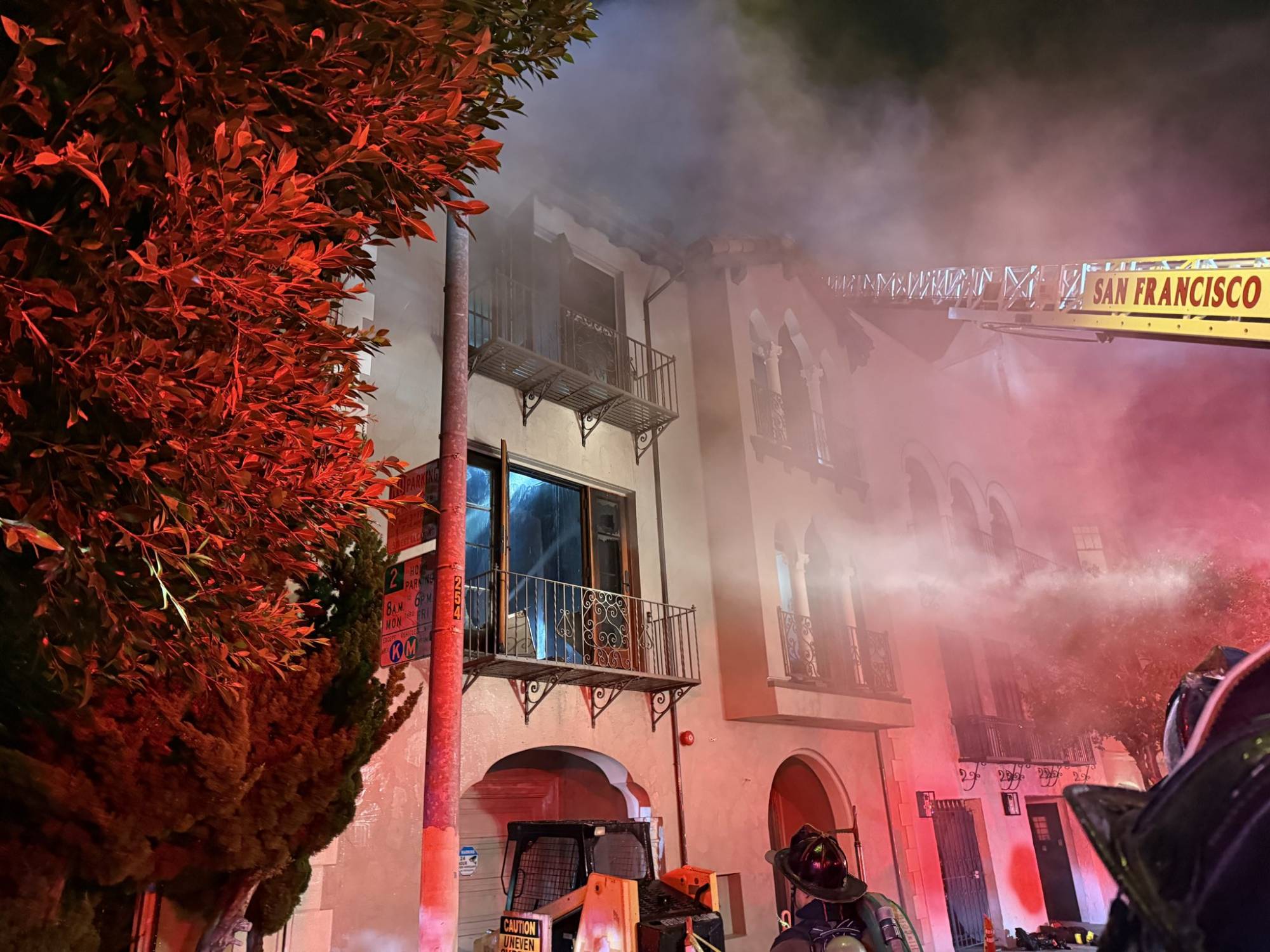
"content": "\u003cp>Three \u003ca href=\"https://www.kqed.org/news/tag/san-francisco\">San Francisco\u003c/a> firefighters were injured Wednesday morning while responding to a three-alarm fire in the Marina District.\u003c/p>\n\u003cp>All are in stable condition, according to Fire Chief Dean Crispen.\u003c/p>\n\u003cp>The firefighters were among 150 battling a blaze that broke out in a building under construction on the 2500 block of Chestnut Street shortly before 5 a.m.\u003c/p>\n\u003cp>[ad fullwidth]\u003c/p>\n\u003cp>“One firefighter fell through a floor from the third floor to the second, and then a second fire[fighter] fell through another hole in the floor,” Cripsen told reporters on the scene.\u003c/p>\n\u003cp>A third was injured during a “salvage and overhaul” operation to try to mitigate property damage and loss after the fire was contained at 7 a.m.[aside postID=news_12059818 hero='https://cdn.kqed.org/wp-content/uploads/sites/10/2025/10/044_KQED_SheriffPressConference_06082023_qed.jpg']Fire crews arrived around 5 a.m. to heavy fire coming from the second floor of a three-story building. It spread quickly to the third floor and neighboring residences, Crispen said.\u003c/p>\n\u003cp>“Both buildings are wood-framed abutted against each other, so the fire moved very rapidly,” he said.\u003c/p>\n\u003cp>“The building being under construction may have led to the fire getting more advanced than normal,” he said. “Uncovered walls, active plumbing and electrical work being done can pose a lot of danger to our firefighters.”\u003c/p>\n\u003cp>Two three-story residences directly to the fire’s right and left were evacuated and sustained damage as fire crews had to break open their wooden walls to identify fire expansion. The fire spread significantly into the building to the left, and slightly into the one on the right, Crispen said.\u003c/p>\n\u003cp>Four people were displaced.\u003c/p>\n\u003cp>The department’s arson unit is investigating the fire, but the cause is still unknown.\u003c/p>\n\u003cp>\u003c/p>\n",
"blocks": [],
"excerpt": "About 150 firefighters battled the three-alarm fire at a building under construction on Chestnut Street early Wednesday.",
"status": "publish",
"parent": 0,
"modified": 1760551087,
"stats": {
"hasAudio": false,
"hasVideo": false,
"hasChartOrMap": false,
"iframeSrcs": [],
"hasGoogleForm": false,
"hasGallery": false,
"hasHearkenModule": false,
"hasPolis": false,
"paragraphCount": 12,
"wordCount": 303
},
"headData": {
"title": "3 Firefighters Injured in SF Marina District Blaze | KQED",
"description": "About 150 firefighters battled the three-alarm fire at a building under construction on Chestnut Street early Wednesday.",
"ogTitle": "",
"ogDescription": "",
"ogImgId": "",
"twTitle": "",
"twDescription": "",
"twImgId": "",
"schema": {
"@context": "https://schema.org",
"@type": "NewsArticle",
"headline": "3 Firefighters Injured in SF Marina District Blaze",
"datePublished": "2025-10-15T09:50:50-07:00",
"dateModified": "2025-10-15T10:58:07-07:00",
"image": "https://cdn.kqed.org/wp-content/uploads/2020/02/KQED-OG-Image@1x.png",
"isAccessibleForFree": "True",
"publisher": {
"@type": "NewsMediaOrganization",
"@id": "https://www.kqed.org/#organization",
"name": "KQED",
"logo": "https://cdn.kqed.org/wp-content/uploads/2020/02/KQED-OG-Image@1x.png",
"url": "https://www.kqed.org",
"sameAs": [
"https://www.facebook.com/KQED",
"https://twitter.com/KQED",
"https://www.instagram.com/kqed/",
"https://www.tiktok.com/@kqedofficial",
"https://www.linkedin.com/company/kqed",
"https://www.youtube.com/channel/UCeC0IOo7i1P_61zVUWbJ4nw"
]
}
}
},
"primaryCategory": {
"termId": 8,
"slug": "news",
"name": "News"
},
"sticky": false,
"nprStoryId": "kqed-12059958",
"templateType": "standard",
"featuredImageType": "standard",
"excludeFromSiteSearch": "Include",
"articleAge": "0",
"path": "/news/12059958/three-firefighters-injured-in-sf-marina-district-blaze",
"audioTrackLength": null,
"parsedContent": [
{
"type": "contentString",
"content": "\u003cdiv class=\"post-body\">\u003cp>\u003cp>Three \u003ca href=\"https://www.kqed.org/news/tag/san-francisco\">San Francisco\u003c/a> firefighters were injured Wednesday morning while responding to a three-alarm fire in the Marina District.\u003c/p>\n\u003cp>All are in stable condition, according to Fire Chief Dean Crispen.\u003c/p>\n\u003cp>The firefighters were among 150 battling a blaze that broke out in a building under construction on the 2500 block of Chestnut Street shortly before 5 a.m.\u003c/p>\n\u003cp>\u003c/p>\u003c/div>",
"attributes": {
"named": {},
"numeric": []
}
},
{
"type": "component",
"content": "",
"name": "ad",
"attributes": {
"named": {
"label": "fullwidth"
},
"numeric": [
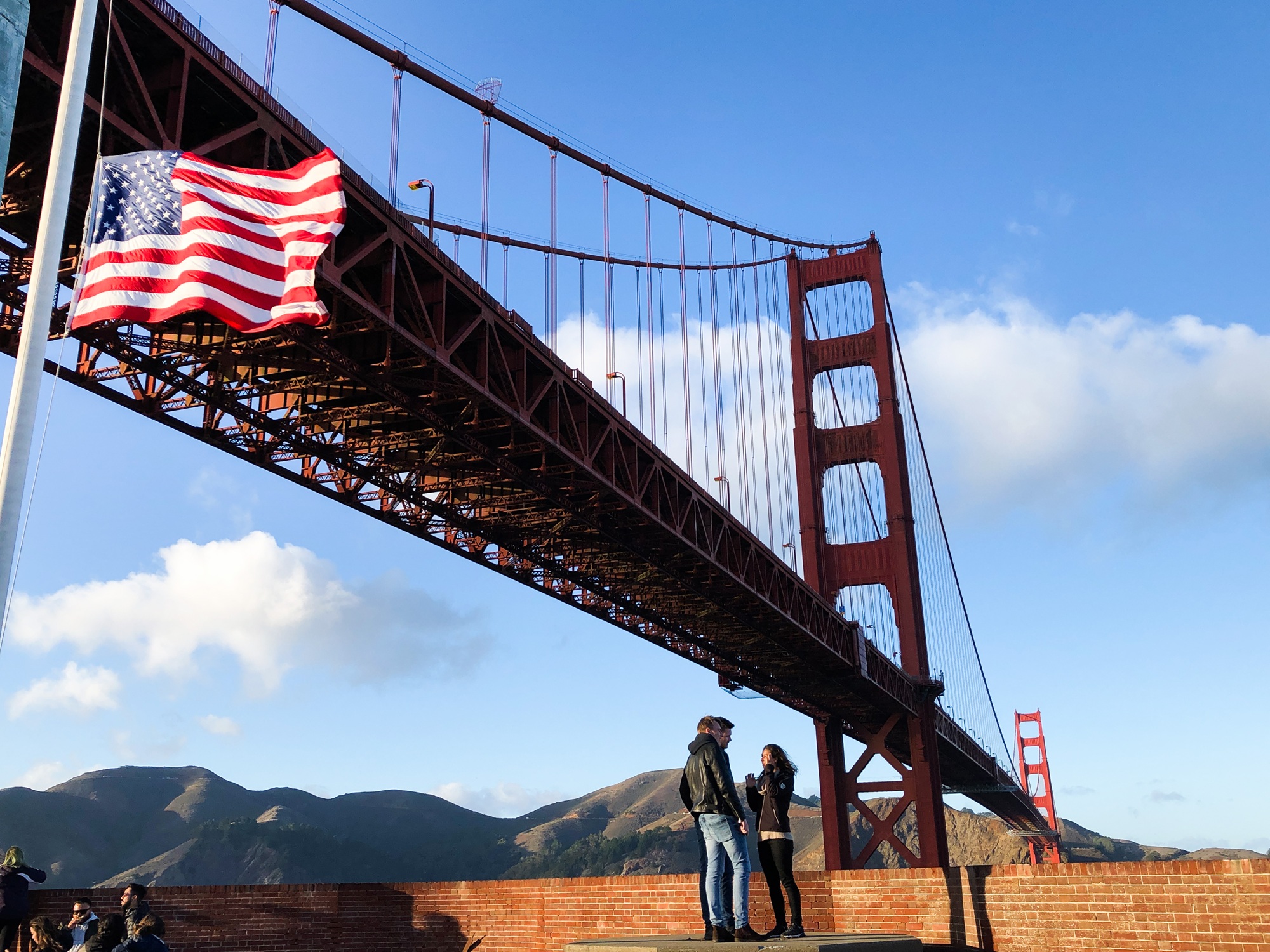
"fullwidth"
]
}
},
{
"type": "contentString",
"content": "\u003cdiv class=\"post-body\">\u003cp>\u003c/p>\n\u003cp>“One firefighter fell through a floor from the third floor to the second, and then a second fire[fighter] fell through another hole in the floor,” Cripsen told reporters on the scene.\u003c/p>\n\u003cp>A third was injured during a “salvage and overhaul” operation to try to mitigate property damage and loss after the fire was contained at 7 a.m.\u003c/p>\u003c/div>",
"attributes": {
"named": {},
"numeric": []
}
},
{
"type": "component",
"content": "",
"name": "aside",
"attributes": {
"named": {
"postid": "news_12059818",
"hero": "https://cdn.kqed.org/wp-content/uploads/sites/10/2025/10/044_KQED_SheriffPressConference_06082023_qed.jpg",
"label": ""
},
"numeric": []
}
},
{
"type": "contentString",
"content": "\u003cdiv class=\"post-body\">\u003cp>Fire crews arrived around 5 a.m. to heavy fire coming from the second floor of a three-story building. It spread quickly to the third floor and neighboring residences, Crispen said.\u003c/p>\n\u003cp>“Both buildings are wood-framed abutted against each other, so the fire moved very rapidly,” he said.\u003c/p>\n\u003cp>“The building being under construction may have led to the fire getting more advanced than normal,” he said. “Uncovered walls, active plumbing and electrical work being done can pose a lot of danger to our firefighters.”\u003c/p>\n\u003cp>Two three-story residences directly to the fire’s right and left were evacuated and sustained damage as fire crews had to break open their wooden walls to identify fire expansion. The fire spread significantly into the building to the left, and slightly into the one on the right, Crispen said.\u003c/p>\n\u003cp>Four people were displaced.\u003c/p>\n\u003cp>The department’s arson unit is investigating the fire, but the cause is still unknown.\u003c/p>\n\u003cp>\u003c/p>\n\u003c/div>\u003c/p>",
"attributes": {
"named": {},
"numeric": []
}
}
],
"link": "/news/12059958/three-firefighters-injured-in-sf-marina-district-blaze",
"authors": [
"11913"
],
"categories": [
"news_28250",
"news_8"
],
"tags": [
"news_23831",
"news_18512",
"news_4462",
"news_22456",
"news_38",
"news_1513"
],
"featImg": "news_12059964",
"label": "news"
},
"news_12059914": {
"type": "posts",
"id": "news_12059914",
"meta": {
"index": "posts_1716263798",
"site": "news",
"id": "12059914",
"score": null,
"sort": [
1760485722000
]
},
"guestAuthors": [],
"slug": "after-nearly-500-drug-overdose-deaths-in-sf-this-year-a-promising-drop",
"title": "After Nearly 500 Drug Overdose Deaths in SF This Year, a Promising Drop",
"publishDate": 1760485722,
"format": "standard",
"headTitle": "After Nearly 500 Drug Overdose Deaths in SF This Year, a Promising Drop | KQED",
"labelTerm": {
"site": "news"
},
"content": "\u003cp>Accidental overdose deaths in \u003ca href=\"https://www.kqed.org/news/tag/san-francisco\">San Francisco\u003c/a> have dropped to the lowest number so far this year.\u003c/p>\n\u003cp>According to the Department of Public Health, which puts out \u003ca href=\"https://media.api.sf.gov/documents/2025_10_OCME_Overdose_Report.pdf\">a monthly report\u003c/a> from the Office of the Chief Medical Examiner, 38 people died from accidental drug overdoses in September.\u003c/p>\n\u003cp>That’s 10 fewer deaths than the city recorded in August. It’s also the second-lowest number since the OCME started tracking overdose deaths in 2020.\u003c/p>\n\u003cp>[ad fullwidth]\u003c/p>\n\u003cp>“That’s still 38 too many people that have died of an overdose of a public health crisis and epidemic,” said Daniel Tsai, director of San Francisco’s Department of Public Health, at a press briefing on Tuesday. “But I want to say I am encouraged, I know we’re making real progress, and I and others here are not yet satisfied about where we are and the work that we continue to have to do.”\u003c/p>\n\u003cp>Tsai, who has been in the role since February, said the city’s newly integrated neighborhood street teams are helping. This initiative, announced by Mayor Daniel Lurie in March, consolidated outreach teams across multiple city departments that were often working toward the same goals, while siloed from each other.\u003c/p>\n\u003cfigure id=\"attachment_11958586\" class=\"wp-caption aligncenter\" style=\"max-width: 2000px\">\u003cimg loading=\"lazy\" decoding=\"async\" class=\"size-full wp-image-11958586\" src=\"https://cdn.kqed.org/wp-content/uploads/sites/10/2023/08/230818-NARCAN-AP-MR-KQED.jpg\" alt='A hand with painted finger nails holds a small white object with the words \"NARCAN NASAL SPRAY\" written on it.' width=\"2000\" height=\"1333\" srcset=\"https://cdn.kqed.org/wp-content/uploads/sites/10/2023/08/230818-NARCAN-AP-MR-KQED.jpg 2000w, https://cdn.kqed.org/wp-content/uploads/sites/10/2023/08/230818-NARCAN-AP-MR-KQED-800x533.jpg 800w, https://cdn.kqed.org/wp-content/uploads/sites/10/2023/08/230818-NARCAN-AP-MR-KQED-1020x680.jpg 1020w, https://cdn.kqed.org/wp-content/uploads/sites/10/2023/08/230818-NARCAN-AP-MR-KQED-160x107.jpg 160w, https://cdn.kqed.org/wp-content/uploads/sites/10/2023/08/230818-NARCAN-AP-MR-KQED-1536x1024.jpg 1536w, https://cdn.kqed.org/wp-content/uploads/sites/10/2023/08/230818-NARCAN-AP-MR-KQED-1920x1280.jpg 1920w\" sizes=\"auto, (max-width: 2000px) 100vw, 2000px\">\u003cfigcaption class=\"wp-caption-text\">The overdose-reversal drug Narcan. \u003ccite>(Matt Rourke/AP Photo)\u003c/cite>\u003c/figcaption>\u003c/figure>\n\u003cp>“We are seeing a new level of collaboration between departments that’s actually allowing us to help get folks who many departments are engaging with many, many, many times quickly into services, into shelter, into care,” Tsai said.\u003c/p>\n\u003cp>The September numbers bring the total number of accidental overdose deaths in 2025 to 497 people, a slight improvement on 2024. At this time last year, the city had reported 508 overdose deaths.\u003c/p>\n\u003cp>Over 75% of the accidental overdose deaths in 2025 have involved fentanyl.\u003c/p>\n\u003cp>\u003c!-- iframe plugin v.4.3 wordpress.org/plugins/iframe/ -->\u003cbr>\n\u003ciframe loading=\"lazy\" title=\"San Francisco monthly drug overdose deaths in 2024 and 2025\" aria-label=\"Column Chart\" id=\"datawrapper-chart-ofGMP\" src=\"https://datawrapper.dwcdn.net/ofGMP/5/\" scrolling=\"no\" frameborder=\"0\" style=\"border: none;\" width=\"1106\" height=\"440\" data-external=\"1\" class=\"iframe-class\">\u003c/iframe>\u003c/p>\n\u003cp>Addressing the city’s fentanyl crisis has been a major priority for Lurie since his term began. The Board of Supervisors passed Lurie’s \u003ca href=\"https://www.kqed.org/news/12025495/luries-fentanyl-response-clears-san-francisco-board-of-supervisors\">fentanyl state of emergency ordinance\u003c/a> in January, allowing him to move faster when hiring and contracting services aimed at overdoses and homelessness.\u003c/p>\n\u003cp>The city was able to open a \u003ca href=\"https://www.kqed.org/news/12038376/tenderloin-welcomes-mental-health-clinic-demands-broader-city-action-on-homelessness\">drop-in mental health stabilization center\u003c/a> at 822 Geary St. faster than usual because of that ordinance. Up to 16 clients can stay at the center for as many as 23 hours. Tsai cited the stabilization center as a key touchpoint in the effort to lower overdose numbers.\u003c/p>\n\u003cp>“Once we can get somebody plugged into treatment,” he said, “we want to be able to help get them into the next place in their journey.”\u003c/p>\n\u003cp>\u003c/p>\n",
"blocks": [],
"excerpt": "City public health officials reported a drop in deaths in September, citing the work of newly integrated street teams.\r\n",
"status": "publish",
"parent": 0,
"modified": 1760721272,
"stats": {
"hasAudio": false,
"hasVideo": false,
"hasChartOrMap": true,
"iframeSrcs": [
"https://datawrapper.dwcdn.net/ofGMP/5/"
],
"hasGoogleForm": false,
"hasGallery": false,
"hasHearkenModule": false,
"hasPolis": false,
"paragraphCount": 14,
"wordCount": 438
},
"headData": {
"title": "After Nearly 500 Drug Overdose Deaths in SF This Year, a Promising Drop | KQED",
"description": "City public health officials reported a drop in deaths in September, citing the work of newly integrated street teams.\r\n",
"ogTitle": "",
"ogDescription": "",
"ogImgId": "",
"twTitle": "",
"twDescription": "",
"twImgId": "",
"schema": {
"@context": "https://schema.org",
"@type": "NewsArticle",
"headline": "After Nearly 500 Drug Overdose Deaths in SF This Year, a Promising Drop",
"datePublished": "2025-10-14T16:48:42-07:00",
"dateModified": "2025-10-17T10:14:32-07:00",
"image": "https://cdn.kqed.org/wp-content/uploads/2020/02/KQED-OG-Image@1x.png",
"isAccessibleForFree": "True",
"publisher": {
"@type": "NewsMediaOrganization",
"@id": "https://www.kqed.org/#organization",
"name": "KQED",
"logo": "https://cdn.kqed.org/wp-content/uploads/2020/02/KQED-OG-Image@1x.png",
"url": "https://www.kqed.org",
"sameAs": [
"https://www.facebook.com/KQED",
"https://twitter.com/KQED",
"https://www.instagram.com/kqed/",
"https://www.tiktok.com/@kqedofficial",
"https://www.linkedin.com/company/kqed",
"https://www.youtube.com/channel/UCeC0IOo7i1P_61zVUWbJ4nw"
]
}
}
},
"primaryCategory": {
"termId": 457,
"slug": "health",
"name": "Health"
},
"sticky": false,
"nprStoryId": "kqed-12059914",
"templateType": "standard",
"featuredImageType": "standard",
"excludeFromSiteSearch": "Include",
"articleAge": "0",
"path": "/news/12059914/after-nearly-500-drug-overdose-deaths-in-sf-this-year-a-promising-drop",
"audioTrackLength": null,
"parsedContent": [
{
"type": "contentString",
"content": "\u003cdiv class=\"post-body\">\u003cp>\u003cp>Accidental overdose deaths in \u003ca href=\"https://www.kqed.org/news/tag/san-francisco\">San Francisco\u003c/a> have dropped to the lowest number so far this year.\u003c/p>\n\u003cp>According to the Department of Public Health, which puts out \u003ca href=\"https://media.api.sf.gov/documents/2025_10_OCME_Overdose_Report.pdf\">a monthly report\u003c/a> from the Office of the Chief Medical Examiner, 38 people died from accidental drug overdoses in September.\u003c/p>\n\u003cp>That’s 10 fewer deaths than the city recorded in August. It’s also the second-lowest number since the OCME started tracking overdose deaths in 2020.\u003c/p>\n\u003cp>\u003c/p>\u003c/div>",
"attributes": {
"named": {},
"numeric": []
}
},
{
"type": "component",
"content": "",
"name": "ad",
"attributes": {
"named": {
"label": "fullwidth"
},
"numeric": [
"fullwidth"
]
}
},
{
"type": "contentString",
"content": "\u003cdiv class=\"post-body\">\u003cp>\u003c/p>\n\u003cp>“That’s still 38 too many people that have died of an overdose of a public health crisis and epidemic,” said Daniel Tsai, director of San Francisco’s Department of Public Health, at a press briefing on Tuesday. “But I want to say I am encouraged, I know we’re making real progress, and I and others here are not yet satisfied about where we are and the work that we continue to have to do.”\u003c/p>\n\u003cp>Tsai, who has been in the role since February, said the city’s newly integrated neighborhood street teams are helping. This initiative, announced by Mayor Daniel Lurie in March, consolidated outreach teams across multiple city departments that were often working toward the same goals, while siloed from each other.\u003c/p>\n\u003cfigure id=\"attachment_11958586\" class=\"wp-caption aligncenter\" style=\"max-width: 2000px\">\u003cimg loading=\"lazy\" decoding=\"async\" class=\"size-full wp-image-11958586\" src=\"https://cdn.kqed.org/wp-content/uploads/sites/10/2023/08/230818-NARCAN-AP-MR-KQED.jpg\" alt='A hand with painted finger nails holds a small white object with the words \"NARCAN NASAL SPRAY\" written on it.' width=\"2000\" height=\"1333\" srcset=\"https://cdn.kqed.org/wp-content/uploads/sites/10/2023/08/230818-NARCAN-AP-MR-KQED.jpg 2000w, https://cdn.kqed.org/wp-content/uploads/sites/10/2023/08/230818-NARCAN-AP-MR-KQED-800x533.jpg 800w, https://cdn.kqed.org/wp-content/uploads/sites/10/2023/08/230818-NARCAN-AP-MR-KQED-1020x680.jpg 1020w, https://cdn.kqed.org/wp-content/uploads/sites/10/2023/08/230818-NARCAN-AP-MR-KQED-160x107.jpg 160w, https://cdn.kqed.org/wp-content/uploads/sites/10/2023/08/230818-NARCAN-AP-MR-KQED-1536x1024.jpg 1536w, https://cdn.kqed.org/wp-content/uploads/sites/10/2023/08/230818-NARCAN-AP-MR-KQED-1920x1280.jpg 1920w\" sizes=\"auto, (max-width: 2000px) 100vw, 2000px\">\u003cfigcaption class=\"wp-caption-text\">The overdose-reversal drug Narcan. \u003ccite>(Matt Rourke/AP Photo)\u003c/cite>\u003c/figcaption>\u003c/figure>\n\u003cp>“We are seeing a new level of collaboration between departments that’s actually allowing us to help get folks who many departments are engaging with many, many, many times quickly into services, into shelter, into care,” Tsai said.\u003c/p>\n\u003cp>The September numbers bring the total number of accidental overdose deaths in 2025 to 497 people, a slight improvement on 2024. At this time last year, the city had reported 508 overdose deaths.\u003c/p>\n\u003cp>Over 75% of the accidental overdose deaths in 2025 have involved fentanyl.\u003c/p>\n\u003cp>\u003c!-- iframe plugin v.4.3 wordpress.org/plugins/iframe/ -->\u003cbr>\n\u003ciframe loading=\"lazy\" title=\"San Francisco monthly drug overdose deaths in 2024 and 2025\" aria-label=\"Column Chart\" id=\"datawrapper-chart-ofGMP\" src=\"https://datawrapper.dwcdn.net/ofGMP/5/\" scrolling=\"no\" frameborder=\"0\" style=\"border: none;\" width=\"1106\" height=\"440\" data-external=\"1\" class=\"iframe-class\">\u003c/iframe>\u003c/p>\n\u003cp>Addressing the city’s fentanyl crisis has been a major priority for Lurie since his term began. The Board of Supervisors passed Lurie’s \u003ca href=\"https://www.kqed.org/news/12025495/luries-fentanyl-response-clears-san-francisco-board-of-supervisors\">fentanyl state of emergency ordinance\u003c/a> in January, allowing him to move faster when hiring and contracting services aimed at overdoses and homelessness.\u003c/p>\n\u003cp>The city was able to open a \u003ca href=\"https://www.kqed.org/news/12038376/tenderloin-welcomes-mental-health-clinic-demands-broader-city-action-on-homelessness\">drop-in mental health stabilization center\u003c/a> at 822 Geary St. faster than usual because of that ordinance. Up to 16 clients can stay at the center for as many as 23 hours. Tsai cited the stabilization center as a key touchpoint in the effort to lower overdose numbers.\u003c/p>\n\u003cp>“Once we can get somebody plugged into treatment,” he said, “we want to be able to help get them into the next place in their journey.”\u003c/p>\n\u003cp>\u003c/p>\n\u003c/div>\u003c/p>",
"attributes": {
"named": {},
"numeric": []
}
}
],
"link": "/news/12059914/after-nearly-500-drug-overdose-deaths-in-sf-this-year-a-promising-drop",
"authors": [
"61"
],
"categories": [
"news_457",
"news_28250",
"news_8"
],
"tags": [
"news_1386",
"news_30249",
"news_27626",
"news_18543",
"news_29747",
"news_19960",
"news_22456",
"news_38"
],
"featImg": "news_11959782",
"label": "news"
},
"news_12059818": {
"type": "posts",
"id": "news_12059818",
"meta": {
"index": "posts_1716263798",
"site": "news",
"id": "12059818",
"score": null,
"sort": [
1760461110000
]
},
"guestAuthors": [],
"slug": "san-francisco-police-commission-begins-interviews-for-next-sfpd-chief-at-a-pivotal-time",
"title": "San Francisco Police Commission Begins Interviews for Next SFPD Chief at a Pivotal Time",
"publishDate": 1760461110,
"format": "standard",
"headTitle": "San Francisco Police Commission Begins Interviews for Next SFPD Chief at a Pivotal Time | KQED",
"labelTerm": {
"site": "news"
},
"content": "\u003cp>The San Francisco Police Commission will begin interviews for the city’s next chief of police on Tuesday morning, kicking off a process that will lead to a critical choice for Mayor \u003ca href=\"https://www.kqed.org/news/tag/daniel-lurie\">Daniel Lurie\u003c/a>.\u003c/p>\n\u003cp>The position has been vacant since May, when former chief Bill Scott \u003ca href=\"https://www.kqed.org/news/12039092/san-franciscos-police-chief-stepping-down\">announced his departure\u003c/a> after eight years in the role.\u003c/p>\n\u003cp>The city’s seven-member Police Commission, a group of volunteers appointed by the mayor and Board of Supervisors, will enter into a closed session on Tuesday morning to interview candidates over the next one to two weeks.\u003c/p>\n\u003cp>[ad fullwidth]\u003c/p>\n\u003cp>“We have a self-imposed deadline of Nov. 12 to present the finalists to Lurie,” commission Vice President Kevin Benedicto told KQED.\u003c/p>\n\u003cp>Ultimately, the mayor will select the next chief from three commission-selected candidates. Who Lurie picks could define his time as mayor.\u003c/p>\n\u003cp>Lurie’s chief of public safety, Paul Yep, has served as interim chief in the months since Scott’s departure. Despite speculation that he was auditioning to take on the permanent role, Yep did not apply.\u003c/p>\n\u003cfigure id=\"attachment_12020121\" class=\"wp-caption aligncenter\" style=\"max-width: 1999px\">\u003cimg loading=\"lazy\" decoding=\"async\" class=\"size-full wp-image-12020121\" src=\"https://cdn.kqed.org/wp-content/uploads/sites/10/2025/01/240819-DanielLuriePresser-03-BL_qed.jpg\" alt=\"\" width=\"1999\" height=\"1333\" srcset=\"https://cdn.kqed.org/wp-content/uploads/sites/10/2025/01/240819-DanielLuriePresser-03-BL_qed.jpg 1999w, https://cdn.kqed.org/wp-content/uploads/sites/10/2025/01/240819-DanielLuriePresser-03-BL_qed-800x533.jpg 800w, https://cdn.kqed.org/wp-content/uploads/sites/10/2025/01/240819-DanielLuriePresser-03-BL_qed-1020x680.jpg 1020w, https://cdn.kqed.org/wp-content/uploads/sites/10/2025/01/240819-DanielLuriePresser-03-BL_qed-160x107.jpg 160w, https://cdn.kqed.org/wp-content/uploads/sites/10/2025/01/240819-DanielLuriePresser-03-BL_qed-1536x1024.jpg 1536w, https://cdn.kqed.org/wp-content/uploads/sites/10/2025/01/240819-DanielLuriePresser-03-BL_qed-1920x1280.jpg 1920w\" sizes=\"auto, (max-width: 1999px) 100vw, 1999px\">\u003cfigcaption class=\"wp-caption-text\">Former San Francisco Police Commander Paul Yep speaks during a press conference supporting mayoral candidate Daniel Lurie in San Francisco on Aug. 19, 2024. \u003ccite>(Beth LaBerge/KQED)\u003c/cite>\u003c/figcaption>\u003c/figure>\n\u003cp>There were 34 applicants for the job; only Steven Ford, who served at the SFPD for 31 years and briefly led the Antioch Police Department, \u003ca href=\"https://www.sfchronicle.com/sf/article/one-popular-cop-not-among-applicants-police-chief-21044775.php\">publicly stated that he applied\u003c/a>.\u003c/p>\n\u003cp>Lurie currently has two appointees on the Police Commission. Former federal prosecutor Wilson Leung filled a vacant seat at the beginning of Lurie’s term. And Lurie selected anti-violence activist Mattie Scott to serve after \u003ca href=\"https://www.kqed.org/news/12028726/reformist-sf-police-commissioner-is-ousted-giving-lurie-greater-control-of-oversight\">removing progressive police commissioner Max Carter-Oberstone\u003c/a>. (The mayor appoints four members to the commission; the Board of Supervisors selects three.)\u003c/p>\n\u003cp>While reported crime is low in San Francisco — Lurie recently stated \u003ca href=\"https://www.kqed.org/news/12059728/salesforce-ceo-marc-benioff-sf-mayor-scrap-event-after-national-guard-comment\">crime is down 30% citywide\u003c/a> compared to last year — the new chief will inherit an understaffed police force, calls for more community policing and millions in overtime spending. Low-level crimes and open-air drug use are a persistent problem.[aside postID=news_12042755 hero='https://cdn.kqed.org/wp-content/uploads/sites/10/2025/06/250609-LURIEPRESSER-04-BL-KQED.jpg']Community meetings organized between August and September by Ralph Andersen & Associates, the agency leading the search for candidates, gathered responses from 227 people about what they were looking for in the role. The \u003ca href=\"https://media.api.sf.gov/documents/PoliceCommission10825_-_RAA_Summary_Results_for_Community_Input.pdf\">report\u003c/a>, presented to the Police Commission at their Oct. 8 meeting, found that respondents were looking for a police chief “who embodies integrity, openness, and courage, while also being firmly grounded in the unique needs of San Francisco.”\u003c/p>\n\u003cp>Benedicto said the community meetings, along with conversations with police officers and other department employees, have already shaped some of the commission’s decision-making and will continue to help them winnow down the candidates.\u003c/p>\n\u003cp>According to community input, one of the chief’s key priorities should be “preparedness around federal immigration enforcement activity.” Protesters have faced off against Immigration and Customs Enforcement officers outside San Francisco’s immigration court. In cities like Los Angeles, Chicago, Washington, D.C., and Memphis, Tennessee, similar protests have been used by the Trump administration as a rationale for sending in the National Guard.\u003c/p>\n\u003cp>Trump has \u003ca href=\"https://www.npr.org/2025/10/10/nx-s1-5567177/national-guard-map-chicago-california-oregon\">suggested sending troops to San Francisco and Oakland\u003c/a>, a plan Lurie has refrained from commenting on. “We have work to do, there is no doubt about that,” he said at the Italian Heritage Festival on Sunday. “We need more SFPD.”\u003c/p>\n\u003cfigure id=\"attachment_12047757\" class=\"wp-caption aligncenter\" style=\"max-width: 2000px\">\u003cimg loading=\"lazy\" decoding=\"async\" class=\"size-full wp-image-12047757\" src=\"https://cdn.kqed.org/wp-content/uploads/sites/10/2025/07/250418-SFPDFile-39-BL_qed-1.jpg\" alt=\"\" width=\"2000\" height=\"1333\" srcset=\"https://cdn.kqed.org/wp-content/uploads/sites/10/2025/07/250418-SFPDFile-39-BL_qed-1.jpg 2000w, https://cdn.kqed.org/wp-content/uploads/sites/10/2025/07/250418-SFPDFile-39-BL_qed-1-160x107.jpg 160w, https://cdn.kqed.org/wp-content/uploads/sites/10/2025/07/250418-SFPDFile-39-BL_qed-1-1536x1024.jpg 1536w\" sizes=\"auto, (max-width: 2000px) 100vw, 2000px\">\u003cfigcaption class=\"wp-caption-text\">A San Francisco Police Department officer in San Francisco on April 18, 2025. \u003ccite>(Beth LaBerge/KQED)\u003c/cite>\u003c/figcaption>\u003c/figure>\n\u003cp>Whoever Lurie picks for the job will face a host of challenges — just as Scott did eight years ago. The former chief was appointed by then-Mayor Ed Lee in 2016 after two years of high-profile police shootings and calls for accountability. Scott’s mandate from Lee was to transform the SFPD into a “21st-century police force.”\u003c/p>\n\u003cp>Just this January, the SFPD announced it had completed \u003ca href=\"https://www.kqed.org/news/12020778/state-ends-oversight-sfpd-after-long-reform-effort-followed-fatal-shootings\">an eight-year reform process\u003c/a> with the Department of Justice. During Scott’s time as chief, the department implemented more than 270 recommended reforms.\u003c/p>\n\u003cp>His tenure was also marked by the pandemic, an increase in fentanyl overdoses, and a rise in car break-ins and property crime. Dissatisfaction with policing led in part to the 2022 recall of District Attorney Chesa Boudin, which in turn hampered former Mayor London Breed’s bid for reelection.\u003c/p>\n\u003cp>Lurie’s choice could similarly make or break his burgeoning political career. The city hopes to have the position filled by the end of this year.\u003c/p>\n\u003cp>\u003c/p>\n",
"blocks": [],
"excerpt": "The board will present three finalists to Mayor Daniel Lurie, a choice that could define his time as mayor amid difficulties for the SFPD and concerns around federal enforcement.",
"status": "publish",
"parent": 0,
"modified": 1760465567,
"stats": {
"hasAudio": false,
"hasVideo": false,
"hasChartOrMap": false,
"iframeSrcs": [],
"hasGoogleForm": false,
"hasGallery": false,
"hasHearkenModule": false,
"hasPolis": false,
"paragraphCount": 18,
"wordCount": 786
},
"headData": {
"title": "San Francisco Police Commission Begins Interviews for Next SFPD Chief at a Pivotal Time | KQED",
"description": "The board will present three finalists to Mayor Daniel Lurie, a choice that could define his time as mayor amid difficulties for the SFPD and concerns around federal enforcement.",
"ogTitle": "",
"ogDescription": "",
"ogImgId": "",
"twTitle": "",
"twDescription": "",
"twImgId": "",
"schema": {
"@context": "https://schema.org",
"@type": "NewsArticle",
"headline": "San Francisco Police Commission Begins Interviews for Next SFPD Chief at a Pivotal Time",
"datePublished": "2025-10-14T09:58:30-07:00",
"dateModified": "2025-10-14T11:12:47-07:00",
"image": "https://cdn.kqed.org/wp-content/uploads/2020/02/KQED-OG-Image@1x.png",
"isAccessibleForFree": "True",
"publisher": {
"@type": "NewsMediaOrganization",
"@id": "https://www.kqed.org/#organization",
"name": "KQED",
"logo": "https://cdn.kqed.org/wp-content/uploads/2020/02/KQED-OG-Image@1x.png",
"url": "https://www.kqed.org",
"sameAs": [
"https://www.facebook.com/KQED",
"https://twitter.com/KQED",
"https://www.instagram.com/kqed/",
"https://www.tiktok.com/@kqedofficial",
"https://www.linkedin.com/company/kqed",
"https://www.youtube.com/channel/UCeC0IOo7i1P_61zVUWbJ4nw"
]
}
}
},
"primaryCategory": {
"termId": 8,
"slug": "news",
"name": "News"
},
"sticky": false,
"nprStoryId": "kqed-12059818",
"templateType": "standard",
"featuredImageType": "standard",
"excludeFromSiteSearch": "Include",
"articleAge": "0",
"path": "/news/12059818/san-francisco-police-commission-begins-interviews-for-next-sfpd-chief-at-a-pivotal-time",
"audioTrackLength": null,
"parsedContent": [
{
"type": "contentString",
"content": "\u003cdiv class=\"post-body\">\u003cp>\u003cp>The San Francisco Police Commission will begin interviews for the city’s next chief of police on Tuesday morning, kicking off a process that will lead to a critical choice for Mayor \u003ca href=\"https://www.kqed.org/news/tag/daniel-lurie\">Daniel Lurie\u003c/a>.\u003c/p>\n\u003cp>The position has been vacant since May, when former chief Bill Scott \u003ca href=\"https://www.kqed.org/news/12039092/san-franciscos-police-chief-stepping-down\">announced his departure\u003c/a> after eight years in the role.\u003c/p>\n\u003cp>The city’s seven-member Police Commission, a group of volunteers appointed by the mayor and Board of Supervisors, will enter into a closed session on Tuesday morning to interview candidates over the next one to two weeks.\u003c/p>\n\u003cp>\u003c/p>\u003c/div>",
"attributes": {
"named": {},
"numeric": []
}
},
{
"type": "component",
"content": "",
"name": "ad",
"attributes": {
"named": {
"label": "fullwidth"
},
"numeric": [
"fullwidth"
]
}
},
{
"type": "contentString",
"content": "\u003cdiv class=\"post-body\">\u003cp>\u003c/p>\n\u003cp>“We have a self-imposed deadline of Nov. 12 to present the finalists to Lurie,” commission Vice President Kevin Benedicto told KQED.\u003c/p>\n\u003cp>Ultimately, the mayor will select the next chief from three commission-selected candidates. Who Lurie picks could define his time as mayor.\u003c/p>\n\u003cp>Lurie’s chief of public safety, Paul Yep, has served as interim chief in the months since Scott’s departure. Despite speculation that he was auditioning to take on the permanent role, Yep did not apply.\u003c/p>\n\u003cfigure id=\"attachment_12020121\" class=\"wp-caption aligncenter\" style=\"max-width: 1999px\">\u003cimg loading=\"lazy\" decoding=\"async\" class=\"size-full wp-image-12020121\" src=\"https://cdn.kqed.org/wp-content/uploads/sites/10/2025/01/240819-DanielLuriePresser-03-BL_qed.jpg\" alt=\"\" width=\"1999\" height=\"1333\" srcset=\"https://cdn.kqed.org/wp-content/uploads/sites/10/2025/01/240819-DanielLuriePresser-03-BL_qed.jpg 1999w, https://cdn.kqed.org/wp-content/uploads/sites/10/2025/01/240819-DanielLuriePresser-03-BL_qed-800x533.jpg 800w, https://cdn.kqed.org/wp-content/uploads/sites/10/2025/01/240819-DanielLuriePresser-03-BL_qed-1020x680.jpg 1020w, https://cdn.kqed.org/wp-content/uploads/sites/10/2025/01/240819-DanielLuriePresser-03-BL_qed-160x107.jpg 160w, https://cdn.kqed.org/wp-content/uploads/sites/10/2025/01/240819-DanielLuriePresser-03-BL_qed-1536x1024.jpg 1536w, https://cdn.kqed.org/wp-content/uploads/sites/10/2025/01/240819-DanielLuriePresser-03-BL_qed-1920x1280.jpg 1920w\" sizes=\"auto, (max-width: 1999px) 100vw, 1999px\">\u003cfigcaption class=\"wp-caption-text\">Former San Francisco Police Commander Paul Yep speaks during a press conference supporting mayoral candidate Daniel Lurie in San Francisco on Aug. 19, 2024. \u003ccite>(Beth LaBerge/KQED)\u003c/cite>\u003c/figcaption>\u003c/figure>\n\u003cp>There were 34 applicants for the job; only Steven Ford, who served at the SFPD for 31 years and briefly led the Antioch Police Department, \u003ca href=\"https://www.sfchronicle.com/sf/article/one-popular-cop-not-among-applicants-police-chief-21044775.php\">publicly stated that he applied\u003c/a>.\u003c/p>\n\u003cp>Lurie currently has two appointees on the Police Commission. Former federal prosecutor Wilson Leung filled a vacant seat at the beginning of Lurie’s term. And Lurie selected anti-violence activist Mattie Scott to serve after \u003ca href=\"https://www.kqed.org/news/12028726/reformist-sf-police-commissioner-is-ousted-giving-lurie-greater-control-of-oversight\">removing progressive police commissioner Max Carter-Oberstone\u003c/a>. (The mayor appoints four members to the commission; the Board of Supervisors selects three.)\u003c/p>\n\u003cp>While reported crime is low in San Francisco — Lurie recently stated \u003ca href=\"https://www.kqed.org/news/12059728/salesforce-ceo-marc-benioff-sf-mayor-scrap-event-after-national-guard-comment\">crime is down 30% citywide\u003c/a> compared to last year — the new chief will inherit an understaffed police force, calls for more community policing and millions in overtime spending. Low-level crimes and open-air drug use are a persistent problem.\u003c/p>\u003c/div>",
"attributes": {
"named": {},
"numeric": []
}
},
{
"type": "component",
"content": "",
"name": "aside",
"attributes": {
"named": {
"postid": "news_12042755",
"hero": "https://cdn.kqed.org/wp-content/uploads/sites/10/2025/06/250609-LURIEPRESSER-04-BL-KQED.jpg",
"label": ""
},
"numeric": []
}
},
{
"type": "contentString",
"content": "\u003cdiv class=\"post-body\">\u003cp>Community meetings organized between August and September by Ralph Andersen & Associates, the agency leading the search for candidates, gathered responses from 227 people about what they were looking for in the role. The \u003ca href=\"https://media.api.sf.gov/documents/PoliceCommission10825_-_RAA_Summary_Results_for_Community_Input.pdf\">report\u003c/a>, presented to the Police Commission at their Oct. 8 meeting, found that respondents were looking for a police chief “who embodies integrity, openness, and courage, while also being firmly grounded in the unique needs of San Francisco.”\u003c/p>\n\u003cp>Benedicto said the community meetings, along with conversations with police officers and other department employees, have already shaped some of the commission’s decision-making and will continue to help them winnow down the candidates.\u003c/p>\n\u003cp>According to community input, one of the chief’s key priorities should be “preparedness around federal immigration enforcement activity.” Protesters have faced off against Immigration and Customs Enforcement officers outside San Francisco’s immigration court. In cities like Los Angeles, Chicago, Washington, D.C., and Memphis, Tennessee, similar protests have been used by the Trump administration as a rationale for sending in the National Guard.\u003c/p>\n\u003cp>Trump has \u003ca href=\"https://www.npr.org/2025/10/10/nx-s1-5567177/national-guard-map-chicago-california-oregon\">suggested sending troops to San Francisco and Oakland\u003c/a>, a plan Lurie has refrained from commenting on. “We have work to do, there is no doubt about that,” he said at the Italian Heritage Festival on Sunday. “We need more SFPD.”\u003c/p>\n\u003cfigure id=\"attachment_12047757\" class=\"wp-caption aligncenter\" style=\"max-width: 2000px\">\u003cimg loading=\"lazy\" decoding=\"async\" class=\"size-full wp-image-12047757\" src=\"https://cdn.kqed.org/wp-content/uploads/sites/10/2025/07/250418-SFPDFile-39-BL_qed-1.jpg\" alt=\"\" width=\"2000\" height=\"1333\" srcset=\"https://cdn.kqed.org/wp-content/uploads/sites/10/2025/07/250418-SFPDFile-39-BL_qed-1.jpg 2000w, https://cdn.kqed.org/wp-content/uploads/sites/10/2025/07/250418-SFPDFile-39-BL_qed-1-160x107.jpg 160w, https://cdn.kqed.org/wp-content/uploads/sites/10/2025/07/250418-SFPDFile-39-BL_qed-1-1536x1024.jpg 1536w\" sizes=\"auto, (max-width: 2000px) 100vw, 2000px\">\u003cfigcaption class=\"wp-caption-text\">A San Francisco Police Department officer in San Francisco on April 18, 2025. \u003ccite>(Beth LaBerge/KQED)\u003c/cite>\u003c/figcaption>\u003c/figure>\n\u003cp>Whoever Lurie picks for the job will face a host of challenges — just as Scott did eight years ago. The former chief was appointed by then-Mayor Ed Lee in 2016 after two years of high-profile police shootings and calls for accountability. Scott’s mandate from Lee was to transform the SFPD into a “21st-century police force.”\u003c/p>\n\u003cp>Just this January, the SFPD announced it had completed \u003ca href=\"https://www.kqed.org/news/12020778/state-ends-oversight-sfpd-after-long-reform-effort-followed-fatal-shootings\">an eight-year reform process\u003c/a> with the Department of Justice. During Scott’s time as chief, the department implemented more than 270 recommended reforms.\u003c/p>\n\u003cp>His tenure was also marked by the pandemic, an increase in fentanyl overdoses, and a rise in car break-ins and property crime. Dissatisfaction with policing led in part to the 2022 recall of District Attorney Chesa Boudin, which in turn hampered former Mayor London Breed’s bid for reelection.\u003c/p>\n\u003cp>Lurie’s choice could similarly make or break his burgeoning political career. The city hopes to have the position filled by the end of this year.\u003c/p>\n\u003cp>\u003c/p>\n\u003c/div>\u003c/p>",
"attributes": {
"named": {},
"numeric": []
}
}
],
"link": "/news/12059818/san-francisco-police-commission-begins-interviews-for-next-sfpd-chief-at-a-pivotal-time",
"authors": [
"61"
],
"categories": [
"news_28250",
"news_8",
"news_13"
],
"tags": [
"news_1386",
"news_25782",
"news_34055",
"news_34377",
"news_17968",
"news_22456",
"news_38",
"news_545",
"news_20331",
"news_20441"
],
"featImg": "news_12059821",
"label": "news"
},
"news_12059209": {
"type": "posts",
"id": "news_12059209",
"meta": {
"index": "posts_1716263798",
"site": "news",
"id": "12059209",
"score": null,
"sort": [
1760380882000
]
},
"guestAuthors": [],
"slug": "repair-advocates-tell-microsoft-stop-the-end-of-windows-10",
"title": "Repair Advocates Tell Microsoft: Stop the ‘End of Windows 10’",
"publishDate": 1760380882,
"format": "standard",
"headTitle": "Repair Advocates Tell Microsoft: Stop the ‘End of Windows 10’ | KQED",
"labelTerm": {
"site": "news"
},
"content": "\u003cp>Earlier this year, Peter Volin, 78, logged onto his computer at his home in Albany to find an \u003ca href=\"https://support.microsoft.com/en-us/windows/windows-10-support-ends-on-october-14-2025-2ca8b313-1946-43d3-b55c-2b95b107f281\">email\u003c/a> from \u003ca href=\"https://www.kqed.org/news/tag/microsoft\">Microsoft\u003c/a> that he described as “irritating.”\u003c/p>\n\u003cp>It informed him that his trusty personal computer, which he used for word processing, editing photos and keeping in touch with friends, would soon no longer receive free, automatic updates from Microsoft. His computer’s operating system was running Windows 10, and he needed to upgrade to the new version, Windows 11, to continue receiving support.\u003c/p>\n\u003cp>Volin asked his local computer repair service to help with the upgrade, and that’s when he got the bad news. His computer didn’t meet the hardware requirements to upgrade to Windows 11, and he would have to get a new computer.\u003c/p>\n\u003cp>[ad fullwidth]\u003c/p>\n\u003cp>Volin said he spent around $1,500 to purchase a new machine and hire a repair service to transfer over his files and install his preferred programs.\u003c/p>\n\u003cp>“That’s an expense I could have put off for another couple of years,” he said. “ I had a computer that was really filling all my needs.”\u003c/p>\n\u003cp>As Microsoft is set to end free, automatic updates for Windows 10 on Tuesday, consumer advocacy organizations expect hundreds of millions of computer users, like Volin, will ditch their old machines in order to stay current with Microsoft’s latest software.\u003c/p>\n\u003cfigure id=\"attachment_12059631\" class=\"wp-caption aligncenter\" style=\"max-width: 2000px\">\u003cimg loading=\"lazy\" decoding=\"async\" class=\"size-full wp-image-12059631\" src=\"https://cdn.kqed.org/wp-content/uploads/sites/10/2025/10/251010_ENDOF10_-7-KQED.jpg\" alt=\"\" width=\"2000\" height=\"1333\" srcset=\"https://cdn.kqed.org/wp-content/uploads/sites/10/2025/10/251010_ENDOF10_-7-KQED.jpg 2000w, https://cdn.kqed.org/wp-content/uploads/sites/10/2025/10/251010_ENDOF10_-7-KQED-160x107.jpg 160w, https://cdn.kqed.org/wp-content/uploads/sites/10/2025/10/251010_ENDOF10_-7-KQED-1536x1024.jpg 1536w\" sizes=\"auto, (max-width: 2000px) 100vw, 2000px\">\u003cfigcaption class=\"wp-caption-text\">Peter Volin in his home office in Albany on Oct. 10, 2025. \u003ccite>(Gustavo Hernandez/KQED)\u003c/cite>\u003c/figcaption>\u003c/figure>\n\u003cp>\u003ca href=\"https://www.kqed.org/news/11976367/bay-areas-fix-it-culture-thrives-as-right-to-repair-law-takes-effect-soon\">Right to repair\u003c/a> advocates, however, are calling on the company to reverse the move, saying it will lead to millions of computers being thrown away and leave those who don’t upgrade vulnerable to security threats.\u003c/p>\n\u003cp>Microsoft rolled out Windows 10 over 10 years ago, and it’s still widely popular, with around 35% of all Windows users still running the operating system, according to \u003ca href=\"https://gs.statcounter.com/windows-version-market-share/desktop/worldwide\">StatCounter\u003c/a>, a web analytics service. Still, the company announced in 2023 that Windows 10’s days were numbered.\u003c/p>\n\u003cp>End of support means that while Windows 10 computers will continue to function, Microsoft will no longer offer free technical support, software updates or security fixes to its users.[aside postID=news_12049605 hero='https://cdn.kqed.org/wp-content/uploads/sites/10/2025/07/240202-FixitClinic-KSM-07_qed.jpg']Microsoft \u003ca href=\"https://support.microsoft.com/en-us/windows/windows-10-support-ends-on-october-14-2025-2ca8b313-1946-43d3-b55c-2b95b107f281\">calls \u003c/a>Windows 11 “a more modern, secure, and highly efficient computing experience,” and users have reported 62% fewer security incidents with Windows 11 than Windows 10.\u003c/p>\n\u003cp>Those with computers that meet hardware eligibility requirements can upgrade to Windows 11 for free. Microsoft is also offering an “extended security update” program, where Windows 10 users can purchase continued support through Oct.13, 2026.\u003c/p>\n\u003cp>Jenn Engstrom, the state director of the California Public Interest Research Group, called the “end of 10” a “lose-lose-lose” situation.\u003c/p>\n\u003cp>“It’s bad for consumers. It’s bad for security, and it’s bad for the environment,” she said.\u003c/p>\n\u003cp>According to Engstrom, it’s estimated that up to 400 million Windows 10 users worldwide have computers that lack the hardware to upgrade to Windows 11. In a letter to Microsoft CEO Satya Nadella calling on the company to continue free, automatic updates for Windows 10, CALPIRG and other organizations warned this could be the “single biggest jump in junked computers ever.”\u003c/p>\n\u003cfigure id=\"attachment_12059630\" class=\"wp-caption aligncenter\" style=\"max-width: 2000px\">\u003cimg loading=\"lazy\" decoding=\"async\" class=\"size-full wp-image-12059630\" src=\"https://cdn.kqed.org/wp-content/uploads/sites/10/2025/10/251008_ENDOF10_-11-KQED.jpg\" alt=\"\" width=\"2000\" height=\"1331\" srcset=\"https://cdn.kqed.org/wp-content/uploads/sites/10/2025/10/251008_ENDOF10_-11-KQED.jpg 2000w, https://cdn.kqed.org/wp-content/uploads/sites/10/2025/10/251008_ENDOF10_-11-KQED-160x106.jpg 160w, https://cdn.kqed.org/wp-content/uploads/sites/10/2025/10/251008_ENDOF10_-11-KQED-1536x1022.jpg 1536w\" sizes=\"auto, (max-width: 2000px) 100vw, 2000px\">\u003cfigcaption class=\"wp-caption-text\">Del Jaljaa works on a laptop motherboard at his repair bench in San Francisco on Oct. 8, 2025. Right to Repair advocates warn that Microsoft’s move away from Windows 10 could create mountains of electronic waste. \u003ccite>(Gustavo Hernandez/KQED)\u003c/cite>\u003c/figcaption>\u003c/figure>\n\u003cp>“When Microsoft stops providing security updates for Windows 10, those computers will either be insecure and unsafe to keep using, or else turn into junk and get thrown out. Less than a \u003ca href=\"https://www.who.int/news-room/fact-sheets/detail/electronic-waste-(e-waste)\">quarter \u003c/a>of electronic waste is recycled, so most of those computers will end up in landfills,” the \u003ca href=\"https://pirg.org/take-action/tell-microsoft-to-extend-free-support-for-windows-10/\">letter\u003c/a> stated.\u003c/p>\n\u003cp>Past campaigns to pressure Microsoft into continuing support have been successful. In 2024, Microsoft extended Windows 10 security updates to schools in the United States for three years after a \u003ca href=\"https://pirg.org/articles/why-microsoft-extended-windows-10-support-for-schools-for-1/\">campaign \u003c/a>by consumer advocates. Pressure from a \u003ca href=\"https://www.euroconsumers.org/wp-content/uploads/2025/09/Euroconsumers_vs_Microsoft_092025.pdf\">European consumer advocacy group\u003c/a> has also led Microsoft to offer free automatic updates for the next year to Windows 10 users in the \u003ca href=\"https://ec.europa.eu/eurostat/statistics-explained/index.php?title=Glossary:European_Economic_Area_(EEA)\">European Economic Area\u003c/a>.\u003c/p>\n\u003cp>“ We think that when people buy a device, they should be able to use it as long as they possibly can,” Engstrom said.\u003c/p>\n\u003cp>KQED reached out to Microsoft, but a spokesperson declined to comment. The company has also not responded to calls by CALPIRG and other organizations to extend free, automatic Windows 10 support in the United States.\u003c/p>\n\u003cp>Del Jaljaa, the owner of San Francisco Computer Repair on the edge of the city’s Mission District, said he has seen a steady drumbeat of clients over the past few months coming in seeking help with their upgrade.\u003c/p>\n\u003cfigure id=\"attachment_12059693\" class=\"wp-caption aligncenter\" style=\"max-width: 2000px\">\u003cimg loading=\"lazy\" decoding=\"async\" class=\"size-full wp-image-12059693\" src=\"https://cdn.kqed.org/wp-content/uploads/sites/10/2025/10/251008_Endof10_-6_qed.jpg\" alt=\"\" width=\"2000\" height=\"1333\" srcset=\"https://cdn.kqed.org/wp-content/uploads/sites/10/2025/10/251008_Endof10_-6_qed.jpg 2000w, https://cdn.kqed.org/wp-content/uploads/sites/10/2025/10/251008_Endof10_-6_qed-160x107.jpg 160w, https://cdn.kqed.org/wp-content/uploads/sites/10/2025/10/251008_Endof10_-6_qed-1536x1024.jpg 1536w\" sizes=\"auto, (max-width: 2000px) 100vw, 2000px\">\u003cfigcaption class=\"wp-caption-text\">Computer hardware boxes line the wall of San Francisco Computer Repair as owner Del Jaljaa poses for a portrait in his shop on Oct. 8, 2025. \u003ccite>(Gustavo Hernandez/KQED)\u003c/cite>\u003c/figcaption>\u003c/figure>\n\u003cp>“ I don’t know why they’re ending [Windows 10],” Jaljaa said. “It seems from the working perspective that it does the same thing [as Windows 11].”\u003c/p>\n\u003cp>Jaljaa said he has been telling his customers not to panic, and that if they want to keep using Windows 10, they can get by with a good antivirus software.\u003c/p>\n\u003cp>“ But those computers, they’re getting old too. They might just be forced to get a new computer,” Jaljaa said.\u003c/p>\n\u003cp>Other groups in the right to repair movement have started an End of 10 initiative, which provides tools and help to Windows 10 users to convert their computer to a \u003ca href=\"https://endof10.org/\">Linux operating system\u003c/a> to keep it working securely.\u003c/p>\n\u003cp>But some information technology professionals, like Vladimir Galant, see the “end of 10” as a normal part of the technology lifecycle.\u003c/p>\n\u003cp>”Sometimes you have to replace outdated hardware. I don’t see a real concern here,” said Galant, owner of 911 PC Help in San Francisco, which provides outsourced IT departments for small businesses in the Bay Area. “The majority of our clients understand the necessity to upgrade, because if something happens security-wise, they can go down for a long time, and that’s what we’re trying to avoid.”\u003c/p>\n\u003cp>\u003c/p>\n",
"blocks": [],
"excerpt": "Microsoft is set to end automatic, free updates for Windows 10 users on Tuesday, potentially rendering millions of computers increasingly obsolete. ",
"status": "publish",
"parent": 0,
"modified": 1760382827,
"stats": {
"hasAudio": false,
"hasVideo": false,
"hasChartOrMap": false,
"iframeSrcs": [],
"hasGoogleForm": false,
"hasGallery": false,
"hasHearkenModule": false,
"hasPolis": false,
"paragraphCount": 26,
"wordCount": 1079
},
"headData": {
"title": "Repair Advocates Tell Microsoft: Stop the ‘End of Windows 10’ | KQED",
"description": "Microsoft is set to end automatic, free updates for Windows 10 users on Tuesday, potentially rendering millions of computers increasingly obsolete. ",
"ogTitle": "",
"ogDescription": "",
"ogImgId": "",
"twTitle": "",
"twDescription": "",
"twImgId": "",
"schema": {
"@context": "https://schema.org",
"@type": "NewsArticle",
"headline": "Repair Advocates Tell Microsoft: Stop the ‘End of Windows 10’",
"datePublished": "2025-10-13T11:41:22-07:00",
"dateModified": "2025-10-13T12:13:47-07:00",
"image": "https://cdn.kqed.org/wp-content/uploads/2020/02/KQED-OG-Image@1x.png",
"isAccessibleForFree": "True",
"publisher": {
"@type": "NewsMediaOrganization",
"@id": "https://www.kqed.org/#organization",
"name": "KQED",
"logo": "https://cdn.kqed.org/wp-content/uploads/2020/02/KQED-OG-Image@1x.png",
"url": "https://www.kqed.org",
"sameAs": [
"https://www.facebook.com/KQED",
"https://twitter.com/KQED",
"https://www.instagram.com/kqed/",
"https://www.tiktok.com/@kqedofficial",
"https://www.linkedin.com/company/kqed",
"https://www.youtube.com/channel/UCeC0IOo7i1P_61zVUWbJ4nw"
]
}
}
},
"primaryCategory": {
"termId": 248,
"slug": "technology",
"name": "Technology"
},
"audioUrl": "https://traffic.omny.fm/d/clips/0af137ef-751e-4b19-a055-aaef00d2d578/ffca7e9f-6831-41c5-bcaf-aaef00f5a073/615ecd39-25f4-4904-9df2-b3750114709f/audio.mp3",
"sticky": false,
"nprStoryId": "kqed-12059209",
"templateType": "standard",
"featuredImageType": "standard",
"excludeFromSiteSearch": "Include",
"articleAge": "0",
"path": "/news/12059209/repair-advocates-tell-microsoft-stop-the-end-of-windows-10",
"audioTrackLength": null,
"parsedContent": [
{
"type": "contentString",
"content": "\u003cdiv class=\"post-body\">\u003cp>\u003cp>Earlier this year, Peter Volin, 78, logged onto his computer at his home in Albany to find an \u003ca href=\"https://support.microsoft.com/en-us/windows/windows-10-support-ends-on-october-14-2025-2ca8b313-1946-43d3-b55c-2b95b107f281\">email\u003c/a> from \u003ca href=\"https://www.kqed.org/news/tag/microsoft\">Microsoft\u003c/a> that he described as “irritating.”\u003c/p>\n\u003cp>It informed him that his trusty personal computer, which he used for word processing, editing photos and keeping in touch with friends, would soon no longer receive free, automatic updates from Microsoft. His computer’s operating system was running Windows 10, and he needed to upgrade to the new version, Windows 11, to continue receiving support.\u003c/p>\n\u003cp>Volin asked his local computer repair service to help with the upgrade, and that’s when he got the bad news. His computer didn’t meet the hardware requirements to upgrade to Windows 11, and he would have to get a new computer.\u003c/p>\n\u003cp>\u003c/p>\u003c/div>",
"attributes": {
"named": {},
"numeric": []
}
},
{
"type": "component",
"content": "",
"name": "ad",
"attributes": {
"named": {
"label": "fullwidth"
},
"numeric": [
"fullwidth"
]
}
},
{
"type": "contentString",
"content": "\u003cdiv class=\"post-body\">\u003cp>\u003c/p>\n\u003cp>Volin said he spent around $1,500 to purchase a new machine and hire a repair service to transfer over his files and install his preferred programs.\u003c/p>\n\u003cp>“That’s an expense I could have put off for another couple of years,” he said. “ I had a computer that was really filling all my needs.”\u003c/p>\n\u003cp>As Microsoft is set to end free, automatic updates for Windows 10 on Tuesday, consumer advocacy organizations expect hundreds of millions of computer users, like Volin, will ditch their old machines in order to stay current with Microsoft’s latest software.\u003c/p>\n\u003cfigure id=\"attachment_12059631\" class=\"wp-caption aligncenter\" style=\"max-width: 2000px\">\u003cimg loading=\"lazy\" decoding=\"async\" class=\"size-full wp-image-12059631\" src=\"https://cdn.kqed.org/wp-content/uploads/sites/10/2025/10/251010_ENDOF10_-7-KQED.jpg\" alt=\"\" width=\"2000\" height=\"1333\" srcset=\"https://cdn.kqed.org/wp-content/uploads/sites/10/2025/10/251010_ENDOF10_-7-KQED.jpg 2000w, https://cdn.kqed.org/wp-content/uploads/sites/10/2025/10/251010_ENDOF10_-7-KQED-160x107.jpg 160w, https://cdn.kqed.org/wp-content/uploads/sites/10/2025/10/251010_ENDOF10_-7-KQED-1536x1024.jpg 1536w\" sizes=\"auto, (max-width: 2000px) 100vw, 2000px\">\u003cfigcaption class=\"wp-caption-text\">Peter Volin in his home office in Albany on Oct. 10, 2025. \u003ccite>(Gustavo Hernandez/KQED)\u003c/cite>\u003c/figcaption>\u003c/figure>\n\u003cp>\u003ca href=\"https://www.kqed.org/news/11976367/bay-areas-fix-it-culture-thrives-as-right-to-repair-law-takes-effect-soon\">Right to repair\u003c/a> advocates, however, are calling on the company to reverse the move, saying it will lead to millions of computers being thrown away and leave those who don’t upgrade vulnerable to security threats.\u003c/p>\n\u003cp>Microsoft rolled out Windows 10 over 10 years ago, and it’s still widely popular, with around 35% of all Windows users still running the operating system, according to \u003ca href=\"https://gs.statcounter.com/windows-version-market-share/desktop/worldwide\">StatCounter\u003c/a>, a web analytics service. Still, the company announced in 2023 that Windows 10’s days were numbered.\u003c/p>\n\u003cp>End of support means that while Windows 10 computers will continue to function, Microsoft will no longer offer free technical support, software updates or security fixes to its users.\u003c/p>\u003c/div>",
"attributes": {
"named": {},
"numeric": []
}
},
{
"type": "component",
"content": "",
"name": "aside",
"attributes": {
"named": {
"postid": "news_12049605",
"hero": "https://cdn.kqed.org/wp-content/uploads/sites/10/2025/07/240202-FixitClinic-KSM-07_qed.jpg",
"label": ""
},
"numeric": []
}
},
{
"type": "contentString",
"content": "\u003cdiv class=\"post-body\">\u003cp>Microsoft \u003ca href=\"https://support.microsoft.com/en-us/windows/windows-10-support-ends-on-october-14-2025-2ca8b313-1946-43d3-b55c-2b95b107f281\">calls \u003c/a>Windows 11 “a more modern, secure, and highly efficient computing experience,” and users have reported 62% fewer security incidents with Windows 11 than Windows 10.\u003c/p>\n\u003cp>Those with computers that meet hardware eligibility requirements can upgrade to Windows 11 for free. Microsoft is also offering an “extended security update” program, where Windows 10 users can purchase continued support through Oct.13, 2026.\u003c/p>\n\u003cp>Jenn Engstrom, the state director of the California Public Interest Research Group, called the “end of 10” a “lose-lose-lose” situation.\u003c/p>\n\u003cp>“It’s bad for consumers. It’s bad for security, and it’s bad for the environment,” she said.\u003c/p>\n\u003cp>According to Engstrom, it’s estimated that up to 400 million Windows 10 users worldwide have computers that lack the hardware to upgrade to Windows 11. In a letter to Microsoft CEO Satya Nadella calling on the company to continue free, automatic updates for Windows 10, CALPIRG and other organizations warned this could be the “single biggest jump in junked computers ever.”\u003c/p>\n\u003cfigure id=\"attachment_12059630\" class=\"wp-caption aligncenter\" style=\"max-width: 2000px\">\u003cimg loading=\"lazy\" decoding=\"async\" class=\"size-full wp-image-12059630\" src=\"https://cdn.kqed.org/wp-content/uploads/sites/10/2025/10/251008_ENDOF10_-11-KQED.jpg\" alt=\"\" width=\"2000\" height=\"1331\" srcset=\"https://cdn.kqed.org/wp-content/uploads/sites/10/2025/10/251008_ENDOF10_-11-KQED.jpg 2000w, https://cdn.kqed.org/wp-content/uploads/sites/10/2025/10/251008_ENDOF10_-11-KQED-160x106.jpg 160w, https://cdn.kqed.org/wp-content/uploads/sites/10/2025/10/251008_ENDOF10_-11-KQED-1536x1022.jpg 1536w\" sizes=\"auto, (max-width: 2000px) 100vw, 2000px\">\u003cfigcaption class=\"wp-caption-text\">Del Jaljaa works on a laptop motherboard at his repair bench in San Francisco on Oct. 8, 2025. Right to Repair advocates warn that Microsoft’s move away from Windows 10 could create mountains of electronic waste. \u003ccite>(Gustavo Hernandez/KQED)\u003c/cite>\u003c/figcaption>\u003c/figure>\n\u003cp>“When Microsoft stops providing security updates for Windows 10, those computers will either be insecure and unsafe to keep using, or else turn into junk and get thrown out. Less than a \u003ca href=\"https://www.who.int/news-room/fact-sheets/detail/electronic-waste-(e-waste)\">quarter \u003c/a>of electronic waste is recycled, so most of those computers will end up in landfills,” the \u003ca href=\"https://pirg.org/take-action/tell-microsoft-to-extend-free-support-for-windows-10/\">letter\u003c/a> stated.\u003c/p>\n\u003cp>Past campaigns to pressure Microsoft into continuing support have been successful. In 2024, Microsoft extended Windows 10 security updates to schools in the United States for three years after a \u003ca href=\"https://pirg.org/articles/why-microsoft-extended-windows-10-support-for-schools-for-1/\">campaign \u003c/a>by consumer advocates. Pressure from a \u003ca href=\"https://www.euroconsumers.org/wp-content/uploads/2025/09/Euroconsumers_vs_Microsoft_092025.pdf\">European consumer advocacy group\u003c/a> has also led Microsoft to offer free automatic updates for the next year to Windows 10 users in the \u003ca href=\"https://ec.europa.eu/eurostat/statistics-explained/index.php?title=Glossary:European_Economic_Area_(EEA)\">European Economic Area\u003c/a>.\u003c/p>\n\u003cp>“ We think that when people buy a device, they should be able to use it as long as they possibly can,” Engstrom said.\u003c/p>\n\u003cp>KQED reached out to Microsoft, but a spokesperson declined to comment. The company has also not responded to calls by CALPIRG and other organizations to extend free, automatic Windows 10 support in the United States.\u003c/p>\n\u003cp>Del Jaljaa, the owner of San Francisco Computer Repair on the edge of the city’s Mission District, said he has seen a steady drumbeat of clients over the past few months coming in seeking help with their upgrade.\u003c/p>\n\u003cfigure id=\"attachment_12059693\" class=\"wp-caption aligncenter\" style=\"max-width: 2000px\">\u003cimg loading=\"lazy\" decoding=\"async\" class=\"size-full wp-image-12059693\" src=\"https://cdn.kqed.org/wp-content/uploads/sites/10/2025/10/251008_Endof10_-6_qed.jpg\" alt=\"\" width=\"2000\" height=\"1333\" srcset=\"https://cdn.kqed.org/wp-content/uploads/sites/10/2025/10/251008_Endof10_-6_qed.jpg 2000w, https://cdn.kqed.org/wp-content/uploads/sites/10/2025/10/251008_Endof10_-6_qed-160x107.jpg 160w, https://cdn.kqed.org/wp-content/uploads/sites/10/2025/10/251008_Endof10_-6_qed-1536x1024.jpg 1536w\" sizes=\"auto, (max-width: 2000px) 100vw, 2000px\">\u003cfigcaption class=\"wp-caption-text\">Computer hardware boxes line the wall of San Francisco Computer Repair as owner Del Jaljaa poses for a portrait in his shop on Oct. 8, 2025. \u003ccite>(Gustavo Hernandez/KQED)\u003c/cite>\u003c/figcaption>\u003c/figure>\n\u003cp>“ I don’t know why they’re ending [Windows 10],” Jaljaa said. “It seems from the working perspective that it does the same thing [as Windows 11].”\u003c/p>\n\u003cp>Jaljaa said he has been telling his customers not to panic, and that if they want to keep using Windows 10, they can get by with a good antivirus software.\u003c/p>\n\u003cp>“ But those computers, they’re getting old too. They might just be forced to get a new computer,” Jaljaa said.\u003c/p>\n\u003cp>Other groups in the right to repair movement have started an End of 10 initiative, which provides tools and help to Windows 10 users to convert their computer to a \u003ca href=\"https://endof10.org/\">Linux operating system\u003c/a> to keep it working securely.\u003c/p>\n\u003cp>But some information technology professionals, like Vladimir Galant, see the “end of 10” as a normal part of the technology lifecycle.\u003c/p>\n\u003cp>”Sometimes you have to replace outdated hardware. I don’t see a real concern here,” said Galant, owner of 911 PC Help in San Francisco, which provides outsourced IT departments for small businesses in the Bay Area. “The majority of our clients understand the necessity to upgrade, because if something happens security-wise, they can go down for a long time, and that’s what we’re trying to avoid.”\u003c/p>\n\u003cp>\u003c/p>\n\u003c/div>\u003c/p>",
"attributes": {
"named": {},
"numeric": []
}
}
],
"link": "/news/12059209/repair-advocates-tell-microsoft-stop-the-end-of-windows-10",
"authors": [
"11785"
],
"categories": [
"news_31795",
"news_8",
"news_248"
],
"tags": [
"news_1386",
"news_18538",
"news_27626",
"news_3952",
"news_34506",
"news_38",
"news_1631"
],
"featImg": "news_12059629",
"label": "news"
},
"news_12059537": {
"type": "posts",
"id": "news_12059537",
"meta": {
"index": "posts_1716263798",
"site": "news",
"id": "12059537",
"score": null,
"sort": [
1760137259000
]
},
"guestAuthors": [],
"slug": "as-deficit-looms-sf-public-school-teachers-threaten-strike-over-fair-contracts",
"title": "As Deficit Looms, SF Public School Teachers Threaten Strike Over ‘Fair Contracts’",
"publishDate": 1760137259,
"format": "standard",
"headTitle": "As Deficit Looms, SF Public School Teachers Threaten Strike Over ‘Fair Contracts’ | KQED",
"labelTerm": {
"site": "news"
},
"content": "\u003cp>\u003ca href=\"https://www.kqed.org/news/tag/san-francisco-teachers\">San Francisco teachers\u003c/a> and the public school district are at an impasse after 8 months of contract negotiations have garnered very little movement toward an agreement.\u003c/p>\n\u003cp>The parties on Thursday jointly requested that the California Public Employment Relations Board officially declare a deadlock and appoint a mediator to intervene in their bargaining process.\u003c/p>\n\u003cp>The move is an escalation toward a strike from United Educators of San Francisco, and comes after the union flatly rejected the San Francisco Unified School District’s contract proposal that would have given educators a 2% raise on Monday. The union said the deal would have required more cuts and concessions than benefits for its members.\u003c/p>\n\u003cp>[ad fullwidth]\u003c/p>\n\u003cp>“That’s when we started really being concerned about the state of negotiations,” said Nathalie Hrizi, who is coordinating UESF’s bargaining. “We really felt we were so far apart in terms of our highest priorities that we had to declare an impasse, and the district declared jointly with us.”\u003c/p>\n\u003cp>\u003ca href=\"https://www.kqed.org/news/12025440/schools-face-cuts-california-teachers-unions-band-together-demands\">Contract negotiations\u003c/a> have been ongoing since March, and UESF’s existing contract expired June 30. It remains in place for the most part as the parties work to finalize a new contract for the next two years, according to Hrizi.\u003c/p>\n\u003cfigure id=\"attachment_12022799\" class=\"wp-caption aligncenter\" style=\"max-width: 2000px\">\u003cimg loading=\"lazy\" decoding=\"async\" class=\"size-full wp-image-12022799\" src=\"https://cdn.kqed.org/wp-content/uploads/sites/10/2025/01/20250115_TrumpProtestPresser_GC-15.jpg\" alt=\"\" width=\"2000\" height=\"1333\" srcset=\"https://cdn.kqed.org/wp-content/uploads/sites/10/2025/01/20250115_TrumpProtestPresser_GC-15.jpg 2000w, https://cdn.kqed.org/wp-content/uploads/sites/10/2025/01/20250115_TrumpProtestPresser_GC-15-800x533.jpg 800w, https://cdn.kqed.org/wp-content/uploads/sites/10/2025/01/20250115_TrumpProtestPresser_GC-15-1020x680.jpg 1020w, https://cdn.kqed.org/wp-content/uploads/sites/10/2025/01/20250115_TrumpProtestPresser_GC-15-160x107.jpg 160w, https://cdn.kqed.org/wp-content/uploads/sites/10/2025/01/20250115_TrumpProtestPresser_GC-15-1536x1024.jpg 1536w, https://cdn.kqed.org/wp-content/uploads/sites/10/2025/01/20250115_TrumpProtestPresser_GC-15-1920x1280.jpg 1920w\" sizes=\"auto, (max-width: 2000px) 100vw, 2000px\">\u003cfigcaption class=\"wp-caption-text\">Nathalie Hrizi, vice president of substitutes for United Educators of SF and public teacher, poses for a photo outside of City Hall in San Francisco on Wednesday, Jan. 15, 2025. \u003ccite>(Gina Castro/KQED)\u003c/cite>\u003c/figcaption>\u003c/figure>\n\u003cp>Throughout negotiations, the biggest sticking points for the union have been: an agreement that the district will cover healthcare for educators’ dependents; development of a workload model aimed at improving working conditions for special education teachers; pay increases for certificated and classified positions; and a few “low-to-no-cost” demands, including reaffirming the district’s sanctuary status and committing to use district resources to provide shelter for the most vulnerable students.\u003c/p>\n\u003cp>UESF’s initial proposal for the pay increase in March was 14% for classified employees and 9% for certificated employees over two years. UESF president Cassondra Curiel said that in the months since, there’s been no back-and-forth negotiations bringing that percentage down. The district had not proposed any raise until the 2% offer, she told KQED.\u003c/p>\n\u003cp>“They have at each turn either delayed, rejected or dismissed our conversations at the bargaining table in such a way that it has made it impossible for the two of us parties to have a constructive conversation about the realities of the finances and the realities of the needs of our members,” Curiel said.[aside postID=news_12051862 hero='https://cdn.kqed.org/wp-content/uploads/sites/10/2025/08/250418-SFUSD-04-BL_qed.jpg']Hrizi said the union was “ready and willing” to move on a number of its demands, but that the district’s proposal would have required them to drop many of their demands to gain the small raise.\u003c/p>\n\u003cp>SFUSD proposed the salary hike in exchange for undoing existing agreements that give high school teachers who take on extra work — as department heads or teachers of Advanced Placement courses that enroll a certain number of students — an additional “prep” period. Stipends that are awarded to schools based on the number of AP exams their students take would also be cut.\u003c/p>\n\u003cp>Additionally, the deal would have ended a program that allows educators to apply for semester-to-year-long sabbaticals after serving in the district for a minimum number of years and increased class sizes on some campuses.\u003c/p>\n\u003cp>“What we saw was a 2% raise created by cuts and a denial of some of the things that are most important to our students,” Hrizi said.\u003c/p>\n\u003cp>SFUSD \u003ca href=\"https://www.sfusd.edu/about-sfusd/sfusd-news/press-releases/2023-10-20-sfusd-uesf-announce-9000-salary-raise-teachers-2023-24\">granted teachers a historic $9,000 raise\u003c/a> in 2023, and an additional 5% salary increase the following year. The same deal gave classified educators a significant bump, to a minimum wage of $30 an hour.\u003c/p>\n\u003cfigure id=\"attachment_12046126\" class=\"wp-caption aligncenter\" style=\"max-width: 1999px\">\u003cimg loading=\"lazy\" decoding=\"async\" class=\"size-full wp-image-12046126\" src=\"https://cdn.kqed.org/wp-content/uploads/sites/10/2025/06/250418-SFUSD-01-BL_qed.jpg\" alt=\"\" width=\"1999\" height=\"1333\" srcset=\"https://cdn.kqed.org/wp-content/uploads/sites/10/2025/06/250418-SFUSD-01-BL_qed.jpg 1999w, https://cdn.kqed.org/wp-content/uploads/sites/10/2025/06/250418-SFUSD-01-BL_qed-160x107.jpg 160w, https://cdn.kqed.org/wp-content/uploads/sites/10/2025/06/250418-SFUSD-01-BL_qed-1536x1024.jpg 1536w\" sizes=\"auto, (max-width: 1999px) 100vw, 1999px\">\u003cfigcaption class=\"wp-caption-text\">The San Francisco Unified School District Administrative Offices in San Francisco on April 18, 2025. \u003ccite>(Beth LaBerge/KQED)\u003c/cite>\u003c/figcaption>\u003c/figure>\n\u003cp>Hrizi said those raises have been integral to hiring and retaining teachers, and “at the time, the district had the financial wherewithal to fund that package.”\u003c/p>\n\u003cp>She said that times are different now — SFUSD is in the midst of a multi-year budget crisis, and received a negative budget certification in spring of 2024 for the first time in recent memory. It \u003ca href=\"https://www.kqed.org/news/12044768/sf-school-district-unveils-balanced-budget-after-cutting-over-110-million-in-spending\">made $113 million\u003c/a> in cuts last year, including 100 layoffs of central office staffers and \u003ca href=\"https://www.kqed.org/news/12017631/embattled-sf-school-district-offer-hundreds-buyouts-potential-layoffs\">early retirement buyouts\u003c/a> of about 350 other employees.\u003c/p>\n\u003cp>The district implemented a stricter staffing model this year that leaves many schools’ former supplemental positions, like educators on special assignment or class-size-reducing teachers, vacant.\u003c/p>\n\u003cp>And in the 2026-2027 year, SFUSD said it will have to make further budget reductions. It remains under a negative budget status.\u003c/p>\n\u003cfigure id=\"attachment_12025666\" class=\"wp-caption aligncenter\" style=\"max-width: 2000px\">\u003cimg loading=\"lazy\" decoding=\"async\" class=\"size-full wp-image-12025666\" src=\"https://cdn.kqed.org/wp-content/uploads/sites/10/2025/02/250204-WeCantWait-13-BL.jpg\" alt=\"\" width=\"2000\" height=\"1333\" srcset=\"https://cdn.kqed.org/wp-content/uploads/sites/10/2025/02/250204-WeCantWait-13-BL.jpg 2000w, https://cdn.kqed.org/wp-content/uploads/sites/10/2025/02/250204-WeCantWait-13-BL-800x533.jpg 800w, https://cdn.kqed.org/wp-content/uploads/sites/10/2025/02/250204-WeCantWait-13-BL-1020x680.jpg 1020w, https://cdn.kqed.org/wp-content/uploads/sites/10/2025/02/250204-WeCantWait-13-BL-160x107.jpg 160w, https://cdn.kqed.org/wp-content/uploads/sites/10/2025/02/250204-WeCantWait-13-BL-1536x1024.jpg 1536w, https://cdn.kqed.org/wp-content/uploads/sites/10/2025/02/250204-WeCantWait-13-BL-1920x1280.jpg 1920w\" sizes=\"auto, (max-width: 2000px) 100vw, 2000px\">\u003cfigcaption class=\"wp-caption-text\">Cassondra Curiel, president of United Educators of San Francisco, speaks during a press conference at Buena Vista Horace Mann K-8 Community School in San Francisco’s Mission District on Tuesday, Feb. 4, 2025. \u003ccite>(Beth LaBerge/KQED)\u003c/cite>\u003c/figcaption>\u003c/figure>\n\u003cp>“SFUSD is committed to a budget process that prioritizes decisions benefiting students while ensuring long-term financial stability,” district spokesperson Laura Dudnick said in a statement. “The [California Department of Education] continues to closely monitor our finances, and we must address deficit spending to meet our obligations.”\u003c/p>\n\u003cp>Any raises the district does give teachers, she said, would need CDE approval.\u003c/p>\n\u003cp>“We’re not coming back saying we need to do what you did two years ago,” Hrizi told KQED. “We’re saying, given the current context, here are things that we think would make a big difference in the lives of educators and students and that are pretty doable and we’re happy to negotiate about them.[aside postID=news_12052399 hero='https://cdn.kqed.org/wp-content/uploads/sites/10/2025/08/241023-SFUSDSuperintendent-12-BL_qed-1.jpg']“And we have not had a partner in those negotiations,” she said.\u003c/p>\n\u003cp>Next Tuesday, the union is prepared to rally outside the district’s school board meeting, where it will deliver a petition signed by more than 75% of UESF’s 6,000 members declaring that they are willing to strike if necessary to “win a fair contract.”\u003c/p>\n\u003cp>Declaring an impasse is a step in that direction, but the district and union will go through a mediation and, if necessary, another third-party-led “fact-finding” period to try to reach an agreement first.\u003c/p>\n\u003cp>If they are unable to find common ground at the end of that process, the district will have a chance to provide a “best and final” offer, and the union will legally be able to initiate a strike.\u003c/p>\n\u003cp>“We want an agreement,” Curiel said. “UESF members do not want to strike. It’s not the goal.\u003c/p>\n\u003cp>“What I do know is that over 4,000 of my members are willing to strike if the district makes us. And that is the motivation for getting the agreement,” she said.\u003c/p>\n\u003cp>[ad floatright]\u003c/p>\n",
"blocks": [],
"excerpt": "A deadlock in contract negotiations with the teachers union comes as San Francisco schools face a multi-year budget crisis.",
"status": "publish",
"parent": 0,
"modified": 1760138928,
"stats": {
"hasAudio": false,
"hasVideo": false,
"hasChartOrMap": false,
"iframeSrcs": [],
"hasGoogleForm": false,
"hasGallery": false,
"hasHearkenModule": false,
"hasPolis": false,
"paragraphCount": 26,
"wordCount": 1206
},
"headData": {
"title": "As Deficit Looms, SF Public School Teachers Threaten Strike Over ‘Fair Contracts’ | KQED",
"description": "A deadlock in contract negotiations with the teachers union comes as San Francisco schools face a multi-year budget crisis.",
"ogTitle": "",
"ogDescription": "",
"ogImgId": "",
"twTitle": "",
"twDescription": "",
"twImgId": "",
"schema": {
"@context": "https://schema.org",
"@type": "NewsArticle",
"headline": "As Deficit Looms, SF Public School Teachers Threaten Strike Over ‘Fair Contracts’",
"datePublished": "2025-10-10T16:00:59-07:00",
"dateModified": "2025-10-10T16:28:48-07:00",
"image": "https://cdn.kqed.org/wp-content/uploads/2020/02/KQED-OG-Image@1x.png",
"isAccessibleForFree": "True",
"publisher": {
"@type": "NewsMediaOrganization",
"@id": "https://www.kqed.org/#organization",
"name": "KQED",
"logo": "https://cdn.kqed.org/wp-content/uploads/2020/02/KQED-OG-Image@1x.png",
"url": "https://www.kqed.org",
"sameAs": [
"https://www.facebook.com/KQED",
"https://twitter.com/KQED",
"https://www.instagram.com/kqed/",
"https://www.tiktok.com/@kqedofficial",
"https://www.linkedin.com/company/kqed",
"https://www.youtube.com/channel/UCeC0IOo7i1P_61zVUWbJ4nw"
]
}
}
},
"primaryCategory": {
"termId": 18540,
"slug": "education",
"name": "Education"
},
"sticky": false,
"nprStoryId": "kqed-12059537",
"templateType": "standard",
"featuredImageType": "standard",
"excludeFromSiteSearch": "Include",
"articleAge": "0",
"path": "/news/12059537/as-deficit-looms-sf-public-school-teachers-threaten-strike-over-fair-contracts",
"audioTrackLength": null,
"parsedContent": [
{
"type": "contentString",
"content": "\u003cdiv class=\"post-body\">\u003cp>\u003cp>\u003ca href=\"https://www.kqed.org/news/tag/san-francisco-teachers\">San Francisco teachers\u003c/a> and the public school district are at an impasse after 8 months of contract negotiations have garnered very little movement toward an agreement.\u003c/p>\n\u003cp>The parties on Thursday jointly requested that the California Public Employment Relations Board officially declare a deadlock and appoint a mediator to intervene in their bargaining process.\u003c/p>\n\u003cp>The move is an escalation toward a strike from United Educators of San Francisco, and comes after the union flatly rejected the San Francisco Unified School District’s contract proposal that would have given educators a 2% raise on Monday. The union said the deal would have required more cuts and concessions than benefits for its members.\u003c/p>\n\u003cp>\u003c/p>\u003c/div>",
"attributes": {
"named": {},
"numeric": []
}
},
{
"type": "component",
"content": "",
"name": "ad",
"attributes": {
"named": {
"label": "fullwidth"
},
"numeric": [
"fullwidth"
]
}
},
{
"type": "contentString",
"content": "\u003cdiv class=\"post-body\">\u003cp>\u003c/p>\n\u003cp>“That’s when we started really being concerned about the state of negotiations,” said Nathalie Hrizi, who is coordinating UESF’s bargaining. “We really felt we were so far apart in terms of our highest priorities that we had to declare an impasse, and the district declared jointly with us.”\u003c/p>\n\u003cp>\u003ca href=\"https://www.kqed.org/news/12025440/schools-face-cuts-california-teachers-unions-band-together-demands\">Contract negotiations\u003c/a> have been ongoing since March, and UESF’s existing contract expired June 30. It remains in place for the most part as the parties work to finalize a new contract for the next two years, according to Hrizi.\u003c/p>\n\u003cfigure id=\"attachment_12022799\" class=\"wp-caption aligncenter\" style=\"max-width: 2000px\">\u003cimg loading=\"lazy\" decoding=\"async\" class=\"size-full wp-image-12022799\" src=\"https://cdn.kqed.org/wp-content/uploads/sites/10/2025/01/20250115_TrumpProtestPresser_GC-15.jpg\" alt=\"\" width=\"2000\" height=\"1333\" srcset=\"https://cdn.kqed.org/wp-content/uploads/sites/10/2025/01/20250115_TrumpProtestPresser_GC-15.jpg 2000w, https://cdn.kqed.org/wp-content/uploads/sites/10/2025/01/20250115_TrumpProtestPresser_GC-15-800x533.jpg 800w, https://cdn.kqed.org/wp-content/uploads/sites/10/2025/01/20250115_TrumpProtestPresser_GC-15-1020x680.jpg 1020w, https://cdn.kqed.org/wp-content/uploads/sites/10/2025/01/20250115_TrumpProtestPresser_GC-15-160x107.jpg 160w, https://cdn.kqed.org/wp-content/uploads/sites/10/2025/01/20250115_TrumpProtestPresser_GC-15-1536x1024.jpg 1536w, https://cdn.kqed.org/wp-content/uploads/sites/10/2025/01/20250115_TrumpProtestPresser_GC-15-1920x1280.jpg 1920w\" sizes=\"auto, (max-width: 2000px) 100vw, 2000px\">\u003cfigcaption class=\"wp-caption-text\">Nathalie Hrizi, vice president of substitutes for United Educators of SF and public teacher, poses for a photo outside of City Hall in San Francisco on Wednesday, Jan. 15, 2025. \u003ccite>(Gina Castro/KQED)\u003c/cite>\u003c/figcaption>\u003c/figure>\n\u003cp>Throughout negotiations, the biggest sticking points for the union have been: an agreement that the district will cover healthcare for educators’ dependents; development of a workload model aimed at improving working conditions for special education teachers; pay increases for certificated and classified positions; and a few “low-to-no-cost” demands, including reaffirming the district’s sanctuary status and committing to use district resources to provide shelter for the most vulnerable students.\u003c/p>\n\u003cp>UESF’s initial proposal for the pay increase in March was 14% for classified employees and 9% for certificated employees over two years. UESF president Cassondra Curiel said that in the months since, there’s been no back-and-forth negotiations bringing that percentage down. The district had not proposed any raise until the 2% offer, she told KQED.\u003c/p>\n\u003cp>“They have at each turn either delayed, rejected or dismissed our conversations at the bargaining table in such a way that it has made it impossible for the two of us parties to have a constructive conversation about the realities of the finances and the realities of the needs of our members,” Curiel said.\u003c/p>\u003c/div>",
"attributes": {
"named": {},
"numeric": []
}
},
{
"type": "component",
"content": "",
"name": "aside",
"attributes": {
"named": {
"postid": "news_12051862",
"hero": "https://cdn.kqed.org/wp-content/uploads/sites/10/2025/08/250418-SFUSD-04-BL_qed.jpg",
"label": ""
},
"numeric": []
}
},
{
"type": "contentString",
"content": "\u003cdiv class=\"post-body\">\u003cp>Hrizi said the union was “ready and willing” to move on a number of its demands, but that the district’s proposal would have required them to drop many of their demands to gain the small raise.\u003c/p>\n\u003cp>SFUSD proposed the salary hike in exchange for undoing existing agreements that give high school teachers who take on extra work — as department heads or teachers of Advanced Placement courses that enroll a certain number of students — an additional “prep” period. Stipends that are awarded to schools based on the number of AP exams their students take would also be cut.\u003c/p>\n\u003cp>Additionally, the deal would have ended a program that allows educators to apply for semester-to-year-long sabbaticals after serving in the district for a minimum number of years and increased class sizes on some campuses.\u003c/p>\n\u003cp>“What we saw was a 2% raise created by cuts and a denial of some of the things that are most important to our students,” Hrizi said.\u003c/p>\n\u003cp>SFUSD \u003ca href=\"https://www.sfusd.edu/about-sfusd/sfusd-news/press-releases/2023-10-20-sfusd-uesf-announce-9000-salary-raise-teachers-2023-24\">granted teachers a historic $9,000 raise\u003c/a> in 2023, and an additional 5% salary increase the following year. The same deal gave classified educators a significant bump, to a minimum wage of $30 an hour.\u003c/p>\n\u003cfigure id=\"attachment_12046126\" class=\"wp-caption aligncenter\" style=\"max-width: 1999px\">\u003cimg loading=\"lazy\" decoding=\"async\" class=\"size-full wp-image-12046126\" src=\"https://cdn.kqed.org/wp-content/uploads/sites/10/2025/06/250418-SFUSD-01-BL_qed.jpg\" alt=\"\" width=\"1999\" height=\"1333\" srcset=\"https://cdn.kqed.org/wp-content/uploads/sites/10/2025/06/250418-SFUSD-01-BL_qed.jpg 1999w, https://cdn.kqed.org/wp-content/uploads/sites/10/2025/06/250418-SFUSD-01-BL_qed-160x107.jpg 160w, https://cdn.kqed.org/wp-content/uploads/sites/10/2025/06/250418-SFUSD-01-BL_qed-1536x1024.jpg 1536w\" sizes=\"auto, (max-width: 1999px) 100vw, 1999px\">\u003cfigcaption class=\"wp-caption-text\">The San Francisco Unified School District Administrative Offices in San Francisco on April 18, 2025. \u003ccite>(Beth LaBerge/KQED)\u003c/cite>\u003c/figcaption>\u003c/figure>\n\u003cp>Hrizi said those raises have been integral to hiring and retaining teachers, and “at the time, the district had the financial wherewithal to fund that package.”\u003c/p>\n\u003cp>She said that times are different now — SFUSD is in the midst of a multi-year budget crisis, and received a negative budget certification in spring of 2024 for the first time in recent memory. It \u003ca href=\"https://www.kqed.org/news/12044768/sf-school-district-unveils-balanced-budget-after-cutting-over-110-million-in-spending\">made $113 million\u003c/a> in cuts last year, including 100 layoffs of central office staffers and \u003ca href=\"https://www.kqed.org/news/12017631/embattled-sf-school-district-offer-hundreds-buyouts-potential-layoffs\">early retirement buyouts\u003c/a> of about 350 other employees.\u003c/p>\n\u003cp>The district implemented a stricter staffing model this year that leaves many schools’ former supplemental positions, like educators on special assignment or class-size-reducing teachers, vacant.\u003c/p>\n\u003cp>And in the 2026-2027 year, SFUSD said it will have to make further budget reductions. It remains under a negative budget status.\u003c/p>\n\u003cfigure id=\"attachment_12025666\" class=\"wp-caption aligncenter\" style=\"max-width: 2000px\">\u003cimg loading=\"lazy\" decoding=\"async\" class=\"size-full wp-image-12025666\" src=\"https://cdn.kqed.org/wp-content/uploads/sites/10/2025/02/250204-WeCantWait-13-BL.jpg\" alt=\"\" width=\"2000\" height=\"1333\" srcset=\"https://cdn.kqed.org/wp-content/uploads/sites/10/2025/02/250204-WeCantWait-13-BL.jpg 2000w, https://cdn.kqed.org/wp-content/uploads/sites/10/2025/02/250204-WeCantWait-13-BL-800x533.jpg 800w, https://cdn.kqed.org/wp-content/uploads/sites/10/2025/02/250204-WeCantWait-13-BL-1020x680.jpg 1020w, https://cdn.kqed.org/wp-content/uploads/sites/10/2025/02/250204-WeCantWait-13-BL-160x107.jpg 160w, https://cdn.kqed.org/wp-content/uploads/sites/10/2025/02/250204-WeCantWait-13-BL-1536x1024.jpg 1536w, https://cdn.kqed.org/wp-content/uploads/sites/10/2025/02/250204-WeCantWait-13-BL-1920x1280.jpg 1920w\" sizes=\"auto, (max-width: 2000px) 100vw, 2000px\">\u003cfigcaption class=\"wp-caption-text\">Cassondra Curiel, president of United Educators of San Francisco, speaks during a press conference at Buena Vista Horace Mann K-8 Community School in San Francisco’s Mission District on Tuesday, Feb. 4, 2025. \u003ccite>(Beth LaBerge/KQED)\u003c/cite>\u003c/figcaption>\u003c/figure>\n\u003cp>“SFUSD is committed to a budget process that prioritizes decisions benefiting students while ensuring long-term financial stability,” district spokesperson Laura Dudnick said in a statement. “The [California Department of Education] continues to closely monitor our finances, and we must address deficit spending to meet our obligations.”\u003c/p>\n\u003cp>Any raises the district does give teachers, she said, would need CDE approval.\u003c/p>\n\u003cp>“We’re not coming back saying we need to do what you did two years ago,” Hrizi told KQED. “We’re saying, given the current context, here are things that we think would make a big difference in the lives of educators and students and that are pretty doable and we’re happy to negotiate about them.\u003c/p>\u003c/div>",
"attributes": {
"named": {},
"numeric": []
}
},
{
"type": "component",
"content": "",
"name": "aside",
"attributes": {
"named": {
"postid": "news_12052399",
"hero": "https://cdn.kqed.org/wp-content/uploads/sites/10/2025/08/241023-SFUSDSuperintendent-12-BL_qed-1.jpg",
"label": ""
},
"numeric": []
}
},
{
"type": "contentString",
"content": "\u003cdiv class=\"post-body\">\u003cp>“And we have not had a partner in those negotiations,” she said.\u003c/p>\n\u003cp>Next Tuesday, the union is prepared to rally outside the district’s school board meeting, where it will deliver a petition signed by more than 75% of UESF’s 6,000 members declaring that they are willing to strike if necessary to “win a fair contract.”\u003c/p>\n\u003cp>Declaring an impasse is a step in that direction, but the district and union will go through a mediation and, if necessary, another third-party-led “fact-finding” period to try to reach an agreement first.\u003c/p>\n\u003cp>If they are unable to find common ground at the end of that process, the district will have a chance to provide a “best and final” offer, and the union will legally be able to initiate a strike.\u003c/p>\n\u003cp>“We want an agreement,” Curiel said. “UESF members do not want to strike. It’s not the goal.\u003c/p>\n\u003cp>“What I do know is that over 4,000 of my members are willing to strike if the district makes us. And that is the motivation for getting the agreement,” she said.\u003c/p>\n\u003cp>\u003c/p>\u003c/div>",
"attributes": {
"named": {},
"numeric": []
}
},
{
"type": "component",
"content": "",
"name": "ad",
"attributes": {
"named": {
"label": "floatright"
},
"numeric": [
"floatright"
]
}
},
{
"type": "contentString",
"content": "\u003cdiv class=\"post-body\">\u003cp>\u003c/p>\n\u003c/div>\u003c/p>",
"attributes": {
"named": {},
"numeric": []
}
}
],
"link": "/news/12059537/as-deficit-looms-sf-public-school-teachers-threaten-strike-over-fair-contracts",
"authors": [
"11913"
],
"categories": [
"news_18540",
"news_34551",
"news_28250",
"news_8"
],
"tags": [
"news_20013",
"news_27626",
"news_19904",
"news_38",
"news_30812",
"news_33375",
"news_3946",
"news_1290"
],
"featImg": "news_12059581",
"label": "news"
},
"news_12059519": {
"type": "posts",
"id": "news_12059519",
"meta": {
"index": "posts_1716263798",
"site": "news",
"id": "12059519",
"score": null,
"sort": [
1760131827000
]
},
"guestAuthors": [],
"slug": "empty-tiny-homes-headed-to-the-bayview-ruffle-feathers-in-city-hall",
"title": "Empty Tiny Homes Headed to the Bayview Ruffle Feathers in City Hall",
"publishDate": 1760131827,
"format": "standard",
"headTitle": "Empty Tiny Homes Headed to the Bayview Ruffle Feathers in City Hall | KQED",
"labelTerm": {
"site": "news"
},
"content": "\u003cp>\u003ca href=\"https://www.kqed.org/news/tag/san-francisco\">San Francisco\u003c/a> officials plan to move 60 now-vacant cabins for homeless people from \u003ca href=\"https://www.kqed.org/news/11637875/new-program-pitches-tiny-homes-as-solution-to-s-f-homelessness\">a former shelter site in the Mission District\u003c/a> to Jerrold Commons, a temporary shelter site in the Bayview neighborhood. While the cabins aren’t slated to be occupied anytime soon, the decision has drawn ire from Bayview leaders who say it takes advantage of their community.\u003c/p>\n\u003cp>Jerrold Commons is part of a broader debate over where to locate services for homeless people as the city seeks to expand transitional housing and shelters across the city.\u003c/p>\n\u003cp>Supervisor Shamann Walton, who represents the historically Black neighborhood on the southeast edge of the city, blasted the decision to store the unused cabins at Jerrold Commons, saying he was not notified and that the move goes against agreements the Board of Supervisors made earlier this year.\u003c/p>\n\u003cp>[ad fullwidth]\u003c/p>\n\u003cp>“First, the mayor tried to turn Jerrold into a 200-bed shelter site with no RV parking and no community input. Now, he’s trying to quietly drop in cabins from the Mission and talk about expansion later,” Walton said. “At no point has this administration come back to the community in good faith for this decision.”\u003c/p>\n\u003cp>About 60 tiny home cabins are currently housing residents at Jerrold Commons, according to Emily Cohen, deputy director for communications and legislative affairs at the city’s Department of Homelessness and Supportive Housing (HSH).\u003c/p>\n\u003cfigure id=\"attachment_10483076\" class=\"wp-caption aligncenter\" style=\"max-width: 1920px\">\u003cimg loading=\"lazy\" decoding=\"async\" class=\"size-full wp-image-10483076\" src=\"https://cdn.kqed.org/wp-content/uploads/sites/10/2015/04/BART-e1428532843522.jpg\" alt=\"The BART station at 16th and Mission streets in San Francisco.\" width=\"1920\" height=\"1280\">\u003cfigcaption class=\"wp-caption-text\">The BART station at 16th and Mission streets in San Francisco. \u003ccite>(Deborah Svoboda/KQED)\u003c/cite>\u003c/figcaption>\u003c/figure>\n\u003cp>The city is now planning to relocate 60 empty cabins from a former shelter site near the 16th Street BART station because the parcel is slated to be developed into affordable housing.\u003c/p>\n\u003cp>“With thousands of people sleeping on the streets every night, we need these cabins available to offer those people somewhere inside to sleep,” Cohen said. “But until these cabins have a long-term site, we have a simple choice: dispose of them entirely, delay a critical affordable housing project in the Mission, or store them temporarily.”\u003c/p>\n\u003cp>Officials said they are working to identify a long-term site and use for the now-empty cabins, which Cohen said will remain unused while they are stored at Jerrold Commons. It’s unclear how long they will be stored at the site.[aside postID=news_12050263 hero='https://cdn.kqed.org/wp-content/uploads/sites/10/2025/07/250722-ShelterFamilies-09-BL_qed.jpg']The department said it intends to notify and work with current residents at Jerrold Commons and community members for any future efforts to fill the cabins or make other changes to the site.\u003c/p>\n\u003cp>“The city will conduct a robust community engagement process before activating the cabins at any future site or making any changes to the operations at Jerrold,” Cohen said.\u003c/p>\n\u003cp>The mayor’s office declined to provide a comment for this story.\u003c/p>\n\u003cp>Walton’s district has been \u003ca href=\"https://www.sfchronicle.com/sf/article/lawmaker-blasts-mayor-over-bayview-homeless-plan-20246317.php\">at the center of much debate\u003c/a> over where the city should build out new shelters and transitional housing. The supervisor earlier this year \u003ca href=\"https://www.kqed.org/news/12050263/a-new-san-francisco-plan-would-spread-out-homeless-shelters-more-evenly\">supported legislation\u003c/a> that would require the city to build new facilities in neighborhoods where data shows there are more unhoused people than services available, and avoid over-concentrating services in a few communities.\u003c/p>\n\u003cp>District 10 is home to a large portion of the city’s unhoused population as well as residents living in cars and RVs. But the supervisor and residents say their community hosts a disproportionate amount of the city’s homeless facilities and resources, while other neighborhoods lack services.\u003c/p>\n\u003cfigure id=\"attachment_11999676\" class=\"wp-caption aligncenter\" style=\"max-width: 2000px\">\u003cimg loading=\"lazy\" decoding=\"async\" class=\"size-full wp-image-11999676\" src=\"https://cdn.kqed.org/wp-content/uploads/sites/10/2024/08/020_KQED_OneLoveBlackCommunity_11132022_qed.jpg\" alt=\"\" width=\"2000\" height=\"1333\" srcset=\"https://cdn.kqed.org/wp-content/uploads/sites/10/2024/08/020_KQED_OneLoveBlackCommunity_11132022_qed.jpg 2000w, https://cdn.kqed.org/wp-content/uploads/sites/10/2024/08/020_KQED_OneLoveBlackCommunity_11132022_qed-800x533.jpg 800w, https://cdn.kqed.org/wp-content/uploads/sites/10/2024/08/020_KQED_OneLoveBlackCommunity_11132022_qed-1020x680.jpg 1020w, https://cdn.kqed.org/wp-content/uploads/sites/10/2024/08/020_KQED_OneLoveBlackCommunity_11132022_qed-160x107.jpg 160w, https://cdn.kqed.org/wp-content/uploads/sites/10/2024/08/020_KQED_OneLoveBlackCommunity_11132022_qed-1536x1024.jpg 1536w, https://cdn.kqed.org/wp-content/uploads/sites/10/2024/08/020_KQED_OneLoveBlackCommunity_11132022_qed-1920x1280.jpg 1920w\" sizes=\"auto, (max-width: 2000px) 100vw, 2000px\">\u003cfigcaption class=\"wp-caption-text\">View of the San Francisco skyline in the Bayview-Hunters Point neighborhood on Nov. 13, 2022. \u003ccite>(Beth LaBerge/KQED)\u003c/cite>\u003c/figcaption>\u003c/figure>\n\u003cp>“We have three navigation centers in District 10. Two are in the Bayview,” Walton said. “We had a safe sleeping site. We have the site at Jerrold now. So we’ve been working hard to obviously address the concerns and needs of the unhoused community. But most certainly, you have to have conversations that include the community about the best way to do anything, particularly when we’re bringing in more sites because services are needed.”\u003c/p>\n\u003cp>Walton has supported a plan developed over a year with community members and HSH to use Jerrold Avenue to house 68 cabins and 20 RV parking sites, after the city closed the Candlestick safe parking site during the pandemic.[aside postID=news_12057616 hero='https://cdn.kqed.org/wp-content/uploads/sites/10/2025/08/250826_SFHARMREDUCTION00437_TV-KQED-1.jpg']During this year’s budget negotiations, supervisors agreed on legislation that would allow PG&E to expand services for additional shelter at the Jerrold site. According to Walton, “the mayor and his team agreed that if we allow the PG&E expansion, that anything they did at the Jerrold site moving forward would be a community conversation.”\u003c/p>\n\u003cp>The city has also moved to \u003ca href=\"https://www.kqed.org/news/12007425/san-francisco-bans-overnight-parking-for-rvs-on-most-city-streets\">ban overnight RV parking\u003c/a> and is initiating a two-hour parking limit \u003ca href=\"https://www.sf.gov/large-vehicle-refuge-permit-program\">beginning in November\u003c/a>, scattering many families and RV dwellers across the region.\u003c/p>\n\u003cp>The supervisor said the city’s decision to move the cabins for storage to Jerrold Commons “directly contradicts every promise made by the mayor and his administration to the Bayview community.”\u003c/p>\n\u003cp>Officials defended the cabin relocation, saying it utilizes storage space on land that the city leases and that no new residents are moving in at this time.\u003c/p>\n\u003cp>Walton is now calling for the city to halt the relocation of the empty cabins to Jerrold Avenue and work with the community there before any changes to the site are announced. The city plans to begin moving the cabins over the next few weeks.\u003c/p>\n\u003cp>\u003c/p>\n",
"blocks": [],
"excerpt": "The city is now planning to move 60 empty cabins off a former shelter site near the 16th Street BART station that is slated to be developed into affordable housing. ",
"status": "publish",
"parent": 0,
"modified": 1760133531,
"stats": {
"hasAudio": false,
"hasVideo": false,
"hasChartOrMap": false,
"iframeSrcs": [],
"hasGoogleForm": false,
"hasGallery": false,
"hasHearkenModule": false,
"hasPolis": false,
"paragraphCount": 20,
"wordCount": 951
},
"headData": {
"title": "Empty Tiny Homes Headed to the Bayview Ruffle Feathers in City Hall | KQED",
"description": "The city is now planning to move 60 empty cabins off a former shelter site near the 16th Street BART station that is slated to be developed into affordable housing. ",
"ogTitle": "",
"ogDescription": "",
"ogImgId": "",
"twTitle": "",
"twDescription": "",
"twImgId": "",
"schema": {
"@context": "https://schema.org",
"@type": "NewsArticle",
"headline": "Empty Tiny Homes Headed to the Bayview Ruffle Feathers in City Hall",
"datePublished": "2025-10-10T14:30:27-07:00",
"dateModified": "2025-10-10T14:58:51-07:00",
"image": "https://cdn.kqed.org/wp-content/uploads/2020/02/KQED-OG-Image@1x.png",
"isAccessibleForFree": "True",
"publisher": {
"@type": "NewsMediaOrganization",
"@id": "https://www.kqed.org/#organization",
"name": "KQED",
"logo": "https://cdn.kqed.org/wp-content/uploads/2020/02/KQED-OG-Image@1x.png",
"url": "https://www.kqed.org",
"sameAs": [
"https://www.facebook.com/KQED",
"https://twitter.com/KQED",
"https://www.instagram.com/kqed/",
"https://www.tiktok.com/@kqedofficial",
"https://www.linkedin.com/company/kqed",
"https://www.youtube.com/channel/UCeC0IOo7i1P_61zVUWbJ4nw"
]
}
}
},
"primaryCategory": {
"termId": 13,
"slug": "politics",
"name": "Politics"
},
"sticky": false,
"nprStoryId": "kqed-12059519",
"templateType": "standard",
"featuredImageType": "standard",
"excludeFromSiteSearch": "Include",
"articleAge": "0",
"path": "/news/12059519/empty-tiny-homes-headed-to-the-bayview-ruffle-feathers-in-city-hall",
"audioTrackLength": null,
"parsedContent": [
{
"type": "contentString",
"content": "\u003cdiv class=\"post-body\">\u003cp>\u003cp>\u003ca href=\"https://www.kqed.org/news/tag/san-francisco\">San Francisco\u003c/a> officials plan to move 60 now-vacant cabins for homeless people from \u003ca href=\"https://www.kqed.org/news/11637875/new-program-pitches-tiny-homes-as-solution-to-s-f-homelessness\">a former shelter site in the Mission District\u003c/a> to Jerrold Commons, a temporary shelter site in the Bayview neighborhood. While the cabins aren’t slated to be occupied anytime soon, the decision has drawn ire from Bayview leaders who say it takes advantage of their community.\u003c/p>\n\u003cp>Jerrold Commons is part of a broader debate over where to locate services for homeless people as the city seeks to expand transitional housing and shelters across the city.\u003c/p>\n\u003cp>Supervisor Shamann Walton, who represents the historically Black neighborhood on the southeast edge of the city, blasted the decision to store the unused cabins at Jerrold Commons, saying he was not notified and that the move goes against agreements the Board of Supervisors made earlier this year.\u003c/p>\n\u003cp>\u003c/p>\u003c/div>",
"attributes": {
"named": {},
"numeric": []
}
},
{
"type": "component",
"content": "",
"name": "ad",
"attributes": {
"named": {
"label": "fullwidth"
},
"numeric": [
"fullwidth"
]
}
},
{
"type": "contentString",
"content": "\u003cdiv class=\"post-body\">\u003cp>\u003c/p>\n\u003cp>“First, the mayor tried to turn Jerrold into a 200-bed shelter site with no RV parking and no community input. Now, he’s trying to quietly drop in cabins from the Mission and talk about expansion later,” Walton said. “At no point has this administration come back to the community in good faith for this decision.”\u003c/p>\n\u003cp>About 60 tiny home cabins are currently housing residents at Jerrold Commons, according to Emily Cohen, deputy director for communications and legislative affairs at the city’s Department of Homelessness and Supportive Housing (HSH).\u003c/p>\n\u003cfigure id=\"attachment_10483076\" class=\"wp-caption aligncenter\" style=\"max-width: 1920px\">\u003cimg loading=\"lazy\" decoding=\"async\" class=\"size-full wp-image-10483076\" src=\"https://cdn.kqed.org/wp-content/uploads/sites/10/2015/04/BART-e1428532843522.jpg\" alt=\"The BART station at 16th and Mission streets in San Francisco.\" width=\"1920\" height=\"1280\">\u003cfigcaption class=\"wp-caption-text\">The BART station at 16th and Mission streets in San Francisco. \u003ccite>(Deborah Svoboda/KQED)\u003c/cite>\u003c/figcaption>\u003c/figure>\n\u003cp>The city is now planning to relocate 60 empty cabins from a former shelter site near the 16th Street BART station because the parcel is slated to be developed into affordable housing.\u003c/p>\n\u003cp>“With thousands of people sleeping on the streets every night, we need these cabins available to offer those people somewhere inside to sleep,” Cohen said. “But until these cabins have a long-term site, we have a simple choice: dispose of them entirely, delay a critical affordable housing project in the Mission, or store them temporarily.”\u003c/p>\n\u003cp>Officials said they are working to identify a long-term site and use for the now-empty cabins, which Cohen said will remain unused while they are stored at Jerrold Commons. It’s unclear how long they will be stored at the site.\u003c/p>\u003c/div>",
"attributes": {
"named": {},
"numeric": []
}
},
{
"type": "component",
"content": "",
"name": "aside",
"attributes": {
"named": {
"postid": "news_12050263",
"hero": "https://cdn.kqed.org/wp-content/uploads/sites/10/2025/07/250722-ShelterFamilies-09-BL_qed.jpg",
"label": ""
},
"numeric": []
}
},
{
"type": "contentString",
"content": "\u003cdiv class=\"post-body\">\u003cp>The department said it intends to notify and work with current residents at Jerrold Commons and community members for any future efforts to fill the cabins or make other changes to the site.\u003c/p>\n\u003cp>“The city will conduct a robust community engagement process before activating the cabins at any future site or making any changes to the operations at Jerrold,” Cohen said.\u003c/p>\n\u003cp>The mayor’s office declined to provide a comment for this story.\u003c/p>\n\u003cp>Walton’s district has been \u003ca href=\"https://www.sfchronicle.com/sf/article/lawmaker-blasts-mayor-over-bayview-homeless-plan-20246317.php\">at the center of much debate\u003c/a> over where the city should build out new shelters and transitional housing. The supervisor earlier this year \u003ca href=\"https://www.kqed.org/news/12050263/a-new-san-francisco-plan-would-spread-out-homeless-shelters-more-evenly\">supported legislation\u003c/a> that would require the city to build new facilities in neighborhoods where data shows there are more unhoused people than services available, and avoid over-concentrating services in a few communities.\u003c/p>\n\u003cp>District 10 is home to a large portion of the city’s unhoused population as well as residents living in cars and RVs. But the supervisor and residents say their community hosts a disproportionate amount of the city’s homeless facilities and resources, while other neighborhoods lack services.\u003c/p>\n\u003cfigure id=\"attachment_11999676\" class=\"wp-caption aligncenter\" style=\"max-width: 2000px\">\u003cimg loading=\"lazy\" decoding=\"async\" class=\"size-full wp-image-11999676\" src=\"https://cdn.kqed.org/wp-content/uploads/sites/10/2024/08/020_KQED_OneLoveBlackCommunity_11132022_qed.jpg\" alt=\"\" width=\"2000\" height=\"1333\" srcset=\"https://cdn.kqed.org/wp-content/uploads/sites/10/2024/08/020_KQED_OneLoveBlackCommunity_11132022_qed.jpg 2000w, https://cdn.kqed.org/wp-content/uploads/sites/10/2024/08/020_KQED_OneLoveBlackCommunity_11132022_qed-800x533.jpg 800w, https://cdn.kqed.org/wp-content/uploads/sites/10/2024/08/020_KQED_OneLoveBlackCommunity_11132022_qed-1020x680.jpg 1020w, https://cdn.kqed.org/wp-content/uploads/sites/10/2024/08/020_KQED_OneLoveBlackCommunity_11132022_qed-160x107.jpg 160w, https://cdn.kqed.org/wp-content/uploads/sites/10/2024/08/020_KQED_OneLoveBlackCommunity_11132022_qed-1536x1024.jpg 1536w, https://cdn.kqed.org/wp-content/uploads/sites/10/2024/08/020_KQED_OneLoveBlackCommunity_11132022_qed-1920x1280.jpg 1920w\" sizes=\"auto, (max-width: 2000px) 100vw, 2000px\">\u003cfigcaption class=\"wp-caption-text\">View of the San Francisco skyline in the Bayview-Hunters Point neighborhood on Nov. 13, 2022. \u003ccite>(Beth LaBerge/KQED)\u003c/cite>\u003c/figcaption>\u003c/figure>\n\u003cp>“We have three navigation centers in District 10. Two are in the Bayview,” Walton said. “We had a safe sleeping site. We have the site at Jerrold now. So we’ve been working hard to obviously address the concerns and needs of the unhoused community. But most certainly, you have to have conversations that include the community about the best way to do anything, particularly when we’re bringing in more sites because services are needed.”\u003c/p>\n\u003cp>Walton has supported a plan developed over a year with community members and HSH to use Jerrold Avenue to house 68 cabins and 20 RV parking sites, after the city closed the Candlestick safe parking site during the pandemic.\u003c/p>\u003c/div>",
"attributes": {
"named": {},
"numeric": []
}
},
{
"type": "component",
"content": "",
"name": "aside",
"attributes": {
"named": {
"postid": "news_12057616",
"hero": "https://cdn.kqed.org/wp-content/uploads/sites/10/2025/08/250826_SFHARMREDUCTION00437_TV-KQED-1.jpg",
"label": ""
},
"numeric": []
}
},
{
"type": "contentString",
"content": "\u003cdiv class=\"post-body\">\u003cp>During this year’s budget negotiations, supervisors agreed on legislation that would allow PG&E to expand services for additional shelter at the Jerrold site. According to Walton, “the mayor and his team agreed that if we allow the PG&E expansion, that anything they did at the Jerrold site moving forward would be a community conversation.”\u003c/p>\n\u003cp>The city has also moved to \u003ca href=\"https://www.kqed.org/news/12007425/san-francisco-bans-overnight-parking-for-rvs-on-most-city-streets\">ban overnight RV parking\u003c/a> and is initiating a two-hour parking limit \u003ca href=\"https://www.sf.gov/large-vehicle-refuge-permit-program\">beginning in November\u003c/a>, scattering many families and RV dwellers across the region.\u003c/p>\n\u003cp>The supervisor said the city’s decision to move the cabins for storage to Jerrold Commons “directly contradicts every promise made by the mayor and his administration to the Bayview community.”\u003c/p>\n\u003cp>Officials defended the cabin relocation, saying it utilizes storage space on land that the city leases and that no new residents are moving in at this time.\u003c/p>\n\u003cp>Walton is now calling for the city to halt the relocation of the empty cabins to Jerrold Avenue and work with the community there before any changes to the site are announced. The city plans to begin moving the cabins over the next few weeks.\u003c/p>\n\u003cp>\u003c/p>\n\u003c/div>\u003c/p>",
"attributes": {
"named": {},
"numeric": []
}
}
],
"link": "/news/12059519/empty-tiny-homes-headed-to-the-bayview-ruffle-feathers-in-city-hall",
"authors": [
"11840"
],
"categories": [
"news_6266",
"news_28250",
"news_8",
"news_13"
],
"tags": [
"news_3921",
"news_1386",
"news_34055",
"news_35213",
"news_4020",
"news_1775",
"news_17968",
"news_38",
"news_3327"
],
"featImg": "news_11927447",
"label": "news"
},
"news_12059346": {
"type": "posts",
"id": "news_12059346",
"meta": {
"index": "posts_1716263798",
"site": "news",
"id": "12059346",
"score": null,
"sort": [
1760048128000
]
},
"guestAuthors": [],
"slug": "embroiled-san-francisco-nonprofit-gets-green-light-to-continue-work-with-city",
"title": "Embroiled San Francisco Nonprofit Gets Green Light to Continue Work With City",
"publishDate": 1760048128,
"format": "standard",
"headTitle": "Embroiled San Francisco Nonprofit Gets Green Light to Continue Work With City | KQED",
"labelTerm": {
"site": "news"
},
"content": "\u003cp>A San Francisco nonprofit \u003ca href=\"https://www.kqed.org/news/12052010/sf-nonprofit-linked-to-human-rights-commission-bribery-scandal-faces-shutdown\">accused of misconduct\u003c/a> may continue to do business with the city, after a \u003ca href=\"https://media.api.sf.gov/documents/Collective_Impact_PLD_Decision-Findings_2025-10-08_McGaryHO.pdf\">ruling\u003c/a> on Wednesday in a case brought against the organization.\u003c/p>\n\u003cp>Collective Impact, a Western Addition-based nonprofit that grew from an after-school program to a broad community services provider, came under fire in 2024 due to its ties to Sheryl Davis, a former Human Rights Commission department head, who is currently facing a criminal investigation by the district attorney for allegedly mishandling public funds.\u003c/p>\n\u003cp>The administrative ruling on Wednesday by Officer Andrea McGary did not find the “preponderance of evidence” required to prove willful misconduct by Collective Impact, city documents read. The decision comes after city officials suspended the nonprofit from receiving city funding earlier this year.\u003c/p>\n\u003cp>[ad fullwidth]\u003c/p>\n\u003cp>The ruling lifts that suspension; however, attorneys for Collective Impact say public funding has not yet resumed for the nonprofit.\u003c/p>\n\u003cp>The City Attorney’s office will appeal the most recent ruling, according to spokesperson Jen Kwart.\u003c/p>\n\u003cp>“It is absurd anyone would think Collective Impact is a responsible contractor that can be trusted with public money when we have blatant evidence that Collective Impact paid for a city official’s personal endeavors and first-class travel, submitted false claims and improperly spent taxpayer dollars meant to go to children,” Kwart said in a statement.\u003c/p>\n\u003cfigure id=\"attachment_12053793\" class=\"wp-caption aligncenter\" style=\"max-width: 1999px\">\u003cimg loading=\"lazy\" decoding=\"async\" class=\"size-full wp-image-12053793\" src=\"https://cdn.kqed.org/wp-content/uploads/sites/10/2025/08/240815-CityAttorneyDeepfakes-10-BL_qed-1.jpg\" alt=\"\" width=\"1999\" height=\"1333\" srcset=\"https://cdn.kqed.org/wp-content/uploads/sites/10/2025/08/240815-CityAttorneyDeepfakes-10-BL_qed-1.jpg 1999w, https://cdn.kqed.org/wp-content/uploads/sites/10/2025/08/240815-CityAttorneyDeepfakes-10-BL_qed-1-160x107.jpg 160w, https://cdn.kqed.org/wp-content/uploads/sites/10/2025/08/240815-CityAttorneyDeepfakes-10-BL_qed-1-1536x1024.jpg 1536w\" sizes=\"auto, (max-width: 1999px) 100vw, 1999px\">\u003cfigcaption class=\"wp-caption-text\">City Attorney David Chiu speaks during a press conference at City Hall in San Francisco on Aug. 15, 2024. \u003ccite>(Beth LaBerge/KQED)\u003c/cite>\u003c/figcaption>\u003c/figure>\n\u003cp>In 2024, news outlets reported that Davis approved funding $1.5 million in contracts to Collective Impact, which James Spingola runs. It was revealed that Davis and Spingola share a home and car together, drawing concerns from public officials over conflicts of interest and misspending.\u003c/p>\n\u003cp>Attorneys defending Collective Impact have denied allegations that the organization aided Davis in misappropriation of city funds for things like a luxury hotel stay, first-class airfare and alcohol.\u003c/p>\n\u003cp>“This is what happens when an investigation starts with a conclusion and works backwards. This suggests two Black people who live together can’t act in good faith, and that’s untrue,” said Lauren Kramer Sujeeth, who is representing Collective Impact. “An awful lot of taxpayer money was spent trying to prove that false premise.”\u003c/p>\n\u003cp>Board members for Collective Impact celebrated the ruling on Wednesday, calling the accusations against the organization “speculative” and “unsupported by evidence.”[aside postID=news_12059158 hero='https://cdn.kqed.org/wp-content/uploads/sites/10/2025/10/AirbnbSFGetty.jpg']“This decision affirms what we have always known, that our team is guided by purpose, accountability, and an unwavering commitment to the children and families we serve,” reads a statement from the board. “With this outcome, we can once again focus on what matters most: empowering San Francisco’s low-income youth and families to reach their full potential and to meet the challenges facing their communities head-on.”\u003c/p>\n\u003cp>The City Attorney’s office had asserted that the nonprofit should be “debarred” for allegedly participating in bribes and mishandling funds that should have gone to children, workforce programs and other community services.\u003c/p>\n\u003cp>“Not only was Collective Impact’s past misuse of city funds disqualifying, but its current leadership has taken no actions to ensure that city funds will not be misused again,” Kwart added. “This was a bizarre hearing process that led to an even more bizarre decision with no reasoning or analysis.”\u003c/p>\n\u003cp>Davis resigned from the Human Rights Commission after the scandal-plagued former Mayor London Breed’s\u003ca href=\"https://www.kqed.org/news/12026600/sfs-black-social-equity-program-mired-in-scandal-being-revived-rebranded\"> Dream Keeper Initiative\u003c/a>, which operated under the commission and funded grants to the city’s Black community.\u003c/p>\n\u003cp>Spingola has also left Collective Impact, and the organization is moving forward with a transition plan, according to its spokesperson.\u003c/p>\n\u003cp>“We remain steadfast in our mission to build a more equitable San Francisco for all,” the statement from Collective Impact’s board reads, “and look forward to ongoing collaboration with the city, its agencies, and the community.”\u003c/p>\n\u003cp>\u003c/p>\n",
"blocks": [],
"excerpt": "The administrative ruling on Wednesday by Officer Andrea McGary comes after city officials suspended Collective Impact from receiving public funds.",
"status": "publish",
"parent": 0,
"modified": 1760049573,
"stats": {
"hasAudio": false,
"hasVideo": false,
"hasChartOrMap": false,
"iframeSrcs": [],
"hasGoogleForm": false,
"hasGallery": false,
"hasHearkenModule": false,
"hasPolis": false,
"paragraphCount": 17,
"wordCount": 688
},
"headData": {
"title": "Embroiled San Francisco Nonprofit Gets Green Light to Continue Work With City | KQED",
"description": "The administrative ruling on Wednesday by Officer Andrea McGary comes after city officials suspended Collective Impact from receiving public funds.",
"ogTitle": "",
"ogDescription": "",
"ogImgId": "",
"twTitle": "",
"twDescription": "",
"twImgId": "",
"schema": {
"@context": "https://schema.org",
"@type": "NewsArticle",
"headline": "Embroiled San Francisco Nonprofit Gets Green Light to Continue Work With City",
"datePublished": "2025-10-09T15:15:28-07:00",
"dateModified": "2025-10-09T15:39:33-07:00",
"image": "https://cdn.kqed.org/wp-content/uploads/2020/02/KQED-OG-Image@1x.png",
"isAccessibleForFree": "True",
"publisher": {
"@type": "NewsMediaOrganization",
"@id": "https://www.kqed.org/#organization",
"name": "KQED",
"logo": "https://cdn.kqed.org/wp-content/uploads/2020/02/KQED-OG-Image@1x.png",
"url": "https://www.kqed.org",
"sameAs": [
"https://www.facebook.com/KQED",
"https://twitter.com/KQED",
"https://www.instagram.com/kqed/",
"https://www.tiktok.com/@kqedofficial",
"https://www.linkedin.com/company/kqed",
"https://www.youtube.com/channel/UCeC0IOo7i1P_61zVUWbJ4nw"
]
}
}
},
"primaryCategory": {
"termId": 8,
"slug": "news",
"name": "News"
},
"sticky": false,
"nprStoryId": "kqed-12059346",
"templateType": "standard",
"featuredImageType": "standard",
"excludeFromSiteSearch": "Include",
"articleAge": "0",
"path": "/news/12059346/embroiled-san-francisco-nonprofit-gets-green-light-to-continue-work-with-city",
"audioTrackLength": null,
"parsedContent": [
{
"type": "contentString",
"content": "\u003cdiv class=\"post-body\">\u003cp>\u003cp>A San Francisco nonprofit \u003ca href=\"https://www.kqed.org/news/12052010/sf-nonprofit-linked-to-human-rights-commission-bribery-scandal-faces-shutdown\">accused of misconduct\u003c/a> may continue to do business with the city, after a \u003ca href=\"https://media.api.sf.gov/documents/Collective_Impact_PLD_Decision-Findings_2025-10-08_McGaryHO.pdf\">ruling\u003c/a> on Wednesday in a case brought against the organization.\u003c/p>\n\u003cp>Collective Impact, a Western Addition-based nonprofit that grew from an after-school program to a broad community services provider, came under fire in 2024 due to its ties to Sheryl Davis, a former Human Rights Commission department head, who is currently facing a criminal investigation by the district attorney for allegedly mishandling public funds.\u003c/p>\n\u003cp>The administrative ruling on Wednesday by Officer Andrea McGary did not find the “preponderance of evidence” required to prove willful misconduct by Collective Impact, city documents read. The decision comes after city officials suspended the nonprofit from receiving city funding earlier this year.\u003c/p>\n\u003cp>\u003c/p>\u003c/div>",
"attributes": {
"named": {},
"numeric": []
}
},
{
"type": "component",
"content": "",
"name": "ad",
"attributes": {
"named": {
"label": "fullwidth"
},
"numeric": [
"fullwidth"
]
}
},
{
"type": "contentString",
"content": "\u003cdiv class=\"post-body\">\u003cp>\u003c/p>\n\u003cp>The ruling lifts that suspension; however, attorneys for Collective Impact say public funding has not yet resumed for the nonprofit.\u003c/p>\n\u003cp>The City Attorney’s office will appeal the most recent ruling, according to spokesperson Jen Kwart.\u003c/p>\n\u003cp>“It is absurd anyone would think Collective Impact is a responsible contractor that can be trusted with public money when we have blatant evidence that Collective Impact paid for a city official’s personal endeavors and first-class travel, submitted false claims and improperly spent taxpayer dollars meant to go to children,” Kwart said in a statement.\u003c/p>\n\u003cfigure id=\"attachment_12053793\" class=\"wp-caption aligncenter\" style=\"max-width: 1999px\">\u003cimg loading=\"lazy\" decoding=\"async\" class=\"size-full wp-image-12053793\" src=\"https://cdn.kqed.org/wp-content/uploads/sites/10/2025/08/240815-CityAttorneyDeepfakes-10-BL_qed-1.jpg\" alt=\"\" width=\"1999\" height=\"1333\" srcset=\"https://cdn.kqed.org/wp-content/uploads/sites/10/2025/08/240815-CityAttorneyDeepfakes-10-BL_qed-1.jpg 1999w, https://cdn.kqed.org/wp-content/uploads/sites/10/2025/08/240815-CityAttorneyDeepfakes-10-BL_qed-1-160x107.jpg 160w, https://cdn.kqed.org/wp-content/uploads/sites/10/2025/08/240815-CityAttorneyDeepfakes-10-BL_qed-1-1536x1024.jpg 1536w\" sizes=\"auto, (max-width: 1999px) 100vw, 1999px\">\u003cfigcaption class=\"wp-caption-text\">City Attorney David Chiu speaks during a press conference at City Hall in San Francisco on Aug. 15, 2024. \u003ccite>(Beth LaBerge/KQED)\u003c/cite>\u003c/figcaption>\u003c/figure>\n\u003cp>In 2024, news outlets reported that Davis approved funding $1.5 million in contracts to Collective Impact, which James Spingola runs. It was revealed that Davis and Spingola share a home and car together, drawing concerns from public officials over conflicts of interest and misspending.\u003c/p>\n\u003cp>Attorneys defending Collective Impact have denied allegations that the organization aided Davis in misappropriation of city funds for things like a luxury hotel stay, first-class airfare and alcohol.\u003c/p>\n\u003cp>“This is what happens when an investigation starts with a conclusion and works backwards. This suggests two Black people who live together can’t act in good faith, and that’s untrue,” said Lauren Kramer Sujeeth, who is representing Collective Impact. “An awful lot of taxpayer money was spent trying to prove that false premise.”\u003c/p>\n\u003cp>Board members for Collective Impact celebrated the ruling on Wednesday, calling the accusations against the organization “speculative” and “unsupported by evidence.”\u003c/p>\u003c/div>",
"attributes": {
"named": {},
"numeric": []
}
},
{
"type": "component",
"content": "",
"name": "aside",
"attributes": {
"named": {
"postid": "news_12059158",
"hero": "https://cdn.kqed.org/wp-content/uploads/sites/10/2025/10/AirbnbSFGetty.jpg",
"label": ""
},
"numeric": []
}
},
{
"type": "contentString",
"content": "\u003cdiv class=\"post-body\">\u003cp>“This decision affirms what we have always known, that our team is guided by purpose, accountability, and an unwavering commitment to the children and families we serve,” reads a statement from the board. “With this outcome, we can once again focus on what matters most: empowering San Francisco’s low-income youth and families to reach their full potential and to meet the challenges facing their communities head-on.”\u003c/p>\n\u003cp>The City Attorney’s office had asserted that the nonprofit should be “debarred” for allegedly participating in bribes and mishandling funds that should have gone to children, workforce programs and other community services.\u003c/p>\n\u003cp>“Not only was Collective Impact’s past misuse of city funds disqualifying, but its current leadership has taken no actions to ensure that city funds will not be misused again,” Kwart added. “This was a bizarre hearing process that led to an even more bizarre decision with no reasoning or analysis.”\u003c/p>\n\u003cp>Davis resigned from the Human Rights Commission after the scandal-plagued former Mayor London Breed’s\u003ca href=\"https://www.kqed.org/news/12026600/sfs-black-social-equity-program-mired-in-scandal-being-revived-rebranded\"> Dream Keeper Initiative\u003c/a>, which operated under the commission and funded grants to the city’s Black community.\u003c/p>\n\u003cp>Spingola has also left Collective Impact, and the organization is moving forward with a transition plan, according to its spokesperson.\u003c/p>\n\u003cp>“We remain steadfast in our mission to build a more equitable San Francisco for all,” the statement from Collective Impact’s board reads, “and look forward to ongoing collaboration with the city, its agencies, and the community.”\u003c/p>\n\u003cp>\u003c/p>\n\u003c/div>\u003c/p>",
"attributes": {
"named": {},
"numeric": []
}
}
],
"link": "/news/12059346/embroiled-san-francisco-nonprofit-gets-green-light-to-continue-work-with-city",
"authors": [
"11840"
],
"categories": [
"news_28250",
"news_8"
],
"tags": [
"news_32006",
"news_34388",
"news_3424",
"news_38"
],
"featImg": "news_12004626",
"label": "news"
},
"news_12054079": {
"type": "posts",
"id": "news_12054079",
"meta": {
"index": "posts_1716263798",
"site": "news",
"id": "12054079",
"score": null,
"sort": [
1760035823000
]
},
"guestAuthors": [],
"slug": "best-hikes-san-francisco-presidio-views-trails-hiking",
"title": "4 Holiday Hikes to Explore the San Francisco Presidio, From Stunning Views to Historic Trails",
"publishDate": 1760035823,
"format": "standard",
"headTitle": "4 Holiday Hikes to Explore the San Francisco Presidio, From Stunning Views to Historic Trails | KQED",
"labelTerm": {
"site": "news"
},
"content": "\u003cp>If there’s one thing about San Francisco that’s unwaveringly impressive, it’s the city’s parks. Every resident has access to some kind of park \u003ca href=\"https://www.cbsnews.com/sanfrancisco/news/in-san-francisco-everyone-lives-within-a-10-minute-walk-of-a-park/\">within a 10-minute walk.\u003c/a>\u003c/p>\n\u003cp>And the west side of the city is particularly blessed — between sprawling Golden Gate Park (it’s bigger than Manhattan’s Central Park) and the Presidio, there are \u003ca href=\"https://sfrecpark.org/419/Who-We-Are\">more than 4,000 acres\u003c/a> of parkland in the city’s boundaries.\u003c/p>\n\u003cfigure id=\"attachment_12054109\" class=\"wp-caption alignnone\" style=\"max-width: 2000px\">\u003cimg loading=\"lazy\" decoding=\"async\" class=\"size-full wp-image-12054109\" src=\"https://cdn.kqed.org/wp-content/uploads/sites/10/2025/08/250604-HikingSFBluffs-03-BL_qed.jpg\" alt=\"\" width=\"2000\" height=\"1333\" srcset=\"https://cdn.kqed.org/wp-content/uploads/sites/10/2025/08/250604-HikingSFBluffs-03-BL_qed.jpg 2000w, https://cdn.kqed.org/wp-content/uploads/sites/10/2025/08/250604-HikingSFBluffs-03-BL_qed-160x107.jpg 160w, https://cdn.kqed.org/wp-content/uploads/sites/10/2025/08/250604-HikingSFBluffs-03-BL_qed-1536x1024.jpg 1536w\" sizes=\"auto, (max-width: 2000px) 100vw, 2000px\">\u003cfigcaption class=\"wp-caption-text\">A jogger runs along part of the Batteries to Bluffs Trail in the Presidio of San Francisco on June 4, 2025. The coastal path offers views of the Golden Gate Bridge and Pacific Ocean, access to historic military sites and Marshall’s Beach. \u003ccite>(Beth LaBerge/KQED)\u003c/cite>\u003c/figcaption>\u003c/figure>\n\u003cp>While Golden Gate Park boasts ample museums and is perfect for a long stroll, if you’re really trying to immerse yourself in nature, consider taking your next hike this holiday weekend to the Presidio, where wildness can be found around every corner.\u003c/p>\n\u003cp>[ad fullwidth]\u003c/p>\n\u003cp>A former U.S. Army site turned national park, the Presidio can feel shockingly wild for how urban it is. Getting lost in its tangles of \u003ca href=\"https://presidio.gov/about/sustainability/creating-a-sustainable-forest\">cypress, redwood and eucalyptus trees\u003c/a> is easy to do.\u003c/p>\n\u003cp>You may even see its \u003ca href=\"https://www.kqed.org/news/12046806/coyotes-are-in-pupping-season-in-the-bay-area-heres-how-to-keep-yourself-and-your-dog-safe\">infamous coyotes,\u003c/a> which inhabit the area and are often responsible for seasonal trail closures.\u003c/p>\n\u003cp>\u003cimg loading=\"lazy\" decoding=\"async\" class=\"aligncenter size-full wp-image-12054103\" src=\"https://cdn.kqed.org/wp-content/uploads/sites/10/2025/08/Trails-Map-Accessible.pdf.jpg\" alt=\"\" width=\"2000\" height=\"1294\" srcset=\"https://cdn.kqed.org/wp-content/uploads/sites/10/2025/08/Trails-Map-Accessible.pdf.jpg 2000w, https://cdn.kqed.org/wp-content/uploads/sites/10/2025/08/Trails-Map-Accessible.pdf-160x104.jpg 160w, https://cdn.kqed.org/wp-content/uploads/sites/10/2025/08/Trails-Map-Accessible.pdf-1536x994.jpg 1536w\" sizes=\"auto, (max-width: 2000px) 100vw, 2000px\">\u003c/p>\n\u003cp>The Presidio’s sheer size, however, can be initially daunting for many would-be explorers. Perhaps you’ve only visited \u003ca href=\"https://presidio.gov/explore/attractions/andy-goldsworthys-wood-line\">Andy Goldsworthy’s ever-decaying \u003cem>Wood Line\u003c/em>\u003c/a> while traveling on \u003ca href=\"https://presidio.gov/explore/attractions/lovers-lane-trail\">Lover’s Lane\u003c/a>, allegedly San Francisco’s oldest footpath. Or maybe you’ve taken on the popular \u003ca href=\"https://www.kqed.org/news/12042938/hiking-along-beautiful-bluffs-can-get-risky-heres-how-to-stay-safe\">Batteries to Bluffs\u003c/a> trail, or the stroll from Crissy Field along \u003ca href=\"https://presidio.gov/explore/attractions/golden-gate-promenade-bay-trail\">Golden Gate Promenade \u003c/a>to \u003ca href=\"https://presidio.gov/explore/attractions/fort-point-national-historic-site\">Fort Point\u003c/a> and the iconic bridge itself.\u003c/p>\n\u003cp>But head inland a bit and you’ll discover the park has far more than meets the eye, including a network of trails that take you through its most hidden, and some of its best, spots. Read on for four of the best hikes to discover the Presidio, from incredible views to off-the-beaten-path finds.\u003c/p>\n\u003cp>A word about safety: The Presidio is home to an active coyote population, so some sections of the park, like sections of the Park Trail and the Bay Area Ridge Trail, are closed to dogs in certain seasons to prevent dog-coyote conflicts. \u003ca href=\"https://presidio.gov/about/sustainability/coyotes-in-the-presidio\">Remember to check for closures\u003c/a> before heading out, keep your dog leashed and abide by all posted signs.\u003c/p>\n\u003ch2>For a Presidio hike with a ‘wilderness’ feel: The Ecology Trail\u003c/h2>\n\u003cp>One of the park’s shortest but most immersive trails is the \u003ca href=\"https://presidio.gov/explore/attractions/ecology-trail\">Ecology Trail\u003c/a>, which winds around a southeastern segment of the park and takes hikers through redwoods, native grasslands and even coastal wetland habitat.\u003c/p>\n\u003cp>The upper trail is pedestrian only, while the lower trail allows bikes. Stop at \u003ca href=\"https://presidio.gov/explore/attractions/inspiration-point-overlook\">Inspiration Point Overlook\u003c/a> for one of the best views in the park, overlooking Angel Island, the Palace of Fine Arts and Alcatraz.\u003c/p>\n\u003cfigure id=\"attachment_12055105\" class=\"wp-caption alignnone\" style=\"max-width: 2000px\">\u003cimg loading=\"lazy\" decoding=\"async\" class=\"size-full wp-image-12055105\" src=\"https://cdn.kqed.org/wp-content/uploads/sites/10/2025/09/250904-PRESIDIOHIKES-09-BL-KQED.jpg\" alt=\"\" width=\"2000\" height=\"1333\" srcset=\"https://cdn.kqed.org/wp-content/uploads/sites/10/2025/09/250904-PRESIDIOHIKES-09-BL-KQED.jpg 2000w, https://cdn.kqed.org/wp-content/uploads/sites/10/2025/09/250904-PRESIDIOHIKES-09-BL-KQED-160x107.jpg 160w, https://cdn.kqed.org/wp-content/uploads/sites/10/2025/09/250904-PRESIDIOHIKES-09-BL-KQED-1536x1024.jpg 1536w\" sizes=\"auto, (max-width: 2000px) 100vw, 2000px\">\u003cfigcaption class=\"wp-caption-text\">Upper Ecology Trail, near Inspiration Point, in the Presidio of San Francisco on Sept. 4, 2025. \u003ccite>(Beth LaBerge/KQED)\u003c/cite>\u003c/figcaption>\u003c/figure>\n\u003cp>Along the way, don’t forget to detour to \u003ca href=\"https://presidio.gov/explore/attractions/el-polin-spring\">El Polín Spring\u003c/a>, a natural spring that was foundational to the Indigenous people who lived in the area and the Spanish and U.S. armies who later occupied it.\u003c/p>\n\u003cp>Part of the Tennessee Hollow Watershed, the site of the spring was also home to \u003ca href=\"https://www.nps.gov/prsf/learn/historyculture/juana-briones.htm\">Doña Juana Briones de Miranda\u003c/a>, among the first settlers of then-Yerba Buena, who lived there with her family in the 1800s.\u003c/p>\n\u003cp>Presidio Trust spokesperson Lisa Petrie said when the park was first established, cleaning up and restoring native habitat to the spring and the surrounding ecosystem was a high priority.[aside postID=news_12052990 hero='https://cdn.kqed.org/wp-content/uploads/sites/10/2025/08/CampingGetty.jpg']Now, \u003ca href=\"https://presidio.gov/about/sustainability\">everything from great horned owls to frogs and even turtles\u003c/a> can be found there, and it’s also the site used to first reintroduce species that have been threatened back into the landscape.\u003c/p>\n\u003cp>“When the habitat was planted there, the area just started to thrive,” she said.\u003c/p>\n\u003cp>To get to the spring from the south, a zig-zagging trail winds downhill through scrubland to a boardwalk and the entrance of the spring, tucked away inside a sheltered oak-tree wildlife hub. Here, you’ll also find a “field station” housing materials for kids to learn about the spring.\u003c/p>\n\u003cp>Nearby signage, which details the importance of the water to native species and the people who lived nearby, encourages visitors to slow down and listen to the birds and the wind as it moves through the three main habitats of the area — wetland, coastal scrub and grassland.\u003c/p>\n\u003cp>“It just makes you feel like you’re in the wilderness,” Petrie said.\u003c/p>\n\u003cp>\u003cem>By the numbers: \u003c/em>The Ecology Trail is 1.4 miles in total and takes about half an hour to complete, but adding on a detour to El Polín Spring will tack on another 15–20 minutes or so.\u003c/p>\n\u003ch2>For a Presidio hike with history: The Park Trail\u003c/h2>\n\u003cp>Bisecting the park north-south is the \u003ca href=\"https://presidio.gov/explore/attractions/park-trail\">Park Trail\u003c/a>, which winds adjacent to the San Francisco National Cemetery, up to the Presidio Golf Course, around Mountain Lake and terminating at the former U.S. Marine Hospital — which is now housing for Presidio residents.\u003c/p>\n\u003cp>One major highlight of the trail is a quick detour to the \u003ca href=\"https://presidio.gov/explore/attractions/national-cemetery-overlook\">National Cemetery Overlook\u003c/a>, also accessible via the Bay Area Ridge Trail. The forest here is dense with green foliage and ivy crawling up eucalyptus trees. Above the cemetery is a place to sit and reflect or meander through a World War I monument adorned with excerpts from \u003ca href=\"https://www.nps.gov/wwim/learn/historyculture/young.htm\">Archibald MacLeish’s poem \u003cem>The Young Dead Soldiers Do Not Speak.\u003c/em>\u003c/a>\u003c/p>\n\u003cfigure id=\"attachment_12055107\" class=\"wp-caption alignnone\" style=\"max-width: 2000px\">\u003cimg loading=\"lazy\" decoding=\"async\" class=\"size-full wp-image-12055107\" src=\"https://cdn.kqed.org/wp-content/uploads/sites/10/2025/09/250904-PRESIDIOHIKES-13-BL-KQED.jpg\" alt=\"\" width=\"2000\" height=\"1333\" srcset=\"https://cdn.kqed.org/wp-content/uploads/sites/10/2025/09/250904-PRESIDIOHIKES-13-BL-KQED.jpg 2000w, https://cdn.kqed.org/wp-content/uploads/sites/10/2025/09/250904-PRESIDIOHIKES-13-BL-KQED-160x107.jpg 160w, https://cdn.kqed.org/wp-content/uploads/sites/10/2025/09/250904-PRESIDIOHIKES-13-BL-KQED-1536x1024.jpg 1536w\" sizes=\"auto, (max-width: 2000px) 100vw, 2000px\">\u003cfigcaption class=\"wp-caption-text\">Cemetery Overlook in the Presidio of San Francisco on Sept. 4, 2025, looks out over the National Cemetery and the San Francisco Bay. \u003ccite>(Beth LaBerge/KQED)\u003c/cite>\u003c/figcaption>\u003c/figure>\n\u003cp>Calvin Anderson, a San Francisco resident who was out walking to the overlook, said his son goes to school not too far away — so he often comes out to Inspiration Point and the Cemetery Overlook, both for the history and the views of the Golden Gate Bridge.\u003c/p>\n\u003cp>“I even have it tattooed on my arm,” he said of the bridge.\u003c/p>\n\u003cp>\u003c!-- iframe plugin v.4.3 wordpress.org/plugins/iframe/ -->\u003cbr>\n\u003ciframe loading=\"lazy\" src=\"https://www.google.com/maps/d/embed?mid=1WaXHWVkgLirukBHy8AuipWBKO60eYUY&ehbc=2E312F\" width=\"1920\" height=\"480\" scrolling=\"yes\" class=\"iframe-class\" frameborder=\"0\">\u003c/iframe>\u003c/p>\n\u003cp>It’s not the only homage along this trail to those lost. At its northernmost end, you’ll find a \u003ca href=\"https://presidio.gov/explore/attractions/presidio-pet-cemetery\">pet cemetery\u003c/a>. Then, as the Park Trail winds its way south, it passes near the \u003ca href=\"https://presidio.gov/explore/attractions/marine-cemetery-vista\">Marine Cemetery Vista\u003c/a> overlooking the park’s dune habitat, which honors merchant mariners who died at the nearby Marine Hospital, whose graves were rediscovered in 1989.\u003c/p>\n\u003cp>\u003cem>By the numbers: \u003c/em>The Park Trail winds north to south for 1.7 miles in total. Add on detours to the National Cemetery Overlook and Marine Cemetery Vista, and it’ll come out closer to 2–2.5 miles for a little under an hour of walking.\u003c/p>\n\u003ch2>For a Presidio hike with art: The Bay Area Ridge Trail\u003c/h2>\n\u003cp>The Bay Area Ridge Trail is a more than 500-mile network of trails that \u003ca href=\"https://ridgetrail.org/\">creates a ring around the entire Bay Area\u003c/a> — and\u003ca href=\"https://presidio.gov/explore/attractions/bay-area-ridge-trail\"> its Presidio segment \u003c/a>is a highlight.\u003c/p>\n\u003cp>Near its southern start, the trail passes next to \u003ca href=\"https://presidio.gov/explore/attractions/andy-goldsworthys-spire\">another Andy Goldsworthy sculpture called \u003cem>Spire\u003c/em>\u003c/a>\u003cem>. \u003c/em>The artist built this artwork from 37 Monterey cypress trees that had to be removed during the park’s restoration, and it’s now surrounded by new trees planted at the time.\u003c/p>\n\u003cfigure id=\"attachment_12055112\" class=\"wp-caption alignnone\" style=\"max-width: 2000px\">\u003cimg loading=\"lazy\" decoding=\"async\" class=\"size-full wp-image-12055112\" src=\"https://cdn.kqed.org/wp-content/uploads/sites/10/2025/09/250904-PRESIDIOHIKES-24-BL-KQED.jpg\" alt=\"\" width=\"2000\" height=\"1333\" srcset=\"https://cdn.kqed.org/wp-content/uploads/sites/10/2025/09/250904-PRESIDIOHIKES-24-BL-KQED.jpg 2000w, https://cdn.kqed.org/wp-content/uploads/sites/10/2025/09/250904-PRESIDIOHIKES-24-BL-KQED-160x107.jpg 160w, https://cdn.kqed.org/wp-content/uploads/sites/10/2025/09/250904-PRESIDIOHIKES-24-BL-KQED-1536x1024.jpg 1536w\" sizes=\"auto, (max-width: 2000px) 100vw, 2000px\">\u003cfigcaption class=\"wp-caption-text\">Tents are setup at Rob Hill Campground, above Immigrant Point Overlook, in the Presidio of San Francisco on Sept. 4, 2025. \u003ccite>(Beth LaBerge/KQED)\u003c/cite>\u003c/figcaption>\u003c/figure>\n\u003cp>As well as being an arresting sight, \u003cem>Spire \u003c/em>is “almost acting like a measuring stick to see the natural progression of the new trees that were planted,” Petrie said. “It’s just a striking moment to be able to consider the various life cycles of trees.”\u003c/p>\n\u003cp>In addition to the National Cemetery Overlook, along the way you’ll skirt the Presidio Golf Course — as well as the \u003ca href=\"https://presidio.gov/explore/attractions/rob-hill-campground\">Rob Hill Campground\u003c/a>, the highest point in the Presidio, which \u003ca href=\"https://rvparksf.com/\">until recently\u003c/a> was the only campground within the city. During World War II, it was a lookout that then became a campground maintained by the Boy Scouts.\u003c/p>\n\u003cp>Today, it welcomes up to 30 people at each site during the summer months. \u003ca href=\"https://www.recreation.gov/camping/campgrounds/10172170\">Rob Hill Group Campground reservations \u003c/a>get snapped up quickly on weekends, but tend to be easy to get on weekdays.\u003c/p>\n\u003cp>Behind the sites themselves is a dune restoration site and a forest with a fire circle. Petrie said if the weather is right, at nighttime while camping, you may even see stars and hear the evocative foghorn in the distance.\u003c/p>\n\u003cp>“You can also really hear the great horned owls up there,” she said.\u003c/p>\n\u003cp>\u003cem>By the numbers: \u003c/em>The total length of this section of the Bay Area Ridge Trail is just 2.5 miles, and takes just under an hour to complete from one end to the other. If you’re planning to hike it point to point, it’s easily accessible by public transit on both ends via the \u003ca href=\"https://www.sfmta.com/routes/1-california\">1 Muni bus\u003c/a> from the south and the \u003ca href=\"https://www.sfmta.com/routes/28-19th-avenue\">28 from the north near the Golden Gate Bridge.\u003c/a> Reservations at Rob Hill Campground cost $92 per night on weekdays and $240 on weekends.\u003c/p>\n\u003ch2>For a Presidio hike with stunning views: Juan Bautista de Anza National Historic Trail\u003c/h2>\n\u003cp>The 1,200-mile \u003ca href=\"https://presidio.gov/explore/attractions/juan-bautista-de-anza-national-historic-trail\">Juan Bautista de Anza Historic Trail \u003c/a>crosses three states and even an international border, \u003ca href=\"https://www.nps.gov/juba/planyourvisit/maps.htm\">following the colonizer’s route\u003c/a> from Sonora, Mexico, to San Francisco in 1776.\u003c/p>\n\u003cp>Luckily for you, its Presidio segment is just under three miles long, following the expedition’s route from Mountain Lake to the Golden Gate Bridge, with a whole lot of vistas along the way.\u003c/p>\n\u003cfigure id=\"attachment_12055110\" class=\"wp-caption alignnone\" style=\"max-width: 2000px\">\u003cimg loading=\"lazy\" decoding=\"async\" class=\"size-full wp-image-12055110\" src=\"https://cdn.kqed.org/wp-content/uploads/sites/10/2025/09/250904-PRESIDIOHIKES-21-BL-KQED.jpg\" alt=\"\" width=\"2000\" height=\"1333\" srcset=\"https://cdn.kqed.org/wp-content/uploads/sites/10/2025/09/250904-PRESIDIOHIKES-21-BL-KQED.jpg 2000w, https://cdn.kqed.org/wp-content/uploads/sites/10/2025/09/250904-PRESIDIOHIKES-21-BL-KQED-160x107.jpg 160w, https://cdn.kqed.org/wp-content/uploads/sites/10/2025/09/250904-PRESIDIOHIKES-21-BL-KQED-1536x1024.jpg 1536w\" sizes=\"auto, (max-width: 2000px) 100vw, 2000px\">\u003cfigcaption class=\"wp-caption-text\">A view from Immigrant Point Overlook in the Presidio of San Francisco on Sept. 4, 2025. \u003ccite>(Beth LaBerge/KQED)\u003c/cite>\u003c/figcaption>\u003c/figure>\n\u003cp>In total, the park has eight scenic overlooks, which Petrie said were key to transforming the Presidio from a military base to a national park site.\u003c/p>\n\u003cp>The least assuming but most unique is the \u003ca href=\"https://presidio.gov/explore/attractions/lobos-valley-overlook\">Lobos Valley Overlook\u003c/a>, which gives a rare west-facing view of Sea Cliff and the Legion of Honor Museum beyond.\u003c/p>\n\u003cp>Then, \u003ca href=\"https://presidio.gov/explore/attractions/immigrant-point-overlook\">Immigrant Point Overlook\u003c/a> perches hikers above the Batteries-to-Bluffs trails, where the expanse of the Pacific Ocean beyond dominates the view, honoring immigrants to the United States who landed on these shores.\u003c/p>\n\u003cp>You’ll also encounter the dramatic \u003ca href=\"https://presidio.gov/explore/attractions/pacific-overlook\">Pacific Overlook\u003c/a> and its hidden picnic tables, and the \u003ca href=\"https://presidio.gov/explore/attractions/golden-gate-overlook\">Golden Gate Overlook\u003c/a>, which Petrie highlighted as one of the most “unusual, head-on” views of the bridge in the park.\u003c/p>\n\u003cp>\u003c!-- iframe plugin v.4.3 wordpress.org/plugins/iframe/ -->\u003cbr>\n\u003ciframe loading=\"lazy\" src=\"https://www.google.com/maps/d/embed?mid=1cMScoOQYrt1ezTgUGz_2P_laW8aJMyg&ehbc=2E312F\" height=\"480\" width=\"100%\" scrolling=\"yes\" class=\"iframe-class\" frameborder=\"0\">\u003c/iframe>\u003c/p>\n\u003cp>While most of the trails in the park are up to two to three miles maximum, Petrie encouraged hikers to get creative to make a full day out of it.\u003c/p>\n\u003cp>“It’s amazing how you can do loops and put the trails together,” Petrie said.\u003c/p>\n\u003cp>\u003cem>By the numbers: \u003c/em>At almost three miles, this section of trail takes around an hour to complete. Don’t forget to stop at \u003ca href=\"https://presidio.gov/explore/attractions/mountain-lake\">Mountain Lake \u003c/a>on your way out for a chance to spot birds and frogs at one of the city’s last natural lakes.\u003c/p>\n\u003cp>https://docs.google.com/forms/d/e/1FAIpQLSeCeDp_MY_h4G6VWj_-VPl-BJlQ3Uya2H0vxRZZd_47BpXwVA/viewform?embedded=true\u003c/p>\n\u003cp>[ad floatright]\u003c/p>\n",
"blocks": [],
"excerpt": "There’s more to this national park than meets the eye. Here are four great trails for discovering the Presidio in San Francisco, from historical walks to stunning views.",
"status": "publish",
"parent": 0,
"modified": 1760040516,
"stats": {
"hasAudio": false,
"hasVideo": false,
"hasChartOrMap": true,
"iframeSrcs": [
"https://www.google.com/maps/d/embed"
],
"hasGoogleForm": true,
"hasGallery": false,
"hasHearkenModule": false,
"hasPolis": false,
"paragraphCount": 46,
"wordCount": 1930
},
"headData": {
"title": "4 Holiday Hikes to Explore the San Francisco Presidio, From Stunning Views to Historic Trails | KQED",
"description": "There’s more to this national park than meets the eye. Here are four great trails for discovering the Presidio in San Francisco, from historical walks to stunning views.",
"ogTitle": "",
"ogDescription": "",
"ogImgId": "",
"twTitle": "",
"twDescription": "",
"twImgId": "",
"schema": {
"@context": "https://schema.org",
"@type": "NewsArticle",
"headline": "4 Holiday Hikes to Explore the San Francisco Presidio, From Stunning Views to Historic Trails",
"datePublished": "2025-10-09T11:50:23-07:00",
"dateModified": "2025-10-09T13:08:36-07:00",
"image": "https://cdn.kqed.org/wp-content/uploads/2020/02/KQED-OG-Image@1x.png",
"isAccessibleForFree": "True",
"publisher": {
"@type": "NewsMediaOrganization",
"@id": "https://www.kqed.org/#organization",
"name": "KQED",
"logo": "https://cdn.kqed.org/wp-content/uploads/2020/02/KQED-OG-Image@1x.png",
"url": "https://www.kqed.org",
"sameAs": [
"https://www.facebook.com/KQED",
"https://twitter.com/KQED",
"https://www.instagram.com/kqed/",
"https://www.tiktok.com/@kqedofficial",
"https://www.linkedin.com/company/kqed",
"https://www.youtube.com/channel/UCeC0IOo7i1P_61zVUWbJ4nw"
]
}
}
},
"primaryCategory": {
"termId": 34168,
"slug": "guides-and-explainers",
"name": "Guides and Explainers"
},
"sticky": false,
"nprStoryId": "kqed-12054079",
"templateType": "standard",
"featuredImageType": "standard",
"excludeFromSiteSearch": "Include",
"articleAge": "0",
"path": "/news/12054079/best-hikes-san-francisco-presidio-views-trails-hiking",
"audioTrackLength": null,
"parsedContent": [
{
"type": "contentString",
"content": "\u003cdiv class=\"post-body\">\u003cp>\u003cp>If there’s one thing about San Francisco that’s unwaveringly impressive, it’s the city’s parks. Every resident has access to some kind of park \u003ca href=\"https://www.cbsnews.com/sanfrancisco/news/in-san-francisco-everyone-lives-within-a-10-minute-walk-of-a-park/\">within a 10-minute walk.\u003c/a>\u003c/p>\n\u003cp>And the west side of the city is particularly blessed — between sprawling Golden Gate Park (it’s bigger than Manhattan’s Central Park) and the Presidio, there are \u003ca href=\"https://sfrecpark.org/419/Who-We-Are\">more than 4,000 acres\u003c/a> of parkland in the city’s boundaries.\u003c/p>\n\u003cfigure id=\"attachment_12054109\" class=\"wp-caption alignnone\" style=\"max-width: 2000px\">\u003cimg loading=\"lazy\" decoding=\"async\" class=\"size-full wp-image-12054109\" src=\"https://cdn.kqed.org/wp-content/uploads/sites/10/2025/08/250604-HikingSFBluffs-03-BL_qed.jpg\" alt=\"\" width=\"2000\" height=\"1333\" srcset=\"https://cdn.kqed.org/wp-content/uploads/sites/10/2025/08/250604-HikingSFBluffs-03-BL_qed.jpg 2000w, https://cdn.kqed.org/wp-content/uploads/sites/10/2025/08/250604-HikingSFBluffs-03-BL_qed-160x107.jpg 160w, https://cdn.kqed.org/wp-content/uploads/sites/10/2025/08/250604-HikingSFBluffs-03-BL_qed-1536x1024.jpg 1536w\" sizes=\"auto, (max-width: 2000px) 100vw, 2000px\">\u003cfigcaption class=\"wp-caption-text\">A jogger runs along part of the Batteries to Bluffs Trail in the Presidio of San Francisco on June 4, 2025. The coastal path offers views of the Golden Gate Bridge and Pacific Ocean, access to historic military sites and Marshall’s Beach. \u003ccite>(Beth LaBerge/KQED)\u003c/cite>\u003c/figcaption>\u003c/figure>\n\u003cp>While Golden Gate Park boasts ample museums and is perfect for a long stroll, if you’re really trying to immerse yourself in nature, consider taking your next hike this holiday weekend to the Presidio, where wildness can be found around every corner.\u003c/p>\n\u003cp>\u003c/p>\u003c/div>",
"attributes": {
"named": {},
"numeric": []
}
},
{
"type": "component",
"content": "",
"name": "ad",
"attributes": {
"named": {
"label": "fullwidth"
},
"numeric": [
"fullwidth"
]
}
},
{
"type": "contentString",
"content": "\u003cdiv class=\"post-body\">\u003cp>\u003c/p>\n\u003cp>A former U.S. Army site turned national park, the Presidio can feel shockingly wild for how urban it is. Getting lost in its tangles of \u003ca href=\"https://presidio.gov/about/sustainability/creating-a-sustainable-forest\">cypress, redwood and eucalyptus trees\u003c/a> is easy to do.\u003c/p>\n\u003cp>You may even see its \u003ca href=\"https://www.kqed.org/news/12046806/coyotes-are-in-pupping-season-in-the-bay-area-heres-how-to-keep-yourself-and-your-dog-safe\">infamous coyotes,\u003c/a> which inhabit the area and are often responsible for seasonal trail closures.\u003c/p>\n\u003cp>\u003cimg loading=\"lazy\" decoding=\"async\" class=\"aligncenter size-full wp-image-12054103\" src=\"https://cdn.kqed.org/wp-content/uploads/sites/10/2025/08/Trails-Map-Accessible.pdf.jpg\" alt=\"\" width=\"2000\" height=\"1294\" srcset=\"https://cdn.kqed.org/wp-content/uploads/sites/10/2025/08/Trails-Map-Accessible.pdf.jpg 2000w, https://cdn.kqed.org/wp-content/uploads/sites/10/2025/08/Trails-Map-Accessible.pdf-160x104.jpg 160w, https://cdn.kqed.org/wp-content/uploads/sites/10/2025/08/Trails-Map-Accessible.pdf-1536x994.jpg 1536w\" sizes=\"auto, (max-width: 2000px) 100vw, 2000px\">\u003c/p>\n\u003cp>The Presidio’s sheer size, however, can be initially daunting for many would-be explorers. Perhaps you’ve only visited \u003ca href=\"https://presidio.gov/explore/attractions/andy-goldsworthys-wood-line\">Andy Goldsworthy’s ever-decaying \u003cem>Wood Line\u003c/em>\u003c/a> while traveling on \u003ca href=\"https://presidio.gov/explore/attractions/lovers-lane-trail\">Lover’s Lane\u003c/a>, allegedly San Francisco’s oldest footpath. Or maybe you’ve taken on the popular \u003ca href=\"https://www.kqed.org/news/12042938/hiking-along-beautiful-bluffs-can-get-risky-heres-how-to-stay-safe\">Batteries to Bluffs\u003c/a> trail, or the stroll from Crissy Field along \u003ca href=\"https://presidio.gov/explore/attractions/golden-gate-promenade-bay-trail\">Golden Gate Promenade \u003c/a>to \u003ca href=\"https://presidio.gov/explore/attractions/fort-point-national-historic-site\">Fort Point\u003c/a> and the iconic bridge itself.\u003c/p>\n\u003cp>But head inland a bit and you’ll discover the park has far more than meets the eye, including a network of trails that take you through its most hidden, and some of its best, spots. Read on for four of the best hikes to discover the Presidio, from incredible views to off-the-beaten-path finds.\u003c/p>\n\u003cp>A word about safety: The Presidio is home to an active coyote population, so some sections of the park, like sections of the Park Trail and the Bay Area Ridge Trail, are closed to dogs in certain seasons to prevent dog-coyote conflicts. \u003ca href=\"https://presidio.gov/about/sustainability/coyotes-in-the-presidio\">Remember to check for closures\u003c/a> before heading out, keep your dog leashed and abide by all posted signs.\u003c/p>\n\u003ch2>For a Presidio hike with a ‘wilderness’ feel: The Ecology Trail\u003c/h2>\n\u003cp>One of the park’s shortest but most immersive trails is the \u003ca href=\"https://presidio.gov/explore/attractions/ecology-trail\">Ecology Trail\u003c/a>, which winds around a southeastern segment of the park and takes hikers through redwoods, native grasslands and even coastal wetland habitat.\u003c/p>\n\u003cp>The upper trail is pedestrian only, while the lower trail allows bikes. Stop at \u003ca href=\"https://presidio.gov/explore/attractions/inspiration-point-overlook\">Inspiration Point Overlook\u003c/a> for one of the best views in the park, overlooking Angel Island, the Palace of Fine Arts and Alcatraz.\u003c/p>\n\u003cfigure id=\"attachment_12055105\" class=\"wp-caption alignnone\" style=\"max-width: 2000px\">\u003cimg loading=\"lazy\" decoding=\"async\" class=\"size-full wp-image-12055105\" src=\"https://cdn.kqed.org/wp-content/uploads/sites/10/2025/09/250904-PRESIDIOHIKES-09-BL-KQED.jpg\" alt=\"\" width=\"2000\" height=\"1333\" srcset=\"https://cdn.kqed.org/wp-content/uploads/sites/10/2025/09/250904-PRESIDIOHIKES-09-BL-KQED.jpg 2000w, https://cdn.kqed.org/wp-content/uploads/sites/10/2025/09/250904-PRESIDIOHIKES-09-BL-KQED-160x107.jpg 160w, https://cdn.kqed.org/wp-content/uploads/sites/10/2025/09/250904-PRESIDIOHIKES-09-BL-KQED-1536x1024.jpg 1536w\" sizes=\"auto, (max-width: 2000px) 100vw, 2000px\">\u003cfigcaption class=\"wp-caption-text\">Upper Ecology Trail, near Inspiration Point, in the Presidio of San Francisco on Sept. 4, 2025. \u003ccite>(Beth LaBerge/KQED)\u003c/cite>\u003c/figcaption>\u003c/figure>\n\u003cp>Along the way, don’t forget to detour to \u003ca href=\"https://presidio.gov/explore/attractions/el-polin-spring\">El Polín Spring\u003c/a>, a natural spring that was foundational to the Indigenous people who lived in the area and the Spanish and U.S. armies who later occupied it.\u003c/p>\n\u003cp>Part of the Tennessee Hollow Watershed, the site of the spring was also home to \u003ca href=\"https://www.nps.gov/prsf/learn/historyculture/juana-briones.htm\">Doña Juana Briones de Miranda\u003c/a>, among the first settlers of then-Yerba Buena, who lived there with her family in the 1800s.\u003c/p>\n\u003cp>Presidio Trust spokesperson Lisa Petrie said when the park was first established, cleaning up and restoring native habitat to the spring and the surrounding ecosystem was a high priority.\u003c/p>\u003c/div>",
"attributes": {
"named": {},
"numeric": []
}
},
{
"type": "component",
"content": "",
"name": "aside",
"attributes": {
"named": {
"postid": "news_12052990",
"hero": "https://cdn.kqed.org/wp-content/uploads/sites/10/2025/08/CampingGetty.jpg",
"label": ""
},
"numeric": []
}
},
{
"type": "contentString",
"content": "\u003cdiv class=\"post-body\">\u003cp>Now, \u003ca href=\"https://presidio.gov/about/sustainability\">everything from great horned owls to frogs and even turtles\u003c/a> can be found there, and it’s also the site used to first reintroduce species that have been threatened back into the landscape.\u003c/p>\n\u003cp>“When the habitat was planted there, the area just started to thrive,” she said.\u003c/p>\n\u003cp>To get to the spring from the south, a zig-zagging trail winds downhill through scrubland to a boardwalk and the entrance of the spring, tucked away inside a sheltered oak-tree wildlife hub. Here, you’ll also find a “field station” housing materials for kids to learn about the spring.\u003c/p>\n\u003cp>Nearby signage, which details the importance of the water to native species and the people who lived nearby, encourages visitors to slow down and listen to the birds and the wind as it moves through the three main habitats of the area — wetland, coastal scrub and grassland.\u003c/p>\n\u003cp>“It just makes you feel like you’re in the wilderness,” Petrie said.\u003c/p>\n\u003cp>\u003cem>By the numbers: \u003c/em>The Ecology Trail is 1.4 miles in total and takes about half an hour to complete, but adding on a detour to El Polín Spring will tack on another 15–20 minutes or so.\u003c/p>\n\u003ch2>For a Presidio hike with history: The Park Trail\u003c/h2>\n\u003cp>Bisecting the park north-south is the \u003ca href=\"https://presidio.gov/explore/attractions/park-trail\">Park Trail\u003c/a>, which winds adjacent to the San Francisco National Cemetery, up to the Presidio Golf Course, around Mountain Lake and terminating at the former U.S. Marine Hospital — which is now housing for Presidio residents.\u003c/p>\n\u003cp>One major highlight of the trail is a quick detour to the \u003ca href=\"https://presidio.gov/explore/attractions/national-cemetery-overlook\">National Cemetery Overlook\u003c/a>, also accessible via the Bay Area Ridge Trail. The forest here is dense with green foliage and ivy crawling up eucalyptus trees. Above the cemetery is a place to sit and reflect or meander through a World War I monument adorned with excerpts from \u003ca href=\"https://www.nps.gov/wwim/learn/historyculture/young.htm\">Archibald MacLeish’s poem \u003cem>The Young Dead Soldiers Do Not Speak.\u003c/em>\u003c/a>\u003c/p>\n\u003cfigure id=\"attachment_12055107\" class=\"wp-caption alignnone\" style=\"max-width: 2000px\">\u003cimg loading=\"lazy\" decoding=\"async\" class=\"size-full wp-image-12055107\" src=\"https://cdn.kqed.org/wp-content/uploads/sites/10/2025/09/250904-PRESIDIOHIKES-13-BL-KQED.jpg\" alt=\"\" width=\"2000\" height=\"1333\" srcset=\"https://cdn.kqed.org/wp-content/uploads/sites/10/2025/09/250904-PRESIDIOHIKES-13-BL-KQED.jpg 2000w, https://cdn.kqed.org/wp-content/uploads/sites/10/2025/09/250904-PRESIDIOHIKES-13-BL-KQED-160x107.jpg 160w, https://cdn.kqed.org/wp-content/uploads/sites/10/2025/09/250904-PRESIDIOHIKES-13-BL-KQED-1536x1024.jpg 1536w\" sizes=\"auto, (max-width: 2000px) 100vw, 2000px\">\u003cfigcaption class=\"wp-caption-text\">Cemetery Overlook in the Presidio of San Francisco on Sept. 4, 2025, looks out over the National Cemetery and the San Francisco Bay. \u003ccite>(Beth LaBerge/KQED)\u003c/cite>\u003c/figcaption>\u003c/figure>\n\u003cp>Calvin Anderson, a San Francisco resident who was out walking to the overlook, said his son goes to school not too far away — so he often comes out to Inspiration Point and the Cemetery Overlook, both for the history and the views of the Golden Gate Bridge.\u003c/p>\n\u003cp>“I even have it tattooed on my arm,” he said of the bridge.\u003c/p>\n\u003cp>\u003c!-- iframe plugin v.4.3 wordpress.org/plugins/iframe/ -->\u003cbr>\n\u003ciframe loading=\"lazy\" src=\"https://www.google.com/maps/d/embed?mid=1WaXHWVkgLirukBHy8AuipWBKO60eYUY&ehbc=2E312F\" width=\"1920\" height=\"480\" scrolling=\"yes\" class=\"iframe-class\" frameborder=\"0\">\u003c/iframe>\u003c/p>\n\u003cp>It’s not the only homage along this trail to those lost. At its northernmost end, you’ll find a \u003ca href=\"https://presidio.gov/explore/attractions/presidio-pet-cemetery\">pet cemetery\u003c/a>. Then, as the Park Trail winds its way south, it passes near the \u003ca href=\"https://presidio.gov/explore/attractions/marine-cemetery-vista\">Marine Cemetery Vista\u003c/a> overlooking the park’s dune habitat, which honors merchant mariners who died at the nearby Marine Hospital, whose graves were rediscovered in 1989.\u003c/p>\n\u003cp>\u003cem>By the numbers: \u003c/em>The Park Trail winds north to south for 1.7 miles in total. Add on detours to the National Cemetery Overlook and Marine Cemetery Vista, and it’ll come out closer to 2–2.5 miles for a little under an hour of walking.\u003c/p>\n\u003ch2>For a Presidio hike with art: The Bay Area Ridge Trail\u003c/h2>\n\u003cp>The Bay Area Ridge Trail is a more than 500-mile network of trails that \u003ca href=\"https://ridgetrail.org/\">creates a ring around the entire Bay Area\u003c/a> — and\u003ca href=\"https://presidio.gov/explore/attractions/bay-area-ridge-trail\"> its Presidio segment \u003c/a>is a highlight.\u003c/p>\n\u003cp>Near its southern start, the trail passes next to \u003ca href=\"https://presidio.gov/explore/attractions/andy-goldsworthys-spire\">another Andy Goldsworthy sculpture called \u003cem>Spire\u003c/em>\u003c/a>\u003cem>. \u003c/em>The artist built this artwork from 37 Monterey cypress trees that had to be removed during the park’s restoration, and it’s now surrounded by new trees planted at the time.\u003c/p>\n\u003cfigure id=\"attachment_12055112\" class=\"wp-caption alignnone\" style=\"max-width: 2000px\">\u003cimg loading=\"lazy\" decoding=\"async\" class=\"size-full wp-image-12055112\" src=\"https://cdn.kqed.org/wp-content/uploads/sites/10/2025/09/250904-PRESIDIOHIKES-24-BL-KQED.jpg\" alt=\"\" width=\"2000\" height=\"1333\" srcset=\"https://cdn.kqed.org/wp-content/uploads/sites/10/2025/09/250904-PRESIDIOHIKES-24-BL-KQED.jpg 2000w, https://cdn.kqed.org/wp-content/uploads/sites/10/2025/09/250904-PRESIDIOHIKES-24-BL-KQED-160x107.jpg 160w, https://cdn.kqed.org/wp-content/uploads/sites/10/2025/09/250904-PRESIDIOHIKES-24-BL-KQED-1536x1024.jpg 1536w\" sizes=\"auto, (max-width: 2000px) 100vw, 2000px\">\u003cfigcaption class=\"wp-caption-text\">Tents are setup at Rob Hill Campground, above Immigrant Point Overlook, in the Presidio of San Francisco on Sept. 4, 2025. \u003ccite>(Beth LaBerge/KQED)\u003c/cite>\u003c/figcaption>\u003c/figure>\n\u003cp>As well as being an arresting sight, \u003cem>Spire \u003c/em>is “almost acting like a measuring stick to see the natural progression of the new trees that were planted,” Petrie said. “It’s just a striking moment to be able to consider the various life cycles of trees.”\u003c/p>\n\u003cp>In addition to the National Cemetery Overlook, along the way you’ll skirt the Presidio Golf Course — as well as the \u003ca href=\"https://presidio.gov/explore/attractions/rob-hill-campground\">Rob Hill Campground\u003c/a>, the highest point in the Presidio, which \u003ca href=\"https://rvparksf.com/\">until recently\u003c/a> was the only campground within the city. During World War II, it was a lookout that then became a campground maintained by the Boy Scouts.\u003c/p>\n\u003cp>Today, it welcomes up to 30 people at each site during the summer months. \u003ca href=\"https://www.recreation.gov/camping/campgrounds/10172170\">Rob Hill Group Campground reservations \u003c/a>get snapped up quickly on weekends, but tend to be easy to get on weekdays.\u003c/p>\n\u003cp>Behind the sites themselves is a dune restoration site and a forest with a fire circle. Petrie said if the weather is right, at nighttime while camping, you may even see stars and hear the evocative foghorn in the distance.\u003c/p>\n\u003cp>“You can also really hear the great horned owls up there,” she said.\u003c/p>\n\u003cp>\u003cem>By the numbers: \u003c/em>The total length of this section of the Bay Area Ridge Trail is just 2.5 miles, and takes just under an hour to complete from one end to the other. If you’re planning to hike it point to point, it’s easily accessible by public transit on both ends via the \u003ca href=\"https://www.sfmta.com/routes/1-california\">1 Muni bus\u003c/a> from the south and the \u003ca href=\"https://www.sfmta.com/routes/28-19th-avenue\">28 from the north near the Golden Gate Bridge.\u003c/a> Reservations at Rob Hill Campground cost $92 per night on weekdays and $240 on weekends.\u003c/p>\n\u003ch2>For a Presidio hike with stunning views: Juan Bautista de Anza National Historic Trail\u003c/h2>\n\u003cp>The 1,200-mile \u003ca href=\"https://presidio.gov/explore/attractions/juan-bautista-de-anza-national-historic-trail\">Juan Bautista de Anza Historic Trail \u003c/a>crosses three states and even an international border, \u003ca href=\"https://www.nps.gov/juba/planyourvisit/maps.htm\">following the colonizer’s route\u003c/a> from Sonora, Mexico, to San Francisco in 1776.\u003c/p>\n\u003cp>Luckily for you, its Presidio segment is just under three miles long, following the expedition’s route from Mountain Lake to the Golden Gate Bridge, with a whole lot of vistas along the way.\u003c/p>\n\u003cfigure id=\"attachment_12055110\" class=\"wp-caption alignnone\" style=\"max-width: 2000px\">\u003cimg loading=\"lazy\" decoding=\"async\" class=\"size-full wp-image-12055110\" src=\"https://cdn.kqed.org/wp-content/uploads/sites/10/2025/09/250904-PRESIDIOHIKES-21-BL-KQED.jpg\" alt=\"\" width=\"2000\" height=\"1333\" srcset=\"https://cdn.kqed.org/wp-content/uploads/sites/10/2025/09/250904-PRESIDIOHIKES-21-BL-KQED.jpg 2000w, https://cdn.kqed.org/wp-content/uploads/sites/10/2025/09/250904-PRESIDIOHIKES-21-BL-KQED-160x107.jpg 160w, https://cdn.kqed.org/wp-content/uploads/sites/10/2025/09/250904-PRESIDIOHIKES-21-BL-KQED-1536x1024.jpg 1536w\" sizes=\"auto, (max-width: 2000px) 100vw, 2000px\">\u003cfigcaption class=\"wp-caption-text\">A view from Immigrant Point Overlook in the Presidio of San Francisco on Sept. 4, 2025. \u003ccite>(Beth LaBerge/KQED)\u003c/cite>\u003c/figcaption>\u003c/figure>\n\u003cp>In total, the park has eight scenic overlooks, which Petrie said were key to transforming the Presidio from a military base to a national park site.\u003c/p>\n\u003cp>The least assuming but most unique is the \u003ca href=\"https://presidio.gov/explore/attractions/lobos-valley-overlook\">Lobos Valley Overlook\u003c/a>, which gives a rare west-facing view of Sea Cliff and the Legion of Honor Museum beyond.\u003c/p>\n\u003cp>Then, \u003ca href=\"https://presidio.gov/explore/attractions/immigrant-point-overlook\">Immigrant Point Overlook\u003c/a> perches hikers above the Batteries-to-Bluffs trails, where the expanse of the Pacific Ocean beyond dominates the view, honoring immigrants to the United States who landed on these shores.\u003c/p>\n\u003cp>You’ll also encounter the dramatic \u003ca href=\"https://presidio.gov/explore/attractions/pacific-overlook\">Pacific Overlook\u003c/a> and its hidden picnic tables, and the \u003ca href=\"https://presidio.gov/explore/attractions/golden-gate-overlook\">Golden Gate Overlook\u003c/a>, which Petrie highlighted as one of the most “unusual, head-on” views of the bridge in the park.\u003c/p>\n\u003cp>\u003c!-- iframe plugin v.4.3 wordpress.org/plugins/iframe/ -->\u003cbr>\n\u003ciframe loading=\"lazy\" src=\"https://www.google.com/maps/d/embed?mid=1cMScoOQYrt1ezTgUGz_2P_laW8aJMyg&ehbc=2E312F\" height=\"480\" width=\"100%\" scrolling=\"yes\" class=\"iframe-class\" frameborder=\"0\">\u003c/iframe>\u003c/p>\n\u003cp>While most of the trails in the park are up to two to three miles maximum, Petrie encouraged hikers to get creative to make a full day out of it.\u003c/p>\n\u003cp>“It’s amazing how you can do loops and put the trails together,” Petrie said.\u003c/p>\n\u003cp>\u003cem>By the numbers: \u003c/em>At almost three miles, this section of trail takes around an hour to complete. Don’t forget to stop at \u003ca href=\"https://presidio.gov/explore/attractions/mountain-lake\">Mountain Lake \u003c/a>on your way out for a chance to spot birds and frogs at one of the city’s last natural lakes.\u003c/p>\u003c/p>\u003cp>\u003cdiv class='utils-parseShortcode-shortcodes-__shortcodes__shortcodeWrapper'>\n \u003ciframe\n src='https://docs.google.com/forms/d/e/1FAIpQLSeCeDp_MY_h4G6VWj_-VPl-BJlQ3Uya2H0vxRZZd_47BpXwVA/viewform?embedded=true?embedded=true'\n title='https://docs.google.com/forms/d/e/1FAIpQLSeCeDp_MY_h4G6VWj_-VPl-BJlQ3Uya2H0vxRZZd_47BpXwVA/viewform?embedded=true'\n width='760' height='500'\n frameborder='0'\n marginheight='0' marginwidth='0'>\u003c/iframe>\u003c/div>\u003c/p>\u003cp>\u003cp>\u003c/p>\u003c/div>",
"attributes": {
"named": {},
"numeric": []
}
},
{
"type": "component",
"content": "",
"name": "ad",
"attributes": {
"named": {
"label": "floatright"
},
"numeric": [
"floatright"
]
}
},
{
"type": "contentString",
"content": "\u003cdiv class=\"post-body\">\u003cp>\u003c/p>\n\u003c/div>\u003c/p>",
"attributes": {
"named": {},
"numeric": []
}
}
],
"link": "/news/12054079/best-hikes-san-francisco-presidio-views-trails-hiking",
"authors": [
"11956"
],
"categories": [
"news_31795",
"news_34168",
"news_28250",
"news_8"
],
"tags": [
"news_32707",
"news_18538",
"news_24345",
"news_29828",
"news_17925",
"news_21950",
"news_5663",
"news_38",
"news_4170"
],
"featImg": "news_12055106",
"label": "news"
},
"news_12059259": {
"type": "posts",
"id": "news_12059259",
"meta": {
"index": "posts_1716263798",
"site": "news",
"id": "12059259",
"score": null,
"sort": [
1760034039000
]
},
"guestAuthors": [],
"slug": "san-franciscos-fort-point-will-partially-reopen-amid-national-parks-shutdown",
"title": "San Francisco’s Fort Point Will Partially Reopen Amid National Parks Shutdown",
"publishDate": 1760034039,
"format": "standard",
"headTitle": "San Francisco’s Fort Point Will Partially Reopen Amid National Parks Shutdown | KQED",
"labelTerm": {
"site": "news"
},
"content": "\u003cp>After being \u003ca href=\"https://www.kqed.org/news/12058291/san-francisco-national-parks-government-shutdown-bay-area-muir-woods-redwoods-fort-point\">shuttered for over a week due to the federal government shutdown\u003c/a>, \u003ca href=\"https://www.nps.gov/fopo/index.htm\">Fort Point National Historic Site\u003c/a> is scheduled to partially reopen to the public on Friday.\u003c/p>\n\u003cp>The San Francisco national park site, famed for its use as a filming location for Alfred Hitchcock’s 1958 thriller \u003ca href=\"https://reelsf.com/reelsf/vertigo-fort-point\">\u003cem>Vertigo\u003c/em>\u003c/a>, will reopen only on weekends during the shutdown, according to Chris Lehnertz, president and CEO of the Golden Gate National Parks Conservancy. Fort Point received almost \u003ca href=\"https://irma.nps.gov/Stats/SSRSReports/Park%20Specific%20Reports/Annual%20Park%20Recreation%20Visitation%20(1904%20-%20Last%20Calendar%20Year)?Park=FOPO\">1.2 million\u003c/a> visitors in 2024.\u003c/p>\n\u003cp>Before the shutdown, Fort Point’s \u003ca href=\"https://www.nps.gov/fopo/planyourvisit/hours.htm\">interior\u003c/a> was open to the public on Mondays through Thursdays, with weeklong access to the fort’s grounds. During the shutdown, \u003ca href=\"https://www.kqed.org/news/12058291/san-francisco-national-parks-government-shutdown-bay-area-muir-woods-redwoods-fort-point\">the gates that lead to Fort Point by road have remained locked\u003c/a>, although pedestrian access is still possible and the site’s bathrooms are still open.\u003c/p>\n\u003cp>[ad fullwidth]\u003c/p>\n\u003cp>But Lehnertz said due to the popularity of the \u003cem>\u003ca href=\"https://www.kqed.org/arts/13977165/review-black-gold-fort-point-san-francisco\">Black Gold: Stories Untold\u003c/a>\u003c/em> exhibition on display inside Fort Point, the conservancy made a donation to fund staffing at the site for the show’s final weekend on Oct. 10–13. Both the museum and exhibition will be open from 10 a.m. to 5 p.m.\u003c/p>\n\u003cp>“It’s just one of those times when an exhibit that’s this important needs to have a final hurrah,” she said.[aside postID=news_12058298 hero='https://cdn.kqed.org/wp-content/uploads/sites/10/2025/10/251001-NATIONAL-PARKS-SHUTDOWN-MD-08-KQED.jpg']The Fort Point visitor center, parking lot, bookstore and the bathrooms will be open Friday through Monday for the Indigenous Peoples Day holiday weekend, and every following weekend, Friday through Sunday, “for the foreseeable future,” Lehnertz said.\u003c/p>\n\u003cp>\u003ca href=\"https://www.for-site.org/black-gold-stories-untold\">\u003cem>Black Gold\u003c/em>\u003c/a>, a collaboration between the park service and the For-Site Foundation, features the work of 17 artists highlighting Black history and the contributions of Black Californians during the period from the Gold Rush to Reconstruction.\u003c/p>\n\u003cp>Since opening on June 6, 70,000 visitors have seen the \u003cem>Black Gold\u003c/em> exhibit, according to \u003ca href=\"https://www.for-site.org/black-gold-stories-untold\">For-Site\u003c/a>. The foundation is planning two performances for Oct. 12 at 1 p.m. and 2 p.m. to mark its closing weekend, with actors “representing historic figures highlighted in the exhibition.”\u003c/p>\n\u003ch2>How parks are reopening during the shutdown\u003c/h2>\n\u003cp>Lehnertz said the conservancy, a nonprofit membership organization that supports parks within the Golden Gate National Recreation Area, is able to partially reopen Fort Point under the current parks contingency \u003ca href=\"https://www.doi.gov/sites/default/files/documents/2025-09/doi-nps-lapse-plan2025930508.pdf\">plan\u003c/a> for the shutdown — which allows park partners and concessionaires, like hotel, food or tour operators, to make donations to reopen specific parks to reduce the community’s economic loss.\u003c/p>\n\u003cp>“Governors and partners in several states have been working with the National Park Service to establish short-term agreements with donations to help maintain operations during the lapse in appropriations,” a spokesperson for the National Park Service told KQED by email Thursday. “We can confirm that thanks to one of our partners there is an agreement in place for Fort Point.”\u003c/p>\n\u003cp>This donation model has also funded\u003ca href=\"https://www.kqed.org/news/12058592/\"> the Oct. 3 reopening of Alcatraz Island\u003c/a>, which was initially closed for two days at the start of the shutdown. Hornblower Group and Alcatraz City Cruises, operators of ferry service to the island, confirmed to KQED Thursday that they made a donation to NPS in partnership with the conservancy, to restart Alcatraz tours and to keep the park open during the shutdown.\u003c/p>\n\u003cp>\u003c/p>\n",
"blocks": [],
"excerpt": "The Golden Gate National Parks Conservancy says it’s funding a “final hurrah” for the site’s ‘Black Gold’ exhibit.",
"status": "publish",
"parent": 0,
"modified": 1761760523,
"stats": {
"hasAudio": false,
"hasVideo": false,
"hasChartOrMap": false,
"iframeSrcs": [],
"hasGoogleForm": false,
"hasGallery": false,
"hasHearkenModule": false,
"hasPolis": false,
"paragraphCount": 12,
"wordCount": 576
},
"headData": {
"title": "San Francisco’s Fort Point Will Partially Reopen Amid National Parks Shutdown | KQED",
"description": "The Golden Gate National Parks Conservancy says it’s funding a “final hurrah” for the site’s ‘Black Gold’ exhibit.",
"ogTitle": "",
"ogDescription": "",
"ogImgId": "",
"twTitle": "",
"twDescription": "",
"twImgId": "",
"schema": {
"@context": "https://schema.org",
"@type": "NewsArticle",
"headline": "San Francisco’s Fort Point Will Partially Reopen Amid National Parks Shutdown",
"datePublished": "2025-10-09T11:20:39-07:00",
"dateModified": "2025-10-29T10:55:23-07:00",
"image": "https://cdn.kqed.org/wp-content/uploads/2020/02/KQED-OG-Image@1x.png",
"isAccessibleForFree": "True",
"publisher": {
"@type": "NewsMediaOrganization",
"@id": "https://www.kqed.org/#organization",
"name": "KQED",
"logo": "https://cdn.kqed.org/wp-content/uploads/2020/02/KQED-OG-Image@1x.png",
"url": "https://www.kqed.org",
"sameAs": [
"https://www.facebook.com/KQED",
"https://twitter.com/KQED",
"https://www.instagram.com/kqed/",
"https://www.tiktok.com/@kqedofficial",
"https://www.linkedin.com/company/kqed",
"https://www.youtube.com/channel/UCeC0IOo7i1P_61zVUWbJ4nw"
]
}
}
},
"primaryCategory": {
"termId": 34168,
"slug": "guides-and-explainers",
"name": "Guides and Explainers"
},
"sticky": false,
"nprStoryId": "kqed-12059259",
"templateType": "standard",
"featuredImageType": "standard",
"excludeFromSiteSearch": "Include",
"articleAge": "0",
"path": "/news/12059259/san-franciscos-fort-point-will-partially-reopen-amid-national-parks-shutdown",
"audioTrackLength": null,
"parsedContent": [
{
"type": "contentString",
"content": "\u003cdiv class=\"post-body\">\u003cp>\u003cp>After being \u003ca href=\"https://www.kqed.org/news/12058291/san-francisco-national-parks-government-shutdown-bay-area-muir-woods-redwoods-fort-point\">shuttered for over a week due to the federal government shutdown\u003c/a>, \u003ca href=\"https://www.nps.gov/fopo/index.htm\">Fort Point National Historic Site\u003c/a> is scheduled to partially reopen to the public on Friday.\u003c/p>\n\u003cp>The San Francisco national park site, famed for its use as a filming location for Alfred Hitchcock’s 1958 thriller \u003ca href=\"https://reelsf.com/reelsf/vertigo-fort-point\">\u003cem>Vertigo\u003c/em>\u003c/a>, will reopen only on weekends during the shutdown, according to Chris Lehnertz, president and CEO of the Golden Gate National Parks Conservancy. Fort Point received almost \u003ca href=\"https://irma.nps.gov/Stats/SSRSReports/Park%20Specific%20Reports/Annual%20Park%20Recreation%20Visitation%20(1904%20-%20Last%20Calendar%20Year)?Park=FOPO\">1.2 million\u003c/a> visitors in 2024.\u003c/p>\n\u003cp>Before the shutdown, Fort Point’s \u003ca href=\"https://www.nps.gov/fopo/planyourvisit/hours.htm\">interior\u003c/a> was open to the public on Mondays through Thursdays, with weeklong access to the fort’s grounds. During the shutdown, \u003ca href=\"https://www.kqed.org/news/12058291/san-francisco-national-parks-government-shutdown-bay-area-muir-woods-redwoods-fort-point\">the gates that lead to Fort Point by road have remained locked\u003c/a>, although pedestrian access is still possible and the site’s bathrooms are still open.\u003c/p>\n\u003cp>\u003c/p>\u003c/div>",
"attributes": {
"named": {},
"numeric": []
}
},
{
"type": "component",
"content": "",
"name": "ad",
"attributes": {
"named": {
"label": "fullwidth"
},
"numeric": [
"fullwidth"
]
}
},
{
"type": "contentString",
"content": "\u003cdiv class=\"post-body\">\u003cp>\u003c/p>\n\u003cp>But Lehnertz said due to the popularity of the \u003cem>\u003ca href=\"https://www.kqed.org/arts/13977165/review-black-gold-fort-point-san-francisco\">Black Gold: Stories Untold\u003c/a>\u003c/em> exhibition on display inside Fort Point, the conservancy made a donation to fund staffing at the site for the show’s final weekend on Oct. 10–13. Both the museum and exhibition will be open from 10 a.m. to 5 p.m.\u003c/p>\n\u003cp>“It’s just one of those times when an exhibit that’s this important needs to have a final hurrah,” she said.\u003c/p>\u003c/div>",
"attributes": {
"named": {},
"numeric": []
}
},
{
"type": "component",
"content": "",
"name": "aside",
"attributes": {
"named": {
"postid": "news_12058298",
"hero": "https://cdn.kqed.org/wp-content/uploads/sites/10/2025/10/251001-NATIONAL-PARKS-SHUTDOWN-MD-08-KQED.jpg",
"label": ""
},
"numeric": []
}
},
{
"type": "contentString",
"content": "\u003cdiv class=\"post-body\">\u003cp>The Fort Point visitor center, parking lot, bookstore and the bathrooms will be open Friday through Monday for the Indigenous Peoples Day holiday weekend, and every following weekend, Friday through Sunday, “for the foreseeable future,” Lehnertz said.\u003c/p>\n\u003cp>\u003ca href=\"https://www.for-site.org/black-gold-stories-untold\">\u003cem>Black Gold\u003c/em>\u003c/a>, a collaboration between the park service and the For-Site Foundation, features the work of 17 artists highlighting Black history and the contributions of Black Californians during the period from the Gold Rush to Reconstruction.\u003c/p>\n\u003cp>Since opening on June 6, 70,000 visitors have seen the \u003cem>Black Gold\u003c/em> exhibit, according to \u003ca href=\"https://www.for-site.org/black-gold-stories-untold\">For-Site\u003c/a>. The foundation is planning two performances for Oct. 12 at 1 p.m. and 2 p.m. to mark its closing weekend, with actors “representing historic figures highlighted in the exhibition.”\u003c/p>\n\u003ch2>How parks are reopening during the shutdown\u003c/h2>\n\u003cp>Lehnertz said the conservancy, a nonprofit membership organization that supports parks within the Golden Gate National Recreation Area, is able to partially reopen Fort Point under the current parks contingency \u003ca href=\"https://www.doi.gov/sites/default/files/documents/2025-09/doi-nps-lapse-plan2025930508.pdf\">plan\u003c/a> for the shutdown — which allows park partners and concessionaires, like hotel, food or tour operators, to make donations to reopen specific parks to reduce the community’s economic loss.\u003c/p>\n\u003cp>“Governors and partners in several states have been working with the National Park Service to establish short-term agreements with donations to help maintain operations during the lapse in appropriations,” a spokesperson for the National Park Service told KQED by email Thursday. “We can confirm that thanks to one of our partners there is an agreement in place for Fort Point.”\u003c/p>\n\u003cp>This donation model has also funded\u003ca href=\"https://www.kqed.org/news/12058592/\"> the Oct. 3 reopening of Alcatraz Island\u003c/a>, which was initially closed for two days at the start of the shutdown. Hornblower Group and Alcatraz City Cruises, operators of ferry service to the island, confirmed to KQED Thursday that they made a donation to NPS in partnership with the conservancy, to restart Alcatraz tours and to keep the park open during the shutdown.\u003c/p>\n\u003cp>\u003c/p>\n\u003c/div>\u003c/p>",
"attributes": {
"named": {},
"numeric": []
}
}
],
"link": "/news/12059259/san-franciscos-fort-point-will-partially-reopen-amid-national-parks-shutdown",
"authors": [
"11956"
],
"categories": [
"news_29992",
"news_31795",
"news_34168",
"news_28250",
"news_8"
],
"tags": [
"news_32707",
"news_36020",
"news_1386",
"news_35888",
"news_1276",
"news_29828",
"news_17925",
"news_38"
],
"featImg": "news_12059261",
"label": "news"
},
"news_12058829": {
"type": "posts",
"id": "news_12058829",
"meta": {
"index": "posts_1716263798",
"site": "news",
"id": "12058829",
"score": null,
"sort": [
1760004034000
]
},
"guestAuthors": [],
"slug": "why-are-there-so-many-motels-on-san-franciscos-lombard-street",
"title": "Why Are There So Many Motels on San Francisco’s Lombard Street?",
"publishDate": 1760004034,
"format": "standard",
"headTitle": "Why Are There So Many Motels on San Francisco’s Lombard Street? | KQED",
"labelTerm": {},
"content": "\u003cp>\u003ca href=\"#episode-transcript\">\u003ci>View the full episode transcript.\u003c/i>\u003c/a>\u003c/p>\n\u003cp>Lombard Street is one of San Francisco’s most iconic thoroughfares.[baycuriouspodcastinfo]\u003cbr>\nBeautiful mansions and carefully trimmed hedges frame the winding brick lane. But after the curves end, the street continues, heading all the way to the Golden Gate Bridge.\u003c/p>\n\u003cp>If you’ve ever driven along this stretch through the Marina district, you might have noticed that dozens of motels dot the thoroughfare. Why so many in one place? That’s what Bay Curious question asker Nick Glasser wanted to know.\u003c/p>\n\u003cp>[ad fullwidth]\u003c/p>\n\u003cp>As is so often the case, San Francisco’s built environment is a product of its past. By the 1920s, America had entered the age of automobiles and highways began to connect places that had once seemed distant. And, in the early 1930s, engineers started planning for the construction of what was, at the time, going to be the longest suspension bridge in the world.\u003c/p>\n\u003cp>Now one of San Francisco’s most iconic landmarks, the Golden Gate Bridge would stretch across the channel of water between Marin County and San Francisco, formerly only connected by boat. And Lombard Street would be the main approach road leading to the bridge.\u003c/p>\n\u003cfigure id=\"attachment_12058836\" class=\"wp-caption aligncenter\" style=\"max-width: 945px\">\u003ca href=\"https://cdn.kqed.org/wp-content/uploads/sites/10/2025/10/LombardBrod.jpg\">\u003cimg loading=\"lazy\" decoding=\"async\" class=\"size-full wp-image-12058836\" src=\"https://cdn.kqed.org/wp-content/uploads/sites/10/2025/10/LombardBrod.jpg\" alt=\"\" width=\"945\" height=\"774\" srcset=\"https://cdn.kqed.org/wp-content/uploads/sites/10/2025/10/LombardBrod.jpg 945w, https://cdn.kqed.org/wp-content/uploads/sites/10/2025/10/LombardBrod-160x131.jpg 160w\" sizes=\"auto, (max-width: 945px) 100vw, 945px\">\u003c/a>\u003cfigcaption class=\"wp-caption-text\">A photo of the Marina Motel, on the corner of Lombard and Broderick streets, in 1940. Built by the son of a California Gold Rush miner, the historic Marina Motel was built to celebrate the opening of the Golden Gate Bridge in the late 1930s and is still run by the same family. \u003ccite>(Courtesy of San Francisco History Center, San Francisco Public Library)\u003c/cite>\u003c/figcaption>\u003c/figure>\n\u003cp>Back in 1939, Heidi Detjen’s grandfather could see the writing on the wall: when the bridge opened, visitors with cars would flood into San Francisco. They — and their cars — would need a place to stay. In 1939, just two years after the Bridge inauguration, he opened up the first motor lodge on Lombard Street. It was called the Marina Motel.\u003c/p>\n\u003cp>“He came out of retirement to build this after visiting a motor court yard,” Detjen said. Motor lodges offered direct access to the parking lot from each unit, making it an ideal choice for auto-crazed Americans.[aside postID=news_11907457 hero='https://ww2.kqed.org/app/uploads/sites/10/2022/03/garden-from-above-1020x574.jpeg']When the bridge opened, the once quiet, 2-lane Lombard Street was transformed into a buzzing thoroughfare. The city soon decided to widen the road to six lanes of traffic. To do that, they had to raze the buildings on the south side of Lombard to make space for the bigger road. That meant when the road construction was done, there were many open lots of land available to purchase.\u003c/p>\n\u003cp>“That’s when all these other motels appeared,” Detjen said. “In the old days, people literally got off the Golden Gate Bridge, and they went from motel to motel to motel to try to get the best rate.”\u003c/p>\n\u003cp>The Marina Motel is still in business today. Detjen has kept it in the family, bringing it with her into the 21st century. “I feel like I’m kind of holding up the legacy,” Detjen said. “My family has owned it since the 1930s, and I’m the third generation doing it, and now my daughters are involved as well. There’s a lot of heart that goes into this place.”\u003c/p>\n\u003cp>[baycuriousquestion]\u003c/p>\n\u003ch2 id=\"episode-transcript\">Episode Transcript\u003c/h2>\n\u003cp>\u003cb>Katrina Schwartz:\u003c/b>\u003cspan style=\"font-weight: 400\"> This is Bay Curious, the podcast that answers your questions about the San Francisco Bay Area. I’m Katrina Schwartz.\u003c/span>\u003c/p>\n\u003cp>\u003cspan style=\"font-weight: 400\">It’s hard to imagine life here in the Bay without the bridges that allow us to crisscross the water. Thousands of us do it every day. Sometimes it’s a real pain.\u003c/span>\u003c/p>\n\u003cp>\u003cb>Newscaster:\u003c/b>\u003cspan style=\"font-weight: 400\"> We have a real traffic mess on the Bay Bridge eastbound.\u003c/span>\u003c/p>\n\u003cp>\u003cb>Newscaster: \u003c/b>\u003cspan style=\"font-weight: 400\">Thousands of drivers got home late tonight after a protest over vaccine mandates sparked a chaotic scene.\u003c/span>\u003c/p>\n\u003cp>\u003cb>Newscaster: \u003c/b>\u003cspan style=\"font-weight: 400\">We continue to track major delays across the San Mateo Bridge; this has just been the headache of the morning.\u003c/span>\u003c/p>\n\u003cp>\u003cb>Katrina Schwartz: \u003c/b>\u003cspan style=\"font-weight: 400\">But since we all spend so much time sitting in bridge traffic, we get lots of questions about things you’ve noticed from your car windows. Like:\u003c/span>\u003c/p>\n\u003cp>\u003cb>Jessica Kariisa:\u003c/b>\u003cspan style=\"font-weight: 400\"> Why are there so many motels on Lombard Street as it approaches the Golden Gate Bridge?\u003c/span>\u003c/p>\n\u003cp>\u003cb>Katrina Schwartz: \u003c/b>\u003cspan style=\"font-weight: 400\">And…\u003c/span>\u003c/p>\n\u003cp>\u003cb>Gabriela Glueck: \u003c/b>\u003cspan style=\"font-weight: 400\">What was the original San Mateo-Hayward Bridge like?\u003c/span>\u003c/p>\n\u003cp>\u003cb>Katrina Schwartz: \u003c/b>\u003cspan style=\"font-weight: 400\">Today on the show, it’s a bridge-focused lightning round where we answer several of your questions. First, we’re going to tackle why there are so many motels on Lombard Street, and then we’re moving south to a bridge that doesn’t always get the recognition it deserves. Stay with us.\u003c/span>\u003c/p>\n\u003cp>\u003ci>\u003cspan style=\"font-weight: 400\">Sponsor break\u003c/span>\u003c/i>\u003c/p>\n\u003cp>\u003cb>Katrina Schwartz: \u003c/b>\u003cspan style=\"font-weight: 400\">These days, Lombard Street is best known for the short section that wiggles down a steep hill, beautiful mansions on each side. Cars line up for the chance to drive it. But just down the way from there, Lombard becomes a main thoroughfare to the Golden Gate Bridge. And dotted along it are dozens of motels. Why so many in one place? Bay Curious reporter and sound engineer Christopher Beale went to find out.\u003c/span>\u003c/p>\n\u003cp>\u003cb>Christopher Beale:\u003c/b>\u003cspan style=\"font-weight: 400\"> I thought the most obvious place to start to answer this question was to take a look for myself, so my partner and I decided to take a little drive down Lombard Street and just count how many hotels we saw.\u003c/span>\u003c/p>\n\u003cp>\u003cb>Christopher Beale: \u003c/b>\u003cspan style=\"font-weight: 400\">We’re gonna start at Franklin. I’m just curious how many we are going to get, there’s two and we haven’t even turned onto Lombard yet.\u003c/span>\u003c/p>\n\u003cp>\u003cb>Christopher Beale:\u003c/b>\u003cspan style=\"font-weight: 400\"> We drove west, towards the Golden Gate Bridge.\u003c/span>\u003c/p>\n\u003cp>\u003cb>Christopher Beale: \u003c/b>\u003cspan style=\"font-weight: 400\">All right, so there’s the San Francisco Bay Inn, the La Casa Inn.\u003c/span>\u003c/p>\n\u003cp>\u003ci>\u003cspan style=\"font-weight: 400\">Montage of counting motels\u003c/span>\u003c/i>\u003c/p>\n\u003cp>\u003cb>Christopher Beale: \u003c/b>\u003cspan style=\"font-weight: 400\">OK, counting all of these might take a while. \u003c/span>\u003c/p>\n\u003cp>\u003cb>Reagan Rockzsfforde: \u003c/b>\u003cspan style=\"font-weight: 400\">Well, you look on that side and I will look on this side.\u003c/span>\u003c/p>\n\u003cp>\u003cb>Christopher Beale: \u003c/b>\u003cspan style=\"font-weight: 400\">We’ll check in on this later, let’s get to the other part of the question. Why are these motels, or motor lodges, here in the first place?\u003c/span>\u003c/p>\n\u003cp>\u003cspan style=\"font-weight: 400\">By the 1920s, Americans were falling in love with the automobile, and highways began to snake across the United States, connecting people from coast to coast like never before.\u003c/span>\u003c/p>\n\u003cp>\u003cspan style=\"font-weight: 400\">In the early ’30s, plans were in place to build what was, at the time, the longest suspension bridge in the world, right here in San Francisco. \u003c/span>\u003c/p>\n\u003cp>\u003cspan style=\"font-weight: 400\">The Golden Gate Bridge would stretch across a narrow, deep channel of water long known as The Golden Gate, soaring high above the water, and allowing automobile traffic from Marin County into San Francisco. Lombard Street was going to be the main approach road for this massive bridge.\u003c/span>\u003c/p>\n\u003cp>\u003cb>Heidi Detjen:\u003c/b>\u003cspan style=\"font-weight: 400\"> There wasn’t a lot of people who lived over there then, so it was not a very busy road.\u003c/span>\u003c/p>\n\u003cp>\u003cb>Christopher Beale: \u003c/b>\u003cspan style=\"font-weight: 400\">That is Heidi Detjen. She is the owner of the first motor lodge to pop up on Lombard Street, it’s called the Marina Motel and Heidi’s grandfather started welcoming guests in 1939, just two years after the Golden Gate Bridge opened. Now, of course, her grandfather didn’t invent the concept of a motor lodge but…\u003c/span>\u003c/p>\n\u003cp>\u003cb>Heidi Detjen: \u003c/b>\u003cspan style=\"font-weight: 400\">He came out of retirement to build this after visiting a motor courtyard, I wanna say maybe Niagara Falls or something.\u003c/span>\u003c/p>\n\u003cp>\u003cb>Christopher Beale: \u003c/b>\u003cspan style=\"font-weight: 400\">A motor lodge, or a motel is a hotel that is specifically targeted at motorists, they usually offer direct access to the parking lot from the unit vs having to enter and exit through a more traditional hotel’s central lobby.\u003c/span>\u003c/p>\n\u003cp>\u003cspan style=\"font-weight: 400\">Heidi’s granddad believed that the Golden Gate Bridge would bring people in cars who needed a place to sleep, and that a motor lodge was just the thing to service those motorists. And boy was he right! \u003c/span>\u003c/p>\n\u003cp>\u003cspan style=\"font-weight: 400\">Once the bridge opened, Lombard Street got really busy, really fast! The Marina Motel was perfectly situated to take advantage of all that traffic along sleepy Lombard Street.\u003c/span>\u003c/p>\n\u003cp>\u003cb>Heidi Detjen: \u003c/b>\u003cspan style=\"font-weight: 400\">When they built this place, it was just a two-lane road with a lot of multi-story shingled housing along it.\u003c/span>\u003c/p>\n\u003cp>\u003cb>Christopher Beale: \u003c/b>\u003cspan style=\"font-weight: 400\">But right after the bridge opened, officials decided to expand Lombard Street.\u003c/span>\u003c/p>\n\u003cp>\u003cb>Heidi Detjen: \u003c/b>\u003cspan style=\"font-weight: 400\">And they pushed it from a two-lane road into a six-lane road.\u003c/span>\u003c/p>\n\u003cp>\u003cb>Christopher Beale: \u003c/b>\u003cspan style=\"font-weight: 400\">The south side of the street was bulldozed to make room for the new lanes of traffic. But the Marina Motel is on the north side of Lombard, closer to the Bay and the Palace of Fine Arts, so it wasn’t directly impacted until the road was finished, that is.\u003c/span>\u003c/p>\n\u003cp>\u003cb>Heidi Detjen: \u003c/b>\u003cspan style=\"font-weight: 400\">That’s when all these other motels appeared.\u003c/span>\u003c/p>\n\u003cp>\u003cb>Christopher Beale: \u003c/b>\u003cspan style=\"font-weight: 400\">It’s rare for land to be available at that scale in San Francisco, and before long, dozens of motor lodges of varying quality and price dotted the south side of Lombard Street, giving the Marina Motel some very real competition.\u003c/span>\u003c/p>\n\u003cp>\u003cb>Heidi Detjen: \u003c/b>\u003cspan style=\"font-weight: 400\">In the old days, people literally got off the Golden Gate Bridge, and they went from motel to motel to motel to try to get the best rate. Unfortunately, then we were on the wrong side. So as people were coming over the Golden Gate Bridge into San Francisco, they would go all to the motels on the other side, and we stood empty.\u003c/span>\u003c/p>\n\u003cp>\u003cb>Christopher Beale: \u003c/b>\u003cspan style=\"font-weight: 400\">The Marina Motel would go through ups and downs, but is still there today, and still in the family. Business has gotten easier thanks to the internet.\u003c/span>\u003c/p>\n\u003cp>\u003cb>Heidi Detjen: \u003c/b>\u003cspan style=\"font-weight: 400\">Nowadays, people can look your pictures up online. So we get a clientele who really appreciates that and appreciates the historic significance. \u003c/span>\u003c/p>\n\u003cp>\u003cb>Christopher Beale: \u003c/b>\u003cspan style=\"font-weight: 400\">So that covers how Lombard’s motor lodges got to be there in the first place, but just how many are we talking about here?\u003c/span>\u003c/p>\n\u003cp>\u003cspan style=\"font-weight: 400\">This is by no means an official count, but on our single road trip down Lombard that day, between Franklin and Chestnut streets, my partner and I counted…\u003c/span>\u003c/p>\n\u003cp>\u003cb>Christopher Beale: \u003c/b>\u003cspan style=\"font-weight: 400\">24, like old motor lodge style motels in just a mile or so. Yeah, I think that qualifies as a high concentration, don’t you? \u003c/span>\u003c/p>\n\u003cp>\u003cb>Reagan Rockzsfforde: \u003c/b>\u003cspan style=\"font-weight: 400\">Mm-hmm.\u003c/span>\u003c/p>\n\u003cp>\u003cb>Christopher Beale: \u003c/b>\u003cspan style=\"font-weight: 400\">Now, we’ve all heard the headlines about how hotels aren’t doing so well in a post-COVID era, but Heidi’s family has weathered ups and downs in the business before.\u003c/span>\u003c/p>\n\u003cp>\u003cb>Christopher Beale: \u003c/b>\u003cspan style=\"font-weight: 400\">Why do this in 2025?\u003c/span>\u003c/p>\n\u003cp>\u003cb>Heidi Detjen: \u003c/b>\u003cspan style=\"font-weight: 400\">Oh, this is the best business ever. People come here, they’re on vacation, they’re happy. I go home and I tell my family about it at the dinner table, like, oh, I met this scientist…\u003c/span>\u003c/p>\n\u003cp>\u003cb>Christopher Beale: \u003c/b>\u003cspan style=\"font-weight: 400\">The traffic from the Golden Gate Bridge is why these hotels popped up in the first place, and though these motor lodges are sort of a relic of a bygone era, Heidi said these days business is still thriving, possibly because of that fact. Nostalgia is in, so is free parking.\u003c/span>\u003c/p>\n\u003cp>\u003cb>Heidi Detjen: \u003c/b>\u003cspan style=\"font-weight: 400\">I feel like I’m kind of holding up the legacy. My family has owned it since the 1930s, and I’m the third generation doing it, and now my daughters are involved as well. There’s a lot of heart that goes into this place.\u003c/span>\u003c/p>\n\u003cp>\u003cb>Katrina Schwartz:\u003c/b>\u003cspan style=\"font-weight: 400\"> That was Bay Curious reporter and sound engineer Christopher Beale.\u003c/span>\u003c/p>\n\u003cp>\u003cspan style=\"font-weight: 400\">We just heard about the huge impact the Golden Gate Bridge had on the Marina neighborhood of San Francisco, now we’re going to turn to a bridge that doesn’t get nearly the same hype as its International Orange friend.\u003c/span>\u003c/p>\n\u003cp>\u003cspan style=\"font-weight: 400\">The San Mateo-Hayward Bridge. Today, it’s a fairly unassuming workhorse bridge. But did you know the original actually preceded the Golden Gate Bridge by almost a decade? It was once the longest bridge in North America. And one of the skinniest!\u003c/span>\u003c/p>\n\u003cp>\u003cspan style=\"font-weight: 400\">Kathleen McKusick of Redwood City used to work in biotech near Bridgeview Park in Foster City. Which is how she came to ask us this question:\u003c/span>\u003c/p>\n\u003cp>\u003cb>Kathleen McKusick: \u003c/b>\u003cspan style=\"font-weight: 400\">I stumbled across a remnant of the 1929 San Mateo Bridge about a dozen years ago. I would love to know more about that original bridge in its heyday. \u003c/span>\u003c/p>\n\u003cp>\u003cb>Katrina Schwartz:\u003c/b>\u003cspan style=\"font-weight: 400\"> Built in 1929 and then called the San Francisco Bay Toll-Bridge, we sent KQED’s Rachael Myrow to check it out. This story first aired in 2023.\u003c/span>\u003c/p>\n\u003cp>\u003cb>Rachael Myrow:\u003c/b>\u003cspan style=\"font-weight: 400\"> If you’ve walked or cycled along the Bay Trail on the Peninsula, you know it passes under the San Mateo-Hayward Bridge. \u003c/span>\u003c/p>\n\u003cp>\u003cb>Kathleen McKusick: \u003c/b>\u003cspan style=\"font-weight: 400\">My daughter and I were here on the weekend to ride bikes on the Bay Trail, and we went on the bikes a little farther than I usually went on foot, and here was this astonishing little piece of a bridge. Which raised all kinds of questions in my mind.\u003c/span>\u003c/p>\n\u003cp>\u003cb>Rachael Myrow: \u003c/b>\u003cspan style=\"font-weight: 400\">Kathleen McKusick Googled it, naturally, as did I, and there just isn’t a whole lot out there. The best resource? One article written a few years ago for the Hayward Historical Society, an article written by this guy.\u003c/span>\u003c/p>\n\u003cp>\u003cb>John Christian:\u003c/b>\u003cspan style=\"font-weight: 400\"> John Christian, formerly an archivist at the Hayward Historical Society.\u003c/span>\u003c/p>\n\u003cp>\u003cb>Rachael Myrow: \u003c/b>\u003cspan style=\"font-weight: 400\">We all met at the Bridgeview Park, where you can spy a little stub of the old bridge alongside the big new one. It’s a noisy park. You can hear the traffic from the new bridge, not to mention planes flying overhead from SFO.\u003c/span>\u003c/p>\n\u003cp>\u003cb>John Christian:\u003c/b>\u003cspan style=\"font-weight: 400\"> This is the first time I’ve been over here. I guess I’m too Hayward-centric. But yeah, I’ve never really seen it from this side, to be honest.\u003c/span>\u003c/p>\n\u003cp>\u003cb>Rachael Myrow: \u003c/b>\u003cspan style=\"font-weight: 400\">According to Christian, the Hayward-San Mateo Bridge was originally proposed in 1922 by the Oakland Chamber of Commerce as a way to jump-start commerce between the Peninsula and the East Bay. Construction began in December of 1927. Flash forward to March 2, 1929, and we have…\u003c/span>\u003c/p>\n\u003cp>\u003ci>\u003cspan style=\"font-weight: 400\">Old-timey music\u003c/span>\u003c/i>\u003c/p>\n\u003cp>\u003cb>Rachael Myrow: \u003c/b>\u003cspan style=\"font-weight: 400\">The grand opening of what was then called the San Francisco Bay Toll-Bridge! Now, quick production note. 1929 is a tricky time for sound reporters in the Bay. Much of the news footage from that era was still silent.\u003c/span>\u003c/p>\n\u003cp>\u003ci>\u003cspan style=\"font-weight: 400\">Archival recording of Calvin Coolidge talking\u003c/span>\u003c/i>\u003c/p>\n\u003cp>\u003cb>Rachael Myrow: \u003c/b>\u003cspan style=\"font-weight: 400\">What talkies there were typically brought sound to big, national news stories. But the Bridge opening in 1929 was a big deal for the Bay Area.\u003c/span>\u003c/p>\n\u003cp>\u003ci>\u003cspan style=\"font-weight: 400\">Sound of Morse code being sent over a telegraph\u003c/span>\u003c/i>\u003c/p>\n\u003cp>\u003cb>Rachael Myrow: \u003c/b>\u003cspan style=\"font-weight: 400\">And then-President Calvin Coolidge participated in the dedication by pressing a telegraph button in Washington, D.C., that directed the unfurling of an American flag from the bridge.\u003c/span>\u003c/p>\n\u003cp>\u003ci>\u003cspan style=\"font-weight: 400\">Sound of a flag unfurling sound, crowd says “Ahhhh”\u003c/span>\u003c/i>\u003c/p>\n\u003cp>\u003cb>Rachael Myrow: \u003c/b>\u003cspan style=\"font-weight: 400\">Then-San Francisco Mayor James Rolph, who was known to love attending celebrations of almost any kind, was the biggest local celebrity to show up in person.\u003c/span>\u003c/p>\n\u003cp>\u003ci>\u003cspan style=\"font-weight: 400\">Sounds of 1929 Ford AA Truck engine starting up\u003c/span>\u003c/i>\u003c/p>\n\u003cp>\u003cb>Rachael Myrow: \u003c/b>\u003cspan style=\"font-weight: 400\">Not unlike the Golden Gate Bridge to the north, this bridge helped farmers get their goods to market. In the 1920s, the region on both sides of the Bay was rural, as opposed to suburban, as it is today. Farms, orchards, canneries, salt harvesting. And maybe because it wasn’t designed primarily for commuter traffic, I think it’s worth noting that the original bridge was only 30 feet wide with just two lanes, and about 7 miles long.\u003c/span>\u003c/p>\n\u003cp>\u003cb>John Christian:\u003c/b>\u003cspan style=\"font-weight: 400\"> Looking at the new bridge, I mean, compared to the old bridge, this bridge is a monster. You know, this is like, six lanes. The original bridge would have been just two lanes, back and forth. \u003c/span>\u003c/p>\n\u003cp>\u003cb>Rachael Myrow (in the field): \u003c/b>\u003cspan style=\"font-weight: 400\">Petite, and also, I have to say, terrifying. Right? Two lanes, two lanes only, one going in one direction, one in the other. 30 feet wide, going over, over the Bay.\u003c/span>\u003c/p>\n\u003cp>\u003cb>John Christian:\u003c/b>\u003cspan style=\"font-weight: 400\"> Right.\u003c/span>\u003c/p>\n\u003cp>\u003ci>\u003cspan style=\"font-weight: 400\">Dramatic music swells\u003c/span>\u003c/i>\u003c/p>\n\u003cp>\u003cb>John Christian:\u003c/b>\u003cspan style=\"font-weight: 400\"> Yeah, I mean, it must have, I guess, you know, probably it was kind of fun, I guess. But yeah, probably a little horrifying.\u003c/span>\u003c/p>\n\u003cp>\u003cb>Rachael Myrow (in the field): \u003c/b>\u003cspan style=\"font-weight: 400\">Especially if there’s a stiff wind? Picking up off the water?\u003c/span>\u003c/p>\n\u003cp>\u003cb>John Christian:\u003c/b>\u003cspan style=\"font-weight: 400\"> Yeah, I mean…\u003c/span>\u003c/p>\n\u003cp>\u003cb>Rachael Myrow (in the field): \u003c/b>\u003cspan style=\"font-weight: 400\">Driving a Model T Ford?\u003c/span>\u003c/p>\n\u003cp>\u003cb>John Christian:\u003c/b>\u003cspan style=\"font-weight: 400\"> Nobody was blown into the water, as far as I can tell.\u003c/span>\u003c/p>\n\u003cp>\u003cb>Rachael Myrow: \u003c/b>\u003cspan style=\"font-weight: 400\">Fun fact: The original toll was 45 cents, about $8 in today’s money! So, Christian says, adjusted for inflation, it was more expensive to cross in 1929 than it is today! Takes the sting out of today’s $7 toll? Or maybe not.\u003c/span>\u003c/p>\n\u003cp>\u003cspan style=\"font-weight: 400\">Anyways, it wasn’t long before newspaper articles were calling the old bridge “antique.” By 1954, 7,400 cars and trucks were crossing every day. Because the rural towns on either side of the Bay did become suburbs.\u003c/span>\u003c/p>\n\u003cp>\u003cb>John Christian:\u003c/b>\u003cspan style=\"font-weight: 400\"> You know, it was a small bridge taking you to a small place, you know? And now it’s like, this massive, like, you know, city center to city center. \u003c/span>\u003c/p>\n\u003cp>\u003cb>Rachael Myrow: \u003c/b>\u003cspan style=\"font-weight: 400\">And the biggest complaint about this bridge was not how slender it was, but the electric drawbridge that went up on average 6 times a day to let marine traffic pass underneath. That brought cars and trucks on the bridge to a standstill.\u003c/span>\u003c/p>\n\u003cp>\u003cspan style=\"font-weight: 400\">So in 1961, the groundwork was laid for the construction of a wider, taller bridge, to be built just a few feet north of the original span. The old bridge was dismantled, piece by piece, except for the small bit you can still see from Bridgeview Park today. According to the state’s Department of Transportation, by the way, the new bridge is still the longest bridge in California.\u003c/span>\u003c/p>\n\u003cp>\u003cb>Rachael Myrow (in the field): \u003c/b>\u003cspan style=\"font-weight: 400\">So now that you know the full story, any thoughts?\u003c/span>\u003c/p>\n\u003cp>\u003cb>Kathleen McKusick: \u003c/b>\u003cspan style=\"font-weight: 400\">I really wish that the pier were open and I could walk out onto the bridge. That would be a dream come true.\u003c/span>\u003c/p>\n\u003cp>\u003cb>Katrina Schwartz: \u003c/b>\u003cspan style=\"font-weight: 400\">That story was reported by KQED’s Rachael Myrow.\u003c/span>\u003c/p>\n\u003cp>\u003cspan style=\"font-weight: 400\">Both of the questions in this episode won Bay Curious voting rounds. We’ve got a new set of questions up on our website right now, \u003c/span>\u003ca href=\"http://baycurious.org\">\u003cspan style=\"font-weight: 400\">BayCurious.org\u003c/span>\u003c/a>\u003cspan style=\"font-weight: 400\">. Head on over to cast your vote for what we should answer next. And be sure you follow Bay Curious so you never miss a new episode. \u003c/span>\u003c/p>\n\u003cp>\u003cspan style=\"font-weight: 400\">Our show is made in San Francisco at member-supported KQED. Bay Curious is made by Gabriela Glueck, Christopher Beale and me, Katrina Schwartz. With extra support from Maha Sanad, Katie Sprenger, Jen Chien, Ethan Toven-Lindsey and everyone on team KQED.\u003c/span>\u003c/p>\n\u003cp>\u003cspan style=\"font-weight: 400\">Have a great week!\u003c/span>\u003c/p>\n\u003cp>[ad floatright]\u003c/p>\n",
"blocks": [],
"excerpt": "If you’ve ever driven along this stretch through San Francisco's Marina neighborhood towards the Golden Gate Bridge, you might have noticed that dozens of motels dot the thoroughfare. Why so many in one place?",
"status": "publish",
"parent": 0,
"modified": 1760129862,
"stats": {
"hasAudio": false,
"hasVideo": false,
"hasChartOrMap": false,
"iframeSrcs": [],
"hasGoogleForm": false,
"hasGallery": false,
"hasHearkenModule": true,
"hasPolis": false,
"paragraphCount": 102,
"wordCount": 3209
},
"headData": {
"title": "Why Are There So Many Motels on San Francisco’s Lombard Street? | KQED",
"description": "If you’ve ever driven along this stretch through San Francisco's Marina neighborhood towards the Golden Gate Bridge, you might have noticed that dozens of motels dot the thoroughfare. Why so many in one place?",
"ogTitle": "",
"ogDescription": "",
"ogImgId": "",
"twTitle": "",
"twDescription": "",
"twImgId": "",
"schema": {
"@context": "https://schema.org",
"@type": "NewsArticle",
"headline": "Why Are There So Many Motels on San Francisco’s Lombard Street?",
"datePublished": "2025-10-09T03:00:34-07:00",
"dateModified": "2025-10-10T13:57:42-07:00",
"image": "https://cdn.kqed.org/wp-content/uploads/2020/02/KQED-OG-Image@1x.png",
"isAccessibleForFree": "True",
"publisher": {
"@type": "NewsMediaOrganization",
"@id": "https://www.kqed.org/#organization",
"name": "KQED",
"logo": "https://cdn.kqed.org/wp-content/uploads/2020/02/KQED-OG-Image@1x.png",
"url": "https://www.kqed.org",
"sameAs": [
"https://www.facebook.com/KQED",
"https://twitter.com/KQED",
"https://www.instagram.com/kqed/",
"https://www.tiktok.com/@kqedofficial",
"https://www.linkedin.com/company/kqed",
"https://www.youtube.com/channel/UCeC0IOo7i1P_61zVUWbJ4nw"
]
}
}
},
"primaryCategory": {
"termId": 33520,
"slug": "podcast",
"name": "Podcast"
},
"source": "Bay Curious",
"sourceUrl": "https://www.kqed.org/podcasts/baycurious",
"audioUrl": "https://dcs-spotify.megaphone.fm/KQINC9931080941.mp3?key=655a86b5926c0f7b389d53957094e461&request_event_id=13fc70ca-0890-4f41-982e-3c5abce47dba&session_id=6e1e16d3-d6d0-4c61-896d-fedc2da2daa7&timetoken=1759783097_16154104A857440C525E2B99D54EE7F1",
"sticky": false,
"templateType": "standard",
"featuredImageType": "standard",
"excludeFromSiteSearch": "Include",
"articleAge": "0",
"path": "/news/12058829/why-are-there-so-many-motels-on-san-franciscos-lombard-street",
"audioTrackLength": null,
"parsedContent": [
{
"type": "contentString",
"content": "\u003cdiv class=\"post-body\">\u003cp>\u003cp>\u003ca href=\"#episode-transcript\">\u003ci>View the full episode transcript.\u003c/i>\u003c/a>\u003c/p>\n\u003cp>Lombard Street is one of San Francisco’s most iconic thoroughfares.\u003c/p>\u003cp>\u003caside class=\"alignleft utils-parseShortcode-shortcodes-__bayCuriousPodcastShortcode__bayCurious\">\u003cimg src=https://cdn.kqed.org/wp-content/uploads/2023/02/bayCuriousLogo.png alt=\"Bay Curious Podcast\" loading=\"lazy\" />\n \u003ca href=\"/news/series/baycurious\">Bay Curious\u003c/a> is a podcast that answers your questions about the Bay Area.\n Subscribe on \u003ca href=\"https://itunes.apple.com/us/podcast/bay-curious/id1172473406\" target=\"_blank\" rel=\"noopener noreferrer\">Apple Podcasts\u003c/a>,\n \u003ca href=\"http://www.npr.org/podcasts/500557090/bay-curious\" target=\"_blank\" rel=\"noopener noreferrer\">NPR One\u003c/a> or your favorite podcast platform.\u003c/aside>\u003c/p>\u003cp>\u003cbr>\nBeautiful mansions and carefully trimmed hedges frame the winding brick lane. But after the curves end, the street continues, heading all the way to the Golden Gate Bridge.\u003c/p>\n\u003cp>If you’ve ever driven along this stretch through the Marina district, you might have noticed that dozens of motels dot the thoroughfare. Why so many in one place? That’s what Bay Curious question asker Nick Glasser wanted to know.\u003c/p>\n\u003cp>\u003c/p>\u003c/div>",
"attributes": {
"named": {},
"numeric": []
}
},
{
"type": "component",
"content": "",
"name": "ad",
"attributes": {
"named": {
"label": "fullwidth"
},
"numeric": [
"fullwidth"
]
}
},
{
"type": "contentString",
"content": "\u003cdiv class=\"post-body\">\u003cp>\u003c/p>\n\u003cp>As is so often the case, San Francisco’s built environment is a product of its past. By the 1920s, America had entered the age of automobiles and highways began to connect places that had once seemed distant. And, in the early 1930s, engineers started planning for the construction of what was, at the time, going to be the longest suspension bridge in the world.\u003c/p>\n\u003cp>Now one of San Francisco’s most iconic landmarks, the Golden Gate Bridge would stretch across the channel of water between Marin County and San Francisco, formerly only connected by boat. And Lombard Street would be the main approach road leading to the bridge.\u003c/p>\n\u003cfigure id=\"attachment_12058836\" class=\"wp-caption aligncenter\" style=\"max-width: 945px\">\u003ca href=\"https://cdn.kqed.org/wp-content/uploads/sites/10/2025/10/LombardBrod.jpg\">\u003cimg loading=\"lazy\" decoding=\"async\" class=\"size-full wp-image-12058836\" src=\"https://cdn.kqed.org/wp-content/uploads/sites/10/2025/10/LombardBrod.jpg\" alt=\"\" width=\"945\" height=\"774\" srcset=\"https://cdn.kqed.org/wp-content/uploads/sites/10/2025/10/LombardBrod.jpg 945w, https://cdn.kqed.org/wp-content/uploads/sites/10/2025/10/LombardBrod-160x131.jpg 160w\" sizes=\"auto, (max-width: 945px) 100vw, 945px\">\u003c/a>\u003cfigcaption class=\"wp-caption-text\">A photo of the Marina Motel, on the corner of Lombard and Broderick streets, in 1940. Built by the son of a California Gold Rush miner, the historic Marina Motel was built to celebrate the opening of the Golden Gate Bridge in the late 1930s and is still run by the same family. \u003ccite>(Courtesy of San Francisco History Center, San Francisco Public Library)\u003c/cite>\u003c/figcaption>\u003c/figure>\n\u003cp>Back in 1939, Heidi Detjen’s grandfather could see the writing on the wall: when the bridge opened, visitors with cars would flood into San Francisco. They — and their cars — would need a place to stay. In 1939, just two years after the Bridge inauguration, he opened up the first motor lodge on Lombard Street. It was called the Marina Motel.\u003c/p>\n\u003cp>“He came out of retirement to build this after visiting a motor court yard,” Detjen said. Motor lodges offered direct access to the parking lot from each unit, making it an ideal choice for auto-crazed Americans.\u003c/p>\u003c/div>",
"attributes": {
"named": {},
"numeric": []
}
},
{
"type": "component",
"content": "",
"name": "aside",
"attributes": {
"named": {
"postid": "news_11907457",
"hero": "https://ww2.kqed.org/app/uploads/sites/10/2022/03/garden-from-above-1020x574.jpeg",
"label": ""
},
"numeric": []
}
},
{
"type": "contentString",
"content": "\u003cdiv class=\"post-body\">\u003cp>When the bridge opened, the once quiet, 2-lane Lombard Street was transformed into a buzzing thoroughfare. The city soon decided to widen the road to six lanes of traffic. To do that, they had to raze the buildings on the south side of Lombard to make space for the bigger road. That meant when the road construction was done, there were many open lots of land available to purchase.\u003c/p>\n\u003cp>“That’s when all these other motels appeared,” Detjen said. “In the old days, people literally got off the Golden Gate Bridge, and they went from motel to motel to motel to try to get the best rate.”\u003c/p>\n\u003cp>The Marina Motel is still in business today. Detjen has kept it in the family, bringing it with her into the 21st century. “I feel like I’m kind of holding up the legacy,” Detjen said. “My family has owned it since the 1930s, and I’m the third generation doing it, and now my daughters are involved as well. There’s a lot of heart that goes into this place.”\u003c/p>\n\u003cp>\u003c/p>\u003c/div>",
"attributes": {
"named": {},
"numeric": []
}
},
{
"type": "component",
"content": "",
"name": "baycuriousquestion",
"attributes": {
"named": {
"label": ""
},
"numeric": []
}
},
{
"type": "contentString",
"content": "\u003cdiv class=\"post-body\">\u003c/div>",
"attributes": {
"named": {},
"numeric": []
}
},
{
"type": "contentString",
"content": "\u003cdiv class=\"post-content post-body\">\u003ch2 id=\"episode-transcript\">Episode Transcript\u003c/h2>\n\u003cp>\u003cb>Katrina Schwartz:\u003c/b>\u003cspan style=\"font-weight: 400\"> This is Bay Curious, the podcast that answers your questions about the San Francisco Bay Area. I’m Katrina Schwartz.\u003c/span>\u003c/p>\n\u003cp>\u003cspan style=\"font-weight: 400\">It’s hard to imagine life here in the Bay without the bridges that allow us to crisscross the water. Thousands of us do it every day. Sometimes it’s a real pain.\u003c/span>\u003c/p>\n\u003cp>\u003cb>Newscaster:\u003c/b>\u003cspan style=\"font-weight: 400\"> We have a real traffic mess on the Bay Bridge eastbound.\u003c/span>\u003c/p>\n\u003cp>\u003cb>Newscaster: \u003c/b>\u003cspan style=\"font-weight: 400\">Thousands of drivers got home late tonight after a protest over vaccine mandates sparked a chaotic scene.\u003c/span>\u003c/p>\n\u003cp>\u003cb>Newscaster: \u003c/b>\u003cspan style=\"font-weight: 400\">We continue to track major delays across the San Mateo Bridge; this has just been the headache of the morning.\u003c/span>\u003c/p>\n\u003cp>\u003cb>Katrina Schwartz: \u003c/b>\u003cspan style=\"font-weight: 400\">But since we all spend so much time sitting in bridge traffic, we get lots of questions about things you’ve noticed from your car windows. Like:\u003c/span>\u003c/p>\n\u003cp>\u003cb>Jessica Kariisa:\u003c/b>\u003cspan style=\"font-weight: 400\"> Why are there so many motels on Lombard Street as it approaches the Golden Gate Bridge?\u003c/span>\u003c/p>\n\u003cp>\u003cb>Katrina Schwartz: \u003c/b>\u003cspan style=\"font-weight: 400\">And…\u003c/span>\u003c/p>\n\u003cp>\u003cb>Gabriela Glueck: \u003c/b>\u003cspan style=\"font-weight: 400\">What was the original San Mateo-Hayward Bridge like?\u003c/span>\u003c/p>\n\u003cp>\u003cb>Katrina Schwartz: \u003c/b>\u003cspan style=\"font-weight: 400\">Today on the show, it’s a bridge-focused lightning round where we answer several of your questions. First, we’re going to tackle why there are so many motels on Lombard Street, and then we’re moving south to a bridge that doesn’t always get the recognition it deserves. Stay with us.\u003c/span>\u003c/p>\n\u003cp>\u003ci>\u003cspan style=\"font-weight: 400\">Sponsor break\u003c/span>\u003c/i>\u003c/p>\n\u003cp>\u003cb>Katrina Schwartz: \u003c/b>\u003cspan style=\"font-weight: 400\">These days, Lombard Street is best known for the short section that wiggles down a steep hill, beautiful mansions on each side. Cars line up for the chance to drive it. But just down the way from there, Lombard becomes a main thoroughfare to the Golden Gate Bridge. And dotted along it are dozens of motels. Why so many in one place? Bay Curious reporter and sound engineer Christopher Beale went to find out.\u003c/span>\u003c/p>\n\u003cp>\u003cb>Christopher Beale:\u003c/b>\u003cspan style=\"font-weight: 400\"> I thought the most obvious place to start to answer this question was to take a look for myself, so my partner and I decided to take a little drive down Lombard Street and just count how many hotels we saw.\u003c/span>\u003c/p>\n\u003cp>\u003cb>Christopher Beale: \u003c/b>\u003cspan style=\"font-weight: 400\">We’re gonna start at Franklin. I’m just curious how many we are going to get, there’s two and we haven’t even turned onto Lombard yet.\u003c/span>\u003c/p>\n\u003cp>\u003cb>Christopher Beale:\u003c/b>\u003cspan style=\"font-weight: 400\"> We drove west, towards the Golden Gate Bridge.\u003c/span>\u003c/p>\n\u003cp>\u003cb>Christopher Beale: \u003c/b>\u003cspan style=\"font-weight: 400\">All right, so there’s the San Francisco Bay Inn, the La Casa Inn.\u003c/span>\u003c/p>\n\u003cp>\u003ci>\u003cspan style=\"font-weight: 400\">Montage of counting motels\u003c/span>\u003c/i>\u003c/p>\n\u003cp>\u003cb>Christopher Beale: \u003c/b>\u003cspan style=\"font-weight: 400\">OK, counting all of these might take a while. \u003c/span>\u003c/p>\n\u003cp>\u003cb>Reagan Rockzsfforde: \u003c/b>\u003cspan style=\"font-weight: 400\">Well, you look on that side and I will look on this side.\u003c/span>\u003c/p>\n\u003cp>\u003cb>Christopher Beale: \u003c/b>\u003cspan style=\"font-weight: 400\">We’ll check in on this later, let’s get to the other part of the question. Why are these motels, or motor lodges, here in the first place?\u003c/span>\u003c/p>\n\u003cp>\u003cspan style=\"font-weight: 400\">By the 1920s, Americans were falling in love with the automobile, and highways began to snake across the United States, connecting people from coast to coast like never before.\u003c/span>\u003c/p>\n\u003cp>\u003cspan style=\"font-weight: 400\">In the early ’30s, plans were in place to build what was, at the time, the longest suspension bridge in the world, right here in San Francisco. \u003c/span>\u003c/p>\n\u003cp>\u003cspan style=\"font-weight: 400\">The Golden Gate Bridge would stretch across a narrow, deep channel of water long known as The Golden Gate, soaring high above the water, and allowing automobile traffic from Marin County into San Francisco. Lombard Street was going to be the main approach road for this massive bridge.\u003c/span>\u003c/p>\n\u003cp>\u003cb>Heidi Detjen:\u003c/b>\u003cspan style=\"font-weight: 400\"> There wasn’t a lot of people who lived over there then, so it was not a very busy road.\u003c/span>\u003c/p>\n\u003cp>\u003cb>Christopher Beale: \u003c/b>\u003cspan style=\"font-weight: 400\">That is Heidi Detjen. She is the owner of the first motor lodge to pop up on Lombard Street, it’s called the Marina Motel and Heidi’s grandfather started welcoming guests in 1939, just two years after the Golden Gate Bridge opened. Now, of course, her grandfather didn’t invent the concept of a motor lodge but…\u003c/span>\u003c/p>\n\u003cp>\u003cb>Heidi Detjen: \u003c/b>\u003cspan style=\"font-weight: 400\">He came out of retirement to build this after visiting a motor courtyard, I wanna say maybe Niagara Falls or something.\u003c/span>\u003c/p>\n\u003cp>\u003cb>Christopher Beale: \u003c/b>\u003cspan style=\"font-weight: 400\">A motor lodge, or a motel is a hotel that is specifically targeted at motorists, they usually offer direct access to the parking lot from the unit vs having to enter and exit through a more traditional hotel’s central lobby.\u003c/span>\u003c/p>\n\u003cp>\u003cspan style=\"font-weight: 400\">Heidi’s granddad believed that the Golden Gate Bridge would bring people in cars who needed a place to sleep, and that a motor lodge was just the thing to service those motorists. And boy was he right! \u003c/span>\u003c/p>\n\u003cp>\u003cspan style=\"font-weight: 400\">Once the bridge opened, Lombard Street got really busy, really fast! The Marina Motel was perfectly situated to take advantage of all that traffic along sleepy Lombard Street.\u003c/span>\u003c/p>\n\u003cp>\u003cb>Heidi Detjen: \u003c/b>\u003cspan style=\"font-weight: 400\">When they built this place, it was just a two-lane road with a lot of multi-story shingled housing along it.\u003c/span>\u003c/p>\n\u003cp>\u003cb>Christopher Beale: \u003c/b>\u003cspan style=\"font-weight: 400\">But right after the bridge opened, officials decided to expand Lombard Street.\u003c/span>\u003c/p>\n\u003cp>\u003cb>Heidi Detjen: \u003c/b>\u003cspan style=\"font-weight: 400\">And they pushed it from a two-lane road into a six-lane road.\u003c/span>\u003c/p>\n\u003cp>\u003cb>Christopher Beale: \u003c/b>\u003cspan style=\"font-weight: 400\">The south side of the street was bulldozed to make room for the new lanes of traffic. But the Marina Motel is on the north side of Lombard, closer to the Bay and the Palace of Fine Arts, so it wasn’t directly impacted until the road was finished, that is.\u003c/span>\u003c/p>\n\u003cp>\u003cb>Heidi Detjen: \u003c/b>\u003cspan style=\"font-weight: 400\">That’s when all these other motels appeared.\u003c/span>\u003c/p>\n\u003cp>\u003cb>Christopher Beale: \u003c/b>\u003cspan style=\"font-weight: 400\">It’s rare for land to be available at that scale in San Francisco, and before long, dozens of motor lodges of varying quality and price dotted the south side of Lombard Street, giving the Marina Motel some very real competition.\u003c/span>\u003c/p>\n\u003cp>\u003cb>Heidi Detjen: \u003c/b>\u003cspan style=\"font-weight: 400\">In the old days, people literally got off the Golden Gate Bridge, and they went from motel to motel to motel to try to get the best rate. Unfortunately, then we were on the wrong side. So as people were coming over the Golden Gate Bridge into San Francisco, they would go all to the motels on the other side, and we stood empty.\u003c/span>\u003c/p>\n\u003cp>\u003cb>Christopher Beale: \u003c/b>\u003cspan style=\"font-weight: 400\">The Marina Motel would go through ups and downs, but is still there today, and still in the family. Business has gotten easier thanks to the internet.\u003c/span>\u003c/p>\n\u003cp>\u003cb>Heidi Detjen: \u003c/b>\u003cspan style=\"font-weight: 400\">Nowadays, people can look your pictures up online. So we get a clientele who really appreciates that and appreciates the historic significance. \u003c/span>\u003c/p>\n\u003cp>\u003cb>Christopher Beale: \u003c/b>\u003cspan style=\"font-weight: 400\">So that covers how Lombard’s motor lodges got to be there in the first place, but just how many are we talking about here?\u003c/span>\u003c/p>\n\u003cp>\u003cspan style=\"font-weight: 400\">This is by no means an official count, but on our single road trip down Lombard that day, between Franklin and Chestnut streets, my partner and I counted…\u003c/span>\u003c/p>\n\u003cp>\u003cb>Christopher Beale: \u003c/b>\u003cspan style=\"font-weight: 400\">24, like old motor lodge style motels in just a mile or so. Yeah, I think that qualifies as a high concentration, don’t you? \u003c/span>\u003c/p>\n\u003cp>\u003cb>Reagan Rockzsfforde: \u003c/b>\u003cspan style=\"font-weight: 400\">Mm-hmm.\u003c/span>\u003c/p>\n\u003cp>\u003cb>Christopher Beale: \u003c/b>\u003cspan style=\"font-weight: 400\">Now, we’ve all heard the headlines about how hotels aren’t doing so well in a post-COVID era, but Heidi’s family has weathered ups and downs in the business before.\u003c/span>\u003c/p>\n\u003cp>\u003cb>Christopher Beale: \u003c/b>\u003cspan style=\"font-weight: 400\">Why do this in 2025?\u003c/span>\u003c/p>\n\u003cp>\u003cb>Heidi Detjen: \u003c/b>\u003cspan style=\"font-weight: 400\">Oh, this is the best business ever. People come here, they’re on vacation, they’re happy. I go home and I tell my family about it at the dinner table, like, oh, I met this scientist…\u003c/span>\u003c/p>\n\u003cp>\u003cb>Christopher Beale: \u003c/b>\u003cspan style=\"font-weight: 400\">The traffic from the Golden Gate Bridge is why these hotels popped up in the first place, and though these motor lodges are sort of a relic of a bygone era, Heidi said these days business is still thriving, possibly because of that fact. Nostalgia is in, so is free parking.\u003c/span>\u003c/p>\n\u003cp>\u003cb>Heidi Detjen: \u003c/b>\u003cspan style=\"font-weight: 400\">I feel like I’m kind of holding up the legacy. My family has owned it since the 1930s, and I’m the third generation doing it, and now my daughters are involved as well. There’s a lot of heart that goes into this place.\u003c/span>\u003c/p>\n\u003cp>\u003cb>Katrina Schwartz:\u003c/b>\u003cspan style=\"font-weight: 400\"> That was Bay Curious reporter and sound engineer Christopher Beale.\u003c/span>\u003c/p>\n\u003cp>\u003cspan style=\"font-weight: 400\">We just heard about the huge impact the Golden Gate Bridge had on the Marina neighborhood of San Francisco, now we’re going to turn to a bridge that doesn’t get nearly the same hype as its International Orange friend.\u003c/span>\u003c/p>\n\u003cp>\u003cspan style=\"font-weight: 400\">The San Mateo-Hayward Bridge. Today, it’s a fairly unassuming workhorse bridge. But did you know the original actually preceded the Golden Gate Bridge by almost a decade? It was once the longest bridge in North America. And one of the skinniest!\u003c/span>\u003c/p>\n\u003cp>\u003cspan style=\"font-weight: 400\">Kathleen McKusick of Redwood City used to work in biotech near Bridgeview Park in Foster City. Which is how she came to ask us this question:\u003c/span>\u003c/p>\n\u003cp>\u003cb>Kathleen McKusick: \u003c/b>\u003cspan style=\"font-weight: 400\">I stumbled across a remnant of the 1929 San Mateo Bridge about a dozen years ago. I would love to know more about that original bridge in its heyday. \u003c/span>\u003c/p>\n\u003cp>\u003cb>Katrina Schwartz:\u003c/b>\u003cspan style=\"font-weight: 400\"> Built in 1929 and then called the San Francisco Bay Toll-Bridge, we sent KQED’s Rachael Myrow to check it out. This story first aired in 2023.\u003c/span>\u003c/p>\n\u003cp>\u003cb>Rachael Myrow:\u003c/b>\u003cspan style=\"font-weight: 400\"> If you’ve walked or cycled along the Bay Trail on the Peninsula, you know it passes under the San Mateo-Hayward Bridge. \u003c/span>\u003c/p>\n\u003cp>\u003cb>Kathleen McKusick: \u003c/b>\u003cspan style=\"font-weight: 400\">My daughter and I were here on the weekend to ride bikes on the Bay Trail, and we went on the bikes a little farther than I usually went on foot, and here was this astonishing little piece of a bridge. Which raised all kinds of questions in my mind.\u003c/span>\u003c/p>\n\u003cp>\u003cb>Rachael Myrow: \u003c/b>\u003cspan style=\"font-weight: 400\">Kathleen McKusick Googled it, naturally, as did I, and there just isn’t a whole lot out there. The best resource? One article written a few years ago for the Hayward Historical Society, an article written by this guy.\u003c/span>\u003c/p>\n\u003cp>\u003cb>John Christian:\u003c/b>\u003cspan style=\"font-weight: 400\"> John Christian, formerly an archivist at the Hayward Historical Society.\u003c/span>\u003c/p>\n\u003cp>\u003cb>Rachael Myrow: \u003c/b>\u003cspan style=\"font-weight: 400\">We all met at the Bridgeview Park, where you can spy a little stub of the old bridge alongside the big new one. It’s a noisy park. You can hear the traffic from the new bridge, not to mention planes flying overhead from SFO.\u003c/span>\u003c/p>\n\u003cp>\u003cb>John Christian:\u003c/b>\u003cspan style=\"font-weight: 400\"> This is the first time I’ve been over here. I guess I’m too Hayward-centric. But yeah, I’ve never really seen it from this side, to be honest.\u003c/span>\u003c/p>\n\u003cp>\u003cb>Rachael Myrow: \u003c/b>\u003cspan style=\"font-weight: 400\">According to Christian, the Hayward-San Mateo Bridge was originally proposed in 1922 by the Oakland Chamber of Commerce as a way to jump-start commerce between the Peninsula and the East Bay. Construction began in December of 1927. Flash forward to March 2, 1929, and we have…\u003c/span>\u003c/p>\n\u003cp>\u003ci>\u003cspan style=\"font-weight: 400\">Old-timey music\u003c/span>\u003c/i>\u003c/p>\n\u003cp>\u003cb>Rachael Myrow: \u003c/b>\u003cspan style=\"font-weight: 400\">The grand opening of what was then called the San Francisco Bay Toll-Bridge! Now, quick production note. 1929 is a tricky time for sound reporters in the Bay. Much of the news footage from that era was still silent.\u003c/span>\u003c/p>\n\u003cp>\u003ci>\u003cspan style=\"font-weight: 400\">Archival recording of Calvin Coolidge talking\u003c/span>\u003c/i>\u003c/p>\n\u003cp>\u003cb>Rachael Myrow: \u003c/b>\u003cspan style=\"font-weight: 400\">What talkies there were typically brought sound to big, national news stories. But the Bridge opening in 1929 was a big deal for the Bay Area.\u003c/span>\u003c/p>\n\u003cp>\u003ci>\u003cspan style=\"font-weight: 400\">Sound of Morse code being sent over a telegraph\u003c/span>\u003c/i>\u003c/p>\n\u003cp>\u003cb>Rachael Myrow: \u003c/b>\u003cspan style=\"font-weight: 400\">And then-President Calvin Coolidge participated in the dedication by pressing a telegraph button in Washington, D.C., that directed the unfurling of an American flag from the bridge.\u003c/span>\u003c/p>\n\u003cp>\u003ci>\u003cspan style=\"font-weight: 400\">Sound of a flag unfurling sound, crowd says “Ahhhh”\u003c/span>\u003c/i>\u003c/p>\n\u003cp>\u003cb>Rachael Myrow: \u003c/b>\u003cspan style=\"font-weight: 400\">Then-San Francisco Mayor James Rolph, who was known to love attending celebrations of almost any kind, was the biggest local celebrity to show up in person.\u003c/span>\u003c/p>\n\u003cp>\u003ci>\u003cspan style=\"font-weight: 400\">Sounds of 1929 Ford AA Truck engine starting up\u003c/span>\u003c/i>\u003c/p>\n\u003cp>\u003cb>Rachael Myrow: \u003c/b>\u003cspan style=\"font-weight: 400\">Not unlike the Golden Gate Bridge to the north, this bridge helped farmers get their goods to market. In the 1920s, the region on both sides of the Bay was rural, as opposed to suburban, as it is today. Farms, orchards, canneries, salt harvesting. And maybe because it wasn’t designed primarily for commuter traffic, I think it’s worth noting that the original bridge was only 30 feet wide with just two lanes, and about 7 miles long.\u003c/span>\u003c/p>\n\u003cp>\u003cb>John Christian:\u003c/b>\u003cspan style=\"font-weight: 400\"> Looking at the new bridge, I mean, compared to the old bridge, this bridge is a monster. You know, this is like, six lanes. The original bridge would have been just two lanes, back and forth. \u003c/span>\u003c/p>\n\u003cp>\u003cb>Rachael Myrow (in the field): \u003c/b>\u003cspan style=\"font-weight: 400\">Petite, and also, I have to say, terrifying. Right? Two lanes, two lanes only, one going in one direction, one in the other. 30 feet wide, going over, over the Bay.\u003c/span>\u003c/p>\n\u003cp>\u003cb>John Christian:\u003c/b>\u003cspan style=\"font-weight: 400\"> Right.\u003c/span>\u003c/p>\n\u003cp>\u003ci>\u003cspan style=\"font-weight: 400\">Dramatic music swells\u003c/span>\u003c/i>\u003c/p>\n\u003cp>\u003cb>John Christian:\u003c/b>\u003cspan style=\"font-weight: 400\"> Yeah, I mean, it must have, I guess, you know, probably it was kind of fun, I guess. But yeah, probably a little horrifying.\u003c/span>\u003c/p>\n\u003cp>\u003cb>Rachael Myrow (in the field): \u003c/b>\u003cspan style=\"font-weight: 400\">Especially if there’s a stiff wind? Picking up off the water?\u003c/span>\u003c/p>\n\u003cp>\u003cb>John Christian:\u003c/b>\u003cspan style=\"font-weight: 400\"> Yeah, I mean…\u003c/span>\u003c/p>\n\u003cp>\u003cb>Rachael Myrow (in the field): \u003c/b>\u003cspan style=\"font-weight: 400\">Driving a Model T Ford?\u003c/span>\u003c/p>\n\u003cp>\u003cb>John Christian:\u003c/b>\u003cspan style=\"font-weight: 400\"> Nobody was blown into the water, as far as I can tell.\u003c/span>\u003c/p>\n\u003cp>\u003cb>Rachael Myrow: \u003c/b>\u003cspan style=\"font-weight: 400\">Fun fact: The original toll was 45 cents, about $8 in today’s money! So, Christian says, adjusted for inflation, it was more expensive to cross in 1929 than it is today! Takes the sting out of today’s $7 toll? Or maybe not.\u003c/span>\u003c/p>\n\u003cp>\u003cspan style=\"font-weight: 400\">Anyways, it wasn’t long before newspaper articles were calling the old bridge “antique.” By 1954, 7,400 cars and trucks were crossing every day. Because the rural towns on either side of the Bay did become suburbs.\u003c/span>\u003c/p>\n\u003cp>\u003cb>John Christian:\u003c/b>\u003cspan style=\"font-weight: 400\"> You know, it was a small bridge taking you to a small place, you know? And now it’s like, this massive, like, you know, city center to city center. \u003c/span>\u003c/p>\n\u003cp>\u003cb>Rachael Myrow: \u003c/b>\u003cspan style=\"font-weight: 400\">And the biggest complaint about this bridge was not how slender it was, but the electric drawbridge that went up on average 6 times a day to let marine traffic pass underneath. That brought cars and trucks on the bridge to a standstill.\u003c/span>\u003c/p>\n\u003cp>\u003cspan style=\"font-weight: 400\">So in 1961, the groundwork was laid for the construction of a wider, taller bridge, to be built just a few feet north of the original span. The old bridge was dismantled, piece by piece, except for the small bit you can still see from Bridgeview Park today. According to the state’s Department of Transportation, by the way, the new bridge is still the longest bridge in California.\u003c/span>\u003c/p>\n\u003cp>\u003cb>Rachael Myrow (in the field): \u003c/b>\u003cspan style=\"font-weight: 400\">So now that you know the full story, any thoughts?\u003c/span>\u003c/p>\n\u003cp>\u003cb>Kathleen McKusick: \u003c/b>\u003cspan style=\"font-weight: 400\">I really wish that the pier were open and I could walk out onto the bridge. That would be a dream come true.\u003c/span>\u003c/p>\n\u003cp>\u003cb>Katrina Schwartz: \u003c/b>\u003cspan style=\"font-weight: 400\">That story was reported by KQED’s Rachael Myrow.\u003c/span>\u003c/p>\n\u003cp>\u003cspan style=\"font-weight: 400\">Both of the questions in this episode won Bay Curious voting rounds. We’ve got a new set of questions up on our website right now, \u003c/span>\u003ca href=\"http://baycurious.org\">\u003cspan style=\"font-weight: 400\">BayCurious.org\u003c/span>\u003c/a>\u003cspan style=\"font-weight: 400\">. Head on over to cast your vote for what we should answer next. And be sure you follow Bay Curious so you never miss a new episode. \u003c/span>\u003c/p>\n\u003cp>\u003cspan style=\"font-weight: 400\">Our show is made in San Francisco at member-supported KQED. Bay Curious is made by Gabriela Glueck, Christopher Beale and me, Katrina Schwartz. With extra support from Maha Sanad, Katie Sprenger, Jen Chien, Ethan Toven-Lindsey and everyone on team KQED.\u003c/span>\u003c/p>\n\u003cp>\u003cspan style=\"font-weight: 400\">Have a great week!\u003c/span>\u003c/p>\n\u003cp>\u003c/p>\n\u003c/div>"
}
],
"link": "/news/12058829/why-are-there-so-many-motels-on-san-franciscos-lombard-street",
"authors": [
"11749",
"11946"
],
"programs": [
"news_33523",
"news_34552",
"news_28779"
],
"series": [
"news_17986"
],
"categories": [
"news_223",
"news_28250",
"news_8",
"news_33520"
],
"tags": [
"news_3631",
"news_18426",
"news_18538",
"news_25624",
"news_28426",
"news_38"
],
"featImg": "news_12058835",
"label": "source_news_12058829"
},
"news_12059158": {
"type": "posts",
"id": "news_12059158",
"meta": {
"index": "posts_1716263798",
"site": "news",
"id": "12059158",
"score": null,
"sort": [
1759968744000
]
},
"guestAuthors": [],
"slug": "sf-unions-call-for-boycott-of-airbnb-as-it-tries-to-claw-back-120-million-in-taxes",
"title": "SF Unions Call for Boycott of Airbnb as It Tries to Claw Back $120 Million in Taxes",
"publishDate": 1759968744,
"format": "standard",
"headTitle": "SF Unions Call for Boycott of Airbnb as It Tries to Claw Back $120 Million in Taxes | KQED",
"labelTerm": {
"site": "news"
},
"content": "\u003cp>\u003ca href=\"https://www.kqed.org/news/tag/san-francisco\">San Francisco\u003c/a> labor unions, advocacy groups and elected officials on Wednesday called for a boycott of Airbnb over the short-term rental company’s legal battle seeking a massive \u003ca href=\"https://www.kqed.org/news/12041773/san-francisco-mayor-daniel-lurie-plans-to-cut-1400-jobs-in-city-budget-proposal\">business tax refund\u003c/a> from the city.\u003c/p>\n\u003cp>The boycott campaign is the latest escalation in an effort to get Airbnb to drop the lawsuit it filed late last year, which aims to claw back $120 million that the company alleges it overpaid in business taxes.\u003c/p>\n\u003cp>Organized labor representatives and some Democrats have blamed the lawsuit, along with similar litigation from other major San Francisco tech companies, for \u003ca href=\"https://www.kqed.org/news/12042690/sf-labor-unions-community-groups-decry-budget-cuts-at-city-hall\">compounding a budget crunch\u003c/a> that saw some of the city’s most significant spending cuts in years.\u003c/p>\n\u003cp>[ad fullwidth]\u003c/p>\n\u003cp>“When a city that has given them so much now is facing a budget deficit of $800 million in the next two fiscal years, what did Airbnb do? They filed lawsuits against us so they don’t have to pay their fair share,” San Francisco Supervisor Connie Chan said, speaking in front of the company’s headquarters at a Wednesday press conference announcing the boycott campaign.\u003c/p>\n\u003cp>Boycott supporters say two-thirds of the money Airbnb wants returned is now tied up while the lawsuit plays out, meaning it can’t be used on city services and leaves San Francisco with less leeway to fill gaps left by President Trump’s funding cuts.\u003c/p>\n\u003cfigure id=\"attachment_11982523\" class=\"wp-caption aligncenter\" style=\"max-width: 2000px\">\u003cimg loading=\"lazy\" decoding=\"async\" class=\"size-full wp-image-11982523\" src=\"https://cdn.kqed.org/wp-content/uploads/sites/10/2024/04/240409-SF-LIBRARY-RALLY-MD-19-KQED-4.jpg\" alt=\"\" width=\"2000\" height=\"1333\" srcset=\"https://cdn.kqed.org/wp-content/uploads/sites/10/2024/04/240409-SF-LIBRARY-RALLY-MD-19-KQED-4.jpg 2000w, https://cdn.kqed.org/wp-content/uploads/sites/10/2024/04/240409-SF-LIBRARY-RALLY-MD-19-KQED-4-800x533.jpg 800w, https://cdn.kqed.org/wp-content/uploads/sites/10/2024/04/240409-SF-LIBRARY-RALLY-MD-19-KQED-4-1020x680.jpg 1020w, https://cdn.kqed.org/wp-content/uploads/sites/10/2024/04/240409-SF-LIBRARY-RALLY-MD-19-KQED-4-160x107.jpg 160w, https://cdn.kqed.org/wp-content/uploads/sites/10/2024/04/240409-SF-LIBRARY-RALLY-MD-19-KQED-4-1536x1024.jpg 1536w, https://cdn.kqed.org/wp-content/uploads/sites/10/2024/04/240409-SF-LIBRARY-RALLY-MD-19-KQED-4-1920x1280.jpg 1920w\" sizes=\"auto, (max-width: 2000px) 100vw, 2000px\">\u003cfigcaption class=\"wp-caption-text\">District 1 Supervisor Connie Chan speaks at a rally in front of San Francisco’s Main Library on Larkin Street on April 9, 2024. \u003ccite>(Martin do Nascimento/KQED)\u003c/cite>\u003c/figcaption>\u003c/figure>\n\u003cp>“Because of your lawsuits, you’re further cutting our services like Muni, like libraries,” Chan said. “But most importantly, as we’re fighting Trump, we need money to safeguard the Medicaid cuts that [are] going to hurt our families. We need to safeguard those food security programs that many of our families desperately need.”\u003c/p>\n\u003cp>\u003ca href=\"https://www.boycott-airbnb.org/home#why\">Organizers are asking residents\u003c/a> and visitors not to book rentals through Airbnb and, if they run a rental property, to remove it from the website.\u003c/p>\n\u003cp>Speakers at Wednesday’s boycott announcement also took the opportunity to call out Airbnb for past misdeeds.\u003c/p>\n\u003cp>The company and other short-term rental platforms have come under intense criticism for contributing to the housing affordability crisis and operating on the fringes of regulation in many cities. Following complaints from residents and others, San Francisco \u003ca href=\"https://www.kqed.org/news/11734283/a-\">began regulating short-term rentals\u003c/a> in 2015.[aside postID=news_12057448 hero='https://cdn.kqed.org/wp-content/uploads/sites/10/2025/06/250519-AffordableHousingFile-24-BL_qed-1020x680.jpg']“Ten and 15 years ago, there were a lot of companies that were coming in — technology companies that were disrupting marketplaces — and many of them were pursuing a business model of ‘ask forgiveness, not permission,’” Supervisor Matt Dorsey said Wednesday. “The worst offender was Airbnb.”\u003c/p>\n\u003cp>Fred Sherburn-Zimmer, the Housing Rights Committee’s director of policy and campaigns, said she also remembered Airbnb’s early impact on the city’s housing market.\u003c/p>\n\u003cp>“I over and over saw apartment after apartment evicted — long-term tenants in every neighborhood of this city whose landlords kicked them out because they could, then Airbnb’d the properties,” Sherburn-Zimmer said.\u003c/p>\n\u003cp>Organizers said they’re also boycotting the company due to Airbnb cofounder and board member Joe Gebbia’s ties to the Trump administration. Gebbia announced in February that he had joined the DOGE team led by Elon Musk that advocated for the \u003ca href=\"https://www.kqed.org/news/12038026/san-francisco-santa-clara-counties-sue-trump-over-mass-doge-led-firings\">mass firings of federal employees\u003c/a>.\u003c/p>\n\u003cp>Airbnb said Gebbia left his operating role at the company in 2022, but he remains on the company’s board of directors.\u003c/p>\n\u003cfigure id=\"attachment_12059163\" class=\"wp-caption aligncenter\" style=\"max-width: 2000px\">\u003cimg loading=\"lazy\" decoding=\"async\" class=\"size-full wp-image-12059163\" src=\"https://cdn.kqed.org/wp-content/uploads/sites/10/2025/10/AirbnbSFKQED.jpg\" alt=\"\" width=\"2000\" height=\"1500\" srcset=\"https://cdn.kqed.org/wp-content/uploads/sites/10/2025/10/AirbnbSFKQED.jpg 2000w, https://cdn.kqed.org/wp-content/uploads/sites/10/2025/10/AirbnbSFKQED-160x120.jpg 160w, https://cdn.kqed.org/wp-content/uploads/sites/10/2025/10/AirbnbSFKQED-1536x1152.jpg 1536w\" sizes=\"auto, (max-width: 2000px) 100vw, 2000px\">\u003cfigcaption class=\"wp-caption-text\">Activists, unions, advocacy groups and officials — including San Francisco Supervisor Matt Dorsey — rallied on Oct. 8, 2025, calling for a boycott of Airbnb over its ties to President Donald Trump’s anti-worker agenda, local business tax avoidance and its role in the housing crisis. \u003ccite>(Juan Carlos Lara/KQED)\u003c/cite>\u003c/figcaption>\u003c/figure>\n\u003cp>Airbnb declined to comment on its ongoing litigation against San Francisco, but in a statement, the company said it pays its taxes.\u003c/p>\n\u003cp>“In 2024, the company contributed more than $3.8 billion in total tax revenue to the state alone,” Airbnb wrote. “We will continue to work closely with local leaders to work towards the post-pandemic revitalization of the city we call home.”\u003c/p>\n\u003cp>According to the company’s lawsuit, the tax error stems from city officials misclassifying the type of business Airbnb is. The city denied Airbnb’s appeal of the classification.[aside postID=news_12057798 hero='https://cdn.kqed.org/wp-content/uploads/sites/10/2024/07/GettyImages-2003719181-1020x680.jpg']“In every tax matter, we strive to make sure taxes are levied correctly,” the San Francisco city attorney’s office wrote in a statement. “We work diligently to protect the City’s resources and ensure all taxpayers are following the law. This case is no different.”\u003c/p>\n\u003cp>Representatives for Airbnb and San Francisco met this week to discuss a possible trial schedule, with the trial currently set to begin in February.\u003c/p>\n\u003cp>Airbnb pointed out that they’re also not the only company suing to get back what they say were overpaid taxes.\u003c/p>\n\u003cp>Microsoft, Lyft and others filed similar lawsuits in the last year, saying San Francisco’s complicated tax laws resulted in incorrectly calculated business taxes.\u003c/p>\n\u003cp>Last November, San Francisco politicians and business leaders successfully pushed for the passage of Proposition M, which reworked and in some cases simplified the city’s tax codes.\u003c/p>\n\u003cp>Groups, including the Service Employees International Union Local 1021, say those changes benefitted major companies like Airbnb and Google, making the ongoing effort to recover some tax dollars more egregious.\u003c/p>\n\u003cp>“Airbnb is a guest and they must operate accordingly. They get to be in our city, they get to use our resources,” SEIU Local 1021 President Theresa Rutherford said. “And if they are not going to pay their fair share, then like all bad guests, you kick them out.”\u003c/p>\n\u003cp>\u003c/p>\n",
"blocks": [],
"excerpt": "The boycott campaign is the latest push to get Airbnb to drop its lawsuit against San Francisco, which organizers said was the company trying to avoid paying its fair share.",
"status": "publish",
"parent": 0,
"modified": 1759971229,
"stats": {
"hasAudio": false,
"hasVideo": false,
"hasChartOrMap": false,
"iframeSrcs": [],
"hasGoogleForm": false,
"hasGallery": false,
"hasHearkenModule": false,
"hasPolis": false,
"paragraphCount": 24,
"wordCount": 1030
},
"headData": {
"title": "SF Unions Call for Boycott of Airbnb as It Tries to Claw Back $120 Million in Taxes | KQED",
"description": "The boycott campaign is the latest push to get Airbnb to drop its lawsuit against San Francisco, which organizers said was the company trying to avoid paying its fair share.",
"ogTitle": "",
"ogDescription": "",
"ogImgId": "",
"twTitle": "",
"twDescription": "",
"twImgId": "",
"schema": {
"@context": "https://schema.org",
"@type": "NewsArticle",
"headline": "SF Unions Call for Boycott of Airbnb as It Tries to Claw Back $120 Million in Taxes",
"datePublished": "2025-10-08T17:12:24-07:00",
"dateModified": "2025-10-08T17:53:49-07:00",
"image": "https://cdn.kqed.org/wp-content/uploads/2020/02/KQED-OG-Image@1x.png",
"isAccessibleForFree": "True",
"publisher": {
"@type": "NewsMediaOrganization",
"@id": "https://www.kqed.org/#organization",
"name": "KQED",
"logo": "https://cdn.kqed.org/wp-content/uploads/2020/02/KQED-OG-Image@1x.png",
"url": "https://www.kqed.org",
"sameAs": [
"https://www.facebook.com/KQED",
"https://twitter.com/KQED",
"https://www.instagram.com/kqed/",
"https://www.tiktok.com/@kqedofficial",
"https://www.linkedin.com/company/kqed",
"https://www.youtube.com/channel/UCeC0IOo7i1P_61zVUWbJ4nw"
]
}
}
},
"primaryCategory": {
"termId": 6266,
"slug": "housing",
"name": "Housing"
},
"sticky": false,
"nprStoryId": "kqed-12059158",
"templateType": "standard",
"featuredImageType": "standard",
"excludeFromSiteSearch": "Include",
"articleAge": "0",
"path": "/news/12059158/sf-unions-call-for-boycott-of-airbnb-as-it-tries-to-claw-back-120-million-in-taxes",
"audioTrackLength": null,
"parsedContent": [
{
"type": "contentString",
"content": "\u003cdiv class=\"post-body\">\u003cp>\u003cp>\u003ca href=\"https://www.kqed.org/news/tag/san-francisco\">San Francisco\u003c/a> labor unions, advocacy groups and elected officials on Wednesday called for a boycott of Airbnb over the short-term rental company’s legal battle seeking a massive \u003ca href=\"https://www.kqed.org/news/12041773/san-francisco-mayor-daniel-lurie-plans-to-cut-1400-jobs-in-city-budget-proposal\">business tax refund\u003c/a> from the city.\u003c/p>\n\u003cp>The boycott campaign is the latest escalation in an effort to get Airbnb to drop the lawsuit it filed late last year, which aims to claw back $120 million that the company alleges it overpaid in business taxes.\u003c/p>\n\u003cp>Organized labor representatives and some Democrats have blamed the lawsuit, along with similar litigation from other major San Francisco tech companies, for \u003ca href=\"https://www.kqed.org/news/12042690/sf-labor-unions-community-groups-decry-budget-cuts-at-city-hall\">compounding a budget crunch\u003c/a> that saw some of the city’s most significant spending cuts in years.\u003c/p>\n\u003cp>\u003c/p>\u003c/div>",
"attributes": {
"named": {},
"numeric": []
}
},
{
"type": "component",
"content": "",
"name": "ad",
"attributes": {
"named": {
"label": "fullwidth"
},
"numeric": [
"fullwidth"
]
}
},
{
"type": "contentString",
"content": "\u003cdiv class=\"post-body\">\u003cp>\u003c/p>\n\u003cp>“When a city that has given them so much now is facing a budget deficit of $800 million in the next two fiscal years, what did Airbnb do? They filed lawsuits against us so they don’t have to pay their fair share,” San Francisco Supervisor Connie Chan said, speaking in front of the company’s headquarters at a Wednesday press conference announcing the boycott campaign.\u003c/p>\n\u003cp>Boycott supporters say two-thirds of the money Airbnb wants returned is now tied up while the lawsuit plays out, meaning it can’t be used on city services and leaves San Francisco with less leeway to fill gaps left by President Trump’s funding cuts.\u003c/p>\n\u003cfigure id=\"attachment_11982523\" class=\"wp-caption aligncenter\" style=\"max-width: 2000px\">\u003cimg loading=\"lazy\" decoding=\"async\" class=\"size-full wp-image-11982523\" src=\"https://cdn.kqed.org/wp-content/uploads/sites/10/2024/04/240409-SF-LIBRARY-RALLY-MD-19-KQED-4.jpg\" alt=\"\" width=\"2000\" height=\"1333\" srcset=\"https://cdn.kqed.org/wp-content/uploads/sites/10/2024/04/240409-SF-LIBRARY-RALLY-MD-19-KQED-4.jpg 2000w, https://cdn.kqed.org/wp-content/uploads/sites/10/2024/04/240409-SF-LIBRARY-RALLY-MD-19-KQED-4-800x533.jpg 800w, https://cdn.kqed.org/wp-content/uploads/sites/10/2024/04/240409-SF-LIBRARY-RALLY-MD-19-KQED-4-1020x680.jpg 1020w, https://cdn.kqed.org/wp-content/uploads/sites/10/2024/04/240409-SF-LIBRARY-RALLY-MD-19-KQED-4-160x107.jpg 160w, https://cdn.kqed.org/wp-content/uploads/sites/10/2024/04/240409-SF-LIBRARY-RALLY-MD-19-KQED-4-1536x1024.jpg 1536w, https://cdn.kqed.org/wp-content/uploads/sites/10/2024/04/240409-SF-LIBRARY-RALLY-MD-19-KQED-4-1920x1280.jpg 1920w\" sizes=\"auto, (max-width: 2000px) 100vw, 2000px\">\u003cfigcaption class=\"wp-caption-text\">District 1 Supervisor Connie Chan speaks at a rally in front of San Francisco’s Main Library on Larkin Street on April 9, 2024. \u003ccite>(Martin do Nascimento/KQED)\u003c/cite>\u003c/figcaption>\u003c/figure>\n\u003cp>“Because of your lawsuits, you’re further cutting our services like Muni, like libraries,” Chan said. “But most importantly, as we’re fighting Trump, we need money to safeguard the Medicaid cuts that [are] going to hurt our families. We need to safeguard those food security programs that many of our families desperately need.”\u003c/p>\n\u003cp>\u003ca href=\"https://www.boycott-airbnb.org/home#why\">Organizers are asking residents\u003c/a> and visitors not to book rentals through Airbnb and, if they run a rental property, to remove it from the website.\u003c/p>\n\u003cp>Speakers at Wednesday’s boycott announcement also took the opportunity to call out Airbnb for past misdeeds.\u003c/p>\n\u003cp>The company and other short-term rental platforms have come under intense criticism for contributing to the housing affordability crisis and operating on the fringes of regulation in many cities. Following complaints from residents and others, San Francisco \u003ca href=\"https://www.kqed.org/news/11734283/a-\">began regulating short-term rentals\u003c/a> in 2015.\u003c/p>\u003c/div>",
"attributes": {
"named": {},
"numeric": []
}
},
{
"type": "component",
"content": "",
"name": "aside",
"attributes": {
"named": {
"postid": "news_12057448",
"hero": "https://cdn.kqed.org/wp-content/uploads/sites/10/2025/06/250519-AffordableHousingFile-24-BL_qed-1020x680.jpg",
"label": ""
},
"numeric": []
}
},
{
"type": "contentString",
"content": "\u003cdiv class=\"post-body\">\u003cp>“Ten and 15 years ago, there were a lot of companies that were coming in — technology companies that were disrupting marketplaces — and many of them were pursuing a business model of ‘ask forgiveness, not permission,’” Supervisor Matt Dorsey said Wednesday. “The worst offender was Airbnb.”\u003c/p>\n\u003cp>Fred Sherburn-Zimmer, the Housing Rights Committee’s director of policy and campaigns, said she also remembered Airbnb’s early impact on the city’s housing market.\u003c/p>\n\u003cp>“I over and over saw apartment after apartment evicted — long-term tenants in every neighborhood of this city whose landlords kicked them out because they could, then Airbnb’d the properties,” Sherburn-Zimmer said.\u003c/p>\n\u003cp>Organizers said they’re also boycotting the company due to Airbnb cofounder and board member Joe Gebbia’s ties to the Trump administration. Gebbia announced in February that he had joined the DOGE team led by Elon Musk that advocated for the \u003ca href=\"https://www.kqed.org/news/12038026/san-francisco-santa-clara-counties-sue-trump-over-mass-doge-led-firings\">mass firings of federal employees\u003c/a>.\u003c/p>\n\u003cp>Airbnb said Gebbia left his operating role at the company in 2022, but he remains on the company’s board of directors.\u003c/p>\n\u003cfigure id=\"attachment_12059163\" class=\"wp-caption aligncenter\" style=\"max-width: 2000px\">\u003cimg loading=\"lazy\" decoding=\"async\" class=\"size-full wp-image-12059163\" src=\"https://cdn.kqed.org/wp-content/uploads/sites/10/2025/10/AirbnbSFKQED.jpg\" alt=\"\" width=\"2000\" height=\"1500\" srcset=\"https://cdn.kqed.org/wp-content/uploads/sites/10/2025/10/AirbnbSFKQED.jpg 2000w, https://cdn.kqed.org/wp-content/uploads/sites/10/2025/10/AirbnbSFKQED-160x120.jpg 160w, https://cdn.kqed.org/wp-content/uploads/sites/10/2025/10/AirbnbSFKQED-1536x1152.jpg 1536w\" sizes=\"auto, (max-width: 2000px) 100vw, 2000px\">\u003cfigcaption class=\"wp-caption-text\">Activists, unions, advocacy groups and officials — including San Francisco Supervisor Matt Dorsey — rallied on Oct. 8, 2025, calling for a boycott of Airbnb over its ties to President Donald Trump’s anti-worker agenda, local business tax avoidance and its role in the housing crisis. \u003ccite>(Juan Carlos Lara/KQED)\u003c/cite>\u003c/figcaption>\u003c/figure>\n\u003cp>Airbnb declined to comment on its ongoing litigation against San Francisco, but in a statement, the company said it pays its taxes.\u003c/p>\n\u003cp>“In 2024, the company contributed more than $3.8 billion in total tax revenue to the state alone,” Airbnb wrote. “We will continue to work closely with local leaders to work towards the post-pandemic revitalization of the city we call home.”\u003c/p>\n\u003cp>According to the company’s lawsuit, the tax error stems from city officials misclassifying the type of business Airbnb is. The city denied Airbnb’s appeal of the classification.\u003c/p>\u003c/div>",
"attributes": {
"named": {},
"numeric": []
}
},
{
"type": "component",
"content": "",
"name": "aside",
"attributes": {
"named": {
"postid": "news_12057798",
"hero": "https://cdn.kqed.org/wp-content/uploads/sites/10/2024/07/GettyImages-2003719181-1020x680.jpg",
"label": ""
},
"numeric": []
}
},
{
"type": "contentString",
"content": "\u003cdiv class=\"post-body\">\u003cp>“In every tax matter, we strive to make sure taxes are levied correctly,” the San Francisco city attorney’s office wrote in a statement. “We work diligently to protect the City’s resources and ensure all taxpayers are following the law. This case is no different.”\u003c/p>\n\u003cp>Representatives for Airbnb and San Francisco met this week to discuss a possible trial schedule, with the trial currently set to begin in February.\u003c/p>\n\u003cp>Airbnb pointed out that they’re also not the only company suing to get back what they say were overpaid taxes.\u003c/p>\n\u003cp>Microsoft, Lyft and others filed similar lawsuits in the last year, saying San Francisco’s complicated tax laws resulted in incorrectly calculated business taxes.\u003c/p>\n\u003cp>Last November, San Francisco politicians and business leaders successfully pushed for the passage of Proposition M, which reworked and in some cases simplified the city’s tax codes.\u003c/p>\n\u003cp>Groups, including the Service Employees International Union Local 1021, say those changes benefitted major companies like Airbnb and Google, making the ongoing effort to recover some tax dollars more egregious.\u003c/p>\n\u003cp>“Airbnb is a guest and they must operate accordingly. They get to be in our city, they get to use our resources,” SEIU Local 1021 President Theresa Rutherford said. “And if they are not going to pay their fair share, then like all bad guests, you kick them out.”\u003c/p>\n\u003cp>\u003c/p>\n\u003c/div>\u003c/p>",
"attributes": {
"named": {},
"numeric": []
}
}
],
"link": "/news/12059158/sf-unions-call-for-boycott-of-airbnb-as-it-tries-to-claw-back-120-million-in-taxes",
"authors": [
"11761"
],
"categories": [
"news_6266",
"news_34551",
"news_28250",
"news_8",
"news_13"
],
"tags": [
"news_3921",
"news_1735",
"news_1386",
"news_18538",
"news_1323",
"news_1775",
"news_21358",
"news_19904",
"news_17968",
"news_38"
],
"featImg": "news_12059164",
"label": "news"
}
},
"podcastsReducer": {
"isFetching": false,
"fetchFailed": false,
"hasFetched": false,
"podcasts": {}
},
"radioProgramsReducer": {
"isFetching": false,
"fetchFailed": false,
"hasFetched": false,
"radioPrograms": {}
},
"radioSearchSegmentsReducer": {},
"programsReducer": {
"all-things-considered": {
"id": "all-things-considered",
"title": "All Things Considered",
"info": "Every weekday, \u003cem>All Things Considered\u003c/em> hosts Robert Siegel, Audie Cornish, Ari Shapiro, and Kelly McEvers present the program's trademark mix of news, interviews, commentaries, reviews, and offbeat features. Michel Martin hosts on the weekends.",
"airtime": "MON-FRI 1pm-2pm, 4:30pm-6:30pm\u003cbr />SAT-SUN 5pm-6pm",
"imageSrc": "https://cdn.kqed.org/wp-content/uploads/2024/04/All-Things-Considered-Podcast-Tile-360x360-1.jpg",
"officialWebsiteLink": "https://www.npr.org/programs/all-things-considered/",
"meta": {
"site": "news",
"source": "npr"
},
"link": "/radio/program/all-things-considered"
},
"american-suburb-podcast": {
"id": "american-suburb-podcast",
"title": "American Suburb: The Podcast",
"tagline": "The flip side of gentrification, told through one town",
"info": "Gentrification is changing cities across America, forcing people from neighborhoods they have long called home. Call them the displaced. Now those priced out of the Bay Area are looking for a better life in an unlikely place. American Suburb follows this migration to one California town along the Delta, 45 miles from San Francisco. But is this once sleepy suburb ready for them?",
"imageSrc": "https://cdn.kqed.org/wp-content/uploads/2024/04/American-Suburb-Podcast-Tile-703x703-1.jpg",
"officialWebsiteLink": "/news/series/american-suburb-podcast",
"meta": {
"site": "news",
"source": "kqed",
"order": 19
},
"link": "/news/series/american-suburb-podcast/",
"subscribe": {
"npr": "https://rpb3r.app.goo.gl/RBrW",
"apple": "https://itunes.apple.com/WebObjects/MZStore.woa/wa/viewPodcast?mt=2&id=1287748328",
"tuneIn": "https://tunein.com/radio/American-Suburb-p1086805/",
"rss": "https://ww2.kqed.org/news/series/american-suburb-podcast/feed/podcast",
"google": "https://podcasts.google.com/feed/aHR0cHM6Ly9mZWVkcy5tZWdhcGhvbmUuZm0vS1FJTkMzMDExODgxNjA5"
}
},
"baycurious": {
"id": "baycurious",
"title": "Bay Curious",
"tagline": "Exploring the Bay Area, one question at a time",
"info": "KQED’s new podcast, Bay Curious, gets to the bottom of the mysteries — both profound and peculiar — that give the Bay Area its unique identity. And we’ll do it with your help! You ask the questions. You decide what Bay Curious investigates. And you join us on the journey to find the answers.",
"imageSrc": "https://cdn.kqed.org/wp-content/uploads/2024/04/Bay-Curious-Podcast-Tile-703x703-1.jpg",
"imageAlt": "KQED Bay Curious",
"officialWebsiteLink": "/news/series/baycurious",
"meta": {
"site": "news",
"source": "kqed",
"order": 3
},
"link": "/podcasts/baycurious",
"subscribe": {
"apple": "https://podcasts.apple.com/us/podcast/bay-curious/id1172473406",
"npr": "https://www.npr.org/podcasts/500557090/bay-curious",
"rss": "https://ww2.kqed.org/news/category/bay-curious-podcast/feed/podcast",
"amazon": "https://music.amazon.com/podcasts/9a90d476-aa04-455d-9a4c-0871ed6216d4/bay-curious",
"stitcher": "https://www.stitcher.com/podcast/kqed/bay-curious",
"spotify": "https://open.spotify.com/show/6O76IdmhixfijmhTZLIJ8k"
}
},
"bbc-world-service": {
"id": "bbc-world-service",
"title": "BBC World Service",
"info": "The day's top stories from BBC News compiled twice daily in the week, once at weekends.",
"airtime": "MON-FRI 9pm-10pm, TUE-FRI 1am-2am",
"imageSrc": "https://cdn.kqed.org/wp-content/uploads/2024/04/BBC-World-Service-Podcast-Tile-360x360-1.jpg",
"officialWebsiteLink": "https://www.bbc.co.uk/sounds/play/live:bbc_world_service",
"meta": {
"site": "news",
"source": "BBC World Service"
},
"link": "/radio/program/bbc-world-service",
"subscribe": {
"apple": "https://itunes.apple.com/us/podcast/global-news-podcast/id135067274?mt=2",
"tuneIn": "https://tunein.com/radio/BBC-World-Service-p455581/",
"rss": "https://podcasts.files.bbci.co.uk/p02nq0gn.rss"
}
},
"californiareport": {
"id": "californiareport",
"title": "The California Report",
"tagline": "California, day by day",
"info": "KQED’s statewide radio news program providing daily coverage of issues, trends and public policy decisions.",
"imageSrc": "https://cdn.kqed.org/wp-content/uploads/2024/04/The-California-Report-Podcast-Tile-703x703-1.jpg",
"imageAlt": "KQED The California Report",
"officialWebsiteLink": "/californiareport",
"meta": {
"site": "news",
"source": "kqed",
"order": 8
},
"link": "/californiareport",
"subscribe": {
"apple": "https://podcasts.apple.com/us/podcast/kqeds-the-california-report/id79681292",
"amazon": "https://music.amazon.com/podcasts/26099305-72af-4542-9dde-ac1807fe36d5/kqed-s-the-california-report",
"npr": "https://www.npr.org/podcasts/432285393/the-california-report",
"stitcher": "https://www.stitcher.com/podcast/kqedfm-kqeds-the-california-report-podcast-8838",
"rss": "https://ww2.kqed.org/news/tag/tcram/feed/podcast"
}
},
"californiareportmagazine": {
"id": "californiareportmagazine",
"title": "The California Report Magazine",
"tagline": "Your state, your stories",
"info": "Every week, The California Report Magazine takes you on a road trip for the ears: to visit the places and meet the people who make California unique. The in-depth storytelling podcast from the California Report.",
"airtime": "FRI 4:30pm-5pm, 6:30pm-7pm, 11pm-11:30pm",
"imageSrc": "https://cdn.kqed.org/wp-content/uploads/2024/04/The-California-Report-Magazine-Podcast-Tile-703x703-1.jpg",
"imageAlt": "KQED The California Report Magazine",
"officialWebsiteLink": "/californiareportmagazine",
"meta": {
"site": "news",
"source": "kqed",
"order": 10
},
"link": "/californiareportmagazine",
"subscribe": {
"apple": "https://podcasts.apple.com/us/podcast/the-california-report-magazine/id1314750545",
"google": "https://podcasts.google.com/feed/aHR0cHM6Ly9mZWVkcy5tZWdhcGhvbmUuZm0vS1FJTkM3NjkwNjk1OTAz",
"npr": "https://www.npr.org/podcasts/564733126/the-california-report-magazine",
"stitcher": "https://www.stitcher.com/podcast/kqed/the-california-report-magazine",
"rss": "https://ww2.kqed.org/news/tag/tcrmag/feed/podcast"
}
},
"city-arts": {
"id": "city-arts",
"title": "City Arts & Lectures",
"info": "A one-hour radio program to hear celebrated writers, artists and thinkers address contemporary ideas and values, often discussing the creative process. Please note: tapes or transcripts are not available",
"imageSrc": "https://ww2.kqed.org/radio/wp-content/uploads/sites/50/2018/05/cityartsandlecture-300x300.jpg",
"officialWebsiteLink": "https://www.cityarts.net/",
"airtime": "SUN 1pm-2pm, TUE 10pm, WED 1am",
"meta": {
"site": "news",
"source": "City Arts & Lectures"
},
"link": "https://www.cityarts.net",
"subscribe": {
"tuneIn": "https://tunein.com/radio/City-Arts-and-Lectures-p692/",
"rss": "https://www.cityarts.net/feed/"
}
},
"closealltabs": {
"id": "closealltabs",
"title": "Close All Tabs",
"tagline": "Your irreverent guide to the trends redefining our world",
"info": "Close All Tabs breaks down how digital culture shapes our world through thoughtful insights and irreverent humor.",
"imageSrc": "https://cdn.kqed.org/wp-content/uploads/2025/02/CAT_2_Tile-scaled.jpg",
"imageAlt": "KQED Close All Tabs",
"officialWebsiteLink": "/podcasts/closealltabs",
"meta": {
"site": "news",
"source": "kqed",
"order": 1
},
"link": "/podcasts/closealltabs",
"subscribe": {
"apple": "https://podcasts.apple.com/us/podcast/close-all-tabs/id214663465",
"rss": "https://feeds.megaphone.fm/KQINC6993880386",
"amazon": "https://music.amazon.com/podcasts/92d9d4ac-67a3-4eed-b10a-fb45d45b1ef2/close-all-tabs",
"spotify": "https://open.spotify.com/show/6LAJFHnGK1pYXYzv6SIol6?si=deb0cae19813417c"
}
},
"code-switch-life-kit": {
"id": "code-switch-life-kit",
"title": "Code Switch / Life Kit",
"info": "\u003cem>Code Switch\u003c/em>, which listeners will hear in the first part of the hour, has fearless and much-needed conversations about race. Hosted by journalists of color, the show tackles the subject of race head-on, exploring how it impacts every part of society — from politics and pop culture to history, sports and more.\u003cbr />\u003cbr />\u003cem>Life Kit\u003c/em>, which will be in the second part of the hour, guides you through spaces and feelings no one prepares you for — from finances to mental health, from workplace microaggressions to imposter syndrome, from relationships to parenting. The show features experts with real world experience and shares their knowledge. Because everyone needs a little help being human.\u003cbr />\u003cbr />\u003ca href=\"https://www.npr.org/podcasts/510312/codeswitch\">\u003cem>Code Switch\u003c/em> offical site and podcast\u003c/a>\u003cbr />\u003ca href=\"https://www.npr.org/lifekit\">\u003cem>Life Kit\u003c/em> offical site and podcast\u003c/a>\u003cbr />",
"airtime": "SUN 9pm-10pm",
"imageSrc": "https://cdn.kqed.org/wp-content/uploads/2024/04/Code-Switch-Life-Kit-Podcast-Tile-360x360-1.jpg",
"meta": {
"site": "radio",
"source": "npr"
},
"link": "/radio/program/code-switch-life-kit",
"subscribe": {
"apple": "https://podcasts.apple.com/podcast/1112190608?mt=2&at=11l79Y&ct=nprdirectory",
"google": "https://podcasts.google.com/feed/aHR0cHM6Ly93d3cubnByLm9yZy9yc3MvcG9kY2FzdC5waHA_aWQ9NTEwMzEy",
"spotify": "https://open.spotify.com/show/3bExJ9JQpkwNhoHvaIIuyV",
"rss": "https://feeds.npr.org/510312/podcast.xml"
}
},
"commonwealth-club": {
"id": "commonwealth-club",
"title": "Commonwealth Club of California Podcast",
"info": "The Commonwealth Club of California is the nation's oldest and largest public affairs forum. As a non-partisan forum, The Club brings to the public airwaves diverse viewpoints on important topics. The Club's weekly radio broadcast - the oldest in the U.S., dating back to 1924 - is carried across the nation on public radio stations and is now podcasting. Our website archive features audio of our recent programs, as well as selected speeches from our long and distinguished history. This podcast feed is usually updated twice a week and is always un-edited.",
"airtime": "THU 10pm, FRI 1am",
"imageSrc": "https://cdn.kqed.org/wp-content/uploads/2024/04/Commonwealth-Club-Podcast-Tile-360x360-1.jpg",
"officialWebsiteLink": "https://www.commonwealthclub.org/podcasts",
"meta": {
"site": "news",
"source": "Commonwealth Club of California"
},
"link": "/radio/program/commonwealth-club",
"subscribe": {
"apple": "https://itunes.apple.com/us/podcast/commonwealth-club-of-california-podcast/id976334034?mt=2",
"google": "https://podcasts.google.com/feed/aHR0cDovL3d3dy5jb21tb253ZWFsdGhjbHViLm9yZy9hdWRpby9wb2RjYXN0L3dlZWtseS54bWw",
"tuneIn": "https://tunein.com/radio/Commonwealth-Club-of-California-p1060/"
}
},
"forum": {
"id": "forum",
"title": "Forum",
"tagline": "The conversation starts here",
"info": "KQED’s live call-in program discussing local, state, national and international issues, as well as in-depth interviews.",
"airtime": "MON-FRI 9am-11am, 10pm-11pm",
"imageSrc": "https://cdn.kqed.org/wp-content/uploads/2024/04/Forum-Podcast-Tile-703x703-1.jpg",
"imageAlt": "KQED Forum with Mina Kim and Alexis Madrigal",
"officialWebsiteLink": "/forum",
"meta": {
"site": "news",
"source": "kqed",
"order": 9
},
"link": "/forum",
"subscribe": {
"apple": "https://podcasts.apple.com/us/podcast/kqeds-forum/id73329719",
"google": "https://podcasts.google.com/feed/aHR0cHM6Ly9mZWVkcy5tZWdhcGhvbmUuZm0vS1FJTkM5NTU3MzgxNjMz",
"npr": "https://www.npr.org/podcasts/432307980/forum",
"stitcher": "https://www.stitcher.com/podcast/kqedfm-kqeds-forum-podcast",
"rss": "https://feeds.megaphone.fm/KQINC9557381633"
}
},
"freakonomics-radio": {
"id": "freakonomics-radio",
"title": "Freakonomics Radio",
"info": "Freakonomics Radio is a one-hour award-winning podcast and public-radio project hosted by Stephen Dubner, with co-author Steve Levitt as a regular guest. It is produced in partnership with WNYC.",
"imageSrc": "https://ww2.kqed.org/news/wp-content/uploads/sites/10/2018/05/freakonomicsRadio.png",
"officialWebsiteLink": "http://freakonomics.com/",
"airtime": "SUN 1am-2am, SAT 3pm-4pm",
"meta": {
"site": "radio",
"source": "WNYC"
},
"link": "/radio/program/freakonomics-radio",
"subscribe": {
"npr": "https://rpb3r.app.goo.gl/4s8b",
"apple": "https://itunes.apple.com/us/podcast/freakonomics-radio/id354668519",
"tuneIn": "https://tunein.com/podcasts/WNYC-Podcasts/Freakonomics-Radio-p272293/",
"rss": "https://feeds.feedburner.com/freakonomicsradio"
}
},
"fresh-air": {
"id": "fresh-air",
"title": "Fresh Air",
"info": "Hosted by Terry Gross, \u003cem>Fresh Air from WHYY\u003c/em> is the Peabody Award-winning weekday magazine of contemporary arts and issues. One of public radio's most popular programs, Fresh Air features intimate conversations with today's biggest luminaries.",
"airtime": "MON-FRI 7pm-8pm",
"imageSrc": "https://cdn.kqed.org/wp-content/uploads/2024/04/Fresh-Air-Podcast-Tile-360x360-1.jpg",
"officialWebsiteLink": "https://www.npr.org/programs/fresh-air/",
"meta": {
"site": "radio",
"source": "npr"
},
"link": "/radio/program/fresh-air",
"subscribe": {
"npr": "https://rpb3r.app.goo.gl/4s8b",
"apple": "https://itunes.apple.com/WebObjects/MZStore.woa/wa/viewPodcast?s=143441&mt=2&id=214089682&at=11l79Y&ct=nprdirectory",
"tuneIn": "https://tunein.com/radio/Fresh-Air-p17/",
"rss": "https://feeds.npr.org/381444908/podcast.xml"
}
},
"here-and-now": {
"id": "here-and-now",
"title": "Here & Now",
"info": "A live production of NPR and WBUR Boston, in collaboration with stations across the country, Here & Now reflects the fluid world of news as it's happening in the middle of the day, with timely, in-depth news, interviews and conversation. Hosted by Robin Young, Jeremy Hobson and Tonya Mosley.",
"airtime": "MON-THU 11am-12pm",
"imageSrc": "https://cdn.kqed.org/wp-content/uploads/2024/04/Here-And-Now-Podcast-Tile-360x360-1.jpg",
"officialWebsiteLink": "http://www.wbur.org/hereandnow",
"meta": {
"site": "news",
"source": "npr"
},
"link": "/radio/program/here-and-now",
"subsdcribe": {
"apple": "https://itunes.apple.com/WebObjects/MZStore.woa/wa/viewPodcast?mt=2&id=426698661",
"tuneIn": "https://tunein.com/radio/Here--Now-p211/",
"rss": "https://feeds.npr.org/510051/podcast.xml"
}
},
"hidden-brain": {
"id": "hidden-brain",
"title": "Hidden Brain",
"info": "Shankar Vedantam uses science and storytelling to reveal the unconscious patterns that drive human behavior, shape our choices and direct our relationships.",
"imageSrc": "https://ww2.kqed.org/radio/wp-content/uploads/sites/50/2018/05/hiddenbrain.jpg",
"officialWebsiteLink": "https://www.npr.org/series/423302056/hidden-brain",
"airtime": "SUN 7pm-8pm",
"meta": {
"site": "news",
"source": "NPR"
},
"link": "/radio/program/hidden-brain",
"subscribe": {
"apple": "https://itunes.apple.com/us/podcast/hidden-brain/id1028908750?mt=2",
"tuneIn": "https://tunein.com/podcasts/Science-Podcasts/Hidden-Brain-p787503/",
"rss": "https://feeds.npr.org/510308/podcast.xml"
}
},
"how-i-built-this": {
"id": "how-i-built-this",
"title": "How I Built This with Guy Raz",
"info": "Guy Raz dives into the stories behind some of the world's best known companies. How I Built This weaves a narrative journey about innovators, entrepreneurs and idealists—and the movements they built.",
"imageSrc": "https://ww2.kqed.org/news/wp-content/uploads/sites/10/2018/05/howIBuiltThis.png",
"officialWebsiteLink": "https://www.npr.org/podcasts/510313/how-i-built-this",
"airtime": "SUN 7:30pm-8pm",
"meta": {
"site": "news",
"source": "npr"
},
"link": "/radio/program/how-i-built-this",
"subscribe": {
"npr": "https://rpb3r.app.goo.gl/3zxy",
"apple": "https://itunes.apple.com/us/podcast/how-i-built-this-with-guy-raz/id1150510297?mt=2",
"tuneIn": "https://tunein.com/podcasts/Arts--Culture-Podcasts/How-I-Built-This-p910896/",
"rss": "https://feeds.npr.org/510313/podcast.xml"
}
},
"hyphenacion": {
"id": "hyphenacion",
"title": "Hyphenación",
"tagline": "Where conversation and cultura meet",
"info": "What kind of no sabo word is Hyphenación? For us, it’s about living within a hyphenation. Like being a third-gen Mexican-American from the Texas border now living that Bay Area Chicano life. Like Xorje! Each week we bring together a couple of hyphenated Latinos to talk all about personal life choices: family, careers, relationships, belonging … everything is on the table. ",
"imageSrc": "https://cdn.kqed.org/wp-content/uploads/2025/03/Hyphenacion_FinalAssets_PodcastTile.png",
"imageAlt": "KQED Hyphenación",
"officialWebsiteLink": "/podcasts/hyphenacion",
"meta": {
"site": "news",
"source": "kqed",
"order": 15
},
"link": "/podcasts/hyphenacion",
"subscribe": {
"apple": "https://podcasts.apple.com/us/podcast/hyphenaci%C3%B3n/id1191591838",
"spotify": "https://open.spotify.com/show/2p3Fifq96nw9BPcmFdIq0o?si=39209f7b25774f38",
"youtube": "https://www.youtube.com/c/kqedarts",
"amazon": "https://music.amazon.com/podcasts/6c3dd23c-93fb-4aab-97ba-1725fa6315f1/hyphenaci%C3%B3n",
"rss": "https://feeds.megaphone.fm/KQINC2275451163"
}
},
"jerrybrown": {
"id": "jerrybrown",
"title": "The Political Mind of Jerry Brown",
"tagline": "Lessons from a lifetime in politics",
"info": "The Political Mind of Jerry Brown brings listeners the wisdom of the former Governor, Mayor, and presidential candidate. Scott Shafer interviewed Brown for more than 40 hours, covering the former governor's life and half-century in the political game – and Brown has some lessons he'd like to share. ",
"imageSrc": "https://cdn.kqed.org/wp-content/uploads/2024/04/The-Political-Mind-of-Jerry-Brown-Podcast-Tile-703x703-1.jpg",
"imageAlt": "KQED The Political Mind of Jerry Brown",
"officialWebsiteLink": "/podcasts/jerrybrown",
"meta": {
"site": "news",
"source": "kqed",
"order": 18
},
"link": "/podcasts/jerrybrown",
"subscribe": {
"npr": "https://www.npr.org/podcasts/790253322/the-political-mind-of-jerry-brown",
"apple": "https://itunes.apple.com/us/podcast/id1492194549",
"rss": "https://ww2.kqed.org/news/series/jerrybrown/feed/podcast/",
"tuneIn": "http://tun.in/pjGcK",
"stitcher": "https://www.stitcher.com/podcast/kqed/the-political-mind-of-jerry-brown",
"spotify": "https://open.spotify.com/show/54C1dmuyFyKMFttY6X2j6r?si=K8SgRCoISNK6ZbjpXrX5-w",
"amazon": "https://music.amazon.com/podcasts/44420f75-3b0e-4301-ab3b-16da6b09e543/the-political-mind-of-jerry-brown"
}
},
"latino-usa": {
"id": "latino-usa",
"title": "Latino USA",
"airtime": "MON 1am-2am, SUN 6pm-7pm",
"info": "Latino USA, the radio journal of news and culture, is the only national, English-language radio program produced from a Latino perspective.",
"imageSrc": "https://ww2.kqed.org/radio/wp-content/uploads/sites/50/2018/04/latinoUsa.jpg",
"officialWebsiteLink": "http://latinousa.org/",
"meta": {
"site": "news",
"source": "npr"
},
"link": "/radio/program/latino-usa",
"subscribe": {
"npr": "https://rpb3r.app.goo.gl/xtTd",
"apple": "https://itunes.apple.com/WebObjects/MZStore.woa/wa/viewPodcast?s=143441&mt=2&id=79681317&at=11l79Y&ct=nprdirectory",
"tuneIn": "https://tunein.com/radio/Latino-USA-p621/",
"rss": "https://feeds.npr.org/510016/podcast.xml"
}
},
"marketplace": {
"id": "marketplace",
"title": "Marketplace",
"info": "Our flagship program, helmed by Kai Ryssdal, examines what the day in money delivered, through stories, conversations, newsworthy numbers and more. Updated Monday through Friday at about 3:30 p.m. PT.",
"airtime": "MON-FRI 4pm-4:30pm, MON-WED 6:30pm-7pm",
"imageSrc": "https://cdn.kqed.org/wp-content/uploads/2024/04/Marketplace-Podcast-Tile-360x360-1.jpg",
"officialWebsiteLink": "https://www.marketplace.org/",
"meta": {
"site": "news",
"source": "American Public Media"
},
"link": "/radio/program/marketplace",
"subscribe": {
"apple": "https://itunes.apple.com/WebObjects/MZStore.woa/wa/viewPodcast?s=143441&mt=2&id=201853034&at=11l79Y&ct=nprdirectory",
"tuneIn": "https://tunein.com/radio/APM-Marketplace-p88/",
"rss": "https://feeds.publicradio.org/public_feeds/marketplace-pm/rss/rss"
}
},
"masters-of-scale": {
"id": "masters-of-scale",
"title": "Masters of Scale",
"info": "Masters of Scale is an original podcast in which LinkedIn co-founder and Greylock Partner Reid Hoffman sets out to describe and prove theories that explain how great entrepreneurs take their companies from zero to a gazillion in ingenious fashion.",
"airtime": "Every other Wednesday June 12 through October 16 at 8pm (repeats Thursdays at 2am)",
"imageSrc": "https://cdn.kqed.org/wp-content/uploads/2024/04/Masters-of-Scale-Podcast-Tile-360x360-1.jpg",
"officialWebsiteLink": "https://mastersofscale.com/",
"meta": {
"site": "radio",
"source": "WaitWhat"
},
"link": "/radio/program/masters-of-scale",
"subscribe": {
"apple": "http://mastersofscale.app.link/",
"rss": "https://rss.art19.com/masters-of-scale"
}
},
"mindshift": {
"id": "mindshift",
"title": "MindShift",
"tagline": "A podcast about the future of learning and how we raise our kids",
"info": "The MindShift podcast explores the innovations in education that are shaping how kids learn. Hosts Ki Sung and Katrina Schwartz introduce listeners to educators, researchers, parents and students who are developing effective ways to improve how kids learn. We cover topics like how fed-up administrators are developing surprising tactics to deal with classroom disruptions; how listening to podcasts are helping kids develop reading skills; the consequences of overparenting; and why interdisciplinary learning can engage students on all ends of the traditional achievement spectrum. This podcast is part of the MindShift education site, a division of KQED News. KQED is an NPR/PBS member station based in San Francisco. You can also visit the MindShift website for episodes and supplemental blog posts or tweet us \u003ca href=\"https://twitter.com/MindShiftKQED\">@MindShiftKQED\u003c/a> or visit us at \u003ca href=\"/mindshift\">MindShift.KQED.org\u003c/a>",
"imageSrc": "https://cdn.kqed.org/wp-content/uploads/2024/04/Mindshift-Podcast-Tile-703x703-1.jpg",
"imageAlt": "KQED MindShift: How We Will Learn",
"officialWebsiteLink": "/mindshift/",
"meta": {
"site": "news",
"source": "kqed",
"order": 12
},
"link": "/podcasts/mindshift",
"subscribe": {
"apple": "https://podcasts.apple.com/us/podcast/mindshift-podcast/id1078765985",
"google": "https://podcasts.google.com/feed/aHR0cHM6Ly9mZWVkcy5tZWdhcGhvbmUuZm0vS1FJTkM1NzY0NjAwNDI5",
"npr": "https://www.npr.org/podcasts/464615685/mind-shift-podcast",
"stitcher": "https://www.stitcher.com/podcast/kqed/stories-teachers-share",
"spotify": "https://open.spotify.com/show/0MxSpNYZKNprFLCl7eEtyx"
}
},
"morning-edition": {
"id": "morning-edition",
"title": "Morning Edition",
"info": "\u003cem>Morning Edition\u003c/em> takes listeners around the country and the world with multi-faceted stories and commentaries every weekday. Hosts Steve Inskeep, David Greene and Rachel Martin bring you the latest breaking news and features to prepare you for the day.",
"airtime": "MON-FRI 3am-9am",
"imageSrc": "https://cdn.kqed.org/wp-content/uploads/2024/04/Morning-Edition-Podcast-Tile-360x360-1.jpg",
"officialWebsiteLink": "https://www.npr.org/programs/morning-edition/",
"meta": {
"site": "news",
"source": "npr"
},
"link": "/radio/program/morning-edition"
},
"onourwatch": {
"id": "onourwatch",
"title": "On Our Watch",
"tagline": "Deeply-reported investigative journalism",
"info": "For decades, the process for how police police themselves has been inconsistent – if not opaque. In some states, like California, these proceedings were completely hidden. After a new police transparency law unsealed scores of internal affairs files, our reporters set out to examine these cases and the shadow world of police discipline. On Our Watch brings listeners into the rooms where officers are questioned and witnesses are interrogated to find out who this system is really protecting. Is it the officers, or the public they've sworn to serve?",
"imageSrc": "https://cdn.kqed.org/wp-content/uploads/2024/04/On-Our-Watch-Podcast-Tile-703x703-1.jpg",
"imageAlt": "On Our Watch from NPR and KQED",
"officialWebsiteLink": "/podcasts/onourwatch",
"meta": {
"site": "news",
"source": "kqed",
"order": 11
},
"link": "/podcasts/onourwatch",
"subscribe": {
"apple": "https://podcasts.apple.com/podcast/id1567098962",
"google": "https://podcasts.google.com/feed/aHR0cHM6Ly9mZWVkcy5ucHIub3JnLzUxMDM2MC9wb2RjYXN0LnhtbD9zYz1nb29nbGVwb2RjYXN0cw",
"npr": "https://rpb3r.app.goo.gl/onourwatch",
"spotify": "https://open.spotify.com/show/0OLWoyizopu6tY1XiuX70x",
"tuneIn": "https://tunein.com/radio/On-Our-Watch-p1436229/",
"stitcher": "https://www.stitcher.com/show/on-our-watch",
"rss": "https://feeds.npr.org/510360/podcast.xml"
}
},
"on-the-media": {
"id": "on-the-media",
"title": "On The Media",
"info": "Our weekly podcast explores how the media 'sausage' is made, casts an incisive eye on fluctuations in the marketplace of ideas, and examines threats to the freedom of information and expression in America and abroad. For one hour a week, the show tries to lift the veil from the process of \"making media,\" especially news media, because it's through that lens that we see the world and the world sees us",
"airtime": "SUN 2pm-3pm, MON 12am-1am",
"imageSrc": "https://ww2.kqed.org/radio/wp-content/uploads/sites/50/2018/04/onTheMedia.png",
"officialWebsiteLink": "https://www.wnycstudios.org/shows/otm",
"meta": {
"site": "news",
"source": "wnyc"
},
"link": "/radio/program/on-the-media",
"subscribe": {
"apple": "https://itunes.apple.com/us/podcast/on-the-media/id73330715?mt=2",
"tuneIn": "https://tunein.com/radio/On-the-Media-p69/",
"rss": "http://feeds.wnyc.org/onthemedia"
}
},
"pbs-newshour": {
"id": "pbs-newshour",
"title": "PBS NewsHour",
"info": "Analysis, background reports and updates from the PBS NewsHour putting today's news in context.",
"airtime": "MON-FRI 3pm-4pm",
"imageSrc": "https://cdn.kqed.org/wp-content/uploads/2024/04/PBS-News-Hour-Podcast-Tile-360x360-1.jpg",
"officialWebsiteLink": "https://www.pbs.org/newshour/",
"meta": {
"site": "news",
"source": "pbs"
},
"link": "/radio/program/pbs-newshour",
"subscribe": {
"apple": "https://itunes.apple.com/us/podcast/pbs-newshour-full-show/id394432287?mt=2",
"tuneIn": "https://tunein.com/radio/PBS-NewsHour---Full-Show-p425698/",
"rss": "https://www.pbs.org/newshour/feeds/rss/podcasts/show"
}
},
"perspectives": {
"id": "perspectives",
"title": "Perspectives",
"tagline": "KQED's series of daily listener commentaries since 1991",
"info": "KQED's series of daily listener commentaries since 1991.",
"imageSrc": "https://cdn.kqed.org/wp-content/uploads/2025/01/Perspectives_Tile_Final.jpg",
"imageAlt": "KQED Perspectives",
"officialWebsiteLink": "/perspectives/",
"meta": {
"site": "radio",
"source": "kqed",
"order": 14
},
"link": "/perspectives",
"subscribe": {
"apple": "https://podcasts.apple.com/us/podcast/id73801135",
"npr": "https://www.npr.org/podcasts/432309616/perspectives",
"rss": "https://ww2.kqed.org/perspectives/category/perspectives/feed/",
"google": "https://podcasts.google.com/feed/aHR0cHM6Ly93dzIua3FlZC5vcmcvcGVyc3BlY3RpdmVzL2NhdGVnb3J5L3BlcnNwZWN0aXZlcy9mZWVkLw"
}
},
"planet-money": {
"id": "planet-money",
"title": "Planet Money",
"info": "The economy explained. Imagine you could call up a friend and say, Meet me at the bar and tell me what's going on with the economy. Now imagine that's actually a fun evening.",
"airtime": "SUN 3pm-4pm",
"imageSrc": "https://ww2.kqed.org/radio/wp-content/uploads/sites/50/2018/04/planetmoney.jpg",
"officialWebsiteLink": "https://www.npr.org/sections/money/",
"meta": {
"site": "news",
"source": "npr"
},
"link": "/radio/program/planet-money",
"subscribe": {
"npr": "https://rpb3r.app.goo.gl/M4f5",
"apple": "https://itunes.apple.com/us/podcast/planet-money/id290783428?mt=2",
"tuneIn": "https://tunein.com/podcasts/Business--Economics-Podcasts/Planet-Money-p164680/",
"rss": "https://feeds.npr.org/510289/podcast.xml"
}
},
"politicalbreakdown": {
"id": "politicalbreakdown",
"title": "Political Breakdown",
"tagline": "Politics from a personal perspective",
"info": "Political Breakdown is a new series that explores the political intersection of California and the nation. Each week hosts Scott Shafer and Marisa Lagos are joined with a new special guest to unpack politics -- with personality — and offer an insider’s glimpse at how politics happens.",
"airtime": "THU 6:30pm-7pm",
"imageSrc": "https://cdn.kqed.org/wp-content/uploads/2024/04/Political-Breakdown-2024-Podcast-Tile-703x703-1.jpg",
"imageAlt": "KQED Political Breakdown",
"officialWebsiteLink": "/podcasts/politicalbreakdown",
"meta": {
"site": "radio",
"source": "kqed",
"order": 5
},
"link": "/podcasts/politicalbreakdown",
"subscribe": {
"apple": "https://podcasts.apple.com/us/podcast/political-breakdown/id1327641087",
"amazon": "https://music.amazon.com/podcasts/e0c2d153-ad36-4c8d-901d-f1da6a724824/political-breakdown",
"npr": "https://www.npr.org/podcasts/572155894/political-breakdown",
"stitcher": "https://www.stitcher.com/podcast/kqed/political-breakdown",
"spotify": "https://open.spotify.com/show/07RVyIjIdk2WDuVehvBMoN",
"rss": "https://ww2.kqed.org/news/tag/political-breakdown/feed/podcast"
}
},
"possible": {
"id": "possible",
"title": "Possible",
"info": "Possible is hosted by entrepreneur Reid Hoffman and writer Aria Finger. Together in Possible, Hoffman and Finger lead enlightening discussions about building a brighter collective future. The show features interviews with visionary guests like Trevor Noah, Sam Altman and Janette Sadik-Khan. Possible paints an optimistic portrait of the world we can create through science, policy, business, art and our shared humanity. It asks: What if everything goes right for once? How can we get there? Each episode also includes a short fiction story generated by advanced AI GPT-4, serving as a thought-provoking springboard to speculate how humanity could leverage technology for good.",
"airtime": "SUN 2pm",
"imageSrc": "https://cdn.kqed.org/wp-content/uploads/2024/04/Possible-Podcast-Tile-360x360-1.jpg",
"officialWebsiteLink": "https://www.possible.fm/",
"meta": {
"site": "news",
"source": "Possible"
},
"link": "/radio/program/possible",
"subscribe": {
"apple": "https://podcasts.apple.com/us/podcast/possible/id1677184070",
"spotify": "https://open.spotify.com/show/730YpdUSNlMyPQwNnyjp4k"
}
},
"pri-the-world": {
"id": "pri-the-world",
"title": "PRI's The World: Latest Edition",
"info": "Each weekday, host Marco Werman and his team of producers bring you the world's most interesting stories in an hour of radio that reminds us just how small our planet really is.",
"airtime": "MON-FRI 2pm-3pm",
"imageSrc": "https://cdn.kqed.org/wp-content/uploads/2024/04/The-World-Podcast-Tile-360x360-1.jpg",
"officialWebsiteLink": "https://www.pri.org/programs/the-world",
"meta": {
"site": "news",
"source": "PRI"
},
"link": "/radio/program/pri-the-world",
"subscribe": {
"apple": "https://itunes.apple.com/us/podcast/pris-the-world-latest-edition/id278196007?mt=2",
"tuneIn": "https://tunein.com/podcasts/News--Politics-Podcasts/PRIs-The-World-p24/",
"rss": "http://feeds.feedburner.com/pri/theworld"
}
},
"radiolab": {
"id": "radiolab",
"title": "Radiolab",
"info": "A two-time Peabody Award-winner, Radiolab is an investigation told through sounds and stories, and centered around one big idea. In the Radiolab world, information sounds like music and science and culture collide. Hosted by Jad Abumrad and Robert Krulwich, the show is designed for listeners who demand skepticism, but appreciate wonder. WNYC Studios is the producer of other leading podcasts including Freakonomics Radio, Death, Sex & Money, On the Media and many more.",
"airtime": "SUN 12am-1am, SAT 2pm-3pm",
"imageSrc": "https://ww2.kqed.org/radio/wp-content/uploads/sites/50/2018/04/radiolab1400.png",
"officialWebsiteLink": "https://www.wnycstudios.org/shows/radiolab/",
"meta": {
"site": "science",
"source": "WNYC"
},
"link": "/radio/program/radiolab",
"subscribe": {
"apple": "https://itunes.apple.com/us/podcast/radiolab/id152249110?mt=2",
"tuneIn": "https://tunein.com/radio/RadioLab-p68032/",
"rss": "https://feeds.wnyc.org/radiolab"
}
},
"reveal": {
"id": "reveal",
"title": "Reveal",
"info": "Created by The Center for Investigative Reporting and PRX, Reveal is public radios first one-hour weekly radio show and podcast dedicated to investigative reporting. Credible, fact based and without a partisan agenda, Reveal combines the power and artistry of driveway moment storytelling with data-rich reporting on critically important issues. The result is stories that inform and inspire, arming our listeners with information to right injustices, hold the powerful accountable and improve lives.Reveal is hosted by Al Letson and showcases the award-winning work of CIR and newsrooms large and small across the nation. In a radio and podcast market crowded with choices, Reveal focuses on important and often surprising stories that illuminate the world for our listeners.",
"airtime": "SAT 4pm-5pm",
"imageSrc": "https://ww2.kqed.org/radio/wp-content/uploads/sites/50/2018/04/reveal300px.png",
"officialWebsiteLink": "https://www.revealnews.org/episodes/",
"meta": {
"site": "news",
"source": "npr"
},
"link": "/radio/program/reveal",
"subscribe": {
"apple": "https://itunes.apple.com/us/podcast/reveal/id886009669",
"tuneIn": "https://tunein.com/radio/Reveal-p679597/",
"rss": "http://feeds.revealradio.org/revealpodcast"
}
},
"rightnowish": {
"id": "rightnowish",
"title": "Rightnowish",
"tagline": "Art is where you find it",
"info": "Rightnowish digs into life in the Bay Area right now… ish. Journalist Pendarvis Harshaw takes us to galleries painted on the sides of liquor stores in West Oakland. We'll dance in warehouses in the Bayview, make smoothies with kids in South Berkeley, and listen to classical music in a 1984 Cutlass Supreme in Richmond. Every week, Pen talks to movers and shakers about how the Bay Area shapes what they create, and how they shape the place we call home.",
"imageSrc": "https://cdn.kqed.org/wp-content/uploads/2024/04/Rightnowish-Podcast-Tile-500x500-1.jpg",
"imageAlt": "KQED Rightnowish with Pendarvis Harshaw",
"officialWebsiteLink": "/podcasts/rightnowish",
"meta": {
"site": "arts",
"source": "kqed",
"order": 16
},
"link": "/podcasts/rightnowish",
"subscribe": {
"npr": "https://www.npr.org/podcasts/721590300/rightnowish",
"rss": "https://ww2.kqed.org/arts/programs/rightnowish/feed/podcast",
"apple": "https://podcasts.apple.com/us/podcast/rightnowish/id1482187648",
"stitcher": "https://www.stitcher.com/podcast/kqed/rightnowish",
"google": "https://podcasts.google.com/feed/aHR0cHM6Ly9mZWVkcy5tZWdhcGhvbmUuZm0vS1FJTkMxMjU5MTY3NDc4",
"spotify": "https://open.spotify.com/show/7kEJuafTzTVan7B78ttz1I"
}
},
"science-friday": {
"id": "science-friday",
"title": "Science Friday",
"info": "Science Friday is a weekly science talk show, broadcast live over public radio stations nationwide. Each week, the show focuses on science topics that are in the news and tries to bring an educated, balanced discussion to bear on the scientific issues at hand. Panels of expert guests join host Ira Flatow, a veteran science journalist, to discuss science and to take questions from listeners during the call-in portion of the program.",
"airtime": "FRI 11am-1pm",
"imageSrc": "https://cdn.kqed.org/wp-content/uploads/2024/04/Science-Friday-Podcast-Tile-360x360-1.jpg",
"officialWebsiteLink": "https://www.wnycstudios.org/shows/science-friday",
"meta": {
"site": "news",
"source": "npr"
},
"link": "/radio/program/science-friday",
"subscribe": {
"apple": "https://itunes.apple.com/WebObjects/MZStore.woa/wa/viewPodcast?s=143441&mt=2&id=73329284&at=11l79Y&ct=nprdirectory",
"tuneIn": "https://tunein.com/radio/Science-Friday-p394/",
"rss": "http://feeds.wnyc.org/science-friday"
}
},
"snap-judgment": {
"id": "snap-judgment",
"title": "Snap Judgment",
"tagline": "Real stories with killer beats",
"info": "The Snap Judgment radio show and podcast mixes real stories with killer beats to produce cinematic, dramatic radio. Snap's musical brand of storytelling dares listeners to see the world through the eyes of another. This is storytelling... with a BEAT!! Snap first aired on public radio stations nationwide in July 2010. Today, Snap Judgment airs on over 450 public radio stations and is brought to the airwaves by KQED & PRX.",
"airtime": "SAT 1pm-2pm, 9pm-10pm",
"imageSrc": "https://cdn.kqed.org/wp-content/uploads/2024/05/Snap-Judgment-Podcast-Tile-703x703-1.jpg",
"imageAlt": "KQED Snap Judgment",
"officialWebsiteLink": "https://snapjudgment.org",
"meta": {
"site": "arts",
"source": "kqed",
"order": 4
},
"link": "https://snapjudgment.org",
"subscribe": {
"apple": "https://podcasts.apple.com/us/podcast/snap-judgment/id283657561",
"npr": "https://www.npr.org/podcasts/449018144/snap-judgment",
"stitcher": "https://www.pandora.com/podcast/snap-judgment/PC:241?source=stitcher-sunset",
"spotify": "https://open.spotify.com/show/3Cct7ZWmxHNAtLgBTqjC5v",
"rss": "https://snap.feed.snapjudgment.org/"
}
},
"soldout": {
"id": "soldout",
"title": "SOLD OUT: Rethinking Housing in America",
"tagline": "A new future for housing",
"info": "Sold Out: Rethinking Housing in America",
"imageSrc": "https://cdn.kqed.org/wp-content/uploads/2024/04/Sold-Out-Podcast-Tile-703x703-1.jpg",
"imageAlt": "KQED Sold Out: Rethinking Housing in America",
"officialWebsiteLink": "/podcasts/soldout",
"meta": {
"site": "news",
"source": "kqed",
"order": 13
},
"link": "/podcasts/soldout",
"subscribe": {
"npr": "https://www.npr.org/podcasts/911586047/s-o-l-d-o-u-t-a-new-future-for-housing",
"apple": "https://podcasts.apple.com/us/podcast/introducing-sold-out-rethinking-housing-in-america/id1531354937",
"rss": "https://feeds.megaphone.fm/soldout",
"spotify": "https://open.spotify.com/show/38dTBSk2ISFoPiyYNoKn1X",
"stitcher": "https://www.stitcher.com/podcast/kqed/sold-out-rethinking-housing-in-america",
"tunein": "https://tunein.com/radio/SOLD-OUT-Rethinking-Housing-in-America-p1365871/"
}
},
"spooked": {
"id": "spooked",
"title": "Spooked",
"tagline": "True-life supernatural stories",
"info": "",
"imageSrc": "https://cdn.kqed.org/wp-content/uploads/2024/10/Spooked-Podcast-Tile-703x703-1.jpg",
"imageAlt": "KQED Spooked",
"officialWebsiteLink": "https://spookedpodcast.org/",
"meta": {
"site": "news",
"source": "kqed",
"order": 7
},
"link": "https://spookedpodcast.org/",
"subscribe": {
"apple": "https://podcasts.apple.com/us/podcast/spooked/id1279361017",
"npr": "https://www.npr.org/podcasts/549547848/snap-judgment-presents-spooked",
"spotify": "https://open.spotify.com/show/76571Rfl3m7PLJQZKQIGCT",
"rss": "https://feeds.simplecast.com/TBotaapn"
}
},
"tech-nation": {
"id": "tech-nation",
"title": "Tech Nation Radio Podcast",
"info": "Tech Nation is a weekly public radio program, hosted by Dr. Moira Gunn. Founded in 1993, it has grown from a simple interview show to a multi-faceted production, featuring conversations with noted technology and science leaders, and a weekly science and technology-related commentary.",
"airtime": "FRI 10pm",
"imageSrc": "https://cdn.kqed.org/wp-content/uploads/2024/04/Tech-Nation-Radio-Podcast-Tile-360x360-1.jpg",
"officialWebsiteLink": "http://technation.podomatic.com/",
"meta": {
"site": "science",
"source": "Tech Nation Media"
},
"link": "/radio/program/tech-nation",
"subscribe": {
"rss": "https://technation.podomatic.com/rss2.xml"
}
},
"ted-radio-hour": {
"id": "ted-radio-hour",
"title": "TED Radio Hour",
"info": "The TED Radio Hour is a journey through fascinating ideas, astonishing inventions, fresh approaches to old problems, and new ways to think and create.",
"airtime": "SUN 3pm-4pm, SAT 10pm-11pm",
"imageSrc": "https://ww2.kqed.org/radio/wp-content/uploads/sites/50/2018/04/tedRadioHour.jpg",
"officialWebsiteLink": "https://www.npr.org/programs/ted-radio-hour/?showDate=2018-06-22",
"meta": {
"site": "news",
"source": "npr"
},
"link": "/radio/program/ted-radio-hour",
"subscribe": {
"npr": "https://rpb3r.app.goo.gl/8vsS",
"apple": "https://itunes.apple.com/WebObjects/MZStore.woa/wa/viewPodcast?s=143441&mt=2&id=523121474&at=11l79Y&ct=nprdirectory",
"tuneIn": "https://tunein.com/radio/TED-Radio-Hour-p418021/",
"rss": "https://feeds.npr.org/510298/podcast.xml"
}
},
"thebay": {
"id": "thebay",
"title": "The Bay",
"tagline": "Local news to keep you rooted",
"info": "Host Devin Katayama walks you through the biggest story of the day with reporters and newsmakers.",
"imageSrc": "https://cdn.kqed.org/wp-content/uploads/2024/04/The-Bay-Podcast-Tile-703x703-1.jpg",
"imageAlt": "KQED The Bay",
"officialWebsiteLink": "/podcasts/thebay",
"meta": {
"site": "radio",
"source": "kqed",
"order": 2
},
"link": "/podcasts/thebay",
"subscribe": {
"apple": "https://podcasts.apple.com/us/podcast/the-bay/id1350043452",
"amazon": "https://music.amazon.com/podcasts/d800ea4c-7a2c-42f2-b861-edaf78a5db0b/the-bay",
"npr": "https://www.npr.org/podcasts/586725995/the-bay",
"stitcher": "https://www.stitcher.com/podcast/kqed/the-bay",
"spotify": "https://open.spotify.com/show/4BIKBKIujizLHlIlBNaAqQ",
"rss": "https://feeds.megaphone.fm/KQINC8259786327"
}
},
"thelatest": {
"id": "thelatest",
"title": "The Latest",
"tagline": "Trusted local news in real time",
"info": "",
"imageSrc": "https://cdn.kqed.org/wp-content/uploads/2025/05/The-Latest-2025-Podcast-Tile-703x703-1.jpg",
"imageAlt": "KQED The Latest",
"officialWebsiteLink": "/thelatest",
"meta": {
"site": "news",
"source": "kqed",
"order": 6
},
"link": "/thelatest",
"subscribe": {
"apple": "https://podcasts.apple.com/us/podcast/the-latest-from-kqed/id1197721799",
"npr": "https://www.npr.org/podcasts/1257949365/the-latest-from-k-q-e-d",
"spotify": "https://open.spotify.com/show/5KIIXMgM9GTi5AepwOYvIZ?si=bd3053fec7244dba",
"rss": "https://feeds.megaphone.fm/KQINC9137121918"
}
},
"theleap": {
"id": "theleap",
"title": "The Leap",
"tagline": "What if you closed your eyes, and jumped?",
"info": "Stories about people making dramatic, risky changes, told by award-winning public radio reporter Judy Campbell.",
"imageSrc": "https://cdn.kqed.org/wp-content/uploads/2024/04/The-Leap-Podcast-Tile-703x703-1.jpg",
"imageAlt": "KQED The Leap",
"officialWebsiteLink": "/podcasts/theleap",
"meta": {
"site": "news",
"source": "kqed",
"order": 17
},
"link": "/podcasts/theleap",
"subscribe": {
"apple": "https://podcasts.apple.com/us/podcast/the-leap/id1046668171",
"npr": "https://www.npr.org/podcasts/447248267/the-leap",
"stitcher": "https://www.stitcher.com/podcast/kqed/the-leap",
"spotify": "https://open.spotify.com/show/3sSlVHHzU0ytLwuGs1SD1U",
"rss": "https://ww2.kqed.org/news/programs/the-leap/feed/podcast"
}
},
"the-moth-radio-hour": {
"id": "the-moth-radio-hour",
"title": "The Moth Radio Hour",
"info": "Since its launch in 1997, The Moth has presented thousands of true stories, told live and without notes, to standing-room-only crowds worldwide. Moth storytellers stand alone, under a spotlight, with only a microphone and a roomful of strangers. The storyteller and the audience embark on a high-wire act of shared experience which is both terrifying and exhilarating. Since 2008, The Moth podcast has featured many of our favorite stories told live on Moth stages around the country. For information on all of our programs and live events, visit themoth.org.",
"airtime": "SAT 8pm-9pm and SUN 11am-12pm",
"imageSrc": "https://ww2.kqed.org/radio/wp-content/uploads/sites/50/2018/04/theMoth.jpg",
"officialWebsiteLink": "https://themoth.org/",
"meta": {
"site": "arts",
"source": "prx"
},
"link": "/radio/program/the-moth-radio-hour",
"subscribe": {
"apple": "https://itunes.apple.com/us/podcast/the-moth-podcast/id275699983?mt=2",
"tuneIn": "https://tunein.com/radio/The-Moth-p273888/",
"rss": "http://feeds.themoth.org/themothpodcast"
}
},
"the-new-yorker-radio-hour": {
"id": "the-new-yorker-radio-hour",
"title": "The New Yorker Radio Hour",
"info": "The New Yorker Radio Hour is a weekly program presented by the magazine's editor, David Remnick, and produced by WNYC Studios and The New Yorker. Each episode features a diverse mix of interviews, profiles, storytelling, and an occasional burst of humor inspired by the magazine, and shaped by its writers, artists, and editors. This isn't a radio version of a magazine, but something all its own, reflecting the rich possibilities of audio storytelling and conversation. Theme music for the show was composed and performed by Merrill Garbus of tUnE-YArDs.",
"airtime": "SAT 10am-11am",
"imageSrc": "https://cdn.kqed.org/wp-content/uploads/2024/04/The-New-Yorker-Podcast-Tile-360x360-1.jpg",
"officialWebsiteLink": "https://www.wnycstudios.org/shows/tnyradiohour",
"meta": {
"site": "arts",
"source": "WNYC"
},
"link": "/radio/program/the-new-yorker-radio-hour",
"subscribe": {
"apple": "https://itunes.apple.com/us/podcast/id1050430296",
"tuneIn": "https://tunein.com/podcasts/WNYC-Podcasts/New-Yorker-Radio-Hour-p803804/",
"rss": "https://feeds.feedburner.com/newyorkerradiohour"
}
},
"the-sam-sanders-show": {
"id": "the-sam-sanders-show",
"title": "The Sam Sanders Show",
"info": "One of public radio's most dynamic voices, Sam Sanders helped launch The NPR Politics Podcast and hosted NPR's hit show It's Been A Minute. Now, the award-winning host returns with something brand new, The Sam Sanders Show. Every week, Sam Sanders and friends dig into the culture that shapes our lives: what's driving the biggest trends, how artists really think, and even the memes you can't stop scrolling past. Sam is beloved for his way of unpacking the world and bringing you up close to fresh currents and engaging conversations. The Sam Sanders Show is smart, funny and always a good time.",
"airtime": "FRI 12-1pm AND SAT 11am-12pm",
"imageSrc": "https://cdn.kqed.org/wp-content/uploads/2025/11/The-Sam-Sanders-Show-Podcast-Tile-400x400-1.jpg",
"officialWebsiteLink": "https://www.kcrw.com/shows/the-sam-sanders-show/latest",
"meta": {
"site": "arts",
"source": "KCRW"
},
"link": "https://www.kcrw.com/shows/the-sam-sanders-show/latest",
"subscribe": {
"rss": "https://feed.cdnstream1.com/zjb/feed/download/ac/28/59/ac28594c-e1d0-4231-8728-61865cdc80e8.xml"
}
},
"the-splendid-table": {
"id": "the-splendid-table",
"title": "The Splendid Table",
"info": "\u003cem>The Splendid Table\u003c/em> hosts our nation's conversations about cooking, sustainability and food culture.",
"imageSrc": "https://cdn.kqed.org/wp-content/uploads/2024/04/The-Splendid-Table-Podcast-Tile-360x360-1.jpg",
"officialWebsiteLink": "https://www.splendidtable.org/",
"airtime": "SUN 10-11 pm",
"meta": {
"site": "radio",
"source": "npr"
},
"link": "/radio/program/the-splendid-table"
},
"this-american-life": {
"id": "this-american-life",
"title": "This American Life",
"info": "This American Life is a weekly public radio show, heard by 2.2 million people on more than 500 stations. Another 2.5 million people download the weekly podcast. It is hosted by Ira Glass, produced in collaboration with Chicago Public Media, delivered to stations by PRX The Public Radio Exchange, and has won all of the major broadcasting awards.",
"airtime": "SAT 12pm-1pm, 7pm-8pm",
"imageSrc": "https://ww2.kqed.org/radio/wp-content/uploads/sites/50/2018/04/thisAmericanLife.png",
"officialWebsiteLink": "https://www.thisamericanlife.org/",
"meta": {
"site": "news",
"source": "wbez"
},
"link": "/radio/program/this-american-life",
"subscribe": {
"apple": "https://itunes.apple.com/WebObjects/MZStore.woa/wa/viewPodcast?s=143441&mt=2&id=201671138&at=11l79Y&ct=nprdirectory",
"rss": "https://www.thisamericanlife.org/podcast/rss.xml"
}
},
"tinydeskradio": {
"id": "tinydeskradio",
"title": "Tiny Desk Radio",
"info": "We're bringing the best of Tiny Desk to the airwaves, only on public radio.",
"airtime": "SUN 8pm and SAT 9pm",
"imageSrc": "https://cdn.kqed.org/wp-content/uploads/2025/04/300x300-For-Member-Station-Logo-Tiny-Desk-Radio-@2x.png",
"officialWebsiteLink": "https://www.npr.org/series/g-s1-52030/tiny-desk-radio",
"meta": {
"site": "news",
"source": "npr"
},
"link": "/radio/program/tinydeskradio",
"subscribe": {
"rss": "https://feeds.npr.org/g-s1-52030/rss.xml"
}
},
"wait-wait-dont-tell-me": {
"id": "wait-wait-dont-tell-me",
"title": "Wait Wait... Don't Tell Me!",
"info": "Peter Sagal and Bill Kurtis host the weekly NPR News quiz show alongside some of the best and brightest news and entertainment personalities.",
"airtime": "SUN 10am-11am, SAT 11am-12pm, SAT 6pm-7pm",
"imageSrc": "https://cdn.kqed.org/wp-content/uploads/2024/04/Wait-Wait-Podcast-Tile-300x300-1.jpg",
"officialWebsiteLink": "https://www.npr.org/programs/wait-wait-dont-tell-me/",
"meta": {
"site": "news",
"source": "npr"
},
"link": "/radio/program/wait-wait-dont-tell-me",
"subscribe": {
"npr": "https://rpb3r.app.goo.gl/Xogv",
"apple": "https://itunes.apple.com/WebObjects/MZStore.woa/wa/viewPodcast?s=143441&mt=2&id=121493804&at=11l79Y&ct=nprdirectory",
"tuneIn": "https://tunein.com/radio/Wait-Wait-Dont-Tell-Me-p46/",
"rss": "https://feeds.npr.org/344098539/podcast.xml"
}
},
"weekend-edition-saturday": {
"id": "weekend-edition-saturday",
"title": "Weekend Edition Saturday",
"info": "Weekend Edition Saturday wraps up the week's news and offers a mix of analysis and features on a wide range of topics, including arts, sports, entertainment, and human interest stories. The two-hour program is hosted by NPR's Peabody Award-winning Scott Simon.",
"airtime": "SAT 5am-10am",
"imageSrc": "https://cdn.kqed.org/wp-content/uploads/2024/04/Weekend-Edition-Podcast-Tile-360x360-1.jpg",
"officialWebsiteLink": "https://www.npr.org/programs/weekend-edition-saturday/",
"meta": {
"site": "news",
"source": "npr"
},
"link": "/radio/program/weekend-edition-saturday"
},
"weekend-edition-sunday": {
"id": "weekend-edition-sunday",
"title": "Weekend Edition Sunday",
"info": "Weekend Edition Sunday features interviews with newsmakers, artists, scientists, politicians, musicians, writers, theologians and historians. The program has covered news events from Nelson Mandela's 1990 release from a South African prison to the capture of Saddam Hussein.",
"airtime": "SUN 5am-10am",
"imageSrc": "https://cdn.kqed.org/wp-content/uploads/2024/04/Weekend-Edition-Podcast-Tile-360x360-1.jpg",
"officialWebsiteLink": "https://www.npr.org/programs/weekend-edition-sunday/",
"meta": {
"site": "news",
"source": "npr"
},
"link": "/radio/program/weekend-edition-sunday"
}
},
"racesReducer": {},
"racesGenElectionReducer": {},
"racesGenElection2026Reducer": {},
"radioSchedulesReducer": {},
"listsReducer": {
"posts/news?tag=san-francisco": {
"isFetching": false,
"latestQuery": {
"from": 528,
"size": 12
},
"vitalsOnly": false,
"totalRequested": 12,
"isLoading": false,
"isLoadingMore": true,
"total": {
"value": 3221,
"relation": "eq"
},
"items": [
"news_12060033",
"news_12059958",
"news_12059914",
"news_12059818",
"news_12059209",
"news_12059537",
"news_12059519",
"news_12059346",
"news_12054079",
"news_12059259",
"news_12058829",
"news_12059158"
],
"complete": true
}
},
"recallGuideReducer": {
"intros": {},
"policy": {},
"candidates": {}
},
"savedArticleReducer": {
"articles": [],
"status": {}
},
"newslettersReducer": {
"isFetching": false,
"fetchFailed": false,
"hasFetched": false,
"newsletters": {},
"isSubscribing": false,
"isUnsubscribing": false,
"subscribedNewsletters": {}
},
"termsReducer": {
"about": {
"name": "About",
"type": "terms",
"id": "about",
"slug": "about",
"link": "/about",
"taxonomy": "site"
},
"arts": {
"name": "Arts & Culture",
"grouping": [
"arts",
"pop",
"trulyca"
],
"description": "KQED Arts provides daily in-depth coverage of the Bay Area's music, art, film, performing arts, literature and arts news, as well as cultural commentary and criticism.",
"type": "terms",
"id": "arts",
"slug": "arts",
"link": "/arts",
"taxonomy": "site"
},
"artschool": {
"name": "Art School",
"parent": "arts",
"type": "terms",
"id": "artschool",
"slug": "artschool",
"link": "/artschool",
"taxonomy": "site"
},
"bayareabites": {
"name": "KQED food",
"grouping": [
"food",
"bayareabites",
"checkplease"
],
"parent": "food",
"type": "terms",
"id": "bayareabites",
"slug": "bayareabites",
"link": "/food",
"taxonomy": "site"
},
"bayareahiphop": {
"name": "Bay Area Hiphop",
"type": "terms",
"id": "bayareahiphop",
"slug": "bayareahiphop",
"link": "/bayareahiphop",
"taxonomy": "site"
},
"campaign21": {
"name": "Campaign 21",
"type": "terms",
"id": "campaign21",
"slug": "campaign21",
"link": "/campaign21",
"taxonomy": "site"
},
"careers": {
"name": "Careers",
"type": "terms",
"id": "careers",
"slug": "careers",
"link": "/careers",
"taxonomy": "site"
},
"checkplease": {
"name": "KQED food",
"grouping": [
"food",
"bayareabites",
"checkplease"
],
"parent": "food",
"type": "terms",
"id": "checkplease",
"slug": "checkplease",
"link": "/food",
"taxonomy": "site"
},
"education": {
"name": "Education",
"grouping": [
"education"
],
"type": "terms",
"id": "education",
"slug": "education",
"link": "/education",
"taxonomy": "site"
},
"elections": {
"name": "Elections",
"type": "terms",
"id": "elections",
"slug": "elections",
"link": "/elections",
"taxonomy": "site"
},
"events": {
"name": "Events",
"type": "terms",
"id": "events",
"slug": "events",
"link": "/events",
"taxonomy": "site"
},
"event": {
"name": "Event",
"alias": "events",
"type": "terms",
"id": "event",
"slug": "event",
"link": "/event",
"taxonomy": "site"
},
"filmschoolshorts": {
"name": "Film School Shorts",
"type": "terms",
"id": "filmschoolshorts",
"slug": "filmschoolshorts",
"link": "/filmschoolshorts",
"taxonomy": "site"
},
"food": {
"name": "KQED food",
"grouping": [
"food",
"bayareabites",
"checkplease"
],
"type": "terms",
"id": "food",
"slug": "food",
"link": "/food",
"taxonomy": "site"
},
"forum": {
"name": "Forum",
"relatedContentQuery": "posts/forum?",
"parent": "news",
"type": "terms",
"id": "forum",
"slug": "forum",
"link": "/forum",
"taxonomy": "site"
},
"futureofyou": {
"name": "Future of You",
"grouping": [
"science",
"futureofyou"
],
"parent": "science",
"type": "terms",
"id": "futureofyou",
"slug": "futureofyou",
"link": "/futureofyou",
"taxonomy": "site"
},
"jpepinheart": {
"name": "KQED food",
"relatedContentQuery": "posts/food,bayareabites,checkplease",
"parent": "food",
"type": "terms",
"id": "jpepinheart",
"slug": "jpepinheart",
"link": "/food",
"taxonomy": "site"
},
"liveblog": {
"name": "Live Blog",
"type": "terms",
"id": "liveblog",
"slug": "liveblog",
"link": "/liveblog",
"taxonomy": "site"
},
"livetv": {
"name": "Live TV",
"parent": "tv",
"type": "terms",
"id": "livetv",
"slug": "livetv",
"link": "/livetv",
"taxonomy": "site"
},
"lowdown": {
"name": "The Lowdown",
"relatedContentQuery": "posts/lowdown?",
"parent": "news",
"type": "terms",
"id": "lowdown",
"slug": "lowdown",
"link": "/lowdown",
"taxonomy": "site"
},
"mindshift": {
"name": "Mindshift",
"parent": "news",
"description": "MindShift explores the future of education by highlighting the innovative – and sometimes counterintuitive – ways educators and parents are helping all children succeed.",
"type": "terms",
"id": "mindshift",
"slug": "mindshift",
"link": "/mindshift",
"taxonomy": "site"
},
"news": {
"name": "News",
"grouping": [
"news",
"forum"
],
"type": "terms",
"id": "news",
"slug": "news",
"link": "/news",
"taxonomy": "site"
},
"newsletters": {
"name": "newsletters",
"type": "terms",
"id": "newsletters",
"slug": "newsletters",
"link": "/newsletters",
"taxonomy": "site"
},
"perspectives": {
"name": "Perspectives",
"parent": "radio",
"type": "terms",
"id": "perspectives",
"slug": "perspectives",
"link": "/perspectives",
"taxonomy": "site"
},
"podcasts": {
"name": "Podcasts",
"type": "terms",
"id": "podcasts",
"slug": "podcasts",
"link": "/podcasts",
"taxonomy": "site"
},
"pop": {
"name": "Pop",
"parent": "arts",
"type": "terms",
"id": "pop",
"slug": "pop",
"link": "/pop",
"taxonomy": "site"
},
"pressroom": {
"name": "Pressroom",
"type": "terms",
"id": "pressroom",
"slug": "pressroom",
"link": "/pressroom",
"taxonomy": "site"
},
"quest": {
"name": "Quest",
"parent": "science",
"type": "terms",
"id": "quest",
"slug": "quest",
"link": "/quest",
"taxonomy": "site"
},
"radio": {
"name": "Radio",
"grouping": [
"forum",
"perspectives"
],
"description": "Listen to KQED Public Radio – home of Forum and The California Report – on 88.5 FM in San Francisco, 89.3 FM in Sacramento, 88.3 FM in Santa Rosa and 88.1 FM in Martinez.",
"type": "terms",
"id": "radio",
"slug": "radio",
"link": "/radio",
"taxonomy": "site"
},
"root": {
"name": "KQED",
"image": "https://ww2.kqed.org/app/uploads/2020/02/KQED-OG-Image@1x.png",
"imageWidth": 1200,
"imageHeight": 630,
"headData": {
"title": "KQED | News, Radio, Podcasts, TV | Public Media for Northern California",
"description": "KQED provides public radio, television, and independent reporting on issues that matter to the Bay Area. We’re the NPR and PBS member station for Northern California."
},
"type": "terms",
"id": "root",
"slug": "root",
"link": "/root",
"taxonomy": "site"
},
"science": {
"name": "Science",
"grouping": [
"science",
"futureofyou"
],
"description": "KQED Science brings you award-winning science and environment coverage from the Bay Area and beyond.",
"type": "terms",
"id": "science",
"slug": "science",
"link": "/science",
"taxonomy": "site"
},
"stateofhealth": {
"name": "State of Health",
"parent": "science",
"type": "terms",
"id": "stateofhealth",
"slug": "stateofhealth",
"link": "/stateofhealth",
"taxonomy": "site"
},
"support": {
"name": "Support",
"type": "terms",
"id": "support",
"slug": "support",
"link": "/support",
"taxonomy": "site"
},
"thedolist": {
"name": "The Do List",
"parent": "arts",
"type": "terms",
"id": "thedolist",
"slug": "thedolist",
"link": "/thedolist",
"taxonomy": "site"
},
"trulyca": {
"name": "Truly CA",
"grouping": [
"arts",
"pop",
"trulyca"
],
"parent": "arts",
"type": "terms",
"id": "trulyca",
"slug": "trulyca",
"link": "/trulyca",
"taxonomy": "site"
},
"tv": {
"name": "TV",
"type": "terms",
"id": "tv",
"slug": "tv",
"link": "/tv",
"taxonomy": "site"
},
"voterguide": {
"name": "Voter Guide",
"parent": "elections",
"alias": "elections",
"type": "terms",
"id": "voterguide",
"slug": "voterguide",
"link": "/voterguide",
"taxonomy": "site"
},
"guiaelectoral": {
"name": "Guia Electoral",
"parent": "elections",
"alias": "elections",
"type": "terms",
"id": "guiaelectoral",
"slug": "guiaelectoral",
"link": "/guiaelectoral",
"taxonomy": "site"
},
"news_tag_san-francisco": {
"isLoading": true
},
"news_38": {
"type": "terms",
"id": "news_38",
"meta": {
"index": "terms_1716263798",
"site": "news",
"id": "38",
"found": true
},
"relationships": {},
"featImg": null,
"name": "San Francisco",
"description": null,
"taxonomy": "tag",
"headData": {
"twImgId": null,
"twTitle": null,
"ogTitle": null,
"ogImgId": null,
"twDescription": null,
"description": null,
"title": "San Francisco Archives | KQED News",
"ogDescription": null
},
"ttid": 58,
"slug": "san-francisco",
"isLoading": false,
"link": "/news/tag/san-francisco"
},
"source_news_12058829": {
"type": "terms",
"id": "source_news_12058829",
"meta": {
"override": true
},
"name": "Bay Curious",
"link": "https://www.kqed.org/podcasts/baycurious",
"isLoading": false
},
"news_28250": {
"type": "terms",
"id": "news_28250",
"meta": {
"index": "terms_1716263798",
"site": "news",
"id": "28250",
"found": true
},
"relationships": {},
"featImg": null,
"name": "Local",
"description": null,
"taxonomy": "category",
"headData": {
"twImgId": null,
"twTitle": null,
"ogTitle": null,
"ogImgId": null,
"twDescription": null,
"description": null,
"title": "Local Archives | KQED News",
"ogDescription": null
},
"ttid": 28267,
"slug": "local",
"isLoading": false,
"link": "/news/category/local"
},
"news_8": {
"type": "terms",
"id": "news_8",
"meta": {
"index": "terms_1716263798",
"site": "news",
"id": "8",
"found": true
},
"relationships": {},
"featImg": null,
"name": "News",
"description": null,
"taxonomy": "category",
"headData": {
"twImgId": null,
"twTitle": null,
"ogTitle": null,
"ogImgId": null,
"twDescription": null,
"description": null,
"title": "News Archives | KQED News",
"ogDescription": null
},
"ttid": 8,
"slug": "news",
"isLoading": false,
"link": "/news/category/news"
},
"news_13": {
"type": "terms",
"id": "news_13",
"meta": {
"index": "terms_1716263798",
"site": "news",
"id": "13",
"found": true
},
"relationships": {},
"name": "Politics",
"slug": "politics",
"taxonomy": "category",
"description": null,
"featImg": null,
"headData": {
"title": "Politics | KQED News",
"description": null,
"ogTitle": null,
"ogDescription": null,
"ogImgId": null,
"twTitle": null,
"twDescription": null,
"twImgId": null
},
"ttid": 13,
"isLoading": false,
"link": "/news/category/politics"
},
"news_31298": {
"type": "terms",
"id": "news_31298",
"meta": {
"index": "terms_1716263798",
"site": "news",
"id": "31298",
"found": true
},
"relationships": {},
"name": "Brooke Jenkins",
"slug": "brooke-jenkins",
"taxonomy": "tag",
"description": null,
"featImg": null,
"headData": {
"title": "Brooke Jenkins | KQED News",
"description": null,
"ogTitle": null,
"ogDescription": null,
"ogImgId": null,
"twTitle": null,
"twDescription": null,
"twImgId": null,
"metaRobotsNoIndex": "index"
},
"ttid": 31315,
"isLoading": false,
"link": "/news/tag/brooke-jenkins"
},
"news_20098": {
"type": "terms",
"id": "news_20098",
"meta": {
"index": "terms_1716263798",
"site": "news",
"id": "20098",
"found": true
},
"relationships": {},
"featImg": null,
"name": "California National Guard",
"description": null,
"taxonomy": "tag",
"headData": {
"twImgId": null,
"twTitle": null,
"ogTitle": null,
"ogImgId": null,
"twDescription": null,
"description": null,
"title": "California National Guard Archives | KQED News",
"ogDescription": null
},
"ttid": 20115,
"slug": "california-national-guard",
"isLoading": false,
"link": "/news/tag/california-national-guard"
},
"news_34055": {
"type": "terms",
"id": "news_34055",
"meta": {
"index": "terms_1716263798",
"site": "news",
"id": "34055",
"found": true
},
"relationships": {},
"name": "Daniel Lurie",
"slug": "daniel-lurie",
"taxonomy": "tag",
"description": null,
"featImg": null,
"headData": {
"title": "Daniel Lurie | KQED News",
"description": null,
"ogTitle": null,
"ogDescription": null,
"ogImgId": null,
"twTitle": null,
"twDescription": null,
"twImgId": null
},
"ttid": 34072,
"isLoading": false,
"link": "/news/tag/daniel-lurie"
},
"news_27626": {
"type": "terms",
"id": "news_27626",
"meta": {
"index": "terms_1716263798",
"site": "news",
"id": "27626",
"found": true
},
"relationships": {},
"featImg": null,
"name": "featured-news",
"description": null,
"taxonomy": "tag",
"headData": {
"twImgId": null,
"twTitle": null,
"ogTitle": null,
"ogImgId": null,
"twDescription": null,
"description": null,
"title": "featured-news Archives | KQED News",
"ogDescription": null
},
"ttid": 27643,
"slug": "featured-news",
"isLoading": false,
"link": "/news/tag/featured-news"
},
"news_35606": {
"type": "terms",
"id": "news_35606",
"meta": {
"index": "terms_1716263798",
"site": "news",
"id": "35606",
"found": true
},
"relationships": {},
"name": "ICE raids",
"slug": "ice-raids",
"taxonomy": "tag",
"description": null,
"featImg": null,
"headData": {
"title": "ICE raids | KQED News",
"description": null,
"ogTitle": null,
"ogDescription": null,
"ogImgId": null,
"twTitle": null,
"twDescription": null,
"twImgId": null
},
"ttid": 35623,
"isLoading": false,
"link": "/news/tag/ice-raids"
},
"news_20202": {
"type": "terms",
"id": "news_20202",
"meta": {
"index": "terms_1716263798",
"site": "news",
"id": "20202",
"found": true
},
"relationships": {},
"featImg": null,
"name": "immigration",
"description": null,
"taxonomy": "tag",
"headData": {
"twImgId": null,
"twTitle": null,
"ogTitle": null,
"ogImgId": null,
"twDescription": null,
"description": null,
"title": "immigration Archives | KQED News",
"ogDescription": null
},
"ttid": 20219,
"slug": "immigration",
"isLoading": false,
"link": "/news/tag/immigration"
},
"news_17897": {
"type": "terms",
"id": "news_17897",
"meta": {
"index": "terms_1716263798",
"site": "news",
"id": "17897",
"found": true
},
"relationships": {},
"featImg": null,
"name": "Marc Benioff",
"description": null,
"taxonomy": "tag",
"headData": {
"twImgId": null,
"twTitle": null,
"ogTitle": null,
"ogImgId": null,
"twDescription": null,
"description": null,
"title": "Marc Benioff Archives | KQED News",
"ogDescription": null
},
"ttid": 17931,
"slug": "marc-benioff",
"isLoading": false,
"link": "/news/tag/marc-benioff"
},
"news_79": {
"type": "terms",
"id": "news_79",
"meta": {
"index": "terms_1716263798",
"site": "news",
"id": "79",
"found": true
},
"relationships": {},
"featImg": null,
"name": "National Guard",
"description": null,
"taxonomy": "tag",
"headData": {
"twImgId": null,
"twTitle": null,
"ogTitle": null,
"ogImgId": null,
"twDescription": null,
"description": null,
"title": "National Guard Archives | KQED News",
"ogDescription": null
},
"ttid": 80,
"slug": "national-guard",
"isLoading": false,
"link": "/news/tag/national-guard"
},
"news_17968": {
"type": "terms",
"id": "news_17968",
"meta": {
"index": "terms_1716263798",
"site": "news",
"id": "17968",
"found": true
},
"relationships": {},
"name": "Politics",
"slug": "politics",
"taxonomy": "tag",
"description": null,
"featImg": null,
"headData": {
"title": "Politics | KQED News",
"description": null,
"ogTitle": null,
"ogDescription": null,
"ogImgId": null,
"twTitle": null,
"twDescription": null,
"twImgId": null
},
"ttid": 18002,
"isLoading": false,
"link": "/news/tag/politics"
},
"news_545": {
"type": "terms",
"id": "news_545",
"meta": {
"index": "terms_1716263798",
"site": "news",
"id": "545",
"found": true
},
"relationships": {},
"featImg": null,
"name": "San Francisco Police Department",
"description": null,
"taxonomy": "tag",
"headData": {
"twImgId": null,
"twTitle": null,
"ogTitle": null,
"ogImgId": null,
"twDescription": null,
"description": null,
"title": "San Francisco Police Department Archives | KQED News",
"ogDescription": null
},
"ttid": 554,
"slug": "san-francisco-police-department",
"isLoading": false,
"link": "/news/tag/san-francisco-police-department"
},
"news_20529": {
"type": "terms",
"id": "news_20529",
"meta": {
"index": "terms_1716263798",
"site": "news",
"id": "20529",
"found": true
},
"relationships": {},
"featImg": null,
"name": "U.S. Immigration and Customs Enforcement",
"description": null,
"taxonomy": "tag",
"headData": {
"twImgId": null,
"twTitle": null,
"ogTitle": null,
"ogImgId": null,
"twDescription": null,
"description": null,
"title": "U.S. Immigration and Customs Enforcement Archives | KQED News",
"ogDescription": null
},
"ttid": 20546,
"slug": "u-s-immigration-and-customs-enforcement",
"isLoading": false,
"link": "/news/tag/u-s-immigration-and-customs-enforcement"
},
"news_33734": {
"type": "terms",
"id": "news_33734",
"meta": {
"index": "terms_1716263798",
"site": "news",
"id": "33734",
"found": true
},
"relationships": {},
"featImg": null,
"name": "Local Politics",
"description": null,
"taxonomy": "interest",
"headData": {
"twImgId": null,
"twTitle": null,
"ogTitle": null,
"ogImgId": null,
"twDescription": null,
"description": null,
"title": "Local Politics Archives | KQED News",
"ogDescription": null
},
"ttid": 33751,
"slug": "local-politics",
"isLoading": false,
"link": "/news/interest/local-politics"
},
"news_33733": {
"type": "terms",
"id": "news_33733",
"meta": {
"index": "terms_1716263798",
"site": "news",
"id": "33733",
"found": true
},
"relationships": {},
"featImg": null,
"name": "News",
"description": null,
"taxonomy": "interest",
"headData": {
"twImgId": null,
"twTitle": null,
"ogTitle": null,
"ogImgId": null,
"twDescription": null,
"description": null,
"title": "News Archives | KQED News",
"ogDescription": null
},
"ttid": 33750,
"slug": "news",
"isLoading": false,
"link": "/news/interest/news"
},
"news_33729": {
"type": "terms",
"id": "news_33729",
"meta": {
"index": "terms_1716263798",
"site": "news",
"id": "33729",
"found": true
},
"relationships": {},
"featImg": null,
"name": "San Francisco",
"description": null,
"taxonomy": "interest",
"headData": {
"twImgId": null,
"twTitle": null,
"ogTitle": null,
"ogImgId": null,
"twDescription": null,
"description": null,
"title": "San Francisco Archives | KQED News",
"ogDescription": null
},
"ttid": 33746,
"slug": "san-francisco",
"isLoading": false,
"link": "/news/interest/san-francisco"
},
"news_23831": {
"type": "terms",
"id": "news_23831",
"meta": {
"index": "terms_1716263798",
"site": "news",
"id": "23831",
"found": true
},
"relationships": {},
"featImg": null,
"name": "firefighter safety",
"description": null,
"taxonomy": "tag",
"headData": {
"twImgId": null,
"twTitle": null,
"ogTitle": null,
"ogImgId": null,
"twDescription": null,
"description": null,
"title": "firefighter safety Archives | KQED News",
"ogDescription": null
},
"ttid": 23848,
"slug": "firefighter-safety",
"isLoading": false,
"link": "/news/tag/firefighter-safety"
},
"news_18512": {
"type": "terms",
"id": "news_18512",
"meta": {
"index": "terms_1716263798",
"site": "news",
"id": "18512",
"found": true
},
"relationships": {},
"featImg": null,
"name": "firefighters",
"description": null,
"taxonomy": "tag",
"headData": {
"twImgId": null,
"twTitle": null,
"ogTitle": null,
"ogImgId": null,
"twDescription": null,
"description": null,
"title": "firefighters Archives | KQED News",
"ogDescription": null
},
"ttid": 18546,
"slug": "firefighters",
"isLoading": false,
"link": "/news/tag/firefighters"
},
"news_4462": {
"type": "terms",
"id": "news_4462",
"meta": {
"index": "terms_1716263798",
"site": "news",
"id": "4462",
"found": true
},
"relationships": {},
"featImg": null,
"name": "fires",
"description": null,
"taxonomy": "tag",
"headData": {
"twImgId": null,
"twTitle": null,
"ogTitle": null,
"ogImgId": null,
"twDescription": null,
"description": null,
"title": "fires Archives | KQED News",
"ogDescription": null
},
"ttid": 4481,
"slug": "fires",
"isLoading": false,
"link": "/news/tag/fires"
},
"news_22456": {
"type": "terms",
"id": "news_22456",
"meta": {
"index": "terms_1716263798",
"site": "news",
"id": "22456",
"found": true
},
"relationships": {},
"featImg": null,
"name": "public safety",
"description": null,
"taxonomy": "tag",
"headData": {
"twImgId": null,
"twTitle": null,
"ogTitle": null,
"ogImgId": null,
"twDescription": null,
"description": null,
"title": "public safety Archives | KQED News",
"ogDescription": null
},
"ttid": 22473,
"slug": "public-safety",
"isLoading": false,
"link": "/news/tag/public-safety"
},
"news_1513": {
"type": "terms",
"id": "news_1513",
"meta": {
"index": "terms_1716263798",
"site": "news",
"id": "1513",
"found": true
},
"relationships": {},
"featImg": null,
"name": "San Francisco Fire Department",
"description": null,
"taxonomy": "tag",
"headData": {
"twImgId": null,
"twTitle": null,
"ogTitle": null,
"ogImgId": null,
"twDescription": null,
"description": null,
"title": "San Francisco Fire Department Archives | KQED News",
"ogDescription": null
},
"ttid": 1525,
"slug": "san-francisco-fire-department",
"isLoading": false,
"link": "/news/tag/san-francisco-fire-department"
},
"news_457": {
"type": "terms",
"id": "news_457",
"meta": {
"index": "terms_1716263798",
"site": "news",
"id": "457",
"found": true
},
"relationships": {},
"featImg": null,
"name": "Health",
"description": null,
"taxonomy": "category",
"headData": {
"twImgId": null,
"twTitle": null,
"ogTitle": null,
"ogImgId": null,
"twDescription": null,
"description": null,
"title": "Health Archives | KQED News",
"ogDescription": null
},
"ttid": 16998,
"slug": "health",
"isLoading": false,
"link": "/news/category/health"
},
"news_1386": {
"type": "terms",
"id": "news_1386",
"meta": {
"index": "terms_1716263798",
"site": "news",
"id": "1386",
"found": true
},
"relationships": {},
"featImg": null,
"name": "Bay Area",
"description": null,
"taxonomy": "tag",
"headData": {
"twImgId": null,
"twTitle": null,
"ogTitle": null,
"ogImgId": null,
"twDescription": null,
"description": null,
"title": "Bay Area Archives | KQED News",
"ogDescription": null
},
"ttid": 1398,
"slug": "bay-area",
"isLoading": false,
"link": "/news/tag/bay-area"
},
"news_30249": {
"type": "terms",
"id": "news_30249",
"meta": {
"index": "terms_1716263798",
"site": "news",
"id": "30249",
"found": true
},
"relationships": {},
"featImg": null,
"name": "drug overdoses",
"description": null,
"taxonomy": "tag",
"headData": {
"twImgId": null,
"twTitle": null,
"ogTitle": null,
"ogImgId": null,
"twDescription": null,
"description": null,
"title": "drug overdoses Archives | KQED News",
"ogDescription": null
},
"ttid": 30266,
"slug": "drug-overdoses",
"isLoading": false,
"link": "/news/tag/drug-overdoses"
},
"news_18543": {
"type": "terms",
"id": "news_18543",
"meta": {
"index": "terms_1716263798",
"site": "news",
"id": "18543",
"found": true
},
"relationships": {},
"featImg": null,
"name": "Health",
"description": null,
"taxonomy": "tag",
"headData": {
"twImgId": null,
"twTitle": null,
"ogTitle": null,
"ogImgId": null,
"twDescription": null,
"description": null,
"title": "Health Archives | KQED News",
"ogDescription": null
},
"ttid": 466,
"slug": "health",
"isLoading": false,
"link": "/news/tag/health"
},
"news_29747": {
"type": "terms",
"id": "news_29747",
"meta": {
"index": "terms_1716263798",
"site": "news",
"id": "29747",
"found": true
},
"relationships": {},
"featImg": null,
"name": "overdose deaths",
"description": null,
"taxonomy": "tag",
"headData": {
"twImgId": null,
"twTitle": null,
"ogTitle": null,
"ogImgId": null,
"twDescription": null,
"description": null,
"title": "overdose deaths Archives | KQED News",
"ogDescription": null
},
"ttid": 29764,
"slug": "overdose-deaths",
"isLoading": false,
"link": "/news/tag/overdose-deaths"
},
"news_19960": {
"type": "terms",
"id": "news_19960",
"meta": {
"index": "terms_1716263798",
"site": "news",
"id": "19960",
"found": true
},
"relationships": {},
"featImg": null,
"name": "public health",
"description": null,
"taxonomy": "tag",
"headData": {
"twImgId": null,
"twTitle": null,
"ogTitle": null,
"ogImgId": null,
"twDescription": null,
"description": null,
"title": "public health Archives | KQED News",
"ogDescription": null
},
"ttid": 19977,
"slug": "public-health",
"isLoading": false,
"link": "/news/tag/public-health"
},
"news_33747": {
"type": "terms",
"id": "news_33747",
"meta": {
"index": "terms_1716263798",
"site": "news",
"id": "33747",
"found": true
},
"relationships": {},
"featImg": null,
"name": "Health",
"description": null,
"taxonomy": "interest",
"headData": {
"twImgId": null,
"twTitle": null,
"ogTitle": null,
"ogImgId": null,
"twDescription": null,
"description": null,
"title": "Health Archives | KQED News",
"ogDescription": null
},
"ttid": 33764,
"slug": "health",
"isLoading": false,
"link": "/news/interest/health"
},
"news_25782": {
"type": "terms",
"id": "news_25782",
"meta": {
"index": "terms_1716263798",
"site": "news",
"id": "25782",
"found": true
},
"relationships": {},
"featImg": null,
"name": "Bill Scott",
"description": null,
"taxonomy": "tag",
"headData": {
"twImgId": null,
"twTitle": null,
"ogTitle": null,
"ogImgId": null,
"twDescription": null,
"description": null,
"title": "Bill Scott Archives | KQED News",
"ogDescription": null
},
"ttid": 25799,
"slug": "bill-scott",
"isLoading": false,
"link": "/news/tag/bill-scott"
},
"news_34377": {
"type": "terms",
"id": "news_34377",
"meta": {
"index": "terms_1716263798",
"site": "news",
"id": "34377",
"found": true
},
"relationships": {},
"name": "featured-politics",
"slug": "featured-politics",
"taxonomy": "tag",
"description": null,
"featImg": null,
"headData": {
"title": "featured-politics Archives | KQED News",
"description": null,
"ogTitle": null,
"ogDescription": null,
"ogImgId": null,
"twTitle": null,
"twDescription": null,
"twImgId": null
},
"ttid": 34394,
"isLoading": false,
"link": "/news/tag/featured-politics"
},
"news_20331": {
"type": "terms",
"id": "news_20331",
"meta": {
"index": "terms_1716263798",
"site": "news",
"id": "20331",
"found": true
},
"relationships": {},
"featImg": null,
"name": "SFPD",
"description": null,
"taxonomy": "tag",
"headData": {
"twImgId": null,
"twTitle": null,
"ogTitle": null,
"ogImgId": null,
"twDescription": null,
"description": null,
"title": "SFPD Archives | KQED News",
"ogDescription": null
},
"ttid": 20348,
"slug": "sfpd",
"isLoading": false,
"link": "/news/tag/sfpd"
},
"news_20441": {
"type": "terms",
"id": "news_20441",
"meta": {
"index": "terms_1716263798",
"site": "news",
"id": "20441",
"found": true
},
"relationships": {},
"featImg": null,
"name": "William Scott",
"description": null,
"taxonomy": "tag",
"headData": {
"twImgId": null,
"twTitle": null,
"ogTitle": null,
"ogImgId": null,
"twDescription": null,
"description": null,
"title": "William Scott Archives | KQED News",
"ogDescription": null
},
"ttid": 20458,
"slug": "william-scott",
"isLoading": false,
"link": "/news/tag/william-scott"
},
"news_31795": {
"type": "terms",
"id": "news_31795",
"meta": {
"index": "terms_1716263798",
"site": "news",
"id": "31795",
"found": true
},
"relationships": {},
"featImg": null,
"name": "California",
"description": null,
"taxonomy": "category",
"headData": {
"twImgId": null,
"twTitle": null,
"ogTitle": null,
"ogImgId": null,
"twDescription": null,
"description": null,
"title": "California Archives | KQED News",
"ogDescription": null
},
"ttid": 31812,
"slug": "california",
"isLoading": false,
"link": "/news/category/california"
},
"news_248": {
"type": "terms",
"id": "news_248",
"meta": {
"index": "terms_1716263798",
"site": "news",
"id": "248",
"found": true
},
"relationships": {},
"featImg": null,
"name": "Technology",
"description": null,
"taxonomy": "category",
"headData": {
"twImgId": null,
"twTitle": null,
"ogTitle": null,
"ogImgId": null,
"twDescription": null,
"description": null,
"title": "Technology Archives | KQED News",
"ogDescription": null
},
"ttid": 256,
"slug": "technology",
"isLoading": false,
"link": "/news/category/technology"
},
"news_18538": {
"type": "terms",
"id": "news_18538",
"meta": {
"index": "terms_1716263798",
"site": "news",
"id": "18538",
"found": true
},
"relationships": {},
"featImg": null,
"name": "California",
"description": null,
"taxonomy": "tag",
"headData": {
"twImgId": null,
"twTitle": null,
"ogTitle": null,
"ogImgId": null,
"twDescription": null,
"description": null,
"title": "California Archives | KQED News",
"ogDescription": null
},
"ttid": 31,
"slug": "california",
"isLoading": false,
"link": "/news/tag/california"
},
"news_3952": {
"type": "terms",
"id": "news_3952",
"meta": {
"index": "terms_1716263798",
"site": "news",
"id": "3952",
"found": true
},
"relationships": {},
"featImg": null,
"name": "Microsoft",
"description": null,
"taxonomy": "tag",
"headData": {
"twImgId": null,
"twTitle": null,
"ogTitle": null,
"ogImgId": null,
"twDescription": null,
"description": null,
"title": "Microsoft Archives | KQED News",
"ogDescription": null
},
"ttid": 3971,
"slug": "microsoft",
"isLoading": false,
"link": "/news/tag/microsoft"
},
"news_34506": {
"type": "terms",
"id": "news_34506",
"meta": {
"index": "terms_1716263798",
"site": "news",
"id": "34506",
"found": true
},
"relationships": {},
"name": "right to repair",
"slug": "right-to-repair",
"taxonomy": "tag",
"description": null,
"featImg": null,
"headData": {
"title": "right to repair | KQED News",
"description": null,
"ogTitle": null,
"ogDescription": null,
"ogImgId": null,
"twTitle": null,
"twDescription": null,
"twImgId": null,
"metaRobotsNoIndex": "noindex"
},
"ttid": 34523,
"isLoading": false,
"link": "/news/tag/right-to-repair"
},
"news_1631": {
"type": "terms",
"id": "news_1631",
"meta": {
"index": "terms_1716263798",
"site": "news",
"id": "1631",
"found": true
},
"relationships": {},
"name": "Technology",
"slug": "technology",
"taxonomy": "tag",
"description": null,
"featImg": null,
"headData": {
"title": "Technology | KQED News",
"description": null,
"ogTitle": null,
"ogDescription": null,
"ogImgId": null,
"twTitle": null,
"twDescription": null,
"twImgId": null
},
"ttid": 1643,
"isLoading": false,
"link": "/news/tag/technology"
},
"news_33738": {
"type": "terms",
"id": "news_33738",
"meta": {
"index": "terms_1716263798",
"site": "news",
"id": "33738",
"found": true
},
"relationships": {},
"featImg": null,
"name": "California",
"description": null,
"taxonomy": "interest",
"headData": {
"twImgId": null,
"twTitle": null,
"ogTitle": null,
"ogImgId": null,
"twDescription": null,
"description": null,
"title": "California Archives | KQED News",
"ogDescription": null
},
"ttid": 33755,
"slug": "california",
"isLoading": false,
"link": "/news/interest/california"
},
"news_33732": {
"type": "terms",
"id": "news_33732",
"meta": {
"index": "terms_1716263798",
"site": "news",
"id": "33732",
"found": true
},
"relationships": {},
"featImg": null,
"name": "Technology",
"description": null,
"taxonomy": "interest",
"headData": {
"twImgId": null,
"twTitle": null,
"ogTitle": null,
"ogImgId": null,
"twDescription": null,
"description": null,
"title": "Technology Archives | KQED News",
"ogDescription": null
},
"ttid": 33749,
"slug": "technology",
"isLoading": false,
"link": "/news/interest/technology"
},
"news_18540": {
"type": "terms",
"id": "news_18540",
"meta": {
"index": "terms_1716263798",
"site": "news",
"id": "18540",
"found": true
},
"relationships": {},
"featImg": null,
"name": "Education",
"description": null,
"taxonomy": "category",
"headData": {
"twImgId": null,
"twTitle": null,
"ogTitle": null,
"ogImgId": null,
"twDescription": null,
"description": null,
"title": "Education Archives | KQED News",
"ogDescription": null
},
"ttid": 2595,
"slug": "education",
"isLoading": false,
"link": "/news/category/education"
},
"news_34551": {
"type": "terms",
"id": "news_34551",
"meta": {
"index": "terms_1716263798",
"site": "news",
"id": "34551",
"found": true
},
"relationships": {},
"name": "Labor",
"slug": "labor",
"taxonomy": "category",
"description": "We examine worker safety, workplace regulation, employment trends and union organizing.",
"featImg": null,
"headData": {
"title": "Labor | KQED News",
"description": "We examine worker safety, workplace regulation, employment trends and union organizing.",
"ogTitle": null,
"ogDescription": null,
"ogImgId": null,
"twTitle": null,
"twDescription": null,
"twImgId": null
},
"ttid": 34568,
"isLoading": false,
"link": "/news/category/labor"
},
"news_20013": {
"type": "terms",
"id": "news_20013",
"meta": {
"index": "terms_1716263798",
"site": "news",
"id": "20013",
"found": true
},
"relationships": {},
"featImg": null,
"name": "education",
"description": null,
"taxonomy": "tag",
"headData": {
"twImgId": null,
"twTitle": null,
"ogTitle": null,
"ogImgId": null,
"twDescription": null,
"description": null,
"title": "education Archives | KQED News",
"ogDescription": null
},
"ttid": 20030,
"slug": "education",
"isLoading": false,
"link": "/news/tag/education"
},
"news_19904": {
"type": "terms",
"id": "news_19904",
"meta": {
"index": "terms_1716263798",
"site": "news",
"id": "19904",
"found": true
},
"relationships": {},
"name": "Labor",
"slug": "labor",
"taxonomy": "tag",
"description": null,
"featImg": null,
"headData": {
"title": "Labor | KQED News",
"description": null,
"ogTitle": null,
"ogDescription": null,
"ogImgId": null,
"twTitle": null,
"twDescription": null,
"twImgId": null
},
"ttid": 19921,
"isLoading": false,
"link": "/news/tag/labor"
},
"news_30812": {
"type": "terms",
"id": "news_30812",
"meta": {
"index": "terms_1716263798",
"site": "news",
"id": "30812",
"found": true
},
"relationships": {},
"featImg": null,
"name": "san francisco teachers",
"description": null,
"taxonomy": "tag",
"headData": {
"twImgId": null,
"twTitle": null,
"ogTitle": null,
"ogImgId": null,
"twDescription": null,
"description": null,
"title": "san francisco teachers Archives | KQED News",
"ogDescription": null
},
"ttid": 30829,
"slug": "san-francisco-teachers",
"isLoading": false,
"link": "/news/tag/san-francisco-teachers"
},
"news_33375": {
"type": "terms",
"id": "news_33375",
"meta": {
"index": "terms_1716263798",
"site": "news",
"id": "33375",
"found": true
},
"relationships": {},
"featImg": null,
"name": "san francisco teachers' union",
"description": null,
"taxonomy": "tag",
"headData": {
"twImgId": null,
"twTitle": null,
"ogTitle": null,
"ogImgId": null,
"twDescription": null,
"description": null,
"title": "san francisco teachers' union Archives | KQED News",
"ogDescription": null
},
"ttid": 33392,
"slug": "san-francisco-teachers-union",
"isLoading": false,
"link": "/news/tag/san-francisco-teachers-union"
},
"news_3946": {
"type": "terms",
"id": "news_3946",
"meta": {
"index": "terms_1716263798",
"site": "news",
"id": "3946",
"found": true
},
"relationships": {},
"featImg": null,
"name": "San Francisco Unified School District",
"description": null,
"taxonomy": "tag",
"headData": {
"twImgId": null,
"twTitle": null,
"ogTitle": null,
"ogImgId": null,
"twDescription": null,
"description": null,
"title": "San Francisco Unified School District Archives | KQED News",
"ogDescription": null
},
"ttid": 3965,
"slug": "san-francisco-unified-school-district",
"isLoading": false,
"link": "/news/tag/san-francisco-unified-school-district"
},
"news_1290": {
"type": "terms",
"id": "news_1290",
"meta": {
"index": "terms_1716263798",
"site": "news",
"id": "1290",
"found": true
},
"relationships": {},
"featImg": null,
"name": "SFUSD",
"description": null,
"taxonomy": "tag",
"headData": {
"twImgId": null,
"twTitle": null,
"ogTitle": null,
"ogImgId": null,
"twDescription": null,
"description": null,
"title": "SFUSD Archives | KQED News",
"ogDescription": null
},
"ttid": 1302,
"slug": "sfusd",
"isLoading": false,
"link": "/news/tag/sfusd"
},
"news_33746": {
"type": "terms",
"id": "news_33746",
"meta": {
"index": "terms_1716263798",
"site": "news",
"id": "33746",
"found": true
},
"relationships": {},
"featImg": null,
"name": "Education",
"description": null,
"taxonomy": "interest",
"headData": {
"twImgId": null,
"twTitle": null,
"ogTitle": null,
"ogImgId": null,
"twDescription": null,
"description": null,
"title": "Education Archives | KQED News",
"ogDescription": null
},
"ttid": 33763,
"slug": "education",
"isLoading": false,
"link": "/news/interest/education"
},
"news_6266": {
"type": "terms",
"id": "news_6266",
"meta": {
"index": "terms_1716263798",
"site": "news",
"id": "6266",
"found": true
},
"relationships": {},
"featImg": null,
"name": "Housing",
"description": null,
"taxonomy": "category",
"headData": {
"twImgId": null,
"twTitle": null,
"ogTitle": null,
"ogImgId": null,
"twDescription": null,
"description": null,
"title": "Housing Archives | KQED News",
"ogDescription": null
},
"ttid": 6290,
"slug": "housing",
"isLoading": false,
"link": "/news/category/housing"
},
"news_3921": {
"type": "terms",
"id": "news_3921",
"meta": {
"index": "terms_1716263798",
"site": "news",
"id": "3921",
"found": true
},
"relationships": {},
"featImg": null,
"name": "affordable housing",
"description": null,
"taxonomy": "tag",
"headData": {
"twImgId": null,
"twTitle": null,
"ogTitle": null,
"ogImgId": null,
"twDescription": null,
"description": null,
"title": "affordable housing Archives | KQED News",
"ogDescription": null
},
"ttid": 3940,
"slug": "affordable-housing",
"isLoading": false,
"link": "/news/tag/affordable-housing"
},
"news_35213": {
"type": "terms",
"id": "news_35213",
"meta": {
"index": "terms_1716263798",
"site": "news",
"id": "35213",
"found": true
},
"relationships": {},
"name": "homeless shelters",
"slug": "homeless-shelters",
"taxonomy": "tag",
"description": null,
"featImg": null,
"headData": {
"title": "homeless shelters | KQED News",
"description": null,
"ogTitle": null,
"ogDescription": null,
"ogImgId": null,
"twTitle": null,
"twDescription": null,
"twImgId": null
},
"ttid": 35230,
"isLoading": false,
"link": "/news/tag/homeless-shelters"
},
"news_4020": {
"type": "terms",
"id": "news_4020",
"meta": {
"index": "terms_1716263798",
"site": "news",
"id": "4020",
"found": true
},
"relationships": {},
"name": "Homelessness",
"slug": "homelessness",
"taxonomy": "tag",
"description": null,
"featImg": null,
"headData": {
"title": "Homelessness | KQED News",
"description": null,
"ogTitle": null,
"ogDescription": null,
"ogImgId": null,
"twTitle": null,
"twDescription": null,
"twImgId": null,
"metaRobotsNoIndex": "index"
},
"ttid": 4039,
"isLoading": false,
"link": "/news/tag/homelessness"
},
"news_1775": {
"type": "terms",
"id": "news_1775",
"meta": {
"index": "terms_1716263798",
"site": "news",
"id": "1775",
"found": true
},
"relationships": {},
"featImg": null,
"name": "housing",
"description": null,
"taxonomy": "tag",
"headData": {
"twImgId": null,
"twTitle": null,
"ogTitle": null,
"ogImgId": null,
"twDescription": null,
"description": null,
"title": "housing Archives | KQED News",
"ogDescription": null
},
"ttid": 1790,
"slug": "housing",
"isLoading": false,
"link": "/news/tag/housing"
},
"news_3327": {
"type": "terms",
"id": "news_3327",
"meta": {
"index": "terms_1716263798",
"site": "news",
"id": "3327",
"found": true
},
"relationships": {},
"featImg": null,
"name": "shelter",
"description": null,
"taxonomy": "tag",
"headData": {
"twImgId": null,
"twTitle": null,
"ogTitle": null,
"ogImgId": null,
"twDescription": null,
"description": null,
"title": "shelter Archives | KQED News",
"ogDescription": null
},
"ttid": 3345,
"slug": "shelter",
"isLoading": false,
"link": "/news/tag/shelter"
},
"news_32006": {
"type": "terms",
"id": "news_32006",
"meta": {
"index": "terms_1716263798",
"site": "news",
"id": "32006",
"found": true
},
"relationships": {},
"featImg": null,
"name": "City Hall",
"description": null,
"taxonomy": "tag",
"headData": {
"twImgId": null,
"twTitle": null,
"ogTitle": null,
"ogImgId": null,
"twDescription": null,
"description": null,
"title": "City Hall Archives | KQED News",
"ogDescription": null
},
"ttid": 32023,
"slug": "city-hall",
"isLoading": false,
"link": "/news/tag/city-hall"
},
"news_34388": {
"type": "terms",
"id": "news_34388",
"meta": {
"index": "terms_1716263798",
"site": "news",
"id": "34388",
"found": true
},
"relationships": {},
"name": "funding",
"slug": "funding",
"taxonomy": "tag",
"description": null,
"featImg": null,
"headData": {
"title": "funding Archives | KQED News",
"description": null,
"ogTitle": null,
"ogDescription": null,
"ogImgId": null,
"twTitle": null,
"twDescription": null,
"twImgId": null
},
"ttid": 34405,
"isLoading": false,
"link": "/news/tag/funding"
},
"news_3424": {
"type": "terms",
"id": "news_3424",
"meta": {
"index": "terms_1716263798",
"site": "news",
"id": "3424",
"found": true
},
"relationships": {},
"featImg": null,
"name": "nonprofits",
"description": null,
"taxonomy": "tag",
"headData": {
"twImgId": null,
"twTitle": null,
"ogTitle": null,
"ogImgId": null,
"twDescription": null,
"description": null,
"title": "nonprofits Archives | KQED News",
"ogDescription": null
},
"ttid": 3442,
"slug": "nonprofits",
"isLoading": false,
"link": "/news/tag/nonprofits"
},
"news_34168": {
"type": "terms",
"id": "news_34168",
"meta": {
"index": "terms_1716263798",
"site": "news",
"id": "34168",
"found": true
},
"relationships": {},
"name": "Guides and Explainers",
"slug": "guides-and-explainers",
"taxonomy": "category",
"description": null,
"featImg": null,
"headData": {
"title": "Guides and Explainers Archives | KQED News",
"description": null,
"ogTitle": null,
"ogDescription": null,
"ogImgId": null,
"twTitle": null,
"twDescription": null,
"twImgId": null
},
"ttid": 34185,
"isLoading": false,
"link": "/news/category/guides-and-explainers"
},
"news_32707": {
"type": "terms",
"id": "news_32707",
"meta": {
"index": "terms_1716263798",
"site": "news",
"id": "32707",
"found": true
},
"relationships": {},
"featImg": null,
"name": "audience-news",
"description": null,
"taxonomy": "tag",
"headData": {
"twImgId": null,
"twTitle": null,
"ogTitle": null,
"ogImgId": null,
"twDescription": null,
"description": null,
"title": "audience-news Archives | KQED News",
"ogDescription": null
},
"ttid": 32724,
"slug": "audience-news",
"isLoading": false,
"link": "/news/tag/audience-news"
},
"news_24345": {
"type": "terms",
"id": "news_24345",
"meta": {
"index": "terms_1716263798",
"site": "news",
"id": "24345",
"found": true
},
"relationships": {},
"featImg": null,
"name": "California State Parks",
"description": null,
"taxonomy": "tag",
"headData": {
"twImgId": null,
"twTitle": null,
"ogTitle": null,
"ogImgId": null,
"twDescription": null,
"description": null,
"title": "California State Parks Archives | KQED News",
"ogDescription": null
},
"ttid": 24362,
"slug": "california-state-parks",
"isLoading": false,
"link": "/news/tag/california-state-parks"
},
"news_29828": {
"type": "terms",
"id": "news_29828",
"meta": {
"index": "terms_1716263798",
"site": "news",
"id": "29828",
"found": true
},
"relationships": {},
"featImg": null,
"name": "hikes",
"description": null,
"taxonomy": "tag",
"headData": {
"twImgId": null,
"twTitle": null,
"ogTitle": null,
"ogImgId": null,
"twDescription": null,
"description": null,
"title": "hikes Archives | KQED News",
"ogDescription": null
},
"ttid": 29845,
"slug": "hikes",
"isLoading": false,
"link": "/news/tag/hikes"
},
"news_17925": {
"type": "terms",
"id": "news_17925",
"meta": {
"index": "terms_1716263798",
"site": "news",
"id": "17925",
"found": true
},
"relationships": {},
"featImg": null,
"name": "hiking",
"description": null,
"taxonomy": "tag",
"headData": {
"twImgId": null,
"twTitle": null,
"ogTitle": null,
"ogImgId": null,
"twDescription": null,
"description": null,
"title": "hiking Archives | KQED News",
"ogDescription": null
},
"ttid": 17959,
"slug": "hiking",
"isLoading": false,
"link": "/news/tag/hiking"
},
"news_21950": {
"type": "terms",
"id": "news_21950",
"meta": {
"index": "terms_1716263798",
"site": "news",
"id": "21950",
"found": true
},
"relationships": {},
"featImg": null,
"name": "nature",
"description": null,
"taxonomy": "tag",
"headData": {
"twImgId": null,
"twTitle": null,
"ogTitle": null,
"ogImgId": null,
"twDescription": null,
"description": null,
"title": "nature Archives | KQED News",
"ogDescription": null
},
"ttid": 21967,
"slug": "nature",
"isLoading": false,
"link": "/news/tag/nature"
},
"news_5663": {
"type": "terms",
"id": "news_5663",
"meta": {
"index": "terms_1716263798",
"site": "news",
"id": "5663",
"found": true
},
"relationships": {},
"featImg": null,
"name": "Presidio",
"description": null,
"taxonomy": "tag",
"headData": {
"twImgId": null,
"twTitle": null,
"ogTitle": null,
"ogImgId": null,
"twDescription": null,
"description": null,
"title": "Presidio Archives | KQED News",
"ogDescription": null
},
"ttid": 5687,
"slug": "presidio",
"isLoading": false,
"link": "/news/tag/presidio"
},
"news_4170": {
"type": "terms",
"id": "news_4170",
"meta": {
"index": "terms_1716263798",
"site": "news",
"id": "4170",
"found": true
},
"relationships": {},
"featImg": null,
"name": "the Presidio",
"description": null,
"taxonomy": "tag",
"headData": {
"twImgId": null,
"twTitle": null,
"ogTitle": null,
"ogImgId": null,
"twDescription": null,
"description": null,
"title": "the Presidio Archives | KQED News",
"ogDescription": null
},
"ttid": 4189,
"slug": "the-presidio",
"isLoading": false,
"link": "/news/tag/the-presidio"
},
"news_29992": {
"type": "terms",
"id": "news_29992",
"meta": {
"index": "terms_1716263798",
"site": "news",
"id": "29992",
"found": true
},
"relationships": {},
"featImg": null,
"name": "Arts",
"description": null,
"taxonomy": "category",
"headData": {
"twImgId": null,
"twTitle": null,
"ogTitle": null,
"ogImgId": null,
"twDescription": null,
"description": null,
"title": "Arts Archives | KQED News",
"ogDescription": null
},
"ttid": 30009,
"slug": "arts",
"isLoading": false,
"link": "/news/category/arts"
},
"news_36020": {
"type": "terms",
"id": "news_36020",
"meta": {
"index": "terms_1716263798",
"site": "news",
"id": "36020",
"found": true
},
"relationships": {},
"name": "audience-shutdown",
"slug": "audience-shutdown",
"taxonomy": "tag",
"description": null,
"featImg": null,
"headData": {
"title": "audience-shutdown | KQED News",
"description": null,
"ogTitle": null,
"ogDescription": null,
"ogImgId": null,
"twTitle": null,
"twDescription": null,
"twImgId": null
},
"ttid": 36037,
"isLoading": false,
"link": "/news/tag/audience-shutdown"
},
"news_35888": {
"type": "terms",
"id": "news_35888",
"meta": {
"index": "terms_1716263798",
"site": "news",
"id": "35888",
"found": true
},
"relationships": {},
"name": "featured-audience-news",
"slug": "featured-audience-news",
"taxonomy": "tag",
"description": null,
"featImg": null,
"headData": {
"title": "featured-audience-news | KQED News",
"description": null,
"ogTitle": null,
"ogDescription": null,
"ogImgId": null,
"twTitle": null,
"twDescription": null,
"twImgId": null
},
"ttid": 35905,
"isLoading": false,
"link": "/news/tag/featured-audience-news"
},
"news_1276": {
"type": "terms",
"id": "news_1276",
"meta": {
"index": "terms_1716263798",
"site": "news",
"id": "1276",
"found": true
},
"relationships": {},
"featImg": null,
"name": "Golden Gate Bridge",
"description": null,
"taxonomy": "tag",
"headData": {
"twImgId": null,
"twTitle": null,
"ogTitle": null,
"ogImgId": null,
"twDescription": null,
"description": null,
"title": "Golden Gate Bridge Archives | KQED News",
"ogDescription": null
},
"ttid": 1288,
"slug": "golden-gate-bridge",
"isLoading": false,
"link": "/news/tag/golden-gate-bridge"
},
"news_33736": {
"type": "terms",
"id": "news_33736",
"meta": {
"index": "terms_1716263798",
"site": "news",
"id": "33736",
"found": true
},
"relationships": {},
"featImg": null,
"name": "Arts and Culture",
"description": null,
"taxonomy": "interest",
"headData": {
"twImgId": null,
"twTitle": null,
"ogTitle": null,
"ogImgId": null,
"twDescription": null,
"description": null,
"title": "Arts and Culture Archives | KQED News",
"ogDescription": null
},
"ttid": 33753,
"slug": "arts-and-culture",
"isLoading": false,
"link": "/news/interest/arts-and-culture"
},
"news_33523": {
"type": "terms",
"id": "news_33523",
"meta": {
"index": "terms_1716263798",
"site": "news",
"id": "33523",
"found": true
},
"relationships": {},
"featImg": null,
"name": "Bay Curious",
"description": null,
"taxonomy": "program",
"headData": {
"twImgId": null,
"twTitle": null,
"ogTitle": null,
"ogImgId": null,
"twDescription": null,
"description": null,
"title": "Bay Curious Archives | KQED News",
"ogDescription": null
},
"ttid": 33540,
"slug": "bay-curious",
"isLoading": false,
"link": "/news/program/bay-curious"
},
"news_34552": {
"type": "terms",
"id": "news_34552",
"meta": {
"index": "terms_1716263798",
"site": "news",
"id": "34552",
"found": true
},
"relationships": {},
"name": "baycurious",
"slug": "baycurious",
"taxonomy": "program",
"description": null,
"featImg": null,
"headData": {
"title": "baycurious | KQED News",
"description": null,
"ogTitle": null,
"ogDescription": null,
"ogImgId": null,
"twTitle": null,
"twDescription": null,
"twImgId": null
},
"ttid": 34569,
"isLoading": false,
"link": "/news/program/baycurious"
},
"news_28779": {
"type": "terms",
"id": "news_28779",
"meta": {
"index": "terms_1716263798",
"site": "news",
"id": "28779",
"found": true
},
"relationships": {},
"featImg": null,
"name": "The Bay",
"description": null,
"taxonomy": "program",
"headData": {
"twImgId": null,
"twTitle": null,
"ogTitle": null,
"ogImgId": null,
"twDescription": null,
"description": "The Bay is a daily news and culture program from KQED that covers the latest headlines, trends, and stories that matter to the Bay Area.",
"title": "The Bay Area Archives | KQED",
"ogDescription": null
},
"ttid": 28796,
"slug": "the-bay",
"isLoading": false,
"link": "/news/program/the-bay"
},
"news_17986": {
"type": "terms",
"id": "news_17986",
"meta": {
"index": "terms_1716263798",
"site": "news",
"id": "17986",
"found": true
},
"relationships": {},
"featImg": "https://ww2.kqed.org/app/uploads/sites/10/2016/11/BayCuriousLogoFinal01-e1493662037229.png",
"name": "Bay Curious",
"description": "\u003ch2>A podcast exploring the Bay Area one question at a time\u003c/h2>\r\n\r\n\u003caside>\r\n\u003cdiv style=\"width: 100%; padding-right: 20px;\">\r\n\r\nKQED’s \u003cstrong>Bay Curious\u003c/strong> gets to the bottom of the mysteries — both profound and peculiar — that give the Bay Area its unique identity. And we’ll do it with your help! You ask the questions. You decide what Bay Curious investigates. And you join us on the journey to find the answers.\r\n\u003cbr />\r\n\u003cspan class=\"alignleft\">\u003ca href=\"https://itunes.apple.com/us/podcast/id1172473406\">\u003cimg width=\"75px\" src=\"https://ww2.kqed.org/news/wp-content/uploads/sites/10/2016/11/DownloadOniTunes_100x100.png\">\u003c/a> \u003ca href=\"https://goo.gl/app/playmusic?ibi=com.google.PlayMusic&isi=691797987&ius=googleplaymusic&link=https://play.google.com/music/m/Ipi2mc5aqfen4nr2daayiziiyuy?t%3DBay_Curious\">\u003cimg width=\"75px\" src=\"https://ww2.kqed.org/news/wp-content/uploads/sites/10/2016/11/Google_Play_100x100.png\">\u003c/a>\u003c/span>\u003c/div>\r\n\u003c/aside> \r\n\u003ch2>What's your question?\u003c/h2>\r\n\u003cdiv id=\"huxq6\" class=\"curiosity-module\" data-pym-src=\"//modules.wearehearken.com/kqed/curiosity_modules/133\">\u003c/div>\r\n\u003cscript src=\"//assets.wearehearken.com/production/thirdparty/p.m.js\">\u003c/script>\r\n\u003ch2>Bay Curious monthly newsletter\u003c/h2>\r\nWe're launching it soon! \u003ca href=\"https://docs.google.com/forms/d/e/1FAIpQLSdEtzbyNbSQkRHCCAkKhoGiAl3Bd0zWxhk0ZseJ1KH_o_ZDjQ/viewform\" target=\"_blank\">Sign up\u003c/a> so you don't miss it when it drops.\r\n",
"taxonomy": "series",
"headData": {
"twImgId": null,
"twTitle": null,
"ogTitle": null,
"ogImgId": null,
"twDescription": null,
"description": "A podcast exploring the Bay Area one question at a time KQED’s Bay Curious gets to the bottom of the mysteries — both profound and peculiar — that give the Bay Area its unique identity. And we’ll do it with your help! You ask the questions. You decide what Bay Curious investigates. And you join us on the journey to find the answers. What's your question? Bay Curious monthly newsletter We're launching it soon! Sign up so you don't miss it when it drops.",
"title": "Bay Curious Archives | KQED News",
"ogDescription": null
},
"ttid": 18020,
"slug": "baycurious",
"isLoading": false,
"link": "/news/series/baycurious"
},
"news_223": {
"type": "terms",
"id": "news_223",
"meta": {
"index": "terms_1716263798",
"site": "news",
"id": "223",
"found": true
},
"relationships": {},
"featImg": null,
"name": "Arts and Culture",
"description": null,
"taxonomy": "category",
"headData": {
"twImgId": null,
"twTitle": null,
"ogTitle": null,
"ogImgId": null,
"twDescription": null,
"description": null,
"title": "Arts and Culture Archives | KQED News",
"ogDescription": null
},
"ttid": 231,
"slug": "arts-and-culture",
"isLoading": false,
"link": "/news/category/arts-and-culture"
},
"news_33520": {
"type": "terms",
"id": "news_33520",
"meta": {
"index": "terms_1716263798",
"site": "news",
"id": "33520",
"found": true
},
"relationships": {},
"featImg": null,
"name": "Podcast",
"description": null,
"taxonomy": "category",
"headData": {
"twImgId": null,
"twTitle": null,
"ogTitle": null,
"ogImgId": null,
"twDescription": null,
"description": null,
"title": "Podcast Archives | KQED News",
"ogDescription": null
},
"ttid": 33537,
"slug": "podcast",
"isLoading": false,
"link": "/news/category/podcast"
},
"news_3631": {
"type": "terms",
"id": "news_3631",
"meta": {
"index": "terms_1716263798",
"site": "news",
"id": "3631",
"found": true
},
"relationships": {},
"featImg": null,
"name": "Bay Area History",
"description": null,
"taxonomy": "tag",
"headData": {
"twImgId": null,
"twTitle": null,
"ogTitle": null,
"ogImgId": null,
"twDescription": null,
"description": null,
"title": "Bay Area History Archives | KQED News",
"ogDescription": null
},
"ttid": 3649,
"slug": "bay-area-history",
"isLoading": false,
"link": "/news/tag/bay-area-history"
},
"news_18426": {
"type": "terms",
"id": "news_18426",
"meta": {
"index": "terms_1716263798",
"site": "news",
"id": "18426",
"found": true
},
"relationships": {},
"featImg": null,
"name": "Bay Curious",
"description": null,
"taxonomy": "tag",
"headData": {
"twImgId": null,
"twTitle": null,
"ogTitle": null,
"ogImgId": null,
"twDescription": null,
"description": null,
"title": "Bay Curious Archives | KQED News",
"ogDescription": null
},
"ttid": 18460,
"slug": "bay-curious",
"isLoading": false,
"link": "/news/tag/bay-curious"
},
"news_25624": {
"type": "terms",
"id": "news_25624",
"meta": {
"index": "terms_1716263798",
"site": "news",
"id": "25624",
"found": true
},
"relationships": {},
"name": "Lombard Street",
"slug": "lombard-street",
"taxonomy": "tag",
"description": null,
"featImg": null,
"headData": {
"title": "Lombard Street | KQED News",
"description": null,
"ogTitle": null,
"ogDescription": null,
"ogImgId": null,
"twTitle": null,
"twDescription": null,
"twImgId": null,
"metaRobotsNoIndex": "noindex"
},
"ttid": 25641,
"isLoading": false,
"link": "/news/tag/lombard-street"
},
"news_28426": {
"type": "terms",
"id": "news_28426",
"meta": {
"index": "terms_1716263798",
"site": "news",
"id": "28426",
"found": true
},
"relationships": {},
"featImg": null,
"name": "podcast",
"description": null,
"taxonomy": "tag",
"headData": {
"twImgId": null,
"twTitle": null,
"ogTitle": null,
"ogImgId": null,
"twDescription": null,
"description": null,
"title": "podcast Archives | KQED News",
"ogDescription": null
},
"ttid": 28443,
"slug": "podcast",
"isLoading": false,
"link": "/news/tag/podcast"
},
"news_1735": {
"type": "terms",
"id": "news_1735",
"meta": {
"index": "terms_1716263798",
"site": "news",
"id": "1735",
"found": true
},
"relationships": {},
"featImg": null,
"name": "Airbnb",
"description": null,
"taxonomy": "tag",
"headData": {
"twImgId": null,
"twTitle": null,
"ogTitle": null,
"ogImgId": null,
"twDescription": null,
"description": null,
"title": "Airbnb Archives | KQED News",
"ogDescription": null
},
"ttid": 1747,
"slug": "airbnb",
"isLoading": false,
"link": "/news/tag/airbnb"
},
"news_1323": {
"type": "terms",
"id": "news_1323",
"meta": {
"index": "terms_1716263798",
"site": "news",
"id": "1323",
"found": true
},
"relationships": {},
"featImg": null,
"name": "Donald Trump",
"description": null,
"taxonomy": "tag",
"headData": {
"twImgId": null,
"twTitle": null,
"ogTitle": null,
"ogImgId": null,
"twDescription": null,
"description": null,
"title": "Donald Trump Archives | KQED News",
"ogDescription": null
},
"ttid": 1335,
"slug": "donald-trump",
"isLoading": false,
"link": "/news/tag/donald-trump"
},
"news_21358": {
"type": "terms",
"id": "news_21358",
"meta": {
"index": "terms_1716263798",
"site": "news",
"id": "21358",
"found": true
},
"relationships": {},
"featImg": null,
"name": "housing crisis",
"description": null,
"taxonomy": "tag",
"headData": {
"twImgId": null,
"twTitle": null,
"ogTitle": null,
"ogImgId": null,
"twDescription": null,
"description": null,
"title": "housing crisis Archives | KQED News",
"ogDescription": null
},
"ttid": 21375,
"slug": "housing-crisis",
"isLoading": false,
"link": "/news/tag/housing-crisis"
},
"news_33739": {
"type": "terms",
"id": "news_33739",
"meta": {
"index": "terms_1716263798",
"site": "news",
"id": "33739",
"found": true
},
"relationships": {},
"featImg": null,
"name": "Housing",
"description": null,
"taxonomy": "interest",
"headData": {
"twImgId": null,
"twTitle": null,
"ogTitle": null,
"ogImgId": null,
"twDescription": null,
"description": null,
"title": "Housing Archives | KQED News",
"ogDescription": null
},
"ttid": 33756,
"slug": "housing",
"isLoading": false,
"link": "/news/interest/housing"
}
},
"userPermissionsReducer": {
"wpLoggedIn": false
},
"eventsReducer": {},
"fssReducer": {},
"tvDailyScheduleReducer": {},
"tvWeeklyScheduleReducer": {},
"tvPrimetimeScheduleReducer": {},
"tvMonthlyScheduleReducer": {},
"userAccountReducer": {
"user": {
"email": null,
"emailStatus": "EMAIL_UNVALIDATED",
"loggedStatus": "LOGGED_OUT",
"loggingChecked": false,
"articles": [],
"firstName": null,
"lastName": null,
"phoneNumber": null,
"fetchingMembership": false,
"membershipError": false,
"memberships": [
{
"id": null,
"startDate": null,
"firstName": null,
"lastName": null,
"familyNumber": null,
"memberNumber": null,
"memberSince": null,
"expirationDate": null,
"pfsEligible": false,
"isSustaining": false,
"membershipLevel": "Prospect",
"membershipStatus": "Non Member",
"lastGiftDate": null,
"renewalDate": null,
"lastDonationAmount": null
}
]
},
"authModal": {
"isOpen": false,
"view": "LANDING_VIEW"
},
"error": null
},
"youthMediaReducer": {},
"checkPleaseReducer": {
"filterData": {
"region": {
"key": "Restaurant Region",
"filters": [
"Any Region"
]
},
"cuisine": {
"key": "Restaurant Cuisine",
"filters": [
"Any Cuisine"
]
}
},
"restaurantDataById": {},
"restaurantIdsSorted": [],
"error": null
},
"userAgentReducer": {
"userAgent": "Mozilla/5.0 AppleWebKit/537.36 (KHTML, like Gecko; compatible; ClaudeBot/1.0; +claudebot@anthropic.com)",
"isBot": true
},
"requestOutcomesReducer": {
"notFound": []
}
}