window.__IS_SSR__=true
window.__INITIAL_STATE__={
"attachmentsReducer": {
"audio_0": {
"type": "attachments",
"id": "audio_0",
"imgSizes": {
"kqedFullSize": {
"file": "https://ww2.kqed.org/news/wp-content/themes/KQED-unified/img/audio_bgs/background0.jpg"
}
}
},
"audio_1": {
"type": "attachments",
"id": "audio_1",
"imgSizes": {
"kqedFullSize": {
"file": "https://ww2.kqed.org/news/wp-content/themes/KQED-unified/img/audio_bgs/background1.jpg"
}
}
},
"audio_2": {
"type": "attachments",
"id": "audio_2",
"imgSizes": {
"kqedFullSize": {
"file": "https://ww2.kqed.org/news/wp-content/themes/KQED-unified/img/audio_bgs/background2.jpg"
}
}
},
"audio_3": {
"type": "attachments",
"id": "audio_3",
"imgSizes": {
"kqedFullSize": {
"file": "https://ww2.kqed.org/news/wp-content/themes/KQED-unified/img/audio_bgs/background3.jpg"
}
}
},
"audio_4": {
"type": "attachments",
"id": "audio_4",
"imgSizes": {
"kqedFullSize": {
"file": "https://ww2.kqed.org/news/wp-content/themes/KQED-unified/img/audio_bgs/background4.jpg"
}
}
},
"placeholder": {
"type": "attachments",
"id": "placeholder",
"imgSizes": {
"thumbnail": {
"file": "https://cdn.kqed.org/wp-content/uploads/2024/12/KQED-Default-Image-816638274-2000x1333-1-160x107.jpg",
"width": 160,
"height": 107,
"mimeType": "image/jpeg"
},
"medium": {
"file": "https://cdn.kqed.org/wp-content/uploads/2024/12/KQED-Default-Image-816638274-2000x1333-1-800x533.jpg",
"width": 800,
"height": 533,
"mimeType": "image/jpeg"
},
"medium_large": {
"file": "https://cdn.kqed.org/wp-content/uploads/2024/12/KQED-Default-Image-816638274-2000x1333-1-768x512.jpg",
"width": 768,
"height": 512,
"mimeType": "image/jpeg"
},
"large": {
"file": "https://cdn.kqed.org/wp-content/uploads/2024/12/KQED-Default-Image-816638274-2000x1333-1-1020x680.jpg",
"width": 1020,
"height": 680,
"mimeType": "image/jpeg"
},
"1536x1536": {
"file": "https://cdn.kqed.org/wp-content/uploads/2024/12/KQED-Default-Image-816638274-2000x1333-1-1536x1024.jpg",
"width": 1536,
"height": 1024,
"mimeType": "image/jpeg"
},
"fd-lrg": {
"file": "https://cdn.kqed.org/wp-content/uploads/2024/12/KQED-Default-Image-816638274-2000x1333-1-1536x1024.jpg",
"width": 1536,
"height": 1024,
"mimeType": "image/jpeg"
},
"fd-med": {
"file": "https://cdn.kqed.org/wp-content/uploads/2024/12/KQED-Default-Image-816638274-2000x1333-1-1020x680.jpg",
"width": 1020,
"height": 680,
"mimeType": "image/jpeg"
},
"fd-sm": {
"file": "https://cdn.kqed.org/wp-content/uploads/2024/12/KQED-Default-Image-816638274-2000x1333-1-800x533.jpg",
"width": 800,
"height": 533,
"mimeType": "image/jpeg"
},
"post-thumbnail": {
"file": "https://cdn.kqed.org/wp-content/uploads/2024/12/KQED-Default-Image-816638274-2000x1333-1-672x372.jpg",
"width": 672,
"height": 372,
"mimeType": "image/jpeg"
},
"twentyfourteen-full-width": {
"file": "https://cdn.kqed.org/wp-content/uploads/2024/12/KQED-Default-Image-816638274-2000x1333-1-1038x576.jpg",
"width": 1038,
"height": 576,
"mimeType": "image/jpeg"
},
"xxsmall": {
"file": "https://cdn.kqed.org/wp-content/uploads/2024/12/KQED-Default-Image-816638274-2000x1333-1-160x107.jpg",
"width": 160,
"height": 107,
"mimeType": "image/jpeg"
},
"xsmall": {
"file": "https://cdn.kqed.org/wp-content/uploads/2024/12/KQED-Default-Image-816638274-2000x1333-1-672x372.jpg",
"width": 672,
"height": 372,
"mimeType": "image/jpeg"
},
"small": {
"file": "https://cdn.kqed.org/wp-content/uploads/2024/12/KQED-Default-Image-816638274-2000x1333-1-672x372.jpg",
"width": 672,
"height": 372,
"mimeType": "image/jpeg"
},
"xlarge": {
"file": "https://cdn.kqed.org/wp-content/uploads/2024/12/KQED-Default-Image-816638274-2000x1333-1-1020x680.jpg",
"width": 1020,
"height": 680,
"mimeType": "image/jpeg"
},
"full-width": {
"file": "https://cdn.kqed.org/wp-content/uploads/2024/12/KQED-Default-Image-816638274-2000x1333-1-1920x1280.jpg",
"width": 1920,
"height": 1280,
"mimeType": "image/jpeg"
},
"guest-author-32": {
"file": "https://cdn.kqed.org/wp-content/uploads/2025/01/KQED-Default-Image-816638274-1333x1333-1-160x160.jpg",
"width": 32,
"height": 32,
"mimeType": "image/jpeg"
},
"guest-author-50": {
"file": "https://cdn.kqed.org/wp-content/uploads/2025/01/KQED-Default-Image-816638274-1333x1333-1-160x160.jpg",
"width": 50,
"height": 50,
"mimeType": "image/jpeg"
},
"guest-author-64": {
"file": "https://cdn.kqed.org/wp-content/uploads/2025/01/KQED-Default-Image-816638274-1333x1333-1-160x160.jpg",
"width": 64,
"height": 64,
"mimeType": "image/jpeg"
},
"guest-author-96": {
"file": "https://cdn.kqed.org/wp-content/uploads/2025/01/KQED-Default-Image-816638274-1333x1333-1-160x160.jpg",
"width": 96,
"height": 96,
"mimeType": "image/jpeg"
},
"guest-author-128": {
"file": "https://cdn.kqed.org/wp-content/uploads/2025/01/KQED-Default-Image-816638274-1333x1333-1-160x160.jpg",
"width": 128,
"height": 128,
"mimeType": "image/jpeg"
},
"detail": {
"file": "https://cdn.kqed.org/wp-content/uploads/2025/01/KQED-Default-Image-816638274-1333x1333-1-160x160.jpg",
"width": 160,
"height": 160,
"mimeType": "image/jpeg"
},
"kqedFullSize": {
"file": "https://cdn.kqed.org/wp-content/uploads/2024/12/KQED-Default-Image-816638274-2000x1333-1.jpg",
"width": 2000,
"height": 1333
}
}
},
"news_12070989": {
"type": "attachments",
"id": "news_12070989",
"meta": {
"index": "attachments_1716263798",
"site": "news",
"id": "12070989",
"found": true
},
"title": "260123-PIZZATRASHCANS-05-BL_QED-KQED",
"publishDate": 1769214912,
"status": "inherit",
"parent": 0,
"modified": 1769215037,
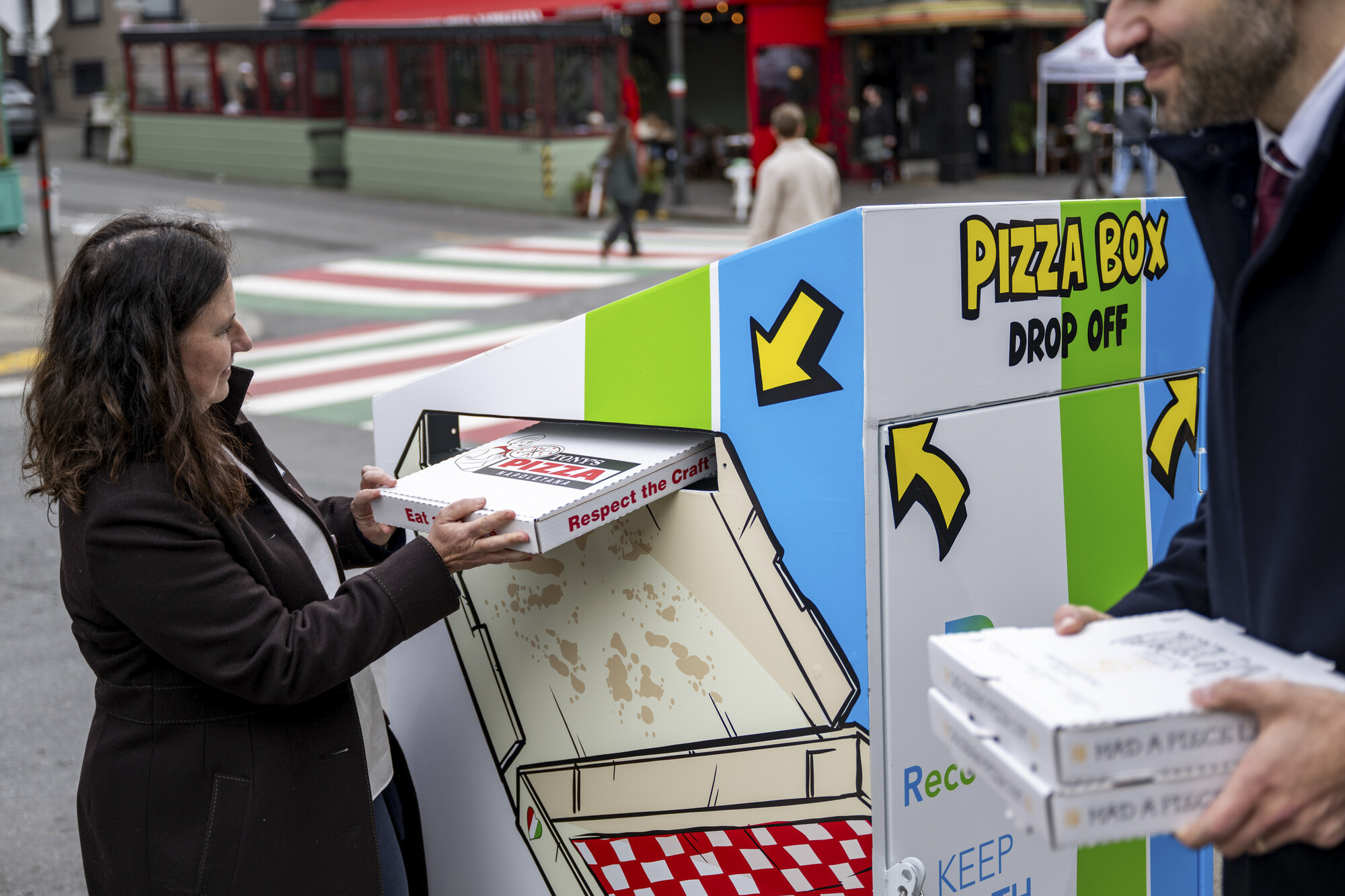
"caption": "A person drops a pizza box into a new trash can designed specifically to accommodate pizza boxes in San Francisco’s North Beach neighborhood on Jan. 23, 2026.",
"credit": "Beth LaBerge/KQED",
"altTag": null,
"description": null,
"imgSizes": {
"thumbnail": {
"file": "https://cdn.kqed.org/wp-content/uploads/sites/10/2026/01/260123-PIZZATRASHCANS-05-BL_QED-KQED-160x107.jpg",
"width": 160,
"height": 107,
"mimeType": "image/jpeg"
},
"1536x1536": {
"file": "https://cdn.kqed.org/wp-content/uploads/sites/10/2026/01/260123-PIZZATRASHCANS-05-BL_QED-KQED-1536x1024.jpg",
"width": 1536,
"height": 1024,
"mimeType": "image/jpeg"
},
"post-thumbnail": {
"file": "https://cdn.kqed.org/wp-content/uploads/sites/10/2026/01/260123-PIZZATRASHCANS-05-BL_QED-KQED-672x372.jpg",
"width": 672,
"height": 372,
"mimeType": "image/jpeg"
},
"twentyfourteen-full-width": {
"file": "https://cdn.kqed.org/wp-content/uploads/sites/10/2026/01/260123-PIZZATRASHCANS-05-BL_QED-KQED-1038x576.jpg",
"width": 1038,
"height": 576,
"mimeType": "image/jpeg"
},
"npr-cds-wide": {
"file": "https://cdn.kqed.org/wp-content/uploads/sites/10/2026/01/260123-PIZZATRASHCANS-05-BL_QED-KQED-1200x675.jpg",
"width": 1200,
"height": 675,
"mimeType": "image/jpeg"
},
"kqedFullSize": {
"file": "https://cdn.kqed.org/wp-content/uploads/sites/10/2026/01/260123-PIZZATRASHCANS-05-BL_QED-KQED.jpg",
"width": 2000,
"height": 1333
}
},
"isLoading": false,
"fetchFailed": false
},
"news_12068334": {
"type": "attachments",
"id": "news_12068334",
"meta": {
"index": "attachments_1716263798",
"site": "news",
"id": "12068334",
"found": true
},
"title": "20251221_JohnColtraneChurch_December_GH-15_qed",
"publishDate": 1766517678,
"status": "inherit",
"parent": 0,
"modified": 1768942472,
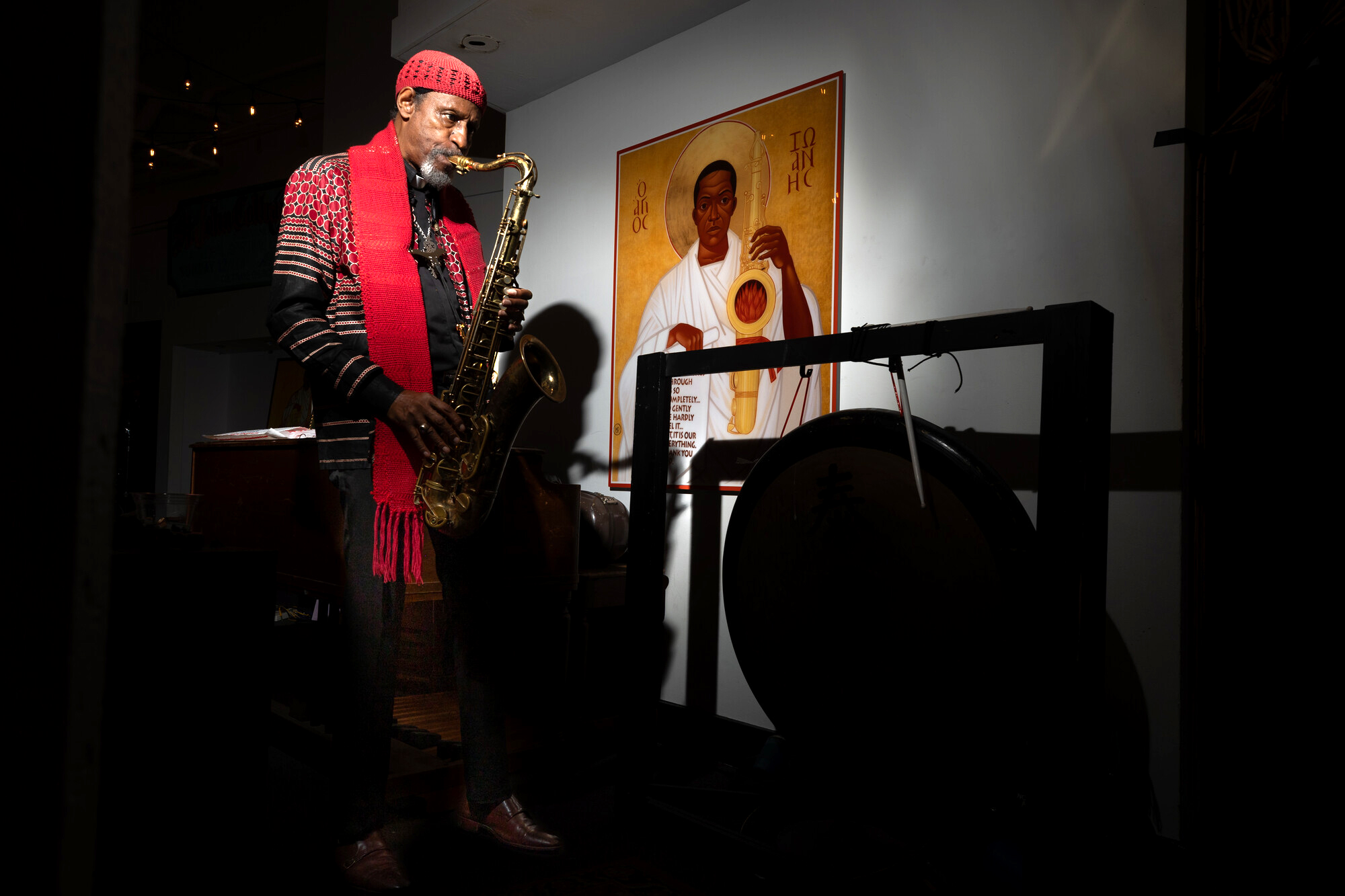
"caption": "His Eminence Archbishop Franzo W. King holds his saxophone beneath an icon of John Coltrane inside the St. John Coltrane Church at Fort Mason in San Francisco on Dec. 21, 2025.",
"credit": "Gustavo Hernandez/KQED",
"altTag": null,
"description": null,
"imgSizes": {
"thumbnail": {
"file": "https://cdn.kqed.org/wp-content/uploads/sites/10/2025/12/20251221_JohnColtraneChurch_December_GH-15_qed-160x107.jpg",
"width": 160,
"height": 107,
"mimeType": "image/jpeg"
},
"1536x1536": {
"file": "https://cdn.kqed.org/wp-content/uploads/sites/10/2025/12/20251221_JohnColtraneChurch_December_GH-15_qed-1536x1024.jpg",
"width": 1536,
"height": 1024,
"mimeType": "image/jpeg"
},
"post-thumbnail": {
"file": "https://cdn.kqed.org/wp-content/uploads/sites/10/2025/12/20251221_JohnColtraneChurch_December_GH-15_qed-672x372.jpg",
"width": 672,
"height": 372,
"mimeType": "image/jpeg"
},
"twentyfourteen-full-width": {
"file": "https://cdn.kqed.org/wp-content/uploads/sites/10/2025/12/20251221_JohnColtraneChurch_December_GH-15_qed-1038x576.jpg",
"width": 1038,
"height": 576,
"mimeType": "image/jpeg"
},
"npr-cds-wide": {
"file": "https://cdn.kqed.org/wp-content/uploads/sites/10/2025/12/20251221_JohnColtraneChurch_December_GH-15_qed-1200x675.jpg",
"width": 1200,
"height": 675,
"mimeType": "image/jpeg"
},
"kqedFullSize": {
"file": "https://cdn.kqed.org/wp-content/uploads/sites/10/2025/12/20251221_JohnColtraneChurch_December_GH-15_qed.jpg",
"width": 2000,
"height": 1333
}
},
"isLoading": false,
"fetchFailed": false
},
"news_12070737": {
"type": "attachments",
"id": "news_12070737",
"meta": {
"index": "attachments_1716263798",
"site": "news",
"id": "12070737",
"found": true
},
"title": "260121-LuriePBLive-08-BL",
"publishDate": 1769055520,
"status": "inherit",
"parent": 0,
"modified": 1769055779,
"caption": "Mayor Daniel Lurie speaks with Political Breakdown hosts Marisa Lagos and Scott Shafer during a KQED Live event in San Francisco on Jan. 21, 2026.",
"credit": "Beth LaBerge/KQED",
"altTag": null,
"description": null,
"imgSizes": {
"thumbnail": {
"file": "https://cdn.kqed.org/wp-content/uploads/sites/10/2026/01/260121-LuriePBLive-08-BL-160x107.jpg",
"width": 160,
"height": 107,
"mimeType": "image/jpeg"
},
"1536x1536": {
"file": "https://cdn.kqed.org/wp-content/uploads/sites/10/2026/01/260121-LuriePBLive-08-BL-1536x1024.jpg",
"width": 1536,
"height": 1024,
"mimeType": "image/jpeg"
},
"post-thumbnail": {
"file": "https://cdn.kqed.org/wp-content/uploads/sites/10/2026/01/260121-LuriePBLive-08-BL-672x372.jpg",
"width": 672,
"height": 372,
"mimeType": "image/jpeg"
},
"twentyfourteen-full-width": {
"file": "https://cdn.kqed.org/wp-content/uploads/sites/10/2026/01/260121-LuriePBLive-08-BL-1038x576.jpg",
"width": 1038,
"height": 576,
"mimeType": "image/jpeg"
},
"npr-cds-wide": {
"file": "https://cdn.kqed.org/wp-content/uploads/sites/10/2026/01/260121-LuriePBLive-08-BL-1200x675.jpg",
"width": 1200,
"height": 675,
"mimeType": "image/jpeg"
},
"kqedFullSize": {
"file": "https://cdn.kqed.org/wp-content/uploads/sites/10/2026/01/260121-LuriePBLive-08-BL.jpg",
"width": 2000,
"height": 1333
}
},
"isLoading": false,
"fetchFailed": false
},
"news_11748206": {
"type": "attachments",
"id": "news_11748206",
"meta": {
"index": "attachments_1716263798",
"site": "news",
"id": "11748206",
"found": true
},
"title": "America's Cup - Finals Races 9 & 10",
"publishDate": 1558139942,
"status": "inherit",
"parent": 11748038,
"modified": 1558140358,
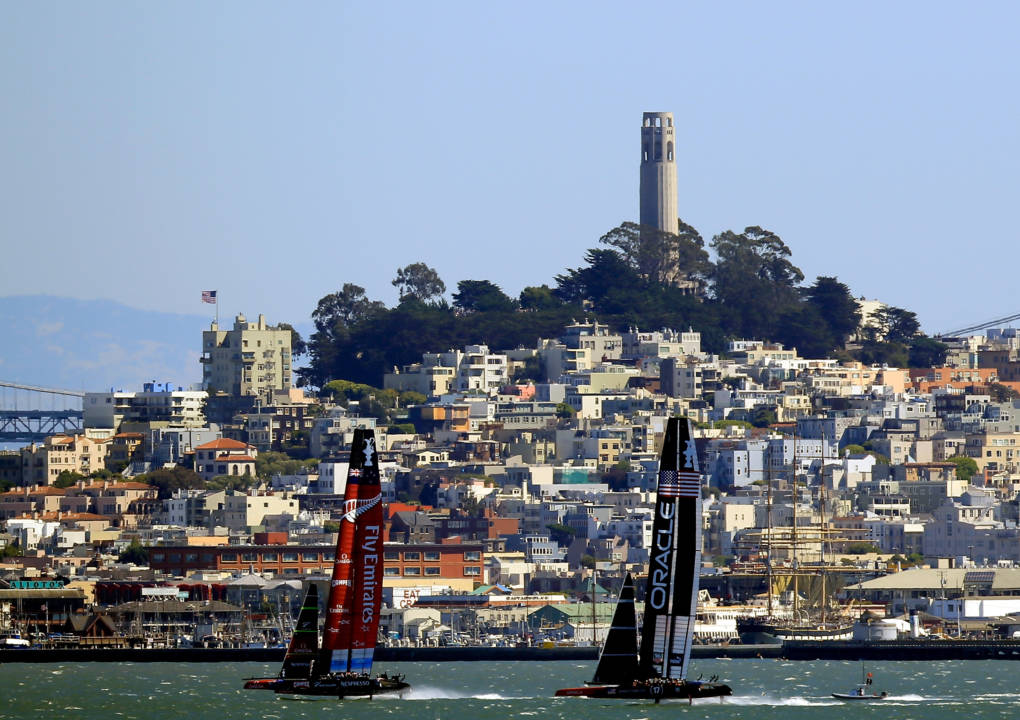
"caption": "You can see it from all over the Bay Area, but how many people who live here have actually been inside Coit Tower?",
"credit": "Jamie Squire/Getty Images",
"altTag": "You can see it from all over the Bay Area, but how many people who live here have actually been inside Coit Tower?",
"description": "You can see it from all over the Bay Area, but how many people who live here have actually been inside Coit Tower?",
"imgSizes": {
"thumbnail": {
"file": "https://cdn.kqed.org/wp-content/uploads/sites/10/2019/05/GettyImages-180658422-1-160x113.jpg",
"width": 160,
"height": 113,
"mimeType": "image/jpeg"
},
"medium": {
"file": "https://cdn.kqed.org/wp-content/uploads/sites/10/2019/05/GettyImages-180658422-1-800x565.jpg",
"width": 800,
"height": 565,
"mimeType": "image/jpeg"
},
"large": {
"file": "https://cdn.kqed.org/wp-content/uploads/sites/10/2019/05/GettyImages-180658422-1-1020x720.jpg",
"width": 1020,
"height": 720,
"mimeType": "image/jpeg"
},
"complete_open_graph": {
"file": "https://cdn.kqed.org/wp-content/uploads/sites/10/2019/05/GettyImages-180658422-1-1200x847.jpg",
"width": 1200,
"height": 847,
"mimeType": "image/jpeg"
},
"post-thumbnail": {
"file": "https://cdn.kqed.org/wp-content/uploads/sites/10/2019/05/GettyImages-180658422-1-672x372.jpg",
"width": 672,
"height": 372,
"mimeType": "image/jpeg"
},
"twentyfourteen-full-width": {
"file": "https://cdn.kqed.org/wp-content/uploads/sites/10/2019/05/GettyImages-180658422-1-1038x576.jpg",
"width": 1038,
"height": 576,
"mimeType": "image/jpeg"
},
"full-width": {
"file": "https://cdn.kqed.org/wp-content/uploads/sites/10/2019/05/GettyImages-180658422-1-1920x1355.jpg",
"width": 1920,
"height": 1355,
"mimeType": "image/jpeg"
},
"apple_news_ca_landscape_12_9": {
"file": "https://cdn.kqed.org/wp-content/uploads/sites/10/2019/05/GettyImages-180658422-1-1832x1374.jpg",
"width": 1832,
"height": 1374,
"mimeType": "image/jpeg"
},
"apple_news_ca_landscape_9_7": {
"file": "https://cdn.kqed.org/wp-content/uploads/sites/10/2019/05/GettyImages-180658422-1-1376x1032.jpg",
"width": 1376,
"height": 1032,
"mimeType": "image/jpeg"
},
"apple_news_ca_landscape_5_5": {
"file": "https://cdn.kqed.org/wp-content/uploads/sites/10/2019/05/GettyImages-180658422-1-1044x783.jpg",
"width": 1044,
"height": 783,
"mimeType": "image/jpeg"
},
"apple_news_ca_landscape_4_7": {
"file": "https://cdn.kqed.org/wp-content/uploads/sites/10/2019/05/GettyImages-180658422-1-632x474.jpg",
"width": 632,
"height": 474,
"mimeType": "image/jpeg"
},
"apple_news_ca_landscape_4_0": {
"file": "https://cdn.kqed.org/wp-content/uploads/sites/10/2019/05/GettyImages-180658422-1-536x402.jpg",
"width": 536,
"height": 402,
"mimeType": "image/jpeg"
},
"apple_news_ca_portrait_12_9": {
"file": "https://cdn.kqed.org/wp-content/uploads/sites/10/2019/05/GettyImages-180658422-1-1122x1496.jpg",
"width": 1122,
"height": 1496,
"mimeType": "image/jpeg"
},
"apple_news_ca_portrait_9_7": {
"file": "https://cdn.kqed.org/wp-content/uploads/sites/10/2019/05/GettyImages-180658422-1-840x1120.jpg",
"width": 840,
"height": 1120,
"mimeType": "image/jpeg"
},
"apple_news_ca_portrait_5_5": {
"file": "https://cdn.kqed.org/wp-content/uploads/sites/10/2019/05/GettyImages-180658422-1-687x916.jpg",
"width": 687,
"height": 916,
"mimeType": "image/jpeg"
},
"apple_news_ca_portrait_4_7": {
"file": "https://cdn.kqed.org/wp-content/uploads/sites/10/2019/05/GettyImages-180658422-1-414x552.jpg",
"width": 414,
"height": 552,
"mimeType": "image/jpeg"
},
"apple_news_ca_portrait_4_0": {
"file": "https://cdn.kqed.org/wp-content/uploads/sites/10/2019/05/GettyImages-180658422-1-354x472.jpg",
"width": 354,
"height": 472,
"mimeType": "image/jpeg"
},
"apple_news_ca_square_12_9": {
"file": "https://cdn.kqed.org/wp-content/uploads/sites/10/2019/05/GettyImages-180658422-1-1472x1472.jpg",
"width": 1472,
"height": 1472,
"mimeType": "image/jpeg"
},
"apple_news_ca_square_9_7": {
"file": "https://cdn.kqed.org/wp-content/uploads/sites/10/2019/05/GettyImages-180658422-1-1104x1104.jpg",
"width": 1104,
"height": 1104,
"mimeType": "image/jpeg"
},
"apple_news_ca_square_5_5": {
"file": "https://cdn.kqed.org/wp-content/uploads/sites/10/2019/05/GettyImages-180658422-1-912x912.jpg",
"width": 912,
"height": 912,
"mimeType": "image/jpeg"
},
"apple_news_ca_square_4_7": {
"file": "https://cdn.kqed.org/wp-content/uploads/sites/10/2019/05/GettyImages-180658422-1-550x550.jpg",
"width": 550,
"height": 550,
"mimeType": "image/jpeg"
},
"apple_news_ca_square_4_0": {
"file": "https://cdn.kqed.org/wp-content/uploads/sites/10/2019/05/GettyImages-180658422-1-470x470.jpg",
"width": 470,
"height": 470,
"mimeType": "image/jpeg"
},
"kqedFullSize": {
"file": "https://cdn.kqed.org/wp-content/uploads/sites/10/2019/05/GettyImages-180658422-1-e1769017310150.jpg",
"width": 2000,
"height": 1411
}
},
"isLoading": false,
"fetchFailed": false
},
"news_12070547": {
"type": "attachments",
"id": "news_12070547",
"meta": {
"index": "attachments_1716263798",
"site": "news",
"id": "12070547",
"found": true
},
"title": "260120-SFPROTEST00401_TV-KQED",
"publishDate": 1768964372,
"status": "inherit",
"parent": 0,
"modified": 1768964404,
"caption": "Protesters march against ICE in front of City Hall at Civic Center Plaza in San Francisco on January 20, 2026.",
"credit": "Tâm Vũ/KQED",
"altTag": null,
"description": null,
"imgSizes": {
"thumbnail": {
"file": "https://cdn.kqed.org/wp-content/uploads/sites/10/2026/01/260120-SFPROTEST00401_TV-KQED-160x107.jpg",
"width": 160,
"height": 107,
"mimeType": "image/jpeg"
},
"1536x1536": {
"file": "https://cdn.kqed.org/wp-content/uploads/sites/10/2026/01/260120-SFPROTEST00401_TV-KQED-1536x1024.jpg",
"width": 1536,
"height": 1024,
"mimeType": "image/jpeg"
},
"post-thumbnail": {
"file": "https://cdn.kqed.org/wp-content/uploads/sites/10/2026/01/260120-SFPROTEST00401_TV-KQED-672x372.jpg",
"width": 672,
"height": 372,
"mimeType": "image/jpeg"
},
"twentyfourteen-full-width": {
"file": "https://cdn.kqed.org/wp-content/uploads/sites/10/2026/01/260120-SFPROTEST00401_TV-KQED-1038x576.jpg",
"width": 1038,
"height": 576,
"mimeType": "image/jpeg"
},
"npr-cds-wide": {
"file": "https://cdn.kqed.org/wp-content/uploads/sites/10/2026/01/260120-SFPROTEST00401_TV-KQED-1200x675.jpg",
"width": 1200,
"height": 675,
"mimeType": "image/jpeg"
},
"kqedFullSize": {
"file": "https://cdn.kqed.org/wp-content/uploads/sites/10/2026/01/260120-SFPROTEST00401_TV-KQED.jpg",
"width": 2000,
"height": 1333
}
},
"isLoading": false,
"fetchFailed": false
},
"news_12072732": {
"type": "attachments",
"id": "news_12072732",
"meta": {
"index": "attachments_1716263798",
"site": "news",
"id": "12072732",
"found": true
},
"title": "Schools that qualify for closure are announced in San Francisco",
"publishDate": 1770423223,
"status": "inherit",
"parent": 12070455,
"modified": 1770423257,
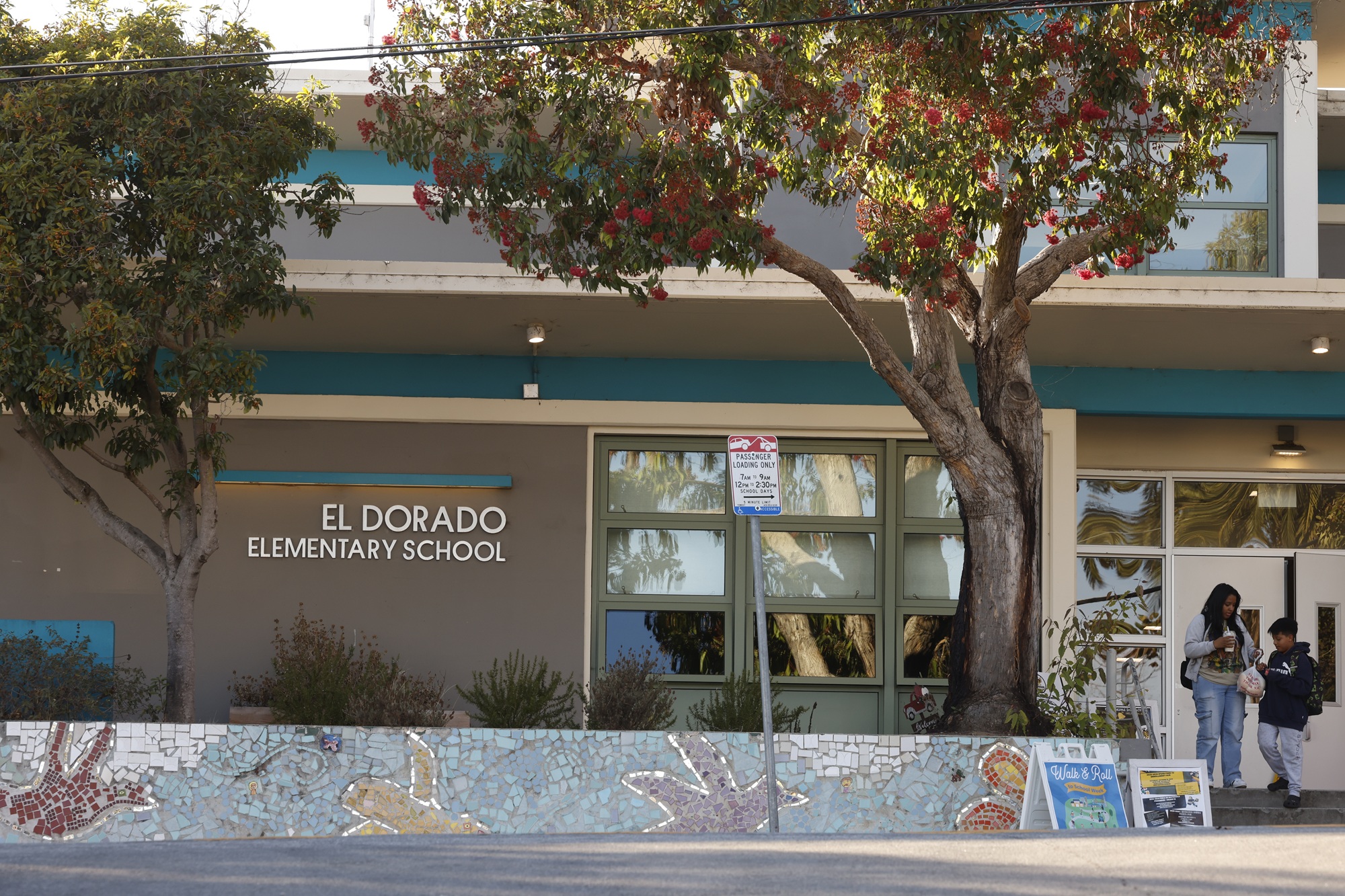
"caption": "El Dorado Elementary School in San Francisco on Oct. 8, 2024.",
"credit": "Yalonda M. James/San Francisco Chronicle via Getty Images",
"altTag": null,
"description": null,
"imgSizes": {
"thumbnail": {
"file": "https://cdn.kqed.org/wp-content/uploads/sites/10/2026/01/ElDoradoElementarySFGetty-160x107.jpg",
"width": 160,
"height": 107,
"mimeType": "image/jpeg"
},
"1536x1536": {
"file": "https://cdn.kqed.org/wp-content/uploads/sites/10/2026/01/ElDoradoElementarySFGetty-1536x1024.jpg",
"width": 1536,
"height": 1024,
"mimeType": "image/jpeg"
},
"post-thumbnail": {
"file": "https://cdn.kqed.org/wp-content/uploads/sites/10/2026/01/ElDoradoElementarySFGetty-672x372.jpg",
"width": 672,
"height": 372,
"mimeType": "image/jpeg"
},
"twentyfourteen-full-width": {
"file": "https://cdn.kqed.org/wp-content/uploads/sites/10/2026/01/ElDoradoElementarySFGetty-1038x576.jpg",
"width": 1038,
"height": 576,
"mimeType": "image/jpeg"
},
"npr-cds-wide": {
"file": "https://cdn.kqed.org/wp-content/uploads/sites/10/2026/01/ElDoradoElementarySFGetty-1200x675.jpg",
"width": 1200,
"height": 675,
"mimeType": "image/jpeg"
},
"kqedFullSize": {
"file": "https://cdn.kqed.org/wp-content/uploads/sites/10/2026/01/ElDoradoElementarySFGetty.jpg",
"width": 2000,
"height": 1333
}
},
"isLoading": false,
"fetchFailed": false
},
"news_12070214": {
"type": "attachments",
"id": "news_12070214",
"meta": {
"index": "attachments_1716263798",
"site": "news",
"id": "12070214",
"found": true
},
"title": "PG&E generators at 24th Street and Balboa in San Francisco on Jan. 16, 2026.",
"publishDate": 1768596503,
"status": "inherit",
"parent": 0,
"modified": 1768596523,
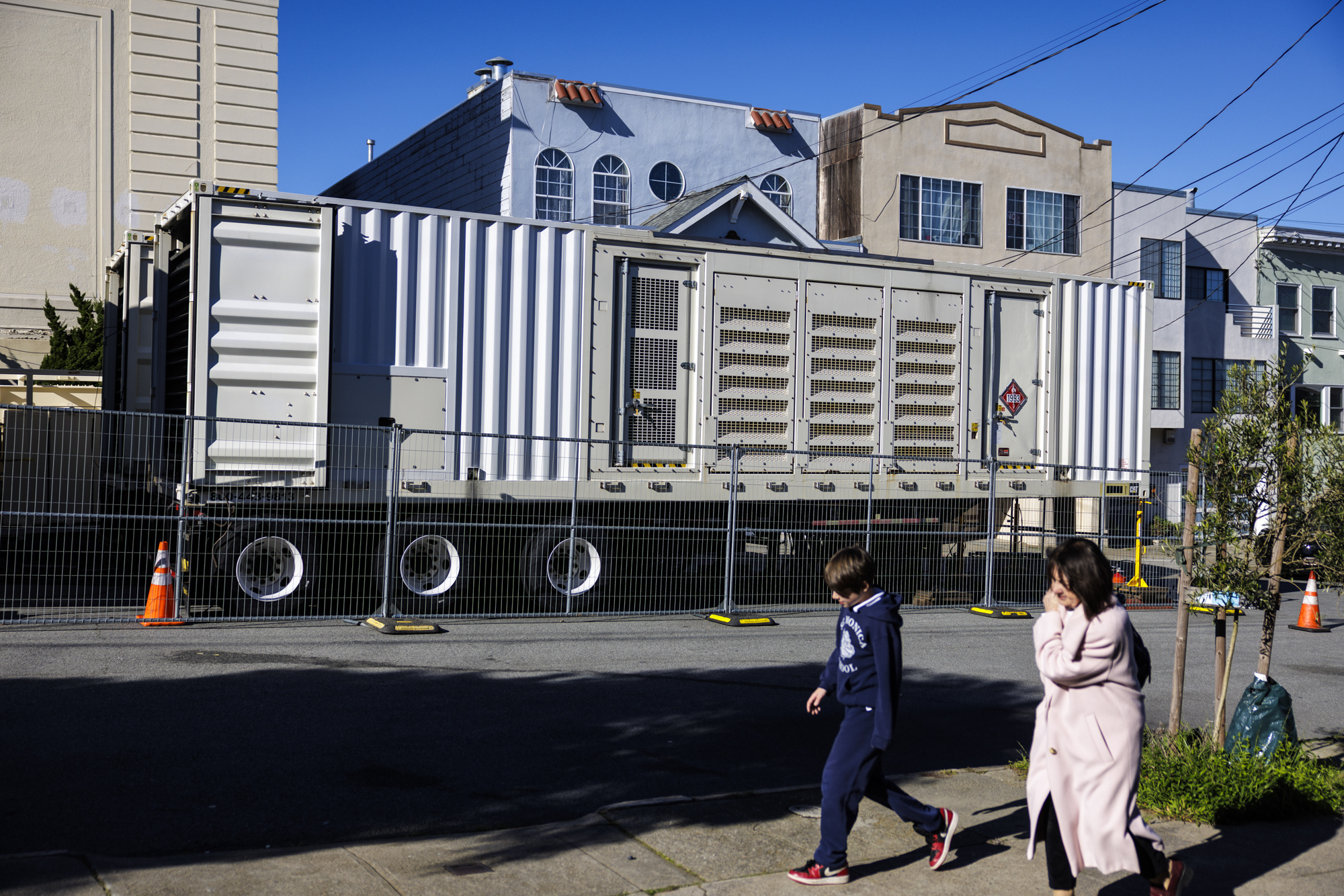
"caption": "PG&E generators at 24th Street and Balboa in San Francisco on Jan. 16, 2026.",
"credit": "Martin do Nascimento/KQED",
"altTag": null,
"description": null,
"imgSizes": {
"thumbnail": {
"file": "https://cdn.kqed.org/wp-content/uploads/sites/10/2026/01/260115-PGE-GENERATORS-MD-03-KQED-160x107.jpg",
"width": 160,
"height": 107,
"mimeType": "image/jpeg"
},
"1536x1536": {
"file": "https://cdn.kqed.org/wp-content/uploads/sites/10/2026/01/260115-PGE-GENERATORS-MD-03-KQED-1536x1025.jpg",
"width": 1536,
"height": 1025,
"mimeType": "image/jpeg"
},
"post-thumbnail": {
"file": "https://cdn.kqed.org/wp-content/uploads/sites/10/2026/01/260115-PGE-GENERATORS-MD-03-KQED-672x372.jpg",
"width": 672,
"height": 372,
"mimeType": "image/jpeg"
},
"twentyfourteen-full-width": {
"file": "https://cdn.kqed.org/wp-content/uploads/sites/10/2026/01/260115-PGE-GENERATORS-MD-03-KQED-1038x576.jpg",
"width": 1038,
"height": 576,
"mimeType": "image/jpeg"
},
"npr-cds-wide": {
"file": "https://cdn.kqed.org/wp-content/uploads/sites/10/2026/01/260115-PGE-GENERATORS-MD-03-KQED-1200x675.jpg",
"width": 1200,
"height": 675,
"mimeType": "image/jpeg"
},
"kqedFullSize": {
"file": "https://cdn.kqed.org/wp-content/uploads/sites/10/2026/01/260115-PGE-GENERATORS-MD-03-KQED.jpg",
"width": 2000,
"height": 1334
}
},
"isLoading": false,
"fetchFailed": false
},
"news_12070219": {
"type": "attachments",
"id": "news_12070219",
"meta": {
"index": "attachments_1716263798",
"site": "news",
"id": "12070219",
"found": true
},
"title": "260116-NEWSOMLURIEPRESSER-14-BL-KQED",
"publishDate": 1768596863,
"status": "inherit",
"parent": 0,
"modified": 1768602195,
"caption": "Gov. Gavin Newsom and Mayor Daniel Lurie speak to each other during a press conference at the Friendship House Association of American Indians in San Francisco on Jan. 16, 2026.",
"credit": "Beth LaBerge/KQED",
"altTag": null,
"description": null,
"imgSizes": {
"thumbnail": {
"file": "https://cdn.kqed.org/wp-content/uploads/sites/10/2026/01/260116-NEWSOMLURIEPRESSER-14-BL-KQED-160x107.jpg",
"width": 160,
"height": 107,
"mimeType": "image/jpeg"
},
"1536x1536": {
"file": "https://cdn.kqed.org/wp-content/uploads/sites/10/2026/01/260116-NEWSOMLURIEPRESSER-14-BL-KQED-1536x1024.jpg",
"width": 1536,
"height": 1024,
"mimeType": "image/jpeg"
},
"post-thumbnail": {
"file": "https://cdn.kqed.org/wp-content/uploads/sites/10/2026/01/260116-NEWSOMLURIEPRESSER-14-BL-KQED-672x372.jpg",
"width": 672,
"height": 372,
"mimeType": "image/jpeg"
},
"twentyfourteen-full-width": {
"file": "https://cdn.kqed.org/wp-content/uploads/sites/10/2026/01/260116-NEWSOMLURIEPRESSER-14-BL-KQED-1038x576.jpg",
"width": 1038,
"height": 576,
"mimeType": "image/jpeg"
},
"npr-cds-wide": {
"file": "https://cdn.kqed.org/wp-content/uploads/sites/10/2026/01/260116-NEWSOMLURIEPRESSER-14-BL-KQED-1200x675.jpg",
"width": 1200,
"height": 675,
"mimeType": "image/jpeg"
},
"kqedFullSize": {
"file": "https://cdn.kqed.org/wp-content/uploads/sites/10/2026/01/260116-NEWSOMLURIEPRESSER-14-BL-KQED.jpg",
"width": 2000,
"height": 1333
}
},
"isLoading": false,
"fetchFailed": false
},
"news_10466122": {
"type": "attachments",
"id": "news_10466122",
"meta": {
"index": "attachments_1716263798",
"site": "news",
"id": "10466122",
"found": true
},
"parent": 10465873,
"imgSizes": {
"twentyfourteen-full-width": {
"file": "https://ww2.kqed.org/app/uploads/sites/10/2015/03/SFPD-sized-1038x576.jpg",
"width": 1038,
"mimeType": "image/jpeg",
"height": 576
},
"thumbnail": {
"file": "https://ww2.kqed.org/app/uploads/sites/10/2015/03/SFPD-sized-400x300.jpg",
"width": 400,
"mimeType": "image/jpeg",
"height": 300
},
"fd-sm": {
"file": "https://ww2.kqed.org/app/uploads/sites/10/2015/03/SFPD-sized-320x240.jpg",
"width": 320,
"mimeType": "image/jpeg",
"height": 240
},
"post-thumbnail": {
"file": "https://ww2.kqed.org/app/uploads/sites/10/2015/03/SFPD-sized-672x372.jpg",
"width": 672,
"mimeType": "image/jpeg",
"height": 372
},
"kqedFullSize": {
"file": "https://ww2.kqed.org/app/uploads/sites/10/2015/03/SFPD-sized.jpg",
"width": 1920,
"height": 1438
},
"large": {
"file": "https://ww2.kqed.org/app/uploads/sites/10/2015/03/SFPD-sized-1440x1079.jpg",
"width": 1440,
"mimeType": "image/jpeg",
"height": 1079
},
"guest-author-96": {
"file": "https://ww2.kqed.org/app/uploads/sites/10/2015/03/SFPD-sized-96x96.jpg",
"width": 96,
"mimeType": "image/jpeg",
"height": 96
},
"medium": {
"file": "https://ww2.kqed.org/app/uploads/sites/10/2015/03/SFPD-sized-800x599.jpg",
"width": 800,
"mimeType": "image/jpeg",
"height": 599
},
"guest-author-64": {
"file": "https://ww2.kqed.org/app/uploads/sites/10/2015/03/SFPD-sized-64x64.jpg",
"width": 64,
"mimeType": "image/jpeg",
"height": 64
},
"guest-author-32": {
"file": "https://ww2.kqed.org/app/uploads/sites/10/2015/03/SFPD-sized-32x32.jpg",
"width": 32,
"mimeType": "image/jpeg",
"height": 32
},
"fd-lrg": {
"file": "https://ww2.kqed.org/app/uploads/sites/10/2015/03/SFPD-sized-1180x884.jpg",
"width": 1180,
"mimeType": "image/jpeg",
"height": 884
},
"fd-med": {
"file": "https://ww2.kqed.org/app/uploads/sites/10/2015/03/SFPD-sized-768x575.jpg",
"width": 768,
"mimeType": "image/jpeg",
"height": 575
},
"detail": {
"file": "https://ww2.kqed.org/app/uploads/sites/10/2015/03/SFPD-sized-75x75.jpg",
"width": 75,
"mimeType": "image/jpeg",
"height": 75
},
"guest-author-128": {
"file": "https://ww2.kqed.org/app/uploads/sites/10/2015/03/SFPD-sized-128x128.jpg",
"width": 128,
"mimeType": "image/jpeg",
"height": 128
}
},
"publishDate": 1427329545,
"modified": 1430412358,
"caption": "San Francisco police patrol car. ",
"description": "A complaint filed March 25 alleges a San Francisco Police Department officer violated city law through improperly participating in an FBI investigation.",
"title": "San Francisco Police",
"credit": "Alex Emslie/KQED",
"status": "inherit",
"isLoading": false,
"fetchFailed": false
},
"news_12067121": {
"type": "attachments",
"id": "news_12067121",
"meta": {
"index": "attachments_1716263798",
"site": "news",
"id": "12067121",
"found": true
},
"title": "251213-FEAROFFLYING00262_TV-KQED",
"publishDate": 1765823451,
"status": "inherit",
"parent": 0,
"modified": 1767743022,
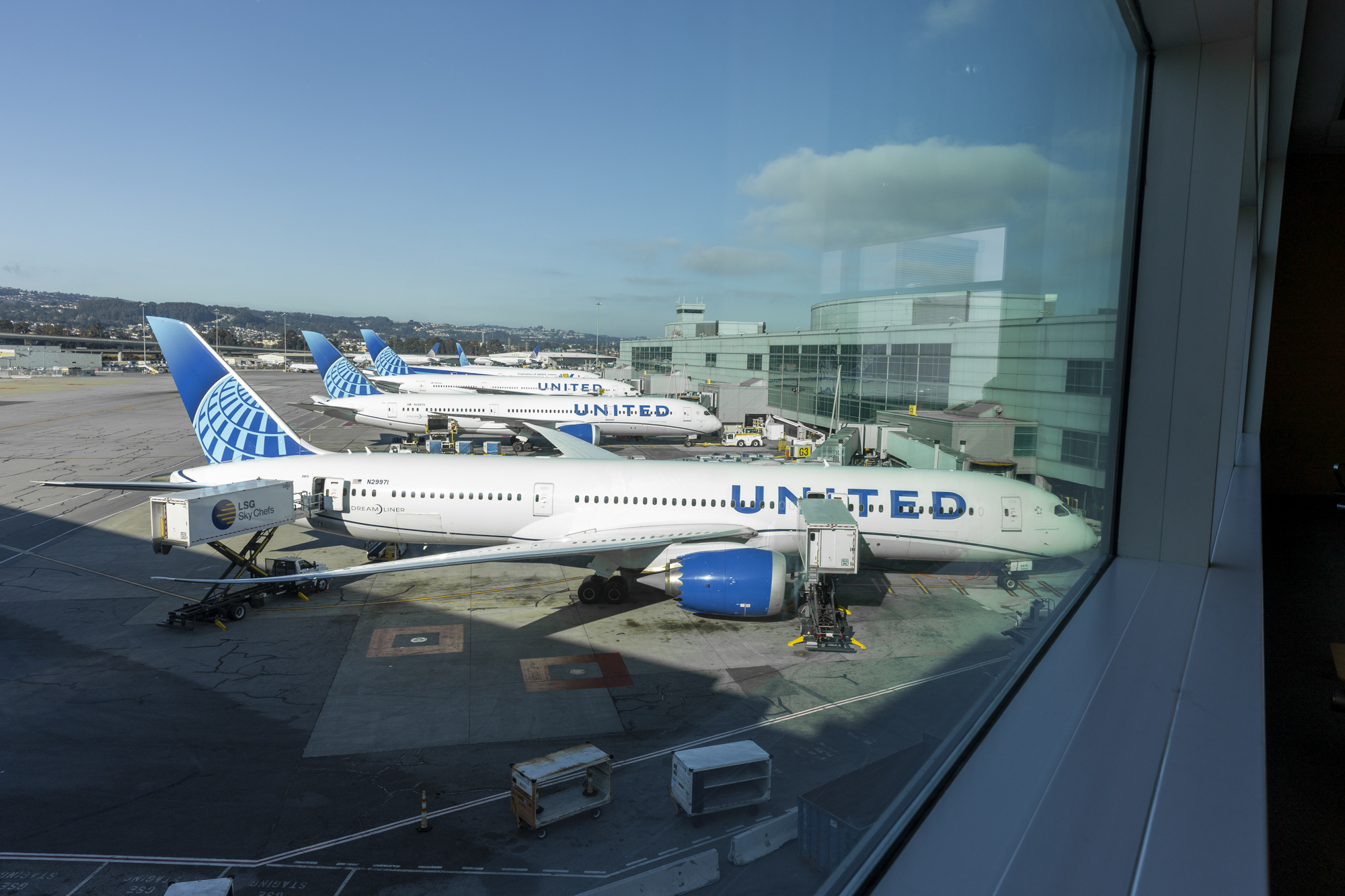
"caption": "A view of United Airlines planes from the Reflection Room at San Francisco International Airport in San Francisco on December 13, 2025.",
"credit": "Tâm Vũ/KQED",
"altTag": null,
"description": null,
"imgSizes": {
"thumbnail": {
"file": "https://cdn.kqed.org/wp-content/uploads/sites/10/2025/12/251213-FEAROFFLYING00262_TV-KQED-160x107.jpg",
"width": 160,
"height": 107,
"mimeType": "image/jpeg"
},
"1536x1536": {
"file": "https://cdn.kqed.org/wp-content/uploads/sites/10/2025/12/251213-FEAROFFLYING00262_TV-KQED-1536x1024.jpg",
"width": 1536,
"height": 1024,
"mimeType": "image/jpeg"
},
"post-thumbnail": {
"file": "https://cdn.kqed.org/wp-content/uploads/sites/10/2025/12/251213-FEAROFFLYING00262_TV-KQED-672x372.jpg",
"width": 672,
"height": 372,
"mimeType": "image/jpeg"
},
"twentyfourteen-full-width": {
"file": "https://cdn.kqed.org/wp-content/uploads/sites/10/2025/12/251213-FEAROFFLYING00262_TV-KQED-1038x576.jpg",
"width": 1038,
"height": 576,
"mimeType": "image/jpeg"
},
"npr-cds-wide": {
"file": "https://cdn.kqed.org/wp-content/uploads/sites/10/2025/12/251213-FEAROFFLYING00262_TV-KQED-1200x675.jpg",
"width": 1200,
"height": 675,
"mimeType": "image/jpeg"
},
"kqedFullSize": {
"file": "https://cdn.kqed.org/wp-content/uploads/sites/10/2025/12/251213-FEAROFFLYING00262_TV-KQED.jpg",
"width": 2000,
"height": 1333
}
},
"isLoading": false,
"fetchFailed": false
},
"news_12069998": {
"type": "attachments",
"id": "news_12069998",
"meta": {
"index": "attachments_1716263798",
"site": "news",
"id": "12069998",
"found": true
},
"title": "260115-SFCHILDCARESUBSIDIES00057_TV-KQED",
"publishDate": 1768504296,
"status": "inherit",
"parent": 0,
"modified": 1768504348,
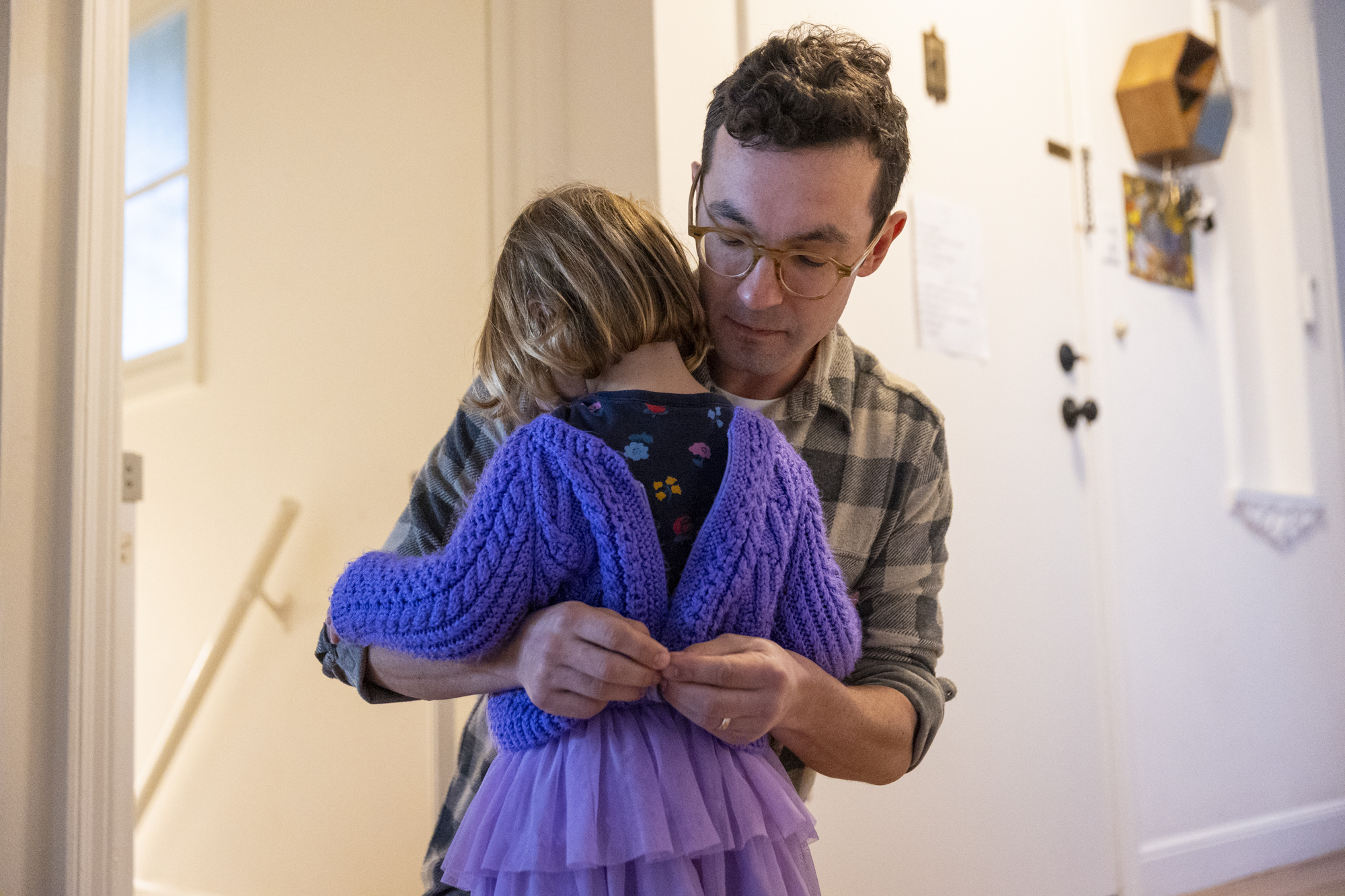
"caption": "Dylan Beighley (right) gets his daughter Bea (left) ready to be picked up by her grandpa in San Francisco on January 15, 2026. San Francisco is expanding access to child care by offering 50% discounts to middle- and upper-middle-income earners in an effort to tackle affordability issues in one of the most expensive cities in the country.",
"credit": "Tâm Vũ/KQED",
"altTag": null,
"description": null,
"imgSizes": {
"thumbnail": {
"file": "https://cdn.kqed.org/wp-content/uploads/sites/10/2026/01/260115-SFCHILDCARESUBSIDIES00057_TV-KQED-160x107.jpg",
"width": 160,
"height": 107,
"mimeType": "image/jpeg"
},
"1536x1536": {
"file": "https://cdn.kqed.org/wp-content/uploads/sites/10/2026/01/260115-SFCHILDCARESUBSIDIES00057_TV-KQED-1536x1024.jpg",
"width": 1536,
"height": 1024,
"mimeType": "image/jpeg"
},
"post-thumbnail": {
"file": "https://cdn.kqed.org/wp-content/uploads/sites/10/2026/01/260115-SFCHILDCARESUBSIDIES00057_TV-KQED-672x372.jpg",
"width": 672,
"height": 372,
"mimeType": "image/jpeg"
},
"twentyfourteen-full-width": {
"file": "https://cdn.kqed.org/wp-content/uploads/sites/10/2026/01/260115-SFCHILDCARESUBSIDIES00057_TV-KQED-1038x576.jpg",
"width": 1038,
"height": 576,
"mimeType": "image/jpeg"
},
"npr-cds-wide": {
"file": "https://cdn.kqed.org/wp-content/uploads/sites/10/2026/01/260115-SFCHILDCARESUBSIDIES00057_TV-KQED-1200x675.jpg",
"width": 1200,
"height": 675,
"mimeType": "image/jpeg"
},
"kqedFullSize": {
"file": "https://cdn.kqed.org/wp-content/uploads/sites/10/2026/01/260115-SFCHILDCARESUBSIDIES00057_TV-KQED.jpg",
"width": 2000,
"height": 1333
}
},
"isLoading": false,
"fetchFailed": false
},
"news_12070021": {
"type": "attachments",
"id": "news_12070021",
"meta": {
"index": "attachments_1716263798",
"site": "news",
"id": "12070021",
"found": true
},
"title": "260115-SOTC-BL02-KQED",
"publishDate": 1768506530,
"status": "inherit",
"parent": 0,
"modified": 1768506573,
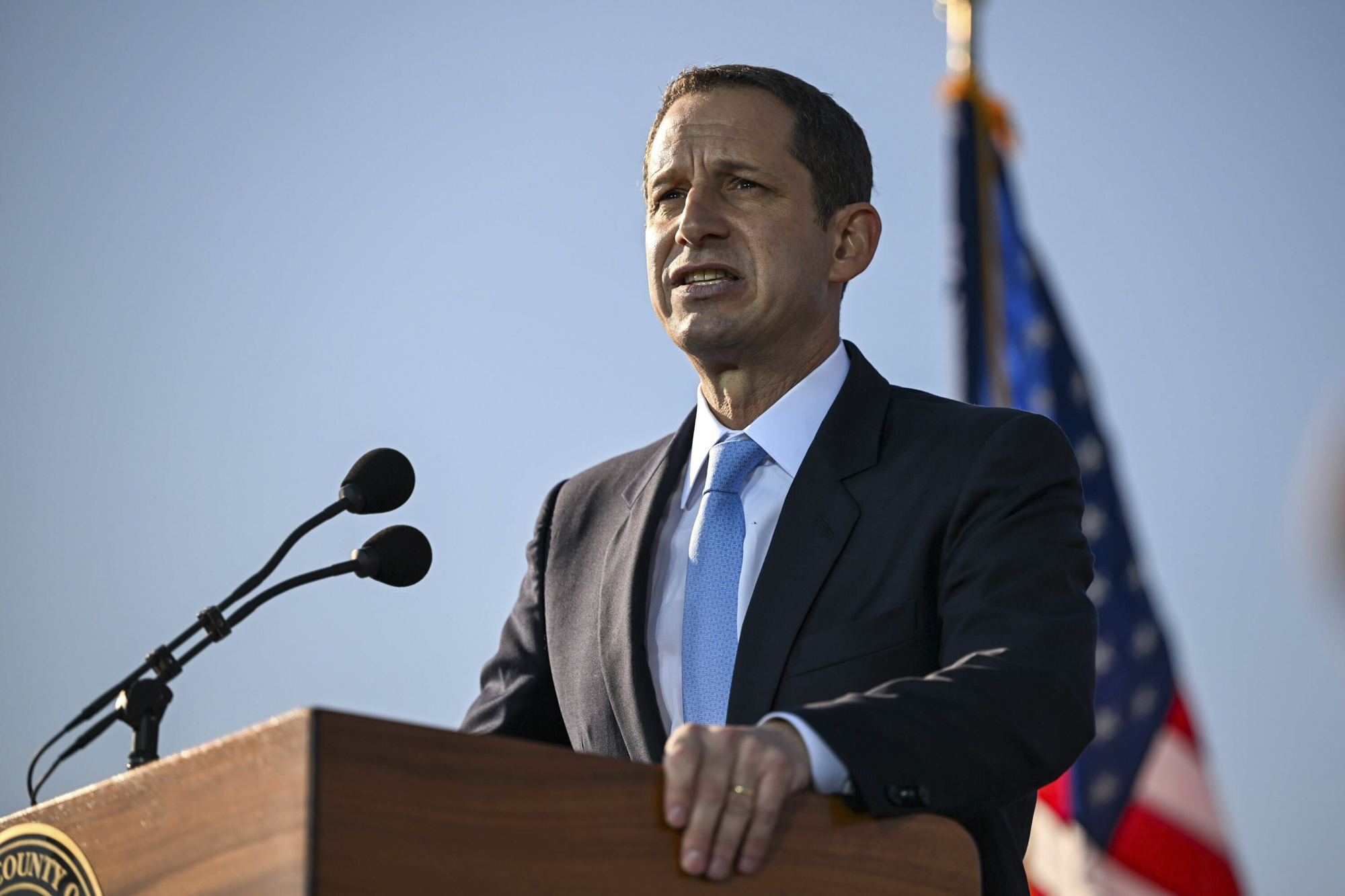
"caption": "San Francisco Mayor Daniel Lurie gives remarks during a State of the City address at Rossi Park Ball Field in the Richmond neighborhood of San Francisco on Jan. 15, 2026.",
"credit": "Beth LaBerge/KQED",
"altTag": null,
"description": null,
"imgSizes": {
"thumbnail": {
"file": "https://cdn.kqed.org/wp-content/uploads/sites/10/2026/01/260115-SOTC-BL02-KQED-160x107.jpg",
"width": 160,
"height": 107,
"mimeType": "image/jpeg"
},
"1536x1536": {
"file": "https://cdn.kqed.org/wp-content/uploads/sites/10/2026/01/260115-SOTC-BL02-KQED-1536x1024.jpg",
"width": 1536,
"height": 1024,
"mimeType": "image/jpeg"
},
"post-thumbnail": {
"file": "https://cdn.kqed.org/wp-content/uploads/sites/10/2026/01/260115-SOTC-BL02-KQED-672x372.jpg",
"width": 672,
"height": 372,
"mimeType": "image/jpeg"
},
"twentyfourteen-full-width": {
"file": "https://cdn.kqed.org/wp-content/uploads/sites/10/2026/01/260115-SOTC-BL02-KQED-1038x576.jpg",
"width": 1038,
"height": 576,
"mimeType": "image/jpeg"
},
"npr-cds-wide": {
"file": "https://cdn.kqed.org/wp-content/uploads/sites/10/2026/01/260115-SOTC-BL02-KQED-1200x675.jpg",
"width": 1200,
"height": 675,
"mimeType": "image/jpeg"
},
"kqedFullSize": {
"file": "https://cdn.kqed.org/wp-content/uploads/sites/10/2026/01/260115-SOTC-BL02-KQED.jpg",
"width": 2000,
"height": 1333
}
},
"isLoading": false,
"fetchFailed": false
}
},
"audioPlayerReducer": {
"postId": "stream_live",
"isPaused": true,
"isPlaying": false,
"pfsActive": false,
"pledgeModalIsOpen": true,
"playerDrawerIsOpen": false,
"liveAudioPlayStartedAt": 0,
"liveAudioPlayContext": ""
},
"authorsReducer": {
"byline_news_12070561": {
"type": "authors",
"id": "byline_news_12070561",
"meta": {
"override": true
},
"slug": "byline_news_12070561",
"name": "KQED News and Arts Staff",
"isLoading": false
},
"byline_news_12068758": {
"type": "authors",
"id": "byline_news_12068758",
"meta": {
"override": true
},
"slug": "byline_news_12068758",
"name": "Evan Roberts",
"isLoading": false
},
"aehsanipour": {
"type": "authors",
"id": "11580",
"meta": {
"index": "authors_1716337520",
"id": "11580",
"found": true
},
"name": "Asal Ehsanipour",
"firstName": "Asal",
"lastName": "Ehsanipour",
"slug": "aehsanipour",
"email": "aehsanipour@kqed.org",
"display_author_email": false,
"staff_mastheads": [],
"title": "Reporter and Producer",
"bio": "Asal Ehsanipour is a producer and reporter for Rightnowish, Bay Curious and The California Report Magazine. She is also a producer for \u003ca href=\"https://www.thedoubleshift.com/\">The Double Shift\u003c/a>, a podcast about a new generation of working mothers. In 2018, Asal was named an Emerging Journalist Fellow by the Journalism and Women’s Symposium. Her work has appeared on KQED, KALW, PRI’s The World, and in several food and travel publications.",
"avatar": "https://secure.gravatar.com/avatar/c0e210438f5dca1b76921ff9f0eada52?s=600&d=blank&r=g",
"twitter": null,
"facebook": null,
"instagram": null,
"linkedin": null,
"sites": [
{
"site": "arts",
"roles": []
},
{
"site": "news",
"roles": [
"author",
"edit_others_posts"
]
}
],
"headData": {
"title": "Asal Ehsanipour | KQED",
"description": "Reporter and Producer",
"ogImgSrc": "https://secure.gravatar.com/avatar/c0e210438f5dca1b76921ff9f0eada52?s=600&d=blank&r=g",
"twImgSrc": "https://secure.gravatar.com/avatar/c0e210438f5dca1b76921ff9f0eada52?s=600&d=blank&r=g"
},
"isLoading": false,
"link": "/author/aehsanipour"
},
"adahlstromeckman": {
"type": "authors",
"id": "11785",
"meta": {
"index": "authors_1716337520",
"id": "11785",
"found": true
},
"name": "Azul Dahlstrom-Eckman",
"firstName": "Azul",
"lastName": "Dahlstrom-Eckman",
"slug": "adahlstromeckman",
"email": "adahlstrom-eckman@kqed.org",
"display_author_email": true,
"staff_mastheads": [],
"title": "Reporter",
"bio": "Azul is a reporter for KQED focusing on transportation and features. He joined KQED in 2021 as an alumna of KALW's Audio Academy radio journalism training program.",
"avatar": "https://secure.gravatar.com/avatar/9cb750298435add7815a777f55bf1f46845c1386bb8452555c60a7b820b5aba3?s=600&d=blank&r=g",
"twitter": "@zuliemann",
"bluesky": "@azul415.bsky.social",
"facebook": null,
"instagram": null,
"linkedin": null,
"sites": [
{
"site": "arts",
"roles": [
"editor"
]
},
{
"site": "news",
"roles": [
"editor"
]
},
{
"site": "science",
"roles": [
"editor"
]
},
{
"site": "liveblog",
"roles": [
"author"
]
}
],
"headData": {
"title": "Azul Dahlstrom-Eckman | KQED",
"description": "Reporter",
"ogImgSrc": "https://secure.gravatar.com/avatar/9cb750298435add7815a777f55bf1f46845c1386bb8452555c60a7b820b5aba3?s=600&d=blank&r=g",
"twImgSrc": "https://secure.gravatar.com/avatar/9cb750298435add7815a777f55bf1f46845c1386bb8452555c60a7b820b5aba3?s=600&d=blank&r=g"
},
"isLoading": false,
"link": "/author/adahlstromeckman"
},
"daisynguyen": {
"type": "authors",
"id": "11829",
"meta": {
"index": "authors_1716337520",
"id": "11829",
"found": true
},
"name": "Daisy Nguyen",
"firstName": "Daisy",
"lastName": "Nguyen",
"slug": "daisynguyen",
"email": "daisynguyen@kqed.org",
"display_author_email": true,
"staff_mastheads": [
"news"
],
"title": "KQED Contributor",
"bio": "I have covered early childhood education and child care for KQED since 2022. I focus on policies aimed at increasing access to early care and education and how they shape individual lives. I've been a journalist for more than two decades, with most of that time devoted to covering breaking news throughout California for The Associated Press. I grew up in San Francisco and studied at UC Davis and Columbia University's Graduate School of Journalism. I live in Oakland with my husband and two kids.",
"avatar": "https://secure.gravatar.com/avatar/2da2127c27f7143b53ebd419800fd55f?s=600&d=blank&r=g",
"twitter": null,
"facebook": null,
"instagram": null,
"linkedin": "https://www.linkedin.com/in/daisynguyen/",
"sites": [
{
"site": "news",
"roles": [
"author"
]
},
{
"site": "liveblog",
"roles": [
"author"
]
}
],
"headData": {
"title": "Daisy Nguyen | KQED",
"description": "KQED Contributor",
"ogImgSrc": "https://secure.gravatar.com/avatar/2da2127c27f7143b53ebd419800fd55f?s=600&d=blank&r=g",
"twImgSrc": "https://secure.gravatar.com/avatar/2da2127c27f7143b53ebd419800fd55f?s=600&d=blank&r=g"
},
"isLoading": false,
"link": "/author/daisynguyen"
},
"sjohnson": {
"type": "authors",
"id": "11840",
"meta": {
"index": "authors_1716337520",
"id": "11840",
"found": true
},
"name": "Sydney Johnson",
"firstName": "Sydney",
"lastName": "Johnson",
"slug": "sjohnson",
"email": "sjohnson@kqed.org",
"display_author_email": false,
"staff_mastheads": [
"news"
],
"title": "KQED Reporter",
"bio": "Sydney Johnson is a general assignment reporter at KQED. She previously reported on public health and city government at the San Francisco Examiner, and before that, she covered statewide education policy for EdSource. Her reporting has won multiple local, state and national awards. Sydney is a graduate of the University of California, Berkeley and lives in San Francisco.",
"avatar": "https://secure.gravatar.com/avatar/97855f2719b72ad6190b7c535fe642c8?s=600&d=blank&r=g",
"twitter": "sydneyfjohnson",
"facebook": null,
"instagram": null,
"linkedin": null,
"sites": [
{
"site": "news",
"roles": [
"editor"
]
}
],
"headData": {
"title": "Sydney Johnson | KQED",
"description": "KQED Reporter",
"ogImgSrc": "https://secure.gravatar.com/avatar/97855f2719b72ad6190b7c535fe642c8?s=600&d=blank&r=g",
"twImgSrc": "https://secure.gravatar.com/avatar/97855f2719b72ad6190b7c535fe642c8?s=600&d=blank&r=g"
},
"isLoading": false,
"link": "/author/sjohnson"
},
"kdebenedetti": {
"type": "authors",
"id": "11913",
"meta": {
"index": "authors_1716337520",
"id": "11913",
"found": true
},
"name": "Katie DeBenedetti",
"firstName": "Katie",
"lastName": "DeBenedetti",
"slug": "kdebenedetti",
"email": "kdebenedetti@kqed.org",
"display_author_email": false,
"staff_mastheads": [
"news",
"science"
],
"title": "KQED Contributor",
"bio": "Katie DeBenedetti is a digital reporter covering daily news for the Express Desk. Prior to joining KQED as a culture reporting intern in January 2024, she covered education and city government for the Napa Valley Register.",
"avatar": "https://secure.gravatar.com/avatar/6e31073cb8f7e4214ab03f42771d0f45?s=600&d=blank&r=g",
"twitter": null,
"facebook": null,
"instagram": null,
"linkedin": null,
"sites": [
{
"site": "news",
"roles": [
"author"
]
},
{
"site": "science",
"roles": [
"author"
]
},
{
"site": "liveblog",
"roles": [
"author"
]
}
],
"headData": {
"title": "Katie DeBenedetti | KQED",
"description": "KQED Contributor",
"ogImgSrc": "https://secure.gravatar.com/avatar/6e31073cb8f7e4214ab03f42771d0f45?s=600&d=blank&r=g",
"twImgSrc": "https://secure.gravatar.com/avatar/6e31073cb8f7e4214ab03f42771d0f45?s=600&d=blank&r=g"
},
"isLoading": false,
"link": "/author/kdebenedetti"
},
"epeppel": {
"type": "authors",
"id": "11989",
"meta": {
"index": "authors_1716337520",
"id": "11989",
"found": true
},
"name": "Eliza Peppel",
"firstName": "Eliza",
"lastName": "Peppel",
"slug": "epeppel",
"email": "epeppel@kqed.org",
"display_author_email": false,
"staff_mastheads": [],
"title": null,
"bio": "Eliza is an award-winning journalist living in Oakland. She was previously a reporting fellow at KALW, where she reported daily news and long-form radio features. Eliza studied journalism at Fordham University in The Bronx during the COVID-19 pandemic. She grew up mainly in California and spent a few childhood years in Aix en Provence, France.",
"avatar": "https://secure.gravatar.com/avatar/20d9e17a06ee787c11052e6096319dd583b6376233d02383dab5eaeb874d5f56?s=600&d=blank&r=g",
"twitter": null,
"bluesky": null,
"facebook": null,
"instagram": null,
"linkedin": null,
"sites": [
{
"site": "news",
"roles": [
"subscriber"
]
},
{
"site": "science",
"roles": [
"subscriber"
]
}
],
"headData": {
"title": "Eliza Peppel | KQED",
"description": null,
"ogImgSrc": "https://secure.gravatar.com/avatar/20d9e17a06ee787c11052e6096319dd583b6376233d02383dab5eaeb874d5f56?s=600&d=blank&r=g",
"twImgSrc": "https://secure.gravatar.com/avatar/20d9e17a06ee787c11052e6096319dd583b6376233d02383dab5eaeb874d5f56?s=600&d=blank&r=g"
},
"isLoading": false,
"link": "/author/epeppel"
}
},
"pagesReducer": {
"news_tag_san-francisco": {
"type": "terms",
"id": "news_38",
"meta": {
"index": "terms_1716263798",
"site": "news",
"id": "38",
"score": 6.7228813
},
"featImg": null,
"name": "San Francisco",
"description": null,
"taxonomy": "tag",
"headData": {
"twImgId": null,
"twTitle": null,
"ogTitle": null,
"ogImgId": null,
"twDescription": null,
"description": null,
"title": "San Francisco Archives | KQED News",
"ogDescription": null
},
"ttid": 58,
"slug": "san-francisco",
"isLoading": false,
"title": "San Francisco",
"pageMeta": {
"site": "news",
"WpPageTemplate": "page-topic-editorial",
"currentPage": 32
},
"blocks": [
{
"blockName": "kqed/post-list",
"attrs": {
"layout": "cardArticle2",
"query": "posts/news?tag=san-francisco",
"seeMore": false,
"paginated": true,
"page": 32
}
},
{
"blockName": "kqed/ad"
}
]
}
},
"pfsSessionReducer": {},
"postsReducer": {
"stream_live": {
"type": "live",
"id": "stream_live",
"audioUrl": "https://streams.kqed.org/kqedradio",
"title": "Live Stream",
"excerpt": "Live Stream information currently unavailable.",
"link": "/radio",
"featImg": "",
"label": {
"name": "KQED Live",
"link": "/"
}
},
"stream_kqedNewscast": {
"type": "posts",
"id": "stream_kqedNewscast",
"audioUrl": "https://www.kqed.org/.stream/anon/radio/RDnews/newscast.mp3?_=1",
"title": "KQED Newscast",
"featImg": "",
"label": {
"name": "88.5 FM",
"link": "/"
}
},
"news_12070699": {
"type": "posts",
"id": "news_12070699",
"meta": {
"index": "posts_1716263798",
"site": "news",
"id": "12070699",
"score": null,
"sort": [
1769214466000
]
},
"guestAuthors": [],
"slug": "pizza-boxes-pile-up-in-sfs-north-beach-these-trash-cans-were-designed-just-for-them",
"title": "Pizza Boxes Pile Up in SF’s North Beach. These Trash Cans Were Designed Just for Them",
"publishDate": 1769214466,
"format": "standard",
"headTitle": "Pizza Boxes Pile Up in SF’s North Beach. These Trash Cans Were Designed Just for Them | KQED",
"labelTerm": {
"site": "news"
},
"content": "\u003cp>In San Francisco’s historic \u003ca href=\"https://www.kqed.org/news/tag/north-beach\">North Beach\u003c/a> neighborhood, city officials are finally addressing one of residents’ most pressing concerns — pizza boxes.\u003c/p>\n\u003cp>Among the tourists and locals alike who flock to Washington Square Park, many come with boxes of fresh, steaming pizza from nearby Tony’s Pizza Napoletana or \u003ca href=\"https://www.kqed.org/arts/13959808/golden-boy-pizza-north-beach-sf-late-nig\">Golden Boy\u003c/a>. But upon finishing the delicious pie, a struggle often ensues: Diners’ now-empty cardboard containers can’t be easily tossed into city trash cans.\u003c/p>\n\u003cp>For years, pizza eaters have had to bend or flatten and squash the cumbersome boxes into circular metal bins — and some, neighbors said, just dump them instead — but no longer. Beginning Friday, the park’s corners have brand new receptacles designed specifically to tackle the cheesy challenge.\u003c/p>\n\u003cp>[ad fullwidth]\u003c/p>\n\u003cp>“In North Beach, pizza, that’s serious business,” said Sal Coniglio, CEO of Recology, the city’s waste management contractor.\u003c/p>\n\u003cp>The company is partnering with San Francisco’s Department of Public Works on the pilot project, which includes two of the specialty bins installed at the park’s edge on Stockton Street at both Union and Filbert streets on Friday.\u003c/p>\n\u003cfigure id=\"attachment_12070983\" class=\"wp-caption aligncenter\" style=\"max-width: 2000px\">\u003ca href=\"https://cdn.kqed.org/wp-content/uploads/sites/10/2026/01/260123-PIZZATRASHCANS-09-BL_QED-KQED.jpg\">\u003cimg loading=\"lazy\" decoding=\"async\" class=\"size-full wp-image-12070983\" src=\"https://cdn.kqed.org/wp-content/uploads/sites/10/2026/01/260123-PIZZATRASHCANS-09-BL_QED-KQED.jpg\" alt=\"\" width=\"2000\" height=\"1334\" srcset=\"https://cdn.kqed.org/wp-content/uploads/sites/10/2026/01/260123-PIZZATRASHCANS-09-BL_QED-KQED.jpg 2000w, https://cdn.kqed.org/wp-content/uploads/sites/10/2026/01/260123-PIZZATRASHCANS-09-BL_QED-KQED-160x107.jpg 160w, https://cdn.kqed.org/wp-content/uploads/sites/10/2026/01/260123-PIZZATRASHCANS-09-BL_QED-KQED-1536x1025.jpg 1536w\" sizes=\"auto, (max-width: 2000px) 100vw, 2000px\">\u003c/a>\u003cfigcaption class=\"wp-caption-text\">Attendees eat pizza during the unveiling of a new trash can designed specifically to accommodate pizza boxes on the corner of Washington Square Park in San Francisco’s North Beach neighborhood on Jan. 23, 2026. \u003ccite>(Beth LaBerge/KQED)\u003c/cite>\u003c/figcaption>\u003c/figure>\n\u003cp>The new metal bins are hard to miss, reading “pizza drop off” and wrapped in blue and green designs by San Francisco \u003ca href=\"https://www.kqed.org/pop/102978/a-guide-to-san-francisco-murals-and-the-artists-who-make-them\">muralist Sirron Norris\u003c/a>. Three sides of each have slits designed specifically to accommodate pizza boxes — at least those from Slice House, Flour + Water, Golden Boy and Tony’s, all of which christened the bin on Friday.\u003c/p>\n\u003cp>The cans address a significant gripe of nearby business owners and neighbors. Pizza boxes often get dumped on sidewalks and park benches, or piled up on trash cans, contributing to more residual litter, said Peter Kwan, a longtime resident and board member of North Beach Neighbors, who has countless photos to prove it.\u003c/p>\n\u003cp>“If you come out to this park, especially in the summer, every single weekend, it is well enjoyed and well loved,” said San Francisco Supervisor Danny Sauter, whose district includes North Beach. “But the problem with that is that means after the weekend, you’re going to see this park littered with pizza boxes.”\u003c/p>\n\u003cp>Director of Public Works Carla Short said that when people try to throw away boxes, they often clog the city’s standard green bins.[aside postID=news_12069424 hero='https://cdn.kqed.org/wp-content/uploads/sites/10/2025/09/250908-VAILLANCOURTFOUNTAINREMOVAL-10-BL-KQED.jpg']“Then that can starts to overflow, and then we end up with trash around it and that spreads,” she said. “North Beach is a vibrant neighborhood in San Francisco, and we want our city to look its best. We want to make sure that we can make it easy for [people] to do the right thing.”\u003c/p>\n\u003cp>Longtime city residents might shudder at the mention of a new trash can solution, given the city’s \u003ca href=\"https://www.kqed.org/news/11906815/the-sordid-saga-of-san-franciscos-trash-cans\">long and expensive history\u003c/a> of failed attempts to tackle littered streets. In 2007, then-Mayor Gavin Newsom declared the city had “too many” bins, vowing to remove half. A decade later, the city determined there were too few, and opted to place — or replace — almost 40 on streets in the Mission District, to the tune of $1,600 each.\u003c/p>\n\u003cp>And, since 2021, city officials have been working on a garbage bin redesign, which first made headlines after three custom prototypes cost \u003ca href=\"https://www.sfchronicle.com/bayarea/article/20-000-trash-cans-No-kidding-S-F-looks-to-16331284.php\">$12,000 to $20,000 a piece\u003c/a>. In 2022, they selected the “Slim Silhouette,” a futuristic-looking canister with stainless-steel rods and small openings for trash and recyclables, which will cost an estimated \u003ca href=\"https://missionlocal.org/2025/09/s-f-awards-trash-can-contract-worth-up-to-10m-to-only-qualified-bidder/\">$1,375\u003c/a> each to mass produce.\u003c/p>\n\u003cp>The saga has racked up a bill of more than \u003ca href=\"https://www.sfgate.com/bayarea/article/sf-may-halt-rollout-of-new-trash-cans-18621606.php\">half a million dollars\u003c/a> already, not including the \u003ca href=\"https://newspack-missionlocal.s3.amazonaws.com/mission/wp-content/uploads/2025/09/SE10558-Notice-of-Intent-to-Award.pdf\">$10 million contract\u003c/a> awarded last year to actually produce the new bins.\u003c/p>\n\u003cp>But North Beach’s new designer receptacles aren’t expected to significantly cost the city, which is currently facing a nearly $1 billion budget deficit.\u003c/p>\n\u003cfigure id=\"attachment_12070982\" class=\"wp-caption aligncenter\" style=\"max-width: 2000px\">\u003ca href=\"https://cdn.kqed.org/wp-content/uploads/sites/10/2026/01/260123-PIZZATRASHCANS-04-BL_QED-KQED.jpg\">\u003cimg loading=\"lazy\" decoding=\"async\" class=\"size-full wp-image-12070982\" src=\"https://cdn.kqed.org/wp-content/uploads/sites/10/2026/01/260123-PIZZATRASHCANS-04-BL_QED-KQED.jpg\" alt=\"\" width=\"2000\" height=\"1334\" srcset=\"https://cdn.kqed.org/wp-content/uploads/sites/10/2026/01/260123-PIZZATRASHCANS-04-BL_QED-KQED.jpg 2000w, https://cdn.kqed.org/wp-content/uploads/sites/10/2026/01/260123-PIZZATRASHCANS-04-BL_QED-KQED-160x107.jpg 160w, https://cdn.kqed.org/wp-content/uploads/sites/10/2026/01/260123-PIZZATRASHCANS-04-BL_QED-KQED-1536x1025.jpg 1536w\" sizes=\"auto, (max-width: 2000px) 100vw, 2000px\">\u003c/a>\u003cfigcaption class=\"wp-caption-text\">Supervisor Danny Sauter speaks during the unveiling of a new trash can designed specifically to accommodate pizza boxes on the corner of Washington Square Park in San Francisco’s North Beach neighborhood on Jan. 23, 2026. \u003ccite>(Beth LaBerge/KQED)\u003c/cite>\u003c/figcaption>\u003c/figure>\n\u003cp>Recology, which designed the bins, also paid for their fabrication. The city will only cover installation costs and routine collection services, which Sauter’s office said don’t require any additional budget allocation.\u003c/p>\n\u003cp>Short said the project is currently in a pilot phase, but depending on how well-used and effective it is, it could be expanded in the future.\u003c/p>\n\u003cp>So far, it seems like residents are enjoying the novelty. After Jeff Garfield finished his slice around 1 p.m. Friday, he dropped his empty container in one of the brand-new bins.\u003c/p>\n\u003cp>“It made a very pleasant plop sound, sort of similar to the plop sound that the pizza made from Tony’s that went right down into my stomach,” he said. “It just plopped right in there and settled down.”\u003c/p>\n\u003cp>\u003c/p>\n",
"blocks": [],
"excerpt": "For years, San Francisco pizza eaters have had to bend and squash their pizza boxes into circular metal bins, like a square peg in a round hole. No longer. ",
"status": "publish",
"parent": 0,
"modified": 1769793966,
"stats": {
"hasAudio": false,
"hasVideo": false,
"hasChartOrMap": false,
"iframeSrcs": [],
"hasGoogleForm": false,
"hasGallery": false,
"hasHearkenModule": false,
"hasPolis": false,
"paragraphCount": 19,
"wordCount": 899
},
"headData": {
"title": "Pizza Boxes Pile Up in SF’s North Beach. These Trash Cans Were Designed Just for Them | KQED",
"description": "For years, San Francisco pizza eaters have had to bend and squash their pizza boxes into circular metal bins, like a square peg in a round hole. No longer. ",
"ogTitle": "",
"ogDescription": "",
"ogImgId": "",
"twTitle": "",
"twDescription": "",
"twImgId": "",
"schema": {
"@context": "https://schema.org",
"@type": "NewsArticle",
"headline": "Pizza Boxes Pile Up in SF’s North Beach. These Trash Cans Were Designed Just for Them",
"datePublished": "2026-01-23T16:27:46-08:00",
"dateModified": "2026-01-30T09:26:06-08:00",
"image": "https://cdn.kqed.org/wp-content/uploads/2020/02/KQED-OG-Image@1x.png",
"isAccessibleForFree": "True",
"publisher": {
"@type": "NewsMediaOrganization",
"@id": "https://www.kqed.org/#organization",
"name": "KQED",
"logo": "https://cdn.kqed.org/wp-content/uploads/2020/02/KQED-OG-Image@1x.png",
"url": "https://www.kqed.org",
"sameAs": [
"https://www.facebook.com/KQED",
"https://twitter.com/KQED",
"https://www.instagram.com/kqed/",
"https://www.tiktok.com/@kqedofficial",
"https://www.linkedin.com/company/kqed",
"https://www.youtube.com/channel/UCeC0IOo7i1P_61zVUWbJ4nw"
]
}
}
},
"primaryCategory": {
"termId": 24114,
"slug": "food",
"name": "Food"
},
"audioUrl": "https://traffic.omny.fm/d/clips/0af137ef-751e-4b19-a055-aaef00d2d578/ffca7e9f-6831-41c5-bcaf-aaef00f5a073/31eda811-4b65-4878-9a98-b3e1011a49cc/audio.mp3",
"sticky": false,
"nprStoryId": "kqed-12070699",
"templateType": "standard",
"featuredImageType": "standard",
"excludeFromSiteSearch": "Include",
"articleAge": "0",
"path": "/news/12070699/pizza-boxes-pile-up-in-sfs-north-beach-these-trash-cans-were-designed-just-for-them",
"audioTrackLength": null,
"parsedContent": [
{
"type": "contentString",
"content": "\u003cdiv class=\"post-body\">\u003cp>\u003cp>In San Francisco’s historic \u003ca href=\"https://www.kqed.org/news/tag/north-beach\">North Beach\u003c/a> neighborhood, city officials are finally addressing one of residents’ most pressing concerns — pizza boxes.\u003c/p>\n\u003cp>Among the tourists and locals alike who flock to Washington Square Park, many come with boxes of fresh, steaming pizza from nearby Tony’s Pizza Napoletana or \u003ca href=\"https://www.kqed.org/arts/13959808/golden-boy-pizza-north-beach-sf-late-nig\">Golden Boy\u003c/a>. But upon finishing the delicious pie, a struggle often ensues: Diners’ now-empty cardboard containers can’t be easily tossed into city trash cans.\u003c/p>\n\u003cp>For years, pizza eaters have had to bend or flatten and squash the cumbersome boxes into circular metal bins — and some, neighbors said, just dump them instead — but no longer. Beginning Friday, the park’s corners have brand new receptacles designed specifically to tackle the cheesy challenge.\u003c/p>\n\u003cp>\u003c/p>\u003c/div>",
"attributes": {
"named": {},
"numeric": []
}
},
{
"type": "component",
"content": "",
"name": "ad",
"attributes": {
"named": {
"label": "fullwidth"
},
"numeric": [
"fullwidth"
]
}
},
{
"type": "contentString",
"content": "\u003cdiv class=\"post-body\">\u003cp>\u003c/p>\n\u003cp>“In North Beach, pizza, that’s serious business,” said Sal Coniglio, CEO of Recology, the city’s waste management contractor.\u003c/p>\n\u003cp>The company is partnering with San Francisco’s Department of Public Works on the pilot project, which includes two of the specialty bins installed at the park’s edge on Stockton Street at both Union and Filbert streets on Friday.\u003c/p>\n\u003cfigure id=\"attachment_12070983\" class=\"wp-caption aligncenter\" style=\"max-width: 2000px\">\u003ca href=\"https://cdn.kqed.org/wp-content/uploads/sites/10/2026/01/260123-PIZZATRASHCANS-09-BL_QED-KQED.jpg\">\u003cimg loading=\"lazy\" decoding=\"async\" class=\"size-full wp-image-12070983\" src=\"https://cdn.kqed.org/wp-content/uploads/sites/10/2026/01/260123-PIZZATRASHCANS-09-BL_QED-KQED.jpg\" alt=\"\" width=\"2000\" height=\"1334\" srcset=\"https://cdn.kqed.org/wp-content/uploads/sites/10/2026/01/260123-PIZZATRASHCANS-09-BL_QED-KQED.jpg 2000w, https://cdn.kqed.org/wp-content/uploads/sites/10/2026/01/260123-PIZZATRASHCANS-09-BL_QED-KQED-160x107.jpg 160w, https://cdn.kqed.org/wp-content/uploads/sites/10/2026/01/260123-PIZZATRASHCANS-09-BL_QED-KQED-1536x1025.jpg 1536w\" sizes=\"auto, (max-width: 2000px) 100vw, 2000px\">\u003c/a>\u003cfigcaption class=\"wp-caption-text\">Attendees eat pizza during the unveiling of a new trash can designed specifically to accommodate pizza boxes on the corner of Washington Square Park in San Francisco’s North Beach neighborhood on Jan. 23, 2026. \u003ccite>(Beth LaBerge/KQED)\u003c/cite>\u003c/figcaption>\u003c/figure>\n\u003cp>The new metal bins are hard to miss, reading “pizza drop off” and wrapped in blue and green designs by San Francisco \u003ca href=\"https://www.kqed.org/pop/102978/a-guide-to-san-francisco-murals-and-the-artists-who-make-them\">muralist Sirron Norris\u003c/a>. Three sides of each have slits designed specifically to accommodate pizza boxes — at least those from Slice House, Flour + Water, Golden Boy and Tony’s, all of which christened the bin on Friday.\u003c/p>\n\u003cp>The cans address a significant gripe of nearby business owners and neighbors. Pizza boxes often get dumped on sidewalks and park benches, or piled up on trash cans, contributing to more residual litter, said Peter Kwan, a longtime resident and board member of North Beach Neighbors, who has countless photos to prove it.\u003c/p>\n\u003cp>“If you come out to this park, especially in the summer, every single weekend, it is well enjoyed and well loved,” said San Francisco Supervisor Danny Sauter, whose district includes North Beach. “But the problem with that is that means after the weekend, you’re going to see this park littered with pizza boxes.”\u003c/p>\n\u003cp>Director of Public Works Carla Short said that when people try to throw away boxes, they often clog the city’s standard green bins.\u003c/p>\u003c/div>",
"attributes": {
"named": {},
"numeric": []
}
},
{
"type": "component",
"content": "",
"name": "aside",
"attributes": {
"named": {
"postid": "news_12069424",
"hero": "https://cdn.kqed.org/wp-content/uploads/sites/10/2025/09/250908-VAILLANCOURTFOUNTAINREMOVAL-10-BL-KQED.jpg",
"label": ""
},
"numeric": []
}
},
{
"type": "contentString",
"content": "\u003cdiv class=\"post-body\">\u003cp>“Then that can starts to overflow, and then we end up with trash around it and that spreads,” she said. “North Beach is a vibrant neighborhood in San Francisco, and we want our city to look its best. We want to make sure that we can make it easy for [people] to do the right thing.”\u003c/p>\n\u003cp>Longtime city residents might shudder at the mention of a new trash can solution, given the city’s \u003ca href=\"https://www.kqed.org/news/11906815/the-sordid-saga-of-san-franciscos-trash-cans\">long and expensive history\u003c/a> of failed attempts to tackle littered streets. In 2007, then-Mayor Gavin Newsom declared the city had “too many” bins, vowing to remove half. A decade later, the city determined there were too few, and opted to place — or replace — almost 40 on streets in the Mission District, to the tune of $1,600 each.\u003c/p>\n\u003cp>And, since 2021, city officials have been working on a garbage bin redesign, which first made headlines after three custom prototypes cost \u003ca href=\"https://www.sfchronicle.com/bayarea/article/20-000-trash-cans-No-kidding-S-F-looks-to-16331284.php\">$12,000 to $20,000 a piece\u003c/a>. In 2022, they selected the “Slim Silhouette,” a futuristic-looking canister with stainless-steel rods and small openings for trash and recyclables, which will cost an estimated \u003ca href=\"https://missionlocal.org/2025/09/s-f-awards-trash-can-contract-worth-up-to-10m-to-only-qualified-bidder/\">$1,375\u003c/a> each to mass produce.\u003c/p>\n\u003cp>The saga has racked up a bill of more than \u003ca href=\"https://www.sfgate.com/bayarea/article/sf-may-halt-rollout-of-new-trash-cans-18621606.php\">half a million dollars\u003c/a> already, not including the \u003ca href=\"https://newspack-missionlocal.s3.amazonaws.com/mission/wp-content/uploads/2025/09/SE10558-Notice-of-Intent-to-Award.pdf\">$10 million contract\u003c/a> awarded last year to actually produce the new bins.\u003c/p>\n\u003cp>But North Beach’s new designer receptacles aren’t expected to significantly cost the city, which is currently facing a nearly $1 billion budget deficit.\u003c/p>\n\u003cfigure id=\"attachment_12070982\" class=\"wp-caption aligncenter\" style=\"max-width: 2000px\">\u003ca href=\"https://cdn.kqed.org/wp-content/uploads/sites/10/2026/01/260123-PIZZATRASHCANS-04-BL_QED-KQED.jpg\">\u003cimg loading=\"lazy\" decoding=\"async\" class=\"size-full wp-image-12070982\" src=\"https://cdn.kqed.org/wp-content/uploads/sites/10/2026/01/260123-PIZZATRASHCANS-04-BL_QED-KQED.jpg\" alt=\"\" width=\"2000\" height=\"1334\" srcset=\"https://cdn.kqed.org/wp-content/uploads/sites/10/2026/01/260123-PIZZATRASHCANS-04-BL_QED-KQED.jpg 2000w, https://cdn.kqed.org/wp-content/uploads/sites/10/2026/01/260123-PIZZATRASHCANS-04-BL_QED-KQED-160x107.jpg 160w, https://cdn.kqed.org/wp-content/uploads/sites/10/2026/01/260123-PIZZATRASHCANS-04-BL_QED-KQED-1536x1025.jpg 1536w\" sizes=\"auto, (max-width: 2000px) 100vw, 2000px\">\u003c/a>\u003cfigcaption class=\"wp-caption-text\">Supervisor Danny Sauter speaks during the unveiling of a new trash can designed specifically to accommodate pizza boxes on the corner of Washington Square Park in San Francisco’s North Beach neighborhood on Jan. 23, 2026. \u003ccite>(Beth LaBerge/KQED)\u003c/cite>\u003c/figcaption>\u003c/figure>\n\u003cp>Recology, which designed the bins, also paid for their fabrication. The city will only cover installation costs and routine collection services, which Sauter’s office said don’t require any additional budget allocation.\u003c/p>\n\u003cp>Short said the project is currently in a pilot phase, but depending on how well-used and effective it is, it could be expanded in the future.\u003c/p>\n\u003cp>So far, it seems like residents are enjoying the novelty. After Jeff Garfield finished his slice around 1 p.m. Friday, he dropped his empty container in one of the brand-new bins.\u003c/p>\n\u003cp>“It made a very pleasant plop sound, sort of similar to the plop sound that the pizza made from Tony’s that went right down into my stomach,” he said. “It just plopped right in there and settled down.”\u003c/p>\n\u003cp>\u003c/p>\n\u003c/div>\u003c/p>",
"attributes": {
"named": {},
"numeric": []
}
}
],
"link": "/news/12070699/pizza-boxes-pile-up-in-sfs-north-beach-these-trash-cans-were-designed-just-for-them",
"authors": [
"11913"
],
"categories": [
"news_24114",
"news_28250",
"news_8"
],
"tags": [
"news_1386",
"news_27626",
"news_333",
"news_1198",
"news_382",
"news_38",
"news_1568"
],
"featImg": "news_12070989",
"label": "news"
},
"news_12070415": {
"type": "posts",
"id": "news_12070415",
"meta": {
"index": "posts_1716263798",
"site": "news",
"id": "12070415",
"score": null,
"sort": [
1769079646000
]
},
"guestAuthors": [],
"slug": "inside-the-san-francisco-church-where-john-coltrane-is-a-saint",
"title": "Inside the San Francisco Church Where John Coltrane is a Saint",
"publishDate": 1769079646,
"format": "standard",
"headTitle": "Inside the San Francisco Church Where John Coltrane is a Saint | KQED",
"labelTerm": {},
"content": "\u003cp>\u003ca href=\"#episode-transcript\">\u003ci>View the full episode transcript.\u003c/i>\u003c/a>\u003c/p>\n\u003cp>The \u003ca href=\"https://www.kqed.org/arts/13892202/watch-saint-coltrane-a-short-film-about-the-san-francisco-church-built-on-a-love-supreme\">Saint John Coltrane \u003c/a>African Orthodox Church Global Spiritual Community begins \u003ca href=\"https://www.coltranechurch.org/\">Sunday mass\u003c/a> with the blow of a conch shell. Then the saxophone comes in, blaring the opening notes of John Coltrane’s jazz masterpiece, \u003cem>A Love Supreme\u003c/em>.\u003c/p>\n\u003cp>A Byzantine-style portrait of Coltrane is displayed on the altar. He’s wearing a white robe and clutching his soprano saxophone, a gold halo glittering above his head.\u003c/p>\n\u003cp>Throughout the service, the church band alternates between saxophone, bass and drum solos in a kind of makeshift jazz concert. Later, the sermon offered by His Eminence Archbishop Franzo W. King is a mix of traditional Christian teachings and references to Coltrane. It’s a fusion that King and his wife, the Most Reverend Mother Marina King, call “Coltrane Consciousness.”\u003c/p>\n\u003cp>[ad fullwidth]\u003c/p>\n\u003cp>“Coltrane Consciousness is acknowledging that the music and the sound of John Coltrane is that anointed sound that leaped down from the throne of heaven,” King said. “We want everybody to become aware of the power of this music, of this man, that testimony.”\u003c/p>\n\u003cp>The Coltrane Church, as it’s often called, is the \u003ca href=\"https://www.sf.gov/sites/default/files/2022-09/Item%202e.%20LBR-2021-22-019%20St.%20John%20Coltrane%20Church.pdf\">oldest \u003c/a>Black jazz organization in San Francisco now. And it has taken a windy path to achieve that longevity.\u003c/p>\n\u003ch2>A baptism of sound\u003c/h2>\n\u003cp>The Coltrane Church’s origins date back to the 1960s.\u003c/p>\n\u003cp>The Kings had recently moved to San Francisco as a young couple in love. Upon arrival they were met with a vibrant music scene, with jazz venues dotting the city. The Fillmore District became known as “The Harlem of the West” for its abundance of Black-owned nightclubs and restaurants.\u003c/p>\n\u003cfigure id=\"attachment_12068339\" class=\"wp-caption aligncenter\" style=\"max-width: 1999px\">\u003ca href=\"https://cdn.kqed.org/wp-content/uploads/sites/10/2025/12/20251221_JohnColtraneChurch_December_GH-1_qed.jpg\">\u003cimg loading=\"lazy\" decoding=\"async\" class=\"size-full wp-image-12068339\" src=\"https://cdn.kqed.org/wp-content/uploads/sites/10/2025/12/20251221_JohnColtraneChurch_December_GH-1_qed.jpg\" alt=\"\" width=\"1999\" height=\"1333\" srcset=\"https://cdn.kqed.org/wp-content/uploads/sites/10/2025/12/20251221_JohnColtraneChurch_December_GH-1_qed.jpg 1999w, https://cdn.kqed.org/wp-content/uploads/sites/10/2025/12/20251221_JohnColtraneChurch_December_GH-1_qed-160x107.jpg 160w, https://cdn.kqed.org/wp-content/uploads/sites/10/2025/12/20251221_JohnColtraneChurch_December_GH-1_qed-1536x1024.jpg 1536w\" sizes=\"auto, (max-width: 1999px) 100vw, 1999px\">\u003c/a>\u003cfigcaption class=\"wp-caption-text\">Supreme Mother Rev. Marina King sings during Sunday mass at the St. John Coltrane Church at Fort Mason in San Francisco on Dec. 21, 2025. \u003ccite>(Gustavo Hernandez/KQED)\u003c/cite>\u003c/figcaption>\u003c/figure>\n\u003cp>“The music was as hip as you could get, and we were trying to be hipsters and being into this music,” King said. “You could leave your house on a Friday night and you wouldn’t have to come home until Sunday afternoon.”\u003c/p>\n\u003cp>On Sept. 18, 1965, the Kings celebrated their first wedding anniversary by going to see The John Coltrane Quartet at a North Beach club called The Jazz Workshop. King knew the doorman, who seated them in the front row despite them being underage.\u003c/p>\n\u003cp>As soon as Coltrane and his band entered the room, King said he felt the energy around him shift, “like [the band was] walking on a carpet of air.”\u003c/p>\n\u003cp>“It was immediate,” Mother Marina agreed. “You could feel the presence, that energy. And then [Coltrane] lifted his horn. We were right in front, and he pointed right at our table.”\u003c/p>\n\u003cp>The Kings said they were rendered speechless throughout Coltrane’s set, hardly touching their drinks as they were transported to a spiritual realm beyond the jazz club.\u003c/p>\n\u003cp>https://www.youtube.com/watch?v=MAgJ-igwuSQ\u003c/p>\n\u003cp>“We were caught in a windstorm of the spirit of the Holy Ghost. It was a powerful thing,” King said.\u003c/p>\n\u003cp>The Kings call this experience their “sound baptism.” From then on, their calling would be to spread John Coltrane’s gospel.\u003c/p>\n\u003ch2>From fans to worshippers\u003c/h2>\n\u003cp>They started out by hosting listening sessions with friends in their home. They’d cook up a pot of beans and some cornbread to share, then pour over music, interviews and liner notes from jazz greats like John Coltrane, Thelonious Monk and Charlie Parker.\u003c/p>\n\u003cp>On July 17, 1967, Archbishop King was out at a jazz club when he learned that Coltrane had died. The Kings’ daughter, Pastor Wanika King-Stephens, remembers walking into the living room the next morning to find that her dad and uncle had stayed up all night listening to Coltrane’s music.[aside postID=news_11954252 hero='https://ww2.kqed.org/app/uploads/sites/10/2023/06/062723-Wanda-Salvatto-07-RT-KQED-e1687904264135-1020x680.jpg']“They killed John,” King-Stephens recalled her father saying.\u003c/p>\n\u003cp>Coltrane died from liver cancer, most likely fueled by his drug and alcohol addiction in the earlier years of his fame. But Archbishop King believed Coltrane’s death symbolized the systems of racism that targeted Black men in America. This was a time of heightened tension for San Francisco’s Black population. Throughout the 1960s, the city’s so-called “\u003ca href=\"https://www.kqed.org/news/11825401/how-urban-renewal-decimated-the-fillmore-district-and-took-jazz-with-it\">redevelopment for urban renewal\u003c/a>” ” program targeted low-income neighborhoods with minority residents for demolition.\u003c/p>\n\u003cp>“The redevelopment came in with the Negro removal and devastated the community,” King said.\u003c/p>\n\u003cp>San Francisco’s redevelopment project brought an end to the “Harlem of the West” that had once defined the Fillmore District. Jazz clubs shuttered, minority and elderly residents were forced from their homes, and the city’s Black-owned music scene was decimated.\u003c/p>\n\u003cp>The Kings, though, were passionate that people still needed to hear this music. Motivated by an era of Black consciousness and political activity, they opened “The Yardbird Club,” a jazz club based out of their basement. The name paid homage to the jazz musician Charlie “Yardbird” Parker.\u003c/p>\n\u003cp>This makeshift venue functioned as a space where artists visiting San Francisco could experiment with new sounds, much like the city’s jazz clubs had once done.\u003c/p>\n\u003cp>But around 1969, something shifted for the Kings. It wasn’t just about saving the music or the culture anymore. It was about saving souls.\u003c/p>\n\u003cp>After years of studying Coltrane, they came to believe that his music, his activism — his whole belief system — was really a declaration of faith.\u003c/p>\n\u003cfigure id=\"attachment_12068329\" class=\"wp-caption aligncenter\" style=\"max-width: 2000px\">\u003ca href=\"https://cdn.kqed.org/wp-content/uploads/sites/10/2025/12/20251221_JohnColtraneChurch_December_GH-6_qed.jpg\">\u003cimg loading=\"lazy\" decoding=\"async\" class=\"size-full wp-image-12068329\" src=\"https://cdn.kqed.org/wp-content/uploads/sites/10/2025/12/20251221_JohnColtraneChurch_December_GH-6_qed.jpg\" alt=\"\" width=\"2000\" height=\"1333\" srcset=\"https://cdn.kqed.org/wp-content/uploads/sites/10/2025/12/20251221_JohnColtraneChurch_December_GH-6_qed.jpg 2000w, https://cdn.kqed.org/wp-content/uploads/sites/10/2025/12/20251221_JohnColtraneChurch_December_GH-6_qed-160x107.jpg 160w, https://cdn.kqed.org/wp-content/uploads/sites/10/2025/12/20251221_JohnColtraneChurch_December_GH-6_qed-1536x1024.jpg 1536w\" sizes=\"auto, (max-width: 2000px) 100vw, 2000px\">\u003c/a>\u003cfigcaption class=\"wp-caption-text\">His Eminence Archbishop Franzo W. King greets congregants after Sunday mass at the St. John Coltrane Church at Fort Mason in San Francisco on Dec. 21, 2025. \u003ccite>(Gustavo Hernandez/KQED)\u003c/cite>\u003c/figcaption>\u003c/figure>\n\u003cp>“We hear John Coltrane saying, ‘My music is the spiritual expression of what I am, my faith, my knowledge, my being,” King-Stephens said.\u003c/p>\n\u003cp>The Kings went all in on their devotion. “The Yardbird Club” became “The Yardbird Temple.” They didn’t just revere Coltrane anymore — they worshiped him, believed him to be the second coming of Christ and cited \u003cem>A Love Supreme\u003c/em> as his most sacred text.\u003c/p>\n\u003ch2>A higher power\u003c/h2>\n\u003cp>Coltrane composed \u003cem>A Love Supreme\u003c/em> in the aftermath of heroin and alcohol addiction. Though he had risen to fame by the 1950s, Coltrane’s substance abuse made him unreliable. Miles Davis famously fired Coltrane from his band because of it. Coltrane had hit rock bottom and his music career was foundering because of it. So, he got clean — went cold turkey — and heard the voice of God.[aside postID=news_11881696 hero='https://ww2.kqed.org/app/uploads/sites/10/2021/07/E-40.DeFremery-1020x682.jpg']Coltrane described this experience in the album’s liner notes: \u003cem>“During the year 1957, I experienced by the grace of God a spiritual awakening which was to lead me to a richer, fuller, more productive life. At that time, in gratitude, I humbly ask to be given the means and the privilege to make others happy through music.”\u003c/em>\u003c/p>\n\u003cp>\u003cem>A Love Supreme\u003c/em>, which came out in 1965, marked a turning point in Coltrane’s career. The album was his declaration to God and an expression of his commitment to love and the divine. For 32 minutes and 47 seconds, Coltrane’s saxophone pulses and intertwines with piano and drums — a four-note bassline bedded beneath the sound. It’s played in all 12 keys, sending a \u003ca href=\"https://www.npr.org/2000/10/23/148148986/a-love-supreme\">message\u003c/a> that you can find \u003cem>A Love Supreme\u003c/em> everywhere.\u003c/p>\n\u003cp>“We hear the Lord speaking to us in this music,” King said. “I’ve had John Coltrane through the music call my name. So we have revelations that come through the music.”\u003c/p>\n\u003cp>Mother Marina agreed. “Every time I hear it, there’s something new,” she said. “There’s always life there. It’s in the music. The magic is in the music.”\u003c/p>\n\u003cfigure id=\"attachment_12068328\" class=\"wp-caption aligncenter\" style=\"max-width: 2000px\">\u003ca href=\"https://cdn.kqed.org/wp-content/uploads/sites/10/2025/12/20251221_JohnColtraneChurch_December_GH-5_qed.jpg\">\u003cimg loading=\"lazy\" decoding=\"async\" class=\"size-full wp-image-12068328\" src=\"https://cdn.kqed.org/wp-content/uploads/sites/10/2025/12/20251221_JohnColtraneChurch_December_GH-5_qed.jpg\" alt=\"\" width=\"2000\" height=\"1334\" srcset=\"https://cdn.kqed.org/wp-content/uploads/sites/10/2025/12/20251221_JohnColtraneChurch_December_GH-5_qed.jpg 2000w, https://cdn.kqed.org/wp-content/uploads/sites/10/2025/12/20251221_JohnColtraneChurch_December_GH-5_qed-160x107.jpg 160w, https://cdn.kqed.org/wp-content/uploads/sites/10/2025/12/20251221_JohnColtraneChurch_December_GH-5_qed-1536x1025.jpg 1536w\" sizes=\"auto, (max-width: 2000px) 100vw, 2000px\">\u003c/a>\u003cfigcaption class=\"wp-caption-text\">Rev. Marlee-I Mystic and His Eminence Archbishop Franzo W. King pause to speak with churchgoers following Sunday mass at the St. John Coltrane Church in San Francisco on Dec. 21, 2025. \u003ccite>(Gustavo Hernandez/KQED)\u003c/cite>\u003c/figcaption>\u003c/figure>\n\u003cp>The Kings say the album’s four song titles — \u003cem>Acknowledgement, Resolution, Pursuance \u003c/em>and \u003cem>Psalm\u003c/em> — offer a formula for how to reach a higher power.\u003c/p>\n\u003cp>“The way his notes are moving and the way the sounds are connected, it’s almost like a rumble. It’s like a war. Sometimes he’s pleading your case. It’s many different feelings,” Mother Marina said.\u003c/p>\n\u003ch2>The 1970s: A period of transformation\u003c/h2>\n\u003cp>Now a religious community, the Kings surrendered themselves to Coltrane. They prayed, meditated and fasted for days at a time.\u003c/p>\n\u003cp>Everything was falling into place, and the Kings “felt like we were in the right place at the right time, and that the spirit of God was really heavy in this part of the world,” King said.\u003c/p>\n\u003cfigure id=\"attachment_12068333\" class=\"wp-caption aligncenter\" style=\"max-width: 2000px\">\u003ca href=\"https://cdn.kqed.org/wp-content/uploads/sites/10/2025/12/20251221_JohnColtraneChurch_December_GH-12_qed.jpg\">\u003cimg loading=\"lazy\" decoding=\"async\" class=\"size-full wp-image-12068333\" src=\"https://cdn.kqed.org/wp-content/uploads/sites/10/2025/12/20251221_JohnColtraneChurch_December_GH-12_qed.jpg\" alt=\"\" width=\"2000\" height=\"1333\" srcset=\"https://cdn.kqed.org/wp-content/uploads/sites/10/2025/12/20251221_JohnColtraneChurch_December_GH-12_qed.jpg 2000w, https://cdn.kqed.org/wp-content/uploads/sites/10/2025/12/20251221_JohnColtraneChurch_December_GH-12_qed-160x107.jpg 160w, https://cdn.kqed.org/wp-content/uploads/sites/10/2025/12/20251221_JohnColtraneChurch_December_GH-12_qed-1536x1024.jpg 1536w\" sizes=\"auto, (max-width: 2000px) 100vw, 2000px\">\u003c/a>\u003cfigcaption class=\"wp-caption-text\">Music memorabilia adorns the space in preparation for Sunday mass at the St. John Coltrane Church at Fort Mason in San Francisco on Dec. 21, 2025. \u003ccite>(Gustavo Hernandez/KQED)\u003c/cite>\u003c/figcaption>\u003c/figure>\n\u003cp>The Black Panther Party also became supporters of the church. Its co-founder, Huey P. Newton had become a mentor to Archbishop King and encouraged him to fuse politics, culture and religion. After moving to a storefront on Divisadero Street, the church began hosting programs that mirrored The Black Panthers’ Free Breakfast Program.\u003c/p>\n\u003cp>King-Stephens said the church’s free food program was “one of my [her] favorite things in the whole world.” Seven days a week, church members would prepare free vegetarian meals for hundreds of people. The lines snaked around the block.\u003c/p>\n\u003cp>“We would go to Safeways and the supermarkets and the stuff that they would throw out, we’d take it out, put it in a tub, clean it, and serve it to the people,” King said.\u003c/p>\n\u003cp>The Kings believed that to be right with God was to be right with the people. Inspired by San Francisco’s hippie movement in the 1970s, they also hosted free yoga classes, practiced vegetarianism, and started borrowing from Eastern spirituality, led by Coltrane’s music.\u003c/p>\n\u003cp>“John Coltrane has an album entitled \u003ca href=\"https://www.youtube.com/watch?v=GwrV0qCX1LU&list=RDGwrV0qCX1LU&start_radio=1\">\u003cem>Om\u003c/em>\u003c/a>, and we literally took that as John saying, ‘I am Om,’” Mother Marina said.\u003c/p>\n\u003cp>They studied the Sufi mystic, Inayat Khan, who believed music and sound to be the world’s life source, and incorporated Sanskrit chanting in their service.\u003c/p>\n\u003cp>“We embrace the unity of religious ideas,” King said. “If you want to say that Buddha is the light, we don’t have a problem with that.”\u003cem> \u003c/em>\u003c/p>\n\u003cfigure id=\"attachment_12070432\" class=\"wp-caption aligncenter\" style=\"max-width: 2000px\">\u003ca href=\"https://cdn.kqed.org/wp-content/uploads/sites/10/2026/01/GettyImages-74258876-scaled-e1768939107671.jpg\">\u003cimg loading=\"lazy\" decoding=\"async\" class=\"size-full wp-image-12070432\" src=\"https://cdn.kqed.org/wp-content/uploads/sites/10/2026/01/GettyImages-74258876-scaled-e1768939107671.jpg\" alt=\"\" width=\"2000\" height=\"1420\">\u003c/a>\u003cfigcaption class=\"wp-caption-text\">American jazz musician and composer Alice Coltrane in 1970. \u003ccite>(Photo by Michael Ochs Archives/Getty Images)\u003c/cite>\u003c/figcaption>\u003c/figure>\n\u003cp>In 1974, the Kings met Alice Coltrane, John’s widow. She had converted to Hinduism after her husband’s death and came to San Francisco to deepen her practice. The Kings joined her spiritual community in San Francisco, the Vedantic Center, and began worshipping her as the wife of God. They adopted Hindu names and sang backup on her early devotional \u003ca href=\"https://www.youtube.com/watch?v=759TXOUIpjQ\">records\u003c/a>.\u003c/p>\n\u003cp>But in 1981, Coltrane filed a $7.5 million \u003ca href=\"https://www.nytimes.com/1981/10/24/nyregion/notes-on-people-coltrane-s-widow-sues-san-francisco-church.html\">lawsuit\u003c/a> against the Coltrane Church for copyright infringement and using her husband’s name and likeness without permission. She eventually dropped the lawsuit, but it set the Kings on a new path. The incident drew the attention of the African Orthodox Church, which wanted to expand to the West Coast. To join, the Kings had to recharacterize Coltrane from their God incarnate to a patron saint. They agreed.\u003c/p>\n\u003ch2>Culture keepers\u003c/h2>\n\u003cp>The church joined the A.O.C and became the Saint John Coltrane African Orthodox Church in 1982. Now part of an organized religious movement, the Coltrane church leaned into its status as public-facing leaders and keepers of San Francisco culture.\u003c/p>\n\u003cp>“I think this is something people need to understand that this church has been an ambassador for this city,” King said.[aside postID=news_12059962 hero='https://cdn.kqed.org/wp-content/uploads/sites/10/2025/10/Jello-Biafra-of-the-Dead-Kennedys-performing-at-the-Mabuhay-Gardens-.jpg']They have traveled around the world, including to the \u003ca href=\"https://jazzajuan.com/en/\">Antibes Jazz Festival\u003c/a> in France — where Coltrane himself famously \u003ca href=\"https://www.youtube.com/watch?v=lWuhPVb175Y&list=RDlWuhPVb175Y&start_radio=1\">performed\u003c/a> A Love Supreme in 1965. The Kings were joined onstage by Carlos Santana, an early supporter of the church. Several travel guides even named them a top destination when visiting San Francisco.\u003c/p>\n\u003cp>The Kings and their church were vocal advocates on issues including environmental racism and police brutality, continuing the work that had long been part of their ethos. But the year 2000 marked yet another shift for the Coltrane Church. They were forced to leave their Divisadero storefront, the church’s home for nearly 30 years, after their rent more than \u003ca href=\"https://www.sfchronicle.com/news/article/coltrane-church-holds-last-service-at-longtime-3239485.php\">doubled\u003c/a>. They also had to end their free food program.\u003c/p>\n\u003cp>“That was our home,” King-Stephens said. “And then, I watched that whole community change. And I tell you, I couldn’t drive through that neighborhood without crying for a whole year.”\u003c/p>\n\u003ch2>Looking to the future\u003c/h2>\n\u003cp>They’ve relocated a few times since then. First, to the Fillmore, where they were one of just a handful of jazz institutions left. But they were evicted from that space too, before moving to their current location out of Fort Mason’s Magic Theater.\u003c/p>\n\u003cp>Now, King and Mother Marina see the church as a kind of Mecca, where Coltrane disciples from around the world can worship together. At the end of Sunday mass, Archbishop King and Mother Marina asked the community for donations. They’re trying to raise money to buy a building — what they hope will be a permanent home.\u003c/p>\n\u003cfigure id=\"attachment_12068330\" class=\"wp-caption aligncenter\" style=\"max-width: 2000px\">\u003ca href=\"https://cdn.kqed.org/wp-content/uploads/sites/10/2025/12/20251221_JohnColtraneChurch_December_GH-8_qed.jpg\">\u003cimg loading=\"lazy\" decoding=\"async\" class=\"size-full wp-image-12068330\" src=\"https://cdn.kqed.org/wp-content/uploads/sites/10/2025/12/20251221_JohnColtraneChurch_December_GH-8_qed.jpg\" alt=\"\" width=\"2000\" height=\"1333\" srcset=\"https://cdn.kqed.org/wp-content/uploads/sites/10/2025/12/20251221_JohnColtraneChurch_December_GH-8_qed.jpg 2000w, https://cdn.kqed.org/wp-content/uploads/sites/10/2025/12/20251221_JohnColtraneChurch_December_GH-8_qed-160x107.jpg 160w, https://cdn.kqed.org/wp-content/uploads/sites/10/2025/12/20251221_JohnColtraneChurch_December_GH-8_qed-1536x1024.jpg 1536w\" sizes=\"auto, (max-width: 2000px) 100vw, 2000px\">\u003c/a>\u003cfigcaption class=\"wp-caption-text\">Rev. Marlee-I Mystic (center) closes Sunday mass in a burst of joy and laughter at the St. John Coltrane Church in San Francisco on Dec. 21, 2025. \u003ccite>(Gustavo Hernandez/KQED)\u003c/cite>\u003c/figcaption>\u003c/figure>\n\u003cp>The Kings are in their eighties and looking towards the future of the church. Their daughter plans to usher the church into its next chapter.\u003c/p>\n\u003cp>Since the first sound baptism in 1965, the Coltrane Church has had different names, locations and philosophies. In fact, King often said that as the seasons change, so do the needs of the people. Change, he said, is baked into the very essence of the church.\u003c/p>\n\u003cp>“And then at the same time, the church never changes,” King said. ”It remains constantly rooted in love and \u003cem>A Love Supreme\u003c/em>.”\u003c/p>\n\u003cp>[baycuriousquestion]\u003c/p>\n\u003ch2 id=\"episode-transcript\">Episode Transcript\u003c/h2>\n\u003cp>\u003cstrong>Olivia Allen-Price:\u003c/strong> John Coltrane on the saxophone is like nothing else.\u003c/p>\n\u003cp>\u003cem>Sound of Coltrane playing\u003c/em>\u003c/p>\n\u003cp>\u003cstrong>Olivia Allen-Price: \u003c/strong>He grew up in North Carolina in the 1930s…where the church was a big part of his life. Both of his grandfathers were ministers. But his calling was different. After high school, he moved to Philadelphia with his mother, where his music career started to take off. …\u003c/p>\n\u003cp>\u003cem>Music plays\u003c/em>\u003c/p>\n\u003cp>\u003cstrong>Olivia Allen-Price: \u003c/strong>By the mid-1950s, Coltrane was gaining recognition among other jazz musicians for the way he played, skipping scales in a style that became known as “sheets of sound.”\u003c/p>\n\u003cp>\u003cem>Music plays\u003c/em>\u003c/p>\n\u003cp>\u003cstrong>Olivia Allen-Price: \u003c/strong>Here’s Coltrane in a 1960 radio interview.\u003c/p>\n\u003cp>\u003cstrong>John Coltrane: \u003c/strong>There’s some set things I know, some harmonic devices that I know that will take me out of the ordinary path if I use these. But I haven’t played them enough, and I”m not familiar enough, to take the one familiar line, so I play all of them so I can acclimate my ear. So I can hear.\u003c/p>\n\u003cp>\u003cstrong>Olivia Allen-Price: \u003c/strong>He was a famously hard worker, practicing fingering, breath control…even specific notes for hours at a time. He was even said to fall asleep with his horn in his mouth. He caught the attention of some of the most famous jazz artists of his day… playing with folks like Thelonious Monk and Miles Davis.\u003c/p>\n\u003cp>\u003cstrong>John Coltrane: \u003c/strong>When I started it it was a little different because I started through Miles Davis and he was an accepted musician, you see. They got used to me in the States now when they first heard me when I was here they did not like it I remember. It’s a little different. They’re going to reject it at first.\u003c/p>\n\u003cp>\u003cstrong>Olivia Allen-Price: \u003c/strong>But throughout these years of success, Coltrane struggled with alcohol and heroin addiction. Miles Davis famously fired him from his band for it.\u003c/p>\n\u003cp>And so, the story goes, Coltrane got clean, cold turkey, an experience he describes in the liner notes of his masterpiece, \u003cem>A Love Supreme\u003c/em>, which came out in 1965. Here’s Denzel Washington reading them in the documentary \u003cem>Chasing Trane\u003c/em>.\u003c/p>\n\u003cp>\u003cstrong>Denzel Washington reading Coltrane: \u003c/strong>During the year 1957, I experienced by the grace of Gd a spiritual awakening which was to lead me to a richer, fuller, more productive life. At that time, in gratitude, I humbly ask to be given the means and the privilege to make others happy through music.\u003c/p>\n\u003cp>\u003cstrong>Olivia Allen-Price: \u003c/strong>A Love Supreme marked a turning point in Coltrane’s career. The album was Coltrane’s declaration to God, his commitment to love and the divine.\u003c/p>\n\u003cp>And it has become the sacred text of a church in San Francisco — the Saint John Coltrane African Orthodox Church, Global Spiritual Community.\u003c/p>\n\u003cp>\u003cem>Opening riff of A Love Supreme plays\u003c/em>\u003c/p>\n\u003cp>\u003cstrong>Olivia Allen-Price: \u003c/strong>Today on Bay Curious, we’re going to church to learn how a jazz musician came to be revered as a saint and how the Coltrane Church has been a part of many cultural movements over the decades, transforming alongside the city. I’m Olivia Allen-Price. Don’t go away.\u003c/p>\n\u003cp>\u003cem>Sponsor message\u003c/em>\u003c/p>\n\u003cp>\u003cstrong>Olivia Allen-Price: \u003c/strong>The Coltrane Church has been worshipping John Coltrane’s music, philosophy, and at times, even the man himself for 60 years. Reporter Asal Ehsanipour takes us to Sunday mass to learn more about what that sounds like.\u003c/p>\n\u003cp>\u003cem>Sounds of Coltrane Church Mass\u003c/em>\u003c/p>\n\u003cp>\u003cstrong>Asal Ehsanipour: \u003c/strong>The Saint John Coltrane African Orthodox Church opens Sunday mass with the blow of a conch shell.\u003c/p>\n\u003cp>\u003cem>Sound of conch shell blowing\u003c/em>\u003c/p>\n\u003cp>\u003cstrong>Asal Ehsanipour: \u003c/strong>Then the saxophone comes in, blaring the opening notes of John Coltrane’s \u003cem>A Love Supreme\u003c/em>.\u003c/p>\n\u003cp>\u003cem>A Love Supreme plays\u003c/em>\u003c/p>\n\u003cp>\u003cstrong>Asal Ehsanipour: \u003c/strong>On the altar is a Byzantine-style portrait of John Coltrane. He’s wearing a white robe and clutching his soprano saxophone. A gold halo glitters above his head.\u003c/p>\n\u003cp>Throughout the service, the band alternates between sax, bass, and drum solos in a kind of makeshift jazz concert. Later, the sermon offered by His Eminence the Most Reverend Franzo W. King is a mix of traditional Christian teachings, and references to Coltrane.\u003c/p>\n\u003cp>\u003cstrong>Archbishop King during mass: \u003c/strong>Jesus is the Lord of lords and the king of kings. And that one John Will.i.am Coltrane is that anointed sound that leaped down from the throne of heaven.\u003c/p>\n\u003cp>\u003cstrong>Asal Ehsanipour: \u003c/strong>For Archbishop King and his wife, the Most Reverend Mother Marina, the music and their worship is one and the same.\u003c/p>\n\u003cp>\u003cstrong>Mother Marina King: \u003c/strong>The mission of the church is to paint the globe with Coltrane Consciousness.\u003c/p>\n\u003cp>\u003cstrong>Asal Ehsanipour: \u003c/strong>Coltrane Consciousness.\u003c/p>\n\u003cp>\u003cstrong>Archbishop King: \u003c/strong>Coltrane Consciousness is acknowledging that the music and the sound of John Coltraine is that anointed sound. So we want everybody to become aware of the power of this music, of this man, that testimony.\u003c/p>\n\u003cp>\u003cstrong>Asal Ehsanipour: \u003c/strong>The Kings first heard the power of that testimony in 1960s San Francisco — as a young couple in love.\u003c/p>\n\u003cp>\u003cstrong>Archbishop King: \u003c/strong>The music was as hip as you could get, and we were trying to be hipsters and being into this music.\u003c/p>\n\u003cp>\u003cstrong>Asal Ehsanipour: \u003c/strong>One weekend, 1965, Franzo and Marina planned to celebrate their first wedding anniversary. They wanted to see The John Coltrane Quartet at a club in North Beach called The Jazz Workshop.\u003c/p>\n\u003cp>\u003cstrong>Archbishop King: \u003c/strong>You had to be 21 and we were both underage, but I knew the doorman. And he took us right up front.\u003c/p>\n\u003cp>\u003cstrong>Asal Ehsanipour: \u003c/strong>As soon as Coltrane entered the room, the Kings felt the energy around them shift.\u003c/p>\n\u003cp>\u003cstrong>Archbishop King: \u003c/strong>When they walked out, it was almost like they were walking on a carpet of air.\u003c/p>\n\u003cp>\u003cstrong>Mother Marina: \u003c/strong>It was immediate. You could feel the presence, that energy.\u003c/p>\n\u003cp>\u003cem>Coltrane music starts here\u003c/em>\u003c/p>\n\u003cp>\u003cstrong>Mother Marina King: \u003c/strong>And then he lifted his horn. We were right in front, and he pointed right at our table.\u003c/p>\n\u003cp>\u003cstrong>Archbishop King: \u003c/strong>From the first note, we were lifted into another place beyond the confines of that jazz club. And when we finished, our drinks were still on the table, the ice had melted. I don’t remember us even talking to each other.\u003c/p>\n\u003cp>\u003cstrong>Mother Marina King: \u003c/strong>I didn’t know exactly how to react to it. I was just in the moment of experiencing a new experience.\u003c/p>\n\u003cp>\u003cstrong>Archbishop King: \u003c/strong>We were caught in a windstorm of the spirit of the Holy Ghost. It was a powerful thing.\u003c/p>\n\u003cp>They call this experience their “sound baptism.” From then on, their calling would be to spread John Coltrane’s gospel.\u003c/p>\n\u003cp>\u003cstrong>Archbishop King: \u003c/strong>We couldn’t keep it to ourselves. We had to give testimony, we had to tell people.\u003c/p>\n\u003cp>\u003cstrong>Asal Ehsanipour: \u003c/strong>And tell people they did. Franzo and Marina had actually created a space to share their favorite music with friends — in a way, their first iteration of the Coltrane Church. Pastor Wanika King-Stephens still remembers those evenings her parents used to host.\u003c/p>\n\u003cp>\u003cstrong>Wanika King-Stephens: \u003c/strong>Really what that entailed was our listening clinic that took place in my parents’ living room. My mom would put on a pot of beans and make some cornbread and have people come over and they would sit and listen to the music of Thelonious Monk and Charlie Parker.\u003c/p>\n\u003cp>\u003cstrong>Asal Ehsanipour: \u003c/strong>Franzo and Marina poured over liner notes and interviews, spent hours absorbed in the music, analyzing it together. Then came July 17, 1967.\u003c/p>\n\u003cp>\u003cstrong>Wanika King-Stephens: \u003c/strong>When John Coltrane died I came into the living room to find my dad and my uncle and they had been up all night. Listening to Trane and just talking about him and the music and so when I came in the room, I’m like, “what’s what’s wrong?” You know, they said, you know, “they killed John.”\u003c/p>\n\u003cp>\u003cstrong>Asal Ehsanipour: \u003c/strong>Coltrane died from liver cancer, most likely fueled by his drug and alcohol addiction. But to Franzo, his death symbolized the systems of racism that targeted Black men in America.\u003c/p>\n\u003cp>This was a time of heightened tension for San Francisco’s Black population. The city’s so-called “urban renewal” project was in full swing and it targeted low-income neighborhoods with minority residents for demolition.\u003c/p>\n\u003cp>\u003cstrong>Archbishop King: \u003c/strong>The redevelopment came in with the Negro removal and devastated the community.\u003c/p>\n\u003cp>\u003cstrong>Asal Ehsanipour: \u003c/strong>Redevelopment brought an end to the “Harlem of the West” that defined the Fillmore in the 40s and 50s. Jazz clubs shuttered. Minority and elderly residents were forced from their homes. And the city’s Black-owned music scene was decimated. Franzo, though, was passionate that people needed to hear this music.\u003c/p>\n\u003cp>\u003cstrong>Archbishop King: \u003c/strong>And it was during that period, too, where so-called black consciousness was coming out. It was just a very high cultural, political things going on.\u003c/p>\n\u003cp>\u003cstrong>Asal Ehsanipour: \u003c/strong>So he and Marina mobilized. They opened what was essentially an underground jazz club — from their basement.\u003c/p>\n\u003cp>Coltrane had spoken out about the corporatization of jazz. It was just \u003cu>one\u003c/u> example of how he’d grown into an icon for the Black Power movement.\u003c/p>\n\u003cp>\u003cem>Coltrane’s song Alabama plays \u003c/em>\u003c/p>\n\u003cp>\u003cstrong>Asal Ehsanipour: \u003c/strong>Here’s Coltrane’s 1963 song, Alabama, about the 16th Street Church bombing in Birmingham that killed four African American girls. Coltrane composed it to the rhythm of Martin Luther King Jr.’s eulogy following the attack.\u003c/p>\n\u003cp>\u003cstrong>Mother Marina King: \u003c/strong>So we’re living in these times of turmoil, yes it comes out in the music.\u003c/p>\n\u003cp>\u003cstrong>Asal Ehsanipour: \u003c/strong>But eventually, something shifted. For the Kings, the work stopped being about saving the music or the culture. It was about saving souls. Because after years of studying Coltrane, it had become clear to them that his music, his activism — his whole belief system — was really a declaration of faith.\u003c/p>\n\u003cp>\u003cstrong>Wanika King-Stephens: \u003c/strong>And we hear John Coltrane saying, my music is the spiritual expression of what I am, my faith, my knowledge, my being.\u003c/p>\n\u003cp>\u003cstrong>Asal Ehsanipour: \u003c/strong>The Kings went all in on their devotion. They converted the jazz club into a temple. Now they didn’t just revere Coltrane. They worshipped him. Believed he was the second coming of Christ.\u003c/p>\n\u003cp>\u003cstrong>Archbishop King: \u003c/strong>That he’s more than just a musician, but he is a prophet.\u003c/p>\n\u003cp>\u003cstrong>Asal Ehsanipour: \u003c/strong>And that \u003cem>A Love Supreme \u003c/em>was his sacred text — his doctrine.\u003c/p>\n\u003cp>\u003cem>A Love Supreme starts playing\u003c/em>\u003c/p>\n\u003cp>\u003cstrong>Asal Ehsanipour: \u003c/strong>For 32 minutes and 47 seconds, Coltrane’s saxophone pulses and intertwines with piano and drums, a four note bassline bedded beneath the sound. It’s played in all 12 keys, sending a message that you can find A Love Supreme everywhere.\u003c/p>\n\u003cp>\u003cstrong>Archbishop King: \u003c/strong>We hear the Lord speaking to us in this music. I’ve had John Coltrane through the music call my name. So we have revelations that come through the music. And you find that in the sound of the music, you find it in the name of the compositions.\u003c/p>\n\u003cp>\u003cstrong>Asal Ehsanipour: \u003c/strong>Archbishop King and Mother Marina say the album’s four song titles — \u003cem>Acknowledgment, Resolution, Pursuance, and Psalm —\u003c/em> offer a formula for how to reach a higher power.\u003c/p>\n\u003cp>\u003cstrong>Mother Marina King: \u003c/strong>The way his notes are moving and the way the sounds are connected, it’s almost like a rumble. It’s like a war. Sometimes he’s pleading your case. Every time I hear it, there’s something new. There’s always life there. It’s in the music, the magic is in the music.\u003c/p>\n\u003cp>\u003cstrong>Asal Ehsanipour: \u003c/strong>Franzo and Marina surrendered themselves to Coltrane. They prayed, meditated, and fasted for days at a time.\u003c/p>\n\u003cp>\u003cstrong>Archbishop King: \u003c/strong>And we just felt like we were in the right place at the right time, and that the Spirit of God was really heavy in this part of the world.\u003c/p>\n\u003cp>\u003cstrong>Asal Ehsanipour: \u003c/strong>Around this time, The Black Panther Party was gaining traction. Started in Oakland in 1966 its co-founder Huey P. Newton had become a kind of mentor to Franzo.\u003c/p>\n\u003cp>\u003cstrong>Huey P. Newton: \u003c/strong>The Black Panther Party for self defense is organized now throughout the nation.\u003c/p>\n\u003cp>\u003cstrong>Asal Ehsanipour: \u003c/strong>Here’s Newton in 1968 describing the mission of the Panthers.\u003c/p>\n\u003cp>\u003cstrong>Huey P Newton: \u003c/strong>And we advocate that all Black people in America are taught what politics is all about and what our history is all about.\u003c/p>\n\u003cp>\u003cstrong>Asal Ehsanipour: \u003c/strong>Newton encouraged the Coltrane Church to fuse politics and culture with religion. And in 1971, the Kings opened their first permanent location in a storefront on Divisadero St. From there, they started hosting social programs, similar to the Black Panthers’ Free Breakfast Program.\u003c/p>\n\u003cp>\u003cstrong>Wanika King-Stephens: \u003c/strong>The food program was one of my favorite things in the whole world.\u003c/p>\n\u003cp>\u003cstrong>Asal Ehsanipour: \u003c/strong>Pastor Wanika says that seven days a week, they’d give free vegetarian meals to hundreds of people. The lines snaked around the block.\u003c/p>\n\u003cp>\u003cstrong>Wanika King-Stephens: \u003c/strong>We would sing songs, you know, \u003cem>‘Serving the people makes me mighty glad. [fade under] \u003c/em>\u003c/p>\n\u003cp>\u003cstrong>Archbishop King: \u003c/strong>We would go to Safeways and the supermarkets and the stuff that they would throw out. We’d take it out, put it in a tub, clean it, and serve it to the people.\u003c/p>\n\u003cp>\u003cstrong>Asal Ehsanipour: \u003c/strong>Franzo and Marina believed that to be right with God was to be \u003cem>\u003cu>right\u003c/u>\u003c/em> with the people. So they also hosted free yoga classes and donated clothes to the community.\u003c/p>\n\u003cp>\u003cstrong>Archbishop King: \u003c/strong>We kind of learned that stuff from the hippies.\u003c/p>\n\u003cp>\u003cstrong>Asal Ehsanipour: \u003c/strong>The vibe was Flower Power, psychedelics…\u003c/p>\n\u003cp>\u003cstrong>Archbishop King: \u003c/strong>The Grateful Dead…\u003c/p>\n\u003cp>\u003cstrong>Asal Ehsanipour: \u003c/strong>Utopian communes based out of old Victorian houses.\u003c/p>\n\u003cp>\u003cstrong>Archbishop King: \u003c/strong>The so-called hippie movement was a powerful thing and we were very much a part of that.\u003c/p>\n\u003cp>\u003cstrong>Asal Ehsanipour: \u003c/strong>And like the hippies, the Kings started borrowing from Eastern spirituality, led by Coltrane’s music.\u003c/p>\n\u003cp>\u003cem>Opening notes of “Om” by John Coltrane – 00:00\u003c/em>\u003c/p>\n\u003cp>\u003cstrong>Mother Marina King: \u003c/strong>John Coltrane has an album entitled Om. I thought of that as far as one of the albums that meant so much to us, especially early on.\u003c/p>\n\u003cp>\u003cem>Sound of Coltrane’s “Om” playing \u003c/em>\u003c/p>\n\u003cp>\u003cstrong>Mother Marina King: \u003c/strong>And we literally took that as John saying, “I am Om.”\u003c/p>\n\u003cp>\u003cstrong>Asal Ehsanipour: \u003c/strong>By the mid-70s, the Kings began shifting away from Christianity.\u003c/p>\n\u003cp> \u003c/p>\n\u003cp>\u003cstrong>Archbishop King: \u003c/strong>We embrace the unity of religious ideas. If you want to say that Buddha is the light, we don’t have a problem with that.\u003cem> \u003c/em>\u003c/p>\n\u003cp>\u003cstrong>Asal Ehsanipour: \u003c/strong>They incorporated Sanskrit chanting in their service.\u003c/p>\n\u003cp>\u003cstrong>Archbishop King chanting\u003cem>: \u003c/em>\u003c/strong>That’s something that we learned from Alice Coltrane.\u003c/p>\n\u003cp>\u003cstrong>Asal Ehsanipour: \u003c/strong>Alice Coltrane, John’s widow, had been immersed in Hindu spirituality for years and had come to San Francisco to deepen her practice. The Kings met her here and eventually joined her \u003cu>new\u003c/u> religious community called the Vedantic Center. Franzo and Marina began worshipping Alice as the wife of God and adopted Hindu names.\u003c/p>\n\u003cp>Pastor Wanika remembers when her parents made that shift.\u003c/p>\n\u003cp>\u003cstrong>Wanika King-Stephens: \u003c/strong>So we go from jazz to Sanskrit and chanting and singing, you know, Hare Krishna and Shiva, Lord Shiva.\u003c/p>\n\u003cp>\u003cstrong>Asal Ehsanipour: \u003c/strong>The Kings sang backup on Alice’s early devotional records, like this one.\u003c/p>\n\u003cp>\u003cem>Singing \u003c/em>\u003c/p>\n\u003cp>\u003cstrong>Asal Ehsanipour: \u003c/strong>But in the early 80s, their relationship splintered. Alice filed a 7.5 million dollar lawsuit against the Coltrane Church for copyright infringement and using her husband’s name and likeness without permission. Alice eventually dropped the lawsuit, but the incident drew the attention of the African Orthodox Church, who wanted to expand to the West Coast. For the Kings, it was actually kind of similar to the temple they’d first opened except they had to recharacterize Coltrane from their God incarnate to a patron saint. They agreed.\u003c/p>\n\u003cp>\u003cstrong>Wanika King-Stephens: \u003c/strong>For me, John was always just sort of evolving in my consciousness. So for him to go from God to Saint was not a big stretch for me. It’s like, great, okay. I can swing with that.\u003c/p>\n\u003cp>\u003cstrong>Asal Ehsanipour: \u003c/strong>So in 1982, they became the \u003cem>\u003cu>Saint\u003c/u>\u003c/em> John Coltrane African Orthodox Church. Now part of an organized religious movement, the Coltrane Church leaned into its status as public facing leaders. Keepers, if you will, of San Francisco culture.\u003c/p>\n\u003cp>\u003cstrong>Archbishop King: \u003c/strong>I think this is something people need to understand that this church has been an ambassador for this city.\u003c/p>\n\u003cp>\u003cstrong>Asal Ehsanipour: \u003c/strong>They traveled around the world. Like to the Antibes Jazz Festival in France — where Coltrane himself famously performed \u003cem>A Love Supreme\u003c/em> in 1965.\u003c/p>\n\u003cp>\u003cstrong>Archbishop King: \u003c/strong>Carlos Santana joined us on the stage.\u003c/p>\n\u003cp>\u003cstrong>Mother Marina King: \u003c/strong>And even on airlines, we would say, hey, I saw your church advertised on United Airlines, and it would, you know, it was like a goal of places you need to see in San Francisco, and it would be the St. John Coltrane Church.\u003c/p>\n\u003cp>\u003cstrong>Asal Ehsanipour: \u003c/strong>But the year 2000 marked yet another shift for the Coltrane Church when they were forced out of their Divisadero storefront. Their home of nearly 30 years.\u003c/p>\n\u003cp>\u003cstrong>Wanika King-Stephens: \u003c/strong>It was awful, it was awful. I mean, I know I never saw it coming.\u003c/p>\n\u003cp>\u003cstrong>Asal Ehsanipour: \u003c/strong>Their rent more than doubled, and they had to end their free food program.\u003c/p>\n\u003cp>\u003cstrong>Wanika King-Stephens: \u003c/strong>We had to leave, and that was our home. That was our home. And then I watched that whole community change. And I just, I tell you, I couldn’t drive through that neighborhood without crying for, like, a whole year.\u003c/p>\n\u003cp>\u003cstrong>Asal Ehsanipour: \u003c/strong>They’ve relocated a few times since then. First to the Fillmore where they were one of just a handful of jazz institutions left. But they were evicted from that space too, before moving to their current location out of Fort Mason’s Magic Theater.\u003c/p>\n\u003cp>\u003cem>Sounds of Coltrane Church mass: Hallelujah! \u003c/em>\u003c/p>\n\u003cp>\u003cstrong>Mother Marina King during service: \u003c/strong>This next composition is entitled Tune Gene, and it means “He who comes in the glory of the Lord.” So I want you to clap your hands, pick up your tambourines. Do we have any dancers? You know, King David danced before the Lord with all the power of his might.\u003c/p>\n\u003cp>\u003cstrong>Asal Ehsanipour: \u003c/strong>Now, Archbishop King and Mother Marina see the church as a kind of Mecca, where Coltrane disciples from just about anywhere can worship together. On the day I visit, they’ve come from New York, Seattle, and closer to home, Redwood City.\u003c/p>\n\u003cp>\u003cstrong>Archbishop King in the service: \u003c/strong>This is the St. John Will-i-am Coltrane African Orthodox Church Global Spiritual Community. Amen. So we all are family, amen.\u003c/p>\n\u003cp>\u003cstrong>Asal Ehsanipour: \u003c/strong>At the end of Sunday mass Archbishop King and Mother Marina asked for donations. They’re trying to raise money to buy a building. What they hope will be a permanent home.\u003c/p>\n\u003cp>\u003cstrong>Archbishop King: \u003c/strong>So this church needs your money. Amen. Some of y’all are holding on to God’s money now.\u003c/p>\n\u003cp>\u003cstrong>Asal Ehsanipour: \u003c/strong>Archbishop King and Mother Marina are in their 80s and are looking towards the future of the church, how it can live beyond them. Their daughter, Pastor Wanika, plans to take it over, to continue sharing the church’s message.\u003c/p>\n\u003cp>\u003cstrong>Archbishop King: \u003c/strong>So Coltrane Consciousness is a love supreme, a love supreme, a love supreme. That’s what this coltrane consciousness is all about.\u003c/p>\n\u003cp>\u003cstrong>Asal Ehsanipour: \u003c/strong>Since Archbishop King and Mother Marina’s sound baptism in 1965, the Coltrane Church has had different names, locations, philosophies. In fact, Archbishop King often says that as the seasons change, so do the needs of the people. Change, he says, is baked into the very essence of the church.\u003c/p>\n\u003cp>\u003cstrong>Archbishop King: \u003c/strong>And then at the same time, the church never changes. It remains constantly rooted in love and \u003cem>A Love Supreme\u003c/em>.\u003c/p>\n\u003cp>\u003cem>Music fades out\u003c/em>\u003c/p>\n\u003cp>\u003cstrong>Olivia Allen-Price:\u003c/strong> That story was reported by Asal Ehsanipour. You can attend mass at the Saint John Coltrane African Orthodox Church every Sunday at the Magic Theater at Fort Mason.\u003c/p>\n\u003cp>Bay Curious is produced at member-supported KQED in San Francisco.\u003c/p>\n\u003cp>Our show is made by Katrina Schwartz, Christopher Beale and me, Olivia Allen-Price.\u003c/p>\n\u003cp>With extra support from Maha Sanad, Katie Sprenger, Jen Chien, Ethan Toven-Lindsey and everyone on team KQED.\u003c/p>\n\u003cp>Some members of the KQED podcast team are represented by the Screen Actors Guild American Federation of Television and Radio Artists, San Francisco, Northern California local.\u003c/p>\n\u003cp>Thanks for listening. Have a great week.\u003c/p>\n\u003cp>[ad floatright]\u003c/p>\n",
"blocks": [],
"excerpt": "There’s a church in the Bay Area that’s been worshiping the jazz legend's music for 60 years.",
"status": "publish",
"parent": 0,
"modified": 1784841656,
"stats": {
"hasAudio": false,
"hasVideo": true,
"hasChartOrMap": false,
"iframeSrcs": [],
"hasGoogleForm": false,
"hasGallery": false,
"hasHearkenModule": true,
"hasPolis": false,
"paragraphCount": 184,
"wordCount": 5981
},
"headData": {
"title": "Inside the San Francisco Church Where John Coltrane is a Saint | KQED",
"description": "There’s a church in the Bay Area that’s been worshiping the jazz legend's music for 60 years.",
"ogTitle": "",
"ogDescription": "",
"ogImgId": "",
"twTitle": "",
"twDescription": "",
"twImgId": "",
"schema": {
"@context": "https://schema.org",
"@type": "NewsArticle",
"headline": "Inside the San Francisco Church Where John Coltrane is a Saint",
"datePublished": "2026-01-22T03:00:46-08:00",
"dateModified": "2026-07-23T14:20:56-07:00",
"image": "https://cdn.kqed.org/wp-content/uploads/2020/02/KQED-OG-Image@1x.png",
"isAccessibleForFree": "True",
"publisher": {
"@type": "NewsMediaOrganization",
"@id": "https://www.kqed.org/#organization",
"name": "KQED",
"logo": "https://cdn.kqed.org/wp-content/uploads/2020/02/KQED-OG-Image@1x.png",
"url": "https://www.kqed.org",
"sameAs": [
"https://www.facebook.com/KQED",
"https://twitter.com/KQED",
"https://www.instagram.com/kqed/",
"https://www.tiktok.com/@kqedofficial",
"https://www.linkedin.com/company/kqed",
"https://www.youtube.com/channel/UCeC0IOo7i1P_61zVUWbJ4nw"
]
}
}
},
"primaryCategory": {
"termId": 223,
"slug": "arts-and-culture",
"name": "Arts and Culture"
},
"source": "Bay Curious",
"sourceUrl": "https://www.kqed.org/podcasts/baycurious",
"audioUrl": "https://dcs-spotify.megaphone.fm/KQINC2450062591.mp3?key=23cbe00d9f4061dde47cf2bbf4b8efd7[…]31&timetoken=1768947253_D1E02EED395A0D25F2A653AB501C8A57",
"sticky": false,
"templateType": "standard",
"featuredImageType": "standard",
"excludeFromSiteSearch": "Include",
"articleAge": "0",
"path": "/news/12070415/inside-the-san-francisco-church-where-john-coltrane-is-a-saint",
"audioTrackLength": null,
"parsedContent": [
{
"type": "contentString",
"content": "\u003cdiv class=\"post-body\">\u003cp>\u003cp>\u003ca href=\"#episode-transcript\">\u003ci>View the full episode transcript.\u003c/i>\u003c/a>\u003c/p>\n\u003cp>The \u003ca href=\"https://www.kqed.org/arts/13892202/watch-saint-coltrane-a-short-film-about-the-san-francisco-church-built-on-a-love-supreme\">Saint John Coltrane \u003c/a>African Orthodox Church Global Spiritual Community begins \u003ca href=\"https://www.coltranechurch.org/\">Sunday mass\u003c/a> with the blow of a conch shell. Then the saxophone comes in, blaring the opening notes of John Coltrane’s jazz masterpiece, \u003cem>A Love Supreme\u003c/em>.\u003c/p>\n\u003cp>A Byzantine-style portrait of Coltrane is displayed on the altar. He’s wearing a white robe and clutching his soprano saxophone, a gold halo glittering above his head.\u003c/p>\n\u003cp>Throughout the service, the church band alternates between saxophone, bass and drum solos in a kind of makeshift jazz concert. Later, the sermon offered by His Eminence Archbishop Franzo W. King is a mix of traditional Christian teachings and references to Coltrane. It’s a fusion that King and his wife, the Most Reverend Mother Marina King, call “Coltrane Consciousness.”\u003c/p>\n\u003cp>\u003c/p>\u003c/div>",
"attributes": {
"named": {},
"numeric": []
}
},
{
"type": "component",
"content": "",
"name": "ad",
"attributes": {
"named": {
"label": "fullwidth"
},
"numeric": [
"fullwidth"
]
}
},
{
"type": "contentString",
"content": "\u003cdiv class=\"post-body\">\u003cp>\u003c/p>\n\u003cp>“Coltrane Consciousness is acknowledging that the music and the sound of John Coltrane is that anointed sound that leaped down from the throne of heaven,” King said. “We want everybody to become aware of the power of this music, of this man, that testimony.”\u003c/p>\n\u003cp>The Coltrane Church, as it’s often called, is the \u003ca href=\"https://www.sf.gov/sites/default/files/2022-09/Item%202e.%20LBR-2021-22-019%20St.%20John%20Coltrane%20Church.pdf\">oldest \u003c/a>Black jazz organization in San Francisco now. And it has taken a windy path to achieve that longevity.\u003c/p>\n\u003ch2>A baptism of sound\u003c/h2>\n\u003cp>The Coltrane Church’s origins date back to the 1960s.\u003c/p>\n\u003cp>The Kings had recently moved to San Francisco as a young couple in love. Upon arrival they were met with a vibrant music scene, with jazz venues dotting the city. The Fillmore District became known as “The Harlem of the West” for its abundance of Black-owned nightclubs and restaurants.\u003c/p>\n\u003cfigure id=\"attachment_12068339\" class=\"wp-caption aligncenter\" style=\"max-width: 1999px\">\u003ca href=\"https://cdn.kqed.org/wp-content/uploads/sites/10/2025/12/20251221_JohnColtraneChurch_December_GH-1_qed.jpg\">\u003cimg loading=\"lazy\" decoding=\"async\" class=\"size-full wp-image-12068339\" src=\"https://cdn.kqed.org/wp-content/uploads/sites/10/2025/12/20251221_JohnColtraneChurch_December_GH-1_qed.jpg\" alt=\"\" width=\"1999\" height=\"1333\" srcset=\"https://cdn.kqed.org/wp-content/uploads/sites/10/2025/12/20251221_JohnColtraneChurch_December_GH-1_qed.jpg 1999w, https://cdn.kqed.org/wp-content/uploads/sites/10/2025/12/20251221_JohnColtraneChurch_December_GH-1_qed-160x107.jpg 160w, https://cdn.kqed.org/wp-content/uploads/sites/10/2025/12/20251221_JohnColtraneChurch_December_GH-1_qed-1536x1024.jpg 1536w\" sizes=\"auto, (max-width: 1999px) 100vw, 1999px\">\u003c/a>\u003cfigcaption class=\"wp-caption-text\">Supreme Mother Rev. Marina King sings during Sunday mass at the St. John Coltrane Church at Fort Mason in San Francisco on Dec. 21, 2025. \u003ccite>(Gustavo Hernandez/KQED)\u003c/cite>\u003c/figcaption>\u003c/figure>\n\u003cp>“The music was as hip as you could get, and we were trying to be hipsters and being into this music,” King said. “You could leave your house on a Friday night and you wouldn’t have to come home until Sunday afternoon.”\u003c/p>\n\u003cp>On Sept. 18, 1965, the Kings celebrated their first wedding anniversary by going to see The John Coltrane Quartet at a North Beach club called The Jazz Workshop. King knew the doorman, who seated them in the front row despite them being underage.\u003c/p>\n\u003cp>As soon as Coltrane and his band entered the room, King said he felt the energy around him shift, “like [the band was] walking on a carpet of air.”\u003c/p>\n\u003cp>“It was immediate,” Mother Marina agreed. “You could feel the presence, that energy. And then [Coltrane] lifted his horn. We were right in front, and he pointed right at our table.”\u003c/p>\n\u003cp>The Kings said they were rendered speechless throughout Coltrane’s set, hardly touching their drinks as they were transported to a spiritual realm beyond the jazz club.\u003c/p>\u003c/p>\u003cp>\u003cspan class='utils-parseShortcode-shortcodes-__youtubeShortcode__embedYoutube'>\n \u003cspan class='utils-parseShortcode-shortcodes-__youtubeShortcode__embedYoutubeInside'>\n \u003ciframe\n loading='lazy'\n class='utils-parseShortcode-shortcodes-__youtubeShortcode__youtubePlayer'\n type='text/html'\n src='//www.youtube.com/embed/MAgJ-igwuSQ'\n title='//www.youtube.com/embed/MAgJ-igwuSQ'\n allowfullscreen='true'\n style='border:0;'>\u003c/iframe>\n \u003c/span>\n \u003c/span>\u003c/p>\u003cp>\u003cp>“We were caught in a windstorm of the spirit of the Holy Ghost. It was a powerful thing,” King said.\u003c/p>\n\u003cp>The Kings call this experience their “sound baptism.” From then on, their calling would be to spread John Coltrane’s gospel.\u003c/p>\n\u003ch2>From fans to worshippers\u003c/h2>\n\u003cp>They started out by hosting listening sessions with friends in their home. They’d cook up a pot of beans and some cornbread to share, then pour over music, interviews and liner notes from jazz greats like John Coltrane, Thelonious Monk and Charlie Parker.\u003c/p>\n\u003cp>On July 17, 1967, Archbishop King was out at a jazz club when he learned that Coltrane had died. The Kings’ daughter, Pastor Wanika King-Stephens, remembers walking into the living room the next morning to find that her dad and uncle had stayed up all night listening to Coltrane’s music.\u003c/p>\u003c/div>",
"attributes": {
"named": {},
"numeric": []
}
},
{
"type": "component",
"content": "",
"name": "aside",
"attributes": {
"named": {
"postid": "news_11954252",
"hero": "https://ww2.kqed.org/app/uploads/sites/10/2023/06/062723-Wanda-Salvatto-07-RT-KQED-e1687904264135-1020x680.jpg",
"label": ""
},
"numeric": []
}
},
{
"type": "contentString",
"content": "\u003cdiv class=\"post-body\">\u003cp>“They killed John,” King-Stephens recalled her father saying.\u003c/p>\n\u003cp>Coltrane died from liver cancer, most likely fueled by his drug and alcohol addiction in the earlier years of his fame. But Archbishop King believed Coltrane’s death symbolized the systems of racism that targeted Black men in America. This was a time of heightened tension for San Francisco’s Black population. Throughout the 1960s, the city’s so-called “\u003ca href=\"https://www.kqed.org/news/11825401/how-urban-renewal-decimated-the-fillmore-district-and-took-jazz-with-it\">redevelopment for urban renewal\u003c/a>” ” program targeted low-income neighborhoods with minority residents for demolition.\u003c/p>\n\u003cp>“The redevelopment came in with the Negro removal and devastated the community,” King said.\u003c/p>\n\u003cp>San Francisco’s redevelopment project brought an end to the “Harlem of the West” that had once defined the Fillmore District. Jazz clubs shuttered, minority and elderly residents were forced from their homes, and the city’s Black-owned music scene was decimated.\u003c/p>\n\u003cp>The Kings, though, were passionate that people still needed to hear this music. Motivated by an era of Black consciousness and political activity, they opened “The Yardbird Club,” a jazz club based out of their basement. The name paid homage to the jazz musician Charlie “Yardbird” Parker.\u003c/p>\n\u003cp>This makeshift venue functioned as a space where artists visiting San Francisco could experiment with new sounds, much like the city’s jazz clubs had once done.\u003c/p>\n\u003cp>But around 1969, something shifted for the Kings. It wasn’t just about saving the music or the culture anymore. It was about saving souls.\u003c/p>\n\u003cp>After years of studying Coltrane, they came to believe that his music, his activism — his whole belief system — was really a declaration of faith.\u003c/p>\n\u003cfigure id=\"attachment_12068329\" class=\"wp-caption aligncenter\" style=\"max-width: 2000px\">\u003ca href=\"https://cdn.kqed.org/wp-content/uploads/sites/10/2025/12/20251221_JohnColtraneChurch_December_GH-6_qed.jpg\">\u003cimg loading=\"lazy\" decoding=\"async\" class=\"size-full wp-image-12068329\" src=\"https://cdn.kqed.org/wp-content/uploads/sites/10/2025/12/20251221_JohnColtraneChurch_December_GH-6_qed.jpg\" alt=\"\" width=\"2000\" height=\"1333\" srcset=\"https://cdn.kqed.org/wp-content/uploads/sites/10/2025/12/20251221_JohnColtraneChurch_December_GH-6_qed.jpg 2000w, https://cdn.kqed.org/wp-content/uploads/sites/10/2025/12/20251221_JohnColtraneChurch_December_GH-6_qed-160x107.jpg 160w, https://cdn.kqed.org/wp-content/uploads/sites/10/2025/12/20251221_JohnColtraneChurch_December_GH-6_qed-1536x1024.jpg 1536w\" sizes=\"auto, (max-width: 2000px) 100vw, 2000px\">\u003c/a>\u003cfigcaption class=\"wp-caption-text\">His Eminence Archbishop Franzo W. King greets congregants after Sunday mass at the St. John Coltrane Church at Fort Mason in San Francisco on Dec. 21, 2025. \u003ccite>(Gustavo Hernandez/KQED)\u003c/cite>\u003c/figcaption>\u003c/figure>\n\u003cp>“We hear John Coltrane saying, ‘My music is the spiritual expression of what I am, my faith, my knowledge, my being,” King-Stephens said.\u003c/p>\n\u003cp>The Kings went all in on their devotion. “The Yardbird Club” became “The Yardbird Temple.” They didn’t just revere Coltrane anymore — they worshiped him, believed him to be the second coming of Christ and cited \u003cem>A Love Supreme\u003c/em> as his most sacred text.\u003c/p>\n\u003ch2>A higher power\u003c/h2>\n\u003cp>Coltrane composed \u003cem>A Love Supreme\u003c/em> in the aftermath of heroin and alcohol addiction. Though he had risen to fame by the 1950s, Coltrane’s substance abuse made him unreliable. Miles Davis famously fired Coltrane from his band because of it. Coltrane had hit rock bottom and his music career was foundering because of it. So, he got clean — went cold turkey — and heard the voice of God.\u003c/p>\u003c/div>",
"attributes": {
"named": {},
"numeric": []
}
},
{
"type": "component",
"content": "",
"name": "aside",
"attributes": {
"named": {
"postid": "news_11881696",
"hero": "https://ww2.kqed.org/app/uploads/sites/10/2021/07/E-40.DeFremery-1020x682.jpg",
"label": ""
},
"numeric": []
}
},
{
"type": "contentString",
"content": "\u003cdiv class=\"post-body\">\u003cp>Coltrane described this experience in the album’s liner notes: \u003cem>“During the year 1957, I experienced by the grace of God a spiritual awakening which was to lead me to a richer, fuller, more productive life. At that time, in gratitude, I humbly ask to be given the means and the privilege to make others happy through music.”\u003c/em>\u003c/p>\n\u003cp>\u003cem>A Love Supreme\u003c/em>, which came out in 1965, marked a turning point in Coltrane’s career. The album was his declaration to God and an expression of his commitment to love and the divine. For 32 minutes and 47 seconds, Coltrane’s saxophone pulses and intertwines with piano and drums — a four-note bassline bedded beneath the sound. It’s played in all 12 keys, sending a \u003ca href=\"https://www.npr.org/2000/10/23/148148986/a-love-supreme\">message\u003c/a> that you can find \u003cem>A Love Supreme\u003c/em> everywhere.\u003c/p>\n\u003cp>“We hear the Lord speaking to us in this music,” King said. “I’ve had John Coltrane through the music call my name. So we have revelations that come through the music.”\u003c/p>\n\u003cp>Mother Marina agreed. “Every time I hear it, there’s something new,” she said. “There’s always life there. It’s in the music. The magic is in the music.”\u003c/p>\n\u003cfigure id=\"attachment_12068328\" class=\"wp-caption aligncenter\" style=\"max-width: 2000px\">\u003ca href=\"https://cdn.kqed.org/wp-content/uploads/sites/10/2025/12/20251221_JohnColtraneChurch_December_GH-5_qed.jpg\">\u003cimg loading=\"lazy\" decoding=\"async\" class=\"size-full wp-image-12068328\" src=\"https://cdn.kqed.org/wp-content/uploads/sites/10/2025/12/20251221_JohnColtraneChurch_December_GH-5_qed.jpg\" alt=\"\" width=\"2000\" height=\"1334\" srcset=\"https://cdn.kqed.org/wp-content/uploads/sites/10/2025/12/20251221_JohnColtraneChurch_December_GH-5_qed.jpg 2000w, https://cdn.kqed.org/wp-content/uploads/sites/10/2025/12/20251221_JohnColtraneChurch_December_GH-5_qed-160x107.jpg 160w, https://cdn.kqed.org/wp-content/uploads/sites/10/2025/12/20251221_JohnColtraneChurch_December_GH-5_qed-1536x1025.jpg 1536w\" sizes=\"auto, (max-width: 2000px) 100vw, 2000px\">\u003c/a>\u003cfigcaption class=\"wp-caption-text\">Rev. Marlee-I Mystic and His Eminence Archbishop Franzo W. King pause to speak with churchgoers following Sunday mass at the St. John Coltrane Church in San Francisco on Dec. 21, 2025. \u003ccite>(Gustavo Hernandez/KQED)\u003c/cite>\u003c/figcaption>\u003c/figure>\n\u003cp>The Kings say the album’s four song titles — \u003cem>Acknowledgement, Resolution, Pursuance \u003c/em>and \u003cem>Psalm\u003c/em> — offer a formula for how to reach a higher power.\u003c/p>\n\u003cp>“The way his notes are moving and the way the sounds are connected, it’s almost like a rumble. It’s like a war. Sometimes he’s pleading your case. It’s many different feelings,” Mother Marina said.\u003c/p>\n\u003ch2>The 1970s: A period of transformation\u003c/h2>\n\u003cp>Now a religious community, the Kings surrendered themselves to Coltrane. They prayed, meditated and fasted for days at a time.\u003c/p>\n\u003cp>Everything was falling into place, and the Kings “felt like we were in the right place at the right time, and that the spirit of God was really heavy in this part of the world,” King said.\u003c/p>\n\u003cfigure id=\"attachment_12068333\" class=\"wp-caption aligncenter\" style=\"max-width: 2000px\">\u003ca href=\"https://cdn.kqed.org/wp-content/uploads/sites/10/2025/12/20251221_JohnColtraneChurch_December_GH-12_qed.jpg\">\u003cimg loading=\"lazy\" decoding=\"async\" class=\"size-full wp-image-12068333\" src=\"https://cdn.kqed.org/wp-content/uploads/sites/10/2025/12/20251221_JohnColtraneChurch_December_GH-12_qed.jpg\" alt=\"\" width=\"2000\" height=\"1333\" srcset=\"https://cdn.kqed.org/wp-content/uploads/sites/10/2025/12/20251221_JohnColtraneChurch_December_GH-12_qed.jpg 2000w, https://cdn.kqed.org/wp-content/uploads/sites/10/2025/12/20251221_JohnColtraneChurch_December_GH-12_qed-160x107.jpg 160w, https://cdn.kqed.org/wp-content/uploads/sites/10/2025/12/20251221_JohnColtraneChurch_December_GH-12_qed-1536x1024.jpg 1536w\" sizes=\"auto, (max-width: 2000px) 100vw, 2000px\">\u003c/a>\u003cfigcaption class=\"wp-caption-text\">Music memorabilia adorns the space in preparation for Sunday mass at the St. John Coltrane Church at Fort Mason in San Francisco on Dec. 21, 2025. \u003ccite>(Gustavo Hernandez/KQED)\u003c/cite>\u003c/figcaption>\u003c/figure>\n\u003cp>The Black Panther Party also became supporters of the church. Its co-founder, Huey P. Newton had become a mentor to Archbishop King and encouraged him to fuse politics, culture and religion. After moving to a storefront on Divisadero Street, the church began hosting programs that mirrored The Black Panthers’ Free Breakfast Program.\u003c/p>\n\u003cp>King-Stephens said the church’s free food program was “one of my [her] favorite things in the whole world.” Seven days a week, church members would prepare free vegetarian meals for hundreds of people. The lines snaked around the block.\u003c/p>\n\u003cp>“We would go to Safeways and the supermarkets and the stuff that they would throw out, we’d take it out, put it in a tub, clean it, and serve it to the people,” King said.\u003c/p>\n\u003cp>The Kings believed that to be right with God was to be right with the people. Inspired by San Francisco’s hippie movement in the 1970s, they also hosted free yoga classes, practiced vegetarianism, and started borrowing from Eastern spirituality, led by Coltrane’s music.\u003c/p>\n\u003cp>“John Coltrane has an album entitled \u003ca href=\"https://www.youtube.com/watch?v=GwrV0qCX1LU&list=RDGwrV0qCX1LU&start_radio=1\">\u003cem>Om\u003c/em>\u003c/a>, and we literally took that as John saying, ‘I am Om,’” Mother Marina said.\u003c/p>\n\u003cp>They studied the Sufi mystic, Inayat Khan, who believed music and sound to be the world’s life source, and incorporated Sanskrit chanting in their service.\u003c/p>\n\u003cp>“We embrace the unity of religious ideas,” King said. “If you want to say that Buddha is the light, we don’t have a problem with that.”\u003cem> \u003c/em>\u003c/p>\n\u003cfigure id=\"attachment_12070432\" class=\"wp-caption aligncenter\" style=\"max-width: 2000px\">\u003ca href=\"https://cdn.kqed.org/wp-content/uploads/sites/10/2026/01/GettyImages-74258876-scaled-e1768939107671.jpg\">\u003cimg loading=\"lazy\" decoding=\"async\" class=\"size-full wp-image-12070432\" src=\"https://cdn.kqed.org/wp-content/uploads/sites/10/2026/01/GettyImages-74258876-scaled-e1768939107671.jpg\" alt=\"\" width=\"2000\" height=\"1420\">\u003c/a>\u003cfigcaption class=\"wp-caption-text\">American jazz musician and composer Alice Coltrane in 1970. \u003ccite>(Photo by Michael Ochs Archives/Getty Images)\u003c/cite>\u003c/figcaption>\u003c/figure>\n\u003cp>In 1974, the Kings met Alice Coltrane, John’s widow. She had converted to Hinduism after her husband’s death and came to San Francisco to deepen her practice. The Kings joined her spiritual community in San Francisco, the Vedantic Center, and began worshipping her as the wife of God. They adopted Hindu names and sang backup on her early devotional \u003ca href=\"https://www.youtube.com/watch?v=759TXOUIpjQ\">records\u003c/a>.\u003c/p>\n\u003cp>But in 1981, Coltrane filed a $7.5 million \u003ca href=\"https://www.nytimes.com/1981/10/24/nyregion/notes-on-people-coltrane-s-widow-sues-san-francisco-church.html\">lawsuit\u003c/a> against the Coltrane Church for copyright infringement and using her husband’s name and likeness without permission. She eventually dropped the lawsuit, but it set the Kings on a new path. The incident drew the attention of the African Orthodox Church, which wanted to expand to the West Coast. To join, the Kings had to recharacterize Coltrane from their God incarnate to a patron saint. They agreed.\u003c/p>\n\u003ch2>Culture keepers\u003c/h2>\n\u003cp>The church joined the A.O.C and became the Saint John Coltrane African Orthodox Church in 1982. Now part of an organized religious movement, the Coltrane church leaned into its status as public-facing leaders and keepers of San Francisco culture.\u003c/p>\n\u003cp>“I think this is something people need to understand that this church has been an ambassador for this city,” King said.\u003c/p>\u003c/div>",
"attributes": {
"named": {},
"numeric": []
}
},
{
"type": "component",
"content": "",
"name": "aside",
"attributes": {
"named": {
"postid": "news_12059962",
"hero": "https://cdn.kqed.org/wp-content/uploads/sites/10/2025/10/Jello-Biafra-of-the-Dead-Kennedys-performing-at-the-Mabuhay-Gardens-.jpg",
"label": ""
},
"numeric": []
}
},
{
"type": "contentString",
"content": "\u003cdiv class=\"post-body\">\u003cp>They have traveled around the world, including to the \u003ca href=\"https://jazzajuan.com/en/\">Antibes Jazz Festival\u003c/a> in France — where Coltrane himself famously \u003ca href=\"https://www.youtube.com/watch?v=lWuhPVb175Y&list=RDlWuhPVb175Y&start_radio=1\">performed\u003c/a> A Love Supreme in 1965. The Kings were joined onstage by Carlos Santana, an early supporter of the church. Several travel guides even named them a top destination when visiting San Francisco.\u003c/p>\n\u003cp>The Kings and their church were vocal advocates on issues including environmental racism and police brutality, continuing the work that had long been part of their ethos. But the year 2000 marked yet another shift for the Coltrane Church. They were forced to leave their Divisadero storefront, the church’s home for nearly 30 years, after their rent more than \u003ca href=\"https://www.sfchronicle.com/news/article/coltrane-church-holds-last-service-at-longtime-3239485.php\">doubled\u003c/a>. They also had to end their free food program.\u003c/p>\n\u003cp>“That was our home,” King-Stephens said. “And then, I watched that whole community change. And I tell you, I couldn’t drive through that neighborhood without crying for a whole year.”\u003c/p>\n\u003ch2>Looking to the future\u003c/h2>\n\u003cp>They’ve relocated a few times since then. First, to the Fillmore, where they were one of just a handful of jazz institutions left. But they were evicted from that space too, before moving to their current location out of Fort Mason’s Magic Theater.\u003c/p>\n\u003cp>Now, King and Mother Marina see the church as a kind of Mecca, where Coltrane disciples from around the world can worship together. At the end of Sunday mass, Archbishop King and Mother Marina asked the community for donations. They’re trying to raise money to buy a building — what they hope will be a permanent home.\u003c/p>\n\u003cfigure id=\"attachment_12068330\" class=\"wp-caption aligncenter\" style=\"max-width: 2000px\">\u003ca href=\"https://cdn.kqed.org/wp-content/uploads/sites/10/2025/12/20251221_JohnColtraneChurch_December_GH-8_qed.jpg\">\u003cimg loading=\"lazy\" decoding=\"async\" class=\"size-full wp-image-12068330\" src=\"https://cdn.kqed.org/wp-content/uploads/sites/10/2025/12/20251221_JohnColtraneChurch_December_GH-8_qed.jpg\" alt=\"\" width=\"2000\" height=\"1333\" srcset=\"https://cdn.kqed.org/wp-content/uploads/sites/10/2025/12/20251221_JohnColtraneChurch_December_GH-8_qed.jpg 2000w, https://cdn.kqed.org/wp-content/uploads/sites/10/2025/12/20251221_JohnColtraneChurch_December_GH-8_qed-160x107.jpg 160w, https://cdn.kqed.org/wp-content/uploads/sites/10/2025/12/20251221_JohnColtraneChurch_December_GH-8_qed-1536x1024.jpg 1536w\" sizes=\"auto, (max-width: 2000px) 100vw, 2000px\">\u003c/a>\u003cfigcaption class=\"wp-caption-text\">Rev. Marlee-I Mystic (center) closes Sunday mass in a burst of joy and laughter at the St. John Coltrane Church in San Francisco on Dec. 21, 2025. \u003ccite>(Gustavo Hernandez/KQED)\u003c/cite>\u003c/figcaption>\u003c/figure>\n\u003cp>The Kings are in their eighties and looking towards the future of the church. Their daughter plans to usher the church into its next chapter.\u003c/p>\n\u003cp>Since the first sound baptism in 1965, the Coltrane Church has had different names, locations and philosophies. In fact, King often said that as the seasons change, so do the needs of the people. Change, he said, is baked into the very essence of the church.\u003c/p>\n\u003cp>“And then at the same time, the church never changes,” King said. ”It remains constantly rooted in love and \u003cem>A Love Supreme\u003c/em>.”\u003c/p>\n\u003cp>\u003c/p>\u003c/div>",
"attributes": {
"named": {},
"numeric": []
}
},
{
"type": "component",
"content": "",
"name": "baycuriousquestion",
"attributes": {
"named": {
"label": ""
},
"numeric": []
}
},
{
"type": "contentString",
"content": "\u003cdiv class=\"post-body\">\u003c/div>",
"attributes": {
"named": {},
"numeric": []
}
},
{
"type": "contentString",
"content": "\u003cdiv class=\"post-content post-body\">\u003ch2 id=\"episode-transcript\">Episode Transcript\u003c/h2>\n\u003cp>\u003cstrong>Olivia Allen-Price:\u003c/strong> John Coltrane on the saxophone is like nothing else.\u003c/p>\n\u003cp>\u003cem>Sound of Coltrane playing\u003c/em>\u003c/p>\n\u003cp>\u003cstrong>Olivia Allen-Price: \u003c/strong>He grew up in North Carolina in the 1930s…where the church was a big part of his life. Both of his grandfathers were ministers. But his calling was different. After high school, he moved to Philadelphia with his mother, where his music career started to take off. …\u003c/p>\n\u003cp>\u003cem>Music plays\u003c/em>\u003c/p>\n\u003cp>\u003cstrong>Olivia Allen-Price: \u003c/strong>By the mid-1950s, Coltrane was gaining recognition among other jazz musicians for the way he played, skipping scales in a style that became known as “sheets of sound.”\u003c/p>\n\u003cp>\u003cem>Music plays\u003c/em>\u003c/p>\n\u003cp>\u003cstrong>Olivia Allen-Price: \u003c/strong>Here’s Coltrane in a 1960 radio interview.\u003c/p>\n\u003cp>\u003cstrong>John Coltrane: \u003c/strong>There’s some set things I know, some harmonic devices that I know that will take me out of the ordinary path if I use these. But I haven’t played them enough, and I”m not familiar enough, to take the one familiar line, so I play all of them so I can acclimate my ear. So I can hear.\u003c/p>\n\u003cp>\u003cstrong>Olivia Allen-Price: \u003c/strong>He was a famously hard worker, practicing fingering, breath control…even specific notes for hours at a time. He was even said to fall asleep with his horn in his mouth. He caught the attention of some of the most famous jazz artists of his day… playing with folks like Thelonious Monk and Miles Davis.\u003c/p>\n\u003cp>\u003cstrong>John Coltrane: \u003c/strong>When I started it it was a little different because I started through Miles Davis and he was an accepted musician, you see. They got used to me in the States now when they first heard me when I was here they did not like it I remember. It’s a little different. They’re going to reject it at first.\u003c/p>\n\u003cp>\u003cstrong>Olivia Allen-Price: \u003c/strong>But throughout these years of success, Coltrane struggled with alcohol and heroin addiction. Miles Davis famously fired him from his band for it.\u003c/p>\n\u003cp>And so, the story goes, Coltrane got clean, cold turkey, an experience he describes in the liner notes of his masterpiece, \u003cem>A Love Supreme\u003c/em>, which came out in 1965. Here’s Denzel Washington reading them in the documentary \u003cem>Chasing Trane\u003c/em>.\u003c/p>\n\u003cp>\u003cstrong>Denzel Washington reading Coltrane: \u003c/strong>During the year 1957, I experienced by the grace of Gd a spiritual awakening which was to lead me to a richer, fuller, more productive life. At that time, in gratitude, I humbly ask to be given the means and the privilege to make others happy through music.\u003c/p>\n\u003cp>\u003cstrong>Olivia Allen-Price: \u003c/strong>A Love Supreme marked a turning point in Coltrane’s career. The album was Coltrane’s declaration to God, his commitment to love and the divine.\u003c/p>\n\u003cp>And it has become the sacred text of a church in San Francisco — the Saint John Coltrane African Orthodox Church, Global Spiritual Community.\u003c/p>\n\u003cp>\u003cem>Opening riff of A Love Supreme plays\u003c/em>\u003c/p>\n\u003cp>\u003cstrong>Olivia Allen-Price: \u003c/strong>Today on Bay Curious, we’re going to church to learn how a jazz musician came to be revered as a saint and how the Coltrane Church has been a part of many cultural movements over the decades, transforming alongside the city. I’m Olivia Allen-Price. Don’t go away.\u003c/p>\n\u003cp>\u003cem>Sponsor message\u003c/em>\u003c/p>\n\u003cp>\u003cstrong>Olivia Allen-Price: \u003c/strong>The Coltrane Church has been worshipping John Coltrane’s music, philosophy, and at times, even the man himself for 60 years. Reporter Asal Ehsanipour takes us to Sunday mass to learn more about what that sounds like.\u003c/p>\n\u003cp>\u003cem>Sounds of Coltrane Church Mass\u003c/em>\u003c/p>\n\u003cp>\u003cstrong>Asal Ehsanipour: \u003c/strong>The Saint John Coltrane African Orthodox Church opens Sunday mass with the blow of a conch shell.\u003c/p>\n\u003cp>\u003cem>Sound of conch shell blowing\u003c/em>\u003c/p>\n\u003cp>\u003cstrong>Asal Ehsanipour: \u003c/strong>Then the saxophone comes in, blaring the opening notes of John Coltrane’s \u003cem>A Love Supreme\u003c/em>.\u003c/p>\n\u003cp>\u003cem>A Love Supreme plays\u003c/em>\u003c/p>\n\u003cp>\u003cstrong>Asal Ehsanipour: \u003c/strong>On the altar is a Byzantine-style portrait of John Coltrane. He’s wearing a white robe and clutching his soprano saxophone. A gold halo glitters above his head.\u003c/p>\n\u003cp>Throughout the service, the band alternates between sax, bass, and drum solos in a kind of makeshift jazz concert. Later, the sermon offered by His Eminence the Most Reverend Franzo W. King is a mix of traditional Christian teachings, and references to Coltrane.\u003c/p>\n\u003cp>\u003cstrong>Archbishop King during mass: \u003c/strong>Jesus is the Lord of lords and the king of kings. And that one John Will.i.am Coltrane is that anointed sound that leaped down from the throne of heaven.\u003c/p>\n\u003cp>\u003cstrong>Asal Ehsanipour: \u003c/strong>For Archbishop King and his wife, the Most Reverend Mother Marina, the music and their worship is one and the same.\u003c/p>\n\u003cp>\u003cstrong>Mother Marina King: \u003c/strong>The mission of the church is to paint the globe with Coltrane Consciousness.\u003c/p>\n\u003cp>\u003cstrong>Asal Ehsanipour: \u003c/strong>Coltrane Consciousness.\u003c/p>\n\u003cp>\u003cstrong>Archbishop King: \u003c/strong>Coltrane Consciousness is acknowledging that the music and the sound of John Coltraine is that anointed sound. So we want everybody to become aware of the power of this music, of this man, that testimony.\u003c/p>\n\u003cp>\u003cstrong>Asal Ehsanipour: \u003c/strong>The Kings first heard the power of that testimony in 1960s San Francisco — as a young couple in love.\u003c/p>\n\u003cp>\u003cstrong>Archbishop King: \u003c/strong>The music was as hip as you could get, and we were trying to be hipsters and being into this music.\u003c/p>\n\u003cp>\u003cstrong>Asal Ehsanipour: \u003c/strong>One weekend, 1965, Franzo and Marina planned to celebrate their first wedding anniversary. They wanted to see The John Coltrane Quartet at a club in North Beach called The Jazz Workshop.\u003c/p>\n\u003cp>\u003cstrong>Archbishop King: \u003c/strong>You had to be 21 and we were both underage, but I knew the doorman. And he took us right up front.\u003c/p>\n\u003cp>\u003cstrong>Asal Ehsanipour: \u003c/strong>As soon as Coltrane entered the room, the Kings felt the energy around them shift.\u003c/p>\n\u003cp>\u003cstrong>Archbishop King: \u003c/strong>When they walked out, it was almost like they were walking on a carpet of air.\u003c/p>\n\u003cp>\u003cstrong>Mother Marina: \u003c/strong>It was immediate. You could feel the presence, that energy.\u003c/p>\n\u003cp>\u003cem>Coltrane music starts here\u003c/em>\u003c/p>\n\u003cp>\u003cstrong>Mother Marina King: \u003c/strong>And then he lifted his horn. We were right in front, and he pointed right at our table.\u003c/p>\n\u003cp>\u003cstrong>Archbishop King: \u003c/strong>From the first note, we were lifted into another place beyond the confines of that jazz club. And when we finished, our drinks were still on the table, the ice had melted. I don’t remember us even talking to each other.\u003c/p>\n\u003cp>\u003cstrong>Mother Marina King: \u003c/strong>I didn’t know exactly how to react to it. I was just in the moment of experiencing a new experience.\u003c/p>\n\u003cp>\u003cstrong>Archbishop King: \u003c/strong>We were caught in a windstorm of the spirit of the Holy Ghost. It was a powerful thing.\u003c/p>\n\u003cp>They call this experience their “sound baptism.” From then on, their calling would be to spread John Coltrane’s gospel.\u003c/p>\n\u003cp>\u003cstrong>Archbishop King: \u003c/strong>We couldn’t keep it to ourselves. We had to give testimony, we had to tell people.\u003c/p>\n\u003cp>\u003cstrong>Asal Ehsanipour: \u003c/strong>And tell people they did. Franzo and Marina had actually created a space to share their favorite music with friends — in a way, their first iteration of the Coltrane Church. Pastor Wanika King-Stephens still remembers those evenings her parents used to host.\u003c/p>\n\u003cp>\u003cstrong>Wanika King-Stephens: \u003c/strong>Really what that entailed was our listening clinic that took place in my parents’ living room. My mom would put on a pot of beans and make some cornbread and have people come over and they would sit and listen to the music of Thelonious Monk and Charlie Parker.\u003c/p>\n\u003cp>\u003cstrong>Asal Ehsanipour: \u003c/strong>Franzo and Marina poured over liner notes and interviews, spent hours absorbed in the music, analyzing it together. Then came July 17, 1967.\u003c/p>\n\u003cp>\u003cstrong>Wanika King-Stephens: \u003c/strong>When John Coltrane died I came into the living room to find my dad and my uncle and they had been up all night. Listening to Trane and just talking about him and the music and so when I came in the room, I’m like, “what’s what’s wrong?” You know, they said, you know, “they killed John.”\u003c/p>\n\u003cp>\u003cstrong>Asal Ehsanipour: \u003c/strong>Coltrane died from liver cancer, most likely fueled by his drug and alcohol addiction. But to Franzo, his death symbolized the systems of racism that targeted Black men in America.\u003c/p>\n\u003cp>This was a time of heightened tension for San Francisco’s Black population. The city’s so-called “urban renewal” project was in full swing and it targeted low-income neighborhoods with minority residents for demolition.\u003c/p>\n\u003cp>\u003cstrong>Archbishop King: \u003c/strong>The redevelopment came in with the Negro removal and devastated the community.\u003c/p>\n\u003cp>\u003cstrong>Asal Ehsanipour: \u003c/strong>Redevelopment brought an end to the “Harlem of the West” that defined the Fillmore in the 40s and 50s. Jazz clubs shuttered. Minority and elderly residents were forced from their homes. And the city’s Black-owned music scene was decimated. Franzo, though, was passionate that people needed to hear this music.\u003c/p>\n\u003cp>\u003cstrong>Archbishop King: \u003c/strong>And it was during that period, too, where so-called black consciousness was coming out. It was just a very high cultural, political things going on.\u003c/p>\n\u003cp>\u003cstrong>Asal Ehsanipour: \u003c/strong>So he and Marina mobilized. They opened what was essentially an underground jazz club — from their basement.\u003c/p>\n\u003cp>Coltrane had spoken out about the corporatization of jazz. It was just \u003cu>one\u003c/u> example of how he’d grown into an icon for the Black Power movement.\u003c/p>\n\u003cp>\u003cem>Coltrane’s song Alabama plays \u003c/em>\u003c/p>\n\u003cp>\u003cstrong>Asal Ehsanipour: \u003c/strong>Here’s Coltrane’s 1963 song, Alabama, about the 16th Street Church bombing in Birmingham that killed four African American girls. Coltrane composed it to the rhythm of Martin Luther King Jr.’s eulogy following the attack.\u003c/p>\n\u003cp>\u003cstrong>Mother Marina King: \u003c/strong>So we’re living in these times of turmoil, yes it comes out in the music.\u003c/p>\n\u003cp>\u003cstrong>Asal Ehsanipour: \u003c/strong>But eventually, something shifted. For the Kings, the work stopped being about saving the music or the culture. It was about saving souls. Because after years of studying Coltrane, it had become clear to them that his music, his activism — his whole belief system — was really a declaration of faith.\u003c/p>\n\u003cp>\u003cstrong>Wanika King-Stephens: \u003c/strong>And we hear John Coltrane saying, my music is the spiritual expression of what I am, my faith, my knowledge, my being.\u003c/p>\n\u003cp>\u003cstrong>Asal Ehsanipour: \u003c/strong>The Kings went all in on their devotion. They converted the jazz club into a temple. Now they didn’t just revere Coltrane. They worshipped him. Believed he was the second coming of Christ.\u003c/p>\n\u003cp>\u003cstrong>Archbishop King: \u003c/strong>That he’s more than just a musician, but he is a prophet.\u003c/p>\n\u003cp>\u003cstrong>Asal Ehsanipour: \u003c/strong>And that \u003cem>A Love Supreme \u003c/em>was his sacred text — his doctrine.\u003c/p>\n\u003cp>\u003cem>A Love Supreme starts playing\u003c/em>\u003c/p>\n\u003cp>\u003cstrong>Asal Ehsanipour: \u003c/strong>For 32 minutes and 47 seconds, Coltrane’s saxophone pulses and intertwines with piano and drums, a four note bassline bedded beneath the sound. It’s played in all 12 keys, sending a message that you can find A Love Supreme everywhere.\u003c/p>\n\u003cp>\u003cstrong>Archbishop King: \u003c/strong>We hear the Lord speaking to us in this music. I’ve had John Coltrane through the music call my name. So we have revelations that come through the music. And you find that in the sound of the music, you find it in the name of the compositions.\u003c/p>\n\u003cp>\u003cstrong>Asal Ehsanipour: \u003c/strong>Archbishop King and Mother Marina say the album’s four song titles — \u003cem>Acknowledgment, Resolution, Pursuance, and Psalm —\u003c/em> offer a formula for how to reach a higher power.\u003c/p>\n\u003cp>\u003cstrong>Mother Marina King: \u003c/strong>The way his notes are moving and the way the sounds are connected, it’s almost like a rumble. It’s like a war. Sometimes he’s pleading your case. Every time I hear it, there’s something new. There’s always life there. It’s in the music, the magic is in the music.\u003c/p>\n\u003cp>\u003cstrong>Asal Ehsanipour: \u003c/strong>Franzo and Marina surrendered themselves to Coltrane. They prayed, meditated, and fasted for days at a time.\u003c/p>\n\u003cp>\u003cstrong>Archbishop King: \u003c/strong>And we just felt like we were in the right place at the right time, and that the Spirit of God was really heavy in this part of the world.\u003c/p>\n\u003cp>\u003cstrong>Asal Ehsanipour: \u003c/strong>Around this time, The Black Panther Party was gaining traction. Started in Oakland in 1966 its co-founder Huey P. Newton had become a kind of mentor to Franzo.\u003c/p>\n\u003cp>\u003cstrong>Huey P. Newton: \u003c/strong>The Black Panther Party for self defense is organized now throughout the nation.\u003c/p>\n\u003cp>\u003cstrong>Asal Ehsanipour: \u003c/strong>Here’s Newton in 1968 describing the mission of the Panthers.\u003c/p>\n\u003cp>\u003cstrong>Huey P Newton: \u003c/strong>And we advocate that all Black people in America are taught what politics is all about and what our history is all about.\u003c/p>\n\u003cp>\u003cstrong>Asal Ehsanipour: \u003c/strong>Newton encouraged the Coltrane Church to fuse politics and culture with religion. And in 1971, the Kings opened their first permanent location in a storefront on Divisadero St. From there, they started hosting social programs, similar to the Black Panthers’ Free Breakfast Program.\u003c/p>\n\u003cp>\u003cstrong>Wanika King-Stephens: \u003c/strong>The food program was one of my favorite things in the whole world.\u003c/p>\n\u003cp>\u003cstrong>Asal Ehsanipour: \u003c/strong>Pastor Wanika says that seven days a week, they’d give free vegetarian meals to hundreds of people. The lines snaked around the block.\u003c/p>\n\u003cp>\u003cstrong>Wanika King-Stephens: \u003c/strong>We would sing songs, you know, \u003cem>‘Serving the people makes me mighty glad. [fade under] \u003c/em>\u003c/p>\n\u003cp>\u003cstrong>Archbishop King: \u003c/strong>We would go to Safeways and the supermarkets and the stuff that they would throw out. We’d take it out, put it in a tub, clean it, and serve it to the people.\u003c/p>\n\u003cp>\u003cstrong>Asal Ehsanipour: \u003c/strong>Franzo and Marina believed that to be right with God was to be \u003cem>\u003cu>right\u003c/u>\u003c/em> with the people. So they also hosted free yoga classes and donated clothes to the community.\u003c/p>\n\u003cp>\u003cstrong>Archbishop King: \u003c/strong>We kind of learned that stuff from the hippies.\u003c/p>\n\u003cp>\u003cstrong>Asal Ehsanipour: \u003c/strong>The vibe was Flower Power, psychedelics…\u003c/p>\n\u003cp>\u003cstrong>Archbishop King: \u003c/strong>The Grateful Dead…\u003c/p>\n\u003cp>\u003cstrong>Asal Ehsanipour: \u003c/strong>Utopian communes based out of old Victorian houses.\u003c/p>\n\u003cp>\u003cstrong>Archbishop King: \u003c/strong>The so-called hippie movement was a powerful thing and we were very much a part of that.\u003c/p>\n\u003cp>\u003cstrong>Asal Ehsanipour: \u003c/strong>And like the hippies, the Kings started borrowing from Eastern spirituality, led by Coltrane’s music.\u003c/p>\n\u003cp>\u003cem>Opening notes of “Om” by John Coltrane – 00:00\u003c/em>\u003c/p>\n\u003cp>\u003cstrong>Mother Marina King: \u003c/strong>John Coltrane has an album entitled Om. I thought of that as far as one of the albums that meant so much to us, especially early on.\u003c/p>\n\u003cp>\u003cem>Sound of Coltrane’s “Om” playing \u003c/em>\u003c/p>\n\u003cp>\u003cstrong>Mother Marina King: \u003c/strong>And we literally took that as John saying, “I am Om.”\u003c/p>\n\u003cp>\u003cstrong>Asal Ehsanipour: \u003c/strong>By the mid-70s, the Kings began shifting away from Christianity.\u003c/p>\n\u003cp> \u003c/p>\n\u003cp>\u003cstrong>Archbishop King: \u003c/strong>We embrace the unity of religious ideas. If you want to say that Buddha is the light, we don’t have a problem with that.\u003cem> \u003c/em>\u003c/p>\n\u003cp>\u003cstrong>Asal Ehsanipour: \u003c/strong>They incorporated Sanskrit chanting in their service.\u003c/p>\n\u003cp>\u003cstrong>Archbishop King chanting\u003cem>: \u003c/em>\u003c/strong>That’s something that we learned from Alice Coltrane.\u003c/p>\n\u003cp>\u003cstrong>Asal Ehsanipour: \u003c/strong>Alice Coltrane, John’s widow, had been immersed in Hindu spirituality for years and had come to San Francisco to deepen her practice. The Kings met her here and eventually joined her \u003cu>new\u003c/u> religious community called the Vedantic Center. Franzo and Marina began worshipping Alice as the wife of God and adopted Hindu names.\u003c/p>\n\u003cp>Pastor Wanika remembers when her parents made that shift.\u003c/p>\n\u003cp>\u003cstrong>Wanika King-Stephens: \u003c/strong>So we go from jazz to Sanskrit and chanting and singing, you know, Hare Krishna and Shiva, Lord Shiva.\u003c/p>\n\u003cp>\u003cstrong>Asal Ehsanipour: \u003c/strong>The Kings sang backup on Alice’s early devotional records, like this one.\u003c/p>\n\u003cp>\u003cem>Singing \u003c/em>\u003c/p>\n\u003cp>\u003cstrong>Asal Ehsanipour: \u003c/strong>But in the early 80s, their relationship splintered. Alice filed a 7.5 million dollar lawsuit against the Coltrane Church for copyright infringement and using her husband’s name and likeness without permission. Alice eventually dropped the lawsuit, but the incident drew the attention of the African Orthodox Church, who wanted to expand to the West Coast. For the Kings, it was actually kind of similar to the temple they’d first opened except they had to recharacterize Coltrane from their God incarnate to a patron saint. They agreed.\u003c/p>\n\u003cp>\u003cstrong>Wanika King-Stephens: \u003c/strong>For me, John was always just sort of evolving in my consciousness. So for him to go from God to Saint was not a big stretch for me. It’s like, great, okay. I can swing with that.\u003c/p>\n\u003cp>\u003cstrong>Asal Ehsanipour: \u003c/strong>So in 1982, they became the \u003cem>\u003cu>Saint\u003c/u>\u003c/em> John Coltrane African Orthodox Church. Now part of an organized religious movement, the Coltrane Church leaned into its status as public facing leaders. Keepers, if you will, of San Francisco culture.\u003c/p>\n\u003cp>\u003cstrong>Archbishop King: \u003c/strong>I think this is something people need to understand that this church has been an ambassador for this city.\u003c/p>\n\u003cp>\u003cstrong>Asal Ehsanipour: \u003c/strong>They traveled around the world. Like to the Antibes Jazz Festival in France — where Coltrane himself famously performed \u003cem>A Love Supreme\u003c/em> in 1965.\u003c/p>\n\u003cp>\u003cstrong>Archbishop King: \u003c/strong>Carlos Santana joined us on the stage.\u003c/p>\n\u003cp>\u003cstrong>Mother Marina King: \u003c/strong>And even on airlines, we would say, hey, I saw your church advertised on United Airlines, and it would, you know, it was like a goal of places you need to see in San Francisco, and it would be the St. John Coltrane Church.\u003c/p>\n\u003cp>\u003cstrong>Asal Ehsanipour: \u003c/strong>But the year 2000 marked yet another shift for the Coltrane Church when they were forced out of their Divisadero storefront. Their home of nearly 30 years.\u003c/p>\n\u003cp>\u003cstrong>Wanika King-Stephens: \u003c/strong>It was awful, it was awful. I mean, I know I never saw it coming.\u003c/p>\n\u003cp>\u003cstrong>Asal Ehsanipour: \u003c/strong>Their rent more than doubled, and they had to end their free food program.\u003c/p>\n\u003cp>\u003cstrong>Wanika King-Stephens: \u003c/strong>We had to leave, and that was our home. That was our home. And then I watched that whole community change. And I just, I tell you, I couldn’t drive through that neighborhood without crying for, like, a whole year.\u003c/p>\n\u003cp>\u003cstrong>Asal Ehsanipour: \u003c/strong>They’ve relocated a few times since then. First to the Fillmore where they were one of just a handful of jazz institutions left. But they were evicted from that space too, before moving to their current location out of Fort Mason’s Magic Theater.\u003c/p>\n\u003cp>\u003cem>Sounds of Coltrane Church mass: Hallelujah! \u003c/em>\u003c/p>\n\u003cp>\u003cstrong>Mother Marina King during service: \u003c/strong>This next composition is entitled Tune Gene, and it means “He who comes in the glory of the Lord.” So I want you to clap your hands, pick up your tambourines. Do we have any dancers? You know, King David danced before the Lord with all the power of his might.\u003c/p>\n\u003cp>\u003cstrong>Asal Ehsanipour: \u003c/strong>Now, Archbishop King and Mother Marina see the church as a kind of Mecca, where Coltrane disciples from just about anywhere can worship together. On the day I visit, they’ve come from New York, Seattle, and closer to home, Redwood City.\u003c/p>\n\u003cp>\u003cstrong>Archbishop King in the service: \u003c/strong>This is the St. John Will-i-am Coltrane African Orthodox Church Global Spiritual Community. Amen. So we all are family, amen.\u003c/p>\n\u003cp>\u003cstrong>Asal Ehsanipour: \u003c/strong>At the end of Sunday mass Archbishop King and Mother Marina asked for donations. They’re trying to raise money to buy a building. What they hope will be a permanent home.\u003c/p>\n\u003cp>\u003cstrong>Archbishop King: \u003c/strong>So this church needs your money. Amen. Some of y’all are holding on to God’s money now.\u003c/p>\n\u003cp>\u003cstrong>Asal Ehsanipour: \u003c/strong>Archbishop King and Mother Marina are in their 80s and are looking towards the future of the church, how it can live beyond them. Their daughter, Pastor Wanika, plans to take it over, to continue sharing the church’s message.\u003c/p>\n\u003cp>\u003cstrong>Archbishop King: \u003c/strong>So Coltrane Consciousness is a love supreme, a love supreme, a love supreme. That’s what this coltrane consciousness is all about.\u003c/p>\n\u003cp>\u003cstrong>Asal Ehsanipour: \u003c/strong>Since Archbishop King and Mother Marina’s sound baptism in 1965, the Coltrane Church has had different names, locations, philosophies. In fact, Archbishop King often says that as the seasons change, so do the needs of the people. Change, he says, is baked into the very essence of the church.\u003c/p>\n\u003cp>\u003cstrong>Archbishop King: \u003c/strong>And then at the same time, the church never changes. It remains constantly rooted in love and \u003cem>A Love Supreme\u003c/em>.\u003c/p>\n\u003cp>\u003cem>Music fades out\u003c/em>\u003c/p>\n\u003cp>\u003cstrong>Olivia Allen-Price:\u003c/strong> That story was reported by Asal Ehsanipour. You can attend mass at the Saint John Coltrane African Orthodox Church every Sunday at the Magic Theater at Fort Mason.\u003c/p>\n\u003cp>Bay Curious is produced at member-supported KQED in San Francisco.\u003c/p>\n\u003cp>Our show is made by Katrina Schwartz, Christopher Beale and me, Olivia Allen-Price.\u003c/p>\n\u003cp>With extra support from Maha Sanad, Katie Sprenger, Jen Chien, Ethan Toven-Lindsey and everyone on team KQED.\u003c/p>\n\u003cp>Some members of the KQED podcast team are represented by the Screen Actors Guild American Federation of Television and Radio Artists, San Francisco, Northern California local.\u003c/p>\n\u003cp>Thanks for listening. Have a great week.\u003c/p>\n\u003cp>\u003c/p>\n\u003c/div>"
}
],
"link": "/news/12070415/inside-the-san-francisco-church-where-john-coltrane-is-a-saint",
"authors": [
"11580"
],
"programs": [
"news_33523",
"news_34552"
],
"series": [
"news_17986"
],
"categories": [
"news_223",
"news_31795",
"news_8",
"news_33520"
],
"tags": [
"news_3631",
"news_18426",
"news_18538",
"news_27626",
"news_160",
"news_3771",
"news_1425",
"news_28426",
"news_856",
"news_38"
],
"featImg": "news_12068334",
"label": "source_news_12070415"
},
"news_12070484": {
"type": "posts",
"id": "news_12070484",
"meta": {
"index": "posts_1716263798",
"site": "news",
"id": "12070484",
"score": null,
"sort": [
1769040048000
]
},
"guestAuthors": [],
"slug": "tune-in-tonight-san-francisco-mayor-daniel-lurie-live-on-kqed",
"title": "San Francisco Mayor Daniel Lurie on the Highs and Lows of His First Government Job",
"publishDate": 1769040048,
"format": "video",
"headTitle": "San Francisco Mayor Daniel Lurie on the Highs and Lows of His First Government Job | KQED",
"labelTerm": {
"site": "news"
},
"content": "\u003cp>\u003cem>\u003cstrong>\u003ca href=\"https://www.youtube.com/live/ZUh1Bsth8-A?si=PTZ2K3iIUmhwGT_J&t=1418\" target=\"_blank\" rel=\"noopener\">To watch the video on YouTube, click here\u003c/a>.\u003c/strong>\u003c/em>\u003c/p>\n\u003cp>After years of San Francisco serving as a punching bag for political pundits, Mayor Daniel Lurie is adamant that those who wanted to see the city fail are now eating their words.\u003c/p>\n\u003cp>“We all stuck it out during a brutal time,” Lurie said Wednesday night at KQED’s Mission District headquarters. “People bet against us, and that was a bad bet.”\u003c/p>\n\u003cp>A political outsider who had never worked in government before becoming mayor, Lurie said crime has decreased to historic lows and proudly praised what he described as “a different vibe in City Hall.” \u003ca href=\"https://www.kqed.org/event/6022\">He joined\u003c/a> KQED’s \u003cem>\u003ca href=\"https://www.kqed.org/podcasts/politicalbreakdown\">Political Breakdown\u003c/a>\u003c/em> hosts Marisa Lagos and Scott Shafer for an in-depth discussion about his administration one year into his four-year term and what he’s focused on for the future.\u003c/p>\n\u003cp>“We are off to a strong start. One year of momentum is good, but it is not enough. We still have a long way to go” the mayor said. “I know the challenges we’re all facing on our streets, not only with public safety but the behavioral health crisis.”\u003c/p>\n\u003cp>[ad fullwidth]\u003c/p>\n\u003ch2>On behavioral health and San Francisco General Hospital\u003c/h2>\n\u003cp>Overdoses in the city have leveled off, but remain at high and devastating levels. Lurie acknowledged San Francisco still has a long way to go to provide adequate housing and mental and behavioral health resources.\u003c/p>\n\u003cp>Pressure on the city’s care system came to a tragic flashpoint in December, when a social worker at San Francisco General Hospital was stabbed by a patient.\u003c/p>\n\u003cp>“That was maybe the worst day for me of my first year, without question, and the days that followed,” Lurie said, revealing that he held the hand of the slain social worker, Alberto Rangel, before he died. “Those who are taking care of us shouldn’t fear for their safety at any point.”\u003c/p>\n\u003cfigure id=\"attachment_12070742\" class=\"wp-caption aligncenter\" style=\"max-width: 2000px\">\u003cimg loading=\"lazy\" decoding=\"async\" class=\"size-full wp-image-12070742\" src=\"https://cdn.kqed.org/wp-content/uploads/sites/10/2026/01/260121-LuriePBLive-26-BL.jpg\" alt=\"\" width=\"2000\" height=\"1333\" srcset=\"https://cdn.kqed.org/wp-content/uploads/sites/10/2026/01/260121-LuriePBLive-26-BL.jpg 2000w, https://cdn.kqed.org/wp-content/uploads/sites/10/2026/01/260121-LuriePBLive-26-BL-160x107.jpg 160w, https://cdn.kqed.org/wp-content/uploads/sites/10/2026/01/260121-LuriePBLive-26-BL-1536x1024.jpg 1536w\" sizes=\"auto, (max-width: 2000px) 100vw, 2000px\">\u003cfigcaption class=\"wp-caption-text\">One year into his term, Mayor Daniel Lurie speaks with \u003cem data-start=\"708\" data-end=\"729\">Political Breakdown\u003c/em> hosts Marisa Lagos and Scott Shafer during a KQED Live event in San Francisco on Jan. 21, 2026. \u003ccite>(Beth LaBerge/KQED)\u003c/cite>\u003c/figcaption>\u003c/figure>\n\u003cp>The incident has led to much debate over how the city should allocate resources to better protect first responders. Lurie said that the hospital could benefit from more security, but also said keeping services that help vulnerable populations easy to access is an important part of getting people to utilize them.\u003c/p>\n\u003cp>“The nurses and social workers at SF General are incredible people,” he said, “and I want to keep them safe.”\u003c/p>\n\u003cp>Lurie pointed to the need for increased locked subacute beds, which the city is currently working to increase at San Francisco General, and other tools like conservatorship and court-ordered treatment.\u003c/p>\n\u003cp>However, when asked about Gov. Gavin Newsom’s Care Court program, Lurie didn’t seem enthusiastic about its results. “It’s a whole process, DPH and judges have to get involved,” Lurie said.\u003c/p>\n\u003ch2>On homelessness and outdoor drug use\u003c/h2>\n\u003cp>One of Lurie’s first legislative moves was passing an ordinance giving the mayor more powers to bypass certain bureaucratic approvals to speed up contracting and funding services that address drug addiction and recovery.\u003c/p>\n\u003cp>Under Lurie’s \u003ca href=\"https://url.us.m.mimecastprotect.com/s/9dHECqx2JmsJ8xxjcQiQHEkA68?domain=sf.gov\">Breaking the Cycle plan\u003c/a>, the mayor has also set up a mental health drop-in center in the Tenderloin and is planning to open another stabilization center this spring, where police can drop off people they find on the street experiencing a drug-related crisis.[aside postID=news_12070144 hero='https://cdn.kqed.org/wp-content/uploads/sites/10/2026/01/260116-NEWSOMLURIEPRESSER-14-BL-KQED.jpg']“I am far from satisfied, but I am really optimistic,” he said.\u003c/p>\n\u003cp>The mayor also moved to integrate the city’s various street outreach teams under one agency and moved to stop providing safer \u003ca href=\"https://url.us.m.mimecastprotect.com/s/0XlPCyPmRxsArQQ5iyF7HxSByv?domain=sf.gov\">smoking supplies\u003c/a> outdoors and mandate counseling in exchange for any harm reduction supply distribution.\u003c/p>\n\u003cp>The city has cleared more tent encampments, \u003ca href=\"https://www.sfchronicle.com/politics/article/daniel-lurie-poll-data-sf-20774151.php\">fueling high approval numbers\u003c/a> in Lurie’s first year. But the results have been met with some pushback from supervisors who said they’ve seen homelessness and street-level crime shuffle to neighborhoods in their districts.\u003c/p>\n\u003cp>“It’s going to take all of us to send a message that we aren’t going to tolerate this behavior in our city. We still have work to do at 16th [Street], 24th [Street] and SoMa,” Lurie said. “It is better, but we have a long way to go. The Mission deserves better, the Tenderloin deserves better … If something bad happens, it’s on my watch.”\u003c/p>\n\u003ch2>On Donald Trump and the Bay Area’s billionaires\u003c/h2>\n\u003cp>Last fall, the Trump administration walked back its plans to send the National Guard to San Francisco as part of an immigration enforcement blitz.\u003c/p>\n\u003cp>The mayor leaned on his connections to billionaires like Salesforce CEO Marc Benioff, who made headlines when he said the president should send troops to the city just days before backpedaling, to convince the president to hold off.\u003c/p>\n\u003cfigure id=\"attachment_12070745\" class=\"wp-caption aligncenter\" style=\"max-width: 2000px\">\u003cimg loading=\"lazy\" decoding=\"async\" class=\"size-full wp-image-12070745\" src=\"https://cdn.kqed.org/wp-content/uploads/sites/10/2026/01/260121-LuriePBLive-40-BL.jpg\" alt=\"\" width=\"2000\" height=\"1333\" srcset=\"https://cdn.kqed.org/wp-content/uploads/sites/10/2026/01/260121-LuriePBLive-40-BL.jpg 2000w, https://cdn.kqed.org/wp-content/uploads/sites/10/2026/01/260121-LuriePBLive-40-BL-160x107.jpg 160w, https://cdn.kqed.org/wp-content/uploads/sites/10/2026/01/260121-LuriePBLive-40-BL-1536x1024.jpg 1536w\" sizes=\"auto, (max-width: 2000px) 100vw, 2000px\">\u003cfigcaption class=\"wp-caption-text\">Mayor Daniel Lurie speaks with \u003cem data-start=\"81\" data-end=\"102\">Political Breakdown\u003c/em> hosts Marisa Lagos and Scott Shafer at a KQED Live event in San Francisco on Jan. 21, 2026. \u003ccite>(Beth LaBerge/KQED)\u003c/cite>\u003c/figcaption>\u003c/figure>\n\u003cp>“I spoke to Marc after those comments, and I said those are comments that may have been true a few years ago, but people lost the plot on San Francisco,” Lurie said of his conversation with Benioff. “They weren’t seeing what we were seeing, which is that crime was going down, and the economic recovery was going in the right direction.”\u003c/p>\n\u003cp>He carefully acknowledged that he continues to worry about the possibility of a future enforcement blitz in the city and residents’ safety. But the mayor has \u003ca href=\"https://www.kqed.org/news/12023569/lurie-tiptoes-around-trump-as-sf-leaders-challenge-executive-orders\">never publicly mentioned President Donald Trump\u003c/a> by name, and hosts pressed him on his strategy Wednesday night.\u003c/p>\n\u003cp>“I know you two are trying to get something out of me,” Lurie said to the hosts. “I’m going to try to stay clear of as much noise as possible.”\u003c/p>\n\u003ch2>On budget woes and affordability\u003c/h2>\n\u003cp>San Francisco is facing a nearly $936.6 million budget deficit in the next two fiscal years, according to a \u003ca href=\"https://media.api.sf.gov/documents/Joint_Report_FY_26-27_through_FY_29-30.pdf\">city report\u003c/a> released in December 2025. The \u003ca href=\"https://www.kqed.org/news/12064324/its-devastating-more-than-100m-for-housing-homeless-at-risk-under-new-hud-policy\">Trump administration’s cuts\u003c/a> through the ‘One Big Beautiful Bill Act’ are also projected to pull nearly $300 million from the city’s budget for programs like food assistance and Medi-Cal.\u003c/p>\n\u003cp>“We are not going to fade on any San Francisco values as long as I’m mayor,” he said, still avoiding responding directly to questions about the Trump administration and federal funding cuts.\u003c/p>\n\u003cp>Lurie is backing a property tax to fund MUNI, which is also facing a fiscal cliff, and is also working with Oakland Mayor Barbara Lee and San Jose Mayor Matt Mahan on a regional funding proposal for BART.\u003c/p>\n\u003cfigure id=\"attachment_12070740\" class=\"wp-caption aligncenter\" style=\"max-width: 2000px\">\u003cimg loading=\"lazy\" decoding=\"async\" class=\"size-full wp-image-12070740\" src=\"https://cdn.kqed.org/wp-content/uploads/sites/10/2026/01/260121-LuriePBLive-21-BL.jpg\" alt=\"\" width=\"2000\" height=\"1333\" srcset=\"https://cdn.kqed.org/wp-content/uploads/sites/10/2026/01/260121-LuriePBLive-21-BL.jpg 2000w, https://cdn.kqed.org/wp-content/uploads/sites/10/2026/01/260121-LuriePBLive-21-BL-160x107.jpg 160w, https://cdn.kqed.org/wp-content/uploads/sites/10/2026/01/260121-LuriePBLive-21-BL-1536x1024.jpg 1536w\" sizes=\"auto, (max-width: 2000px) 100vw, 2000px\">\u003cfigcaption class=\"wp-caption-text\">Mayor Daniel Lurie speaks with \u003cem data-start=\"416\" data-end=\"437\">Political Breakdown\u003c/em> hosts Marisa Lagos and Scott Shafer at a KQED Live event in San Francisco on Jan. 21, 2026, as he marks one year in office amid debates over public safety and City Hall reforms. \u003ccite>(Beth LaBerge/KQED)\u003c/cite>\u003c/figcaption>\u003c/figure>\n\u003cp>“MUNI is non-negotiable. We need to fund it,” Lurie said, marking a shift from previous comments suggesting MUNI should be responsible for addressing its own challenges. “We do not want to see service cuts, and this proposal has such a broad base of support.”\u003c/p>\n\u003cp>Looking ahead, Lurie, an heir to the Levi Strauss fortune who \u003ca href=\"https://www.kqed.org/news/12016350/san-francisco-mayor-elect-daniel-lurie-commits-to-1-annual-salary\">takes a $1 salary\u003c/a> as mayor, said he’s focused on making San Francisco more affordable for working families. During his recent State of the City address, the mayor detailed his plan to \u003ca href=\"https://www.kqed.org/news/12069711/san-francisco-expands-child-care-subsidies-to-tackle-affordability-issues\">increase child care subsidies\u003c/a>, a welcome shift to many middle-income households. But the plan, funded through a ballot measure voters passed in 2018, is projected to run out of dollars by 2032.\u003c/p>\n\u003cp>On housing, Lurie faced one of his toughest legislative battles last fall with his \u003ca href=\"https://www.kqed.org/news/12066478/san-francisco-passed-a-new-zoning-plan-how-will-it-change-the-city\">plan to upzone\u003c/a> residential neighborhoods to make way for more housing. Supporters say it’s needed to build more homes in areas that have avoided development for decades, and in order to meet state housing requirements.\u003c/p>\n\u003cp>But critics say the plan could lead to real estate speculation that could displace low-income residents and small businesses, and fails to protect all of the city’s rent-controlled housing stock from demolition.\u003c/p>\n\u003cp>There’s already a lawsuit and other interest from community groups around a potential ballot measure to challenge the zoning plan.\u003c/p>\n\u003cp>“This has been litigated for years in San Francisco, and there are people that want no new housing in their neighborhoods,” Lurie said. “It’s a tired argument. And that’s the politics of the old, and that’s what we are trying to fight against.”\u003c/p>\n\u003ch2>On westside politics\u003c/h2>\n\u003cp>After the city’s Richmond District and other neighborhoods went without power for several days this winter, Lurie, who often maintains a calm demeanor, said the utility company Pacific Gas & Electric failed to adequately communicate the issue with the city and residents.\u003c/p>\n\u003cp>“What upset me the most was the communication,” he said, noting that it was difficult for residents to claim the offer of a hotel room during the widespread power outage. “We were going to give vouchers to people and told them to call 211 and they were not going through. They were being told they don’t qualify.”\u003c/p>\n\u003cp>Lurie’s first year has brought fresh faces to the Board of Supervisors, as he navigated recalls and his own \u003ca href=\"https://www.kqed.org/news/12064108/mayor-daniel-luries-pick-for-sunset-supervisor-resigns-after-1-week\">appointment flop last fall in Beya Alcaraz\u003c/a>, who briefly represented the Sunset District before resigning after one week on the job amid controversy that marked the mayor’s first real, widely acknowledged misstep.\u003c/p>\n\u003cfigure id=\"attachment_12070744\" class=\"wp-caption aligncenter\" style=\"max-width: 2000px\">\u003cimg loading=\"lazy\" decoding=\"async\" class=\"size-full wp-image-12070744\" src=\"https://cdn.kqed.org/wp-content/uploads/sites/10/2026/01/260121-LuriePBLive-30-BL.jpg\" alt=\"\" width=\"2000\" height=\"1333\" srcset=\"https://cdn.kqed.org/wp-content/uploads/sites/10/2026/01/260121-LuriePBLive-30-BL.jpg 2000w, https://cdn.kqed.org/wp-content/uploads/sites/10/2026/01/260121-LuriePBLive-30-BL-160x107.jpg 160w, https://cdn.kqed.org/wp-content/uploads/sites/10/2026/01/260121-LuriePBLive-30-BL-1536x1024.jpg 1536w\" sizes=\"auto, (max-width: 2000px) 100vw, 2000px\">\u003cfigcaption class=\"wp-caption-text\">An audience listens as Mayor Daniel Lurie joins \u003cem data-start=\"409\" data-end=\"430\">Political Breakdown\u003c/em> hosts Marisa Lagos and Scott Shafer for a wide-ranging conversation at a KQED Live event in San Francisco on Jan. 21, 2026. \u003ccite>(Beth LaBerge/KQED)\u003c/cite>\u003c/figcaption>\u003c/figure>\n\u003cp>“I made a mistake. I did not set her up for success, and that is completely on me,” Lurie said, adding that he could have “done a better job of vetting” and that his administration beefed up its search process in making his next pick.\u003c/p>\n\u003cp>“I feel terrible about that, and I let the people of D4 down, and I think they have a good representative now who is working very hard,” he said, referring to the current District 4 supervisor, Alan Wong.\u003c/p>\n\u003cp>As for one of the city’s other ongoing power struggles, whether to put cars back on the Great Highway or leave it open as a public park, called Sunset Dunes, Lurie stayed out of the fray.\u003c/p>\n\u003cp>When asked if voters should weigh in on the issue again in a 2026 ballot measure, he said: “That’s up to the people… this is one of those things where you probably won’t like the answer. We have a billion-dollar budget deficit that I’m focused on.”\u003c/p>\n\u003ch2>On Instagram and economic recovery\u003c/h2>\n\u003cp>Lurie has earned a reputation as the city’s hype man on social media, particularly on \u003ca href=\"https://www.kqed.org/news/12048631/san-francisco-mayor-daniel-lurie-is-all-over-instagram-is-he-saying-enough\">Instagram\u003c/a>, where he frequently promotes San Francisco’s economic recovery.\u003c/p>\n\u003cp>On Wednesday night, Lagos and Shafer played one of Lurie’s social media videos where he speaks with a Tenderloin falafel shop owner, hyping up a local business owner with his signature tag line, “Let’s go, San Francisco.”\u003c/p>\n\u003cp>“I get to meet people like him and get little hits of inspiration from small business owners. It’s incredible,” Lurie said, crediting some of the younger members on his staff who are helping drive his social media strategy.\u003c/p>\n\u003cfigure id=\"attachment_12070739\" class=\"wp-caption aligncenter\" style=\"max-width: 2000px\">\u003cimg loading=\"lazy\" decoding=\"async\" class=\"size-full wp-image-12070739\" src=\"https://cdn.kqed.org/wp-content/uploads/sites/10/2026/01/260121-LuriePBLive-14-BL.jpg\" alt=\"\" width=\"2000\" height=\"1333\" srcset=\"https://cdn.kqed.org/wp-content/uploads/sites/10/2026/01/260121-LuriePBLive-14-BL.jpg 2000w, https://cdn.kqed.org/wp-content/uploads/sites/10/2026/01/260121-LuriePBLive-14-BL-160x107.jpg 160w, https://cdn.kqed.org/wp-content/uploads/sites/10/2026/01/260121-LuriePBLive-14-BL-1536x1024.jpg 1536w\" sizes=\"auto, (max-width: 2000px) 100vw, 2000px\">\u003cfigcaption class=\"wp-caption-text\">Mayor Daniel Lurie speaks with Political Breakdown hosts Marisa Lagos and Scott Shafer during a KQED Live event in San Francisco on Jan. 21, 2026. \u003ccite>(Beth LaBerge/KQED)\u003c/cite>\u003c/figcaption>\u003c/figure>\n\u003cp>“These people are working their tails off and I want them to have a partner in City Hall,” he said, referring to the businesses. “This is a way to get our message out unfiltered and I think it’s working.”\u003c/p>\n\u003cp>But business vacancies remain high and \u003ca href=\"https://www.kqed.org/news/12067981/san-francisco-recovery-slumps-as-the-future-of-its-downtown-mall-hangs-in-limbo\">downtown revitalization\u003c/a> remains one of his top concerns. And Lurie still doesn’t have an answer for what should happen to the now-empty mall at Powell and Market streets.\u003c/p>\n\u003cp>“You do not want me dictating what goes into a mall or what goes into that center,” he said, adding that his administration is focused on “creating conditions” that make businesses want to develop the site into something new.\u003c/p>\n\u003cp>“People are hearing the news about San Francisco,” he said. “They are investing in our city.”\u003c/p>\n\u003cp>And even with his growing social media presence, Lurie has managed to dodge one of the internet’s current crazes: \u003cem>Heated Rivalry\u003c/em>.\u003c/p>\n\u003cp>When asked in a lightning round of questions if he’s seen the wildly popular gay hockey show, Lurie said: “I haven’t watched it. Apparently I need to.”\u003c/p>\n\u003cp>\u003cem>\u003ca href=\"https://www.kqed.org/event/6022\">Watch the conversation on Political Breakdown\u003c/a>. \u003c/em>\u003c/p>\n\u003cp>[ad floatright]\u003c/p>\n",
"blocks": [],
"excerpt": "After finishing his first year in office, Lurie sat down with KQED to discuss his proudest accomplishments and hardest moments so far as mayor of San Francisco. ",
"status": "publish",
"parent": 0,
"modified": 1774983526,
"stats": {
"hasAudio": false,
"hasVideo": false,
"hasChartOrMap": false,
"iframeSrcs": [],
"hasGoogleForm": false,
"hasGallery": false,
"hasHearkenModule": false,
"hasPolis": false,
"paragraphCount": 50,
"wordCount": 2255
},
"headData": {
"title": "San Francisco Mayor Daniel Lurie on the Highs and Lows of His First Government Job | KQED",
"description": "After finishing his first year in office, Lurie sat down with KQED to discuss his proudest accomplishments and hardest moments so far as mayor of San Francisco. ",
"ogTitle": "",
"ogDescription": "",
"ogImgId": "",
"twTitle": "",
"twDescription": "",
"twImgId": "",
"schema": {
"@context": "https://schema.org",
"@type": "NewsArticle",
"headline": "San Francisco Mayor Daniel Lurie on the Highs and Lows of His First Government Job",
"datePublished": "2026-01-21T16:00:48-08:00",
"dateModified": "2026-03-31T11:58:46-07:00",
"image": "https://cdn.kqed.org/wp-content/uploads/2020/02/KQED-OG-Image@1x.png",
"isAccessibleForFree": "True",
"publisher": {
"@type": "NewsMediaOrganization",
"@id": "https://www.kqed.org/#organization",
"name": "KQED",
"logo": "https://cdn.kqed.org/wp-content/uploads/2020/02/KQED-OG-Image@1x.png",
"url": "https://www.kqed.org",
"sameAs": [
"https://www.facebook.com/KQED",
"https://twitter.com/KQED",
"https://www.instagram.com/kqed/",
"https://www.tiktok.com/@kqedofficial",
"https://www.linkedin.com/company/kqed",
"https://www.youtube.com/channel/UCeC0IOo7i1P_61zVUWbJ4nw"
]
}
}
},
"primaryCategory": {
"termId": 13,
"slug": "politics",
"name": "Politics"
},
"videoEmbed": "https://www.youtube.com/embed/ZUh1Bsth8-A?si=wO2GNiw8xbLNnXE_",
"sticky": false,
"nprStoryId": "kqed-12070484",
"templateType": "standard",
"featuredImageType": "standard",
"excludeFromSiteSearch": "Include",
"articleAge": "0",
"path": "/news/12070484/tune-in-tonight-san-francisco-mayor-daniel-lurie-live-on-kqed",
"audioTrackLength": null,
"parsedContent": [
{
"type": "contentString",
"content": "\u003cdiv class=\"post-body\">\u003cp>\u003cp>\u003cem>\u003cstrong>\u003ca href=\"https://www.youtube.com/live/ZUh1Bsth8-A?si=PTZ2K3iIUmhwGT_J&t=1418\" target=\"_blank\" rel=\"noopener\">To watch the video on YouTube, click here\u003c/a>.\u003c/strong>\u003c/em>\u003c/p>\n\u003cp>After years of San Francisco serving as a punching bag for political pundits, Mayor Daniel Lurie is adamant that those who wanted to see the city fail are now eating their words.\u003c/p>\n\u003cp>“We all stuck it out during a brutal time,” Lurie said Wednesday night at KQED’s Mission District headquarters. “People bet against us, and that was a bad bet.”\u003c/p>\n\u003cp>A political outsider who had never worked in government before becoming mayor, Lurie said crime has decreased to historic lows and proudly praised what he described as “a different vibe in City Hall.” \u003ca href=\"https://www.kqed.org/event/6022\">He joined\u003c/a> KQED’s \u003cem>\u003ca href=\"https://www.kqed.org/podcasts/politicalbreakdown\">Political Breakdown\u003c/a>\u003c/em> hosts Marisa Lagos and Scott Shafer for an in-depth discussion about his administration one year into his four-year term and what he’s focused on for the future.\u003c/p>\n\u003cp>“We are off to a strong start. One year of momentum is good, but it is not enough. We still have a long way to go” the mayor said. “I know the challenges we’re all facing on our streets, not only with public safety but the behavioral health crisis.”\u003c/p>\n\u003cp>\u003c/p>\u003c/div>",
"attributes": {
"named": {},
"numeric": []
}
},
{
"type": "component",
"content": "",
"name": "ad",
"attributes": {
"named": {
"label": "fullwidth"
},
"numeric": [
"fullwidth"
]
}
},
{
"type": "contentString",
"content": "\u003cdiv class=\"post-body\">\u003cp>\u003c/p>\n\u003ch2>On behavioral health and San Francisco General Hospital\u003c/h2>\n\u003cp>Overdoses in the city have leveled off, but remain at high and devastating levels. Lurie acknowledged San Francisco still has a long way to go to provide adequate housing and mental and behavioral health resources.\u003c/p>\n\u003cp>Pressure on the city’s care system came to a tragic flashpoint in December, when a social worker at San Francisco General Hospital was stabbed by a patient.\u003c/p>\n\u003cp>“That was maybe the worst day for me of my first year, without question, and the days that followed,” Lurie said, revealing that he held the hand of the slain social worker, Alberto Rangel, before he died. “Those who are taking care of us shouldn’t fear for their safety at any point.”\u003c/p>\n\u003cfigure id=\"attachment_12070742\" class=\"wp-caption aligncenter\" style=\"max-width: 2000px\">\u003cimg loading=\"lazy\" decoding=\"async\" class=\"size-full wp-image-12070742\" src=\"https://cdn.kqed.org/wp-content/uploads/sites/10/2026/01/260121-LuriePBLive-26-BL.jpg\" alt=\"\" width=\"2000\" height=\"1333\" srcset=\"https://cdn.kqed.org/wp-content/uploads/sites/10/2026/01/260121-LuriePBLive-26-BL.jpg 2000w, https://cdn.kqed.org/wp-content/uploads/sites/10/2026/01/260121-LuriePBLive-26-BL-160x107.jpg 160w, https://cdn.kqed.org/wp-content/uploads/sites/10/2026/01/260121-LuriePBLive-26-BL-1536x1024.jpg 1536w\" sizes=\"auto, (max-width: 2000px) 100vw, 2000px\">\u003cfigcaption class=\"wp-caption-text\">One year into his term, Mayor Daniel Lurie speaks with \u003cem data-start=\"708\" data-end=\"729\">Political Breakdown\u003c/em> hosts Marisa Lagos and Scott Shafer during a KQED Live event in San Francisco on Jan. 21, 2026. \u003ccite>(Beth LaBerge/KQED)\u003c/cite>\u003c/figcaption>\u003c/figure>\n\u003cp>The incident has led to much debate over how the city should allocate resources to better protect first responders. Lurie said that the hospital could benefit from more security, but also said keeping services that help vulnerable populations easy to access is an important part of getting people to utilize them.\u003c/p>\n\u003cp>“The nurses and social workers at SF General are incredible people,” he said, “and I want to keep them safe.”\u003c/p>\n\u003cp>Lurie pointed to the need for increased locked subacute beds, which the city is currently working to increase at San Francisco General, and other tools like conservatorship and court-ordered treatment.\u003c/p>\n\u003cp>However, when asked about Gov. Gavin Newsom’s Care Court program, Lurie didn’t seem enthusiastic about its results. “It’s a whole process, DPH and judges have to get involved,” Lurie said.\u003c/p>\n\u003ch2>On homelessness and outdoor drug use\u003c/h2>\n\u003cp>One of Lurie’s first legislative moves was passing an ordinance giving the mayor more powers to bypass certain bureaucratic approvals to speed up contracting and funding services that address drug addiction and recovery.\u003c/p>\n\u003cp>Under Lurie’s \u003ca href=\"https://url.us.m.mimecastprotect.com/s/9dHECqx2JmsJ8xxjcQiQHEkA68?domain=sf.gov\">Breaking the Cycle plan\u003c/a>, the mayor has also set up a mental health drop-in center in the Tenderloin and is planning to open another stabilization center this spring, where police can drop off people they find on the street experiencing a drug-related crisis.\u003c/p>\u003c/div>",
"attributes": {
"named": {},
"numeric": []
}
},
{
"type": "component",
"content": "",
"name": "aside",
"attributes": {
"named": {
"postid": "news_12070144",
"hero": "https://cdn.kqed.org/wp-content/uploads/sites/10/2026/01/260116-NEWSOMLURIEPRESSER-14-BL-KQED.jpg",
"label": ""
},
"numeric": []
}
},
{
"type": "contentString",
"content": "\u003cdiv class=\"post-body\">\u003cp>“I am far from satisfied, but I am really optimistic,” he said.\u003c/p>\n\u003cp>The mayor also moved to integrate the city’s various street outreach teams under one agency and moved to stop providing safer \u003ca href=\"https://url.us.m.mimecastprotect.com/s/0XlPCyPmRxsArQQ5iyF7HxSByv?domain=sf.gov\">smoking supplies\u003c/a> outdoors and mandate counseling in exchange for any harm reduction supply distribution.\u003c/p>\n\u003cp>The city has cleared more tent encampments, \u003ca href=\"https://www.sfchronicle.com/politics/article/daniel-lurie-poll-data-sf-20774151.php\">fueling high approval numbers\u003c/a> in Lurie’s first year. But the results have been met with some pushback from supervisors who said they’ve seen homelessness and street-level crime shuffle to neighborhoods in their districts.\u003c/p>\n\u003cp>“It’s going to take all of us to send a message that we aren’t going to tolerate this behavior in our city. We still have work to do at 16th [Street], 24th [Street] and SoMa,” Lurie said. “It is better, but we have a long way to go. The Mission deserves better, the Tenderloin deserves better … If something bad happens, it’s on my watch.”\u003c/p>\n\u003ch2>On Donald Trump and the Bay Area’s billionaires\u003c/h2>\n\u003cp>Last fall, the Trump administration walked back its plans to send the National Guard to San Francisco as part of an immigration enforcement blitz.\u003c/p>\n\u003cp>The mayor leaned on his connections to billionaires like Salesforce CEO Marc Benioff, who made headlines when he said the president should send troops to the city just days before backpedaling, to convince the president to hold off.\u003c/p>\n\u003cfigure id=\"attachment_12070745\" class=\"wp-caption aligncenter\" style=\"max-width: 2000px\">\u003cimg loading=\"lazy\" decoding=\"async\" class=\"size-full wp-image-12070745\" src=\"https://cdn.kqed.org/wp-content/uploads/sites/10/2026/01/260121-LuriePBLive-40-BL.jpg\" alt=\"\" width=\"2000\" height=\"1333\" srcset=\"https://cdn.kqed.org/wp-content/uploads/sites/10/2026/01/260121-LuriePBLive-40-BL.jpg 2000w, https://cdn.kqed.org/wp-content/uploads/sites/10/2026/01/260121-LuriePBLive-40-BL-160x107.jpg 160w, https://cdn.kqed.org/wp-content/uploads/sites/10/2026/01/260121-LuriePBLive-40-BL-1536x1024.jpg 1536w\" sizes=\"auto, (max-width: 2000px) 100vw, 2000px\">\u003cfigcaption class=\"wp-caption-text\">Mayor Daniel Lurie speaks with \u003cem data-start=\"81\" data-end=\"102\">Political Breakdown\u003c/em> hosts Marisa Lagos and Scott Shafer at a KQED Live event in San Francisco on Jan. 21, 2026. \u003ccite>(Beth LaBerge/KQED)\u003c/cite>\u003c/figcaption>\u003c/figure>\n\u003cp>“I spoke to Marc after those comments, and I said those are comments that may have been true a few years ago, but people lost the plot on San Francisco,” Lurie said of his conversation with Benioff. “They weren’t seeing what we were seeing, which is that crime was going down, and the economic recovery was going in the right direction.”\u003c/p>\n\u003cp>He carefully acknowledged that he continues to worry about the possibility of a future enforcement blitz in the city and residents’ safety. But the mayor has \u003ca href=\"https://www.kqed.org/news/12023569/lurie-tiptoes-around-trump-as-sf-leaders-challenge-executive-orders\">never publicly mentioned President Donald Trump\u003c/a> by name, and hosts pressed him on his strategy Wednesday night.\u003c/p>\n\u003cp>“I know you two are trying to get something out of me,” Lurie said to the hosts. “I’m going to try to stay clear of as much noise as possible.”\u003c/p>\n\u003ch2>On budget woes and affordability\u003c/h2>\n\u003cp>San Francisco is facing a nearly $936.6 million budget deficit in the next two fiscal years, according to a \u003ca href=\"https://media.api.sf.gov/documents/Joint_Report_FY_26-27_through_FY_29-30.pdf\">city report\u003c/a> released in December 2025. The \u003ca href=\"https://www.kqed.org/news/12064324/its-devastating-more-than-100m-for-housing-homeless-at-risk-under-new-hud-policy\">Trump administration’s cuts\u003c/a> through the ‘One Big Beautiful Bill Act’ are also projected to pull nearly $300 million from the city’s budget for programs like food assistance and Medi-Cal.\u003c/p>\n\u003cp>“We are not going to fade on any San Francisco values as long as I’m mayor,” he said, still avoiding responding directly to questions about the Trump administration and federal funding cuts.\u003c/p>\n\u003cp>Lurie is backing a property tax to fund MUNI, which is also facing a fiscal cliff, and is also working with Oakland Mayor Barbara Lee and San Jose Mayor Matt Mahan on a regional funding proposal for BART.\u003c/p>\n\u003cfigure id=\"attachment_12070740\" class=\"wp-caption aligncenter\" style=\"max-width: 2000px\">\u003cimg loading=\"lazy\" decoding=\"async\" class=\"size-full wp-image-12070740\" src=\"https://cdn.kqed.org/wp-content/uploads/sites/10/2026/01/260121-LuriePBLive-21-BL.jpg\" alt=\"\" width=\"2000\" height=\"1333\" srcset=\"https://cdn.kqed.org/wp-content/uploads/sites/10/2026/01/260121-LuriePBLive-21-BL.jpg 2000w, https://cdn.kqed.org/wp-content/uploads/sites/10/2026/01/260121-LuriePBLive-21-BL-160x107.jpg 160w, https://cdn.kqed.org/wp-content/uploads/sites/10/2026/01/260121-LuriePBLive-21-BL-1536x1024.jpg 1536w\" sizes=\"auto, (max-width: 2000px) 100vw, 2000px\">\u003cfigcaption class=\"wp-caption-text\">Mayor Daniel Lurie speaks with \u003cem data-start=\"416\" data-end=\"437\">Political Breakdown\u003c/em> hosts Marisa Lagos and Scott Shafer at a KQED Live event in San Francisco on Jan. 21, 2026, as he marks one year in office amid debates over public safety and City Hall reforms. \u003ccite>(Beth LaBerge/KQED)\u003c/cite>\u003c/figcaption>\u003c/figure>\n\u003cp>“MUNI is non-negotiable. We need to fund it,” Lurie said, marking a shift from previous comments suggesting MUNI should be responsible for addressing its own challenges. “We do not want to see service cuts, and this proposal has such a broad base of support.”\u003c/p>\n\u003cp>Looking ahead, Lurie, an heir to the Levi Strauss fortune who \u003ca href=\"https://www.kqed.org/news/12016350/san-francisco-mayor-elect-daniel-lurie-commits-to-1-annual-salary\">takes a $1 salary\u003c/a> as mayor, said he’s focused on making San Francisco more affordable for working families. During his recent State of the City address, the mayor detailed his plan to \u003ca href=\"https://www.kqed.org/news/12069711/san-francisco-expands-child-care-subsidies-to-tackle-affordability-issues\">increase child care subsidies\u003c/a>, a welcome shift to many middle-income households. But the plan, funded through a ballot measure voters passed in 2018, is projected to run out of dollars by 2032.\u003c/p>\n\u003cp>On housing, Lurie faced one of his toughest legislative battles last fall with his \u003ca href=\"https://www.kqed.org/news/12066478/san-francisco-passed-a-new-zoning-plan-how-will-it-change-the-city\">plan to upzone\u003c/a> residential neighborhoods to make way for more housing. Supporters say it’s needed to build more homes in areas that have avoided development for decades, and in order to meet state housing requirements.\u003c/p>\n\u003cp>But critics say the plan could lead to real estate speculation that could displace low-income residents and small businesses, and fails to protect all of the city’s rent-controlled housing stock from demolition.\u003c/p>\n\u003cp>There’s already a lawsuit and other interest from community groups around a potential ballot measure to challenge the zoning plan.\u003c/p>\n\u003cp>“This has been litigated for years in San Francisco, and there are people that want no new housing in their neighborhoods,” Lurie said. “It’s a tired argument. And that’s the politics of the old, and that’s what we are trying to fight against.”\u003c/p>\n\u003ch2>On westside politics\u003c/h2>\n\u003cp>After the city’s Richmond District and other neighborhoods went without power for several days this winter, Lurie, who often maintains a calm demeanor, said the utility company Pacific Gas & Electric failed to adequately communicate the issue with the city and residents.\u003c/p>\n\u003cp>“What upset me the most was the communication,” he said, noting that it was difficult for residents to claim the offer of a hotel room during the widespread power outage. “We were going to give vouchers to people and told them to call 211 and they were not going through. They were being told they don’t qualify.”\u003c/p>\n\u003cp>Lurie’s first year has brought fresh faces to the Board of Supervisors, as he navigated recalls and his own \u003ca href=\"https://www.kqed.org/news/12064108/mayor-daniel-luries-pick-for-sunset-supervisor-resigns-after-1-week\">appointment flop last fall in Beya Alcaraz\u003c/a>, who briefly represented the Sunset District before resigning after one week on the job amid controversy that marked the mayor’s first real, widely acknowledged misstep.\u003c/p>\n\u003cfigure id=\"attachment_12070744\" class=\"wp-caption aligncenter\" style=\"max-width: 2000px\">\u003cimg loading=\"lazy\" decoding=\"async\" class=\"size-full wp-image-12070744\" src=\"https://cdn.kqed.org/wp-content/uploads/sites/10/2026/01/260121-LuriePBLive-30-BL.jpg\" alt=\"\" width=\"2000\" height=\"1333\" srcset=\"https://cdn.kqed.org/wp-content/uploads/sites/10/2026/01/260121-LuriePBLive-30-BL.jpg 2000w, https://cdn.kqed.org/wp-content/uploads/sites/10/2026/01/260121-LuriePBLive-30-BL-160x107.jpg 160w, https://cdn.kqed.org/wp-content/uploads/sites/10/2026/01/260121-LuriePBLive-30-BL-1536x1024.jpg 1536w\" sizes=\"auto, (max-width: 2000px) 100vw, 2000px\">\u003cfigcaption class=\"wp-caption-text\">An audience listens as Mayor Daniel Lurie joins \u003cem data-start=\"409\" data-end=\"430\">Political Breakdown\u003c/em> hosts Marisa Lagos and Scott Shafer for a wide-ranging conversation at a KQED Live event in San Francisco on Jan. 21, 2026. \u003ccite>(Beth LaBerge/KQED)\u003c/cite>\u003c/figcaption>\u003c/figure>\n\u003cp>“I made a mistake. I did not set her up for success, and that is completely on me,” Lurie said, adding that he could have “done a better job of vetting” and that his administration beefed up its search process in making his next pick.\u003c/p>\n\u003cp>“I feel terrible about that, and I let the people of D4 down, and I think they have a good representative now who is working very hard,” he said, referring to the current District 4 supervisor, Alan Wong.\u003c/p>\n\u003cp>As for one of the city’s other ongoing power struggles, whether to put cars back on the Great Highway or leave it open as a public park, called Sunset Dunes, Lurie stayed out of the fray.\u003c/p>\n\u003cp>When asked if voters should weigh in on the issue again in a 2026 ballot measure, he said: “That’s up to the people… this is one of those things where you probably won’t like the answer. We have a billion-dollar budget deficit that I’m focused on.”\u003c/p>\n\u003ch2>On Instagram and economic recovery\u003c/h2>\n\u003cp>Lurie has earned a reputation as the city’s hype man on social media, particularly on \u003ca href=\"https://www.kqed.org/news/12048631/san-francisco-mayor-daniel-lurie-is-all-over-instagram-is-he-saying-enough\">Instagram\u003c/a>, where he frequently promotes San Francisco’s economic recovery.\u003c/p>\n\u003cp>On Wednesday night, Lagos and Shafer played one of Lurie’s social media videos where he speaks with a Tenderloin falafel shop owner, hyping up a local business owner with his signature tag line, “Let’s go, San Francisco.”\u003c/p>\n\u003cp>“I get to meet people like him and get little hits of inspiration from small business owners. It’s incredible,” Lurie said, crediting some of the younger members on his staff who are helping drive his social media strategy.\u003c/p>\n\u003cfigure id=\"attachment_12070739\" class=\"wp-caption aligncenter\" style=\"max-width: 2000px\">\u003cimg loading=\"lazy\" decoding=\"async\" class=\"size-full wp-image-12070739\" src=\"https://cdn.kqed.org/wp-content/uploads/sites/10/2026/01/260121-LuriePBLive-14-BL.jpg\" alt=\"\" width=\"2000\" height=\"1333\" srcset=\"https://cdn.kqed.org/wp-content/uploads/sites/10/2026/01/260121-LuriePBLive-14-BL.jpg 2000w, https://cdn.kqed.org/wp-content/uploads/sites/10/2026/01/260121-LuriePBLive-14-BL-160x107.jpg 160w, https://cdn.kqed.org/wp-content/uploads/sites/10/2026/01/260121-LuriePBLive-14-BL-1536x1024.jpg 1536w\" sizes=\"auto, (max-width: 2000px) 100vw, 2000px\">\u003cfigcaption class=\"wp-caption-text\">Mayor Daniel Lurie speaks with Political Breakdown hosts Marisa Lagos and Scott Shafer during a KQED Live event in San Francisco on Jan. 21, 2026. \u003ccite>(Beth LaBerge/KQED)\u003c/cite>\u003c/figcaption>\u003c/figure>\n\u003cp>“These people are working their tails off and I want them to have a partner in City Hall,” he said, referring to the businesses. “This is a way to get our message out unfiltered and I think it’s working.”\u003c/p>\n\u003cp>But business vacancies remain high and \u003ca href=\"https://www.kqed.org/news/12067981/san-francisco-recovery-slumps-as-the-future-of-its-downtown-mall-hangs-in-limbo\">downtown revitalization\u003c/a> remains one of his top concerns. And Lurie still doesn’t have an answer for what should happen to the now-empty mall at Powell and Market streets.\u003c/p>\n\u003cp>“You do not want me dictating what goes into a mall or what goes into that center,” he said, adding that his administration is focused on “creating conditions” that make businesses want to develop the site into something new.\u003c/p>\n\u003cp>“People are hearing the news about San Francisco,” he said. “They are investing in our city.”\u003c/p>\n\u003cp>And even with his growing social media presence, Lurie has managed to dodge one of the internet’s current crazes: \u003cem>Heated Rivalry\u003c/em>.\u003c/p>\n\u003cp>When asked in a lightning round of questions if he’s seen the wildly popular gay hockey show, Lurie said: “I haven’t watched it. Apparently I need to.”\u003c/p>\n\u003cp>\u003cem>\u003ca href=\"https://www.kqed.org/event/6022\">Watch the conversation on Political Breakdown\u003c/a>. \u003c/em>\u003c/p>\n\u003cp>\u003c/p>\u003c/div>",
"attributes": {
"named": {},
"numeric": []
}
},
{
"type": "component",
"content": "",
"name": "ad",
"attributes": {
"named": {
"label": "floatright"
},
"numeric": [
"floatright"
]
}
},
{
"type": "contentString",
"content": "\u003cdiv class=\"post-body\">\u003cp>\u003c/p>\n\u003c/div>\u003c/p>",
"attributes": {
"named": {},
"numeric": []
}
}
],
"link": "/news/12070484/tune-in-tonight-san-francisco-mayor-daniel-lurie-live-on-kqed",
"authors": [
"11840"
],
"categories": [
"news_28250",
"news_8",
"news_13"
],
"tags": [
"news_34055",
"news_34377",
"news_22235",
"news_17968",
"news_38"
],
"featImg": "news_12070737",
"label": "news"
},
"news_12070561": {
"type": "posts",
"id": "news_12070561",
"meta": {
"index": "posts_1716263798",
"site": "news",
"id": "12070561",
"score": null,
"sort": [
1769018668000
]
},
"guestAuthors": [],
"slug": "free-things-to-do-san-francisco-bay-area-kids-hikes-museums",
"title": "More Free Things to Do in the Bay Area in 2026",
"publishDate": 1769018668,
"format": "standard",
"headTitle": "More Free Things to Do in the Bay Area in 2026 | KQED",
"labelTerm": {
"site": "news"
},
"content": "\u003cp>The first weeks of \u003ca href=\"https://www.kqed.org/news/12069387/no-alcohol-tips-stop-drinking-dry-january-good-for-you-timeline\">the new year \u003c/a>can feel tough in many ways — not least financially. And if your wallet continues to feel the strain after the holiday season, rest assured, you’re not alone.\u003c/p>\n\u003cp>While \u003ca href=\"https://www.sfgate.com/local/article/bay-area-cities-dominate-list-expensive-places-20238581.php\">the cost of living here \u003c/a>\u003cem>is \u003c/em>an ever-present concern for so many in the Bay Area — and some days it feels like just leaving your home costs money — luckily, this region still offers a surprising amount of \u003ca href=\"https://www.kqed.org/news/12022427/things-to-do-in-the-bay-area-families-events-live-music-listings-newsletters\">things to do that are 100% free.\u003c/a>\u003c/p>\n\u003cp>So if you find you’ve exhausted all the usual options for free activities around the Bay Area, we’ve rounded up some extra ideas for things to do in San Francisco and beyond in the coming week that require no admission fee.\u003c/p>\n\u003cp>[ad fullwidth]\u003c/p>\n\u003cp>\u003cstrong>Jump straight to free activities in:\u003c/strong>\u003c/p>\n\u003cul>\n\u003cli>\u003cstrong>\u003ca href=\"#EastBay\">East Bay\u003c/a>\u003c/strong>\u003c/li>\n\u003cli>\u003cstrong>\u003ca href=\"#NorthBay\">North Bay\u003c/a>\u003c/strong>\u003c/li>\n\u003cli>\u003cstrong>\u003ca href=\"#SouthBayandPeninsula\">South Bay and Peninsula\u003c/a>\u003c/strong>\u003c/li>\n\u003c/ul>\n\u003ch2>A few free things to do in San Francisco this winter\u003c/h2>\n\u003cp>\u003cstrong>Explore Fort Point\u003cbr>\n\u003c/strong>\u003c/p>\n\u003cp>There’s \u003ca href=\"https://www.nps.gov/fopo/planyourvisit/fees.htm\">no entrance fee required \u003c/a>to tour this San Francisco national park structure that dates from 1853, most famous today as a filming location for Alfred Hitchcock’s 1958 thriller \u003cem>Vertigo\u003c/em>. The parking lot is free, too.\u003c/p>\n\u003cfigure id=\"attachment_12058363\" class=\"wp-caption aligncenter\" style=\"max-width: 2000px\">\u003cimg loading=\"lazy\" decoding=\"async\" class=\"size-full wp-image-12058363\" src=\"https://cdn.kqed.org/wp-content/uploads/sites/10/2025/10/GGBridgeGetty.jpg\" alt=\"\" width=\"2000\" height=\"1333\" srcset=\"https://cdn.kqed.org/wp-content/uploads/sites/10/2025/10/GGBridgeGetty.jpg 2000w, https://cdn.kqed.org/wp-content/uploads/sites/10/2025/10/GGBridgeGetty-160x107.jpg 160w, https://cdn.kqed.org/wp-content/uploads/sites/10/2025/10/GGBridgeGetty-1536x1024.jpg 1536w\" sizes=\"auto, (max-width: 2000px) 100vw, 2000px\">\u003cfigcaption class=\"wp-caption-text\">Fort Point, a signature landmark located beneath the Golden Gate Bridge in San Francisco, California, on April 16, 2025. \u003ccite>(EyeEm Mobile GmbH/iStock via Getty Images)\u003c/cite>\u003c/figcaption>\u003c/figure>\n\u003cp>\u003cstrong>Make the most of a museum free day \u003c/strong>\u003c/p>\n\u003cp>Many local museums have regular monthly free days; for example, the de Young Museum and the Legion of Honor both offer free admission for Bay Area residents every Saturday. You can also get free access to many museums with your EBT card or to certain local locations every first full weekend of the month with a Bank of America or Merrill bank card. For more, check out \u003ca href=\"https://www.kqed.org/news/11943906/how-to-find-free-museum-tickets-in-the-bay-area\">our full list of Bay Area museums’ free days.\u003c/a>\u003c/p>\n\u003cp>\u003cstrong>Sketch in a gallery \u003c/strong>\u003c/p>\n\u003cp>Speaking of the de Young Museum, you’ll find \u003ca href=\"https://www.famsf.org/events/sketching-in-the-galleries\">free art materials – and a stool – provided on certain Saturdays\u003c/a> as part of their Sketching in the Galleries program.\u003c/p>\n\u003cp>\u003cstrong>Take a tour of the Coit Tower Murals \u003c/strong>\u003c/p>\n\u003cp>Start your Saturday or Wednesday morning with \u003ca href=\"https://sfcityguides.org/tour/coit-tower-murals/\">an in-depth guided tour, courtesy of SF City Guides, to Coit Tower’s stunning murals \u003c/a>honoring the working people of 1930s California. Learn more about the 26 contributing artists, Lillie Coit herself and the folks who’ve taken care of the art over the years (sign-up in advance is required).\u003c/p>\n\u003cp>\u003cstrong>Visit Golden Gate Park’s Bison Paddock \u003c/strong>\u003c/p>\n\u003cp>Head to the western end of John F. Kennedy Drive and marvel at the majestic ladies of \u003ca href=\"https://sfrecpark.org/facilities/facility/details/bison-paddock-224\">the Bison Paddock\u003c/a>. (The herd has been all-female since the 1990s, after multiple escapes led by males.) \u003ca href=\"https://www.kqed.org/news/11495697/whats-with-the-bison-in-golden-gate-park\">A mainstay of Golden Gate Park since 1891\u003c/a>, these San Francisco icons offer a glimpse into America’s wild history.\u003c/p>\n\u003cfigure id=\"attachment_11497001\" class=\"wp-caption aligncenter\" style=\"max-width: 1920px\">\u003cimg loading=\"lazy\" decoding=\"async\" class=\"wp-image-11497001 size-full\" src=\"https://cdn.kqed.org/wp-content/uploads/sites/10/2017/06/Bison_3.jpg\" alt=\"A bison at Golden Gate Park\" width=\"1920\" height=\"1080\" srcset=\"https://cdn.kqed.org/wp-content/uploads/sites/10/2017/06/Bison_3.jpg 1920w, https://cdn.kqed.org/wp-content/uploads/sites/10/2017/06/Bison_3-160x90.jpg 160w, https://cdn.kqed.org/wp-content/uploads/sites/10/2017/06/Bison_3-800x450.jpg 800w, https://cdn.kqed.org/wp-content/uploads/sites/10/2017/06/Bison_3-1020x574.jpg 1020w, https://cdn.kqed.org/wp-content/uploads/sites/10/2017/06/Bison_3-1180x664.jpg 1180w, https://cdn.kqed.org/wp-content/uploads/sites/10/2017/06/Bison_3-960x540.jpg 960w, https://cdn.kqed.org/wp-content/uploads/sites/10/2017/06/Bison_3-240x135.jpg 240w, https://cdn.kqed.org/wp-content/uploads/sites/10/2017/06/Bison_3-375x211.jpg 375w, https://cdn.kqed.org/wp-content/uploads/sites/10/2017/06/Bison_3-520x293.jpg 520w\" sizes=\"auto, (max-width: 1920px) 100vw, 1920px\">\u003cfigcaption class=\"wp-caption-text\">A bison at Golden Gate Park. \u003ccite>(Erasmo Martinez/KQED)\u003c/cite>\u003c/figcaption>\u003c/figure>\n\u003cp>\u003cstrong>Tour the Mission District’s free art galleries …\u003c/strong>\u003c/p>\n\u003cp>The Mission is peppered with fantastic independent small galleries that highlight the work of local artists and are free for all to visit. This very walkable list includes: The Drawing Room, City Art Cooperative Gallery, Rossi Mission SF, Incline Gallery, Voss Gallery, Artist’s Television Access, MRKT Gallery and Luna Rienne.\u003c/p>\n\u003cp>\u003cstrong>… and then go for a stroll through the Mission’s alley murals\u003c/strong>\u003c/p>\n\u003cp>[ad fullwidth]\u003c/p>\n\u003cp>For decades, muralists, graffiti artists and other community members have collectively covered the walls of many of the neighborhood’s alleyways — with different alleys developing specific themes. You can learn about the migration history of the Mission’s various diasporas at Balmy Alley (accessible on 24th Street between Treat Avenue and Harrison Street), get a walkthrough of the many social justice movements present in the Bay Area at Clarion Alley (accessible on Mission Street between 17th and 18th streets) and see how different generations of the city’s graffiti artists have covered large parts of both Lilac and Cypress Streets, along 24th Street.\u003c/p>\n\u003cfigure id=\"attachment_11931036\" class=\"wp-caption aligncenter\" style=\"max-width: 2000px\">\u003cimg loading=\"lazy\" decoding=\"async\" class=\"size-full wp-image-11931036\" src=\"https://cdn.kqed.org/wp-content/uploads/sites/10/2022/11/012_Calle24_PaseoArtistico_12092017_7693-scaled-e1769018300454.jpg\" alt=\"Aztec dancer in traditional dresswith head raised dances with others in a Mission District alley surrounded by colorful murals\" width=\"2000\" height=\"1330\">\u003cfigcaption class=\"wp-caption-text\">Louie Gutierrez (foreground), director of Danza Azteca Coyolxauhqui, and other Aztec dancers commemorate the Day of the Virgin Guadalupe by dancing in front of murals depicting the Virgin of Guadalupe around the Mission District during Paseo Artistico on Dec. 9, 2017. \u003ccite>(Beth LaBerge/KQED)\u003c/cite>\u003c/figcaption>\u003c/figure>\n\u003cp>\u003cstrong>Watch the sunset from Bernal Hill \u003c/strong>\u003c/p>\n\u003cp>Watch as the setting sun lights up each corner of San Francisco from above at \u003ca href=\"https://sfrecpark.org/facilities/facility/details/Bernal-Heights-Park-151\">Bernal Hill\u003c/a>, with vistas of the Golden Gate Bridge, San Bruno Mountain and across the bay on clear days. The park is free, small and easy to navigate, but never feels overly crowded with visitors, plus it’s dog-friendly.\u003c/p>\n\u003cp>\u003cstrong>Take a free dance class \u003c/strong>\u003c/p>\n\u003cp>San Francisco’s UN Plaza hosts \u003ca href=\"https://sfciviccenter.org/event/un-plaza-fitness-classes-dance-yoga-strength-more/\">free dance classes\u003c/a> soundtracked to all different types of genres, from salsa to K-pop, but be aware that RSVPs are usually required. ODC in the Mission District also has \u003ca href=\"https://odc.dance/dance101\">free dance classes\u003c/a>, taught through Zoom.\u003c/p>\n\u003cp>\u003cstrong>Visit the San Francisco Cable Car Museum \u003c/strong>\u003c/p>\n\u003cp>See historic cable cars and learn how they operate at this small-but-worth-a-visit free museum on Nob Hill’s Mason Street. After your visit, you can stroll into neighboring Chinatown.\u003c/p>\n\u003cp>\u003cstrong>Go to Musee Mecanique\u003c/strong>\u003c/p>\n\u003cp>This pick counts as \u003cem>almost\u003c/em>-free, since the Musee’s array of old-timey arcade games, attractions and photo booths admittedly require varying levels of quarters (available from the change machines) — but entry is no-cost, and even just wandering this sprawling Fisherman’s Wharf warehouse is a vibe.\u003c/p>\n\u003ch2>\u003ca id=\"EastBay\">\u003c/a>A few free things to do in the East Bay this winter\u003c/h2>\n\u003cp>\u003cstrong>Get a free workout in Claremont Canyon \u003c/strong>\u003c/p>\n\u003cp>When the costs of a gym membership or class feel prohibitive, it’s good to remember that the Bay Area is blessed with many steep trails that offer a semi-punishing workout with a glorious view at the end as your reward. \u003ca href=\"https://www.alltrails.com/trail/us/california/stonewall-panoramic-trail-to-viewpoint\">The Stonewall-Panoramic Trail in Berkeley’s Claremont Canyon\u003c/a> is, rightly, a classic example.\u003c/p>\n\u003cfigure id=\"attachment_12022193\" class=\"wp-caption aligncenter\" style=\"max-width: 2000px\">\u003cimg loading=\"lazy\" decoding=\"async\" class=\"wp-image-12022193 size-full\" src=\"https://cdn.kqed.org/wp-content/uploads/sites/10/2025/01/20250113_Oakland-Fires_DMB_02798.jpg\" alt=\"\" width=\"2000\" height=\"1333\" srcset=\"https://cdn.kqed.org/wp-content/uploads/sites/10/2025/01/20250113_Oakland-Fires_DMB_02798.jpg 2000w, https://cdn.kqed.org/wp-content/uploads/sites/10/2025/01/20250113_Oakland-Fires_DMB_02798-800x533.jpg 800w, https://cdn.kqed.org/wp-content/uploads/sites/10/2025/01/20250113_Oakland-Fires_DMB_02798-1020x680.jpg 1020w, https://cdn.kqed.org/wp-content/uploads/sites/10/2025/01/20250113_Oakland-Fires_DMB_02798-160x107.jpg 160w, https://cdn.kqed.org/wp-content/uploads/sites/10/2025/01/20250113_Oakland-Fires_DMB_02798-1536x1024.jpg 1536w, https://cdn.kqed.org/wp-content/uploads/sites/10/2025/01/20250113_Oakland-Fires_DMB_02798-1920x1280.jpg 1920w\" sizes=\"auto, (max-width: 2000px) 100vw, 2000px\">\u003cfigcaption class=\"wp-caption-text\">The Golden Gate, as seen from Claremont Canyon Regional Preserve. \u003ccite>(David M. Barreda/KQED)\u003c/cite>\u003c/figcaption>\u003c/figure>\n\u003cp>\u003cstrong>Explore Mountain View Cemetery\u003c/strong>\u003c/p>\n\u003cp>Not only is this historic Oakland cemetery full of picturesque views and elaborate crypts, but it also offers the chance to pay your respects to a plethora of Bay Area legends, including Black Panther Bobby Hutton, poet Ina Coolbrith, architect \u003ca href=\"https://www.kqed.org/arts/13886781/californias-trailblazing-female-architect-built-lavishly-lived-simply\">Julia Morgan\u003c/a>, rapper \u003ca href=\"https://www.kqed.org/arts/13967351/mac-dre-20-years-death-furly-ghost-bay-area\">Mac Dre\u003c/a> and actor \u003ca href=\"https://www.kqed.org/arts/13932485/tributes-angus-cloud-euphoria-oakland-osa-kehlani-zendaya-kev-choice-jwalt\">Angus Cloud\u003c/a>. It’s also the final resting place of Elizabeth Short, aka \u003ca href=\"https://en.wikipedia.org/wiki/Black_Dahlia\">the Black Dahlia\u003c/a>.\u003c/p>\n\u003cp>[ad fullwidth]\u003c/p>\n\u003cp>\u003cstrong>Pay a visit to Rosie the Riveter \u003c/strong>\u003c/p>\n\u003cp>This museum on the Richmond waterfront — \u003ca href=\"https://www.nps.gov/rori/planyourvisit/fees.htm\">the Rosie the Riveter WWII Home Front National Historical Park\u003c/a>, to acknowledge its full name — explores the lives of local people on the WWII home front, and has no entry fee.\u003c/p>\n\u003ch2>\u003ca id=\"SouthBayandPeninsula\">\u003c/a>A few free things to do in the South Bay and the Peninsula this winter\u003c/h2>\n\u003cp>\u003cstrong>Birdwatch at the Baylands \u003c/strong>\u003c/p>\n\u003cp>Winter is one of the best times to get into birdwatching, and \u003ca href=\"https://www.paloalto.gov/Departments/Community-Services/Parks-Open-Space-Golf-Division/Neighborhood-Parks/Baylands-Nature-Preserve\">Palo Alto’s Baylands Nature Preserve\u003c/a> boasts hundreds of bird species that call its nearly 2,000 acres of marshland home. The preserve is entirely free to enter.\u003c/p>\n\u003cfigure id=\"attachment_12040916\" class=\"wp-caption aligncenter\" style=\"max-width: 2000px\">\u003cimg loading=\"lazy\" decoding=\"async\" class=\"size-full wp-image-12040916\" src=\"https://cdn.kqed.org/wp-content/uploads/sites/10/2025/05/BaylandsGetty.jpg\" alt=\"\" width=\"2000\" height=\"1278\" srcset=\"https://cdn.kqed.org/wp-content/uploads/sites/10/2025/05/BaylandsGetty.jpg 2000w, https://cdn.kqed.org/wp-content/uploads/sites/10/2025/05/BaylandsGetty-800x511.jpg 800w, https://cdn.kqed.org/wp-content/uploads/sites/10/2025/05/BaylandsGetty-1020x652.jpg 1020w, https://cdn.kqed.org/wp-content/uploads/sites/10/2025/05/BaylandsGetty-160x102.jpg 160w, https://cdn.kqed.org/wp-content/uploads/sites/10/2025/05/BaylandsGetty-1536x982.jpg 1536w, https://cdn.kqed.org/wp-content/uploads/sites/10/2025/05/BaylandsGetty-1920x1227.jpg 1920w\" sizes=\"auto, (max-width: 2000px) 100vw, 2000px\">\u003cfigcaption class=\"wp-caption-text\">Sixth graders from Jane Lathrop Middle School in Palo Alto line the banks of San Francisquito Creek to help plant 500 native wetland seedlings as part of a “Save The Bay” restoration project at the Palo Alto Baylands Nature Preserve. \u003ccite>(Michael Macor/The San Francisco Chronicle via Getty Images)\u003c/cite>\u003c/figcaption>\u003c/figure>\n\u003cp>\u003cstrong>Bring a picnic to the Pulgas Water Temple \u003c/strong>\u003c/p>\n\u003cp>Don’t want to spring for\u003ca href=\"https://filoli.org/\"> a visit to Filoli\u003c/a>? The \u003ca href=\"https://www.sfpuc.gov/learning/come-visit/pulgas-water-temple\">Pulgas Water Temple\u003c/a> is a small slice of garden heaven that’s completely free, with a serene tree-lined pool and Instagram-worthy Corinthian design that pays tribute to the extensive network that brings fresh mountain water all the way from Hetch Hetchy Reservoir in the Sierra Nevada mountains to the Bay Area. Monday through Friday, the parking lot is open and free to enter — but on weekends, you’ll have to walk or bike around half a mile to the grounds via Cañada Road from Highway 92 or Edgewood Road.\u003c/p>\n\u003ch2>\u003ca id=\"NorthBay\">\u003c/a>A few free things to do in the North Bay this winter\u003c/h2>\n\u003cp>\u003cstrong>Try magnet fishing in Santa Rosa’s Lake Ralphine …\u003c/strong>\u003c/p>\n\u003cp>… or anywhere you feel like dropping a cheap neodymium magnet attached to a long rope (note: check for any local prohibitions in that area first) and seeing what ancient metal objects you can pull out of the water. It’s that simple — but sure, you can read \u003ca href=\"https://www.popularmechanics.com/adventure/outdoor-gear/a39679643/everything-you-need-to-get-started-in-magnet-fishing/\">a long explainer\u003c/a> if you’d like.[aside postID=news_11943906 hero='https://cdn.kqed.org/wp-content/uploads/sites/10/2022/05/RS47523_009_SanFrancisco_SkyStarWheel_03042021-qut-1020x680.jpg']\u003cstrong>Bring a picnic to Bartholomew \u003c/strong>\u003c/p>\n\u003cp>Craft a picnic according to your personal budget and take it to the Bartholomew Estate just outside the town of Sonoma.\u003c/p>\n\u003cp>While outside food isn’t permitted in the patio or grounds directly outside the winery, there is a whole hillside of spots with picnic tables — and trails — \u003ca href=\"https://www.bartholomewestate.com/hiking/\">across the street in Bartholomew Park\u003c/a>, where you get the same fancy view without buying a bottle (although you can do that too, of course.)\u003c/p>\n\u003cp>\u003cstrong>Gravity Hill\u003c/strong>\u003c/p>\n\u003cp>Put your car in neutral on \u003ca href=\"https://maps.app.goo.gl/8AiVX2qj73d7yUg56\">Lichau Road in rural Sonoma County\u003c/a> just east of Rohnert Park, and then question reality as you watch it slowly roll uphill. Yes, \u003cem>uphill\u003c/em>!\u003c/p>\n\u003cp>\u003cem>KQED’s Carly Severn, Rae Alexandra, Gabe Meline, Sarah Wright, Carlos Cabrera-Lomelí, Nisa Khan and Emily DeRuy contributed reporting to this story.\u003c/em>\u003c/p>\n\u003cp>[ad floatright]\u003c/p>\n",
"blocks": [],
"excerpt": "Wallet still hurting after the holidays? We have free things to do around the San Francisco Bay Area — beyond the usual suspects.",
"status": "publish",
"parent": 0,
"modified": 1772477530,
"stats": {
"hasAudio": false,
"hasVideo": false,
"hasChartOrMap": false,
"iframeSrcs": [],
"hasGoogleForm": false,
"hasGallery": false,
"hasHearkenModule": false,
"hasPolis": false,
"paragraphCount": 47,
"wordCount": 1610
},
"headData": {
"title": "More Free Things to Do in the Bay Area in 2026 | KQED",
"description": "Wallet still hurting after the holidays? We have free things to do around the San Francisco Bay Area — beyond the usual suspects.",
"ogTitle": "",
"ogDescription": "",
"ogImgId": "",
"twTitle": "",
"twDescription": "",
"twImgId": "",
"schema": {
"@context": "https://schema.org",
"@type": "NewsArticle",
"headline": "More Free Things to Do in the Bay Area in 2026",
"datePublished": "2026-01-21T10:04:28-08:00",
"dateModified": "2026-03-02T10:52:10-08:00",
"image": "https://cdn.kqed.org/wp-content/uploads/2020/02/KQED-OG-Image@1x.png",
"isAccessibleForFree": "True",
"publisher": {
"@type": "NewsMediaOrganization",
"@id": "https://www.kqed.org/#organization",
"name": "KQED",
"logo": "https://cdn.kqed.org/wp-content/uploads/2020/02/KQED-OG-Image@1x.png",
"url": "https://www.kqed.org",
"sameAs": [
"https://www.facebook.com/KQED",
"https://twitter.com/KQED",
"https://www.instagram.com/kqed/",
"https://www.tiktok.com/@kqedofficial",
"https://www.linkedin.com/company/kqed",
"https://www.youtube.com/channel/UCeC0IOo7i1P_61zVUWbJ4nw"
]
}
}
},
"primaryCategory": {
"termId": 34168,
"slug": "guides-and-explainers",
"name": "Guides and Explainers"
},
"sticky": false,
"nprByline": "KQED News and Arts Staff",
"nprStoryId": "kqed-12070561",
"templateType": "standard",
"featuredImageType": "standard",
"excludeFromSiteSearch": "Include",
"showOnAuthorArchivePages": "No",
"articleAge": "0",
"path": "/news/12070561/free-things-to-do-san-francisco-bay-area-kids-hikes-museums",
"audioTrackLength": null,
"parsedContent": [
{
"type": "contentString",
"content": "\u003cdiv class=\"post-body\">\u003cp>\u003cp>The first weeks of \u003ca href=\"https://www.kqed.org/news/12069387/no-alcohol-tips-stop-drinking-dry-january-good-for-you-timeline\">the new year \u003c/a>can feel tough in many ways — not least financially. And if your wallet continues to feel the strain after the holiday season, rest assured, you’re not alone.\u003c/p>\n\u003cp>While \u003ca href=\"https://www.sfgate.com/local/article/bay-area-cities-dominate-list-expensive-places-20238581.php\">the cost of living here \u003c/a>\u003cem>is \u003c/em>an ever-present concern for so many in the Bay Area — and some days it feels like just leaving your home costs money — luckily, this region still offers a surprising amount of \u003ca href=\"https://www.kqed.org/news/12022427/things-to-do-in-the-bay-area-families-events-live-music-listings-newsletters\">things to do that are 100% free.\u003c/a>\u003c/p>\n\u003cp>So if you find you’ve exhausted all the usual options for free activities around the Bay Area, we’ve rounded up some extra ideas for things to do in San Francisco and beyond in the coming week that require no admission fee.\u003c/p>\n\u003cp>\u003c/p>\u003c/div>",
"attributes": {
"named": {},
"numeric": []
}
},
{
"type": "component",
"content": "",
"name": "ad",
"attributes": {
"named": {
"label": "fullwidth"
},
"numeric": [
"fullwidth"
]
}
},
{
"type": "contentString",
"content": "\u003cdiv class=\"post-body\">\u003cp>\u003c/p>\n\u003cp>\u003cstrong>Jump straight to free activities in:\u003c/strong>\u003c/p>\n\u003cul>\n\u003cli>\u003cstrong>\u003ca href=\"#EastBay\">East Bay\u003c/a>\u003c/strong>\u003c/li>\n\u003cli>\u003cstrong>\u003ca href=\"#NorthBay\">North Bay\u003c/a>\u003c/strong>\u003c/li>\n\u003cli>\u003cstrong>\u003ca href=\"#SouthBayandPeninsula\">South Bay and Peninsula\u003c/a>\u003c/strong>\u003c/li>\n\u003c/ul>\n\u003ch2>A few free things to do in San Francisco this winter\u003c/h2>\n\u003cp>\u003cstrong>Explore Fort Point\u003cbr>\n\u003c/strong>\u003c/p>\n\u003cp>There’s \u003ca href=\"https://www.nps.gov/fopo/planyourvisit/fees.htm\">no entrance fee required \u003c/a>to tour this San Francisco national park structure that dates from 1853, most famous today as a filming location for Alfred Hitchcock’s 1958 thriller \u003cem>Vertigo\u003c/em>. The parking lot is free, too.\u003c/p>\n\u003cfigure id=\"attachment_12058363\" class=\"wp-caption aligncenter\" style=\"max-width: 2000px\">\u003cimg loading=\"lazy\" decoding=\"async\" class=\"size-full wp-image-12058363\" src=\"https://cdn.kqed.org/wp-content/uploads/sites/10/2025/10/GGBridgeGetty.jpg\" alt=\"\" width=\"2000\" height=\"1333\" srcset=\"https://cdn.kqed.org/wp-content/uploads/sites/10/2025/10/GGBridgeGetty.jpg 2000w, https://cdn.kqed.org/wp-content/uploads/sites/10/2025/10/GGBridgeGetty-160x107.jpg 160w, https://cdn.kqed.org/wp-content/uploads/sites/10/2025/10/GGBridgeGetty-1536x1024.jpg 1536w\" sizes=\"auto, (max-width: 2000px) 100vw, 2000px\">\u003cfigcaption class=\"wp-caption-text\">Fort Point, a signature landmark located beneath the Golden Gate Bridge in San Francisco, California, on April 16, 2025. \u003ccite>(EyeEm Mobile GmbH/iStock via Getty Images)\u003c/cite>\u003c/figcaption>\u003c/figure>\n\u003cp>\u003cstrong>Make the most of a museum free day \u003c/strong>\u003c/p>\n\u003cp>Many local museums have regular monthly free days; for example, the de Young Museum and the Legion of Honor both offer free admission for Bay Area residents every Saturday. You can also get free access to many museums with your EBT card or to certain local locations every first full weekend of the month with a Bank of America or Merrill bank card. For more, check out \u003ca href=\"https://www.kqed.org/news/11943906/how-to-find-free-museum-tickets-in-the-bay-area\">our full list of Bay Area museums’ free days.\u003c/a>\u003c/p>\n\u003cp>\u003cstrong>Sketch in a gallery \u003c/strong>\u003c/p>\n\u003cp>Speaking of the de Young Museum, you’ll find \u003ca href=\"https://www.famsf.org/events/sketching-in-the-galleries\">free art materials – and a stool – provided on certain Saturdays\u003c/a> as part of their Sketching in the Galleries program.\u003c/p>\n\u003cp>\u003cstrong>Take a tour of the Coit Tower Murals \u003c/strong>\u003c/p>\n\u003cp>Start your Saturday or Wednesday morning with \u003ca href=\"https://sfcityguides.org/tour/coit-tower-murals/\">an in-depth guided tour, courtesy of SF City Guides, to Coit Tower’s stunning murals \u003c/a>honoring the working people of 1930s California. Learn more about the 26 contributing artists, Lillie Coit herself and the folks who’ve taken care of the art over the years (sign-up in advance is required).\u003c/p>\n\u003cp>\u003cstrong>Visit Golden Gate Park’s Bison Paddock \u003c/strong>\u003c/p>\n\u003cp>Head to the western end of John F. Kennedy Drive and marvel at the majestic ladies of \u003ca href=\"https://sfrecpark.org/facilities/facility/details/bison-paddock-224\">the Bison Paddock\u003c/a>. (The herd has been all-female since the 1990s, after multiple escapes led by males.) \u003ca href=\"https://www.kqed.org/news/11495697/whats-with-the-bison-in-golden-gate-park\">A mainstay of Golden Gate Park since 1891\u003c/a>, these San Francisco icons offer a glimpse into America’s wild history.\u003c/p>\n\u003cfigure id=\"attachment_11497001\" class=\"wp-caption aligncenter\" style=\"max-width: 1920px\">\u003cimg loading=\"lazy\" decoding=\"async\" class=\"wp-image-11497001 size-full\" src=\"https://cdn.kqed.org/wp-content/uploads/sites/10/2017/06/Bison_3.jpg\" alt=\"A bison at Golden Gate Park\" width=\"1920\" height=\"1080\" srcset=\"https://cdn.kqed.org/wp-content/uploads/sites/10/2017/06/Bison_3.jpg 1920w, https://cdn.kqed.org/wp-content/uploads/sites/10/2017/06/Bison_3-160x90.jpg 160w, https://cdn.kqed.org/wp-content/uploads/sites/10/2017/06/Bison_3-800x450.jpg 800w, https://cdn.kqed.org/wp-content/uploads/sites/10/2017/06/Bison_3-1020x574.jpg 1020w, https://cdn.kqed.org/wp-content/uploads/sites/10/2017/06/Bison_3-1180x664.jpg 1180w, https://cdn.kqed.org/wp-content/uploads/sites/10/2017/06/Bison_3-960x540.jpg 960w, https://cdn.kqed.org/wp-content/uploads/sites/10/2017/06/Bison_3-240x135.jpg 240w, https://cdn.kqed.org/wp-content/uploads/sites/10/2017/06/Bison_3-375x211.jpg 375w, https://cdn.kqed.org/wp-content/uploads/sites/10/2017/06/Bison_3-520x293.jpg 520w\" sizes=\"auto, (max-width: 1920px) 100vw, 1920px\">\u003cfigcaption class=\"wp-caption-text\">A bison at Golden Gate Park. \u003ccite>(Erasmo Martinez/KQED)\u003c/cite>\u003c/figcaption>\u003c/figure>\n\u003cp>\u003cstrong>Tour the Mission District’s free art galleries …\u003c/strong>\u003c/p>\n\u003cp>The Mission is peppered with fantastic independent small galleries that highlight the work of local artists and are free for all to visit. This very walkable list includes: The Drawing Room, City Art Cooperative Gallery, Rossi Mission SF, Incline Gallery, Voss Gallery, Artist’s Television Access, MRKT Gallery and Luna Rienne.\u003c/p>\n\u003cp>\u003cstrong>… and then go for a stroll through the Mission’s alley murals\u003c/strong>\u003c/p>\n\u003cp>\u003c/p>\u003c/div>",
"attributes": {
"named": {},
"numeric": []
}
},
{
"type": "component",
"content": "",
"name": "ad",
"attributes": {
"named": {
"label": "fullwidth"
},
"numeric": [
"fullwidth"
]
}
},
{
"type": "contentString",
"content": "\u003cdiv class=\"post-body\">\u003cp>\u003c/p>\n\u003cp>For decades, muralists, graffiti artists and other community members have collectively covered the walls of many of the neighborhood’s alleyways — with different alleys developing specific themes. You can learn about the migration history of the Mission’s various diasporas at Balmy Alley (accessible on 24th Street between Treat Avenue and Harrison Street), get a walkthrough of the many social justice movements present in the Bay Area at Clarion Alley (accessible on Mission Street between 17th and 18th streets) and see how different generations of the city’s graffiti artists have covered large parts of both Lilac and Cypress Streets, along 24th Street.\u003c/p>\n\u003cfigure id=\"attachment_11931036\" class=\"wp-caption aligncenter\" style=\"max-width: 2000px\">\u003cimg loading=\"lazy\" decoding=\"async\" class=\"size-full wp-image-11931036\" src=\"https://cdn.kqed.org/wp-content/uploads/sites/10/2022/11/012_Calle24_PaseoArtistico_12092017_7693-scaled-e1769018300454.jpg\" alt=\"Aztec dancer in traditional dresswith head raised dances with others in a Mission District alley surrounded by colorful murals\" width=\"2000\" height=\"1330\">\u003cfigcaption class=\"wp-caption-text\">Louie Gutierrez (foreground), director of Danza Azteca Coyolxauhqui, and other Aztec dancers commemorate the Day of the Virgin Guadalupe by dancing in front of murals depicting the Virgin of Guadalupe around the Mission District during Paseo Artistico on Dec. 9, 2017. \u003ccite>(Beth LaBerge/KQED)\u003c/cite>\u003c/figcaption>\u003c/figure>\n\u003cp>\u003cstrong>Watch the sunset from Bernal Hill \u003c/strong>\u003c/p>\n\u003cp>Watch as the setting sun lights up each corner of San Francisco from above at \u003ca href=\"https://sfrecpark.org/facilities/facility/details/Bernal-Heights-Park-151\">Bernal Hill\u003c/a>, with vistas of the Golden Gate Bridge, San Bruno Mountain and across the bay on clear days. The park is free, small and easy to navigate, but never feels overly crowded with visitors, plus it’s dog-friendly.\u003c/p>\n\u003cp>\u003cstrong>Take a free dance class \u003c/strong>\u003c/p>\n\u003cp>San Francisco’s UN Plaza hosts \u003ca href=\"https://sfciviccenter.org/event/un-plaza-fitness-classes-dance-yoga-strength-more/\">free dance classes\u003c/a> soundtracked to all different types of genres, from salsa to K-pop, but be aware that RSVPs are usually required. ODC in the Mission District also has \u003ca href=\"https://odc.dance/dance101\">free dance classes\u003c/a>, taught through Zoom.\u003c/p>\n\u003cp>\u003cstrong>Visit the San Francisco Cable Car Museum \u003c/strong>\u003c/p>\n\u003cp>See historic cable cars and learn how they operate at this small-but-worth-a-visit free museum on Nob Hill’s Mason Street. After your visit, you can stroll into neighboring Chinatown.\u003c/p>\n\u003cp>\u003cstrong>Go to Musee Mecanique\u003c/strong>\u003c/p>\n\u003cp>This pick counts as \u003cem>almost\u003c/em>-free, since the Musee’s array of old-timey arcade games, attractions and photo booths admittedly require varying levels of quarters (available from the change machines) — but entry is no-cost, and even just wandering this sprawling Fisherman’s Wharf warehouse is a vibe.\u003c/p>\n\u003ch2>\u003ca id=\"EastBay\">\u003c/a>A few free things to do in the East Bay this winter\u003c/h2>\n\u003cp>\u003cstrong>Get a free workout in Claremont Canyon \u003c/strong>\u003c/p>\n\u003cp>When the costs of a gym membership or class feel prohibitive, it’s good to remember that the Bay Area is blessed with many steep trails that offer a semi-punishing workout with a glorious view at the end as your reward. \u003ca href=\"https://www.alltrails.com/trail/us/california/stonewall-panoramic-trail-to-viewpoint\">The Stonewall-Panoramic Trail in Berkeley’s Claremont Canyon\u003c/a> is, rightly, a classic example.\u003c/p>\n\u003cfigure id=\"attachment_12022193\" class=\"wp-caption aligncenter\" style=\"max-width: 2000px\">\u003cimg loading=\"lazy\" decoding=\"async\" class=\"wp-image-12022193 size-full\" src=\"https://cdn.kqed.org/wp-content/uploads/sites/10/2025/01/20250113_Oakland-Fires_DMB_02798.jpg\" alt=\"\" width=\"2000\" height=\"1333\" srcset=\"https://cdn.kqed.org/wp-content/uploads/sites/10/2025/01/20250113_Oakland-Fires_DMB_02798.jpg 2000w, https://cdn.kqed.org/wp-content/uploads/sites/10/2025/01/20250113_Oakland-Fires_DMB_02798-800x533.jpg 800w, https://cdn.kqed.org/wp-content/uploads/sites/10/2025/01/20250113_Oakland-Fires_DMB_02798-1020x680.jpg 1020w, https://cdn.kqed.org/wp-content/uploads/sites/10/2025/01/20250113_Oakland-Fires_DMB_02798-160x107.jpg 160w, https://cdn.kqed.org/wp-content/uploads/sites/10/2025/01/20250113_Oakland-Fires_DMB_02798-1536x1024.jpg 1536w, https://cdn.kqed.org/wp-content/uploads/sites/10/2025/01/20250113_Oakland-Fires_DMB_02798-1920x1280.jpg 1920w\" sizes=\"auto, (max-width: 2000px) 100vw, 2000px\">\u003cfigcaption class=\"wp-caption-text\">The Golden Gate, as seen from Claremont Canyon Regional Preserve. \u003ccite>(David M. Barreda/KQED)\u003c/cite>\u003c/figcaption>\u003c/figure>\n\u003cp>\u003cstrong>Explore Mountain View Cemetery\u003c/strong>\u003c/p>\n\u003cp>Not only is this historic Oakland cemetery full of picturesque views and elaborate crypts, but it also offers the chance to pay your respects to a plethora of Bay Area legends, including Black Panther Bobby Hutton, poet Ina Coolbrith, architect \u003ca href=\"https://www.kqed.org/arts/13886781/californias-trailblazing-female-architect-built-lavishly-lived-simply\">Julia Morgan\u003c/a>, rapper \u003ca href=\"https://www.kqed.org/arts/13967351/mac-dre-20-years-death-furly-ghost-bay-area\">Mac Dre\u003c/a> and actor \u003ca href=\"https://www.kqed.org/arts/13932485/tributes-angus-cloud-euphoria-oakland-osa-kehlani-zendaya-kev-choice-jwalt\">Angus Cloud\u003c/a>. It’s also the final resting place of Elizabeth Short, aka \u003ca href=\"https://en.wikipedia.org/wiki/Black_Dahlia\">the Black Dahlia\u003c/a>.\u003c/p>\n\u003cp>\u003c/p>\u003c/div>",
"attributes": {
"named": {},
"numeric": []
}
},
{
"type": "component",
"content": "",
"name": "ad",
"attributes": {
"named": {
"label": "fullwidth"
},
"numeric": [
"fullwidth"
]
}
},
{
"type": "contentString",
"content": "\u003cdiv class=\"post-body\">\u003cp>\u003c/p>\n\u003cp>\u003cstrong>Pay a visit to Rosie the Riveter \u003c/strong>\u003c/p>\n\u003cp>This museum on the Richmond waterfront — \u003ca href=\"https://www.nps.gov/rori/planyourvisit/fees.htm\">the Rosie the Riveter WWII Home Front National Historical Park\u003c/a>, to acknowledge its full name — explores the lives of local people on the WWII home front, and has no entry fee.\u003c/p>\n\u003ch2>\u003ca id=\"SouthBayandPeninsula\">\u003c/a>A few free things to do in the South Bay and the Peninsula this winter\u003c/h2>\n\u003cp>\u003cstrong>Birdwatch at the Baylands \u003c/strong>\u003c/p>\n\u003cp>Winter is one of the best times to get into birdwatching, and \u003ca href=\"https://www.paloalto.gov/Departments/Community-Services/Parks-Open-Space-Golf-Division/Neighborhood-Parks/Baylands-Nature-Preserve\">Palo Alto’s Baylands Nature Preserve\u003c/a> boasts hundreds of bird species that call its nearly 2,000 acres of marshland home. The preserve is entirely free to enter.\u003c/p>\n\u003cfigure id=\"attachment_12040916\" class=\"wp-caption aligncenter\" style=\"max-width: 2000px\">\u003cimg loading=\"lazy\" decoding=\"async\" class=\"size-full wp-image-12040916\" src=\"https://cdn.kqed.org/wp-content/uploads/sites/10/2025/05/BaylandsGetty.jpg\" alt=\"\" width=\"2000\" height=\"1278\" srcset=\"https://cdn.kqed.org/wp-content/uploads/sites/10/2025/05/BaylandsGetty.jpg 2000w, https://cdn.kqed.org/wp-content/uploads/sites/10/2025/05/BaylandsGetty-800x511.jpg 800w, https://cdn.kqed.org/wp-content/uploads/sites/10/2025/05/BaylandsGetty-1020x652.jpg 1020w, https://cdn.kqed.org/wp-content/uploads/sites/10/2025/05/BaylandsGetty-160x102.jpg 160w, https://cdn.kqed.org/wp-content/uploads/sites/10/2025/05/BaylandsGetty-1536x982.jpg 1536w, https://cdn.kqed.org/wp-content/uploads/sites/10/2025/05/BaylandsGetty-1920x1227.jpg 1920w\" sizes=\"auto, (max-width: 2000px) 100vw, 2000px\">\u003cfigcaption class=\"wp-caption-text\">Sixth graders from Jane Lathrop Middle School in Palo Alto line the banks of San Francisquito Creek to help plant 500 native wetland seedlings as part of a “Save The Bay” restoration project at the Palo Alto Baylands Nature Preserve. \u003ccite>(Michael Macor/The San Francisco Chronicle via Getty Images)\u003c/cite>\u003c/figcaption>\u003c/figure>\n\u003cp>\u003cstrong>Bring a picnic to the Pulgas Water Temple \u003c/strong>\u003c/p>\n\u003cp>Don’t want to spring for\u003ca href=\"https://filoli.org/\"> a visit to Filoli\u003c/a>? The \u003ca href=\"https://www.sfpuc.gov/learning/come-visit/pulgas-water-temple\">Pulgas Water Temple\u003c/a> is a small slice of garden heaven that’s completely free, with a serene tree-lined pool and Instagram-worthy Corinthian design that pays tribute to the extensive network that brings fresh mountain water all the way from Hetch Hetchy Reservoir in the Sierra Nevada mountains to the Bay Area. Monday through Friday, the parking lot is open and free to enter — but on weekends, you’ll have to walk or bike around half a mile to the grounds via Cañada Road from Highway 92 or Edgewood Road.\u003c/p>\n\u003ch2>\u003ca id=\"NorthBay\">\u003c/a>A few free things to do in the North Bay this winter\u003c/h2>\n\u003cp>\u003cstrong>Try magnet fishing in Santa Rosa’s Lake Ralphine …\u003c/strong>\u003c/p>\n\u003cp>… or anywhere you feel like dropping a cheap neodymium magnet attached to a long rope (note: check for any local prohibitions in that area first) and seeing what ancient metal objects you can pull out of the water. It’s that simple — but sure, you can read \u003ca href=\"https://www.popularmechanics.com/adventure/outdoor-gear/a39679643/everything-you-need-to-get-started-in-magnet-fishing/\">a long explainer\u003c/a> if you’d like.\u003c/p>\u003c/div>",
"attributes": {
"named": {},
"numeric": []
}
},
{
"type": "component",
"content": "",
"name": "aside",
"attributes": {
"named": {
"postid": "news_11943906",
"hero": "https://cdn.kqed.org/wp-content/uploads/sites/10/2022/05/RS47523_009_SanFrancisco_SkyStarWheel_03042021-qut-1020x680.jpg",
"label": ""
},
"numeric": []
}
},
{
"type": "contentString",
"content": "\u003cdiv class=\"post-body\">\u003cp>\u003cstrong>Bring a picnic to Bartholomew \u003c/strong>\u003c/p>\n\u003cp>Craft a picnic according to your personal budget and take it to the Bartholomew Estate just outside the town of Sonoma.\u003c/p>\n\u003cp>While outside food isn’t permitted in the patio or grounds directly outside the winery, there is a whole hillside of spots with picnic tables — and trails — \u003ca href=\"https://www.bartholomewestate.com/hiking/\">across the street in Bartholomew Park\u003c/a>, where you get the same fancy view without buying a bottle (although you can do that too, of course.)\u003c/p>\n\u003cp>\u003cstrong>Gravity Hill\u003c/strong>\u003c/p>\n\u003cp>Put your car in neutral on \u003ca href=\"https://maps.app.goo.gl/8AiVX2qj73d7yUg56\">Lichau Road in rural Sonoma County\u003c/a> just east of Rohnert Park, and then question reality as you watch it slowly roll uphill. Yes, \u003cem>uphill\u003c/em>!\u003c/p>\n\u003cp>\u003cem>KQED’s Carly Severn, Rae Alexandra, Gabe Meline, Sarah Wright, Carlos Cabrera-Lomelí, Nisa Khan and Emily DeRuy contributed reporting to this story.\u003c/em>\u003c/p>\n\u003cp>\u003c/p>\u003c/div>",
"attributes": {
"named": {},
"numeric": []
}
},
{
"type": "component",
"content": "",
"name": "ad",
"attributes": {
"named": {
"label": "floatright"
},
"numeric": [
"floatright"
]
}
},
{
"type": "contentString",
"content": "\u003cdiv class=\"post-body\">\u003cp>\u003c/p>\n\u003c/div>\u003c/p>",
"attributes": {
"named": {},
"numeric": []
}
}
],
"link": "/news/12070561/free-things-to-do-san-francisco-bay-area-kids-hikes-museums",
"authors": [
"byline_news_12070561"
],
"categories": [
"news_29992",
"news_31795",
"news_34168",
"news_28250",
"news_8"
],
"tags": [
"news_19133",
"news_32662",
"news_32707",
"news_1386",
"news_18352",
"news_34081",
"news_35888",
"news_1247",
"news_6615",
"news_34054",
"news_1259",
"news_38",
"news_21285",
"news_35466",
"news_3868"
],
"featImg": "news_11748206",
"label": "news"
},
"news_12070474": {
"type": "posts",
"id": "news_12070474",
"meta": {
"index": "posts_1716263798",
"site": "news",
"id": "12070474",
"score": null,
"sort": [
1768952368000
]
},
"guestAuthors": [],
"slug": "bay-area-free-america-protests-mark-first-year-of-trump-2-0",
"title": "Bay Area ‘Free America’ Protests Mark First Year of Trump 2.0",
"publishDate": 1768952368,
"format": "standard",
"headTitle": "Bay Area ‘Free America’ Protests Mark First Year of Trump 2.0 | KQED",
"labelTerm": {
"site": "news"
},
"content": "\u003cp>It’s been one year since \u003ca href=\"https://www.kqed.org/news/tag/donald-trump\">President Donald Trump’s\u003c/a> second term began.\u003c/p>\n\u003cp>In the Bay Area, those 12 months have brought \u003ca href=\"https://www.kqed.org/news/12061191/activists-federal-agents-clash-at-coast-guard-base-during-immigration-crackdown\">clashes with federal officers\u003c/a>, threats to local landmarks like \u003ca href=\"https://www.kqed.org/news/12048367/can-trump-really-reopen-alcatraz-delegation-heads-to-island-to-make-case\">Alcatraz \u003c/a>and the \u003ca href=\"https://www.kqed.org/news/12027864/trump-moves-slash-presidio-trust-agency-runs-historic-sf-park\">Presidio\u003c/a>, \u003ca href=\"https://www.kqed.org/news/12052452/you-cant-trust-anyone-in-oakland-fear-of-ice-raids-grips-day-laborers\">fear of deportation\u003c/a> to many immigrant communities and \u003ca href=\"https://www.kqed.org/news/12060511/massive-no-kings-crowds-return-to-bay-area-streets-rebuking-trump\">plenty of protests\u003c/a> here in the Bay Area.\u003c/p>\n\u003cp>On the anniversary of Trump’s second inauguration, people across the Bay Area joined \u003ca href=\"https://action.womensmarch.com/calendars/free-america-weekend?page=4\">hundreds of walkouts\u003c/a> nationwide organized by Women’s March — a movement that began with the feminist protests in 2017.\u003c/p>\n\u003cp>[ad fullwidth]\u003c/p>\n\u003cp>Hundreds gathered Tuesday afternoon at Civic Center Plaza in downtown San Francisco to protest what organizers described as the administration’s violent actions in Venezuela, harsh immigration enforcement and authoritarian rule.\u003c/p>\n\u003cp>Karen Brooks came with more than a dozen members of her church, the First Unitarian Universalist Fellowship of San Francisco, each wearing a photo of a person who recently died in ICE custody around their necks.\u003c/p>\n\u003cp>“It’s just a really sad story that people are being picked up and they’re not taken care of correctly and they’re dying in ICE custody,” Brooks said, adding that she “just wants the Trump administration to follow the law.”\u003c/p>\n\u003cfigure id=\"attachment_12070541\" class=\"wp-caption aligncenter\" style=\"max-width: 2000px\">\u003cimg loading=\"lazy\" decoding=\"async\" class=\"size-full wp-image-12070541\" src=\"https://cdn.kqed.org/wp-content/uploads/sites/10/2026/01/260120-SFPROTEST00101_TV-KQED.jpg\" alt=\"\" width=\"2000\" height=\"1333\" srcset=\"https://cdn.kqed.org/wp-content/uploads/sites/10/2026/01/260120-SFPROTEST00101_TV-KQED.jpg 2000w, https://cdn.kqed.org/wp-content/uploads/sites/10/2026/01/260120-SFPROTEST00101_TV-KQED-160x107.jpg 160w, https://cdn.kqed.org/wp-content/uploads/sites/10/2026/01/260120-SFPROTEST00101_TV-KQED-1536x1024.jpg 1536w\" sizes=\"auto, (max-width: 2000px) 100vw, 2000px\">\u003cfigcaption class=\"wp-caption-text\">Ryan Van Soelen (left) and Tamika Bowman (right) chant against ICE in front of City Hall at Civic Center Plaza on Jan. 20, 2026. \u003ccite>(Tâm Vũ/KQED)\u003c/cite>\u003c/figcaption>\u003c/figure>\n\u003cp>Thirty-two people \u003ca href=\"https://www.theguardian.com/us-news/ng-interactive/2026/jan/04/ice-2025-deaths-timeline\">died in ICE custody in 2025\u003c/a>, the most in two decades, according to an analysis by \u003cem>The Guardian\u003c/em>.\u003c/p>\n\u003cp>Dressed in an inflatable frog costume — a symbol of resistance to immigration agents \u003ca href=\"https://www.bbc.com/news/articles/cn987yqnee9o\">popularized at protests\u003c/a> in Portland, Oregon, last year — Judy Wedekind carried a sign that read, “ICE are the domestic terrorists.”\u003c/p>\n\u003cp>“I’m very inspired by the Portland frog. I think he deserves the Nobel Peace Prize,” Wedekind said.\u003c/p>\n\u003cp>She said attending the rally was her way of “doing her part to support the resistance.”\u003c/p>\n\u003cp>Participants said the rally was part of a broader effort to show solidarity and take action on issues related to immigration enforcement.\u003c/p>\n\u003cp>“We want to make sure that folks from Venezuela to Minnesota know that they’re not alone,” said Jane Martin, organizing director at Bay Resistance, one of the groups organizing the San Francisco rally. “We want to give folks here in the Bay who are outraged and upset about what’s happening a place to come and take action.”\u003c/p>\n\u003cfigure id=\"attachment_12070546\" class=\"wp-caption aligncenter\" style=\"max-width: 2000px\">\u003cimg loading=\"lazy\" decoding=\"async\" class=\"size-full wp-image-12070546\" src=\"https://cdn.kqed.org/wp-content/uploads/sites/10/2026/01/260120-SFPROTEST00355_TV-KQED.jpg\" alt=\"\" width=\"2000\" height=\"1333\" srcset=\"https://cdn.kqed.org/wp-content/uploads/sites/10/2026/01/260120-SFPROTEST00355_TV-KQED.jpg 2000w, https://cdn.kqed.org/wp-content/uploads/sites/10/2026/01/260120-SFPROTEST00355_TV-KQED-160x107.jpg 160w, https://cdn.kqed.org/wp-content/uploads/sites/10/2026/01/260120-SFPROTEST00355_TV-KQED-1536x1024.jpg 1536w\" sizes=\"auto, (max-width: 2000px) 100vw, 2000px\">\u003cfigcaption class=\"wp-caption-text\">A crowd protests against ICE in front of City Hall at Civic Center Plaza on Jan. 20, 2026, calling attention to immigration enforcement, U.S. actions in Venezuela, and what organizers described as authoritarian rule. \u003ccite>(Tâm Vũ/KQED)\u003c/cite>\u003c/figcaption>\u003c/figure>\n\u003cp>Martin said Tuesday’s march represents a new strategy in resisting the Trump administration, beyond marching and “symbolic action.”\u003c/p>\n\u003cp>“ What we’re trying to move towards now is actually more non-cooperation and disruptive action that can actually prevent this regime from continuing to attack our communities,” Martin said.\u003c/p>\n\u003cp>Martin pointed to a planned \u003ca href=\"https://www.iceoutnowmn.com/\">general strike \u003c/a>in Minneapolis on Friday, in protest of the ongoing \u003ca href=\"https://www.kqed.org/news/12070016/why-a-bay-area-attorney-says-immigrants-rights-are-being-violated-in-minneapolis\">immigration enforcement crackdown\u003c/a> by the Trump administration there, as an example. She said Tuesday’s walkout was part of “building up and flexing those muscles,” with a goal of organizing “as big of an action as we can this May Day.”[aside postID=news_12070016 hero='https://cdn.kqed.org/wp-content/uploads/sites/10/2026/01/260115-JAMES-COOK-EF-01-KQED.jpg']Recent polling indicates that a majority of Americans disapprove of how U.S. Immigration and Customs Enforcement operates.\u003c/p>\n\u003cp>A recent \u003ca href=\"https://d3nkl3psvxxpe9.cloudfront.net/documents/econTabReport_qsNv5iE.pdf\">poll\u003c/a> of U.S. adults by The Economist and YouGov showed that 47% of respondents said they believed ICE was making Americans less safe, as opposed to 34% who said ICE made Americans safer. In a recent Quinnipiac University National \u003ca href=\"https://poll.qu.edu/poll-release?releaseid=3944\">poll\u003c/a>, 53% of U.S. voters said they thought the fatal shooting of Renee Good by ICE officers in Minneapolis earlier this month was not justified, while 35% thought it was justified.\u003c/p>\n\u003cp>Good’s death led to \u003ca href=\"https://www.kqed.org/news/12069104/bay-area-immigrant-defense-groups-report-surge-in-support-after-minneapolis-ice-killing\">surges in support and interest\u003c/a> in rapid response and immigration enforcement legal observer training in the Bay Area.\u003c/p>\n\u003cp>Francisco Herrera, the co-director of the Nuevo Sol Day Labor and Domestic Workers Center in San Francisco — which is co-organizing Tuesday’s march — called the killing a “public execution,” and a “deliberate attack to intimidate our communities right out of the workbook for dictators in Latin America.”\u003c/p>\n\u003cfigure id=\"attachment_12070545\" class=\"wp-caption aligncenter\" style=\"max-width: 2000px\">\u003cimg loading=\"lazy\" decoding=\"async\" class=\"size-full wp-image-12070545\" src=\"https://cdn.kqed.org/wp-content/uploads/sites/10/2026/01/260120-SFPROTEST00340_TV-KQED.jpg\" alt=\"\" width=\"2000\" height=\"1333\" srcset=\"https://cdn.kqed.org/wp-content/uploads/sites/10/2026/01/260120-SFPROTEST00340_TV-KQED.jpg 2000w, https://cdn.kqed.org/wp-content/uploads/sites/10/2026/01/260120-SFPROTEST00340_TV-KQED-160x107.jpg 160w, https://cdn.kqed.org/wp-content/uploads/sites/10/2026/01/260120-SFPROTEST00340_TV-KQED-1536x1024.jpg 1536w\" sizes=\"auto, (max-width: 2000px) 100vw, 2000px\">\u003cfigcaption class=\"wp-caption-text\">Francisco Xavier Martín del Campo wears a pin that says “No to Empire” at an ICE protest in front of City Hall on Jan. 20, 2026. \u003ccite>(Tâm Vũ/KQED)\u003c/cite>\u003c/figcaption>\u003c/figure>\n\u003cp>Although Trump called off a \u003ca href=\"https://www.kqed.org/news/12061209/lurie-trump-is-calling-off-plans-to-send-federal-troops-to-san-francisco\">planned immigration enforcement surge\u003c/a> in the Bay Area last October after San Francisco Mayor Daniel Lurie urged him to “rethink” the plan, Herrera said immigrant communities here are still living in fear.\u003c/p>\n\u003cp>“ What we’re seeing is people not willing to go out in the neighborhood because now you just need to be brown and you’re going to be picked up,” Herrera said. “ There’s a tremendous drop in the local economy because people are afraid to go to a restaurant or go shopping. So, it’s having a ripple effect that is harshly damaging our community.”\u003c/p>\n\u003cp>Herrera said he is grateful for the wider community that has stepped up to support immigrant communities through programs like\u003ca href=\"https://www.kqed.org/news/12055084/california-volunteers-stand-guard-at-day-laborer-corners-amid-ice-sweeps\"> Adopt-A-Corner\u003c/a>, which help protect day laborers from immigration enforcement.\u003c/p>\n\u003cp>“More than a resistance, I think we are moving forward and pressing for democracy,” Herrera said.\u003c/p>\n\u003cp>Sanika Mahajan, a co-organizer of the rally, said activists across the country are looking to places like the Bay Area and Minneapolis to see how they respond to the Trump administration.\u003c/p>\n\u003cp>“So I think it’s really about learning from each other. Right now, we’re all looking to Minneapolis and how they’re calling for a general strike on Friday,” Mahajan said. “We’re going to see what happens and how that might even have the potential to spread across the country.”\u003c/p>\n\u003cp>\u003c/p>\n",
"blocks": [],
"excerpt": "Demonstrators in San Francisco and other cities join a national walkout to speak out against the administration’s immigration agenda and assault on Venezuela.",
"status": "publish",
"parent": 0,
"modified": 1769027681,
"stats": {
"hasAudio": false,
"hasVideo": false,
"hasChartOrMap": false,
"iframeSrcs": [],
"hasGoogleForm": false,
"hasGallery": false,
"hasHearkenModule": false,
"hasPolis": false,
"paragraphCount": 26,
"wordCount": 1067
},
"headData": {
"title": "Bay Area ‘Free America’ Protests Mark First Year of Trump 2.0 | KQED",
"description": "Demonstrators in San Francisco and other cities join a national walkout to speak out against the administration’s immigration agenda and assault on Venezuela.",
"ogTitle": "",
"ogDescription": "",
"ogImgId": "",
"twTitle": "",
"twDescription": "",
"twImgId": "",
"schema": {
"@context": "https://schema.org",
"@type": "NewsArticle",
"headline": "Bay Area ‘Free America’ Protests Mark First Year of Trump 2.0",
"datePublished": "2026-01-20T15:39:28-08:00",
"dateModified": "2026-01-21T12:34:41-08:00",
"image": "https://cdn.kqed.org/wp-content/uploads/2020/02/KQED-OG-Image@1x.png",
"isAccessibleForFree": "True",
"publisher": {
"@type": "NewsMediaOrganization",
"@id": "https://www.kqed.org/#organization",
"name": "KQED",
"logo": "https://cdn.kqed.org/wp-content/uploads/2020/02/KQED-OG-Image@1x.png",
"url": "https://www.kqed.org",
"sameAs": [
"https://www.facebook.com/KQED",
"https://twitter.com/KQED",
"https://www.instagram.com/kqed/",
"https://www.tiktok.com/@kqedofficial",
"https://www.linkedin.com/company/kqed",
"https://www.youtube.com/channel/UCeC0IOo7i1P_61zVUWbJ4nw"
]
}
}
},
"primaryCategory": {
"termId": 1169,
"slug": "immigration",
"name": "Immigration"
},
"audioUrl": "https://traffic.omny.fm/d/clips/0af137ef-751e-4b19-a055-aaef00d2d578/ffca7e9f-6831-41c5-bcaf-aaef00f5a073/c6625f84-cacd-4ffe-a894-b3d90127c21a/audio.mp3",
"sticky": false,
"nprStoryId": "kqed-12070474",
"templateType": "standard",
"featuredImageType": "standard",
"excludeFromSiteSearch": "Include",
"articleAge": "0",
"path": "/news/12070474/bay-area-free-america-protests-mark-first-year-of-trump-2-0",
"audioTrackLength": null,
"parsedContent": [
{
"type": "contentString",
"content": "\u003cdiv class=\"post-body\">\u003cp>\u003cp>It’s been one year since \u003ca href=\"https://www.kqed.org/news/tag/donald-trump\">President Donald Trump’s\u003c/a> second term began.\u003c/p>\n\u003cp>In the Bay Area, those 12 months have brought \u003ca href=\"https://www.kqed.org/news/12061191/activists-federal-agents-clash-at-coast-guard-base-during-immigration-crackdown\">clashes with federal officers\u003c/a>, threats to local landmarks like \u003ca href=\"https://www.kqed.org/news/12048367/can-trump-really-reopen-alcatraz-delegation-heads-to-island-to-make-case\">Alcatraz \u003c/a>and the \u003ca href=\"https://www.kqed.org/news/12027864/trump-moves-slash-presidio-trust-agency-runs-historic-sf-park\">Presidio\u003c/a>, \u003ca href=\"https://www.kqed.org/news/12052452/you-cant-trust-anyone-in-oakland-fear-of-ice-raids-grips-day-laborers\">fear of deportation\u003c/a> to many immigrant communities and \u003ca href=\"https://www.kqed.org/news/12060511/massive-no-kings-crowds-return-to-bay-area-streets-rebuking-trump\">plenty of protests\u003c/a> here in the Bay Area.\u003c/p>\n\u003cp>On the anniversary of Trump’s second inauguration, people across the Bay Area joined \u003ca href=\"https://action.womensmarch.com/calendars/free-america-weekend?page=4\">hundreds of walkouts\u003c/a> nationwide organized by Women’s March — a movement that began with the feminist protests in 2017.\u003c/p>\n\u003cp>\u003c/p>\u003c/div>",
"attributes": {
"named": {},
"numeric": []
}
},
{
"type": "component",
"content": "",
"name": "ad",
"attributes": {
"named": {
"label": "fullwidth"
},
"numeric": [
"fullwidth"
]
}
},
{
"type": "contentString",
"content": "\u003cdiv class=\"post-body\">\u003cp>\u003c/p>\n\u003cp>Hundreds gathered Tuesday afternoon at Civic Center Plaza in downtown San Francisco to protest what organizers described as the administration’s violent actions in Venezuela, harsh immigration enforcement and authoritarian rule.\u003c/p>\n\u003cp>Karen Brooks came with more than a dozen members of her church, the First Unitarian Universalist Fellowship of San Francisco, each wearing a photo of a person who recently died in ICE custody around their necks.\u003c/p>\n\u003cp>“It’s just a really sad story that people are being picked up and they’re not taken care of correctly and they’re dying in ICE custody,” Brooks said, adding that she “just wants the Trump administration to follow the law.”\u003c/p>\n\u003cfigure id=\"attachment_12070541\" class=\"wp-caption aligncenter\" style=\"max-width: 2000px\">\u003cimg loading=\"lazy\" decoding=\"async\" class=\"size-full wp-image-12070541\" src=\"https://cdn.kqed.org/wp-content/uploads/sites/10/2026/01/260120-SFPROTEST00101_TV-KQED.jpg\" alt=\"\" width=\"2000\" height=\"1333\" srcset=\"https://cdn.kqed.org/wp-content/uploads/sites/10/2026/01/260120-SFPROTEST00101_TV-KQED.jpg 2000w, https://cdn.kqed.org/wp-content/uploads/sites/10/2026/01/260120-SFPROTEST00101_TV-KQED-160x107.jpg 160w, https://cdn.kqed.org/wp-content/uploads/sites/10/2026/01/260120-SFPROTEST00101_TV-KQED-1536x1024.jpg 1536w\" sizes=\"auto, (max-width: 2000px) 100vw, 2000px\">\u003cfigcaption class=\"wp-caption-text\">Ryan Van Soelen (left) and Tamika Bowman (right) chant against ICE in front of City Hall at Civic Center Plaza on Jan. 20, 2026. \u003ccite>(Tâm Vũ/KQED)\u003c/cite>\u003c/figcaption>\u003c/figure>\n\u003cp>Thirty-two people \u003ca href=\"https://www.theguardian.com/us-news/ng-interactive/2026/jan/04/ice-2025-deaths-timeline\">died in ICE custody in 2025\u003c/a>, the most in two decades, according to an analysis by \u003cem>The Guardian\u003c/em>.\u003c/p>\n\u003cp>Dressed in an inflatable frog costume — a symbol of resistance to immigration agents \u003ca href=\"https://www.bbc.com/news/articles/cn987yqnee9o\">popularized at protests\u003c/a> in Portland, Oregon, last year — Judy Wedekind carried a sign that read, “ICE are the domestic terrorists.”\u003c/p>\n\u003cp>“I’m very inspired by the Portland frog. I think he deserves the Nobel Peace Prize,” Wedekind said.\u003c/p>\n\u003cp>She said attending the rally was her way of “doing her part to support the resistance.”\u003c/p>\n\u003cp>Participants said the rally was part of a broader effort to show solidarity and take action on issues related to immigration enforcement.\u003c/p>\n\u003cp>“We want to make sure that folks from Venezuela to Minnesota know that they’re not alone,” said Jane Martin, organizing director at Bay Resistance, one of the groups organizing the San Francisco rally. “We want to give folks here in the Bay who are outraged and upset about what’s happening a place to come and take action.”\u003c/p>\n\u003cfigure id=\"attachment_12070546\" class=\"wp-caption aligncenter\" style=\"max-width: 2000px\">\u003cimg loading=\"lazy\" decoding=\"async\" class=\"size-full wp-image-12070546\" src=\"https://cdn.kqed.org/wp-content/uploads/sites/10/2026/01/260120-SFPROTEST00355_TV-KQED.jpg\" alt=\"\" width=\"2000\" height=\"1333\" srcset=\"https://cdn.kqed.org/wp-content/uploads/sites/10/2026/01/260120-SFPROTEST00355_TV-KQED.jpg 2000w, https://cdn.kqed.org/wp-content/uploads/sites/10/2026/01/260120-SFPROTEST00355_TV-KQED-160x107.jpg 160w, https://cdn.kqed.org/wp-content/uploads/sites/10/2026/01/260120-SFPROTEST00355_TV-KQED-1536x1024.jpg 1536w\" sizes=\"auto, (max-width: 2000px) 100vw, 2000px\">\u003cfigcaption class=\"wp-caption-text\">A crowd protests against ICE in front of City Hall at Civic Center Plaza on Jan. 20, 2026, calling attention to immigration enforcement, U.S. actions in Venezuela, and what organizers described as authoritarian rule. \u003ccite>(Tâm Vũ/KQED)\u003c/cite>\u003c/figcaption>\u003c/figure>\n\u003cp>Martin said Tuesday’s march represents a new strategy in resisting the Trump administration, beyond marching and “symbolic action.”\u003c/p>\n\u003cp>“ What we’re trying to move towards now is actually more non-cooperation and disruptive action that can actually prevent this regime from continuing to attack our communities,” Martin said.\u003c/p>\n\u003cp>Martin pointed to a planned \u003ca href=\"https://www.iceoutnowmn.com/\">general strike \u003c/a>in Minneapolis on Friday, in protest of the ongoing \u003ca href=\"https://www.kqed.org/news/12070016/why-a-bay-area-attorney-says-immigrants-rights-are-being-violated-in-minneapolis\">immigration enforcement crackdown\u003c/a> by the Trump administration there, as an example. She said Tuesday’s walkout was part of “building up and flexing those muscles,” with a goal of organizing “as big of an action as we can this May Day.”\u003c/p>\u003c/div>",
"attributes": {
"named": {},
"numeric": []
}
},
{
"type": "component",
"content": "",
"name": "aside",
"attributes": {
"named": {
"postid": "news_12070016",
"hero": "https://cdn.kqed.org/wp-content/uploads/sites/10/2026/01/260115-JAMES-COOK-EF-01-KQED.jpg",
"label": ""
},
"numeric": []
}
},
{
"type": "contentString",
"content": "\u003cdiv class=\"post-body\">\u003cp>Recent polling indicates that a majority of Americans disapprove of how U.S. Immigration and Customs Enforcement operates.\u003c/p>\n\u003cp>A recent \u003ca href=\"https://d3nkl3psvxxpe9.cloudfront.net/documents/econTabReport_qsNv5iE.pdf\">poll\u003c/a> of U.S. adults by The Economist and YouGov showed that 47% of respondents said they believed ICE was making Americans less safe, as opposed to 34% who said ICE made Americans safer. In a recent Quinnipiac University National \u003ca href=\"https://poll.qu.edu/poll-release?releaseid=3944\">poll\u003c/a>, 53% of U.S. voters said they thought the fatal shooting of Renee Good by ICE officers in Minneapolis earlier this month was not justified, while 35% thought it was justified.\u003c/p>\n\u003cp>Good’s death led to \u003ca href=\"https://www.kqed.org/news/12069104/bay-area-immigrant-defense-groups-report-surge-in-support-after-minneapolis-ice-killing\">surges in support and interest\u003c/a> in rapid response and immigration enforcement legal observer training in the Bay Area.\u003c/p>\n\u003cp>Francisco Herrera, the co-director of the Nuevo Sol Day Labor and Domestic Workers Center in San Francisco — which is co-organizing Tuesday’s march — called the killing a “public execution,” and a “deliberate attack to intimidate our communities right out of the workbook for dictators in Latin America.”\u003c/p>\n\u003cfigure id=\"attachment_12070545\" class=\"wp-caption aligncenter\" style=\"max-width: 2000px\">\u003cimg loading=\"lazy\" decoding=\"async\" class=\"size-full wp-image-12070545\" src=\"https://cdn.kqed.org/wp-content/uploads/sites/10/2026/01/260120-SFPROTEST00340_TV-KQED.jpg\" alt=\"\" width=\"2000\" height=\"1333\" srcset=\"https://cdn.kqed.org/wp-content/uploads/sites/10/2026/01/260120-SFPROTEST00340_TV-KQED.jpg 2000w, https://cdn.kqed.org/wp-content/uploads/sites/10/2026/01/260120-SFPROTEST00340_TV-KQED-160x107.jpg 160w, https://cdn.kqed.org/wp-content/uploads/sites/10/2026/01/260120-SFPROTEST00340_TV-KQED-1536x1024.jpg 1536w\" sizes=\"auto, (max-width: 2000px) 100vw, 2000px\">\u003cfigcaption class=\"wp-caption-text\">Francisco Xavier Martín del Campo wears a pin that says “No to Empire” at an ICE protest in front of City Hall on Jan. 20, 2026. \u003ccite>(Tâm Vũ/KQED)\u003c/cite>\u003c/figcaption>\u003c/figure>\n\u003cp>Although Trump called off a \u003ca href=\"https://www.kqed.org/news/12061209/lurie-trump-is-calling-off-plans-to-send-federal-troops-to-san-francisco\">planned immigration enforcement surge\u003c/a> in the Bay Area last October after San Francisco Mayor Daniel Lurie urged him to “rethink” the plan, Herrera said immigrant communities here are still living in fear.\u003c/p>\n\u003cp>“ What we’re seeing is people not willing to go out in the neighborhood because now you just need to be brown and you’re going to be picked up,” Herrera said. “ There’s a tremendous drop in the local economy because people are afraid to go to a restaurant or go shopping. So, it’s having a ripple effect that is harshly damaging our community.”\u003c/p>\n\u003cp>Herrera said he is grateful for the wider community that has stepped up to support immigrant communities through programs like\u003ca href=\"https://www.kqed.org/news/12055084/california-volunteers-stand-guard-at-day-laborer-corners-amid-ice-sweeps\"> Adopt-A-Corner\u003c/a>, which help protect day laborers from immigration enforcement.\u003c/p>\n\u003cp>“More than a resistance, I think we are moving forward and pressing for democracy,” Herrera said.\u003c/p>\n\u003cp>Sanika Mahajan, a co-organizer of the rally, said activists across the country are looking to places like the Bay Area and Minneapolis to see how they respond to the Trump administration.\u003c/p>\n\u003cp>“So I think it’s really about learning from each other. Right now, we’re all looking to Minneapolis and how they’re calling for a general strike on Friday,” Mahajan said. “We’re going to see what happens and how that might even have the potential to spread across the country.”\u003c/p>\n\u003cp>\u003c/p>\n\u003c/div>\u003c/p>",
"attributes": {
"named": {},
"numeric": []
}
}
],
"link": "/news/12070474/bay-area-free-america-protests-mark-first-year-of-trump-2-0",
"authors": [
"11785"
],
"categories": [
"news_31795",
"news_1169",
"news_8",
"news_13"
],
"tags": [
"news_1386",
"news_1323",
"news_27626",
"news_34377",
"news_35606",
"news_20202",
"news_17968",
"news_745",
"news_38",
"news_20529"
],
"featImg": "news_12070547",
"label": "news"
},
"news_12070455": {
"type": "posts",
"id": "news_12070455",
"meta": {
"index": "posts_1716263798",
"site": "news",
"id": "12070455",
"score": null,
"sort": [
1768948325000
]
},
"guestAuthors": [],
"slug": "sf-schools-expand-tutoring-program-to-get-more-students-reading-at-grade-level",
"title": "SF Schools Expand Tutoring Program to Get More Students Reading at Grade Level",
"publishDate": 1768948325,
"format": "standard",
"headTitle": "SF Schools Expand Tutoring Program to Get More Students Reading at Grade Level | KQED",
"labelTerm": {
"site": "news"
},
"content": "\u003cp>San Francisco’s \u003ca href=\"https://www.kqed.org/news/tag/sfusd\">school district\u003c/a> is expanding a tutoring program that more than doubled students’ reading proficiency rates last year, a bright spot in the district’s push to raise literacy scores after pandemic-era disruptions and changes to the reading curriculum.\u003c/p>\n\u003cp>Last spring, the district and San Francisco Education Fund rolled out short, individualized tutoring sessions for struggling students across a dozen of its highest-needs schools, but the district’s significant funding cuts and looming state and federal budget constraints posed a problem. SF Ed Fund said it had a waitlist of more than 800 students, without money to pay for the services.\u003c/p>\n\u003cp>That’s set to change this week, after the district and nonprofit announced Tuesday that they would be able to clear those waitlists, and more than double the total number of students participating, with new city funding through San Francisco’s Department of Children, Youth and Their Families.\u003c/p>\n\u003cp>[ad fullwidth]\u003c/p>\n\u003cp>“This is the single most effective literacy intervention we have, and this expansion allows us to do what we know works,” said Ann Levy Walden, CEO of the SF Ed Fund. “With strong public partnership and clear goals, and in collaboration with the work of the district and its teaching staff, we’re able to deliver real, measurable gains for students who benefit most from support.”\u003c/p>\n\u003cp>The expansion comes as SFUSD is trying to meet a lofty goal to raise districtwide literacy rates among third-graders to 70% by 2027. The rate of third-graders reading at or above grade level dropped year-over-year from 49% to 47% in spring 2025, according to the district’s \u003ca href=\"https://go.boarddocs.com/ca/sfusd/Board.nsf/files/DLVPD8638224/%24file/%5BBOE%20Final%5D%2020250930_%20PMR%20-%20Goals%201%2C2%2C3.pdf\">most recent literacy proficiency data\u003c/a>\u003cu>, \u003c/u>the lowest percentage since schools returned fully to in-person instruction in the 2021-2022 school year after the COVID-19 pandemic.\u003c/p>\n\u003cfigure id=\"attachment_12070473\" class=\"wp-caption aligncenter\" style=\"max-width: 2000px\">\u003cimg loading=\"lazy\" decoding=\"async\" class=\"size-full wp-image-12070473\" src=\"https://cdn.kqed.org/wp-content/uploads/sites/10/2026/01/241023-SFUSDSuperintendent-53-BL_qed.jpg\" alt=\"\" width=\"2000\" height=\"1333\" srcset=\"https://cdn.kqed.org/wp-content/uploads/sites/10/2026/01/241023-SFUSDSuperintendent-53-BL_qed.jpg 2000w, https://cdn.kqed.org/wp-content/uploads/sites/10/2026/01/241023-SFUSDSuperintendent-53-BL_qed-160x107.jpg 160w, https://cdn.kqed.org/wp-content/uploads/sites/10/2026/01/241023-SFUSDSuperintendent-53-BL_qed-1536x1024.jpg 1536w\" sizes=\"auto, (max-width: 2000px) 100vw, 2000px\">\u003cfigcaption class=\"wp-caption-text\">A classroom at Yick Wo Alternative Elementary School in San Francisco on Oct. 23, 2024. \u003ccite>(Beth LaBerge/KQED)\u003c/cite>\u003c/figcaption>\u003c/figure>\n\u003cp>The initial phase of the program provided about 1,250 students with short personalized tutoring sessions at least three days a week. Seventeen early literacy interventionists worked in 12 schools, across which the percentage of participating students reading at grade level jumped from 24% to 54% in five months. The biggest gains were among kindergartners, with proficiency rates topping 71%, and at Sanchez Elementary, which saw proficiency levels nearly quadruple, from 15% to 59%, SF Ed Fund said.\u003c/p>\n\u003cp>Walden said that while the tutoring alone is not a “silver bullet” to boost reading proficiency, it is highly effective when coupled with a strong curriculum and classroom support. The district r\u003ca href=\"https://www.sfusd.edu/about-sfusd/sfusd-news/press-releases/2024-03-28-sfusd-adopts-new-pk-8-language-arts-core-curriculum-2024-25-school-year\">olled out new literacy curricula\u003c/a> for transitional kindergarten through eighth grade for the first time in 20 years in 2024, which then-Superintendent Matt Wayne said was “research-based” and aimed at meeting the district’s 70% proficiency rate next year.\u003c/p>\n\u003cp>In pilots run in some SFUSD schools in 2023, the programs were found to include more grade-appropriate assignments and stronger instruction than the district’s previous programs, it said at the time.[aside postID=news_12067247 hero='https://cdn.kqed.org/wp-content/uploads/sites/10/2025/12/250818-SFUSDFirstDay-24_qed.jpg']Now, DCYF is allocating city Student Success Fund dollars to expand the tutoring program to 1,440 more students, focusing on second- through fourth-graders, who are in a pivotal window for literacy development, according to SF Ed Fund. The city fund was created by Proposition G, which voters passed in 2022 to provide SFUSD schools with grants paid for by residents’ excess property tax revenue. The goal was to invest in schools where students were struggling with the academic and social/emotional impacts of the COVID-19 pandemic.\u003c/p>\n\u003cp>“High-impact literacy tutoring helps students build confidence, strengthen critical thinking, and develop the skills they need to thrive in school and beyond,” said Sherrice Dorsey-Smith, executive director of DCYF. “By investing Student Success Fund dollars and working in close partnership with our SFUSD and SF Ed Fund partners, we are expanding access to these services, bringing students off waitlists, and delivering more robust, coordinated support for students and families across San Francisco.”\u003c/p>\n\u003cp>The new funding will pay for tutors — employed through private providers Chapter One and Braintrust Tutors — to work at additional elementary schools that SFUSD considers those with highest needs. During the initial rollout last spring, tutors were sent to priority schools, which have less than 50% of students meeting literacy standards and more than 50% qualifying as low income.\u003c/p>\n\u003cp>SFUSD is bringing on an additional 19 tutors for a total of 36 across 20 schools. SF Ed Fund said tutors will start at eight “high potential schools” that weren’t a part of last year’s rollout, including: Paul Revere School in Bernal Heights; Carver, Drew and Malcolm X elementary schools in Bayview-Hunter’s Point; César Chávez and Bryant elementary schools in the Mission; and Visitacion Valley and El Dorado elementary schools in Visitacion Valley.\u003c/p>\n\u003cfigure id=\"attachment_12046361\" class=\"wp-caption aligncenter\" style=\"max-width: 1999px\">\u003cimg loading=\"lazy\" decoding=\"async\" class=\"size-full wp-image-12046361\" src=\"https://cdn.kqed.org/wp-content/uploads/sites/10/2025/06/250421-SFUSDCentralCuts-06-BL_qed-1.jpg\" alt=\"\" width=\"1999\" height=\"1333\" srcset=\"https://cdn.kqed.org/wp-content/uploads/sites/10/2025/06/250421-SFUSDCentralCuts-06-BL_qed-1.jpg 1999w, https://cdn.kqed.org/wp-content/uploads/sites/10/2025/06/250421-SFUSDCentralCuts-06-BL_qed-1-160x107.jpg 160w, https://cdn.kqed.org/wp-content/uploads/sites/10/2025/06/250421-SFUSDCentralCuts-06-BL_qed-1-1536x1024.jpg 1536w\" sizes=\"auto, (max-width: 1999px) 100vw, 1999px\">\u003cfigcaption class=\"wp-caption-text\">San Francisco Unified School District Superintendent Dr. Maria Su speaks during a press conference at the school district offices in San Francisco on April 21, 2025. \u003ccite>(Beth LaBerge/KQED)\u003c/cite>\u003c/figcaption>\u003c/figure>\n\u003cp>A spokesperson for SF Ed Fund said most schools’ new tutors will begin next week, while some are expected to start the first week of February, pending hiring and scheduling.\u003c/p>\n\u003cp>The district said the focus on these campuses aims to address significant literacy disparities across certain groups of students: While just about half of SFUSD students are reading at grade level, only 7% of English language learners, 26% of Latinx and 19% of Black students met state standards for third grade, according to the district.\u003c/p>\n\u003cp>“This expansion enables us to focus resources on the grade levels and school communities where high-impact tutoring can most effectively accelerate literacy development — helping students catch up, stay on track, and build a strong foundation for future learning,” Superintendent Maria Su said.\u003c/p>\n\u003cp>\u003c/p>\n",
"blocks": [],
"excerpt": "New city funding will allow San Francisco’s school district to clear waitlists for the private tutors and more than double the number of students participating.",
"status": "publish",
"parent": 0,
"modified": 1770423277,
"stats": {
"hasAudio": false,
"hasVideo": false,
"hasChartOrMap": false,
"iframeSrcs": [],
"hasGoogleForm": false,
"hasGallery": false,
"hasHearkenModule": false,
"hasPolis": false,
"paragraphCount": 16,
"wordCount": 1013
},
"headData": {
"title": "SF Schools Expand Tutoring Program to Get More Students Reading at Grade Level | KQED",
"description": "New city funding will allow San Francisco’s school district to clear waitlists for the private tutors and more than double the number of students participating.",
"ogTitle": "",
"ogDescription": "",
"ogImgId": "",
"twTitle": "",
"twDescription": "",
"twImgId": "",
"schema": {
"@context": "https://schema.org",
"@type": "NewsArticle",
"headline": "SF Schools Expand Tutoring Program to Get More Students Reading at Grade Level",
"datePublished": "2026-01-20T14:32:05-08:00",
"dateModified": "2026-02-06T16:14:37-08:00",
"image": "https://cdn.kqed.org/wp-content/uploads/2020/02/KQED-OG-Image@1x.png",
"isAccessibleForFree": "True",
"publisher": {
"@type": "NewsMediaOrganization",
"@id": "https://www.kqed.org/#organization",
"name": "KQED",
"logo": "https://cdn.kqed.org/wp-content/uploads/2020/02/KQED-OG-Image@1x.png",
"url": "https://www.kqed.org",
"sameAs": [
"https://www.facebook.com/KQED",
"https://twitter.com/KQED",
"https://www.instagram.com/kqed/",
"https://www.tiktok.com/@kqedofficial",
"https://www.linkedin.com/company/kqed",
"https://www.youtube.com/channel/UCeC0IOo7i1P_61zVUWbJ4nw"
]
}
}
},
"primaryCategory": {
"termId": 18540,
"slug": "education",
"name": "Education"
},
"sticky": false,
"nprStoryId": "kqed-12070455",
"templateType": "standard",
"featuredImageType": "standard",
"excludeFromSiteSearch": "Include",
"articleAge": "0",
"path": "/news/12070455/sf-schools-expand-tutoring-program-to-get-more-students-reading-at-grade-level",
"audioTrackLength": null,
"parsedContent": [
{
"type": "contentString",
"content": "\u003cdiv class=\"post-body\">\u003cp>\u003cp>San Francisco’s \u003ca href=\"https://www.kqed.org/news/tag/sfusd\">school district\u003c/a> is expanding a tutoring program that more than doubled students’ reading proficiency rates last year, a bright spot in the district’s push to raise literacy scores after pandemic-era disruptions and changes to the reading curriculum.\u003c/p>\n\u003cp>Last spring, the district and San Francisco Education Fund rolled out short, individualized tutoring sessions for struggling students across a dozen of its highest-needs schools, but the district’s significant funding cuts and looming state and federal budget constraints posed a problem. SF Ed Fund said it had a waitlist of more than 800 students, without money to pay for the services.\u003c/p>\n\u003cp>That’s set to change this week, after the district and nonprofit announced Tuesday that they would be able to clear those waitlists, and more than double the total number of students participating, with new city funding through San Francisco’s Department of Children, Youth and Their Families.\u003c/p>\n\u003cp>\u003c/p>\u003c/div>",
"attributes": {
"named": {},
"numeric": []
}
},
{
"type": "component",
"content": "",
"name": "ad",
"attributes": {
"named": {
"label": "fullwidth"
},
"numeric": [
"fullwidth"
]
}
},
{
"type": "contentString",
"content": "\u003cdiv class=\"post-body\">\u003cp>\u003c/p>\n\u003cp>“This is the single most effective literacy intervention we have, and this expansion allows us to do what we know works,” said Ann Levy Walden, CEO of the SF Ed Fund. “With strong public partnership and clear goals, and in collaboration with the work of the district and its teaching staff, we’re able to deliver real, measurable gains for students who benefit most from support.”\u003c/p>\n\u003cp>The expansion comes as SFUSD is trying to meet a lofty goal to raise districtwide literacy rates among third-graders to 70% by 2027. The rate of third-graders reading at or above grade level dropped year-over-year from 49% to 47% in spring 2025, according to the district’s \u003ca href=\"https://go.boarddocs.com/ca/sfusd/Board.nsf/files/DLVPD8638224/%24file/%5BBOE%20Final%5D%2020250930_%20PMR%20-%20Goals%201%2C2%2C3.pdf\">most recent literacy proficiency data\u003c/a>\u003cu>, \u003c/u>the lowest percentage since schools returned fully to in-person instruction in the 2021-2022 school year after the COVID-19 pandemic.\u003c/p>\n\u003cfigure id=\"attachment_12070473\" class=\"wp-caption aligncenter\" style=\"max-width: 2000px\">\u003cimg loading=\"lazy\" decoding=\"async\" class=\"size-full wp-image-12070473\" src=\"https://cdn.kqed.org/wp-content/uploads/sites/10/2026/01/241023-SFUSDSuperintendent-53-BL_qed.jpg\" alt=\"\" width=\"2000\" height=\"1333\" srcset=\"https://cdn.kqed.org/wp-content/uploads/sites/10/2026/01/241023-SFUSDSuperintendent-53-BL_qed.jpg 2000w, https://cdn.kqed.org/wp-content/uploads/sites/10/2026/01/241023-SFUSDSuperintendent-53-BL_qed-160x107.jpg 160w, https://cdn.kqed.org/wp-content/uploads/sites/10/2026/01/241023-SFUSDSuperintendent-53-BL_qed-1536x1024.jpg 1536w\" sizes=\"auto, (max-width: 2000px) 100vw, 2000px\">\u003cfigcaption class=\"wp-caption-text\">A classroom at Yick Wo Alternative Elementary School in San Francisco on Oct. 23, 2024. \u003ccite>(Beth LaBerge/KQED)\u003c/cite>\u003c/figcaption>\u003c/figure>\n\u003cp>The initial phase of the program provided about 1,250 students with short personalized tutoring sessions at least three days a week. Seventeen early literacy interventionists worked in 12 schools, across which the percentage of participating students reading at grade level jumped from 24% to 54% in five months. The biggest gains were among kindergartners, with proficiency rates topping 71%, and at Sanchez Elementary, which saw proficiency levels nearly quadruple, from 15% to 59%, SF Ed Fund said.\u003c/p>\n\u003cp>Walden said that while the tutoring alone is not a “silver bullet” to boost reading proficiency, it is highly effective when coupled with a strong curriculum and classroom support. The district r\u003ca href=\"https://www.sfusd.edu/about-sfusd/sfusd-news/press-releases/2024-03-28-sfusd-adopts-new-pk-8-language-arts-core-curriculum-2024-25-school-year\">olled out new literacy curricula\u003c/a> for transitional kindergarten through eighth grade for the first time in 20 years in 2024, which then-Superintendent Matt Wayne said was “research-based” and aimed at meeting the district’s 70% proficiency rate next year.\u003c/p>\n\u003cp>In pilots run in some SFUSD schools in 2023, the programs were found to include more grade-appropriate assignments and stronger instruction than the district’s previous programs, it said at the time.\u003c/p>\u003c/div>",
"attributes": {
"named": {},
"numeric": []
}
},
{
"type": "component",
"content": "",
"name": "aside",
"attributes": {
"named": {
"postid": "news_12067247",
"hero": "https://cdn.kqed.org/wp-content/uploads/sites/10/2025/12/250818-SFUSDFirstDay-24_qed.jpg",
"label": ""
},
"numeric": []
}
},
{
"type": "contentString",
"content": "\u003cdiv class=\"post-body\">\u003cp>Now, DCYF is allocating city Student Success Fund dollars to expand the tutoring program to 1,440 more students, focusing on second- through fourth-graders, who are in a pivotal window for literacy development, according to SF Ed Fund. The city fund was created by Proposition G, which voters passed in 2022 to provide SFUSD schools with grants paid for by residents’ excess property tax revenue. The goal was to invest in schools where students were struggling with the academic and social/emotional impacts of the COVID-19 pandemic.\u003c/p>\n\u003cp>“High-impact literacy tutoring helps students build confidence, strengthen critical thinking, and develop the skills they need to thrive in school and beyond,” said Sherrice Dorsey-Smith, executive director of DCYF. “By investing Student Success Fund dollars and working in close partnership with our SFUSD and SF Ed Fund partners, we are expanding access to these services, bringing students off waitlists, and delivering more robust, coordinated support for students and families across San Francisco.”\u003c/p>\n\u003cp>The new funding will pay for tutors — employed through private providers Chapter One and Braintrust Tutors — to work at additional elementary schools that SFUSD considers those with highest needs. During the initial rollout last spring, tutors were sent to priority schools, which have less than 50% of students meeting literacy standards and more than 50% qualifying as low income.\u003c/p>\n\u003cp>SFUSD is bringing on an additional 19 tutors for a total of 36 across 20 schools. SF Ed Fund said tutors will start at eight “high potential schools” that weren’t a part of last year’s rollout, including: Paul Revere School in Bernal Heights; Carver, Drew and Malcolm X elementary schools in Bayview-Hunter’s Point; César Chávez and Bryant elementary schools in the Mission; and Visitacion Valley and El Dorado elementary schools in Visitacion Valley.\u003c/p>\n\u003cfigure id=\"attachment_12046361\" class=\"wp-caption aligncenter\" style=\"max-width: 1999px\">\u003cimg loading=\"lazy\" decoding=\"async\" class=\"size-full wp-image-12046361\" src=\"https://cdn.kqed.org/wp-content/uploads/sites/10/2025/06/250421-SFUSDCentralCuts-06-BL_qed-1.jpg\" alt=\"\" width=\"1999\" height=\"1333\" srcset=\"https://cdn.kqed.org/wp-content/uploads/sites/10/2025/06/250421-SFUSDCentralCuts-06-BL_qed-1.jpg 1999w, https://cdn.kqed.org/wp-content/uploads/sites/10/2025/06/250421-SFUSDCentralCuts-06-BL_qed-1-160x107.jpg 160w, https://cdn.kqed.org/wp-content/uploads/sites/10/2025/06/250421-SFUSDCentralCuts-06-BL_qed-1-1536x1024.jpg 1536w\" sizes=\"auto, (max-width: 1999px) 100vw, 1999px\">\u003cfigcaption class=\"wp-caption-text\">San Francisco Unified School District Superintendent Dr. Maria Su speaks during a press conference at the school district offices in San Francisco on April 21, 2025. \u003ccite>(Beth LaBerge/KQED)\u003c/cite>\u003c/figcaption>\u003c/figure>\n\u003cp>A spokesperson for SF Ed Fund said most schools’ new tutors will begin next week, while some are expected to start the first week of February, pending hiring and scheduling.\u003c/p>\n\u003cp>The district said the focus on these campuses aims to address significant literacy disparities across certain groups of students: While just about half of SFUSD students are reading at grade level, only 7% of English language learners, 26% of Latinx and 19% of Black students met state standards for third grade, according to the district.\u003c/p>\n\u003cp>“This expansion enables us to focus resources on the grade levels and school communities where high-impact tutoring can most effectively accelerate literacy development — helping students catch up, stay on track, and build a strong foundation for future learning,” Superintendent Maria Su said.\u003c/p>\n\u003cp>\u003c/p>\n\u003c/div>\u003c/p>",
"attributes": {
"named": {},
"numeric": []
}
}
],
"link": "/news/12070455/sf-schools-expand-tutoring-program-to-get-more-students-reading-at-grade-level",
"authors": [
"11913"
],
"categories": [
"news_18540",
"news_28250",
"news_8"
],
"tags": [
"news_20013",
"news_38",
"news_3946",
"news_1290"
],
"featImg": "news_12072732",
"label": "news"
},
"news_12070159": {
"type": "posts",
"id": "news_12070159",
"meta": {
"index": "posts_1716263798",
"site": "news",
"id": "12070159",
"score": null,
"sort": [
1768662031000
]
},
"guestAuthors": [],
"slug": "pge-plans-power-outages-for-san-francisco-neighborhoods-hit-by-major-blackout",
"title": "PG&E Plans Power Outages for San Francisco Neighborhoods Hit by Major Blackout",
"publishDate": 1768662031,
"format": "standard",
"headTitle": "PG&E Plans Power Outages for San Francisco Neighborhoods Hit by Major Blackout | KQED",
"labelTerm": {
"site": "news"
},
"content": "\u003cp>PG&E \u003ca href=\"https://www.sfchronicle.com/bayarea/article/pg-e-cut-power-two-s-f-neighborhoods-21297632.php\">will cut power\u003c/a> to two San Francisco neighborhoods next week to finalize repairs to the Mission District substation damaged by a major fire last month, causing an unprecedented, \u003ca href=\"https://www.kqed.org/news/12068177/pge-outage-leaves-130000-across-san-francisco-without-power\">widespread blackout\u003c/a>.\u003c/p>\n\u003cp>The first planned outage will begin Monday after midnight in the Civic Center area and could last up to 12 hours, affecting about 3,600 customers. PG&E said power should be restored by noon at the latest.\u003c/p>\n\u003cp>The second outage, which will occur on Tuesday shortly after midnight, will affect about 14,000 customers in the Richmond District and will last around two hours.\u003c/p>\n\u003cp>[ad fullwidth]\u003c/p>\n\u003cp>The massive unplanned outage the weekend before Christmas knocked out power for more than 130,000 city residents across wide swaths of the city, snarling traffic and transit and sparking outrage \u003ca href=\"https://www.kqed.org/news/12068307/scott-wiener-revives-push-for-san-francisco-to-break-with-pge-after-massive-outage\">against the utility company\u003c/a>.\u003c/p>\n\u003cp>Kate Bueler, a fourth-generation San Francisco resident who lives in the Richmond District, said she hoped the outage would revive calls to break up PG&E.\u003c/p>\n\u003cp>“I think it’s really shining a light on the fact that PG&E is not appropriate for us any longer. And I hope that there’s calls for public power,” Bueler said. “Power monopoly doesn’t work.”\u003c/p>\n\u003cfigure id=\"attachment_12070213\" class=\"wp-caption aligncenter\" style=\"max-width: 2000px\">\u003cimg loading=\"lazy\" decoding=\"async\" class=\"size-full wp-image-12070213\" src=\"https://cdn.kqed.org/wp-content/uploads/sites/10/2026/01/260115-PGE-GENERATORS-MD-02-KQED.jpg\" alt=\"\" width=\"2000\" height=\"1334\" srcset=\"https://cdn.kqed.org/wp-content/uploads/sites/10/2026/01/260115-PGE-GENERATORS-MD-02-KQED.jpg 2000w, https://cdn.kqed.org/wp-content/uploads/sites/10/2026/01/260115-PGE-GENERATORS-MD-02-KQED-160x107.jpg 160w, https://cdn.kqed.org/wp-content/uploads/sites/10/2026/01/260115-PGE-GENERATORS-MD-02-KQED-1536x1025.jpg 1536w\" sizes=\"auto, (max-width: 2000px) 100vw, 2000px\">\u003cfigcaption class=\"wp-caption-text\">Cables leading from PG&E generators at 24th Street and Balboa Street in San Francisco on Jan. 16, 2026. \u003ccite>(Martin do Nascimento/KQED)\u003c/cite>\u003c/figcaption>\u003c/figure>\n\u003cp>After the blackout, PG&E installed generators outside of the PG&E building, on the corner of 24th Avenue and Balboa Street, to shore up power in the Richmond.\u003c/p>\n\u003cp>The generators, which were operational from Dec. 21-28, created a din that disturbed some residents, day and night.\u003c/p>\n\u003cp>“The constant diesel fumes, noise and general disruption without an end date or communication from PGE has been nuts,” one neighborhood resident posted on Reddit.[aside postID=news_12069285 hero='https://ww2.kqed.org/app/uploads/sites/10/2019/02/ap_19032839240667-c3ea9c8607ab8c46c7dcbc486a7c0f917e3d5a08-1020x764.jpg'] The company said it will remove the generators when final repairs to the substation are completed.\u003c/p>\n\u003cp>Caitlin Starke, who moved to the Richmond two weeks ago and has a baby, said she did not receive any communication about the planned outage from PG&E.\u003c/p>\n\u003cp>She had heard of last month’s blackout but said she didn’t know that was the cause of the disruptive generators.\u003c/p>\n\u003cp>“There’s someone parked in a truck right on my block, and it’s blinking lights at all hours of the day,” she said. “I think I’m slowly losing my mind.”\u003c/p>\n\u003cp>PG&E \u003ca href=\"https://www.kqed.org/news/12068177/pge-outage-leaves-130000-across-san-francisco-without-power\">lists instructions\u003c/a> to prepare for a planned outage on their website, including charging personal devices, preparing a battery-powered flashlight and stocking bottled water.\u003c/p>\n\u003cp>Supervisors Alan Wong and Connie Chan posted a map on Instagram displaying planned outage zones. Bueler said the map was hard to navigate: “You can’t even read the streets.”\u003c/p>\n\u003cp>The San Francisco Board of Supervisors is expected to hold a public hearing with PG&E next month, where affected residents and business owners can raise concerns about response and claims with company representatives.\u003c/p>\n\u003cfigure id=\"attachment_12070212\" class=\"wp-caption aligncenter\" style=\"max-width: 2000px\">\u003cimg loading=\"lazy\" decoding=\"async\" class=\"size-full wp-image-12070212\" src=\"https://cdn.kqed.org/wp-content/uploads/sites/10/2026/01/260115-PGE-GENERATORS-MD-01-KQED.jpg\" alt=\"\" width=\"2000\" height=\"1334\" srcset=\"https://cdn.kqed.org/wp-content/uploads/sites/10/2026/01/260115-PGE-GENERATORS-MD-01-KQED.jpg 2000w, https://cdn.kqed.org/wp-content/uploads/sites/10/2026/01/260115-PGE-GENERATORS-MD-01-KQED-160x107.jpg 160w, https://cdn.kqed.org/wp-content/uploads/sites/10/2026/01/260115-PGE-GENERATORS-MD-01-KQED-1536x1025.jpg 1536w\" sizes=\"auto, (max-width: 2000px) 100vw, 2000px\">\u003cfigcaption class=\"wp-caption-text\">PG&E generators at 24th Street and Balboa in San Francisco on Jan. 16, 2026. \u003ccite>(Martin do Nascimento/KQED)\u003c/cite>\u003c/figcaption>\u003c/figure>\n\u003cp>Wong and Chan, who oversee the Sunset and Richmond districts respectively, have both held meetings with business owners to help them file claims. Restaurants were hit especially hard in the December blackout, losing refrigerated inventory and holiday weekend revenue.\u003c/p>\n\u003cp>“When we return to normal operations, we expect this will help avoid some of the brief outages that customers in the Richmond District/Golden Gate Park area have experienced in the last couple of weeks,” PG&E said in a statement.\u003c/p>\n\u003cp>“We know these outages have been frustrating for our customers, and we’ve been working tirelessly during this time to inspect equipment and develop plans to provide the reliability that our customers expect and deserve.”\u003c/p>\n\u003cp>\u003cem>Correction: An earlier version of this story stated that the generators were still operational. The story has been updated to reflect that they have not been in use since Dec. 28. \u003c/em>\u003c/p>\n\u003cp>\u003c/p>\n",
"blocks": [],
"excerpt": "Residents in the Civic Center and Richmond District neighborhoods will lose power next week while the company restores power to a damaged substation.\r\n",
"status": "publish",
"parent": 0,
"modified": 1768761552,
"stats": {
"hasAudio": false,
"hasVideo": false,
"hasChartOrMap": false,
"iframeSrcs": [],
"hasGoogleForm": false,
"hasGallery": false,
"hasHearkenModule": false,
"hasPolis": false,
"paragraphCount": 21,
"wordCount": 705
},
"headData": {
"title": "PG&E Plans Power Outages for San Francisco Neighborhoods Hit by Major Blackout | KQED",
"description": "Residents in the Civic Center and Richmond District neighborhoods will lose power next week while the company restores power to a damaged substation.\r\n",
"ogTitle": "",
"ogDescription": "",
"ogImgId": "",
"twTitle": "",
"twDescription": "",
"twImgId": "",
"schema": {
"@context": "https://schema.org",
"@type": "NewsArticle",
"headline": "PG&E Plans Power Outages for San Francisco Neighborhoods Hit by Major Blackout",
"datePublished": "2026-01-17T07:00:31-08:00",
"dateModified": "2026-01-18T10:39:12-08:00",
"image": "https://cdn.kqed.org/wp-content/uploads/2020/02/KQED-OG-Image@1x.png",
"isAccessibleForFree": "True",
"publisher": {
"@type": "NewsMediaOrganization",
"@id": "https://www.kqed.org/#organization",
"name": "KQED",
"logo": "https://cdn.kqed.org/wp-content/uploads/2020/02/KQED-OG-Image@1x.png",
"url": "https://www.kqed.org",
"sameAs": [
"https://www.facebook.com/KQED",
"https://twitter.com/KQED",
"https://www.instagram.com/kqed/",
"https://www.tiktok.com/@kqedofficial",
"https://www.linkedin.com/company/kqed",
"https://www.youtube.com/channel/UCeC0IOo7i1P_61zVUWbJ4nw"
]
}
}
},
"primaryCategory": {
"termId": 28250,
"slug": "local",
"name": "Local"
},
"sticky": false,
"nprStoryId": "kqed-12070159",
"templateType": "standard",
"featuredImageType": "standard",
"excludeFromSiteSearch": "Include",
"showOnAuthorArchivePages": "No",
"articleAge": "0",
"path": "/news/12070159/pge-plans-power-outages-for-san-francisco-neighborhoods-hit-by-major-blackout",
"audioTrackLength": null,
"parsedContent": [
{
"type": "contentString",
"content": "\u003cdiv class=\"post-body\">\u003cp>\u003cp>PG&E \u003ca href=\"https://www.sfchronicle.com/bayarea/article/pg-e-cut-power-two-s-f-neighborhoods-21297632.php\">will cut power\u003c/a> to two San Francisco neighborhoods next week to finalize repairs to the Mission District substation damaged by a major fire last month, causing an unprecedented, \u003ca href=\"https://www.kqed.org/news/12068177/pge-outage-leaves-130000-across-san-francisco-without-power\">widespread blackout\u003c/a>.\u003c/p>\n\u003cp>The first planned outage will begin Monday after midnight in the Civic Center area and could last up to 12 hours, affecting about 3,600 customers. PG&E said power should be restored by noon at the latest.\u003c/p>\n\u003cp>The second outage, which will occur on Tuesday shortly after midnight, will affect about 14,000 customers in the Richmond District and will last around two hours.\u003c/p>\n\u003cp>\u003c/p>\u003c/div>",
"attributes": {
"named": {},
"numeric": []
}
},
{
"type": "component",
"content": "",
"name": "ad",
"attributes": {
"named": {
"label": "fullwidth"
},
"numeric": [
"fullwidth"
]
}
},
{
"type": "contentString",
"content": "\u003cdiv class=\"post-body\">\u003cp>\u003c/p>\n\u003cp>The massive unplanned outage the weekend before Christmas knocked out power for more than 130,000 city residents across wide swaths of the city, snarling traffic and transit and sparking outrage \u003ca href=\"https://www.kqed.org/news/12068307/scott-wiener-revives-push-for-san-francisco-to-break-with-pge-after-massive-outage\">against the utility company\u003c/a>.\u003c/p>\n\u003cp>Kate Bueler, a fourth-generation San Francisco resident who lives in the Richmond District, said she hoped the outage would revive calls to break up PG&E.\u003c/p>\n\u003cp>“I think it’s really shining a light on the fact that PG&E is not appropriate for us any longer. And I hope that there’s calls for public power,” Bueler said. “Power monopoly doesn’t work.”\u003c/p>\n\u003cfigure id=\"attachment_12070213\" class=\"wp-caption aligncenter\" style=\"max-width: 2000px\">\u003cimg loading=\"lazy\" decoding=\"async\" class=\"size-full wp-image-12070213\" src=\"https://cdn.kqed.org/wp-content/uploads/sites/10/2026/01/260115-PGE-GENERATORS-MD-02-KQED.jpg\" alt=\"\" width=\"2000\" height=\"1334\" srcset=\"https://cdn.kqed.org/wp-content/uploads/sites/10/2026/01/260115-PGE-GENERATORS-MD-02-KQED.jpg 2000w, https://cdn.kqed.org/wp-content/uploads/sites/10/2026/01/260115-PGE-GENERATORS-MD-02-KQED-160x107.jpg 160w, https://cdn.kqed.org/wp-content/uploads/sites/10/2026/01/260115-PGE-GENERATORS-MD-02-KQED-1536x1025.jpg 1536w\" sizes=\"auto, (max-width: 2000px) 100vw, 2000px\">\u003cfigcaption class=\"wp-caption-text\">Cables leading from PG&E generators at 24th Street and Balboa Street in San Francisco on Jan. 16, 2026. \u003ccite>(Martin do Nascimento/KQED)\u003c/cite>\u003c/figcaption>\u003c/figure>\n\u003cp>After the blackout, PG&E installed generators outside of the PG&E building, on the corner of 24th Avenue and Balboa Street, to shore up power in the Richmond.\u003c/p>\n\u003cp>The generators, which were operational from Dec. 21-28, created a din that disturbed some residents, day and night.\u003c/p>\n\u003cp>“The constant diesel fumes, noise and general disruption without an end date or communication from PGE has been nuts,” one neighborhood resident posted on Reddit.\u003c/p>\u003c/div>",
"attributes": {
"named": {},
"numeric": []
}
},
{
"type": "component",
"content": "",
"name": "aside",
"attributes": {
"named": {
"postid": "news_12069285",
"hero": "https://ww2.kqed.org/app/uploads/sites/10/2019/02/ap_19032839240667-c3ea9c8607ab8c46c7dcbc486a7c0f917e3d5a08-1020x764.jpg",
"label": ""
},
"numeric": []
}
},
{
"type": "contentString",
"content": "\u003cdiv class=\"post-body\">\u003cp> The company said it will remove the generators when final repairs to the substation are completed.\u003c/p>\n\u003cp>Caitlin Starke, who moved to the Richmond two weeks ago and has a baby, said she did not receive any communication about the planned outage from PG&E.\u003c/p>\n\u003cp>She had heard of last month’s blackout but said she didn’t know that was the cause of the disruptive generators.\u003c/p>\n\u003cp>“There’s someone parked in a truck right on my block, and it’s blinking lights at all hours of the day,” she said. “I think I’m slowly losing my mind.”\u003c/p>\n\u003cp>PG&E \u003ca href=\"https://www.kqed.org/news/12068177/pge-outage-leaves-130000-across-san-francisco-without-power\">lists instructions\u003c/a> to prepare for a planned outage on their website, including charging personal devices, preparing a battery-powered flashlight and stocking bottled water.\u003c/p>\n\u003cp>Supervisors Alan Wong and Connie Chan posted a map on Instagram displaying planned outage zones. Bueler said the map was hard to navigate: “You can’t even read the streets.”\u003c/p>\n\u003cp>The San Francisco Board of Supervisors is expected to hold a public hearing with PG&E next month, where affected residents and business owners can raise concerns about response and claims with company representatives.\u003c/p>\n\u003cfigure id=\"attachment_12070212\" class=\"wp-caption aligncenter\" style=\"max-width: 2000px\">\u003cimg loading=\"lazy\" decoding=\"async\" class=\"size-full wp-image-12070212\" src=\"https://cdn.kqed.org/wp-content/uploads/sites/10/2026/01/260115-PGE-GENERATORS-MD-01-KQED.jpg\" alt=\"\" width=\"2000\" height=\"1334\" srcset=\"https://cdn.kqed.org/wp-content/uploads/sites/10/2026/01/260115-PGE-GENERATORS-MD-01-KQED.jpg 2000w, https://cdn.kqed.org/wp-content/uploads/sites/10/2026/01/260115-PGE-GENERATORS-MD-01-KQED-160x107.jpg 160w, https://cdn.kqed.org/wp-content/uploads/sites/10/2026/01/260115-PGE-GENERATORS-MD-01-KQED-1536x1025.jpg 1536w\" sizes=\"auto, (max-width: 2000px) 100vw, 2000px\">\u003cfigcaption class=\"wp-caption-text\">PG&E generators at 24th Street and Balboa in San Francisco on Jan. 16, 2026. \u003ccite>(Martin do Nascimento/KQED)\u003c/cite>\u003c/figcaption>\u003c/figure>\n\u003cp>Wong and Chan, who oversee the Sunset and Richmond districts respectively, have both held meetings with business owners to help them file claims. Restaurants were hit especially hard in the December blackout, losing refrigerated inventory and holiday weekend revenue.\u003c/p>\n\u003cp>“When we return to normal operations, we expect this will help avoid some of the brief outages that customers in the Richmond District/Golden Gate Park area have experienced in the last couple of weeks,” PG&E said in a statement.\u003c/p>\n\u003cp>“We know these outages have been frustrating for our customers, and we’ve been working tirelessly during this time to inspect equipment and develop plans to provide the reliability that our customers expect and deserve.”\u003c/p>\n\u003cp>\u003cem>Correction: An earlier version of this story stated that the generators were still operational. The story has been updated to reflect that they have not been in use since Dec. 28. \u003c/em>\u003c/p>\n\u003cp>\u003c/p>\n\u003c/div>\u003c/p>",
"attributes": {
"named": {},
"numeric": []
}
}
],
"link": "/news/12070159/pge-plans-power-outages-for-san-francisco-neighborhoods-hit-by-major-blackout",
"authors": [
"11989"
],
"categories": [
"news_31795",
"news_28250",
"news_8"
],
"tags": [
"news_27626",
"news_17996",
"news_140",
"news_1084",
"news_38"
],
"featImg": "news_12070214",
"label": "news"
},
"news_12070144": {
"type": "posts",
"id": "news_12070144",
"meta": {
"index": "posts_1716263798",
"site": "news",
"id": "12070144",
"score": null,
"sort": [
1768597405000
]
},
"guestAuthors": [],
"slug": "lurie-newsom-tout-millions-in-homelessness-funding-for-san-francisco-amid-budget-blows",
"title": "Lurie, Newsom Tout Millions in Homelessness Funding for San Francisco Amid Budget Blows",
"publishDate": 1768597405,
"format": "standard",
"headTitle": "Lurie, Newsom Tout Millions in Homelessness Funding for San Francisco Amid Budget Blows | KQED",
"labelTerm": {
"site": "news"
},
"content": "\u003cp>As San Francisco stares down another year of painful budget cuts, California Gov. \u003ca href=\"https://www.kqed.org/news/tag/gavin-newsom\">Gavin Newsom\u003c/a> announced Friday the state will provide the city with millions of additional dollars for homelessness programs.\u003c/p>\n\u003cp>The injection of homelessness funding comes as San Francisco is facing a nearly $936.6 million budget deficit in the next two fiscal years, according to a \u003ca href=\"https://media.api.sf.gov/documents/Joint_Report_FY_26-27_through_FY_29-30.pdf\">city report\u003c/a> released in December 2025. \u003ca href=\"https://www.kqed.org/news/12064324/its-devastating-more-than-100m-for-housing-homeless-at-risk-under-new-hud-policy\">The Trump Administration’s cuts\u003c/a> through the ‘One Big Beautiful Bill Act’ are also projected to pull nearly $300 million from the city’s budget for programs like food assistance and Medi-Cal.\u003c/p>\n\u003cp>“We are changing our approach to homelessness to get people off the street and on a path to stability,” Lurie said at a press conference in the Mission District alongside Newsom. “But we can’t do this alone.”\u003c/p>\n\u003cp>[ad fullwidth]\u003c/p>\n\u003cp>On Friday, Newsom announced that a combined $419 million will go to San Francisco, Los Angeles and San Diego in the sixth round of grants awarded through the Homeless Housing Assistance and Prevention Program. The HHAP program has distributed around $4.5 billion for local homelessness response so far, according to the governor, and additional dollars will be doled out in the next six months.\u003c/p>\n\u003cp>San Francisco will receive about $39.9 million, which will fund shelters and navigation centers throughout the city. Just prior to the latest round of grants, the state awarded \u003ca href=\"https://www.hcd.ca.gov/housing-open-data-tools/hhap-dashboard\">$187 million to San Francisco\u003c/a>, according to the HHAP fiscal data dashboard.\u003c/p>\n\u003cfigure id=\"attachment_12070220\" class=\"wp-caption aligncenter\" style=\"max-width: 2000px\">\u003cimg loading=\"lazy\" decoding=\"async\" class=\"size-full wp-image-12070220\" src=\"https://cdn.kqed.org/wp-content/uploads/sites/10/2026/01/260116-NEWSOMLURIEPRESSER-21-BL-KQED.jpg\" alt=\"\" width=\"2000\" height=\"1333\" srcset=\"https://cdn.kqed.org/wp-content/uploads/sites/10/2026/01/260116-NEWSOMLURIEPRESSER-21-BL-KQED.jpg 2000w, https://cdn.kqed.org/wp-content/uploads/sites/10/2026/01/260116-NEWSOMLURIEPRESSER-21-BL-KQED-160x107.jpg 160w, https://cdn.kqed.org/wp-content/uploads/sites/10/2026/01/260116-NEWSOMLURIEPRESSER-21-BL-KQED-1536x1024.jpg 1536w\" sizes=\"auto, (max-width: 2000px) 100vw, 2000px\">\u003cfigcaption class=\"wp-caption-text\">Gov. Gavin Newsom speaks during a press conference at the Friendship House Association of American Indians in San Francisco on Jan. 16, 2026. \u003ccite>(Beth LaBerge/KQED)\u003c/cite>\u003c/figcaption>\u003c/figure>\n\u003cp>In its last budget negotiations, Lurie spearheaded a controversial effort to reallocate funds that voters approved through Proposition C, a tax on the city’s wealthiest companies to fund homelessness services. The approved budget shifted some dollars that were set aside for permanent supportive housing toward temporary shelter and transitional housing.\u003c/p>\n\u003cp>But \u003ca href=\"https://www.kqed.org/news/12069177/newsoms-final-budget-disappoints-housing-homeless-advocates\">long-term state funding for homeless programs is also unclear\u003c/a>. California allocated initial funding for the HHAP program in the 2024-25 fiscal year budget, but no additional funding for that specific program was allocated in the 2025-26 budget.\u003c/p>\n\u003cp>The proposed 2026-27 budget, which is still under review, includes around $500 million for HHAP, about half of what was originally allocated. Newsom on Friday underscored that the state had very little investment in homelessness response prior to his administration.[aside postID=news_12069711 hero='https://cdn.kqed.org/wp-content/uploads/sites/10/2026/01/260115-SFCHILDCARESUBSIDIES00057_TV-KQED.jpg']Additionally, decades ago, the state shut down many poorly run public hospitals and closed beds for people experiencing severe mental illness, with the aim of pivoting to a community-led response.\u003c/p>\n\u003cp>But the local approach never fully materialized, setting up generations of Californians without adequate behavioral health resources as the population grew.\u003c/p>\n\u003cp>“The state had no vision. The state had no plan. The state was not involved in housing and mental health and homelessness just seven years ago,” Newsom said.\u003c/p>\n\u003cp>California voters in 2024 passed Proposition 1, which Newsom advocated strongly for, giving the state a $6.4 billion bond for housing, services and treatment for people experiencing homelessness.\u003c/p>\n\u003cp>The Governor’s office reports that unsheltered homelessness in California has dropped 9% statewide in the last year, based on counties’ 2025 data.\u003c/p>\n\u003cp>“I’m tremendously proud of the progress we’re making. Before I got here, between 2015 and 2019, we saw almost 52% increase in unsheltered homelessness,” Newsom said on Friday. “We’ve seen real progress in the last few years.”\u003c/p>\n\u003cp>\u003c/p>\n",
"blocks": [],
"excerpt": "San Francisco is staring down painful cuts as another multimillion-dollar budget shortfall stands to impact health and homelessness programs. ",
"status": "publish",
"parent": 0,
"modified": 1768603203,
"stats": {
"hasAudio": false,
"hasVideo": false,
"hasChartOrMap": false,
"iframeSrcs": [],
"hasGoogleForm": false,
"hasGallery": false,
"hasHearkenModule": false,
"hasPolis": false,
"paragraphCount": 15,
"wordCount": 614
},
"headData": {
"title": "Lurie, Newsom Tout Millions in Homelessness Funding for San Francisco Amid Budget Blows | KQED",
"description": "San Francisco is staring down painful cuts as another multimillion-dollar budget shortfall stands to impact health and homelessness programs. ",
"ogTitle": "",
"ogDescription": "",
"ogImgId": "",
"twTitle": "",
"twDescription": "",
"twImgId": "",
"schema": {
"@context": "https://schema.org",
"@type": "NewsArticle",
"headline": "Lurie, Newsom Tout Millions in Homelessness Funding for San Francisco Amid Budget Blows",
"datePublished": "2026-01-16T13:03:25-08:00",
"dateModified": "2026-01-16T14:40:03-08:00",
"image": "https://cdn.kqed.org/wp-content/uploads/2020/02/KQED-OG-Image@1x.png",
"isAccessibleForFree": "True",
"publisher": {
"@type": "NewsMediaOrganization",
"@id": "https://www.kqed.org/#organization",
"name": "KQED",
"logo": "https://cdn.kqed.org/wp-content/uploads/2020/02/KQED-OG-Image@1x.png",
"url": "https://www.kqed.org",
"sameAs": [
"https://www.facebook.com/KQED",
"https://twitter.com/KQED",
"https://www.instagram.com/kqed/",
"https://www.tiktok.com/@kqedofficial",
"https://www.linkedin.com/company/kqed",
"https://www.youtube.com/channel/UCeC0IOo7i1P_61zVUWbJ4nw"
]
}
}
},
"primaryCategory": {
"termId": 28250,
"slug": "local",
"name": "Local"
},
"sticky": false,
"nprStoryId": "kqed-12070144",
"templateType": "standard",
"featuredImageType": "standard",
"excludeFromSiteSearch": "Include",
"articleAge": "0",
"path": "/news/12070144/lurie-newsom-tout-millions-in-homelessness-funding-for-san-francisco-amid-budget-blows",
"audioTrackLength": null,
"parsedContent": [
{
"type": "contentString",
"content": "\u003cdiv class=\"post-body\">\u003cp>\u003cp>As San Francisco stares down another year of painful budget cuts, California Gov. \u003ca href=\"https://www.kqed.org/news/tag/gavin-newsom\">Gavin Newsom\u003c/a> announced Friday the state will provide the city with millions of additional dollars for homelessness programs.\u003c/p>\n\u003cp>The injection of homelessness funding comes as San Francisco is facing a nearly $936.6 million budget deficit in the next two fiscal years, according to a \u003ca href=\"https://media.api.sf.gov/documents/Joint_Report_FY_26-27_through_FY_29-30.pdf\">city report\u003c/a> released in December 2025. \u003ca href=\"https://www.kqed.org/news/12064324/its-devastating-more-than-100m-for-housing-homeless-at-risk-under-new-hud-policy\">The Trump Administration’s cuts\u003c/a> through the ‘One Big Beautiful Bill Act’ are also projected to pull nearly $300 million from the city’s budget for programs like food assistance and Medi-Cal.\u003c/p>\n\u003cp>“We are changing our approach to homelessness to get people off the street and on a path to stability,” Lurie said at a press conference in the Mission District alongside Newsom. “But we can’t do this alone.”\u003c/p>\n\u003cp>\u003c/p>\u003c/div>",
"attributes": {
"named": {},
"numeric": []
}
},
{
"type": "component",
"content": "",
"name": "ad",
"attributes": {
"named": {
"label": "fullwidth"
},
"numeric": [
"fullwidth"
]
}
},
{
"type": "contentString",
"content": "\u003cdiv class=\"post-body\">\u003cp>\u003c/p>\n\u003cp>On Friday, Newsom announced that a combined $419 million will go to San Francisco, Los Angeles and San Diego in the sixth round of grants awarded through the Homeless Housing Assistance and Prevention Program. The HHAP program has distributed around $4.5 billion for local homelessness response so far, according to the governor, and additional dollars will be doled out in the next six months.\u003c/p>\n\u003cp>San Francisco will receive about $39.9 million, which will fund shelters and navigation centers throughout the city. Just prior to the latest round of grants, the state awarded \u003ca href=\"https://www.hcd.ca.gov/housing-open-data-tools/hhap-dashboard\">$187 million to San Francisco\u003c/a>, according to the HHAP fiscal data dashboard.\u003c/p>\n\u003cfigure id=\"attachment_12070220\" class=\"wp-caption aligncenter\" style=\"max-width: 2000px\">\u003cimg loading=\"lazy\" decoding=\"async\" class=\"size-full wp-image-12070220\" src=\"https://cdn.kqed.org/wp-content/uploads/sites/10/2026/01/260116-NEWSOMLURIEPRESSER-21-BL-KQED.jpg\" alt=\"\" width=\"2000\" height=\"1333\" srcset=\"https://cdn.kqed.org/wp-content/uploads/sites/10/2026/01/260116-NEWSOMLURIEPRESSER-21-BL-KQED.jpg 2000w, https://cdn.kqed.org/wp-content/uploads/sites/10/2026/01/260116-NEWSOMLURIEPRESSER-21-BL-KQED-160x107.jpg 160w, https://cdn.kqed.org/wp-content/uploads/sites/10/2026/01/260116-NEWSOMLURIEPRESSER-21-BL-KQED-1536x1024.jpg 1536w\" sizes=\"auto, (max-width: 2000px) 100vw, 2000px\">\u003cfigcaption class=\"wp-caption-text\">Gov. Gavin Newsom speaks during a press conference at the Friendship House Association of American Indians in San Francisco on Jan. 16, 2026. \u003ccite>(Beth LaBerge/KQED)\u003c/cite>\u003c/figcaption>\u003c/figure>\n\u003cp>In its last budget negotiations, Lurie spearheaded a controversial effort to reallocate funds that voters approved through Proposition C, a tax on the city’s wealthiest companies to fund homelessness services. The approved budget shifted some dollars that were set aside for permanent supportive housing toward temporary shelter and transitional housing.\u003c/p>\n\u003cp>But \u003ca href=\"https://www.kqed.org/news/12069177/newsoms-final-budget-disappoints-housing-homeless-advocates\">long-term state funding for homeless programs is also unclear\u003c/a>. California allocated initial funding for the HHAP program in the 2024-25 fiscal year budget, but no additional funding for that specific program was allocated in the 2025-26 budget.\u003c/p>\n\u003cp>The proposed 2026-27 budget, which is still under review, includes around $500 million for HHAP, about half of what was originally allocated. Newsom on Friday underscored that the state had very little investment in homelessness response prior to his administration.\u003c/p>\u003c/div>",
"attributes": {
"named": {},
"numeric": []
}
},
{
"type": "component",
"content": "",
"name": "aside",
"attributes": {
"named": {
"postid": "news_12069711",
"hero": "https://cdn.kqed.org/wp-content/uploads/sites/10/2026/01/260115-SFCHILDCARESUBSIDIES00057_TV-KQED.jpg",
"label": ""
},
"numeric": []
}
},
{
"type": "contentString",
"content": "\u003cdiv class=\"post-body\">\u003cp>Additionally, decades ago, the state shut down many poorly run public hospitals and closed beds for people experiencing severe mental illness, with the aim of pivoting to a community-led response.\u003c/p>\n\u003cp>But the local approach never fully materialized, setting up generations of Californians without adequate behavioral health resources as the population grew.\u003c/p>\n\u003cp>“The state had no vision. The state had no plan. The state was not involved in housing and mental health and homelessness just seven years ago,” Newsom said.\u003c/p>\n\u003cp>California voters in 2024 passed Proposition 1, which Newsom advocated strongly for, giving the state a $6.4 billion bond for housing, services and treatment for people experiencing homelessness.\u003c/p>\n\u003cp>The Governor’s office reports that unsheltered homelessness in California has dropped 9% statewide in the last year, based on counties’ 2025 data.\u003c/p>\n\u003cp>“I’m tremendously proud of the progress we’re making. Before I got here, between 2015 and 2019, we saw almost 52% increase in unsheltered homelessness,” Newsom said on Friday. “We’ve seen real progress in the last few years.”\u003c/p>\n\u003cp>\u003c/p>\n\u003c/div>\u003c/p>",
"attributes": {
"named": {},
"numeric": []
}
}
],
"link": "/news/12070144/lurie-newsom-tout-millions-in-homelessness-funding-for-san-francisco-amid-budget-blows",
"authors": [
"11840"
],
"categories": [
"news_1758",
"news_457",
"news_28250",
"news_8"
],
"tags": [
"news_34186",
"news_34055",
"news_27626",
"news_16",
"news_35129",
"news_2109",
"news_17996",
"news_38"
],
"featImg": "news_12070219",
"label": "news"
},
"news_12070146": {
"type": "posts",
"id": "news_12070146",
"meta": {
"index": "posts_1716263798",
"site": "news",
"id": "12070146",
"score": null,
"sort": [
1768586455000
]
},
"guestAuthors": [],
"slug": "mission-district-shooting-marks-san-franciscos-first-killing-of-2026",
"title": "Mission District Shooting Marks San Francisco’s First Killing of 2026",
"publishDate": 1768586455,
"format": "standard",
"headTitle": "Mission District Shooting Marks San Francisco’s First Killing of 2026 | KQED",
"labelTerm": {
"site": "news"
},
"content": "\u003cp>One person was fatally shot in San Francisco’s \u003ca href=\"https://www.kqed.org/news/tag/mission-district\">Mission District\u003c/a> on Thursday night, marking the city’s first homicide of 2026.\u003c/p>\n\u003cp>The San Francisco Police Department said officers responded to the area of 16th Street and San Bruno Avenue around 9:40 p.m. and found a victim suffering from an apparent gunshot wound.\u003c/p>\n\u003cp>[ad fullwidth]\u003c/p>\n\u003cp>Officers rendered aid, including CPR, and paramedics were called to the scene, but “despite the lifesaving efforts of first responders, the victim was declared deceased on scene,” the department said in a statement.\u003c/p>\n\u003cp>The fatal shooting is the first in the city this year, and comes weeks after police officials announced that San Francisco’s homicide rate \u003ca href=\"https://www.sanfranciscopolice.org/news/san-francisco-has-lowest-homicide-rate-70-years-declines\">hit a 70-year low\u003c/a> in 2025.\u003c/p>\n\u003cp>Last year, the city recorded 28 homicides, a 20% year-over-year reduction. SFPD said its homicide detail was leading an investigation into the incident. Additional information about the identities of the victim or any suspects was not available on Friday morning.\u003c/p>\n\u003cp>\u003c/p>\n",
"blocks": [],
"excerpt": "One person was fatally shot Thursday night near 16th Street and San Bruno Avenue. The killing comes after police said San Francisco’s homicide rate hit a 70-year low in 2025.",
"status": "publish",
"parent": 0,
"modified": 1768588737,
"stats": {
"hasAudio": false,
"hasVideo": false,
"hasChartOrMap": false,
"iframeSrcs": [],
"hasGoogleForm": false,
"hasGallery": false,
"hasHearkenModule": false,
"hasPolis": false,
"paragraphCount": 7,
"wordCount": 168
},
"headData": {
"title": "Mission District Shooting Marks San Francisco’s First Killing of 2026 | KQED",
"description": "One person was fatally shot Thursday night near 16th Street and San Bruno Avenue. The killing comes after police said San Francisco’s homicide rate hit a 70-year low in 2025.",
"ogTitle": "",
"ogDescription": "",
"ogImgId": "",
"twTitle": "",
"twDescription": "",
"twImgId": "",
"schema": {
"@context": "https://schema.org",
"@type": "NewsArticle",
"headline": "Mission District Shooting Marks San Francisco’s First Killing of 2026",
"datePublished": "2026-01-16T10:00:55-08:00",
"dateModified": "2026-01-16T10:38:57-08:00",
"image": "https://cdn.kqed.org/wp-content/uploads/2020/02/KQED-OG-Image@1x.png",
"isAccessibleForFree": "True",
"publisher": {
"@type": "NewsMediaOrganization",
"@id": "https://www.kqed.org/#organization",
"name": "KQED",
"logo": "https://cdn.kqed.org/wp-content/uploads/2020/02/KQED-OG-Image@1x.png",
"url": "https://www.kqed.org",
"sameAs": [
"https://www.facebook.com/KQED",
"https://twitter.com/KQED",
"https://www.instagram.com/kqed/",
"https://www.tiktok.com/@kqedofficial",
"https://www.linkedin.com/company/kqed",
"https://www.youtube.com/channel/UCeC0IOo7i1P_61zVUWbJ4nw"
]
}
}
},
"primaryCategory": {
"termId": 28250,
"slug": "local",
"name": "Local"
},
"sticky": false,
"nprStoryId": "kqed-12070146",
"templateType": "standard",
"featuredImageType": "standard",
"excludeFromSiteSearch": "Include",
"articleAge": "0",
"path": "/news/12070146/mission-district-shooting-marks-san-franciscos-first-killing-of-2026",
"audioTrackLength": null,
"parsedContent": [
{
"type": "contentString",
"content": "\u003cdiv class=\"post-body\">\u003cp>\u003cp>One person was fatally shot in San Francisco’s \u003ca href=\"https://www.kqed.org/news/tag/mission-district\">Mission District\u003c/a> on Thursday night, marking the city’s first homicide of 2026.\u003c/p>\n\u003cp>The San Francisco Police Department said officers responded to the area of 16th Street and San Bruno Avenue around 9:40 p.m. and found a victim suffering from an apparent gunshot wound.\u003c/p>\n\u003cp>\u003c/p>\u003c/div>",
"attributes": {
"named": {},
"numeric": []
}
},
{
"type": "component",
"content": "",
"name": "ad",
"attributes": {
"named": {
"label": "fullwidth"
},
"numeric": [
"fullwidth"
]
}
},
{
"type": "contentString",
"content": "\u003cdiv class=\"post-body\">\u003cp>\u003c/p>\n\u003cp>Officers rendered aid, including CPR, and paramedics were called to the scene, but “despite the lifesaving efforts of first responders, the victim was declared deceased on scene,” the department said in a statement.\u003c/p>\n\u003cp>The fatal shooting is the first in the city this year, and comes weeks after police officials announced that San Francisco’s homicide rate \u003ca href=\"https://www.sanfranciscopolice.org/news/san-francisco-has-lowest-homicide-rate-70-years-declines\">hit a 70-year low\u003c/a> in 2025.\u003c/p>\n\u003cp>Last year, the city recorded 28 homicides, a 20% year-over-year reduction. SFPD said its homicide detail was leading an investigation into the incident. Additional information about the identities of the victim or any suspects was not available on Friday morning.\u003c/p>\n\u003cp>\u003c/p>\n\u003c/div>\u003c/p>",
"attributes": {
"named": {},
"numeric": []
}
}
],
"link": "/news/12070146/mission-district-shooting-marks-san-franciscos-first-killing-of-2026",
"authors": [
"11913"
],
"categories": [
"news_31795",
"news_28250",
"news_8"
],
"tags": [
"news_17626",
"news_1393",
"news_5270",
"news_17996",
"news_38"
],
"featImg": "news_10466122",
"label": "news"
},
"news_12068758": {
"type": "posts",
"id": "news_12068758",
"meta": {
"index": "posts_1716263798",
"site": "news",
"id": "12068758",
"score": null,
"sort": [
1768575647000
]
},
"guestAuthors": [],
"slug": "san-francisco-airports-fear-of-flying-clinic-welcomes-nervous-passengers-aboard",
"title": "San Francisco Airport’s Fear of Flying Clinic Welcomes Nervous Passengers Aboard",
"publishDate": 1768575647,
"format": "standard",
"headTitle": "San Francisco Airport’s Fear of Flying Clinic Welcomes Nervous Passengers Aboard | KQED",
"labelTerm": {
"term": 26731,
"site": "news"
},
"content": "\u003cp>It’s twenty minutes before Alaska Airlines flight 626 takes off from \u003ca href=\"https://www.kqed.org/news/tag/san-francisco-international-airport\">San Francisco International Airport \u003c/a>for Seattle.\u003c/p>\n\u003cp>Colette Vance closes her eyes and calms herself with a string of rosary beads, hoping that her claustrophobia doesn’t trigger a panic attack.\u003c/p>\n\u003cp>It happened the year prior, when she was flying back to North Carolina for her final semester as a college senior. She had such intense anxiety that she felt as if she was about to die. After graduation, she avoided flying altogether and drove all the way back to California instead. It was on that long road trip home that she realized she needed to confront her fear of flying.\u003c/p>\n\u003cp>[ad fullwidth]\u003c/p>\n\u003cp>The fear of flying is less a single phobia than a place where other fears converge. For many people, it’s rooted in one or more anxieties that flying brings into focus — the fear of turbulence, of heights, or of having a panic attack in front of strangers with no escape.\u003c/p>\n\u003cp>For Vance, being inside an aircraft activates her claustrophobia — a condition she developed at nine years old. A series of surgeries caused her to feel severe anxiety in closed spaces. Her panic attacks increased during her teenage years, especially on airplanes.\u003c/p>\n\u003cp>“If I’m in a car, I can pull over, open my door and get some relief,” she says. “But when I’m in a plane, there’s no\u003cem> out\u003c/em>.”\u003c/p>\n\u003ch2>A safe space to face the fear\u003c/h2>\n\u003cp>Air travel isn’t something that most people can do often enough to ease their anxiety. Each trip can feel like starting all over again.\u003c/p>\n\u003cp>Luckily, Vance found somewhere to practice being uncomfortable: the \u003ca href=\"https://www.fofc.com/\">Fear of Flying Clinic,\u003c/a> a nonprofit support organization hosted at the San Francisco International Airport.\u003c/p>\n\u003cfigure id=\"attachment_12068789\" class=\"wp-caption aligncenter\" style=\"max-width: 2000px\">\u003ca href=\"https://cdn.kqed.org/wp-content/uploads/sites/10/2026/01/IMG_7569-scaled-e1767726106793.jpg\">\u003cimg loading=\"lazy\" decoding=\"async\" class=\"size-full wp-image-12068789\" src=\"https://cdn.kqed.org/wp-content/uploads/sites/10/2026/01/IMG_7569-scaled-e1767726106793.jpg\" alt=\"\" width=\"2000\" height=\"1500\">\u003c/a>\u003cfigcaption class=\"wp-caption-text\">Collette Vance, a participant in the Fear of Flying Clinic, prays before takeoff from San Francisco on Aug. 10, 2025. \u003ccite>(Evan Roberts/KQED)\u003c/cite>\u003c/figcaption>\u003c/figure>\n\u003cp>Fran Grant and Jeanne McElhatton, both licensed pilots, founded the clinic in 1976 in San Mateo, California. They created an educational program in order to help Grant’s husband overcome his turbulence anxiety so he could travel to Australia.\u003c/p>\n\u003cp>The curriculum demystified air travel and addressed the physical and psychological roots of fear. The first clinic welcomed a small group of anxious travelers and, by the end, Grant’s husband was calm enough to sleep through turbulence that had once overwhelmed him.\u003c/p>\n\u003cp>Today, clients from across California spend two consecutive weekends understanding the mechanics of flight and learning how to rewire their anxious thoughts. A four-day workshop culminates in a round-trip graduation flight to Seattle.\u003c/p>\n\u003cp>Vance arrives at the clinic on the first day with her mother, Louise, joining eight other participants, including one couple who drove in from Fresno. Volunteers run the workshop — many of whom are nervous flyers and have gone through the clinic themselves — and include instruction from working pilots, air traffic controllers, flight attendants and aircraft maintenance technicians.\u003c/p>\n\u003cp>Volunteer psychotherapist Paula Zimmerman begins the workshop by asking everyone to introduce themselves and their concerns about flying. Reasons for signing up range widely: panic attacks, childhood trauma from an earthquake, a decades-old rescue mission during the Vietnam War. One participant in their fifties had never even been inside an airplane.\u003c/p>\n\u003cp>Often, Zimmerman says, they sign up because of an important upcoming trip.\u003c/p>\n\u003ch2>Retrain the brain\u003c/h2>\n\u003cp>Zimmerman wants participants to understand the difference between adrenaline and real danger. Her goal is to help them to distinguish between the thing that’s happening to them and how they \u003cem>think \u003c/em>about the thing that’s happening to them.\u003c/p>\n\u003cp>She writes the letter “A” on a large sheet of paper at the front of the room. A stands for an activating event — like, for example, turbulence.[aside postID=news_12065083 hero='https://cdn.kqed.org/wp-content/uploads/sites/10/2025/11/wmn-afrofuturism-gallery-03-2000x1337.jpg']Then she adds “B”, for belief — the idea you have about the turbulence. Someone might believe, for example, that turbulence means the pilot has lost control, and the plane is going to crash.\u003c/p>\n\u003cp>Finally, she writes “C” — the consequence of that belief. For most everyone in the room, the consequence is often panic.\u003c/p>\n\u003cp>In particular, she wants the group to analyze the tricky second step of belief. If you believe turbulence means disaster, it makes sense you’d be terrified. But what if that belief simply isn’t true?\u003c/p>\n\u003cp>To help make her point, she brings in reinforcements: retired pilot Keith Koch, who flew commercially for 40 years, fields questions about turbulence all the time. Turbulence, he explains, rarely moves a plane more than a few feet.\u003c/p>\n\u003cp>“As long as your seatbelt is on, you’re perfectly safe in turbulence,” he says.\u003c/p>\n\u003cp>His claim is backed by \u003ca href=\"https://ral.ucar.edu/sites/default/files/docs/eick-turbulencerelatedaccidents.pdf\">data\u003c/a>: deaths from turbulence are very \u003ca href=\"https://www.usatoday.com/story/travel/airline-news/2024/05/21/turbulence-deaths-climate-change/73787876007/\">rare\u003c/a>, and no modern commercial aircraft has been lost to turbulence alone.\u003c/p>\n\u003cp>Zimmerman offers a reframing tool to help shift people out of fear and into fact. Instead of saying “turbulence scares me,” she suggests: “I upset myself when there’s turbulence.”\u003c/p>\n\u003cfigure id=\"attachment_12067124\" class=\"wp-caption aligncenter\" style=\"max-width: 2000px\">\u003ca href=\"https://cdn.kqed.org/wp-content/uploads/sites/10/2025/12/251213-FEAROFFLYING00367_TV-KQED.jpg\">\u003cimg loading=\"lazy\" decoding=\"async\" class=\"size-full wp-image-12067124\" src=\"https://cdn.kqed.org/wp-content/uploads/sites/10/2025/12/251213-FEAROFFLYING00367_TV-KQED.jpg\" alt=\"\" width=\"2000\" height=\"1333\" srcset=\"https://cdn.kqed.org/wp-content/uploads/sites/10/2025/12/251213-FEAROFFLYING00367_TV-KQED.jpg 2000w, https://cdn.kqed.org/wp-content/uploads/sites/10/2025/12/251213-FEAROFFLYING00367_TV-KQED-160x107.jpg 160w, https://cdn.kqed.org/wp-content/uploads/sites/10/2025/12/251213-FEAROFFLYING00367_TV-KQED-1536x1024.jpg 1536w\" sizes=\"auto, (max-width: 2000px) 100vw, 2000px\">\u003c/a>\u003cfigcaption class=\"wp-caption-text\">Captain Daniel Stellini gives a presentation at the Fear of Flying workshop at the Reflection Room at San Francisco International Airport in San Francisco on Dec. 13, 2025. \u003ccite>(Tâm Vũ/KQED)\u003c/cite>\u003c/figcaption>\u003c/figure>\n\u003cp>It sounds subtle, but the shift matters.\u003c/p>\n\u003cp>“If I give the power to turbulence,” she says, “that means every time I’m in a turbulent flight, I scare \u003cem>myself\u003c/em>!”\u003c/p>\n\u003cp>The goal is to recognize that the plane isn’t the source of the panic — it’s what you think about the plane that causes your adrenaline to rise.\u003c/p>\n\u003cp>In order to retrain their brains to respond differently, the group has to expose themselves to the very thing they think is dangerous: the inside of a plane.\u003c/p>\n\u003cp>“How are you going to be less afraid of dogs unless you meet a dog?” she asks. “How are you gonna be less afraid of flying unless you get on a plane?”\u003c/p>\n\u003ch2>Exposure, the good kind\u003c/h2>\n\u003cp>On the second day of the clinic, participants gather at United Airlines’ Technical Operations building just north of SFO. They wear bright orange safety vests, walk across the tarmac toward a maintenance hangar and gather beneath the tail of a 787 — also known as “the Dreamliner.”\u003c/p>\n\u003cp>Together, they observe the massive aircraft. Just seeing the outline of the emergency exit door triggers a familiar sense of dread and entrapment for Vance, who practices Zimmerman’s reframing.[aside postID=news_[aside postID=news_12065518 hero='https://cdn.kqed.org/wp-content/uploads/sites/10/2025/12/251210-SFOEATING-31-BL-KQED.jpg']“It’s just an airplane,” she tells herself. “Airplanes don’t harm anybody.”\u003c/p>\n\u003cp>A metal staircase is rolled up to the 787’s back entrance. One by one, participants climb inside. They wander down the aisles, absorbing from all senses. One person peers into the oven in the galley. Another taps the top of each seatback. Vance pauses at the emergency exit door window, her hands clasped behind her as if she’s walking through a museum.\u003c/p>\n\u003cp>Zimmerman gathers the group toward the rear of the aircraft. A volunteer flight attendant plays the familiar chimes and announcements they’d hear during a real commercial flight.\u003c/p>\n\u003cp>As the group closes their eyes and focuses on their break, Zimmerman recites what’s called an “imaginal script” — a first-person narrative meant to help them rehearse their coping strategies and guide them through every step of the air travel experience.\u003c/p>\n\u003cp>“You feel the speed and the strong acceleration,” she reads. “You hear the sounds as the plane lifts. Your plane has reached cruising altitude.”\u003c/p>\n\u003ch2>Graduation in the sky\u003c/h2>\n\u003cp>The group reunites at the airport one week later. This time, they’re on a real commercial flight to Seattle. As the plane accelerates down the runway, Vance gives herself a pep talk.\u003c/p>\n\u003cp>“I’m in charge. I’m the boss,” she whispers. “I have God on my side.”\u003c/p>\n\u003cfigure id=\"attachment_12068794\" class=\"wp-caption alignright\" style=\"max-width: 1920px\">\u003ca href=\"https://cdn.kqed.org/wp-content/uploads/sites/10/2026/01/IMG_7701-scaled.jpg\">\u003cimg loading=\"lazy\" decoding=\"async\" class=\"size-full wp-image-12068794\" src=\"https://cdn.kqed.org/wp-content/uploads/sites/10/2026/01/IMG_7701-scaled.jpg\" alt=\"\" width=\"1920\" height=\"2560\" srcset=\"https://cdn.kqed.org/wp-content/uploads/sites/10/2026/01/IMG_7701-scaled.jpg 1920w, https://cdn.kqed.org/wp-content/uploads/sites/10/2026/01/IMG_7701-2000x2667.jpg 2000w, https://cdn.kqed.org/wp-content/uploads/sites/10/2026/01/IMG_7701-160x213.jpg 160w, https://cdn.kqed.org/wp-content/uploads/sites/10/2026/01/IMG_7701-1152x1536.jpg 1152w, https://cdn.kqed.org/wp-content/uploads/sites/10/2026/01/IMG_7701-1536x2048.jpg 1536w\" sizes=\"auto, (max-width: 1920px) 100vw, 1920px\">\u003c/a>\u003cfigcaption class=\"wp-caption-text\">Collette Vance looks out the window before takeoff from San Francisco on Aug. 10, 2025. \u003ccite>(Evan Roberts/KQED)\u003c/cite>\u003c/figcaption>\u003c/figure>\n\u003cp>Nearby, there are other nervous flyers from the clinic. Paul is seated just in front of her, and Sarah and Katherine are across the aisle.\u003c/p>\n\u003cp>Once the seat belt sign is off, volunteer instructor Koch is free to move about the cabin and check in with each participant. He’s wearing his pilot’s uniform: crisp white shirt and tie, navy blazer, and wings pinned near his lapel.\u003c/p>\n\u003cp>“The hardest thing you did was show up on day one,” he tells Vance. “If you show up on day one, there’s a really high chance you’ll end up here on day four — right where you are, on an airplane.”\u003c/p>\n\u003cp>The plane begins its descent into Seattle. It sinks in for Vance that she made it through the flight without a panic attack, and her excitement swells. She leans forward to Paul, seated in front of her.\u003c/p>\n\u003cp>“When the plane lands, do you wanna clap and cheer?” she asks. “Pass it down to everybody.” He does.\u003c/p>\n\u003cp>She looks out her window as the ground gets closer and closer. As the wheels hit the runway, the clinic group erupts with cheers and congratulations. Someone jokes that they wish this group could join them on every flight.\u003c/p>\n\u003cp>In the Seattle airport, they all eat lunch together at a Chinese restaurant and get fortune cookies. On the flight back to SFO later that day, Colette opens hers and shrieks with excitement.\u003c/p>\n\u003cp>Her fortune reads: “You will travel to many exotic places in the next few years.”\u003c/p>\n\u003cp>\u003cem>Reporter \u003c/em>\u003ca href=\"https://www.evandavidroberts.com/\">\u003cem>Evan Roberts\u003c/em>\u003c/a>\u003cem> was a 2025 Summer Fellow with \u003c/em>\u003ca href=\"https://www.kalw.org/people/evan-roberts\">\u003cem>KALW,\u003c/em>\u003c/a>\u003cem> where he first reported this piece.\u003c/em>\u003c/p>\n\u003cp>[ad floatright]\u003c/p>\n",
"blocks": [],
"excerpt": "Millions of Americans are afraid of flying. A workshop in the Bay Area offers help. ",
"status": "publish",
"parent": 0,
"modified": 1768344418,
"stats": {
"hasAudio": false,
"hasVideo": false,
"hasChartOrMap": false,
"iframeSrcs": [],
"hasGoogleForm": false,
"hasGallery": false,
"hasHearkenModule": false,
"hasPolis": false,
"paragraphCount": 46,
"wordCount": 1702
},
"headData": {
"title": "San Francisco Airport’s Fear of Flying Clinic Welcomes Nervous Passengers Aboard | KQED",
"description": "Millions of Americans are afraid of flying. A workshop in the Bay Area offers help. ",
"ogTitle": "",
"ogDescription": "",
"ogImgId": "",
"twTitle": "",
"twDescription": "",
"twImgId": "",
"schema": {
"@context": "https://schema.org",
"@type": "NewsArticle",
"headline": "San Francisco Airport’s Fear of Flying Clinic Welcomes Nervous Passengers Aboard",
"datePublished": "2026-01-16T07:00:47-08:00",
"dateModified": "2026-01-13T14:46:58-08:00",
"image": "https://cdn.kqed.org/wp-content/uploads/2020/02/KQED-OG-Image@1x.png",
"isAccessibleForFree": "True",
"publisher": {
"@type": "NewsMediaOrganization",
"@id": "https://www.kqed.org/#organization",
"name": "KQED",
"logo": "https://cdn.kqed.org/wp-content/uploads/2020/02/KQED-OG-Image@1x.png",
"url": "https://www.kqed.org",
"sameAs": [
"https://www.facebook.com/KQED",
"https://twitter.com/KQED",
"https://www.instagram.com/kqed/",
"https://www.tiktok.com/@kqedofficial",
"https://www.linkedin.com/company/kqed",
"https://www.youtube.com/channel/UCeC0IOo7i1P_61zVUWbJ4nw"
]
}
}
},
"primaryCategory": {
"termId": 1397,
"slug": "transportation",
"name": "Transportation"
},
"audioUrl": "https://traffic.omny.fm/d/clips/0af137ef-751e-4b19-a055-aaef00d2d578/ffca7e9f-6831-41c5-bcaf-aaef00f5a073/c35c4fca-0d87-4a03-8446-b3d1016d9ee0/audio.mp3",
"sticky": false,
"nprByline": "Evan Roberts",
"nprStoryId": "kqed-12033286",
"templateType": "standard",
"featuredImageType": "standard",
"excludeFromSiteSearch": "Include",
"showOnAuthorArchivePages": "No",
"articleAge": "0",
"path": "/news/12068758/san-francisco-airports-fear-of-flying-clinic-welcomes-nervous-passengers-aboard",
"audioTrackLength": null,
"parsedContent": [
{
"type": "contentString",
"content": "\u003cdiv class=\"post-body\">\u003cp>\u003cp>It’s twenty minutes before Alaska Airlines flight 626 takes off from \u003ca href=\"https://www.kqed.org/news/tag/san-francisco-international-airport\">San Francisco International Airport \u003c/a>for Seattle.\u003c/p>\n\u003cp>Colette Vance closes her eyes and calms herself with a string of rosary beads, hoping that her claustrophobia doesn’t trigger a panic attack.\u003c/p>\n\u003cp>It happened the year prior, when she was flying back to North Carolina for her final semester as a college senior. She had such intense anxiety that she felt as if she was about to die. After graduation, she avoided flying altogether and drove all the way back to California instead. It was on that long road trip home that she realized she needed to confront her fear of flying.\u003c/p>\n\u003cp>\u003c/p>\u003c/div>",
"attributes": {
"named": {},
"numeric": []
}
},
{
"type": "component",
"content": "",
"name": "ad",
"attributes": {
"named": {
"label": "fullwidth"
},
"numeric": [
"fullwidth"
]
}
},
{
"type": "contentString",
"content": "\u003cdiv class=\"post-body\">\u003cp>\u003c/p>\n\u003cp>The fear of flying is less a single phobia than a place where other fears converge. For many people, it’s rooted in one or more anxieties that flying brings into focus — the fear of turbulence, of heights, or of having a panic attack in front of strangers with no escape.\u003c/p>\n\u003cp>For Vance, being inside an aircraft activates her claustrophobia — a condition she developed at nine years old. A series of surgeries caused her to feel severe anxiety in closed spaces. Her panic attacks increased during her teenage years, especially on airplanes.\u003c/p>\n\u003cp>“If I’m in a car, I can pull over, open my door and get some relief,” she says. “But when I’m in a plane, there’s no\u003cem> out\u003c/em>.”\u003c/p>\n\u003ch2>A safe space to face the fear\u003c/h2>\n\u003cp>Air travel isn’t something that most people can do often enough to ease their anxiety. Each trip can feel like starting all over again.\u003c/p>\n\u003cp>Luckily, Vance found somewhere to practice being uncomfortable: the \u003ca href=\"https://www.fofc.com/\">Fear of Flying Clinic,\u003c/a> a nonprofit support organization hosted at the San Francisco International Airport.\u003c/p>\n\u003cfigure id=\"attachment_12068789\" class=\"wp-caption aligncenter\" style=\"max-width: 2000px\">\u003ca href=\"https://cdn.kqed.org/wp-content/uploads/sites/10/2026/01/IMG_7569-scaled-e1767726106793.jpg\">\u003cimg loading=\"lazy\" decoding=\"async\" class=\"size-full wp-image-12068789\" src=\"https://cdn.kqed.org/wp-content/uploads/sites/10/2026/01/IMG_7569-scaled-e1767726106793.jpg\" alt=\"\" width=\"2000\" height=\"1500\">\u003c/a>\u003cfigcaption class=\"wp-caption-text\">Collette Vance, a participant in the Fear of Flying Clinic, prays before takeoff from San Francisco on Aug. 10, 2025. \u003ccite>(Evan Roberts/KQED)\u003c/cite>\u003c/figcaption>\u003c/figure>\n\u003cp>Fran Grant and Jeanne McElhatton, both licensed pilots, founded the clinic in 1976 in San Mateo, California. They created an educational program in order to help Grant’s husband overcome his turbulence anxiety so he could travel to Australia.\u003c/p>\n\u003cp>The curriculum demystified air travel and addressed the physical and psychological roots of fear. The first clinic welcomed a small group of anxious travelers and, by the end, Grant’s husband was calm enough to sleep through turbulence that had once overwhelmed him.\u003c/p>\n\u003cp>Today, clients from across California spend two consecutive weekends understanding the mechanics of flight and learning how to rewire their anxious thoughts. A four-day workshop culminates in a round-trip graduation flight to Seattle.\u003c/p>\n\u003cp>Vance arrives at the clinic on the first day with her mother, Louise, joining eight other participants, including one couple who drove in from Fresno. Volunteers run the workshop — many of whom are nervous flyers and have gone through the clinic themselves — and include instruction from working pilots, air traffic controllers, flight attendants and aircraft maintenance technicians.\u003c/p>\n\u003cp>Volunteer psychotherapist Paula Zimmerman begins the workshop by asking everyone to introduce themselves and their concerns about flying. Reasons for signing up range widely: panic attacks, childhood trauma from an earthquake, a decades-old rescue mission during the Vietnam War. One participant in their fifties had never even been inside an airplane.\u003c/p>\n\u003cp>Often, Zimmerman says, they sign up because of an important upcoming trip.\u003c/p>\n\u003ch2>Retrain the brain\u003c/h2>\n\u003cp>Zimmerman wants participants to understand the difference between adrenaline and real danger. Her goal is to help them to distinguish between the thing that’s happening to them and how they \u003cem>think \u003c/em>about the thing that’s happening to them.\u003c/p>\n\u003cp>She writes the letter “A” on a large sheet of paper at the front of the room. A stands for an activating event — like, for example, turbulence.\u003c/p>\u003c/div>",
"attributes": {
"named": {},
"numeric": []
}
},
{
"type": "component",
"content": "",
"name": "aside",
"attributes": {
"named": {
"postid": "news_12065083",
"hero": "https://cdn.kqed.org/wp-content/uploads/sites/10/2025/11/wmn-afrofuturism-gallery-03-2000x1337.jpg",
"label": ""
},
"numeric": []
}
},
{
"type": "contentString",
"content": "\u003cdiv class=\"post-body\">\u003cp>Then she adds “B”, for belief — the idea you have about the turbulence. Someone might believe, for example, that turbulence means the pilot has lost control, and the plane is going to crash.\u003c/p>\n\u003cp>Finally, she writes “C” — the consequence of that belief. For most everyone in the room, the consequence is often panic.\u003c/p>\n\u003cp>In particular, she wants the group to analyze the tricky second step of belief. If you believe turbulence means disaster, it makes sense you’d be terrified. But what if that belief simply isn’t true?\u003c/p>\n\u003cp>To help make her point, she brings in reinforcements: retired pilot Keith Koch, who flew commercially for 40 years, fields questions about turbulence all the time. Turbulence, he explains, rarely moves a plane more than a few feet.\u003c/p>\n\u003cp>“As long as your seatbelt is on, you’re perfectly safe in turbulence,” he says.\u003c/p>\n\u003cp>His claim is backed by \u003ca href=\"https://ral.ucar.edu/sites/default/files/docs/eick-turbulencerelatedaccidents.pdf\">data\u003c/a>: deaths from turbulence are very \u003ca href=\"https://www.usatoday.com/story/travel/airline-news/2024/05/21/turbulence-deaths-climate-change/73787876007/\">rare\u003c/a>, and no modern commercial aircraft has been lost to turbulence alone.\u003c/p>\n\u003cp>Zimmerman offers a reframing tool to help shift people out of fear and into fact. Instead of saying “turbulence scares me,” she suggests: “I upset myself when there’s turbulence.”\u003c/p>\n\u003cfigure id=\"attachment_12067124\" class=\"wp-caption aligncenter\" style=\"max-width: 2000px\">\u003ca href=\"https://cdn.kqed.org/wp-content/uploads/sites/10/2025/12/251213-FEAROFFLYING00367_TV-KQED.jpg\">\u003cimg loading=\"lazy\" decoding=\"async\" class=\"size-full wp-image-12067124\" src=\"https://cdn.kqed.org/wp-content/uploads/sites/10/2025/12/251213-FEAROFFLYING00367_TV-KQED.jpg\" alt=\"\" width=\"2000\" height=\"1333\" srcset=\"https://cdn.kqed.org/wp-content/uploads/sites/10/2025/12/251213-FEAROFFLYING00367_TV-KQED.jpg 2000w, https://cdn.kqed.org/wp-content/uploads/sites/10/2025/12/251213-FEAROFFLYING00367_TV-KQED-160x107.jpg 160w, https://cdn.kqed.org/wp-content/uploads/sites/10/2025/12/251213-FEAROFFLYING00367_TV-KQED-1536x1024.jpg 1536w\" sizes=\"auto, (max-width: 2000px) 100vw, 2000px\">\u003c/a>\u003cfigcaption class=\"wp-caption-text\">Captain Daniel Stellini gives a presentation at the Fear of Flying workshop at the Reflection Room at San Francisco International Airport in San Francisco on Dec. 13, 2025. \u003ccite>(Tâm Vũ/KQED)\u003c/cite>\u003c/figcaption>\u003c/figure>\n\u003cp>It sounds subtle, but the shift matters.\u003c/p>\n\u003cp>“If I give the power to turbulence,” she says, “that means every time I’m in a turbulent flight, I scare \u003cem>myself\u003c/em>!”\u003c/p>\n\u003cp>The goal is to recognize that the plane isn’t the source of the panic — it’s what you think about the plane that causes your adrenaline to rise.\u003c/p>\n\u003cp>In order to retrain their brains to respond differently, the group has to expose themselves to the very thing they think is dangerous: the inside of a plane.\u003c/p>\n\u003cp>“How are you going to be less afraid of dogs unless you meet a dog?” she asks. “How are you gonna be less afraid of flying unless you get on a plane?”\u003c/p>\n\u003ch2>Exposure, the good kind\u003c/h2>\n\u003cp>On the second day of the clinic, participants gather at United Airlines’ Technical Operations building just north of SFO. They wear bright orange safety vests, walk across the tarmac toward a maintenance hangar and gather beneath the tail of a 787 — also known as “the Dreamliner.”\u003c/p>\n\u003cp>Together, they observe the massive aircraft. Just seeing the outline of the emergency exit door triggers a familiar sense of dread and entrapment for Vance, who practices Zimmerman’s reframing.\u003c/p>\u003c/div>",
"attributes": {
"named": {},
"numeric": []
}
},
{
"type": "component",
"content": "",
"name": "aside",
"attributes": {
"named": {
"postid": "news_12065518",
"hero": "https://cdn.kqed.org/wp-content/uploads/sites/10/2025/12/251210-SFOEATING-31-BL-KQED.jpg",
"label": ""
},
"numeric": []
}
},
{
"type": "contentString",
"content": "\u003cdiv class=\"post-body\">\u003cp>“It’s just an airplane,” she tells herself. “Airplanes don’t harm anybody.”\u003c/p>\n\u003cp>A metal staircase is rolled up to the 787’s back entrance. One by one, participants climb inside. They wander down the aisles, absorbing from all senses. One person peers into the oven in the galley. Another taps the top of each seatback. Vance pauses at the emergency exit door window, her hands clasped behind her as if she’s walking through a museum.\u003c/p>\n\u003cp>Zimmerman gathers the group toward the rear of the aircraft. A volunteer flight attendant plays the familiar chimes and announcements they’d hear during a real commercial flight.\u003c/p>\n\u003cp>As the group closes their eyes and focuses on their break, Zimmerman recites what’s called an “imaginal script” — a first-person narrative meant to help them rehearse their coping strategies and guide them through every step of the air travel experience.\u003c/p>\n\u003cp>“You feel the speed and the strong acceleration,” she reads. “You hear the sounds as the plane lifts. Your plane has reached cruising altitude.”\u003c/p>\n\u003ch2>Graduation in the sky\u003c/h2>\n\u003cp>The group reunites at the airport one week later. This time, they’re on a real commercial flight to Seattle. As the plane accelerates down the runway, Vance gives herself a pep talk.\u003c/p>\n\u003cp>“I’m in charge. I’m the boss,” she whispers. “I have God on my side.”\u003c/p>\n\u003cfigure id=\"attachment_12068794\" class=\"wp-caption alignright\" style=\"max-width: 1920px\">\u003ca href=\"https://cdn.kqed.org/wp-content/uploads/sites/10/2026/01/IMG_7701-scaled.jpg\">\u003cimg loading=\"lazy\" decoding=\"async\" class=\"size-full wp-image-12068794\" src=\"https://cdn.kqed.org/wp-content/uploads/sites/10/2026/01/IMG_7701-scaled.jpg\" alt=\"\" width=\"1920\" height=\"2560\" srcset=\"https://cdn.kqed.org/wp-content/uploads/sites/10/2026/01/IMG_7701-scaled.jpg 1920w, https://cdn.kqed.org/wp-content/uploads/sites/10/2026/01/IMG_7701-2000x2667.jpg 2000w, https://cdn.kqed.org/wp-content/uploads/sites/10/2026/01/IMG_7701-160x213.jpg 160w, https://cdn.kqed.org/wp-content/uploads/sites/10/2026/01/IMG_7701-1152x1536.jpg 1152w, https://cdn.kqed.org/wp-content/uploads/sites/10/2026/01/IMG_7701-1536x2048.jpg 1536w\" sizes=\"auto, (max-width: 1920px) 100vw, 1920px\">\u003c/a>\u003cfigcaption class=\"wp-caption-text\">Collette Vance looks out the window before takeoff from San Francisco on Aug. 10, 2025. \u003ccite>(Evan Roberts/KQED)\u003c/cite>\u003c/figcaption>\u003c/figure>\n\u003cp>Nearby, there are other nervous flyers from the clinic. Paul is seated just in front of her, and Sarah and Katherine are across the aisle.\u003c/p>\n\u003cp>Once the seat belt sign is off, volunteer instructor Koch is free to move about the cabin and check in with each participant. He’s wearing his pilot’s uniform: crisp white shirt and tie, navy blazer, and wings pinned near his lapel.\u003c/p>\n\u003cp>“The hardest thing you did was show up on day one,” he tells Vance. “If you show up on day one, there’s a really high chance you’ll end up here on day four — right where you are, on an airplane.”\u003c/p>\n\u003cp>The plane begins its descent into Seattle. It sinks in for Vance that she made it through the flight without a panic attack, and her excitement swells. She leans forward to Paul, seated in front of her.\u003c/p>\n\u003cp>“When the plane lands, do you wanna clap and cheer?” she asks. “Pass it down to everybody.” He does.\u003c/p>\n\u003cp>She looks out her window as the ground gets closer and closer. As the wheels hit the runway, the clinic group erupts with cheers and congratulations. Someone jokes that they wish this group could join them on every flight.\u003c/p>\n\u003cp>In the Seattle airport, they all eat lunch together at a Chinese restaurant and get fortune cookies. On the flight back to SFO later that day, Colette opens hers and shrieks with excitement.\u003c/p>\n\u003cp>Her fortune reads: “You will travel to many exotic places in the next few years.”\u003c/p>\n\u003cp>\u003cem>Reporter \u003c/em>\u003ca href=\"https://www.evandavidroberts.com/\">\u003cem>Evan Roberts\u003c/em>\u003c/a>\u003cem> was a 2025 Summer Fellow with \u003c/em>\u003ca href=\"https://www.kalw.org/people/evan-roberts\">\u003cem>KALW,\u003c/em>\u003c/a>\u003cem> where he first reported this piece.\u003c/em>\u003c/p>\n\u003cp>\u003c/p>\u003c/div>",
"attributes": {
"named": {},
"numeric": []
}
},
{
"type": "component",
"content": "",
"name": "ad",
"attributes": {
"named": {
"label": "floatright"
},
"numeric": [
"floatright"
]
}
},
{
"type": "contentString",
"content": "\u003cdiv class=\"post-body\">\u003cp>\u003c/p>\n\u003c/div>\u003c/p>",
"attributes": {
"named": {},
"numeric": []
}
}
],
"link": "/news/12068758/san-francisco-airports-fear-of-flying-clinic-welcomes-nervous-passengers-aboard",
"authors": [
"byline_news_12068758"
],
"programs": [
"news_72",
"news_26731"
],
"categories": [
"news_223",
"news_31795",
"news_8",
"news_1397"
],
"tags": [
"news_21043",
"news_18538",
"news_27626",
"news_38",
"news_2767",
"news_451"
],
"featImg": "news_12067121",
"label": "news_26731"
},
"news_12069711": {
"type": "posts",
"id": "news_12069711",
"meta": {
"index": "posts_1716263798",
"site": "news",
"id": "12069711",
"score": null,
"sort": [
1768524071000
]
},
"guestAuthors": [],
"slug": "san-francisco-expands-child-care-subsidies-to-tackle-affordability-issues",
"title": "Lurie Vows to Speed Up Universal Access to Child Care: ‘We’re Going to Be the First’",
"publishDate": 1768524071,
"format": "standard",
"headTitle": "Lurie Vows to Speed Up Universal Access to Child Care: ‘We’re Going to Be the First’ | KQED",
"labelTerm": {
"site": "news"
},
"content": "\u003cp>When her almost 3-year-old daughter started going to a Spanish-language preschool in \u003ca href=\"https://www.kqed.org/news/tag/san-francisco\">San Francisco\u003c/a> this month, Sarah Klevan’s child care expenses doubled.\u003c/p>\n\u003cp>Just two afternoons per week of early learning costs $575 per month, but when tacked on to after-school programs, Klevan and her husband are already paying for their 6-year-old son, there was little room left in their budget for anything else.\u003c/p>\n\u003cp>Next to the mortgage, child care takes a big chunk of the couple’s monthly expenses, even when she and her husband earn six figures as a policy researcher and public school librarian, respectively.\u003c/p>\n\u003cp>[ad fullwidth]\u003c/p>\n\u003cp>“We’re really lucky to have family nearby [to provide backup care],” she said. “I really don’t think it would not be feasible for us to live here otherwise.”\u003c/p>\n\u003cp>San Francisco is trying to make life a little more affordable for middle- and upper-middle-income earners like them by expanding access to child care.\u003c/p>\n\u003cfigure id=\"attachment_12069997\" class=\"wp-caption aligncenter\" style=\"max-width: 2000px\">\u003cimg loading=\"lazy\" decoding=\"async\" class=\"size-full wp-image-12069997\" src=\"https://cdn.kqed.org/wp-content/uploads/sites/10/2026/01/260115-SFCHILDCARESUBSIDIES00041_TV-KQED.jpg\" alt=\"\" width=\"2000\" height=\"1333\" srcset=\"https://cdn.kqed.org/wp-content/uploads/sites/10/2026/01/260115-SFCHILDCARESUBSIDIES00041_TV-KQED.jpg 2000w, https://cdn.kqed.org/wp-content/uploads/sites/10/2026/01/260115-SFCHILDCARESUBSIDIES00041_TV-KQED-160x107.jpg 160w, https://cdn.kqed.org/wp-content/uploads/sites/10/2026/01/260115-SFCHILDCARESUBSIDIES00041_TV-KQED-1536x1024.jpg 1536w\" sizes=\"auto, (max-width: 2000px) 100vw, 2000px\">\u003cfigcaption class=\"wp-caption-text\">Sarah Klevan (right), a mother of two, gets her daughter Bea (left) ready to be picked up by her grandpa in San Francisco on Jan. 15, 2026. \u003ccite>(Tâm Vũ/KQED)\u003c/cite>\u003c/figcaption>\u003c/figure>\n\u003cp>Under a plan Mayor Daniel Lurie announced Wednesday, parents who earn up to $311,000 per year for a family of four, or 200% of the area median income, will qualify for 50% discount at \u003ca href=\"https://sfdec.org/early-learning-for-all/\">more than 500 city-funded early childhood education and care programs\u003c/a> starting in July.\u003c/p>\n\u003cp>And a family of four earning less than $233,000 per year, or up to 150% of the area median income, will immediately qualify for free child care.\u003c/p>\n\u003cp>“This is going to remove a huge burden for working parents,” Lurie said Thursday at his state of the city speech.\u003c/p>\n\u003cp>He acknowledged that a family of four needs to earn over $160,000 a year just to meet their basic needs, and vowed to make San Francisco the first major city in the nation to offer universal access to child care.[aside postID=news_12069608 hero='https://cdn.kqed.org/wp-content/uploads/sites/10/2026/01/019_KQED_RichmondHousing_08162022_qed.jpg']“Families are being forced to make impossible choices — delaying having children, sacrificing savings, or leaving the communities they call home,” he said. “I will not let that be the future of San Francisco.”\u003c/p>\n\u003cp>The news offered relief for Klevan, who qualifies for child care subsidies under the new eligibility requirement.\u003c/p>\n\u003cp>“It would be a huge difference for our family,” she said.\u003c/p>\n\u003cp>The subsidies will help her pay for more hours of preschool for her daughter, she said.\u003c/p>\n\u003cp>More than $550 million in unspent money and ongoing funds from a \u003ca href=\"https://www.kqed.org/news/11948690/business-tax-provides-crucial-funding-for-early-childhood-education-and-care-in-san-francisco\">commercial real estate tax that voters approved in 2018\u003c/a> will pay for the expanded subsidies. The goal of the tax measure, dubbed Baby Prop C, was to provide early education and care for all children under 5 years old. But revenue from the measure was tied up by a lawsuit that was resolved in 2021.\u003c/p>\n\u003cp>The city began by first offering free child care to low-income families, then tuition assistance to families earning between 111% to 150% of the area median income.\u003c/p>\n\u003cp>The plan also called for increasing the eligibility threshold to cover families making up to 200% of the area median income, but the city didn’t offer a timeline. That left some child care advocates \u003ca href=\"https://www.sfexaminer.com/news/education/baby-prop-c-expansion-500-million/article_f77319e4-6693-44bb-a9b2-8b229d04910d.html\">frustrated by the pace of the city’s ambitious plan to offer universal child care.\u003c/a>\u003c/p>\n\u003cp>Supervisor Stephen Sherill had previously requested a Feb. 4 hearing with the city’s Department of Early Childhood to ask whether the expansion could happen sooner.\u003c/p>\n\u003cfigure id=\"attachment_12069996\" class=\"wp-caption aligncenter\" style=\"max-width: 2000px\">\u003cimg loading=\"lazy\" decoding=\"async\" class=\"size-full wp-image-12069996\" src=\"https://cdn.kqed.org/wp-content/uploads/sites/10/2026/01/260115-SFCHILDCARESUBSIDIES00006_TV-KQED.jpg\" alt=\"\" width=\"2000\" height=\"1333\" srcset=\"https://cdn.kqed.org/wp-content/uploads/sites/10/2026/01/260115-SFCHILDCARESUBSIDIES00006_TV-KQED.jpg 2000w, https://cdn.kqed.org/wp-content/uploads/sites/10/2026/01/260115-SFCHILDCARESUBSIDIES00006_TV-KQED-160x107.jpg 160w, https://cdn.kqed.org/wp-content/uploads/sites/10/2026/01/260115-SFCHILDCARESUBSIDIES00006_TV-KQED-1536x1024.jpg 1536w\" sizes=\"auto, (max-width: 2000px) 100vw, 2000px\">\u003cfigcaption class=\"wp-caption-text\">Sarah Klevan (top left), and her husband Dylan Beighley (top right) finish up house chores before sending their children Emmett (bottom left) and Bea (bottom right) off to school in San Francisco on Jan. 15, 2026. \u003ccite>(Tâm Vũ/KQED)\u003c/cite>\u003c/figcaption>\u003c/figure>\n\u003cp>“One of the biggest expenses for young families is child care, some paying $3,000 a month per child in some cases,” he said Wednesday. “That is a crazy amount because that’s after taxes. That is a massive expense.”\u003c/p>\n\u003cp>Sherill also cited concerns about how the department is getting the word out to families about their eligibility for the subsidies. After San Francisco expanded them to families earning up to 150% of the area median income in May 2024, only about 200 families signed up, according to data provided by Wu Yee Children’s Services, which is responsible for enrolling eligible families.\u003c/p>\n\u003cp>“That’s a comically low number,” he said. “Does every pediatrician’s office know about this, and are they telling their patients? Does everyone who leaves the maternity ward in San Francisco get information about this? When a family signs up online for a slot, are they informed of this subsidy?”\u003c/p>\n\u003cp>Sherill asked, “If not enough people take advantage, then what is the point of this program?”\u003c/p>\n\u003cp>\u003cem>Editor’s Note: This story was updated on Jan. 15, 2026, to correct Klevan’s monthly child care expenses and include additional quotes from Lurie. \u003c/em>\u003c/p>\n\u003cp>\u003c/p>\n",
"blocks": [],
"excerpt": "The city is using more than $550 million in unspent money and ongoing funds from a commercial real estate tax to pay for child care subsidies. Mayor Daniel Lurie on Thursday vowed to make San Francisco the first major U.S. city to make sure every family has access to child care.",
"status": "publish",
"parent": 0,
"modified": 1768524102,
"stats": {
"hasAudio": false,
"hasVideo": false,
"hasChartOrMap": false,
"iframeSrcs": [],
"hasGoogleForm": false,
"hasGallery": false,
"hasHearkenModule": false,
"hasPolis": false,
"paragraphCount": 23,
"wordCount": 873
},
"headData": {
"title": "Lurie Vows to Speed Up Universal Access to Child Care: ‘We’re Going to Be the First’ | KQED",
"description": "The city is using more than $550 million in unspent money and ongoing funds from a commercial real estate tax to pay for child care subsidies. Mayor Daniel Lurie on Thursday vowed to make San Francisco the first major U.S. city to make sure every family has access to child care.",
"ogTitle": "",
"ogDescription": "",
"ogImgId": "",
"twTitle": "",
"twDescription": "",
"twImgId": "",
"schema": {
"@context": "https://schema.org",
"@type": "NewsArticle",
"headline": "Lurie Vows to Speed Up Universal Access to Child Care: ‘We’re Going to Be the First’",
"datePublished": "2026-01-15T16:41:11-08:00",
"dateModified": "2026-01-15T16:41:42-08:00",
"image": "https://cdn.kqed.org/wp-content/uploads/2020/02/KQED-OG-Image@1x.png",
"isAccessibleForFree": "True",
"publisher": {
"@type": "NewsMediaOrganization",
"@id": "https://www.kqed.org/#organization",
"name": "KQED",
"logo": "https://cdn.kqed.org/wp-content/uploads/2020/02/KQED-OG-Image@1x.png",
"url": "https://www.kqed.org",
"sameAs": [
"https://www.facebook.com/KQED",
"https://twitter.com/KQED",
"https://www.instagram.com/kqed/",
"https://www.tiktok.com/@kqedofficial",
"https://www.linkedin.com/company/kqed",
"https://www.youtube.com/channel/UCeC0IOo7i1P_61zVUWbJ4nw"
]
}
}
},
"primaryCategory": {
"termId": 28250,
"slug": "local",
"name": "Local"
},
"sticky": false,
"nprStoryId": "kqed-12069711",
"templateType": "standard",
"featuredImageType": "standard",
"excludeFromSiteSearch": "Include",
"articleAge": "0",
"path": "/news/12069711/san-francisco-expands-child-care-subsidies-to-tackle-affordability-issues",
"audioTrackLength": null,
"parsedContent": [
{
"type": "contentString",
"content": "\u003cdiv class=\"post-body\">\u003cp>\u003cp>When her almost 3-year-old daughter started going to a Spanish-language preschool in \u003ca href=\"https://www.kqed.org/news/tag/san-francisco\">San Francisco\u003c/a> this month, Sarah Klevan’s child care expenses doubled.\u003c/p>\n\u003cp>Just two afternoons per week of early learning costs $575 per month, but when tacked on to after-school programs, Klevan and her husband are already paying for their 6-year-old son, there was little room left in their budget for anything else.\u003c/p>\n\u003cp>Next to the mortgage, child care takes a big chunk of the couple’s monthly expenses, even when she and her husband earn six figures as a policy researcher and public school librarian, respectively.\u003c/p>\n\u003cp>\u003c/p>\u003c/div>",
"attributes": {
"named": {},
"numeric": []
}
},
{
"type": "component",
"content": "",
"name": "ad",
"attributes": {
"named": {
"label": "fullwidth"
},
"numeric": [
"fullwidth"
]
}
},
{
"type": "contentString",
"content": "\u003cdiv class=\"post-body\">\u003cp>\u003c/p>\n\u003cp>“We’re really lucky to have family nearby [to provide backup care],” she said. “I really don’t think it would not be feasible for us to live here otherwise.”\u003c/p>\n\u003cp>San Francisco is trying to make life a little more affordable for middle- and upper-middle-income earners like them by expanding access to child care.\u003c/p>\n\u003cfigure id=\"attachment_12069997\" class=\"wp-caption aligncenter\" style=\"max-width: 2000px\">\u003cimg loading=\"lazy\" decoding=\"async\" class=\"size-full wp-image-12069997\" src=\"https://cdn.kqed.org/wp-content/uploads/sites/10/2026/01/260115-SFCHILDCARESUBSIDIES00041_TV-KQED.jpg\" alt=\"\" width=\"2000\" height=\"1333\" srcset=\"https://cdn.kqed.org/wp-content/uploads/sites/10/2026/01/260115-SFCHILDCARESUBSIDIES00041_TV-KQED.jpg 2000w, https://cdn.kqed.org/wp-content/uploads/sites/10/2026/01/260115-SFCHILDCARESUBSIDIES00041_TV-KQED-160x107.jpg 160w, https://cdn.kqed.org/wp-content/uploads/sites/10/2026/01/260115-SFCHILDCARESUBSIDIES00041_TV-KQED-1536x1024.jpg 1536w\" sizes=\"auto, (max-width: 2000px) 100vw, 2000px\">\u003cfigcaption class=\"wp-caption-text\">Sarah Klevan (right), a mother of two, gets her daughter Bea (left) ready to be picked up by her grandpa in San Francisco on Jan. 15, 2026. \u003ccite>(Tâm Vũ/KQED)\u003c/cite>\u003c/figcaption>\u003c/figure>\n\u003cp>Under a plan Mayor Daniel Lurie announced Wednesday, parents who earn up to $311,000 per year for a family of four, or 200% of the area median income, will qualify for 50% discount at \u003ca href=\"https://sfdec.org/early-learning-for-all/\">more than 500 city-funded early childhood education and care programs\u003c/a> starting in July.\u003c/p>\n\u003cp>And a family of four earning less than $233,000 per year, or up to 150% of the area median income, will immediately qualify for free child care.\u003c/p>\n\u003cp>“This is going to remove a huge burden for working parents,” Lurie said Thursday at his state of the city speech.\u003c/p>\n\u003cp>He acknowledged that a family of four needs to earn over $160,000 a year just to meet their basic needs, and vowed to make San Francisco the first major city in the nation to offer universal access to child care.\u003c/p>\u003c/div>",
"attributes": {
"named": {},
"numeric": []
}
},
{
"type": "component",
"content": "",
"name": "aside",
"attributes": {
"named": {
"postid": "news_12069608",
"hero": "https://cdn.kqed.org/wp-content/uploads/sites/10/2026/01/019_KQED_RichmondHousing_08162022_qed.jpg",
"label": ""
},
"numeric": []
}
},
{
"type": "contentString",
"content": "\u003cdiv class=\"post-body\">\u003cp>“Families are being forced to make impossible choices — delaying having children, sacrificing savings, or leaving the communities they call home,” he said. “I will not let that be the future of San Francisco.”\u003c/p>\n\u003cp>The news offered relief for Klevan, who qualifies for child care subsidies under the new eligibility requirement.\u003c/p>\n\u003cp>“It would be a huge difference for our family,” she said.\u003c/p>\n\u003cp>The subsidies will help her pay for more hours of preschool for her daughter, she said.\u003c/p>\n\u003cp>More than $550 million in unspent money and ongoing funds from a \u003ca href=\"https://www.kqed.org/news/11948690/business-tax-provides-crucial-funding-for-early-childhood-education-and-care-in-san-francisco\">commercial real estate tax that voters approved in 2018\u003c/a> will pay for the expanded subsidies. The goal of the tax measure, dubbed Baby Prop C, was to provide early education and care for all children under 5 years old. But revenue from the measure was tied up by a lawsuit that was resolved in 2021.\u003c/p>\n\u003cp>The city began by first offering free child care to low-income families, then tuition assistance to families earning between 111% to 150% of the area median income.\u003c/p>\n\u003cp>The plan also called for increasing the eligibility threshold to cover families making up to 200% of the area median income, but the city didn’t offer a timeline. That left some child care advocates \u003ca href=\"https://www.sfexaminer.com/news/education/baby-prop-c-expansion-500-million/article_f77319e4-6693-44bb-a9b2-8b229d04910d.html\">frustrated by the pace of the city’s ambitious plan to offer universal child care.\u003c/a>\u003c/p>\n\u003cp>Supervisor Stephen Sherill had previously requested a Feb. 4 hearing with the city’s Department of Early Childhood to ask whether the expansion could happen sooner.\u003c/p>\n\u003cfigure id=\"attachment_12069996\" class=\"wp-caption aligncenter\" style=\"max-width: 2000px\">\u003cimg loading=\"lazy\" decoding=\"async\" class=\"size-full wp-image-12069996\" src=\"https://cdn.kqed.org/wp-content/uploads/sites/10/2026/01/260115-SFCHILDCARESUBSIDIES00006_TV-KQED.jpg\" alt=\"\" width=\"2000\" height=\"1333\" srcset=\"https://cdn.kqed.org/wp-content/uploads/sites/10/2026/01/260115-SFCHILDCARESUBSIDIES00006_TV-KQED.jpg 2000w, https://cdn.kqed.org/wp-content/uploads/sites/10/2026/01/260115-SFCHILDCARESUBSIDIES00006_TV-KQED-160x107.jpg 160w, https://cdn.kqed.org/wp-content/uploads/sites/10/2026/01/260115-SFCHILDCARESUBSIDIES00006_TV-KQED-1536x1024.jpg 1536w\" sizes=\"auto, (max-width: 2000px) 100vw, 2000px\">\u003cfigcaption class=\"wp-caption-text\">Sarah Klevan (top left), and her husband Dylan Beighley (top right) finish up house chores before sending their children Emmett (bottom left) and Bea (bottom right) off to school in San Francisco on Jan. 15, 2026. \u003ccite>(Tâm Vũ/KQED)\u003c/cite>\u003c/figcaption>\u003c/figure>\n\u003cp>“One of the biggest expenses for young families is child care, some paying $3,000 a month per child in some cases,” he said Wednesday. “That is a crazy amount because that’s after taxes. That is a massive expense.”\u003c/p>\n\u003cp>Sherill also cited concerns about how the department is getting the word out to families about their eligibility for the subsidies. After San Francisco expanded them to families earning up to 150% of the area median income in May 2024, only about 200 families signed up, according to data provided by Wu Yee Children’s Services, which is responsible for enrolling eligible families.\u003c/p>\n\u003cp>“That’s a comically low number,” he said. “Does every pediatrician’s office know about this, and are they telling their patients? Does everyone who leaves the maternity ward in San Francisco get information about this? When a family signs up online for a slot, are they informed of this subsidy?”\u003c/p>\n\u003cp>Sherill asked, “If not enough people take advantage, then what is the point of this program?”\u003c/p>\n\u003cp>\u003cem>Editor’s Note: This story was updated on Jan. 15, 2026, to correct Klevan’s monthly child care expenses and include additional quotes from Lurie. \u003c/em>\u003c/p>\n\u003cp>\u003c/p>\n\u003c/div>\u003c/p>",
"attributes": {
"named": {},
"numeric": []
}
}
],
"link": "/news/12069711/san-francisco-expands-child-care-subsidies-to-tackle-affordability-issues",
"authors": [
"11829"
],
"categories": [
"news_31795",
"news_18540",
"news_28250",
"news_8"
],
"tags": [
"news_25647",
"news_1386",
"news_18538",
"news_20754",
"news_32102",
"news_32928",
"news_23333",
"news_38",
"news_32709"
],
"featImg": "news_12069998",
"label": "news"
},
"news_12069967": {
"type": "posts",
"id": "news_12069967",
"meta": {
"index": "posts_1716263798",
"site": "news",
"id": "12069967",
"score": null,
"sort": [
1768506998000
]
},
"guestAuthors": [],
"slug": "mayor-lurie-on-san-francisco-we-are-on-our-way-back-but-we-still-have-work-to-do",
"title": "Mayor Lurie on San Francisco: ‘We Are On Our Way Back. But We Still Have Work To Do.’",
"publishDate": 1768506998,
"format": "standard",
"headTitle": "Mayor Lurie on San Francisco: ‘We Are On Our Way Back. But We Still Have Work To Do.’ | KQED",
"labelTerm": {
"site": "news"
},
"content": "\u003cp>\u003ca href=\"https://www.kqed.org/news/tag/san-francisco\">San Francisco\u003c/a> is on the rise, but prices need to come down and affordability remains a problem, according to the city’s Instagram influencer-in-chief, Mayor \u003ca href=\"https://www.kqed.org/news/tag/daniel-lurie\">Daniel Lurie\u003c/a>.\u003c/p>\n\u003cp>Speaking at Rossi Park in the Richmond District, a year after he took office, the mayor on Thursday delivered an optimistic assessment of how things are trending in San Francisco. In his first State of the City Address, Lurie boasted that pride in the city is rebounding just as well as the economy, but stressed that too many working families are still struggling to make ends meet.\u003c/p>\n\u003cp>“Affordability has been a challenge in San Francisco for a long time, but as the federal government cuts support and drives up costs on everything from the price of groceries to insurance premiums and child care, the pressure is building,” Lurie said to a who’s who of California politics, including former Mayor London Breed, Lieutenant Governor Eleni Kounalakis and State Controller Malia Cohen. “Families are being forced to make impossible choices, delaying having children, sacrificing savings or leaving the communities they call home. I will not let that be the future of San Francisco.”\u003c/p>\n\u003cp>[ad fullwidth]\u003c/p>\n\u003cp>Affordability has been a central issue for Democrats. Lurie said he spoke to New York City Mayor Zohran Mamdani, a Democratic Socialist, after his recent election and wished him success. When asked by this reporter if he would support a proposed state wealth tax to drive his affordability agenda, Lurie said he “has concerns” that the plan would drive wealthy residents and their tax dollars away.\u003c/p>\n\u003cp>Lurie, an heir to the Levi Strauss fortune who had never held public office before becoming mayor, has earned a reputation for coining taglines like “Let’s go, San Francisco,” which he employs in a steady flow of social media videos promoting the city’s recovery. On Thursday, he underscored how longstanding public safety challenges have eased in the last 12 months.\u003c/p>\n\u003cp>Citywide, crime is down nearly 30% and homicides are at an all-time low since 1954. Like many municipalities, San Francisco has struggled to recruit and retain police officers over the last five years. Lurie, who prioritized public safety in the city’s most recent budget, said applications to join the police department are up 54% and ranks are growing for the first time since 2018.\u003c/p>\n\u003cfigure id=\"attachment_12070020\" class=\"wp-caption aligncenter\" style=\"max-width: 2000px\">\u003cimg loading=\"lazy\" decoding=\"async\" class=\"wp-image-12070020 size-full\" src=\"https://cdn.kqed.org/wp-content/uploads/sites/10/2026/01/260115-SOTC-BL01-KQED.jpg\" alt=\"\" width=\"2000\" height=\"1333\" srcset=\"https://cdn.kqed.org/wp-content/uploads/sites/10/2026/01/260115-SOTC-BL01-KQED.jpg 2000w, https://cdn.kqed.org/wp-content/uploads/sites/10/2026/01/260115-SOTC-BL01-KQED-160x107.jpg 160w, https://cdn.kqed.org/wp-content/uploads/sites/10/2026/01/260115-SOTC-BL01-KQED-1536x1024.jpg 1536w\" sizes=\"auto, (max-width: 2000px) 100vw, 2000px\">\u003cfigcaption class=\"wp-caption-text\">Attendees listen to Mayor Daniel Lurie speak during a State of the City address at Rossi Park Ball Field in the Richmond neighborhood of San Francisco on Jan. 15, 2026. \u003ccite>(Beth LaBerge/KQED)\u003c/cite>\u003c/figcaption>\u003c/figure>\n\u003cp>“Public safety is the foundation for San Francisco’s recovery, and it will always be my north star as mayor,” Lurie said.\u003c/p>\n\u003cp>Lurie campaigned on promises to clean up the city’s streets and find solutions to the ongoing overdose epidemic and outdoor drug use, which has been a point of friction for residents and business owners alike.\u003c/p>\n\u003cp>His office has taken controversial moves to change the way the city addresses street-level challenges, including increasing arrests of drug users and dealers, ramping up tent encampment clearings and shifting some funding reserved for long-term homelessness solutions toward temporary shelters to move people off the streets faster.\u003c/p>\n\u003cp>While those moves were met with criticism from some homeless advocates, Lurie touted the changes.[aside postID=news_12069724 hero='https://cdn.kqed.org/wp-content/uploads/sites/10/2025/04/SanctuaryCitySFTrumpAP-1020x725.jpg']“Homelessness has been a challenge in San Francisco for as long as I can remember. But fentanyl changed everything and caught our city flat-footed,” Lurie said. “Under my administration, we have changed our approach. We stopped freely handing out drug supplies and letting people kill themselves on our streets. It is not a basic right to use drugs openly in front of our kids.”\u003c/p>\n\u003cp>The city is currently working to open a facility, called a RESET Center, staffed by law enforcement and health workers, to provide an alternative to jail and emergency room beds for people struggling with addiction.\u003c/p>\n\u003cp>Those changes to street conditions, Lurie said, have helped draw businesses and conferences to the city, and encouraged other major events, like a Dead and Company concert series over the summer and the recent announcement that Vanderbilt University will open an outpost in San Francisco on the California College of the Arts campus after it closes next year.\u003c/p>\n\u003cp>“Foot traffic is expanding from Japantown to Stonestown,” he said, referring to bustling shopping centers. Lurie did not, however, mention the empty San Francisco Centre mall on Market Street, which has remained a sore spot for downtown recovery advocates.\u003c/p>\n\u003cp>Despite major fundraising efforts by groups like the nonprofit Downtown Development Corporation and boosts from Lurie’s philanthropic ties as founder of the Tipping Point Community, many storefronts remain empty downtown.\u003c/p>\n\u003cp>“Downtown is the centerpiece of our recovery,” he said. “Yes, we are on the way back. But we still have work to do.”\u003c/p>\n\u003cfigure id=\"attachment_12070022\" class=\"wp-caption aligncenter\" style=\"max-width: 2000px\">\u003cimg loading=\"lazy\" decoding=\"async\" class=\"size-full wp-image-12070022\" src=\"https://cdn.kqed.org/wp-content/uploads/sites/10/2026/01/260115-SOTC-BL03-KQED.jpg\" alt=\"\" width=\"2000\" height=\"1334\" srcset=\"https://cdn.kqed.org/wp-content/uploads/sites/10/2026/01/260115-SOTC-BL03-KQED.jpg 2000w, https://cdn.kqed.org/wp-content/uploads/sites/10/2026/01/260115-SOTC-BL03-KQED-160x107.jpg 160w, https://cdn.kqed.org/wp-content/uploads/sites/10/2026/01/260115-SOTC-BL03-KQED-1536x1025.jpg 1536w\" sizes=\"auto, (max-width: 2000px) 100vw, 2000px\">\u003cfigcaption class=\"wp-caption-text\">San Francisco Mayor Daniel Lurie gives remarks during a State of the City address at Rossi Park Ball Field in the Richmond neighborhood of San Francisco on Jan. 15, 2026. \u003ccite>(Beth LaBerge/KQED)\u003c/cite>\u003c/figcaption>\u003c/figure>\n\u003cp>A big part of that work ahead, Lurie said, is continuing to make the city more affordable. He underscored the need for MUNI and BART funding, accessible City College programs and streamlined permitting for small businesses.\u003c/p>\n\u003cp>“I spent some time last week with the members of Local 38. One of the plumbers—a guy born and raised in San Francisco—he’s got two kids, loves the city, loves his job. He came up to me and said, ‘We couldn’t make it work. Now, I’m commuting over an hour each way five days a week. What has to change so families like mine can live here?’” the mayor shared.\u003c/p>\n\u003cp>The city is expanding child care subsidies, and Lurie pointed to efforts to add affordable housing across the city. One of his key legislative wins so far was passing a controversial rezoning plan that allowed for taller and denser buildings across the city.[aside postID=news_12069772 hero='https://cdn.kqed.org/wp-content/uploads/sites/10/2026/01/011426_SF-VA-CUTS-_GH_013-KQED.jpg']Supporters say the plan will help cut red tape to make building more housing for all income levels easier while meeting state housing requirements.\u003c/p>\n\u003cp>But critics point to how critical rent-controlled units could be demolished under the plan to make way for market-rate housing that many low-income residents can’t afford.\u003c/p>\n\u003cp>“We will continue to fight to bring down the cost of utilities for those families. And we will maintain a range of down payment and loan support programs to assist educators and first responders striving to become homeowners and build generational wealth in the communities they serve,” Lurie said.\u003c/p>\n\u003cp>Without naming President Donald Trump, whom Lurie has avoided naming since taking office, the mayor also said the city is facing a time of “unprecedented fear and insecurity.” In the fall, the Trump administration called off plans to send the National Guard to San Francisco as part of an immigration enforcement blitz.\u003c/p>\n\u003cp>The mayor leaned on his connections to billionaires like Salesforce CEO Marc Benioff to get through to the president. On Thursday, the mayor received a standing ovation when pointing out that the city managed to stave off the federal law enforcement action.\u003c/p>\n\u003cp>The mayor, who was later expected to head to Fisherman’s Wharf to cut the ribbon at the opening of a new Taco Bell Cantina, wrapped up his speech with the same sign-off he uses for his prolific Instagram posts.\u003c/p>\n\u003cp>“We’re just getting started, and we are not going to leave anyone behind,” he said. “Let’s go, San Francisco.”\u003c/p>\n\u003cp>[ad floatright]\u003c/p>\n",
"blocks": [],
"excerpt": "San Francisco Mayor Daniel Lurie touted the city’s progress on crime, but acknowledged affordability remains a key issue.",
"status": "publish",
"parent": 0,
"modified": 1768510204,
"stats": {
"hasAudio": false,
"hasVideo": false,
"hasChartOrMap": false,
"iframeSrcs": [],
"hasGoogleForm": false,
"hasGallery": false,
"hasHearkenModule": false,
"hasPolis": false,
"paragraphCount": 26,
"wordCount": 1329
},
"headData": {
"title": "Mayor Lurie on San Francisco: ‘We Are On Our Way Back. But We Still Have Work To Do.’ | KQED",
"description": "San Francisco Mayor Daniel Lurie touted the city’s progress on crime, but acknowledged affordability remains a key issue.",
"ogTitle": "",
"ogDescription": "",
"ogImgId": "",
"twTitle": "",
"twDescription": "",
"twImgId": "",
"schema": {
"@context": "https://schema.org",
"@type": "NewsArticle",
"headline": "Mayor Lurie on San Francisco: ‘We Are On Our Way Back. But We Still Have Work To Do.’",
"datePublished": "2026-01-15T11:56:38-08:00",
"dateModified": "2026-01-15T12:50:04-08:00",
"image": "https://cdn.kqed.org/wp-content/uploads/2020/02/KQED-OG-Image@1x.png",
"isAccessibleForFree": "True",
"publisher": {
"@type": "NewsMediaOrganization",
"@id": "https://www.kqed.org/#organization",
"name": "KQED",
"logo": "https://cdn.kqed.org/wp-content/uploads/2020/02/KQED-OG-Image@1x.png",
"url": "https://www.kqed.org",
"sameAs": [
"https://www.facebook.com/KQED",
"https://twitter.com/KQED",
"https://www.instagram.com/kqed/",
"https://www.tiktok.com/@kqedofficial",
"https://www.linkedin.com/company/kqed",
"https://www.youtube.com/channel/UCeC0IOo7i1P_61zVUWbJ4nw"
]
}
}
},
"primaryCategory": {
"termId": 13,
"slug": "politics",
"name": "Politics"
},
"sticky": false,
"nprStoryId": "kqed-12069967",
"templateType": "standard",
"featuredImageType": "standard",
"excludeFromSiteSearch": "Include",
"articleAge": "0",
"path": "/news/12069967/mayor-lurie-on-san-francisco-we-are-on-our-way-back-but-we-still-have-work-to-do",
"audioTrackLength": null,
"parsedContent": [
{
"type": "contentString",
"content": "\u003cdiv class=\"post-body\">\u003cp>\u003cp>\u003ca href=\"https://www.kqed.org/news/tag/san-francisco\">San Francisco\u003c/a> is on the rise, but prices need to come down and affordability remains a problem, according to the city’s Instagram influencer-in-chief, Mayor \u003ca href=\"https://www.kqed.org/news/tag/daniel-lurie\">Daniel Lurie\u003c/a>.\u003c/p>\n\u003cp>Speaking at Rossi Park in the Richmond District, a year after he took office, the mayor on Thursday delivered an optimistic assessment of how things are trending in San Francisco. In his first State of the City Address, Lurie boasted that pride in the city is rebounding just as well as the economy, but stressed that too many working families are still struggling to make ends meet.\u003c/p>\n\u003cp>“Affordability has been a challenge in San Francisco for a long time, but as the federal government cuts support and drives up costs on everything from the price of groceries to insurance premiums and child care, the pressure is building,” Lurie said to a who’s who of California politics, including former Mayor London Breed, Lieutenant Governor Eleni Kounalakis and State Controller Malia Cohen. “Families are being forced to make impossible choices, delaying having children, sacrificing savings or leaving the communities they call home. I will not let that be the future of San Francisco.”\u003c/p>\n\u003cp>\u003c/p>\u003c/div>",
"attributes": {
"named": {},
"numeric": []
}
},
{
"type": "component",
"content": "",
"name": "ad",
"attributes": {
"named": {
"label": "fullwidth"
},
"numeric": [
"fullwidth"
]
}
},
{
"type": "contentString",
"content": "\u003cdiv class=\"post-body\">\u003cp>\u003c/p>\n\u003cp>Affordability has been a central issue for Democrats. Lurie said he spoke to New York City Mayor Zohran Mamdani, a Democratic Socialist, after his recent election and wished him success. When asked by this reporter if he would support a proposed state wealth tax to drive his affordability agenda, Lurie said he “has concerns” that the plan would drive wealthy residents and their tax dollars away.\u003c/p>\n\u003cp>Lurie, an heir to the Levi Strauss fortune who had never held public office before becoming mayor, has earned a reputation for coining taglines like “Let’s go, San Francisco,” which he employs in a steady flow of social media videos promoting the city’s recovery. On Thursday, he underscored how longstanding public safety challenges have eased in the last 12 months.\u003c/p>\n\u003cp>Citywide, crime is down nearly 30% and homicides are at an all-time low since 1954. Like many municipalities, San Francisco has struggled to recruit and retain police officers over the last five years. Lurie, who prioritized public safety in the city’s most recent budget, said applications to join the police department are up 54% and ranks are growing for the first time since 2018.\u003c/p>\n\u003cfigure id=\"attachment_12070020\" class=\"wp-caption aligncenter\" style=\"max-width: 2000px\">\u003cimg loading=\"lazy\" decoding=\"async\" class=\"wp-image-12070020 size-full\" src=\"https://cdn.kqed.org/wp-content/uploads/sites/10/2026/01/260115-SOTC-BL01-KQED.jpg\" alt=\"\" width=\"2000\" height=\"1333\" srcset=\"https://cdn.kqed.org/wp-content/uploads/sites/10/2026/01/260115-SOTC-BL01-KQED.jpg 2000w, https://cdn.kqed.org/wp-content/uploads/sites/10/2026/01/260115-SOTC-BL01-KQED-160x107.jpg 160w, https://cdn.kqed.org/wp-content/uploads/sites/10/2026/01/260115-SOTC-BL01-KQED-1536x1024.jpg 1536w\" sizes=\"auto, (max-width: 2000px) 100vw, 2000px\">\u003cfigcaption class=\"wp-caption-text\">Attendees listen to Mayor Daniel Lurie speak during a State of the City address at Rossi Park Ball Field in the Richmond neighborhood of San Francisco on Jan. 15, 2026. \u003ccite>(Beth LaBerge/KQED)\u003c/cite>\u003c/figcaption>\u003c/figure>\n\u003cp>“Public safety is the foundation for San Francisco’s recovery, and it will always be my north star as mayor,” Lurie said.\u003c/p>\n\u003cp>Lurie campaigned on promises to clean up the city’s streets and find solutions to the ongoing overdose epidemic and outdoor drug use, which has been a point of friction for residents and business owners alike.\u003c/p>\n\u003cp>His office has taken controversial moves to change the way the city addresses street-level challenges, including increasing arrests of drug users and dealers, ramping up tent encampment clearings and shifting some funding reserved for long-term homelessness solutions toward temporary shelters to move people off the streets faster.\u003c/p>\n\u003cp>While those moves were met with criticism from some homeless advocates, Lurie touted the changes.\u003c/p>\u003c/div>",
"attributes": {
"named": {},
"numeric": []
}
},
{
"type": "component",
"content": "",
"name": "aside",
"attributes": {
"named": {
"postid": "news_12069724",
"hero": "https://cdn.kqed.org/wp-content/uploads/sites/10/2025/04/SanctuaryCitySFTrumpAP-1020x725.jpg",
"label": ""
},
"numeric": []
}
},
{
"type": "contentString",
"content": "\u003cdiv class=\"post-body\">\u003cp>“Homelessness has been a challenge in San Francisco for as long as I can remember. But fentanyl changed everything and caught our city flat-footed,” Lurie said. “Under my administration, we have changed our approach. We stopped freely handing out drug supplies and letting people kill themselves on our streets. It is not a basic right to use drugs openly in front of our kids.”\u003c/p>\n\u003cp>The city is currently working to open a facility, called a RESET Center, staffed by law enforcement and health workers, to provide an alternative to jail and emergency room beds for people struggling with addiction.\u003c/p>\n\u003cp>Those changes to street conditions, Lurie said, have helped draw businesses and conferences to the city, and encouraged other major events, like a Dead and Company concert series over the summer and the recent announcement that Vanderbilt University will open an outpost in San Francisco on the California College of the Arts campus after it closes next year.\u003c/p>\n\u003cp>“Foot traffic is expanding from Japantown to Stonestown,” he said, referring to bustling shopping centers. Lurie did not, however, mention the empty San Francisco Centre mall on Market Street, which has remained a sore spot for downtown recovery advocates.\u003c/p>\n\u003cp>Despite major fundraising efforts by groups like the nonprofit Downtown Development Corporation and boosts from Lurie’s philanthropic ties as founder of the Tipping Point Community, many storefronts remain empty downtown.\u003c/p>\n\u003cp>“Downtown is the centerpiece of our recovery,” he said. “Yes, we are on the way back. But we still have work to do.”\u003c/p>\n\u003cfigure id=\"attachment_12070022\" class=\"wp-caption aligncenter\" style=\"max-width: 2000px\">\u003cimg loading=\"lazy\" decoding=\"async\" class=\"size-full wp-image-12070022\" src=\"https://cdn.kqed.org/wp-content/uploads/sites/10/2026/01/260115-SOTC-BL03-KQED.jpg\" alt=\"\" width=\"2000\" height=\"1334\" srcset=\"https://cdn.kqed.org/wp-content/uploads/sites/10/2026/01/260115-SOTC-BL03-KQED.jpg 2000w, https://cdn.kqed.org/wp-content/uploads/sites/10/2026/01/260115-SOTC-BL03-KQED-160x107.jpg 160w, https://cdn.kqed.org/wp-content/uploads/sites/10/2026/01/260115-SOTC-BL03-KQED-1536x1025.jpg 1536w\" sizes=\"auto, (max-width: 2000px) 100vw, 2000px\">\u003cfigcaption class=\"wp-caption-text\">San Francisco Mayor Daniel Lurie gives remarks during a State of the City address at Rossi Park Ball Field in the Richmond neighborhood of San Francisco on Jan. 15, 2026. \u003ccite>(Beth LaBerge/KQED)\u003c/cite>\u003c/figcaption>\u003c/figure>\n\u003cp>A big part of that work ahead, Lurie said, is continuing to make the city more affordable. He underscored the need for MUNI and BART funding, accessible City College programs and streamlined permitting for small businesses.\u003c/p>\n\u003cp>“I spent some time last week with the members of Local 38. One of the plumbers—a guy born and raised in San Francisco—he’s got two kids, loves the city, loves his job. He came up to me and said, ‘We couldn’t make it work. Now, I’m commuting over an hour each way five days a week. What has to change so families like mine can live here?’” the mayor shared.\u003c/p>\n\u003cp>The city is expanding child care subsidies, and Lurie pointed to efforts to add affordable housing across the city. One of his key legislative wins so far was passing a controversial rezoning plan that allowed for taller and denser buildings across the city.\u003c/p>\u003c/div>",
"attributes": {
"named": {},
"numeric": []
}
},
{
"type": "component",
"content": "",
"name": "aside",
"attributes": {
"named": {
"postid": "news_12069772",
"hero": "https://cdn.kqed.org/wp-content/uploads/sites/10/2026/01/011426_SF-VA-CUTS-_GH_013-KQED.jpg",
"label": ""
},
"numeric": []
}
},
{
"type": "contentString",
"content": "\u003cdiv class=\"post-body\">\u003cp>Supporters say the plan will help cut red tape to make building more housing for all income levels easier while meeting state housing requirements.\u003c/p>\n\u003cp>But critics point to how critical rent-controlled units could be demolished under the plan to make way for market-rate housing that many low-income residents can’t afford.\u003c/p>\n\u003cp>“We will continue to fight to bring down the cost of utilities for those families. And we will maintain a range of down payment and loan support programs to assist educators and first responders striving to become homeowners and build generational wealth in the communities they serve,” Lurie said.\u003c/p>\n\u003cp>Without naming President Donald Trump, whom Lurie has avoided naming since taking office, the mayor also said the city is facing a time of “unprecedented fear and insecurity.” In the fall, the Trump administration called off plans to send the National Guard to San Francisco as part of an immigration enforcement blitz.\u003c/p>\n\u003cp>The mayor leaned on his connections to billionaires like Salesforce CEO Marc Benioff to get through to the president. On Thursday, the mayor received a standing ovation when pointing out that the city managed to stave off the federal law enforcement action.\u003c/p>\n\u003cp>The mayor, who was later expected to head to Fisherman’s Wharf to cut the ribbon at the opening of a new Taco Bell Cantina, wrapped up his speech with the same sign-off he uses for his prolific Instagram posts.\u003c/p>\n\u003cp>“We’re just getting started, and we are not going to leave anyone behind,” he said. “Let’s go, San Francisco.”\u003c/p>\n\u003cp>\u003c/p>\u003c/div>",
"attributes": {
"named": {},
"numeric": []
}
},
{
"type": "component",
"content": "",
"name": "ad",
"attributes": {
"named": {
"label": "floatright"
},
"numeric": [
"floatright"
]
}
},
{
"type": "contentString",
"content": "\u003cdiv class=\"post-body\">\u003cp>\u003c/p>\n\u003c/div>\u003c/p>",
"attributes": {
"named": {},
"numeric": []
}
}
],
"link": "/news/12069967/mayor-lurie-on-san-francisco-we-are-on-our-way-back-but-we-still-have-work-to-do",
"authors": [
"11840"
],
"categories": [
"news_28250",
"news_8",
"news_13"
],
"tags": [
"news_34055",
"news_27626",
"news_34377",
"news_17968",
"news_38"
],
"featImg": "news_12070021",
"label": "news"
}
},
"podcastsReducer": {
"isFetching": false,
"fetchFailed": false,
"hasFetched": false,
"podcasts": {}
},
"radioProgramsReducer": {
"isFetching": false,
"fetchFailed": false,
"hasFetched": false,
"radioPrograms": {}
},
"radioSearchSegmentsReducer": {},
"programsReducer": {
"all-things-considered": {
"id": "all-things-considered",
"title": "All Things Considered",
"info": "Every weekday, \u003cem>All Things Considered\u003c/em> hosts Robert Siegel, Audie Cornish, Ari Shapiro, and Kelly McEvers present the program's trademark mix of news, interviews, commentaries, reviews, and offbeat features. Michel Martin hosts on the weekends.",
"airtime": "MON-FRI 1pm-2pm, 4:30pm-6:30pm\u003cbr />SAT-SUN 5pm-6pm",
"imageSrc": "https://cdn.kqed.org/wp-content/uploads/2024/04/All-Things-Considered-Podcast-Tile-360x360-1.jpg",
"officialWebsiteLink": "https://www.npr.org/programs/all-things-considered/",
"meta": {
"site": "news",
"source": "npr"
},
"link": "/radio/program/all-things-considered"
},
"american-suburb-podcast": {
"id": "american-suburb-podcast",
"title": "American Suburb: The Podcast",
"tagline": "The flip side of gentrification, told through one town",
"info": "Gentrification is changing cities across America, forcing people from neighborhoods they have long called home. Call them the displaced. Now those priced out of the Bay Area are looking for a better life in an unlikely place. American Suburb follows this migration to one California town along the Delta, 45 miles from San Francisco. But is this once sleepy suburb ready for them?",
"imageSrc": "https://cdn.kqed.org/wp-content/uploads/2024/04/American-Suburb-Podcast-Tile-703x703-1.jpg",
"officialWebsiteLink": "/news/series/american-suburb-podcast",
"meta": {
"site": "news",
"source": "kqed",
"order": 19
},
"link": "/news/series/american-suburb-podcast/",
"subscribe": {
"npr": "https://rpb3r.app.goo.gl/RBrW",
"apple": "https://itunes.apple.com/WebObjects/MZStore.woa/wa/viewPodcast?mt=2&id=1287748328",
"tuneIn": "https://tunein.com/radio/American-Suburb-p1086805/",
"rss": "https://ww2.kqed.org/news/series/american-suburb-podcast/feed/podcast",
"google": "https://podcasts.google.com/feed/aHR0cHM6Ly9mZWVkcy5tZWdhcGhvbmUuZm0vS1FJTkMzMDExODgxNjA5"
}
},
"baycurious": {
"id": "baycurious",
"title": "Bay Curious",
"tagline": "Exploring the Bay Area, one question at a time",
"info": "KQED’s new podcast, Bay Curious, gets to the bottom of the mysteries — both profound and peculiar — that give the Bay Area its unique identity. And we’ll do it with your help! You ask the questions. You decide what Bay Curious investigates. And you join us on the journey to find the answers.",
"imageSrc": "https://cdn.kqed.org/wp-content/uploads/2024/04/Bay-Curious-Podcast-Tile-703x703-1.jpg",
"imageAlt": "KQED Bay Curious",
"officialWebsiteLink": "/news/series/baycurious",
"meta": {
"site": "news",
"source": "kqed",
"order": 3
},
"link": "/podcasts/baycurious",
"subscribe": {
"apple": "https://podcasts.apple.com/us/podcast/bay-curious/id1172473406",
"npr": "https://www.npr.org/podcasts/500557090/bay-curious",
"rss": "https://ww2.kqed.org/news/category/bay-curious-podcast/feed/podcast",
"amazon": "https://music.amazon.com/podcasts/9a90d476-aa04-455d-9a4c-0871ed6216d4/bay-curious",
"stitcher": "https://www.stitcher.com/podcast/kqed/bay-curious",
"spotify": "https://open.spotify.com/show/6O76IdmhixfijmhTZLIJ8k"
}
},
"bbc-world-service": {
"id": "bbc-world-service",
"title": "BBC World Service",
"info": "The day's top stories from BBC News compiled twice daily in the week, once at weekends.",
"airtime": "MON-FRI 9pm-10pm, TUE-FRI 1am-2am",
"imageSrc": "https://cdn.kqed.org/wp-content/uploads/2024/04/BBC-World-Service-Podcast-Tile-360x360-1.jpg",
"officialWebsiteLink": "https://www.bbc.co.uk/sounds/play/live:bbc_world_service",
"meta": {
"site": "news",
"source": "BBC World Service"
},
"link": "/radio/program/bbc-world-service",
"subscribe": {
"apple": "https://itunes.apple.com/us/podcast/global-news-podcast/id135067274?mt=2",
"tuneIn": "https://tunein.com/radio/BBC-World-Service-p455581/",
"rss": "https://podcasts.files.bbci.co.uk/p02nq0gn.rss"
}
},
"californiareport": {
"id": "californiareport",
"title": "The California Report",
"tagline": "California, day by day",
"info": "KQED’s statewide radio news program providing daily coverage of issues, trends and public policy decisions.",
"imageSrc": "https://cdn.kqed.org/wp-content/uploads/2024/04/The-California-Report-Podcast-Tile-703x703-1.jpg",
"imageAlt": "KQED The California Report",
"officialWebsiteLink": "/californiareport",
"meta": {
"site": "news",
"source": "kqed",
"order": 8
},
"link": "/californiareport",
"subscribe": {
"apple": "https://podcasts.apple.com/us/podcast/kqeds-the-california-report/id79681292",
"amazon": "https://music.amazon.com/podcasts/26099305-72af-4542-9dde-ac1807fe36d5/kqed-s-the-california-report",
"npr": "https://www.npr.org/podcasts/432285393/the-california-report",
"stitcher": "https://www.stitcher.com/podcast/kqedfm-kqeds-the-california-report-podcast-8838",
"rss": "https://ww2.kqed.org/news/tag/tcram/feed/podcast"
}
},
"californiareportmagazine": {
"id": "californiareportmagazine",
"title": "The California Report Magazine",
"tagline": "Your state, your stories",
"info": "Every week, The California Report Magazine takes you on a road trip for the ears: to visit the places and meet the people who make California unique. The in-depth storytelling podcast from the California Report.",
"airtime": "FRI 4:30pm-5pm, 6:30pm-7pm, 11pm-11:30pm",
"imageSrc": "https://cdn.kqed.org/wp-content/uploads/2024/04/The-California-Report-Magazine-Podcast-Tile-703x703-1.jpg",
"imageAlt": "KQED The California Report Magazine",
"officialWebsiteLink": "/californiareportmagazine",
"meta": {
"site": "news",
"source": "kqed",
"order": 10
},
"link": "/californiareportmagazine",
"subscribe": {
"apple": "https://podcasts.apple.com/us/podcast/the-california-report-magazine/id1314750545",
"google": "https://podcasts.google.com/feed/aHR0cHM6Ly9mZWVkcy5tZWdhcGhvbmUuZm0vS1FJTkM3NjkwNjk1OTAz",
"npr": "https://www.npr.org/podcasts/564733126/the-california-report-magazine",
"stitcher": "https://www.stitcher.com/podcast/kqed/the-california-report-magazine",
"rss": "https://ww2.kqed.org/news/tag/tcrmag/feed/podcast"
}
},
"city-arts": {
"id": "city-arts",
"title": "City Arts & Lectures",
"info": "A one-hour radio program to hear celebrated writers, artists and thinkers address contemporary ideas and values, often discussing the creative process. Please note: tapes or transcripts are not available",
"imageSrc": "https://ww2.kqed.org/radio/wp-content/uploads/sites/50/2018/05/cityartsandlecture-300x300.jpg",
"officialWebsiteLink": "https://www.cityarts.net/",
"airtime": "SUN 1pm-2pm, TUE 10pm, WED 1am",
"meta": {
"site": "news",
"source": "City Arts & Lectures"
},
"link": "https://www.cityarts.net",
"subscribe": {
"tuneIn": "https://tunein.com/radio/City-Arts-and-Lectures-p692/",
"rss": "https://www.cityarts.net/feed/"
}
},
"closealltabs": {
"id": "closealltabs",
"title": "Close All Tabs",
"tagline": "Your irreverent guide to the trends redefining our world",
"info": "Close All Tabs breaks down how digital culture shapes our world through thoughtful insights and irreverent humor.",
"imageSrc": "https://cdn.kqed.org/wp-content/uploads/2025/02/CAT_2_Tile-scaled.jpg",
"imageAlt": "KQED Close All Tabs",
"officialWebsiteLink": "/podcasts/closealltabs",
"meta": {
"site": "news",
"source": "kqed",
"order": 1
},
"link": "/podcasts/closealltabs",
"subscribe": {
"apple": "https://podcasts.apple.com/us/podcast/close-all-tabs/id214663465",
"rss": "https://feeds.megaphone.fm/KQINC6993880386",
"amazon": "https://music.amazon.com/podcasts/92d9d4ac-67a3-4eed-b10a-fb45d45b1ef2/close-all-tabs",
"spotify": "https://open.spotify.com/show/6LAJFHnGK1pYXYzv6SIol6?si=deb0cae19813417c"
}
},
"code-switch-life-kit": {
"id": "code-switch-life-kit",
"title": "Code Switch / Life Kit",
"info": "\u003cem>Code Switch\u003c/em>, which listeners will hear in the first part of the hour, has fearless and much-needed conversations about race. Hosted by journalists of color, the show tackles the subject of race head-on, exploring how it impacts every part of society — from politics and pop culture to history, sports and more.\u003cbr />\u003cbr />\u003cem>Life Kit\u003c/em>, which will be in the second part of the hour, guides you through spaces and feelings no one prepares you for — from finances to mental health, from workplace microaggressions to imposter syndrome, from relationships to parenting. The show features experts with real world experience and shares their knowledge. Because everyone needs a little help being human.\u003cbr />\u003cbr />\u003ca href=\"https://www.npr.org/podcasts/510312/codeswitch\">\u003cem>Code Switch\u003c/em> offical site and podcast\u003c/a>\u003cbr />\u003ca href=\"https://www.npr.org/lifekit\">\u003cem>Life Kit\u003c/em> offical site and podcast\u003c/a>\u003cbr />",
"airtime": "SUN 9pm-10pm",
"imageSrc": "https://cdn.kqed.org/wp-content/uploads/2024/04/Code-Switch-Life-Kit-Podcast-Tile-360x360-1.jpg",
"meta": {
"site": "radio",
"source": "npr"
},
"link": "/radio/program/code-switch-life-kit",
"subscribe": {
"apple": "https://podcasts.apple.com/podcast/1112190608?mt=2&at=11l79Y&ct=nprdirectory",
"google": "https://podcasts.google.com/feed/aHR0cHM6Ly93d3cubnByLm9yZy9yc3MvcG9kY2FzdC5waHA_aWQ9NTEwMzEy",
"spotify": "https://open.spotify.com/show/3bExJ9JQpkwNhoHvaIIuyV",
"rss": "https://feeds.npr.org/510312/podcast.xml"
}
},
"commonwealth-club": {
"id": "commonwealth-club",
"title": "Commonwealth Club of California Podcast",
"info": "The Commonwealth Club of California is the nation's oldest and largest public affairs forum. As a non-partisan forum, The Club brings to the public airwaves diverse viewpoints on important topics. The Club's weekly radio broadcast - the oldest in the U.S., dating back to 1924 - is carried across the nation on public radio stations and is now podcasting. Our website archive features audio of our recent programs, as well as selected speeches from our long and distinguished history. This podcast feed is usually updated twice a week and is always un-edited.",
"airtime": "THU 10pm, FRI 1am",
"imageSrc": "https://cdn.kqed.org/wp-content/uploads/2024/04/Commonwealth-Club-Podcast-Tile-360x360-1.jpg",
"officialWebsiteLink": "https://www.commonwealthclub.org/podcasts",
"meta": {
"site": "news",
"source": "Commonwealth Club of California"
},
"link": "/radio/program/commonwealth-club",
"subscribe": {
"apple": "https://itunes.apple.com/us/podcast/commonwealth-club-of-california-podcast/id976334034?mt=2",
"google": "https://podcasts.google.com/feed/aHR0cDovL3d3dy5jb21tb253ZWFsdGhjbHViLm9yZy9hdWRpby9wb2RjYXN0L3dlZWtseS54bWw",
"tuneIn": "https://tunein.com/radio/Commonwealth-Club-of-California-p1060/"
}
},
"forum": {
"id": "forum",
"title": "Forum",
"tagline": "The conversation starts here",
"info": "KQED’s live call-in program discussing local, state, national and international issues, as well as in-depth interviews.",
"airtime": "MON-FRI 9am-11am, 10pm-11pm",
"imageSrc": "https://cdn.kqed.org/wp-content/uploads/2024/04/Forum-Podcast-Tile-703x703-1.jpg",
"imageAlt": "KQED Forum with Mina Kim and Alexis Madrigal",
"officialWebsiteLink": "/forum",
"meta": {
"site": "news",
"source": "kqed",
"order": 9
},
"link": "/forum",
"subscribe": {
"apple": "https://podcasts.apple.com/us/podcast/kqeds-forum/id73329719",
"google": "https://podcasts.google.com/feed/aHR0cHM6Ly9mZWVkcy5tZWdhcGhvbmUuZm0vS1FJTkM5NTU3MzgxNjMz",
"npr": "https://www.npr.org/podcasts/432307980/forum",
"stitcher": "https://www.stitcher.com/podcast/kqedfm-kqeds-forum-podcast",
"rss": "https://feeds.megaphone.fm/KQINC9557381633"
}
},
"freakonomics-radio": {
"id": "freakonomics-radio",
"title": "Freakonomics Radio",
"info": "Freakonomics Radio is a one-hour award-winning podcast and public-radio project hosted by Stephen Dubner, with co-author Steve Levitt as a regular guest. It is produced in partnership with WNYC.",
"imageSrc": "https://ww2.kqed.org/news/wp-content/uploads/sites/10/2018/05/freakonomicsRadio.png",
"officialWebsiteLink": "http://freakonomics.com/",
"airtime": "SUN 1am-2am, SAT 3pm-4pm",
"meta": {
"site": "radio",
"source": "WNYC"
},
"link": "/radio/program/freakonomics-radio",
"subscribe": {
"npr": "https://rpb3r.app.goo.gl/4s8b",
"apple": "https://itunes.apple.com/us/podcast/freakonomics-radio/id354668519",
"tuneIn": "https://tunein.com/podcasts/WNYC-Podcasts/Freakonomics-Radio-p272293/",
"rss": "https://feeds.feedburner.com/freakonomicsradio"
}
},
"fresh-air": {
"id": "fresh-air",
"title": "Fresh Air",
"info": "Hosted by Terry Gross, \u003cem>Fresh Air from WHYY\u003c/em> is the Peabody Award-winning weekday magazine of contemporary arts and issues. One of public radio's most popular programs, Fresh Air features intimate conversations with today's biggest luminaries.",
"airtime": "MON-FRI 7pm-8pm",
"imageSrc": "https://cdn.kqed.org/wp-content/uploads/2024/04/Fresh-Air-Podcast-Tile-360x360-1.jpg",
"officialWebsiteLink": "https://www.npr.org/programs/fresh-air/",
"meta": {
"site": "radio",
"source": "npr"
},
"link": "/radio/program/fresh-air",
"subscribe": {
"npr": "https://rpb3r.app.goo.gl/4s8b",
"apple": "https://itunes.apple.com/WebObjects/MZStore.woa/wa/viewPodcast?s=143441&mt=2&id=214089682&at=11l79Y&ct=nprdirectory",
"tuneIn": "https://tunein.com/radio/Fresh-Air-p17/",
"rss": "https://feeds.npr.org/381444908/podcast.xml"
}
},
"here-and-now": {
"id": "here-and-now",
"title": "Here & Now",
"info": "A live production of NPR and WBUR Boston, in collaboration with stations across the country, Here & Now reflects the fluid world of news as it's happening in the middle of the day, with timely, in-depth news, interviews and conversation. Hosted by Robin Young, Jeremy Hobson and Tonya Mosley.",
"airtime": "MON-THU 11am-12pm",
"imageSrc": "https://cdn.kqed.org/wp-content/uploads/2024/04/Here-And-Now-Podcast-Tile-360x360-1.jpg",
"officialWebsiteLink": "http://www.wbur.org/hereandnow",
"meta": {
"site": "news",
"source": "npr"
},
"link": "/radio/program/here-and-now",
"subsdcribe": {
"apple": "https://itunes.apple.com/WebObjects/MZStore.woa/wa/viewPodcast?mt=2&id=426698661",
"tuneIn": "https://tunein.com/radio/Here--Now-p211/",
"rss": "https://feeds.npr.org/510051/podcast.xml"
}
},
"hidden-brain": {
"id": "hidden-brain",
"title": "Hidden Brain",
"info": "Shankar Vedantam uses science and storytelling to reveal the unconscious patterns that drive human behavior, shape our choices and direct our relationships.",
"imageSrc": "https://ww2.kqed.org/radio/wp-content/uploads/sites/50/2018/05/hiddenbrain.jpg",
"officialWebsiteLink": "https://www.npr.org/series/423302056/hidden-brain",
"airtime": "SUN 7pm-8pm",
"meta": {
"site": "news",
"source": "NPR"
},
"link": "/radio/program/hidden-brain",
"subscribe": {
"apple": "https://itunes.apple.com/us/podcast/hidden-brain/id1028908750?mt=2",
"tuneIn": "https://tunein.com/podcasts/Science-Podcasts/Hidden-Brain-p787503/",
"rss": "https://feeds.npr.org/510308/podcast.xml"
}
},
"how-i-built-this": {
"id": "how-i-built-this",
"title": "How I Built This with Guy Raz",
"info": "Guy Raz dives into the stories behind some of the world's best known companies. How I Built This weaves a narrative journey about innovators, entrepreneurs and idealists—and the movements they built.",
"imageSrc": "https://ww2.kqed.org/news/wp-content/uploads/sites/10/2018/05/howIBuiltThis.png",
"officialWebsiteLink": "https://www.npr.org/podcasts/510313/how-i-built-this",
"airtime": "SUN 7:30pm-8pm",
"meta": {
"site": "news",
"source": "npr"
},
"link": "/radio/program/how-i-built-this",
"subscribe": {
"npr": "https://rpb3r.app.goo.gl/3zxy",
"apple": "https://itunes.apple.com/us/podcast/how-i-built-this-with-guy-raz/id1150510297?mt=2",
"tuneIn": "https://tunein.com/podcasts/Arts--Culture-Podcasts/How-I-Built-This-p910896/",
"rss": "https://feeds.npr.org/510313/podcast.xml"
}
},
"hyphenacion": {
"id": "hyphenacion",
"title": "Hyphenación",
"tagline": "Where conversation and cultura meet",
"info": "What kind of no sabo word is Hyphenación? For us, it’s about living within a hyphenation. Like being a third-gen Mexican-American from the Texas border now living that Bay Area Chicano life. Like Xorje! Each week we bring together a couple of hyphenated Latinos to talk all about personal life choices: family, careers, relationships, belonging … everything is on the table. ",
"imageSrc": "https://cdn.kqed.org/wp-content/uploads/2025/03/Hyphenacion_FinalAssets_PodcastTile.png",
"imageAlt": "KQED Hyphenación",
"officialWebsiteLink": "/podcasts/hyphenacion",
"meta": {
"site": "news",
"source": "kqed",
"order": 15
},
"link": "/podcasts/hyphenacion",
"subscribe": {
"apple": "https://podcasts.apple.com/us/podcast/hyphenaci%C3%B3n/id1191591838",
"spotify": "https://open.spotify.com/show/2p3Fifq96nw9BPcmFdIq0o?si=39209f7b25774f38",
"youtube": "https://www.youtube.com/c/kqedarts",
"amazon": "https://music.amazon.com/podcasts/6c3dd23c-93fb-4aab-97ba-1725fa6315f1/hyphenaci%C3%B3n",
"rss": "https://feeds.megaphone.fm/KQINC2275451163"
}
},
"jerrybrown": {
"id": "jerrybrown",
"title": "The Political Mind of Jerry Brown",
"tagline": "Lessons from a lifetime in politics",
"info": "The Political Mind of Jerry Brown brings listeners the wisdom of the former Governor, Mayor, and presidential candidate. Scott Shafer interviewed Brown for more than 40 hours, covering the former governor's life and half-century in the political game – and Brown has some lessons he'd like to share. ",
"imageSrc": "https://cdn.kqed.org/wp-content/uploads/2024/04/The-Political-Mind-of-Jerry-Brown-Podcast-Tile-703x703-1.jpg",
"imageAlt": "KQED The Political Mind of Jerry Brown",
"officialWebsiteLink": "/podcasts/jerrybrown",
"meta": {
"site": "news",
"source": "kqed",
"order": 18
},
"link": "/podcasts/jerrybrown",
"subscribe": {
"npr": "https://www.npr.org/podcasts/790253322/the-political-mind-of-jerry-brown",
"apple": "https://itunes.apple.com/us/podcast/id1492194549",
"rss": "https://ww2.kqed.org/news/series/jerrybrown/feed/podcast/",
"tuneIn": "http://tun.in/pjGcK",
"stitcher": "https://www.stitcher.com/podcast/kqed/the-political-mind-of-jerry-brown",
"spotify": "https://open.spotify.com/show/54C1dmuyFyKMFttY6X2j6r?si=K8SgRCoISNK6ZbjpXrX5-w",
"amazon": "https://music.amazon.com/podcasts/44420f75-3b0e-4301-ab3b-16da6b09e543/the-political-mind-of-jerry-brown"
}
},
"latino-usa": {
"id": "latino-usa",
"title": "Latino USA",
"airtime": "MON 1am-2am, SUN 6pm-7pm",
"info": "Latino USA, the radio journal of news and culture, is the only national, English-language radio program produced from a Latino perspective.",
"imageSrc": "https://ww2.kqed.org/radio/wp-content/uploads/sites/50/2018/04/latinoUsa.jpg",
"officialWebsiteLink": "http://latinousa.org/",
"meta": {
"site": "news",
"source": "npr"
},
"link": "/radio/program/latino-usa",
"subscribe": {
"npr": "https://rpb3r.app.goo.gl/xtTd",
"apple": "https://itunes.apple.com/WebObjects/MZStore.woa/wa/viewPodcast?s=143441&mt=2&id=79681317&at=11l79Y&ct=nprdirectory",
"tuneIn": "https://tunein.com/radio/Latino-USA-p621/",
"rss": "https://feeds.npr.org/510016/podcast.xml"
}
},
"marketplace": {
"id": "marketplace",
"title": "Marketplace",
"info": "Our flagship program, helmed by Kai Ryssdal, examines what the day in money delivered, through stories, conversations, newsworthy numbers and more. Updated Monday through Friday at about 3:30 p.m. PT.",
"airtime": "MON-FRI 4pm-4:30pm, MON-WED 6:30pm-7pm",
"imageSrc": "https://cdn.kqed.org/wp-content/uploads/2024/04/Marketplace-Podcast-Tile-360x360-1.jpg",
"officialWebsiteLink": "https://www.marketplace.org/",
"meta": {
"site": "news",
"source": "American Public Media"
},
"link": "/radio/program/marketplace",
"subscribe": {
"apple": "https://itunes.apple.com/WebObjects/MZStore.woa/wa/viewPodcast?s=143441&mt=2&id=201853034&at=11l79Y&ct=nprdirectory",
"tuneIn": "https://tunein.com/radio/APM-Marketplace-p88/",
"rss": "https://feeds.publicradio.org/public_feeds/marketplace-pm/rss/rss"
}
},
"masters-of-scale": {
"id": "masters-of-scale",
"title": "Masters of Scale",
"info": "Masters of Scale is an original podcast in which LinkedIn co-founder and Greylock Partner Reid Hoffman sets out to describe and prove theories that explain how great entrepreneurs take their companies from zero to a gazillion in ingenious fashion.",
"airtime": "Every other Wednesday June 12 through October 16 at 8pm (repeats Thursdays at 2am)",
"imageSrc": "https://cdn.kqed.org/wp-content/uploads/2024/04/Masters-of-Scale-Podcast-Tile-360x360-1.jpg",
"officialWebsiteLink": "https://mastersofscale.com/",
"meta": {
"site": "radio",
"source": "WaitWhat"
},
"link": "/radio/program/masters-of-scale",
"subscribe": {
"apple": "http://mastersofscale.app.link/",
"rss": "https://rss.art19.com/masters-of-scale"
}
},
"mindshift": {
"id": "mindshift",
"title": "MindShift",
"tagline": "A podcast about the future of learning and how we raise our kids",
"info": "The MindShift podcast explores the innovations in education that are shaping how kids learn. Hosts Ki Sung and Katrina Schwartz introduce listeners to educators, researchers, parents and students who are developing effective ways to improve how kids learn. We cover topics like how fed-up administrators are developing surprising tactics to deal with classroom disruptions; how listening to podcasts are helping kids develop reading skills; the consequences of overparenting; and why interdisciplinary learning can engage students on all ends of the traditional achievement spectrum. This podcast is part of the MindShift education site, a division of KQED News. KQED is an NPR/PBS member station based in San Francisco. You can also visit the MindShift website for episodes and supplemental blog posts or tweet us \u003ca href=\"https://twitter.com/MindShiftKQED\">@MindShiftKQED\u003c/a> or visit us at \u003ca href=\"/mindshift\">MindShift.KQED.org\u003c/a>",
"imageSrc": "https://cdn.kqed.org/wp-content/uploads/2024/04/Mindshift-Podcast-Tile-703x703-1.jpg",
"imageAlt": "KQED MindShift: How We Will Learn",
"officialWebsiteLink": "/mindshift/",
"meta": {
"site": "news",
"source": "kqed",
"order": 12
},
"link": "/podcasts/mindshift",
"subscribe": {
"apple": "https://podcasts.apple.com/us/podcast/mindshift-podcast/id1078765985",
"google": "https://podcasts.google.com/feed/aHR0cHM6Ly9mZWVkcy5tZWdhcGhvbmUuZm0vS1FJTkM1NzY0NjAwNDI5",
"npr": "https://www.npr.org/podcasts/464615685/mind-shift-podcast",
"stitcher": "https://www.stitcher.com/podcast/kqed/stories-teachers-share",
"spotify": "https://open.spotify.com/show/0MxSpNYZKNprFLCl7eEtyx"
}
},
"morning-edition": {
"id": "morning-edition",
"title": "Morning Edition",
"info": "\u003cem>Morning Edition\u003c/em> takes listeners around the country and the world with multi-faceted stories and commentaries every weekday. Hosts Steve Inskeep, David Greene and Rachel Martin bring you the latest breaking news and features to prepare you for the day.",
"airtime": "MON-FRI 3am-9am",
"imageSrc": "https://cdn.kqed.org/wp-content/uploads/2024/04/Morning-Edition-Podcast-Tile-360x360-1.jpg",
"officialWebsiteLink": "https://www.npr.org/programs/morning-edition/",
"meta": {
"site": "news",
"source": "npr"
},
"link": "/radio/program/morning-edition"
},
"onourwatch": {
"id": "onourwatch",
"title": "On Our Watch",
"tagline": "Deeply-reported investigative journalism",
"info": "For decades, the process for how police police themselves has been inconsistent – if not opaque. In some states, like California, these proceedings were completely hidden. After a new police transparency law unsealed scores of internal affairs files, our reporters set out to examine these cases and the shadow world of police discipline. On Our Watch brings listeners into the rooms where officers are questioned and witnesses are interrogated to find out who this system is really protecting. Is it the officers, or the public they've sworn to serve?",
"imageSrc": "https://cdn.kqed.org/wp-content/uploads/2024/04/On-Our-Watch-Podcast-Tile-703x703-1.jpg",
"imageAlt": "On Our Watch from NPR and KQED",
"officialWebsiteLink": "/podcasts/onourwatch",
"meta": {
"site": "news",
"source": "kqed",
"order": 11
},
"link": "/podcasts/onourwatch",
"subscribe": {
"apple": "https://podcasts.apple.com/podcast/id1567098962",
"google": "https://podcasts.google.com/feed/aHR0cHM6Ly9mZWVkcy5ucHIub3JnLzUxMDM2MC9wb2RjYXN0LnhtbD9zYz1nb29nbGVwb2RjYXN0cw",
"npr": "https://rpb3r.app.goo.gl/onourwatch",
"spotify": "https://open.spotify.com/show/0OLWoyizopu6tY1XiuX70x",
"tuneIn": "https://tunein.com/radio/On-Our-Watch-p1436229/",
"stitcher": "https://www.stitcher.com/show/on-our-watch",
"rss": "https://feeds.npr.org/510360/podcast.xml"
}
},
"on-the-media": {
"id": "on-the-media",
"title": "On The Media",
"info": "Our weekly podcast explores how the media 'sausage' is made, casts an incisive eye on fluctuations in the marketplace of ideas, and examines threats to the freedom of information and expression in America and abroad. For one hour a week, the show tries to lift the veil from the process of \"making media,\" especially news media, because it's through that lens that we see the world and the world sees us",
"airtime": "SUN 2pm-3pm, MON 12am-1am",
"imageSrc": "https://ww2.kqed.org/radio/wp-content/uploads/sites/50/2018/04/onTheMedia.png",
"officialWebsiteLink": "https://www.wnycstudios.org/shows/otm",
"meta": {
"site": "news",
"source": "wnyc"
},
"link": "/radio/program/on-the-media",
"subscribe": {
"apple": "https://itunes.apple.com/us/podcast/on-the-media/id73330715?mt=2",
"tuneIn": "https://tunein.com/radio/On-the-Media-p69/",
"rss": "http://feeds.wnyc.org/onthemedia"
}
},
"pbs-newshour": {
"id": "pbs-newshour",
"title": "PBS NewsHour",
"info": "Analysis, background reports and updates from the PBS NewsHour putting today's news in context.",
"airtime": "MON-FRI 3pm-4pm",
"imageSrc": "https://cdn.kqed.org/wp-content/uploads/2024/04/PBS-News-Hour-Podcast-Tile-360x360-1.jpg",
"officialWebsiteLink": "https://www.pbs.org/newshour/",
"meta": {
"site": "news",
"source": "pbs"
},
"link": "/radio/program/pbs-newshour",
"subscribe": {
"apple": "https://itunes.apple.com/us/podcast/pbs-newshour-full-show/id394432287?mt=2",
"tuneIn": "https://tunein.com/radio/PBS-NewsHour---Full-Show-p425698/",
"rss": "https://www.pbs.org/newshour/feeds/rss/podcasts/show"
}
},
"perspectives": {
"id": "perspectives",
"title": "Perspectives",
"tagline": "KQED's series of daily listener commentaries since 1991",
"info": "KQED's series of daily listener commentaries since 1991.",
"imageSrc": "https://cdn.kqed.org/wp-content/uploads/2025/01/Perspectives_Tile_Final.jpg",
"imageAlt": "KQED Perspectives",
"officialWebsiteLink": "/perspectives/",
"meta": {
"site": "radio",
"source": "kqed",
"order": 14
},
"link": "/perspectives",
"subscribe": {
"apple": "https://podcasts.apple.com/us/podcast/id73801135",
"npr": "https://www.npr.org/podcasts/432309616/perspectives",
"rss": "https://ww2.kqed.org/perspectives/category/perspectives/feed/",
"google": "https://podcasts.google.com/feed/aHR0cHM6Ly93dzIua3FlZC5vcmcvcGVyc3BlY3RpdmVzL2NhdGVnb3J5L3BlcnNwZWN0aXZlcy9mZWVkLw"
}
},
"planet-money": {
"id": "planet-money",
"title": "Planet Money",
"info": "The economy explained. Imagine you could call up a friend and say, Meet me at the bar and tell me what's going on with the economy. Now imagine that's actually a fun evening.",
"airtime": "SUN 3pm-4pm",
"imageSrc": "https://ww2.kqed.org/radio/wp-content/uploads/sites/50/2018/04/planetmoney.jpg",
"officialWebsiteLink": "https://www.npr.org/sections/money/",
"meta": {
"site": "news",
"source": "npr"
},
"link": "/radio/program/planet-money",
"subscribe": {
"npr": "https://rpb3r.app.goo.gl/M4f5",
"apple": "https://itunes.apple.com/us/podcast/planet-money/id290783428?mt=2",
"tuneIn": "https://tunein.com/podcasts/Business--Economics-Podcasts/Planet-Money-p164680/",
"rss": "https://feeds.npr.org/510289/podcast.xml"
}
},
"politicalbreakdown": {
"id": "politicalbreakdown",
"title": "Political Breakdown",
"tagline": "Politics from a personal perspective",
"info": "Political Breakdown is a new series that explores the political intersection of California and the nation. Each week hosts Scott Shafer and Marisa Lagos are joined with a new special guest to unpack politics -- with personality — and offer an insider’s glimpse at how politics happens.",
"airtime": "THU 6:30pm-7pm",
"imageSrc": "https://cdn.kqed.org/wp-content/uploads/2024/04/Political-Breakdown-2024-Podcast-Tile-703x703-1.jpg",
"imageAlt": "KQED Political Breakdown",
"officialWebsiteLink": "/podcasts/politicalbreakdown",
"meta": {
"site": "radio",
"source": "kqed",
"order": 5
},
"link": "/podcasts/politicalbreakdown",
"subscribe": {
"apple": "https://podcasts.apple.com/us/podcast/political-breakdown/id1327641087",
"amazon": "https://music.amazon.com/podcasts/e0c2d153-ad36-4c8d-901d-f1da6a724824/political-breakdown",
"npr": "https://www.npr.org/podcasts/572155894/political-breakdown",
"stitcher": "https://www.stitcher.com/podcast/kqed/political-breakdown",
"spotify": "https://open.spotify.com/show/07RVyIjIdk2WDuVehvBMoN",
"rss": "https://ww2.kqed.org/news/tag/political-breakdown/feed/podcast"
}
},
"possible": {
"id": "possible",
"title": "Possible",
"info": "Possible is hosted by entrepreneur Reid Hoffman and writer Aria Finger. Together in Possible, Hoffman and Finger lead enlightening discussions about building a brighter collective future. The show features interviews with visionary guests like Trevor Noah, Sam Altman and Janette Sadik-Khan. Possible paints an optimistic portrait of the world we can create through science, policy, business, art and our shared humanity. It asks: What if everything goes right for once? How can we get there? Each episode also includes a short fiction story generated by advanced AI GPT-4, serving as a thought-provoking springboard to speculate how humanity could leverage technology for good.",
"airtime": "SUN 2pm",
"imageSrc": "https://cdn.kqed.org/wp-content/uploads/2024/04/Possible-Podcast-Tile-360x360-1.jpg",
"officialWebsiteLink": "https://www.possible.fm/",
"meta": {
"site": "news",
"source": "Possible"
},
"link": "/radio/program/possible",
"subscribe": {
"apple": "https://podcasts.apple.com/us/podcast/possible/id1677184070",
"spotify": "https://open.spotify.com/show/730YpdUSNlMyPQwNnyjp4k"
}
},
"pri-the-world": {
"id": "pri-the-world",
"title": "PRI's The World: Latest Edition",
"info": "Each weekday, host Marco Werman and his team of producers bring you the world's most interesting stories in an hour of radio that reminds us just how small our planet really is.",
"airtime": "MON-FRI 2pm-3pm",
"imageSrc": "https://cdn.kqed.org/wp-content/uploads/2024/04/The-World-Podcast-Tile-360x360-1.jpg",
"officialWebsiteLink": "https://www.pri.org/programs/the-world",
"meta": {
"site": "news",
"source": "PRI"
},
"link": "/radio/program/pri-the-world",
"subscribe": {
"apple": "https://itunes.apple.com/us/podcast/pris-the-world-latest-edition/id278196007?mt=2",
"tuneIn": "https://tunein.com/podcasts/News--Politics-Podcasts/PRIs-The-World-p24/",
"rss": "http://feeds.feedburner.com/pri/theworld"
}
},
"radiolab": {
"id": "radiolab",
"title": "Radiolab",
"info": "A two-time Peabody Award-winner, Radiolab is an investigation told through sounds and stories, and centered around one big idea. In the Radiolab world, information sounds like music and science and culture collide. Hosted by Jad Abumrad and Robert Krulwich, the show is designed for listeners who demand skepticism, but appreciate wonder. WNYC Studios is the producer of other leading podcasts including Freakonomics Radio, Death, Sex & Money, On the Media and many more.",
"airtime": "SUN 12am-1am, SAT 2pm-3pm",
"imageSrc": "https://ww2.kqed.org/radio/wp-content/uploads/sites/50/2018/04/radiolab1400.png",
"officialWebsiteLink": "https://www.wnycstudios.org/shows/radiolab/",
"meta": {
"site": "science",
"source": "WNYC"
},
"link": "/radio/program/radiolab",
"subscribe": {
"apple": "https://itunes.apple.com/us/podcast/radiolab/id152249110?mt=2",
"tuneIn": "https://tunein.com/radio/RadioLab-p68032/",
"rss": "https://feeds.wnyc.org/radiolab"
}
},
"reveal": {
"id": "reveal",
"title": "Reveal",
"info": "Created by The Center for Investigative Reporting and PRX, Reveal is public radios first one-hour weekly radio show and podcast dedicated to investigative reporting. Credible, fact based and without a partisan agenda, Reveal combines the power and artistry of driveway moment storytelling with data-rich reporting on critically important issues. The result is stories that inform and inspire, arming our listeners with information to right injustices, hold the powerful accountable and improve lives.Reveal is hosted by Al Letson and showcases the award-winning work of CIR and newsrooms large and small across the nation. In a radio and podcast market crowded with choices, Reveal focuses on important and often surprising stories that illuminate the world for our listeners.",
"airtime": "SAT 4pm-5pm",
"imageSrc": "https://ww2.kqed.org/radio/wp-content/uploads/sites/50/2018/04/reveal300px.png",
"officialWebsiteLink": "https://www.revealnews.org/episodes/",
"meta": {
"site": "news",
"source": "npr"
},
"link": "/radio/program/reveal",
"subscribe": {
"apple": "https://itunes.apple.com/us/podcast/reveal/id886009669",
"tuneIn": "https://tunein.com/radio/Reveal-p679597/",
"rss": "http://feeds.revealradio.org/revealpodcast"
}
},
"rightnowish": {
"id": "rightnowish",
"title": "Rightnowish",
"tagline": "Art is where you find it",
"info": "Rightnowish digs into life in the Bay Area right now… ish. Journalist Pendarvis Harshaw takes us to galleries painted on the sides of liquor stores in West Oakland. We'll dance in warehouses in the Bayview, make smoothies with kids in South Berkeley, and listen to classical music in a 1984 Cutlass Supreme in Richmond. Every week, Pen talks to movers and shakers about how the Bay Area shapes what they create, and how they shape the place we call home.",
"imageSrc": "https://cdn.kqed.org/wp-content/uploads/2024/04/Rightnowish-Podcast-Tile-500x500-1.jpg",
"imageAlt": "KQED Rightnowish with Pendarvis Harshaw",
"officialWebsiteLink": "/podcasts/rightnowish",
"meta": {
"site": "arts",
"source": "kqed",
"order": 16
},
"link": "/podcasts/rightnowish",
"subscribe": {
"npr": "https://www.npr.org/podcasts/721590300/rightnowish",
"rss": "https://ww2.kqed.org/arts/programs/rightnowish/feed/podcast",
"apple": "https://podcasts.apple.com/us/podcast/rightnowish/id1482187648",
"stitcher": "https://www.stitcher.com/podcast/kqed/rightnowish",
"google": "https://podcasts.google.com/feed/aHR0cHM6Ly9mZWVkcy5tZWdhcGhvbmUuZm0vS1FJTkMxMjU5MTY3NDc4",
"spotify": "https://open.spotify.com/show/7kEJuafTzTVan7B78ttz1I"
}
},
"science-friday": {
"id": "science-friday",
"title": "Science Friday",
"info": "Science Friday is a weekly science talk show, broadcast live over public radio stations nationwide. Each week, the show focuses on science topics that are in the news and tries to bring an educated, balanced discussion to bear on the scientific issues at hand. Panels of expert guests join host Ira Flatow, a veteran science journalist, to discuss science and to take questions from listeners during the call-in portion of the program.",
"airtime": "FRI 11am-1pm",
"imageSrc": "https://cdn.kqed.org/wp-content/uploads/2024/04/Science-Friday-Podcast-Tile-360x360-1.jpg",
"officialWebsiteLink": "https://www.wnycstudios.org/shows/science-friday",
"meta": {
"site": "news",
"source": "npr"
},
"link": "/radio/program/science-friday",
"subscribe": {
"apple": "https://itunes.apple.com/WebObjects/MZStore.woa/wa/viewPodcast?s=143441&mt=2&id=73329284&at=11l79Y&ct=nprdirectory",
"tuneIn": "https://tunein.com/radio/Science-Friday-p394/",
"rss": "http://feeds.wnyc.org/science-friday"
}
},
"snap-judgment": {
"id": "snap-judgment",
"title": "Snap Judgment",
"tagline": "Real stories with killer beats",
"info": "The Snap Judgment radio show and podcast mixes real stories with killer beats to produce cinematic, dramatic radio. Snap's musical brand of storytelling dares listeners to see the world through the eyes of another. This is storytelling... with a BEAT!! Snap first aired on public radio stations nationwide in July 2010. Today, Snap Judgment airs on over 450 public radio stations and is brought to the airwaves by KQED & PRX.",
"airtime": "SAT 1pm-2pm, 9pm-10pm",
"imageSrc": "https://cdn.kqed.org/wp-content/uploads/2024/05/Snap-Judgment-Podcast-Tile-703x703-1.jpg",
"imageAlt": "KQED Snap Judgment",
"officialWebsiteLink": "https://snapjudgment.org",
"meta": {
"site": "arts",
"source": "kqed",
"order": 4
},
"link": "https://snapjudgment.org",
"subscribe": {
"apple": "https://podcasts.apple.com/us/podcast/snap-judgment/id283657561",
"npr": "https://www.npr.org/podcasts/449018144/snap-judgment",
"stitcher": "https://www.pandora.com/podcast/snap-judgment/PC:241?source=stitcher-sunset",
"spotify": "https://open.spotify.com/show/3Cct7ZWmxHNAtLgBTqjC5v",
"rss": "https://snap.feed.snapjudgment.org/"
}
},
"soldout": {
"id": "soldout",
"title": "SOLD OUT: Rethinking Housing in America",
"tagline": "A new future for housing",
"info": "Sold Out: Rethinking Housing in America",
"imageSrc": "https://cdn.kqed.org/wp-content/uploads/2024/04/Sold-Out-Podcast-Tile-703x703-1.jpg",
"imageAlt": "KQED Sold Out: Rethinking Housing in America",
"officialWebsiteLink": "/podcasts/soldout",
"meta": {
"site": "news",
"source": "kqed",
"order": 13
},
"link": "/podcasts/soldout",
"subscribe": {
"npr": "https://www.npr.org/podcasts/911586047/s-o-l-d-o-u-t-a-new-future-for-housing",
"apple": "https://podcasts.apple.com/us/podcast/introducing-sold-out-rethinking-housing-in-america/id1531354937",
"rss": "https://feeds.megaphone.fm/soldout",
"spotify": "https://open.spotify.com/show/38dTBSk2ISFoPiyYNoKn1X",
"stitcher": "https://www.stitcher.com/podcast/kqed/sold-out-rethinking-housing-in-america",
"tunein": "https://tunein.com/radio/SOLD-OUT-Rethinking-Housing-in-America-p1365871/"
}
},
"spooked": {
"id": "spooked",
"title": "Spooked",
"tagline": "True-life supernatural stories",
"info": "",
"imageSrc": "https://cdn.kqed.org/wp-content/uploads/2024/10/Spooked-Podcast-Tile-703x703-1.jpg",
"imageAlt": "KQED Spooked",
"officialWebsiteLink": "https://spookedpodcast.org/",
"meta": {
"site": "news",
"source": "kqed",
"order": 7
},
"link": "https://spookedpodcast.org/",
"subscribe": {
"apple": "https://podcasts.apple.com/us/podcast/spooked/id1279361017",
"npr": "https://www.npr.org/podcasts/549547848/snap-judgment-presents-spooked",
"spotify": "https://open.spotify.com/show/76571Rfl3m7PLJQZKQIGCT",
"rss": "https://feeds.simplecast.com/TBotaapn"
}
},
"tech-nation": {
"id": "tech-nation",
"title": "Tech Nation Radio Podcast",
"info": "Tech Nation is a weekly public radio program, hosted by Dr. Moira Gunn. Founded in 1993, it has grown from a simple interview show to a multi-faceted production, featuring conversations with noted technology and science leaders, and a weekly science and technology-related commentary.",
"airtime": "FRI 10pm",
"imageSrc": "https://cdn.kqed.org/wp-content/uploads/2024/04/Tech-Nation-Radio-Podcast-Tile-360x360-1.jpg",
"officialWebsiteLink": "http://technation.podomatic.com/",
"meta": {
"site": "science",
"source": "Tech Nation Media"
},
"link": "/radio/program/tech-nation",
"subscribe": {
"rss": "https://technation.podomatic.com/rss2.xml"
}
},
"ted-radio-hour": {
"id": "ted-radio-hour",
"title": "TED Radio Hour",
"info": "The TED Radio Hour is a journey through fascinating ideas, astonishing inventions, fresh approaches to old problems, and new ways to think and create.",
"airtime": "SUN 3pm-4pm, SAT 10pm-11pm",
"imageSrc": "https://ww2.kqed.org/radio/wp-content/uploads/sites/50/2018/04/tedRadioHour.jpg",
"officialWebsiteLink": "https://www.npr.org/programs/ted-radio-hour/?showDate=2018-06-22",
"meta": {
"site": "news",
"source": "npr"
},
"link": "/radio/program/ted-radio-hour",
"subscribe": {
"npr": "https://rpb3r.app.goo.gl/8vsS",
"apple": "https://itunes.apple.com/WebObjects/MZStore.woa/wa/viewPodcast?s=143441&mt=2&id=523121474&at=11l79Y&ct=nprdirectory",
"tuneIn": "https://tunein.com/radio/TED-Radio-Hour-p418021/",
"rss": "https://feeds.npr.org/510298/podcast.xml"
}
},
"thebay": {
"id": "thebay",
"title": "The Bay",
"tagline": "Local news to keep you rooted",
"info": "Host Devin Katayama walks you through the biggest story of the day with reporters and newsmakers.",
"imageSrc": "https://cdn.kqed.org/wp-content/uploads/2024/04/The-Bay-Podcast-Tile-703x703-1.jpg",
"imageAlt": "KQED The Bay",
"officialWebsiteLink": "/podcasts/thebay",
"meta": {
"site": "radio",
"source": "kqed",
"order": 2
},
"link": "/podcasts/thebay",
"subscribe": {
"apple": "https://podcasts.apple.com/us/podcast/the-bay/id1350043452",
"amazon": "https://music.amazon.com/podcasts/d800ea4c-7a2c-42f2-b861-edaf78a5db0b/the-bay",
"npr": "https://www.npr.org/podcasts/586725995/the-bay",
"stitcher": "https://www.stitcher.com/podcast/kqed/the-bay",
"spotify": "https://open.spotify.com/show/4BIKBKIujizLHlIlBNaAqQ",
"rss": "https://feeds.megaphone.fm/KQINC8259786327"
}
},
"thelatest": {
"id": "thelatest",
"title": "The Latest",
"tagline": "Trusted local news in real time",
"info": "",
"imageSrc": "https://cdn.kqed.org/wp-content/uploads/2025/05/The-Latest-2025-Podcast-Tile-703x703-1.jpg",
"imageAlt": "KQED The Latest",
"officialWebsiteLink": "/thelatest",
"meta": {
"site": "news",
"source": "kqed",
"order": 6
},
"link": "/thelatest",
"subscribe": {
"apple": "https://podcasts.apple.com/us/podcast/the-latest-from-kqed/id1197721799",
"npr": "https://www.npr.org/podcasts/1257949365/the-latest-from-k-q-e-d",
"spotify": "https://open.spotify.com/show/5KIIXMgM9GTi5AepwOYvIZ?si=bd3053fec7244dba",
"rss": "https://feeds.megaphone.fm/KQINC9137121918"
}
},
"theleap": {
"id": "theleap",
"title": "The Leap",
"tagline": "What if you closed your eyes, and jumped?",
"info": "Stories about people making dramatic, risky changes, told by award-winning public radio reporter Judy Campbell.",
"imageSrc": "https://cdn.kqed.org/wp-content/uploads/2024/04/The-Leap-Podcast-Tile-703x703-1.jpg",
"imageAlt": "KQED The Leap",
"officialWebsiteLink": "/podcasts/theleap",
"meta": {
"site": "news",
"source": "kqed",
"order": 17
},
"link": "/podcasts/theleap",
"subscribe": {
"apple": "https://podcasts.apple.com/us/podcast/the-leap/id1046668171",
"npr": "https://www.npr.org/podcasts/447248267/the-leap",
"stitcher": "https://www.stitcher.com/podcast/kqed/the-leap",
"spotify": "https://open.spotify.com/show/3sSlVHHzU0ytLwuGs1SD1U",
"rss": "https://ww2.kqed.org/news/programs/the-leap/feed/podcast"
}
},
"the-moth-radio-hour": {
"id": "the-moth-radio-hour",
"title": "The Moth Radio Hour",
"info": "Since its launch in 1997, The Moth has presented thousands of true stories, told live and without notes, to standing-room-only crowds worldwide. Moth storytellers stand alone, under a spotlight, with only a microphone and a roomful of strangers. The storyteller and the audience embark on a high-wire act of shared experience which is both terrifying and exhilarating. Since 2008, The Moth podcast has featured many of our favorite stories told live on Moth stages around the country. For information on all of our programs and live events, visit themoth.org.",
"airtime": "SAT 8pm-9pm and SUN 11am-12pm",
"imageSrc": "https://ww2.kqed.org/radio/wp-content/uploads/sites/50/2018/04/theMoth.jpg",
"officialWebsiteLink": "https://themoth.org/",
"meta": {
"site": "arts",
"source": "prx"
},
"link": "/radio/program/the-moth-radio-hour",
"subscribe": {
"apple": "https://itunes.apple.com/us/podcast/the-moth-podcast/id275699983?mt=2",
"tuneIn": "https://tunein.com/radio/The-Moth-p273888/",
"rss": "http://feeds.themoth.org/themothpodcast"
}
},
"the-new-yorker-radio-hour": {
"id": "the-new-yorker-radio-hour",
"title": "The New Yorker Radio Hour",
"info": "The New Yorker Radio Hour is a weekly program presented by the magazine's editor, David Remnick, and produced by WNYC Studios and The New Yorker. Each episode features a diverse mix of interviews, profiles, storytelling, and an occasional burst of humor inspired by the magazine, and shaped by its writers, artists, and editors. This isn't a radio version of a magazine, but something all its own, reflecting the rich possibilities of audio storytelling and conversation. Theme music for the show was composed and performed by Merrill Garbus of tUnE-YArDs.",
"airtime": "SAT 10am-11am",
"imageSrc": "https://cdn.kqed.org/wp-content/uploads/2024/04/The-New-Yorker-Podcast-Tile-360x360-1.jpg",
"officialWebsiteLink": "https://www.wnycstudios.org/shows/tnyradiohour",
"meta": {
"site": "arts",
"source": "WNYC"
},
"link": "/radio/program/the-new-yorker-radio-hour",
"subscribe": {
"apple": "https://itunes.apple.com/us/podcast/id1050430296",
"tuneIn": "https://tunein.com/podcasts/WNYC-Podcasts/New-Yorker-Radio-Hour-p803804/",
"rss": "https://feeds.feedburner.com/newyorkerradiohour"
}
},
"the-sam-sanders-show": {
"id": "the-sam-sanders-show",
"title": "The Sam Sanders Show",
"info": "One of public radio's most dynamic voices, Sam Sanders helped launch The NPR Politics Podcast and hosted NPR's hit show It's Been A Minute. Now, the award-winning host returns with something brand new, The Sam Sanders Show. Every week, Sam Sanders and friends dig into the culture that shapes our lives: what's driving the biggest trends, how artists really think, and even the memes you can't stop scrolling past. Sam is beloved for his way of unpacking the world and bringing you up close to fresh currents and engaging conversations. The Sam Sanders Show is smart, funny and always a good time.",
"airtime": "FRI 12-1pm AND SAT 11am-12pm",
"imageSrc": "https://cdn.kqed.org/wp-content/uploads/2025/11/The-Sam-Sanders-Show-Podcast-Tile-400x400-1.jpg",
"officialWebsiteLink": "https://www.kcrw.com/shows/the-sam-sanders-show/latest",
"meta": {
"site": "arts",
"source": "KCRW"
},
"link": "https://www.kcrw.com/shows/the-sam-sanders-show/latest",
"subscribe": {
"rss": "https://feed.cdnstream1.com/zjb/feed/download/ac/28/59/ac28594c-e1d0-4231-8728-61865cdc80e8.xml"
}
},
"the-splendid-table": {
"id": "the-splendid-table",
"title": "The Splendid Table",
"info": "\u003cem>The Splendid Table\u003c/em> hosts our nation's conversations about cooking, sustainability and food culture.",
"imageSrc": "https://cdn.kqed.org/wp-content/uploads/2024/04/The-Splendid-Table-Podcast-Tile-360x360-1.jpg",
"officialWebsiteLink": "https://www.splendidtable.org/",
"airtime": "SUN 10-11 pm",
"meta": {
"site": "radio",
"source": "npr"
},
"link": "/radio/program/the-splendid-table"
},
"this-american-life": {
"id": "this-american-life",
"title": "This American Life",
"info": "This American Life is a weekly public radio show, heard by 2.2 million people on more than 500 stations. Another 2.5 million people download the weekly podcast. It is hosted by Ira Glass, produced in collaboration with Chicago Public Media, delivered to stations by PRX The Public Radio Exchange, and has won all of the major broadcasting awards.",
"airtime": "SAT 12pm-1pm, 7pm-8pm",
"imageSrc": "https://ww2.kqed.org/radio/wp-content/uploads/sites/50/2018/04/thisAmericanLife.png",
"officialWebsiteLink": "https://www.thisamericanlife.org/",
"meta": {
"site": "news",
"source": "wbez"
},
"link": "/radio/program/this-american-life",
"subscribe": {
"apple": "https://itunes.apple.com/WebObjects/MZStore.woa/wa/viewPodcast?s=143441&mt=2&id=201671138&at=11l79Y&ct=nprdirectory",
"rss": "https://www.thisamericanlife.org/podcast/rss.xml"
}
},
"tinydeskradio": {
"id": "tinydeskradio",
"title": "Tiny Desk Radio",
"info": "We're bringing the best of Tiny Desk to the airwaves, only on public radio.",
"airtime": "SUN 8pm and SAT 9pm",
"imageSrc": "https://cdn.kqed.org/wp-content/uploads/2025/04/300x300-For-Member-Station-Logo-Tiny-Desk-Radio-@2x.png",
"officialWebsiteLink": "https://www.npr.org/series/g-s1-52030/tiny-desk-radio",
"meta": {
"site": "news",
"source": "npr"
},
"link": "/radio/program/tinydeskradio",
"subscribe": {
"rss": "https://feeds.npr.org/g-s1-52030/rss.xml"
}
},
"wait-wait-dont-tell-me": {
"id": "wait-wait-dont-tell-me",
"title": "Wait Wait... Don't Tell Me!",
"info": "Peter Sagal and Bill Kurtis host the weekly NPR News quiz show alongside some of the best and brightest news and entertainment personalities.",
"airtime": "SUN 10am-11am, SAT 11am-12pm, SAT 6pm-7pm",
"imageSrc": "https://cdn.kqed.org/wp-content/uploads/2024/04/Wait-Wait-Podcast-Tile-300x300-1.jpg",
"officialWebsiteLink": "https://www.npr.org/programs/wait-wait-dont-tell-me/",
"meta": {
"site": "news",
"source": "npr"
},
"link": "/radio/program/wait-wait-dont-tell-me",
"subscribe": {
"npr": "https://rpb3r.app.goo.gl/Xogv",
"apple": "https://itunes.apple.com/WebObjects/MZStore.woa/wa/viewPodcast?s=143441&mt=2&id=121493804&at=11l79Y&ct=nprdirectory",
"tuneIn": "https://tunein.com/radio/Wait-Wait-Dont-Tell-Me-p46/",
"rss": "https://feeds.npr.org/344098539/podcast.xml"
}
},
"weekend-edition-saturday": {
"id": "weekend-edition-saturday",
"title": "Weekend Edition Saturday",
"info": "Weekend Edition Saturday wraps up the week's news and offers a mix of analysis and features on a wide range of topics, including arts, sports, entertainment, and human interest stories. The two-hour program is hosted by NPR's Peabody Award-winning Scott Simon.",
"airtime": "SAT 5am-10am",
"imageSrc": "https://cdn.kqed.org/wp-content/uploads/2024/04/Weekend-Edition-Podcast-Tile-360x360-1.jpg",
"officialWebsiteLink": "https://www.npr.org/programs/weekend-edition-saturday/",
"meta": {
"site": "news",
"source": "npr"
},
"link": "/radio/program/weekend-edition-saturday"
},
"weekend-edition-sunday": {
"id": "weekend-edition-sunday",
"title": "Weekend Edition Sunday",
"info": "Weekend Edition Sunday features interviews with newsmakers, artists, scientists, politicians, musicians, writers, theologians and historians. The program has covered news events from Nelson Mandela's 1990 release from a South African prison to the capture of Saddam Hussein.",
"airtime": "SUN 5am-10am",
"imageSrc": "https://cdn.kqed.org/wp-content/uploads/2024/04/Weekend-Edition-Podcast-Tile-360x360-1.jpg",
"officialWebsiteLink": "https://www.npr.org/programs/weekend-edition-sunday/",
"meta": {
"site": "news",
"source": "npr"
},
"link": "/radio/program/weekend-edition-sunday"
}
},
"racesReducer": {},
"racesGenElectionReducer": {},
"racesGenElection2026Reducer": {},
"radioSchedulesReducer": {},
"listsReducer": {
"posts/news?tag=san-francisco": {
"isFetching": false,
"latestQuery": {
"from": 372,
"size": 12
},
"vitalsOnly": false,
"totalRequested": 12,
"isLoading": false,
"isLoadingMore": true,
"total": {
"value": 3221,
"relation": "eq"
},
"items": [
"news_12070699",
"news_12070415",
"news_12070484",
"news_12070561",
"news_12070474",
"news_12070455",
"news_12070159",
"news_12070144",
"news_12070146",
"news_12068758",
"news_12069711",
"news_12069967"
],
"complete": true
}
},
"recallGuideReducer": {
"intros": {},
"policy": {},
"candidates": {}
},
"savedArticleReducer": {
"articles": [],
"status": {}
},
"newslettersReducer": {
"isFetching": false,
"fetchFailed": false,
"hasFetched": false,
"newsletters": {},
"isSubscribing": false,
"isUnsubscribing": false,
"subscribedNewsletters": {}
},
"termsReducer": {
"about": {
"name": "About",
"type": "terms",
"id": "about",
"slug": "about",
"link": "/about",
"taxonomy": "site"
},
"arts": {
"name": "Arts & Culture",
"grouping": [
"arts",
"pop",
"trulyca"
],
"description": "KQED Arts provides daily in-depth coverage of the Bay Area's music, art, film, performing arts, literature and arts news, as well as cultural commentary and criticism.",
"type": "terms",
"id": "arts",
"slug": "arts",
"link": "/arts",
"taxonomy": "site"
},
"artschool": {
"name": "Art School",
"parent": "arts",
"type": "terms",
"id": "artschool",
"slug": "artschool",
"link": "/artschool",
"taxonomy": "site"
},
"bayareabites": {
"name": "KQED food",
"grouping": [
"food",
"bayareabites",
"checkplease"
],
"parent": "food",
"type": "terms",
"id": "bayareabites",
"slug": "bayareabites",
"link": "/food",
"taxonomy": "site"
},
"bayareahiphop": {
"name": "Bay Area Hiphop",
"type": "terms",
"id": "bayareahiphop",
"slug": "bayareahiphop",
"link": "/bayareahiphop",
"taxonomy": "site"
},
"campaign21": {
"name": "Campaign 21",
"type": "terms",
"id": "campaign21",
"slug": "campaign21",
"link": "/campaign21",
"taxonomy": "site"
},
"careers": {
"name": "Careers",
"type": "terms",
"id": "careers",
"slug": "careers",
"link": "/careers",
"taxonomy": "site"
},
"checkplease": {
"name": "KQED food",
"grouping": [
"food",
"bayareabites",
"checkplease"
],
"parent": "food",
"type": "terms",
"id": "checkplease",
"slug": "checkplease",
"link": "/food",
"taxonomy": "site"
},
"education": {
"name": "Education",
"grouping": [
"education"
],
"type": "terms",
"id": "education",
"slug": "education",
"link": "/education",
"taxonomy": "site"
},
"elections": {
"name": "Elections",
"type": "terms",
"id": "elections",
"slug": "elections",
"link": "/elections",
"taxonomy": "site"
},
"events": {
"name": "Events",
"type": "terms",
"id": "events",
"slug": "events",
"link": "/events",
"taxonomy": "site"
},
"event": {
"name": "Event",
"alias": "events",
"type": "terms",
"id": "event",
"slug": "event",
"link": "/event",
"taxonomy": "site"
},
"filmschoolshorts": {
"name": "Film School Shorts",
"type": "terms",
"id": "filmschoolshorts",
"slug": "filmschoolshorts",
"link": "/filmschoolshorts",
"taxonomy": "site"
},
"food": {
"name": "KQED food",
"grouping": [
"food",
"bayareabites",
"checkplease"
],
"type": "terms",
"id": "food",
"slug": "food",
"link": "/food",
"taxonomy": "site"
},
"forum": {
"name": "Forum",
"relatedContentQuery": "posts/forum?",
"parent": "news",
"type": "terms",
"id": "forum",
"slug": "forum",
"link": "/forum",
"taxonomy": "site"
},
"futureofyou": {
"name": "Future of You",
"grouping": [
"science",
"futureofyou"
],
"parent": "science",
"type": "terms",
"id": "futureofyou",
"slug": "futureofyou",
"link": "/futureofyou",
"taxonomy": "site"
},
"jpepinheart": {
"name": "KQED food",
"relatedContentQuery": "posts/food,bayareabites,checkplease",
"parent": "food",
"type": "terms",
"id": "jpepinheart",
"slug": "jpepinheart",
"link": "/food",
"taxonomy": "site"
},
"liveblog": {
"name": "Live Blog",
"type": "terms",
"id": "liveblog",
"slug": "liveblog",
"link": "/liveblog",
"taxonomy": "site"
},
"livetv": {
"name": "Live TV",
"parent": "tv",
"type": "terms",
"id": "livetv",
"slug": "livetv",
"link": "/livetv",
"taxonomy": "site"
},
"lowdown": {
"name": "The Lowdown",
"relatedContentQuery": "posts/lowdown?",
"parent": "news",
"type": "terms",
"id": "lowdown",
"slug": "lowdown",
"link": "/lowdown",
"taxonomy": "site"
},
"mindshift": {
"name": "Mindshift",
"parent": "news",
"description": "MindShift explores the future of education by highlighting the innovative – and sometimes counterintuitive – ways educators and parents are helping all children succeed.",
"type": "terms",
"id": "mindshift",
"slug": "mindshift",
"link": "/mindshift",
"taxonomy": "site"
},
"news": {
"name": "News",
"grouping": [
"news",
"forum"
],
"type": "terms",
"id": "news",
"slug": "news",
"link": "/news",
"taxonomy": "site"
},
"newsletters": {
"name": "newsletters",
"type": "terms",
"id": "newsletters",
"slug": "newsletters",
"link": "/newsletters",
"taxonomy": "site"
},
"perspectives": {
"name": "Perspectives",
"parent": "radio",
"type": "terms",
"id": "perspectives",
"slug": "perspectives",
"link": "/perspectives",
"taxonomy": "site"
},
"podcasts": {
"name": "Podcasts",
"type": "terms",
"id": "podcasts",
"slug": "podcasts",
"link": "/podcasts",
"taxonomy": "site"
},
"pop": {
"name": "Pop",
"parent": "arts",
"type": "terms",
"id": "pop",
"slug": "pop",
"link": "/pop",
"taxonomy": "site"
},
"pressroom": {
"name": "Pressroom",
"type": "terms",
"id": "pressroom",
"slug": "pressroom",
"link": "/pressroom",
"taxonomy": "site"
},
"quest": {
"name": "Quest",
"parent": "science",
"type": "terms",
"id": "quest",
"slug": "quest",
"link": "/quest",
"taxonomy": "site"
},
"radio": {
"name": "Radio",
"grouping": [
"forum",
"perspectives"
],
"description": "Listen to KQED Public Radio – home of Forum and The California Report – on 88.5 FM in San Francisco, 89.3 FM in Sacramento, 88.3 FM in Santa Rosa and 88.1 FM in Martinez.",
"type": "terms",
"id": "radio",
"slug": "radio",
"link": "/radio",
"taxonomy": "site"
},
"root": {
"name": "KQED",
"image": "https://ww2.kqed.org/app/uploads/2020/02/KQED-OG-Image@1x.png",
"imageWidth": 1200,
"imageHeight": 630,
"headData": {
"title": "KQED | News, Radio, Podcasts, TV | Public Media for Northern California",
"description": "KQED provides public radio, television, and independent reporting on issues that matter to the Bay Area. We’re the NPR and PBS member station for Northern California."
},
"type": "terms",
"id": "root",
"slug": "root",
"link": "/root",
"taxonomy": "site"
},
"science": {
"name": "Science",
"grouping": [
"science",
"futureofyou"
],
"description": "KQED Science brings you award-winning science and environment coverage from the Bay Area and beyond.",
"type": "terms",
"id": "science",
"slug": "science",
"link": "/science",
"taxonomy": "site"
},
"stateofhealth": {
"name": "State of Health",
"parent": "science",
"type": "terms",
"id": "stateofhealth",
"slug": "stateofhealth",
"link": "/stateofhealth",
"taxonomy": "site"
},
"support": {
"name": "Support",
"type": "terms",
"id": "support",
"slug": "support",
"link": "/support",
"taxonomy": "site"
},
"thedolist": {
"name": "The Do List",
"parent": "arts",
"type": "terms",
"id": "thedolist",
"slug": "thedolist",
"link": "/thedolist",
"taxonomy": "site"
},
"trulyca": {
"name": "Truly CA",
"grouping": [
"arts",
"pop",
"trulyca"
],
"parent": "arts",
"type": "terms",
"id": "trulyca",
"slug": "trulyca",
"link": "/trulyca",
"taxonomy": "site"
},
"tv": {
"name": "TV",
"type": "terms",
"id": "tv",
"slug": "tv",
"link": "/tv",
"taxonomy": "site"
},
"voterguide": {
"name": "Voter Guide",
"parent": "elections",
"alias": "elections",
"type": "terms",
"id": "voterguide",
"slug": "voterguide",
"link": "/voterguide",
"taxonomy": "site"
},
"guiaelectoral": {
"name": "Guia Electoral",
"parent": "elections",
"alias": "elections",
"type": "terms",
"id": "guiaelectoral",
"slug": "guiaelectoral",
"link": "/guiaelectoral",
"taxonomy": "site"
},
"news_tag_san-francisco": {
"isLoading": true
},
"news_38": {
"type": "terms",
"id": "news_38",
"meta": {
"index": "terms_1716263798",
"site": "news",
"id": "38",
"found": true
},
"relationships": {},
"featImg": null,
"name": "San Francisco",
"description": null,
"taxonomy": "tag",
"headData": {
"twImgId": null,
"twTitle": null,
"ogTitle": null,
"ogImgId": null,
"twDescription": null,
"description": null,
"title": "San Francisco Archives | KQED News",
"ogDescription": null
},
"ttid": 58,
"slug": "san-francisco",
"isLoading": false,
"link": "/news/tag/san-francisco"
},
"source_news_12070415": {
"type": "terms",
"id": "source_news_12070415",
"meta": {
"override": true
},
"name": "Bay Curious",
"link": "https://www.kqed.org/podcasts/baycurious",
"isLoading": false
},
"news_24114": {
"type": "terms",
"id": "news_24114",
"meta": {
"index": "terms_1716263798",
"site": "news",
"id": "24114",
"found": true
},
"relationships": {},
"featImg": null,
"name": "Food",
"description": null,
"taxonomy": "category",
"headData": {
"twImgId": null,
"twTitle": null,
"ogTitle": null,
"ogImgId": null,
"twDescription": null,
"description": null,
"title": "Food Archives | KQED News",
"ogDescription": null
},
"ttid": 24131,
"slug": "food",
"isLoading": false,
"link": "/news/category/food"
},
"news_28250": {
"type": "terms",
"id": "news_28250",
"meta": {
"index": "terms_1716263798",
"site": "news",
"id": "28250",
"found": true
},
"relationships": {},
"featImg": null,
"name": "Local",
"description": null,
"taxonomy": "category",
"headData": {
"twImgId": null,
"twTitle": null,
"ogTitle": null,
"ogImgId": null,
"twDescription": null,
"description": null,
"title": "Local Archives | KQED News",
"ogDescription": null
},
"ttid": 28267,
"slug": "local",
"isLoading": false,
"link": "/news/category/local"
},
"news_8": {
"type": "terms",
"id": "news_8",
"meta": {
"index": "terms_1716263798",
"site": "news",
"id": "8",
"found": true
},
"relationships": {},
"featImg": null,
"name": "News",
"description": null,
"taxonomy": "category",
"headData": {
"twImgId": null,
"twTitle": null,
"ogTitle": null,
"ogImgId": null,
"twDescription": null,
"description": null,
"title": "News Archives | KQED News",
"ogDescription": null
},
"ttid": 8,
"slug": "news",
"isLoading": false,
"link": "/news/category/news"
},
"news_1386": {
"type": "terms",
"id": "news_1386",
"meta": {
"index": "terms_1716263798",
"site": "news",
"id": "1386",
"found": true
},
"relationships": {},
"featImg": null,
"name": "Bay Area",
"description": null,
"taxonomy": "tag",
"headData": {
"twImgId": null,
"twTitle": null,
"ogTitle": null,
"ogImgId": null,
"twDescription": null,
"description": null,
"title": "Bay Area Archives | KQED News",
"ogDescription": null
},
"ttid": 1398,
"slug": "bay-area",
"isLoading": false,
"link": "/news/tag/bay-area"
},
"news_27626": {
"type": "terms",
"id": "news_27626",
"meta": {
"index": "terms_1716263798",
"site": "news",
"id": "27626",
"found": true
},
"relationships": {},
"featImg": null,
"name": "featured-news",
"description": null,
"taxonomy": "tag",
"headData": {
"twImgId": null,
"twTitle": null,
"ogTitle": null,
"ogImgId": null,
"twDescription": null,
"description": null,
"title": "featured-news Archives | KQED News",
"ogDescription": null
},
"ttid": 27643,
"slug": "featured-news",
"isLoading": false,
"link": "/news/tag/featured-news"
},
"news_333": {
"type": "terms",
"id": "news_333",
"meta": {
"index": "terms_1716263798",
"site": "news",
"id": "333",
"found": true
},
"relationships": {},
"featImg": null,
"name": "Food",
"description": null,
"taxonomy": "tag",
"headData": {
"twImgId": null,
"twTitle": null,
"ogTitle": null,
"ogImgId": null,
"twDescription": null,
"description": null,
"title": "Food Archives | KQED News",
"ogDescription": null
},
"ttid": 341,
"slug": "food",
"isLoading": false,
"link": "/news/tag/food"
},
"news_1198": {
"type": "terms",
"id": "news_1198",
"meta": {
"index": "terms_1716263798",
"site": "news",
"id": "1198",
"found": true
},
"relationships": {},
"featImg": null,
"name": "North Beach",
"description": null,
"taxonomy": "tag",
"headData": {
"twImgId": null,
"twTitle": null,
"ogTitle": null,
"ogImgId": null,
"twDescription": null,
"description": null,
"title": "North Beach Archives | KQED News",
"ogDescription": null
},
"ttid": 1210,
"slug": "north-beach",
"isLoading": false,
"link": "/news/tag/north-beach"
},
"news_382": {
"type": "terms",
"id": "news_382",
"meta": {
"index": "terms_1716263798",
"site": "news",
"id": "382",
"found": true
},
"relationships": {},
"featImg": null,
"name": "recycling",
"description": null,
"taxonomy": "tag",
"headData": {
"twImgId": null,
"twTitle": null,
"ogTitle": null,
"ogImgId": null,
"twDescription": null,
"description": null,
"title": "recycling Archives | KQED News",
"ogDescription": null
},
"ttid": 390,
"slug": "recycling",
"isLoading": false,
"link": "/news/tag/recycling"
},
"news_1568": {
"type": "terms",
"id": "news_1568",
"meta": {
"index": "terms_1716263798",
"site": "news",
"id": "1568",
"found": true
},
"relationships": {},
"featImg": null,
"name": "trash",
"description": null,
"taxonomy": "tag",
"headData": {
"twImgId": null,
"twTitle": null,
"ogTitle": null,
"ogImgId": null,
"twDescription": null,
"description": null,
"title": "trash Archives | KQED News",
"ogDescription": null
},
"ttid": 1580,
"slug": "trash",
"isLoading": false,
"link": "/news/tag/trash"
},
"news_33735": {
"type": "terms",
"id": "news_33735",
"meta": {
"index": "terms_1716263798",
"site": "news",
"id": "33735",
"found": true
},
"relationships": {},
"featImg": null,
"name": "Food and Drink",
"description": null,
"taxonomy": "interest",
"headData": {
"twImgId": null,
"twTitle": null,
"ogTitle": null,
"ogImgId": null,
"twDescription": null,
"description": null,
"title": "Food and Drink Archives | KQED News",
"ogDescription": null
},
"ttid": 33752,
"slug": "food-and-drink",
"isLoading": false,
"link": "/news/interest/food-and-drink"
},
"news_33733": {
"type": "terms",
"id": "news_33733",
"meta": {
"index": "terms_1716263798",
"site": "news",
"id": "33733",
"found": true
},
"relationships": {},
"featImg": null,
"name": "News",
"description": null,
"taxonomy": "interest",
"headData": {
"twImgId": null,
"twTitle": null,
"ogTitle": null,
"ogImgId": null,
"twDescription": null,
"description": null,
"title": "News Archives | KQED News",
"ogDescription": null
},
"ttid": 33750,
"slug": "news",
"isLoading": false,
"link": "/news/interest/news"
},
"news_33729": {
"type": "terms",
"id": "news_33729",
"meta": {
"index": "terms_1716263798",
"site": "news",
"id": "33729",
"found": true
},
"relationships": {},
"featImg": null,
"name": "San Francisco",
"description": null,
"taxonomy": "interest",
"headData": {
"twImgId": null,
"twTitle": null,
"ogTitle": null,
"ogImgId": null,
"twDescription": null,
"description": null,
"title": "San Francisco Archives | KQED News",
"ogDescription": null
},
"ttid": 33746,
"slug": "san-francisco",
"isLoading": false,
"link": "/news/interest/san-francisco"
},
"news_33523": {
"type": "terms",
"id": "news_33523",
"meta": {
"index": "terms_1716263798",
"site": "news",
"id": "33523",
"found": true
},
"relationships": {},
"featImg": null,
"name": "Bay Curious",
"description": null,
"taxonomy": "program",
"headData": {
"twImgId": null,
"twTitle": null,
"ogTitle": null,
"ogImgId": null,
"twDescription": null,
"description": null,
"title": "Bay Curious Archives | KQED News",
"ogDescription": null
},
"ttid": 33540,
"slug": "bay-curious",
"isLoading": false,
"link": "/news/program/bay-curious"
},
"news_34552": {
"type": "terms",
"id": "news_34552",
"meta": {
"index": "terms_1716263798",
"site": "news",
"id": "34552",
"found": true
},
"relationships": {},
"name": "baycurious",
"slug": "baycurious",
"taxonomy": "program",
"description": null,
"featImg": null,
"headData": {
"title": "baycurious | KQED News",
"description": null,
"ogTitle": null,
"ogDescription": null,
"ogImgId": null,
"twTitle": null,
"twDescription": null,
"twImgId": null
},
"ttid": 34569,
"isLoading": false,
"link": "/news/program/baycurious"
},
"news_17986": {
"type": "terms",
"id": "news_17986",
"meta": {
"index": "terms_1716263798",
"site": "news",
"id": "17986",
"found": true
},
"relationships": {},
"featImg": "https://ww2.kqed.org/app/uploads/sites/10/2016/11/BayCuriousLogoFinal01-e1493662037229.png",
"name": "Bay Curious",
"description": "\u003ch2>A podcast exploring the Bay Area one question at a time\u003c/h2>\r\n\r\n\u003caside>\r\n\u003cdiv style=\"width: 100%; padding-right: 20px;\">\r\n\r\nKQED’s \u003cstrong>Bay Curious\u003c/strong> gets to the bottom of the mysteries — both profound and peculiar — that give the Bay Area its unique identity. And we’ll do it with your help! You ask the questions. You decide what Bay Curious investigates. And you join us on the journey to find the answers.\r\n\u003cbr />\r\n\u003cspan class=\"alignleft\">\u003ca href=\"https://itunes.apple.com/us/podcast/id1172473406\">\u003cimg width=\"75px\" src=\"https://ww2.kqed.org/news/wp-content/uploads/sites/10/2016/11/DownloadOniTunes_100x100.png\">\u003c/a> \u003ca href=\"https://goo.gl/app/playmusic?ibi=com.google.PlayMusic&isi=691797987&ius=googleplaymusic&link=https://play.google.com/music/m/Ipi2mc5aqfen4nr2daayiziiyuy?t%3DBay_Curious\">\u003cimg width=\"75px\" src=\"https://ww2.kqed.org/news/wp-content/uploads/sites/10/2016/11/Google_Play_100x100.png\">\u003c/a>\u003c/span>\u003c/div>\r\n\u003c/aside> \r\n\u003ch2>What's your question?\u003c/h2>\r\n\u003cdiv id=\"huxq6\" class=\"curiosity-module\" data-pym-src=\"//modules.wearehearken.com/kqed/curiosity_modules/133\">\u003c/div>\r\n\u003cscript src=\"//assets.wearehearken.com/production/thirdparty/p.m.js\">\u003c/script>\r\n\u003ch2>Bay Curious monthly newsletter\u003c/h2>\r\nWe're launching it soon! \u003ca href=\"https://docs.google.com/forms/d/e/1FAIpQLSdEtzbyNbSQkRHCCAkKhoGiAl3Bd0zWxhk0ZseJ1KH_o_ZDjQ/viewform\" target=\"_blank\">Sign up\u003c/a> so you don't miss it when it drops.\r\n",
"taxonomy": "series",
"headData": {
"twImgId": null,
"twTitle": null,
"ogTitle": null,
"ogImgId": null,
"twDescription": null,
"description": "A podcast exploring the Bay Area one question at a time KQED’s Bay Curious gets to the bottom of the mysteries — both profound and peculiar — that give the Bay Area its unique identity. And we’ll do it with your help! You ask the questions. You decide what Bay Curious investigates. And you join us on the journey to find the answers. What's your question? Bay Curious monthly newsletter We're launching it soon! Sign up so you don't miss it when it drops.",
"title": "Bay Curious Archives | KQED News",
"ogDescription": null
},
"ttid": 18020,
"slug": "baycurious",
"isLoading": false,
"link": "/news/series/baycurious"
},
"news_223": {
"type": "terms",
"id": "news_223",
"meta": {
"index": "terms_1716263798",
"site": "news",
"id": "223",
"found": true
},
"relationships": {},
"featImg": null,
"name": "Arts and Culture",
"description": null,
"taxonomy": "category",
"headData": {
"twImgId": null,
"twTitle": null,
"ogTitle": null,
"ogImgId": null,
"twDescription": null,
"description": null,
"title": "Arts and Culture Archives | KQED News",
"ogDescription": null
},
"ttid": 231,
"slug": "arts-and-culture",
"isLoading": false,
"link": "/news/category/arts-and-culture"
},
"news_31795": {
"type": "terms",
"id": "news_31795",
"meta": {
"index": "terms_1716263798",
"site": "news",
"id": "31795",
"found": true
},
"relationships": {},
"featImg": null,
"name": "California",
"description": null,
"taxonomy": "category",
"headData": {
"twImgId": null,
"twTitle": null,
"ogTitle": null,
"ogImgId": null,
"twDescription": null,
"description": null,
"title": "California Archives | KQED News",
"ogDescription": null
},
"ttid": 31812,
"slug": "california",
"isLoading": false,
"link": "/news/category/california"
},
"news_33520": {
"type": "terms",
"id": "news_33520",
"meta": {
"index": "terms_1716263798",
"site": "news",
"id": "33520",
"found": true
},
"relationships": {},
"featImg": null,
"name": "Podcast",
"description": null,
"taxonomy": "category",
"headData": {
"twImgId": null,
"twTitle": null,
"ogTitle": null,
"ogImgId": null,
"twDescription": null,
"description": null,
"title": "Podcast Archives | KQED News",
"ogDescription": null
},
"ttid": 33537,
"slug": "podcast",
"isLoading": false,
"link": "/news/category/podcast"
},
"news_3631": {
"type": "terms",
"id": "news_3631",
"meta": {
"index": "terms_1716263798",
"site": "news",
"id": "3631",
"found": true
},
"relationships": {},
"featImg": null,
"name": "Bay Area History",
"description": null,
"taxonomy": "tag",
"headData": {
"twImgId": null,
"twTitle": null,
"ogTitle": null,
"ogImgId": null,
"twDescription": null,
"description": null,
"title": "Bay Area History Archives | KQED News",
"ogDescription": null
},
"ttid": 3649,
"slug": "bay-area-history",
"isLoading": false,
"link": "/news/tag/bay-area-history"
},
"news_18426": {
"type": "terms",
"id": "news_18426",
"meta": {
"index": "terms_1716263798",
"site": "news",
"id": "18426",
"found": true
},
"relationships": {},
"featImg": null,
"name": "Bay Curious",
"description": null,
"taxonomy": "tag",
"headData": {
"twImgId": null,
"twTitle": null,
"ogTitle": null,
"ogImgId": null,
"twDescription": null,
"description": null,
"title": "Bay Curious Archives | KQED News",
"ogDescription": null
},
"ttid": 18460,
"slug": "bay-curious",
"isLoading": false,
"link": "/news/tag/bay-curious"
},
"news_18538": {
"type": "terms",
"id": "news_18538",
"meta": {
"index": "terms_1716263798",
"site": "news",
"id": "18538",
"found": true
},
"relationships": {},
"featImg": null,
"name": "California",
"description": null,
"taxonomy": "tag",
"headData": {
"twImgId": null,
"twTitle": null,
"ogTitle": null,
"ogImgId": null,
"twDescription": null,
"description": null,
"title": "California Archives | KQED News",
"ogDescription": null
},
"ttid": 31,
"slug": "california",
"isLoading": false,
"link": "/news/tag/california"
},
"news_160": {
"type": "terms",
"id": "news_160",
"meta": {
"index": "terms_1716263798",
"site": "news",
"id": "160",
"found": true
},
"relationships": {},
"featImg": null,
"name": "history",
"description": null,
"taxonomy": "tag",
"headData": {
"twImgId": null,
"twTitle": null,
"ogTitle": null,
"ogImgId": null,
"twDescription": null,
"description": null,
"title": "history Archives | KQED News",
"ogDescription": null
},
"ttid": 167,
"slug": "history",
"isLoading": false,
"link": "/news/tag/history"
},
"news_3771": {
"type": "terms",
"id": "news_3771",
"meta": {
"index": "terms_1716263798",
"site": "news",
"id": "3771",
"found": true
},
"relationships": {},
"featImg": null,
"name": "jazz",
"description": null,
"taxonomy": "tag",
"headData": {
"twImgId": null,
"twTitle": null,
"ogTitle": null,
"ogImgId": null,
"twDescription": null,
"description": null,
"title": "jazz Archives | KQED News",
"ogDescription": null
},
"ttid": 3789,
"slug": "jazz",
"isLoading": false,
"link": "/news/tag/jazz"
},
"news_1425": {
"type": "terms",
"id": "news_1425",
"meta": {
"index": "terms_1716263798",
"site": "news",
"id": "1425",
"found": true
},
"relationships": {},
"featImg": null,
"name": "music",
"description": null,
"taxonomy": "tag",
"headData": {
"twImgId": null,
"twTitle": null,
"ogTitle": null,
"ogImgId": null,
"twDescription": null,
"description": null,
"title": "music Archives | KQED News",
"ogDescription": null
},
"ttid": 1437,
"slug": "music",
"isLoading": false,
"link": "/news/tag/music"
},
"news_28426": {
"type": "terms",
"id": "news_28426",
"meta": {
"index": "terms_1716263798",
"site": "news",
"id": "28426",
"found": true
},
"relationships": {},
"featImg": null,
"name": "podcast",
"description": null,
"taxonomy": "tag",
"headData": {
"twImgId": null,
"twTitle": null,
"ogTitle": null,
"ogImgId": null,
"twDescription": null,
"description": null,
"title": "podcast Archives | KQED News",
"ogDescription": null
},
"ttid": 28443,
"slug": "podcast",
"isLoading": false,
"link": "/news/tag/podcast"
},
"news_856": {
"type": "terms",
"id": "news_856",
"meta": {
"index": "terms_1716263798",
"site": "news",
"id": "856",
"found": true
},
"relationships": {},
"featImg": null,
"name": "Religion",
"description": null,
"taxonomy": "tag",
"headData": {
"twImgId": null,
"twTitle": null,
"ogTitle": null,
"ogImgId": null,
"twDescription": null,
"description": null,
"title": "Religion Archives | KQED News",
"ogDescription": null
},
"ttid": 866,
"slug": "religion",
"isLoading": false,
"link": "/news/tag/religion"
},
"news_33736": {
"type": "terms",
"id": "news_33736",
"meta": {
"index": "terms_1716263798",
"site": "news",
"id": "33736",
"found": true
},
"relationships": {},
"featImg": null,
"name": "Arts and Culture",
"description": null,
"taxonomy": "interest",
"headData": {
"twImgId": null,
"twTitle": null,
"ogTitle": null,
"ogImgId": null,
"twDescription": null,
"description": null,
"title": "Arts and Culture Archives | KQED News",
"ogDescription": null
},
"ttid": 33753,
"slug": "arts-and-culture",
"isLoading": false,
"link": "/news/interest/arts-and-culture"
},
"news_33738": {
"type": "terms",
"id": "news_33738",
"meta": {
"index": "terms_1716263798",
"site": "news",
"id": "33738",
"found": true
},
"relationships": {},
"featImg": null,
"name": "California",
"description": null,
"taxonomy": "interest",
"headData": {
"twImgId": null,
"twTitle": null,
"ogTitle": null,
"ogImgId": null,
"twDescription": null,
"description": null,
"title": "California Archives | KQED News",
"ogDescription": null
},
"ttid": 33755,
"slug": "california",
"isLoading": false,
"link": "/news/interest/california"
},
"news_13": {
"type": "terms",
"id": "news_13",
"meta": {
"index": "terms_1716263798",
"site": "news",
"id": "13",
"found": true
},
"relationships": {},
"name": "Politics",
"slug": "politics",
"taxonomy": "category",
"description": null,
"featImg": null,
"headData": {
"title": "Politics | KQED News",
"description": null,
"ogTitle": null,
"ogDescription": null,
"ogImgId": null,
"twTitle": null,
"twDescription": null,
"twImgId": null
},
"ttid": 13,
"isLoading": false,
"link": "/news/category/politics"
},
"news_34055": {
"type": "terms",
"id": "news_34055",
"meta": {
"index": "terms_1716263798",
"site": "news",
"id": "34055",
"found": true
},
"relationships": {},
"name": "Daniel Lurie",
"slug": "daniel-lurie",
"taxonomy": "tag",
"description": null,
"featImg": null,
"headData": {
"title": "Daniel Lurie | KQED News",
"description": null,
"ogTitle": null,
"ogDescription": null,
"ogImgId": null,
"twTitle": null,
"twDescription": null,
"twImgId": null
},
"ttid": 34072,
"isLoading": false,
"link": "/news/tag/daniel-lurie"
},
"news_34377": {
"type": "terms",
"id": "news_34377",
"meta": {
"index": "terms_1716263798",
"site": "news",
"id": "34377",
"found": true
},
"relationships": {},
"name": "featured-politics",
"slug": "featured-politics",
"taxonomy": "tag",
"description": null,
"featImg": null,
"headData": {
"title": "featured-politics Archives | KQED News",
"description": null,
"ogTitle": null,
"ogDescription": null,
"ogImgId": null,
"twTitle": null,
"twDescription": null,
"twImgId": null
},
"ttid": 34394,
"isLoading": false,
"link": "/news/tag/featured-politics"
},
"news_22235": {
"type": "terms",
"id": "news_22235",
"meta": {
"index": "terms_1716263798",
"site": "news",
"id": "22235",
"found": true
},
"relationships": {},
"featImg": null,
"name": "Political Breakdown",
"description": "\u003cimg class=\"alignnone size-medium wp-image-11638190\" src=\"https://ww2.kqed.org/news/wp-content/uploads/sites/10/2018/01/PB-for-FB-links.png\" alt=\"\" />\r\n\r\nJoin hosts\u003cstrong> Scott Shafer\u003c/strong> and \u003cstrong>Marisa Lagos\u003c/strong> as they unpack the week in politics with a California perspective. Featuring interviews with reporters and other insiders involved in the craft of politics—including elected officials, candidates, pollsters, campaign managers, fundraisers, and other political players—\u003ci>Political Breakdown \u003c/i>pulls back the curtain to offer an insider’s glimpse at how politics works today.\r\n\r\n\u003ca href=\"https://itunes.apple.com/us/podcast/political-breakdown/id1327641087?mt=2\">\u003cimg src=\"https://ww2.kqed.org/news/wp-content/uploads/sites/10/2018/01/Listen_on_Apple_Podcasts_sRGB_US-e1515635079510.png\" />\u003c/a>",
"taxonomy": "tag",
"headData": {
"twImgId": null,
"twTitle": null,
"ogTitle": null,
"ogImgId": null,
"twDescription": null,
"description": "Join hosts Scott Shafer and Marisa Lagos as they unpack the week in politics with a California perspective. Featuring interviews with reporters and other insiders involved in the craft of politics—including elected officials, candidates, pollsters, campaign managers, fundraisers, and other political players—Political Breakdown pulls back the curtain to offer an insider’s glimpse at how politics works today.",
"title": "Political Breakdown Archives | KQED News",
"ogDescription": null
},
"ttid": 22252,
"slug": "political-breakdown",
"isLoading": false,
"link": "/news/tag/political-breakdown"
},
"news_17968": {
"type": "terms",
"id": "news_17968",
"meta": {
"index": "terms_1716263798",
"site": "news",
"id": "17968",
"found": true
},
"relationships": {},
"name": "Politics",
"slug": "politics",
"taxonomy": "tag",
"description": null,
"featImg": null,
"headData": {
"title": "Politics | KQED News",
"description": null,
"ogTitle": null,
"ogDescription": null,
"ogImgId": null,
"twTitle": null,
"twDescription": null,
"twImgId": null
},
"ttid": 18002,
"isLoading": false,
"link": "/news/tag/politics"
},
"news_33734": {
"type": "terms",
"id": "news_33734",
"meta": {
"index": "terms_1716263798",
"site": "news",
"id": "33734",
"found": true
},
"relationships": {},
"featImg": null,
"name": "Local Politics",
"description": null,
"taxonomy": "interest",
"headData": {
"twImgId": null,
"twTitle": null,
"ogTitle": null,
"ogImgId": null,
"twDescription": null,
"description": null,
"title": "Local Politics Archives | KQED News",
"ogDescription": null
},
"ttid": 33751,
"slug": "local-politics",
"isLoading": false,
"link": "/news/interest/local-politics"
},
"news_29992": {
"type": "terms",
"id": "news_29992",
"meta": {
"index": "terms_1716263798",
"site": "news",
"id": "29992",
"found": true
},
"relationships": {},
"featImg": null,
"name": "Arts",
"description": null,
"taxonomy": "category",
"headData": {
"twImgId": null,
"twTitle": null,
"ogTitle": null,
"ogImgId": null,
"twDescription": null,
"description": null,
"title": "Arts Archives | KQED News",
"ogDescription": null
},
"ttid": 30009,
"slug": "arts",
"isLoading": false,
"link": "/news/category/arts"
},
"news_34168": {
"type": "terms",
"id": "news_34168",
"meta": {
"index": "terms_1716263798",
"site": "news",
"id": "34168",
"found": true
},
"relationships": {},
"name": "Guides and Explainers",
"slug": "guides-and-explainers",
"taxonomy": "category",
"description": null,
"featImg": null,
"headData": {
"title": "Guides and Explainers Archives | KQED News",
"description": null,
"ogTitle": null,
"ogDescription": null,
"ogImgId": null,
"twTitle": null,
"twDescription": null,
"twImgId": null
},
"ttid": 34185,
"isLoading": false,
"link": "/news/category/guides-and-explainers"
},
"news_19133": {
"type": "terms",
"id": "news_19133",
"meta": {
"index": "terms_1716263798",
"site": "news",
"id": "19133",
"found": true
},
"relationships": {},
"featImg": null,
"name": "Arts",
"description": null,
"taxonomy": "tag",
"headData": {
"twImgId": null,
"twTitle": null,
"ogTitle": null,
"ogImgId": null,
"twDescription": null,
"description": null,
"title": "Arts Archives | KQED News",
"ogDescription": null
},
"ttid": 19150,
"slug": "arts",
"isLoading": false,
"link": "/news/tag/arts"
},
"news_32662": {
"type": "terms",
"id": "news_32662",
"meta": {
"index": "terms_1716263798",
"site": "news",
"id": "32662",
"found": true
},
"relationships": {},
"featImg": null,
"name": "arts and culture",
"description": null,
"taxonomy": "tag",
"headData": {
"twImgId": null,
"twTitle": null,
"ogTitle": null,
"ogImgId": null,
"twDescription": null,
"description": null,
"title": "arts and culture Archives | KQED News",
"ogDescription": null
},
"ttid": 32679,
"slug": "arts-and-culture",
"isLoading": false,
"link": "/news/tag/arts-and-culture"
},
"news_32707": {
"type": "terms",
"id": "news_32707",
"meta": {
"index": "terms_1716263798",
"site": "news",
"id": "32707",
"found": true
},
"relationships": {},
"featImg": null,
"name": "audience-news",
"description": null,
"taxonomy": "tag",
"headData": {
"twImgId": null,
"twTitle": null,
"ogTitle": null,
"ogImgId": null,
"twDescription": null,
"description": null,
"title": "audience-news Archives | KQED News",
"ogDescription": null
},
"ttid": 32724,
"slug": "audience-news",
"isLoading": false,
"link": "/news/tag/audience-news"
},
"news_18352": {
"type": "terms",
"id": "news_18352",
"meta": {
"index": "terms_1716263798",
"site": "news",
"id": "18352",
"found": true
},
"relationships": {},
"featImg": null,
"name": "East Bay",
"description": null,
"taxonomy": "tag",
"headData": {
"twImgId": null,
"twTitle": null,
"ogTitle": null,
"ogImgId": null,
"twDescription": null,
"description": null,
"title": "East Bay Archives | KQED News",
"ogDescription": null
},
"ttid": 18386,
"slug": "east-bay",
"isLoading": false,
"link": "/news/tag/east-bay"
},
"news_34081": {
"type": "terms",
"id": "news_34081",
"meta": {
"index": "terms_1716263798",
"site": "news",
"id": "34081",
"found": true
},
"relationships": {},
"featImg": null,
"name": "events",
"description": null,
"taxonomy": "tag",
"headData": {
"twImgId": null,
"twTitle": null,
"ogTitle": null,
"ogImgId": null,
"twDescription": null,
"description": null,
"title": "events Archives | KQED News",
"ogDescription": null
},
"ttid": 34098,
"slug": "events",
"isLoading": false,
"link": "/news/tag/events"
},
"news_35888": {
"type": "terms",
"id": "news_35888",
"meta": {
"index": "terms_1716263798",
"site": "news",
"id": "35888",
"found": true
},
"relationships": {},
"name": "featured-audience-news",
"slug": "featured-audience-news",
"taxonomy": "tag",
"description": null,
"featImg": null,
"headData": {
"title": "featured-audience-news | KQED News",
"description": null,
"ogTitle": null,
"ogDescription": null,
"ogImgId": null,
"twTitle": null,
"twDescription": null,
"twImgId": null
},
"ttid": 35905,
"isLoading": false,
"link": "/news/tag/featured-audience-news"
},
"news_1247": {
"type": "terms",
"id": "news_1247",
"meta": {
"index": "terms_1716263798",
"site": "news",
"id": "1247",
"found": true
},
"relationships": {},
"featImg": null,
"name": "mural",
"description": null,
"taxonomy": "tag",
"headData": {
"twImgId": null,
"twTitle": null,
"ogTitle": null,
"ogImgId": null,
"twDescription": null,
"description": null,
"title": "mural Archives | KQED News",
"ogDescription": null
},
"ttid": 1259,
"slug": "mural",
"isLoading": false,
"link": "/news/tag/mural"
},
"news_6615": {
"type": "terms",
"id": "news_6615",
"meta": {
"index": "terms_1716263798",
"site": "news",
"id": "6615",
"found": true
},
"relationships": {},
"featImg": null,
"name": "North Bay",
"description": null,
"taxonomy": "tag",
"headData": {
"twImgId": null,
"twTitle": null,
"ogTitle": null,
"ogImgId": null,
"twDescription": null,
"description": null,
"title": "North Bay Archives | KQED News",
"ogDescription": null
},
"ttid": 6639,
"slug": "north-bay",
"isLoading": false,
"link": "/news/tag/north-bay"
},
"news_34054": {
"type": "terms",
"id": "news_34054",
"meta": {
"index": "terms_1716263798",
"site": "news",
"id": "34054",
"found": true
},
"relationships": {},
"featImg": null,
"name": "oakland",
"description": null,
"taxonomy": "tag",
"headData": {
"twImgId": null,
"twTitle": null,
"ogTitle": null,
"ogImgId": null,
"twDescription": null,
"description": null,
"title": "oakland Archives | KQED News",
"ogDescription": null
},
"ttid": 34071,
"slug": "oakland",
"isLoading": false,
"link": "/news/tag/oakland"
},
"news_1259": {
"type": "terms",
"id": "news_1259",
"meta": {
"index": "terms_1716263798",
"site": "news",
"id": "1259",
"found": true
},
"relationships": {},
"featImg": null,
"name": "Peninsula",
"description": null,
"taxonomy": "tag",
"headData": {
"twImgId": null,
"twTitle": null,
"ogTitle": null,
"ogImgId": null,
"twDescription": null,
"description": null,
"title": "Peninsula Archives | KQED News",
"ogDescription": null
},
"ttid": 1271,
"slug": "peninsula",
"isLoading": false,
"link": "/news/tag/peninsula"
},
"news_21285": {
"type": "terms",
"id": "news_21285",
"meta": {
"index": "terms_1716263798",
"site": "news",
"id": "21285",
"found": true
},
"relationships": {},
"featImg": null,
"name": "South Bay",
"description": null,
"taxonomy": "tag",
"headData": {
"twImgId": null,
"twTitle": null,
"ogTitle": null,
"ogImgId": null,
"twDescription": null,
"description": null,
"title": "South Bay Archives | KQED News",
"ogDescription": null
},
"ttid": 21302,
"slug": "south-bay",
"isLoading": false,
"link": "/news/tag/south-bay"
},
"news_35466": {
"type": "terms",
"id": "news_35466",
"meta": {
"index": "terms_1716263798",
"site": "news",
"id": "35466",
"found": true
},
"relationships": {},
"name": "thedolist",
"slug": "thedolist",
"taxonomy": "tag",
"description": null,
"featImg": null,
"headData": {
"title": "thedolist | KQED News",
"description": null,
"ogTitle": null,
"ogDescription": null,
"ogImgId": null,
"twTitle": null,
"twDescription": null,
"twImgId": null
},
"ttid": 35483,
"isLoading": false,
"link": "/news/tag/thedolist"
},
"news_3868": {
"type": "terms",
"id": "news_3868",
"meta": {
"index": "terms_1716263798",
"site": "news",
"id": "3868",
"found": true
},
"relationships": {},
"featImg": null,
"name": "winter",
"description": null,
"taxonomy": "tag",
"headData": {
"twImgId": null,
"twTitle": null,
"ogTitle": null,
"ogImgId": null,
"twDescription": null,
"description": null,
"title": "winter Archives | KQED News",
"ogDescription": null
},
"ttid": 3887,
"slug": "winter",
"isLoading": false,
"link": "/news/tag/winter"
},
"news_33749": {
"type": "terms",
"id": "news_33749",
"meta": {
"index": "terms_1716263798",
"site": "news",
"id": "33749",
"found": true
},
"relationships": {},
"featImg": null,
"name": "Entertainment",
"description": null,
"taxonomy": "interest",
"headData": {
"twImgId": null,
"twTitle": null,
"ogTitle": null,
"ogImgId": null,
"twDescription": null,
"description": null,
"title": "Entertainment Archives | KQED News",
"ogDescription": null
},
"ttid": 33766,
"slug": "entertainment",
"isLoading": false,
"link": "/news/interest/entertainment"
},
"news_33740": {
"type": "terms",
"id": "news_33740",
"meta": {
"index": "terms_1716263798",
"site": "news",
"id": "33740",
"found": true
},
"relationships": {},
"featImg": null,
"name": "Events",
"description": null,
"taxonomy": "interest",
"headData": {
"twImgId": null,
"twTitle": null,
"ogTitle": null,
"ogImgId": null,
"twDescription": null,
"description": null,
"title": "Events Archives | KQED News",
"ogDescription": null
},
"ttid": 33757,
"slug": "events",
"isLoading": false,
"link": "/news/interest/events"
},
"news_1169": {
"type": "terms",
"id": "news_1169",
"meta": {
"index": "terms_1716263798",
"site": "news",
"id": "1169",
"found": true
},
"relationships": {},
"featImg": null,
"name": "Immigration",
"description": null,
"taxonomy": "category",
"headData": {
"twImgId": null,
"twTitle": null,
"ogTitle": null,
"ogImgId": null,
"twDescription": null,
"description": null,
"title": "Immigration Archives | KQED News",
"ogDescription": null
},
"ttid": 1180,
"slug": "immigration",
"isLoading": false,
"link": "/news/category/immigration"
},
"news_1323": {
"type": "terms",
"id": "news_1323",
"meta": {
"index": "terms_1716263798",
"site": "news",
"id": "1323",
"found": true
},
"relationships": {},
"featImg": null,
"name": "Donald Trump",
"description": null,
"taxonomy": "tag",
"headData": {
"twImgId": null,
"twTitle": null,
"ogTitle": null,
"ogImgId": null,
"twDescription": null,
"description": null,
"title": "Donald Trump Archives | KQED News",
"ogDescription": null
},
"ttid": 1335,
"slug": "donald-trump",
"isLoading": false,
"link": "/news/tag/donald-trump"
},
"news_35606": {
"type": "terms",
"id": "news_35606",
"meta": {
"index": "terms_1716263798",
"site": "news",
"id": "35606",
"found": true
},
"relationships": {},
"name": "ICE raids",
"slug": "ice-raids",
"taxonomy": "tag",
"description": null,
"featImg": null,
"headData": {
"title": "ICE raids | KQED News",
"description": null,
"ogTitle": null,
"ogDescription": null,
"ogImgId": null,
"twTitle": null,
"twDescription": null,
"twImgId": null
},
"ttid": 35623,
"isLoading": false,
"link": "/news/tag/ice-raids"
},
"news_20202": {
"type": "terms",
"id": "news_20202",
"meta": {
"index": "terms_1716263798",
"site": "news",
"id": "20202",
"found": true
},
"relationships": {},
"featImg": null,
"name": "immigration",
"description": null,
"taxonomy": "tag",
"headData": {
"twImgId": null,
"twTitle": null,
"ogTitle": null,
"ogImgId": null,
"twDescription": null,
"description": null,
"title": "immigration Archives | KQED News",
"ogDescription": null
},
"ttid": 20219,
"slug": "immigration",
"isLoading": false,
"link": "/news/tag/immigration"
},
"news_745": {
"type": "terms",
"id": "news_745",
"meta": {
"index": "terms_1716263798",
"site": "news",
"id": "745",
"found": true
},
"relationships": {},
"featImg": null,
"name": "protests",
"description": null,
"taxonomy": "tag",
"headData": {
"twImgId": null,
"twTitle": null,
"ogTitle": null,
"ogImgId": null,
"twDescription": null,
"description": null,
"title": "protests Archives | KQED News",
"ogDescription": null
},
"ttid": 754,
"slug": "protests",
"isLoading": false,
"link": "/news/tag/protests"
},
"news_20529": {
"type": "terms",
"id": "news_20529",
"meta": {
"index": "terms_1716263798",
"site": "news",
"id": "20529",
"found": true
},
"relationships": {},
"featImg": null,
"name": "U.S. Immigration and Customs Enforcement",
"description": null,
"taxonomy": "tag",
"headData": {
"twImgId": null,
"twTitle": null,
"ogTitle": null,
"ogImgId": null,
"twDescription": null,
"description": null,
"title": "U.S. Immigration and Customs Enforcement Archives | KQED News",
"ogDescription": null
},
"ttid": 20546,
"slug": "u-s-immigration-and-customs-enforcement",
"isLoading": false,
"link": "/news/tag/u-s-immigration-and-customs-enforcement"
},
"news_33748": {
"type": "terms",
"id": "news_33748",
"meta": {
"index": "terms_1716263798",
"site": "news",
"id": "33748",
"found": true
},
"relationships": {},
"featImg": null,
"name": "Immigration",
"description": null,
"taxonomy": "interest",
"headData": {
"twImgId": null,
"twTitle": null,
"ogTitle": null,
"ogImgId": null,
"twDescription": null,
"description": null,
"title": "Immigration Archives | KQED News",
"ogDescription": null
},
"ttid": 33765,
"slug": "immigration",
"isLoading": false,
"link": "/news/interest/immigration"
},
"news_18540": {
"type": "terms",
"id": "news_18540",
"meta": {
"index": "terms_1716263798",
"site": "news",
"id": "18540",
"found": true
},
"relationships": {},
"featImg": null,
"name": "Education",
"description": null,
"taxonomy": "category",
"headData": {
"twImgId": null,
"twTitle": null,
"ogTitle": null,
"ogImgId": null,
"twDescription": null,
"description": null,
"title": "Education Archives | KQED News",
"ogDescription": null
},
"ttid": 2595,
"slug": "education",
"isLoading": false,
"link": "/news/category/education"
},
"news_20013": {
"type": "terms",
"id": "news_20013",
"meta": {
"index": "terms_1716263798",
"site": "news",
"id": "20013",
"found": true
},
"relationships": {},
"featImg": null,
"name": "education",
"description": null,
"taxonomy": "tag",
"headData": {
"twImgId": null,
"twTitle": null,
"ogTitle": null,
"ogImgId": null,
"twDescription": null,
"description": null,
"title": "education Archives | KQED News",
"ogDescription": null
},
"ttid": 20030,
"slug": "education",
"isLoading": false,
"link": "/news/tag/education"
},
"news_3946": {
"type": "terms",
"id": "news_3946",
"meta": {
"index": "terms_1716263798",
"site": "news",
"id": "3946",
"found": true
},
"relationships": {},
"featImg": null,
"name": "San Francisco Unified School District",
"description": null,
"taxonomy": "tag",
"headData": {
"twImgId": null,
"twTitle": null,
"ogTitle": null,
"ogImgId": null,
"twDescription": null,
"description": null,
"title": "San Francisco Unified School District Archives | KQED News",
"ogDescription": null
},
"ttid": 3965,
"slug": "san-francisco-unified-school-district",
"isLoading": false,
"link": "/news/tag/san-francisco-unified-school-district"
},
"news_1290": {
"type": "terms",
"id": "news_1290",
"meta": {
"index": "terms_1716263798",
"site": "news",
"id": "1290",
"found": true
},
"relationships": {},
"featImg": null,
"name": "SFUSD",
"description": null,
"taxonomy": "tag",
"headData": {
"twImgId": null,
"twTitle": null,
"ogTitle": null,
"ogImgId": null,
"twDescription": null,
"description": null,
"title": "SFUSD Archives | KQED News",
"ogDescription": null
},
"ttid": 1302,
"slug": "sfusd",
"isLoading": false,
"link": "/news/tag/sfusd"
},
"news_33746": {
"type": "terms",
"id": "news_33746",
"meta": {
"index": "terms_1716263798",
"site": "news",
"id": "33746",
"found": true
},
"relationships": {},
"featImg": null,
"name": "Education",
"description": null,
"taxonomy": "interest",
"headData": {
"twImgId": null,
"twTitle": null,
"ogTitle": null,
"ogImgId": null,
"twDescription": null,
"description": null,
"title": "Education Archives | KQED News",
"ogDescription": null
},
"ttid": 33763,
"slug": "education",
"isLoading": false,
"link": "/news/interest/education"
},
"news_17996": {
"type": "terms",
"id": "news_17996",
"meta": {
"index": "terms_1716263798",
"site": "news",
"id": "17996",
"found": true
},
"relationships": {},
"featImg": null,
"name": "News",
"description": null,
"taxonomy": "tag",
"headData": {
"twImgId": null,
"twTitle": null,
"ogTitle": null,
"ogImgId": null,
"twDescription": null,
"description": null,
"title": "News Archives | KQED News",
"ogDescription": null
},
"ttid": 18030,
"slug": "news",
"isLoading": false,
"link": "/news/tag/news"
},
"news_140": {
"type": "terms",
"id": "news_140",
"meta": {
"index": "terms_1716263798",
"site": "news",
"id": "140",
"found": true
},
"relationships": {},
"featImg": null,
"name": "PG&E",
"description": null,
"taxonomy": "tag",
"headData": {
"twImgId": null,
"twTitle": null,
"ogTitle": null,
"ogImgId": null,
"twDescription": null,
"description": null,
"title": "PG&E Archives | KQED News",
"ogDescription": null
},
"ttid": 144,
"slug": "pge",
"isLoading": false,
"link": "/news/tag/pge"
},
"news_1084": {
"type": "terms",
"id": "news_1084",
"meta": {
"index": "terms_1716263798",
"site": "news",
"id": "1084",
"found": true
},
"relationships": {},
"featImg": null,
"name": "power outage",
"description": null,
"taxonomy": "tag",
"headData": {
"twImgId": null,
"twTitle": null,
"ogTitle": null,
"ogImgId": null,
"twDescription": null,
"description": null,
"title": "power outage Archives | KQED News",
"ogDescription": null
},
"ttid": 1095,
"slug": "power-outage",
"isLoading": false,
"link": "/news/tag/power-outage"
},
"news_33732": {
"type": "terms",
"id": "news_33732",
"meta": {
"index": "terms_1716263798",
"site": "news",
"id": "33732",
"found": true
},
"relationships": {},
"featImg": null,
"name": "Technology",
"description": null,
"taxonomy": "interest",
"headData": {
"twImgId": null,
"twTitle": null,
"ogTitle": null,
"ogImgId": null,
"twDescription": null,
"description": null,
"title": "Technology Archives | KQED News",
"ogDescription": null
},
"ttid": 33749,
"slug": "technology",
"isLoading": false,
"link": "/news/interest/technology"
},
"news_1758": {
"type": "terms",
"id": "news_1758",
"meta": {
"index": "terms_1716263798",
"site": "news",
"id": "1758",
"found": true
},
"relationships": {},
"featImg": null,
"name": "Economy",
"description": null,
"taxonomy": "category",
"headData": {
"twImgId": null,
"twTitle": null,
"ogTitle": null,
"ogImgId": null,
"twDescription": null,
"description": "Full coverage of the economy",
"title": "Economy Archives | KQED News",
"ogDescription": null
},
"ttid": 2648,
"slug": "economy",
"isLoading": false,
"link": "/news/category/economy"
},
"news_457": {
"type": "terms",
"id": "news_457",
"meta": {
"index": "terms_1716263798",
"site": "news",
"id": "457",
"found": true
},
"relationships": {},
"featImg": null,
"name": "Health",
"description": null,
"taxonomy": "category",
"headData": {
"twImgId": null,
"twTitle": null,
"ogTitle": null,
"ogImgId": null,
"twDescription": null,
"description": null,
"title": "Health Archives | KQED News",
"ogDescription": null
},
"ttid": 16998,
"slug": "health",
"isLoading": false,
"link": "/news/category/health"
},
"news_34186": {
"type": "terms",
"id": "news_34186",
"meta": {
"index": "terms_1716263798",
"site": "news",
"id": "34186",
"found": true
},
"relationships": {},
"name": "budget deficit",
"slug": "budget-deficit",
"taxonomy": "tag",
"description": null,
"featImg": null,
"headData": {
"title": "budget deficit Archives | KQED News",
"description": null,
"ogTitle": null,
"ogDescription": null,
"ogImgId": null,
"twTitle": null,
"twDescription": null,
"twImgId": null
},
"ttid": 34203,
"isLoading": false,
"link": "/news/tag/budget-deficit"
},
"news_16": {
"type": "terms",
"id": "news_16",
"meta": {
"index": "terms_1716263798",
"site": "news",
"id": "16",
"found": true
},
"relationships": {},
"featImg": null,
"name": "Gavin Newsom",
"description": null,
"taxonomy": "tag",
"headData": {
"twImgId": null,
"twTitle": null,
"ogTitle": null,
"ogImgId": null,
"twDescription": null,
"description": null,
"title": "Gavin Newsom Archives | KQED News",
"ogDescription": null
},
"ttid": 16,
"slug": "gavin-newsom",
"isLoading": false,
"link": "/news/tag/gavin-newsom"
},
"news_35129": {
"type": "terms",
"id": "news_35129",
"meta": {
"index": "terms_1716263798",
"site": "news",
"id": "35129",
"found": true
},
"relationships": {},
"name": "homeless",
"slug": "homeless",
"taxonomy": "tag",
"description": null,
"featImg": null,
"headData": {
"title": "homeless | KQED News",
"description": null,
"ogTitle": null,
"ogDescription": null,
"ogImgId": null,
"twTitle": null,
"twDescription": null,
"twImgId": null
},
"ttid": 35146,
"isLoading": false,
"link": "/news/tag/homeless"
},
"news_2109": {
"type": "terms",
"id": "news_2109",
"meta": {
"index": "terms_1716263798",
"site": "news",
"id": "2109",
"found": true
},
"relationships": {},
"featImg": null,
"name": "mental health",
"description": null,
"taxonomy": "tag",
"headData": {
"twImgId": null,
"twTitle": null,
"ogTitle": null,
"ogImgId": null,
"twDescription": null,
"description": null,
"title": "mental health Archives | KQED News",
"ogDescription": null
},
"ttid": 2124,
"slug": "mental-health",
"isLoading": false,
"link": "/news/tag/mental-health"
},
"news_33747": {
"type": "terms",
"id": "news_33747",
"meta": {
"index": "terms_1716263798",
"site": "news",
"id": "33747",
"found": true
},
"relationships": {},
"featImg": null,
"name": "Health",
"description": null,
"taxonomy": "interest",
"headData": {
"twImgId": null,
"twTitle": null,
"ogTitle": null,
"ogImgId": null,
"twDescription": null,
"description": null,
"title": "Health Archives | KQED News",
"ogDescription": null
},
"ttid": 33764,
"slug": "health",
"isLoading": false,
"link": "/news/interest/health"
},
"news_17626": {
"type": "terms",
"id": "news_17626",
"meta": {
"index": "terms_1716263798",
"site": "news",
"id": "17626",
"found": true
},
"relationships": {},
"featImg": null,
"name": "crime",
"description": null,
"taxonomy": "tag",
"headData": {
"twImgId": null,
"twTitle": null,
"ogTitle": null,
"ogImgId": null,
"twDescription": null,
"description": null,
"title": "crime Archives | KQED News",
"ogDescription": null
},
"ttid": 17660,
"slug": "crime",
"isLoading": false,
"link": "/news/tag/crime"
},
"news_1393": {
"type": "terms",
"id": "news_1393",
"meta": {
"index": "terms_1716263798",
"site": "news",
"id": "1393",
"found": true
},
"relationships": {},
"featImg": null,
"name": "homicide",
"description": null,
"taxonomy": "tag",
"headData": {
"twImgId": null,
"twTitle": null,
"ogTitle": null,
"ogImgId": null,
"twDescription": null,
"description": null,
"title": "homicide Archives | KQED News",
"ogDescription": null
},
"ttid": 1405,
"slug": "homicide",
"isLoading": false,
"link": "/news/tag/homicide"
},
"news_5270": {
"type": "terms",
"id": "news_5270",
"meta": {
"index": "terms_1716263798",
"site": "news",
"id": "5270",
"found": true
},
"relationships": {},
"featImg": null,
"name": "Mission District",
"description": null,
"taxonomy": "tag",
"headData": {
"twImgId": null,
"twTitle": null,
"ogTitle": null,
"ogImgId": null,
"twDescription": null,
"description": null,
"title": "Mission District Archives | KQED News",
"ogDescription": null
},
"ttid": 5292,
"slug": "mission-district",
"isLoading": false,
"link": "/news/tag/mission-district"
},
"news_33745": {
"type": "terms",
"id": "news_33745",
"meta": {
"index": "terms_1716263798",
"site": "news",
"id": "33745",
"found": true
},
"relationships": {},
"featImg": null,
"name": "Criminal Justice",
"description": null,
"taxonomy": "interest",
"headData": {
"twImgId": null,
"twTitle": null,
"ogTitle": null,
"ogImgId": null,
"twDescription": null,
"description": null,
"title": "Criminal Justice Archives | KQED News",
"ogDescription": null
},
"ttid": 33762,
"slug": "criminal-justice",
"isLoading": false,
"link": "/news/interest/criminal-justice"
},
"news_72": {
"type": "terms",
"id": "news_72",
"meta": {
"index": "terms_1716263798",
"site": "news",
"id": "72",
"found": true
},
"relationships": {},
"featImg": "https://ww2.kqed.org/app/uploads/sites/10/2014/10/TCR-2-Logo-Web-Banners-03.png",
"name": "The California Report",
"description": null,
"taxonomy": "program",
"headData": {
"twImgId": null,
"twTitle": null,
"ogTitle": null,
"ogImgId": null,
"twDescription": null,
"description": null,
"title": "The California Report Archives | KQED News",
"ogDescription": null
},
"ttid": 6969,
"slug": "the-california-report",
"isLoading": false,
"link": "/news/program/the-california-report"
},
"news_26731": {
"type": "terms",
"id": "news_26731",
"meta": {
"index": "terms_1716263798",
"site": "news",
"id": "26731",
"found": true
},
"relationships": {},
"featImg": null,
"name": "The California Report Magazine",
"description": null,
"taxonomy": "program",
"headData": {
"twImgId": null,
"twTitle": null,
"ogTitle": null,
"ogImgId": null,
"twDescription": null,
"description": null,
"title": "The California Report Magazine Archives | KQED News",
"ogDescription": null
},
"ttid": 26748,
"slug": "the-california-report-magazine",
"isLoading": false,
"link": "/news/program/the-california-report-magazine"
},
"news_1397": {
"type": "terms",
"id": "news_1397",
"meta": {
"index": "terms_1716263798",
"site": "news",
"id": "1397",
"found": true
},
"relationships": {},
"featImg": null,
"name": "Transportation",
"description": null,
"taxonomy": "category",
"headData": {
"twImgId": null,
"twTitle": null,
"ogTitle": null,
"ogImgId": null,
"twDescription": null,
"description": null,
"title": "Transportation Archives | KQED News",
"ogDescription": null
},
"ttid": 1409,
"slug": "transportation",
"isLoading": false,
"link": "/news/category/transportation"
},
"news_21043": {
"type": "terms",
"id": "news_21043",
"meta": {
"index": "terms_1716263798",
"site": "news",
"id": "21043",
"found": true
},
"relationships": {},
"featImg": null,
"name": "aviation",
"description": null,
"taxonomy": "tag",
"headData": {
"twImgId": null,
"twTitle": null,
"ogTitle": null,
"ogImgId": null,
"twDescription": null,
"description": null,
"title": "aviation Archives | KQED News",
"ogDescription": null
},
"ttid": 21060,
"slug": "aviation",
"isLoading": false,
"link": "/news/tag/aviation"
},
"news_2767": {
"type": "terms",
"id": "news_2767",
"meta": {
"index": "terms_1716263798",
"site": "news",
"id": "2767",
"found": true
},
"relationships": {},
"featImg": null,
"name": "San Francisco international Airport",
"description": null,
"taxonomy": "tag",
"headData": {
"twImgId": null,
"twTitle": null,
"ogTitle": null,
"ogImgId": null,
"twDescription": null,
"description": null,
"title": "San Francisco international Airport Archives | KQED News",
"ogDescription": null
},
"ttid": 2785,
"slug": "san-francisco-international-airport",
"isLoading": false,
"link": "/news/tag/san-francisco-international-airport"
},
"news_451": {
"type": "terms",
"id": "news_451",
"meta": {
"index": "terms_1716263798",
"site": "news",
"id": "451",
"found": true
},
"relationships": {},
"featImg": null,
"name": "SFO",
"description": null,
"taxonomy": "tag",
"headData": {
"twImgId": null,
"twTitle": null,
"ogTitle": null,
"ogImgId": null,
"twDescription": null,
"description": null,
"title": "SFO Archives | KQED News",
"ogDescription": null
},
"ttid": 460,
"slug": "sfo",
"isLoading": false,
"link": "/news/tag/sfo"
},
"news_25647": {
"type": "terms",
"id": "news_25647",
"meta": {
"index": "terms_1716263798",
"site": "news",
"id": "25647",
"found": true
},
"relationships": {},
"name": "affordable child care",
"slug": "affordable-child-care",
"taxonomy": "tag",
"description": null,
"featImg": null,
"headData": {
"title": "affordable child care | KQED News",
"description": null,
"ogTitle": null,
"ogDescription": null,
"ogImgId": null,
"twTitle": null,
"twDescription": null,
"twImgId": null,
"metaRobotsNoIndex": "noindex"
},
"ttid": 25664,
"isLoading": false,
"link": "/news/tag/affordable-child-care"
},
"news_20754": {
"type": "terms",
"id": "news_20754",
"meta": {
"index": "terms_1716263798",
"site": "news",
"id": "20754",
"found": true
},
"relationships": {},
"featImg": null,
"name": "child care",
"description": null,
"taxonomy": "tag",
"headData": {
"twImgId": null,
"twTitle": null,
"ogTitle": null,
"ogImgId": null,
"twDescription": null,
"description": null,
"title": "child care Archives | KQED News",
"ogDescription": null
},
"ttid": 20771,
"slug": "child-care",
"isLoading": false,
"link": "/news/tag/child-care"
},
"news_32102": {
"type": "terms",
"id": "news_32102",
"meta": {
"index": "terms_1716263798",
"site": "news",
"id": "32102",
"found": true
},
"relationships": {},
"featImg": null,
"name": "early childhood education and care",
"description": null,
"taxonomy": "tag",
"headData": {
"twImgId": null,
"twTitle": null,
"ogTitle": null,
"ogImgId": null,
"twDescription": null,
"description": null,
"title": "early childhood education and care Archives | KQED News",
"ogDescription": null
},
"ttid": 32119,
"slug": "early-childhood-education-and-care",
"isLoading": false,
"link": "/news/tag/early-childhood-education-and-care"
},
"news_32928": {
"type": "terms",
"id": "news_32928",
"meta": {
"index": "terms_1716263798",
"site": "news",
"id": "32928",
"found": true
},
"relationships": {},
"featImg": null,
"name": "early childhood services",
"description": null,
"taxonomy": "tag",
"headData": {
"twImgId": null,
"twTitle": null,
"ogTitle": null,
"ogImgId": null,
"twDescription": null,
"description": null,
"title": "early childhood services Archives | KQED News",
"ogDescription": null
},
"ttid": 32945,
"slug": "early-childhood-services",
"isLoading": false,
"link": "/news/tag/early-childhood-services"
},
"news_23333": {
"type": "terms",
"id": "news_23333",
"meta": {
"index": "terms_1716263798",
"site": "news",
"id": "23333",
"found": true
},
"relationships": {},
"featImg": null,
"name": "families",
"description": null,
"taxonomy": "tag",
"headData": {
"twImgId": null,
"twTitle": null,
"ogTitle": null,
"ogImgId": null,
"twDescription": null,
"description": null,
"title": "families Archives | KQED News",
"ogDescription": null
},
"ttid": 23350,
"slug": "families",
"isLoading": false,
"link": "/news/tag/families"
},
"news_32709": {
"type": "terms",
"id": "news_32709",
"meta": {
"index": "terms_1716263798",
"site": "news",
"id": "32709",
"found": true
},
"relationships": {},
"name": "subsidies",
"slug": "subsidies",
"taxonomy": "tag",
"description": null,
"featImg": null,
"headData": {
"title": "subsidies | KQED News",
"description": null,
"ogTitle": null,
"ogDescription": null,
"ogImgId": null,
"twTitle": null,
"twDescription": null,
"twImgId": null,
"metaRobotsNoIndex": "noindex"
},
"ttid": 32726,
"isLoading": false,
"link": "/news/tag/subsidies"
}
},
"userPermissionsReducer": {
"wpLoggedIn": false
},
"eventsReducer": {},
"fssReducer": {},
"tvDailyScheduleReducer": {},
"tvWeeklyScheduleReducer": {},
"tvPrimetimeScheduleReducer": {},
"tvMonthlyScheduleReducer": {},
"userAccountReducer": {
"user": {
"email": null,
"emailStatus": "EMAIL_UNVALIDATED",
"loggedStatus": "LOGGED_OUT",
"loggingChecked": false,
"articles": [],
"firstName": null,
"lastName": null,
"phoneNumber": null,
"fetchingMembership": false,
"membershipError": false,
"memberships": [
{
"id": null,
"startDate": null,
"firstName": null,
"lastName": null,
"familyNumber": null,
"memberNumber": null,
"memberSince": null,
"expirationDate": null,
"pfsEligible": false,
"isSustaining": false,
"membershipLevel": "Prospect",
"membershipStatus": "Non Member",
"lastGiftDate": null,
"renewalDate": null,
"lastDonationAmount": null
}
]
},
"authModal": {
"isOpen": false,
"view": "LANDING_VIEW"
},
"error": null
},
"youthMediaReducer": {},
"checkPleaseReducer": {
"filterData": {
"region": {
"key": "Restaurant Region",
"filters": [
"Any Region"
]
},
"cuisine": {
"key": "Restaurant Cuisine",
"filters": [
"Any Cuisine"
]
}
},
"restaurantDataById": {},
"restaurantIdsSorted": [],
"error": null
},
"userAgentReducer": {
"userAgent": "Mozilla/5.0 AppleWebKit/537.36 (KHTML, like Gecko; compatible; ClaudeBot/1.0; +claudebot@anthropic.com)",
"isBot": true
},
"requestOutcomesReducer": {
"notFound": []
}
}