window.__IS_SSR__=true
window.__INITIAL_STATE__={
"attachmentsReducer": {
"audio_0": {
"type": "attachments",
"id": "audio_0",
"imgSizes": {
"kqedFullSize": {
"file": "https://ww2.kqed.org/news/wp-content/themes/KQED-unified/img/audio_bgs/background0.jpg"
}
}
},
"audio_1": {
"type": "attachments",
"id": "audio_1",
"imgSizes": {
"kqedFullSize": {
"file": "https://ww2.kqed.org/news/wp-content/themes/KQED-unified/img/audio_bgs/background1.jpg"
}
}
},
"audio_2": {
"type": "attachments",
"id": "audio_2",
"imgSizes": {
"kqedFullSize": {
"file": "https://ww2.kqed.org/news/wp-content/themes/KQED-unified/img/audio_bgs/background2.jpg"
}
}
},
"audio_3": {
"type": "attachments",
"id": "audio_3",
"imgSizes": {
"kqedFullSize": {
"file": "https://ww2.kqed.org/news/wp-content/themes/KQED-unified/img/audio_bgs/background3.jpg"
}
}
},
"audio_4": {
"type": "attachments",
"id": "audio_4",
"imgSizes": {
"kqedFullSize": {
"file": "https://ww2.kqed.org/news/wp-content/themes/KQED-unified/img/audio_bgs/background4.jpg"
}
}
},
"placeholder": {
"type": "attachments",
"id": "placeholder",
"imgSizes": {
"thumbnail": {
"file": "https://cdn.kqed.org/wp-content/uploads/2024/12/KQED-Default-Image-816638274-2000x1333-1-160x107.jpg",
"width": 160,
"height": 107,
"mimeType": "image/jpeg"
},
"medium": {
"file": "https://cdn.kqed.org/wp-content/uploads/2024/12/KQED-Default-Image-816638274-2000x1333-1-800x533.jpg",
"width": 800,
"height": 533,
"mimeType": "image/jpeg"
},
"medium_large": {
"file": "https://cdn.kqed.org/wp-content/uploads/2024/12/KQED-Default-Image-816638274-2000x1333-1-768x512.jpg",
"width": 768,
"height": 512,
"mimeType": "image/jpeg"
},
"large": {
"file": "https://cdn.kqed.org/wp-content/uploads/2024/12/KQED-Default-Image-816638274-2000x1333-1-1020x680.jpg",
"width": 1020,
"height": 680,
"mimeType": "image/jpeg"
},
"1536x1536": {
"file": "https://cdn.kqed.org/wp-content/uploads/2024/12/KQED-Default-Image-816638274-2000x1333-1-1536x1024.jpg",
"width": 1536,
"height": 1024,
"mimeType": "image/jpeg"
},
"fd-lrg": {
"file": "https://cdn.kqed.org/wp-content/uploads/2024/12/KQED-Default-Image-816638274-2000x1333-1-1536x1024.jpg",
"width": 1536,
"height": 1024,
"mimeType": "image/jpeg"
},
"fd-med": {
"file": "https://cdn.kqed.org/wp-content/uploads/2024/12/KQED-Default-Image-816638274-2000x1333-1-1020x680.jpg",
"width": 1020,
"height": 680,
"mimeType": "image/jpeg"
},
"fd-sm": {
"file": "https://cdn.kqed.org/wp-content/uploads/2024/12/KQED-Default-Image-816638274-2000x1333-1-800x533.jpg",
"width": 800,
"height": 533,
"mimeType": "image/jpeg"
},
"post-thumbnail": {
"file": "https://cdn.kqed.org/wp-content/uploads/2024/12/KQED-Default-Image-816638274-2000x1333-1-672x372.jpg",
"width": 672,
"height": 372,
"mimeType": "image/jpeg"
},
"twentyfourteen-full-width": {
"file": "https://cdn.kqed.org/wp-content/uploads/2024/12/KQED-Default-Image-816638274-2000x1333-1-1038x576.jpg",
"width": 1038,
"height": 576,
"mimeType": "image/jpeg"
},
"xxsmall": {
"file": "https://cdn.kqed.org/wp-content/uploads/2024/12/KQED-Default-Image-816638274-2000x1333-1-160x107.jpg",
"width": 160,
"height": 107,
"mimeType": "image/jpeg"
},
"xsmall": {
"file": "https://cdn.kqed.org/wp-content/uploads/2024/12/KQED-Default-Image-816638274-2000x1333-1-672x372.jpg",
"width": 672,
"height": 372,
"mimeType": "image/jpeg"
},
"small": {
"file": "https://cdn.kqed.org/wp-content/uploads/2024/12/KQED-Default-Image-816638274-2000x1333-1-672x372.jpg",
"width": 672,
"height": 372,
"mimeType": "image/jpeg"
},
"xlarge": {
"file": "https://cdn.kqed.org/wp-content/uploads/2024/12/KQED-Default-Image-816638274-2000x1333-1-1020x680.jpg",
"width": 1020,
"height": 680,
"mimeType": "image/jpeg"
},
"full-width": {
"file": "https://cdn.kqed.org/wp-content/uploads/2024/12/KQED-Default-Image-816638274-2000x1333-1-1920x1280.jpg",
"width": 1920,
"height": 1280,
"mimeType": "image/jpeg"
},
"guest-author-32": {
"file": "https://cdn.kqed.org/wp-content/uploads/2025/01/KQED-Default-Image-816638274-1333x1333-1-160x160.jpg",
"width": 32,
"height": 32,
"mimeType": "image/jpeg"
},
"guest-author-50": {
"file": "https://cdn.kqed.org/wp-content/uploads/2025/01/KQED-Default-Image-816638274-1333x1333-1-160x160.jpg",
"width": 50,
"height": 50,
"mimeType": "image/jpeg"
},
"guest-author-64": {
"file": "https://cdn.kqed.org/wp-content/uploads/2025/01/KQED-Default-Image-816638274-1333x1333-1-160x160.jpg",
"width": 64,
"height": 64,
"mimeType": "image/jpeg"
},
"guest-author-96": {
"file": "https://cdn.kqed.org/wp-content/uploads/2025/01/KQED-Default-Image-816638274-1333x1333-1-160x160.jpg",
"width": 96,
"height": 96,
"mimeType": "image/jpeg"
},
"guest-author-128": {
"file": "https://cdn.kqed.org/wp-content/uploads/2025/01/KQED-Default-Image-816638274-1333x1333-1-160x160.jpg",
"width": 128,
"height": 128,
"mimeType": "image/jpeg"
},
"detail": {
"file": "https://cdn.kqed.org/wp-content/uploads/2025/01/KQED-Default-Image-816638274-1333x1333-1-160x160.jpg",
"width": 160,
"height": 160,
"mimeType": "image/jpeg"
},
"kqedFullSize": {
"file": "https://cdn.kqed.org/wp-content/uploads/2024/12/KQED-Default-Image-816638274-2000x1333-1.jpg",
"width": 2000,
"height": 1333
}
}
},
"news_12077382": {
"type": "attachments",
"id": "news_12077382",
"meta": {
"index": "attachments_1716263798",
"site": "news",
"id": "12077382",
"found": true
},
"title": "005_KQED_630Sansome_02052020_1455_qed",
"publishDate": 1774384361,
"status": "inherit",
"parent": 12077372,
"modified": 1774386562,
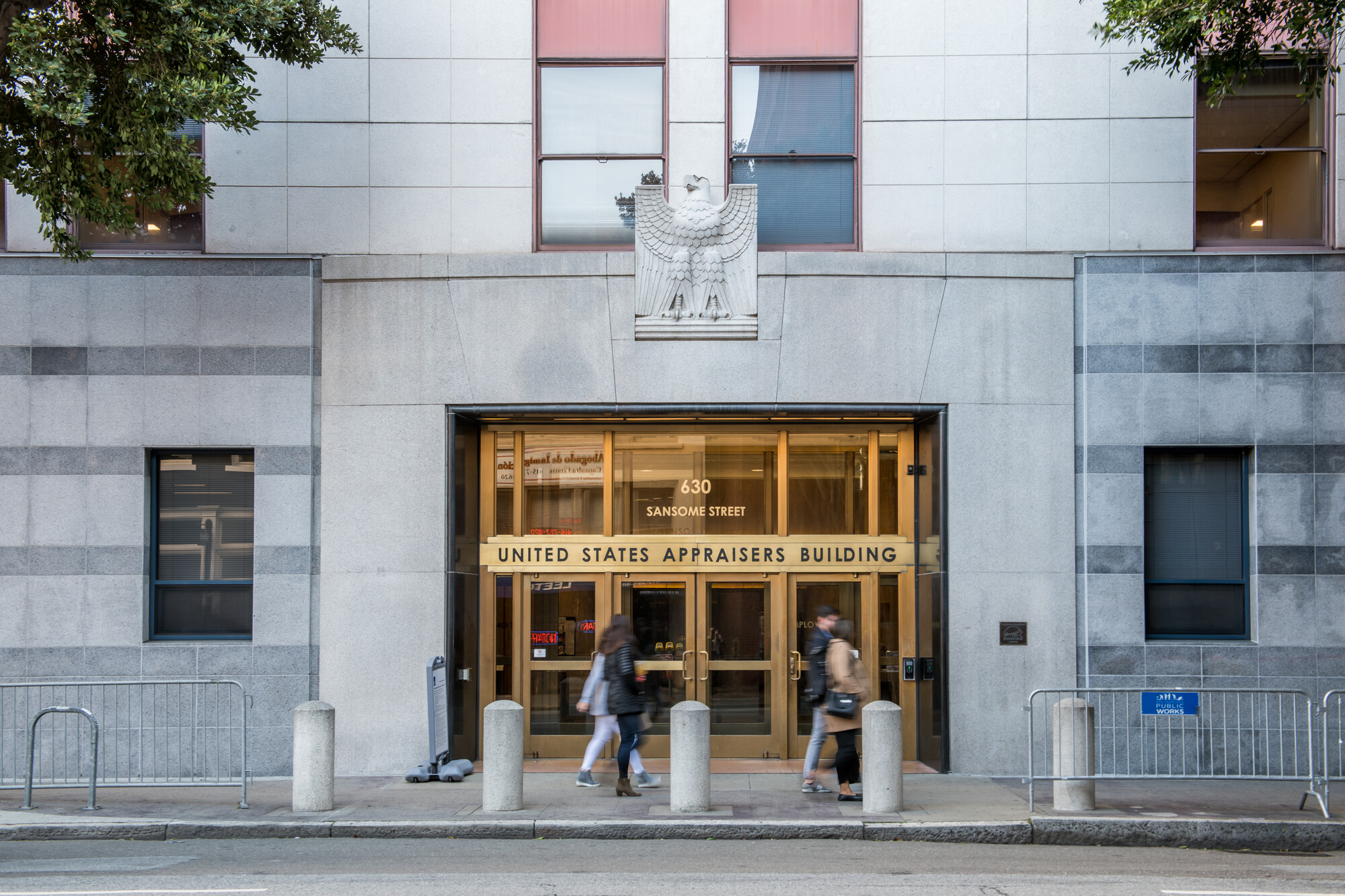
"caption": "The U.S. Immigration & Customs Enforcement building at 630 Sansome St. on Feb. 5, 2020. San Francisco immigration courts ordered more than 800 in absentia removals in one week amid rescheduled hearings, asylum restrictions and mounting case backlogs.\r\n",
"credit": "Beth LaBerge/KQED",
"altTag": null,
"description": null,
"imgSizes": {
"thumbnail": {
"file": "https://cdn.kqed.org/wp-content/uploads/sites/10/2026/03/005_KQED_630Sansome_02052020_1455_qed-160x107.jpg",
"width": 160,
"height": 107,
"mimeType": "image/jpeg"
},
"1536x1536": {
"file": "https://cdn.kqed.org/wp-content/uploads/sites/10/2026/03/005_KQED_630Sansome_02052020_1455_qed-1536x1024.jpg",
"width": 1536,
"height": 1024,
"mimeType": "image/jpeg"
},
"post-thumbnail": {
"file": "https://cdn.kqed.org/wp-content/uploads/sites/10/2026/03/005_KQED_630Sansome_02052020_1455_qed-672x372.jpg",
"width": 672,
"height": 372,
"mimeType": "image/jpeg"
},
"twentyfourteen-full-width": {
"file": "https://cdn.kqed.org/wp-content/uploads/sites/10/2026/03/005_KQED_630Sansome_02052020_1455_qed-1038x576.jpg",
"width": 1038,
"height": 576,
"mimeType": "image/jpeg"
},
"npr-cds-wide": {
"file": "https://cdn.kqed.org/wp-content/uploads/sites/10/2026/03/005_KQED_630Sansome_02052020_1455_qed-1200x675.jpg",
"width": 1200,
"height": 675,
"mimeType": "image/jpeg"
},
"npr-cds-square": {
"file": "https://cdn.kqed.org/wp-content/uploads/sites/10/2026/03/005_KQED_630Sansome_02052020_1455_qed-600x600.jpg",
"width": 600,
"height": 600,
"mimeType": "image/jpeg"
},
"kqedFullSize": {
"file": "https://cdn.kqed.org/wp-content/uploads/sites/10/2026/03/005_KQED_630Sansome_02052020_1455_qed.jpg",
"width": 2000,
"height": 1333
}
},
"isLoading": false,
"fetchFailed": false
},
"news_12067210": {
"type": "attachments",
"id": "news_12067210",
"meta": {
"index": "attachments_1716263798",
"site": "news",
"id": "12067210",
"found": true
},
"title": "251210-SFOEating-86-BL_qed",
"publishDate": 1765830498,
"status": "inherit",
"parent": 12067167,
"modified": 1774287738,
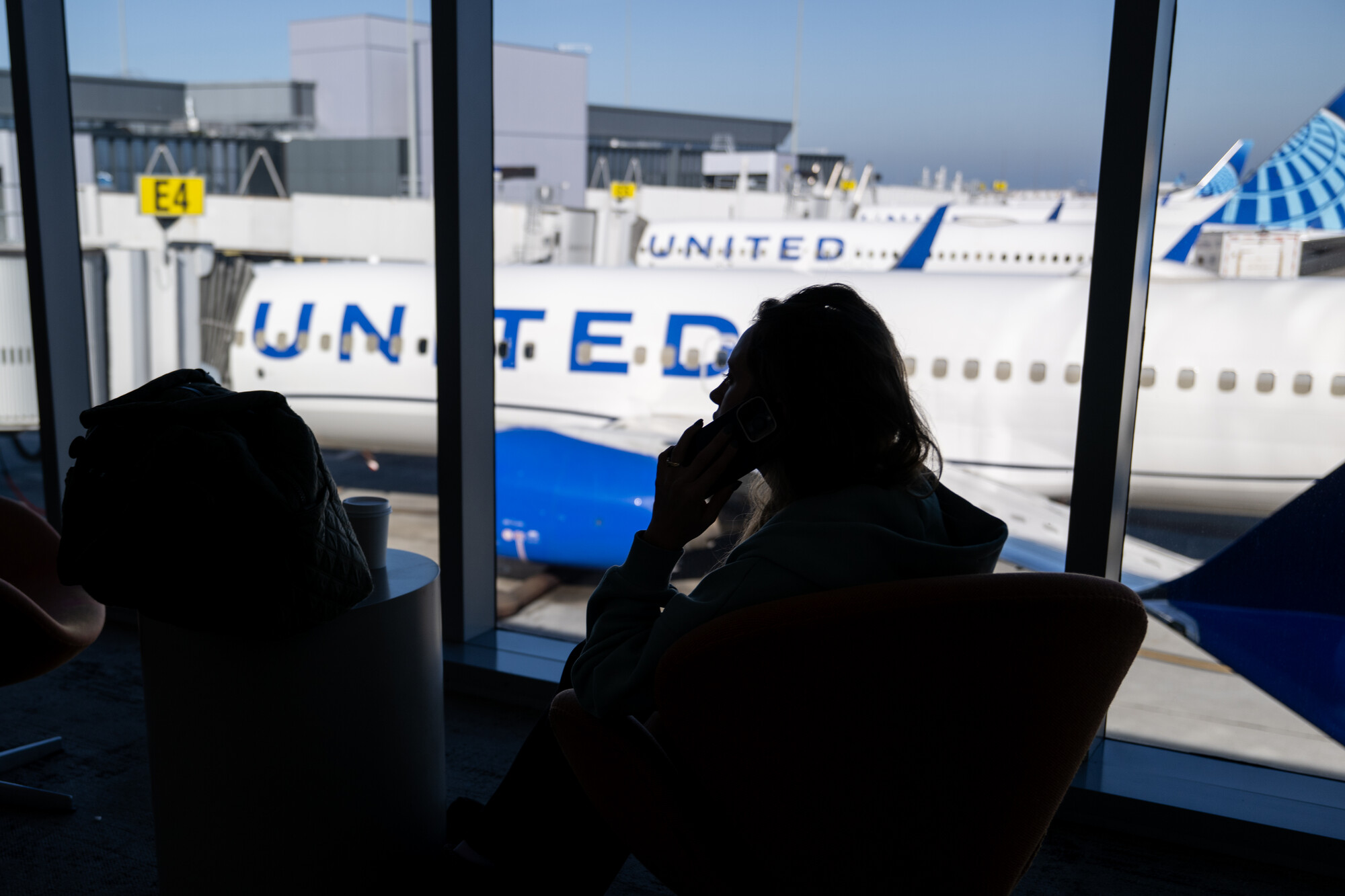
"caption": "Passengers wait for their flight at San Francisco International Airport on Dec. 10, 2025.",
"credit": "Beth LaBerge/KQED",
"altTag": null,
"description": null,
"imgSizes": {
"thumbnail": {
"file": "https://cdn.kqed.org/wp-content/uploads/sites/10/2025/12/251210-SFOEating-86-BL_qed-160x107.jpg",
"width": 160,
"height": 107,
"mimeType": "image/jpeg"
},
"1536x1536": {
"file": "https://cdn.kqed.org/wp-content/uploads/sites/10/2025/12/251210-SFOEating-86-BL_qed-1536x1024.jpg",
"width": 1536,
"height": 1024,
"mimeType": "image/jpeg"
},
"post-thumbnail": {
"file": "https://cdn.kqed.org/wp-content/uploads/sites/10/2025/12/251210-SFOEating-86-BL_qed-672x372.jpg",
"width": 672,
"height": 372,
"mimeType": "image/jpeg"
},
"twentyfourteen-full-width": {
"file": "https://cdn.kqed.org/wp-content/uploads/sites/10/2025/12/251210-SFOEating-86-BL_qed-1038x576.jpg",
"width": 1038,
"height": 576,
"mimeType": "image/jpeg"
},
"npr-cds-wide": {
"file": "https://cdn.kqed.org/wp-content/uploads/sites/10/2025/12/251210-SFOEating-86-BL_qed-1200x675.jpg",
"width": 1200,
"height": 675,
"mimeType": "image/jpeg"
},
"kqedFullSize": {
"file": "https://cdn.kqed.org/wp-content/uploads/sites/10/2025/12/251210-SFOEating-86-BL_qed.jpg",
"width": 2000,
"height": 1333
}
},
"isLoading": false,
"fetchFailed": false
},
"news_12046809": {
"type": "attachments",
"id": "news_12046809",
"meta": {
"index": "attachments_1716263798",
"site": "news",
"id": "12046809",
"found": true
},
"title": "CoyotePresidioTrust1",
"publishDate": 1751478302,
"status": "inherit",
"parent": 12046806,
"modified": 1751478519,
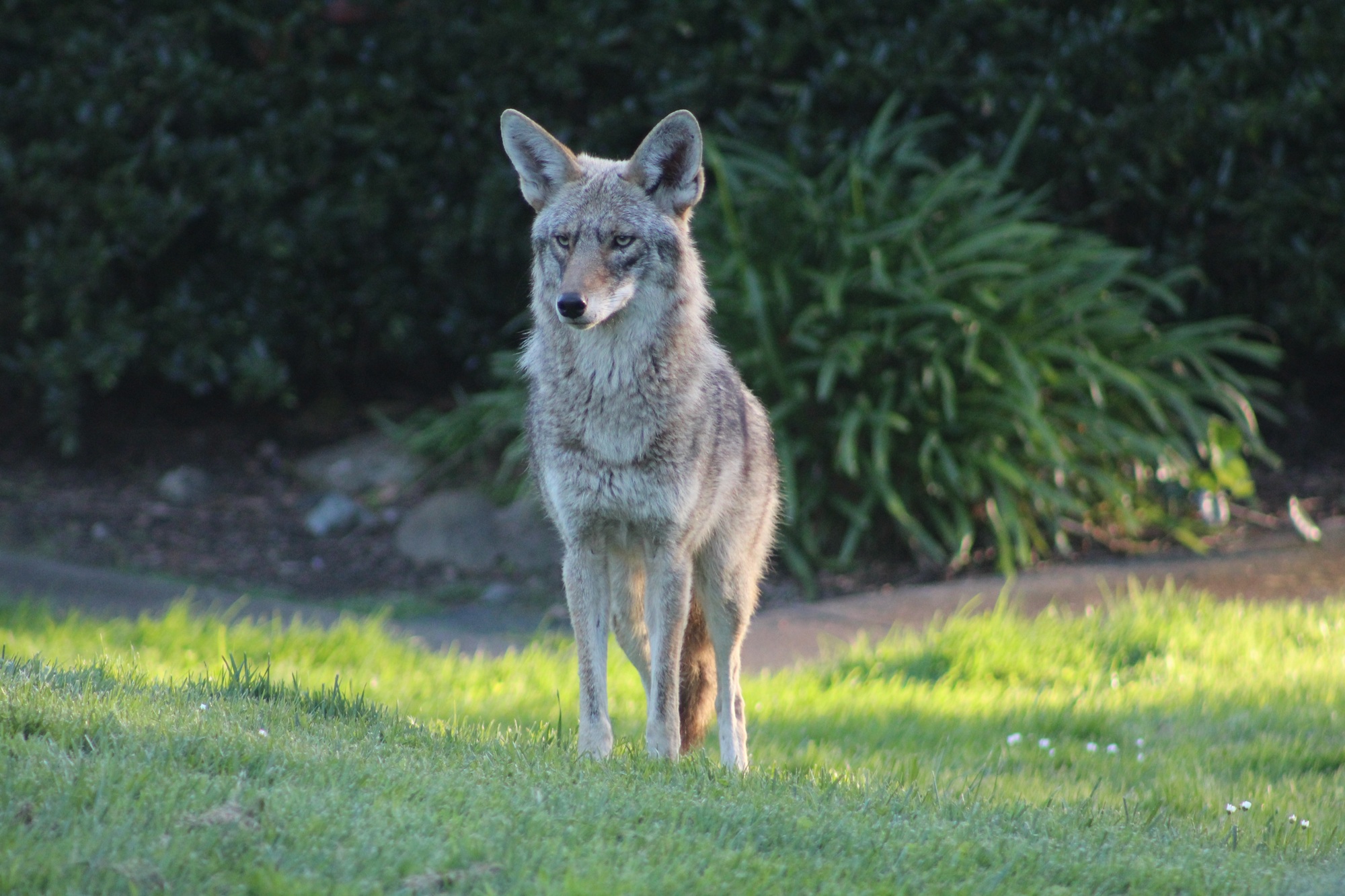
"caption": "A coyote advisory is in effect as sightings increase across Bay Area trails and neighborhoods this summer. Native to the region, coyotes are generally not dangerous to humans but can pose a threat to pets, prompting reminders from park officials to stay alert.",
"credit": "Courtesy of The Presidio Trust",
"altTag": null,
"description": null,
"imgSizes": {
"thumbnail": {
"file": "https://cdn.kqed.org/wp-content/uploads/sites/10/2025/07/CoyotePresidioTrust1-160x107.jpg",
"width": 160,
"height": 107,
"mimeType": "image/jpeg"
},
"1536x1536": {
"file": "https://cdn.kqed.org/wp-content/uploads/sites/10/2025/07/CoyotePresidioTrust1-1536x1024.jpg",
"width": 1536,
"height": 1024,
"mimeType": "image/jpeg"
},
"post-thumbnail": {
"file": "https://cdn.kqed.org/wp-content/uploads/sites/10/2025/07/CoyotePresidioTrust1-672x372.jpg",
"width": 672,
"height": 372,
"mimeType": "image/jpeg"
},
"twentyfourteen-full-width": {
"file": "https://cdn.kqed.org/wp-content/uploads/sites/10/2025/07/CoyotePresidioTrust1-1038x576.jpg",
"width": 1038,
"height": 576,
"mimeType": "image/jpeg"
},
"kqedFullSize": {
"file": "https://cdn.kqed.org/wp-content/uploads/sites/10/2025/07/CoyotePresidioTrust1.jpg",
"width": 2000,
"height": 1333
}
},
"isLoading": false,
"fetchFailed": false
},
"news_12077178": {
"type": "attachments",
"id": "news_12077178",
"meta": {
"index": "attachments_1716263798",
"site": "news",
"id": "12077178",
"found": true
},
"title": "260317-BEAUTIFULBUILDINGS-07-BL_QED-KQED",
"publishDate": 1774032710,
"status": "inherit",
"parent": 0,
"modified": 1774032785,
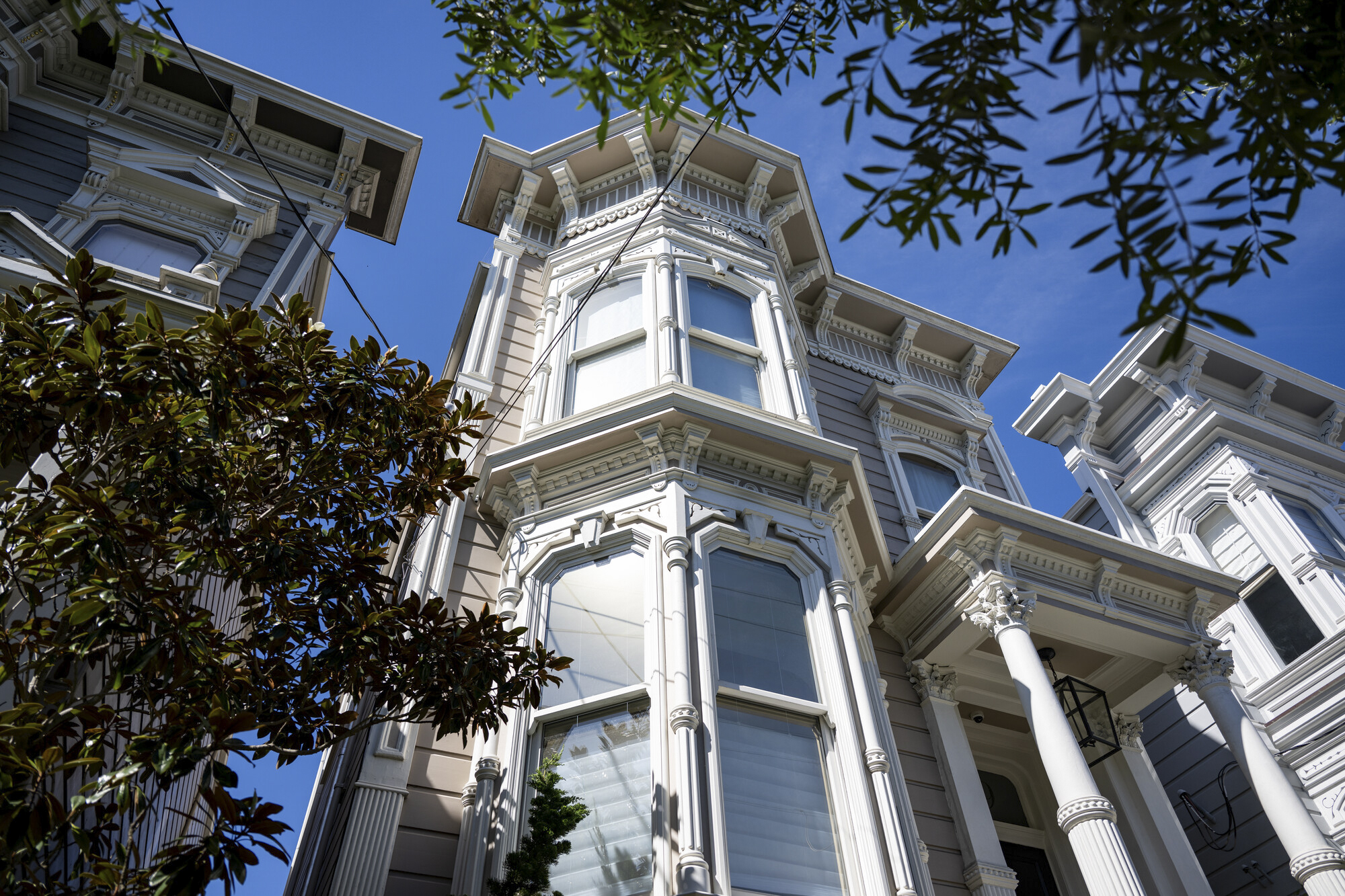
"caption": "A house on Broderick Street in the Lower Pacific Heights neighborhood of San Francisco on March 17, 2026. The home, used for exterior shots for the television show Full House, is now ranked on Facademash, a crowdsourced online project that invites residents to vote on the city’s “most beautiful” buildings.",
"credit": "Beth LaBerge/KQED",
"altTag": null,
"description": null,
"imgSizes": {
"thumbnail": {
"file": "https://cdn.kqed.org/wp-content/uploads/sites/10/2026/03/260317-BEAUTIFULBUILDINGS-07-BL_QED-KQED-160x107.jpg",
"width": 160,
"height": 107,
"mimeType": "image/jpeg"
},
"1536x1536": {
"file": "https://cdn.kqed.org/wp-content/uploads/sites/10/2026/03/260317-BEAUTIFULBUILDINGS-07-BL_QED-KQED-1536x1024.jpg",
"width": 1536,
"height": 1024,
"mimeType": "image/jpeg"
},
"post-thumbnail": {
"file": "https://cdn.kqed.org/wp-content/uploads/sites/10/2026/03/260317-BEAUTIFULBUILDINGS-07-BL_QED-KQED-672x372.jpg",
"width": 672,
"height": 372,
"mimeType": "image/jpeg"
},
"twentyfourteen-full-width": {
"file": "https://cdn.kqed.org/wp-content/uploads/sites/10/2026/03/260317-BEAUTIFULBUILDINGS-07-BL_QED-KQED-1038x576.jpg",
"width": 1038,
"height": 576,
"mimeType": "image/jpeg"
},
"npr-cds-wide": {
"file": "https://cdn.kqed.org/wp-content/uploads/sites/10/2026/03/260317-BEAUTIFULBUILDINGS-07-BL_QED-KQED-1200x675.jpg",
"width": 1200,
"height": 675,
"mimeType": "image/jpeg"
},
"kqedFullSize": {
"file": "https://cdn.kqed.org/wp-content/uploads/sites/10/2026/03/260317-BEAUTIFULBUILDINGS-07-BL_QED-KQED.jpg",
"width": 2000,
"height": 1333
}
},
"isLoading": false,
"fetchFailed": false
},
"news_12077215": {
"type": "attachments",
"id": "news_12077215",
"meta": {
"index": "attachments_1716263798",
"site": "news",
"id": "12077215",
"found": true
},
"title": "Hearing For Mary Fong Lau At San Francisco Hall Of Justice",
"publishDate": 1774041547,
"status": "inherit",
"parent": 12077174,
"modified": 1774041603,
"caption": "Mary Fong Lau, left, stands with friends in the hallway ahead of a hearing at the Hall of Justice in San Francisco, California, on Feb. 13, 2026. Lau is a San Francisco resident facing felony vehicular manslaughter charges in an accident that killed a family of four in March 2024. ",
"credit": "Jessica Christian/San Francisco Chronicle via Getty Images",
"altTag": null,
"description": null,
"imgSizes": {
"thumbnail": {
"file": "https://cdn.kqed.org/wp-content/uploads/sites/10/2026/03/MaryFongLauGetty-160x107.jpg",
"width": 160,
"height": 107,
"mimeType": "image/jpeg"
},
"1536x1536": {
"file": "https://cdn.kqed.org/wp-content/uploads/sites/10/2026/03/MaryFongLauGetty-1536x1025.jpg",
"width": 1536,
"height": 1025,
"mimeType": "image/jpeg"
},
"post-thumbnail": {
"file": "https://cdn.kqed.org/wp-content/uploads/sites/10/2026/03/MaryFongLauGetty-672x372.jpg",
"width": 672,
"height": 372,
"mimeType": "image/jpeg"
},
"twentyfourteen-full-width": {
"file": "https://cdn.kqed.org/wp-content/uploads/sites/10/2026/03/MaryFongLauGetty-1038x576.jpg",
"width": 1038,
"height": 576,
"mimeType": "image/jpeg"
},
"npr-cds-wide": {
"file": "https://cdn.kqed.org/wp-content/uploads/sites/10/2026/03/MaryFongLauGetty-1200x675.jpg",
"width": 1200,
"height": 675,
"mimeType": "image/jpeg"
},
"kqedFullSize": {
"file": "https://cdn.kqed.org/wp-content/uploads/sites/10/2026/03/MaryFongLauGetty.jpg",
"width": 2000,
"height": 1334
}
},
"isLoading": false,
"fetchFailed": false
},
"news_12075430": {
"type": "attachments",
"id": "news_12075430",
"meta": {
"index": "attachments_1716263798",
"site": "news",
"id": "12075430",
"found": true
},
"title": "260304-Elon-Musk-Trial-03-KQED",
"publishDate": 1772664124,
"status": "inherit",
"parent": 12081290,
"modified": 1777070671,
"caption": "A courtroom sketch depicts Elon Musk on the stand on March 4, 2026.",
"credit": "Vicki Behringer for KQED",
"altTag": null,
"description": null,
"imgSizes": {
"thumbnail": {
"file": "https://cdn.kqed.org/wp-content/uploads/sites/10/2026/03/260304-Elon-Musk-Trial-03-KQED-160x107.jpg",
"width": 160,
"height": 107,
"mimeType": "image/jpeg"
},
"1536x1536": {
"file": "https://cdn.kqed.org/wp-content/uploads/sites/10/2026/03/260304-Elon-Musk-Trial-03-KQED-1536x1024.jpg",
"width": 1536,
"height": 1024,
"mimeType": "image/jpeg"
},
"post-thumbnail": {
"file": "https://cdn.kqed.org/wp-content/uploads/sites/10/2026/03/260304-Elon-Musk-Trial-03-KQED-672x372.jpg",
"width": 672,
"height": 372,
"mimeType": "image/jpeg"
},
"twentyfourteen-full-width": {
"file": "https://cdn.kqed.org/wp-content/uploads/sites/10/2026/03/260304-Elon-Musk-Trial-03-KQED-1038x576.jpg",
"width": 1038,
"height": 576,
"mimeType": "image/jpeg"
},
"npr-cds-wide": {
"file": "https://cdn.kqed.org/wp-content/uploads/sites/10/2026/03/260304-Elon-Musk-Trial-03-KQED-1200x675.jpg",
"width": 1200,
"height": 675,
"mimeType": "image/jpeg"
},
"kqedFullSize": {
"file": "https://cdn.kqed.org/wp-content/uploads/sites/10/2026/03/260304-Elon-Musk-Trial-03-KQED.jpg",
"width": 2000,
"height": 1333
}
},
"isLoading": false,
"fetchFailed": false
},
"news_12077058": {
"type": "attachments",
"id": "news_12077058",
"meta": {
"index": "attachments_1716263798",
"site": "news",
"id": "12077058",
"found": true
},
"title": "A street sign on Cesar Chavez Street in San Francisco on March 19, 2026.",
"publishDate": 1773944010,
"status": "inherit",
"parent": 12077691,
"modified": 1774556186,
"caption": "A street sign on Cesar Chavez Street in San Francisco on March 19, 2026.",
"credit": "Martin do Nascimento/KQED",
"altTag": null,
"description": null,
"imgSizes": {
"thumbnail": {
"file": "https://cdn.kqed.org/wp-content/uploads/sites/10/2026/03/260319-CESAR-CHAVEZ-STREET-MD-01-KQED-160x107.jpg",
"width": 160,
"height": 107,
"mimeType": "image/jpeg"
},
"1536x1536": {
"file": "https://cdn.kqed.org/wp-content/uploads/sites/10/2026/03/260319-CESAR-CHAVEZ-STREET-MD-01-KQED-1536x1024.jpg",
"width": 1536,
"height": 1024,
"mimeType": "image/jpeg"
},
"post-thumbnail": {
"file": "https://cdn.kqed.org/wp-content/uploads/sites/10/2026/03/260319-CESAR-CHAVEZ-STREET-MD-01-KQED-672x372.jpg",
"width": 672,
"height": 372,
"mimeType": "image/jpeg"
},
"twentyfourteen-full-width": {
"file": "https://cdn.kqed.org/wp-content/uploads/sites/10/2026/03/260319-CESAR-CHAVEZ-STREET-MD-01-KQED-1038x576.jpg",
"width": 1038,
"height": 576,
"mimeType": "image/jpeg"
},
"npr-cds-wide": {
"file": "https://cdn.kqed.org/wp-content/uploads/sites/10/2026/03/260319-CESAR-CHAVEZ-STREET-MD-01-KQED-1200x675.jpg",
"width": 1200,
"height": 675,
"mimeType": "image/jpeg"
},
"kqedFullSize": {
"file": "https://cdn.kqed.org/wp-content/uploads/sites/10/2026/03/260319-CESAR-CHAVEZ-STREET-MD-01-KQED.jpg",
"width": 2000,
"height": 1333
}
},
"isLoading": false,
"fetchFailed": false
},
"news_12077095": {
"type": "attachments",
"id": "news_12077095",
"meta": {
"index": "attachments_1716263798",
"site": "news",
"id": "12077095",
"found": true
},
"title": "260310-UnhousedMail-02-BL_qed",
"publishDate": 1773958415,
"status": "inherit",
"parent": 12076996,
"modified": 1773958455,
"caption": "USPS employee Robert Tapia works at San Francisco General Delivery on March 10, 2026. The service allows people without a permanent address to receive mail by picking it up at the post office.",
"credit": "Beth LaBerge/KQED",
"altTag": null,
"description": null,
"imgSizes": {
"thumbnail": {
"file": "https://cdn.kqed.org/wp-content/uploads/sites/10/2026/03/260310-UnhousedMail-02-BL_qed-160x107.jpg",
"width": 160,
"height": 107,
"mimeType": "image/jpeg"
},
"1536x1536": {
"file": "https://cdn.kqed.org/wp-content/uploads/sites/10/2026/03/260310-UnhousedMail-02-BL_qed-1536x1024.jpg",
"width": 1536,
"height": 1024,
"mimeType": "image/jpeg"
},
"post-thumbnail": {
"file": "https://cdn.kqed.org/wp-content/uploads/sites/10/2026/03/260310-UnhousedMail-02-BL_qed-672x372.jpg",
"width": 672,
"height": 372,
"mimeType": "image/jpeg"
},
"twentyfourteen-full-width": {
"file": "https://cdn.kqed.org/wp-content/uploads/sites/10/2026/03/260310-UnhousedMail-02-BL_qed-1038x576.jpg",
"width": 1038,
"height": 576,
"mimeType": "image/jpeg"
},
"npr-cds-wide": {
"file": "https://cdn.kqed.org/wp-content/uploads/sites/10/2026/03/260310-UnhousedMail-02-BL_qed-1200x675.jpg",
"width": 1200,
"height": 675,
"mimeType": "image/jpeg"
},
"kqedFullSize": {
"file": "https://cdn.kqed.org/wp-content/uploads/sites/10/2026/03/260310-UnhousedMail-02-BL_qed.jpg",
"width": 2000,
"height": 1333
}
},
"isLoading": false,
"fetchFailed": false
},
"news_12076961": {
"type": "attachments",
"id": "news_12076961",
"meta": {
"index": "attachments_1716263798",
"site": "news",
"id": "12076961",
"found": true
},
"title": "031826-Wiener-Tan-KQED",
"publishDate": 1773871110,
"status": "inherit",
"parent": 0,
"modified": 1773871293,
"caption": "Left: Sen. Scott Wiener; Right: Garry Tan.",
"credit": "Beth LaBerge/KQED; Harry Murphy/Sportsfile for Web Summit via Getty Images",
"altTag": null,
"description": null,
"imgSizes": {
"thumbnail": {
"file": "https://cdn.kqed.org/wp-content/uploads/sites/10/2026/03/031826-Wiener-Tan-KQED-160x107.jpg",
"width": 160,
"height": 107,
"mimeType": "image/jpeg"
},
"1536x1536": {
"file": "https://cdn.kqed.org/wp-content/uploads/sites/10/2026/03/031826-Wiener-Tan-KQED-1536x1025.jpg",
"width": 1536,
"height": 1025,
"mimeType": "image/jpeg"
},
"post-thumbnail": {
"file": "https://cdn.kqed.org/wp-content/uploads/sites/10/2026/03/031826-Wiener-Tan-KQED-672x372.jpg",
"width": 672,
"height": 372,
"mimeType": "image/jpeg"
},
"twentyfourteen-full-width": {
"file": "https://cdn.kqed.org/wp-content/uploads/sites/10/2026/03/031826-Wiener-Tan-KQED-1038x576.jpg",
"width": 1038,
"height": 576,
"mimeType": "image/jpeg"
},
"npr-cds-wide": {
"file": "https://cdn.kqed.org/wp-content/uploads/sites/10/2026/03/031826-Wiener-Tan-KQED-1200x675.jpg",
"width": 1200,
"height": 675,
"mimeType": "image/jpeg"
},
"kqedFullSize": {
"file": "https://cdn.kqed.org/wp-content/uploads/sites/10/2026/03/031826-Wiener-Tan-KQED.jpg",
"width": 2000,
"height": 1334
}
},
"isLoading": false,
"fetchFailed": false
},
"news_12076564": {
"type": "attachments",
"id": "news_12076564",
"meta": {
"index": "attachments_1716263798",
"site": "news",
"id": "12076564",
"found": true
},
"title": "20260312_H1BVIDEOGAME_GC-12-KQED",
"publishDate": 1773678342,
"status": "inherit",
"parent": 0,
"modified": 1773678383,
"caption": "Krish Chowdhary plays the H1B.Life game at the Asian Art Museum on March 12, 2026. H1B.Life is a game representing a live simulation of the U.S H-1B visa system with players “living” the lives of international students and workers trapped in the H-1B system, whose experiences were directly written into the game.",
"credit": "Gina Castro for KQED",
"altTag": null,
"description": null,
"imgSizes": {
"thumbnail": {
"file": "https://cdn.kqed.org/wp-content/uploads/sites/10/2026/03/20260312_H1BVIDEOGAME_GC-12-KQED-160x107.jpg",
"width": 160,
"height": 107,
"mimeType": "image/jpeg"
},
"1536x1536": {
"file": "https://cdn.kqed.org/wp-content/uploads/sites/10/2026/03/20260312_H1BVIDEOGAME_GC-12-KQED-1536x1024.jpg",
"width": 1536,
"height": 1024,
"mimeType": "image/jpeg"
},
"post-thumbnail": {
"file": "https://cdn.kqed.org/wp-content/uploads/sites/10/2026/03/20260312_H1BVIDEOGAME_GC-12-KQED-672x372.jpg",
"width": 672,
"height": 372,
"mimeType": "image/jpeg"
},
"twentyfourteen-full-width": {
"file": "https://cdn.kqed.org/wp-content/uploads/sites/10/2026/03/20260312_H1BVIDEOGAME_GC-12-KQED-1038x576.jpg",
"width": 1038,
"height": 576,
"mimeType": "image/jpeg"
},
"npr-cds-wide": {
"file": "https://cdn.kqed.org/wp-content/uploads/sites/10/2026/03/20260312_H1BVIDEOGAME_GC-12-KQED-1200x675.jpg",
"width": 1200,
"height": 675,
"mimeType": "image/jpeg"
},
"kqedFullSize": {
"file": "https://cdn.kqed.org/wp-content/uploads/sites/10/2026/03/20260312_H1BVIDEOGAME_GC-12-KQED.jpg",
"width": 2000,
"height": 1333
}
},
"isLoading": false,
"fetchFailed": false
},
"news_12076826": {
"type": "attachments",
"id": "news_12076826",
"meta": {
"index": "attachments_1716263798",
"site": "news",
"id": "12076826",
"found": true
},
"title": "Cesar Chavez",
"publishDate": 1773793761,
"status": "inherit",
"parent": 12076824,
"modified": 1773793797,
"caption": "Cesar Chavez, a farm worker, labor organizer and leader of the California grape strike, is seen in a California works office in 1965. ",
"credit": "AP Photo, George Brich",
"altTag": null,
"description": null,
"imgSizes": {
"medium": {
"file": "https://cdn.kqed.org/wp-content/uploads/sites/10/2026/03/AP26076698210998-2000x1333.jpg",
"width": 2000,
"height": 1333,
"mimeType": "image/jpeg"
},
"large": {
"file": "https://cdn.kqed.org/wp-content/uploads/sites/10/2026/03/AP26076698210998-2000x1333.jpg",
"width": 2000,
"height": 1333,
"mimeType": "image/jpeg"
},
"thumbnail": {
"file": "https://cdn.kqed.org/wp-content/uploads/sites/10/2026/03/AP26076698210998-160x107.jpg",
"width": 160,
"height": 107,
"mimeType": "image/jpeg"
},
"1536x1536": {
"file": "https://cdn.kqed.org/wp-content/uploads/sites/10/2026/03/AP26076698210998-1536x1024.jpg",
"width": 1536,
"height": 1024,
"mimeType": "image/jpeg"
},
"2048x2048": {
"file": "https://cdn.kqed.org/wp-content/uploads/sites/10/2026/03/AP26076698210998-2048x1365.jpg",
"width": 2048,
"height": 1365,
"mimeType": "image/jpeg"
},
"post-thumbnail": {
"file": "https://cdn.kqed.org/wp-content/uploads/sites/10/2026/03/AP26076698210998-672x372.jpg",
"width": 672,
"height": 372,
"mimeType": "image/jpeg"
},
"twentyfourteen-full-width": {
"file": "https://cdn.kqed.org/wp-content/uploads/sites/10/2026/03/AP26076698210998-1038x576.jpg",
"width": 1038,
"height": 576,
"mimeType": "image/jpeg"
},
"full-width": {
"file": "https://cdn.kqed.org/wp-content/uploads/sites/10/2026/03/AP26076698210998-2000x1333.jpg",
"width": 2000,
"height": 1333,
"mimeType": "image/jpeg"
},
"npr-cds-wide": {
"file": "https://cdn.kqed.org/wp-content/uploads/sites/10/2026/03/AP26076698210998-1200x675.jpg",
"width": 1200,
"height": 675,
"mimeType": "image/jpeg"
},
"kqedFullSize": {
"file": "https://cdn.kqed.org/wp-content/uploads/sites/10/2026/03/AP26076698210998-scaled-e1773793779918.jpg",
"width": 2000,
"height": 1334
}
},
"isLoading": false,
"fetchFailed": false
},
"news_12075461": {
"type": "attachments",
"id": "news_12075461",
"meta": {
"index": "attachments_1716263798",
"site": "news",
"id": "12075461",
"found": true
},
"title": "260304-Elon-Musk-Trial-05-KQED",
"publishDate": 1772671994,
"status": "inherit",
"parent": 12075332,
"modified": 1773790475,
"caption": "A courtroom sketch depicts the defense questioning Elon Musk on March 4, 2026.",
"credit": "Vicki Behringer for KQED",
"altTag": null,
"description": null,
"imgSizes": {
"thumbnail": {
"file": "https://cdn.kqed.org/wp-content/uploads/sites/10/2026/03/260304-Elon-Musk-Trial-05-KQED-160x107.jpg",
"width": 160,
"height": 107,
"mimeType": "image/jpeg"
},
"1536x1536": {
"file": "https://cdn.kqed.org/wp-content/uploads/sites/10/2026/03/260304-Elon-Musk-Trial-05-KQED-1536x1024.jpg",
"width": 1536,
"height": 1024,
"mimeType": "image/jpeg"
},
"post-thumbnail": {
"file": "https://cdn.kqed.org/wp-content/uploads/sites/10/2026/03/260304-Elon-Musk-Trial-05-KQED-672x372.jpg",
"width": 672,
"height": 372,
"mimeType": "image/jpeg"
},
"twentyfourteen-full-width": {
"file": "https://cdn.kqed.org/wp-content/uploads/sites/10/2026/03/260304-Elon-Musk-Trial-05-KQED-1038x576.jpg",
"width": 1038,
"height": 576,
"mimeType": "image/jpeg"
},
"npr-cds-wide": {
"file": "https://cdn.kqed.org/wp-content/uploads/sites/10/2026/03/260304-Elon-Musk-Trial-05-KQED-1200x675.jpg",
"width": 1200,
"height": 675,
"mimeType": "image/jpeg"
},
"kqedFullSize": {
"file": "https://cdn.kqed.org/wp-content/uploads/sites/10/2026/03/260304-Elon-Musk-Trial-05-KQED.jpg",
"width": 2000,
"height": 1333
}
},
"isLoading": false,
"fetchFailed": false
}
},
"audioPlayerReducer": {
"postId": "stream_live",
"isPaused": true,
"isPlaying": false,
"pfsActive": false,
"pledgeModalIsOpen": true,
"playerDrawerIsOpen": false,
"liveAudioPlayStartedAt": 0,
"liveAudioPlayContext": ""
},
"authorsReducer": {
"byline_news_12077101": {
"type": "authors",
"id": "byline_news_12077101",
"meta": {
"override": true
},
"slug": "byline_news_12077101",
"name": "Erin Bump ",
"isLoading": false
},
"byline_news_12076825": {
"type": "authors",
"id": "byline_news_12076825",
"meta": {
"override": true
},
"slug": "byline_news_12076825",
"name": "Fernanda Figueroa, Associated Press",
"isLoading": false
},
"rachael-myrow": {
"type": "authors",
"id": "251",
"meta": {
"index": "authors_1716337520",
"id": "251",
"found": true
},
"name": "Rachael Myrow",
"firstName": "Rachael",
"lastName": "Myrow",
"slug": "rachael-myrow",
"email": "rmyrow@kqed.org",
"display_author_email": true,
"staff_mastheads": [
"news"
],
"title": "Senior Editor of KQED's Silicon Valley News Desk",
"bio": "• I write and edit stories about how Silicon Valley power and policies shape everyday life in California. I’m also passionate about making Bay Area history and culture more accessible to a broad public. • I’ve been a journalist for most of my life, starting in high school with The Franklin Press in Los Angeles, where I grew up. While earning my first degree in English at UC Berkeley, I got my start in public radio at KALX-FM. After completing a second degree in journalism at Cal, I landed my first professional job at Marketplace, then moved on to KPCC (now LAist), and then KQED, where I hosted The California Report for more than seven years. • My reporting has appeared on NPR, The World, WBUR’s \u003ci>Here & Now\u003c/i>, and the BBC. I also guest host for KQED’s \u003ci>Forum\u003c/i>, as well as the Commonwealth Club in San Francisco. • I speak periodically on media, democracy and technology issues, and do voiceover work for documentaries and educational video projects. • Outside of the studio, you'll find me hiking Bay Area trails and whipping up Insta-ready meals in my kitchen. • I do not accept gifts, money, or favors from anyone connected to my reporting, I don't pay people for information, and I do not support or donate to political causes. • I strive to treat the people I report on with fairness, honesty, and respect. I also recognize there are often multiple sides to a story and work to verify information through multiple sources and documentation. If I get something wrong, I correct it.",
"avatar": "https://secure.gravatar.com/avatar/3ed8a3c5f26025e4a805ba634cda8cd764906b97438a6d9ce216b044e340da4e?s=600&d=blank&r=g",
"twitter": "rachaelmyrow",
"bluesky": null,
"facebook": null,
"instagram": null,
"linkedin": "https://www.linkedin.com/in/rachaelmyrow/",
"sites": [
{
"site": "arts",
"roles": [
"administrator"
]
},
{
"site": "news",
"roles": [
"edit_others_posts",
"editor"
]
},
{
"site": "futureofyou",
"roles": [
"editor"
]
},
{
"site": "bayareabites",
"roles": [
"editor"
]
},
{
"site": "stateofhealth",
"roles": [
"editor"
]
},
{
"site": "science",
"roles": [
"editor"
]
},
{
"site": "food",
"roles": [
"editor"
]
},
{
"site": "forum",
"roles": [
"editor"
]
},
{
"site": "liveblog",
"roles": [
"author"
]
}
],
"headData": {
"title": "Rachael Myrow | KQED",
"description": "Senior Editor of KQED's Silicon Valley News Desk",
"ogImgSrc": "https://secure.gravatar.com/avatar/3ed8a3c5f26025e4a805ba634cda8cd764906b97438a6d9ce216b044e340da4e?s=600&d=blank&r=g",
"twImgSrc": "https://secure.gravatar.com/avatar/3ed8a3c5f26025e4a805ba634cda8cd764906b97438a6d9ce216b044e340da4e?s=600&d=blank&r=g"
},
"isLoading": false,
"link": "/author/rachael-myrow"
},
"jlara": {
"type": "authors",
"id": "11761",
"meta": {
"index": "authors_1716337520",
"id": "11761",
"found": true
},
"name": "Juan Carlos Lara",
"firstName": "Juan Carlos",
"lastName": "Lara",
"slug": "jlara",
"email": "jlara@kqed.org",
"display_author_email": false,
"staff_mastheads": [],
"title": "KQED Contributor",
"bio": null,
"avatar": "https://secure.gravatar.com/avatar/19e2052b9b05657c5ff2af2121846e9c?s=600&d=blank&r=g",
"twitter": null,
"facebook": null,
"instagram": null,
"linkedin": null,
"sites": [
{
"site": "arts",
"roles": [
"editor"
]
},
{
"site": "news",
"roles": [
"editor"
]
},
{
"site": "forum",
"roles": [
"editor"
]
},
{
"site": "liveblog",
"roles": [
"contributor"
]
}
],
"headData": {
"title": "Juan Carlos Lara | KQED",
"description": "KQED Contributor",
"ogImgSrc": "https://secure.gravatar.com/avatar/19e2052b9b05657c5ff2af2121846e9c?s=600&d=blank&r=g",
"twImgSrc": "https://secure.gravatar.com/avatar/19e2052b9b05657c5ff2af2121846e9c?s=600&d=blank&r=g"
},
"isLoading": false,
"link": "/author/jlara"
},
"adahlstromeckman": {
"type": "authors",
"id": "11785",
"meta": {
"index": "authors_1716337520",
"id": "11785",
"found": true
},
"name": "Azul Dahlstrom-Eckman",
"firstName": "Azul",
"lastName": "Dahlstrom-Eckman",
"slug": "adahlstromeckman",
"email": "adahlstrom-eckman@kqed.org",
"display_author_email": true,
"staff_mastheads": [],
"title": "Reporter",
"bio": "Azul is a reporter for KQED focusing on transportation and features. He joined KQED in 2021 as an alumna of KALW's Audio Academy radio journalism training program.",
"avatar": "https://secure.gravatar.com/avatar/9cb750298435add7815a777f55bf1f46845c1386bb8452555c60a7b820b5aba3?s=600&d=blank&r=g",
"twitter": "@zuliemann",
"bluesky": "@azul415.bsky.social",
"facebook": null,
"instagram": null,
"linkedin": null,
"sites": [
{
"site": "arts",
"roles": [
"editor"
]
},
{
"site": "news",
"roles": [
"editor"
]
},
{
"site": "science",
"roles": [
"editor"
]
},
{
"site": "liveblog",
"roles": [
"author"
]
}
],
"headData": {
"title": "Azul Dahlstrom-Eckman | KQED",
"description": "Reporter",
"ogImgSrc": "https://secure.gravatar.com/avatar/9cb750298435add7815a777f55bf1f46845c1386bb8452555c60a7b820b5aba3?s=600&d=blank&r=g",
"twImgSrc": "https://secure.gravatar.com/avatar/9cb750298435add7815a777f55bf1f46845c1386bb8452555c60a7b820b5aba3?s=600&d=blank&r=g"
},
"isLoading": false,
"link": "/author/adahlstromeckman"
},
"kdebenedetti": {
"type": "authors",
"id": "11913",
"meta": {
"index": "authors_1716337520",
"id": "11913",
"found": true
},
"name": "Katie DeBenedetti",
"firstName": "Katie",
"lastName": "DeBenedetti",
"slug": "kdebenedetti",
"email": "kdebenedetti@kqed.org",
"display_author_email": false,
"staff_mastheads": [
"news",
"science"
],
"title": "KQED Contributor",
"bio": "Katie DeBenedetti is a digital reporter covering daily news for the Express Desk. Prior to joining KQED as a culture reporting intern in January 2024, she covered education and city government for the Napa Valley Register.",
"avatar": "https://secure.gravatar.com/avatar/6e31073cb8f7e4214ab03f42771d0f45?s=600&d=blank&r=g",
"twitter": null,
"facebook": null,
"instagram": null,
"linkedin": null,
"sites": [
{
"site": "news",
"roles": [
"author"
]
},
{
"site": "science",
"roles": [
"author"
]
},
{
"site": "liveblog",
"roles": [
"author"
]
}
],
"headData": {
"title": "Katie DeBenedetti | KQED",
"description": "KQED Contributor",
"ogImgSrc": "https://secure.gravatar.com/avatar/6e31073cb8f7e4214ab03f42771d0f45?s=600&d=blank&r=g",
"twImgSrc": "https://secure.gravatar.com/avatar/6e31073cb8f7e4214ab03f42771d0f45?s=600&d=blank&r=g"
},
"isLoading": false,
"link": "/author/kdebenedetti"
},
"emanoukian": {
"type": "authors",
"id": "11925",
"meta": {
"index": "authors_1716337520",
"id": "11925",
"found": true
},
"name": "Elize Manoukian",
"firstName": "Elize",
"lastName": "Manoukian",
"slug": "emanoukian",
"email": "emanoukian@KQED.org",
"display_author_email": false,
"staff_mastheads": [
"news"
],
"title": "Digital News Editor",
"bio": "Elize Manoukian is an award-winning audio producer and Senior Editor on the Express Desk, KQED's digital news platform. Her work has appeared on KPFA, Interlochen Public Radio, Oregon Public Broadcast, the New York Daily News, LA Times and the San Diego Union-Tribune.",
"avatar": "https://secure.gravatar.com/avatar/4525f1a8e46ccb30933b32653d9772064cfefe3fa655eb45b3b3a80341f6bdad?s=600&d=blank&r=g",
"twitter": null,
"bluesky": null,
"facebook": null,
"instagram": null,
"linkedin": null,
"sites": [
{
"site": "arts",
"roles": [
"editor"
]
},
{
"site": "news",
"roles": [
"editor"
]
},
{
"site": "science",
"roles": [
"editor"
]
}
],
"headData": {
"title": "Elize Manoukian | KQED",
"description": "Digital News Editor",
"ogImgSrc": "https://secure.gravatar.com/avatar/4525f1a8e46ccb30933b32653d9772064cfefe3fa655eb45b3b3a80341f6bdad?s=600&d=blank&r=g",
"twImgSrc": "https://secure.gravatar.com/avatar/4525f1a8e46ccb30933b32653d9772064cfefe3fa655eb45b3b3a80341f6bdad?s=600&d=blank&r=g"
},
"isLoading": false,
"link": "/author/emanoukian"
},
"sarahwright": {
"type": "authors",
"id": "11956",
"meta": {
"index": "authors_1716337520",
"id": "11956",
"found": true
},
"name": "Sarah Wright",
"firstName": "Sarah",
"lastName": "Wright",
"slug": "sarahwright",
"email": "swright@kqed.org",
"display_author_email": true,
"staff_mastheads": [],
"title": "Outdoors Engagement Reporter",
"bio": "Sarah Wright is KQED's Outdoors Engagement Reporter. Originally from Lake Tahoe, she completed a thru-hike of the Pacific Crest Trail in 2019 and was a U.S. Fulbright Program grantee to Argentina in 2023. Her journalism has appeared in The Guardian, The San Francisco Standard, The Palo Alto Weekly and the Half Moon Bay Review.",
"avatar": "https://secure.gravatar.com/avatar/c161a3d6441865cba25e6db4fa561099ad665799e9432e34da2b84d7e371524c?s=600&d=blank&r=g",
"twitter": null,
"bluesky": null,
"facebook": null,
"instagram": null,
"linkedin": null,
"sites": [
{
"site": "arts",
"roles": [
"editor"
]
},
{
"site": "news",
"roles": [
"editor"
]
},
{
"site": "science",
"roles": [
"contributor",
"author"
]
},
{
"site": "forum",
"roles": [
"editor"
]
}
],
"headData": {
"title": "Sarah Wright | KQED",
"description": "Outdoors Engagement Reporter",
"ogImgSrc": "https://secure.gravatar.com/avatar/c161a3d6441865cba25e6db4fa561099ad665799e9432e34da2b84d7e371524c?s=600&d=blank&r=g",
"twImgSrc": "https://secure.gravatar.com/avatar/c161a3d6441865cba25e6db4fa561099ad665799e9432e34da2b84d7e371524c?s=600&d=blank&r=g"
},
"isLoading": false,
"link": "/author/sarahwright"
}
},
"pagesReducer": {
"news_tag_san-francisco": {
"type": "terms",
"id": "news_38",
"meta": {
"index": "terms_1716263798",
"site": "news",
"id": "38",
"score": 6.7229023
},
"featImg": null,
"name": "San Francisco",
"description": null,
"taxonomy": "tag",
"headData": {
"twImgId": null,
"twTitle": null,
"ogTitle": null,
"ogImgId": null,
"twDescription": null,
"description": null,
"title": "San Francisco Archives | KQED News",
"ogDescription": null
},
"ttid": 58,
"slug": "san-francisco",
"isLoading": false,
"title": "San Francisco",
"pageMeta": {
"site": "news",
"WpPageTemplate": "page-topic-editorial",
"currentPage": 24
},
"blocks": [
{
"blockName": "kqed/post-list",
"attrs": {
"layout": "cardArticle2",
"query": "posts/news?tag=san-francisco",
"seeMore": false,
"paginated": true,
"page": 24
}
},
{
"blockName": "kqed/ad"
}
]
}
},
"pfsSessionReducer": {},
"postsReducer": {
"stream_live": {
"type": "live",
"id": "stream_live",
"audioUrl": "https://streams.kqed.org/kqedradio",
"title": "Live Stream",
"excerpt": "Live Stream information currently unavailable.",
"link": "/radio",
"featImg": "",
"label": {
"name": "KQED Live",
"link": "/"
}
},
"stream_kqedNewscast": {
"type": "posts",
"id": "stream_kqedNewscast",
"audioUrl": "https://www.kqed.org/.stream/anon/radio/RDnews/newscast.mp3?_=1",
"title": "KQED Newscast",
"featImg": "",
"label": {
"name": "88.5 FM",
"link": "/"
}
},
"news_12077372": {
"type": "posts",
"id": "news_12077372",
"meta": {
"index": "posts_1716263798",
"site": "news",
"id": "12077372",
"score": null,
"sort": [
1774391713000
]
},
"guestAuthors": [],
"slug": "san-francisco-immigration-courts-order-800-removals-in-absentia-in-1-week",
"title": "Amid Chaos at SF Immigration Court, Judges Give 800 Deportation Orders in 1 Week",
"publishDate": 1774391713,
"format": "standard",
"headTitle": "Amid Chaos at SF Immigration Court, Judges Give 800 Deportation Orders in 1 Week | KQED",
"labelTerm": {
"site": "news"
},
"content": "\u003cp>\u003ca href=\"https://www.kqed.org/news/tag/san-francisco\">San Francisco\u003c/a> immigration judges ordered more than 800 people to be removed “in absentia” last week, advocates said.\u003c/p>\n\u003cp>Milli Atkinson, director of the Immigrant Legal Defense Program at the San Francisco Bar Association, told KQED on Tuesday that many of those targeted for removal, while not present in the courtroom, may not have realized that their hearing times had changed. Chaos in San Francisco’s immigration court system has led to the sudden rescheduling of court appointments — some of which were moved up by two years — and mass hearings of dozens of immigrants at a time.\u003c/p>\n\u003cp>Those who missed their court-ordered hearings last week have \u003ca href=\"https://www.justia.com/immigration/deportation-removal/orders-of-removal-in-absentia/\">lost\u003c/a> their pathway to asylum and can now be taken into custody by U.S. Immigration and Customs Enforcement officers for deportation.\u003c/p>\n\u003cp>[ad fullwidth]\u003c/p>\n\u003cp>“It’s a challenging position that people are in now, especially those who have a really strong asylum claim and just didn’t understand what time their hearing was or where their hearing was and missed it,” Atkinson said.\u003c/p>\n\u003cp>Since President Donald Trump’s inauguration, heavy restrictions on asylum have coincided with the hollowing out of San Francisco’s main immigration court at 100 Montgomery St., the largest in Northern California, and where the majority of Bay Area cases are heard.\u003c/p>\n\u003cfigure id=\"attachment_12077400\" class=\"wp-caption aligncenter\" style=\"max-width: 2000px\">\u003cimg loading=\"lazy\" decoding=\"async\" class=\"wp-image-12077400 size-full\" src=\"https://cdn.kqed.org/wp-content/uploads/sites/10/2026/03/20251031_Rally-for-Sami-Hamdi_GH-12_qed.jpg\" alt=\"\" width=\"2000\" height=\"1333\" srcset=\"https://cdn.kqed.org/wp-content/uploads/sites/10/2026/03/20251031_Rally-for-Sami-Hamdi_GH-12_qed.jpg 2000w, https://cdn.kqed.org/wp-content/uploads/sites/10/2026/03/20251031_Rally-for-Sami-Hamdi_GH-12_qed-160x107.jpg 160w, https://cdn.kqed.org/wp-content/uploads/sites/10/2026/03/20251031_Rally-for-Sami-Hamdi_GH-12_qed-1536x1024.jpg 1536w\" sizes=\"auto, (max-width: 2000px) 100vw, 2000px\">\u003cfigcaption class=\"wp-caption-text\">People gather outside 100 Montgomery St. during a rally calling for the release of journalist Sami Hamdi on Oct. 31, 2025, in San Francisco, California. \u003ccite>(Gustavo Hernandez/KQED)\u003c/cite>\u003c/figcaption>\u003c/figure>\n\u003cp>The court, which is \u003ca href=\"https://www.kqed.org/news/12068969/sf-immigration-courts-looming-closure-raises-concerns-about-path-to-asylum\">slated for closure\u003c/a> by the end of the year, has seen its bench whittled down from 21 judges at the beginning of 2025 to two, after 12 were fired and others retired, asked for a transfer or were reappointed, according to \u003ca href=\"https://missionlocal.org/2026/03/s-f-immigration-courts-gutted-21-judges-down-to-2-after-planned-departures/\">\u003cem>Mission Local\u003c/em>\u003c/a>.\u003c/p>\n\u003cp>San Francisco has also been utilizing a judge remotely from San Diego, Atkinson said.\u003c/p>\n\u003cp>The court currently has a backlog of 120,000 cases. At the same time, many people have \u003ca href=\"https://www.kqed.org/news/12066492/us-judge-hears-lawsuits-over-ice-arrests-at-courthouses-immigration-check-ins\">stopped showing up\u003c/a> for \u003ca href=\"https://www.kqed.org/news/12056762/bay-area-immigrant-advocates-sue-the-trump-administration-to-end-courthouse-arrests\">court-ordered appointments\u003c/a>, likely out of fear of arrest and deportation.\u003c/p>\n\u003cp>Advocates’ alarms went off last week after observers noticed judges who normally serve in the immigration court in Concord were scheduled for hearings in San Francisco. Instead of a typical schedule of one morning and one afternoon hearing, the hearings were back-to-back, with scores of immigrants ordered to appear at the same time, Atkinson said.[aside postID=news_12068969 hero='https://cdn.kqed.org/wp-content/uploads/sites/10/2026/01/250820-ICEActivity-05_qed.jpg']“From what we saw last week is that the court was intentionally scheduling hearings where they believed that people would not show up,” Atkinson said.\u003c/p>\n\u003cp>In one hearing, Atkinson noted, 77 people were scheduled to appear. Only three showed up, and the rest were ordered to be removed.\u003c/p>\n\u003cp>Atkinson said the roughly 800 people removed is an “incredibly high” number, compared to the five to ten people per docket who miss their appointments, out of hundreds.\u003c/p>\n\u003cp>While the SFBA does not currently have the exact number of removals, Atkinson said the figure is likely an undercount, since not all removal hearings had a court observer.\u003c/p>\n\u003cp>“It looks like they’re just trying to deny people the right to apply for asylum by finding out procedural ways to get their cases dismissed or thrown out,” Atkinson said.\u003c/p>\n\u003cp>Kathryn Mattingly, press secretary for the U.S. Department of Justice’s Executive Office for Immigration Review, declined to comment on the number of cases and said staff reductions have not affected EOIR productivity.\u003c/p>\n\u003cp>\u003cem>KQED’s \u003c/em>\u003ca href=\"https://www.kqed.org/author/tychehendricks\">\u003cem>Tyche Hendricks\u003c/em>\u003c/a>\u003cem> contributed to this report.\u003c/em>\u003c/p>\n\u003cp>\u003c/p>\n",
"blocks": [],
"excerpt": "San Francisco immigration judges ordered hundreds of in absentia removals as advocates raised concerns about rescheduled hearings, asylum restrictions and mounting case backlogs.",
"status": "publish",
"parent": 0,
"modified": 1774480078,
"stats": {
"hasAudio": false,
"hasVideo": false,
"hasChartOrMap": false,
"iframeSrcs": [],
"hasGoogleForm": false,
"hasGallery": false,
"hasHearkenModule": false,
"hasPolis": false,
"paragraphCount": 17,
"wordCount": 607
},
"headData": {
"title": "Amid Chaos at SF Immigration Court, Judges Give 800 Deportation Orders in 1 Week | KQED",
"description": "San Francisco immigration judges ordered hundreds of in absentia removals as advocates raised concerns about rescheduled hearings, asylum restrictions and mounting case backlogs.",
"ogTitle": "",
"ogDescription": "",
"ogImgId": "",
"twTitle": "",
"twDescription": "",
"twImgId": "",
"schema": {
"@context": "https://schema.org",
"@type": "NewsArticle",
"headline": "Amid Chaos at SF Immigration Court, Judges Give 800 Deportation Orders in 1 Week",
"datePublished": "2026-03-24T15:35:13-07:00",
"dateModified": "2026-03-25T16:07:58-07:00",
"image": "https://cdn.kqed.org/wp-content/uploads/2020/02/KQED-OG-Image@1x.png",
"isAccessibleForFree": "True",
"publisher": {
"@type": "NewsMediaOrganization",
"@id": "https://www.kqed.org/#organization",
"name": "KQED",
"logo": "https://cdn.kqed.org/wp-content/uploads/2020/02/KQED-OG-Image@1x.png",
"url": "https://www.kqed.org",
"sameAs": [
"https://www.facebook.com/KQED",
"https://twitter.com/KQED",
"https://www.instagram.com/kqed/",
"https://www.tiktok.com/@kqedofficial",
"https://www.linkedin.com/company/kqed",
"https://www.youtube.com/channel/UCeC0IOo7i1P_61zVUWbJ4nw"
]
}
}
},
"primaryCategory": {
"termId": 1169,
"slug": "immigration",
"name": "Immigration"
},
"audioUrl": "https://traffic.omny.fm/d/clips/0af137ef-751e-4b19-a055-aaef00d2d578/ffca7e9f-6831-41c5-bcaf-aaef00f5a073/35bdc63b-0c51-44dc-b448-b418011a9a4c/audio.mp3",
"sticky": false,
"nprStoryId": "kqed-12077372",
"templateType": "standard",
"featuredImageType": "standard",
"excludeFromSiteSearch": "Include",
"articleAge": "0",
"path": "/news/12077372/san-francisco-immigration-courts-order-800-removals-in-absentia-in-1-week",
"audioTrackLength": null,
"parsedContent": [
{
"type": "contentString",
"content": "\u003cdiv class=\"post-body\">\u003cp>\u003cp>\u003ca href=\"https://www.kqed.org/news/tag/san-francisco\">San Francisco\u003c/a> immigration judges ordered more than 800 people to be removed “in absentia” last week, advocates said.\u003c/p>\n\u003cp>Milli Atkinson, director of the Immigrant Legal Defense Program at the San Francisco Bar Association, told KQED on Tuesday that many of those targeted for removal, while not present in the courtroom, may not have realized that their hearing times had changed. Chaos in San Francisco’s immigration court system has led to the sudden rescheduling of court appointments — some of which were moved up by two years — and mass hearings of dozens of immigrants at a time.\u003c/p>\n\u003cp>Those who missed their court-ordered hearings last week have \u003ca href=\"https://www.justia.com/immigration/deportation-removal/orders-of-removal-in-absentia/\">lost\u003c/a> their pathway to asylum and can now be taken into custody by U.S. Immigration and Customs Enforcement officers for deportation.\u003c/p>\n\u003cp>\u003c/p>\u003c/div>",
"attributes": {
"named": {},
"numeric": []
}
},
{
"type": "component",
"content": "",
"name": "ad",
"attributes": {
"named": {
"label": "fullwidth"
},
"numeric": [
"fullwidth"
]
}
},
{
"type": "contentString",
"content": "\u003cdiv class=\"post-body\">\u003cp>\u003c/p>\n\u003cp>“It’s a challenging position that people are in now, especially those who have a really strong asylum claim and just didn’t understand what time their hearing was or where their hearing was and missed it,” Atkinson said.\u003c/p>\n\u003cp>Since President Donald Trump’s inauguration, heavy restrictions on asylum have coincided with the hollowing out of San Francisco’s main immigration court at 100 Montgomery St., the largest in Northern California, and where the majority of Bay Area cases are heard.\u003c/p>\n\u003cfigure id=\"attachment_12077400\" class=\"wp-caption aligncenter\" style=\"max-width: 2000px\">\u003cimg loading=\"lazy\" decoding=\"async\" class=\"wp-image-12077400 size-full\" src=\"https://cdn.kqed.org/wp-content/uploads/sites/10/2026/03/20251031_Rally-for-Sami-Hamdi_GH-12_qed.jpg\" alt=\"\" width=\"2000\" height=\"1333\" srcset=\"https://cdn.kqed.org/wp-content/uploads/sites/10/2026/03/20251031_Rally-for-Sami-Hamdi_GH-12_qed.jpg 2000w, https://cdn.kqed.org/wp-content/uploads/sites/10/2026/03/20251031_Rally-for-Sami-Hamdi_GH-12_qed-160x107.jpg 160w, https://cdn.kqed.org/wp-content/uploads/sites/10/2026/03/20251031_Rally-for-Sami-Hamdi_GH-12_qed-1536x1024.jpg 1536w\" sizes=\"auto, (max-width: 2000px) 100vw, 2000px\">\u003cfigcaption class=\"wp-caption-text\">People gather outside 100 Montgomery St. during a rally calling for the release of journalist Sami Hamdi on Oct. 31, 2025, in San Francisco, California. \u003ccite>(Gustavo Hernandez/KQED)\u003c/cite>\u003c/figcaption>\u003c/figure>\n\u003cp>The court, which is \u003ca href=\"https://www.kqed.org/news/12068969/sf-immigration-courts-looming-closure-raises-concerns-about-path-to-asylum\">slated for closure\u003c/a> by the end of the year, has seen its bench whittled down from 21 judges at the beginning of 2025 to two, after 12 were fired and others retired, asked for a transfer or were reappointed, according to \u003ca href=\"https://missionlocal.org/2026/03/s-f-immigration-courts-gutted-21-judges-down-to-2-after-planned-departures/\">\u003cem>Mission Local\u003c/em>\u003c/a>.\u003c/p>\n\u003cp>San Francisco has also been utilizing a judge remotely from San Diego, Atkinson said.\u003c/p>\n\u003cp>The court currently has a backlog of 120,000 cases. At the same time, many people have \u003ca href=\"https://www.kqed.org/news/12066492/us-judge-hears-lawsuits-over-ice-arrests-at-courthouses-immigration-check-ins\">stopped showing up\u003c/a> for \u003ca href=\"https://www.kqed.org/news/12056762/bay-area-immigrant-advocates-sue-the-trump-administration-to-end-courthouse-arrests\">court-ordered appointments\u003c/a>, likely out of fear of arrest and deportation.\u003c/p>\n\u003cp>Advocates’ alarms went off last week after observers noticed judges who normally serve in the immigration court in Concord were scheduled for hearings in San Francisco. Instead of a typical schedule of one morning and one afternoon hearing, the hearings were back-to-back, with scores of immigrants ordered to appear at the same time, Atkinson said.\u003c/p>\u003c/div>",
"attributes": {
"named": {},
"numeric": []
}
},
{
"type": "component",
"content": "",
"name": "aside",
"attributes": {
"named": {
"postid": "news_12068969",
"hero": "https://cdn.kqed.org/wp-content/uploads/sites/10/2026/01/250820-ICEActivity-05_qed.jpg",
"label": ""
},
"numeric": []
}
},
{
"type": "contentString",
"content": "\u003cdiv class=\"post-body\">\u003cp>“From what we saw last week is that the court was intentionally scheduling hearings where they believed that people would not show up,” Atkinson said.\u003c/p>\n\u003cp>In one hearing, Atkinson noted, 77 people were scheduled to appear. Only three showed up, and the rest were ordered to be removed.\u003c/p>\n\u003cp>Atkinson said the roughly 800 people removed is an “incredibly high” number, compared to the five to ten people per docket who miss their appointments, out of hundreds.\u003c/p>\n\u003cp>While the SFBA does not currently have the exact number of removals, Atkinson said the figure is likely an undercount, since not all removal hearings had a court observer.\u003c/p>\n\u003cp>“It looks like they’re just trying to deny people the right to apply for asylum by finding out procedural ways to get their cases dismissed or thrown out,” Atkinson said.\u003c/p>\n\u003cp>Kathryn Mattingly, press secretary for the U.S. Department of Justice’s Executive Office for Immigration Review, declined to comment on the number of cases and said staff reductions have not affected EOIR productivity.\u003c/p>\n\u003cp>\u003cem>KQED’s \u003c/em>\u003ca href=\"https://www.kqed.org/author/tychehendricks\">\u003cem>Tyche Hendricks\u003c/em>\u003c/a>\u003cem> contributed to this report.\u003c/em>\u003c/p>\n\u003cp>\u003c/p>\n\u003c/div>\u003c/p>",
"attributes": {
"named": {},
"numeric": []
}
}
],
"link": "/news/12077372/san-francisco-immigration-courts-order-800-removals-in-absentia-in-1-week",
"authors": [
"11925"
],
"categories": [
"news_1169",
"news_28250",
"news_8"
],
"tags": [
"news_27626",
"news_20202",
"news_6883",
"news_19954",
"news_38"
],
"featImg": "news_12077382",
"label": "news"
},
"news_12077292": {
"type": "posts",
"id": "news_12077292",
"meta": {
"index": "posts_1716263798",
"site": "news",
"id": "12077292",
"score": null,
"sort": [
1774301561000
]
},
"guestAuthors": [],
"slug": "is-ice-at-sfo-heres-what-we-know-about-videos-of-woman-being-forcefully-detained",
"title": "Is ICE at SFO? Here’s What We Know About Videos of Woman Being Forcefully Detained",
"publishDate": 1774301561,
"format": "standard",
"headTitle": "Is ICE at SFO? Here’s What We Know About Videos of Woman Being Forcefully Detained | KQED",
"labelTerm": {
"site": "news"
},
"content": "\u003cp>While Bay Area officials criticized the actions of plainclothes immigration officers seen forcefully handling a woman at \u003ca href=\"https://www.kqed.org/news/tag/san-francisco-international-airport\">San Francisco International Airport\u003c/a> on Sunday night, they said there does not seem to be a wider federal operation at SFO.\u003c/p>\n\u003cp>In footage that spread quickly \u003ca href=\"https://www.reddit.com/r/sanfrancisco/comments/1s1a3lq/ice_already_causing_havoc_at_sfo/\">on social media\u003c/a>, men wearing dark clothing without visible badges or agency markings are seen pulling a visibly distraught woman from a bench in an airport terminal around 10 p.m. Sunday.\u003c/p>\n\u003cp>One of the men pries her fingers from the bench while the other pushes her into a wheelchair. Eyewitnesses can be heard asking the agents to show their badges and provide badge numbers. Nearby, a girl who appears to be about 10 years old is heard crying.\u003c/p>\n\u003cp>One person in the background of the video said, “This is illegal.”\u003c/p>\n\u003cp>[ad fullwidth]\u003c/p>\n\u003cp>“For ICE agents to be at SFO, deporting someone with a child and engaging in pretty violent behavior towards that person, it is so disgusting and unacceptable. We want ICE to get the hell out,” state Sen. Scott Wiener said Monday, speaking to reporters outside of SFO’s international terminal.\u003c/p>\n\u003cp>According to a Department of Homeland Security spokesperson, the woman and her daughter were arrested at the airport and were being “escorted to the international terminal for processing” when the woman tried to flee. The family had a final order of removal from an immigration judge in 2019, according to the DHS spokesperson.\u003c/p>\n\u003cp>SFO spokesperson Doug Yakel said in a statement that the agents were “transporting two individuals on an outbound flight when this incident occurred,” though DHS did not clarify if the woman had been arrested prior to arriving at the airport.\u003c/p>\n\u003cfigure id=\"attachment_12067757\" class=\"wp-caption aligncenter\" style=\"max-width: 1999px\">\u003cimg loading=\"lazy\" decoding=\"async\" class=\"size-full wp-image-12067757\" src=\"https://cdn.kqed.org/wp-content/uploads/sites/10/2025/11/251210-SFOEating-24-BL_qed.jpg\" alt=\"\" width=\"1999\" height=\"1333\" srcset=\"https://cdn.kqed.org/wp-content/uploads/sites/10/2025/11/251210-SFOEating-24-BL_qed.jpg 1999w, https://cdn.kqed.org/wp-content/uploads/sites/10/2025/11/251210-SFOEating-24-BL_qed-160x107.jpg 160w, https://cdn.kqed.org/wp-content/uploads/sites/10/2025/11/251210-SFOEating-24-BL_qed-1536x1024.jpg 1536w\" sizes=\"auto, (max-width: 1999px) 100vw, 1999px\">\u003cfigcaption class=\"wp-caption-text\">Passengers walk past a flight board in Harvey Milk Terminal 1 at San Francisco International Airport on Dec. 10, 2025. \u003ccite>(Beth LaBerge/KQED)\u003c/cite>\u003c/figcaption>\u003c/figure>\n\u003cp>Mayor Daniel Lurie said in a statement on social media that he found the incident upsetting but believes it was an isolated event.\u003c/p>\n\u003cp>“We have no reason to believe there is broader federal immigration enforcement at SFO,” he wrote.\u003c/p>\n\u003cp>The detention comes as Immigration and Customs Enforcement agents are \u003ca href=\"https://www.cnn.com/us/live-news/tsa-wait-times-ice-airports-03-23-26\">deployed to more than a dozen U.S. airports\u003c/a>, a move that the Trump administration said is meant to supplement security staffing during a partial government shutdown that has led to long waits for air travelers across the country.\u003c/p>\n\u003cp>Transportation Security Administration employees have been working without pay since DHS funding lapsed in February, and now many are calling out sick or resigning, according to the agency. SFO has privately contracted security screeners, who are not affected by the lapse in federal funding.[aside postID=news_12076626 hero='https://cdn.kqed.org/wp-content/uploads/sites/10/2026/03/GettyImages-2231342596.jpg']Videos of the SFO incident show a line of San Francisco police officers standing between a crowd of onlookers and the federal authorities detaining the woman. The San Francisco Police Department said its officers responded to the scene around 10 p.m. after receiving a 911 call related to the incident, but that they were not involved in the woman’s detention.\u003c/p>\n\u003cp>SFPD spokesperson Robert Rueca said in a statement that the officers determined that the incident involved federal law enforcement agents and “remained at the scene to maintain public safety.”\u003c/p>\n\u003cp>The San Francisco Rapid Response Network, which verifies community alerts about possible ICE sightings, was still trying to determine details midday Monday.\u003c/p>\n\u003cp>Milli Atkinson, who directs the Immigrant Legal Defense Program at the Bar Association of San Francisco, said travelers who are concerned about ICE should refer to the American Civil Liberties Union’s \u003ca href=\"https://www.aclunorcal.org/know-your-rights/know-your-rights-us-airports-and-ports-entry/\">“Know Your Rights in Airports”\u003c/a> guidelines.\u003c/p>\n\u003cp>“The video of a mother being aggressively detained by ICE agents in front of her daughter at the San Francisco International Airport is yet another heartbreaking example of how Trump’s inhumane immigration enforcement is terrorizing communities across America,” Bay Area Rep. Kevin Mullin and Speaker Emerita Nancy Pelosi said in a joint statement. “After killing people in our streets and detaining U.S. citizens, ICE has lost all credibility and trust with the public. We demand immediate answers as to the mother’s and her child’s condition and the grounds for their detainment.”\u003c/p>\n\u003cp>\u003cem>KQED’s \u003c/em>\u003ca href=\"https://www.kqed.org/author/tychehendricks\">\u003cem>Tyche Hendricks\u003c/em>\u003c/a>\u003cem> and \u003c/em>\u003ca href=\"https://www.kqed.org/author/jgeha\">\u003cem>Joseph Geha\u003c/em>\u003c/a>\u003cem> contributed to this report.\u003c/em>\u003c/p>\n\u003cp>\u003c/p>\n",
"blocks": [],
"excerpt": "Bay Area officials criticized the actions of plainclothes immigration officers at San Francisco International Airport, but they said there does not seem to be a wider federal operation.\r\n",
"status": "publish",
"parent": 0,
"modified": 1774303323,
"stats": {
"hasAudio": false,
"hasVideo": false,
"hasChartOrMap": false,
"iframeSrcs": [],
"hasGoogleForm": false,
"hasGallery": false,
"hasHearkenModule": false,
"hasPolis": false,
"paragraphCount": 18,
"wordCount": 734
},
"headData": {
"title": "Is ICE at SFO? Here’s What We Know About Videos of Woman Being Forcefully Detained | KQED",
"description": "Bay Area officials criticized the actions of plainclothes immigration officers at San Francisco International Airport, but they said there does not seem to be a wider federal operation.\r\n",
"ogTitle": "",
"ogDescription": "",
"ogImgId": "",
"twTitle": "",
"twDescription": "",
"twImgId": "",
"schema": {
"@context": "https://schema.org",
"@type": "NewsArticle",
"headline": "Is ICE at SFO? Here’s What We Know About Videos of Woman Being Forcefully Detained",
"datePublished": "2026-03-23T14:32:41-07:00",
"dateModified": "2026-03-23T15:02:03-07:00",
"image": "https://cdn.kqed.org/wp-content/uploads/2020/02/KQED-OG-Image@1x.png",
"isAccessibleForFree": "True",
"publisher": {
"@type": "NewsMediaOrganization",
"@id": "https://www.kqed.org/#organization",
"name": "KQED",
"logo": "https://cdn.kqed.org/wp-content/uploads/2020/02/KQED-OG-Image@1x.png",
"url": "https://www.kqed.org",
"sameAs": [
"https://www.facebook.com/KQED",
"https://twitter.com/KQED",
"https://www.instagram.com/kqed/",
"https://www.tiktok.com/@kqedofficial",
"https://www.linkedin.com/company/kqed",
"https://www.youtube.com/channel/UCeC0IOo7i1P_61zVUWbJ4nw"
]
}
}
},
"primaryCategory": {
"termId": 1397,
"slug": "transportation",
"name": "Transportation"
},
"sticky": false,
"nprStoryId": "kqed-12077292",
"templateType": "standard",
"featuredImageType": "standard",
"excludeFromSiteSearch": "Include",
"articleAge": "0",
"path": "/news/12077292/is-ice-at-sfo-heres-what-we-know-about-videos-of-woman-being-forcefully-detained",
"audioTrackLength": null,
"parsedContent": [
{
"type": "contentString",
"content": "\u003cdiv class=\"post-body\">\u003cp>\u003cp>While Bay Area officials criticized the actions of plainclothes immigration officers seen forcefully handling a woman at \u003ca href=\"https://www.kqed.org/news/tag/san-francisco-international-airport\">San Francisco International Airport\u003c/a> on Sunday night, they said there does not seem to be a wider federal operation at SFO.\u003c/p>\n\u003cp>In footage that spread quickly \u003ca href=\"https://www.reddit.com/r/sanfrancisco/comments/1s1a3lq/ice_already_causing_havoc_at_sfo/\">on social media\u003c/a>, men wearing dark clothing without visible badges or agency markings are seen pulling a visibly distraught woman from a bench in an airport terminal around 10 p.m. Sunday.\u003c/p>\n\u003cp>One of the men pries her fingers from the bench while the other pushes her into a wheelchair. Eyewitnesses can be heard asking the agents to show their badges and provide badge numbers. Nearby, a girl who appears to be about 10 years old is heard crying.\u003c/p>\n\u003cp>One person in the background of the video said, “This is illegal.”\u003c/p>\n\u003cp>\u003c/p>\u003c/div>",
"attributes": {
"named": {},
"numeric": []
}
},
{
"type": "component",
"content": "",
"name": "ad",
"attributes": {
"named": {
"label": "fullwidth"
},
"numeric": [
"fullwidth"
]
}
},
{
"type": "contentString",
"content": "\u003cdiv class=\"post-body\">\u003cp>\u003c/p>\n\u003cp>“For ICE agents to be at SFO, deporting someone with a child and engaging in pretty violent behavior towards that person, it is so disgusting and unacceptable. We want ICE to get the hell out,” state Sen. Scott Wiener said Monday, speaking to reporters outside of SFO’s international terminal.\u003c/p>\n\u003cp>According to a Department of Homeland Security spokesperson, the woman and her daughter were arrested at the airport and were being “escorted to the international terminal for processing” when the woman tried to flee. The family had a final order of removal from an immigration judge in 2019, according to the DHS spokesperson.\u003c/p>\n\u003cp>SFO spokesperson Doug Yakel said in a statement that the agents were “transporting two individuals on an outbound flight when this incident occurred,” though DHS did not clarify if the woman had been arrested prior to arriving at the airport.\u003c/p>\n\u003cfigure id=\"attachment_12067757\" class=\"wp-caption aligncenter\" style=\"max-width: 1999px\">\u003cimg loading=\"lazy\" decoding=\"async\" class=\"size-full wp-image-12067757\" src=\"https://cdn.kqed.org/wp-content/uploads/sites/10/2025/11/251210-SFOEating-24-BL_qed.jpg\" alt=\"\" width=\"1999\" height=\"1333\" srcset=\"https://cdn.kqed.org/wp-content/uploads/sites/10/2025/11/251210-SFOEating-24-BL_qed.jpg 1999w, https://cdn.kqed.org/wp-content/uploads/sites/10/2025/11/251210-SFOEating-24-BL_qed-160x107.jpg 160w, https://cdn.kqed.org/wp-content/uploads/sites/10/2025/11/251210-SFOEating-24-BL_qed-1536x1024.jpg 1536w\" sizes=\"auto, (max-width: 1999px) 100vw, 1999px\">\u003cfigcaption class=\"wp-caption-text\">Passengers walk past a flight board in Harvey Milk Terminal 1 at San Francisco International Airport on Dec. 10, 2025. \u003ccite>(Beth LaBerge/KQED)\u003c/cite>\u003c/figcaption>\u003c/figure>\n\u003cp>Mayor Daniel Lurie said in a statement on social media that he found the incident upsetting but believes it was an isolated event.\u003c/p>\n\u003cp>“We have no reason to believe there is broader federal immigration enforcement at SFO,” he wrote.\u003c/p>\n\u003cp>The detention comes as Immigration and Customs Enforcement agents are \u003ca href=\"https://www.cnn.com/us/live-news/tsa-wait-times-ice-airports-03-23-26\">deployed to more than a dozen U.S. airports\u003c/a>, a move that the Trump administration said is meant to supplement security staffing during a partial government shutdown that has led to long waits for air travelers across the country.\u003c/p>\n\u003cp>Transportation Security Administration employees have been working without pay since DHS funding lapsed in February, and now many are calling out sick or resigning, according to the agency. SFO has privately contracted security screeners, who are not affected by the lapse in federal funding.\u003c/p>\u003c/div>",
"attributes": {
"named": {},
"numeric": []
}
},
{
"type": "component",
"content": "",
"name": "aside",
"attributes": {
"named": {
"postid": "news_12076626",
"hero": "https://cdn.kqed.org/wp-content/uploads/sites/10/2026/03/GettyImages-2231342596.jpg",
"label": ""
},
"numeric": []
}
},
{
"type": "contentString",
"content": "\u003cdiv class=\"post-body\">\u003cp>Videos of the SFO incident show a line of San Francisco police officers standing between a crowd of onlookers and the federal authorities detaining the woman. The San Francisco Police Department said its officers responded to the scene around 10 p.m. after receiving a 911 call related to the incident, but that they were not involved in the woman’s detention.\u003c/p>\n\u003cp>SFPD spokesperson Robert Rueca said in a statement that the officers determined that the incident involved federal law enforcement agents and “remained at the scene to maintain public safety.”\u003c/p>\n\u003cp>The San Francisco Rapid Response Network, which verifies community alerts about possible ICE sightings, was still trying to determine details midday Monday.\u003c/p>\n\u003cp>Milli Atkinson, who directs the Immigrant Legal Defense Program at the Bar Association of San Francisco, said travelers who are concerned about ICE should refer to the American Civil Liberties Union’s \u003ca href=\"https://www.aclunorcal.org/know-your-rights/know-your-rights-us-airports-and-ports-entry/\">“Know Your Rights in Airports”\u003c/a> guidelines.\u003c/p>\n\u003cp>“The video of a mother being aggressively detained by ICE agents in front of her daughter at the San Francisco International Airport is yet another heartbreaking example of how Trump’s inhumane immigration enforcement is terrorizing communities across America,” Bay Area Rep. Kevin Mullin and Speaker Emerita Nancy Pelosi said in a joint statement. “After killing people in our streets and detaining U.S. citizens, ICE has lost all credibility and trust with the public. We demand immediate answers as to the mother’s and her child’s condition and the grounds for their detainment.”\u003c/p>\n\u003cp>\u003cem>KQED’s \u003c/em>\u003ca href=\"https://www.kqed.org/author/tychehendricks\">\u003cem>Tyche Hendricks\u003c/em>\u003c/a>\u003cem> and \u003c/em>\u003ca href=\"https://www.kqed.org/author/jgeha\">\u003cem>Joseph Geha\u003c/em>\u003c/a>\u003cem> contributed to this report.\u003c/em>\u003c/p>\n\u003cp>\u003c/p>\n\u003c/div>\u003c/p>",
"attributes": {
"named": {},
"numeric": []
}
}
],
"link": "/news/12077292/is-ice-at-sfo-heres-what-we-know-about-videos-of-woman-being-forcefully-detained",
"authors": [
"11913"
],
"categories": [
"news_1169",
"news_28250",
"news_8",
"news_1397"
],
"tags": [
"news_36369",
"news_1323",
"news_27626",
"news_20579",
"news_17708",
"news_20202",
"news_38",
"news_2767",
"news_451",
"news_20517",
"news_20529"
],
"featImg": "news_12067210",
"label": "news"
},
"news_12046806": {
"type": "posts",
"id": "news_12046806",
"meta": {
"index": "posts_1716263798",
"site": "news",
"id": "12046806",
"score": null,
"sort": [
1774295128000
]
},
"guestAuthors": [],
"slug": "coyotes-are-in-pupping-season-in-the-bay-area-heres-how-to-keep-yourself-and-your-dog-safe",
"title": "Coyotes Are in Pupping Season in the Bay Area. Here’s How to Keep Yourself and Your Dog Safe",
"publishDate": 1774295128,
"format": "standard",
"headTitle": "Coyotes Are in Pupping Season in the Bay Area. Here’s How to Keep Yourself and Your Dog Safe | KQED",
"labelTerm": {
"site": "news"
},
"content": "\u003cp>The Presidio Trust announced on Monday that it’s closing parts of its trails to dog walkers due to the start of \u003ca href=\"https://presidio.gov/about/sustainability/coyotes-in-the-presidio\">coyote pupping season\u003c/a>.\u003c/p>\n\u003cp>This annual period in springtime is when hikers and dog walkers should be especially aware of the potential for coyote encounters — and prioritize their safety.\u003c/p>\n\u003cp>While “\u003ca href=\"https://www.ebparks.org/safety/living-with-coyotes\">coyotes are part of the landscape\u003c/a>,” said Dave Mason, a spokesperson for East Bay Regional Parks, and aren’t inherently dangerous to humans, these animals can pose a threat to dogs in particular.\u003c/p>\n\u003cp>Across the bay, \u003ca href=\"https://www.kqed.org/news/12042228/learning-to-live-with-san-franciscos-coyotes\">San Francisco’s own coyotes have been back\u003c/a> for several decades after an eradication campaign at the turn of the 20th century. And while \u003ca href=\"https://www.nytimes.com/2025/05/19/us/coyotes-san-francisco-california.html\">the reasons for their return may elude us\u003c/a>, these coyotes, which have been spotted roaming parks, encountering humans and \u003ca href=\"https://www.kqed.org/news/12025959/san-francisco-coyotes-now-theyre-in-the-subway-too\">even strolling in a Muni tunnel\u003c/a>, certainly don’t.\u003c/p>\n\u003cp>[ad fullwidth]\u003c/p>\n\u003cp>\u003ca href=\"https://www.nytimes.com/2025/05/19/us/coyotes-san-francisco-california.html\">While the reemergence of coyotes in the city has some residents divided,\u003c/a> their presence across the entire Bay Area has become a reality, both for the coyotes themselves and the people that interact with them in parks, neighborhoods and their backyards. And during the summer months, known as “pupping season,” human-coyote interactions can increase.\u003c/p>\n\u003cp>But even though a coyote that’s protecting its young may seem threatening, the animals are unlikely to actually get aggressive.\u003c/p>\n\u003cp>\u003ca href=\"https://bayareacoyote.org/\">Many local agencies, researchers and jurisdictions are working together\u003c/a> to manage coyote populations and help educate residents on the animals and their behaviors. Keep reading for what to know about coyotes and safety in the Bay Area, especially for pet owners.\u003c/p>\n\u003cp>\u003cstrong>Jump straight to:\u003c/strong>\u003c/p>\n\u003cul>\n\u003cli>\u003cstrong>\u003ca href=\"#Arecoyotesdangeroustomeormypets\">Are coyotes dangerous to me or my pets?\u003c/a>\u003c/strong>\u003c/li>\n\u003cli>\u003cstrong>\u003ca href=\"#WhatshouldIknowabouttheirpuprearingseason\">What should I know about their pup-rearing season?\u003c/a>\u003c/strong>\u003c/li>\n\u003cli>\u003cstrong>\u003ca href=\"#WhatdoIdoifIseeacoyote\">What do I do if I see a coyote?\u003c/a>\u003c/strong>\u003c/li>\n\u003cli>\u003cstrong>\u003ca href=\"#MyfavoritetrailisclosedforpuppingseasonWhatshouldIdo\">My favorite trail is closed for pupping season. What should I do?\u003c/a>\u003c/strong>\u003c/li>\n\u003c/ul>\n\u003ch2>What’s with all the coyotes in the Bay Area?\u003c/h2>\n\u003cp>“They are part of our native ecosystem,” said Phoebe Parker-Shames, wildlife ecologist for The Presidio Trust.\u003c/p>\n\u003cp>Coyotes naturally control pests, like rats, mice and gophers, and studies have shown that they also \u003ca href=\"https://projectcoyote.org/wp-content/uploads/2020/08/PC_SAB_Coyote-Facts_FINAL_2020_08.pdf\">contribute to bird biodiversity\u003c/a> by keeping feral cats and other small predator populations in check, Parker-Shames said. Plus, they don’t need much to survive: \u003ca href=\"https://discoverwildcare.org/understanding-coyote-denning-behavior/\">all they really need is a small burrow or opening to raise their infants, called a “den,”\u003c/a> and food, which also comes in the form of human trash. And with few natural predators in populated areas, they can actually thrive.\u003c/p>\n\u003cfigure id=\"attachment_12046810\" class=\"wp-caption aligncenter\" style=\"max-width: 2000px\">\u003cimg loading=\"lazy\" decoding=\"async\" class=\"wp-image-12046810 size-full\" src=\"https://cdn.kqed.org/wp-content/uploads/sites/10/2025/07/CoyotePresidioTrust2.jpg\" alt=\"\" width=\"2000\" height=\"1500\" srcset=\"https://cdn.kqed.org/wp-content/uploads/sites/10/2025/07/CoyotePresidioTrust2.jpg 2000w, https://cdn.kqed.org/wp-content/uploads/sites/10/2025/07/CoyotePresidioTrust2-160x120.jpg 160w, https://cdn.kqed.org/wp-content/uploads/sites/10/2025/07/CoyotePresidioTrust2-1536x1152.jpg 1536w\" sizes=\"auto, (max-width: 2000px) 100vw, 2000px\">\u003cfigcaption class=\"wp-caption-text\">Coyotes aren’t taking over the city anytime soon, said Phoebe Parker-Shames, a wildlife ecologist for The Presidio Trust. “We did see an increase when they first reestablished themselves into the city. But at this point in time, it will be and it has been stable.” \u003ccite>(Courtesy of The Presidio Trust)\u003c/cite>\u003c/figcaption>\u003c/figure>\n\u003cp>Parker-Shames said \u003ca href=\"https://presidio.gov/about/sustainability/coyotes-in-the-presidio\">the Presidio is working toward human-coyote “coexistence”\u003c/a> so humans and coyotes can share space in the city and beyond.\u003c/p>\n\u003cp>She said that due to their reemergence in San Francisco in particular, there’s a common misconception that coyote populations are out of control or going to “take over the city.”\u003c/p>\n\u003cp>But once juvenile coyotes learn to fend for themselves as early as 10 months old, they tend to separate from their families and find their own territory, so there’s never a huge number of animals occupying the same space at once.\u003c/p>\n\u003cp>“The reality is because coyotes are very territorial animals, it keeps the population stable year over year,” Parker-Shames said. “We did see an increase when they first reestablished themselves into the city. But at this point in time, it will be and it has been stable.”\u003c/p>\n\u003cp>In the Presidio, Parker-Shames said, coyotes den in the center of the park, near the golf course. “That’s an area that has much less dog activity.”\u003c/p>\n\u003ch2>Are coyotes dangerous to me or \u003ca id=\"Arecoyotesdangeroustomeormypets\">\u003c/a>my pets?\u003c/h2>\n\u003cp>Another point of confusion is the personal risk a coyote poses, Parker-Shames said. The biggest coyotes are only around 30 pounds, so “there’s a pretty good overlap between the largest raccoons and the smaller coyotes,” she said. “These are not fundamentally dangerous animals.”[aside postID=news_12046061 hero='https://cdn.kqed.org/wp-content/uploads/sites/10/2025/06/Tahoe1.jpg']“\u003ca href=\"https://besjournals.onlinelibrary.wiley.com/doi/full/10.1002/pan3.10549\">It’s incredibly rare for people to be hurt by coyotes\u003c/a>,” Parker-Shames said, but they do pose a real threat to dogs.\u003c/p>\n\u003cp>That’s because a coyote’s instinct is to see other canines, usually other coyotes or wolves, as dangerous to them, their pups and their territory. So when a coyote meets a dog, “it’s seeing: ‘This is a threat to myself and to my baby,’” Parker-Shames said.\u003c/p>\n\u003cp>That’s why coyotes will often go after dogs, even if they’re afraid of the humans nearby. It’s also why keeping your dog on a leash can be so effective in preventing interactions that could put your dog in danger, both because your presence may deter the coyote and also\u003ca href=\"https://coyoteyipps.com/2019/06/24/please-leash-up-coyotes-are-entitled-to-defend-their-den-areas-here-in-san-francisco/\"> prevent your dog from checking out den sites or engaging with coyotes,\u003c/a> which may be more defensive around their young.\u003c/p>\n\u003cp>“Our data indicates that if you’ve got a leash on your dog, you are far, far less likely to have a negative encounter with a coyote,” Parker-Shames said.\u003c/p>\n\u003ch2>What should I know during coyote \u003ca id=\"WhatshouldIknowabouttheirpuprearingseason\">\u003c/a>pupping season?\u003c/h2>\n\u003cp>Pup-rearing season, when the coyote pups are born and eventually start to get big enough to go out on their own, stretches from springtime to fall, and this is when lots of activity occurs, Parker-Shames said.\u003c/p>\n\u003cp>“Coyotes are creating dens, having pups, and then the pup is getting bigger and starting to get a little bit more independent and curious and exploring the spaces around them,” Parker-Shames said. “And then eventually, [the pups are] starting to be fully independent and dispersing and trying to find their own territories.”\u003c/p>\n\u003cfigure id=\"attachment_12046819\" class=\"wp-caption aligncenter\" style=\"max-width: 1003px\">\u003cimg loading=\"lazy\" decoding=\"async\" class=\"wp-image-12046819 size-full\" src=\"https://cdn.kqed.org/wp-content/uploads/sites/10/2025/07/alphamale_InfantryTerraceMay2020DH.png\" alt=\"\" width=\"1003\" height=\"753\" srcset=\"https://cdn.kqed.org/wp-content/uploads/sites/10/2025/07/alphamale_InfantryTerraceMay2020DH.png 1003w, https://cdn.kqed.org/wp-content/uploads/sites/10/2025/07/alphamale_InfantryTerraceMay2020DH-160x120.png 160w\" sizes=\"auto, (max-width: 1003px) 100vw, 1003px\">\u003cfigcaption class=\"wp-caption-text\">Near the main denning area in the Presidio, a few trails are currently closed preemptively during the height of pupping season. \u003ccite>(Courtesy of The Presidio Trust)\u003c/cite>\u003c/figcaption>\u003c/figure>\n\u003cp>What hikers and dog walkers should know: Pupping season is also when coyote parents can be more protective of their pups, Mason said. Plus, with kids out of school, more people are out on trails, so sightings can be common.\u003c/p>\n\u003cp>If you notice a coyote trailing you, that’s a behavior known as “escorting,” when the animal “follows at a closer distance than usual to encourage departure from the area,” Mason said. And while the parent may bare its teeth or growl, escorting isn’t typically aggressive — the coyote is usually just making sure you’re heading out of the vicinity of its pups. “The best course of action is to leave the area calmly and without running,” Mason advised.\u003c/p>\n\u003cp>Near the main denning area in the Presidio, \u003ca href=\"https://presidio.gov/visit/dogs-in-the-presidio\">a few trails are currently closed preemptively\u003c/a> during the height of pupping season, with some closed only to dogs. On other trails throughout the Bay Area, signage will typically alert visitors to coyote activity in the area.\u003c/p>\n\u003ch2>What do I do \u003ca id=\"WhatdoIdoifIseeacoyote\">\u003c/a>if I see a coyote?\u003c/h2>\n\u003cp>“The most important thing is just keep a distance,” Mason said. “It’s best to walk calmly away and leave the area immediately,” — but don’t run.\u003c/p>\n\u003cp>Coyotes are more active at dawn or dusk, but they usually observe you from afar, Mason said. So if you want to avoid an interaction, keep your dog leashed and any kids close by — and don’t go off-trail into their natural hiding spots, like brush. Do not ever feed a coyote.\u003c/p>\n\u003cfigure id=\"attachment_12046817\" class=\"wp-caption aligncenter\" style=\"max-width: 964px\">\u003cimg loading=\"lazy\" decoding=\"async\" class=\"wp-image-12046817 size-full\" src=\"https://cdn.kqed.org/wp-content/uploads/sites/10/2025/07/alphafemale_InfantryTerrace_March2020DH.png\" alt=\"\" width=\"964\" height=\"721\" srcset=\"https://cdn.kqed.org/wp-content/uploads/sites/10/2025/07/alphafemale_InfantryTerrace_March2020DH.png 964w, https://cdn.kqed.org/wp-content/uploads/sites/10/2025/07/alphafemale_InfantryTerrace_March2020DH-160x120.png 160w\" sizes=\"auto, (max-width: 964px) 100vw, 964px\">\u003cfigcaption class=\"wp-caption-text\">Coyotes are more active at dawn or dusk and will usually observe people from afar, East Bay Regional Parks spokesperson Dave Mason said. He advises staying on trails, keeping dogs leashed and children close — and avoiding off-trail areas where coyotes may be hiding, such as dense brush. \u003ccite>(Courtesy of The Presidio Trust)\u003c/cite>\u003c/figcaption>\u003c/figure>\n\u003cp>If you’re with a dog, your best bet is to immediately get your dog under control on a leash or by picking it up without turning your back on the coyote.\u003c/p>\n\u003cp>“Then make eye contact with a coyote, be big and loud, and then back away with your dog,” Parker-Shames said. This is called “\u003ca href=\"https://nrm.dfg.ca.gov/FileHandler.ashx?DocumentID=123886\">hazing,\u003c/a>” and should scare the coyote away. Never let your dog play or chase a coyote.\u003c/p>\n\u003cp>Cats are also at risk of being killed by coyotes, so keeping them indoors can prevent any encounters. Keeping your trash, pet food and fruit from trees contained can help minimize coyote activity in your neighborhood.\u003c/p>\n\u003ch2>\u003ca id=\"MyfavoritetrailisclosedforpuppingseasonWhatshouldIdo\">\u003c/a>My favorite trail is closed. What should I do?\u003c/h2>\n\u003cp>Two segments of the Park Trail and the Bay Area Ridge Trail in the Presidio are closed to dogs — on or off-leash — from March 27 to early October. Be sure to abide by the signs and take a different route through the park. (Hikers without dogs can still use these trails.)\u003c/p>\n\u003cp>Alternative trails through this area of the park for dog walkers are highlighted in green on the Presidio Trust’s map below. These detours help reduce the risk of encounters with coyotes near their denning sites, where they are the most protective.\u003c/p>\n\u003cfigure id=\"attachment_12077325\" class=\"wp-caption aligncenter\" style=\"max-width: 2000px\">\u003cimg loading=\"lazy\" decoding=\"async\" class=\"size-full wp-image-12077325\" src=\"https://cdn.kqed.org/wp-content/uploads/sites/10/2025/07/presidio_closure_pupping.jpg\" alt=\"\" width=\"2000\" height=\"1841\" srcset=\"https://cdn.kqed.org/wp-content/uploads/sites/10/2025/07/presidio_closure_pupping.jpg 2000w, https://cdn.kqed.org/wp-content/uploads/sites/10/2025/07/presidio_closure_pupping-160x147.jpg 160w, https://cdn.kqed.org/wp-content/uploads/sites/10/2025/07/presidio_closure_pupping-1536x1414.jpg 1536w\" sizes=\"auto, (max-width: 2000px) 100vw, 2000px\">\u003cfigcaption class=\"wp-caption-text\">A map of the temporarily closed trails in the Presidio during coyote pupping season. \u003ccite>(Courtesy Presidio Trust)\u003c/cite>\u003c/figcaption>\u003c/figure>\n\u003cp>“The goal of the closure is to reduce conflicts between coyotes, dogs and people,” the Presidio Trust said in the announcement.\u003c/p>\n\u003cp>During the spring and summer, visitors are also asked to securely throw away their trash and avoid leaving human or pet food outside.\u003c/p>\n\u003ch2>If I do have an aggressive encounter with a coyote, how should I report it?\u003c/h2>\n\u003cp>The Presidio Trust is hosting a \u003ca href=\"https://presidio.gov/explore/events/coyote-conversations-free-community-meeting-2\">free community meeting on April 12\u003c/a> from 10:30 a.m. to 12 p.m. at the Crissy Field Center p.m. Experts like Parker-Shames will share information about coyote behavior, safety and their role in local ecosystems.\u003c/p>\n\u003cp>If an aggressive encounter with a coyote does happen in the Presidio, you can report it to the Presidio Trust at (415) 561-4270 or \u003ca href=\"mailto:coyote@presidiotrust.gov\">coyote@presidiotrust.gov\u003c/a>.\u003c/p>\n\u003cp>To report an aggressive encounter or coyote in need of help in East Bay Regional Parks, contact (510) 881-1833. \u003ca href=\"https://www.kqed.org/news/12042615/animal-rescue-what-to-do-if-you-find-a-sick-or-lost-critter-in-the-bay-area\">If you find a sick or injured coyote elsewhere in the Bay Area\u003c/a>, contact a wildlife hospital like \u003ca href=\"https://discoverwildcare.org/\">WildCare\u003c/a>, which may be able to help.\u003c/p>\n\u003cp>To report a sighting in San Francisco, \u003ca href=\"https://www.sfanimalcare.org/living-with-urban-wildlife/coyote-sightings/\">you can alert Animal Care & Control\u003c/a>, \u003ca href=\"https://bayareacoyote.org/report/\">or fill out this form for a sighting outside of the city\u003c/a>.\u003c/p>\n\u003cp>For any emergencies, call 911.\u003c/p>\n\u003cp>https://docs.google.com/forms/d/e/1FAIpQLSeCeDp_MY_h4G6VWj_-VPl-BJlQ3Uya2H0vxRZZd_47BpXwVA/viewform?embedded=true\u003c/p>\n\u003cp>[ad floatright]\u003c/p>\n",
"blocks": [],
"excerpt": "Dog owners: Here’s what to know about safety during coyote pupping season, and what to do if you encounter a coyote.",
"status": "publish",
"parent": 0,
"modified": 1774295225,
"stats": {
"hasAudio": false,
"hasVideo": false,
"hasChartOrMap": false,
"iframeSrcs": [],
"hasGoogleForm": true,
"hasGallery": false,
"hasHearkenModule": false,
"hasPolis": false,
"paragraphCount": 40,
"wordCount": 1845
},
"headData": {
"title": "Coyotes Are in Pupping Season in the Bay Area. Here’s How to Keep Yourself and Your Dog Safe | KQED",
"description": "Dog owners: Here’s what to know about safety during coyote pupping season, and what to do if you encounter a coyote.",
"ogTitle": "",
"ogDescription": "",
"ogImgId": "",
"twTitle": "",
"twDescription": "",
"twImgId": "",
"schema": {
"@context": "https://schema.org",
"@type": "NewsArticle",
"headline": "Coyotes Are in Pupping Season in the Bay Area. Here’s How to Keep Yourself and Your Dog Safe",
"datePublished": "2026-03-23T12:45:28-07:00",
"dateModified": "2026-03-23T12:47:05-07:00",
"image": "https://cdn.kqed.org/wp-content/uploads/2020/02/KQED-OG-Image@1x.png",
"isAccessibleForFree": "True",
"publisher": {
"@type": "NewsMediaOrganization",
"@id": "https://www.kqed.org/#organization",
"name": "KQED",
"logo": "https://cdn.kqed.org/wp-content/uploads/2020/02/KQED-OG-Image@1x.png",
"url": "https://www.kqed.org",
"sameAs": [
"https://www.facebook.com/KQED",
"https://twitter.com/KQED",
"https://www.instagram.com/kqed/",
"https://www.tiktok.com/@kqedofficial",
"https://www.linkedin.com/company/kqed",
"https://www.youtube.com/channel/UCeC0IOo7i1P_61zVUWbJ4nw"
]
}
}
},
"primaryCategory": {
"termId": 34168,
"slug": "guides-and-explainers",
"name": "Guides and Explainers"
},
"sticky": false,
"nprStoryId": "kqed-12046806",
"templateType": "standard",
"featuredImageType": "standard",
"excludeFromSiteSearch": "Include",
"articleAge": "0",
"path": "/news/12046806/coyotes-are-in-pupping-season-in-the-bay-area-heres-how-to-keep-yourself-and-your-dog-safe",
"audioTrackLength": null,
"parsedContent": [
{
"type": "contentString",
"content": "\u003cdiv class=\"post-body\">\u003cp>\u003cp>The Presidio Trust announced on Monday that it’s closing parts of its trails to dog walkers due to the start of \u003ca href=\"https://presidio.gov/about/sustainability/coyotes-in-the-presidio\">coyote pupping season\u003c/a>.\u003c/p>\n\u003cp>This annual period in springtime is when hikers and dog walkers should be especially aware of the potential for coyote encounters — and prioritize their safety.\u003c/p>\n\u003cp>While “\u003ca href=\"https://www.ebparks.org/safety/living-with-coyotes\">coyotes are part of the landscape\u003c/a>,” said Dave Mason, a spokesperson for East Bay Regional Parks, and aren’t inherently dangerous to humans, these animals can pose a threat to dogs in particular.\u003c/p>\n\u003cp>Across the bay, \u003ca href=\"https://www.kqed.org/news/12042228/learning-to-live-with-san-franciscos-coyotes\">San Francisco’s own coyotes have been back\u003c/a> for several decades after an eradication campaign at the turn of the 20th century. And while \u003ca href=\"https://www.nytimes.com/2025/05/19/us/coyotes-san-francisco-california.html\">the reasons for their return may elude us\u003c/a>, these coyotes, which have been spotted roaming parks, encountering humans and \u003ca href=\"https://www.kqed.org/news/12025959/san-francisco-coyotes-now-theyre-in-the-subway-too\">even strolling in a Muni tunnel\u003c/a>, certainly don’t.\u003c/p>\n\u003cp>\u003c/p>\u003c/div>",
"attributes": {
"named": {},
"numeric": []
}
},
{
"type": "component",
"content": "",
"name": "ad",
"attributes": {
"named": {
"label": "fullwidth"
},
"numeric": [
"fullwidth"
]
}
},
{
"type": "contentString",
"content": "\u003cdiv class=\"post-body\">\u003cp>\u003c/p>\n\u003cp>\u003ca href=\"https://www.nytimes.com/2025/05/19/us/coyotes-san-francisco-california.html\">While the reemergence of coyotes in the city has some residents divided,\u003c/a> their presence across the entire Bay Area has become a reality, both for the coyotes themselves and the people that interact with them in parks, neighborhoods and their backyards. And during the summer months, known as “pupping season,” human-coyote interactions can increase.\u003c/p>\n\u003cp>But even though a coyote that’s protecting its young may seem threatening, the animals are unlikely to actually get aggressive.\u003c/p>\n\u003cp>\u003ca href=\"https://bayareacoyote.org/\">Many local agencies, researchers and jurisdictions are working together\u003c/a> to manage coyote populations and help educate residents on the animals and their behaviors. Keep reading for what to know about coyotes and safety in the Bay Area, especially for pet owners.\u003c/p>\n\u003cp>\u003cstrong>Jump straight to:\u003c/strong>\u003c/p>\n\u003cul>\n\u003cli>\u003cstrong>\u003ca href=\"#Arecoyotesdangeroustomeormypets\">Are coyotes dangerous to me or my pets?\u003c/a>\u003c/strong>\u003c/li>\n\u003cli>\u003cstrong>\u003ca href=\"#WhatshouldIknowabouttheirpuprearingseason\">What should I know about their pup-rearing season?\u003c/a>\u003c/strong>\u003c/li>\n\u003cli>\u003cstrong>\u003ca href=\"#WhatdoIdoifIseeacoyote\">What do I do if I see a coyote?\u003c/a>\u003c/strong>\u003c/li>\n\u003cli>\u003cstrong>\u003ca href=\"#MyfavoritetrailisclosedforpuppingseasonWhatshouldIdo\">My favorite trail is closed for pupping season. What should I do?\u003c/a>\u003c/strong>\u003c/li>\n\u003c/ul>\n\u003ch2>What’s with all the coyotes in the Bay Area?\u003c/h2>\n\u003cp>“They are part of our native ecosystem,” said Phoebe Parker-Shames, wildlife ecologist for The Presidio Trust.\u003c/p>\n\u003cp>Coyotes naturally control pests, like rats, mice and gophers, and studies have shown that they also \u003ca href=\"https://projectcoyote.org/wp-content/uploads/2020/08/PC_SAB_Coyote-Facts_FINAL_2020_08.pdf\">contribute to bird biodiversity\u003c/a> by keeping feral cats and other small predator populations in check, Parker-Shames said. Plus, they don’t need much to survive: \u003ca href=\"https://discoverwildcare.org/understanding-coyote-denning-behavior/\">all they really need is a small burrow or opening to raise their infants, called a “den,”\u003c/a> and food, which also comes in the form of human trash. And with few natural predators in populated areas, they can actually thrive.\u003c/p>\n\u003cfigure id=\"attachment_12046810\" class=\"wp-caption aligncenter\" style=\"max-width: 2000px\">\u003cimg loading=\"lazy\" decoding=\"async\" class=\"wp-image-12046810 size-full\" src=\"https://cdn.kqed.org/wp-content/uploads/sites/10/2025/07/CoyotePresidioTrust2.jpg\" alt=\"\" width=\"2000\" height=\"1500\" srcset=\"https://cdn.kqed.org/wp-content/uploads/sites/10/2025/07/CoyotePresidioTrust2.jpg 2000w, https://cdn.kqed.org/wp-content/uploads/sites/10/2025/07/CoyotePresidioTrust2-160x120.jpg 160w, https://cdn.kqed.org/wp-content/uploads/sites/10/2025/07/CoyotePresidioTrust2-1536x1152.jpg 1536w\" sizes=\"auto, (max-width: 2000px) 100vw, 2000px\">\u003cfigcaption class=\"wp-caption-text\">Coyotes aren’t taking over the city anytime soon, said Phoebe Parker-Shames, a wildlife ecologist for The Presidio Trust. “We did see an increase when they first reestablished themselves into the city. But at this point in time, it will be and it has been stable.” \u003ccite>(Courtesy of The Presidio Trust)\u003c/cite>\u003c/figcaption>\u003c/figure>\n\u003cp>Parker-Shames said \u003ca href=\"https://presidio.gov/about/sustainability/coyotes-in-the-presidio\">the Presidio is working toward human-coyote “coexistence”\u003c/a> so humans and coyotes can share space in the city and beyond.\u003c/p>\n\u003cp>She said that due to their reemergence in San Francisco in particular, there’s a common misconception that coyote populations are out of control or going to “take over the city.”\u003c/p>\n\u003cp>But once juvenile coyotes learn to fend for themselves as early as 10 months old, they tend to separate from their families and find their own territory, so there’s never a huge number of animals occupying the same space at once.\u003c/p>\n\u003cp>“The reality is because coyotes are very territorial animals, it keeps the population stable year over year,” Parker-Shames said. “We did see an increase when they first reestablished themselves into the city. But at this point in time, it will be and it has been stable.”\u003c/p>\n\u003cp>In the Presidio, Parker-Shames said, coyotes den in the center of the park, near the golf course. “That’s an area that has much less dog activity.”\u003c/p>\n\u003ch2>Are coyotes dangerous to me or \u003ca id=\"Arecoyotesdangeroustomeormypets\">\u003c/a>my pets?\u003c/h2>\n\u003cp>Another point of confusion is the personal risk a coyote poses, Parker-Shames said. The biggest coyotes are only around 30 pounds, so “there’s a pretty good overlap between the largest raccoons and the smaller coyotes,” she said. “These are not fundamentally dangerous animals.”\u003c/p>\u003c/div>",
"attributes": {
"named": {},
"numeric": []
}
},
{
"type": "component",
"content": "",
"name": "aside",
"attributes": {
"named": {
"postid": "news_12046061",
"hero": "https://cdn.kqed.org/wp-content/uploads/sites/10/2025/06/Tahoe1.jpg",
"label": ""
},
"numeric": []
}
},
{
"type": "contentString",
"content": "\u003cdiv class=\"post-body\">\u003cp>“\u003ca href=\"https://besjournals.onlinelibrary.wiley.com/doi/full/10.1002/pan3.10549\">It’s incredibly rare for people to be hurt by coyotes\u003c/a>,” Parker-Shames said, but they do pose a real threat to dogs.\u003c/p>\n\u003cp>That’s because a coyote’s instinct is to see other canines, usually other coyotes or wolves, as dangerous to them, their pups and their territory. So when a coyote meets a dog, “it’s seeing: ‘This is a threat to myself and to my baby,’” Parker-Shames said.\u003c/p>\n\u003cp>That’s why coyotes will often go after dogs, even if they’re afraid of the humans nearby. It’s also why keeping your dog on a leash can be so effective in preventing interactions that could put your dog in danger, both because your presence may deter the coyote and also\u003ca href=\"https://coyoteyipps.com/2019/06/24/please-leash-up-coyotes-are-entitled-to-defend-their-den-areas-here-in-san-francisco/\"> prevent your dog from checking out den sites or engaging with coyotes,\u003c/a> which may be more defensive around their young.\u003c/p>\n\u003cp>“Our data indicates that if you’ve got a leash on your dog, you are far, far less likely to have a negative encounter with a coyote,” Parker-Shames said.\u003c/p>\n\u003ch2>What should I know during coyote \u003ca id=\"WhatshouldIknowabouttheirpuprearingseason\">\u003c/a>pupping season?\u003c/h2>\n\u003cp>Pup-rearing season, when the coyote pups are born and eventually start to get big enough to go out on their own, stretches from springtime to fall, and this is when lots of activity occurs, Parker-Shames said.\u003c/p>\n\u003cp>“Coyotes are creating dens, having pups, and then the pup is getting bigger and starting to get a little bit more independent and curious and exploring the spaces around them,” Parker-Shames said. “And then eventually, [the pups are] starting to be fully independent and dispersing and trying to find their own territories.”\u003c/p>\n\u003cfigure id=\"attachment_12046819\" class=\"wp-caption aligncenter\" style=\"max-width: 1003px\">\u003cimg loading=\"lazy\" decoding=\"async\" class=\"wp-image-12046819 size-full\" src=\"https://cdn.kqed.org/wp-content/uploads/sites/10/2025/07/alphamale_InfantryTerraceMay2020DH.png\" alt=\"\" width=\"1003\" height=\"753\" srcset=\"https://cdn.kqed.org/wp-content/uploads/sites/10/2025/07/alphamale_InfantryTerraceMay2020DH.png 1003w, https://cdn.kqed.org/wp-content/uploads/sites/10/2025/07/alphamale_InfantryTerraceMay2020DH-160x120.png 160w\" sizes=\"auto, (max-width: 1003px) 100vw, 1003px\">\u003cfigcaption class=\"wp-caption-text\">Near the main denning area in the Presidio, a few trails are currently closed preemptively during the height of pupping season. \u003ccite>(Courtesy of The Presidio Trust)\u003c/cite>\u003c/figcaption>\u003c/figure>\n\u003cp>What hikers and dog walkers should know: Pupping season is also when coyote parents can be more protective of their pups, Mason said. Plus, with kids out of school, more people are out on trails, so sightings can be common.\u003c/p>\n\u003cp>If you notice a coyote trailing you, that’s a behavior known as “escorting,” when the animal “follows at a closer distance than usual to encourage departure from the area,” Mason said. And while the parent may bare its teeth or growl, escorting isn’t typically aggressive — the coyote is usually just making sure you’re heading out of the vicinity of its pups. “The best course of action is to leave the area calmly and without running,” Mason advised.\u003c/p>\n\u003cp>Near the main denning area in the Presidio, \u003ca href=\"https://presidio.gov/visit/dogs-in-the-presidio\">a few trails are currently closed preemptively\u003c/a> during the height of pupping season, with some closed only to dogs. On other trails throughout the Bay Area, signage will typically alert visitors to coyote activity in the area.\u003c/p>\n\u003ch2>What do I do \u003ca id=\"WhatdoIdoifIseeacoyote\">\u003c/a>if I see a coyote?\u003c/h2>\n\u003cp>“The most important thing is just keep a distance,” Mason said. “It’s best to walk calmly away and leave the area immediately,” — but don’t run.\u003c/p>\n\u003cp>Coyotes are more active at dawn or dusk, but they usually observe you from afar, Mason said. So if you want to avoid an interaction, keep your dog leashed and any kids close by — and don’t go off-trail into their natural hiding spots, like brush. Do not ever feed a coyote.\u003c/p>\n\u003cfigure id=\"attachment_12046817\" class=\"wp-caption aligncenter\" style=\"max-width: 964px\">\u003cimg loading=\"lazy\" decoding=\"async\" class=\"wp-image-12046817 size-full\" src=\"https://cdn.kqed.org/wp-content/uploads/sites/10/2025/07/alphafemale_InfantryTerrace_March2020DH.png\" alt=\"\" width=\"964\" height=\"721\" srcset=\"https://cdn.kqed.org/wp-content/uploads/sites/10/2025/07/alphafemale_InfantryTerrace_March2020DH.png 964w, https://cdn.kqed.org/wp-content/uploads/sites/10/2025/07/alphafemale_InfantryTerrace_March2020DH-160x120.png 160w\" sizes=\"auto, (max-width: 964px) 100vw, 964px\">\u003cfigcaption class=\"wp-caption-text\">Coyotes are more active at dawn or dusk and will usually observe people from afar, East Bay Regional Parks spokesperson Dave Mason said. He advises staying on trails, keeping dogs leashed and children close — and avoiding off-trail areas where coyotes may be hiding, such as dense brush. \u003ccite>(Courtesy of The Presidio Trust)\u003c/cite>\u003c/figcaption>\u003c/figure>\n\u003cp>If you’re with a dog, your best bet is to immediately get your dog under control on a leash or by picking it up without turning your back on the coyote.\u003c/p>\n\u003cp>“Then make eye contact with a coyote, be big and loud, and then back away with your dog,” Parker-Shames said. This is called “\u003ca href=\"https://nrm.dfg.ca.gov/FileHandler.ashx?DocumentID=123886\">hazing,\u003c/a>” and should scare the coyote away. Never let your dog play or chase a coyote.\u003c/p>\n\u003cp>Cats are also at risk of being killed by coyotes, so keeping them indoors can prevent any encounters. Keeping your trash, pet food and fruit from trees contained can help minimize coyote activity in your neighborhood.\u003c/p>\n\u003ch2>\u003ca id=\"MyfavoritetrailisclosedforpuppingseasonWhatshouldIdo\">\u003c/a>My favorite trail is closed. What should I do?\u003c/h2>\n\u003cp>Two segments of the Park Trail and the Bay Area Ridge Trail in the Presidio are closed to dogs — on or off-leash — from March 27 to early October. Be sure to abide by the signs and take a different route through the park. (Hikers without dogs can still use these trails.)\u003c/p>\n\u003cp>Alternative trails through this area of the park for dog walkers are highlighted in green on the Presidio Trust’s map below. These detours help reduce the risk of encounters with coyotes near their denning sites, where they are the most protective.\u003c/p>\n\u003cfigure id=\"attachment_12077325\" class=\"wp-caption aligncenter\" style=\"max-width: 2000px\">\u003cimg loading=\"lazy\" decoding=\"async\" class=\"size-full wp-image-12077325\" src=\"https://cdn.kqed.org/wp-content/uploads/sites/10/2025/07/presidio_closure_pupping.jpg\" alt=\"\" width=\"2000\" height=\"1841\" srcset=\"https://cdn.kqed.org/wp-content/uploads/sites/10/2025/07/presidio_closure_pupping.jpg 2000w, https://cdn.kqed.org/wp-content/uploads/sites/10/2025/07/presidio_closure_pupping-160x147.jpg 160w, https://cdn.kqed.org/wp-content/uploads/sites/10/2025/07/presidio_closure_pupping-1536x1414.jpg 1536w\" sizes=\"auto, (max-width: 2000px) 100vw, 2000px\">\u003cfigcaption class=\"wp-caption-text\">A map of the temporarily closed trails in the Presidio during coyote pupping season. \u003ccite>(Courtesy Presidio Trust)\u003c/cite>\u003c/figcaption>\u003c/figure>\n\u003cp>“The goal of the closure is to reduce conflicts between coyotes, dogs and people,” the Presidio Trust said in the announcement.\u003c/p>\n\u003cp>During the spring and summer, visitors are also asked to securely throw away their trash and avoid leaving human or pet food outside.\u003c/p>\n\u003ch2>If I do have an aggressive encounter with a coyote, how should I report it?\u003c/h2>\n\u003cp>The Presidio Trust is hosting a \u003ca href=\"https://presidio.gov/explore/events/coyote-conversations-free-community-meeting-2\">free community meeting on April 12\u003c/a> from 10:30 a.m. to 12 p.m. at the Crissy Field Center p.m. Experts like Parker-Shames will share information about coyote behavior, safety and their role in local ecosystems.\u003c/p>\n\u003cp>If an aggressive encounter with a coyote does happen in the Presidio, you can report it to the Presidio Trust at (415) 561-4270 or \u003ca href=\"mailto:coyote@presidiotrust.gov\">coyote@presidiotrust.gov\u003c/a>.\u003c/p>\n\u003cp>To report an aggressive encounter or coyote in need of help in East Bay Regional Parks, contact (510) 881-1833. \u003ca href=\"https://www.kqed.org/news/12042615/animal-rescue-what-to-do-if-you-find-a-sick-or-lost-critter-in-the-bay-area\">If you find a sick or injured coyote elsewhere in the Bay Area\u003c/a>, contact a wildlife hospital like \u003ca href=\"https://discoverwildcare.org/\">WildCare\u003c/a>, which may be able to help.\u003c/p>\n\u003cp>To report a sighting in San Francisco, \u003ca href=\"https://www.sfanimalcare.org/living-with-urban-wildlife/coyote-sightings/\">you can alert Animal Care & Control\u003c/a>, \u003ca href=\"https://bayareacoyote.org/report/\">or fill out this form for a sighting outside of the city\u003c/a>.\u003c/p>\n\u003cp>For any emergencies, call 911.\u003c/p>\u003c/p>\u003cp>\u003cdiv class='utils-parseShortcode-shortcodes-__shortcodes__shortcodeWrapper'>\n \u003ciframe\n src='https://docs.google.com/forms/d/e/1FAIpQLSeCeDp_MY_h4G6VWj_-VPl-BJlQ3Uya2H0vxRZZd_47BpXwVA/viewform?embedded=true?embedded=true'\n title='https://docs.google.com/forms/d/e/1FAIpQLSeCeDp_MY_h4G6VWj_-VPl-BJlQ3Uya2H0vxRZZd_47BpXwVA/viewform?embedded=true'\n width='760' height='500'\n frameborder='0'\n marginheight='0' marginwidth='0'>\u003c/iframe>\u003c/div>\u003c/p>\u003cp>\u003cp>\u003c/p>\u003c/div>",
"attributes": {
"named": {},
"numeric": []
}
},
{
"type": "component",
"content": "",
"name": "ad",
"attributes": {
"named": {
"label": "floatright"
},
"numeric": [
"floatright"
]
}
},
{
"type": "contentString",
"content": "\u003cdiv class=\"post-body\">\u003cp>\u003c/p>\n\u003c/div>\u003c/p>",
"attributes": {
"named": {},
"numeric": []
}
}
],
"link": "/news/12046806/coyotes-are-in-pupping-season-in-the-bay-area-heres-how-to-keep-yourself-and-your-dog-safe",
"authors": [
"11956"
],
"categories": [
"news_31795",
"news_34165",
"news_34168",
"news_28250"
],
"tags": [
"news_32707",
"news_1386",
"news_24345",
"news_34985",
"news_18352",
"news_6938",
"news_35888",
"news_17925",
"news_2715",
"news_2905",
"news_5663",
"news_22456",
"news_38",
"news_4170"
],
"featImg": "news_12046809",
"label": "news"
},
"news_12075609": {
"type": "posts",
"id": "news_12075609",
"meta": {
"index": "posts_1716263798",
"site": "news",
"id": "12075609",
"score": null,
"sort": [
1774101622000
]
},
"guestAuthors": [],
"slug": "which-san-francisco-building-is-the-hottest-this-website-wants-your-vote",
"title": "Which San Francisco Building Is the Hottest? This Website Wants Your Vote",
"publishDate": 1774101622,
"format": "standard",
"headTitle": "Which San Francisco Building Is the Hottest? This Website Wants Your Vote | KQED",
"labelTerm": {
"site": "news"
},
"content": "\u003cp>\u003ca href=\"https://www.kqed.org/news/tag/san-francisco\">San Francisco’s\u003c/a> landscape of ornate, often colorful, Victorian homes is famously beautiful.\u003c/p>\n\u003cp>But which \u003cem>one\u003c/em> is the most eye-catching?\u003c/p>\n\u003cp>That’s the question Gen Z tech founder Sarv Kulpati set out to answer on a recent weekend night by coding a website that crowdsources the city’s most attractive buildings, asking users to rank one over another.\u003c/p>\n\u003cp>[ad fullwidth]\u003c/p>\n\u003cp>“It’s quite literally ‘Hot or Not’ for S.F. buildings,” he said.\u003c/p>\n\u003cp>Kulpati is calling his website, which has garnered more than 16,000 votes since he \u003ca href=\"https://x.com/SarvasvKulpati/status/2029689032234651907\">posted it on the social media platform X\u003c/a> last week, “Facade Mash.”\u003c/p>\n\u003cfigure id=\"attachment_12077183\" class=\"wp-caption aligncenter\" style=\"max-width: 2000px\">\u003ca href=\"https://cdn.kqed.org/wp-content/uploads/sites/10/2026/03/260319-BEAUTIFULBUILDINGS-02-BL_QED-KQED.jpg\">\u003cimg loading=\"lazy\" decoding=\"async\" class=\"size-full wp-image-12077183\" src=\"https://cdn.kqed.org/wp-content/uploads/sites/10/2026/03/260319-BEAUTIFULBUILDINGS-02-BL_QED-KQED.jpg\" alt=\"\" width=\"2000\" height=\"1333\" srcset=\"https://cdn.kqed.org/wp-content/uploads/sites/10/2026/03/260319-BEAUTIFULBUILDINGS-02-BL_QED-KQED.jpg 2000w, https://cdn.kqed.org/wp-content/uploads/sites/10/2026/03/260319-BEAUTIFULBUILDINGS-02-BL_QED-KQED-160x107.jpg 160w, https://cdn.kqed.org/wp-content/uploads/sites/10/2026/03/260319-BEAUTIFULBUILDINGS-02-BL_QED-KQED-1536x1024.jpg 1536w\" sizes=\"auto, (max-width: 2000px) 100vw, 2000px\">\u003c/a>\u003cfigcaption class=\"wp-caption-text\">Sarv Kulpati, the founder of the site Facade Mash, sketches the facade of a house in San Francisco on March 19, 2026. The site is a crowdsourced online project that invites residents to compare and vote on the city’s “most beautiful” buildings. \u003ccite>(Beth LaBerge/KQED)\u003c/cite>\u003c/figcaption>\u003c/figure>\n\u003cp>The name is a play on “\u003ca href=\"https://www.thecrimson.com/article/2003/11/19/facemash-creator-survives-ad-board-the/\">Face Mash\u003c/a>,” a similar — though probably more controversial — project that Mark Zuckerberg designed, enabling his Harvard classmates to rank each other based on looks. The concept is somewhat comparable to a complex ploy Larry David might conjure up in \u003cem>Curb Your Enthusiasm\u003c/em>, Kulpati said.\u003c/p>\n\u003cp>“It was almost a tongue-in-cheek kind of thing with my friends,” he told KQED. After moving to San Francisco a year ago, the 24-year-old was inspired to sketch more of the beautiful architecture he passes while biking through his neighborhood near Haight Street.\u003c/p>\n\u003cp>He considered going for a walk or a ride for inspiration, but thought better of it.\u003c/p>\n\u003cp>“I don’t want to draw a seven out of 10 building. I want the best,” Kulpati said.\u003c/p>\n\u003cp>Instead, he scraped images of 10,000 buildings from Google Maps, used AI to ensure each was only displayed in a single front-facing image, and coded a website before blasting out a link on X — “which, arguably, is even more effort,” Kulpati said.\u003c/p>\n\u003cp>The site is one of the latest in a growing wave of tech experiments designed by young San Francisco programmers, many of whom are using AI to help create gratuitous online projects that can spread quickly across social media.\u003c/p>\n\u003cp>[aside postID=arts_13965882 hero='https://cdn.kqed.org/wp-content/uploads/sites/2/2024/10/carn-st-1020x678.png']\u003c/p>\n\u003cp>Last year, Kulpati was among a group of more than a dozen friends who designed a monthlong, citywide scavenger hunt called \u003ca href=\"https://www.kqed.org/arts/13978335/pursuit-new-scavenger-hunt-san-francisco-2025-phone-number\">PURSUIT\u003c/a>. Another one of that game’s creators, Riley Walz, has pulled off a number of other stunts, including an app that tracked San Francisco Municipal Transit Agency workers \u003ca href=\"https://x.com/rtwlz/status/1970536901733130741\">ticketing parked cars\u003c/a> in real time and another that \u003ca href=\"https://www.kqed.org/arts/13965882/bop-spotter-riley-walz-mission-district-music-tastes-tech\">chronicled the music\u003c/a> passersby listened to on an undisclosed street in the Mission District.\u003c/p>\n\u003cp>Kulpati said the growth of these projects reflects a trend in the tech industry.\u003c/p>\n\u003cp>“I’d say most programmers now spend most of their time prompting AI to help them write code,” he told KQED. “One way to look at that is, you can make your same old boring stuff faster. Another way to look at it is: ‘What is stuff you’ve never made before that now you can make?’”\u003c/p>\n\u003cp>Designing Facade Mash would have been a weeklong endeavor, at least, if Kulpati had to code it himself. Instead, he said, he built most of it in one night.\u003c/p>\n\u003cp>“There’s definitely this pocket of, I’d say, creative technologists who are using this stuff and applying it in interesting ways,” he said. “It’s very S.F.”\u003c/p>\n\u003cfigure id=\"attachment_12077184\" class=\"wp-caption aligncenter\" style=\"max-width: 2000px\">\u003ca href=\"https://cdn.kqed.org/wp-content/uploads/sites/10/2026/03/260319-BEAUTIFULBUILDINGS-08-BL_QED-KQED.jpg\">\u003cimg loading=\"lazy\" decoding=\"async\" class=\"size-full wp-image-12077184\" src=\"https://cdn.kqed.org/wp-content/uploads/sites/10/2026/03/260319-BEAUTIFULBUILDINGS-08-BL_QED-KQED.jpg\" alt=\"\" width=\"2000\" height=\"1333\" srcset=\"https://cdn.kqed.org/wp-content/uploads/sites/10/2026/03/260319-BEAUTIFULBUILDINGS-08-BL_QED-KQED.jpg 2000w, https://cdn.kqed.org/wp-content/uploads/sites/10/2026/03/260319-BEAUTIFULBUILDINGS-08-BL_QED-KQED-160x107.jpg 160w, https://cdn.kqed.org/wp-content/uploads/sites/10/2026/03/260319-BEAUTIFULBUILDINGS-08-BL_QED-KQED-1536x1024.jpg 1536w\" sizes=\"auto, (max-width: 2000px) 100vw, 2000px\">\u003c/a>\u003cfigcaption class=\"wp-caption-text\">Sarv Kulpati, the founder of the site Facade Mash, holds a sketch in progress next to the facade of a house in San Francisco on March 19, 2026. The site is a crowdsourced online project that invites residents to compare and vote on the city’s “most beautiful” buildings. \u003ccite>(Beth LaBerge/KQED)\u003c/cite>\u003c/figcaption>\u003c/figure>\n\u003cp>Kulpati described the process of ranking buildings as a kind of collaboration between humans and AI. He used the computer to do an initial order before inviting people to play “this or that,” so they wouldn’t be comparing an empty lot, per se, to a Sea Cliff waterfront home.\u003c/p>\n\u003cp>Still, it’s been evident that computer systems don’t have the same taste as the human eye.\u003c/p>\n\u003cp>“Civic Center was the best,” after the AI ranking round, he told KQED. “If you look at the leaderboard now, it’s more cozy.”\u003c/p>\n\u003cp>The website asks users a simple question: Which building looks better? Below the prompt are two photos of addresses somewhere in the city. Pick one, and two fresh facades appear.[aside postID=news_12059299 hero='https://cdn.kqed.org/wp-content/uploads/sites/10/2025/10/251002-DRCOLOR_00168_TV-KQED.jpg'] Right now, the public leaderboard is dominated by classic Victorian homes, many of which are located in Lower Pacific Heights, Western Addition and Alamo Square, according to the map of hot spots also available on the site. But there are some outliers: as of Friday, No. 17 is a boxy commercial building on Van Ness Avenue painted with an abstract mural, and a small one-story building tucked on a side street off of Patricia’s Green in Hayes Valley, covered with a collage of colorful knickknacks and art ranks 43rd.\u003c/p>\n\u003cp>Kulpati said the project has mostly succeeded, pulling out gorgeous homes that represent a fairly unified taste among voters. But he’s still on the hunt for more of the “really weird” hidden throughout the city.\u003c/p>\n\u003cp>He thinks that might emerge if he’s able to do a comprehensive sweep.\u003c/p>\n\u003cp>Right now, the project is capped at the maximum number of buildings Google Maps would let him scrape for free, but he said he’s thinking about expanding the scope.\u003c/p>\n\u003cp>“I’m too prone to side projecting,” Kulpati said. “This is almost like I shouldn’t, but maybe I will.”\u003c/p>\n\u003cp>\u003c/p>\n",
"blocks": [],
"excerpt": "A San Francisco tech founder created “Facade Mash,” a viral website where users rank the city’s most beautiful buildings — from Victorian homes to quirky architecture — drawing thousands of votes across the city.",
"status": "publish",
"parent": 0,
"modified": 1774044156,
"stats": {
"hasAudio": false,
"hasVideo": false,
"hasChartOrMap": false,
"iframeSrcs": [],
"hasGoogleForm": false,
"hasGallery": false,
"hasHearkenModule": false,
"hasPolis": false,
"paragraphCount": 27,
"wordCount": 1032
},
"headData": {
"title": "Which San Francisco Building Is the Hottest? This Website Wants Your Vote | KQED",
"description": "A San Francisco tech founder created “Facade Mash,” a viral website where users rank the city’s most beautiful buildings — from Victorian homes to quirky architecture — drawing thousands of votes across the city.",
"ogTitle": "",
"ogDescription": "",
"ogImgId": "",
"twTitle": "",
"twDescription": "",
"twImgId": "",
"schema": {
"@context": "https://schema.org",
"@type": "NewsArticle",
"headline": "Which San Francisco Building Is the Hottest? This Website Wants Your Vote",
"datePublished": "2026-03-21T07:00:22-07:00",
"dateModified": "2026-03-20T15:02:36-07:00",
"image": "https://cdn.kqed.org/wp-content/uploads/2020/02/KQED-OG-Image@1x.png",
"isAccessibleForFree": "True",
"publisher": {
"@type": "NewsMediaOrganization",
"@id": "https://www.kqed.org/#organization",
"name": "KQED",
"logo": "https://cdn.kqed.org/wp-content/uploads/2020/02/KQED-OG-Image@1x.png",
"url": "https://www.kqed.org",
"sameAs": [
"https://www.facebook.com/KQED",
"https://twitter.com/KQED",
"https://www.instagram.com/kqed/",
"https://www.tiktok.com/@kqedofficial",
"https://www.linkedin.com/company/kqed",
"https://www.youtube.com/channel/UCeC0IOo7i1P_61zVUWbJ4nw"
]
}
}
},
"primaryCategory": {
"termId": 28250,
"slug": "local",
"name": "Local"
},
"sticky": false,
"templateType": "standard",
"featuredImageType": "standard",
"excludeFromSiteSearch": "Include",
"articleAge": "0",
"path": "/news/12075609/which-san-francisco-building-is-the-hottest-this-website-wants-your-vote",
"audioTrackLength": null,
"parsedContent": [
{
"type": "contentString",
"content": "\u003cdiv class=\"post-body\">\u003cp>\u003cp>\u003ca href=\"https://www.kqed.org/news/tag/san-francisco\">San Francisco’s\u003c/a> landscape of ornate, often colorful, Victorian homes is famously beautiful.\u003c/p>\n\u003cp>But which \u003cem>one\u003c/em> is the most eye-catching?\u003c/p>\n\u003cp>That’s the question Gen Z tech founder Sarv Kulpati set out to answer on a recent weekend night by coding a website that crowdsources the city’s most attractive buildings, asking users to rank one over another.\u003c/p>\n\u003cp>\u003c/p>\u003c/div>",
"attributes": {
"named": {},
"numeric": []
}
},
{
"type": "component",
"content": "",
"name": "ad",
"attributes": {
"named": {
"label": "fullwidth"
},
"numeric": [
"fullwidth"
]
}
},
{
"type": "contentString",
"content": "\u003cdiv class=\"post-body\">\u003cp>\u003c/p>\n\u003cp>“It’s quite literally ‘Hot or Not’ for S.F. buildings,” he said.\u003c/p>\n\u003cp>Kulpati is calling his website, which has garnered more than 16,000 votes since he \u003ca href=\"https://x.com/SarvasvKulpati/status/2029689032234651907\">posted it on the social media platform X\u003c/a> last week, “Facade Mash.”\u003c/p>\n\u003cfigure id=\"attachment_12077183\" class=\"wp-caption aligncenter\" style=\"max-width: 2000px\">\u003ca href=\"https://cdn.kqed.org/wp-content/uploads/sites/10/2026/03/260319-BEAUTIFULBUILDINGS-02-BL_QED-KQED.jpg\">\u003cimg loading=\"lazy\" decoding=\"async\" class=\"size-full wp-image-12077183\" src=\"https://cdn.kqed.org/wp-content/uploads/sites/10/2026/03/260319-BEAUTIFULBUILDINGS-02-BL_QED-KQED.jpg\" alt=\"\" width=\"2000\" height=\"1333\" srcset=\"https://cdn.kqed.org/wp-content/uploads/sites/10/2026/03/260319-BEAUTIFULBUILDINGS-02-BL_QED-KQED.jpg 2000w, https://cdn.kqed.org/wp-content/uploads/sites/10/2026/03/260319-BEAUTIFULBUILDINGS-02-BL_QED-KQED-160x107.jpg 160w, https://cdn.kqed.org/wp-content/uploads/sites/10/2026/03/260319-BEAUTIFULBUILDINGS-02-BL_QED-KQED-1536x1024.jpg 1536w\" sizes=\"auto, (max-width: 2000px) 100vw, 2000px\">\u003c/a>\u003cfigcaption class=\"wp-caption-text\">Sarv Kulpati, the founder of the site Facade Mash, sketches the facade of a house in San Francisco on March 19, 2026. The site is a crowdsourced online project that invites residents to compare and vote on the city’s “most beautiful” buildings. \u003ccite>(Beth LaBerge/KQED)\u003c/cite>\u003c/figcaption>\u003c/figure>\n\u003cp>The name is a play on “\u003ca href=\"https://www.thecrimson.com/article/2003/11/19/facemash-creator-survives-ad-board-the/\">Face Mash\u003c/a>,” a similar — though probably more controversial — project that Mark Zuckerberg designed, enabling his Harvard classmates to rank each other based on looks. The concept is somewhat comparable to a complex ploy Larry David might conjure up in \u003cem>Curb Your Enthusiasm\u003c/em>, Kulpati said.\u003c/p>\n\u003cp>“It was almost a tongue-in-cheek kind of thing with my friends,” he told KQED. After moving to San Francisco a year ago, the 24-year-old was inspired to sketch more of the beautiful architecture he passes while biking through his neighborhood near Haight Street.\u003c/p>\n\u003cp>He considered going for a walk or a ride for inspiration, but thought better of it.\u003c/p>\n\u003cp>“I don’t want to draw a seven out of 10 building. I want the best,” Kulpati said.\u003c/p>\n\u003cp>Instead, he scraped images of 10,000 buildings from Google Maps, used AI to ensure each was only displayed in a single front-facing image, and coded a website before blasting out a link on X — “which, arguably, is even more effort,” Kulpati said.\u003c/p>\n\u003cp>The site is one of the latest in a growing wave of tech experiments designed by young San Francisco programmers, many of whom are using AI to help create gratuitous online projects that can spread quickly across social media.\u003c/p>\n\u003cp>\u003c/p>\u003c/div>",
"attributes": {
"named": {},
"numeric": []
}
},
{
"type": "component",
"content": "",
"name": "aside",
"attributes": {
"named": {
"postid": "arts_13965882",
"hero": "https://cdn.kqed.org/wp-content/uploads/sites/2/2024/10/carn-st-1020x678.png",
"label": ""
},
"numeric": []
}
},
{
"type": "contentString",
"content": "\u003cdiv class=\"post-body\">\u003cp>\u003c/p>\n\u003cp>Last year, Kulpati was among a group of more than a dozen friends who designed a monthlong, citywide scavenger hunt called \u003ca href=\"https://www.kqed.org/arts/13978335/pursuit-new-scavenger-hunt-san-francisco-2025-phone-number\">PURSUIT\u003c/a>. Another one of that game’s creators, Riley Walz, has pulled off a number of other stunts, including an app that tracked San Francisco Municipal Transit Agency workers \u003ca href=\"https://x.com/rtwlz/status/1970536901733130741\">ticketing parked cars\u003c/a> in real time and another that \u003ca href=\"https://www.kqed.org/arts/13965882/bop-spotter-riley-walz-mission-district-music-tastes-tech\">chronicled the music\u003c/a> passersby listened to on an undisclosed street in the Mission District.\u003c/p>\n\u003cp>Kulpati said the growth of these projects reflects a trend in the tech industry.\u003c/p>\n\u003cp>“I’d say most programmers now spend most of their time prompting AI to help them write code,” he told KQED. “One way to look at that is, you can make your same old boring stuff faster. Another way to look at it is: ‘What is stuff you’ve never made before that now you can make?’”\u003c/p>\n\u003cp>Designing Facade Mash would have been a weeklong endeavor, at least, if Kulpati had to code it himself. Instead, he said, he built most of it in one night.\u003c/p>\n\u003cp>“There’s definitely this pocket of, I’d say, creative technologists who are using this stuff and applying it in interesting ways,” he said. “It’s very S.F.”\u003c/p>\n\u003cfigure id=\"attachment_12077184\" class=\"wp-caption aligncenter\" style=\"max-width: 2000px\">\u003ca href=\"https://cdn.kqed.org/wp-content/uploads/sites/10/2026/03/260319-BEAUTIFULBUILDINGS-08-BL_QED-KQED.jpg\">\u003cimg loading=\"lazy\" decoding=\"async\" class=\"size-full wp-image-12077184\" src=\"https://cdn.kqed.org/wp-content/uploads/sites/10/2026/03/260319-BEAUTIFULBUILDINGS-08-BL_QED-KQED.jpg\" alt=\"\" width=\"2000\" height=\"1333\" srcset=\"https://cdn.kqed.org/wp-content/uploads/sites/10/2026/03/260319-BEAUTIFULBUILDINGS-08-BL_QED-KQED.jpg 2000w, https://cdn.kqed.org/wp-content/uploads/sites/10/2026/03/260319-BEAUTIFULBUILDINGS-08-BL_QED-KQED-160x107.jpg 160w, https://cdn.kqed.org/wp-content/uploads/sites/10/2026/03/260319-BEAUTIFULBUILDINGS-08-BL_QED-KQED-1536x1024.jpg 1536w\" sizes=\"auto, (max-width: 2000px) 100vw, 2000px\">\u003c/a>\u003cfigcaption class=\"wp-caption-text\">Sarv Kulpati, the founder of the site Facade Mash, holds a sketch in progress next to the facade of a house in San Francisco on March 19, 2026. The site is a crowdsourced online project that invites residents to compare and vote on the city’s “most beautiful” buildings. \u003ccite>(Beth LaBerge/KQED)\u003c/cite>\u003c/figcaption>\u003c/figure>\n\u003cp>Kulpati described the process of ranking buildings as a kind of collaboration between humans and AI. He used the computer to do an initial order before inviting people to play “this or that,” so they wouldn’t be comparing an empty lot, per se, to a Sea Cliff waterfront home.\u003c/p>\n\u003cp>Still, it’s been evident that computer systems don’t have the same taste as the human eye.\u003c/p>\n\u003cp>“Civic Center was the best,” after the AI ranking round, he told KQED. “If you look at the leaderboard now, it’s more cozy.”\u003c/p>\n\u003cp>The website asks users a simple question: Which building looks better? Below the prompt are two photos of addresses somewhere in the city. Pick one, and two fresh facades appear.\u003c/p>\u003c/div>",
"attributes": {
"named": {},
"numeric": []
}
},
{
"type": "component",
"content": "",
"name": "aside",
"attributes": {
"named": {
"postid": "news_12059299",
"hero": "https://cdn.kqed.org/wp-content/uploads/sites/10/2025/10/251002-DRCOLOR_00168_TV-KQED.jpg",
"label": ""
},
"numeric": []
}
},
{
"type": "contentString",
"content": "\u003cdiv class=\"post-body\">\u003cp> Right now, the public leaderboard is dominated by classic Victorian homes, many of which are located in Lower Pacific Heights, Western Addition and Alamo Square, according to the map of hot spots also available on the site. But there are some outliers: as of Friday, No. 17 is a boxy commercial building on Van Ness Avenue painted with an abstract mural, and a small one-story building tucked on a side street off of Patricia’s Green in Hayes Valley, covered with a collage of colorful knickknacks and art ranks 43rd.\u003c/p>\n\u003cp>Kulpati said the project has mostly succeeded, pulling out gorgeous homes that represent a fairly unified taste among voters. But he’s still on the hunt for more of the “really weird” hidden throughout the city.\u003c/p>\n\u003cp>He thinks that might emerge if he’s able to do a comprehensive sweep.\u003c/p>\n\u003cp>Right now, the project is capped at the maximum number of buildings Google Maps would let him scrape for free, but he said he’s thinking about expanding the scope.\u003c/p>\n\u003cp>“I’m too prone to side projecting,” Kulpati said. “This is almost like I shouldn’t, but maybe I will.”\u003c/p>\n\u003cp>\u003c/p>\n\u003c/div>\u003c/p>",
"attributes": {
"named": {},
"numeric": []
}
}
],
"link": "/news/12075609/which-san-francisco-building-is-the-hottest-this-website-wants-your-vote",
"authors": [
"11913"
],
"categories": [
"news_29992",
"news_28250",
"news_8"
],
"tags": [
"news_25184",
"news_17657",
"news_19133",
"news_27626",
"news_38",
"news_34586",
"news_35940",
"news_1631"
],
"featImg": "news_12077178",
"label": "news"
},
"news_12077174": {
"type": "posts",
"id": "news_12077174",
"meta": {
"index": "posts_1716263798",
"site": "news",
"id": "12077174",
"score": null,
"sort": [
1774054902000
]
},
"guestAuthors": [],
"slug": "judge-sentences-driver-in-deadly-west-portal-crash-to-2-years-probation-no-prison-time",
"title": "Judge Sentences Driver in Deadly West Portal Crash to 2 Years Probation, No Prison Time",
"publishDate": 1774054902,
"format": "standard",
"headTitle": "Judge Sentences Driver in Deadly West Portal Crash to 2 Years Probation, No Prison Time | KQED",
"labelTerm": {
"site": "news"
},
"content": "\u003cp>A San Francisco woman who prosecutors said \u003ca href=\"https://www.kqed.org/news/11992918/san-francisco-driver-78-arrested-months-after-crash-that-killed-family-of-4\">drove into a bus stop\u003c/a> at high speed, killing a family of four, has been sentenced to two years of probation.\u003c/p>\n\u003cp>Along with the two years of probation, Superior Court Judge Bruce Chan revoked Mary Fong Lau’s driver’s license for at least three years, and she’ll have to complete 200 hours of community service.\u003c/p>\n\u003cp>The ruling comes almost exactly two years after the crash in San Francisco’s \u003ca href=\"https://www.kqed.org/news/12060004/san-francisco-completes-redesign-of-west-portal-station-after-tragic-2024-crash\">West Portal neighborhood,\u003c/a> which took the lives of Matilde Ramos Pinto, 38, Diego Cardoso de Oliveira, 40, and their young sons, both under 2 years old. Lau, 80, was believed to have been driving approximately 70 mph at the time of the crash.\u003c/p>\n\u003cp>[ad fullwidth]\u003c/p>\n\u003cp>During Friday’s sentencing hearing, Chan said Lau’s remorse influenced the sentence, her lack of a criminal record and her age.\u003c/p>\n\u003cp>Family and friends of both Lau and the victims filled the courtroom to hear Chan pass the sentence.\u003c/p>\n\u003cp>A final restitution payment will be decided at a later date and will fall somewhere between $67,000 and nearly $300,000.\u003c/p>\n\u003cfigure id=\"attachment_12077245\" class=\"wp-caption aligncenter\" style=\"max-width: 2000px\">\u003ca href=\"https://cdn.kqed.org/wp-content/uploads/sites/10/2026/03/West-Portal-Two-Year-Anniversary-Vigil-March-20-2026-Fiona-Yim-2-scaled-e1774054793536.jpeg\">\u003cimg loading=\"lazy\" decoding=\"async\" class=\"size-full wp-image-12077245\" src=\"https://cdn.kqed.org/wp-content/uploads/sites/10/2026/03/West-Portal-Two-Year-Anniversary-Vigil-March-20-2026-Fiona-Yim-2-scaled-e1774054793536.jpeg\" alt=\"\" width=\"2000\" height=\"1334\">\u003c/a>\u003cfigcaption class=\"wp-caption-text\">Photographs of the family killed in a 2024 crash in San Francisco’s West Portal neighborhood hang at a vigil near the crash site on March 19, 2026. \u003ccite>(Courtesy of Fiona Yim/Walk SF)\u003c/cite>\u003c/figcaption>\u003c/figure>\n\u003cp>Family members addressed the court, describing the days after the accident as the youngest, 3-month-old Cauê, lay in the hospital in an induced coma. With both parents dead, their extended family was left with the painful decision to take him off life support so that his organs could go to other babies.\u003c/p>\n\u003cp>Lau, who sat listening through an interpreter for most of the hearing, stood to face the family of the victims.\u003c/p>\n\u003cp>“I want to say sorry for your family. Sorry. Sorry,” Lau said, bowing with each apology.\u003c/p>\n\u003cp>Supporters of the victims expressed their frustration with the judge’s ruling and said Lau should have faced greater punishment for taking four lives.\u003c/p>\n\u003cp>On Monday, the victims’ families released a joint statement criticizing the judge’s decision.\u003c/p>\n\u003cp>“We are outraged that the Court imposed a sentence that not only falls short of justice, but disregards the recommendation of the Adult Probation Department, which called for greater accountability, including 400 hours of community service and one year of home detention. Even those modest recommendations were ignored by Judge Chan,” the statement read.\u003c/p>\n\u003cp>The families said they plan to continue with a civil wrongful death case against Lau.\u003c/p>\n\u003cp>\u003c/p>\n",
"blocks": [],
"excerpt": "The ruling comes almost exactly two years after Mary Fong Lau, 80, crashed into a bus stop at high speed, killing a family of four.",
"status": "publish",
"parent": 0,
"modified": 1774292733,
"stats": {
"hasAudio": false,
"hasVideo": false,
"hasChartOrMap": false,
"iframeSrcs": [],
"hasGoogleForm": false,
"hasGallery": false,
"hasHearkenModule": false,
"hasPolis": false,
"paragraphCount": 15,
"wordCount": 431
},
"headData": {
"title": "Judge Sentences Driver in Deadly West Portal Crash to 2 Years Probation, No Prison Time | KQED",
"description": "The ruling comes almost exactly two years after Mary Fong Lau, 80, crashed into a bus stop at high speed, killing a family of four.",
"ogTitle": "",
"ogDescription": "",
"ogImgId": "",
"twTitle": "",
"twDescription": "",
"twImgId": "",
"schema": {
"@context": "https://schema.org",
"@type": "NewsArticle",
"headline": "Judge Sentences Driver in Deadly West Portal Crash to 2 Years Probation, No Prison Time",
"datePublished": "2026-03-20T18:01:42-07:00",
"dateModified": "2026-03-23T12:05:33-07:00",
"image": "https://cdn.kqed.org/wp-content/uploads/2020/02/KQED-OG-Image@1x.png",
"isAccessibleForFree": "True",
"publisher": {
"@type": "NewsMediaOrganization",
"@id": "https://www.kqed.org/#organization",
"name": "KQED",
"logo": "https://cdn.kqed.org/wp-content/uploads/2020/02/KQED-OG-Image@1x.png",
"url": "https://www.kqed.org",
"sameAs": [
"https://www.facebook.com/KQED",
"https://twitter.com/KQED",
"https://www.instagram.com/kqed/",
"https://www.tiktok.com/@kqedofficial",
"https://www.linkedin.com/company/kqed",
"https://www.youtube.com/channel/UCeC0IOo7i1P_61zVUWbJ4nw"
]
}
}
},
"primaryCategory": {
"termId": 28250,
"slug": "local",
"name": "Local"
},
"sticky": false,
"nprStoryId": "kqed-12077174",
"templateType": "standard",
"featuredImageType": "standard",
"excludeFromSiteSearch": "Include",
"articleAge": "0",
"path": "/news/12077174/judge-sentences-driver-in-deadly-west-portal-crash-to-2-years-probation-no-prison-time",
"audioTrackLength": null,
"parsedContent": [
{
"type": "contentString",
"content": "\u003cdiv class=\"post-body\">\u003cp>\u003cp>A San Francisco woman who prosecutors said \u003ca href=\"https://www.kqed.org/news/11992918/san-francisco-driver-78-arrested-months-after-crash-that-killed-family-of-4\">drove into a bus stop\u003c/a> at high speed, killing a family of four, has been sentenced to two years of probation.\u003c/p>\n\u003cp>Along with the two years of probation, Superior Court Judge Bruce Chan revoked Mary Fong Lau’s driver’s license for at least three years, and she’ll have to complete 200 hours of community service.\u003c/p>\n\u003cp>The ruling comes almost exactly two years after the crash in San Francisco’s \u003ca href=\"https://www.kqed.org/news/12060004/san-francisco-completes-redesign-of-west-portal-station-after-tragic-2024-crash\">West Portal neighborhood,\u003c/a> which took the lives of Matilde Ramos Pinto, 38, Diego Cardoso de Oliveira, 40, and their young sons, both under 2 years old. Lau, 80, was believed to have been driving approximately 70 mph at the time of the crash.\u003c/p>\n\u003cp>\u003c/p>\u003c/div>",
"attributes": {
"named": {},
"numeric": []
}
},
{
"type": "component",
"content": "",
"name": "ad",
"attributes": {
"named": {
"label": "fullwidth"
},
"numeric": [
"fullwidth"
]
}
},
{
"type": "contentString",
"content": "\u003cdiv class=\"post-body\">\u003cp>\u003c/p>\n\u003cp>During Friday’s sentencing hearing, Chan said Lau’s remorse influenced the sentence, her lack of a criminal record and her age.\u003c/p>\n\u003cp>Family and friends of both Lau and the victims filled the courtroom to hear Chan pass the sentence.\u003c/p>\n\u003cp>A final restitution payment will be decided at a later date and will fall somewhere between $67,000 and nearly $300,000.\u003c/p>\n\u003cfigure id=\"attachment_12077245\" class=\"wp-caption aligncenter\" style=\"max-width: 2000px\">\u003ca href=\"https://cdn.kqed.org/wp-content/uploads/sites/10/2026/03/West-Portal-Two-Year-Anniversary-Vigil-March-20-2026-Fiona-Yim-2-scaled-e1774054793536.jpeg\">\u003cimg loading=\"lazy\" decoding=\"async\" class=\"size-full wp-image-12077245\" src=\"https://cdn.kqed.org/wp-content/uploads/sites/10/2026/03/West-Portal-Two-Year-Anniversary-Vigil-March-20-2026-Fiona-Yim-2-scaled-e1774054793536.jpeg\" alt=\"\" width=\"2000\" height=\"1334\">\u003c/a>\u003cfigcaption class=\"wp-caption-text\">Photographs of the family killed in a 2024 crash in San Francisco’s West Portal neighborhood hang at a vigil near the crash site on March 19, 2026. \u003ccite>(Courtesy of Fiona Yim/Walk SF)\u003c/cite>\u003c/figcaption>\u003c/figure>\n\u003cp>Family members addressed the court, describing the days after the accident as the youngest, 3-month-old Cauê, lay in the hospital in an induced coma. With both parents dead, their extended family was left with the painful decision to take him off life support so that his organs could go to other babies.\u003c/p>\n\u003cp>Lau, who sat listening through an interpreter for most of the hearing, stood to face the family of the victims.\u003c/p>\n\u003cp>“I want to say sorry for your family. Sorry. Sorry,” Lau said, bowing with each apology.\u003c/p>\n\u003cp>Supporters of the victims expressed their frustration with the judge’s ruling and said Lau should have faced greater punishment for taking four lives.\u003c/p>\n\u003cp>On Monday, the victims’ families released a joint statement criticizing the judge’s decision.\u003c/p>\n\u003cp>“We are outraged that the Court imposed a sentence that not only falls short of justice, but disregards the recommendation of the Adult Probation Department, which called for greater accountability, including 400 hours of community service and one year of home detention. Even those modest recommendations were ignored by Judge Chan,” the statement read.\u003c/p>\n\u003cp>The families said they plan to continue with a civil wrongful death case against Lau.\u003c/p>\n\u003cp>\u003c/p>\n\u003c/div>\u003c/p>",
"attributes": {
"named": {},
"numeric": []
}
}
],
"link": "/news/12077174/judge-sentences-driver-in-deadly-west-portal-crash-to-2-years-probation-no-prison-time",
"authors": [
"11761"
],
"categories": [
"news_34167",
"news_28250",
"news_8",
"news_1397"
],
"tags": [
"news_35350",
"news_17725",
"news_22434",
"news_320",
"news_5535",
"news_22456",
"news_1764",
"news_1533",
"news_38",
"news_4096",
"news_1334",
"news_20517"
],
"featImg": "news_12077215",
"label": "news"
},
"news_12077222": {
"type": "posts",
"id": "news_12077222",
"meta": {
"index": "posts_1716263798",
"site": "news",
"id": "12077222",
"score": null,
"sort": [
1774045527000
]
},
"guestAuthors": [],
"slug": "elon-musk-to-owe-billions-after-jury-finds-he-misled-twitter-investors-before-takeover",
"title": "Elon Musk to Owe Billions After Jury Finds He Misled Twitter Investors Before Takeover",
"publishDate": 1774045527,
"format": "standard",
"headTitle": "Elon Musk to Owe Billions After Jury Finds He Misled Twitter Investors Before Takeover | KQED",
"labelTerm": {
"site": "news"
},
"content": "\u003cp>\u003ca href=\"https://www.kqed.org/news/tag/elon-musk\">Elon Musk\u003c/a> has been found liable for attempting to drive down Twitter’s stock price ahead of his $44 billion takeover of the company four years ago, a federal jury in San Francisco decided Friday.\u003c/p>\n\u003cp>Attorneys said the world’s wealthiest person will owe an estimated $2.1 billion in damages to former shareholders in the company, who say they lost out on earnings when they sold their stocks at deflated prices amid Musk’s public waffling over his 2022 acquisition deal.\u003c/p>\n\u003cp>“The jury’s verdict sends a strong message that just because you’re a rich and powerful person, you still have to obey the law and no man is above the law,” attorney Mark Molumphy, who represented the shareholders, said after the verdict was read Friday.\u003c/p>\n\u003cp>[ad fullwidth]\u003c/p>\n\u003cp>Attorneys for Musk declined to comment on the verdict.\u003c/p>\n\u003cp>The class action lawsuit accused Musk of \u003ca href=\"https://www.kqed.org/news/12076663/lawsuit-accusing-elon-musk-of-tanking-twitter-share-price-goes-to-jury\">making misleading statements\u003c/a> to hurt Twitter’s stock price with the intent to renegotiate a cheaper price in the months it took to close the deal.\u003c/p>\n\u003cp>The weekslong civil trial focused primarily on statements he made in May 2022, a month after signing the binding purchase agreement, speculating that the number of bots on Twitter was much higher than the company publicly reported and suggesting that the deal could be put on pause as a result.\u003c/p>\n\u003cfigure id=\"attachment_12029287\" class=\"wp-caption aligncenter\" style=\"max-width: 2000px\">\u003ca href=\"https://cdn.kqed.org/wp-content/uploads/sites/10/2025/02/ElonMuskGetty.jpg\">\u003cimg loading=\"lazy\" decoding=\"async\" class=\"size-full wp-image-12029287\" src=\"https://cdn.kqed.org/wp-content/uploads/sites/10/2025/02/ElonMuskGetty.jpg\" alt=\"\" width=\"2000\" height=\"1333\" srcset=\"https://cdn.kqed.org/wp-content/uploads/sites/10/2025/02/ElonMuskGetty.jpg 2000w, https://cdn.kqed.org/wp-content/uploads/sites/10/2025/02/ElonMuskGetty-800x533.jpg 800w, https://cdn.kqed.org/wp-content/uploads/sites/10/2025/02/ElonMuskGetty-1020x680.jpg 1020w, https://cdn.kqed.org/wp-content/uploads/sites/10/2025/02/ElonMuskGetty-160x107.jpg 160w, https://cdn.kqed.org/wp-content/uploads/sites/10/2025/02/ElonMuskGetty-1536x1024.jpg 1536w, https://cdn.kqed.org/wp-content/uploads/sites/10/2025/02/ElonMuskGetty-1920x1280.jpg 1920w\" sizes=\"auto, (max-width: 2000px) 100vw, 2000px\">\u003c/a>\u003cfigcaption class=\"wp-caption-text\">Elon Musk speaks at the Conservative Political Action Conference (CPAC) at the National Harbor in Oxon Hill, Maryland, on Feb. 20, 2025. \u003ccite>(Valerie Plesch/The Washington Post via Getty Images)\u003c/cite>\u003c/figcaption>\u003c/figure>\n\u003cp>In Securities and Exchange Commission filings at the time, Twitter reported that spam accounts made up about 5% of its daily users.\u003c/p>\n\u003cp>Testifying earlier this month, Musk said that in early May 2022, he asked then-CEO Parag Agrawal and CFO Ned Segal how the company determined that percentage, and did not get a clear answer.\u003c/p>\n\u003cp>Days later, he tweeted that the deal was “temporarily on hold” pending that information.\u003c/p>\n\u003cp>Hours after that, he posted that he was “still committed to the acquisition,” but the following Monday, he tweeted again, suggesting that up to 20% of Twitter users could be bots. In the time between those posts, the company’s stock dropped nearly 18%.\u003c/p>\n\u003cp>On the stand, Musk said he was only speaking his mind with his tweets and had not intended to manipulate the market. He also maintained his belief that the company had misrepresented the number of bots, saying at times he felt like up to 90% of comments on his posts were from spam accounts.\u003c/p>\n\u003cp>He deflected blame for investors’ lost earnings, saying that “if somebody had simply held on to their position … the vast number of people benefited greatly from the acquisition.”[aside postID=news_12076608 hero='https://cdn.kqed.org/wp-content/uploads/sites/10/2026/03/Billboard-AI-Illustration_6.jpg'] Ultimately, the deal closed at its original price point in October 2022, after Twitter sued Musk, accusing him of trying to back out of the deal.\u003c/p>\n\u003cp>Molumphy told reporters on Friday that the verdict was a victory not only for shareholders but also for Twitter as a company.\u003c/p>\n\u003cp>“He was basically saying the company was a sham,” he said. Before Musk’s takeover, he said, “Twitter was an important institution in San Francisco. It was not a sham; it was a real company, and the way he dragged it through the mud in order to basically get a better deal was atrocious.”\u003c/p>\n\u003cp>Attorneys believed the ruling was the first time a jury had held Musk liable for his statements on Twitter.\u003c/p>\n\u003cp>“Going forward, this will have a real chilling effect,” said Monte Mann, a Chicago-based business litigation partner. “Executives and dealmakers will need to think carefully about how public statements can be interpreted — not just as disclosure, but as part of the negotiation itself.”\u003c/p>\n\u003cp>The maximum cost to Musk could be closer to $2.6 billion, accounting for both shares and stock options, the plaintiffs’ lawyers estimated. They said that it will likely take about six months for class members to receive damages.\u003c/p>\n\u003cp>“But it’ll be well earned,” attorney Joseph Cotchett said.\u003cstrong> \u003c/strong>\u003c/p>\n\u003cp>\u003c/p>\n",
"blocks": [],
"excerpt": "A federal jury in San Francisco found Elon Musk liable for attempting to drive down Twitter’s stock price with misleading statements ahead of his 2022 acquisition of the company.",
"status": "publish",
"parent": 0,
"modified": 1774048980,
"stats": {
"hasAudio": false,
"hasVideo": false,
"hasChartOrMap": false,
"iframeSrcs": [],
"hasGoogleForm": false,
"hasGallery": false,
"hasHearkenModule": false,
"hasPolis": false,
"paragraphCount": 20,
"wordCount": 713
},
"headData": {
"title": "Elon Musk to Owe Billions After Jury Finds He Misled Twitter Investors Before Takeover | KQED",
"description": "A federal jury in San Francisco found Elon Musk liable for attempting to drive down Twitter’s stock price with misleading statements ahead of his 2022 acquisition of the company.",
"ogTitle": "",
"ogDescription": "",
"ogImgId": "",
"twTitle": "",
"twDescription": "",
"twImgId": "",
"schema": {
"@context": "https://schema.org",
"@type": "NewsArticle",
"headline": "Elon Musk to Owe Billions After Jury Finds He Misled Twitter Investors Before Takeover",
"datePublished": "2026-03-20T15:25:27-07:00",
"dateModified": "2026-03-20T16:23:00-07:00",
"image": "https://cdn.kqed.org/wp-content/uploads/2020/02/KQED-OG-Image@1x.png",
"isAccessibleForFree": "True",
"publisher": {
"@type": "NewsMediaOrganization",
"@id": "https://www.kqed.org/#organization",
"name": "KQED",
"logo": "https://cdn.kqed.org/wp-content/uploads/2020/02/KQED-OG-Image@1x.png",
"url": "https://www.kqed.org",
"sameAs": [
"https://www.facebook.com/KQED",
"https://twitter.com/KQED",
"https://www.instagram.com/kqed/",
"https://www.tiktok.com/@kqedofficial",
"https://www.linkedin.com/company/kqed",
"https://www.youtube.com/channel/UCeC0IOo7i1P_61zVUWbJ4nw"
]
}
}
},
"primaryCategory": {
"termId": 34167,
"slug": "criminal-justice",
"name": "Criminal Justice"
},
"sticky": false,
"nprStoryId": "kqed-12077222",
"templateType": "standard",
"featuredImageType": "standard",
"excludeFromSiteSearch": "Include",
"articleAge": "0",
"path": "/news/12077222/elon-musk-to-owe-billions-after-jury-finds-he-misled-twitter-investors-before-takeover",
"audioTrackLength": null,
"parsedContent": [
{
"type": "contentString",
"content": "\u003cdiv class=\"post-body\">\u003cp>\u003cp>\u003ca href=\"https://www.kqed.org/news/tag/elon-musk\">Elon Musk\u003c/a> has been found liable for attempting to drive down Twitter’s stock price ahead of his $44 billion takeover of the company four years ago, a federal jury in San Francisco decided Friday.\u003c/p>\n\u003cp>Attorneys said the world’s wealthiest person will owe an estimated $2.1 billion in damages to former shareholders in the company, who say they lost out on earnings when they sold their stocks at deflated prices amid Musk’s public waffling over his 2022 acquisition deal.\u003c/p>\n\u003cp>“The jury’s verdict sends a strong message that just because you’re a rich and powerful person, you still have to obey the law and no man is above the law,” attorney Mark Molumphy, who represented the shareholders, said after the verdict was read Friday.\u003c/p>\n\u003cp>\u003c/p>\u003c/div>",
"attributes": {
"named": {},
"numeric": []
}
},
{
"type": "component",
"content": "",
"name": "ad",
"attributes": {
"named": {
"label": "fullwidth"
},
"numeric": [
"fullwidth"
]
}
},
{
"type": "contentString",
"content": "\u003cdiv class=\"post-body\">\u003cp>\u003c/p>\n\u003cp>Attorneys for Musk declined to comment on the verdict.\u003c/p>\n\u003cp>The class action lawsuit accused Musk of \u003ca href=\"https://www.kqed.org/news/12076663/lawsuit-accusing-elon-musk-of-tanking-twitter-share-price-goes-to-jury\">making misleading statements\u003c/a> to hurt Twitter’s stock price with the intent to renegotiate a cheaper price in the months it took to close the deal.\u003c/p>\n\u003cp>The weekslong civil trial focused primarily on statements he made in May 2022, a month after signing the binding purchase agreement, speculating that the number of bots on Twitter was much higher than the company publicly reported and suggesting that the deal could be put on pause as a result.\u003c/p>\n\u003cfigure id=\"attachment_12029287\" class=\"wp-caption aligncenter\" style=\"max-width: 2000px\">\u003ca href=\"https://cdn.kqed.org/wp-content/uploads/sites/10/2025/02/ElonMuskGetty.jpg\">\u003cimg loading=\"lazy\" decoding=\"async\" class=\"size-full wp-image-12029287\" src=\"https://cdn.kqed.org/wp-content/uploads/sites/10/2025/02/ElonMuskGetty.jpg\" alt=\"\" width=\"2000\" height=\"1333\" srcset=\"https://cdn.kqed.org/wp-content/uploads/sites/10/2025/02/ElonMuskGetty.jpg 2000w, https://cdn.kqed.org/wp-content/uploads/sites/10/2025/02/ElonMuskGetty-800x533.jpg 800w, https://cdn.kqed.org/wp-content/uploads/sites/10/2025/02/ElonMuskGetty-1020x680.jpg 1020w, https://cdn.kqed.org/wp-content/uploads/sites/10/2025/02/ElonMuskGetty-160x107.jpg 160w, https://cdn.kqed.org/wp-content/uploads/sites/10/2025/02/ElonMuskGetty-1536x1024.jpg 1536w, https://cdn.kqed.org/wp-content/uploads/sites/10/2025/02/ElonMuskGetty-1920x1280.jpg 1920w\" sizes=\"auto, (max-width: 2000px) 100vw, 2000px\">\u003c/a>\u003cfigcaption class=\"wp-caption-text\">Elon Musk speaks at the Conservative Political Action Conference (CPAC) at the National Harbor in Oxon Hill, Maryland, on Feb. 20, 2025. \u003ccite>(Valerie Plesch/The Washington Post via Getty Images)\u003c/cite>\u003c/figcaption>\u003c/figure>\n\u003cp>In Securities and Exchange Commission filings at the time, Twitter reported that spam accounts made up about 5% of its daily users.\u003c/p>\n\u003cp>Testifying earlier this month, Musk said that in early May 2022, he asked then-CEO Parag Agrawal and CFO Ned Segal how the company determined that percentage, and did not get a clear answer.\u003c/p>\n\u003cp>Days later, he tweeted that the deal was “temporarily on hold” pending that information.\u003c/p>\n\u003cp>Hours after that, he posted that he was “still committed to the acquisition,” but the following Monday, he tweeted again, suggesting that up to 20% of Twitter users could be bots. In the time between those posts, the company’s stock dropped nearly 18%.\u003c/p>\n\u003cp>On the stand, Musk said he was only speaking his mind with his tweets and had not intended to manipulate the market. He also maintained his belief that the company had misrepresented the number of bots, saying at times he felt like up to 90% of comments on his posts were from spam accounts.\u003c/p>\n\u003cp>He deflected blame for investors’ lost earnings, saying that “if somebody had simply held on to their position … the vast number of people benefited greatly from the acquisition.”\u003c/p>\u003c/div>",
"attributes": {
"named": {},
"numeric": []
}
},
{
"type": "component",
"content": "",
"name": "aside",
"attributes": {
"named": {
"postid": "news_12076608",
"hero": "https://cdn.kqed.org/wp-content/uploads/sites/10/2026/03/Billboard-AI-Illustration_6.jpg",
"label": ""
},
"numeric": []
}
},
{
"type": "contentString",
"content": "\u003cdiv class=\"post-body\">\u003cp> Ultimately, the deal closed at its original price point in October 2022, after Twitter sued Musk, accusing him of trying to back out of the deal.\u003c/p>\n\u003cp>Molumphy told reporters on Friday that the verdict was a victory not only for shareholders but also for Twitter as a company.\u003c/p>\n\u003cp>“He was basically saying the company was a sham,” he said. Before Musk’s takeover, he said, “Twitter was an important institution in San Francisco. It was not a sham; it was a real company, and the way he dragged it through the mud in order to basically get a better deal was atrocious.”\u003c/p>\n\u003cp>Attorneys believed the ruling was the first time a jury had held Musk liable for his statements on Twitter.\u003c/p>\n\u003cp>“Going forward, this will have a real chilling effect,” said Monte Mann, a Chicago-based business litigation partner. “Executives and dealmakers will need to think carefully about how public statements can be interpreted — not just as disclosure, but as part of the negotiation itself.”\u003c/p>\n\u003cp>The maximum cost to Musk could be closer to $2.6 billion, accounting for both shares and stock options, the plaintiffs’ lawyers estimated. They said that it will likely take about six months for class members to receive damages.\u003c/p>\n\u003cp>“But it’ll be well earned,” attorney Joseph Cotchett said.\u003cstrong> \u003c/strong>\u003c/p>\n\u003cp>\u003c/p>\n\u003c/div>\u003c/p>",
"attributes": {
"named": {},
"numeric": []
}
}
],
"link": "/news/12077222/elon-musk-to-owe-billions-after-jury-finds-he-misled-twitter-investors-before-takeover",
"authors": [
"11913"
],
"categories": [
"news_34167",
"news_6188",
"news_8",
"news_248"
],
"tags": [
"news_1386",
"news_18538",
"news_17725",
"news_3897",
"news_27626",
"news_23052",
"news_21891",
"news_38",
"news_34586",
"news_1089",
"news_1631",
"news_346"
],
"featImg": "news_12075430",
"label": "news"
},
"news_12077059": {
"type": "posts",
"id": "news_12077059",
"meta": {
"index": "posts_1716263798",
"site": "news",
"id": "12077059",
"score": null,
"sort": [
1774025291000
]
},
"guestAuthors": [],
"slug": "san-francisco-fought-to-name-a-major-street-after-cesar-chavez-will-it-be-renamed-again",
"title": "San Francisco Fought to Name a Major Street After Cesar Chavez. Will It Be Renamed Again?",
"publishDate": 1774025291,
"format": "standard",
"headTitle": "San Francisco Fought to Name a Major Street After Cesar Chavez. Will It Be Renamed Again? | KQED",
"labelTerm": {
"site": "news"
},
"content": "\u003cp>On \u003ca href=\"https://www.kqed.org/news/tag/cesar-chavez\">Cesar Chavez\u003c/a>‘s birthday in 1995, a crowd of hundreds gathered in San Francisco’s Mission District to commemorate new street signs, installed along the 3-mile thoroughfare stretching from the Bayview waterfront to Noe Valley.\u003c/p>\n\u003cp>City supervisors voted unanimously that year to change the name of Army Street to Cesar Chavez Street in honor of the labor leader, who had died two years prior.\u003c/p>\n\u003cp>“Cesar Chavez lives in our hearts, and from now on he will live on this street,” Frank Martin Del Campo, a spokesperson for the local 790 United Public Employees, told the \u003ca href=\"https://www.newspapers.com/image/1231549583/?match=1&terms=cesar%20chavez%20street\">\u003cem>San Francisco Chronicle\u003c/em>\u003c/a> that year.\u003c/p>\n\u003cp>[ad fullwidth]\u003c/p>\n\u003cp>Many Latino San Franciscans saw the dedication as an acknowledgment of the farmworker movement Chavez helped build.\u003c/p>\n\u003cp>But after allegations surfaced this week that the civil rights icon sexually abused multiple young girls, and United Farm Workers co-founder Dolores Huerta, as he led the movement in the 1960s and ’70s, politicians have quickly proposed stripping his name from \u003ca href=\"https://www.kqed.org/news/12077014/california-weighs-renaming-parks-streets-after-cesar-chavez-amid-abuse-allegations\">dozens of streets, schools, parks and monuments\u003c/a>, and the state holiday in his honor at the end of the month.\u003c/p>\n\u003cp>The revelations have raised questions about how to further the movement’s legacy, without Chavez as the figurehead.\u003c/p>\n\u003cfigure id=\"attachment_12077135\" class=\"wp-caption aligncenter\" style=\"max-width: 2000px\">\u003cimg loading=\"lazy\" decoding=\"async\" class=\"size-full wp-image-12077135\" src=\"https://cdn.kqed.org/wp-content/uploads/sites/10/2026/03/SF_Examiner_Cesar_Chavez_1.jpg\" alt=\"\" width=\"2000\" height=\"1415\" srcset=\"https://cdn.kqed.org/wp-content/uploads/sites/10/2026/03/SF_Examiner_Cesar_Chavez_1.jpg 2000w, https://cdn.kqed.org/wp-content/uploads/sites/10/2026/03/SF_Examiner_Cesar_Chavez_1-160x113.jpg 160w, https://cdn.kqed.org/wp-content/uploads/sites/10/2026/03/SF_Examiner_Cesar_Chavez_1-1536x1087.jpg 1536w\" sizes=\"auto, (max-width: 2000px) 100vw, 2000px\">\u003cfigcaption class=\"wp-caption-text\">The ballot measure to strip Chavez’s name from the street failed by a wide margin in November 1995, as reported in the San Francisco Examiner, on Nov. 8, 1995. \u003ccite>(The San Francisco Examiner via Newspapers.com)\u003c/cite>\u003c/figcaption>\u003c/figure>\n\u003cp>“He was a symbol,” San Francisco State University labor historian John Logan said, “for a recognition of the farmworker movement, of the Chicano civil rights movement.”\u003c/p>\n\u003cp>“This [is an] incredibly important social movement and incredibly important worker movement,” he said, adding that now, it will be important “to find a way of trying to recognize those things without using his name.”\u003c/p>\n\u003ch2>Reckoning with abuse\u003c/h2>\n\u003cp>On Wednesday, \u003ca href=\"https://www.nytimes.com/2026/03/18/us/cesar-chavez-sexual-abuse-allegations-ufw.html\">\u003cem>The\u003c/em> \u003cem>New York Times\u003c/em>\u003c/a> published an investigation revealing accounts from two women, now in their 60s, who said that they had been assaulted repeatedly by Chavez for years in the 1970s, beginning when they were 12 and 13, and he was in his 40s.\u003c/p>\n\u003cp>Huerta came forward with her own allegations that on two separate occasions in the 1960s, Chavez had pressured her into intercourse and later raped her.\u003c/p>\n\u003cp>Within hours, local officials and organizations across California launched efforts to strip Chavez’s name from public view. Sacramento’s mayor appointed city council members to \u003ca href=\"https://x.com/MayorMcCarty/status/2034359028583960962\">rename \u003c/a>Cesar Chavez Plaza in the state capital.\u003c/p>\n\u003cfigure id=\"attachment_12077043\" class=\"wp-caption aligncenter\" style=\"max-width: 2000px\">\u003cimg loading=\"lazy\" decoding=\"async\" class=\"size-full wp-image-12077043\" src=\"https://cdn.kqed.org/wp-content/uploads/sites/10/2026/03/chavezstudentcenter.jpg\" alt=\"\" width=\"2000\" height=\"1500\" srcset=\"https://cdn.kqed.org/wp-content/uploads/sites/10/2026/03/chavezstudentcenter.jpg 2000w, https://cdn.kqed.org/wp-content/uploads/sites/10/2026/03/chavezstudentcenter-160x120.jpg 160w, https://cdn.kqed.org/wp-content/uploads/sites/10/2026/03/chavezstudentcenter-1536x1152.jpg 1536w\" sizes=\"auto, (max-width: 2000px) 100vw, 2000px\">\u003cfigcaption class=\"wp-caption-text\">The Cesar Chavez Student Center at San Francisco State University on June 24, 2005. \u003ccite>(Brian Trejo/Wikimedia Commons)\u003c/cite>\u003c/figcaption>\u003c/figure>\n\u003cp>Fresno officials set a meeting for this week to \u003ca href=\"https://fresno.legistar.com/MeetingDetail.aspx?ID=1402336&GUID=DEFF00CA-9492-4094-B66A-E64AB03FC28F&Options=info%7C&Search=\">remove\u003c/a> Cesar Chavez Boulevard street signs and groups at San Francisco State and Sonoma State University announced plans to shroud his image and name on campus murals and on buildings.\u003c/p>\n\u003cp>Early Thursday, California Assembly Speaker Robert Rivas and Senate President Pro Tempore Monique Limón announced legislation that would rename the state holiday honoring Chavez at the end of March to Farmworkers Day.\u003c/p>\n\u003cp>“This moment calls for honesty. It calls for reflection. And it calls for a renewed commitment to the values that the farmworker movement was built on,” Rivas said, speaking on the California Assembly floor on Thursday.\u003c/p>\n\u003cfigure id=\"attachment_12076930\" class=\"wp-caption aligncenter\" style=\"max-width: 2000px\">\u003cimg loading=\"lazy\" decoding=\"async\" class=\"size-full wp-image-12076930\" src=\"https://cdn.kqed.org/wp-content/uploads/sites/10/2026/03/CesarChavezGetty1.jpg\" alt=\"\" width=\"2000\" height=\"1333\" srcset=\"https://cdn.kqed.org/wp-content/uploads/sites/10/2026/03/CesarChavezGetty1.jpg 2000w, https://cdn.kqed.org/wp-content/uploads/sites/10/2026/03/CesarChavezGetty1-160x107.jpg 160w, https://cdn.kqed.org/wp-content/uploads/sites/10/2026/03/CesarChavezGetty1-1536x1024.jpg 1536w\" sizes=\"auto, (max-width: 2000px) 100vw, 2000px\">\u003cfigcaption class=\"wp-caption-text\">Pedestrians walk past César Chávez Elementary School on March 18, 2026, in San Francisco, California. Labor activist César Chávez has been accused in an investigation of sexual abuse of women and minors. \u003ccite>(Benjamin Fanjoy/Getty Images)\u003c/cite>\u003c/figcaption>\u003c/figure>\n\u003cp>While San Francisco leaders haven’t taken any concrete steps to strip Chavez’s name from the street, or from the public elementary school renamed in his honor around the same time, it seems more than likely in the coming weeks.\u003c/p>\n\u003cp>“My office will support community efforts to remove Cesar Chavez’s name from any District 9 institutions,” said Supervisor Jackie Fielder, who represents the Mission, which includes both sites.\u003c/p>\n\u003cp>“I think there should be no hesitation,” said former Supervisor Susan Leal, who served from 1993 to 1997, and helped lead the renaming effort.\u003c/p>\n\u003ch2>A divisive renaming\u003c/h2>\n\u003cp>Leal said the decision to name Army Street after Chavez was meant to acknowledge “unrecognized work of a lot of farmworkers.”\u003c/p>\n\u003cp>“The meaning of having Cesar Chavez Street is that it signifies we have a place here too,” Maria Paya, a grocer in the Mission District, \u003ca href=\"https://www.latimes.com/archives/la-xpm-1995-10-30-mn-62893-story.html\">told the \u003cem>Los Angeles Times\u003c/em>\u003c/a> that year.\u003c/p>\n\u003cp>But by the time the new street signs were unveiled that April, the decision had already sparked controversy, and a campaign to repeal the name change. Opponents put a citywide measure on that year’s general election ballot to restore the road’s name to Army Street.\u003c/p>\n\u003cfigure id=\"attachment_12077136\" class=\"wp-caption aligncenter\" style=\"max-width: 1854px\">\u003cimg loading=\"lazy\" decoding=\"async\" class=\"size-full wp-image-12077136\" src=\"https://cdn.kqed.org/wp-content/uploads/sites/10/2026/03/SF_Chron_Cesar_Chavez_2.jpg\" alt=\"\" width=\"1854\" height=\"1390\" srcset=\"https://cdn.kqed.org/wp-content/uploads/sites/10/2026/03/SF_Chron_Cesar_Chavez_2.jpg 1854w, https://cdn.kqed.org/wp-content/uploads/sites/10/2026/03/SF_Chron_Cesar_Chavez_2-160x120.jpg 160w, https://cdn.kqed.org/wp-content/uploads/sites/10/2026/03/SF_Chron_Cesar_Chavez_2-1536x1152.jpg 1536w\" sizes=\"auto, (max-width: 1854px) 100vw, 1854px\">\u003cfigcaption class=\"wp-caption-text\">Opponents of the ballot measure to restore Cesar Chavez Street to Army Street celebrate with a caravan after it failed in 1995, as reported by the San Francisco Chronicle on Nov. 9, 1995. \u003ccite>(The San Francisco Chronicle via Newspapers.com)\u003c/cite>\u003c/figcaption>\u003c/figure>\n\u003cp>The battle became one of the most divisive that election cycle, according to newspaper reports at the time\u003cem>,\u003c/em> pitting residents of the then-predominantly Latino Mission District, backed by thousands of United Farm Workers volunteers who traveled from as far as Bakersfield to campaign, against wealthy, majority white Noe Valley residents and small business owners who said they had an affinity for their addresses, and the 140-year-old Army Street name.\u003c/p>\n\u003cp>The renaming came at a time of heightened anti-immigrant sentiment, Leal said, not unlike today. The year prior, California voters passed \u003ca href=\"https://www.kqed.org/news/12045374/from-save-our-state-to-sanctuary-californias-immigration-views-have-shifted-dramatically\">Proposition 187\u003c/a>, which aimed to block undocumented immigrants from accessing most health care services, public education and social services.\u003c/p>\n\u003cp>“If you would come up with another San Franciscan who was not of the farmworker movement, I think he might’ve gotten more support. It was not unlike Prop. 187,” Leal said.[aside postID=news_12077073 hero='https://cdn.kqed.org/wp-content/uploads/sites/10/2026/03/CesarChavezGetty2.jpg']“It was very personal about him being Latino,” she said. “Some of the comments were, ‘He’s not even a citizen.’” Chavez was born in Yuma, Arizona.\u003c/p>\n\u003cp>When the city voted by a wide margin to uphold the new name that November, it was seen as an affirmation of support not just for Chavez, but for Latino San Franciscans, and the farmworker movement.\u003c/p>\n\u003cp>“It was more than him,” Leal said. “It was about Dolores. It was about, for a lot Latino people … pushing back,” against efforts like Proposition 187.\u003c/p>\n\u003cp>If San Francisco did launch an effort to rename Cesar Chavez Street, Leal said she’d hope to see that sentiment remain.\u003c/p>\n\u003cp>“It should be named for something connected to that movement. Probably Dolores Huerta,” Leal told KQED.\u003c/p>\n\u003cp>Plans already in motion to scrub Chavez’s name from other public places are also taking similar considerations.\u003c/p>\n\u003cp>“The farmworker movement was never ever about one man,” Rivas said Thursday. “It was built by tens of thousands of workers. People who labored in the fields. People who organized, who sacrificed, and who stood up when it was hard.”\u003c/p>\n\u003cp>“Now, we have a responsibility not just to remember that movement, but to carry it forward with integrity,” he said.\u003c/p>\n\u003cp>[ad floatright]\u003c/p>\n",
"blocks": [],
"excerpt": "Disturbing revelations about the late labor leader’s history of abuse have raised questions about continuing the California farmworker movement’s legacy, without Chavez as its figurehead. ",
"status": "publish",
"parent": 0,
"modified": 1774985431,
"stats": {
"hasAudio": false,
"hasVideo": false,
"hasChartOrMap": false,
"iframeSrcs": [],
"hasGoogleForm": false,
"hasGallery": false,
"hasHearkenModule": false,
"hasPolis": false,
"paragraphCount": 32,
"wordCount": 1241
},
"headData": {
"title": "San Francisco Fought to Name a Major Street After Cesar Chavez. Will It Be Renamed Again? | KQED",
"description": "Disturbing revelations about the late labor leader’s history of abuse have raised questions about continuing the California farmworker movement’s legacy, without Chavez as its figurehead. ",
"ogTitle": "",
"ogDescription": "",
"ogImgId": "",
"twTitle": "",
"twDescription": "",
"twImgId": "",
"schema": {
"@context": "https://schema.org",
"@type": "NewsArticle",
"headline": "San Francisco Fought to Name a Major Street After Cesar Chavez. Will It Be Renamed Again?",
"datePublished": "2026-03-20T09:48:11-07:00",
"dateModified": "2026-03-31T12:30:31-07:00",
"image": "https://cdn.kqed.org/wp-content/uploads/2020/02/KQED-OG-Image@1x.png",
"isAccessibleForFree": "True",
"publisher": {
"@type": "NewsMediaOrganization",
"@id": "https://www.kqed.org/#organization",
"name": "KQED",
"logo": "https://cdn.kqed.org/wp-content/uploads/2020/02/KQED-OG-Image@1x.png",
"url": "https://www.kqed.org",
"sameAs": [
"https://www.facebook.com/KQED",
"https://twitter.com/KQED",
"https://www.instagram.com/kqed/",
"https://www.tiktok.com/@kqedofficial",
"https://www.linkedin.com/company/kqed",
"https://www.youtube.com/channel/UCeC0IOo7i1P_61zVUWbJ4nw"
]
}
}
},
"primaryCategory": {
"termId": 28250,
"slug": "local",
"name": "Local"
},
"audioUrl": "https://traffic.omny.fm/d/clips/0af137ef-751e-4b19-a055-aaef00d2d578/ffca7e9f-6831-41c5-bcaf-aaef00f5a073/c8fed568-c1da-462c-9fc2-b41d010b3b5b/audio.mp3",
"sticky": false,
"nprStoryId": "kqed-12077059",
"templateType": "standard",
"featuredImageType": "standard",
"excludeFromSiteSearch": "Include",
"articleAge": "0",
"path": "/news/12077059/san-francisco-fought-to-name-a-major-street-after-cesar-chavez-will-it-be-renamed-again",
"audioTrackLength": null,
"parsedContent": [
{
"type": "contentString",
"content": "\u003cdiv class=\"post-body\">\u003cp>\u003cp>On \u003ca href=\"https://www.kqed.org/news/tag/cesar-chavez\">Cesar Chavez\u003c/a>‘s birthday in 1995, a crowd of hundreds gathered in San Francisco’s Mission District to commemorate new street signs, installed along the 3-mile thoroughfare stretching from the Bayview waterfront to Noe Valley.\u003c/p>\n\u003cp>City supervisors voted unanimously that year to change the name of Army Street to Cesar Chavez Street in honor of the labor leader, who had died two years prior.\u003c/p>\n\u003cp>“Cesar Chavez lives in our hearts, and from now on he will live on this street,” Frank Martin Del Campo, a spokesperson for the local 790 United Public Employees, told the \u003ca href=\"https://www.newspapers.com/image/1231549583/?match=1&terms=cesar%20chavez%20street\">\u003cem>San Francisco Chronicle\u003c/em>\u003c/a> that year.\u003c/p>\n\u003cp>\u003c/p>\u003c/div>",
"attributes": {
"named": {},
"numeric": []
}
},
{
"type": "component",
"content": "",
"name": "ad",
"attributes": {
"named": {
"label": "fullwidth"
},
"numeric": [
"fullwidth"
]
}
},
{
"type": "contentString",
"content": "\u003cdiv class=\"post-body\">\u003cp>\u003c/p>\n\u003cp>Many Latino San Franciscans saw the dedication as an acknowledgment of the farmworker movement Chavez helped build.\u003c/p>\n\u003cp>But after allegations surfaced this week that the civil rights icon sexually abused multiple young girls, and United Farm Workers co-founder Dolores Huerta, as he led the movement in the 1960s and ’70s, politicians have quickly proposed stripping his name from \u003ca href=\"https://www.kqed.org/news/12077014/california-weighs-renaming-parks-streets-after-cesar-chavez-amid-abuse-allegations\">dozens of streets, schools, parks and monuments\u003c/a>, and the state holiday in his honor at the end of the month.\u003c/p>\n\u003cp>The revelations have raised questions about how to further the movement’s legacy, without Chavez as the figurehead.\u003c/p>\n\u003cfigure id=\"attachment_12077135\" class=\"wp-caption aligncenter\" style=\"max-width: 2000px\">\u003cimg loading=\"lazy\" decoding=\"async\" class=\"size-full wp-image-12077135\" src=\"https://cdn.kqed.org/wp-content/uploads/sites/10/2026/03/SF_Examiner_Cesar_Chavez_1.jpg\" alt=\"\" width=\"2000\" height=\"1415\" srcset=\"https://cdn.kqed.org/wp-content/uploads/sites/10/2026/03/SF_Examiner_Cesar_Chavez_1.jpg 2000w, https://cdn.kqed.org/wp-content/uploads/sites/10/2026/03/SF_Examiner_Cesar_Chavez_1-160x113.jpg 160w, https://cdn.kqed.org/wp-content/uploads/sites/10/2026/03/SF_Examiner_Cesar_Chavez_1-1536x1087.jpg 1536w\" sizes=\"auto, (max-width: 2000px) 100vw, 2000px\">\u003cfigcaption class=\"wp-caption-text\">The ballot measure to strip Chavez’s name from the street failed by a wide margin in November 1995, as reported in the San Francisco Examiner, on Nov. 8, 1995. \u003ccite>(The San Francisco Examiner via Newspapers.com)\u003c/cite>\u003c/figcaption>\u003c/figure>\n\u003cp>“He was a symbol,” San Francisco State University labor historian John Logan said, “for a recognition of the farmworker movement, of the Chicano civil rights movement.”\u003c/p>\n\u003cp>“This [is an] incredibly important social movement and incredibly important worker movement,” he said, adding that now, it will be important “to find a way of trying to recognize those things without using his name.”\u003c/p>\n\u003ch2>Reckoning with abuse\u003c/h2>\n\u003cp>On Wednesday, \u003ca href=\"https://www.nytimes.com/2026/03/18/us/cesar-chavez-sexual-abuse-allegations-ufw.html\">\u003cem>The\u003c/em> \u003cem>New York Times\u003c/em>\u003c/a> published an investigation revealing accounts from two women, now in their 60s, who said that they had been assaulted repeatedly by Chavez for years in the 1970s, beginning when they were 12 and 13, and he was in his 40s.\u003c/p>\n\u003cp>Huerta came forward with her own allegations that on two separate occasions in the 1960s, Chavez had pressured her into intercourse and later raped her.\u003c/p>\n\u003cp>Within hours, local officials and organizations across California launched efforts to strip Chavez’s name from public view. Sacramento’s mayor appointed city council members to \u003ca href=\"https://x.com/MayorMcCarty/status/2034359028583960962\">rename \u003c/a>Cesar Chavez Plaza in the state capital.\u003c/p>\n\u003cfigure id=\"attachment_12077043\" class=\"wp-caption aligncenter\" style=\"max-width: 2000px\">\u003cimg loading=\"lazy\" decoding=\"async\" class=\"size-full wp-image-12077043\" src=\"https://cdn.kqed.org/wp-content/uploads/sites/10/2026/03/chavezstudentcenter.jpg\" alt=\"\" width=\"2000\" height=\"1500\" srcset=\"https://cdn.kqed.org/wp-content/uploads/sites/10/2026/03/chavezstudentcenter.jpg 2000w, https://cdn.kqed.org/wp-content/uploads/sites/10/2026/03/chavezstudentcenter-160x120.jpg 160w, https://cdn.kqed.org/wp-content/uploads/sites/10/2026/03/chavezstudentcenter-1536x1152.jpg 1536w\" sizes=\"auto, (max-width: 2000px) 100vw, 2000px\">\u003cfigcaption class=\"wp-caption-text\">The Cesar Chavez Student Center at San Francisco State University on June 24, 2005. \u003ccite>(Brian Trejo/Wikimedia Commons)\u003c/cite>\u003c/figcaption>\u003c/figure>\n\u003cp>Fresno officials set a meeting for this week to \u003ca href=\"https://fresno.legistar.com/MeetingDetail.aspx?ID=1402336&GUID=DEFF00CA-9492-4094-B66A-E64AB03FC28F&Options=info%7C&Search=\">remove\u003c/a> Cesar Chavez Boulevard street signs and groups at San Francisco State and Sonoma State University announced plans to shroud his image and name on campus murals and on buildings.\u003c/p>\n\u003cp>Early Thursday, California Assembly Speaker Robert Rivas and Senate President Pro Tempore Monique Limón announced legislation that would rename the state holiday honoring Chavez at the end of March to Farmworkers Day.\u003c/p>\n\u003cp>“This moment calls for honesty. It calls for reflection. And it calls for a renewed commitment to the values that the farmworker movement was built on,” Rivas said, speaking on the California Assembly floor on Thursday.\u003c/p>\n\u003cfigure id=\"attachment_12076930\" class=\"wp-caption aligncenter\" style=\"max-width: 2000px\">\u003cimg loading=\"lazy\" decoding=\"async\" class=\"size-full wp-image-12076930\" src=\"https://cdn.kqed.org/wp-content/uploads/sites/10/2026/03/CesarChavezGetty1.jpg\" alt=\"\" width=\"2000\" height=\"1333\" srcset=\"https://cdn.kqed.org/wp-content/uploads/sites/10/2026/03/CesarChavezGetty1.jpg 2000w, https://cdn.kqed.org/wp-content/uploads/sites/10/2026/03/CesarChavezGetty1-160x107.jpg 160w, https://cdn.kqed.org/wp-content/uploads/sites/10/2026/03/CesarChavezGetty1-1536x1024.jpg 1536w\" sizes=\"auto, (max-width: 2000px) 100vw, 2000px\">\u003cfigcaption class=\"wp-caption-text\">Pedestrians walk past César Chávez Elementary School on March 18, 2026, in San Francisco, California. Labor activist César Chávez has been accused in an investigation of sexual abuse of women and minors. \u003ccite>(Benjamin Fanjoy/Getty Images)\u003c/cite>\u003c/figcaption>\u003c/figure>\n\u003cp>While San Francisco leaders haven’t taken any concrete steps to strip Chavez’s name from the street, or from the public elementary school renamed in his honor around the same time, it seems more than likely in the coming weeks.\u003c/p>\n\u003cp>“My office will support community efforts to remove Cesar Chavez’s name from any District 9 institutions,” said Supervisor Jackie Fielder, who represents the Mission, which includes both sites.\u003c/p>\n\u003cp>“I think there should be no hesitation,” said former Supervisor Susan Leal, who served from 1993 to 1997, and helped lead the renaming effort.\u003c/p>\n\u003ch2>A divisive renaming\u003c/h2>\n\u003cp>Leal said the decision to name Army Street after Chavez was meant to acknowledge “unrecognized work of a lot of farmworkers.”\u003c/p>\n\u003cp>“The meaning of having Cesar Chavez Street is that it signifies we have a place here too,” Maria Paya, a grocer in the Mission District, \u003ca href=\"https://www.latimes.com/archives/la-xpm-1995-10-30-mn-62893-story.html\">told the \u003cem>Los Angeles Times\u003c/em>\u003c/a> that year.\u003c/p>\n\u003cp>But by the time the new street signs were unveiled that April, the decision had already sparked controversy, and a campaign to repeal the name change. Opponents put a citywide measure on that year’s general election ballot to restore the road’s name to Army Street.\u003c/p>\n\u003cfigure id=\"attachment_12077136\" class=\"wp-caption aligncenter\" style=\"max-width: 1854px\">\u003cimg loading=\"lazy\" decoding=\"async\" class=\"size-full wp-image-12077136\" src=\"https://cdn.kqed.org/wp-content/uploads/sites/10/2026/03/SF_Chron_Cesar_Chavez_2.jpg\" alt=\"\" width=\"1854\" height=\"1390\" srcset=\"https://cdn.kqed.org/wp-content/uploads/sites/10/2026/03/SF_Chron_Cesar_Chavez_2.jpg 1854w, https://cdn.kqed.org/wp-content/uploads/sites/10/2026/03/SF_Chron_Cesar_Chavez_2-160x120.jpg 160w, https://cdn.kqed.org/wp-content/uploads/sites/10/2026/03/SF_Chron_Cesar_Chavez_2-1536x1152.jpg 1536w\" sizes=\"auto, (max-width: 1854px) 100vw, 1854px\">\u003cfigcaption class=\"wp-caption-text\">Opponents of the ballot measure to restore Cesar Chavez Street to Army Street celebrate with a caravan after it failed in 1995, as reported by the San Francisco Chronicle on Nov. 9, 1995. \u003ccite>(The San Francisco Chronicle via Newspapers.com)\u003c/cite>\u003c/figcaption>\u003c/figure>\n\u003cp>The battle became one of the most divisive that election cycle, according to newspaper reports at the time\u003cem>,\u003c/em> pitting residents of the then-predominantly Latino Mission District, backed by thousands of United Farm Workers volunteers who traveled from as far as Bakersfield to campaign, against wealthy, majority white Noe Valley residents and small business owners who said they had an affinity for their addresses, and the 140-year-old Army Street name.\u003c/p>\n\u003cp>The renaming came at a time of heightened anti-immigrant sentiment, Leal said, not unlike today. The year prior, California voters passed \u003ca href=\"https://www.kqed.org/news/12045374/from-save-our-state-to-sanctuary-californias-immigration-views-have-shifted-dramatically\">Proposition 187\u003c/a>, which aimed to block undocumented immigrants from accessing most health care services, public education and social services.\u003c/p>\n\u003cp>“If you would come up with another San Franciscan who was not of the farmworker movement, I think he might’ve gotten more support. It was not unlike Prop. 187,” Leal said.\u003c/p>\u003c/div>",
"attributes": {
"named": {},
"numeric": []
}
},
{
"type": "component",
"content": "",
"name": "aside",
"attributes": {
"named": {
"postid": "news_12077073",
"hero": "https://cdn.kqed.org/wp-content/uploads/sites/10/2026/03/CesarChavezGetty2.jpg",
"label": ""
},
"numeric": []
}
},
{
"type": "contentString",
"content": "\u003cdiv class=\"post-body\">\u003cp>“It was very personal about him being Latino,” she said. “Some of the comments were, ‘He’s not even a citizen.’” Chavez was born in Yuma, Arizona.\u003c/p>\n\u003cp>When the city voted by a wide margin to uphold the new name that November, it was seen as an affirmation of support not just for Chavez, but for Latino San Franciscans, and the farmworker movement.\u003c/p>\n\u003cp>“It was more than him,” Leal said. “It was about Dolores. It was about, for a lot Latino people … pushing back,” against efforts like Proposition 187.\u003c/p>\n\u003cp>If San Francisco did launch an effort to rename Cesar Chavez Street, Leal said she’d hope to see that sentiment remain.\u003c/p>\n\u003cp>“It should be named for something connected to that movement. Probably Dolores Huerta,” Leal told KQED.\u003c/p>\n\u003cp>Plans already in motion to scrub Chavez’s name from other public places are also taking similar considerations.\u003c/p>\n\u003cp>“The farmworker movement was never ever about one man,” Rivas said Thursday. “It was built by tens of thousands of workers. People who labored in the fields. People who organized, who sacrificed, and who stood up when it was hard.”\u003c/p>\n\u003cp>“Now, we have a responsibility not just to remember that movement, but to carry it forward with integrity,” he said.\u003c/p>\n\u003cp>\u003c/p>\u003c/div>",
"attributes": {
"named": {},
"numeric": []
}
},
{
"type": "component",
"content": "",
"name": "ad",
"attributes": {
"named": {
"label": "floatright"
},
"numeric": [
"floatright"
]
}
},
{
"type": "contentString",
"content": "\u003cdiv class=\"post-body\">\u003cp>\u003c/p>\n\u003c/div>\u003c/p>",
"attributes": {
"named": {},
"numeric": []
}
}
],
"link": "/news/12077059/san-francisco-fought-to-name-a-major-street-after-cesar-chavez-will-it-be-renamed-again",
"authors": [
"11913"
],
"categories": [
"news_31795",
"news_1169",
"news_34551",
"news_28250",
"news_8"
],
"tags": [
"news_1386",
"news_18538",
"news_885",
"news_344",
"news_886",
"news_18269",
"news_27626",
"news_32889",
"news_20202",
"news_19904",
"news_4435",
"news_38",
"news_2700",
"news_1527",
"news_1602"
],
"featImg": "news_12077058",
"label": "news"
},
"news_12077101": {
"type": "posts",
"id": "news_12077101",
"meta": {
"index": "posts_1716263798",
"site": "news",
"id": "12077101",
"score": null,
"sort": [
1774004437000
]
},
"guestAuthors": [],
"slug": "this-san-francisco-post-office-is-the-only-address-some-residents-have",
"title": "This San Francisco Post Office Is the Only Address Some Residents Have",
"publishDate": 1774004437,
"format": "standard",
"headTitle": "This San Francisco Post Office Is the Only Address Some Residents Have | KQED",
"labelTerm": {
"term": 26731,
"site": "news"
},
"content": "\u003cp>On a recent Tuesday afternoon, Gary Parkinson waited at the end of the line in San Francisco’s \u003ca href=\"https://www.kqed.org/news/tag/tenderloin\">Tenderloin \u003c/a>neighborhood.\u003c/p>\n\u003cp>He and others waited for their turn at a little window, like one where you might pick up fast food.\u003c/p>\n\u003cp>The window is a post office, but not one where Parkinson can buy stamps or mail a letter. It’s the U.S. Postal Service \u003ca href=\"https://tools.usps.com/locations/details/1492402\">General Delivery Unit\u003c/a> — a mail service where people who don’t have a permanent address can pick up mail.\u003c/p>\n\u003cp>“Two weeks ago in the hospital, I lost my — I had two IDs, I lost them both, and my phone,” he said. “So I’m hoping it’s come in the mail.”\u003c/p>\n\u003cp>[ad fullwidth]\u003c/p>\n\u003cp>Parkinson hoped to find out if his replacement driver’s license had arrived. He uses General Delivery’s address — 391 Ellis St. — on his license because, like most patrons in line here, he does not have an address of his own. He’s been unhoused for the better part of 20 years.\u003c/p>\n\u003cp>Parkinson, 65, has lived in various vehicles for the past year, and currently parks his van a couple of miles away in the Bayview neighborhood. He’s been using General Delivery to get his mail for as long as it’s been open: a decade. Before moving to San Francisco about 25 years ago, Parkinson grew up in Los Angeles.\u003c/p>\n\u003cfigure id=\"attachment_12077126\" class=\"wp-caption aligncenter\" style=\"max-width: 2000px\">\u003cimg loading=\"lazy\" decoding=\"async\" class=\"size-full wp-image-12077126\" src=\"https://cdn.kqed.org/wp-content/uploads/sites/10/2026/03/260310-UnhousedMail-03-BL_qed.jpg\" alt=\"\" width=\"2000\" height=\"1333\" srcset=\"https://cdn.kqed.org/wp-content/uploads/sites/10/2026/03/260310-UnhousedMail-03-BL_qed.jpg 2000w, https://cdn.kqed.org/wp-content/uploads/sites/10/2026/03/260310-UnhousedMail-03-BL_qed-160x107.jpg 160w, https://cdn.kqed.org/wp-content/uploads/sites/10/2026/03/260310-UnhousedMail-03-BL_qed-1536x1024.jpg 1536w\" sizes=\"auto, (max-width: 2000px) 100vw, 2000px\">\u003cfigcaption class=\"wp-caption-text\">A line outside of the San Francisco General Delivery in the Tenderloin neighborhood of San Francisco on March 10, 2026. The service allows people without a permanent address to receive mail by picking it up at the post office. \u003ccite>(Beth LaBerge/KQED)\u003c/cite>\u003c/figcaption>\u003c/figure>\n\u003cp>“I started out as a professional foosball player,” he said, “traveling the country. It was great. It almost got super big, but it died off. I went into sales and marketing before I gave up the desire for money.”\u003c/p>\n\u003cp>Parkinson said he now lives on his social security benefits.\u003c/p>\n\u003cp>“So, getting my information on that’s really important cause they’ll cut you off if you don’t respond,” he said. “So this has been important for that, to have an address that’s consistent.”\u003c/p>\n\u003cp>Unhoused people need an address to stay on other government services, too — like food stamps.[aside postID=news_12051236 hero='https://cdn.kqed.org/wp-content/uploads/sites/10/2025/07/250626-GRANTSPASSDECISIONANNI-03-BL-KQED.jpg']Kay waited in line ahead of Parkinson in her hiking boots, her grey hair pulled back with a clip. She didn’t want to share her last name. She’s a fan of General Delivery, too.\u003c/p>\n\u003cp>“It’s great,” Kay said. “It’s a way to safely get your mail. And you don’t have to pay for it.”\u003c/p>\n\u003cp>General Delivery is a free service. To get their mail, patrons slip their IDs through a small hole in the thick plexiglass window. A USPS clerk inside searches for their mail and delivers stacks of letters and packages through a small, transparent door on one side of the window.\u003c/p>\n\u003cp>“Before post offices did delivery, this was the original way,” Kay said.\u003c/p>\n\u003cp>Formed in 1775, the postal system predates the U.S. But free home delivery didn’t start in cities until the 1860s, and began even later in rural areas. So for decades, people went to the post office to pick up their mail. General Delivery service has evolved since.\u003c/p>\n\u003cp>“Usually, the General Delivery is in the main post office for a city,” Kay said. “Here, it’s kind of unique. It’s the first one I’ve ever seen like this.”\u003c/p>\n\u003cp>That’s because standalone General Delivery locations like this one are rare. In most parts of the United States, General Delivery is a service offered at designated post offices, not an entire dedicated branch.\u003c/p>\n\u003cp>In the Tenderloin, its services are in demand; the district is home to nearly 2000 unhoused residents. General Delivery is open Monday through Saturday from 10 a.m. until 2 p.m. And from the moment this post office opens, it is busy.\u003c/p>\n\u003cfigure id=\"attachment_12077125\" class=\"wp-caption aligncenter\" style=\"max-width: 2000px\">\u003cimg loading=\"lazy\" decoding=\"async\" class=\"size-full wp-image-12077125\" src=\"https://cdn.kqed.org/wp-content/uploads/sites/10/2026/03/260310-UnhousedMail-04-BL_qed.jpg\" alt=\"\" width=\"2000\" height=\"1333\" srcset=\"https://cdn.kqed.org/wp-content/uploads/sites/10/2026/03/260310-UnhousedMail-04-BL_qed.jpg 2000w, https://cdn.kqed.org/wp-content/uploads/sites/10/2026/03/260310-UnhousedMail-04-BL_qed-160x107.jpg 160w, https://cdn.kqed.org/wp-content/uploads/sites/10/2026/03/260310-UnhousedMail-04-BL_qed-1536x1024.jpg 1536w\" sizes=\"auto, (max-width: 2000px) 100vw, 2000px\">\u003cfigcaption class=\"wp-caption-text\">USPS employee Robert Tapia works at San Francisco General Delivery on March 10, 2026. The service allows people without a permanent address to receive mail by picking it up at the post office. \u003ccite>(Beth LaBerge/KQED)\u003c/cite>\u003c/figcaption>\u003c/figure>\n\u003cp>“It’s like nonstop,” USPS clerk Robert Tapia said. “Ever since I opened the door, it’s like no break, nonstop, keep going and going and going.\u003cstrong>”\u003c/strong>\u003c/p>\n\u003cp>Tapia is 44, and his freckled face is quick to smile. He described the types of mail that patrons commonly receive here: IDs, bills, phones and more.\u003c/p>\n\u003cp>“Of course, from the first of the month, it’s checks,” Tapia said. “Like social security checks. And if it’s not here, I have to be able to tell them it hasn’t arrived yet. It feels bad ‘cause I want to give them their mail. And I know they could be homeless, and they depend on the money.”[aside postID=news_12065083 hero='https://cdn.kqed.org/wp-content/uploads/sites/10/2025/11/wmn-afrofuturism-gallery-03-2000x1337.jpg']Tapia has only worked at General Delivery for around six months, but he’s starting to build relationships with his regular customers.\u003c/p>\n\u003cp>“There’s one lady, I don’t even need to see her ID because I know her face,” Tapia said. “There are also some customers whom I’m gonna go check again. Even though I know their mail’s not there, I just go the extra mile to do a thorough look for them.”\u003c/p>\n\u003cp>Mail addressed to 391 Ellis St. is held for pickup for 30 days before it’s returned to the sender.\u003c/p>\n\u003cp>After 20 minutes, Parkinson reached the front of the line. He carried a tablet, which he flashed at Tapia through the window. The screen showed a photo of his lost driver’s license, which lists the General Delivery address.\u003c/p>\n\u003cp>Tapia disappeared into the mailroom, where he examined a wall full of alphabetized slots, some stuffed with mail. He returned with a stack of a dozen letters for Parkinson, which he delivered through the tiny door in the window. Parkinson flipped through them.\u003c/p>\n\u003cp>“Credit union, Social Security Administration, City of Oakland. No driver’s license.”\u003c/p>\n\u003cp>Parkinson then spied a hand-addressed envelope in his stack. It was a letter from Zuckerberg, San Francisco General Hospital, where he lost his ID. Parkinson opens it.\u003c/p>\n\u003cfigure id=\"attachment_12077131\" class=\"wp-caption aligncenter\" style=\"max-width: 2000px\">\u003cimg loading=\"lazy\" decoding=\"async\" class=\"size-full wp-image-12077131\" src=\"https://cdn.kqed.org/wp-content/uploads/sites/10/2026/03/260310-UnhousedMail-16-BL_qed.jpg\" alt=\"\" width=\"2000\" height=\"1333\" srcset=\"https://cdn.kqed.org/wp-content/uploads/sites/10/2026/03/260310-UnhousedMail-16-BL_qed.jpg 2000w, https://cdn.kqed.org/wp-content/uploads/sites/10/2026/03/260310-UnhousedMail-16-BL_qed-160x107.jpg 160w, https://cdn.kqed.org/wp-content/uploads/sites/10/2026/03/260310-UnhousedMail-16-BL_qed-1536x1024.jpg 1536w\" sizes=\"auto, (max-width: 2000px) 100vw, 2000px\">\u003cfigcaption class=\"wp-caption-text\">San Francisco General Delivery in the Tenderloin neighborhood on March 10, 2026. The service allows people without a permanent address to receive mail by picking it up at the post office. \u003ccite>(Beth LaBerge/KQED)\u003c/cite>\u003c/figcaption>\u003c/figure>\n\u003cp>“Notice of Unclaimed Valuables: You left your phone and California ID,” he read. “This is great news. I figured maybe someone threw it away. But they had it all along. Woo! I’m going to get them right now.”\u003c/p>\n\u003cp>Parkinson started to head off, but turned back around and began to recite a poem he said he wrote about 20 years ago:\u003c/p>\n\u003cp>\u003cem>I’m dreaming of the day \u003c/em>\u003c/p>\n\u003cp>\u003cem>That we can get away \u003c/em>\u003c/p>\n\u003cp>\u003cem>From all our pains and sorrows. \u003c/em>\u003c/p>\n\u003cp>\u003cem>Sunshine replacing \u003c/em>\u003c/p>\n\u003cp>\u003cem>The rains of our tomorrows.\u003c/em>\u003c/p>\n\u003cp>Cradling his stack of letters, Gary Parkinson crossed the street, walking out of the shade and into the sun. He’s off to the hospital to collect his once-lost belongings — now found.\u003c/p>\n\u003cp>\u003cem>Erin Bump is a radio reporter and podcast producer living in San Francisco. Find more of her work at \u003c/em>\u003ca href=\"http://kalw.org\">\u003cem>kalw.org\u003c/em>\u003c/a>\u003cem> or in the Century Lives podcast feed.\u003c/em>\u003c/p>\n\u003cp>[ad floatright]\u003c/p>\n",
"blocks": [],
"excerpt": "The U.S. Postal Service operates a small post office out of the city’s Tenderloin neighborhood, where people without a permanent address can receive mail.",
"status": "publish",
"parent": 0,
"modified": 1773966230,
"stats": {
"hasAudio": false,
"hasVideo": false,
"hasChartOrMap": false,
"iframeSrcs": [],
"hasGoogleForm": false,
"hasGallery": false,
"hasHearkenModule": false,
"hasPolis": false,
"paragraphCount": 37,
"wordCount": 1334
},
"headData": {
"title": "This San Francisco Post Office Is the Only Address Some Residents Have | KQED",
"description": "The U.S. Postal Service operates a small post office out of the city’s Tenderloin neighborhood, where people without a permanent address can receive mail.",
"ogTitle": "",
"ogDescription": "",
"ogImgId": "",
"twTitle": "",
"twDescription": "",
"twImgId": "",
"schema": {
"@context": "https://schema.org",
"@type": "NewsArticle",
"headline": "This San Francisco Post Office Is the Only Address Some Residents Have",
"datePublished": "2026-03-20T04:00:37-07:00",
"dateModified": "2026-03-19T17:23:50-07:00",
"image": "https://cdn.kqed.org/wp-content/uploads/2020/02/KQED-OG-Image@1x.png",
"isAccessibleForFree": "True",
"publisher": {
"@type": "NewsMediaOrganization",
"@id": "https://www.kqed.org/#organization",
"name": "KQED",
"logo": "https://cdn.kqed.org/wp-content/uploads/2020/02/KQED-OG-Image@1x.png",
"url": "https://www.kqed.org",
"sameAs": [
"https://www.facebook.com/KQED",
"https://twitter.com/KQED",
"https://www.instagram.com/kqed/",
"https://www.tiktok.com/@kqedofficial",
"https://www.linkedin.com/company/kqed",
"https://www.youtube.com/channel/UCeC0IOo7i1P_61zVUWbJ4nw"
]
}
}
},
"primaryCategory": {
"termId": 6266,
"slug": "housing",
"name": "Housing"
},
"audioUrl": "https://traffic.omny.fm/d/clips/0af137ef-751e-4b19-a055-aaef00d2d578/ffca7e9f-6831-41c5-bcaf-aaef00f5a073/39f15191-baf2-4043-bd17-b412012159e7/audio.mp3",
"sticky": false,
"nprByline": "Erin Bump ",
"nprStoryId": "kqed-12073006",
"templateType": "standard",
"featuredImageType": "standard",
"excludeFromSiteSearch": "Include",
"showOnAuthorArchivePages": "No",
"articleAge": "0",
"path": "/news/12077101/this-san-francisco-post-office-is-the-only-address-some-residents-have",
"audioTrackLength": null,
"parsedContent": [
{
"type": "contentString",
"content": "\u003cdiv class=\"post-body\">\u003cp>\u003cp>On a recent Tuesday afternoon, Gary Parkinson waited at the end of the line in San Francisco’s \u003ca href=\"https://www.kqed.org/news/tag/tenderloin\">Tenderloin \u003c/a>neighborhood.\u003c/p>\n\u003cp>He and others waited for their turn at a little window, like one where you might pick up fast food.\u003c/p>\n\u003cp>The window is a post office, but not one where Parkinson can buy stamps or mail a letter. It’s the U.S. Postal Service \u003ca href=\"https://tools.usps.com/locations/details/1492402\">General Delivery Unit\u003c/a> — a mail service where people who don’t have a permanent address can pick up mail.\u003c/p>\n\u003cp>“Two weeks ago in the hospital, I lost my — I had two IDs, I lost them both, and my phone,” he said. “So I’m hoping it’s come in the mail.”\u003c/p>\n\u003cp>\u003c/p>\u003c/div>",
"attributes": {
"named": {},
"numeric": []
}
},
{
"type": "component",
"content": "",
"name": "ad",
"attributes": {
"named": {
"label": "fullwidth"
},
"numeric": [
"fullwidth"
]
}
},
{
"type": "contentString",
"content": "\u003cdiv class=\"post-body\">\u003cp>\u003c/p>\n\u003cp>Parkinson hoped to find out if his replacement driver’s license had arrived. He uses General Delivery’s address — 391 Ellis St. — on his license because, like most patrons in line here, he does not have an address of his own. He’s been unhoused for the better part of 20 years.\u003c/p>\n\u003cp>Parkinson, 65, has lived in various vehicles for the past year, and currently parks his van a couple of miles away in the Bayview neighborhood. He’s been using General Delivery to get his mail for as long as it’s been open: a decade. Before moving to San Francisco about 25 years ago, Parkinson grew up in Los Angeles.\u003c/p>\n\u003cfigure id=\"attachment_12077126\" class=\"wp-caption aligncenter\" style=\"max-width: 2000px\">\u003cimg loading=\"lazy\" decoding=\"async\" class=\"size-full wp-image-12077126\" src=\"https://cdn.kqed.org/wp-content/uploads/sites/10/2026/03/260310-UnhousedMail-03-BL_qed.jpg\" alt=\"\" width=\"2000\" height=\"1333\" srcset=\"https://cdn.kqed.org/wp-content/uploads/sites/10/2026/03/260310-UnhousedMail-03-BL_qed.jpg 2000w, https://cdn.kqed.org/wp-content/uploads/sites/10/2026/03/260310-UnhousedMail-03-BL_qed-160x107.jpg 160w, https://cdn.kqed.org/wp-content/uploads/sites/10/2026/03/260310-UnhousedMail-03-BL_qed-1536x1024.jpg 1536w\" sizes=\"auto, (max-width: 2000px) 100vw, 2000px\">\u003cfigcaption class=\"wp-caption-text\">A line outside of the San Francisco General Delivery in the Tenderloin neighborhood of San Francisco on March 10, 2026. The service allows people without a permanent address to receive mail by picking it up at the post office. \u003ccite>(Beth LaBerge/KQED)\u003c/cite>\u003c/figcaption>\u003c/figure>\n\u003cp>“I started out as a professional foosball player,” he said, “traveling the country. It was great. It almost got super big, but it died off. I went into sales and marketing before I gave up the desire for money.”\u003c/p>\n\u003cp>Parkinson said he now lives on his social security benefits.\u003c/p>\n\u003cp>“So, getting my information on that’s really important cause they’ll cut you off if you don’t respond,” he said. “So this has been important for that, to have an address that’s consistent.”\u003c/p>\n\u003cp>Unhoused people need an address to stay on other government services, too — like food stamps.\u003c/p>\u003c/div>",
"attributes": {
"named": {},
"numeric": []
}
},
{
"type": "component",
"content": "",
"name": "aside",
"attributes": {
"named": {
"postid": "news_12051236",
"hero": "https://cdn.kqed.org/wp-content/uploads/sites/10/2025/07/250626-GRANTSPASSDECISIONANNI-03-BL-KQED.jpg",
"label": ""
},
"numeric": []
}
},
{
"type": "contentString",
"content": "\u003cdiv class=\"post-body\">\u003cp>Kay waited in line ahead of Parkinson in her hiking boots, her grey hair pulled back with a clip. She didn’t want to share her last name. She’s a fan of General Delivery, too.\u003c/p>\n\u003cp>“It’s great,” Kay said. “It’s a way to safely get your mail. And you don’t have to pay for it.”\u003c/p>\n\u003cp>General Delivery is a free service. To get their mail, patrons slip their IDs through a small hole in the thick plexiglass window. A USPS clerk inside searches for their mail and delivers stacks of letters and packages through a small, transparent door on one side of the window.\u003c/p>\n\u003cp>“Before post offices did delivery, this was the original way,” Kay said.\u003c/p>\n\u003cp>Formed in 1775, the postal system predates the U.S. But free home delivery didn’t start in cities until the 1860s, and began even later in rural areas. So for decades, people went to the post office to pick up their mail. General Delivery service has evolved since.\u003c/p>\n\u003cp>“Usually, the General Delivery is in the main post office for a city,” Kay said. “Here, it’s kind of unique. It’s the first one I’ve ever seen like this.”\u003c/p>\n\u003cp>That’s because standalone General Delivery locations like this one are rare. In most parts of the United States, General Delivery is a service offered at designated post offices, not an entire dedicated branch.\u003c/p>\n\u003cp>In the Tenderloin, its services are in demand; the district is home to nearly 2000 unhoused residents. General Delivery is open Monday through Saturday from 10 a.m. until 2 p.m. And from the moment this post office opens, it is busy.\u003c/p>\n\u003cfigure id=\"attachment_12077125\" class=\"wp-caption aligncenter\" style=\"max-width: 2000px\">\u003cimg loading=\"lazy\" decoding=\"async\" class=\"size-full wp-image-12077125\" src=\"https://cdn.kqed.org/wp-content/uploads/sites/10/2026/03/260310-UnhousedMail-04-BL_qed.jpg\" alt=\"\" width=\"2000\" height=\"1333\" srcset=\"https://cdn.kqed.org/wp-content/uploads/sites/10/2026/03/260310-UnhousedMail-04-BL_qed.jpg 2000w, https://cdn.kqed.org/wp-content/uploads/sites/10/2026/03/260310-UnhousedMail-04-BL_qed-160x107.jpg 160w, https://cdn.kqed.org/wp-content/uploads/sites/10/2026/03/260310-UnhousedMail-04-BL_qed-1536x1024.jpg 1536w\" sizes=\"auto, (max-width: 2000px) 100vw, 2000px\">\u003cfigcaption class=\"wp-caption-text\">USPS employee Robert Tapia works at San Francisco General Delivery on March 10, 2026. The service allows people without a permanent address to receive mail by picking it up at the post office. \u003ccite>(Beth LaBerge/KQED)\u003c/cite>\u003c/figcaption>\u003c/figure>\n\u003cp>“It’s like nonstop,” USPS clerk Robert Tapia said. “Ever since I opened the door, it’s like no break, nonstop, keep going and going and going.\u003cstrong>”\u003c/strong>\u003c/p>\n\u003cp>Tapia is 44, and his freckled face is quick to smile. He described the types of mail that patrons commonly receive here: IDs, bills, phones and more.\u003c/p>\n\u003cp>“Of course, from the first of the month, it’s checks,” Tapia said. “Like social security checks. And if it’s not here, I have to be able to tell them it hasn’t arrived yet. It feels bad ‘cause I want to give them their mail. And I know they could be homeless, and they depend on the money.”\u003c/p>\u003c/div>",
"attributes": {
"named": {},
"numeric": []
}
},
{
"type": "component",
"content": "",
"name": "aside",
"attributes": {
"named": {
"postid": "news_12065083",
"hero": "https://cdn.kqed.org/wp-content/uploads/sites/10/2025/11/wmn-afrofuturism-gallery-03-2000x1337.jpg",
"label": ""
},
"numeric": []
}
},
{
"type": "contentString",
"content": "\u003cdiv class=\"post-body\">\u003cp>Tapia has only worked at General Delivery for around six months, but he’s starting to build relationships with his regular customers.\u003c/p>\n\u003cp>“There’s one lady, I don’t even need to see her ID because I know her face,” Tapia said. “There are also some customers whom I’m gonna go check again. Even though I know their mail’s not there, I just go the extra mile to do a thorough look for them.”\u003c/p>\n\u003cp>Mail addressed to 391 Ellis St. is held for pickup for 30 days before it’s returned to the sender.\u003c/p>\n\u003cp>After 20 minutes, Parkinson reached the front of the line. He carried a tablet, which he flashed at Tapia through the window. The screen showed a photo of his lost driver’s license, which lists the General Delivery address.\u003c/p>\n\u003cp>Tapia disappeared into the mailroom, where he examined a wall full of alphabetized slots, some stuffed with mail. He returned with a stack of a dozen letters for Parkinson, which he delivered through the tiny door in the window. Parkinson flipped through them.\u003c/p>\n\u003cp>“Credit union, Social Security Administration, City of Oakland. No driver’s license.”\u003c/p>\n\u003cp>Parkinson then spied a hand-addressed envelope in his stack. It was a letter from Zuckerberg, San Francisco General Hospital, where he lost his ID. Parkinson opens it.\u003c/p>\n\u003cfigure id=\"attachment_12077131\" class=\"wp-caption aligncenter\" style=\"max-width: 2000px\">\u003cimg loading=\"lazy\" decoding=\"async\" class=\"size-full wp-image-12077131\" src=\"https://cdn.kqed.org/wp-content/uploads/sites/10/2026/03/260310-UnhousedMail-16-BL_qed.jpg\" alt=\"\" width=\"2000\" height=\"1333\" srcset=\"https://cdn.kqed.org/wp-content/uploads/sites/10/2026/03/260310-UnhousedMail-16-BL_qed.jpg 2000w, https://cdn.kqed.org/wp-content/uploads/sites/10/2026/03/260310-UnhousedMail-16-BL_qed-160x107.jpg 160w, https://cdn.kqed.org/wp-content/uploads/sites/10/2026/03/260310-UnhousedMail-16-BL_qed-1536x1024.jpg 1536w\" sizes=\"auto, (max-width: 2000px) 100vw, 2000px\">\u003cfigcaption class=\"wp-caption-text\">San Francisco General Delivery in the Tenderloin neighborhood on March 10, 2026. The service allows people without a permanent address to receive mail by picking it up at the post office. \u003ccite>(Beth LaBerge/KQED)\u003c/cite>\u003c/figcaption>\u003c/figure>\n\u003cp>“Notice of Unclaimed Valuables: You left your phone and California ID,” he read. “This is great news. I figured maybe someone threw it away. But they had it all along. Woo! I’m going to get them right now.”\u003c/p>\n\u003cp>Parkinson started to head off, but turned back around and began to recite a poem he said he wrote about 20 years ago:\u003c/p>\n\u003cp>\u003cem>I’m dreaming of the day \u003c/em>\u003c/p>\n\u003cp>\u003cem>That we can get away \u003c/em>\u003c/p>\n\u003cp>\u003cem>From all our pains and sorrows. \u003c/em>\u003c/p>\n\u003cp>\u003cem>Sunshine replacing \u003c/em>\u003c/p>\n\u003cp>\u003cem>The rains of our tomorrows.\u003c/em>\u003c/p>\n\u003cp>Cradling his stack of letters, Gary Parkinson crossed the street, walking out of the shade and into the sun. He’s off to the hospital to collect his once-lost belongings — now found.\u003c/p>\n\u003cp>\u003cem>Erin Bump is a radio reporter and podcast producer living in San Francisco. Find more of her work at \u003c/em>\u003ca href=\"http://kalw.org\">\u003cem>kalw.org\u003c/em>\u003c/a>\u003cem> or in the Century Lives podcast feed.\u003c/em>\u003c/p>\n\u003cp>\u003c/p>\u003c/div>",
"attributes": {
"named": {},
"numeric": []
}
},
{
"type": "component",
"content": "",
"name": "ad",
"attributes": {
"named": {
"label": "floatright"
},
"numeric": [
"floatright"
]
}
},
{
"type": "contentString",
"content": "\u003cdiv class=\"post-body\">\u003cp>\u003c/p>\n\u003c/div>\u003c/p>",
"attributes": {
"named": {},
"numeric": []
}
}
],
"link": "/news/12077101/this-san-francisco-post-office-is-the-only-address-some-residents-have",
"authors": [
"byline_news_12077101"
],
"programs": [
"news_72",
"news_26731"
],
"categories": [
"news_31795",
"news_6266",
"news_8"
],
"tags": [
"news_1386",
"news_18538",
"news_27626",
"news_4020",
"news_1775",
"news_34926",
"news_38",
"news_22018",
"news_3181",
"news_30162",
"news_29607"
],
"featImg": "news_12077095",
"label": "news_26731"
},
"news_12076862": {
"type": "posts",
"id": "news_12076862",
"meta": {
"index": "posts_1716263798",
"site": "news",
"id": "12076862",
"score": null,
"sort": [
1773932422000
]
},
"guestAuthors": [],
"slug": "scott-wiener-and-garry-tan-team-up-to-tackle-big-techs-anti-competitive-behavior",
"title": "Scott Wiener and Garry Tan Team Up to Tackle Big Tech’s Anti-Competitive Behavior",
"publishDate": 1773932422,
"format": "standard",
"headTitle": "Scott Wiener and Garry Tan Team Up to Tackle Big Tech’s Anti-Competitive Behavior | KQED",
"labelTerm": {
"site": "news"
},
"content": "\u003cp>An unlikely duo of moderate Democrats has teamed up once again to \u003ca href=\"https://sd11.senate.ca.gov/news/senator-wiener-announces-landmark-legislation-crack-down-big-techs-anticompetitive-behavior\">introduce a bill\u003c/a> banning anticompetitive behavior from Big Tech.\u003c/p>\n\u003cp>State Sen. Scott Wiener, who represents San Francisco, announced the new legislation on Wednesday at the San Francisco headquarters of Y Combinator. Immediately following Wiener, CEO and political lightning rod Garry Tan extolled the virtues of SB 1074, which would prohibit any company with a market capitalization greater than $1 trillion \u003cu>and\u003c/u> with 100 million or more monthly users in the U.S., from favoring their own products and services on their own platforms.\u003c/p>\n\u003cp>“At the end of the day, all of these behaviors come down to one thing: massive, dominant corporations favoring their own products and services over their competitors,” Wiener said. “Our economic system is premised on fair competition and open markets with over a century of federal law. But a few platforms have gotten so big that the old tools have proven inadequate.”\u003c/p>\n\u003cp>[ad fullwidth]\u003c/p>\n\u003cp>\u003ca href=\"https://www.kqed.org/news/11738727/while-american-politicians-dither-europe-gets-busy-crafting-artificial-intelligence-regulations\">European regulators\u003c/a> have already begun to pressure Big Tech companies that function as gatekeepers to play nice and stop self-preferencing their own products at the expense of smaller companies with competing products.\u003c/p>\n\u003cp>Wiener cited examples from four of the largest Big Tech companies: Apple’s App Store, which can charge up to a 30% commission fee on digital purchases, and also blocks some apps, claiming they are insecure or malicious. Some developers have successfully sued over false claims and had their apps reinstated onto the store.\u003c/p>\n\u003cp>Google has expanded the number of ads at the top of search engine results pages, often presenting several sponsored results before the first organic link. Paid ads are now integrated directly into AI-powered search overviews, appearing in high-volume, commercial searches rather than just top-of-funnel queries\u003c/p>\n\u003cfigure id=\"attachment_11951943\" class=\"wp-caption aligncenter\" style=\"max-width: 1920px\">\u003cimg loading=\"lazy\" decoding=\"async\" class=\"wp-image-11951943 size-full\" src=\"https://cdn.kqed.org/wp-content/uploads/sites/10/2023/06/060123-Meta-Facebook-Instagram-AP-JC-KQED.jpg\" alt=\"The Meta booth at the Game Developers Conference 2023 in San Francisco.\" width=\"1920\" height=\"1280\" srcset=\"https://cdn.kqed.org/wp-content/uploads/sites/10/2023/06/060123-Meta-Facebook-Instagram-AP-JC-KQED.jpg 1920w, https://cdn.kqed.org/wp-content/uploads/sites/10/2023/06/060123-Meta-Facebook-Instagram-AP-JC-KQED-800x533.jpg 800w, https://cdn.kqed.org/wp-content/uploads/sites/10/2023/06/060123-Meta-Facebook-Instagram-AP-JC-KQED-1020x680.jpg 1020w, https://cdn.kqed.org/wp-content/uploads/sites/10/2023/06/060123-Meta-Facebook-Instagram-AP-JC-KQED-160x107.jpg 160w, https://cdn.kqed.org/wp-content/uploads/sites/10/2023/06/060123-Meta-Facebook-Instagram-AP-JC-KQED-1536x1024.jpg 1536w\" sizes=\"auto, (max-width: 1920px) 100vw, 1920px\">\u003cfigcaption class=\"wp-caption-text\">Meta has been accused of disadvantaging rival apps, while Amazon faces ongoing scrutiny over copying competitors’ products and downranking third-party sellers. \u003ccite>(Jeff Chiu/AP Photo)\u003c/cite>\u003c/figcaption>\u003c/figure>\n\u003cp>Meta has been accused of restricting or disadvantaging competing apps on its platforms, and Amazon has faced repeated allegations and investigations over practices such as manufacturing its own versions of competitive products and burying third-party retailers in consumer search results.\u003c/p>\n\u003cp>“The open web — the thing that made the first generation of internet companies possible — is being quietly swallowed,” Tan said, sounding not unlike a politician himself. “We’re not here to punish companies for being good at what they do. And we’re not against Big Tech. But we are for Little Tech.”\u003c/p>\n\u003cp>Wiener noted that Big Tech’s behavior has been the subject of litigation as well. The 9th Circuit Court of Appeals and lower courts have largely \u003ca href=\"https://www.bloomberg.com/news/articles/2025-12-11/apple-loses-appeals-court-ruling-in-app-store-fight-with-epic\">upheld\u003c/a> rulings against Apple’s App Store “anti-steering” policies, forcing Apple to allow developers to link to external payment options.[aside postID=news_12076663 hero='https://cdn.kqed.org/wp-content/uploads/sites/10/2026/03/260304-Elon-Musk-Trial-05-KQED.jpg']In 2023, the Federal Trade Commission and 17 state attorneys general \u003ca href=\"https://www.ftc.gov/news-events/news/press-releases/2023/09/ftc-sues-amazon-illegally-maintaining-monopoly-power\">sued Amazon\u003c/a> for its anti-discounting policies. In 2024, a federal judge ruled \u003ca href=\"https://www.kqed.org/news/12036593/the-most-important-case-about-the-internet-since-the-internet-was-invented-enters-its-final-phase\">Google held monopoly power\u003c/a> in the markets for general search engine services and text advertising, and had unlawfully used that power to keep competitors out.\u003c/p>\n\u003cp>Tan has helped lead the effort \u003ca href=\"https://www.kqed.org/news/12017551/is-san-francisco-a-bellwether-for-cryptocurrency-influence-on-local-elections\">to shift San Francisco’s Democratic politics\u003c/a> away from progressivism, and he’s worked with Wiener since 2023. Along with the California Democratic Party, Tan endorsed Wiener for his bid to fill Rep. Nancy Pelosi’s seat when she retires this year.\u003c/p>\n\u003cp>Tan \u003ca href=\"https://www.kqed.org/news/11994184/it-really-hits-home-bay-area-leaders-reflect-on-political-violence-after-trump-shooting\">made headlines in 2024\u003c/a> when he drunkenly tweeted: “Die slow” at eight San Francisco supervisors to his more than 400,000 followers. Tan has since apologized and deleted the post.\u003c/p>\n\u003cp>Given Gov. Gavin Newsom’s cultivation of Silicon Valley donors as he eyes a potential bid for the White House, some question the prospects of SB 1074 in Sacramento, along with that of its companion bill in the state Assembly, AB 1776.\u003c/p>\n\u003cp>Wiener, whose initial, provocative attempt to regulate Big Tech and AI was \u003ca href=\"https://www.kqed.org/news/12007087/california-blinks-governor-newsom-vetoes-ai-bill-aimed-at-catastrophic-harms\">crushed by the governor\u003c/a> in 2024, acknowledged the challenge.\u003c/p>\n\u003cp>“We’re going up against some of the largest corporations in the history of Planet Earth. And it’s going to be a bruising fight, but we’re on the right side, and we’re going to have a big grassroots coalition, and we will make the case to Gov. Newsom,” Wiener said.\u003c/p>\n\u003cfigure id=\"attachment_12076865\" class=\"wp-caption aligncenter\" style=\"max-width: 2000px\">\u003cimg loading=\"lazy\" decoding=\"async\" class=\"size-full wp-image-12076865\" src=\"https://cdn.kqed.org/wp-content/uploads/sites/10/2026/03/260123-signaturekickoff00448_TV_qed.jpg\" alt=\"\" width=\"2000\" height=\"1333\" srcset=\"https://cdn.kqed.org/wp-content/uploads/sites/10/2026/03/260123-signaturekickoff00448_TV_qed.jpg 2000w, https://cdn.kqed.org/wp-content/uploads/sites/10/2026/03/260123-signaturekickoff00448_TV_qed-160x107.jpg 160w, https://cdn.kqed.org/wp-content/uploads/sites/10/2026/03/260123-signaturekickoff00448_TV_qed-1536x1024.jpg 1536w\" sizes=\"auto, (max-width: 2000px) 100vw, 2000px\">\u003cfigcaption class=\"wp-caption-text\">Sen. Scott Wiener speaks on his support for California Senate Bill 63 at a press conference at Embarcadero Plaza in San Francisco on Jan. 23, 2026. \u003ccite>(Tâm Vũ/KQED)\u003c/cite>\u003c/figcaption>\u003c/figure>\n\u003cp>Wiener also said his bill could help consumers see the full benefit from the AI boom playing out in San Francisco today and build public confidence. This presumably includes San Francisco voters and entrepreneurs who feel Big Tech has thwarted their interests in conversations over legislation and regulation in Sacramento and Washington. SB 1074’s name, the “BASED Act,” winks at internet slang while spelling out its full ambition: \u003cstrong>B\u003c/strong>locking \u003cstrong>A\u003c/strong>nti-Competitive \u003cstrong>S\u003c/strong>elf-Preferencing by \u003cstrong>E\u003c/strong>ntrenched \u003cstrong>D\u003c/strong>ominant Platforms.\u003c/p>\n\u003cp>AI also hands malicious actors the same speed and scale as would-be entrepreneurs, making it easier than ever to flood the web with fraudulent apps and convincing scams. It’s the kind of threat that might make less technologically sophisticated consumers grateful for Apple’s app review process or Google’s spam filters.\u003c/p>\n\u003cp>But Tan waved away the concern that the BASED Act might make average consumers more vulnerable as a classic Big Tech talking point. Instead, he argued, AI is so democratizing that “having a truly secure computing environment is now in the hands of the end user,” a claim that may land differently for San Francisco voters who aren’t techies.\u003c/p>\n\u003cp>\u003c/p>\n",
"blocks": [],
"excerpt": "The Y Combinator CEO has endorsed the state senator in his bid for Rep. Nancy Pelosi’s seat. Now, they’re joining forces to protect “fair competition” in tech.",
"status": "publish",
"parent": 0,
"modified": 1774289978,
"stats": {
"hasAudio": false,
"hasVideo": false,
"hasChartOrMap": false,
"iframeSrcs": [],
"hasGoogleForm": false,
"hasGallery": false,
"hasHearkenModule": false,
"hasPolis": false,
"paragraphCount": 19,
"wordCount": 991
},
"headData": {
"title": "Scott Wiener and Garry Tan Team Up to Tackle Big Tech’s Anti-Competitive Behavior | KQED",
"description": "The Y Combinator CEO has endorsed the state senator in his bid for Rep. Nancy Pelosi’s seat. Now, they’re joining forces to protect “fair competition” in tech.",
"ogTitle": "",
"ogDescription": "",
"ogImgId": "",
"twTitle": "",
"twDescription": "",
"twImgId": "",
"schema": {
"@context": "https://schema.org",
"@type": "NewsArticle",
"headline": "Scott Wiener and Garry Tan Team Up to Tackle Big Tech’s Anti-Competitive Behavior",
"datePublished": "2026-03-19T08:00:22-07:00",
"dateModified": "2026-03-23T11:19:38-07:00",
"image": "https://cdn.kqed.org/wp-content/uploads/2020/02/KQED-OG-Image@1x.png",
"isAccessibleForFree": "True",
"publisher": {
"@type": "NewsMediaOrganization",
"@id": "https://www.kqed.org/#organization",
"name": "KQED",
"logo": "https://cdn.kqed.org/wp-content/uploads/2020/02/KQED-OG-Image@1x.png",
"url": "https://www.kqed.org",
"sameAs": [
"https://www.facebook.com/KQED",
"https://twitter.com/KQED",
"https://www.instagram.com/kqed/",
"https://www.tiktok.com/@kqedofficial",
"https://www.linkedin.com/company/kqed",
"https://www.youtube.com/channel/UCeC0IOo7i1P_61zVUWbJ4nw"
]
}
}
},
"primaryCategory": {
"termId": 13,
"slug": "politics",
"name": "Politics"
},
"sticky": false,
"nprStoryId": "kqed-12076862",
"templateType": "standard",
"featuredImageType": "standard",
"excludeFromSiteSearch": "Include",
"articleAge": "0",
"path": "/news/12076862/scott-wiener-and-garry-tan-team-up-to-tackle-big-techs-anti-competitive-behavior",
"audioTrackLength": null,
"parsedContent": [
{
"type": "contentString",
"content": "\u003cdiv class=\"post-body\">\u003cp>\u003cp>An unlikely duo of moderate Democrats has teamed up once again to \u003ca href=\"https://sd11.senate.ca.gov/news/senator-wiener-announces-landmark-legislation-crack-down-big-techs-anticompetitive-behavior\">introduce a bill\u003c/a> banning anticompetitive behavior from Big Tech.\u003c/p>\n\u003cp>State Sen. Scott Wiener, who represents San Francisco, announced the new legislation on Wednesday at the San Francisco headquarters of Y Combinator. Immediately following Wiener, CEO and political lightning rod Garry Tan extolled the virtues of SB 1074, which would prohibit any company with a market capitalization greater than $1 trillion \u003cu>and\u003c/u> with 100 million or more monthly users in the U.S., from favoring their own products and services on their own platforms.\u003c/p>\n\u003cp>“At the end of the day, all of these behaviors come down to one thing: massive, dominant corporations favoring their own products and services over their competitors,” Wiener said. “Our economic system is premised on fair competition and open markets with over a century of federal law. But a few platforms have gotten so big that the old tools have proven inadequate.”\u003c/p>\n\u003cp>\u003c/p>\u003c/div>",
"attributes": {
"named": {},
"numeric": []
}
},
{
"type": "component",
"content": "",
"name": "ad",
"attributes": {
"named": {
"label": "fullwidth"
},
"numeric": [
"fullwidth"
]
}
},
{
"type": "contentString",
"content": "\u003cdiv class=\"post-body\">\u003cp>\u003c/p>\n\u003cp>\u003ca href=\"https://www.kqed.org/news/11738727/while-american-politicians-dither-europe-gets-busy-crafting-artificial-intelligence-regulations\">European regulators\u003c/a> have already begun to pressure Big Tech companies that function as gatekeepers to play nice and stop self-preferencing their own products at the expense of smaller companies with competing products.\u003c/p>\n\u003cp>Wiener cited examples from four of the largest Big Tech companies: Apple’s App Store, which can charge up to a 30% commission fee on digital purchases, and also blocks some apps, claiming they are insecure or malicious. Some developers have successfully sued over false claims and had their apps reinstated onto the store.\u003c/p>\n\u003cp>Google has expanded the number of ads at the top of search engine results pages, often presenting several sponsored results before the first organic link. Paid ads are now integrated directly into AI-powered search overviews, appearing in high-volume, commercial searches rather than just top-of-funnel queries\u003c/p>\n\u003cfigure id=\"attachment_11951943\" class=\"wp-caption aligncenter\" style=\"max-width: 1920px\">\u003cimg loading=\"lazy\" decoding=\"async\" class=\"wp-image-11951943 size-full\" src=\"https://cdn.kqed.org/wp-content/uploads/sites/10/2023/06/060123-Meta-Facebook-Instagram-AP-JC-KQED.jpg\" alt=\"The Meta booth at the Game Developers Conference 2023 in San Francisco.\" width=\"1920\" height=\"1280\" srcset=\"https://cdn.kqed.org/wp-content/uploads/sites/10/2023/06/060123-Meta-Facebook-Instagram-AP-JC-KQED.jpg 1920w, https://cdn.kqed.org/wp-content/uploads/sites/10/2023/06/060123-Meta-Facebook-Instagram-AP-JC-KQED-800x533.jpg 800w, https://cdn.kqed.org/wp-content/uploads/sites/10/2023/06/060123-Meta-Facebook-Instagram-AP-JC-KQED-1020x680.jpg 1020w, https://cdn.kqed.org/wp-content/uploads/sites/10/2023/06/060123-Meta-Facebook-Instagram-AP-JC-KQED-160x107.jpg 160w, https://cdn.kqed.org/wp-content/uploads/sites/10/2023/06/060123-Meta-Facebook-Instagram-AP-JC-KQED-1536x1024.jpg 1536w\" sizes=\"auto, (max-width: 1920px) 100vw, 1920px\">\u003cfigcaption class=\"wp-caption-text\">Meta has been accused of disadvantaging rival apps, while Amazon faces ongoing scrutiny over copying competitors’ products and downranking third-party sellers. \u003ccite>(Jeff Chiu/AP Photo)\u003c/cite>\u003c/figcaption>\u003c/figure>\n\u003cp>Meta has been accused of restricting or disadvantaging competing apps on its platforms, and Amazon has faced repeated allegations and investigations over practices such as manufacturing its own versions of competitive products and burying third-party retailers in consumer search results.\u003c/p>\n\u003cp>“The open web — the thing that made the first generation of internet companies possible — is being quietly swallowed,” Tan said, sounding not unlike a politician himself. “We’re not here to punish companies for being good at what they do. And we’re not against Big Tech. But we are for Little Tech.”\u003c/p>\n\u003cp>Wiener noted that Big Tech’s behavior has been the subject of litigation as well. The 9th Circuit Court of Appeals and lower courts have largely \u003ca href=\"https://www.bloomberg.com/news/articles/2025-12-11/apple-loses-appeals-court-ruling-in-app-store-fight-with-epic\">upheld\u003c/a> rulings against Apple’s App Store “anti-steering” policies, forcing Apple to allow developers to link to external payment options.\u003c/p>\u003c/div>",
"attributes": {
"named": {},
"numeric": []
}
},
{
"type": "component",
"content": "",
"name": "aside",
"attributes": {
"named": {
"postid": "news_12076663",
"hero": "https://cdn.kqed.org/wp-content/uploads/sites/10/2026/03/260304-Elon-Musk-Trial-05-KQED.jpg",
"label": ""
},
"numeric": []
}
},
{
"type": "contentString",
"content": "\u003cdiv class=\"post-body\">\u003cp>In 2023, the Federal Trade Commission and 17 state attorneys general \u003ca href=\"https://www.ftc.gov/news-events/news/press-releases/2023/09/ftc-sues-amazon-illegally-maintaining-monopoly-power\">sued Amazon\u003c/a> for its anti-discounting policies. In 2024, a federal judge ruled \u003ca href=\"https://www.kqed.org/news/12036593/the-most-important-case-about-the-internet-since-the-internet-was-invented-enters-its-final-phase\">Google held monopoly power\u003c/a> in the markets for general search engine services and text advertising, and had unlawfully used that power to keep competitors out.\u003c/p>\n\u003cp>Tan has helped lead the effort \u003ca href=\"https://www.kqed.org/news/12017551/is-san-francisco-a-bellwether-for-cryptocurrency-influence-on-local-elections\">to shift San Francisco’s Democratic politics\u003c/a> away from progressivism, and he’s worked with Wiener since 2023. Along with the California Democratic Party, Tan endorsed Wiener for his bid to fill Rep. Nancy Pelosi’s seat when she retires this year.\u003c/p>\n\u003cp>Tan \u003ca href=\"https://www.kqed.org/news/11994184/it-really-hits-home-bay-area-leaders-reflect-on-political-violence-after-trump-shooting\">made headlines in 2024\u003c/a> when he drunkenly tweeted: “Die slow” at eight San Francisco supervisors to his more than 400,000 followers. Tan has since apologized and deleted the post.\u003c/p>\n\u003cp>Given Gov. Gavin Newsom’s cultivation of Silicon Valley donors as he eyes a potential bid for the White House, some question the prospects of SB 1074 in Sacramento, along with that of its companion bill in the state Assembly, AB 1776.\u003c/p>\n\u003cp>Wiener, whose initial, provocative attempt to regulate Big Tech and AI was \u003ca href=\"https://www.kqed.org/news/12007087/california-blinks-governor-newsom-vetoes-ai-bill-aimed-at-catastrophic-harms\">crushed by the governor\u003c/a> in 2024, acknowledged the challenge.\u003c/p>\n\u003cp>“We’re going up against some of the largest corporations in the history of Planet Earth. And it’s going to be a bruising fight, but we’re on the right side, and we’re going to have a big grassroots coalition, and we will make the case to Gov. Newsom,” Wiener said.\u003c/p>\n\u003cfigure id=\"attachment_12076865\" class=\"wp-caption aligncenter\" style=\"max-width: 2000px\">\u003cimg loading=\"lazy\" decoding=\"async\" class=\"size-full wp-image-12076865\" src=\"https://cdn.kqed.org/wp-content/uploads/sites/10/2026/03/260123-signaturekickoff00448_TV_qed.jpg\" alt=\"\" width=\"2000\" height=\"1333\" srcset=\"https://cdn.kqed.org/wp-content/uploads/sites/10/2026/03/260123-signaturekickoff00448_TV_qed.jpg 2000w, https://cdn.kqed.org/wp-content/uploads/sites/10/2026/03/260123-signaturekickoff00448_TV_qed-160x107.jpg 160w, https://cdn.kqed.org/wp-content/uploads/sites/10/2026/03/260123-signaturekickoff00448_TV_qed-1536x1024.jpg 1536w\" sizes=\"auto, (max-width: 2000px) 100vw, 2000px\">\u003cfigcaption class=\"wp-caption-text\">Sen. Scott Wiener speaks on his support for California Senate Bill 63 at a press conference at Embarcadero Plaza in San Francisco on Jan. 23, 2026. \u003ccite>(Tâm Vũ/KQED)\u003c/cite>\u003c/figcaption>\u003c/figure>\n\u003cp>Wiener also said his bill could help consumers see the full benefit from the AI boom playing out in San Francisco today and build public confidence. This presumably includes San Francisco voters and entrepreneurs who feel Big Tech has thwarted their interests in conversations over legislation and regulation in Sacramento and Washington. SB 1074’s name, the “BASED Act,” winks at internet slang while spelling out its full ambition: \u003cstrong>B\u003c/strong>locking \u003cstrong>A\u003c/strong>nti-Competitive \u003cstrong>S\u003c/strong>elf-Preferencing by \u003cstrong>E\u003c/strong>ntrenched \u003cstrong>D\u003c/strong>ominant Platforms.\u003c/p>\n\u003cp>AI also hands malicious actors the same speed and scale as would-be entrepreneurs, making it easier than ever to flood the web with fraudulent apps and convincing scams. It’s the kind of threat that might make less technologically sophisticated consumers grateful for Apple’s app review process or Google’s spam filters.\u003c/p>\n\u003cp>But Tan waved away the concern that the BASED Act might make average consumers more vulnerable as a classic Big Tech talking point. Instead, he argued, AI is so democratizing that “having a truly secure computing environment is now in the hands of the end user,” a claim that may land differently for San Francisco voters who aren’t techies.\u003c/p>\n\u003cp>\u003c/p>\n\u003c/div>\u003c/p>",
"attributes": {
"named": {},
"numeric": []
}
}
],
"link": "/news/12076862/scott-wiener-and-garry-tan-team-up-to-tackle-big-techs-anti-competitive-behavior",
"authors": [
"251"
],
"categories": [
"news_31795",
"news_28250",
"news_13",
"news_248"
],
"tags": [
"news_18538",
"news_17968",
"news_38",
"news_1217",
"news_34586",
"news_1631"
],
"featImg": "news_12076961",
"label": "news"
},
"news_12076756": {
"type": "posts",
"id": "news_12076756",
"meta": {
"index": "posts_1716263798",
"site": "news",
"id": "12076756",
"score": null,
"sort": [
1773928815000
]
},
"guestAuthors": [],
"slug": "what-does-it-take-to-get-a-h-1b-visa-this-video-game-shows-just-how-complicated-it-is",
"title": "What Does It Take to Get a H-1B Visa? This Video Game Shows Just How Complicated It Is",
"publishDate": 1773928815,
"format": "standard",
"headTitle": "What Does It Take to Get a H-1B Visa? This Video Game Shows Just How Complicated It Is | KQED",
"labelTerm": {
"site": "news"
},
"content": "\u003cp>For Allison Yang, the founder of the video game studio \u003ca href=\"https://www.realityreload.com/\">Reality Reload\u003c/a>, the \u003ca href=\"https://www.kqed.org/news/tag/h1b-visas\">H-1B visa process\u003c/a> has all the basic elements of a game.\u003c/p>\n\u003cp>Time, skill, strategy and a lot of rules. Players have a certain degree of control, but other aspects are pure luck — similar to the roll of dice.\u003c/p>\n\u003cp>“ The player is usually the one who has the least power, but they are the one who has to play through. So, that tension is something we wanted to focus on,” Yang said.\u003c/p>\n\u003cp>[ad fullwidth]\u003c/p>\n\u003cp>These elements — along with a desire to highlight the United States’ shifting immigration policies and their impact — inspired Yang to release a prototype of \u003ca href=\"https://h1b.life/\">\u003cem>h1b.life\u003c/em>\u003c/a>, which aims to simulate the H-1B visa application process.\u003c/p>\n\u003cp>“ We wanted to build a life simulation of people who are going through this process,” said Yang, who recently showcased the game at a game developers conference in San Francisco.\u003c/p>\n\u003cfigure id=\"attachment_12076561\" class=\"wp-caption aligncenter\" style=\"max-width: 2000px\">\u003cimg loading=\"lazy\" decoding=\"async\" class=\"wp-image-12076561 size-full\" src=\"https://cdn.kqed.org/wp-content/uploads/sites/10/2026/03/20260312_H1BVIDEOGAME_GC-6-KQED.jpg\" alt=\"\" width=\"2000\" height=\"1333\" srcset=\"https://cdn.kqed.org/wp-content/uploads/sites/10/2026/03/20260312_H1BVIDEOGAME_GC-6-KQED.jpg 2000w, https://cdn.kqed.org/wp-content/uploads/sites/10/2026/03/20260312_H1BVIDEOGAME_GC-6-KQED-160x107.jpg 160w, https://cdn.kqed.org/wp-content/uploads/sites/10/2026/03/20260312_H1BVIDEOGAME_GC-6-KQED-1536x1024.jpg 1536w\" sizes=\"auto, (max-width: 2000px) 100vw, 2000px\">\u003cfigcaption class=\"wp-caption-text\">Allison Yang, founder of Reality Reload and creator of H1B.Life speaks during a presentation about the game at the Asian Art Museum on March 12, 2026. \u003ccite>(Gina Castro for KQED)\u003c/cite>\u003c/figcaption>\u003c/figure>\n\u003cp>The H-1B visa allows immigrants in a number of professional fields to legally work in the country. Tech companies in Silicon Valley have long used the program to recruit top talent from around the world. Every year, hundreds of thousands of people apply to the lottery, which is capped at 85,000.\u003c/p>\n\u003cp>In \u003cem>h-1b.life\u003c/em>, players take the role of an immigrant trying to get and maintain H-1B status. Playing on a smartphone, the top half of the screen has life scenarios, and the bottom half shows a series of choices.\u003c/p>\n\u003cp>“You are a 20-year-old exchange student from Shanghai, and this is your first time in the United States,” reads the opening lines of the prototype. “During high school, you spent hours and hours on your laptop, binging \u003cem>Gilmore Girls\u003c/em> on shady, unauthorized streaming websites. Everything in your drowsy new town reminds you of the show.”\u003c/p>\n\u003cfigure id=\"attachment_12076565\" class=\"wp-caption aligncenter\" style=\"max-width: 2000px\">\u003cimg loading=\"lazy\" decoding=\"async\" class=\"size-full wp-image-12076565\" src=\"https://cdn.kqed.org/wp-content/uploads/sites/10/2026/03/20260312_H1BVIDEOGAME_GC-15-KQED.jpg\" alt=\"\" width=\"2000\" height=\"1333\" srcset=\"https://cdn.kqed.org/wp-content/uploads/sites/10/2026/03/20260312_H1BVIDEOGAME_GC-15-KQED.jpg 2000w, https://cdn.kqed.org/wp-content/uploads/sites/10/2026/03/20260312_H1BVIDEOGAME_GC-15-KQED-160x107.jpg 160w, https://cdn.kqed.org/wp-content/uploads/sites/10/2026/03/20260312_H1BVIDEOGAME_GC-15-KQED-1536x1024.jpg 1536w\" sizes=\"auto, (max-width: 2000px) 100vw, 2000px\">\u003cfigcaption class=\"wp-caption-text\">The H1B.Life game at the Asian Art Museum on March 12, 2026. \u003ccite>(Gina Castro for KQED)\u003c/cite>\u003c/figcaption>\u003c/figure>\n\u003cp>These storylines are drawn from around 20 interviews with H-1B applicants, according to Yang.\u003c/p>\n\u003cp>She said \u003cem>h1b.life\u003c/em> aims to show the uncertainty of immigrants trying to keep their visa status. In the game, players succeed by maintaining four core attributes: intelligence, wealth, social support and burnout rate.\u003c/p>\n\u003cp>If any of these run out, it triggers a “roll the dice” feature where different gods decide players’ fates. One of these characters, known as “orange god,” bears a strong resemblance to President Donald Trump.[aside postID=news_12058586 hero='https://cdn.kqed.org/wp-content/uploads/sites/10/2025/10/IMG_1173-2000x1500.jpg']The Trump administration’s ongoing immigration crackdown has imposed \u003ca href=\"https://www.kqed.org/news/12058586/silicon-valley-dreams-at-risk-current-h-1bs-sidestep-trumps-100k-fee-for-now\">several new rules\u003c/a> on the H-1B visa lottery. Under the latest regulations, employers seeking to sponsor an H-1B applicant could be subject to a $100,000 fee, as well as more selection factors, such as salaries, and limitations on visa appointment locations.\u003c/p>\n\u003cp>“Getting selected is a feat that some individuals spend years hoping to achieve, and many are disappointed and they are not able to successfully make it through, and they have to leave even after putting down roots in this country,” said Sophie Alcorn, an immigration lawyer based in Palo Alto, whose clients primarily include H-1B applicants seeking to gain authorization to work in Silicon Valley.\u003c/p>\n\u003cp>Alcorn said a video game representation of the H-1B process makes sense.\u003c/p>\n\u003cp>“ There’s randomness, there’s luck, there’s skill, there’s strategy, there’s positioning yourself, there’s trying to go around and collect badges and items to upskill to be able to get to the next level, just like in a game,” she said.\u003c/p>\n\u003cp>At a recent showcase of the \u003cem>h1b.life\u003c/em> demo at San Francisco’s Asian Art Museum, Donduk Dovdon, a H-1B recipient from China who gained U.S. citizenship two years ago, tried the game. He said it was too accurate, even triggering.\u003c/p>\n\u003cp>“It’s a very long path, and you sacrifice so much personal time, especially with your family,” said Dovdon, adding that he didn’t go home to see his parents for ten years while he was pursuing citizenship.\u003c/p>\n\u003cfigure id=\"attachment_12076563\" class=\"wp-caption aligncenter\" style=\"max-width: 2000px\">\u003cimg loading=\"lazy\" decoding=\"async\" class=\"size-full wp-image-12076563\" src=\"https://cdn.kqed.org/wp-content/uploads/sites/10/2026/03/20260312_H1BVIDEOGAME_GC-9-KQED.jpg\" alt=\"\" width=\"2000\" height=\"1333\" srcset=\"https://cdn.kqed.org/wp-content/uploads/sites/10/2026/03/20260312_H1BVIDEOGAME_GC-9-KQED.jpg 2000w, https://cdn.kqed.org/wp-content/uploads/sites/10/2026/03/20260312_H1BVIDEOGAME_GC-9-KQED-160x107.jpg 160w, https://cdn.kqed.org/wp-content/uploads/sites/10/2026/03/20260312_H1BVIDEOGAME_GC-9-KQED-1536x1024.jpg 1536w\" sizes=\"auto, (max-width: 2000px) 100vw, 2000px\">\u003cfigcaption class=\"wp-caption-text\">From left, Eric Nevalsky, Sophie Ho and Nathan Chong play the H1B.Life game at the Asian Art Museum on March 12, 2026. H1B.Life is a game representing a live simulation of the U.S H-1B visa system with players “living” the lives of international students and workers trapped in the H-1B system, whose experiences were directly written into the game. \u003ccite>(Gina Castro for KQED)\u003c/cite>\u003c/figcaption>\u003c/figure>\n\u003cp>Dovdon said he thought the game was “too niche” to have widespread commercial success, but thought it could be useful in other applications, like corporate diversity training.\u003c/p>\n\u003cp>Software engineer Krish Chowdhary also played the game. He immigrated to San Francisco from Canada on a different work visa, and said what the game does get right is the way it depicts immigration status as a series of choices.\u003c/p>\n\u003cp>“When I meet other folks who are on a visa, it’s like one of the first things people talk about. Because it weighs on a lot of your other decisions,” he said.\u003c/p>\n\u003cp>\u003c/p>\n",
"blocks": [],
"excerpt": "H1B.Life puts players in the shoes of immigrants navigating the United States’ complex system. ",
"status": "publish",
"parent": 0,
"modified": 1773878227,
"stats": {
"hasAudio": false,
"hasVideo": false,
"hasChartOrMap": false,
"iframeSrcs": [],
"hasGoogleForm": false,
"hasGallery": false,
"hasHearkenModule": false,
"hasPolis": false,
"paragraphCount": 21,
"wordCount": 923
},
"headData": {
"title": "What Does It Take to Get a H-1B Visa? This Video Game Shows Just How Complicated It Is | KQED",
"description": "H1B.Life puts players in the shoes of immigrants navigating the United States’ complex system. ",
"ogTitle": "",
"ogDescription": "",
"ogImgId": "",
"twTitle": "",
"twDescription": "",
"twImgId": "",
"schema": {
"@context": "https://schema.org",
"@type": "NewsArticle",
"headline": "What Does It Take to Get a H-1B Visa? This Video Game Shows Just How Complicated It Is",
"datePublished": "2026-03-19T07:00:15-07:00",
"dateModified": "2026-03-18T16:57:07-07:00",
"image": "https://cdn.kqed.org/wp-content/uploads/2020/02/KQED-OG-Image@1x.png",
"isAccessibleForFree": "True",
"publisher": {
"@type": "NewsMediaOrganization",
"@id": "https://www.kqed.org/#organization",
"name": "KQED",
"logo": "https://cdn.kqed.org/wp-content/uploads/2020/02/KQED-OG-Image@1x.png",
"url": "https://www.kqed.org",
"sameAs": [
"https://www.facebook.com/KQED",
"https://twitter.com/KQED",
"https://www.instagram.com/kqed/",
"https://www.tiktok.com/@kqedofficial",
"https://www.linkedin.com/company/kqed",
"https://www.youtube.com/channel/UCeC0IOo7i1P_61zVUWbJ4nw"
]
}
}
},
"primaryCategory": {
"termId": 1169,
"slug": "immigration",
"name": "Immigration"
},
"audioUrl": "https://traffic.omny.fm/d/clips/0af137ef-751e-4b19-a055-aaef00d2d578/ffca7e9f-6831-41c5-bcaf-aaef00f5a073/0faf81c9-08b6-4975-9bde-b4110114fe5f/audio.mp3",
"sticky": false,
"templateType": "standard",
"featuredImageType": "standard",
"excludeFromSiteSearch": "Include",
"articleAge": "0",
"path": "/news/12076756/what-does-it-take-to-get-a-h-1b-visa-this-video-game-shows-just-how-complicated-it-is",
"audioTrackLength": null,
"parsedContent": [
{
"type": "contentString",
"content": "\u003cdiv class=\"post-body\">\u003cp>\u003cp>For Allison Yang, the founder of the video game studio \u003ca href=\"https://www.realityreload.com/\">Reality Reload\u003c/a>, the \u003ca href=\"https://www.kqed.org/news/tag/h1b-visas\">H-1B visa process\u003c/a> has all the basic elements of a game.\u003c/p>\n\u003cp>Time, skill, strategy and a lot of rules. Players have a certain degree of control, but other aspects are pure luck — similar to the roll of dice.\u003c/p>\n\u003cp>“ The player is usually the one who has the least power, but they are the one who has to play through. So, that tension is something we wanted to focus on,” Yang said.\u003c/p>\n\u003cp>\u003c/p>\u003c/div>",
"attributes": {
"named": {},
"numeric": []
}
},
{
"type": "component",
"content": "",
"name": "ad",
"attributes": {
"named": {
"label": "fullwidth"
},
"numeric": [
"fullwidth"
]
}
},
{
"type": "contentString",
"content": "\u003cdiv class=\"post-body\">\u003cp>\u003c/p>\n\u003cp>These elements — along with a desire to highlight the United States’ shifting immigration policies and their impact — inspired Yang to release a prototype of \u003ca href=\"https://h1b.life/\">\u003cem>h1b.life\u003c/em>\u003c/a>, which aims to simulate the H-1B visa application process.\u003c/p>\n\u003cp>“ We wanted to build a life simulation of people who are going through this process,” said Yang, who recently showcased the game at a game developers conference in San Francisco.\u003c/p>\n\u003cfigure id=\"attachment_12076561\" class=\"wp-caption aligncenter\" style=\"max-width: 2000px\">\u003cimg loading=\"lazy\" decoding=\"async\" class=\"wp-image-12076561 size-full\" src=\"https://cdn.kqed.org/wp-content/uploads/sites/10/2026/03/20260312_H1BVIDEOGAME_GC-6-KQED.jpg\" alt=\"\" width=\"2000\" height=\"1333\" srcset=\"https://cdn.kqed.org/wp-content/uploads/sites/10/2026/03/20260312_H1BVIDEOGAME_GC-6-KQED.jpg 2000w, https://cdn.kqed.org/wp-content/uploads/sites/10/2026/03/20260312_H1BVIDEOGAME_GC-6-KQED-160x107.jpg 160w, https://cdn.kqed.org/wp-content/uploads/sites/10/2026/03/20260312_H1BVIDEOGAME_GC-6-KQED-1536x1024.jpg 1536w\" sizes=\"auto, (max-width: 2000px) 100vw, 2000px\">\u003cfigcaption class=\"wp-caption-text\">Allison Yang, founder of Reality Reload and creator of H1B.Life speaks during a presentation about the game at the Asian Art Museum on March 12, 2026. \u003ccite>(Gina Castro for KQED)\u003c/cite>\u003c/figcaption>\u003c/figure>\n\u003cp>The H-1B visa allows immigrants in a number of professional fields to legally work in the country. Tech companies in Silicon Valley have long used the program to recruit top talent from around the world. Every year, hundreds of thousands of people apply to the lottery, which is capped at 85,000.\u003c/p>\n\u003cp>In \u003cem>h-1b.life\u003c/em>, players take the role of an immigrant trying to get and maintain H-1B status. Playing on a smartphone, the top half of the screen has life scenarios, and the bottom half shows a series of choices.\u003c/p>\n\u003cp>“You are a 20-year-old exchange student from Shanghai, and this is your first time in the United States,” reads the opening lines of the prototype. “During high school, you spent hours and hours on your laptop, binging \u003cem>Gilmore Girls\u003c/em> on shady, unauthorized streaming websites. Everything in your drowsy new town reminds you of the show.”\u003c/p>\n\u003cfigure id=\"attachment_12076565\" class=\"wp-caption aligncenter\" style=\"max-width: 2000px\">\u003cimg loading=\"lazy\" decoding=\"async\" class=\"size-full wp-image-12076565\" src=\"https://cdn.kqed.org/wp-content/uploads/sites/10/2026/03/20260312_H1BVIDEOGAME_GC-15-KQED.jpg\" alt=\"\" width=\"2000\" height=\"1333\" srcset=\"https://cdn.kqed.org/wp-content/uploads/sites/10/2026/03/20260312_H1BVIDEOGAME_GC-15-KQED.jpg 2000w, https://cdn.kqed.org/wp-content/uploads/sites/10/2026/03/20260312_H1BVIDEOGAME_GC-15-KQED-160x107.jpg 160w, https://cdn.kqed.org/wp-content/uploads/sites/10/2026/03/20260312_H1BVIDEOGAME_GC-15-KQED-1536x1024.jpg 1536w\" sizes=\"auto, (max-width: 2000px) 100vw, 2000px\">\u003cfigcaption class=\"wp-caption-text\">The H1B.Life game at the Asian Art Museum on March 12, 2026. \u003ccite>(Gina Castro for KQED)\u003c/cite>\u003c/figcaption>\u003c/figure>\n\u003cp>These storylines are drawn from around 20 interviews with H-1B applicants, according to Yang.\u003c/p>\n\u003cp>She said \u003cem>h1b.life\u003c/em> aims to show the uncertainty of immigrants trying to keep their visa status. In the game, players succeed by maintaining four core attributes: intelligence, wealth, social support and burnout rate.\u003c/p>\n\u003cp>If any of these run out, it triggers a “roll the dice” feature where different gods decide players’ fates. One of these characters, known as “orange god,” bears a strong resemblance to President Donald Trump.\u003c/p>\u003c/div>",
"attributes": {
"named": {},
"numeric": []
}
},
{
"type": "component",
"content": "",
"name": "aside",
"attributes": {
"named": {
"postid": "news_12058586",
"hero": "https://cdn.kqed.org/wp-content/uploads/sites/10/2025/10/IMG_1173-2000x1500.jpg",
"label": ""
},
"numeric": []
}
},
{
"type": "contentString",
"content": "\u003cdiv class=\"post-body\">\u003cp>The Trump administration’s ongoing immigration crackdown has imposed \u003ca href=\"https://www.kqed.org/news/12058586/silicon-valley-dreams-at-risk-current-h-1bs-sidestep-trumps-100k-fee-for-now\">several new rules\u003c/a> on the H-1B visa lottery. Under the latest regulations, employers seeking to sponsor an H-1B applicant could be subject to a $100,000 fee, as well as more selection factors, such as salaries, and limitations on visa appointment locations.\u003c/p>\n\u003cp>“Getting selected is a feat that some individuals spend years hoping to achieve, and many are disappointed and they are not able to successfully make it through, and they have to leave even after putting down roots in this country,” said Sophie Alcorn, an immigration lawyer based in Palo Alto, whose clients primarily include H-1B applicants seeking to gain authorization to work in Silicon Valley.\u003c/p>\n\u003cp>Alcorn said a video game representation of the H-1B process makes sense.\u003c/p>\n\u003cp>“ There’s randomness, there’s luck, there’s skill, there’s strategy, there’s positioning yourself, there’s trying to go around and collect badges and items to upskill to be able to get to the next level, just like in a game,” she said.\u003c/p>\n\u003cp>At a recent showcase of the \u003cem>h1b.life\u003c/em> demo at San Francisco’s Asian Art Museum, Donduk Dovdon, a H-1B recipient from China who gained U.S. citizenship two years ago, tried the game. He said it was too accurate, even triggering.\u003c/p>\n\u003cp>“It’s a very long path, and you sacrifice so much personal time, especially with your family,” said Dovdon, adding that he didn’t go home to see his parents for ten years while he was pursuing citizenship.\u003c/p>\n\u003cfigure id=\"attachment_12076563\" class=\"wp-caption aligncenter\" style=\"max-width: 2000px\">\u003cimg loading=\"lazy\" decoding=\"async\" class=\"size-full wp-image-12076563\" src=\"https://cdn.kqed.org/wp-content/uploads/sites/10/2026/03/20260312_H1BVIDEOGAME_GC-9-KQED.jpg\" alt=\"\" width=\"2000\" height=\"1333\" srcset=\"https://cdn.kqed.org/wp-content/uploads/sites/10/2026/03/20260312_H1BVIDEOGAME_GC-9-KQED.jpg 2000w, https://cdn.kqed.org/wp-content/uploads/sites/10/2026/03/20260312_H1BVIDEOGAME_GC-9-KQED-160x107.jpg 160w, https://cdn.kqed.org/wp-content/uploads/sites/10/2026/03/20260312_H1BVIDEOGAME_GC-9-KQED-1536x1024.jpg 1536w\" sizes=\"auto, (max-width: 2000px) 100vw, 2000px\">\u003cfigcaption class=\"wp-caption-text\">From left, Eric Nevalsky, Sophie Ho and Nathan Chong play the H1B.Life game at the Asian Art Museum on March 12, 2026. H1B.Life is a game representing a live simulation of the U.S H-1B visa system with players “living” the lives of international students and workers trapped in the H-1B system, whose experiences were directly written into the game. \u003ccite>(Gina Castro for KQED)\u003c/cite>\u003c/figcaption>\u003c/figure>\n\u003cp>Dovdon said he thought the game was “too niche” to have widespread commercial success, but thought it could be useful in other applications, like corporate diversity training.\u003c/p>\n\u003cp>Software engineer Krish Chowdhary also played the game. He immigrated to San Francisco from Canada on a different work visa, and said what the game does get right is the way it depicts immigration status as a series of choices.\u003c/p>\n\u003cp>“When I meet other folks who are on a visa, it’s like one of the first things people talk about. Because it weighs on a lot of your other decisions,” he said.\u003c/p>\n\u003cp>\u003c/p>\n\u003c/div>\u003c/p>",
"attributes": {
"named": {},
"numeric": []
}
}
],
"link": "/news/12076756/what-does-it-take-to-get-a-h-1b-visa-this-video-game-shows-just-how-complicated-it-is",
"authors": [
"11785"
],
"categories": [
"news_1169",
"news_8",
"news_248"
],
"tags": [
"news_27626",
"news_17708",
"news_20202",
"news_38",
"news_1631",
"news_5702"
],
"featImg": "news_12076564",
"label": "news"
},
"news_12076825": {
"type": "posts",
"id": "news_12076825",
"meta": {
"index": "posts_1716263798",
"site": "news",
"id": "12076825",
"score": null,
"sort": [
1773831627000
]
},
"guestAuthors": [],
"slug": "unspecified-allegations-prompt-cancellation-of-cesar-chavez-celebrations",
"title": "Allegations Prompt Cancellation of Cesar Chavez Celebrations",
"publishDate": 1773831627,
"format": "standard",
"headTitle": "Allegations Prompt Cancellation of Cesar Chavez Celebrations | KQED",
"labelTerm": {
"site": "news"
},
"content": "\u003cp>The United Farm Workers union has distanced itself from annual celebrations of its founder, \u003ca href=\"https://www.kqed.org/news/tag/cesar-chavez\">Cesar Chavez\u003c/a>, amid what it said were troubling allegations.\u003c/p>\n\u003cp>In a statement Tuesday, the union said allegations of “abuse of young women or minors” were concerning enough to urge people around the country to participate in \u003ca href=\"https://www.kqed.org/news/tag/immigration\">immigration\u003c/a> justice events or acts of service instead of the typical events in March to commemorate Chavez’s legacy.\u003c/p>\n\u003cp>The union said it has not received any direct reports of abuse and does not have any firsthand knowledge of the allegations. Neither the union nor the Cesar Chavez Foundation responded to requests from The Associated Press for further comment.\u003c/p>\n\u003cp>“Some of the reports are family issues, and not our story to tell or our place to comment on,” the union said in its statement.\u003c/p>\n\u003cp>[ad fullwidth]\u003c/p>\n\u003cp>Several Cesar Chavez celebrations in San Francisco, Texas and Chavez’s home state of Arizona were canceled at the request of the foundation, which also said it’s become aware of disturbing allegations about Chavez during his time as president of the union. Organizers of canceled events did not immediately respond to the AP’s requests for comment.\u003c/p>\n\u003cp>Both groups said they’d be working to establish ways for anyone who might have been harmed by Chavez to share experiences confidentially.\u003c/p>\n\u003cp>“These allegations have been profoundly shocking,” the union statement said. “We need some time to get this right, including to ensure robust, trauma-informed services are available to those who may need it.”[aside postID=news_12008531 hero='https://cdn.kqed.org/wp-content/uploads/sites/10/2021/03/RS48095_Carrillo-2-qut.jpg']California became the first state to establish March 31, Chavez’s birthday, as a day commemorating the labor leader. Others followed. In 2014, then-President Barack Obama proclaimed March 31 as national \u003ca href=\"https://www.kqed.org/arts/13973786/cesar-chavez-day-farmworkers-california\">Cesar Chavez Day\u003c/a>, urging Americans to honor his legacy.\u003c/p>\n\u003cp>Streets, schools and parks bear Chavez’s name. Born in Yuma, Arizona, Chavez grew up in a Mexican-American family that traveled around California picking lettuce, grapes, cotton and other seasonal crops. He died in California in 1993 at age 66.\u003c/p>\n\u003cp>Chavez is known nationally for his early organizing in the fields, a hunger strike, a grape boycott and eventual victory in getting growers to negotiate with farmworkers for better wages and working conditions.\u003c/p>\n\u003cp>In 1962, Chavez and Dolores Huerta co-founded the National Farm Workers Association, which became the United Farm Workers of America.\u003c/p>\n\u003cp>Farmworkers are crucial to agribusiness in California, which grows nearly half the nation’s fruits, nuts and vegetables.\u003c/p>\n\u003cp>Chavez protested against poor pay and \u003ca href=\"https://www.kqed.org/news/12008531/california-contractor-accused-of-firing-farmworkers-who-suffered-in-extreme-heat-is-fined\">often-miserable work conditions\u003c/a>. There were no toilets in the fields for workers, who weeded fields with short-handled hoes that forced them to bend over for hours at a time.\u003c/p>\n\u003cp>Bosses frequently ignored the health and wages of their workers, many of whom were Spanish-speakers in the country temporarily or illegally and had little political or legal clout to prevent abuses.\u003c/p>\n\u003cp>\u003c/p>\n",
"blocks": [],
"excerpt": "Cesar Chavez celebrations in San Francisco and elsewhere are canceled after abuse allegations, with United Farm Workers urging participation in immigration justice events.",
"status": "publish",
"parent": 0,
"modified": 1773859062,
"stats": {
"hasAudio": false,
"hasVideo": false,
"hasChartOrMap": false,
"iframeSrcs": [],
"hasGoogleForm": false,
"hasGallery": false,
"hasHearkenModule": false,
"hasPolis": false,
"paragraphCount": 15,
"wordCount": 508
},
"headData": {
"title": "Allegations Prompt Cancellation of Cesar Chavez Celebrations | KQED",
"description": "Cesar Chavez celebrations in San Francisco and elsewhere are canceled after abuse allegations, with United Farm Workers urging participation in immigration justice events.",
"ogTitle": "",
"ogDescription": "",
"ogImgId": "",
"twTitle": "",
"twDescription": "",
"twImgId": "",
"schema": {
"@context": "https://schema.org",
"@type": "NewsArticle",
"headline": "Allegations Prompt Cancellation of Cesar Chavez Celebrations",
"datePublished": "2026-03-18T04:00:27-07:00",
"dateModified": "2026-03-18T11:37:42-07:00",
"image": "https://cdn.kqed.org/wp-content/uploads/2020/02/KQED-OG-Image@1x.png",
"isAccessibleForFree": "True",
"publisher": {
"@type": "NewsMediaOrganization",
"@id": "https://www.kqed.org/#organization",
"name": "KQED",
"logo": "https://cdn.kqed.org/wp-content/uploads/2020/02/KQED-OG-Image@1x.png",
"url": "https://www.kqed.org",
"sameAs": [
"https://www.facebook.com/KQED",
"https://twitter.com/KQED",
"https://www.instagram.com/kqed/",
"https://www.tiktok.com/@kqedofficial",
"https://www.linkedin.com/company/kqed",
"https://www.youtube.com/channel/UCeC0IOo7i1P_61zVUWbJ4nw"
]
}
}
},
"primaryCategory": {
"termId": 8,
"slug": "news",
"name": "News"
},
"sticky": false,
"nprByline": "Fernanda Figueroa, Associated Press",
"nprStoryId": "kqed-12076825",
"templateType": "standard",
"featuredImageType": "standard",
"excludeFromSiteSearch": "Include",
"showOnAuthorArchivePages": "No",
"articleAge": "0",
"path": "/news/12076825/unspecified-allegations-prompt-cancellation-of-cesar-chavez-celebrations",
"audioTrackLength": null,
"parsedContent": [
{
"type": "contentString",
"content": "\u003cdiv class=\"post-body\">\u003cp>\u003cp>The United Farm Workers union has distanced itself from annual celebrations of its founder, \u003ca href=\"https://www.kqed.org/news/tag/cesar-chavez\">Cesar Chavez\u003c/a>, amid what it said were troubling allegations.\u003c/p>\n\u003cp>In a statement Tuesday, the union said allegations of “abuse of young women or minors” were concerning enough to urge people around the country to participate in \u003ca href=\"https://www.kqed.org/news/tag/immigration\">immigration\u003c/a> justice events or acts of service instead of the typical events in March to commemorate Chavez’s legacy.\u003c/p>\n\u003cp>The union said it has not received any direct reports of abuse and does not have any firsthand knowledge of the allegations. Neither the union nor the Cesar Chavez Foundation responded to requests from The Associated Press for further comment.\u003c/p>\n\u003cp>“Some of the reports are family issues, and not our story to tell or our place to comment on,” the union said in its statement.\u003c/p>\n\u003cp>\u003c/p>\u003c/div>",
"attributes": {
"named": {},
"numeric": []
}
},
{
"type": "component",
"content": "",
"name": "ad",
"attributes": {
"named": {
"label": "fullwidth"
},
"numeric": [
"fullwidth"
]
}
},
{
"type": "contentString",
"content": "\u003cdiv class=\"post-body\">\u003cp>\u003c/p>\n\u003cp>Several Cesar Chavez celebrations in San Francisco, Texas and Chavez’s home state of Arizona were canceled at the request of the foundation, which also said it’s become aware of disturbing allegations about Chavez during his time as president of the union. Organizers of canceled events did not immediately respond to the AP’s requests for comment.\u003c/p>\n\u003cp>Both groups said they’d be working to establish ways for anyone who might have been harmed by Chavez to share experiences confidentially.\u003c/p>\n\u003cp>“These allegations have been profoundly shocking,” the union statement said. “We need some time to get this right, including to ensure robust, trauma-informed services are available to those who may need it.”\u003c/p>\u003c/div>",
"attributes": {
"named": {},
"numeric": []
}
},
{
"type": "component",
"content": "",
"name": "aside",
"attributes": {
"named": {
"postid": "news_12008531",
"hero": "https://cdn.kqed.org/wp-content/uploads/sites/10/2021/03/RS48095_Carrillo-2-qut.jpg",
"label": ""
},
"numeric": []
}
},
{
"type": "contentString",
"content": "\u003cdiv class=\"post-body\">\u003cp>California became the first state to establish March 31, Chavez’s birthday, as a day commemorating the labor leader. Others followed. In 2014, then-President Barack Obama proclaimed March 31 as national \u003ca href=\"https://www.kqed.org/arts/13973786/cesar-chavez-day-farmworkers-california\">Cesar Chavez Day\u003c/a>, urging Americans to honor his legacy.\u003c/p>\n\u003cp>Streets, schools and parks bear Chavez’s name. Born in Yuma, Arizona, Chavez grew up in a Mexican-American family that traveled around California picking lettuce, grapes, cotton and other seasonal crops. He died in California in 1993 at age 66.\u003c/p>\n\u003cp>Chavez is known nationally for his early organizing in the fields, a hunger strike, a grape boycott and eventual victory in getting growers to negotiate with farmworkers for better wages and working conditions.\u003c/p>\n\u003cp>In 1962, Chavez and Dolores Huerta co-founded the National Farm Workers Association, which became the United Farm Workers of America.\u003c/p>\n\u003cp>Farmworkers are crucial to agribusiness in California, which grows nearly half the nation’s fruits, nuts and vegetables.\u003c/p>\n\u003cp>Chavez protested against poor pay and \u003ca href=\"https://www.kqed.org/news/12008531/california-contractor-accused-of-firing-farmworkers-who-suffered-in-extreme-heat-is-fined\">often-miserable work conditions\u003c/a>. There were no toilets in the fields for workers, who weeded fields with short-handled hoes that forced them to bend over for hours at a time.\u003c/p>\n\u003cp>Bosses frequently ignored the health and wages of their workers, many of whom were Spanish-speakers in the country temporarily or illegally and had little political or legal clout to prevent abuses.\u003c/p>\n\u003cp>\u003c/p>\n\u003c/div>\u003c/p>",
"attributes": {
"named": {},
"numeric": []
}
}
],
"link": "/news/12076825/unspecified-allegations-prompt-cancellation-of-cesar-chavez-celebrations",
"authors": [
"byline_news_12076825"
],
"categories": [
"news_31795",
"news_1169",
"news_8"
],
"tags": [
"news_18538",
"news_885",
"news_18269",
"news_32889",
"news_34052",
"news_38"
],
"featImg": "news_12076826",
"label": "news"
},
"news_12076663": {
"type": "posts",
"id": "news_12076663",
"meta": {
"index": "posts_1716263798",
"site": "news",
"id": "12076663",
"score": null,
"sort": [
1773789004000
]
},
"guestAuthors": [],
"slug": "lawsuit-accusing-elon-musk-of-tanking-twitter-share-price-goes-to-jury",
"title": "Lawsuit Accusing Elon Musk of Tanking Twitter Share Price Goes to Jury",
"publishDate": 1773789004,
"format": "standard",
"headTitle": "Lawsuit Accusing Elon Musk of Tanking Twitter Share Price Goes to Jury | KQED",
"labelTerm": {
"site": "news"
},
"content": "\u003cp>Whether Elon Musk will be forced to pay back \u003ca href=\"https://www.kqed.org/news/12075332/elon-musk-defends-himself-in-court-over-posts-before-twitter-takeover\">investors who sold Twitter stock\u003c/a> amid his 2022 takeover is now in the hands of a San Francisco jury, after attorneys wrapped up their closing arguments in the securities fraud case Tuesday.\u003c/p>\n\u003cp>The federal class action lawsuit, brought by former shareholders in the social media company, alleges that in the months before the $44 million buyout, the billionaire made misleading statements to hurt Twitter’s stock price with intent to renegotiate a cheaper deal.\u003c/p>\n\u003cp>“Mr. Musk decided … that he didn’t want to pay investors what he promised to pay. The deal in his mind had gotten too expensive,” said Mark Molumphy, an attorney for the plaintiffs. “So, he did here what he did on the stand: he trashed the company, he trashed the executives and he tanked the stock.”\u003c/p>\n\u003cp>[ad fullwidth]\u003c/p>\n\u003cp>The weekslong civil trial has focused primarily on statements Musk made in May 2022, speculating that the number of bots on Twitter was much higher than the company publicly reported, and suggesting that the deal could be put on pause as a result.\u003c/p>\n\u003cp>The previous month, he’d signed a binding agreement to purchase the company at $54.20 a share.\u003c/p>\n\u003cp>During his testimony earlier this month, Musk said that in a May meeting with then-CEO Parag Agrawal and CFO Ned Segal, he asked the executives how the company determined the number of spam accounts that use the site daily, and said he was “flabbergasted” when they did not know.\u003c/p>\n\u003cfigure id=\"attachment_12075459\" class=\"wp-caption aligncenter\" style=\"max-width: 2000px\">\u003cimg loading=\"lazy\" decoding=\"async\" class=\"wp-image-12075459 size-full\" src=\"https://cdn.kqed.org/wp-content/uploads/sites/10/2026/03/260304-Elon-Musk-Trial-04-KQED.jpg\" alt=\"\" width=\"2000\" height=\"1125\" srcset=\"https://cdn.kqed.org/wp-content/uploads/sites/10/2026/03/260304-Elon-Musk-Trial-04-KQED.jpg 2000w, https://cdn.kqed.org/wp-content/uploads/sites/10/2026/03/260304-Elon-Musk-Trial-04-KQED-160x90.jpg 160w, https://cdn.kqed.org/wp-content/uploads/sites/10/2026/03/260304-Elon-Musk-Trial-04-KQED-1536x864.jpg 1536w, https://cdn.kqed.org/wp-content/uploads/sites/10/2026/03/260304-Elon-Musk-Trial-04-KQED-1200x675.jpg 1200w\" sizes=\"auto, (max-width: 2000px) 100vw, 2000px\">\u003cfigcaption class=\"wp-caption-text\">A courtroom sketch depicts Elon Musk (left) with his defense team on Mar. 4, 2026. \u003ccite>(Vicki Behringer for KQED)\u003c/cite>\u003c/figcaption>\u003c/figure>\n\u003cp>Days later, Musk tweeted that the deal was “temporarily on hold,” pending evidence of how the company calculated that percentage. Hours later, he posted that he was “still committed to the acquisition,” but the following Monday, he tweeted again, suggesting that up to 20% of Twitter users could be bots. In the time between those posts, the company’s stock dropped nearly 18%.\u003c/p>\n\u003cp>Molumphy said in total, Twitter stock dropped $8 million amid Musk’s public waffling, and many people sold their shares at deflated prices, believing the deal might fall through.[aside postID=forum_2010101912956 hero='https://cdn.kqed.org/wp-content/uploads/sites/43/2025/04/GettyImages-2203694533-1-1020x574.jpg']“There can be no dispute that Mr. Musk’s tweets caused this loss, caused this drop,” he said.\u003c/p>\n\u003cp>Musk’s defense argued his tweets were just him speaking his mind, and not intended to manipulate the market. Defense Attorney Michael Lifrak said Tuesday that Musk’s concerns about spam on the site were real, and said that when he asked for information about how Twitter calculated its bot numbers at the May executive meeting, the company “clammed up.”\u003c/p>\n\u003cp>Musk never asked directly for a discount on the purchase, Lifrak added.\u003c/p>\n\u003cp>The deal closed at the original price point in October 2022, after \u003ca href=\"https://www.npr.org/2022/07/12/1111032233/elon-musk-twitter-lawsuit-deal\">Twitter sued Musk\u003c/a> over his alleged plan to back out.\u003c/p>\n\u003cp>Lifrak urged the jury to consider the facts of the case, regardless of their feelings toward Musk.\u003c/p>\n\u003cp>“This is about what happened in 2022, whether Mr. Musk engaged in the scheme to defraud, whether he purposely was tanking Twitter’s stock price, whether he lied,” Lifrak said. “He didn’t. They didn’t prove it.”\u003c/p>\n\u003cp>If he’s found guilty, Musk could be forced to repay more than $2 billion in damages to investors, according to Molumphy.\u003c/p>\n\u003cp>\u003c/p>\n",
"blocks": [],
"excerpt": "The civil trial in San Francisco will decide whether the world’s richest man engaged in deceptive practices before buying the social media platform, which he renamed X. ",
"status": "publish",
"parent": 0,
"modified": 1773793222,
"stats": {
"hasAudio": false,
"hasVideo": false,
"hasChartOrMap": false,
"iframeSrcs": [],
"hasGoogleForm": false,
"hasGallery": false,
"hasHearkenModule": false,
"hasPolis": false,
"paragraphCount": 16,
"wordCount": 603
},
"headData": {
"title": "Lawsuit Accusing Elon Musk of Tanking Twitter Share Price Goes to Jury | KQED",
"description": "The civil trial in San Francisco will decide whether the world’s richest man engaged in deceptive practices before buying the social media platform, which he renamed X. ",
"ogTitle": "",
"ogDescription": "",
"ogImgId": "",
"twTitle": "",
"twDescription": "",
"twImgId": "",
"schema": {
"@context": "https://schema.org",
"@type": "NewsArticle",
"headline": "Lawsuit Accusing Elon Musk of Tanking Twitter Share Price Goes to Jury",
"datePublished": "2026-03-17T16:10:04-07:00",
"dateModified": "2026-03-17T17:20:22-07:00",
"image": "https://cdn.kqed.org/wp-content/uploads/2020/02/KQED-OG-Image@1x.png",
"isAccessibleForFree": "True",
"publisher": {
"@type": "NewsMediaOrganization",
"@id": "https://www.kqed.org/#organization",
"name": "KQED",
"logo": "https://cdn.kqed.org/wp-content/uploads/2020/02/KQED-OG-Image@1x.png",
"url": "https://www.kqed.org",
"sameAs": [
"https://www.facebook.com/KQED",
"https://twitter.com/KQED",
"https://www.instagram.com/kqed/",
"https://www.tiktok.com/@kqedofficial",
"https://www.linkedin.com/company/kqed",
"https://www.youtube.com/channel/UCeC0IOo7i1P_61zVUWbJ4nw"
]
}
}
},
"primaryCategory": {
"termId": 34167,
"slug": "criminal-justice",
"name": "Criminal Justice"
},
"sticky": false,
"nprStoryId": "kqed-12076663",
"templateType": "standard",
"featuredImageType": "standard",
"excludeFromSiteSearch": "Include",
"articleAge": "0",
"path": "/news/12076663/lawsuit-accusing-elon-musk-of-tanking-twitter-share-price-goes-to-jury",
"audioTrackLength": null,
"parsedContent": [
{
"type": "contentString",
"content": "\u003cdiv class=\"post-body\">\u003cp>\u003cp>Whether Elon Musk will be forced to pay back \u003ca href=\"https://www.kqed.org/news/12075332/elon-musk-defends-himself-in-court-over-posts-before-twitter-takeover\">investors who sold Twitter stock\u003c/a> amid his 2022 takeover is now in the hands of a San Francisco jury, after attorneys wrapped up their closing arguments in the securities fraud case Tuesday.\u003c/p>\n\u003cp>The federal class action lawsuit, brought by former shareholders in the social media company, alleges that in the months before the $44 million buyout, the billionaire made misleading statements to hurt Twitter’s stock price with intent to renegotiate a cheaper deal.\u003c/p>\n\u003cp>“Mr. Musk decided … that he didn’t want to pay investors what he promised to pay. The deal in his mind had gotten too expensive,” said Mark Molumphy, an attorney for the plaintiffs. “So, he did here what he did on the stand: he trashed the company, he trashed the executives and he tanked the stock.”\u003c/p>\n\u003cp>\u003c/p>\u003c/div>",
"attributes": {
"named": {},
"numeric": []
}
},
{
"type": "component",
"content": "",
"name": "ad",
"attributes": {
"named": {
"label": "fullwidth"
},
"numeric": [
"fullwidth"
]
}
},
{
"type": "contentString",
"content": "\u003cdiv class=\"post-body\">\u003cp>\u003c/p>\n\u003cp>The weekslong civil trial has focused primarily on statements Musk made in May 2022, speculating that the number of bots on Twitter was much higher than the company publicly reported, and suggesting that the deal could be put on pause as a result.\u003c/p>\n\u003cp>The previous month, he’d signed a binding agreement to purchase the company at $54.20 a share.\u003c/p>\n\u003cp>During his testimony earlier this month, Musk said that in a May meeting with then-CEO Parag Agrawal and CFO Ned Segal, he asked the executives how the company determined the number of spam accounts that use the site daily, and said he was “flabbergasted” when they did not know.\u003c/p>\n\u003cfigure id=\"attachment_12075459\" class=\"wp-caption aligncenter\" style=\"max-width: 2000px\">\u003cimg loading=\"lazy\" decoding=\"async\" class=\"wp-image-12075459 size-full\" src=\"https://cdn.kqed.org/wp-content/uploads/sites/10/2026/03/260304-Elon-Musk-Trial-04-KQED.jpg\" alt=\"\" width=\"2000\" height=\"1125\" srcset=\"https://cdn.kqed.org/wp-content/uploads/sites/10/2026/03/260304-Elon-Musk-Trial-04-KQED.jpg 2000w, https://cdn.kqed.org/wp-content/uploads/sites/10/2026/03/260304-Elon-Musk-Trial-04-KQED-160x90.jpg 160w, https://cdn.kqed.org/wp-content/uploads/sites/10/2026/03/260304-Elon-Musk-Trial-04-KQED-1536x864.jpg 1536w, https://cdn.kqed.org/wp-content/uploads/sites/10/2026/03/260304-Elon-Musk-Trial-04-KQED-1200x675.jpg 1200w\" sizes=\"auto, (max-width: 2000px) 100vw, 2000px\">\u003cfigcaption class=\"wp-caption-text\">A courtroom sketch depicts Elon Musk (left) with his defense team on Mar. 4, 2026. \u003ccite>(Vicki Behringer for KQED)\u003c/cite>\u003c/figcaption>\u003c/figure>\n\u003cp>Days later, Musk tweeted that the deal was “temporarily on hold,” pending evidence of how the company calculated that percentage. Hours later, he posted that he was “still committed to the acquisition,” but the following Monday, he tweeted again, suggesting that up to 20% of Twitter users could be bots. In the time between those posts, the company’s stock dropped nearly 18%.\u003c/p>\n\u003cp>Molumphy said in total, Twitter stock dropped $8 million amid Musk’s public waffling, and many people sold their shares at deflated prices, believing the deal might fall through.\u003c/p>\u003c/div>",
"attributes": {
"named": {},
"numeric": []
}
},
{
"type": "component",
"content": "",
"name": "aside",
"attributes": {
"named": {
"postid": "forum_2010101912956",
"hero": "https://cdn.kqed.org/wp-content/uploads/sites/43/2025/04/GettyImages-2203694533-1-1020x574.jpg",
"label": ""
},
"numeric": []
}
},
{
"type": "contentString",
"content": "\u003cdiv class=\"post-body\">\u003cp>“There can be no dispute that Mr. Musk’s tweets caused this loss, caused this drop,” he said.\u003c/p>\n\u003cp>Musk’s defense argued his tweets were just him speaking his mind, and not intended to manipulate the market. Defense Attorney Michael Lifrak said Tuesday that Musk’s concerns about spam on the site were real, and said that when he asked for information about how Twitter calculated its bot numbers at the May executive meeting, the company “clammed up.”\u003c/p>\n\u003cp>Musk never asked directly for a discount on the purchase, Lifrak added.\u003c/p>\n\u003cp>The deal closed at the original price point in October 2022, after \u003ca href=\"https://www.npr.org/2022/07/12/1111032233/elon-musk-twitter-lawsuit-deal\">Twitter sued Musk\u003c/a> over his alleged plan to back out.\u003c/p>\n\u003cp>Lifrak urged the jury to consider the facts of the case, regardless of their feelings toward Musk.\u003c/p>\n\u003cp>“This is about what happened in 2022, whether Mr. Musk engaged in the scheme to defraud, whether he purposely was tanking Twitter’s stock price, whether he lied,” Lifrak said. “He didn’t. They didn’t prove it.”\u003c/p>\n\u003cp>If he’s found guilty, Musk could be forced to repay more than $2 billion in damages to investors, according to Molumphy.\u003c/p>\n\u003cp>\u003c/p>\n\u003c/div>\u003c/p>",
"attributes": {
"named": {},
"numeric": []
}
}
],
"link": "/news/12076663/lawsuit-accusing-elon-musk-of-tanking-twitter-share-price-goes-to-jury",
"authors": [
"11913"
],
"categories": [
"news_34167",
"news_6188",
"news_8",
"news_248"
],
"tags": [
"news_1386",
"news_18538",
"news_17725",
"news_3897",
"news_27626",
"news_23052",
"news_21891",
"news_38",
"news_34586",
"news_1089",
"news_1631",
"news_346"
],
"featImg": "news_12075461",
"label": "news"
}
},
"podcastsReducer": {
"isFetching": false,
"fetchFailed": false,
"hasFetched": false,
"podcasts": {}
},
"radioProgramsReducer": {
"isFetching": false,
"fetchFailed": false,
"hasFetched": false,
"radioPrograms": {}
},
"radioSearchSegmentsReducer": {},
"programsReducer": {
"all-things-considered": {
"id": "all-things-considered",
"title": "All Things Considered",
"info": "Every weekday, \u003cem>All Things Considered\u003c/em> hosts Robert Siegel, Audie Cornish, Ari Shapiro, and Kelly McEvers present the program's trademark mix of news, interviews, commentaries, reviews, and offbeat features. Michel Martin hosts on the weekends.",
"airtime": "MON-FRI 1pm-2pm, 4:30pm-6:30pm\u003cbr />SAT-SUN 5pm-6pm",
"imageSrc": "https://cdn.kqed.org/wp-content/uploads/2024/04/All-Things-Considered-Podcast-Tile-360x360-1.jpg",
"officialWebsiteLink": "https://www.npr.org/programs/all-things-considered/",
"meta": {
"site": "news",
"source": "npr"
},
"link": "/radio/program/all-things-considered"
},
"american-suburb-podcast": {
"id": "american-suburb-podcast",
"title": "American Suburb: The Podcast",
"tagline": "The flip side of gentrification, told through one town",
"info": "Gentrification is changing cities across America, forcing people from neighborhoods they have long called home. Call them the displaced. Now those priced out of the Bay Area are looking for a better life in an unlikely place. American Suburb follows this migration to one California town along the Delta, 45 miles from San Francisco. But is this once sleepy suburb ready for them?",
"imageSrc": "https://cdn.kqed.org/wp-content/uploads/2024/04/American-Suburb-Podcast-Tile-703x703-1.jpg",
"officialWebsiteLink": "/news/series/american-suburb-podcast",
"meta": {
"site": "news",
"source": "kqed",
"order": 19
},
"link": "/news/series/american-suburb-podcast/",
"subscribe": {
"npr": "https://rpb3r.app.goo.gl/RBrW",
"apple": "https://itunes.apple.com/WebObjects/MZStore.woa/wa/viewPodcast?mt=2&id=1287748328",
"tuneIn": "https://tunein.com/radio/American-Suburb-p1086805/",
"rss": "https://ww2.kqed.org/news/series/american-suburb-podcast/feed/podcast",
"google": "https://podcasts.google.com/feed/aHR0cHM6Ly9mZWVkcy5tZWdhcGhvbmUuZm0vS1FJTkMzMDExODgxNjA5"
}
},
"baycurious": {
"id": "baycurious",
"title": "Bay Curious",
"tagline": "Exploring the Bay Area, one question at a time",
"info": "KQED’s new podcast, Bay Curious, gets to the bottom of the mysteries — both profound and peculiar — that give the Bay Area its unique identity. And we’ll do it with your help! You ask the questions. You decide what Bay Curious investigates. And you join us on the journey to find the answers.",
"imageSrc": "https://cdn.kqed.org/wp-content/uploads/2024/04/Bay-Curious-Podcast-Tile-703x703-1.jpg",
"imageAlt": "KQED Bay Curious",
"officialWebsiteLink": "/news/series/baycurious",
"meta": {
"site": "news",
"source": "kqed",
"order": 3
},
"link": "/podcasts/baycurious",
"subscribe": {
"apple": "https://podcasts.apple.com/us/podcast/bay-curious/id1172473406",
"npr": "https://www.npr.org/podcasts/500557090/bay-curious",
"rss": "https://ww2.kqed.org/news/category/bay-curious-podcast/feed/podcast",
"amazon": "https://music.amazon.com/podcasts/9a90d476-aa04-455d-9a4c-0871ed6216d4/bay-curious",
"stitcher": "https://www.stitcher.com/podcast/kqed/bay-curious",
"spotify": "https://open.spotify.com/show/6O76IdmhixfijmhTZLIJ8k"
}
},
"bbc-world-service": {
"id": "bbc-world-service",
"title": "BBC World Service",
"info": "The day's top stories from BBC News compiled twice daily in the week, once at weekends.",
"airtime": "MON-FRI 9pm-10pm, TUE-FRI 1am-2am",
"imageSrc": "https://cdn.kqed.org/wp-content/uploads/2024/04/BBC-World-Service-Podcast-Tile-360x360-1.jpg",
"officialWebsiteLink": "https://www.bbc.co.uk/sounds/play/live:bbc_world_service",
"meta": {
"site": "news",
"source": "BBC World Service"
},
"link": "/radio/program/bbc-world-service",
"subscribe": {
"apple": "https://itunes.apple.com/us/podcast/global-news-podcast/id135067274?mt=2",
"tuneIn": "https://tunein.com/radio/BBC-World-Service-p455581/",
"rss": "https://podcasts.files.bbci.co.uk/p02nq0gn.rss"
}
},
"californiareport": {
"id": "californiareport",
"title": "The California Report",
"tagline": "California, day by day",
"info": "KQED’s statewide radio news program providing daily coverage of issues, trends and public policy decisions.",
"imageSrc": "https://cdn.kqed.org/wp-content/uploads/2024/04/The-California-Report-Podcast-Tile-703x703-1.jpg",
"imageAlt": "KQED The California Report",
"officialWebsiteLink": "/californiareport",
"meta": {
"site": "news",
"source": "kqed",
"order": 8
},
"link": "/californiareport",
"subscribe": {
"apple": "https://podcasts.apple.com/us/podcast/kqeds-the-california-report/id79681292",
"amazon": "https://music.amazon.com/podcasts/26099305-72af-4542-9dde-ac1807fe36d5/kqed-s-the-california-report",
"npr": "https://www.npr.org/podcasts/432285393/the-california-report",
"stitcher": "https://www.stitcher.com/podcast/kqedfm-kqeds-the-california-report-podcast-8838",
"rss": "https://ww2.kqed.org/news/tag/tcram/feed/podcast"
}
},
"californiareportmagazine": {
"id": "californiareportmagazine",
"title": "The California Report Magazine",
"tagline": "Your state, your stories",
"info": "Every week, The California Report Magazine takes you on a road trip for the ears: to visit the places and meet the people who make California unique. The in-depth storytelling podcast from the California Report.",
"airtime": "FRI 4:30pm-5pm, 6:30pm-7pm, 11pm-11:30pm",
"imageSrc": "https://cdn.kqed.org/wp-content/uploads/2024/04/The-California-Report-Magazine-Podcast-Tile-703x703-1.jpg",
"imageAlt": "KQED The California Report Magazine",
"officialWebsiteLink": "/californiareportmagazine",
"meta": {
"site": "news",
"source": "kqed",
"order": 10
},
"link": "/californiareportmagazine",
"subscribe": {
"apple": "https://podcasts.apple.com/us/podcast/the-california-report-magazine/id1314750545",
"google": "https://podcasts.google.com/feed/aHR0cHM6Ly9mZWVkcy5tZWdhcGhvbmUuZm0vS1FJTkM3NjkwNjk1OTAz",
"npr": "https://www.npr.org/podcasts/564733126/the-california-report-magazine",
"stitcher": "https://www.stitcher.com/podcast/kqed/the-california-report-magazine",
"rss": "https://ww2.kqed.org/news/tag/tcrmag/feed/podcast"
}
},
"city-arts": {
"id": "city-arts",
"title": "City Arts & Lectures",
"info": "A one-hour radio program to hear celebrated writers, artists and thinkers address contemporary ideas and values, often discussing the creative process. Please note: tapes or transcripts are not available",
"imageSrc": "https://ww2.kqed.org/radio/wp-content/uploads/sites/50/2018/05/cityartsandlecture-300x300.jpg",
"officialWebsiteLink": "https://www.cityarts.net/",
"airtime": "SUN 1pm-2pm, TUE 10pm, WED 1am",
"meta": {
"site": "news",
"source": "City Arts & Lectures"
},
"link": "https://www.cityarts.net",
"subscribe": {
"tuneIn": "https://tunein.com/radio/City-Arts-and-Lectures-p692/",
"rss": "https://www.cityarts.net/feed/"
}
},
"closealltabs": {
"id": "closealltabs",
"title": "Close All Tabs",
"tagline": "Your irreverent guide to the trends redefining our world",
"info": "Close All Tabs breaks down how digital culture shapes our world through thoughtful insights and irreverent humor.",
"imageSrc": "https://cdn.kqed.org/wp-content/uploads/2025/02/CAT_2_Tile-scaled.jpg",
"imageAlt": "KQED Close All Tabs",
"officialWebsiteLink": "/podcasts/closealltabs",
"meta": {
"site": "news",
"source": "kqed",
"order": 1
},
"link": "/podcasts/closealltabs",
"subscribe": {
"apple": "https://podcasts.apple.com/us/podcast/close-all-tabs/id214663465",
"rss": "https://feeds.megaphone.fm/KQINC6993880386",
"amazon": "https://music.amazon.com/podcasts/92d9d4ac-67a3-4eed-b10a-fb45d45b1ef2/close-all-tabs",
"spotify": "https://open.spotify.com/show/6LAJFHnGK1pYXYzv6SIol6?si=deb0cae19813417c"
}
},
"code-switch-life-kit": {
"id": "code-switch-life-kit",
"title": "Code Switch / Life Kit",
"info": "\u003cem>Code Switch\u003c/em>, which listeners will hear in the first part of the hour, has fearless and much-needed conversations about race. Hosted by journalists of color, the show tackles the subject of race head-on, exploring how it impacts every part of society — from politics and pop culture to history, sports and more.\u003cbr />\u003cbr />\u003cem>Life Kit\u003c/em>, which will be in the second part of the hour, guides you through spaces and feelings no one prepares you for — from finances to mental health, from workplace microaggressions to imposter syndrome, from relationships to parenting. The show features experts with real world experience and shares their knowledge. Because everyone needs a little help being human.\u003cbr />\u003cbr />\u003ca href=\"https://www.npr.org/podcasts/510312/codeswitch\">\u003cem>Code Switch\u003c/em> offical site and podcast\u003c/a>\u003cbr />\u003ca href=\"https://www.npr.org/lifekit\">\u003cem>Life Kit\u003c/em> offical site and podcast\u003c/a>\u003cbr />",
"airtime": "SUN 9pm-10pm",
"imageSrc": "https://cdn.kqed.org/wp-content/uploads/2024/04/Code-Switch-Life-Kit-Podcast-Tile-360x360-1.jpg",
"meta": {
"site": "radio",
"source": "npr"
},
"link": "/radio/program/code-switch-life-kit",
"subscribe": {
"apple": "https://podcasts.apple.com/podcast/1112190608?mt=2&at=11l79Y&ct=nprdirectory",
"google": "https://podcasts.google.com/feed/aHR0cHM6Ly93d3cubnByLm9yZy9yc3MvcG9kY2FzdC5waHA_aWQ9NTEwMzEy",
"spotify": "https://open.spotify.com/show/3bExJ9JQpkwNhoHvaIIuyV",
"rss": "https://feeds.npr.org/510312/podcast.xml"
}
},
"commonwealth-club": {
"id": "commonwealth-club",
"title": "Commonwealth Club of California Podcast",
"info": "The Commonwealth Club of California is the nation's oldest and largest public affairs forum. As a non-partisan forum, The Club brings to the public airwaves diverse viewpoints on important topics. The Club's weekly radio broadcast - the oldest in the U.S., dating back to 1924 - is carried across the nation on public radio stations and is now podcasting. Our website archive features audio of our recent programs, as well as selected speeches from our long and distinguished history. This podcast feed is usually updated twice a week and is always un-edited.",
"airtime": "THU 10pm, FRI 1am",
"imageSrc": "https://cdn.kqed.org/wp-content/uploads/2024/04/Commonwealth-Club-Podcast-Tile-360x360-1.jpg",
"officialWebsiteLink": "https://www.commonwealthclub.org/podcasts",
"meta": {
"site": "news",
"source": "Commonwealth Club of California"
},
"link": "/radio/program/commonwealth-club",
"subscribe": {
"apple": "https://itunes.apple.com/us/podcast/commonwealth-club-of-california-podcast/id976334034?mt=2",
"google": "https://podcasts.google.com/feed/aHR0cDovL3d3dy5jb21tb253ZWFsdGhjbHViLm9yZy9hdWRpby9wb2RjYXN0L3dlZWtseS54bWw",
"tuneIn": "https://tunein.com/radio/Commonwealth-Club-of-California-p1060/"
}
},
"forum": {
"id": "forum",
"title": "Forum",
"tagline": "The conversation starts here",
"info": "KQED’s live call-in program discussing local, state, national and international issues, as well as in-depth interviews.",
"airtime": "MON-FRI 9am-11am, 10pm-11pm",
"imageSrc": "https://cdn.kqed.org/wp-content/uploads/2024/04/Forum-Podcast-Tile-703x703-1.jpg",
"imageAlt": "KQED Forum with Mina Kim and Alexis Madrigal",
"officialWebsiteLink": "/forum",
"meta": {
"site": "news",
"source": "kqed",
"order": 9
},
"link": "/forum",
"subscribe": {
"apple": "https://podcasts.apple.com/us/podcast/kqeds-forum/id73329719",
"google": "https://podcasts.google.com/feed/aHR0cHM6Ly9mZWVkcy5tZWdhcGhvbmUuZm0vS1FJTkM5NTU3MzgxNjMz",
"npr": "https://www.npr.org/podcasts/432307980/forum",
"stitcher": "https://www.stitcher.com/podcast/kqedfm-kqeds-forum-podcast",
"rss": "https://feeds.megaphone.fm/KQINC9557381633"
}
},
"freakonomics-radio": {
"id": "freakonomics-radio",
"title": "Freakonomics Radio",
"info": "Freakonomics Radio is a one-hour award-winning podcast and public-radio project hosted by Stephen Dubner, with co-author Steve Levitt as a regular guest. It is produced in partnership with WNYC.",
"imageSrc": "https://ww2.kqed.org/news/wp-content/uploads/sites/10/2018/05/freakonomicsRadio.png",
"officialWebsiteLink": "http://freakonomics.com/",
"airtime": "SUN 1am-2am, SAT 3pm-4pm",
"meta": {
"site": "radio",
"source": "WNYC"
},
"link": "/radio/program/freakonomics-radio",
"subscribe": {
"npr": "https://rpb3r.app.goo.gl/4s8b",
"apple": "https://itunes.apple.com/us/podcast/freakonomics-radio/id354668519",
"tuneIn": "https://tunein.com/podcasts/WNYC-Podcasts/Freakonomics-Radio-p272293/",
"rss": "https://feeds.feedburner.com/freakonomicsradio"
}
},
"fresh-air": {
"id": "fresh-air",
"title": "Fresh Air",
"info": "Hosted by Terry Gross, \u003cem>Fresh Air from WHYY\u003c/em> is the Peabody Award-winning weekday magazine of contemporary arts and issues. One of public radio's most popular programs, Fresh Air features intimate conversations with today's biggest luminaries.",
"airtime": "MON-FRI 7pm-8pm",
"imageSrc": "https://cdn.kqed.org/wp-content/uploads/2024/04/Fresh-Air-Podcast-Tile-360x360-1.jpg",
"officialWebsiteLink": "https://www.npr.org/programs/fresh-air/",
"meta": {
"site": "radio",
"source": "npr"
},
"link": "/radio/program/fresh-air",
"subscribe": {
"npr": "https://rpb3r.app.goo.gl/4s8b",
"apple": "https://itunes.apple.com/WebObjects/MZStore.woa/wa/viewPodcast?s=143441&mt=2&id=214089682&at=11l79Y&ct=nprdirectory",
"tuneIn": "https://tunein.com/radio/Fresh-Air-p17/",
"rss": "https://feeds.npr.org/381444908/podcast.xml"
}
},
"here-and-now": {
"id": "here-and-now",
"title": "Here & Now",
"info": "A live production of NPR and WBUR Boston, in collaboration with stations across the country, Here & Now reflects the fluid world of news as it's happening in the middle of the day, with timely, in-depth news, interviews and conversation. Hosted by Robin Young, Jeremy Hobson and Tonya Mosley.",
"airtime": "MON-THU 11am-12pm",
"imageSrc": "https://cdn.kqed.org/wp-content/uploads/2024/04/Here-And-Now-Podcast-Tile-360x360-1.jpg",
"officialWebsiteLink": "http://www.wbur.org/hereandnow",
"meta": {
"site": "news",
"source": "npr"
},
"link": "/radio/program/here-and-now",
"subsdcribe": {
"apple": "https://itunes.apple.com/WebObjects/MZStore.woa/wa/viewPodcast?mt=2&id=426698661",
"tuneIn": "https://tunein.com/radio/Here--Now-p211/",
"rss": "https://feeds.npr.org/510051/podcast.xml"
}
},
"hidden-brain": {
"id": "hidden-brain",
"title": "Hidden Brain",
"info": "Shankar Vedantam uses science and storytelling to reveal the unconscious patterns that drive human behavior, shape our choices and direct our relationships.",
"imageSrc": "https://ww2.kqed.org/radio/wp-content/uploads/sites/50/2018/05/hiddenbrain.jpg",
"officialWebsiteLink": "https://www.npr.org/series/423302056/hidden-brain",
"airtime": "SUN 7pm-8pm",
"meta": {
"site": "news",
"source": "NPR"
},
"link": "/radio/program/hidden-brain",
"subscribe": {
"apple": "https://itunes.apple.com/us/podcast/hidden-brain/id1028908750?mt=2",
"tuneIn": "https://tunein.com/podcasts/Science-Podcasts/Hidden-Brain-p787503/",
"rss": "https://feeds.npr.org/510308/podcast.xml"
}
},
"how-i-built-this": {
"id": "how-i-built-this",
"title": "How I Built This with Guy Raz",
"info": "Guy Raz dives into the stories behind some of the world's best known companies. How I Built This weaves a narrative journey about innovators, entrepreneurs and idealists—and the movements they built.",
"imageSrc": "https://ww2.kqed.org/news/wp-content/uploads/sites/10/2018/05/howIBuiltThis.png",
"officialWebsiteLink": "https://www.npr.org/podcasts/510313/how-i-built-this",
"airtime": "SUN 7:30pm-8pm",
"meta": {
"site": "news",
"source": "npr"
},
"link": "/radio/program/how-i-built-this",
"subscribe": {
"npr": "https://rpb3r.app.goo.gl/3zxy",
"apple": "https://itunes.apple.com/us/podcast/how-i-built-this-with-guy-raz/id1150510297?mt=2",
"tuneIn": "https://tunein.com/podcasts/Arts--Culture-Podcasts/How-I-Built-This-p910896/",
"rss": "https://feeds.npr.org/510313/podcast.xml"
}
},
"hyphenacion": {
"id": "hyphenacion",
"title": "Hyphenación",
"tagline": "Where conversation and cultura meet",
"info": "What kind of no sabo word is Hyphenación? For us, it’s about living within a hyphenation. Like being a third-gen Mexican-American from the Texas border now living that Bay Area Chicano life. Like Xorje! Each week we bring together a couple of hyphenated Latinos to talk all about personal life choices: family, careers, relationships, belonging … everything is on the table. ",
"imageSrc": "https://cdn.kqed.org/wp-content/uploads/2025/03/Hyphenacion_FinalAssets_PodcastTile.png",
"imageAlt": "KQED Hyphenación",
"officialWebsiteLink": "/podcasts/hyphenacion",
"meta": {
"site": "news",
"source": "kqed",
"order": 15
},
"link": "/podcasts/hyphenacion",
"subscribe": {
"apple": "https://podcasts.apple.com/us/podcast/hyphenaci%C3%B3n/id1191591838",
"spotify": "https://open.spotify.com/show/2p3Fifq96nw9BPcmFdIq0o?si=39209f7b25774f38",
"youtube": "https://www.youtube.com/c/kqedarts",
"amazon": "https://music.amazon.com/podcasts/6c3dd23c-93fb-4aab-97ba-1725fa6315f1/hyphenaci%C3%B3n",
"rss": "https://feeds.megaphone.fm/KQINC2275451163"
}
},
"jerrybrown": {
"id": "jerrybrown",
"title": "The Political Mind of Jerry Brown",
"tagline": "Lessons from a lifetime in politics",
"info": "The Political Mind of Jerry Brown brings listeners the wisdom of the former Governor, Mayor, and presidential candidate. Scott Shafer interviewed Brown for more than 40 hours, covering the former governor's life and half-century in the political game – and Brown has some lessons he'd like to share. ",
"imageSrc": "https://cdn.kqed.org/wp-content/uploads/2024/04/The-Political-Mind-of-Jerry-Brown-Podcast-Tile-703x703-1.jpg",
"imageAlt": "KQED The Political Mind of Jerry Brown",
"officialWebsiteLink": "/podcasts/jerrybrown",
"meta": {
"site": "news",
"source": "kqed",
"order": 18
},
"link": "/podcasts/jerrybrown",
"subscribe": {
"npr": "https://www.npr.org/podcasts/790253322/the-political-mind-of-jerry-brown",
"apple": "https://itunes.apple.com/us/podcast/id1492194549",
"rss": "https://ww2.kqed.org/news/series/jerrybrown/feed/podcast/",
"tuneIn": "http://tun.in/pjGcK",
"stitcher": "https://www.stitcher.com/podcast/kqed/the-political-mind-of-jerry-brown",
"spotify": "https://open.spotify.com/show/54C1dmuyFyKMFttY6X2j6r?si=K8SgRCoISNK6ZbjpXrX5-w",
"amazon": "https://music.amazon.com/podcasts/44420f75-3b0e-4301-ab3b-16da6b09e543/the-political-mind-of-jerry-brown"
}
},
"latino-usa": {
"id": "latino-usa",
"title": "Latino USA",
"airtime": "MON 1am-2am, SUN 6pm-7pm",
"info": "Latino USA, the radio journal of news and culture, is the only national, English-language radio program produced from a Latino perspective.",
"imageSrc": "https://ww2.kqed.org/radio/wp-content/uploads/sites/50/2018/04/latinoUsa.jpg",
"officialWebsiteLink": "http://latinousa.org/",
"meta": {
"site": "news",
"source": "npr"
},
"link": "/radio/program/latino-usa",
"subscribe": {
"npr": "https://rpb3r.app.goo.gl/xtTd",
"apple": "https://itunes.apple.com/WebObjects/MZStore.woa/wa/viewPodcast?s=143441&mt=2&id=79681317&at=11l79Y&ct=nprdirectory",
"tuneIn": "https://tunein.com/radio/Latino-USA-p621/",
"rss": "https://feeds.npr.org/510016/podcast.xml"
}
},
"marketplace": {
"id": "marketplace",
"title": "Marketplace",
"info": "Our flagship program, helmed by Kai Ryssdal, examines what the day in money delivered, through stories, conversations, newsworthy numbers and more. Updated Monday through Friday at about 3:30 p.m. PT.",
"airtime": "MON-FRI 4pm-4:30pm, MON-WED 6:30pm-7pm",
"imageSrc": "https://cdn.kqed.org/wp-content/uploads/2024/04/Marketplace-Podcast-Tile-360x360-1.jpg",
"officialWebsiteLink": "https://www.marketplace.org/",
"meta": {
"site": "news",
"source": "American Public Media"
},
"link": "/radio/program/marketplace",
"subscribe": {
"apple": "https://itunes.apple.com/WebObjects/MZStore.woa/wa/viewPodcast?s=143441&mt=2&id=201853034&at=11l79Y&ct=nprdirectory",
"tuneIn": "https://tunein.com/radio/APM-Marketplace-p88/",
"rss": "https://feeds.publicradio.org/public_feeds/marketplace-pm/rss/rss"
}
},
"masters-of-scale": {
"id": "masters-of-scale",
"title": "Masters of Scale",
"info": "Masters of Scale is an original podcast in which LinkedIn co-founder and Greylock Partner Reid Hoffman sets out to describe and prove theories that explain how great entrepreneurs take their companies from zero to a gazillion in ingenious fashion.",
"airtime": "Every other Wednesday June 12 through October 16 at 8pm (repeats Thursdays at 2am)",
"imageSrc": "https://cdn.kqed.org/wp-content/uploads/2024/04/Masters-of-Scale-Podcast-Tile-360x360-1.jpg",
"officialWebsiteLink": "https://mastersofscale.com/",
"meta": {
"site": "radio",
"source": "WaitWhat"
},
"link": "/radio/program/masters-of-scale",
"subscribe": {
"apple": "http://mastersofscale.app.link/",
"rss": "https://rss.art19.com/masters-of-scale"
}
},
"mindshift": {
"id": "mindshift",
"title": "MindShift",
"tagline": "A podcast about the future of learning and how we raise our kids",
"info": "The MindShift podcast explores the innovations in education that are shaping how kids learn. Hosts Ki Sung and Katrina Schwartz introduce listeners to educators, researchers, parents and students who are developing effective ways to improve how kids learn. We cover topics like how fed-up administrators are developing surprising tactics to deal with classroom disruptions; how listening to podcasts are helping kids develop reading skills; the consequences of overparenting; and why interdisciplinary learning can engage students on all ends of the traditional achievement spectrum. This podcast is part of the MindShift education site, a division of KQED News. KQED is an NPR/PBS member station based in San Francisco. You can also visit the MindShift website for episodes and supplemental blog posts or tweet us \u003ca href=\"https://twitter.com/MindShiftKQED\">@MindShiftKQED\u003c/a> or visit us at \u003ca href=\"/mindshift\">MindShift.KQED.org\u003c/a>",
"imageSrc": "https://cdn.kqed.org/wp-content/uploads/2024/04/Mindshift-Podcast-Tile-703x703-1.jpg",
"imageAlt": "KQED MindShift: How We Will Learn",
"officialWebsiteLink": "/mindshift/",
"meta": {
"site": "news",
"source": "kqed",
"order": 12
},
"link": "/podcasts/mindshift",
"subscribe": {
"apple": "https://podcasts.apple.com/us/podcast/mindshift-podcast/id1078765985",
"google": "https://podcasts.google.com/feed/aHR0cHM6Ly9mZWVkcy5tZWdhcGhvbmUuZm0vS1FJTkM1NzY0NjAwNDI5",
"npr": "https://www.npr.org/podcasts/464615685/mind-shift-podcast",
"stitcher": "https://www.stitcher.com/podcast/kqed/stories-teachers-share",
"spotify": "https://open.spotify.com/show/0MxSpNYZKNprFLCl7eEtyx"
}
},
"morning-edition": {
"id": "morning-edition",
"title": "Morning Edition",
"info": "\u003cem>Morning Edition\u003c/em> takes listeners around the country and the world with multi-faceted stories and commentaries every weekday. Hosts Steve Inskeep, David Greene and Rachel Martin bring you the latest breaking news and features to prepare you for the day.",
"airtime": "MON-FRI 3am-9am",
"imageSrc": "https://cdn.kqed.org/wp-content/uploads/2024/04/Morning-Edition-Podcast-Tile-360x360-1.jpg",
"officialWebsiteLink": "https://www.npr.org/programs/morning-edition/",
"meta": {
"site": "news",
"source": "npr"
},
"link": "/radio/program/morning-edition"
},
"onourwatch": {
"id": "onourwatch",
"title": "On Our Watch",
"tagline": "Deeply-reported investigative journalism",
"info": "For decades, the process for how police police themselves has been inconsistent – if not opaque. In some states, like California, these proceedings were completely hidden. After a new police transparency law unsealed scores of internal affairs files, our reporters set out to examine these cases and the shadow world of police discipline. On Our Watch brings listeners into the rooms where officers are questioned and witnesses are interrogated to find out who this system is really protecting. Is it the officers, or the public they've sworn to serve?",
"imageSrc": "https://cdn.kqed.org/wp-content/uploads/2024/04/On-Our-Watch-Podcast-Tile-703x703-1.jpg",
"imageAlt": "On Our Watch from NPR and KQED",
"officialWebsiteLink": "/podcasts/onourwatch",
"meta": {
"site": "news",
"source": "kqed",
"order": 11
},
"link": "/podcasts/onourwatch",
"subscribe": {
"apple": "https://podcasts.apple.com/podcast/id1567098962",
"google": "https://podcasts.google.com/feed/aHR0cHM6Ly9mZWVkcy5ucHIub3JnLzUxMDM2MC9wb2RjYXN0LnhtbD9zYz1nb29nbGVwb2RjYXN0cw",
"npr": "https://rpb3r.app.goo.gl/onourwatch",
"spotify": "https://open.spotify.com/show/0OLWoyizopu6tY1XiuX70x",
"tuneIn": "https://tunein.com/radio/On-Our-Watch-p1436229/",
"stitcher": "https://www.stitcher.com/show/on-our-watch",
"rss": "https://feeds.npr.org/510360/podcast.xml"
}
},
"on-the-media": {
"id": "on-the-media",
"title": "On The Media",
"info": "Our weekly podcast explores how the media 'sausage' is made, casts an incisive eye on fluctuations in the marketplace of ideas, and examines threats to the freedom of information and expression in America and abroad. For one hour a week, the show tries to lift the veil from the process of \"making media,\" especially news media, because it's through that lens that we see the world and the world sees us",
"airtime": "SUN 2pm-3pm, MON 12am-1am",
"imageSrc": "https://ww2.kqed.org/radio/wp-content/uploads/sites/50/2018/04/onTheMedia.png",
"officialWebsiteLink": "https://www.wnycstudios.org/shows/otm",
"meta": {
"site": "news",
"source": "wnyc"
},
"link": "/radio/program/on-the-media",
"subscribe": {
"apple": "https://itunes.apple.com/us/podcast/on-the-media/id73330715?mt=2",
"tuneIn": "https://tunein.com/radio/On-the-Media-p69/",
"rss": "http://feeds.wnyc.org/onthemedia"
}
},
"pbs-newshour": {
"id": "pbs-newshour",
"title": "PBS NewsHour",
"info": "Analysis, background reports and updates from the PBS NewsHour putting today's news in context.",
"airtime": "MON-FRI 3pm-4pm",
"imageSrc": "https://cdn.kqed.org/wp-content/uploads/2024/04/PBS-News-Hour-Podcast-Tile-360x360-1.jpg",
"officialWebsiteLink": "https://www.pbs.org/newshour/",
"meta": {
"site": "news",
"source": "pbs"
},
"link": "/radio/program/pbs-newshour",
"subscribe": {
"apple": "https://itunes.apple.com/us/podcast/pbs-newshour-full-show/id394432287?mt=2",
"tuneIn": "https://tunein.com/radio/PBS-NewsHour---Full-Show-p425698/",
"rss": "https://www.pbs.org/newshour/feeds/rss/podcasts/show"
}
},
"perspectives": {
"id": "perspectives",
"title": "Perspectives",
"tagline": "KQED's series of daily listener commentaries since 1991",
"info": "KQED's series of daily listener commentaries since 1991.",
"imageSrc": "https://cdn.kqed.org/wp-content/uploads/2025/01/Perspectives_Tile_Final.jpg",
"imageAlt": "KQED Perspectives",
"officialWebsiteLink": "/perspectives/",
"meta": {
"site": "radio",
"source": "kqed",
"order": 14
},
"link": "/perspectives",
"subscribe": {
"apple": "https://podcasts.apple.com/us/podcast/id73801135",
"npr": "https://www.npr.org/podcasts/432309616/perspectives",
"rss": "https://ww2.kqed.org/perspectives/category/perspectives/feed/",
"google": "https://podcasts.google.com/feed/aHR0cHM6Ly93dzIua3FlZC5vcmcvcGVyc3BlY3RpdmVzL2NhdGVnb3J5L3BlcnNwZWN0aXZlcy9mZWVkLw"
}
},
"planet-money": {
"id": "planet-money",
"title": "Planet Money",
"info": "The economy explained. Imagine you could call up a friend and say, Meet me at the bar and tell me what's going on with the economy. Now imagine that's actually a fun evening.",
"airtime": "SUN 3pm-4pm",
"imageSrc": "https://ww2.kqed.org/radio/wp-content/uploads/sites/50/2018/04/planetmoney.jpg",
"officialWebsiteLink": "https://www.npr.org/sections/money/",
"meta": {
"site": "news",
"source": "npr"
},
"link": "/radio/program/planet-money",
"subscribe": {
"npr": "https://rpb3r.app.goo.gl/M4f5",
"apple": "https://itunes.apple.com/us/podcast/planet-money/id290783428?mt=2",
"tuneIn": "https://tunein.com/podcasts/Business--Economics-Podcasts/Planet-Money-p164680/",
"rss": "https://feeds.npr.org/510289/podcast.xml"
}
},
"politicalbreakdown": {
"id": "politicalbreakdown",
"title": "Political Breakdown",
"tagline": "Politics from a personal perspective",
"info": "Political Breakdown is a new series that explores the political intersection of California and the nation. Each week hosts Scott Shafer and Marisa Lagos are joined with a new special guest to unpack politics -- with personality — and offer an insider’s glimpse at how politics happens.",
"airtime": "THU 6:30pm-7pm",
"imageSrc": "https://cdn.kqed.org/wp-content/uploads/2024/04/Political-Breakdown-2024-Podcast-Tile-703x703-1.jpg",
"imageAlt": "KQED Political Breakdown",
"officialWebsiteLink": "/podcasts/politicalbreakdown",
"meta": {
"site": "radio",
"source": "kqed",
"order": 5
},
"link": "/podcasts/politicalbreakdown",
"subscribe": {
"apple": "https://podcasts.apple.com/us/podcast/political-breakdown/id1327641087",
"amazon": "https://music.amazon.com/podcasts/e0c2d153-ad36-4c8d-901d-f1da6a724824/political-breakdown",
"npr": "https://www.npr.org/podcasts/572155894/political-breakdown",
"stitcher": "https://www.stitcher.com/podcast/kqed/political-breakdown",
"spotify": "https://open.spotify.com/show/07RVyIjIdk2WDuVehvBMoN",
"rss": "https://ww2.kqed.org/news/tag/political-breakdown/feed/podcast"
}
},
"possible": {
"id": "possible",
"title": "Possible",
"info": "Possible is hosted by entrepreneur Reid Hoffman and writer Aria Finger. Together in Possible, Hoffman and Finger lead enlightening discussions about building a brighter collective future. The show features interviews with visionary guests like Trevor Noah, Sam Altman and Janette Sadik-Khan. Possible paints an optimistic portrait of the world we can create through science, policy, business, art and our shared humanity. It asks: What if everything goes right for once? How can we get there? Each episode also includes a short fiction story generated by advanced AI GPT-4, serving as a thought-provoking springboard to speculate how humanity could leverage technology for good.",
"airtime": "SUN 2pm",
"imageSrc": "https://cdn.kqed.org/wp-content/uploads/2024/04/Possible-Podcast-Tile-360x360-1.jpg",
"officialWebsiteLink": "https://www.possible.fm/",
"meta": {
"site": "news",
"source": "Possible"
},
"link": "/radio/program/possible",
"subscribe": {
"apple": "https://podcasts.apple.com/us/podcast/possible/id1677184070",
"spotify": "https://open.spotify.com/show/730YpdUSNlMyPQwNnyjp4k"
}
},
"pri-the-world": {
"id": "pri-the-world",
"title": "PRI's The World: Latest Edition",
"info": "Each weekday, host Marco Werman and his team of producers bring you the world's most interesting stories in an hour of radio that reminds us just how small our planet really is.",
"airtime": "MON-FRI 2pm-3pm",
"imageSrc": "https://cdn.kqed.org/wp-content/uploads/2024/04/The-World-Podcast-Tile-360x360-1.jpg",
"officialWebsiteLink": "https://www.pri.org/programs/the-world",
"meta": {
"site": "news",
"source": "PRI"
},
"link": "/radio/program/pri-the-world",
"subscribe": {
"apple": "https://itunes.apple.com/us/podcast/pris-the-world-latest-edition/id278196007?mt=2",
"tuneIn": "https://tunein.com/podcasts/News--Politics-Podcasts/PRIs-The-World-p24/",
"rss": "http://feeds.feedburner.com/pri/theworld"
}
},
"radiolab": {
"id": "radiolab",
"title": "Radiolab",
"info": "A two-time Peabody Award-winner, Radiolab is an investigation told through sounds and stories, and centered around one big idea. In the Radiolab world, information sounds like music and science and culture collide. Hosted by Jad Abumrad and Robert Krulwich, the show is designed for listeners who demand skepticism, but appreciate wonder. WNYC Studios is the producer of other leading podcasts including Freakonomics Radio, Death, Sex & Money, On the Media and many more.",
"airtime": "SUN 12am-1am, SAT 2pm-3pm",
"imageSrc": "https://ww2.kqed.org/radio/wp-content/uploads/sites/50/2018/04/radiolab1400.png",
"officialWebsiteLink": "https://www.wnycstudios.org/shows/radiolab/",
"meta": {
"site": "science",
"source": "WNYC"
},
"link": "/radio/program/radiolab",
"subscribe": {
"apple": "https://itunes.apple.com/us/podcast/radiolab/id152249110?mt=2",
"tuneIn": "https://tunein.com/radio/RadioLab-p68032/",
"rss": "https://feeds.wnyc.org/radiolab"
}
},
"reveal": {
"id": "reveal",
"title": "Reveal",
"info": "Created by The Center for Investigative Reporting and PRX, Reveal is public radios first one-hour weekly radio show and podcast dedicated to investigative reporting. Credible, fact based and without a partisan agenda, Reveal combines the power and artistry of driveway moment storytelling with data-rich reporting on critically important issues. The result is stories that inform and inspire, arming our listeners with information to right injustices, hold the powerful accountable and improve lives.Reveal is hosted by Al Letson and showcases the award-winning work of CIR and newsrooms large and small across the nation. In a radio and podcast market crowded with choices, Reveal focuses on important and often surprising stories that illuminate the world for our listeners.",
"airtime": "SAT 4pm-5pm",
"imageSrc": "https://ww2.kqed.org/radio/wp-content/uploads/sites/50/2018/04/reveal300px.png",
"officialWebsiteLink": "https://www.revealnews.org/episodes/",
"meta": {
"site": "news",
"source": "npr"
},
"link": "/radio/program/reveal",
"subscribe": {
"apple": "https://itunes.apple.com/us/podcast/reveal/id886009669",
"tuneIn": "https://tunein.com/radio/Reveal-p679597/",
"rss": "http://feeds.revealradio.org/revealpodcast"
}
},
"rightnowish": {
"id": "rightnowish",
"title": "Rightnowish",
"tagline": "Art is where you find it",
"info": "Rightnowish digs into life in the Bay Area right now… ish. Journalist Pendarvis Harshaw takes us to galleries painted on the sides of liquor stores in West Oakland. We'll dance in warehouses in the Bayview, make smoothies with kids in South Berkeley, and listen to classical music in a 1984 Cutlass Supreme in Richmond. Every week, Pen talks to movers and shakers about how the Bay Area shapes what they create, and how they shape the place we call home.",
"imageSrc": "https://cdn.kqed.org/wp-content/uploads/2024/04/Rightnowish-Podcast-Tile-500x500-1.jpg",
"imageAlt": "KQED Rightnowish with Pendarvis Harshaw",
"officialWebsiteLink": "/podcasts/rightnowish",
"meta": {
"site": "arts",
"source": "kqed",
"order": 16
},
"link": "/podcasts/rightnowish",
"subscribe": {
"npr": "https://www.npr.org/podcasts/721590300/rightnowish",
"rss": "https://ww2.kqed.org/arts/programs/rightnowish/feed/podcast",
"apple": "https://podcasts.apple.com/us/podcast/rightnowish/id1482187648",
"stitcher": "https://www.stitcher.com/podcast/kqed/rightnowish",
"google": "https://podcasts.google.com/feed/aHR0cHM6Ly9mZWVkcy5tZWdhcGhvbmUuZm0vS1FJTkMxMjU5MTY3NDc4",
"spotify": "https://open.spotify.com/show/7kEJuafTzTVan7B78ttz1I"
}
},
"science-friday": {
"id": "science-friday",
"title": "Science Friday",
"info": "Science Friday is a weekly science talk show, broadcast live over public radio stations nationwide. Each week, the show focuses on science topics that are in the news and tries to bring an educated, balanced discussion to bear on the scientific issues at hand. Panels of expert guests join host Ira Flatow, a veteran science journalist, to discuss science and to take questions from listeners during the call-in portion of the program.",
"airtime": "FRI 11am-1pm",
"imageSrc": "https://cdn.kqed.org/wp-content/uploads/2024/04/Science-Friday-Podcast-Tile-360x360-1.jpg",
"officialWebsiteLink": "https://www.wnycstudios.org/shows/science-friday",
"meta": {
"site": "news",
"source": "npr"
},
"link": "/radio/program/science-friday",
"subscribe": {
"apple": "https://itunes.apple.com/WebObjects/MZStore.woa/wa/viewPodcast?s=143441&mt=2&id=73329284&at=11l79Y&ct=nprdirectory",
"tuneIn": "https://tunein.com/radio/Science-Friday-p394/",
"rss": "http://feeds.wnyc.org/science-friday"
}
},
"snap-judgment": {
"id": "snap-judgment",
"title": "Snap Judgment",
"tagline": "Real stories with killer beats",
"info": "The Snap Judgment radio show and podcast mixes real stories with killer beats to produce cinematic, dramatic radio. Snap's musical brand of storytelling dares listeners to see the world through the eyes of another. This is storytelling... with a BEAT!! Snap first aired on public radio stations nationwide in July 2010. Today, Snap Judgment airs on over 450 public radio stations and is brought to the airwaves by KQED & PRX.",
"airtime": "SAT 1pm-2pm, 9pm-10pm",
"imageSrc": "https://cdn.kqed.org/wp-content/uploads/2024/05/Snap-Judgment-Podcast-Tile-703x703-1.jpg",
"imageAlt": "KQED Snap Judgment",
"officialWebsiteLink": "https://snapjudgment.org",
"meta": {
"site": "arts",
"source": "kqed",
"order": 4
},
"link": "https://snapjudgment.org",
"subscribe": {
"apple": "https://podcasts.apple.com/us/podcast/snap-judgment/id283657561",
"npr": "https://www.npr.org/podcasts/449018144/snap-judgment",
"stitcher": "https://www.pandora.com/podcast/snap-judgment/PC:241?source=stitcher-sunset",
"spotify": "https://open.spotify.com/show/3Cct7ZWmxHNAtLgBTqjC5v",
"rss": "https://snap.feed.snapjudgment.org/"
}
},
"soldout": {
"id": "soldout",
"title": "SOLD OUT: Rethinking Housing in America",
"tagline": "A new future for housing",
"info": "Sold Out: Rethinking Housing in America",
"imageSrc": "https://cdn.kqed.org/wp-content/uploads/2024/04/Sold-Out-Podcast-Tile-703x703-1.jpg",
"imageAlt": "KQED Sold Out: Rethinking Housing in America",
"officialWebsiteLink": "/podcasts/soldout",
"meta": {
"site": "news",
"source": "kqed",
"order": 13
},
"link": "/podcasts/soldout",
"subscribe": {
"npr": "https://www.npr.org/podcasts/911586047/s-o-l-d-o-u-t-a-new-future-for-housing",
"apple": "https://podcasts.apple.com/us/podcast/introducing-sold-out-rethinking-housing-in-america/id1531354937",
"rss": "https://feeds.megaphone.fm/soldout",
"spotify": "https://open.spotify.com/show/38dTBSk2ISFoPiyYNoKn1X",
"stitcher": "https://www.stitcher.com/podcast/kqed/sold-out-rethinking-housing-in-america",
"tunein": "https://tunein.com/radio/SOLD-OUT-Rethinking-Housing-in-America-p1365871/"
}
},
"spooked": {
"id": "spooked",
"title": "Spooked",
"tagline": "True-life supernatural stories",
"info": "",
"imageSrc": "https://cdn.kqed.org/wp-content/uploads/2024/10/Spooked-Podcast-Tile-703x703-1.jpg",
"imageAlt": "KQED Spooked",
"officialWebsiteLink": "https://spookedpodcast.org/",
"meta": {
"site": "news",
"source": "kqed",
"order": 7
},
"link": "https://spookedpodcast.org/",
"subscribe": {
"apple": "https://podcasts.apple.com/us/podcast/spooked/id1279361017",
"npr": "https://www.npr.org/podcasts/549547848/snap-judgment-presents-spooked",
"spotify": "https://open.spotify.com/show/76571Rfl3m7PLJQZKQIGCT",
"rss": "https://feeds.simplecast.com/TBotaapn"
}
},
"tech-nation": {
"id": "tech-nation",
"title": "Tech Nation Radio Podcast",
"info": "Tech Nation is a weekly public radio program, hosted by Dr. Moira Gunn. Founded in 1993, it has grown from a simple interview show to a multi-faceted production, featuring conversations with noted technology and science leaders, and a weekly science and technology-related commentary.",
"airtime": "FRI 10pm",
"imageSrc": "https://cdn.kqed.org/wp-content/uploads/2024/04/Tech-Nation-Radio-Podcast-Tile-360x360-1.jpg",
"officialWebsiteLink": "http://technation.podomatic.com/",
"meta": {
"site": "science",
"source": "Tech Nation Media"
},
"link": "/radio/program/tech-nation",
"subscribe": {
"rss": "https://technation.podomatic.com/rss2.xml"
}
},
"ted-radio-hour": {
"id": "ted-radio-hour",
"title": "TED Radio Hour",
"info": "The TED Radio Hour is a journey through fascinating ideas, astonishing inventions, fresh approaches to old problems, and new ways to think and create.",
"airtime": "SUN 3pm-4pm, SAT 10pm-11pm",
"imageSrc": "https://ww2.kqed.org/radio/wp-content/uploads/sites/50/2018/04/tedRadioHour.jpg",
"officialWebsiteLink": "https://www.npr.org/programs/ted-radio-hour/?showDate=2018-06-22",
"meta": {
"site": "news",
"source": "npr"
},
"link": "/radio/program/ted-radio-hour",
"subscribe": {
"npr": "https://rpb3r.app.goo.gl/8vsS",
"apple": "https://itunes.apple.com/WebObjects/MZStore.woa/wa/viewPodcast?s=143441&mt=2&id=523121474&at=11l79Y&ct=nprdirectory",
"tuneIn": "https://tunein.com/radio/TED-Radio-Hour-p418021/",
"rss": "https://feeds.npr.org/510298/podcast.xml"
}
},
"thebay": {
"id": "thebay",
"title": "The Bay",
"tagline": "Local news to keep you rooted",
"info": "Host Devin Katayama walks you through the biggest story of the day with reporters and newsmakers.",
"imageSrc": "https://cdn.kqed.org/wp-content/uploads/2024/04/The-Bay-Podcast-Tile-703x703-1.jpg",
"imageAlt": "KQED The Bay",
"officialWebsiteLink": "/podcasts/thebay",
"meta": {
"site": "radio",
"source": "kqed",
"order": 2
},
"link": "/podcasts/thebay",
"subscribe": {
"apple": "https://podcasts.apple.com/us/podcast/the-bay/id1350043452",
"amazon": "https://music.amazon.com/podcasts/d800ea4c-7a2c-42f2-b861-edaf78a5db0b/the-bay",
"npr": "https://www.npr.org/podcasts/586725995/the-bay",
"stitcher": "https://www.stitcher.com/podcast/kqed/the-bay",
"spotify": "https://open.spotify.com/show/4BIKBKIujizLHlIlBNaAqQ",
"rss": "https://feeds.megaphone.fm/KQINC8259786327"
}
},
"thelatest": {
"id": "thelatest",
"title": "The Latest",
"tagline": "Trusted local news in real time",
"info": "",
"imageSrc": "https://cdn.kqed.org/wp-content/uploads/2025/05/The-Latest-2025-Podcast-Tile-703x703-1.jpg",
"imageAlt": "KQED The Latest",
"officialWebsiteLink": "/thelatest",
"meta": {
"site": "news",
"source": "kqed",
"order": 6
},
"link": "/thelatest",
"subscribe": {
"apple": "https://podcasts.apple.com/us/podcast/the-latest-from-kqed/id1197721799",
"npr": "https://www.npr.org/podcasts/1257949365/the-latest-from-k-q-e-d",
"spotify": "https://open.spotify.com/show/5KIIXMgM9GTi5AepwOYvIZ?si=bd3053fec7244dba",
"rss": "https://feeds.megaphone.fm/KQINC9137121918"
}
},
"theleap": {
"id": "theleap",
"title": "The Leap",
"tagline": "What if you closed your eyes, and jumped?",
"info": "Stories about people making dramatic, risky changes, told by award-winning public radio reporter Judy Campbell.",
"imageSrc": "https://cdn.kqed.org/wp-content/uploads/2024/04/The-Leap-Podcast-Tile-703x703-1.jpg",
"imageAlt": "KQED The Leap",
"officialWebsiteLink": "/podcasts/theleap",
"meta": {
"site": "news",
"source": "kqed",
"order": 17
},
"link": "/podcasts/theleap",
"subscribe": {
"apple": "https://podcasts.apple.com/us/podcast/the-leap/id1046668171",
"npr": "https://www.npr.org/podcasts/447248267/the-leap",
"stitcher": "https://www.stitcher.com/podcast/kqed/the-leap",
"spotify": "https://open.spotify.com/show/3sSlVHHzU0ytLwuGs1SD1U",
"rss": "https://ww2.kqed.org/news/programs/the-leap/feed/podcast"
}
},
"the-moth-radio-hour": {
"id": "the-moth-radio-hour",
"title": "The Moth Radio Hour",
"info": "Since its launch in 1997, The Moth has presented thousands of true stories, told live and without notes, to standing-room-only crowds worldwide. Moth storytellers stand alone, under a spotlight, with only a microphone and a roomful of strangers. The storyteller and the audience embark on a high-wire act of shared experience which is both terrifying and exhilarating. Since 2008, The Moth podcast has featured many of our favorite stories told live on Moth stages around the country. For information on all of our programs and live events, visit themoth.org.",
"airtime": "SAT 8pm-9pm and SUN 11am-12pm",
"imageSrc": "https://ww2.kqed.org/radio/wp-content/uploads/sites/50/2018/04/theMoth.jpg",
"officialWebsiteLink": "https://themoth.org/",
"meta": {
"site": "arts",
"source": "prx"
},
"link": "/radio/program/the-moth-radio-hour",
"subscribe": {
"apple": "https://itunes.apple.com/us/podcast/the-moth-podcast/id275699983?mt=2",
"tuneIn": "https://tunein.com/radio/The-Moth-p273888/",
"rss": "http://feeds.themoth.org/themothpodcast"
}
},
"the-new-yorker-radio-hour": {
"id": "the-new-yorker-radio-hour",
"title": "The New Yorker Radio Hour",
"info": "The New Yorker Radio Hour is a weekly program presented by the magazine's editor, David Remnick, and produced by WNYC Studios and The New Yorker. Each episode features a diverse mix of interviews, profiles, storytelling, and an occasional burst of humor inspired by the magazine, and shaped by its writers, artists, and editors. This isn't a radio version of a magazine, but something all its own, reflecting the rich possibilities of audio storytelling and conversation. Theme music for the show was composed and performed by Merrill Garbus of tUnE-YArDs.",
"airtime": "SAT 10am-11am",
"imageSrc": "https://cdn.kqed.org/wp-content/uploads/2024/04/The-New-Yorker-Podcast-Tile-360x360-1.jpg",
"officialWebsiteLink": "https://www.wnycstudios.org/shows/tnyradiohour",
"meta": {
"site": "arts",
"source": "WNYC"
},
"link": "/radio/program/the-new-yorker-radio-hour",
"subscribe": {
"apple": "https://itunes.apple.com/us/podcast/id1050430296",
"tuneIn": "https://tunein.com/podcasts/WNYC-Podcasts/New-Yorker-Radio-Hour-p803804/",
"rss": "https://feeds.feedburner.com/newyorkerradiohour"
}
},
"the-sam-sanders-show": {
"id": "the-sam-sanders-show",
"title": "The Sam Sanders Show",
"info": "One of public radio's most dynamic voices, Sam Sanders helped launch The NPR Politics Podcast and hosted NPR's hit show It's Been A Minute. Now, the award-winning host returns with something brand new, The Sam Sanders Show. Every week, Sam Sanders and friends dig into the culture that shapes our lives: what's driving the biggest trends, how artists really think, and even the memes you can't stop scrolling past. Sam is beloved for his way of unpacking the world and bringing you up close to fresh currents and engaging conversations. The Sam Sanders Show is smart, funny and always a good time.",
"airtime": "FRI 12-1pm AND SAT 11am-12pm",
"imageSrc": "https://cdn.kqed.org/wp-content/uploads/2025/11/The-Sam-Sanders-Show-Podcast-Tile-400x400-1.jpg",
"officialWebsiteLink": "https://www.kcrw.com/shows/the-sam-sanders-show/latest",
"meta": {
"site": "arts",
"source": "KCRW"
},
"link": "https://www.kcrw.com/shows/the-sam-sanders-show/latest",
"subscribe": {
"rss": "https://feed.cdnstream1.com/zjb/feed/download/ac/28/59/ac28594c-e1d0-4231-8728-61865cdc80e8.xml"
}
},
"the-splendid-table": {
"id": "the-splendid-table",
"title": "The Splendid Table",
"info": "\u003cem>The Splendid Table\u003c/em> hosts our nation's conversations about cooking, sustainability and food culture.",
"imageSrc": "https://cdn.kqed.org/wp-content/uploads/2024/04/The-Splendid-Table-Podcast-Tile-360x360-1.jpg",
"officialWebsiteLink": "https://www.splendidtable.org/",
"airtime": "SUN 10-11 pm",
"meta": {
"site": "radio",
"source": "npr"
},
"link": "/radio/program/the-splendid-table"
},
"this-american-life": {
"id": "this-american-life",
"title": "This American Life",
"info": "This American Life is a weekly public radio show, heard by 2.2 million people on more than 500 stations. Another 2.5 million people download the weekly podcast. It is hosted by Ira Glass, produced in collaboration with Chicago Public Media, delivered to stations by PRX The Public Radio Exchange, and has won all of the major broadcasting awards.",
"airtime": "SAT 12pm-1pm, 7pm-8pm",
"imageSrc": "https://ww2.kqed.org/radio/wp-content/uploads/sites/50/2018/04/thisAmericanLife.png",
"officialWebsiteLink": "https://www.thisamericanlife.org/",
"meta": {
"site": "news",
"source": "wbez"
},
"link": "/radio/program/this-american-life",
"subscribe": {
"apple": "https://itunes.apple.com/WebObjects/MZStore.woa/wa/viewPodcast?s=143441&mt=2&id=201671138&at=11l79Y&ct=nprdirectory",
"rss": "https://www.thisamericanlife.org/podcast/rss.xml"
}
},
"tinydeskradio": {
"id": "tinydeskradio",
"title": "Tiny Desk Radio",
"info": "We're bringing the best of Tiny Desk to the airwaves, only on public radio.",
"airtime": "SUN 8pm and SAT 9pm",
"imageSrc": "https://cdn.kqed.org/wp-content/uploads/2025/04/300x300-For-Member-Station-Logo-Tiny-Desk-Radio-@2x.png",
"officialWebsiteLink": "https://www.npr.org/series/g-s1-52030/tiny-desk-radio",
"meta": {
"site": "news",
"source": "npr"
},
"link": "/radio/program/tinydeskradio",
"subscribe": {
"rss": "https://feeds.npr.org/g-s1-52030/rss.xml"
}
},
"wait-wait-dont-tell-me": {
"id": "wait-wait-dont-tell-me",
"title": "Wait Wait... Don't Tell Me!",
"info": "Peter Sagal and Bill Kurtis host the weekly NPR News quiz show alongside some of the best and brightest news and entertainment personalities.",
"airtime": "SUN 10am-11am, SAT 11am-12pm, SAT 6pm-7pm",
"imageSrc": "https://cdn.kqed.org/wp-content/uploads/2024/04/Wait-Wait-Podcast-Tile-300x300-1.jpg",
"officialWebsiteLink": "https://www.npr.org/programs/wait-wait-dont-tell-me/",
"meta": {
"site": "news",
"source": "npr"
},
"link": "/radio/program/wait-wait-dont-tell-me",
"subscribe": {
"npr": "https://rpb3r.app.goo.gl/Xogv",
"apple": "https://itunes.apple.com/WebObjects/MZStore.woa/wa/viewPodcast?s=143441&mt=2&id=121493804&at=11l79Y&ct=nprdirectory",
"tuneIn": "https://tunein.com/radio/Wait-Wait-Dont-Tell-Me-p46/",
"rss": "https://feeds.npr.org/344098539/podcast.xml"
}
},
"weekend-edition-saturday": {
"id": "weekend-edition-saturday",
"title": "Weekend Edition Saturday",
"info": "Weekend Edition Saturday wraps up the week's news and offers a mix of analysis and features on a wide range of topics, including arts, sports, entertainment, and human interest stories. The two-hour program is hosted by NPR's Peabody Award-winning Scott Simon.",
"airtime": "SAT 5am-10am",
"imageSrc": "https://cdn.kqed.org/wp-content/uploads/2024/04/Weekend-Edition-Podcast-Tile-360x360-1.jpg",
"officialWebsiteLink": "https://www.npr.org/programs/weekend-edition-saturday/",
"meta": {
"site": "news",
"source": "npr"
},
"link": "/radio/program/weekend-edition-saturday"
},
"weekend-edition-sunday": {
"id": "weekend-edition-sunday",
"title": "Weekend Edition Sunday",
"info": "Weekend Edition Sunday features interviews with newsmakers, artists, scientists, politicians, musicians, writers, theologians and historians. The program has covered news events from Nelson Mandela's 1990 release from a South African prison to the capture of Saddam Hussein.",
"airtime": "SUN 5am-10am",
"imageSrc": "https://cdn.kqed.org/wp-content/uploads/2024/04/Weekend-Edition-Podcast-Tile-360x360-1.jpg",
"officialWebsiteLink": "https://www.npr.org/programs/weekend-edition-sunday/",
"meta": {
"site": "news",
"source": "npr"
},
"link": "/radio/program/weekend-edition-sunday"
}
},
"racesReducer": {},
"racesGenElectionReducer": {},
"racesGenElection2026Reducer": {},
"radioSchedulesReducer": {},
"listsReducer": {
"posts/news?tag=san-francisco": {
"isFetching": false,
"latestQuery": {
"from": 276,
"size": 12
},
"vitalsOnly": false,
"totalRequested": 12,
"isLoading": false,
"isLoadingMore": true,
"total": {
"value": 3221,
"relation": "eq"
},
"items": [
"news_12077372",
"news_12077292",
"news_12046806",
"news_12075609",
"news_12077174",
"news_12077222",
"news_12077059",
"news_12077101",
"news_12076862",
"news_12076756",
"news_12076825",
"news_12076663"
],
"complete": true
}
},
"recallGuideReducer": {
"intros": {},
"policy": {},
"candidates": {}
},
"savedArticleReducer": {
"articles": [],
"status": {}
},
"newslettersReducer": {
"isFetching": false,
"fetchFailed": false,
"hasFetched": false,
"newsletters": {},
"isSubscribing": false,
"isUnsubscribing": false,
"subscribedNewsletters": {}
},
"termsReducer": {
"about": {
"name": "About",
"type": "terms",
"id": "about",
"slug": "about",
"link": "/about",
"taxonomy": "site"
},
"arts": {
"name": "Arts & Culture",
"grouping": [
"arts",
"pop",
"trulyca"
],
"description": "KQED Arts provides daily in-depth coverage of the Bay Area's music, art, film, performing arts, literature and arts news, as well as cultural commentary and criticism.",
"type": "terms",
"id": "arts",
"slug": "arts",
"link": "/arts",
"taxonomy": "site"
},
"artschool": {
"name": "Art School",
"parent": "arts",
"type": "terms",
"id": "artschool",
"slug": "artschool",
"link": "/artschool",
"taxonomy": "site"
},
"bayareabites": {
"name": "KQED food",
"grouping": [
"food",
"bayareabites",
"checkplease"
],
"parent": "food",
"type": "terms",
"id": "bayareabites",
"slug": "bayareabites",
"link": "/food",
"taxonomy": "site"
},
"bayareahiphop": {
"name": "Bay Area Hiphop",
"type": "terms",
"id": "bayareahiphop",
"slug": "bayareahiphop",
"link": "/bayareahiphop",
"taxonomy": "site"
},
"campaign21": {
"name": "Campaign 21",
"type": "terms",
"id": "campaign21",
"slug": "campaign21",
"link": "/campaign21",
"taxonomy": "site"
},
"careers": {
"name": "Careers",
"type": "terms",
"id": "careers",
"slug": "careers",
"link": "/careers",
"taxonomy": "site"
},
"checkplease": {
"name": "KQED food",
"grouping": [
"food",
"bayareabites",
"checkplease"
],
"parent": "food",
"type": "terms",
"id": "checkplease",
"slug": "checkplease",
"link": "/food",
"taxonomy": "site"
},
"education": {
"name": "Education",
"grouping": [
"education"
],
"type": "terms",
"id": "education",
"slug": "education",
"link": "/education",
"taxonomy": "site"
},
"elections": {
"name": "Elections",
"type": "terms",
"id": "elections",
"slug": "elections",
"link": "/elections",
"taxonomy": "site"
},
"events": {
"name": "Events",
"type": "terms",
"id": "events",
"slug": "events",
"link": "/events",
"taxonomy": "site"
},
"event": {
"name": "Event",
"alias": "events",
"type": "terms",
"id": "event",
"slug": "event",
"link": "/event",
"taxonomy": "site"
},
"filmschoolshorts": {
"name": "Film School Shorts",
"type": "terms",
"id": "filmschoolshorts",
"slug": "filmschoolshorts",
"link": "/filmschoolshorts",
"taxonomy": "site"
},
"food": {
"name": "KQED food",
"grouping": [
"food",
"bayareabites",
"checkplease"
],
"type": "terms",
"id": "food",
"slug": "food",
"link": "/food",
"taxonomy": "site"
},
"forum": {
"name": "Forum",
"relatedContentQuery": "posts/forum?",
"parent": "news",
"type": "terms",
"id": "forum",
"slug": "forum",
"link": "/forum",
"taxonomy": "site"
},
"futureofyou": {
"name": "Future of You",
"grouping": [
"science",
"futureofyou"
],
"parent": "science",
"type": "terms",
"id": "futureofyou",
"slug": "futureofyou",
"link": "/futureofyou",
"taxonomy": "site"
},
"jpepinheart": {
"name": "KQED food",
"relatedContentQuery": "posts/food,bayareabites,checkplease",
"parent": "food",
"type": "terms",
"id": "jpepinheart",
"slug": "jpepinheart",
"link": "/food",
"taxonomy": "site"
},
"liveblog": {
"name": "Live Blog",
"type": "terms",
"id": "liveblog",
"slug": "liveblog",
"link": "/liveblog",
"taxonomy": "site"
},
"livetv": {
"name": "Live TV",
"parent": "tv",
"type": "terms",
"id": "livetv",
"slug": "livetv",
"link": "/livetv",
"taxonomy": "site"
},
"lowdown": {
"name": "The Lowdown",
"relatedContentQuery": "posts/lowdown?",
"parent": "news",
"type": "terms",
"id": "lowdown",
"slug": "lowdown",
"link": "/lowdown",
"taxonomy": "site"
},
"mindshift": {
"name": "Mindshift",
"parent": "news",
"description": "MindShift explores the future of education by highlighting the innovative – and sometimes counterintuitive – ways educators and parents are helping all children succeed.",
"type": "terms",
"id": "mindshift",
"slug": "mindshift",
"link": "/mindshift",
"taxonomy": "site"
},
"news": {
"name": "News",
"grouping": [
"news",
"forum"
],
"type": "terms",
"id": "news",
"slug": "news",
"link": "/news",
"taxonomy": "site"
},
"newsletters": {
"name": "newsletters",
"type": "terms",
"id": "newsletters",
"slug": "newsletters",
"link": "/newsletters",
"taxonomy": "site"
},
"perspectives": {
"name": "Perspectives",
"parent": "radio",
"type": "terms",
"id": "perspectives",
"slug": "perspectives",
"link": "/perspectives",
"taxonomy": "site"
},
"podcasts": {
"name": "Podcasts",
"type": "terms",
"id": "podcasts",
"slug": "podcasts",
"link": "/podcasts",
"taxonomy": "site"
},
"pop": {
"name": "Pop",
"parent": "arts",
"type": "terms",
"id": "pop",
"slug": "pop",
"link": "/pop",
"taxonomy": "site"
},
"pressroom": {
"name": "Pressroom",
"type": "terms",
"id": "pressroom",
"slug": "pressroom",
"link": "/pressroom",
"taxonomy": "site"
},
"quest": {
"name": "Quest",
"parent": "science",
"type": "terms",
"id": "quest",
"slug": "quest",
"link": "/quest",
"taxonomy": "site"
},
"radio": {
"name": "Radio",
"grouping": [
"forum",
"perspectives"
],
"description": "Listen to KQED Public Radio – home of Forum and The California Report – on 88.5 FM in San Francisco, 89.3 FM in Sacramento, 88.3 FM in Santa Rosa and 88.1 FM in Martinez.",
"type": "terms",
"id": "radio",
"slug": "radio",
"link": "/radio",
"taxonomy": "site"
},
"root": {
"name": "KQED",
"image": "https://ww2.kqed.org/app/uploads/2020/02/KQED-OG-Image@1x.png",
"imageWidth": 1200,
"imageHeight": 630,
"headData": {
"title": "KQED | News, Radio, Podcasts, TV | Public Media for Northern California",
"description": "KQED provides public radio, television, and independent reporting on issues that matter to the Bay Area. We’re the NPR and PBS member station for Northern California."
},
"type": "terms",
"id": "root",
"slug": "root",
"link": "/root",
"taxonomy": "site"
},
"science": {
"name": "Science",
"grouping": [
"science",
"futureofyou"
],
"description": "KQED Science brings you award-winning science and environment coverage from the Bay Area and beyond.",
"type": "terms",
"id": "science",
"slug": "science",
"link": "/science",
"taxonomy": "site"
},
"stateofhealth": {
"name": "State of Health",
"parent": "science",
"type": "terms",
"id": "stateofhealth",
"slug": "stateofhealth",
"link": "/stateofhealth",
"taxonomy": "site"
},
"support": {
"name": "Support",
"type": "terms",
"id": "support",
"slug": "support",
"link": "/support",
"taxonomy": "site"
},
"thedolist": {
"name": "The Do List",
"parent": "arts",
"type": "terms",
"id": "thedolist",
"slug": "thedolist",
"link": "/thedolist",
"taxonomy": "site"
},
"trulyca": {
"name": "Truly CA",
"grouping": [
"arts",
"pop",
"trulyca"
],
"parent": "arts",
"type": "terms",
"id": "trulyca",
"slug": "trulyca",
"link": "/trulyca",
"taxonomy": "site"
},
"tv": {
"name": "TV",
"type": "terms",
"id": "tv",
"slug": "tv",
"link": "/tv",
"taxonomy": "site"
},
"voterguide": {
"name": "Voter Guide",
"parent": "elections",
"alias": "elections",
"type": "terms",
"id": "voterguide",
"slug": "voterguide",
"link": "/voterguide",
"taxonomy": "site"
},
"guiaelectoral": {
"name": "Guia Electoral",
"parent": "elections",
"alias": "elections",
"type": "terms",
"id": "guiaelectoral",
"slug": "guiaelectoral",
"link": "/guiaelectoral",
"taxonomy": "site"
},
"news_tag_san-francisco": {
"isLoading": true
},
"news_38": {
"type": "terms",
"id": "news_38",
"meta": {
"index": "terms_1716263798",
"site": "news",
"id": "38",
"found": true
},
"relationships": {},
"featImg": null,
"name": "San Francisco",
"description": null,
"taxonomy": "tag",
"headData": {
"twImgId": null,
"twTitle": null,
"ogTitle": null,
"ogImgId": null,
"twDescription": null,
"description": null,
"title": "San Francisco Archives | KQED News",
"ogDescription": null
},
"ttid": 58,
"slug": "san-francisco",
"isLoading": false,
"link": "/news/tag/san-francisco"
},
"news_1169": {
"type": "terms",
"id": "news_1169",
"meta": {
"index": "terms_1716263798",
"site": "news",
"id": "1169",
"found": true
},
"relationships": {},
"featImg": null,
"name": "Immigration",
"description": null,
"taxonomy": "category",
"headData": {
"twImgId": null,
"twTitle": null,
"ogTitle": null,
"ogImgId": null,
"twDescription": null,
"description": null,
"title": "Immigration Archives | KQED News",
"ogDescription": null
},
"ttid": 1180,
"slug": "immigration",
"isLoading": false,
"link": "/news/category/immigration"
},
"news_28250": {
"type": "terms",
"id": "news_28250",
"meta": {
"index": "terms_1716263798",
"site": "news",
"id": "28250",
"found": true
},
"relationships": {},
"featImg": null,
"name": "Local",
"description": null,
"taxonomy": "category",
"headData": {
"twImgId": null,
"twTitle": null,
"ogTitle": null,
"ogImgId": null,
"twDescription": null,
"description": null,
"title": "Local Archives | KQED News",
"ogDescription": null
},
"ttid": 28267,
"slug": "local",
"isLoading": false,
"link": "/news/category/local"
},
"news_8": {
"type": "terms",
"id": "news_8",
"meta": {
"index": "terms_1716263798",
"site": "news",
"id": "8",
"found": true
},
"relationships": {},
"featImg": null,
"name": "News",
"description": null,
"taxonomy": "category",
"headData": {
"twImgId": null,
"twTitle": null,
"ogTitle": null,
"ogImgId": null,
"twDescription": null,
"description": null,
"title": "News Archives | KQED News",
"ogDescription": null
},
"ttid": 8,
"slug": "news",
"isLoading": false,
"link": "/news/category/news"
},
"news_27626": {
"type": "terms",
"id": "news_27626",
"meta": {
"index": "terms_1716263798",
"site": "news",
"id": "27626",
"found": true
},
"relationships": {},
"featImg": null,
"name": "featured-news",
"description": null,
"taxonomy": "tag",
"headData": {
"twImgId": null,
"twTitle": null,
"ogTitle": null,
"ogImgId": null,
"twDescription": null,
"description": null,
"title": "featured-news Archives | KQED News",
"ogDescription": null
},
"ttid": 27643,
"slug": "featured-news",
"isLoading": false,
"link": "/news/tag/featured-news"
},
"news_20202": {
"type": "terms",
"id": "news_20202",
"meta": {
"index": "terms_1716263798",
"site": "news",
"id": "20202",
"found": true
},
"relationships": {},
"featImg": null,
"name": "immigration",
"description": null,
"taxonomy": "tag",
"headData": {
"twImgId": null,
"twTitle": null,
"ogTitle": null,
"ogImgId": null,
"twDescription": null,
"description": null,
"title": "immigration Archives | KQED News",
"ogDescription": null
},
"ttid": 20219,
"slug": "immigration",
"isLoading": false,
"link": "/news/tag/immigration"
},
"news_6883": {
"type": "terms",
"id": "news_6883",
"meta": {
"index": "terms_1716263798",
"site": "news",
"id": "6883",
"found": true
},
"relationships": {},
"featImg": null,
"name": "immigration courts",
"description": null,
"taxonomy": "tag",
"headData": {
"twImgId": null,
"twTitle": null,
"ogTitle": null,
"ogImgId": null,
"twDescription": null,
"description": null,
"title": "immigration courts Archives | KQED News",
"ogDescription": null
},
"ttid": 6907,
"slug": "immigration-courts",
"isLoading": false,
"link": "/news/tag/immigration-courts"
},
"news_19954": {
"type": "terms",
"id": "news_19954",
"meta": {
"index": "terms_1716263798",
"site": "news",
"id": "19954",
"found": true
},
"relationships": {},
"featImg": null,
"name": "Law and Justice",
"description": null,
"taxonomy": "tag",
"headData": {
"twImgId": null,
"twTitle": null,
"ogTitle": null,
"ogImgId": null,
"twDescription": null,
"description": null,
"title": "Law and Justice Archives | KQED News",
"ogDescription": null
},
"ttid": 19971,
"slug": "law-and-justice",
"isLoading": false,
"link": "/news/tag/law-and-justice"
},
"news_33748": {
"type": "terms",
"id": "news_33748",
"meta": {
"index": "terms_1716263798",
"site": "news",
"id": "33748",
"found": true
},
"relationships": {},
"featImg": null,
"name": "Immigration",
"description": null,
"taxonomy": "interest",
"headData": {
"twImgId": null,
"twTitle": null,
"ogTitle": null,
"ogImgId": null,
"twDescription": null,
"description": null,
"title": "Immigration Archives | KQED News",
"ogDescription": null
},
"ttid": 33765,
"slug": "immigration",
"isLoading": false,
"link": "/news/interest/immigration"
},
"news_33733": {
"type": "terms",
"id": "news_33733",
"meta": {
"index": "terms_1716263798",
"site": "news",
"id": "33733",
"found": true
},
"relationships": {},
"featImg": null,
"name": "News",
"description": null,
"taxonomy": "interest",
"headData": {
"twImgId": null,
"twTitle": null,
"ogTitle": null,
"ogImgId": null,
"twDescription": null,
"description": null,
"title": "News Archives | KQED News",
"ogDescription": null
},
"ttid": 33750,
"slug": "news",
"isLoading": false,
"link": "/news/interest/news"
},
"news_33729": {
"type": "terms",
"id": "news_33729",
"meta": {
"index": "terms_1716263798",
"site": "news",
"id": "33729",
"found": true
},
"relationships": {},
"featImg": null,
"name": "San Francisco",
"description": null,
"taxonomy": "interest",
"headData": {
"twImgId": null,
"twTitle": null,
"ogTitle": null,
"ogImgId": null,
"twDescription": null,
"description": null,
"title": "San Francisco Archives | KQED News",
"ogDescription": null
},
"ttid": 33746,
"slug": "san-francisco",
"isLoading": false,
"link": "/news/interest/san-francisco"
},
"news_1397": {
"type": "terms",
"id": "news_1397",
"meta": {
"index": "terms_1716263798",
"site": "news",
"id": "1397",
"found": true
},
"relationships": {},
"featImg": null,
"name": "Transportation",
"description": null,
"taxonomy": "category",
"headData": {
"twImgId": null,
"twTitle": null,
"ogTitle": null,
"ogImgId": null,
"twDescription": null,
"description": null,
"title": "Transportation Archives | KQED News",
"ogDescription": null
},
"ttid": 1409,
"slug": "transportation",
"isLoading": false,
"link": "/news/category/transportation"
},
"news_36369": {
"type": "terms",
"id": "news_36369",
"meta": {
"index": "terms_1716263798",
"site": "news",
"id": "36369",
"found": true
},
"relationships": {},
"name": "airports",
"slug": "airports",
"taxonomy": "tag",
"description": null,
"featImg": null,
"headData": {
"title": "airports | KQED News",
"description": null,
"ogTitle": null,
"ogDescription": null,
"ogImgId": null,
"twTitle": null,
"twDescription": null,
"twImgId": null
},
"ttid": 36386,
"isLoading": false,
"link": "/news/tag/airports"
},
"news_1323": {
"type": "terms",
"id": "news_1323",
"meta": {
"index": "terms_1716263798",
"site": "news",
"id": "1323",
"found": true
},
"relationships": {},
"featImg": null,
"name": "Donald Trump",
"description": null,
"taxonomy": "tag",
"headData": {
"twImgId": null,
"twTitle": null,
"ogTitle": null,
"ogImgId": null,
"twDescription": null,
"description": null,
"title": "Donald Trump Archives | KQED News",
"ogDescription": null
},
"ttid": 1335,
"slug": "donald-trump",
"isLoading": false,
"link": "/news/tag/donald-trump"
},
"news_20579": {
"type": "terms",
"id": "news_20579",
"meta": {
"index": "terms_1716263798",
"site": "news",
"id": "20579",
"found": true
},
"relationships": {},
"featImg": null,
"name": "immigrant rights",
"description": null,
"taxonomy": "tag",
"headData": {
"twImgId": null,
"twTitle": null,
"ogTitle": null,
"ogImgId": null,
"twDescription": null,
"description": null,
"title": "immigrant rights Archives | KQED News",
"ogDescription": null
},
"ttid": 20596,
"slug": "immigrant-rights",
"isLoading": false,
"link": "/news/tag/immigrant-rights"
},
"news_17708": {
"type": "terms",
"id": "news_17708",
"meta": {
"index": "terms_1716263798",
"site": "news",
"id": "17708",
"found": true
},
"relationships": {},
"featImg": null,
"name": "immigrants",
"description": null,
"taxonomy": "tag",
"headData": {
"twImgId": null,
"twTitle": null,
"ogTitle": null,
"ogImgId": null,
"twDescription": null,
"description": null,
"title": "immigrants Archives | KQED News",
"ogDescription": null
},
"ttid": 17742,
"slug": "immigrants",
"isLoading": false,
"link": "/news/tag/immigrants"
},
"news_2767": {
"type": "terms",
"id": "news_2767",
"meta": {
"index": "terms_1716263798",
"site": "news",
"id": "2767",
"found": true
},
"relationships": {},
"featImg": null,
"name": "San Francisco international Airport",
"description": null,
"taxonomy": "tag",
"headData": {
"twImgId": null,
"twTitle": null,
"ogTitle": null,
"ogImgId": null,
"twDescription": null,
"description": null,
"title": "San Francisco international Airport Archives | KQED News",
"ogDescription": null
},
"ttid": 2785,
"slug": "san-francisco-international-airport",
"isLoading": false,
"link": "/news/tag/san-francisco-international-airport"
},
"news_451": {
"type": "terms",
"id": "news_451",
"meta": {
"index": "terms_1716263798",
"site": "news",
"id": "451",
"found": true
},
"relationships": {},
"featImg": null,
"name": "SFO",
"description": null,
"taxonomy": "tag",
"headData": {
"twImgId": null,
"twTitle": null,
"ogTitle": null,
"ogImgId": null,
"twDescription": null,
"description": null,
"title": "SFO Archives | KQED News",
"ogDescription": null
},
"ttid": 460,
"slug": "sfo",
"isLoading": false,
"link": "/news/tag/sfo"
},
"news_20517": {
"type": "terms",
"id": "news_20517",
"meta": {
"index": "terms_1716263798",
"site": "news",
"id": "20517",
"found": true
},
"relationships": {},
"featImg": null,
"name": "transportation",
"description": null,
"taxonomy": "tag",
"headData": {
"twImgId": null,
"twTitle": null,
"ogTitle": null,
"ogImgId": null,
"twDescription": null,
"description": null,
"title": "transportation Archives | KQED News",
"ogDescription": null
},
"ttid": 20534,
"slug": "transportation",
"isLoading": false,
"link": "/news/tag/transportation"
},
"news_20529": {
"type": "terms",
"id": "news_20529",
"meta": {
"index": "terms_1716263798",
"site": "news",
"id": "20529",
"found": true
},
"relationships": {},
"featImg": null,
"name": "U.S. Immigration and Customs Enforcement",
"description": null,
"taxonomy": "tag",
"headData": {
"twImgId": null,
"twTitle": null,
"ogTitle": null,
"ogImgId": null,
"twDescription": null,
"description": null,
"title": "U.S. Immigration and Customs Enforcement Archives | KQED News",
"ogDescription": null
},
"ttid": 20546,
"slug": "u-s-immigration-and-customs-enforcement",
"isLoading": false,
"link": "/news/tag/u-s-immigration-and-customs-enforcement"
},
"news_31795": {
"type": "terms",
"id": "news_31795",
"meta": {
"index": "terms_1716263798",
"site": "news",
"id": "31795",
"found": true
},
"relationships": {},
"featImg": null,
"name": "California",
"description": null,
"taxonomy": "category",
"headData": {
"twImgId": null,
"twTitle": null,
"ogTitle": null,
"ogImgId": null,
"twDescription": null,
"description": null,
"title": "California Archives | KQED News",
"ogDescription": null
},
"ttid": 31812,
"slug": "california",
"isLoading": false,
"link": "/news/category/california"
},
"news_34165": {
"type": "terms",
"id": "news_34165",
"meta": {
"index": "terms_1716263798",
"site": "news",
"id": "34165",
"found": true
},
"relationships": {},
"name": "Climate",
"slug": "climate",
"taxonomy": "category",
"description": null,
"featImg": null,
"headData": {
"title": "Climate Archives | KQED News",
"description": null,
"ogTitle": null,
"ogDescription": null,
"ogImgId": null,
"twTitle": null,
"twDescription": null,
"twImgId": null
},
"ttid": 34182,
"isLoading": false,
"link": "/news/category/climate"
},
"news_34168": {
"type": "terms",
"id": "news_34168",
"meta": {
"index": "terms_1716263798",
"site": "news",
"id": "34168",
"found": true
},
"relationships": {},
"name": "Guides and Explainers",
"slug": "guides-and-explainers",
"taxonomy": "category",
"description": null,
"featImg": null,
"headData": {
"title": "Guides and Explainers Archives | KQED News",
"description": null,
"ogTitle": null,
"ogDescription": null,
"ogImgId": null,
"twTitle": null,
"twDescription": null,
"twImgId": null
},
"ttid": 34185,
"isLoading": false,
"link": "/news/category/guides-and-explainers"
},
"news_32707": {
"type": "terms",
"id": "news_32707",
"meta": {
"index": "terms_1716263798",
"site": "news",
"id": "32707",
"found": true
},
"relationships": {},
"featImg": null,
"name": "audience-news",
"description": null,
"taxonomy": "tag",
"headData": {
"twImgId": null,
"twTitle": null,
"ogTitle": null,
"ogImgId": null,
"twDescription": null,
"description": null,
"title": "audience-news Archives | KQED News",
"ogDescription": null
},
"ttid": 32724,
"slug": "audience-news",
"isLoading": false,
"link": "/news/tag/audience-news"
},
"news_1386": {
"type": "terms",
"id": "news_1386",
"meta": {
"index": "terms_1716263798",
"site": "news",
"id": "1386",
"found": true
},
"relationships": {},
"featImg": null,
"name": "Bay Area",
"description": null,
"taxonomy": "tag",
"headData": {
"twImgId": null,
"twTitle": null,
"ogTitle": null,
"ogImgId": null,
"twDescription": null,
"description": null,
"title": "Bay Area Archives | KQED News",
"ogDescription": null
},
"ttid": 1398,
"slug": "bay-area",
"isLoading": false,
"link": "/news/tag/bay-area"
},
"news_24345": {
"type": "terms",
"id": "news_24345",
"meta": {
"index": "terms_1716263798",
"site": "news",
"id": "24345",
"found": true
},
"relationships": {},
"featImg": null,
"name": "California State Parks",
"description": null,
"taxonomy": "tag",
"headData": {
"twImgId": null,
"twTitle": null,
"ogTitle": null,
"ogImgId": null,
"twDescription": null,
"description": null,
"title": "California State Parks Archives | KQED News",
"ogDescription": null
},
"ttid": 24362,
"slug": "california-state-parks",
"isLoading": false,
"link": "/news/tag/california-state-parks"
},
"news_34985": {
"type": "terms",
"id": "news_34985",
"meta": {
"index": "terms_1716263798",
"site": "news",
"id": "34985",
"found": true
},
"relationships": {},
"name": "coyotes",
"slug": "coyotes",
"taxonomy": "tag",
"description": null,
"featImg": null,
"headData": {
"title": "coyotes | KQED News",
"description": null,
"ogTitle": null,
"ogDescription": null,
"ogImgId": null,
"twTitle": null,
"twDescription": null,
"twImgId": null
},
"ttid": 35002,
"isLoading": false,
"link": "/news/tag/coyotes"
},
"news_18352": {
"type": "terms",
"id": "news_18352",
"meta": {
"index": "terms_1716263798",
"site": "news",
"id": "18352",
"found": true
},
"relationships": {},
"featImg": null,
"name": "East Bay",
"description": null,
"taxonomy": "tag",
"headData": {
"twImgId": null,
"twTitle": null,
"ogTitle": null,
"ogImgId": null,
"twDescription": null,
"description": null,
"title": "East Bay Archives | KQED News",
"ogDescription": null
},
"ttid": 18386,
"slug": "east-bay",
"isLoading": false,
"link": "/news/tag/east-bay"
},
"news_6938": {
"type": "terms",
"id": "news_6938",
"meta": {
"index": "terms_1716263798",
"site": "news",
"id": "6938",
"found": true
},
"relationships": {},
"featImg": null,
"name": "East Bay Regional Park District",
"description": null,
"taxonomy": "tag",
"headData": {
"twImgId": null,
"twTitle": null,
"ogTitle": null,
"ogImgId": null,
"twDescription": null,
"description": null,
"title": "East Bay Regional Park District Archives | KQED News",
"ogDescription": null
},
"ttid": 6962,
"slug": "east-bay-regional-park-district",
"isLoading": false,
"link": "/news/tag/east-bay-regional-park-district"
},
"news_35888": {
"type": "terms",
"id": "news_35888",
"meta": {
"index": "terms_1716263798",
"site": "news",
"id": "35888",
"found": true
},
"relationships": {},
"name": "featured-audience-news",
"slug": "featured-audience-news",
"taxonomy": "tag",
"description": null,
"featImg": null,
"headData": {
"title": "featured-audience-news | KQED News",
"description": null,
"ogTitle": null,
"ogDescription": null,
"ogImgId": null,
"twTitle": null,
"twDescription": null,
"twImgId": null
},
"ttid": 35905,
"isLoading": false,
"link": "/news/tag/featured-audience-news"
},
"news_17925": {
"type": "terms",
"id": "news_17925",
"meta": {
"index": "terms_1716263798",
"site": "news",
"id": "17925",
"found": true
},
"relationships": {},
"featImg": null,
"name": "hiking",
"description": null,
"taxonomy": "tag",
"headData": {
"twImgId": null,
"twTitle": null,
"ogTitle": null,
"ogImgId": null,
"twDescription": null,
"description": null,
"title": "hiking Archives | KQED News",
"ogDescription": null
},
"ttid": 17959,
"slug": "hiking",
"isLoading": false,
"link": "/news/tag/hiking"
},
"news_2715": {
"type": "terms",
"id": "news_2715",
"meta": {
"index": "terms_1716263798",
"site": "news",
"id": "2715",
"found": true
},
"relationships": {},
"featImg": null,
"name": "national parks",
"description": null,
"taxonomy": "tag",
"headData": {
"twImgId": null,
"twTitle": null,
"ogTitle": null,
"ogImgId": null,
"twDescription": null,
"description": null,
"title": "national parks Archives | KQED News",
"ogDescription": null
},
"ttid": 2733,
"slug": "national-parks",
"isLoading": false,
"link": "/news/tag/national-parks"
},
"news_2905": {
"type": "terms",
"id": "news_2905",
"meta": {
"index": "terms_1716263798",
"site": "news",
"id": "2905",
"found": true
},
"relationships": {},
"featImg": null,
"name": "parks",
"description": null,
"taxonomy": "tag",
"headData": {
"twImgId": null,
"twTitle": null,
"ogTitle": null,
"ogImgId": null,
"twDescription": null,
"description": null,
"title": "parks Archives | KQED News",
"ogDescription": null
},
"ttid": 2923,
"slug": "parks",
"isLoading": false,
"link": "/news/tag/parks"
},
"news_5663": {
"type": "terms",
"id": "news_5663",
"meta": {
"index": "terms_1716263798",
"site": "news",
"id": "5663",
"found": true
},
"relationships": {},
"featImg": null,
"name": "Presidio",
"description": null,
"taxonomy": "tag",
"headData": {
"twImgId": null,
"twTitle": null,
"ogTitle": null,
"ogImgId": null,
"twDescription": null,
"description": null,
"title": "Presidio Archives | KQED News",
"ogDescription": null
},
"ttid": 5687,
"slug": "presidio",
"isLoading": false,
"link": "/news/tag/presidio"
},
"news_22456": {
"type": "terms",
"id": "news_22456",
"meta": {
"index": "terms_1716263798",
"site": "news",
"id": "22456",
"found": true
},
"relationships": {},
"featImg": null,
"name": "public safety",
"description": null,
"taxonomy": "tag",
"headData": {
"twImgId": null,
"twTitle": null,
"ogTitle": null,
"ogImgId": null,
"twDescription": null,
"description": null,
"title": "public safety Archives | KQED News",
"ogDescription": null
},
"ttid": 22473,
"slug": "public-safety",
"isLoading": false,
"link": "/news/tag/public-safety"
},
"news_4170": {
"type": "terms",
"id": "news_4170",
"meta": {
"index": "terms_1716263798",
"site": "news",
"id": "4170",
"found": true
},
"relationships": {},
"featImg": null,
"name": "the Presidio",
"description": null,
"taxonomy": "tag",
"headData": {
"twImgId": null,
"twTitle": null,
"ogTitle": null,
"ogImgId": null,
"twDescription": null,
"description": null,
"title": "the Presidio Archives | KQED News",
"ogDescription": null
},
"ttid": 4189,
"slug": "the-presidio",
"isLoading": false,
"link": "/news/tag/the-presidio"
},
"news_33738": {
"type": "terms",
"id": "news_33738",
"meta": {
"index": "terms_1716263798",
"site": "news",
"id": "33738",
"found": true
},
"relationships": {},
"featImg": null,
"name": "California",
"description": null,
"taxonomy": "interest",
"headData": {
"twImgId": null,
"twTitle": null,
"ogTitle": null,
"ogImgId": null,
"twDescription": null,
"description": null,
"title": "California Archives | KQED News",
"ogDescription": null
},
"ttid": 33755,
"slug": "california",
"isLoading": false,
"link": "/news/interest/california"
},
"news_29992": {
"type": "terms",
"id": "news_29992",
"meta": {
"index": "terms_1716263798",
"site": "news",
"id": "29992",
"found": true
},
"relationships": {},
"featImg": null,
"name": "Arts",
"description": null,
"taxonomy": "category",
"headData": {
"twImgId": null,
"twTitle": null,
"ogTitle": null,
"ogImgId": null,
"twDescription": null,
"description": null,
"title": "Arts Archives | KQED News",
"ogDescription": null
},
"ttid": 30009,
"slug": "arts",
"isLoading": false,
"link": "/news/category/arts"
},
"news_25184": {
"type": "terms",
"id": "news_25184",
"meta": {
"index": "terms_1716263798",
"site": "news",
"id": "25184",
"found": true
},
"relationships": {},
"featImg": null,
"name": "AI",
"description": null,
"taxonomy": "tag",
"headData": {
"twImgId": null,
"twTitle": null,
"ogTitle": null,
"ogImgId": null,
"twDescription": null,
"description": null,
"title": "AI Archives | KQED News",
"ogDescription": null
},
"ttid": 25201,
"slug": "ai",
"isLoading": false,
"link": "/news/tag/ai"
},
"news_17657": {
"type": "terms",
"id": "news_17657",
"meta": {
"index": "terms_1716263798",
"site": "news",
"id": "17657",
"found": true
},
"relationships": {},
"featImg": null,
"name": "architecture",
"description": null,
"taxonomy": "tag",
"headData": {
"twImgId": null,
"twTitle": null,
"ogTitle": null,
"ogImgId": null,
"twDescription": null,
"description": null,
"title": "architecture Archives | KQED News",
"ogDescription": null
},
"ttid": 17691,
"slug": "architecture",
"isLoading": false,
"link": "/news/tag/architecture"
},
"news_19133": {
"type": "terms",
"id": "news_19133",
"meta": {
"index": "terms_1716263798",
"site": "news",
"id": "19133",
"found": true
},
"relationships": {},
"featImg": null,
"name": "Arts",
"description": null,
"taxonomy": "tag",
"headData": {
"twImgId": null,
"twTitle": null,
"ogTitle": null,
"ogImgId": null,
"twDescription": null,
"description": null,
"title": "Arts Archives | KQED News",
"ogDescription": null
},
"ttid": 19150,
"slug": "arts",
"isLoading": false,
"link": "/news/tag/arts"
},
"news_34586": {
"type": "terms",
"id": "news_34586",
"meta": {
"index": "terms_1716263798",
"site": "news",
"id": "34586",
"found": true
},
"relationships": {},
"name": "Silicon Valley",
"slug": "silicon-valley",
"taxonomy": "tag",
"description": null,
"featImg": null,
"headData": {
"title": "Silicon Valley | KQED News",
"description": null,
"ogTitle": null,
"ogDescription": null,
"ogImgId": null,
"twTitle": null,
"twDescription": null,
"twImgId": null
},
"ttid": 34603,
"isLoading": false,
"link": "/news/tag/silicon-valley"
},
"news_35940": {
"type": "terms",
"id": "news_35940",
"meta": {
"index": "terms_1716263798",
"site": "news",
"id": "35940",
"found": true
},
"relationships": {},
"name": "tech industry",
"slug": "tech-industry",
"taxonomy": "tag",
"description": null,
"featImg": null,
"headData": {
"title": "tech industry | KQED News",
"description": null,
"ogTitle": null,
"ogDescription": null,
"ogImgId": null,
"twTitle": null,
"twDescription": null,
"twImgId": null
},
"ttid": 35957,
"isLoading": false,
"link": "/news/tag/tech-industry"
},
"news_1631": {
"type": "terms",
"id": "news_1631",
"meta": {
"index": "terms_1716263798",
"site": "news",
"id": "1631",
"found": true
},
"relationships": {},
"name": "Technology",
"slug": "technology",
"taxonomy": "tag",
"description": null,
"featImg": null,
"headData": {
"title": "Technology | KQED News",
"description": null,
"ogTitle": null,
"ogDescription": null,
"ogImgId": null,
"twTitle": null,
"twDescription": null,
"twImgId": null
},
"ttid": 1643,
"isLoading": false,
"link": "/news/tag/technology"
},
"news_33736": {
"type": "terms",
"id": "news_33736",
"meta": {
"index": "terms_1716263798",
"site": "news",
"id": "33736",
"found": true
},
"relationships": {},
"featImg": null,
"name": "Arts and Culture",
"description": null,
"taxonomy": "interest",
"headData": {
"twImgId": null,
"twTitle": null,
"ogTitle": null,
"ogImgId": null,
"twDescription": null,
"description": null,
"title": "Arts and Culture Archives | KQED News",
"ogDescription": null
},
"ttid": 33753,
"slug": "arts-and-culture",
"isLoading": false,
"link": "/news/interest/arts-and-culture"
},
"news_34167": {
"type": "terms",
"id": "news_34167",
"meta": {
"index": "terms_1716263798",
"site": "news",
"id": "34167",
"found": true
},
"relationships": {},
"name": "Criminal Justice",
"slug": "criminal-justice",
"taxonomy": "category",
"description": null,
"featImg": null,
"headData": {
"title": "Criminal Justice Archives | KQED News",
"description": null,
"ogTitle": null,
"ogDescription": null,
"ogImgId": null,
"twTitle": null,
"twDescription": null,
"twImgId": null
},
"ttid": 34184,
"isLoading": false,
"link": "/news/category/criminal-justice"
},
"news_35350": {
"type": "terms",
"id": "news_35350",
"meta": {
"index": "terms_1716263798",
"site": "news",
"id": "35350",
"found": true
},
"relationships": {},
"name": "car crashes",
"slug": "car-crashes",
"taxonomy": "tag",
"description": null,
"featImg": null,
"headData": {
"title": "car crashes | KQED News",
"description": null,
"ogTitle": null,
"ogDescription": null,
"ogImgId": null,
"twTitle": null,
"twDescription": null,
"twImgId": null
},
"ttid": 35367,
"isLoading": false,
"link": "/news/tag/car-crashes"
},
"news_17725": {
"type": "terms",
"id": "news_17725",
"meta": {
"index": "terms_1716263798",
"site": "news",
"id": "17725",
"found": true
},
"relationships": {},
"featImg": null,
"name": "criminal justice",
"description": null,
"taxonomy": "tag",
"headData": {
"twImgId": null,
"twTitle": null,
"ogTitle": null,
"ogImgId": null,
"twDescription": null,
"description": null,
"title": "criminal justice Archives | KQED News",
"ogDescription": null
},
"ttid": 17759,
"slug": "criminal-justice",
"isLoading": false,
"link": "/news/tag/criminal-justice"
},
"news_22434": {
"type": "terms",
"id": "news_22434",
"meta": {
"index": "terms_1716263798",
"site": "news",
"id": "22434",
"found": true
},
"relationships": {},
"featImg": null,
"name": "death",
"description": null,
"taxonomy": "tag",
"headData": {
"twImgId": null,
"twTitle": null,
"ogTitle": null,
"ogImgId": null,
"twDescription": null,
"description": null,
"title": "death Archives | KQED News",
"ogDescription": null
},
"ttid": 22451,
"slug": "death",
"isLoading": false,
"link": "/news/tag/death"
},
"news_320": {
"type": "terms",
"id": "news_320",
"meta": {
"index": "terms_1716263798",
"site": "news",
"id": "320",
"found": true
},
"relationships": {},
"featImg": null,
"name": "Muni",
"description": null,
"taxonomy": "tag",
"headData": {
"twImgId": null,
"twTitle": null,
"ogTitle": null,
"ogImgId": null,
"twDescription": null,
"description": null,
"title": "Muni Archives | KQED News",
"ogDescription": null
},
"ttid": 328,
"slug": "muni",
"isLoading": false,
"link": "/news/tag/muni"
},
"news_5535": {
"type": "terms",
"id": "news_5535",
"meta": {
"index": "terms_1716263798",
"site": "news",
"id": "5535",
"found": true
},
"relationships": {},
"featImg": null,
"name": "pedestrian safety",
"description": null,
"taxonomy": "tag",
"headData": {
"twImgId": null,
"twTitle": null,
"ogTitle": null,
"ogImgId": null,
"twDescription": null,
"description": null,
"title": "pedestrian safety Archives | KQED News",
"ogDescription": null
},
"ttid": 5558,
"slug": "pedestrian-safety",
"isLoading": false,
"link": "/news/tag/pedestrian-safety"
},
"news_1764": {
"type": "terms",
"id": "news_1764",
"meta": {
"index": "terms_1716263798",
"site": "news",
"id": "1764",
"found": true
},
"relationships": {},
"featImg": null,
"name": "public transit",
"description": null,
"taxonomy": "tag",
"headData": {
"twImgId": null,
"twTitle": null,
"ogTitle": null,
"ogImgId": null,
"twDescription": null,
"description": null,
"title": "public transit Archives | KQED News",
"ogDescription": null
},
"ttid": 1777,
"slug": "public-transit",
"isLoading": false,
"link": "/news/tag/public-transit"
},
"news_1533": {
"type": "terms",
"id": "news_1533",
"meta": {
"index": "terms_1716263798",
"site": "news",
"id": "1533",
"found": true
},
"relationships": {},
"featImg": null,
"name": "public transportation",
"description": null,
"taxonomy": "tag",
"headData": {
"twImgId": null,
"twTitle": null,
"ogTitle": null,
"ogImgId": null,
"twDescription": null,
"description": null,
"title": "public transportation Archives | KQED News",
"ogDescription": null
},
"ttid": 1545,
"slug": "public-transportation",
"isLoading": false,
"link": "/news/tag/public-transportation"
},
"news_4096": {
"type": "terms",
"id": "news_4096",
"meta": {
"index": "terms_1716263798",
"site": "news",
"id": "4096",
"found": true
},
"relationships": {},
"featImg": null,
"name": "San Francisco Municipal Transportation Agency",
"description": null,
"taxonomy": "tag",
"headData": {
"twImgId": null,
"twTitle": null,
"ogTitle": null,
"ogImgId": null,
"twDescription": null,
"description": null,
"title": "San Francisco Municipal Transportation Agency Archives | KQED News",
"ogDescription": null
},
"ttid": 4115,
"slug": "san-francisco-municipal-transportation-agency",
"isLoading": false,
"link": "/news/tag/san-francisco-municipal-transportation-agency"
},
"news_1334": {
"type": "terms",
"id": "news_1334",
"meta": {
"index": "terms_1716263798",
"site": "news",
"id": "1334",
"found": true
},
"relationships": {},
"featImg": null,
"name": "SFMTA",
"description": null,
"taxonomy": "tag",
"headData": {
"twImgId": null,
"twTitle": null,
"ogTitle": null,
"ogImgId": null,
"twDescription": null,
"description": null,
"title": "SFMTA Archives | KQED News",
"ogDescription": null
},
"ttid": 1346,
"slug": "sfmta",
"isLoading": false,
"link": "/news/tag/sfmta"
},
"news_33745": {
"type": "terms",
"id": "news_33745",
"meta": {
"index": "terms_1716263798",
"site": "news",
"id": "33745",
"found": true
},
"relationships": {},
"featImg": null,
"name": "Criminal Justice",
"description": null,
"taxonomy": "interest",
"headData": {
"twImgId": null,
"twTitle": null,
"ogTitle": null,
"ogImgId": null,
"twDescription": null,
"description": null,
"title": "Criminal Justice Archives | KQED News",
"ogDescription": null
},
"ttid": 33762,
"slug": "criminal-justice",
"isLoading": false,
"link": "/news/interest/criminal-justice"
},
"news_6188": {
"type": "terms",
"id": "news_6188",
"meta": {
"index": "terms_1716263798",
"site": "news",
"id": "6188",
"found": true
},
"relationships": {},
"featImg": null,
"name": "Law and Justice",
"description": null,
"taxonomy": "category",
"headData": {
"twImgId": null,
"twTitle": null,
"ogTitle": null,
"ogImgId": null,
"twDescription": null,
"description": null,
"title": "Law and Justice Archives | KQED News",
"ogDescription": null
},
"ttid": 6212,
"slug": "law-and-justice",
"isLoading": false,
"link": "/news/category/law-and-justice"
},
"news_248": {
"type": "terms",
"id": "news_248",
"meta": {
"index": "terms_1716263798",
"site": "news",
"id": "248",
"found": true
},
"relationships": {},
"featImg": null,
"name": "Technology",
"description": null,
"taxonomy": "category",
"headData": {
"twImgId": null,
"twTitle": null,
"ogTitle": null,
"ogImgId": null,
"twDescription": null,
"description": null,
"title": "Technology Archives | KQED News",
"ogDescription": null
},
"ttid": 256,
"slug": "technology",
"isLoading": false,
"link": "/news/category/technology"
},
"news_18538": {
"type": "terms",
"id": "news_18538",
"meta": {
"index": "terms_1716263798",
"site": "news",
"id": "18538",
"found": true
},
"relationships": {},
"featImg": null,
"name": "California",
"description": null,
"taxonomy": "tag",
"headData": {
"twImgId": null,
"twTitle": null,
"ogTitle": null,
"ogImgId": null,
"twDescription": null,
"description": null,
"title": "California Archives | KQED News",
"ogDescription": null
},
"ttid": 31,
"slug": "california",
"isLoading": false,
"link": "/news/tag/california"
},
"news_3897": {
"type": "terms",
"id": "news_3897",
"meta": {
"index": "terms_1716263798",
"site": "news",
"id": "3897",
"found": true
},
"relationships": {},
"featImg": null,
"name": "Elon Musk",
"description": null,
"taxonomy": "tag",
"headData": {
"twImgId": null,
"twTitle": null,
"ogTitle": null,
"ogImgId": null,
"twDescription": null,
"description": null,
"title": "Elon Musk Archives | KQED News",
"ogDescription": null
},
"ttid": 3916,
"slug": "elon-musk",
"isLoading": false,
"link": "/news/tag/elon-musk"
},
"news_23052": {
"type": "terms",
"id": "news_23052",
"meta": {
"index": "terms_1716263798",
"site": "news",
"id": "23052",
"found": true
},
"relationships": {},
"featImg": null,
"name": "fraud",
"description": null,
"taxonomy": "tag",
"headData": {
"twImgId": null,
"twTitle": null,
"ogTitle": null,
"ogImgId": null,
"twDescription": null,
"description": null,
"title": "fraud Archives | KQED News",
"ogDescription": null
},
"ttid": 23069,
"slug": "fraud",
"isLoading": false,
"link": "/news/tag/fraud"
},
"news_21891": {
"type": "terms",
"id": "news_21891",
"meta": {
"index": "terms_1716263798",
"site": "news",
"id": "21891",
"found": true
},
"relationships": {},
"featImg": null,
"name": "lawsuits",
"description": null,
"taxonomy": "tag",
"headData": {
"twImgId": null,
"twTitle": null,
"ogTitle": null,
"ogImgId": null,
"twDescription": null,
"description": null,
"title": "lawsuits Archives | KQED News",
"ogDescription": null
},
"ttid": 21908,
"slug": "lawsuits",
"isLoading": false,
"link": "/news/tag/lawsuits"
},
"news_1089": {
"type": "terms",
"id": "news_1089",
"meta": {
"index": "terms_1716263798",
"site": "news",
"id": "1089",
"found": true
},
"relationships": {},
"featImg": null,
"name": "social media",
"description": null,
"taxonomy": "tag",
"headData": {
"twImgId": null,
"twTitle": null,
"ogTitle": null,
"ogImgId": null,
"twDescription": null,
"description": null,
"title": "social media Archives | KQED News",
"ogDescription": null
},
"ttid": 1100,
"slug": "social-media",
"isLoading": false,
"link": "/news/tag/social-media"
},
"news_346": {
"type": "terms",
"id": "news_346",
"meta": {
"index": "terms_1716263798",
"site": "news",
"id": "346",
"found": true
},
"relationships": {},
"featImg": null,
"name": "Twitter",
"description": null,
"taxonomy": "tag",
"headData": {
"twImgId": null,
"twTitle": null,
"ogTitle": null,
"ogImgId": null,
"twDescription": null,
"description": null,
"title": "Twitter Archives | KQED News",
"ogDescription": null
},
"ttid": 354,
"slug": "twitter",
"isLoading": false,
"link": "/news/tag/twitter"
},
"news_33732": {
"type": "terms",
"id": "news_33732",
"meta": {
"index": "terms_1716263798",
"site": "news",
"id": "33732",
"found": true
},
"relationships": {},
"featImg": null,
"name": "Technology",
"description": null,
"taxonomy": "interest",
"headData": {
"twImgId": null,
"twTitle": null,
"ogTitle": null,
"ogImgId": null,
"twDescription": null,
"description": null,
"title": "Technology Archives | KQED News",
"ogDescription": null
},
"ttid": 33749,
"slug": "technology",
"isLoading": false,
"link": "/news/interest/technology"
},
"news_34551": {
"type": "terms",
"id": "news_34551",
"meta": {
"index": "terms_1716263798",
"site": "news",
"id": "34551",
"found": true
},
"relationships": {},
"name": "Labor",
"slug": "labor",
"taxonomy": "category",
"description": "We examine worker safety, workplace regulation, employment trends and union organizing.",
"featImg": null,
"headData": {
"title": "Labor | KQED News",
"description": "We examine worker safety, workplace regulation, employment trends and union organizing.",
"ogTitle": null,
"ogDescription": null,
"ogImgId": null,
"twTitle": null,
"twDescription": null,
"twImgId": null
},
"ttid": 34568,
"isLoading": false,
"link": "/news/category/labor"
},
"news_885": {
"type": "terms",
"id": "news_885",
"meta": {
"index": "terms_1716263798",
"site": "news",
"id": "885",
"found": true
},
"relationships": {},
"featImg": null,
"name": "Cesar Chavez",
"description": null,
"taxonomy": "tag",
"headData": {
"twImgId": null,
"twTitle": null,
"ogTitle": null,
"ogImgId": null,
"twDescription": null,
"description": null,
"title": "Cesar Chavez Archives | KQED News",
"ogDescription": null
},
"ttid": 895,
"slug": "cesar-chavez",
"isLoading": false,
"link": "/news/tag/cesar-chavez"
},
"news_344": {
"type": "terms",
"id": "news_344",
"meta": {
"index": "terms_1716263798",
"site": "news",
"id": "344",
"found": true
},
"relationships": {},
"featImg": null,
"name": "Cesar Chavez Street",
"description": null,
"taxonomy": "tag",
"headData": {
"twImgId": null,
"twTitle": null,
"ogTitle": null,
"ogImgId": null,
"twDescription": null,
"description": null,
"title": "Cesar Chavez Street Archives | KQED News",
"ogDescription": null
},
"ttid": 352,
"slug": "cesar-chavez-street",
"isLoading": false,
"link": "/news/tag/cesar-chavez-street"
},
"news_886": {
"type": "terms",
"id": "news_886",
"meta": {
"index": "terms_1716263798",
"site": "news",
"id": "886",
"found": true
},
"relationships": {},
"name": "Dolores Huerta",
"slug": "dolores-huerta",
"taxonomy": "tag",
"description": null,
"featImg": null,
"headData": {
"title": "Dolores Huerta | KQED News",
"description": null,
"ogTitle": null,
"ogDescription": null,
"ogImgId": null,
"twTitle": null,
"twDescription": null,
"twImgId": null,
"metaRobotsNoIndex": "noindex"
},
"ttid": 896,
"isLoading": false,
"link": "/news/tag/dolores-huerta"
},
"news_18269": {
"type": "terms",
"id": "news_18269",
"meta": {
"index": "terms_1716263798",
"site": "news",
"id": "18269",
"found": true
},
"relationships": {},
"featImg": null,
"name": "farmworkers",
"description": null,
"taxonomy": "tag",
"headData": {
"twImgId": null,
"twTitle": null,
"ogTitle": null,
"ogImgId": null,
"twDescription": null,
"description": null,
"title": "farmworkers Archives | KQED News",
"ogDescription": null
},
"ttid": 18303,
"slug": "farmworkers",
"isLoading": false,
"link": "/news/tag/farmworkers"
},
"news_32889": {
"type": "terms",
"id": "news_32889",
"meta": {
"index": "terms_1716263798",
"site": "news",
"id": "32889",
"found": true
},
"relationships": {},
"featImg": null,
"name": "immigrant farmworkers",
"description": null,
"taxonomy": "tag",
"headData": {
"twImgId": null,
"twTitle": null,
"ogTitle": null,
"ogImgId": null,
"twDescription": null,
"description": null,
"title": "immigrant farmworkers Archives | KQED News",
"ogDescription": null
},
"ttid": 32906,
"slug": "immigrant-farmworkers",
"isLoading": false,
"link": "/news/tag/immigrant-farmworkers"
},
"news_19904": {
"type": "terms",
"id": "news_19904",
"meta": {
"index": "terms_1716263798",
"site": "news",
"id": "19904",
"found": true
},
"relationships": {},
"name": "Labor",
"slug": "labor",
"taxonomy": "tag",
"description": null,
"featImg": null,
"headData": {
"title": "Labor | KQED News",
"description": null,
"ogTitle": null,
"ogDescription": null,
"ogImgId": null,
"twTitle": null,
"twDescription": null,
"twImgId": null
},
"ttid": 19921,
"isLoading": false,
"link": "/news/tag/labor"
},
"news_4435": {
"type": "terms",
"id": "news_4435",
"meta": {
"index": "terms_1716263798",
"site": "news",
"id": "4435",
"found": true
},
"relationships": {},
"featImg": null,
"name": "Rape",
"description": null,
"taxonomy": "tag",
"headData": {
"twImgId": null,
"twTitle": null,
"ogTitle": null,
"ogImgId": null,
"twDescription": null,
"description": null,
"title": "Rape Archives | KQED News",
"ogDescription": null
},
"ttid": 4454,
"slug": "rape",
"isLoading": false,
"link": "/news/tag/rape"
},
"news_2700": {
"type": "terms",
"id": "news_2700",
"meta": {
"index": "terms_1716263798",
"site": "news",
"id": "2700",
"found": true
},
"relationships": {},
"featImg": null,
"name": "sexual abuse",
"description": null,
"taxonomy": "tag",
"headData": {
"twImgId": null,
"twTitle": null,
"ogTitle": null,
"ogImgId": null,
"twDescription": null,
"description": null,
"title": "sexual abuse Archives | KQED News",
"ogDescription": null
},
"ttid": 2718,
"slug": "sexual-abuse",
"isLoading": false,
"link": "/news/tag/sexual-abuse"
},
"news_1527": {
"type": "terms",
"id": "news_1527",
"meta": {
"index": "terms_1716263798",
"site": "news",
"id": "1527",
"found": true
},
"relationships": {},
"featImg": null,
"name": "sexual assault",
"description": null,
"taxonomy": "tag",
"headData": {
"twImgId": null,
"twTitle": null,
"ogTitle": null,
"ogImgId": null,
"twDescription": null,
"description": null,
"title": "sexual assault Archives | KQED News",
"ogDescription": null
},
"ttid": 1539,
"slug": "sexual-assault",
"isLoading": false,
"link": "/news/tag/sexual-assault"
},
"news_1602": {
"type": "terms",
"id": "news_1602",
"meta": {
"index": "terms_1716263798",
"site": "news",
"id": "1602",
"found": true
},
"relationships": {},
"featImg": null,
"name": "united farm workers",
"description": null,
"taxonomy": "tag",
"headData": {
"twImgId": null,
"twTitle": null,
"ogTitle": null,
"ogImgId": null,
"twDescription": null,
"description": null,
"title": "united farm workers Archives | KQED News",
"ogDescription": null
},
"ttid": 1614,
"slug": "united-farm-workers",
"isLoading": false,
"link": "/news/tag/united-farm-workers"
},
"news_72": {
"type": "terms",
"id": "news_72",
"meta": {
"index": "terms_1716263798",
"site": "news",
"id": "72",
"found": true
},
"relationships": {},
"featImg": "https://ww2.kqed.org/app/uploads/sites/10/2014/10/TCR-2-Logo-Web-Banners-03.png",
"name": "The California Report",
"description": null,
"taxonomy": "program",
"headData": {
"twImgId": null,
"twTitle": null,
"ogTitle": null,
"ogImgId": null,
"twDescription": null,
"description": null,
"title": "The California Report Archives | KQED News",
"ogDescription": null
},
"ttid": 6969,
"slug": "the-california-report",
"isLoading": false,
"link": "/news/program/the-california-report"
},
"news_26731": {
"type": "terms",
"id": "news_26731",
"meta": {
"index": "terms_1716263798",
"site": "news",
"id": "26731",
"found": true
},
"relationships": {},
"featImg": null,
"name": "The California Report Magazine",
"description": null,
"taxonomy": "program",
"headData": {
"twImgId": null,
"twTitle": null,
"ogTitle": null,
"ogImgId": null,
"twDescription": null,
"description": null,
"title": "The California Report Magazine Archives | KQED News",
"ogDescription": null
},
"ttid": 26748,
"slug": "the-california-report-magazine",
"isLoading": false,
"link": "/news/program/the-california-report-magazine"
},
"news_6266": {
"type": "terms",
"id": "news_6266",
"meta": {
"index": "terms_1716263798",
"site": "news",
"id": "6266",
"found": true
},
"relationships": {},
"featImg": null,
"name": "Housing",
"description": null,
"taxonomy": "category",
"headData": {
"twImgId": null,
"twTitle": null,
"ogTitle": null,
"ogImgId": null,
"twDescription": null,
"description": null,
"title": "Housing Archives | KQED News",
"ogDescription": null
},
"ttid": 6290,
"slug": "housing",
"isLoading": false,
"link": "/news/category/housing"
},
"news_4020": {
"type": "terms",
"id": "news_4020",
"meta": {
"index": "terms_1716263798",
"site": "news",
"id": "4020",
"found": true
},
"relationships": {},
"name": "Homelessness",
"slug": "homelessness",
"taxonomy": "tag",
"description": null,
"featImg": null,
"headData": {
"title": "Homelessness | KQED News",
"description": null,
"ogTitle": null,
"ogDescription": null,
"ogImgId": null,
"twTitle": null,
"twDescription": null,
"twImgId": null,
"metaRobotsNoIndex": "index"
},
"ttid": 4039,
"isLoading": false,
"link": "/news/tag/homelessness"
},
"news_1775": {
"type": "terms",
"id": "news_1775",
"meta": {
"index": "terms_1716263798",
"site": "news",
"id": "1775",
"found": true
},
"relationships": {},
"featImg": null,
"name": "housing",
"description": null,
"taxonomy": "tag",
"headData": {
"twImgId": null,
"twTitle": null,
"ogTitle": null,
"ogImgId": null,
"twDescription": null,
"description": null,
"title": "housing Archives | KQED News",
"ogDescription": null
},
"ttid": 1790,
"slug": "housing",
"isLoading": false,
"link": "/news/tag/housing"
},
"news_34926": {
"type": "terms",
"id": "news_34926",
"meta": {
"index": "terms_1716263798",
"site": "news",
"id": "34926",
"found": true
},
"relationships": {},
"name": "post office",
"slug": "post-office",
"taxonomy": "tag",
"description": null,
"featImg": null,
"headData": {
"title": "post office | KQED News",
"description": null,
"ogTitle": null,
"ogDescription": null,
"ogImgId": null,
"twTitle": null,
"twDescription": null,
"twImgId": null
},
"ttid": 34943,
"isLoading": false,
"link": "/news/tag/post-office"
},
"news_22018": {
"type": "terms",
"id": "news_22018",
"meta": {
"index": "terms_1716263798",
"site": "news",
"id": "22018",
"found": true
},
"relationships": {},
"featImg": null,
"name": "TCRMag",
"description": null,
"taxonomy": "tag",
"headData": {
"twImgId": null,
"twTitle": null,
"ogTitle": null,
"ogImgId": null,
"twDescription": null,
"description": null,
"title": "TCRMag Archives | KQED News",
"ogDescription": null
},
"ttid": 22035,
"slug": "tcrmag",
"isLoading": false,
"link": "/news/tag/tcrmag"
},
"news_3181": {
"type": "terms",
"id": "news_3181",
"meta": {
"index": "terms_1716263798",
"site": "news",
"id": "3181",
"found": true
},
"relationships": {},
"featImg": null,
"name": "Tenderloin",
"description": null,
"taxonomy": "tag",
"headData": {
"twImgId": null,
"twTitle": null,
"ogTitle": null,
"ogImgId": null,
"twDescription": null,
"description": null,
"title": "Tenderloin Archives | KQED News",
"ogDescription": null
},
"ttid": 3199,
"slug": "tenderloin",
"isLoading": false,
"link": "/news/tag/tenderloin"
},
"news_30162": {
"type": "terms",
"id": "news_30162",
"meta": {
"index": "terms_1716263798",
"site": "news",
"id": "30162",
"found": true
},
"relationships": {},
"featImg": null,
"name": "The California Report Magazine",
"description": null,
"taxonomy": "tag",
"headData": {
"twImgId": null,
"twTitle": null,
"ogTitle": null,
"ogImgId": null,
"twDescription": null,
"description": null,
"title": "The California Report Magazine Archives | KQED News",
"ogDescription": null
},
"ttid": 30179,
"slug": "the-california-report-magazine",
"isLoading": false,
"link": "/news/tag/the-california-report-magazine"
},
"news_29607": {
"type": "terms",
"id": "news_29607",
"meta": {
"index": "terms_1716263798",
"site": "news",
"id": "29607",
"found": true
},
"relationships": {},
"featImg": null,
"name": "unhoused",
"description": null,
"taxonomy": "tag",
"headData": {
"twImgId": null,
"twTitle": null,
"ogTitle": null,
"ogImgId": null,
"twDescription": null,
"description": null,
"title": "unhoused Archives | KQED News",
"ogDescription": null
},
"ttid": 29624,
"slug": "unhoused",
"isLoading": false,
"link": "/news/tag/unhoused"
},
"news_33739": {
"type": "terms",
"id": "news_33739",
"meta": {
"index": "terms_1716263798",
"site": "news",
"id": "33739",
"found": true
},
"relationships": {},
"featImg": null,
"name": "Housing",
"description": null,
"taxonomy": "interest",
"headData": {
"twImgId": null,
"twTitle": null,
"ogTitle": null,
"ogImgId": null,
"twDescription": null,
"description": null,
"title": "Housing Archives | KQED News",
"ogDescription": null
},
"ttid": 33756,
"slug": "housing",
"isLoading": false,
"link": "/news/interest/housing"
},
"news_13": {
"type": "terms",
"id": "news_13",
"meta": {
"index": "terms_1716263798",
"site": "news",
"id": "13",
"found": true
},
"relationships": {},
"name": "Politics",
"slug": "politics",
"taxonomy": "category",
"description": null,
"featImg": null,
"headData": {
"title": "Politics | KQED News",
"description": null,
"ogTitle": null,
"ogDescription": null,
"ogImgId": null,
"twTitle": null,
"twDescription": null,
"twImgId": null
},
"ttid": 13,
"isLoading": false,
"link": "/news/category/politics"
},
"news_17968": {
"type": "terms",
"id": "news_17968",
"meta": {
"index": "terms_1716263798",
"site": "news",
"id": "17968",
"found": true
},
"relationships": {},
"name": "Politics",
"slug": "politics",
"taxonomy": "tag",
"description": null,
"featImg": null,
"headData": {
"title": "Politics | KQED News",
"description": null,
"ogTitle": null,
"ogDescription": null,
"ogImgId": null,
"twTitle": null,
"twDescription": null,
"twImgId": null
},
"ttid": 18002,
"isLoading": false,
"link": "/news/tag/politics"
},
"news_1217": {
"type": "terms",
"id": "news_1217",
"meta": {
"index": "terms_1716263798",
"site": "news",
"id": "1217",
"found": true
},
"relationships": {},
"featImg": null,
"name": "Scott Wiener",
"description": null,
"taxonomy": "tag",
"headData": {
"twImgId": null,
"twTitle": null,
"ogTitle": null,
"ogImgId": null,
"twDescription": null,
"description": null,
"title": "Scott Wiener Archives | KQED News",
"ogDescription": null
},
"ttid": 1229,
"slug": "scott-wiener",
"isLoading": false,
"link": "/news/tag/scott-wiener"
},
"news_33734": {
"type": "terms",
"id": "news_33734",
"meta": {
"index": "terms_1716263798",
"site": "news",
"id": "33734",
"found": true
},
"relationships": {},
"featImg": null,
"name": "Local Politics",
"description": null,
"taxonomy": "interest",
"headData": {
"twImgId": null,
"twTitle": null,
"ogTitle": null,
"ogImgId": null,
"twDescription": null,
"description": null,
"title": "Local Politics Archives | KQED News",
"ogDescription": null
},
"ttid": 33751,
"slug": "local-politics",
"isLoading": false,
"link": "/news/interest/local-politics"
},
"news_5702": {
"type": "terms",
"id": "news_5702",
"meta": {
"index": "terms_1716263798",
"site": "news",
"id": "5702",
"found": true
},
"relationships": {},
"featImg": null,
"name": "video games",
"description": null,
"taxonomy": "tag",
"headData": {
"twImgId": null,
"twTitle": null,
"ogTitle": null,
"ogImgId": null,
"twDescription": null,
"description": null,
"title": "video games Archives | KQED News",
"ogDescription": null
},
"ttid": 5726,
"slug": "video-games",
"isLoading": false,
"link": "/news/tag/video-games"
},
"news_34052": {
"type": "terms",
"id": "news_34052",
"meta": {
"index": "terms_1716263798",
"site": "news",
"id": "34052",
"found": true
},
"relationships": {},
"featImg": null,
"name": "labor union",
"description": null,
"taxonomy": "tag",
"headData": {
"twImgId": null,
"twTitle": null,
"ogTitle": null,
"ogImgId": null,
"twDescription": null,
"description": null,
"title": "labor union Archives | KQED News",
"ogDescription": null
},
"ttid": 34069,
"slug": "labor-union",
"isLoading": false,
"link": "/news/tag/labor-union"
}
},
"userPermissionsReducer": {
"wpLoggedIn": false
},
"eventsReducer": {},
"fssReducer": {},
"tvDailyScheduleReducer": {},
"tvWeeklyScheduleReducer": {},
"tvPrimetimeScheduleReducer": {},
"tvMonthlyScheduleReducer": {},
"userAccountReducer": {
"user": {
"email": null,
"emailStatus": "EMAIL_UNVALIDATED",
"loggedStatus": "LOGGED_OUT",
"loggingChecked": false,
"articles": [],
"firstName": null,
"lastName": null,
"phoneNumber": null,
"fetchingMembership": false,
"membershipError": false,
"memberships": [
{
"id": null,
"startDate": null,
"firstName": null,
"lastName": null,
"familyNumber": null,
"memberNumber": null,
"memberSince": null,
"expirationDate": null,
"pfsEligible": false,
"isSustaining": false,
"membershipLevel": "Prospect",
"membershipStatus": "Non Member",
"lastGiftDate": null,
"renewalDate": null,
"lastDonationAmount": null
}
]
},
"authModal": {
"isOpen": false,
"view": "LANDING_VIEW"
},
"error": null
},
"youthMediaReducer": {},
"checkPleaseReducer": {
"filterData": {
"region": {
"key": "Restaurant Region",
"filters": [
"Any Region"
]
},
"cuisine": {
"key": "Restaurant Cuisine",
"filters": [
"Any Cuisine"
]
}
},
"restaurantDataById": {},
"restaurantIdsSorted": [],
"error": null
},
"userAgentReducer": {
"userAgent": "Mozilla/5.0 AppleWebKit/537.36 (KHTML, like Gecko; compatible; ClaudeBot/1.0; +claudebot@anthropic.com)",
"isBot": true
},
"requestOutcomesReducer": {
"notFound": []
}
}