window.__IS_SSR__=true
window.__INITIAL_STATE__={
"attachmentsReducer": {
"audio_0": {
"type": "attachments",
"id": "audio_0",
"imgSizes": {
"kqedFullSize": {
"file": "https://ww2.kqed.org/news/wp-content/themes/KQED-unified/img/audio_bgs/background0.jpg"
}
}
},
"audio_1": {
"type": "attachments",
"id": "audio_1",
"imgSizes": {
"kqedFullSize": {
"file": "https://ww2.kqed.org/news/wp-content/themes/KQED-unified/img/audio_bgs/background1.jpg"
}
}
},
"audio_2": {
"type": "attachments",
"id": "audio_2",
"imgSizes": {
"kqedFullSize": {
"file": "https://ww2.kqed.org/news/wp-content/themes/KQED-unified/img/audio_bgs/background2.jpg"
}
}
},
"audio_3": {
"type": "attachments",
"id": "audio_3",
"imgSizes": {
"kqedFullSize": {
"file": "https://ww2.kqed.org/news/wp-content/themes/KQED-unified/img/audio_bgs/background3.jpg"
}
}
},
"audio_4": {
"type": "attachments",
"id": "audio_4",
"imgSizes": {
"kqedFullSize": {
"file": "https://ww2.kqed.org/news/wp-content/themes/KQED-unified/img/audio_bgs/background4.jpg"
}
}
},
"placeholder": {
"type": "attachments",
"id": "placeholder",
"imgSizes": {
"thumbnail": {
"file": "https://cdn.kqed.org/wp-content/uploads/2024/12/KQED-Default-Image-816638274-2000x1333-1-160x107.jpg",
"width": 160,
"height": 107,
"mimeType": "image/jpeg"
},
"medium": {
"file": "https://cdn.kqed.org/wp-content/uploads/2024/12/KQED-Default-Image-816638274-2000x1333-1-800x533.jpg",
"width": 800,
"height": 533,
"mimeType": "image/jpeg"
},
"medium_large": {
"file": "https://cdn.kqed.org/wp-content/uploads/2024/12/KQED-Default-Image-816638274-2000x1333-1-768x512.jpg",
"width": 768,
"height": 512,
"mimeType": "image/jpeg"
},
"large": {
"file": "https://cdn.kqed.org/wp-content/uploads/2024/12/KQED-Default-Image-816638274-2000x1333-1-1020x680.jpg",
"width": 1020,
"height": 680,
"mimeType": "image/jpeg"
},
"1536x1536": {
"file": "https://cdn.kqed.org/wp-content/uploads/2024/12/KQED-Default-Image-816638274-2000x1333-1-1536x1024.jpg",
"width": 1536,
"height": 1024,
"mimeType": "image/jpeg"
},
"fd-lrg": {
"file": "https://cdn.kqed.org/wp-content/uploads/2024/12/KQED-Default-Image-816638274-2000x1333-1-1536x1024.jpg",
"width": 1536,
"height": 1024,
"mimeType": "image/jpeg"
},
"fd-med": {
"file": "https://cdn.kqed.org/wp-content/uploads/2024/12/KQED-Default-Image-816638274-2000x1333-1-1020x680.jpg",
"width": 1020,
"height": 680,
"mimeType": "image/jpeg"
},
"fd-sm": {
"file": "https://cdn.kqed.org/wp-content/uploads/2024/12/KQED-Default-Image-816638274-2000x1333-1-800x533.jpg",
"width": 800,
"height": 533,
"mimeType": "image/jpeg"
},
"post-thumbnail": {
"file": "https://cdn.kqed.org/wp-content/uploads/2024/12/KQED-Default-Image-816638274-2000x1333-1-672x372.jpg",
"width": 672,
"height": 372,
"mimeType": "image/jpeg"
},
"twentyfourteen-full-width": {
"file": "https://cdn.kqed.org/wp-content/uploads/2024/12/KQED-Default-Image-816638274-2000x1333-1-1038x576.jpg",
"width": 1038,
"height": 576,
"mimeType": "image/jpeg"
},
"xxsmall": {
"file": "https://cdn.kqed.org/wp-content/uploads/2024/12/KQED-Default-Image-816638274-2000x1333-1-160x107.jpg",
"width": 160,
"height": 107,
"mimeType": "image/jpeg"
},
"xsmall": {
"file": "https://cdn.kqed.org/wp-content/uploads/2024/12/KQED-Default-Image-816638274-2000x1333-1-672x372.jpg",
"width": 672,
"height": 372,
"mimeType": "image/jpeg"
},
"small": {
"file": "https://cdn.kqed.org/wp-content/uploads/2024/12/KQED-Default-Image-816638274-2000x1333-1-672x372.jpg",
"width": 672,
"height": 372,
"mimeType": "image/jpeg"
},
"xlarge": {
"file": "https://cdn.kqed.org/wp-content/uploads/2024/12/KQED-Default-Image-816638274-2000x1333-1-1020x680.jpg",
"width": 1020,
"height": 680,
"mimeType": "image/jpeg"
},
"full-width": {
"file": "https://cdn.kqed.org/wp-content/uploads/2024/12/KQED-Default-Image-816638274-2000x1333-1-1920x1280.jpg",
"width": 1920,
"height": 1280,
"mimeType": "image/jpeg"
},
"guest-author-32": {
"file": "https://cdn.kqed.org/wp-content/uploads/2025/01/KQED-Default-Image-816638274-1333x1333-1-160x160.jpg",
"width": 32,
"height": 32,
"mimeType": "image/jpeg"
},
"guest-author-50": {
"file": "https://cdn.kqed.org/wp-content/uploads/2025/01/KQED-Default-Image-816638274-1333x1333-1-160x160.jpg",
"width": 50,
"height": 50,
"mimeType": "image/jpeg"
},
"guest-author-64": {
"file": "https://cdn.kqed.org/wp-content/uploads/2025/01/KQED-Default-Image-816638274-1333x1333-1-160x160.jpg",
"width": 64,
"height": 64,
"mimeType": "image/jpeg"
},
"guest-author-96": {
"file": "https://cdn.kqed.org/wp-content/uploads/2025/01/KQED-Default-Image-816638274-1333x1333-1-160x160.jpg",
"width": 96,
"height": 96,
"mimeType": "image/jpeg"
},
"guest-author-128": {
"file": "https://cdn.kqed.org/wp-content/uploads/2025/01/KQED-Default-Image-816638274-1333x1333-1-160x160.jpg",
"width": 128,
"height": 128,
"mimeType": "image/jpeg"
},
"detail": {
"file": "https://cdn.kqed.org/wp-content/uploads/2025/01/KQED-Default-Image-816638274-1333x1333-1-160x160.jpg",
"width": 160,
"height": 160,
"mimeType": "image/jpeg"
},
"kqedFullSize": {
"file": "https://cdn.kqed.org/wp-content/uploads/2024/12/KQED-Default-Image-816638274-2000x1333-1.jpg",
"width": 2000,
"height": 1333
}
}
},
"news_10859170": {
"type": "attachments",
"id": "news_10859170",
"meta": {
"index": "attachments_1716263798",
"site": "news",
"id": "10859170",
"found": true
},
"parent": 10858737,
"imgSizes": {
"twentyfourteen-full-width": {
"file": "https://ww2.kqed.org/app/uploads/sites/10/2016/02/shuttlebuspermit-1038x576.jpg",
"width": 1038,
"mimeType": "image/jpeg",
"height": 576
},
"thumbnail": {
"file": "https://ww2.kqed.org/app/uploads/sites/10/2016/02/shuttlebuspermit-400x252.jpg",
"width": 400,
"mimeType": "image/jpeg",
"height": 252
},
"fd-sm": {
"file": "https://ww2.kqed.org/app/uploads/sites/10/2016/02/shuttlebuspermit-960x606.jpg",
"width": 960,
"mimeType": "image/jpeg",
"height": 606
},
"post-thumbnail": {
"file": "https://ww2.kqed.org/app/uploads/sites/10/2016/02/shuttlebuspermit-672x372.jpg",
"width": 672,
"mimeType": "image/jpeg",
"height": 372
},
"kqedFullSize": {
"file": "https://ww2.kqed.org/app/uploads/sites/10/2016/02/shuttlebuspermit.jpg",
"width": 1919,
"height": 1211
},
"large": {
"file": "https://ww2.kqed.org/app/uploads/sites/10/2016/02/shuttlebuspermit-1440x909.jpg",
"width": 1440,
"mimeType": "image/jpeg",
"height": 909
},
"guest-author-96": {
"file": "https://ww2.kqed.org/app/uploads/sites/10/2016/02/shuttlebuspermit-96x96.jpg",
"width": 96,
"mimeType": "image/jpeg",
"height": 96
},
"medium": {
"file": "https://ww2.kqed.org/app/uploads/sites/10/2016/02/shuttlebuspermit-800x505.jpg",
"width": 800,
"mimeType": "image/jpeg",
"height": 505
},
"guest-author-64": {
"file": "https://ww2.kqed.org/app/uploads/sites/10/2016/02/shuttlebuspermit-64x64.jpg",
"width": 64,
"mimeType": "image/jpeg",
"height": 64
},
"guest-author-32": {
"file": "https://ww2.kqed.org/app/uploads/sites/10/2016/02/shuttlebuspermit-32x32.jpg",
"width": 32,
"mimeType": "image/jpeg",
"height": 32
},
"jmtc-small-thumb": {
"file": "https://ww2.kqed.org/app/uploads/sites/10/2016/02/shuttlebuspermit-280x150.jpg",
"width": 280,
"mimeType": "image/jpeg",
"height": 150
},
"fd-med": {
"file": "https://ww2.kqed.org/app/uploads/sites/10/2016/02/shuttlebuspermit-1180x745.jpg",
"width": 1180,
"mimeType": "image/jpeg",
"height": 745
},
"detail": {
"file": "https://ww2.kqed.org/app/uploads/sites/10/2016/02/shuttlebuspermit-75x75.jpg",
"width": 75,
"mimeType": "image/jpeg",
"height": 75
},
"medium_large": {
"file": "https://ww2.kqed.org/app/uploads/sites/10/2016/02/shuttlebuspermit-768x485.jpg",
"width": 768,
"mimeType": "image/jpeg",
"height": 485
},
"guest-author-128": {
"file": "https://ww2.kqed.org/app/uploads/sites/10/2016/02/shuttlebuspermit-128x128.jpg",
"width": 128,
"mimeType": "image/jpeg",
"height": 128
}
},
"publishDate": 1455033801,
"modified": 1455033868,
"caption": "A permit issued by the San Francisco Municipal Transportation Agency for the city's tech shuttle pilot program.",
"description": null,
"title": "Tech Shuttles-Permits",
"credit": "Dan Brekke/KQED",
"status": "inherit",
"isLoading": false,
"fetchFailed": false
},
"news_10341262": {
"type": "attachments",
"id": "news_10341262",
"meta": {
"index": "attachments_1716263798",
"site": "news",
"id": "10341262",
"found": true
},
"parent": 10141261,
"imgSizes": {
"thumbnail": {
"file": "https://ww2.kqed.org/app/uploads/sites/10/2014/09/votecrop-400x225.jpg",
"width": 400,
"mimeType": "image/jpeg",
"height": 225
},
"kqedFullSize": {
"file": "https://ww2.kqed.org/app/uploads/sites/10/2014/09/votecrop.jpg",
"width": 640,
"height": 360
},
"guest-author-96": {
"file": "https://ww2.kqed.org/app/uploads/sites/10/2014/09/votecrop-96x96.jpg",
"width": 96,
"mimeType": "image/jpeg",
"height": 96
},
"guest-author-64": {
"file": "https://ww2.kqed.org/app/uploads/sites/10/2014/09/votecrop-64x64.jpg",
"width": 64,
"mimeType": "image/jpeg",
"height": 64
},
"detail": {
"file": "https://ww2.kqed.org/app/uploads/sites/10/2014/09/votecrop-75x75.jpg",
"width": 75,
"mimeType": "image/jpeg",
"height": 75
},
"guest-author-32": {
"file": "https://ww2.kqed.org/app/uploads/sites/10/2014/09/votecrop-32x32.jpg",
"width": 32,
"mimeType": "image/jpeg",
"height": 32
},
"guest-author-128": {
"file": "https://ww2.kqed.org/app/uploads/sites/10/2014/09/votecrop-128x128.jpg",
"width": 128,
"mimeType": "image/jpeg",
"height": 128
}
},
"publishDate": 1410893312,
"modified": 1432145754,
"caption": null,
"description": null,
"title": "I Voted",
"credit": "David McNew/Getty Images",
"status": "inherit",
"isLoading": false,
"fetchFailed": false
},
"news_10834145": {
"type": "attachments",
"id": "news_10834145",
"meta": {
"index": "attachments_1716263798",
"site": "news",
"id": "10834145",
"found": true
},
"parent": 10830141,
"imgSizes": {
"twentyfourteen-full-width": {
"file": "https://ww2.kqed.org/app/uploads/sites/10/2016/01/image-1-1038x576.png",
"width": 1038,
"mimeType": "image/png",
"height": 576
},
"thumbnail": {
"file": "https://ww2.kqed.org/app/uploads/sites/10/2016/01/image-1-400x192.png",
"width": 400,
"mimeType": "image/png",
"height": 192
},
"fd-sm": {
"file": "https://ww2.kqed.org/app/uploads/sites/10/2016/01/image-1-960x460.png",
"width": 960,
"mimeType": "image/png",
"height": 460
},
"post-thumbnail": {
"file": "https://ww2.kqed.org/app/uploads/sites/10/2016/01/image-1-672x372.png",
"width": 672,
"mimeType": "image/png",
"height": 372
},
"kqedFullSize": {
"file": "https://ww2.kqed.org/app/uploads/sites/10/2016/01/image-1.png",
"width": 4662,
"height": 2235
},
"large": {
"file": "https://ww2.kqed.org/app/uploads/sites/10/2016/01/image-1-1440x690.png",
"width": 1440,
"mimeType": "image/png",
"height": 690
},
"guest-author-96": {
"file": "https://ww2.kqed.org/app/uploads/sites/10/2016/01/image-1-96x96.png",
"width": 96,
"mimeType": "image/png",
"height": 96
},
"medium": {
"file": "https://ww2.kqed.org/app/uploads/sites/10/2016/01/image-1-800x384.png",
"width": 800,
"mimeType": "image/png",
"height": 384
},
"guest-author-64": {
"file": "https://ww2.kqed.org/app/uploads/sites/10/2016/01/image-1-64x64.png",
"width": 64,
"mimeType": "image/png",
"height": 64
},
"guest-author-32": {
"file": "https://ww2.kqed.org/app/uploads/sites/10/2016/01/image-1-32x32.png",
"width": 32,
"mimeType": "image/png",
"height": 32
},
"jmtc-small-thumb": {
"file": "https://ww2.kqed.org/app/uploads/sites/10/2016/01/image-1-280x150.png",
"width": 280,
"mimeType": "image/png",
"height": 150
},
"fd-lrg": {
"file": "https://ww2.kqed.org/app/uploads/sites/10/2016/01/image-1-1920x920.png",
"width": 1920,
"mimeType": "image/png",
"height": 920
},
"fd-med": {
"file": "https://ww2.kqed.org/app/uploads/sites/10/2016/01/image-1-1180x566.png",
"width": 1180,
"mimeType": "image/png",
"height": 566
},
"detail": {
"file": "https://ww2.kqed.org/app/uploads/sites/10/2016/01/image-1-75x75.png",
"width": 75,
"mimeType": "image/png",
"height": 75
},
"medium_large": {
"file": "https://ww2.kqed.org/app/uploads/sites/10/2016/01/image-1-768x368.png",
"width": 768,
"mimeType": "image/png",
"height": 368
},
"guest-author-128": {
"file": "https://ww2.kqed.org/app/uploads/sites/10/2016/01/image-1-128x128.png",
"width": 128,
"mimeType": "image/png",
"height": 128
}
},
"publishDate": 1452915862,
"modified": 1452916051,
"caption": "Bus rapid transit on Van Ness Avenue is scheduled to begin construction in March. ",
"description": null,
"title": "image",
"credit": "Rendering courtesy of SF Public Works, Building Design & Construction",
"status": "inherit",
"isLoading": false,
"fetchFailed": false
},
"news_10843791": {
"type": "attachments",
"id": "news_10843791",
"meta": {
"index": "attachments_1716263798",
"site": "news",
"id": "10843791",
"found": true
},
"parent": 10842599,
"imgSizes": {
"twentyfourteen-full-width": {
"file": "https://ww2.kqed.org/app/uploads/sites/10/2016/01/divisionstreet160104-1038x576.jpg",
"width": 1038,
"mimeType": "image/jpeg",
"height": 576
},
"thumbnail": {
"file": "https://ww2.kqed.org/app/uploads/sites/10/2016/01/divisionstreet160104-400x303.jpg",
"width": 400,
"mimeType": "image/jpeg",
"height": 303
},
"fd-sm": {
"file": "https://ww2.kqed.org/app/uploads/sites/10/2016/01/divisionstreet160104-960x727.jpg",
"width": 960,
"mimeType": "image/jpeg",
"height": 727
},
"post-thumbnail": {
"file": "https://ww2.kqed.org/app/uploads/sites/10/2016/01/divisionstreet160104-672x372.jpg",
"width": 672,
"mimeType": "image/jpeg",
"height": 372
},
"kqedFullSize": {
"file": "https://ww2.kqed.org/app/uploads/sites/10/2016/01/divisionstreet160104.jpg",
"width": 1920,
"height": 1454
},
"large": {
"file": "https://ww2.kqed.org/app/uploads/sites/10/2016/01/divisionstreet160104-1440x1091.jpg",
"width": 1440,
"mimeType": "image/jpeg",
"height": 1091
},
"guest-author-96": {
"file": "https://ww2.kqed.org/app/uploads/sites/10/2016/01/divisionstreet160104-96x96.jpg",
"width": 96,
"mimeType": "image/jpeg",
"height": 96
},
"medium": {
"file": "https://ww2.kqed.org/app/uploads/sites/10/2016/01/divisionstreet160104-800x606.jpg",
"width": 800,
"mimeType": "image/jpeg",
"height": 606
},
"guest-author-64": {
"file": "https://ww2.kqed.org/app/uploads/sites/10/2016/01/divisionstreet160104-64x64.jpg",
"width": 64,
"mimeType": "image/jpeg",
"height": 64
},
"guest-author-32": {
"file": "https://ww2.kqed.org/app/uploads/sites/10/2016/01/divisionstreet160104-32x32.jpg",
"width": 32,
"mimeType": "image/jpeg",
"height": 32
},
"jmtc-small-thumb": {
"file": "https://ww2.kqed.org/app/uploads/sites/10/2016/01/divisionstreet160104-280x150.jpg",
"width": 280,
"mimeType": "image/jpeg",
"height": 150
},
"fd-lrg": {
"file": "https://ww2.kqed.org/app/uploads/sites/10/2016/01/divisionstreet160104-1920x1454.jpg",
"width": 1920,
"mimeType": "image/jpeg",
"height": 1454
},
"fd-med": {
"file": "https://ww2.kqed.org/app/uploads/sites/10/2016/01/divisionstreet160104-1180x894.jpg",
"width": 1180,
"mimeType": "image/jpeg",
"height": 894
},
"detail": {
"file": "https://ww2.kqed.org/app/uploads/sites/10/2016/01/divisionstreet160104-75x75.jpg",
"width": 75,
"mimeType": "image/jpeg",
"height": 75
},
"medium_large": {
"file": "https://ww2.kqed.org/app/uploads/sites/10/2016/01/divisionstreet160104-768x582.jpg",
"width": 768,
"mimeType": "image/jpeg",
"height": 582
},
"guest-author-128": {
"file": "https://ww2.kqed.org/app/uploads/sites/10/2016/01/divisionstreet160104-128x128.jpg",
"width": 128,
"mimeType": "image/jpeg",
"height": 128
}
},
"publishDate": 1453679263,
"modified": 1456334546,
"caption": "Pictured in early January, a homeless tent camp stretches along Division Street between Bryant and Potrero at the northern end of the Mission District.",
"description": null,
"title": "San Francisco-Division Street Tents",
"credit": "Dan Brekke/KQED",
"status": "inherit",
"isLoading": false,
"fetchFailed": false
},
"news_10831332": {
"type": "attachments",
"id": "news_10831332",
"meta": {
"index": "attachments_1716263798",
"site": "news",
"id": "10831332",
"found": true
},
"parent": 0,
"imgSizes": {
"twentyfourteen-full-width": {
"file": "https://ww2.kqed.org/app/uploads/sites/10/2016/01/thedangle_crop-1038x576.jpg",
"width": 1038,
"mimeType": "image/jpeg",
"height": 576
},
"thumbnail": {
"file": "https://ww2.kqed.org/app/uploads/sites/10/2016/01/thedangle_crop-400x190.jpg",
"width": 400,
"mimeType": "image/jpeg",
"height": 190
},
"fd-sm": {
"file": "https://ww2.kqed.org/app/uploads/sites/10/2016/01/thedangle_crop-960x456.jpg",
"width": 960,
"mimeType": "image/jpeg",
"height": 456
},
"post-thumbnail": {
"file": "https://ww2.kqed.org/app/uploads/sites/10/2016/01/thedangle_crop-672x372.jpg",
"width": 672,
"mimeType": "image/jpeg",
"height": 372
},
"kqedFullSize": {
"file": "https://ww2.kqed.org/app/uploads/sites/10/2016/01/thedangle_crop.jpg",
"width": 1574,
"height": 747
},
"large": {
"file": "https://ww2.kqed.org/app/uploads/sites/10/2016/01/thedangle_crop-1440x683.jpg",
"width": 1440,
"mimeType": "image/jpeg",
"height": 683
},
"guest-author-96": {
"file": "https://ww2.kqed.org/app/uploads/sites/10/2016/01/thedangle_crop-96x96.jpg",
"width": 96,
"mimeType": "image/jpeg",
"height": 96
},
"medium": {
"file": "https://ww2.kqed.org/app/uploads/sites/10/2016/01/thedangle_crop-800x380.jpg",
"width": 800,
"mimeType": "image/jpeg",
"height": 380
},
"guest-author-64": {
"file": "https://ww2.kqed.org/app/uploads/sites/10/2016/01/thedangle_crop-64x64.jpg",
"width": 64,
"mimeType": "image/jpeg",
"height": 64
},
"guest-author-32": {
"file": "https://ww2.kqed.org/app/uploads/sites/10/2016/01/thedangle_crop-32x32.jpg",
"width": 32,
"mimeType": "image/jpeg",
"height": 32
},
"jmtc-small-thumb": {
"file": "https://ww2.kqed.org/app/uploads/sites/10/2016/01/thedangle_crop-280x150.jpg",
"width": 280,
"mimeType": "image/jpeg",
"height": 150
},
"fd-med": {
"file": "https://ww2.kqed.org/app/uploads/sites/10/2016/01/thedangle_crop-1180x560.jpg",
"width": 1180,
"mimeType": "image/jpeg",
"height": 560
},
"detail": {
"file": "https://ww2.kqed.org/app/uploads/sites/10/2016/01/thedangle_crop-75x75.jpg",
"width": 75,
"mimeType": "image/jpeg",
"height": 75
},
"medium_large": {
"file": "https://ww2.kqed.org/app/uploads/sites/10/2016/01/thedangle_crop-768x364.jpg",
"width": 768,
"mimeType": "image/jpeg",
"height": 364
},
"guest-author-128": {
"file": "https://ww2.kqed.org/app/uploads/sites/10/2016/01/thedangle_crop-128x128.jpg",
"width": 128,
"mimeType": "image/jpeg",
"height": 128
}
},
"publishDate": 1452713918,
"modified": 1452714056,
"caption": "Two workers from Synergy Project Management hold a foreman by his ankles as he works in a Haight Street manhole on July 21, 2015. ",
"description": "Two Synergy workers hold a foreman by his ankles in a manhole at a construction site on Haight St. on July 21, 2015. (Courtesy of SF Public Works)",
"title": "thedangle_crop",
"credit": "San Francisco Public Works",
"status": "inherit",
"isLoading": false,
"fetchFailed": false
},
"news_10605040": {
"type": "attachments",
"id": "news_10605040",
"meta": {
"index": "attachments_1716263798",
"site": "news",
"id": "10605040",
"found": true
},
"parent": 10604883,
"imgSizes": {
"twentyfourteen-full-width": {
"file": "https://ww2.kqed.org/app/uploads/sites/10/2015/07/7164699279_1d4cd6e47d_k-1038x576.jpg",
"width": 1038,
"mimeType": "image/jpeg",
"height": 576
},
"thumbnail": {
"file": "https://ww2.kqed.org/app/uploads/sites/10/2015/07/7164699279_1d4cd6e47d_k-400x300.jpg",
"width": 400,
"mimeType": "image/jpeg",
"height": 300
},
"fd-sm": {
"file": "https://ww2.kqed.org/app/uploads/sites/10/2015/07/7164699279_1d4cd6e47d_k-960x720.jpg",
"width": 960,
"mimeType": "image/jpeg",
"height": 720
},
"post-thumbnail": {
"file": "https://ww2.kqed.org/app/uploads/sites/10/2015/07/7164699279_1d4cd6e47d_k-672x372.jpg",
"width": 672,
"mimeType": "image/jpeg",
"height": 372
},
"kqedFullSize": {
"file": "https://ww2.kqed.org/app/uploads/sites/10/2015/07/7164699279_1d4cd6e47d_k.jpg",
"width": 2048,
"height": 1536
},
"large": {
"file": "https://ww2.kqed.org/app/uploads/sites/10/2015/07/7164699279_1d4cd6e47d_k-1440x1080.jpg",
"width": 1440,
"mimeType": "image/jpeg",
"height": 1080
},
"guest-author-96": {
"file": "https://ww2.kqed.org/app/uploads/sites/10/2015/07/7164699279_1d4cd6e47d_k-96x96.jpg",
"width": 96,
"mimeType": "image/jpeg",
"height": 96
},
"medium": {
"file": "https://ww2.kqed.org/app/uploads/sites/10/2015/07/7164699279_1d4cd6e47d_k-800x600.jpg",
"width": 800,
"mimeType": "image/jpeg",
"height": 600
},
"guest-author-64": {
"file": "https://ww2.kqed.org/app/uploads/sites/10/2015/07/7164699279_1d4cd6e47d_k-64x64.jpg",
"width": 64,
"mimeType": "image/jpeg",
"height": 64
},
"guest-author-32": {
"file": "https://ww2.kqed.org/app/uploads/sites/10/2015/07/7164699279_1d4cd6e47d_k-32x32.jpg",
"width": 32,
"mimeType": "image/jpeg",
"height": 32
},
"jmtc-small-thumb": {
"file": "https://ww2.kqed.org/app/uploads/sites/10/2015/07/7164699279_1d4cd6e47d_k-280x150.jpg",
"width": 280,
"mimeType": "image/jpeg",
"height": 150
},
"fd-lrg": {
"file": "https://ww2.kqed.org/app/uploads/sites/10/2015/07/7164699279_1d4cd6e47d_k-1400x1050.jpg",
"width": 1400,
"mimeType": "image/jpeg",
"height": 1050
},
"fd-med": {
"file": "https://ww2.kqed.org/app/uploads/sites/10/2015/07/7164699279_1d4cd6e47d_k-1180x885.jpg",
"width": 1180,
"mimeType": "image/jpeg",
"height": 885
},
"detail": {
"file": "https://ww2.kqed.org/app/uploads/sites/10/2015/07/7164699279_1d4cd6e47d_k-75x75.jpg",
"width": 75,
"mimeType": "image/jpeg",
"height": 75
},
"guest-author-128": {
"file": "https://ww2.kqed.org/app/uploads/sites/10/2015/07/7164699279_1d4cd6e47d_k-128x128.jpg",
"width": 128,
"mimeType": "image/jpeg",
"height": 128
}
},
"publishDate": 1437178716,
"modified": 1450297848,
"caption": "A San Francisco police officer issues a ticket to a cyclist near The Wiggle during an enforcement crackdown in 2012. ",
"description": null,
"title": "SFPD Ticketing Cyclist",
"credit": "\u003ca href=\"https://www.flickr.com/photos/dlytle/7164699279/\">David Lytle/Flickr\u003c/a>",
"status": "inherit",
"isLoading": false,
"fetchFailed": false
},
"news_10795328": {
"type": "attachments",
"id": "news_10795328",
"meta": {
"index": "attachments_1716263798",
"site": "news",
"id": "10795328",
"found": true
},
"parent": 10794508,
"imgSizes": {
"twentyfourteen-full-width": {
"file": "https://ww2.kqed.org/app/uploads/sites/10/2015/12/harrisonapartments-1038x576.jpg",
"width": 1038,
"mimeType": "image/jpeg",
"height": 576
},
"thumbnail": {
"file": "https://ww2.kqed.org/app/uploads/sites/10/2015/12/harrisonapartments-400x300.jpg",
"width": 400,
"mimeType": "image/jpeg",
"height": 300
},
"fd-sm": {
"file": "https://ww2.kqed.org/app/uploads/sites/10/2015/12/harrisonapartments-960x720.jpg",
"width": 960,
"mimeType": "image/jpeg",
"height": 720
},
"post-thumbnail": {
"file": "https://ww2.kqed.org/app/uploads/sites/10/2015/12/harrisonapartments-672x372.jpg",
"width": 672,
"mimeType": "image/jpeg",
"height": 372
},
"kqedFullSize": {
"file": "https://ww2.kqed.org/app/uploads/sites/10/2015/12/harrisonapartments.jpg",
"width": 1920,
"height": 1440
},
"large": {
"file": "https://ww2.kqed.org/app/uploads/sites/10/2015/12/harrisonapartments-1440x1080.jpg",
"width": 1440,
"mimeType": "image/jpeg",
"height": 1080
},
"guest-author-96": {
"file": "https://ww2.kqed.org/app/uploads/sites/10/2015/12/harrisonapartments-96x96.jpg",
"width": 96,
"mimeType": "image/jpeg",
"height": 96
},
"medium": {
"file": "https://ww2.kqed.org/app/uploads/sites/10/2015/12/harrisonapartments-800x600.jpg",
"width": 800,
"mimeType": "image/jpeg",
"height": 600
},
"guest-author-64": {
"file": "https://ww2.kqed.org/app/uploads/sites/10/2015/12/harrisonapartments-64x64.jpg",
"width": 64,
"mimeType": "image/jpeg",
"height": 64
},
"guest-author-32": {
"file": "https://ww2.kqed.org/app/uploads/sites/10/2015/12/harrisonapartments-32x32.jpg",
"width": 32,
"mimeType": "image/jpeg",
"height": 32
},
"jmtc-small-thumb": {
"file": "https://ww2.kqed.org/app/uploads/sites/10/2015/12/harrisonapartments-280x150.jpg",
"width": 280,
"mimeType": "image/jpeg",
"height": 150
},
"fd-lrg": {
"file": "https://ww2.kqed.org/app/uploads/sites/10/2015/12/harrisonapartments-1920x1440.jpg",
"width": 1920,
"mimeType": "image/jpeg",
"height": 1440
},
"fd-med": {
"file": "https://ww2.kqed.org/app/uploads/sites/10/2015/12/harrisonapartments-1180x885.jpg",
"width": 1180,
"mimeType": "image/jpeg",
"height": 885
},
"detail": {
"file": "https://ww2.kqed.org/app/uploads/sites/10/2015/12/harrisonapartments-75x75.jpg",
"width": 75,
"mimeType": "image/jpeg",
"height": 75
},
"medium_large": {
"file": "https://ww2.kqed.org/app/uploads/sites/10/2015/12/harrisonapartments-768x576.jpg",
"width": 768,
"mimeType": "image/jpeg",
"height": 576
},
"guest-author-128": {
"file": "https://ww2.kqed.org/app/uploads/sites/10/2015/12/harrisonapartments-128x128.jpg",
"width": 128,
"mimeType": "image/jpeg",
"height": 128
}
},
"publishDate": 1450199660,
"modified": 1450227970,
"caption": "New developments like this one at Eighth and Harrison streets in San Francisco could be affected by Supervisor Aaron Peskin's proposal to expand rent control. ",
"description": null,
"title": "San Francisco-Harrison Street-Construction",
"credit": "Dan Brekke/KQED",
"status": "inherit",
"isLoading": false,
"fetchFailed": false
},
"news_10788888": {
"type": "attachments",
"id": "news_10788888",
"meta": {
"index": "attachments_1716263798",
"site": "news",
"id": "10788888",
"found": true
},
"parent": 10788887,
"imgSizes": {
"twentyfourteen-full-width": {
"file": "https://ww2.kqed.org/app/uploads/sites/10/2015/12/RS16543_IMG_0541-qut-1038x576.jpg",
"width": 1038,
"mimeType": "image/jpeg",
"height": 576
},
"thumbnail": {
"file": "https://ww2.kqed.org/app/uploads/sites/10/2015/12/RS16543_IMG_0541-qut-400x267.jpg",
"width": 400,
"mimeType": "image/jpeg",
"height": 267
},
"fd-sm": {
"file": "https://ww2.kqed.org/app/uploads/sites/10/2015/12/RS16543_IMG_0541-qut-960x640.jpg",
"width": 960,
"mimeType": "image/jpeg",
"height": 640
},
"post-thumbnail": {
"file": "https://ww2.kqed.org/app/uploads/sites/10/2015/12/RS16543_IMG_0541-qut-672x372.jpg",
"width": 672,
"mimeType": "image/jpeg",
"height": 372
},
"kqedFullSize": {
"file": "https://ww2.kqed.org/app/uploads/sites/10/2015/12/RS16543_IMG_0541-qut.jpg",
"width": 1920,
"height": 1280
},
"large": {
"file": "https://ww2.kqed.org/app/uploads/sites/10/2015/12/RS16543_IMG_0541-qut-1440x960.jpg",
"width": 1440,
"mimeType": "image/jpeg",
"height": 960
},
"guest-author-96": {
"file": "https://ww2.kqed.org/app/uploads/sites/10/2015/12/RS16543_IMG_0541-qut-96x96.jpg",
"width": 96,
"mimeType": "image/jpeg",
"height": 96
},
"medium": {
"file": "https://ww2.kqed.org/app/uploads/sites/10/2015/12/RS16543_IMG_0541-qut-800x533.jpg",
"width": 800,
"mimeType": "image/jpeg",
"height": 533
},
"guest-author-64": {
"file": "https://ww2.kqed.org/app/uploads/sites/10/2015/12/RS16543_IMG_0541-qut-64x64.jpg",
"width": 64,
"mimeType": "image/jpeg",
"height": 64
},
"guest-author-32": {
"file": "https://ww2.kqed.org/app/uploads/sites/10/2015/12/RS16543_IMG_0541-qut-32x32.jpg",
"width": 32,
"mimeType": "image/jpeg",
"height": 32
},
"jmtc-small-thumb": {
"file": "https://ww2.kqed.org/app/uploads/sites/10/2015/12/RS16543_IMG_0541-qut-280x150.jpg",
"width": 280,
"mimeType": "image/jpeg",
"height": 150
},
"fd-lrg": {
"file": "https://ww2.kqed.org/app/uploads/sites/10/2015/12/RS16543_IMG_0541-qut-1920x1280.jpg",
"width": 1920,
"mimeType": "image/jpeg",
"height": 1280
},
"fd-med": {
"file": "https://ww2.kqed.org/app/uploads/sites/10/2015/12/RS16543_IMG_0541-qut-1180x787.jpg",
"width": 1180,
"mimeType": "image/jpeg",
"height": 787
},
"detail": {
"file": "https://ww2.kqed.org/app/uploads/sites/10/2015/12/RS16543_IMG_0541-qut-75x75.jpg",
"width": 75,
"mimeType": "image/jpeg",
"height": 75
},
"guest-author-128": {
"file": "https://ww2.kqed.org/app/uploads/sites/10/2015/12/RS16543_IMG_0541-qut-128x128.jpg",
"width": 128,
"mimeType": "image/jpeg",
"height": 128
}
},
"publishDate": 1449712785,
"modified": 1449712812,
"caption": "James Lesondak, 58, drives through San Francisco's downtown neighborhood on Aug. 31, 2015. Lesondak works for both Lyft and Uber, and has separate phones for each service. He commutes from Lodi to San Francisco because of the city's strong ride service market. \"Being independent is nice. But it would be nice to have some benefits, like health care, maintenance and gas,\" he said.",
"description": null,
"title": "RS16543_IMG_0541-qut",
"credit": "Ericka Cruz Guevarra/KQED",
"status": "inherit",
"isLoading": false,
"fetchFailed": false
},
"news_10614695": {
"type": "attachments",
"id": "news_10614695",
"meta": {
"index": "attachments_1716263798",
"site": "news",
"id": "10614695",
"found": true
},
"parent": 10614640,
"imgSizes": {
"twentyfourteen-full-width": {
"file": "https://ww2.kqed.org/app/uploads/sites/10/2015/07/15480_transform-e1438010969227-1038x576.jpg",
"width": 1038,
"mimeType": "image/jpeg",
"height": 576
},
"thumbnail": {
"file": "https://ww2.kqed.org/app/uploads/sites/10/2015/07/15480_transform-e1438010969227-400x227.jpg",
"width": 400,
"mimeType": "image/jpeg",
"height": 227
},
"fd-sm": {
"file": "https://ww2.kqed.org/app/uploads/sites/10/2015/07/15480_transform-e1438010969227-960x545.jpg",
"width": 960,
"mimeType": "image/jpeg",
"height": 545
},
"post-thumbnail": {
"file": "https://ww2.kqed.org/app/uploads/sites/10/2015/07/15480_transform-e1438010969227-672x372.jpg",
"width": 672,
"mimeType": "image/jpeg",
"height": 372
},
"kqedFullSize": {
"file": "https://ww2.kqed.org/app/uploads/sites/10/2015/07/15480_transform-e1438010969227.jpg",
"width": 1920,
"height": 1089
},
"large": {
"file": "https://ww2.kqed.org/app/uploads/sites/10/2015/07/15480_transform-e1438010969227-1440x817.jpg",
"width": 1440,
"mimeType": "image/jpeg",
"height": 817
},
"guest-author-96": {
"file": "https://ww2.kqed.org/app/uploads/sites/10/2015/07/15480_transform-e1438010969227-96x96.jpg",
"width": 96,
"mimeType": "image/jpeg",
"height": 96
},
"medium": {
"file": "https://ww2.kqed.org/app/uploads/sites/10/2015/07/15480_transform-e1438010969227-800x454.jpg",
"width": 800,
"mimeType": "image/jpeg",
"height": 454
},
"guest-author-64": {
"file": "https://ww2.kqed.org/app/uploads/sites/10/2015/07/15480_transform-e1438010969227-64x64.jpg",
"width": 64,
"mimeType": "image/jpeg",
"height": 64
},
"guest-author-32": {
"file": "https://ww2.kqed.org/app/uploads/sites/10/2015/07/15480_transform-e1438010969227-32x32.jpg",
"width": 32,
"mimeType": "image/jpeg",
"height": 32
},
"jmtc-small-thumb": {
"file": "https://ww2.kqed.org/app/uploads/sites/10/2015/07/15480_transform-e1438010969227-280x150.jpg",
"width": 280,
"mimeType": "image/jpeg",
"height": 150
},
"fd-lrg": {
"file": "https://ww2.kqed.org/app/uploads/sites/10/2015/07/15480_transform-e1438010969227-1400x794.jpg",
"width": 1400,
"mimeType": "image/jpeg",
"height": 794
},
"fd-med": {
"file": "https://ww2.kqed.org/app/uploads/sites/10/2015/07/15480_transform-e1438010969227-1180x669.jpg",
"width": 1180,
"mimeType": "image/jpeg",
"height": 669
},
"detail": {
"file": "https://ww2.kqed.org/app/uploads/sites/10/2015/07/15480_transform-e1438010969227-75x75.jpg",
"width": 75,
"mimeType": "image/jpeg",
"height": 75
},
"guest-author-128": {
"file": "https://ww2.kqed.org/app/uploads/sites/10/2015/07/15480_transform-e1438010969227-128x128.jpg",
"width": 128,
"mimeType": "image/jpeg",
"height": 128
}
},
"publishDate": 1437783513,
"modified": 1438010898,
"caption": "1950 Mission St. is currently serving as the Navigation Center, providing aid and services for San Franciscans without homes.",
"description": null,
"title": "Homeless Navigation Center",
"credit": "Sam Harnett/KQED",
"status": "inherit",
"isLoading": false,
"fetchFailed": false
},
"news_10547348": {
"type": "attachments",
"id": "news_10547348",
"meta": {
"index": "attachments_1716263798",
"site": "news",
"id": "10547348",
"found": true
},
"parent": 10547173,
"imgSizes": {
"twentyfourteen-full-width": {
"file": "https://ww2.kqed.org/app/uploads/sites/10/2015/06/mini_tow2-1038x576.jpg",
"width": 1038,
"mimeType": "image/jpeg",
"height": 576
},
"thumbnail": {
"file": "https://ww2.kqed.org/app/uploads/sites/10/2015/06/mini_tow2-400x296.jpg",
"width": 400,
"mimeType": "image/jpeg",
"height": 296
},
"fd-sm": {
"file": "https://ww2.kqed.org/app/uploads/sites/10/2015/06/mini_tow2-960x711.jpg",
"width": 960,
"mimeType": "image/jpeg",
"height": 711
},
"post-thumbnail": {
"file": "https://ww2.kqed.org/app/uploads/sites/10/2015/06/mini_tow2-672x372.jpg",
"width": 672,
"mimeType": "image/jpeg",
"height": 372
},
"kqedFullSize": {
"file": "https://ww2.kqed.org/app/uploads/sites/10/2015/06/mini_tow2.jpg",
"width": 1280,
"height": 948
},
"fd-med": {
"file": "https://ww2.kqed.org/app/uploads/sites/10/2015/06/mini_tow2-1180x874.jpg",
"width": 1180,
"mimeType": "image/jpeg",
"height": 874
},
"guest-author-96": {
"file": "https://ww2.kqed.org/app/uploads/sites/10/2015/06/mini_tow2-96x96.jpg",
"width": 96,
"mimeType": "image/jpeg",
"height": 96
},
"medium": {
"file": "https://ww2.kqed.org/app/uploads/sites/10/2015/06/mini_tow2-800x593.jpg",
"width": 800,
"mimeType": "image/jpeg",
"height": 593
},
"guest-author-64": {
"file": "https://ww2.kqed.org/app/uploads/sites/10/2015/06/mini_tow2-64x64.jpg",
"width": 64,
"mimeType": "image/jpeg",
"height": 64
},
"detail": {
"file": "https://ww2.kqed.org/app/uploads/sites/10/2015/06/mini_tow2-75x75.jpg",
"width": 75,
"mimeType": "image/jpeg",
"height": 75
},
"guest-author-32": {
"file": "https://ww2.kqed.org/app/uploads/sites/10/2015/06/mini_tow2-32x32.jpg",
"width": 32,
"mimeType": "image/jpeg",
"height": 32
},
"guest-author-128": {
"file": "https://ww2.kqed.org/app/uploads/sites/10/2015/06/mini_tow2-128x128.jpg",
"width": 128,
"mimeType": "image/jpeg",
"height": 128
}
},
"publishDate": 1433192406,
"modified": 1433219998,
"caption": "San Francisco is home to some of the nation's highest rents, but also some of the most expensive tows.",
"description": "San Francisco is home to some of the nation's highest rents, but also some of the most expensive tows.",
"title": "mini_tow2",
"credit": "Kip Gebhardt/KQED",
"status": "inherit",
"isLoading": false,
"fetchFailed": false
},
"news_10771603": {
"type": "attachments",
"id": "news_10771603",
"meta": {
"index": "attachments_1716263798",
"site": "news",
"id": "10771603",
"found": true
},
"parent": 10770588,
"imgSizes": {
"twentyfourteen-full-width": {
"file": "https://ww2.kqed.org/app/uploads/sites/10/2015/11/LeeAnn-Pelham-1020x576.png",
"width": 1020,
"mimeType": "image/png",
"height": 576
},
"jmtc-small-thumb": {
"file": "https://ww2.kqed.org/app/uploads/sites/10/2015/11/LeeAnn-Pelham-280x150.png",
"width": 280,
"mimeType": "image/png",
"height": 150
},
"thumbnail": {
"file": "https://ww2.kqed.org/app/uploads/sites/10/2015/11/LeeAnn-Pelham-400x285.png",
"width": 400,
"mimeType": "image/png",
"height": 285
},
"fd-sm": {
"file": "https://ww2.kqed.org/app/uploads/sites/10/2015/11/LeeAnn-Pelham-960x683.png",
"width": 960,
"mimeType": "image/png",
"height": 683
},
"post-thumbnail": {
"file": "https://ww2.kqed.org/app/uploads/sites/10/2015/11/LeeAnn-Pelham-672x372.png",
"width": 672,
"mimeType": "image/png",
"height": 372
},
"kqedFullSize": {
"file": "https://ww2.kqed.org/app/uploads/sites/10/2015/11/LeeAnn-Pelham.png",
"width": 1020,
"height": 726
},
"guest-author-96": {
"file": "https://ww2.kqed.org/app/uploads/sites/10/2015/11/LeeAnn-Pelham-96x96.png",
"width": 96,
"mimeType": "image/png",
"height": 96
},
"medium": {
"file": "https://ww2.kqed.org/app/uploads/sites/10/2015/11/LeeAnn-Pelham-800x569.png",
"width": 800,
"mimeType": "image/png",
"height": 569
},
"guest-author-64": {
"file": "https://ww2.kqed.org/app/uploads/sites/10/2015/11/LeeAnn-Pelham-64x64.png",
"width": 64,
"mimeType": "image/png",
"height": 64
},
"detail": {
"file": "https://ww2.kqed.org/app/uploads/sites/10/2015/11/LeeAnn-Pelham-75x75.png",
"width": 75,
"mimeType": "image/png",
"height": 75
},
"guest-author-32": {
"file": "https://ww2.kqed.org/app/uploads/sites/10/2015/11/LeeAnn-Pelham-32x32.png",
"width": 32,
"mimeType": "image/png",
"height": 32
},
"guest-author-128": {
"file": "https://ww2.kqed.org/app/uploads/sites/10/2015/11/LeeAnn-Pelham-128x128.png",
"width": 128,
"mimeType": "image/png",
"height": 128
}
},
"publishDate": 1448472906,
"modified": 1448474495,
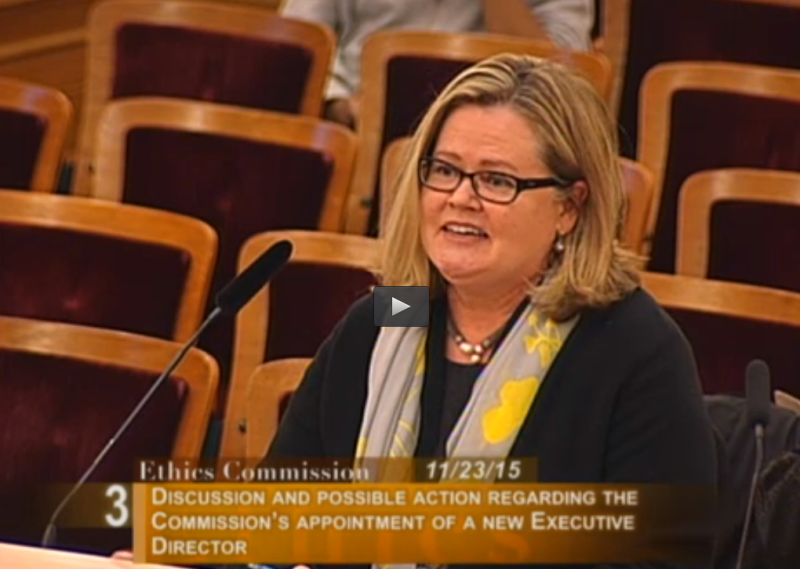
"caption": "LeeAnn Pelham, newly appointed to lead the San Francisco Ethics Commission, addresses commissioners. ",
"description": null,
"title": "LeeAnn Pelham",
"credit": "Screen shot from sfgovtv.org",
"status": "inherit",
"isLoading": false,
"fetchFailed": false
},
"news_10761532": {
"type": "attachments",
"id": "news_10761532",
"meta": {
"index": "attachments_1716263798",
"site": "news",
"id": "10761532",
"found": true
},
"parent": 10761217,
"imgSizes": {
"twentyfourteen-full-width": {
"file": "https://ww2.kqed.org/app/uploads/sites/10/2015/11/RS3208_smoker-Justin-Sullivan.jpg-alt_367-1038x576.jpg",
"width": 1038,
"mimeType": "image/jpeg",
"height": 576
},
"thumbnail": {
"file": "https://ww2.kqed.org/app/uploads/sites/10/2015/11/RS3208_smoker-Justin-Sullivan.jpg-alt_367-400x268.jpg",
"width": 400,
"mimeType": "image/jpeg",
"height": 268
},
"fd-sm": {
"file": "https://ww2.kqed.org/app/uploads/sites/10/2015/11/RS3208_smoker-Justin-Sullivan.jpg-alt_367-960x644.jpg",
"width": 960,
"mimeType": "image/jpeg",
"height": 644
},
"post-thumbnail": {
"file": "https://ww2.kqed.org/app/uploads/sites/10/2015/11/RS3208_smoker-Justin-Sullivan.jpg-alt_367-672x372.jpg",
"width": 672,
"mimeType": "image/jpeg",
"height": 372
},
"kqedFullSize": {
"file": "https://ww2.kqed.org/app/uploads/sites/10/2015/11/RS3208_smoker-Justin-Sullivan.jpg-alt_367.jpg",
"width": 1920,
"height": 1288
},
"large": {
"file": "https://ww2.kqed.org/app/uploads/sites/10/2015/11/RS3208_smoker-Justin-Sullivan.jpg-alt_367-1440x966.jpg",
"width": 1440,
"mimeType": "image/jpeg",
"height": 966
},
"guest-author-96": {
"file": "https://ww2.kqed.org/app/uploads/sites/10/2015/11/RS3208_smoker-Justin-Sullivan.jpg-alt_367-96x96.jpg",
"width": 96,
"mimeType": "image/jpeg",
"height": 96
},
"medium": {
"file": "https://ww2.kqed.org/app/uploads/sites/10/2015/11/RS3208_smoker-Justin-Sullivan.jpg-alt_367-800x537.jpg",
"width": 800,
"mimeType": "image/jpeg",
"height": 537
},
"guest-author-64": {
"file": "https://ww2.kqed.org/app/uploads/sites/10/2015/11/RS3208_smoker-Justin-Sullivan.jpg-alt_367-64x64.jpg",
"width": 64,
"mimeType": "image/jpeg",
"height": 64
},
"guest-author-32": {
"file": "https://ww2.kqed.org/app/uploads/sites/10/2015/11/RS3208_smoker-Justin-Sullivan.jpg-alt_367-32x32.jpg",
"width": 32,
"mimeType": "image/jpeg",
"height": 32
},
"jmtc-small-thumb": {
"file": "https://ww2.kqed.org/app/uploads/sites/10/2015/11/RS3208_smoker-Justin-Sullivan.jpg-alt_367-280x150.jpg",
"width": 280,
"mimeType": "image/jpeg",
"height": 150
},
"fd-lrg": {
"file": "https://ww2.kqed.org/app/uploads/sites/10/2015/11/RS3208_smoker-Justin-Sullivan.jpg-alt_367-1920x1288.jpg",
"width": 1920,
"mimeType": "image/jpeg",
"height": 1288
},
"fd-med": {
"file": "https://ww2.kqed.org/app/uploads/sites/10/2015/11/RS3208_smoker-Justin-Sullivan.jpg-alt_367-1180x792.jpg",
"width": 1180,
"mimeType": "image/jpeg",
"height": 792
},
"detail": {
"file": "https://ww2.kqed.org/app/uploads/sites/10/2015/11/RS3208_smoker-Justin-Sullivan.jpg-alt_367-75x75.jpg",
"width": 75,
"mimeType": "image/jpeg",
"height": 75
},
"guest-author-128": {
"file": "https://ww2.kqed.org/app/uploads/sites/10/2015/11/RS3208_smoker-Justin-Sullivan.jpg-alt_367-128x128.jpg",
"width": 128,
"mimeType": "image/jpeg",
"height": 128
}
},
"publishDate": 1447724856,
"modified": 1447783913,
"caption": "By one estimate, tobacco-related illnesses have a $400 million annual impact on San Francisco.",
"description": null,
"title": "San Francisco-Smoking-Tobacco",
"credit": "Justin Sullivan/Getty Images",
"status": "inherit",
"isLoading": false,
"fetchFailed": false
}
},
"audioPlayerReducer": {
"postId": "stream_live",
"isPaused": true,
"isPlaying": false,
"pfsActive": false,
"pledgeModalIsOpen": true,
"playerDrawerIsOpen": false,
"liveAudioPlayStartedAt": 0,
"liveAudioPlayContext": ""
},
"authorsReducer": {
"smartin": {
"type": "authors",
"id": "89",
"meta": {
"index": "authors_1716337520",
"id": "89",
"found": true
},
"name": "Stephanie Martin Taylor",
"firstName": "Stephanie Martin",
"lastName": "Taylor",
"slug": "smartin",
"email": "smartin@kqed.org",
"display_author_email": false,
"staff_mastheads": [],
"title": null,
"bio": "Stephanie Martin is a radio news reporter and anchor, and an occasional host of the \u003cem>KQED Newsroom \u003c/em>television program. While she currently focuses on housing and development issues, she has also reported on topics ranging from state and local politics to religion to arts and culture.\r\n\r\nPrior to joining KQED in 2005, Stephanie was an anchor and reporter for WFDD, the NPR affiliate in Winston-Salem, NC. She also spent several years as a television anchor, reporter and producer at various stations around the country.\r\n\r\nStephanie has received numerous awards for her reporting, including two National Headliner Awards, the Religion Newswriters Association's Best Radio Reporting Award and honors from the Associated Press and the Radio and Television Digital News Association. A series she produced from Iraq in 2005 earned a Best of Radio Award from the Society of Professional Journalists.\r\n\r\nStephanie received a graduate degree in Journalism from Columbia University. As an undergraduate at Colgate University, she worked and studied in Paris and Dijon, France, and spent a summer interning in the White House Press Office.\r\n\r\nStephanie grew up in Dallas, TX, and now lives with her husband in San Francisco.",
"avatar": "https://secure.gravatar.com/avatar/9fd3f8e9af01e14afde39822c19646e0?s=600&d=blank&r=g",
"twitter": "SMartinTaylor",
"facebook": null,
"instagram": null,
"linkedin": null,
"sites": [
{
"site": "arts",
"roles": [
"Contributor",
"subscriber"
]
},
{
"site": "news",
"roles": [
"subscriber"
]
},
{
"site": "stateofhealth",
"roles": [
"subscriber"
]
}
],
"headData": {
"title": "Stephanie Martin Taylor | KQED",
"description": null,
"ogImgSrc": "https://secure.gravatar.com/avatar/9fd3f8e9af01e14afde39822c19646e0?s=600&d=blank&r=g",
"twImgSrc": "https://secure.gravatar.com/avatar/9fd3f8e9af01e14afde39822c19646e0?s=600&d=blank&r=g"
},
"isLoading": false,
"link": "/author/smartin"
},
"bgoebel": {
"type": "authors",
"id": "214",
"meta": {
"index": "authors_1716337520",
"id": "214",
"found": true
},
"name": "Bryan Goebel",
"firstName": "Bryan",
"lastName": "Goebel",
"slug": "bgoebel",
"email": "bgoebel@kqed.org",
"display_author_email": false,
"staff_mastheads": [],
"title": null,
"bio": "Bryan Goebel is a reporter focused on transportation and housing issues. He was previously the editor of Streetsblog San Francisco, and an anchor/editor at KCBS Radio. He's a lifelong Californian and has also worked at radio stations in Barstow, Redding and Sacramento.",
"avatar": "https://secure.gravatar.com/avatar/7fdd6b065bfe9a23a71bcfa80848df88?s=600&d=blank&r=g",
"twitter": "velobry",
"facebook": null,
"instagram": null,
"linkedin": null,
"sites": [
{
"site": "news",
"roles": [
"subscriber"
]
},
{
"site": "stateofhealth",
"roles": [
"subscriber"
]
}
],
"headData": {
"title": "Bryan Goebel | KQED",
"description": null,
"ogImgSrc": "https://secure.gravatar.com/avatar/7fdd6b065bfe9a23a71bcfa80848df88?s=600&d=blank&r=g",
"twImgSrc": "https://secure.gravatar.com/avatar/7fdd6b065bfe9a23a71bcfa80848df88?s=600&d=blank&r=g"
},
"isLoading": false,
"link": "/author/bgoebel"
},
"tgoldberg": {
"type": "authors",
"id": "258",
"meta": {
"index": "authors_1716337520",
"id": "258",
"found": true
},
"name": "Ted Goldberg",
"firstName": "Ted",
"lastName": "Goldberg",
"slug": "tgoldberg",
"email": "tgoldberg@kqed.org",
"display_author_email": true,
"staff_mastheads": [
"news"
],
"title": "KQED Managing Editor, News and Newscasts",
"bio": "Ted Goldberg is Managing Editor of News and Newscasts at KQED. His main reporting beat is the Bay Area's oil refining industry.\r\n\r\nPrior to joining KQED in 2014, Ted worked at CBS News and WCBS AM in New York and Bay City News and KCBS Radio in San Francisco. He graduated from Oberlin College in Ohio in 1998.",
"avatar": "https://secure.gravatar.com/avatar/30ce2e4fe89135e104f89be2394d16225b9d36c121b5b3cb7651ce642978b96f?s=600&d=blank&r=g",
"twitter": "TedrickG",
"bluesky": null,
"facebook": null,
"instagram": null,
"linkedin": null,
"sites": [
{
"site": "news",
"roles": [
"editor"
]
},
{
"site": "science",
"roles": [
"editor"
]
}
],
"headData": {
"title": "Ted Goldberg | KQED",
"description": "KQED Managing Editor, News and Newscasts",
"ogImgSrc": "https://secure.gravatar.com/avatar/30ce2e4fe89135e104f89be2394d16225b9d36c121b5b3cb7651ce642978b96f?s=600&d=blank&r=g",
"twImgSrc": "https://secure.gravatar.com/avatar/30ce2e4fe89135e104f89be2394d16225b9d36c121b5b3cb7651ce642978b96f?s=600&d=blank&r=g"
},
"isLoading": false,
"link": "/author/tgoldberg"
},
"afont": {
"type": "authors",
"id": "8637",
"meta": {
"index": "authors_1716337520",
"id": "8637",
"found": true
},
"name": "Amanda Font",
"firstName": "Amanda",
"lastName": "Font",
"slug": "afont",
"email": "afont@kqed.org",
"display_author_email": false,
"staff_mastheads": [],
"title": "KQED Contributor",
"bio": "Amanda Font is a producer on \u003cem>The Latest\u003c/em> podcast, and the host and co-producer of the series \u003cem>Audible Cosmos\u003c/em>. She has previously worked as a producer and reporter on the \u003cem>Bay Curious\u003c/em> podcast, and director of \u003cem>The California Report Magazine\u003c/em>. She grew up in the deserts of Southern California and moved north for the trees. Amanda earned a B.A. from the BECA program at San Francisco State, where she worked in the university's radio station. Amanda Font is represented by SAG-AFTRA.",
"avatar": "https://secure.gravatar.com/avatar/d9e81cf0117d5849b9cfb7ab4b1422f1?s=600&d=blank&r=g",
"twitter": null,
"facebook": null,
"instagram": null,
"linkedin": null,
"sites": [
{
"site": "news",
"roles": [
"add_users",
"create_users"
]
},
{
"site": "science",
"roles": []
},
{
"site": "forum",
"roles": [
"administrator"
]
},
{
"site": "perspectives",
"roles": [
"administrator"
]
},
{
"site": "radio",
"roles": [
"administrator"
]
}
],
"headData": {
"title": "Amanda Font | KQED",
"description": "KQED Contributor",
"ogImgSrc": "https://secure.gravatar.com/avatar/d9e81cf0117d5849b9cfb7ab4b1422f1?s=600&d=blank&r=g",
"twImgSrc": "https://secure.gravatar.com/avatar/d9e81cf0117d5849b9cfb7ab4b1422f1?s=600&d=blank&r=g"
},
"isLoading": false,
"link": "/author/afont"
},
"fjhabvala": {
"type": "authors",
"id": "8659",
"meta": {
"index": "authors_1716337520",
"id": "8659",
"found": true
},
"name": "Farida Jhabvala Romero",
"firstName": "Farida",
"lastName": "Jhabvala Romero",
"slug": "fjhabvala",
"email": "fjhabvala@kqed.org",
"display_author_email": true,
"staff_mastheads": [
"news"
],
"title": "KQED Contributor",
"bio": "Farida Jhabvala Romero is a Labor Correspondent for KQED. She previously covered immigration. Farida was \u003ca href=\"https://www.ccnma.org/2022-most-influential-latina-journalists\">named\u003c/a> one of the 10 Most Influential Latina Journalists in California in 2022 by the California Chicano News Media Association. Her work has won awards from the Society of Professional Journalists (Northern California), as well as a national and regional Edward M. Murrow Award for the collaborative reporting projects “Dangerous Air” and “Graying California.” Before joining KQED, Farida worked as a producer at Radio Bilingüe, a national public radio network. Farida earned her master’s degree in journalism from Stanford University.",
"avatar": "https://secure.gravatar.com/avatar/f9f022d4e2609741874222a1e9d41f48fea74011aa7c615eef91d9a50c944ebe?s=600&d=blank&r=g",
"twitter": "FaridaJhabvala",
"bluesky": null,
"facebook": null,
"instagram": null,
"linkedin": "https://www.linkedin.com/in/faridajhabvala/",
"sites": [
{
"site": "news",
"roles": [
"editor"
]
},
{
"site": "stateofhealth",
"roles": [
"author"
]
},
{
"site": "liveblog",
"roles": [
"author"
]
}
],
"headData": {
"title": "Farida Jhabvala Romero | KQED",
"description": "KQED Contributor",
"ogImgSrc": "https://secure.gravatar.com/avatar/f9f022d4e2609741874222a1e9d41f48fea74011aa7c615eef91d9a50c944ebe?s=600&d=blank&r=g",
"twImgSrc": "https://secure.gravatar.com/avatar/f9f022d4e2609741874222a1e9d41f48fea74011aa7c615eef91d9a50c944ebe?s=600&d=blank&r=g"
},
"isLoading": false,
"link": "/author/fjhabvala"
}
},
"pagesReducer": {
"news_tag_san-francisco": {
"type": "terms",
"id": "news_38",
"meta": {
"index": "terms_1716263798",
"site": "news",
"id": "38",
"score": 6.723328
},
"featImg": null,
"name": "San Francisco",
"description": null,
"taxonomy": "tag",
"headData": {
"twImgId": null,
"twTitle": null,
"ogTitle": null,
"ogImgId": null,
"twDescription": null,
"description": null,
"title": "San Francisco Archives | KQED News",
"ogDescription": null
},
"ttid": 58,
"slug": "san-francisco",
"isLoading": false,
"title": "San Francisco",
"pageMeta": {
"site": "news",
"WpPageTemplate": "page-topic-editorial",
"currentPage": 177
},
"blocks": [
{
"blockName": "kqed/post-list",
"attrs": {
"layout": "cardArticle2",
"query": "posts/news?tag=san-francisco",
"seeMore": false,
"paginated": true,
"page": 177
}
},
{
"blockName": "kqed/ad"
}
]
}
},
"pfsSessionReducer": {},
"postsReducer": {
"stream_live": {
"type": "live",
"id": "stream_live",
"audioUrl": "https://streams.kqed.org/kqedradio",
"title": "Live Stream",
"excerpt": "Live Stream information currently unavailable.",
"link": "/radio",
"featImg": "",
"label": {
"name": "KQED Live",
"link": "/"
}
},
"stream_kqedNewscast": {
"type": "posts",
"id": "stream_kqedNewscast",
"audioUrl": "https://www.kqed.org/.stream/anon/radio/RDnews/newscast.mp3?_=1",
"title": "KQED Newscast",
"featImg": "",
"label": {
"name": "88.5 FM",
"link": "/"
}
},
"news_10858737": {
"type": "posts",
"id": "news_10858737",
"meta": {
"index": "posts_1716263798",
"site": "news",
"id": "10858737",
"score": null,
"sort": [
1455033993000
]
},
"parent": 0,
"labelTerm": {
"site": "news",
"term": 6944
},
"blocks": [],
"publishDate": 1455033993,
"format": "standard",
"disqusTitle": "S.F. Supervisors' Deal Would Extend Tech Shuttle Bus Program",
"title": "S.F. Supervisors' Deal Would Extend Tech Shuttle Bus Program",
"headTitle": "News Fix | KQED News",
"content": "\u003cp>A deal hammered out between three members of the San Francisco Board of Supervisors and tech shuttle operators will allow the giant buses that carry thousands of workers to and from Silicon Valley to keep using the city's Muni stops -- for now.\u003c/p>\n\u003cp>Supervisors London Breed, David Campos and Norman Yee reached the agreement late Monday to extend a Municipal Transportation Agency program that allows shuttles for Google, Apple, Facebook and other firms to use the Muni stops in return for a fee. Critics of the program, including affordable housing advocates, say the shuttles have accelerated the pace of gentrification in the city and have added to traffic congestion and air pollution.\u003c/p>\n\u003cp>Two weeks ago, the Board of Supervisors postponed action on the matter to give Breed, Campos and Yee time to resolve conflicts between the SFMTA, the shuttle operators and program critics.\u003c/p>\n\u003cp>\"I'm happy to report that we've reached a tentative agreement that we hope to recommend to the rest of the board,\" Mission district Supervisor Campos said in an interview.\u003c/p>\n\u003cp>Instead of killing the program while a full environmental review takes place, the deal calls for it to continue in its current form for one year while city officials study its impact.\u003c/p>\n\u003cp>[ad fullwidth]\u003c/p>\n\u003cp>Campos says the SFMTA and the San Francisco County Transportation Authority will take the next six months to look into whether the program could succeed without some of the nearly 125 Muni stops it uses now.\u003c/p>\n\u003cp>During that time, the two agencies will explore whether workers who use the shuttles could be picked up at hubs in certain neighborhoods instead of the stops currently in use.\u003c/p>\n\u003cp>They will also study whether air quality has gotten worse in neighborhoods with a high volume of commuter shuttles and whether the program is a factor in displacing residents in a city that's in the grips of an affordability crisis.\u003c/p>\n\u003cp>Campos says the six months of study could lead to an overhaul of the program.\u003c/p>\n\u003cp>\"We as a city and the tech industry and these companies have to do a better job of working together on issues like housing,\" Campos said.\u003c/p>\n\u003cp>\u003c/p>\n\u003cp>The full Board of Supervisors had been scheduled to vote on the shuttle program's future Tuesday. The issue will now be postponed until Feb. 23.\u003c/p>\n\n",
"disqusIdentifier": "10858737 http://ww2.kqed.org/news/?p=10858737",
"disqusUrl": "https://ww2.kqed.org/news/2016/02/09/s-f-supervisors-deal-would-extend-tech-shuttle-bus-program/",
"stats": {
"hasVideo": false,
"hasChartOrMap": false,
"hasAudio": false,
"hasPolis": false,
"wordCount": 386,
"hasGoogleForm": false,
"hasGallery": false,
"hasHearkenModule": false,
"iframeSrcs": [],
"paragraphCount": 13
},
"modified": 1455058302,
"excerpt": "Tentative agreement struck by three board members would allow buses to continue to use Muni bus stops while neighborhood impact is studied. ",
"headData": {
"twImgId": "",
"twTitle": "",
"ogTitle": "",
"ogImgId": "",
"twDescription": "",
"description": "Tentative agreement struck by three board members would allow buses to continue to use Muni bus stops while neighborhood impact is studied. ",
"title": "S.F. Supervisors' Deal Would Extend Tech Shuttle Bus Program | KQED",
"ogDescription": "",
"schema": {
"@context": "https://schema.org",
"@type": "NewsArticle",
"headline": "S.F. Supervisors' Deal Would Extend Tech Shuttle Bus Program",
"datePublished": "2016-02-09T08:06:33-08:00",
"dateModified": "2016-02-09T14:51:42-08:00",
"image": "https://cdn.kqed.org/wp-content/uploads/2020/02/KQED-OG-Image@1x.png",
"isAccessibleForFree": "True",
"publisher": {
"@type": "NewsMediaOrganization",
"@id": "https://www.kqed.org/#organization",
"name": "KQED",
"logo": "https://cdn.kqed.org/wp-content/uploads/2020/02/KQED-OG-Image@1x.png",
"url": "https://www.kqed.org",
"sameAs": [
"https://www.facebook.com/KQED",
"https://twitter.com/KQED",
"https://www.instagram.com/kqed/",
"https://www.tiktok.com/@kqedofficial",
"https://www.linkedin.com/company/kqed",
"https://www.youtube.com/channel/UCeC0IOo7i1P_61zVUWbJ4nw"
]
}
}
},
"guestAuthors": [],
"slug": "s-f-supervisors-deal-would-extend-tech-shuttle-bus-program",
"status": "publish",
"nprStoryId": "466145177",
"path": "/news/10858737/s-f-supervisors-deal-would-extend-tech-shuttle-bus-program",
"audioTrackLength": null,
"parsedContent": [
{
"type": "contentString",
"content": "\u003cdiv class=\"post-body\">\u003cp>\u003cp>A deal hammered out between three members of the San Francisco Board of Supervisors and tech shuttle operators will allow the giant buses that carry thousands of workers to and from Silicon Valley to keep using the city's Muni stops -- for now.\u003c/p>\n\u003cp>Supervisors London Breed, David Campos and Norman Yee reached the agreement late Monday to extend a Municipal Transportation Agency program that allows shuttles for Google, Apple, Facebook and other firms to use the Muni stops in return for a fee. Critics of the program, including affordable housing advocates, say the shuttles have accelerated the pace of gentrification in the city and have added to traffic congestion and air pollution.\u003c/p>\n\u003cp>Two weeks ago, the Board of Supervisors postponed action on the matter to give Breed, Campos and Yee time to resolve conflicts between the SFMTA, the shuttle operators and program critics.\u003c/p>\n\u003cp>\"I'm happy to report that we've reached a tentative agreement that we hope to recommend to the rest of the board,\" Mission district Supervisor Campos said in an interview.\u003c/p>\n\u003cp>Instead of killing the program while a full environmental review takes place, the deal calls for it to continue in its current form for one year while city officials study its impact.\u003c/p>\n\u003cp>\u003c/p>\u003c/div>",
"attributes": {
"named": {},
"numeric": []
}
},
{
"type": "component",
"content": "",
"name": "ad",
"attributes": {
"named": {
"label": "fullwidth"
},
"numeric": [
"fullwidth"
]
}
},
{
"type": "contentString",
"content": "\u003cdiv class=\"post-body\">\u003cp>\u003c/p>\n\u003cp>Campos says the SFMTA and the San Francisco County Transportation Authority will take the next six months to look into whether the program could succeed without some of the nearly 125 Muni stops it uses now.\u003c/p>\n\u003cp>During that time, the two agencies will explore whether workers who use the shuttles could be picked up at hubs in certain neighborhoods instead of the stops currently in use.\u003c/p>\n\u003cp>They will also study whether air quality has gotten worse in neighborhoods with a high volume of commuter shuttles and whether the program is a factor in displacing residents in a city that's in the grips of an affordability crisis.\u003c/p>\n\u003cp>Campos says the six months of study could lead to an overhaul of the program.\u003c/p>\n\u003cp>\"We as a city and the tech industry and these companies have to do a better job of working together on issues like housing,\" Campos said.\u003c/p>\n\u003cp>\u003c/p>\n\u003cp>The full Board of Supervisors had been scheduled to vote on the shuttle program's future Tuesday. The issue will now be postponed until Feb. 23.\u003c/p>\n\n\u003c/div>\u003c/p>",
"attributes": {
"named": {},
"numeric": []
}
}
],
"link": "/news/10858737/s-f-supervisors-deal-would-extend-tech-shuttle-bus-program",
"authors": [
"258"
],
"programs": [
"news_6944"
],
"categories": [
"news_6266",
"news_1397"
],
"tags": [
"news_5269",
"news_38"
],
"featImg": "news_10859170",
"label": "news_6944"
},
"news_10858040": {
"type": "posts",
"id": "news_10858040",
"meta": {
"index": "posts_1716263798",
"site": "news",
"id": "10858040",
"score": null,
"sort": [
1455033651000
]
},
"parent": 0,
"labelTerm": {
"site": "news",
"term": 6944
},
"blocks": [],
"publishDate": 1455033651,
"format": "standard",
"disqusTitle": "S.F. Officials Push for Adoption of Pioneering Open-Source Voting System",
"title": "S.F. Officials Push for Adoption of Pioneering Open-Source Voting System",
"headTitle": "News Fix | KQED News",
"content": "\u003cp>San Francisco could launch a major makeover of its voting systems this year, an effort that supporters say will lead to cheaper, more transparent elections in the city.\u003c/p>\n\u003cp>On Tuesday, Supervisor Scott Wiener will call for a Board of Supervisors hearing into the city's efforts to adopt a voting system that would use off-the-shelf hardware and open-source software. Elections officials, politicians and voter-participation activists have all touted such publicly owned balloting systems as cheaper and more trustworthy than using products supplied by private vendors.\u003c/p>\n\u003cp>\"We want to set a trend here and around the country toward more open and transparent voting systems,\" Wiener said in an interview.\u003c/p>\n\u003cp>\"When you rely on an outside vendor, it's their technology which is proprietary and confidential, and the public really doesn't have access to the code that they're relying on,\" said Wiener, who's running for state Senate. \"It's very 'black box,' so we just have to have faith that their machines are producing accurate results.\"\u003c/p>\n\u003cp>Chris Jerdonek, vice president of the San Francisco Elections Commission, is also a proponent of open-source voting systems.\u003c/p>\n\u003cp>[ad fullwidth]\u003c/p>\n\u003cp>\"We've got a huge opportunity and San Francisco has a chance to take a real leadership role,\" Jerdonek said in an interview. If the city succeeds in building and certifying an open-source system, other counties and states could follow suit, he said.\u003c/p>\n\u003cp>\"We live in the center of technology innovation, and every successful startup or technology company uses a lot of open source. And government is pretty much the only part of our society that doesn't.\"\u003c/p>\n\u003cp>Voting equipment companies do not want local governments to move in that direction. They say their software is more secure and that open-source systems would make it easier for people to hack into elections.\u003c/p>\n\u003cp>For years Dominion Voting, formerly known as Sequoia Voting, has supplied the city's elections hardware and software and made its staff available to support using those programs. But its contract expires at the end of the year.\u003c/p>\n\u003cp>\"It's certainly a threat to our business,\" Steven Bennett, the company's regional sales manager, said in an interview.\u003c/p>\n\u003cp>He added that Dominion plans to fight to keep its contract with San Francisco.\u003c/p>\n\u003cp>\"At the end of the day, we will be a lower-cost solution to the city, \" Bennett said. \"Our new voting system has a tremendous amount of efficiency that cuts the cost and increases the transparency of running an election.\"\u003c/p>\n\u003cp>Advocates for open source say it allows the public to see the computer code used for vote-counting and to point out its flaws. While its proponents say that leads to more secure systems, some \u003ca href=\"http://www.zdnet.com/article/six-open-source-security-myths-debunked-and-eight-real-challenges-to-consider/\" target=\"_blank\">experts \u003c/a>say there's no evidence that having more eyes on a voting system makes it less susceptible to cyber attacks.\u003c/p>\n\u003cp>No local government in the country has fully implemented open-source voting. Los Angeles County and Travis County, Texas, are working to build their own voting systems, but they have yet to commit to open source.\u003c/p>\n\u003cp>Jerdonek says that many jurisdictions have been reluctant to move forward on the idea because of its initial costs and the work their elections agencies would need to accomplish to satisfy state and federal certifications. \"There's an inertia to stay with closed source,\" Jerdonek said. \"It takes a real vision and leadership to do something new.\"\u003c/p>\n\u003cp>John Arntz, the city's director of elections, supports the idea of an open-source voting system, but says he's concerned that there's no other jurisdiction it can model its program after.\u003c/p>\n\u003cp>\"Bringing in a new system is never easy,\" Arntz said in an interview. \"It's not simple. It's not like you just plug it in and you're done. It's a culture change.\"\u003c/p>\n\u003cp>In 2013, the governor signed \u003ca href=\"http://leginfo.legislature.ca.gov/faces/billNavClient.xhtml?bill_id=201320140SB360\" target=\"_blank\">SB360\u003c/a> which, among other things, encouraged the development of voting systems that have more accessible source code.\u003c/p>\n\u003cp>\u003c/p>\n\u003cp>Just over a year ago the Board of Supervisors passed a \u003ca href=\"https://sfgov.legistar.com/View.ashx?M=F&ID=3421958&GUID=7615B01B-0CEF-4D1C-8BF4-FE23BEB15182\" target=\"_blank\">resolution\u003c/a> that required the city to study open-source voting. Last November, the Department of Elections approved a \u003ca href=\"http://sfgov.org/electionscommission/sites/default/files/Documents/Miscellaneous/Elections_Comm_Open_Source_Voting_Res.pdf\" target=\"_blank\">plan\u003c/a> asking the mayor and the board to start and fund the work. Arntz said the agency plans to submit a budget request to Mayor Ed Lee at the end of the month, proposing spending $2.3 million toward an open-source system.\u003c/p>\n\n",
"disqusIdentifier": "10858040 http://ww2.kqed.org/news/?p=10858040",
"disqusUrl": "https://ww2.kqed.org/news/2016/02/09/s-f-officials-push-for-adoption-of-pioneering-open-source-voting-system/",
"stats": {
"hasVideo": false,
"hasChartOrMap": false,
"hasAudio": false,
"hasPolis": false,
"wordCount": 730,
"hasGoogleForm": false,
"hasGallery": false,
"hasHearkenModule": false,
"iframeSrcs": [],
"paragraphCount": 21
},
"modified": 1455059214,
"excerpt": "Push to create system with publicly available source code will lead to battle with city's current private vendor. ",
"headData": {
"twImgId": "",
"twTitle": "",
"ogTitle": "",
"ogImgId": "",
"twDescription": "",
"description": "Push to create system with publicly available source code will lead to battle with city's current private vendor. ",
"title": "S.F. Officials Push for Adoption of Pioneering Open-Source Voting System | KQED",
"ogDescription": "",
"schema": {
"@context": "https://schema.org",
"@type": "NewsArticle",
"headline": "S.F. Officials Push for Adoption of Pioneering Open-Source Voting System",
"datePublished": "2016-02-09T08:00:51-08:00",
"dateModified": "2016-02-09T15:06:54-08:00",
"image": "https://cdn.kqed.org/wp-content/uploads/2020/02/KQED-OG-Image@1x.png",
"isAccessibleForFree": "True",
"publisher": {
"@type": "NewsMediaOrganization",
"@id": "https://www.kqed.org/#organization",
"name": "KQED",
"logo": "https://cdn.kqed.org/wp-content/uploads/2020/02/KQED-OG-Image@1x.png",
"url": "https://www.kqed.org",
"sameAs": [
"https://www.facebook.com/KQED",
"https://twitter.com/KQED",
"https://www.instagram.com/kqed/",
"https://www.tiktok.com/@kqedofficial",
"https://www.linkedin.com/company/kqed",
"https://www.youtube.com/channel/UCeC0IOo7i1P_61zVUWbJ4nw"
]
}
}
},
"guestAuthors": [],
"slug": "s-f-officials-push-for-adoption-of-pioneering-open-source-voting-system",
"status": "publish",
"nprStoryId": "466144876",
"path": "/news/10858040/s-f-officials-push-for-adoption-of-pioneering-open-source-voting-system",
"audioTrackLength": null,
"parsedContent": [
{
"type": "contentString",
"content": "\u003cdiv class=\"post-body\">\u003cp>\u003cp>San Francisco could launch a major makeover of its voting systems this year, an effort that supporters say will lead to cheaper, more transparent elections in the city.\u003c/p>\n\u003cp>On Tuesday, Supervisor Scott Wiener will call for a Board of Supervisors hearing into the city's efforts to adopt a voting system that would use off-the-shelf hardware and open-source software. Elections officials, politicians and voter-participation activists have all touted such publicly owned balloting systems as cheaper and more trustworthy than using products supplied by private vendors.\u003c/p>\n\u003cp>\"We want to set a trend here and around the country toward more open and transparent voting systems,\" Wiener said in an interview.\u003c/p>\n\u003cp>\"When you rely on an outside vendor, it's their technology which is proprietary and confidential, and the public really doesn't have access to the code that they're relying on,\" said Wiener, who's running for state Senate. \"It's very 'black box,' so we just have to have faith that their machines are producing accurate results.\"\u003c/p>\n\u003cp>Chris Jerdonek, vice president of the San Francisco Elections Commission, is also a proponent of open-source voting systems.\u003c/p>\n\u003cp>\u003c/p>\u003c/div>",
"attributes": {
"named": {},
"numeric": []
}
},
{
"type": "component",
"content": "",
"name": "ad",
"attributes": {
"named": {
"label": "fullwidth"
},
"numeric": [
"fullwidth"
]
}
},
{
"type": "contentString",
"content": "\u003cdiv class=\"post-body\">\u003cp>\u003c/p>\n\u003cp>\"We've got a huge opportunity and San Francisco has a chance to take a real leadership role,\" Jerdonek said in an interview. If the city succeeds in building and certifying an open-source system, other counties and states could follow suit, he said.\u003c/p>\n\u003cp>\"We live in the center of technology innovation, and every successful startup or technology company uses a lot of open source. And government is pretty much the only part of our society that doesn't.\"\u003c/p>\n\u003cp>Voting equipment companies do not want local governments to move in that direction. They say their software is more secure and that open-source systems would make it easier for people to hack into elections.\u003c/p>\n\u003cp>For years Dominion Voting, formerly known as Sequoia Voting, has supplied the city's elections hardware and software and made its staff available to support using those programs. But its contract expires at the end of the year.\u003c/p>\n\u003cp>\"It's certainly a threat to our business,\" Steven Bennett, the company's regional sales manager, said in an interview.\u003c/p>\n\u003cp>He added that Dominion plans to fight to keep its contract with San Francisco.\u003c/p>\n\u003cp>\"At the end of the day, we will be a lower-cost solution to the city, \" Bennett said. \"Our new voting system has a tremendous amount of efficiency that cuts the cost and increases the transparency of running an election.\"\u003c/p>\n\u003cp>Advocates for open source say it allows the public to see the computer code used for vote-counting and to point out its flaws. While its proponents say that leads to more secure systems, some \u003ca href=\"http://www.zdnet.com/article/six-open-source-security-myths-debunked-and-eight-real-challenges-to-consider/\" target=\"_blank\">experts \u003c/a>say there's no evidence that having more eyes on a voting system makes it less susceptible to cyber attacks.\u003c/p>\n\u003cp>No local government in the country has fully implemented open-source voting. Los Angeles County and Travis County, Texas, are working to build their own voting systems, but they have yet to commit to open source.\u003c/p>\n\u003cp>Jerdonek says that many jurisdictions have been reluctant to move forward on the idea because of its initial costs and the work their elections agencies would need to accomplish to satisfy state and federal certifications. \"There's an inertia to stay with closed source,\" Jerdonek said. \"It takes a real vision and leadership to do something new.\"\u003c/p>\n\u003cp>John Arntz, the city's director of elections, supports the idea of an open-source voting system, but says he's concerned that there's no other jurisdiction it can model its program after.\u003c/p>\n\u003cp>\"Bringing in a new system is never easy,\" Arntz said in an interview. \"It's not simple. It's not like you just plug it in and you're done. It's a culture change.\"\u003c/p>\n\u003cp>In 2013, the governor signed \u003ca href=\"http://leginfo.legislature.ca.gov/faces/billNavClient.xhtml?bill_id=201320140SB360\" target=\"_blank\">SB360\u003c/a> which, among other things, encouraged the development of voting systems that have more accessible source code.\u003c/p>\n\u003cp>\u003c/p>\n\u003cp>Just over a year ago the Board of Supervisors passed a \u003ca href=\"https://sfgov.legistar.com/View.ashx?M=F&ID=3421958&GUID=7615B01B-0CEF-4D1C-8BF4-FE23BEB15182\" target=\"_blank\">resolution\u003c/a> that required the city to study open-source voting. Last November, the Department of Elections approved a \u003ca href=\"http://sfgov.org/electionscommission/sites/default/files/Documents/Miscellaneous/Elections_Comm_Open_Source_Voting_Res.pdf\" target=\"_blank\">plan\u003c/a> asking the mayor and the board to start and fund the work. Arntz said the agency plans to submit a budget request to Mayor Ed Lee at the end of the month, proposing spending $2.3 million toward an open-source system.\u003c/p>\n\n\u003c/div>\u003c/p>",
"attributes": {
"named": {},
"numeric": []
}
}
],
"link": "/news/10858040/s-f-officials-push-for-adoption-of-pioneering-open-source-voting-system",
"authors": [
"258"
],
"programs": [
"news_6944"
],
"categories": [
"news_13",
"news_248"
],
"tags": [
"news_38"
],
"featImg": "news_10341262",
"label": "news_6944"
},
"news_10830141": {
"type": "posts",
"id": "news_10830141",
"meta": {
"index": "posts_1716263798",
"site": "news",
"id": "10830141",
"score": null,
"sort": [
1453737654000
]
},
"parent": 0,
"labelTerm": {
"site": "news",
"term": 6944
},
"blocks": [],
"publishDate": 1453737654,
"format": "standard",
"disqusTitle": "San Francisco Looks to Ease Disruptions During Major Street Renovations",
"title": "San Francisco Looks to Ease Disruptions During Major Street Renovations",
"headTitle": "News Fix | KQED News",
"content": "\u003cp>San Francisco plans to keep up its \u003ca href=\"http://sfdpw.org/index.aspx?page=1105\" target=\"_blank\">pace of street renovations \u003c/a>in 2016 as long-awaited transit and safety projects begin construction on some of the city's busiest and most dangerous corridors for traffic deaths and injuries.\u003c/p>\n\u003cp>This spring and summer, work is scheduled to get underway on \u003ca href=\"https://www.sfmta.com/projects-planning/projects/van-ness-corridor-transit-improvement-project\" target=\"_blank\">Van Ness\u003c/a> and \u003ca href=\"http://sfdpw.org/index.aspx?page=1765\" target=\"_blank\">Masonic\u003c/a> avenues, and \u003ca href=\"https://www.sfmta.com/projects-planning/projects/polk-streetscape-project\" target=\"_blank\">Polk\u003c/a>, \u003ca href=\"http://www.sfdpw.org/index.aspx?page=1489\" target=\"_blank\">Second\u003c/a>, \u003ca href=\"http://sfdpw.org/index.aspx?page=1753\" target=\"_blank\">Broadway\u003c/a> and \u003ca href=\"http://sfdpw.org/index.aspx?page=1696\" target=\"_blank\">Irving\u003c/a> streets. Construction is already underway on \u003ca href=\"http://sfdpw.org/index.aspx?page=1789\" target=\"_blank\">Mansell\u003c/a> and \u003ca href=\"http://sfdpw.org/index.aspx?page=1673\" target=\"_blank\">Potrero\u003c/a>.\u003c/p>\n\u003cp>Many San Franciscans have become begrudgingly accustomed to the disruptions and detours caused by the city's ongoing construction boom. The message from public works officials to residents and businesses on upcoming street work is that the short-term pain will be worth the long-term gain.\u003c/p>\n\u003cp>Rachel Gordon, a spokeswoman for San Francisco Public Works, said city officials are about to begin door-to-door outreach to merchants in business districts where construction later this year is likely to cause some pain.\u003c/p>\n\u003cp>\"They’re not going to be happy with us, but we want to make it so they’re not angry with us,\" said Gordon.\u003c/p>\n\u003cp>[ad fullwidth]\u003c/p>\n\u003cp>On some streets, such as Van Ness Avenue, the renovations will take up to two years, but public works and transportation officials hope to minimize the impact by tearing up small segments at a time. Crews will also be replacing century-old water and sewage pipes.\u003c/p>\n\u003cp>The projects will likely cause disruptions for Muni riders and drivers, along with ongoing construction. The San Francisco Municipal Transportation Agency is working on traffic and transit management plans in an effort to lessen delays.\u003c/p>\n\u003cp>Gordon said city officials plan to work with residents and merchants to address concerns before, during and after construction, similar to the process used during the renovation of Castro Street.\u003c/p>\n\u003cfigure id=\"attachment_10831637\" class=\"wp-caption aligncenter\" style=\"max-width: 1024px\">\u003cimg class=\"size-full wp-image-10831637\" src=\"http://ww2.kqed.org/news/wp-content/uploads/sites/10/2016/01/14897327066_af468ac1a4_b.jpg\" alt=\"Crews work on the Castro streetscape project in 2014. City officials say lessons learned during this project will inform future efforts to help merchants deal with disruptions during street construction.\" width=\"1024\" height=\"768\" srcset=\"https://ww2.kqed.org/app/uploads/sites/10/2016/01/14897327066_af468ac1a4_b.jpg 1024w, https://ww2.kqed.org/app/uploads/sites/10/2016/01/14897327066_af468ac1a4_b-400x300.jpg 400w, https://ww2.kqed.org/app/uploads/sites/10/2016/01/14897327066_af468ac1a4_b-800x600.jpg 800w, https://ww2.kqed.org/app/uploads/sites/10/2016/01/14897327066_af468ac1a4_b-768x576.jpg 768w, https://ww2.kqed.org/app/uploads/sites/10/2016/01/14897327066_af468ac1a4_b-960x720.jpg 960w\" sizes=\"(max-width: 1024px) 100vw, 1024px\">\u003cfigcaption class=\"wp-caption-text\">Crews work on the Castro streetscape project in 2014. City officials say lessons learned during this project will inform future efforts to help merchants deal with disruptions during street construction. \u003ccite>( \u003ca href=\"%E2%80%9Chttps://www.flickr.com/photos/gazeronly/%E2%80%9D\">torbakhopper/Flickr\u003c/a>.)\u003c/cite>\u003c/figcaption>\u003c/figure>\n\u003cp>Daniel Bergerac, president of Castro Merchants, said public works officials were \"very responsive and went the extra mile to make concessions and work around the merchants' schedule.\"\u003c/p>\n\u003cp>\"Most of my business and merchant members feel that the construction was long and arduous, but the payoff is that we have beautiful sidewalks,\" said Bergerac. \"I like that we've reclaimed part of the streets from cars for the pedestrians.\"\u003c/p>\n\u003cp>City officials have already heard from many concerned merchants along the corridors, said Joaquin Torres, deputy director of the Office of Economic and Workforce Development.\u003c/p>\n\u003cp>Torres said the city has a program to offer some assistance, such as loans and grants to merchant or neighborhood organizations for a marketing blitz that lets customers know businesses are open during construction. He said city officials are trying to improve the process with each new street project.\u003c/p>\n\u003cp>\"If we're coordinating in the right way, if we're supporting in the right way and we're responsive in the right way, we can make it go a little faster and make the experience a little bit better,\" said Torres.\u003c/p>\n\u003cp>The main issue for many merchants is parking, said Henry Karnilowicz, the president of the San Francisco Council of District Merchants Associations. At least, that's what he said he's hearing from some merchant groups on corridors scheduled for work.\u003c/p>\n\u003cp>\"If people can't shop and can't park, then most of the time they'll give up and they'll go somewhere else,\" said Karnilowicz, although he acknowledged that many people don't drive to shop.\u003c/p>\n\u003cp>On Polk Street, a \u003ca href=\"http://sf.streetsblog.org/2013/03/29/85-percent-of-people-on-polk-street-arrive-without-a-car/\">2013 survey found\u003c/a> that a majority of people walk, take Muni or bike to get there.\u003c/p>\n\u003cp>Madeleine Savit, a safe streets advocate who fought for the Polk Street improvements and heads up the group Folks for Polk, said the city should help merchants develop business plans and potentially provide low-cost loans and other financial support.\u003c/p>\n\u003cp>\"There's no single aspect of this project or other projects that will make or break the vitality of the corridor. It's an accumulation of changes, and the more median and long-term planning we can do, the stronger that will be,\" Savit said.\u003c/p>\n\u003cp>One of the most anticipated projects will be along a 2-mile stretch of Van Ness Avenue, where construction is scheduled to start in March on bus rapid transit, which has been in the works for nearly a decade.\u003c/p>\n\u003cp>When it's complete, new low-floor Muni buses will glide along red transit lanes in the center of the street, next to a landscaped median, free of car traffic. Transportation officials say it will reduce travel times by 32 percent, and boost the number of riders from 16,000 to 22,000 a day.\u003c/p>\n\u003cp>The makeover is also expected to transform the dangerous corridor into a much friendlier street for pedestrians. Over the years the busy, wide avenue has been the scene of a number of fatal and serious injury collisions involving pedestrians, bicyclists and drivers.\u003c/p>\n\u003cfigure id=\"attachment_10834875\" class=\"wp-caption aligncenter\" style=\"max-width: 725px\">\u003cimg class=\"wp-image-10834875 size-full\" src=\"http://ww2.kqed.org/news/wp-content/uploads/sites/10/2016/01/Screen-Shot-2016-01-16-at-1.48.04-PM.png\" alt=\"2nd Street rendering \" width=\"725\" height=\"548\" srcset=\"https://ww2.kqed.org/app/uploads/sites/10/2016/01/Screen-Shot-2016-01-16-at-1.48.04-PM.png 725w, https://ww2.kqed.org/app/uploads/sites/10/2016/01/Screen-Shot-2016-01-16-at-1.48.04-PM-400x302.png 400w\" sizes=\"(max-width: 725px) 100vw, 725px\">\u003cfigcaption class=\"wp-caption-text\">Second Street is scheduled to get raised, protected bike lanes and wider sidewalks. \u003ccite>(San Francisco Public Works )\u003c/cite>\u003c/figcaption>\u003c/figure>\n\u003cp>Many of the projects are on streets that have been identified as high-injury corridors under the city's Vision Zero program, which has a goal of ending all traffic deaths by 2024. Along with wider sidewalks, enhanced crosswalks and new lights and landscaping on some streets, busy corridors like Masonic, Polk and Second will get some \u003ca href=\"http://www.peopleforbikes.org/green-lane-project/pages/protected-bike-lanes-101\" target=\"_blank\">protected bike lanes.\u003c/a>\u003c/p>\n\u003cp>Safe streets advocates say they are excited projects are finally nearing construction after being mired in red tape for years. When crews break ground on\u003ca href=\"http://sf.streetsblog.org/2011/05/06/how-many-deaths-will-it-take-to-fix-masonic-avenue/\" target=\"_blank\"> Masonic Avenue\u003c/a> in July, it will have taken more than a decade to see the hard-won project become a reality.\u003c/p>\n\u003cp>\"Making Masonic safe means fixing a deadly street, and it's long overdue,\" said Chris Cassidy of the San Francisco Bicycle Coalition. \"We're hopeful that safety improvements slated for Second and Polk Streets don't also fall victim to our city's tradition of bureaucratic delays.\"\u003c/p>\n\u003cp>Some of the most recent delays have involved appeals by groups opposed to the \u003ca href=\"http://www.sfexaminer.com/trees-historic-trolley-polls-to-be-removed-for-bus-project/\" target=\"_blank\">removal of trees along Van Ness\u003c/a> and \u003ca href=\"http://sf.streetsblog.org/2015/09/03/human-life-wins-masonic-ave-redesign-survives-tree-removal-appeal/\" target=\"_blank\">Masonic\u003c/a> avenues.\u003c/p>\n\u003cp>Nicole Ferrara, executive director of Walk San Francisco, said the organization will be excited to see these projects come to life.\u003c/p>\n\u003cp>[ad floatright]\u003c/p>\n\u003cp>\"They're really fantastic examples of how we can re-envision our streets as shared public spaces for everyone to enjoy,\" said Ferrara. \"These projects will demonstrate that multiple benefits -- from safety, to walkability, to transit reliability -- don't have to be at odds.\"\u003c/p>\n\n",
"disqusIdentifier": "10830141 http://ww2.kqed.org/news/?p=10830141",
"disqusUrl": "https://ww2.kqed.org/news/2016/01/25/san-francisco-looks-to-ease-disruptions-during-major-street-renovations/",
"stats": {
"hasVideo": false,
"hasChartOrMap": false,
"hasAudio": false,
"hasPolis": false,
"wordCount": 1094,
"hasGoogleForm": false,
"hasGallery": false,
"hasHearkenModule": false,
"iframeSrcs": [],
"paragraphCount": 29
},
"modified": 1453735803,
"excerpt": "Major street redesigns that will bring long-awaited improvements will impact a number of neighborhoods. ",
"headData": {
"twImgId": "",
"twTitle": "",
"ogTitle": "",
"ogImgId": "",
"twDescription": "",
"description": "Major street redesigns that will bring long-awaited improvements will impact a number of neighborhoods. ",
"title": "San Francisco Looks to Ease Disruptions During Major Street Renovations | KQED",
"ogDescription": "",
"schema": {
"@context": "https://schema.org",
"@type": "NewsArticle",
"headline": "San Francisco Looks to Ease Disruptions During Major Street Renovations",
"datePublished": "2016-01-25T08:00:54-08:00",
"dateModified": "2016-01-25T07:30:03-08:00",
"image": "https://cdn.kqed.org/wp-content/uploads/2020/02/KQED-OG-Image@1x.png",
"isAccessibleForFree": "True",
"publisher": {
"@type": "NewsMediaOrganization",
"@id": "https://www.kqed.org/#organization",
"name": "KQED",
"logo": "https://cdn.kqed.org/wp-content/uploads/2020/02/KQED-OG-Image@1x.png",
"url": "https://www.kqed.org",
"sameAs": [
"https://www.facebook.com/KQED",
"https://twitter.com/KQED",
"https://www.instagram.com/kqed/",
"https://www.tiktok.com/@kqedofficial",
"https://www.linkedin.com/company/kqed",
"https://www.youtube.com/channel/UCeC0IOo7i1P_61zVUWbJ4nw"
]
}
}
},
"guestAuthors": [],
"slug": "san-francisco-looks-to-ease-disruptions-during-major-street-renovations",
"status": "publish",
"nprStoryId": "464300325",
"path": "/news/10830141/san-francisco-looks-to-ease-disruptions-during-major-street-renovations",
"audioTrackLength": null,
"parsedContent": [
{
"type": "contentString",
"content": "\u003cdiv class=\"post-body\">\u003cp>\u003cp>San Francisco plans to keep up its \u003ca href=\"http://sfdpw.org/index.aspx?page=1105\" target=\"_blank\">pace of street renovations \u003c/a>in 2016 as long-awaited transit and safety projects begin construction on some of the city's busiest and most dangerous corridors for traffic deaths and injuries.\u003c/p>\n\u003cp>This spring and summer, work is scheduled to get underway on \u003ca href=\"https://www.sfmta.com/projects-planning/projects/van-ness-corridor-transit-improvement-project\" target=\"_blank\">Van Ness\u003c/a> and \u003ca href=\"http://sfdpw.org/index.aspx?page=1765\" target=\"_blank\">Masonic\u003c/a> avenues, and \u003ca href=\"https://www.sfmta.com/projects-planning/projects/polk-streetscape-project\" target=\"_blank\">Polk\u003c/a>, \u003ca href=\"http://www.sfdpw.org/index.aspx?page=1489\" target=\"_blank\">Second\u003c/a>, \u003ca href=\"http://sfdpw.org/index.aspx?page=1753\" target=\"_blank\">Broadway\u003c/a> and \u003ca href=\"http://sfdpw.org/index.aspx?page=1696\" target=\"_blank\">Irving\u003c/a> streets. Construction is already underway on \u003ca href=\"http://sfdpw.org/index.aspx?page=1789\" target=\"_blank\">Mansell\u003c/a> and \u003ca href=\"http://sfdpw.org/index.aspx?page=1673\" target=\"_blank\">Potrero\u003c/a>.\u003c/p>\n\u003cp>Many San Franciscans have become begrudgingly accustomed to the disruptions and detours caused by the city's ongoing construction boom. The message from public works officials to residents and businesses on upcoming street work is that the short-term pain will be worth the long-term gain.\u003c/p>\n\u003cp>Rachel Gordon, a spokeswoman for San Francisco Public Works, said city officials are about to begin door-to-door outreach to merchants in business districts where construction later this year is likely to cause some pain.\u003c/p>\n\u003cp>\"They’re not going to be happy with us, but we want to make it so they’re not angry with us,\" said Gordon.\u003c/p>\n\u003cp>\u003c/p>\u003c/div>",
"attributes": {
"named": {},
"numeric": []
}
},
{
"type": "component",
"content": "",
"name": "ad",
"attributes": {
"named": {
"label": "fullwidth"
},
"numeric": [
"fullwidth"
]
}
},
{
"type": "contentString",
"content": "\u003cdiv class=\"post-body\">\u003cp>\u003c/p>\n\u003cp>On some streets, such as Van Ness Avenue, the renovations will take up to two years, but public works and transportation officials hope to minimize the impact by tearing up small segments at a time. Crews will also be replacing century-old water and sewage pipes.\u003c/p>\n\u003cp>The projects will likely cause disruptions for Muni riders and drivers, along with ongoing construction. The San Francisco Municipal Transportation Agency is working on traffic and transit management plans in an effort to lessen delays.\u003c/p>\n\u003cp>Gordon said city officials plan to work with residents and merchants to address concerns before, during and after construction, similar to the process used during the renovation of Castro Street.\u003c/p>\n\u003cfigure id=\"attachment_10831637\" class=\"wp-caption aligncenter\" style=\"max-width: 1024px\">\u003cimg class=\"size-full wp-image-10831637\" src=\"http://ww2.kqed.org/news/wp-content/uploads/sites/10/2016/01/14897327066_af468ac1a4_b.jpg\" alt=\"Crews work on the Castro streetscape project in 2014. City officials say lessons learned during this project will inform future efforts to help merchants deal with disruptions during street construction.\" width=\"1024\" height=\"768\" srcset=\"https://ww2.kqed.org/app/uploads/sites/10/2016/01/14897327066_af468ac1a4_b.jpg 1024w, https://ww2.kqed.org/app/uploads/sites/10/2016/01/14897327066_af468ac1a4_b-400x300.jpg 400w, https://ww2.kqed.org/app/uploads/sites/10/2016/01/14897327066_af468ac1a4_b-800x600.jpg 800w, https://ww2.kqed.org/app/uploads/sites/10/2016/01/14897327066_af468ac1a4_b-768x576.jpg 768w, https://ww2.kqed.org/app/uploads/sites/10/2016/01/14897327066_af468ac1a4_b-960x720.jpg 960w\" sizes=\"(max-width: 1024px) 100vw, 1024px\">\u003cfigcaption class=\"wp-caption-text\">Crews work on the Castro streetscape project in 2014. City officials say lessons learned during this project will inform future efforts to help merchants deal with disruptions during street construction. \u003ccite>( \u003ca href=\"%E2%80%9Chttps://www.flickr.com/photos/gazeronly/%E2%80%9D\">torbakhopper/Flickr\u003c/a>.)\u003c/cite>\u003c/figcaption>\u003c/figure>\n\u003cp>Daniel Bergerac, president of Castro Merchants, said public works officials were \"very responsive and went the extra mile to make concessions and work around the merchants' schedule.\"\u003c/p>\n\u003cp>\"Most of my business and merchant members feel that the construction was long and arduous, but the payoff is that we have beautiful sidewalks,\" said Bergerac. \"I like that we've reclaimed part of the streets from cars for the pedestrians.\"\u003c/p>\n\u003cp>City officials have already heard from many concerned merchants along the corridors, said Joaquin Torres, deputy director of the Office of Economic and Workforce Development.\u003c/p>\n\u003cp>Torres said the city has a program to offer some assistance, such as loans and grants to merchant or neighborhood organizations for a marketing blitz that lets customers know businesses are open during construction. He said city officials are trying to improve the process with each new street project.\u003c/p>\n\u003cp>\"If we're coordinating in the right way, if we're supporting in the right way and we're responsive in the right way, we can make it go a little faster and make the experience a little bit better,\" said Torres.\u003c/p>\n\u003cp>The main issue for many merchants is parking, said Henry Karnilowicz, the president of the San Francisco Council of District Merchants Associations. At least, that's what he said he's hearing from some merchant groups on corridors scheduled for work.\u003c/p>\n\u003cp>\"If people can't shop and can't park, then most of the time they'll give up and they'll go somewhere else,\" said Karnilowicz, although he acknowledged that many people don't drive to shop.\u003c/p>\n\u003cp>On Polk Street, a \u003ca href=\"http://sf.streetsblog.org/2013/03/29/85-percent-of-people-on-polk-street-arrive-without-a-car/\">2013 survey found\u003c/a> that a majority of people walk, take Muni or bike to get there.\u003c/p>\n\u003cp>Madeleine Savit, a safe streets advocate who fought for the Polk Street improvements and heads up the group Folks for Polk, said the city should help merchants develop business plans and potentially provide low-cost loans and other financial support.\u003c/p>\n\u003cp>\"There's no single aspect of this project or other projects that will make or break the vitality of the corridor. It's an accumulation of changes, and the more median and long-term planning we can do, the stronger that will be,\" Savit said.\u003c/p>\n\u003cp>One of the most anticipated projects will be along a 2-mile stretch of Van Ness Avenue, where construction is scheduled to start in March on bus rapid transit, which has been in the works for nearly a decade.\u003c/p>\n\u003cp>When it's complete, new low-floor Muni buses will glide along red transit lanes in the center of the street, next to a landscaped median, free of car traffic. Transportation officials say it will reduce travel times by 32 percent, and boost the number of riders from 16,000 to 22,000 a day.\u003c/p>\n\u003cp>The makeover is also expected to transform the dangerous corridor into a much friendlier street for pedestrians. Over the years the busy, wide avenue has been the scene of a number of fatal and serious injury collisions involving pedestrians, bicyclists and drivers.\u003c/p>\n\u003cfigure id=\"attachment_10834875\" class=\"wp-caption aligncenter\" style=\"max-width: 725px\">\u003cimg class=\"wp-image-10834875 size-full\" src=\"http://ww2.kqed.org/news/wp-content/uploads/sites/10/2016/01/Screen-Shot-2016-01-16-at-1.48.04-PM.png\" alt=\"2nd Street rendering \" width=\"725\" height=\"548\" srcset=\"https://ww2.kqed.org/app/uploads/sites/10/2016/01/Screen-Shot-2016-01-16-at-1.48.04-PM.png 725w, https://ww2.kqed.org/app/uploads/sites/10/2016/01/Screen-Shot-2016-01-16-at-1.48.04-PM-400x302.png 400w\" sizes=\"(max-width: 725px) 100vw, 725px\">\u003cfigcaption class=\"wp-caption-text\">Second Street is scheduled to get raised, protected bike lanes and wider sidewalks. \u003ccite>(San Francisco Public Works )\u003c/cite>\u003c/figcaption>\u003c/figure>\n\u003cp>Many of the projects are on streets that have been identified as high-injury corridors under the city's Vision Zero program, which has a goal of ending all traffic deaths by 2024. Along with wider sidewalks, enhanced crosswalks and new lights and landscaping on some streets, busy corridors like Masonic, Polk and Second will get some \u003ca href=\"http://www.peopleforbikes.org/green-lane-project/pages/protected-bike-lanes-101\" target=\"_blank\">protected bike lanes.\u003c/a>\u003c/p>\n\u003cp>Safe streets advocates say they are excited projects are finally nearing construction after being mired in red tape for years. When crews break ground on\u003ca href=\"http://sf.streetsblog.org/2011/05/06/how-many-deaths-will-it-take-to-fix-masonic-avenue/\" target=\"_blank\"> Masonic Avenue\u003c/a> in July, it will have taken more than a decade to see the hard-won project become a reality.\u003c/p>\n\u003cp>\"Making Masonic safe means fixing a deadly street, and it's long overdue,\" said Chris Cassidy of the San Francisco Bicycle Coalition. \"We're hopeful that safety improvements slated for Second and Polk Streets don't also fall victim to our city's tradition of bureaucratic delays.\"\u003c/p>\n\u003cp>Some of the most recent delays have involved appeals by groups opposed to the \u003ca href=\"http://www.sfexaminer.com/trees-historic-trolley-polls-to-be-removed-for-bus-project/\" target=\"_blank\">removal of trees along Van Ness\u003c/a> and \u003ca href=\"http://sf.streetsblog.org/2015/09/03/human-life-wins-masonic-ave-redesign-survives-tree-removal-appeal/\" target=\"_blank\">Masonic\u003c/a> avenues.\u003c/p>\n\u003cp>Nicole Ferrara, executive director of Walk San Francisco, said the organization will be excited to see these projects come to life.\u003c/p>\n\u003cp>\u003c/p>\u003c/div>",
"attributes": {
"named": {},
"numeric": []
}
},
{
"type": "component",
"content": "",
"name": "ad",
"attributes": {
"named": {
"label": "floatright"
},
"numeric": [
"floatright"
]
}
},
{
"type": "contentString",
"content": "\u003cdiv class=\"post-body\">\u003cp>\u003c/p>\n\u003cp>\"They're really fantastic examples of how we can re-envision our streets as shared public spaces for everyone to enjoy,\" said Ferrara. \"These projects will demonstrate that multiple benefits -- from safety, to walkability, to transit reliability -- don't have to be at odds.\"\u003c/p>\n\n\u003c/div>\u003c/p>",
"attributes": {
"named": {},
"numeric": []
}
}
],
"link": "/news/10830141/san-francisco-looks-to-ease-disruptions-during-major-street-renovations",
"authors": [
"214"
],
"programs": [
"news_6944"
],
"categories": [
"news_8",
"news_1397"
],
"tags": [
"news_38"
],
"featImg": "news_10834145",
"label": "news_6944"
},
"news_10842599": {
"type": "posts",
"id": "news_10842599",
"meta": {
"index": "posts_1716263798",
"site": "news",
"id": "10842599",
"score": null,
"sort": [
1453734043000
]
},
"parent": 0,
"labelTerm": {
"site": "news",
"term": 6944
},
"blocks": [],
"publishDate": 1453734043,
"format": "standard",
"disqusTitle": "S.F. Supervisor Scott Wiener: Homeless Tent Camps 'Need to Go Away'",
"title": "S.F. Supervisor Scott Wiener: Homeless Tent Camps 'Need to Go Away'",
"headTitle": "Boomtown | News Fix | KQED News",
"content": "\u003cp>San Francisco Supervisor Scott Wiener says the city needs to find a prompt and \"humane\" way to eliminate tent encampments that house a growing number of homeless people.\u003c/p>\n\u003cp>The growing presence of tent camps in San Francisco \"represents our city's failure to provide adequate housing/shelter and assistance for those who want help, as well as a failure to make clear to those who refuse help that tents on our sidewalks and in our public spaces are unacceptable\" Wiener wrote in a letter last week (\u003ca href=\"#wienerletter\">embedded below\u003c/a>) to the heads of six city agencies.\u003c/p>\n\u003cp>\"These tents are a public safety and a public health problem for the people living in them and for our neighborhoods,\" Wiener added in an interview.\u003c/p>\n\u003cp>His remarks provoked outrage from one of the city's leading homeless advocates.\u003c/p>\n\u003cp>\"My chin dropped,\" said Jennifer Friedenbach, the executive director of the Coalition on Homelessness.\u003c/p>\n\u003cp>[ad fullwidth]\u003c/p>\n\u003cp>[contextly_sidebar id=\"xV8J32tslxHUmn5TxTbqPm5e9UppY3gz\"]\u003c/p>\n\u003cp>\"I thought it was in particular bad taste given how much people are suffering,\" Friedenbach said. \"He's talking about ripping those tents from people who have no other choice but to sleep on the street.\"\u003c/p>\n\u003cp>The tents give the homeless cover from the rain, Friedenbach said.\u003c/p>\n\u003cp>\"Taking away people's tents right now in the middle of these storms, that's about as mean-spirited as you can get,\" she said.\u003c/p>\n\u003cp>Among other requests, Wiener is asking city agencies for an estimate of how many tents are on the streets and the number of people living in them. While tents have appeared on city streets for decades, city officials say the number has grown in recent years and the onset of this winter's rains has expanded their presence even more.\u003c/p>\n\u003cp>In the Mission alone, tent encampments have grown along parts of Division, Cesar Chavez, Vermont, 13th and 16th streets, as well as San Bruno Avenue.\u003c/p>\n\u003cp>That has increased the visibility of San Francisco's homeless but does not necessarily mean a large increase in the population of people living on the streets. There were 6,686 homeless people in San Francisco at the beginning of 2015, according to \u003ca href=\"http://sfgov.org/lhcb/sites/sfgov.org.lhcb/files/2015%20San%20Francisco%20Homeless%20Count%20%20Report_0.pdf\" target=\"_blank\">last year's count\u003c/a>. That's up 250 from two years earlier.\u003c/p>\n\u003cp>Sam Dodge, who as director of Mayor Ed Lee's \u003ca href=\"http://www.sfmayor.org/index.aspx?page=907\" target=\"_blank\">Office of Housing Opportunity, Partnerships and Engagement\u003c/a> is the city's point man on homeless issues, says his counterparts in Los Angeles, Portland and Seattle have noticed similar growth in tent encampments.\u003c/p>\n\u003cp>Wiener says he's not talking about bulldozing the tents. Instead, he wants the city to create a plan to transition homeless people living in tents into shelters or other forms of housing.\u003c/p>\n\u003cp>\"The tents need to go away as part of that process,\" he said. \"It's not an acceptable state of affairs and we need to put an end to it in a very humane way.\"\u003c/p>\n\u003cp>Wiener and other city officials say San Francisco needs more facilities like the Navigation Center in the Mission district, a service center that aims to provide homeless people with permanent housing.\u003c/p>\n\u003cfigure id=\"attachment_10844046\" class=\"wp-caption alignright\" style=\"max-width: 400px\">\u003ca href=\"http://ww2.kqed.org/news/wp-content/uploads/sites/10/2016/01/propanetentIMG_0744.jpg\" rel=\"attachment wp-att-10844046\">\u003cimg class=\"size-thumbnail wp-image-10844046\" src=\"http://ww2.kqed.org/news/wp-content/uploads/sites/10/2016/01/propanetentIMG_0744-400x408.jpg\" alt=\"Supervisor Scott Wiener says a constituent emailed this picture of a propane tank inside a tent on a sidewalk near 16th and Pond streets. \" width=\"400\" height=\"408\" srcset=\"https://ww2.kqed.org/app/uploads/sites/10/2016/01/propanetentIMG_0744-400x408.jpg 400w, https://ww2.kqed.org/app/uploads/sites/10/2016/01/propanetentIMG_0744-800x817.jpg 800w, https://ww2.kqed.org/app/uploads/sites/10/2016/01/propanetentIMG_0744-768x784.jpg 768w, https://ww2.kqed.org/app/uploads/sites/10/2016/01/propanetentIMG_0744-1440x1470.jpg 1440w, https://ww2.kqed.org/app/uploads/sites/10/2016/01/propanetentIMG_0744-1920x1960.jpg 1920w, https://ww2.kqed.org/app/uploads/sites/10/2016/01/propanetentIMG_0744-1180x1204.jpg 1180w, https://ww2.kqed.org/app/uploads/sites/10/2016/01/propanetentIMG_0744-960x980.jpg 960w, https://ww2.kqed.org/app/uploads/sites/10/2016/01/propanetentIMG_0744-32x32.jpg 32w, https://ww2.kqed.org/app/uploads/sites/10/2016/01/propanetentIMG_0744-64x64.jpg 64w\" sizes=\"(max-width: 400px) 100vw, 400px\">\u003c/a>\u003cfigcaption class=\"wp-caption-text\">Supervisor Scott Wiener says a constituent emailed this picture of a propane tank inside a tent on a sidewalk near 16th and Pond streets. \u003ccite>(Supervisor Scott Wiener )\u003c/cite>\u003c/figcaption>\u003c/figure>\n\u003cp>It makes sense that homeless people would use tents for cover from the rain, Dodge said, but they can make people living on the street more vulnerable.\u003c/p>\n\u003cp>\"I've seen at least four different times where someone burnt out someone else's tent,\" Dodge said. \"I've heard reports of women living in the streets and being assaulted in their tents.\"\u003c/p>\n\u003cp>In fact, Allison Sparrow, a 33-year-old homeless woman, was \u003ca href=\"http://missionlocal.org/2015/12/shooting-claims-33-year-old-womans-life-in-sf-mission/\" target=\"_blank\">an apparent homicide victim\u003c/a> in a tent near 16th and Harrison streets on Dec. 18.\u003c/p>\n\u003cp>City officials say there are beds in shelters that are not always used at night that could serve homeless people now living in tents. There are about 30 to 90 shelter vacancies every night, Dodge said.\u003c/p>\n\u003cp>But tents provide space for someone's belongings, where a shelter might not. Many city facilities allow people to bring in only two large bags.\u003c/p>\n\u003cp>\"Shelter works for a lot of people,\" Dodge said. \"I think we need to really expand options for other people that shelter isn't working for.\"\u003c/p>\n\u003cp>\u003ca id=\"wienerletter\">\u003c/a>\u003c/p>\n\u003cp>\u003c/p>\n\u003cp>\u003c!-- iframe plugin v.4.3 wordpress.org/plugins/iframe/ -->\u003cbr>\n\u003ciframe class=\"scribd_iframe_embed\" src=\"https://www.scribd.com/embeds/296553259/content?start_page=1&view_mode=scroll&show_recommendations=true\" data-auto-height=\"false\" data-aspect-ratio=\"undefined\" scrolling=\"no\" id=\"doc_92394\" width=\"100%\" height=\"600\" frameborder=\"0\">\u003c/iframe>\u003c/p>\n\n",
"disqusIdentifier": "10842599 http://ww2.kqed.org/news/?p=10842599",
"disqusUrl": "https://ww2.kqed.org/news/2016/01/25/s-f-supervisor-scott-wiener-city-needs-fast-response-to-homeless-tent-camps/",
"stats": {
"hasVideo": false,
"hasChartOrMap": false,
"hasAudio": false,
"hasPolis": false,
"wordCount": 709,
"hasGoogleForm": false,
"hasGallery": false,
"hasHearkenModule": false,
"iframeSrcs": [],
"paragraphCount": 26
},
"modified": 1453762469,
"excerpt": "In letter to city agencies, he says growing number of camps is 'unacceptable' and reflects city's failure to deal with homelessness. ",
"headData": {
"twImgId": "",
"twTitle": "",
"ogTitle": "",
"ogImgId": "",
"twDescription": "",
"description": "In letter to city agencies, he says growing number of camps is 'unacceptable' and reflects city's failure to deal with homelessness. ",
"title": "S.F. Supervisor Scott Wiener: Homeless Tent Camps 'Need to Go Away' | KQED",
"ogDescription": "",
"schema": {
"@context": "https://schema.org",
"@type": "NewsArticle",
"headline": "S.F. Supervisor Scott Wiener: Homeless Tent Camps 'Need to Go Away'",
"datePublished": "2016-01-25T07:00:43-08:00",
"dateModified": "2016-01-25T14:54:29-08:00",
"image": "https://cdn.kqed.org/wp-content/uploads/2020/02/KQED-OG-Image@1x.png",
"isAccessibleForFree": "True",
"publisher": {
"@type": "NewsMediaOrganization",
"@id": "https://www.kqed.org/#organization",
"name": "KQED",
"logo": "https://cdn.kqed.org/wp-content/uploads/2020/02/KQED-OG-Image@1x.png",
"url": "https://www.kqed.org",
"sameAs": [
"https://www.facebook.com/KQED",
"https://twitter.com/KQED",
"https://www.instagram.com/kqed/",
"https://www.tiktok.com/@kqedofficial",
"https://www.linkedin.com/company/kqed",
"https://www.youtube.com/channel/UCeC0IOo7i1P_61zVUWbJ4nw"
]
}
}
},
"guestAuthors": [],
"slug": "s-f-supervisor-scott-wiener-city-needs-fast-response-to-homeless-tent-camps",
"status": "publish",
"nprStoryId": "464291266",
"path": "/news/10842599/s-f-supervisor-scott-wiener-city-needs-fast-response-to-homeless-tent-camps",
"audioTrackLength": null,
"parsedContent": [
{
"type": "contentString",
"content": "\u003cdiv class=\"post-body\">\u003cp>\u003cp>San Francisco Supervisor Scott Wiener says the city needs to find a prompt and \"humane\" way to eliminate tent encampments that house a growing number of homeless people.\u003c/p>\n\u003cp>The growing presence of tent camps in San Francisco \"represents our city's failure to provide adequate housing/shelter and assistance for those who want help, as well as a failure to make clear to those who refuse help that tents on our sidewalks and in our public spaces are unacceptable\" Wiener wrote in a letter last week (\u003ca href=\"#wienerletter\">embedded below\u003c/a>) to the heads of six city agencies.\u003c/p>\n\u003cp>\"These tents are a public safety and a public health problem for the people living in them and for our neighborhoods,\" Wiener added in an interview.\u003c/p>\n\u003cp>His remarks provoked outrage from one of the city's leading homeless advocates.\u003c/p>\n\u003cp>\"My chin dropped,\" said Jennifer Friedenbach, the executive director of the Coalition on Homelessness.\u003c/p>\n\u003cp>\u003c/p>\u003c/div>",
"attributes": {
"named": {},
"numeric": []
}
},
{
"type": "component",
"content": "",
"name": "ad",
"attributes": {
"named": {
"label": "fullwidth"
},
"numeric": [
"fullwidth"
]
}
},
{
"type": "contentString",
"content": "\u003cdiv class=\"post-body\">\u003cp>\u003c/p>\n\u003cp>\u003c/p>\u003cp>\u003c/p>\u003cp>\u003c/p>\n\u003cp>\"I thought it was in particular bad taste given how much people are suffering,\" Friedenbach said. \"He's talking about ripping those tents from people who have no other choice but to sleep on the street.\"\u003c/p>\n\u003cp>The tents give the homeless cover from the rain, Friedenbach said.\u003c/p>\n\u003cp>\"Taking away people's tents right now in the middle of these storms, that's about as mean-spirited as you can get,\" she said.\u003c/p>\n\u003cp>Among other requests, Wiener is asking city agencies for an estimate of how many tents are on the streets and the number of people living in them. While tents have appeared on city streets for decades, city officials say the number has grown in recent years and the onset of this winter's rains has expanded their presence even more.\u003c/p>\n\u003cp>In the Mission alone, tent encampments have grown along parts of Division, Cesar Chavez, Vermont, 13th and 16th streets, as well as San Bruno Avenue.\u003c/p>\n\u003cp>That has increased the visibility of San Francisco's homeless but does not necessarily mean a large increase in the population of people living on the streets. There were 6,686 homeless people in San Francisco at the beginning of 2015, according to \u003ca href=\"http://sfgov.org/lhcb/sites/sfgov.org.lhcb/files/2015%20San%20Francisco%20Homeless%20Count%20%20Report_0.pdf\" target=\"_blank\">last year's count\u003c/a>. That's up 250 from two years earlier.\u003c/p>\n\u003cp>Sam Dodge, who as director of Mayor Ed Lee's \u003ca href=\"http://www.sfmayor.org/index.aspx?page=907\" target=\"_blank\">Office of Housing Opportunity, Partnerships and Engagement\u003c/a> is the city's point man on homeless issues, says his counterparts in Los Angeles, Portland and Seattle have noticed similar growth in tent encampments.\u003c/p>\n\u003cp>Wiener says he's not talking about bulldozing the tents. Instead, he wants the city to create a plan to transition homeless people living in tents into shelters or other forms of housing.\u003c/p>\n\u003cp>\"The tents need to go away as part of that process,\" he said. \"It's not an acceptable state of affairs and we need to put an end to it in a very humane way.\"\u003c/p>\n\u003cp>Wiener and other city officials say San Francisco needs more facilities like the Navigation Center in the Mission district, a service center that aims to provide homeless people with permanent housing.\u003c/p>\n\u003cfigure id=\"attachment_10844046\" class=\"wp-caption alignright\" style=\"max-width: 400px\">\u003ca href=\"http://ww2.kqed.org/news/wp-content/uploads/sites/10/2016/01/propanetentIMG_0744.jpg\" rel=\"attachment wp-att-10844046\">\u003cimg class=\"size-thumbnail wp-image-10844046\" src=\"http://ww2.kqed.org/news/wp-content/uploads/sites/10/2016/01/propanetentIMG_0744-400x408.jpg\" alt=\"Supervisor Scott Wiener says a constituent emailed this picture of a propane tank inside a tent on a sidewalk near 16th and Pond streets. \" width=\"400\" height=\"408\" srcset=\"https://ww2.kqed.org/app/uploads/sites/10/2016/01/propanetentIMG_0744-400x408.jpg 400w, https://ww2.kqed.org/app/uploads/sites/10/2016/01/propanetentIMG_0744-800x817.jpg 800w, https://ww2.kqed.org/app/uploads/sites/10/2016/01/propanetentIMG_0744-768x784.jpg 768w, https://ww2.kqed.org/app/uploads/sites/10/2016/01/propanetentIMG_0744-1440x1470.jpg 1440w, https://ww2.kqed.org/app/uploads/sites/10/2016/01/propanetentIMG_0744-1920x1960.jpg 1920w, https://ww2.kqed.org/app/uploads/sites/10/2016/01/propanetentIMG_0744-1180x1204.jpg 1180w, https://ww2.kqed.org/app/uploads/sites/10/2016/01/propanetentIMG_0744-960x980.jpg 960w, https://ww2.kqed.org/app/uploads/sites/10/2016/01/propanetentIMG_0744-32x32.jpg 32w, https://ww2.kqed.org/app/uploads/sites/10/2016/01/propanetentIMG_0744-64x64.jpg 64w\" sizes=\"(max-width: 400px) 100vw, 400px\">\u003c/a>\u003cfigcaption class=\"wp-caption-text\">Supervisor Scott Wiener says a constituent emailed this picture of a propane tank inside a tent on a sidewalk near 16th and Pond streets. \u003ccite>(Supervisor Scott Wiener )\u003c/cite>\u003c/figcaption>\u003c/figure>\n\u003cp>It makes sense that homeless people would use tents for cover from the rain, Dodge said, but they can make people living on the street more vulnerable.\u003c/p>\n\u003cp>\"I've seen at least four different times where someone burnt out someone else's tent,\" Dodge said. \"I've heard reports of women living in the streets and being assaulted in their tents.\"\u003c/p>\n\u003cp>In fact, Allison Sparrow, a 33-year-old homeless woman, was \u003ca href=\"http://missionlocal.org/2015/12/shooting-claims-33-year-old-womans-life-in-sf-mission/\" target=\"_blank\">an apparent homicide victim\u003c/a> in a tent near 16th and Harrison streets on Dec. 18.\u003c/p>\n\u003cp>City officials say there are beds in shelters that are not always used at night that could serve homeless people now living in tents. There are about 30 to 90 shelter vacancies every night, Dodge said.\u003c/p>\n\u003cp>But tents provide space for someone's belongings, where a shelter might not. Many city facilities allow people to bring in only two large bags.\u003c/p>\n\u003cp>\"Shelter works for a lot of people,\" Dodge said. \"I think we need to really expand options for other people that shelter isn't working for.\"\u003c/p>\n\u003cp>\u003ca id=\"wienerletter\">\u003c/a>\u003c/p>\n\u003cp>\u003c/p>\n\u003cp>\u003c!-- iframe plugin v.4.3 wordpress.org/plugins/iframe/ -->\u003cbr>\n\u003ciframe class=\"scribd_iframe_embed\" src=\"https://www.scribd.com/embeds/296553259/content?start_page=1&view_mode=scroll&show_recommendations=true\" data-auto-height=\"false\" data-aspect-ratio=\"undefined\" scrolling=\"no\" id=\"doc_92394\" width=\"100%\" height=\"600\" frameborder=\"0\">\u003c/iframe>\u003c/p>\n\n\u003c/div>\u003c/p>",
"attributes": {
"named": {},
"numeric": []
}
}
],
"link": "/news/10842599/s-f-supervisor-scott-wiener-city-needs-fast-response-to-homeless-tent-camps",
"authors": [
"258"
],
"programs": [
"news_6944"
],
"series": [
"news_17411"
],
"categories": [
"news_6266",
"news_13"
],
"tags": [
"news_4020",
"news_38",
"news_1217"
],
"featImg": "news_10843791",
"label": "news_6944"
},
"news_10829492": {
"type": "posts",
"id": "news_10829492",
"meta": {
"index": "posts_1716263798",
"site": "news",
"id": "10829492",
"score": null,
"sort": [
1452704812000
]
},
"guestAuthors": [],
"slug": "s-f-officials-upheld-in-firing-of-construction-firm-involved-in-gas-line-breaks",
"title": "S.F. Officials Upheld in Firing of Construction Firm Involved in Gas Line Breaks",
"publishDate": 1452704812,
"format": "image",
"headTitle": "S.F. Officials Upheld in Firing of Construction Firm Involved in Gas Line Breaks | KQED",
"labelTerm": {
"term": 6944,
"site": "news"
},
"content": "\u003cp>San Francisco has succeeded in firing a subcontractor whose workers repeatedly breached natural gas lines and disrupted a major infrastructure project in the city’s Haight neighborhood.\u003c/p>\n\u003cp>The company, Synergy Project Management, was also involved in several episodes that raised questions about its safety practices — including one in which workers dangled a foreman head first into a Haight Street manhole.\u003c/p>\n\u003cp>Last Friday, a city administrative hearing officer rejected an appeal by \u003ca href=\"http://synergypm.com/\" target=\"_blank\" rel=\"noopener\">Synergy\u003c/a> months after \u003ca href=\"http://ww2.kqed.org/news/2015/10/09/san-francisco-halts-construction-project-after-repeated-gas-leaks\" target=\"_blank\" rel=\"noopener\">San Francisco Public Works halted\u003c/a> a $13.7 million job involving sewage replacement, street repaving and water main installations.\u003c/p>\n\u003cp>When the agency first tried to remove Synergy from the \u003ca href=\"http://www.sfdpw.org/index.aspx?page=1896\" target=\"_blank\" rel=\"noopener\">project,\u003c/a> the company appealed, leading to a hearing in early December.\u003c/p>\n\u003cp>Firing a company working on a public works job is rare, the city says. “I’m not aware of this happening on a street excavation project [in the past],” Public Works spokeswoman Rachel Gordon said.\u003c/p>\n\u003cp>[ad fullwidth]\u003c/p>\n\u003cp>“It’s about freakin’ time,” Board of Supervisors President London Breed, who represents the Haight, said in an email after learning of the hearing officer’s decision.\u003c/p>\n\u003cp>Synergy’s president reacted angrily to the city’s move and said he’s contemplating a lawsuit against the city and PG&E.\u003c/p>\n\u003cp>The company contends the repeated breaches of gas distribution lines — five in all — happened because PG&E had not provided accurate information about their locations.\u003c/p>\n\u003cp>“Synergy is being made a scapegoat for PG&E’s inaccurate and incomplete information about where the gas lines are,” Javad Mirsaidi said in an email to KQED. “It’s not fair to blame Synergy for all of the problems on the job.”\u003c/p>\n\u003cp>PG&E has disputed that claim.\u003c/p>\n\u003cfigure id=\"attachment_10830324\" class=\"wp-caption aligncenter\" style=\"max-width: 640px\">\u003cimg loading=\"lazy\" decoding=\"async\" class=\"size-large wp-image-10830324\" src=\"http://ww2.kqed.org/news/wp-content/uploads/sites/10/2016/01/constructionsite-1440x811.jpg\" alt=\"construction site\" width=\"640\" height=\"360\" srcset=\"https://cdn.kqed.org/wp-content/uploads/sites/10/2016/01/constructionsite-1440x811.jpg 1440w, https://cdn.kqed.org/wp-content/uploads/sites/10/2016/01/constructionsite-400x225.jpg 400w, https://cdn.kqed.org/wp-content/uploads/sites/10/2016/01/constructionsite-800x450.jpg 800w, https://cdn.kqed.org/wp-content/uploads/sites/10/2016/01/constructionsite-768x432.jpg 768w, https://cdn.kqed.org/wp-content/uploads/sites/10/2016/01/constructionsite-1180x664.jpg 1180w, https://cdn.kqed.org/wp-content/uploads/sites/10/2016/01/constructionsite-960x540.jpg 960w, https://cdn.kqed.org/wp-content/uploads/sites/10/2016/01/constructionsite.jpg 1574w\" sizes=\"(max-width: 640px) 100vw, 640px\">\u003cfigcaption class=\"wp-caption-text\">Workers at Haight Street construction site on July 21, 2015. (San Francisco Public Works)\u003c/figcaption>\u003c/figure>\n\u003cp>Work on the Haight Street project began late last April. Two days into the work, Synergy employees hit a 2-inch plastic gas line at Haight Street and Masonic Avenue as they dug into the pavement. The resulting leak led the Fire Department to evacuate nearby businesses.\u003c/p>\n\u003cp>By early October, Synergy crews hit gas lines four more times, prompting street closures, shelter-in-place orders for local businesses and gas outages for some customers.\u003c/p>\n\u003cp>S.F. Public Works stopped work on the project in mid-September after the third gas leak and again after the fifth leak.\u003c/p>\n\u003cp>The hearing officer, Tim Leung, found that at least four of the leaks were the result of Synergy’s unsafe practices.\u003c/p>\n\u003cp>Leung also found that the company “improperly shored trenches on multiple occasions, which could have led to street collapse, trench collapse, and the injury or death of workers or members to the public.”\u003c/p>\n\u003cp>One incident, city officials said, put Synergy workers in grave danger.\u003c/p>\n\u003cp>That episode occurred around 8:30 p.m. last July 21, when Synergy employees decided they needed to remove a plug that had been left in a sewer line. Several company employees opened up a manhole at Haight and Pierce streets. Then two of them dangled a project foreman into the manhole by holding onto his ankles. That scene is shown in a picture provided to Public Works by Muni.\u003c/p>\n\u003cp>The incident took place just after sunset, and Public Works says workers didn’t attempt to provide traffic control.\u003c/p>\n\u003cp>“That one incident was extremely disturbing on a number of fronts,” department spokeswoman Gordon said.\u003c/p>\n\u003cp>Cal/OSHA did not investigate the incident because no one filed a complaint or referred the case, agency spokesman Julia Bernstein said in an email.\u003c/p>\n\u003cp>The state workplace regulator did cite Synergy last year when an employee was hurt in an incident involving an excavator at a project at Fourth and Harrison streets. Cal/OSHA issued a $5,150 fine that’s been appealed, Bernstein said.\u003c/p>\n\u003cp>Less than a week later a pedestrian slipped and fell on a forklift that Synergy left sitting on a wheelchair ramp at Haight Street and Buena Vista Avenue.\u003c/p>\n\u003cp>The main contractor on the project is \u003ca href=\"http://ghilottibros.com/\" target=\"_blank\" rel=\"noopener\">Ghilotti Bros.\u003c/a>, a century-old firm based in San Rafael.\u003c/p>\n\u003cp>Michael Ghilotti, the company’s president and co-owner, supported Synergy during the city’s administrative hearing and argued that the city had no right to kick the subcontractor off the job and that the firm did its work exactly as the city instructed.\u003c/p>\n\u003cp>Ghilotti noted that the city must have been happy with the work because it made a progress payment to the company three days before it asked that Synergy be fired.\u003c/p>\n\u003cp>Synergy’s Mirsaidi testified that his company provided extra training and safety communication to its workers. But he described the episode involving a worker being dangled inside a manhole as “unexcusable” and said he took full responsibility for the pedestrian tripping.\u003c/p>\n\u003cp>Mirsaidi says he believes the hearing officer, a city employee, was biased. Public Works spokeswoman Gordon describes the officer as “independent.”\u003c/p>\n\u003cp>On Monday, the department sent a letter to Ghilotti Bros. asking the firm to submit a list of potential new subcontractors to replace Synergy by this Friday.\u003c/p>\n\u003cp>Gordon said the department wants the project restarted soon and emphasized the new subcontractor would need to follow stringent safety rules.\u003c/p>\n\u003cp>A spokeswoman for Ghilotti Bros. said the company has no comment at this time.\u003c/p>\n\u003cp>Public Works wants the rest of the industry to take notice of the firing. “Is it a message to the contracting community? It is indeed,” Gordon said.\u003c/p>\n\u003cp>The hearing officer’s decision comes as a Board of Supervisors committee prepares for a hearing looking into whether the city needs to do a better job of making sure underground work for public agencies is being done safely enough.\u003c/p>\n\u003cp>Supervisor Breed, who represents the district where the infrastructure project is taking place, called for the hearing before the Government Audit and Oversight Committee on Thursday.\u003c/p>\n\u003cp>Breed has asked Public Works, PG&E, Ghilotti Bros and Synergy, among others, to appear. Two Haight neighborhood groups are also expected to speak.\u003c/p>\n\u003cp>Breed said she called for the hearing because of worries from merchants and residents in her district stemming from the repeated gas leaks.\u003c/p>\n\u003cp>[ad floatright]\u003c/p>\n\u003cp>“People were concerned. They were scared and rightfully so,” Breed said in an earlier interview.\u003c/p>\n\n",
"blocks": [],
"excerpt": "After breaches and other problems on Haight project, hearing officer agrees with dismissal of subcontractor. Firm says it's a scapegoat for PG&E mistakes.",
"status": "publish",
"parent": 0,
"modified": 1721108550,
"stats": {
"hasAudio": false,
"hasVideo": false,
"hasChartOrMap": false,
"iframeSrcs": [],
"hasGoogleForm": false,
"hasGallery": false,
"hasHearkenModule": false,
"hasPolis": false,
"paragraphCount": 38,
"wordCount": 1072
},
"headData": {
"title": "S.F. Officials Upheld in Firing of Construction Firm Involved in Gas Line Breaks | KQED",
"description": "After breaches and other problems on Haight project, hearing officer agrees with dismissal of subcontractor. Firm says it's a scapegoat for PG&E mistakes.",
"ogTitle": "",
"ogDescription": "",
"ogImgId": "",
"twTitle": "",
"twDescription": "",
"twImgId": "",
"schema": {
"@context": "https://schema.org",
"@type": "NewsArticle",
"headline": "S.F. Officials Upheld in Firing of Construction Firm Involved in Gas Line Breaks",
"datePublished": "2016-01-13T09:06:52-08:00",
"dateModified": "2024-07-15T22:42:30-07:00",
"image": "https://cdn.kqed.org/wp-content/uploads/2020/02/KQED-OG-Image@1x.png",
"isAccessibleForFree": "True",
"publisher": {
"@type": "NewsMediaOrganization",
"@id": "https://www.kqed.org/#organization",
"name": "KQED",
"logo": "https://cdn.kqed.org/wp-content/uploads/2020/02/KQED-OG-Image@1x.png",
"url": "https://www.kqed.org",
"sameAs": [
"https://www.facebook.com/KQED",
"https://twitter.com/KQED",
"https://www.instagram.com/kqed/",
"https://www.tiktok.com/@kqedofficial",
"https://www.linkedin.com/company/kqed",
"https://www.youtube.com/channel/UCeC0IOo7i1P_61zVUWbJ4nw"
]
}
}
},
"sticky": false,
"nprStoryId": "462923228",
"path": "/news/10829492/s-f-officials-upheld-in-firing-of-construction-firm-involved-in-gas-line-breaks",
"audioTrackLength": null,
"parsedContent": [
{
"type": "contentString",
"content": "\u003cdiv class=\"post-body\">\u003cp>\u003cp>San Francisco has succeeded in firing a subcontractor whose workers repeatedly breached natural gas lines and disrupted a major infrastructure project in the city’s Haight neighborhood.\u003c/p>\n\u003cp>The company, Synergy Project Management, was also involved in several episodes that raised questions about its safety practices — including one in which workers dangled a foreman head first into a Haight Street manhole.\u003c/p>\n\u003cp>Last Friday, a city administrative hearing officer rejected an appeal by \u003ca href=\"http://synergypm.com/\" target=\"_blank\" rel=\"noopener\">Synergy\u003c/a> months after \u003ca href=\"http://ww2.kqed.org/news/2015/10/09/san-francisco-halts-construction-project-after-repeated-gas-leaks\" target=\"_blank\" rel=\"noopener\">San Francisco Public Works halted\u003c/a> a $13.7 million job involving sewage replacement, street repaving and water main installations.\u003c/p>\n\u003cp>When the agency first tried to remove Synergy from the \u003ca href=\"http://www.sfdpw.org/index.aspx?page=1896\" target=\"_blank\" rel=\"noopener\">project,\u003c/a> the company appealed, leading to a hearing in early December.\u003c/p>\n\u003cp>Firing a company working on a public works job is rare, the city says. “I’m not aware of this happening on a street excavation project [in the past],” Public Works spokeswoman Rachel Gordon said.\u003c/p>\n\u003cp>\u003c/p>\u003c/div>",
"attributes": {
"named": {},
"numeric": []
}
},
{
"type": "component",
"content": "",
"name": "ad",
"attributes": {
"named": {
"label": "fullwidth"
},
"numeric": [
"fullwidth"
]
}
},
{
"type": "contentString",
"content": "\u003cdiv class=\"post-body\">\u003cp>\u003c/p>\n\u003cp>“It’s about freakin’ time,” Board of Supervisors President London Breed, who represents the Haight, said in an email after learning of the hearing officer’s decision.\u003c/p>\n\u003cp>Synergy’s president reacted angrily to the city’s move and said he’s contemplating a lawsuit against the city and PG&E.\u003c/p>\n\u003cp>The company contends the repeated breaches of gas distribution lines — five in all — happened because PG&E had not provided accurate information about their locations.\u003c/p>\n\u003cp>“Synergy is being made a scapegoat for PG&E’s inaccurate and incomplete information about where the gas lines are,” Javad Mirsaidi said in an email to KQED. “It’s not fair to blame Synergy for all of the problems on the job.”\u003c/p>\n\u003cp>PG&E has disputed that claim.\u003c/p>\n\u003cfigure id=\"attachment_10830324\" class=\"wp-caption aligncenter\" style=\"max-width: 640px\">\u003cimg loading=\"lazy\" decoding=\"async\" class=\"size-large wp-image-10830324\" src=\"http://ww2.kqed.org/news/wp-content/uploads/sites/10/2016/01/constructionsite-1440x811.jpg\" alt=\"construction site\" width=\"640\" height=\"360\" srcset=\"https://cdn.kqed.org/wp-content/uploads/sites/10/2016/01/constructionsite-1440x811.jpg 1440w, https://cdn.kqed.org/wp-content/uploads/sites/10/2016/01/constructionsite-400x225.jpg 400w, https://cdn.kqed.org/wp-content/uploads/sites/10/2016/01/constructionsite-800x450.jpg 800w, https://cdn.kqed.org/wp-content/uploads/sites/10/2016/01/constructionsite-768x432.jpg 768w, https://cdn.kqed.org/wp-content/uploads/sites/10/2016/01/constructionsite-1180x664.jpg 1180w, https://cdn.kqed.org/wp-content/uploads/sites/10/2016/01/constructionsite-960x540.jpg 960w, https://cdn.kqed.org/wp-content/uploads/sites/10/2016/01/constructionsite.jpg 1574w\" sizes=\"(max-width: 640px) 100vw, 640px\">\u003cfigcaption class=\"wp-caption-text\">Workers at Haight Street construction site on July 21, 2015. (San Francisco Public Works)\u003c/figcaption>\u003c/figure>\n\u003cp>Work on the Haight Street project began late last April. Two days into the work, Synergy employees hit a 2-inch plastic gas line at Haight Street and Masonic Avenue as they dug into the pavement. The resulting leak led the Fire Department to evacuate nearby businesses.\u003c/p>\n\u003cp>By early October, Synergy crews hit gas lines four more times, prompting street closures, shelter-in-place orders for local businesses and gas outages for some customers.\u003c/p>\n\u003cp>S.F. Public Works stopped work on the project in mid-September after the third gas leak and again after the fifth leak.\u003c/p>\n\u003cp>The hearing officer, Tim Leung, found that at least four of the leaks were the result of Synergy’s unsafe practices.\u003c/p>\n\u003cp>Leung also found that the company “improperly shored trenches on multiple occasions, which could have led to street collapse, trench collapse, and the injury or death of workers or members to the public.”\u003c/p>\n\u003cp>One incident, city officials said, put Synergy workers in grave danger.\u003c/p>\n\u003cp>That episode occurred around 8:30 p.m. last July 21, when Synergy employees decided they needed to remove a plug that had been left in a sewer line. Several company employees opened up a manhole at Haight and Pierce streets. Then two of them dangled a project foreman into the manhole by holding onto his ankles. That scene is shown in a picture provided to Public Works by Muni.\u003c/p>\n\u003cp>The incident took place just after sunset, and Public Works says workers didn’t attempt to provide traffic control.\u003c/p>\n\u003cp>“That one incident was extremely disturbing on a number of fronts,” department spokeswoman Gordon said.\u003c/p>\n\u003cp>Cal/OSHA did not investigate the incident because no one filed a complaint or referred the case, agency spokesman Julia Bernstein said in an email.\u003c/p>\n\u003cp>The state workplace regulator did cite Synergy last year when an employee was hurt in an incident involving an excavator at a project at Fourth and Harrison streets. Cal/OSHA issued a $5,150 fine that’s been appealed, Bernstein said.\u003c/p>\n\u003cp>Less than a week later a pedestrian slipped and fell on a forklift that Synergy left sitting on a wheelchair ramp at Haight Street and Buena Vista Avenue.\u003c/p>\n\u003cp>The main contractor on the project is \u003ca href=\"http://ghilottibros.com/\" target=\"_blank\" rel=\"noopener\">Ghilotti Bros.\u003c/a>, a century-old firm based in San Rafael.\u003c/p>\n\u003cp>Michael Ghilotti, the company’s president and co-owner, supported Synergy during the city’s administrative hearing and argued that the city had no right to kick the subcontractor off the job and that the firm did its work exactly as the city instructed.\u003c/p>\n\u003cp>Ghilotti noted that the city must have been happy with the work because it made a progress payment to the company three days before it asked that Synergy be fired.\u003c/p>\n\u003cp>Synergy’s Mirsaidi testified that his company provided extra training and safety communication to its workers. But he described the episode involving a worker being dangled inside a manhole as “unexcusable” and said he took full responsibility for the pedestrian tripping.\u003c/p>\n\u003cp>Mirsaidi says he believes the hearing officer, a city employee, was biased. Public Works spokeswoman Gordon describes the officer as “independent.”\u003c/p>\n\u003cp>On Monday, the department sent a letter to Ghilotti Bros. asking the firm to submit a list of potential new subcontractors to replace Synergy by this Friday.\u003c/p>\n\u003cp>Gordon said the department wants the project restarted soon and emphasized the new subcontractor would need to follow stringent safety rules.\u003c/p>\n\u003cp>A spokeswoman for Ghilotti Bros. said the company has no comment at this time.\u003c/p>\n\u003cp>Public Works wants the rest of the industry to take notice of the firing. “Is it a message to the contracting community? It is indeed,” Gordon said.\u003c/p>\n\u003cp>The hearing officer’s decision comes as a Board of Supervisors committee prepares for a hearing looking into whether the city needs to do a better job of making sure underground work for public agencies is being done safely enough.\u003c/p>\n\u003cp>Supervisor Breed, who represents the district where the infrastructure project is taking place, called for the hearing before the Government Audit and Oversight Committee on Thursday.\u003c/p>\n\u003cp>Breed has asked Public Works, PG&E, Ghilotti Bros and Synergy, among others, to appear. Two Haight neighborhood groups are also expected to speak.\u003c/p>\n\u003cp>Breed said she called for the hearing because of worries from merchants and residents in her district stemming from the repeated gas leaks.\u003c/p>\n\u003cp>\u003c/p>\u003c/div>",
"attributes": {
"named": {},
"numeric": []
}
},
{
"type": "component",
"content": "",
"name": "ad",
"attributes": {
"named": {
"label": "floatright"
},
"numeric": [
"floatright"
]
}
},
{
"type": "contentString",
"content": "\u003cdiv class=\"post-body\">\u003cp>\u003c/p>\n\u003cp>“People were concerned. They were scared and rightfully so,” Breed said in an earlier interview.\u003c/p>\n\n\u003c/div>\u003c/p>",
"attributes": {
"named": {},
"numeric": []
}
}
],
"link": "/news/10829492/s-f-officials-upheld-in-firing-of-construction-firm-involved-in-gas-line-breaks",
"authors": [
"258"
],
"programs": [
"news_6944"
],
"categories": [
"news_8",
"news_13"
],
"tags": [
"news_357",
"news_140",
"news_38",
"news_18743"
],
"featImg": "news_10831332",
"label": "news_6944"
},
"news_10795631": {
"type": "posts",
"id": "news_10795631",
"meta": {
"index": "posts_1716263798",
"site": "news",
"id": "10795631",
"score": null,
"sort": [
1450297926000
]
},
"parent": 0,
"labelTerm": {
"site": "news",
"term": 6944
},
"blocks": [],
"publishDate": 1450297926,
"format": "standard",
"disqusTitle": "S.F. Supervisors Pass 'Idaho Stop' -- But Mayoral Veto Looms",
"title": "S.F. Supervisors Pass 'Idaho Stop' -- But Mayoral Veto Looms",
"headTitle": "News Fix | KQED News",
"content": "\u003cp>A closely divided Board of Supervisors has passed \u003ca href=\"http://ww2.kqed.org/news/2015/12/07/proposed-bike-yield-law-passes-first-test-at-san-francisco-city-hall\" target=\"_blank\">an ordinance\u003c/a> that would direct police to make ticketing bicyclists who safely roll through stop signs their lowest priority.\u003c/p>\n\u003cp>Tuesday's 6-5 vote to approve the ordinance by Supervisor John Avalos was two votes shy of the supermajority needed to override Mayor Ed Lee's threatened veto. The ordinance is expected to pass a second reading Jan. 12. Lee would then have until Jan. 22 to veto it.\u003c/p>\n\u003cp>Avalos' \"San Francisco Right-of-Way Policy\" would not legalize rolling stops and does not discourage police from ticketing cyclists. Bicyclists would still be required to yield the right-of-way to pedestrians and vehicles at intersections.\u003c/p>\n\u003cp>\"Nobody condones unsafe bicycling by cyclists, but common-sense enforcement of the law would make our streets safer and more predictable,\" Avalos said before the vote.\u003c/p>\n\u003cp>But he added that strict enforcement of bicyclists who safely pedal through stop signs \"takes scarce enforcement away from more dangerous violations\" and \"is contrary to the way most bicyclists and drivers currently navigate intersections.\"\u003c/p>\n\u003cp>[ad fullwidth]\u003c/p>\n\u003cp>Bike advocates say the San Francisco Police Department should be focused on dangerous drivers, who cause most serious injuries and fatalities on the city's streets.\u003c/p>\n\u003cp>The legislation was sparked by \u003ca href=\"http://ww2.kqed.org/news/2015/07/17/san-francisco-police-plan-crackdown-on-bicyclists-on-popular-routes\" target=\"_blank\">an ongoing crackdown\u003c/a> of bicyclists who roll through stop signs along The Wiggle, the popular, non-hilly route between Market Street and Golden Gate Park. At one point, hundreds of bike riders held a protest along the route to prove that having every cyclist stop at every stop sign slows traffic and causes more congestion.\u003c/p>\n\u003cp>Supervisor Scott Wiener, a co-sponsor, said it was unrealistic to expect that bicyclists were going to stop at every stop sign, especially on streets where there is little traffic and \"so little risk of anything happening.\"\u003c/p>\n\u003cp>\"Cyclists are not going to stop at every single intersection, and that is the reality of the world, not just in San Francisco, but in every city that I have ever seen. It is a fantasy for us to think they are going to do so,\" he said.\u003c/p>\n\u003cp>Wiener and Avalos cited the example of a cyclist, Katrina Sostek, who said she was recently given a ticket on The Wiggle for rolling through a stop sign while riding less than 5 mph. The fine for the violation: $200.\u003c/p>\n\u003cp>\"The time and effort the police spent giving me a ticket would have been far better spent focusing on legitimately unsafe drivers and cyclists,\" Sostek wrote in a letter to the supervisors.\u003c/p>\n\u003cp>Avalos noted that Vision Zero, the city's program to end all traffic deaths by 2024, requires police captains to focus traffic enforcement on the top five most dangerous intersections in their districts. None of those intersections, he said, are along The Wiggle.\u003c/p>\n\u003cp>Supervisors David Campos, London Breed, Jane Kim and Eric Mar also co-sponsored the ordinance and voted yes. Supervisors Malia Cohen, Mark Farrell, Aaron Peskin, Katie Tang and Norman Yee voted against it.\u003c/p>\n\u003cp>“It sends a message to everybody in San Francisco that one mode of transportation in our city has a different set of rules than everybody else,\" said Farrell.\u003c/p>\n\u003cp>Disability advocates have been among the staunchest opponents. The Mayor's Disability Council opposed the legislation and said it would be \"counterproductive\" to Vision Zero. Some advocates worried it might endanger people with disabilities, a concern echoed at the meeting by Supervisor Cohen.\u003c/p>\n\u003cp>\"If this ordinance passes, it will potentially put them in harm's way,\" Cohen said. \"I have a real concern that this ordinance will confuse the issue and further create an even greater misunderstanding between cyclists, between drivers and also pedestrians.\"\u003c/p>\n\u003cp>Natalie Burdick with Walk San Francisco said the pedestrian advocacy organization has taken a neutral position because there are no data about how the bike yield law would impact pedestrian safety.\u003c/p>\n\u003cp>But Walk SF did succeed in tacking on some amendments, including evaluating the effect on pedestrians and requiring that bicyclists slow to no more than 6 mph when approaching a stop sign.\u003c/p>\n\u003cp>The legislation would also require the Police Department to issue quarterly reports on traffic stops that would list the citation and mode of transportation for each offense and include a breakdown of stops by race or ethnicity, age and sex.\u003c/p>\n\u003cp>Mayor Lee \u003ca href=\"http://sf.streetsblog.org/2015/09/28/mayor-lee-vows-to-veto-bike-yield-law/\" target=\"_blank\">sent a letter to the board in September\u003c/a> saying he would veto the legislation: \"The so-called 'Idaho Stop', while expedient for some bicyclists, directly endangers pedestrians and other cyclists, and I cannot allow it to become law. Trading away safety for convenience is not a policy I can allow this city to endorse.\"\u003c/p>\n\u003cp>\u003c/p>\n\u003cp>One idea that has emerged as a potential compromise is a pilot program along The Wiggle.\u003c/p>\n\n",
"disqusIdentifier": "10795631 http://ww2.kqed.org/news/?p=10795631",
"disqusUrl": "https://ww2.kqed.org/news/2015/12/16/s-f-supervisors-pass-idaho-stop-but-mayoral-veto-looms/",
"stats": {
"hasVideo": false,
"hasChartOrMap": false,
"hasAudio": false,
"hasPolis": false,
"wordCount": 786,
"hasGoogleForm": false,
"hasGallery": false,
"hasHearkenModule": false,
"iframeSrcs": [],
"paragraphCount": 23
},
"modified": 1450308141,
"excerpt": "Ordinance would direct police to make cyclists' stop-sign violations a low priority -- an idea that Ed Lee opposes. ",
"headData": {
"twImgId": "",
"twTitle": "",
"ogTitle": "",
"ogImgId": "",
"twDescription": "",
"description": "Ordinance would direct police to make cyclists' stop-sign violations a low priority -- an idea that Ed Lee opposes. ",
"title": "S.F. Supervisors Pass 'Idaho Stop' -- But Mayoral Veto Looms | KQED",
"ogDescription": "",
"schema": {
"@context": "https://schema.org",
"@type": "NewsArticle",
"headline": "S.F. Supervisors Pass 'Idaho Stop' -- But Mayoral Veto Looms",
"datePublished": "2015-12-16T12:32:06-08:00",
"dateModified": "2015-12-16T15:22:21-08:00",
"image": "https://cdn.kqed.org/wp-content/uploads/2020/02/KQED-OG-Image@1x.png",
"isAccessibleForFree": "True",
"publisher": {
"@type": "NewsMediaOrganization",
"@id": "https://www.kqed.org/#organization",
"name": "KQED",
"logo": "https://cdn.kqed.org/wp-content/uploads/2020/02/KQED-OG-Image@1x.png",
"url": "https://www.kqed.org",
"sameAs": [
"https://www.facebook.com/KQED",
"https://twitter.com/KQED",
"https://www.instagram.com/kqed/",
"https://www.tiktok.com/@kqedofficial",
"https://www.linkedin.com/company/kqed",
"https://www.youtube.com/channel/UCeC0IOo7i1P_61zVUWbJ4nw"
]
}
}
},
"guestAuthors": [],
"slug": "s-f-supervisors-pass-idaho-stop-but-mayoral-veto-looms",
"status": "publish",
"path": "/news/10795631/s-f-supervisors-pass-idaho-stop-but-mayoral-veto-looms",
"audioTrackLength": null,
"parsedContent": [
{
"type": "contentString",
"content": "\u003cdiv class=\"post-body\">\u003cp>\u003cp>A closely divided Board of Supervisors has passed \u003ca href=\"http://ww2.kqed.org/news/2015/12/07/proposed-bike-yield-law-passes-first-test-at-san-francisco-city-hall\" target=\"_blank\">an ordinance\u003c/a> that would direct police to make ticketing bicyclists who safely roll through stop signs their lowest priority.\u003c/p>\n\u003cp>Tuesday's 6-5 vote to approve the ordinance by Supervisor John Avalos was two votes shy of the supermajority needed to override Mayor Ed Lee's threatened veto. The ordinance is expected to pass a second reading Jan. 12. Lee would then have until Jan. 22 to veto it.\u003c/p>\n\u003cp>Avalos' \"San Francisco Right-of-Way Policy\" would not legalize rolling stops and does not discourage police from ticketing cyclists. Bicyclists would still be required to yield the right-of-way to pedestrians and vehicles at intersections.\u003c/p>\n\u003cp>\"Nobody condones unsafe bicycling by cyclists, but common-sense enforcement of the law would make our streets safer and more predictable,\" Avalos said before the vote.\u003c/p>\n\u003cp>But he added that strict enforcement of bicyclists who safely pedal through stop signs \"takes scarce enforcement away from more dangerous violations\" and \"is contrary to the way most bicyclists and drivers currently navigate intersections.\"\u003c/p>\n\u003cp>\u003c/p>\u003c/div>",
"attributes": {
"named": {},
"numeric": []
}
},
{
"type": "component",
"content": "",
"name": "ad",
"attributes": {
"named": {
"label": "fullwidth"
},
"numeric": [
"fullwidth"
]
}
},
{
"type": "contentString",
"content": "\u003cdiv class=\"post-body\">\u003cp>\u003c/p>\n\u003cp>Bike advocates say the San Francisco Police Department should be focused on dangerous drivers, who cause most serious injuries and fatalities on the city's streets.\u003c/p>\n\u003cp>The legislation was sparked by \u003ca href=\"http://ww2.kqed.org/news/2015/07/17/san-francisco-police-plan-crackdown-on-bicyclists-on-popular-routes\" target=\"_blank\">an ongoing crackdown\u003c/a> of bicyclists who roll through stop signs along The Wiggle, the popular, non-hilly route between Market Street and Golden Gate Park. At one point, hundreds of bike riders held a protest along the route to prove that having every cyclist stop at every stop sign slows traffic and causes more congestion.\u003c/p>\n\u003cp>Supervisor Scott Wiener, a co-sponsor, said it was unrealistic to expect that bicyclists were going to stop at every stop sign, especially on streets where there is little traffic and \"so little risk of anything happening.\"\u003c/p>\n\u003cp>\"Cyclists are not going to stop at every single intersection, and that is the reality of the world, not just in San Francisco, but in every city that I have ever seen. It is a fantasy for us to think they are going to do so,\" he said.\u003c/p>\n\u003cp>Wiener and Avalos cited the example of a cyclist, Katrina Sostek, who said she was recently given a ticket on The Wiggle for rolling through a stop sign while riding less than 5 mph. The fine for the violation: $200.\u003c/p>\n\u003cp>\"The time and effort the police spent giving me a ticket would have been far better spent focusing on legitimately unsafe drivers and cyclists,\" Sostek wrote in a letter to the supervisors.\u003c/p>\n\u003cp>Avalos noted that Vision Zero, the city's program to end all traffic deaths by 2024, requires police captains to focus traffic enforcement on the top five most dangerous intersections in their districts. None of those intersections, he said, are along The Wiggle.\u003c/p>\n\u003cp>Supervisors David Campos, London Breed, Jane Kim and Eric Mar also co-sponsored the ordinance and voted yes. Supervisors Malia Cohen, Mark Farrell, Aaron Peskin, Katie Tang and Norman Yee voted against it.\u003c/p>\n\u003cp>“It sends a message to everybody in San Francisco that one mode of transportation in our city has a different set of rules than everybody else,\" said Farrell.\u003c/p>\n\u003cp>Disability advocates have been among the staunchest opponents. The Mayor's Disability Council opposed the legislation and said it would be \"counterproductive\" to Vision Zero. Some advocates worried it might endanger people with disabilities, a concern echoed at the meeting by Supervisor Cohen.\u003c/p>\n\u003cp>\"If this ordinance passes, it will potentially put them in harm's way,\" Cohen said. \"I have a real concern that this ordinance will confuse the issue and further create an even greater misunderstanding between cyclists, between drivers and also pedestrians.\"\u003c/p>\n\u003cp>Natalie Burdick with Walk San Francisco said the pedestrian advocacy organization has taken a neutral position because there are no data about how the bike yield law would impact pedestrian safety.\u003c/p>\n\u003cp>But Walk SF did succeed in tacking on some amendments, including evaluating the effect on pedestrians and requiring that bicyclists slow to no more than 6 mph when approaching a stop sign.\u003c/p>\n\u003cp>The legislation would also require the Police Department to issue quarterly reports on traffic stops that would list the citation and mode of transportation for each offense and include a breakdown of stops by race or ethnicity, age and sex.\u003c/p>\n\u003cp>Mayor Lee \u003ca href=\"http://sf.streetsblog.org/2015/09/28/mayor-lee-vows-to-veto-bike-yield-law/\" target=\"_blank\">sent a letter to the board in September\u003c/a> saying he would veto the legislation: \"The so-called 'Idaho Stop', while expedient for some bicyclists, directly endangers pedestrians and other cyclists, and I cannot allow it to become law. Trading away safety for convenience is not a policy I can allow this city to endorse.\"\u003c/p>\n\u003cp>\u003c/p>\n\u003cp>One idea that has emerged as a potential compromise is a pilot program along The Wiggle.\u003c/p>\n\n\u003c/div>\u003c/p>",
"attributes": {
"named": {},
"numeric": []
}
}
],
"link": "/news/10795631/s-f-supervisors-pass-idaho-stop-but-mayoral-veto-looms",
"authors": [
"214"
],
"programs": [
"news_6944"
],
"categories": [
"news_8",
"news_1397"
],
"tags": [
"news_18956",
"news_5535",
"news_38"
],
"featImg": "news_10605040",
"label": "news_6944"
},
"news_10794508": {
"type": "posts",
"id": "news_10794508",
"meta": {
"index": "posts_1716263798",
"site": "news",
"id": "10794508",
"score": null,
"sort": [
1450200413000
]
},
"parent": 0,
"labelTerm": {
"site": "news",
"term": 6944
},
"blocks": [],
"publishDate": 1450200413,
"format": "standard",
"disqusTitle": "Peskin Pushing Ahead With Proposal to Expand Rent Control",
"title": "Peskin Pushing Ahead With Proposal to Expand Rent Control",
"headTitle": "Priced Out | News Fix | KQED News",
"content": "\u003cp>If you rent in a newer San Francisco building -- anything built since 1979 -- your landlords can raise your rent as much as they want. Supervisor Aaron Peskin says that means even people who can afford one of San Francisco's expensive new apartments may eventually be priced out.\u003c/p>\n\u003cp>\"All of the big buildings that are being built today are not subject to \u003ca href=\"http://www.sftu.org/rentcontrol/\">rent control\u003c/a>,\" says Peskin. \"And, even if you're paying top dollar, the next year, your rent can be raised another thousand dollars a month. It's not equitable.\"\u003c/p>\n\u003cp>A \u003ca href=\"http://www.sfaa.org/pdf/CAA-Insights-Costa-Hawkins-Rental-Housing-Act.pdf\">1995 state law\u003c/a> bars cities from expanding their rent-control laws. But Peskin, moving forward with \u003ca href=\"http://aaron2015.com/policy/#stop-evictions-and-protect-our-neighborhoods\" target=\"_blank\">a proposal\u003c/a> he made during his campaign for the District 3 seat on the Board of Supervisors, is exploring ways to expand rent control to newer buildings in the city.\u003c/p>\n\u003cp>Peskin says the situation in the city today \"is not equitable. We have people who are in rent-control buildings and people who are not in rent-control buildings.\"\u003c/p>\n\u003cp>Peskin, who was sworn in as a supervisor last week, says he will ask the City Attorney's Office to study an idea he thinks will get around the state ban on extending rent control. He wants to explore the possibility of imposing controls on new developments for which the city has granted some \"added benefit,\" such as adjustments in zoning to allow bigger or taller buildings than have previously existed at the sites.\u003c/p>\n\u003cp>[ad fullwidth]\u003c/p>\n\u003cp>\"What we're proposing is that ... those new units be subject to rent control,\" Peskin says.\u003c/p>\n\u003cp>It's unclear how many projects would be affected by the proposal, but Peskin estimated that as many as 30,000 units could become rent-controlled under his proposal.\u003c/p>\n\u003cp>Tim Iglesias, a University of San Francisco law professor who specializes in housing law, says the City Attorney's Office may well be receptive to Peskin's proposal. But even so, it will face some serious pushback from the housing industry.\u003c/p>\n\u003cp>\"And if it does get passed, I would immediately expect that they would bring a lawsuit to stop it,\" Iglesias said.\u003c/p>\n\u003cp>The San Francisco Apartment Association endorsed Peskin, who's a landlord himself, even though his platform included expanded rent control. Janan New, the group's executive director, says it's too soon to say whether it will file suit.\u003c/p>\n\u003cp>But, she says, Peskin should ask the city controller to consider the economic downside to his proposal \"and what potential chilling effect that that would send to potential investors that want to come to San Francisco to do the right thing to build affordable housing.\"\u003c/p>\n\u003cp>Peskin says owners of new buildings are making plenty from the high rents they're already charging. As for people who can afford what look like sky-high rents now, he says, they may be in for a shock when it's time to renew their leases.\u003c/p>\n\u003cp>\u003c/p>\n\u003cp>Peskin says he wants to get out ahead of what could be a future wave of displacement.\u003c/p>\n\n",
"disqusIdentifier": "10794508 http://ww2.kqed.org/news/?p=10794508",
"disqusUrl": "https://ww2.kqed.org/news/2015/12/15/peskin-pushing-ahead-with-proposal-to-expand-rent-control/",
"stats": {
"hasVideo": false,
"hasChartOrMap": false,
"hasAudio": false,
"hasPolis": false,
"wordCount": 501,
"hasGoogleForm": false,
"hasGallery": false,
"hasHearkenModule": false,
"iframeSrcs": [],
"paragraphCount": 15
},
"modified": 1450288725,
"excerpt": "Supervisor says he wants city to find a way of extending controls to new residential developments. ",
"headData": {
"twImgId": "",
"twTitle": "",
"ogTitle": "",
"ogImgId": "",
"twDescription": "",
"description": "Supervisor says he wants city to find a way of extending controls to new residential developments. ",
"title": "Peskin Pushing Ahead With Proposal to Expand Rent Control | KQED",
"ogDescription": "",
"schema": {
"@context": "https://schema.org",
"@type": "NewsArticle",
"headline": "Peskin Pushing Ahead With Proposal to Expand Rent Control",
"datePublished": "2015-12-15T09:26:53-08:00",
"dateModified": "2015-12-16T09:58:45-08:00",
"image": "https://cdn.kqed.org/wp-content/uploads/2020/02/KQED-OG-Image@1x.png",
"isAccessibleForFree": "True",
"publisher": {
"@type": "NewsMediaOrganization",
"@id": "https://www.kqed.org/#organization",
"name": "KQED",
"logo": "https://cdn.kqed.org/wp-content/uploads/2020/02/KQED-OG-Image@1x.png",
"url": "https://www.kqed.org",
"sameAs": [
"https://www.facebook.com/KQED",
"https://twitter.com/KQED",
"https://www.instagram.com/kqed/",
"https://www.tiktok.com/@kqedofficial",
"https://www.linkedin.com/company/kqed",
"https://www.youtube.com/channel/UCeC0IOo7i1P_61zVUWbJ4nw"
]
}
}
},
"guestAuthors": [],
"slug": "peskin-pushing-ahead-with-proposal-to-expand-rent-control",
"status": "publish",
"customPermalink": "2015/12/15/aaron-peskin-proposes-expanding-san-francisco-rent-control/",
"path": "/news/10794508/peskin-pushing-ahead-with-proposal-to-expand-rent-control",
"audioTrackLength": null,
"parsedContent": [
{
"type": "contentString",
"content": "\u003cdiv class=\"post-body\">\u003cp>\u003cp>If you rent in a newer San Francisco building -- anything built since 1979 -- your landlords can raise your rent as much as they want. Supervisor Aaron Peskin says that means even people who can afford one of San Francisco's expensive new apartments may eventually be priced out.\u003c/p>\n\u003cp>\"All of the big buildings that are being built today are not subject to \u003ca href=\"http://www.sftu.org/rentcontrol/\">rent control\u003c/a>,\" says Peskin. \"And, even if you're paying top dollar, the next year, your rent can be raised another thousand dollars a month. It's not equitable.\"\u003c/p>\n\u003cp>A \u003ca href=\"http://www.sfaa.org/pdf/CAA-Insights-Costa-Hawkins-Rental-Housing-Act.pdf\">1995 state law\u003c/a> bars cities from expanding their rent-control laws. But Peskin, moving forward with \u003ca href=\"http://aaron2015.com/policy/#stop-evictions-and-protect-our-neighborhoods\" target=\"_blank\">a proposal\u003c/a> he made during his campaign for the District 3 seat on the Board of Supervisors, is exploring ways to expand rent control to newer buildings in the city.\u003c/p>\n\u003cp>Peskin says the situation in the city today \"is not equitable. We have people who are in rent-control buildings and people who are not in rent-control buildings.\"\u003c/p>\n\u003cp>Peskin, who was sworn in as a supervisor last week, says he will ask the City Attorney's Office to study an idea he thinks will get around the state ban on extending rent control. He wants to explore the possibility of imposing controls on new developments for which the city has granted some \"added benefit,\" such as adjustments in zoning to allow bigger or taller buildings than have previously existed at the sites.\u003c/p>\n\u003cp>\u003c/p>\u003c/div>",
"attributes": {
"named": {},
"numeric": []
}
},
{
"type": "component",
"content": "",
"name": "ad",
"attributes": {
"named": {
"label": "fullwidth"
},
"numeric": [
"fullwidth"
]
}
},
{
"type": "contentString",
"content": "\u003cdiv class=\"post-body\">\u003cp>\u003c/p>\n\u003cp>\"What we're proposing is that ... those new units be subject to rent control,\" Peskin says.\u003c/p>\n\u003cp>It's unclear how many projects would be affected by the proposal, but Peskin estimated that as many as 30,000 units could become rent-controlled under his proposal.\u003c/p>\n\u003cp>Tim Iglesias, a University of San Francisco law professor who specializes in housing law, says the City Attorney's Office may well be receptive to Peskin's proposal. But even so, it will face some serious pushback from the housing industry.\u003c/p>\n\u003cp>\"And if it does get passed, I would immediately expect that they would bring a lawsuit to stop it,\" Iglesias said.\u003c/p>\n\u003cp>The San Francisco Apartment Association endorsed Peskin, who's a landlord himself, even though his platform included expanded rent control. Janan New, the group's executive director, says it's too soon to say whether it will file suit.\u003c/p>\n\u003cp>But, she says, Peskin should ask the city controller to consider the economic downside to his proposal \"and what potential chilling effect that that would send to potential investors that want to come to San Francisco to do the right thing to build affordable housing.\"\u003c/p>\n\u003cp>Peskin says owners of new buildings are making plenty from the high rents they're already charging. As for people who can afford what look like sky-high rents now, he says, they may be in for a shock when it's time to renew their leases.\u003c/p>\n\u003cp>\u003c/p>\n\u003cp>Peskin says he wants to get out ahead of what could be a future wave of displacement.\u003c/p>\n\n\u003c/div>\u003c/p>",
"attributes": {
"named": {},
"numeric": []
}
}
],
"link": "/news/10794508/peskin-pushing-ahead-with-proposal-to-expand-rent-control",
"authors": [
"89"
],
"programs": [
"news_6944"
],
"series": [
"news_17411",
"news_18549"
],
"categories": [
"news_6266",
"news_13"
],
"tags": [
"news_195",
"news_3924",
"news_38"
],
"featImg": "news_10795328",
"label": "news_6944"
},
"news_10788887": {
"type": "posts",
"id": "news_10788887",
"meta": {
"index": "posts_1716263798",
"site": "news",
"id": "10788887",
"score": null,
"sort": [
1449761428000
]
},
"parent": 0,
"labelTerm": {
"site": "news",
"term": 6944
},
"blocks": [],
"publishDate": 1449761428,
"format": "standard",
"disqusTitle": "Uber Suffers Setback in Drivers' Class-Action Lawsuit",
"title": "Uber Suffers Setback in Drivers' Class-Action Lawsuit",
"headTitle": "News Fix | KQED News",
"content": "\u003cp>A class-action lawsuit against Uber by drivers who claim they are employees and not independent contractors will be expanded to include thousands of additional drivers, a federal judge ruled Wednesday.\u003c/p>\n\u003cp>Judge Edward Chen \u003ca href=\"http://ww2.kqed.org/news/2015/09/01/judge-certifies-uber-drivers-lawsuit-as-a-class-action\" target=\"_blank\">certified the lawsuit as a class action in September\u003c/a>, but excluded drivers who signed recent contracts and did not opt out of an arbitration agreement.\u003c/p>\n\u003cp>At the time, an Uber spokeswoman interpreted the certification as affecting only \"a tiny fraction of the class that the plaintiffs were seeking.”\u003c/p>\n\u003cp>But Chen said the arbitration clause is unenforceable and expanded the suit to include all UberBlack, UberX and UberSUV drivers who signed up to drive with the company at any time since 2009. Limousine drivers were not included.\u003c/p>\n\u003cp>The judge also certified as a class action the drivers' attempt to get reimbursed for vehicle-related and cellphone expenses.\u003c/p>\n\u003cp>[ad fullwidth]\u003c/p>\n\u003cp>Shannon Liss-Riordan, the Boston labor attorney who filed the suit, said drivers who signed recent contracts \"unknowingly\" accepted the arbitration clause. She called Chen's ruling significant and said it \"will allow many thousands more Uber drivers to be covered by this case.\"\u003c/p>\n\u003cp>The suit could affect up to 160,000 Uber drivers in California and, if successful, potentially up-end the company's business model of relying on independent contractors who pay their own expenses.\u003c/p>\n\u003cp>The drivers argue they should be classified as employees. That would require Uber to withhold taxes and pay for unemployment, Social Security and workers' compensation.\u003c/p>\n\u003cp>In a written statement, an Uber spokeswoman said the company would immediately appeal Chen's ruling.\u003c/p>\n\u003cp>\"As employees, drivers would lose the personal flexibility they value most -- they would have set shifts, earn a fixed hourly wage and be unable to use other ridesharing apps,\" she said.\u003c/p>\n\u003cp>\u003c/p>\n\u003cp>A jury trial in the case has been set for June.\u003c/p>\n\n",
"disqusIdentifier": "10788887 http://ww2.kqed.org/news/?p=10788887",
"disqusUrl": "https://ww2.kqed.org/news/2015/12/10/uber-suffers-setback-in-drivers-class-action-lawsuit/",
"stats": {
"hasVideo": false,
"hasChartOrMap": false,
"hasAudio": false,
"hasPolis": false,
"wordCount": 304,
"hasGoogleForm": false,
"hasGallery": false,
"hasHearkenModule": false,
"iframeSrcs": [],
"paragraphCount": 13
},
"modified": 1449786956,
"excerpt": "Lawsuit argues Uber drivers are misclassified as independent contractors and should be treated as employees. ",
"headData": {
"twImgId": "",
"twTitle": "",
"ogTitle": "",
"ogImgId": "",
"twDescription": "",
"description": "Lawsuit argues Uber drivers are misclassified as independent contractors and should be treated as employees. ",
"title": "Uber Suffers Setback in Drivers' Class-Action Lawsuit | KQED",
"ogDescription": "",
"schema": {
"@context": "https://schema.org",
"@type": "NewsArticle",
"headline": "Uber Suffers Setback in Drivers' Class-Action Lawsuit",
"datePublished": "2015-12-10T07:30:28-08:00",
"dateModified": "2015-12-10T14:35:56-08:00",
"image": "https://cdn.kqed.org/wp-content/uploads/2020/02/KQED-OG-Image@1x.png",
"isAccessibleForFree": "True",
"publisher": {
"@type": "NewsMediaOrganization",
"@id": "https://www.kqed.org/#organization",
"name": "KQED",
"logo": "https://cdn.kqed.org/wp-content/uploads/2020/02/KQED-OG-Image@1x.png",
"url": "https://www.kqed.org",
"sameAs": [
"https://www.facebook.com/KQED",
"https://twitter.com/KQED",
"https://www.instagram.com/kqed/",
"https://www.tiktok.com/@kqedofficial",
"https://www.linkedin.com/company/kqed",
"https://www.youtube.com/channel/UCeC0IOo7i1P_61zVUWbJ4nw"
]
}
}
},
"guestAuthors": [],
"slug": "uber-suffers-setback-in-drivers-class-action-lawsuit",
"status": "publish",
"customPermalink": "2015/12/10/uber-drivers-class-action-lawsuit-expanded/",
"path": "/news/10788887/uber-suffers-setback-in-drivers-class-action-lawsuit",
"audioTrackLength": null,
"parsedContent": [
{
"type": "contentString",
"content": "\u003cdiv class=\"post-body\">\u003cp>\u003cp>A class-action lawsuit against Uber by drivers who claim they are employees and not independent contractors will be expanded to include thousands of additional drivers, a federal judge ruled Wednesday.\u003c/p>\n\u003cp>Judge Edward Chen \u003ca href=\"http://ww2.kqed.org/news/2015/09/01/judge-certifies-uber-drivers-lawsuit-as-a-class-action\" target=\"_blank\">certified the lawsuit as a class action in September\u003c/a>, but excluded drivers who signed recent contracts and did not opt out of an arbitration agreement.\u003c/p>\n\u003cp>At the time, an Uber spokeswoman interpreted the certification as affecting only \"a tiny fraction of the class that the plaintiffs were seeking.”\u003c/p>\n\u003cp>But Chen said the arbitration clause is unenforceable and expanded the suit to include all UberBlack, UberX and UberSUV drivers who signed up to drive with the company at any time since 2009. Limousine drivers were not included.\u003c/p>\n\u003cp>The judge also certified as a class action the drivers' attempt to get reimbursed for vehicle-related and cellphone expenses.\u003c/p>\n\u003cp>\u003c/p>\u003c/div>",
"attributes": {
"named": {},
"numeric": []
}
},
{
"type": "component",
"content": "",
"name": "ad",
"attributes": {
"named": {
"label": "fullwidth"
},
"numeric": [
"fullwidth"
]
}
},
{
"type": "contentString",
"content": "\u003cdiv class=\"post-body\">\u003cp>\u003c/p>\n\u003cp>Shannon Liss-Riordan, the Boston labor attorney who filed the suit, said drivers who signed recent contracts \"unknowingly\" accepted the arbitration clause. She called Chen's ruling significant and said it \"will allow many thousands more Uber drivers to be covered by this case.\"\u003c/p>\n\u003cp>The suit could affect up to 160,000 Uber drivers in California and, if successful, potentially up-end the company's business model of relying on independent contractors who pay their own expenses.\u003c/p>\n\u003cp>The drivers argue they should be classified as employees. That would require Uber to withhold taxes and pay for unemployment, Social Security and workers' compensation.\u003c/p>\n\u003cp>In a written statement, an Uber spokeswoman said the company would immediately appeal Chen's ruling.\u003c/p>\n\u003cp>\"As employees, drivers would lose the personal flexibility they value most -- they would have set shifts, earn a fixed hourly wage and be unable to use other ridesharing apps,\" she said.\u003c/p>\n\u003cp>\u003c/p>\n\u003cp>A jury trial in the case has been set for June.\u003c/p>\n\n\u003c/div>\u003c/p>",
"attributes": {
"named": {},
"numeric": []
}
}
],
"link": "/news/10788887/uber-suffers-setback-in-drivers-class-action-lawsuit",
"authors": [
"214"
],
"programs": [
"news_6944"
],
"categories": [
"news_248",
"news_1397"
],
"tags": [
"news_38",
"news_4523"
],
"featImg": "news_10788888",
"label": "news_6944"
},
"news_10773847": {
"type": "posts",
"id": "news_10773847",
"meta": {
"index": "posts_1716263798",
"site": "news",
"id": "10773847",
"score": null,
"sort": [
1448982055000
]
},
"parent": 0,
"labelTerm": {
"site": "news",
"term": 6944
},
"blocks": [],
"publishDate": 1448982055,
"format": "standard",
"disqusTitle": "As S.F.'s Homeless Crisis Grows, One Supervisor Wants to Expand New Approach to Housing",
"title": "As S.F.'s Homeless Crisis Grows, One Supervisor Wants to Expand New Approach to Housing",
"headTitle": "Priced Out | News Fix | KQED News",
"content": "\u003cp>When it comes to solving San Francisco's homeless problem, city officials now point to a new kind of shelter that aims to help people living on the streets find homes.\u003c/p>\n\u003cp>Mayor Ed Lee, others in his administration and some members of the Board of Supervisors say the city's first Navigation Center, which opened in the Mission District earlier this year, is doing a good job of steering homeless people into permanent housing.\u003c/p>\n\u003cp>But the center is not permanent -- it's a pilot program housed at a site at 16th and Mission streets until the end of June.\u003c/p>\n\u003cp>Supervisor Mark Farrell wants the city to consider ways to make the model permanent by creating more of the centers throughout San Francisco.\u003c/p>\n\u003cp>Farrell on Tuesday plans to call for a hearing to look into ways to build similar facilities around the city in a move that could lead to a major change in the way the city fights homelessness: a move away from traditional shelters.\u003c/p>\n\u003cp>[ad fullwidth]\u003c/p>\n\u003cp>\"We have a crisis surrounding our homeless population, and it's reached a state of emergency,\" Farrell said in an interview.\u003c/p>\n\u003cp>\"It is being felt in every neighborhood of our city,\" he said. \"We need to make sure we're exploring every single possibility to get these individuals off our streets and onto their own two feet.\"\u003c/p>\n\u003cp>Farrell wants officials with the city's Housing Opportunity, Partnerships & Engagement office and representatives of the Public Health, Human Services and Public Works departments to come before a board committee to explore how much an expansion would cost and where in the city new centers could open up.\u003c/p>\n\u003cp>The creation of the first Navigation Center was aided by financial contributions from an anonymous donor. The city would need to find money to pay for acquiring land and construction costs for similar centers.\u003c/p>\n\u003cp>Farrell, who represents the Marina and Pacific Heights neighborhoods, wants to study the idea of directing money toward new Navigation Centers that is now used for some city-funded shelters.\u003c/p>\n\u003cp>\"If we can find a better way that provides better outcomes, that's what we need to be looking at as a city,\" Farrell said.\u003c/p>\n\u003cp>In the past, some officials have floated the idea of putting a sales tax on the ballot to help fund a Navigation Center expansion.\u003c/p>\n\u003cp>Meanwhile, residents of some neighborhoods have resisted the opening of new homeless facilities in their midst.\u003c/p>\n\u003cp>Earlier this month, the city pulled back on a \u003ca href=\"http://ww2.kqed.org/news/2015/11/11/s-f-pulls-plug-on-controversial-bayview-homeless-shelter\" target=\"_blank\">plan to build a shelter in Bayview-Hunters Point \u003c/a>after considerable opposition.\u003c/p>\n\u003cp>Supervisor David Campos, who represents the Mission, the site of the city's first Navigation Center, is not interested in another one in his district.\u003c/p>\n\u003cp>\"I strongly believe that is now time for other neighborhoods to step up and welcome Navigation Centers in their communities,\" Campos said in a statement. \"To address the homelessness crisis in San Francisco, we need at least five or six centers in neighborhoods through the city. The Mission has led the way, and it is now time for other districts to follow suit.\"\u003c/p>\n\u003cp>Another worry is whether a city in the midst of an affordability crisis can offer enough housing so that homeless people can exit the centers to more permanent places to live.\u003c/p>\n\u003cp>\"That's certainly a huge concern,\" Farrell said. \"As we build more Navigation Centers we will need to have more housing on the back end.\"\u003c/p>\n\u003cp>Increasing the centers' presence in the city has the support of the city's leading homeless advocacy group, an organization that has been at odds politically with Mayor Lee's administration on similar issues in the past.\u003c/p>\n\u003cp>\u003c/p>\n\u003cp>\"We do believe that the concept should be expanded for the entire shelter system,\" said Jennifer Friedenbach, the executive director of the Coalition on Homelessness, in an email. \"All shelter residents should have the same access to housing and services so they may exit the shelter system.\"\u003c/p>\n\n",
"disqusIdentifier": "10773847 http://ww2.kqed.org/news/?p=10773847",
"disqusUrl": "https://ww2.kqed.org/news/2015/12/01/as-s-f-s-homeless-crisis-grows-one-supervisor-wants-to-expand-new-approach-to-housing/",
"stats": {
"hasVideo": false,
"hasChartOrMap": false,
"hasAudio": false,
"hasPolis": false,
"wordCount": 653,
"hasGoogleForm": false,
"hasGallery": false,
"hasHearkenModule": false,
"iframeSrcs": [],
"paragraphCount": 22
},
"modified": 1448979760,
"excerpt": "Citing 'a state of emergency' growing out of homelessness in the city, Mark Farrell wants to expand promising Navigation Center model. ",
"headData": {
"twImgId": "",
"twTitle": "",
"ogTitle": "",
"ogImgId": "",
"twDescription": "",
"description": "Citing 'a state of emergency' growing out of homelessness in the city, Mark Farrell wants to expand promising Navigation Center model. ",
"title": "As S.F.'s Homeless Crisis Grows, One Supervisor Wants to Expand New Approach to Housing | KQED",
"ogDescription": "",
"schema": {
"@context": "https://schema.org",
"@type": "NewsArticle",
"headline": "As S.F.'s Homeless Crisis Grows, One Supervisor Wants to Expand New Approach to Housing",
"datePublished": "2015-12-01T07:00:55-08:00",
"dateModified": "2015-12-01T06:22:40-08:00",
"image": "https://cdn.kqed.org/wp-content/uploads/2020/02/KQED-OG-Image@1x.png",
"isAccessibleForFree": "True",
"publisher": {
"@type": "NewsMediaOrganization",
"@id": "https://www.kqed.org/#organization",
"name": "KQED",
"logo": "https://cdn.kqed.org/wp-content/uploads/2020/02/KQED-OG-Image@1x.png",
"url": "https://www.kqed.org",
"sameAs": [
"https://www.facebook.com/KQED",
"https://twitter.com/KQED",
"https://www.instagram.com/kqed/",
"https://www.tiktok.com/@kqedofficial",
"https://www.linkedin.com/company/kqed",
"https://www.youtube.com/channel/UCeC0IOo7i1P_61zVUWbJ4nw"
]
}
}
},
"guestAuthors": [],
"slug": "as-s-f-s-homeless-crisis-grows-one-supervisor-wants-to-expand-new-approach-to-housing",
"status": "publish",
"path": "/news/10773847/as-s-f-s-homeless-crisis-grows-one-supervisor-wants-to-expand-new-approach-to-housing",
"audioTrackLength": null,
"parsedContent": [
{
"type": "contentString",
"content": "\u003cdiv class=\"post-body\">\u003cp>\u003cp>When it comes to solving San Francisco's homeless problem, city officials now point to a new kind of shelter that aims to help people living on the streets find homes.\u003c/p>\n\u003cp>Mayor Ed Lee, others in his administration and some members of the Board of Supervisors say the city's first Navigation Center, which opened in the Mission District earlier this year, is doing a good job of steering homeless people into permanent housing.\u003c/p>\n\u003cp>But the center is not permanent -- it's a pilot program housed at a site at 16th and Mission streets until the end of June.\u003c/p>\n\u003cp>Supervisor Mark Farrell wants the city to consider ways to make the model permanent by creating more of the centers throughout San Francisco.\u003c/p>\n\u003cp>Farrell on Tuesday plans to call for a hearing to look into ways to build similar facilities around the city in a move that could lead to a major change in the way the city fights homelessness: a move away from traditional shelters.\u003c/p>\n\u003cp>\u003c/p>\u003c/div>",
"attributes": {
"named": {},
"numeric": []
}
},
{
"type": "component",
"content": "",
"name": "ad",
"attributes": {
"named": {
"label": "fullwidth"
},
"numeric": [
"fullwidth"
]
}
},
{
"type": "contentString",
"content": "\u003cdiv class=\"post-body\">\u003cp>\u003c/p>\n\u003cp>\"We have a crisis surrounding our homeless population, and it's reached a state of emergency,\" Farrell said in an interview.\u003c/p>\n\u003cp>\"It is being felt in every neighborhood of our city,\" he said. \"We need to make sure we're exploring every single possibility to get these individuals off our streets and onto their own two feet.\"\u003c/p>\n\u003cp>Farrell wants officials with the city's Housing Opportunity, Partnerships & Engagement office and representatives of the Public Health, Human Services and Public Works departments to come before a board committee to explore how much an expansion would cost and where in the city new centers could open up.\u003c/p>\n\u003cp>The creation of the first Navigation Center was aided by financial contributions from an anonymous donor. The city would need to find money to pay for acquiring land and construction costs for similar centers.\u003c/p>\n\u003cp>Farrell, who represents the Marina and Pacific Heights neighborhoods, wants to study the idea of directing money toward new Navigation Centers that is now used for some city-funded shelters.\u003c/p>\n\u003cp>\"If we can find a better way that provides better outcomes, that's what we need to be looking at as a city,\" Farrell said.\u003c/p>\n\u003cp>In the past, some officials have floated the idea of putting a sales tax on the ballot to help fund a Navigation Center expansion.\u003c/p>\n\u003cp>Meanwhile, residents of some neighborhoods have resisted the opening of new homeless facilities in their midst.\u003c/p>\n\u003cp>Earlier this month, the city pulled back on a \u003ca href=\"http://ww2.kqed.org/news/2015/11/11/s-f-pulls-plug-on-controversial-bayview-homeless-shelter\" target=\"_blank\">plan to build a shelter in Bayview-Hunters Point \u003c/a>after considerable opposition.\u003c/p>\n\u003cp>Supervisor David Campos, who represents the Mission, the site of the city's first Navigation Center, is not interested in another one in his district.\u003c/p>\n\u003cp>\"I strongly believe that is now time for other neighborhoods to step up and welcome Navigation Centers in their communities,\" Campos said in a statement. \"To address the homelessness crisis in San Francisco, we need at least five or six centers in neighborhoods through the city. The Mission has led the way, and it is now time for other districts to follow suit.\"\u003c/p>\n\u003cp>Another worry is whether a city in the midst of an affordability crisis can offer enough housing so that homeless people can exit the centers to more permanent places to live.\u003c/p>\n\u003cp>\"That's certainly a huge concern,\" Farrell said. \"As we build more Navigation Centers we will need to have more housing on the back end.\"\u003c/p>\n\u003cp>Increasing the centers' presence in the city has the support of the city's leading homeless advocacy group, an organization that has been at odds politically with Mayor Lee's administration on similar issues in the past.\u003c/p>\n\u003cp>\u003c/p>\n\u003cp>\"We do believe that the concept should be expanded for the entire shelter system,\" said Jennifer Friedenbach, the executive director of the Coalition on Homelessness, in an email. \"All shelter residents should have the same access to housing and services so they may exit the shelter system.\"\u003c/p>\n\n\u003c/div>\u003c/p>",
"attributes": {
"named": {},
"numeric": []
}
}
],
"link": "/news/10773847/as-s-f-s-homeless-crisis-grows-one-supervisor-wants-to-expand-new-approach-to-housing",
"authors": [
"258"
],
"programs": [
"news_6944"
],
"series": [
"news_17411",
"news_18549"
],
"categories": [
"news_6266",
"news_13"
],
"tags": [
"news_4020",
"news_1775",
"news_38"
],
"featImg": "news_10614695",
"label": "news_6944"
},
"news_10776897": {
"type": "posts",
"id": "news_10776897",
"meta": {
"index": "posts_1716263798",
"site": "news",
"id": "10776897",
"score": null,
"sort": [
1448926628000
]
},
"parent": 0,
"labelTerm": {
"site": "news",
"term": 6944
},
"blocks": [],
"publishDate": 1448926628,
"format": "standard",
"disqusTitle": "San Francisco to End Most Towing Fees for Victims of Car Theft",
"title": "San Francisco to End Most Towing Fees for Victims of Car Theft",
"headTitle": "News Fix | KQED News",
"content": "\u003cp>Victims of car theft in San Francisco have complained for years about the sky-high fees the city charges to get their cars back.\u003c/p>\n\u003cp>Those who have suffered the indignity of having their rides ripped off have faced a series of expensive hassles if police happen to find their cars. Typically, officers will order the vehicle towed from wherever its found if the owner fails to arrive at the scene within 20 minutes. That tow costs the owner a $225.25 fee for the city's contractor to haul the car to an impound lot near the Hall of Justice at Seventh and Bryant streets.\u003c/p>\n\u003cp>If owners don't pick up their stolen-and-now-towed vehicles within four hours, then they start racking up storage fees. That's $68.25 a day.\u003c/p>\n\u003cp>It's been even worse for nonresidents who have the misfortune to have cars recovered and towed in San Francisco. The city hits them with an extra $269 in fees.\u003c/p>\n\u003cp>All that is changing Tuesday.\u003c/p>\n\u003cp>[ad fullwidth]\u003c/p>\n\u003cp>The San Francisco Municipal Transportation Agency, which sets the towing and storage fees, has decreed an end to most tow fees on stolen cars. Nonresidents will still face a $133 administrative fee to pick up their stolen cars.\u003c/p>\n\u003cp>The SFMTA is also extending the grace period for owners to pick up their cars from the city impound lot. San Francisco residents will get 48 hours to retrieve their cars before storage fees kick in; nonresidents will get 24 hours.\u003c/p>\n\u003cp>The only caveat: A police report must be filed with and verified by the Police Department in order to get towing fees waived.\u003c/p>\n\u003cp>Robert Lyles, an SFMTA spokesman, said the agency took into account public complaints and reconsidered the fees in November during its review of a new contract with AutoReturn, the company that manages tows in San Francisco.\u003c/p>\n\u003cp>One of those who was unhappy with the fees was San Francisco resident Ian Monroe, a climate and energy lecturer at Stanford.\u003c/p>\n\u003cp>He paid more than $800 in towing and storage fees after his battered Honda Civic was stolen twice in the city. Monroe was featured on a KQED Bay Curious story -- \u003ca href=\"http://ww2.kqed.org/news/2015/06/02/why-is-towing-so-expensive-in-san-francisco\" target=\"_blank\">Why is Towing So Expensive in San Francisco?\u003c/a> -- that explored the reasons the city charges more for towing than New York, Chicago, Los Angeles, San Jose and Oakland -- and most other big towns.\u003c/p>\n\u003cp>“This is fantastic news,\" Monroe said of the SFMTA's new fee schedule. \"I'm really glad that drivers in San Francisco won't have to go through what I went through. But I do wish that change was made 10 years ago.\"\u003c/p>\n\u003cp>\u003c/p>\n\u003cp>Below: San Francisco's new fee schedules for stolen cars that are found and towed:\u003c/p>\n\u003ctable>\n\u003ctbody>\n\u003ctr>\n\u003ctd rowspan=\"2\" width=\"204\">\u003cstrong>\u003cu>Type of Fee\u003c/u>\u003c/strong>\u003c/td>\n\u003ctd colspan=\"2\" width=\"234\">\u003cstrong>\u003cu>Old Policy\u003c/u>\u003c/strong>\u003c/td>\n\u003ctd colspan=\"2\" width=\"234\">\u003cstrong>\u003cu>New Policy,\u003c/u>\u003cbr>\nas of Dec. 1, 2015\u003c/strong>\u003c/td>\n\u003c/tr>\n\u003ctr>\n\u003ctd width=\"109\">\u003cu>S.F. Residents\u003c/u>\u003c/td>\n\u003ctd width=\"124\">\u003cu>Nonresidents\u003c/u>\u003c/td>\n\u003ctd width=\"108\">\u003cu>S.F. Residents\u003c/u>\u003c/td>\n\u003ctd width=\"126\">\u003cu>Nonresidents\u003c/u>\u003c/td>\n\u003c/tr>\n\u003ctr>\n\u003ctd width=\"204\">SFMTA Administrative Tow Fee ($266.00)\u003c/td>\n\u003ctd width=\"109\">Waived\u003c/td>\n\u003ctd width=\"124\">No waiver\u003c/td>\n\u003ctd width=\"108\">Waived\u003c/td>\n\u003ctd width=\"126\">50% waived\u003c/td>\n\u003c/tr>\n\u003ctr>\n\u003ctd width=\"204\">SFMTA Administrative Storage Fee ($3.00)\u003c/td>\n\u003ctd width=\"109\">Waived\u003c/td>\n\u003ctd width=\"124\">No waiver\u003c/td>\n\u003ctd width=\"108\">Waived\u003c/td>\n\u003ctd width=\"126\">Waived\u003c/td>\n\u003c/tr>\n\u003ctr>\n\u003ctd width=\"204\">Contractor’s Tow Fee (S225.75)\u003c/td>\n\u003ctd width=\"109\">No Waiver\u003c/td>\n\u003ctd width=\"124\">No Waiver\u003c/td>\n\u003ctd width=\"108\">Waived\u003c/td>\n\u003ctd width=\"126\">Waived\u003c/td>\n\u003c/tr>\n\u003ctr>\n\u003ctd width=\"204\">Contractor’s Storage Fee ($68.25)\u003c/td>\n\u003ctd width=\"109\">4-hour grace period before storage fees begin to accrue\u003c/td>\n\u003ctd width=\"124\">4-hour grace period before storage fees begin to accrue\u003c/td>\n\u003ctd width=\"108\">48-hour grace period before storage fees begin to accrue\u003c/td>\n\u003ctd width=\"126\">24-hour grace period before storage fees begin to accrue\u003c/td>\n\u003c/tr>\n\u003ctr>\n\u003ctd colspan=\"3\">\u003csmall>\u003cem>Source: San Francisco Municipal Transportation Agency\u003c/em>\u003c/small>\u003c/td>\n\u003c/tr>\n\u003c/tbody>\n\u003c/table>\n\n",
"disqusIdentifier": "10776897 http://ww2.kqed.org/news/?p=10776897",
"disqusUrl": "https://ww2.kqed.org/news/2015/11/30/san-francisco-to-end-most-towing-fees-for-victims-of-car-theft/",
"stats": {
"hasVideo": false,
"hasChartOrMap": false,
"hasAudio": false,
"hasPolis": false,
"wordCount": 562,
"hasGoogleForm": false,
"hasGallery": false,
"hasHearkenModule": false,
"iframeSrcs": [],
"paragraphCount": 15
},
"modified": 1448986276,
"excerpt": "City transportation agency decrees an end to most charges and gives owners more time to retrieve their stolen and towed vehicles. ",
"headData": {
"twImgId": "",
"twTitle": "",
"ogTitle": "",
"ogImgId": "",
"twDescription": "",
"description": "City transportation agency decrees an end to most charges and gives owners more time to retrieve their stolen and towed vehicles. ",
"title": "San Francisco to End Most Towing Fees for Victims of Car Theft | KQED",
"ogDescription": "",
"schema": {
"@context": "https://schema.org",
"@type": "NewsArticle",
"headline": "San Francisco to End Most Towing Fees for Victims of Car Theft",
"datePublished": "2015-11-30T15:37:08-08:00",
"dateModified": "2015-12-01T08:11:16-08:00",
"image": "https://cdn.kqed.org/wp-content/uploads/2020/02/KQED-OG-Image@1x.png",
"isAccessibleForFree": "True",
"publisher": {
"@type": "NewsMediaOrganization",
"@id": "https://www.kqed.org/#organization",
"name": "KQED",
"logo": "https://cdn.kqed.org/wp-content/uploads/2020/02/KQED-OG-Image@1x.png",
"url": "https://www.kqed.org",
"sameAs": [
"https://www.facebook.com/KQED",
"https://twitter.com/KQED",
"https://www.instagram.com/kqed/",
"https://www.tiktok.com/@kqedofficial",
"https://www.linkedin.com/company/kqed",
"https://www.youtube.com/channel/UCeC0IOo7i1P_61zVUWbJ4nw"
]
}
}
},
"guestAuthors": [],
"slug": "san-francisco-to-end-most-towing-fees-for-victims-of-car-theft",
"status": "publish",
"path": "/news/10776897/san-francisco-to-end-most-towing-fees-for-victims-of-car-theft",
"audioTrackLength": null,
"parsedContent": [
{
"type": "contentString",
"content": "\u003cdiv class=\"post-body\">\u003cp>\u003cp>Victims of car theft in San Francisco have complained for years about the sky-high fees the city charges to get their cars back.\u003c/p>\n\u003cp>Those who have suffered the indignity of having their rides ripped off have faced a series of expensive hassles if police happen to find their cars. Typically, officers will order the vehicle towed from wherever its found if the owner fails to arrive at the scene within 20 minutes. That tow costs the owner a $225.25 fee for the city's contractor to haul the car to an impound lot near the Hall of Justice at Seventh and Bryant streets.\u003c/p>\n\u003cp>If owners don't pick up their stolen-and-now-towed vehicles within four hours, then they start racking up storage fees. That's $68.25 a day.\u003c/p>\n\u003cp>It's been even worse for nonresidents who have the misfortune to have cars recovered and towed in San Francisco. The city hits them with an extra $269 in fees.\u003c/p>\n\u003cp>All that is changing Tuesday.\u003c/p>\n\u003cp>\u003c/p>\u003c/div>",
"attributes": {
"named": {},
"numeric": []
}
},
{
"type": "component",
"content": "",
"name": "ad",
"attributes": {
"named": {
"label": "fullwidth"
},
"numeric": [
"fullwidth"
]
}
},
{
"type": "contentString",
"content": "\u003cdiv class=\"post-body\">\u003cp>\u003c/p>\n\u003cp>The San Francisco Municipal Transportation Agency, which sets the towing and storage fees, has decreed an end to most tow fees on stolen cars. Nonresidents will still face a $133 administrative fee to pick up their stolen cars.\u003c/p>\n\u003cp>The SFMTA is also extending the grace period for owners to pick up their cars from the city impound lot. San Francisco residents will get 48 hours to retrieve their cars before storage fees kick in; nonresidents will get 24 hours.\u003c/p>\n\u003cp>The only caveat: A police report must be filed with and verified by the Police Department in order to get towing fees waived.\u003c/p>\n\u003cp>Robert Lyles, an SFMTA spokesman, said the agency took into account public complaints and reconsidered the fees in November during its review of a new contract with AutoReturn, the company that manages tows in San Francisco.\u003c/p>\n\u003cp>One of those who was unhappy with the fees was San Francisco resident Ian Monroe, a climate and energy lecturer at Stanford.\u003c/p>\n\u003cp>He paid more than $800 in towing and storage fees after his battered Honda Civic was stolen twice in the city. Monroe was featured on a KQED Bay Curious story -- \u003ca href=\"http://ww2.kqed.org/news/2015/06/02/why-is-towing-so-expensive-in-san-francisco\" target=\"_blank\">Why is Towing So Expensive in San Francisco?\u003c/a> -- that explored the reasons the city charges more for towing than New York, Chicago, Los Angeles, San Jose and Oakland -- and most other big towns.\u003c/p>\n\u003cp>“This is fantastic news,\" Monroe said of the SFMTA's new fee schedule. \"I'm really glad that drivers in San Francisco won't have to go through what I went through. But I do wish that change was made 10 years ago.\"\u003c/p>\n\u003cp>\u003c/p>\n\u003cp>Below: San Francisco's new fee schedules for stolen cars that are found and towed:\u003c/p>\n\u003ctable>\n\u003ctbody>\n\u003ctr>\n\u003ctd rowspan=\"2\" width=\"204\">\u003cstrong>\u003cu>Type of Fee\u003c/u>\u003c/strong>\u003c/td>\n\u003ctd colspan=\"2\" width=\"234\">\u003cstrong>\u003cu>Old Policy\u003c/u>\u003c/strong>\u003c/td>\n\u003ctd colspan=\"2\" width=\"234\">\u003cstrong>\u003cu>New Policy,\u003c/u>\u003cbr>\nas of Dec. 1, 2015\u003c/strong>\u003c/td>\n\u003c/tr>\n\u003ctr>\n\u003ctd width=\"109\">\u003cu>S.F. Residents\u003c/u>\u003c/td>\n\u003ctd width=\"124\">\u003cu>Nonresidents\u003c/u>\u003c/td>\n\u003ctd width=\"108\">\u003cu>S.F. Residents\u003c/u>\u003c/td>\n\u003ctd width=\"126\">\u003cu>Nonresidents\u003c/u>\u003c/td>\n\u003c/tr>\n\u003ctr>\n\u003ctd width=\"204\">SFMTA Administrative Tow Fee ($266.00)\u003c/td>\n\u003ctd width=\"109\">Waived\u003c/td>\n\u003ctd width=\"124\">No waiver\u003c/td>\n\u003ctd width=\"108\">Waived\u003c/td>\n\u003ctd width=\"126\">50% waived\u003c/td>\n\u003c/tr>\n\u003ctr>\n\u003ctd width=\"204\">SFMTA Administrative Storage Fee ($3.00)\u003c/td>\n\u003ctd width=\"109\">Waived\u003c/td>\n\u003ctd width=\"124\">No waiver\u003c/td>\n\u003ctd width=\"108\">Waived\u003c/td>\n\u003ctd width=\"126\">Waived\u003c/td>\n\u003c/tr>\n\u003ctr>\n\u003ctd width=\"204\">Contractor’s Tow Fee (S225.75)\u003c/td>\n\u003ctd width=\"109\">No Waiver\u003c/td>\n\u003ctd width=\"124\">No Waiver\u003c/td>\n\u003ctd width=\"108\">Waived\u003c/td>\n\u003ctd width=\"126\">Waived\u003c/td>\n\u003c/tr>\n\u003ctr>\n\u003ctd width=\"204\">Contractor’s Storage Fee ($68.25)\u003c/td>\n\u003ctd width=\"109\">4-hour grace period before storage fees begin to accrue\u003c/td>\n\u003ctd width=\"124\">4-hour grace period before storage fees begin to accrue\u003c/td>\n\u003ctd width=\"108\">48-hour grace period before storage fees begin to accrue\u003c/td>\n\u003ctd width=\"126\">24-hour grace period before storage fees begin to accrue\u003c/td>\n\u003c/tr>\n\u003ctr>\n\u003ctd colspan=\"3\">\u003csmall>\u003cem>Source: San Francisco Municipal Transportation Agency\u003c/em>\u003c/small>\u003c/td>\n\u003c/tr>\n\u003c/tbody>\n\u003c/table>\n\n\u003c/div>\u003c/p>",
"attributes": {
"named": {},
"numeric": []
}
}
],
"link": "/news/10776897/san-francisco-to-end-most-towing-fees-for-victims-of-car-theft",
"authors": [
"8659"
],
"programs": [
"news_6944"
],
"categories": [
"news_8",
"news_1397"
],
"tags": [
"news_38",
"news_4500"
],
"featImg": "news_10547348",
"label": "news_6944"
},
"news_10770588": {
"type": "posts",
"id": "news_10770588",
"meta": {
"index": "posts_1716263798",
"site": "news",
"id": "10770588",
"score": null,
"sort": [
1448475293000
]
},
"parent": 0,
"labelTerm": {
"site": "news",
"term": 6944
},
"blocks": [],
"publishDate": 1448475293,
"format": "standard",
"disqusTitle": "New Watchdog Overseeing 'Pay to Play' Politics in San Francisco",
"title": "New Watchdog Overseeing 'Pay to Play' Politics in San Francisco",
"headTitle": "News Fix | KQED News",
"content": "\u003cp>The San Francisco agency tasked with enforcing the city's lobbying and campaign contribution laws has a new leader -- a woman who has worked in local government ethics for two decades.\u003c/p>\n\u003cp>On Monday night, weeks after the agency oversaw some of the most expensive campaigns in San Francisco history, commissioners \u003ca href=\"http://www.sfethics.org/ethics/2015/11/press-release-november-24-2015-san-francisco-ethics-commission-announces-executive-director-appointm.html\" target=\"_blank\">voted unanimously to appoint LeeAnn Pelham\u003c/a> as the next executive director of the agency.\u003c/p>\n\u003cp>Her appointment comes months after the San Francisco Ethics Commission's last executive director, John St. Croix, resigned following criticism by at least one of the agency's commissioners that he did a bad job and avoided conflict.\u003c/p>\n\u003cp>The ethics commission publishes a \u003ca href=\"http://nf4.netfile.com/pub2/?aid=sfo\" target=\"_blank\">campaign finance database\u003c/a> that contains detailed information about political donors and candidates.\u003c/p>\n\u003cp>While it's tasked with regulating money in politics, it may be more well-known for voting to back the case that former sheriff Ross Mirkarimi \u003ca href=\"http://www.sfethics.org/files/2012_0912_findings_and_recommendation.pdf\" target=\"_blank\">committed official misconduct\u003c/a> in connection with an incident when he bruised his wife's arm in December 2011.\u003c/p>\n\u003cp>[ad fullwidth]\u003c/p>\n\u003cp>More recently, members of the San Francisco Civil Grand Jury interviewed ethics commission staff and reviewed the agency's policies as part of an investigative review\u003ca href=\"http://civilgrandjury.sfgov.org/2014_2015/14-15_CGJ_Whistleblower_Report_Court_Approved.pdf\"> of the city's Whistleblower Protection Ordinance,\u003c/a> which concluded that the law \"does not fully 'protect' city officers and employees from retaliation for filing a complaint.\" In early August, about three months after the release of that report, St. Croix \u003ca href=\"http://civilgrandjury.sfgov.org/2014_2015/Whistleblower_Responses/Ethics_Commission_Executive_Director_Response_to_Whistleblower_Report.pdf\">formally responded\u003c/a> to the civil grand jury's recommendations.\u003c/p>\n\u003cp>St. Croix's resignation in late August prompted a national search attracting dozens of candidates, leading to this week's appointment. In fact, leaders of the commission, which trumpets transparency and openness, kept its choice secret until Monday's meeting.\u003c/p>\n\u003cp>Pelham told the commission Monday night that the agency needs to do a better job of enforcing the city's ethics laws and get more aggressive about pushing forward new policies that could strengthen them.\u003c/p>\n\u003cp>With the infusion of money into politics accelerating nationwide, Pelham says San Francisco has to play a key role in making sure the public knows where campaign contributions are coming from.\u003c/p>\n\u003cp>\"I think there's a lot of important and really exciting work in the world of ethics and campaign finance and lobbying being done and being led at the local level,\" Pelham said in an interview. \"The voters' mandate for accountable and transparent government is something both they and the board are looking to really advance and to move the work of this commission to the next level.\"\u003c/p>\n\u003cp>Pelham spent a decade running the Los Angeles Ethics Commission after working as a staff member at the agency for nine years.\u003c/p>\n\u003cp>Jessica Levinson, a Loyola Law School professor who is now the president of the L.A. commission, worked with Pelham years ago.\u003c/p>\n\u003cp>\"She's no shrinking violet,\" Levinson said in an interview. \"She's going to do what she thinks is right. She'll listen to the stakeholders, the commissioners, members of the reform community and the regulated community. I don't think she's going to come in there with a 'it's my way or the highway,' but I do think she knows how to run an agency.\"\u003c/p>\n\u003cp>Management style may be one of the things that led to St. Croix's resignation.\u003c/p>\n\u003cp>\"The former executive director who had been there for many years, in my opinion and in the opinion of other commissioners and the public at large, did not do a very good job,\" said Peter Keane, a member of the commission, also in an interview.\u003c/p>\n\u003cp>St. Croix was too concerned with less important aspects of bureaucracy, Keane said.\u003c/p>\n\u003cp>Pelham will do a vigorous job of policing the ethics of city government, he said. \"In order to do that, the new executive director is going to really have to set the tone and change the culture,\" Keane said.\u003c/p>\n\u003cp>That culture change is all the more important as campaigns have become increasingly expensive.\u003c/p>\n\u003cp>\"The present domination of money within San Francisco's political system, where there's no question the name of the game is 'pay to play,' that public scrutiny is something that is going to call for a lot of activity in the future,\" Keane said.\u003c/p>\n\u003cp>The commission's president, Paul Renne, disagrees with Keane. He said at the time that St. Croix had done a good job in a tough situation.\u003c/p>\n\u003cp>Nevertheless both commissioners agree that with more money being poured into political campaigns, a strong enforcer is needed for the agency.\u003c/p>\n\u003cp>St. Croix never publicly disclosed why he left, and has not responded to criticism since stepping down.\u003c/p>\n\u003cp>Renne said in an interview last week that he wants beefed-up enforcement. He said new ideas on how to make the city's campaign disclosure requirements more strict is key in convincing the public that \"there is not corruption in city government.\"\u003c/p>\n\u003cp>Pelham most recently served as the director of the ethics and corporate governance office at the Santa Clara Valley Water District.\u003c/p>\n\u003cp>\u003c/p>\n\u003cp>She starts her new job on Jan. 4. Her salary will be $174,850 a year.\u003c/p>\n\n",
"disqusIdentifier": "10770588 http://ww2.kqed.org/news/?p=10770588",
"disqusUrl": "https://ww2.kqed.org/news/2015/11/25/new-watchdog-overseeing-pay-to-play-politics-in-san-francisco/",
"stats": {
"hasVideo": false,
"hasChartOrMap": false,
"hasAudio": false,
"hasPolis": false,
"wordCount": 849,
"hasGoogleForm": false,
"hasGallery": false,
"hasHearkenModule": false,
"iframeSrcs": [],
"paragraphCount": 27
},
"modified": 1474915825,
"excerpt": "With more money being poured into political campaigns, a strong enforcer is needed for the agency. ",
"headData": {
"twImgId": "",
"twTitle": "",
"ogTitle": "",
"ogImgId": "",
"twDescription": "",
"description": "With more money being poured into political campaigns, a strong enforcer is needed for the agency. ",
"title": "New Watchdog Overseeing 'Pay to Play' Politics in San Francisco | KQED",
"ogDescription": "",
"schema": {
"@context": "https://schema.org",
"@type": "NewsArticle",
"headline": "New Watchdog Overseeing 'Pay to Play' Politics in San Francisco",
"datePublished": "2015-11-25T10:14:53-08:00",
"dateModified": "2016-09-26T11:50:25-07:00",
"image": "https://cdn.kqed.org/wp-content/uploads/2020/02/KQED-OG-Image@1x.png",
"isAccessibleForFree": "True",
"publisher": {
"@type": "NewsMediaOrganization",
"@id": "https://www.kqed.org/#organization",
"name": "KQED",
"logo": "https://cdn.kqed.org/wp-content/uploads/2020/02/KQED-OG-Image@1x.png",
"url": "https://www.kqed.org",
"sameAs": [
"https://www.facebook.com/KQED",
"https://twitter.com/KQED",
"https://www.instagram.com/kqed/",
"https://www.tiktok.com/@kqedofficial",
"https://www.linkedin.com/company/kqed",
"https://www.youtube.com/channel/UCeC0IOo7i1P_61zVUWbJ4nw"
]
}
}
},
"guestAuthors": [],
"slug": "new-watchdog-overseeing-pay-to-play-politics-in-san-francisco",
"status": "publish",
"nprStoryId": "495509482",
"path": "/news/10770588/new-watchdog-overseeing-pay-to-play-politics-in-san-francisco",
"audioTrackLength": null,
"parsedContent": [
{
"type": "contentString",
"content": "\u003cdiv class=\"post-body\">\u003cp>\u003cp>The San Francisco agency tasked with enforcing the city's lobbying and campaign contribution laws has a new leader -- a woman who has worked in local government ethics for two decades.\u003c/p>\n\u003cp>On Monday night, weeks after the agency oversaw some of the most expensive campaigns in San Francisco history, commissioners \u003ca href=\"http://www.sfethics.org/ethics/2015/11/press-release-november-24-2015-san-francisco-ethics-commission-announces-executive-director-appointm.html\" target=\"_blank\">voted unanimously to appoint LeeAnn Pelham\u003c/a> as the next executive director of the agency.\u003c/p>\n\u003cp>Her appointment comes months after the San Francisco Ethics Commission's last executive director, John St. Croix, resigned following criticism by at least one of the agency's commissioners that he did a bad job and avoided conflict.\u003c/p>\n\u003cp>The ethics commission publishes a \u003ca href=\"http://nf4.netfile.com/pub2/?aid=sfo\" target=\"_blank\">campaign finance database\u003c/a> that contains detailed information about political donors and candidates.\u003c/p>\n\u003cp>While it's tasked with regulating money in politics, it may be more well-known for voting to back the case that former sheriff Ross Mirkarimi \u003ca href=\"http://www.sfethics.org/files/2012_0912_findings_and_recommendation.pdf\" target=\"_blank\">committed official misconduct\u003c/a> in connection with an incident when he bruised his wife's arm in December 2011.\u003c/p>\n\u003cp>\u003c/p>\u003c/div>",
"attributes": {
"named": {},
"numeric": []
}
},
{
"type": "component",
"content": "",
"name": "ad",
"attributes": {
"named": {
"label": "fullwidth"
},
"numeric": [
"fullwidth"
]
}
},
{
"type": "contentString",
"content": "\u003cdiv class=\"post-body\">\u003cp>\u003c/p>\n\u003cp>More recently, members of the San Francisco Civil Grand Jury interviewed ethics commission staff and reviewed the agency's policies as part of an investigative review\u003ca href=\"http://civilgrandjury.sfgov.org/2014_2015/14-15_CGJ_Whistleblower_Report_Court_Approved.pdf\"> of the city's Whistleblower Protection Ordinance,\u003c/a> which concluded that the law \"does not fully 'protect' city officers and employees from retaliation for filing a complaint.\" In early August, about three months after the release of that report, St. Croix \u003ca href=\"http://civilgrandjury.sfgov.org/2014_2015/Whistleblower_Responses/Ethics_Commission_Executive_Director_Response_to_Whistleblower_Report.pdf\">formally responded\u003c/a> to the civil grand jury's recommendations.\u003c/p>\n\u003cp>St. Croix's resignation in late August prompted a national search attracting dozens of candidates, leading to this week's appointment. In fact, leaders of the commission, which trumpets transparency and openness, kept its choice secret until Monday's meeting.\u003c/p>\n\u003cp>Pelham told the commission Monday night that the agency needs to do a better job of enforcing the city's ethics laws and get more aggressive about pushing forward new policies that could strengthen them.\u003c/p>\n\u003cp>With the infusion of money into politics accelerating nationwide, Pelham says San Francisco has to play a key role in making sure the public knows where campaign contributions are coming from.\u003c/p>\n\u003cp>\"I think there's a lot of important and really exciting work in the world of ethics and campaign finance and lobbying being done and being led at the local level,\" Pelham said in an interview. \"The voters' mandate for accountable and transparent government is something both they and the board are looking to really advance and to move the work of this commission to the next level.\"\u003c/p>\n\u003cp>Pelham spent a decade running the Los Angeles Ethics Commission after working as a staff member at the agency for nine years.\u003c/p>\n\u003cp>Jessica Levinson, a Loyola Law School professor who is now the president of the L.A. commission, worked with Pelham years ago.\u003c/p>\n\u003cp>\"She's no shrinking violet,\" Levinson said in an interview. \"She's going to do what she thinks is right. She'll listen to the stakeholders, the commissioners, members of the reform community and the regulated community. I don't think she's going to come in there with a 'it's my way or the highway,' but I do think she knows how to run an agency.\"\u003c/p>\n\u003cp>Management style may be one of the things that led to St. Croix's resignation.\u003c/p>\n\u003cp>\"The former executive director who had been there for many years, in my opinion and in the opinion of other commissioners and the public at large, did not do a very good job,\" said Peter Keane, a member of the commission, also in an interview.\u003c/p>\n\u003cp>St. Croix was too concerned with less important aspects of bureaucracy, Keane said.\u003c/p>\n\u003cp>Pelham will do a vigorous job of policing the ethics of city government, he said. \"In order to do that, the new executive director is going to really have to set the tone and change the culture,\" Keane said.\u003c/p>\n\u003cp>That culture change is all the more important as campaigns have become increasingly expensive.\u003c/p>\n\u003cp>\"The present domination of money within San Francisco's political system, where there's no question the name of the game is 'pay to play,' that public scrutiny is something that is going to call for a lot of activity in the future,\" Keane said.\u003c/p>\n\u003cp>The commission's president, Paul Renne, disagrees with Keane. He said at the time that St. Croix had done a good job in a tough situation.\u003c/p>\n\u003cp>Nevertheless both commissioners agree that with more money being poured into political campaigns, a strong enforcer is needed for the agency.\u003c/p>\n\u003cp>St. Croix never publicly disclosed why he left, and has not responded to criticism since stepping down.\u003c/p>\n\u003cp>Renne said in an interview last week that he wants beefed-up enforcement. He said new ideas on how to make the city's campaign disclosure requirements more strict is key in convincing the public that \"there is not corruption in city government.\"\u003c/p>\n\u003cp>Pelham most recently served as the director of the ethics and corporate governance office at the Santa Clara Valley Water District.\u003c/p>\n\u003cp>\u003c/p>\n\u003cp>She starts her new job on Jan. 4. Her salary will be $174,850 a year.\u003c/p>\n\n\u003c/div>\u003c/p>",
"attributes": {
"named": {},
"numeric": []
}
}
],
"link": "/news/10770588/new-watchdog-overseeing-pay-to-play-politics-in-san-francisco",
"authors": [
"258"
],
"programs": [
"news_6944"
],
"categories": [
"news_8",
"news_13"
],
"tags": [
"news_18536",
"news_38"
],
"featImg": "news_10771603",
"label": "news_6944"
},
"news_10761217": {
"type": "posts",
"id": "news_10761217",
"meta": {
"index": "posts_1716263798",
"site": "news",
"id": "10761217",
"score": null,
"sort": [
1447783844000
]
},
"parent": 0,
"labelTerm": {
"site": "news",
"term": 6944
},
"blocks": [],
"publishDate": 1447783844,
"format": "standard",
"disqusTitle": "San Francisco Considers Banning Tobacco Sales to Those Under 21",
"title": "San Francisco Considers Banning Tobacco Sales to Those Under 21",
"headTitle": "News Fix | KQED News",
"content": "\u003cp>Supervisors Scott Wiener, Eric Mar and Malia Cohen plan to introduce legislation Tuesday that would make it illegal to sell tobacco products to anyone under the age of 21.\u003c/p>\n\u003cp>The American Heart Association, which supports the legislation, says nearly \u003ca href=\"http://newsroom.heart.org/news/health-groups-support-bills-in-congress-to-raise-tobacco-sales-age-to-21-nationwide\">95 percent of smokers\u003c/a> take up the habit before they're 21.\u003c/p>\n\u003cp>Wiener says the hope is that making it more difficult for young people to access cigarettes will cut down on the overall number of smokers. It could also curb tobacco-related illnesses and the rates of low-birth-weight babies born to young mothers who smoke. He says smoking is bad for San Franciscans' health, but there's more than just a human cost.\u003c/p>\n\u003cp>\"Tobacco-related illnesses have a nearly $400 million annual impact on San Francisco in terms of health costs and the other costs that occur when people are sick and unable to work,\" Wiener said.\u003c/p>\n\u003cp>If the proposal passes, San Francisco would become the latest in a growing list of jurisdictions to raise the minimum age for tobacco purchases. \u003ca href=\"http://www.npr.org/sections/thetwo-way/2013/10/30/241942512/new-york-oks-raising-age-for-tobacco-purchases-to-21\" target=\"_blank\">New York City\u003c/a> adopted a similar law in 2013, and the state of Hawaii \u003ca href=\"http://www.reuters.com/article/2015/06/20/us-usa-hawaii-tobacco-idUSKBN0P006V20150620\" target=\"_blank\">followed suit\u003c/a> earlier this year.\u003c/p>\n\u003cp>[ad fullwidth]\u003c/p>\n\u003cp>Closer to home, the Sonoma County town of Healdsburg last year \u003ca href=\"http://www.pressdemocrat.com/news/3000429-181/healdsburg-bans-tobacco-sales-to\" target=\"_blank\">banned all tobacco and e-cigarette sales\u003c/a> to those under 21. The Santa Clara County Board of Supervisors \u003ca href=\"https://www.sccgov.org/sites/opa/nr/Pages/County-Raises-Purchase-Age-for-Tobacco-and-Electronic-Smoking-Products-from-18-to-21-in-Unincorporated-Santa-Clara-County.aspx\" target=\"_blank\">adopted\u003c/a> an under-21 sales ban for unincorporated areas of the county in June. Berkeley is working on an ordinance to do the same thing.\u003c/p>\n\u003cp>California proposed statewide legislation earlier this year as well, but \u003ca href=\"https://leginfo.legislature.ca.gov/faces/billTextClient.xhtml?bill_id=201520160SB151\" target=\"_blank\">SB151\u003c/a> failed to make it through the Assembly. Wiener says sometimes this happens -- local changes are often needed before legislation can garner statewide approval.\u003c/p>\n\u003cp>\"If San Francisco passes this ordinance, and if Berkeley passes the ordinance, and if we can get other local jurisdictions to follow suit, we will create more political space for our Legislature to take action,\" he said. \"More pressure for the Legislature to take action.\"\u003c/p>\n\u003cp>\u003c/p>\n\u003cp>Some of San Francisco's earlier efforts to limit tobacco sales have run into strong opposition from the industry. A 2008 ordinance that banned tobacco sales in the city's drugstores prompted a lawsuit from Philip Morris USA, which argued the law interfered with its right to communicate with adult smokers. The law was upheld in federal court.\u003c/p>\n\n",
"disqusIdentifier": "10761217 http://ww2.kqed.org/news/?p=10761217",
"disqusUrl": "https://ww2.kqed.org/news/2015/11/17/san-francisco-considers-banning-tobacco-sales-to-those-under-21/",
"stats": {
"hasVideo": false,
"hasChartOrMap": false,
"hasAudio": false,
"hasPolis": false,
"wordCount": 387,
"hasGoogleForm": false,
"hasGallery": false,
"hasHearkenModule": false,
"iframeSrcs": [],
"paragraphCount": 11
},
"modified": 1447802252,
"excerpt": "Proposal follows the lead of New York City and would likely result in limits on e-cigarette sales, too. ",
"headData": {
"twImgId": "",
"twTitle": "",
"ogTitle": "",
"ogImgId": "",
"twDescription": "",
"description": "Proposal follows the lead of New York City and would likely result in limits on e-cigarette sales, too. ",
"title": "San Francisco Considers Banning Tobacco Sales to Those Under 21 | KQED",
"ogDescription": "",
"schema": {
"@context": "https://schema.org",
"@type": "NewsArticle",
"headline": "San Francisco Considers Banning Tobacco Sales to Those Under 21",
"datePublished": "2015-11-17T10:10:44-08:00",
"dateModified": "2015-11-17T15:17:32-08:00",
"image": "https://cdn.kqed.org/wp-content/uploads/2020/02/KQED-OG-Image@1x.png",
"isAccessibleForFree": "True",
"publisher": {
"@type": "NewsMediaOrganization",
"@id": "https://www.kqed.org/#organization",
"name": "KQED",
"logo": "https://cdn.kqed.org/wp-content/uploads/2020/02/KQED-OG-Image@1x.png",
"url": "https://www.kqed.org",
"sameAs": [
"https://www.facebook.com/KQED",
"https://twitter.com/KQED",
"https://www.instagram.com/kqed/",
"https://www.tiktok.com/@kqedofficial",
"https://www.linkedin.com/company/kqed",
"https://www.youtube.com/channel/UCeC0IOo7i1P_61zVUWbJ4nw"
]
}
}
},
"guestAuthors": [],
"slug": "san-francisco-considers-banning-tobacco-sales-to-those-under-21",
"status": "publish",
"path": "/news/10761217/san-francisco-considers-banning-tobacco-sales-to-those-under-21",
"audioTrackLength": null,
"parsedContent": [
{
"type": "contentString",
"content": "\u003cdiv class=\"post-body\">\u003cp>\u003cp>Supervisors Scott Wiener, Eric Mar and Malia Cohen plan to introduce legislation Tuesday that would make it illegal to sell tobacco products to anyone under the age of 21.\u003c/p>\n\u003cp>The American Heart Association, which supports the legislation, says nearly \u003ca href=\"http://newsroom.heart.org/news/health-groups-support-bills-in-congress-to-raise-tobacco-sales-age-to-21-nationwide\">95 percent of smokers\u003c/a> take up the habit before they're 21.\u003c/p>\n\u003cp>Wiener says the hope is that making it more difficult for young people to access cigarettes will cut down on the overall number of smokers. It could also curb tobacco-related illnesses and the rates of low-birth-weight babies born to young mothers who smoke. He says smoking is bad for San Franciscans' health, but there's more than just a human cost.\u003c/p>\n\u003cp>\"Tobacco-related illnesses have a nearly $400 million annual impact on San Francisco in terms of health costs and the other costs that occur when people are sick and unable to work,\" Wiener said.\u003c/p>\n\u003cp>If the proposal passes, San Francisco would become the latest in a growing list of jurisdictions to raise the minimum age for tobacco purchases. \u003ca href=\"http://www.npr.org/sections/thetwo-way/2013/10/30/241942512/new-york-oks-raising-age-for-tobacco-purchases-to-21\" target=\"_blank\">New York City\u003c/a> adopted a similar law in 2013, and the state of Hawaii \u003ca href=\"http://www.reuters.com/article/2015/06/20/us-usa-hawaii-tobacco-idUSKBN0P006V20150620\" target=\"_blank\">followed suit\u003c/a> earlier this year.\u003c/p>\n\u003cp>\u003c/p>\u003c/div>",
"attributes": {
"named": {},
"numeric": []
}
},
{
"type": "component",
"content": "",
"name": "ad",
"attributes": {
"named": {
"label": "fullwidth"
},
"numeric": [
"fullwidth"
]
}
},
{
"type": "contentString",
"content": "\u003cdiv class=\"post-body\">\u003cp>\u003c/p>\n\u003cp>Closer to home, the Sonoma County town of Healdsburg last year \u003ca href=\"http://www.pressdemocrat.com/news/3000429-181/healdsburg-bans-tobacco-sales-to\" target=\"_blank\">banned all tobacco and e-cigarette sales\u003c/a> to those under 21. The Santa Clara County Board of Supervisors \u003ca href=\"https://www.sccgov.org/sites/opa/nr/Pages/County-Raises-Purchase-Age-for-Tobacco-and-Electronic-Smoking-Products-from-18-to-21-in-Unincorporated-Santa-Clara-County.aspx\" target=\"_blank\">adopted\u003c/a> an under-21 sales ban for unincorporated areas of the county in June. Berkeley is working on an ordinance to do the same thing.\u003c/p>\n\u003cp>California proposed statewide legislation earlier this year as well, but \u003ca href=\"https://leginfo.legislature.ca.gov/faces/billTextClient.xhtml?bill_id=201520160SB151\" target=\"_blank\">SB151\u003c/a> failed to make it through the Assembly. Wiener says sometimes this happens -- local changes are often needed before legislation can garner statewide approval.\u003c/p>\n\u003cp>\"If San Francisco passes this ordinance, and if Berkeley passes the ordinance, and if we can get other local jurisdictions to follow suit, we will create more political space for our Legislature to take action,\" he said. \"More pressure for the Legislature to take action.\"\u003c/p>\n\u003cp>\u003c/p>\n\u003cp>Some of San Francisco's earlier efforts to limit tobacco sales have run into strong opposition from the industry. A 2008 ordinance that banned tobacco sales in the city's drugstores prompted a lawsuit from Philip Morris USA, which argued the law interfered with its right to communicate with adult smokers. The law was upheld in federal court.\u003c/p>\n\n\u003c/div>\u003c/p>",
"attributes": {
"named": {},
"numeric": []
}
}
],
"link": "/news/10761217/san-francisco-considers-banning-tobacco-sales-to-those-under-21",
"authors": [
"8637"
],
"programs": [
"news_6944"
],
"categories": [
"news_457",
"news_8"
],
"tags": [
"news_19960",
"news_38",
"news_1217",
"news_2629"
],
"featImg": "news_10761532",
"label": "news_6944"
}
},
"podcastsReducer": {
"isFetching": false,
"fetchFailed": false,
"hasFetched": false,
"podcasts": {}
},
"radioProgramsReducer": {
"isFetching": false,
"fetchFailed": false,
"hasFetched": false,
"radioPrograms": {}
},
"radioSearchSegmentsReducer": {},
"programsReducer": {
"all-things-considered": {
"id": "all-things-considered",
"title": "All Things Considered",
"info": "Every weekday, \u003cem>All Things Considered\u003c/em> hosts Robert Siegel, Audie Cornish, Ari Shapiro, and Kelly McEvers present the program's trademark mix of news, interviews, commentaries, reviews, and offbeat features. Michel Martin hosts on the weekends.",
"airtime": "MON-FRI 1pm-2pm, 4:30pm-6:30pm\u003cbr />SAT-SUN 5pm-6pm",
"imageSrc": "https://cdn.kqed.org/wp-content/uploads/2024/04/All-Things-Considered-Podcast-Tile-360x360-1.jpg",
"officialWebsiteLink": "https://www.npr.org/programs/all-things-considered/",
"meta": {
"site": "news",
"source": "npr"
},
"link": "/radio/program/all-things-considered"
},
"american-suburb-podcast": {
"id": "american-suburb-podcast",
"title": "American Suburb: The Podcast",
"tagline": "The flip side of gentrification, told through one town",
"info": "Gentrification is changing cities across America, forcing people from neighborhoods they have long called home. Call them the displaced. Now those priced out of the Bay Area are looking for a better life in an unlikely place. American Suburb follows this migration to one California town along the Delta, 45 miles from San Francisco. But is this once sleepy suburb ready for them?",
"imageSrc": "https://cdn.kqed.org/wp-content/uploads/2024/04/American-Suburb-Podcast-Tile-703x703-1.jpg",
"officialWebsiteLink": "/news/series/american-suburb-podcast",
"meta": {
"site": "news",
"source": "kqed",
"order": 19
},
"link": "/news/series/american-suburb-podcast/",
"subscribe": {
"npr": "https://rpb3r.app.goo.gl/RBrW",
"apple": "https://itunes.apple.com/WebObjects/MZStore.woa/wa/viewPodcast?mt=2&id=1287748328",
"tuneIn": "https://tunein.com/radio/American-Suburb-p1086805/",
"rss": "https://ww2.kqed.org/news/series/american-suburb-podcast/feed/podcast",
"google": "https://podcasts.google.com/feed/aHR0cHM6Ly9mZWVkcy5tZWdhcGhvbmUuZm0vS1FJTkMzMDExODgxNjA5"
}
},
"baycurious": {
"id": "baycurious",
"title": "Bay Curious",
"tagline": "Exploring the Bay Area, one question at a time",
"info": "KQED’s new podcast, Bay Curious, gets to the bottom of the mysteries — both profound and peculiar — that give the Bay Area its unique identity. And we’ll do it with your help! You ask the questions. You decide what Bay Curious investigates. And you join us on the journey to find the answers.",
"imageSrc": "https://cdn.kqed.org/wp-content/uploads/2024/04/Bay-Curious-Podcast-Tile-703x703-1.jpg",
"imageAlt": "KQED Bay Curious",
"officialWebsiteLink": "/news/series/baycurious",
"meta": {
"site": "news",
"source": "kqed",
"order": 3
},
"link": "/podcasts/baycurious",
"subscribe": {
"apple": "https://podcasts.apple.com/us/podcast/bay-curious/id1172473406",
"npr": "https://www.npr.org/podcasts/500557090/bay-curious",
"rss": "https://ww2.kqed.org/news/category/bay-curious-podcast/feed/podcast",
"amazon": "https://music.amazon.com/podcasts/9a90d476-aa04-455d-9a4c-0871ed6216d4/bay-curious",
"stitcher": "https://www.stitcher.com/podcast/kqed/bay-curious",
"spotify": "https://open.spotify.com/show/6O76IdmhixfijmhTZLIJ8k"
}
},
"bbc-world-service": {
"id": "bbc-world-service",
"title": "BBC World Service",
"info": "The day's top stories from BBC News compiled twice daily in the week, once at weekends.",
"airtime": "MON-FRI 9pm-10pm, TUE-FRI 1am-2am",
"imageSrc": "https://cdn.kqed.org/wp-content/uploads/2024/04/BBC-World-Service-Podcast-Tile-360x360-1.jpg",
"officialWebsiteLink": "https://www.bbc.co.uk/sounds/play/live:bbc_world_service",
"meta": {
"site": "news",
"source": "BBC World Service"
},
"link": "/radio/program/bbc-world-service",
"subscribe": {
"apple": "https://itunes.apple.com/us/podcast/global-news-podcast/id135067274?mt=2",
"tuneIn": "https://tunein.com/radio/BBC-World-Service-p455581/",
"rss": "https://podcasts.files.bbci.co.uk/p02nq0gn.rss"
}
},
"californiareport": {
"id": "californiareport",
"title": "The California Report",
"tagline": "California, day by day",
"info": "KQED’s statewide radio news program providing daily coverage of issues, trends and public policy decisions.",
"imageSrc": "https://cdn.kqed.org/wp-content/uploads/2024/04/The-California-Report-Podcast-Tile-703x703-1.jpg",
"imageAlt": "KQED The California Report",
"officialWebsiteLink": "/californiareport",
"meta": {
"site": "news",
"source": "kqed",
"order": 8
},
"link": "/californiareport",
"subscribe": {
"apple": "https://podcasts.apple.com/us/podcast/kqeds-the-california-report/id79681292",
"amazon": "https://music.amazon.com/podcasts/26099305-72af-4542-9dde-ac1807fe36d5/kqed-s-the-california-report",
"npr": "https://www.npr.org/podcasts/432285393/the-california-report",
"stitcher": "https://www.stitcher.com/podcast/kqedfm-kqeds-the-california-report-podcast-8838",
"rss": "https://ww2.kqed.org/news/tag/tcram/feed/podcast"
}
},
"californiareportmagazine": {
"id": "californiareportmagazine",
"title": "The California Report Magazine",
"tagline": "Your state, your stories",
"info": "Every week, The California Report Magazine takes you on a road trip for the ears: to visit the places and meet the people who make California unique. The in-depth storytelling podcast from the California Report.",
"airtime": "FRI 4:30pm-5pm, 6:30pm-7pm, 11pm-11:30pm",
"imageSrc": "https://cdn.kqed.org/wp-content/uploads/2024/04/The-California-Report-Magazine-Podcast-Tile-703x703-1.jpg",
"imageAlt": "KQED The California Report Magazine",
"officialWebsiteLink": "/californiareportmagazine",
"meta": {
"site": "news",
"source": "kqed",
"order": 10
},
"link": "/californiareportmagazine",
"subscribe": {
"apple": "https://podcasts.apple.com/us/podcast/the-california-report-magazine/id1314750545",
"google": "https://podcasts.google.com/feed/aHR0cHM6Ly9mZWVkcy5tZWdhcGhvbmUuZm0vS1FJTkM3NjkwNjk1OTAz",
"npr": "https://www.npr.org/podcasts/564733126/the-california-report-magazine",
"stitcher": "https://www.stitcher.com/podcast/kqed/the-california-report-magazine",
"rss": "https://ww2.kqed.org/news/tag/tcrmag/feed/podcast"
}
},
"city-arts": {
"id": "city-arts",
"title": "City Arts & Lectures",
"info": "A one-hour radio program to hear celebrated writers, artists and thinkers address contemporary ideas and values, often discussing the creative process. Please note: tapes or transcripts are not available",
"imageSrc": "https://ww2.kqed.org/radio/wp-content/uploads/sites/50/2018/05/cityartsandlecture-300x300.jpg",
"officialWebsiteLink": "https://www.cityarts.net/",
"airtime": "SUN 1pm-2pm, TUE 10pm, WED 1am",
"meta": {
"site": "news",
"source": "City Arts & Lectures"
},
"link": "https://www.cityarts.net",
"subscribe": {
"tuneIn": "https://tunein.com/radio/City-Arts-and-Lectures-p692/",
"rss": "https://www.cityarts.net/feed/"
}
},
"closealltabs": {
"id": "closealltabs",
"title": "Close All Tabs",
"tagline": "Your irreverent guide to the trends redefining our world",
"info": "Close All Tabs breaks down how digital culture shapes our world through thoughtful insights and irreverent humor.",
"imageSrc": "https://cdn.kqed.org/wp-content/uploads/2025/02/CAT_2_Tile-scaled.jpg",
"imageAlt": "KQED Close All Tabs",
"officialWebsiteLink": "/podcasts/closealltabs",
"meta": {
"site": "news",
"source": "kqed",
"order": 1
},
"link": "/podcasts/closealltabs",
"subscribe": {
"apple": "https://podcasts.apple.com/us/podcast/close-all-tabs/id214663465",
"rss": "https://feeds.megaphone.fm/KQINC6993880386",
"amazon": "https://music.amazon.com/podcasts/92d9d4ac-67a3-4eed-b10a-fb45d45b1ef2/close-all-tabs",
"spotify": "https://open.spotify.com/show/6LAJFHnGK1pYXYzv6SIol6?si=deb0cae19813417c"
}
},
"code-switch-life-kit": {
"id": "code-switch-life-kit",
"title": "Code Switch / Life Kit",
"info": "\u003cem>Code Switch\u003c/em>, which listeners will hear in the first part of the hour, has fearless and much-needed conversations about race. Hosted by journalists of color, the show tackles the subject of race head-on, exploring how it impacts every part of society — from politics and pop culture to history, sports and more.\u003cbr />\u003cbr />\u003cem>Life Kit\u003c/em>, which will be in the second part of the hour, guides you through spaces and feelings no one prepares you for — from finances to mental health, from workplace microaggressions to imposter syndrome, from relationships to parenting. The show features experts with real world experience and shares their knowledge. Because everyone needs a little help being human.\u003cbr />\u003cbr />\u003ca href=\"https://www.npr.org/podcasts/510312/codeswitch\">\u003cem>Code Switch\u003c/em> offical site and podcast\u003c/a>\u003cbr />\u003ca href=\"https://www.npr.org/lifekit\">\u003cem>Life Kit\u003c/em> offical site and podcast\u003c/a>\u003cbr />",
"airtime": "SUN 9pm-10pm",
"imageSrc": "https://cdn.kqed.org/wp-content/uploads/2024/04/Code-Switch-Life-Kit-Podcast-Tile-360x360-1.jpg",
"meta": {
"site": "radio",
"source": "npr"
},
"link": "/radio/program/code-switch-life-kit",
"subscribe": {
"apple": "https://podcasts.apple.com/podcast/1112190608?mt=2&at=11l79Y&ct=nprdirectory",
"google": "https://podcasts.google.com/feed/aHR0cHM6Ly93d3cubnByLm9yZy9yc3MvcG9kY2FzdC5waHA_aWQ9NTEwMzEy",
"spotify": "https://open.spotify.com/show/3bExJ9JQpkwNhoHvaIIuyV",
"rss": "https://feeds.npr.org/510312/podcast.xml"
}
},
"commonwealth-club": {
"id": "commonwealth-club",
"title": "Commonwealth Club of California Podcast",
"info": "The Commonwealth Club of California is the nation's oldest and largest public affairs forum. As a non-partisan forum, The Club brings to the public airwaves diverse viewpoints on important topics. The Club's weekly radio broadcast - the oldest in the U.S., dating back to 1924 - is carried across the nation on public radio stations and is now podcasting. Our website archive features audio of our recent programs, as well as selected speeches from our long and distinguished history. This podcast feed is usually updated twice a week and is always un-edited.",
"airtime": "THU 10pm, FRI 1am",
"imageSrc": "https://cdn.kqed.org/wp-content/uploads/2024/04/Commonwealth-Club-Podcast-Tile-360x360-1.jpg",
"officialWebsiteLink": "https://www.commonwealthclub.org/podcasts",
"meta": {
"site": "news",
"source": "Commonwealth Club of California"
},
"link": "/radio/program/commonwealth-club",
"subscribe": {
"apple": "https://itunes.apple.com/us/podcast/commonwealth-club-of-california-podcast/id976334034?mt=2",
"google": "https://podcasts.google.com/feed/aHR0cDovL3d3dy5jb21tb253ZWFsdGhjbHViLm9yZy9hdWRpby9wb2RjYXN0L3dlZWtseS54bWw",
"tuneIn": "https://tunein.com/radio/Commonwealth-Club-of-California-p1060/"
}
},
"forum": {
"id": "forum",
"title": "Forum",
"tagline": "The conversation starts here",
"info": "KQED’s live call-in program discussing local, state, national and international issues, as well as in-depth interviews.",
"airtime": "MON-FRI 9am-11am, 10pm-11pm",
"imageSrc": "https://cdn.kqed.org/wp-content/uploads/2024/04/Forum-Podcast-Tile-703x703-1.jpg",
"imageAlt": "KQED Forum with Mina Kim and Alexis Madrigal",
"officialWebsiteLink": "/forum",
"meta": {
"site": "news",
"source": "kqed",
"order": 9
},
"link": "/forum",
"subscribe": {
"apple": "https://podcasts.apple.com/us/podcast/kqeds-forum/id73329719",
"google": "https://podcasts.google.com/feed/aHR0cHM6Ly9mZWVkcy5tZWdhcGhvbmUuZm0vS1FJTkM5NTU3MzgxNjMz",
"npr": "https://www.npr.org/podcasts/432307980/forum",
"stitcher": "https://www.stitcher.com/podcast/kqedfm-kqeds-forum-podcast",
"rss": "https://feeds.megaphone.fm/KQINC9557381633"
}
},
"freakonomics-radio": {
"id": "freakonomics-radio",
"title": "Freakonomics Radio",
"info": "Freakonomics Radio is a one-hour award-winning podcast and public-radio project hosted by Stephen Dubner, with co-author Steve Levitt as a regular guest. It is produced in partnership with WNYC.",
"imageSrc": "https://ww2.kqed.org/news/wp-content/uploads/sites/10/2018/05/freakonomicsRadio.png",
"officialWebsiteLink": "http://freakonomics.com/",
"airtime": "SUN 1am-2am, SAT 3pm-4pm",
"meta": {
"site": "radio",
"source": "WNYC"
},
"link": "/radio/program/freakonomics-radio",
"subscribe": {
"npr": "https://rpb3r.app.goo.gl/4s8b",
"apple": "https://itunes.apple.com/us/podcast/freakonomics-radio/id354668519",
"tuneIn": "https://tunein.com/podcasts/WNYC-Podcasts/Freakonomics-Radio-p272293/",
"rss": "https://feeds.feedburner.com/freakonomicsradio"
}
},
"fresh-air": {
"id": "fresh-air",
"title": "Fresh Air",
"info": "Hosted by Terry Gross, \u003cem>Fresh Air from WHYY\u003c/em> is the Peabody Award-winning weekday magazine of contemporary arts and issues. One of public radio's most popular programs, Fresh Air features intimate conversations with today's biggest luminaries.",
"airtime": "MON-FRI 7pm-8pm",
"imageSrc": "https://cdn.kqed.org/wp-content/uploads/2024/04/Fresh-Air-Podcast-Tile-360x360-1.jpg",
"officialWebsiteLink": "https://www.npr.org/programs/fresh-air/",
"meta": {
"site": "radio",
"source": "npr"
},
"link": "/radio/program/fresh-air",
"subscribe": {
"npr": "https://rpb3r.app.goo.gl/4s8b",
"apple": "https://itunes.apple.com/WebObjects/MZStore.woa/wa/viewPodcast?s=143441&mt=2&id=214089682&at=11l79Y&ct=nprdirectory",
"tuneIn": "https://tunein.com/radio/Fresh-Air-p17/",
"rss": "https://feeds.npr.org/381444908/podcast.xml"
}
},
"here-and-now": {
"id": "here-and-now",
"title": "Here & Now",
"info": "A live production of NPR and WBUR Boston, in collaboration with stations across the country, Here & Now reflects the fluid world of news as it's happening in the middle of the day, with timely, in-depth news, interviews and conversation. Hosted by Robin Young, Jeremy Hobson and Tonya Mosley.",
"airtime": "MON-THU 11am-12pm",
"imageSrc": "https://cdn.kqed.org/wp-content/uploads/2024/04/Here-And-Now-Podcast-Tile-360x360-1.jpg",
"officialWebsiteLink": "http://www.wbur.org/hereandnow",
"meta": {
"site": "news",
"source": "npr"
},
"link": "/radio/program/here-and-now",
"subsdcribe": {
"apple": "https://itunes.apple.com/WebObjects/MZStore.woa/wa/viewPodcast?mt=2&id=426698661",
"tuneIn": "https://tunein.com/radio/Here--Now-p211/",
"rss": "https://feeds.npr.org/510051/podcast.xml"
}
},
"hidden-brain": {
"id": "hidden-brain",
"title": "Hidden Brain",
"info": "Shankar Vedantam uses science and storytelling to reveal the unconscious patterns that drive human behavior, shape our choices and direct our relationships.",
"imageSrc": "https://ww2.kqed.org/radio/wp-content/uploads/sites/50/2018/05/hiddenbrain.jpg",
"officialWebsiteLink": "https://www.npr.org/series/423302056/hidden-brain",
"airtime": "SUN 7pm-8pm",
"meta": {
"site": "news",
"source": "NPR"
},
"link": "/radio/program/hidden-brain",
"subscribe": {
"apple": "https://itunes.apple.com/us/podcast/hidden-brain/id1028908750?mt=2",
"tuneIn": "https://tunein.com/podcasts/Science-Podcasts/Hidden-Brain-p787503/",
"rss": "https://feeds.npr.org/510308/podcast.xml"
}
},
"how-i-built-this": {
"id": "how-i-built-this",
"title": "How I Built This with Guy Raz",
"info": "Guy Raz dives into the stories behind some of the world's best known companies. How I Built This weaves a narrative journey about innovators, entrepreneurs and idealists—and the movements they built.",
"imageSrc": "https://ww2.kqed.org/news/wp-content/uploads/sites/10/2018/05/howIBuiltThis.png",
"officialWebsiteLink": "https://www.npr.org/podcasts/510313/how-i-built-this",
"airtime": "SUN 7:30pm-8pm",
"meta": {
"site": "news",
"source": "npr"
},
"link": "/radio/program/how-i-built-this",
"subscribe": {
"npr": "https://rpb3r.app.goo.gl/3zxy",
"apple": "https://itunes.apple.com/us/podcast/how-i-built-this-with-guy-raz/id1150510297?mt=2",
"tuneIn": "https://tunein.com/podcasts/Arts--Culture-Podcasts/How-I-Built-This-p910896/",
"rss": "https://feeds.npr.org/510313/podcast.xml"
}
},
"hyphenacion": {
"id": "hyphenacion",
"title": "Hyphenación",
"tagline": "Where conversation and cultura meet",
"info": "What kind of no sabo word is Hyphenación? For us, it’s about living within a hyphenation. Like being a third-gen Mexican-American from the Texas border now living that Bay Area Chicano life. Like Xorje! Each week we bring together a couple of hyphenated Latinos to talk all about personal life choices: family, careers, relationships, belonging … everything is on the table. ",
"imageSrc": "https://cdn.kqed.org/wp-content/uploads/2025/03/Hyphenacion_FinalAssets_PodcastTile.png",
"imageAlt": "KQED Hyphenación",
"officialWebsiteLink": "/podcasts/hyphenacion",
"meta": {
"site": "news",
"source": "kqed",
"order": 15
},
"link": "/podcasts/hyphenacion",
"subscribe": {
"apple": "https://podcasts.apple.com/us/podcast/hyphenaci%C3%B3n/id1191591838",
"spotify": "https://open.spotify.com/show/2p3Fifq96nw9BPcmFdIq0o?si=39209f7b25774f38",
"youtube": "https://www.youtube.com/c/kqedarts",
"amazon": "https://music.amazon.com/podcasts/6c3dd23c-93fb-4aab-97ba-1725fa6315f1/hyphenaci%C3%B3n",
"rss": "https://feeds.megaphone.fm/KQINC2275451163"
}
},
"jerrybrown": {
"id": "jerrybrown",
"title": "The Political Mind of Jerry Brown",
"tagline": "Lessons from a lifetime in politics",
"info": "The Political Mind of Jerry Brown brings listeners the wisdom of the former Governor, Mayor, and presidential candidate. Scott Shafer interviewed Brown for more than 40 hours, covering the former governor's life and half-century in the political game – and Brown has some lessons he'd like to share. ",
"imageSrc": "https://cdn.kqed.org/wp-content/uploads/2024/04/The-Political-Mind-of-Jerry-Brown-Podcast-Tile-703x703-1.jpg",
"imageAlt": "KQED The Political Mind of Jerry Brown",
"officialWebsiteLink": "/podcasts/jerrybrown",
"meta": {
"site": "news",
"source": "kqed",
"order": 18
},
"link": "/podcasts/jerrybrown",
"subscribe": {
"npr": "https://www.npr.org/podcasts/790253322/the-political-mind-of-jerry-brown",
"apple": "https://itunes.apple.com/us/podcast/id1492194549",
"rss": "https://ww2.kqed.org/news/series/jerrybrown/feed/podcast/",
"tuneIn": "http://tun.in/pjGcK",
"stitcher": "https://www.stitcher.com/podcast/kqed/the-political-mind-of-jerry-brown",
"spotify": "https://open.spotify.com/show/54C1dmuyFyKMFttY6X2j6r?si=K8SgRCoISNK6ZbjpXrX5-w",
"amazon": "https://music.amazon.com/podcasts/44420f75-3b0e-4301-ab3b-16da6b09e543/the-political-mind-of-jerry-brown"
}
},
"latino-usa": {
"id": "latino-usa",
"title": "Latino USA",
"airtime": "MON 1am-2am, SUN 6pm-7pm",
"info": "Latino USA, the radio journal of news and culture, is the only national, English-language radio program produced from a Latino perspective.",
"imageSrc": "https://ww2.kqed.org/radio/wp-content/uploads/sites/50/2018/04/latinoUsa.jpg",
"officialWebsiteLink": "http://latinousa.org/",
"meta": {
"site": "news",
"source": "npr"
},
"link": "/radio/program/latino-usa",
"subscribe": {
"npr": "https://rpb3r.app.goo.gl/xtTd",
"apple": "https://itunes.apple.com/WebObjects/MZStore.woa/wa/viewPodcast?s=143441&mt=2&id=79681317&at=11l79Y&ct=nprdirectory",
"tuneIn": "https://tunein.com/radio/Latino-USA-p621/",
"rss": "https://feeds.npr.org/510016/podcast.xml"
}
},
"marketplace": {
"id": "marketplace",
"title": "Marketplace",
"info": "Our flagship program, helmed by Kai Ryssdal, examines what the day in money delivered, through stories, conversations, newsworthy numbers and more. Updated Monday through Friday at about 3:30 p.m. PT.",
"airtime": "MON-FRI 4pm-4:30pm, MON-WED 6:30pm-7pm",
"imageSrc": "https://cdn.kqed.org/wp-content/uploads/2024/04/Marketplace-Podcast-Tile-360x360-1.jpg",
"officialWebsiteLink": "https://www.marketplace.org/",
"meta": {
"site": "news",
"source": "American Public Media"
},
"link": "/radio/program/marketplace",
"subscribe": {
"apple": "https://itunes.apple.com/WebObjects/MZStore.woa/wa/viewPodcast?s=143441&mt=2&id=201853034&at=11l79Y&ct=nprdirectory",
"tuneIn": "https://tunein.com/radio/APM-Marketplace-p88/",
"rss": "https://feeds.publicradio.org/public_feeds/marketplace-pm/rss/rss"
}
},
"masters-of-scale": {
"id": "masters-of-scale",
"title": "Masters of Scale",
"info": "Masters of Scale is an original podcast in which LinkedIn co-founder and Greylock Partner Reid Hoffman sets out to describe and prove theories that explain how great entrepreneurs take their companies from zero to a gazillion in ingenious fashion.",
"airtime": "Every other Wednesday June 12 through October 16 at 8pm (repeats Thursdays at 2am)",
"imageSrc": "https://cdn.kqed.org/wp-content/uploads/2024/04/Masters-of-Scale-Podcast-Tile-360x360-1.jpg",
"officialWebsiteLink": "https://mastersofscale.com/",
"meta": {
"site": "radio",
"source": "WaitWhat"
},
"link": "/radio/program/masters-of-scale",
"subscribe": {
"apple": "http://mastersofscale.app.link/",
"rss": "https://rss.art19.com/masters-of-scale"
}
},
"mindshift": {
"id": "mindshift",
"title": "MindShift",
"tagline": "A podcast about the future of learning and how we raise our kids",
"info": "The MindShift podcast explores the innovations in education that are shaping how kids learn. Hosts Ki Sung and Katrina Schwartz introduce listeners to educators, researchers, parents and students who are developing effective ways to improve how kids learn. We cover topics like how fed-up administrators are developing surprising tactics to deal with classroom disruptions; how listening to podcasts are helping kids develop reading skills; the consequences of overparenting; and why interdisciplinary learning can engage students on all ends of the traditional achievement spectrum. This podcast is part of the MindShift education site, a division of KQED News. KQED is an NPR/PBS member station based in San Francisco. You can also visit the MindShift website for episodes and supplemental blog posts or tweet us \u003ca href=\"https://twitter.com/MindShiftKQED\">@MindShiftKQED\u003c/a> or visit us at \u003ca href=\"/mindshift\">MindShift.KQED.org\u003c/a>",
"imageSrc": "https://cdn.kqed.org/wp-content/uploads/2024/04/Mindshift-Podcast-Tile-703x703-1.jpg",
"imageAlt": "KQED MindShift: How We Will Learn",
"officialWebsiteLink": "/mindshift/",
"meta": {
"site": "news",
"source": "kqed",
"order": 12
},
"link": "/podcasts/mindshift",
"subscribe": {
"apple": "https://podcasts.apple.com/us/podcast/mindshift-podcast/id1078765985",
"google": "https://podcasts.google.com/feed/aHR0cHM6Ly9mZWVkcy5tZWdhcGhvbmUuZm0vS1FJTkM1NzY0NjAwNDI5",
"npr": "https://www.npr.org/podcasts/464615685/mind-shift-podcast",
"stitcher": "https://www.stitcher.com/podcast/kqed/stories-teachers-share",
"spotify": "https://open.spotify.com/show/0MxSpNYZKNprFLCl7eEtyx"
}
},
"morning-edition": {
"id": "morning-edition",
"title": "Morning Edition",
"info": "\u003cem>Morning Edition\u003c/em> takes listeners around the country and the world with multi-faceted stories and commentaries every weekday. Hosts Steve Inskeep, David Greene and Rachel Martin bring you the latest breaking news and features to prepare you for the day.",
"airtime": "MON-FRI 3am-9am",
"imageSrc": "https://cdn.kqed.org/wp-content/uploads/2024/04/Morning-Edition-Podcast-Tile-360x360-1.jpg",
"officialWebsiteLink": "https://www.npr.org/programs/morning-edition/",
"meta": {
"site": "news",
"source": "npr"
},
"link": "/radio/program/morning-edition"
},
"onourwatch": {
"id": "onourwatch",
"title": "On Our Watch",
"tagline": "Deeply-reported investigative journalism",
"info": "For decades, the process for how police police themselves has been inconsistent – if not opaque. In some states, like California, these proceedings were completely hidden. After a new police transparency law unsealed scores of internal affairs files, our reporters set out to examine these cases and the shadow world of police discipline. On Our Watch brings listeners into the rooms where officers are questioned and witnesses are interrogated to find out who this system is really protecting. Is it the officers, or the public they've sworn to serve?",
"imageSrc": "https://cdn.kqed.org/wp-content/uploads/2024/04/On-Our-Watch-Podcast-Tile-703x703-1.jpg",
"imageAlt": "On Our Watch from NPR and KQED",
"officialWebsiteLink": "/podcasts/onourwatch",
"meta": {
"site": "news",
"source": "kqed",
"order": 11
},
"link": "/podcasts/onourwatch",
"subscribe": {
"apple": "https://podcasts.apple.com/podcast/id1567098962",
"google": "https://podcasts.google.com/feed/aHR0cHM6Ly9mZWVkcy5ucHIub3JnLzUxMDM2MC9wb2RjYXN0LnhtbD9zYz1nb29nbGVwb2RjYXN0cw",
"npr": "https://rpb3r.app.goo.gl/onourwatch",
"spotify": "https://open.spotify.com/show/0OLWoyizopu6tY1XiuX70x",
"tuneIn": "https://tunein.com/radio/On-Our-Watch-p1436229/",
"stitcher": "https://www.stitcher.com/show/on-our-watch",
"rss": "https://feeds.npr.org/510360/podcast.xml"
}
},
"on-the-media": {
"id": "on-the-media",
"title": "On The Media",
"info": "Our weekly podcast explores how the media 'sausage' is made, casts an incisive eye on fluctuations in the marketplace of ideas, and examines threats to the freedom of information and expression in America and abroad. For one hour a week, the show tries to lift the veil from the process of \"making media,\" especially news media, because it's through that lens that we see the world and the world sees us",
"airtime": "SUN 2pm-3pm, MON 12am-1am",
"imageSrc": "https://ww2.kqed.org/radio/wp-content/uploads/sites/50/2018/04/onTheMedia.png",
"officialWebsiteLink": "https://www.wnycstudios.org/shows/otm",
"meta": {
"site": "news",
"source": "wnyc"
},
"link": "/radio/program/on-the-media",
"subscribe": {
"apple": "https://itunes.apple.com/us/podcast/on-the-media/id73330715?mt=2",
"tuneIn": "https://tunein.com/radio/On-the-Media-p69/",
"rss": "http://feeds.wnyc.org/onthemedia"
}
},
"pbs-newshour": {
"id": "pbs-newshour",
"title": "PBS NewsHour",
"info": "Analysis, background reports and updates from the PBS NewsHour putting today's news in context.",
"airtime": "MON-FRI 3pm-4pm",
"imageSrc": "https://cdn.kqed.org/wp-content/uploads/2024/04/PBS-News-Hour-Podcast-Tile-360x360-1.jpg",
"officialWebsiteLink": "https://www.pbs.org/newshour/",
"meta": {
"site": "news",
"source": "pbs"
},
"link": "/radio/program/pbs-newshour",
"subscribe": {
"apple": "https://itunes.apple.com/us/podcast/pbs-newshour-full-show/id394432287?mt=2",
"tuneIn": "https://tunein.com/radio/PBS-NewsHour---Full-Show-p425698/",
"rss": "https://www.pbs.org/newshour/feeds/rss/podcasts/show"
}
},
"perspectives": {
"id": "perspectives",
"title": "Perspectives",
"tagline": "KQED's series of daily listener commentaries since 1991",
"info": "KQED's series of daily listener commentaries since 1991.",
"imageSrc": "https://cdn.kqed.org/wp-content/uploads/2025/01/Perspectives_Tile_Final.jpg",
"imageAlt": "KQED Perspectives",
"officialWebsiteLink": "/perspectives/",
"meta": {
"site": "radio",
"source": "kqed",
"order": 14
},
"link": "/perspectives",
"subscribe": {
"apple": "https://podcasts.apple.com/us/podcast/id73801135",
"npr": "https://www.npr.org/podcasts/432309616/perspectives",
"rss": "https://ww2.kqed.org/perspectives/category/perspectives/feed/",
"google": "https://podcasts.google.com/feed/aHR0cHM6Ly93dzIua3FlZC5vcmcvcGVyc3BlY3RpdmVzL2NhdGVnb3J5L3BlcnNwZWN0aXZlcy9mZWVkLw"
}
},
"planet-money": {
"id": "planet-money",
"title": "Planet Money",
"info": "The economy explained. Imagine you could call up a friend and say, Meet me at the bar and tell me what's going on with the economy. Now imagine that's actually a fun evening.",
"airtime": "SUN 3pm-4pm",
"imageSrc": "https://ww2.kqed.org/radio/wp-content/uploads/sites/50/2018/04/planetmoney.jpg",
"officialWebsiteLink": "https://www.npr.org/sections/money/",
"meta": {
"site": "news",
"source": "npr"
},
"link": "/radio/program/planet-money",
"subscribe": {
"npr": "https://rpb3r.app.goo.gl/M4f5",
"apple": "https://itunes.apple.com/us/podcast/planet-money/id290783428?mt=2",
"tuneIn": "https://tunein.com/podcasts/Business--Economics-Podcasts/Planet-Money-p164680/",
"rss": "https://feeds.npr.org/510289/podcast.xml"
}
},
"politicalbreakdown": {
"id": "politicalbreakdown",
"title": "Political Breakdown",
"tagline": "Politics from a personal perspective",
"info": "Political Breakdown is a new series that explores the political intersection of California and the nation. Each week hosts Scott Shafer and Marisa Lagos are joined with a new special guest to unpack politics -- with personality — and offer an insider’s glimpse at how politics happens.",
"airtime": "THU 6:30pm-7pm",
"imageSrc": "https://cdn.kqed.org/wp-content/uploads/2024/04/Political-Breakdown-2024-Podcast-Tile-703x703-1.jpg",
"imageAlt": "KQED Political Breakdown",
"officialWebsiteLink": "/podcasts/politicalbreakdown",
"meta": {
"site": "radio",
"source": "kqed",
"order": 5
},
"link": "/podcasts/politicalbreakdown",
"subscribe": {
"apple": "https://podcasts.apple.com/us/podcast/political-breakdown/id1327641087",
"amazon": "https://music.amazon.com/podcasts/e0c2d153-ad36-4c8d-901d-f1da6a724824/political-breakdown",
"npr": "https://www.npr.org/podcasts/572155894/political-breakdown",
"stitcher": "https://www.stitcher.com/podcast/kqed/political-breakdown",
"spotify": "https://open.spotify.com/show/07RVyIjIdk2WDuVehvBMoN",
"rss": "https://ww2.kqed.org/news/tag/political-breakdown/feed/podcast"
}
},
"possible": {
"id": "possible",
"title": "Possible",
"info": "Possible is hosted by entrepreneur Reid Hoffman and writer Aria Finger. Together in Possible, Hoffman and Finger lead enlightening discussions about building a brighter collective future. The show features interviews with visionary guests like Trevor Noah, Sam Altman and Janette Sadik-Khan. Possible paints an optimistic portrait of the world we can create through science, policy, business, art and our shared humanity. It asks: What if everything goes right for once? How can we get there? Each episode also includes a short fiction story generated by advanced AI GPT-4, serving as a thought-provoking springboard to speculate how humanity could leverage technology for good.",
"airtime": "SUN 2pm",
"imageSrc": "https://cdn.kqed.org/wp-content/uploads/2024/04/Possible-Podcast-Tile-360x360-1.jpg",
"officialWebsiteLink": "https://www.possible.fm/",
"meta": {
"site": "news",
"source": "Possible"
},
"link": "/radio/program/possible",
"subscribe": {
"apple": "https://podcasts.apple.com/us/podcast/possible/id1677184070",
"spotify": "https://open.spotify.com/show/730YpdUSNlMyPQwNnyjp4k"
}
},
"pri-the-world": {
"id": "pri-the-world",
"title": "PRI's The World: Latest Edition",
"info": "Each weekday, host Marco Werman and his team of producers bring you the world's most interesting stories in an hour of radio that reminds us just how small our planet really is.",
"airtime": "MON-FRI 2pm-3pm",
"imageSrc": "https://cdn.kqed.org/wp-content/uploads/2024/04/The-World-Podcast-Tile-360x360-1.jpg",
"officialWebsiteLink": "https://www.pri.org/programs/the-world",
"meta": {
"site": "news",
"source": "PRI"
},
"link": "/radio/program/pri-the-world",
"subscribe": {
"apple": "https://itunes.apple.com/us/podcast/pris-the-world-latest-edition/id278196007?mt=2",
"tuneIn": "https://tunein.com/podcasts/News--Politics-Podcasts/PRIs-The-World-p24/",
"rss": "http://feeds.feedburner.com/pri/theworld"
}
},
"radiolab": {
"id": "radiolab",
"title": "Radiolab",
"info": "A two-time Peabody Award-winner, Radiolab is an investigation told through sounds and stories, and centered around one big idea. In the Radiolab world, information sounds like music and science and culture collide. Hosted by Jad Abumrad and Robert Krulwich, the show is designed for listeners who demand skepticism, but appreciate wonder. WNYC Studios is the producer of other leading podcasts including Freakonomics Radio, Death, Sex & Money, On the Media and many more.",
"airtime": "SUN 12am-1am, SAT 2pm-3pm",
"imageSrc": "https://ww2.kqed.org/radio/wp-content/uploads/sites/50/2018/04/radiolab1400.png",
"officialWebsiteLink": "https://www.wnycstudios.org/shows/radiolab/",
"meta": {
"site": "science",
"source": "WNYC"
},
"link": "/radio/program/radiolab",
"subscribe": {
"apple": "https://itunes.apple.com/us/podcast/radiolab/id152249110?mt=2",
"tuneIn": "https://tunein.com/radio/RadioLab-p68032/",
"rss": "https://feeds.wnyc.org/radiolab"
}
},
"reveal": {
"id": "reveal",
"title": "Reveal",
"info": "Created by The Center for Investigative Reporting and PRX, Reveal is public radios first one-hour weekly radio show and podcast dedicated to investigative reporting. Credible, fact based and without a partisan agenda, Reveal combines the power and artistry of driveway moment storytelling with data-rich reporting on critically important issues. The result is stories that inform and inspire, arming our listeners with information to right injustices, hold the powerful accountable and improve lives.Reveal is hosted by Al Letson and showcases the award-winning work of CIR and newsrooms large and small across the nation. In a radio and podcast market crowded with choices, Reveal focuses on important and often surprising stories that illuminate the world for our listeners.",
"airtime": "SAT 4pm-5pm",
"imageSrc": "https://ww2.kqed.org/radio/wp-content/uploads/sites/50/2018/04/reveal300px.png",
"officialWebsiteLink": "https://www.revealnews.org/episodes/",
"meta": {
"site": "news",
"source": "npr"
},
"link": "/radio/program/reveal",
"subscribe": {
"apple": "https://itunes.apple.com/us/podcast/reveal/id886009669",
"tuneIn": "https://tunein.com/radio/Reveal-p679597/",
"rss": "http://feeds.revealradio.org/revealpodcast"
}
},
"rightnowish": {
"id": "rightnowish",
"title": "Rightnowish",
"tagline": "Art is where you find it",
"info": "Rightnowish digs into life in the Bay Area right now… ish. Journalist Pendarvis Harshaw takes us to galleries painted on the sides of liquor stores in West Oakland. We'll dance in warehouses in the Bayview, make smoothies with kids in South Berkeley, and listen to classical music in a 1984 Cutlass Supreme in Richmond. Every week, Pen talks to movers and shakers about how the Bay Area shapes what they create, and how they shape the place we call home.",
"imageSrc": "https://cdn.kqed.org/wp-content/uploads/2024/04/Rightnowish-Podcast-Tile-500x500-1.jpg",
"imageAlt": "KQED Rightnowish with Pendarvis Harshaw",
"officialWebsiteLink": "/podcasts/rightnowish",
"meta": {
"site": "arts",
"source": "kqed",
"order": 16
},
"link": "/podcasts/rightnowish",
"subscribe": {
"npr": "https://www.npr.org/podcasts/721590300/rightnowish",
"rss": "https://ww2.kqed.org/arts/programs/rightnowish/feed/podcast",
"apple": "https://podcasts.apple.com/us/podcast/rightnowish/id1482187648",
"stitcher": "https://www.stitcher.com/podcast/kqed/rightnowish",
"google": "https://podcasts.google.com/feed/aHR0cHM6Ly9mZWVkcy5tZWdhcGhvbmUuZm0vS1FJTkMxMjU5MTY3NDc4",
"spotify": "https://open.spotify.com/show/7kEJuafTzTVan7B78ttz1I"
}
},
"science-friday": {
"id": "science-friday",
"title": "Science Friday",
"info": "Science Friday is a weekly science talk show, broadcast live over public radio stations nationwide. Each week, the show focuses on science topics that are in the news and tries to bring an educated, balanced discussion to bear on the scientific issues at hand. Panels of expert guests join host Ira Flatow, a veteran science journalist, to discuss science and to take questions from listeners during the call-in portion of the program.",
"airtime": "FRI 11am-1pm",
"imageSrc": "https://cdn.kqed.org/wp-content/uploads/2024/04/Science-Friday-Podcast-Tile-360x360-1.jpg",
"officialWebsiteLink": "https://www.wnycstudios.org/shows/science-friday",
"meta": {
"site": "news",
"source": "npr"
},
"link": "/radio/program/science-friday",
"subscribe": {
"apple": "https://itunes.apple.com/WebObjects/MZStore.woa/wa/viewPodcast?s=143441&mt=2&id=73329284&at=11l79Y&ct=nprdirectory",
"tuneIn": "https://tunein.com/radio/Science-Friday-p394/",
"rss": "http://feeds.wnyc.org/science-friday"
}
},
"snap-judgment": {
"id": "snap-judgment",
"title": "Snap Judgment",
"tagline": "Real stories with killer beats",
"info": "The Snap Judgment radio show and podcast mixes real stories with killer beats to produce cinematic, dramatic radio. Snap's musical brand of storytelling dares listeners to see the world through the eyes of another. This is storytelling... with a BEAT!! Snap first aired on public radio stations nationwide in July 2010. Today, Snap Judgment airs on over 450 public radio stations and is brought to the airwaves by KQED & PRX.",
"airtime": "SAT 1pm-2pm, 9pm-10pm",
"imageSrc": "https://cdn.kqed.org/wp-content/uploads/2024/05/Snap-Judgment-Podcast-Tile-703x703-1.jpg",
"imageAlt": "KQED Snap Judgment",
"officialWebsiteLink": "https://snapjudgment.org",
"meta": {
"site": "arts",
"source": "kqed",
"order": 4
},
"link": "https://snapjudgment.org",
"subscribe": {
"apple": "https://podcasts.apple.com/us/podcast/snap-judgment/id283657561",
"npr": "https://www.npr.org/podcasts/449018144/snap-judgment",
"stitcher": "https://www.pandora.com/podcast/snap-judgment/PC:241?source=stitcher-sunset",
"spotify": "https://open.spotify.com/show/3Cct7ZWmxHNAtLgBTqjC5v",
"rss": "https://snap.feed.snapjudgment.org/"
}
},
"soldout": {
"id": "soldout",
"title": "SOLD OUT: Rethinking Housing in America",
"tagline": "A new future for housing",
"info": "Sold Out: Rethinking Housing in America",
"imageSrc": "https://cdn.kqed.org/wp-content/uploads/2024/04/Sold-Out-Podcast-Tile-703x703-1.jpg",
"imageAlt": "KQED Sold Out: Rethinking Housing in America",
"officialWebsiteLink": "/podcasts/soldout",
"meta": {
"site": "news",
"source": "kqed",
"order": 13
},
"link": "/podcasts/soldout",
"subscribe": {
"npr": "https://www.npr.org/podcasts/911586047/s-o-l-d-o-u-t-a-new-future-for-housing",
"apple": "https://podcasts.apple.com/us/podcast/introducing-sold-out-rethinking-housing-in-america/id1531354937",
"rss": "https://feeds.megaphone.fm/soldout",
"spotify": "https://open.spotify.com/show/38dTBSk2ISFoPiyYNoKn1X",
"stitcher": "https://www.stitcher.com/podcast/kqed/sold-out-rethinking-housing-in-america",
"tunein": "https://tunein.com/radio/SOLD-OUT-Rethinking-Housing-in-America-p1365871/"
}
},
"spooked": {
"id": "spooked",
"title": "Spooked",
"tagline": "True-life supernatural stories",
"info": "",
"imageSrc": "https://cdn.kqed.org/wp-content/uploads/2024/10/Spooked-Podcast-Tile-703x703-1.jpg",
"imageAlt": "KQED Spooked",
"officialWebsiteLink": "https://spookedpodcast.org/",
"meta": {
"site": "news",
"source": "kqed",
"order": 7
},
"link": "https://spookedpodcast.org/",
"subscribe": {
"apple": "https://podcasts.apple.com/us/podcast/spooked/id1279361017",
"npr": "https://www.npr.org/podcasts/549547848/snap-judgment-presents-spooked",
"spotify": "https://open.spotify.com/show/76571Rfl3m7PLJQZKQIGCT",
"rss": "https://feeds.simplecast.com/TBotaapn"
}
},
"tech-nation": {
"id": "tech-nation",
"title": "Tech Nation Radio Podcast",
"info": "Tech Nation is a weekly public radio program, hosted by Dr. Moira Gunn. Founded in 1993, it has grown from a simple interview show to a multi-faceted production, featuring conversations with noted technology and science leaders, and a weekly science and technology-related commentary.",
"airtime": "FRI 10pm",
"imageSrc": "https://cdn.kqed.org/wp-content/uploads/2024/04/Tech-Nation-Radio-Podcast-Tile-360x360-1.jpg",
"officialWebsiteLink": "http://technation.podomatic.com/",
"meta": {
"site": "science",
"source": "Tech Nation Media"
},
"link": "/radio/program/tech-nation",
"subscribe": {
"rss": "https://technation.podomatic.com/rss2.xml"
}
},
"ted-radio-hour": {
"id": "ted-radio-hour",
"title": "TED Radio Hour",
"info": "The TED Radio Hour is a journey through fascinating ideas, astonishing inventions, fresh approaches to old problems, and new ways to think and create.",
"airtime": "SUN 3pm-4pm, SAT 10pm-11pm",
"imageSrc": "https://ww2.kqed.org/radio/wp-content/uploads/sites/50/2018/04/tedRadioHour.jpg",
"officialWebsiteLink": "https://www.npr.org/programs/ted-radio-hour/?showDate=2018-06-22",
"meta": {
"site": "news",
"source": "npr"
},
"link": "/radio/program/ted-radio-hour",
"subscribe": {
"npr": "https://rpb3r.app.goo.gl/8vsS",
"apple": "https://itunes.apple.com/WebObjects/MZStore.woa/wa/viewPodcast?s=143441&mt=2&id=523121474&at=11l79Y&ct=nprdirectory",
"tuneIn": "https://tunein.com/radio/TED-Radio-Hour-p418021/",
"rss": "https://feeds.npr.org/510298/podcast.xml"
}
},
"thebay": {
"id": "thebay",
"title": "The Bay",
"tagline": "Local news to keep you rooted",
"info": "Host Devin Katayama walks you through the biggest story of the day with reporters and newsmakers.",
"imageSrc": "https://cdn.kqed.org/wp-content/uploads/2024/04/The-Bay-Podcast-Tile-703x703-1.jpg",
"imageAlt": "KQED The Bay",
"officialWebsiteLink": "/podcasts/thebay",
"meta": {
"site": "radio",
"source": "kqed",
"order": 2
},
"link": "/podcasts/thebay",
"subscribe": {
"apple": "https://podcasts.apple.com/us/podcast/the-bay/id1350043452",
"amazon": "https://music.amazon.com/podcasts/d800ea4c-7a2c-42f2-b861-edaf78a5db0b/the-bay",
"npr": "https://www.npr.org/podcasts/586725995/the-bay",
"stitcher": "https://www.stitcher.com/podcast/kqed/the-bay",
"spotify": "https://open.spotify.com/show/4BIKBKIujizLHlIlBNaAqQ",
"rss": "https://feeds.megaphone.fm/KQINC8259786327"
}
},
"thelatest": {
"id": "thelatest",
"title": "The Latest",
"tagline": "Trusted local news in real time",
"info": "",
"imageSrc": "https://cdn.kqed.org/wp-content/uploads/2025/05/The-Latest-2025-Podcast-Tile-703x703-1.jpg",
"imageAlt": "KQED The Latest",
"officialWebsiteLink": "/thelatest",
"meta": {
"site": "news",
"source": "kqed",
"order": 6
},
"link": "/thelatest",
"subscribe": {
"apple": "https://podcasts.apple.com/us/podcast/the-latest-from-kqed/id1197721799",
"npr": "https://www.npr.org/podcasts/1257949365/the-latest-from-k-q-e-d",
"spotify": "https://open.spotify.com/show/5KIIXMgM9GTi5AepwOYvIZ?si=bd3053fec7244dba",
"rss": "https://feeds.megaphone.fm/KQINC9137121918"
}
},
"theleap": {
"id": "theleap",
"title": "The Leap",
"tagline": "What if you closed your eyes, and jumped?",
"info": "Stories about people making dramatic, risky changes, told by award-winning public radio reporter Judy Campbell.",
"imageSrc": "https://cdn.kqed.org/wp-content/uploads/2024/04/The-Leap-Podcast-Tile-703x703-1.jpg",
"imageAlt": "KQED The Leap",
"officialWebsiteLink": "/podcasts/theleap",
"meta": {
"site": "news",
"source": "kqed",
"order": 17
},
"link": "/podcasts/theleap",
"subscribe": {
"apple": "https://podcasts.apple.com/us/podcast/the-leap/id1046668171",
"npr": "https://www.npr.org/podcasts/447248267/the-leap",
"stitcher": "https://www.stitcher.com/podcast/kqed/the-leap",
"spotify": "https://open.spotify.com/show/3sSlVHHzU0ytLwuGs1SD1U",
"rss": "https://ww2.kqed.org/news/programs/the-leap/feed/podcast"
}
},
"the-moth-radio-hour": {
"id": "the-moth-radio-hour",
"title": "The Moth Radio Hour",
"info": "Since its launch in 1997, The Moth has presented thousands of true stories, told live and without notes, to standing-room-only crowds worldwide. Moth storytellers stand alone, under a spotlight, with only a microphone and a roomful of strangers. The storyteller and the audience embark on a high-wire act of shared experience which is both terrifying and exhilarating. Since 2008, The Moth podcast has featured many of our favorite stories told live on Moth stages around the country. For information on all of our programs and live events, visit themoth.org.",
"airtime": "SAT 8pm-9pm and SUN 11am-12pm",
"imageSrc": "https://ww2.kqed.org/radio/wp-content/uploads/sites/50/2018/04/theMoth.jpg",
"officialWebsiteLink": "https://themoth.org/",
"meta": {
"site": "arts",
"source": "prx"
},
"link": "/radio/program/the-moth-radio-hour",
"subscribe": {
"apple": "https://itunes.apple.com/us/podcast/the-moth-podcast/id275699983?mt=2",
"tuneIn": "https://tunein.com/radio/The-Moth-p273888/",
"rss": "http://feeds.themoth.org/themothpodcast"
}
},
"the-new-yorker-radio-hour": {
"id": "the-new-yorker-radio-hour",
"title": "The New Yorker Radio Hour",
"info": "The New Yorker Radio Hour is a weekly program presented by the magazine's editor, David Remnick, and produced by WNYC Studios and The New Yorker. Each episode features a diverse mix of interviews, profiles, storytelling, and an occasional burst of humor inspired by the magazine, and shaped by its writers, artists, and editors. This isn't a radio version of a magazine, but something all its own, reflecting the rich possibilities of audio storytelling and conversation. Theme music for the show was composed and performed by Merrill Garbus of tUnE-YArDs.",
"airtime": "SAT 10am-11am",
"imageSrc": "https://cdn.kqed.org/wp-content/uploads/2024/04/The-New-Yorker-Podcast-Tile-360x360-1.jpg",
"officialWebsiteLink": "https://www.wnycstudios.org/shows/tnyradiohour",
"meta": {
"site": "arts",
"source": "WNYC"
},
"link": "/radio/program/the-new-yorker-radio-hour",
"subscribe": {
"apple": "https://itunes.apple.com/us/podcast/id1050430296",
"tuneIn": "https://tunein.com/podcasts/WNYC-Podcasts/New-Yorker-Radio-Hour-p803804/",
"rss": "https://feeds.feedburner.com/newyorkerradiohour"
}
},
"the-sam-sanders-show": {
"id": "the-sam-sanders-show",
"title": "The Sam Sanders Show",
"info": "One of public radio's most dynamic voices, Sam Sanders helped launch The NPR Politics Podcast and hosted NPR's hit show It's Been A Minute. Now, the award-winning host returns with something brand new, The Sam Sanders Show. Every week, Sam Sanders and friends dig into the culture that shapes our lives: what's driving the biggest trends, how artists really think, and even the memes you can't stop scrolling past. Sam is beloved for his way of unpacking the world and bringing you up close to fresh currents and engaging conversations. The Sam Sanders Show is smart, funny and always a good time.",
"airtime": "FRI 12-1pm AND SAT 11am-12pm",
"imageSrc": "https://cdn.kqed.org/wp-content/uploads/2025/11/The-Sam-Sanders-Show-Podcast-Tile-400x400-1.jpg",
"officialWebsiteLink": "https://www.kcrw.com/shows/the-sam-sanders-show/latest",
"meta": {
"site": "arts",
"source": "KCRW"
},
"link": "https://www.kcrw.com/shows/the-sam-sanders-show/latest",
"subscribe": {
"rss": "https://feed.cdnstream1.com/zjb/feed/download/ac/28/59/ac28594c-e1d0-4231-8728-61865cdc80e8.xml"
}
},
"the-splendid-table": {
"id": "the-splendid-table",
"title": "The Splendid Table",
"info": "\u003cem>The Splendid Table\u003c/em> hosts our nation's conversations about cooking, sustainability and food culture.",
"imageSrc": "https://cdn.kqed.org/wp-content/uploads/2024/04/The-Splendid-Table-Podcast-Tile-360x360-1.jpg",
"officialWebsiteLink": "https://www.splendidtable.org/",
"airtime": "SUN 10-11 pm",
"meta": {
"site": "radio",
"source": "npr"
},
"link": "/radio/program/the-splendid-table"
},
"this-american-life": {
"id": "this-american-life",
"title": "This American Life",
"info": "This American Life is a weekly public radio show, heard by 2.2 million people on more than 500 stations. Another 2.5 million people download the weekly podcast. It is hosted by Ira Glass, produced in collaboration with Chicago Public Media, delivered to stations by PRX The Public Radio Exchange, and has won all of the major broadcasting awards.",
"airtime": "SAT 12pm-1pm, 7pm-8pm",
"imageSrc": "https://ww2.kqed.org/radio/wp-content/uploads/sites/50/2018/04/thisAmericanLife.png",
"officialWebsiteLink": "https://www.thisamericanlife.org/",
"meta": {
"site": "news",
"source": "wbez"
},
"link": "/radio/program/this-american-life",
"subscribe": {
"apple": "https://itunes.apple.com/WebObjects/MZStore.woa/wa/viewPodcast?s=143441&mt=2&id=201671138&at=11l79Y&ct=nprdirectory",
"rss": "https://www.thisamericanlife.org/podcast/rss.xml"
}
},
"tinydeskradio": {
"id": "tinydeskradio",
"title": "Tiny Desk Radio",
"info": "We're bringing the best of Tiny Desk to the airwaves, only on public radio.",
"airtime": "SUN 8pm and SAT 9pm",
"imageSrc": "https://cdn.kqed.org/wp-content/uploads/2025/04/300x300-For-Member-Station-Logo-Tiny-Desk-Radio-@2x.png",
"officialWebsiteLink": "https://www.npr.org/series/g-s1-52030/tiny-desk-radio",
"meta": {
"site": "news",
"source": "npr"
},
"link": "/radio/program/tinydeskradio",
"subscribe": {
"rss": "https://feeds.npr.org/g-s1-52030/rss.xml"
}
},
"wait-wait-dont-tell-me": {
"id": "wait-wait-dont-tell-me",
"title": "Wait Wait... Don't Tell Me!",
"info": "Peter Sagal and Bill Kurtis host the weekly NPR News quiz show alongside some of the best and brightest news and entertainment personalities.",
"airtime": "SUN 10am-11am, SAT 11am-12pm, SAT 6pm-7pm",
"imageSrc": "https://cdn.kqed.org/wp-content/uploads/2024/04/Wait-Wait-Podcast-Tile-300x300-1.jpg",
"officialWebsiteLink": "https://www.npr.org/programs/wait-wait-dont-tell-me/",
"meta": {
"site": "news",
"source": "npr"
},
"link": "/radio/program/wait-wait-dont-tell-me",
"subscribe": {
"npr": "https://rpb3r.app.goo.gl/Xogv",
"apple": "https://itunes.apple.com/WebObjects/MZStore.woa/wa/viewPodcast?s=143441&mt=2&id=121493804&at=11l79Y&ct=nprdirectory",
"tuneIn": "https://tunein.com/radio/Wait-Wait-Dont-Tell-Me-p46/",
"rss": "https://feeds.npr.org/344098539/podcast.xml"
}
},
"weekend-edition-saturday": {
"id": "weekend-edition-saturday",
"title": "Weekend Edition Saturday",
"info": "Weekend Edition Saturday wraps up the week's news and offers a mix of analysis and features on a wide range of topics, including arts, sports, entertainment, and human interest stories. The two-hour program is hosted by NPR's Peabody Award-winning Scott Simon.",
"airtime": "SAT 5am-10am",
"imageSrc": "https://cdn.kqed.org/wp-content/uploads/2024/04/Weekend-Edition-Podcast-Tile-360x360-1.jpg",
"officialWebsiteLink": "https://www.npr.org/programs/weekend-edition-saturday/",
"meta": {
"site": "news",
"source": "npr"
},
"link": "/radio/program/weekend-edition-saturday"
},
"weekend-edition-sunday": {
"id": "weekend-edition-sunday",
"title": "Weekend Edition Sunday",
"info": "Weekend Edition Sunday features interviews with newsmakers, artists, scientists, politicians, musicians, writers, theologians and historians. The program has covered news events from Nelson Mandela's 1990 release from a South African prison to the capture of Saddam Hussein.",
"airtime": "SUN 5am-10am",
"imageSrc": "https://cdn.kqed.org/wp-content/uploads/2024/04/Weekend-Edition-Podcast-Tile-360x360-1.jpg",
"officialWebsiteLink": "https://www.npr.org/programs/weekend-edition-sunday/",
"meta": {
"site": "news",
"source": "npr"
},
"link": "/radio/program/weekend-edition-sunday"
}
},
"racesReducer": {},
"racesGenElectionReducer": {},
"racesGenElection2026Reducer": {},
"radioSchedulesReducer": {},
"listsReducer": {
"posts/news?tag=san-francisco": {
"isFetching": false,
"latestQuery": {
"from": 2112,
"size": 12
},
"vitalsOnly": false,
"totalRequested": 12,
"isLoading": false,
"isLoadingMore": true,
"total": {
"value": 3226,
"relation": "eq"
},
"items": [
"news_10858737",
"news_10858040",
"news_10830141",
"news_10842599",
"news_10829492",
"news_10795631",
"news_10794508",
"news_10788887",
"news_10773847",
"news_10776897",
"news_10770588",
"news_10761217"
],
"complete": true
}
},
"recallGuideReducer": {
"intros": {},
"policy": {},
"candidates": {}
},
"savedArticleReducer": {
"articles": [],
"status": {}
},
"newslettersReducer": {
"isFetching": false,
"fetchFailed": false,
"hasFetched": false,
"newsletters": {},
"isSubscribing": false,
"isUnsubscribing": false,
"subscribedNewsletters": {}
},
"termsReducer": {
"about": {
"name": "About",
"type": "terms",
"id": "about",
"slug": "about",
"link": "/about",
"taxonomy": "site"
},
"arts": {
"name": "Arts & Culture",
"grouping": [
"arts",
"pop",
"trulyca"
],
"description": "KQED Arts provides daily in-depth coverage of the Bay Area's music, art, film, performing arts, literature and arts news, as well as cultural commentary and criticism.",
"type": "terms",
"id": "arts",
"slug": "arts",
"link": "/arts",
"taxonomy": "site"
},
"artschool": {
"name": "Art School",
"parent": "arts",
"type": "terms",
"id": "artschool",
"slug": "artschool",
"link": "/artschool",
"taxonomy": "site"
},
"bayareabites": {
"name": "KQED food",
"grouping": [
"food",
"bayareabites",
"checkplease"
],
"parent": "food",
"type": "terms",
"id": "bayareabites",
"slug": "bayareabites",
"link": "/food",
"taxonomy": "site"
},
"bayareahiphop": {
"name": "Bay Area Hiphop",
"type": "terms",
"id": "bayareahiphop",
"slug": "bayareahiphop",
"link": "/bayareahiphop",
"taxonomy": "site"
},
"campaign21": {
"name": "Campaign 21",
"type": "terms",
"id": "campaign21",
"slug": "campaign21",
"link": "/campaign21",
"taxonomy": "site"
},
"careers": {
"name": "Careers",
"type": "terms",
"id": "careers",
"slug": "careers",
"link": "/careers",
"taxonomy": "site"
},
"checkplease": {
"name": "KQED food",
"grouping": [
"food",
"bayareabites",
"checkplease"
],
"parent": "food",
"type": "terms",
"id": "checkplease",
"slug": "checkplease",
"link": "/food",
"taxonomy": "site"
},
"education": {
"name": "Education",
"grouping": [
"education"
],
"type": "terms",
"id": "education",
"slug": "education",
"link": "/education",
"taxonomy": "site"
},
"elections": {
"name": "Elections",
"type": "terms",
"id": "elections",
"slug": "elections",
"link": "/elections",
"taxonomy": "site"
},
"events": {
"name": "Events",
"type": "terms",
"id": "events",
"slug": "events",
"link": "/events",
"taxonomy": "site"
},
"event": {
"name": "Event",
"alias": "events",
"type": "terms",
"id": "event",
"slug": "event",
"link": "/event",
"taxonomy": "site"
},
"filmschoolshorts": {
"name": "Film School Shorts",
"type": "terms",
"id": "filmschoolshorts",
"slug": "filmschoolshorts",
"link": "/filmschoolshorts",
"taxonomy": "site"
},
"food": {
"name": "KQED food",
"grouping": [
"food",
"bayareabites",
"checkplease"
],
"type": "terms",
"id": "food",
"slug": "food",
"link": "/food",
"taxonomy": "site"
},
"forum": {
"name": "Forum",
"relatedContentQuery": "posts/forum?",
"parent": "news",
"type": "terms",
"id": "forum",
"slug": "forum",
"link": "/forum",
"taxonomy": "site"
},
"futureofyou": {
"name": "Future of You",
"grouping": [
"science",
"futureofyou"
],
"parent": "science",
"type": "terms",
"id": "futureofyou",
"slug": "futureofyou",
"link": "/futureofyou",
"taxonomy": "site"
},
"jpepinheart": {
"name": "KQED food",
"relatedContentQuery": "posts/food,bayareabites,checkplease",
"parent": "food",
"type": "terms",
"id": "jpepinheart",
"slug": "jpepinheart",
"link": "/food",
"taxonomy": "site"
},
"liveblog": {
"name": "Live Blog",
"type": "terms",
"id": "liveblog",
"slug": "liveblog",
"link": "/liveblog",
"taxonomy": "site"
},
"livetv": {
"name": "Live TV",
"parent": "tv",
"type": "terms",
"id": "livetv",
"slug": "livetv",
"link": "/livetv",
"taxonomy": "site"
},
"lowdown": {
"name": "The Lowdown",
"relatedContentQuery": "posts/lowdown?",
"parent": "news",
"type": "terms",
"id": "lowdown",
"slug": "lowdown",
"link": "/lowdown",
"taxonomy": "site"
},
"mindshift": {
"name": "Mindshift",
"parent": "news",
"description": "MindShift explores the future of education by highlighting the innovative – and sometimes counterintuitive – ways educators and parents are helping all children succeed.",
"type": "terms",
"id": "mindshift",
"slug": "mindshift",
"link": "/mindshift",
"taxonomy": "site"
},
"news": {
"name": "News",
"grouping": [
"news",
"forum"
],
"type": "terms",
"id": "news",
"slug": "news",
"link": "/news",
"taxonomy": "site"
},
"newsletters": {
"name": "newsletters",
"type": "terms",
"id": "newsletters",
"slug": "newsletters",
"link": "/newsletters",
"taxonomy": "site"
},
"perspectives": {
"name": "Perspectives",
"parent": "radio",
"type": "terms",
"id": "perspectives",
"slug": "perspectives",
"link": "/perspectives",
"taxonomy": "site"
},
"podcasts": {
"name": "Podcasts",
"type": "terms",
"id": "podcasts",
"slug": "podcasts",
"link": "/podcasts",
"taxonomy": "site"
},
"pop": {
"name": "Pop",
"parent": "arts",
"type": "terms",
"id": "pop",
"slug": "pop",
"link": "/pop",
"taxonomy": "site"
},
"pressroom": {
"name": "Pressroom",
"type": "terms",
"id": "pressroom",
"slug": "pressroom",
"link": "/pressroom",
"taxonomy": "site"
},
"quest": {
"name": "Quest",
"parent": "science",
"type": "terms",
"id": "quest",
"slug": "quest",
"link": "/quest",
"taxonomy": "site"
},
"radio": {
"name": "Radio",
"grouping": [
"forum",
"perspectives"
],
"description": "Listen to KQED Public Radio – home of Forum and The California Report – on 88.5 FM in San Francisco, 89.3 FM in Sacramento, 88.3 FM in Santa Rosa and 88.1 FM in Martinez.",
"type": "terms",
"id": "radio",
"slug": "radio",
"link": "/radio",
"taxonomy": "site"
},
"root": {
"name": "KQED",
"image": "https://ww2.kqed.org/app/uploads/2020/02/KQED-OG-Image@1x.png",
"imageWidth": 1200,
"imageHeight": 630,
"headData": {
"title": "KQED | News, Radio, Podcasts, TV | Public Media for Northern California",
"description": "KQED provides public radio, television, and independent reporting on issues that matter to the Bay Area. We’re the NPR and PBS member station for Northern California."
},
"type": "terms",
"id": "root",
"slug": "root",
"link": "/root",
"taxonomy": "site"
},
"science": {
"name": "Science",
"grouping": [
"science",
"futureofyou"
],
"description": "KQED Science brings you award-winning science and environment coverage from the Bay Area and beyond.",
"type": "terms",
"id": "science",
"slug": "science",
"link": "/science",
"taxonomy": "site"
},
"stateofhealth": {
"name": "State of Health",
"parent": "science",
"type": "terms",
"id": "stateofhealth",
"slug": "stateofhealth",
"link": "/stateofhealth",
"taxonomy": "site"
},
"support": {
"name": "Support",
"type": "terms",
"id": "support",
"slug": "support",
"link": "/support",
"taxonomy": "site"
},
"thedolist": {
"name": "The Do List",
"parent": "arts",
"type": "terms",
"id": "thedolist",
"slug": "thedolist",
"link": "/thedolist",
"taxonomy": "site"
},
"trulyca": {
"name": "Truly CA",
"grouping": [
"arts",
"pop",
"trulyca"
],
"parent": "arts",
"type": "terms",
"id": "trulyca",
"slug": "trulyca",
"link": "/trulyca",
"taxonomy": "site"
},
"tv": {
"name": "TV",
"type": "terms",
"id": "tv",
"slug": "tv",
"link": "/tv",
"taxonomy": "site"
},
"voterguide": {
"name": "Voter Guide",
"parent": "elections",
"alias": "elections",
"type": "terms",
"id": "voterguide",
"slug": "voterguide",
"link": "/voterguide",
"taxonomy": "site"
},
"guiaelectoral": {
"name": "Guia Electoral",
"parent": "elections",
"alias": "elections",
"type": "terms",
"id": "guiaelectoral",
"slug": "guiaelectoral",
"link": "/guiaelectoral",
"taxonomy": "site"
},
"news_tag_san-francisco": {
"isLoading": true
},
"news_38": {
"type": "terms",
"id": "news_38",
"meta": {
"index": "terms_1716263798",
"site": "news",
"id": "38",
"found": true
},
"relationships": {},
"featImg": null,
"name": "San Francisco",
"description": null,
"taxonomy": "tag",
"headData": {
"twImgId": null,
"twTitle": null,
"ogTitle": null,
"ogImgId": null,
"twDescription": null,
"description": null,
"title": "San Francisco Archives | KQED News",
"ogDescription": null
},
"ttid": 58,
"slug": "san-francisco",
"isLoading": false,
"link": "/news/tag/san-francisco"
},
"news_6944": {
"type": "terms",
"id": "news_6944",
"meta": {
"index": "terms_1716263798",
"site": "news",
"id": "6944",
"found": true
},
"relationships": {},
"featImg": "https://ww2.kqed.org/app/uploads/sites/10/2014/10/News-Fix-Logo-Web-Banners-04.png",
"name": "News Fix",
"description": null,
"taxonomy": "program",
"headData": {
"twImgId": null,
"twTitle": null,
"ogTitle": null,
"ogImgId": null,
"twDescription": null,
"description": "The News Fix is a daily news podcast from KQED that breaks down the latest headlines and provides in-depth analysis of the stories that matter to the Bay Area.",
"title": "News Fix - Daily Dose of Bay Area News | KQED",
"ogDescription": null
},
"ttid": 6968,
"slug": "news-fix",
"isLoading": false,
"link": "/news/program/news-fix"
},
"news_6266": {
"type": "terms",
"id": "news_6266",
"meta": {
"index": "terms_1716263798",
"site": "news",
"id": "6266",
"found": true
},
"relationships": {},
"featImg": null,
"name": "Housing",
"description": null,
"taxonomy": "category",
"headData": {
"twImgId": null,
"twTitle": null,
"ogTitle": null,
"ogImgId": null,
"twDescription": null,
"description": null,
"title": "Housing Archives | KQED News",
"ogDescription": null
},
"ttid": 6290,
"slug": "housing",
"isLoading": false,
"link": "/news/category/housing"
},
"news_1397": {
"type": "terms",
"id": "news_1397",
"meta": {
"index": "terms_1716263798",
"site": "news",
"id": "1397",
"found": true
},
"relationships": {},
"featImg": null,
"name": "Transportation",
"description": null,
"taxonomy": "category",
"headData": {
"twImgId": null,
"twTitle": null,
"ogTitle": null,
"ogImgId": null,
"twDescription": null,
"description": null,
"title": "Transportation Archives | KQED News",
"ogDescription": null
},
"ttid": 1409,
"slug": "transportation",
"isLoading": false,
"link": "/news/category/transportation"
},
"news_5269": {
"type": "terms",
"id": "news_5269",
"meta": {
"index": "terms_1716263798",
"site": "news",
"id": "5269",
"found": true
},
"relationships": {},
"featImg": null,
"name": "Google buses",
"description": null,
"taxonomy": "tag",
"headData": {
"twImgId": null,
"twTitle": null,
"ogTitle": null,
"ogImgId": null,
"twDescription": null,
"description": null,
"title": "Google buses Archives | KQED News",
"ogDescription": null
},
"ttid": 5291,
"slug": "google-buses",
"isLoading": false,
"link": "/news/tag/google-buses"
},
"news_13": {
"type": "terms",
"id": "news_13",
"meta": {
"index": "terms_1716263798",
"site": "news",
"id": "13",
"found": true
},
"relationships": {},
"name": "Politics",
"slug": "politics",
"taxonomy": "category",
"description": null,
"featImg": null,
"headData": {
"title": "Politics | KQED News",
"description": null,
"ogTitle": null,
"ogDescription": null,
"ogImgId": null,
"twTitle": null,
"twDescription": null,
"twImgId": null
},
"ttid": 13,
"isLoading": false,
"link": "/news/category/politics"
},
"news_248": {
"type": "terms",
"id": "news_248",
"meta": {
"index": "terms_1716263798",
"site": "news",
"id": "248",
"found": true
},
"relationships": {},
"featImg": null,
"name": "Technology",
"description": null,
"taxonomy": "category",
"headData": {
"twImgId": null,
"twTitle": null,
"ogTitle": null,
"ogImgId": null,
"twDescription": null,
"description": null,
"title": "Technology Archives | KQED News",
"ogDescription": null
},
"ttid": 256,
"slug": "technology",
"isLoading": false,
"link": "/news/category/technology"
},
"news_8": {
"type": "terms",
"id": "news_8",
"meta": {
"index": "terms_1716263798",
"site": "news",
"id": "8",
"found": true
},
"relationships": {},
"featImg": null,
"name": "News",
"description": null,
"taxonomy": "category",
"headData": {
"twImgId": null,
"twTitle": null,
"ogTitle": null,
"ogImgId": null,
"twDescription": null,
"description": null,
"title": "News Archives | KQED News",
"ogDescription": null
},
"ttid": 8,
"slug": "news",
"isLoading": false,
"link": "/news/category/news"
},
"news_17411": {
"type": "terms",
"id": "news_17411",
"meta": {
"index": "terms_1716263798",
"site": "news",
"id": "17411",
"found": true
},
"relationships": {},
"featImg": "https://ww2.kqed.org/app/uploads/sites/10/2014/12/boomtown-logo-series.jpg",
"name": "Boomtown",
"description": "Boom-bust. Starting with the Gold Rush in 1849, the Bay Area has experienced dramatic up-and-down cycles that generate tremendous new wealth for some and trouble for others. Exhibit A is the current tech boom.\r\n\r\nKQED’s “Boomtown” series seeks to identify not only what is happening in real time in this boom but drawing out the causes and possible solutions to the conflicts and pressures between the old and the new.",
"taxonomy": "series",
"headData": {
"twImgId": null,
"twTitle": null,
"ogTitle": null,
"ogImgId": null,
"twDescription": null,
"description": "Boom-bust. Starting with the Gold Rush in 1849, the Bay Area has experienced dramatic up-and-down cycles that generate tremendous new wealth for some and trouble for others. Exhibit A is the current tech boom. KQED’s “Boomtown” series seeks to identify not only what is happening in real time in this boom but drawing out the causes and possible solutions to the conflicts and pressures between the old and the new.",
"title": "Boomtown Archives | KQED News",
"ogDescription": null
},
"ttid": 17444,
"slug": "boomtown",
"isLoading": false,
"link": "/news/series/boomtown"
},
"news_4020": {
"type": "terms",
"id": "news_4020",
"meta": {
"index": "terms_1716263798",
"site": "news",
"id": "4020",
"found": true
},
"relationships": {},
"name": "Homelessness",
"slug": "homelessness",
"taxonomy": "tag",
"description": null,
"featImg": null,
"headData": {
"title": "Homelessness | KQED News",
"description": null,
"ogTitle": null,
"ogDescription": null,
"ogImgId": null,
"twTitle": null,
"twDescription": null,
"twImgId": null,
"metaRobotsNoIndex": "index"
},
"ttid": 4039,
"isLoading": false,
"link": "/news/tag/homelessness"
},
"news_1217": {
"type": "terms",
"id": "news_1217",
"meta": {
"index": "terms_1716263798",
"site": "news",
"id": "1217",
"found": true
},
"relationships": {},
"featImg": null,
"name": "Scott Wiener",
"description": null,
"taxonomy": "tag",
"headData": {
"twImgId": null,
"twTitle": null,
"ogTitle": null,
"ogImgId": null,
"twDescription": null,
"description": null,
"title": "Scott Wiener Archives | KQED News",
"ogDescription": null
},
"ttid": 1229,
"slug": "scott-wiener",
"isLoading": false,
"link": "/news/tag/scott-wiener"
},
"news_357": {
"type": "terms",
"id": "news_357",
"meta": {
"index": "terms_1716263798",
"site": "news",
"id": "357",
"found": true
},
"relationships": {},
"featImg": null,
"name": "Haight",
"description": null,
"taxonomy": "tag",
"headData": {
"twImgId": null,
"twTitle": null,
"ogTitle": null,
"ogImgId": null,
"twDescription": null,
"description": null,
"title": "Haight Archives | KQED News",
"ogDescription": null
},
"ttid": 365,
"slug": "haight",
"isLoading": false,
"link": "/news/tag/haight"
},
"news_140": {
"type": "terms",
"id": "news_140",
"meta": {
"index": "terms_1716263798",
"site": "news",
"id": "140",
"found": true
},
"relationships": {},
"featImg": null,
"name": "PG&E",
"description": null,
"taxonomy": "tag",
"headData": {
"twImgId": null,
"twTitle": null,
"ogTitle": null,
"ogImgId": null,
"twDescription": null,
"description": null,
"title": "PG&E Archives | KQED News",
"ogDescription": null
},
"ttid": 144,
"slug": "pge",
"isLoading": false,
"link": "/news/tag/pge"
},
"news_18743": {
"type": "terms",
"id": "news_18743",
"meta": {
"index": "terms_1716263798",
"site": "news",
"id": "18743",
"found": true
},
"relationships": {},
"featImg": null,
"name": "Stories Shared on Instagram",
"description": null,
"taxonomy": "tag",
"headData": {
"twImgId": null,
"twTitle": null,
"ogTitle": null,
"ogImgId": null,
"twDescription": null,
"description": null,
"title": "Stories Shared on Instagram Archives | KQED News",
"ogDescription": null
},
"ttid": 18760,
"slug": "insta",
"isLoading": false,
"link": "/news/tag/insta"
},
"news_18956": {
"type": "terms",
"id": "news_18956",
"meta": {
"index": "terms_1716263798",
"site": "news",
"id": "18956",
"found": true
},
"relationships": {},
"featImg": null,
"name": "bike safety",
"description": null,
"taxonomy": "tag",
"headData": {
"twImgId": null,
"twTitle": null,
"ogTitle": null,
"ogImgId": null,
"twDescription": null,
"description": null,
"title": "bike safety Archives | KQED News",
"ogDescription": null
},
"ttid": 18973,
"slug": "bike-safety",
"isLoading": false,
"link": "/news/tag/bike-safety"
},
"news_5535": {
"type": "terms",
"id": "news_5535",
"meta": {
"index": "terms_1716263798",
"site": "news",
"id": "5535",
"found": true
},
"relationships": {},
"featImg": null,
"name": "pedestrian safety",
"description": null,
"taxonomy": "tag",
"headData": {
"twImgId": null,
"twTitle": null,
"ogTitle": null,
"ogImgId": null,
"twDescription": null,
"description": null,
"title": "pedestrian safety Archives | KQED News",
"ogDescription": null
},
"ttid": 5558,
"slug": "pedestrian-safety",
"isLoading": false,
"link": "/news/tag/pedestrian-safety"
},
"news_18549": {
"type": "terms",
"id": "news_18549",
"meta": {
"index": "terms_1716263798",
"site": "news",
"id": "18549",
"found": true
},
"relationships": {},
"featImg": null,
"name": "Priced Out",
"description": "It seems that almost everyone in the Bay Area has a housing horror story to tell. Anecdotes abound of renters spending months looking for a new place, and the pound of flesh extracted when they do find one. Equally scary are the stories from aspiring, seemingly qualified homeowners who are turned away by banks. \r\n \r\nThroughout 2014, KQED brought out the facts and stories behind the Bay Area housing crisis as part of our series called ‘Priced Out.’ We told the stories of people struggling and surviving amidst the increasing cost of living. We examined the changing neighborhoods and cities in the Bay Area, looked at who is getting evicted and why, as well as the potential solutions that have emerged.",
"taxonomy": "series",
"headData": {
"twImgId": null,
"twTitle": null,
"ogTitle": null,
"ogImgId": null,
"twDescription": null,
"description": "It seems that almost everyone in the Bay Area has a housing horror story to tell. Anecdotes abound of renters spending months looking for a new place, and the pound of flesh extracted when they do find one. Equally scary are the stories from aspiring, seemingly qualified homeowners who are turned away by banks. Throughout 2014, KQED brought out the facts and stories behind the Bay Area housing crisis as part of our series called ‘Priced Out.’ We told the stories of people struggling and surviving amidst the increasing cost of living. We examined the changing neighborhoods and cities in the Bay Area, looked at who is getting evicted and why, as well as the potential solutions that have emerged.",
"title": "Priced Out Archives | KQED News",
"ogDescription": null
},
"ttid": 5066,
"slug": "priced-out",
"isLoading": false,
"link": "/news/series/priced-out"
},
"news_195": {
"type": "terms",
"id": "news_195",
"meta": {
"index": "terms_1716263798",
"site": "news",
"id": "195",
"found": true
},
"relationships": {},
"featImg": null,
"name": "Aaron Peskin",
"description": null,
"taxonomy": "tag",
"headData": {
"twImgId": null,
"twTitle": null,
"ogTitle": null,
"ogImgId": null,
"twDescription": null,
"description": null,
"title": "Aaron Peskin Archives | KQED News",
"ogDescription": null
},
"ttid": 203,
"slug": "aaron-peskin",
"isLoading": false,
"link": "/news/tag/aaron-peskin"
},
"news_3924": {
"type": "terms",
"id": "news_3924",
"meta": {
"index": "terms_1716263798",
"site": "news",
"id": "3924",
"found": true
},
"relationships": {},
"name": "Rent Control",
"slug": "rent-control",
"taxonomy": "tag",
"description": null,
"featImg": null,
"headData": {
"title": "Rent Control | KQED News",
"description": null,
"ogTitle": null,
"ogDescription": null,
"ogImgId": null,
"twTitle": null,
"twDescription": null,
"twImgId": null
},
"ttid": 3943,
"isLoading": false,
"link": "/news/tag/rent-control"
},
"news_4523": {
"type": "terms",
"id": "news_4523",
"meta": {
"index": "terms_1716263798",
"site": "news",
"id": "4523",
"found": true
},
"relationships": {},
"featImg": null,
"name": "Uber",
"description": null,
"taxonomy": "tag",
"headData": {
"twImgId": null,
"twTitle": null,
"ogTitle": null,
"ogImgId": null,
"twDescription": null,
"description": null,
"title": "Uber Archives | KQED News",
"ogDescription": null
},
"ttid": 4542,
"slug": "uber",
"isLoading": false,
"link": "/news/tag/uber"
},
"news_1775": {
"type": "terms",
"id": "news_1775",
"meta": {
"index": "terms_1716263798",
"site": "news",
"id": "1775",
"found": true
},
"relationships": {},
"featImg": null,
"name": "housing",
"description": null,
"taxonomy": "tag",
"headData": {
"twImgId": null,
"twTitle": null,
"ogTitle": null,
"ogImgId": null,
"twDescription": null,
"description": null,
"title": "housing Archives | KQED News",
"ogDescription": null
},
"ttid": 1790,
"slug": "housing",
"isLoading": false,
"link": "/news/tag/housing"
},
"news_4500": {
"type": "terms",
"id": "news_4500",
"meta": {
"index": "terms_1716263798",
"site": "news",
"id": "4500",
"found": true
},
"relationships": {},
"featImg": null,
"name": "theft",
"description": null,
"taxonomy": "tag",
"headData": {
"twImgId": null,
"twTitle": null,
"ogTitle": null,
"ogImgId": null,
"twDescription": null,
"description": null,
"title": "theft Archives | KQED News",
"ogDescription": null
},
"ttid": 4519,
"slug": "theft",
"isLoading": false,
"link": "/news/tag/theft"
},
"news_457": {
"type": "terms",
"id": "news_457",
"meta": {
"index": "terms_1716263798",
"site": "news",
"id": "457",
"found": true
},
"relationships": {},
"featImg": null,
"name": "Health",
"description": null,
"taxonomy": "category",
"headData": {
"twImgId": null,
"twTitle": null,
"ogTitle": null,
"ogImgId": null,
"twDescription": null,
"description": null,
"title": "Health Archives | KQED News",
"ogDescription": null
},
"ttid": 16998,
"slug": "health",
"isLoading": false,
"link": "/news/category/health"
},
"news_19960": {
"type": "terms",
"id": "news_19960",
"meta": {
"index": "terms_1716263798",
"site": "news",
"id": "19960",
"found": true
},
"relationships": {},
"featImg": null,
"name": "public health",
"description": null,
"taxonomy": "tag",
"headData": {
"twImgId": null,
"twTitle": null,
"ogTitle": null,
"ogImgId": null,
"twDescription": null,
"description": null,
"title": "public health Archives | KQED News",
"ogDescription": null
},
"ttid": 19977,
"slug": "public-health",
"isLoading": false,
"link": "/news/tag/public-health"
},
"news_2629": {
"type": "terms",
"id": "news_2629",
"meta": {
"index": "terms_1716263798",
"site": "news",
"id": "2629",
"found": true
},
"relationships": {},
"featImg": null,
"name": "tobacco",
"description": null,
"taxonomy": "tag",
"headData": {
"twImgId": null,
"twTitle": null,
"ogTitle": null,
"ogImgId": null,
"twDescription": null,
"description": null,
"title": "tobacco Archives | KQED News",
"ogDescription": null
},
"ttid": 2645,
"slug": "tobacco",
"isLoading": false,
"link": "/news/tag/tobacco"
}
},
"userPermissionsReducer": {
"wpLoggedIn": false
},
"eventsReducer": {},
"fssReducer": {},
"tvDailyScheduleReducer": {},
"tvWeeklyScheduleReducer": {},
"tvPrimetimeScheduleReducer": {},
"tvMonthlyScheduleReducer": {},
"userAccountReducer": {
"user": {
"email": null,
"emailStatus": "EMAIL_UNVALIDATED",
"loggedStatus": "LOGGED_OUT",
"loggingChecked": false,
"articles": [],
"firstName": null,
"lastName": null,
"phoneNumber": null,
"fetchingMembership": false,
"membershipError": false,
"memberships": [
{
"id": null,
"startDate": null,
"firstName": null,
"lastName": null,
"familyNumber": null,
"memberNumber": null,
"memberSince": null,
"expirationDate": null,
"pfsEligible": false,
"isSustaining": false,
"membershipLevel": "Prospect",
"membershipStatus": "Non Member",
"lastGiftDate": null,
"renewalDate": null,
"lastDonationAmount": null
}
]
},
"authModal": {
"isOpen": false,
"view": "LANDING_VIEW"
},
"error": null
},
"youthMediaReducer": {},
"checkPleaseReducer": {
"filterData": {
"region": {
"key": "Restaurant Region",
"filters": [
"Any Region"
]
},
"cuisine": {
"key": "Restaurant Cuisine",
"filters": [
"Any Cuisine"
]
}
},
"restaurantDataById": {},
"restaurantIdsSorted": [],
"error": null
},
"userAgentReducer": {
"userAgent": "Mozilla/5.0 AppleWebKit/537.36 (KHTML, like Gecko; compatible; ClaudeBot/1.0; +claudebot@anthropic.com)",
"isBot": true
},
"requestOutcomesReducer": {
"notFound": []
}
}