window.__IS_SSR__=true
window.__INITIAL_STATE__={
"attachmentsReducer": {
"audio_0": {
"type": "attachments",
"id": "audio_0",
"imgSizes": {
"kqedFullSize": {
"file": "https://ww2.kqed.org/news/wp-content/themes/KQED-unified/img/audio_bgs/background0.jpg"
}
}
},
"audio_1": {
"type": "attachments",
"id": "audio_1",
"imgSizes": {
"kqedFullSize": {
"file": "https://ww2.kqed.org/news/wp-content/themes/KQED-unified/img/audio_bgs/background1.jpg"
}
}
},
"audio_2": {
"type": "attachments",
"id": "audio_2",
"imgSizes": {
"kqedFullSize": {
"file": "https://ww2.kqed.org/news/wp-content/themes/KQED-unified/img/audio_bgs/background2.jpg"
}
}
},
"audio_3": {
"type": "attachments",
"id": "audio_3",
"imgSizes": {
"kqedFullSize": {
"file": "https://ww2.kqed.org/news/wp-content/themes/KQED-unified/img/audio_bgs/background3.jpg"
}
}
},
"audio_4": {
"type": "attachments",
"id": "audio_4",
"imgSizes": {
"kqedFullSize": {
"file": "https://ww2.kqed.org/news/wp-content/themes/KQED-unified/img/audio_bgs/background4.jpg"
}
}
},
"placeholder": {
"type": "attachments",
"id": "placeholder",
"imgSizes": {
"thumbnail": {
"file": "https://cdn.kqed.org/wp-content/uploads/2024/12/KQED-Default-Image-816638274-2000x1333-1-160x107.jpg",
"width": 160,
"height": 107,
"mimeType": "image/jpeg"
},
"medium": {
"file": "https://cdn.kqed.org/wp-content/uploads/2024/12/KQED-Default-Image-816638274-2000x1333-1-800x533.jpg",
"width": 800,
"height": 533,
"mimeType": "image/jpeg"
},
"medium_large": {
"file": "https://cdn.kqed.org/wp-content/uploads/2024/12/KQED-Default-Image-816638274-2000x1333-1-768x512.jpg",
"width": 768,
"height": 512,
"mimeType": "image/jpeg"
},
"large": {
"file": "https://cdn.kqed.org/wp-content/uploads/2024/12/KQED-Default-Image-816638274-2000x1333-1-1020x680.jpg",
"width": 1020,
"height": 680,
"mimeType": "image/jpeg"
},
"1536x1536": {
"file": "https://cdn.kqed.org/wp-content/uploads/2024/12/KQED-Default-Image-816638274-2000x1333-1-1536x1024.jpg",
"width": 1536,
"height": 1024,
"mimeType": "image/jpeg"
},
"fd-lrg": {
"file": "https://cdn.kqed.org/wp-content/uploads/2024/12/KQED-Default-Image-816638274-2000x1333-1-1536x1024.jpg",
"width": 1536,
"height": 1024,
"mimeType": "image/jpeg"
},
"fd-med": {
"file": "https://cdn.kqed.org/wp-content/uploads/2024/12/KQED-Default-Image-816638274-2000x1333-1-1020x680.jpg",
"width": 1020,
"height": 680,
"mimeType": "image/jpeg"
},
"fd-sm": {
"file": "https://cdn.kqed.org/wp-content/uploads/2024/12/KQED-Default-Image-816638274-2000x1333-1-800x533.jpg",
"width": 800,
"height": 533,
"mimeType": "image/jpeg"
},
"post-thumbnail": {
"file": "https://cdn.kqed.org/wp-content/uploads/2024/12/KQED-Default-Image-816638274-2000x1333-1-672x372.jpg",
"width": 672,
"height": 372,
"mimeType": "image/jpeg"
},
"twentyfourteen-full-width": {
"file": "https://cdn.kqed.org/wp-content/uploads/2024/12/KQED-Default-Image-816638274-2000x1333-1-1038x576.jpg",
"width": 1038,
"height": 576,
"mimeType": "image/jpeg"
},
"xxsmall": {
"file": "https://cdn.kqed.org/wp-content/uploads/2024/12/KQED-Default-Image-816638274-2000x1333-1-160x107.jpg",
"width": 160,
"height": 107,
"mimeType": "image/jpeg"
},
"xsmall": {
"file": "https://cdn.kqed.org/wp-content/uploads/2024/12/KQED-Default-Image-816638274-2000x1333-1-672x372.jpg",
"width": 672,
"height": 372,
"mimeType": "image/jpeg"
},
"small": {
"file": "https://cdn.kqed.org/wp-content/uploads/2024/12/KQED-Default-Image-816638274-2000x1333-1-672x372.jpg",
"width": 672,
"height": 372,
"mimeType": "image/jpeg"
},
"xlarge": {
"file": "https://cdn.kqed.org/wp-content/uploads/2024/12/KQED-Default-Image-816638274-2000x1333-1-1020x680.jpg",
"width": 1020,
"height": 680,
"mimeType": "image/jpeg"
},
"full-width": {
"file": "https://cdn.kqed.org/wp-content/uploads/2024/12/KQED-Default-Image-816638274-2000x1333-1-1920x1280.jpg",
"width": 1920,
"height": 1280,
"mimeType": "image/jpeg"
},
"guest-author-32": {
"file": "https://cdn.kqed.org/wp-content/uploads/2025/01/KQED-Default-Image-816638274-1333x1333-1-160x160.jpg",
"width": 32,
"height": 32,
"mimeType": "image/jpeg"
},
"guest-author-50": {
"file": "https://cdn.kqed.org/wp-content/uploads/2025/01/KQED-Default-Image-816638274-1333x1333-1-160x160.jpg",
"width": 50,
"height": 50,
"mimeType": "image/jpeg"
},
"guest-author-64": {
"file": "https://cdn.kqed.org/wp-content/uploads/2025/01/KQED-Default-Image-816638274-1333x1333-1-160x160.jpg",
"width": 64,
"height": 64,
"mimeType": "image/jpeg"
},
"guest-author-96": {
"file": "https://cdn.kqed.org/wp-content/uploads/2025/01/KQED-Default-Image-816638274-1333x1333-1-160x160.jpg",
"width": 96,
"height": 96,
"mimeType": "image/jpeg"
},
"guest-author-128": {
"file": "https://cdn.kqed.org/wp-content/uploads/2025/01/KQED-Default-Image-816638274-1333x1333-1-160x160.jpg",
"width": 128,
"height": 128,
"mimeType": "image/jpeg"
},
"detail": {
"file": "https://cdn.kqed.org/wp-content/uploads/2025/01/KQED-Default-Image-816638274-1333x1333-1-160x160.jpg",
"width": 160,
"height": 160,
"mimeType": "image/jpeg"
},
"kqedFullSize": {
"file": "https://cdn.kqed.org/wp-content/uploads/2024/12/KQED-Default-Image-816638274-2000x1333-1.jpg",
"width": 2000,
"height": 1333
}
}
},
"news_11669490": {
"type": "attachments",
"id": "news_11669490",
"meta": {
"index": "attachments_1716263798",
"site": "news",
"id": "11669490",
"found": true
},
"parent": 11669483,
"imgSizes": {
"small": {
"file": "https://ww2.kqed.org/app/uploads/sites/10/2018/05/Bay6-520x390.jpg",
"width": 520,
"mimeType": "image/jpeg",
"height": 390
},
"twentyfourteen-full-width": {
"file": "https://ww2.kqed.org/app/uploads/sites/10/2018/05/Bay6-1038x576.jpg",
"width": 1038,
"mimeType": "image/jpeg",
"height": 576
},
"thumbnail": {
"file": "https://ww2.kqed.org/app/uploads/sites/10/2018/05/Bay6-160x120.jpg",
"width": 160,
"mimeType": "image/jpeg",
"height": 120
},
"fd-sm": {
"file": "https://ww2.kqed.org/app/uploads/sites/10/2018/05/Bay6-960x720.jpg",
"width": 960,
"mimeType": "image/jpeg",
"height": 720
},
"post-thumbnail": {
"file": "https://ww2.kqed.org/app/uploads/sites/10/2018/05/Bay6-672x372.jpg",
"width": 672,
"mimeType": "image/jpeg",
"height": 372
},
"xsmall": {
"file": "https://ww2.kqed.org/app/uploads/sites/10/2018/05/Bay6-375x281.jpg",
"width": 375,
"mimeType": "image/jpeg",
"height": 281
},
"kqedFullSize": {
"file": "https://ww2.kqed.org/app/uploads/sites/10/2018/05/Bay6-e1526844356765.jpg",
"width": 1920,
"height": 1440
},
"large": {
"file": "https://ww2.kqed.org/app/uploads/sites/10/2018/05/Bay6-1020x765.jpg",
"width": 1020,
"mimeType": "image/jpeg",
"height": 765
},
"xlarge": {
"file": "https://ww2.kqed.org/app/uploads/sites/10/2018/05/Bay6-1180x885.jpg",
"width": 1180,
"mimeType": "image/jpeg",
"height": 885
},
"complete_open_graph": {
"file": "https://ww2.kqed.org/app/uploads/sites/10/2018/05/Bay6-1200x900.jpg",
"width": 1200,
"mimeType": "image/jpeg",
"height": 900
},
"guest-author-50": {
"file": "https://ww2.kqed.org/app/uploads/sites/10/2018/05/Bay6-50x50.jpg",
"width": 50,
"mimeType": "image/jpeg",
"height": 50
},
"guest-author-96": {
"file": "https://ww2.kqed.org/app/uploads/sites/10/2018/05/Bay6-96x96.jpg",
"width": 96,
"mimeType": "image/jpeg",
"height": 96
},
"medium": {
"file": "https://ww2.kqed.org/app/uploads/sites/10/2018/05/Bay6-800x600.jpg",
"width": 800,
"mimeType": "image/jpeg",
"height": 600
},
"guest-author-64": {
"file": "https://ww2.kqed.org/app/uploads/sites/10/2018/05/Bay6-64x64.jpg",
"width": 64,
"mimeType": "image/jpeg",
"height": 64
},
"guest-author-32": {
"file": "https://ww2.kqed.org/app/uploads/sites/10/2018/05/Bay6-32x32.jpg",
"width": 32,
"mimeType": "image/jpeg",
"height": 32
},
"fd-lrg": {
"file": "https://ww2.kqed.org/app/uploads/sites/10/2018/05/Bay6-1920x1440.jpg",
"width": 1920,
"mimeType": "image/jpeg",
"height": 1440
},
"fd-med": {
"file": "https://ww2.kqed.org/app/uploads/sites/10/2018/05/Bay6-1180x885.jpg",
"width": 1180,
"mimeType": "image/jpeg",
"height": 885
},
"full-width": {
"file": "https://ww2.kqed.org/app/uploads/sites/10/2018/05/Bay6-1920x1440.jpg",
"width": 1920,
"mimeType": "image/jpeg",
"height": 1440
},
"detail": {
"file": "https://ww2.kqed.org/app/uploads/sites/10/2018/05/Bay6-150x150.jpg",
"width": 150,
"mimeType": "image/jpeg",
"height": 150
},
"guest-author-128": {
"file": "https://ww2.kqed.org/app/uploads/sites/10/2018/05/Bay6-128x128.jpg",
"width": 128,
"mimeType": "image/jpeg",
"height": 128
},
"xxsmall": {
"file": "https://ww2.kqed.org/app/uploads/sites/10/2018/05/Bay6-240x180.jpg",
"width": 240,
"mimeType": "image/jpeg",
"height": 180
}
},
"publishDate": 1526835506,
"modified": 1526849665,
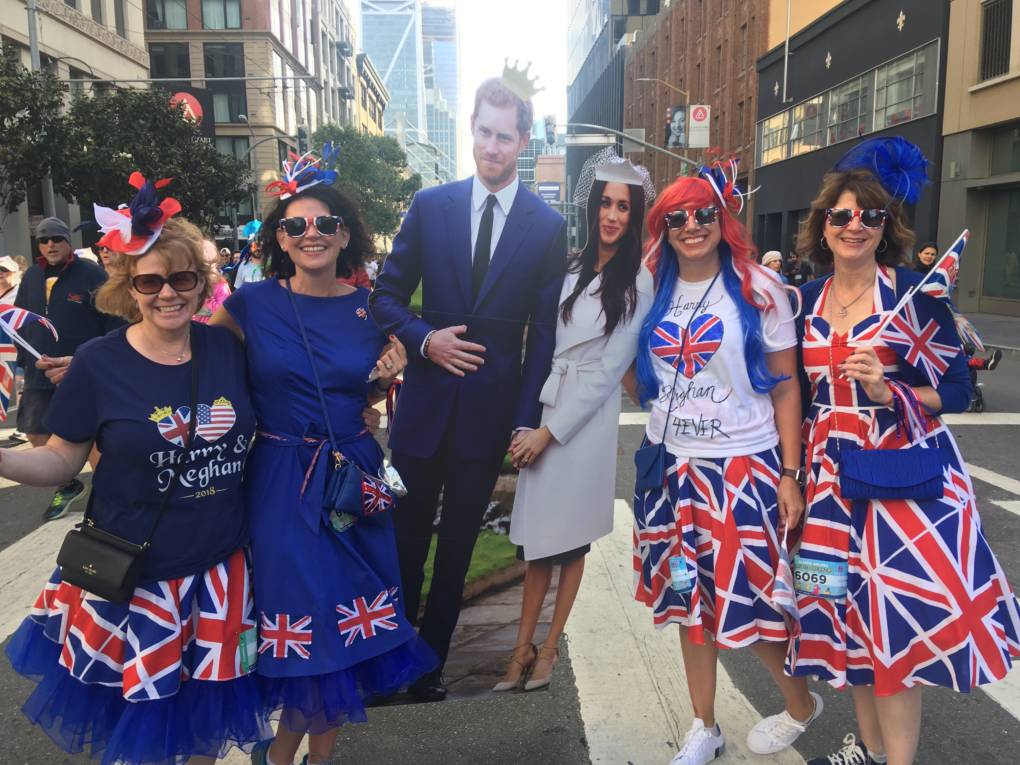
"caption": "The royal wedding procession makes an appearance at the 107th annual Bay to Breakers in San Francisco. From right to left: Heidi LaBudde, Mollie Beeman, Emily Daley, Bonny Starr.",
"description": "The royal wedding procession makes an appearance at the 107th annual Bay to Breakers in San Francisco. From right to left: Heidi LaBudde, Mollie Beeman, Emily Daley, Bonny Starr.",
"title": "Bay6",
"credit": "Peter Arcuni/KQED",
"status": "inherit",
"isLoading": false,
"fetchFailed": false
},
"news_11668145": {
"type": "attachments",
"id": "news_11668145",
"meta": {
"index": "attachments_1716263798",
"site": "news",
"id": "11668145",
"found": true
},
"parent": 11668070,
"imgSizes": {
"small": {
"file": "https://ww2.kqed.org/app/uploads/sites/10/2018/05/GettyImages-956064802-520x346.jpg",
"width": 520,
"mimeType": "image/jpeg",
"height": 346
},
"twentyfourteen-full-width": {
"file": "https://ww2.kqed.org/app/uploads/sites/10/2018/05/GettyImages-956064802-1038x576.jpg",
"width": 1038,
"mimeType": "image/jpeg",
"height": 576
},
"thumbnail": {
"file": "https://ww2.kqed.org/app/uploads/sites/10/2018/05/GettyImages-956064802-160x106.jpg",
"width": 160,
"mimeType": "image/jpeg",
"height": 106
},
"fd-sm": {
"file": "https://ww2.kqed.org/app/uploads/sites/10/2018/05/GettyImages-956064802-960x639.jpg",
"width": 960,
"mimeType": "image/jpeg",
"height": 639
},
"post-thumbnail": {
"file": "https://ww2.kqed.org/app/uploads/sites/10/2018/05/GettyImages-956064802-672x372.jpg",
"width": 672,
"mimeType": "image/jpeg",
"height": 372
},
"xsmall": {
"file": "https://ww2.kqed.org/app/uploads/sites/10/2018/05/GettyImages-956064802-375x250.jpg",
"width": 375,
"mimeType": "image/jpeg",
"height": 250
},
"kqedFullSize": {
"file": "https://ww2.kqed.org/app/uploads/sites/10/2018/05/GettyImages-956064802.jpg",
"width": 4000,
"height": 2662
},
"large": {
"file": "https://ww2.kqed.org/app/uploads/sites/10/2018/05/GettyImages-956064802-1020x679.jpg",
"width": 1020,
"mimeType": "image/jpeg",
"height": 679
},
"xlarge": {
"file": "https://ww2.kqed.org/app/uploads/sites/10/2018/05/GettyImages-956064802-1180x785.jpg",
"width": 1180,
"mimeType": "image/jpeg",
"height": 785
},
"complete_open_graph": {
"file": "https://ww2.kqed.org/app/uploads/sites/10/2018/05/GettyImages-956064802-1200x799.jpg",
"width": 1200,
"mimeType": "image/jpeg",
"height": 799
},
"guest-author-50": {
"file": "https://ww2.kqed.org/app/uploads/sites/10/2018/05/GettyImages-956064802-50x50.jpg",
"width": 50,
"mimeType": "image/jpeg",
"height": 50
},
"guest-author-96": {
"file": "https://ww2.kqed.org/app/uploads/sites/10/2018/05/GettyImages-956064802-96x96.jpg",
"width": 96,
"mimeType": "image/jpeg",
"height": 96
},
"medium": {
"file": "https://ww2.kqed.org/app/uploads/sites/10/2018/05/GettyImages-956064802-800x532.jpg",
"width": 800,
"mimeType": "image/jpeg",
"height": 532
},
"guest-author-64": {
"file": "https://ww2.kqed.org/app/uploads/sites/10/2018/05/GettyImages-956064802-64x64.jpg",
"width": 64,
"mimeType": "image/jpeg",
"height": 64
},
"guest-author-32": {
"file": "https://ww2.kqed.org/app/uploads/sites/10/2018/05/GettyImages-956064802-32x32.jpg",
"width": 32,
"mimeType": "image/jpeg",
"height": 32
},
"fd-lrg": {
"file": "https://ww2.kqed.org/app/uploads/sites/10/2018/05/GettyImages-956064802-1920x1278.jpg",
"width": 1920,
"mimeType": "image/jpeg",
"height": 1278
},
"fd-med": {
"file": "https://ww2.kqed.org/app/uploads/sites/10/2018/05/GettyImages-956064802-1180x785.jpg",
"width": 1180,
"mimeType": "image/jpeg",
"height": 785
},
"full-width": {
"file": "https://ww2.kqed.org/app/uploads/sites/10/2018/05/GettyImages-956064802-1920x1278.jpg",
"width": 1920,
"mimeType": "image/jpeg",
"height": 1278
},
"detail": {
"file": "https://ww2.kqed.org/app/uploads/sites/10/2018/05/GettyImages-956064802-150x150.jpg",
"width": 150,
"mimeType": "image/jpeg",
"height": 150
},
"guest-author-128": {
"file": "https://ww2.kqed.org/app/uploads/sites/10/2018/05/GettyImages-956064802-128x128.jpg",
"width": 128,
"mimeType": "image/jpeg",
"height": 128
},
"xxsmall": {
"file": "https://ww2.kqed.org/app/uploads/sites/10/2018/05/GettyImages-956064802-240x160.jpg",
"width": 240,
"mimeType": "image/jpeg",
"height": 160
}
},
"publishDate": 1526258691,
"modified": 1526258894,
"caption": "Jeff Holden, Uber chief product officer, speaks at the second annual Uber Elevate Summit on May 8, 2018 in Los Angeles, California. Uber introduced its electric-powered \"flying taxi\" vertical take-off and landing concept aircraft at the event, which showcases prototypes for uberAir's fleet of airborne taxis. ",
"description": null,
"title": "US-AVIATION-SCIENCE-TRANSPORTATION",
"credit": "Robyn Beck/AFP/Getty Images",
"status": "inherit",
"isLoading": false,
"fetchFailed": false
},
"news_11668053": {
"type": "attachments",
"id": "news_11668053",
"meta": {
"index": "attachments_1716263798",
"site": "news",
"id": "11668053",
"found": true
},
"parent": 11668043,
"imgSizes": {
"small": {
"file": "https://ww2.kqed.org/app/uploads/sites/10/2018/05/RS30276_GettyImages-626847628-qut-1-520x341.jpg",
"width": 520,
"mimeType": "image/jpeg",
"height": 341
},
"twentyfourteen-full-width": {
"file": "https://ww2.kqed.org/app/uploads/sites/10/2018/05/RS30276_GettyImages-626847628-qut-1-1038x576.jpg",
"width": 1038,
"mimeType": "image/jpeg",
"height": 576
},
"thumbnail": {
"file": "https://ww2.kqed.org/app/uploads/sites/10/2018/05/RS30276_GettyImages-626847628-qut-1-160x105.jpg",
"width": 160,
"mimeType": "image/jpeg",
"height": 105
},
"fd-sm": {
"file": "https://ww2.kqed.org/app/uploads/sites/10/2018/05/RS30276_GettyImages-626847628-qut-1-960x629.jpg",
"width": 960,
"mimeType": "image/jpeg",
"height": 629
},
"post-thumbnail": {
"file": "https://ww2.kqed.org/app/uploads/sites/10/2018/05/RS30276_GettyImages-626847628-qut-1-672x372.jpg",
"width": 672,
"mimeType": "image/jpeg",
"height": 372
},
"xsmall": {
"file": "https://ww2.kqed.org/app/uploads/sites/10/2018/05/RS30276_GettyImages-626847628-qut-1-375x246.jpg",
"width": 375,
"mimeType": "image/jpeg",
"height": 246
},
"kqedFullSize": {
"file": "https://ww2.kqed.org/app/uploads/sites/10/2018/05/RS30276_GettyImages-626847628-qut-1.jpg",
"width": 1920,
"height": 1258
},
"large": {
"file": "https://ww2.kqed.org/app/uploads/sites/10/2018/05/RS30276_GettyImages-626847628-qut-1-1020x668.jpg",
"width": 1020,
"mimeType": "image/jpeg",
"height": 668
},
"xlarge": {
"file": "https://ww2.kqed.org/app/uploads/sites/10/2018/05/RS30276_GettyImages-626847628-qut-1-1180x773.jpg",
"width": 1180,
"mimeType": "image/jpeg",
"height": 773
},
"complete_open_graph": {
"file": "https://ww2.kqed.org/app/uploads/sites/10/2018/05/RS30276_GettyImages-626847628-qut-1-1200x786.jpg",
"width": 1200,
"mimeType": "image/jpeg",
"height": 786
},
"guest-author-50": {
"file": "https://ww2.kqed.org/app/uploads/sites/10/2018/05/RS30276_GettyImages-626847628-qut-1-50x50.jpg",
"width": 50,
"mimeType": "image/jpeg",
"height": 50
},
"guest-author-96": {
"file": "https://ww2.kqed.org/app/uploads/sites/10/2018/05/RS30276_GettyImages-626847628-qut-1-96x96.jpg",
"width": 96,
"mimeType": "image/jpeg",
"height": 96
},
"medium": {
"file": "https://ww2.kqed.org/app/uploads/sites/10/2018/05/RS30276_GettyImages-626847628-qut-1-800x524.jpg",
"width": 800,
"mimeType": "image/jpeg",
"height": 524
},
"guest-author-64": {
"file": "https://ww2.kqed.org/app/uploads/sites/10/2018/05/RS30276_GettyImages-626847628-qut-1-64x64.jpg",
"width": 64,
"mimeType": "image/jpeg",
"height": 64
},
"guest-author-32": {
"file": "https://ww2.kqed.org/app/uploads/sites/10/2018/05/RS30276_GettyImages-626847628-qut-1-32x32.jpg",
"width": 32,
"mimeType": "image/jpeg",
"height": 32
},
"fd-lrg": {
"file": "https://ww2.kqed.org/app/uploads/sites/10/2018/05/RS30276_GettyImages-626847628-qut-1-1920x1258.jpg",
"width": 1920,
"mimeType": "image/jpeg",
"height": 1258
},
"fd-med": {
"file": "https://ww2.kqed.org/app/uploads/sites/10/2018/05/RS30276_GettyImages-626847628-qut-1-1180x773.jpg",
"width": 1180,
"mimeType": "image/jpeg",
"height": 773
},
"full-width": {
"file": "https://ww2.kqed.org/app/uploads/sites/10/2018/05/RS30276_GettyImages-626847628-qut-1-1920x1258.jpg",
"width": 1920,
"mimeType": "image/jpeg",
"height": 1258
},
"detail": {
"file": "https://ww2.kqed.org/app/uploads/sites/10/2018/05/RS30276_GettyImages-626847628-qut-1-150x150.jpg",
"width": 150,
"mimeType": "image/jpeg",
"height": 150
},
"guest-author-128": {
"file": "https://ww2.kqed.org/app/uploads/sites/10/2018/05/RS30276_GettyImages-626847628-qut-1-128x128.jpg",
"width": 128,
"mimeType": "image/jpeg",
"height": 128
},
"xxsmall": {
"file": "https://ww2.kqed.org/app/uploads/sites/10/2018/05/RS30276_GettyImages-626847628-qut-1-240x157.jpg",
"width": 240,
"mimeType": "image/jpeg",
"height": 157
}
},
"publishDate": 1526151628,
"modified": 1548983410,
"caption": "Cities like San Francisco, Los Angeles and Oakland have multiple needle exchanges. But the one exchange in Orange County was sidelined last year amid health concerns. ",
"description": "Mobile needle exchanges operate in cities like San Francisco, Los Angeles and Oakland.",
"title": "US-HEALTH-HIV-FLORIDA-ADDICTION-POVERTY",
"credit": "KERRY SHERIDAN/AFP/Getty Images",
"status": "inherit",
"isLoading": false,
"fetchFailed": false
},
"news_11667867": {
"type": "attachments",
"id": "news_11667867",
"meta": {
"index": "attachments_1716263798",
"site": "news",
"id": "11667867",
"found": true
},
"parent": 11667830,
"imgSizes": {
"small": {
"file": "https://ww2.kqed.org/app/uploads/sites/10/2018/05/Screen-Shot-2018-05-11-at-1.03.00-PM-520x335.png",
"width": 520,
"mimeType": "image/png",
"height": 335
},
"twentyfourteen-full-width": {
"file": "https://ww2.kqed.org/app/uploads/sites/10/2018/05/Screen-Shot-2018-05-11-at-1.03.00-PM-1038x576.png",
"width": 1038,
"mimeType": "image/png",
"height": 576
},
"thumbnail": {
"file": "https://ww2.kqed.org/app/uploads/sites/10/2018/05/Screen-Shot-2018-05-11-at-1.03.00-PM-160x103.png",
"width": 160,
"mimeType": "image/png",
"height": 103
},
"fd-sm": {
"file": "https://ww2.kqed.org/app/uploads/sites/10/2018/05/Screen-Shot-2018-05-11-at-1.03.00-PM-960x618.png",
"width": 960,
"mimeType": "image/png",
"height": 618
},
"post-thumbnail": {
"file": "https://ww2.kqed.org/app/uploads/sites/10/2018/05/Screen-Shot-2018-05-11-at-1.03.00-PM-672x372.png",
"width": 672,
"mimeType": "image/png",
"height": 372
},
"xsmall": {
"file": "https://ww2.kqed.org/app/uploads/sites/10/2018/05/Screen-Shot-2018-05-11-at-1.03.00-PM-375x241.png",
"width": 375,
"mimeType": "image/png",
"height": 241
},
"kqedFullSize": {
"file": "https://ww2.kqed.org/app/uploads/sites/10/2018/05/Screen-Shot-2018-05-11-at-1.03.00-PM-e1526069205329.png",
"width": 1920,
"height": 1236
},
"large": {
"file": "https://ww2.kqed.org/app/uploads/sites/10/2018/05/Screen-Shot-2018-05-11-at-1.03.00-PM-1020x657.png",
"width": 1020,
"mimeType": "image/png",
"height": 657
},
"xlarge": {
"file": "https://ww2.kqed.org/app/uploads/sites/10/2018/05/Screen-Shot-2018-05-11-at-1.03.00-PM-1180x760.png",
"width": 1180,
"mimeType": "image/png",
"height": 760
},
"complete_open_graph": {
"file": "https://ww2.kqed.org/app/uploads/sites/10/2018/05/Screen-Shot-2018-05-11-at-1.03.00-PM-1200x773.png",
"width": 1200,
"mimeType": "image/png",
"height": 773
},
"guest-author-50": {
"file": "https://ww2.kqed.org/app/uploads/sites/10/2018/05/Screen-Shot-2018-05-11-at-1.03.00-PM-50x50.png",
"width": 50,
"mimeType": "image/png",
"height": 50
},
"guest-author-96": {
"file": "https://ww2.kqed.org/app/uploads/sites/10/2018/05/Screen-Shot-2018-05-11-at-1.03.00-PM-96x96.png",
"width": 96,
"mimeType": "image/png",
"height": 96
},
"medium": {
"file": "https://ww2.kqed.org/app/uploads/sites/10/2018/05/Screen-Shot-2018-05-11-at-1.03.00-PM-800x515.png",
"width": 800,
"mimeType": "image/png",
"height": 515
},
"guest-author-64": {
"file": "https://ww2.kqed.org/app/uploads/sites/10/2018/05/Screen-Shot-2018-05-11-at-1.03.00-PM-64x64.png",
"width": 64,
"mimeType": "image/png",
"height": 64
},
"guest-author-32": {
"file": "https://ww2.kqed.org/app/uploads/sites/10/2018/05/Screen-Shot-2018-05-11-at-1.03.00-PM-32x32.png",
"width": 32,
"mimeType": "image/png",
"height": 32
},
"fd-lrg": {
"file": "https://ww2.kqed.org/app/uploads/sites/10/2018/05/Screen-Shot-2018-05-11-at-1.03.00-PM-1920x1236.png",
"width": 1920,
"mimeType": "image/png",
"height": 1236
},
"fd-med": {
"file": "https://ww2.kqed.org/app/uploads/sites/10/2018/05/Screen-Shot-2018-05-11-at-1.03.00-PM-1180x760.png",
"width": 1180,
"mimeType": "image/png",
"height": 760
},
"full-width": {
"file": "https://ww2.kqed.org/app/uploads/sites/10/2018/05/Screen-Shot-2018-05-11-at-1.03.00-PM-1920x1236.png",
"width": 1920,
"mimeType": "image/png",
"height": 1236
},
"detail": {
"file": "https://ww2.kqed.org/app/uploads/sites/10/2018/05/Screen-Shot-2018-05-11-at-1.03.00-PM-150x150.png",
"width": 150,
"mimeType": "image/png",
"height": 150
},
"guest-author-128": {
"file": "https://ww2.kqed.org/app/uploads/sites/10/2018/05/Screen-Shot-2018-05-11-at-1.03.00-PM-128x128.png",
"width": 128,
"mimeType": "image/png",
"height": 128
},
"xxsmall": {
"file": "https://ww2.kqed.org/app/uploads/sites/10/2018/05/Screen-Shot-2018-05-11-at-1.03.00-PM-240x155.png",
"width": 240,
"mimeType": "image/png",
"height": 155
}
},
"publishDate": 1526069040,
"modified": 1526069217,
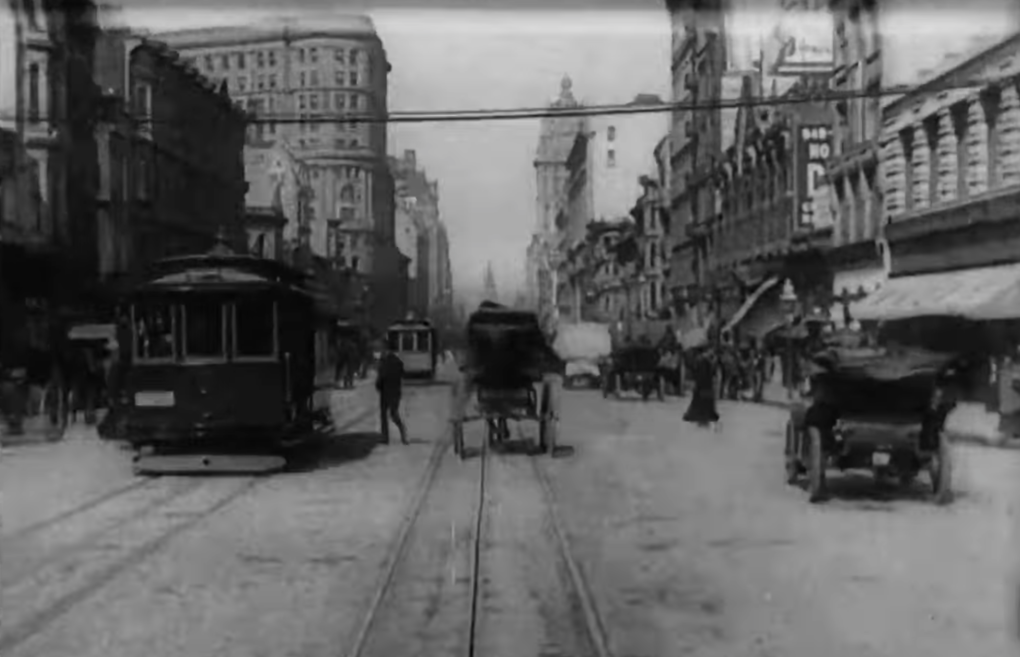
"caption": "A frame from the 1906 film \"A Trip Down Market Street Before the Fire.\" The movie was shot shortly before the April 18 earthquake and fire devastated much of the city. ",
"description": null,
"title": "Market Street 1906",
"credit": "Library of Congress via YouTube",
"status": "inherit",
"isLoading": false,
"fetchFailed": false
},
"stateofhealth_363413": {
"type": "attachments",
"id": "stateofhealth_363413",
"meta": {
"index": "attachments_1716263798",
"site": "stateofhealth",
"id": "363413",
"found": true
},
"parent": 363411,
"imgSizes": {
"small": {
"file": "https://ww2.kqed.org/app/uploads/sites/27/2018/05/IMG_8555-520x390.jpg",
"width": 520,
"mimeType": "image/jpeg",
"height": 390
},
"twentyfourteen-full-width": {
"file": "https://ww2.kqed.org/app/uploads/sites/27/2018/05/IMG_8555-1038x576.jpg",
"width": 1038,
"mimeType": "image/jpeg",
"height": 576
},
"thumbnail": {
"file": "https://ww2.kqed.org/app/uploads/sites/27/2018/05/IMG_8555-160x120.jpg",
"width": 160,
"mimeType": "image/jpeg",
"height": 120
},
"fd-sm": {
"file": "https://ww2.kqed.org/app/uploads/sites/27/2018/05/IMG_8555-960x720.jpg",
"width": 960,
"mimeType": "image/jpeg",
"height": 720
},
"post-thumbnail": {
"file": "https://ww2.kqed.org/app/uploads/sites/27/2018/05/IMG_8555-672x372.jpg",
"width": 672,
"mimeType": "image/jpeg",
"height": 372
},
"xsmall": {
"file": "https://ww2.kqed.org/app/uploads/sites/27/2018/05/IMG_8555-375x281.jpg",
"width": 375,
"mimeType": "image/jpeg",
"height": 281
},
"kqedFullSize": {
"file": "https://ww2.kqed.org/app/uploads/sites/27/2018/05/IMG_8555.jpg",
"width": 4032,
"height": 3024
},
"large": {
"file": "https://ww2.kqed.org/app/uploads/sites/27/2018/05/IMG_8555-1020x765.jpg",
"width": 1020,
"mimeType": "image/jpeg",
"height": 765
},
"xlarge": {
"file": "https://ww2.kqed.org/app/uploads/sites/27/2018/05/IMG_8555-1180x885.jpg",
"width": 1180,
"mimeType": "image/jpeg",
"height": 885
},
"complete_open_graph": {
"file": "https://ww2.kqed.org/app/uploads/sites/27/2018/05/IMG_8555-1200x900.jpg",
"width": 1200,
"mimeType": "image/jpeg",
"height": 900
},
"guest-author-50": {
"file": "https://ww2.kqed.org/app/uploads/sites/27/2018/05/IMG_8555-50x50.jpg",
"width": 50,
"mimeType": "image/jpeg",
"height": 50
},
"guest-author-96": {
"file": "https://ww2.kqed.org/app/uploads/sites/27/2018/05/IMG_8555-96x96.jpg",
"width": 96,
"mimeType": "image/jpeg",
"height": 96
},
"medium": {
"file": "https://ww2.kqed.org/app/uploads/sites/27/2018/05/IMG_8555-800x600.jpg",
"width": 800,
"mimeType": "image/jpeg",
"height": 600
},
"guest-author-64": {
"file": "https://ww2.kqed.org/app/uploads/sites/27/2018/05/IMG_8555-64x64.jpg",
"width": 64,
"mimeType": "image/jpeg",
"height": 64
},
"guest-author-32": {
"file": "https://ww2.kqed.org/app/uploads/sites/27/2018/05/IMG_8555-32x32.jpg",
"width": 32,
"mimeType": "image/jpeg",
"height": 32
},
"fd-lrg": {
"file": "https://ww2.kqed.org/app/uploads/sites/27/2018/05/IMG_8555-1920x1440.jpg",
"width": 1920,
"mimeType": "image/jpeg",
"height": 1440
},
"fd-med": {
"file": "https://ww2.kqed.org/app/uploads/sites/27/2018/05/IMG_8555-1180x885.jpg",
"width": 1180,
"mimeType": "image/jpeg",
"height": 885
},
"full-width": {
"file": "https://ww2.kqed.org/app/uploads/sites/27/2018/05/IMG_8555-1920x1440.jpg",
"width": 1920,
"mimeType": "image/jpeg",
"height": 1440
},
"detail": {
"file": "https://ww2.kqed.org/app/uploads/sites/27/2018/05/IMG_8555-150x150.jpg",
"width": 150,
"mimeType": "image/jpeg",
"height": 150
},
"medium_large": {
"file": "https://ww2.kqed.org/app/uploads/sites/27/2018/05/IMG_8555-768x576.jpg",
"width": 768,
"mimeType": "image/jpeg",
"height": 576
},
"guest-author-128": {
"file": "https://ww2.kqed.org/app/uploads/sites/27/2018/05/IMG_8555-128x128.jpg",
"width": 128,
"mimeType": "image/jpeg",
"height": 128
},
"xxsmall": {
"file": "https://ww2.kqed.org/app/uploads/sites/27/2018/05/IMG_8555-240x180.jpg",
"width": 240,
"mimeType": "image/jpeg",
"height": 180
}
},
"publishDate": 1525381938,
"modified": 1525994418,
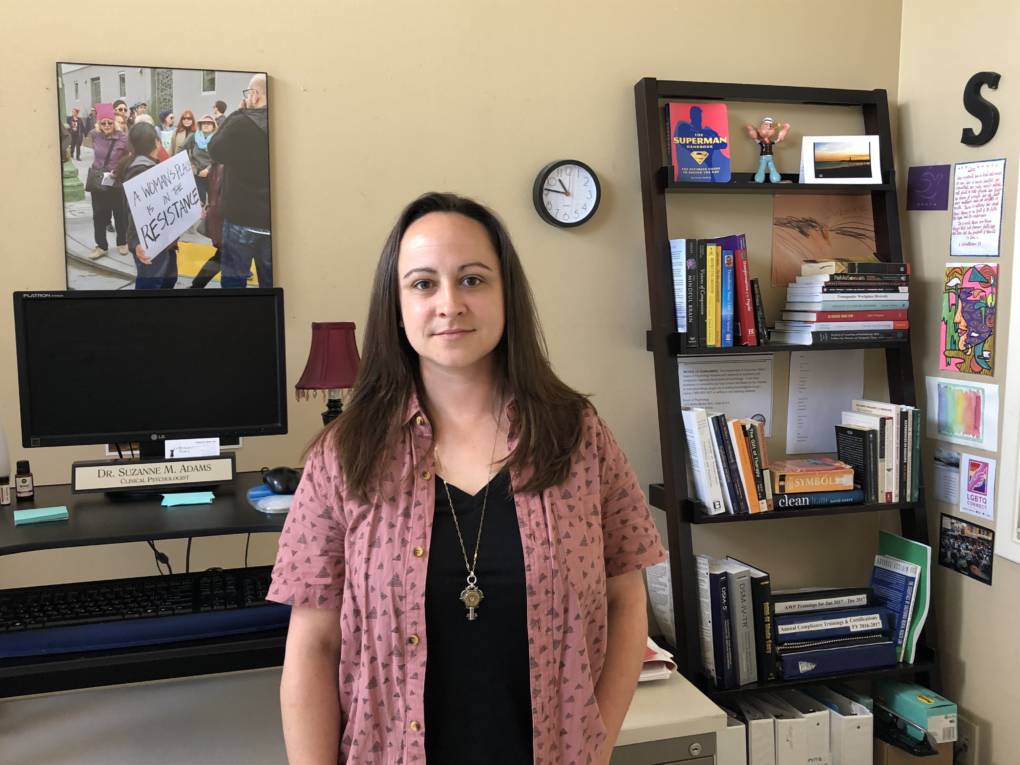
"caption": "Suzanne Adams in her office at A Woman's Place, a homeless drop-in center. The psychologist thinks Sen. Ed Hernandez's legislation on how homeless patients are discharged is a good step, but doesn't address the overall lack of services for her elderly, homeless clients. ",
"description": "Suzanne Adams in her office at A Woman's Place, a homeless drop-in center. The psychologist thinks Sen. Ed Hernandez's legislation on how homeless patients are discharged is a good step, but doesn't address the overall lack of services for her elderly, homeless clients. ",
"title": "IMG_8555",
"credit": "Laura Klivans/KQED",
"status": "inherit",
"isLoading": false,
"fetchFailed": false
},
"news_11667644": {
"type": "attachments",
"id": "news_11667644",
"meta": {
"index": "attachments_1716263798",
"site": "news",
"id": "11667644",
"found": true
},
"parent": 11667635,
"imgSizes": {
"small": {
"file": "https://ww2.kqed.org/app/uploads/sites/10/2018/05/PaintRemoval-520x339.jpg",
"width": 520,
"mimeType": "image/jpeg",
"height": 339
},
"twentyfourteen-full-width": {
"file": "https://ww2.kqed.org/app/uploads/sites/10/2018/05/PaintRemoval-1038x576.jpg",
"width": 1038,
"mimeType": "image/jpeg",
"height": 576
},
"thumbnail": {
"file": "https://ww2.kqed.org/app/uploads/sites/10/2018/05/PaintRemoval-160x104.jpg",
"width": 160,
"mimeType": "image/jpeg",
"height": 104
},
"fd-sm": {
"file": "https://ww2.kqed.org/app/uploads/sites/10/2018/05/PaintRemoval-960x626.jpg",
"width": 960,
"mimeType": "image/jpeg",
"height": 626
},
"post-thumbnail": {
"file": "https://ww2.kqed.org/app/uploads/sites/10/2018/05/PaintRemoval-672x372.jpg",
"width": 672,
"mimeType": "image/jpeg",
"height": 372
},
"xsmall": {
"file": "https://ww2.kqed.org/app/uploads/sites/10/2018/05/PaintRemoval-375x245.jpg",
"width": 375,
"mimeType": "image/jpeg",
"height": 245
},
"kqedFullSize": {
"file": "https://ww2.kqed.org/app/uploads/sites/10/2018/05/PaintRemoval.jpg",
"width": 1920,
"height": 1252
},
"large": {
"file": "https://ww2.kqed.org/app/uploads/sites/10/2018/05/PaintRemoval-1020x665.jpg",
"width": 1020,
"mimeType": "image/jpeg",
"height": 665
},
"xlarge": {
"file": "https://ww2.kqed.org/app/uploads/sites/10/2018/05/PaintRemoval-1180x769.jpg",
"width": 1180,
"mimeType": "image/jpeg",
"height": 769
},
"complete_open_graph": {
"file": "https://ww2.kqed.org/app/uploads/sites/10/2018/05/PaintRemoval-1200x783.jpg",
"width": 1200,
"mimeType": "image/jpeg",
"height": 783
},
"guest-author-50": {
"file": "https://ww2.kqed.org/app/uploads/sites/10/2018/05/PaintRemoval-50x50.jpg",
"width": 50,
"mimeType": "image/jpeg",
"height": 50
},
"guest-author-96": {
"file": "https://ww2.kqed.org/app/uploads/sites/10/2018/05/PaintRemoval-96x96.jpg",
"width": 96,
"mimeType": "image/jpeg",
"height": 96
},
"medium": {
"file": "https://ww2.kqed.org/app/uploads/sites/10/2018/05/PaintRemoval-800x522.jpg",
"width": 800,
"mimeType": "image/jpeg",
"height": 522
},
"guest-author-64": {
"file": "https://ww2.kqed.org/app/uploads/sites/10/2018/05/PaintRemoval-64x64.jpg",
"width": 64,
"mimeType": "image/jpeg",
"height": 64
},
"guest-author-32": {
"file": "https://ww2.kqed.org/app/uploads/sites/10/2018/05/PaintRemoval-32x32.jpg",
"width": 32,
"mimeType": "image/jpeg",
"height": 32
},
"fd-lrg": {
"file": "https://ww2.kqed.org/app/uploads/sites/10/2018/05/PaintRemoval-1920x1252.jpg",
"width": 1920,
"mimeType": "image/jpeg",
"height": 1252
},
"fd-med": {
"file": "https://ww2.kqed.org/app/uploads/sites/10/2018/05/PaintRemoval-1180x769.jpg",
"width": 1180,
"mimeType": "image/jpeg",
"height": 769
},
"full-width": {
"file": "https://ww2.kqed.org/app/uploads/sites/10/2018/05/PaintRemoval-1920x1252.jpg",
"width": 1920,
"mimeType": "image/jpeg",
"height": 1252
},
"detail": {
"file": "https://ww2.kqed.org/app/uploads/sites/10/2018/05/PaintRemoval-150x150.jpg",
"width": 150,
"mimeType": "image/jpeg",
"height": 150
},
"guest-author-128": {
"file": "https://ww2.kqed.org/app/uploads/sites/10/2018/05/PaintRemoval-128x128.jpg",
"width": 128,
"mimeType": "image/jpeg",
"height": 128
},
"xxsmall": {
"file": "https://ww2.kqed.org/app/uploads/sites/10/2018/05/PaintRemoval-240x157.jpg",
"width": 240,
"mimeType": "image/jpeg",
"height": 157
}
},
"publishDate": 1525992650,
"modified": 1525992727,
"caption": "Lead was a common paint ingredient in the early 20th century. Over time scientists found that lead exposure causes brain damage in young children.",
"description": "Lead was a common paint ingredient in the early 20th century. Over time scientists found that lead exposure causes brain damage in young children.",
"title": "PaintRemoval",
"credit": "Getty Images",
"status": "inherit",
"isLoading": false,
"fetchFailed": false
},
"news_11666332": {
"type": "attachments",
"id": "news_11666332",
"meta": {
"index": "attachments_1716263798",
"site": "news",
"id": "11666332",
"found": true
},
"parent": 11666269,
"imgSizes": {
"small": {
"file": "https://ww2.kqed.org/app/uploads/sites/10/2018/05/RS29496_alt_690-520x398.jpg",
"width": 520,
"mimeType": "image/jpeg",
"height": 398
},
"twentyfourteen-full-width": {
"file": "https://ww2.kqed.org/app/uploads/sites/10/2018/05/RS29496_alt_690-1038x576.jpg",
"width": 1038,
"mimeType": "image/jpeg",
"height": 576
},
"thumbnail": {
"file": "https://ww2.kqed.org/app/uploads/sites/10/2018/05/RS29496_alt_690-160x122.jpg",
"width": 160,
"mimeType": "image/jpeg",
"height": 122
},
"fd-sm": {
"file": "https://ww2.kqed.org/app/uploads/sites/10/2018/05/RS29496_alt_690-960x734.jpg",
"width": 960,
"mimeType": "image/jpeg",
"height": 734
},
"post-thumbnail": {
"file": "https://ww2.kqed.org/app/uploads/sites/10/2018/05/RS29496_alt_690-672x372.jpg",
"width": 672,
"mimeType": "image/jpeg",
"height": 372
},
"xsmall": {
"file": "https://ww2.kqed.org/app/uploads/sites/10/2018/05/RS29496_alt_690-375x287.jpg",
"width": 375,
"mimeType": "image/jpeg",
"height": 287
},
"kqedFullSize": {
"file": "https://ww2.kqed.org/app/uploads/sites/10/2018/05/RS29496_alt_690.jpg",
"width": 1920,
"height": 1468
},
"large": {
"file": "https://ww2.kqed.org/app/uploads/sites/10/2018/05/RS29496_alt_690-1020x780.jpg",
"width": 1020,
"mimeType": "image/jpeg",
"height": 780
},
"xlarge": {
"file": "https://ww2.kqed.org/app/uploads/sites/10/2018/05/RS29496_alt_690-1180x902.jpg",
"width": 1180,
"mimeType": "image/jpeg",
"height": 902
},
"complete_open_graph": {
"file": "https://ww2.kqed.org/app/uploads/sites/10/2018/05/RS29496_alt_690-1200x918.jpg",
"width": 1200,
"mimeType": "image/jpeg",
"height": 918
},
"guest-author-50": {
"file": "https://ww2.kqed.org/app/uploads/sites/10/2018/05/RS29496_alt_690-50x50.jpg",
"width": 50,
"mimeType": "image/jpeg",
"height": 50
},
"guest-author-96": {
"file": "https://ww2.kqed.org/app/uploads/sites/10/2018/05/RS29496_alt_690-96x96.jpg",
"width": 96,
"mimeType": "image/jpeg",
"height": 96
},
"medium": {
"file": "https://ww2.kqed.org/app/uploads/sites/10/2018/05/RS29496_alt_690-800x612.jpg",
"width": 800,
"mimeType": "image/jpeg",
"height": 612
},
"guest-author-64": {
"file": "https://ww2.kqed.org/app/uploads/sites/10/2018/05/RS29496_alt_690-64x64.jpg",
"width": 64,
"mimeType": "image/jpeg",
"height": 64
},
"guest-author-32": {
"file": "https://ww2.kqed.org/app/uploads/sites/10/2018/05/RS29496_alt_690-32x32.jpg",
"width": 32,
"mimeType": "image/jpeg",
"height": 32
},
"fd-lrg": {
"file": "https://ww2.kqed.org/app/uploads/sites/10/2018/05/RS29496_alt_690-1920x1468.jpg",
"width": 1920,
"mimeType": "image/jpeg",
"height": 1468
},
"fd-med": {
"file": "https://ww2.kqed.org/app/uploads/sites/10/2018/05/RS29496_alt_690-1180x902.jpg",
"width": 1180,
"mimeType": "image/jpeg",
"height": 902
},
"full-width": {
"file": "https://ww2.kqed.org/app/uploads/sites/10/2018/05/RS29496_alt_690-1920x1468.jpg",
"width": 1920,
"mimeType": "image/jpeg",
"height": 1468
},
"detail": {
"file": "https://ww2.kqed.org/app/uploads/sites/10/2018/05/RS29496_alt_690-150x150.jpg",
"width": 150,
"mimeType": "image/jpeg",
"height": 150
},
"guest-author-128": {
"file": "https://ww2.kqed.org/app/uploads/sites/10/2018/05/RS29496_alt_690-128x128.jpg",
"width": 128,
"mimeType": "image/jpeg",
"height": 128
},
"xxsmall": {
"file": "https://ww2.kqed.org/app/uploads/sites/10/2018/05/RS29496_alt_690-240x184.jpg",
"width": 240,
"mimeType": "image/jpeg",
"height": 184
}
},
"publishDate": 1525387886,
"modified": 1600657313,
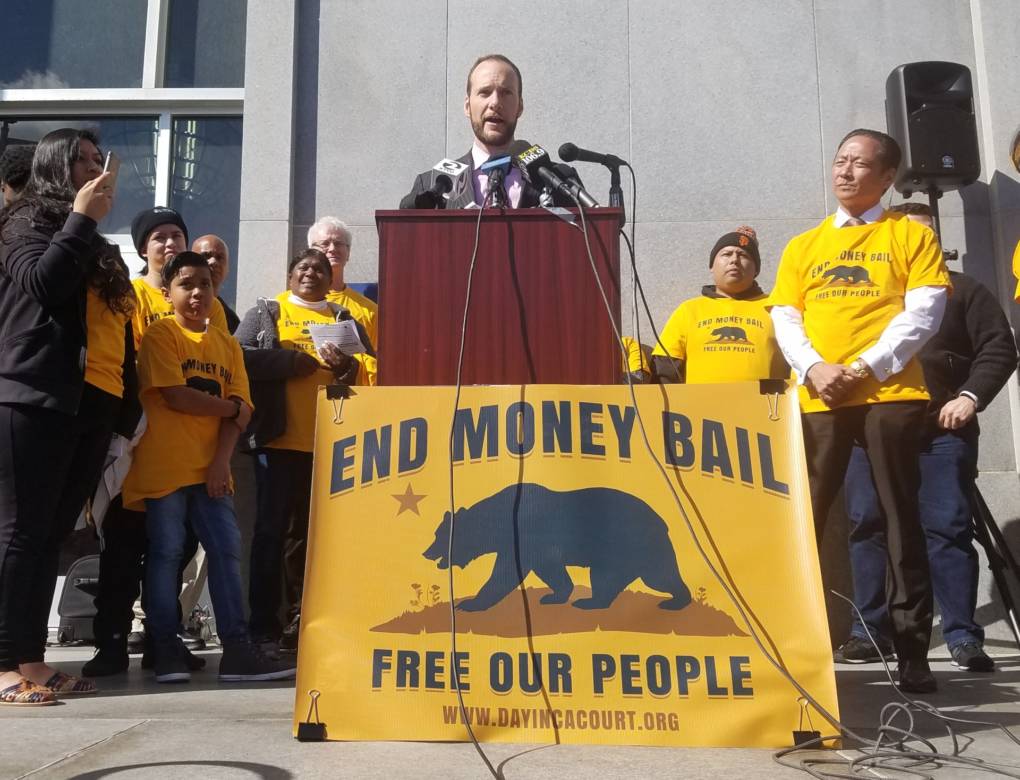
"caption": "Chesa Boudin discusses bail reform on Feb. 20, 2018, at the city's Hall of Justice. Boudin was elected San Francisco District Attorney on Nov. 5, 2019, and is currently part of a new group called the Prosecutors' Alliance of California, along with San Joaquin County DA Tori Verber Salazar, Contra Costa County DA Diana Becton, former San Francisco DA George Gascon, and Executive Director Cristine Soto DeBarry.",
"description": "San Francisco Deputy Public Defender Chesa Boudin discusses bail reform on Feb. 20, 2018, at the city's Hall of Justice. A recent California appellate court ruling requires judges to consider a defendant's ability to pay when setting bail.",
"title": "RS29496_alt_690",
"credit": "Alex Emslie/KQED",
"status": "inherit",
"isLoading": false,
"fetchFailed": false
},
"news_11651326": {
"type": "attachments",
"id": "news_11651326",
"meta": {
"index": "attachments_1716263798",
"site": "news",
"id": "11651326",
"found": true
},
"parent": 11651325,
"imgSizes": {
"small": {
"file": "https://ww2.kqed.org/app/uploads/sites/10/2018/02/TheBay_1200x630-520x273.png",
"width": 520,
"mimeType": "image/png",
"height": 273
},
"twentyfourteen-full-width": {
"file": "https://ww2.kqed.org/app/uploads/sites/10/2018/02/TheBay_1200x630-1038x576.png",
"width": 1038,
"mimeType": "image/png",
"height": 576
},
"thumbnail": {
"file": "https://ww2.kqed.org/app/uploads/sites/10/2018/02/TheBay_1200x630-160x84.png",
"width": 160,
"mimeType": "image/png",
"height": 84
},
"fd-sm": {
"file": "https://ww2.kqed.org/app/uploads/sites/10/2018/02/TheBay_1200x630-960x504.png",
"width": 960,
"mimeType": "image/png",
"height": 504
},
"post-thumbnail": {
"file": "https://ww2.kqed.org/app/uploads/sites/10/2018/02/TheBay_1200x630-672x372.png",
"width": 672,
"mimeType": "image/png",
"height": 372
},
"xsmall": {
"file": "https://ww2.kqed.org/app/uploads/sites/10/2018/02/TheBay_1200x630-375x197.png",
"width": 375,
"mimeType": "image/png",
"height": 197
},
"kqedFullSize": {
"file": "https://ww2.kqed.org/app/uploads/sites/10/2018/02/TheBay_1200x630.png",
"width": 1200,
"height": 630
},
"large": {
"file": "https://ww2.kqed.org/app/uploads/sites/10/2018/02/TheBay_1200x630-1020x536.png",
"width": 1020,
"mimeType": "image/png",
"height": 536
},
"xlarge": {
"file": "https://ww2.kqed.org/app/uploads/sites/10/2018/02/TheBay_1200x630-1180x620.png",
"width": 1180,
"mimeType": "image/png",
"height": 620
},
"guest-author-50": {
"file": "https://ww2.kqed.org/app/uploads/sites/10/2018/02/TheBay_1200x630-50x50.png",
"width": 50,
"mimeType": "image/png",
"height": 50
},
"guest-author-96": {
"file": "https://ww2.kqed.org/app/uploads/sites/10/2018/02/TheBay_1200x630-96x96.png",
"width": 96,
"mimeType": "image/png",
"height": 96
},
"medium": {
"file": "https://ww2.kqed.org/app/uploads/sites/10/2018/02/TheBay_1200x630-800x420.png",
"width": 800,
"mimeType": "image/png",
"height": 420
},
"guest-author-64": {
"file": "https://ww2.kqed.org/app/uploads/sites/10/2018/02/TheBay_1200x630-64x64.png",
"width": 64,
"mimeType": "image/png",
"height": 64
},
"guest-author-32": {
"file": "https://ww2.kqed.org/app/uploads/sites/10/2018/02/TheBay_1200x630-32x32.png",
"width": 32,
"mimeType": "image/png",
"height": 32
},
"fd-med": {
"file": "https://ww2.kqed.org/app/uploads/sites/10/2018/02/TheBay_1200x630-1180x620.png",
"width": 1180,
"mimeType": "image/png",
"height": 620
},
"detail": {
"file": "https://ww2.kqed.org/app/uploads/sites/10/2018/02/TheBay_1200x630-150x150.png",
"width": 150,
"mimeType": "image/png",
"height": 150
},
"guest-author-128": {
"file": "https://ww2.kqed.org/app/uploads/sites/10/2018/02/TheBay_1200x630-128x128.png",
"width": 128,
"mimeType": "image/png",
"height": 128
},
"xxsmall": {
"file": "https://ww2.kqed.org/app/uploads/sites/10/2018/02/TheBay_1200x630-240x126.png",
"width": 240,
"mimeType": "image/png",
"height": 126
}
},
"publishDate": 1519191625,
"modified": 1519191625,
"caption": null,
"description": null,
"title": "TheBay_1200x630",
"credit": null,
"status": "inherit",
"isLoading": false,
"fetchFailed": false
},
"news_11665591": {
"type": "attachments",
"id": "news_11665591",
"meta": {
"index": "attachments_1716263798",
"site": "news",
"id": "11665591",
"found": true
},
"parent": 11665481,
"imgSizes": {
"small": {
"file": "https://ww2.kqed.org/app/uploads/sites/10/2018/04/exclusion-act-exhibition-e1525127605874-520x294.jpg",
"width": 520,
"mimeType": "image/jpeg",
"height": 294
},
"twentyfourteen-full-width": {
"file": "https://ww2.kqed.org/app/uploads/sites/10/2018/04/exclusion-act-exhibition-e1525127605874-1038x576.jpg",
"width": 1038,
"mimeType": "image/jpeg",
"height": 576
},
"thumbnail": {
"file": "https://ww2.kqed.org/app/uploads/sites/10/2018/04/exclusion-act-exhibition-e1525127605874-160x91.jpg",
"width": 160,
"mimeType": "image/jpeg",
"height": 91
},
"fd-sm": {
"file": "https://ww2.kqed.org/app/uploads/sites/10/2018/04/exclusion-act-exhibition-e1525127605874-960x543.jpg",
"width": 960,
"mimeType": "image/jpeg",
"height": 543
},
"post-thumbnail": {
"file": "https://ww2.kqed.org/app/uploads/sites/10/2018/04/exclusion-act-exhibition-e1525127605874-672x372.jpg",
"width": 672,
"mimeType": "image/jpeg",
"height": 372
},
"xsmall": {
"file": "https://ww2.kqed.org/app/uploads/sites/10/2018/04/exclusion-act-exhibition-e1525127605874-375x212.jpg",
"width": 375,
"mimeType": "image/jpeg",
"height": 212
},
"kqedFullSize": {
"file": "https://ww2.kqed.org/app/uploads/sites/10/2018/04/exclusion-act-exhibition-e1525133713217.jpg",
"width": 1920,
"height": 1086
},
"large": {
"file": "https://ww2.kqed.org/app/uploads/sites/10/2018/04/exclusion-act-exhibition-e1525127605874-1020x577.jpg",
"width": 1020,
"mimeType": "image/jpeg",
"height": 577
},
"xlarge": {
"file": "https://ww2.kqed.org/app/uploads/sites/10/2018/04/exclusion-act-exhibition-e1525127605874-1180x668.jpg",
"width": 1180,
"mimeType": "image/jpeg",
"height": 668
},
"complete_open_graph": {
"file": "https://ww2.kqed.org/app/uploads/sites/10/2018/04/exclusion-act-exhibition-e1525127605874-1200x679.jpg",
"width": 1200,
"mimeType": "image/jpeg",
"height": 679
},
"guest-author-50": {
"file": "https://ww2.kqed.org/app/uploads/sites/10/2018/04/exclusion-act-exhibition-e1525127605874-50x50.jpg",
"width": 50,
"mimeType": "image/jpeg",
"height": 50
},
"guest-author-96": {
"file": "https://ww2.kqed.org/app/uploads/sites/10/2018/04/exclusion-act-exhibition-e1525127605874-96x96.jpg",
"width": 96,
"mimeType": "image/jpeg",
"height": 96
},
"medium": {
"file": "https://ww2.kqed.org/app/uploads/sites/10/2018/04/exclusion-act-exhibition-e1525127605874-800x453.jpg",
"width": 800,
"mimeType": "image/jpeg",
"height": 453
},
"guest-author-64": {
"file": "https://ww2.kqed.org/app/uploads/sites/10/2018/04/exclusion-act-exhibition-e1525127605874-64x64.jpg",
"width": 64,
"mimeType": "image/jpeg",
"height": 64
},
"guest-author-32": {
"file": "https://ww2.kqed.org/app/uploads/sites/10/2018/04/exclusion-act-exhibition-e1525127605874-32x32.jpg",
"width": 32,
"mimeType": "image/jpeg",
"height": 32
},
"fd-lrg": {
"file": "https://ww2.kqed.org/app/uploads/sites/10/2018/04/exclusion-act-exhibition-e1525127605874-1920x1086.jpg",
"width": 1920,
"mimeType": "image/jpeg",
"height": 1086
},
"fd-med": {
"file": "https://ww2.kqed.org/app/uploads/sites/10/2018/04/exclusion-act-exhibition-e1525127605874-1180x668.jpg",
"width": 1180,
"mimeType": "image/jpeg",
"height": 668
},
"full-width": {
"file": "https://ww2.kqed.org/app/uploads/sites/10/2018/04/exclusion-act-exhibition-e1525127605874-1920x1086.jpg",
"width": 1920,
"mimeType": "image/jpeg",
"height": 1086
},
"detail": {
"file": "https://ww2.kqed.org/app/uploads/sites/10/2018/04/exclusion-act-exhibition-e1525127605874-150x150.jpg",
"width": 150,
"mimeType": "image/jpeg",
"height": 150
},
"guest-author-128": {
"file": "https://ww2.kqed.org/app/uploads/sites/10/2018/04/exclusion-act-exhibition-e1525127605874-128x128.jpg",
"width": 128,
"mimeType": "image/jpeg",
"height": 128
},
"xxsmall": {
"file": "https://ww2.kqed.org/app/uploads/sites/10/2018/04/exclusion-act-exhibition-e1525127605874-240x136.jpg",
"width": 240,
"mimeType": "image/jpeg",
"height": 136
}
},
"publishDate": 1525127507,
"modified": 1525133720,
"caption": "A poster on the wall of the Chinese American Historical Society Museum in San Francisco advertising its current exhibition about the Chinese Exclusion Act. ",
"description": "A poster on the wall of the Chinese American Historical Society Museum in San Francisco advertising its current exhibition about the Chinese Exclusion Act. ",
"title": "exclusion act exhibition",
"credit": "Chloe Veltman/KQED",
"status": "inherit",
"isLoading": false,
"fetchFailed": false
},
"news_11664742": {
"type": "attachments",
"id": "news_11664742",
"meta": {
"index": "attachments_1716263798",
"site": "news",
"id": "11664742",
"found": true
},
"parent": 11664665,
"imgSizes": {
"small": {
"file": "https://ww2.kqed.org/app/uploads/sites/10/2018/04/GettyImages-947735006-520x348.jpg",
"width": 520,
"mimeType": "image/jpeg",
"height": 348
},
"twentyfourteen-full-width": {
"file": "https://ww2.kqed.org/app/uploads/sites/10/2018/04/GettyImages-947735006-1038x576.jpg",
"width": 1038,
"mimeType": "image/jpeg",
"height": 576
},
"thumbnail": {
"file": "https://ww2.kqed.org/app/uploads/sites/10/2018/04/GettyImages-947735006-160x107.jpg",
"width": 160,
"mimeType": "image/jpeg",
"height": 107
},
"fd-sm": {
"file": "https://ww2.kqed.org/app/uploads/sites/10/2018/04/GettyImages-947735006-960x642.jpg",
"width": 960,
"mimeType": "image/jpeg",
"height": 642
},
"post-thumbnail": {
"file": "https://ww2.kqed.org/app/uploads/sites/10/2018/04/GettyImages-947735006-672x372.jpg",
"width": 672,
"mimeType": "image/jpeg",
"height": 372
},
"xsmall": {
"file": "https://ww2.kqed.org/app/uploads/sites/10/2018/04/GettyImages-947735006-375x251.jpg",
"width": 375,
"mimeType": "image/jpeg",
"height": 251
},
"kqedFullSize": {
"file": "https://ww2.kqed.org/app/uploads/sites/10/2018/04/GettyImages-947735006-e1524707401763.jpg",
"width": 1920,
"height": 1283
},
"large": {
"file": "https://ww2.kqed.org/app/uploads/sites/10/2018/04/GettyImages-947735006-1020x682.jpg",
"width": 1020,
"mimeType": "image/jpeg",
"height": 682
},
"xlarge": {
"file": "https://ww2.kqed.org/app/uploads/sites/10/2018/04/GettyImages-947735006-1180x789.jpg",
"width": 1180,
"mimeType": "image/jpeg",
"height": 789
},
"complete_open_graph": {
"file": "https://ww2.kqed.org/app/uploads/sites/10/2018/04/GettyImages-947735006-1200x802.jpg",
"width": 1200,
"mimeType": "image/jpeg",
"height": 802
},
"guest-author-50": {
"file": "https://ww2.kqed.org/app/uploads/sites/10/2018/04/GettyImages-947735006-50x50.jpg",
"width": 50,
"mimeType": "image/jpeg",
"height": 50
},
"guest-author-96": {
"file": "https://ww2.kqed.org/app/uploads/sites/10/2018/04/GettyImages-947735006-96x96.jpg",
"width": 96,
"mimeType": "image/jpeg",
"height": 96
},
"medium": {
"file": "https://ww2.kqed.org/app/uploads/sites/10/2018/04/GettyImages-947735006-800x535.jpg",
"width": 800,
"mimeType": "image/jpeg",
"height": 535
},
"guest-author-64": {
"file": "https://ww2.kqed.org/app/uploads/sites/10/2018/04/GettyImages-947735006-64x64.jpg",
"width": 64,
"mimeType": "image/jpeg",
"height": 64
},
"guest-author-32": {
"file": "https://ww2.kqed.org/app/uploads/sites/10/2018/04/GettyImages-947735006-32x32.jpg",
"width": 32,
"mimeType": "image/jpeg",
"height": 32
},
"fd-lrg": {
"file": "https://ww2.kqed.org/app/uploads/sites/10/2018/04/GettyImages-947735006-1920x1283.jpg",
"width": 1920,
"mimeType": "image/jpeg",
"height": 1283
},
"fd-med": {
"file": "https://ww2.kqed.org/app/uploads/sites/10/2018/04/GettyImages-947735006-1180x789.jpg",
"width": 1180,
"mimeType": "image/jpeg",
"height": 789
},
"full-width": {
"file": "https://ww2.kqed.org/app/uploads/sites/10/2018/04/GettyImages-947735006-1920x1283.jpg",
"width": 1920,
"mimeType": "image/jpeg",
"height": 1283
},
"detail": {
"file": "https://ww2.kqed.org/app/uploads/sites/10/2018/04/GettyImages-947735006-150x150.jpg",
"width": 150,
"mimeType": "image/jpeg",
"height": 150
},
"guest-author-128": {
"file": "https://ww2.kqed.org/app/uploads/sites/10/2018/04/GettyImages-947735006-128x128.jpg",
"width": 128,
"mimeType": "image/jpeg",
"height": 128
},
"xxsmall": {
"file": "https://ww2.kqed.org/app/uploads/sites/10/2018/04/GettyImages-947735006-240x160.jpg",
"width": 240,
"mimeType": "image/jpeg",
"height": 160
}
},
"publishDate": 1524707216,
"modified": 1535660918,
"caption": "A Bird scooter parked on a sidewalk in downtown San Francisco. Bird, which launched service in San Francisco in March without city authorization, has been excluded from a one-year scooter pilot in the city. ",
"description": null,
"title": "San Francisco Scooters",
"credit": "Justin Sullivan/Getty Images",
"status": "inherit",
"isLoading": false,
"fetchFailed": false
},
"news_11663935": {
"type": "attachments",
"id": "news_11663935",
"meta": {
"index": "attachments_1716263798",
"site": "news",
"id": "11663935",
"found": true
},
"parent": 11663933,
"imgSizes": {
"small": {
"file": "https://ww2.kqed.org/app/uploads/sites/10/2018/04/GettyImages-949250066-520x350.jpg",
"width": 520,
"mimeType": "image/jpeg",
"height": 350
},
"twentyfourteen-full-width": {
"file": "https://ww2.kqed.org/app/uploads/sites/10/2018/04/GettyImages-949250066-1038x576.jpg",
"width": 1038,
"mimeType": "image/jpeg",
"height": 576
},
"thumbnail": {
"file": "https://ww2.kqed.org/app/uploads/sites/10/2018/04/GettyImages-949250066-160x108.jpg",
"width": 160,
"mimeType": "image/jpeg",
"height": 108
},
"fd-sm": {
"file": "https://ww2.kqed.org/app/uploads/sites/10/2018/04/GettyImages-949250066-960x647.jpg",
"width": 960,
"mimeType": "image/jpeg",
"height": 647
},
"post-thumbnail": {
"file": "https://ww2.kqed.org/app/uploads/sites/10/2018/04/GettyImages-949250066-672x372.jpg",
"width": 672,
"mimeType": "image/jpeg",
"height": 372
},
"xsmall": {
"file": "https://ww2.kqed.org/app/uploads/sites/10/2018/04/GettyImages-949250066-375x253.jpg",
"width": 375,
"mimeType": "image/jpeg",
"height": 253
},
"kqedFullSize": {
"file": "https://ww2.kqed.org/app/uploads/sites/10/2018/04/GettyImages-949250066-e1524345447338.jpg",
"width": 1920,
"height": 1294
},
"large": {
"file": "https://ww2.kqed.org/app/uploads/sites/10/2018/04/GettyImages-949250066-1020x687.jpg",
"width": 1020,
"mimeType": "image/jpeg",
"height": 687
},
"xlarge": {
"file": "https://ww2.kqed.org/app/uploads/sites/10/2018/04/GettyImages-949250066-1180x795.jpg",
"width": 1180,
"mimeType": "image/jpeg",
"height": 795
},
"complete_open_graph": {
"file": "https://ww2.kqed.org/app/uploads/sites/10/2018/04/GettyImages-949250066-1200x809.jpg",
"width": 1200,
"mimeType": "image/jpeg",
"height": 809
},
"guest-author-50": {
"file": "https://ww2.kqed.org/app/uploads/sites/10/2018/04/GettyImages-949250066-50x50.jpg",
"width": 50,
"mimeType": "image/jpeg",
"height": 50
},
"guest-author-96": {
"file": "https://ww2.kqed.org/app/uploads/sites/10/2018/04/GettyImages-949250066-96x96.jpg",
"width": 96,
"mimeType": "image/jpeg",
"height": 96
},
"medium": {
"file": "https://ww2.kqed.org/app/uploads/sites/10/2018/04/GettyImages-949250066-800x539.jpg",
"width": 800,
"mimeType": "image/jpeg",
"height": 539
},
"guest-author-64": {
"file": "https://ww2.kqed.org/app/uploads/sites/10/2018/04/GettyImages-949250066-64x64.jpg",
"width": 64,
"mimeType": "image/jpeg",
"height": 64
},
"guest-author-32": {
"file": "https://ww2.kqed.org/app/uploads/sites/10/2018/04/GettyImages-949250066-32x32.jpg",
"width": 32,
"mimeType": "image/jpeg",
"height": 32
},
"fd-lrg": {
"file": "https://ww2.kqed.org/app/uploads/sites/10/2018/04/GettyImages-949250066-1920x1294.jpg",
"width": 1920,
"mimeType": "image/jpeg",
"height": 1294
},
"fd-med": {
"file": "https://ww2.kqed.org/app/uploads/sites/10/2018/04/GettyImages-949250066-1180x795.jpg",
"width": 1180,
"mimeType": "image/jpeg",
"height": 795
},
"full-width": {
"file": "https://ww2.kqed.org/app/uploads/sites/10/2018/04/GettyImages-949250066-1920x1294.jpg",
"width": 1920,
"mimeType": "image/jpeg",
"height": 1294
},
"detail": {
"file": "https://ww2.kqed.org/app/uploads/sites/10/2018/04/GettyImages-949250066-150x150.jpg",
"width": 150,
"mimeType": "image/jpeg",
"height": 150
},
"guest-author-128": {
"file": "https://ww2.kqed.org/app/uploads/sites/10/2018/04/GettyImages-949250066-128x128.jpg",
"width": 128,
"mimeType": "image/jpeg",
"height": 128
},
"xxsmall": {
"file": "https://ww2.kqed.org/app/uploads/sites/10/2018/04/GettyImages-949250066-240x162.jpg",
"width": 240,
"mimeType": "image/jpeg",
"height": 162
}
},
"publishDate": 1524345387,
"modified": 1524345482,
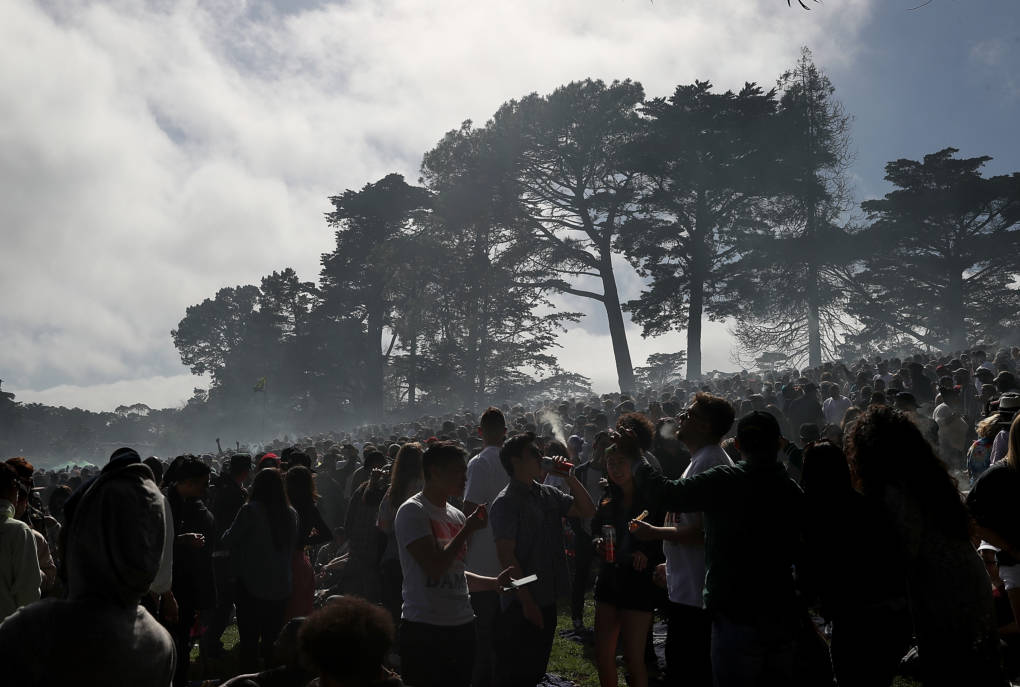
"caption": "A cloud of marijuana smoke hangs over a crowd during a 420 Day celebration on 'Hippie Hill.'",
"description": "A cloud of marijuana smoke hangs over a crowd during a 420 Day celebration on 'Hippie Hill.'",
"title": "Annual Marijuana \"Holiday\" 4/20 Celebrated In San Francisco",
"credit": "Justin Sullivan/Getty Images",
"status": "inherit",
"isLoading": false,
"fetchFailed": false
},
"news_11661531": {
"type": "attachments",
"id": "news_11661531",
"meta": {
"index": "attachments_1716263798",
"site": "news",
"id": "11661531",
"found": true
},
"parent": 11661532,
"imgSizes": {
"small": {
"file": "https://ww2.kqed.org/app/uploads/sites/10/2018/04/RS30412_pole-10-qut-520x347.jpg",
"width": 520,
"mimeType": "image/jpeg",
"height": 347
},
"twentyfourteen-full-width": {
"file": "https://ww2.kqed.org/app/uploads/sites/10/2018/04/RS30412_pole-10-qut-1038x576.jpg",
"width": 1038,
"mimeType": "image/jpeg",
"height": 576
},
"thumbnail": {
"file": "https://ww2.kqed.org/app/uploads/sites/10/2018/04/RS30412_pole-10-qut-160x107.jpg",
"width": 160,
"mimeType": "image/jpeg",
"height": 107
},
"fd-sm": {
"file": "https://ww2.kqed.org/app/uploads/sites/10/2018/04/RS30412_pole-10-qut-960x640.jpg",
"width": 960,
"mimeType": "image/jpeg",
"height": 640
},
"post-thumbnail": {
"file": "https://ww2.kqed.org/app/uploads/sites/10/2018/04/RS30412_pole-10-qut-672x372.jpg",
"width": 672,
"mimeType": "image/jpeg",
"height": 372
},
"xsmall": {
"file": "https://ww2.kqed.org/app/uploads/sites/10/2018/04/RS30412_pole-10-qut-375x250.jpg",
"width": 375,
"mimeType": "image/jpeg",
"height": 250
},
"kqedFullSize": {
"file": "https://ww2.kqed.org/app/uploads/sites/10/2018/04/RS30412_pole-10-qut.jpg",
"width": 1920,
"height": 1280
},
"large": {
"file": "https://ww2.kqed.org/app/uploads/sites/10/2018/04/RS30412_pole-10-qut-1020x680.jpg",
"width": 1020,
"mimeType": "image/jpeg",
"height": 680
},
"xlarge": {
"file": "https://ww2.kqed.org/app/uploads/sites/10/2018/04/RS30412_pole-10-qut-1180x787.jpg",
"width": 1180,
"mimeType": "image/jpeg",
"height": 787
},
"complete_open_graph": {
"file": "https://ww2.kqed.org/app/uploads/sites/10/2018/04/RS30412_pole-10-qut-1200x800.jpg",
"width": 1200,
"mimeType": "image/jpeg",
"height": 800
},
"guest-author-50": {
"file": "https://ww2.kqed.org/app/uploads/sites/10/2018/04/RS30412_pole-10-qut-50x50.jpg",
"width": 50,
"mimeType": "image/jpeg",
"height": 50
},
"guest-author-96": {
"file": "https://ww2.kqed.org/app/uploads/sites/10/2018/04/RS30412_pole-10-qut-96x96.jpg",
"width": 96,
"mimeType": "image/jpeg",
"height": 96
},
"medium": {
"file": "https://ww2.kqed.org/app/uploads/sites/10/2018/04/RS30412_pole-10-qut-800x533.jpg",
"width": 800,
"mimeType": "image/jpeg",
"height": 533
},
"guest-author-64": {
"file": "https://ww2.kqed.org/app/uploads/sites/10/2018/04/RS30412_pole-10-qut-64x64.jpg",
"width": 64,
"mimeType": "image/jpeg",
"height": 64
},
"guest-author-32": {
"file": "https://ww2.kqed.org/app/uploads/sites/10/2018/04/RS30412_pole-10-qut-32x32.jpg",
"width": 32,
"mimeType": "image/jpeg",
"height": 32
},
"fd-lrg": {
"file": "https://ww2.kqed.org/app/uploads/sites/10/2018/04/RS30412_pole-10-qut-1920x1280.jpg",
"width": 1920,
"mimeType": "image/jpeg",
"height": 1280
},
"fd-med": {
"file": "https://ww2.kqed.org/app/uploads/sites/10/2018/04/RS30412_pole-10-qut-1180x787.jpg",
"width": 1180,
"mimeType": "image/jpeg",
"height": 787
},
"full-width": {
"file": "https://ww2.kqed.org/app/uploads/sites/10/2018/04/RS30412_pole-10-qut-1920x1280.jpg",
"width": 1920,
"mimeType": "image/jpeg",
"height": 1280
},
"detail": {
"file": "https://ww2.kqed.org/app/uploads/sites/10/2018/04/RS30412_pole-10-qut-150x150.jpg",
"width": 150,
"mimeType": "image/jpeg",
"height": 150
},
"guest-author-128": {
"file": "https://ww2.kqed.org/app/uploads/sites/10/2018/04/RS30412_pole-10-qut-128x128.jpg",
"width": 128,
"mimeType": "image/jpeg",
"height": 128
},
"xxsmall": {
"file": "https://ww2.kqed.org/app/uploads/sites/10/2018/04/RS30412_pole-10-qut-240x160.jpg",
"width": 240,
"mimeType": "image/jpeg",
"height": 160
}
},
"publishDate": 1523490064,
"modified": 1524264782,
"caption": "Pole dancers of all ages and abilities competed in the Golden Gate Pole Championships in February in San Bruno, California. ",
"description": null,
"title": "RS30412_pole-10-qut",
"credit": "Samantha Shanahan/KQED",
"status": "inherit",
"isLoading": false,
"fetchFailed": false
}
},
"audioPlayerReducer": {
"postId": "stream_live",
"isPaused": true,
"isPlaying": false,
"pfsActive": false,
"pledgeModalIsOpen": true,
"playerDrawerIsOpen": false,
"liveAudioPlayStartedAt": 0,
"liveAudioPlayContext": ""
},
"authorsReducer": {
"byline_news_11668043": {
"type": "authors",
"id": "byline_news_11668043",
"meta": {
"override": true
},
"slug": "byline_news_11668043",
"name": "\u003cstrong>Associated Press\u003c/strong>",
"isLoading": false
},
"byline_news_11667635": {
"type": "authors",
"id": "byline_news_11667635",
"meta": {
"override": true
},
"slug": "byline_news_11667635",
"name": "\u003cstrong>\u003ca href=\"https://calmatters.org/articles/author/laurel-rosenhall/\">Laurel Rosenhall\u003c/a>\u003c/strong>",
"isLoading": false
},
"byline_news_11663933": {
"type": "authors",
"id": "byline_news_11663933",
"meta": {
"override": true
},
"slug": "byline_news_11663933",
"name": "Associated Press",
"isLoading": false
},
"danbrekke": {
"type": "authors",
"id": "222",
"meta": {
"index": "authors_1716337520",
"id": "222",
"found": true
},
"name": "Dan Brekke",
"firstName": "Dan",
"lastName": "Brekke",
"slug": "danbrekke",
"email": "dbrekke@kqed.org",
"display_author_email": true,
"staff_mastheads": [
"news",
"science"
],
"title": "KQED Editor and Reporter",
"bio": "Dan Brekke is a reporter and editor for KQED News, responsible for coverage of topics ranging from California water issues to the Bay Area's transportation challenges. In a newsroom career that began in Chicago in 1972, Dan has worked for \u003cem>The San Francisco Examiner,\u003c/em> Wired and TechTV and has been published in The New York Times, The New York Times Magazine, Business 2.0, Salon and elsewhere.\r\n\r\nSince joining KQED in 2007, Dan has reported, edited and produced both radio and online features and breaking news pieces. He has shared as both editor and reporter in four Society of Professional Journalists Norcal Excellence in Journalism awards and one Edward R. Murrow regional award. He was chosen for a spring 2017 residency at the Mesa Refuge to advance his research on California salmon.\r\n\r\nEmail Dan at: \u003ca href=\"mailto:dbrekke@kqed.org\">dbrekke@kqed.org\u003c/a>\r\n\r\n\u003cstrong>Twitter:\u003c/strong> \u003ca href=\"https://twitter.com/danbrekke\" rel=\"noopener noreferrer\">twitter.com/danbrekke\u003c/a>\r\n\u003cstrong>Facebook:\u003c/strong> \u003ca href=\"https://www.facebook.com/danbrekke\" rel=\"noopener noreferrer\">www.facebook.com/danbrekke\u003c/a>\r\n\u003cstrong>LinkedIn:\u003c/strong> \u003ca href=\"https://www.linkedin.com/in/danbrekke\" rel=\"noopener noreferrer\">www.linkedin.com/in/danbrekke\u003c/a>",
"avatar": "https://secure.gravatar.com/avatar/c8126230345efca3f7aa89b1a402be45?s=600&d=mm&r=g",
"twitter": "danbrekke",
"facebook": null,
"instagram": "https://www.instagram.com/dan.brekke/",
"linkedin": "https://www.linkedin.com/in/danbrekke/",
"sites": [
{
"site": "news",
"roles": [
"administrator",
"create_posts"
]
},
{
"site": "stateofhealth",
"roles": [
"editor"
]
},
{
"site": "science",
"roles": [
"editor"
]
},
{
"site": "quest",
"roles": [
"contributor"
]
},
{
"site": "food",
"roles": [
"contributor"
]
},
{
"site": "forum",
"roles": [
"contributor"
]
},
{
"site": "liveblog",
"roles": [
"editor"
]
}
],
"headData": {
"title": "Dan Brekke | KQED",
"description": "KQED Editor and Reporter",
"ogImgSrc": "https://secure.gravatar.com/avatar/c8126230345efca3f7aa89b1a402be45?s=600&d=mm&r=g",
"twImgSrc": "https://secure.gravatar.com/avatar/c8126230345efca3f7aa89b1a402be45?s=600&d=mm&r=g"
},
"isLoading": false,
"link": "/author/danbrekke"
},
"kqednewsstaffandwires": {
"type": "authors",
"id": "237",
"meta": {
"index": "authors_1716337520",
"id": "237",
"found": true
},
"name": "KQED News Staff and Wires",
"firstName": "KQED News Staff and Wires",
"lastName": null,
"slug": "kqednewsstaffandwires",
"email": "onlinenewsstaff@kqed.org",
"display_author_email": false,
"staff_mastheads": [],
"title": null,
"bio": null,
"avatar": "https://secure.gravatar.com/avatar/72295af8ebbfbd19a4948f5271285664?s=600&d=blank&r=g",
"twitter": null,
"facebook": null,
"instagram": null,
"linkedin": null,
"sites": [
{
"site": "arts",
"roles": [
"contributor"
]
},
{
"site": "news",
"roles": [
"contributor"
]
},
{
"site": "lowdown",
"roles": [
"author"
]
},
{
"site": "stateofhealth",
"roles": [
"contributor"
]
},
{
"site": "food",
"roles": [
"author"
]
}
],
"headData": {
"title": "KQED News Staff and Wires | KQED",
"description": null,
"ogImgSrc": "https://secure.gravatar.com/avatar/72295af8ebbfbd19a4948f5271285664?s=600&d=blank&r=g",
"twImgSrc": "https://secure.gravatar.com/avatar/72295af8ebbfbd19a4948f5271285664?s=600&d=blank&r=g"
},
"isLoading": false,
"link": "/author/kqednewsstaffandwires"
},
"tcamhi": {
"type": "authors",
"id": "3251",
"meta": {
"index": "authors_1716337520",
"id": "3251",
"found": true
},
"name": "Tiffany Camhi",
"firstName": "Tiffany",
"lastName": "Camhi",
"slug": "tcamhi",
"email": "tiffanycamhi@gmail.com",
"display_author_email": false,
"staff_mastheads": [],
"title": "KQED Contributor",
"bio": null,
"avatar": "https://secure.gravatar.com/avatar/f8204ce351139205d3b3dc1581016a5e30d7d8b38cb2c139348c151ec14b792e?s=600&d=blank&r=g",
"twitter": null,
"bluesky": null,
"facebook": null,
"instagram": null,
"linkedin": null,
"sites": [
{
"site": "arts",
"roles": [
"subscriber"
]
},
{
"site": "news",
"roles": [
"subscriber"
]
}
],
"headData": {
"title": "Tiffany Camhi | KQED",
"description": "KQED Contributor",
"ogImgSrc": "https://secure.gravatar.com/avatar/f8204ce351139205d3b3dc1581016a5e30d7d8b38cb2c139348c151ec14b792e?s=600&d=blank&r=g",
"twImgSrc": "https://secure.gravatar.com/avatar/f8204ce351139205d3b3dc1581016a5e30d7d8b38cb2c139348c151ec14b792e?s=600&d=blank&r=g"
},
"isLoading": false,
"link": "/author/tcamhi"
},
"cveltman": {
"type": "authors",
"id": "8608",
"meta": {
"index": "authors_1716337520",
"id": "8608",
"found": true
},
"name": "Chloe Veltman",
"firstName": "Chloe",
"lastName": "Veltman",
"slug": "cveltman",
"email": "cveltman@kqed.org",
"display_author_email": true,
"staff_mastheads": [],
"title": "Arts and Culture Reporter",
"bio": "Chloe Veltman is a former arts and culture reporter for KQED. Prior to joining the organization, she launched and led the arts bureau at Colorado Public Radio, served as the Bay Area's culture columnist for the New York Times, and was the founder, host and executive producer of VoiceBox, a national award-winning weekly podcast/radio show and live events series all about the human voice. Chloe is the recipient of numerous prizes, grants and fellowships including a Webby Award for her work on interactive storytelling, both the John S Knight Journalism Fellowship and Humanities Center Fellowship at Stanford University, the Sundance Arts Writing Fellowship and a Library of Congress Research Fellowship. She is the author of the book \"On Acting\" and has appeared as a guest lecturer at Yale University and the San Francisco Conservatory of Music among other institutions. She holds a BA in english literature from King's College, Cambridge, and a Masters in Dramaturgy from the Central School of Speech and Drama/Harvard Institute for Advanced Theater Training.\r\n\u003ca href=\"https://www.chloeveltman.com\">www.chloeveltman.com\u003c/a>",
"avatar": "https://secure.gravatar.com/avatar/55403394b00a1ddab683952c2eb2cf85?s=600&d=blank&r=g",
"twitter": "chloeveltman",
"facebook": null,
"instagram": null,
"linkedin": null,
"sites": [
{
"site": "arts",
"roles": []
},
{
"site": "news",
"roles": [
"author"
]
},
{
"site": "pop",
"roles": [
"editor"
]
},
{
"site": "science",
"roles": []
}
],
"headData": {
"title": "Chloe Veltman | KQED",
"description": "Arts and Culture Reporter",
"ogImgSrc": "https://secure.gravatar.com/avatar/55403394b00a1ddab683952c2eb2cf85?s=600&d=blank&r=g",
"twImgSrc": "https://secure.gravatar.com/avatar/55403394b00a1ddab683952c2eb2cf85?s=600&d=blank&r=g"
},
"isLoading": false,
"link": "/author/cveltman"
},
"lklivans": {
"type": "authors",
"id": "8648",
"meta": {
"index": "authors_1716337520",
"id": "8648",
"found": true
},
"name": "Laura Klivans",
"firstName": "Laura",
"lastName": "Klivans",
"slug": "lklivans",
"email": "lklivans@kqed.org",
"display_author_email": true,
"staff_mastheads": [
"news",
"science"
],
"title": "Reporter",
"bio": "Laura Klivans is an award-winning science reporter for KQED News, where she covers climate change with an eye on both groundbreaking progress and gaps in action. She is the former host of KQED's blockbuster video series about tiny, amazing animals, \u003cem>Deep Look\u003c/em>. Her work reaches national audiences through NPR, \u003cem>Here & Now, \u003c/em>PRI, and other major outlets. \r\n\r\nLaura’s won five Northern California Area Emmy Awards for Deep Look and First Place in the Greater Bay Area Journalism Awards for a podcast exploring how one Oakland neighborhood teamed up to reduce planet-heating pollution.\r\n\r\nBeyond her reporting, she hosts and moderates events. In the past, she taught audio storytelling at the UC Berkeley Graduate School of Journalism, led international education programs, worked with immigrants and refugees along the Thai-Burmese border, taught high schoolers sex ed, and was an actress. \r\n\r\nShe's a former UC Berkeley Human Rights Fellow, USC Center for Health Journalism's California Fellow and Coro Fellow in Public Affairs. Laura has a master’s in journalism from UC Berkeley, a master’s in education from Harvard, and an undergraduate degree from Northwestern University.\r\n\r\nShe loves trying to riddle the meaning out of vanity license plates.",
"avatar": "https://secure.gravatar.com/avatar/2d2ecd1550a494cc10ad4a503406965585902124739e775a9b3817eebf1d88be?s=600&d=blank&r=g",
"twitter": "lauraklivans",
"bluesky": null,
"facebook": null,
"instagram": null,
"linkedin": null,
"sites": [
{
"site": "news",
"roles": [
"editor"
]
},
{
"site": "stateofhealth",
"roles": [
"contributor",
"editor"
]
},
{
"site": "science",
"roles": [
"editor"
]
},
{
"site": "forum",
"roles": [
"editor"
]
}
],
"headData": {
"title": "Laura Klivans | KQED",
"description": "Reporter",
"ogImgSrc": "https://secure.gravatar.com/avatar/2d2ecd1550a494cc10ad4a503406965585902124739e775a9b3817eebf1d88be?s=600&d=blank&r=g",
"twImgSrc": "https://secure.gravatar.com/avatar/2d2ecd1550a494cc10ad4a503406965585902124739e775a9b3817eebf1d88be?s=600&d=blank&r=g"
},
"isLoading": false,
"link": "/author/lklivans"
},
"bhernandez": {
"type": "authors",
"id": "11359",
"meta": {
"index": "authors_1716337520",
"id": "11359",
"found": true
},
"name": "Bianca Hernandez",
"firstName": "Bianca",
"lastName": "Hernandez",
"slug": "bhernandez",
"email": "bhernandez@kqed.org",
"display_author_email": false,
"staff_mastheads": [],
"title": "KQED Contributor",
"bio": "Bianca Hernandez is a former Interactive Producer for KQED. She has produced at KGPE, KSEE24 and Sierra Magazine. In 2011 she received an undergraduate degree in Journalism and Anthropology from CSU, Chico . She earned a Master's from the University of Southern California in 2013, where she completed a documentary on teenage farmworkers. She is an avid Jane Austen fan and takes lightsaber combat class for fun.",
"avatar": "https://secure.gravatar.com/avatar/75b3424851e2f9fa131f2cb6a051aeac?s=600&d=blank&r=g",
"twitter": "bookhoarding",
"facebook": null,
"instagram": null,
"linkedin": null,
"sites": [
{
"site": "arts",
"roles": []
},
{
"site": "news",
"roles": []
},
{
"site": "science",
"roles": []
},
{
"site": "forum",
"roles": []
}
],
"headData": {
"title": "Bianca Hernandez | KQED",
"description": "KQED Contributor",
"ogImgSrc": "https://secure.gravatar.com/avatar/75b3424851e2f9fa131f2cb6a051aeac?s=600&d=blank&r=g",
"twImgSrc": "https://secure.gravatar.com/avatar/75b3424851e2f9fa131f2cb6a051aeac?s=600&d=blank&r=g"
},
"isLoading": false,
"link": "/author/bhernandez"
},
"parcuni": {
"type": "authors",
"id": "11368",
"meta": {
"index": "authors_1716337520",
"id": "11368",
"found": true
},
"name": "Peter Arcuni",
"firstName": "Peter",
"lastName": "Arcuni",
"slug": "parcuni",
"email": "parcuni@KQED.org",
"display_author_email": false,
"staff_mastheads": [
"science"
],
"title": "Reporter",
"bio": "Peter reports radio and online stories for \u003cem>KQED Science\u003c/em>. His work has also appeared on the \u003cem>The California Report\u003c/em> morning show and \u003cem>KQED News\u003c/em>. His production credits include \u003cem>The California Report, The California Report Magazine\u003c/em> and KQED's local news podcast \u003cem>The Bay\u003c/em>. Other credits include NPR's \u003cem>All Things Considered\u003c/em>, WNYC's \u003cem>Science Friday\u003c/em>, WBUR's \u003cem>Here & Now\u003c/em>, WIRED and SFGate. Peter graduated from Brown University and earned a master's degree in journalism from Stanford. He's covered everything from homelessness to wildfires, health, the environment, arts and Thanksgiving in San Quentin prison. In other lives, he played rock n roll music and studied neuroscience. You can email him at: parcuni@kqed.org",
"avatar": "https://secure.gravatar.com/avatar/d5032f6f27199d478af34ad2e1d98732?s=600&d=blank&r=g",
"twitter": "peterarcuni",
"facebook": null,
"instagram": null,
"linkedin": null,
"sites": [
{
"site": "news",
"roles": [
"editor"
]
},
{
"site": "science",
"roles": [
"editor"
]
}
],
"headData": {
"title": "Peter Arcuni | KQED",
"description": "Reporter",
"ogImgSrc": "https://secure.gravatar.com/avatar/d5032f6f27199d478af34ad2e1d98732?s=600&d=blank&r=g",
"twImgSrc": "https://secure.gravatar.com/avatar/d5032f6f27199d478af34ad2e1d98732?s=600&d=blank&r=g"
},
"isLoading": false,
"link": "/author/parcuni"
},
"eaguilar": {
"type": "authors",
"id": "11382",
"meta": {
"index": "authors_1716337520",
"id": "11382",
"found": true
},
"name": "Erika Aguilar",
"firstName": "Erika",
"lastName": "Aguilar",
"slug": "eaguilar",
"email": "eaa712@gmail.com",
"display_author_email": false,
"staff_mastheads": [],
"title": "KQED Contributor",
"bio": "Erika Aguilar was the director of podcasts at KQED. She was in charge of KQED's portfolio of original podcasts and teams, and sets strategic plans for production and engagement.\r\n\r\nErika helped establish KQED's new housing affordability desk as senior editor. She was also a producer and editor for KQED's local news podcast called \u003cem>The Bay, \u003c/em>and wrote stories about housing in the Bay Area as a reporter for KQED News.\r\n\r\nErika joined KQED in 2017 after producing independent audio projects and podcasts in Southern California. She spent more than a dozen years reporting stories about law enforcement, breaking news, homelessness, government and the environment for KPCC in Los Angeles and KUT in Austin. She also volunteers as an editor and mentor for various journalism training programs.\r\n\r\nErika Aguilar is a proud Tejana from San Antonio. She believes in compromise, optimism and Selena.",
"avatar": "https://secure.gravatar.com/avatar/85bf7bb8dd9af4136525d94cef00f026?s=600&d=blank&r=g",
"twitter": "erikaaaguilar",
"facebook": null,
"instagram": null,
"linkedin": null,
"sites": [
{
"site": "",
"roles": [
"editor"
]
},
{
"site": "news",
"roles": [
"subscriber"
]
},
{
"site": "podcasts",
"roles": [
"editor"
]
}
],
"headData": {
"title": "Erika Aguilar | KQED",
"description": "KQED Contributor",
"ogImgSrc": "https://secure.gravatar.com/avatar/85bf7bb8dd9af4136525d94cef00f026?s=600&d=blank&r=g",
"twImgSrc": "https://secure.gravatar.com/avatar/85bf7bb8dd9af4136525d94cef00f026?s=600&d=blank&r=g"
},
"isLoading": false,
"link": "/author/eaguilar"
},
"sshanahan": {
"type": "authors",
"id": "11409",
"meta": {
"index": "authors_1716337520",
"id": "11409",
"found": true
},
"name": "Samantha Shanahan",
"firstName": "Samantha",
"lastName": "Shanahan",
"slug": "sshanahan",
"email": "sshanahan@kqed.org",
"display_author_email": false,
"staff_mastheads": [],
"title": "KQED Contributor",
"bio": null,
"avatar": "https://secure.gravatar.com/avatar/fa52d5af105ea4981f8e7d8f922740a1?s=600&d=blank&r=g",
"twitter": null,
"facebook": null,
"instagram": null,
"linkedin": null,
"sites": [
{
"site": "arts",
"roles": [
"author"
]
},
{
"site": "news",
"roles": [
"create_posts",
"read_private_posts",
"author"
]
}
],
"headData": {
"title": "Samantha Shanahan | KQED",
"description": "KQED Contributor",
"ogImgSrc": "https://secure.gravatar.com/avatar/fa52d5af105ea4981f8e7d8f922740a1?s=600&d=blank&r=g",
"twImgSrc": "https://secure.gravatar.com/avatar/fa52d5af105ea4981f8e7d8f922740a1?s=600&d=blank&r=g"
},
"isLoading": false,
"link": "/author/sshanahan"
}
},
"pagesReducer": {
"news_tag_san-francisco": {
"type": "terms",
"id": "news_38",
"meta": {
"index": "terms_1716263798",
"site": "news",
"id": "38",
"score": 6.723307
},
"featImg": null,
"name": "San Francisco",
"description": null,
"taxonomy": "tag",
"headData": {
"twImgId": null,
"twTitle": null,
"ogTitle": null,
"ogImgId": null,
"twDescription": null,
"description": null,
"title": "San Francisco Archives | KQED News",
"ogDescription": null
},
"ttid": 58,
"slug": "san-francisco",
"isLoading": false,
"title": "San Francisco",
"pageMeta": {
"site": "news",
"WpPageTemplate": "page-topic-editorial",
"currentPage": 160
},
"blocks": [
{
"blockName": "kqed/post-list",
"attrs": {
"layout": "cardArticle2",
"query": "posts/news?tag=san-francisco",
"seeMore": false,
"paginated": true,
"page": 160
}
},
{
"blockName": "kqed/ad"
}
]
}
},
"pfsSessionReducer": {},
"postsReducer": {
"stream_live": {
"type": "live",
"id": "stream_live",
"audioUrl": "https://streams.kqed.org/kqedradio",
"title": "Live Stream",
"excerpt": "Live Stream information currently unavailable.",
"link": "/radio",
"featImg": "",
"label": {
"name": "KQED Live",
"link": "/"
}
},
"stream_kqedNewscast": {
"type": "posts",
"id": "stream_kqedNewscast",
"audioUrl": "https://www.kqed.org/.stream/anon/radio/RDnews/newscast.mp3?_=1",
"title": "KQED Newscast",
"featImg": "",
"label": {
"name": "88.5 FM",
"link": "/"
}
},
"news_11669483": {
"type": "posts",
"id": "news_11669483",
"meta": {
"index": "posts_1716263798",
"site": "news",
"id": "11669483",
"score": null,
"sort": [
1526849886000
]
},
"parent": 0,
"labelTerm": {
"site": "news",
"term": 72
},
"blocks": [],
"publishDate": 1526849886,
"format": "image",
"disqusTitle": "PHOTOS: From Bananas to the Royal Wedding, Bay to Breakers Has It All",
"title": "PHOTOS: From Bananas to the Royal Wedding, Bay to Breakers Has It All",
"headTitle": "The California Report | KQED News",
"content": "\u003cp>Unicorns, vegetables and Wonder Woman took to the streets Sunday, along with tens of thousands of other runners as part of the 107th annual \u003ca href=\"https://www.baytobreakers.com/\" target=\"_blank\" rel=\"noopener\">Bay to Breakers race\u003c/a>. Organizers say 40,000 people registered for this year's race and approximately 150,000 showed up to cheer them on.\u003c/p>\n\u003cp>Sunday's event kicked off in downtown San Francisco, near the Bay Bridge, with a route that took participants from the bay to the ocean. It's like a track meet on Halloween, with racers wearing running shoes and extravagant costumes.\u003c/p>\n\u003cp>But vivid attire wasn't always part of the race.\u003c/p>\n\u003cp>The first Bay to Breakers was held in 1912, in response to the 1906 earthquake in San Francisco. The city was still recovering and needed a morale boost. Some say the very first costume was a comic book pirate named \u003ca href=\"https://www.sfgate.com/entertainment/article/Who-wore-the-first-Bay-to-Breakers-costume-11148211.php\" target=\"_blank\" rel=\"noopener\">Captain Kidd\u003c/a> sometime in the 1940s, progressing from there to superheroes, centipedes and salmon that run upstream from the breakers to the bay.\u003c/p>\n\u003cp>Today's winners were Philemon Cheboi and Jane Kibii, with the Aggies Running Club coming in first in the centipede division.\u003c/p>\n\u003cp>[ad fullwidth]\u003c/p>\n\u003cp>https://twitter.com/Baytobreakers/status/998233272516685824\u003c/p>\n\u003cp>https://twitter.com/Baytobreakers/status/998235528960000000\u003c/p>\n\u003cp>https://twitter.com/Baytobreakers/status/998238255379169285\u003c/p>\n\u003cp>\u003c/p>\n\u003cp>Here are some more photos from Sunday's race:\u003c/p>\n\u003cfigure id=\"attachment_11669484\" class=\"wp-caption aligncenter\" style=\"max-width: 800px\">\u003cimg class=\"wp-image-11669484 size-medium\" src=\"https://ww2.kqed.org/news/wp-content/uploads/sites/10/2018/05/Bay1-800x600.jpg\" alt=\"Thousands gather at the official Bay to Breakers starting line at Main Street and Howard Street minutes before the 12K race kicks off.\" width=\"800\" height=\"600\">\u003cfigcaption class=\"wp-caption-text\">Thousands gather at the official Bay to Breakers starting line at Main and Howard streets minutes before the 12K race kicks off. \u003ccite>(Peter Arcuni/KQED)\u003c/cite>\u003c/figcaption>\u003c/figure>\n\u003cfigure id=\"attachment_11669492\" class=\"wp-caption aligncenter\" style=\"max-width: 800px\">\u003cimg class=\"size-medium wp-image-11669492\" src=\"https://ww2.kqed.org/news/wp-content/uploads/sites/10/2018/05/Bay7-800x600.jpg\" alt=\"In-N-Out Burger enthusiasts, complete with fries, get ready to jump into the race.\" width=\"800\" height=\"600\">\u003cfigcaption class=\"wp-caption-text\">In-N-Out Burger enthusiasts, complete with fries, get ready to jump into the race. \u003ccite>(Peter Arcuni/KQED)\u003c/cite>\u003c/figcaption>\u003c/figure>\n\u003cfigure id=\"attachment_11669493\" class=\"wp-caption aligncenter\" style=\"max-width: 800px\">\u003cimg class=\"size-medium wp-image-11669493\" src=\"https://ww2.kqed.org/news/wp-content/uploads/sites/10/2018/05/Bay8-800x600.jpg\" alt=\"A crew of construction workers cheered on race participants from a Bay Bridge on-ramp in downtown San Francisco.\" width=\"800\" height=\"600\">\u003cfigcaption class=\"wp-caption-text\">A crew of construction workers cheered on race participants from a Bay Bridge on-ramp in downtown San Francisco. \u003ccite>(Peter Arcuni/KQED)\u003c/cite>\u003c/figcaption>\u003c/figure>\n\u003cfigure id=\"attachment_11669496\" class=\"wp-caption aligncenter\" style=\"max-width: 800px\">\u003cimg class=\"wp-image-11669496 size-medium\" src=\"https://ww2.kqed.org/news/wp-content/uploads/sites/10/2018/05/Bay11-800x600.jpg\" alt=\"San Francisco residents Seth and Sarah Hernandez (right) bring along visiting relatives Lori and Mike Solomon to witness the festivities. Race organizers say approximately 150,000 spectators lined the route on Sunday.\" width=\"800\" height=\"600\">\u003cfigcaption class=\"wp-caption-text\">San Francisco residents Seth and Sarah Hernandez (right) bring along visiting relatives Lori and Mike Solomon to witness the festivities. Race organizers say approximately 150,000 spectators lined the route on Sunday. \u003ccite>(Peter Arcuni/KQED)\u003c/cite>\u003c/figcaption>\u003c/figure>\n\u003cfigure id=\"attachment_11669498\" class=\"wp-caption aligncenter\" style=\"max-width: 800px\">\u003cimg class=\"size-medium wp-image-11669498\" src=\"https://ww2.kqed.org/news/wp-content/uploads/sites/10/2018/05/Bay13-800x600.jpg\" alt=\"Spanning San Francisco, from the bay to the beach, the annual race requires road closures and transit reroutes. \" width=\"800\" height=\"600\">\u003cfigcaption class=\"wp-caption-text\">Spanning San Francisco, from the bay to the beach, the annual race requires road closures and transit reroutes. \u003ccite>(Peter Arcuni/KQED)\u003c/cite>\u003c/figcaption>\u003c/figure>\n\u003cfigure id=\"attachment_11669494\" class=\"wp-caption aligncenter\" style=\"max-width: 800px\">\u003cimg class=\"wp-image-11669494 size-medium\" src=\"https://ww2.kqed.org/news/wp-content/uploads/sites/10/2018/05/Bay9-800x600.jpg\" alt=\"A pair of Tyrannosaurus rex costumes, worn by Josh Swickard and James Sun, are seen keeping pace and giving chase runners.\" width=\"800\" height=\"600\">\u003cfigcaption class=\"wp-caption-text\">A pair of Tyrannosaurus rex costumes, worn by Josh Swickard and James Sun, are seen keeping pace and giving chase to runners. \u003ccite>(Peter Arcuni/KQED)\u003c/cite>\u003c/figcaption>\u003c/figure>\n\u003cfigure id=\"attachment_11669502\" class=\"wp-caption aligncenter\" style=\"max-width: 800px\">\u003cimg class=\"size-medium wp-image-11669502\" src=\"https://ww2.kqed.org/news/wp-content/uploads/sites/10/2018/05/Bay5-1-800x457.jpg\" alt=\"A lone racer, dressed as a banana, is seen at the Bay to Breakers starting line.\" width=\"800\" height=\"457\">\u003cfigcaption class=\"wp-caption-text\">A lone racer, dressed as a banana, is seen at the Bay to Breakers starting line. \u003ccite>(Peter Arcuni/KQED)\u003c/cite>\u003c/figcaption>\u003c/figure>\n\u003cfigure id=\"attachment_11669486\" class=\"wp-caption aligncenter\" style=\"max-width: 800px\">\u003cimg class=\"wp-image-11669486 size-medium\" src=\"https://ww2.kqed.org/news/wp-content/uploads/sites/10/2018/05/Bay3-800x1067.jpg\" alt=\"A team of runners wear coordinated Statue of Liberty costumes, complete with fake torches and matching running outfits. \" width=\"800\" height=\"1067\">\u003cfigcaption class=\"wp-caption-text\">A team of runners wear coordinated Statue of Liberty costumes, complete with fake torches and matching running outfits. \u003ccite>(Peter Arcuni/KQED)\u003c/cite>\u003c/figcaption>\u003c/figure>\n\u003cfigure id=\"attachment_11669485\" class=\"wp-caption aligncenter\" style=\"max-width: 800px\">\u003cimg class=\"wp-image-11669485 size-medium\" src=\"https://ww2.kqed.org/news/wp-content/uploads/sites/10/2018/05/Bay2-800x600.jpg\" alt=\"The iconic pink gorilla is seen again at this year's Bay to Breakers, surrounded by people dressed as an Arrested Development character.\" width=\"800\" height=\"600\">\u003cfigcaption class=\"wp-caption-text\">The iconic pink gorilla is seen again at this year's Bay to Breakers, surrounded by people dressed as a character from the TV show 'Arrested Development.' \u003ccite>(Peter Arcuni/KQED)\u003c/cite>\u003c/figcaption>\u003c/figure>\n\n",
"disqusIdentifier": "11669483 https://ww2.kqed.org/news/?p=11669483",
"disqusUrl": "https://ww2.kqed.org/news/2018/05/20/photos-from-bananas-to-the-royal-wedding-bay-to-breakers-has-it-all/",
"stats": {
"hasVideo": false,
"hasChartOrMap": false,
"hasAudio": false,
"hasPolis": false,
"wordCount": 429,
"hasGoogleForm": false,
"hasGallery": false,
"hasHearkenModule": false,
"iframeSrcs": [],
"paragraphCount": 8
},
"modified": 1526943638,
"excerpt": "Organizers say nearly 200,000 people showed up to run or watch the 107th annual Bay to Breakers race.",
"headData": {
"twImgId": "",
"twTitle": "",
"ogTitle": "",
"ogImgId": "",
"twDescription": "",
"description": "Organizers say nearly 200,000 people showed up to run or watch the 107th annual Bay to Breakers race.",
"title": "PHOTOS: From Bananas to the Royal Wedding, Bay to Breakers Has It All | KQED",
"ogDescription": "",
"schema": {
"@context": "https://schema.org",
"@type": "NewsArticle",
"headline": "PHOTOS: From Bananas to the Royal Wedding, Bay to Breakers Has It All",
"datePublished": "2018-05-20T13:58:06-07:00",
"dateModified": "2018-05-21T16:00:38-07:00",
"image": "https://cdn.kqed.org/wp-content/uploads/2020/02/KQED-OG-Image@1x.png",
"isAccessibleForFree": "True",
"publisher": {
"@type": "NewsMediaOrganization",
"@id": "https://www.kqed.org/#organization",
"name": "KQED",
"logo": "https://cdn.kqed.org/wp-content/uploads/2020/02/KQED-OG-Image@1x.png",
"url": "https://www.kqed.org",
"sameAs": [
"https://www.facebook.com/KQED",
"https://twitter.com/KQED",
"https://www.instagram.com/kqed/",
"https://www.tiktok.com/@kqedofficial",
"https://www.linkedin.com/company/kqed",
"https://www.youtube.com/channel/UCeC0IOo7i1P_61zVUWbJ4nw"
]
}
}
},
"guestAuthors": [],
"slug": "photos-from-bananas-to-the-royal-wedding-bay-to-breakers-has-it-all",
"status": "publish",
"path": "/news/11669483/photos-from-bananas-to-the-royal-wedding-bay-to-breakers-has-it-all",
"audioTrackLength": null,
"parsedContent": [
{
"type": "contentString",
"content": "\u003cdiv class=\"post-body\">\u003cp>\u003cp>Unicorns, vegetables and Wonder Woman took to the streets Sunday, along with tens of thousands of other runners as part of the 107th annual \u003ca href=\"https://www.baytobreakers.com/\" target=\"_blank\" rel=\"noopener\">Bay to Breakers race\u003c/a>. Organizers say 40,000 people registered for this year's race and approximately 150,000 showed up to cheer them on.\u003c/p>\n\u003cp>Sunday's event kicked off in downtown San Francisco, near the Bay Bridge, with a route that took participants from the bay to the ocean. It's like a track meet on Halloween, with racers wearing running shoes and extravagant costumes.\u003c/p>\n\u003cp>But vivid attire wasn't always part of the race.\u003c/p>\n\u003cp>The first Bay to Breakers was held in 1912, in response to the 1906 earthquake in San Francisco. The city was still recovering and needed a morale boost. Some say the very first costume was a comic book pirate named \u003ca href=\"https://www.sfgate.com/entertainment/article/Who-wore-the-first-Bay-to-Breakers-costume-11148211.php\" target=\"_blank\" rel=\"noopener\">Captain Kidd\u003c/a> sometime in the 1940s, progressing from there to superheroes, centipedes and salmon that run upstream from the breakers to the bay.\u003c/p>\n\u003cp>Today's winners were Philemon Cheboi and Jane Kibii, with the Aggies Running Club coming in first in the centipede division.\u003c/p>\n\u003cp>\u003c/p>\u003c/div>",
"attributes": {
"named": {},
"numeric": []
}
},
{
"type": "component",
"content": "",
"name": "ad",
"attributes": {
"named": {
"label": "fullwidth"
},
"numeric": [
"fullwidth"
]
}
},
{
"type": "contentString",
"content": "\u003cdiv class=\"post-body\">\u003cp>\u003c/p>\u003c/p>\u003c/div>",
"attributes": {
"named": {},
"numeric": []
}
},
{
"type": "component",
"content": "",
"name": "singleTwitterStatus",
"attributes": {
"named": {
"id": "998233272516685824"
},
"numeric": []
}
},
{
"type": "contentString",
"content": "\u003cdiv class=\"post-body\">\u003cp>\u003c/p>\u003c/div>",
"attributes": {
"named": {},
"numeric": []
}
},
{
"type": "component",
"content": "",
"name": "singleTwitterStatus",
"attributes": {
"named": {
"id": "998235528960000000"
},
"numeric": []
}
},
{
"type": "contentString",
"content": "\u003cdiv class=\"post-body\">\u003cp>\u003c/p>\u003c/div>",
"attributes": {
"named": {},
"numeric": []
}
},
{
"type": "component",
"content": "",
"name": "singleTwitterStatus",
"attributes": {
"named": {
"id": "998238255379169285"
},
"numeric": []
}
},
{
"type": "contentString",
"content": "\u003cdiv class=\"post-body\">\u003cp>\n\u003cp>\u003c/p>\n\u003cp>Here are some more photos from Sunday's race:\u003c/p>\n\u003cfigure id=\"attachment_11669484\" class=\"wp-caption aligncenter\" style=\"max-width: 800px\">\u003cimg class=\"wp-image-11669484 size-medium\" src=\"https://ww2.kqed.org/news/wp-content/uploads/sites/10/2018/05/Bay1-800x600.jpg\" alt=\"Thousands gather at the official Bay to Breakers starting line at Main Street and Howard Street minutes before the 12K race kicks off.\" width=\"800\" height=\"600\">\u003cfigcaption class=\"wp-caption-text\">Thousands gather at the official Bay to Breakers starting line at Main and Howard streets minutes before the 12K race kicks off. \u003ccite>(Peter Arcuni/KQED)\u003c/cite>\u003c/figcaption>\u003c/figure>\n\u003cfigure id=\"attachment_11669492\" class=\"wp-caption aligncenter\" style=\"max-width: 800px\">\u003cimg class=\"size-medium wp-image-11669492\" src=\"https://ww2.kqed.org/news/wp-content/uploads/sites/10/2018/05/Bay7-800x600.jpg\" alt=\"In-N-Out Burger enthusiasts, complete with fries, get ready to jump into the race.\" width=\"800\" height=\"600\">\u003cfigcaption class=\"wp-caption-text\">In-N-Out Burger enthusiasts, complete with fries, get ready to jump into the race. \u003ccite>(Peter Arcuni/KQED)\u003c/cite>\u003c/figcaption>\u003c/figure>\n\u003cfigure id=\"attachment_11669493\" class=\"wp-caption aligncenter\" style=\"max-width: 800px\">\u003cimg class=\"size-medium wp-image-11669493\" src=\"https://ww2.kqed.org/news/wp-content/uploads/sites/10/2018/05/Bay8-800x600.jpg\" alt=\"A crew of construction workers cheered on race participants from a Bay Bridge on-ramp in downtown San Francisco.\" width=\"800\" height=\"600\">\u003cfigcaption class=\"wp-caption-text\">A crew of construction workers cheered on race participants from a Bay Bridge on-ramp in downtown San Francisco. \u003ccite>(Peter Arcuni/KQED)\u003c/cite>\u003c/figcaption>\u003c/figure>\n\u003cfigure id=\"attachment_11669496\" class=\"wp-caption aligncenter\" style=\"max-width: 800px\">\u003cimg class=\"wp-image-11669496 size-medium\" src=\"https://ww2.kqed.org/news/wp-content/uploads/sites/10/2018/05/Bay11-800x600.jpg\" alt=\"San Francisco residents Seth and Sarah Hernandez (right) bring along visiting relatives Lori and Mike Solomon to witness the festivities. Race organizers say approximately 150,000 spectators lined the route on Sunday.\" width=\"800\" height=\"600\">\u003cfigcaption class=\"wp-caption-text\">San Francisco residents Seth and Sarah Hernandez (right) bring along visiting relatives Lori and Mike Solomon to witness the festivities. Race organizers say approximately 150,000 spectators lined the route on Sunday. \u003ccite>(Peter Arcuni/KQED)\u003c/cite>\u003c/figcaption>\u003c/figure>\n\u003cfigure id=\"attachment_11669498\" class=\"wp-caption aligncenter\" style=\"max-width: 800px\">\u003cimg class=\"size-medium wp-image-11669498\" src=\"https://ww2.kqed.org/news/wp-content/uploads/sites/10/2018/05/Bay13-800x600.jpg\" alt=\"Spanning San Francisco, from the bay to the beach, the annual race requires road closures and transit reroutes. \" width=\"800\" height=\"600\">\u003cfigcaption class=\"wp-caption-text\">Spanning San Francisco, from the bay to the beach, the annual race requires road closures and transit reroutes. \u003ccite>(Peter Arcuni/KQED)\u003c/cite>\u003c/figcaption>\u003c/figure>\n\u003cfigure id=\"attachment_11669494\" class=\"wp-caption aligncenter\" style=\"max-width: 800px\">\u003cimg class=\"wp-image-11669494 size-medium\" src=\"https://ww2.kqed.org/news/wp-content/uploads/sites/10/2018/05/Bay9-800x600.jpg\" alt=\"A pair of Tyrannosaurus rex costumes, worn by Josh Swickard and James Sun, are seen keeping pace and giving chase runners.\" width=\"800\" height=\"600\">\u003cfigcaption class=\"wp-caption-text\">A pair of Tyrannosaurus rex costumes, worn by Josh Swickard and James Sun, are seen keeping pace and giving chase to runners. \u003ccite>(Peter Arcuni/KQED)\u003c/cite>\u003c/figcaption>\u003c/figure>\n\u003cfigure id=\"attachment_11669502\" class=\"wp-caption aligncenter\" style=\"max-width: 800px\">\u003cimg class=\"size-medium wp-image-11669502\" src=\"https://ww2.kqed.org/news/wp-content/uploads/sites/10/2018/05/Bay5-1-800x457.jpg\" alt=\"A lone racer, dressed as a banana, is seen at the Bay to Breakers starting line.\" width=\"800\" height=\"457\">\u003cfigcaption class=\"wp-caption-text\">A lone racer, dressed as a banana, is seen at the Bay to Breakers starting line. \u003ccite>(Peter Arcuni/KQED)\u003c/cite>\u003c/figcaption>\u003c/figure>\n\u003cfigure id=\"attachment_11669486\" class=\"wp-caption aligncenter\" style=\"max-width: 800px\">\u003cimg class=\"wp-image-11669486 size-medium\" src=\"https://ww2.kqed.org/news/wp-content/uploads/sites/10/2018/05/Bay3-800x1067.jpg\" alt=\"A team of runners wear coordinated Statue of Liberty costumes, complete with fake torches and matching running outfits. \" width=\"800\" height=\"1067\">\u003cfigcaption class=\"wp-caption-text\">A team of runners wear coordinated Statue of Liberty costumes, complete with fake torches and matching running outfits. \u003ccite>(Peter Arcuni/KQED)\u003c/cite>\u003c/figcaption>\u003c/figure>\n\u003cfigure id=\"attachment_11669485\" class=\"wp-caption aligncenter\" style=\"max-width: 800px\">\u003cimg class=\"wp-image-11669485 size-medium\" src=\"https://ww2.kqed.org/news/wp-content/uploads/sites/10/2018/05/Bay2-800x600.jpg\" alt=\"The iconic pink gorilla is seen again at this year's Bay to Breakers, surrounded by people dressed as an Arrested Development character.\" width=\"800\" height=\"600\">\u003cfigcaption class=\"wp-caption-text\">The iconic pink gorilla is seen again at this year's Bay to Breakers, surrounded by people dressed as a character from the TV show 'Arrested Development.' \u003ccite>(Peter Arcuni/KQED)\u003c/cite>\u003c/figcaption>\u003c/figure>\n\n\u003c/div>\u003c/p>",
"attributes": {
"named": {},
"numeric": []
}
}
],
"link": "/news/11669483/photos-from-bananas-to-the-royal-wedding-bay-to-breakers-has-it-all",
"authors": [
"11368"
],
"programs": [
"news_72"
],
"categories": [
"news_223",
"news_8"
],
"tags": [
"news_1422",
"news_19542",
"news_20219",
"news_38"
],
"featImg": "news_11669490",
"label": "news_72"
},
"news_11668070": {
"type": "posts",
"id": "news_11668070",
"meta": {
"index": "posts_1716263798",
"site": "news",
"id": "11668070",
"score": null,
"sort": [
1526248852000
]
},
"parent": 0,
"labelTerm": {},
"blocks": [],
"publishDate": 1526248852,
"format": "audio",
"disqusTitle": "Move Over UberX, UberAir and Flying Cars On the Way",
"title": "Move Over UberX, UberAir and Flying Cars On the Way",
"headTitle": "The California Report | KQED News",
"content": "\u003cp>\u003cem>Stay caught up with the best of KQED's reporting each week by subscribing to the \u003ca href=\"https://itunes.apple.com/us/podcast/qed-up/id1197721799?mt=2\" target=\"_blank\" rel=\"noopener\">Q'ed Up podcast\u003c/a>.\u003c/em>\u003c/p>\n\u003cp>The newest concept for commuting could have us taking to the skies.\u003c/p>\n\u003ch2>1. It's a bird, it's a plane, it's Uber.\u003c/h2>\n\u003cp>In 1985, the science-fiction film \"Back to the Future\" we were first introduced to the time-travelling, high-flying DeLorean. Back then, the idea of a flying car seemed pretty far-fetched. Even now, more than 30 years later, it doesn’t seem very plausible. But, buckle your seatbelts, flying cars could ... maybe ... someday ... become a reality.\u003c/p>\n\u003cp>And the company who wants to take us to this above-the-road, seemingly traffic-free world is none other than San Francisco-based ride-sharing giant Uber.\u003c/p>\n\u003cp>This week, the company revealed a concept design for a flying taxi at its Elevate Summit in Los Angeles. If this wasn't enough, the company announced it plans to launch a pilot flying taxi program, hello UberAir, in L.A. and Dallas in 2020, with a more widespread commercial service to take flight in 2023.\u003c/p>\n\u003cp>[ad fullwidth]\u003c/p>\n\u003cp>So how do you feel about hitching a ride on UberAir?\u003c/p>\n\u003ch2>2. \u003ca href=\"https://www.kqed.org/news/11667830/san-franciscos-grisly-mobility-reality-1906-style\" target=\"_blank\" rel=\"noopener\">Were the streets of San Francisco safer in 1906?\u003c/a>\u003c/h2>\n\u003cfigure id=\"attachment_11668079\" class=\"wp-caption aligncenter\" style=\"max-width: 800px\">\u003cimg class=\"size-medium wp-image-11668079\" src=\"https://ww2.kqed.org/news/wp-content/uploads/sites/10/2018/05/Screen-Shot-2018-05-11-at-1.03.00-PM-1180x760-1-800x515.png\" alt='A frame from the 1906 film \"A Trip Down Market Street Before the Fire.\" The movie was shot shortly before the April 18 earthquake and fire devastated much of the city. ' width=\"800\" height=\"515\" srcset=\"https://ww2.kqed.org/app/uploads/sites/10/2018/05/Screen-Shot-2018-05-11-at-1.03.00-PM-1180x760-1-800x515.png 800w, https://ww2.kqed.org/app/uploads/sites/10/2018/05/Screen-Shot-2018-05-11-at-1.03.00-PM-1180x760-1-160x103.png 160w, https://ww2.kqed.org/app/uploads/sites/10/2018/05/Screen-Shot-2018-05-11-at-1.03.00-PM-1180x760-1-1020x657.png 1020w, https://ww2.kqed.org/app/uploads/sites/10/2018/05/Screen-Shot-2018-05-11-at-1.03.00-PM-1180x760-1.png 1180w, https://ww2.kqed.org/app/uploads/sites/10/2018/05/Screen-Shot-2018-05-11-at-1.03.00-PM-1180x760-1-960x618.png 960w, https://ww2.kqed.org/app/uploads/sites/10/2018/05/Screen-Shot-2018-05-11-at-1.03.00-PM-1180x760-1-240x155.png 240w, https://ww2.kqed.org/app/uploads/sites/10/2018/05/Screen-Shot-2018-05-11-at-1.03.00-PM-1180x760-1-375x242.png 375w, https://ww2.kqed.org/app/uploads/sites/10/2018/05/Screen-Shot-2018-05-11-at-1.03.00-PM-1180x760-1-520x335.png 520w\" sizes=\"(max-width: 800px) 100vw, 800px\">\u003cfigcaption class=\"wp-caption-text\">A frame from the 1906 film \"A Trip Down Market Street Before the Fire.\" The movie was shot shortly before the April 18 earthquake and fire devastated much of the city. \u003ccite>(Library of Congress via YouTube)\u003c/cite>\u003c/figcaption>\u003c/figure>\n\u003cp>This week Dan Brekke goes down the rabbit hole of 1906 traffic-related fatalities after an article waxes poetic about a San Francisco before automobiles clogged the streets.\u003c/p>\n\u003cp>One key data point: San Francisco recorded 95 vehicle-related death the year of the Great Earthquake -- an incidence of fatality about six times higher than that seen in the city today. The most surprising finding: Streetcars accounted for 60 deaths and was by far the deadliest means of transportation in the years just after the turn of the 20th century.\u003c/p>\n\u003cp>One other discovery about traffic mayhem, 1906-style: The local papers seemed to relish publishing the most gruesome details of street deaths, with extended discussions of victims dismembered or crushed beyond recognition.\u003c/p>\n\u003ch2>3. \u003ca href=\"https://www.kqed.org/arts/13830918/lending-a-hand-to-oakland-middle-school-music-education\" target=\"_blank\" rel=\"noopener\">Keeping the arts alive during a budget crisis\u003c/a>\u003c/h2>\n\u003cfigure id=\"attachment_11668078\" class=\"wp-caption aligncenter\" style=\"max-width: 800px\">\u003cimg class=\"size-medium wp-image-11668078\" src=\"https://ww2.kqed.org/news/wp-content/uploads/sites/10/2018/05/sfjazz2-800x535-800x535.jpg\" alt=\"Beginning band class at Westlake Middle School. \" width=\"800\" height=\"535\" srcset=\"https://ww2.kqed.org/app/uploads/sites/10/2018/05/sfjazz2-800x535.jpg 800w, https://ww2.kqed.org/app/uploads/sites/10/2018/05/sfjazz2-800x535-160x107.jpg 160w, https://ww2.kqed.org/app/uploads/sites/10/2018/05/sfjazz2-800x535-240x161.jpg 240w, https://ww2.kqed.org/app/uploads/sites/10/2018/05/sfjazz2-800x535-375x251.jpg 375w, https://ww2.kqed.org/app/uploads/sites/10/2018/05/sfjazz2-800x535-520x348.jpg 520w\" sizes=\"(max-width: 800px) 100vw, 800px\">\u003cfigcaption class=\"wp-caption-text\">Beginning band class at Westlake Middle School. \u003ccite>(Nastia Voynovskaya)\u003c/cite>\u003c/figcaption>\u003c/figure>\n\u003cp>In December we reported that Oakland Unified School District had to \u003ca href=\"https://www.kqed.org/news/11636944/oakland-unified-to-cut-9-million-despite-protests-from-students\" target=\"_blank\" rel=\"noopener\">cut $9 million from its budget\u003c/a>. While any budget cut to educational programs is a unfortunate, the district already had less allocated to its programs than other Bay Area schools.\u003c/p>\n\u003cblockquote>\u003cp>According to the latest available data from the Rand Corporation, Oakland Unified School District (OUSD) spent $13,813 per student during the 2016-17 school year. (In comparison, across the Bay in affluent Palo Alto, the school district spent $17,941 — over $4,000 more — per student.) Moreover, in December 2017, OUSD approved $9 million in mid-year budget cuts, nixing dozens of non-teaching staff positions and reducing budgets for supplies, teacher benefits and other areas.\u003c/p>\u003c/blockquote>\n\u003cp>The budget cuts were predicted to hit harder mid-year, but local music nonprofits are stepping in to support the underfunded music programs. SFJAZZ, Women's Audio Mission, Oaktown Jazz and Oakland Public Conservatory are expanding music education programs in Oakland classrooms, making sure students get consistent exposure to the arts during \u003ca href=\"https://www.kqed.org/news/11636944/oakland-unified-to-cut-9-million-despite-protests-from-students\" target=\"_blank\" rel=\"noopener\">the budget crisis\u003c/a>.\u003c/p>\n\u003ch2>4. \u003ca href=\"https://www.kqed.org/news/11667662/capitol-staffers-urged-to-fill-out-sexual-harassment-survey\" target=\"_blank\" rel=\"noopener\">Sexual harassment survey comes on heels of scandals\u003c/a>\u003c/h2>\n\u003cfigure id=\"attachment_11668077\" class=\"wp-caption aligncenter\" style=\"max-width: 800px\">\u003cimg class=\"size-medium wp-image-11668077\" src=\"https://ww2.kqed.org/news/wp-content/uploads/sites/10/2018/05/RS9671_2631101-1180x1107-800x751.jpg\" alt=\"A view of the top of the California Capitol building in Sacramento.\" width=\"800\" height=\"751\" srcset=\"https://ww2.kqed.org/app/uploads/sites/10/2018/05/RS9671_2631101-1180x1107-800x751.jpg 800w, https://ww2.kqed.org/app/uploads/sites/10/2018/05/RS9671_2631101-1180x1107-160x150.jpg 160w, https://ww2.kqed.org/app/uploads/sites/10/2018/05/RS9671_2631101-1180x1107-1020x957.jpg 1020w, https://ww2.kqed.org/app/uploads/sites/10/2018/05/RS9671_2631101-1180x1107.jpg 1180w, https://ww2.kqed.org/app/uploads/sites/10/2018/05/RS9671_2631101-1180x1107-960x901.jpg 960w, https://ww2.kqed.org/app/uploads/sites/10/2018/05/RS9671_2631101-1180x1107-240x225.jpg 240w, https://ww2.kqed.org/app/uploads/sites/10/2018/05/RS9671_2631101-1180x1107-375x352.jpg 375w, https://ww2.kqed.org/app/uploads/sites/10/2018/05/RS9671_2631101-1180x1107-520x488.jpg 520w\" sizes=\"(max-width: 800px) 100vw, 800px\">\u003cfigcaption class=\"wp-caption-text\">A view of the top of the California Capitol building in Sacramento. \u003ccite>(Robyn Beck/AFP/Getty Images)\u003c/cite>\u003c/figcaption>\u003c/figure>\n\u003cp>Could a survey be the new tool to help combat sexual harassment in the state Legislature? Leaders in the California Assembly and Senate hope so.\u003c/p>\n\u003cp>\u003c/p>\n\u003cp>In the \u003ca href=\"https://www.kqed.org/news/11651298\" target=\"_blank\" rel=\"noopener\">wake\u003c/a> \u003ca href=\"https://www.kqed.org/news/11635972/assemblyman-matt-dababneh-resigns-following-sexual-assault-allegations\" target=\"_blank\" rel=\"noopener\">of\u003c/a> \u003ca href=\"https://www.kqed.org/news/11633301\" target=\"_blank\" rel=\"noopener\">multiple\u003c/a> \u003ca href=\"https://www.kqed.org/news/11658070/assemblywoman-cristina-garcia-denies-groping-and-harassment-but-not-sending-flirty-texts\" target=\"_blank\" rel=\"noopener\">scandals\u003c/a>, resulting in resignations and investigations, staffers were encouraged to take part in the survey gauging workplace culture in the Capitol. Along with the survey, the Joint Subcommittee on Sexual Harassment Prevention and Response has been formed, two first steps in a long process to fix a broken system.\u003c/p>\n\n",
"disqusIdentifier": "11668070 https://ww2.kqed.org/news/?p=11668070",
"disqusUrl": "https://ww2.kqed.org/news/2018/05/13/move-over-uberx-uberair-and-flying-cars-on-the-way/",
"stats": {
"hasVideo": false,
"hasChartOrMap": false,
"hasAudio": false,
"hasPolis": false,
"wordCount": 665,
"hasGoogleForm": false,
"hasGallery": false,
"hasHearkenModule": false,
"iframeSrcs": [],
"paragraphCount": 16
},
"modified": 1526258900,
"excerpt": "It's a bird, it's a plane, it's Uber and their latest concept design for a flying taxi.",
"headData": {
"twImgId": "",
"twTitle": "",
"ogTitle": "",
"ogImgId": "",
"twDescription": "",
"description": "It's a bird, it's a plane, it's Uber and their latest concept design for a flying taxi.",
"title": "Move Over UberX, UberAir and Flying Cars On the Way | KQED",
"ogDescription": "",
"schema": {
"@context": "https://schema.org",
"@type": "NewsArticle",
"headline": "Move Over UberX, UberAir and Flying Cars On the Way",
"datePublished": "2018-05-13T15:00:52-07:00",
"dateModified": "2018-05-13T17:48:20-07:00",
"image": "https://cdn.kqed.org/wp-content/uploads/2020/02/KQED-OG-Image@1x.png",
"isAccessibleForFree": "True",
"publisher": {
"@type": "NewsMediaOrganization",
"@id": "https://www.kqed.org/#organization",
"name": "KQED",
"logo": "https://cdn.kqed.org/wp-content/uploads/2020/02/KQED-OG-Image@1x.png",
"url": "https://www.kqed.org",
"sameAs": [
"https://www.facebook.com/KQED",
"https://twitter.com/KQED",
"https://www.instagram.com/kqed/",
"https://www.tiktok.com/@kqedofficial",
"https://www.linkedin.com/company/kqed",
"https://www.youtube.com/channel/UCeC0IOo7i1P_61zVUWbJ4nw"
]
}
}
},
"guestAuthors": [],
"slug": "move-over-uberx-uberair-and-flying-cars-on-the-way",
"status": "publish",
"sourceUrl": "https://www.kqed.org/news/program/qedup/",
"audioUrl": "https://www.kqed.org/.stream/anon/radio/RDnews/2018/05/QEDUp180512FINALMIX.mp3",
"source": "Q'ed Up",
"path": "/news/11668070/move-over-uberx-uberair-and-flying-cars-on-the-way",
"audioDuration": 363000,
"audioTrackLength": null,
"parsedContent": [
{
"type": "contentString",
"content": "\u003cdiv class=\"post-body\">\u003cp>\u003cp>\u003cem>Stay caught up with the best of KQED's reporting each week by subscribing to the \u003ca href=\"https://itunes.apple.com/us/podcast/qed-up/id1197721799?mt=2\" target=\"_blank\" rel=\"noopener\">Q'ed Up podcast\u003c/a>.\u003c/em>\u003c/p>\n\u003cp>The newest concept for commuting could have us taking to the skies.\u003c/p>\n\u003ch2>1. It's a bird, it's a plane, it's Uber.\u003c/h2>\n\u003cp>In 1985, the science-fiction film \"Back to the Future\" we were first introduced to the time-travelling, high-flying DeLorean. Back then, the idea of a flying car seemed pretty far-fetched. Even now, more than 30 years later, it doesn’t seem very plausible. But, buckle your seatbelts, flying cars could ... maybe ... someday ... become a reality.\u003c/p>\n\u003cp>And the company who wants to take us to this above-the-road, seemingly traffic-free world is none other than San Francisco-based ride-sharing giant Uber.\u003c/p>\n\u003cp>This week, the company revealed a concept design for a flying taxi at its Elevate Summit in Los Angeles. If this wasn't enough, the company announced it plans to launch a pilot flying taxi program, hello UberAir, in L.A. and Dallas in 2020, with a more widespread commercial service to take flight in 2023.\u003c/p>\n\u003cp>\u003c/p>\u003c/div>",
"attributes": {
"named": {},
"numeric": []
}
},
{
"type": "component",
"content": "",
"name": "ad",
"attributes": {
"named": {
"label": "fullwidth"
},
"numeric": [
"fullwidth"
]
}
},
{
"type": "contentString",
"content": "\u003cdiv class=\"post-body\">\u003cp>\u003c/p>\n\u003cp>So how do you feel about hitching a ride on UberAir?\u003c/p>\n\u003ch2>2. \u003ca href=\"https://www.kqed.org/news/11667830/san-franciscos-grisly-mobility-reality-1906-style\" target=\"_blank\" rel=\"noopener\">Were the streets of San Francisco safer in 1906?\u003c/a>\u003c/h2>\n\u003cfigure id=\"attachment_11668079\" class=\"wp-caption aligncenter\" style=\"max-width: 800px\">\u003cimg class=\"size-medium wp-image-11668079\" src=\"https://ww2.kqed.org/news/wp-content/uploads/sites/10/2018/05/Screen-Shot-2018-05-11-at-1.03.00-PM-1180x760-1-800x515.png\" alt='A frame from the 1906 film \"A Trip Down Market Street Before the Fire.\" The movie was shot shortly before the April 18 earthquake and fire devastated much of the city. ' width=\"800\" height=\"515\" srcset=\"https://ww2.kqed.org/app/uploads/sites/10/2018/05/Screen-Shot-2018-05-11-at-1.03.00-PM-1180x760-1-800x515.png 800w, https://ww2.kqed.org/app/uploads/sites/10/2018/05/Screen-Shot-2018-05-11-at-1.03.00-PM-1180x760-1-160x103.png 160w, https://ww2.kqed.org/app/uploads/sites/10/2018/05/Screen-Shot-2018-05-11-at-1.03.00-PM-1180x760-1-1020x657.png 1020w, https://ww2.kqed.org/app/uploads/sites/10/2018/05/Screen-Shot-2018-05-11-at-1.03.00-PM-1180x760-1.png 1180w, https://ww2.kqed.org/app/uploads/sites/10/2018/05/Screen-Shot-2018-05-11-at-1.03.00-PM-1180x760-1-960x618.png 960w, https://ww2.kqed.org/app/uploads/sites/10/2018/05/Screen-Shot-2018-05-11-at-1.03.00-PM-1180x760-1-240x155.png 240w, https://ww2.kqed.org/app/uploads/sites/10/2018/05/Screen-Shot-2018-05-11-at-1.03.00-PM-1180x760-1-375x242.png 375w, https://ww2.kqed.org/app/uploads/sites/10/2018/05/Screen-Shot-2018-05-11-at-1.03.00-PM-1180x760-1-520x335.png 520w\" sizes=\"(max-width: 800px) 100vw, 800px\">\u003cfigcaption class=\"wp-caption-text\">A frame from the 1906 film \"A Trip Down Market Street Before the Fire.\" The movie was shot shortly before the April 18 earthquake and fire devastated much of the city. \u003ccite>(Library of Congress via YouTube)\u003c/cite>\u003c/figcaption>\u003c/figure>\n\u003cp>This week Dan Brekke goes down the rabbit hole of 1906 traffic-related fatalities after an article waxes poetic about a San Francisco before automobiles clogged the streets.\u003c/p>\n\u003cp>One key data point: San Francisco recorded 95 vehicle-related death the year of the Great Earthquake -- an incidence of fatality about six times higher than that seen in the city today. The most surprising finding: Streetcars accounted for 60 deaths and was by far the deadliest means of transportation in the years just after the turn of the 20th century.\u003c/p>\n\u003cp>One other discovery about traffic mayhem, 1906-style: The local papers seemed to relish publishing the most gruesome details of street deaths, with extended discussions of victims dismembered or crushed beyond recognition.\u003c/p>\n\u003ch2>3. \u003ca href=\"https://www.kqed.org/arts/13830918/lending-a-hand-to-oakland-middle-school-music-education\" target=\"_blank\" rel=\"noopener\">Keeping the arts alive during a budget crisis\u003c/a>\u003c/h2>\n\u003cfigure id=\"attachment_11668078\" class=\"wp-caption aligncenter\" style=\"max-width: 800px\">\u003cimg class=\"size-medium wp-image-11668078\" src=\"https://ww2.kqed.org/news/wp-content/uploads/sites/10/2018/05/sfjazz2-800x535-800x535.jpg\" alt=\"Beginning band class at Westlake Middle School. \" width=\"800\" height=\"535\" srcset=\"https://ww2.kqed.org/app/uploads/sites/10/2018/05/sfjazz2-800x535.jpg 800w, https://ww2.kqed.org/app/uploads/sites/10/2018/05/sfjazz2-800x535-160x107.jpg 160w, https://ww2.kqed.org/app/uploads/sites/10/2018/05/sfjazz2-800x535-240x161.jpg 240w, https://ww2.kqed.org/app/uploads/sites/10/2018/05/sfjazz2-800x535-375x251.jpg 375w, https://ww2.kqed.org/app/uploads/sites/10/2018/05/sfjazz2-800x535-520x348.jpg 520w\" sizes=\"(max-width: 800px) 100vw, 800px\">\u003cfigcaption class=\"wp-caption-text\">Beginning band class at Westlake Middle School. \u003ccite>(Nastia Voynovskaya)\u003c/cite>\u003c/figcaption>\u003c/figure>\n\u003cp>In December we reported that Oakland Unified School District had to \u003ca href=\"https://www.kqed.org/news/11636944/oakland-unified-to-cut-9-million-despite-protests-from-students\" target=\"_blank\" rel=\"noopener\">cut $9 million from its budget\u003c/a>. While any budget cut to educational programs is a unfortunate, the district already had less allocated to its programs than other Bay Area schools.\u003c/p>\n\u003cblockquote>\u003cp>According to the latest available data from the Rand Corporation, Oakland Unified School District (OUSD) spent $13,813 per student during the 2016-17 school year. (In comparison, across the Bay in affluent Palo Alto, the school district spent $17,941 — over $4,000 more — per student.) Moreover, in December 2017, OUSD approved $9 million in mid-year budget cuts, nixing dozens of non-teaching staff positions and reducing budgets for supplies, teacher benefits and other areas.\u003c/p>\u003c/blockquote>\n\u003cp>The budget cuts were predicted to hit harder mid-year, but local music nonprofits are stepping in to support the underfunded music programs. SFJAZZ, Women's Audio Mission, Oaktown Jazz and Oakland Public Conservatory are expanding music education programs in Oakland classrooms, making sure students get consistent exposure to the arts during \u003ca href=\"https://www.kqed.org/news/11636944/oakland-unified-to-cut-9-million-despite-protests-from-students\" target=\"_blank\" rel=\"noopener\">the budget crisis\u003c/a>.\u003c/p>\n\u003ch2>4. \u003ca href=\"https://www.kqed.org/news/11667662/capitol-staffers-urged-to-fill-out-sexual-harassment-survey\" target=\"_blank\" rel=\"noopener\">Sexual harassment survey comes on heels of scandals\u003c/a>\u003c/h2>\n\u003cfigure id=\"attachment_11668077\" class=\"wp-caption aligncenter\" style=\"max-width: 800px\">\u003cimg class=\"size-medium wp-image-11668077\" src=\"https://ww2.kqed.org/news/wp-content/uploads/sites/10/2018/05/RS9671_2631101-1180x1107-800x751.jpg\" alt=\"A view of the top of the California Capitol building in Sacramento.\" width=\"800\" height=\"751\" srcset=\"https://ww2.kqed.org/app/uploads/sites/10/2018/05/RS9671_2631101-1180x1107-800x751.jpg 800w, https://ww2.kqed.org/app/uploads/sites/10/2018/05/RS9671_2631101-1180x1107-160x150.jpg 160w, https://ww2.kqed.org/app/uploads/sites/10/2018/05/RS9671_2631101-1180x1107-1020x957.jpg 1020w, https://ww2.kqed.org/app/uploads/sites/10/2018/05/RS9671_2631101-1180x1107.jpg 1180w, https://ww2.kqed.org/app/uploads/sites/10/2018/05/RS9671_2631101-1180x1107-960x901.jpg 960w, https://ww2.kqed.org/app/uploads/sites/10/2018/05/RS9671_2631101-1180x1107-240x225.jpg 240w, https://ww2.kqed.org/app/uploads/sites/10/2018/05/RS9671_2631101-1180x1107-375x352.jpg 375w, https://ww2.kqed.org/app/uploads/sites/10/2018/05/RS9671_2631101-1180x1107-520x488.jpg 520w\" sizes=\"(max-width: 800px) 100vw, 800px\">\u003cfigcaption class=\"wp-caption-text\">A view of the top of the California Capitol building in Sacramento. \u003ccite>(Robyn Beck/AFP/Getty Images)\u003c/cite>\u003c/figcaption>\u003c/figure>\n\u003cp>Could a survey be the new tool to help combat sexual harassment in the state Legislature? Leaders in the California Assembly and Senate hope so.\u003c/p>\n\u003cp>\u003c/p>\n\u003cp>In the \u003ca href=\"https://www.kqed.org/news/11651298\" target=\"_blank\" rel=\"noopener\">wake\u003c/a> \u003ca href=\"https://www.kqed.org/news/11635972/assemblyman-matt-dababneh-resigns-following-sexual-assault-allegations\" target=\"_blank\" rel=\"noopener\">of\u003c/a> \u003ca href=\"https://www.kqed.org/news/11633301\" target=\"_blank\" rel=\"noopener\">multiple\u003c/a> \u003ca href=\"https://www.kqed.org/news/11658070/assemblywoman-cristina-garcia-denies-groping-and-harassment-but-not-sending-flirty-texts\" target=\"_blank\" rel=\"noopener\">scandals\u003c/a>, resulting in resignations and investigations, staffers were encouraged to take part in the survey gauging workplace culture in the Capitol. Along with the survey, the Joint Subcommittee on Sexual Harassment Prevention and Response has been formed, two first steps in a long process to fix a broken system.\u003c/p>\n\n\u003c/div>\u003c/p>",
"attributes": {
"named": {},
"numeric": []
}
}
],
"link": "/news/11668070/move-over-uberx-uberair-and-flying-cars-on-the-way",
"authors": [
"3251",
"11359"
],
"programs": [
"news_20407",
"news_72"
],
"categories": [
"news_8",
"news_248",
"news_1397"
],
"tags": [
"news_20564",
"news_38",
"news_2684",
"news_4523"
],
"featImg": "news_11668145",
"label": "source_news_11668070"
},
"news_11668043": {
"type": "posts",
"id": "news_11668043",
"meta": {
"index": "posts_1716263798",
"site": "news",
"id": "11668043",
"score": null,
"sort": [
1526170126000
]
},
"guestAuthors": [],
"slug": "san-franciscos-many-free-syringes-are-littering-its-streets",
"title": "San Francisco's Many Free Syringes are Littering Its Streets",
"publishDate": 1526170126,
"format": "standard",
"headTitle": "San Francisco’s Many Free Syringes are Littering Its Streets | KQED",
"labelTerm": {},
"content": "\u003cp>San Francisco hands out millions of syringes a year to drug users but has little control over how they are discarded and that’s contributing to thousands of complaints.\u003c/p>\n\u003cp>The city distributes an estimated 400,000 syringes each month through \u003ca href=\"https://www.kqed.org/stateofhealth/363143/san-franciscos-newest-tool-to-prevent-opioid-overdoses-tests-drugs-starts-conversations\" rel=\"noopener\" target=\"_blank\">various programs\u003c/a> aimed at reducing HIV and other health risks for drug users. About 246,000 syringes are discarded through the city’s 13 syringe access and disposal sites. But thousands of the others end up on streets, in parks and other public areas, the San Francisco Chronicle reported Thursday.\u003c/p>\n\u003cp>Syringes discarded in public places have become a \u003ca href=\"https://www.kqed.org/news/11659999/orange-countys-only-needle-exchange-program-seeks-to-go-mobile\" rel=\"noopener\" target=\"_blank\">nationwide problem\u003c/a> amid growing heroin use. But in compact San Francisco, where there is a growing homeless population, the problem is a lot more visible.\u003c/p>\n\u003cp>Last year, the city’s logged more than 9,500 requests for needle pick-up. This year, there has been more than 3,700 requests already.\u003c/p>\n\u003cp>Still, the city has no plans to change its policy of handing out unlimited numbers of needles.\u003c/p>\n\u003cp>[ad fullwidth]\u003c/p>\n\u003cp>“Research shows that reducing access to clean syringes increases disease and does not improve the problem of needle litter,” said Barbara Garcia, director of the Department of Public Health.\u003c/p>\n\u003cp>\u003c/p>\n\u003cp>To address the problem, San Francisco Mayor Farrell has hired 10 workers whose sole job will be to pick up needles starting in June.\u003c/p>\n\n",
"blocks": [],
"excerpt": "The city hands out millions of syringes a year to drug users but has little control over how they are later discarded.",
"status": "publish",
"parent": 0,
"modified": 1726009098,
"stats": {
"hasAudio": false,
"hasVideo": false,
"hasChartOrMap": false,
"iframeSrcs": [],
"hasGoogleForm": false,
"hasGallery": false,
"hasHearkenModule": false,
"hasPolis": false,
"paragraphCount": 9,
"wordCount": 226
},
"headData": {
"title": "San Francisco's Many Free Syringes are Littering Its Streets | KQED",
"description": "The city hands out millions of syringes a year to drug users but has little control over how they are later discarded.",
"ogTitle": "",
"ogDescription": "",
"ogImgId": "",
"twTitle": "",
"twDescription": "",
"twImgId": "",
"schema": {
"@context": "https://schema.org",
"@type": "NewsArticle",
"headline": "San Francisco's Many Free Syringes are Littering Its Streets",
"datePublished": "2018-05-12T17:08:46-07:00",
"dateModified": "2024-09-10T15:58:18-07:00",
"image": "https://cdn.kqed.org/wp-content/uploads/2020/02/KQED-OG-Image@1x.png",
"isAccessibleForFree": "True",
"publisher": {
"@type": "NewsMediaOrganization",
"@id": "https://www.kqed.org/#organization",
"name": "KQED",
"logo": "https://cdn.kqed.org/wp-content/uploads/2020/02/KQED-OG-Image@1x.png",
"url": "https://www.kqed.org",
"sameAs": [
"https://www.facebook.com/KQED",
"https://twitter.com/KQED",
"https://www.instagram.com/kqed/",
"https://www.tiktok.com/@kqedofficial",
"https://www.linkedin.com/company/kqed",
"https://www.youtube.com/channel/UCeC0IOo7i1P_61zVUWbJ4nw"
]
}
}
},
"source": "Associated Press",
"sticky": false,
"nprByline": "\u003cstrong>Associated Press\u003c/strong>",
"path": "/news/11668043/san-franciscos-many-free-syringes-are-littering-its-streets",
"audioTrackLength": null,
"parsedContent": [
{
"type": "contentString",
"content": "\u003cdiv class=\"post-body\">\u003cp>\u003cp>San Francisco hands out millions of syringes a year to drug users but has little control over how they are discarded and that’s contributing to thousands of complaints.\u003c/p>\n\u003cp>The city distributes an estimated 400,000 syringes each month through \u003ca href=\"https://www.kqed.org/stateofhealth/363143/san-franciscos-newest-tool-to-prevent-opioid-overdoses-tests-drugs-starts-conversations\" rel=\"noopener\" target=\"_blank\">various programs\u003c/a> aimed at reducing HIV and other health risks for drug users. About 246,000 syringes are discarded through the city’s 13 syringe access and disposal sites. But thousands of the others end up on streets, in parks and other public areas, the San Francisco Chronicle reported Thursday.\u003c/p>\n\u003cp>Syringes discarded in public places have become a \u003ca href=\"https://www.kqed.org/news/11659999/orange-countys-only-needle-exchange-program-seeks-to-go-mobile\" rel=\"noopener\" target=\"_blank\">nationwide problem\u003c/a> amid growing heroin use. But in compact San Francisco, where there is a growing homeless population, the problem is a lot more visible.\u003c/p>\n\u003cp>Last year, the city’s logged more than 9,500 requests for needle pick-up. This year, there has been more than 3,700 requests already.\u003c/p>\n\u003cp>Still, the city has no plans to change its policy of handing out unlimited numbers of needles.\u003c/p>\n\u003cp>\u003c/p>\u003c/div>",
"attributes": {
"named": {},
"numeric": []
}
},
{
"type": "component",
"content": "",
"name": "ad",
"attributes": {
"named": {
"label": "fullwidth"
},
"numeric": [
"fullwidth"
]
}
},
{
"type": "contentString",
"content": "\u003cdiv class=\"post-body\">\u003cp>\u003c/p>\n\u003cp>“Research shows that reducing access to clean syringes increases disease and does not improve the problem of needle litter,” said Barbara Garcia, director of the Department of Public Health.\u003c/p>\n\u003cp>\u003c/p>\n\u003cp>To address the problem, San Francisco Mayor Farrell has hired 10 workers whose sole job will be to pick up needles starting in June.\u003c/p>\n\n\u003c/div>\u003c/p>",
"attributes": {
"named": {},
"numeric": []
}
}
],
"link": "/news/11668043/san-franciscos-many-free-syringes-are-littering-its-streets",
"authors": [
"byline_news_11668043"
],
"programs": [
"news_72"
],
"categories": [
"news_457",
"news_8"
],
"tags": [
"news_18543",
"news_38"
],
"featImg": "news_11668053",
"label": "source_news_11668043"
},
"news_11667830": {
"type": "posts",
"id": "news_11667830",
"meta": {
"index": "posts_1716263798",
"site": "news",
"id": "11667830",
"score": null,
"sort": [
1526069462000
]
},
"parent": 0,
"labelTerm": {
"site": "news",
"term": 72
},
"blocks": [],
"publishDate": 1526069462,
"format": "standard",
"disqusTitle": "San Francisco Death Trip: The Street Carnage of 1906",
"title": "San Francisco Death Trip: The Street Carnage of 1906",
"headTitle": "The California Report | KQED News",
"content": "\u003cp>\u003cem>Updated Sunday, May 13\u003c/em>\u003c/p>\n\u003cp>[dropcap]S[/dropcap]an Francisco, and cities everywhere, are in the midst of a transportation revolution. You can tell because it's not called \"transportation\" anymore. It's called \"mobility.\"\u003c/p>\n\u003cp>We already take the ride-service companies, Uber and Lyft, for granted. Bicyclists are taking to the streets in large numbers. We've got all sorts of shared (rental) bicycles and electric mopeds and electric stand-up scooters that promise to solve transit's \"last mile\" problem, ease traffic congestion and cut greenhouse gas emissions.\u003c/p>\n\u003cp>Electric skateboards? Yeah, we've got lots of those, too.\u003c/p>\n\u003cp>That emerging streetscape is the subject of \u003ca href=\"https://altaonline.com/wheels-of-change/\" target=\"_blank\" rel=\"noopener\">a recently published article\u003c/a> in the new, Will Hearst-financed Alta magazine.\u003c/p>\n\u003cp>[ad fullwidth]\u003c/p>\n\u003cp>The piece features a bit of philosophizing about what our streets will look like as they evolve -- and how San Francisco's past might offer clues about the coming pedestrian and traffic reality:\u003c/p>\n\u003cblockquote>\u003cp>... Let’s consider an ancient bit of black-and-white footage, filmed in San Francisco in the spring of 1906, barely one week before the Great Earthquake and Fire. ... As the camera — which has been attached to the front of a streetcar and shakes with every jostle of the vehicle — records a journey east on Market Street, with the Ferry Building as its terminus, a different set of correlations begins to emerge.\u003c/p>\n\u003cp>Pedestrians cut in front of the streetcar with seeming impunity, while cars and horse-drawn carts veer in and out of traffic lanes. The effect is somewhat chaotic, as if the citizens haven’t yet learned how to use the streets. In fact, however, it is a portrait of another version of city living, in which the streets have not yet been taken over by the automobile.\u003c/p>\n\u003cp>“When we turned streets into pipes of cars over the past century,” Amin argues, “we did all kinds of damage to communities, we killed people, and created traffic jams.” In this glimpse of San Francisco on the eve of its destruction, then, we observe not just the city as it was but also (perhaps) as it may again be.\u003c/p>\n\u003cp>“The instructive thing,” Tierney said of the film during a 2016 Curbed digital symposium, “is seeing people walk without being conditioned to walk under the front of buildings. They just use the space whatever way they want. Up until about 100 years ago, that was how everyone experienced the city. Only recently have we been trained to walk dutifully along a little sidewalk, waiting for the man on the sign to turn from white to red.”\u003c/p>\u003c/blockquote>\n\u003cp>\"A portrait of another version of city living\"? \"Trained to walk dutifully along a little sidewalk\"? That makes it sound like we're missing out on some kind of pedestrian paradise of the pre-automobile past.\u003c/p>\n\u003cp>It made me think: How many people were dying on the city streets depicted in \u003ca href=\"https://youtu.be/jZpKqOoMpnk\" target=\"_blank\" rel=\"noopener\">that 1906 film\u003c/a>? That question prompted a quick review of vehicle-related deaths in the city, principally in \u003ca href=\"https://www.familysearch.org/ark:/61903/3:1:33S7-95FQ-9ZZW?i=144&owc=319R-W38%3A20726101%3Fcc%3D1402856&wc=319R-DPX%3A20726101%2C33207001&cc=1402856\" target=\"_blank\" rel=\"noopener\">city coroner's records\u003c/a> digitized by FamilySearch.org and 1906 issues of the San Francisco Call available through the \u003ca href=\"https://cdnc.ucr.edu/\" target=\"_blank\" rel=\"noopener\">California Digital Newspaper Collection\u003c/a>.\u003c/p>\n\u003cp>The overall death toll -- at least 95 in a San Francisco with less than half the population of today's city -- was surprisingly high. Also eye-opening, for me, was the principal cause of vehicle-related deaths.\u003c/p>\n\u003cp>The main menace plying the city streets in the year of the Great Earthquake was not automotive. Though frequent collisions involving motorcars were reported, just seven people were reported killed by motor vehicles.\u003c/p>\n\u003cp>Seven others died in incidents involving trains (that count does not include the dozen or more railroad workers killed in the city's train yards during the year).\u003c/p>\n\u003cp>Twenty deaths involved horse-drawn vehicles that struck and killed bystanders or sometimes their own drivers.\u003c/p>\n\u003cp>But the real scourge for people venturing through San Francisco's boulevards was the streetcar. Sixty-one people were listed as dying in incidents involving the frequently overcrowded transit vehicles. People fell from the cars. They were run down crossing tracks. Many were fatally injured as they got on or off the cars.\u003c/p>\n\u003cp>The Call often related these fatalities in excruciatingly explicit detail. Skulls were crushed. Heads were severed. Limbs were torn off.\u003c/p>\n\u003cp>Here's how the paper described the demise of a teenager named Helen Umfrid, who died while changing cars at Mission and Third streets:\u003c/p>\n\u003cblockquote>\u003cp>\"Mowed down by the thirty-ton juggernaut, her body was churned round the forward wheels and mangled so frightfully that it became almost welded to the [car] and could not be removed for more than an hour. When it was finally recovered the appearance it presented unnerved the great gathering that had watched employees of the United Railroads working round the car with primitive wrecking apparatus, and heads were turned away as it was borne to the Morgue wagon.\"\u003c/p>\u003c/blockquote>\n\u003cp>This account of the vehicle toll in the city doesn't count the dozens or hundreds of incidents in which people were injured. And it portrays the city at a moment when it was about to change dramatically. By 1927, automobiles ruled the streets and accounted for a huge majority of the record 158 vehicle-related deaths reported that year.\u003c/p>\n\u003cp>For the sake of comparing 1906 San Francisco with its modern self: The city has averaged about 30 traffic deaths a year since 2005, according to the city's Vision Zero program. The 20 fatalities recorded last year was the lowest figure in the city's modern history.\u003c/p>\n\u003cp>Given the city's population of roughly 450,000 people in 1906, the incidence of traffic-related deaths was about 21 per 100,000. The approximate incidence in current-day San Francisco -- where we'll use the average of 30 deaths a year and a population of 800,000 -- is 3.75/100,000.\u003c/p>\n\u003cp>\u003c/p>\n\u003cp>\u003c!-- iframe plugin v.4.3 wordpress.org/plugins/iframe/ -->\u003cbr>\n\u003ciframe title=\"Vehicle-Related Deaths in San Francisco, 1906\" aria-label=\"Long Table\" id=\"datawrapper-chart-gFHhI\" src=\"//datawrapper.dwcdn.net/gFHhI/2/\" scrolling=\"no\" frameborder=\"0\" style=\"width: 0; min-width: 100% !important;\" height=\"17400\" width=\"100%\" class=\"iframe-class\">\u003c/iframe>\u003c/p>\n\n",
"disqusIdentifier": "11667830 https://ww2.kqed.org/news/?p=11667830",
"disqusUrl": "https://ww2.kqed.org/news/2018/05/11/san-franciscos-grisly-mobility-reality-1906-style/",
"stats": {
"hasVideo": false,
"hasChartOrMap": false,
"hasAudio": false,
"hasPolis": false,
"wordCount": 983,
"hasGoogleForm": false,
"hasGallery": false,
"hasHearkenModule": false,
"iframeSrcs": [],
"paragraphCount": 26
},
"modified": 1557621588,
"excerpt": "A look back at a city where traffic chaos carried a high price -- especially for those who tangled with the city's streetcars. ",
"headData": {
"twImgId": "",
"twTitle": "",
"ogTitle": "",
"ogImgId": "",
"twDescription": "",
"description": "A look back at a city where traffic chaos carried a high price -- especially for those who tangled with the city's streetcars. ",
"title": "San Francisco Death Trip: The Street Carnage of 1906 | KQED",
"ogDescription": "",
"schema": {
"@context": "https://schema.org",
"@type": "NewsArticle",
"headline": "San Francisco Death Trip: The Street Carnage of 1906",
"datePublished": "2018-05-11T13:11:02-07:00",
"dateModified": "2019-05-11T17:39:48-07:00",
"image": "https://cdn.kqed.org/wp-content/uploads/2020/02/KQED-OG-Image@1x.png",
"isAccessibleForFree": "True",
"publisher": {
"@type": "NewsMediaOrganization",
"@id": "https://www.kqed.org/#organization",
"name": "KQED",
"logo": "https://cdn.kqed.org/wp-content/uploads/2020/02/KQED-OG-Image@1x.png",
"url": "https://www.kqed.org",
"sameAs": [
"https://www.facebook.com/KQED",
"https://twitter.com/KQED",
"https://www.instagram.com/kqed/",
"https://www.tiktok.com/@kqedofficial",
"https://www.linkedin.com/company/kqed",
"https://www.youtube.com/channel/UCeC0IOo7i1P_61zVUWbJ4nw"
]
}
}
},
"guestAuthors": [],
"slug": "san-franciscos-grisly-mobility-reality-1906-style",
"status": "publish",
"path": "/news/11667830/san-franciscos-grisly-mobility-reality-1906-style",
"audioTrackLength": null,
"parsedContent": [
{
"type": "contentString",
"content": "\u003cdiv class=\"post-body\">\u003cp>\u003cp>\u003cem>Updated Sunday, May 13\u003c/em>\u003c/p>\n\u003cp>\u003c/p>\u003cp>\u003cspan class=\"utils-parseShortcode-shortcodes-__dropcapShortcode__dropcap\">S\u003c/span>\u003c/p>\u003cp>an Francisco, and cities everywhere, are in the midst of a transportation revolution. You can tell because it's not called \"transportation\" anymore. It's called \"mobility.\"\u003c/p>\n\u003cp>We already take the ride-service companies, Uber and Lyft, for granted. Bicyclists are taking to the streets in large numbers. We've got all sorts of shared (rental) bicycles and electric mopeds and electric stand-up scooters that promise to solve transit's \"last mile\" problem, ease traffic congestion and cut greenhouse gas emissions.\u003c/p>\n\u003cp>Electric skateboards? Yeah, we've got lots of those, too.\u003c/p>\n\u003cp>That emerging streetscape is the subject of \u003ca href=\"https://altaonline.com/wheels-of-change/\" target=\"_blank\" rel=\"noopener\">a recently published article\u003c/a> in the new, Will Hearst-financed Alta magazine.\u003c/p>\n\u003cp>\u003c/p>\u003c/div>",
"attributes": {
"named": {},
"numeric": []
}
},
{
"type": "component",
"content": "",
"name": "ad",
"attributes": {
"named": {
"label": "fullwidth"
},
"numeric": [
"fullwidth"
]
}
},
{
"type": "contentString",
"content": "\u003cdiv class=\"post-body\">\u003cp>\u003c/p>\n\u003cp>The piece features a bit of philosophizing about what our streets will look like as they evolve -- and how San Francisco's past might offer clues about the coming pedestrian and traffic reality:\u003c/p>\n\u003cblockquote>\u003cp>... Let’s consider an ancient bit of black-and-white footage, filmed in San Francisco in the spring of 1906, barely one week before the Great Earthquake and Fire. ... As the camera — which has been attached to the front of a streetcar and shakes with every jostle of the vehicle — records a journey east on Market Street, with the Ferry Building as its terminus, a different set of correlations begins to emerge.\u003c/p>\n\u003cp>Pedestrians cut in front of the streetcar with seeming impunity, while cars and horse-drawn carts veer in and out of traffic lanes. The effect is somewhat chaotic, as if the citizens haven’t yet learned how to use the streets. In fact, however, it is a portrait of another version of city living, in which the streets have not yet been taken over by the automobile.\u003c/p>\n\u003cp>“When we turned streets into pipes of cars over the past century,” Amin argues, “we did all kinds of damage to communities, we killed people, and created traffic jams.” In this glimpse of San Francisco on the eve of its destruction, then, we observe not just the city as it was but also (perhaps) as it may again be.\u003c/p>\n\u003cp>“The instructive thing,” Tierney said of the film during a 2016 Curbed digital symposium, “is seeing people walk without being conditioned to walk under the front of buildings. They just use the space whatever way they want. Up until about 100 years ago, that was how everyone experienced the city. Only recently have we been trained to walk dutifully along a little sidewalk, waiting for the man on the sign to turn from white to red.”\u003c/p>\u003c/blockquote>\n\u003cp>\"A portrait of another version of city living\"? \"Trained to walk dutifully along a little sidewalk\"? That makes it sound like we're missing out on some kind of pedestrian paradise of the pre-automobile past.\u003c/p>\n\u003cp>It made me think: How many people were dying on the city streets depicted in \u003ca href=\"https://youtu.be/jZpKqOoMpnk\" target=\"_blank\" rel=\"noopener\">that 1906 film\u003c/a>? That question prompted a quick review of vehicle-related deaths in the city, principally in \u003ca href=\"https://www.familysearch.org/ark:/61903/3:1:33S7-95FQ-9ZZW?i=144&owc=319R-W38%3A20726101%3Fcc%3D1402856&wc=319R-DPX%3A20726101%2C33207001&cc=1402856\" target=\"_blank\" rel=\"noopener\">city coroner's records\u003c/a> digitized by FamilySearch.org and 1906 issues of the San Francisco Call available through the \u003ca href=\"https://cdnc.ucr.edu/\" target=\"_blank\" rel=\"noopener\">California Digital Newspaper Collection\u003c/a>.\u003c/p>\n\u003cp>The overall death toll -- at least 95 in a San Francisco with less than half the population of today's city -- was surprisingly high. Also eye-opening, for me, was the principal cause of vehicle-related deaths.\u003c/p>\n\u003cp>The main menace plying the city streets in the year of the Great Earthquake was not automotive. Though frequent collisions involving motorcars were reported, just seven people were reported killed by motor vehicles.\u003c/p>\n\u003cp>Seven others died in incidents involving trains (that count does not include the dozen or more railroad workers killed in the city's train yards during the year).\u003c/p>\n\u003cp>Twenty deaths involved horse-drawn vehicles that struck and killed bystanders or sometimes their own drivers.\u003c/p>\n\u003cp>But the real scourge for people venturing through San Francisco's boulevards was the streetcar. Sixty-one people were listed as dying in incidents involving the frequently overcrowded transit vehicles. People fell from the cars. They were run down crossing tracks. Many were fatally injured as they got on or off the cars.\u003c/p>\n\u003cp>The Call often related these fatalities in excruciatingly explicit detail. Skulls were crushed. Heads were severed. Limbs were torn off.\u003c/p>\n\u003cp>Here's how the paper described the demise of a teenager named Helen Umfrid, who died while changing cars at Mission and Third streets:\u003c/p>\n\u003cblockquote>\u003cp>\"Mowed down by the thirty-ton juggernaut, her body was churned round the forward wheels and mangled so frightfully that it became almost welded to the [car] and could not be removed for more than an hour. When it was finally recovered the appearance it presented unnerved the great gathering that had watched employees of the United Railroads working round the car with primitive wrecking apparatus, and heads were turned away as it was borne to the Morgue wagon.\"\u003c/p>\u003c/blockquote>\n\u003cp>This account of the vehicle toll in the city doesn't count the dozens or hundreds of incidents in which people were injured. And it portrays the city at a moment when it was about to change dramatically. By 1927, automobiles ruled the streets and accounted for a huge majority of the record 158 vehicle-related deaths reported that year.\u003c/p>\n\u003cp>For the sake of comparing 1906 San Francisco with its modern self: The city has averaged about 30 traffic deaths a year since 2005, according to the city's Vision Zero program. The 20 fatalities recorded last year was the lowest figure in the city's modern history.\u003c/p>\n\u003cp>Given the city's population of roughly 450,000 people in 1906, the incidence of traffic-related deaths was about 21 per 100,000. The approximate incidence in current-day San Francisco -- where we'll use the average of 30 deaths a year and a population of 800,000 -- is 3.75/100,000.\u003c/p>\n\u003cp>\u003c/p>\n\u003cp>\u003c!-- iframe plugin v.4.3 wordpress.org/plugins/iframe/ -->\u003cbr>\n\u003ciframe title=\"Vehicle-Related Deaths in San Francisco, 1906\" aria-label=\"Long Table\" id=\"datawrapper-chart-gFHhI\" src=\"//datawrapper.dwcdn.net/gFHhI/2/\" scrolling=\"no\" frameborder=\"0\" style=\"width: 0; min-width: 100% !important;\" height=\"17400\" width=\"100%\" class=\"iframe-class\">\u003c/iframe>\u003c/p>\n\n\u003c/div>\u003c/p>",
"attributes": {
"named": {},
"numeric": []
}
}
],
"link": "/news/11667830/san-franciscos-grisly-mobility-reality-1906-style",
"authors": [
"222"
],
"programs": [
"news_72"
],
"categories": [
"news_8",
"news_1397"
],
"tags": [
"news_993",
"news_19542",
"news_38"
],
"featImg": "news_11667867",
"label": "news_72"
},
"stateofhealth_363411": {
"type": "posts",
"id": "stateofhealth_363411",
"meta": {
"index": "posts_1716263798",
"site": "stateofhealth",
"id": "363411",
"score": null,
"sort": [
1525991676000
]
},
"parent": 0,
"labelTerm": {
"site": "stateofhealth"
},
"blocks": [],
"publishDate": 1525991676,
"format": "audio",
"disqusTitle": "Where Do You Go When You Leave the Hospital But Are Homeless?",
"title": "Where Do You Go When You Leave the Hospital But Are Homeless?",
"headTitle": "State of Health | KQED News",
"content": "\u003cp>\u003cspan style=\"font-weight: 400\">Suzanne Adams stood outside \u003ca href=\"http://www.catsinc.org/a-woman-s-place.html\" target=\"_blank\" rel=\"noopener\">A Woman’s Place\u003c/a>, a homeless drop-in center in San Francisco. Adams, who works there as a psychologist, pointed to the curb near the front entrance. It's where taxis regularly drop off homeless patients who have just been discharged from the hospital. \u003c/span>\u003c/p>\n\u003cp>\"Generally speaking the driver is kind enough to assist some of these women in exiting the vehicle and grabbing some of their belongings,\" Adams said. \"The patient or client enters in through our door sometimes bewildered and confused as to why they’re here.\"\u003c/p>\n\u003cp>\u003cspan style=\"font-weight: 400\">Many of the women are elderly. Some have never been to A Woman's Place before the taxi drops them off, while others are regulars. Whatever the case, the center just isn’t prepared to take in medically fragile patients straight from the hospital, according to Adams. It’s not a clinic, and it’s not even a shelter. Women and families can stop in to take showers, do laundry or get counseling. There aren’t any beds, just a television set and lots of chairs. \u003c/span>\u003c/p>\n\u003cp>\u003ca href=\"https://leginfo.legislature.ca.gov/faces/billTextClient.xhtml?bill_id=201720180SB1152\" target=\"_blank\" rel=\"noopener\">A bill\u003c/a> under consideration in Sacramento aims to address this practice, which some advocates call \"patient dumping.\" They say hospitals commonly discharge homeless patients by sending them to social service agencies or other nonprofits, and they do this without contacting those locations first.\u003c/p>\n\u003cp>\u003cspan style=\"font-weight: 400\">Adams said this “dumping” happens at least once a week at A Woman's Place. One of the cases that haunts her involves an elderly woman who has a serious mental illness. Recently, the client had deteriorated so much that she couldn’t use the toilet alone. \u003c/span>\u003c/p>\n\u003cp>[ad fullwidth]\u003c/p>\n\u003cp>\"She wasn’t leaving the building under her own accord,\" Adams said. \"She wasn’t accessing food or water without the assistance of other people. She tried to pay me a dollar the other day to go buy her some ramen so that she could eat.\"\u003c/p>\n\u003cp>\u003cspan style=\"font-weight: 400\">Adams sent the woman to the hospital, hoping psychiatric services would help. \u003c/span>\u003c/p>\n\u003cp>\"Unfortunately, less than 24 hours later, she returned here,\" Adams said.\u003c/p>\n\u003cp>\u003cspan style=\"font-weight: 400\">The same client was resting at the center on the day a KQED reporter visited, sitting in a black chair that she favors. Adams said the woman’s mental illness still wasn't well-controlled, so she couldn't speak coherently or consent to an interview. \u003c/span>\u003c/p>\n\u003cp>\"In an ideal world, she would be transferred to a 'board and care' or an assisted living facility, where they could manage her mental health as well as her medical health in a fashion that we simply don’t have the infrastructure for,\" Adams said.\u003c/p>\n\u003cp>\u003cspan style=\"font-weight: 400\">The legislation moving through the state Senate would require that patients be discharged to one of four \"safe and appropriate\" locations: their primary dwelling (as identified by the homeless patient), another health center or hospital, a nonprofit or social service agency that has given written consent to accept the patient, or an alternative spot that the patient has consented to go to, in writing. \u003c/span>\u003c/p>\n\u003cp>\u003cspan style=\"font-weight: 400\">\u003ca href=\"http://sd22.senate.ca.gov/\" target=\"_blank\" rel=\"noopener\">Sen. Ed Hernandez\u003c/a>, D-West Covina, introduced the bill. He said hospitals, as part of society, have obligations to homeless Californians. \u003c/span>\u003c/p>\n\u003cp>\"If they fall down and have a heart attack, and somebody sends them to the hospital, we’re required by law -- which is the humane thing to do -- to treat those individuals,\" said Hernandez, who is an optometrist and chair of the Senate Health Committee. He was referring to a federal law called \u003ca href=\"https://www.acep.org/news-media-top-banner/emtala/#sm.000005tj0xf3geeirxddg2ghqr9qa\" target=\"_blank\" rel=\"noopener\">EMTALA\u003c/a>, which mandates that emergency rooms accept and treat everyone, regardless of ability to pay.\u003c/p>\n\u003cp>But EMTALA doesn't address how patients are discharged from ERs. \"Once they’re treated, the humane thing is to figure out where we’re going to place them, as opposed to just leaving them out in the street immediately,\" Hernandez said.\u003c/p>\n\u003cp>\u003cspan style=\"font-weight: 400\">His bill would require some additional work on the part of ER staffers at California hospitals, such as getting consent from a shelter where the hospital wants to send the patient. \u003c/span>\u003c/p>\n\u003cp>\"I can’t imagine that it’s going to be that costly to pick up the phone,\" Hernandez said.\u003c/p>\n\u003cp>\u003cspan style=\"font-weight: 400\">The legislation also lays out a checklist of things to do before discharge. For example, the patient must be hydrated, have recently eaten and be dressed in weather-appropriate clothing. \u003c/span>\u003c/p>\n\u003cp>\u003cspan style=\"font-weight: 400\">But hospitals are pushing back, saying the list is too specific, and doesn’t give hospital workers enough flexibility to decide what’s right for each patient. \u003c/span>\u003c/p>\n\u003cp>\u003cspan style=\"font-weight: 400\">\u003ca href=\"https://www.calhospital.org/profile/peggy-broussard-wheeler\" target=\"_blank\" rel=\"noopener\">Peggy Wheeler\u003c/a> is the vice president for rural health and governance for the \u003ca href=\"https://www.calhospital.org/\" target=\"_blank\" rel=\"noopener\">California Hospital Association\u003c/a>. She said the bill would put yet another burden on emergency care. \u003c/span>\u003c/p>\n\u003cp>\"Hospital ERs are overcrowded,\" Wheeler said. \"If we had to hold on to a patient in a bed in the ER, that’s one less bed, two less beds, three less beds that would be available for other members of the community that need to come in and use the ER.\"\u003c/p>\n\u003cp>\u003cspan style=\"font-weight: 400\">Adams, the psychologist at A Woman’s Place, thinks the bill is a good step. But she said it doesn’t get at the \u003c/span>\u003cspan style=\"font-weight: 400\">root \u003c/span>\u003cspan style=\"font-weight: 400\">problem, which is that the Bay Area doesn’t have enough options for patients who still need help \u003c/span>\u003cspan style=\"font-weight: 400\">after\u003c/span>\u003cspan style=\"font-weight: 400\"> they leave the hospital. There aren’t enough nursing homes, rehabilitation units or assisted care programs for elderly, low-income or disabled patients. \u003c/span>\u003c/p>\n\u003cp>\"It’s a health insurance issue, it’s an aging issue, it’s a lack of infrastructure and funding,\" Adams said.\u003c/p>\n\u003cp>\u003c/p>\n\u003cp>\u003cspan style=\"font-weight: 400\">Until that gets fixed, Adams fears many patients will continue to shuttle between hospitals, the shelter system and the street. \u003c/span>\u003c/p>\n\n",
"disqusIdentifier": "363411 https://ww2.kqed.org/stateofhealth/?p=363411",
"disqusUrl": "https://ww2.kqed.org/stateofhealth/2018/05/10/where-do-you-go-when-you-leave-the-hospital-but-are-homeless/",
"stats": {
"hasVideo": false,
"hasChartOrMap": false,
"hasAudio": false,
"hasPolis": false,
"wordCount": 957,
"hasGoogleForm": false,
"hasGallery": false,
"hasHearkenModule": false,
"iframeSrcs": [],
"paragraphCount": 25
},
"modified": 1525994461,
"excerpt": "Legislation moving through the state Senate would require patients to be released to one of four \"safe and appropriate\" locations.",
"headData": {
"twImgId": "",
"twTitle": "",
"ogTitle": "",
"ogImgId": "",
"twDescription": "",
"description": "Legislation moving through the state Senate would require patients to be released to one of four "safe and appropriate" locations.",
"title": "Where Do You Go When You Leave the Hospital But Are Homeless? | KQED",
"ogDescription": "",
"schema": {
"@context": "https://schema.org",
"@type": "Article",
"headline": "Where Do You Go When You Leave the Hospital But Are Homeless?",
"datePublished": "2018-05-10T15:34:36-07:00",
"dateModified": "2018-05-10T16:21:01-07:00",
"image": "https://cdn.kqed.org/wp-content/uploads/2020/02/KQED-OG-Image@1x.png"
}
},
"guestAuthors": [],
"slug": "where-do-you-go-when-you-leave-the-hospital-but-are-homeless",
"status": "publish",
"audioUrl": "https://www.kqed.org/.stream/anon/radio/RDnews/2018/05/KlivansPatientDumping.mp3",
"path": "/stateofhealth/363411/where-do-you-go-when-you-leave-the-hospital-but-are-homeless",
"audioDuration": null,
"audioTrackLength": null,
"parsedContent": [
{
"type": "contentString",
"content": "\u003cdiv class=\"post-body\">\u003cp>\u003cp>\u003cspan style=\"font-weight: 400\">Suzanne Adams stood outside \u003ca href=\"http://www.catsinc.org/a-woman-s-place.html\" target=\"_blank\" rel=\"noopener\">A Woman’s Place\u003c/a>, a homeless drop-in center in San Francisco. Adams, who works there as a psychologist, pointed to the curb near the front entrance. It's where taxis regularly drop off homeless patients who have just been discharged from the hospital. \u003c/span>\u003c/p>\n\u003cp>\"Generally speaking the driver is kind enough to assist some of these women in exiting the vehicle and grabbing some of their belongings,\" Adams said. \"The patient or client enters in through our door sometimes bewildered and confused as to why they’re here.\"\u003c/p>\n\u003cp>\u003cspan style=\"font-weight: 400\">Many of the women are elderly. Some have never been to A Woman's Place before the taxi drops them off, while others are regulars. Whatever the case, the center just isn’t prepared to take in medically fragile patients straight from the hospital, according to Adams. It’s not a clinic, and it’s not even a shelter. Women and families can stop in to take showers, do laundry or get counseling. There aren’t any beds, just a television set and lots of chairs. \u003c/span>\u003c/p>\n\u003cp>\u003ca href=\"https://leginfo.legislature.ca.gov/faces/billTextClient.xhtml?bill_id=201720180SB1152\" target=\"_blank\" rel=\"noopener\">A bill\u003c/a> under consideration in Sacramento aims to address this practice, which some advocates call \"patient dumping.\" They say hospitals commonly discharge homeless patients by sending them to social service agencies or other nonprofits, and they do this without contacting those locations first.\u003c/p>\n\u003cp>\u003cspan style=\"font-weight: 400\">Adams said this “dumping” happens at least once a week at A Woman's Place. One of the cases that haunts her involves an elderly woman who has a serious mental illness. Recently, the client had deteriorated so much that she couldn’t use the toilet alone. \u003c/span>\u003c/p>\n\u003cp>\u003c/p>\u003c/div>",
"attributes": {
"named": {},
"numeric": []
}
},
{
"type": "component",
"content": "",
"name": "ad",
"attributes": {
"named": {
"label": "fullwidth"
},
"numeric": [
"fullwidth"
]
}
},
{
"type": "contentString",
"content": "\u003cdiv class=\"post-body\">\u003cp>\u003c/p>\n\u003cp>\"She wasn’t leaving the building under her own accord,\" Adams said. \"She wasn’t accessing food or water without the assistance of other people. She tried to pay me a dollar the other day to go buy her some ramen so that she could eat.\"\u003c/p>\n\u003cp>\u003cspan style=\"font-weight: 400\">Adams sent the woman to the hospital, hoping psychiatric services would help. \u003c/span>\u003c/p>\n\u003cp>\"Unfortunately, less than 24 hours later, she returned here,\" Adams said.\u003c/p>\n\u003cp>\u003cspan style=\"font-weight: 400\">The same client was resting at the center on the day a KQED reporter visited, sitting in a black chair that she favors. Adams said the woman’s mental illness still wasn't well-controlled, so she couldn't speak coherently or consent to an interview. \u003c/span>\u003c/p>\n\u003cp>\"In an ideal world, she would be transferred to a 'board and care' or an assisted living facility, where they could manage her mental health as well as her medical health in a fashion that we simply don’t have the infrastructure for,\" Adams said.\u003c/p>\n\u003cp>\u003cspan style=\"font-weight: 400\">The legislation moving through the state Senate would require that patients be discharged to one of four \"safe and appropriate\" locations: their primary dwelling (as identified by the homeless patient), another health center or hospital, a nonprofit or social service agency that has given written consent to accept the patient, or an alternative spot that the patient has consented to go to, in writing. \u003c/span>\u003c/p>\n\u003cp>\u003cspan style=\"font-weight: 400\">\u003ca href=\"http://sd22.senate.ca.gov/\" target=\"_blank\" rel=\"noopener\">Sen. Ed Hernandez\u003c/a>, D-West Covina, introduced the bill. He said hospitals, as part of society, have obligations to homeless Californians. \u003c/span>\u003c/p>\n\u003cp>\"If they fall down and have a heart attack, and somebody sends them to the hospital, we’re required by law -- which is the humane thing to do -- to treat those individuals,\" said Hernandez, who is an optometrist and chair of the Senate Health Committee. He was referring to a federal law called \u003ca href=\"https://www.acep.org/news-media-top-banner/emtala/#sm.000005tj0xf3geeirxddg2ghqr9qa\" target=\"_blank\" rel=\"noopener\">EMTALA\u003c/a>, which mandates that emergency rooms accept and treat everyone, regardless of ability to pay.\u003c/p>\n\u003cp>But EMTALA doesn't address how patients are discharged from ERs. \"Once they’re treated, the humane thing is to figure out where we’re going to place them, as opposed to just leaving them out in the street immediately,\" Hernandez said.\u003c/p>\n\u003cp>\u003cspan style=\"font-weight: 400\">His bill would require some additional work on the part of ER staffers at California hospitals, such as getting consent from a shelter where the hospital wants to send the patient. \u003c/span>\u003c/p>\n\u003cp>\"I can’t imagine that it’s going to be that costly to pick up the phone,\" Hernandez said.\u003c/p>\n\u003cp>\u003cspan style=\"font-weight: 400\">The legislation also lays out a checklist of things to do before discharge. For example, the patient must be hydrated, have recently eaten and be dressed in weather-appropriate clothing. \u003c/span>\u003c/p>\n\u003cp>\u003cspan style=\"font-weight: 400\">But hospitals are pushing back, saying the list is too specific, and doesn’t give hospital workers enough flexibility to decide what’s right for each patient. \u003c/span>\u003c/p>\n\u003cp>\u003cspan style=\"font-weight: 400\">\u003ca href=\"https://www.calhospital.org/profile/peggy-broussard-wheeler\" target=\"_blank\" rel=\"noopener\">Peggy Wheeler\u003c/a> is the vice president for rural health and governance for the \u003ca href=\"https://www.calhospital.org/\" target=\"_blank\" rel=\"noopener\">California Hospital Association\u003c/a>. She said the bill would put yet another burden on emergency care. \u003c/span>\u003c/p>\n\u003cp>\"Hospital ERs are overcrowded,\" Wheeler said. \"If we had to hold on to a patient in a bed in the ER, that’s one less bed, two less beds, three less beds that would be available for other members of the community that need to come in and use the ER.\"\u003c/p>\n\u003cp>\u003cspan style=\"font-weight: 400\">Adams, the psychologist at A Woman’s Place, thinks the bill is a good step. But she said it doesn’t get at the \u003c/span>\u003cspan style=\"font-weight: 400\">root \u003c/span>\u003cspan style=\"font-weight: 400\">problem, which is that the Bay Area doesn’t have enough options for patients who still need help \u003c/span>\u003cspan style=\"font-weight: 400\">after\u003c/span>\u003cspan style=\"font-weight: 400\"> they leave the hospital. There aren’t enough nursing homes, rehabilitation units or assisted care programs for elderly, low-income or disabled patients. \u003c/span>\u003c/p>\n\u003cp>\"It’s a health insurance issue, it’s an aging issue, it’s a lack of infrastructure and funding,\" Adams said.\u003c/p>\n\u003cp>\u003c/p>\n\u003cp>\u003cspan style=\"font-weight: 400\">Until that gets fixed, Adams fears many patients will continue to shuttle between hospitals, the shelter system and the street. \u003c/span>\u003c/p>\n\n\u003c/div>\u003c/p>",
"attributes": {
"named": {},
"numeric": []
}
}
],
"link": "/stateofhealth/363411/where-do-you-go-when-you-leave-the-hospital-but-are-homeless",
"authors": [
"8648"
],
"categories": [
"stateofhealth_11",
"stateofhealth_3012",
"stateofhealth_14",
"stateofhealth_2746"
],
"tags": [
"stateofhealth_3244",
"stateofhealth_3243",
"stateofhealth_2808",
"stateofhealth_719",
"stateofhealth_68",
"stateofhealth_2519",
"stateofhealth_3241",
"stateofhealth_3242"
],
"featImg": "stateofhealth_363413",
"label": "stateofhealth"
},
"news_11667635": {
"type": "posts",
"id": "news_11667635",
"meta": {
"index": "posts_1716263798",
"site": "news",
"id": "11667635",
"score": null,
"sort": [
1525994003000
]
},
"parent": 0,
"labelTerm": {},
"blocks": [],
"publishDate": 1525994003,
"format": "image",
"disqusTitle": "Lead Paint Makers Balk at Huge Toxic Cleanup Bill — They Want You to Pick Up the Tab",
"title": "Lead Paint Makers Balk at Huge Toxic Cleanup Bill — They Want You to Pick Up the Tab",
"headTitle": "The California Report | KQED News",
"content": "\u003cp>Three companies found to have sold toxic lead paint for decades -- despite knowing it posed health hazards for children -- are waging a major battle to avoid paying the several hundred millions of dollars in liability that California courts have slapped on them.\u003c/p>\n\u003cp>And they’re asking you, the California voter, to help them get their way.\u003c/p>\n\u003cp>After losing an 18-year-long legal fight, ConAgra, NL Industries and Sherwin Williams are now working on two different fronts to overturn the ruling, which says they must pay to clean up lead paint in older homes in 10 cities and counties across California.\u003c/p>\n\u003cp>The companies have hired a slew of lobbyists to push their agenda in the state Legislature and poured $6 million into a campaign to put an initiative on the November ballot that would shift clean-up costs to taxpayers.\u003c/p>\n\u003cp>Their argument: The ruling rewards landlords who have neglected their properties, and also creates new burdens for homeowners whose houses have lead paint but do not qualify for abatement funding based on criteria set by the court.\u003c/p>\n\u003cp>[ad fullwidth]\u003c/p>\n\u003cp>The effort has kicked up an intense response from Democratic legislators who represent the cities and counties that sued the companies in 2000 over the hazards posed by lead paint.\u003c/p>\n\u003cp>“The lead paint companies are the new tobacco companies of 2018. After many, many decades of... knowingly and intentionally deceiving the public about their products, they are now trying to escape liability through whatever way they can,” said Democratic Assemblyman David Chiu, whose city of San Francisco was among the plaintiffs.\u003c/p>\n\u003cp>“We need to make sure that someone is going to pay for tens of thousands of children who are being poisoned by lead.”\u003c/p>\n\u003cp>Lead was a common paint ingredient in the early 20\u003csup>th\u003c/sup> century. Over time scientists found that lead exposure causes brain damage in young children. In 1951 manufacturers began putting a warning label on lead paint, and in 1978 stopped selling lead paint in the United States. But many old homes still have lead paint on the walls or windowsills. And it is dangerous when it deteriorates because children may eat paint chips or inhale toxic dust.\u003c/p>\n\u003cp>The court decision -- which the state Supreme Court recently declined to review on appeal -- requires the companies to pay into a fund that would be used to clean up lead paint in homes built before 1951 in seven counties (Santa Clara, Alameda, Los Angeles, Monterey, San Mateo, Solano, Ventura) and three cities (Oakland, San Diego and San Francisco). Those jurisdictions combined are home to almost half the population of California.\u003c/p>\n\u003cp>The exact amount the companies must pay is still being determined. The trial court set it at $1.15 billion to cover homes built before 1981, but the appellate court ruled that only homes built before 1951 should be covered and directed the trial court to reduce the amount.\u003c/p>\n\u003cfigure id=\"attachment_11667652\" class=\"wp-caption aligncenter\" style=\"max-width: 800px\">\u003cimg class=\"size-medium wp-image-11667652\" src=\"https://ww2.kqed.org/news/wp-content/uploads/sites/10/2018/05/SherwinPaintCans-800x532.jpg\" alt=\"Sherwin Williams paint cans at a promotional event in 2015. Sherwin Williams is one of three paint companies working to overturn a ruling that says they must pay to clean up lead paint in older homes across California.\" width=\"800\" height=\"532\" srcset=\"https://ww2.kqed.org/app/uploads/sites/10/2018/05/SherwinPaintCans-800x532.jpg 800w, https://ww2.kqed.org/app/uploads/sites/10/2018/05/SherwinPaintCans-160x106.jpg 160w, https://ww2.kqed.org/app/uploads/sites/10/2018/05/SherwinPaintCans-1020x678.jpg 1020w, https://ww2.kqed.org/app/uploads/sites/10/2018/05/SherwinPaintCans-1200x798.jpg 1200w, https://ww2.kqed.org/app/uploads/sites/10/2018/05/SherwinPaintCans.jpg 1920w, https://ww2.kqed.org/app/uploads/sites/10/2018/05/SherwinPaintCans-1180x784.jpg 1180w, https://ww2.kqed.org/app/uploads/sites/10/2018/05/SherwinPaintCans-960x638.jpg 960w, https://ww2.kqed.org/app/uploads/sites/10/2018/05/SherwinPaintCans-240x160.jpg 240w, https://ww2.kqed.org/app/uploads/sites/10/2018/05/SherwinPaintCans-375x249.jpg 375w, https://ww2.kqed.org/app/uploads/sites/10/2018/05/SherwinPaintCans-520x346.jpg 520w\" sizes=\"(max-width: 800px) 100vw, 800px\">\u003cfigcaption class=\"wp-caption-text\">Sherwin Williams paint cans at a promotional event in 2015. Sherwin Williams is one of three paint companies working to overturn a ruling that says they must pay to clean up lead paint in older homes across California. \u003ccite>(Bryan Bedder/Getty Images)\u003c/cite>\u003c/figcaption>\u003c/figure>\n\u003cp>The ruling doesn’t require complete removal of lead paint from those homes, but says they must be fixed by sealing old paint or replacing parts of windowsills or doors. Priority for repairs goes to homes where children have been poisoned by lead, or where there’s a history of violating building codes and laws meant to prevent lead poisoning.\u003c/p>\n\u003cp>“Property owners who have neglected their responsibility to those families now get a windfall abatement plan,” said Tony Dias, a lawyer for Sherwin Williams. He added that the paint companies would appeal their loss to the U.S. Supreme Court.\u003c/p>\n\u003ch2>Kicking Costs to Taxpayers\u003c/h2>\n\u003cp>Meanwhile, the ballot measure the paint companies have sponsored would reverse the ruling, block future lawsuits for similar claims, and create a bond using taxpayer funds to pay for repairing an array of environmental hazards in homes across the state -- not just the 10 places that sued.\u003c/p>\n\u003cp>The $2 billion bond could be used to remedy mold and asbestos in addition to lead paint. With interest, the bond would \u003ca href=\"http://lao.ca.gov/ballot/2017/170675.pdf\">cost taxpayers\u003c/a> $3.9 billion.\u003c/p>\n\u003cp>“It’s a broader solution to the problem we’re facing,” said Kendall Klingler, a spokeswoman for the ballot measure campaign.\u003c/p>\n\u003cp>The ruling is problematic for homeowners in the 10 municipalities whose houses were built between 1951 and 1981, the campaign contends, because it deems the lead paint in those homes a public nuisance but does not provide funding to abate it.\u003c/p>\n\u003cp>“Overturning the court ruling will obviously benefit the paint companies but it’s really beneficial to homeowners. Right now their fates are tied as long as this court ruling stands,” Klingler said.\u003c/p>\n\u003caside class=\"pullquote alignright\">'At the end of the day, the folks that are responsible for the lead paint ought to be the ones who pay.'\u003ccite>Assemblyman Adam Gray\u003c/cite>\u003c/aside>\n\u003cp>It’s rare for groups that lose in court to try to overturn an unfavorable ruling on the ballot. But it’s not uncommon for interest groups lobbying for a new law in the Legislature to simultaneously launch a ballot measure drive. The threat can be used as leverage to get what they want from the Legislature instead.\u003c/p>\n\u003cp>It’s not yet clear if that’s the goal of the paint companies here. They’ve submitted the signatures necessary to put their initiative on the November ballot and counties are now checking if they are valid. Initiative backers could pull their measure off the ballot up until June 28. They have launched a publicity campaign that calls on the Legislature to “craft a real solution” -- but so far no bills have been introduced that advance their aim.\u003c/p>\n\u003cp>For now the paint companies are working with other business interests to kill a \u003ca href=\"http://www.latimes.com/politics/la-pol-ca-lead-paint-california-legislation-20180322-story.html\">slate of bills\u003c/a> introduced by legislators from the regions that brought the lawsuit. Their bills would expand the scope of the court ruling and make it easier for people to sue over lead paint.\u003c/p>\n\u003cp>If the companies have any shot of making a deal in the Legislature, one bloc of lawmakers will be critical: \u003ca href=\"http://www.sacbee.com/news/investigations/the-public-eye/article2597114.html\">the moderate Democrats\u003c/a> who are typically the swing vote in stand-offs between environmentalists and big business.\u003c/p>\n\u003cp>The paint companies’ campaign has reported making payments to David Townsend, a political consultant who has close ties to the caucus of moderate Democrats. He wouldn’t talk about the strategy he’s crafting but said that generally speaking, “most organizations would rather work it out in the Legislature than pay for a big ballot measure.”\u003c/p>\n\u003cp>The leader of the moderate caucus said he’s met with the paint company lobbyists but that conversations are in early stages and the issue isn’t a huge priority for him.\u003c/p>\n\u003cp>“Hopefully we can come to a legislative solution that protects Californians, protects children and takes care of any homes that need to be abated,” said Assemblyman Adam Gray, a Merced Democrat. “But at the end of the day, the folks that are responsible for the lead paint ought to be the ones who pay.”\u003c/p>\n\u003cp>[ad floatright]\u003c/p>\n\u003cp>\u003ca href=\"https://calmatters.org/\">\u003cem>CALmatters.org\u003c/em>\u003c/a>\u003cem> is a nonprofit, nonpartisan media venture explaining California’s policies and politics.\u003c/em>\u003c/p>\n\n",
"disqusIdentifier": "11667635 https://ww2.kqed.org/news/?p=11667635",
"disqusUrl": "https://ww2.kqed.org/news/2018/05/10/lead-paint-makers-balk-at-huge-toxic-cleanup-bill-they-want-you-to-pick-up-the-tab/",
"stats": {
"hasVideo": false,
"hasChartOrMap": false,
"hasAudio": false,
"hasPolis": false,
"wordCount": 1233,
"hasGoogleForm": false,
"hasGallery": false,
"hasHearkenModule": false,
"iframeSrcs": [],
"paragraphCount": 28
},
"modified": 1526162631,
"excerpt": "After losing a prolonged legal fight, ConAgra, NL Industries and Sherwin Williams are trying to overturn a ruling saying they must pay to clean up lead paint in older homes across California.",
"headData": {
"twImgId": "",
"twTitle": "",
"ogTitle": "",
"ogImgId": "",
"twDescription": "",
"description": "After losing a prolonged legal fight, ConAgra, NL Industries and Sherwin Williams are trying to overturn a ruling saying they must pay to clean up lead paint in older homes across California.",
"title": "Lead Paint Makers Balk at Huge Toxic Cleanup Bill — They Want You to Pick Up the Tab | KQED",
"ogDescription": "",
"schema": {
"@context": "https://schema.org",
"@type": "NewsArticle",
"headline": "Lead Paint Makers Balk at Huge Toxic Cleanup Bill — They Want You to Pick Up the Tab",
"datePublished": "2018-05-10T16:13:23-07:00",
"dateModified": "2018-05-12T15:03:51-07:00",
"image": "https://cdn.kqed.org/wp-content/uploads/2020/02/KQED-OG-Image@1x.png",
"isAccessibleForFree": "True",
"publisher": {
"@type": "NewsMediaOrganization",
"@id": "https://www.kqed.org/#organization",
"name": "KQED",
"logo": "https://cdn.kqed.org/wp-content/uploads/2020/02/KQED-OG-Image@1x.png",
"url": "https://www.kqed.org",
"sameAs": [
"https://www.facebook.com/KQED",
"https://twitter.com/KQED",
"https://www.instagram.com/kqed/",
"https://www.tiktok.com/@kqedofficial",
"https://www.linkedin.com/company/kqed",
"https://www.youtube.com/channel/UCeC0IOo7i1P_61zVUWbJ4nw"
]
}
}
},
"guestAuthors": [],
"slug": "lead-paint-makers-balk-at-huge-toxic-cleanup-bill-they-want-you-to-pick-up-the-tab",
"status": "publish",
"sourceUrl": "https://calmatters.org/",
"nprByline": "\u003cstrong>\u003ca href=\"https://calmatters.org/articles/author/laurel-rosenhall/\">Laurel Rosenhall\u003c/a>\u003c/strong>",
"source": "CALmatters",
"path": "/news/11667635/lead-paint-makers-balk-at-huge-toxic-cleanup-bill-they-want-you-to-pick-up-the-tab",
"audioTrackLength": null,
"parsedContent": [
{
"type": "contentString",
"content": "\u003cdiv class=\"post-body\">\u003cp>\u003cp>Three companies found to have sold toxic lead paint for decades -- despite knowing it posed health hazards for children -- are waging a major battle to avoid paying the several hundred millions of dollars in liability that California courts have slapped on them.\u003c/p>\n\u003cp>And they’re asking you, the California voter, to help them get their way.\u003c/p>\n\u003cp>After losing an 18-year-long legal fight, ConAgra, NL Industries and Sherwin Williams are now working on two different fronts to overturn the ruling, which says they must pay to clean up lead paint in older homes in 10 cities and counties across California.\u003c/p>\n\u003cp>The companies have hired a slew of lobbyists to push their agenda in the state Legislature and poured $6 million into a campaign to put an initiative on the November ballot that would shift clean-up costs to taxpayers.\u003c/p>\n\u003cp>Their argument: The ruling rewards landlords who have neglected their properties, and also creates new burdens for homeowners whose houses have lead paint but do not qualify for abatement funding based on criteria set by the court.\u003c/p>\n\u003cp>\u003c/p>\u003c/div>",
"attributes": {
"named": {},
"numeric": []
}
},
{
"type": "component",
"content": "",
"name": "ad",
"attributes": {
"named": {
"label": "fullwidth"
},
"numeric": [
"fullwidth"
]
}
},
{
"type": "contentString",
"content": "\u003cdiv class=\"post-body\">\u003cp>\u003c/p>\n\u003cp>The effort has kicked up an intense response from Democratic legislators who represent the cities and counties that sued the companies in 2000 over the hazards posed by lead paint.\u003c/p>\n\u003cp>“The lead paint companies are the new tobacco companies of 2018. After many, many decades of... knowingly and intentionally deceiving the public about their products, they are now trying to escape liability through whatever way they can,” said Democratic Assemblyman David Chiu, whose city of San Francisco was among the plaintiffs.\u003c/p>\n\u003cp>“We need to make sure that someone is going to pay for tens of thousands of children who are being poisoned by lead.”\u003c/p>\n\u003cp>Lead was a common paint ingredient in the early 20\u003csup>th\u003c/sup> century. Over time scientists found that lead exposure causes brain damage in young children. In 1951 manufacturers began putting a warning label on lead paint, and in 1978 stopped selling lead paint in the United States. But many old homes still have lead paint on the walls or windowsills. And it is dangerous when it deteriorates because children may eat paint chips or inhale toxic dust.\u003c/p>\n\u003cp>The court decision -- which the state Supreme Court recently declined to review on appeal -- requires the companies to pay into a fund that would be used to clean up lead paint in homes built before 1951 in seven counties (Santa Clara, Alameda, Los Angeles, Monterey, San Mateo, Solano, Ventura) and three cities (Oakland, San Diego and San Francisco). Those jurisdictions combined are home to almost half the population of California.\u003c/p>\n\u003cp>The exact amount the companies must pay is still being determined. The trial court set it at $1.15 billion to cover homes built before 1981, but the appellate court ruled that only homes built before 1951 should be covered and directed the trial court to reduce the amount.\u003c/p>\n\u003cfigure id=\"attachment_11667652\" class=\"wp-caption aligncenter\" style=\"max-width: 800px\">\u003cimg class=\"size-medium wp-image-11667652\" src=\"https://ww2.kqed.org/news/wp-content/uploads/sites/10/2018/05/SherwinPaintCans-800x532.jpg\" alt=\"Sherwin Williams paint cans at a promotional event in 2015. Sherwin Williams is one of three paint companies working to overturn a ruling that says they must pay to clean up lead paint in older homes across California.\" width=\"800\" height=\"532\" srcset=\"https://ww2.kqed.org/app/uploads/sites/10/2018/05/SherwinPaintCans-800x532.jpg 800w, https://ww2.kqed.org/app/uploads/sites/10/2018/05/SherwinPaintCans-160x106.jpg 160w, https://ww2.kqed.org/app/uploads/sites/10/2018/05/SherwinPaintCans-1020x678.jpg 1020w, https://ww2.kqed.org/app/uploads/sites/10/2018/05/SherwinPaintCans-1200x798.jpg 1200w, https://ww2.kqed.org/app/uploads/sites/10/2018/05/SherwinPaintCans.jpg 1920w, https://ww2.kqed.org/app/uploads/sites/10/2018/05/SherwinPaintCans-1180x784.jpg 1180w, https://ww2.kqed.org/app/uploads/sites/10/2018/05/SherwinPaintCans-960x638.jpg 960w, https://ww2.kqed.org/app/uploads/sites/10/2018/05/SherwinPaintCans-240x160.jpg 240w, https://ww2.kqed.org/app/uploads/sites/10/2018/05/SherwinPaintCans-375x249.jpg 375w, https://ww2.kqed.org/app/uploads/sites/10/2018/05/SherwinPaintCans-520x346.jpg 520w\" sizes=\"(max-width: 800px) 100vw, 800px\">\u003cfigcaption class=\"wp-caption-text\">Sherwin Williams paint cans at a promotional event in 2015. Sherwin Williams is one of three paint companies working to overturn a ruling that says they must pay to clean up lead paint in older homes across California. \u003ccite>(Bryan Bedder/Getty Images)\u003c/cite>\u003c/figcaption>\u003c/figure>\n\u003cp>The ruling doesn’t require complete removal of lead paint from those homes, but says they must be fixed by sealing old paint or replacing parts of windowsills or doors. Priority for repairs goes to homes where children have been poisoned by lead, or where there’s a history of violating building codes and laws meant to prevent lead poisoning.\u003c/p>\n\u003cp>“Property owners who have neglected their responsibility to those families now get a windfall abatement plan,” said Tony Dias, a lawyer for Sherwin Williams. He added that the paint companies would appeal their loss to the U.S. Supreme Court.\u003c/p>\n\u003ch2>Kicking Costs to Taxpayers\u003c/h2>\n\u003cp>Meanwhile, the ballot measure the paint companies have sponsored would reverse the ruling, block future lawsuits for similar claims, and create a bond using taxpayer funds to pay for repairing an array of environmental hazards in homes across the state -- not just the 10 places that sued.\u003c/p>\n\u003cp>The $2 billion bond could be used to remedy mold and asbestos in addition to lead paint. With interest, the bond would \u003ca href=\"http://lao.ca.gov/ballot/2017/170675.pdf\">cost taxpayers\u003c/a> $3.9 billion.\u003c/p>\n\u003cp>“It’s a broader solution to the problem we’re facing,” said Kendall Klingler, a spokeswoman for the ballot measure campaign.\u003c/p>\n\u003cp>The ruling is problematic for homeowners in the 10 municipalities whose houses were built between 1951 and 1981, the campaign contends, because it deems the lead paint in those homes a public nuisance but does not provide funding to abate it.\u003c/p>\n\u003cp>“Overturning the court ruling will obviously benefit the paint companies but it’s really beneficial to homeowners. Right now their fates are tied as long as this court ruling stands,” Klingler said.\u003c/p>\n\u003caside class=\"pullquote alignright\">'At the end of the day, the folks that are responsible for the lead paint ought to be the ones who pay.'\u003ccite>Assemblyman Adam Gray\u003c/cite>\u003c/aside>\n\u003cp>It’s rare for groups that lose in court to try to overturn an unfavorable ruling on the ballot. But it’s not uncommon for interest groups lobbying for a new law in the Legislature to simultaneously launch a ballot measure drive. The threat can be used as leverage to get what they want from the Legislature instead.\u003c/p>\n\u003cp>It’s not yet clear if that’s the goal of the paint companies here. They’ve submitted the signatures necessary to put their initiative on the November ballot and counties are now checking if they are valid. Initiative backers could pull their measure off the ballot up until June 28. They have launched a publicity campaign that calls on the Legislature to “craft a real solution” -- but so far no bills have been introduced that advance their aim.\u003c/p>\n\u003cp>For now the paint companies are working with other business interests to kill a \u003ca href=\"http://www.latimes.com/politics/la-pol-ca-lead-paint-california-legislation-20180322-story.html\">slate of bills\u003c/a> introduced by legislators from the regions that brought the lawsuit. Their bills would expand the scope of the court ruling and make it easier for people to sue over lead paint.\u003c/p>\n\u003cp>If the companies have any shot of making a deal in the Legislature, one bloc of lawmakers will be critical: \u003ca href=\"http://www.sacbee.com/news/investigations/the-public-eye/article2597114.html\">the moderate Democrats\u003c/a> who are typically the swing vote in stand-offs between environmentalists and big business.\u003c/p>\n\u003cp>The paint companies’ campaign has reported making payments to David Townsend, a political consultant who has close ties to the caucus of moderate Democrats. He wouldn’t talk about the strategy he’s crafting but said that generally speaking, “most organizations would rather work it out in the Legislature than pay for a big ballot measure.”\u003c/p>\n\u003cp>The leader of the moderate caucus said he’s met with the paint company lobbyists but that conversations are in early stages and the issue isn’t a huge priority for him.\u003c/p>\n\u003cp>“Hopefully we can come to a legislative solution that protects Californians, protects children and takes care of any homes that need to be abated,” said Assemblyman Adam Gray, a Merced Democrat. “But at the end of the day, the folks that are responsible for the lead paint ought to be the ones who pay.”\u003c/p>\n\u003cp>\u003c/p>\u003c/div>",
"attributes": {
"named": {},
"numeric": []
}
},
{
"type": "component",
"content": "",
"name": "ad",
"attributes": {
"named": {
"label": "floatright"
},
"numeric": [
"floatright"
]
}
},
{
"type": "contentString",
"content": "\u003cdiv class=\"post-body\">\u003cp>\u003c/p>\n\u003cp>\u003ca href=\"https://calmatters.org/\">\u003cem>CALmatters.org\u003c/em>\u003c/a>\u003cem> is a nonprofit, nonpartisan media venture explaining California’s policies and politics.\u003c/em>\u003c/p>\n\n\u003c/div>\u003c/p>",
"attributes": {
"named": {},
"numeric": []
}
}
],
"link": "/news/11667635/lead-paint-makers-balk-at-huge-toxic-cleanup-bill-they-want-you-to-pick-up-the-tab",
"authors": [
"byline_news_11667635"
],
"programs": [
"news_72"
],
"categories": [
"news_19906",
"news_457",
"news_8"
],
"tags": [
"news_20191",
"news_3025",
"news_5355",
"news_5356",
"news_18",
"news_19960",
"news_4486",
"news_38"
],
"affiliates": [
"news_18481"
],
"featImg": "news_11667644",
"label": "source_news_11667635"
},
"news_11666269": {
"type": "posts",
"id": "news_11666269",
"meta": {
"index": "posts_1716263798",
"site": "news",
"id": "11666269",
"score": null,
"sort": [
1525440606000
]
},
"guestAuthors": [],
"slug": "s-f-man-whose-case-upended-californias-bail-system-wins-release",
"title": "S.F. Man Whose Case Upended California's Bail System Wins Release",
"publishDate": 1525440606,
"format": "standard",
"headTitle": "S.F. Man Whose Case Upended California’s Bail System Wins Release | KQED",
"labelTerm": {
"term": 72,
"site": "news"
},
"content": "\u003cp>A San Francisco Superior Court judge Thursday agreed to release a man from custody ahead of his trial after he spent nearly a year in jail because he couldn’t afford to pay bail.\u003c/p>\n\u003cp>Kenneth Humphrey’s case inspired a \u003ca href=\"http://www.courts.ca.gov/opinions/documents/A152056.PDF\" target=\"_blank\" rel=\"noopener\">landmark decision\u003c/a> earlier this year when the state’s 1st District Court of Appeal in San Francisco ruled that judges must consider a defendant’s ability to pay when setting bail terms.\u003c/p>\n\u003cp>“Mr. Humphrey has been in custody for almost a year without receiving a bail hearing that meets minimum constitutional standards,” said Deputy Public Defender Chesa Boudin, who brought the appellate challenge on Humphrey’s behalf. “He’s one of literally tens of thousands of people across the state of California sitting in jail simply because they’re too poor to purchase their freedom.”\u003c/p>\n\u003cp>Humphrey, 64, \u003ca href=\"https://www.documentcloud.org/documents/4451988-Kenneth-Humphrey-Information-170726.html\" target=\"_blank\" rel=\"noopener\">is accused\u003c/a> of entering his elderly neighbor’s home, threatening him and then stealing $5 and a bottle of cologne. He was initially booked into jail last May and charged with burglary, robbery, elder abuse and theft. Humphrey has remained in custody since then.\u003c/p>\n\u003cp>Prosecutors Allison Macbeth and Courtney Burris had \u003ca href=\"https://www.documentcloud.org/documents/4451990-Request-for-Detention-180413.html\" target=\"_blank\" rel=\"noopener\">sought to keep\u003c/a> Humphrey in jail, citing previous robbery convictions going back to the 1980s, which they said showed that Humphrey was a threat to public safety and had a pattern of preying on vulnerable victims.\u003c/p>\n\u003cp>[ad fullwidth]\u003c/p>\n\u003cp>“Not only does he not follow the rules, but he commits more crimes,” Burris said during a hearing on the case Tuesday. “The idea of releasing him to another residential facility for seniors creates a fox-in-the-hen-house scenario.”\u003c/p>\n\u003cp>Macbeth said Humphrey is facing a 41-year-to-life sentence.\u003c/p>\n\u003cp>Judge Brendan Conroy, however, agreed Thursday to grant Deputy Public Defender Anita Nabha’s request that Humphrey be released to a Mission District residential recovery facility for seniors, which has already agreed to take him in. He will remain out of custody — as long as he abides by the conditions of his release — while he awaits trial.\u003c/p>\n\u003cp>“He has no police contact for 11 years prior to this incident,” Nabha argued. “The suggestion that he has not been able to be successful on parole is just not true.”\u003c/p>\n\u003cp>Conroy said from the bench that if his only choice was to release Humphrey on his own recognizance or detain him, Humphrey would remain in jail.\u003c/p>\n\u003cp>“This is a detention case,” Conroy said. “This isn’t about poor people being kept in jail.”\u003c/p>\n\u003cp>The judge noted the seriousness of the charges against Humphrey, but he also said that new options for conditions on his release have emerged in the past year. That includes the option for free electronic monitoring through the city’s Sheriff’s Department.\u003c/p>\n\u003cp>Humphrey will be put on house arrest, meaning he can’t leave the treatment facility, will be monitored electronically 24 hours a day and be subject to searches, Conroy ruled. Additionally, he is to stay away from the victim in the case and the Turk Street residential senior facility.\u003c/p>\n\u003cp>After issuing his ruling, Conroy told Humphrey that he’d “become somewhat of a symbol.”\u003c/p>\n\u003cp>“A lot is on your shoulders,” Conroy said. “I wish you all the best.”\u003c/p>\n\u003cp>Outside of court, Nabha said of Humphrey, “He’s obviously very happy that he’s going to be able to continue this fight outside of jail and continue to work on his health and progress.”\u003c/p>\n\u003cp>“This is a monumental decision today by the judge, and we’re very grateful that he is abiding by the new law and he’s recognizing that this case, Mr. Humphrey’s case, changed state law,” Public Defender Jeff Adachi said.\u003c/p>\n\u003cp>After his 2017 arrest, Humphrey’s bail had initially been set at $600,000 based on the state’s bail schedule, but a judge eventually lowered it to $350,000 after the San Francisco public defender’s office argued that the initial amount was excessive and that Humphrey did not pose a risk to the public.\u003c/p>\n\u003cp>In January, after reviewing Humphrey’s case, the state appeals court ruled that a judge must consider the defendant’s ability to pay when setting bail. Setting bail higher than a person can afford effectively jails the defendant for being poor, the ruling concluded.\u003c/p>\n\u003cp>While San Francisco District Attorney George Gascón has been in favor of changing the money bail system, he sent a \u003ca href=\"https://www.documentcloud.org/documents/4451989-Letter-to-Supreme-Court.html\" target=\"_blank\" rel=\"noopener\">letter\u003c/a> last month to the state Supreme Court requesting clarification on conflicting appellate rulings, and arguing courts should still be allowed to consider a threat to public safety when setting bail amounts.\u003c/p>\n\u003cp>The District Attorney’s Office has championed the use of an algorithmic “\u003ca href=\"http://sfdistrictattorney.org/public-safety-assessment-tool\" target=\"_blank\" rel=\"noopener\">public safety assessment\u003c/a>” tool, which analyzes a defendant’s criminal history and current charges and measures it against thousands of other cases. The tool then makes a recommendation on whether a defendant should be held in jail or released.\u003c/p>\n\u003cp>“We’re trying to make these very important decisions based on science and data, not money,” district attorney spokesman Max Szabo said, noting that the tool recommended Humphrey remain in jail. “We believe that’s a safer approach, but that doesn’t mean everybody gets out either.”\u003c/p>\n\u003cp>It looks like Kenneth Humphrey will be released, however, by Wednesday. The state Supreme Court has until the end of this month to decide whether it will weigh in on the constitutionality of monetary bail, according to Boudin.\u003c/p>\n\u003cp>\u003c/p>\n\u003cp>\u003cem>This post contains reporting from Bay City News.\u003c/em>\u003cbr>\n\u003cem>Alex Emslie of KQED News contributed to this post.\u003c/em>\u003c/p>\n\n",
"blocks": [],
"excerpt": "Kenneth Humphrey is charged with felony burglary and robbery for allegedly stealing $5 and a bottle of cologne from a neighbor. A ruling on his case requires judges to consider defendants' ability to pay when setting bail.",
"status": "publish",
"parent": 0,
"modified": 1730494648,
"stats": {
"hasAudio": false,
"hasVideo": false,
"hasChartOrMap": false,
"iframeSrcs": [],
"hasGoogleForm": false,
"hasGallery": false,
"hasHearkenModule": false,
"hasPolis": false,
"paragraphCount": 26,
"wordCount": 980
},
"headData": {
"title": "S.F. Man Whose Case Upended California's Bail System Wins Release | KQED",
"description": "Kenneth Humphrey is charged with felony burglary and robbery for allegedly stealing $5 and a bottle of cologne from a neighbor. A ruling on his case requires judges to consider defendants' ability to pay when setting bail.",
"ogTitle": "",
"ogDescription": "",
"ogImgId": "",
"twTitle": "",
"twDescription": "",
"twImgId": "",
"schema": {
"@context": "https://schema.org",
"@type": "NewsArticle",
"headline": "S.F. Man Whose Case Upended California's Bail System Wins Release",
"datePublished": "2018-05-04T06:30:06-07:00",
"dateModified": "2024-11-01T13:57:28-07:00",
"image": "https://cdn.kqed.org/wp-content/uploads/2020/02/KQED-OG-Image@1x.png",
"isAccessibleForFree": "True",
"publisher": {
"@type": "NewsMediaOrganization",
"@id": "https://www.kqed.org/#organization",
"name": "KQED",
"logo": "https://cdn.kqed.org/wp-content/uploads/2020/02/KQED-OG-Image@1x.png",
"url": "https://www.kqed.org",
"sameAs": [
"https://www.facebook.com/KQED",
"https://twitter.com/KQED",
"https://www.instagram.com/kqed/",
"https://www.tiktok.com/@kqedofficial",
"https://www.linkedin.com/company/kqed",
"https://www.youtube.com/channel/UCeC0IOo7i1P_61zVUWbJ4nw"
]
}
}
},
"sticky": false,
"path": "/news/11666269/s-f-man-whose-case-upended-californias-bail-system-wins-release",
"audioTrackLength": null,
"parsedContent": [
{
"type": "contentString",
"content": "\u003cdiv class=\"post-body\">\u003cp>\u003cp>A San Francisco Superior Court judge Thursday agreed to release a man from custody ahead of his trial after he spent nearly a year in jail because he couldn’t afford to pay bail.\u003c/p>\n\u003cp>Kenneth Humphrey’s case inspired a \u003ca href=\"http://www.courts.ca.gov/opinions/documents/A152056.PDF\" target=\"_blank\" rel=\"noopener\">landmark decision\u003c/a> earlier this year when the state’s 1st District Court of Appeal in San Francisco ruled that judges must consider a defendant’s ability to pay when setting bail terms.\u003c/p>\n\u003cp>“Mr. Humphrey has been in custody for almost a year without receiving a bail hearing that meets minimum constitutional standards,” said Deputy Public Defender Chesa Boudin, who brought the appellate challenge on Humphrey’s behalf. “He’s one of literally tens of thousands of people across the state of California sitting in jail simply because they’re too poor to purchase their freedom.”\u003c/p>\n\u003cp>Humphrey, 64, \u003ca href=\"https://www.documentcloud.org/documents/4451988-Kenneth-Humphrey-Information-170726.html\" target=\"_blank\" rel=\"noopener\">is accused\u003c/a> of entering his elderly neighbor’s home, threatening him and then stealing $5 and a bottle of cologne. He was initially booked into jail last May and charged with burglary, robbery, elder abuse and theft. Humphrey has remained in custody since then.\u003c/p>\n\u003cp>Prosecutors Allison Macbeth and Courtney Burris had \u003ca href=\"https://www.documentcloud.org/documents/4451990-Request-for-Detention-180413.html\" target=\"_blank\" rel=\"noopener\">sought to keep\u003c/a> Humphrey in jail, citing previous robbery convictions going back to the 1980s, which they said showed that Humphrey was a threat to public safety and had a pattern of preying on vulnerable victims.\u003c/p>\n\u003cp>\u003c/p>\u003c/div>",
"attributes": {
"named": {},
"numeric": []
}
},
{
"type": "component",
"content": "",
"name": "ad",
"attributes": {
"named": {
"label": "fullwidth"
},
"numeric": [
"fullwidth"
]
}
},
{
"type": "contentString",
"content": "\u003cdiv class=\"post-body\">\u003cp>\u003c/p>\n\u003cp>“Not only does he not follow the rules, but he commits more crimes,” Burris said during a hearing on the case Tuesday. “The idea of releasing him to another residential facility for seniors creates a fox-in-the-hen-house scenario.”\u003c/p>\n\u003cp>Macbeth said Humphrey is facing a 41-year-to-life sentence.\u003c/p>\n\u003cp>Judge Brendan Conroy, however, agreed Thursday to grant Deputy Public Defender Anita Nabha’s request that Humphrey be released to a Mission District residential recovery facility for seniors, which has already agreed to take him in. He will remain out of custody — as long as he abides by the conditions of his release — while he awaits trial.\u003c/p>\n\u003cp>“He has no police contact for 11 years prior to this incident,” Nabha argued. “The suggestion that he has not been able to be successful on parole is just not true.”\u003c/p>\n\u003cp>Conroy said from the bench that if his only choice was to release Humphrey on his own recognizance or detain him, Humphrey would remain in jail.\u003c/p>\n\u003cp>“This is a detention case,” Conroy said. “This isn’t about poor people being kept in jail.”\u003c/p>\n\u003cp>The judge noted the seriousness of the charges against Humphrey, but he also said that new options for conditions on his release have emerged in the past year. That includes the option for free electronic monitoring through the city’s Sheriff’s Department.\u003c/p>\n\u003cp>Humphrey will be put on house arrest, meaning he can’t leave the treatment facility, will be monitored electronically 24 hours a day and be subject to searches, Conroy ruled. Additionally, he is to stay away from the victim in the case and the Turk Street residential senior facility.\u003c/p>\n\u003cp>After issuing his ruling, Conroy told Humphrey that he’d “become somewhat of a symbol.”\u003c/p>\n\u003cp>“A lot is on your shoulders,” Conroy said. “I wish you all the best.”\u003c/p>\n\u003cp>Outside of court, Nabha said of Humphrey, “He’s obviously very happy that he’s going to be able to continue this fight outside of jail and continue to work on his health and progress.”\u003c/p>\n\u003cp>“This is a monumental decision today by the judge, and we’re very grateful that he is abiding by the new law and he’s recognizing that this case, Mr. Humphrey’s case, changed state law,” Public Defender Jeff Adachi said.\u003c/p>\n\u003cp>After his 2017 arrest, Humphrey’s bail had initially been set at $600,000 based on the state’s bail schedule, but a judge eventually lowered it to $350,000 after the San Francisco public defender’s office argued that the initial amount was excessive and that Humphrey did not pose a risk to the public.\u003c/p>\n\u003cp>In January, after reviewing Humphrey’s case, the state appeals court ruled that a judge must consider the defendant’s ability to pay when setting bail. Setting bail higher than a person can afford effectively jails the defendant for being poor, the ruling concluded.\u003c/p>\n\u003cp>While San Francisco District Attorney George Gascón has been in favor of changing the money bail system, he sent a \u003ca href=\"https://www.documentcloud.org/documents/4451989-Letter-to-Supreme-Court.html\" target=\"_blank\" rel=\"noopener\">letter\u003c/a> last month to the state Supreme Court requesting clarification on conflicting appellate rulings, and arguing courts should still be allowed to consider a threat to public safety when setting bail amounts.\u003c/p>\n\u003cp>The District Attorney’s Office has championed the use of an algorithmic “\u003ca href=\"http://sfdistrictattorney.org/public-safety-assessment-tool\" target=\"_blank\" rel=\"noopener\">public safety assessment\u003c/a>” tool, which analyzes a defendant’s criminal history and current charges and measures it against thousands of other cases. The tool then makes a recommendation on whether a defendant should be held in jail or released.\u003c/p>\n\u003cp>“We’re trying to make these very important decisions based on science and data, not money,” district attorney spokesman Max Szabo said, noting that the tool recommended Humphrey remain in jail. “We believe that’s a safer approach, but that doesn’t mean everybody gets out either.”\u003c/p>\n\u003cp>It looks like Kenneth Humphrey will be released, however, by Wednesday. The state Supreme Court has until the end of this month to decide whether it will weigh in on the constitutionality of monetary bail, according to Boudin.\u003c/p>\n\u003cp>\u003c/p>\n\u003cp>\u003cem>This post contains reporting from Bay City News.\u003c/em>\u003cbr>\n\u003cem>Alex Emslie of KQED News contributed to this post.\u003c/em>\u003c/p>\n\n\u003c/div>\u003c/p>",
"attributes": {
"named": {},
"numeric": []
}
}
],
"link": "/news/11666269/s-f-man-whose-case-upended-californias-bail-system-wins-release",
"authors": [
"237"
],
"programs": [
"news_72"
],
"categories": [
"news_34167",
"news_6188",
"news_8",
"news_33520",
"news_13"
],
"tags": [
"news_18821",
"news_20756",
"news_17725",
"news_19542",
"news_38"
],
"featImg": "news_11666332",
"label": "news_72"
},
"news_11666380": {
"type": "posts",
"id": "news_11666380",
"meta": {
"index": "posts_1716263798",
"site": "news",
"id": "11666380",
"score": null,
"sort": [
1525428032000
]
},
"guestAuthors": [],
"slug": "renaming-julius-kahn-playground",
"title": "Renaming Julius Kahn Playground",
"publishDate": 1525428032,
"format": "audio",
"headTitle": "Renaming Julius Kahn Playground | KQED",
"labelTerm": {},
"content": "\u003cp>San Francisco named the Julius Kahn Playground located in the Presidio after the congressman who represented the city in the early 1900s. But his racist past as the politician who disparaged immigrants and advocated for the Chinese Exclusion Act of 1882 has San Francisco supervisors interested in renaming the park. We revisit the country’s anti-Chinese past and hear how those racist laws oppressed Chinese Americans in San Francisco.\u003c/p>\n\u003cp>Guests: Allan Low, real estate attorney and vice-president of the San Francisco Recreation and Park Commission & Norman Fong, executive director of the Chinatown Community Development Center\u003c/p>\n\u003cp>\u003cstrong>Subscribe to The Bay\u003cbr>\n\u003ca href=\"https://itunes.apple.com/us/podcast/the-bay/id1350043452?mt=2\">\u003cimg decoding=\"async\" src=\"https://ww2.kqed.org/news/wp-content/uploads/sites/10/2018/01/Listen_on_Apple_Podcasts_sRGB_US-e1515635079510.png\"> \u003c/a> \u003ca href=\"https://play.google.com/music/m/I4n2qepiu5z3mcloidj7ajqluoi?t=The_Bay&utm_source=global_co&utm_medium=prtnr&utm_content=Mar2515&utm_campaign=PartBadge&pcampaignid=MKT-Other-global-all-co-prtnr-mu-PartBadge-Mar2515-1\">\u003cimg decoding=\"async\" src=\"https://play.google.com/intl/en_us/badges-music/images/badges/en_badge_web_music.eps\" alt=\"Listen on Google Play Music\">\u003c/a> \u003ca href=\"https://www.stitcher.com/s?fid=%20177001&refid=stpr\"> \u003cimg loading=\"lazy\" decoding=\"async\" src=\"https://secureimg.stitcher.com/promo.assets/stitcher-banner-88x31.jpg\" alt=\"Listen to Stitcher\" width=\"88\" height=\"31\">\u003c/a>\u003c/strong>\u003c/p>\n\u003cp>[ad fullwidth]\u003c/p>\u003cp>\u003c/p>\n",
"blocks": [],
"excerpt": null,
"status": "publish",
"parent": 0,
"modified": 1721115958,
"stats": {
"hasAudio": false,
"hasVideo": false,
"hasChartOrMap": false,
"iframeSrcs": [],
"hasGoogleForm": false,
"hasGallery": false,
"hasHearkenModule": false,
"hasPolis": false,
"paragraphCount": 5,
"wordCount": 113
},
"headData": {
"title": "Renaming Julius Kahn Playground | KQED",
"description": "San Francisco named the Julius Kahn Playground located in the Presidio after the congressman who represented the city in the early 1900s. But his racist past as the politician who disparaged immigrants and advocated for the Chinese Exclusion Act of 1882 has San Francisco supervisors interested in renaming the park. We revisit the country’s anti-Chinese",
"ogTitle": "",
"ogDescription": "",
"ogImgId": "",
"twTitle": "",
"twDescription": "",
"twImgId": "",
"schema": {
"@context": "https://schema.org",
"@type": "NewsArticle",
"headline": "Renaming Julius Kahn Playground",
"datePublished": "2018-05-04T03:00:32-07:00",
"dateModified": "2024-07-16T00:45:58-07:00",
"image": "https://cdn.kqed.org/wp-content/uploads/2020/02/KQED-OG-Image@1x.png",
"isAccessibleForFree": "True",
"publisher": {
"@type": "NewsMediaOrganization",
"@id": "https://www.kqed.org/#organization",
"name": "KQED",
"logo": "https://cdn.kqed.org/wp-content/uploads/2020/02/KQED-OG-Image@1x.png",
"url": "https://www.kqed.org",
"sameAs": [
"https://www.facebook.com/KQED",
"https://twitter.com/KQED",
"https://www.instagram.com/kqed/",
"https://www.tiktok.com/@kqedofficial",
"https://www.linkedin.com/company/kqed",
"https://www.youtube.com/channel/UCeC0IOo7i1P_61zVUWbJ4nw"
]
}
}
},
"source": "The Bay",
"sourceUrl": "https://www.kqed.org/news/tag/the-bay",
"audioUrl": "https://od1.kqed.org/anon.kqed/radio/thebay/2018/05/JuliusKahn.mp3",
"sticky": false,
"audioTrackLength": 831,
"path": "/news/11666380/renaming-julius-kahn-playground",
"audioDuration": 830000,
"parsedContent": [
{
"type": "contentString",
"content": "\u003cdiv class=\"post-body\">\u003cp>\u003cp>San Francisco named the Julius Kahn Playground located in the Presidio after the congressman who represented the city in the early 1900s. But his racist past as the politician who disparaged immigrants and advocated for the Chinese Exclusion Act of 1882 has San Francisco supervisors interested in renaming the park. We revisit the country’s anti-Chinese past and hear how those racist laws oppressed Chinese Americans in San Francisco.\u003c/p>\n\u003cp>Guests: Allan Low, real estate attorney and vice-president of the San Francisco Recreation and Park Commission & Norman Fong, executive director of the Chinatown Community Development Center\u003c/p>\n\u003cp>\u003cstrong>Subscribe to The Bay\u003cbr>\n\u003ca href=\"https://itunes.apple.com/us/podcast/the-bay/id1350043452?mt=2\">\u003cimg decoding=\"async\" src=\"https://ww2.kqed.org/news/wp-content/uploads/sites/10/2018/01/Listen_on_Apple_Podcasts_sRGB_US-e1515635079510.png\"> \u003c/a> \u003ca href=\"https://play.google.com/music/m/I4n2qepiu5z3mcloidj7ajqluoi?t=The_Bay&utm_source=global_co&utm_medium=prtnr&utm_content=Mar2515&utm_campaign=PartBadge&pcampaignid=MKT-Other-global-all-co-prtnr-mu-PartBadge-Mar2515-1\">\u003cimg decoding=\"async\" src=\"https://play.google.com/intl/en_us/badges-music/images/badges/en_badge_web_music.eps\" alt=\"Listen on Google Play Music\">\u003c/a> \u003ca href=\"https://www.stitcher.com/s?fid=%20177001&refid=stpr\"> \u003cimg loading=\"lazy\" decoding=\"async\" src=\"https://secureimg.stitcher.com/promo.assets/stitcher-banner-88x31.jpg\" alt=\"Listen to Stitcher\" width=\"88\" height=\"31\">\u003c/a>\u003c/strong>\u003c/p>\n\u003cp>\u003c/p>\u003c/div>",
"attributes": {
"named": {},
"numeric": []
}
},
{
"type": "component",
"content": "",
"name": "ad",
"attributes": {
"named": {
"label": "fullwidth"
},
"numeric": [
"fullwidth"
]
}
},
{
"type": "contentString",
"content": "\u003cdiv class=\"post-body\">\u003cp>\u003c/p>\u003cp>\u003c/p>\n\u003c/div>\u003c/p>",
"attributes": {
"named": {},
"numeric": []
}
}
],
"link": "/news/11666380/renaming-julius-kahn-playground",
"authors": [
"11382"
],
"programs": [
"news_28779"
],
"categories": [
"news_8",
"news_33520"
],
"tags": [
"news_38",
"news_22598"
],
"featImg": "news_11651326",
"label": "source_news_11666380"
},
"news_11665481": {
"type": "posts",
"id": "news_11665481",
"meta": {
"index": "posts_1716263798",
"site": "news",
"id": "11665481",
"score": null,
"sort": [
1525133776000
]
},
"guestAuthors": [],
"slug": "s-f-supervisors-move-to-rename-julius-kahn-playground",
"title": "S.F. Supervisors Move to Rename Julius Kahn Playground",
"publishDate": 1525133776,
"format": "audio",
"headTitle": "S.F. Supervisors Move to Rename Julius Kahn Playground | KQED",
"labelTerm": {
"term": 72,
"site": "news"
},
"content": "\u003cp>A group of San Francisco supervisors held a press conference Monday at the \u003ca href=\"https://chsa.org/\" target=\"_blank\" rel=\"noopener\">Chinese Historical Society of America\u003c/a> in Chinatown to discuss a resolution urging the city’s Recreation and Park Commission to rename the \u003ca href=\"http://sfrecpark.org/destination/julius-kahn-playground/\" target=\"_blank\" rel=\"noopener\">Julius Kahn Playground\u003c/a>.\u003c/p>\n\u003cp>Located in Presidio Heights at West Pacific Avenue and Spruce Street on the edge of the Presidio since the 1920s, the popular playground is named for a Republican congressman who was instrumental in extending the \u003ca href=\"https://chsa.org/2017/04/what-was-the-chinese-exclusion-act/\" target=\"_blank\" rel=\"noopener\">Chinese Exclusion Act\u003c/a> more than a century ago.\u003c/p>\n\u003cfigure id=\"attachment_11665592\" class=\"wp-caption alignright\" style=\"max-width: 202px\">\u003cimg loading=\"lazy\" decoding=\"async\" class=\"size-full wp-image-11665592\" src=\"https://ww2.kqed.org/news/wp-content/uploads/sites/10/2018/04/julius-kahn.jpg\" alt=\"Julius Kahn\" width=\"202\" height=\"250\" srcset=\"https://cdn.kqed.org/wp-content/uploads/sites/10/2018/04/julius-kahn.jpg 202w, https://cdn.kqed.org/wp-content/uploads/sites/10/2018/04/julius-kahn-160x198.jpg 160w\" sizes=\"(max-width: 202px) 100vw, 202px\">\u003cfigcaption class=\"wp-caption-text\">Julius Kahn \u003ccite>(Photo: Wikimedia Commons)\u003c/cite>\u003c/figcaption>\u003c/figure>\n\u003cp>“The ironic thing is he was an immigrant himself — he came from Germany,” said Hoyt Zia, president of the Chinese Historical Society Board of Directors. “Yet Kahn stated that Chinese people were morally the most base people on the face of the earth.”\u003c/p>\n\u003cp>Originally signed into law in 1882, the Chinese Exclusion Act severely restricted Chinese immigrant rights. Under its terms, Chinese laborers were barred from entering the U.S., those already in the country had to obtain certificates to re-enter if they left, and they couldn’t obtain U.S. citizenship.\u003c/p>\n\u003cp>When the act was supposed to expire in 1902, Kahn authored the “Kahn Exclusion Act,” which he hoped would make it permanent.\u003c/p>\n\u003cp>[ad fullwidth]\u003c/p>\n\u003cp>Ultimately repealed in 1943, the Chinese Exclusion Act was the first law implemented preventing a specific ethnic group from immigrating to the U.S.\u003c/p>\n\u003cfigure id=\"attachment_11665594\" class=\"wp-caption aligncenter\" style=\"max-width: 800px\">\u003cimg loading=\"lazy\" decoding=\"async\" class=\"size-medium wp-image-11665594\" src=\"https://ww2.kqed.org/news/wp-content/uploads/sites/10/2018/04/julius-kahn-conference-800x600.jpg\" alt=\"Chinese American Historical Society President Hoyt Zia speaks at a press conference as supervisors and other officials look on.\" width=\"800\" height=\"600\" srcset=\"https://cdn.kqed.org/wp-content/uploads/sites/10/2018/04/julius-kahn-conference-800x600.jpg 800w, https://cdn.kqed.org/wp-content/uploads/sites/10/2018/04/julius-kahn-conference-160x120.jpg 160w, https://cdn.kqed.org/wp-content/uploads/sites/10/2018/04/julius-kahn-conference-1020x765.jpg 1020w, https://cdn.kqed.org/wp-content/uploads/sites/10/2018/04/julius-kahn-conference-1200x900.jpg 1200w, https://cdn.kqed.org/wp-content/uploads/sites/10/2018/04/julius-kahn-conference-1920x1440.jpg 1920w, https://cdn.kqed.org/wp-content/uploads/sites/10/2018/04/julius-kahn-conference-1180x885.jpg 1180w, https://cdn.kqed.org/wp-content/uploads/sites/10/2018/04/julius-kahn-conference-960x720.jpg 960w, https://cdn.kqed.org/wp-content/uploads/sites/10/2018/04/julius-kahn-conference-240x180.jpg 240w, https://cdn.kqed.org/wp-content/uploads/sites/10/2018/04/julius-kahn-conference-375x281.jpg 375w, https://cdn.kqed.org/wp-content/uploads/sites/10/2018/04/julius-kahn-conference-520x390.jpg 520w\" sizes=\"(max-width: 800px) 100vw, 800px\">\u003cfigcaption class=\"wp-caption-text\">Chinese American Historical Society President Hoyt Zia speaks at a press conference as supervisors and other officials look on. \u003ccite>(Photo: Chloe Veltman/KQED)\u003c/cite>\u003c/figcaption>\u003c/figure>\n\u003cp>Supervisors Norman Yee, Sandra Lee Fewer and Aaron Peskin presided over the public meeting aimed at raising awareness about the proposal to rename the playground.\u003c/p>\n\u003cp>“It is time to rename this park that reflects the values of San Franciscans,” said Fewer, a fourth-generation Chinese-American. “So we can take away these negative stereotypes that are still being reintroduced into our our country at this time.”\u003c/p>\n\u003cp>The resolution comes in the wake of similar efforts to rename or remove other controversial San Francisco landmarks over the past few months.\u003c/p>\n\u003cp>These include the re-christening of Justin Herman Plaza, named for the urban planner responsible for displacing thousands of African-American families from the Fillmore District during the redevelopment of that neighborhood in the 1960s, and the removal of a statue near City Hall subjugating Native Americans.\u003c/p>\n\u003cp>The resolution is pending at the Public Safety & Neighborhood Services Committee, which may take it up in May. The proposal’s supporters hope to have the change approved later this year.\u003c/p>\n\u003cp>A new name hasn’t been decided upon yet, though suggestions currently being floated include “Immigrant Park” and “West Pacific Park.”\u003c/p>\n\u003cp>\u003c/p>\n\u003cp>The press conference happened to coincide with a \u003ca href=\"https://chsa.org/exhibits/chineseamerican/\" target=\"_blank\" rel=\"noopener\">special exhibition\u003c/a> about the Chinese Exclusion Act at the Chinese Historical Society’s Museum.\u003c/p>\n\n",
"blocks": [],
"excerpt": "The playground was named for a Republican congressman who was instrumental in drastically extending the Chinese Exclusion Act more than a century ago.",
"status": "publish",
"parent": 0,
"modified": 1721115962,
"stats": {
"hasAudio": false,
"hasVideo": false,
"hasChartOrMap": false,
"iframeSrcs": [],
"hasGoogleForm": false,
"hasGallery": false,
"hasHearkenModule": false,
"hasPolis": false,
"paragraphCount": 15,
"wordCount": 485
},
"headData": {
"title": "S.F. Supervisors Move to Rename Julius Kahn Playground | KQED",
"description": "The playground was named for a Republican congressman who was instrumental in drastically extending the Chinese Exclusion Act more than a century ago.",
"ogTitle": "",
"ogDescription": "",
"ogImgId": "",
"twTitle": "",
"twDescription": "",
"twImgId": "",
"schema": {
"@context": "https://schema.org",
"@type": "NewsArticle",
"headline": "S.F. Supervisors Move to Rename Julius Kahn Playground",
"datePublished": "2018-04-30T17:16:16-07:00",
"dateModified": "2024-07-16T00:46:02-07:00",
"image": "https://cdn.kqed.org/wp-content/uploads/2020/02/KQED-OG-Image@1x.png",
"isAccessibleForFree": "True",
"publisher": {
"@type": "NewsMediaOrganization",
"@id": "https://www.kqed.org/#organization",
"name": "KQED",
"logo": "https://cdn.kqed.org/wp-content/uploads/2020/02/KQED-OG-Image@1x.png",
"url": "https://www.kqed.org",
"sameAs": [
"https://www.facebook.com/KQED",
"https://twitter.com/KQED",
"https://www.instagram.com/kqed/",
"https://www.tiktok.com/@kqedofficial",
"https://www.linkedin.com/company/kqed",
"https://www.youtube.com/channel/UCeC0IOo7i1P_61zVUWbJ4nw"
]
}
}
},
"audioUrl": "https://www.kqed.org/.stream/anon/radio/RDnews/2018/05/VeltmanJuliusKahnPlayground.mp3",
"sticky": false,
"path": "/news/11665481/s-f-supervisors-move-to-rename-julius-kahn-playground",
"audioDuration": 63000,
"audioTrackLength": null,
"parsedContent": [
{
"type": "contentString",
"content": "\u003cdiv class=\"post-body\">\u003cp>\u003cp>A group of San Francisco supervisors held a press conference Monday at the \u003ca href=\"https://chsa.org/\" target=\"_blank\" rel=\"noopener\">Chinese Historical Society of America\u003c/a> in Chinatown to discuss a resolution urging the city’s Recreation and Park Commission to rename the \u003ca href=\"http://sfrecpark.org/destination/julius-kahn-playground/\" target=\"_blank\" rel=\"noopener\">Julius Kahn Playground\u003c/a>.\u003c/p>\n\u003cp>Located in Presidio Heights at West Pacific Avenue and Spruce Street on the edge of the Presidio since the 1920s, the popular playground is named for a Republican congressman who was instrumental in extending the \u003ca href=\"https://chsa.org/2017/04/what-was-the-chinese-exclusion-act/\" target=\"_blank\" rel=\"noopener\">Chinese Exclusion Act\u003c/a> more than a century ago.\u003c/p>\n\u003cfigure id=\"attachment_11665592\" class=\"wp-caption alignright\" style=\"max-width: 202px\">\u003cimg loading=\"lazy\" decoding=\"async\" class=\"size-full wp-image-11665592\" src=\"https://ww2.kqed.org/news/wp-content/uploads/sites/10/2018/04/julius-kahn.jpg\" alt=\"Julius Kahn\" width=\"202\" height=\"250\" srcset=\"https://cdn.kqed.org/wp-content/uploads/sites/10/2018/04/julius-kahn.jpg 202w, https://cdn.kqed.org/wp-content/uploads/sites/10/2018/04/julius-kahn-160x198.jpg 160w\" sizes=\"(max-width: 202px) 100vw, 202px\">\u003cfigcaption class=\"wp-caption-text\">Julius Kahn \u003ccite>(Photo: Wikimedia Commons)\u003c/cite>\u003c/figcaption>\u003c/figure>\n\u003cp>“The ironic thing is he was an immigrant himself — he came from Germany,” said Hoyt Zia, president of the Chinese Historical Society Board of Directors. “Yet Kahn stated that Chinese people were morally the most base people on the face of the earth.”\u003c/p>\n\u003cp>Originally signed into law in 1882, the Chinese Exclusion Act severely restricted Chinese immigrant rights. Under its terms, Chinese laborers were barred from entering the U.S., those already in the country had to obtain certificates to re-enter if they left, and they couldn’t obtain U.S. citizenship.\u003c/p>\n\u003cp>When the act was supposed to expire in 1902, Kahn authored the “Kahn Exclusion Act,” which he hoped would make it permanent.\u003c/p>\n\u003cp>\u003c/p>\u003c/div>",
"attributes": {
"named": {},
"numeric": []
}
},
{
"type": "component",
"content": "",
"name": "ad",
"attributes": {
"named": {
"label": "fullwidth"
},
"numeric": [
"fullwidth"
]
}
},
{
"type": "contentString",
"content": "\u003cdiv class=\"post-body\">\u003cp>\u003c/p>\n\u003cp>Ultimately repealed in 1943, the Chinese Exclusion Act was the first law implemented preventing a specific ethnic group from immigrating to the U.S.\u003c/p>\n\u003cfigure id=\"attachment_11665594\" class=\"wp-caption aligncenter\" style=\"max-width: 800px\">\u003cimg loading=\"lazy\" decoding=\"async\" class=\"size-medium wp-image-11665594\" src=\"https://ww2.kqed.org/news/wp-content/uploads/sites/10/2018/04/julius-kahn-conference-800x600.jpg\" alt=\"Chinese American Historical Society President Hoyt Zia speaks at a press conference as supervisors and other officials look on.\" width=\"800\" height=\"600\" srcset=\"https://cdn.kqed.org/wp-content/uploads/sites/10/2018/04/julius-kahn-conference-800x600.jpg 800w, https://cdn.kqed.org/wp-content/uploads/sites/10/2018/04/julius-kahn-conference-160x120.jpg 160w, https://cdn.kqed.org/wp-content/uploads/sites/10/2018/04/julius-kahn-conference-1020x765.jpg 1020w, https://cdn.kqed.org/wp-content/uploads/sites/10/2018/04/julius-kahn-conference-1200x900.jpg 1200w, https://cdn.kqed.org/wp-content/uploads/sites/10/2018/04/julius-kahn-conference-1920x1440.jpg 1920w, https://cdn.kqed.org/wp-content/uploads/sites/10/2018/04/julius-kahn-conference-1180x885.jpg 1180w, https://cdn.kqed.org/wp-content/uploads/sites/10/2018/04/julius-kahn-conference-960x720.jpg 960w, https://cdn.kqed.org/wp-content/uploads/sites/10/2018/04/julius-kahn-conference-240x180.jpg 240w, https://cdn.kqed.org/wp-content/uploads/sites/10/2018/04/julius-kahn-conference-375x281.jpg 375w, https://cdn.kqed.org/wp-content/uploads/sites/10/2018/04/julius-kahn-conference-520x390.jpg 520w\" sizes=\"(max-width: 800px) 100vw, 800px\">\u003cfigcaption class=\"wp-caption-text\">Chinese American Historical Society President Hoyt Zia speaks at a press conference as supervisors and other officials look on. \u003ccite>(Photo: Chloe Veltman/KQED)\u003c/cite>\u003c/figcaption>\u003c/figure>\n\u003cp>Supervisors Norman Yee, Sandra Lee Fewer and Aaron Peskin presided over the public meeting aimed at raising awareness about the proposal to rename the playground.\u003c/p>\n\u003cp>“It is time to rename this park that reflects the values of San Franciscans,” said Fewer, a fourth-generation Chinese-American. “So we can take away these negative stereotypes that are still being reintroduced into our our country at this time.”\u003c/p>\n\u003cp>The resolution comes in the wake of similar efforts to rename or remove other controversial San Francisco landmarks over the past few months.\u003c/p>\n\u003cp>These include the re-christening of Justin Herman Plaza, named for the urban planner responsible for displacing thousands of African-American families from the Fillmore District during the redevelopment of that neighborhood in the 1960s, and the removal of a statue near City Hall subjugating Native Americans.\u003c/p>\n\u003cp>The resolution is pending at the Public Safety & Neighborhood Services Committee, which may take it up in May. The proposal’s supporters hope to have the change approved later this year.\u003c/p>\n\u003cp>A new name hasn’t been decided upon yet, though suggestions currently being floated include “Immigrant Park” and “West Pacific Park.”\u003c/p>\n\u003cp>\u003c/p>\n\u003cp>The press conference happened to coincide with a \u003ca href=\"https://chsa.org/exhibits/chineseamerican/\" target=\"_blank\" rel=\"noopener\">special exhibition\u003c/a> about the Chinese Exclusion Act at the Chinese Historical Society’s Museum.\u003c/p>\n\n\u003c/div>\u003c/p>",
"attributes": {
"named": {},
"numeric": []
}
}
],
"link": "/news/11665481/s-f-supervisors-move-to-rename-julius-kahn-playground",
"authors": [
"8608"
],
"programs": [
"news_72"
],
"categories": [
"news_223",
"news_1169",
"news_6188",
"news_8"
],
"tags": [
"news_17725",
"news_38"
],
"featImg": "news_11665591",
"label": "news_72"
},
"news_11664665": {
"type": "posts",
"id": "news_11664665",
"meta": {
"index": "posts_1716263798",
"site": "news",
"id": "11664665",
"score": null,
"sort": [
1524690007000
]
},
"parent": 0,
"labelTerm": {
"site": "news",
"term": 72
},
"blocks": [],
"publishDate": 1524690007,
"format": "standard",
"disqusTitle": "Bird Pushes Back Against S.F. Proposal to Limit Scooter Fleets",
"title": "Bird Pushes Back Against S.F. Proposal to Limit Scooter Fleets",
"headTitle": "The California Report | KQED News",
"content": "\u003cp>\u003cstrong>Updated 2 p.m. Thursday\u003c/strong>\u003c/p>\n\u003cp>San Francisco transportation officials have unveiled the outlines of their plan to regulate electric stand-up rental scooters -- and gotten immediate pushback from the biggest of the scooter firms. \u003c/p>\n\u003cp>In \u003ca href=\"https://www.sfmta.com/sites/default/files/reports-and-documents/2018/04/4-25-18_emsc_item_8_pilot_scooter_share_program_permit_slide_presentation.pdf\" rel=\"noopener\" target=\"_blank\">a presentation\u003c/a> to a San Francisco Municipal Transportation Agency committee on Wednesday, agency staff said they contemplated a 24-month pilot project in which the city would permit as many as five companies to operate up to 500 scooters each. \u003c/p>\n\u003cp>Bird, one of the three companies that began operating the rental scooters in San Francisco last month, immediately challenged the proposed cap on scooters.\u003c/p>\n\u003cp>\"We think that a firm cap of 500 scooters per company is something that's arbitrary and doesn't take into account demand that's already been shown,\" said David Estrada, chief legal officer and head of government relations at Bird. \u003c/p>\n\u003cp>[ad fullwidth]\u003c/p>\n\u003cp>He added that the company considers the current SFMTA proposal -- which could be submitted for approval by the agency's board next week -- to be \"a draft for discussion.\" \u003c/p>\n\u003cp>Bird said Wednesday that as of last week it already was operating 1,614 scooters in the city. The company says that in its first 30 days of operation, it recorded 95,418 trips by 32,211 individual riders covering 143,725 miles -- an average of about a mile and a half per ride. \u003c/p>\n\u003cp>For a little context, Bird's ridership in its first 30 days averaged about 3,200 trips a day -- and close to 5,000 a day by last week. San Francisco transportation officials estimated the number of daily trips in the city by all modes last year at 4.1 million. That estimate includes 1.6 million trips a day by private cars, including 155,000 by Uber and Lyft. \u003c/p>\n\u003cp>Bird and its current scooter competitors in the city -- Spin and LimeBike -- all say their vehicles could be an important part of reducing traffic congestion and helping San Francisco realize its long-term goals of dramatically reducing car trips and greenhouse gas emissions. \u003c/p>\n\u003cp>Bird says it wants the city to adopt what it calls \"dynamic caps\" for scooter fleets -- essentially by letting companies determine the number of vehicles they deploy by user demand. \u003c/p>\n\u003cp>\"We would look at how much the users are using each vehicle,\" Estrada said. \"The way we think is the right way to do it is to cap the supply such that you don't add more supply unless your fleet of scooters is being utilized on average three rides per day per scooter.\"\u003c/p>\n\u003cp>A LimeBike spokesman said the firm will issue a response to the SFMTA proposal on Friday. Spin said it's reviewing the proposal and \"deferring to SFMTA.\" \u003c/p>\n\u003cp>The regulation and permit process is the city's response to complaints that arose after the three companies launched the mini-vehicles without notice last month. Complaints have centered on users riding illegally on sidewalks and haphazardly parked scooters obstructing sidewalks. The city's Public Works agency says it has seized about 350 improperly parked scooters over the last 10 days. \u003c/p>\n\u003cp>City Attorney Dennis Herrera last week sent Spin, Bird and LimeBike cease-and-desist letters, and the firms face a deadline next Monday to file reports on what they're doing to end careless and/or illegal behavior by riders. \u003c/p>\n\u003cp>All three companies have vowed to act on the problems the city has raised. Bird's Estrada said concerns about sidewalk-riding and sloppy parking can be addressed through public safety and rider education campaigns -- while still allowing large numbers of scooters to be deployed. \u003c/p>\n\u003cp>\"All of that is solvable,\" Estrada said. \"The way we're not going to solve it is if we simply and reflexively cap the number of vehicles. All that's going to do is slow down something that's shown a lot of promise for taking cars off the road.\"\u003c/p>\n\u003cp>The SFMTA's Jamie Parks told a Board of Supervisors hearing last week that one of the agency's main goals in developing regulations was to understand how the scooters are being used -- whether, for instance, they're actually replacing trips taken by Uber and Lyft. \u003c/p>\n\u003cp>To accomplish that, the SFMTA's proposed permit rules for the 24-month pilot would require companies to share detailed data about how and when the scooters are used. The agency would also require the companies to have fare plans for low-income riders and adopt policies on user education privacy of user data. The firms would also need agree to operate in approved service areas and provide proof of insurance. \u003c/p>\n\u003cp>\u003c/p>\n\u003cp>Parks said in an email Wednesday that the proposed cap of 500 scooters per permit -- a total of 2,500 citywide --could be raised if the 24-month pilot proves successful. The SFMTA estimates that a total of 2,000 to 2,500 scooters from the three firms are currently on the street. \u003c/p>\n\n",
"disqusIdentifier": "11664665 https://ww2.kqed.org/news/?p=11664665",
"disqusUrl": "https://ww2.kqed.org/news/2018/04/25/bird-pushes-back-against-s-f-proposal-to-limit-scooter-fleets/",
"stats": {
"hasVideo": false,
"hasChartOrMap": false,
"hasAudio": false,
"hasPolis": false,
"wordCount": 815,
"hasGoogleForm": false,
"hasGallery": false,
"hasHearkenModule": false,
"iframeSrcs": [],
"paragraphCount": 21
},
"modified": 1524782705,
"excerpt": "Southern California-based Bird says it already has 1,600 scooters on city streets and fleet size should depend solely on demand. ",
"headData": {
"twImgId": "",
"twTitle": "",
"ogTitle": "",
"ogImgId": "",
"twDescription": "",
"description": "Southern California-based Bird says it already has 1,600 scooters on city streets and fleet size should depend solely on demand. ",
"title": "Bird Pushes Back Against S.F. Proposal to Limit Scooter Fleets | KQED",
"ogDescription": "",
"schema": {
"@context": "https://schema.org",
"@type": "NewsArticle",
"headline": "Bird Pushes Back Against S.F. Proposal to Limit Scooter Fleets",
"datePublished": "2018-04-25T14:00:07-07:00",
"dateModified": "2018-04-26T15:45:05-07:00",
"image": "https://cdn.kqed.org/wp-content/uploads/2020/02/KQED-OG-Image@1x.png",
"isAccessibleForFree": "True",
"publisher": {
"@type": "NewsMediaOrganization",
"@id": "https://www.kqed.org/#organization",
"name": "KQED",
"logo": "https://cdn.kqed.org/wp-content/uploads/2020/02/KQED-OG-Image@1x.png",
"url": "https://www.kqed.org",
"sameAs": [
"https://www.facebook.com/KQED",
"https://twitter.com/KQED",
"https://www.instagram.com/kqed/",
"https://www.tiktok.com/@kqedofficial",
"https://www.linkedin.com/company/kqed",
"https://www.youtube.com/channel/UCeC0IOo7i1P_61zVUWbJ4nw"
]
}
}
},
"guestAuthors": [],
"slug": "bird-pushes-back-against-s-f-proposal-to-limit-scooter-fleets",
"status": "publish",
"path": "/news/11664665/bird-pushes-back-against-s-f-proposal-to-limit-scooter-fleets",
"audioTrackLength": null,
"parsedContent": [
{
"type": "contentString",
"content": "\u003cdiv class=\"post-body\">\u003cp>\u003cp>\u003cstrong>Updated 2 p.m. Thursday\u003c/strong>\u003c/p>\n\u003cp>San Francisco transportation officials have unveiled the outlines of their plan to regulate electric stand-up rental scooters -- and gotten immediate pushback from the biggest of the scooter firms. \u003c/p>\n\u003cp>In \u003ca href=\"https://www.sfmta.com/sites/default/files/reports-and-documents/2018/04/4-25-18_emsc_item_8_pilot_scooter_share_program_permit_slide_presentation.pdf\" rel=\"noopener\" target=\"_blank\">a presentation\u003c/a> to a San Francisco Municipal Transportation Agency committee on Wednesday, agency staff said they contemplated a 24-month pilot project in which the city would permit as many as five companies to operate up to 500 scooters each. \u003c/p>\n\u003cp>Bird, one of the three companies that began operating the rental scooters in San Francisco last month, immediately challenged the proposed cap on scooters.\u003c/p>\n\u003cp>\"We think that a firm cap of 500 scooters per company is something that's arbitrary and doesn't take into account demand that's already been shown,\" said David Estrada, chief legal officer and head of government relations at Bird. \u003c/p>\n\u003cp>\u003c/p>\u003c/div>",
"attributes": {
"named": {},
"numeric": []
}
},
{
"type": "component",
"content": "",
"name": "ad",
"attributes": {
"named": {
"label": "fullwidth"
},
"numeric": [
"fullwidth"
]
}
},
{
"type": "contentString",
"content": "\u003cdiv class=\"post-body\">\u003cp>\u003c/p>\n\u003cp>He added that the company considers the current SFMTA proposal -- which could be submitted for approval by the agency's board next week -- to be \"a draft for discussion.\" \u003c/p>\n\u003cp>Bird said Wednesday that as of last week it already was operating 1,614 scooters in the city. The company says that in its first 30 days of operation, it recorded 95,418 trips by 32,211 individual riders covering 143,725 miles -- an average of about a mile and a half per ride. \u003c/p>\n\u003cp>For a little context, Bird's ridership in its first 30 days averaged about 3,200 trips a day -- and close to 5,000 a day by last week. San Francisco transportation officials estimated the number of daily trips in the city by all modes last year at 4.1 million. That estimate includes 1.6 million trips a day by private cars, including 155,000 by Uber and Lyft. \u003c/p>\n\u003cp>Bird and its current scooter competitors in the city -- Spin and LimeBike -- all say their vehicles could be an important part of reducing traffic congestion and helping San Francisco realize its long-term goals of dramatically reducing car trips and greenhouse gas emissions. \u003c/p>\n\u003cp>Bird says it wants the city to adopt what it calls \"dynamic caps\" for scooter fleets -- essentially by letting companies determine the number of vehicles they deploy by user demand. \u003c/p>\n\u003cp>\"We would look at how much the users are using each vehicle,\" Estrada said. \"The way we think is the right way to do it is to cap the supply such that you don't add more supply unless your fleet of scooters is being utilized on average three rides per day per scooter.\"\u003c/p>\n\u003cp>A LimeBike spokesman said the firm will issue a response to the SFMTA proposal on Friday. Spin said it's reviewing the proposal and \"deferring to SFMTA.\" \u003c/p>\n\u003cp>The regulation and permit process is the city's response to complaints that arose after the three companies launched the mini-vehicles without notice last month. Complaints have centered on users riding illegally on sidewalks and haphazardly parked scooters obstructing sidewalks. The city's Public Works agency says it has seized about 350 improperly parked scooters over the last 10 days. \u003c/p>\n\u003cp>City Attorney Dennis Herrera last week sent Spin, Bird and LimeBike cease-and-desist letters, and the firms face a deadline next Monday to file reports on what they're doing to end careless and/or illegal behavior by riders. \u003c/p>\n\u003cp>All three companies have vowed to act on the problems the city has raised. Bird's Estrada said concerns about sidewalk-riding and sloppy parking can be addressed through public safety and rider education campaigns -- while still allowing large numbers of scooters to be deployed. \u003c/p>\n\u003cp>\"All of that is solvable,\" Estrada said. \"The way we're not going to solve it is if we simply and reflexively cap the number of vehicles. All that's going to do is slow down something that's shown a lot of promise for taking cars off the road.\"\u003c/p>\n\u003cp>The SFMTA's Jamie Parks told a Board of Supervisors hearing last week that one of the agency's main goals in developing regulations was to understand how the scooters are being used -- whether, for instance, they're actually replacing trips taken by Uber and Lyft. \u003c/p>\n\u003cp>To accomplish that, the SFMTA's proposed permit rules for the 24-month pilot would require companies to share detailed data about how and when the scooters are used. The agency would also require the companies to have fare plans for low-income riders and adopt policies on user education privacy of user data. The firms would also need agree to operate in approved service areas and provide proof of insurance. \u003c/p>\n\u003cp>\u003c/p>\n\u003cp>Parks said in an email Wednesday that the proposed cap of 500 scooters per permit -- a total of 2,500 citywide --could be raised if the 24-month pilot proves successful. The SFMTA estimates that a total of 2,000 to 2,500 scooters from the three firms are currently on the street. \u003c/p>\n\n\u003c/div>\u003c/p>",
"attributes": {
"named": {},
"numeric": []
}
}
],
"link": "/news/11664665/bird-pushes-back-against-s-f-proposal-to-limit-scooter-fleets",
"authors": [
"222"
],
"programs": [
"news_72"
],
"categories": [
"news_8",
"news_248",
"news_1397"
],
"tags": [
"news_22952",
"news_38",
"news_22983",
"news_17286"
],
"featImg": "news_11664742",
"label": "news_72"
},
"news_11663933": {
"type": "posts",
"id": "news_11663933",
"meta": {
"index": "posts_1716263798",
"site": "news",
"id": "11663933",
"score": null,
"sort": [
1524346763000
]
},
"guestAuthors": [],
"slug": "photos-pot-fans-join-420-smoke-out-in-san-francisco",
"title": "PHOTOS: Pot Fans Join 420 Smoke-Out in San Francisco",
"publishDate": 1524346763,
"format": "image",
"headTitle": "PHOTOS: Pot Fans Join 420 Smoke-Out in San Francisco | KQED",
"labelTerm": {},
"content": "\u003cp>Thousands of marijuana enthusiasts simultaneously exhaled a giant cloud of smoke that rose above San Francisco’s Golden Gate Park precisely at 4:20 p.m. Friday, the annual April 20 high holiday.\u003c/p>\n\u003cp>An estimated 20,000 people flocked to the park’s so-called Hippie Hill for the annual 420 celebration of all things pot. \u003ca href=\"https://www.kqed.org/news/11663153/420-started-in-the-bay-area-meet-the-guys-who-invented-it\" rel=\"noopener\" target=\"_blank\">The number 420 has become a stoners’ code for smoking marijuana\u003c/a>. Events also were held in other cities worldwide.\u003c/p>\n\u003cfigure id=\"attachment_11663940\" class=\"wp-caption aligncenter\" style=\"max-width: 800px\">\u003cimg loading=\"lazy\" decoding=\"async\" src=\"https://ww2.kqed.org/news/wp-content/uploads/sites/10/2018/04/GettyImages-949250112-800x531.jpg\" alt=\"People wore pot-themed gear, like these marijuana leaf glasses, during a 420 celebration on 'Hippie Hill.'\" width=\"800\" height=\"531\" class=\"size-medium wp-image-11663940\" srcset=\"https://cdn.kqed.org/wp-content/uploads/sites/10/2018/04/GettyImages-949250112-800x531.jpg 800w, https://cdn.kqed.org/wp-content/uploads/sites/10/2018/04/GettyImages-949250112-160x106.jpg 160w, https://cdn.kqed.org/wp-content/uploads/sites/10/2018/04/GettyImages-949250112-1020x677.jpg 1020w, https://cdn.kqed.org/wp-content/uploads/sites/10/2018/04/GettyImages-949250112-1200x796.jpg 1200w, https://cdn.kqed.org/wp-content/uploads/sites/10/2018/04/GettyImages-949250112-1920x1274.jpg 1920w, https://cdn.kqed.org/wp-content/uploads/sites/10/2018/04/GettyImages-949250112-1180x783.jpg 1180w, https://cdn.kqed.org/wp-content/uploads/sites/10/2018/04/GettyImages-949250112-960x637.jpg 960w, https://cdn.kqed.org/wp-content/uploads/sites/10/2018/04/GettyImages-949250112-240x159.jpg 240w, https://cdn.kqed.org/wp-content/uploads/sites/10/2018/04/GettyImages-949250112-375x249.jpg 375w, https://cdn.kqed.org/wp-content/uploads/sites/10/2018/04/GettyImages-949250112-520x345.jpg 520w\" sizes=\"(max-width: 800px) 100vw, 800px\">\u003cfigcaption class=\"wp-caption-text\">People wore pot-themed gear, like these marijuana leaf glasses, during a 420 celebration on ‘Hippie Hill.’ \u003ccite>(Justin Sullivan/Getty Images)\u003c/cite>\u003c/figcaption>\u003c/figure>\n\u003cp>The San Francisco gathering was the \u003ca href=\"https://www.kqed.org/news/11661946/s-f-prepares-for-citys-first-420-party-since-legalization-of-recreational-pot\" rel=\"noopener\" target=\"_blank\">first since California legalized marijuana\u003c/a> on Jan. 1 and it may have been its biggest yet.\u003c/p>\n\u003cfigure id=\"attachment_11663936\" class=\"wp-caption aligncenter\" style=\"max-width: 800px\">\u003cimg loading=\"lazy\" decoding=\"async\" src=\"https://ww2.kqed.org/news/wp-content/uploads/sites/10/2018/04/GettyImages-949250040-800x528.jpg\" alt=\"A marijuana user wears a marijuana themed outfit during a 420 Day celebration on 'Hippie Hill.'\" width=\"800\" height=\"528\" class=\"size-medium wp-image-11663936\">\u003cfigcaption class=\"wp-caption-text\">A marijuana user wears a marijuana themed outfit during a 420 Day celebration on ‘Hippie Hill.’ \u003ccite>(Justin Sullivan/Getty Images)\u003c/cite>\u003c/figcaption>\u003c/figure>\n\u003cp>A small, informal gathering that began several years ago has blossomed into a full-blown festival of corporate sponsors and commercial booths selling smoking devices, T-shirts and food.\u003c/p>\n\u003cfigure id=\"attachment_11663937\" class=\"wp-caption aligncenter\" style=\"max-width: 800px\">\u003cimg loading=\"lazy\" decoding=\"async\" src=\"https://ww2.kqed.org/news/wp-content/uploads/sites/10/2018/04/GettyImages-949250056-800x529.jpg\" alt=\"In the first year that marijuana is legal for recreational use in California, thousands of marijuana enthusiasts gathered in Golden Gate Park to celebrate 420.\" width=\"800\" height=\"529\" class=\"size-medium wp-image-11663937\">\u003cfigcaption class=\"wp-caption-text\">In the first year that marijuana is legal for recreational use in California, thousands of marijuana enthusiasts gathered in Golden Gate Park to celebrate 420. \u003ccite>(Justin Sullivan/Getty Images)\u003c/cite>\u003c/figcaption>\u003c/figure>\n\u003cp>Plenty of marijuana products also were on sale, with sellers fanning through the crowd like hot dog vendors at baseball games.\u003c/p>\n\u003cfigure id=\"attachment_11663938\" class=\"wp-caption aligncenter\" style=\"max-width: 800px\">\u003cimg loading=\"lazy\" decoding=\"async\" src=\"https://ww2.kqed.org/news/wp-content/uploads/sites/10/2018/04/GettyImages-949185414-800x533.jpg\" alt=\"People flocked to 'Hippie Hill' to celebrate 420, the de facto holiday for marijuana advocates. Large gatherings and 'smoke outs' were held in many parts of the United States.\" width=\"800\" height=\"533\" class=\"size-medium wp-image-11663938\">\u003cfigcaption class=\"wp-caption-text\">People flocked to ‘Hippie Hill’ to celebrate 420, the de facto holiday for marijuana advocates. Large gatherings and ‘smoke outs’ were held in many parts of the United States. \u003ccite>(Justin Sullivan/Getty Images)\u003c/cite>\u003c/figcaption>\u003c/figure>\n\u003cp>San Francisco TV station KGO reported that 12 people were transported to hospitals for treatment. KGO reported the San Francisco Police are investigating some of the cases as possible fentanyl overdoses.\u003c/p>\n\u003cp>[ad fullwidth]\u003c/p>\n\u003cp>No arrests were reported.\u003c/p>\n\u003cp>\u003c/p>\n\u003cp>Five Northern California men say they created the 420 code in 1971 while high school classmates when they planned to meet at 4:20 p.m. to smoke.\u003c/p>\n\n",
"blocks": [],
"excerpt": "Thousands of marijuana enthusiasts flocked to San Francisco’s Golden Gate Park for the annual April 20 celebration of cannabis that culminated with the crowd sparking up precisely at 4:20 p.m.",
"status": "publish",
"parent": 0,
"modified": 1721107035,
"stats": {
"hasAudio": false,
"hasVideo": false,
"hasChartOrMap": false,
"iframeSrcs": [],
"hasGoogleForm": false,
"hasGallery": false,
"hasHearkenModule": false,
"hasPolis": false,
"paragraphCount": 10,
"wordCount": 326
},
"headData": {
"title": "PHOTOS: Pot Fans Join 420 Smoke-Out in San Francisco | KQED",
"description": "Thousands of marijuana enthusiasts flocked to San Francisco’s Golden Gate Park for the annual April 20 celebration of cannabis that culminated with the crowd sparking up precisely at 4:20 p.m.",
"ogTitle": "",
"ogDescription": "",
"ogImgId": "",
"twTitle": "",
"twDescription": "",
"twImgId": "",
"schema": {
"@context": "https://schema.org",
"@type": "NewsArticle",
"headline": "PHOTOS: Pot Fans Join 420 Smoke-Out in San Francisco",
"datePublished": "2018-04-21T14:39:23-07:00",
"dateModified": "2024-07-15T22:17:15-07:00",
"image": "https://cdn.kqed.org/wp-content/uploads/2020/02/KQED-OG-Image@1x.png",
"isAccessibleForFree": "True",
"publisher": {
"@type": "NewsMediaOrganization",
"@id": "https://www.kqed.org/#organization",
"name": "KQED",
"logo": "https://cdn.kqed.org/wp-content/uploads/2020/02/KQED-OG-Image@1x.png",
"url": "https://www.kqed.org",
"sameAs": [
"https://www.facebook.com/KQED",
"https://twitter.com/KQED",
"https://www.instagram.com/kqed/",
"https://www.tiktok.com/@kqedofficial",
"https://www.linkedin.com/company/kqed",
"https://www.youtube.com/channel/UCeC0IOo7i1P_61zVUWbJ4nw"
]
}
}
},
"source": "Associated Press",
"sticky": false,
"nprByline": "Associated Press",
"path": "/news/11663933/photos-pot-fans-join-420-smoke-out-in-san-francisco",
"audioTrackLength": null,
"parsedContent": [
{
"type": "contentString",
"content": "\u003cdiv class=\"post-body\">\u003cp>\u003cp>Thousands of marijuana enthusiasts simultaneously exhaled a giant cloud of smoke that rose above San Francisco’s Golden Gate Park precisely at 4:20 p.m. Friday, the annual April 20 high holiday.\u003c/p>\n\u003cp>An estimated 20,000 people flocked to the park’s so-called Hippie Hill for the annual 420 celebration of all things pot. \u003ca href=\"https://www.kqed.org/news/11663153/420-started-in-the-bay-area-meet-the-guys-who-invented-it\" rel=\"noopener\" target=\"_blank\">The number 420 has become a stoners’ code for smoking marijuana\u003c/a>. Events also were held in other cities worldwide.\u003c/p>\n\u003cfigure id=\"attachment_11663940\" class=\"wp-caption aligncenter\" style=\"max-width: 800px\">\u003cimg loading=\"lazy\" decoding=\"async\" src=\"https://ww2.kqed.org/news/wp-content/uploads/sites/10/2018/04/GettyImages-949250112-800x531.jpg\" alt=\"People wore pot-themed gear, like these marijuana leaf glasses, during a 420 celebration on 'Hippie Hill.'\" width=\"800\" height=\"531\" class=\"size-medium wp-image-11663940\" srcset=\"https://cdn.kqed.org/wp-content/uploads/sites/10/2018/04/GettyImages-949250112-800x531.jpg 800w, https://cdn.kqed.org/wp-content/uploads/sites/10/2018/04/GettyImages-949250112-160x106.jpg 160w, https://cdn.kqed.org/wp-content/uploads/sites/10/2018/04/GettyImages-949250112-1020x677.jpg 1020w, https://cdn.kqed.org/wp-content/uploads/sites/10/2018/04/GettyImages-949250112-1200x796.jpg 1200w, https://cdn.kqed.org/wp-content/uploads/sites/10/2018/04/GettyImages-949250112-1920x1274.jpg 1920w, https://cdn.kqed.org/wp-content/uploads/sites/10/2018/04/GettyImages-949250112-1180x783.jpg 1180w, https://cdn.kqed.org/wp-content/uploads/sites/10/2018/04/GettyImages-949250112-960x637.jpg 960w, https://cdn.kqed.org/wp-content/uploads/sites/10/2018/04/GettyImages-949250112-240x159.jpg 240w, https://cdn.kqed.org/wp-content/uploads/sites/10/2018/04/GettyImages-949250112-375x249.jpg 375w, https://cdn.kqed.org/wp-content/uploads/sites/10/2018/04/GettyImages-949250112-520x345.jpg 520w\" sizes=\"(max-width: 800px) 100vw, 800px\">\u003cfigcaption class=\"wp-caption-text\">People wore pot-themed gear, like these marijuana leaf glasses, during a 420 celebration on ‘Hippie Hill.’ \u003ccite>(Justin Sullivan/Getty Images)\u003c/cite>\u003c/figcaption>\u003c/figure>\n\u003cp>The San Francisco gathering was the \u003ca href=\"https://www.kqed.org/news/11661946/s-f-prepares-for-citys-first-420-party-since-legalization-of-recreational-pot\" rel=\"noopener\" target=\"_blank\">first since California legalized marijuana\u003c/a> on Jan. 1 and it may have been its biggest yet.\u003c/p>\n\u003cfigure id=\"attachment_11663936\" class=\"wp-caption aligncenter\" style=\"max-width: 800px\">\u003cimg loading=\"lazy\" decoding=\"async\" src=\"https://ww2.kqed.org/news/wp-content/uploads/sites/10/2018/04/GettyImages-949250040-800x528.jpg\" alt=\"A marijuana user wears a marijuana themed outfit during a 420 Day celebration on 'Hippie Hill.'\" width=\"800\" height=\"528\" class=\"size-medium wp-image-11663936\">\u003cfigcaption class=\"wp-caption-text\">A marijuana user wears a marijuana themed outfit during a 420 Day celebration on ‘Hippie Hill.’ \u003ccite>(Justin Sullivan/Getty Images)\u003c/cite>\u003c/figcaption>\u003c/figure>\n\u003cp>A small, informal gathering that began several years ago has blossomed into a full-blown festival of corporate sponsors and commercial booths selling smoking devices, T-shirts and food.\u003c/p>\n\u003cfigure id=\"attachment_11663937\" class=\"wp-caption aligncenter\" style=\"max-width: 800px\">\u003cimg loading=\"lazy\" decoding=\"async\" src=\"https://ww2.kqed.org/news/wp-content/uploads/sites/10/2018/04/GettyImages-949250056-800x529.jpg\" alt=\"In the first year that marijuana is legal for recreational use in California, thousands of marijuana enthusiasts gathered in Golden Gate Park to celebrate 420.\" width=\"800\" height=\"529\" class=\"size-medium wp-image-11663937\">\u003cfigcaption class=\"wp-caption-text\">In the first year that marijuana is legal for recreational use in California, thousands of marijuana enthusiasts gathered in Golden Gate Park to celebrate 420. \u003ccite>(Justin Sullivan/Getty Images)\u003c/cite>\u003c/figcaption>\u003c/figure>\n\u003cp>Plenty of marijuana products also were on sale, with sellers fanning through the crowd like hot dog vendors at baseball games.\u003c/p>\n\u003cfigure id=\"attachment_11663938\" class=\"wp-caption aligncenter\" style=\"max-width: 800px\">\u003cimg loading=\"lazy\" decoding=\"async\" src=\"https://ww2.kqed.org/news/wp-content/uploads/sites/10/2018/04/GettyImages-949185414-800x533.jpg\" alt=\"People flocked to 'Hippie Hill' to celebrate 420, the de facto holiday for marijuana advocates. Large gatherings and 'smoke outs' were held in many parts of the United States.\" width=\"800\" height=\"533\" class=\"size-medium wp-image-11663938\">\u003cfigcaption class=\"wp-caption-text\">People flocked to ‘Hippie Hill’ to celebrate 420, the de facto holiday for marijuana advocates. Large gatherings and ‘smoke outs’ were held in many parts of the United States. \u003ccite>(Justin Sullivan/Getty Images)\u003c/cite>\u003c/figcaption>\u003c/figure>\n\u003cp>San Francisco TV station KGO reported that 12 people were transported to hospitals for treatment. KGO reported the San Francisco Police are investigating some of the cases as possible fentanyl overdoses.\u003c/p>\n\u003cp>\u003c/p>\u003c/div>",
"attributes": {
"named": {},
"numeric": []
}
},
{
"type": "component",
"content": "",
"name": "ad",
"attributes": {
"named": {
"label": "fullwidth"
},
"numeric": [
"fullwidth"
]
}
},
{
"type": "contentString",
"content": "\u003cdiv class=\"post-body\">\u003cp>\u003c/p>\n\u003cp>No arrests were reported.\u003c/p>\n\u003cp>\u003c/p>\n\u003cp>Five Northern California men say they created the 420 code in 1971 while high school classmates when they planned to meet at 4:20 p.m. to smoke.\u003c/p>\n\n\u003c/div>\u003c/p>",
"attributes": {
"named": {},
"numeric": []
}
}
],
"link": "/news/11663933/photos-pot-fans-join-420-smoke-out-in-san-francisco",
"authors": [
"byline_news_11663933"
],
"programs": [
"news_72"
],
"categories": [
"news_8"
],
"tags": [
"news_102",
"news_22282",
"news_20089",
"news_38",
"news_17286"
],
"featImg": "news_11663935",
"label": "source_news_11663933"
},
"news_11661532": {
"type": "posts",
"id": "news_11661532",
"meta": {
"index": "posts_1716263798",
"site": "news",
"id": "11661532",
"score": null,
"sort": [
1524266693000
]
},
"guestAuthors": [],
"slug": "photos-an-inside-look-at-san-franciscos-pole-dancing-scene",
"title": "PHOTOS: An Inside Look at San Francisco's Pole Dancing Scene",
"publishDate": 1524266693,
"format": "image",
"headTitle": "PHOTOS: An Inside Look at San Francisco’s Pole Dancing Scene | KQED",
"labelTerm": {
"term": 72,
"site": "news"
},
"content": "\u003cp>Pole dancing has gotten a bad rap over the years. \u003c/p>\n\u003cp>In San Francisco, the sport has shed its strip-club stigma and spiked in popularity in the fitness world due to its challenging acrobatics.\u003c/p>\n\u003cp>But pole dancing is more than just a tough workout. On this week’s \u003ca href=\"http://itunes.apple.com/us/podcast/the-california-report-magazine/id1314750545?mt=2\" rel=\"noopener\" target=\"_blank\">California Report Magazine\u003c/a>, we \u003ca href=\"https://www.kqed.org/news/11660626/finding-empowerment-through-pole-dancing\" rel=\"noopener\" target=\"_blank\">caught up with MaKayla Keating\u003c/a>, a recent transplant from Indiana who found an unlikely new home in the sport’s diverse community.\u003c/p>\n\u003cp>This February, Keating and hundreds of athletes showed off their best moves at the Golden Gate Pole Championships in San Bruno.\u003c/p>\n\u003cfigure id=\"attachment_11661602\" class=\"wp-caption aligncenter\" style=\"max-width: 1920px\">\u003cimg loading=\"lazy\" decoding=\"async\" class=\"size-full wp-image-11661602\" src=\"https://ww2.kqed.org/news/wp-content/uploads/sites/10/2018/04/RS30416_pole-14-qut.jpg\" alt=\"\" width=\"1920\" height=\"1280\" srcset=\"https://cdn.kqed.org/wp-content/uploads/sites/10/2018/04/RS30416_pole-14-qut.jpg 1920w, https://cdn.kqed.org/wp-content/uploads/sites/10/2018/04/RS30416_pole-14-qut-160x107.jpg 160w, https://cdn.kqed.org/wp-content/uploads/sites/10/2018/04/RS30416_pole-14-qut-800x533.jpg 800w, https://cdn.kqed.org/wp-content/uploads/sites/10/2018/04/RS30416_pole-14-qut-1020x680.jpg 1020w, https://cdn.kqed.org/wp-content/uploads/sites/10/2018/04/RS30416_pole-14-qut-1200x800.jpg 1200w, https://cdn.kqed.org/wp-content/uploads/sites/10/2018/04/RS30416_pole-14-qut-1180x787.jpg 1180w, https://cdn.kqed.org/wp-content/uploads/sites/10/2018/04/RS30416_pole-14-qut-960x640.jpg 960w, https://cdn.kqed.org/wp-content/uploads/sites/10/2018/04/RS30416_pole-14-qut-240x160.jpg 240w, https://cdn.kqed.org/wp-content/uploads/sites/10/2018/04/RS30416_pole-14-qut-375x250.jpg 375w, https://cdn.kqed.org/wp-content/uploads/sites/10/2018/04/RS30416_pole-14-qut-520x347.jpg 520w\" sizes=\"(max-width: 1920px) 100vw, 1920px\">\u003cfigcaption class=\"wp-caption-text\">MaKayla Keating, right, and her partner, Cynthia Younes, wait in the wings before their first competitive pole performance. \u003ccite>(Samantha Shanahan/KQED)\u003c/cite>\u003c/figcaption>\u003c/figure>\n\u003cp>MaKayla Keating, 22, transplanted herself from Indiana to San Francisco looking for a fresh start. But she found a new passion instead — for pole dancing. The sport combines high-intensity fitness with artistic expression.\u003c/p>\n\u003cfigure id=\"attachment_11661600\" class=\"wp-caption aligncenter\" style=\"max-width: 1920px\">\u003cimg loading=\"lazy\" decoding=\"async\" class=\"wp-image-11661600 size-full\" src=\"https://ww2.kqed.org/news/wp-content/uploads/sites/10/2018/04/RS30414_pole-12-qut.jpg\" alt=\"\" width=\"1920\" height=\"1280\" srcset=\"https://cdn.kqed.org/wp-content/uploads/sites/10/2018/04/RS30414_pole-12-qut.jpg 1920w, https://cdn.kqed.org/wp-content/uploads/sites/10/2018/04/RS30414_pole-12-qut-160x107.jpg 160w, https://cdn.kqed.org/wp-content/uploads/sites/10/2018/04/RS30414_pole-12-qut-800x533.jpg 800w, https://cdn.kqed.org/wp-content/uploads/sites/10/2018/04/RS30414_pole-12-qut-1020x680.jpg 1020w, https://cdn.kqed.org/wp-content/uploads/sites/10/2018/04/RS30414_pole-12-qut-1200x800.jpg 1200w, https://cdn.kqed.org/wp-content/uploads/sites/10/2018/04/RS30414_pole-12-qut-1180x787.jpg 1180w, https://cdn.kqed.org/wp-content/uploads/sites/10/2018/04/RS30414_pole-12-qut-960x640.jpg 960w, https://cdn.kqed.org/wp-content/uploads/sites/10/2018/04/RS30414_pole-12-qut-240x160.jpg 240w, https://cdn.kqed.org/wp-content/uploads/sites/10/2018/04/RS30414_pole-12-qut-375x250.jpg 375w, https://cdn.kqed.org/wp-content/uploads/sites/10/2018/04/RS30414_pole-12-qut-520x347.jpg 520w\" sizes=\"(max-width: 1920px) 100vw, 1920px\">\u003cfigcaption class=\"wp-caption-text\">\u003cem>(Samantha Shanahan/KQED)\u003c/em>\u003c/figcaption>\u003c/figure>\n\u003cp>Many are intimidated from starting pole because of the steep learning curve and potential danger of aerial acrobatics. But through practice, participants quickly experience new confidence in themselves and their body’s capabilities.\u003c/p>\n\u003cfigure id=\"attachment_11661593\" class=\"wp-caption aligncenter\" style=\"max-width: 1920px\">\u003cimg loading=\"lazy\" decoding=\"async\" class=\"wp-image-11661593 size-full\" src=\"https://ww2.kqed.org/news/wp-content/uploads/sites/10/2018/04/RS30407_pole-5-qut-1.jpg\" alt=\"\" width=\"1920\" height=\"1280\" srcset=\"https://cdn.kqed.org/wp-content/uploads/sites/10/2018/04/RS30407_pole-5-qut-1.jpg 1920w, https://cdn.kqed.org/wp-content/uploads/sites/10/2018/04/RS30407_pole-5-qut-1-160x107.jpg 160w, https://cdn.kqed.org/wp-content/uploads/sites/10/2018/04/RS30407_pole-5-qut-1-800x533.jpg 800w, https://cdn.kqed.org/wp-content/uploads/sites/10/2018/04/RS30407_pole-5-qut-1-1020x680.jpg 1020w, https://cdn.kqed.org/wp-content/uploads/sites/10/2018/04/RS30407_pole-5-qut-1-1200x800.jpg 1200w, https://cdn.kqed.org/wp-content/uploads/sites/10/2018/04/RS30407_pole-5-qut-1-1180x787.jpg 1180w, https://cdn.kqed.org/wp-content/uploads/sites/10/2018/04/RS30407_pole-5-qut-1-960x640.jpg 960w, https://cdn.kqed.org/wp-content/uploads/sites/10/2018/04/RS30407_pole-5-qut-1-240x160.jpg 240w, https://cdn.kqed.org/wp-content/uploads/sites/10/2018/04/RS30407_pole-5-qut-1-375x250.jpg 375w, https://cdn.kqed.org/wp-content/uploads/sites/10/2018/04/RS30407_pole-5-qut-1-520x347.jpg 520w\" sizes=\"(max-width: 1920px) 100vw, 1920px\">\u003cfigcaption class=\"wp-caption-text\">\u003cem>(Samantha Shanahan/KQED)\u003c/em>\u003c/figcaption>\u003c/figure>\n\u003cp>“I think the people who come in looking for the pole — they wanna look sexy, maybe they weren’t feeling that way before, they had low self-esteem,” says MaKayla. “It’s a bit of self-love, I think. We’re all going in there to fall in love with ourselves.”\u003c/p>\n\u003cfigure id=\"attachment_11661595\" class=\"wp-caption aligncenter\" style=\"max-width: 1920px\">\u003cimg loading=\"lazy\" decoding=\"async\" class=\"wp-image-11661595 size-full\" src=\"https://ww2.kqed.org/news/wp-content/uploads/sites/10/2018/04/RS30409_pole-7-qut-1.jpg\" alt=\"\" width=\"1920\" height=\"1280\" srcset=\"https://cdn.kqed.org/wp-content/uploads/sites/10/2018/04/RS30409_pole-7-qut-1.jpg 1920w, https://cdn.kqed.org/wp-content/uploads/sites/10/2018/04/RS30409_pole-7-qut-1-160x107.jpg 160w, https://cdn.kqed.org/wp-content/uploads/sites/10/2018/04/RS30409_pole-7-qut-1-800x533.jpg 800w, https://cdn.kqed.org/wp-content/uploads/sites/10/2018/04/RS30409_pole-7-qut-1-1020x680.jpg 1020w, https://cdn.kqed.org/wp-content/uploads/sites/10/2018/04/RS30409_pole-7-qut-1-1200x800.jpg 1200w, https://cdn.kqed.org/wp-content/uploads/sites/10/2018/04/RS30409_pole-7-qut-1-1180x787.jpg 1180w, https://cdn.kqed.org/wp-content/uploads/sites/10/2018/04/RS30409_pole-7-qut-1-960x640.jpg 960w, https://cdn.kqed.org/wp-content/uploads/sites/10/2018/04/RS30409_pole-7-qut-1-240x160.jpg 240w, https://cdn.kqed.org/wp-content/uploads/sites/10/2018/04/RS30409_pole-7-qut-1-375x250.jpg 375w, https://cdn.kqed.org/wp-content/uploads/sites/10/2018/04/RS30409_pole-7-qut-1-520x347.jpg 520w\" sizes=\"(max-width: 1920px) 100vw, 1920px\">\u003cfigcaption class=\"wp-caption-text\">\u003cem>(Samantha Shanahan/KQED)\u003c/em>\u003c/figcaption>\u003c/figure>\n\u003cfigure id=\"attachment_11661604\" class=\"wp-caption aligncenter\" style=\"max-width: 1920px\">\u003cimg loading=\"lazy\" decoding=\"async\" class=\"size-full wp-image-11661604\" src=\"https://ww2.kqed.org/news/wp-content/uploads/sites/10/2018/04/RS30418_pole-qut.jpg\" alt=\"\" width=\"1920\" height=\"1280\" srcset=\"https://cdn.kqed.org/wp-content/uploads/sites/10/2018/04/RS30418_pole-qut.jpg 1920w, https://cdn.kqed.org/wp-content/uploads/sites/10/2018/04/RS30418_pole-qut-160x107.jpg 160w, https://cdn.kqed.org/wp-content/uploads/sites/10/2018/04/RS30418_pole-qut-800x533.jpg 800w, https://cdn.kqed.org/wp-content/uploads/sites/10/2018/04/RS30418_pole-qut-1020x680.jpg 1020w, https://cdn.kqed.org/wp-content/uploads/sites/10/2018/04/RS30418_pole-qut-1200x800.jpg 1200w, https://cdn.kqed.org/wp-content/uploads/sites/10/2018/04/RS30418_pole-qut-1180x787.jpg 1180w, https://cdn.kqed.org/wp-content/uploads/sites/10/2018/04/RS30418_pole-qut-960x640.jpg 960w, https://cdn.kqed.org/wp-content/uploads/sites/10/2018/04/RS30418_pole-qut-240x160.jpg 240w, https://cdn.kqed.org/wp-content/uploads/sites/10/2018/04/RS30418_pole-qut-375x250.jpg 375w, https://cdn.kqed.org/wp-content/uploads/sites/10/2018/04/RS30418_pole-qut-520x347.jpg 520w\" sizes=\"(max-width: 1920px) 100vw, 1920px\">\u003cfigcaption class=\"wp-caption-text\">\u003cem>(Samantha Shanahan/KQED)\u003c/em>\u003c/figcaption>\u003c/figure>\n\u003cp>For five weeks, MaKayla and her partner, Cynthia Younes, prepared for their first pole dance competition, the Golden Gate Pole Championships in San Bruno, California.\u003c/p>\n\u003cfigure id=\"attachment_11661590\" class=\"wp-caption aligncenter\" style=\"max-width: 1920px\">\u003cimg loading=\"lazy\" decoding=\"async\" class=\"size-full wp-image-11661590\" src=\"https://ww2.kqed.org/news/wp-content/uploads/sites/10/2018/04/RS30404_pole-2-qut-1.jpg\" alt=\"\" width=\"1920\" height=\"1280\" srcset=\"https://cdn.kqed.org/wp-content/uploads/sites/10/2018/04/RS30404_pole-2-qut-1.jpg 1920w, https://cdn.kqed.org/wp-content/uploads/sites/10/2018/04/RS30404_pole-2-qut-1-160x107.jpg 160w, https://cdn.kqed.org/wp-content/uploads/sites/10/2018/04/RS30404_pole-2-qut-1-800x533.jpg 800w, https://cdn.kqed.org/wp-content/uploads/sites/10/2018/04/RS30404_pole-2-qut-1-1020x680.jpg 1020w, https://cdn.kqed.org/wp-content/uploads/sites/10/2018/04/RS30404_pole-2-qut-1-1200x800.jpg 1200w, https://cdn.kqed.org/wp-content/uploads/sites/10/2018/04/RS30404_pole-2-qut-1-1180x787.jpg 1180w, https://cdn.kqed.org/wp-content/uploads/sites/10/2018/04/RS30404_pole-2-qut-1-960x640.jpg 960w, https://cdn.kqed.org/wp-content/uploads/sites/10/2018/04/RS30404_pole-2-qut-1-240x160.jpg 240w, https://cdn.kqed.org/wp-content/uploads/sites/10/2018/04/RS30404_pole-2-qut-1-375x250.jpg 375w, https://cdn.kqed.org/wp-content/uploads/sites/10/2018/04/RS30404_pole-2-qut-1-520x347.jpg 520w\" sizes=\"(max-width: 1920px) 100vw, 1920px\">\u003cfigcaption class=\"wp-caption-text\">MaKayla and Cynthia stretch before their dress rehearsal with Amy Bond, owner of San Francisco Pole and Dance. They represented the studio by competing in the group category. \u003ccite>(Samantha Shanahan/KQED)\u003c/cite>\u003c/figcaption>\u003c/figure>\n\u003cp>Participants squared off solo, in pairs or in groups of up to six. The highly choreographed routines were matched with carefully curated music and costumes. Each performance was sorted by category, ranging from dramatic, where participants added artistic elements like performing to spoken word or embodying animals or demons, to exotic, where performing in 6-inch platform heels is encouraged.\u003c/p>\n\u003cfigure id=\"attachment_11661605\" class=\"wp-caption aligncenter\" style=\"max-width: 2000px\">\u003cimg loading=\"lazy\" decoding=\"async\" class=\"wp-image-11661605 size-full\" src=\"https://ww2.kqed.org/news/wp-content/uploads/sites/10/2018/04/1fX-ECOtqrmmf6_1B_srwlw.jpeg\" alt=\"\" width=\"2000\" height=\"1333\" srcset=\"https://cdn.kqed.org/wp-content/uploads/sites/10/2018/04/1fX-ECOtqrmmf6_1B_srwlw.jpeg 2000w, https://cdn.kqed.org/wp-content/uploads/sites/10/2018/04/1fX-ECOtqrmmf6_1B_srwlw-160x107.jpeg 160w, https://cdn.kqed.org/wp-content/uploads/sites/10/2018/04/1fX-ECOtqrmmf6_1B_srwlw-800x533.jpeg 800w, https://cdn.kqed.org/wp-content/uploads/sites/10/2018/04/1fX-ECOtqrmmf6_1B_srwlw-1020x680.jpeg 1020w, https://cdn.kqed.org/wp-content/uploads/sites/10/2018/04/1fX-ECOtqrmmf6_1B_srwlw-1200x800.jpeg 1200w, https://cdn.kqed.org/wp-content/uploads/sites/10/2018/04/1fX-ECOtqrmmf6_1B_srwlw-1920x1280.jpeg 1920w, https://cdn.kqed.org/wp-content/uploads/sites/10/2018/04/1fX-ECOtqrmmf6_1B_srwlw-1180x786.jpeg 1180w, https://cdn.kqed.org/wp-content/uploads/sites/10/2018/04/1fX-ECOtqrmmf6_1B_srwlw-960x640.jpeg 960w, https://cdn.kqed.org/wp-content/uploads/sites/10/2018/04/1fX-ECOtqrmmf6_1B_srwlw-240x160.jpeg 240w, https://cdn.kqed.org/wp-content/uploads/sites/10/2018/04/1fX-ECOtqrmmf6_1B_srwlw-375x250.jpeg 375w, https://cdn.kqed.org/wp-content/uploads/sites/10/2018/04/1fX-ECOtqrmmf6_1B_srwlw-520x347.jpeg 520w\" sizes=\"(max-width: 2000px) 100vw, 2000px\">\u003cfigcaption class=\"wp-caption-text\">\u003cem>(Samantha Shanahan/KQED)\u003c/em>\u003c/figcaption>\u003c/figure>\n\u003cfigure id=\"attachment_11661592\" class=\"wp-caption aligncenter\" style=\"max-width: 1920px\">\u003cimg loading=\"lazy\" decoding=\"async\" class=\"wp-image-11661592 size-full\" src=\"https://ww2.kqed.org/news/wp-content/uploads/sites/10/2018/04/RS30406_pole-4-qut-1.jpg\" alt=\"\" width=\"1920\" height=\"1280\" srcset=\"https://cdn.kqed.org/wp-content/uploads/sites/10/2018/04/RS30406_pole-4-qut-1.jpg 1920w, https://cdn.kqed.org/wp-content/uploads/sites/10/2018/04/RS30406_pole-4-qut-1-160x107.jpg 160w, https://cdn.kqed.org/wp-content/uploads/sites/10/2018/04/RS30406_pole-4-qut-1-800x533.jpg 800w, https://cdn.kqed.org/wp-content/uploads/sites/10/2018/04/RS30406_pole-4-qut-1-1020x680.jpg 1020w, https://cdn.kqed.org/wp-content/uploads/sites/10/2018/04/RS30406_pole-4-qut-1-1200x800.jpg 1200w, https://cdn.kqed.org/wp-content/uploads/sites/10/2018/04/RS30406_pole-4-qut-1-1180x787.jpg 1180w, https://cdn.kqed.org/wp-content/uploads/sites/10/2018/04/RS30406_pole-4-qut-1-960x640.jpg 960w, https://cdn.kqed.org/wp-content/uploads/sites/10/2018/04/RS30406_pole-4-qut-1-240x160.jpg 240w, https://cdn.kqed.org/wp-content/uploads/sites/10/2018/04/RS30406_pole-4-qut-1-375x250.jpg 375w, https://cdn.kqed.org/wp-content/uploads/sites/10/2018/04/RS30406_pole-4-qut-1-520x347.jpg 520w\" sizes=\"(max-width: 1920px) 100vw, 1920px\">\u003cfigcaption class=\"wp-caption-text\">\u003cem>(Samantha Shanahan/KQED)\u003c/em>\u003c/figcaption>\u003c/figure>\n\u003cfigure id=\"attachment_11661606\" class=\"wp-caption aligncenter\" style=\"max-width: 5760px\">\u003cimg loading=\"lazy\" decoding=\"async\" class=\"wp-image-11661606 size-full\" src=\"https://ww2.kqed.org/news/wp-content/uploads/sites/10/2018/04/pole_firstedit-109.jpg\" alt=\"\" width=\"5760\" height=\"3840\" srcset=\"https://cdn.kqed.org/wp-content/uploads/sites/10/2018/04/pole_firstedit-109.jpg 5760w, https://cdn.kqed.org/wp-content/uploads/sites/10/2018/04/pole_firstedit-109-160x107.jpg 160w, https://cdn.kqed.org/wp-content/uploads/sites/10/2018/04/pole_firstedit-109-800x533.jpg 800w, https://cdn.kqed.org/wp-content/uploads/sites/10/2018/04/pole_firstedit-109-1020x680.jpg 1020w, https://cdn.kqed.org/wp-content/uploads/sites/10/2018/04/pole_firstedit-109-1200x800.jpg 1200w, https://cdn.kqed.org/wp-content/uploads/sites/10/2018/04/pole_firstedit-109-1920x1280.jpg 1920w, https://cdn.kqed.org/wp-content/uploads/sites/10/2018/04/pole_firstedit-109-1180x787.jpg 1180w, https://cdn.kqed.org/wp-content/uploads/sites/10/2018/04/pole_firstedit-109-960x640.jpg 960w, https://cdn.kqed.org/wp-content/uploads/sites/10/2018/04/pole_firstedit-109-240x160.jpg 240w, https://cdn.kqed.org/wp-content/uploads/sites/10/2018/04/pole_firstedit-109-375x250.jpg 375w, https://cdn.kqed.org/wp-content/uploads/sites/10/2018/04/pole_firstedit-109-520x347.jpg 520w\" sizes=\"(max-width: 5760px) 100vw, 5760px\">\u003cfigcaption class=\"wp-caption-text\">\u003cem>(Samantha Shanahan/KQED)\u003c/em>\u003c/figcaption>\u003c/figure>\n\u003cp>After being split into five groups according to skill level, each competitor’s performance was judged based on the difficulty of individual moves, a variety of tricks and spins, and the difficulty of transitions and combinations.\u003c/p>\n\u003cfigure id=\"attachment_11661591\" class=\"wp-caption aligncenter\" style=\"max-width: 1920px\">\u003cimg loading=\"lazy\" decoding=\"async\" class=\"wp-image-11661591 size-full\" src=\"https://ww2.kqed.org/news/wp-content/uploads/sites/10/2018/04/RS30405_pole-3-qut-1.jpg\" alt=\"\" width=\"1920\" height=\"1280\" srcset=\"https://cdn.kqed.org/wp-content/uploads/sites/10/2018/04/RS30405_pole-3-qut-1.jpg 1920w, https://cdn.kqed.org/wp-content/uploads/sites/10/2018/04/RS30405_pole-3-qut-1-160x107.jpg 160w, https://cdn.kqed.org/wp-content/uploads/sites/10/2018/04/RS30405_pole-3-qut-1-800x533.jpg 800w, https://cdn.kqed.org/wp-content/uploads/sites/10/2018/04/RS30405_pole-3-qut-1-1020x680.jpg 1020w, https://cdn.kqed.org/wp-content/uploads/sites/10/2018/04/RS30405_pole-3-qut-1-1200x800.jpg 1200w, https://cdn.kqed.org/wp-content/uploads/sites/10/2018/04/RS30405_pole-3-qut-1-1180x787.jpg 1180w, https://cdn.kqed.org/wp-content/uploads/sites/10/2018/04/RS30405_pole-3-qut-1-960x640.jpg 960w, https://cdn.kqed.org/wp-content/uploads/sites/10/2018/04/RS30405_pole-3-qut-1-240x160.jpg 240w, https://cdn.kqed.org/wp-content/uploads/sites/10/2018/04/RS30405_pole-3-qut-1-375x250.jpg 375w, https://cdn.kqed.org/wp-content/uploads/sites/10/2018/04/RS30405_pole-3-qut-1-520x347.jpg 520w\" sizes=\"(max-width: 1920px) 100vw, 1920px\">\u003cfigcaption class=\"wp-caption-text\">\u003cem>(Samantha Shanahan/KQED)\u003c/em>\u003c/figcaption>\u003c/figure>\n\u003cp>More advanced athletes utilized both poles and “low-flow” floor work, and aerials alternated between static and spinning poles for their routines to add additional challenge.\u003c/p>\n\u003cfigure id=\"attachment_11661597\" class=\"wp-caption aligncenter\" style=\"max-width: 1920px\">\u003cimg loading=\"lazy\" decoding=\"async\" class=\"wp-image-11661597 size-full\" src=\"https://ww2.kqed.org/news/wp-content/uploads/sites/10/2018/04/RS30411_pole-9-qut-1.jpg\" alt=\"\" width=\"1920\" height=\"1280\" srcset=\"https://cdn.kqed.org/wp-content/uploads/sites/10/2018/04/RS30411_pole-9-qut-1.jpg 1920w, https://cdn.kqed.org/wp-content/uploads/sites/10/2018/04/RS30411_pole-9-qut-1-160x107.jpg 160w, https://cdn.kqed.org/wp-content/uploads/sites/10/2018/04/RS30411_pole-9-qut-1-800x533.jpg 800w, https://cdn.kqed.org/wp-content/uploads/sites/10/2018/04/RS30411_pole-9-qut-1-1020x680.jpg 1020w, https://cdn.kqed.org/wp-content/uploads/sites/10/2018/04/RS30411_pole-9-qut-1-1200x800.jpg 1200w, https://cdn.kqed.org/wp-content/uploads/sites/10/2018/04/RS30411_pole-9-qut-1-1180x787.jpg 1180w, https://cdn.kqed.org/wp-content/uploads/sites/10/2018/04/RS30411_pole-9-qut-1-960x640.jpg 960w, https://cdn.kqed.org/wp-content/uploads/sites/10/2018/04/RS30411_pole-9-qut-1-240x160.jpg 240w, https://cdn.kqed.org/wp-content/uploads/sites/10/2018/04/RS30411_pole-9-qut-1-375x250.jpg 375w, https://cdn.kqed.org/wp-content/uploads/sites/10/2018/04/RS30411_pole-9-qut-1-520x347.jpg 520w\" sizes=\"(max-width: 1920px) 100vw, 1920px\">\u003cfigcaption class=\"wp-caption-text\">\u003cem>(Samantha Shanahan/KQED)\u003c/em>\u003c/figcaption>\u003c/figure>\n\u003cp>Backstage, athletes of all abilities stretched, joked and caught up with friends in the hours before show time.\u003c/p>\n\u003cfigure id=\"attachment_11661607\" class=\"wp-caption aligncenter\" style=\"max-width: 4838px\">\u003cimg loading=\"lazy\" decoding=\"async\" class=\"size-full wp-image-11661607\" src=\"https://ww2.kqed.org/news/wp-content/uploads/sites/10/2018/04/pole_firstedit-111-1.jpg\" alt=\"\" width=\"4838\" height=\"3225\" srcset=\"https://cdn.kqed.org/wp-content/uploads/sites/10/2018/04/pole_firstedit-111-1.jpg 4838w, https://cdn.kqed.org/wp-content/uploads/sites/10/2018/04/pole_firstedit-111-1-160x107.jpg 160w, https://cdn.kqed.org/wp-content/uploads/sites/10/2018/04/pole_firstedit-111-1-800x533.jpg 800w, https://cdn.kqed.org/wp-content/uploads/sites/10/2018/04/pole_firstedit-111-1-1020x680.jpg 1020w, https://cdn.kqed.org/wp-content/uploads/sites/10/2018/04/pole_firstedit-111-1-1200x800.jpg 1200w, https://cdn.kqed.org/wp-content/uploads/sites/10/2018/04/pole_firstedit-111-1-1920x1280.jpg 1920w, https://cdn.kqed.org/wp-content/uploads/sites/10/2018/04/pole_firstedit-111-1-1180x787.jpg 1180w, https://cdn.kqed.org/wp-content/uploads/sites/10/2018/04/pole_firstedit-111-1-960x640.jpg 960w, https://cdn.kqed.org/wp-content/uploads/sites/10/2018/04/pole_firstedit-111-1-240x160.jpg 240w, https://cdn.kqed.org/wp-content/uploads/sites/10/2018/04/pole_firstedit-111-1-375x250.jpg 375w, https://cdn.kqed.org/wp-content/uploads/sites/10/2018/04/pole_firstedit-111-1-520x347.jpg 520w\" sizes=\"(max-width: 4838px) 100vw, 4838px\">\u003cfigcaption class=\"wp-caption-text\">\u003cem>(Samantha Shanahan/KQED)\u003c/em>\u003c/figcaption>\u003c/figure>\n\u003cfigure id=\"attachment_11661601\" class=\"wp-caption aligncenter\" style=\"max-width: 1920px\">\u003cimg loading=\"lazy\" decoding=\"async\" class=\"wp-image-11661601 size-full\" src=\"https://ww2.kqed.org/news/wp-content/uploads/sites/10/2018/04/RS30415_pole-13-qut.jpg\" alt=\"\" width=\"1920\" height=\"1280\" srcset=\"https://cdn.kqed.org/wp-content/uploads/sites/10/2018/04/RS30415_pole-13-qut.jpg 1920w, https://cdn.kqed.org/wp-content/uploads/sites/10/2018/04/RS30415_pole-13-qut-160x107.jpg 160w, https://cdn.kqed.org/wp-content/uploads/sites/10/2018/04/RS30415_pole-13-qut-800x533.jpg 800w, https://cdn.kqed.org/wp-content/uploads/sites/10/2018/04/RS30415_pole-13-qut-1020x680.jpg 1020w, https://cdn.kqed.org/wp-content/uploads/sites/10/2018/04/RS30415_pole-13-qut-1200x800.jpg 1200w, https://cdn.kqed.org/wp-content/uploads/sites/10/2018/04/RS30415_pole-13-qut-1180x787.jpg 1180w, https://cdn.kqed.org/wp-content/uploads/sites/10/2018/04/RS30415_pole-13-qut-960x640.jpg 960w, https://cdn.kqed.org/wp-content/uploads/sites/10/2018/04/RS30415_pole-13-qut-240x160.jpg 240w, https://cdn.kqed.org/wp-content/uploads/sites/10/2018/04/RS30415_pole-13-qut-375x250.jpg 375w, https://cdn.kqed.org/wp-content/uploads/sites/10/2018/04/RS30415_pole-13-qut-520x347.jpg 520w\" sizes=\"(max-width: 1920px) 100vw, 1920px\">\u003cfigcaption class=\"wp-caption-text\">\u003cem>(Samantha Shanahan/KQED)\u003c/em>\u003c/figcaption>\u003c/figure>\n\u003cfigure id=\"attachment_11661599\" class=\"wp-caption aligncenter\" style=\"max-width: 1920px\">\u003cimg loading=\"lazy\" decoding=\"async\" class=\"wp-image-11661599 size-full\" src=\"https://ww2.kqed.org/news/wp-content/uploads/sites/10/2018/04/RS30413_pole-11-qut.jpg\" alt=\"\" width=\"1920\" height=\"1280\" srcset=\"https://cdn.kqed.org/wp-content/uploads/sites/10/2018/04/RS30413_pole-11-qut.jpg 1920w, https://cdn.kqed.org/wp-content/uploads/sites/10/2018/04/RS30413_pole-11-qut-160x107.jpg 160w, https://cdn.kqed.org/wp-content/uploads/sites/10/2018/04/RS30413_pole-11-qut-800x533.jpg 800w, https://cdn.kqed.org/wp-content/uploads/sites/10/2018/04/RS30413_pole-11-qut-1020x680.jpg 1020w, https://cdn.kqed.org/wp-content/uploads/sites/10/2018/04/RS30413_pole-11-qut-1200x800.jpg 1200w, https://cdn.kqed.org/wp-content/uploads/sites/10/2018/04/RS30413_pole-11-qut-1180x787.jpg 1180w, https://cdn.kqed.org/wp-content/uploads/sites/10/2018/04/RS30413_pole-11-qut-960x640.jpg 960w, https://cdn.kqed.org/wp-content/uploads/sites/10/2018/04/RS30413_pole-11-qut-240x160.jpg 240w, https://cdn.kqed.org/wp-content/uploads/sites/10/2018/04/RS30413_pole-11-qut-375x250.jpg 375w, https://cdn.kqed.org/wp-content/uploads/sites/10/2018/04/RS30413_pole-11-qut-520x347.jpg 520w\" sizes=\"(max-width: 1920px) 100vw, 1920px\">\u003cfigcaption class=\"wp-caption-text\">\u003cem>(Samantha Shanahan/KQED)\u003c/em>\u003c/figcaption>\u003c/figure>\n\u003cfigure id=\"attachment_11661594\" class=\"wp-caption aligncenter\" style=\"max-width: 1920px\">\u003cimg loading=\"lazy\" decoding=\"async\" class=\"wp-image-11661594 size-full\" src=\"https://ww2.kqed.org/news/wp-content/uploads/sites/10/2018/04/RS30408_pole-6-qut-1.jpg\" alt=\"\" width=\"1920\" height=\"1280\" srcset=\"https://cdn.kqed.org/wp-content/uploads/sites/10/2018/04/RS30408_pole-6-qut-1.jpg 1920w, https://cdn.kqed.org/wp-content/uploads/sites/10/2018/04/RS30408_pole-6-qut-1-160x107.jpg 160w, https://cdn.kqed.org/wp-content/uploads/sites/10/2018/04/RS30408_pole-6-qut-1-800x533.jpg 800w, https://cdn.kqed.org/wp-content/uploads/sites/10/2018/04/RS30408_pole-6-qut-1-1020x680.jpg 1020w, https://cdn.kqed.org/wp-content/uploads/sites/10/2018/04/RS30408_pole-6-qut-1-1200x800.jpg 1200w, https://cdn.kqed.org/wp-content/uploads/sites/10/2018/04/RS30408_pole-6-qut-1-1180x787.jpg 1180w, https://cdn.kqed.org/wp-content/uploads/sites/10/2018/04/RS30408_pole-6-qut-1-960x640.jpg 960w, https://cdn.kqed.org/wp-content/uploads/sites/10/2018/04/RS30408_pole-6-qut-1-240x160.jpg 240w, https://cdn.kqed.org/wp-content/uploads/sites/10/2018/04/RS30408_pole-6-qut-1-375x250.jpg 375w, https://cdn.kqed.org/wp-content/uploads/sites/10/2018/04/RS30408_pole-6-qut-1-520x347.jpg 520w\" sizes=\"(max-width: 1920px) 100vw, 1920px\">\u003cfigcaption class=\"wp-caption-text\">\u003cem>(Samantha Shanahan/KQED)\u003c/em>\u003c/figcaption>\u003c/figure>\n\u003cp>Amy Bond, owner of San Francisco Pole and Dance, located in SoMa, teaches a variety of pole classes to serve a community of people of different shapes, sizes, gender, ages and backgrounds. Her students’ motivations for taking pole classes are equally as varied. One student was seeking a challenging fitness option, and another lost a bet to his friends. This inclusive environment is a core value of San Francisco Pole and Dance, and Amy’s mission for the pole community is to be for “every body.”\u003c/p>\n\u003cfigure id=\"attachment_11661603\" class=\"wp-caption aligncenter\" style=\"max-width: 1920px\">\u003cimg loading=\"lazy\" decoding=\"async\" class=\"wp-image-11661603 size-full\" src=\"https://ww2.kqed.org/news/wp-content/uploads/sites/10/2018/04/RS30417_pole-15-qut.jpg\" alt=\"\" width=\"1920\" height=\"1280\" srcset=\"https://cdn.kqed.org/wp-content/uploads/sites/10/2018/04/RS30417_pole-15-qut.jpg 1920w, https://cdn.kqed.org/wp-content/uploads/sites/10/2018/04/RS30417_pole-15-qut-160x107.jpg 160w, https://cdn.kqed.org/wp-content/uploads/sites/10/2018/04/RS30417_pole-15-qut-800x533.jpg 800w, https://cdn.kqed.org/wp-content/uploads/sites/10/2018/04/RS30417_pole-15-qut-1020x680.jpg 1020w, https://cdn.kqed.org/wp-content/uploads/sites/10/2018/04/RS30417_pole-15-qut-1200x800.jpg 1200w, https://cdn.kqed.org/wp-content/uploads/sites/10/2018/04/RS30417_pole-15-qut-1180x787.jpg 1180w, https://cdn.kqed.org/wp-content/uploads/sites/10/2018/04/RS30417_pole-15-qut-960x640.jpg 960w, https://cdn.kqed.org/wp-content/uploads/sites/10/2018/04/RS30417_pole-15-qut-240x160.jpg 240w, https://cdn.kqed.org/wp-content/uploads/sites/10/2018/04/RS30417_pole-15-qut-375x250.jpg 375w, https://cdn.kqed.org/wp-content/uploads/sites/10/2018/04/RS30417_pole-15-qut-520x347.jpg 520w\" sizes=\"(max-width: 1920px) 100vw, 1920px\">\u003cfigcaption class=\"wp-caption-text\">Amy Bond, left, took second place at the Golden Gate Pole Championships. Instead of music, Amy performed to spoken word. \u003ccite>(Samantha Shanahan/KQED)\u003c/cite>\u003c/figcaption>\u003c/figure>\n\u003cp>Pole athletes still endure the negative stigma associated with the sport due to its traditional ties to stripping and gentlemen’s clubs. But the pole scene continues to embrace new members and provide a crossroads for both beginning and advanced athletes to connect, learn and grow together.\u003c/p>\n\u003cp>[ad fullwidth]\u003c/p>\n\u003cp>\u003c/p>\n",
"blocks": [],
"excerpt": "In San Francisco, the sport has shed its strip-club stigma and spiked in popularity in the fitness world due to its challenging acrobatics.",
"status": "publish",
"parent": 0,
"modified": 1721115402,
"stats": {
"hasAudio": false,
"hasVideo": false,
"hasChartOrMap": false,
"iframeSrcs": [],
"hasGoogleForm": false,
"hasGallery": false,
"hasHearkenModule": false,
"hasPolis": false,
"paragraphCount": 16,
"wordCount": 648
},
"headData": {
"title": "PHOTOS: An Inside Look at San Francisco's Pole Dancing Scene | KQED",
"description": "In San Francisco, the sport has shed its strip-club stigma and spiked in popularity in the fitness world due to its challenging acrobatics.",
"ogTitle": "",
"ogDescription": "",
"ogImgId": "",
"twTitle": "",
"twDescription": "",
"twImgId": "",
"schema": {
"@context": "https://schema.org",
"@type": "NewsArticle",
"headline": "PHOTOS: An Inside Look at San Francisco's Pole Dancing Scene",
"datePublished": "2018-04-20T16:24:53-07:00",
"dateModified": "2024-07-16T00:36:42-07:00",
"image": "https://cdn.kqed.org/wp-content/uploads/2020/02/KQED-OG-Image@1x.png",
"isAccessibleForFree": "True",
"publisher": {
"@type": "NewsMediaOrganization",
"@id": "https://www.kqed.org/#organization",
"name": "KQED",
"logo": "https://cdn.kqed.org/wp-content/uploads/2020/02/KQED-OG-Image@1x.png",
"url": "https://www.kqed.org",
"sameAs": [
"https://www.facebook.com/KQED",
"https://twitter.com/KQED",
"https://www.instagram.com/kqed/",
"https://www.tiktok.com/@kqedofficial",
"https://www.linkedin.com/company/kqed",
"https://www.youtube.com/channel/UCeC0IOo7i1P_61zVUWbJ4nw"
]
}
}
},
"sticky": false,
"path": "/news/11661532/photos-an-inside-look-at-san-franciscos-pole-dancing-scene",
"audioTrackLength": null,
"parsedContent": [
{
"type": "contentString",
"content": "\u003cdiv class=\"post-body\">\u003cp>\u003cp>Pole dancing has gotten a bad rap over the years. \u003c/p>\n\u003cp>In San Francisco, the sport has shed its strip-club stigma and spiked in popularity in the fitness world due to its challenging acrobatics.\u003c/p>\n\u003cp>But pole dancing is more than just a tough workout. On this week’s \u003ca href=\"http://itunes.apple.com/us/podcast/the-california-report-magazine/id1314750545?mt=2\" rel=\"noopener\" target=\"_blank\">California Report Magazine\u003c/a>, we \u003ca href=\"https://www.kqed.org/news/11660626/finding-empowerment-through-pole-dancing\" rel=\"noopener\" target=\"_blank\">caught up with MaKayla Keating\u003c/a>, a recent transplant from Indiana who found an unlikely new home in the sport’s diverse community.\u003c/p>\n\u003cp>This February, Keating and hundreds of athletes showed off their best moves at the Golden Gate Pole Championships in San Bruno.\u003c/p>\n\u003cfigure id=\"attachment_11661602\" class=\"wp-caption aligncenter\" style=\"max-width: 1920px\">\u003cimg loading=\"lazy\" decoding=\"async\" class=\"size-full wp-image-11661602\" src=\"https://ww2.kqed.org/news/wp-content/uploads/sites/10/2018/04/RS30416_pole-14-qut.jpg\" alt=\"\" width=\"1920\" height=\"1280\" srcset=\"https://cdn.kqed.org/wp-content/uploads/sites/10/2018/04/RS30416_pole-14-qut.jpg 1920w, https://cdn.kqed.org/wp-content/uploads/sites/10/2018/04/RS30416_pole-14-qut-160x107.jpg 160w, https://cdn.kqed.org/wp-content/uploads/sites/10/2018/04/RS30416_pole-14-qut-800x533.jpg 800w, https://cdn.kqed.org/wp-content/uploads/sites/10/2018/04/RS30416_pole-14-qut-1020x680.jpg 1020w, https://cdn.kqed.org/wp-content/uploads/sites/10/2018/04/RS30416_pole-14-qut-1200x800.jpg 1200w, https://cdn.kqed.org/wp-content/uploads/sites/10/2018/04/RS30416_pole-14-qut-1180x787.jpg 1180w, https://cdn.kqed.org/wp-content/uploads/sites/10/2018/04/RS30416_pole-14-qut-960x640.jpg 960w, https://cdn.kqed.org/wp-content/uploads/sites/10/2018/04/RS30416_pole-14-qut-240x160.jpg 240w, https://cdn.kqed.org/wp-content/uploads/sites/10/2018/04/RS30416_pole-14-qut-375x250.jpg 375w, https://cdn.kqed.org/wp-content/uploads/sites/10/2018/04/RS30416_pole-14-qut-520x347.jpg 520w\" sizes=\"(max-width: 1920px) 100vw, 1920px\">\u003cfigcaption class=\"wp-caption-text\">MaKayla Keating, right, and her partner, Cynthia Younes, wait in the wings before their first competitive pole performance. \u003ccite>(Samantha Shanahan/KQED)\u003c/cite>\u003c/figcaption>\u003c/figure>\n\u003cp>MaKayla Keating, 22, transplanted herself from Indiana to San Francisco looking for a fresh start. But she found a new passion instead — for pole dancing. The sport combines high-intensity fitness with artistic expression.\u003c/p>\n\u003cfigure id=\"attachment_11661600\" class=\"wp-caption aligncenter\" style=\"max-width: 1920px\">\u003cimg loading=\"lazy\" decoding=\"async\" class=\"wp-image-11661600 size-full\" src=\"https://ww2.kqed.org/news/wp-content/uploads/sites/10/2018/04/RS30414_pole-12-qut.jpg\" alt=\"\" width=\"1920\" height=\"1280\" srcset=\"https://cdn.kqed.org/wp-content/uploads/sites/10/2018/04/RS30414_pole-12-qut.jpg 1920w, https://cdn.kqed.org/wp-content/uploads/sites/10/2018/04/RS30414_pole-12-qut-160x107.jpg 160w, https://cdn.kqed.org/wp-content/uploads/sites/10/2018/04/RS30414_pole-12-qut-800x533.jpg 800w, https://cdn.kqed.org/wp-content/uploads/sites/10/2018/04/RS30414_pole-12-qut-1020x680.jpg 1020w, https://cdn.kqed.org/wp-content/uploads/sites/10/2018/04/RS30414_pole-12-qut-1200x800.jpg 1200w, https://cdn.kqed.org/wp-content/uploads/sites/10/2018/04/RS30414_pole-12-qut-1180x787.jpg 1180w, https://cdn.kqed.org/wp-content/uploads/sites/10/2018/04/RS30414_pole-12-qut-960x640.jpg 960w, https://cdn.kqed.org/wp-content/uploads/sites/10/2018/04/RS30414_pole-12-qut-240x160.jpg 240w, https://cdn.kqed.org/wp-content/uploads/sites/10/2018/04/RS30414_pole-12-qut-375x250.jpg 375w, https://cdn.kqed.org/wp-content/uploads/sites/10/2018/04/RS30414_pole-12-qut-520x347.jpg 520w\" sizes=\"(max-width: 1920px) 100vw, 1920px\">\u003cfigcaption class=\"wp-caption-text\">\u003cem>(Samantha Shanahan/KQED)\u003c/em>\u003c/figcaption>\u003c/figure>\n\u003cp>Many are intimidated from starting pole because of the steep learning curve and potential danger of aerial acrobatics. But through practice, participants quickly experience new confidence in themselves and their body’s capabilities.\u003c/p>\n\u003cfigure id=\"attachment_11661593\" class=\"wp-caption aligncenter\" style=\"max-width: 1920px\">\u003cimg loading=\"lazy\" decoding=\"async\" class=\"wp-image-11661593 size-full\" src=\"https://ww2.kqed.org/news/wp-content/uploads/sites/10/2018/04/RS30407_pole-5-qut-1.jpg\" alt=\"\" width=\"1920\" height=\"1280\" srcset=\"https://cdn.kqed.org/wp-content/uploads/sites/10/2018/04/RS30407_pole-5-qut-1.jpg 1920w, https://cdn.kqed.org/wp-content/uploads/sites/10/2018/04/RS30407_pole-5-qut-1-160x107.jpg 160w, https://cdn.kqed.org/wp-content/uploads/sites/10/2018/04/RS30407_pole-5-qut-1-800x533.jpg 800w, https://cdn.kqed.org/wp-content/uploads/sites/10/2018/04/RS30407_pole-5-qut-1-1020x680.jpg 1020w, https://cdn.kqed.org/wp-content/uploads/sites/10/2018/04/RS30407_pole-5-qut-1-1200x800.jpg 1200w, https://cdn.kqed.org/wp-content/uploads/sites/10/2018/04/RS30407_pole-5-qut-1-1180x787.jpg 1180w, https://cdn.kqed.org/wp-content/uploads/sites/10/2018/04/RS30407_pole-5-qut-1-960x640.jpg 960w, https://cdn.kqed.org/wp-content/uploads/sites/10/2018/04/RS30407_pole-5-qut-1-240x160.jpg 240w, https://cdn.kqed.org/wp-content/uploads/sites/10/2018/04/RS30407_pole-5-qut-1-375x250.jpg 375w, https://cdn.kqed.org/wp-content/uploads/sites/10/2018/04/RS30407_pole-5-qut-1-520x347.jpg 520w\" sizes=\"(max-width: 1920px) 100vw, 1920px\">\u003cfigcaption class=\"wp-caption-text\">\u003cem>(Samantha Shanahan/KQED)\u003c/em>\u003c/figcaption>\u003c/figure>\n\u003cp>“I think the people who come in looking for the pole — they wanna look sexy, maybe they weren’t feeling that way before, they had low self-esteem,” says MaKayla. “It’s a bit of self-love, I think. We’re all going in there to fall in love with ourselves.”\u003c/p>\n\u003cfigure id=\"attachment_11661595\" class=\"wp-caption aligncenter\" style=\"max-width: 1920px\">\u003cimg loading=\"lazy\" decoding=\"async\" class=\"wp-image-11661595 size-full\" src=\"https://ww2.kqed.org/news/wp-content/uploads/sites/10/2018/04/RS30409_pole-7-qut-1.jpg\" alt=\"\" width=\"1920\" height=\"1280\" srcset=\"https://cdn.kqed.org/wp-content/uploads/sites/10/2018/04/RS30409_pole-7-qut-1.jpg 1920w, https://cdn.kqed.org/wp-content/uploads/sites/10/2018/04/RS30409_pole-7-qut-1-160x107.jpg 160w, https://cdn.kqed.org/wp-content/uploads/sites/10/2018/04/RS30409_pole-7-qut-1-800x533.jpg 800w, https://cdn.kqed.org/wp-content/uploads/sites/10/2018/04/RS30409_pole-7-qut-1-1020x680.jpg 1020w, https://cdn.kqed.org/wp-content/uploads/sites/10/2018/04/RS30409_pole-7-qut-1-1200x800.jpg 1200w, https://cdn.kqed.org/wp-content/uploads/sites/10/2018/04/RS30409_pole-7-qut-1-1180x787.jpg 1180w, https://cdn.kqed.org/wp-content/uploads/sites/10/2018/04/RS30409_pole-7-qut-1-960x640.jpg 960w, https://cdn.kqed.org/wp-content/uploads/sites/10/2018/04/RS30409_pole-7-qut-1-240x160.jpg 240w, https://cdn.kqed.org/wp-content/uploads/sites/10/2018/04/RS30409_pole-7-qut-1-375x250.jpg 375w, https://cdn.kqed.org/wp-content/uploads/sites/10/2018/04/RS30409_pole-7-qut-1-520x347.jpg 520w\" sizes=\"(max-width: 1920px) 100vw, 1920px\">\u003cfigcaption class=\"wp-caption-text\">\u003cem>(Samantha Shanahan/KQED)\u003c/em>\u003c/figcaption>\u003c/figure>\n\u003cfigure id=\"attachment_11661604\" class=\"wp-caption aligncenter\" style=\"max-width: 1920px\">\u003cimg loading=\"lazy\" decoding=\"async\" class=\"size-full wp-image-11661604\" src=\"https://ww2.kqed.org/news/wp-content/uploads/sites/10/2018/04/RS30418_pole-qut.jpg\" alt=\"\" width=\"1920\" height=\"1280\" srcset=\"https://cdn.kqed.org/wp-content/uploads/sites/10/2018/04/RS30418_pole-qut.jpg 1920w, https://cdn.kqed.org/wp-content/uploads/sites/10/2018/04/RS30418_pole-qut-160x107.jpg 160w, https://cdn.kqed.org/wp-content/uploads/sites/10/2018/04/RS30418_pole-qut-800x533.jpg 800w, https://cdn.kqed.org/wp-content/uploads/sites/10/2018/04/RS30418_pole-qut-1020x680.jpg 1020w, https://cdn.kqed.org/wp-content/uploads/sites/10/2018/04/RS30418_pole-qut-1200x800.jpg 1200w, https://cdn.kqed.org/wp-content/uploads/sites/10/2018/04/RS30418_pole-qut-1180x787.jpg 1180w, https://cdn.kqed.org/wp-content/uploads/sites/10/2018/04/RS30418_pole-qut-960x640.jpg 960w, https://cdn.kqed.org/wp-content/uploads/sites/10/2018/04/RS30418_pole-qut-240x160.jpg 240w, https://cdn.kqed.org/wp-content/uploads/sites/10/2018/04/RS30418_pole-qut-375x250.jpg 375w, https://cdn.kqed.org/wp-content/uploads/sites/10/2018/04/RS30418_pole-qut-520x347.jpg 520w\" sizes=\"(max-width: 1920px) 100vw, 1920px\">\u003cfigcaption class=\"wp-caption-text\">\u003cem>(Samantha Shanahan/KQED)\u003c/em>\u003c/figcaption>\u003c/figure>\n\u003cp>For five weeks, MaKayla and her partner, Cynthia Younes, prepared for their first pole dance competition, the Golden Gate Pole Championships in San Bruno, California.\u003c/p>\n\u003cfigure id=\"attachment_11661590\" class=\"wp-caption aligncenter\" style=\"max-width: 1920px\">\u003cimg loading=\"lazy\" decoding=\"async\" class=\"size-full wp-image-11661590\" src=\"https://ww2.kqed.org/news/wp-content/uploads/sites/10/2018/04/RS30404_pole-2-qut-1.jpg\" alt=\"\" width=\"1920\" height=\"1280\" srcset=\"https://cdn.kqed.org/wp-content/uploads/sites/10/2018/04/RS30404_pole-2-qut-1.jpg 1920w, https://cdn.kqed.org/wp-content/uploads/sites/10/2018/04/RS30404_pole-2-qut-1-160x107.jpg 160w, https://cdn.kqed.org/wp-content/uploads/sites/10/2018/04/RS30404_pole-2-qut-1-800x533.jpg 800w, https://cdn.kqed.org/wp-content/uploads/sites/10/2018/04/RS30404_pole-2-qut-1-1020x680.jpg 1020w, https://cdn.kqed.org/wp-content/uploads/sites/10/2018/04/RS30404_pole-2-qut-1-1200x800.jpg 1200w, https://cdn.kqed.org/wp-content/uploads/sites/10/2018/04/RS30404_pole-2-qut-1-1180x787.jpg 1180w, https://cdn.kqed.org/wp-content/uploads/sites/10/2018/04/RS30404_pole-2-qut-1-960x640.jpg 960w, https://cdn.kqed.org/wp-content/uploads/sites/10/2018/04/RS30404_pole-2-qut-1-240x160.jpg 240w, https://cdn.kqed.org/wp-content/uploads/sites/10/2018/04/RS30404_pole-2-qut-1-375x250.jpg 375w, https://cdn.kqed.org/wp-content/uploads/sites/10/2018/04/RS30404_pole-2-qut-1-520x347.jpg 520w\" sizes=\"(max-width: 1920px) 100vw, 1920px\">\u003cfigcaption class=\"wp-caption-text\">MaKayla and Cynthia stretch before their dress rehearsal with Amy Bond, owner of San Francisco Pole and Dance. They represented the studio by competing in the group category. \u003ccite>(Samantha Shanahan/KQED)\u003c/cite>\u003c/figcaption>\u003c/figure>\n\u003cp>Participants squared off solo, in pairs or in groups of up to six. The highly choreographed routines were matched with carefully curated music and costumes. Each performance was sorted by category, ranging from dramatic, where participants added artistic elements like performing to spoken word or embodying animals or demons, to exotic, where performing in 6-inch platform heels is encouraged.\u003c/p>\n\u003cfigure id=\"attachment_11661605\" class=\"wp-caption aligncenter\" style=\"max-width: 2000px\">\u003cimg loading=\"lazy\" decoding=\"async\" class=\"wp-image-11661605 size-full\" src=\"https://ww2.kqed.org/news/wp-content/uploads/sites/10/2018/04/1fX-ECOtqrmmf6_1B_srwlw.jpeg\" alt=\"\" width=\"2000\" height=\"1333\" srcset=\"https://cdn.kqed.org/wp-content/uploads/sites/10/2018/04/1fX-ECOtqrmmf6_1B_srwlw.jpeg 2000w, https://cdn.kqed.org/wp-content/uploads/sites/10/2018/04/1fX-ECOtqrmmf6_1B_srwlw-160x107.jpeg 160w, https://cdn.kqed.org/wp-content/uploads/sites/10/2018/04/1fX-ECOtqrmmf6_1B_srwlw-800x533.jpeg 800w, https://cdn.kqed.org/wp-content/uploads/sites/10/2018/04/1fX-ECOtqrmmf6_1B_srwlw-1020x680.jpeg 1020w, https://cdn.kqed.org/wp-content/uploads/sites/10/2018/04/1fX-ECOtqrmmf6_1B_srwlw-1200x800.jpeg 1200w, https://cdn.kqed.org/wp-content/uploads/sites/10/2018/04/1fX-ECOtqrmmf6_1B_srwlw-1920x1280.jpeg 1920w, https://cdn.kqed.org/wp-content/uploads/sites/10/2018/04/1fX-ECOtqrmmf6_1B_srwlw-1180x786.jpeg 1180w, https://cdn.kqed.org/wp-content/uploads/sites/10/2018/04/1fX-ECOtqrmmf6_1B_srwlw-960x640.jpeg 960w, https://cdn.kqed.org/wp-content/uploads/sites/10/2018/04/1fX-ECOtqrmmf6_1B_srwlw-240x160.jpeg 240w, https://cdn.kqed.org/wp-content/uploads/sites/10/2018/04/1fX-ECOtqrmmf6_1B_srwlw-375x250.jpeg 375w, https://cdn.kqed.org/wp-content/uploads/sites/10/2018/04/1fX-ECOtqrmmf6_1B_srwlw-520x347.jpeg 520w\" sizes=\"(max-width: 2000px) 100vw, 2000px\">\u003cfigcaption class=\"wp-caption-text\">\u003cem>(Samantha Shanahan/KQED)\u003c/em>\u003c/figcaption>\u003c/figure>\n\u003cfigure id=\"attachment_11661592\" class=\"wp-caption aligncenter\" style=\"max-width: 1920px\">\u003cimg loading=\"lazy\" decoding=\"async\" class=\"wp-image-11661592 size-full\" src=\"https://ww2.kqed.org/news/wp-content/uploads/sites/10/2018/04/RS30406_pole-4-qut-1.jpg\" alt=\"\" width=\"1920\" height=\"1280\" srcset=\"https://cdn.kqed.org/wp-content/uploads/sites/10/2018/04/RS30406_pole-4-qut-1.jpg 1920w, https://cdn.kqed.org/wp-content/uploads/sites/10/2018/04/RS30406_pole-4-qut-1-160x107.jpg 160w, https://cdn.kqed.org/wp-content/uploads/sites/10/2018/04/RS30406_pole-4-qut-1-800x533.jpg 800w, https://cdn.kqed.org/wp-content/uploads/sites/10/2018/04/RS30406_pole-4-qut-1-1020x680.jpg 1020w, https://cdn.kqed.org/wp-content/uploads/sites/10/2018/04/RS30406_pole-4-qut-1-1200x800.jpg 1200w, https://cdn.kqed.org/wp-content/uploads/sites/10/2018/04/RS30406_pole-4-qut-1-1180x787.jpg 1180w, https://cdn.kqed.org/wp-content/uploads/sites/10/2018/04/RS30406_pole-4-qut-1-960x640.jpg 960w, https://cdn.kqed.org/wp-content/uploads/sites/10/2018/04/RS30406_pole-4-qut-1-240x160.jpg 240w, https://cdn.kqed.org/wp-content/uploads/sites/10/2018/04/RS30406_pole-4-qut-1-375x250.jpg 375w, https://cdn.kqed.org/wp-content/uploads/sites/10/2018/04/RS30406_pole-4-qut-1-520x347.jpg 520w\" sizes=\"(max-width: 1920px) 100vw, 1920px\">\u003cfigcaption class=\"wp-caption-text\">\u003cem>(Samantha Shanahan/KQED)\u003c/em>\u003c/figcaption>\u003c/figure>\n\u003cfigure id=\"attachment_11661606\" class=\"wp-caption aligncenter\" style=\"max-width: 5760px\">\u003cimg loading=\"lazy\" decoding=\"async\" class=\"wp-image-11661606 size-full\" src=\"https://ww2.kqed.org/news/wp-content/uploads/sites/10/2018/04/pole_firstedit-109.jpg\" alt=\"\" width=\"5760\" height=\"3840\" srcset=\"https://cdn.kqed.org/wp-content/uploads/sites/10/2018/04/pole_firstedit-109.jpg 5760w, https://cdn.kqed.org/wp-content/uploads/sites/10/2018/04/pole_firstedit-109-160x107.jpg 160w, https://cdn.kqed.org/wp-content/uploads/sites/10/2018/04/pole_firstedit-109-800x533.jpg 800w, https://cdn.kqed.org/wp-content/uploads/sites/10/2018/04/pole_firstedit-109-1020x680.jpg 1020w, https://cdn.kqed.org/wp-content/uploads/sites/10/2018/04/pole_firstedit-109-1200x800.jpg 1200w, https://cdn.kqed.org/wp-content/uploads/sites/10/2018/04/pole_firstedit-109-1920x1280.jpg 1920w, https://cdn.kqed.org/wp-content/uploads/sites/10/2018/04/pole_firstedit-109-1180x787.jpg 1180w, https://cdn.kqed.org/wp-content/uploads/sites/10/2018/04/pole_firstedit-109-960x640.jpg 960w, https://cdn.kqed.org/wp-content/uploads/sites/10/2018/04/pole_firstedit-109-240x160.jpg 240w, https://cdn.kqed.org/wp-content/uploads/sites/10/2018/04/pole_firstedit-109-375x250.jpg 375w, https://cdn.kqed.org/wp-content/uploads/sites/10/2018/04/pole_firstedit-109-520x347.jpg 520w\" sizes=\"(max-width: 5760px) 100vw, 5760px\">\u003cfigcaption class=\"wp-caption-text\">\u003cem>(Samantha Shanahan/KQED)\u003c/em>\u003c/figcaption>\u003c/figure>\n\u003cp>After being split into five groups according to skill level, each competitor’s performance was judged based on the difficulty of individual moves, a variety of tricks and spins, and the difficulty of transitions and combinations.\u003c/p>\n\u003cfigure id=\"attachment_11661591\" class=\"wp-caption aligncenter\" style=\"max-width: 1920px\">\u003cimg loading=\"lazy\" decoding=\"async\" class=\"wp-image-11661591 size-full\" src=\"https://ww2.kqed.org/news/wp-content/uploads/sites/10/2018/04/RS30405_pole-3-qut-1.jpg\" alt=\"\" width=\"1920\" height=\"1280\" srcset=\"https://cdn.kqed.org/wp-content/uploads/sites/10/2018/04/RS30405_pole-3-qut-1.jpg 1920w, https://cdn.kqed.org/wp-content/uploads/sites/10/2018/04/RS30405_pole-3-qut-1-160x107.jpg 160w, https://cdn.kqed.org/wp-content/uploads/sites/10/2018/04/RS30405_pole-3-qut-1-800x533.jpg 800w, https://cdn.kqed.org/wp-content/uploads/sites/10/2018/04/RS30405_pole-3-qut-1-1020x680.jpg 1020w, https://cdn.kqed.org/wp-content/uploads/sites/10/2018/04/RS30405_pole-3-qut-1-1200x800.jpg 1200w, https://cdn.kqed.org/wp-content/uploads/sites/10/2018/04/RS30405_pole-3-qut-1-1180x787.jpg 1180w, https://cdn.kqed.org/wp-content/uploads/sites/10/2018/04/RS30405_pole-3-qut-1-960x640.jpg 960w, https://cdn.kqed.org/wp-content/uploads/sites/10/2018/04/RS30405_pole-3-qut-1-240x160.jpg 240w, https://cdn.kqed.org/wp-content/uploads/sites/10/2018/04/RS30405_pole-3-qut-1-375x250.jpg 375w, https://cdn.kqed.org/wp-content/uploads/sites/10/2018/04/RS30405_pole-3-qut-1-520x347.jpg 520w\" sizes=\"(max-width: 1920px) 100vw, 1920px\">\u003cfigcaption class=\"wp-caption-text\">\u003cem>(Samantha Shanahan/KQED)\u003c/em>\u003c/figcaption>\u003c/figure>\n\u003cp>More advanced athletes utilized both poles and “low-flow” floor work, and aerials alternated between static and spinning poles for their routines to add additional challenge.\u003c/p>\n\u003cfigure id=\"attachment_11661597\" class=\"wp-caption aligncenter\" style=\"max-width: 1920px\">\u003cimg loading=\"lazy\" decoding=\"async\" class=\"wp-image-11661597 size-full\" src=\"https://ww2.kqed.org/news/wp-content/uploads/sites/10/2018/04/RS30411_pole-9-qut-1.jpg\" alt=\"\" width=\"1920\" height=\"1280\" srcset=\"https://cdn.kqed.org/wp-content/uploads/sites/10/2018/04/RS30411_pole-9-qut-1.jpg 1920w, https://cdn.kqed.org/wp-content/uploads/sites/10/2018/04/RS30411_pole-9-qut-1-160x107.jpg 160w, https://cdn.kqed.org/wp-content/uploads/sites/10/2018/04/RS30411_pole-9-qut-1-800x533.jpg 800w, https://cdn.kqed.org/wp-content/uploads/sites/10/2018/04/RS30411_pole-9-qut-1-1020x680.jpg 1020w, https://cdn.kqed.org/wp-content/uploads/sites/10/2018/04/RS30411_pole-9-qut-1-1200x800.jpg 1200w, https://cdn.kqed.org/wp-content/uploads/sites/10/2018/04/RS30411_pole-9-qut-1-1180x787.jpg 1180w, https://cdn.kqed.org/wp-content/uploads/sites/10/2018/04/RS30411_pole-9-qut-1-960x640.jpg 960w, https://cdn.kqed.org/wp-content/uploads/sites/10/2018/04/RS30411_pole-9-qut-1-240x160.jpg 240w, https://cdn.kqed.org/wp-content/uploads/sites/10/2018/04/RS30411_pole-9-qut-1-375x250.jpg 375w, https://cdn.kqed.org/wp-content/uploads/sites/10/2018/04/RS30411_pole-9-qut-1-520x347.jpg 520w\" sizes=\"(max-width: 1920px) 100vw, 1920px\">\u003cfigcaption class=\"wp-caption-text\">\u003cem>(Samantha Shanahan/KQED)\u003c/em>\u003c/figcaption>\u003c/figure>\n\u003cp>Backstage, athletes of all abilities stretched, joked and caught up with friends in the hours before show time.\u003c/p>\n\u003cfigure id=\"attachment_11661607\" class=\"wp-caption aligncenter\" style=\"max-width: 4838px\">\u003cimg loading=\"lazy\" decoding=\"async\" class=\"size-full wp-image-11661607\" src=\"https://ww2.kqed.org/news/wp-content/uploads/sites/10/2018/04/pole_firstedit-111-1.jpg\" alt=\"\" width=\"4838\" height=\"3225\" srcset=\"https://cdn.kqed.org/wp-content/uploads/sites/10/2018/04/pole_firstedit-111-1.jpg 4838w, https://cdn.kqed.org/wp-content/uploads/sites/10/2018/04/pole_firstedit-111-1-160x107.jpg 160w, https://cdn.kqed.org/wp-content/uploads/sites/10/2018/04/pole_firstedit-111-1-800x533.jpg 800w, https://cdn.kqed.org/wp-content/uploads/sites/10/2018/04/pole_firstedit-111-1-1020x680.jpg 1020w, https://cdn.kqed.org/wp-content/uploads/sites/10/2018/04/pole_firstedit-111-1-1200x800.jpg 1200w, https://cdn.kqed.org/wp-content/uploads/sites/10/2018/04/pole_firstedit-111-1-1920x1280.jpg 1920w, https://cdn.kqed.org/wp-content/uploads/sites/10/2018/04/pole_firstedit-111-1-1180x787.jpg 1180w, https://cdn.kqed.org/wp-content/uploads/sites/10/2018/04/pole_firstedit-111-1-960x640.jpg 960w, https://cdn.kqed.org/wp-content/uploads/sites/10/2018/04/pole_firstedit-111-1-240x160.jpg 240w, https://cdn.kqed.org/wp-content/uploads/sites/10/2018/04/pole_firstedit-111-1-375x250.jpg 375w, https://cdn.kqed.org/wp-content/uploads/sites/10/2018/04/pole_firstedit-111-1-520x347.jpg 520w\" sizes=\"(max-width: 4838px) 100vw, 4838px\">\u003cfigcaption class=\"wp-caption-text\">\u003cem>(Samantha Shanahan/KQED)\u003c/em>\u003c/figcaption>\u003c/figure>\n\u003cfigure id=\"attachment_11661601\" class=\"wp-caption aligncenter\" style=\"max-width: 1920px\">\u003cimg loading=\"lazy\" decoding=\"async\" class=\"wp-image-11661601 size-full\" src=\"https://ww2.kqed.org/news/wp-content/uploads/sites/10/2018/04/RS30415_pole-13-qut.jpg\" alt=\"\" width=\"1920\" height=\"1280\" srcset=\"https://cdn.kqed.org/wp-content/uploads/sites/10/2018/04/RS30415_pole-13-qut.jpg 1920w, https://cdn.kqed.org/wp-content/uploads/sites/10/2018/04/RS30415_pole-13-qut-160x107.jpg 160w, https://cdn.kqed.org/wp-content/uploads/sites/10/2018/04/RS30415_pole-13-qut-800x533.jpg 800w, https://cdn.kqed.org/wp-content/uploads/sites/10/2018/04/RS30415_pole-13-qut-1020x680.jpg 1020w, https://cdn.kqed.org/wp-content/uploads/sites/10/2018/04/RS30415_pole-13-qut-1200x800.jpg 1200w, https://cdn.kqed.org/wp-content/uploads/sites/10/2018/04/RS30415_pole-13-qut-1180x787.jpg 1180w, https://cdn.kqed.org/wp-content/uploads/sites/10/2018/04/RS30415_pole-13-qut-960x640.jpg 960w, https://cdn.kqed.org/wp-content/uploads/sites/10/2018/04/RS30415_pole-13-qut-240x160.jpg 240w, https://cdn.kqed.org/wp-content/uploads/sites/10/2018/04/RS30415_pole-13-qut-375x250.jpg 375w, https://cdn.kqed.org/wp-content/uploads/sites/10/2018/04/RS30415_pole-13-qut-520x347.jpg 520w\" sizes=\"(max-width: 1920px) 100vw, 1920px\">\u003cfigcaption class=\"wp-caption-text\">\u003cem>(Samantha Shanahan/KQED)\u003c/em>\u003c/figcaption>\u003c/figure>\n\u003cfigure id=\"attachment_11661599\" class=\"wp-caption aligncenter\" style=\"max-width: 1920px\">\u003cimg loading=\"lazy\" decoding=\"async\" class=\"wp-image-11661599 size-full\" src=\"https://ww2.kqed.org/news/wp-content/uploads/sites/10/2018/04/RS30413_pole-11-qut.jpg\" alt=\"\" width=\"1920\" height=\"1280\" srcset=\"https://cdn.kqed.org/wp-content/uploads/sites/10/2018/04/RS30413_pole-11-qut.jpg 1920w, https://cdn.kqed.org/wp-content/uploads/sites/10/2018/04/RS30413_pole-11-qut-160x107.jpg 160w, https://cdn.kqed.org/wp-content/uploads/sites/10/2018/04/RS30413_pole-11-qut-800x533.jpg 800w, https://cdn.kqed.org/wp-content/uploads/sites/10/2018/04/RS30413_pole-11-qut-1020x680.jpg 1020w, https://cdn.kqed.org/wp-content/uploads/sites/10/2018/04/RS30413_pole-11-qut-1200x800.jpg 1200w, https://cdn.kqed.org/wp-content/uploads/sites/10/2018/04/RS30413_pole-11-qut-1180x787.jpg 1180w, https://cdn.kqed.org/wp-content/uploads/sites/10/2018/04/RS30413_pole-11-qut-960x640.jpg 960w, https://cdn.kqed.org/wp-content/uploads/sites/10/2018/04/RS30413_pole-11-qut-240x160.jpg 240w, https://cdn.kqed.org/wp-content/uploads/sites/10/2018/04/RS30413_pole-11-qut-375x250.jpg 375w, https://cdn.kqed.org/wp-content/uploads/sites/10/2018/04/RS30413_pole-11-qut-520x347.jpg 520w\" sizes=\"(max-width: 1920px) 100vw, 1920px\">\u003cfigcaption class=\"wp-caption-text\">\u003cem>(Samantha Shanahan/KQED)\u003c/em>\u003c/figcaption>\u003c/figure>\n\u003cfigure id=\"attachment_11661594\" class=\"wp-caption aligncenter\" style=\"max-width: 1920px\">\u003cimg loading=\"lazy\" decoding=\"async\" class=\"wp-image-11661594 size-full\" src=\"https://ww2.kqed.org/news/wp-content/uploads/sites/10/2018/04/RS30408_pole-6-qut-1.jpg\" alt=\"\" width=\"1920\" height=\"1280\" srcset=\"https://cdn.kqed.org/wp-content/uploads/sites/10/2018/04/RS30408_pole-6-qut-1.jpg 1920w, https://cdn.kqed.org/wp-content/uploads/sites/10/2018/04/RS30408_pole-6-qut-1-160x107.jpg 160w, https://cdn.kqed.org/wp-content/uploads/sites/10/2018/04/RS30408_pole-6-qut-1-800x533.jpg 800w, https://cdn.kqed.org/wp-content/uploads/sites/10/2018/04/RS30408_pole-6-qut-1-1020x680.jpg 1020w, https://cdn.kqed.org/wp-content/uploads/sites/10/2018/04/RS30408_pole-6-qut-1-1200x800.jpg 1200w, https://cdn.kqed.org/wp-content/uploads/sites/10/2018/04/RS30408_pole-6-qut-1-1180x787.jpg 1180w, https://cdn.kqed.org/wp-content/uploads/sites/10/2018/04/RS30408_pole-6-qut-1-960x640.jpg 960w, https://cdn.kqed.org/wp-content/uploads/sites/10/2018/04/RS30408_pole-6-qut-1-240x160.jpg 240w, https://cdn.kqed.org/wp-content/uploads/sites/10/2018/04/RS30408_pole-6-qut-1-375x250.jpg 375w, https://cdn.kqed.org/wp-content/uploads/sites/10/2018/04/RS30408_pole-6-qut-1-520x347.jpg 520w\" sizes=\"(max-width: 1920px) 100vw, 1920px\">\u003cfigcaption class=\"wp-caption-text\">\u003cem>(Samantha Shanahan/KQED)\u003c/em>\u003c/figcaption>\u003c/figure>\n\u003cp>Amy Bond, owner of San Francisco Pole and Dance, located in SoMa, teaches a variety of pole classes to serve a community of people of different shapes, sizes, gender, ages and backgrounds. Her students’ motivations for taking pole classes are equally as varied. One student was seeking a challenging fitness option, and another lost a bet to his friends. This inclusive environment is a core value of San Francisco Pole and Dance, and Amy’s mission for the pole community is to be for “every body.”\u003c/p>\n\u003cfigure id=\"attachment_11661603\" class=\"wp-caption aligncenter\" style=\"max-width: 1920px\">\u003cimg loading=\"lazy\" decoding=\"async\" class=\"wp-image-11661603 size-full\" src=\"https://ww2.kqed.org/news/wp-content/uploads/sites/10/2018/04/RS30417_pole-15-qut.jpg\" alt=\"\" width=\"1920\" height=\"1280\" srcset=\"https://cdn.kqed.org/wp-content/uploads/sites/10/2018/04/RS30417_pole-15-qut.jpg 1920w, https://cdn.kqed.org/wp-content/uploads/sites/10/2018/04/RS30417_pole-15-qut-160x107.jpg 160w, https://cdn.kqed.org/wp-content/uploads/sites/10/2018/04/RS30417_pole-15-qut-800x533.jpg 800w, https://cdn.kqed.org/wp-content/uploads/sites/10/2018/04/RS30417_pole-15-qut-1020x680.jpg 1020w, https://cdn.kqed.org/wp-content/uploads/sites/10/2018/04/RS30417_pole-15-qut-1200x800.jpg 1200w, https://cdn.kqed.org/wp-content/uploads/sites/10/2018/04/RS30417_pole-15-qut-1180x787.jpg 1180w, https://cdn.kqed.org/wp-content/uploads/sites/10/2018/04/RS30417_pole-15-qut-960x640.jpg 960w, https://cdn.kqed.org/wp-content/uploads/sites/10/2018/04/RS30417_pole-15-qut-240x160.jpg 240w, https://cdn.kqed.org/wp-content/uploads/sites/10/2018/04/RS30417_pole-15-qut-375x250.jpg 375w, https://cdn.kqed.org/wp-content/uploads/sites/10/2018/04/RS30417_pole-15-qut-520x347.jpg 520w\" sizes=\"(max-width: 1920px) 100vw, 1920px\">\u003cfigcaption class=\"wp-caption-text\">Amy Bond, left, took second place at the Golden Gate Pole Championships. Instead of music, Amy performed to spoken word. \u003ccite>(Samantha Shanahan/KQED)\u003c/cite>\u003c/figcaption>\u003c/figure>\n\u003cp>Pole athletes still endure the negative stigma associated with the sport due to its traditional ties to stripping and gentlemen’s clubs. But the pole scene continues to embrace new members and provide a crossroads for both beginning and advanced athletes to connect, learn and grow together.\u003c/p>\n\u003cp>\u003c/p>\u003c/div>",
"attributes": {
"named": {},
"numeric": []
}
},
{
"type": "component",
"content": "",
"name": "ad",
"attributes": {
"named": {
"label": "fullwidth"
},
"numeric": [
"fullwidth"
]
}
},
{
"type": "contentString",
"content": "\u003cdiv class=\"post-body\">\u003cp>\u003c/p>\n\u003cp>\u003c/p>\n\u003c/div>\u003c/p>",
"attributes": {
"named": {},
"numeric": []
}
}
],
"link": "/news/11661532/photos-an-inside-look-at-san-franciscos-pole-dancing-scene",
"authors": [
"11409"
],
"programs": [
"news_72"
],
"categories": [
"news_223",
"news_8",
"news_10"
],
"tags": [
"news_38",
"news_4569"
],
"featImg": "news_11661531",
"label": "news_72"
}
},
"podcastsReducer": {
"isFetching": false,
"fetchFailed": false,
"hasFetched": false,
"podcasts": {}
},
"radioProgramsReducer": {
"isFetching": false,
"fetchFailed": false,
"hasFetched": false,
"radioPrograms": {}
},
"radioSearchSegmentsReducer": {},
"programsReducer": {
"all-things-considered": {
"id": "all-things-considered",
"title": "All Things Considered",
"info": "Every weekday, \u003cem>All Things Considered\u003c/em> hosts Robert Siegel, Audie Cornish, Ari Shapiro, and Kelly McEvers present the program's trademark mix of news, interviews, commentaries, reviews, and offbeat features. Michel Martin hosts on the weekends.",
"airtime": "MON-FRI 1pm-2pm, 4:30pm-6:30pm\u003cbr />SAT-SUN 5pm-6pm",
"imageSrc": "https://cdn.kqed.org/wp-content/uploads/2024/04/All-Things-Considered-Podcast-Tile-360x360-1.jpg",
"officialWebsiteLink": "https://www.npr.org/programs/all-things-considered/",
"meta": {
"site": "news",
"source": "npr"
},
"link": "/radio/program/all-things-considered"
},
"american-suburb-podcast": {
"id": "american-suburb-podcast",
"title": "American Suburb: The Podcast",
"tagline": "The flip side of gentrification, told through one town",
"info": "Gentrification is changing cities across America, forcing people from neighborhoods they have long called home. Call them the displaced. Now those priced out of the Bay Area are looking for a better life in an unlikely place. American Suburb follows this migration to one California town along the Delta, 45 miles from San Francisco. But is this once sleepy suburb ready for them?",
"imageSrc": "https://cdn.kqed.org/wp-content/uploads/2024/04/American-Suburb-Podcast-Tile-703x703-1.jpg",
"officialWebsiteLink": "/news/series/american-suburb-podcast",
"meta": {
"site": "news",
"source": "kqed",
"order": 19
},
"link": "/news/series/american-suburb-podcast/",
"subscribe": {
"npr": "https://rpb3r.app.goo.gl/RBrW",
"apple": "https://itunes.apple.com/WebObjects/MZStore.woa/wa/viewPodcast?mt=2&id=1287748328",
"tuneIn": "https://tunein.com/radio/American-Suburb-p1086805/",
"rss": "https://ww2.kqed.org/news/series/american-suburb-podcast/feed/podcast",
"google": "https://podcasts.google.com/feed/aHR0cHM6Ly9mZWVkcy5tZWdhcGhvbmUuZm0vS1FJTkMzMDExODgxNjA5"
}
},
"baycurious": {
"id": "baycurious",
"title": "Bay Curious",
"tagline": "Exploring the Bay Area, one question at a time",
"info": "KQED’s new podcast, Bay Curious, gets to the bottom of the mysteries — both profound and peculiar — that give the Bay Area its unique identity. And we’ll do it with your help! You ask the questions. You decide what Bay Curious investigates. And you join us on the journey to find the answers.",
"imageSrc": "https://cdn.kqed.org/wp-content/uploads/2024/04/Bay-Curious-Podcast-Tile-703x703-1.jpg",
"imageAlt": "KQED Bay Curious",
"officialWebsiteLink": "/news/series/baycurious",
"meta": {
"site": "news",
"source": "kqed",
"order": 3
},
"link": "/podcasts/baycurious",
"subscribe": {
"apple": "https://podcasts.apple.com/us/podcast/bay-curious/id1172473406",
"npr": "https://www.npr.org/podcasts/500557090/bay-curious",
"rss": "https://ww2.kqed.org/news/category/bay-curious-podcast/feed/podcast",
"amazon": "https://music.amazon.com/podcasts/9a90d476-aa04-455d-9a4c-0871ed6216d4/bay-curious",
"stitcher": "https://www.stitcher.com/podcast/kqed/bay-curious",
"spotify": "https://open.spotify.com/show/6O76IdmhixfijmhTZLIJ8k"
}
},
"bbc-world-service": {
"id": "bbc-world-service",
"title": "BBC World Service",
"info": "The day's top stories from BBC News compiled twice daily in the week, once at weekends.",
"airtime": "MON-FRI 9pm-10pm, TUE-FRI 1am-2am",
"imageSrc": "https://cdn.kqed.org/wp-content/uploads/2024/04/BBC-World-Service-Podcast-Tile-360x360-1.jpg",
"officialWebsiteLink": "https://www.bbc.co.uk/sounds/play/live:bbc_world_service",
"meta": {
"site": "news",
"source": "BBC World Service"
},
"link": "/radio/program/bbc-world-service",
"subscribe": {
"apple": "https://itunes.apple.com/us/podcast/global-news-podcast/id135067274?mt=2",
"tuneIn": "https://tunein.com/radio/BBC-World-Service-p455581/",
"rss": "https://podcasts.files.bbci.co.uk/p02nq0gn.rss"
}
},
"californiareport": {
"id": "californiareport",
"title": "The California Report",
"tagline": "California, day by day",
"info": "KQED’s statewide radio news program providing daily coverage of issues, trends and public policy decisions.",
"imageSrc": "https://cdn.kqed.org/wp-content/uploads/2024/04/The-California-Report-Podcast-Tile-703x703-1.jpg",
"imageAlt": "KQED The California Report",
"officialWebsiteLink": "/californiareport",
"meta": {
"site": "news",
"source": "kqed",
"order": 8
},
"link": "/californiareport",
"subscribe": {
"apple": "https://podcasts.apple.com/us/podcast/kqeds-the-california-report/id79681292",
"amazon": "https://music.amazon.com/podcasts/26099305-72af-4542-9dde-ac1807fe36d5/kqed-s-the-california-report",
"npr": "https://www.npr.org/podcasts/432285393/the-california-report",
"stitcher": "https://www.stitcher.com/podcast/kqedfm-kqeds-the-california-report-podcast-8838",
"rss": "https://ww2.kqed.org/news/tag/tcram/feed/podcast"
}
},
"californiareportmagazine": {
"id": "californiareportmagazine",
"title": "The California Report Magazine",
"tagline": "Your state, your stories",
"info": "Every week, The California Report Magazine takes you on a road trip for the ears: to visit the places and meet the people who make California unique. The in-depth storytelling podcast from the California Report.",
"airtime": "FRI 4:30pm-5pm, 6:30pm-7pm, 11pm-11:30pm",
"imageSrc": "https://cdn.kqed.org/wp-content/uploads/2024/04/The-California-Report-Magazine-Podcast-Tile-703x703-1.jpg",
"imageAlt": "KQED The California Report Magazine",
"officialWebsiteLink": "/californiareportmagazine",
"meta": {
"site": "news",
"source": "kqed",
"order": 10
},
"link": "/californiareportmagazine",
"subscribe": {
"apple": "https://podcasts.apple.com/us/podcast/the-california-report-magazine/id1314750545",
"google": "https://podcasts.google.com/feed/aHR0cHM6Ly9mZWVkcy5tZWdhcGhvbmUuZm0vS1FJTkM3NjkwNjk1OTAz",
"npr": "https://www.npr.org/podcasts/564733126/the-california-report-magazine",
"stitcher": "https://www.stitcher.com/podcast/kqed/the-california-report-magazine",
"rss": "https://ww2.kqed.org/news/tag/tcrmag/feed/podcast"
}
},
"city-arts": {
"id": "city-arts",
"title": "City Arts & Lectures",
"info": "A one-hour radio program to hear celebrated writers, artists and thinkers address contemporary ideas and values, often discussing the creative process. Please note: tapes or transcripts are not available",
"imageSrc": "https://ww2.kqed.org/radio/wp-content/uploads/sites/50/2018/05/cityartsandlecture-300x300.jpg",
"officialWebsiteLink": "https://www.cityarts.net/",
"airtime": "SUN 1pm-2pm, TUE 10pm, WED 1am",
"meta": {
"site": "news",
"source": "City Arts & Lectures"
},
"link": "https://www.cityarts.net",
"subscribe": {
"tuneIn": "https://tunein.com/radio/City-Arts-and-Lectures-p692/",
"rss": "https://www.cityarts.net/feed/"
}
},
"closealltabs": {
"id": "closealltabs",
"title": "Close All Tabs",
"tagline": "Your irreverent guide to the trends redefining our world",
"info": "Close All Tabs breaks down how digital culture shapes our world through thoughtful insights and irreverent humor.",
"imageSrc": "https://cdn.kqed.org/wp-content/uploads/2025/02/CAT_2_Tile-scaled.jpg",
"imageAlt": "KQED Close All Tabs",
"officialWebsiteLink": "/podcasts/closealltabs",
"meta": {
"site": "news",
"source": "kqed",
"order": 1
},
"link": "/podcasts/closealltabs",
"subscribe": {
"apple": "https://podcasts.apple.com/us/podcast/close-all-tabs/id214663465",
"rss": "https://feeds.megaphone.fm/KQINC6993880386",
"amazon": "https://music.amazon.com/podcasts/92d9d4ac-67a3-4eed-b10a-fb45d45b1ef2/close-all-tabs",
"spotify": "https://open.spotify.com/show/6LAJFHnGK1pYXYzv6SIol6?si=deb0cae19813417c"
}
},
"code-switch-life-kit": {
"id": "code-switch-life-kit",
"title": "Code Switch / Life Kit",
"info": "\u003cem>Code Switch\u003c/em>, which listeners will hear in the first part of the hour, has fearless and much-needed conversations about race. Hosted by journalists of color, the show tackles the subject of race head-on, exploring how it impacts every part of society — from politics and pop culture to history, sports and more.\u003cbr />\u003cbr />\u003cem>Life Kit\u003c/em>, which will be in the second part of the hour, guides you through spaces and feelings no one prepares you for — from finances to mental health, from workplace microaggressions to imposter syndrome, from relationships to parenting. The show features experts with real world experience and shares their knowledge. Because everyone needs a little help being human.\u003cbr />\u003cbr />\u003ca href=\"https://www.npr.org/podcasts/510312/codeswitch\">\u003cem>Code Switch\u003c/em> offical site and podcast\u003c/a>\u003cbr />\u003ca href=\"https://www.npr.org/lifekit\">\u003cem>Life Kit\u003c/em> offical site and podcast\u003c/a>\u003cbr />",
"airtime": "SUN 9pm-10pm",
"imageSrc": "https://cdn.kqed.org/wp-content/uploads/2024/04/Code-Switch-Life-Kit-Podcast-Tile-360x360-1.jpg",
"meta": {
"site": "radio",
"source": "npr"
},
"link": "/radio/program/code-switch-life-kit",
"subscribe": {
"apple": "https://podcasts.apple.com/podcast/1112190608?mt=2&at=11l79Y&ct=nprdirectory",
"google": "https://podcasts.google.com/feed/aHR0cHM6Ly93d3cubnByLm9yZy9yc3MvcG9kY2FzdC5waHA_aWQ9NTEwMzEy",
"spotify": "https://open.spotify.com/show/3bExJ9JQpkwNhoHvaIIuyV",
"rss": "https://feeds.npr.org/510312/podcast.xml"
}
},
"commonwealth-club": {
"id": "commonwealth-club",
"title": "Commonwealth Club of California Podcast",
"info": "The Commonwealth Club of California is the nation's oldest and largest public affairs forum. As a non-partisan forum, The Club brings to the public airwaves diverse viewpoints on important topics. The Club's weekly radio broadcast - the oldest in the U.S., dating back to 1924 - is carried across the nation on public radio stations and is now podcasting. Our website archive features audio of our recent programs, as well as selected speeches from our long and distinguished history. This podcast feed is usually updated twice a week and is always un-edited.",
"airtime": "THU 10pm, FRI 1am",
"imageSrc": "https://cdn.kqed.org/wp-content/uploads/2024/04/Commonwealth-Club-Podcast-Tile-360x360-1.jpg",
"officialWebsiteLink": "https://www.commonwealthclub.org/podcasts",
"meta": {
"site": "news",
"source": "Commonwealth Club of California"
},
"link": "/radio/program/commonwealth-club",
"subscribe": {
"apple": "https://itunes.apple.com/us/podcast/commonwealth-club-of-california-podcast/id976334034?mt=2",
"google": "https://podcasts.google.com/feed/aHR0cDovL3d3dy5jb21tb253ZWFsdGhjbHViLm9yZy9hdWRpby9wb2RjYXN0L3dlZWtseS54bWw",
"tuneIn": "https://tunein.com/radio/Commonwealth-Club-of-California-p1060/"
}
},
"forum": {
"id": "forum",
"title": "Forum",
"tagline": "The conversation starts here",
"info": "KQED’s live call-in program discussing local, state, national and international issues, as well as in-depth interviews.",
"airtime": "MON-FRI 9am-11am, 10pm-11pm",
"imageSrc": "https://cdn.kqed.org/wp-content/uploads/2024/04/Forum-Podcast-Tile-703x703-1.jpg",
"imageAlt": "KQED Forum with Mina Kim and Alexis Madrigal",
"officialWebsiteLink": "/forum",
"meta": {
"site": "news",
"source": "kqed",
"order": 9
},
"link": "/forum",
"subscribe": {
"apple": "https://podcasts.apple.com/us/podcast/kqeds-forum/id73329719",
"google": "https://podcasts.google.com/feed/aHR0cHM6Ly9mZWVkcy5tZWdhcGhvbmUuZm0vS1FJTkM5NTU3MzgxNjMz",
"npr": "https://www.npr.org/podcasts/432307980/forum",
"stitcher": "https://www.stitcher.com/podcast/kqedfm-kqeds-forum-podcast",
"rss": "https://feeds.megaphone.fm/KQINC9557381633"
}
},
"freakonomics-radio": {
"id": "freakonomics-radio",
"title": "Freakonomics Radio",
"info": "Freakonomics Radio is a one-hour award-winning podcast and public-radio project hosted by Stephen Dubner, with co-author Steve Levitt as a regular guest. It is produced in partnership with WNYC.",
"imageSrc": "https://ww2.kqed.org/news/wp-content/uploads/sites/10/2018/05/freakonomicsRadio.png",
"officialWebsiteLink": "http://freakonomics.com/",
"airtime": "SUN 1am-2am, SAT 3pm-4pm",
"meta": {
"site": "radio",
"source": "WNYC"
},
"link": "/radio/program/freakonomics-radio",
"subscribe": {
"npr": "https://rpb3r.app.goo.gl/4s8b",
"apple": "https://itunes.apple.com/us/podcast/freakonomics-radio/id354668519",
"tuneIn": "https://tunein.com/podcasts/WNYC-Podcasts/Freakonomics-Radio-p272293/",
"rss": "https://feeds.feedburner.com/freakonomicsradio"
}
},
"fresh-air": {
"id": "fresh-air",
"title": "Fresh Air",
"info": "Hosted by Terry Gross, \u003cem>Fresh Air from WHYY\u003c/em> is the Peabody Award-winning weekday magazine of contemporary arts and issues. One of public radio's most popular programs, Fresh Air features intimate conversations with today's biggest luminaries.",
"airtime": "MON-FRI 7pm-8pm",
"imageSrc": "https://cdn.kqed.org/wp-content/uploads/2024/04/Fresh-Air-Podcast-Tile-360x360-1.jpg",
"officialWebsiteLink": "https://www.npr.org/programs/fresh-air/",
"meta": {
"site": "radio",
"source": "npr"
},
"link": "/radio/program/fresh-air",
"subscribe": {
"npr": "https://rpb3r.app.goo.gl/4s8b",
"apple": "https://itunes.apple.com/WebObjects/MZStore.woa/wa/viewPodcast?s=143441&mt=2&id=214089682&at=11l79Y&ct=nprdirectory",
"tuneIn": "https://tunein.com/radio/Fresh-Air-p17/",
"rss": "https://feeds.npr.org/381444908/podcast.xml"
}
},
"here-and-now": {
"id": "here-and-now",
"title": "Here & Now",
"info": "A live production of NPR and WBUR Boston, in collaboration with stations across the country, Here & Now reflects the fluid world of news as it's happening in the middle of the day, with timely, in-depth news, interviews and conversation. Hosted by Robin Young, Jeremy Hobson and Tonya Mosley.",
"airtime": "MON-THU 11am-12pm",
"imageSrc": "https://cdn.kqed.org/wp-content/uploads/2024/04/Here-And-Now-Podcast-Tile-360x360-1.jpg",
"officialWebsiteLink": "http://www.wbur.org/hereandnow",
"meta": {
"site": "news",
"source": "npr"
},
"link": "/radio/program/here-and-now",
"subsdcribe": {
"apple": "https://itunes.apple.com/WebObjects/MZStore.woa/wa/viewPodcast?mt=2&id=426698661",
"tuneIn": "https://tunein.com/radio/Here--Now-p211/",
"rss": "https://feeds.npr.org/510051/podcast.xml"
}
},
"hidden-brain": {
"id": "hidden-brain",
"title": "Hidden Brain",
"info": "Shankar Vedantam uses science and storytelling to reveal the unconscious patterns that drive human behavior, shape our choices and direct our relationships.",
"imageSrc": "https://ww2.kqed.org/radio/wp-content/uploads/sites/50/2018/05/hiddenbrain.jpg",
"officialWebsiteLink": "https://www.npr.org/series/423302056/hidden-brain",
"airtime": "SUN 7pm-8pm",
"meta": {
"site": "news",
"source": "NPR"
},
"link": "/radio/program/hidden-brain",
"subscribe": {
"apple": "https://itunes.apple.com/us/podcast/hidden-brain/id1028908750?mt=2",
"tuneIn": "https://tunein.com/podcasts/Science-Podcasts/Hidden-Brain-p787503/",
"rss": "https://feeds.npr.org/510308/podcast.xml"
}
},
"how-i-built-this": {
"id": "how-i-built-this",
"title": "How I Built This with Guy Raz",
"info": "Guy Raz dives into the stories behind some of the world's best known companies. How I Built This weaves a narrative journey about innovators, entrepreneurs and idealists—and the movements they built.",
"imageSrc": "https://ww2.kqed.org/news/wp-content/uploads/sites/10/2018/05/howIBuiltThis.png",
"officialWebsiteLink": "https://www.npr.org/podcasts/510313/how-i-built-this",
"airtime": "SUN 7:30pm-8pm",
"meta": {
"site": "news",
"source": "npr"
},
"link": "/radio/program/how-i-built-this",
"subscribe": {
"npr": "https://rpb3r.app.goo.gl/3zxy",
"apple": "https://itunes.apple.com/us/podcast/how-i-built-this-with-guy-raz/id1150510297?mt=2",
"tuneIn": "https://tunein.com/podcasts/Arts--Culture-Podcasts/How-I-Built-This-p910896/",
"rss": "https://feeds.npr.org/510313/podcast.xml"
}
},
"hyphenacion": {
"id": "hyphenacion",
"title": "Hyphenación",
"tagline": "Where conversation and cultura meet",
"info": "What kind of no sabo word is Hyphenación? For us, it’s about living within a hyphenation. Like being a third-gen Mexican-American from the Texas border now living that Bay Area Chicano life. Like Xorje! Each week we bring together a couple of hyphenated Latinos to talk all about personal life choices: family, careers, relationships, belonging … everything is on the table. ",
"imageSrc": "https://cdn.kqed.org/wp-content/uploads/2025/03/Hyphenacion_FinalAssets_PodcastTile.png",
"imageAlt": "KQED Hyphenación",
"officialWebsiteLink": "/podcasts/hyphenacion",
"meta": {
"site": "news",
"source": "kqed",
"order": 15
},
"link": "/podcasts/hyphenacion",
"subscribe": {
"apple": "https://podcasts.apple.com/us/podcast/hyphenaci%C3%B3n/id1191591838",
"spotify": "https://open.spotify.com/show/2p3Fifq96nw9BPcmFdIq0o?si=39209f7b25774f38",
"youtube": "https://www.youtube.com/c/kqedarts",
"amazon": "https://music.amazon.com/podcasts/6c3dd23c-93fb-4aab-97ba-1725fa6315f1/hyphenaci%C3%B3n",
"rss": "https://feeds.megaphone.fm/KQINC2275451163"
}
},
"jerrybrown": {
"id": "jerrybrown",
"title": "The Political Mind of Jerry Brown",
"tagline": "Lessons from a lifetime in politics",
"info": "The Political Mind of Jerry Brown brings listeners the wisdom of the former Governor, Mayor, and presidential candidate. Scott Shafer interviewed Brown for more than 40 hours, covering the former governor's life and half-century in the political game – and Brown has some lessons he'd like to share. ",
"imageSrc": "https://cdn.kqed.org/wp-content/uploads/2024/04/The-Political-Mind-of-Jerry-Brown-Podcast-Tile-703x703-1.jpg",
"imageAlt": "KQED The Political Mind of Jerry Brown",
"officialWebsiteLink": "/podcasts/jerrybrown",
"meta": {
"site": "news",
"source": "kqed",
"order": 18
},
"link": "/podcasts/jerrybrown",
"subscribe": {
"npr": "https://www.npr.org/podcasts/790253322/the-political-mind-of-jerry-brown",
"apple": "https://itunes.apple.com/us/podcast/id1492194549",
"rss": "https://ww2.kqed.org/news/series/jerrybrown/feed/podcast/",
"tuneIn": "http://tun.in/pjGcK",
"stitcher": "https://www.stitcher.com/podcast/kqed/the-political-mind-of-jerry-brown",
"spotify": "https://open.spotify.com/show/54C1dmuyFyKMFttY6X2j6r?si=K8SgRCoISNK6ZbjpXrX5-w",
"amazon": "https://music.amazon.com/podcasts/44420f75-3b0e-4301-ab3b-16da6b09e543/the-political-mind-of-jerry-brown"
}
},
"latino-usa": {
"id": "latino-usa",
"title": "Latino USA",
"airtime": "MON 1am-2am, SUN 6pm-7pm",
"info": "Latino USA, the radio journal of news and culture, is the only national, English-language radio program produced from a Latino perspective.",
"imageSrc": "https://ww2.kqed.org/radio/wp-content/uploads/sites/50/2018/04/latinoUsa.jpg",
"officialWebsiteLink": "http://latinousa.org/",
"meta": {
"site": "news",
"source": "npr"
},
"link": "/radio/program/latino-usa",
"subscribe": {
"npr": "https://rpb3r.app.goo.gl/xtTd",
"apple": "https://itunes.apple.com/WebObjects/MZStore.woa/wa/viewPodcast?s=143441&mt=2&id=79681317&at=11l79Y&ct=nprdirectory",
"tuneIn": "https://tunein.com/radio/Latino-USA-p621/",
"rss": "https://feeds.npr.org/510016/podcast.xml"
}
},
"marketplace": {
"id": "marketplace",
"title": "Marketplace",
"info": "Our flagship program, helmed by Kai Ryssdal, examines what the day in money delivered, through stories, conversations, newsworthy numbers and more. Updated Monday through Friday at about 3:30 p.m. PT.",
"airtime": "MON-FRI 4pm-4:30pm, MON-WED 6:30pm-7pm",
"imageSrc": "https://cdn.kqed.org/wp-content/uploads/2024/04/Marketplace-Podcast-Tile-360x360-1.jpg",
"officialWebsiteLink": "https://www.marketplace.org/",
"meta": {
"site": "news",
"source": "American Public Media"
},
"link": "/radio/program/marketplace",
"subscribe": {
"apple": "https://itunes.apple.com/WebObjects/MZStore.woa/wa/viewPodcast?s=143441&mt=2&id=201853034&at=11l79Y&ct=nprdirectory",
"tuneIn": "https://tunein.com/radio/APM-Marketplace-p88/",
"rss": "https://feeds.publicradio.org/public_feeds/marketplace-pm/rss/rss"
}
},
"masters-of-scale": {
"id": "masters-of-scale",
"title": "Masters of Scale",
"info": "Masters of Scale is an original podcast in which LinkedIn co-founder and Greylock Partner Reid Hoffman sets out to describe and prove theories that explain how great entrepreneurs take their companies from zero to a gazillion in ingenious fashion.",
"airtime": "Every other Wednesday June 12 through October 16 at 8pm (repeats Thursdays at 2am)",
"imageSrc": "https://cdn.kqed.org/wp-content/uploads/2024/04/Masters-of-Scale-Podcast-Tile-360x360-1.jpg",
"officialWebsiteLink": "https://mastersofscale.com/",
"meta": {
"site": "radio",
"source": "WaitWhat"
},
"link": "/radio/program/masters-of-scale",
"subscribe": {
"apple": "http://mastersofscale.app.link/",
"rss": "https://rss.art19.com/masters-of-scale"
}
},
"mindshift": {
"id": "mindshift",
"title": "MindShift",
"tagline": "A podcast about the future of learning and how we raise our kids",
"info": "The MindShift podcast explores the innovations in education that are shaping how kids learn. Hosts Ki Sung and Katrina Schwartz introduce listeners to educators, researchers, parents and students who are developing effective ways to improve how kids learn. We cover topics like how fed-up administrators are developing surprising tactics to deal with classroom disruptions; how listening to podcasts are helping kids develop reading skills; the consequences of overparenting; and why interdisciplinary learning can engage students on all ends of the traditional achievement spectrum. This podcast is part of the MindShift education site, a division of KQED News. KQED is an NPR/PBS member station based in San Francisco. You can also visit the MindShift website for episodes and supplemental blog posts or tweet us \u003ca href=\"https://twitter.com/MindShiftKQED\">@MindShiftKQED\u003c/a> or visit us at \u003ca href=\"/mindshift\">MindShift.KQED.org\u003c/a>",
"imageSrc": "https://cdn.kqed.org/wp-content/uploads/2024/04/Mindshift-Podcast-Tile-703x703-1.jpg",
"imageAlt": "KQED MindShift: How We Will Learn",
"officialWebsiteLink": "/mindshift/",
"meta": {
"site": "news",
"source": "kqed",
"order": 12
},
"link": "/podcasts/mindshift",
"subscribe": {
"apple": "https://podcasts.apple.com/us/podcast/mindshift-podcast/id1078765985",
"google": "https://podcasts.google.com/feed/aHR0cHM6Ly9mZWVkcy5tZWdhcGhvbmUuZm0vS1FJTkM1NzY0NjAwNDI5",
"npr": "https://www.npr.org/podcasts/464615685/mind-shift-podcast",
"stitcher": "https://www.stitcher.com/podcast/kqed/stories-teachers-share",
"spotify": "https://open.spotify.com/show/0MxSpNYZKNprFLCl7eEtyx"
}
},
"morning-edition": {
"id": "morning-edition",
"title": "Morning Edition",
"info": "\u003cem>Morning Edition\u003c/em> takes listeners around the country and the world with multi-faceted stories and commentaries every weekday. Hosts Steve Inskeep, David Greene and Rachel Martin bring you the latest breaking news and features to prepare you for the day.",
"airtime": "MON-FRI 3am-9am",
"imageSrc": "https://cdn.kqed.org/wp-content/uploads/2024/04/Morning-Edition-Podcast-Tile-360x360-1.jpg",
"officialWebsiteLink": "https://www.npr.org/programs/morning-edition/",
"meta": {
"site": "news",
"source": "npr"
},
"link": "/radio/program/morning-edition"
},
"onourwatch": {
"id": "onourwatch",
"title": "On Our Watch",
"tagline": "Deeply-reported investigative journalism",
"info": "For decades, the process for how police police themselves has been inconsistent – if not opaque. In some states, like California, these proceedings were completely hidden. After a new police transparency law unsealed scores of internal affairs files, our reporters set out to examine these cases and the shadow world of police discipline. On Our Watch brings listeners into the rooms where officers are questioned and witnesses are interrogated to find out who this system is really protecting. Is it the officers, or the public they've sworn to serve?",
"imageSrc": "https://cdn.kqed.org/wp-content/uploads/2024/04/On-Our-Watch-Podcast-Tile-703x703-1.jpg",
"imageAlt": "On Our Watch from NPR and KQED",
"officialWebsiteLink": "/podcasts/onourwatch",
"meta": {
"site": "news",
"source": "kqed",
"order": 11
},
"link": "/podcasts/onourwatch",
"subscribe": {
"apple": "https://podcasts.apple.com/podcast/id1567098962",
"google": "https://podcasts.google.com/feed/aHR0cHM6Ly9mZWVkcy5ucHIub3JnLzUxMDM2MC9wb2RjYXN0LnhtbD9zYz1nb29nbGVwb2RjYXN0cw",
"npr": "https://rpb3r.app.goo.gl/onourwatch",
"spotify": "https://open.spotify.com/show/0OLWoyizopu6tY1XiuX70x",
"tuneIn": "https://tunein.com/radio/On-Our-Watch-p1436229/",
"stitcher": "https://www.stitcher.com/show/on-our-watch",
"rss": "https://feeds.npr.org/510360/podcast.xml"
}
},
"on-the-media": {
"id": "on-the-media",
"title": "On The Media",
"info": "Our weekly podcast explores how the media 'sausage' is made, casts an incisive eye on fluctuations in the marketplace of ideas, and examines threats to the freedom of information and expression in America and abroad. For one hour a week, the show tries to lift the veil from the process of \"making media,\" especially news media, because it's through that lens that we see the world and the world sees us",
"airtime": "SUN 2pm-3pm, MON 12am-1am",
"imageSrc": "https://ww2.kqed.org/radio/wp-content/uploads/sites/50/2018/04/onTheMedia.png",
"officialWebsiteLink": "https://www.wnycstudios.org/shows/otm",
"meta": {
"site": "news",
"source": "wnyc"
},
"link": "/radio/program/on-the-media",
"subscribe": {
"apple": "https://itunes.apple.com/us/podcast/on-the-media/id73330715?mt=2",
"tuneIn": "https://tunein.com/radio/On-the-Media-p69/",
"rss": "http://feeds.wnyc.org/onthemedia"
}
},
"pbs-newshour": {
"id": "pbs-newshour",
"title": "PBS NewsHour",
"info": "Analysis, background reports and updates from the PBS NewsHour putting today's news in context.",
"airtime": "MON-FRI 3pm-4pm",
"imageSrc": "https://cdn.kqed.org/wp-content/uploads/2024/04/PBS-News-Hour-Podcast-Tile-360x360-1.jpg",
"officialWebsiteLink": "https://www.pbs.org/newshour/",
"meta": {
"site": "news",
"source": "pbs"
},
"link": "/radio/program/pbs-newshour",
"subscribe": {
"apple": "https://itunes.apple.com/us/podcast/pbs-newshour-full-show/id394432287?mt=2",
"tuneIn": "https://tunein.com/radio/PBS-NewsHour---Full-Show-p425698/",
"rss": "https://www.pbs.org/newshour/feeds/rss/podcasts/show"
}
},
"perspectives": {
"id": "perspectives",
"title": "Perspectives",
"tagline": "KQED's series of daily listener commentaries since 1991",
"info": "KQED's series of daily listener commentaries since 1991.",
"imageSrc": "https://cdn.kqed.org/wp-content/uploads/2025/01/Perspectives_Tile_Final.jpg",
"imageAlt": "KQED Perspectives",
"officialWebsiteLink": "/perspectives/",
"meta": {
"site": "radio",
"source": "kqed",
"order": 14
},
"link": "/perspectives",
"subscribe": {
"apple": "https://podcasts.apple.com/us/podcast/id73801135",
"npr": "https://www.npr.org/podcasts/432309616/perspectives",
"rss": "https://ww2.kqed.org/perspectives/category/perspectives/feed/",
"google": "https://podcasts.google.com/feed/aHR0cHM6Ly93dzIua3FlZC5vcmcvcGVyc3BlY3RpdmVzL2NhdGVnb3J5L3BlcnNwZWN0aXZlcy9mZWVkLw"
}
},
"planet-money": {
"id": "planet-money",
"title": "Planet Money",
"info": "The economy explained. Imagine you could call up a friend and say, Meet me at the bar and tell me what's going on with the economy. Now imagine that's actually a fun evening.",
"airtime": "SUN 3pm-4pm",
"imageSrc": "https://ww2.kqed.org/radio/wp-content/uploads/sites/50/2018/04/planetmoney.jpg",
"officialWebsiteLink": "https://www.npr.org/sections/money/",
"meta": {
"site": "news",
"source": "npr"
},
"link": "/radio/program/planet-money",
"subscribe": {
"npr": "https://rpb3r.app.goo.gl/M4f5",
"apple": "https://itunes.apple.com/us/podcast/planet-money/id290783428?mt=2",
"tuneIn": "https://tunein.com/podcasts/Business--Economics-Podcasts/Planet-Money-p164680/",
"rss": "https://feeds.npr.org/510289/podcast.xml"
}
},
"politicalbreakdown": {
"id": "politicalbreakdown",
"title": "Political Breakdown",
"tagline": "Politics from a personal perspective",
"info": "Political Breakdown is a new series that explores the political intersection of California and the nation. Each week hosts Scott Shafer and Marisa Lagos are joined with a new special guest to unpack politics -- with personality — and offer an insider’s glimpse at how politics happens.",
"airtime": "THU 6:30pm-7pm",
"imageSrc": "https://cdn.kqed.org/wp-content/uploads/2024/04/Political-Breakdown-2024-Podcast-Tile-703x703-1.jpg",
"imageAlt": "KQED Political Breakdown",
"officialWebsiteLink": "/podcasts/politicalbreakdown",
"meta": {
"site": "radio",
"source": "kqed",
"order": 5
},
"link": "/podcasts/politicalbreakdown",
"subscribe": {
"apple": "https://podcasts.apple.com/us/podcast/political-breakdown/id1327641087",
"amazon": "https://music.amazon.com/podcasts/e0c2d153-ad36-4c8d-901d-f1da6a724824/political-breakdown",
"npr": "https://www.npr.org/podcasts/572155894/political-breakdown",
"stitcher": "https://www.stitcher.com/podcast/kqed/political-breakdown",
"spotify": "https://open.spotify.com/show/07RVyIjIdk2WDuVehvBMoN",
"rss": "https://ww2.kqed.org/news/tag/political-breakdown/feed/podcast"
}
},
"possible": {
"id": "possible",
"title": "Possible",
"info": "Possible is hosted by entrepreneur Reid Hoffman and writer Aria Finger. Together in Possible, Hoffman and Finger lead enlightening discussions about building a brighter collective future. The show features interviews with visionary guests like Trevor Noah, Sam Altman and Janette Sadik-Khan. Possible paints an optimistic portrait of the world we can create through science, policy, business, art and our shared humanity. It asks: What if everything goes right for once? How can we get there? Each episode also includes a short fiction story generated by advanced AI GPT-4, serving as a thought-provoking springboard to speculate how humanity could leverage technology for good.",
"airtime": "SUN 2pm",
"imageSrc": "https://cdn.kqed.org/wp-content/uploads/2024/04/Possible-Podcast-Tile-360x360-1.jpg",
"officialWebsiteLink": "https://www.possible.fm/",
"meta": {
"site": "news",
"source": "Possible"
},
"link": "/radio/program/possible",
"subscribe": {
"apple": "https://podcasts.apple.com/us/podcast/possible/id1677184070",
"spotify": "https://open.spotify.com/show/730YpdUSNlMyPQwNnyjp4k"
}
},
"pri-the-world": {
"id": "pri-the-world",
"title": "PRI's The World: Latest Edition",
"info": "Each weekday, host Marco Werman and his team of producers bring you the world's most interesting stories in an hour of radio that reminds us just how small our planet really is.",
"airtime": "MON-FRI 2pm-3pm",
"imageSrc": "https://cdn.kqed.org/wp-content/uploads/2024/04/The-World-Podcast-Tile-360x360-1.jpg",
"officialWebsiteLink": "https://www.pri.org/programs/the-world",
"meta": {
"site": "news",
"source": "PRI"
},
"link": "/radio/program/pri-the-world",
"subscribe": {
"apple": "https://itunes.apple.com/us/podcast/pris-the-world-latest-edition/id278196007?mt=2",
"tuneIn": "https://tunein.com/podcasts/News--Politics-Podcasts/PRIs-The-World-p24/",
"rss": "http://feeds.feedburner.com/pri/theworld"
}
},
"radiolab": {
"id": "radiolab",
"title": "Radiolab",
"info": "A two-time Peabody Award-winner, Radiolab is an investigation told through sounds and stories, and centered around one big idea. In the Radiolab world, information sounds like music and science and culture collide. Hosted by Jad Abumrad and Robert Krulwich, the show is designed for listeners who demand skepticism, but appreciate wonder. WNYC Studios is the producer of other leading podcasts including Freakonomics Radio, Death, Sex & Money, On the Media and many more.",
"airtime": "SUN 12am-1am, SAT 2pm-3pm",
"imageSrc": "https://ww2.kqed.org/radio/wp-content/uploads/sites/50/2018/04/radiolab1400.png",
"officialWebsiteLink": "https://www.wnycstudios.org/shows/radiolab/",
"meta": {
"site": "science",
"source": "WNYC"
},
"link": "/radio/program/radiolab",
"subscribe": {
"apple": "https://itunes.apple.com/us/podcast/radiolab/id152249110?mt=2",
"tuneIn": "https://tunein.com/radio/RadioLab-p68032/",
"rss": "https://feeds.wnyc.org/radiolab"
}
},
"reveal": {
"id": "reveal",
"title": "Reveal",
"info": "Created by The Center for Investigative Reporting and PRX, Reveal is public radios first one-hour weekly radio show and podcast dedicated to investigative reporting. Credible, fact based and without a partisan agenda, Reveal combines the power and artistry of driveway moment storytelling with data-rich reporting on critically important issues. The result is stories that inform and inspire, arming our listeners with information to right injustices, hold the powerful accountable and improve lives.Reveal is hosted by Al Letson and showcases the award-winning work of CIR and newsrooms large and small across the nation. In a radio and podcast market crowded with choices, Reveal focuses on important and often surprising stories that illuminate the world for our listeners.",
"airtime": "SAT 4pm-5pm",
"imageSrc": "https://ww2.kqed.org/radio/wp-content/uploads/sites/50/2018/04/reveal300px.png",
"officialWebsiteLink": "https://www.revealnews.org/episodes/",
"meta": {
"site": "news",
"source": "npr"
},
"link": "/radio/program/reveal",
"subscribe": {
"apple": "https://itunes.apple.com/us/podcast/reveal/id886009669",
"tuneIn": "https://tunein.com/radio/Reveal-p679597/",
"rss": "http://feeds.revealradio.org/revealpodcast"
}
},
"rightnowish": {
"id": "rightnowish",
"title": "Rightnowish",
"tagline": "Art is where you find it",
"info": "Rightnowish digs into life in the Bay Area right now… ish. Journalist Pendarvis Harshaw takes us to galleries painted on the sides of liquor stores in West Oakland. We'll dance in warehouses in the Bayview, make smoothies with kids in South Berkeley, and listen to classical music in a 1984 Cutlass Supreme in Richmond. Every week, Pen talks to movers and shakers about how the Bay Area shapes what they create, and how they shape the place we call home.",
"imageSrc": "https://cdn.kqed.org/wp-content/uploads/2024/04/Rightnowish-Podcast-Tile-500x500-1.jpg",
"imageAlt": "KQED Rightnowish with Pendarvis Harshaw",
"officialWebsiteLink": "/podcasts/rightnowish",
"meta": {
"site": "arts",
"source": "kqed",
"order": 16
},
"link": "/podcasts/rightnowish",
"subscribe": {
"npr": "https://www.npr.org/podcasts/721590300/rightnowish",
"rss": "https://ww2.kqed.org/arts/programs/rightnowish/feed/podcast",
"apple": "https://podcasts.apple.com/us/podcast/rightnowish/id1482187648",
"stitcher": "https://www.stitcher.com/podcast/kqed/rightnowish",
"google": "https://podcasts.google.com/feed/aHR0cHM6Ly9mZWVkcy5tZWdhcGhvbmUuZm0vS1FJTkMxMjU5MTY3NDc4",
"spotify": "https://open.spotify.com/show/7kEJuafTzTVan7B78ttz1I"
}
},
"science-friday": {
"id": "science-friday",
"title": "Science Friday",
"info": "Science Friday is a weekly science talk show, broadcast live over public radio stations nationwide. Each week, the show focuses on science topics that are in the news and tries to bring an educated, balanced discussion to bear on the scientific issues at hand. Panels of expert guests join host Ira Flatow, a veteran science journalist, to discuss science and to take questions from listeners during the call-in portion of the program.",
"airtime": "FRI 11am-1pm",
"imageSrc": "https://cdn.kqed.org/wp-content/uploads/2024/04/Science-Friday-Podcast-Tile-360x360-1.jpg",
"officialWebsiteLink": "https://www.wnycstudios.org/shows/science-friday",
"meta": {
"site": "news",
"source": "npr"
},
"link": "/radio/program/science-friday",
"subscribe": {
"apple": "https://itunes.apple.com/WebObjects/MZStore.woa/wa/viewPodcast?s=143441&mt=2&id=73329284&at=11l79Y&ct=nprdirectory",
"tuneIn": "https://tunein.com/radio/Science-Friday-p394/",
"rss": "http://feeds.wnyc.org/science-friday"
}
},
"snap-judgment": {
"id": "snap-judgment",
"title": "Snap Judgment",
"tagline": "Real stories with killer beats",
"info": "The Snap Judgment radio show and podcast mixes real stories with killer beats to produce cinematic, dramatic radio. Snap's musical brand of storytelling dares listeners to see the world through the eyes of another. This is storytelling... with a BEAT!! Snap first aired on public radio stations nationwide in July 2010. Today, Snap Judgment airs on over 450 public radio stations and is brought to the airwaves by KQED & PRX.",
"airtime": "SAT 1pm-2pm, 9pm-10pm",
"imageSrc": "https://cdn.kqed.org/wp-content/uploads/2024/05/Snap-Judgment-Podcast-Tile-703x703-1.jpg",
"imageAlt": "KQED Snap Judgment",
"officialWebsiteLink": "https://snapjudgment.org",
"meta": {
"site": "arts",
"source": "kqed",
"order": 4
},
"link": "https://snapjudgment.org",
"subscribe": {
"apple": "https://podcasts.apple.com/us/podcast/snap-judgment/id283657561",
"npr": "https://www.npr.org/podcasts/449018144/snap-judgment",
"stitcher": "https://www.pandora.com/podcast/snap-judgment/PC:241?source=stitcher-sunset",
"spotify": "https://open.spotify.com/show/3Cct7ZWmxHNAtLgBTqjC5v",
"rss": "https://snap.feed.snapjudgment.org/"
}
},
"soldout": {
"id": "soldout",
"title": "SOLD OUT: Rethinking Housing in America",
"tagline": "A new future for housing",
"info": "Sold Out: Rethinking Housing in America",
"imageSrc": "https://cdn.kqed.org/wp-content/uploads/2024/04/Sold-Out-Podcast-Tile-703x703-1.jpg",
"imageAlt": "KQED Sold Out: Rethinking Housing in America",
"officialWebsiteLink": "/podcasts/soldout",
"meta": {
"site": "news",
"source": "kqed",
"order": 13
},
"link": "/podcasts/soldout",
"subscribe": {
"npr": "https://www.npr.org/podcasts/911586047/s-o-l-d-o-u-t-a-new-future-for-housing",
"apple": "https://podcasts.apple.com/us/podcast/introducing-sold-out-rethinking-housing-in-america/id1531354937",
"rss": "https://feeds.megaphone.fm/soldout",
"spotify": "https://open.spotify.com/show/38dTBSk2ISFoPiyYNoKn1X",
"stitcher": "https://www.stitcher.com/podcast/kqed/sold-out-rethinking-housing-in-america",
"tunein": "https://tunein.com/radio/SOLD-OUT-Rethinking-Housing-in-America-p1365871/"
}
},
"spooked": {
"id": "spooked",
"title": "Spooked",
"tagline": "True-life supernatural stories",
"info": "",
"imageSrc": "https://cdn.kqed.org/wp-content/uploads/2024/10/Spooked-Podcast-Tile-703x703-1.jpg",
"imageAlt": "KQED Spooked",
"officialWebsiteLink": "https://spookedpodcast.org/",
"meta": {
"site": "news",
"source": "kqed",
"order": 7
},
"link": "https://spookedpodcast.org/",
"subscribe": {
"apple": "https://podcasts.apple.com/us/podcast/spooked/id1279361017",
"npr": "https://www.npr.org/podcasts/549547848/snap-judgment-presents-spooked",
"spotify": "https://open.spotify.com/show/76571Rfl3m7PLJQZKQIGCT",
"rss": "https://feeds.simplecast.com/TBotaapn"
}
},
"tech-nation": {
"id": "tech-nation",
"title": "Tech Nation Radio Podcast",
"info": "Tech Nation is a weekly public radio program, hosted by Dr. Moira Gunn. Founded in 1993, it has grown from a simple interview show to a multi-faceted production, featuring conversations with noted technology and science leaders, and a weekly science and technology-related commentary.",
"airtime": "FRI 10pm",
"imageSrc": "https://cdn.kqed.org/wp-content/uploads/2024/04/Tech-Nation-Radio-Podcast-Tile-360x360-1.jpg",
"officialWebsiteLink": "http://technation.podomatic.com/",
"meta": {
"site": "science",
"source": "Tech Nation Media"
},
"link": "/radio/program/tech-nation",
"subscribe": {
"rss": "https://technation.podomatic.com/rss2.xml"
}
},
"ted-radio-hour": {
"id": "ted-radio-hour",
"title": "TED Radio Hour",
"info": "The TED Radio Hour is a journey through fascinating ideas, astonishing inventions, fresh approaches to old problems, and new ways to think and create.",
"airtime": "SUN 3pm-4pm, SAT 10pm-11pm",
"imageSrc": "https://ww2.kqed.org/radio/wp-content/uploads/sites/50/2018/04/tedRadioHour.jpg",
"officialWebsiteLink": "https://www.npr.org/programs/ted-radio-hour/?showDate=2018-06-22",
"meta": {
"site": "news",
"source": "npr"
},
"link": "/radio/program/ted-radio-hour",
"subscribe": {
"npr": "https://rpb3r.app.goo.gl/8vsS",
"apple": "https://itunes.apple.com/WebObjects/MZStore.woa/wa/viewPodcast?s=143441&mt=2&id=523121474&at=11l79Y&ct=nprdirectory",
"tuneIn": "https://tunein.com/radio/TED-Radio-Hour-p418021/",
"rss": "https://feeds.npr.org/510298/podcast.xml"
}
},
"thebay": {
"id": "thebay",
"title": "The Bay",
"tagline": "Local news to keep you rooted",
"info": "Host Devin Katayama walks you through the biggest story of the day with reporters and newsmakers.",
"imageSrc": "https://cdn.kqed.org/wp-content/uploads/2024/04/The-Bay-Podcast-Tile-703x703-1.jpg",
"imageAlt": "KQED The Bay",
"officialWebsiteLink": "/podcasts/thebay",
"meta": {
"site": "radio",
"source": "kqed",
"order": 2
},
"link": "/podcasts/thebay",
"subscribe": {
"apple": "https://podcasts.apple.com/us/podcast/the-bay/id1350043452",
"amazon": "https://music.amazon.com/podcasts/d800ea4c-7a2c-42f2-b861-edaf78a5db0b/the-bay",
"npr": "https://www.npr.org/podcasts/586725995/the-bay",
"stitcher": "https://www.stitcher.com/podcast/kqed/the-bay",
"spotify": "https://open.spotify.com/show/4BIKBKIujizLHlIlBNaAqQ",
"rss": "https://feeds.megaphone.fm/KQINC8259786327"
}
},
"thelatest": {
"id": "thelatest",
"title": "The Latest",
"tagline": "Trusted local news in real time",
"info": "",
"imageSrc": "https://cdn.kqed.org/wp-content/uploads/2025/05/The-Latest-2025-Podcast-Tile-703x703-1.jpg",
"imageAlt": "KQED The Latest",
"officialWebsiteLink": "/thelatest",
"meta": {
"site": "news",
"source": "kqed",
"order": 6
},
"link": "/thelatest",
"subscribe": {
"apple": "https://podcasts.apple.com/us/podcast/the-latest-from-kqed/id1197721799",
"npr": "https://www.npr.org/podcasts/1257949365/the-latest-from-k-q-e-d",
"spotify": "https://open.spotify.com/show/5KIIXMgM9GTi5AepwOYvIZ?si=bd3053fec7244dba",
"rss": "https://feeds.megaphone.fm/KQINC9137121918"
}
},
"theleap": {
"id": "theleap",
"title": "The Leap",
"tagline": "What if you closed your eyes, and jumped?",
"info": "Stories about people making dramatic, risky changes, told by award-winning public radio reporter Judy Campbell.",
"imageSrc": "https://cdn.kqed.org/wp-content/uploads/2024/04/The-Leap-Podcast-Tile-703x703-1.jpg",
"imageAlt": "KQED The Leap",
"officialWebsiteLink": "/podcasts/theleap",
"meta": {
"site": "news",
"source": "kqed",
"order": 17
},
"link": "/podcasts/theleap",
"subscribe": {
"apple": "https://podcasts.apple.com/us/podcast/the-leap/id1046668171",
"npr": "https://www.npr.org/podcasts/447248267/the-leap",
"stitcher": "https://www.stitcher.com/podcast/kqed/the-leap",
"spotify": "https://open.spotify.com/show/3sSlVHHzU0ytLwuGs1SD1U",
"rss": "https://ww2.kqed.org/news/programs/the-leap/feed/podcast"
}
},
"the-moth-radio-hour": {
"id": "the-moth-radio-hour",
"title": "The Moth Radio Hour",
"info": "Since its launch in 1997, The Moth has presented thousands of true stories, told live and without notes, to standing-room-only crowds worldwide. Moth storytellers stand alone, under a spotlight, with only a microphone and a roomful of strangers. The storyteller and the audience embark on a high-wire act of shared experience which is both terrifying and exhilarating. Since 2008, The Moth podcast has featured many of our favorite stories told live on Moth stages around the country. For information on all of our programs and live events, visit themoth.org.",
"airtime": "SAT 8pm-9pm and SUN 11am-12pm",
"imageSrc": "https://ww2.kqed.org/radio/wp-content/uploads/sites/50/2018/04/theMoth.jpg",
"officialWebsiteLink": "https://themoth.org/",
"meta": {
"site": "arts",
"source": "prx"
},
"link": "/radio/program/the-moth-radio-hour",
"subscribe": {
"apple": "https://itunes.apple.com/us/podcast/the-moth-podcast/id275699983?mt=2",
"tuneIn": "https://tunein.com/radio/The-Moth-p273888/",
"rss": "http://feeds.themoth.org/themothpodcast"
}
},
"the-new-yorker-radio-hour": {
"id": "the-new-yorker-radio-hour",
"title": "The New Yorker Radio Hour",
"info": "The New Yorker Radio Hour is a weekly program presented by the magazine's editor, David Remnick, and produced by WNYC Studios and The New Yorker. Each episode features a diverse mix of interviews, profiles, storytelling, and an occasional burst of humor inspired by the magazine, and shaped by its writers, artists, and editors. This isn't a radio version of a magazine, but something all its own, reflecting the rich possibilities of audio storytelling and conversation. Theme music for the show was composed and performed by Merrill Garbus of tUnE-YArDs.",
"airtime": "SAT 10am-11am",
"imageSrc": "https://cdn.kqed.org/wp-content/uploads/2024/04/The-New-Yorker-Podcast-Tile-360x360-1.jpg",
"officialWebsiteLink": "https://www.wnycstudios.org/shows/tnyradiohour",
"meta": {
"site": "arts",
"source": "WNYC"
},
"link": "/radio/program/the-new-yorker-radio-hour",
"subscribe": {
"apple": "https://itunes.apple.com/us/podcast/id1050430296",
"tuneIn": "https://tunein.com/podcasts/WNYC-Podcasts/New-Yorker-Radio-Hour-p803804/",
"rss": "https://feeds.feedburner.com/newyorkerradiohour"
}
},
"the-sam-sanders-show": {
"id": "the-sam-sanders-show",
"title": "The Sam Sanders Show",
"info": "One of public radio's most dynamic voices, Sam Sanders helped launch The NPR Politics Podcast and hosted NPR's hit show It's Been A Minute. Now, the award-winning host returns with something brand new, The Sam Sanders Show. Every week, Sam Sanders and friends dig into the culture that shapes our lives: what's driving the biggest trends, how artists really think, and even the memes you can't stop scrolling past. Sam is beloved for his way of unpacking the world and bringing you up close to fresh currents and engaging conversations. The Sam Sanders Show is smart, funny and always a good time.",
"airtime": "FRI 12-1pm AND SAT 11am-12pm",
"imageSrc": "https://cdn.kqed.org/wp-content/uploads/2025/11/The-Sam-Sanders-Show-Podcast-Tile-400x400-1.jpg",
"officialWebsiteLink": "https://www.kcrw.com/shows/the-sam-sanders-show/latest",
"meta": {
"site": "arts",
"source": "KCRW"
},
"link": "https://www.kcrw.com/shows/the-sam-sanders-show/latest",
"subscribe": {
"rss": "https://feed.cdnstream1.com/zjb/feed/download/ac/28/59/ac28594c-e1d0-4231-8728-61865cdc80e8.xml"
}
},
"the-splendid-table": {
"id": "the-splendid-table",
"title": "The Splendid Table",
"info": "\u003cem>The Splendid Table\u003c/em> hosts our nation's conversations about cooking, sustainability and food culture.",
"imageSrc": "https://cdn.kqed.org/wp-content/uploads/2024/04/The-Splendid-Table-Podcast-Tile-360x360-1.jpg",
"officialWebsiteLink": "https://www.splendidtable.org/",
"airtime": "SUN 10-11 pm",
"meta": {
"site": "radio",
"source": "npr"
},
"link": "/radio/program/the-splendid-table"
},
"this-american-life": {
"id": "this-american-life",
"title": "This American Life",
"info": "This American Life is a weekly public radio show, heard by 2.2 million people on more than 500 stations. Another 2.5 million people download the weekly podcast. It is hosted by Ira Glass, produced in collaboration with Chicago Public Media, delivered to stations by PRX The Public Radio Exchange, and has won all of the major broadcasting awards.",
"airtime": "SAT 12pm-1pm, 7pm-8pm",
"imageSrc": "https://ww2.kqed.org/radio/wp-content/uploads/sites/50/2018/04/thisAmericanLife.png",
"officialWebsiteLink": "https://www.thisamericanlife.org/",
"meta": {
"site": "news",
"source": "wbez"
},
"link": "/radio/program/this-american-life",
"subscribe": {
"apple": "https://itunes.apple.com/WebObjects/MZStore.woa/wa/viewPodcast?s=143441&mt=2&id=201671138&at=11l79Y&ct=nprdirectory",
"rss": "https://www.thisamericanlife.org/podcast/rss.xml"
}
},
"tinydeskradio": {
"id": "tinydeskradio",
"title": "Tiny Desk Radio",
"info": "We're bringing the best of Tiny Desk to the airwaves, only on public radio.",
"airtime": "SUN 8pm and SAT 9pm",
"imageSrc": "https://cdn.kqed.org/wp-content/uploads/2025/04/300x300-For-Member-Station-Logo-Tiny-Desk-Radio-@2x.png",
"officialWebsiteLink": "https://www.npr.org/series/g-s1-52030/tiny-desk-radio",
"meta": {
"site": "news",
"source": "npr"
},
"link": "/radio/program/tinydeskradio",
"subscribe": {
"rss": "https://feeds.npr.org/g-s1-52030/rss.xml"
}
},
"wait-wait-dont-tell-me": {
"id": "wait-wait-dont-tell-me",
"title": "Wait Wait... Don't Tell Me!",
"info": "Peter Sagal and Bill Kurtis host the weekly NPR News quiz show alongside some of the best and brightest news and entertainment personalities.",
"airtime": "SUN 10am-11am, SAT 11am-12pm, SAT 6pm-7pm",
"imageSrc": "https://cdn.kqed.org/wp-content/uploads/2024/04/Wait-Wait-Podcast-Tile-300x300-1.jpg",
"officialWebsiteLink": "https://www.npr.org/programs/wait-wait-dont-tell-me/",
"meta": {
"site": "news",
"source": "npr"
},
"link": "/radio/program/wait-wait-dont-tell-me",
"subscribe": {
"npr": "https://rpb3r.app.goo.gl/Xogv",
"apple": "https://itunes.apple.com/WebObjects/MZStore.woa/wa/viewPodcast?s=143441&mt=2&id=121493804&at=11l79Y&ct=nprdirectory",
"tuneIn": "https://tunein.com/radio/Wait-Wait-Dont-Tell-Me-p46/",
"rss": "https://feeds.npr.org/344098539/podcast.xml"
}
},
"weekend-edition-saturday": {
"id": "weekend-edition-saturday",
"title": "Weekend Edition Saturday",
"info": "Weekend Edition Saturday wraps up the week's news and offers a mix of analysis and features on a wide range of topics, including arts, sports, entertainment, and human interest stories. The two-hour program is hosted by NPR's Peabody Award-winning Scott Simon.",
"airtime": "SAT 5am-10am",
"imageSrc": "https://cdn.kqed.org/wp-content/uploads/2024/04/Weekend-Edition-Podcast-Tile-360x360-1.jpg",
"officialWebsiteLink": "https://www.npr.org/programs/weekend-edition-saturday/",
"meta": {
"site": "news",
"source": "npr"
},
"link": "/radio/program/weekend-edition-saturday"
},
"weekend-edition-sunday": {
"id": "weekend-edition-sunday",
"title": "Weekend Edition Sunday",
"info": "Weekend Edition Sunday features interviews with newsmakers, artists, scientists, politicians, musicians, writers, theologians and historians. The program has covered news events from Nelson Mandela's 1990 release from a South African prison to the capture of Saddam Hussein.",
"airtime": "SUN 5am-10am",
"imageSrc": "https://cdn.kqed.org/wp-content/uploads/2024/04/Weekend-Edition-Podcast-Tile-360x360-1.jpg",
"officialWebsiteLink": "https://www.npr.org/programs/weekend-edition-sunday/",
"meta": {
"site": "news",
"source": "npr"
},
"link": "/radio/program/weekend-edition-sunday"
}
},
"racesReducer": {},
"racesGenElectionReducer": {},
"racesGenElection2026Reducer": {},
"radioSchedulesReducer": {},
"listsReducer": {
"posts/news?tag=san-francisco": {
"isFetching": false,
"latestQuery": {
"from": 1908,
"size": 12
},
"vitalsOnly": false,
"totalRequested": 12,
"isLoading": false,
"isLoadingMore": true,
"total": {
"value": 3226,
"relation": "eq"
},
"items": [
"news_11669483",
"news_11668070",
"news_11668043",
"news_11667830",
"stateofhealth_363411",
"news_11667635",
"news_11666269",
"news_11666380",
"news_11665481",
"news_11664665",
"news_11663933",
"news_11661532"
],
"complete": true
}
},
"recallGuideReducer": {
"intros": {},
"policy": {},
"candidates": {}
},
"savedArticleReducer": {
"articles": [],
"status": {}
},
"newslettersReducer": {
"isFetching": false,
"fetchFailed": false,
"hasFetched": false,
"newsletters": {},
"isSubscribing": false,
"isUnsubscribing": false,
"subscribedNewsletters": {}
},
"termsReducer": {
"about": {
"name": "About",
"type": "terms",
"id": "about",
"slug": "about",
"link": "/about",
"taxonomy": "site"
},
"arts": {
"name": "Arts & Culture",
"grouping": [
"arts",
"pop",
"trulyca"
],
"description": "KQED Arts provides daily in-depth coverage of the Bay Area's music, art, film, performing arts, literature and arts news, as well as cultural commentary and criticism.",
"type": "terms",
"id": "arts",
"slug": "arts",
"link": "/arts",
"taxonomy": "site"
},
"artschool": {
"name": "Art School",
"parent": "arts",
"type": "terms",
"id": "artschool",
"slug": "artschool",
"link": "/artschool",
"taxonomy": "site"
},
"bayareabites": {
"name": "KQED food",
"grouping": [
"food",
"bayareabites",
"checkplease"
],
"parent": "food",
"type": "terms",
"id": "bayareabites",
"slug": "bayareabites",
"link": "/food",
"taxonomy": "site"
},
"bayareahiphop": {
"name": "Bay Area Hiphop",
"type": "terms",
"id": "bayareahiphop",
"slug": "bayareahiphop",
"link": "/bayareahiphop",
"taxonomy": "site"
},
"campaign21": {
"name": "Campaign 21",
"type": "terms",
"id": "campaign21",
"slug": "campaign21",
"link": "/campaign21",
"taxonomy": "site"
},
"careers": {
"name": "Careers",
"type": "terms",
"id": "careers",
"slug": "careers",
"link": "/careers",
"taxonomy": "site"
},
"checkplease": {
"name": "KQED food",
"grouping": [
"food",
"bayareabites",
"checkplease"
],
"parent": "food",
"type": "terms",
"id": "checkplease",
"slug": "checkplease",
"link": "/food",
"taxonomy": "site"
},
"education": {
"name": "Education",
"grouping": [
"education"
],
"type": "terms",
"id": "education",
"slug": "education",
"link": "/education",
"taxonomy": "site"
},
"elections": {
"name": "Elections",
"type": "terms",
"id": "elections",
"slug": "elections",
"link": "/elections",
"taxonomy": "site"
},
"events": {
"name": "Events",
"type": "terms",
"id": "events",
"slug": "events",
"link": "/events",
"taxonomy": "site"
},
"event": {
"name": "Event",
"alias": "events",
"type": "terms",
"id": "event",
"slug": "event",
"link": "/event",
"taxonomy": "site"
},
"filmschoolshorts": {
"name": "Film School Shorts",
"type": "terms",
"id": "filmschoolshorts",
"slug": "filmschoolshorts",
"link": "/filmschoolshorts",
"taxonomy": "site"
},
"food": {
"name": "KQED food",
"grouping": [
"food",
"bayareabites",
"checkplease"
],
"type": "terms",
"id": "food",
"slug": "food",
"link": "/food",
"taxonomy": "site"
},
"forum": {
"name": "Forum",
"relatedContentQuery": "posts/forum?",
"parent": "news",
"type": "terms",
"id": "forum",
"slug": "forum",
"link": "/forum",
"taxonomy": "site"
},
"futureofyou": {
"name": "Future of You",
"grouping": [
"science",
"futureofyou"
],
"parent": "science",
"type": "terms",
"id": "futureofyou",
"slug": "futureofyou",
"link": "/futureofyou",
"taxonomy": "site"
},
"jpepinheart": {
"name": "KQED food",
"relatedContentQuery": "posts/food,bayareabites,checkplease",
"parent": "food",
"type": "terms",
"id": "jpepinheart",
"slug": "jpepinheart",
"link": "/food",
"taxonomy": "site"
},
"liveblog": {
"name": "Live Blog",
"type": "terms",
"id": "liveblog",
"slug": "liveblog",
"link": "/liveblog",
"taxonomy": "site"
},
"livetv": {
"name": "Live TV",
"parent": "tv",
"type": "terms",
"id": "livetv",
"slug": "livetv",
"link": "/livetv",
"taxonomy": "site"
},
"lowdown": {
"name": "The Lowdown",
"relatedContentQuery": "posts/lowdown?",
"parent": "news",
"type": "terms",
"id": "lowdown",
"slug": "lowdown",
"link": "/lowdown",
"taxonomy": "site"
},
"mindshift": {
"name": "Mindshift",
"parent": "news",
"description": "MindShift explores the future of education by highlighting the innovative – and sometimes counterintuitive – ways educators and parents are helping all children succeed.",
"type": "terms",
"id": "mindshift",
"slug": "mindshift",
"link": "/mindshift",
"taxonomy": "site"
},
"news": {
"name": "News",
"grouping": [
"news",
"forum"
],
"type": "terms",
"id": "news",
"slug": "news",
"link": "/news",
"taxonomy": "site"
},
"newsletters": {
"name": "newsletters",
"type": "terms",
"id": "newsletters",
"slug": "newsletters",
"link": "/newsletters",
"taxonomy": "site"
},
"perspectives": {
"name": "Perspectives",
"parent": "radio",
"type": "terms",
"id": "perspectives",
"slug": "perspectives",
"link": "/perspectives",
"taxonomy": "site"
},
"podcasts": {
"name": "Podcasts",
"type": "terms",
"id": "podcasts",
"slug": "podcasts",
"link": "/podcasts",
"taxonomy": "site"
},
"pop": {
"name": "Pop",
"parent": "arts",
"type": "terms",
"id": "pop",
"slug": "pop",
"link": "/pop",
"taxonomy": "site"
},
"pressroom": {
"name": "Pressroom",
"type": "terms",
"id": "pressroom",
"slug": "pressroom",
"link": "/pressroom",
"taxonomy": "site"
},
"quest": {
"name": "Quest",
"parent": "science",
"type": "terms",
"id": "quest",
"slug": "quest",
"link": "/quest",
"taxonomy": "site"
},
"radio": {
"name": "Radio",
"grouping": [
"forum",
"perspectives"
],
"description": "Listen to KQED Public Radio – home of Forum and The California Report – on 88.5 FM in San Francisco, 89.3 FM in Sacramento, 88.3 FM in Santa Rosa and 88.1 FM in Martinez.",
"type": "terms",
"id": "radio",
"slug": "radio",
"link": "/radio",
"taxonomy": "site"
},
"root": {
"name": "KQED",
"image": "https://ww2.kqed.org/app/uploads/2020/02/KQED-OG-Image@1x.png",
"imageWidth": 1200,
"imageHeight": 630,
"headData": {
"title": "KQED | News, Radio, Podcasts, TV | Public Media for Northern California",
"description": "KQED provides public radio, television, and independent reporting on issues that matter to the Bay Area. We’re the NPR and PBS member station for Northern California."
},
"type": "terms",
"id": "root",
"slug": "root",
"link": "/root",
"taxonomy": "site"
},
"science": {
"name": "Science",
"grouping": [
"science",
"futureofyou"
],
"description": "KQED Science brings you award-winning science and environment coverage from the Bay Area and beyond.",
"type": "terms",
"id": "science",
"slug": "science",
"link": "/science",
"taxonomy": "site"
},
"stateofhealth": {
"name": "State of Health",
"parent": "science",
"type": "terms",
"id": "stateofhealth",
"slug": "stateofhealth",
"link": "/stateofhealth",
"taxonomy": "site"
},
"support": {
"name": "Support",
"type": "terms",
"id": "support",
"slug": "support",
"link": "/support",
"taxonomy": "site"
},
"thedolist": {
"name": "The Do List",
"parent": "arts",
"type": "terms",
"id": "thedolist",
"slug": "thedolist",
"link": "/thedolist",
"taxonomy": "site"
},
"trulyca": {
"name": "Truly CA",
"grouping": [
"arts",
"pop",
"trulyca"
],
"parent": "arts",
"type": "terms",
"id": "trulyca",
"slug": "trulyca",
"link": "/trulyca",
"taxonomy": "site"
},
"tv": {
"name": "TV",
"type": "terms",
"id": "tv",
"slug": "tv",
"link": "/tv",
"taxonomy": "site"
},
"voterguide": {
"name": "Voter Guide",
"parent": "elections",
"alias": "elections",
"type": "terms",
"id": "voterguide",
"slug": "voterguide",
"link": "/voterguide",
"taxonomy": "site"
},
"guiaelectoral": {
"name": "Guia Electoral",
"parent": "elections",
"alias": "elections",
"type": "terms",
"id": "guiaelectoral",
"slug": "guiaelectoral",
"link": "/guiaelectoral",
"taxonomy": "site"
},
"news_tag_san-francisco": {
"isLoading": true
},
"news_38": {
"type": "terms",
"id": "news_38",
"meta": {
"index": "terms_1716263798",
"site": "news",
"id": "38",
"found": true
},
"relationships": {},
"featImg": null,
"name": "San Francisco",
"description": null,
"taxonomy": "tag",
"headData": {
"twImgId": null,
"twTitle": null,
"ogTitle": null,
"ogImgId": null,
"twDescription": null,
"description": null,
"title": "San Francisco Archives | KQED News",
"ogDescription": null
},
"ttid": 58,
"slug": "san-francisco",
"isLoading": false,
"link": "/news/tag/san-francisco"
},
"source_news_11668070": {
"type": "terms",
"id": "source_news_11668070",
"meta": {
"override": true
},
"name": "Q'ed Up",
"link": "https://www.kqed.org/news/program/qedup/",
"isLoading": false
},
"source_news_11668043": {
"type": "terms",
"id": "source_news_11668043",
"meta": {
"override": true
},
"name": "Associated Press",
"isLoading": false
},
"source_news_11667635": {
"type": "terms",
"id": "source_news_11667635",
"meta": {
"override": true
},
"name": "CALmatters",
"link": "https://calmatters.org/",
"isLoading": false
},
"source_news_11666380": {
"type": "terms",
"id": "source_news_11666380",
"meta": {
"override": true
},
"name": "The Bay",
"link": "https://www.kqed.org/news/tag/the-bay",
"isLoading": false
},
"source_news_11663933": {
"type": "terms",
"id": "source_news_11663933",
"meta": {
"override": true
},
"name": "Associated Press",
"isLoading": false
},
"news_72": {
"type": "terms",
"id": "news_72",
"meta": {
"index": "terms_1716263798",
"site": "news",
"id": "72",
"found": true
},
"relationships": {},
"featImg": "https://ww2.kqed.org/app/uploads/sites/10/2014/10/TCR-2-Logo-Web-Banners-03.png",
"name": "The California Report",
"description": null,
"taxonomy": "program",
"headData": {
"twImgId": null,
"twTitle": null,
"ogTitle": null,
"ogImgId": null,
"twDescription": null,
"description": null,
"title": "The California Report Archives | KQED News",
"ogDescription": null
},
"ttid": 6969,
"slug": "the-california-report",
"isLoading": false,
"link": "/news/program/the-california-report"
},
"news_223": {
"type": "terms",
"id": "news_223",
"meta": {
"index": "terms_1716263798",
"site": "news",
"id": "223",
"found": true
},
"relationships": {},
"featImg": null,
"name": "Arts and Culture",
"description": null,
"taxonomy": "category",
"headData": {
"twImgId": null,
"twTitle": null,
"ogTitle": null,
"ogImgId": null,
"twDescription": null,
"description": null,
"title": "Arts and Culture Archives | KQED News",
"ogDescription": null
},
"ttid": 231,
"slug": "arts-and-culture",
"isLoading": false,
"link": "/news/category/arts-and-culture"
},
"news_8": {
"type": "terms",
"id": "news_8",
"meta": {
"index": "terms_1716263798",
"site": "news",
"id": "8",
"found": true
},
"relationships": {},
"featImg": null,
"name": "News",
"description": null,
"taxonomy": "category",
"headData": {
"twImgId": null,
"twTitle": null,
"ogTitle": null,
"ogImgId": null,
"twDescription": null,
"description": null,
"title": "News Archives | KQED News",
"ogDescription": null
},
"ttid": 8,
"slug": "news",
"isLoading": false,
"link": "/news/category/news"
},
"news_1422": {
"type": "terms",
"id": "news_1422",
"meta": {
"index": "terms_1716263798",
"site": "news",
"id": "1422",
"found": true
},
"relationships": {},
"featImg": null,
"name": "Bay to Breakers",
"description": null,
"taxonomy": "tag",
"headData": {
"twImgId": null,
"twTitle": null,
"ogTitle": null,
"ogImgId": null,
"twDescription": null,
"description": null,
"title": "Bay to Breakers Archives | KQED News",
"ogDescription": null
},
"ttid": 1434,
"slug": "bay-to-breakers",
"isLoading": false,
"link": "/news/tag/bay-to-breakers"
},
"news_19542": {
"type": "terms",
"id": "news_19542",
"meta": {
"index": "terms_1716263798",
"site": "news",
"id": "19542",
"found": true
},
"relationships": {},
"featImg": null,
"name": "featured",
"description": null,
"taxonomy": "tag",
"headData": {
"twImgId": null,
"twTitle": null,
"ogTitle": null,
"ogImgId": null,
"twDescription": null,
"description": null,
"title": "featured Archives | KQED News",
"ogDescription": null
},
"ttid": 19559,
"slug": "featured",
"isLoading": false,
"link": "/news/tag/featured"
},
"news_20219": {
"type": "terms",
"id": "news_20219",
"meta": {
"index": "terms_1716263798",
"site": "news",
"id": "20219",
"found": true
},
"relationships": {},
"featImg": null,
"name": "race",
"description": null,
"taxonomy": "tag",
"headData": {
"twImgId": null,
"twTitle": null,
"ogTitle": null,
"ogImgId": null,
"twDescription": null,
"description": null,
"title": "race Archives | KQED News",
"ogDescription": null
},
"ttid": 20236,
"slug": "race",
"isLoading": false,
"link": "/news/tag/race"
},
"news_20407": {
"type": "terms",
"id": "news_20407",
"meta": {
"index": "terms_1716263798",
"site": "news",
"id": "20407",
"found": true
},
"relationships": {},
"featImg": "https://ww2.kqed.org/app/uploads/sites/10/2017/01/QedUp_HorizontalEdit_014.png",
"name": "Q'ed Up",
"description": "\u003caside>\r\n\u003cdiv style=\"width: 100%;padding-right: 20px\">\r\n\r\nQ’ed Up is a weekly podcast that delivers the best local news stories from KQED News directly to your ears. There’s a lot of news happening, and it can be easy to tune out or miss what’s going on outside of Washington D.C. Make sure you don’t miss the voices and stories that are important to your community by listening to Q’ed Up every week.\r\n\r\n\u003cspan class=\"alignleft\">\u003ca href=\"https://itunes.apple.com/us/podcast/id1197721799\">\u003cimg src=\"https://ww2.kqed.org/news/wp-content/uploads/sites/10/2016/11/DownloadOniTunes_100x100.png\" width=\"75px\" />\u003c/a> \u003ca href=\"https://play.google.com/music/m/Izrkn6uu75zcpstnzechu2pnqzu?t=Qed_Up\">\u003cimg src=\"https://ww2.kqed.org/news/wp-content/uploads/sites/10/2016/11/Google_Play_100x100.png\" width=\"75px\" />\u003c/a>\u003c/span>\r\n\r\n\u003c/div>\r\n\u003c/aside>",
"taxonomy": "program",
"headData": {
"twImgId": null,
"twTitle": null,
"ogTitle": null,
"ogImgId": null,
"twDescription": null,
"description": "Q'ed Up is a weekly podcast that delivers a comprehensive look at the week's local news and provides insights to break down what's happening in your community.",
"title": "Q'ed Up - Bay Area's Most Important Issues | KQED",
"ogDescription": null
},
"ttid": 20424,
"slug": "qedup",
"isLoading": false,
"link": "/news/program/qedup"
},
"news_248": {
"type": "terms",
"id": "news_248",
"meta": {
"index": "terms_1716263798",
"site": "news",
"id": "248",
"found": true
},
"relationships": {},
"featImg": null,
"name": "Technology",
"description": null,
"taxonomy": "category",
"headData": {
"twImgId": null,
"twTitle": null,
"ogTitle": null,
"ogImgId": null,
"twDescription": null,
"description": null,
"title": "Technology Archives | KQED News",
"ogDescription": null
},
"ttid": 256,
"slug": "technology",
"isLoading": false,
"link": "/news/category/technology"
},
"news_1397": {
"type": "terms",
"id": "news_1397",
"meta": {
"index": "terms_1716263798",
"site": "news",
"id": "1397",
"found": true
},
"relationships": {},
"featImg": null,
"name": "Transportation",
"description": null,
"taxonomy": "category",
"headData": {
"twImgId": null,
"twTitle": null,
"ogTitle": null,
"ogImgId": null,
"twDescription": null,
"description": null,
"title": "Transportation Archives | KQED News",
"ogDescription": null
},
"ttid": 1409,
"slug": "transportation",
"isLoading": false,
"link": "/news/category/transportation"
},
"news_20564": {
"type": "terms",
"id": "news_20564",
"meta": {
"index": "terms_1716263798",
"site": "news",
"id": "20564",
"found": true
},
"relationships": {},
"featImg": null,
"name": "Q'ed Up",
"description": null,
"taxonomy": "tag",
"headData": {
"twImgId": null,
"twTitle": null,
"ogTitle": null,
"ogImgId": null,
"twDescription": null,
"description": null,
"title": "Q'ed Up Archives | KQED News",
"ogDescription": null
},
"ttid": 20581,
"slug": "qed-up",
"isLoading": false,
"link": "/news/tag/qed-up"
},
"news_2684": {
"type": "terms",
"id": "news_2684",
"meta": {
"index": "terms_1716263798",
"site": "news",
"id": "2684",
"found": true
},
"relationships": {},
"featImg": null,
"name": "transit",
"description": null,
"taxonomy": "tag",
"headData": {
"twImgId": null,
"twTitle": null,
"ogTitle": null,
"ogImgId": null,
"twDescription": null,
"description": null,
"title": "transit Archives | KQED News",
"ogDescription": null
},
"ttid": 2701,
"slug": "transit",
"isLoading": false,
"link": "/news/tag/transit"
},
"news_4523": {
"type": "terms",
"id": "news_4523",
"meta": {
"index": "terms_1716263798",
"site": "news",
"id": "4523",
"found": true
},
"relationships": {},
"featImg": null,
"name": "Uber",
"description": null,
"taxonomy": "tag",
"headData": {
"twImgId": null,
"twTitle": null,
"ogTitle": null,
"ogImgId": null,
"twDescription": null,
"description": null,
"title": "Uber Archives | KQED News",
"ogDescription": null
},
"ttid": 4542,
"slug": "uber",
"isLoading": false,
"link": "/news/tag/uber"
},
"news_457": {
"type": "terms",
"id": "news_457",
"meta": {
"index": "terms_1716263798",
"site": "news",
"id": "457",
"found": true
},
"relationships": {},
"featImg": null,
"name": "Health",
"description": null,
"taxonomy": "category",
"headData": {
"twImgId": null,
"twTitle": null,
"ogTitle": null,
"ogImgId": null,
"twDescription": null,
"description": null,
"title": "Health Archives | KQED News",
"ogDescription": null
},
"ttid": 16998,
"slug": "health",
"isLoading": false,
"link": "/news/category/health"
},
"news_18543": {
"type": "terms",
"id": "news_18543",
"meta": {
"index": "terms_1716263798",
"site": "news",
"id": "18543",
"found": true
},
"relationships": {},
"featImg": null,
"name": "Health",
"description": null,
"taxonomy": "tag",
"headData": {
"twImgId": null,
"twTitle": null,
"ogTitle": null,
"ogImgId": null,
"twDescription": null,
"description": null,
"title": "Health Archives | KQED News",
"ogDescription": null
},
"ttid": 466,
"slug": "health",
"isLoading": false,
"link": "/news/tag/health"
},
"news_993": {
"type": "terms",
"id": "news_993",
"meta": {
"index": "terms_1716263798",
"site": "news",
"id": "993",
"found": true
},
"relationships": {},
"featImg": null,
"name": "1906 earthquake",
"description": null,
"taxonomy": "tag",
"headData": {
"twImgId": null,
"twTitle": null,
"ogTitle": null,
"ogImgId": null,
"twDescription": null,
"description": null,
"title": "1906 earthquake Archives | KQED News",
"ogDescription": null
},
"ttid": 1003,
"slug": "1906-earthquake",
"isLoading": false,
"link": "/news/tag/1906-earthquake"
},
"stateofhealth_11": {
"type": "terms",
"id": "stateofhealth_11",
"meta": {
"index": "terms_1716263798",
"site": "stateofhealth",
"id": "11",
"found": true
},
"relationships": {},
"featImg": null,
"name": "Community Health",
"description": "\r\n\r\nFrom rural California to urban neighborhoods, where you live affects your health",
"taxonomy": "category",
"headData": {
"twImgId": null,
"twTitle": null,
"ogTitle": null,
"ogImgId": null,
"twDescription": null,
"description": "From rural California to urban neighborhoods, where you live affects your health",
"title": "Community Health Archives | KQED Arts",
"ogDescription": null
},
"ttid": 11,
"slug": "place-matters",
"isLoading": false,
"link": "/stateofhealth/category/place-matters"
},
"stateofhealth_3012": {
"type": "terms",
"id": "stateofhealth_3012",
"meta": {
"index": "terms_1716263798",
"site": "stateofhealth",
"id": "3012",
"found": true
},
"relationships": {},
"featImg": null,
"name": "Mental Health",
"description": null,
"taxonomy": "category",
"headData": {
"twImgId": null,
"twTitle": null,
"ogTitle": null,
"ogImgId": null,
"twDescription": null,
"description": null,
"title": "Mental Health Archives | KQED Arts",
"ogDescription": null
},
"ttid": 3021,
"slug": "mental-health",
"isLoading": false,
"link": "/stateofhealth/category/mental-health"
},
"stateofhealth_14": {
"type": "terms",
"id": "stateofhealth_14",
"meta": {
"index": "terms_1716263798",
"site": "stateofhealth",
"id": "14",
"found": true
},
"relationships": {},
"featImg": null,
"name": "Policy",
"description": "Actions by people in power – lawmakers, regulators and the like – can make a difference to your health, for better or for worse. We keep you informed",
"taxonomy": "category",
"headData": {
"twImgId": null,
"twTitle": null,
"ogTitle": null,
"ogImgId": null,
"twDescription": null,
"description": "Actions by people in power – lawmakers, regulators and the like – can make a difference to your health, for better or for worse. We keep you informed",
"title": "Policy Archives | KQED Arts",
"ogDescription": null
},
"ttid": 14,
"slug": "policy",
"isLoading": false,
"link": "/stateofhealth/category/policy"
},
"stateofhealth_2746": {
"type": "terms",
"id": "stateofhealth_2746",
"meta": {
"index": "terms_1716263798",
"site": "stateofhealth",
"id": "2746",
"found": true
},
"relationships": {},
"featImg": null,
"name": "Public Health",
"description": null,
"taxonomy": "category",
"headData": {
"twImgId": null,
"twTitle": null,
"ogTitle": null,
"ogImgId": null,
"twDescription": null,
"description": null,
"title": "Public Health Archives | KQED Arts",
"ogDescription": null
},
"ttid": 2755,
"slug": "public-health",
"isLoading": false,
"link": "/stateofhealth/category/public-health"
},
"stateofhealth_3244": {
"type": "terms",
"id": "stateofhealth_3244",
"meta": {
"index": "terms_1716263798",
"site": "stateofhealth",
"id": "3244",
"found": true
},
"relationships": {},
"featImg": null,
"name": "A Woman's Place",
"description": null,
"taxonomy": "tag",
"headData": {
"twImgId": null,
"twTitle": null,
"ogTitle": null,
"ogImgId": null,
"twDescription": null,
"description": null,
"title": "A Woman's Place Archives | KQED Arts",
"ogDescription": null
},
"ttid": 3253,
"slug": "a-womans-place",
"isLoading": false,
"link": "/stateofhealth/tag/a-womans-place"
},
"stateofhealth_3243": {
"type": "terms",
"id": "stateofhealth_3243",
"meta": {
"index": "terms_1716263798",
"site": "stateofhealth",
"id": "3243",
"found": true
},
"relationships": {},
"featImg": null,
"name": "Ed Hernandez",
"description": null,
"taxonomy": "tag",
"headData": {
"twImgId": null,
"twTitle": null,
"ogTitle": null,
"ogImgId": null,
"twDescription": null,
"description": null,
"title": "Ed Hernandez Archives | KQED Arts",
"ogDescription": null
},
"ttid": 3252,
"slug": "ed-hernandez",
"isLoading": false,
"link": "/stateofhealth/tag/ed-hernandez"
},
"stateofhealth_2808": {
"type": "terms",
"id": "stateofhealth_2808",
"meta": {
"index": "terms_1716263798",
"site": "stateofhealth",
"id": "2808",
"found": true
},
"relationships": {},
"featImg": null,
"name": "featured",
"description": null,
"taxonomy": "tag",
"headData": {
"twImgId": null,
"twTitle": null,
"ogTitle": null,
"ogImgId": null,
"twDescription": null,
"description": null,
"title": "featured Archives | KQED Arts",
"ogDescription": null
},
"ttid": 2817,
"slug": "featured",
"isLoading": false,
"link": "/stateofhealth/tag/featured"
},
"stateofhealth_719": {
"type": "terms",
"id": "stateofhealth_719",
"meta": {
"index": "terms_1716263798",
"site": "stateofhealth",
"id": "719",
"found": true
},
"relationships": {},
"featImg": null,
"name": "Homelessness",
"description": null,
"taxonomy": "tag",
"headData": {
"twImgId": null,
"twTitle": null,
"ogTitle": null,
"ogImgId": null,
"twDescription": null,
"description": null,
"title": "Homelessness Archives | KQED Arts",
"ogDescription": null
},
"ttid": 720,
"slug": "homelessness",
"isLoading": false,
"link": "/stateofhealth/tag/homelessness"
},
"stateofhealth_68": {
"type": "terms",
"id": "stateofhealth_68",
"meta": {
"index": "terms_1716263798",
"site": "stateofhealth",
"id": "68",
"found": true
},
"relationships": {},
"featImg": null,
"name": "Mental Health",
"description": null,
"taxonomy": "tag",
"headData": {
"twImgId": null,
"twTitle": null,
"ogTitle": null,
"ogImgId": null,
"twDescription": null,
"description": null,
"title": "Mental Health Archives | KQED Arts",
"ogDescription": null
},
"ttid": 68,
"slug": "mental-health",
"isLoading": false,
"link": "/stateofhealth/tag/mental-health"
},
"stateofhealth_2519": {
"type": "terms",
"id": "stateofhealth_2519",
"meta": {
"index": "terms_1716263798",
"site": "stateofhealth",
"id": "2519",
"found": true
},
"relationships": {},
"featImg": null,
"name": "News",
"description": null,
"taxonomy": "tag",
"headData": {
"twImgId": null,
"twTitle": null,
"ogTitle": null,
"ogImgId": null,
"twDescription": null,
"description": null,
"title": "News Archives | KQED Arts",
"ogDescription": null
},
"ttid": 2528,
"slug": "news",
"isLoading": false,
"link": "/stateofhealth/tag/news"
},
"stateofhealth_3241": {
"type": "terms",
"id": "stateofhealth_3241",
"meta": {
"index": "terms_1716263798",
"site": "stateofhealth",
"id": "3241",
"found": true
},
"relationships": {},
"featImg": null,
"name": "patient discharge",
"description": null,
"taxonomy": "tag",
"headData": {
"twImgId": null,
"twTitle": null,
"ogTitle": null,
"ogImgId": null,
"twDescription": null,
"description": null,
"title": "patient discharge Archives | KQED Arts",
"ogDescription": null
},
"ttid": 3250,
"slug": "patient-discharge",
"isLoading": false,
"link": "/stateofhealth/tag/patient-discharge"
},
"stateofhealth_3242": {
"type": "terms",
"id": "stateofhealth_3242",
"meta": {
"index": "terms_1716263798",
"site": "stateofhealth",
"id": "3242",
"found": true
},
"relationships": {},
"featImg": null,
"name": "patient dumping",
"description": null,
"taxonomy": "tag",
"headData": {
"twImgId": null,
"twTitle": null,
"ogTitle": null,
"ogImgId": null,
"twDescription": null,
"description": null,
"title": "patient dumping Archives | KQED Arts",
"ogDescription": null
},
"ttid": 3251,
"slug": "patient-dumping",
"isLoading": false,
"link": "/stateofhealth/tag/patient-dumping"
},
"news_19906": {
"type": "terms",
"id": "news_19906",
"meta": {
"index": "terms_1716263798",
"site": "news",
"id": "19906",
"found": true
},
"relationships": {},
"featImg": null,
"name": "Environment",
"description": null,
"taxonomy": "category",
"headData": {
"twImgId": null,
"twTitle": null,
"ogTitle": null,
"ogImgId": null,
"twDescription": null,
"description": null,
"title": "Environment Archives | KQED News",
"ogDescription": null
},
"ttid": 19923,
"slug": "environment",
"isLoading": false,
"link": "/news/category/environment"
},
"news_20191": {
"type": "terms",
"id": "news_20191",
"meta": {
"index": "terms_1716263798",
"site": "news",
"id": "20191",
"found": true
},
"relationships": {},
"featImg": null,
"name": "election 2018",
"description": null,
"taxonomy": "tag",
"headData": {
"twImgId": null,
"twTitle": null,
"ogTitle": null,
"ogImgId": null,
"twDescription": null,
"description": null,
"title": "election 2018 Archives | KQED News",
"ogDescription": null
},
"ttid": 20208,
"slug": "election-2018",
"isLoading": false,
"link": "/news/tag/election-2018"
},
"news_3025": {
"type": "terms",
"id": "news_3025",
"meta": {
"index": "terms_1716263798",
"site": "news",
"id": "3025",
"found": true
},
"relationships": {},
"featImg": null,
"name": "lead",
"description": null,
"taxonomy": "tag",
"headData": {
"twImgId": null,
"twTitle": null,
"ogTitle": null,
"ogImgId": null,
"twDescription": null,
"description": null,
"title": "lead Archives | KQED News",
"ogDescription": null
},
"ttid": 3043,
"slug": "lead",
"isLoading": false,
"link": "/news/tag/lead"
},
"news_5355": {
"type": "terms",
"id": "news_5355",
"meta": {
"index": "terms_1716263798",
"site": "news",
"id": "5355",
"found": true
},
"relationships": {},
"featImg": null,
"name": "lead paint",
"description": null,
"taxonomy": "tag",
"headData": {
"twImgId": null,
"twTitle": null,
"ogTitle": null,
"ogImgId": null,
"twDescription": null,
"description": null,
"title": "lead paint Archives | KQED News",
"ogDescription": null
},
"ttid": 5377,
"slug": "lead-paint",
"isLoading": false,
"link": "/news/tag/lead-paint"
},
"news_5356": {
"type": "terms",
"id": "news_5356",
"meta": {
"index": "terms_1716263798",
"site": "news",
"id": "5356",
"found": true
},
"relationships": {},
"featImg": null,
"name": "lead poisoning",
"description": null,
"taxonomy": "tag",
"headData": {
"twImgId": null,
"twTitle": null,
"ogTitle": null,
"ogImgId": null,
"twDescription": null,
"description": null,
"title": "lead poisoning Archives | KQED News",
"ogDescription": null
},
"ttid": 5378,
"slug": "lead-poisoning",
"isLoading": false,
"link": "/news/tag/lead-poisoning"
},
"news_19960": {
"type": "terms",
"id": "news_19960",
"meta": {
"index": "terms_1716263798",
"site": "news",
"id": "19960",
"found": true
},
"relationships": {},
"featImg": null,
"name": "public health",
"description": null,
"taxonomy": "tag",
"headData": {
"twImgId": null,
"twTitle": null,
"ogTitle": null,
"ogImgId": null,
"twDescription": null,
"description": null,
"title": "public health Archives | KQED News",
"ogDescription": null
},
"ttid": 19977,
"slug": "public-health",
"isLoading": false,
"link": "/news/tag/public-health"
},
"news_4486": {
"type": "terms",
"id": "news_4486",
"meta": {
"index": "terms_1716263798",
"site": "news",
"id": "4486",
"found": true
},
"relationships": {},
"featImg": null,
"name": "San Diego",
"description": null,
"taxonomy": "tag",
"headData": {
"twImgId": null,
"twTitle": null,
"ogTitle": null,
"ogImgId": null,
"twDescription": null,
"description": null,
"title": "San Diego Archives | KQED News",
"ogDescription": null
},
"ttid": 4505,
"slug": "san-diego",
"isLoading": false,
"link": "/news/tag/san-diego"
},
"news_18481": {
"type": "terms",
"id": "news_18481",
"meta": {
"index": "terms_1716263798",
"site": "news",
"id": "18481",
"found": true
},
"relationships": {},
"featImg": null,
"name": "CALmatters",
"description": null,
"taxonomy": "affiliate",
"headData": {
"twImgId": null,
"twTitle": null,
"ogTitle": null,
"ogImgId": null,
"twDescription": null,
"description": null,
"title": "CALmatters Archives | KQED Arts",
"ogDescription": null
},
"ttid": 18515,
"slug": "calmatters",
"isLoading": false,
"link": "/news/affiliate/calmatters"
},
"news_34167": {
"type": "terms",
"id": "news_34167",
"meta": {
"index": "terms_1716263798",
"site": "news",
"id": "34167",
"found": true
},
"relationships": {},
"name": "Criminal Justice",
"slug": "criminal-justice",
"taxonomy": "category",
"description": null,
"featImg": null,
"headData": {
"title": "Criminal Justice Archives | KQED News",
"description": null,
"ogTitle": null,
"ogDescription": null,
"ogImgId": null,
"twTitle": null,
"twDescription": null,
"twImgId": null
},
"ttid": 34184,
"isLoading": false,
"link": "/news/category/criminal-justice"
},
"news_6188": {
"type": "terms",
"id": "news_6188",
"meta": {
"index": "terms_1716263798",
"site": "news",
"id": "6188",
"found": true
},
"relationships": {},
"featImg": null,
"name": "Law and Justice",
"description": null,
"taxonomy": "category",
"headData": {
"twImgId": null,
"twTitle": null,
"ogTitle": null,
"ogImgId": null,
"twDescription": null,
"description": null,
"title": "Law and Justice Archives | KQED News",
"ogDescription": null
},
"ttid": 6212,
"slug": "law-and-justice",
"isLoading": false,
"link": "/news/category/law-and-justice"
},
"news_33520": {
"type": "terms",
"id": "news_33520",
"meta": {
"index": "terms_1716263798",
"site": "news",
"id": "33520",
"found": true
},
"relationships": {},
"featImg": null,
"name": "Podcast",
"description": null,
"taxonomy": "category",
"headData": {
"twImgId": null,
"twTitle": null,
"ogTitle": null,
"ogImgId": null,
"twDescription": null,
"description": null,
"title": "Podcast Archives | KQED News",
"ogDescription": null
},
"ttid": 33537,
"slug": "podcast",
"isLoading": false,
"link": "/news/category/podcast"
},
"news_13": {
"type": "terms",
"id": "news_13",
"meta": {
"index": "terms_1716263798",
"site": "news",
"id": "13",
"found": true
},
"relationships": {},
"name": "Politics",
"slug": "politics",
"taxonomy": "category",
"description": null,
"featImg": null,
"headData": {
"title": "Politics | KQED News",
"description": null,
"ogTitle": null,
"ogDescription": null,
"ogImgId": null,
"twTitle": null,
"twDescription": null,
"twImgId": null
},
"ttid": 13,
"isLoading": false,
"link": "/news/category/politics"
},
"news_18821": {
"type": "terms",
"id": "news_18821",
"meta": {
"index": "terms_1716263798",
"site": "news",
"id": "18821",
"found": true
},
"relationships": {},
"featImg": null,
"name": "bail",
"description": null,
"taxonomy": "tag",
"headData": {
"twImgId": null,
"twTitle": null,
"ogTitle": null,
"ogImgId": null,
"twDescription": null,
"description": null,
"title": "bail Archives | KQED News",
"ogDescription": null
},
"ttid": 18838,
"slug": "bail",
"isLoading": false,
"link": "/news/tag/bail"
},
"news_20756": {
"type": "terms",
"id": "news_20756",
"meta": {
"index": "terms_1716263798",
"site": "news",
"id": "20756",
"found": true
},
"relationships": {},
"featImg": null,
"name": "bail bonds",
"description": null,
"taxonomy": "tag",
"headData": {
"twImgId": null,
"twTitle": null,
"ogTitle": null,
"ogImgId": null,
"twDescription": null,
"description": null,
"title": "bail bonds Archives | KQED News",
"ogDescription": null
},
"ttid": 20773,
"slug": "bail-bonds",
"isLoading": false,
"link": "/news/tag/bail-bonds"
},
"news_17725": {
"type": "terms",
"id": "news_17725",
"meta": {
"index": "terms_1716263798",
"site": "news",
"id": "17725",
"found": true
},
"relationships": {},
"featImg": null,
"name": "criminal justice",
"description": null,
"taxonomy": "tag",
"headData": {
"twImgId": null,
"twTitle": null,
"ogTitle": null,
"ogImgId": null,
"twDescription": null,
"description": null,
"title": "criminal justice Archives | KQED News",
"ogDescription": null
},
"ttid": 17759,
"slug": "criminal-justice",
"isLoading": false,
"link": "/news/tag/criminal-justice"
},
"news_28779": {
"type": "terms",
"id": "news_28779",
"meta": {
"index": "terms_1716263798",
"site": "news",
"id": "28779",
"found": true
},
"relationships": {},
"featImg": null,
"name": "The Bay",
"description": null,
"taxonomy": "program",
"headData": {
"twImgId": null,
"twTitle": null,
"ogTitle": null,
"ogImgId": null,
"twDescription": null,
"description": "The Bay is a daily news and culture program from KQED that covers the latest headlines, trends, and stories that matter to the Bay Area.",
"title": "The Bay Area Archives | KQED",
"ogDescription": null
},
"ttid": 28796,
"slug": "the-bay",
"isLoading": false,
"link": "/news/program/the-bay"
},
"news_22598": {
"type": "terms",
"id": "news_22598",
"meta": {
"index": "terms_1716263798",
"site": "news",
"id": "22598",
"found": true
},
"relationships": {},
"featImg": null,
"name": "The Bay",
"description": "\u003cimg class=\"alignnone size-medium wp-image-11638190\" src=\"https://ww2.kqed.org/news/wp-content/uploads/sites/10/2018/02/TheBay_1200x6301.png\" alt=\"\" />\r\n\u003cbr/>\r\n\r\nEvery good story starts local. So that’s where we start. \u003ci>The Bay\u003c/i> is storytelling for daily news. KQED host Devin Katayama talks with reporters to help us make sense of what’s happening in the Bay Area. One story. One conversation. One idea.\r\n\r\n\u003cstrong>Subscribe to The Bay:\u003c/strong>\r\n\r\n\u003ca href=\"https://itunes.apple.com/us/podcast/the-bay/id1350043452?mt=2\">\u003cimg src=\"https://ww2.kqed.org/news/wp-content/uploads/sites/10/2018/01/Listen_on_Apple_Podcasts_sRGB_US-e1515635079510.png\" />\u003c/a>",
"taxonomy": "tag",
"headData": {
"twImgId": null,
"twTitle": null,
"ogTitle": null,
"ogImgId": null,
"twDescription": null,
"description": "Every good story starts local. So that’s where we start. The Bay is storytelling for daily news. KQED host Devin Katayama talks with reporters to help us make sense of what’s happening in the Bay Area. One story. One conversation. One idea. Subscribe to The Bay:",
"title": "The Bay Archives | KQED News",
"ogDescription": null
},
"ttid": 22615,
"slug": "the-bay",
"isLoading": false,
"link": "/news/tag/the-bay"
},
"news_1169": {
"type": "terms",
"id": "news_1169",
"meta": {
"index": "terms_1716263798",
"site": "news",
"id": "1169",
"found": true
},
"relationships": {},
"featImg": null,
"name": "Immigration",
"description": null,
"taxonomy": "category",
"headData": {
"twImgId": null,
"twTitle": null,
"ogTitle": null,
"ogImgId": null,
"twDescription": null,
"description": null,
"title": "Immigration Archives | KQED News",
"ogDescription": null
},
"ttid": 1180,
"slug": "immigration",
"isLoading": false,
"link": "/news/category/immigration"
},
"news_22952": {
"type": "terms",
"id": "news_22952",
"meta": {
"index": "terms_1716263798",
"site": "news",
"id": "22952",
"found": true
},
"relationships": {},
"featImg": null,
"name": "Bird",
"description": null,
"taxonomy": "tag",
"headData": {
"twImgId": null,
"twTitle": null,
"ogTitle": null,
"ogImgId": null,
"twDescription": null,
"description": null,
"title": "Bird Archives | KQED News",
"ogDescription": null
},
"ttid": 22969,
"slug": "bird",
"isLoading": false,
"link": "/news/tag/bird"
},
"news_22983": {
"type": "terms",
"id": "news_22983",
"meta": {
"index": "terms_1716263798",
"site": "news",
"id": "22983",
"found": true
},
"relationships": {},
"featImg": null,
"name": "scooters",
"description": null,
"taxonomy": "tag",
"headData": {
"twImgId": null,
"twTitle": null,
"ogTitle": null,
"ogImgId": null,
"twDescription": null,
"description": null,
"title": "scooters Archives | KQED News",
"ogDescription": null
},
"ttid": 23000,
"slug": "scooters",
"isLoading": false,
"link": "/news/tag/scooters"
},
"news_17286": {
"type": "terms",
"id": "news_17286",
"meta": {
"index": "terms_1716263798",
"site": "news",
"id": "17286",
"found": true
},
"relationships": {},
"featImg": null,
"name": "tcr",
"description": null,
"taxonomy": "tag",
"headData": {
"twImgId": null,
"twTitle": null,
"ogTitle": null,
"ogImgId": null,
"twDescription": null,
"description": null,
"title": "tcr Archives | KQED News",
"ogDescription": null
},
"ttid": 17318,
"slug": "tcr",
"isLoading": false,
"link": "/news/tag/tcr"
},
"news_102": {
"type": "terms",
"id": "news_102",
"meta": {
"index": "terms_1716263798",
"site": "news",
"id": "102",
"found": true
},
"relationships": {},
"featImg": null,
"name": "marijuana",
"description": null,
"taxonomy": "tag",
"headData": {
"twImgId": null,
"twTitle": null,
"ogTitle": null,
"ogImgId": null,
"twDescription": null,
"description": null,
"title": "marijuana Archives | KQED News",
"ogDescription": null
},
"ttid": 106,
"slug": "marijuana",
"isLoading": false,
"link": "/news/tag/marijuana"
},
"news_22282": {
"type": "terms",
"id": "news_22282",
"meta": {
"index": "terms_1716263798",
"site": "news",
"id": "22282",
"found": true
},
"relationships": {},
"featImg": null,
"name": "pot",
"description": null,
"taxonomy": "tag",
"headData": {
"twImgId": null,
"twTitle": null,
"ogTitle": null,
"ogImgId": null,
"twDescription": null,
"description": null,
"title": "pot Archives | KQED News",
"ogDescription": null
},
"ttid": 22299,
"slug": "pot",
"isLoading": false,
"link": "/news/tag/pot"
},
"news_20089": {
"type": "terms",
"id": "news_20089",
"meta": {
"index": "terms_1716263798",
"site": "news",
"id": "20089",
"found": true
},
"relationships": {},
"featImg": null,
"name": "recreational marijuana",
"description": null,
"taxonomy": "tag",
"headData": {
"twImgId": null,
"twTitle": null,
"ogTitle": null,
"ogImgId": null,
"twDescription": null,
"description": null,
"title": "recreational marijuana Archives | KQED News",
"ogDescription": null
},
"ttid": 20106,
"slug": "recreational-marijuana",
"isLoading": false,
"link": "/news/tag/recreational-marijuana"
},
"news_10": {
"type": "terms",
"id": "news_10",
"meta": {
"index": "terms_1716263798",
"site": "news",
"id": "10",
"found": true
},
"relationships": {},
"featImg": null,
"name": "Sports",
"description": null,
"taxonomy": "category",
"headData": {
"twImgId": null,
"twTitle": null,
"ogTitle": null,
"ogImgId": null,
"twDescription": null,
"description": null,
"title": "Sports Archives | KQED News",
"ogDescription": null
},
"ttid": 10,
"slug": "sports",
"isLoading": false,
"link": "/news/category/sports"
},
"news_4569": {
"type": "terms",
"id": "news_4569",
"meta": {
"index": "terms_1716263798",
"site": "news",
"id": "4569",
"found": true
},
"relationships": {},
"featImg": null,
"name": "Workers",
"description": null,
"taxonomy": "tag",
"headData": {
"twImgId": null,
"twTitle": null,
"ogTitle": null,
"ogImgId": null,
"twDescription": null,
"description": null,
"title": "Workers Archives | KQED News",
"ogDescription": null
},
"ttid": 4588,
"slug": "workers",
"isLoading": false,
"link": "/news/tag/workers"
}
},
"userPermissionsReducer": {
"wpLoggedIn": false
},
"eventsReducer": {},
"fssReducer": {},
"tvDailyScheduleReducer": {},
"tvWeeklyScheduleReducer": {},
"tvPrimetimeScheduleReducer": {},
"tvMonthlyScheduleReducer": {},
"userAccountReducer": {
"user": {
"email": null,
"emailStatus": "EMAIL_UNVALIDATED",
"loggedStatus": "LOGGED_OUT",
"loggingChecked": false,
"articles": [],
"firstName": null,
"lastName": null,
"phoneNumber": null,
"fetchingMembership": false,
"membershipError": false,
"memberships": [
{
"id": null,
"startDate": null,
"firstName": null,
"lastName": null,
"familyNumber": null,
"memberNumber": null,
"memberSince": null,
"expirationDate": null,
"pfsEligible": false,
"isSustaining": false,
"membershipLevel": "Prospect",
"membershipStatus": "Non Member",
"lastGiftDate": null,
"renewalDate": null,
"lastDonationAmount": null
}
]
},
"authModal": {
"isOpen": false,
"view": "LANDING_VIEW"
},
"error": null
},
"youthMediaReducer": {},
"checkPleaseReducer": {
"filterData": {
"region": {
"key": "Restaurant Region",
"filters": [
"Any Region"
]
},
"cuisine": {
"key": "Restaurant Cuisine",
"filters": [
"Any Cuisine"
]
}
},
"restaurantDataById": {},
"restaurantIdsSorted": [],
"error": null
},
"userAgentReducer": {
"userAgent": "Mozilla/5.0 AppleWebKit/537.36 (KHTML, like Gecko; compatible; ClaudeBot/1.0; +claudebot@anthropic.com)",
"isBot": true
},
"requestOutcomesReducer": {
"notFound": []
}
}