window.__IS_SSR__=true
window.__INITIAL_STATE__={
"attachmentsReducer": {
"audio_0": {
"type": "attachments",
"id": "audio_0",
"imgSizes": {
"kqedFullSize": {
"file": "https://ww2.kqed.org/news/wp-content/themes/KQED-unified/img/audio_bgs/background0.jpg"
}
}
},
"audio_1": {
"type": "attachments",
"id": "audio_1",
"imgSizes": {
"kqedFullSize": {
"file": "https://ww2.kqed.org/news/wp-content/themes/KQED-unified/img/audio_bgs/background1.jpg"
}
}
},
"audio_2": {
"type": "attachments",
"id": "audio_2",
"imgSizes": {
"kqedFullSize": {
"file": "https://ww2.kqed.org/news/wp-content/themes/KQED-unified/img/audio_bgs/background2.jpg"
}
}
},
"audio_3": {
"type": "attachments",
"id": "audio_3",
"imgSizes": {
"kqedFullSize": {
"file": "https://ww2.kqed.org/news/wp-content/themes/KQED-unified/img/audio_bgs/background3.jpg"
}
}
},
"audio_4": {
"type": "attachments",
"id": "audio_4",
"imgSizes": {
"kqedFullSize": {
"file": "https://ww2.kqed.org/news/wp-content/themes/KQED-unified/img/audio_bgs/background4.jpg"
}
}
},
"placeholder": {
"type": "attachments",
"id": "placeholder",
"imgSizes": {
"thumbnail": {
"file": "https://cdn.kqed.org/wp-content/uploads/2024/12/KQED-Default-Image-816638274-2000x1333-1-160x107.jpg",
"width": 160,
"height": 107,
"mimeType": "image/jpeg"
},
"medium": {
"file": "https://cdn.kqed.org/wp-content/uploads/2024/12/KQED-Default-Image-816638274-2000x1333-1-800x533.jpg",
"width": 800,
"height": 533,
"mimeType": "image/jpeg"
},
"medium_large": {
"file": "https://cdn.kqed.org/wp-content/uploads/2024/12/KQED-Default-Image-816638274-2000x1333-1-768x512.jpg",
"width": 768,
"height": 512,
"mimeType": "image/jpeg"
},
"large": {
"file": "https://cdn.kqed.org/wp-content/uploads/2024/12/KQED-Default-Image-816638274-2000x1333-1-1020x680.jpg",
"width": 1020,
"height": 680,
"mimeType": "image/jpeg"
},
"1536x1536": {
"file": "https://cdn.kqed.org/wp-content/uploads/2024/12/KQED-Default-Image-816638274-2000x1333-1-1536x1024.jpg",
"width": 1536,
"height": 1024,
"mimeType": "image/jpeg"
},
"fd-lrg": {
"file": "https://cdn.kqed.org/wp-content/uploads/2024/12/KQED-Default-Image-816638274-2000x1333-1-1536x1024.jpg",
"width": 1536,
"height": 1024,
"mimeType": "image/jpeg"
},
"fd-med": {
"file": "https://cdn.kqed.org/wp-content/uploads/2024/12/KQED-Default-Image-816638274-2000x1333-1-1020x680.jpg",
"width": 1020,
"height": 680,
"mimeType": "image/jpeg"
},
"fd-sm": {
"file": "https://cdn.kqed.org/wp-content/uploads/2024/12/KQED-Default-Image-816638274-2000x1333-1-800x533.jpg",
"width": 800,
"height": 533,
"mimeType": "image/jpeg"
},
"post-thumbnail": {
"file": "https://cdn.kqed.org/wp-content/uploads/2024/12/KQED-Default-Image-816638274-2000x1333-1-672x372.jpg",
"width": 672,
"height": 372,
"mimeType": "image/jpeg"
},
"twentyfourteen-full-width": {
"file": "https://cdn.kqed.org/wp-content/uploads/2024/12/KQED-Default-Image-816638274-2000x1333-1-1038x576.jpg",
"width": 1038,
"height": 576,
"mimeType": "image/jpeg"
},
"xxsmall": {
"file": "https://cdn.kqed.org/wp-content/uploads/2024/12/KQED-Default-Image-816638274-2000x1333-1-160x107.jpg",
"width": 160,
"height": 107,
"mimeType": "image/jpeg"
},
"xsmall": {
"file": "https://cdn.kqed.org/wp-content/uploads/2024/12/KQED-Default-Image-816638274-2000x1333-1-672x372.jpg",
"width": 672,
"height": 372,
"mimeType": "image/jpeg"
},
"small": {
"file": "https://cdn.kqed.org/wp-content/uploads/2024/12/KQED-Default-Image-816638274-2000x1333-1-672x372.jpg",
"width": 672,
"height": 372,
"mimeType": "image/jpeg"
},
"xlarge": {
"file": "https://cdn.kqed.org/wp-content/uploads/2024/12/KQED-Default-Image-816638274-2000x1333-1-1020x680.jpg",
"width": 1020,
"height": 680,
"mimeType": "image/jpeg"
},
"full-width": {
"file": "https://cdn.kqed.org/wp-content/uploads/2024/12/KQED-Default-Image-816638274-2000x1333-1-1920x1280.jpg",
"width": 1920,
"height": 1280,
"mimeType": "image/jpeg"
},
"guest-author-32": {
"file": "https://cdn.kqed.org/wp-content/uploads/2025/01/KQED-Default-Image-816638274-1333x1333-1-160x160.jpg",
"width": 32,
"height": 32,
"mimeType": "image/jpeg"
},
"guest-author-50": {
"file": "https://cdn.kqed.org/wp-content/uploads/2025/01/KQED-Default-Image-816638274-1333x1333-1-160x160.jpg",
"width": 50,
"height": 50,
"mimeType": "image/jpeg"
},
"guest-author-64": {
"file": "https://cdn.kqed.org/wp-content/uploads/2025/01/KQED-Default-Image-816638274-1333x1333-1-160x160.jpg",
"width": 64,
"height": 64,
"mimeType": "image/jpeg"
},
"guest-author-96": {
"file": "https://cdn.kqed.org/wp-content/uploads/2025/01/KQED-Default-Image-816638274-1333x1333-1-160x160.jpg",
"width": 96,
"height": 96,
"mimeType": "image/jpeg"
},
"guest-author-128": {
"file": "https://cdn.kqed.org/wp-content/uploads/2025/01/KQED-Default-Image-816638274-1333x1333-1-160x160.jpg",
"width": 128,
"height": 128,
"mimeType": "image/jpeg"
},
"detail": {
"file": "https://cdn.kqed.org/wp-content/uploads/2025/01/KQED-Default-Image-816638274-1333x1333-1-160x160.jpg",
"width": 160,
"height": 160,
"mimeType": "image/jpeg"
},
"kqedFullSize": {
"file": "https://cdn.kqed.org/wp-content/uploads/2024/12/KQED-Default-Image-816638274-2000x1333-1.jpg",
"width": 2000,
"height": 1333
}
}
},
"news_11675045": {
"type": "attachments",
"id": "news_11675045",
"meta": {
"index": "attachments_1716263798",
"site": "news",
"id": "11675045",
"found": true
},
"parent": 11674887,
"imgSizes": {
"small": {
"file": "https://ww2.kqed.org/app/uploads/sites/10/2018/06/martz2-520x369.jpg",
"width": 520,
"mimeType": "image/jpeg",
"height": 369
},
"thumbnail": {
"file": "https://ww2.kqed.org/app/uploads/sites/10/2018/06/martz2-160x114.jpg",
"width": 160,
"mimeType": "image/jpeg",
"height": 114
},
"post-thumbnail": {
"file": "https://ww2.kqed.org/app/uploads/sites/10/2018/06/martz2-672x372.jpg",
"width": 672,
"mimeType": "image/jpeg",
"height": 372
},
"xsmall": {
"file": "https://ww2.kqed.org/app/uploads/sites/10/2018/06/martz2-375x266.jpg",
"width": 375,
"mimeType": "image/jpeg",
"height": 266
},
"kqedFullSize": {
"file": "https://ww2.kqed.org/app/uploads/sites/10/2018/06/martz2.jpg",
"width": 787,
"height": 559
},
"guest-author-50": {
"file": "https://ww2.kqed.org/app/uploads/sites/10/2018/06/martz2-50x50.jpg",
"width": 50,
"mimeType": "image/jpeg",
"height": 50
},
"guest-author-96": {
"file": "https://ww2.kqed.org/app/uploads/sites/10/2018/06/martz2-96x96.jpg",
"width": 96,
"mimeType": "image/jpeg",
"height": 96
},
"guest-author-64": {
"file": "https://ww2.kqed.org/app/uploads/sites/10/2018/06/martz2-64x64.jpg",
"width": 64,
"mimeType": "image/jpeg",
"height": 64
},
"detail": {
"file": "https://ww2.kqed.org/app/uploads/sites/10/2018/06/martz2-150x150.jpg",
"width": 150,
"mimeType": "image/jpeg",
"height": 150
},
"guest-author-32": {
"file": "https://ww2.kqed.org/app/uploads/sites/10/2018/06/martz2-32x32.jpg",
"width": 32,
"mimeType": "image/jpeg",
"height": 32
},
"guest-author-128": {
"file": "https://ww2.kqed.org/app/uploads/sites/10/2018/06/martz2-128x128.jpg",
"width": 128,
"mimeType": "image/jpeg",
"height": 128
},
"xxsmall": {
"file": "https://ww2.kqed.org/app/uploads/sites/10/2018/06/martz2-240x170.jpg",
"width": 240,
"mimeType": "image/jpeg",
"height": 170
}
},
"publishDate": 1529044389,
"modified": 1529044442,
"caption": "Photographer Barbara Martz, the victim of 1985 murder on Potrero Hill, in a portrait included in a retrospective of her work. ",
"description": null,
"title": "Barbara Martz",
"credit": "'Photographs by Barbara Martz,' 1987",
"status": "inherit",
"isLoading": false,
"fetchFailed": false
},
"news_11673083": {
"type": "attachments",
"id": "news_11673083",
"meta": {
"index": "attachments_1716263798",
"site": "news",
"id": "11673083",
"found": true
},
"parent": 11673029,
"imgSizes": {
"small": {
"file": "https://ww2.kqed.org/app/uploads/sites/10/2018/06/Mark-Farrell-at-SF-Food-Bank-e1528312167995-520x294.jpg",
"width": 520,
"mimeType": "image/jpeg",
"height": 294
},
"twentyfourteen-full-width": {
"file": "https://ww2.kqed.org/app/uploads/sites/10/2018/06/Mark-Farrell-at-SF-Food-Bank-e1528312167995-1038x576.jpg",
"width": 1038,
"mimeType": "image/jpeg",
"height": 576
},
"thumbnail": {
"file": "https://ww2.kqed.org/app/uploads/sites/10/2018/06/Mark-Farrell-at-SF-Food-Bank-e1528312167995-160x90.jpg",
"width": 160,
"mimeType": "image/jpeg",
"height": 90
},
"fd-sm": {
"file": "https://ww2.kqed.org/app/uploads/sites/10/2018/06/Mark-Farrell-at-SF-Food-Bank-e1528312167995-960x542.jpg",
"width": 960,
"mimeType": "image/jpeg",
"height": 542
},
"post-thumbnail": {
"file": "https://ww2.kqed.org/app/uploads/sites/10/2018/06/Mark-Farrell-at-SF-Food-Bank-e1528312167995-672x372.jpg",
"width": 672,
"mimeType": "image/jpeg",
"height": 372
},
"xsmall": {
"file": "https://ww2.kqed.org/app/uploads/sites/10/2018/06/Mark-Farrell-at-SF-Food-Bank-e1528312167995-375x212.jpg",
"width": 375,
"mimeType": "image/jpeg",
"height": 212
},
"kqedFullSize": {
"file": "https://ww2.kqed.org/app/uploads/sites/10/2018/06/Mark-Farrell-at-SF-Food-Bank-e1528321838600.jpg",
"width": 1920,
"height": 1084
},
"large": {
"file": "https://ww2.kqed.org/app/uploads/sites/10/2018/06/Mark-Farrell-at-SF-Food-Bank-e1528312167995-1020x576.jpg",
"width": 1020,
"mimeType": "image/jpeg",
"height": 576
},
"xlarge": {
"file": "https://ww2.kqed.org/app/uploads/sites/10/2018/06/Mark-Farrell-at-SF-Food-Bank-e1528312167995-1180x666.jpg",
"width": 1180,
"mimeType": "image/jpeg",
"height": 666
},
"complete_open_graph": {
"file": "https://ww2.kqed.org/app/uploads/sites/10/2018/06/Mark-Farrell-at-SF-Food-Bank-e1528312167995-1200x678.jpg",
"width": 1200,
"mimeType": "image/jpeg",
"height": 678
},
"guest-author-50": {
"file": "https://ww2.kqed.org/app/uploads/sites/10/2018/06/Mark-Farrell-at-SF-Food-Bank-e1528312167995-50x50.jpg",
"width": 50,
"mimeType": "image/jpeg",
"height": 50
},
"guest-author-96": {
"file": "https://ww2.kqed.org/app/uploads/sites/10/2018/06/Mark-Farrell-at-SF-Food-Bank-e1528312167995-96x96.jpg",
"width": 96,
"mimeType": "image/jpeg",
"height": 96
},
"medium": {
"file": "https://ww2.kqed.org/app/uploads/sites/10/2018/06/Mark-Farrell-at-SF-Food-Bank-e1528312167995-800x452.jpg",
"width": 800,
"mimeType": "image/jpeg",
"height": 452
},
"guest-author-64": {
"file": "https://ww2.kqed.org/app/uploads/sites/10/2018/06/Mark-Farrell-at-SF-Food-Bank-e1528312167995-64x64.jpg",
"width": 64,
"mimeType": "image/jpeg",
"height": 64
},
"guest-author-32": {
"file": "https://ww2.kqed.org/app/uploads/sites/10/2018/06/Mark-Farrell-at-SF-Food-Bank-e1528312167995-32x32.jpg",
"width": 32,
"mimeType": "image/jpeg",
"height": 32
},
"fd-lrg": {
"file": "https://ww2.kqed.org/app/uploads/sites/10/2018/06/Mark-Farrell-at-SF-Food-Bank-e1528312167995-1920x1084.jpg",
"width": 1920,
"mimeType": "image/jpeg",
"height": 1084
},
"fd-med": {
"file": "https://ww2.kqed.org/app/uploads/sites/10/2018/06/Mark-Farrell-at-SF-Food-Bank-e1528312167995-1180x666.jpg",
"width": 1180,
"mimeType": "image/jpeg",
"height": 666
},
"full-width": {
"file": "https://ww2.kqed.org/app/uploads/sites/10/2018/06/Mark-Farrell-at-SF-Food-Bank-e1528312167995-1920x1084.jpg",
"width": 1920,
"mimeType": "image/jpeg",
"height": 1084
},
"detail": {
"file": "https://ww2.kqed.org/app/uploads/sites/10/2018/06/Mark-Farrell-at-SF-Food-Bank-e1528312167995-150x150.jpg",
"width": 150,
"mimeType": "image/jpeg",
"height": 150
},
"guest-author-128": {
"file": "https://ww2.kqed.org/app/uploads/sites/10/2018/06/Mark-Farrell-at-SF-Food-Bank-e1528312167995-128x128.jpg",
"width": 128,
"mimeType": "image/jpeg",
"height": 128
},
"xxsmall": {
"file": "https://ww2.kqed.org/app/uploads/sites/10/2018/06/Mark-Farrell-at-SF-Food-Bank-e1528312167995-240x136.jpg",
"width": 240,
"mimeType": "image/jpeg",
"height": 136
}
},
"publishDate": 1528311843,
"modified": 1528322831,
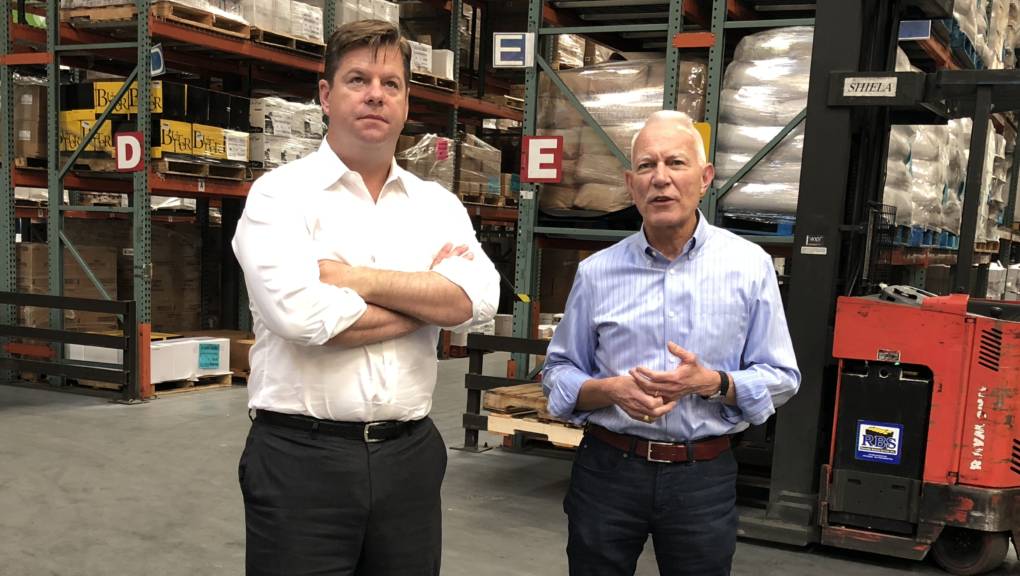
"caption": "Mayor Mark Farrell (left) looks around the San Francisco-Marin Food Bank with Executive Director Paul Ash.",
"description": "Mayor Mark Farrell looks around the San Francisco-Marin Food Bank with executive director Paul Ash.",
"title": "Mark Farrell at SF Food Bank",
"credit": "Chloe Veltman/KQED",
"status": "inherit",
"isLoading": false,
"fetchFailed": false
},
"futureofyou_441465": {
"type": "attachments",
"id": "futureofyou_441465",
"meta": {
"index": "attachments_1716263798",
"site": "futureofyou",
"id": "441465",
"found": true
},
"parent": 441395,
"imgSizes": {
"small": {
"file": "https://ww2.kqed.org/app/uploads/sites/13/2018/05/RS30896_PROPE_060-520x347.jpg",
"width": 520,
"mimeType": "image/jpeg",
"height": 347
},
"twentyfourteen-full-width": {
"file": "https://ww2.kqed.org/app/uploads/sites/13/2018/05/RS30896_PROPE_060-1038x576.jpg",
"width": 1038,
"mimeType": "image/jpeg",
"height": 576
},
"thumbnail": {
"file": "https://ww2.kqed.org/app/uploads/sites/13/2018/05/RS30896_PROPE_060-160x107.jpg",
"width": 160,
"mimeType": "image/jpeg",
"height": 107
},
"fd-sm": {
"file": "https://ww2.kqed.org/app/uploads/sites/13/2018/05/RS30896_PROPE_060-960x640.jpg",
"width": 960,
"mimeType": "image/jpeg",
"height": 640
},
"post-thumbnail": {
"file": "https://ww2.kqed.org/app/uploads/sites/13/2018/05/RS30896_PROPE_060-672x372.jpg",
"width": 672,
"mimeType": "image/jpeg",
"height": 372
},
"xsmall": {
"file": "https://ww2.kqed.org/app/uploads/sites/13/2018/05/RS30896_PROPE_060-375x250.jpg",
"width": 375,
"mimeType": "image/jpeg",
"height": 250
},
"kqedFullSize": {
"file": "https://ww2.kqed.org/app/uploads/sites/13/2018/05/RS30896_PROPE_060.jpg",
"width": 3358,
"height": 2239
},
"large": {
"file": "https://ww2.kqed.org/app/uploads/sites/13/2018/05/RS30896_PROPE_060-1020x680.jpg",
"width": 1020,
"mimeType": "image/jpeg",
"height": 680
},
"xlarge": {
"file": "https://ww2.kqed.org/app/uploads/sites/13/2018/05/RS30896_PROPE_060-1180x787.jpg",
"width": 1180,
"mimeType": "image/jpeg",
"height": 787
},
"complete_open_graph": {
"file": "https://ww2.kqed.org/app/uploads/sites/13/2018/05/RS30896_PROPE_060-1200x800.jpg",
"width": 1200,
"mimeType": "image/jpeg",
"height": 800
},
"guest-author-50": {
"file": "https://ww2.kqed.org/app/uploads/sites/13/2018/05/RS30896_PROPE_060-50x50.jpg",
"width": 50,
"mimeType": "image/jpeg",
"height": 50
},
"guest-author-96": {
"file": "https://ww2.kqed.org/app/uploads/sites/13/2018/05/RS30896_PROPE_060-96x96.jpg",
"width": 96,
"mimeType": "image/jpeg",
"height": 96
},
"medium": {
"file": "https://ww2.kqed.org/app/uploads/sites/13/2018/05/RS30896_PROPE_060-800x533.jpg",
"width": 800,
"mimeType": "image/jpeg",
"height": 533
},
"guest-author-64": {
"file": "https://ww2.kqed.org/app/uploads/sites/13/2018/05/RS30896_PROPE_060-64x64.jpg",
"width": 64,
"mimeType": "image/jpeg",
"height": 64
},
"guest-author-32": {
"file": "https://ww2.kqed.org/app/uploads/sites/13/2018/05/RS30896_PROPE_060-32x32.jpg",
"width": 32,
"mimeType": "image/jpeg",
"height": 32
},
"fd-lrg": {
"file": "https://ww2.kqed.org/app/uploads/sites/13/2018/05/RS30896_PROPE_060-1920x1280.jpg",
"width": 1920,
"mimeType": "image/jpeg",
"height": 1280
},
"fd-med": {
"file": "https://ww2.kqed.org/app/uploads/sites/13/2018/05/RS30896_PROPE_060-1180x787.jpg",
"width": 1180,
"mimeType": "image/jpeg",
"height": 787
},
"full-width": {
"file": "https://ww2.kqed.org/app/uploads/sites/13/2018/05/RS30896_PROPE_060-1920x1280.jpg",
"width": 1920,
"mimeType": "image/jpeg",
"height": 1280
},
"detail": {
"file": "https://ww2.kqed.org/app/uploads/sites/13/2018/05/RS30896_PROPE_060-150x150.jpg",
"width": 150,
"mimeType": "image/jpeg",
"height": 150
},
"medium_large": {
"file": "https://ww2.kqed.org/app/uploads/sites/13/2018/05/RS30896_PROPE_060-768x512.jpg",
"width": 768,
"mimeType": "image/jpeg",
"height": 512
},
"guest-author-128": {
"file": "https://ww2.kqed.org/app/uploads/sites/13/2018/05/RS30896_PROPE_060-128x128.jpg",
"width": 128,
"mimeType": "image/jpeg",
"height": 128
},
"xxsmall": {
"file": "https://ww2.kqed.org/app/uploads/sites/13/2018/05/RS30896_PROPE_060-240x160.jpg",
"width": 240,
"mimeType": "image/jpeg",
"height": 160
}
},
"publishDate": 1525979615,
"modified": 1526596680,
"caption": "21-year-old Anthony Seupaul exhales at Vapor Den in San Francisco. He says vaping allowed him to wean off of smoking cigarettes.",
"description": null,
"title": "RS30896_PROPE_060",
"credit": "Lauren Hanussak/KQED",
"status": "inherit",
"isLoading": false,
"fetchFailed": false
},
"news_11672157": {
"type": "attachments",
"id": "news_11672157",
"meta": {
"index": "attachments_1716263798",
"site": "news",
"id": "11672157",
"found": true
},
"parent": 11672153,
"imgSizes": {
"small": {
"file": "https://ww2.kqed.org/app/uploads/sites/10/2018/06/nr-520x291.jpg",
"width": 520,
"mimeType": "image/jpeg",
"height": 291
},
"twentyfourteen-full-width": {
"file": "https://ww2.kqed.org/app/uploads/sites/10/2018/06/nr-1038x576.jpg",
"width": 1038,
"mimeType": "image/jpeg",
"height": 576
},
"thumbnail": {
"file": "https://ww2.kqed.org/app/uploads/sites/10/2018/06/nr-160x90.jpg",
"width": 160,
"mimeType": "image/jpeg",
"height": 90
},
"fd-sm": {
"file": "https://ww2.kqed.org/app/uploads/sites/10/2018/06/nr-960x537.jpg",
"width": 960,
"mimeType": "image/jpeg",
"height": 537
},
"post-thumbnail": {
"file": "https://ww2.kqed.org/app/uploads/sites/10/2018/06/nr-672x372.jpg",
"width": 672,
"mimeType": "image/jpeg",
"height": 372
},
"xsmall": {
"file": "https://ww2.kqed.org/app/uploads/sites/10/2018/06/nr-375x210.jpg",
"width": 375,
"mimeType": "image/jpeg",
"height": 210
},
"kqedFullSize": {
"file": "https://ww2.kqed.org/app/uploads/sites/10/2018/06/nr.jpg",
"width": 1665,
"height": 932
},
"large": {
"file": "https://ww2.kqed.org/app/uploads/sites/10/2018/06/nr-1020x571.jpg",
"width": 1020,
"mimeType": "image/jpeg",
"height": 571
},
"xlarge": {
"file": "https://ww2.kqed.org/app/uploads/sites/10/2018/06/nr-1180x661.jpg",
"width": 1180,
"mimeType": "image/jpeg",
"height": 661
},
"complete_open_graph": {
"file": "https://ww2.kqed.org/app/uploads/sites/10/2018/06/nr-1200x672.jpg",
"width": 1200,
"mimeType": "image/jpeg",
"height": 672
},
"guest-author-50": {
"file": "https://ww2.kqed.org/app/uploads/sites/10/2018/06/nr-50x50.jpg",
"width": 50,
"mimeType": "image/jpeg",
"height": 50
},
"guest-author-96": {
"file": "https://ww2.kqed.org/app/uploads/sites/10/2018/06/nr-96x96.jpg",
"width": 96,
"mimeType": "image/jpeg",
"height": 96
},
"medium": {
"file": "https://ww2.kqed.org/app/uploads/sites/10/2018/06/nr-800x448.jpg",
"width": 800,
"mimeType": "image/jpeg",
"height": 448
},
"guest-author-64": {
"file": "https://ww2.kqed.org/app/uploads/sites/10/2018/06/nr-64x64.jpg",
"width": 64,
"mimeType": "image/jpeg",
"height": 64
},
"guest-author-32": {
"file": "https://ww2.kqed.org/app/uploads/sites/10/2018/06/nr-32x32.jpg",
"width": 32,
"mimeType": "image/jpeg",
"height": 32
},
"fd-med": {
"file": "https://ww2.kqed.org/app/uploads/sites/10/2018/06/nr-1180x661.jpg",
"width": 1180,
"mimeType": "image/jpeg",
"height": 661
},
"detail": {
"file": "https://ww2.kqed.org/app/uploads/sites/10/2018/06/nr-150x150.jpg",
"width": 150,
"mimeType": "image/jpeg",
"height": 150
},
"guest-author-128": {
"file": "https://ww2.kqed.org/app/uploads/sites/10/2018/06/nr-128x128.jpg",
"width": 128,
"mimeType": "image/jpeg",
"height": 128
},
"xxsmall": {
"file": "https://ww2.kqed.org/app/uploads/sites/10/2018/06/nr-240x134.jpg",
"width": 240,
"mimeType": "image/jpeg",
"height": 134
}
},
"publishDate": 1527903101,
"modified": 1527903101,
"caption": null,
"description": null,
"title": "nr",
"credit": null,
"status": "inherit",
"isLoading": false,
"fetchFailed": false
},
"news_11671987": {
"type": "attachments",
"id": "news_11671987",
"meta": {
"index": "attachments_1716263798",
"site": "news",
"id": "11671987",
"found": true
},
"parent": 11671945,
"imgSizes": {
"small": {
"file": "https://ww2.kqed.org/app/uploads/sites/10/2018/06/Stroe-Photo-3-520x390.jpg",
"width": 520,
"mimeType": "image/jpeg",
"height": 390
},
"twentyfourteen-full-width": {
"file": "https://ww2.kqed.org/app/uploads/sites/10/2018/06/Stroe-Photo-3-1038x576.jpg",
"width": 1038,
"mimeType": "image/jpeg",
"height": 576
},
"thumbnail": {
"file": "https://ww2.kqed.org/app/uploads/sites/10/2018/06/Stroe-Photo-3-160x120.jpg",
"width": 160,
"mimeType": "image/jpeg",
"height": 120
},
"fd-sm": {
"file": "https://ww2.kqed.org/app/uploads/sites/10/2018/06/Stroe-Photo-3-960x720.jpg",
"width": 960,
"mimeType": "image/jpeg",
"height": 720
},
"post-thumbnail": {
"file": "https://ww2.kqed.org/app/uploads/sites/10/2018/06/Stroe-Photo-3-672x372.jpg",
"width": 672,
"mimeType": "image/jpeg",
"height": 372
},
"xsmall": {
"file": "https://ww2.kqed.org/app/uploads/sites/10/2018/06/Stroe-Photo-3-375x281.jpg",
"width": 375,
"mimeType": "image/jpeg",
"height": 281
},
"kqedFullSize": {
"file": "https://ww2.kqed.org/app/uploads/sites/10/2018/06/Stroe-Photo-3-e1527894615924.jpg",
"width": 1920,
"height": 1440
},
"large": {
"file": "https://ww2.kqed.org/app/uploads/sites/10/2018/06/Stroe-Photo-3-1020x765.jpg",
"width": 1020,
"mimeType": "image/jpeg",
"height": 765
},
"xlarge": {
"file": "https://ww2.kqed.org/app/uploads/sites/10/2018/06/Stroe-Photo-3-1180x885.jpg",
"width": 1180,
"mimeType": "image/jpeg",
"height": 885
},
"complete_open_graph": {
"file": "https://ww2.kqed.org/app/uploads/sites/10/2018/06/Stroe-Photo-3-1200x900.jpg",
"width": 1200,
"mimeType": "image/jpeg",
"height": 900
},
"guest-author-50": {
"file": "https://ww2.kqed.org/app/uploads/sites/10/2018/06/Stroe-Photo-3-50x50.jpg",
"width": 50,
"mimeType": "image/jpeg",
"height": 50
},
"guest-author-96": {
"file": "https://ww2.kqed.org/app/uploads/sites/10/2018/06/Stroe-Photo-3-96x96.jpg",
"width": 96,
"mimeType": "image/jpeg",
"height": 96
},
"medium": {
"file": "https://ww2.kqed.org/app/uploads/sites/10/2018/06/Stroe-Photo-3-800x600.jpg",
"width": 800,
"mimeType": "image/jpeg",
"height": 600
},
"guest-author-64": {
"file": "https://ww2.kqed.org/app/uploads/sites/10/2018/06/Stroe-Photo-3-64x64.jpg",
"width": 64,
"mimeType": "image/jpeg",
"height": 64
},
"guest-author-32": {
"file": "https://ww2.kqed.org/app/uploads/sites/10/2018/06/Stroe-Photo-3-32x32.jpg",
"width": 32,
"mimeType": "image/jpeg",
"height": 32
},
"fd-lrg": {
"file": "https://ww2.kqed.org/app/uploads/sites/10/2018/06/Stroe-Photo-3-1920x1440.jpg",
"width": 1920,
"mimeType": "image/jpeg",
"height": 1440
},
"fd-med": {
"file": "https://ww2.kqed.org/app/uploads/sites/10/2018/06/Stroe-Photo-3-1180x885.jpg",
"width": 1180,
"mimeType": "image/jpeg",
"height": 885
},
"full-width": {
"file": "https://ww2.kqed.org/app/uploads/sites/10/2018/06/Stroe-Photo-3-1920x1440.jpg",
"width": 1920,
"mimeType": "image/jpeg",
"height": 1440
},
"detail": {
"file": "https://ww2.kqed.org/app/uploads/sites/10/2018/06/Stroe-Photo-3-150x150.jpg",
"width": 150,
"mimeType": "image/jpeg",
"height": 150
},
"guest-author-128": {
"file": "https://ww2.kqed.org/app/uploads/sites/10/2018/06/Stroe-Photo-3-128x128.jpg",
"width": 128,
"mimeType": "image/jpeg",
"height": 128
},
"xxsmall": {
"file": "https://ww2.kqed.org/app/uploads/sites/10/2018/06/Stroe-Photo-3-240x180.jpg",
"width": 240,
"mimeType": "image/jpeg",
"height": 180
}
},
"publishDate": 1527884304,
"modified": 1527894632,
"caption": "Sarah Stroe with her paternal grandparents, Mara and Angelo Stroe, in San Francisco's Golden Gate Park in the early 1990s. ",
"description": "Sarah Stroe with her paternal grandparents, Mara and Angelo Stroe, in San Francisco's Golden Gate Park in the early 1990s. ",
"title": "Stroe Photo 3",
"credit": "Courtesy Stroe Family",
"status": "inherit",
"isLoading": false,
"fetchFailed": false
},
"news_11671379": {
"type": "attachments",
"id": "news_11671379",
"meta": {
"index": "attachments_1716263798",
"site": "news",
"id": "11671379",
"found": true
},
"parent": 11671299,
"imgSizes": {
"small": {
"file": "https://ww2.kqed.org/app/uploads/sites/10/2018/05/RS31201_Rachel-Kushner-credit-Chloe-Aftel-qut-520x391.jpg",
"width": 520,
"mimeType": "image/jpeg",
"height": 391
},
"twentyfourteen-full-width": {
"file": "https://ww2.kqed.org/app/uploads/sites/10/2018/05/RS31201_Rachel-Kushner-credit-Chloe-Aftel-qut-1038x576.jpg",
"width": 1038,
"mimeType": "image/jpeg",
"height": 576
},
"thumbnail": {
"file": "https://ww2.kqed.org/app/uploads/sites/10/2018/05/RS31201_Rachel-Kushner-credit-Chloe-Aftel-qut-160x120.jpg",
"width": 160,
"mimeType": "image/jpeg",
"height": 120
},
"fd-sm": {
"file": "https://ww2.kqed.org/app/uploads/sites/10/2018/05/RS31201_Rachel-Kushner-credit-Chloe-Aftel-qut-960x722.jpg",
"width": 960,
"mimeType": "image/jpeg",
"height": 722
},
"post-thumbnail": {
"file": "https://ww2.kqed.org/app/uploads/sites/10/2018/05/RS31201_Rachel-Kushner-credit-Chloe-Aftel-qut-672x372.jpg",
"width": 672,
"mimeType": "image/jpeg",
"height": 372
},
"xsmall": {
"file": "https://ww2.kqed.org/app/uploads/sites/10/2018/05/RS31201_Rachel-Kushner-credit-Chloe-Aftel-qut-375x282.jpg",
"width": 375,
"mimeType": "image/jpeg",
"height": 282
},
"kqedFullSize": {
"file": "https://ww2.kqed.org/app/uploads/sites/10/2018/05/RS31201_Rachel-Kushner-credit-Chloe-Aftel-qut.jpg",
"width": 1920,
"height": 1444
},
"large": {
"file": "https://ww2.kqed.org/app/uploads/sites/10/2018/05/RS31201_Rachel-Kushner-credit-Chloe-Aftel-qut-1020x767.jpg",
"width": 1020,
"mimeType": "image/jpeg",
"height": 767
},
"xlarge": {
"file": "https://ww2.kqed.org/app/uploads/sites/10/2018/05/RS31201_Rachel-Kushner-credit-Chloe-Aftel-qut-1180x887.jpg",
"width": 1180,
"mimeType": "image/jpeg",
"height": 887
},
"complete_open_graph": {
"file": "https://ww2.kqed.org/app/uploads/sites/10/2018/05/RS31201_Rachel-Kushner-credit-Chloe-Aftel-qut-1200x903.jpg",
"width": 1200,
"mimeType": "image/jpeg",
"height": 903
},
"guest-author-50": {
"file": "https://ww2.kqed.org/app/uploads/sites/10/2018/05/RS31201_Rachel-Kushner-credit-Chloe-Aftel-qut-50x50.jpg",
"width": 50,
"mimeType": "image/jpeg",
"height": 50
},
"guest-author-96": {
"file": "https://ww2.kqed.org/app/uploads/sites/10/2018/05/RS31201_Rachel-Kushner-credit-Chloe-Aftel-qut-96x96.jpg",
"width": 96,
"mimeType": "image/jpeg",
"height": 96
},
"medium": {
"file": "https://ww2.kqed.org/app/uploads/sites/10/2018/05/RS31201_Rachel-Kushner-credit-Chloe-Aftel-qut-800x602.jpg",
"width": 800,
"mimeType": "image/jpeg",
"height": 602
},
"guest-author-64": {
"file": "https://ww2.kqed.org/app/uploads/sites/10/2018/05/RS31201_Rachel-Kushner-credit-Chloe-Aftel-qut-64x64.jpg",
"width": 64,
"mimeType": "image/jpeg",
"height": 64
},
"guest-author-32": {
"file": "https://ww2.kqed.org/app/uploads/sites/10/2018/05/RS31201_Rachel-Kushner-credit-Chloe-Aftel-qut-32x32.jpg",
"width": 32,
"mimeType": "image/jpeg",
"height": 32
},
"fd-lrg": {
"file": "https://ww2.kqed.org/app/uploads/sites/10/2018/05/RS31201_Rachel-Kushner-credit-Chloe-Aftel-qut-1920x1444.jpg",
"width": 1920,
"mimeType": "image/jpeg",
"height": 1444
},
"fd-med": {
"file": "https://ww2.kqed.org/app/uploads/sites/10/2018/05/RS31201_Rachel-Kushner-credit-Chloe-Aftel-qut-1180x887.jpg",
"width": 1180,
"mimeType": "image/jpeg",
"height": 887
},
"full-width": {
"file": "https://ww2.kqed.org/app/uploads/sites/10/2018/05/RS31201_Rachel-Kushner-credit-Chloe-Aftel-qut-1920x1444.jpg",
"width": 1920,
"mimeType": "image/jpeg",
"height": 1444
},
"detail": {
"file": "https://ww2.kqed.org/app/uploads/sites/10/2018/05/RS31201_Rachel-Kushner-credit-Chloe-Aftel-qut-150x150.jpg",
"width": 150,
"mimeType": "image/jpeg",
"height": 150
},
"guest-author-128": {
"file": "https://ww2.kqed.org/app/uploads/sites/10/2018/05/RS31201_Rachel-Kushner-credit-Chloe-Aftel-qut-128x128.jpg",
"width": 128,
"mimeType": "image/jpeg",
"height": 128
},
"xxsmall": {
"file": "https://ww2.kqed.org/app/uploads/sites/10/2018/05/RS31201_Rachel-Kushner-credit-Chloe-Aftel-qut-240x181.jpg",
"width": 240,
"mimeType": "image/jpeg",
"height": 181
}
},
"publishDate": 1527635049,
"modified": 1527880863,
"caption": "Rachel Kushner grew up in San Francisco and now lives in Los Angeles. Her new novel takes place in California.",
"description": "Rachel Kushner grew up in San Francisco and now lives in Los Angeles. Her new novel takes place in California.",
"title": "RS31201_Rachel Kushner credit Chloe Aftel-qut",
"credit": "Chloe Aftel",
"status": "inherit",
"isLoading": false,
"fetchFailed": false
},
"news_11671928": {
"type": "attachments",
"id": "news_11671928",
"meta": {
"index": "attachments_1716263798",
"site": "news",
"id": "11671928",
"found": true
},
"parent": 11671927,
"imgSizes": {
"small": {
"file": "https://ww2.kqed.org/app/uploads/sites/10/2018/06/p1040394_wide-7a39467e233d0fa8a0a4a6ea7965f95e3038f1da-520x293.jpg",
"width": 520,
"mimeType": "image/jpeg",
"height": 293
},
"twentyfourteen-full-width": {
"file": "https://ww2.kqed.org/app/uploads/sites/10/2018/06/p1040394_wide-7a39467e233d0fa8a0a4a6ea7965f95e3038f1da-1038x576.jpg",
"width": 1038,
"mimeType": "image/jpeg",
"height": 576
},
"thumbnail": {
"file": "https://ww2.kqed.org/app/uploads/sites/10/2018/06/p1040394_wide-7a39467e233d0fa8a0a4a6ea7965f95e3038f1da-160x90.jpg",
"width": 160,
"mimeType": "image/jpeg",
"height": 90
},
"fd-sm": {
"file": "https://ww2.kqed.org/app/uploads/sites/10/2018/06/p1040394_wide-7a39467e233d0fa8a0a4a6ea7965f95e3038f1da-960x540.jpg",
"width": 960,
"mimeType": "image/jpeg",
"height": 540
},
"post-thumbnail": {
"file": "https://ww2.kqed.org/app/uploads/sites/10/2018/06/p1040394_wide-7a39467e233d0fa8a0a4a6ea7965f95e3038f1da-672x372.jpg",
"width": 672,
"mimeType": "image/jpeg",
"height": 372
},
"xsmall": {
"file": "https://ww2.kqed.org/app/uploads/sites/10/2018/06/p1040394_wide-7a39467e233d0fa8a0a4a6ea7965f95e3038f1da-375x211.jpg",
"width": 375,
"mimeType": "image/jpeg",
"height": 211
},
"kqedFullSize": {
"file": "https://ww2.kqed.org/app/uploads/sites/10/2018/06/p1040394_wide-7a39467e233d0fa8a0a4a6ea7965f95e3038f1da-e1527877035730.jpg",
"width": 1920,
"height": 1080
},
"large": {
"file": "https://ww2.kqed.org/app/uploads/sites/10/2018/06/p1040394_wide-7a39467e233d0fa8a0a4a6ea7965f95e3038f1da-1020x574.jpg",
"width": 1020,
"mimeType": "image/jpeg",
"height": 574
},
"xlarge": {
"file": "https://ww2.kqed.org/app/uploads/sites/10/2018/06/p1040394_wide-7a39467e233d0fa8a0a4a6ea7965f95e3038f1da-1180x664.jpg",
"width": 1180,
"mimeType": "image/jpeg",
"height": 664
},
"complete_open_graph": {
"file": "https://ww2.kqed.org/app/uploads/sites/10/2018/06/p1040394_wide-7a39467e233d0fa8a0a4a6ea7965f95e3038f1da-1200x675.jpg",
"width": 1200,
"mimeType": "image/jpeg",
"height": 675
},
"guest-author-50": {
"file": "https://ww2.kqed.org/app/uploads/sites/10/2018/06/p1040394_wide-7a39467e233d0fa8a0a4a6ea7965f95e3038f1da-50x50.jpg",
"width": 50,
"mimeType": "image/jpeg",
"height": 50
},
"guest-author-96": {
"file": "https://ww2.kqed.org/app/uploads/sites/10/2018/06/p1040394_wide-7a39467e233d0fa8a0a4a6ea7965f95e3038f1da-96x96.jpg",
"width": 96,
"mimeType": "image/jpeg",
"height": 96
},
"medium": {
"file": "https://ww2.kqed.org/app/uploads/sites/10/2018/06/p1040394_wide-7a39467e233d0fa8a0a4a6ea7965f95e3038f1da-800x450.jpg",
"width": 800,
"mimeType": "image/jpeg",
"height": 450
},
"guest-author-64": {
"file": "https://ww2.kqed.org/app/uploads/sites/10/2018/06/p1040394_wide-7a39467e233d0fa8a0a4a6ea7965f95e3038f1da-64x64.jpg",
"width": 64,
"mimeType": "image/jpeg",
"height": 64
},
"guest-author-32": {
"file": "https://ww2.kqed.org/app/uploads/sites/10/2018/06/p1040394_wide-7a39467e233d0fa8a0a4a6ea7965f95e3038f1da-32x32.jpg",
"width": 32,
"mimeType": "image/jpeg",
"height": 32
},
"fd-lrg": {
"file": "https://ww2.kqed.org/app/uploads/sites/10/2018/06/p1040394_wide-7a39467e233d0fa8a0a4a6ea7965f95e3038f1da-1920x1080.jpg",
"width": 1920,
"mimeType": "image/jpeg",
"height": 1080
},
"fd-med": {
"file": "https://ww2.kqed.org/app/uploads/sites/10/2018/06/p1040394_wide-7a39467e233d0fa8a0a4a6ea7965f95e3038f1da-1180x664.jpg",
"width": 1180,
"mimeType": "image/jpeg",
"height": 664
},
"full-width": {
"file": "https://ww2.kqed.org/app/uploads/sites/10/2018/06/p1040394_wide-7a39467e233d0fa8a0a4a6ea7965f95e3038f1da-1920x1080.jpg",
"width": 1920,
"mimeType": "image/jpeg",
"height": 1080
},
"detail": {
"file": "https://ww2.kqed.org/app/uploads/sites/10/2018/06/p1040394_wide-7a39467e233d0fa8a0a4a6ea7965f95e3038f1da-150x150.jpg",
"width": 150,
"mimeType": "image/jpeg",
"height": 150
},
"guest-author-128": {
"file": "https://ww2.kqed.org/app/uploads/sites/10/2018/06/p1040394_wide-7a39467e233d0fa8a0a4a6ea7965f95e3038f1da-128x128.jpg",
"width": 128,
"mimeType": "image/jpeg",
"height": 128
},
"xxsmall": {
"file": "https://ww2.kqed.org/app/uploads/sites/10/2018/06/p1040394_wide-7a39467e233d0fa8a0a4a6ea7965f95e3038f1da-240x135.jpg",
"width": 240,
"mimeType": "image/jpeg",
"height": 135
}
},
"publishDate": 1527876354,
"modified": 1527877072,
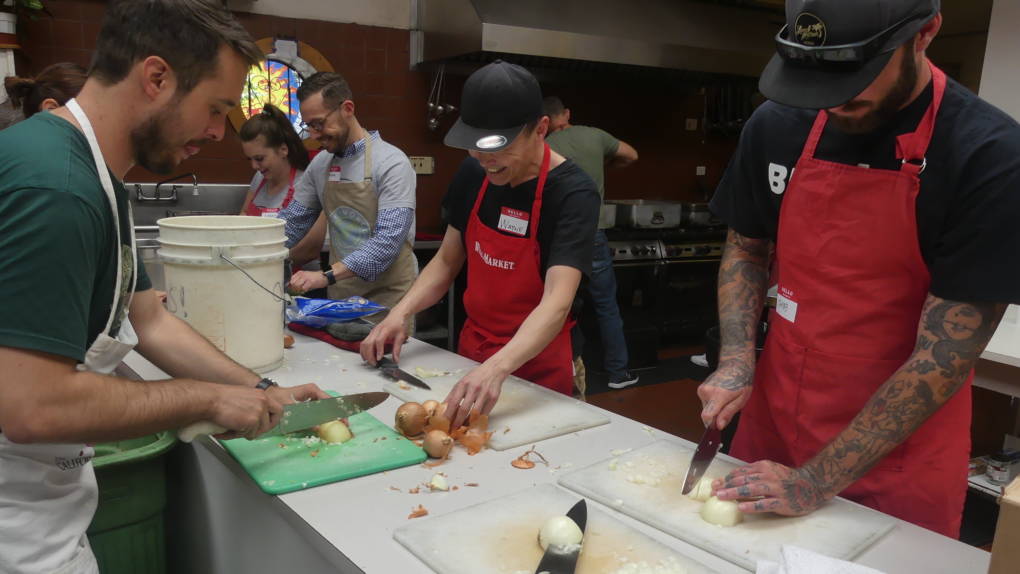
"caption": "Growing up, Liam Foley (left) was in charge of dishes and never cooked. He was still able to help chop the onions, though, at a burrito-making project for the poor in San Francisco.",
"description": "Growing up, Liam Foley (left) was in charge of dishes and never cooked. He was still able to help chop the onions, though, at a burrito-making project for the poor in San Francisco.",
"title": "Growing up, Liam Foley (left) was in charge of dishes and never cooked. He was still able to help chop the onions, though, at a burrito-making project for the poor in San Francisco.",
"credit": "Alan Greenblatt/NPR",
"status": "inherit",
"isLoading": false,
"fetchFailed": false
},
"news_11671804": {
"type": "attachments",
"id": "news_11671804",
"meta": {
"index": "attachments_1716263798",
"site": "news",
"id": "11671804",
"found": true
},
"parent": 11671742,
"imgSizes": {
"small": {
"file": "https://ww2.kqed.org/app/uploads/sites/10/2018/05/RS29410_GettyImages-543499308-qut-520x347.jpg",
"width": 520,
"mimeType": "image/jpeg",
"height": 347
},
"twentyfourteen-full-width": {
"file": "https://ww2.kqed.org/app/uploads/sites/10/2018/05/RS29410_GettyImages-543499308-qut-1038x576.jpg",
"width": 1038,
"mimeType": "image/jpeg",
"height": 576
},
"thumbnail": {
"file": "https://ww2.kqed.org/app/uploads/sites/10/2018/05/RS29410_GettyImages-543499308-qut-160x107.jpg",
"width": 160,
"mimeType": "image/jpeg",
"height": 107
},
"fd-sm": {
"file": "https://ww2.kqed.org/app/uploads/sites/10/2018/05/RS29410_GettyImages-543499308-qut-960x640.jpg",
"width": 960,
"mimeType": "image/jpeg",
"height": 640
},
"post-thumbnail": {
"file": "https://ww2.kqed.org/app/uploads/sites/10/2018/05/RS29410_GettyImages-543499308-qut-672x372.jpg",
"width": 672,
"mimeType": "image/jpeg",
"height": 372
},
"xsmall": {
"file": "https://ww2.kqed.org/app/uploads/sites/10/2018/05/RS29410_GettyImages-543499308-qut-375x250.jpg",
"width": 375,
"mimeType": "image/jpeg",
"height": 250
},
"kqedFullSize": {
"file": "https://ww2.kqed.org/app/uploads/sites/10/2018/05/RS29410_GettyImages-543499308-qut.jpg",
"width": 1920,
"height": 1280
},
"large": {
"file": "https://ww2.kqed.org/app/uploads/sites/10/2018/05/RS29410_GettyImages-543499308-qut-1020x680.jpg",
"width": 1020,
"mimeType": "image/jpeg",
"height": 680
},
"xlarge": {
"file": "https://ww2.kqed.org/app/uploads/sites/10/2018/05/RS29410_GettyImages-543499308-qut-1180x787.jpg",
"width": 1180,
"mimeType": "image/jpeg",
"height": 787
},
"complete_open_graph": {
"file": "https://ww2.kqed.org/app/uploads/sites/10/2018/05/RS29410_GettyImages-543499308-qut-1200x800.jpg",
"width": 1200,
"mimeType": "image/jpeg",
"height": 800
},
"guest-author-50": {
"file": "https://ww2.kqed.org/app/uploads/sites/10/2018/05/RS29410_GettyImages-543499308-qut-50x50.jpg",
"width": 50,
"mimeType": "image/jpeg",
"height": 50
},
"guest-author-96": {
"file": "https://ww2.kqed.org/app/uploads/sites/10/2018/05/RS29410_GettyImages-543499308-qut-96x96.jpg",
"width": 96,
"mimeType": "image/jpeg",
"height": 96
},
"medium": {
"file": "https://ww2.kqed.org/app/uploads/sites/10/2018/05/RS29410_GettyImages-543499308-qut-800x533.jpg",
"width": 800,
"mimeType": "image/jpeg",
"height": 533
},
"guest-author-64": {
"file": "https://ww2.kqed.org/app/uploads/sites/10/2018/05/RS29410_GettyImages-543499308-qut-64x64.jpg",
"width": 64,
"mimeType": "image/jpeg",
"height": 64
},
"guest-author-32": {
"file": "https://ww2.kqed.org/app/uploads/sites/10/2018/05/RS29410_GettyImages-543499308-qut-32x32.jpg",
"width": 32,
"mimeType": "image/jpeg",
"height": 32
},
"fd-lrg": {
"file": "https://ww2.kqed.org/app/uploads/sites/10/2018/05/RS29410_GettyImages-543499308-qut-1920x1280.jpg",
"width": 1920,
"mimeType": "image/jpeg",
"height": 1280
},
"fd-med": {
"file": "https://ww2.kqed.org/app/uploads/sites/10/2018/05/RS29410_GettyImages-543499308-qut-1180x787.jpg",
"width": 1180,
"mimeType": "image/jpeg",
"height": 787
},
"full-width": {
"file": "https://ww2.kqed.org/app/uploads/sites/10/2018/05/RS29410_GettyImages-543499308-qut-1920x1280.jpg",
"width": 1920,
"mimeType": "image/jpeg",
"height": 1280
},
"detail": {
"file": "https://ww2.kqed.org/app/uploads/sites/10/2018/05/RS29410_GettyImages-543499308-qut-150x150.jpg",
"width": 150,
"mimeType": "image/jpeg",
"height": 150
},
"guest-author-128": {
"file": "https://ww2.kqed.org/app/uploads/sites/10/2018/05/RS29410_GettyImages-543499308-qut-128x128.jpg",
"width": 128,
"mimeType": "image/jpeg",
"height": 128
},
"xxsmall": {
"file": "https://ww2.kqed.org/app/uploads/sites/10/2018/05/RS29410_GettyImages-543499308-qut-240x160.jpg",
"width": 240,
"mimeType": "image/jpeg",
"height": 160
}
},
"publishDate": 1527808578,
"modified": 1527808638,
"caption": "A homeless man sleeps in front of his tent along Van Ness Avenue in downtown San Francisco on June, 27, 2016.",
"description": null,
"title": "US-HOMELESS-SAN-FRANCISCO",
"credit": "Josh Edelson/AFP/Getty Images",
"status": "inherit",
"isLoading": false,
"fetchFailed": false
},
"news_11671745": {
"type": "attachments",
"id": "news_11671745",
"meta": {
"index": "attachments_1716263798",
"site": "news",
"id": "11671745",
"found": true
},
"parent": 11671736,
"imgSizes": {
"small": {
"file": "https://ww2.kqed.org/app/uploads/sites/10/2018/05/TenderloinKidsMain-520x351.jpg",
"width": 520,
"mimeType": "image/jpeg",
"height": 351
},
"twentyfourteen-full-width": {
"file": "https://ww2.kqed.org/app/uploads/sites/10/2018/05/TenderloinKidsMain-1038x576.jpg",
"width": 1038,
"mimeType": "image/jpeg",
"height": 576
},
"thumbnail": {
"file": "https://ww2.kqed.org/app/uploads/sites/10/2018/05/TenderloinKidsMain-160x108.jpg",
"width": 160,
"mimeType": "image/jpeg",
"height": 108
},
"fd-sm": {
"file": "https://ww2.kqed.org/app/uploads/sites/10/2018/05/TenderloinKidsMain-960x648.jpg",
"width": 960,
"mimeType": "image/jpeg",
"height": 648
},
"post-thumbnail": {
"file": "https://ww2.kqed.org/app/uploads/sites/10/2018/05/TenderloinKidsMain-672x372.jpg",
"width": 672,
"mimeType": "image/jpeg",
"height": 372
},
"xsmall": {
"file": "https://ww2.kqed.org/app/uploads/sites/10/2018/05/TenderloinKidsMain-375x253.jpg",
"width": 375,
"mimeType": "image/jpeg",
"height": 253
},
"kqedFullSize": {
"file": "https://ww2.kqed.org/app/uploads/sites/10/2018/05/TenderloinKidsMain.jpg",
"width": 1920,
"height": 1296
},
"large": {
"file": "https://ww2.kqed.org/app/uploads/sites/10/2018/05/TenderloinKidsMain-1020x689.jpg",
"width": 1020,
"mimeType": "image/jpeg",
"height": 689
},
"xlarge": {
"file": "https://ww2.kqed.org/app/uploads/sites/10/2018/05/TenderloinKidsMain-1180x797.jpg",
"width": 1180,
"mimeType": "image/jpeg",
"height": 797
},
"complete_open_graph": {
"file": "https://ww2.kqed.org/app/uploads/sites/10/2018/05/TenderloinKidsMain-1200x810.jpg",
"width": 1200,
"mimeType": "image/jpeg",
"height": 810
},
"guest-author-50": {
"file": "https://ww2.kqed.org/app/uploads/sites/10/2018/05/TenderloinKidsMain-50x50.jpg",
"width": 50,
"mimeType": "image/jpeg",
"height": 50
},
"guest-author-96": {
"file": "https://ww2.kqed.org/app/uploads/sites/10/2018/05/TenderloinKidsMain-96x96.jpg",
"width": 96,
"mimeType": "image/jpeg",
"height": 96
},
"medium": {
"file": "https://ww2.kqed.org/app/uploads/sites/10/2018/05/TenderloinKidsMain-800x540.jpg",
"width": 800,
"mimeType": "image/jpeg",
"height": 540
},
"guest-author-64": {
"file": "https://ww2.kqed.org/app/uploads/sites/10/2018/05/TenderloinKidsMain-64x64.jpg",
"width": 64,
"mimeType": "image/jpeg",
"height": 64
},
"guest-author-32": {
"file": "https://ww2.kqed.org/app/uploads/sites/10/2018/05/TenderloinKidsMain-32x32.jpg",
"width": 32,
"mimeType": "image/jpeg",
"height": 32
},
"fd-lrg": {
"file": "https://ww2.kqed.org/app/uploads/sites/10/2018/05/TenderloinKidsMain-1920x1296.jpg",
"width": 1920,
"mimeType": "image/jpeg",
"height": 1296
},
"fd-med": {
"file": "https://ww2.kqed.org/app/uploads/sites/10/2018/05/TenderloinKidsMain-1180x797.jpg",
"width": 1180,
"mimeType": "image/jpeg",
"height": 797
},
"full-width": {
"file": "https://ww2.kqed.org/app/uploads/sites/10/2018/05/TenderloinKidsMain-1920x1296.jpg",
"width": 1920,
"mimeType": "image/jpeg",
"height": 1296
},
"detail": {
"file": "https://ww2.kqed.org/app/uploads/sites/10/2018/05/TenderloinKidsMain-150x150.jpg",
"width": 150,
"mimeType": "image/jpeg",
"height": 150
},
"guest-author-128": {
"file": "https://ww2.kqed.org/app/uploads/sites/10/2018/05/TenderloinKidsMain-128x128.jpg",
"width": 128,
"mimeType": "image/jpeg",
"height": 128
},
"xxsmall": {
"file": "https://ww2.kqed.org/app/uploads/sites/10/2018/05/TenderloinKidsMain-240x162.jpg",
"width": 240,
"mimeType": "image/jpeg",
"height": 162
}
},
"publishDate": 1527800343,
"modified": 1554155976,
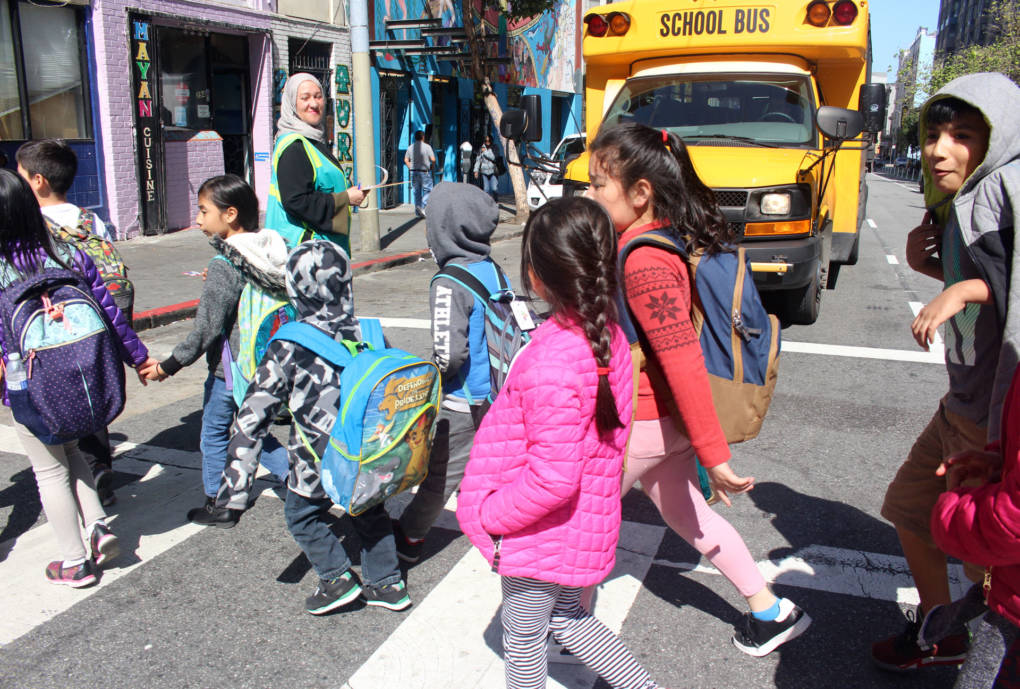
"caption": "Elementary school students cross Turk Street in San Francisco as Safe Passage volunteer Tatiana Alabsi observes them on April 24, 2018. ",
"description": "Elementary school students cross Turk Street in San Francisco as Safe Passage volunteer Tatiana Alabsi observes them on April 24, 2018. ",
"title": "TenderloinKidsMain",
"credit": "Farida Jhabvala Romero/KQED",
"status": "inherit",
"isLoading": false,
"fetchFailed": false
},
"news_11671055": {
"type": "attachments",
"id": "news_11671055",
"meta": {
"index": "attachments_1716263798",
"site": "news",
"id": "11671055",
"found": true
},
"parent": 11671039,
"imgSizes": {
"small": {
"file": "https://ww2.kqed.org/app/uploads/sites/10/2018/05/IMG_7854-520x390.jpg",
"width": 520,
"mimeType": "image/jpeg",
"height": 390
},
"twentyfourteen-full-width": {
"file": "https://ww2.kqed.org/app/uploads/sites/10/2018/05/IMG_7854-1038x576.jpg",
"width": 1038,
"mimeType": "image/jpeg",
"height": 576
},
"thumbnail": {
"file": "https://ww2.kqed.org/app/uploads/sites/10/2018/05/IMG_7854-160x120.jpg",
"width": 160,
"mimeType": "image/jpeg",
"height": 120
},
"fd-sm": {
"file": "https://ww2.kqed.org/app/uploads/sites/10/2018/05/IMG_7854-960x720.jpg",
"width": 960,
"mimeType": "image/jpeg",
"height": 720
},
"post-thumbnail": {
"file": "https://ww2.kqed.org/app/uploads/sites/10/2018/05/IMG_7854-672x372.jpg",
"width": 672,
"mimeType": "image/jpeg",
"height": 372
},
"xsmall": {
"file": "https://ww2.kqed.org/app/uploads/sites/10/2018/05/IMG_7854-375x281.jpg",
"width": 375,
"mimeType": "image/jpeg",
"height": 281
},
"kqedFullSize": {
"file": "https://ww2.kqed.org/app/uploads/sites/10/2018/05/IMG_7854-e1527450281651.jpg",
"width": 1920,
"height": 1440
},
"large": {
"file": "https://ww2.kqed.org/app/uploads/sites/10/2018/05/IMG_7854-1020x765.jpg",
"width": 1020,
"mimeType": "image/jpeg",
"height": 765
},
"xlarge": {
"file": "https://ww2.kqed.org/app/uploads/sites/10/2018/05/IMG_7854-1180x885.jpg",
"width": 1180,
"mimeType": "image/jpeg",
"height": 885
},
"complete_open_graph": {
"file": "https://ww2.kqed.org/app/uploads/sites/10/2018/05/IMG_7854-1200x900.jpg",
"width": 1200,
"mimeType": "image/jpeg",
"height": 900
},
"guest-author-50": {
"file": "https://ww2.kqed.org/app/uploads/sites/10/2018/05/IMG_7854-50x50.jpg",
"width": 50,
"mimeType": "image/jpeg",
"height": 50
},
"guest-author-96": {
"file": "https://ww2.kqed.org/app/uploads/sites/10/2018/05/IMG_7854-96x96.jpg",
"width": 96,
"mimeType": "image/jpeg",
"height": 96
},
"medium": {
"file": "https://ww2.kqed.org/app/uploads/sites/10/2018/05/IMG_7854-800x600.jpg",
"width": 800,
"mimeType": "image/jpeg",
"height": 600
},
"guest-author-64": {
"file": "https://ww2.kqed.org/app/uploads/sites/10/2018/05/IMG_7854-64x64.jpg",
"width": 64,
"mimeType": "image/jpeg",
"height": 64
},
"guest-author-32": {
"file": "https://ww2.kqed.org/app/uploads/sites/10/2018/05/IMG_7854-32x32.jpg",
"width": 32,
"mimeType": "image/jpeg",
"height": 32
},
"fd-lrg": {
"file": "https://ww2.kqed.org/app/uploads/sites/10/2018/05/IMG_7854-1920x1440.jpg",
"width": 1920,
"mimeType": "image/jpeg",
"height": 1440
},
"fd-med": {
"file": "https://ww2.kqed.org/app/uploads/sites/10/2018/05/IMG_7854-1180x885.jpg",
"width": 1180,
"mimeType": "image/jpeg",
"height": 885
},
"full-width": {
"file": "https://ww2.kqed.org/app/uploads/sites/10/2018/05/IMG_7854-1920x1440.jpg",
"width": 1920,
"mimeType": "image/jpeg",
"height": 1440
},
"detail": {
"file": "https://ww2.kqed.org/app/uploads/sites/10/2018/05/IMG_7854-150x150.jpg",
"width": 150,
"mimeType": "image/jpeg",
"height": 150
},
"guest-author-128": {
"file": "https://ww2.kqed.org/app/uploads/sites/10/2018/05/IMG_7854-128x128.jpg",
"width": 128,
"mimeType": "image/jpeg",
"height": 128
},
"xxsmall": {
"file": "https://ww2.kqed.org/app/uploads/sites/10/2018/05/IMG_7854-240x180.jpg",
"width": 240,
"mimeType": "image/jpeg",
"height": 180
}
},
"publishDate": 1527450248,
"modified": 1527450432,
"caption": "Tania Olmos woke up at 5:40 a.m. to get up and ready for today's Carnaval. She's part of the group Morenada para el Mundo 100% es Boliviana, a group made up entirely of Bolivians wearing elaborate outfits. ",
"description": "Tania Olmos woke up at 5:40 a.m. to get up and ready for today's Carnaval. She's part of the group Morenada para el Mundo 100% es Boliviana, a group made up entirely of Bolivians wearing elaborate outfits. ",
"title": "IMG_7854",
"credit": "Bianca Hernandez/KQED",
"status": "inherit",
"isLoading": false,
"fetchFailed": false
},
"news_11670330": {
"type": "attachments",
"id": "news_11670330",
"meta": {
"index": "attachments_1716263798",
"site": "news",
"id": "11670330",
"found": true
},
"parent": 11669987,
"imgSizes": {
"small": {
"file": "https://ww2.kqed.org/app/uploads/sites/10/2018/05/EvictionDemonstratorsSF-520x339.jpg",
"width": 520,
"mimeType": "image/jpeg",
"height": 339
},
"twentyfourteen-full-width": {
"file": "https://ww2.kqed.org/app/uploads/sites/10/2018/05/EvictionDemonstratorsSF-1038x576.jpg",
"width": 1038,
"mimeType": "image/jpeg",
"height": 576
},
"thumbnail": {
"file": "https://ww2.kqed.org/app/uploads/sites/10/2018/05/EvictionDemonstratorsSF-160x104.jpg",
"width": 160,
"mimeType": "image/jpeg",
"height": 104
},
"fd-sm": {
"file": "https://ww2.kqed.org/app/uploads/sites/10/2018/05/EvictionDemonstratorsSF-960x625.jpg",
"width": 960,
"mimeType": "image/jpeg",
"height": 625
},
"post-thumbnail": {
"file": "https://ww2.kqed.org/app/uploads/sites/10/2018/05/EvictionDemonstratorsSF-672x372.jpg",
"width": 672,
"mimeType": "image/jpeg",
"height": 372
},
"xsmall": {
"file": "https://ww2.kqed.org/app/uploads/sites/10/2018/05/EvictionDemonstratorsSF-375x244.jpg",
"width": 375,
"mimeType": "image/jpeg",
"height": 244
},
"kqedFullSize": {
"file": "https://ww2.kqed.org/app/uploads/sites/10/2018/05/EvictionDemonstratorsSF.jpg",
"width": 1920,
"height": 1250
},
"large": {
"file": "https://ww2.kqed.org/app/uploads/sites/10/2018/05/EvictionDemonstratorsSF-1020x664.jpg",
"width": 1020,
"mimeType": "image/jpeg",
"height": 664
},
"xlarge": {
"file": "https://ww2.kqed.org/app/uploads/sites/10/2018/05/EvictionDemonstratorsSF-1180x768.jpg",
"width": 1180,
"mimeType": "image/jpeg",
"height": 768
},
"complete_open_graph": {
"file": "https://ww2.kqed.org/app/uploads/sites/10/2018/05/EvictionDemonstratorsSF-1200x781.jpg",
"width": 1200,
"mimeType": "image/jpeg",
"height": 781
},
"guest-author-50": {
"file": "https://ww2.kqed.org/app/uploads/sites/10/2018/05/EvictionDemonstratorsSF-50x50.jpg",
"width": 50,
"mimeType": "image/jpeg",
"height": 50
},
"guest-author-96": {
"file": "https://ww2.kqed.org/app/uploads/sites/10/2018/05/EvictionDemonstratorsSF-96x96.jpg",
"width": 96,
"mimeType": "image/jpeg",
"height": 96
},
"medium": {
"file": "https://ww2.kqed.org/app/uploads/sites/10/2018/05/EvictionDemonstratorsSF-800x521.jpg",
"width": 800,
"mimeType": "image/jpeg",
"height": 521
},
"guest-author-64": {
"file": "https://ww2.kqed.org/app/uploads/sites/10/2018/05/EvictionDemonstratorsSF-64x64.jpg",
"width": 64,
"mimeType": "image/jpeg",
"height": 64
},
"guest-author-32": {
"file": "https://ww2.kqed.org/app/uploads/sites/10/2018/05/EvictionDemonstratorsSF-32x32.jpg",
"width": 32,
"mimeType": "image/jpeg",
"height": 32
},
"fd-lrg": {
"file": "https://ww2.kqed.org/app/uploads/sites/10/2018/05/EvictionDemonstratorsSF-1920x1250.jpg",
"width": 1920,
"mimeType": "image/jpeg",
"height": 1250
},
"fd-med": {
"file": "https://ww2.kqed.org/app/uploads/sites/10/2018/05/EvictionDemonstratorsSF-1180x768.jpg",
"width": 1180,
"mimeType": "image/jpeg",
"height": 768
},
"full-width": {
"file": "https://ww2.kqed.org/app/uploads/sites/10/2018/05/EvictionDemonstratorsSF-1920x1250.jpg",
"width": 1920,
"mimeType": "image/jpeg",
"height": 1250
},
"detail": {
"file": "https://ww2.kqed.org/app/uploads/sites/10/2018/05/EvictionDemonstratorsSF-150x150.jpg",
"width": 150,
"mimeType": "image/jpeg",
"height": 150
},
"guest-author-128": {
"file": "https://ww2.kqed.org/app/uploads/sites/10/2018/05/EvictionDemonstratorsSF-128x128.jpg",
"width": 128,
"mimeType": "image/jpeg",
"height": 128
},
"xxsmall": {
"file": "https://ww2.kqed.org/app/uploads/sites/10/2018/05/EvictionDemonstratorsSF-240x156.jpg",
"width": 240,
"mimeType": "image/jpeg",
"height": 156
}
},
"publishDate": 1527125883,
"modified": 1527125935,
"caption": "Activists and tenants of 1049 Market Street hold signs as they stage a protest against the landlord's attempts to evict them from the building on March 8, 2016 in San Francisco.",
"description": "Activists and tenants of 1049 Market Street hold signs as they stage a protest against the landlord's attempts to evict them from the building on March 8, 2016 in San Francisco.",
"title": "EvictionDemonstratorsSF",
"credit": "Justin Sullivan/Getty Images",
"status": "inherit",
"isLoading": false,
"fetchFailed": false
},
"news_11669275": {
"type": "attachments",
"id": "news_11669275",
"meta": {
"index": "attachments_1716263798",
"site": "news",
"id": "11669275",
"found": true
},
"parent": 11669269,
"imgSizes": {
"small": {
"file": "https://ww2.kqed.org/app/uploads/sites/10/2018/05/muni-dogs-illo-final-520x402.jpg",
"width": 520,
"mimeType": "image/jpeg",
"height": 402
},
"twentyfourteen-full-width": {
"file": "https://ww2.kqed.org/app/uploads/sites/10/2018/05/muni-dogs-illo-final-1038x576.jpg",
"width": 1038,
"mimeType": "image/jpeg",
"height": 576
},
"thumbnail": {
"file": "https://ww2.kqed.org/app/uploads/sites/10/2018/05/muni-dogs-illo-final-160x124.jpg",
"width": 160,
"mimeType": "image/jpeg",
"height": 124
},
"fd-sm": {
"file": "https://ww2.kqed.org/app/uploads/sites/10/2018/05/muni-dogs-illo-final-960x742.jpg",
"width": 960,
"mimeType": "image/jpeg",
"height": 742
},
"post-thumbnail": {
"file": "https://ww2.kqed.org/app/uploads/sites/10/2018/05/muni-dogs-illo-final-672x372.jpg",
"width": 672,
"mimeType": "image/jpeg",
"height": 372
},
"xsmall": {
"file": "https://ww2.kqed.org/app/uploads/sites/10/2018/05/muni-dogs-illo-final-375x290.jpg",
"width": 375,
"mimeType": "image/jpeg",
"height": 290
},
"kqedFullSize": {
"file": "https://ww2.kqed.org/app/uploads/sites/10/2018/05/muni-dogs-illo-final-e1526683382689.jpg",
"width": 1920,
"height": 1484
},
"large": {
"file": "https://ww2.kqed.org/app/uploads/sites/10/2018/05/muni-dogs-illo-final-1020x788.jpg",
"width": 1020,
"mimeType": "image/jpeg",
"height": 788
},
"xlarge": {
"file": "https://ww2.kqed.org/app/uploads/sites/10/2018/05/muni-dogs-illo-final-1180x912.jpg",
"width": 1180,
"mimeType": "image/jpeg",
"height": 912
},
"complete_open_graph": {
"file": "https://ww2.kqed.org/app/uploads/sites/10/2018/05/muni-dogs-illo-final-1200x927.jpg",
"width": 1200,
"mimeType": "image/jpeg",
"height": 927
},
"guest-author-50": {
"file": "https://ww2.kqed.org/app/uploads/sites/10/2018/05/muni-dogs-illo-final-50x50.jpg",
"width": 50,
"mimeType": "image/jpeg",
"height": 50
},
"guest-author-96": {
"file": "https://ww2.kqed.org/app/uploads/sites/10/2018/05/muni-dogs-illo-final-96x96.jpg",
"width": 96,
"mimeType": "image/jpeg",
"height": 96
},
"medium": {
"file": "https://ww2.kqed.org/app/uploads/sites/10/2018/05/muni-dogs-illo-final-800x618.jpg",
"width": 800,
"mimeType": "image/jpeg",
"height": 618
},
"guest-author-64": {
"file": "https://ww2.kqed.org/app/uploads/sites/10/2018/05/muni-dogs-illo-final-64x64.jpg",
"width": 64,
"mimeType": "image/jpeg",
"height": 64
},
"guest-author-32": {
"file": "https://ww2.kqed.org/app/uploads/sites/10/2018/05/muni-dogs-illo-final-32x32.jpg",
"width": 32,
"mimeType": "image/jpeg",
"height": 32
},
"fd-lrg": {
"file": "https://ww2.kqed.org/app/uploads/sites/10/2018/05/muni-dogs-illo-final-1920x1484.jpg",
"width": 1920,
"mimeType": "image/jpeg",
"height": 1484
},
"fd-med": {
"file": "https://ww2.kqed.org/app/uploads/sites/10/2018/05/muni-dogs-illo-final-1180x912.jpg",
"width": 1180,
"mimeType": "image/jpeg",
"height": 912
},
"full-width": {
"file": "https://ww2.kqed.org/app/uploads/sites/10/2018/05/muni-dogs-illo-final-1920x1484.jpg",
"width": 1920,
"mimeType": "image/jpeg",
"height": 1484
},
"detail": {
"file": "https://ww2.kqed.org/app/uploads/sites/10/2018/05/muni-dogs-illo-final-150x150.jpg",
"width": 150,
"mimeType": "image/jpeg",
"height": 150
},
"guest-author-128": {
"file": "https://ww2.kqed.org/app/uploads/sites/10/2018/05/muni-dogs-illo-final-128x128.jpg",
"width": 128,
"mimeType": "image/jpeg",
"height": 128
},
"xxsmall": {
"file": "https://ww2.kqed.org/app/uploads/sites/10/2018/05/muni-dogs-illo-final-240x185.jpg",
"width": 240,
"mimeType": "image/jpeg",
"height": 185
}
},
"publishDate": 1526683343,
"modified": 1526944177,
"caption": "How many dogs could fit on a Muni train?",
"description": "How many dogs could fit on a Muni train?",
"title": "How many dogs could fit on a MUNI train?",
"credit": "Maddie Gobbo",
"status": "inherit",
"isLoading": false,
"fetchFailed": false
}
},
"audioPlayerReducer": {
"postId": "stream_live",
"isPaused": true,
"isPlaying": false,
"pfsActive": false,
"pledgeModalIsOpen": true,
"playerDrawerIsOpen": false,
"liveAudioPlayStartedAt": 0,
"liveAudioPlayContext": ""
},
"authorsReducer": {
"byline_news_11671945": {
"type": "authors",
"id": "byline_news_11671945",
"meta": {
"override": true
},
"slug": "byline_news_11671945",
"name": "Sarah Stroe",
"isLoading": false
},
"byline_news_11671927": {
"type": "authors",
"id": "byline_news_11671927",
"meta": {
"override": true
},
"slug": "byline_news_11671927",
"name": "\u003cstrong>Alan Greenblatt\u003c/strong>",
"isLoading": false
},
"lisapickoffwhite-2": {
"type": "authors",
"id": "199",
"meta": {
"index": "authors_1716337520",
"id": "199",
"found": true
},
"name": "Lisa Pickoff-White",
"firstName": "Lisa",
"lastName": "Pickoff-White",
"slug": "lisapickoffwhite-2",
"email": "lpickoffwhite@kqed.org",
"display_author_email": false,
"staff_mastheads": [
"news"
],
"title": "Data Journalist, Senior Producer",
"bio": "Lisa Pickoff-White is KQED's data reporter. Lisa specializes in simplifying complex topics and bringing them to life through compelling visuals, including photography and data visualizations. She previously has worked at the Center for Investigative Reporting and other national outlets. Her work has been honored with awards from the Online News Association, Investigative Reporters and Editors, the Society of Professional Journalists and SXSW Interactive. \u003cstrong> \u003c/strong>",
"avatar": "https://secure.gravatar.com/avatar/5513c5f3967df792aa65bee2501e84d6?s=600&d=blank&r=g",
"twitter": "pickoffwhite",
"facebook": null,
"instagram": null,
"linkedin": null,
"sites": [
{
"site": "",
"roles": [
"editor"
]
},
{
"site": "arts",
"roles": []
},
{
"site": "news",
"roles": [
"administrator"
]
},
{
"site": "about",
"roles": [
"editor"
]
},
{
"site": "stateofhealth",
"roles": [
"administrator"
]
},
{
"site": "science",
"roles": [
"editor"
]
},
{
"site": "quest",
"roles": [
"editor"
]
},
{
"site": "forum",
"roles": [
"editor"
]
}
],
"headData": {
"title": "Lisa Pickoff-White | KQED",
"description": "Data Journalist, Senior Producer",
"ogImgSrc": "https://secure.gravatar.com/avatar/5513c5f3967df792aa65bee2501e84d6?s=600&d=blank&r=g",
"twImgSrc": "https://secure.gravatar.com/avatar/5513c5f3967df792aa65bee2501e84d6?s=600&d=blank&r=g"
},
"isLoading": false,
"link": "/author/lisapickoffwhite-2"
},
"andrewstelzer": {
"type": "authors",
"id": "213",
"meta": {
"index": "authors_1716337520",
"id": "213",
"found": true
},
"name": "Andrew Stelzer",
"firstName": "Andrew",
"lastName": "Stelzer",
"slug": "andrewstelzer",
"email": "andrewstelzer@gmail.com",
"display_author_email": false,
"staff_mastheads": [],
"title": null,
"bio": "Andrew Stelzer has been reporting for KQED since 2010, and is a producer at \u003ca href=\"http://www.radioproject.org\" target=\"_blank\">Making Contact\u003c/a> in Oakland.. His work has been featured on programs including \u003ca href=\"http://www.npr.org/templates/story/story.php?storyId=5010\" target=\"_blank\">NPR’s Weekend Edition\u003c/a>, \u003ca href=\"http://www.theworld.org/\" target=\"_blank\">PRI’s The World\u003c/a>, \u003ca href=\"http://www.studio360.org/\" target=\"_blank\">Studio 360\u003c/a>, \u003ca href=\"http://marketplace.publicradio.org/\" target=\"_blank\">Marketplace\u003c/a>,\u003ca href=\"http://www.loe.org/\" target=\"_blank\">Living on Earth\u003c/a>, \u003ca href=\"http://www.onthemedia.org/\" target=\"_blank\">On the Media\u003c/a>, \u003ca href=\"http://www.latinousa.org/index.html\" target=\"_blank\">Latino USA,\u003c/a> \u003ca href=\"http://www.onlyagame.org/\" rel=\"tag\">Only a Game,\u003c/a> \u003ca href=\"http://www.tswi.org/\" target=\"_blank\">Radio Netherlands,\u003c/a> \u003ca href=\"http://worldradio.ch/index.shtml\" target=\"_blank\">World Radio Switzerland,\u003c/a> and \u003ca href=\"http://www.rfi.fr/langues/statiques/rfi_anglais.asp\" target=\"_blank\">Radio France International\u003c/a>. Andrew has written for publications including \u003ca href=\"http://www.inthesetimes.com/site/about/author/2369\" target=\"_blank\">In These Times\u003c/a>, \u003ca href=\"http://www.progressive.org/\" target=\"_blank\">The Progressive\u003c/a>, \u003ca href=\"http://ipsnews.net/\" target=\"_blank\">Interpress Service\u003c/a>, \u003ca href=\"http://www.tampabay.com/\" target=\"_blank\">The St. Petersburg Times\u003c/a>, and \u003ca href=\"http://www.eastbayexpress.com/ebx/Home\" target=\"_blank\">The East Bay Express\u003c/a>.\r\n\r\nAndrew’s work has received numerous awards from the Society of Professional Journalists, the National Lesbian and Gay Journalists Association, and the National Council on Crime and Delinquency.\r\n\r\nHe previously was a reporter at \u003ca href=\"http://www.wmnf.org/\" target=\"_blank\">WMNF\u003c/a> radio in Tampa, FL, and reporter and youth advocate st \u003ca href=\"http://www.kboo.org/\" target=\"_blank\">KBOO \u003c/a> in Portland, Oregon. Andrew has conducted radio production trainings around the world, from Algeria, to New Orleans, to the desert of Southern Jordan.",
"avatar": "https://secure.gravatar.com/avatar/14c7e75469395cb2468d45c9f6896ca9?s=600&d=blank&r=g",
"twitter": null,
"facebook": null,
"instagram": null,
"linkedin": null,
"sites": [
{
"site": "arts",
"roles": [
"contributor"
]
},
{
"site": "news",
"roles": [
"author"
]
},
{
"site": "stateofhealth",
"roles": [
"author"
]
}
],
"headData": {
"title": "Andrew Stelzer | KQED",
"description": null,
"ogImgSrc": "https://secure.gravatar.com/avatar/14c7e75469395cb2468d45c9f6896ca9?s=600&d=blank&r=g",
"twImgSrc": "https://secure.gravatar.com/avatar/14c7e75469395cb2468d45c9f6896ca9?s=600&d=blank&r=g"
},
"isLoading": false,
"link": "/author/andrewstelzer"
},
"danbrekke": {
"type": "authors",
"id": "222",
"meta": {
"index": "authors_1716337520",
"id": "222",
"found": true
},
"name": "Dan Brekke",
"firstName": "Dan",
"lastName": "Brekke",
"slug": "danbrekke",
"email": "dbrekke@kqed.org",
"display_author_email": true,
"staff_mastheads": [
"news",
"science"
],
"title": "KQED Editor and Reporter",
"bio": "Dan Brekke is a reporter and editor for KQED News, responsible for coverage of topics ranging from California water issues to the Bay Area's transportation challenges. In a newsroom career that began in Chicago in 1972, Dan has worked for \u003cem>The San Francisco Examiner,\u003c/em> Wired and TechTV and has been published in The New York Times, The New York Times Magazine, Business 2.0, Salon and elsewhere.\r\n\r\nSince joining KQED in 2007, Dan has reported, edited and produced both radio and online features and breaking news pieces. He has shared as both editor and reporter in four Society of Professional Journalists Norcal Excellence in Journalism awards and one Edward R. Murrow regional award. He was chosen for a spring 2017 residency at the Mesa Refuge to advance his research on California salmon.\r\n\r\nEmail Dan at: \u003ca href=\"mailto:dbrekke@kqed.org\">dbrekke@kqed.org\u003c/a>\r\n\r\n\u003cstrong>Twitter:\u003c/strong> \u003ca href=\"https://twitter.com/danbrekke\" rel=\"noopener noreferrer\">twitter.com/danbrekke\u003c/a>\r\n\u003cstrong>Facebook:\u003c/strong> \u003ca href=\"https://www.facebook.com/danbrekke\" rel=\"noopener noreferrer\">www.facebook.com/danbrekke\u003c/a>\r\n\u003cstrong>LinkedIn:\u003c/strong> \u003ca href=\"https://www.linkedin.com/in/danbrekke\" rel=\"noopener noreferrer\">www.linkedin.com/in/danbrekke\u003c/a>",
"avatar": "https://secure.gravatar.com/avatar/c8126230345efca3f7aa89b1a402be45?s=600&d=mm&r=g",
"twitter": "danbrekke",
"facebook": null,
"instagram": "https://www.instagram.com/dan.brekke/",
"linkedin": "https://www.linkedin.com/in/danbrekke/",
"sites": [
{
"site": "news",
"roles": [
"administrator",
"create_posts"
]
},
{
"site": "stateofhealth",
"roles": [
"editor"
]
},
{
"site": "science",
"roles": [
"editor"
]
},
{
"site": "quest",
"roles": [
"contributor"
]
},
{
"site": "food",
"roles": [
"contributor"
]
},
{
"site": "forum",
"roles": [
"contributor"
]
},
{
"site": "liveblog",
"roles": [
"editor"
]
}
],
"headData": {
"title": "Dan Brekke | KQED",
"description": "KQED Editor and Reporter",
"ogImgSrc": "https://secure.gravatar.com/avatar/c8126230345efca3f7aa89b1a402be45?s=600&d=mm&r=g",
"twImgSrc": "https://secure.gravatar.com/avatar/c8126230345efca3f7aa89b1a402be45?s=600&d=mm&r=g"
},
"isLoading": false,
"link": "/author/danbrekke"
},
"kqed": {
"type": "authors",
"id": "236",
"meta": {
"index": "authors_1716337520",
"id": "236",
"found": true
},
"name": "KQED News Staff",
"firstName": "KQED News Staff",
"lastName": null,
"slug": "kqed",
"email": "faq@kqed.org",
"display_author_email": false,
"staff_mastheads": [],
"title": null,
"bio": null,
"avatar": "https://secure.gravatar.com/avatar/ef0e801a68c4c54afa9180db14084167?s=600&d=blank&r=g",
"twitter": null,
"facebook": null,
"instagram": null,
"linkedin": null,
"sites": [
{
"site": "arts",
"roles": [
"contributor"
]
},
{
"site": "news",
"roles": [
"editor"
]
},
{
"site": "futureofyou",
"roles": [
"author"
]
}
],
"headData": {
"title": "KQED News Staff | KQED",
"description": null,
"ogImgSrc": "https://secure.gravatar.com/avatar/ef0e801a68c4c54afa9180db14084167?s=600&d=blank&r=g",
"twImgSrc": "https://secure.gravatar.com/avatar/ef0e801a68c4c54afa9180db14084167?s=600&d=blank&r=g"
},
"isLoading": false,
"link": "/author/kqed"
},
"sasha-khokha": {
"type": "authors",
"id": "254",
"meta": {
"index": "authors_1716337520",
"id": "254",
"found": true
},
"name": "Sasha Khokha",
"firstName": "Sasha",
"lastName": "Khokha",
"slug": "sasha-khokha",
"email": "skhokha@kqed.org",
"display_author_email": true,
"staff_mastheads": [
"news"
],
"title": "Host, The California Report Magazine",
"bio": "Sasha Khokha is the host of \u003cem>The California Report's \u003c/em> weekly magazine program, which takes listeners on sound-rich excursions to meet the people that make the Golden State unique -- through audio documentaries and long-form stories. As \u003cem>The California Report's\u003c/em> Central Valley Bureau Chief based in Fresno for nearly a dozen years, Sasha brought the lives and concerns of rural Californians to listeners around the state. Her reporting helped expose the hidden price immigrant women janitors and farmworkers may pay to keep their jobs: sexual assault at work. It inspired two new California laws to protect them from sexual harassment. She was a key member of the reporting team for the Frontline film \u003cem>Rape on the Night Shift, \u003c/em>which was nominated for two national Emmys. Sasha has also won a national Edward R. Murrow and a national PRNDI award for investigative reporting, as well as multiple prizes from the Society for Professional Journalists. Sasha is a proud alum of the UC Berkeley Graduate School of Journalism and Brown University and a member of the South Asian Journalists Association.",
"avatar": "https://secure.gravatar.com/avatar/e4b5e1541aaeea2aa356aa1fb2a68950?s=600&d=blank&r=g",
"twitter": "KQEDSashaKhokha",
"facebook": null,
"instagram": null,
"linkedin": null,
"sites": [
{
"site": "news",
"roles": [
"editor"
]
},
{
"site": "stateofhealth",
"roles": [
"author"
]
},
{
"site": "science",
"roles": [
"author"
]
},
{
"site": "quest",
"roles": [
"subscriber"
]
}
],
"headData": {
"title": "Sasha Khokha | KQED",
"description": "Host, The California Report Magazine",
"ogImgSrc": "https://secure.gravatar.com/avatar/e4b5e1541aaeea2aa356aa1fb2a68950?s=600&d=blank&r=g",
"twImgSrc": "https://secure.gravatar.com/avatar/e4b5e1541aaeea2aa356aa1fb2a68950?s=600&d=blank&r=g"
},
"isLoading": false,
"link": "/author/sasha-khokha"
},
"scottshafer": {
"type": "authors",
"id": "255",
"meta": {
"index": "authors_1716337520",
"id": "255",
"found": true
},
"name": "Scott Shafer",
"firstName": "Scott",
"lastName": "Shafer",
"slug": "scottshafer",
"email": "sshafer@kqed.org",
"display_author_email": false,
"staff_mastheads": [
"news"
],
"title": "KQED Contributor",
"bio": "Scott Shafer is a senior editor with the KQED Politics and Government desk. He is co-host of Political Breakdown, the award-winning radio show and podcast with a personal take on the world of politics. Scott came to KQED in 1998 to host the statewide\u003cem> California Report\u003c/em>. Prior to that he had extended stints in politics and government\u003cem>.\u003c/em> He uses that inside experience at KQED in his, reporting, hosting and analysis for the politics desk. Scott collaborated \u003cem>Political Breakdown a\u003c/em>nd on \u003cem>The Political Mind of Jerry Brown, \u003c/em>an eight-part series about the life and extraordinary political career of the former governor. For fun, he plays water polo with the San Francisco Tsunami.",
"avatar": "https://secure.gravatar.com/avatar/a62ebae45b79d7aed1a39a0e3bf68104?s=600&d=blank&r=g",
"twitter": "scottshafer",
"bluesky": null,
"facebook": null,
"instagram": null,
"linkedin": null,
"sites": [
{
"site": "news",
"roles": [
"editor"
]
},
{
"site": "stateofhealth",
"roles": [
"author"
]
},
{
"site": "science",
"roles": [
"author"
]
},
{
"site": "forum",
"roles": [
"subscriber"
]
},
{
"site": "liveblog",
"roles": [
"author"
]
}
],
"headData": {
"title": "Scott Shafer | KQED",
"description": "KQED Contributor",
"ogImgSrc": "https://secure.gravatar.com/avatar/a62ebae45b79d7aed1a39a0e3bf68104?s=600&d=blank&r=g",
"twImgSrc": "https://secure.gravatar.com/avatar/a62ebae45b79d7aed1a39a0e3bf68104?s=600&d=blank&r=g"
},
"isLoading": false,
"link": "/author/scottshafer"
},
"cveltman": {
"type": "authors",
"id": "8608",
"meta": {
"index": "authors_1716337520",
"id": "8608",
"found": true
},
"name": "Chloe Veltman",
"firstName": "Chloe",
"lastName": "Veltman",
"slug": "cveltman",
"email": "cveltman@kqed.org",
"display_author_email": true,
"staff_mastheads": [],
"title": "Arts and Culture Reporter",
"bio": "Chloe Veltman is a former arts and culture reporter for KQED. Prior to joining the organization, she launched and led the arts bureau at Colorado Public Radio, served as the Bay Area's culture columnist for the New York Times, and was the founder, host and executive producer of VoiceBox, a national award-winning weekly podcast/radio show and live events series all about the human voice. Chloe is the recipient of numerous prizes, grants and fellowships including a Webby Award for her work on interactive storytelling, both the John S Knight Journalism Fellowship and Humanities Center Fellowship at Stanford University, the Sundance Arts Writing Fellowship and a Library of Congress Research Fellowship. She is the author of the book \"On Acting\" and has appeared as a guest lecturer at Yale University and the San Francisco Conservatory of Music among other institutions. She holds a BA in english literature from King's College, Cambridge, and a Masters in Dramaturgy from the Central School of Speech and Drama/Harvard Institute for Advanced Theater Training.\r\n\u003ca href=\"https://www.chloeveltman.com\">www.chloeveltman.com\u003c/a>",
"avatar": "https://secure.gravatar.com/avatar/55403394b00a1ddab683952c2eb2cf85?s=600&d=blank&r=g",
"twitter": "chloeveltman",
"facebook": null,
"instagram": null,
"linkedin": null,
"sites": [
{
"site": "arts",
"roles": []
},
{
"site": "news",
"roles": [
"author"
]
},
{
"site": "pop",
"roles": [
"editor"
]
},
{
"site": "science",
"roles": []
}
],
"headData": {
"title": "Chloe Veltman | KQED",
"description": "Arts and Culture Reporter",
"ogImgSrc": "https://secure.gravatar.com/avatar/55403394b00a1ddab683952c2eb2cf85?s=600&d=blank&r=g",
"twImgSrc": "https://secure.gravatar.com/avatar/55403394b00a1ddab683952c2eb2cf85?s=600&d=blank&r=g"
},
"isLoading": false,
"link": "/author/cveltman"
},
"fjhabvala": {
"type": "authors",
"id": "8659",
"meta": {
"index": "authors_1716337520",
"id": "8659",
"found": true
},
"name": "Farida Jhabvala Romero",
"firstName": "Farida",
"lastName": "Jhabvala Romero",
"slug": "fjhabvala",
"email": "fjhabvala@kqed.org",
"display_author_email": true,
"staff_mastheads": [
"news"
],
"title": "KQED Contributor",
"bio": "Farida Jhabvala Romero is a Labor Correspondent for KQED. She previously covered immigration. Farida was \u003ca href=\"https://www.ccnma.org/2022-most-influential-latina-journalists\">named\u003c/a> one of the 10 Most Influential Latina Journalists in California in 2022 by the California Chicano News Media Association. Her work has won awards from the Society of Professional Journalists (Northern California), as well as a national and regional Edward M. Murrow Award for the collaborative reporting projects “Dangerous Air” and “Graying California.” Before joining KQED, Farida worked as a producer at Radio Bilingüe, a national public radio network. Farida earned her master’s degree in journalism from Stanford University.",
"avatar": "https://secure.gravatar.com/avatar/f9f022d4e2609741874222a1e9d41f48fea74011aa7c615eef91d9a50c944ebe?s=600&d=blank&r=g",
"twitter": "FaridaJhabvala",
"bluesky": null,
"facebook": null,
"instagram": null,
"linkedin": "https://www.linkedin.com/in/faridajhabvala/",
"sites": [
{
"site": "news",
"roles": [
"editor"
]
},
{
"site": "stateofhealth",
"roles": [
"author"
]
},
{
"site": "liveblog",
"roles": [
"author"
]
}
],
"headData": {
"title": "Farida Jhabvala Romero | KQED",
"description": "KQED Contributor",
"ogImgSrc": "https://secure.gravatar.com/avatar/f9f022d4e2609741874222a1e9d41f48fea74011aa7c615eef91d9a50c944ebe?s=600&d=blank&r=g",
"twImgSrc": "https://secure.gravatar.com/avatar/f9f022d4e2609741874222a1e9d41f48fea74011aa7c615eef91d9a50c944ebe?s=600&d=blank&r=g"
},
"isLoading": false,
"link": "/author/fjhabvala"
},
"lesleymcclurg": {
"type": "authors",
"id": "11229",
"meta": {
"index": "authors_1716337520",
"id": "11229",
"found": true
},
"name": "Lesley McClurg",
"firstName": "Lesley",
"lastName": "McClurg",
"slug": "lesleymcclurg",
"email": "lmcclurg@KQED.org",
"display_author_email": false,
"staff_mastheads": [
"news",
"science"
],
"title": "KQED Health Correspondent",
"bio": "Lesley McClurg is a health correspondent and fill-in host whose work is regularly rebroadcast on NPR and PBS programs. She’s earned multiple regional Emmy awards, a national and a regional Edward R. Murrow award, and was named Best Beat Reporter by the Association of Health Care Journalists. The Society of Professional Journalists has recognized her work several times, and the Society of Environmental Journalists spotlighted her coverage of California’s historic drought.\r\n\r\nBefore joining KQED in 2016, Lesley covered food and sustainability for Capital Public Radio, environmental issues for Colorado Public Radio, and reported for KUOW and KCTS 9 in Seattle. Away from the newsroom, she loves skiing with her daughter, mountain biking with her partner, and playing with Ollie, the family’s goldendoodle. On deadline, she runs almost entirely on chocolate chips.\r\n\r\n ",
"avatar": "https://secure.gravatar.com/avatar/bab49e972ea10c774fe0f5e29dba1722b158f7c0d58a360923d1389d380b2978?s=600&d=blank&r=g",
"twitter": "lesleywmcclurg",
"bluesky": null,
"facebook": null,
"instagram": null,
"linkedin": null,
"sites": [
{
"site": "arts",
"roles": [
"author"
]
},
{
"site": "news",
"roles": [
"editor"
]
},
{
"site": "futureofyou",
"roles": [
"editor"
]
},
{
"site": "stateofhealth",
"roles": [
"author"
]
},
{
"site": "science",
"roles": [
"editor"
]
},
{
"site": "quest",
"roles": [
"subscriber"
]
},
{
"site": "forum",
"roles": [
"administrator"
]
},
{
"site": "liveblog",
"roles": [
"author"
]
}
],
"headData": {
"title": "Lesley McClurg | KQED",
"description": "KQED Health Correspondent",
"ogImgSrc": "https://secure.gravatar.com/avatar/bab49e972ea10c774fe0f5e29dba1722b158f7c0d58a360923d1389d380b2978?s=600&d=blank&r=g",
"twImgSrc": "https://secure.gravatar.com/avatar/bab49e972ea10c774fe0f5e29dba1722b158f7c0d58a360923d1389d380b2978?s=600&d=blank&r=g"
},
"isLoading": false,
"link": "/author/lesleymcclurg"
},
"rlevi": {
"type": "authors",
"id": "11260",
"meta": {
"index": "authors_1716337520",
"id": "11260",
"found": true
},
"name": "Ryan Levi",
"firstName": "Ryan",
"lastName": "Levi",
"slug": "rlevi",
"email": "rlevi@KQED.org",
"display_author_email": false,
"staff_mastheads": [],
"title": "KQED Contributor",
"bio": "Ryan Levi was a reporter and podcast producer at KQED News from 2016-2019. He worked on \u003ca href=\"https://www.kqed.org/news/series/baycurious\">Bay Curious\u003c/a>, \u003ca href=\"https://www.kqed.org/news/tag/the-bay/\">The Bay, \u003c/a>and \u003ca href=\"https://podcasts.apple.com/us/podcast/the-california-report-magazine/id1314750545\">The California Report Magazine\u003c/a>, as well as hosting and producing the weekly \u003ca href=\"https://www.kqed.org/news/program/qedup/\">Q'ed Up podcast. \u003c/a>He also helped inaugurate KQED's weekend news coverage in 2017 as one of two original digital producers. Ryan holds degrees in multimedia journalism and Spanish from the University of Missouri.",
"avatar": "https://secure.gravatar.com/avatar/4cb2ddd028ac8807d1adf09609c5555d?s=600&d=blank&r=g",
"twitter": "ryan_levi",
"facebook": null,
"instagram": null,
"linkedin": null,
"sites": [
{
"site": "arts",
"roles": [
"editor"
]
},
{
"site": "news",
"roles": [
"subscriber"
]
},
{
"site": "stateofhealth",
"roles": [
"editor"
]
},
{
"site": "science",
"roles": [
"editor"
]
},
{
"site": "forum",
"roles": [
"administrator"
]
},
{
"site": "perspectives",
"roles": [
"administrator"
]
}
],
"headData": {
"title": "Ryan Levi | KQED",
"description": "KQED Contributor",
"ogImgSrc": "https://secure.gravatar.com/avatar/4cb2ddd028ac8807d1adf09609c5555d?s=600&d=blank&r=g",
"twImgSrc": "https://secure.gravatar.com/avatar/4cb2ddd028ac8807d1adf09609c5555d?s=600&d=blank&r=g"
},
"isLoading": false,
"link": "/author/rlevi"
},
"bhernandez": {
"type": "authors",
"id": "11359",
"meta": {
"index": "authors_1716337520",
"id": "11359",
"found": true
},
"name": "Bianca Hernandez",
"firstName": "Bianca",
"lastName": "Hernandez",
"slug": "bhernandez",
"email": "bhernandez@kqed.org",
"display_author_email": false,
"staff_mastheads": [],
"title": "KQED Contributor",
"bio": "Bianca Hernandez is a former Interactive Producer for KQED. She has produced at KGPE, KSEE24 and Sierra Magazine. In 2011 she received an undergraduate degree in Journalism and Anthropology from CSU, Chico . She earned a Master's from the University of Southern California in 2013, where she completed a documentary on teenage farmworkers. She is an avid Jane Austen fan and takes lightsaber combat class for fun.",
"avatar": "https://secure.gravatar.com/avatar/75b3424851e2f9fa131f2cb6a051aeac?s=600&d=blank&r=g",
"twitter": "bookhoarding",
"facebook": null,
"instagram": null,
"linkedin": null,
"sites": [
{
"site": "arts",
"roles": []
},
{
"site": "news",
"roles": []
},
{
"site": "science",
"roles": []
},
{
"site": "forum",
"roles": []
}
],
"headData": {
"title": "Bianca Hernandez | KQED",
"description": "KQED Contributor",
"ogImgSrc": "https://secure.gravatar.com/avatar/75b3424851e2f9fa131f2cb6a051aeac?s=600&d=blank&r=g",
"twImgSrc": "https://secure.gravatar.com/avatar/75b3424851e2f9fa131f2cb6a051aeac?s=600&d=blank&r=g"
},
"isLoading": false,
"link": "/author/bhernandez"
}
},
"pagesReducer": {
"news_tag_san-francisco": {
"type": "terms",
"id": "news_38",
"meta": {
"index": "terms_1716263798",
"site": "news",
"id": "38",
"score": 6.723307
},
"featImg": null,
"name": "San Francisco",
"description": null,
"taxonomy": "tag",
"headData": {
"twImgId": null,
"twTitle": null,
"ogTitle": null,
"ogImgId": null,
"twDescription": null,
"description": null,
"title": "San Francisco Archives | KQED News",
"ogDescription": null
},
"ttid": 58,
"slug": "san-francisco",
"isLoading": false,
"title": "San Francisco",
"pageMeta": {
"site": "news",
"WpPageTemplate": "page-topic-editorial",
"currentPage": 159
},
"blocks": [
{
"blockName": "kqed/post-list",
"attrs": {
"layout": "cardArticle2",
"query": "posts/news?tag=san-francisco",
"seeMore": false,
"paginated": true,
"page": 159
}
},
{
"blockName": "kqed/ad"
}
]
}
},
"pfsSessionReducer": {},
"postsReducer": {
"stream_live": {
"type": "live",
"id": "stream_live",
"audioUrl": "https://streams.kqed.org/kqedradio",
"title": "Live Stream",
"excerpt": "Live Stream information currently unavailable.",
"link": "/radio",
"featImg": "",
"label": {
"name": "KQED Live",
"link": "/"
}
},
"stream_kqedNewscast": {
"type": "posts",
"id": "stream_kqedNewscast",
"audioUrl": "https://www.kqed.org/.stream/anon/radio/RDnews/newscast.mp3?_=1",
"title": "KQED Newscast",
"featImg": "",
"label": {
"name": "88.5 FM",
"link": "/"
}
},
"news_11674887": {
"type": "posts",
"id": "news_11674887",
"meta": {
"index": "posts_1716263798",
"site": "news",
"id": "11674887",
"score": null,
"sort": [
1529014911000
]
},
"guestAuthors": [],
"slug": "appeals-court-rejects-bid-to-overturn-verdict-in-s-f-cold-hit-murder-case",
"title": "Appeals Court Rejects Bid to Overturn Guilty Verdict in S.F. 'Cold Hit' Murder Case",
"publishDate": 1529014911,
"format": "standard",
"headTitle": "Appeals Court Rejects Bid to Overturn Guilty Verdict in S.F. ‘Cold Hit’ Murder Case | KQED",
"labelTerm": {
"term": 72,
"site": "news"
},
"content": "\u003cp>A state Court of Appeal panel has denied a San Francisco man’s bid to overturn his conviction for a 1985 rape and murder — a case police and prosecutors brought 17 years after the crime based on a “cold hit” in a DNA database.\u003c/p>\n\u003cp>In \u003ca href=\"http://www.courts.ca.gov/opinions/nonpub/A147593.PDF\" target=\"_blank\" rel=\"noopener\">an unpublished opinion\u003c/a> made public Thursday, a three-judge panel of the state Court of Appeal’s 1st District rejected arguments by lawyers for John Davis — \u003ca href=\"https://www.kqed.org/news/10846636/guilty-verdict-in-s-f-retrial-of-1985-cold-hit-murder-case\" target=\"_blank\" rel=\"noopener\">convicted in January 2016\u003c/a> of robbing, raping and fatally stabbing 28-year-old photographer Barbara Martz in her Potrero Hill home — that the San Francisco Superior Court judge in his 2016 trial erred in allowing the jury to hear details of an unrelated robbery.\u003c/p>\n\u003cp>In that episode, which occurred more than two years after Martz’s killing, Davis brandished a hatchet as he confronted a Potrero Hill couple in their home. At one point, Davis swung the hatchet to smash a teapot one of his victims was holding. He ultimately robbed the couple of $200 to $300 and fled without physically harming them.\u003c/p>\n\u003cp>One of the victims — the man holding the teapot — testified that he had not really been scared during the confrontation.\u003c/p>\n\u003cp>“The man was not that menacing,” he said. “He seemed high . . . I suppose I should have been scared with the hatchet. I didn’t believe he was capable of actually hitting me with that.”\u003c/p>\n\u003cp>[ad fullwidth]\u003c/p>\n\u003cp>Davis’ appellate lawyers argued that admitting the testimony about the hatchet incident and allowing the jury to consider it during deliberations violated his rights to due process and a fair trial.\u003c/p>\n\u003cp>In rejecting the appeal, the three-judge panel declared that in light of “the exceptionally strong evidence of [Davis’] guilt,” the relatively brief testimony about the hatchet incident did not prejudice the jury’s verdict.\u003c/p>\n\u003cp>The principal evidence against Davis was his DNA, found in sperm recovered from Martz’s body after she was found dead Dec. 4, 1985, and not identified as his until 2002.\u003c/p>\n\u003cp>Davis was tied to the killing after San Francisco police investigators chose the unsolved murder as one to pursue using new laboratory facilities. A DNA profile developed from the recovered sperm was found to match that of Davis, who was incarcerated in state prison at the time the investigation was reopened.\u003c/p>\n\u003cp>Davis told investigators he had never met Martz and denied having raped or killed her. In his first trial, in 2007, Davis’ lawyer, Gabriel Bassan, attacked the reliability of the genetic evidence implicating his client.\u003c/p>\n\u003cp>The jury in that trial found Davis guilty of murder, but a state appeals court threw out the verdict because of juror misconduct. The San Francisco District Attorney’s Office challenged the appellate court ruling and lost, leading to Davis’s 2016 trial.\u003c/p>\n\u003cp>In that proceeding, Bassan conceded at the outset that the DNA recovered from Martz’s body came from Davis. He explained that his client, who was 18 at the time of the killing, had consensual sex with Martz before the murder. In making his case, Bassan suggested an alternate suspect: Martz’s boyfriend, who discovered her body and made the initial report to police.\u003c/p>\n\u003cp>The appeals court, like the jury in the second trial, rejected Bassan’s assertions. The panel’s ruling called the defense’s claim that Martz and Davis had consensual sex “incredible,” noting there was no evidence “from any source remotely suggesting a possible consensual sexual encounter.”\u003c/p>\n\u003cp>\u003c/p>\n\u003cp>The opinion called the evidence produced to implicate Martz’s boyfriend “extremely weak.”\u003c/p>\n\n",
"blocks": [],
"excerpt": "Convicted killer was identified 17 years after 1985 murder. He challenged trial judge's decision to allow testimony about an unrelated robbery. ",
"status": "publish",
"parent": 0,
"modified": 1721150972,
"stats": {
"hasAudio": false,
"hasVideo": false,
"hasChartOrMap": false,
"iframeSrcs": [],
"hasGoogleForm": false,
"hasGallery": false,
"hasHearkenModule": false,
"hasPolis": false,
"paragraphCount": 16,
"wordCount": 615
},
"headData": {
"title": "Appeals Court Rejects Bid to Overturn Guilty Verdict in S.F. 'Cold Hit' Murder Case | KQED",
"description": "Convicted killer was identified 17 years after 1985 murder. He challenged trial judge's decision to allow testimony about an unrelated robbery. ",
"ogTitle": "",
"ogDescription": "",
"ogImgId": "",
"twTitle": "",
"twDescription": "",
"twImgId": "",
"schema": {
"@context": "https://schema.org",
"@type": "NewsArticle",
"headline": "Appeals Court Rejects Bid to Overturn Guilty Verdict in S.F. 'Cold Hit' Murder Case",
"datePublished": "2018-06-14T15:21:51-07:00",
"dateModified": "2024-07-16T10:29:32-07:00",
"image": "https://cdn.kqed.org/wp-content/uploads/2020/02/KQED-OG-Image@1x.png",
"isAccessibleForFree": "True",
"publisher": {
"@type": "NewsMediaOrganization",
"@id": "https://www.kqed.org/#organization",
"name": "KQED",
"logo": "https://cdn.kqed.org/wp-content/uploads/2020/02/KQED-OG-Image@1x.png",
"url": "https://www.kqed.org",
"sameAs": [
"https://www.facebook.com/KQED",
"https://twitter.com/KQED",
"https://www.instagram.com/kqed/",
"https://www.tiktok.com/@kqedofficial",
"https://www.linkedin.com/company/kqed",
"https://www.youtube.com/channel/UCeC0IOo7i1P_61zVUWbJ4nw"
]
}
}
},
"sticky": false,
"path": "/news/11674887/appeals-court-rejects-bid-to-overturn-verdict-in-s-f-cold-hit-murder-case",
"audioTrackLength": null,
"parsedContent": [
{
"type": "contentString",
"content": "\u003cdiv class=\"post-body\">\u003cp>\u003cp>A state Court of Appeal panel has denied a San Francisco man’s bid to overturn his conviction for a 1985 rape and murder — a case police and prosecutors brought 17 years after the crime based on a “cold hit” in a DNA database.\u003c/p>\n\u003cp>In \u003ca href=\"http://www.courts.ca.gov/opinions/nonpub/A147593.PDF\" target=\"_blank\" rel=\"noopener\">an unpublished opinion\u003c/a> made public Thursday, a three-judge panel of the state Court of Appeal’s 1st District rejected arguments by lawyers for John Davis — \u003ca href=\"https://www.kqed.org/news/10846636/guilty-verdict-in-s-f-retrial-of-1985-cold-hit-murder-case\" target=\"_blank\" rel=\"noopener\">convicted in January 2016\u003c/a> of robbing, raping and fatally stabbing 28-year-old photographer Barbara Martz in her Potrero Hill home — that the San Francisco Superior Court judge in his 2016 trial erred in allowing the jury to hear details of an unrelated robbery.\u003c/p>\n\u003cp>In that episode, which occurred more than two years after Martz’s killing, Davis brandished a hatchet as he confronted a Potrero Hill couple in their home. At one point, Davis swung the hatchet to smash a teapot one of his victims was holding. He ultimately robbed the couple of $200 to $300 and fled without physically harming them.\u003c/p>\n\u003cp>One of the victims — the man holding the teapot — testified that he had not really been scared during the confrontation.\u003c/p>\n\u003cp>“The man was not that menacing,” he said. “He seemed high . . . I suppose I should have been scared with the hatchet. I didn’t believe he was capable of actually hitting me with that.”\u003c/p>\n\u003cp>\u003c/p>\u003c/div>",
"attributes": {
"named": {},
"numeric": []
}
},
{
"type": "component",
"content": "",
"name": "ad",
"attributes": {
"named": {
"label": "fullwidth"
},
"numeric": [
"fullwidth"
]
}
},
{
"type": "contentString",
"content": "\u003cdiv class=\"post-body\">\u003cp>\u003c/p>\n\u003cp>Davis’ appellate lawyers argued that admitting the testimony about the hatchet incident and allowing the jury to consider it during deliberations violated his rights to due process and a fair trial.\u003c/p>\n\u003cp>In rejecting the appeal, the three-judge panel declared that in light of “the exceptionally strong evidence of [Davis’] guilt,” the relatively brief testimony about the hatchet incident did not prejudice the jury’s verdict.\u003c/p>\n\u003cp>The principal evidence against Davis was his DNA, found in sperm recovered from Martz’s body after she was found dead Dec. 4, 1985, and not identified as his until 2002.\u003c/p>\n\u003cp>Davis was tied to the killing after San Francisco police investigators chose the unsolved murder as one to pursue using new laboratory facilities. A DNA profile developed from the recovered sperm was found to match that of Davis, who was incarcerated in state prison at the time the investigation was reopened.\u003c/p>\n\u003cp>Davis told investigators he had never met Martz and denied having raped or killed her. In his first trial, in 2007, Davis’ lawyer, Gabriel Bassan, attacked the reliability of the genetic evidence implicating his client.\u003c/p>\n\u003cp>The jury in that trial found Davis guilty of murder, but a state appeals court threw out the verdict because of juror misconduct. The San Francisco District Attorney’s Office challenged the appellate court ruling and lost, leading to Davis’s 2016 trial.\u003c/p>\n\u003cp>In that proceeding, Bassan conceded at the outset that the DNA recovered from Martz’s body came from Davis. He explained that his client, who was 18 at the time of the killing, had consensual sex with Martz before the murder. In making his case, Bassan suggested an alternate suspect: Martz’s boyfriend, who discovered her body and made the initial report to police.\u003c/p>\n\u003cp>The appeals court, like the jury in the second trial, rejected Bassan’s assertions. The panel’s ruling called the defense’s claim that Martz and Davis had consensual sex “incredible,” noting there was no evidence “from any source remotely suggesting a possible consensual sexual encounter.”\u003c/p>\n\u003cp>\u003c/p>\n\u003cp>The opinion called the evidence produced to implicate Martz’s boyfriend “extremely weak.”\u003c/p>\n\n\u003c/div>\u003c/p>",
"attributes": {
"named": {},
"numeric": []
}
}
],
"link": "/news/11674887/appeals-court-rejects-bid-to-overturn-verdict-in-s-f-cold-hit-murder-case",
"authors": [
"222"
],
"programs": [
"news_72"
],
"categories": [
"news_6188",
"news_8"
],
"tags": [
"news_38"
],
"featImg": "news_11675045",
"label": "news_72"
},
"news_11673029": {
"type": "posts",
"id": "news_11673029",
"meta": {
"index": "posts_1716263798",
"site": "news",
"id": "11673029",
"score": null,
"sort": [
1528327552000
]
},
"parent": 0,
"labelTerm": {
"site": "news"
},
"blocks": [],
"publishDate": 1528327552,
"format": "audio",
"disqusTitle": "How S.F. Mayor Mark Farrell Plans to Spend His Remaining Days in Office",
"title": "How S.F. Mayor Mark Farrell Plans to Spend His Remaining Days in Office",
"headTitle": "KQED News",
"content": "\u003cp>Mark Farrell’s days as San Francisco’s mayor are now drawing to an end. But it could be a few weeks before his successor takes office, as the city sorts through a very tight race between \u003ca href=\"https://www.kqed.org/news/11672464/breed-leads-early-but-race-for-san-francisco-mayor-still-too-close-to-call\" target=\"_blank\" rel=\"noopener\">former state Sen. Mark Leno and Supervisor London Breed\u003c/a> in the June 5 primary ranked-choice voting mayoral election.\u003c/p>\n\u003cp>First, the mayor-elect must be certified by the Department of Elections. Then the Board of Supervisors has to approve the appointment.\u003c/p>\n\u003cp>At an event held Wednesday at the \u003ca href=\"https://www.sfmfoodbank.org/\" target=\"_blank\" rel=\"noopener\">San Francisco-Marin Food Bank\u003c/a>, Farrell said that in the meantime he will continue to work hard for San Francisco’s residents and is committed to ensuring a smooth transition.\u003c/p>\n\u003cp>\"We have a room set aside within City Hall for transition teams for whoever is the mayor-elect,\" Farrell said. \"We want to make sure that whenever they assume office, they can hit the ground running on day one.\"\u003c/p>\n\u003cfigure id=\"attachment_11673150\" class=\"wp-caption aligncenter\" style=\"max-width: 800px\">\u003cimg class=\"size-medium wp-image-11673150\" src=\"https://ww2.kqed.org/news/wp-content/uploads/sites/10/2018/06/Farrell-2-e1528320438690-800x450.jpg\" alt=\"San Francisco-Marin Food Bank Executive Director Paul Ash chats with Mayor Mark Farrell.\" width=\"800\" height=\"450\">\u003cfigcaption class=\"wp-caption-text\">San Francisco-Marin Food Bank Executive Director Paul Ash chats with San Francisco Mayor Mark Farrell. \u003ccite>(Chloe Veltman/KQED)\u003c/cite>\u003c/figcaption>\u003c/figure>\n\u003cp>Farrell said he anticipates an inauguration day of July 11 for the new mayor, though that date is subject to change.\u003c/p>\n\u003cp>[ad fullwidth]\u003c/p>\n\u003cp>During his six months in office, Farrell said he focused on three major issues facing San Francisco residents: homelessness, public safety and street cleanliness.\u003c/p>\n\u003cp>Farrell said he is particularly proud of his efforts to bolster the city's Police Department. He said he spent the first four months of his time as mayor working with Police Chief William Scott to help San Francisco residents feel safer.\u003c/p>\n\u003cp>\"For a long time, there would be car break-ins or other property crimes and people feeling very unsafe in our own city,\" Farrell said. \"And so we worked incredibly hard together and came up with a staffing plan to add 250 more officers.\"\u003c/p>\n\u003cp>Farrell said as a result of his efforts, he expects San Francisco's police force to grow by 130 officers over the next year, with 120 additional officers coming on board over the next four years.\u003c/p>\n\u003cfigure id=\"attachment_111810\" class=\"wp-caption aligncenter\" style=\"max-width: 640px\">\u003cimg class=\"size-full wp-image-111810\" src=\"https://ww2.kqed.org/news/wp-content/uploads/sites/10/2013/09/ccsfhearing.jpg-e1379619251932.jpg\" alt=\"\" width=\"640\" height=\"427\">\u003cfigcaption class=\"wp-caption-text\">San Francisco City Supervisors Eric Mar, Mark Farrell and John Avalos at hearing on the economic impact of City College of San Francisco. \u003ccite>(Photo:KQED)\u003c/cite>\u003c/figcaption>\u003c/figure>\n\u003cp>The mayor also cited his effort to combat the city's opioid crisis as a win for his short tenure at the city's helm. He said he worked with the Department of Public Health to implement street teams.\u003c/p>\n\u003cp>\"You go out on the streets to engage with those that are suffering from opioid abuse and try get them into a state of mind where they will come and see a doctor,\" Farrell said. \"I think that's going to have a significant impact not only on those individuals, but on the cleanliness of our streets as well.\"\u003c/p>\n\u003cp>However, Farrell acknowledged the challenges of bringing about change during his short time in office. \"It is, at the end of the day, a more limited horizon than if you had a four-year term in office.\"\u003c/p>\n\u003cp>One project Farrell said he wasn't able to follow through on was the implementation of safe injection sites for drug users. Farrell said his efforts in this regard were hampered by legal setbacks at the federal level.\u003c/p>\n\u003cp>\"We need to work through these legal issues before we can implement the safe injection sites, and that's going to take a little while longer,\" Farrell said. \"That was something I really wanted to do in office. But time's not going to allow that to happen.\"\u003c/p>\n\u003cp>A lawyer, venture capitalist and former San Francisco supervisor, Farrell was \u003ca href=\"https://www.kqed.org/news/11643930/political-outrage-as-mark-farrell-replaces-london-breed-as-s-f-s-acting-mayor\" target=\"_blank\" rel=\"noopener\">appointed as mayor by the city's Board of Supervisors on Jan. 23, 2018\u003c/a>. He succeeded Acting Mayor London Breed, who as Board of Supervisors president stepped into the position temporarily following the sudden death of Mayor Ed Lee on Dec. 12, 2017.\u003c/p>\n\u003cp>Though he said he plans to return to his investment firm job and spend more time with his family after his tenure as mayor ends, Farrell does not discount the possibility of running for political office again one day.\u003c/p>\n\u003cp>\"Never say never about the future,\" he said. \"But my focus is on our children right now.\"\u003c/p>\n\u003cp>\u003c/p>\n\u003cp>Farrell's successor will serve for the remainder of what would have been Lee's full term -- through Jan. 8, 2020. He or she would then be eligible to serve two consecutive four-year terms as mayor.\u003c/p>\n\n",
"disqusIdentifier": "11673029 https://ww2.kqed.org/news/?p=11673029",
"disqusUrl": "https://ww2.kqed.org/news/2018/06/06/how-s-f-mayor-mark-farrell-plans-to-spend-his-remaining-days-in-office/",
"stats": {
"hasVideo": false,
"hasChartOrMap": false,
"hasAudio": false,
"hasPolis": false,
"wordCount": 741,
"hasGoogleForm": false,
"hasGallery": false,
"hasHearkenModule": false,
"iframeSrcs": [],
"paragraphCount": 20
},
"modified": 1528484065,
"excerpt": "With his successor likely to take office weeks from now, the mayor said he will continue to work hard for San Francisco’s residents and is committed to ensuring a smooth transition.\r\n\r\n",
"headData": {
"twImgId": "",
"twTitle": "",
"ogTitle": "",
"ogImgId": "",
"twDescription": "",
"description": "With his successor likely to take office weeks from now, the mayor said he will continue to work hard for San Francisco’s residents and is committed to ensuring a smooth transition.\r\n\r\n",
"title": "How S.F. Mayor Mark Farrell Plans to Spend His Remaining Days in Office | KQED",
"ogDescription": "",
"schema": {
"@context": "https://schema.org",
"@type": "NewsArticle",
"headline": "How S.F. Mayor Mark Farrell Plans to Spend His Remaining Days in Office",
"datePublished": "2018-06-06T16:25:52-07:00",
"dateModified": "2018-06-08T11:54:25-07:00",
"image": "https://cdn.kqed.org/wp-content/uploads/2020/02/KQED-OG-Image@1x.png",
"isAccessibleForFree": "True",
"publisher": {
"@type": "NewsMediaOrganization",
"@id": "https://www.kqed.org/#organization",
"name": "KQED",
"logo": "https://cdn.kqed.org/wp-content/uploads/2020/02/KQED-OG-Image@1x.png",
"url": "https://www.kqed.org",
"sameAs": [
"https://www.facebook.com/KQED",
"https://twitter.com/KQED",
"https://www.instagram.com/kqed/",
"https://www.tiktok.com/@kqedofficial",
"https://www.linkedin.com/company/kqed",
"https://www.youtube.com/channel/UCeC0IOo7i1P_61zVUWbJ4nw"
]
}
}
},
"guestAuthors": [],
"slug": "how-s-f-mayor-mark-farrell-plans-to-spend-his-remaining-days-in-office",
"status": "publish",
"audioUrl": "https://www.kqed.org/.stream/anon/radio/RDnews/2018/06/VeltmanFarrell2way.mp3",
"path": "/news/11673029/how-s-f-mayor-mark-farrell-plans-to-spend-his-remaining-days-in-office",
"audioDuration": 109000,
"audioTrackLength": null,
"parsedContent": [
{
"type": "contentString",
"content": "\u003cdiv class=\"post-body\">\u003cp>\u003cp>Mark Farrell’s days as San Francisco’s mayor are now drawing to an end. But it could be a few weeks before his successor takes office, as the city sorts through a very tight race between \u003ca href=\"https://www.kqed.org/news/11672464/breed-leads-early-but-race-for-san-francisco-mayor-still-too-close-to-call\" target=\"_blank\" rel=\"noopener\">former state Sen. Mark Leno and Supervisor London Breed\u003c/a> in the June 5 primary ranked-choice voting mayoral election.\u003c/p>\n\u003cp>First, the mayor-elect must be certified by the Department of Elections. Then the Board of Supervisors has to approve the appointment.\u003c/p>\n\u003cp>At an event held Wednesday at the \u003ca href=\"https://www.sfmfoodbank.org/\" target=\"_blank\" rel=\"noopener\">San Francisco-Marin Food Bank\u003c/a>, Farrell said that in the meantime he will continue to work hard for San Francisco’s residents and is committed to ensuring a smooth transition.\u003c/p>\n\u003cp>\"We have a room set aside within City Hall for transition teams for whoever is the mayor-elect,\" Farrell said. \"We want to make sure that whenever they assume office, they can hit the ground running on day one.\"\u003c/p>\n\u003cfigure id=\"attachment_11673150\" class=\"wp-caption aligncenter\" style=\"max-width: 800px\">\u003cimg class=\"size-medium wp-image-11673150\" src=\"https://ww2.kqed.org/news/wp-content/uploads/sites/10/2018/06/Farrell-2-e1528320438690-800x450.jpg\" alt=\"San Francisco-Marin Food Bank Executive Director Paul Ash chats with Mayor Mark Farrell.\" width=\"800\" height=\"450\">\u003cfigcaption class=\"wp-caption-text\">San Francisco-Marin Food Bank Executive Director Paul Ash chats with San Francisco Mayor Mark Farrell. \u003ccite>(Chloe Veltman/KQED)\u003c/cite>\u003c/figcaption>\u003c/figure>\n\u003cp>Farrell said he anticipates an inauguration day of July 11 for the new mayor, though that date is subject to change.\u003c/p>\n\u003cp>\u003c/p>\u003c/div>",
"attributes": {
"named": {},
"numeric": []
}
},
{
"type": "component",
"content": "",
"name": "ad",
"attributes": {
"named": {
"label": "fullwidth"
},
"numeric": [
"fullwidth"
]
}
},
{
"type": "contentString",
"content": "\u003cdiv class=\"post-body\">\u003cp>\u003c/p>\n\u003cp>During his six months in office, Farrell said he focused on three major issues facing San Francisco residents: homelessness, public safety and street cleanliness.\u003c/p>\n\u003cp>Farrell said he is particularly proud of his efforts to bolster the city's Police Department. He said he spent the first four months of his time as mayor working with Police Chief William Scott to help San Francisco residents feel safer.\u003c/p>\n\u003cp>\"For a long time, there would be car break-ins or other property crimes and people feeling very unsafe in our own city,\" Farrell said. \"And so we worked incredibly hard together and came up with a staffing plan to add 250 more officers.\"\u003c/p>\n\u003cp>Farrell said as a result of his efforts, he expects San Francisco's police force to grow by 130 officers over the next year, with 120 additional officers coming on board over the next four years.\u003c/p>\n\u003cfigure id=\"attachment_111810\" class=\"wp-caption aligncenter\" style=\"max-width: 640px\">\u003cimg class=\"size-full wp-image-111810\" src=\"https://ww2.kqed.org/news/wp-content/uploads/sites/10/2013/09/ccsfhearing.jpg-e1379619251932.jpg\" alt=\"\" width=\"640\" height=\"427\">\u003cfigcaption class=\"wp-caption-text\">San Francisco City Supervisors Eric Mar, Mark Farrell and John Avalos at hearing on the economic impact of City College of San Francisco. \u003ccite>(Photo:KQED)\u003c/cite>\u003c/figcaption>\u003c/figure>\n\u003cp>The mayor also cited his effort to combat the city's opioid crisis as a win for his short tenure at the city's helm. He said he worked with the Department of Public Health to implement street teams.\u003c/p>\n\u003cp>\"You go out on the streets to engage with those that are suffering from opioid abuse and try get them into a state of mind where they will come and see a doctor,\" Farrell said. \"I think that's going to have a significant impact not only on those individuals, but on the cleanliness of our streets as well.\"\u003c/p>\n\u003cp>However, Farrell acknowledged the challenges of bringing about change during his short time in office. \"It is, at the end of the day, a more limited horizon than if you had a four-year term in office.\"\u003c/p>\n\u003cp>One project Farrell said he wasn't able to follow through on was the implementation of safe injection sites for drug users. Farrell said his efforts in this regard were hampered by legal setbacks at the federal level.\u003c/p>\n\u003cp>\"We need to work through these legal issues before we can implement the safe injection sites, and that's going to take a little while longer,\" Farrell said. \"That was something I really wanted to do in office. But time's not going to allow that to happen.\"\u003c/p>\n\u003cp>A lawyer, venture capitalist and former San Francisco supervisor, Farrell was \u003ca href=\"https://www.kqed.org/news/11643930/political-outrage-as-mark-farrell-replaces-london-breed-as-s-f-s-acting-mayor\" target=\"_blank\" rel=\"noopener\">appointed as mayor by the city's Board of Supervisors on Jan. 23, 2018\u003c/a>. He succeeded Acting Mayor London Breed, who as Board of Supervisors president stepped into the position temporarily following the sudden death of Mayor Ed Lee on Dec. 12, 2017.\u003c/p>\n\u003cp>Though he said he plans to return to his investment firm job and spend more time with his family after his tenure as mayor ends, Farrell does not discount the possibility of running for political office again one day.\u003c/p>\n\u003cp>\"Never say never about the future,\" he said. \"But my focus is on our children right now.\"\u003c/p>\n\u003cp>\u003c/p>\n\u003cp>Farrell's successor will serve for the remainder of what would have been Lee's full term -- through Jan. 8, 2020. He or she would then be eligible to serve two consecutive four-year terms as mayor.\u003c/p>\n\n\u003c/div>\u003c/p>",
"attributes": {
"named": {},
"numeric": []
}
}
],
"link": "/news/11673029/how-s-f-mayor-mark-farrell-plans-to-spend-his-remaining-days-in-office",
"authors": [
"8608"
],
"categories": [
"news_8",
"news_13"
],
"tags": [
"news_20191",
"news_22439",
"news_38"
],
"featImg": "news_11673083",
"label": "news"
},
"futureofyou_441395": {
"type": "posts",
"id": "futureofyou_441395",
"meta": {
"index": "posts_1716263798",
"site": "futureofyou",
"id": "441395",
"score": null,
"sort": [
1528268473000
]
},
"guestAuthors": [],
"slug": "sf-voters-may-ban-vape-flavors-menthol-cigarettes",
"title": "San Francisco Passes First-in-the-Nation Flavored Tobacco, Vaping Ban",
"publishDate": 1528268473,
"format": "audio",
"headTitle": "San Francisco Passes First-in-the-Nation Flavored Tobacco, Vaping Ban | KQED",
"labelTerm": {},
"content": "\u003cp>\u003cem>Update June 6, 2018: \u003c/em>\u003c/p>\n\u003cp>San Francisco is on its way to becoming the first city in the nation to ban all flavored tobacco products from store shelves.\u003c/p>\n\u003cp>With all precincts now having reported their results, Measure E is passing with a whopping 68 percent of the vote. The final results won’t be tallied until all vote-by-mail ballots are counted.\u003c/p>\n\u003cp>The R.J. Reynolds Tobacco Company spent nearly $13 million on a campaign to stop the ban. The company sells the nation’s best-selling menthol cigarette. All that money was appalling to Patrick Reynolds, his grandfather founded the company, but he’s now an anti-tobacco advocate because he lost his father to emphysema.\u003c/p>\n\u003cp>“The only memory I have of him is a man lying down dying gasping of breath,” Reynolds said.\u003c/p>\n\u003cp>[ad fullwidth]\u003c/p>\n\u003cp>Reynolds stridently opposes adding flavors to e-cigarettes like berry, nacho cheese or gummy bear.\u003c/p>\n\u003cp>“It is an obscene, outrageous brazen ploy by the tobacco industry and by the vaping industry to ensnare another generation to be addicted,” Reynolds said. “And it’s just got to stop.”\u003c/p>\n\u003cp>The citywide ban will go into effect 10 days after the election is certified.\u003c/p>\n\u003cp>\u003cem>Original post\u003c/em>\u003c/p>\n\u003cp>San Francisco could became the first city in the nation to ban flavored tobacco products from all store shelves. This includes everything from candy flavored e-cigarettes to conventional menthol smokes.\u003c/p>\n\u003caside class=\"pullquote alignright\">‘The industry recognized decades ago that if they don’t get kids to start, they [the industry] will die out.’ \u003ccite>Dr. Pam Ling, UCSF \u003c/cite>\u003c/aside>\n\u003cp>City supervisors last year unanimously approved a \u003ca href=\"http://sfgov.org/elections/sites/default/files/Documents/candidates/Legal_Text_Repeal_of_Flavored_Tobacco_Products_Ban.pdf\" target=\"_blank\" rel=\"noopener\">ban\u003c/a> on the products, but the tobacco industry funded a referendum, \u003ca href=\"https://ballotpedia.org/San_Francisco,_California,_Proposition_E,_Ban_on_the_Sale_of_Flavored_Tobacco_(June_2018)\" target=\"_blank\" rel=\"noopener\">Proposition E\u003c/a>, to put the issue before voters. Residents will decide in the June 5 election whether the ordinance goes into effect. Voting by mail has already begun.\u003c/p>\n\u003cp>\u003cstrong>Nearly $10 Million And Counting\u003c/strong>\u003c/p>\n\u003cp>The R.J. Reynolds Tobacco Company is \u003ca href=\"https://sfethics.org/ethics/2018/03/campaign-finance-dashboards-june-5-2018-and-november-6-2018-elections.html\" target=\"_blank\" rel=\"noopener\">blanketing\u003c/a> the city in radio, television and direct mail advertisements urging a “no” vote on Proposition E. The tobacco giant has shelled out nearly $10 million to save Newport menthols, which is the nation’s \u003ca href=\"https://www.cdc.gov/tobacco/data_statistics/fact_sheets/tobacco_industry/brand_preference/index.htm\" target=\"_blank\" rel=\"noopener\">best-selling\u003c/a> mint-flavored cigarette. The ads, featuring vintage film of people smashing kegs during Prohibition, claim that it didn’t work for alcohol and drugs, so it won’t work for flavored tobacco.\u003c/p>\n\u003cp>Billionaire Michael Bloomberg \u003ca href=\"https://www.kqed.org/futureofyou/441395/sf-voters-may-ban-vape-flavors-menthol-cigarettes\" target=\"_blank\" rel=\"noopener\">contributed $1.8 million\u003c/a> to the Yes campaign.\u003c/p>\n\u003cp>San Francisco resident Donna Anderson protested on behalf of the No campaign during a recent rally at Civic Center.\u003c/p>\n\u003cp>\u003cem>‘No on Proposition E’ ads, funded by the tobacco industry, liken the proposed ban to 1920s-era Prohibition …\u003c/em>\u003c/p>\n\u003cp>\u003ciframe loading=\"lazy\" title=\"Bans Don’t Work, No on Prop E (30 sec.)\" width=\"500\" height=\"281\" src=\"https://www.youtube.com/embed/HHKy5eum8l4?start=3&feature=oembed\" frameborder=\"0\" allow=\"accelerometer; autoplay; clipboard-write; encrypted-media; gyroscope; picture-in-picture; web-share\" referrerpolicy=\"strict-origin-when-cross-origin\" allowfullscreen>\u003c/iframe>\u003c/p>\n\u003cp>“You’re just driving sales underground,” says Anderson. “It will not stop people from accessing what they want or using what they want.”\u003c/p>\n\u003cp>She uses the example of marijuana laws to illustrate how a black market usually hurts people of color the most.\u003c/p>\n\u003cp>“Black people, Latino people; people have been locked up — and are still locked up — having to do with little more than an ounce of marijuana,” said Anderson.\u003c/p>\n\u003cp>\u003cstrong>Local Businesses On Edge\u003c/strong>\u003c/p>\n\u003cp>At the Mission Smoke Shop, owner Sam Azar has plastered his walls with “No-on-E” signs.\u003c/p>\n\u003cp>“It’s going to hurt me as a small business here in the city by, like 30 percent or more,” he predicts.\u003c/p>\n\u003cfigure id=\"attachment_441406\" class=\"wp-caption aligncenter\" style=\"max-width: 800px\">\u003cimg loading=\"lazy\" decoding=\"async\" class=\"wp-image-441406 size-medium\" src=\"https://ww2.kqed.org/futureofyou/wp-content/uploads/sites/13/2018/05/IMG_5146-e1525820098164-800x531.jpg\" alt=\"\" width=\"800\" height=\"531\" srcset=\"https://cdn.kqed.org/wp-content/uploads/sites/13/2018/05/IMG_5146-e1525820098164-800x531.jpg 800w, https://cdn.kqed.org/wp-content/uploads/sites/13/2018/05/IMG_5146-e1525820098164-160x106.jpg 160w, https://cdn.kqed.org/wp-content/uploads/sites/13/2018/05/IMG_5146-e1525820098164-768x510.jpg 768w, https://cdn.kqed.org/wp-content/uploads/sites/13/2018/05/IMG_5146-e1525820098164-1020x677.jpg 1020w, https://cdn.kqed.org/wp-content/uploads/sites/13/2018/05/IMG_5146-e1525820098164-1200x797.jpg 1200w, https://cdn.kqed.org/wp-content/uploads/sites/13/2018/05/IMG_5146-e1525820098164-1180x784.jpg 1180w, https://cdn.kqed.org/wp-content/uploads/sites/13/2018/05/IMG_5146-e1525820098164-960x638.jpg 960w, https://cdn.kqed.org/wp-content/uploads/sites/13/2018/05/IMG_5146-e1525820098164-240x159.jpg 240w, https://cdn.kqed.org/wp-content/uploads/sites/13/2018/05/IMG_5146-e1525820098164-375x249.jpg 375w, https://cdn.kqed.org/wp-content/uploads/sites/13/2018/05/IMG_5146-e1525820098164-520x345.jpg 520w, https://cdn.kqed.org/wp-content/uploads/sites/13/2018/05/IMG_5146-e1525820098164.jpg 1843w\" sizes=\"(max-width: 800px) 100vw, 800px\">\u003cfigcaption class=\"wp-caption-text\">Sam Azar worries about how a ban on flavored tobacco products will hurt the bottom line at his Mission Smoke Shop. \u003ccite>(Lesley McClurg/ KQED)\u003c/cite>\u003c/figcaption>\u003c/figure>\n\u003cp>He would no longer profit from flavored pipe tobacco, flavored hookah, infused cigars, or numerous racks of syrupy vape liquids. There are more than 7,000 sweet and savory e-cigarette flavors on the market — everything from gummi bear and Unicorn Milk to Red Bull and nacho cheese.\u003c/p>\n\u003cp>But medical experts worry about the role aromas play in enticing young people to try nicotine and get hooked on cigarettes.\u003c/p>\n\u003cp>Derek Smith, director of the \u003ca href=\"http://sanfranciscotobaccofreeproject.org/\" target=\"_blank\" rel=\"noopener\">Tobacco Free Project\u003c/a> at the San Francisco Department of Public Health, says flavors and menthol deceptively mask the taste of tobacco and make it easier to inhale nicotine.\u003c/p>\n\u003cp>“Someone who has tried a cigarette for the first time will often turn green and cough,” said Smith, in an email. “Imagine instead a cereal, milk-flavored inhalation that is considerably less harsh to start with.”\u003c/p>\n\u003cp>\u003cstrong>Physicians Take to the Streets\u003c/strong>\u003c/p>\n\u003cp>Smith \u003ca href=\"https://www.cdph.ca.gov/Programs/CCDPHP/DCDIC/CTCB/CDPH%20Document%20Library/Policy/FlavoredTobaccoAndMenthol/FinalFlavoredTobaccoInfographic.pdf\" target=\"_blank\" rel=\"noopener\">says\u003c/a> nearly all youth in the state start their tobacco habit with a flavored product, which worries doctors who gathered at a recent “Yes-on-E” rally on the steps of the Civic Center.\u003c/p>\n\u003cp>“The tobacco industry has targeted menthol cigarettes to the black community, to poor people, to mothers,” said Amanda Wright, a resident physician at UCSF. “And if you look at these products, they literally look like candy and that is clearly targeting our children.”\u003c/p>\n\u003cp>Wright was standing next to a table laden with row after row of juice boxes and candy wrappers. They look like sugary snack foods, but they’re actually packages of vaping products. The New York Times recently \u003ca href=\"https://www.nytimes.com/2018/05/01/health/fda-crackdown-vaping-children.html\" target=\"_blank\" rel=\"noopener\">reported\u003c/a> on a federal crackdown of these look-alikes.\u003c/p>\n\u003cfigure id=\"attachment_441402\" class=\"wp-caption aligncenter\" style=\"max-width: 640px\">\u003cimg loading=\"lazy\" decoding=\"async\" class=\"wp-image-441402 size-large\" src=\"https://ww2.kqed.org/futureofyou/wp-content/uploads/sites/13/2018/05/IMG_5101-e1525822179863-1020x498.jpg\" alt=\"\" width=\"640\" height=\"312\" srcset=\"https://cdn.kqed.org/wp-content/uploads/sites/13/2018/05/IMG_5101-e1525822179863-1020x498.jpg 1020w, https://cdn.kqed.org/wp-content/uploads/sites/13/2018/05/IMG_5101-e1525822179863-160x78.jpg 160w, https://cdn.kqed.org/wp-content/uploads/sites/13/2018/05/IMG_5101-e1525822179863-800x391.jpg 800w, https://cdn.kqed.org/wp-content/uploads/sites/13/2018/05/IMG_5101-e1525822179863-768x375.jpg 768w, https://cdn.kqed.org/wp-content/uploads/sites/13/2018/05/IMG_5101-e1525822179863-1200x586.jpg 1200w, https://cdn.kqed.org/wp-content/uploads/sites/13/2018/05/IMG_5101-e1525822179863-1180x576.jpg 1180w, https://cdn.kqed.org/wp-content/uploads/sites/13/2018/05/IMG_5101-e1525822179863-960x469.jpg 960w, https://cdn.kqed.org/wp-content/uploads/sites/13/2018/05/IMG_5101-e1525822179863-240x117.jpg 240w, https://cdn.kqed.org/wp-content/uploads/sites/13/2018/05/IMG_5101-e1525822179863-375x183.jpg 375w, https://cdn.kqed.org/wp-content/uploads/sites/13/2018/05/IMG_5101-e1525822179863-520x254.jpg 520w, https://cdn.kqed.org/wp-content/uploads/sites/13/2018/05/IMG_5101-e1525822179863.jpg 1896w\" sizes=\"(max-width: 640px) 100vw, 640px\">\u003cfigcaption class=\"wp-caption-text\">The candylike packaging for vaping products on display at a Yes-on-E rally. \u003ccite>(Lesley McClurg/ KQED)\u003c/cite>\u003c/figcaption>\u003c/figure>\n\u003cp>Nicotine is particularly addictive for the teenage brain, according to Pam Ling, a physician and smoking researcher at UCSF.\u003c/p>\n\u003cp>“This population is the future of the tobacco industry,” says Ling. “The industry recognized decades ago that if they don’t get kids to start, they [the industry] will die out.”\u003c/p>\n\u003cp>The California Department of Public Health \u003ca href=\"https://www.cdph.ca.gov/Programs/CCDPHP/DCDIC/CTCB/CDPH%20Document%20Library/Policy/FlavoredTobaccoAndMenthol/FinalFlavoredTobaccoInfographic.pdf\" target=\"_blank\" rel=\"noopener\">says\u003c/a> the number of kids in California who vape is currently double the number who smoke, but some \u003ca href=\"http://pediatrics.aappublications.org/content/early/2017/11/30/peds.2017-1832\" target=\"_blank\" rel=\"noopener\">research\u003c/a> suggests that a lot of those kids will be smoking cigarettes before long.\u003c/p>\n\u003cp>“Once these kids start with the e-cigarettes, the likelihood that they’ll be smoking cigarettes a year or so later is increased by a factor of three or four,” says Stanton Glantz, who heads the \u003ca href=\"https://tobacco.ucsf.edu/\">Center for Tobacco Control Research and Education\u003c/a> at UCSF.\u003c/p>\n\u003cp>Glantz says that in his \u003ca href=\"https://www.ncbi.nlm.nih.gov/pubmed/28115540\" target=\"_blank\" rel=\"noopener\">research\u003c/a>, about a third of the kids who start using nicotine via e-cigarettes are not the kind of kids whose race, gender, home life and school performance would make them a high risk to pick up smoking on their own.\u003c/p>\n\u003cp>In other words, vaping is increasing the pool of teen smokers. A 2016 \u003ca href=\"https://e-cigarettes.surgeongeneral.gov/documents/2016_SGR_Exec_Summ_508.pdf\" target=\"_blank\" rel=\"noopener\">report\u003c/a> from the U.S. Surgeon General cited a 900 percent increase in the use of e-cigarettes by high school students from 2011 to 2015. Right now there is very little regulation of e-products at the federal level.\u003c/p>\n\u003cfigure id=\"attachment_441466\" class=\"wp-caption alignright\" style=\"max-width: 800px\">\u003ca href=\"https://ww2.kqed.org/futureofyou/wp-content/uploads/sites/13/2018/05/RS30897_PROPE_076-e1525979992131.jpg\">\u003cimg loading=\"lazy\" decoding=\"async\" class=\"wp-image-441466 size-medium\" src=\"https://ww2.kqed.org/futureofyou/wp-content/uploads/sites/13/2018/05/RS30897_PROPE_076-800x1200.jpg\" alt=\"\" width=\"800\" height=\"1200\">\u003c/a>\u003cfigcaption class=\"wp-caption-text\">An array of flavors displayed at Vapor Den, including banana cream, mango and fruit mix. \u003ccite>(Lauren Hanussak/KQED)\u003c/cite>\u003c/figcaption>\u003c/figure>\n\u003cp>Glantz also contends that a flavor ban will help adults who \u003ca href=\"https://www.npr.org/sections/health-shots/2017/05/25/530026958/many-adults-dont-think-exposure-to-vaping-is-bad-for-kids\" target=\"_blank\" rel=\"noopener\">think they’re inhaling\u003c/a> a significantly safer alternative.\u003c/p>\n\u003cp>“When e-cigarettes first became available, there was a lot of hope that they would be better than cigarettes,” he says, “but the more we learn the worse they look.”\u003c/p>\n\u003cp>Though the long-term health effects of smoking e-cigarettes is still unknown, Glantz believes the safety of the devices has been \u003ca href=\"https://www.annualreviews.org/doi/abs/10.1146/annurev-publhealth-040617-013757\" target=\"_blank\" rel=\"noopener\">oversold\u003c/a>.\u003c/p>\n\u003cp>“Electronic smoking products emit particles of chemicals, not clean air, and technically an aerosol, not a vapor,” Smith says. “Think smog or hairspray — not the pure water vapor that steams when your teapot whistles.”\u003c/p>\n\u003cp>These \u003ca href=\"https://pubs.acs.org/doi/full/10.1021/acs.chemrestox.6b00188?src=recsys&=\" target=\"_blank\" rel=\"noopener\">ultrafine particles and toxins\u003c/a> can damage the lungs and may lead to heart attacks. Levels of the particles in the vapor produced by some devices may be lower than in tobacco smoke, but aren’t zero.\u003c/p>\n\u003cp>\u003ciframe loading=\"lazy\" title=\"Why Is Vaping So Popular?\" width=\"500\" height=\"281\" src=\"https://www.youtube.com/embed/P9zps5LsVXs?feature=oembed\" frameborder=\"0\" allow=\"accelerometer; autoplay; clipboard-write; encrypted-media; gyroscope; picture-in-picture; web-share\" referrerpolicy=\"strict-origin-when-cross-origin\" allowfullscreen>\u003c/iframe>\u003c/p>\n\u003cp>If San Francisco voters pass the flavor ban, it will be among the \u003ca href=\"https://www.npr.org/sections/thetwo-way/2017/10/24/559833483/new-york-bans-vaping-indoors-in-public-state-law-classes-e-cigs-with-cigarettes\" target=\"_blank\" rel=\"noopener\">toughest restrictions\u003c/a> on e-cigarettes in the country; opponents of the measure fear it will set a precedent.\u003c/p>\n\u003cp>[ad floatright]\u003c/p>\n\u003cp>\u003cem>Jon Brooks contributed to this post. This post has been edited since it was originally published.\u003c/em>\u003c/p>\n\n",
"blocks": [],
"excerpt": "The referendum, which bans flavored tobacco products like menthol cigarettes and gummi bear e-cigarettes, is passing with 68 percent of the vote.",
"status": "publish",
"parent": 0,
"modified": 1721103205,
"stats": {
"hasAudio": false,
"hasVideo": true,
"hasChartOrMap": false,
"iframeSrcs": [],
"hasGoogleForm": false,
"hasGallery": false,
"hasHearkenModule": false,
"hasPolis": false,
"paragraphCount": 47,
"wordCount": 1375
},
"headData": {
"title": "San Francisco Passes First-in-the-Nation Flavored Tobacco, Vaping Ban",
"description": "The referendum, which bans flavored tobacco products like menthol cigarettes and gummi bear e-cigarettes, is passing with 68 percent of the vote.",
"ogTitle": "",
"ogDescription": "",
"ogImgId": "",
"twTitle": "",
"twDescription": "",
"twImgId": "",
"schema": {
"@context": "https://schema.org",
"@type": "Article",
"headline": "San Francisco Passes First-in-the-Nation Flavored Tobacco, Vaping Ban",
"datePublished": "2018-06-06T00:01:13-07:00",
"dateModified": "2024-07-15T21:13:25-07:00",
"image": "https://cdn.kqed.org/wp-content/uploads/2020/02/KQED-OG-Image@1x.png"
}
},
"source": "Health Policy",
"audioUrl": "https://www.kqed.org/.stream/anon/radio/science/2018/05/McClurgFlavoredTobaccoBan.mp3",
"sticky": false,
"path": "/futureofyou/441395/sf-voters-may-ban-vape-flavors-menthol-cigarettes",
"audioDuration": 299000,
"audioTrackLength": null,
"parsedContent": [
{
"type": "contentString",
"content": "\u003cdiv class=\"post-body\">\u003cp>\u003cp>\u003cem>Update June 6, 2018: \u003c/em>\u003c/p>\n\u003cp>San Francisco is on its way to becoming the first city in the nation to ban all flavored tobacco products from store shelves.\u003c/p>\n\u003cp>With all precincts now having reported their results, Measure E is passing with a whopping 68 percent of the vote. The final results won’t be tallied until all vote-by-mail ballots are counted.\u003c/p>\n\u003cp>The R.J. Reynolds Tobacco Company spent nearly $13 million on a campaign to stop the ban. The company sells the nation’s best-selling menthol cigarette. All that money was appalling to Patrick Reynolds, his grandfather founded the company, but he’s now an anti-tobacco advocate because he lost his father to emphysema.\u003c/p>\n\u003cp>“The only memory I have of him is a man lying down dying gasping of breath,” Reynolds said.\u003c/p>\n\u003cp>\u003c/p>\u003c/div>",
"attributes": {
"named": {},
"numeric": []
}
},
{
"type": "component",
"content": "",
"name": "ad",
"attributes": {
"named": {
"label": "fullwidth"
},
"numeric": [
"fullwidth"
]
}
},
{
"type": "contentString",
"content": "\u003cdiv class=\"post-body\">\u003cp>\u003c/p>\n\u003cp>Reynolds stridently opposes adding flavors to e-cigarettes like berry, nacho cheese or gummy bear.\u003c/p>\n\u003cp>“It is an obscene, outrageous brazen ploy by the tobacco industry and by the vaping industry to ensnare another generation to be addicted,” Reynolds said. “And it’s just got to stop.”\u003c/p>\n\u003cp>The citywide ban will go into effect 10 days after the election is certified.\u003c/p>\n\u003cp>\u003cem>Original post\u003c/em>\u003c/p>\n\u003cp>San Francisco could became the first city in the nation to ban flavored tobacco products from all store shelves. This includes everything from candy flavored e-cigarettes to conventional menthol smokes.\u003c/p>\n\u003caside class=\"pullquote alignright\">‘The industry recognized decades ago that if they don’t get kids to start, they [the industry] will die out.’ \u003ccite>Dr. Pam Ling, UCSF \u003c/cite>\u003c/aside>\n\u003cp>City supervisors last year unanimously approved a \u003ca href=\"http://sfgov.org/elections/sites/default/files/Documents/candidates/Legal_Text_Repeal_of_Flavored_Tobacco_Products_Ban.pdf\" target=\"_blank\" rel=\"noopener\">ban\u003c/a> on the products, but the tobacco industry funded a referendum, \u003ca href=\"https://ballotpedia.org/San_Francisco,_California,_Proposition_E,_Ban_on_the_Sale_of_Flavored_Tobacco_(June_2018)\" target=\"_blank\" rel=\"noopener\">Proposition E\u003c/a>, to put the issue before voters. Residents will decide in the June 5 election whether the ordinance goes into effect. Voting by mail has already begun.\u003c/p>\n\u003cp>\u003cstrong>Nearly $10 Million And Counting\u003c/strong>\u003c/p>\n\u003cp>The R.J. Reynolds Tobacco Company is \u003ca href=\"https://sfethics.org/ethics/2018/03/campaign-finance-dashboards-june-5-2018-and-november-6-2018-elections.html\" target=\"_blank\" rel=\"noopener\">blanketing\u003c/a> the city in radio, television and direct mail advertisements urging a “no” vote on Proposition E. The tobacco giant has shelled out nearly $10 million to save Newport menthols, which is the nation’s \u003ca href=\"https://www.cdc.gov/tobacco/data_statistics/fact_sheets/tobacco_industry/brand_preference/index.htm\" target=\"_blank\" rel=\"noopener\">best-selling\u003c/a> mint-flavored cigarette. The ads, featuring vintage film of people smashing kegs during Prohibition, claim that it didn’t work for alcohol and drugs, so it won’t work for flavored tobacco.\u003c/p>\n\u003cp>Billionaire Michael Bloomberg \u003ca href=\"https://www.kqed.org/futureofyou/441395/sf-voters-may-ban-vape-flavors-menthol-cigarettes\" target=\"_blank\" rel=\"noopener\">contributed $1.8 million\u003c/a> to the Yes campaign.\u003c/p>\n\u003cp>San Francisco resident Donna Anderson protested on behalf of the No campaign during a recent rally at Civic Center.\u003c/p>\n\u003cp>\u003cem>‘No on Proposition E’ ads, funded by the tobacco industry, liken the proposed ban to 1920s-era Prohibition …\u003c/em>\u003c/p>\n\u003cp>\u003ciframe loading=\"lazy\" title=\"Bans Don’t Work, No on Prop E (30 sec.)\" width=\"500\" height=\"281\" src=\"https://www.youtube.com/embed/HHKy5eum8l4?start=3&feature=oembed\" frameborder=\"0\" allow=\"accelerometer; autoplay; clipboard-write; encrypted-media; gyroscope; picture-in-picture; web-share\" referrerpolicy=\"strict-origin-when-cross-origin\" allowfullscreen>\u003c/iframe>\u003c/p>\n\u003cp>“You’re just driving sales underground,” says Anderson. “It will not stop people from accessing what they want or using what they want.”\u003c/p>\n\u003cp>She uses the example of marijuana laws to illustrate how a black market usually hurts people of color the most.\u003c/p>\n\u003cp>“Black people, Latino people; people have been locked up — and are still locked up — having to do with little more than an ounce of marijuana,” said Anderson.\u003c/p>\n\u003cp>\u003cstrong>Local Businesses On Edge\u003c/strong>\u003c/p>\n\u003cp>At the Mission Smoke Shop, owner Sam Azar has plastered his walls with “No-on-E” signs.\u003c/p>\n\u003cp>“It’s going to hurt me as a small business here in the city by, like 30 percent or more,” he predicts.\u003c/p>\n\u003cfigure id=\"attachment_441406\" class=\"wp-caption aligncenter\" style=\"max-width: 800px\">\u003cimg loading=\"lazy\" decoding=\"async\" class=\"wp-image-441406 size-medium\" src=\"https://ww2.kqed.org/futureofyou/wp-content/uploads/sites/13/2018/05/IMG_5146-e1525820098164-800x531.jpg\" alt=\"\" width=\"800\" height=\"531\" srcset=\"https://cdn.kqed.org/wp-content/uploads/sites/13/2018/05/IMG_5146-e1525820098164-800x531.jpg 800w, https://cdn.kqed.org/wp-content/uploads/sites/13/2018/05/IMG_5146-e1525820098164-160x106.jpg 160w, https://cdn.kqed.org/wp-content/uploads/sites/13/2018/05/IMG_5146-e1525820098164-768x510.jpg 768w, https://cdn.kqed.org/wp-content/uploads/sites/13/2018/05/IMG_5146-e1525820098164-1020x677.jpg 1020w, https://cdn.kqed.org/wp-content/uploads/sites/13/2018/05/IMG_5146-e1525820098164-1200x797.jpg 1200w, https://cdn.kqed.org/wp-content/uploads/sites/13/2018/05/IMG_5146-e1525820098164-1180x784.jpg 1180w, https://cdn.kqed.org/wp-content/uploads/sites/13/2018/05/IMG_5146-e1525820098164-960x638.jpg 960w, https://cdn.kqed.org/wp-content/uploads/sites/13/2018/05/IMG_5146-e1525820098164-240x159.jpg 240w, https://cdn.kqed.org/wp-content/uploads/sites/13/2018/05/IMG_5146-e1525820098164-375x249.jpg 375w, https://cdn.kqed.org/wp-content/uploads/sites/13/2018/05/IMG_5146-e1525820098164-520x345.jpg 520w, https://cdn.kqed.org/wp-content/uploads/sites/13/2018/05/IMG_5146-e1525820098164.jpg 1843w\" sizes=\"(max-width: 800px) 100vw, 800px\">\u003cfigcaption class=\"wp-caption-text\">Sam Azar worries about how a ban on flavored tobacco products will hurt the bottom line at his Mission Smoke Shop. \u003ccite>(Lesley McClurg/ KQED)\u003c/cite>\u003c/figcaption>\u003c/figure>\n\u003cp>He would no longer profit from flavored pipe tobacco, flavored hookah, infused cigars, or numerous racks of syrupy vape liquids. There are more than 7,000 sweet and savory e-cigarette flavors on the market — everything from gummi bear and Unicorn Milk to Red Bull and nacho cheese.\u003c/p>\n\u003cp>But medical experts worry about the role aromas play in enticing young people to try nicotine and get hooked on cigarettes.\u003c/p>\n\u003cp>Derek Smith, director of the \u003ca href=\"http://sanfranciscotobaccofreeproject.org/\" target=\"_blank\" rel=\"noopener\">Tobacco Free Project\u003c/a> at the San Francisco Department of Public Health, says flavors and menthol deceptively mask the taste of tobacco and make it easier to inhale nicotine.\u003c/p>\n\u003cp>“Someone who has tried a cigarette for the first time will often turn green and cough,” said Smith, in an email. “Imagine instead a cereal, milk-flavored inhalation that is considerably less harsh to start with.”\u003c/p>\n\u003cp>\u003cstrong>Physicians Take to the Streets\u003c/strong>\u003c/p>\n\u003cp>Smith \u003ca href=\"https://www.cdph.ca.gov/Programs/CCDPHP/DCDIC/CTCB/CDPH%20Document%20Library/Policy/FlavoredTobaccoAndMenthol/FinalFlavoredTobaccoInfographic.pdf\" target=\"_blank\" rel=\"noopener\">says\u003c/a> nearly all youth in the state start their tobacco habit with a flavored product, which worries doctors who gathered at a recent “Yes-on-E” rally on the steps of the Civic Center.\u003c/p>\n\u003cp>“The tobacco industry has targeted menthol cigarettes to the black community, to poor people, to mothers,” said Amanda Wright, a resident physician at UCSF. “And if you look at these products, they literally look like candy and that is clearly targeting our children.”\u003c/p>\n\u003cp>Wright was standing next to a table laden with row after row of juice boxes and candy wrappers. They look like sugary snack foods, but they’re actually packages of vaping products. The New York Times recently \u003ca href=\"https://www.nytimes.com/2018/05/01/health/fda-crackdown-vaping-children.html\" target=\"_blank\" rel=\"noopener\">reported\u003c/a> on a federal crackdown of these look-alikes.\u003c/p>\n\u003cfigure id=\"attachment_441402\" class=\"wp-caption aligncenter\" style=\"max-width: 640px\">\u003cimg loading=\"lazy\" decoding=\"async\" class=\"wp-image-441402 size-large\" src=\"https://ww2.kqed.org/futureofyou/wp-content/uploads/sites/13/2018/05/IMG_5101-e1525822179863-1020x498.jpg\" alt=\"\" width=\"640\" height=\"312\" srcset=\"https://cdn.kqed.org/wp-content/uploads/sites/13/2018/05/IMG_5101-e1525822179863-1020x498.jpg 1020w, https://cdn.kqed.org/wp-content/uploads/sites/13/2018/05/IMG_5101-e1525822179863-160x78.jpg 160w, https://cdn.kqed.org/wp-content/uploads/sites/13/2018/05/IMG_5101-e1525822179863-800x391.jpg 800w, https://cdn.kqed.org/wp-content/uploads/sites/13/2018/05/IMG_5101-e1525822179863-768x375.jpg 768w, https://cdn.kqed.org/wp-content/uploads/sites/13/2018/05/IMG_5101-e1525822179863-1200x586.jpg 1200w, https://cdn.kqed.org/wp-content/uploads/sites/13/2018/05/IMG_5101-e1525822179863-1180x576.jpg 1180w, https://cdn.kqed.org/wp-content/uploads/sites/13/2018/05/IMG_5101-e1525822179863-960x469.jpg 960w, https://cdn.kqed.org/wp-content/uploads/sites/13/2018/05/IMG_5101-e1525822179863-240x117.jpg 240w, https://cdn.kqed.org/wp-content/uploads/sites/13/2018/05/IMG_5101-e1525822179863-375x183.jpg 375w, https://cdn.kqed.org/wp-content/uploads/sites/13/2018/05/IMG_5101-e1525822179863-520x254.jpg 520w, https://cdn.kqed.org/wp-content/uploads/sites/13/2018/05/IMG_5101-e1525822179863.jpg 1896w\" sizes=\"(max-width: 640px) 100vw, 640px\">\u003cfigcaption class=\"wp-caption-text\">The candylike packaging for vaping products on display at a Yes-on-E rally. \u003ccite>(Lesley McClurg/ KQED)\u003c/cite>\u003c/figcaption>\u003c/figure>\n\u003cp>Nicotine is particularly addictive for the teenage brain, according to Pam Ling, a physician and smoking researcher at UCSF.\u003c/p>\n\u003cp>“This population is the future of the tobacco industry,” says Ling. “The industry recognized decades ago that if they don’t get kids to start, they [the industry] will die out.”\u003c/p>\n\u003cp>The California Department of Public Health \u003ca href=\"https://www.cdph.ca.gov/Programs/CCDPHP/DCDIC/CTCB/CDPH%20Document%20Library/Policy/FlavoredTobaccoAndMenthol/FinalFlavoredTobaccoInfographic.pdf\" target=\"_blank\" rel=\"noopener\">says\u003c/a> the number of kids in California who vape is currently double the number who smoke, but some \u003ca href=\"http://pediatrics.aappublications.org/content/early/2017/11/30/peds.2017-1832\" target=\"_blank\" rel=\"noopener\">research\u003c/a> suggests that a lot of those kids will be smoking cigarettes before long.\u003c/p>\n\u003cp>“Once these kids start with the e-cigarettes, the likelihood that they’ll be smoking cigarettes a year or so later is increased by a factor of three or four,” says Stanton Glantz, who heads the \u003ca href=\"https://tobacco.ucsf.edu/\">Center for Tobacco Control Research and Education\u003c/a> at UCSF.\u003c/p>\n\u003cp>Glantz says that in his \u003ca href=\"https://www.ncbi.nlm.nih.gov/pubmed/28115540\" target=\"_blank\" rel=\"noopener\">research\u003c/a>, about a third of the kids who start using nicotine via e-cigarettes are not the kind of kids whose race, gender, home life and school performance would make them a high risk to pick up smoking on their own.\u003c/p>\n\u003cp>In other words, vaping is increasing the pool of teen smokers. A 2016 \u003ca href=\"https://e-cigarettes.surgeongeneral.gov/documents/2016_SGR_Exec_Summ_508.pdf\" target=\"_blank\" rel=\"noopener\">report\u003c/a> from the U.S. Surgeon General cited a 900 percent increase in the use of e-cigarettes by high school students from 2011 to 2015. Right now there is very little regulation of e-products at the federal level.\u003c/p>\n\u003cfigure id=\"attachment_441466\" class=\"wp-caption alignright\" style=\"max-width: 800px\">\u003ca href=\"https://ww2.kqed.org/futureofyou/wp-content/uploads/sites/13/2018/05/RS30897_PROPE_076-e1525979992131.jpg\">\u003cimg loading=\"lazy\" decoding=\"async\" class=\"wp-image-441466 size-medium\" src=\"https://ww2.kqed.org/futureofyou/wp-content/uploads/sites/13/2018/05/RS30897_PROPE_076-800x1200.jpg\" alt=\"\" width=\"800\" height=\"1200\">\u003c/a>\u003cfigcaption class=\"wp-caption-text\">An array of flavors displayed at Vapor Den, including banana cream, mango and fruit mix. \u003ccite>(Lauren Hanussak/KQED)\u003c/cite>\u003c/figcaption>\u003c/figure>\n\u003cp>Glantz also contends that a flavor ban will help adults who \u003ca href=\"https://www.npr.org/sections/health-shots/2017/05/25/530026958/many-adults-dont-think-exposure-to-vaping-is-bad-for-kids\" target=\"_blank\" rel=\"noopener\">think they’re inhaling\u003c/a> a significantly safer alternative.\u003c/p>\n\u003cp>“When e-cigarettes first became available, there was a lot of hope that they would be better than cigarettes,” he says, “but the more we learn the worse they look.”\u003c/p>\n\u003cp>Though the long-term health effects of smoking e-cigarettes is still unknown, Glantz believes the safety of the devices has been \u003ca href=\"https://www.annualreviews.org/doi/abs/10.1146/annurev-publhealth-040617-013757\" target=\"_blank\" rel=\"noopener\">oversold\u003c/a>.\u003c/p>\n\u003cp>“Electronic smoking products emit particles of chemicals, not clean air, and technically an aerosol, not a vapor,” Smith says. “Think smog or hairspray — not the pure water vapor that steams when your teapot whistles.”\u003c/p>\n\u003cp>These \u003ca href=\"https://pubs.acs.org/doi/full/10.1021/acs.chemrestox.6b00188?src=recsys&=\" target=\"_blank\" rel=\"noopener\">ultrafine particles and toxins\u003c/a> can damage the lungs and may lead to heart attacks. Levels of the particles in the vapor produced by some devices may be lower than in tobacco smoke, but aren’t zero.\u003c/p>\n\u003cp>\u003ciframe loading=\"lazy\" title=\"Why Is Vaping So Popular?\" width=\"500\" height=\"281\" src=\"https://www.youtube.com/embed/P9zps5LsVXs?feature=oembed\" frameborder=\"0\" allow=\"accelerometer; autoplay; clipboard-write; encrypted-media; gyroscope; picture-in-picture; web-share\" referrerpolicy=\"strict-origin-when-cross-origin\" allowfullscreen>\u003c/iframe>\u003c/p>\n\u003cp>If San Francisco voters pass the flavor ban, it will be among the \u003ca href=\"https://www.npr.org/sections/thetwo-way/2017/10/24/559833483/new-york-bans-vaping-indoors-in-public-state-law-classes-e-cigs-with-cigarettes\" target=\"_blank\" rel=\"noopener\">toughest restrictions\u003c/a> on e-cigarettes in the country; opponents of the measure fear it will set a precedent.\u003c/p>\n\u003cp>\u003c/p>\u003c/div>",
"attributes": {
"named": {},
"numeric": []
}
},
{
"type": "component",
"content": "",
"name": "ad",
"attributes": {
"named": {
"label": "floatright"
},
"numeric": [
"floatright"
]
}
},
{
"type": "contentString",
"content": "\u003cdiv class=\"post-body\">\u003cp>\u003c/p>\n\u003cp>\u003cem>Jon Brooks contributed to this post. This post has been edited since it was originally published.\u003c/em>\u003c/p>\n\n\u003c/div>\u003c/p>",
"attributes": {
"named": {},
"numeric": []
}
}
],
"link": "/futureofyou/441395/sf-voters-may-ban-vape-flavors-menthol-cigarettes",
"authors": [
"11229"
],
"categories": [
"futureofyou_452",
"futureofyou_1",
"futureofyou_73"
],
"tags": [
"futureofyou_1479",
"futureofyou_1503",
"futureofyou_80",
"futureofyou_1502",
"futureofyou_1138",
"futureofyou_1478"
],
"featImg": "futureofyou_441465",
"label": "source_futureofyou_441395"
},
"news_11672153": {
"type": "posts",
"id": "news_11672153",
"meta": {
"index": "posts_1716263798",
"site": "news",
"id": "11672153",
"score": null,
"sort": [
1527903131000
]
},
"guestAuthors": [],
"slug": "ca-primary-election-2018-nba-finals-roy-wood-jr",
"title": "CA Primary Election, 2018 NBA Finals, Roy Wood Jr.",
"publishDate": 1527903131,
"format": "video",
"headTitle": "CA Primary Election, 2018 NBA Finals, Roy Wood Jr. | KQED",
"labelTerm": {
"term": 7052,
"site": "news"
},
"content": "\u003cp>\u003cb>California’s June 5 Primaries\u003cbr>\n\u003c/b>\u003cspan style=\"font-weight: 400\">Republican gubernatorial candidate John Cox has advanced to second place, surpassing former Los Angeles Mayor Antonio Villaraigosa, according to a new poll by UC Berkeley’s Institute of Governmental Studies. Democratic Lt. Gov. Gavin Newsom remains in the lead. Meanwhile, a crowded field of congressional candidates in California and the state’s top two primary system could handicap Democrats’ efforts to challenge Republican incumbents. \u003c/span>\u003c/p>\n\u003cp>\u003cspan style=\"font-weight: 400\">Guests:\u003c/span>\u003c/p>\n\u003cul>\n\u003cli style=\"font-weight: 400\">\u003cspan style=\"font-weight: 400\">Marisa Lagos, KQED politics and government reporter\u003c/span>\u003c/li>\n\u003cli style=\"font-weight: 400\">\u003cspan style=\"font-weight: 400\">Christine Mai-Duc, L.A. Times politics reporter \u003c/span>\u003c/li>\n\u003cli style=\"font-weight: 400\">\u003cspan style=\"font-weight: 400\">Sean Walsh, Wilson Walsh consulting\u003c/span>\u003c/li>\n\u003c/ul>\n\u003cp>\u003cb>NBA Finals Game 1\u003cbr>\n\u003c/b>\u003cspan style=\"font-weight: 400\">Last night, the Golden State Warriors beat the Cleveland Cavaliers in Game 1 of the NBA Finals. Thursday’s game delivered high drama, with Golden State winning 124-114 in overtime. Cleveland’s LeBron James carried his team with 51 points, but it wasn’t enough to carry a win. We get a preview of what the rest of the finals could look like and if the Warriors are on their way to clinching their third NBA championship.\u003c/span>\u003c/p>\n\u003cp>\u003cspan style=\"font-weight: 400\">Guests:\u003c/span>\u003c/p>\n\u003cul>\n\u003cli style=\"font-weight: 400\">\u003cspan style=\"font-weight: 400\">Bonta Hill, 95.7 The Game co-host\u003c/span>\u003c/li>\n\u003cli style=\"font-weight: 400\">\u003cspan style=\"font-weight: 400\">Joe Vardon, Cleveland.com reporter\u003c/span>\u003c/li>\n\u003c/ul>\n\u003cp>\u003cb>Roy Wood Jr. at Comedy Central’s Colossal Clusterfest\u003cbr>\n\u003c/b>\u003cspan style=\"font-weight: 400\">Comedy Central’s Colossal Clusterfest kicks off this weekend in San Francisco. The three-day festival, which got underway Friday, is featuring performances from more than 70 comedians and musicians, including San Francisco’s own Third Eye Blind and hip-hop legends Salt-N-Pepa, while comedy giants Amy Schumer and Jon Stewart will headline two of the nights. Festival-goers will also get a chance to take selfies at interactive exhibits, including a South Park-themed county fair and a presidential library consisting of tweets. KQED’s Sheraz Sadiq caught up with one of the performers, “The Daily Show” correspondent Roy Wood Jr. \u003c/span>\u003c/p>\n\u003cp>[ad fullwidth]\u003c/p>\u003cp>\u003c/p>\n",
"blocks": [],
"excerpt": "Comedy Central’s Colossal Clusterfest kicks off this weekend in San Francisco. ",
"status": "publish",
"parent": 0,
"modified": 1722643891,
"stats": {
"hasAudio": false,
"hasVideo": false,
"hasChartOrMap": false,
"iframeSrcs": [],
"hasGoogleForm": false,
"hasGallery": false,
"hasHearkenModule": false,
"hasPolis": false,
"paragraphCount": 7,
"wordCount": 314
},
"headData": {
"title": "CA Primary Election, 2018 NBA Finals, Roy Wood Jr. | KQED",
"description": "Comedy Central’s Colossal Clusterfest kicks off this weekend in San Francisco. ",
"ogTitle": "",
"ogDescription": "",
"ogImgId": "",
"twTitle": "",
"twDescription": "",
"twImgId": "",
"schema": {
"@context": "https://schema.org",
"@type": "NewsArticle",
"headline": "CA Primary Election, 2018 NBA Finals, Roy Wood Jr.",
"datePublished": "2018-06-01T18:32:11-07:00",
"dateModified": "2024-08-02T17:11:31-07:00",
"image": "https://cdn.kqed.org/wp-content/uploads/2020/02/KQED-OG-Image@1x.png",
"isAccessibleForFree": "True",
"publisher": {
"@type": "NewsMediaOrganization",
"@id": "https://www.kqed.org/#organization",
"name": "KQED",
"logo": "https://cdn.kqed.org/wp-content/uploads/2020/02/KQED-OG-Image@1x.png",
"url": "https://www.kqed.org",
"sameAs": [
"https://www.facebook.com/KQED",
"https://twitter.com/KQED",
"https://www.instagram.com/kqed/",
"https://www.tiktok.com/@kqedofficial",
"https://www.linkedin.com/company/kqed",
"https://www.youtube.com/channel/UCeC0IOo7i1P_61zVUWbJ4nw"
]
}
}
},
"videoEmbed": "https://youtu.be/KlRXI3ysUSo",
"sticky": false,
"path": "/news/11672153/ca-primary-election-2018-nba-finals-roy-wood-jr",
"audioTrackLength": null,
"parsedContent": [
{
"type": "contentString",
"content": "\u003cdiv class=\"post-body\">\u003cp>\u003cp>\u003cb>California’s June 5 Primaries\u003cbr>\n\u003c/b>\u003cspan style=\"font-weight: 400\">Republican gubernatorial candidate John Cox has advanced to second place, surpassing former Los Angeles Mayor Antonio Villaraigosa, according to a new poll by UC Berkeley’s Institute of Governmental Studies. Democratic Lt. Gov. Gavin Newsom remains in the lead. Meanwhile, a crowded field of congressional candidates in California and the state’s top two primary system could handicap Democrats’ efforts to challenge Republican incumbents. \u003c/span>\u003c/p>\n\u003cp>\u003cspan style=\"font-weight: 400\">Guests:\u003c/span>\u003c/p>\n\u003cul>\n\u003cli style=\"font-weight: 400\">\u003cspan style=\"font-weight: 400\">Marisa Lagos, KQED politics and government reporter\u003c/span>\u003c/li>\n\u003cli style=\"font-weight: 400\">\u003cspan style=\"font-weight: 400\">Christine Mai-Duc, L.A. Times politics reporter \u003c/span>\u003c/li>\n\u003cli style=\"font-weight: 400\">\u003cspan style=\"font-weight: 400\">Sean Walsh, Wilson Walsh consulting\u003c/span>\u003c/li>\n\u003c/ul>\n\u003cp>\u003cb>NBA Finals Game 1\u003cbr>\n\u003c/b>\u003cspan style=\"font-weight: 400\">Last night, the Golden State Warriors beat the Cleveland Cavaliers in Game 1 of the NBA Finals. Thursday’s game delivered high drama, with Golden State winning 124-114 in overtime. Cleveland’s LeBron James carried his team with 51 points, but it wasn’t enough to carry a win. We get a preview of what the rest of the finals could look like and if the Warriors are on their way to clinching their third NBA championship.\u003c/span>\u003c/p>\n\u003cp>\u003cspan style=\"font-weight: 400\">Guests:\u003c/span>\u003c/p>\n\u003cul>\n\u003cli style=\"font-weight: 400\">\u003cspan style=\"font-weight: 400\">Bonta Hill, 95.7 The Game co-host\u003c/span>\u003c/li>\n\u003cli style=\"font-weight: 400\">\u003cspan style=\"font-weight: 400\">Joe Vardon, Cleveland.com reporter\u003c/span>\u003c/li>\n\u003c/ul>\n\u003cp>\u003cb>Roy Wood Jr. at Comedy Central’s Colossal Clusterfest\u003cbr>\n\u003c/b>\u003cspan style=\"font-weight: 400\">Comedy Central’s Colossal Clusterfest kicks off this weekend in San Francisco. The three-day festival, which got underway Friday, is featuring performances from more than 70 comedians and musicians, including San Francisco’s own Third Eye Blind and hip-hop legends Salt-N-Pepa, while comedy giants Amy Schumer and Jon Stewart will headline two of the nights. Festival-goers will also get a chance to take selfies at interactive exhibits, including a South Park-themed county fair and a presidential library consisting of tweets. KQED’s Sheraz Sadiq caught up with one of the performers, “The Daily Show” correspondent Roy Wood Jr. \u003c/span>\u003c/p>\n\u003cp>\u003c/p>\u003c/div>",
"attributes": {
"named": {},
"numeric": []
}
},
{
"type": "component",
"content": "",
"name": "ad",
"attributes": {
"named": {
"label": "fullwidth"
},
"numeric": [
"fullwidth"
]
}
},
{
"type": "contentString",
"content": "\u003cdiv class=\"post-body\">\u003cp>\u003c/p>\u003cp>\u003c/p>\n\u003c/div>\u003c/p>",
"attributes": {
"named": {},
"numeric": []
}
}
],
"link": "/news/11672153/ca-primary-election-2018-nba-finals-roy-wood-jr",
"authors": [
"236"
],
"programs": [
"news_7052"
],
"categories": [
"news_8",
"news_13"
],
"tags": [
"news_17627",
"news_19133",
"news_20191",
"news_16",
"news_935",
"news_23202",
"news_20737",
"news_20297",
"news_19177",
"news_20562",
"news_19539",
"news_17968",
"news_38",
"news_20871",
"news_34078"
],
"featImg": "news_11672157",
"label": "news_7052"
},
"news_11671945": {
"type": "posts",
"id": "news_11671945",
"meta": {
"index": "posts_1716263798",
"site": "news",
"id": "11671945",
"score": null,
"sort": [
1527898818000
]
},
"guestAuthors": [],
"slug": "letter-to-my-california-dreamer-a-place-where-dreams-are-safe-to-grow",
"title": "Letter to My California Dreamer: A Place Where Dreams Are Safe to Grow",
"publishDate": 1527898818,
"format": "audio",
"headTitle": "Letter to My California Dreamer: A Place Where Dreams Are Safe to Grow | KQED",
"labelTerm": {
"term": 72,
"site": "news"
},
"content": "\u003cp>\u003cem>\u003ca href=\"http://itunes.apple.com/us/podcast/the-california-report-magazine/id1314750545?mt=2\" target=\"_blank\" rel=\"noopener\">Listen to this and more in-depth storytelling by subscribing to The California Report Magazine podcast.\u003c/a>\u003c/em>\u003c/p>\n\u003cp>For a series we’re calling “\u003ca href=\"https://www.kqed.org/news/tag/letters-to-my-california-dreamer\" target=\"_blank\" rel=\"noopener\">Letters To My California Dreamer\u003c/a>,” we’re asking Californians from all walks of life \u003ca href=\"http://bit.ly/californiadreamletter\" target=\"_blank\" rel=\"noopener\">to write a short letter\u003c/a> to one of the first people in their family who came to the Golden State. The letter should explain:\u003c/p>\n\u003cp>\u003cstrong>What was their California Dream?\u003c/strong>\u003cbr>\n\u003cstrong>What happened to it?\u003c/strong>\u003cbr>\n\u003cstrong>Is that California Dream still alive for you?\u003c/strong>\u003c/p>\n\u003cp>Here’s a letter from Sarah Stroe, a second-generation San Francisco native, to her grandparents:\u003c/p>\n\u003cp style=\"font-family: courier\">To my grandparents, all of them:\u003c/p>\n\u003cp>[ad fullwidth]\u003c/p>\n\u003cp style=\"font-family: courier\">I don’t know if you had a California dream, but I know you had dreamt of a place where dreams were safe to grow.\u003c/p>\n\u003cp style=\"font-family: courier\">All my grandparents immigrated from Europe after World War II to South America, fleeing the discrimination they faced as Jews. They settled in countries where they could get visas and start new lives in industries they had never known, learning a new language, climate and culture, and constantly striving for more, or at least different.\u003c/p>\n\u003cfigure id=\"attachment_11671989\" class=\"wp-caption aligncenter\" style=\"max-width: 640px\">\u003cimg loading=\"lazy\" decoding=\"async\" class=\"size-large wp-image-11671989\" src=\"https://ww2.kqed.org/news/wp-content/uploads/sites/10/2018/06/Stroe-Photo-1-1020x1360.jpg\" alt=\"\" width=\"640\" height=\"853\" srcset=\"https://cdn.kqed.org/wp-content/uploads/sites/10/2018/06/Stroe-Photo-1-1020x1360.jpg 1020w, https://cdn.kqed.org/wp-content/uploads/sites/10/2018/06/Stroe-Photo-1-160x213.jpg 160w, https://cdn.kqed.org/wp-content/uploads/sites/10/2018/06/Stroe-Photo-1-800x1067.jpg 800w, https://cdn.kqed.org/wp-content/uploads/sites/10/2018/06/Stroe-Photo-1-900x1200.jpg 900w, https://cdn.kqed.org/wp-content/uploads/sites/10/2018/06/Stroe-Photo-1-1920x2560.jpg 1920w, https://cdn.kqed.org/wp-content/uploads/sites/10/2018/06/Stroe-Photo-1-1180x1573.jpg 1180w, https://cdn.kqed.org/wp-content/uploads/sites/10/2018/06/Stroe-Photo-1-960x1280.jpg 960w, https://cdn.kqed.org/wp-content/uploads/sites/10/2018/06/Stroe-Photo-1-240x320.jpg 240w, https://cdn.kqed.org/wp-content/uploads/sites/10/2018/06/Stroe-Photo-1-375x500.jpg 375w, https://cdn.kqed.org/wp-content/uploads/sites/10/2018/06/Stroe-Photo-1-520x693.jpg 520w\" sizes=\"(max-width: 640px) 100vw, 640px\">\u003cfigcaption class=\"wp-caption-text\">Sarah Stroe’s maternal grandparents, Leo and Anne Hills, in front of their San Francisco home. \u003ccite>(Stroe Family)\u003c/cite>\u003c/figcaption>\u003c/figure>\n\u003cp style=\"font-family: courier\">They made their way to California, and they took opportunities that were presented: one grandfather worked as a tailor in San Francisco, eventually opening an art gallery. My other grandfather re-completed his medical training and opened a doctor’s office in South Central Los Angeles.\u003c/p>\n\u003cp style=\"font-family: courier\">They raised their children to both appreciate their roots and absorb their new homes. When my parents met, they were brought together in part by their similarities, grounded in history that was shared and known.\u003c/p>\n\u003cp style=\"font-family: courier\">I was raised in a Jewish household with a blend of cultural particularities: salsa in our matzo ball soup at Passover Seder, a mixture of Spanish and Yiddish peppering family conversation, an entire avocado as an after-school snack.\u003c/p>\n\u003cfigure id=\"attachment_11671990\" class=\"wp-caption aligncenter\" style=\"max-width: 640px\">\u003cimg loading=\"lazy\" decoding=\"async\" class=\"size-large wp-image-11671990\" src=\"https://ww2.kqed.org/news/wp-content/uploads/sites/10/2018/06/Stroe-Photo-2-1020x766.jpg\" alt=\"\" width=\"640\" height=\"481\" srcset=\"https://cdn.kqed.org/wp-content/uploads/sites/10/2018/06/Stroe-Photo-2-1020x766.jpg 1020w, https://cdn.kqed.org/wp-content/uploads/sites/10/2018/06/Stroe-Photo-2-160x120.jpg 160w, https://cdn.kqed.org/wp-content/uploads/sites/10/2018/06/Stroe-Photo-2-800x601.jpg 800w, https://cdn.kqed.org/wp-content/uploads/sites/10/2018/06/Stroe-Photo-2-1200x901.jpg 1200w, https://cdn.kqed.org/wp-content/uploads/sites/10/2018/06/Stroe-Photo-2-1920x1441.jpg 1920w, https://cdn.kqed.org/wp-content/uploads/sites/10/2018/06/Stroe-Photo-2-1180x886.jpg 1180w, https://cdn.kqed.org/wp-content/uploads/sites/10/2018/06/Stroe-Photo-2-960x721.jpg 960w, https://cdn.kqed.org/wp-content/uploads/sites/10/2018/06/Stroe-Photo-2-240x180.jpg 240w, https://cdn.kqed.org/wp-content/uploads/sites/10/2018/06/Stroe-Photo-2-375x282.jpg 375w, https://cdn.kqed.org/wp-content/uploads/sites/10/2018/06/Stroe-Photo-2-520x390.jpg 520w, https://cdn.kqed.org/wp-content/uploads/sites/10/2018/06/Stroe-Photo-2.jpg 2046w\" sizes=\"(max-width: 640px) 100vw, 640px\">\u003cfigcaption class=\"wp-caption-text\">Sarah Stroe with her parents, husband and brother at her parents’ house in Inverness.. \u003ccite>(Stroe Family)\u003c/cite>\u003c/figcaption>\u003c/figure>\n\u003cp style=\"font-family: courier\">I feel California in my blood and in my bones. I work for the city of San Francisco, and I am proud every day to serve some of the most vulnerable Californians as a social worker in a county hospital. My California dream is a California that embraces its history as a safe haven for immigrants, that loves and celebrates difference and takes pride in the ever-changing and mixing landscape of Californians.\u003c/p>\n\u003cp style=\"font-family: courier\">Love,\u003c/p>\n\u003cp style=\"font-family: courier\">Sarah\u003c/p>\n\u003cp>\u003c/p>\n\u003cp>We’d love to see your letter to your family’s California Dreamer. Maybe it was a parent, a great-great grandparent or maybe even you were the first in your family to come to California with a dream. \u003ca href=\"http://bit.ly/californiadreamletter\" target=\"_blank\" rel=\"noopener\">Fill out the form here\u003c/a> and share your story with us!\u003c/p>\n\n",
"blocks": [],
"excerpt": "We’re asking Californians from all walks of life to write a short letter to one of the first people in their family who came to the Golden State. This letter comes from Sarah Stroe, a second-generation San Francisco native, to her grandparents.",
"status": "publish",
"parent": 0,
"modified": 1721151739,
"stats": {
"hasAudio": false,
"hasVideo": false,
"hasChartOrMap": false,
"iframeSrcs": [],
"hasGoogleForm": false,
"hasGallery": false,
"hasHearkenModule": false,
"hasPolis": false,
"paragraphCount": 7,
"wordCount": 472
},
"headData": {
"title": "Letter to My California Dreamer: A Place Where Dreams Are Safe to Grow | KQED",
"description": "We’re asking Californians from all walks of life to write a short letter to one of the first people in their family who came to the Golden State. This letter comes from Sarah Stroe, a second-generation San Francisco native, to her grandparents.",
"ogTitle": "",
"ogDescription": "",
"ogImgId": "",
"twTitle": "",
"twDescription": "",
"twImgId": "",
"schema": {
"@context": "https://schema.org",
"@type": "NewsArticle",
"headline": "Letter to My California Dreamer: A Place Where Dreams Are Safe to Grow",
"datePublished": "2018-06-01T17:20:18-07:00",
"dateModified": "2024-07-16T10:42:19-07:00",
"image": "https://cdn.kqed.org/wp-content/uploads/2020/02/KQED-OG-Image@1x.png",
"isAccessibleForFree": "True",
"publisher": {
"@type": "NewsMediaOrganization",
"@id": "https://www.kqed.org/#organization",
"name": "KQED",
"logo": "https://cdn.kqed.org/wp-content/uploads/2020/02/KQED-OG-Image@1x.png",
"url": "https://www.kqed.org",
"sameAs": [
"https://www.facebook.com/KQED",
"https://twitter.com/KQED",
"https://www.instagram.com/kqed/",
"https://www.tiktok.com/@kqedofficial",
"https://www.linkedin.com/company/kqed",
"https://www.youtube.com/channel/UCeC0IOo7i1P_61zVUWbJ4nw"
]
}
}
},
"audioUrl": "https://www.kqed.org/.stream/anon/radio/tcrmag/2018/06/LetterDreamsSafetoGrow.mp3",
"sticky": false,
"nprByline": "Sarah Stroe",
"path": "/news/11671945/letter-to-my-california-dreamer-a-place-where-dreams-are-safe-to-grow",
"audioDuration": 210000,
"audioTrackLength": null,
"parsedContent": [
{
"type": "contentString",
"content": "\u003cdiv class=\"post-body\">\u003cp>\u003cp>\u003cem>\u003ca href=\"http://itunes.apple.com/us/podcast/the-california-report-magazine/id1314750545?mt=2\" target=\"_blank\" rel=\"noopener\">Listen to this and more in-depth storytelling by subscribing to The California Report Magazine podcast.\u003c/a>\u003c/em>\u003c/p>\n\u003cp>For a series we’re calling “\u003ca href=\"https://www.kqed.org/news/tag/letters-to-my-california-dreamer\" target=\"_blank\" rel=\"noopener\">Letters To My California Dreamer\u003c/a>,” we’re asking Californians from all walks of life \u003ca href=\"http://bit.ly/californiadreamletter\" target=\"_blank\" rel=\"noopener\">to write a short letter\u003c/a> to one of the first people in their family who came to the Golden State. The letter should explain:\u003c/p>\n\u003cp>\u003cstrong>What was their California Dream?\u003c/strong>\u003cbr>\n\u003cstrong>What happened to it?\u003c/strong>\u003cbr>\n\u003cstrong>Is that California Dream still alive for you?\u003c/strong>\u003c/p>\n\u003cp>Here’s a letter from Sarah Stroe, a second-generation San Francisco native, to her grandparents:\u003c/p>\n\u003cp style=\"font-family: courier\">To my grandparents, all of them:\u003c/p>\n\u003cp>\u003c/p>\u003c/div>",
"attributes": {
"named": {},
"numeric": []
}
},
{
"type": "component",
"content": "",
"name": "ad",
"attributes": {
"named": {
"label": "fullwidth"
},
"numeric": [
"fullwidth"
]
}
},
{
"type": "contentString",
"content": "\u003cdiv class=\"post-body\">\u003cp>\u003c/p>\n\u003cp style=\"font-family: courier\">I don’t know if you had a California dream, but I know you had dreamt of a place where dreams were safe to grow.\u003c/p>\n\u003cp style=\"font-family: courier\">All my grandparents immigrated from Europe after World War II to South America, fleeing the discrimination they faced as Jews. They settled in countries where they could get visas and start new lives in industries they had never known, learning a new language, climate and culture, and constantly striving for more, or at least different.\u003c/p>\n\u003cfigure id=\"attachment_11671989\" class=\"wp-caption aligncenter\" style=\"max-width: 640px\">\u003cimg loading=\"lazy\" decoding=\"async\" class=\"size-large wp-image-11671989\" src=\"https://ww2.kqed.org/news/wp-content/uploads/sites/10/2018/06/Stroe-Photo-1-1020x1360.jpg\" alt=\"\" width=\"640\" height=\"853\" srcset=\"https://cdn.kqed.org/wp-content/uploads/sites/10/2018/06/Stroe-Photo-1-1020x1360.jpg 1020w, https://cdn.kqed.org/wp-content/uploads/sites/10/2018/06/Stroe-Photo-1-160x213.jpg 160w, https://cdn.kqed.org/wp-content/uploads/sites/10/2018/06/Stroe-Photo-1-800x1067.jpg 800w, https://cdn.kqed.org/wp-content/uploads/sites/10/2018/06/Stroe-Photo-1-900x1200.jpg 900w, https://cdn.kqed.org/wp-content/uploads/sites/10/2018/06/Stroe-Photo-1-1920x2560.jpg 1920w, https://cdn.kqed.org/wp-content/uploads/sites/10/2018/06/Stroe-Photo-1-1180x1573.jpg 1180w, https://cdn.kqed.org/wp-content/uploads/sites/10/2018/06/Stroe-Photo-1-960x1280.jpg 960w, https://cdn.kqed.org/wp-content/uploads/sites/10/2018/06/Stroe-Photo-1-240x320.jpg 240w, https://cdn.kqed.org/wp-content/uploads/sites/10/2018/06/Stroe-Photo-1-375x500.jpg 375w, https://cdn.kqed.org/wp-content/uploads/sites/10/2018/06/Stroe-Photo-1-520x693.jpg 520w\" sizes=\"(max-width: 640px) 100vw, 640px\">\u003cfigcaption class=\"wp-caption-text\">Sarah Stroe’s maternal grandparents, Leo and Anne Hills, in front of their San Francisco home. \u003ccite>(Stroe Family)\u003c/cite>\u003c/figcaption>\u003c/figure>\n\u003cp style=\"font-family: courier\">They made their way to California, and they took opportunities that were presented: one grandfather worked as a tailor in San Francisco, eventually opening an art gallery. My other grandfather re-completed his medical training and opened a doctor’s office in South Central Los Angeles.\u003c/p>\n\u003cp style=\"font-family: courier\">They raised their children to both appreciate their roots and absorb their new homes. When my parents met, they were brought together in part by their similarities, grounded in history that was shared and known.\u003c/p>\n\u003cp style=\"font-family: courier\">I was raised in a Jewish household with a blend of cultural particularities: salsa in our matzo ball soup at Passover Seder, a mixture of Spanish and Yiddish peppering family conversation, an entire avocado as an after-school snack.\u003c/p>\n\u003cfigure id=\"attachment_11671990\" class=\"wp-caption aligncenter\" style=\"max-width: 640px\">\u003cimg loading=\"lazy\" decoding=\"async\" class=\"size-large wp-image-11671990\" src=\"https://ww2.kqed.org/news/wp-content/uploads/sites/10/2018/06/Stroe-Photo-2-1020x766.jpg\" alt=\"\" width=\"640\" height=\"481\" srcset=\"https://cdn.kqed.org/wp-content/uploads/sites/10/2018/06/Stroe-Photo-2-1020x766.jpg 1020w, https://cdn.kqed.org/wp-content/uploads/sites/10/2018/06/Stroe-Photo-2-160x120.jpg 160w, https://cdn.kqed.org/wp-content/uploads/sites/10/2018/06/Stroe-Photo-2-800x601.jpg 800w, https://cdn.kqed.org/wp-content/uploads/sites/10/2018/06/Stroe-Photo-2-1200x901.jpg 1200w, https://cdn.kqed.org/wp-content/uploads/sites/10/2018/06/Stroe-Photo-2-1920x1441.jpg 1920w, https://cdn.kqed.org/wp-content/uploads/sites/10/2018/06/Stroe-Photo-2-1180x886.jpg 1180w, https://cdn.kqed.org/wp-content/uploads/sites/10/2018/06/Stroe-Photo-2-960x721.jpg 960w, https://cdn.kqed.org/wp-content/uploads/sites/10/2018/06/Stroe-Photo-2-240x180.jpg 240w, https://cdn.kqed.org/wp-content/uploads/sites/10/2018/06/Stroe-Photo-2-375x282.jpg 375w, https://cdn.kqed.org/wp-content/uploads/sites/10/2018/06/Stroe-Photo-2-520x390.jpg 520w, https://cdn.kqed.org/wp-content/uploads/sites/10/2018/06/Stroe-Photo-2.jpg 2046w\" sizes=\"(max-width: 640px) 100vw, 640px\">\u003cfigcaption class=\"wp-caption-text\">Sarah Stroe with her parents, husband and brother at her parents’ house in Inverness.. \u003ccite>(Stroe Family)\u003c/cite>\u003c/figcaption>\u003c/figure>\n\u003cp style=\"font-family: courier\">I feel California in my blood and in my bones. I work for the city of San Francisco, and I am proud every day to serve some of the most vulnerable Californians as a social worker in a county hospital. My California dream is a California that embraces its history as a safe haven for immigrants, that loves and celebrates difference and takes pride in the ever-changing and mixing landscape of Californians.\u003c/p>\n\u003cp style=\"font-family: courier\">Love,\u003c/p>\n\u003cp style=\"font-family: courier\">Sarah\u003c/p>\n\u003cp>\u003c/p>\n\u003cp>We’d love to see your letter to your family’s California Dreamer. Maybe it was a parent, a great-great grandparent or maybe even you were the first in your family to come to California with a dream. \u003ca href=\"http://bit.ly/californiadreamletter\" target=\"_blank\" rel=\"noopener\">Fill out the form here\u003c/a> and share your story with us!\u003c/p>\n\n\u003c/div>\u003c/p>",
"attributes": {
"named": {},
"numeric": []
}
}
],
"link": "/news/11671945/letter-to-my-california-dreamer-a-place-where-dreams-are-safe-to-grow",
"authors": [
"byline_news_11671945"
],
"programs": [
"news_72"
],
"series": [
"news_21879"
],
"categories": [
"news_1169"
],
"tags": [
"news_18143",
"news_23499",
"news_23351",
"news_4",
"news_38"
],
"featImg": "news_11671987",
"label": "news_72"
},
"news_11671299": {
"type": "posts",
"id": "news_11671299",
"meta": {
"index": "posts_1716263798",
"site": "news",
"id": "11671299",
"score": null,
"sort": [
1527896712000
]
},
"guestAuthors": [],
"slug": "rachel-kushners-new-novel-is-her-love-letter-to-california",
"title": "Rachel Kushner's New Novel Is Her Love Letter to California",
"publishDate": 1527896712,
"format": "audio",
"headTitle": "Rachel Kushner’s New Novel Is Her Love Letter to California | KQED",
"labelTerm": {
"term": 72,
"site": "news"
},
"content": "\u003cp>\u003cem>Rachel Kushner’s “The Mars Room” takes readers from a San Francisco strip club to a fictional women’s prison in the Central Valley largely based on the \u003ca href=\"https://www.cdcr.ca.gov/Facilities_Locator/CCWF.html\">Central California Women’s Facility\u003c/a> in Chowchilla. \u003c/em>\u003c/p>\n\u003cp>\u003cem>The California Report Magazine’s Sasha Khokha spoke with Kushner in our San Francisco studio. Excerpts from the interview have been edited for brevity and clarity.\u003c/em>\u003c/p>\n\u003ch3>On California as the setting for ‘The Mars Room’\u003c/h3>\n\u003cp>I wanted to write a novel that was my take on contemporary times, and that also really reckons with the idea of being a Californian.\u003c/p>\n\u003cp>In certain ways, even though the novel definitely processes and deals with some dark material, it’s really about the complexity of the state — the long stretch between L.A. and San Francisco, and what’s there in the Central Valley. So for me it is a kind of love letter to California.\u003c/p>\n\u003ch3>On how both she and her main character, Romy, grew up in San Francisco’s Inner Sunset district, a largely working-class Irish-American neighborhood in the ’80s\u003c/h3>\n\u003cp>I went to public schools and so did all my friends. I wasn’t aware that there was this other San Francisco happening right alongside but not at all contiguous with our San Francisco. I didn’t know any people who went to private schools until I went to college. There was a lot of violence, just kind of a certain type of culture … I’m actually quite nostalgic for it in a way, but it had an intensity that may have been somewhat unique.\u003c/p>\n\u003cp>[ad fullwidth]\u003c/p>\n\u003cp>[The novel] was a way to recast or resuscitate that lost world. That San Francisco is very much gone, but for me, it’s one I turn to most immediately. It hasn’t been replaced for me by the new San Francisco.\u003c/p>\n\u003cp>Writing into these spaces, like the old Pall Mall Bar on Haight Street, for instance, allowed me to remember things I hadn’t thought about in almost 40 years. … It was as if the process of writing conjured them into existence for me again.\u003c/p>\n\u003ch3>On working with women prisoners\u003c/h3>\n\u003cp>I got involved with an Oakland-based human rights organization called \u003ca href=\"https://www.justicenow.org/\" target=\"_blank\" rel=\"noopener\">Justice Now\u003c/a> whose board is in part — if not primarily — made up of people serving life sentences in the women’s facilities in California.\u003c/p>\n\u003cp>I became good friends with people and started corresponding with them and talking to them on the phone and, you know, they mentored me insofar as they taught me a lot about what their lives were like in prison. But a lot of the women in Chowchilla do not have supportive families or supportive anybody on the outside. There are certain people who call me who don’t have anyone else that they can call.\u003c/p>\n\u003cfigure id=\"attachment_11671349\" class=\"wp-caption aligncenter\" style=\"max-width: 800px\">\u003cimg loading=\"lazy\" decoding=\"async\" class=\"size-medium wp-image-11671349\" src=\"https://ww2.kqed.org/news/wp-content/uploads/sites/10/2018/05/RS31200_9781476756554-qut-800x1208.jpg\" alt=\"\" width=\"800\" height=\"1208\" srcset=\"https://cdn.kqed.org/wp-content/uploads/sites/10/2018/05/RS31200_9781476756554-qut-800x1208.jpg 800w, https://cdn.kqed.org/wp-content/uploads/sites/10/2018/05/RS31200_9781476756554-qut-160x242.jpg 160w, https://cdn.kqed.org/wp-content/uploads/sites/10/2018/05/RS31200_9781476756554-qut-1020x1540.jpg 1020w, https://cdn.kqed.org/wp-content/uploads/sites/10/2018/05/RS31200_9781476756554-qut-795x1200.jpg 795w, https://cdn.kqed.org/wp-content/uploads/sites/10/2018/05/RS31200_9781476756554-qut-1180x1782.jpg 1180w, https://cdn.kqed.org/wp-content/uploads/sites/10/2018/05/RS31200_9781476756554-qut-960x1449.jpg 960w, https://cdn.kqed.org/wp-content/uploads/sites/10/2018/05/RS31200_9781476756554-qut-240x362.jpg 240w, https://cdn.kqed.org/wp-content/uploads/sites/10/2018/05/RS31200_9781476756554-qut-375x566.jpg 375w, https://cdn.kqed.org/wp-content/uploads/sites/10/2018/05/RS31200_9781476756554-qut-520x785.jpg 520w, https://cdn.kqed.org/wp-content/uploads/sites/10/2018/05/RS31200_9781476756554-qut.jpg 1838w\" sizes=\"(max-width: 800px) 100vw, 800px\">\u003cfigcaption class=\"wp-caption-text\">“The Mars Room” is Rachel Kushner’s third novel.\u003c/figcaption>\u003c/figure>\n\u003ch3>On getting the details of prison life\u003c/h3>\n\u003cp>One friend, Teresa Martinez — who’s the first person I thank in the book — has immense knowledge of Chowchilla. She went there right when it opened. As she puts it, she “broke ground” on that prison and was there for 23 years.\u003c/p>\n\u003cp>And she has this very specific and deep expertise of that place. And so part of culling all these details from her was valuing that knowledge and giving it life in the book.\u003c/p>\n\u003ch3>On choosing a white narrator for a novel about life in a women’s prison\u003c/h3>\n\u003cp>I needed to construct a central character who I could understand in depth. I made her a girl from the Inner Sunset who grew up with these Irish kids in this world. These kids had no power at all, but they had this identity that’s very much a white identity.\u003c/p>\n\u003cp>I made her from that paradigm, and that gave me a range, and maneuverability and depth in terms of understanding her, that I don’t think I would have had if I tried to make a narrator who would typify who’s in the prison in Chowchilla.\u003c/p>\n\u003cp>However, I do think that she is typical in a certain way. If you go to Chowchilla, it’s \u003ca href=\"https://www.cdcr.ca.gov/Reports_Research/Offender_Information_Services_Branch/Annual/Census/CENSUSd1306.pdf\">one-third white women\u003c/a>. So why would I feel I had to make the narrator a woman of color?\u003c/p>\n\u003ch3>On ‘Orange is the New Black,’ which also features a white main character\u003c/h3>\n\u003cp>I haven’t seen the show. I don’t watch TV really, but also, I didn’t want to see it because I was worried I would accidentally take something from that show without realizing it.\u003c/p>\n\u003cp>But I’ve read some of the description of it. Some of the pushback is not really about [Piper Chapman]’s race, but the fact that she’s upper class. My narrator doesn’t have that kind of power. Also, [in the Netflix show], it’s a minimum-security federal facility. People are there for low-level drug crimes.\u003c/p>\n\u003cp>I’m interested in the reality and the truth. In California, 90 percent of people in state prisons are there for what the state considers serious, violent felony convictions. I’m interested in those people, and their fate, and their predicaments, and caring about them in some radical, committed way.\u003c/p>\n\u003cp>But I do want to say one thing: I have asked formerly incarcerated friends what they think about it, and they all, to a person, love [Orange is the New Black].\u003c/p>\n\u003ch3>On feedback she’s gotten from incarcerated women about ‘The Mars Room’\u003c/h3>\n\u003cp>I read it at \u003ca href=\"https://www.cdcr.ca.gov/Facilities_Locator/CIW.html\">California Institution for Women\u003c/a> [a women’s prison in San Bernardino County] in front of 60 incarcerated people. That was the most exciting night of my entire life.\u003c/p>\n\u003cp>It was just like high school at first, in the way that people throw a ton of attitude and try to intimidate you. But I’m used to that from growing up. And I was like, ‘OK, I’m going to charm these people.’\u003c/p>\n\u003cp>I read this part about this guy sort of giving this woman obsessive unwanted attention because I thought maybe the women would identify with that. They loved it and they were laughing hard.\u003c/p>\n\u003cp>I was saying, ‘Am I going to get in trouble for this?’ because there was a guard standing in the back of the room and they were like, ‘Girl, keep on going!’\u003c/p>\n\u003ch3>On what she learned about prison life\u003c/h3>\n\u003cp>People in prison have to spend so much time in close quarters. And they have no privacy whatsoever. And also they lose what … sociologist Erving Goffman would call your “\u003ca href=\"https://granolagradschoolandgoffman.wordpress.com/2016/05/03/goffman-e-19611995-identity-kits/\">identity kit\u003c/a>.”\u003c/p>\n\u003cp>So they can’t throw attitude or shade by the way that they look, their makeup … because all of that is stripped away from them. Everyone’s wearing the same clothes. … Your currency is your personality and your ability to perform. And so people are a cut above in terms of their ability to have presence and charisma, and to read other people. Being in a room full of individuals like that, it was very clear to me.\u003c/p>\n\u003ch3>On writing about a woman who kills an abusive stalker, in light of the #MeToo Movement\u003c/h3>\n\u003cp>That movement actually got its start after I was entirely finished writing this book.\u003c/p>\n\u003cp>I think somebody could make links between the book and a shifting set of dynamics between men and women, and maybe this recalibration that’s long overdue. It wasn’t really on my mind while I was writing.\u003c/p>\n\u003cp>In terms of [Romy’s] crime of murdering Kurt Kennedy, I don’t necessarily think she’s innocent.\u003c/p>\n\u003cp>I wasn’t actually interested in writing about an innocent person. There’s a lot of focus on the idea of the wrongly accused, the relatively innocent, the low-level or nonviolent drug offender, etc.\u003c/p>\n\u003cp>[ad floatright]\u003c/p>\n\u003cp>I really wanted to write about someone who seemed like people I’ve known. Everyone I know in prison has done the thing they’re convicted of. I still really want those people to have a chance to be rehabilitated, and to make a contribution to society.\u003c/p>\n\n",
"blocks": [],
"excerpt": "‘The Mars Room,’ her third novel, details a San Francisco woman's life in a Central Valley prison.",
"status": "publish",
"parent": 0,
"modified": 1721116675,
"stats": {
"hasAudio": false,
"hasVideo": false,
"hasChartOrMap": false,
"iframeSrcs": [],
"hasGoogleForm": false,
"hasGallery": false,
"hasHearkenModule": false,
"hasPolis": false,
"paragraphCount": 31,
"wordCount": 1419
},
"headData": {
"title": "Rachel Kushner's New Novel Is Her Love Letter to California | KQED",
"description": "‘The Mars Room,’ her third novel, details a San Francisco woman's life in a Central Valley prison.",
"ogTitle": "",
"ogDescription": "",
"ogImgId": "",
"twTitle": "",
"twDescription": "",
"twImgId": "",
"schema": {
"@context": "https://schema.org",
"@type": "NewsArticle",
"headline": "Rachel Kushner's New Novel Is Her Love Letter to California",
"datePublished": "2018-06-01T16:45:12-07:00",
"dateModified": "2024-07-16T00:57:55-07:00",
"image": "https://cdn.kqed.org/wp-content/uploads/2020/02/KQED-OG-Image@1x.png",
"isAccessibleForFree": "True",
"publisher": {
"@type": "NewsMediaOrganization",
"@id": "https://www.kqed.org/#organization",
"name": "KQED",
"logo": "https://cdn.kqed.org/wp-content/uploads/2020/02/KQED-OG-Image@1x.png",
"url": "https://www.kqed.org",
"sameAs": [
"https://www.facebook.com/KQED",
"https://twitter.com/KQED",
"https://www.instagram.com/kqed/",
"https://www.tiktok.com/@kqedofficial",
"https://www.linkedin.com/company/kqed",
"https://www.youtube.com/channel/UCeC0IOo7i1P_61zVUWbJ4nw"
]
}
}
},
"audioUrl": "https://www.kqed.org/.stream/anon/radio/tcrmag/2018/06/KushnerMarsRoom.mp3",
"sticky": false,
"path": "/news/11671299/rachel-kushners-new-novel-is-her-love-letter-to-california",
"audioTrackLength": null,
"parsedContent": [
{
"type": "contentString",
"content": "\u003cdiv class=\"post-body\">\u003cp>\u003cp>\u003cem>Rachel Kushner’s “The Mars Room” takes readers from a San Francisco strip club to a fictional women’s prison in the Central Valley largely based on the \u003ca href=\"https://www.cdcr.ca.gov/Facilities_Locator/CCWF.html\">Central California Women’s Facility\u003c/a> in Chowchilla. \u003c/em>\u003c/p>\n\u003cp>\u003cem>The California Report Magazine’s Sasha Khokha spoke with Kushner in our San Francisco studio. Excerpts from the interview have been edited for brevity and clarity.\u003c/em>\u003c/p>\n\u003ch3>On California as the setting for ‘The Mars Room’\u003c/h3>\n\u003cp>I wanted to write a novel that was my take on contemporary times, and that also really reckons with the idea of being a Californian.\u003c/p>\n\u003cp>In certain ways, even though the novel definitely processes and deals with some dark material, it’s really about the complexity of the state — the long stretch between L.A. and San Francisco, and what’s there in the Central Valley. So for me it is a kind of love letter to California.\u003c/p>\n\u003ch3>On how both she and her main character, Romy, grew up in San Francisco’s Inner Sunset district, a largely working-class Irish-American neighborhood in the ’80s\u003c/h3>\n\u003cp>I went to public schools and so did all my friends. I wasn’t aware that there was this other San Francisco happening right alongside but not at all contiguous with our San Francisco. I didn’t know any people who went to private schools until I went to college. There was a lot of violence, just kind of a certain type of culture … I’m actually quite nostalgic for it in a way, but it had an intensity that may have been somewhat unique.\u003c/p>\n\u003cp>\u003c/p>\u003c/div>",
"attributes": {
"named": {},
"numeric": []
}
},
{
"type": "component",
"content": "",
"name": "ad",
"attributes": {
"named": {
"label": "fullwidth"
},
"numeric": [
"fullwidth"
]
}
},
{
"type": "contentString",
"content": "\u003cdiv class=\"post-body\">\u003cp>\u003c/p>\n\u003cp>[The novel] was a way to recast or resuscitate that lost world. That San Francisco is very much gone, but for me, it’s one I turn to most immediately. It hasn’t been replaced for me by the new San Francisco.\u003c/p>\n\u003cp>Writing into these spaces, like the old Pall Mall Bar on Haight Street, for instance, allowed me to remember things I hadn’t thought about in almost 40 years. … It was as if the process of writing conjured them into existence for me again.\u003c/p>\n\u003ch3>On working with women prisoners\u003c/h3>\n\u003cp>I got involved with an Oakland-based human rights organization called \u003ca href=\"https://www.justicenow.org/\" target=\"_blank\" rel=\"noopener\">Justice Now\u003c/a> whose board is in part — if not primarily — made up of people serving life sentences in the women’s facilities in California.\u003c/p>\n\u003cp>I became good friends with people and started corresponding with them and talking to them on the phone and, you know, they mentored me insofar as they taught me a lot about what their lives were like in prison. But a lot of the women in Chowchilla do not have supportive families or supportive anybody on the outside. There are certain people who call me who don’t have anyone else that they can call.\u003c/p>\n\u003cfigure id=\"attachment_11671349\" class=\"wp-caption aligncenter\" style=\"max-width: 800px\">\u003cimg loading=\"lazy\" decoding=\"async\" class=\"size-medium wp-image-11671349\" src=\"https://ww2.kqed.org/news/wp-content/uploads/sites/10/2018/05/RS31200_9781476756554-qut-800x1208.jpg\" alt=\"\" width=\"800\" height=\"1208\" srcset=\"https://cdn.kqed.org/wp-content/uploads/sites/10/2018/05/RS31200_9781476756554-qut-800x1208.jpg 800w, https://cdn.kqed.org/wp-content/uploads/sites/10/2018/05/RS31200_9781476756554-qut-160x242.jpg 160w, https://cdn.kqed.org/wp-content/uploads/sites/10/2018/05/RS31200_9781476756554-qut-1020x1540.jpg 1020w, https://cdn.kqed.org/wp-content/uploads/sites/10/2018/05/RS31200_9781476756554-qut-795x1200.jpg 795w, https://cdn.kqed.org/wp-content/uploads/sites/10/2018/05/RS31200_9781476756554-qut-1180x1782.jpg 1180w, https://cdn.kqed.org/wp-content/uploads/sites/10/2018/05/RS31200_9781476756554-qut-960x1449.jpg 960w, https://cdn.kqed.org/wp-content/uploads/sites/10/2018/05/RS31200_9781476756554-qut-240x362.jpg 240w, https://cdn.kqed.org/wp-content/uploads/sites/10/2018/05/RS31200_9781476756554-qut-375x566.jpg 375w, https://cdn.kqed.org/wp-content/uploads/sites/10/2018/05/RS31200_9781476756554-qut-520x785.jpg 520w, https://cdn.kqed.org/wp-content/uploads/sites/10/2018/05/RS31200_9781476756554-qut.jpg 1838w\" sizes=\"(max-width: 800px) 100vw, 800px\">\u003cfigcaption class=\"wp-caption-text\">“The Mars Room” is Rachel Kushner’s third novel.\u003c/figcaption>\u003c/figure>\n\u003ch3>On getting the details of prison life\u003c/h3>\n\u003cp>One friend, Teresa Martinez — who’s the first person I thank in the book — has immense knowledge of Chowchilla. She went there right when it opened. As she puts it, she “broke ground” on that prison and was there for 23 years.\u003c/p>\n\u003cp>And she has this very specific and deep expertise of that place. And so part of culling all these details from her was valuing that knowledge and giving it life in the book.\u003c/p>\n\u003ch3>On choosing a white narrator for a novel about life in a women’s prison\u003c/h3>\n\u003cp>I needed to construct a central character who I could understand in depth. I made her a girl from the Inner Sunset who grew up with these Irish kids in this world. These kids had no power at all, but they had this identity that’s very much a white identity.\u003c/p>\n\u003cp>I made her from that paradigm, and that gave me a range, and maneuverability and depth in terms of understanding her, that I don’t think I would have had if I tried to make a narrator who would typify who’s in the prison in Chowchilla.\u003c/p>\n\u003cp>However, I do think that she is typical in a certain way. If you go to Chowchilla, it’s \u003ca href=\"https://www.cdcr.ca.gov/Reports_Research/Offender_Information_Services_Branch/Annual/Census/CENSUSd1306.pdf\">one-third white women\u003c/a>. So why would I feel I had to make the narrator a woman of color?\u003c/p>\n\u003ch3>On ‘Orange is the New Black,’ which also features a white main character\u003c/h3>\n\u003cp>I haven’t seen the show. I don’t watch TV really, but also, I didn’t want to see it because I was worried I would accidentally take something from that show without realizing it.\u003c/p>\n\u003cp>But I’ve read some of the description of it. Some of the pushback is not really about [Piper Chapman]’s race, but the fact that she’s upper class. My narrator doesn’t have that kind of power. Also, [in the Netflix show], it’s a minimum-security federal facility. People are there for low-level drug crimes.\u003c/p>\n\u003cp>I’m interested in the reality and the truth. In California, 90 percent of people in state prisons are there for what the state considers serious, violent felony convictions. I’m interested in those people, and their fate, and their predicaments, and caring about them in some radical, committed way.\u003c/p>\n\u003cp>But I do want to say one thing: I have asked formerly incarcerated friends what they think about it, and they all, to a person, love [Orange is the New Black].\u003c/p>\n\u003ch3>On feedback she’s gotten from incarcerated women about ‘The Mars Room’\u003c/h3>\n\u003cp>I read it at \u003ca href=\"https://www.cdcr.ca.gov/Facilities_Locator/CIW.html\">California Institution for Women\u003c/a> [a women’s prison in San Bernardino County] in front of 60 incarcerated people. That was the most exciting night of my entire life.\u003c/p>\n\u003cp>It was just like high school at first, in the way that people throw a ton of attitude and try to intimidate you. But I’m used to that from growing up. And I was like, ‘OK, I’m going to charm these people.’\u003c/p>\n\u003cp>I read this part about this guy sort of giving this woman obsessive unwanted attention because I thought maybe the women would identify with that. They loved it and they were laughing hard.\u003c/p>\n\u003cp>I was saying, ‘Am I going to get in trouble for this?’ because there was a guard standing in the back of the room and they were like, ‘Girl, keep on going!’\u003c/p>\n\u003ch3>On what she learned about prison life\u003c/h3>\n\u003cp>People in prison have to spend so much time in close quarters. And they have no privacy whatsoever. And also they lose what … sociologist Erving Goffman would call your “\u003ca href=\"https://granolagradschoolandgoffman.wordpress.com/2016/05/03/goffman-e-19611995-identity-kits/\">identity kit\u003c/a>.”\u003c/p>\n\u003cp>So they can’t throw attitude or shade by the way that they look, their makeup … because all of that is stripped away from them. Everyone’s wearing the same clothes. … Your currency is your personality and your ability to perform. And so people are a cut above in terms of their ability to have presence and charisma, and to read other people. Being in a room full of individuals like that, it was very clear to me.\u003c/p>\n\u003ch3>On writing about a woman who kills an abusive stalker, in light of the #MeToo Movement\u003c/h3>\n\u003cp>That movement actually got its start after I was entirely finished writing this book.\u003c/p>\n\u003cp>I think somebody could make links between the book and a shifting set of dynamics between men and women, and maybe this recalibration that’s long overdue. It wasn’t really on my mind while I was writing.\u003c/p>\n\u003cp>In terms of [Romy’s] crime of murdering Kurt Kennedy, I don’t necessarily think she’s innocent.\u003c/p>\n\u003cp>I wasn’t actually interested in writing about an innocent person. There’s a lot of focus on the idea of the wrongly accused, the relatively innocent, the low-level or nonviolent drug offender, etc.\u003c/p>\n\u003cp>\u003c/p>\u003c/div>",
"attributes": {
"named": {},
"numeric": []
}
},
{
"type": "component",
"content": "",
"name": "ad",
"attributes": {
"named": {
"label": "floatright"
},
"numeric": [
"floatright"
]
}
},
{
"type": "contentString",
"content": "\u003cdiv class=\"post-body\">\u003cp>\u003c/p>\n\u003cp>I really wanted to write about someone who seemed like people I’ve known. Everyone I know in prison has done the thing they’re convicted of. I still really want those people to have a chance to be rehabilitated, and to make a contribution to society.\u003c/p>\n\n\u003c/div>\u003c/p>",
"attributes": {
"named": {},
"numeric": []
}
}
],
"link": "/news/11671299/rachel-kushners-new-novel-is-her-love-letter-to-california",
"authors": [
"254"
],
"programs": [
"news_72"
],
"categories": [
"news_223",
"news_8"
],
"tags": [
"news_18880",
"news_616",
"news_311",
"news_17725",
"news_2842",
"news_4",
"news_38",
"news_2833"
],
"featImg": "news_11671379",
"label": "news_72"
},
"news_11671927": {
"type": "posts",
"id": "news_11671927",
"meta": {
"index": "posts_1716263798",
"site": "news",
"id": "11671927",
"score": null,
"sort": [
1527878079000
]
},
"guestAuthors": [],
"slug": "a-grass-roots-effort-to-feed-the-poor-is-growing-burrito-by-burrito",
"title": "A Grass-Roots Effort to Feed the Poor Is Growing, Burrito By Burrito",
"publishDate": 1527878079,
"format": "standard",
"headTitle": "A Grass-Roots Effort to Feed the Poor Is Growing, Burrito By Burrito | KQED",
"labelTerm": {},
"content": "\u003cp>Jimmy Ryan’s recipe for burritos is really pretty simple. It calls for 50 pounds of rice, 50 pounds of beans, a couple of cases of canned tomatoes and several hundred tortillas.\u003c/p>\n\u003cp>That may sound like a lot, but Ryan is one of the organizers of the \u003ca href=\"https://burritoprojectsf.org/\" target=\"_blank\" rel=\"noopener\">Burrito Project\u003c/a> in San Francisco, an informal charity that makes and distributes about 500 burritos to the homeless once a month. On May 21, the group celebrated its second anniversary and rolled its 10,000th burrito.\u003c/p>\n\u003cp>“Burritos are grab and go,” Ryan says. “You can pack protein in there and some vegetables and they’re easy to eat.”\u003c/p>\n\u003cp>The desire to distribute healthy, easily portable burritos is catching on. Ryan brought the idea with him from Los Angeles, where the Burrito Project concept was born more than a decade ago. There are now a half-dozen groups in the L.A. area alone, with welcome copycats spreading across the West and as far away as Florida and Quebec.\u003c/p>\n\u003cp>A couple of the entities have registered as 501(c)3 charities, but others remain completely informal. Anyone is allowed to use the name as long as they’re providing burritos and not making any money off the service. “From what I understand, we have one of the only burrito projects that runs four days a week,” says Rai Doty, a coordinator in Salt Lake City. “Four days a week, we feed 200 to 500 people a night.”\u003c/p>\n\u003cfigure id=\"attachment_11671929\" class=\"wp-caption aligncenter\" style=\"max-width: 800px\">\u003cimg loading=\"lazy\" decoding=\"async\" class=\"size-medium wp-image-11671929\" src=\"https://ww2.kqed.org/news/wp-content/uploads/sites/10/2018/06/p10404041-fb20eab30fc96338acf461f080b041ded020e027-800x600.jpg\" alt=\"Some Burrito Project volunteers, including organizer Michael Walters, show up early to cook the rice and beans.\" width=\"800\" height=\"600\">\u003cfigcaption class=\"wp-caption-text\">Some Burrito Project volunteers, including organizer Michael Walters, show up early to cook the rice and beans. \u003ccite>(Alan Greenblatt/NPR)\u003c/cite>\u003c/figcaption>\u003c/figure>\n\u003cp>The groups rely on a mix of donated food and sponsorships. In San Francisco, different companies pay the bills each month, helping out with both funding and manpower. For the anniversary event, 15 people showed up from \u003ca href=\"https://www.redbubble.com/?gclid=Cj0KCQjw9LPYBRDSARIsAHL7J5kmZ-pwn8kGompRqKczfpFhHZQkMS4nYetHaCq8OijYHgZYdgMVHLMaAoiiEALw_wcB\" target=\"_blank\" rel=\"noopener\">Redbubble\u003c/a>, a digital art marketplace. “It’s important to show our employees the community we live in and take accountability for it,” says Michael Kyle, a manager with the company.\u003c/p>\n\u003cp>[ad fullwidth]\u003c/p>\n\u003cp>The crowd on that Monday was mostly young and white, but several other racial and ethnic groups were represented, with at least one grandmother helping out. For some, this effort represents just one stop along their personal charity journeys, which also include efforts such as working at animal shelters or churches. But for others, this was a quick and painless way to give back, requiring less effort or time commitment than volunteering at some of the more established nonprofits in town. Those who walked in saying they don’t normally cook found that they could certainly chop and scoop.\u003c/p>\n\u003cp>Several participants said they showed up because the Burrito Project simply sounds like a fun charity. In San Francisco, one of the world’s great foodie capitals, the humble burrito retains an outsized place in the culinary imagination, with competing burrito palaces in the Mission District drawing long lines day and night.\u003c/p>\n\u003cp>“Burritos hit my self-interest,” says retired volunteer Calvin Pon. “When I saw an article about it, I thought, ‘Burritos? I love burritos!’ ”\u003c/p>\n\u003cfigure id=\"attachment_11671930\" class=\"wp-caption aligncenter\" style=\"max-width: 800px\">\u003cimg loading=\"lazy\" decoding=\"async\" class=\"size-medium wp-image-11671930\" src=\"https://ww2.kqed.org/news/wp-content/uploads/sites/10/2018/06/p1040442-1-f192bd814a3e0aecb444ec4ad2f32b0d6c1503fd-800x600.jpg\" alt=\"Once the assembly line got going, a mix of regular and newbie volunteers were able to put together hundreds of burritos in an hour.\" width=\"800\" height=\"600\">\u003cfigcaption class=\"wp-caption-text\">Once the assembly line got going, a mix of regular and newbie volunteers were able to put together hundreds of burritos in an hour. \u003ccite>(Alan Greenblatt/NPR)\u003c/cite>\u003c/figcaption>\u003c/figure>\n\u003cp>Once people learn about the ongoing event through news accounts or social media, there tends to be a ripple effect — participants bring friends along the next time around. The organizers say they’re trying to make the event fun and welcoming, asking everyone to introduce themselves and providing kombucha and cake to celebrate their anniversary.\u003c/p>\n\u003cp>Tyler Winterholter used to routinely come to help. When Winterholter moved to Denver for a job, he brought the idea with him. During their first outing last month, they served 279 burritos to the homeless. His new employer, the restaurant group Bonanno Concepts, is donating all the ingredients.\u003c/p>\n\u003cp>“Out here, they’re really hungry, because they don’t have all the services they do in San Francisco,” Winterholter says. “When we showed up, they were literally running to us.”\u003c/p>\n\u003cp>In San Francisco, volunteers from the San Francisco Bicycle Coalition and other cyclists go wherever the homeless might be found, carrying homemade Google maps that display encampment areas the group has come across over time.\u003c/p>\n\u003cp>Each cyclist stuffs a bag with 20 or 30 burritos. The general rule is one per customer, but no one who asks for a second is refused. Ingredients may vary depending on donations, but the burritos are kept vegan so they won’t go bad if they’re saved for a day or two.\u003c/p>\n\u003cp>“A few people want meat, but they’re a vocal minority,” says Nic Fontaine, who regularly helps hand them out.\u003c/p>\n\u003cp>The soup kitchen that allows the Burrito Project to use its kitchen is located on the edge of the Mission District, which is ground zero for gentrification pressures in San Francisco. It’s still a melting pot of Mexican fruit markets, meditative cafes and radical-left bookshops, but a million-dollar apartment in the neighborhood would now be considered a steal. The Mission has become a prime disembarkation point for the controversial private buses that drop off employees coming home from work at companies such as Google, Facebook and Genentech.\u003c/p>\n\u003cfigure id=\"attachment_11671931\" class=\"wp-caption aligncenter\" style=\"max-width: 800px\">\u003cimg loading=\"lazy\" decoding=\"async\" class=\"size-medium wp-image-11671931\" src=\"https://ww2.kqed.org/news/wp-content/uploads/sites/10/2018/06/p1040410-3211765d5a640f1c44b826cafdef62aa1ad431b9-800x600.jpg\" alt='As part of the prep, Wayne Cheung (left), Wendy Dwyer and Michael Kyle separate tortillas. \"I find it very gratifying,\" says Cheung, who started volunteering in February. \"I might do this as long as the project lasts.\"' width=\"800\" height=\"600\">\u003cfigcaption class=\"wp-caption-text\">As part of the prep, Wayne Cheung (left), Wendy Dwyer and Michael Kyle separate tortillas. “I find it very gratifying,” says Cheung, who started volunteering in February. “I might do this as long as the project lasts.” \u003ccite>(Alan Greenblatt/NPR)\u003c/cite>\u003c/figcaption>\u003c/figure>\n\u003cp>There are visible homeless people all over the Mission, out on the streets and under the elevated sections of Highway 101 that ring a portion of the neighborhood. Several of the volunteers who showed up at the most recent event spoke openly about wanting to do something to assuage the sense of guilt that comes from thriving in tech or finance in a boom city where so many are left with nothing.\u003c/p>\n\u003cp>The Burrito Project encourages volunteers not just to hand out food, but to stop and interact with individuals who are often neglected or avoided. “Obviously, my daughter sees a lot of homeless people,” says Rahul Young, a Mission resident who brought Ione, his 7-year-old daughter, to participate. “This is a way of helping her understand all parts of the community.”\u003c/p>\n\u003cp>No one is under the illusion that handing out an occasional burrito is going to solve anyone’s problems. Some Burrito Project outposts try to do more than occasionally feed people. During the snowy season in Salt Lake City, the group partners with Warm the Homeless, which distributes blankets, coats and hats. The long-running project in Bakersfield has been adopted by high school and church groups who hand out clothes and shoes when there are donations. Their ninth anniversary event on July 8 will provide a forum for representatives from other local groups that provide housing, health and legal assistance.\u003c/p>\n\u003cfigure id=\"attachment_11671932\" class=\"wp-caption aligncenter\" style=\"max-width: 800px\">\u003cimg loading=\"lazy\" decoding=\"async\" class=\"size-medium wp-image-11671932\" src=\"https://ww2.kqed.org/news/wp-content/uploads/sites/10/2018/06/p10404221-8658ffc2a83a990dc73b97c21c2310c9408c2dac-800x600.jpg\" alt=\"You can't judge how hungry people living on the streets might be, says Emily Durenberger, pouring sauce when she's not busy orienting new volunteers. It's important not just to feed but interact with people who are too often ignored, she says.\" width=\"800\" height=\"600\">\u003cfigcaption class=\"wp-caption-text\">You can’t judge how hungry people living on the streets might be, says Emily Durenberger, pouring sauce when she’s not busy orienting new volunteers. It’s important not just to feed but interact with people who are too often ignored, she says. \u003ccite>(Alan Greenblatt/NPR)\u003c/cite>\u003c/figcaption>\u003c/figure>\n\u003cp>At its most recent event, the San Francisco Burrito Project happened to have donated chips and coconut water to give away, along with hygiene kits put together by volunteer Anna Hurst and her friends as a birthday project. “I don’t know what the solution is,” she says, “but at least this gives them something to eat.”\u003c/p>\n\u003cp>Recipients seemed to appreciate it. Al Lewis has been living on the streets for nearly 30 years, the consequence of a long-ago addiction to crack cocaine, although he says he’s been clean for a couple of years now.\u003c/p>\n\u003cp>[ad floatright]\u003c/p>\n\u003cp>He’s a regular client at the soup kitchen where the San Francisco Burrito Project is located. The occasional burrito makes a nice break, Lewis says, from the potato soup, barley and oatmeal he’s usually served there. “I prefer burritos,” he says.\u003c/p>\n\u003cdiv class=\"fullattribution\">Copyright 2018 NPR. To see more, visit http://www.npr.org/.\u003cimg decoding=\"async\" src=\"https://www.google-analytics.com/__utm.gif?utmac=UA-5828686-4&utmdt=A+Grass-Roots+Effort+To+Feed+The+Poor+Is+Growing%2C+Burrito+By+Burrito&utme=8(APIKey)9(MDAxOTAwOTE4MDEyMTkxMDAzNjczZDljZA004)\">\u003c/div>\n\n",
"blocks": [],
"excerpt": "Burrito-making get-togethers are sprouting up around the U.S. to distribute healthy, grab-and-go meals, as well as provide people a fun way to help out and get involved with their communities.",
"status": "publish",
"parent": 0,
"modified": 1740517679,
"stats": {
"hasAudio": false,
"hasVideo": false,
"hasChartOrMap": false,
"iframeSrcs": [],
"hasGoogleForm": false,
"hasGallery": false,
"hasHearkenModule": false,
"hasPolis": false,
"paragraphCount": 24,
"wordCount": 1399
},
"headData": {
"title": "A Grass-Roots Effort to Feed the Poor Is Growing, Burrito By Burrito | KQED",
"description": "Burrito-making get-togethers are sprouting up around the U.S. to distribute healthy, grab-and-go meals, as well as provide people a fun way to help out and get involved with their communities.",
"ogTitle": "",
"ogDescription": "",
"ogImgId": "",
"twTitle": "",
"twDescription": "",
"twImgId": "",
"schema": {
"@context": "https://schema.org",
"@type": "NewsArticle",
"headline": "A Grass-Roots Effort to Feed the Poor Is Growing, Burrito By Burrito",
"datePublished": "2018-06-01T11:34:39-07:00",
"dateModified": "2025-02-25T13:07:59-08:00",
"image": "https://cdn.kqed.org/wp-content/uploads/2020/02/KQED-OG-Image@1x.png",
"isAccessibleForFree": "True",
"publisher": {
"@type": "NewsMediaOrganization",
"@id": "https://www.kqed.org/#organization",
"name": "KQED",
"logo": "https://cdn.kqed.org/wp-content/uploads/2020/02/KQED-OG-Image@1x.png",
"url": "https://www.kqed.org",
"sameAs": [
"https://www.facebook.com/KQED",
"https://twitter.com/KQED",
"https://www.instagram.com/kqed/",
"https://www.tiktok.com/@kqedofficial",
"https://www.linkedin.com/company/kqed",
"https://www.youtube.com/channel/UCeC0IOo7i1P_61zVUWbJ4nw"
]
}
}
},
"source": "NPR",
"sourceUrl": "http://www.npr.org/",
"sticky": false,
"nprImageCredit": "Alan Greenblatt",
"nprByline": "\u003cstrong>Alan Greenblatt\u003c/strong>",
"nprImageAgency": "NPR",
"nprStoryId": "615212791",
"nprApiLink": "http://api.npr.org/query?id=615212791&apiKey=MDAxOTAwOTE4MDEyMTkxMDAzNjczZDljZA004",
"nprHtmlLink": "https://www.npr.org/sections/thesalt/2018/06/01/615212791/a-grassroots-effort-to-feed-the-poor-is-growing-burrito-by-burrito?ft=nprml&f=615212791",
"nprRetrievedStory": "1",
"nprPubDate": "Fri, 01 Jun 2018 11:04:00 -0400",
"nprStoryDate": "Fri, 01 Jun 2018 10:52:00 -0400",
"nprLastModifiedDate": "Fri, 01 Jun 2018 11:04:21 -0400",
"path": "/news/11671927/a-grass-roots-effort-to-feed-the-poor-is-growing-burrito-by-burrito",
"audioTrackLength": null,
"parsedContent": [
{
"type": "contentString",
"content": "\u003cdiv class=\"post-body\">\u003cp>\u003cp>Jimmy Ryan’s recipe for burritos is really pretty simple. It calls for 50 pounds of rice, 50 pounds of beans, a couple of cases of canned tomatoes and several hundred tortillas.\u003c/p>\n\u003cp>That may sound like a lot, but Ryan is one of the organizers of the \u003ca href=\"https://burritoprojectsf.org/\" target=\"_blank\" rel=\"noopener\">Burrito Project\u003c/a> in San Francisco, an informal charity that makes and distributes about 500 burritos to the homeless once a month. On May 21, the group celebrated its second anniversary and rolled its 10,000th burrito.\u003c/p>\n\u003cp>“Burritos are grab and go,” Ryan says. “You can pack protein in there and some vegetables and they’re easy to eat.”\u003c/p>\n\u003cp>The desire to distribute healthy, easily portable burritos is catching on. Ryan brought the idea with him from Los Angeles, where the Burrito Project concept was born more than a decade ago. There are now a half-dozen groups in the L.A. area alone, with welcome copycats spreading across the West and as far away as Florida and Quebec.\u003c/p>\n\u003cp>A couple of the entities have registered as 501(c)3 charities, but others remain completely informal. Anyone is allowed to use the name as long as they’re providing burritos and not making any money off the service. “From what I understand, we have one of the only burrito projects that runs four days a week,” says Rai Doty, a coordinator in Salt Lake City. “Four days a week, we feed 200 to 500 people a night.”\u003c/p>\n\u003cfigure id=\"attachment_11671929\" class=\"wp-caption aligncenter\" style=\"max-width: 800px\">\u003cimg loading=\"lazy\" decoding=\"async\" class=\"size-medium wp-image-11671929\" src=\"https://ww2.kqed.org/news/wp-content/uploads/sites/10/2018/06/p10404041-fb20eab30fc96338acf461f080b041ded020e027-800x600.jpg\" alt=\"Some Burrito Project volunteers, including organizer Michael Walters, show up early to cook the rice and beans.\" width=\"800\" height=\"600\">\u003cfigcaption class=\"wp-caption-text\">Some Burrito Project volunteers, including organizer Michael Walters, show up early to cook the rice and beans. \u003ccite>(Alan Greenblatt/NPR)\u003c/cite>\u003c/figcaption>\u003c/figure>\n\u003cp>The groups rely on a mix of donated food and sponsorships. In San Francisco, different companies pay the bills each month, helping out with both funding and manpower. For the anniversary event, 15 people showed up from \u003ca href=\"https://www.redbubble.com/?gclid=Cj0KCQjw9LPYBRDSARIsAHL7J5kmZ-pwn8kGompRqKczfpFhHZQkMS4nYetHaCq8OijYHgZYdgMVHLMaAoiiEALw_wcB\" target=\"_blank\" rel=\"noopener\">Redbubble\u003c/a>, a digital art marketplace. “It’s important to show our employees the community we live in and take accountability for it,” says Michael Kyle, a manager with the company.\u003c/p>\n\u003cp>\u003c/p>\u003c/div>",
"attributes": {
"named": {},
"numeric": []
}
},
{
"type": "component",
"content": "",
"name": "ad",
"attributes": {
"named": {
"label": "fullwidth"
},
"numeric": [
"fullwidth"
]
}
},
{
"type": "contentString",
"content": "\u003cdiv class=\"post-body\">\u003cp>\u003c/p>\n\u003cp>The crowd on that Monday was mostly young and white, but several other racial and ethnic groups were represented, with at least one grandmother helping out. For some, this effort represents just one stop along their personal charity journeys, which also include efforts such as working at animal shelters or churches. But for others, this was a quick and painless way to give back, requiring less effort or time commitment than volunteering at some of the more established nonprofits in town. Those who walked in saying they don’t normally cook found that they could certainly chop and scoop.\u003c/p>\n\u003cp>Several participants said they showed up because the Burrito Project simply sounds like a fun charity. In San Francisco, one of the world’s great foodie capitals, the humble burrito retains an outsized place in the culinary imagination, with competing burrito palaces in the Mission District drawing long lines day and night.\u003c/p>\n\u003cp>“Burritos hit my self-interest,” says retired volunteer Calvin Pon. “When I saw an article about it, I thought, ‘Burritos? I love burritos!’ ”\u003c/p>\n\u003cfigure id=\"attachment_11671930\" class=\"wp-caption aligncenter\" style=\"max-width: 800px\">\u003cimg loading=\"lazy\" decoding=\"async\" class=\"size-medium wp-image-11671930\" src=\"https://ww2.kqed.org/news/wp-content/uploads/sites/10/2018/06/p1040442-1-f192bd814a3e0aecb444ec4ad2f32b0d6c1503fd-800x600.jpg\" alt=\"Once the assembly line got going, a mix of regular and newbie volunteers were able to put together hundreds of burritos in an hour.\" width=\"800\" height=\"600\">\u003cfigcaption class=\"wp-caption-text\">Once the assembly line got going, a mix of regular and newbie volunteers were able to put together hundreds of burritos in an hour. \u003ccite>(Alan Greenblatt/NPR)\u003c/cite>\u003c/figcaption>\u003c/figure>\n\u003cp>Once people learn about the ongoing event through news accounts or social media, there tends to be a ripple effect — participants bring friends along the next time around. The organizers say they’re trying to make the event fun and welcoming, asking everyone to introduce themselves and providing kombucha and cake to celebrate their anniversary.\u003c/p>\n\u003cp>Tyler Winterholter used to routinely come to help. When Winterholter moved to Denver for a job, he brought the idea with him. During their first outing last month, they served 279 burritos to the homeless. His new employer, the restaurant group Bonanno Concepts, is donating all the ingredients.\u003c/p>\n\u003cp>“Out here, they’re really hungry, because they don’t have all the services they do in San Francisco,” Winterholter says. “When we showed up, they were literally running to us.”\u003c/p>\n\u003cp>In San Francisco, volunteers from the San Francisco Bicycle Coalition and other cyclists go wherever the homeless might be found, carrying homemade Google maps that display encampment areas the group has come across over time.\u003c/p>\n\u003cp>Each cyclist stuffs a bag with 20 or 30 burritos. The general rule is one per customer, but no one who asks for a second is refused. Ingredients may vary depending on donations, but the burritos are kept vegan so they won’t go bad if they’re saved for a day or two.\u003c/p>\n\u003cp>“A few people want meat, but they’re a vocal minority,” says Nic Fontaine, who regularly helps hand them out.\u003c/p>\n\u003cp>The soup kitchen that allows the Burrito Project to use its kitchen is located on the edge of the Mission District, which is ground zero for gentrification pressures in San Francisco. It’s still a melting pot of Mexican fruit markets, meditative cafes and radical-left bookshops, but a million-dollar apartment in the neighborhood would now be considered a steal. The Mission has become a prime disembarkation point for the controversial private buses that drop off employees coming home from work at companies such as Google, Facebook and Genentech.\u003c/p>\n\u003cfigure id=\"attachment_11671931\" class=\"wp-caption aligncenter\" style=\"max-width: 800px\">\u003cimg loading=\"lazy\" decoding=\"async\" class=\"size-medium wp-image-11671931\" src=\"https://ww2.kqed.org/news/wp-content/uploads/sites/10/2018/06/p1040410-3211765d5a640f1c44b826cafdef62aa1ad431b9-800x600.jpg\" alt='As part of the prep, Wayne Cheung (left), Wendy Dwyer and Michael Kyle separate tortillas. \"I find it very gratifying,\" says Cheung, who started volunteering in February. \"I might do this as long as the project lasts.\"' width=\"800\" height=\"600\">\u003cfigcaption class=\"wp-caption-text\">As part of the prep, Wayne Cheung (left), Wendy Dwyer and Michael Kyle separate tortillas. “I find it very gratifying,” says Cheung, who started volunteering in February. “I might do this as long as the project lasts.” \u003ccite>(Alan Greenblatt/NPR)\u003c/cite>\u003c/figcaption>\u003c/figure>\n\u003cp>There are visible homeless people all over the Mission, out on the streets and under the elevated sections of Highway 101 that ring a portion of the neighborhood. Several of the volunteers who showed up at the most recent event spoke openly about wanting to do something to assuage the sense of guilt that comes from thriving in tech or finance in a boom city where so many are left with nothing.\u003c/p>\n\u003cp>The Burrito Project encourages volunteers not just to hand out food, but to stop and interact with individuals who are often neglected or avoided. “Obviously, my daughter sees a lot of homeless people,” says Rahul Young, a Mission resident who brought Ione, his 7-year-old daughter, to participate. “This is a way of helping her understand all parts of the community.”\u003c/p>\n\u003cp>No one is under the illusion that handing out an occasional burrito is going to solve anyone’s problems. Some Burrito Project outposts try to do more than occasionally feed people. During the snowy season in Salt Lake City, the group partners with Warm the Homeless, which distributes blankets, coats and hats. The long-running project in Bakersfield has been adopted by high school and church groups who hand out clothes and shoes when there are donations. Their ninth anniversary event on July 8 will provide a forum for representatives from other local groups that provide housing, health and legal assistance.\u003c/p>\n\u003cfigure id=\"attachment_11671932\" class=\"wp-caption aligncenter\" style=\"max-width: 800px\">\u003cimg loading=\"lazy\" decoding=\"async\" class=\"size-medium wp-image-11671932\" src=\"https://ww2.kqed.org/news/wp-content/uploads/sites/10/2018/06/p10404221-8658ffc2a83a990dc73b97c21c2310c9408c2dac-800x600.jpg\" alt=\"You can't judge how hungry people living on the streets might be, says Emily Durenberger, pouring sauce when she's not busy orienting new volunteers. It's important not just to feed but interact with people who are too often ignored, she says.\" width=\"800\" height=\"600\">\u003cfigcaption class=\"wp-caption-text\">You can’t judge how hungry people living on the streets might be, says Emily Durenberger, pouring sauce when she’s not busy orienting new volunteers. It’s important not just to feed but interact with people who are too often ignored, she says. \u003ccite>(Alan Greenblatt/NPR)\u003c/cite>\u003c/figcaption>\u003c/figure>\n\u003cp>At its most recent event, the San Francisco Burrito Project happened to have donated chips and coconut water to give away, along with hygiene kits put together by volunteer Anna Hurst and her friends as a birthday project. “I don’t know what the solution is,” she says, “but at least this gives them something to eat.”\u003c/p>\n\u003cp>Recipients seemed to appreciate it. Al Lewis has been living on the streets for nearly 30 years, the consequence of a long-ago addiction to crack cocaine, although he says he’s been clean for a couple of years now.\u003c/p>\n\u003cp>\u003c/p>\u003c/div>",
"attributes": {
"named": {},
"numeric": []
}
},
{
"type": "component",
"content": "",
"name": "ad",
"attributes": {
"named": {
"label": "floatright"
},
"numeric": [
"floatright"
]
}
},
{
"type": "contentString",
"content": "\u003cdiv class=\"post-body\">\u003cp>\u003c/p>\n\u003cp>He’s a regular client at the soup kitchen where the San Francisco Burrito Project is located. The occasional burrito makes a nice break, Lewis says, from the potato soup, barley and oatmeal he’s usually served there. “I prefer burritos,” he says.\u003c/p>\n\u003cdiv class=\"fullattribution\">Copyright 2018 NPR. To see more, visit http://www.npr.org/.\u003cimg decoding=\"async\" src=\"https://www.google-analytics.com/__utm.gif?utmac=UA-5828686-4&utmdt=A+Grass-Roots+Effort+To+Feed+The+Poor+Is+Growing%2C+Burrito+By+Burrito&utme=8(APIKey)9(MDAxOTAwOTE4MDEyMTkxMDAzNjczZDljZA004)\">\u003c/div>\n\n\u003c/div>\u003c/p>",
"attributes": {
"named": {},
"numeric": []
}
}
],
"link": "/news/11671927/a-grass-roots-effort-to-feed-the-poor-is-growing-burrito-by-burrito",
"authors": [
"byline_news_11671927"
],
"programs": [
"news_72"
],
"categories": [
"news_457",
"news_8",
"news_33520"
],
"tags": [
"news_333",
"news_4020",
"news_21161",
"news_38",
"news_21221"
],
"featImg": "news_11671928",
"label": "source_news_11671927"
},
"news_11671742": {
"type": "posts",
"id": "news_11671742",
"meta": {
"index": "posts_1716263798",
"site": "news",
"id": "11671742",
"score": null,
"sort": [
1527813129000
]
},
"guestAuthors": [],
"slug": "voters-plea-to-s-f-mayoral-candidates-fix-homelessness",
"title": "Voters' Plea to S.F. Mayoral Candidates: 'Fix Homelessness'",
"publishDate": 1527813129,
"format": "audio",
"headTitle": "Voters’ Plea to S.F. Mayoral Candidates: ‘Fix Homelessness’ | KQED",
"labelTerm": {
"term": 72,
"site": "news"
},
"content": "\u003cp>Before the sun comes up on a recent weekday morning, a crew from San Francisco Public Works is cleaning up one of the city’s many homeless encampments.\u003c/p>\n\u003cp>The workers are picking up trash and syringes and pressure washing the sidewalk. Crew leader Guillermo Perez has pretty much seen it all.\u003c/p>\n\u003cp>“A lot of needles, urine, a lot of feces, rotten food,” Perez says. “Sex trafficking, there’s drug selling, all kinds of illegal things at these encampments. Bike chop shops, mouse droppings, rat droppings.”\u003c/p>\n\u003cp>There was even a makeshift methamphetamine lab in one tent they found.\u003c/p>\n\u003cp>In between cleaning up, the crew also offers the campers shelter and city services. “We’re part sanitation worker, part social worker, mental health physician — a little bit of everything,” Perez says.\u003c/p>\n\u003cp>[ad fullwidth]\u003c/p>\n\u003cp>Over the past few decades, San Francisco has spent billions of dollars to address homelessness. And yet many residents say the situation on the streets is worse than ever, with tents on sidewalks and people with serious mental illness roaming the streets.\u003c/p>\n\u003cfigure id=\"attachment_11671744\" class=\"wp-caption alignright\" style=\"max-width: 1920px\">\u003cimg loading=\"lazy\" decoding=\"async\" class=\"size-full wp-image-11671744\" src=\"https://ww2.kqed.org/news/wp-content/uploads/sites/10/2018/05/syringes-e1527807395444.jpg\" alt=\"\" width=\"1920\" height=\"2560\">\u003cfigcaption class=\"wp-caption-text\">A San Francisco Public Works worker shows a box of syringes he has collected from homeless encampments in San Francisco on May 23, 2018. \u003ccite>(Scott Shafer/KQED)\u003c/cite>\u003c/figcaption>\u003c/figure>\n\u003cp>And, with a mayoral election underway, it seems many in this famously tolerant City of St. Francis have finally have run out of patience.\u003c/p>\n\u003cp>On a recent weekday morning, literally every single voter I talked to said the same thing when asked what was the top issue facing the city: homelessness.\u003c/p>\n\u003cp>“Walking each day in this neighborhood and seeing everybody sleeping in doorways,” says Castro neighborhood resident Linda Zaretsky. “It’s just intolerable, painful and morally wrong.”\u003c/p>\n\u003cp>She has lived in San Francisco for about 30 years and she sees poverty as the fundamental problem. And she says she’d pay more taxes to address it.\u003c/p>\n\u003cp>Voter Paul Miller also feels compassion, but he’s weary of confronting the issue everywhere he goes.\u003c/p>\n\u003cp>“No one should live in a city where they walk past people on the street who may or may not be shooting up or dead or needing help,” Miller says. “There’s no easy solution to homelessness. There’s a thousand different problems which create a thousand different stories.”\u003c/p>\n\u003cp>Duboce Triangle resident Abraham Ali is less circumspect, and says he has run out of patience.\u003c/p>\n\u003cp>“I wanna see results. I wanna see action,” Ali says. “Like when you go to the Muni or BART, they’re all over — laying down, doing drugs in front of you, trash everywhere. And if I was a tourist coming to San Francisco, I’d think the whole city is like that. And it’s not — it’s a beautiful city.”\u003c/p>\n\u003cp>Joe D’Alessandro, CEO of the San Francisco Convention & Visitors Bureau, has been hearing so many complaints from tourists and convention-goers that he decided to speak out.\u003c/p>\n\u003cp>“This is the wealthiest major city in the wealthiest state in the wealthiest major country in the world,” D’Alessandro says. “And we can’t live with the situation on the streets we find ourselves with right now.”\u003c/p>\n\u003cp>Standing near the Powell Street cable car turnaround, D’Alessandro is careful not to blame anyone, including the homeless themselves. “We’ve just become oblivious to what’s happening in the streets.”\u003c/p>\n\u003cp>He notes that tourism is a $10 billion industry in San Francisco, generating $700 million in tax revenue each year. It can’t be ignored any longer, he says, and he’s pleased that at least all the mayoral candidates are talking about the issue.\u003c/p>\n\u003cp>“We just want to be sure that there’s some action and it’s not just talk — that’s there’s really steps being taken,” he says.\u003c/p>\n\u003cp>D’Alessandro admits conditions on the streets are looking better. In recent weeks, Mayor Mark Farrell has moved aggressively to clean up encampments — raising the bar for whatever the next mayor decides to do. But his actions have riled up homeless activists, who plastered street poles with posters condemning him.\u003c/p>\n\u003cfigure id=\"attachment_11671757\" class=\"wp-caption alignright\" style=\"max-width: 800px\">\u003cimg loading=\"lazy\" decoding=\"async\" class=\"size-medium wp-image-11671757\" src=\"https://ww2.kqed.org/news/wp-content/uploads/sites/10/2018/05/Farrell-e1527801805920-800x1067.jpg\" alt=\"\" width=\"800\" height=\"1067\" srcset=\"https://cdn.kqed.org/wp-content/uploads/sites/10/2018/05/Farrell-e1527801805920-800x1067.jpg 800w, https://cdn.kqed.org/wp-content/uploads/sites/10/2018/05/Farrell-e1527801805920-160x213.jpg 160w, https://cdn.kqed.org/wp-content/uploads/sites/10/2018/05/Farrell-e1527801805920-1020x1360.jpg 1020w, https://cdn.kqed.org/wp-content/uploads/sites/10/2018/05/Farrell-e1527801805920-900x1200.jpg 900w, https://cdn.kqed.org/wp-content/uploads/sites/10/2018/05/Farrell-e1527801805920-1920x2560.jpg 1920w, https://cdn.kqed.org/wp-content/uploads/sites/10/2018/05/Farrell-e1527801805920-1180x1573.jpg 1180w, https://cdn.kqed.org/wp-content/uploads/sites/10/2018/05/Farrell-e1527801805920-960x1280.jpg 960w, https://cdn.kqed.org/wp-content/uploads/sites/10/2018/05/Farrell-e1527801805920-240x320.jpg 240w, https://cdn.kqed.org/wp-content/uploads/sites/10/2018/05/Farrell-e1527801805920-375x500.jpg 375w, https://cdn.kqed.org/wp-content/uploads/sites/10/2018/05/Farrell-e1527801805920-520x693.jpg 520w\" sizes=\"(max-width: 800px) 100vw, 800px\">\u003cfigcaption class=\"wp-caption-text\">San Francisco Mayor Mark Farrell is being criticized by homeless activists for cleaning up encampments. \u003ccite>(Scott Shafer/KQED)\u003c/cite>\u003c/figcaption>\u003c/figure>\n\u003cp>The three leading candidates for mayor are all offering similar plans to deal with homelessness — and clean up the streets and sidewalks.\u003c/p>\n\u003cp>Board of Supervisors President London Breed supports so-called safe injection sites so that addicts aren’t shooting up out in the open. At a candidates forum, Breed stressed prevention.\u003c/p>\n\u003cp>“Many of the folks who are out there on our streets homeless had a house here in San Francisco before they became homeless,” Breed said. “We have to make sure that we do everything we can to keep people housed.”\u003c/p>\n\u003cp>To Supervisor Jane Kim, considered by many to be the most liberal candidate, the priority should be more services.\u003c/p>\n\u003cp>“So we have to invest greatly in supportive housing, more shelters, if we’re really going to address this crisis,” Kim said at a candidates forum co-sponsored by KQED.\u003c/p>\n\u003cp>Former state Sen. Mark Leno released an 11-page plan that calls for ending homelessness by 2020. One of his campaign slogans is “Shake Up City Hall.”\u003c/p>\n\u003cp>“I think the city is out of control in terms of homelessness, housing affordability, condition of our streets — and I think City Hall has failed us,” Leno told KQED.\u003c/p>\n\u003cp>Before he suddenly died in December, Mayor Ed Lee created a new Department of Homelessness and Supportive Services to coordinate the city’s response to homelessness.\u003c/p>\n\u003cp>The man in charge of that department, Jeff Kositsky, says things are going in the right direction now — with many encampments cleaned up and more people connected to shelters and services. He just hopes the next mayor — whoever it is — doesn’t disrupt that momentum with too many new initiatives.\u003c/p>\n\u003cp>“Because if we keep pivoting from shiny object to shiny object, or if we keep panicking and just grasping at these … we’re not going to get the job done,” Kositsky said recently at one of the city’s \u003ca href=\"http://hsh.sfgov.org/services/emergencyshelter/navigation-centers/\" target=\"_blank\" rel=\"noopener\">Navigation Centers\u003c/a>.\u003c/p>\n\u003cp>[ad floatright]\u003c/p>\n\u003cp>And getting the job done is exactly what voters will expect from the new mayor — whoever it is.\u003c/p>\n\n",
"blocks": [],
"excerpt": "Over the past few decades, San Francisco has spent billions of dollars to address the issue. And yet many residents say the situation on the streets is worse than ever.",
"status": "publish",
"parent": 0,
"modified": 1723499557,
"stats": {
"hasAudio": false,
"hasVideo": false,
"hasChartOrMap": false,
"iframeSrcs": [],
"hasGoogleForm": false,
"hasGallery": false,
"hasHearkenModule": false,
"hasPolis": false,
"paragraphCount": 33,
"wordCount": 1107
},
"headData": {
"title": "Voters' Plea to S.F. Mayoral Candidates: 'Fix Homelessness' | KQED",
"description": "Over the past few decades, San Francisco has spent billions of dollars to address the issue. And yet many residents say the situation on the streets is worse than ever.",
"ogTitle": "",
"ogDescription": "",
"ogImgId": "",
"twTitle": "",
"twDescription": "",
"twImgId": "",
"schema": {
"@context": "https://schema.org",
"@type": "NewsArticle",
"headline": "Voters' Plea to S.F. Mayoral Candidates: 'Fix Homelessness'",
"datePublished": "2018-05-31T17:32:09-07:00",
"dateModified": "2024-08-12T14:52:37-07:00",
"image": "https://cdn.kqed.org/wp-content/uploads/2020/02/KQED-OG-Image@1x.png",
"isAccessibleForFree": "True",
"publisher": {
"@type": "NewsMediaOrganization",
"@id": "https://www.kqed.org/#organization",
"name": "KQED",
"logo": "https://cdn.kqed.org/wp-content/uploads/2020/02/KQED-OG-Image@1x.png",
"url": "https://www.kqed.org",
"sameAs": [
"https://www.facebook.com/KQED",
"https://twitter.com/KQED",
"https://www.instagram.com/kqed/",
"https://www.tiktok.com/@kqedofficial",
"https://www.linkedin.com/company/kqed",
"https://www.youtube.com/channel/UCeC0IOo7i1P_61zVUWbJ4nw"
]
}
}
},
"audioUrl": "https://www.kqed.org/.stream/anon/radio/RDnews/2018/05/ShaferSFHomelessness.mp3",
"sticky": false,
"path": "/news/11671742/voters-plea-to-s-f-mayoral-candidates-fix-homelessness",
"audioDuration": 229000,
"audioTrackLength": null,
"parsedContent": [
{
"type": "contentString",
"content": "\u003cdiv class=\"post-body\">\u003cp>\u003cp>Before the sun comes up on a recent weekday morning, a crew from San Francisco Public Works is cleaning up one of the city’s many homeless encampments.\u003c/p>\n\u003cp>The workers are picking up trash and syringes and pressure washing the sidewalk. Crew leader Guillermo Perez has pretty much seen it all.\u003c/p>\n\u003cp>“A lot of needles, urine, a lot of feces, rotten food,” Perez says. “Sex trafficking, there’s drug selling, all kinds of illegal things at these encampments. Bike chop shops, mouse droppings, rat droppings.”\u003c/p>\n\u003cp>There was even a makeshift methamphetamine lab in one tent they found.\u003c/p>\n\u003cp>In between cleaning up, the crew also offers the campers shelter and city services. “We’re part sanitation worker, part social worker, mental health physician — a little bit of everything,” Perez says.\u003c/p>\n\u003cp>\u003c/p>\u003c/div>",
"attributes": {
"named": {},
"numeric": []
}
},
{
"type": "component",
"content": "",
"name": "ad",
"attributes": {
"named": {
"label": "fullwidth"
},
"numeric": [
"fullwidth"
]
}
},
{
"type": "contentString",
"content": "\u003cdiv class=\"post-body\">\u003cp>\u003c/p>\n\u003cp>Over the past few decades, San Francisco has spent billions of dollars to address homelessness. And yet many residents say the situation on the streets is worse than ever, with tents on sidewalks and people with serious mental illness roaming the streets.\u003c/p>\n\u003cfigure id=\"attachment_11671744\" class=\"wp-caption alignright\" style=\"max-width: 1920px\">\u003cimg loading=\"lazy\" decoding=\"async\" class=\"size-full wp-image-11671744\" src=\"https://ww2.kqed.org/news/wp-content/uploads/sites/10/2018/05/syringes-e1527807395444.jpg\" alt=\"\" width=\"1920\" height=\"2560\">\u003cfigcaption class=\"wp-caption-text\">A San Francisco Public Works worker shows a box of syringes he has collected from homeless encampments in San Francisco on May 23, 2018. \u003ccite>(Scott Shafer/KQED)\u003c/cite>\u003c/figcaption>\u003c/figure>\n\u003cp>And, with a mayoral election underway, it seems many in this famously tolerant City of St. Francis have finally have run out of patience.\u003c/p>\n\u003cp>On a recent weekday morning, literally every single voter I talked to said the same thing when asked what was the top issue facing the city: homelessness.\u003c/p>\n\u003cp>“Walking each day in this neighborhood and seeing everybody sleeping in doorways,” says Castro neighborhood resident Linda Zaretsky. “It’s just intolerable, painful and morally wrong.”\u003c/p>\n\u003cp>She has lived in San Francisco for about 30 years and she sees poverty as the fundamental problem. And she says she’d pay more taxes to address it.\u003c/p>\n\u003cp>Voter Paul Miller also feels compassion, but he’s weary of confronting the issue everywhere he goes.\u003c/p>\n\u003cp>“No one should live in a city where they walk past people on the street who may or may not be shooting up or dead or needing help,” Miller says. “There’s no easy solution to homelessness. There’s a thousand different problems which create a thousand different stories.”\u003c/p>\n\u003cp>Duboce Triangle resident Abraham Ali is less circumspect, and says he has run out of patience.\u003c/p>\n\u003cp>“I wanna see results. I wanna see action,” Ali says. “Like when you go to the Muni or BART, they’re all over — laying down, doing drugs in front of you, trash everywhere. And if I was a tourist coming to San Francisco, I’d think the whole city is like that. And it’s not — it’s a beautiful city.”\u003c/p>\n\u003cp>Joe D’Alessandro, CEO of the San Francisco Convention & Visitors Bureau, has been hearing so many complaints from tourists and convention-goers that he decided to speak out.\u003c/p>\n\u003cp>“This is the wealthiest major city in the wealthiest state in the wealthiest major country in the world,” D’Alessandro says. “And we can’t live with the situation on the streets we find ourselves with right now.”\u003c/p>\n\u003cp>Standing near the Powell Street cable car turnaround, D’Alessandro is careful not to blame anyone, including the homeless themselves. “We’ve just become oblivious to what’s happening in the streets.”\u003c/p>\n\u003cp>He notes that tourism is a $10 billion industry in San Francisco, generating $700 million in tax revenue each year. It can’t be ignored any longer, he says, and he’s pleased that at least all the mayoral candidates are talking about the issue.\u003c/p>\n\u003cp>“We just want to be sure that there’s some action and it’s not just talk — that’s there’s really steps being taken,” he says.\u003c/p>\n\u003cp>D’Alessandro admits conditions on the streets are looking better. In recent weeks, Mayor Mark Farrell has moved aggressively to clean up encampments — raising the bar for whatever the next mayor decides to do. But his actions have riled up homeless activists, who plastered street poles with posters condemning him.\u003c/p>\n\u003cfigure id=\"attachment_11671757\" class=\"wp-caption alignright\" style=\"max-width: 800px\">\u003cimg loading=\"lazy\" decoding=\"async\" class=\"size-medium wp-image-11671757\" src=\"https://ww2.kqed.org/news/wp-content/uploads/sites/10/2018/05/Farrell-e1527801805920-800x1067.jpg\" alt=\"\" width=\"800\" height=\"1067\" srcset=\"https://cdn.kqed.org/wp-content/uploads/sites/10/2018/05/Farrell-e1527801805920-800x1067.jpg 800w, https://cdn.kqed.org/wp-content/uploads/sites/10/2018/05/Farrell-e1527801805920-160x213.jpg 160w, https://cdn.kqed.org/wp-content/uploads/sites/10/2018/05/Farrell-e1527801805920-1020x1360.jpg 1020w, https://cdn.kqed.org/wp-content/uploads/sites/10/2018/05/Farrell-e1527801805920-900x1200.jpg 900w, https://cdn.kqed.org/wp-content/uploads/sites/10/2018/05/Farrell-e1527801805920-1920x2560.jpg 1920w, https://cdn.kqed.org/wp-content/uploads/sites/10/2018/05/Farrell-e1527801805920-1180x1573.jpg 1180w, https://cdn.kqed.org/wp-content/uploads/sites/10/2018/05/Farrell-e1527801805920-960x1280.jpg 960w, https://cdn.kqed.org/wp-content/uploads/sites/10/2018/05/Farrell-e1527801805920-240x320.jpg 240w, https://cdn.kqed.org/wp-content/uploads/sites/10/2018/05/Farrell-e1527801805920-375x500.jpg 375w, https://cdn.kqed.org/wp-content/uploads/sites/10/2018/05/Farrell-e1527801805920-520x693.jpg 520w\" sizes=\"(max-width: 800px) 100vw, 800px\">\u003cfigcaption class=\"wp-caption-text\">San Francisco Mayor Mark Farrell is being criticized by homeless activists for cleaning up encampments. \u003ccite>(Scott Shafer/KQED)\u003c/cite>\u003c/figcaption>\u003c/figure>\n\u003cp>The three leading candidates for mayor are all offering similar plans to deal with homelessness — and clean up the streets and sidewalks.\u003c/p>\n\u003cp>Board of Supervisors President London Breed supports so-called safe injection sites so that addicts aren’t shooting up out in the open. At a candidates forum, Breed stressed prevention.\u003c/p>\n\u003cp>“Many of the folks who are out there on our streets homeless had a house here in San Francisco before they became homeless,” Breed said. “We have to make sure that we do everything we can to keep people housed.”\u003c/p>\n\u003cp>To Supervisor Jane Kim, considered by many to be the most liberal candidate, the priority should be more services.\u003c/p>\n\u003cp>“So we have to invest greatly in supportive housing, more shelters, if we’re really going to address this crisis,” Kim said at a candidates forum co-sponsored by KQED.\u003c/p>\n\u003cp>Former state Sen. Mark Leno released an 11-page plan that calls for ending homelessness by 2020. One of his campaign slogans is “Shake Up City Hall.”\u003c/p>\n\u003cp>“I think the city is out of control in terms of homelessness, housing affordability, condition of our streets — and I think City Hall has failed us,” Leno told KQED.\u003c/p>\n\u003cp>Before he suddenly died in December, Mayor Ed Lee created a new Department of Homelessness and Supportive Services to coordinate the city’s response to homelessness.\u003c/p>\n\u003cp>The man in charge of that department, Jeff Kositsky, says things are going in the right direction now — with many encampments cleaned up and more people connected to shelters and services. He just hopes the next mayor — whoever it is — doesn’t disrupt that momentum with too many new initiatives.\u003c/p>\n\u003cp>“Because if we keep pivoting from shiny object to shiny object, or if we keep panicking and just grasping at these … we’re not going to get the job done,” Kositsky said recently at one of the city’s \u003ca href=\"http://hsh.sfgov.org/services/emergencyshelter/navigation-centers/\" target=\"_blank\" rel=\"noopener\">Navigation Centers\u003c/a>.\u003c/p>\n\u003cp>\u003c/p>\u003c/div>",
"attributes": {
"named": {},
"numeric": []
}
},
{
"type": "component",
"content": "",
"name": "ad",
"attributes": {
"named": {
"label": "floatright"
},
"numeric": [
"floatright"
]
}
},
{
"type": "contentString",
"content": "\u003cdiv class=\"post-body\">\u003cp>\u003c/p>\n\u003cp>And getting the job done is exactly what voters will expect from the new mayor — whoever it is.\u003c/p>\n\n\u003c/div>\u003c/p>",
"attributes": {
"named": {},
"numeric": []
}
}
],
"link": "/news/11671742/voters-plea-to-s-f-mayoral-candidates-fix-homelessness",
"authors": [
"255"
],
"programs": [
"news_72"
],
"categories": [
"news_6266",
"news_6188",
"news_8",
"news_13"
],
"tags": [
"news_20191",
"news_19542",
"news_4020",
"news_38",
"news_34371",
"news_17041"
],
"featImg": "news_11671804",
"label": "news_72"
},
"news_11671736": {
"type": "posts",
"id": "news_11671736",
"meta": {
"index": "posts_1716263798",
"site": "news",
"id": "11671736",
"score": null,
"sort": [
1527808424000
]
},
"parent": 0,
"labelTerm": {
"site": "news",
"term": 72
},
"blocks": [],
"publishDate": 1527808424,
"format": "video",
"disqusTitle": "Creating a Safe Passage for Kids in San Francisco's Gritty Tenderloin",
"title": "Creating a Safe Passage for Kids in San Francisco's Gritty Tenderloin",
"headTitle": "The California Dream | The California Report | KQED News",
"content": "\u003cp>On a wet sidewalk in San Francisco’s Tenderloin, Michael Cameron approached a middle-aged man snorting a white powder cupped in his hands. Cameron, a 65-year-old volunteer in the neighborhood, asked the drug user to move across the street. He knew hundreds of schoolchildren soon would be walking by.\u003c/p>\n\u003cp>“Guys were sitting there snorting coke and smoking dope and didn't want to move,” said Cameron, who grew up in the Tenderloin. “You know, they want time. But we got these babies coming by!”\u003c/p>\n\u003cp>Cameron is one of about two dozen volunteers with Safe Passage, a citizens’ effort that transforms the Tenderloin’s sidewalks into a more kid-friendly environment a couple of hours every schoolday.\u003c/p>\n\u003cp>[audio src=\"https://www.kqed.org/.stream/anon/radio/RDnews/2018/06/RomeroSafePassageTenderloin.mp3\" Image=\"https://ww2.kqed.org/news/wp-content/uploads/sites/10/2018/05/MenaTL-800x528.jpg\" Title=\"Creating a Safe Passage for Kids in San Francisco's Gritty Tenderloin\" program=\"The California Report\"] \u003c/p>\n\u003cp>The Tenderloin is notorious for the homelessness on its streets and open drug use and sales. But it is also one of the few affordable neighborhoods left in one of the most expensive cities in the nation, and is home to hundreds of low-income and immigrant families.\u003c/p>\n\u003cp>[ad fullwidth]\u003c/p>\n\u003cp>U.S. census figures report 2,200 children live in the Tenderloin, but local nonprofits estimate there are \u003ca href=\"https://www.bawcc.org/pdf/Survey_of_TL_Family_and_Children's_Issues_2016.pdf\">more than 3,000 \u003c/a>\u003ca href=\"https://www.bawcc.org/pdf/Survey_of_TL_Family_and_Children's_Issues_2016.pdf\">kids\u003c/a> in that neighborhood, between Union Square and the Civic Center.\u003c/p>\n\u003cp>For decades, the Tenderloin has attracted immigrant families and workers because of its high density of affordable housing. In a city where median rents have skyrocketed to \u003ca href=\"https://www.zillow.com/san-francisco-ca/home-values/\">nearly $4,200\u003c/a> a month, the Tenderloin represents an island of affordable studios, one-bedroom apartments and residential hotels.\u003c/p>\n\u003cp>“It’s a whole different world than the rest of San Francisco,” said Randy Shaw, who directs the nonprofit Tenderloin Housing Clinic and has worked in the neighborhood for about 40 years.\u003c/p>\n\u003cp>About 80 percent of the housing units in the neighborhood are under rent control or permanently affordable, according to \u003ca href=\"http://www.tndc.org/wp-content/uploads/TLDWDI-Action-Plan-June-2017.pdf\">a report\u003c/a> by the Tenderloin Neighborhood Development Corp.\u003c/p>\n\u003cfigure id=\"attachment_11671750\" class=\"wp-caption aligncenter\" style=\"max-width: 800px\">\u003cimg class=\"size-medium wp-image-11671750\" src=\"https://ww2.kqed.org/news/wp-content/uploads/sites/10/2018/05/MenaTL-800x528.jpg\" alt=\"Margarita Mena, 60, stops traffic for pedestrians in San Francisco’s Tenderloin neighborhood on April 24, 2018. Mena, a Tenderloin resident, helped start the Safe Passage program.\" width=\"800\" height=\"528\" srcset=\"https://ww2.kqed.org/app/uploads/sites/10/2018/05/MenaTL-800x528.jpg 800w, https://ww2.kqed.org/app/uploads/sites/10/2018/05/MenaTL-160x106.jpg 160w, https://ww2.kqed.org/app/uploads/sites/10/2018/05/MenaTL-1020x673.jpg 1020w, https://ww2.kqed.org/app/uploads/sites/10/2018/05/MenaTL-1200x791.jpg 1200w, https://ww2.kqed.org/app/uploads/sites/10/2018/05/MenaTL.jpg 1920w, https://ww2.kqed.org/app/uploads/sites/10/2018/05/MenaTL-1180x778.jpg 1180w, https://ww2.kqed.org/app/uploads/sites/10/2018/05/MenaTL-960x633.jpg 960w, https://ww2.kqed.org/app/uploads/sites/10/2018/05/MenaTL-240x158.jpg 240w, https://ww2.kqed.org/app/uploads/sites/10/2018/05/MenaTL-375x247.jpg 375w, https://ww2.kqed.org/app/uploads/sites/10/2018/05/MenaTL-520x343.jpg 520w\" sizes=\"(max-width: 800px) 100vw, 800px\">\u003cfigcaption class=\"wp-caption-text\">Margarita Mena, 60, stops traffic for pedestrians in San Francisco’s Tenderloin neighborhood on April 24, 2018. Mena, a Tenderloin resident, helped start the Safe Passage program. \u003ccite>(Farida Jhabvala Romero/KQED)\u003c/cite>\u003c/figcaption>\u003c/figure>\n\u003cp>Working-class families worried about safety in the Tenderloin have few options to move to other parts of the city where rents are higher.\u003c/p>\n\u003cp>“It’s hard for an adult to live here, and I don’t recommend it for kids,” said Margarita Mena, 60, who lives with three grandchildren in an apartment building for low-income families. “Children see people shooting up, people lying on the street, and syringes thrown out.”\u003c/p>\n\u003cp>Over 10 years ago, Mena and other moms in the Tenderloin began meeting with the goal of making streets safer for kids walking to and from three schools in the neighborhood. That push became Safe Passage.\u003c/p>\n\u003caside class=\"pullquote alignright\">'It's been fantastic. I've seen improvement in the cleanliness of the street. I've noticed that there's less crime and calls for service.'\u003ccite>Eric Robinson, SFPD\u003c/cite>\u003c/aside>\n\u003cp>“We said, ‘We need to do something!’ ” said Mena, who has lived in the Tenderloin since she immigrated to the United States from Mexico. “We need for somebody to be on the corners when kids are off school, helping them cross the street.”\u003c/p>\n\u003cp>During morning and afternoon shifts, Mena, Cameron and other volunteers head out in pairs to their assigned corners. The walkie-talkies they carry frequently crackle with short messages about what’s happening on their route -- if human waste litters sidewalks, or if people hanging out on the corners need medical attention.\u003c/p>\n\u003cp>The “corner captains” are easily recognizable because of the neon-green vests they wear as they hold up stop signs and help kids cross the busy intersections.\u003c/p>\n\u003cp>Safe Passage volunteers, most of whom are Tenderloin residents and parents, are now familiar faces to 8-year old Diana Eusebio.\u003c/p>\n\u003cp>“We always say hi because they are nice and because they're helping us not to be crushed by a car,” said Diana, a student at Tenderloin Community Elementary School. “They actually really make the streets nicer.”\u003c/p>\n\u003cfigure id=\"attachment_11671789\" class=\"wp-caption aligncenter\" style=\"max-width: 800px\">\u003cimg class=\"size-medium wp-image-11671789\" src=\"https://ww2.kqed.org/news/wp-content/uploads/sites/10/2018/05/Tenderloin4-800x566.jpg\" alt=\"Kate Robinson (R) greets school children after Safe Passage volunteers cleared the Tenderloin sidewalk of people openly using drugs on April 24, 2018.\" width=\"800\" height=\"566\" srcset=\"https://ww2.kqed.org/app/uploads/sites/10/2018/05/Tenderloin4-800x566.jpg 800w, https://ww2.kqed.org/app/uploads/sites/10/2018/05/Tenderloin4-160x113.jpg 160w, https://ww2.kqed.org/app/uploads/sites/10/2018/05/Tenderloin4-1020x721.jpg 1020w, https://ww2.kqed.org/app/uploads/sites/10/2018/05/Tenderloin4-1200x849.jpg 1200w, https://ww2.kqed.org/app/uploads/sites/10/2018/05/Tenderloin4.jpg 1920w, https://ww2.kqed.org/app/uploads/sites/10/2018/05/Tenderloin4-1180x835.jpg 1180w, https://ww2.kqed.org/app/uploads/sites/10/2018/05/Tenderloin4-960x679.jpg 960w, https://ww2.kqed.org/app/uploads/sites/10/2018/05/Tenderloin4-240x170.jpg 240w, https://ww2.kqed.org/app/uploads/sites/10/2018/05/Tenderloin4-375x265.jpg 375w, https://ww2.kqed.org/app/uploads/sites/10/2018/05/Tenderloin4-520x368.jpg 520w\" sizes=\"(max-width: 800px) 100vw, 800px\">\u003cfigcaption class=\"wp-caption-text\">Kate Robinson (R) greets schoolchildren after Safe Passage volunteers cleared the Tenderloin sidewalk of people openly using drugs on April 24, 2018. \u003ccite>(Farida Jhabvala Romero/KQED)\u003c/cite>\u003c/figcaption>\u003c/figure>\n\u003cp>Some of the Tenderloin streets that Diana and her classmates walk on are considered some of San Francisco’s biggest \u003ca href=\"https://www.documentcloud.org/documents/4489309-LEAD-BaselineCrimeAnalysis-PolicyCommittee-5-22-17.html\">“drug hotspots”\u003c/a> by city agencies. But when Safe Passage volunteers are out there, the community sees improved safety, said San Francisco police Officer Eric Robinson.\u003c/p>\n\u003cp>“I think it's been fantastic. I've seen improvement in the cleanliness of the street. I've noticed that there's less crime and calls for service,” said Robinson, who walks the Tenderloin beat.\u003c/p>\n\u003cp>Often, a couple of SFPD officers are visible along the Safe Passage route to help keep “a positive atmosphere,” said Kate Robinson, who directs Safe Passage and has no relation to Officer Robinson. It’s an example of the many collaborations people in the program have built over the years to be effective in the neighborhood.\u003c/p>\n\u003caside class=\"alignright\">\n\u003ch3>\u003ca href=\"https://www.kqed.org/news/11665527/why-hasnt-the-tenderloin-gentrified-like-the-rest-of-san-francisco\">Why Hasn't the Tenderloin Gentrified Like the Rest of San Francisco?\u003c/a>\u003c/h3>\n\u003cfigure>\u003ca href=\"https://www.kqed.org/news/11665527/why-hasnt-the-tenderloin-gentrified-like-the-rest-of-san-francisco\">\u003cimg src=\"https://ww2.kqed.org/news/wp-content/uploads/sites/10/2018/04/20171217_113056-e1525128581450-1180x885.jpg\" alt=\"\">\u003c/a>\u003c/figure>\n\u003c/aside>\n\u003cp>“A lot of people who don't spend time in the Tenderloin, they only see trash on the ground or people openly shooting up. And yes, we do grapple with that,” said Kate Robinson, who has worked in the area for over a decade. “But it has amazed me, you know, just how much community is here and how amazing the people who live here are.”\u003c/p>\n\u003cp>The experience of standing at the same corner for about six years has shown her a different side of the Tenderloin. She points to the time she witnessed a child falling out of a fourth-floor window.\u003c/p>\n\u003cp>“A group of drug dealers caught her and saved her life and nobody would know that story. We were standing there and we saw this happen,” she said.\u003c/p>\n\u003cp>Throughout its history, the Tenderloin has welcomed working people and, since the 1970s, many immigrant families. The neighborhood has also been an area for vice, said Katie Conry, executive director of the nonprofit Tenderloin Museum.\u003c/p>\n\u003cp>“That looked really different in the ’20s, ’30s and ’40s. It was more glitzy. The primary underground economy was gambling, but it’s still a vice area in a lot of ways,” said Conry.\u003c/p>\n\u003cfigure id=\"attachment_11671791\" class=\"wp-caption aligncenter\" style=\"max-width: 800px\">\u003cimg class=\"size-medium wp-image-11671791\" src=\"https://ww2.kqed.org/news/wp-content/uploads/sites/10/2018/05/Tenderloin5-800x485.jpg\" alt=\"\" width=\"800\" height=\"485\" srcset=\"https://ww2.kqed.org/app/uploads/sites/10/2018/05/Tenderloin5-800x485.jpg 800w, https://ww2.kqed.org/app/uploads/sites/10/2018/05/Tenderloin5-160x97.jpg 160w, https://ww2.kqed.org/app/uploads/sites/10/2018/05/Tenderloin5-1020x619.jpg 1020w, https://ww2.kqed.org/app/uploads/sites/10/2018/05/Tenderloin5-1200x728.jpg 1200w, https://ww2.kqed.org/app/uploads/sites/10/2018/05/Tenderloin5-1180x716.jpg 1180w, https://ww2.kqed.org/app/uploads/sites/10/2018/05/Tenderloin5-960x583.jpg 960w, https://ww2.kqed.org/app/uploads/sites/10/2018/05/Tenderloin5-240x146.jpg 240w, https://ww2.kqed.org/app/uploads/sites/10/2018/05/Tenderloin5-375x228.jpg 375w, https://ww2.kqed.org/app/uploads/sites/10/2018/05/Tenderloin5-520x316.jpg 520w, https://ww2.kqed.org/app/uploads/sites/10/2018/05/Tenderloin5.jpg 1648w\" sizes=\"(max-width: 800px) 100vw, 800px\">\u003cfigcaption class=\"wp-caption-text\">Safe Passage volunteer Michael Cameron takes pride in helping children navigate the Tenderloin. “I love what I do, and I really feel like I make a difference,” said Cameron, 65. \u003ccite>(Adam Grossberg/KQED)\u003c/cite>\u003c/figcaption>\u003c/figure>\n\u003cp>An often misunderstood or ignored neighborhood, the Tenderloin is an area where larger issues collide, such as income inequality and the housing crisis, said Conry.\u003c/p>\n\u003cp>About half of the \u003ca href=\"http://hsh.sfgov.org/research-reports/san-francisco-homeless-point-in-time-count-reports/\">city’s homeless population\u003c/a> -- and services for them -- are concentrated in the Tenderloin and a neighboring area.\u003c/p>\n\u003cp>“The Tenderloin is this place that’s really empathetic and supportive that didn’t cause all these issues to happen,” said Conry.\u003c/p>\n\u003cp>As San Francisco and the state wrestle with those huge problems, Margarita Mena said she’s proud of what she and other residents have accomplished with Safe Passage, which is now part of the nonprofit Tenderloin Community Benefit District. She will continue volunteering for the program as long as she lives in the Tenderloin.\u003c/p>\n\u003cp>“It makes you feel good, because you are doing something good for children and for your community,” she said.\u003c/p>\n\u003cp>\u003cem>Farida Jhabvala Romero reports on immigration, economic opportunity, and race and ethnicity for KQED.\u003c/em>\u003c/p>\n\u003cp>\u003cem>\u003ca href=\"https://www.kqed.org/news/series/californiadream/\" target=\"_blank\" rel=\"noopener\">The California Dream series\u003c/a> is a statewide media collaboration of CALmatters, KPBS, KPCC, KQED and Capital Public Radio with support from the Corporation for Public Broadcasting, the James Irvine Foundation and the College Futures Foundation.\u003c/em>\u003c/p>\n\u003cp>[ad floatright]\u003c/p>\n\u003cp>\u003cimg class=\"aligncenter size-full wp-image-11660142\" src=\"https://ww2.kqed.org/news/wp-content/uploads/sites/10/2018/04/CADreamBanner.jpg\" alt=\"\" width=\"1867\" height=\"512\" srcset=\"https://ww2.kqed.org/app/uploads/sites/10/2018/04/CADreamBanner.jpg 1867w, https://ww2.kqed.org/app/uploads/sites/10/2018/04/CADreamBanner-160x44.jpg 160w, https://ww2.kqed.org/app/uploads/sites/10/2018/04/CADreamBanner-800x219.jpg 800w, https://ww2.kqed.org/app/uploads/sites/10/2018/04/CADreamBanner-1020x280.jpg 1020w, https://ww2.kqed.org/app/uploads/sites/10/2018/04/CADreamBanner-1180x324.jpg 1180w, https://ww2.kqed.org/app/uploads/sites/10/2018/04/CADreamBanner-960x263.jpg 960w, https://ww2.kqed.org/app/uploads/sites/10/2018/04/CADreamBanner-240x66.jpg 240w, https://ww2.kqed.org/app/uploads/sites/10/2018/04/CADreamBanner-375x103.jpg 375w, https://ww2.kqed.org/app/uploads/sites/10/2018/04/CADreamBanner-520x143.jpg 520w\" sizes=\"(max-width: 1867px) 100vw, 1867px\">\u003c/p>\n\n",
"disqusIdentifier": "11671736 https://ww2.kqed.org/news/?p=11671736",
"disqusUrl": "https://ww2.kqed.org/news/2018/05/31/creating-a-safe-passage-for-kids-in-san-franciscos-gritty-tenderloin/",
"stats": {
"hasVideo": false,
"hasChartOrMap": false,
"hasAudio": true,
"hasPolis": false,
"wordCount": 1361,
"hasGoogleForm": false,
"hasGallery": false,
"hasHearkenModule": false,
"iframeSrcs": [],
"paragraphCount": 34
},
"modified": 1528475499,
"excerpt": "The Tenderloin is notorious for drug use and sales on its streets. But it's also one of the few affordable neighborhoods left in one of the nation’s most expensive cities.",
"headData": {
"twImgId": "",
"twTitle": "",
"ogTitle": "",
"ogImgId": "",
"twDescription": "",
"description": "The Tenderloin is notorious for drug use and sales on its streets. But it's also one of the few affordable neighborhoods left in one of the nation’s most expensive cities.",
"title": "Creating a Safe Passage for Kids in San Francisco's Gritty Tenderloin | KQED",
"ogDescription": "",
"schema": {
"@context": "https://schema.org",
"@type": "NewsArticle",
"headline": "Creating a Safe Passage for Kids in San Francisco's Gritty Tenderloin",
"datePublished": "2018-05-31T16:13:44-07:00",
"dateModified": "2018-06-08T09:31:39-07:00",
"image": "https://cdn.kqed.org/wp-content/uploads/2020/02/KQED-OG-Image@1x.png",
"isAccessibleForFree": "True",
"publisher": {
"@type": "NewsMediaOrganization",
"@id": "https://www.kqed.org/#organization",
"name": "KQED",
"logo": "https://cdn.kqed.org/wp-content/uploads/2020/02/KQED-OG-Image@1x.png",
"url": "https://www.kqed.org",
"sameAs": [
"https://www.facebook.com/KQED",
"https://twitter.com/KQED",
"https://www.instagram.com/kqed/",
"https://www.tiktok.com/@kqedofficial",
"https://www.linkedin.com/company/kqed",
"https://www.youtube.com/channel/UCeC0IOo7i1P_61zVUWbJ4nw"
]
}
}
},
"guestAuthors": [],
"slug": "creating-a-safe-passage-for-kids-in-san-franciscos-gritty-tenderloin",
"status": "publish",
"videoEmbed": "https://www.youtube.com/watch?v=Bse6fppF3e4",
"path": "/news/11671736/creating-a-safe-passage-for-kids-in-san-franciscos-gritty-tenderloin",
"audioTrackLength": null,
"parsedContent": [
{
"type": "contentString",
"content": "\u003cdiv class=\"post-body\">\u003cp>\u003cp>On a wet sidewalk in San Francisco’s Tenderloin, Michael Cameron approached a middle-aged man snorting a white powder cupped in his hands. Cameron, a 65-year-old volunteer in the neighborhood, asked the drug user to move across the street. He knew hundreds of schoolchildren soon would be walking by.\u003c/p>\n\u003cp>“Guys were sitting there snorting coke and smoking dope and didn't want to move,” said Cameron, who grew up in the Tenderloin. “You know, they want time. But we got these babies coming by!”\u003c/p>\n\u003cp>Cameron is one of about two dozen volunteers with Safe Passage, a citizens’ effort that transforms the Tenderloin’s sidewalks into a more kid-friendly environment a couple of hours every schoolday.\u003c/p>\n\u003cp>\u003c/p>\u003c/div>",
"attributes": {
"named": {},
"numeric": []
}
},
{
"type": "component",
"content": "",
"name": "audio",
"attributes": {
"named": {
"src": "https://www.kqed.org/.stream/anon/radio/RDnews/2018/06/RomeroSafePassageTenderloin.mp3",
"image": "https://ww2.kqed.org/news/wp-content/uploads/sites/10/2018/05/MenaTL-800x528.jpg",
"title": "Creating a Safe Passage for Kids in San Francisco's Gritty Tenderloin",
"program": "The California Report",
"label": ""
},
"numeric": []
}
},
{
"type": "contentString",
"content": "\u003cdiv class=\"post-body\">\u003cp> \u003c/p>\n\u003cp>The Tenderloin is notorious for the homelessness on its streets and open drug use and sales. But it is also one of the few affordable neighborhoods left in one of the most expensive cities in the nation, and is home to hundreds of low-income and immigrant families.\u003c/p>\n\u003cp>\u003c/p>\u003c/div>",
"attributes": {
"named": {},
"numeric": []
}
},
{
"type": "component",
"content": "",
"name": "ad",
"attributes": {
"named": {
"label": "fullwidth"
},
"numeric": [
"fullwidth"
]
}
},
{
"type": "contentString",
"content": "\u003cdiv class=\"post-body\">\u003cp>\u003c/p>\n\u003cp>U.S. census figures report 2,200 children live in the Tenderloin, but local nonprofits estimate there are \u003ca href=\"https://www.bawcc.org/pdf/Survey_of_TL_Family_and_Children's_Issues_2016.pdf\">more than 3,000 \u003c/a>\u003ca href=\"https://www.bawcc.org/pdf/Survey_of_TL_Family_and_Children's_Issues_2016.pdf\">kids\u003c/a> in that neighborhood, between Union Square and the Civic Center.\u003c/p>\n\u003cp>For decades, the Tenderloin has attracted immigrant families and workers because of its high density of affordable housing. In a city where median rents have skyrocketed to \u003ca href=\"https://www.zillow.com/san-francisco-ca/home-values/\">nearly $4,200\u003c/a> a month, the Tenderloin represents an island of affordable studios, one-bedroom apartments and residential hotels.\u003c/p>\n\u003cp>“It’s a whole different world than the rest of San Francisco,” said Randy Shaw, who directs the nonprofit Tenderloin Housing Clinic and has worked in the neighborhood for about 40 years.\u003c/p>\n\u003cp>About 80 percent of the housing units in the neighborhood are under rent control or permanently affordable, according to \u003ca href=\"http://www.tndc.org/wp-content/uploads/TLDWDI-Action-Plan-June-2017.pdf\">a report\u003c/a> by the Tenderloin Neighborhood Development Corp.\u003c/p>\n\u003cfigure id=\"attachment_11671750\" class=\"wp-caption aligncenter\" style=\"max-width: 800px\">\u003cimg class=\"size-medium wp-image-11671750\" src=\"https://ww2.kqed.org/news/wp-content/uploads/sites/10/2018/05/MenaTL-800x528.jpg\" alt=\"Margarita Mena, 60, stops traffic for pedestrians in San Francisco’s Tenderloin neighborhood on April 24, 2018. Mena, a Tenderloin resident, helped start the Safe Passage program.\" width=\"800\" height=\"528\" srcset=\"https://ww2.kqed.org/app/uploads/sites/10/2018/05/MenaTL-800x528.jpg 800w, https://ww2.kqed.org/app/uploads/sites/10/2018/05/MenaTL-160x106.jpg 160w, https://ww2.kqed.org/app/uploads/sites/10/2018/05/MenaTL-1020x673.jpg 1020w, https://ww2.kqed.org/app/uploads/sites/10/2018/05/MenaTL-1200x791.jpg 1200w, https://ww2.kqed.org/app/uploads/sites/10/2018/05/MenaTL.jpg 1920w, https://ww2.kqed.org/app/uploads/sites/10/2018/05/MenaTL-1180x778.jpg 1180w, https://ww2.kqed.org/app/uploads/sites/10/2018/05/MenaTL-960x633.jpg 960w, https://ww2.kqed.org/app/uploads/sites/10/2018/05/MenaTL-240x158.jpg 240w, https://ww2.kqed.org/app/uploads/sites/10/2018/05/MenaTL-375x247.jpg 375w, https://ww2.kqed.org/app/uploads/sites/10/2018/05/MenaTL-520x343.jpg 520w\" sizes=\"(max-width: 800px) 100vw, 800px\">\u003cfigcaption class=\"wp-caption-text\">Margarita Mena, 60, stops traffic for pedestrians in San Francisco’s Tenderloin neighborhood on April 24, 2018. Mena, a Tenderloin resident, helped start the Safe Passage program. \u003ccite>(Farida Jhabvala Romero/KQED)\u003c/cite>\u003c/figcaption>\u003c/figure>\n\u003cp>Working-class families worried about safety in the Tenderloin have few options to move to other parts of the city where rents are higher.\u003c/p>\n\u003cp>“It’s hard for an adult to live here, and I don’t recommend it for kids,” said Margarita Mena, 60, who lives with three grandchildren in an apartment building for low-income families. “Children see people shooting up, people lying on the street, and syringes thrown out.”\u003c/p>\n\u003cp>Over 10 years ago, Mena and other moms in the Tenderloin began meeting with the goal of making streets safer for kids walking to and from three schools in the neighborhood. That push became Safe Passage.\u003c/p>\n\u003caside class=\"pullquote alignright\">'It's been fantastic. I've seen improvement in the cleanliness of the street. I've noticed that there's less crime and calls for service.'\u003ccite>Eric Robinson, SFPD\u003c/cite>\u003c/aside>\n\u003cp>“We said, ‘We need to do something!’ ” said Mena, who has lived in the Tenderloin since she immigrated to the United States from Mexico. “We need for somebody to be on the corners when kids are off school, helping them cross the street.”\u003c/p>\n\u003cp>During morning and afternoon shifts, Mena, Cameron and other volunteers head out in pairs to their assigned corners. The walkie-talkies they carry frequently crackle with short messages about what’s happening on their route -- if human waste litters sidewalks, or if people hanging out on the corners need medical attention.\u003c/p>\n\u003cp>The “corner captains” are easily recognizable because of the neon-green vests they wear as they hold up stop signs and help kids cross the busy intersections.\u003c/p>\n\u003cp>Safe Passage volunteers, most of whom are Tenderloin residents and parents, are now familiar faces to 8-year old Diana Eusebio.\u003c/p>\n\u003cp>“We always say hi because they are nice and because they're helping us not to be crushed by a car,” said Diana, a student at Tenderloin Community Elementary School. “They actually really make the streets nicer.”\u003c/p>\n\u003cfigure id=\"attachment_11671789\" class=\"wp-caption aligncenter\" style=\"max-width: 800px\">\u003cimg class=\"size-medium wp-image-11671789\" src=\"https://ww2.kqed.org/news/wp-content/uploads/sites/10/2018/05/Tenderloin4-800x566.jpg\" alt=\"Kate Robinson (R) greets school children after Safe Passage volunteers cleared the Tenderloin sidewalk of people openly using drugs on April 24, 2018.\" width=\"800\" height=\"566\" srcset=\"https://ww2.kqed.org/app/uploads/sites/10/2018/05/Tenderloin4-800x566.jpg 800w, https://ww2.kqed.org/app/uploads/sites/10/2018/05/Tenderloin4-160x113.jpg 160w, https://ww2.kqed.org/app/uploads/sites/10/2018/05/Tenderloin4-1020x721.jpg 1020w, https://ww2.kqed.org/app/uploads/sites/10/2018/05/Tenderloin4-1200x849.jpg 1200w, https://ww2.kqed.org/app/uploads/sites/10/2018/05/Tenderloin4.jpg 1920w, https://ww2.kqed.org/app/uploads/sites/10/2018/05/Tenderloin4-1180x835.jpg 1180w, https://ww2.kqed.org/app/uploads/sites/10/2018/05/Tenderloin4-960x679.jpg 960w, https://ww2.kqed.org/app/uploads/sites/10/2018/05/Tenderloin4-240x170.jpg 240w, https://ww2.kqed.org/app/uploads/sites/10/2018/05/Tenderloin4-375x265.jpg 375w, https://ww2.kqed.org/app/uploads/sites/10/2018/05/Tenderloin4-520x368.jpg 520w\" sizes=\"(max-width: 800px) 100vw, 800px\">\u003cfigcaption class=\"wp-caption-text\">Kate Robinson (R) greets schoolchildren after Safe Passage volunteers cleared the Tenderloin sidewalk of people openly using drugs on April 24, 2018. \u003ccite>(Farida Jhabvala Romero/KQED)\u003c/cite>\u003c/figcaption>\u003c/figure>\n\u003cp>Some of the Tenderloin streets that Diana and her classmates walk on are considered some of San Francisco’s biggest \u003ca href=\"https://www.documentcloud.org/documents/4489309-LEAD-BaselineCrimeAnalysis-PolicyCommittee-5-22-17.html\">“drug hotspots”\u003c/a> by city agencies. But when Safe Passage volunteers are out there, the community sees improved safety, said San Francisco police Officer Eric Robinson.\u003c/p>\n\u003cp>“I think it's been fantastic. I've seen improvement in the cleanliness of the street. I've noticed that there's less crime and calls for service,” said Robinson, who walks the Tenderloin beat.\u003c/p>\n\u003cp>Often, a couple of SFPD officers are visible along the Safe Passage route to help keep “a positive atmosphere,” said Kate Robinson, who directs Safe Passage and has no relation to Officer Robinson. It’s an example of the many collaborations people in the program have built over the years to be effective in the neighborhood.\u003c/p>\n\u003caside class=\"alignright\">\n\u003ch3>\u003ca href=\"https://www.kqed.org/news/11665527/why-hasnt-the-tenderloin-gentrified-like-the-rest-of-san-francisco\">Why Hasn't the Tenderloin Gentrified Like the Rest of San Francisco?\u003c/a>\u003c/h3>\n\u003cfigure>\u003ca href=\"https://www.kqed.org/news/11665527/why-hasnt-the-tenderloin-gentrified-like-the-rest-of-san-francisco\">\u003cimg src=\"https://ww2.kqed.org/news/wp-content/uploads/sites/10/2018/04/20171217_113056-e1525128581450-1180x885.jpg\" alt=\"\">\u003c/a>\u003c/figure>\n\u003c/aside>\n\u003cp>“A lot of people who don't spend time in the Tenderloin, they only see trash on the ground or people openly shooting up. And yes, we do grapple with that,” said Kate Robinson, who has worked in the area for over a decade. “But it has amazed me, you know, just how much community is here and how amazing the people who live here are.”\u003c/p>\n\u003cp>The experience of standing at the same corner for about six years has shown her a different side of the Tenderloin. She points to the time she witnessed a child falling out of a fourth-floor window.\u003c/p>\n\u003cp>“A group of drug dealers caught her and saved her life and nobody would know that story. We were standing there and we saw this happen,” she said.\u003c/p>\n\u003cp>Throughout its history, the Tenderloin has welcomed working people and, since the 1970s, many immigrant families. The neighborhood has also been an area for vice, said Katie Conry, executive director of the nonprofit Tenderloin Museum.\u003c/p>\n\u003cp>“That looked really different in the ’20s, ’30s and ’40s. It was more glitzy. The primary underground economy was gambling, but it’s still a vice area in a lot of ways,” said Conry.\u003c/p>\n\u003cfigure id=\"attachment_11671791\" class=\"wp-caption aligncenter\" style=\"max-width: 800px\">\u003cimg class=\"size-medium wp-image-11671791\" src=\"https://ww2.kqed.org/news/wp-content/uploads/sites/10/2018/05/Tenderloin5-800x485.jpg\" alt=\"\" width=\"800\" height=\"485\" srcset=\"https://ww2.kqed.org/app/uploads/sites/10/2018/05/Tenderloin5-800x485.jpg 800w, https://ww2.kqed.org/app/uploads/sites/10/2018/05/Tenderloin5-160x97.jpg 160w, https://ww2.kqed.org/app/uploads/sites/10/2018/05/Tenderloin5-1020x619.jpg 1020w, https://ww2.kqed.org/app/uploads/sites/10/2018/05/Tenderloin5-1200x728.jpg 1200w, https://ww2.kqed.org/app/uploads/sites/10/2018/05/Tenderloin5-1180x716.jpg 1180w, https://ww2.kqed.org/app/uploads/sites/10/2018/05/Tenderloin5-960x583.jpg 960w, https://ww2.kqed.org/app/uploads/sites/10/2018/05/Tenderloin5-240x146.jpg 240w, https://ww2.kqed.org/app/uploads/sites/10/2018/05/Tenderloin5-375x228.jpg 375w, https://ww2.kqed.org/app/uploads/sites/10/2018/05/Tenderloin5-520x316.jpg 520w, https://ww2.kqed.org/app/uploads/sites/10/2018/05/Tenderloin5.jpg 1648w\" sizes=\"(max-width: 800px) 100vw, 800px\">\u003cfigcaption class=\"wp-caption-text\">Safe Passage volunteer Michael Cameron takes pride in helping children navigate the Tenderloin. “I love what I do, and I really feel like I make a difference,” said Cameron, 65. \u003ccite>(Adam Grossberg/KQED)\u003c/cite>\u003c/figcaption>\u003c/figure>\n\u003cp>An often misunderstood or ignored neighborhood, the Tenderloin is an area where larger issues collide, such as income inequality and the housing crisis, said Conry.\u003c/p>\n\u003cp>About half of the \u003ca href=\"http://hsh.sfgov.org/research-reports/san-francisco-homeless-point-in-time-count-reports/\">city’s homeless population\u003c/a> -- and services for them -- are concentrated in the Tenderloin and a neighboring area.\u003c/p>\n\u003cp>“The Tenderloin is this place that’s really empathetic and supportive that didn’t cause all these issues to happen,” said Conry.\u003c/p>\n\u003cp>As San Francisco and the state wrestle with those huge problems, Margarita Mena said she’s proud of what she and other residents have accomplished with Safe Passage, which is now part of the nonprofit Tenderloin Community Benefit District. She will continue volunteering for the program as long as she lives in the Tenderloin.\u003c/p>\n\u003cp>“It makes you feel good, because you are doing something good for children and for your community,” she said.\u003c/p>\n\u003cp>\u003cem>Farida Jhabvala Romero reports on immigration, economic opportunity, and race and ethnicity for KQED.\u003c/em>\u003c/p>\n\u003cp>\u003cem>\u003ca href=\"https://www.kqed.org/news/series/californiadream/\" target=\"_blank\" rel=\"noopener\">The California Dream series\u003c/a> is a statewide media collaboration of CALmatters, KPBS, KPCC, KQED and Capital Public Radio with support from the Corporation for Public Broadcasting, the James Irvine Foundation and the College Futures Foundation.\u003c/em>\u003c/p>\n\u003cp>\u003c/p>\u003c/div>",
"attributes": {
"named": {},
"numeric": []
}
},
{
"type": "component",
"content": "",
"name": "ad",
"attributes": {
"named": {
"label": "floatright"
},
"numeric": [
"floatright"
]
}
},
{
"type": "contentString",
"content": "\u003cdiv class=\"post-body\">\u003cp>\u003c/p>\n\u003cp>\u003cimg class=\"aligncenter size-full wp-image-11660142\" src=\"https://ww2.kqed.org/news/wp-content/uploads/sites/10/2018/04/CADreamBanner.jpg\" alt=\"\" width=\"1867\" height=\"512\" srcset=\"https://ww2.kqed.org/app/uploads/sites/10/2018/04/CADreamBanner.jpg 1867w, https://ww2.kqed.org/app/uploads/sites/10/2018/04/CADreamBanner-160x44.jpg 160w, https://ww2.kqed.org/app/uploads/sites/10/2018/04/CADreamBanner-800x219.jpg 800w, https://ww2.kqed.org/app/uploads/sites/10/2018/04/CADreamBanner-1020x280.jpg 1020w, https://ww2.kqed.org/app/uploads/sites/10/2018/04/CADreamBanner-1180x324.jpg 1180w, https://ww2.kqed.org/app/uploads/sites/10/2018/04/CADreamBanner-960x263.jpg 960w, https://ww2.kqed.org/app/uploads/sites/10/2018/04/CADreamBanner-240x66.jpg 240w, https://ww2.kqed.org/app/uploads/sites/10/2018/04/CADreamBanner-375x103.jpg 375w, https://ww2.kqed.org/app/uploads/sites/10/2018/04/CADreamBanner-520x143.jpg 520w\" sizes=\"(max-width: 1867px) 100vw, 1867px\">\u003c/p>\n\n\u003c/div>\u003c/p>",
"attributes": {
"named": {},
"numeric": []
}
}
],
"link": "/news/11671736/creating-a-safe-passage-for-kids-in-san-franciscos-gritty-tenderloin",
"authors": [
"8659"
],
"programs": [
"news_72"
],
"series": [
"news_21879"
],
"categories": [
"news_1758",
"news_457",
"news_6266",
"news_1169",
"news_8"
],
"tags": [
"news_21434",
"news_2043",
"news_2587",
"news_4020",
"news_1585",
"news_22456",
"news_38",
"news_3181",
"news_150"
],
"featImg": "news_11671745",
"label": "news_72"
},
"news_11671039": {
"type": "posts",
"id": "news_11671039",
"meta": {
"index": "posts_1716263798",
"site": "news",
"id": "11671039",
"score": null,
"sort": [
1527453920000
]
},
"guestAuthors": [],
"slug": "photos-carnaval-takes-over-the-mission-with-music-dance",
"title": "PHOTOS: Carnaval Takes Over the Mission with Music, Dance",
"publishDate": 1527453920,
"format": "image",
"headTitle": "PHOTOS: Carnaval Takes Over the Mission with Music, Dance | KQED",
"labelTerm": {
"site": "news"
},
"content": "\u003cp>Music meshed with voices and percussion instruments during \u003ca href=\"http://www.carnavalsanfrancisco.org/\" target=\"_blank\" rel=\"noopener\">Carnaval San Francisco’s\u003c/a> 40th anniversary celebrations in the Mission District.\u003c/p>\n\u003cp>Tied to the Caribbean, Central and South America, the event is a place for people to celebrate their heritage through dance, music and food.\u003c/p>\n\u003cp>The festival started Saturday, with vendors and performers taking over Harrison Street, from 16th to 24th Streets. The parade itself took place Sunday morning, with groups arriving at staging areas along Bryant Street before marching down 24th Street to Mission.\u003c/p>\n\u003cfigure id=\"attachment_11671041\" class=\"wp-caption aligncenter\" style=\"max-width: 800px\">\u003cimg loading=\"lazy\" decoding=\"async\" class=\"wp-image-11671041 size-medium\" src=\"https://ww2.kqed.org/news/wp-content/uploads/sites/10/2018/05/IMG_7806-800x600.jpg\" alt=\"Stacie Ibuki, with dance group Samba Funk, says the group theme was 'roots.' Costumes were made with natural materials in mind to reflect the theme. \" width=\"800\" height=\"600\">\u003cfigcaption class=\"wp-caption-text\">Stacie Ibuki, with dance group Samba Funk, says the group theme was ‘roots.’ Costumes were made with natural materials in mind to reflect the theme. \u003ccite>(Bianca Hernandez/KQED)\u003c/cite>\u003c/figcaption>\u003c/figure>\n\u003cfigure id=\"attachment_11671058\" class=\"wp-caption aligncenter\" style=\"max-width: 800px\">\u003cimg loading=\"lazy\" decoding=\"async\" class=\"wp-image-11671058 size-medium\" src=\"https://ww2.kqed.org/news/wp-content/uploads/sites/10/2018/05/IMG_7845-800x600.jpg\" alt=\"All of the costumes for Samba Funk were based on the theme of 'roots' but everyone's outfits were slightly different. \" width=\"800\" height=\"600\">\u003cfigcaption class=\"wp-caption-text\">All of the costumes for Samba Funk were based on the theme of ‘roots’ but everyone’s outfits were slightly different. \u003ccite>(Bianca Hernandez/KQED)\u003c/cite>\u003c/figcaption>\u003c/figure>\n\u003cfigure id=\"attachment_11671050\" class=\"wp-caption aligncenter\" style=\"max-width: 800px\">\u003cimg loading=\"lazy\" decoding=\"async\" class=\"wp-image-11671050 size-medium\" src=\"https://ww2.kqed.org/news/wp-content/uploads/sites/10/2018/05/IMG_7835-800x600.jpg\" alt=\"Dancers with Samba Funk incorporated natural materials into their costumes to go with their 'roots' theme. \" width=\"800\" height=\"600\">\u003cfigcaption class=\"wp-caption-text\">Dancers with Samba Funk incorporated natural materials into their costumes to go with their ‘roots’ theme. \u003ccite>(Bianca Hernandez/KQED)\u003c/cite>\u003c/figcaption>\u003c/figure>\n\u003cfigure id=\"attachment_11671042\" class=\"wp-caption aligncenter\" style=\"max-width: 800px\">\u003cimg loading=\"lazy\" decoding=\"async\" class=\"wp-image-11671042 size-medium\" src=\"https://ww2.kqed.org/news/wp-content/uploads/sites/10/2018/05/IMG_7810-800x600.jpg\" alt=\"'I feel pretty pumped,' said Symone Watson (L), preparing for her first Carnaval parade with the dance group Caribbean Vibrationz.\" width=\"800\" height=\"600\">\u003cfigcaption class=\"wp-caption-text\">‘I feel pretty pumped,’ said Symone Watson (L), preparing for her first Carnaval parade with the dance group Caribbean Vibrationz. \u003ccite>(Bianca Hernandez/KQED)\u003c/cite>\u003c/figcaption>\u003c/figure>\n\u003cp>https://twitter.com/KQEDnews/status/1000877290463551488\u003c/p>\n\u003cfigure id=\"attachment_11671044\" class=\"wp-caption aligncenter\" style=\"max-width: 800px\">\u003cimg loading=\"lazy\" decoding=\"async\" class=\"wp-image-11671044 size-medium\" src=\"https://ww2.kqed.org/news/wp-content/uploads/sites/10/2018/05/IMG_7817-800x600.jpg\" alt=\"Batalá San Francisco performers get their faces painted outside the Starbucks while waiting for the Carnaval parade to begin. The international samba reggae group was made up of drummers and dancers. \" width=\"800\" height=\"600\">\u003cfigcaption class=\"wp-caption-text\">Batalá San Francisco performers get their faces painted outside the Starbucks while waiting for the Carnaval parade to begin. The international samba reggae group was made up of drummers and dancers. \u003ccite>(Bianca Hernandez/KQED)\u003c/cite>\u003c/figcaption>\u003c/figure>\n\u003cfigure id=\"attachment_11671051\" class=\"wp-caption aligncenter\" style=\"max-width: 800px\">\u003cimg loading=\"lazy\" decoding=\"async\" class=\"wp-image-11671051 size-medium\" src=\"https://ww2.kqed.org/news/wp-content/uploads/sites/10/2018/05/IMG_7829-800x600.jpg\" alt=\"'I've been with these cats on and off,' David McKissich said of his group MJ's Brass Boppers Brass Band, while getting warmed up. 'When I heard about it I was like "I'll be there." '\" width=\"800\" height=\"600\">\u003cfigcaption class=\"wp-caption-text\">‘I’ve been with these cats on and off,’ David McKissich said of his group MJ’s Brass Boppers Brass Band, while getting warmed up. ‘When I heard about it I was like “I’ll be there.” ‘ \u003ccite>(Bianca Hernandez/KQED)\u003c/cite>\u003c/figcaption>\u003c/figure>\n\u003cfigure id=\"attachment_11671056\" class=\"wp-caption aligncenter\" style=\"max-width: 800px\">\u003cimg loading=\"lazy\" decoding=\"async\" class=\"wp-image-11671056 size-medium\" src=\"https://ww2.kqed.org/news/wp-content/uploads/sites/10/2018/05/IMG_7850-800x600.jpg\" alt=\"Jaime Velasco Zeballos, president of Merenada para el Mundo 100% es Boliviana, said he wanted to bring the food, dance and culture of Bolivia to the world. Members of the group came from far and wide to be here for Sunday's parade. \" width=\"800\" height=\"600\">\u003cfigcaption class=\"wp-caption-text\">Jaime Velasco Zeballos, president of Merenada para el Mundo 100% es Boliviana, said he wanted to bring the food, dance and culture of Bolivia to the world. Members of the group came from far and wide to be here for Sunday’s parade. \u003ccite>(Bianca Hernandez/KQED)\u003c/cite>\u003c/figcaption>\u003c/figure>\n\u003cfigure id=\"attachment_11671057\" class=\"wp-caption aligncenter\" style=\"max-width: 800px\">\u003cimg loading=\"lazy\" decoding=\"async\" class=\"wp-image-11671057 size-medium\" src=\"https://ww2.kqed.org/news/wp-content/uploads/sites/10/2018/05/IMG_7867-800x600.jpg\" alt=\"The Hip Hop for Change float was one of many in Sunday's Carnaval parade. According to the official event website, there were at least 80 groups participating in Sunday's parade. \" width=\"800\" height=\"600\">\u003cfigcaption class=\"wp-caption-text\">The Hip Hop for Change float was one of many in Sunday’s Carnaval parade. According to the official event website, there were at least 80 groups participating in Sunday’s parade. \u003ccite>(Bianca Hernandez/KQED)\u003c/cite>\u003c/figcaption>\u003c/figure>\n\u003cfigure id=\"attachment_11671060\" class=\"wp-caption aligncenter\" style=\"max-width: 800px\">\u003cimg loading=\"lazy\" decoding=\"async\" class=\"wp-image-11671060 size-medium\" src=\"https://ww2.kqed.org/news/wp-content/uploads/sites/10/2018/05/IMG_7863-800x600.jpg\" alt=\"Floats ranged from simple to elaborate, with participants adding decorations the morning of the parade. \" width=\"800\" height=\"600\">\u003cfigcaption class=\"wp-caption-text\">Floats ranged from simple to elaborate, with participants adding decorations the morning of the parade. \u003ccite>(Bianca Hernandez/KQED)\u003c/cite>\u003c/figcaption>\u003c/figure>\n\u003cp>https://twitter.com/KQEDnews/status/1000878753508028416\u003c/p>\n\u003cp>[ad fullwidth]\u003c/p>\u003cp>\u003c/p>\n",
"blocks": [],
"excerpt": "The event celebrates Caribbean, Central and South America culture through music, dance and food.",
"status": "publish",
"parent": 0,
"modified": 1721108704,
"stats": {
"hasAudio": false,
"hasVideo": false,
"hasChartOrMap": false,
"iframeSrcs": [],
"hasGoogleForm": false,
"hasGallery": false,
"hasHearkenModule": false,
"hasPolis": false,
"paragraphCount": 5,
"wordCount": 387
},
"headData": {
"title": "PHOTOS: Carnaval Takes Over the Mission with Music, Dance | KQED",
"description": "The event celebrates Caribbean, Central and South America culture through music, dance and food.",
"ogTitle": "",
"ogDescription": "",
"ogImgId": "",
"twTitle": "",
"twDescription": "",
"twImgId": "",
"schema": {
"@context": "https://schema.org",
"@type": "NewsArticle",
"headline": "PHOTOS: Carnaval Takes Over the Mission with Music, Dance",
"datePublished": "2018-05-27T13:45:20-07:00",
"dateModified": "2024-07-15T22:45:04-07:00",
"image": "https://cdn.kqed.org/wp-content/uploads/2020/02/KQED-OG-Image@1x.png",
"isAccessibleForFree": "True",
"publisher": {
"@type": "NewsMediaOrganization",
"@id": "https://www.kqed.org/#organization",
"name": "KQED",
"logo": "https://cdn.kqed.org/wp-content/uploads/2020/02/KQED-OG-Image@1x.png",
"url": "https://www.kqed.org",
"sameAs": [
"https://www.facebook.com/KQED",
"https://twitter.com/KQED",
"https://www.instagram.com/kqed/",
"https://www.tiktok.com/@kqedofficial",
"https://www.linkedin.com/company/kqed",
"https://www.youtube.com/channel/UCeC0IOo7i1P_61zVUWbJ4nw"
]
}
}
},
"sticky": false,
"path": "/news/11671039/photos-carnaval-takes-over-the-mission-with-music-dance",
"audioTrackLength": null,
"parsedContent": [
{
"type": "contentString",
"content": "\u003cdiv class=\"post-body\">\u003cp>\u003cp>Music meshed with voices and percussion instruments during \u003ca href=\"http://www.carnavalsanfrancisco.org/\" target=\"_blank\" rel=\"noopener\">Carnaval San Francisco’s\u003c/a> 40th anniversary celebrations in the Mission District.\u003c/p>\n\u003cp>Tied to the Caribbean, Central and South America, the event is a place for people to celebrate their heritage through dance, music and food.\u003c/p>\n\u003cp>The festival started Saturday, with vendors and performers taking over Harrison Street, from 16th to 24th Streets. The parade itself took place Sunday morning, with groups arriving at staging areas along Bryant Street before marching down 24th Street to Mission.\u003c/p>\n\u003cfigure id=\"attachment_11671041\" class=\"wp-caption aligncenter\" style=\"max-width: 800px\">\u003cimg loading=\"lazy\" decoding=\"async\" class=\"wp-image-11671041 size-medium\" src=\"https://ww2.kqed.org/news/wp-content/uploads/sites/10/2018/05/IMG_7806-800x600.jpg\" alt=\"Stacie Ibuki, with dance group Samba Funk, says the group theme was 'roots.' Costumes were made with natural materials in mind to reflect the theme. \" width=\"800\" height=\"600\">\u003cfigcaption class=\"wp-caption-text\">Stacie Ibuki, with dance group Samba Funk, says the group theme was ‘roots.’ Costumes were made with natural materials in mind to reflect the theme. \u003ccite>(Bianca Hernandez/KQED)\u003c/cite>\u003c/figcaption>\u003c/figure>\n\u003cfigure id=\"attachment_11671058\" class=\"wp-caption aligncenter\" style=\"max-width: 800px\">\u003cimg loading=\"lazy\" decoding=\"async\" class=\"wp-image-11671058 size-medium\" src=\"https://ww2.kqed.org/news/wp-content/uploads/sites/10/2018/05/IMG_7845-800x600.jpg\" alt=\"All of the costumes for Samba Funk were based on the theme of 'roots' but everyone's outfits were slightly different. \" width=\"800\" height=\"600\">\u003cfigcaption class=\"wp-caption-text\">All of the costumes for Samba Funk were based on the theme of ‘roots’ but everyone’s outfits were slightly different. \u003ccite>(Bianca Hernandez/KQED)\u003c/cite>\u003c/figcaption>\u003c/figure>\n\u003cfigure id=\"attachment_11671050\" class=\"wp-caption aligncenter\" style=\"max-width: 800px\">\u003cimg loading=\"lazy\" decoding=\"async\" class=\"wp-image-11671050 size-medium\" src=\"https://ww2.kqed.org/news/wp-content/uploads/sites/10/2018/05/IMG_7835-800x600.jpg\" alt=\"Dancers with Samba Funk incorporated natural materials into their costumes to go with their 'roots' theme. \" width=\"800\" height=\"600\">\u003cfigcaption class=\"wp-caption-text\">Dancers with Samba Funk incorporated natural materials into their costumes to go with their ‘roots’ theme. \u003ccite>(Bianca Hernandez/KQED)\u003c/cite>\u003c/figcaption>\u003c/figure>\n\u003cfigure id=\"attachment_11671042\" class=\"wp-caption aligncenter\" style=\"max-width: 800px\">\u003cimg loading=\"lazy\" decoding=\"async\" class=\"wp-image-11671042 size-medium\" src=\"https://ww2.kqed.org/news/wp-content/uploads/sites/10/2018/05/IMG_7810-800x600.jpg\" alt=\"'I feel pretty pumped,' said Symone Watson (L), preparing for her first Carnaval parade with the dance group Caribbean Vibrationz.\" width=\"800\" height=\"600\">\u003cfigcaption class=\"wp-caption-text\">‘I feel pretty pumped,’ said Symone Watson (L), preparing for her first Carnaval parade with the dance group Caribbean Vibrationz. \u003ccite>(Bianca Hernandez/KQED)\u003c/cite>\u003c/figcaption>\u003c/figure>\u003c/p>\u003c/div>",
"attributes": {
"named": {},
"numeric": []
}
},
{
"type": "component",
"content": "",
"name": "singleTwitterStatus",
"attributes": {
"named": {
"id": "1000877290463551488"
},
"numeric": []
}
},
{
"type": "contentString",
"content": "\u003cdiv class=\"post-body\">\u003cp>\n\u003cfigure id=\"attachment_11671044\" class=\"wp-caption aligncenter\" style=\"max-width: 800px\">\u003cimg loading=\"lazy\" decoding=\"async\" class=\"wp-image-11671044 size-medium\" src=\"https://ww2.kqed.org/news/wp-content/uploads/sites/10/2018/05/IMG_7817-800x600.jpg\" alt=\"Batalá San Francisco performers get their faces painted outside the Starbucks while waiting for the Carnaval parade to begin. The international samba reggae group was made up of drummers and dancers. \" width=\"800\" height=\"600\">\u003cfigcaption class=\"wp-caption-text\">Batalá San Francisco performers get their faces painted outside the Starbucks while waiting for the Carnaval parade to begin. The international samba reggae group was made up of drummers and dancers. \u003ccite>(Bianca Hernandez/KQED)\u003c/cite>\u003c/figcaption>\u003c/figure>\n\u003cfigure id=\"attachment_11671051\" class=\"wp-caption aligncenter\" style=\"max-width: 800px\">\u003cimg loading=\"lazy\" decoding=\"async\" class=\"wp-image-11671051 size-medium\" src=\"https://ww2.kqed.org/news/wp-content/uploads/sites/10/2018/05/IMG_7829-800x600.jpg\" alt=\"'I've been with these cats on and off,' David McKissich said of his group MJ's Brass Boppers Brass Band, while getting warmed up. 'When I heard about it I was like "I'll be there." '\" width=\"800\" height=\"600\">\u003cfigcaption class=\"wp-caption-text\">‘I’ve been with these cats on and off,’ David McKissich said of his group MJ’s Brass Boppers Brass Band, while getting warmed up. ‘When I heard about it I was like “I’ll be there.” ‘ \u003ccite>(Bianca Hernandez/KQED)\u003c/cite>\u003c/figcaption>\u003c/figure>\n\u003cfigure id=\"attachment_11671056\" class=\"wp-caption aligncenter\" style=\"max-width: 800px\">\u003cimg loading=\"lazy\" decoding=\"async\" class=\"wp-image-11671056 size-medium\" src=\"https://ww2.kqed.org/news/wp-content/uploads/sites/10/2018/05/IMG_7850-800x600.jpg\" alt=\"Jaime Velasco Zeballos, president of Merenada para el Mundo 100% es Boliviana, said he wanted to bring the food, dance and culture of Bolivia to the world. Members of the group came from far and wide to be here for Sunday's parade. \" width=\"800\" height=\"600\">\u003cfigcaption class=\"wp-caption-text\">Jaime Velasco Zeballos, president of Merenada para el Mundo 100% es Boliviana, said he wanted to bring the food, dance and culture of Bolivia to the world. Members of the group came from far and wide to be here for Sunday’s parade. \u003ccite>(Bianca Hernandez/KQED)\u003c/cite>\u003c/figcaption>\u003c/figure>\n\u003cfigure id=\"attachment_11671057\" class=\"wp-caption aligncenter\" style=\"max-width: 800px\">\u003cimg loading=\"lazy\" decoding=\"async\" class=\"wp-image-11671057 size-medium\" src=\"https://ww2.kqed.org/news/wp-content/uploads/sites/10/2018/05/IMG_7867-800x600.jpg\" alt=\"The Hip Hop for Change float was one of many in Sunday's Carnaval parade. According to the official event website, there were at least 80 groups participating in Sunday's parade. \" width=\"800\" height=\"600\">\u003cfigcaption class=\"wp-caption-text\">The Hip Hop for Change float was one of many in Sunday’s Carnaval parade. According to the official event website, there were at least 80 groups participating in Sunday’s parade. \u003ccite>(Bianca Hernandez/KQED)\u003c/cite>\u003c/figcaption>\u003c/figure>\n\u003cfigure id=\"attachment_11671060\" class=\"wp-caption aligncenter\" style=\"max-width: 800px\">\u003cimg loading=\"lazy\" decoding=\"async\" class=\"wp-image-11671060 size-medium\" src=\"https://ww2.kqed.org/news/wp-content/uploads/sites/10/2018/05/IMG_7863-800x600.jpg\" alt=\"Floats ranged from simple to elaborate, with participants adding decorations the morning of the parade. \" width=\"800\" height=\"600\">\u003cfigcaption class=\"wp-caption-text\">Floats ranged from simple to elaborate, with participants adding decorations the morning of the parade. \u003ccite>(Bianca Hernandez/KQED)\u003c/cite>\u003c/figcaption>\u003c/figure>\u003c/p>\u003c/div>",
"attributes": {
"named": {},
"numeric": []
}
},
{
"type": "component",
"content": "",
"name": "singleTwitterStatus",
"attributes": {
"named": {
"id": "1000878753508028416"
},
"numeric": []
}
},
{
"type": "contentString",
"content": "\u003cdiv class=\"post-body\">\u003cp>\n\u003cp>\u003c/p>\u003c/div>",
"attributes": {
"named": {},
"numeric": []
}
},
{
"type": "component",
"content": "",
"name": "ad",
"attributes": {
"named": {
"label": "fullwidth"
},
"numeric": [
"fullwidth"
]
}
},
{
"type": "contentString",
"content": "\u003cdiv class=\"post-body\">\u003cp>\u003c/p>\u003cp>\u003c/p>\n\u003c/div>\u003c/p>",
"attributes": {
"named": {},
"numeric": []
}
}
],
"link": "/news/11671039/photos-carnaval-takes-over-the-mission-with-music-dance",
"authors": [
"11359"
],
"categories": [
"news_223",
"news_8"
],
"tags": [
"news_1500",
"news_19542",
"news_3986",
"news_38"
],
"featImg": "news_11671055",
"label": "news"
},
"news_11669987": {
"type": "posts",
"id": "news_11669987",
"meta": {
"index": "posts_1716263798",
"site": "news",
"id": "11669987",
"score": null,
"sort": [
1527166851000
]
},
"guestAuthors": [],
"slug": "could-free-eviction-attorneys-help-stem-san-franciscos-housing-crisis",
"title": "Could Free Eviction Attorneys Help Stem San Francisco's Housing Crisis?",
"publishDate": 1527166851,
"format": "image",
"headTitle": "Could Free Eviction Attorneys Help Stem San Francisco’s Housing Crisis? | KQED",
"labelTerm": {
"term": 72,
"site": "news"
},
"content": "\u003cp>You know how on TV, when someone gets arrested, the police tell them: “You have the right to an attorney, and if you can’t afford one, one will be provided for you.”\u003c/p>\n\u003cp>Well, that right to an attorney applies only if the person is facing criminal changes. If you’re in eviction court — which is civil — there’s no free lawyer.\u003c/p>\n\u003cp>The San Francisco Bar Association’s Gloria Chun says that’s not fair, because civil court cases can be just as life-altering as jail or prison time.\u003c/p>\n\u003cp>“When basic human needs like housing and child custody are at issue, it should not be an issue of whether or not you have the money to pay a private lawyer for one,” says Chun, who directs the Bar’s pro-bono legal services.\u003c/p>\n\u003cp>Chun’s organization — the \u003ca href=\"http://www.sfbar.org/jdc/\" rel=\"noopener\" target=\"_blank\">Bar Association’s Justice and Diversity Center\u003c/a> — helped more than 600 San Franciscans facing eviction last year. But that’s less than half of the 1,355 who received eviction notices. Typically, only about 10 percent of tenants have lawyers, and more than half of landlords do. \u003c/p>\n\u003cp>[ad fullwidth]\u003c/p>\n\u003cp>A \u003ca href=\"https://papers.ssrn.com/sol3/papers.cfm?abstract_id=1948286\" target=\"_blank\" rel=\"noopener\">2011 Harvard study\u003c/a> found tenants who had lawyers throughout the entire eviction process did much better that those who only got limited legal advice.\u003c/p>\n\u003cp>If Proposition F passes on June 5, San Francisco would become the first city in the nation to guarantee the right to a lawyer for anyone in eviction court. \u003c/p>\n\u003cp>It would also be the first so-called “right to counsel” law approved by voters.\u003c/p>\n\u003cp>Proposition F would also continue a trend of support for eviction defense programs in Los Angeles and San Mateo counties, among other jurisdictions across the country.\u003c/p>\n\u003cp>“Everyone is keeping a close eye on San Francisco,” says Chun.\u003c/p>\n\u003cp>New York City \u003ca href=\"https://www.citylab.com/equity/2017/08/nyc-ensures-eviction-lawyer-for-every-tenant/536508/\" target=\"_blank\" rel=\"noopener\">passed a similar law last year\u003c/a>, but it has income limits. San Francisco’s law would cover everyone, regardless of income. The city’s finance office estimates it could cost \u003ca href=\"http://sfgov.org/elections/sites/default/files/Documents/Prop_F-Controller_Analysis.pdf\" target=\"_blank\" rel=\"noopener\">up to $5.5 million a year\u003c/a>.\u003c/p>\n\u003cp>The cost of that universal coverage is one of the primary criticisms of the measure. \u003c/p>\n\u003cp>The \u003ca href=\"https://www.sfaa.org/\" target=\"_blank\" rel=\"noopener\">San Francisco Apartment Association\u003c/a>, which represents about 4,000 landlords, is Proposition F’s main opponent. Spokesman Charley Goss says taxpayers shouldn’t be paying for lawyers to represent wealthy people, or those tenants who deserve to be evicted.\u003c/p>\n\u003cp>“People are being evicted for damaging the building… being a nuisance for other residents in the building,” says Goss. “We don’t believe that the city and taxpayers should fund eviction defense for those instances.”\u003c/p>\n\u003cp>\u003c/p>\n\u003cp>Proposition F’s advocates point out that having a lawyer doesn’t guarantee the tenant will win, only that they’ll have a fighting chance. And that could make a big difference in a rapidly gentrifying city.\u003c/p>\n\n",
"blocks": [],
"excerpt": "Proposition F would make the city the first in the nation to guarantee the right to a free attorney to anyone facing eviction. ",
"status": "publish",
"parent": 0,
"modified": 1721108408,
"stats": {
"hasAudio": false,
"hasVideo": false,
"hasChartOrMap": false,
"iframeSrcs": [],
"hasGoogleForm": false,
"hasGallery": false,
"hasHearkenModule": false,
"hasPolis": false,
"paragraphCount": 17,
"wordCount": 499
},
"headData": {
"title": "Could Free Eviction Attorneys Help Stem San Francisco's Housing Crisis? | KQED",
"description": "Proposition F would make the city the first in the nation to guarantee the right to a free attorney to anyone facing eviction. ",
"ogTitle": "",
"ogDescription": "",
"ogImgId": "",
"twTitle": "",
"twDescription": "",
"twImgId": "",
"schema": {
"@context": "https://schema.org",
"@type": "NewsArticle",
"headline": "Could Free Eviction Attorneys Help Stem San Francisco's Housing Crisis?",
"datePublished": "2018-05-24T06:00:51-07:00",
"dateModified": "2024-07-15T22:40:08-07:00",
"image": "https://cdn.kqed.org/wp-content/uploads/2020/02/KQED-OG-Image@1x.png",
"isAccessibleForFree": "True",
"publisher": {
"@type": "NewsMediaOrganization",
"@id": "https://www.kqed.org/#organization",
"name": "KQED",
"logo": "https://cdn.kqed.org/wp-content/uploads/2020/02/KQED-OG-Image@1x.png",
"url": "https://www.kqed.org",
"sameAs": [
"https://www.facebook.com/KQED",
"https://twitter.com/KQED",
"https://www.instagram.com/kqed/",
"https://www.tiktok.com/@kqedofficial",
"https://www.linkedin.com/company/kqed",
"https://www.youtube.com/channel/UCeC0IOo7i1P_61zVUWbJ4nw"
]
}
}
},
"sticky": false,
"path": "/news/11669987/could-free-eviction-attorneys-help-stem-san-franciscos-housing-crisis",
"audioUrl": "https://www.kqed.org/.stream/anon/radio/tcr/2018/05/MeasureFStelzer180524.mp3",
"audioDuration": 206000,
"audioTrackLength": null,
"parsedContent": [
{
"type": "contentString",
"content": "\u003cdiv class=\"post-body\">\u003cp>\u003cp>You know how on TV, when someone gets arrested, the police tell them: “You have the right to an attorney, and if you can’t afford one, one will be provided for you.”\u003c/p>\n\u003cp>Well, that right to an attorney applies only if the person is facing criminal changes. If you’re in eviction court — which is civil — there’s no free lawyer.\u003c/p>\n\u003cp>The San Francisco Bar Association’s Gloria Chun says that’s not fair, because civil court cases can be just as life-altering as jail or prison time.\u003c/p>\n\u003cp>“When basic human needs like housing and child custody are at issue, it should not be an issue of whether or not you have the money to pay a private lawyer for one,” says Chun, who directs the Bar’s pro-bono legal services.\u003c/p>\n\u003cp>Chun’s organization — the \u003ca href=\"http://www.sfbar.org/jdc/\" rel=\"noopener\" target=\"_blank\">Bar Association’s Justice and Diversity Center\u003c/a> — helped more than 600 San Franciscans facing eviction last year. But that’s less than half of the 1,355 who received eviction notices. Typically, only about 10 percent of tenants have lawyers, and more than half of landlords do. \u003c/p>\n\u003cp>\u003c/p>\u003c/div>",
"attributes": {
"named": {},
"numeric": []
}
},
{
"type": "component",
"content": "",
"name": "ad",
"attributes": {
"named": {
"label": "fullwidth"
},
"numeric": [
"fullwidth"
]
}
},
{
"type": "contentString",
"content": "\u003cdiv class=\"post-body\">\u003cp>\u003c/p>\n\u003cp>A \u003ca href=\"https://papers.ssrn.com/sol3/papers.cfm?abstract_id=1948286\" target=\"_blank\" rel=\"noopener\">2011 Harvard study\u003c/a> found tenants who had lawyers throughout the entire eviction process did much better that those who only got limited legal advice.\u003c/p>\n\u003cp>If Proposition F passes on June 5, San Francisco would become the first city in the nation to guarantee the right to a lawyer for anyone in eviction court. \u003c/p>\n\u003cp>It would also be the first so-called “right to counsel” law approved by voters.\u003c/p>\n\u003cp>Proposition F would also continue a trend of support for eviction defense programs in Los Angeles and San Mateo counties, among other jurisdictions across the country.\u003c/p>\n\u003cp>“Everyone is keeping a close eye on San Francisco,” says Chun.\u003c/p>\n\u003cp>New York City \u003ca href=\"https://www.citylab.com/equity/2017/08/nyc-ensures-eviction-lawyer-for-every-tenant/536508/\" target=\"_blank\" rel=\"noopener\">passed a similar law last year\u003c/a>, but it has income limits. San Francisco’s law would cover everyone, regardless of income. The city’s finance office estimates it could cost \u003ca href=\"http://sfgov.org/elections/sites/default/files/Documents/Prop_F-Controller_Analysis.pdf\" target=\"_blank\" rel=\"noopener\">up to $5.5 million a year\u003c/a>.\u003c/p>\n\u003cp>The cost of that universal coverage is one of the primary criticisms of the measure. \u003c/p>\n\u003cp>The \u003ca href=\"https://www.sfaa.org/\" target=\"_blank\" rel=\"noopener\">San Francisco Apartment Association\u003c/a>, which represents about 4,000 landlords, is Proposition F’s main opponent. Spokesman Charley Goss says taxpayers shouldn’t be paying for lawyers to represent wealthy people, or those tenants who deserve to be evicted.\u003c/p>\n\u003cp>“People are being evicted for damaging the building… being a nuisance for other residents in the building,” says Goss. “We don’t believe that the city and taxpayers should fund eviction defense for those instances.”\u003c/p>\n\u003cp>\u003c/p>\n\u003cp>Proposition F’s advocates point out that having a lawyer doesn’t guarantee the tenant will win, only that they’ll have a fighting chance. And that could make a big difference in a rapidly gentrifying city.\u003c/p>\n\n\u003c/div>\u003c/p>",
"attributes": {
"named": {},
"numeric": []
}
}
],
"link": "/news/11669987/could-free-eviction-attorneys-help-stem-san-franciscos-housing-crisis",
"authors": [
"213"
],
"programs": [
"news_72"
],
"categories": [
"news_1758",
"news_6266",
"news_6188",
"news_8",
"news_13"
],
"tags": [
"news_3921",
"news_20191",
"news_21883",
"news_21358",
"news_17968",
"news_38"
],
"featImg": "news_11670330",
"label": "news_72"
},
"news_11669269": {
"type": "posts",
"id": "news_11669269",
"meta": {
"index": "posts_1716263798",
"site": "news",
"id": "11669269",
"score": null,
"sort": [
1527156048000
]
},
"parent": 0,
"labelTerm": {},
"blocks": [],
"publishDate": 1527156048,
"format": "audio",
"title": "Are There Really More Dogs Than Children in S.F.?",
"headTitle": "Are There Really More Dogs Than Children in S.F.? | KQED",
"content": "\u003cp>[baycuriouspodcastinfo]You see them everywhere in San Francisco: luxury doggy daycares and hotels, dog gyms, dog spas, even dog bakeries.\u003c/p>\n\u003cp>It’s pretty clear that San Francisco loves dogs.\u003c/p>\n\u003cp>Today, in honor of our furry companions, we’re going to be answering a few questions about dogs.\u003c/p>\n\u003ch2>Do San Franciscans Have More Dogs or Children?\u003c/h2>\n\u003cp>If you’ve lived in San Francisco for more than a few months, you’ve probably heard the oft-repeated line: There are more dogs than children in San Francisco. But is it true?\u003c/p>\n\u003cp>“I think that there are less children in San Francisco than a typical city due to the many reasons it’s hard to raise them in the city,” says Bay Curious listener Michele Speck. “But I also think it’s hard to have a dog in this city. So that’s what makes me question if there are actually more dogs than children.”\u003c/p>\n\u003ch3>The Answer\u003c/h3>\n\u003cp>The saying is true! There are more dogs than children in San Francisco.\u003c/p>\n\u003cp>[ad fullwidth]\u003c/p>\n\u003cp>According to \u003ca href=\"https://www.census.gov/programs-surveys/acs/\">the American Community Survey\u003c/a>, in 2016 there were about 115,000 children under 18 living in the city. At the same time, San Francisco Animal Care and Control estimated there were about 120,000 to 150,000 dogs in the city.\u003c/p>\n\u003cp>However, getting into why there are more dogs than children in San Francisco is a bit more complicated.\u003c/p>\n\u003ch3>There Aren’t Many Children in S.F.\u003c/h3>\n\u003cp>Turns out that San Francisco is not barking mad for dogs. It actually just doesn’t have very many children. San Francisco has the lowest percentage of children of any major city, according to U.S. census data.\u003c/p>\n\u003cp>About 18 percent of households in San Francisco have children under 19, whereas nationwide the average is 29.4 percent. You might think it has to do with city life, but that isn’t the case. In Los Angeles, 33.4 percent of households have children, and in New York City it’s 30.5 percent. The only other city where fewer than 20 percent of households have kids is Seattle.\u003c/p>\n\u003cp>But this could change.\u003c/p>\n\u003cfigure id=\"attachment_11669286\" class=\"wp-caption alignright\" style=\"max-width: 640px\">\u003cimg decoding=\"async\" loading=\"lazy\" class=\"size-large wp-image-11669286\" src=\"https://ww2.kqed.org/news/wp-content/uploads/sites/10/2018/05/5612081436_f92472496a_b-1020x678.jpg\" alt=\"A child hugs a pug.\" width=\"640\" height=\"425\" srcset=\"https://ww2.kqed.org/app/uploads/sites/10/2018/05/5612081436_f92472496a_b-1020x678.jpg 1020w, https://ww2.kqed.org/app/uploads/sites/10/2018/05/5612081436_f92472496a_b-160x106.jpg 160w, https://ww2.kqed.org/app/uploads/sites/10/2018/05/5612081436_f92472496a_b-800x532.jpg 800w, https://ww2.kqed.org/app/uploads/sites/10/2018/05/5612081436_f92472496a_b-960x638.jpg 960w, https://ww2.kqed.org/app/uploads/sites/10/2018/05/5612081436_f92472496a_b-240x160.jpg 240w, https://ww2.kqed.org/app/uploads/sites/10/2018/05/5612081436_f92472496a_b-375x249.jpg 375w, https://ww2.kqed.org/app/uploads/sites/10/2018/05/5612081436_f92472496a_b-520x346.jpg 520w, https://ww2.kqed.org/app/uploads/sites/10/2018/05/5612081436_f92472496a_b.jpg 1024w\" sizes=\"(max-width: 640px) 100vw, 640px\">\u003cfigcaption class=\"wp-caption-text\">A child hugs a pug. \u003ccite>(Liz Randall/Flickr)\u003c/cite>\u003c/figcaption>\u003c/figure>\n\u003cp>Since 2010 there has been a slight increase in the number of children under 5, according to the U.S. Census Bureau. The question is whether or not the families of these newborns will stay in San Francisco.\u003c/p>\n\u003cp>Housing is one factor that might determine whether young families stay.\u003c/p>\n\u003cp>Since 2010, 61 percent of new market rate development has been studios and one-bedroom units, predominantly in larger buildings, according to the \u003ca href=\"http://default.sfplanning.org/publications_reports/Family_Friendly_Briefing_01-17-17_FINAL.pdf\">San Francisco Planning Department\u003c/a>. So, despite the creation of new housing, the majority of it isn’t built for families. As for the family-friendly housing that already exists — which includes dwellings of all kinds, from apartments to detached single-family homes — currently only 30 percent of units with three or more bedrooms are occupied by families with children.\u003c/p>\n\u003ch3>Has S.F. gone to the dogs?\u003c/h3>\n\u003cp>While we have solid data on kids, the data on dogs are harder to come by. Though owners are required to register dogs, very few do. Deb Campbell, spokeswoman for Animal Care and Control, says it estimates that fewer than 30 percent of dogs in the city are registered.\u003c/p>\n\u003cp>To calculate the number of dogs in San Francisco, Animal Care and Control relies on an estimate based on how many people live in San Francisco. The American Veterinary Medical Association puts out one such \u003ca href=\"https://www.avma.org/KB/Resources/Statistics/Pages/US-pet-ownership-calculator.aspx\">tool. \u003c/a>It uses \u003ca href=\"https://www.avma.org/KB/Resources/Statistics/Pages/Market-research-statistics-US-pet-ownership.aspx\">survey data\u003c/a> and census data to measure the percentage of people who are likely to own a cat, dog, horse or bird. Every few years it updates the formula, and is currently working on that now, said Assistant Director Sharon Granskog.\u003c/p>\n\u003cp>However, such tools often rely heavily on national data. For instance, they estimate that about 1.5 percent of households in a community own horses, but there are probably not 13,408 horses in San Francisco. To get San Francisco dog estimates, Animal Care and Control uses several formulas to determine how many dogs are in the city.\u003c/p>\n\u003cfigure id=\"attachment_11669287\" class=\"wp-caption alignright\" style=\"max-width: 640px\">\u003cimg decoding=\"async\" loading=\"lazy\" class=\"size-large wp-image-11669287\" src=\"https://ww2.kqed.org/news/wp-content/uploads/sites/10/2018/05/2348384871_16a9e9466c_b-1020x765.jpg\" alt=\"A child and a dog.\" width=\"640\" height=\"480\" srcset=\"https://ww2.kqed.org/app/uploads/sites/10/2018/05/2348384871_16a9e9466c_b-1020x765.jpg 1020w, https://ww2.kqed.org/app/uploads/sites/10/2018/05/2348384871_16a9e9466c_b-160x120.jpg 160w, https://ww2.kqed.org/app/uploads/sites/10/2018/05/2348384871_16a9e9466c_b-800x600.jpg 800w, https://ww2.kqed.org/app/uploads/sites/10/2018/05/2348384871_16a9e9466c_b-960x720.jpg 960w, https://ww2.kqed.org/app/uploads/sites/10/2018/05/2348384871_16a9e9466c_b-240x180.jpg 240w, https://ww2.kqed.org/app/uploads/sites/10/2018/05/2348384871_16a9e9466c_b-375x281.jpg 375w, https://ww2.kqed.org/app/uploads/sites/10/2018/05/2348384871_16a9e9466c_b-520x390.jpg 520w, https://ww2.kqed.org/app/uploads/sites/10/2018/05/2348384871_16a9e9466c_b.jpg 1024w\" sizes=\"(max-width: 640px) 100vw, 640px\">\u003cfigcaption class=\"wp-caption-text\">A child and a dog. \u003ccite>(mliu92/flickr)\u003c/cite>\u003c/figcaption>\u003c/figure>\n\u003cp>And lucky for us, there are other researchers looking into pet data, too.\u003c/p>\n\u003cp>A \u003ca href=\"http://www.nielsen.com/us/en/solutions/capabilities/scarborough-local.html\">Scarborough Research 2017 survey\u003c/a> (a branch of \u003ca href=\"http://www.nielsen.com/us/en.html\">Nielsen\u003c/a>) found that while San Franciscans are certainly dog enthusiasts, they are less likely to own a dog than the average American. Tulsa, Oklahoma, may actually be the dog ownership capital of the United States.\u003c/p>\n\u003ch3>Our Cat-Loving Neighbors to the North\u003c/h3>\n\u003cp>Meanwhile, Seattle is in a similar situation — but with cats. The Emerald City has more households with cats than with children. It’s the only other city in the United States where less than 20 percent of households have children. Seattleites are 25 percent more likely to own a cat than the average American, according to the Scarborough Research survey.\u003c/p>\n\u003cp>The Pacific Northwest as a whole seems to be the cat’s meow, with Spokane, Seattle/Tacoma and Portland all in the top 10 metro areas with the highest cat ownership rates.\u003c/p>\n\u003ch3>How Many Dogs Could You Fit on a Muni Train?\u003c/h3>\n\u003cp>This isn’t a totally random question.\u003c/p>\n\u003cp>Bay Curious listener Rona Kremer rides Muni Metro almost every day, and she often finds herself pondering one of the signs on the train.\u003c/p>\n\u003cp>“[The sign] basically says that any number of service signal or guide dogs are allowed on the train free and unmuzzled,” Kremer says. For years, she has wondered about this sign: Why is it there? And how many dogs could you actually fit onto a train?\u003c/p>\n\u003cfigure id=\"attachment_11669768\" class=\"wp-caption alignright\" style=\"max-width: 800px\">\u003cimg decoding=\"async\" loading=\"lazy\" class=\"size-medium wp-image-11669768\" src=\"https://ww2.kqed.org/news/wp-content/uploads/sites/10/2018/05/Rona-e1526943786940-800x1067.jpg\" alt=\"Bay Curious listener Rona Kramer stands next to a sign on the Muni Metro that says any number of service dogs can ride Muni.\" width=\"800\" height=\"1067\" srcset=\"https://ww2.kqed.org/app/uploads/sites/10/2018/05/Rona-e1526943786940-800x1067.jpg 800w, https://ww2.kqed.org/app/uploads/sites/10/2018/05/Rona-e1526943786940-160x213.jpg 160w, https://ww2.kqed.org/app/uploads/sites/10/2018/05/Rona-e1526943786940-900x1200.jpg 900w, https://ww2.kqed.org/app/uploads/sites/10/2018/05/Rona-e1526943786940.jpg 960w, https://ww2.kqed.org/app/uploads/sites/10/2018/05/Rona-e1526943786940-240x320.jpg 240w, https://ww2.kqed.org/app/uploads/sites/10/2018/05/Rona-e1526943786940-375x500.jpg 375w, https://ww2.kqed.org/app/uploads/sites/10/2018/05/Rona-e1526943786940-520x693.jpg 520w\" sizes=\"(max-width: 800px) 100vw, 800px\">\u003cfigcaption class=\"wp-caption-text\">Bay Curious listener Rona Kremer stands next to a sign on the Muni Metro that says any number of service dogs can ride Muni. \u003ccite>(Rona Kramer)\u003c/cite>\u003c/figcaption>\u003c/figure>\n\u003cp>“There’s got to be some limit to how many dogs you could stuff the train full of,” she reasons.\u003c/p>\n\u003cp>The sign itself is there for two reasons. One, it’s the law. Both \u003ca href=\"http://leginfo.legislature.ca.gov/faces/codes_displaySection.xhtml?lawCode=CIV§ionNum=54.2\" target=\"_blank\" rel=\"noopener\">state\u003c/a> and \u003ca href=\"https://www.law.cornell.edu/uscode/text/29/794\" target=\"_blank\" rel=\"noopener\">federal law\u003c/a> prohibit public agencies from denying service or charging a person with a disability more to use their service, which means service animals must be allowed onto public transit.\u003c/p>\n\u003cp>So if all public transit agencies are covered by the same laws, why does only Muni have such a sign while BART and Caltrain don’t?\u003c/p>\n\u003cp>Representatives at the SFMTA can’t remember the specific incident that led the agency to put up the signs, but spokesman Paul Rose says it was likely the result of someone being told they couldn’t bring their service dog on board because there were already other service dogs on the bus.\u003c/p>\n\u003cp>“Muni likely wanted to make it clear that all service dogs were welcome by installing additional signage,” Rose says.\u003c/p>\n\u003cp>But what Kremer really wants to know is how many dogs we could fit inside a Muni train. She imagines it like a seven-layer dip of dogs.\u003c/p>\n\u003cp>To figure this out, we’re going to use Bay Curious producer Suzie Racho’s yorkie terrier pup, Luna. (You can follow Luna on Instagram \u003ca href=\"https://www.instagram.com/sflunapup/\" target=\"_blank\" rel=\"noopener\">@sflunapup\u003c/a>.)\u003c/p>\n\u003cp>https://www.instagram.com/p/Bg6kYn7BoAO/?taken-by=sflunapup\u003c/p>\n\u003cp>There are two ways to do this math: by weight and by volume. A Muni train can hold up to 50,000 lbs. Luna is about 12 lbs. That gives us more than 4,160 Lunas.\u003c/p>\n\u003cp>To do it by volume, we have to imagine the seats have been taken out of the train and that Luna is a very flexible pup. With that in mind, the volume of a standard Muni train is 7,762.5 cubic feet. Luna is just a smidge over 1 cubic foot. This means we could fit 7,350 Lunas inside one train.\u003c/p>\n\u003cp>“That’s a solid number,” Kremer says. “I like that number.”\u003c/p>\n\u003cp>[ad floatright]\u003c/p>\n\u003cp>[baycuriousquestion]\u003c/p>\n\n",
"stats": {
"hasVideo": false,
"hasChartOrMap": false,
"hasAudio": false,
"hasPolis": false,
"wordCount": 1340,
"hasGoogleForm": false,
"hasGallery": false,
"hasHearkenModule": true,
"iframeSrcs": [],
"paragraphCount": 37
},
"modified": 1700596833,
"excerpt": "PLUS: How many of those dogs could fit on a Muni train ... and other pressing canine questions.",
"headData": {
"twImgId": "",
"twTitle": "",
"ogTitle": "",
"ogImgId": "",
"twDescription": "",
"description": "PLUS: How many of those dogs could fit on a Muni train ... and other pressing canine questions.",
"title": "Are There Really More Dogs Than Children in S.F.? | KQED",
"ogDescription": "",
"schema": {
"@context": "https://schema.org",
"@type": "NewsArticle",
"headline": "Are There Really More Dogs Than Children in S.F.?",
"datePublished": "2018-05-24T03:00:48-07:00",
"dateModified": "2023-11-21T12:00:33-08:00",
"image": "https://cdn.kqed.org/wp-content/uploads/2020/02/KQED-OG-Image@1x.png",
"isAccessibleForFree": "True",
"publisher": {
"@type": "NewsMediaOrganization",
"@id": "https://www.kqed.org/#organization",
"name": "KQED",
"logo": "https://cdn.kqed.org/wp-content/uploads/2020/02/KQED-OG-Image@1x.png",
"url": "https://www.kqed.org",
"sameAs": [
"https://www.facebook.com/KQED",
"https://twitter.com/KQED",
"https://www.instagram.com/kqed/",
"https://www.tiktok.com/@kqedofficial",
"https://www.linkedin.com/company/kqed",
"https://www.youtube.com/channel/UCeC0IOo7i1P_61zVUWbJ4nw"
]
}
}
},
"guestAuthors": [],
"slug": "are-there-really-more-dogs-than-children-in-s-f",
"status": "publish",
"sourceUrl": "https://www.kqed.org/news/series/baycurious",
"audioUrl": "https://www.kqed.org/.stream/anon/radio/new-bay-curious/2018/05/BCDogsandChildren.mp3",
"source": "Bay Curious",
"path": "/news/11669269/are-there-really-more-dogs-than-children-in-s-f",
"audioDuration": 601000,
"audioTrackLength": null,
"parsedContent": [
{
"type": "contentString",
"content": "\u003cdiv class=\"post-body\">\u003cp>\u003cp>\u003c/p>\u003cp>\u003caside class=\"alignleft utils-parseShortcode-shortcodes-__bayCuriousPodcastShortcode__bayCurious\">\u003cimg src=https://cdn.kqed.org/wp-content/uploads/2023/02/bayCuriousLogo.png alt=\"Bay Curious Podcast\" loading=\"lazy\" />\n \u003ca href=\"/news/series/baycurious\">Bay Curious\u003c/a> is a podcast that answers your questions about the Bay Area.\n Subscribe on \u003ca href=\"https://itunes.apple.com/us/podcast/bay-curious/id1172473406\" target=\"_blank\" rel=\"noopener noreferrer\">Apple Podcasts\u003c/a>,\n \u003ca href=\"http://www.npr.org/podcasts/500557090/bay-curious\" target=\"_blank\" rel=\"noopener noreferrer\">NPR One\u003c/a> or your favorite podcast platform.\u003c/aside>\u003c/p>\u003cp>You see them everywhere in San Francisco: luxury doggy daycares and hotels, dog gyms, dog spas, even dog bakeries.\u003c/p>\n\u003cp>It’s pretty clear that San Francisco loves dogs.\u003c/p>\n\u003cp>Today, in honor of our furry companions, we’re going to be answering a few questions about dogs.\u003c/p>\n\u003ch2>Do San Franciscans Have More Dogs or Children?\u003c/h2>\n\u003cp>If you’ve lived in San Francisco for more than a few months, you’ve probably heard the oft-repeated line: There are more dogs than children in San Francisco. But is it true?\u003c/p>\n\u003cp>“I think that there are less children in San Francisco than a typical city due to the many reasons it’s hard to raise them in the city,” says Bay Curious listener Michele Speck. “But I also think it’s hard to have a dog in this city. So that’s what makes me question if there are actually more dogs than children.”\u003c/p>\n\u003ch3>The Answer\u003c/h3>\n\u003cp>The saying is true! There are more dogs than children in San Francisco.\u003c/p>\n\u003cp>\u003c/p>\u003c/div>",
"attributes": {
"named": {},
"numeric": []
}
},
{
"type": "component",
"content": "",
"name": "ad",
"attributes": {
"named": {
"label": "fullwidth"
},
"numeric": [
"fullwidth"
]
}
},
{
"type": "contentString",
"content": "\u003cdiv class=\"post-body\">\u003cp>\u003c/p>\n\u003cp>According to \u003ca href=\"https://www.census.gov/programs-surveys/acs/\">the American Community Survey\u003c/a>, in 2016 there were about 115,000 children under 18 living in the city. At the same time, San Francisco Animal Care and Control estimated there were about 120,000 to 150,000 dogs in the city.\u003c/p>\n\u003cp>However, getting into why there are more dogs than children in San Francisco is a bit more complicated.\u003c/p>\n\u003ch3>There Aren’t Many Children in S.F.\u003c/h3>\n\u003cp>Turns out that San Francisco is not barking mad for dogs. It actually just doesn’t have very many children. San Francisco has the lowest percentage of children of any major city, according to U.S. census data.\u003c/p>\n\u003cp>About 18 percent of households in San Francisco have children under 19, whereas nationwide the average is 29.4 percent. You might think it has to do with city life, but that isn’t the case. In Los Angeles, 33.4 percent of households have children, and in New York City it’s 30.5 percent. The only other city where fewer than 20 percent of households have kids is Seattle.\u003c/p>\n\u003cp>But this could change.\u003c/p>\n\u003cfigure id=\"attachment_11669286\" class=\"wp-caption alignright\" style=\"max-width: 640px\">\u003cimg decoding=\"async\" loading=\"lazy\" class=\"size-large wp-image-11669286\" src=\"https://ww2.kqed.org/news/wp-content/uploads/sites/10/2018/05/5612081436_f92472496a_b-1020x678.jpg\" alt=\"A child hugs a pug.\" width=\"640\" height=\"425\" srcset=\"https://ww2.kqed.org/app/uploads/sites/10/2018/05/5612081436_f92472496a_b-1020x678.jpg 1020w, https://ww2.kqed.org/app/uploads/sites/10/2018/05/5612081436_f92472496a_b-160x106.jpg 160w, https://ww2.kqed.org/app/uploads/sites/10/2018/05/5612081436_f92472496a_b-800x532.jpg 800w, https://ww2.kqed.org/app/uploads/sites/10/2018/05/5612081436_f92472496a_b-960x638.jpg 960w, https://ww2.kqed.org/app/uploads/sites/10/2018/05/5612081436_f92472496a_b-240x160.jpg 240w, https://ww2.kqed.org/app/uploads/sites/10/2018/05/5612081436_f92472496a_b-375x249.jpg 375w, https://ww2.kqed.org/app/uploads/sites/10/2018/05/5612081436_f92472496a_b-520x346.jpg 520w, https://ww2.kqed.org/app/uploads/sites/10/2018/05/5612081436_f92472496a_b.jpg 1024w\" sizes=\"(max-width: 640px) 100vw, 640px\">\u003cfigcaption class=\"wp-caption-text\">A child hugs a pug. \u003ccite>(Liz Randall/Flickr)\u003c/cite>\u003c/figcaption>\u003c/figure>\n\u003cp>Since 2010 there has been a slight increase in the number of children under 5, according to the U.S. Census Bureau. The question is whether or not the families of these newborns will stay in San Francisco.\u003c/p>\n\u003cp>Housing is one factor that might determine whether young families stay.\u003c/p>\n\u003cp>Since 2010, 61 percent of new market rate development has been studios and one-bedroom units, predominantly in larger buildings, according to the \u003ca href=\"http://default.sfplanning.org/publications_reports/Family_Friendly_Briefing_01-17-17_FINAL.pdf\">San Francisco Planning Department\u003c/a>. So, despite the creation of new housing, the majority of it isn’t built for families. As for the family-friendly housing that already exists — which includes dwellings of all kinds, from apartments to detached single-family homes — currently only 30 percent of units with three or more bedrooms are occupied by families with children.\u003c/p>\n\u003ch3>Has S.F. gone to the dogs?\u003c/h3>\n\u003cp>While we have solid data on kids, the data on dogs are harder to come by. Though owners are required to register dogs, very few do. Deb Campbell, spokeswoman for Animal Care and Control, says it estimates that fewer than 30 percent of dogs in the city are registered.\u003c/p>\n\u003cp>To calculate the number of dogs in San Francisco, Animal Care and Control relies on an estimate based on how many people live in San Francisco. The American Veterinary Medical Association puts out one such \u003ca href=\"https://www.avma.org/KB/Resources/Statistics/Pages/US-pet-ownership-calculator.aspx\">tool. \u003c/a>It uses \u003ca href=\"https://www.avma.org/KB/Resources/Statistics/Pages/Market-research-statistics-US-pet-ownership.aspx\">survey data\u003c/a> and census data to measure the percentage of people who are likely to own a cat, dog, horse or bird. Every few years it updates the formula, and is currently working on that now, said Assistant Director Sharon Granskog.\u003c/p>\n\u003cp>However, such tools often rely heavily on national data. For instance, they estimate that about 1.5 percent of households in a community own horses, but there are probably not 13,408 horses in San Francisco. To get San Francisco dog estimates, Animal Care and Control uses several formulas to determine how many dogs are in the city.\u003c/p>\n\u003cfigure id=\"attachment_11669287\" class=\"wp-caption alignright\" style=\"max-width: 640px\">\u003cimg decoding=\"async\" loading=\"lazy\" class=\"size-large wp-image-11669287\" src=\"https://ww2.kqed.org/news/wp-content/uploads/sites/10/2018/05/2348384871_16a9e9466c_b-1020x765.jpg\" alt=\"A child and a dog.\" width=\"640\" height=\"480\" srcset=\"https://ww2.kqed.org/app/uploads/sites/10/2018/05/2348384871_16a9e9466c_b-1020x765.jpg 1020w, https://ww2.kqed.org/app/uploads/sites/10/2018/05/2348384871_16a9e9466c_b-160x120.jpg 160w, https://ww2.kqed.org/app/uploads/sites/10/2018/05/2348384871_16a9e9466c_b-800x600.jpg 800w, https://ww2.kqed.org/app/uploads/sites/10/2018/05/2348384871_16a9e9466c_b-960x720.jpg 960w, https://ww2.kqed.org/app/uploads/sites/10/2018/05/2348384871_16a9e9466c_b-240x180.jpg 240w, https://ww2.kqed.org/app/uploads/sites/10/2018/05/2348384871_16a9e9466c_b-375x281.jpg 375w, https://ww2.kqed.org/app/uploads/sites/10/2018/05/2348384871_16a9e9466c_b-520x390.jpg 520w, https://ww2.kqed.org/app/uploads/sites/10/2018/05/2348384871_16a9e9466c_b.jpg 1024w\" sizes=\"(max-width: 640px) 100vw, 640px\">\u003cfigcaption class=\"wp-caption-text\">A child and a dog. \u003ccite>(mliu92/flickr)\u003c/cite>\u003c/figcaption>\u003c/figure>\n\u003cp>And lucky for us, there are other researchers looking into pet data, too.\u003c/p>\n\u003cp>A \u003ca href=\"http://www.nielsen.com/us/en/solutions/capabilities/scarborough-local.html\">Scarborough Research 2017 survey\u003c/a> (a branch of \u003ca href=\"http://www.nielsen.com/us/en.html\">Nielsen\u003c/a>) found that while San Franciscans are certainly dog enthusiasts, they are less likely to own a dog than the average American. Tulsa, Oklahoma, may actually be the dog ownership capital of the United States.\u003c/p>\n\u003ch3>Our Cat-Loving Neighbors to the North\u003c/h3>\n\u003cp>Meanwhile, Seattle is in a similar situation — but with cats. The Emerald City has more households with cats than with children. It’s the only other city in the United States where less than 20 percent of households have children. Seattleites are 25 percent more likely to own a cat than the average American, according to the Scarborough Research survey.\u003c/p>\n\u003cp>The Pacific Northwest as a whole seems to be the cat’s meow, with Spokane, Seattle/Tacoma and Portland all in the top 10 metro areas with the highest cat ownership rates.\u003c/p>\n\u003ch3>How Many Dogs Could You Fit on a Muni Train?\u003c/h3>\n\u003cp>This isn’t a totally random question.\u003c/p>\n\u003cp>Bay Curious listener Rona Kremer rides Muni Metro almost every day, and she often finds herself pondering one of the signs on the train.\u003c/p>\n\u003cp>“[The sign] basically says that any number of service signal or guide dogs are allowed on the train free and unmuzzled,” Kremer says. For years, she has wondered about this sign: Why is it there? And how many dogs could you actually fit onto a train?\u003c/p>\n\u003cfigure id=\"attachment_11669768\" class=\"wp-caption alignright\" style=\"max-width: 800px\">\u003cimg decoding=\"async\" loading=\"lazy\" class=\"size-medium wp-image-11669768\" src=\"https://ww2.kqed.org/news/wp-content/uploads/sites/10/2018/05/Rona-e1526943786940-800x1067.jpg\" alt=\"Bay Curious listener Rona Kramer stands next to a sign on the Muni Metro that says any number of service dogs can ride Muni.\" width=\"800\" height=\"1067\" srcset=\"https://ww2.kqed.org/app/uploads/sites/10/2018/05/Rona-e1526943786940-800x1067.jpg 800w, https://ww2.kqed.org/app/uploads/sites/10/2018/05/Rona-e1526943786940-160x213.jpg 160w, https://ww2.kqed.org/app/uploads/sites/10/2018/05/Rona-e1526943786940-900x1200.jpg 900w, https://ww2.kqed.org/app/uploads/sites/10/2018/05/Rona-e1526943786940.jpg 960w, https://ww2.kqed.org/app/uploads/sites/10/2018/05/Rona-e1526943786940-240x320.jpg 240w, https://ww2.kqed.org/app/uploads/sites/10/2018/05/Rona-e1526943786940-375x500.jpg 375w, https://ww2.kqed.org/app/uploads/sites/10/2018/05/Rona-e1526943786940-520x693.jpg 520w\" sizes=\"(max-width: 800px) 100vw, 800px\">\u003cfigcaption class=\"wp-caption-text\">Bay Curious listener Rona Kremer stands next to a sign on the Muni Metro that says any number of service dogs can ride Muni. \u003ccite>(Rona Kramer)\u003c/cite>\u003c/figcaption>\u003c/figure>\n\u003cp>“There’s got to be some limit to how many dogs you could stuff the train full of,” she reasons.\u003c/p>\n\u003cp>The sign itself is there for two reasons. One, it’s the law. Both \u003ca href=\"http://leginfo.legislature.ca.gov/faces/codes_displaySection.xhtml?lawCode=CIV§ionNum=54.2\" target=\"_blank\" rel=\"noopener\">state\u003c/a> and \u003ca href=\"https://www.law.cornell.edu/uscode/text/29/794\" target=\"_blank\" rel=\"noopener\">federal law\u003c/a> prohibit public agencies from denying service or charging a person with a disability more to use their service, which means service animals must be allowed onto public transit.\u003c/p>\n\u003cp>So if all public transit agencies are covered by the same laws, why does only Muni have such a sign while BART and Caltrain don’t?\u003c/p>\n\u003cp>Representatives at the SFMTA can’t remember the specific incident that led the agency to put up the signs, but spokesman Paul Rose says it was likely the result of someone being told they couldn’t bring their service dog on board because there were already other service dogs on the bus.\u003c/p>\n\u003cp>“Muni likely wanted to make it clear that all service dogs were welcome by installing additional signage,” Rose says.\u003c/p>\n\u003cp>But what Kremer really wants to know is how many dogs we could fit inside a Muni train. She imagines it like a seven-layer dip of dogs.\u003c/p>\n\u003cp>To figure this out, we’re going to use Bay Curious producer Suzie Racho’s yorkie terrier pup, Luna. (You can follow Luna on Instagram \u003ca href=\"https://www.instagram.com/sflunapup/\" target=\"_blank\" rel=\"noopener\">@sflunapup\u003c/a>.)\u003c/p>\u003c/p>\u003c/div>",
"attributes": {
"named": {},
"numeric": []
}
},
{
"type": "component",
"content": "",
"name": "instagramLink",
"attributes": {
"named": {
"instagramUrl": "https://www.instagram.com/p/Bg6kYn7BoAO/?taken-by=sflunapup"
},
"numeric": []
}
},
{
"type": "contentString",
"content": "\u003cdiv class=\"post-body\">\u003cp>\u003cp>There are two ways to do this math: by weight and by volume. A Muni train can hold up to 50,000 lbs. Luna is about 12 lbs. That gives us more than 4,160 Lunas.\u003c/p>\n\u003cp>To do it by volume, we have to imagine the seats have been taken out of the train and that Luna is a very flexible pup. With that in mind, the volume of a standard Muni train is 7,762.5 cubic feet. Luna is just a smidge over 1 cubic foot. This means we could fit 7,350 Lunas inside one train.\u003c/p>\n\u003cp>“That’s a solid number,” Kremer says. “I like that number.”\u003c/p>\n\u003cp>\u003c/p>\u003c/div>",
"attributes": {
"named": {},
"numeric": []
}
},
{
"type": "component",
"content": "",
"name": "ad",
"attributes": {
"named": {
"label": "floatright"
},
"numeric": [
"floatright"
]
}
},
{
"type": "contentString",
"content": "\u003cdiv class=\"post-body\">\u003cp>\u003c/p>\n\u003cp>\u003c/p>\u003c/div>",
"attributes": {
"named": {},
"numeric": []
}
},
{
"type": "component",
"content": "",
"name": "baycuriousquestion",
"attributes": {
"named": {
"label": ""
},
"numeric": []
}
},
{
"type": "contentString",
"content": "\u003cdiv class=\"post-body\">\u003cp>\u003c/p>\n\n\u003c/div>\u003c/p>",
"attributes": {
"named": {},
"numeric": []
}
}
],
"link": "/news/11669269/are-there-really-more-dogs-than-children-in-s-f",
"authors": [
"199",
"11260"
],
"programs": [
"news_72",
"news_33523"
],
"series": [
"news_17986"
],
"categories": [
"news_223",
"news_8",
"news_33520"
],
"tags": [
"news_18426",
"news_19201",
"news_38",
"news_1334"
],
"featImg": "news_11669275",
"label": "source_news_11669269"
}
},
"podcastsReducer": {
"isFetching": false,
"fetchFailed": false,
"hasFetched": false,
"podcasts": {}
},
"radioProgramsReducer": {
"isFetching": false,
"fetchFailed": false,
"hasFetched": false,
"radioPrograms": {}
},
"radioSearchSegmentsReducer": {},
"programsReducer": {
"all-things-considered": {
"id": "all-things-considered",
"title": "All Things Considered",
"info": "Every weekday, \u003cem>All Things Considered\u003c/em> hosts Robert Siegel, Audie Cornish, Ari Shapiro, and Kelly McEvers present the program's trademark mix of news, interviews, commentaries, reviews, and offbeat features. Michel Martin hosts on the weekends.",
"airtime": "MON-FRI 1pm-2pm, 4:30pm-6:30pm\u003cbr />SAT-SUN 5pm-6pm",
"imageSrc": "https://cdn.kqed.org/wp-content/uploads/2024/04/All-Things-Considered-Podcast-Tile-360x360-1.jpg",
"officialWebsiteLink": "https://www.npr.org/programs/all-things-considered/",
"meta": {
"site": "news",
"source": "npr"
},
"link": "/radio/program/all-things-considered"
},
"american-suburb-podcast": {
"id": "american-suburb-podcast",
"title": "American Suburb: The Podcast",
"tagline": "The flip side of gentrification, told through one town",
"info": "Gentrification is changing cities across America, forcing people from neighborhoods they have long called home. Call them the displaced. Now those priced out of the Bay Area are looking for a better life in an unlikely place. American Suburb follows this migration to one California town along the Delta, 45 miles from San Francisco. But is this once sleepy suburb ready for them?",
"imageSrc": "https://cdn.kqed.org/wp-content/uploads/2024/04/American-Suburb-Podcast-Tile-703x703-1.jpg",
"officialWebsiteLink": "/news/series/american-suburb-podcast",
"meta": {
"site": "news",
"source": "kqed",
"order": 19
},
"link": "/news/series/american-suburb-podcast/",
"subscribe": {
"npr": "https://rpb3r.app.goo.gl/RBrW",
"apple": "https://itunes.apple.com/WebObjects/MZStore.woa/wa/viewPodcast?mt=2&id=1287748328",
"tuneIn": "https://tunein.com/radio/American-Suburb-p1086805/",
"rss": "https://ww2.kqed.org/news/series/american-suburb-podcast/feed/podcast",
"google": "https://podcasts.google.com/feed/aHR0cHM6Ly9mZWVkcy5tZWdhcGhvbmUuZm0vS1FJTkMzMDExODgxNjA5"
}
},
"baycurious": {
"id": "baycurious",
"title": "Bay Curious",
"tagline": "Exploring the Bay Area, one question at a time",
"info": "KQED’s new podcast, Bay Curious, gets to the bottom of the mysteries — both profound and peculiar — that give the Bay Area its unique identity. And we’ll do it with your help! You ask the questions. You decide what Bay Curious investigates. And you join us on the journey to find the answers.",
"imageSrc": "https://cdn.kqed.org/wp-content/uploads/2024/04/Bay-Curious-Podcast-Tile-703x703-1.jpg",
"imageAlt": "KQED Bay Curious",
"officialWebsiteLink": "/news/series/baycurious",
"meta": {
"site": "news",
"source": "kqed",
"order": 3
},
"link": "/podcasts/baycurious",
"subscribe": {
"apple": "https://podcasts.apple.com/us/podcast/bay-curious/id1172473406",
"npr": "https://www.npr.org/podcasts/500557090/bay-curious",
"rss": "https://ww2.kqed.org/news/category/bay-curious-podcast/feed/podcast",
"amazon": "https://music.amazon.com/podcasts/9a90d476-aa04-455d-9a4c-0871ed6216d4/bay-curious",
"stitcher": "https://www.stitcher.com/podcast/kqed/bay-curious",
"spotify": "https://open.spotify.com/show/6O76IdmhixfijmhTZLIJ8k"
}
},
"bbc-world-service": {
"id": "bbc-world-service",
"title": "BBC World Service",
"info": "The day's top stories from BBC News compiled twice daily in the week, once at weekends.",
"airtime": "MON-FRI 9pm-10pm, TUE-FRI 1am-2am",
"imageSrc": "https://cdn.kqed.org/wp-content/uploads/2024/04/BBC-World-Service-Podcast-Tile-360x360-1.jpg",
"officialWebsiteLink": "https://www.bbc.co.uk/sounds/play/live:bbc_world_service",
"meta": {
"site": "news",
"source": "BBC World Service"
},
"link": "/radio/program/bbc-world-service",
"subscribe": {
"apple": "https://itunes.apple.com/us/podcast/global-news-podcast/id135067274?mt=2",
"tuneIn": "https://tunein.com/radio/BBC-World-Service-p455581/",
"rss": "https://podcasts.files.bbci.co.uk/p02nq0gn.rss"
}
},
"californiareport": {
"id": "californiareport",
"title": "The California Report",
"tagline": "California, day by day",
"info": "KQED’s statewide radio news program providing daily coverage of issues, trends and public policy decisions.",
"imageSrc": "https://cdn.kqed.org/wp-content/uploads/2024/04/The-California-Report-Podcast-Tile-703x703-1.jpg",
"imageAlt": "KQED The California Report",
"officialWebsiteLink": "/californiareport",
"meta": {
"site": "news",
"source": "kqed",
"order": 8
},
"link": "/californiareport",
"subscribe": {
"apple": "https://podcasts.apple.com/us/podcast/kqeds-the-california-report/id79681292",
"amazon": "https://music.amazon.com/podcasts/26099305-72af-4542-9dde-ac1807fe36d5/kqed-s-the-california-report",
"npr": "https://www.npr.org/podcasts/432285393/the-california-report",
"stitcher": "https://www.stitcher.com/podcast/kqedfm-kqeds-the-california-report-podcast-8838",
"rss": "https://ww2.kqed.org/news/tag/tcram/feed/podcast"
}
},
"californiareportmagazine": {
"id": "californiareportmagazine",
"title": "The California Report Magazine",
"tagline": "Your state, your stories",
"info": "Every week, The California Report Magazine takes you on a road trip for the ears: to visit the places and meet the people who make California unique. The in-depth storytelling podcast from the California Report.",
"airtime": "FRI 4:30pm-5pm, 6:30pm-7pm, 11pm-11:30pm",
"imageSrc": "https://cdn.kqed.org/wp-content/uploads/2024/04/The-California-Report-Magazine-Podcast-Tile-703x703-1.jpg",
"imageAlt": "KQED The California Report Magazine",
"officialWebsiteLink": "/californiareportmagazine",
"meta": {
"site": "news",
"source": "kqed",
"order": 10
},
"link": "/californiareportmagazine",
"subscribe": {
"apple": "https://podcasts.apple.com/us/podcast/the-california-report-magazine/id1314750545",
"google": "https://podcasts.google.com/feed/aHR0cHM6Ly9mZWVkcy5tZWdhcGhvbmUuZm0vS1FJTkM3NjkwNjk1OTAz",
"npr": "https://www.npr.org/podcasts/564733126/the-california-report-magazine",
"stitcher": "https://www.stitcher.com/podcast/kqed/the-california-report-magazine",
"rss": "https://ww2.kqed.org/news/tag/tcrmag/feed/podcast"
}
},
"city-arts": {
"id": "city-arts",
"title": "City Arts & Lectures",
"info": "A one-hour radio program to hear celebrated writers, artists and thinkers address contemporary ideas and values, often discussing the creative process. Please note: tapes or transcripts are not available",
"imageSrc": "https://ww2.kqed.org/radio/wp-content/uploads/sites/50/2018/05/cityartsandlecture-300x300.jpg",
"officialWebsiteLink": "https://www.cityarts.net/",
"airtime": "SUN 1pm-2pm, TUE 10pm, WED 1am",
"meta": {
"site": "news",
"source": "City Arts & Lectures"
},
"link": "https://www.cityarts.net",
"subscribe": {
"tuneIn": "https://tunein.com/radio/City-Arts-and-Lectures-p692/",
"rss": "https://www.cityarts.net/feed/"
}
},
"closealltabs": {
"id": "closealltabs",
"title": "Close All Tabs",
"tagline": "Your irreverent guide to the trends redefining our world",
"info": "Close All Tabs breaks down how digital culture shapes our world through thoughtful insights and irreverent humor.",
"imageSrc": "https://cdn.kqed.org/wp-content/uploads/2025/02/CAT_2_Tile-scaled.jpg",
"imageAlt": "KQED Close All Tabs",
"officialWebsiteLink": "/podcasts/closealltabs",
"meta": {
"site": "news",
"source": "kqed",
"order": 1
},
"link": "/podcasts/closealltabs",
"subscribe": {
"apple": "https://podcasts.apple.com/us/podcast/close-all-tabs/id214663465",
"rss": "https://feeds.megaphone.fm/KQINC6993880386",
"amazon": "https://music.amazon.com/podcasts/92d9d4ac-67a3-4eed-b10a-fb45d45b1ef2/close-all-tabs",
"spotify": "https://open.spotify.com/show/6LAJFHnGK1pYXYzv6SIol6?si=deb0cae19813417c"
}
},
"code-switch-life-kit": {
"id": "code-switch-life-kit",
"title": "Code Switch / Life Kit",
"info": "\u003cem>Code Switch\u003c/em>, which listeners will hear in the first part of the hour, has fearless and much-needed conversations about race. Hosted by journalists of color, the show tackles the subject of race head-on, exploring how it impacts every part of society — from politics and pop culture to history, sports and more.\u003cbr />\u003cbr />\u003cem>Life Kit\u003c/em>, which will be in the second part of the hour, guides you through spaces and feelings no one prepares you for — from finances to mental health, from workplace microaggressions to imposter syndrome, from relationships to parenting. The show features experts with real world experience and shares their knowledge. Because everyone needs a little help being human.\u003cbr />\u003cbr />\u003ca href=\"https://www.npr.org/podcasts/510312/codeswitch\">\u003cem>Code Switch\u003c/em> offical site and podcast\u003c/a>\u003cbr />\u003ca href=\"https://www.npr.org/lifekit\">\u003cem>Life Kit\u003c/em> offical site and podcast\u003c/a>\u003cbr />",
"airtime": "SUN 9pm-10pm",
"imageSrc": "https://cdn.kqed.org/wp-content/uploads/2024/04/Code-Switch-Life-Kit-Podcast-Tile-360x360-1.jpg",
"meta": {
"site": "radio",
"source": "npr"
},
"link": "/radio/program/code-switch-life-kit",
"subscribe": {
"apple": "https://podcasts.apple.com/podcast/1112190608?mt=2&at=11l79Y&ct=nprdirectory",
"google": "https://podcasts.google.com/feed/aHR0cHM6Ly93d3cubnByLm9yZy9yc3MvcG9kY2FzdC5waHA_aWQ9NTEwMzEy",
"spotify": "https://open.spotify.com/show/3bExJ9JQpkwNhoHvaIIuyV",
"rss": "https://feeds.npr.org/510312/podcast.xml"
}
},
"commonwealth-club": {
"id": "commonwealth-club",
"title": "Commonwealth Club of California Podcast",
"info": "The Commonwealth Club of California is the nation's oldest and largest public affairs forum. As a non-partisan forum, The Club brings to the public airwaves diverse viewpoints on important topics. The Club's weekly radio broadcast - the oldest in the U.S., dating back to 1924 - is carried across the nation on public radio stations and is now podcasting. Our website archive features audio of our recent programs, as well as selected speeches from our long and distinguished history. This podcast feed is usually updated twice a week and is always un-edited.",
"airtime": "THU 10pm, FRI 1am",
"imageSrc": "https://cdn.kqed.org/wp-content/uploads/2024/04/Commonwealth-Club-Podcast-Tile-360x360-1.jpg",
"officialWebsiteLink": "https://www.commonwealthclub.org/podcasts",
"meta": {
"site": "news",
"source": "Commonwealth Club of California"
},
"link": "/radio/program/commonwealth-club",
"subscribe": {
"apple": "https://itunes.apple.com/us/podcast/commonwealth-club-of-california-podcast/id976334034?mt=2",
"google": "https://podcasts.google.com/feed/aHR0cDovL3d3dy5jb21tb253ZWFsdGhjbHViLm9yZy9hdWRpby9wb2RjYXN0L3dlZWtseS54bWw",
"tuneIn": "https://tunein.com/radio/Commonwealth-Club-of-California-p1060/"
}
},
"forum": {
"id": "forum",
"title": "Forum",
"tagline": "The conversation starts here",
"info": "KQED’s live call-in program discussing local, state, national and international issues, as well as in-depth interviews.",
"airtime": "MON-FRI 9am-11am, 10pm-11pm",
"imageSrc": "https://cdn.kqed.org/wp-content/uploads/2024/04/Forum-Podcast-Tile-703x703-1.jpg",
"imageAlt": "KQED Forum with Mina Kim and Alexis Madrigal",
"officialWebsiteLink": "/forum",
"meta": {
"site": "news",
"source": "kqed",
"order": 9
},
"link": "/forum",
"subscribe": {
"apple": "https://podcasts.apple.com/us/podcast/kqeds-forum/id73329719",
"google": "https://podcasts.google.com/feed/aHR0cHM6Ly9mZWVkcy5tZWdhcGhvbmUuZm0vS1FJTkM5NTU3MzgxNjMz",
"npr": "https://www.npr.org/podcasts/432307980/forum",
"stitcher": "https://www.stitcher.com/podcast/kqedfm-kqeds-forum-podcast",
"rss": "https://feeds.megaphone.fm/KQINC9557381633"
}
},
"freakonomics-radio": {
"id": "freakonomics-radio",
"title": "Freakonomics Radio",
"info": "Freakonomics Radio is a one-hour award-winning podcast and public-radio project hosted by Stephen Dubner, with co-author Steve Levitt as a regular guest. It is produced in partnership with WNYC.",
"imageSrc": "https://ww2.kqed.org/news/wp-content/uploads/sites/10/2018/05/freakonomicsRadio.png",
"officialWebsiteLink": "http://freakonomics.com/",
"airtime": "SUN 1am-2am, SAT 3pm-4pm",
"meta": {
"site": "radio",
"source": "WNYC"
},
"link": "/radio/program/freakonomics-radio",
"subscribe": {
"npr": "https://rpb3r.app.goo.gl/4s8b",
"apple": "https://itunes.apple.com/us/podcast/freakonomics-radio/id354668519",
"tuneIn": "https://tunein.com/podcasts/WNYC-Podcasts/Freakonomics-Radio-p272293/",
"rss": "https://feeds.feedburner.com/freakonomicsradio"
}
},
"fresh-air": {
"id": "fresh-air",
"title": "Fresh Air",
"info": "Hosted by Terry Gross, \u003cem>Fresh Air from WHYY\u003c/em> is the Peabody Award-winning weekday magazine of contemporary arts and issues. One of public radio's most popular programs, Fresh Air features intimate conversations with today's biggest luminaries.",
"airtime": "MON-FRI 7pm-8pm",
"imageSrc": "https://cdn.kqed.org/wp-content/uploads/2024/04/Fresh-Air-Podcast-Tile-360x360-1.jpg",
"officialWebsiteLink": "https://www.npr.org/programs/fresh-air/",
"meta": {
"site": "radio",
"source": "npr"
},
"link": "/radio/program/fresh-air",
"subscribe": {
"npr": "https://rpb3r.app.goo.gl/4s8b",
"apple": "https://itunes.apple.com/WebObjects/MZStore.woa/wa/viewPodcast?s=143441&mt=2&id=214089682&at=11l79Y&ct=nprdirectory",
"tuneIn": "https://tunein.com/radio/Fresh-Air-p17/",
"rss": "https://feeds.npr.org/381444908/podcast.xml"
}
},
"here-and-now": {
"id": "here-and-now",
"title": "Here & Now",
"info": "A live production of NPR and WBUR Boston, in collaboration with stations across the country, Here & Now reflects the fluid world of news as it's happening in the middle of the day, with timely, in-depth news, interviews and conversation. Hosted by Robin Young, Jeremy Hobson and Tonya Mosley.",
"airtime": "MON-THU 11am-12pm",
"imageSrc": "https://cdn.kqed.org/wp-content/uploads/2024/04/Here-And-Now-Podcast-Tile-360x360-1.jpg",
"officialWebsiteLink": "http://www.wbur.org/hereandnow",
"meta": {
"site": "news",
"source": "npr"
},
"link": "/radio/program/here-and-now",
"subsdcribe": {
"apple": "https://itunes.apple.com/WebObjects/MZStore.woa/wa/viewPodcast?mt=2&id=426698661",
"tuneIn": "https://tunein.com/radio/Here--Now-p211/",
"rss": "https://feeds.npr.org/510051/podcast.xml"
}
},
"hidden-brain": {
"id": "hidden-brain",
"title": "Hidden Brain",
"info": "Shankar Vedantam uses science and storytelling to reveal the unconscious patterns that drive human behavior, shape our choices and direct our relationships.",
"imageSrc": "https://ww2.kqed.org/radio/wp-content/uploads/sites/50/2018/05/hiddenbrain.jpg",
"officialWebsiteLink": "https://www.npr.org/series/423302056/hidden-brain",
"airtime": "SUN 7pm-8pm",
"meta": {
"site": "news",
"source": "NPR"
},
"link": "/radio/program/hidden-brain",
"subscribe": {
"apple": "https://itunes.apple.com/us/podcast/hidden-brain/id1028908750?mt=2",
"tuneIn": "https://tunein.com/podcasts/Science-Podcasts/Hidden-Brain-p787503/",
"rss": "https://feeds.npr.org/510308/podcast.xml"
}
},
"how-i-built-this": {
"id": "how-i-built-this",
"title": "How I Built This with Guy Raz",
"info": "Guy Raz dives into the stories behind some of the world's best known companies. How I Built This weaves a narrative journey about innovators, entrepreneurs and idealists—and the movements they built.",
"imageSrc": "https://ww2.kqed.org/news/wp-content/uploads/sites/10/2018/05/howIBuiltThis.png",
"officialWebsiteLink": "https://www.npr.org/podcasts/510313/how-i-built-this",
"airtime": "SUN 7:30pm-8pm",
"meta": {
"site": "news",
"source": "npr"
},
"link": "/radio/program/how-i-built-this",
"subscribe": {
"npr": "https://rpb3r.app.goo.gl/3zxy",
"apple": "https://itunes.apple.com/us/podcast/how-i-built-this-with-guy-raz/id1150510297?mt=2",
"tuneIn": "https://tunein.com/podcasts/Arts--Culture-Podcasts/How-I-Built-This-p910896/",
"rss": "https://feeds.npr.org/510313/podcast.xml"
}
},
"hyphenacion": {
"id": "hyphenacion",
"title": "Hyphenación",
"tagline": "Where conversation and cultura meet",
"info": "What kind of no sabo word is Hyphenación? For us, it’s about living within a hyphenation. Like being a third-gen Mexican-American from the Texas border now living that Bay Area Chicano life. Like Xorje! Each week we bring together a couple of hyphenated Latinos to talk all about personal life choices: family, careers, relationships, belonging … everything is on the table. ",
"imageSrc": "https://cdn.kqed.org/wp-content/uploads/2025/03/Hyphenacion_FinalAssets_PodcastTile.png",
"imageAlt": "KQED Hyphenación",
"officialWebsiteLink": "/podcasts/hyphenacion",
"meta": {
"site": "news",
"source": "kqed",
"order": 15
},
"link": "/podcasts/hyphenacion",
"subscribe": {
"apple": "https://podcasts.apple.com/us/podcast/hyphenaci%C3%B3n/id1191591838",
"spotify": "https://open.spotify.com/show/2p3Fifq96nw9BPcmFdIq0o?si=39209f7b25774f38",
"youtube": "https://www.youtube.com/c/kqedarts",
"amazon": "https://music.amazon.com/podcasts/6c3dd23c-93fb-4aab-97ba-1725fa6315f1/hyphenaci%C3%B3n",
"rss": "https://feeds.megaphone.fm/KQINC2275451163"
}
},
"jerrybrown": {
"id": "jerrybrown",
"title": "The Political Mind of Jerry Brown",
"tagline": "Lessons from a lifetime in politics",
"info": "The Political Mind of Jerry Brown brings listeners the wisdom of the former Governor, Mayor, and presidential candidate. Scott Shafer interviewed Brown for more than 40 hours, covering the former governor's life and half-century in the political game – and Brown has some lessons he'd like to share. ",
"imageSrc": "https://cdn.kqed.org/wp-content/uploads/2024/04/The-Political-Mind-of-Jerry-Brown-Podcast-Tile-703x703-1.jpg",
"imageAlt": "KQED The Political Mind of Jerry Brown",
"officialWebsiteLink": "/podcasts/jerrybrown",
"meta": {
"site": "news",
"source": "kqed",
"order": 18
},
"link": "/podcasts/jerrybrown",
"subscribe": {
"npr": "https://www.npr.org/podcasts/790253322/the-political-mind-of-jerry-brown",
"apple": "https://itunes.apple.com/us/podcast/id1492194549",
"rss": "https://ww2.kqed.org/news/series/jerrybrown/feed/podcast/",
"tuneIn": "http://tun.in/pjGcK",
"stitcher": "https://www.stitcher.com/podcast/kqed/the-political-mind-of-jerry-brown",
"spotify": "https://open.spotify.com/show/54C1dmuyFyKMFttY6X2j6r?si=K8SgRCoISNK6ZbjpXrX5-w",
"amazon": "https://music.amazon.com/podcasts/44420f75-3b0e-4301-ab3b-16da6b09e543/the-political-mind-of-jerry-brown"
}
},
"latino-usa": {
"id": "latino-usa",
"title": "Latino USA",
"airtime": "MON 1am-2am, SUN 6pm-7pm",
"info": "Latino USA, the radio journal of news and culture, is the only national, English-language radio program produced from a Latino perspective.",
"imageSrc": "https://ww2.kqed.org/radio/wp-content/uploads/sites/50/2018/04/latinoUsa.jpg",
"officialWebsiteLink": "http://latinousa.org/",
"meta": {
"site": "news",
"source": "npr"
},
"link": "/radio/program/latino-usa",
"subscribe": {
"npr": "https://rpb3r.app.goo.gl/xtTd",
"apple": "https://itunes.apple.com/WebObjects/MZStore.woa/wa/viewPodcast?s=143441&mt=2&id=79681317&at=11l79Y&ct=nprdirectory",
"tuneIn": "https://tunein.com/radio/Latino-USA-p621/",
"rss": "https://feeds.npr.org/510016/podcast.xml"
}
},
"marketplace": {
"id": "marketplace",
"title": "Marketplace",
"info": "Our flagship program, helmed by Kai Ryssdal, examines what the day in money delivered, through stories, conversations, newsworthy numbers and more. Updated Monday through Friday at about 3:30 p.m. PT.",
"airtime": "MON-FRI 4pm-4:30pm, MON-WED 6:30pm-7pm",
"imageSrc": "https://cdn.kqed.org/wp-content/uploads/2024/04/Marketplace-Podcast-Tile-360x360-1.jpg",
"officialWebsiteLink": "https://www.marketplace.org/",
"meta": {
"site": "news",
"source": "American Public Media"
},
"link": "/radio/program/marketplace",
"subscribe": {
"apple": "https://itunes.apple.com/WebObjects/MZStore.woa/wa/viewPodcast?s=143441&mt=2&id=201853034&at=11l79Y&ct=nprdirectory",
"tuneIn": "https://tunein.com/radio/APM-Marketplace-p88/",
"rss": "https://feeds.publicradio.org/public_feeds/marketplace-pm/rss/rss"
}
},
"masters-of-scale": {
"id": "masters-of-scale",
"title": "Masters of Scale",
"info": "Masters of Scale is an original podcast in which LinkedIn co-founder and Greylock Partner Reid Hoffman sets out to describe and prove theories that explain how great entrepreneurs take their companies from zero to a gazillion in ingenious fashion.",
"airtime": "Every other Wednesday June 12 through October 16 at 8pm (repeats Thursdays at 2am)",
"imageSrc": "https://cdn.kqed.org/wp-content/uploads/2024/04/Masters-of-Scale-Podcast-Tile-360x360-1.jpg",
"officialWebsiteLink": "https://mastersofscale.com/",
"meta": {
"site": "radio",
"source": "WaitWhat"
},
"link": "/radio/program/masters-of-scale",
"subscribe": {
"apple": "http://mastersofscale.app.link/",
"rss": "https://rss.art19.com/masters-of-scale"
}
},
"mindshift": {
"id": "mindshift",
"title": "MindShift",
"tagline": "A podcast about the future of learning and how we raise our kids",
"info": "The MindShift podcast explores the innovations in education that are shaping how kids learn. Hosts Ki Sung and Katrina Schwartz introduce listeners to educators, researchers, parents and students who are developing effective ways to improve how kids learn. We cover topics like how fed-up administrators are developing surprising tactics to deal with classroom disruptions; how listening to podcasts are helping kids develop reading skills; the consequences of overparenting; and why interdisciplinary learning can engage students on all ends of the traditional achievement spectrum. This podcast is part of the MindShift education site, a division of KQED News. KQED is an NPR/PBS member station based in San Francisco. You can also visit the MindShift website for episodes and supplemental blog posts or tweet us \u003ca href=\"https://twitter.com/MindShiftKQED\">@MindShiftKQED\u003c/a> or visit us at \u003ca href=\"/mindshift\">MindShift.KQED.org\u003c/a>",
"imageSrc": "https://cdn.kqed.org/wp-content/uploads/2024/04/Mindshift-Podcast-Tile-703x703-1.jpg",
"imageAlt": "KQED MindShift: How We Will Learn",
"officialWebsiteLink": "/mindshift/",
"meta": {
"site": "news",
"source": "kqed",
"order": 12
},
"link": "/podcasts/mindshift",
"subscribe": {
"apple": "https://podcasts.apple.com/us/podcast/mindshift-podcast/id1078765985",
"google": "https://podcasts.google.com/feed/aHR0cHM6Ly9mZWVkcy5tZWdhcGhvbmUuZm0vS1FJTkM1NzY0NjAwNDI5",
"npr": "https://www.npr.org/podcasts/464615685/mind-shift-podcast",
"stitcher": "https://www.stitcher.com/podcast/kqed/stories-teachers-share",
"spotify": "https://open.spotify.com/show/0MxSpNYZKNprFLCl7eEtyx"
}
},
"morning-edition": {
"id": "morning-edition",
"title": "Morning Edition",
"info": "\u003cem>Morning Edition\u003c/em> takes listeners around the country and the world with multi-faceted stories and commentaries every weekday. Hosts Steve Inskeep, David Greene and Rachel Martin bring you the latest breaking news and features to prepare you for the day.",
"airtime": "MON-FRI 3am-9am",
"imageSrc": "https://cdn.kqed.org/wp-content/uploads/2024/04/Morning-Edition-Podcast-Tile-360x360-1.jpg",
"officialWebsiteLink": "https://www.npr.org/programs/morning-edition/",
"meta": {
"site": "news",
"source": "npr"
},
"link": "/radio/program/morning-edition"
},
"onourwatch": {
"id": "onourwatch",
"title": "On Our Watch",
"tagline": "Deeply-reported investigative journalism",
"info": "For decades, the process for how police police themselves has been inconsistent – if not opaque. In some states, like California, these proceedings were completely hidden. After a new police transparency law unsealed scores of internal affairs files, our reporters set out to examine these cases and the shadow world of police discipline. On Our Watch brings listeners into the rooms where officers are questioned and witnesses are interrogated to find out who this system is really protecting. Is it the officers, or the public they've sworn to serve?",
"imageSrc": "https://cdn.kqed.org/wp-content/uploads/2024/04/On-Our-Watch-Podcast-Tile-703x703-1.jpg",
"imageAlt": "On Our Watch from NPR and KQED",
"officialWebsiteLink": "/podcasts/onourwatch",
"meta": {
"site": "news",
"source": "kqed",
"order": 11
},
"link": "/podcasts/onourwatch",
"subscribe": {
"apple": "https://podcasts.apple.com/podcast/id1567098962",
"google": "https://podcasts.google.com/feed/aHR0cHM6Ly9mZWVkcy5ucHIub3JnLzUxMDM2MC9wb2RjYXN0LnhtbD9zYz1nb29nbGVwb2RjYXN0cw",
"npr": "https://rpb3r.app.goo.gl/onourwatch",
"spotify": "https://open.spotify.com/show/0OLWoyizopu6tY1XiuX70x",
"tuneIn": "https://tunein.com/radio/On-Our-Watch-p1436229/",
"stitcher": "https://www.stitcher.com/show/on-our-watch",
"rss": "https://feeds.npr.org/510360/podcast.xml"
}
},
"on-the-media": {
"id": "on-the-media",
"title": "On The Media",
"info": "Our weekly podcast explores how the media 'sausage' is made, casts an incisive eye on fluctuations in the marketplace of ideas, and examines threats to the freedom of information and expression in America and abroad. For one hour a week, the show tries to lift the veil from the process of \"making media,\" especially news media, because it's through that lens that we see the world and the world sees us",
"airtime": "SUN 2pm-3pm, MON 12am-1am",
"imageSrc": "https://ww2.kqed.org/radio/wp-content/uploads/sites/50/2018/04/onTheMedia.png",
"officialWebsiteLink": "https://www.wnycstudios.org/shows/otm",
"meta": {
"site": "news",
"source": "wnyc"
},
"link": "/radio/program/on-the-media",
"subscribe": {
"apple": "https://itunes.apple.com/us/podcast/on-the-media/id73330715?mt=2",
"tuneIn": "https://tunein.com/radio/On-the-Media-p69/",
"rss": "http://feeds.wnyc.org/onthemedia"
}
},
"pbs-newshour": {
"id": "pbs-newshour",
"title": "PBS NewsHour",
"info": "Analysis, background reports and updates from the PBS NewsHour putting today's news in context.",
"airtime": "MON-FRI 3pm-4pm",
"imageSrc": "https://cdn.kqed.org/wp-content/uploads/2024/04/PBS-News-Hour-Podcast-Tile-360x360-1.jpg",
"officialWebsiteLink": "https://www.pbs.org/newshour/",
"meta": {
"site": "news",
"source": "pbs"
},
"link": "/radio/program/pbs-newshour",
"subscribe": {
"apple": "https://itunes.apple.com/us/podcast/pbs-newshour-full-show/id394432287?mt=2",
"tuneIn": "https://tunein.com/radio/PBS-NewsHour---Full-Show-p425698/",
"rss": "https://www.pbs.org/newshour/feeds/rss/podcasts/show"
}
},
"perspectives": {
"id": "perspectives",
"title": "Perspectives",
"tagline": "KQED's series of daily listener commentaries since 1991",
"info": "KQED's series of daily listener commentaries since 1991.",
"imageSrc": "https://cdn.kqed.org/wp-content/uploads/2025/01/Perspectives_Tile_Final.jpg",
"imageAlt": "KQED Perspectives",
"officialWebsiteLink": "/perspectives/",
"meta": {
"site": "radio",
"source": "kqed",
"order": 14
},
"link": "/perspectives",
"subscribe": {
"apple": "https://podcasts.apple.com/us/podcast/id73801135",
"npr": "https://www.npr.org/podcasts/432309616/perspectives",
"rss": "https://ww2.kqed.org/perspectives/category/perspectives/feed/",
"google": "https://podcasts.google.com/feed/aHR0cHM6Ly93dzIua3FlZC5vcmcvcGVyc3BlY3RpdmVzL2NhdGVnb3J5L3BlcnNwZWN0aXZlcy9mZWVkLw"
}
},
"planet-money": {
"id": "planet-money",
"title": "Planet Money",
"info": "The economy explained. Imagine you could call up a friend and say, Meet me at the bar and tell me what's going on with the economy. Now imagine that's actually a fun evening.",
"airtime": "SUN 3pm-4pm",
"imageSrc": "https://ww2.kqed.org/radio/wp-content/uploads/sites/50/2018/04/planetmoney.jpg",
"officialWebsiteLink": "https://www.npr.org/sections/money/",
"meta": {
"site": "news",
"source": "npr"
},
"link": "/radio/program/planet-money",
"subscribe": {
"npr": "https://rpb3r.app.goo.gl/M4f5",
"apple": "https://itunes.apple.com/us/podcast/planet-money/id290783428?mt=2",
"tuneIn": "https://tunein.com/podcasts/Business--Economics-Podcasts/Planet-Money-p164680/",
"rss": "https://feeds.npr.org/510289/podcast.xml"
}
},
"politicalbreakdown": {
"id": "politicalbreakdown",
"title": "Political Breakdown",
"tagline": "Politics from a personal perspective",
"info": "Political Breakdown is a new series that explores the political intersection of California and the nation. Each week hosts Scott Shafer and Marisa Lagos are joined with a new special guest to unpack politics -- with personality — and offer an insider’s glimpse at how politics happens.",
"airtime": "THU 6:30pm-7pm",
"imageSrc": "https://cdn.kqed.org/wp-content/uploads/2024/04/Political-Breakdown-2024-Podcast-Tile-703x703-1.jpg",
"imageAlt": "KQED Political Breakdown",
"officialWebsiteLink": "/podcasts/politicalbreakdown",
"meta": {
"site": "radio",
"source": "kqed",
"order": 5
},
"link": "/podcasts/politicalbreakdown",
"subscribe": {
"apple": "https://podcasts.apple.com/us/podcast/political-breakdown/id1327641087",
"amazon": "https://music.amazon.com/podcasts/e0c2d153-ad36-4c8d-901d-f1da6a724824/political-breakdown",
"npr": "https://www.npr.org/podcasts/572155894/political-breakdown",
"stitcher": "https://www.stitcher.com/podcast/kqed/political-breakdown",
"spotify": "https://open.spotify.com/show/07RVyIjIdk2WDuVehvBMoN",
"rss": "https://ww2.kqed.org/news/tag/political-breakdown/feed/podcast"
}
},
"possible": {
"id": "possible",
"title": "Possible",
"info": "Possible is hosted by entrepreneur Reid Hoffman and writer Aria Finger. Together in Possible, Hoffman and Finger lead enlightening discussions about building a brighter collective future. The show features interviews with visionary guests like Trevor Noah, Sam Altman and Janette Sadik-Khan. Possible paints an optimistic portrait of the world we can create through science, policy, business, art and our shared humanity. It asks: What if everything goes right for once? How can we get there? Each episode also includes a short fiction story generated by advanced AI GPT-4, serving as a thought-provoking springboard to speculate how humanity could leverage technology for good.",
"airtime": "SUN 2pm",
"imageSrc": "https://cdn.kqed.org/wp-content/uploads/2024/04/Possible-Podcast-Tile-360x360-1.jpg",
"officialWebsiteLink": "https://www.possible.fm/",
"meta": {
"site": "news",
"source": "Possible"
},
"link": "/radio/program/possible",
"subscribe": {
"apple": "https://podcasts.apple.com/us/podcast/possible/id1677184070",
"spotify": "https://open.spotify.com/show/730YpdUSNlMyPQwNnyjp4k"
}
},
"pri-the-world": {
"id": "pri-the-world",
"title": "PRI's The World: Latest Edition",
"info": "Each weekday, host Marco Werman and his team of producers bring you the world's most interesting stories in an hour of radio that reminds us just how small our planet really is.",
"airtime": "MON-FRI 2pm-3pm",
"imageSrc": "https://cdn.kqed.org/wp-content/uploads/2024/04/The-World-Podcast-Tile-360x360-1.jpg",
"officialWebsiteLink": "https://www.pri.org/programs/the-world",
"meta": {
"site": "news",
"source": "PRI"
},
"link": "/radio/program/pri-the-world",
"subscribe": {
"apple": "https://itunes.apple.com/us/podcast/pris-the-world-latest-edition/id278196007?mt=2",
"tuneIn": "https://tunein.com/podcasts/News--Politics-Podcasts/PRIs-The-World-p24/",
"rss": "http://feeds.feedburner.com/pri/theworld"
}
},
"radiolab": {
"id": "radiolab",
"title": "Radiolab",
"info": "A two-time Peabody Award-winner, Radiolab is an investigation told through sounds and stories, and centered around one big idea. In the Radiolab world, information sounds like music and science and culture collide. Hosted by Jad Abumrad and Robert Krulwich, the show is designed for listeners who demand skepticism, but appreciate wonder. WNYC Studios is the producer of other leading podcasts including Freakonomics Radio, Death, Sex & Money, On the Media and many more.",
"airtime": "SUN 12am-1am, SAT 2pm-3pm",
"imageSrc": "https://ww2.kqed.org/radio/wp-content/uploads/sites/50/2018/04/radiolab1400.png",
"officialWebsiteLink": "https://www.wnycstudios.org/shows/radiolab/",
"meta": {
"site": "science",
"source": "WNYC"
},
"link": "/radio/program/radiolab",
"subscribe": {
"apple": "https://itunes.apple.com/us/podcast/radiolab/id152249110?mt=2",
"tuneIn": "https://tunein.com/radio/RadioLab-p68032/",
"rss": "https://feeds.wnyc.org/radiolab"
}
},
"reveal": {
"id": "reveal",
"title": "Reveal",
"info": "Created by The Center for Investigative Reporting and PRX, Reveal is public radios first one-hour weekly radio show and podcast dedicated to investigative reporting. Credible, fact based and without a partisan agenda, Reveal combines the power and artistry of driveway moment storytelling with data-rich reporting on critically important issues. The result is stories that inform and inspire, arming our listeners with information to right injustices, hold the powerful accountable and improve lives.Reveal is hosted by Al Letson and showcases the award-winning work of CIR and newsrooms large and small across the nation. In a radio and podcast market crowded with choices, Reveal focuses on important and often surprising stories that illuminate the world for our listeners.",
"airtime": "SAT 4pm-5pm",
"imageSrc": "https://ww2.kqed.org/radio/wp-content/uploads/sites/50/2018/04/reveal300px.png",
"officialWebsiteLink": "https://www.revealnews.org/episodes/",
"meta": {
"site": "news",
"source": "npr"
},
"link": "/radio/program/reveal",
"subscribe": {
"apple": "https://itunes.apple.com/us/podcast/reveal/id886009669",
"tuneIn": "https://tunein.com/radio/Reveal-p679597/",
"rss": "http://feeds.revealradio.org/revealpodcast"
}
},
"rightnowish": {
"id": "rightnowish",
"title": "Rightnowish",
"tagline": "Art is where you find it",
"info": "Rightnowish digs into life in the Bay Area right now… ish. Journalist Pendarvis Harshaw takes us to galleries painted on the sides of liquor stores in West Oakland. We'll dance in warehouses in the Bayview, make smoothies with kids in South Berkeley, and listen to classical music in a 1984 Cutlass Supreme in Richmond. Every week, Pen talks to movers and shakers about how the Bay Area shapes what they create, and how they shape the place we call home.",
"imageSrc": "https://cdn.kqed.org/wp-content/uploads/2024/04/Rightnowish-Podcast-Tile-500x500-1.jpg",
"imageAlt": "KQED Rightnowish with Pendarvis Harshaw",
"officialWebsiteLink": "/podcasts/rightnowish",
"meta": {
"site": "arts",
"source": "kqed",
"order": 16
},
"link": "/podcasts/rightnowish",
"subscribe": {
"npr": "https://www.npr.org/podcasts/721590300/rightnowish",
"rss": "https://ww2.kqed.org/arts/programs/rightnowish/feed/podcast",
"apple": "https://podcasts.apple.com/us/podcast/rightnowish/id1482187648",
"stitcher": "https://www.stitcher.com/podcast/kqed/rightnowish",
"google": "https://podcasts.google.com/feed/aHR0cHM6Ly9mZWVkcy5tZWdhcGhvbmUuZm0vS1FJTkMxMjU5MTY3NDc4",
"spotify": "https://open.spotify.com/show/7kEJuafTzTVan7B78ttz1I"
}
},
"science-friday": {
"id": "science-friday",
"title": "Science Friday",
"info": "Science Friday is a weekly science talk show, broadcast live over public radio stations nationwide. Each week, the show focuses on science topics that are in the news and tries to bring an educated, balanced discussion to bear on the scientific issues at hand. Panels of expert guests join host Ira Flatow, a veteran science journalist, to discuss science and to take questions from listeners during the call-in portion of the program.",
"airtime": "FRI 11am-1pm",
"imageSrc": "https://cdn.kqed.org/wp-content/uploads/2024/04/Science-Friday-Podcast-Tile-360x360-1.jpg",
"officialWebsiteLink": "https://www.wnycstudios.org/shows/science-friday",
"meta": {
"site": "news",
"source": "npr"
},
"link": "/radio/program/science-friday",
"subscribe": {
"apple": "https://itunes.apple.com/WebObjects/MZStore.woa/wa/viewPodcast?s=143441&mt=2&id=73329284&at=11l79Y&ct=nprdirectory",
"tuneIn": "https://tunein.com/radio/Science-Friday-p394/",
"rss": "http://feeds.wnyc.org/science-friday"
}
},
"snap-judgment": {
"id": "snap-judgment",
"title": "Snap Judgment",
"tagline": "Real stories with killer beats",
"info": "The Snap Judgment radio show and podcast mixes real stories with killer beats to produce cinematic, dramatic radio. Snap's musical brand of storytelling dares listeners to see the world through the eyes of another. This is storytelling... with a BEAT!! Snap first aired on public radio stations nationwide in July 2010. Today, Snap Judgment airs on over 450 public radio stations and is brought to the airwaves by KQED & PRX.",
"airtime": "SAT 1pm-2pm, 9pm-10pm",
"imageSrc": "https://cdn.kqed.org/wp-content/uploads/2024/05/Snap-Judgment-Podcast-Tile-703x703-1.jpg",
"imageAlt": "KQED Snap Judgment",
"officialWebsiteLink": "https://snapjudgment.org",
"meta": {
"site": "arts",
"source": "kqed",
"order": 4
},
"link": "https://snapjudgment.org",
"subscribe": {
"apple": "https://podcasts.apple.com/us/podcast/snap-judgment/id283657561",
"npr": "https://www.npr.org/podcasts/449018144/snap-judgment",
"stitcher": "https://www.pandora.com/podcast/snap-judgment/PC:241?source=stitcher-sunset",
"spotify": "https://open.spotify.com/show/3Cct7ZWmxHNAtLgBTqjC5v",
"rss": "https://snap.feed.snapjudgment.org/"
}
},
"soldout": {
"id": "soldout",
"title": "SOLD OUT: Rethinking Housing in America",
"tagline": "A new future for housing",
"info": "Sold Out: Rethinking Housing in America",
"imageSrc": "https://cdn.kqed.org/wp-content/uploads/2024/04/Sold-Out-Podcast-Tile-703x703-1.jpg",
"imageAlt": "KQED Sold Out: Rethinking Housing in America",
"officialWebsiteLink": "/podcasts/soldout",
"meta": {
"site": "news",
"source": "kqed",
"order": 13
},
"link": "/podcasts/soldout",
"subscribe": {
"npr": "https://www.npr.org/podcasts/911586047/s-o-l-d-o-u-t-a-new-future-for-housing",
"apple": "https://podcasts.apple.com/us/podcast/introducing-sold-out-rethinking-housing-in-america/id1531354937",
"rss": "https://feeds.megaphone.fm/soldout",
"spotify": "https://open.spotify.com/show/38dTBSk2ISFoPiyYNoKn1X",
"stitcher": "https://www.stitcher.com/podcast/kqed/sold-out-rethinking-housing-in-america",
"tunein": "https://tunein.com/radio/SOLD-OUT-Rethinking-Housing-in-America-p1365871/"
}
},
"spooked": {
"id": "spooked",
"title": "Spooked",
"tagline": "True-life supernatural stories",
"info": "",
"imageSrc": "https://cdn.kqed.org/wp-content/uploads/2024/10/Spooked-Podcast-Tile-703x703-1.jpg",
"imageAlt": "KQED Spooked",
"officialWebsiteLink": "https://spookedpodcast.org/",
"meta": {
"site": "news",
"source": "kqed",
"order": 7
},
"link": "https://spookedpodcast.org/",
"subscribe": {
"apple": "https://podcasts.apple.com/us/podcast/spooked/id1279361017",
"npr": "https://www.npr.org/podcasts/549547848/snap-judgment-presents-spooked",
"spotify": "https://open.spotify.com/show/76571Rfl3m7PLJQZKQIGCT",
"rss": "https://feeds.simplecast.com/TBotaapn"
}
},
"tech-nation": {
"id": "tech-nation",
"title": "Tech Nation Radio Podcast",
"info": "Tech Nation is a weekly public radio program, hosted by Dr. Moira Gunn. Founded in 1993, it has grown from a simple interview show to a multi-faceted production, featuring conversations with noted technology and science leaders, and a weekly science and technology-related commentary.",
"airtime": "FRI 10pm",
"imageSrc": "https://cdn.kqed.org/wp-content/uploads/2024/04/Tech-Nation-Radio-Podcast-Tile-360x360-1.jpg",
"officialWebsiteLink": "http://technation.podomatic.com/",
"meta": {
"site": "science",
"source": "Tech Nation Media"
},
"link": "/radio/program/tech-nation",
"subscribe": {
"rss": "https://technation.podomatic.com/rss2.xml"
}
},
"ted-radio-hour": {
"id": "ted-radio-hour",
"title": "TED Radio Hour",
"info": "The TED Radio Hour is a journey through fascinating ideas, astonishing inventions, fresh approaches to old problems, and new ways to think and create.",
"airtime": "SUN 3pm-4pm, SAT 10pm-11pm",
"imageSrc": "https://ww2.kqed.org/radio/wp-content/uploads/sites/50/2018/04/tedRadioHour.jpg",
"officialWebsiteLink": "https://www.npr.org/programs/ted-radio-hour/?showDate=2018-06-22",
"meta": {
"site": "news",
"source": "npr"
},
"link": "/radio/program/ted-radio-hour",
"subscribe": {
"npr": "https://rpb3r.app.goo.gl/8vsS",
"apple": "https://itunes.apple.com/WebObjects/MZStore.woa/wa/viewPodcast?s=143441&mt=2&id=523121474&at=11l79Y&ct=nprdirectory",
"tuneIn": "https://tunein.com/radio/TED-Radio-Hour-p418021/",
"rss": "https://feeds.npr.org/510298/podcast.xml"
}
},
"thebay": {
"id": "thebay",
"title": "The Bay",
"tagline": "Local news to keep you rooted",
"info": "Host Devin Katayama walks you through the biggest story of the day with reporters and newsmakers.",
"imageSrc": "https://cdn.kqed.org/wp-content/uploads/2024/04/The-Bay-Podcast-Tile-703x703-1.jpg",
"imageAlt": "KQED The Bay",
"officialWebsiteLink": "/podcasts/thebay",
"meta": {
"site": "radio",
"source": "kqed",
"order": 2
},
"link": "/podcasts/thebay",
"subscribe": {
"apple": "https://podcasts.apple.com/us/podcast/the-bay/id1350043452",
"amazon": "https://music.amazon.com/podcasts/d800ea4c-7a2c-42f2-b861-edaf78a5db0b/the-bay",
"npr": "https://www.npr.org/podcasts/586725995/the-bay",
"stitcher": "https://www.stitcher.com/podcast/kqed/the-bay",
"spotify": "https://open.spotify.com/show/4BIKBKIujizLHlIlBNaAqQ",
"rss": "https://feeds.megaphone.fm/KQINC8259786327"
}
},
"thelatest": {
"id": "thelatest",
"title": "The Latest",
"tagline": "Trusted local news in real time",
"info": "",
"imageSrc": "https://cdn.kqed.org/wp-content/uploads/2025/05/The-Latest-2025-Podcast-Tile-703x703-1.jpg",
"imageAlt": "KQED The Latest",
"officialWebsiteLink": "/thelatest",
"meta": {
"site": "news",
"source": "kqed",
"order": 6
},
"link": "/thelatest",
"subscribe": {
"apple": "https://podcasts.apple.com/us/podcast/the-latest-from-kqed/id1197721799",
"npr": "https://www.npr.org/podcasts/1257949365/the-latest-from-k-q-e-d",
"spotify": "https://open.spotify.com/show/5KIIXMgM9GTi5AepwOYvIZ?si=bd3053fec7244dba",
"rss": "https://feeds.megaphone.fm/KQINC9137121918"
}
},
"theleap": {
"id": "theleap",
"title": "The Leap",
"tagline": "What if you closed your eyes, and jumped?",
"info": "Stories about people making dramatic, risky changes, told by award-winning public radio reporter Judy Campbell.",
"imageSrc": "https://cdn.kqed.org/wp-content/uploads/2024/04/The-Leap-Podcast-Tile-703x703-1.jpg",
"imageAlt": "KQED The Leap",
"officialWebsiteLink": "/podcasts/theleap",
"meta": {
"site": "news",
"source": "kqed",
"order": 17
},
"link": "/podcasts/theleap",
"subscribe": {
"apple": "https://podcasts.apple.com/us/podcast/the-leap/id1046668171",
"npr": "https://www.npr.org/podcasts/447248267/the-leap",
"stitcher": "https://www.stitcher.com/podcast/kqed/the-leap",
"spotify": "https://open.spotify.com/show/3sSlVHHzU0ytLwuGs1SD1U",
"rss": "https://ww2.kqed.org/news/programs/the-leap/feed/podcast"
}
},
"the-moth-radio-hour": {
"id": "the-moth-radio-hour",
"title": "The Moth Radio Hour",
"info": "Since its launch in 1997, The Moth has presented thousands of true stories, told live and without notes, to standing-room-only crowds worldwide. Moth storytellers stand alone, under a spotlight, with only a microphone and a roomful of strangers. The storyteller and the audience embark on a high-wire act of shared experience which is both terrifying and exhilarating. Since 2008, The Moth podcast has featured many of our favorite stories told live on Moth stages around the country. For information on all of our programs and live events, visit themoth.org.",
"airtime": "SAT 8pm-9pm and SUN 11am-12pm",
"imageSrc": "https://ww2.kqed.org/radio/wp-content/uploads/sites/50/2018/04/theMoth.jpg",
"officialWebsiteLink": "https://themoth.org/",
"meta": {
"site": "arts",
"source": "prx"
},
"link": "/radio/program/the-moth-radio-hour",
"subscribe": {
"apple": "https://itunes.apple.com/us/podcast/the-moth-podcast/id275699983?mt=2",
"tuneIn": "https://tunein.com/radio/The-Moth-p273888/",
"rss": "http://feeds.themoth.org/themothpodcast"
}
},
"the-new-yorker-radio-hour": {
"id": "the-new-yorker-radio-hour",
"title": "The New Yorker Radio Hour",
"info": "The New Yorker Radio Hour is a weekly program presented by the magazine's editor, David Remnick, and produced by WNYC Studios and The New Yorker. Each episode features a diverse mix of interviews, profiles, storytelling, and an occasional burst of humor inspired by the magazine, and shaped by its writers, artists, and editors. This isn't a radio version of a magazine, but something all its own, reflecting the rich possibilities of audio storytelling and conversation. Theme music for the show was composed and performed by Merrill Garbus of tUnE-YArDs.",
"airtime": "SAT 10am-11am",
"imageSrc": "https://cdn.kqed.org/wp-content/uploads/2024/04/The-New-Yorker-Podcast-Tile-360x360-1.jpg",
"officialWebsiteLink": "https://www.wnycstudios.org/shows/tnyradiohour",
"meta": {
"site": "arts",
"source": "WNYC"
},
"link": "/radio/program/the-new-yorker-radio-hour",
"subscribe": {
"apple": "https://itunes.apple.com/us/podcast/id1050430296",
"tuneIn": "https://tunein.com/podcasts/WNYC-Podcasts/New-Yorker-Radio-Hour-p803804/",
"rss": "https://feeds.feedburner.com/newyorkerradiohour"
}
},
"the-sam-sanders-show": {
"id": "the-sam-sanders-show",
"title": "The Sam Sanders Show",
"info": "One of public radio's most dynamic voices, Sam Sanders helped launch The NPR Politics Podcast and hosted NPR's hit show It's Been A Minute. Now, the award-winning host returns with something brand new, The Sam Sanders Show. Every week, Sam Sanders and friends dig into the culture that shapes our lives: what's driving the biggest trends, how artists really think, and even the memes you can't stop scrolling past. Sam is beloved for his way of unpacking the world and bringing you up close to fresh currents and engaging conversations. The Sam Sanders Show is smart, funny and always a good time.",
"airtime": "FRI 12-1pm AND SAT 11am-12pm",
"imageSrc": "https://cdn.kqed.org/wp-content/uploads/2025/11/The-Sam-Sanders-Show-Podcast-Tile-400x400-1.jpg",
"officialWebsiteLink": "https://www.kcrw.com/shows/the-sam-sanders-show/latest",
"meta": {
"site": "arts",
"source": "KCRW"
},
"link": "https://www.kcrw.com/shows/the-sam-sanders-show/latest",
"subscribe": {
"rss": "https://feed.cdnstream1.com/zjb/feed/download/ac/28/59/ac28594c-e1d0-4231-8728-61865cdc80e8.xml"
}
},
"the-splendid-table": {
"id": "the-splendid-table",
"title": "The Splendid Table",
"info": "\u003cem>The Splendid Table\u003c/em> hosts our nation's conversations about cooking, sustainability and food culture.",
"imageSrc": "https://cdn.kqed.org/wp-content/uploads/2024/04/The-Splendid-Table-Podcast-Tile-360x360-1.jpg",
"officialWebsiteLink": "https://www.splendidtable.org/",
"airtime": "SUN 10-11 pm",
"meta": {
"site": "radio",
"source": "npr"
},
"link": "/radio/program/the-splendid-table"
},
"this-american-life": {
"id": "this-american-life",
"title": "This American Life",
"info": "This American Life is a weekly public radio show, heard by 2.2 million people on more than 500 stations. Another 2.5 million people download the weekly podcast. It is hosted by Ira Glass, produced in collaboration with Chicago Public Media, delivered to stations by PRX The Public Radio Exchange, and has won all of the major broadcasting awards.",
"airtime": "SAT 12pm-1pm, 7pm-8pm",
"imageSrc": "https://ww2.kqed.org/radio/wp-content/uploads/sites/50/2018/04/thisAmericanLife.png",
"officialWebsiteLink": "https://www.thisamericanlife.org/",
"meta": {
"site": "news",
"source": "wbez"
},
"link": "/radio/program/this-american-life",
"subscribe": {
"apple": "https://itunes.apple.com/WebObjects/MZStore.woa/wa/viewPodcast?s=143441&mt=2&id=201671138&at=11l79Y&ct=nprdirectory",
"rss": "https://www.thisamericanlife.org/podcast/rss.xml"
}
},
"tinydeskradio": {
"id": "tinydeskradio",
"title": "Tiny Desk Radio",
"info": "We're bringing the best of Tiny Desk to the airwaves, only on public radio.",
"airtime": "SUN 8pm and SAT 9pm",
"imageSrc": "https://cdn.kqed.org/wp-content/uploads/2025/04/300x300-For-Member-Station-Logo-Tiny-Desk-Radio-@2x.png",
"officialWebsiteLink": "https://www.npr.org/series/g-s1-52030/tiny-desk-radio",
"meta": {
"site": "news",
"source": "npr"
},
"link": "/radio/program/tinydeskradio",
"subscribe": {
"rss": "https://feeds.npr.org/g-s1-52030/rss.xml"
}
},
"wait-wait-dont-tell-me": {
"id": "wait-wait-dont-tell-me",
"title": "Wait Wait... Don't Tell Me!",
"info": "Peter Sagal and Bill Kurtis host the weekly NPR News quiz show alongside some of the best and brightest news and entertainment personalities.",
"airtime": "SUN 10am-11am, SAT 11am-12pm, SAT 6pm-7pm",
"imageSrc": "https://cdn.kqed.org/wp-content/uploads/2024/04/Wait-Wait-Podcast-Tile-300x300-1.jpg",
"officialWebsiteLink": "https://www.npr.org/programs/wait-wait-dont-tell-me/",
"meta": {
"site": "news",
"source": "npr"
},
"link": "/radio/program/wait-wait-dont-tell-me",
"subscribe": {
"npr": "https://rpb3r.app.goo.gl/Xogv",
"apple": "https://itunes.apple.com/WebObjects/MZStore.woa/wa/viewPodcast?s=143441&mt=2&id=121493804&at=11l79Y&ct=nprdirectory",
"tuneIn": "https://tunein.com/radio/Wait-Wait-Dont-Tell-Me-p46/",
"rss": "https://feeds.npr.org/344098539/podcast.xml"
}
},
"weekend-edition-saturday": {
"id": "weekend-edition-saturday",
"title": "Weekend Edition Saturday",
"info": "Weekend Edition Saturday wraps up the week's news and offers a mix of analysis and features on a wide range of topics, including arts, sports, entertainment, and human interest stories. The two-hour program is hosted by NPR's Peabody Award-winning Scott Simon.",
"airtime": "SAT 5am-10am",
"imageSrc": "https://cdn.kqed.org/wp-content/uploads/2024/04/Weekend-Edition-Podcast-Tile-360x360-1.jpg",
"officialWebsiteLink": "https://www.npr.org/programs/weekend-edition-saturday/",
"meta": {
"site": "news",
"source": "npr"
},
"link": "/radio/program/weekend-edition-saturday"
},
"weekend-edition-sunday": {
"id": "weekend-edition-sunday",
"title": "Weekend Edition Sunday",
"info": "Weekend Edition Sunday features interviews with newsmakers, artists, scientists, politicians, musicians, writers, theologians and historians. The program has covered news events from Nelson Mandela's 1990 release from a South African prison to the capture of Saddam Hussein.",
"airtime": "SUN 5am-10am",
"imageSrc": "https://cdn.kqed.org/wp-content/uploads/2024/04/Weekend-Edition-Podcast-Tile-360x360-1.jpg",
"officialWebsiteLink": "https://www.npr.org/programs/weekend-edition-sunday/",
"meta": {
"site": "news",
"source": "npr"
},
"link": "/radio/program/weekend-edition-sunday"
}
},
"racesReducer": {},
"racesGenElectionReducer": {},
"racesGenElection2026Reducer": {},
"radioSchedulesReducer": {},
"listsReducer": {
"posts/news?tag=san-francisco": {
"isFetching": false,
"latestQuery": {
"from": 1896,
"size": 12
},
"vitalsOnly": false,
"totalRequested": 12,
"isLoading": false,
"isLoadingMore": true,
"total": {
"value": 3226,
"relation": "eq"
},
"items": [
"news_11674887",
"news_11673029",
"futureofyou_441395",
"news_11672153",
"news_11671945",
"news_11671299",
"news_11671927",
"news_11671742",
"news_11671736",
"news_11671039",
"news_11669987",
"news_11669269"
],
"complete": true
}
},
"recallGuideReducer": {
"intros": {},
"policy": {},
"candidates": {}
},
"savedArticleReducer": {
"articles": [],
"status": {}
},
"newslettersReducer": {
"isFetching": false,
"fetchFailed": false,
"hasFetched": false,
"newsletters": {},
"isSubscribing": false,
"isUnsubscribing": false,
"subscribedNewsletters": {}
},
"termsReducer": {
"about": {
"name": "About",
"type": "terms",
"id": "about",
"slug": "about",
"link": "/about",
"taxonomy": "site"
},
"arts": {
"name": "Arts & Culture",
"grouping": [
"arts",
"pop",
"trulyca"
],
"description": "KQED Arts provides daily in-depth coverage of the Bay Area's music, art, film, performing arts, literature and arts news, as well as cultural commentary and criticism.",
"type": "terms",
"id": "arts",
"slug": "arts",
"link": "/arts",
"taxonomy": "site"
},
"artschool": {
"name": "Art School",
"parent": "arts",
"type": "terms",
"id": "artschool",
"slug": "artschool",
"link": "/artschool",
"taxonomy": "site"
},
"bayareabites": {
"name": "KQED food",
"grouping": [
"food",
"bayareabites",
"checkplease"
],
"parent": "food",
"type": "terms",
"id": "bayareabites",
"slug": "bayareabites",
"link": "/food",
"taxonomy": "site"
},
"bayareahiphop": {
"name": "Bay Area Hiphop",
"type": "terms",
"id": "bayareahiphop",
"slug": "bayareahiphop",
"link": "/bayareahiphop",
"taxonomy": "site"
},
"campaign21": {
"name": "Campaign 21",
"type": "terms",
"id": "campaign21",
"slug": "campaign21",
"link": "/campaign21",
"taxonomy": "site"
},
"careers": {
"name": "Careers",
"type": "terms",
"id": "careers",
"slug": "careers",
"link": "/careers",
"taxonomy": "site"
},
"checkplease": {
"name": "KQED food",
"grouping": [
"food",
"bayareabites",
"checkplease"
],
"parent": "food",
"type": "terms",
"id": "checkplease",
"slug": "checkplease",
"link": "/food",
"taxonomy": "site"
},
"education": {
"name": "Education",
"grouping": [
"education"
],
"type": "terms",
"id": "education",
"slug": "education",
"link": "/education",
"taxonomy": "site"
},
"elections": {
"name": "Elections",
"type": "terms",
"id": "elections",
"slug": "elections",
"link": "/elections",
"taxonomy": "site"
},
"events": {
"name": "Events",
"type": "terms",
"id": "events",
"slug": "events",
"link": "/events",
"taxonomy": "site"
},
"event": {
"name": "Event",
"alias": "events",
"type": "terms",
"id": "event",
"slug": "event",
"link": "/event",
"taxonomy": "site"
},
"filmschoolshorts": {
"name": "Film School Shorts",
"type": "terms",
"id": "filmschoolshorts",
"slug": "filmschoolshorts",
"link": "/filmschoolshorts",
"taxonomy": "site"
},
"food": {
"name": "KQED food",
"grouping": [
"food",
"bayareabites",
"checkplease"
],
"type": "terms",
"id": "food",
"slug": "food",
"link": "/food",
"taxonomy": "site"
},
"forum": {
"name": "Forum",
"relatedContentQuery": "posts/forum?",
"parent": "news",
"type": "terms",
"id": "forum",
"slug": "forum",
"link": "/forum",
"taxonomy": "site"
},
"futureofyou": {
"name": "Future of You",
"grouping": [
"science",
"futureofyou"
],
"parent": "science",
"type": "terms",
"id": "futureofyou",
"slug": "futureofyou",
"link": "/futureofyou",
"taxonomy": "site"
},
"jpepinheart": {
"name": "KQED food",
"relatedContentQuery": "posts/food,bayareabites,checkplease",
"parent": "food",
"type": "terms",
"id": "jpepinheart",
"slug": "jpepinheart",
"link": "/food",
"taxonomy": "site"
},
"liveblog": {
"name": "Live Blog",
"type": "terms",
"id": "liveblog",
"slug": "liveblog",
"link": "/liveblog",
"taxonomy": "site"
},
"livetv": {
"name": "Live TV",
"parent": "tv",
"type": "terms",
"id": "livetv",
"slug": "livetv",
"link": "/livetv",
"taxonomy": "site"
},
"lowdown": {
"name": "The Lowdown",
"relatedContentQuery": "posts/lowdown?",
"parent": "news",
"type": "terms",
"id": "lowdown",
"slug": "lowdown",
"link": "/lowdown",
"taxonomy": "site"
},
"mindshift": {
"name": "Mindshift",
"parent": "news",
"description": "MindShift explores the future of education by highlighting the innovative – and sometimes counterintuitive – ways educators and parents are helping all children succeed.",
"type": "terms",
"id": "mindshift",
"slug": "mindshift",
"link": "/mindshift",
"taxonomy": "site"
},
"news": {
"name": "News",
"grouping": [
"news",
"forum"
],
"type": "terms",
"id": "news",
"slug": "news",
"link": "/news",
"taxonomy": "site"
},
"newsletters": {
"name": "newsletters",
"type": "terms",
"id": "newsletters",
"slug": "newsletters",
"link": "/newsletters",
"taxonomy": "site"
},
"perspectives": {
"name": "Perspectives",
"parent": "radio",
"type": "terms",
"id": "perspectives",
"slug": "perspectives",
"link": "/perspectives",
"taxonomy": "site"
},
"podcasts": {
"name": "Podcasts",
"type": "terms",
"id": "podcasts",
"slug": "podcasts",
"link": "/podcasts",
"taxonomy": "site"
},
"pop": {
"name": "Pop",
"parent": "arts",
"type": "terms",
"id": "pop",
"slug": "pop",
"link": "/pop",
"taxonomy": "site"
},
"pressroom": {
"name": "Pressroom",
"type": "terms",
"id": "pressroom",
"slug": "pressroom",
"link": "/pressroom",
"taxonomy": "site"
},
"quest": {
"name": "Quest",
"parent": "science",
"type": "terms",
"id": "quest",
"slug": "quest",
"link": "/quest",
"taxonomy": "site"
},
"radio": {
"name": "Radio",
"grouping": [
"forum",
"perspectives"
],
"description": "Listen to KQED Public Radio – home of Forum and The California Report – on 88.5 FM in San Francisco, 89.3 FM in Sacramento, 88.3 FM in Santa Rosa and 88.1 FM in Martinez.",
"type": "terms",
"id": "radio",
"slug": "radio",
"link": "/radio",
"taxonomy": "site"
},
"root": {
"name": "KQED",
"image": "https://ww2.kqed.org/app/uploads/2020/02/KQED-OG-Image@1x.png",
"imageWidth": 1200,
"imageHeight": 630,
"headData": {
"title": "KQED | News, Radio, Podcasts, TV | Public Media for Northern California",
"description": "KQED provides public radio, television, and independent reporting on issues that matter to the Bay Area. We’re the NPR and PBS member station for Northern California."
},
"type": "terms",
"id": "root",
"slug": "root",
"link": "/root",
"taxonomy": "site"
},
"science": {
"name": "Science",
"grouping": [
"science",
"futureofyou"
],
"description": "KQED Science brings you award-winning science and environment coverage from the Bay Area and beyond.",
"type": "terms",
"id": "science",
"slug": "science",
"link": "/science",
"taxonomy": "site"
},
"stateofhealth": {
"name": "State of Health",
"parent": "science",
"type": "terms",
"id": "stateofhealth",
"slug": "stateofhealth",
"link": "/stateofhealth",
"taxonomy": "site"
},
"support": {
"name": "Support",
"type": "terms",
"id": "support",
"slug": "support",
"link": "/support",
"taxonomy": "site"
},
"thedolist": {
"name": "The Do List",
"parent": "arts",
"type": "terms",
"id": "thedolist",
"slug": "thedolist",
"link": "/thedolist",
"taxonomy": "site"
},
"trulyca": {
"name": "Truly CA",
"grouping": [
"arts",
"pop",
"trulyca"
],
"parent": "arts",
"type": "terms",
"id": "trulyca",
"slug": "trulyca",
"link": "/trulyca",
"taxonomy": "site"
},
"tv": {
"name": "TV",
"type": "terms",
"id": "tv",
"slug": "tv",
"link": "/tv",
"taxonomy": "site"
},
"voterguide": {
"name": "Voter Guide",
"parent": "elections",
"alias": "elections",
"type": "terms",
"id": "voterguide",
"slug": "voterguide",
"link": "/voterguide",
"taxonomy": "site"
},
"guiaelectoral": {
"name": "Guia Electoral",
"parent": "elections",
"alias": "elections",
"type": "terms",
"id": "guiaelectoral",
"slug": "guiaelectoral",
"link": "/guiaelectoral",
"taxonomy": "site"
},
"news_tag_san-francisco": {
"isLoading": true
},
"news_38": {
"type": "terms",
"id": "news_38",
"meta": {
"index": "terms_1716263798",
"site": "news",
"id": "38",
"found": true
},
"relationships": {},
"featImg": null,
"name": "San Francisco",
"description": null,
"taxonomy": "tag",
"headData": {
"twImgId": null,
"twTitle": null,
"ogTitle": null,
"ogImgId": null,
"twDescription": null,
"description": null,
"title": "San Francisco Archives | KQED News",
"ogDescription": null
},
"ttid": 58,
"slug": "san-francisco",
"isLoading": false,
"link": "/news/tag/san-francisco"
},
"source_futureofyou_441395": {
"type": "terms",
"id": "source_futureofyou_441395",
"meta": {
"override": true
},
"name": "Health Policy",
"isLoading": false
},
"source_news_11671927": {
"type": "terms",
"id": "source_news_11671927",
"meta": {
"override": true
},
"name": "NPR",
"link": "http://www.npr.org/",
"isLoading": false
},
"source_news_11669269": {
"type": "terms",
"id": "source_news_11669269",
"meta": {
"override": true
},
"name": "Bay Curious",
"link": "https://www.kqed.org/news/series/baycurious",
"isLoading": false
},
"news_72": {
"type": "terms",
"id": "news_72",
"meta": {
"index": "terms_1716263798",
"site": "news",
"id": "72",
"found": true
},
"relationships": {},
"featImg": "https://ww2.kqed.org/app/uploads/sites/10/2014/10/TCR-2-Logo-Web-Banners-03.png",
"name": "The California Report",
"description": null,
"taxonomy": "program",
"headData": {
"twImgId": null,
"twTitle": null,
"ogTitle": null,
"ogImgId": null,
"twDescription": null,
"description": null,
"title": "The California Report Archives | KQED News",
"ogDescription": null
},
"ttid": 6969,
"slug": "the-california-report",
"isLoading": false,
"link": "/news/program/the-california-report"
},
"news_6188": {
"type": "terms",
"id": "news_6188",
"meta": {
"index": "terms_1716263798",
"site": "news",
"id": "6188",
"found": true
},
"relationships": {},
"featImg": null,
"name": "Law and Justice",
"description": null,
"taxonomy": "category",
"headData": {
"twImgId": null,
"twTitle": null,
"ogTitle": null,
"ogImgId": null,
"twDescription": null,
"description": null,
"title": "Law and Justice Archives | KQED News",
"ogDescription": null
},
"ttid": 6212,
"slug": "law-and-justice",
"isLoading": false,
"link": "/news/category/law-and-justice"
},
"news_8": {
"type": "terms",
"id": "news_8",
"meta": {
"index": "terms_1716263798",
"site": "news",
"id": "8",
"found": true
},
"relationships": {},
"featImg": null,
"name": "News",
"description": null,
"taxonomy": "category",
"headData": {
"twImgId": null,
"twTitle": null,
"ogTitle": null,
"ogImgId": null,
"twDescription": null,
"description": null,
"title": "News Archives | KQED News",
"ogDescription": null
},
"ttid": 8,
"slug": "news",
"isLoading": false,
"link": "/news/category/news"
},
"news_13": {
"type": "terms",
"id": "news_13",
"meta": {
"index": "terms_1716263798",
"site": "news",
"id": "13",
"found": true
},
"relationships": {},
"name": "Politics",
"slug": "politics",
"taxonomy": "category",
"description": null,
"featImg": null,
"headData": {
"title": "Politics | KQED News",
"description": null,
"ogTitle": null,
"ogDescription": null,
"ogImgId": null,
"twTitle": null,
"twDescription": null,
"twImgId": null
},
"ttid": 13,
"isLoading": false,
"link": "/news/category/politics"
},
"news_20191": {
"type": "terms",
"id": "news_20191",
"meta": {
"index": "terms_1716263798",
"site": "news",
"id": "20191",
"found": true
},
"relationships": {},
"featImg": null,
"name": "election 2018",
"description": null,
"taxonomy": "tag",
"headData": {
"twImgId": null,
"twTitle": null,
"ogTitle": null,
"ogImgId": null,
"twDescription": null,
"description": null,
"title": "election 2018 Archives | KQED News",
"ogDescription": null
},
"ttid": 20208,
"slug": "election-2018",
"isLoading": false,
"link": "/news/tag/election-2018"
},
"news_22439": {
"type": "terms",
"id": "news_22439",
"meta": {
"index": "terms_1716263798",
"site": "news",
"id": "22439",
"found": true
},
"relationships": {},
"featImg": null,
"name": "Mark Farrell",
"description": null,
"taxonomy": "tag",
"headData": {
"twImgId": null,
"twTitle": null,
"ogTitle": null,
"ogImgId": null,
"twDescription": null,
"description": null,
"title": "Mark Farrell Archives | KQED News",
"ogDescription": null
},
"ttid": 22456,
"slug": "mark-farrell",
"isLoading": false,
"link": "/news/tag/mark-farrell"
},
"futureofyou_452": {
"type": "terms",
"id": "futureofyou_452",
"meta": {
"index": "terms_1716263798",
"site": "futureofyou",
"id": "452",
"found": true
},
"relationships": {},
"featImg": null,
"name": "Health Policy",
"description": null,
"taxonomy": "category",
"headData": {
"twImgId": null,
"twTitle": null,
"ogTitle": null,
"ogImgId": null,
"twDescription": null,
"description": null,
"title": "Health Policy Archives | KQED Arts",
"ogDescription": null
},
"ttid": 452,
"slug": "health-policy",
"isLoading": false,
"link": "/futureofyou/category/health-policy"
},
"futureofyou_1": {
"type": "terms",
"id": "futureofyou_1",
"meta": {
"index": "terms_1716263798",
"site": "futureofyou",
"id": "1",
"found": true
},
"relationships": {},
"featImg": null,
"name": "KQED Future Of You",
"description": null,
"taxonomy": "category",
"headData": {
"twImgId": null,
"twTitle": null,
"ogTitle": null,
"ogImgId": null,
"twDescription": null,
"description": null,
"title": "KQED Future Of You Archives | KQED Arts",
"ogDescription": null
},
"ttid": 1,
"slug": "future-of-you",
"isLoading": false,
"link": "/futureofyou/category/future-of-you"
},
"futureofyou_73": {
"type": "terms",
"id": "futureofyou_73",
"meta": {
"index": "terms_1716263798",
"site": "futureofyou",
"id": "73",
"found": true
},
"relationships": {},
"featImg": null,
"name": "KQED News",
"description": null,
"taxonomy": "category",
"headData": {
"twImgId": null,
"twTitle": null,
"ogTitle": null,
"ogImgId": null,
"twDescription": null,
"description": null,
"title": "KQED News Archives | KQED Arts",
"ogDescription": null
},
"ttid": 73,
"slug": "kqed-news",
"isLoading": false,
"link": "/futureofyou/category/kqed-news"
},
"futureofyou_1479": {
"type": "terms",
"id": "futureofyou_1479",
"meta": {
"index": "terms_1716263798",
"site": "futureofyou",
"id": "1479",
"found": true
},
"relationships": {},
"featImg": null,
"name": "e-cigarettes",
"description": null,
"taxonomy": "tag",
"headData": {
"twImgId": null,
"twTitle": null,
"ogTitle": null,
"ogImgId": null,
"twDescription": null,
"description": null,
"title": "e-cigarettes Archives | KQED Arts",
"ogDescription": null
},
"ttid": 1479,
"slug": "e-cigarettes",
"isLoading": false,
"link": "/futureofyou/tag/e-cigarettes"
},
"futureofyou_1503": {
"type": "terms",
"id": "futureofyou_1503",
"meta": {
"index": "terms_1716263798",
"site": "futureofyou",
"id": "1503",
"found": true
},
"relationships": {},
"featImg": null,
"name": "Election 2018",
"description": null,
"taxonomy": "tag",
"headData": {
"twImgId": null,
"twTitle": null,
"ogTitle": null,
"ogImgId": null,
"twDescription": null,
"description": null,
"title": "Election 2018 Archives | KQED Arts",
"ogDescription": null
},
"ttid": 1503,
"slug": "election-2018",
"isLoading": false,
"link": "/futureofyou/tag/election-2018"
},
"futureofyou_80": {
"type": "terms",
"id": "futureofyou_80",
"meta": {
"index": "terms_1716263798",
"site": "futureofyou",
"id": "80",
"found": true
},
"relationships": {},
"featImg": null,
"name": "kqedscience",
"description": null,
"taxonomy": "tag",
"headData": {
"twImgId": null,
"twTitle": null,
"ogTitle": null,
"ogImgId": null,
"twDescription": null,
"description": null,
"title": "kqedscience Archives | KQED Arts",
"ogDescription": null
},
"ttid": 80,
"slug": "kqedscience",
"isLoading": false,
"link": "/futureofyou/tag/kqedscience"
},
"futureofyou_1502": {
"type": "terms",
"id": "futureofyou_1502",
"meta": {
"index": "terms_1716263798",
"site": "futureofyou",
"id": "1502",
"found": true
},
"relationships": {},
"featImg": null,
"name": "Proposition E",
"description": null,
"taxonomy": "tag",
"headData": {
"twImgId": null,
"twTitle": null,
"ogTitle": null,
"ogImgId": null,
"twDescription": null,
"description": null,
"title": "Proposition E Archives | KQED Arts",
"ogDescription": null
},
"ttid": 1502,
"slug": "proposition-e",
"isLoading": false,
"link": "/futureofyou/tag/proposition-e"
},
"futureofyou_1138": {
"type": "terms",
"id": "futureofyou_1138",
"meta": {
"index": "terms_1716263798",
"site": "futureofyou",
"id": "1138",
"found": true
},
"relationships": {},
"featImg": null,
"name": "tobacco",
"description": null,
"taxonomy": "tag",
"headData": {
"twImgId": null,
"twTitle": null,
"ogTitle": null,
"ogImgId": null,
"twDescription": null,
"description": null,
"title": "tobacco Archives | KQED Arts",
"ogDescription": null
},
"ttid": 1138,
"slug": "tobacco",
"isLoading": false,
"link": "/futureofyou/tag/tobacco"
},
"futureofyou_1478": {
"type": "terms",
"id": "futureofyou_1478",
"meta": {
"index": "terms_1716263798",
"site": "futureofyou",
"id": "1478",
"found": true
},
"relationships": {},
"featImg": null,
"name": "vaping",
"description": null,
"taxonomy": "tag",
"headData": {
"twImgId": null,
"twTitle": null,
"ogTitle": null,
"ogImgId": null,
"twDescription": null,
"description": null,
"title": "vaping Archives | KQED Arts",
"ogDescription": null
},
"ttid": 1478,
"slug": "vaping",
"isLoading": false,
"link": "/futureofyou/tag/vaping"
},
"news_7052": {
"type": "terms",
"id": "news_7052",
"meta": {
"index": "terms_1716263798",
"site": "news",
"id": "7052",
"found": true
},
"relationships": {
"ogImgId": {
"data": {
"type": "attachments",
"id": "news_117396"
}
}
},
"featImg": "https://ww2.kqed.org/app/uploads/sites/10/2014/10/KQED-Newsroom-Logo-Web-Banners-051.png",
"name": "KQED Newsroom",
"description": null,
"taxonomy": "program",
"headData": {
"twImgId": null,
"twTitle": null,
"ogTitle": "KQED Newsroom",
"ogImgId": "news_117396",
"twDescription": null,
"description": "KQED Newsroom airs every Friday on KQED-9",
"title": "KQED Newsroom | KQED Arts",
"ogDescription": "KQED Newsroom is our weekly show highlighting the issues that matter most to the people of Northern California."
},
"ttid": 7078,
"slug": "kqed-newsroom",
"isLoading": false,
"link": "/news/program/kqed-newsroom"
},
"news_17627": {
"type": "terms",
"id": "news_17627",
"meta": {
"index": "terms_1716263798",
"site": "news",
"id": "17627",
"found": true
},
"relationships": {},
"featImg": null,
"name": "Antonio Villaraigosa",
"description": null,
"taxonomy": "tag",
"headData": {
"twImgId": null,
"twTitle": null,
"ogTitle": null,
"ogImgId": null,
"twDescription": null,
"description": null,
"title": "Antonio Villaraigosa Archives | KQED News",
"ogDescription": null
},
"ttid": 17661,
"slug": "antonio-villaraigosa",
"isLoading": false,
"link": "/news/tag/antonio-villaraigosa"
},
"news_19133": {
"type": "terms",
"id": "news_19133",
"meta": {
"index": "terms_1716263798",
"site": "news",
"id": "19133",
"found": true
},
"relationships": {},
"featImg": null,
"name": "Arts",
"description": null,
"taxonomy": "tag",
"headData": {
"twImgId": null,
"twTitle": null,
"ogTitle": null,
"ogImgId": null,
"twDescription": null,
"description": null,
"title": "Arts Archives | KQED News",
"ogDescription": null
},
"ttid": 19150,
"slug": "arts",
"isLoading": false,
"link": "/news/tag/arts"
},
"news_16": {
"type": "terms",
"id": "news_16",
"meta": {
"index": "terms_1716263798",
"site": "news",
"id": "16",
"found": true
},
"relationships": {},
"featImg": null,
"name": "Gavin Newsom",
"description": null,
"taxonomy": "tag",
"headData": {
"twImgId": null,
"twTitle": null,
"ogTitle": null,
"ogImgId": null,
"twDescription": null,
"description": null,
"title": "Gavin Newsom Archives | KQED News",
"ogDescription": null
},
"ttid": 16,
"slug": "gavin-newsom",
"isLoading": false,
"link": "/news/tag/gavin-newsom"
},
"news_935": {
"type": "terms",
"id": "news_935",
"meta": {
"index": "terms_1716263798",
"site": "news",
"id": "935",
"found": true
},
"relationships": {},
"featImg": null,
"name": "golden state warriors",
"description": null,
"taxonomy": "tag",
"headData": {
"twImgId": null,
"twTitle": null,
"ogTitle": null,
"ogImgId": null,
"twDescription": null,
"description": null,
"title": "golden state warriors Archives | KQED News",
"ogDescription": null
},
"ttid": 945,
"slug": "golden-state-warriors",
"isLoading": false,
"link": "/news/tag/golden-state-warriors"
},
"news_23202": {
"type": "terms",
"id": "news_23202",
"meta": {
"index": "terms_1716263798",
"site": "news",
"id": "23202",
"found": true
},
"relationships": {},
"featImg": null,
"name": "Governor 2018",
"description": null,
"taxonomy": "tag",
"headData": {
"twImgId": null,
"twTitle": null,
"ogTitle": null,
"ogImgId": null,
"twDescription": null,
"description": null,
"title": "Governor 2018 Archives | KQED News",
"ogDescription": null
},
"ttid": 23219,
"slug": "governor-2018",
"isLoading": false,
"link": "/news/tag/governor-2018"
},
"news_20737": {
"type": "terms",
"id": "news_20737",
"meta": {
"index": "terms_1716263798",
"site": "news",
"id": "20737",
"found": true
},
"relationships": {},
"featImg": null,
"name": "john cox",
"description": null,
"taxonomy": "tag",
"headData": {
"twImgId": null,
"twTitle": null,
"ogTitle": null,
"ogImgId": null,
"twDescription": null,
"description": null,
"title": "john cox Archives | KQED News",
"ogDescription": null
},
"ttid": 20754,
"slug": "john-cox",
"isLoading": false,
"link": "/news/tag/john-cox"
},
"news_20297": {
"type": "terms",
"id": "news_20297",
"meta": {
"index": "terms_1716263798",
"site": "news",
"id": "20297",
"found": true
},
"relationships": {},
"featImg": "https://ww2.kqed.org/app/uploads/sites/10/2014/10/KQED-Newsroom-Logo-Web-Banners-051.png",
"name": "KQED Newsroom Full Episodes",
"description": null,
"taxonomy": "tag",
"headData": {
"twImgId": null,
"twTitle": null,
"ogTitle": null,
"ogImgId": null,
"twDescription": null,
"description": null,
"title": "KQED Newsroom Full Episodes Archives | KQED News",
"ogDescription": null
},
"ttid": 20314,
"slug": "kqed-newsroom-episode",
"isLoading": false,
"link": "/news/tag/kqed-newsroom-episode"
},
"news_19177": {
"type": "terms",
"id": "news_19177",
"meta": {
"index": "terms_1716263798",
"site": "news",
"id": "19177",
"found": true
},
"relationships": {},
"featImg": null,
"name": "kqed-newsroom-featured",
"description": null,
"taxonomy": "tag",
"headData": {
"twImgId": null,
"twTitle": null,
"ogTitle": null,
"ogImgId": null,
"twDescription": null,
"description": null,
"title": "kqed-newsroom-featured Archives | KQED News",
"ogDescription": null
},
"ttid": 19194,
"slug": "kqed-newsroom-featured",
"isLoading": false,
"link": "/news/tag/kqed-newsroom-featured"
},
"news_20562": {
"type": "terms",
"id": "news_20562",
"meta": {
"index": "terms_1716263798",
"site": "news",
"id": "20562",
"found": true
},
"relationships": {},
"featImg": null,
"name": "Marisa Lagos",
"description": null,
"taxonomy": "tag",
"headData": {
"twImgId": null,
"twTitle": null,
"ogTitle": null,
"ogImgId": null,
"twDescription": null,
"description": null,
"title": "Marisa Lagos Archives | KQED News",
"ogDescription": null
},
"ttid": 20579,
"slug": "marisa-lagos",
"isLoading": false,
"link": "/news/tag/marisa-lagos"
},
"news_19539": {
"type": "terms",
"id": "news_19539",
"meta": {
"index": "terms_1716263798",
"site": "news",
"id": "19539",
"found": true
},
"relationships": {},
"featImg": null,
"name": "NBA Finals",
"description": null,
"taxonomy": "tag",
"headData": {
"twImgId": null,
"twTitle": null,
"ogTitle": null,
"ogImgId": null,
"twDescription": null,
"description": null,
"title": "NBA Finals Archives | KQED News",
"ogDescription": null
},
"ttid": 19556,
"slug": "nba-finals",
"isLoading": false,
"link": "/news/tag/nba-finals"
},
"news_17968": {
"type": "terms",
"id": "news_17968",
"meta": {
"index": "terms_1716263798",
"site": "news",
"id": "17968",
"found": true
},
"relationships": {},
"name": "Politics",
"slug": "politics",
"taxonomy": "tag",
"description": null,
"featImg": null,
"headData": {
"title": "Politics | KQED News",
"description": null,
"ogTitle": null,
"ogDescription": null,
"ogImgId": null,
"twTitle": null,
"twDescription": null,
"twImgId": null
},
"ttid": 18002,
"isLoading": false,
"link": "/news/tag/politics"
},
"news_20871": {
"type": "terms",
"id": "news_20871",
"meta": {
"index": "terms_1716263798",
"site": "news",
"id": "20871",
"found": true
},
"relationships": {},
"featImg": null,
"name": "sean walsh",
"description": null,
"taxonomy": "tag",
"headData": {
"twImgId": null,
"twTitle": null,
"ogTitle": null,
"ogImgId": null,
"twDescription": null,
"description": null,
"title": "sean walsh Archives | KQED News",
"ogDescription": null
},
"ttid": 20888,
"slug": "sean-walsh",
"isLoading": false,
"link": "/news/tag/sean-walsh"
},
"news_34078": {
"type": "terms",
"id": "news_34078",
"meta": {
"index": "terms_1716263798",
"site": "news",
"id": "34078",
"found": true
},
"relationships": {},
"featImg": null,
"name": "sports",
"description": null,
"taxonomy": "tag",
"headData": {
"twImgId": null,
"twTitle": null,
"ogTitle": null,
"ogImgId": null,
"twDescription": null,
"description": null,
"title": "sports Archives | KQED News",
"ogDescription": null
},
"ttid": 34095,
"slug": "sports",
"isLoading": false,
"link": "/news/tag/sports"
},
"news_21879": {
"type": "terms",
"id": "news_21879",
"meta": {
"index": "terms_1716263798",
"site": "news",
"id": "21879",
"found": true
},
"relationships": {},
"featImg": "https://ww2.kqed.org/app/uploads/sites/10/2017/10/interstate-1920x1080-tight-crop.jpg",
"name": "The California Dream",
"description": "\u003ch1>The California Dream\u003c/h1>\r\nYou became a Californian because someone in your family believed in a dream. A strong public education. The promise of a job. The weather. (Ahhh, the weather.) In its long history, the California Dream has meant different things to different people. Today, the state’s identity is in marked contrast to the rest of the country. The dream may still be alive, but it’s challenged at every corner.\r\n\r\nWhat does it mean today?\r\n\r\nKQED and mission-driven media organizations around the state will explore the California Dream starting this year. Reporters and producers will tell the personal stories and discuss the ideas that make up the history, future and current state of the California Dream.\r\n\r\nIs the dream still attainable for most people who live here? \u003ca href=\"https://www.kqed.org/news/11671006/what-was-your-familys-california-dream\">\u003cstrong>Tell us your California Dream story\u003c/strong>\u003c/a>.\r\n\r\n\u003ca href=\"https://www.kqed.org/news/11671006/what-was-your-familys-california-dream\">\u003cimg class=\"aligncenter size-medium wp-image-11660152\" src=\"https://ww2.kqed.org/news/wp-content/uploads/sites/10/2018/04/CADreamBanner-1-800x219.jpg\" alt=\"\" width=\"800\" height=\"219\" />\u003c/a>",
"taxonomy": "series",
"headData": {
"twImgId": null,
"twTitle": null,
"ogTitle": null,
"ogImgId": null,
"twDescription": null,
"description": "The California Dream You became a Californian because someone in your family believed in a dream. A strong public education. The promise of a job. The weather. (Ahhh, the weather.) In its long history, the California Dream has meant different things to different people. Today, the state’s identity is in marked contrast to the rest of the country. The dream may still be alive, but it’s challenged at every corner. What does it mean today? KQED and mission-driven media organizations around the state will explore the California Dream starting this year. Reporters and producers will tell the personal stories and discuss the ideas that make up the history, future and current state of the California Dream. Is the dream still attainable for most people who live here? Tell us your California Dream story.",
"title": "The California Dream Archives | KQED News",
"ogDescription": null
},
"ttid": 21896,
"slug": "californiadream",
"isLoading": false,
"link": "/news/series/californiadream"
},
"news_1169": {
"type": "terms",
"id": "news_1169",
"meta": {
"index": "terms_1716263798",
"site": "news",
"id": "1169",
"found": true
},
"relationships": {},
"featImg": null,
"name": "Immigration",
"description": null,
"taxonomy": "category",
"headData": {
"twImgId": null,
"twTitle": null,
"ogTitle": null,
"ogImgId": null,
"twDescription": null,
"description": null,
"title": "Immigration Archives | KQED News",
"ogDescription": null
},
"ttid": 1180,
"slug": "immigration",
"isLoading": false,
"link": "/news/category/immigration"
},
"news_18143": {
"type": "terms",
"id": "news_18143",
"meta": {
"index": "terms_1716263798",
"site": "news",
"id": "18143",
"found": true
},
"relationships": {},
"featImg": null,
"name": "family",
"description": null,
"taxonomy": "tag",
"headData": {
"twImgId": null,
"twTitle": null,
"ogTitle": null,
"ogImgId": null,
"twDescription": null,
"description": null,
"title": "family Archives | KQED News",
"ogDescription": null
},
"ttid": 18177,
"slug": "family",
"isLoading": false,
"link": "/news/tag/family"
},
"news_23499": {
"type": "terms",
"id": "news_23499",
"meta": {
"index": "terms_1716263798",
"site": "news",
"id": "23499",
"found": true
},
"relationships": {},
"featImg": null,
"name": "Letter to My California Dreamer",
"description": null,
"taxonomy": "tag",
"headData": {
"twImgId": null,
"twTitle": null,
"ogTitle": null,
"ogImgId": null,
"twDescription": null,
"description": null,
"title": "Letter to My California Dreamer Archives | KQED News",
"ogDescription": null
},
"ttid": 23516,
"slug": "letter-to-my-california-dreamer",
"isLoading": false,
"link": "/news/tag/letter-to-my-california-dreamer"
},
"news_23351": {
"type": "terms",
"id": "news_23351",
"meta": {
"index": "terms_1716263798",
"site": "news",
"id": "23351",
"found": true
},
"relationships": {},
"featImg": null,
"name": "Letters to My California Dreamer",
"description": null,
"taxonomy": "tag",
"headData": {
"twImgId": null,
"twTitle": null,
"ogTitle": null,
"ogImgId": null,
"twDescription": null,
"description": null,
"title": "Letters to My California Dreamer Archives | KQED News",
"ogDescription": null
},
"ttid": 23368,
"slug": "letters-to-my-california-dreamer",
"isLoading": false,
"link": "/news/tag/letters-to-my-california-dreamer"
},
"news_4": {
"type": "terms",
"id": "news_4",
"meta": {
"index": "terms_1716263798",
"site": "news",
"id": "4",
"found": true
},
"relationships": {},
"featImg": null,
"name": "los angeles",
"description": null,
"taxonomy": "tag",
"headData": {
"twImgId": null,
"twTitle": null,
"ogTitle": null,
"ogImgId": null,
"twDescription": null,
"description": null,
"title": "los angeles Archives | KQED News",
"ogDescription": null
},
"ttid": 4,
"slug": "los-angeles",
"isLoading": false,
"link": "/news/tag/los-angeles"
},
"news_223": {
"type": "terms",
"id": "news_223",
"meta": {
"index": "terms_1716263798",
"site": "news",
"id": "223",
"found": true
},
"relationships": {},
"featImg": null,
"name": "Arts and Culture",
"description": null,
"taxonomy": "category",
"headData": {
"twImgId": null,
"twTitle": null,
"ogTitle": null,
"ogImgId": null,
"twDescription": null,
"description": null,
"title": "Arts and Culture Archives | KQED News",
"ogDescription": null
},
"ttid": 231,
"slug": "arts-and-culture",
"isLoading": false,
"link": "/news/category/arts-and-culture"
},
"news_18880": {
"type": "terms",
"id": "news_18880",
"meta": {
"index": "terms_1716263798",
"site": "news",
"id": "18880",
"found": true
},
"relationships": {},
"featImg": null,
"name": "books",
"description": null,
"taxonomy": "tag",
"headData": {
"twImgId": null,
"twTitle": null,
"ogTitle": null,
"ogImgId": null,
"twDescription": null,
"description": null,
"title": "books Archives | KQED News",
"ogDescription": null
},
"ttid": 18897,
"slug": "books",
"isLoading": false,
"link": "/news/tag/books"
},
"news_616": {
"type": "terms",
"id": "news_616",
"meta": {
"index": "terms_1716263798",
"site": "news",
"id": "616",
"found": true
},
"relationships": {},
"featImg": null,
"name": "California prisons",
"description": null,
"taxonomy": "tag",
"headData": {
"twImgId": null,
"twTitle": null,
"ogTitle": null,
"ogImgId": null,
"twDescription": null,
"description": null,
"title": "California prisons Archives | KQED News",
"ogDescription": null
},
"ttid": 625,
"slug": "california-prisons",
"isLoading": false,
"link": "/news/tag/california-prisons"
},
"news_311": {
"type": "terms",
"id": "news_311",
"meta": {
"index": "terms_1716263798",
"site": "news",
"id": "311",
"found": true
},
"relationships": {},
"featImg": null,
"name": "Central Valley",
"description": null,
"taxonomy": "tag",
"headData": {
"twImgId": null,
"twTitle": null,
"ogTitle": null,
"ogImgId": null,
"twDescription": null,
"description": null,
"title": "Central Valley Archives | KQED News",
"ogDescription": null
},
"ttid": 319,
"slug": "central-valley",
"isLoading": false,
"link": "/news/tag/central-valley"
},
"news_17725": {
"type": "terms",
"id": "news_17725",
"meta": {
"index": "terms_1716263798",
"site": "news",
"id": "17725",
"found": true
},
"relationships": {},
"featImg": null,
"name": "criminal justice",
"description": null,
"taxonomy": "tag",
"headData": {
"twImgId": null,
"twTitle": null,
"ogTitle": null,
"ogImgId": null,
"twDescription": null,
"description": null,
"title": "criminal justice Archives | KQED News",
"ogDescription": null
},
"ttid": 17759,
"slug": "criminal-justice",
"isLoading": false,
"link": "/news/tag/criminal-justice"
},
"news_2842": {
"type": "terms",
"id": "news_2842",
"meta": {
"index": "terms_1716263798",
"site": "news",
"id": "2842",
"found": true
},
"relationships": {},
"featImg": null,
"name": "incarceration",
"description": null,
"taxonomy": "tag",
"headData": {
"twImgId": null,
"twTitle": null,
"ogTitle": null,
"ogImgId": null,
"twDescription": null,
"description": null,
"title": "incarceration Archives | KQED News",
"ogDescription": null
},
"ttid": 2860,
"slug": "incarceration",
"isLoading": false,
"link": "/news/tag/incarceration"
},
"news_2833": {
"type": "terms",
"id": "news_2833",
"meta": {
"index": "terms_1716263798",
"site": "news",
"id": "2833",
"found": true
},
"relationships": {},
"featImg": null,
"name": "women",
"description": null,
"taxonomy": "tag",
"headData": {
"twImgId": null,
"twTitle": null,
"ogTitle": null,
"ogImgId": null,
"twDescription": null,
"description": null,
"title": "women Archives | KQED News",
"ogDescription": null
},
"ttid": 2851,
"slug": "women",
"isLoading": false,
"link": "/news/tag/women"
},
"news_457": {
"type": "terms",
"id": "news_457",
"meta": {
"index": "terms_1716263798",
"site": "news",
"id": "457",
"found": true
},
"relationships": {},
"featImg": null,
"name": "Health",
"description": null,
"taxonomy": "category",
"headData": {
"twImgId": null,
"twTitle": null,
"ogTitle": null,
"ogImgId": null,
"twDescription": null,
"description": null,
"title": "Health Archives | KQED News",
"ogDescription": null
},
"ttid": 16998,
"slug": "health",
"isLoading": false,
"link": "/news/category/health"
},
"news_33520": {
"type": "terms",
"id": "news_33520",
"meta": {
"index": "terms_1716263798",
"site": "news",
"id": "33520",
"found": true
},
"relationships": {},
"featImg": null,
"name": "Podcast",
"description": null,
"taxonomy": "category",
"headData": {
"twImgId": null,
"twTitle": null,
"ogTitle": null,
"ogImgId": null,
"twDescription": null,
"description": null,
"title": "Podcast Archives | KQED News",
"ogDescription": null
},
"ttid": 33537,
"slug": "podcast",
"isLoading": false,
"link": "/news/category/podcast"
},
"news_333": {
"type": "terms",
"id": "news_333",
"meta": {
"index": "terms_1716263798",
"site": "news",
"id": "333",
"found": true
},
"relationships": {},
"featImg": null,
"name": "Food",
"description": null,
"taxonomy": "tag",
"headData": {
"twImgId": null,
"twTitle": null,
"ogTitle": null,
"ogImgId": null,
"twDescription": null,
"description": null,
"title": "Food Archives | KQED News",
"ogDescription": null
},
"ttid": 341,
"slug": "food",
"isLoading": false,
"link": "/news/tag/food"
},
"news_4020": {
"type": "terms",
"id": "news_4020",
"meta": {
"index": "terms_1716263798",
"site": "news",
"id": "4020",
"found": true
},
"relationships": {},
"name": "Homelessness",
"slug": "homelessness",
"taxonomy": "tag",
"description": null,
"featImg": null,
"headData": {
"title": "Homelessness | KQED News",
"description": null,
"ogTitle": null,
"ogDescription": null,
"ogImgId": null,
"twTitle": null,
"twDescription": null,
"twImgId": null,
"metaRobotsNoIndex": "index"
},
"ttid": 4039,
"isLoading": false,
"link": "/news/tag/homelessness"
},
"news_21161": {
"type": "terms",
"id": "news_21161",
"meta": {
"index": "terms_1716263798",
"site": "news",
"id": "21161",
"found": true
},
"relationships": {},
"featImg": null,
"name": "hunger",
"description": null,
"taxonomy": "tag",
"headData": {
"twImgId": null,
"twTitle": null,
"ogTitle": null,
"ogImgId": null,
"twDescription": null,
"description": null,
"title": "hunger Archives | KQED News",
"ogDescription": null
},
"ttid": 21178,
"slug": "hunger",
"isLoading": false,
"link": "/news/tag/hunger"
},
"news_21221": {
"type": "terms",
"id": "news_21221",
"meta": {
"index": "terms_1716263798",
"site": "news",
"id": "21221",
"found": true
},
"relationships": {},
"featImg": null,
"name": "volunteers",
"description": null,
"taxonomy": "tag",
"headData": {
"twImgId": null,
"twTitle": null,
"ogTitle": null,
"ogImgId": null,
"twDescription": null,
"description": null,
"title": "volunteers Archives | KQED News",
"ogDescription": null
},
"ttid": 21238,
"slug": "volunteers",
"isLoading": false,
"link": "/news/tag/volunteers"
},
"news_6266": {
"type": "terms",
"id": "news_6266",
"meta": {
"index": "terms_1716263798",
"site": "news",
"id": "6266",
"found": true
},
"relationships": {},
"featImg": null,
"name": "Housing",
"description": null,
"taxonomy": "category",
"headData": {
"twImgId": null,
"twTitle": null,
"ogTitle": null,
"ogImgId": null,
"twDescription": null,
"description": null,
"title": "Housing Archives | KQED News",
"ogDescription": null
},
"ttid": 6290,
"slug": "housing",
"isLoading": false,
"link": "/news/category/housing"
},
"news_19542": {
"type": "terms",
"id": "news_19542",
"meta": {
"index": "terms_1716263798",
"site": "news",
"id": "19542",
"found": true
},
"relationships": {},
"featImg": null,
"name": "featured",
"description": null,
"taxonomy": "tag",
"headData": {
"twImgId": null,
"twTitle": null,
"ogTitle": null,
"ogImgId": null,
"twDescription": null,
"description": null,
"title": "featured Archives | KQED News",
"ogDescription": null
},
"ttid": 19559,
"slug": "featured",
"isLoading": false,
"link": "/news/tag/featured"
},
"news_34371": {
"type": "terms",
"id": "news_34371",
"meta": {
"index": "terms_1716263798",
"site": "news",
"id": "34371",
"found": true
},
"relationships": {},
"name": "San Francisco Mayor Election",
"slug": "san-francisco-mayor-election",
"taxonomy": "tag",
"description": null,
"featImg": null,
"headData": {
"title": "San Francisco Mayor Election Archives | KQED News",
"description": null,
"ogTitle": null,
"ogDescription": null,
"ogImgId": null,
"twTitle": null,
"twDescription": null,
"twImgId": null
},
"ttid": 34388,
"isLoading": false,
"link": "/news/tag/san-francisco-mayor-election"
},
"news_17041": {
"type": "terms",
"id": "news_17041",
"meta": {
"index": "terms_1716263798",
"site": "news",
"id": "17041",
"found": true
},
"relationships": {},
"featImg": null,
"name": "the-california-report-featured",
"description": null,
"taxonomy": "tag",
"headData": {
"twImgId": null,
"twTitle": null,
"ogTitle": null,
"ogImgId": null,
"twDescription": null,
"description": null,
"title": "the-california-report-featured Archives | KQED News",
"ogDescription": null
},
"ttid": 17067,
"slug": "the-california-report-featured",
"isLoading": false,
"link": "/news/tag/the-california-report-featured"
},
"news_1758": {
"type": "terms",
"id": "news_1758",
"meta": {
"index": "terms_1716263798",
"site": "news",
"id": "1758",
"found": true
},
"relationships": {},
"featImg": null,
"name": "Economy",
"description": null,
"taxonomy": "category",
"headData": {
"twImgId": null,
"twTitle": null,
"ogTitle": null,
"ogImgId": null,
"twDescription": null,
"description": "Full coverage of the economy",
"title": "Economy Archives | KQED News",
"ogDescription": null
},
"ttid": 2648,
"slug": "economy",
"isLoading": false,
"link": "/news/category/economy"
},
"news_21434": {
"type": "terms",
"id": "news_21434",
"meta": {
"index": "terms_1716263798",
"site": "news",
"id": "21434",
"found": true
},
"relationships": {},
"featImg": null,
"name": "addiction",
"description": null,
"taxonomy": "tag",
"headData": {
"twImgId": null,
"twTitle": null,
"ogTitle": null,
"ogImgId": null,
"twDescription": null,
"description": null,
"title": "addiction Archives | KQED News",
"ogDescription": null
},
"ttid": 21451,
"slug": "addiction",
"isLoading": false,
"link": "/news/tag/addiction"
},
"news_2043": {
"type": "terms",
"id": "news_2043",
"meta": {
"index": "terms_1716263798",
"site": "news",
"id": "2043",
"found": true
},
"relationships": {},
"featImg": null,
"name": "children",
"description": null,
"taxonomy": "tag",
"headData": {
"twImgId": null,
"twTitle": null,
"ogTitle": null,
"ogImgId": null,
"twDescription": null,
"description": null,
"title": "children Archives | KQED News",
"ogDescription": null
},
"ttid": 2058,
"slug": "children",
"isLoading": false,
"link": "/news/tag/children"
},
"news_2587": {
"type": "terms",
"id": "news_2587",
"meta": {
"index": "terms_1716263798",
"site": "news",
"id": "2587",
"found": true
},
"relationships": {},
"featImg": null,
"name": "drugs",
"description": null,
"taxonomy": "tag",
"headData": {
"twImgId": null,
"twTitle": null,
"ogTitle": null,
"ogImgId": null,
"twDescription": null,
"description": null,
"title": "drugs Archives | KQED News",
"ogDescription": null
},
"ttid": 2603,
"slug": "drugs",
"isLoading": false,
"link": "/news/tag/drugs"
},
"news_1585": {
"type": "terms",
"id": "news_1585",
"meta": {
"index": "terms_1716263798",
"site": "news",
"id": "1585",
"found": true
},
"relationships": {},
"featImg": null,
"name": "poverty",
"description": null,
"taxonomy": "tag",
"headData": {
"twImgId": null,
"twTitle": null,
"ogTitle": null,
"ogImgId": null,
"twDescription": null,
"description": null,
"title": "poverty Archives | KQED News",
"ogDescription": null
},
"ttid": 1597,
"slug": "poverty",
"isLoading": false,
"link": "/news/tag/poverty"
},
"news_22456": {
"type": "terms",
"id": "news_22456",
"meta": {
"index": "terms_1716263798",
"site": "news",
"id": "22456",
"found": true
},
"relationships": {},
"featImg": null,
"name": "public safety",
"description": null,
"taxonomy": "tag",
"headData": {
"twImgId": null,
"twTitle": null,
"ogTitle": null,
"ogImgId": null,
"twDescription": null,
"description": null,
"title": "public safety Archives | KQED News",
"ogDescription": null
},
"ttid": 22473,
"slug": "public-safety",
"isLoading": false,
"link": "/news/tag/public-safety"
},
"news_3181": {
"type": "terms",
"id": "news_3181",
"meta": {
"index": "terms_1716263798",
"site": "news",
"id": "3181",
"found": true
},
"relationships": {},
"featImg": null,
"name": "Tenderloin",
"description": null,
"taxonomy": "tag",
"headData": {
"twImgId": null,
"twTitle": null,
"ogTitle": null,
"ogImgId": null,
"twDescription": null,
"description": null,
"title": "Tenderloin Archives | KQED News",
"ogDescription": null
},
"ttid": 3199,
"slug": "tenderloin",
"isLoading": false,
"link": "/news/tag/tenderloin"
},
"news_150": {
"type": "terms",
"id": "news_150",
"meta": {
"index": "terms_1716263798",
"site": "news",
"id": "150",
"found": true
},
"relationships": {},
"featImg": null,
"name": "video",
"description": null,
"taxonomy": "tag",
"headData": {
"twImgId": null,
"twTitle": null,
"ogTitle": null,
"ogImgId": null,
"twDescription": null,
"description": null,
"title": "video Archives | KQED News",
"ogDescription": null
},
"ttid": 157,
"slug": "video",
"isLoading": false,
"link": "/news/tag/video"
},
"news_1500": {
"type": "terms",
"id": "news_1500",
"meta": {
"index": "terms_1716263798",
"site": "news",
"id": "1500",
"found": true
},
"relationships": {},
"featImg": null,
"name": "Carnaval",
"description": null,
"taxonomy": "tag",
"headData": {
"twImgId": null,
"twTitle": null,
"ogTitle": null,
"ogImgId": null,
"twDescription": null,
"description": null,
"title": "Carnaval Archives | KQED News",
"ogDescription": null
},
"ttid": 1512,
"slug": "carnaval",
"isLoading": false,
"link": "/news/tag/carnaval"
},
"news_3986": {
"type": "terms",
"id": "news_3986",
"meta": {
"index": "terms_1716263798",
"site": "news",
"id": "3986",
"found": true
},
"relationships": {},
"featImg": null,
"name": "Mission",
"description": null,
"taxonomy": "tag",
"headData": {
"twImgId": null,
"twTitle": null,
"ogTitle": null,
"ogImgId": null,
"twDescription": null,
"description": null,
"title": "Mission Archives | KQED News",
"ogDescription": null
},
"ttid": 4005,
"slug": "mission",
"isLoading": false,
"link": "/news/tag/mission"
},
"news_3921": {
"type": "terms",
"id": "news_3921",
"meta": {
"index": "terms_1716263798",
"site": "news",
"id": "3921",
"found": true
},
"relationships": {},
"featImg": null,
"name": "affordable housing",
"description": null,
"taxonomy": "tag",
"headData": {
"twImgId": null,
"twTitle": null,
"ogTitle": null,
"ogImgId": null,
"twDescription": null,
"description": null,
"title": "affordable housing Archives | KQED News",
"ogDescription": null
},
"ttid": 3940,
"slug": "affordable-housing",
"isLoading": false,
"link": "/news/tag/affordable-housing"
},
"news_21883": {
"type": "terms",
"id": "news_21883",
"meta": {
"index": "terms_1716263798",
"site": "news",
"id": "21883",
"found": true
},
"relationships": {},
"featImg": null,
"name": "eviction",
"description": null,
"taxonomy": "tag",
"headData": {
"twImgId": null,
"twTitle": null,
"ogTitle": null,
"ogImgId": null,
"twDescription": null,
"description": null,
"title": "eviction Archives | KQED News",
"ogDescription": null
},
"ttid": 21900,
"slug": "eviction",
"isLoading": false,
"link": "/news/tag/eviction"
},
"news_21358": {
"type": "terms",
"id": "news_21358",
"meta": {
"index": "terms_1716263798",
"site": "news",
"id": "21358",
"found": true
},
"relationships": {},
"featImg": null,
"name": "housing crisis",
"description": null,
"taxonomy": "tag",
"headData": {
"twImgId": null,
"twTitle": null,
"ogTitle": null,
"ogImgId": null,
"twDescription": null,
"description": null,
"title": "housing crisis Archives | KQED News",
"ogDescription": null
},
"ttid": 21375,
"slug": "housing-crisis",
"isLoading": false,
"link": "/news/tag/housing-crisis"
},
"news_33523": {
"type": "terms",
"id": "news_33523",
"meta": {
"index": "terms_1716263798",
"site": "news",
"id": "33523",
"found": true
},
"relationships": {},
"featImg": null,
"name": "Bay Curious",
"description": null,
"taxonomy": "program",
"headData": {
"twImgId": null,
"twTitle": null,
"ogTitle": null,
"ogImgId": null,
"twDescription": null,
"description": null,
"title": "Bay Curious Archives | KQED News",
"ogDescription": null
},
"ttid": 33540,
"slug": "bay-curious",
"isLoading": false,
"link": "/news/program/bay-curious"
},
"news_17986": {
"type": "terms",
"id": "news_17986",
"meta": {
"index": "terms_1716263798",
"site": "news",
"id": "17986",
"found": true
},
"relationships": {},
"featImg": "https://ww2.kqed.org/app/uploads/sites/10/2016/11/BayCuriousLogoFinal01-e1493662037229.png",
"name": "Bay Curious",
"description": "\u003ch2>A podcast exploring the Bay Area one question at a time\u003c/h2>\r\n\r\n\u003caside>\r\n\u003cdiv style=\"width: 100%; padding-right: 20px;\">\r\n\r\nKQED’s \u003cstrong>Bay Curious\u003c/strong> gets to the bottom of the mysteries — both profound and peculiar — that give the Bay Area its unique identity. And we’ll do it with your help! You ask the questions. You decide what Bay Curious investigates. And you join us on the journey to find the answers.\r\n\u003cbr />\r\n\u003cspan class=\"alignleft\">\u003ca href=\"https://itunes.apple.com/us/podcast/id1172473406\">\u003cimg width=\"75px\" src=\"https://ww2.kqed.org/news/wp-content/uploads/sites/10/2016/11/DownloadOniTunes_100x100.png\">\u003c/a> \u003ca href=\"https://goo.gl/app/playmusic?ibi=com.google.PlayMusic&isi=691797987&ius=googleplaymusic&link=https://play.google.com/music/m/Ipi2mc5aqfen4nr2daayiziiyuy?t%3DBay_Curious\">\u003cimg width=\"75px\" src=\"https://ww2.kqed.org/news/wp-content/uploads/sites/10/2016/11/Google_Play_100x100.png\">\u003c/a>\u003c/span>\u003c/div>\r\n\u003c/aside> \r\n\u003ch2>What's your question?\u003c/h2>\r\n\u003cdiv id=\"huxq6\" class=\"curiosity-module\" data-pym-src=\"//modules.wearehearken.com/kqed/curiosity_modules/133\">\u003c/div>\r\n\u003cscript src=\"//assets.wearehearken.com/production/thirdparty/p.m.js\">\u003c/script>\r\n\u003ch2>Bay Curious monthly newsletter\u003c/h2>\r\nWe're launching it soon! \u003ca href=\"https://docs.google.com/forms/d/e/1FAIpQLSdEtzbyNbSQkRHCCAkKhoGiAl3Bd0zWxhk0ZseJ1KH_o_ZDjQ/viewform\" target=\"_blank\">Sign up\u003c/a> so you don't miss it when it drops.\r\n",
"taxonomy": "series",
"headData": {
"twImgId": null,
"twTitle": null,
"ogTitle": null,
"ogImgId": null,
"twDescription": null,
"description": "A podcast exploring the Bay Area one question at a time KQED’s Bay Curious gets to the bottom of the mysteries — both profound and peculiar — that give the Bay Area its unique identity. And we’ll do it with your help! You ask the questions. You decide what Bay Curious investigates. And you join us on the journey to find the answers. What's your question? Bay Curious monthly newsletter We're launching it soon! Sign up so you don't miss it when it drops.",
"title": "Bay Curious Archives | KQED News",
"ogDescription": null
},
"ttid": 18020,
"slug": "baycurious",
"isLoading": false,
"link": "/news/series/baycurious"
},
"news_18426": {
"type": "terms",
"id": "news_18426",
"meta": {
"index": "terms_1716263798",
"site": "news",
"id": "18426",
"found": true
},
"relationships": {},
"featImg": null,
"name": "Bay Curious",
"description": null,
"taxonomy": "tag",
"headData": {
"twImgId": null,
"twTitle": null,
"ogTitle": null,
"ogImgId": null,
"twDescription": null,
"description": null,
"title": "Bay Curious Archives | KQED News",
"ogDescription": null
},
"ttid": 18460,
"slug": "bay-curious",
"isLoading": false,
"link": "/news/tag/bay-curious"
},
"news_19201": {
"type": "terms",
"id": "news_19201",
"meta": {
"index": "terms_1716263798",
"site": "news",
"id": "19201",
"found": true
},
"relationships": {},
"featImg": null,
"name": "Dogs",
"description": null,
"taxonomy": "tag",
"headData": {
"twImgId": null,
"twTitle": null,
"ogTitle": null,
"ogImgId": null,
"twDescription": null,
"description": null,
"title": "Dogs Archives | KQED News",
"ogDescription": null
},
"ttid": 19218,
"slug": "dogs",
"isLoading": false,
"link": "/news/tag/dogs"
},
"news_1334": {
"type": "terms",
"id": "news_1334",
"meta": {
"index": "terms_1716263798",
"site": "news",
"id": "1334",
"found": true
},
"relationships": {},
"featImg": null,
"name": "SFMTA",
"description": null,
"taxonomy": "tag",
"headData": {
"twImgId": null,
"twTitle": null,
"ogTitle": null,
"ogImgId": null,
"twDescription": null,
"description": null,
"title": "SFMTA Archives | KQED News",
"ogDescription": null
},
"ttid": 1346,
"slug": "sfmta",
"isLoading": false,
"link": "/news/tag/sfmta"
}
},
"userPermissionsReducer": {
"wpLoggedIn": false
},
"eventsReducer": {},
"fssReducer": {},
"tvDailyScheduleReducer": {},
"tvWeeklyScheduleReducer": {},
"tvPrimetimeScheduleReducer": {},
"tvMonthlyScheduleReducer": {},
"userAccountReducer": {
"user": {
"email": null,
"emailStatus": "EMAIL_UNVALIDATED",
"loggedStatus": "LOGGED_OUT",
"loggingChecked": false,
"articles": [],
"firstName": null,
"lastName": null,
"phoneNumber": null,
"fetchingMembership": false,
"membershipError": false,
"memberships": [
{
"id": null,
"startDate": null,
"firstName": null,
"lastName": null,
"familyNumber": null,
"memberNumber": null,
"memberSince": null,
"expirationDate": null,
"pfsEligible": false,
"isSustaining": false,
"membershipLevel": "Prospect",
"membershipStatus": "Non Member",
"lastGiftDate": null,
"renewalDate": null,
"lastDonationAmount": null
}
]
},
"authModal": {
"isOpen": false,
"view": "LANDING_VIEW"
},
"error": null
},
"youthMediaReducer": {},
"checkPleaseReducer": {
"filterData": {
"region": {
"key": "Restaurant Region",
"filters": [
"Any Region"
]
},
"cuisine": {
"key": "Restaurant Cuisine",
"filters": [
"Any Cuisine"
]
}
},
"restaurantDataById": {},
"restaurantIdsSorted": [],
"error": null
},
"userAgentReducer": {
"userAgent": "Mozilla/5.0 AppleWebKit/537.36 (KHTML, like Gecko; compatible; ClaudeBot/1.0; +claudebot@anthropic.com)",
"isBot": true
},
"requestOutcomesReducer": {
"notFound": []
}
}