window.__IS_SSR__=true
window.__INITIAL_STATE__={
"attachmentsReducer": {
"audio_0": {
"type": "attachments",
"id": "audio_0",
"imgSizes": {
"kqedFullSize": {
"file": "https://ww2.kqed.org/news/wp-content/themes/KQED-unified/img/audio_bgs/background0.jpg"
}
}
},
"audio_1": {
"type": "attachments",
"id": "audio_1",
"imgSizes": {
"kqedFullSize": {
"file": "https://ww2.kqed.org/news/wp-content/themes/KQED-unified/img/audio_bgs/background1.jpg"
}
}
},
"audio_2": {
"type": "attachments",
"id": "audio_2",
"imgSizes": {
"kqedFullSize": {
"file": "https://ww2.kqed.org/news/wp-content/themes/KQED-unified/img/audio_bgs/background2.jpg"
}
}
},
"audio_3": {
"type": "attachments",
"id": "audio_3",
"imgSizes": {
"kqedFullSize": {
"file": "https://ww2.kqed.org/news/wp-content/themes/KQED-unified/img/audio_bgs/background3.jpg"
}
}
},
"audio_4": {
"type": "attachments",
"id": "audio_4",
"imgSizes": {
"kqedFullSize": {
"file": "https://ww2.kqed.org/news/wp-content/themes/KQED-unified/img/audio_bgs/background4.jpg"
}
}
},
"placeholder": {
"type": "attachments",
"id": "placeholder",
"imgSizes": {
"thumbnail": {
"file": "https://cdn.kqed.org/wp-content/uploads/2024/12/KQED-Default-Image-816638274-2000x1333-1-160x107.jpg",
"width": 160,
"height": 107,
"mimeType": "image/jpeg"
},
"medium": {
"file": "https://cdn.kqed.org/wp-content/uploads/2024/12/KQED-Default-Image-816638274-2000x1333-1-800x533.jpg",
"width": 800,
"height": 533,
"mimeType": "image/jpeg"
},
"medium_large": {
"file": "https://cdn.kqed.org/wp-content/uploads/2024/12/KQED-Default-Image-816638274-2000x1333-1-768x512.jpg",
"width": 768,
"height": 512,
"mimeType": "image/jpeg"
},
"large": {
"file": "https://cdn.kqed.org/wp-content/uploads/2024/12/KQED-Default-Image-816638274-2000x1333-1-1020x680.jpg",
"width": 1020,
"height": 680,
"mimeType": "image/jpeg"
},
"1536x1536": {
"file": "https://cdn.kqed.org/wp-content/uploads/2024/12/KQED-Default-Image-816638274-2000x1333-1-1536x1024.jpg",
"width": 1536,
"height": 1024,
"mimeType": "image/jpeg"
},
"fd-lrg": {
"file": "https://cdn.kqed.org/wp-content/uploads/2024/12/KQED-Default-Image-816638274-2000x1333-1-1536x1024.jpg",
"width": 1536,
"height": 1024,
"mimeType": "image/jpeg"
},
"fd-med": {
"file": "https://cdn.kqed.org/wp-content/uploads/2024/12/KQED-Default-Image-816638274-2000x1333-1-1020x680.jpg",
"width": 1020,
"height": 680,
"mimeType": "image/jpeg"
},
"fd-sm": {
"file": "https://cdn.kqed.org/wp-content/uploads/2024/12/KQED-Default-Image-816638274-2000x1333-1-800x533.jpg",
"width": 800,
"height": 533,
"mimeType": "image/jpeg"
},
"post-thumbnail": {
"file": "https://cdn.kqed.org/wp-content/uploads/2024/12/KQED-Default-Image-816638274-2000x1333-1-672x372.jpg",
"width": 672,
"height": 372,
"mimeType": "image/jpeg"
},
"twentyfourteen-full-width": {
"file": "https://cdn.kqed.org/wp-content/uploads/2024/12/KQED-Default-Image-816638274-2000x1333-1-1038x576.jpg",
"width": 1038,
"height": 576,
"mimeType": "image/jpeg"
},
"xxsmall": {
"file": "https://cdn.kqed.org/wp-content/uploads/2024/12/KQED-Default-Image-816638274-2000x1333-1-160x107.jpg",
"width": 160,
"height": 107,
"mimeType": "image/jpeg"
},
"xsmall": {
"file": "https://cdn.kqed.org/wp-content/uploads/2024/12/KQED-Default-Image-816638274-2000x1333-1-672x372.jpg",
"width": 672,
"height": 372,
"mimeType": "image/jpeg"
},
"small": {
"file": "https://cdn.kqed.org/wp-content/uploads/2024/12/KQED-Default-Image-816638274-2000x1333-1-672x372.jpg",
"width": 672,
"height": 372,
"mimeType": "image/jpeg"
},
"xlarge": {
"file": "https://cdn.kqed.org/wp-content/uploads/2024/12/KQED-Default-Image-816638274-2000x1333-1-1020x680.jpg",
"width": 1020,
"height": 680,
"mimeType": "image/jpeg"
},
"full-width": {
"file": "https://cdn.kqed.org/wp-content/uploads/2024/12/KQED-Default-Image-816638274-2000x1333-1-1920x1280.jpg",
"width": 1920,
"height": 1280,
"mimeType": "image/jpeg"
},
"guest-author-32": {
"file": "https://cdn.kqed.org/wp-content/uploads/2025/01/KQED-Default-Image-816638274-1333x1333-1-160x160.jpg",
"width": 32,
"height": 32,
"mimeType": "image/jpeg"
},
"guest-author-50": {
"file": "https://cdn.kqed.org/wp-content/uploads/2025/01/KQED-Default-Image-816638274-1333x1333-1-160x160.jpg",
"width": 50,
"height": 50,
"mimeType": "image/jpeg"
},
"guest-author-64": {
"file": "https://cdn.kqed.org/wp-content/uploads/2025/01/KQED-Default-Image-816638274-1333x1333-1-160x160.jpg",
"width": 64,
"height": 64,
"mimeType": "image/jpeg"
},
"guest-author-96": {
"file": "https://cdn.kqed.org/wp-content/uploads/2025/01/KQED-Default-Image-816638274-1333x1333-1-160x160.jpg",
"width": 96,
"height": 96,
"mimeType": "image/jpeg"
},
"guest-author-128": {
"file": "https://cdn.kqed.org/wp-content/uploads/2025/01/KQED-Default-Image-816638274-1333x1333-1-160x160.jpg",
"width": 128,
"height": 128,
"mimeType": "image/jpeg"
},
"detail": {
"file": "https://cdn.kqed.org/wp-content/uploads/2025/01/KQED-Default-Image-816638274-1333x1333-1-160x160.jpg",
"width": 160,
"height": 160,
"mimeType": "image/jpeg"
},
"kqedFullSize": {
"file": "https://cdn.kqed.org/wp-content/uploads/2024/12/KQED-Default-Image-816638274-2000x1333-1.jpg",
"width": 2000,
"height": 1333
}
}
},
"news_11055311": {
"type": "attachments",
"id": "news_11055311",
"meta": {
"index": "attachments_1716263798",
"site": "news",
"id": "11055311",
"found": true
},
"parent": 11055210,
"imgSizes": {
"twentyfourteen-full-width": {
"file": "https://ww2.kqed.org/app/uploads/sites/10/2016/08/nishimoto-3-1038x576.jpg",
"width": 1038,
"mimeType": "image/jpeg",
"height": 576
},
"thumbnail": {
"file": "https://ww2.kqed.org/app/uploads/sites/10/2016/08/nishimoto-3-400x526.jpg",
"width": 400,
"mimeType": "image/jpeg",
"height": 526
},
"fd-sm": {
"file": "https://ww2.kqed.org/app/uploads/sites/10/2016/08/nishimoto-3-960x1262.jpg",
"width": 960,
"mimeType": "image/jpeg",
"height": 1262
},
"post-thumbnail": {
"file": "https://ww2.kqed.org/app/uploads/sites/10/2016/08/nishimoto-3-672x372.jpg",
"width": 672,
"mimeType": "image/jpeg",
"height": 372
},
"kqedFullSize": {
"file": "https://ww2.kqed.org/app/uploads/sites/10/2016/08/nishimoto-3.jpg",
"width": 1920,
"height": 2524
},
"large": {
"file": "https://ww2.kqed.org/app/uploads/sites/10/2016/08/nishimoto-3-1920x2524.jpg",
"width": 1920,
"mimeType": "image/jpeg",
"height": 2524
},
"guest-author-50": {
"file": "https://ww2.kqed.org/app/uploads/sites/10/2016/08/nishimoto-3-50x50.jpg",
"width": 50,
"mimeType": "image/jpeg",
"height": 50
},
"guest-author-96": {
"file": "https://ww2.kqed.org/app/uploads/sites/10/2016/08/nishimoto-3-96x96.jpg",
"width": 96,
"mimeType": "image/jpeg",
"height": 96
},
"medium": {
"file": "https://ww2.kqed.org/app/uploads/sites/10/2016/08/nishimoto-3-800x1052.jpg",
"width": 800,
"mimeType": "image/jpeg",
"height": 1052
},
"guest-author-64": {
"file": "https://ww2.kqed.org/app/uploads/sites/10/2016/08/nishimoto-3-64x64.jpg",
"width": 64,
"mimeType": "image/jpeg",
"height": 64
},
"guest-author-32": {
"file": "https://ww2.kqed.org/app/uploads/sites/10/2016/08/nishimoto-3-32x32.jpg",
"width": 32,
"mimeType": "image/jpeg",
"height": 32
},
"jmtc-small-thumb": {
"file": "https://ww2.kqed.org/app/uploads/sites/10/2016/08/nishimoto-3-280x150.jpg",
"width": 280,
"mimeType": "image/jpeg",
"height": 150
},
"fd-lrg": {
"file": "https://ww2.kqed.org/app/uploads/sites/10/2016/08/nishimoto-3-1920x2524.jpg",
"width": 1920,
"mimeType": "image/jpeg",
"height": 2524
},
"fd-med": {
"file": "https://ww2.kqed.org/app/uploads/sites/10/2016/08/nishimoto-3-1180x1551.jpg",
"width": 1180,
"mimeType": "image/jpeg",
"height": 1551
},
"detail": {
"file": "https://ww2.kqed.org/app/uploads/sites/10/2016/08/nishimoto-3-150x150.jpg",
"width": 150,
"mimeType": "image/jpeg",
"height": 150
},
"guest-author-128": {
"file": "https://ww2.kqed.org/app/uploads/sites/10/2016/08/nishimoto-3-128x128.jpg",
"width": 128,
"mimeType": "image/jpeg",
"height": 128
}
},
"publishDate": 1471636824,
"modified": 1471636910,
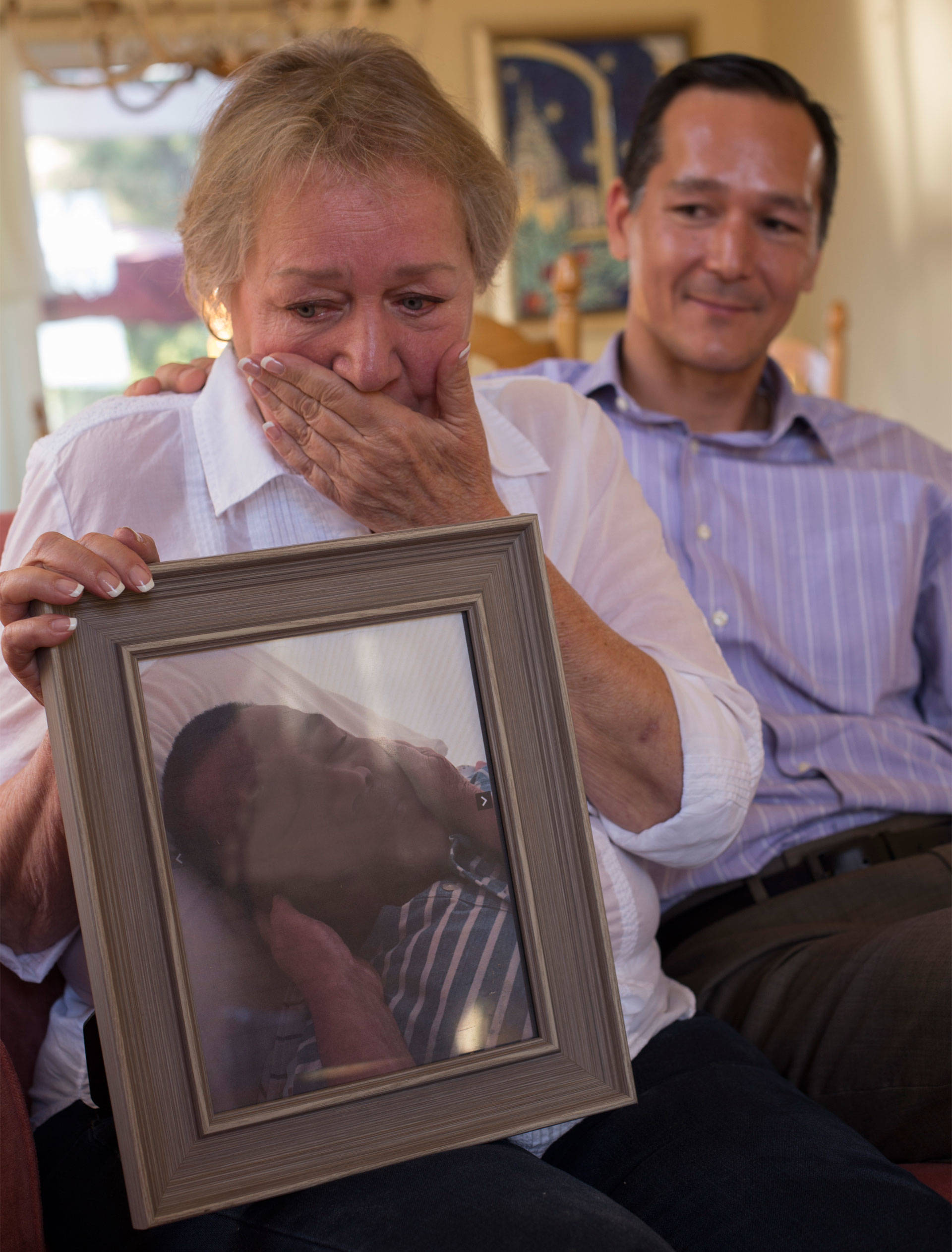
"caption": "Rochelle Nishimoto recounts the death of her son Jason with her other son Adrian.",
"description": "Rochelle Nishimoto recounts the death of her son Jason with her other son Adrian.",
"title": "nishimoto-3",
"credit": "Lisa Pickoff-White/KQED",
"status": "inherit",
"isLoading": false,
"fetchFailed": false
},
"news_11035513": {
"type": "attachments",
"id": "news_11035513",
"meta": {
"index": "attachments_1716263798",
"site": "news",
"id": "11035513",
"found": true
},
"parent": 11035510,
"imgSizes": {
"twentyfourteen-full-width": {
"file": "https://ww2.kqed.org/app/uploads/sites/10/2016/07/sandiegopolice-1038x576.jpg",
"width": 1038,
"mimeType": "image/jpeg",
"height": 576
},
"thumbnail": {
"file": "https://ww2.kqed.org/app/uploads/sites/10/2016/07/sandiegopolice-400x300.jpg",
"width": 400,
"mimeType": "image/jpeg",
"height": 300
},
"fd-sm": {
"file": "https://ww2.kqed.org/app/uploads/sites/10/2016/07/sandiegopolice-960x720.jpg",
"width": 960,
"mimeType": "image/jpeg",
"height": 720
},
"post-thumbnail": {
"file": "https://ww2.kqed.org/app/uploads/sites/10/2016/07/sandiegopolice-672x372.jpg",
"width": 672,
"mimeType": "image/jpeg",
"height": 372
},
"kqedFullSize": {
"file": "https://ww2.kqed.org/app/uploads/sites/10/2016/07/sandiegopolice-e1469807314291.jpg",
"width": 1920,
"height": 1440
},
"large": {
"file": "https://ww2.kqed.org/app/uploads/sites/10/2016/07/sandiegopolice-1920x1440.jpg",
"width": 1920,
"mimeType": "image/jpeg",
"height": 1440
},
"guest-author-50": {
"file": "https://ww2.kqed.org/app/uploads/sites/10/2016/07/sandiegopolice-50x50.jpg",
"width": 50,
"mimeType": "image/jpeg",
"height": 50
},
"guest-author-96": {
"file": "https://ww2.kqed.org/app/uploads/sites/10/2016/07/sandiegopolice-96x96.jpg",
"width": 96,
"mimeType": "image/jpeg",
"height": 96
},
"medium": {
"file": "https://ww2.kqed.org/app/uploads/sites/10/2016/07/sandiegopolice-800x600.jpg",
"width": 800,
"mimeType": "image/jpeg",
"height": 600
},
"guest-author-64": {
"file": "https://ww2.kqed.org/app/uploads/sites/10/2016/07/sandiegopolice-64x64.jpg",
"width": 64,
"mimeType": "image/jpeg",
"height": 64
},
"guest-author-32": {
"file": "https://ww2.kqed.org/app/uploads/sites/10/2016/07/sandiegopolice-32x32.jpg",
"width": 32,
"mimeType": "image/jpeg",
"height": 32
},
"jmtc-small-thumb": {
"file": "https://ww2.kqed.org/app/uploads/sites/10/2016/07/sandiegopolice-280x150.jpg",
"width": 280,
"mimeType": "image/jpeg",
"height": 150
},
"fd-lrg": {
"file": "https://ww2.kqed.org/app/uploads/sites/10/2016/07/sandiegopolice-1920x1440.jpg",
"width": 1920,
"mimeType": "image/jpeg",
"height": 1440
},
"fd-med": {
"file": "https://ww2.kqed.org/app/uploads/sites/10/2016/07/sandiegopolice-1180x885.jpg",
"width": 1180,
"mimeType": "image/jpeg",
"height": 885
},
"detail": {
"file": "https://ww2.kqed.org/app/uploads/sites/10/2016/07/sandiegopolice-150x150.jpg",
"width": 150,
"mimeType": "image/jpeg",
"height": 150
},
"guest-author-128": {
"file": "https://ww2.kqed.org/app/uploads/sites/10/2016/07/sandiegopolice-128x128.jpg",
"width": 128,
"mimeType": "image/jpeg",
"height": 128
}
},
"publishDate": 1469807201,
"modified": 1469807308,
"caption": "San Diego Police Chief Shelley Zimmerman speaks to the media outside Scripps Mercy Hospital, where one officer died and a second underwent surgery after being shot late Thursday night.",
"description": null,
"title": "San Diego Police",
"credit": "San Diego Police Department via Twitter",
"status": "inherit",
"isLoading": false,
"fetchFailed": false
},
"news_11021126": {
"type": "attachments",
"id": "news_11021126",
"meta": {
"index": "attachments_1716263798",
"site": "news",
"id": "11021126",
"found": true
},
"parent": 11021120,
"imgSizes": {
"twentyfourteen-full-width": {
"file": "https://ww2.kqed.org/app/uploads/sites/10/2016/07/SanDiegoSuspect-1038x576.jpg",
"width": 1038,
"mimeType": "image/jpeg",
"height": 576
},
"thumbnail": {
"file": "https://ww2.kqed.org/app/uploads/sites/10/2016/07/SanDiegoSuspect-400x221.jpg",
"width": 400,
"mimeType": "image/jpeg",
"height": 221
},
"fd-sm": {
"file": "https://ww2.kqed.org/app/uploads/sites/10/2016/07/SanDiegoSuspect-960x532.jpg",
"width": 960,
"mimeType": "image/jpeg",
"height": 532
},
"post-thumbnail": {
"file": "https://ww2.kqed.org/app/uploads/sites/10/2016/07/SanDiegoSuspect-672x372.jpg",
"width": 672,
"mimeType": "image/jpeg",
"height": 372
},
"kqedFullSize": {
"file": "https://ww2.kqed.org/app/uploads/sites/10/2016/07/SanDiegoSuspect.jpg",
"width": 1920,
"height": 1063
},
"large": {
"file": "https://ww2.kqed.org/app/uploads/sites/10/2016/07/SanDiegoSuspect-1920x1063.jpg",
"width": 1920,
"mimeType": "image/jpeg",
"height": 1063
},
"guest-author-50": {
"file": "https://ww2.kqed.org/app/uploads/sites/10/2016/07/SanDiegoSuspect-50x50.jpg",
"width": 50,
"mimeType": "image/jpeg",
"height": 50
},
"guest-author-96": {
"file": "https://ww2.kqed.org/app/uploads/sites/10/2016/07/SanDiegoSuspect-96x96.jpg",
"width": 96,
"mimeType": "image/jpeg",
"height": 96
},
"medium": {
"file": "https://ww2.kqed.org/app/uploads/sites/10/2016/07/SanDiegoSuspect-800x443.jpg",
"width": 800,
"mimeType": "image/jpeg",
"height": 443
},
"guest-author-64": {
"file": "https://ww2.kqed.org/app/uploads/sites/10/2016/07/SanDiegoSuspect-64x64.jpg",
"width": 64,
"mimeType": "image/jpeg",
"height": 64
},
"guest-author-32": {
"file": "https://ww2.kqed.org/app/uploads/sites/10/2016/07/SanDiegoSuspect-32x32.jpg",
"width": 32,
"mimeType": "image/jpeg",
"height": 32
},
"jmtc-small-thumb": {
"file": "https://ww2.kqed.org/app/uploads/sites/10/2016/07/SanDiegoSuspect-280x150.jpg",
"width": 280,
"mimeType": "image/jpeg",
"height": 150
},
"fd-lrg": {
"file": "https://ww2.kqed.org/app/uploads/sites/10/2016/07/SanDiegoSuspect-1920x1063.jpg",
"width": 1920,
"mimeType": "image/jpeg",
"height": 1063
},
"fd-med": {
"file": "https://ww2.kqed.org/app/uploads/sites/10/2016/07/SanDiegoSuspect-1180x653.jpg",
"width": 1180,
"mimeType": "image/jpeg",
"height": 653
},
"detail": {
"file": "https://ww2.kqed.org/app/uploads/sites/10/2016/07/SanDiegoSuspect-150x150.jpg",
"width": 150,
"mimeType": "image/jpeg",
"height": 150
},
"guest-author-128": {
"file": "https://ww2.kqed.org/app/uploads/sites/10/2016/07/SanDiegoSuspect-128x128.jpg",
"width": 128,
"mimeType": "image/jpeg",
"height": 128
}
},
"publishDate": 1468608719,
"modified": 1468626930,
"caption": "Surveillance image of a man San Diego police describe as a suspect in the recent attacks on homeless men. It's unclear whether Jon David Guerrero, who is now charged with murder, is the man caught on surveillance.",
"description": "Surveillance image of a man San Diego police describe as a suspect in the recent attacks on homeless men. It's unclear whether Jon David Guerrero, who is now charged with murder, is the man caught on surveillance.",
"title": "SanDiegoSuspect",
"credit": "San Diego Police Department",
"status": "inherit",
"isLoading": false,
"fetchFailed": false
},
"stateofhealth_211451": {
"type": "attachments",
"id": "stateofhealth_211451",
"meta": {
"index": "attachments_1716263798",
"site": "stateofhealth",
"id": "211451",
"found": true
},
"parent": 211432,
"imgSizes": {
"jmtc-small-thumb": {
"file": "https://ww2.kqed.org/app/uploads/sites/27/2016/07/Screen-Shot-2016-07-11-at-10.29.15-AM-280x150.png",
"width": 280,
"mimeType": "image/png",
"height": 150
},
"thumbnail": {
"file": "https://ww2.kqed.org/app/uploads/sites/27/2016/07/Screen-Shot-2016-07-11-at-10.29.15-AM-400x226.png",
"width": 400,
"mimeType": "image/png",
"height": 226
},
"post-thumbnail": {
"file": "https://ww2.kqed.org/app/uploads/sites/27/2016/07/Screen-Shot-2016-07-11-at-10.29.15-AM-672x372.png",
"width": 672,
"mimeType": "image/png",
"height": 372
},
"kqedFullSize": {
"file": "https://ww2.kqed.org/app/uploads/sites/27/2016/07/Screen-Shot-2016-07-11-at-10.29.15-AM.png",
"width": 691,
"height": 390
},
"guest-author-50": {
"file": "https://ww2.kqed.org/app/uploads/sites/27/2016/07/Screen-Shot-2016-07-11-at-10.29.15-AM-50x50.png",
"width": 50,
"mimeType": "image/png",
"height": 50
},
"guest-author-96": {
"file": "https://ww2.kqed.org/app/uploads/sites/27/2016/07/Screen-Shot-2016-07-11-at-10.29.15-AM-96x96.png",
"width": 96,
"mimeType": "image/png",
"height": 96
},
"guest-author-64": {
"file": "https://ww2.kqed.org/app/uploads/sites/27/2016/07/Screen-Shot-2016-07-11-at-10.29.15-AM-64x64.png",
"width": 64,
"mimeType": "image/png",
"height": 64
},
"detail": {
"file": "https://ww2.kqed.org/app/uploads/sites/27/2016/07/Screen-Shot-2016-07-11-at-10.29.15-AM-150x150.png",
"width": 150,
"mimeType": "image/png",
"height": 150
},
"guest-author-32": {
"file": "https://ww2.kqed.org/app/uploads/sites/27/2016/07/Screen-Shot-2016-07-11-at-10.29.15-AM-32x32.png",
"width": 32,
"mimeType": "image/png",
"height": 32
},
"guest-author-128": {
"file": "https://ww2.kqed.org/app/uploads/sites/27/2016/07/Screen-Shot-2016-07-11-at-10.29.15-AM-128x128.png",
"width": 128,
"mimeType": "image/png",
"height": 128
}
},
"publishDate": 1468258704,
"modified": 1468344518,
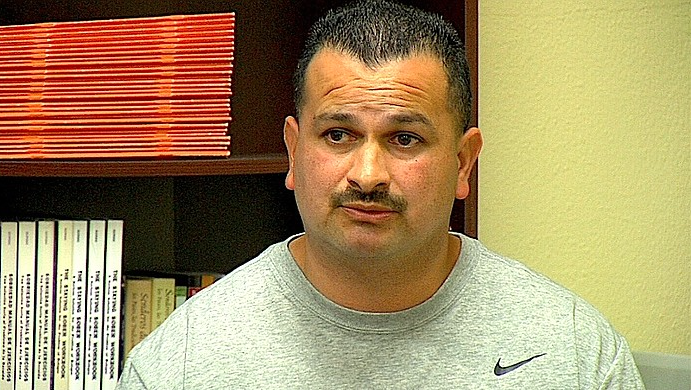
"caption": "Jose Escobedo is a recovering methamphetamine addict. ",
"description": "Jose Escobedo is a recovering methamphetamine addict. ",
"title": "Screen Shot 2016-07-11 at 10.29.15 AM",
"credit": "Nicholas McVicker/KPBS",
"status": "inherit",
"isLoading": false,
"fetchFailed": false
},
"news_11017384": {
"type": "attachments",
"id": "news_11017384",
"meta": {
"index": "attachments_1716263798",
"site": "news",
"id": "11017384",
"found": true
},
"parent": 11017337,
"imgSizes": {
"twentyfourteen-full-width": {
"file": "https://ww2.kqed.org/app/uploads/sites/10/2016/07/Zimmerman-1038x576.jpg",
"width": 1038,
"mimeType": "image/jpeg",
"height": 576
},
"thumbnail": {
"file": "https://ww2.kqed.org/app/uploads/sites/10/2016/07/Zimmerman-400x262.jpg",
"width": 400,
"mimeType": "image/jpeg",
"height": 262
},
"fd-sm": {
"file": "https://ww2.kqed.org/app/uploads/sites/10/2016/07/Zimmerman-960x629.jpg",
"width": 960,
"mimeType": "image/jpeg",
"height": 629
},
"post-thumbnail": {
"file": "https://ww2.kqed.org/app/uploads/sites/10/2016/07/Zimmerman-672x372.jpg",
"width": 672,
"mimeType": "image/jpeg",
"height": 372
},
"kqedFullSize": {
"file": "https://ww2.kqed.org/app/uploads/sites/10/2016/07/Zimmerman.jpg",
"width": 1920,
"height": 1257
},
"large": {
"file": "https://ww2.kqed.org/app/uploads/sites/10/2016/07/Zimmerman-1920x1257.jpg",
"width": 1920,
"mimeType": "image/jpeg",
"height": 1257
},
"guest-author-50": {
"file": "https://ww2.kqed.org/app/uploads/sites/10/2016/07/Zimmerman-50x50.jpg",
"width": 50,
"mimeType": "image/jpeg",
"height": 50
},
"guest-author-96": {
"file": "https://ww2.kqed.org/app/uploads/sites/10/2016/07/Zimmerman-96x96.jpg",
"width": 96,
"mimeType": "image/jpeg",
"height": 96
},
"medium": {
"file": "https://ww2.kqed.org/app/uploads/sites/10/2016/07/Zimmerman-800x524.jpg",
"width": 800,
"mimeType": "image/jpeg",
"height": 524
},
"guest-author-64": {
"file": "https://ww2.kqed.org/app/uploads/sites/10/2016/07/Zimmerman-64x64.jpg",
"width": 64,
"mimeType": "image/jpeg",
"height": 64
},
"guest-author-32": {
"file": "https://ww2.kqed.org/app/uploads/sites/10/2016/07/Zimmerman-32x32.jpg",
"width": 32,
"mimeType": "image/jpeg",
"height": 32
},
"jmtc-small-thumb": {
"file": "https://ww2.kqed.org/app/uploads/sites/10/2016/07/Zimmerman-280x150.jpg",
"width": 280,
"mimeType": "image/jpeg",
"height": 150
},
"fd-lrg": {
"file": "https://ww2.kqed.org/app/uploads/sites/10/2016/07/Zimmerman-1920x1257.jpg",
"width": 1920,
"mimeType": "image/jpeg",
"height": 1257
},
"fd-med": {
"file": "https://ww2.kqed.org/app/uploads/sites/10/2016/07/Zimmerman-1180x773.jpg",
"width": 1180,
"mimeType": "image/jpeg",
"height": 773
},
"detail": {
"file": "https://ww2.kqed.org/app/uploads/sites/10/2016/07/Zimmerman-150x150.jpg",
"width": 150,
"mimeType": "image/jpeg",
"height": 150
},
"guest-author-128": {
"file": "https://ww2.kqed.org/app/uploads/sites/10/2016/07/Zimmerman-128x128.jpg",
"width": 128,
"mimeType": "image/jpeg",
"height": 128
}
},
"publishDate": 1468274490,
"modified": 1468276724,
"caption": "San Diego Mayor Kevin Faulconer (R) with Police Chief Shelley Zimmerman.",
"description": "San Diego Mayor Kevin Faulconer (R) with Police Chief Shelley Zimmerman.",
"title": "Zimmerman",
"credit": "Sandy Huffaker/AFP/Getty Images",
"status": "inherit",
"isLoading": false,
"fetchFailed": false
},
"stateofhealth_211449": {
"type": "attachments",
"id": "stateofhealth_211449",
"meta": {
"index": "attachments_1716263798",
"site": "stateofhealth",
"id": "211449",
"found": true
},
"parent": 211432,
"imgSizes": {
"jmtc-small-thumb": {
"file": "https://ww2.kqed.org/app/uploads/sites/27/2016/07/Screen-Shot-2016-07-11-at-10.28.11-AM-280x150.png",
"width": 280,
"mimeType": "image/png",
"height": 150
},
"thumbnail": {
"file": "https://ww2.kqed.org/app/uploads/sites/27/2016/07/Screen-Shot-2016-07-11-at-10.28.11-AM-400x224.png",
"width": 400,
"mimeType": "image/png",
"height": 224
},
"post-thumbnail": {
"file": "https://ww2.kqed.org/app/uploads/sites/27/2016/07/Screen-Shot-2016-07-11-at-10.28.11-AM-672x372.png",
"width": 672,
"mimeType": "image/png",
"height": 372
},
"kqedFullSize": {
"file": "https://ww2.kqed.org/app/uploads/sites/27/2016/07/Screen-Shot-2016-07-11-at-10.28.11-AM.png",
"width": 801,
"height": 449
},
"guest-author-50": {
"file": "https://ww2.kqed.org/app/uploads/sites/27/2016/07/Screen-Shot-2016-07-11-at-10.28.11-AM-50x50.png",
"width": 50,
"mimeType": "image/png",
"height": 50
},
"guest-author-96": {
"file": "https://ww2.kqed.org/app/uploads/sites/27/2016/07/Screen-Shot-2016-07-11-at-10.28.11-AM-96x96.png",
"width": 96,
"mimeType": "image/png",
"height": 96
},
"medium": {
"file": "https://ww2.kqed.org/app/uploads/sites/27/2016/07/Screen-Shot-2016-07-11-at-10.28.11-AM-800x448.png",
"width": 800,
"mimeType": "image/png",
"height": 448
},
"guest-author-64": {
"file": "https://ww2.kqed.org/app/uploads/sites/27/2016/07/Screen-Shot-2016-07-11-at-10.28.11-AM-64x64.png",
"width": 64,
"mimeType": "image/png",
"height": 64
},
"detail": {
"file": "https://ww2.kqed.org/app/uploads/sites/27/2016/07/Screen-Shot-2016-07-11-at-10.28.11-AM-150x150.png",
"width": 150,
"mimeType": "image/png",
"height": 150
},
"guest-author-32": {
"file": "https://ww2.kqed.org/app/uploads/sites/27/2016/07/Screen-Shot-2016-07-11-at-10.28.11-AM-32x32.png",
"width": 32,
"mimeType": "image/png",
"height": 32
},
"medium_large": {
"file": "https://ww2.kqed.org/app/uploads/sites/27/2016/07/Screen-Shot-2016-07-11-at-10.28.11-AM-768x431.png",
"width": 768,
"mimeType": "image/png",
"height": 431
},
"guest-author-128": {
"file": "https://ww2.kqed.org/app/uploads/sites/27/2016/07/Screen-Shot-2016-07-11-at-10.28.11-AM-128x128.png",
"width": 128,
"mimeType": "image/png",
"height": 128
}
},
"publishDate": 1468258689,
"modified": 1468258757,
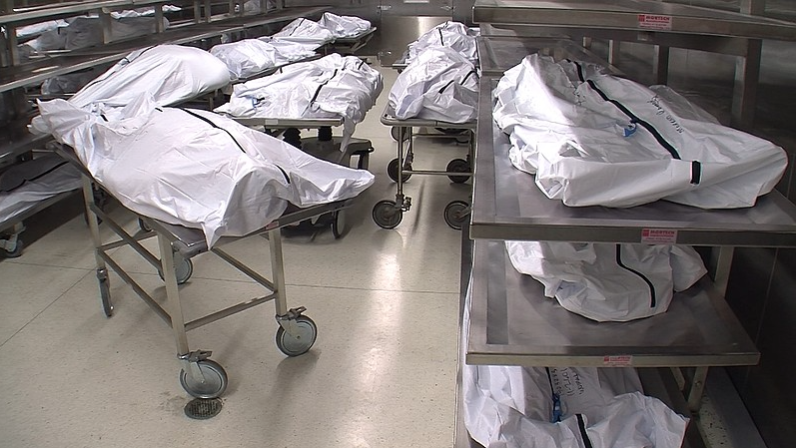
"caption": "Corpses in body bags lie on gurneys in the San Diego County morgue in this undated photo.",
"description": "Corpses in body bags lie on gurneys in the San Diego County morgue in this undated photo.",
"title": "Screen Shot 2016-07-11 at 10.28.11 AM",
"credit": "Nicholas McVicker/KPBS",
"status": "inherit",
"isLoading": false,
"fetchFailed": false
},
"news_11012426": {
"type": "attachments",
"id": "news_11012426",
"meta": {
"index": "attachments_1716263798",
"site": "news",
"id": "11012426",
"found": true
},
"parent": 11012423,
"imgSizes": {
"jmtc-small-thumb": {
"file": "https://ww2.kqed.org/app/uploads/sites/10/2016/07/Screenshot-2016-07-07-08.41.17-280x150.png",
"width": 280,
"mimeType": "image/png",
"height": 150
},
"thumbnail": {
"file": "https://ww2.kqed.org/app/uploads/sites/10/2016/07/Screenshot-2016-07-07-08.41.17-400x314.png",
"width": 400,
"mimeType": "image/png",
"height": 314
},
"post-thumbnail": {
"file": "https://ww2.kqed.org/app/uploads/sites/10/2016/07/Screenshot-2016-07-07-08.41.17-616x372.png",
"width": 616,
"mimeType": "image/png",
"height": 372
},
"kqedFullSize": {
"file": "https://ww2.kqed.org/app/uploads/sites/10/2016/07/Screenshot-2016-07-07-08.41.17.png",
"width": 616,
"height": 484
},
"guest-author-50": {
"file": "https://ww2.kqed.org/app/uploads/sites/10/2016/07/Screenshot-2016-07-07-08.41.17-50x50.png",
"width": 50,
"mimeType": "image/png",
"height": 50
},
"guest-author-96": {
"file": "https://ww2.kqed.org/app/uploads/sites/10/2016/07/Screenshot-2016-07-07-08.41.17-96x96.png",
"width": 96,
"mimeType": "image/png",
"height": 96
},
"guest-author-64": {
"file": "https://ww2.kqed.org/app/uploads/sites/10/2016/07/Screenshot-2016-07-07-08.41.17-64x64.png",
"width": 64,
"mimeType": "image/png",
"height": 64
},
"detail": {
"file": "https://ww2.kqed.org/app/uploads/sites/10/2016/07/Screenshot-2016-07-07-08.41.17-150x150.png",
"width": 150,
"mimeType": "image/png",
"height": 150
},
"guest-author-32": {
"file": "https://ww2.kqed.org/app/uploads/sites/10/2016/07/Screenshot-2016-07-07-08.41.17-32x32.png",
"width": 32,
"mimeType": "image/png",
"height": 32
},
"guest-author-128": {
"file": "https://ww2.kqed.org/app/uploads/sites/10/2016/07/Screenshot-2016-07-07-08.41.17-128x128.png",
"width": 128,
"mimeType": "image/png",
"height": 128
}
},
"publishDate": 1467906165,
"modified": 1468014327,
"caption": "Surveillance video image of a man who San Diego police have described as a suspect in the killing of two homeless people in the city .",
"description": null,
"title": "San Diego Homeless Killings",
"credit": "\u003ca href=\"https://www.facebook.com/sandiegopolicedepartment/videos/vb.339188729503444/1059551600800483/?type=2&theater\" target=\"_blank\">San Diego Police Department via Facebook\u003c/a>",
"status": "inherit",
"isLoading": false,
"fetchFailed": false
},
"news_11000003": {
"type": "attachments",
"id": "news_11000003",
"meta": {
"index": "attachments_1716263798",
"site": "news",
"id": "11000003",
"found": true
},
"parent": 11000000,
"imgSizes": {
"twentyfourteen-full-width": {
"file": "https://ww2.kqed.org/app/uploads/sites/10/2016/06/Navy-1038x576.jpg",
"width": 1038,
"mimeType": "image/jpeg",
"height": 576
},
"thumbnail": {
"file": "https://ww2.kqed.org/app/uploads/sites/10/2016/06/Navy-400x217.jpg",
"width": 400,
"mimeType": "image/jpeg",
"height": 217
},
"fd-sm": {
"file": "https://ww2.kqed.org/app/uploads/sites/10/2016/06/Navy-960x522.jpg",
"width": 960,
"mimeType": "image/jpeg",
"height": 522
},
"post-thumbnail": {
"file": "https://ww2.kqed.org/app/uploads/sites/10/2016/06/Navy-672x372.jpg",
"width": 672,
"mimeType": "image/jpeg",
"height": 372
},
"kqedFullSize": {
"file": "https://ww2.kqed.org/app/uploads/sites/10/2016/06/Navy.jpg",
"width": 1920,
"height": 1043
},
"large": {
"file": "https://ww2.kqed.org/app/uploads/sites/10/2016/06/Navy-1920x1043.jpg",
"width": 1920,
"mimeType": "image/jpeg",
"height": 1043
},
"guest-author-50": {
"file": "https://ww2.kqed.org/app/uploads/sites/10/2016/06/Navy-50x50.jpg",
"width": 50,
"mimeType": "image/jpeg",
"height": 50
},
"guest-author-96": {
"file": "https://ww2.kqed.org/app/uploads/sites/10/2016/06/Navy-96x96.jpg",
"width": 96,
"mimeType": "image/jpeg",
"height": 96
},
"medium": {
"file": "https://ww2.kqed.org/app/uploads/sites/10/2016/06/Navy-800x435.jpg",
"width": 800,
"mimeType": "image/jpeg",
"height": 435
},
"guest-author-64": {
"file": "https://ww2.kqed.org/app/uploads/sites/10/2016/06/Navy-64x64.jpg",
"width": 64,
"mimeType": "image/jpeg",
"height": 64
},
"guest-author-32": {
"file": "https://ww2.kqed.org/app/uploads/sites/10/2016/06/Navy-32x32.jpg",
"width": 32,
"mimeType": "image/jpeg",
"height": 32
},
"jmtc-small-thumb": {
"file": "https://ww2.kqed.org/app/uploads/sites/10/2016/06/Navy-280x150.jpg",
"width": 280,
"mimeType": "image/jpeg",
"height": 150
},
"fd-lrg": {
"file": "https://ww2.kqed.org/app/uploads/sites/10/2016/06/Navy-1920x1043.jpg",
"width": 1920,
"mimeType": "image/jpeg",
"height": 1043
},
"fd-med": {
"file": "https://ww2.kqed.org/app/uploads/sites/10/2016/06/Navy-1180x641.jpg",
"width": 1180,
"mimeType": "image/jpeg",
"height": 641
},
"detail": {
"file": "https://ww2.kqed.org/app/uploads/sites/10/2016/06/Navy-150x150.jpg",
"width": 150,
"mimeType": "image/jpeg",
"height": 150
},
"guest-author-128": {
"file": "https://ww2.kqed.org/app/uploads/sites/10/2016/06/Navy-128x128.jpg",
"width": 128,
"mimeType": "image/jpeg",
"height": 128
}
},
"publishDate": 1466796005,
"modified": 1466796094,
"caption": "USS Stennis conducts operations in Philippine Sea.",
"description": null,
"title": null,
"credit": "Photo by Specialist 3rd Class Jake Greenberg/U.S. Navy via Getty Images",
"status": "inherit",
"isLoading": false,
"fetchFailed": false
},
"news_10951676": {
"type": "attachments",
"id": "news_10951676",
"meta": {
"index": "attachments_1716263798",
"site": "news",
"id": "10951676",
"found": true
},
"parent": 10951476,
"imgSizes": {
"twentyfourteen-full-width": {
"file": "https://ww2.kqed.org/app/uploads/sites/10/2016/05/Faulconer-1038x576.jpg",
"width": 1038,
"mimeType": "image/jpeg",
"height": 576
},
"thumbnail": {
"file": "https://ww2.kqed.org/app/uploads/sites/10/2016/05/Faulconer-400x255.jpg",
"width": 400,
"mimeType": "image/jpeg",
"height": 255
},
"fd-sm": {
"file": "https://ww2.kqed.org/app/uploads/sites/10/2016/05/Faulconer-960x613.jpg",
"width": 960,
"mimeType": "image/jpeg",
"height": 613
},
"post-thumbnail": {
"file": "https://ww2.kqed.org/app/uploads/sites/10/2016/05/Faulconer-672x372.jpg",
"width": 672,
"mimeType": "image/jpeg",
"height": 372
},
"kqedFullSize": {
"file": "https://ww2.kqed.org/app/uploads/sites/10/2016/05/Faulconer.jpg",
"width": 1920,
"height": 1225
},
"large": {
"file": "https://ww2.kqed.org/app/uploads/sites/10/2016/05/Faulconer-1920x1225.jpg",
"width": 1920,
"mimeType": "image/jpeg",
"height": 1225
},
"guest-author-96": {
"file": "https://ww2.kqed.org/app/uploads/sites/10/2016/05/Faulconer-96x96.jpg",
"width": 96,
"mimeType": "image/jpeg",
"height": 96
},
"medium": {
"file": "https://ww2.kqed.org/app/uploads/sites/10/2016/05/Faulconer-800x510.jpg",
"width": 800,
"mimeType": "image/jpeg",
"height": 510
},
"guest-author-64": {
"file": "https://ww2.kqed.org/app/uploads/sites/10/2016/05/Faulconer-64x64.jpg",
"width": 64,
"mimeType": "image/jpeg",
"height": 64
},
"guest-author-32": {
"file": "https://ww2.kqed.org/app/uploads/sites/10/2016/05/Faulconer-32x32.jpg",
"width": 32,
"mimeType": "image/jpeg",
"height": 32
},
"jmtc-small-thumb": {
"file": "https://ww2.kqed.org/app/uploads/sites/10/2016/05/Faulconer-280x150.jpg",
"width": 280,
"mimeType": "image/jpeg",
"height": 150
},
"fd-lrg": {
"file": "https://ww2.kqed.org/app/uploads/sites/10/2016/05/Faulconer-1920x1225.jpg",
"width": 1920,
"mimeType": "image/jpeg",
"height": 1225
},
"fd-med": {
"file": "https://ww2.kqed.org/app/uploads/sites/10/2016/05/Faulconer-1180x753.jpg",
"width": 1180,
"mimeType": "image/jpeg",
"height": 753
},
"detail": {
"file": "https://ww2.kqed.org/app/uploads/sites/10/2016/05/Faulconer-150x150.jpg",
"width": 150,
"mimeType": "image/jpeg",
"height": 150
},
"guest-author-128": {
"file": "https://ww2.kqed.org/app/uploads/sites/10/2016/05/Faulconer-128x128.jpg",
"width": 128,
"mimeType": "image/jpeg",
"height": 128
}
},
"publishDate": 1462919384,
"modified": 1462920058,
"caption": "Mayor Kevin Faulconer marches in San Diego's 2014 LGBT Pride Parade. San Diego is the largest city in the U.S. with a Republican mayor.",
"description": "Mayor Kevin Faulconer marches in San Diego's 2014 LGBT Pride Parade. San Diego is the largest city in the U.S. with a Republican mayor.",
"title": "Faulconer",
"credit": "Tristan Loper/Wikimedia Commons",
"status": "inherit",
"isLoading": false,
"fetchFailed": false
},
"news_10951515": {
"type": "attachments",
"id": "news_10951515",
"meta": {
"index": "attachments_1716263798",
"site": "news",
"id": "10951515",
"found": true
},
"parent": 10951477,
"imgSizes": {
"twentyfourteen-full-width": {
"file": "https://ww2.kqed.org/app/uploads/sites/10/2016/05/Onofre-1038x576.jpg",
"width": 1038,
"mimeType": "image/jpeg",
"height": 576
},
"thumbnail": {
"file": "https://ww2.kqed.org/app/uploads/sites/10/2016/05/Onofre-400x235.jpg",
"width": 400,
"mimeType": "image/jpeg",
"height": 235
},
"fd-sm": {
"file": "https://ww2.kqed.org/app/uploads/sites/10/2016/05/Onofre-960x563.jpg",
"width": 960,
"mimeType": "image/jpeg",
"height": 563
},
"post-thumbnail": {
"file": "https://ww2.kqed.org/app/uploads/sites/10/2016/05/Onofre-672x372.jpg",
"width": 672,
"mimeType": "image/jpeg",
"height": 372
},
"kqedFullSize": {
"file": "https://ww2.kqed.org/app/uploads/sites/10/2016/05/Onofre.jpg",
"width": 1920,
"height": 1126
},
"large": {
"file": "https://ww2.kqed.org/app/uploads/sites/10/2016/05/Onofre-1920x1126.jpg",
"width": 1920,
"mimeType": "image/jpeg",
"height": 1126
},
"guest-author-96": {
"file": "https://ww2.kqed.org/app/uploads/sites/10/2016/05/Onofre-96x96.jpg",
"width": 96,
"mimeType": "image/jpeg",
"height": 96
},
"medium": {
"file": "https://ww2.kqed.org/app/uploads/sites/10/2016/05/Onofre-800x469.jpg",
"width": 800,
"mimeType": "image/jpeg",
"height": 469
},
"guest-author-64": {
"file": "https://ww2.kqed.org/app/uploads/sites/10/2016/05/Onofre-64x64.jpg",
"width": 64,
"mimeType": "image/jpeg",
"height": 64
},
"guest-author-32": {
"file": "https://ww2.kqed.org/app/uploads/sites/10/2016/05/Onofre-32x32.jpg",
"width": 32,
"mimeType": "image/jpeg",
"height": 32
},
"jmtc-small-thumb": {
"file": "https://ww2.kqed.org/app/uploads/sites/10/2016/05/Onofre-280x150.jpg",
"width": 280,
"mimeType": "image/jpeg",
"height": 150
},
"fd-lrg": {
"file": "https://ww2.kqed.org/app/uploads/sites/10/2016/05/Onofre-1920x1126.jpg",
"width": 1920,
"mimeType": "image/jpeg",
"height": 1126
},
"fd-med": {
"file": "https://ww2.kqed.org/app/uploads/sites/10/2016/05/Onofre-1180x692.jpg",
"width": 1180,
"mimeType": "image/jpeg",
"height": 692
},
"detail": {
"file": "https://ww2.kqed.org/app/uploads/sites/10/2016/05/Onofre-150x150.jpg",
"width": 150,
"mimeType": "image/jpeg",
"height": 150
},
"guest-author-128": {
"file": "https://ww2.kqed.org/app/uploads/sites/10/2016/05/Onofre-128x128.jpg",
"width": 128,
"mimeType": "image/jpeg",
"height": 128
}
},
"publishDate": 1462907119,
"modified": 1462907161,
"caption": "The San Onofre Nuclear Generating Station.",
"description": "The San Onofre Nuclear Generating Station.",
"title": "Onofre",
"credit": "David McNew/Getty Images",
"status": "inherit",
"isLoading": false,
"fetchFailed": false
},
"news_10920789": {
"type": "attachments",
"id": "news_10920789",
"meta": {
"index": "attachments_1716263798",
"site": "news",
"id": "10920789",
"found": true
},
"parent": 10920786,
"imgSizes": {
"twentyfourteen-full-width": {
"file": "https://ww2.kqed.org/app/uploads/sites/10/2016/04/Sarah-Saez-1-1038x576.jpg",
"width": 1038,
"mimeType": "image/jpeg",
"height": 576
},
"thumbnail": {
"file": "https://ww2.kqed.org/app/uploads/sites/10/2016/04/Sarah-Saez-1-400x225.jpg",
"width": 400,
"mimeType": "image/jpeg",
"height": 225
},
"fd-sm": {
"file": "https://ww2.kqed.org/app/uploads/sites/10/2016/04/Sarah-Saez-1-960x540.jpg",
"width": 960,
"mimeType": "image/jpeg",
"height": 540
},
"post-thumbnail": {
"file": "https://ww2.kqed.org/app/uploads/sites/10/2016/04/Sarah-Saez-1-672x372.jpg",
"width": 672,
"mimeType": "image/jpeg",
"height": 372
},
"kqedFullSize": {
"file": "https://ww2.kqed.org/app/uploads/sites/10/2016/04/Sarah-Saez-1.jpg",
"width": 1920,
"height": 1080
},
"large": {
"file": "https://ww2.kqed.org/app/uploads/sites/10/2016/04/Sarah-Saez-1-1920x1080.jpg",
"width": 1920,
"mimeType": "image/jpeg",
"height": 1080
},
"guest-author-96": {
"file": "https://ww2.kqed.org/app/uploads/sites/10/2016/04/Sarah-Saez-1-96x96.jpg",
"width": 96,
"mimeType": "image/jpeg",
"height": 96
},
"medium": {
"file": "https://ww2.kqed.org/app/uploads/sites/10/2016/04/Sarah-Saez-1-800x450.jpg",
"width": 800,
"mimeType": "image/jpeg",
"height": 450
},
"guest-author-64": {
"file": "https://ww2.kqed.org/app/uploads/sites/10/2016/04/Sarah-Saez-1-64x64.jpg",
"width": 64,
"mimeType": "image/jpeg",
"height": 64
},
"guest-author-32": {
"file": "https://ww2.kqed.org/app/uploads/sites/10/2016/04/Sarah-Saez-1-32x32.jpg",
"width": 32,
"mimeType": "image/jpeg",
"height": 32
},
"jmtc-small-thumb": {
"file": "https://ww2.kqed.org/app/uploads/sites/10/2016/04/Sarah-Saez-1-280x150.jpg",
"width": 280,
"mimeType": "image/jpeg",
"height": 150
},
"fd-lrg": {
"file": "https://ww2.kqed.org/app/uploads/sites/10/2016/04/Sarah-Saez-1-1920x1080.jpg",
"width": 1920,
"mimeType": "image/jpeg",
"height": 1080
},
"fd-med": {
"file": "https://ww2.kqed.org/app/uploads/sites/10/2016/04/Sarah-Saez-1-1180x664.jpg",
"width": 1180,
"mimeType": "image/jpeg",
"height": 664
},
"detail": {
"file": "https://ww2.kqed.org/app/uploads/sites/10/2016/04/Sarah-Saez-1-75x75.jpg",
"width": 75,
"mimeType": "image/jpeg",
"height": 75
},
"guest-author-128": {
"file": "https://ww2.kqed.org/app/uploads/sites/10/2016/04/Sarah-Saez-1-128x128.jpg",
"width": 128,
"mimeType": "image/jpeg",
"height": 128
}
},
"publishDate": 1459895742,
"modified": 1459896633,
"caption": "San Diego City Council District 9 candidate Sarah Saez shows handwritten notes from her supporters in her campaign office, March 18, 2016. ",
"description": "San Diego City Council District 9 candidate Sarah Saez shows handwritten notes from her supporters in her campaign office, March 18, 2016. ",
"title": "Sarah Saez 1",
"credit": "Nicholas McVicker/KPBS",
"status": "inherit",
"isLoading": false,
"fetchFailed": false
}
},
"audioPlayerReducer": {
"postId": "stream_live",
"isPaused": true,
"isPlaying": false,
"pfsActive": false,
"pledgeModalIsOpen": true,
"playerDrawerIsOpen": false,
"liveAudioPlayStartedAt": 0,
"liveAudioPlayContext": ""
},
"authorsReducer": {
"byline_news_11035510": {
"type": "authors",
"id": "byline_news_11035510",
"meta": {
"override": true
},
"slug": "byline_news_11035510",
"name": "\u003cstrong>Elliot Spagat\u003c/strong> and \u003cstrong>Julie Watson\u003cbr>Associated Press\u003c/strong>",
"isLoading": false
},
"byline_news_11021120": {
"type": "authors",
"id": "byline_news_11021120",
"meta": {
"override": true
},
"slug": "byline_news_11021120",
"name": "\u003cstrong>The Associated Press\u003c/strong>",
"isLoading": false
},
"byline_stateofhealth_211809": {
"type": "authors",
"id": "byline_stateofhealth_211809",
"meta": {
"override": true
},
"slug": "byline_stateofhealth_211809",
"name": "Kenny Goldberg\u003cbr />\u003ca href=\"http://www.kpbs.org/news/2016/jun/27/san-diego-addicted-meth/#\">KPBS\u003c/a>",
"isLoading": false
},
"byline_news_11017337": {
"type": "authors",
"id": "byline_news_11017337",
"meta": {
"override": true
},
"slug": "byline_news_11017337",
"name": "\u003cstrong>Elliot Spagat\u003cbr>Associated Press\u003c/strong>",
"isLoading": false
},
"byline_stateofhealth_211432": {
"type": "authors",
"id": "byline_stateofhealth_211432",
"meta": {
"override": true
},
"slug": "byline_stateofhealth_211432",
"name": "Kenny Goldberg\u003cbr />\u003ca href=\"http://www.kpbs.org/news/2016/jun/27/san-diego-addicted-meth/#\">KPBS\u003c/a>",
"isLoading": false
},
"byline_news_11013932": {
"type": "authors",
"id": "byline_news_11013932",
"meta": {
"override": true
},
"slug": "byline_news_11013932",
"name": "\u003cstrong>Elliot Spagat\u003cbr />Associated Press\u003c/strong>",
"isLoading": false
},
"byline_news_11012423": {
"type": "authors",
"id": "byline_news_11012423",
"meta": {
"override": true
},
"slug": "byline_news_11012423",
"name": "\u003cstrong>Elliot Spagat\u003cbr />Associated Press\u003c/strong>",
"isLoading": false
},
"byline_news_11000000": {
"type": "authors",
"id": "byline_news_11000000",
"meta": {
"override": true
},
"slug": "byline_news_11000000",
"name": "\u003cstrong>Julie Watson \u003cbr>Associated Press \u003c/strong>",
"isLoading": false
},
"byline_news_10951477": {
"type": "authors",
"id": "byline_news_10951477",
"meta": {
"override": true
},
"slug": "byline_news_10951477",
"name": "Associated Press",
"isLoading": false
},
"byline_news_10920786": {
"type": "authors",
"id": "byline_news_10920786",
"meta": {
"override": true
},
"slug": "byline_news_10920786",
"name": "\u003cstrong>\u003ca href=\"http://www.kpbs.org/staff/claire-trageser/\">Claire Trageser\u003c/a>, KPBS\u003c/strong>",
"isLoading": false
},
"lisapickoffwhite-2": {
"type": "authors",
"id": "199",
"meta": {
"index": "authors_1716337520",
"id": "199",
"found": true
},
"name": "Lisa Pickoff-White",
"firstName": "Lisa",
"lastName": "Pickoff-White",
"slug": "lisapickoffwhite-2",
"email": "lpickoffwhite@kqed.org",
"display_author_email": false,
"staff_mastheads": [
"news"
],
"title": "Data Journalist, Senior Producer",
"bio": "Lisa Pickoff-White is KQED's data reporter. Lisa specializes in simplifying complex topics and bringing them to life through compelling visuals, including photography and data visualizations. She previously has worked at the Center for Investigative Reporting and other national outlets. Her work has been honored with awards from the Online News Association, Investigative Reporters and Editors, the Society of Professional Journalists and SXSW Interactive. \u003cstrong> \u003c/strong>",
"avatar": "https://secure.gravatar.com/avatar/5513c5f3967df792aa65bee2501e84d6?s=600&d=blank&r=g",
"twitter": "pickoffwhite",
"facebook": null,
"instagram": null,
"linkedin": null,
"sites": [
{
"site": "",
"roles": [
"editor"
]
},
{
"site": "arts",
"roles": []
},
{
"site": "news",
"roles": [
"administrator"
]
},
{
"site": "about",
"roles": [
"editor"
]
},
{
"site": "stateofhealth",
"roles": [
"administrator"
]
},
{
"site": "science",
"roles": [
"editor"
]
},
{
"site": "quest",
"roles": [
"editor"
]
},
{
"site": "forum",
"roles": [
"editor"
]
}
],
"headData": {
"title": "Lisa Pickoff-White | KQED",
"description": "Data Journalist, Senior Producer",
"ogImgSrc": "https://secure.gravatar.com/avatar/5513c5f3967df792aa65bee2501e84d6?s=600&d=blank&r=g",
"twImgSrc": "https://secure.gravatar.com/avatar/5513c5f3967df792aa65bee2501e84d6?s=600&d=blank&r=g"
},
"isLoading": false,
"link": "/author/lisapickoffwhite-2"
},
"gmarzorati": {
"type": "authors",
"id": "227",
"meta": {
"index": "authors_1716337520",
"id": "227",
"found": true
},
"name": "Guy Marzorati",
"firstName": "Guy",
"lastName": "Marzorati",
"slug": "gmarzorati",
"email": "gmarzorati@KQED.org",
"display_author_email": true,
"staff_mastheads": [
"news"
],
"title": "Correspondent",
"bio": "Guy Marzorati is a correspondent on KQED's California Politics and Government Desk, based in San Jose. A graduate of Santa Clara University, Guy joined KQED in 2013. He reports on state and local politics and produces KQED's digital voter guide.",
"avatar": "https://secure.gravatar.com/avatar/e7038b8dbfd55b104369b76b1cd0b9de?s=600&d=blank&r=g",
"twitter": "guymarzorati",
"facebook": null,
"instagram": null,
"linkedin": null,
"sites": [
{
"site": "",
"roles": [
"editor"
]
},
{
"site": "news",
"roles": [
"editor"
]
},
{
"site": "science",
"roles": [
"editor"
]
},
{
"site": "forum",
"roles": [
"editor"
]
},
{
"site": "elections",
"roles": [
"editor"
]
},
{
"site": "liveblog",
"roles": [
"editor"
]
}
],
"headData": {
"title": "Guy Marzorati | KQED",
"description": "Correspondent",
"ogImgSrc": "https://secure.gravatar.com/avatar/e7038b8dbfd55b104369b76b1cd0b9de?s=600&d=blank&r=g",
"twImgSrc": "https://secure.gravatar.com/avatar/e7038b8dbfd55b104369b76b1cd0b9de?s=600&d=blank&r=g"
},
"isLoading": false,
"link": "/author/gmarzorati"
},
"jsmall": {
"type": "authors",
"id": "6625",
"meta": {
"index": "authors_1716337520",
"id": "6625",
"found": true
},
"name": "Julie Small",
"firstName": "Julie",
"lastName": "Small",
"slug": "jsmall",
"email": "jsmall@kqed.org",
"display_author_email": true,
"staff_mastheads": [
"news"
],
"title": "KQED Contributor",
"bio": "Julie Small reports on criminal justice and immigration.\r\n\r\nShe was part of a team at KQED awarded a regional 2019 Edward R. Murrow award for continuing coverage of the Trump Administration's family separation policy.\r\n\r\nThe Society for Professional Journalists recognized Julie's 2018 \u003ca href=\"https://www.kqed.org/news/11636262/the-officer-tased-him-31-times-the-sheriff-called-his-death-an-accident\">reporting\u003c/a> on the San Joaquin County Sheriff's \u003ca href=\"https://www.kqed.org/news/11634689/autopsy-doctors-sheriff-overrode-death-findings-to-protect-law-enforcement\">interference\u003c/a> in death investigations with an Excellence in Journalism Award for Ongoing Coverage.\r\n\r\nJulie's\u003ca href=\"https://www.kqed.org/news/11039666/two-mentally-ill-inmates-died-one-month-in-santa-clara\"> reporting\u003c/a> with Lisa Pickoff-White on the treatment of mentally ill offenders in California jails earned a 2017 regional Edward R. Murrow Award for news reporting and an investigative reporting award from the SPJ of Northern California.\r\n\r\nBefore joining KQED, Julie covered government and politics in Sacramento for Southern California Public Radio (SCPR). Her 2010 \u003ca href=\"https://www.scpr.org/specials/prisonmedical/\">series\u003c/a> on lapses in California’s prison medical care also won a regional Edward R. Murrow Award for investigative reporting and a Golden Mic Award from the RTNDA of Southern California.\r\n\r\nJulie began her career in journalism in 2000 as the deputy foreign editor for public radio's \u003cem>Marketplace, \u003c/em>while earning her master's degree in journalism from USC’s Annenberg School of Communication.",
"avatar": "https://secure.gravatar.com/avatar/4baedf201468df97be97c2a9dd7585d0?s=600&d=blank&r=g",
"twitter": "@SmallRadio2",
"facebook": null,
"instagram": null,
"linkedin": null,
"sites": [
{
"site": "news",
"roles": [
"editor"
]
},
{
"site": "stateofhealth",
"roles": [
"author"
]
},
{
"site": "science",
"roles": [
"author"
]
}
],
"headData": {
"title": "Julie Small | KQED",
"description": "KQED Contributor",
"ogImgSrc": "https://secure.gravatar.com/avatar/4baedf201468df97be97c2a9dd7585d0?s=600&d=blank&r=g",
"twImgSrc": "https://secure.gravatar.com/avatar/4baedf201468df97be97c2a9dd7585d0?s=600&d=blank&r=g"
},
"isLoading": false,
"link": "/author/jsmall"
}
},
"pagesReducer": {
"news_tag_san-diego": {
"type": "terms",
"id": "news_4486",
"meta": {
"index": "terms_1716263798",
"site": "news",
"id": "4486",
"score": 9.103885
},
"featImg": null,
"name": "San Diego",
"description": null,
"taxonomy": "tag",
"headData": {
"twImgId": null,
"twTitle": null,
"ogTitle": null,
"ogImgId": null,
"twDescription": null,
"description": null,
"title": "San Diego Archives | KQED News",
"ogDescription": null
},
"ttid": 4505,
"slug": "san-diego",
"isLoading": false,
"title": "San Diego",
"pageMeta": {
"site": "news",
"WpPageTemplate": "page-topic-editorial",
"currentPage": 11
},
"blocks": [
{
"blockName": "kqed/post-list",
"attrs": {
"layout": "cardArticle2",
"query": "posts/news?tag=san-diego",
"seeMore": false,
"paginated": true,
"page": 11
}
},
{
"blockName": "kqed/ad"
}
]
}
},
"pfsSessionReducer": {},
"postsReducer": {
"stream_live": {
"type": "live",
"id": "stream_live",
"audioUrl": "https://streams.kqed.org/kqedradio",
"title": "Live Stream",
"excerpt": "Live Stream information currently unavailable.",
"link": "/radio",
"featImg": "",
"label": {
"name": "KQED Live",
"link": "/"
}
},
"stream_kqedNewscast": {
"type": "posts",
"id": "stream_kqedNewscast",
"audioUrl": "https://www.kqed.org/.stream/anon/radio/RDnews/newscast.mp3?_=1",
"title": "KQED Newscast",
"featImg": "",
"label": {
"name": "88.5 FM",
"link": "/"
}
},
"news_11055210": {
"type": "posts",
"id": "news_11055210",
"meta": {
"index": "posts_1716263798",
"site": "news",
"id": "11055210",
"score": null,
"sort": [
1471870816000
]
},
"parent": 0,
"labelTerm": {
"site": "news",
"term": 72
},
"blocks": [],
"publishDate": 1471870816,
"format": "image",
"disqusTitle": "When Jail Becomes a Death Sentence",
"title": "When Jail Becomes a Death Sentence",
"headTitle": "The California Report | KQED News",
"content": "\u003cp>\u003cspan style=\"font-size: 4.6875em;float: left;line-height: 0.733em;padding: 0.05em 0.1em 0 0;font-family: times, serif, georgia\">I\u003c/span>n life, San Diego County residents Heron Moriarty and Jason Nishimoto never crossed paths.\u003c/p>\n\u003cp>In death, they became brothers of a sort. Both took their own lives after suffering acute episodes of mental illness. Both died before ever making a court appearance. Relatives say both men shared one more common bond: that jail officials didn't respond to repeated warnings that the men were desperately ill and in danger of suicide.\u003c/p>\n\u003cp>The Moriarty and Nishimoto cases are just two among more than two dozen San Diego County jail suicides between 2010 and 2015, a string of deaths that significantly exceeds the number seen in other counties. Statewide in 2015, one in four inmates who died in county jails took their own lives. But in San Diego County, half of deaths were from inmates taking their own lives. The deaths have prompted a series of lawsuits against the county and its Sheriff’s Department, which runs the jails, and has raised questions about whether the county is doing enough to stop seriously mentally ill inmates from harming themselves.\u003c/p>\n\u003cp>The San Diego County suicides also shed light on a national problem: the increasing number of mentally ill people landing in jails.\u003c/p>\n\u003cp>In California, the problem is compounded by what amounts to a massive statewide experiment: the transfer of thousands of inmates, some of them suffering from serious psychiatric disorders, from state prisons to county jails. Many of the local lockups have been unprepared to deal with the arrival of often seriously afflicted prisoners. At the same time, state hospitals that might treat prisoners are overcrowded, leaving mentally ill inmates languishing in jails with inadequate treatment facilities.\u003c/p>\n\u003cp>[ad fullwidth]\u003c/p>\n\u003cp>\u003cspan style=\"font-size: 4.6875em;float: left;line-height: 0.733em;padding: 0.05em 0.1em 0 0;font-family: times, serif, georgia\">H\u003c/span>eron Moriarty did not have long to understand the ins and outs of living with mental illness. Until this past spring, his family knew him as an energetic and religious family man.\u003c/p>\n\u003cp>An electrical contractor, Moriarty often awoke at 2 in the morning to keep up with business. He and his wife, Michelle, met in a church singles group in the late 1990s and had three children. The family was actively involved in their evangelical Christian church, where Moriarty mentored others.\u003c/p>\n\u003cfigure id=\"attachment_11055299\" class=\"wp-caption alignright\" style=\"max-width: 639px\">\u003ca href=\"http://ww2.kqed.org/news/wp-content/uploads/sites/10/2016/08/Moriarty-family.jpg\">\u003cimg class=\"size-full wp-image-11055299\" src=\"http://ww2.kqed.org/news/wp-content/uploads/sites/10/2016/08/Moriarty-family.jpg\" alt=\"Heron and Michelle Moriarty with their three children in a photo taken before his death.\" width=\"639\" height=\"639\" srcset=\"https://ww2.kqed.org/app/uploads/sites/10/2016/08/Moriarty-family.jpg 639w, https://ww2.kqed.org/app/uploads/sites/10/2016/08/Moriarty-family-400x400.jpg 400w, https://ww2.kqed.org/app/uploads/sites/10/2016/08/Moriarty-family-32x32.jpg 32w, https://ww2.kqed.org/app/uploads/sites/10/2016/08/Moriarty-family-50x50.jpg 50w, https://ww2.kqed.org/app/uploads/sites/10/2016/08/Moriarty-family-64x64.jpg 64w, https://ww2.kqed.org/app/uploads/sites/10/2016/08/Moriarty-family-96x96.jpg 96w, https://ww2.kqed.org/app/uploads/sites/10/2016/08/Moriarty-family-128x128.jpg 128w, https://ww2.kqed.org/app/uploads/sites/10/2016/08/Moriarty-family-150x150.jpg 150w\" sizes=\"(max-width: 639px) 100vw, 639px\">\u003c/a>\u003cfigcaption class=\"wp-caption-text\">Heron and Michelle Moriarty with their three children in a photo taken before his death. \u003ccite>(Courtesy the Moriarty family)\u003c/cite>\u003c/figcaption>\u003c/figure>\n\u003cp>Then, in April, things changed.\u003c/p>\n\u003cp>“He started acting strangely, and talking in circles and not making any sense,” Michelle Moriarty says. The family took him to an emergency room and then to a psychiatric hospital where he was diagnosed as bipolar and manic with psychosis.\u003c/p>\n\u003cp>He got worse. He refused medications because he believed his illness was a gift from God. He called himself a prophet and said the Lord had commanded him to sacrifice his children. He said he was willing to do it.\u003c/p>\n\u003cp>Michelle Moriarty says she took the kids and moved out. Shortly afterward, on May 25, 2016, Heron Moriarty was arrested after throwing a rock through the front window of his brother’s home and smashing his truck into several cars.\u003c/p>\n\u003cp>“When they arrested him, I was relieved,” Michelle Moriarty says. “I thought, 'He’s going to get the help he needs.'”\u003c/p>\n\u003cp>Heron Moriarty was jailed in the Vista Detention Facility in northern San Diego County. His wife says she called, faxed and emailed jail staff several times a day to tell them about her husband’s illness and medications. She spoke to a chaplain, she faxed a report from a Psychiatric Emergency Response Team officer who had arrested Heron three weeks earlier and sent him to a hospital for treatment. All told, Michelle Moriarty says she called the Sheriff’s Department 28 times in six days.\u003c/p>\n\u003cp>“I was telling them I was scared for his life the whole time. And they told me not to worry, that he was in good hands,” Michelle Moriarty says.\u003c/p>\n\u003cp>Despite the warnings, Heron Moriarty was neither placed on suicide watch nor seen by a psychiatrist. On the sixth day he was there, May 31, jail staff found him dead in his cell, with a T-shirt pulled tight around his neck and another shirt stuffed in his mouth.\u003c/p>\n\u003cp>“My husband shouldn't have had two shirts to be able to do that to himself,” Michelle Moriarty says. “You know, he should have had paper clothes or no clothes or something after me warning them day after day.”\u003c/p>\n\u003cp>\u003cspan style=\"font-size: 4.6875em;float: left;line-height: 0.733em;padding: 0.05em 0.1em 0 0;font-family: times, serif, georgia\">F\u003c/span>or more than two decades, Jason Nishimoto and his family managed his schizophrenia. He worked as a welder refitting plumbing pipes on Navy ships. He loved to write short stories and poems.\u003c/p>\n\u003cfigure id=\"attachment_11055348\" class=\"wp-caption alignleft\" style=\"max-width: 800px\">\u003ca href=\"http://ww2.kqed.org/news/wp-content/uploads/sites/10/2016/08/Nishimoto-beach.jpg\">\u003cimg class=\"size-full wp-image-11055348\" src=\"http://ww2.kqed.org/news/wp-content/uploads/sites/10/2016/08/Nishimoto-beach.jpg\" alt=\"Jason Nishimoto (left) on the beach with family and friends.\" width=\"800\" height=\"600\" srcset=\"https://ww2.kqed.org/app/uploads/sites/10/2016/08/Nishimoto-beach.jpg 800w, https://ww2.kqed.org/app/uploads/sites/10/2016/08/Nishimoto-beach-400x300.jpg 400w\" sizes=\"(max-width: 800px) 100vw, 800px\">\u003c/a>\u003cfigcaption class=\"wp-caption-text\">Jason Nishimoto (left) on the beach with family and friends. \u003ccite>(Courtesy the Nishimoto family)\u003c/cite>\u003c/figcaption>\u003c/figure>\n\u003cp>But last year, Nishimoto started experiencing side effects from his psychiatric medications, leaving him depressed and prompting several suicide attempts.\u003c/p>\n\u003cp>Then on Sept. 24, Nishimoto tried to kill himself by taking a full bottle of an anti-seizure drug. The overdose made him manic. Jason’s brother Adrian took his car keys away and called 911.\u003c/p>\n\u003cp>Jason responded by grabbing a garden shovel and threatening Adrian, who tackled him.\u003c/p>\n\u003cp>“He was like the drunkest man you’ve ever seen,” Adrian Nishimoto says. “So his attempts were not in any way going to hurt me. I was egging him on, to get him to do that so he would stay here. ... I just wanted to keep him in this area until the police showed up.”\u003c/p>\n\u003cp>The next morning, a psychiatric nurse at Vista Detention Facility called Jason’s mother, Rochelle Nishimoto, to ask about his current medications because he was too incoherent to answer her questions. It was the first time the family realized that Jason had been jailed and not hospitalized.\u003c/p>\n\u003cp>The last thing the psychiatric nurse said was, “Don’t worry, mom, we’ll take care of him,” Rochelle says.\u003c/p>\n\u003cp>On his fourth night in jail, the evening before he was scheduled to see a psychiatrist, Jason Nishimoto hanged himself with a bedsheet.\u003c/p>\n\u003cp>“They blatantly ignored their own policies,” Rochelle Nishimoto says. “I’m a registered nurse. Any time that we would have a patient or resident that was suicidal, I know what 15-minute watches are, suicidal precautions. Any nursing home, any hospital that does not follow those -- they would be hit with the biggest fine. People would be fired. It would not be tolerated. Period.”\u003c/p>\n\u003cp>Earlier this month, Rochelle Nishimoto sued the the county and Sheriff’s Department for Jason’s death in federal court for wrongful death and violation of civil rights. She says it’s the only way to prevent more deaths.\u003c/p>\n\u003cp>“It would be much easier -- less emotional -- for me to let it go. But then this stubborn streak comes up and says, ‘How dare they neglect my son? How dare they?’” she says, pounding her kitchen table.\u003c/p>\n\u003cp>The Citizens' Law Enforcement Review Board, an independent board, is still investigating Jason Nishimoto’s and Heron Moriarty’s deaths.\u003c/p>\n\u003cp>\u003cspan style=\"font-size: 4.6875em;float: left;line-height: 0.733em;padding: 0.05em 0.1em 0 0;font-family: times, serif, georgia\">O\u003c/span>ne of the striking aspects of the suicides of Jason Nishimoto and Heron Moriarty is that they occurred after the high number of deaths in San Diego County’s jails had received widespread public attention. They also followed the jails’ adoption of new procedures designed to identify at-risk inmates and stop them from killing themselves.\u003c/p>\n\u003cp>County officials, including the medical examiner’s officer, the Citizens' Law Enforcement Review Board and county Board of Supervisors declined to be interviewed for this story, referring us to the Sheriff’s Department.\u003c/p>\n\u003cp>Sheriff’s spokeswoman Jan Caldwell ultimately responded to numerous requests for comment by telling us the department was “unable to participate.”\u003c/p>\n\u003cp>But public records requests and local reporting shed light on the Sheriff’s Department’s response to the deaths behind bars.\u003c/p>\n\u003caside class=\"alignright\">\u003cstrong>How Are We Treating Mentally Ill Inmates?\u003c/strong>\u003cbr>\n\u003ca href=\"http://ww2.kqed.org/news/2014/03/29/two-mentally-ill-inmates-died-one-month-in-santa-clara/\">\u003cimg class=\"alignleft size-full wp-image-11055440\" src=\"http://ww2.kqed.org/news/wp-content/uploads/sites/10/2016/08/18881_transform.jpg\" alt=\"18881_transform\" width=\"175\" height=\"100\">\u003c/a>\n\u003ch2>\u003ca href=\"http://ww2.kqed.org/news/2014/03/29/two-mentally-ill-inmates-died-one-month-in-santa-clara/\" target=\"_blank\" rel=\"noopener noreferrer\">Two Deaths in One Jail in One Month\u003c/a>\u003c/h2>\n\u003cp>\u003ca href=\"https://ww2.kqed.org/news/2016/05/16/sonoma-county-accused-of-involuntarily-medicating-inmates/\">\u003cimg class=\"alignleft size-full wp-image-11055441\" src=\"http://ww2.kqed.org/news/wp-content/uploads/sites/10/2016/08/19453_transform.jpg\" alt=\"19453_transform\" width=\"175\" height=\"100\">\u003c/a>\u003c/p>\n\u003ch2>\u003ca href=\"https://ww2.kqed.org/news/2016/05/16/sonoma-county-accused-of-involuntarily-medicating-inmates/\" target=\"_blank\" rel=\"noopener noreferrer\">Disability Agency Blasts Sonoma County Jail’s Treatment of Mentally Ill\u003c/a>\u003c/h2>\n\u003c/aside>\n\u003cp>After \u003ca href=\"http://sdcitybeat.com/article-11617-How-many-inmate-deaths-is-too-many.html\" target=\"_blank\" rel=\"noopener noreferrer\">an investigative series\u003c/a> by Kelly Davis and Dave Maass in the weekly San Diego CityBeat, the jails last year implemented policies to head off suicides.\u003c/p>\n\u003cp>Those policies are detailed in a training video for jail employees obtained under a public records request.\u003c/p>\n\u003cp>The video starts with a straightforward statement of the problem by Dr. Alfred Joshua, San Diego County’s chief medical officer. “Every year,” he says, “we have many inmates who meet the criteria or are at risk for trying to harm themselves.”\u003c/p>\n\u003cp>The video points out red flags, including suicidal statements from inmates, suicide attempts in the previous five years “or staff observation that someone is depressed or has emotionally changed their status.”\u003c/p>\n\u003cp>An inmate's history of suicide attempts is crucial. KQED’s analysis of medical examiner’s reports obtained through public records requests show that of the 28 people who have killed themselves in San Diego County jails since 2010, more than half told either jail staff, family or cellmates what they intended to do.\u003c/p>\n\u003cp>Suicidal statements or behavior would classify inmates as being at “high risk” for taking their own lives under the matrix adopted last year. The policy also requires suicidal inmates to be placed in special cells without loose clothing or bedsheets and observed by staff every 15 minutes.\u003c/p>\n\u003cp>At least eight people have killed themselves since the matrix was adopted in early 2015. Last year, suicides accounted for half of all deaths in San Diego County jails. Statewide, one in four deaths in county jails were from suicide.\u003c/p>\n\u003cp>Last year, Los Angeles County agreed to federal oversight of its jails in an effort to improve the treatment of inmates with mental illness. That year, Los Angeles County only had one suicide, San Diego County had six. Orange County had no suicides and San Bernardino County had one, both of which have larger jail populations.\u003c/p>\n\u003cp>[deathTest]\u003c/p>\n\u003cp>\u003cspan style=\"font-size: 4.6875em;float: left;line-height: 0.733em;padding: 0.05em 0.1em 0 0;font-family: times, serif, georgia\">I\u003c/span>n San Diego, a registered nurse screens inmates for medical and mental health problems during booking. This determines whether an inmate will be placed in a psychiatric unit, a special cell for suicidal inmates, a single cell or in general population. Medication orders are placed, and medical or psychiatric visits scheduled.\u003c/p>\n\u003cp>Neither Heron Moriarty nor Jason Nishimoto was placed on suicide watch or given close examination when they were booked. Jail staff isolated both men, placing them in cells, alone, for up to 23 hours a day.\u003c/p>\n\u003cp>Terry Kupers, an East Bay psychiatrist and expert on the treatment of mentally ill patients in jails and prisons, says it’s common for mentally ill people to be segregated from the general population.\u003c/p>\n\u003cp>“The sheriff doesn't mean it as a punitive measure. He's just doing it to protect the inmate. But then you're isolating someone with a serious mental illness, and that's the worst thing for his treatment and his prognosis,” Kupers says.\u003c/p>\n\u003cp>The continuation of medication is also imperative. Jason Nishimoto did not receive any of his medications while in jail, Rochelle Nishimoto says. A psychiatric nurse told Rochelle that Jason’s medication was “too expensive.”\u003c/p>\n\u003cp>Jails determine what medications they will and won’t give inmates, but Kupers says the institutions’ medication lists are often inadequate for effective treatment.\u003c/p>\n\u003cp>“The newer medications are on patent, and they are more expensive. So the jails don't tend to prescribe them, and it makes a lot of difference what medication you're on,” Kupers says.\u003c/p>\n\u003cp>Being taken off some psychiatric medications suddenly is dangerous and can cause suicidal thoughts and medical problems.\u003c/p>\n\u003cp>Both Moriarty and Nishimoto also experienced another common problem during their brief stays at the Vista jail. The facility does not have an on-site psychiatrist. Instead, the county uses several psychiatrists who shuttle from jail to jail. This kind of delay to see a psychiatrist is very common in jails throughout California, and dangerous, says Kupers.\u003c/p>\n\u003cp>“So if someone comes in on a Saturday night and they're very psychotic, and the psychiatrist comes in on Thursday, they will have no psychiatric attention between Saturday night and Thursday, and ... they're going to be very disturbed,” Kupers says.\u003c/p>\n\u003cp>In 2015, nearly one-third of the 4,980 or so inmates in San Diego County jails on any given day were receiving some form of mental health care.\u003c/p>\n\u003cp>Even when inmates receive therapy, it is far from what most people would think of as a normal session. Therapy in most county jails, including San Diego’s, is predominantly conducted through a food slot. Cellmates, guards and others can easily listen in. Experts like Kupers say that this kind of therapy is common -- and inadequate.\u003c/p>\n\u003cfigure id=\"attachment_11055357\" class=\"wp-caption alignright\" style=\"max-width: 800px\">\u003ca href=\"http://ww2.kqed.org/news/wp-content/uploads/sites/10/2016/08/IMG_2222.jpg\">\u003cimg class=\"size-medium wp-image-11055357\" src=\"http://ww2.kqed.org/news/wp-content/uploads/sites/10/2016/08/IMG_2222-800x1200.jpg\" alt=\"Lydia Nunez holds a photo of her son Ruben.\" width=\"800\" height=\"1200\" srcset=\"https://ww2.kqed.org/app/uploads/sites/10/2016/08/IMG_2222-800x1200.jpg 800w, https://ww2.kqed.org/app/uploads/sites/10/2016/08/IMG_2222-400x600.jpg 400w, https://ww2.kqed.org/app/uploads/sites/10/2016/08/IMG_2222-1920x2880.jpg 1920w, https://ww2.kqed.org/app/uploads/sites/10/2016/08/IMG_2222-1180x1770.jpg 1180w, https://ww2.kqed.org/app/uploads/sites/10/2016/08/IMG_2222-960x1440.jpg 960w\" sizes=\"(max-width: 800px) 100vw, 800px\">\u003c/a>\u003cfigcaption class=\"wp-caption-text\">Lydia Nunez holds a photo of her son Ruben. \u003ccite>(Lisa Pickoff-White/KQED)\u003c/cite>\u003c/figcaption>\u003c/figure>\n\u003cp>\u003cspan style=\"font-size: 4.6875em;float: left;line-height: 0.733em;padding: 0.05em 0.1em 0 0;font-family: times, serif, georgia\">L\u003c/span>ydia Nunez’s son Ruben -- a 46-year-old, homeless schizophrenic -- died in San Diego Central Jail almost exactly a year ago. She says the death tore a huge hole in her life.\u003c/p>\n\u003cp>“He always said he loved me,” she says. “There was a never a day where he wouldn’t stop saying that. So at this point, I miss him saying that to me.”\u003c/p>\n\u003cp>Ruben Nunez had suffered from severe mental illness his entire adult life, but the path that led to his death in the Central Jail began in March 2014, when he was arrested on felony assault charges for allegedly pitching a rock through a car window. His mental illness was so crippling that he was judged incompetent to stand trial and sent to Patton State Hospital in San Bernardino for treatment. He refused to take psychotropic drugs prescribed by doctors there, so he was medicated involuntarily.\u003c/p>\n\u003cp>Schizophrenia was far from Nunez’s only problem, doctors at Patton observed. They noted that he showed signs of psychogenic water intoxication, a complication of a psychiatric condition that made him want to drink massive volumes of water. Unchecked, the condition can be fatal.\u003c/p>\n\u003cp>Because Nunez was said to have been “drinking water in dangerous amounts,” doctors at Patton required him to be monitored closely to ensure he didn’t consume excessive amounts. Without that monitoring and other treatment, a Patton doctor wrote, Nunez’s water intake “could easily have killed him.”\u003c/p>\n\u003cp>That was Nunez’s state immediately before Patton State Hospital sent him to San Diego Central Jail last August to await a court hearing that would determine whether doctors could continue his involuntary medication.\u003c/p>\n\u003cp>Exactly what Central Jail staff knew about Nunez’s condition when he arrived on Aug. 8, 2015, isn’t clear. What is evident from medical examiner’s documents is that he was placed in a cell with a toilet and sink, meaning he had free access to water.\u003c/p>\n\u003cp>A federal lawsuit filed in June 2016 on behalf of Lydia Nunez alleges that the jail’s failure to limit Nunez water intake proved fatal.\u003c/p>\n\u003cp>Early the morning of Aug. 13, a guard found Nunez vomiting in his cell. A nurse visited shortly afterward to administer Nunez’s regular medications. Then Nunez was left alone. Less than an hour later, he was found unresponsive, covered in vomit and urine. Attempts to revive him failed, and Nunez was pronounced dead.\u003c/p>\n\u003cp>An autopsy found he died of complications of water intoxication. How much water would it have taken to kill him? The medical examiner’s report on the death remarked that “the quantity of water necessary for this condition is around 6 liters ingested in a short time.”\u003c/p>\n\u003cp>The Nunez lawsuit alleges that failures by both Patton State Hospital and Central Jail staff led to the death.\u003c/p>\n\u003cp>The complaint accuses Patton of failing to send the jail a specific alert about Nunez’s water disorder, a document that should have spelled out strict protocols for monitoring the condition.\u003c/p>\n\u003cfigure id=\"attachment_11055364\" class=\"wp-caption alignleft\" style=\"max-width: 800px\">\u003ca href=\"http://ww2.kqed.org/news/wp-content/uploads/sites/10/2016/08/Nunez-church.jpg\">\u003cimg class=\"size-medium wp-image-11055364\" src=\"http://ww2.kqed.org/news/wp-content/uploads/sites/10/2016/08/Nunez-church-800x1167.jpg\" alt=\"Ruben Nunez sings at a church in National City in 1990.\" width=\"800\" height=\"1167\" srcset=\"https://ww2.kqed.org/app/uploads/sites/10/2016/08/Nunez-church.jpg 800w, https://ww2.kqed.org/app/uploads/sites/10/2016/08/Nunez-church-400x584.jpg 400w\" sizes=\"(max-width: 800px) 100vw, 800px\">\u003c/a>\u003cfigcaption class=\"wp-caption-text\">Ruben Nunez sings at a church in National City in 1990. \u003ccite>(Courtesy the Nunez family)\u003c/cite>\u003c/figcaption>\u003c/figure>\n\u003cp>The suit also alleges that jail staff ignored medical records showing that Nunez was at risk for water intoxication, then failed to act when he showed signs of being in severe distress.\u003c/p>\n\u003cp>The October 2015 medical examiner’s report on Nunez’s death notes that an investigator had obtained medical records through the San Diego Sheriff’s Department showing that the inmate “had a history of schizophrenia and hyponatremia, which required water restriction.“ (Hyponatremia is a potentially fatal condition marked by critically low sodium levels in the blood. The condition is most often caused by overconsumption of water.)\u003c/p>\n\u003cp>The lawsuit alleges that Nunez’s death is part of a long history characterized by the Sheriff’s Department’s “systemic failure” to provide adequate health care for inmates coupled with a wider failure by the county “to investigate incidents of medical neglect, staff misconduct and deaths in the jail.\"\u003c/p>\n\u003cp>As with the Moriarty and Nishimoto deaths, the Sheriff’s Department declined to discuss the Nunez case.\u003c/p>\n\u003cp>For Lydia Nunez, though, the condition of her son as he died -- on the floor of his cell, in jail clothing soaked with vomit and urine -- speaks volumes.\u003c/p>\n\u003cp>“They just didn’t care about this person. This person that was just there, just lying there unconscious,” Lydia Nunez says. “I felt like they just ignored him.”\u003c/p>\n\u003cp>\u003cspan style=\"font-size: 4.6875em;float: left;line-height: 0.733em;padding: 0.05em 0.1em 0 0;font-family: times, serif, georgia\">O\u003c/span>ne of the many questions hanging over these deaths and others in the San Diego County jails is whether they've been adequately investigated.\u003c/p>\n\u003cp>That question emerged as a central factor in the case of Bernard Victorianne, a 28-year-old man who died in his county jail cell in September 2012.\u003c/p>\n\u003cp>Victorianne swallowed a baggie of methamphetamine as he was arrested for driving under the influence. A \u003ca href=\"https://www.documentcloud.org/documents/1300788-complaint-final.html\" target=\"_blank\" rel=\"noopener noreferrer\">wrongful death lawsuit\u003c/a> filed against the sheriff department said Victorianne \"was in distress for days, screaming and telling staff that his insides were 'on fire.'\"\u003c/p>\n\u003cp>\u003ca href=\"http://www.sandiegocounty.gov/content/dam/sdc/clerb/docs/findings/2014/0914findings.pdf\" target=\"_blank\" rel=\"noopener noreferrer\">CLERB's inquiry\u003c/a> into Victorianne's death found that correctional and medical staff failed to take basic steps to respond to Victorianne's situation or to investigate his death.\u003c/p>\n\u003cp>Julia Yoo, the attorney who sued on behalf of Victorianne's family, said the county has agreed to settle the case for $2.3 million.\u003c/p>\n\u003cp>That's just the latest in a series of expensive verdicts and settlements arising from inmate deaths. In 2014, a federal jury \u003ca href=\"http://www.sandiegouniontribune.com/news/2015/jan/22/sisson-verdict-jail-death-motion-denied/\" target=\"_blank\" rel=\"noopener noreferrer\">awarded $3 million\u003c/a> to the parents of Daniel Sisson, a 21-year-old inmate who died in the Vista Detention Facility in 2011. Sisson was left untreated after he suffered an asthma attack while experiencing drug withdrawal.\u003c/p>\n\u003cp>The county also settled with the family of Tommy Tucker, a schizophrenic inmate who died at the Central Jail in 2009. Jail video shows that Tucker tried to get a cup of water back to his cell during a lockdown. It is unclear whether Tucker heard or understood the guards’ instructions to put the cup down. Jail guards rushed Tucker, using pepper spray, a chokehold and a spit sock to subdue him. Tucker died of asphyxiation during the hold.\u003c/p>\n\u003cp>CLERB did not investigate Tucker’s death. However, during trial it emerged that sheriff’s deputies reviewed the video together before writing reports about the death or being interviewed as part of the death investigation.\u003c/p>\n\u003cp>This winter, the review board suggested that the department \u003ca href=\"http://www.voiceofsandiego.org/topics/public-safety/watchdog-group-urges-sheriff-to-tweak-new-body-camera-policies/\" target=\"_blank\" rel=\"noopener noreferrer\">stop allowing officers to review video footage\u003c/a> before writing incident reports as part of their recommendations around body camera footage.\u003c/p>\n\u003cp>“In theory, what should happen is when there’s an unfortunate death there should be a serious investigation. And whatever can be found that led up to the death should be changed. That process is not very active in California,” psychiatrist Terry Kupers says.\u003c/p>\n\u003cp>There are currently about 8 more wrongful death suits against San Diego County.\u003c/p>\n\u003cp>“It needs to stop right here, now,” Lydia Nunez says. “People are dying in the county jail and nobody’s doing anything about it.”\u003c/p>\n\u003cp>\u003cem>This article was produced as a project for the California Data Fellowship, a program of the \u003ca href=\"http://www.centerforhealthjournalism.org/\" target=\"_blank\" rel=\"noopener noreferrer\">Center for Health Journalism\u003c/a> at the \u003ca href=\"http://USC%20Annenberg%20School%20for%20Communication%20and%20Journalism\" target=\"_blank\" rel=\"noopener noreferrer\">USC Annenberg School for Communication and Journalism\u003c/a>.\u003c/em>\u003c/p>\n\u003cp>[ad floatright]\u003c/p>\n\u003cp>\u003cem>Nicole West and Alexander Cwalinski contributed to this report.\u003c/em>\u003c/p>\n\n",
"disqusIdentifier": "11055210 http://ww2.kqed.org/news/?p=11055210",
"disqusUrl": "https://ww2.kqed.org/news/2016/08/22/when-jail-becomes-a-death-sentence/",
"stats": {
"hasVideo": false,
"hasChartOrMap": false,
"hasAudio": false,
"hasPolis": false,
"wordCount": 3419,
"hasGoogleForm": false,
"hasGallery": false,
"hasHearkenModule": false,
"iframeSrcs": [],
"paragraphCount": 88
},
"modified": 1602612227,
"excerpt": "A string of deaths in San Diego County jails has raised questions about whether the county is doing enough to stop mentally ill inmates from harming themselves.",
"headData": {
"twImgId": "",
"twTitle": "",
"ogTitle": "",
"ogImgId": "",
"twDescription": "",
"description": "A string of deaths in San Diego County jails has raised questions about whether the county is doing enough to stop mentally ill inmates from harming themselves.",
"title": "When Jail Becomes a Death Sentence | KQED",
"ogDescription": "",
"schema": {
"@context": "https://schema.org",
"@type": "NewsArticle",
"headline": "When Jail Becomes a Death Sentence",
"datePublished": "2016-08-22T06:00:16-07:00",
"dateModified": "2020-10-13T11:03:47-07:00",
"image": "https://cdn.kqed.org/wp-content/uploads/2020/02/KQED-OG-Image@1x.png",
"isAccessibleForFree": "True",
"publisher": {
"@type": "NewsMediaOrganization",
"@id": "https://www.kqed.org/#organization",
"name": "KQED",
"logo": "https://cdn.kqed.org/wp-content/uploads/2020/02/KQED-OG-Image@1x.png",
"url": "https://www.kqed.org",
"sameAs": [
"https://www.facebook.com/KQED",
"https://twitter.com/KQED",
"https://www.instagram.com/kqed/",
"https://www.tiktok.com/@kqedofficial",
"https://www.linkedin.com/company/kqed",
"https://www.youtube.com/channel/UCeC0IOo7i1P_61zVUWbJ4nw"
]
}
}
},
"guestAuthors": [],
"slug": "when-jail-becomes-a-death-sentence",
"status": "publish",
"audioUrl": "https://od1.kqed.org/anon.kqed/radio/tcr/2020/10/TCRAM20160822Small.mp3?listeningSessionID=5e1040132f6fe5f4_24488222_ZcLeRDJI__0000000yWe6",
"path": "/news/11055210/when-jail-becomes-a-death-sentence",
"audioTrackLength": null,
"parsedContent": [
{
"type": "contentString",
"content": "\u003cdiv class=\"post-body\">\u003cp>\u003cp>\u003cspan style=\"font-size: 4.6875em;float: left;line-height: 0.733em;padding: 0.05em 0.1em 0 0;font-family: times, serif, georgia\">I\u003c/span>n life, San Diego County residents Heron Moriarty and Jason Nishimoto never crossed paths.\u003c/p>\n\u003cp>In death, they became brothers of a sort. Both took their own lives after suffering acute episodes of mental illness. Both died before ever making a court appearance. Relatives say both men shared one more common bond: that jail officials didn't respond to repeated warnings that the men were desperately ill and in danger of suicide.\u003c/p>\n\u003cp>The Moriarty and Nishimoto cases are just two among more than two dozen San Diego County jail suicides between 2010 and 2015, a string of deaths that significantly exceeds the number seen in other counties. Statewide in 2015, one in four inmates who died in county jails took their own lives. But in San Diego County, half of deaths were from inmates taking their own lives. The deaths have prompted a series of lawsuits against the county and its Sheriff’s Department, which runs the jails, and has raised questions about whether the county is doing enough to stop seriously mentally ill inmates from harming themselves.\u003c/p>\n\u003cp>The San Diego County suicides also shed light on a national problem: the increasing number of mentally ill people landing in jails.\u003c/p>\n\u003cp>In California, the problem is compounded by what amounts to a massive statewide experiment: the transfer of thousands of inmates, some of them suffering from serious psychiatric disorders, from state prisons to county jails. Many of the local lockups have been unprepared to deal with the arrival of often seriously afflicted prisoners. At the same time, state hospitals that might treat prisoners are overcrowded, leaving mentally ill inmates languishing in jails with inadequate treatment facilities.\u003c/p>\n\u003cp>\u003c/p>\u003c/div>",
"attributes": {
"named": {},
"numeric": []
}
},
{
"type": "component",
"content": "",
"name": "ad",
"attributes": {
"named": {
"label": "fullwidth"
},
"numeric": [
"fullwidth"
]
}
},
{
"type": "contentString",
"content": "\u003cdiv class=\"post-body\">\u003cp>\u003c/p>\n\u003cp>\u003cspan style=\"font-size: 4.6875em;float: left;line-height: 0.733em;padding: 0.05em 0.1em 0 0;font-family: times, serif, georgia\">H\u003c/span>eron Moriarty did not have long to understand the ins and outs of living with mental illness. Until this past spring, his family knew him as an energetic and religious family man.\u003c/p>\n\u003cp>An electrical contractor, Moriarty often awoke at 2 in the morning to keep up with business. He and his wife, Michelle, met in a church singles group in the late 1990s and had three children. The family was actively involved in their evangelical Christian church, where Moriarty mentored others.\u003c/p>\n\u003cfigure id=\"attachment_11055299\" class=\"wp-caption alignright\" style=\"max-width: 639px\">\u003ca href=\"http://ww2.kqed.org/news/wp-content/uploads/sites/10/2016/08/Moriarty-family.jpg\">\u003cimg class=\"size-full wp-image-11055299\" src=\"http://ww2.kqed.org/news/wp-content/uploads/sites/10/2016/08/Moriarty-family.jpg\" alt=\"Heron and Michelle Moriarty with their three children in a photo taken before his death.\" width=\"639\" height=\"639\" srcset=\"https://ww2.kqed.org/app/uploads/sites/10/2016/08/Moriarty-family.jpg 639w, https://ww2.kqed.org/app/uploads/sites/10/2016/08/Moriarty-family-400x400.jpg 400w, https://ww2.kqed.org/app/uploads/sites/10/2016/08/Moriarty-family-32x32.jpg 32w, https://ww2.kqed.org/app/uploads/sites/10/2016/08/Moriarty-family-50x50.jpg 50w, https://ww2.kqed.org/app/uploads/sites/10/2016/08/Moriarty-family-64x64.jpg 64w, https://ww2.kqed.org/app/uploads/sites/10/2016/08/Moriarty-family-96x96.jpg 96w, https://ww2.kqed.org/app/uploads/sites/10/2016/08/Moriarty-family-128x128.jpg 128w, https://ww2.kqed.org/app/uploads/sites/10/2016/08/Moriarty-family-150x150.jpg 150w\" sizes=\"(max-width: 639px) 100vw, 639px\">\u003c/a>\u003cfigcaption class=\"wp-caption-text\">Heron and Michelle Moriarty with their three children in a photo taken before his death. \u003ccite>(Courtesy the Moriarty family)\u003c/cite>\u003c/figcaption>\u003c/figure>\n\u003cp>Then, in April, things changed.\u003c/p>\n\u003cp>“He started acting strangely, and talking in circles and not making any sense,” Michelle Moriarty says. The family took him to an emergency room and then to a psychiatric hospital where he was diagnosed as bipolar and manic with psychosis.\u003c/p>\n\u003cp>He got worse. He refused medications because he believed his illness was a gift from God. He called himself a prophet and said the Lord had commanded him to sacrifice his children. He said he was willing to do it.\u003c/p>\n\u003cp>Michelle Moriarty says she took the kids and moved out. Shortly afterward, on May 25, 2016, Heron Moriarty was arrested after throwing a rock through the front window of his brother’s home and smashing his truck into several cars.\u003c/p>\n\u003cp>“When they arrested him, I was relieved,” Michelle Moriarty says. “I thought, 'He’s going to get the help he needs.'”\u003c/p>\n\u003cp>Heron Moriarty was jailed in the Vista Detention Facility in northern San Diego County. His wife says she called, faxed and emailed jail staff several times a day to tell them about her husband’s illness and medications. She spoke to a chaplain, she faxed a report from a Psychiatric Emergency Response Team officer who had arrested Heron three weeks earlier and sent him to a hospital for treatment. All told, Michelle Moriarty says she called the Sheriff’s Department 28 times in six days.\u003c/p>\n\u003cp>“I was telling them I was scared for his life the whole time. And they told me not to worry, that he was in good hands,” Michelle Moriarty says.\u003c/p>\n\u003cp>Despite the warnings, Heron Moriarty was neither placed on suicide watch nor seen by a psychiatrist. On the sixth day he was there, May 31, jail staff found him dead in his cell, with a T-shirt pulled tight around his neck and another shirt stuffed in his mouth.\u003c/p>\n\u003cp>“My husband shouldn't have had two shirts to be able to do that to himself,” Michelle Moriarty says. “You know, he should have had paper clothes or no clothes or something after me warning them day after day.”\u003c/p>\n\u003cp>\u003cspan style=\"font-size: 4.6875em;float: left;line-height: 0.733em;padding: 0.05em 0.1em 0 0;font-family: times, serif, georgia\">F\u003c/span>or more than two decades, Jason Nishimoto and his family managed his schizophrenia. He worked as a welder refitting plumbing pipes on Navy ships. He loved to write short stories and poems.\u003c/p>\n\u003cfigure id=\"attachment_11055348\" class=\"wp-caption alignleft\" style=\"max-width: 800px\">\u003ca href=\"http://ww2.kqed.org/news/wp-content/uploads/sites/10/2016/08/Nishimoto-beach.jpg\">\u003cimg class=\"size-full wp-image-11055348\" src=\"http://ww2.kqed.org/news/wp-content/uploads/sites/10/2016/08/Nishimoto-beach.jpg\" alt=\"Jason Nishimoto (left) on the beach with family and friends.\" width=\"800\" height=\"600\" srcset=\"https://ww2.kqed.org/app/uploads/sites/10/2016/08/Nishimoto-beach.jpg 800w, https://ww2.kqed.org/app/uploads/sites/10/2016/08/Nishimoto-beach-400x300.jpg 400w\" sizes=\"(max-width: 800px) 100vw, 800px\">\u003c/a>\u003cfigcaption class=\"wp-caption-text\">Jason Nishimoto (left) on the beach with family and friends. \u003ccite>(Courtesy the Nishimoto family)\u003c/cite>\u003c/figcaption>\u003c/figure>\n\u003cp>But last year, Nishimoto started experiencing side effects from his psychiatric medications, leaving him depressed and prompting several suicide attempts.\u003c/p>\n\u003cp>Then on Sept. 24, Nishimoto tried to kill himself by taking a full bottle of an anti-seizure drug. The overdose made him manic. Jason’s brother Adrian took his car keys away and called 911.\u003c/p>\n\u003cp>Jason responded by grabbing a garden shovel and threatening Adrian, who tackled him.\u003c/p>\n\u003cp>“He was like the drunkest man you’ve ever seen,” Adrian Nishimoto says. “So his attempts were not in any way going to hurt me. I was egging him on, to get him to do that so he would stay here. ... I just wanted to keep him in this area until the police showed up.”\u003c/p>\n\u003cp>The next morning, a psychiatric nurse at Vista Detention Facility called Jason’s mother, Rochelle Nishimoto, to ask about his current medications because he was too incoherent to answer her questions. It was the first time the family realized that Jason had been jailed and not hospitalized.\u003c/p>\n\u003cp>The last thing the psychiatric nurse said was, “Don’t worry, mom, we’ll take care of him,” Rochelle says.\u003c/p>\n\u003cp>On his fourth night in jail, the evening before he was scheduled to see a psychiatrist, Jason Nishimoto hanged himself with a bedsheet.\u003c/p>\n\u003cp>“They blatantly ignored their own policies,” Rochelle Nishimoto says. “I’m a registered nurse. Any time that we would have a patient or resident that was suicidal, I know what 15-minute watches are, suicidal precautions. Any nursing home, any hospital that does not follow those -- they would be hit with the biggest fine. People would be fired. It would not be tolerated. Period.”\u003c/p>\n\u003cp>Earlier this month, Rochelle Nishimoto sued the the county and Sheriff’s Department for Jason’s death in federal court for wrongful death and violation of civil rights. She says it’s the only way to prevent more deaths.\u003c/p>\n\u003cp>“It would be much easier -- less emotional -- for me to let it go. But then this stubborn streak comes up and says, ‘How dare they neglect my son? How dare they?’” she says, pounding her kitchen table.\u003c/p>\n\u003cp>The Citizens' Law Enforcement Review Board, an independent board, is still investigating Jason Nishimoto’s and Heron Moriarty’s deaths.\u003c/p>\n\u003cp>\u003cspan style=\"font-size: 4.6875em;float: left;line-height: 0.733em;padding: 0.05em 0.1em 0 0;font-family: times, serif, georgia\">O\u003c/span>ne of the striking aspects of the suicides of Jason Nishimoto and Heron Moriarty is that they occurred after the high number of deaths in San Diego County’s jails had received widespread public attention. They also followed the jails’ adoption of new procedures designed to identify at-risk inmates and stop them from killing themselves.\u003c/p>\n\u003cp>County officials, including the medical examiner’s officer, the Citizens' Law Enforcement Review Board and county Board of Supervisors declined to be interviewed for this story, referring us to the Sheriff’s Department.\u003c/p>\n\u003cp>Sheriff’s spokeswoman Jan Caldwell ultimately responded to numerous requests for comment by telling us the department was “unable to participate.”\u003c/p>\n\u003cp>But public records requests and local reporting shed light on the Sheriff’s Department’s response to the deaths behind bars.\u003c/p>\n\u003caside class=\"alignright\">\u003cstrong>How Are We Treating Mentally Ill Inmates?\u003c/strong>\u003cbr>\n\u003ca href=\"http://ww2.kqed.org/news/2014/03/29/two-mentally-ill-inmates-died-one-month-in-santa-clara/\">\u003cimg class=\"alignleft size-full wp-image-11055440\" src=\"http://ww2.kqed.org/news/wp-content/uploads/sites/10/2016/08/18881_transform.jpg\" alt=\"18881_transform\" width=\"175\" height=\"100\">\u003c/a>\n\u003ch2>\u003ca href=\"http://ww2.kqed.org/news/2014/03/29/two-mentally-ill-inmates-died-one-month-in-santa-clara/\" target=\"_blank\" rel=\"noopener noreferrer\">Two Deaths in One Jail in One Month\u003c/a>\u003c/h2>\n\u003cp>\u003ca href=\"https://ww2.kqed.org/news/2016/05/16/sonoma-county-accused-of-involuntarily-medicating-inmates/\">\u003cimg class=\"alignleft size-full wp-image-11055441\" src=\"http://ww2.kqed.org/news/wp-content/uploads/sites/10/2016/08/19453_transform.jpg\" alt=\"19453_transform\" width=\"175\" height=\"100\">\u003c/a>\u003c/p>\n\u003ch2>\u003ca href=\"https://ww2.kqed.org/news/2016/05/16/sonoma-county-accused-of-involuntarily-medicating-inmates/\" target=\"_blank\" rel=\"noopener noreferrer\">Disability Agency Blasts Sonoma County Jail’s Treatment of Mentally Ill\u003c/a>\u003c/h2>\n\u003c/aside>\n\u003cp>After \u003ca href=\"http://sdcitybeat.com/article-11617-How-many-inmate-deaths-is-too-many.html\" target=\"_blank\" rel=\"noopener noreferrer\">an investigative series\u003c/a> by Kelly Davis and Dave Maass in the weekly San Diego CityBeat, the jails last year implemented policies to head off suicides.\u003c/p>\n\u003cp>Those policies are detailed in a training video for jail employees obtained under a public records request.\u003c/p>\n\u003cp>The video starts with a straightforward statement of the problem by Dr. Alfred Joshua, San Diego County’s chief medical officer. “Every year,” he says, “we have many inmates who meet the criteria or are at risk for trying to harm themselves.”\u003c/p>\n\u003cp>The video points out red flags, including suicidal statements from inmates, suicide attempts in the previous five years “or staff observation that someone is depressed or has emotionally changed their status.”\u003c/p>\n\u003cp>An inmate's history of suicide attempts is crucial. KQED’s analysis of medical examiner’s reports obtained through public records requests show that of the 28 people who have killed themselves in San Diego County jails since 2010, more than half told either jail staff, family or cellmates what they intended to do.\u003c/p>\n\u003cp>Suicidal statements or behavior would classify inmates as being at “high risk” for taking their own lives under the matrix adopted last year. The policy also requires suicidal inmates to be placed in special cells without loose clothing or bedsheets and observed by staff every 15 minutes.\u003c/p>\n\u003cp>At least eight people have killed themselves since the matrix was adopted in early 2015. Last year, suicides accounted for half of all deaths in San Diego County jails. Statewide, one in four deaths in county jails were from suicide.\u003c/p>\n\u003cp>Last year, Los Angeles County agreed to federal oversight of its jails in an effort to improve the treatment of inmates with mental illness. That year, Los Angeles County only had one suicide, San Diego County had six. Orange County had no suicides and San Bernardino County had one, both of which have larger jail populations.\u003c/p>\n\u003cp>[deathTest]\u003c/p>\n\u003cp>\u003cspan style=\"font-size: 4.6875em;float: left;line-height: 0.733em;padding: 0.05em 0.1em 0 0;font-family: times, serif, georgia\">I\u003c/span>n San Diego, a registered nurse screens inmates for medical and mental health problems during booking. This determines whether an inmate will be placed in a psychiatric unit, a special cell for suicidal inmates, a single cell or in general population. Medication orders are placed, and medical or psychiatric visits scheduled.\u003c/p>\n\u003cp>Neither Heron Moriarty nor Jason Nishimoto was placed on suicide watch or given close examination when they were booked. Jail staff isolated both men, placing them in cells, alone, for up to 23 hours a day.\u003c/p>\n\u003cp>Terry Kupers, an East Bay psychiatrist and expert on the treatment of mentally ill patients in jails and prisons, says it’s common for mentally ill people to be segregated from the general population.\u003c/p>\n\u003cp>“The sheriff doesn't mean it as a punitive measure. He's just doing it to protect the inmate. But then you're isolating someone with a serious mental illness, and that's the worst thing for his treatment and his prognosis,” Kupers says.\u003c/p>\n\u003cp>The continuation of medication is also imperative. Jason Nishimoto did not receive any of his medications while in jail, Rochelle Nishimoto says. A psychiatric nurse told Rochelle that Jason’s medication was “too expensive.”\u003c/p>\n\u003cp>Jails determine what medications they will and won’t give inmates, but Kupers says the institutions’ medication lists are often inadequate for effective treatment.\u003c/p>\n\u003cp>“The newer medications are on patent, and they are more expensive. So the jails don't tend to prescribe them, and it makes a lot of difference what medication you're on,” Kupers says.\u003c/p>\n\u003cp>Being taken off some psychiatric medications suddenly is dangerous and can cause suicidal thoughts and medical problems.\u003c/p>\n\u003cp>Both Moriarty and Nishimoto also experienced another common problem during their brief stays at the Vista jail. The facility does not have an on-site psychiatrist. Instead, the county uses several psychiatrists who shuttle from jail to jail. This kind of delay to see a psychiatrist is very common in jails throughout California, and dangerous, says Kupers.\u003c/p>\n\u003cp>“So if someone comes in on a Saturday night and they're very psychotic, and the psychiatrist comes in on Thursday, they will have no psychiatric attention between Saturday night and Thursday, and ... they're going to be very disturbed,” Kupers says.\u003c/p>\n\u003cp>In 2015, nearly one-third of the 4,980 or so inmates in San Diego County jails on any given day were receiving some form of mental health care.\u003c/p>\n\u003cp>Even when inmates receive therapy, it is far from what most people would think of as a normal session. Therapy in most county jails, including San Diego’s, is predominantly conducted through a food slot. Cellmates, guards and others can easily listen in. Experts like Kupers say that this kind of therapy is common -- and inadequate.\u003c/p>\n\u003cfigure id=\"attachment_11055357\" class=\"wp-caption alignright\" style=\"max-width: 800px\">\u003ca href=\"http://ww2.kqed.org/news/wp-content/uploads/sites/10/2016/08/IMG_2222.jpg\">\u003cimg class=\"size-medium wp-image-11055357\" src=\"http://ww2.kqed.org/news/wp-content/uploads/sites/10/2016/08/IMG_2222-800x1200.jpg\" alt=\"Lydia Nunez holds a photo of her son Ruben.\" width=\"800\" height=\"1200\" srcset=\"https://ww2.kqed.org/app/uploads/sites/10/2016/08/IMG_2222-800x1200.jpg 800w, https://ww2.kqed.org/app/uploads/sites/10/2016/08/IMG_2222-400x600.jpg 400w, https://ww2.kqed.org/app/uploads/sites/10/2016/08/IMG_2222-1920x2880.jpg 1920w, https://ww2.kqed.org/app/uploads/sites/10/2016/08/IMG_2222-1180x1770.jpg 1180w, https://ww2.kqed.org/app/uploads/sites/10/2016/08/IMG_2222-960x1440.jpg 960w\" sizes=\"(max-width: 800px) 100vw, 800px\">\u003c/a>\u003cfigcaption class=\"wp-caption-text\">Lydia Nunez holds a photo of her son Ruben. \u003ccite>(Lisa Pickoff-White/KQED)\u003c/cite>\u003c/figcaption>\u003c/figure>\n\u003cp>\u003cspan style=\"font-size: 4.6875em;float: left;line-height: 0.733em;padding: 0.05em 0.1em 0 0;font-family: times, serif, georgia\">L\u003c/span>ydia Nunez’s son Ruben -- a 46-year-old, homeless schizophrenic -- died in San Diego Central Jail almost exactly a year ago. She says the death tore a huge hole in her life.\u003c/p>\n\u003cp>“He always said he loved me,” she says. “There was a never a day where he wouldn’t stop saying that. So at this point, I miss him saying that to me.”\u003c/p>\n\u003cp>Ruben Nunez had suffered from severe mental illness his entire adult life, but the path that led to his death in the Central Jail began in March 2014, when he was arrested on felony assault charges for allegedly pitching a rock through a car window. His mental illness was so crippling that he was judged incompetent to stand trial and sent to Patton State Hospital in San Bernardino for treatment. He refused to take psychotropic drugs prescribed by doctors there, so he was medicated involuntarily.\u003c/p>\n\u003cp>Schizophrenia was far from Nunez’s only problem, doctors at Patton observed. They noted that he showed signs of psychogenic water intoxication, a complication of a psychiatric condition that made him want to drink massive volumes of water. Unchecked, the condition can be fatal.\u003c/p>\n\u003cp>Because Nunez was said to have been “drinking water in dangerous amounts,” doctors at Patton required him to be monitored closely to ensure he didn’t consume excessive amounts. Without that monitoring and other treatment, a Patton doctor wrote, Nunez’s water intake “could easily have killed him.”\u003c/p>\n\u003cp>That was Nunez’s state immediately before Patton State Hospital sent him to San Diego Central Jail last August to await a court hearing that would determine whether doctors could continue his involuntary medication.\u003c/p>\n\u003cp>Exactly what Central Jail staff knew about Nunez’s condition when he arrived on Aug. 8, 2015, isn’t clear. What is evident from medical examiner’s documents is that he was placed in a cell with a toilet and sink, meaning he had free access to water.\u003c/p>\n\u003cp>A federal lawsuit filed in June 2016 on behalf of Lydia Nunez alleges that the jail’s failure to limit Nunez water intake proved fatal.\u003c/p>\n\u003cp>Early the morning of Aug. 13, a guard found Nunez vomiting in his cell. A nurse visited shortly afterward to administer Nunez’s regular medications. Then Nunez was left alone. Less than an hour later, he was found unresponsive, covered in vomit and urine. Attempts to revive him failed, and Nunez was pronounced dead.\u003c/p>\n\u003cp>An autopsy found he died of complications of water intoxication. How much water would it have taken to kill him? The medical examiner’s report on the death remarked that “the quantity of water necessary for this condition is around 6 liters ingested in a short time.”\u003c/p>\n\u003cp>The Nunez lawsuit alleges that failures by both Patton State Hospital and Central Jail staff led to the death.\u003c/p>\n\u003cp>The complaint accuses Patton of failing to send the jail a specific alert about Nunez’s water disorder, a document that should have spelled out strict protocols for monitoring the condition.\u003c/p>\n\u003cfigure id=\"attachment_11055364\" class=\"wp-caption alignleft\" style=\"max-width: 800px\">\u003ca href=\"http://ww2.kqed.org/news/wp-content/uploads/sites/10/2016/08/Nunez-church.jpg\">\u003cimg class=\"size-medium wp-image-11055364\" src=\"http://ww2.kqed.org/news/wp-content/uploads/sites/10/2016/08/Nunez-church-800x1167.jpg\" alt=\"Ruben Nunez sings at a church in National City in 1990.\" width=\"800\" height=\"1167\" srcset=\"https://ww2.kqed.org/app/uploads/sites/10/2016/08/Nunez-church.jpg 800w, https://ww2.kqed.org/app/uploads/sites/10/2016/08/Nunez-church-400x584.jpg 400w\" sizes=\"(max-width: 800px) 100vw, 800px\">\u003c/a>\u003cfigcaption class=\"wp-caption-text\">Ruben Nunez sings at a church in National City in 1990. \u003ccite>(Courtesy the Nunez family)\u003c/cite>\u003c/figcaption>\u003c/figure>\n\u003cp>The suit also alleges that jail staff ignored medical records showing that Nunez was at risk for water intoxication, then failed to act when he showed signs of being in severe distress.\u003c/p>\n\u003cp>The October 2015 medical examiner’s report on Nunez’s death notes that an investigator had obtained medical records through the San Diego Sheriff’s Department showing that the inmate “had a history of schizophrenia and hyponatremia, which required water restriction.“ (Hyponatremia is a potentially fatal condition marked by critically low sodium levels in the blood. The condition is most often caused by overconsumption of water.)\u003c/p>\n\u003cp>The lawsuit alleges that Nunez’s death is part of a long history characterized by the Sheriff’s Department’s “systemic failure” to provide adequate health care for inmates coupled with a wider failure by the county “to investigate incidents of medical neglect, staff misconduct and deaths in the jail.\"\u003c/p>\n\u003cp>As with the Moriarty and Nishimoto deaths, the Sheriff’s Department declined to discuss the Nunez case.\u003c/p>\n\u003cp>For Lydia Nunez, though, the condition of her son as he died -- on the floor of his cell, in jail clothing soaked with vomit and urine -- speaks volumes.\u003c/p>\n\u003cp>“They just didn’t care about this person. This person that was just there, just lying there unconscious,” Lydia Nunez says. “I felt like they just ignored him.”\u003c/p>\n\u003cp>\u003cspan style=\"font-size: 4.6875em;float: left;line-height: 0.733em;padding: 0.05em 0.1em 0 0;font-family: times, serif, georgia\">O\u003c/span>ne of the many questions hanging over these deaths and others in the San Diego County jails is whether they've been adequately investigated.\u003c/p>\n\u003cp>That question emerged as a central factor in the case of Bernard Victorianne, a 28-year-old man who died in his county jail cell in September 2012.\u003c/p>\n\u003cp>Victorianne swallowed a baggie of methamphetamine as he was arrested for driving under the influence. A \u003ca href=\"https://www.documentcloud.org/documents/1300788-complaint-final.html\" target=\"_blank\" rel=\"noopener noreferrer\">wrongful death lawsuit\u003c/a> filed against the sheriff department said Victorianne \"was in distress for days, screaming and telling staff that his insides were 'on fire.'\"\u003c/p>\n\u003cp>\u003ca href=\"http://www.sandiegocounty.gov/content/dam/sdc/clerb/docs/findings/2014/0914findings.pdf\" target=\"_blank\" rel=\"noopener noreferrer\">CLERB's inquiry\u003c/a> into Victorianne's death found that correctional and medical staff failed to take basic steps to respond to Victorianne's situation or to investigate his death.\u003c/p>\n\u003cp>Julia Yoo, the attorney who sued on behalf of Victorianne's family, said the county has agreed to settle the case for $2.3 million.\u003c/p>\n\u003cp>That's just the latest in a series of expensive verdicts and settlements arising from inmate deaths. In 2014, a federal jury \u003ca href=\"http://www.sandiegouniontribune.com/news/2015/jan/22/sisson-verdict-jail-death-motion-denied/\" target=\"_blank\" rel=\"noopener noreferrer\">awarded $3 million\u003c/a> to the parents of Daniel Sisson, a 21-year-old inmate who died in the Vista Detention Facility in 2011. Sisson was left untreated after he suffered an asthma attack while experiencing drug withdrawal.\u003c/p>\n\u003cp>The county also settled with the family of Tommy Tucker, a schizophrenic inmate who died at the Central Jail in 2009. Jail video shows that Tucker tried to get a cup of water back to his cell during a lockdown. It is unclear whether Tucker heard or understood the guards’ instructions to put the cup down. Jail guards rushed Tucker, using pepper spray, a chokehold and a spit sock to subdue him. Tucker died of asphyxiation during the hold.\u003c/p>\n\u003cp>CLERB did not investigate Tucker’s death. However, during trial it emerged that sheriff’s deputies reviewed the video together before writing reports about the death or being interviewed as part of the death investigation.\u003c/p>\n\u003cp>This winter, the review board suggested that the department \u003ca href=\"http://www.voiceofsandiego.org/topics/public-safety/watchdog-group-urges-sheriff-to-tweak-new-body-camera-policies/\" target=\"_blank\" rel=\"noopener noreferrer\">stop allowing officers to review video footage\u003c/a> before writing incident reports as part of their recommendations around body camera footage.\u003c/p>\n\u003cp>“In theory, what should happen is when there’s an unfortunate death there should be a serious investigation. And whatever can be found that led up to the death should be changed. That process is not very active in California,” psychiatrist Terry Kupers says.\u003c/p>\n\u003cp>There are currently about 8 more wrongful death suits against San Diego County.\u003c/p>\n\u003cp>“It needs to stop right here, now,” Lydia Nunez says. “People are dying in the county jail and nobody’s doing anything about it.”\u003c/p>\n\u003cp>\u003cem>This article was produced as a project for the California Data Fellowship, a program of the \u003ca href=\"http://www.centerforhealthjournalism.org/\" target=\"_blank\" rel=\"noopener noreferrer\">Center for Health Journalism\u003c/a> at the \u003ca href=\"http://USC%20Annenberg%20School%20for%20Communication%20and%20Journalism\" target=\"_blank\" rel=\"noopener noreferrer\">USC Annenberg School for Communication and Journalism\u003c/a>.\u003c/em>\u003c/p>\n\u003cp>\u003c/p>\u003c/div>",
"attributes": {
"named": {},
"numeric": []
}
},
{
"type": "component",
"content": "",
"name": "ad",
"attributes": {
"named": {
"label": "floatright"
},
"numeric": [
"floatright"
]
}
},
{
"type": "contentString",
"content": "\u003cdiv class=\"post-body\">\u003cp>\u003c/p>\n\u003cp>\u003cem>Nicole West and Alexander Cwalinski contributed to this report.\u003c/em>\u003c/p>\n\n\u003c/div>\u003c/p>",
"attributes": {
"named": {},
"numeric": []
}
}
],
"link": "/news/11055210/when-jail-becomes-a-death-sentence",
"authors": [
"199",
"6625"
],
"programs": [
"news_6944",
"news_72"
],
"categories": [
"news_8"
],
"tags": [
"news_19542",
"news_2687",
"news_17983",
"news_4486",
"news_18743",
"news_2883",
"news_17286",
"news_17041"
],
"featImg": "news_11055311",
"label": "news_72"
},
"news_11035510": {
"type": "posts",
"id": "news_11035510",
"meta": {
"index": "posts_1716263798",
"site": "news",
"id": "11035510",
"score": null,
"sort": [
1469807350000
]
},
"parent": 0,
"labelTerm": {
"site": "news",
"term": 72
},
"blocks": [],
"publishDate": 1469807350,
"format": "standard",
"disqusTitle": "Two San Diego Cops Shot, One Fatally, After Traffic Stop",
"title": "Two San Diego Cops Shot, One Fatally, After Traffic Stop",
"headTitle": "The California Report | KQED News",
"content": "\u003cp>One San Diego police officer was killed and another wounded in a shootout following a late-night traffic stop, authorities said Friday. A suspect was wounded and taken into custody a short time later, and hours later police surrounded a home as they searched for a man described as a possible accomplice.\u003c/p>\n\u003cp>Police Chief Shelley Zimmerman identified the dead officer as Jonathan DeGuzman, a 16-year veteran of the force who was married with two children. He suffered multiple gunshot wounds.\u003c/p>\n\u003cp>Officer Wade Irwin, 32, underwent surgery after being shot and was expected to survive, Zimmerman said. His wife was at the hospital during surgery.\u003c/p>\n\u003cp>https://twitter.com/SanDiegoPD/status/759088698621202432\u003c/p>\n\u003cp>Both officers were wearing bulletproof vests and body cameras, and quickly called for assistance from other officers, Zimmerman said.\u003c/p>\n\u003cp>[ad fullwidth]\u003c/p>\n\u003cp>\"It happened extremely quickly, very quickly,\" she said. \"From the information that was put out that a stop was being made to that the officers called for emergency cover to when the other officers arrived on scene, we're talking very, very quickly, Seconds to a minute or so. Very quickly.\"\u003c/p>\n\u003cp>The male suspect was captured in a nearby ravine and was being treated Friday at a hospital. Police did not identify him but Zimmerman said he was in critical condition with a gunshot wound.\u003c/p>\n\u003cp>Residents were ordered to stay in their homes throughout the night as San Diego police and officers from other law enforcement agencies scoured ravines, yards, streets and alleys for other possible suspects. A helicopter hovered over the neighborhood.\u003c/p>\n\u003cp>About nine hours after the shootout, heavily armed police officers surrounded a house about a half-mile away, one of them using a bullhorn to urge a man to surrender. Authorities also detonated several devices at the scene that made deafening booms.\u003c/p>\n\u003cp>Zimmerman said a potential second suspect was holed up in the house and that information she did not describe led officers to the home.\u003c/p>\n\u003cp>She told reporters she had worked with DeGuzman before she was promoted to the police chief post in 2014.\u003c/p>\n\u003cp>\"I can tell you he is a loving, caring husband, father. Talked about his family all the time,\" Zimmerman said. \"I know him, and this is gut-wrenching. He cared. He came to work every day wanting to just make a positive difference in the lives of our community.\"\u003c/p>\n\u003cp>After visiting Irwin later at UC San Diego Medical Center, Zimmerman told reporters that the officer's prospects for recovery were good.\u003c/p>\n\u003cp>\"It's a little bit of a long haul until he makes a full recovery, but the good news is that he is going to survive and he is going to recover,\" she said outside the hospital.\u003c/p>\n\u003cp>The shooting came as law officers around the country are on high alert following the killing of officers in Dallas and Baton Rouge, Louisiana, this month.\u003c/p>\n\u003cp>\"Violence against the men and women who wear the badge is violence against us all,\" San Diego Mayor Kevin Faulconer said after the shootings in his city. \"I ask all San Diegans and all people across our nation to join together in support of our officers who courageously protect our communities. We need them and they need us.\"\u003c/p>\n\u003cp>U.S. Attorney General Loretta Lynch mentioned the San Diego shooting during a meeting Friday with police officers and other first responders in Baton Rouge, where a gunman killed three on-duty law enforcement officers earlier this month.\u003c/p>\n\u003cp>\"I know this community, more than most, knows exactly what these families are feeling at this moment,\" she said.\u003c/p>\n\u003cp>\u003c/p>\n\u003cp>\u003cem>This post has been updated.\u003c/em>\u003c/p>\n\n",
"disqusIdentifier": "11035510 http://ww2.kqed.org/news/?p=11035510",
"disqusUrl": "https://ww2.kqed.org/news/2016/07/29/two-san-diego-cops-shot-one-fatally-after-traffic-stop/",
"stats": {
"hasVideo": false,
"hasChartOrMap": false,
"hasAudio": false,
"hasPolis": false,
"wordCount": 594,
"hasGoogleForm": false,
"hasGallery": false,
"hasHearkenModule": false,
"iframeSrcs": [],
"paragraphCount": 20
},
"modified": 1469827739,
"excerpt": "Authorities unclear on what provoked gunbattle, which also left a suspect wounded. ",
"headData": {
"twImgId": "",
"twTitle": "",
"ogTitle": "",
"ogImgId": "",
"twDescription": "",
"description": "Authorities unclear on what provoked gunbattle, which also left a suspect wounded. ",
"title": "Two San Diego Cops Shot, One Fatally, After Traffic Stop | KQED",
"ogDescription": "",
"schema": {
"@context": "https://schema.org",
"@type": "NewsArticle",
"headline": "Two San Diego Cops Shot, One Fatally, After Traffic Stop",
"datePublished": "2016-07-29T08:49:10-07:00",
"dateModified": "2016-07-29T14:28:59-07:00",
"image": "https://cdn.kqed.org/wp-content/uploads/2020/02/KQED-OG-Image@1x.png",
"isAccessibleForFree": "True",
"publisher": {
"@type": "NewsMediaOrganization",
"@id": "https://www.kqed.org/#organization",
"name": "KQED",
"logo": "https://cdn.kqed.org/wp-content/uploads/2020/02/KQED-OG-Image@1x.png",
"url": "https://www.kqed.org",
"sameAs": [
"https://www.facebook.com/KQED",
"https://twitter.com/KQED",
"https://www.instagram.com/kqed/",
"https://www.tiktok.com/@kqedofficial",
"https://www.linkedin.com/company/kqed",
"https://www.youtube.com/channel/UCeC0IOo7i1P_61zVUWbJ4nw"
]
}
}
},
"guestAuthors": [],
"slug": "two-san-diego-cops-shot-one-fatally-after-traffic-stop",
"status": "publish",
"nprByline": "\u003cstrong>Elliot Spagat\u003c/strong> and \u003cstrong>Julie Watson\u003cbr>Associated Press\u003c/strong>",
"path": "/news/11035510/two-san-diego-cops-shot-one-fatally-after-traffic-stop",
"audioTrackLength": null,
"parsedContent": [
{
"type": "contentString",
"content": "\u003cdiv class=\"post-body\">\u003cp>\u003cp>One San Diego police officer was killed and another wounded in a shootout following a late-night traffic stop, authorities said Friday. A suspect was wounded and taken into custody a short time later, and hours later police surrounded a home as they searched for a man described as a possible accomplice.\u003c/p>\n\u003cp>Police Chief Shelley Zimmerman identified the dead officer as Jonathan DeGuzman, a 16-year veteran of the force who was married with two children. He suffered multiple gunshot wounds.\u003c/p>\n\u003cp>Officer Wade Irwin, 32, underwent surgery after being shot and was expected to survive, Zimmerman said. His wife was at the hospital during surgery.\u003c/p>\u003c/p>\u003c/div>",
"attributes": {
"named": {},
"numeric": []
}
},
{
"type": "component",
"content": "",
"name": "singleTwitterStatus",
"attributes": {
"named": {
"id": "759088698621202432"
},
"numeric": []
}
},
{
"type": "contentString",
"content": "\u003cdiv class=\"post-body\">\u003cp>\n\u003cp>Both officers were wearing bulletproof vests and body cameras, and quickly called for assistance from other officers, Zimmerman said.\u003c/p>\n\u003cp>\u003c/p>\u003c/div>",
"attributes": {
"named": {},
"numeric": []
}
},
{
"type": "component",
"content": "",
"name": "ad",
"attributes": {
"named": {
"label": "fullwidth"
},
"numeric": [
"fullwidth"
]
}
},
{
"type": "contentString",
"content": "\u003cdiv class=\"post-body\">\u003cp>\u003c/p>\n\u003cp>\"It happened extremely quickly, very quickly,\" she said. \"From the information that was put out that a stop was being made to that the officers called for emergency cover to when the other officers arrived on scene, we're talking very, very quickly, Seconds to a minute or so. Very quickly.\"\u003c/p>\n\u003cp>The male suspect was captured in a nearby ravine and was being treated Friday at a hospital. Police did not identify him but Zimmerman said he was in critical condition with a gunshot wound.\u003c/p>\n\u003cp>Residents were ordered to stay in their homes throughout the night as San Diego police and officers from other law enforcement agencies scoured ravines, yards, streets and alleys for other possible suspects. A helicopter hovered over the neighborhood.\u003c/p>\n\u003cp>About nine hours after the shootout, heavily armed police officers surrounded a house about a half-mile away, one of them using a bullhorn to urge a man to surrender. Authorities also detonated several devices at the scene that made deafening booms.\u003c/p>\n\u003cp>Zimmerman said a potential second suspect was holed up in the house and that information she did not describe led officers to the home.\u003c/p>\n\u003cp>She told reporters she had worked with DeGuzman before she was promoted to the police chief post in 2014.\u003c/p>\n\u003cp>\"I can tell you he is a loving, caring husband, father. Talked about his family all the time,\" Zimmerman said. \"I know him, and this is gut-wrenching. He cared. He came to work every day wanting to just make a positive difference in the lives of our community.\"\u003c/p>\n\u003cp>After visiting Irwin later at UC San Diego Medical Center, Zimmerman told reporters that the officer's prospects for recovery were good.\u003c/p>\n\u003cp>\"It's a little bit of a long haul until he makes a full recovery, but the good news is that he is going to survive and he is going to recover,\" she said outside the hospital.\u003c/p>\n\u003cp>The shooting came as law officers around the country are on high alert following the killing of officers in Dallas and Baton Rouge, Louisiana, this month.\u003c/p>\n\u003cp>\"Violence against the men and women who wear the badge is violence against us all,\" San Diego Mayor Kevin Faulconer said after the shootings in his city. \"I ask all San Diegans and all people across our nation to join together in support of our officers who courageously protect our communities. We need them and they need us.\"\u003c/p>\n\u003cp>U.S. Attorney General Loretta Lynch mentioned the San Diego shooting during a meeting Friday with police officers and other first responders in Baton Rouge, where a gunman killed three on-duty law enforcement officers earlier this month.\u003c/p>\n\u003cp>\"I know this community, more than most, knows exactly what these families are feeling at this moment,\" she said.\u003c/p>\n\u003cp>\u003c/p>\n\u003cp>\u003cem>This post has been updated.\u003c/em>\u003c/p>\n\n\u003c/div>\u003c/p>",
"attributes": {
"named": {},
"numeric": []
}
}
],
"link": "/news/11035510/two-san-diego-cops-shot-one-fatally-after-traffic-stop",
"authors": [
"byline_news_11035510"
],
"programs": [
"news_6944",
"news_72"
],
"categories": [
"news_6188"
],
"tags": [
"news_4379",
"news_4486",
"news_17286"
],
"featImg": "news_11035513",
"label": "news_72"
},
"news_11021120": {
"type": "posts",
"id": "news_11021120",
"meta": {
"index": "posts_1716263798",
"site": "news",
"id": "11021120",
"score": null,
"sort": [
1468609628000
]
},
"guestAuthors": [],
"slug": "person-detained-after-yet-another-attack-on-homeless-in-san-diego",
"title": "Police Make Arrest, Announce Murder Charges in San Diego Homeless Attacks",
"publishDate": 1468609628,
"format": "standard",
"headTitle": "Police Make Arrest, Announce Murder Charges in San Diego Homeless Attacks | KQED",
"labelTerm": {
"term": 72,
"site": "news"
},
"content": "\u003cp>\u003cstrong>Updated, 4:30 p.m.:\u003cbr>\n\u003c/strong>San Diego police say a 39-year-old man who grew up in the wealthy community of Coronado across San Diego Bay is suspected of carrying out a spate of attacks against homeless men, leaving three of them dead.\u003c/p>\n\u003cp>Police Chief Shelley Zimmerman told reporters Friday that Jon David Guerrero will be charged with three counts of murder, two counts of attempted murder and two counts of arson.\u003c/p>\n\u003cp>Police say Guerrero was arrested less than an hour after attacking a fifth victim Friday. Officers responding to screams around 4:30 a.m. found a 55-year-old man under a freeway bridge with severe trauma to his upper body.\u003c/p>\n\u003cp>Police arrested Guerrero while he was riding his bicycle in the area. Authorities say they found evidence linking him to the attacks that have left three dead and two in critical condition, including Friday’s victim.\u003c/p>\n\u003cp>\u003cstrong>Original post:\u003cbr>\n\u003c/strong>SAN DIEGO — San Diego police early Friday detained a person in the investigation of a spate of deadly attacks on homeless men — shortly after finding the latest victim, a 55-year-old man bleeding under a freeway overpass with severe trauma to his upper body.\u003c/p>\n\u003cp>[ad fullwidth]\u003c/p>\n\u003cp>Two Harbor police officers heard screams around 4:30 a.m., found the latest victim in the downtown area and alerted San Diego police officers. Authorities found the person of interest in the area shortly after that, Capt. David Nisleit told The Associated Press.\u003c/p>\n\u003cp>Officials released no details about the detained person who is believed to be responsible for the attacks that have left three dead. Nisleit told the San Diego Union-Tribune that it’s his understanding the man resembles the suspect whose image was caught on a convenience store surveillance video after the first killing on July 3.\u003c/p>\n\u003cp>Police say the victim attacked Friday is expected to survive.\u003c/p>\n\u003cp>[contextly_sidebar id=”QFnz6Y68qTi3jF19vG9I0FMiPNSMqZ3S”]\u003c/p>\n\u003cp>Friday’s incident fit the characteristics of the four other attacks, involving men usually sleeping on the street who suffered severe trauma to their upper body. Two of the victims were set on fire after being wounded.\u003c/p>\n\u003cp>Earlier this month, police arrested a man in the case, and called him the sole suspect. He was \u003ca href=\"https://ww2.kqed.org/news/2016/07/11/suspect-in-san-diego-homeless-killings-freed-without-charges\" target=\"_blank\" rel=\"noopener\">later released\u003c/a> and no charges were filed. Police concluded there wasn’t enough evidence to prosecute him.\u003c/p>\n\u003cp>Nisleit was cautiously optimistic police had caught the correct man Friday.\u003c/p>\n\u003cp>“If it is our guy, we’re going to feel very relieved,” Nisleit told the newspaper. “We’ve been working around the clock.”\u003c/p>\n\u003cp>The attacks put the city’s homeless population on edge.\u003c/p>\n\u003cp>The violence began July 3, when police found the badly burned remains of Angelo De Nardo between Interstate 5 and some train tracks. The 53-year-old died before his body was set on fire.\u003c/p>\n\u003cp>The next day, officers responding to a 911 call found Manuel Mason, 61, who remained in critical condition Monday with injuries to his upper torso. A few hours later, police discovered the body of Shawn Longley, 41, who bled from the upper torso and died.\u003c/p>\n\u003cp>\u003c/p>\n\u003cp>Dionicio Derek Vahidy, 23, died Sunday at a hospital, four days after he was set on fire downtown. A witness pulled away a burning cloth that the attacker put on him before fleeing.\u003c/p>\n\n",
"blocks": [],
"excerpt": "San Diego police say 39-year-old Jon David Guerrero will be charged with three counts of murder, two counts of attempted murder and two counts of arson.",
"status": "publish",
"parent": 0,
"modified": 1725926596,
"stats": {
"hasAudio": false,
"hasVideo": false,
"hasChartOrMap": false,
"iframeSrcs": [],
"hasGoogleForm": false,
"hasGallery": false,
"hasHearkenModule": false,
"hasPolis": false,
"paragraphCount": 19,
"wordCount": 556
},
"headData": {
"title": "Police Make Arrest, Announce Murder Charges in San Diego Homeless Attacks | KQED",
"description": "San Diego police say 39-year-old Jon David Guerrero will be charged with three counts of murder, two counts of attempted murder and two counts of arson.",
"ogTitle": "",
"ogDescription": "",
"ogImgId": "",
"twTitle": "",
"twDescription": "",
"twImgId": "",
"schema": {
"@context": "https://schema.org",
"@type": "NewsArticle",
"headline": "Police Make Arrest, Announce Murder Charges in San Diego Homeless Attacks",
"datePublished": "2016-07-15T12:07:08-07:00",
"dateModified": "2024-09-09T17:03:16-07:00",
"image": "https://cdn.kqed.org/wp-content/uploads/2020/02/KQED-OG-Image@1x.png",
"isAccessibleForFree": "True",
"publisher": {
"@type": "NewsMediaOrganization",
"@id": "https://www.kqed.org/#organization",
"name": "KQED",
"logo": "https://cdn.kqed.org/wp-content/uploads/2020/02/KQED-OG-Image@1x.png",
"url": "https://www.kqed.org",
"sameAs": [
"https://www.facebook.com/KQED",
"https://twitter.com/KQED",
"https://www.instagram.com/kqed/",
"https://www.tiktok.com/@kqedofficial",
"https://www.linkedin.com/company/kqed",
"https://www.youtube.com/channel/UCeC0IOo7i1P_61zVUWbJ4nw"
]
}
}
},
"sticky": false,
"nprByline": "\u003cstrong>The Associated Press\u003c/strong>",
"path": "/news/11021120/person-detained-after-yet-another-attack-on-homeless-in-san-diego",
"audioTrackLength": null,
"parsedContent": [
{
"type": "contentString",
"content": "\u003cdiv class=\"post-body\">\u003cp>\u003cp>\u003cstrong>Updated, 4:30 p.m.:\u003cbr>\n\u003c/strong>San Diego police say a 39-year-old man who grew up in the wealthy community of Coronado across San Diego Bay is suspected of carrying out a spate of attacks against homeless men, leaving three of them dead.\u003c/p>\n\u003cp>Police Chief Shelley Zimmerman told reporters Friday that Jon David Guerrero will be charged with three counts of murder, two counts of attempted murder and two counts of arson.\u003c/p>\n\u003cp>Police say Guerrero was arrested less than an hour after attacking a fifth victim Friday. Officers responding to screams around 4:30 a.m. found a 55-year-old man under a freeway bridge with severe trauma to his upper body.\u003c/p>\n\u003cp>Police arrested Guerrero while he was riding his bicycle in the area. Authorities say they found evidence linking him to the attacks that have left three dead and two in critical condition, including Friday’s victim.\u003c/p>\n\u003cp>\u003cstrong>Original post:\u003cbr>\n\u003c/strong>SAN DIEGO — San Diego police early Friday detained a person in the investigation of a spate of deadly attacks on homeless men — shortly after finding the latest victim, a 55-year-old man bleeding under a freeway overpass with severe trauma to his upper body.\u003c/p>\n\u003cp>\u003c/p>\u003c/div>",
"attributes": {
"named": {},
"numeric": []
}
},
{
"type": "component",
"content": "",
"name": "ad",
"attributes": {
"named": {
"label": "fullwidth"
},
"numeric": [
"fullwidth"
]
}
},
{
"type": "contentString",
"content": "\u003cdiv class=\"post-body\">\u003cp>\u003c/p>\n\u003cp>Two Harbor police officers heard screams around 4:30 a.m., found the latest victim in the downtown area and alerted San Diego police officers. Authorities found the person of interest in the area shortly after that, Capt. David Nisleit told The Associated Press.\u003c/p>\n\u003cp>Officials released no details about the detained person who is believed to be responsible for the attacks that have left three dead. Nisleit told the San Diego Union-Tribune that it’s his understanding the man resembles the suspect whose image was caught on a convenience store surveillance video after the first killing on July 3.\u003c/p>\n\u003cp>Police say the victim attacked Friday is expected to survive.\u003c/p>\n\u003cp>\u003c/p>\u003cp>\u003c/p>\u003cp>\u003c/p>\n\u003cp>Friday’s incident fit the characteristics of the four other attacks, involving men usually sleeping on the street who suffered severe trauma to their upper body. Two of the victims were set on fire after being wounded.\u003c/p>\n\u003cp>Earlier this month, police arrested a man in the case, and called him the sole suspect. He was \u003ca href=\"https://ww2.kqed.org/news/2016/07/11/suspect-in-san-diego-homeless-killings-freed-without-charges\" target=\"_blank\" rel=\"noopener\">later released\u003c/a> and no charges were filed. Police concluded there wasn’t enough evidence to prosecute him.\u003c/p>\n\u003cp>Nisleit was cautiously optimistic police had caught the correct man Friday.\u003c/p>\n\u003cp>“If it is our guy, we’re going to feel very relieved,” Nisleit told the newspaper. “We’ve been working around the clock.”\u003c/p>\n\u003cp>The attacks put the city’s homeless population on edge.\u003c/p>\n\u003cp>The violence began July 3, when police found the badly burned remains of Angelo De Nardo between Interstate 5 and some train tracks. The 53-year-old died before his body was set on fire.\u003c/p>\n\u003cp>The next day, officers responding to a 911 call found Manuel Mason, 61, who remained in critical condition Monday with injuries to his upper torso. A few hours later, police discovered the body of Shawn Longley, 41, who bled from the upper torso and died.\u003c/p>\n\u003cp>\u003c/p>\n\u003cp>Dionicio Derek Vahidy, 23, died Sunday at a hospital, four days after he was set on fire downtown. A witness pulled away a burning cloth that the attacker put on him before fleeing.\u003c/p>\n\n\u003c/div>\u003c/p>",
"attributes": {
"named": {},
"numeric": []
}
}
],
"link": "/news/11021120/person-detained-after-yet-another-attack-on-homeless-in-san-diego",
"authors": [
"byline_news_11021120"
],
"programs": [
"news_72"
],
"categories": [
"news_6266",
"news_6188",
"news_8"
],
"tags": [
"news_4020",
"news_4486",
"news_17286"
],
"featImg": "news_11021126",
"label": "news_72"
},
"stateofhealth_211809": {
"type": "posts",
"id": "stateofhealth_211809",
"meta": {
"index": "posts_1716263798",
"site": "stateofhealth",
"id": "211809",
"score": null,
"sort": [
1468346198000
]
},
"parent": 0,
"labelTerm": {
"site": "stateofhealth"
},
"blocks": [],
"publishDate": 1468346198,
"format": "standard",
"disqusTitle": "San Diego's Methamphetamine Problem Strains Criminal Justice System",
"title": "San Diego's Methamphetamine Problem Strains Criminal Justice System",
"headTitle": "State of Health | KQED News",
"content": "\u003cp>Jose Escobedo got his first taste of methamphetamine when he was 11-years-old.\u003c/p>\n\u003cp>“I was offered a smoke,\" he says. \"I was just trying to fit in with these guys, and I take the first hit of smoke off some aluminum, and once I did that, it ... took me to another world.”\u003c/p>\n\u003cp>For Escobedo, that one hit was all it took.\u003c/p>\n\u003cp>“It boosted me up, and I felt ... like I was stronger, faster,\" Escobedo says. \"Then I started hallucinating, seeing things.”\u003c/p>\n\u003cp>Escobedo moved in with a dealer. In exchange for running drugs, Escobedo had a non-stop supply of meth at his fingertips.\u003c/p>\n\u003cp>[ad fullwidth]\u003c/p>\n\u003cp>“I would just stay drugged out, I mean for weeks, weeks. And I would sleep for a week straight. ... I was smoking drugs. Smoking, smoking, smoking.”\u003c/p>\n\u003cp>[soundcloud url=\"https://api.soundcloud.com/tracks/273347823\" params=\"color=ff5500&auto_play=false&hide_related=false&show_comments=true&show_user=true&show_reposts=false\" width=\"100%\" height=\"166\" iframe=\"true\" /]\u003c/p>\n\u003cp>Eventually, Escobedo began committing crimes to support his habit. He was sent to prison four times.\u003c/p>\n\u003cp>When Escobedo first started using more than 20 years ago, most of the meth in San Diego County came from makeshift labs. Many of them were in East County.\u003c/p>\n\u003cp>These days, it’s different.\u003c/p>\n\u003cp>The methamphetamine on San Diego's streets today is largely produced in \u003ca href=\"http://news.sky.com/story/1515628/inside-mexicos-infamous-meth-super-labs\" target=\"_blank\">Mexican super labs\u003c/a> controlled by drug cartels.\u003c/p>\n\u003cfigure id=\"attachment_211827\" class=\"wp-caption aligncenter\" style=\"max-width: 770px\">\u003cimg class=\"size-full wp-image-211827\" src=\"http://ww2.kqed.org/stateofhealth/wp-content/uploads/sites/27/2016/07/Screen-Shot-2016-07-12-at-10.29.12-AM.png\" alt=\"The San Ysidro Port of Entry is the busiest land border crossing in the western hemisphere, with 50,000 vehicles and 25,000 pedestrians crossing from Mexico into the U.S. every day. \" width=\"770\" height=\"442\" srcset=\"https://ww2.kqed.org/app/uploads/sites/27/2016/07/Screen-Shot-2016-07-12-at-10.29.12-AM.png 770w, https://ww2.kqed.org/app/uploads/sites/27/2016/07/Screen-Shot-2016-07-12-at-10.29.12-AM-400x230.png 400w, https://ww2.kqed.org/app/uploads/sites/27/2016/07/Screen-Shot-2016-07-12-at-10.29.12-AM-768x441.png 768w\" sizes=\"(max-width: 770px) 100vw, 770px\">\u003cfigcaption class=\"wp-caption-text\">The San Ysidro Port of Entry is the busiest land border crossing in the western hemisphere, with 50,000 vehicles and 25,000 pedestrians crossing from Mexico into the U.S. every day. \u003ccite>( Nicholas McVicker/KPBS)\u003c/cite>\u003c/figcaption>\u003c/figure>\n\u003cp>A lot of it is smuggled through the San Ysidro border crossing -- the busiest in the western hemisphere -- where an estimated 50,000 vehicles and 25,000 pedestrians cross every day from Mexico into the U.S.\u003c/p>\n\u003cp>Sidney Aki, director of \u003ca href=\"https://www.cbp.gov/\" target=\"_blank\">U.S. Customs and Border Protection\u003c/a> at the San Ysidro Port of Entry, said his agents have found meth hidden in virtually every part of a vehicle, from the trunk to the battery. They’ve even discovered liquid meth in gas tanks.\u003c/p>\n\u003cp>And pedestrians?\u003c/p>\n\u003cp>One woman, Aki recalls, \"had a brassiere formed out of narcotics, and actually used as a brassiere, walking across our border.”\u003c/p>\n\u003cp>\u003cstrong>Meth Seizures Up at the Border\u003c/strong>\u003c/p>\n\u003cp>In 2010, customs agents seized roughly 2,500 kilos of meth at the San Ysidro border crossing.\u003c/p>\n\u003cp>In 2014, they confiscated more than double that amount -- 5,800 kilos.\u003c/p>\n\u003cp>One hit of meth is about a quarter of a gram — 5,800 kilos equals 5.8 million hits.\u003c/p>\n\u003cp>That’s how much was confiscated. Nobody knows how much is actually getting in.\u003c/p>\n\u003cp>What's worse is the methamphetamine that’s coming across from Mexico is stronger than ever, and the price on the street is lower than ever. That leads to more meth use and more meth-related problems.\u003c/p>\n\u003cp>\u003cstrong>Meth Users Filling Jail Cells\u003c/strong>\u003c/p>\n\u003cp>Meth users also are taking up a lot of space in the county's jails.\u003c/p>\n\u003cp>According to the \u003ca href=\"http://www.sandag.org/uploads/publicationid/publicationid_1977_19736.pdf\" target=\"_blank\">San Diego Association of Governments\u003c/a> (SANDAG), of the people arrested and jailed in the county in 2014, 53 percent of the women and 40 percent of the men tested positive for meth.\u003c/p>\n\u003cp>“We find that on average, arrestees report that they’ve been using meth for about 16 years,\" Burke said. \"We know that they use it for an average of five days at a time, that they’re using a gram. Many of them smoke it. About one in four report that they’ve injected it.”\u003c/p>\n\u003cfigure id=\"attachment_211828\" class=\"wp-caption aligncenter\" style=\"max-width: 615px\">\u003cimg class=\"size-full wp-image-211828\" src=\"http://ww2.kqed.org/stateofhealth/wp-content/uploads/sites/27/2016/07/Screen-Shot-2016-07-12-at-10.42.03-AM.png\" alt=\"*A positive opiate drug test could indicate use of opiates other than heroin, including morphine, hydrocodone, hydromorphone and Codeine. Source: 2014 Adult Arrestee Drug Use in the San Diego Region from SANDAG \" width=\"615\" height=\"170\" srcset=\"https://ww2.kqed.org/app/uploads/sites/27/2016/07/Screen-Shot-2016-07-12-at-10.42.03-AM.png 615w, https://ww2.kqed.org/app/uploads/sites/27/2016/07/Screen-Shot-2016-07-12-at-10.42.03-AM-400x111.png 400w\" sizes=\"(max-width: 615px) 100vw, 615px\">\u003cfigcaption class=\"wp-caption-text\">*A positive opiate drug test could indicate use of opiates other than heroin, including morphine, hydrocodone, hydromorphone and Codeine. Source: 2014 Adult Arrestee Drug Use in the San Diego Region from SANDAG\u003c/figcaption>\u003c/figure>\n\u003cp>Besides U.S. Customs and Border Protection, other law enforcement agencies involved in the fight against meth include the San Diego County Sheriff’s Department, the county District Attorney's Office and the U.S. Justice Department.\u003c/p>\n\u003cp>But \u003ca href=\"https://www.justice.gov/usao-sdca/meet-us-attorney\" target=\"_blank\">Laura Duffy\u003c/a>, San Diego's U.S. attorney, said others also need to step up.\u003c/p>\n\u003cp>“We are not going to be able to tackle this problem through law enforcement efforts alone,\" Duffy said. \"This is a community problem. This is a health epidemic problem that we all need to come together and put resources towards.”\u003c/p>\n\u003cp>\u003cstrong>Drug Court\u003c/strong>\u003c/p>\n\u003cp>Escobedo, the recovering meth addict, has one thing to show for his more than 20 years of using the drug: a rap sheet, which includes charges of assault with a deadly weapon, DUI, hit and run, burglary.\u003c/p>\n\u003cp>His latest arrest came in January 2014 when he was on parole.\u003c/p>\n\u003cp>The prosecutor on his case gave him a choice: go back to prison for 12 years or try to kick his habit through the county's Drug Court.\u003c/p>\n\u003cp>So Escobedo gave \u003ca href=\"http://www.sdcourt.ca.gov/portal/page?_pageid=55,1643578&_dad=portal\" target=\"_blank\">Drug Court\u003c/a> a shot.\u003c/p>\n\u003cp>[contextly_sidebar id=\"1USwXcMD0UiVMCJfrlMJbWL2ck2P4SP4\"]In March, Escobedo attended the court's 12-step meeting with other hard-core meth addicts. All of the men had criminal records. As part of the recovery process, they’re encouraged to be brutally honest about their addiction.\u003c/p>\n\u003cp>“My addiction is to heroin and methamphetamine,\" one man with heavily tattooed arms said.\u003c/p>\n\u003cp>“My focus was getting high, my focus was being around people who are getting high,\" another addict said.\u003c/p>\n\u003cp>After the men shared their stories, Arturo Molina, the lead substance abuse counselor in the Chula Vista Drug Court, weighed in.\u003c/p>\n\u003cp>“In Drug Court you want to learn how to live life without using drugs,\" he told the men. \"But not only that, OK? Drug Court is like a new way of life.”\u003c/p>\n\u003cp>Daniel Stone, the program manager at the Chula Vista court, said it's a different approach to getting people off of drugs.\u003c/p>\n\u003cp>“The concept of the Drug Court programs is a collaborative, team approach that involves a San Diego Superior Court judge, district attorney, public defender, and case management and treatment team, and law enforcement,\" Stone said.\u003c/p>\n\u003cfigure id=\"attachment_211830\" class=\"wp-caption aligncenter\" style=\"max-width: 798px\">\u003ca href=\"Members%20of%20the%20Drug%20Court%20program%20participate%20in%20a%2012-step%20meeting\">\u003cimg class=\"size-full wp-image-211830\" src=\"http://ww2.kqed.org/stateofhealth/wp-content/uploads/sites/27/2016/07/Screen-Shot-2016-07-12-at-10.52.25-AM.png\" alt=\"Members of the Drug Court program participate in a 12-step meeting.\" width=\"798\" height=\"437\" srcset=\"https://ww2.kqed.org/app/uploads/sites/27/2016/07/Screen-Shot-2016-07-12-at-10.52.25-AM.png 798w, https://ww2.kqed.org/app/uploads/sites/27/2016/07/Screen-Shot-2016-07-12-at-10.52.25-AM-400x219.png 400w, https://ww2.kqed.org/app/uploads/sites/27/2016/07/Screen-Shot-2016-07-12-at-10.52.25-AM-768x421.png 768w\" sizes=\"(max-width: 798px) 100vw, 798px\">\u003c/a>\u003cfigcaption class=\"wp-caption-text\">Members of the Drug Court program participate in a 12-step meeting. \u003ccite>(Nicholas McVicker/KPBS)\u003c/cite>\u003c/figcaption>\u003c/figure>\n\u003cp>People convicted of non-violent drug offenses are eligible for Drug Court. There are four of the courts in San Diego County, and more than 1,600 nationwide.\u003c/p>\n\u003cp>Addicts go through 18 months of hard work and constant supervision.\u003c/p>\n\u003cp>They’re required to go to 12-step meetings five days a week, get individual counseling and get a job. They’re frequently drug tested.\u003c/p>\n\u003cp>And if they test positive? They go to jail.\u003c/p>\n\u003cp>The length of their jail stay “depends on how many times it’s happened,\" Stone said. \"Sometimes it’s a weekend. Sometimes it’s three weeks.”\u003c/p>\n\u003cp>If they screw up enough times, addicts have to serve their original sentence.\u003c/p>\n\u003cp>County officials say 90 percent of Drug Court graduates remain arrest-free two years after completing the program.\u003c/p>\n\u003cp>Escobedo said Drug Court has given him the tools and support to clean up his act. He said there were \"a lot of things I needed to do.\"\u003c/p>\n\u003cp>\"You can’t be in denial,\" Escobedo says. \"You can’t fight the program. You can’t cheat the program, because you’re not actually cheating the program. You’re cheating yourself.”\u003c/p>\n\u003cp>\u003cstrong>Drug Court Graduation\u003c/strong>\u003c/p>\n\u003cp>The Chula Vista Library auditorium is packed for graduation night for nine Drug Court participants. The court's judge welcomes each graduate to the stage.\u003c/p>\n\u003cp>The crowd of family members cheered loudly.\u003c/p>\n\u003cfigure id=\"attachment_211831\" class=\"wp-caption alignright\" style=\"max-width: 400px\">\u003cimg class=\"size-thumbnail wp-image-211831\" src=\"http://ww2.kqed.org/stateofhealth/wp-content/uploads/sites/27/2016/07/Screen-Shot-2016-07-12-at-10.51.51-AM-400x223.png\" alt=\"Jose Escobedo speaks at the Drug Court graduation ceremony in Chula Vista. \" width=\"400\" height=\"223\" srcset=\"https://ww2.kqed.org/app/uploads/sites/27/2016/07/Screen-Shot-2016-07-12-at-10.51.51-AM-400x223.png 400w, https://ww2.kqed.org/app/uploads/sites/27/2016/07/Screen-Shot-2016-07-12-at-10.51.51-AM.png 693w\" sizes=\"(max-width: 400px) 100vw, 400px\">\u003cfigcaption class=\"wp-caption-text\">Jose Escobedo speaks at the Drug Court graduation ceremony in Chula Vista. \u003ccite>(Matthew Bowler)\u003c/cite>\u003c/figcaption>\u003c/figure>\n\u003cp>Some of the graduates cried, incredulous that they actually made it through the program.\u003c/p>\n\u003cp>Then Escobedo took the stage and talked about success. For the first time since he was a boy he’s gone 18 months completely clean and sober.\u003c/p>\n\u003cp>“I have my family here as a witness. I hurt them a lot,\" Escobedo said. \"I plan on staying clean and doing what I gotta do to stay clean, and just keep making them happy. They’re all here: my wife, my kids, ma, my sister Erica, Israel.\"\u003c/p>\n\u003cp>In his closing remarks, Escobedo talked about a new way of life.\u003c/p>\n\u003cp>“I’m happy with everybody who’s in the program. I was able to interact with a lot of people, you know what I mean, and make clean friends,\" he said. \"And it’s something different than going back to the old people, neighborhood, old ways, old ways of thinking. It’s a new way of life, and I plan on staying, and I will be staying clean. And I thank you guys all.”\u003c/p>\n\u003cp>[ad floatright]\u003c/p>\n\u003cp>Amid thundering applause, Escobedo walked off the the stage with a big smile on his face.\u003c/p>\n\n",
"disqusIdentifier": "211809 http://ww2.kqed.org/stateofhealth/?p=211809",
"disqusUrl": "https://ww2.kqed.org/stateofhealth/2016/07/12/san-diegos-methamphetamine-problem-strains-criminal-justice-system/",
"stats": {
"hasVideo": false,
"hasChartOrMap": false,
"hasAudio": false,
"hasPolis": false,
"wordCount": 1493,
"hasGoogleForm": false,
"hasGallery": false,
"hasHearkenModule": false,
"iframeSrcs": [],
"paragraphCount": 60
},
"modified": 1468349025,
"excerpt": "Of people arrested and jailed in San Diego County in 2014, 53 percent of women and 40 percent of men tested positive for meth.",
"headData": {
"twImgId": "",
"twTitle": "",
"ogTitle": "",
"ogImgId": "",
"twDescription": "",
"description": "Of people arrested and jailed in San Diego County in 2014, 53 percent of women and 40 percent of men tested positive for meth.",
"title": "San Diego's Methamphetamine Problem Strains Criminal Justice System | KQED",
"ogDescription": "",
"schema": {
"@context": "https://schema.org",
"@type": "Article",
"headline": "San Diego's Methamphetamine Problem Strains Criminal Justice System",
"datePublished": "2016-07-12T10:56:38-07:00",
"dateModified": "2016-07-12T11:43:45-07:00",
"image": "https://cdn.kqed.org/wp-content/uploads/2020/02/KQED-OG-Image@1x.png"
}
},
"guestAuthors": [],
"slug": "san-diegos-methamphetamine-problem-strains-criminal-justice-system",
"status": "publish",
"nprByline": "Kenny Goldberg\u003cbr />\u003ca href=\"http://www.kpbs.org/news/2016/jun/27/san-diego-addicted-meth/#\">KPBS\u003c/a>",
"path": "/stateofhealth/211809/san-diegos-methamphetamine-problem-strains-criminal-justice-system",
"audioTrackLength": null,
"parsedContent": [
{
"type": "contentString",
"content": "\u003cdiv class=\"post-body\">\u003cp>\u003cp>Jose Escobedo got his first taste of methamphetamine when he was 11-years-old.\u003c/p>\n\u003cp>“I was offered a smoke,\" he says. \"I was just trying to fit in with these guys, and I take the first hit of smoke off some aluminum, and once I did that, it ... took me to another world.”\u003c/p>\n\u003cp>For Escobedo, that one hit was all it took.\u003c/p>\n\u003cp>“It boosted me up, and I felt ... like I was stronger, faster,\" Escobedo says. \"Then I started hallucinating, seeing things.”\u003c/p>\n\u003cp>Escobedo moved in with a dealer. In exchange for running drugs, Escobedo had a non-stop supply of meth at his fingertips.\u003c/p>\n\u003cp>\u003c/p>\u003c/div>",
"attributes": {
"named": {},
"numeric": []
}
},
{
"type": "component",
"content": "",
"name": "ad",
"attributes": {
"named": {
"label": "fullwidth"
},
"numeric": [
"fullwidth"
]
}
},
{
"type": "contentString",
"content": "\u003cdiv class=\"post-body\">\u003cp>\u003c/p>\n\u003cp>“I would just stay drugged out, I mean for weeks, weeks. And I would sleep for a week straight. ... I was smoking drugs. Smoking, smoking, smoking.”\u003c/p>\n\u003cp>\u003c/p>\u003cp>\u003cdiv class='utils-parseShortcode-shortcodes-__shortcodes__shortcodeWrapper'>\n \u003ciframe width='100%' height='166'\n scrolling='no' frameborder='no'\n src='https://w.soundcloud.com/player/?url=https://api.soundcloud.com/tracks/273347823&visual=true&color=ff5500&auto_play=false&hide_related=false&show_comments=true&show_user=true&show_reposts=false'\n title='https://api.soundcloud.com/tracks/273347823'>\n \u003c/iframe>\n \u003c/div>\u003c/p>\u003cp>\u003c/p>\n\u003cp>Eventually, Escobedo began committing crimes to support his habit. He was sent to prison four times.\u003c/p>\n\u003cp>When Escobedo first started using more than 20 years ago, most of the meth in San Diego County came from makeshift labs. Many of them were in East County.\u003c/p>\n\u003cp>These days, it’s different.\u003c/p>\n\u003cp>The methamphetamine on San Diego's streets today is largely produced in \u003ca href=\"http://news.sky.com/story/1515628/inside-mexicos-infamous-meth-super-labs\" target=\"_blank\">Mexican super labs\u003c/a> controlled by drug cartels.\u003c/p>\n\u003cfigure id=\"attachment_211827\" class=\"wp-caption aligncenter\" style=\"max-width: 770px\">\u003cimg class=\"size-full wp-image-211827\" src=\"http://ww2.kqed.org/stateofhealth/wp-content/uploads/sites/27/2016/07/Screen-Shot-2016-07-12-at-10.29.12-AM.png\" alt=\"The San Ysidro Port of Entry is the busiest land border crossing in the western hemisphere, with 50,000 vehicles and 25,000 pedestrians crossing from Mexico into the U.S. every day. \" width=\"770\" height=\"442\" srcset=\"https://ww2.kqed.org/app/uploads/sites/27/2016/07/Screen-Shot-2016-07-12-at-10.29.12-AM.png 770w, https://ww2.kqed.org/app/uploads/sites/27/2016/07/Screen-Shot-2016-07-12-at-10.29.12-AM-400x230.png 400w, https://ww2.kqed.org/app/uploads/sites/27/2016/07/Screen-Shot-2016-07-12-at-10.29.12-AM-768x441.png 768w\" sizes=\"(max-width: 770px) 100vw, 770px\">\u003cfigcaption class=\"wp-caption-text\">The San Ysidro Port of Entry is the busiest land border crossing in the western hemisphere, with 50,000 vehicles and 25,000 pedestrians crossing from Mexico into the U.S. every day. \u003ccite>( Nicholas McVicker/KPBS)\u003c/cite>\u003c/figcaption>\u003c/figure>\n\u003cp>A lot of it is smuggled through the San Ysidro border crossing -- the busiest in the western hemisphere -- where an estimated 50,000 vehicles and 25,000 pedestrians cross every day from Mexico into the U.S.\u003c/p>\n\u003cp>Sidney Aki, director of \u003ca href=\"https://www.cbp.gov/\" target=\"_blank\">U.S. Customs and Border Protection\u003c/a> at the San Ysidro Port of Entry, said his agents have found meth hidden in virtually every part of a vehicle, from the trunk to the battery. They’ve even discovered liquid meth in gas tanks.\u003c/p>\n\u003cp>And pedestrians?\u003c/p>\n\u003cp>One woman, Aki recalls, \"had a brassiere formed out of narcotics, and actually used as a brassiere, walking across our border.”\u003c/p>\n\u003cp>\u003cstrong>Meth Seizures Up at the Border\u003c/strong>\u003c/p>\n\u003cp>In 2010, customs agents seized roughly 2,500 kilos of meth at the San Ysidro border crossing.\u003c/p>\n\u003cp>In 2014, they confiscated more than double that amount -- 5,800 kilos.\u003c/p>\n\u003cp>One hit of meth is about a quarter of a gram — 5,800 kilos equals 5.8 million hits.\u003c/p>\n\u003cp>That’s how much was confiscated. Nobody knows how much is actually getting in.\u003c/p>\n\u003cp>What's worse is the methamphetamine that’s coming across from Mexico is stronger than ever, and the price on the street is lower than ever. That leads to more meth use and more meth-related problems.\u003c/p>\n\u003cp>\u003cstrong>Meth Users Filling Jail Cells\u003c/strong>\u003c/p>\n\u003cp>Meth users also are taking up a lot of space in the county's jails.\u003c/p>\n\u003cp>According to the \u003ca href=\"http://www.sandag.org/uploads/publicationid/publicationid_1977_19736.pdf\" target=\"_blank\">San Diego Association of Governments\u003c/a> (SANDAG), of the people arrested and jailed in the county in 2014, 53 percent of the women and 40 percent of the men tested positive for meth.\u003c/p>\n\u003cp>“We find that on average, arrestees report that they’ve been using meth for about 16 years,\" Burke said. \"We know that they use it for an average of five days at a time, that they’re using a gram. Many of them smoke it. About one in four report that they’ve injected it.”\u003c/p>\n\u003cfigure id=\"attachment_211828\" class=\"wp-caption aligncenter\" style=\"max-width: 615px\">\u003cimg class=\"size-full wp-image-211828\" src=\"http://ww2.kqed.org/stateofhealth/wp-content/uploads/sites/27/2016/07/Screen-Shot-2016-07-12-at-10.42.03-AM.png\" alt=\"*A positive opiate drug test could indicate use of opiates other than heroin, including morphine, hydrocodone, hydromorphone and Codeine. Source: 2014 Adult Arrestee Drug Use in the San Diego Region from SANDAG \" width=\"615\" height=\"170\" srcset=\"https://ww2.kqed.org/app/uploads/sites/27/2016/07/Screen-Shot-2016-07-12-at-10.42.03-AM.png 615w, https://ww2.kqed.org/app/uploads/sites/27/2016/07/Screen-Shot-2016-07-12-at-10.42.03-AM-400x111.png 400w\" sizes=\"(max-width: 615px) 100vw, 615px\">\u003cfigcaption class=\"wp-caption-text\">*A positive opiate drug test could indicate use of opiates other than heroin, including morphine, hydrocodone, hydromorphone and Codeine. Source: 2014 Adult Arrestee Drug Use in the San Diego Region from SANDAG\u003c/figcaption>\u003c/figure>\n\u003cp>Besides U.S. Customs and Border Protection, other law enforcement agencies involved in the fight against meth include the San Diego County Sheriff’s Department, the county District Attorney's Office and the U.S. Justice Department.\u003c/p>\n\u003cp>But \u003ca href=\"https://www.justice.gov/usao-sdca/meet-us-attorney\" target=\"_blank\">Laura Duffy\u003c/a>, San Diego's U.S. attorney, said others also need to step up.\u003c/p>\n\u003cp>“We are not going to be able to tackle this problem through law enforcement efforts alone,\" Duffy said. \"This is a community problem. This is a health epidemic problem that we all need to come together and put resources towards.”\u003c/p>\n\u003cp>\u003cstrong>Drug Court\u003c/strong>\u003c/p>\n\u003cp>Escobedo, the recovering meth addict, has one thing to show for his more than 20 years of using the drug: a rap sheet, which includes charges of assault with a deadly weapon, DUI, hit and run, burglary.\u003c/p>\n\u003cp>His latest arrest came in January 2014 when he was on parole.\u003c/p>\n\u003cp>The prosecutor on his case gave him a choice: go back to prison for 12 years or try to kick his habit through the county's Drug Court.\u003c/p>\n\u003cp>So Escobedo gave \u003ca href=\"http://www.sdcourt.ca.gov/portal/page?_pageid=55,1643578&_dad=portal\" target=\"_blank\">Drug Court\u003c/a> a shot.\u003c/p>\n\u003cp>\u003c/p>\u003cp>\u003c/p>\u003cp>In March, Escobedo attended the court's 12-step meeting with other hard-core meth addicts. All of the men had criminal records. As part of the recovery process, they’re encouraged to be brutally honest about their addiction.\u003c/p>\n\u003cp>“My addiction is to heroin and methamphetamine,\" one man with heavily tattooed arms said.\u003c/p>\n\u003cp>“My focus was getting high, my focus was being around people who are getting high,\" another addict said.\u003c/p>\n\u003cp>After the men shared their stories, Arturo Molina, the lead substance abuse counselor in the Chula Vista Drug Court, weighed in.\u003c/p>\n\u003cp>“In Drug Court you want to learn how to live life without using drugs,\" he told the men. \"But not only that, OK? Drug Court is like a new way of life.”\u003c/p>\n\u003cp>Daniel Stone, the program manager at the Chula Vista court, said it's a different approach to getting people off of drugs.\u003c/p>\n\u003cp>“The concept of the Drug Court programs is a collaborative, team approach that involves a San Diego Superior Court judge, district attorney, public defender, and case management and treatment team, and law enforcement,\" Stone said.\u003c/p>\n\u003cfigure id=\"attachment_211830\" class=\"wp-caption aligncenter\" style=\"max-width: 798px\">\u003ca href=\"Members%20of%20the%20Drug%20Court%20program%20participate%20in%20a%2012-step%20meeting\">\u003cimg class=\"size-full wp-image-211830\" src=\"http://ww2.kqed.org/stateofhealth/wp-content/uploads/sites/27/2016/07/Screen-Shot-2016-07-12-at-10.52.25-AM.png\" alt=\"Members of the Drug Court program participate in a 12-step meeting.\" width=\"798\" height=\"437\" srcset=\"https://ww2.kqed.org/app/uploads/sites/27/2016/07/Screen-Shot-2016-07-12-at-10.52.25-AM.png 798w, https://ww2.kqed.org/app/uploads/sites/27/2016/07/Screen-Shot-2016-07-12-at-10.52.25-AM-400x219.png 400w, https://ww2.kqed.org/app/uploads/sites/27/2016/07/Screen-Shot-2016-07-12-at-10.52.25-AM-768x421.png 768w\" sizes=\"(max-width: 798px) 100vw, 798px\">\u003c/a>\u003cfigcaption class=\"wp-caption-text\">Members of the Drug Court program participate in a 12-step meeting. \u003ccite>(Nicholas McVicker/KPBS)\u003c/cite>\u003c/figcaption>\u003c/figure>\n\u003cp>People convicted of non-violent drug offenses are eligible for Drug Court. There are four of the courts in San Diego County, and more than 1,600 nationwide.\u003c/p>\n\u003cp>Addicts go through 18 months of hard work and constant supervision.\u003c/p>\n\u003cp>They’re required to go to 12-step meetings five days a week, get individual counseling and get a job. They’re frequently drug tested.\u003c/p>\n\u003cp>And if they test positive? They go to jail.\u003c/p>\n\u003cp>The length of their jail stay “depends on how many times it’s happened,\" Stone said. \"Sometimes it’s a weekend. Sometimes it’s three weeks.”\u003c/p>\n\u003cp>If they screw up enough times, addicts have to serve their original sentence.\u003c/p>\n\u003cp>County officials say 90 percent of Drug Court graduates remain arrest-free two years after completing the program.\u003c/p>\n\u003cp>Escobedo said Drug Court has given him the tools and support to clean up his act. He said there were \"a lot of things I needed to do.\"\u003c/p>\n\u003cp>\"You can’t be in denial,\" Escobedo says. \"You can’t fight the program. You can’t cheat the program, because you’re not actually cheating the program. You’re cheating yourself.”\u003c/p>\n\u003cp>\u003cstrong>Drug Court Graduation\u003c/strong>\u003c/p>\n\u003cp>The Chula Vista Library auditorium is packed for graduation night for nine Drug Court participants. The court's judge welcomes each graduate to the stage.\u003c/p>\n\u003cp>The crowd of family members cheered loudly.\u003c/p>\n\u003cfigure id=\"attachment_211831\" class=\"wp-caption alignright\" style=\"max-width: 400px\">\u003cimg class=\"size-thumbnail wp-image-211831\" src=\"http://ww2.kqed.org/stateofhealth/wp-content/uploads/sites/27/2016/07/Screen-Shot-2016-07-12-at-10.51.51-AM-400x223.png\" alt=\"Jose Escobedo speaks at the Drug Court graduation ceremony in Chula Vista. \" width=\"400\" height=\"223\" srcset=\"https://ww2.kqed.org/app/uploads/sites/27/2016/07/Screen-Shot-2016-07-12-at-10.51.51-AM-400x223.png 400w, https://ww2.kqed.org/app/uploads/sites/27/2016/07/Screen-Shot-2016-07-12-at-10.51.51-AM.png 693w\" sizes=\"(max-width: 400px) 100vw, 400px\">\u003cfigcaption class=\"wp-caption-text\">Jose Escobedo speaks at the Drug Court graduation ceremony in Chula Vista. \u003ccite>(Matthew Bowler)\u003c/cite>\u003c/figcaption>\u003c/figure>\n\u003cp>Some of the graduates cried, incredulous that they actually made it through the program.\u003c/p>\n\u003cp>Then Escobedo took the stage and talked about success. For the first time since he was a boy he’s gone 18 months completely clean and sober.\u003c/p>\n\u003cp>“I have my family here as a witness. I hurt them a lot,\" Escobedo said. \"I plan on staying clean and doing what I gotta do to stay clean, and just keep making them happy. They’re all here: my wife, my kids, ma, my sister Erica, Israel.\"\u003c/p>\n\u003cp>In his closing remarks, Escobedo talked about a new way of life.\u003c/p>\n\u003cp>“I’m happy with everybody who’s in the program. I was able to interact with a lot of people, you know what I mean, and make clean friends,\" he said. \"And it’s something different than going back to the old people, neighborhood, old ways, old ways of thinking. It’s a new way of life, and I plan on staying, and I will be staying clean. And I thank you guys all.”\u003c/p>\n\u003cp>\u003c/p>\u003c/div>",
"attributes": {
"named": {},
"numeric": []
}
},
{
"type": "component",
"content": "",
"name": "ad",
"attributes": {
"named": {
"label": "floatright"
},
"numeric": [
"floatright"
]
}
},
{
"type": "contentString",
"content": "\u003cdiv class=\"post-body\">\u003cp>\u003c/p>\n\u003cp>Amid thundering applause, Escobedo walked off the the stage with a big smile on his face.\u003c/p>\n\n\u003c/div>\u003c/p>",
"attributes": {
"named": {},
"numeric": []
}
}
],
"link": "/stateofhealth/211809/san-diegos-methamphetamine-problem-strains-criminal-justice-system",
"authors": [
"byline_stateofhealth_211809"
],
"categories": [
"stateofhealth_11"
],
"tags": [
"stateofhealth_643",
"stateofhealth_2808",
"stateofhealth_2811",
"stateofhealth_2519"
],
"featImg": "stateofhealth_211451",
"label": "stateofhealth"
},
"news_11017337": {
"type": "posts",
"id": "news_11017337",
"meta": {
"index": "posts_1716263798",
"site": "news",
"id": "11017337",
"score": null,
"sort": [
1468274585000
]
},
"guestAuthors": [],
"slug": "suspect-in-san-diego-homeless-killings-freed-without-charges",
"title": "Suspect in San Diego Homeless Killings Freed Without Charges",
"publishDate": 1468274585,
"format": "standard",
"headTitle": "Suspect in San Diego Homeless Killings Freed Without Charges | KQED",
"labelTerm": {
"term": 72,
"site": "news"
},
"content": "\u003cp>\u003cstrong>Update, 4:45 pm:\u003c/strong>\u003cbr>\nSan Diego police say they didn’t have enough evidence to prosecute a homeless man who was arrested on suspicion of killing three transients and severely injuring a fourth — including two who were set on fire.\u003c/p>\n\u003cp>Anthony Padgett was released from jail Monday and not charged with any crimes, four days after his arrest gave a sense of relief to the city’s homeless population.\u003c/p>\n\u003cp>Capt. David Nisleit defended the arrest, saying the 36-year-old Padgett resembled a suspect captured on convenience store surveillance video. Police still believe surveillance video shows the suspect.\u003c/p>\n\u003cp>Police also took into account that Padgett set a sleeping homeless man on fire in 2010, similar hallmarks to last week’s attacks.\u003c/p>\n\u003cp>\u003cstrong>Original Post:\u003c/strong>\u003cbr>\nSAN DIEGO — A man who police had identified as the sole suspect in a spate of attacks on homeless men that left three people dead was released from jail Monday and not charged with any crimes, authorities said.\u003c/p>\n\u003cfigure id=\"attachment_11017485\" class=\"wp-caption alignright\" style=\"max-width: 800px\">\u003cimg loading=\"lazy\" decoding=\"async\" src=\"http://ww2.kqed.org/news/wp-content/uploads/sites/10/2016/07/SDSuspect-800x823.jpg\" alt=\"Surveillance image of a man San Diego police still describe as a suspect in the killing of three homeless people in the city.\" width=\"800\" height=\"823\" class=\"size-medium wp-image-11017485\" srcset=\"https://cdn.kqed.org/wp-content/uploads/sites/10/2016/07/SDSuspect-800x823.jpg 800w, https://cdn.kqed.org/wp-content/uploads/sites/10/2016/07/SDSuspect-400x411.jpg 400w, https://cdn.kqed.org/wp-content/uploads/sites/10/2016/07/SDSuspect.jpg 1920w, https://cdn.kqed.org/wp-content/uploads/sites/10/2016/07/SDSuspect-1180x1213.jpg 1180w, https://cdn.kqed.org/wp-content/uploads/sites/10/2016/07/SDSuspect-960x987.jpg 960w, https://cdn.kqed.org/wp-content/uploads/sites/10/2016/07/SDSuspect-32x32.jpg 32w, https://cdn.kqed.org/wp-content/uploads/sites/10/2016/07/SDSuspect-50x50.jpg 50w\" sizes=\"(max-width: 800px) 100vw, 800px\">\u003cfigcaption class=\"wp-caption-text\">Surveillance image of a man San Diego police still describe as a suspect in the killing of three homeless people in the city. \u003ccite>(San Diego Police Department via Facebook)\u003c/cite>\u003c/figcaption>\u003c/figure>\n\u003cp>Anthony Padgett, 36, \u003ca href=\"http://ww2.kqed.org/news/2016/07/08/san-diego-police-arrest-suspect-in-fatal-attacks-on-homeless\" target=\"_blank\" rel=\"noopener\">was arrested Thursday\u003c/a> near a trolley stop in the suburb of Chula Vista on suspicion of murder, attempted murder and arson. He was accused of attacking four homeless men over four days last week, including two who were set on fire. Police said at least three victims were sleeping alone.\u003c/p>\n\u003cp>[ad fullwidth]\u003c/p>\n\u003cp>Police gave no immediate explanation for why investigators never presented a case to the San Diego County District Attorney’s Office for prosecution. It was unclear if they no longer consider Padgett a suspect or if they ran out of time to build a case. In California, suspects must be charged within 72 hours of their arrest.\u003c/p>\n\u003cp>“We need the public’s assistance to provide additional tips and leads to help us solve these crimes,” the department said in a statement.\u003c/p>\n\u003cp>In announcing the arrest last week, San Diego police Capt. David Nisleit said the investigation was in its “very early stages.”\u003c/p>\n\u003cp>“We have probable cause to arrest Mr. Padgett for these crimes. With that said, we have a lot of work still to be done,” Nisleit said at the time. “We still have witnesses we need to interview and locate. We still have evidence that needs to be processed in the crime lab. This all takes some time.”\u003c/p>\n\u003cp>In 2010, a jury convicted Padgett of lighting a sleeping homeless man on fire in a supermarket parking lot in National City, a San Diego suburb. The victim suffered burns on about 30 percent of his body.\u003c/p>\n\u003cp>In a three-page handwritten note to a judge in 2010, Padgett blamed the influence of drugs — saying he was “super stoned and intoxicated plus using my prescribed medications” — and that he only intended to scare the victim, who was a friend.\u003c/p>\n\u003cp>In the note, Padgett also calls himself a “homeless citizen,” asks Jesus to forgive his sins and expresses remorse for the victim, saying, “I’ll never be so stupid again.” He said he had been homeless on and off for 10 years.\u003c/p>\n\u003cp>All four victims in last week’s crime spree suffered major trauma to the upper torso, setting the city’s homeless population on edge.\u003c/p>\n\u003cp>The violence began July 3, when police found the badly burned remains of Angelo De Nardo between Interstate 5 and some train tracks. The 53-year-old died before his body was set on fire.\u003c/p>\n\u003cp>The next day, officers responding to a 911 call found Manuel Mason, 61, with life-threatening injuries to his upper torso. A few hours later, police discovered the body of Shawn Longley, 41, who bled from the upper torso and died.\u003c/p>\n\u003cp>\u003c/p>\n\u003cp>Dionicio Derek Vahidy, 23, died Sunday at a hospital, four days after he was set on fire downtown. A witness pulled away a burning cloth that the attacker put on him before fleeing.\u003c/p>\n\n",
"blocks": [],
"excerpt": "Suspect's release comes one day after the latest victim in a spate of attacks on homeless men died, four days after being set on fire.",
"status": "publish",
"parent": 0,
"modified": 1725926599,
"stats": {
"hasAudio": false,
"hasVideo": false,
"hasChartOrMap": false,
"iframeSrcs": [],
"hasGoogleForm": false,
"hasGallery": false,
"hasHearkenModule": false,
"hasPolis": false,
"paragraphCount": 19,
"wordCount": 684
},
"headData": {
"title": "Suspect in San Diego Homeless Killings Freed Without Charges | KQED",
"description": "Suspect's release comes one day after the latest victim in a spate of attacks on homeless men died, four days after being set on fire.",
"ogTitle": "",
"ogDescription": "",
"ogImgId": "",
"twTitle": "",
"twDescription": "",
"twImgId": "",
"schema": {
"@context": "https://schema.org",
"@type": "NewsArticle",
"headline": "Suspect in San Diego Homeless Killings Freed Without Charges",
"datePublished": "2016-07-11T15:03:05-07:00",
"dateModified": "2024-09-09T17:03:19-07:00",
"image": "https://cdn.kqed.org/wp-content/uploads/2020/02/KQED-OG-Image@1x.png",
"isAccessibleForFree": "True",
"publisher": {
"@type": "NewsMediaOrganization",
"@id": "https://www.kqed.org/#organization",
"name": "KQED",
"logo": "https://cdn.kqed.org/wp-content/uploads/2020/02/KQED-OG-Image@1x.png",
"url": "https://www.kqed.org",
"sameAs": [
"https://www.facebook.com/KQED",
"https://twitter.com/KQED",
"https://www.instagram.com/kqed/",
"https://www.tiktok.com/@kqedofficial",
"https://www.linkedin.com/company/kqed",
"https://www.youtube.com/channel/UCeC0IOo7i1P_61zVUWbJ4nw"
]
}
}
},
"sticky": false,
"nprByline": "\u003cstrong>Elliot Spagat\u003cbr>Associated Press\u003c/strong>",
"path": "/news/11017337/suspect-in-san-diego-homeless-killings-freed-without-charges",
"audioTrackLength": null,
"parsedContent": [
{
"type": "contentString",
"content": "\u003cdiv class=\"post-body\">\u003cp>\u003cp>\u003cstrong>Update, 4:45 pm:\u003c/strong>\u003cbr>\nSan Diego police say they didn’t have enough evidence to prosecute a homeless man who was arrested on suspicion of killing three transients and severely injuring a fourth — including two who were set on fire.\u003c/p>\n\u003cp>Anthony Padgett was released from jail Monday and not charged with any crimes, four days after his arrest gave a sense of relief to the city’s homeless population.\u003c/p>\n\u003cp>Capt. David Nisleit defended the arrest, saying the 36-year-old Padgett resembled a suspect captured on convenience store surveillance video. Police still believe surveillance video shows the suspect.\u003c/p>\n\u003cp>Police also took into account that Padgett set a sleeping homeless man on fire in 2010, similar hallmarks to last week’s attacks.\u003c/p>\n\u003cp>\u003cstrong>Original Post:\u003c/strong>\u003cbr>\nSAN DIEGO — A man who police had identified as the sole suspect in a spate of attacks on homeless men that left three people dead was released from jail Monday and not charged with any crimes, authorities said.\u003c/p>\n\u003cfigure id=\"attachment_11017485\" class=\"wp-caption alignright\" style=\"max-width: 800px\">\u003cimg loading=\"lazy\" decoding=\"async\" src=\"http://ww2.kqed.org/news/wp-content/uploads/sites/10/2016/07/SDSuspect-800x823.jpg\" alt=\"Surveillance image of a man San Diego police still describe as a suspect in the killing of three homeless people in the city.\" width=\"800\" height=\"823\" class=\"size-medium wp-image-11017485\" srcset=\"https://cdn.kqed.org/wp-content/uploads/sites/10/2016/07/SDSuspect-800x823.jpg 800w, https://cdn.kqed.org/wp-content/uploads/sites/10/2016/07/SDSuspect-400x411.jpg 400w, https://cdn.kqed.org/wp-content/uploads/sites/10/2016/07/SDSuspect.jpg 1920w, https://cdn.kqed.org/wp-content/uploads/sites/10/2016/07/SDSuspect-1180x1213.jpg 1180w, https://cdn.kqed.org/wp-content/uploads/sites/10/2016/07/SDSuspect-960x987.jpg 960w, https://cdn.kqed.org/wp-content/uploads/sites/10/2016/07/SDSuspect-32x32.jpg 32w, https://cdn.kqed.org/wp-content/uploads/sites/10/2016/07/SDSuspect-50x50.jpg 50w\" sizes=\"(max-width: 800px) 100vw, 800px\">\u003cfigcaption class=\"wp-caption-text\">Surveillance image of a man San Diego police still describe as a suspect in the killing of three homeless people in the city. \u003ccite>(San Diego Police Department via Facebook)\u003c/cite>\u003c/figcaption>\u003c/figure>\n\u003cp>Anthony Padgett, 36, \u003ca href=\"http://ww2.kqed.org/news/2016/07/08/san-diego-police-arrest-suspect-in-fatal-attacks-on-homeless\" target=\"_blank\" rel=\"noopener\">was arrested Thursday\u003c/a> near a trolley stop in the suburb of Chula Vista on suspicion of murder, attempted murder and arson. He was accused of attacking four homeless men over four days last week, including two who were set on fire. Police said at least three victims were sleeping alone.\u003c/p>\n\u003cp>\u003c/p>\u003c/div>",
"attributes": {
"named": {},
"numeric": []
}
},
{
"type": "component",
"content": "",
"name": "ad",
"attributes": {
"named": {
"label": "fullwidth"
},
"numeric": [
"fullwidth"
]
}
},
{
"type": "contentString",
"content": "\u003cdiv class=\"post-body\">\u003cp>\u003c/p>\n\u003cp>Police gave no immediate explanation for why investigators never presented a case to the San Diego County District Attorney’s Office for prosecution. It was unclear if they no longer consider Padgett a suspect or if they ran out of time to build a case. In California, suspects must be charged within 72 hours of their arrest.\u003c/p>\n\u003cp>“We need the public’s assistance to provide additional tips and leads to help us solve these crimes,” the department said in a statement.\u003c/p>\n\u003cp>In announcing the arrest last week, San Diego police Capt. David Nisleit said the investigation was in its “very early stages.”\u003c/p>\n\u003cp>“We have probable cause to arrest Mr. Padgett for these crimes. With that said, we have a lot of work still to be done,” Nisleit said at the time. “We still have witnesses we need to interview and locate. We still have evidence that needs to be processed in the crime lab. This all takes some time.”\u003c/p>\n\u003cp>In 2010, a jury convicted Padgett of lighting a sleeping homeless man on fire in a supermarket parking lot in National City, a San Diego suburb. The victim suffered burns on about 30 percent of his body.\u003c/p>\n\u003cp>In a three-page handwritten note to a judge in 2010, Padgett blamed the influence of drugs — saying he was “super stoned and intoxicated plus using my prescribed medications” — and that he only intended to scare the victim, who was a friend.\u003c/p>\n\u003cp>In the note, Padgett also calls himself a “homeless citizen,” asks Jesus to forgive his sins and expresses remorse for the victim, saying, “I’ll never be so stupid again.” He said he had been homeless on and off for 10 years.\u003c/p>\n\u003cp>All four victims in last week’s crime spree suffered major trauma to the upper torso, setting the city’s homeless population on edge.\u003c/p>\n\u003cp>The violence began July 3, when police found the badly burned remains of Angelo De Nardo between Interstate 5 and some train tracks. The 53-year-old died before his body was set on fire.\u003c/p>\n\u003cp>The next day, officers responding to a 911 call found Manuel Mason, 61, with life-threatening injuries to his upper torso. A few hours later, police discovered the body of Shawn Longley, 41, who bled from the upper torso and died.\u003c/p>\n\u003cp>\u003c/p>\n\u003cp>Dionicio Derek Vahidy, 23, died Sunday at a hospital, four days after he was set on fire downtown. A witness pulled away a burning cloth that the attacker put on him before fleeing.\u003c/p>\n\n\u003c/div>\u003c/p>",
"attributes": {
"named": {},
"numeric": []
}
}
],
"link": "/news/11017337/suspect-in-san-diego-homeless-killings-freed-without-charges",
"authors": [
"byline_news_11017337"
],
"programs": [
"news_72"
],
"categories": [
"news_6266",
"news_6188",
"news_8"
],
"tags": [
"news_4020",
"news_4486",
"news_17286",
"news_17041"
],
"featImg": "news_11017384",
"label": "news_72"
},
"stateofhealth_211432": {
"type": "posts",
"id": "stateofhealth_211432",
"meta": {
"index": "posts_1716263798",
"site": "stateofhealth",
"id": "211432",
"score": null,
"sort": [
1468260374000
]
},
"parent": 0,
"labelTerm": {
"site": "stateofhealth"
},
"blocks": [],
"publishDate": 1468260374,
"format": "standard",
"disqusTitle": "In San Diego, Methamphetamine Deaths at Highest Level in 20 Years",
"title": "In San Diego, Methamphetamine Deaths at Highest Level in 20 Years",
"headTitle": "State of Health | KQED News",
"content": "\u003cp>Methamphetamine is dangerous.\u003c/p>\n\u003cp>If you want proof, just go to the San Diego County morgue.\u003c/p>\n\u003cp>In 2014, county records show \u003ca href=\"https://www.justice.gov/usao-sdca/file/796391/download\">262\u003c/a> deaths from meth-related causes. That’s more than the number of people who died from the flu and homicides combined that year.\u003c/p>\n\u003cp>[soundcloud url=\"https://api.soundcloud.com/tracks/273144979\" params=\"color=ff5500&auto_play=false&hide_related=false&show_comments=true&show_user=true&show_reposts=false\" width=\"100%\" height=\"166\" iframe=\"true\" /]\u003c/p>\n\u003cp>\u003ca href=\"http://nationalrxdrugabusesummit.org/biographies/dr-jonathan-lucas/\" target=\"_blank\">Dr. Jonathan Lucas\u003c/a>, the county's chief deputy medical examiner, said his office sees meth-related deaths almost every day.\u003c/p>\n\u003cp>[ad fullwidth]\u003c/p>\n\u003cp>“The last couple of years have actually been records for us,\" Lucas said. \"We’ve seen more methamphetamine-related deaths in the last couple of years than we’ve ever seen in the last 20 years.”\u003c/p>\n\u003cp>He said meth abuse isn't confined to young people. It's killing people of all ages.\u003c/p>\n\u003cp>“For example, in 2014, our youngest meth-related death was a 17-year-old girl that jumped out of a second-story window while intoxicated with methamphetamine,\" Lucas said. \"Our oldest was a 70-year-old man who had heart disease, but he was intoxicated with methamphetamine.”\u003c/p>\n\u003cp>Lucas said meth can make underlying health conditions worse. People with heart problems who use the drug, for example, are at even higher risk of dying from a heart attack or a stroke.\u003c/p>\n\u003cp>But he said the high number of meth-related deaths don’t tell the whole story.\u003c/p>\n\u003cp>“The people that come to this office are really just the tip of the iceberg, a small proportion, a small piece of the pie of the methamphetamine problem,\" Lucas said.\u003c/p>\n\u003cfigure id=\"attachment_211453\" class=\"wp-caption aligncenter\" style=\"max-width: 601px\">\u003cimg class=\"size-full wp-image-211453\" src=\"http://ww2.kqed.org/stateofhealth/wp-content/uploads/sites/27/2016/07/Screen-Shot-2016-07-11-at-10.45.33-AM.png\" alt=\"The overdose death numbers do not include drug-related suicides, homicides or other causes of death in which drugs were involved.\" width=\"601\" height=\"341\" srcset=\"https://ww2.kqed.org/app/uploads/sites/27/2016/07/Screen-Shot-2016-07-11-at-10.45.33-AM.png 601w, https://ww2.kqed.org/app/uploads/sites/27/2016/07/Screen-Shot-2016-07-11-at-10.45.33-AM-400x227.png 400w\" sizes=\"(max-width: 601px) 100vw, 601px\">\u003cfigcaption class=\"wp-caption-text\">The overdose death numbers do not include drug-related suicides, homicides or other causes of death in which drugs were involved. \u003ccite>(Brooke Ruth/KPBS The overdose death numbers do not include drug-related suicides, homicides or other causes of death in which drugs were involved.)\u003c/cite>\u003c/figcaption>\u003c/figure>\n\u003cp>\u003cstrong>ER Visits Up Dramatically\u003c/strong>\u003c/p>\n\u003cp>In 2011, patients with meth-related problems accounted for 3,700 ER visits. That number jumped to more than 10,000 in 2014.\u003c/p>\n\u003cp>Dr. Danielle Douglas works in the county’s busiest ER, at \u003ca href=\"http://www.sharp.com/hospitals/grossmont/\">Sharp Grossmont Hospital\u003c/a> in La Mesa. She said the number of meth cases that come through there wears on doctors.\u003c/p>\n\u003cfigure id=\"attachment_211450\" class=\"wp-caption aligncenter\" style=\"max-width: 686px\">\u003cimg class=\"size-full wp-image-211450\" src=\"http://ww2.kqed.org/stateofhealth/wp-content/uploads/sites/27/2016/07/Screen-Shot-2016-07-11-at-10.28.53-AM.png\" alt=\"Dr. Danielle Douglas is in emergency room physician at Sharp Grossmont Hospital in La Mesa.\" width=\"686\" height=\"382\" srcset=\"https://ww2.kqed.org/app/uploads/sites/27/2016/07/Screen-Shot-2016-07-11-at-10.28.53-AM.png 686w, https://ww2.kqed.org/app/uploads/sites/27/2016/07/Screen-Shot-2016-07-11-at-10.28.53-AM-400x223.png 400w\" sizes=\"(max-width: 686px) 100vw, 686px\">\u003cfigcaption class=\"wp-caption-text\">Dr. Danielle Douglas is in emergency room physician at Sharp Grossmont Hospital in La Mesa. \u003ccite>(Kenny Goldberg/KPBS)\u003c/cite>\u003c/figcaption>\u003c/figure>\n\u003cp>\"I mean, yeah, at the end of a shift, and I’m just beat down, and it’s another meth addict?,\" Douglas said. \"And you just kind of want to say, 'What the hell’s going on here?'”\u003c/p>\n\u003cp>What’s going on is the meth that’s being sold on the street is extremely potent and highly addictive. \u003ca href=\"https://www.drugabuse.gov/publications/research-reports/methamphetamine/what-are-long-term-effects-methamphetamine-abuse\">Long-term meth use\u003c/a> also alters the brain, and can cause severe mood swings, violent behavior and delusions.\u003c/p>\n\u003cp>And overdoses and deaths.\u003c/p>\n\u003cp>So what’s the attraction?\u003c/p>\n\u003cp>The high from methamphetamine is incredible, said \u003ca href=\"http://www.methinsideout.com/about/about-UCLA.html\">Tom Freese\u003c/a>, director of training for UCLA's Integrated Substance Abuse Programs.\u003c/p>\n\u003cp>[contextly_sidebar id=\"KqZjdvuYE92XxbkxReZyOI7ekbnln4l6\"]“When it goes inside the brain, it stimulates a release of \u003ca href=\"https://www.psychologytoday.com/basics/dopamine\">dopamine\u003c/a>, the feel-good chemical inside the brain, that’s really unparalleled,\" Freese said. \"There’s really no other way, from either natural or chemically induced kind of phenomenon to reach that peak of dopamine.”\u003c/p>\n\u003cp>Freese said methamphetamine also affects the \u003ca href=\"http://www.medicalnewstoday.com/articles/232248.php\">serotonin\u003c/a> system, another emotional regulator in the brain.\u003c/p>\n\u003cp>Meth also alters a person’s inhibitory control.\u003c/p>\n\u003cp>“That ability to say, 'I want to do that, but I’m not gonna do that,' and to put the brakes on a particular activity,\" Freese said. \"That seems to be damaged, as well, as part of that overall prefrontal cortex, or the front part of the brain, that helps us make good decisions from bad decisions.”\u003c/p>\n\u003cp>\u003cstrong>Chasing the first high\u003c/strong>\u003c/p>\n\u003cp>Jose Escobedo of National City started smoking meth when he was 11.\u003c/p>\n\u003cp>Later on, he snorted it. But Escobedo said the best high was when he injected it.\u003c/p>\n\u003cp>“Shooting up drugs was like bouncing up and down, like it gave me like 10 times more than with smoking,\" Escobedo said. \"So it was like a new experience, like a new thing that took over my life.”\u003c/p>\n\u003cfigure id=\"attachment_211451\" class=\"wp-caption aligncenter\" style=\"max-width: 691px\">\u003cimg class=\"size-full wp-image-211451\" src=\"http://ww2.kqed.org/stateofhealth/wp-content/uploads/sites/27/2016/07/Screen-Shot-2016-07-11-at-10.29.15-AM.png\" alt=\"Jose Escobedo is a recovering methamphetamine addict. \" width=\"691\" height=\"390\" srcset=\"https://ww2.kqed.org/app/uploads/sites/27/2016/07/Screen-Shot-2016-07-11-at-10.29.15-AM.png 691w, https://ww2.kqed.org/app/uploads/sites/27/2016/07/Screen-Shot-2016-07-11-at-10.29.15-AM-400x226.png 400w\" sizes=\"(max-width: 691px) 100vw, 691px\">\u003cfigcaption class=\"wp-caption-text\">Jose Escobedo is a recovering methamphetamine addict. \u003ccite>(Nicholas McVicker/KPBS)\u003c/cite>\u003c/figcaption>\u003c/figure>\n\u003cp>Escobedo was addicted to meth for more than 20 years. At his peak, Escobedo shot up six times a day.\u003c/p>\n\u003cp>\"It wasn’t just to get high. It was just a habit,\" he said. \"I just wanted to see it being drawn into the blood, I just wanted to see it going into my veins, I just wanted to feel it. I guess I was chasing my first high.”\u003c/p>\n\u003cp>\u003c/p>\n\u003cp>He's now a recovering meth addict.\u003c/p>\n\n",
"disqusIdentifier": "211432 http://ww2.kqed.org/stateofhealth/?p=211432",
"disqusUrl": "https://ww2.kqed.org/stateofhealth/2016/07/11/in-san-diego-methamphetamine-deaths-at-highest-level-in-20-years/",
"stats": {
"hasVideo": false,
"hasChartOrMap": false,
"hasAudio": false,
"hasPolis": false,
"wordCount": 825,
"hasGoogleForm": false,
"hasGallery": false,
"hasHearkenModule": false,
"iframeSrcs": [],
"paragraphCount": 32
},
"modified": 1468347353,
"excerpt": "The number of ER visits in San Diego in patients with meth-related problems spiked from 3,700 in 2011 to more than 10,000 in 2014. ",
"headData": {
"twImgId": "",
"twTitle": "",
"ogTitle": "",
"ogImgId": "",
"twDescription": "",
"description": "The number of ER visits in San Diego in patients with meth-related problems spiked from 3,700 in 2011 to more than 10,000 in 2014. ",
"title": "In San Diego, Methamphetamine Deaths at Highest Level in 20 Years | KQED",
"ogDescription": "",
"schema": {
"@context": "https://schema.org",
"@type": "Article",
"headline": "In San Diego, Methamphetamine Deaths at Highest Level in 20 Years",
"datePublished": "2016-07-11T11:06:14-07:00",
"dateModified": "2016-07-12T11:15:53-07:00",
"image": "https://cdn.kqed.org/wp-content/uploads/2020/02/KQED-OG-Image@1x.png"
}
},
"guestAuthors": [],
"slug": "in-san-diego-methamphetamine-deaths-at-highest-level-in-20-years",
"status": "publish",
"nprByline": "Kenny Goldberg\u003cbr />\u003ca href=\"http://www.kpbs.org/news/2016/jun/27/san-diego-addicted-meth/#\">KPBS\u003c/a>",
"path": "/stateofhealth/211432/in-san-diego-methamphetamine-deaths-at-highest-level-in-20-years",
"audioTrackLength": null,
"parsedContent": [
{
"type": "contentString",
"content": "\u003cdiv class=\"post-body\">\u003cp>\u003cp>Methamphetamine is dangerous.\u003c/p>\n\u003cp>If you want proof, just go to the San Diego County morgue.\u003c/p>\n\u003cp>In 2014, county records show \u003ca href=\"https://www.justice.gov/usao-sdca/file/796391/download\">262\u003c/a> deaths from meth-related causes. That’s more than the number of people who died from the flu and homicides combined that year.\u003c/p>\n\u003cp>\u003c/p>\u003cp>\u003cdiv class='utils-parseShortcode-shortcodes-__shortcodes__shortcodeWrapper'>\n \u003ciframe width='100%' height='166'\n scrolling='no' frameborder='no'\n src='https://w.soundcloud.com/player/?url=https://api.soundcloud.com/tracks/273144979&visual=true&color=ff5500&auto_play=false&hide_related=false&show_comments=true&show_user=true&show_reposts=false'\n title='https://api.soundcloud.com/tracks/273144979'>\n \u003c/iframe>\n \u003c/div>\u003c/p>\u003cp>\u003c/p>\n\u003cp>\u003ca href=\"http://nationalrxdrugabusesummit.org/biographies/dr-jonathan-lucas/\" target=\"_blank\">Dr. Jonathan Lucas\u003c/a>, the county's chief deputy medical examiner, said his office sees meth-related deaths almost every day.\u003c/p>\n\u003cp>\u003c/p>\u003c/div>",
"attributes": {
"named": {},
"numeric": []
}
},
{
"type": "component",
"content": "",
"name": "ad",
"attributes": {
"named": {
"label": "fullwidth"
},
"numeric": [
"fullwidth"
]
}
},
{
"type": "contentString",
"content": "\u003cdiv class=\"post-body\">\u003cp>\u003c/p>\n\u003cp>“The last couple of years have actually been records for us,\" Lucas said. \"We’ve seen more methamphetamine-related deaths in the last couple of years than we’ve ever seen in the last 20 years.”\u003c/p>\n\u003cp>He said meth abuse isn't confined to young people. It's killing people of all ages.\u003c/p>\n\u003cp>“For example, in 2014, our youngest meth-related death was a 17-year-old girl that jumped out of a second-story window while intoxicated with methamphetamine,\" Lucas said. \"Our oldest was a 70-year-old man who had heart disease, but he was intoxicated with methamphetamine.”\u003c/p>\n\u003cp>Lucas said meth can make underlying health conditions worse. People with heart problems who use the drug, for example, are at even higher risk of dying from a heart attack or a stroke.\u003c/p>\n\u003cp>But he said the high number of meth-related deaths don’t tell the whole story.\u003c/p>\n\u003cp>“The people that come to this office are really just the tip of the iceberg, a small proportion, a small piece of the pie of the methamphetamine problem,\" Lucas said.\u003c/p>\n\u003cfigure id=\"attachment_211453\" class=\"wp-caption aligncenter\" style=\"max-width: 601px\">\u003cimg class=\"size-full wp-image-211453\" src=\"http://ww2.kqed.org/stateofhealth/wp-content/uploads/sites/27/2016/07/Screen-Shot-2016-07-11-at-10.45.33-AM.png\" alt=\"The overdose death numbers do not include drug-related suicides, homicides or other causes of death in which drugs were involved.\" width=\"601\" height=\"341\" srcset=\"https://ww2.kqed.org/app/uploads/sites/27/2016/07/Screen-Shot-2016-07-11-at-10.45.33-AM.png 601w, https://ww2.kqed.org/app/uploads/sites/27/2016/07/Screen-Shot-2016-07-11-at-10.45.33-AM-400x227.png 400w\" sizes=\"(max-width: 601px) 100vw, 601px\">\u003cfigcaption class=\"wp-caption-text\">The overdose death numbers do not include drug-related suicides, homicides or other causes of death in which drugs were involved. \u003ccite>(Brooke Ruth/KPBS The overdose death numbers do not include drug-related suicides, homicides or other causes of death in which drugs were involved.)\u003c/cite>\u003c/figcaption>\u003c/figure>\n\u003cp>\u003cstrong>ER Visits Up Dramatically\u003c/strong>\u003c/p>\n\u003cp>In 2011, patients with meth-related problems accounted for 3,700 ER visits. That number jumped to more than 10,000 in 2014.\u003c/p>\n\u003cp>Dr. Danielle Douglas works in the county’s busiest ER, at \u003ca href=\"http://www.sharp.com/hospitals/grossmont/\">Sharp Grossmont Hospital\u003c/a> in La Mesa. She said the number of meth cases that come through there wears on doctors.\u003c/p>\n\u003cfigure id=\"attachment_211450\" class=\"wp-caption aligncenter\" style=\"max-width: 686px\">\u003cimg class=\"size-full wp-image-211450\" src=\"http://ww2.kqed.org/stateofhealth/wp-content/uploads/sites/27/2016/07/Screen-Shot-2016-07-11-at-10.28.53-AM.png\" alt=\"Dr. Danielle Douglas is in emergency room physician at Sharp Grossmont Hospital in La Mesa.\" width=\"686\" height=\"382\" srcset=\"https://ww2.kqed.org/app/uploads/sites/27/2016/07/Screen-Shot-2016-07-11-at-10.28.53-AM.png 686w, https://ww2.kqed.org/app/uploads/sites/27/2016/07/Screen-Shot-2016-07-11-at-10.28.53-AM-400x223.png 400w\" sizes=\"(max-width: 686px) 100vw, 686px\">\u003cfigcaption class=\"wp-caption-text\">Dr. Danielle Douglas is in emergency room physician at Sharp Grossmont Hospital in La Mesa. \u003ccite>(Kenny Goldberg/KPBS)\u003c/cite>\u003c/figcaption>\u003c/figure>\n\u003cp>\"I mean, yeah, at the end of a shift, and I’m just beat down, and it’s another meth addict?,\" Douglas said. \"And you just kind of want to say, 'What the hell’s going on here?'”\u003c/p>\n\u003cp>What’s going on is the meth that’s being sold on the street is extremely potent and highly addictive. \u003ca href=\"https://www.drugabuse.gov/publications/research-reports/methamphetamine/what-are-long-term-effects-methamphetamine-abuse\">Long-term meth use\u003c/a> also alters the brain, and can cause severe mood swings, violent behavior and delusions.\u003c/p>\n\u003cp>And overdoses and deaths.\u003c/p>\n\u003cp>So what’s the attraction?\u003c/p>\n\u003cp>The high from methamphetamine is incredible, said \u003ca href=\"http://www.methinsideout.com/about/about-UCLA.html\">Tom Freese\u003c/a>, director of training for UCLA's Integrated Substance Abuse Programs.\u003c/p>\n\u003cp>\u003c/p>\u003cp>\u003c/p>\u003cp>“When it goes inside the brain, it stimulates a release of \u003ca href=\"https://www.psychologytoday.com/basics/dopamine\">dopamine\u003c/a>, the feel-good chemical inside the brain, that’s really unparalleled,\" Freese said. \"There’s really no other way, from either natural or chemically induced kind of phenomenon to reach that peak of dopamine.”\u003c/p>\n\u003cp>Freese said methamphetamine also affects the \u003ca href=\"http://www.medicalnewstoday.com/articles/232248.php\">serotonin\u003c/a> system, another emotional regulator in the brain.\u003c/p>\n\u003cp>Meth also alters a person’s inhibitory control.\u003c/p>\n\u003cp>“That ability to say, 'I want to do that, but I’m not gonna do that,' and to put the brakes on a particular activity,\" Freese said. \"That seems to be damaged, as well, as part of that overall prefrontal cortex, or the front part of the brain, that helps us make good decisions from bad decisions.”\u003c/p>\n\u003cp>\u003cstrong>Chasing the first high\u003c/strong>\u003c/p>\n\u003cp>Jose Escobedo of National City started smoking meth when he was 11.\u003c/p>\n\u003cp>Later on, he snorted it. But Escobedo said the best high was when he injected it.\u003c/p>\n\u003cp>“Shooting up drugs was like bouncing up and down, like it gave me like 10 times more than with smoking,\" Escobedo said. \"So it was like a new experience, like a new thing that took over my life.”\u003c/p>\n\u003cfigure id=\"attachment_211451\" class=\"wp-caption aligncenter\" style=\"max-width: 691px\">\u003cimg class=\"size-full wp-image-211451\" src=\"http://ww2.kqed.org/stateofhealth/wp-content/uploads/sites/27/2016/07/Screen-Shot-2016-07-11-at-10.29.15-AM.png\" alt=\"Jose Escobedo is a recovering methamphetamine addict. \" width=\"691\" height=\"390\" srcset=\"https://ww2.kqed.org/app/uploads/sites/27/2016/07/Screen-Shot-2016-07-11-at-10.29.15-AM.png 691w, https://ww2.kqed.org/app/uploads/sites/27/2016/07/Screen-Shot-2016-07-11-at-10.29.15-AM-400x226.png 400w\" sizes=\"(max-width: 691px) 100vw, 691px\">\u003cfigcaption class=\"wp-caption-text\">Jose Escobedo is a recovering methamphetamine addict. \u003ccite>(Nicholas McVicker/KPBS)\u003c/cite>\u003c/figcaption>\u003c/figure>\n\u003cp>Escobedo was addicted to meth for more than 20 years. At his peak, Escobedo shot up six times a day.\u003c/p>\n\u003cp>\"It wasn’t just to get high. It was just a habit,\" he said. \"I just wanted to see it being drawn into the blood, I just wanted to see it going into my veins, I just wanted to feel it. I guess I was chasing my first high.”\u003c/p>\n\u003cp>\u003c/p>\n\u003cp>He's now a recovering meth addict.\u003c/p>\n\n\u003c/div>\u003c/p>",
"attributes": {
"named": {},
"numeric": []
}
}
],
"link": "/stateofhealth/211432/in-san-diego-methamphetamine-deaths-at-highest-level-in-20-years",
"authors": [
"byline_stateofhealth_211432"
],
"categories": [
"stateofhealth_11",
"stateofhealth_2746"
],
"tags": [
"stateofhealth_643",
"stateofhealth_2811",
"stateofhealth_2519"
],
"featImg": "stateofhealth_211449",
"label": "stateofhealth"
},
"news_11013932": {
"type": "posts",
"id": "news_11013932",
"meta": {
"index": "posts_1716263798",
"site": "news",
"id": "11013932",
"score": null,
"sort": [
1467999131000
]
},
"guestAuthors": [],
"slug": "san-diego-police-arrest-suspect-in-fatal-attacks-on-homeless",
"title": "San Diego Police Arrest Suspect in Fatal Attacks on Homeless",
"publishDate": 1467999131,
"format": "standard",
"headTitle": "San Diego Police Arrest Suspect in Fatal Attacks on Homeless | KQED",
"labelTerm": {
"term": 72,
"site": "news"
},
"content": "\u003cp>SAN DIEGO — A man accused of a spate of attacks on homeless people who were asleep, and in some cases set on fire, was sentenced to prison six years ago for a strikingly similar crime.\u003c/p>\n\u003cp>Anthony Alexander Padgett, 36, received a four-year term in 2010 for attacking a man as he slept and setting him on fire, according to a law enforcement official with direct knowledge of both cases. The official spoke on condition of anonymity because police have declined to address the connection publicly.\u003c/p>\n\u003cp>Padgett was arrested Thursday about a block from a trolley station in Chula Vista, the San Diego suburb where he was born. He was booked into jail on suspicion of murder, attempted murder and arson in the attacks on four homeless men in San Diego that left two dead and two severely injured.\u003c/p>\n\u003cp>Authorities told the Star News of Chula Vista in 2012 that Padgett was homeless and that he set fire to a friend who was sleeping in a supermarket parking lot. The victim suffered burns over nearly 30 percent of his body, according to the newspaper. Prosecutors had sought an eight-year prison term.\u003c/p>\n\u003cp>[soundcloud url=”https://api.soundcloud.com/tracks/272773519″ params=”color=ff5500&auto_play=false&hide_related=false&show_comments=true&show_user=true&show_reposts=false” width=”100%” height=”166″ iframe=”true” /]\u003c/p>\n\u003cp>San Diego police Capt. David Nisleit declined to comment Friday on a connection between the 2012 attack and the four assaults this week.\u003c/p>\n\u003cp>[ad fullwidth]\u003c/p>\n\u003cp>They bore similar hallmarks. At least three of the recent victims were sleeping alone and two were set on fire.\u003c/p>\n\u003cp>All four suffered extensive trauma to the upper torso. Police have declined to elaborate on the nature of the injuries or any weapons used.\u003c/p>\n\u003cp>The violence began Sunday, when police found the badly burned remains of Angelo De Nardo between Interstate 5 and some train tracks. The 53-year-old died before his body was set on fire.\u003c/p>\n\u003cp>The next day, officers responding to a 911 call found Manuel Mason, 61, with life-threatening injuries to his upper torso. A few hours later, police discovered the body of Shawn Longley, 41, who bled from the upper torso and died.\u003c/p>\n\u003cp>On Wednesday, a 23-year-old man, whose name has not been released, was severely injured after being set on fire downtown, police said. A witness pulled away a burning cloth that the attacker put on the victim before fleeing.\u003c/p>\n\u003cp>The attacks left San Diego’s homeless population on edge. Many heeded the advice of homeless advocates to sleep in groups and in populated, well-lit areas.\u003c/p>\n\u003cp>Ron Shatto normally sleeps under a tarp stretched over two shopping carts but joined other transients in a small camp Wednesday night. He never closed his eyes.\u003c/p>\n\u003cp>“I don’t want to wake up on fire,” said Shatto, 51, who has been living in the streets since February 2015, most recently under a freeway bridge.\u003c/p>\n\u003cp>\u003c/p>\n\u003cp>\u003cem>This post has been updated.\u003c/em>\u003c/p>\n\n",
"blocks": [],
"excerpt": "Police say tip led them to suspect, who was arrested in the city of Chula Vista. ",
"status": "publish",
"parent": 0,
"modified": 1725926602,
"stats": {
"hasAudio": false,
"hasVideo": false,
"hasChartOrMap": false,
"iframeSrcs": [],
"hasGoogleForm": false,
"hasGallery": false,
"hasHearkenModule": false,
"hasPolis": false,
"paragraphCount": 17,
"wordCount": 510
},
"headData": {
"title": "San Diego Police Arrest Suspect in Fatal Attacks on Homeless | KQED",
"description": "Police say tip led them to suspect, who was arrested in the city of Chula Vista. ",
"ogTitle": "",
"ogDescription": "",
"ogImgId": "",
"twTitle": "",
"twDescription": "",
"twImgId": "",
"schema": {
"@context": "https://schema.org",
"@type": "NewsArticle",
"headline": "San Diego Police Arrest Suspect in Fatal Attacks on Homeless",
"datePublished": "2016-07-08T10:32:11-07:00",
"dateModified": "2024-09-09T17:03:22-07:00",
"image": "https://cdn.kqed.org/wp-content/uploads/2020/02/KQED-OG-Image@1x.png",
"isAccessibleForFree": "True",
"publisher": {
"@type": "NewsMediaOrganization",
"@id": "https://www.kqed.org/#organization",
"name": "KQED",
"logo": "https://cdn.kqed.org/wp-content/uploads/2020/02/KQED-OG-Image@1x.png",
"url": "https://www.kqed.org",
"sameAs": [
"https://www.facebook.com/KQED",
"https://twitter.com/KQED",
"https://www.instagram.com/kqed/",
"https://www.tiktok.com/@kqedofficial",
"https://www.linkedin.com/company/kqed",
"https://www.youtube.com/channel/UCeC0IOo7i1P_61zVUWbJ4nw"
]
}
}
},
"sticky": false,
"nprByline": "\u003cstrong>Elliot Spagat\u003cbr />Associated Press\u003c/strong>",
"path": "/news/11013932/san-diego-police-arrest-suspect-in-fatal-attacks-on-homeless",
"audioTrackLength": null,
"parsedContent": [
{
"type": "contentString",
"content": "\u003cdiv class=\"post-body\">\u003cp>\u003cp>SAN DIEGO — A man accused of a spate of attacks on homeless people who were asleep, and in some cases set on fire, was sentenced to prison six years ago for a strikingly similar crime.\u003c/p>\n\u003cp>Anthony Alexander Padgett, 36, received a four-year term in 2010 for attacking a man as he slept and setting him on fire, according to a law enforcement official with direct knowledge of both cases. The official spoke on condition of anonymity because police have declined to address the connection publicly.\u003c/p>\n\u003cp>Padgett was arrested Thursday about a block from a trolley station in Chula Vista, the San Diego suburb where he was born. He was booked into jail on suspicion of murder, attempted murder and arson in the attacks on four homeless men in San Diego that left two dead and two severely injured.\u003c/p>\n\u003cp>Authorities told the Star News of Chula Vista in 2012 that Padgett was homeless and that he set fire to a friend who was sleeping in a supermarket parking lot. The victim suffered burns over nearly 30 percent of his body, according to the newspaper. Prosecutors had sought an eight-year prison term.\u003c/p>\n\u003cp>\u003c/p>\u003cp>\u003cdiv class='utils-parseShortcode-shortcodes-__shortcodes__shortcodeWrapper'>\n \u003ciframe width='”100%”' height='”166″'\n scrolling='no' frameborder='no'\n src='https://w.soundcloud.com/player/?url=”https://api.soundcloud.com/tracks/272773519″&visual=true&”color=ff5500&auto_play=false&hide_related=false&show_comments=true&show_user=true&show_reposts=false”'\n title='”https://api.soundcloud.com/tracks/272773519″'>\n \u003c/iframe>\n \u003c/div>\u003c/p>\u003cp>\u003c/p>\n\u003cp>San Diego police Capt. David Nisleit declined to comment Friday on a connection between the 2012 attack and the four assaults this week.\u003c/p>\n\u003cp>\u003c/p>\u003c/div>",
"attributes": {
"named": {},
"numeric": []
}
},
{
"type": "component",
"content": "",
"name": "ad",
"attributes": {
"named": {
"label": "fullwidth"
},
"numeric": [
"fullwidth"
]
}
},
{
"type": "contentString",
"content": "\u003cdiv class=\"post-body\">\u003cp>\u003c/p>\n\u003cp>They bore similar hallmarks. At least three of the recent victims were sleeping alone and two were set on fire.\u003c/p>\n\u003cp>All four suffered extensive trauma to the upper torso. Police have declined to elaborate on the nature of the injuries or any weapons used.\u003c/p>\n\u003cp>The violence began Sunday, when police found the badly burned remains of Angelo De Nardo between Interstate 5 and some train tracks. The 53-year-old died before his body was set on fire.\u003c/p>\n\u003cp>The next day, officers responding to a 911 call found Manuel Mason, 61, with life-threatening injuries to his upper torso. A few hours later, police discovered the body of Shawn Longley, 41, who bled from the upper torso and died.\u003c/p>\n\u003cp>On Wednesday, a 23-year-old man, whose name has not been released, was severely injured after being set on fire downtown, police said. A witness pulled away a burning cloth that the attacker put on the victim before fleeing.\u003c/p>\n\u003cp>The attacks left San Diego’s homeless population on edge. Many heeded the advice of homeless advocates to sleep in groups and in populated, well-lit areas.\u003c/p>\n\u003cp>Ron Shatto normally sleeps under a tarp stretched over two shopping carts but joined other transients in a small camp Wednesday night. He never closed his eyes.\u003c/p>\n\u003cp>“I don’t want to wake up on fire,” said Shatto, 51, who has been living in the streets since February 2015, most recently under a freeway bridge.\u003c/p>\n\u003cp>\u003c/p>\n\u003cp>\u003cem>This post has been updated.\u003c/em>\u003c/p>\n\n\u003c/div>\u003c/p>",
"attributes": {
"named": {},
"numeric": []
}
}
],
"link": "/news/11013932/san-diego-police-arrest-suspect-in-fatal-attacks-on-homeless",
"authors": [
"byline_news_11013932"
],
"programs": [
"news_72"
],
"categories": [
"news_6266",
"news_6188"
],
"tags": [
"news_4020",
"news_4486",
"news_17286",
"news_17041"
],
"featImg": "news_11012426",
"label": "news_72"
},
"news_11012423": {
"type": "posts",
"id": "news_11012423",
"meta": {
"index": "posts_1716263798",
"site": "news",
"id": "11012423",
"score": null,
"sort": [
1467906576000
]
},
"guestAuthors": [],
"slug": "san-diego-police-hunt-for-suspect-in-homeless-killings",
"title": "San Diego Police Hunt for Suspect in Homeless Killings",
"publishDate": 1467906576,
"format": "standard",
"headTitle": "San Diego Police Hunt for Suspect in Homeless Killings | KQED",
"labelTerm": {
"term": 72,
"site": "news"
},
"content": "\u003cp>SAN DIEGO — A series of attacks on San Diego’s homeless population this week have left two people dead and a community on edge as police search for one man suspected of the bloodshed.\u003c/p>\n\u003cp>Advocates are warning those who live on the streets about the assailant who separately attacked four men as they slept in the early morning hours. The violence occurred in different parts of the city over four days, and at least one victim was set on fire.\u003c/p>\n\u003cp>“There’s no doubt our city has been shaken by these gruesome attacks,” Mayor Kevin Faulconer said at a news conference. “The last few days have been particularly harrowing and emotional for those who struggle with homelessness. These crimes are being committed against some of our city’s most vulnerable people.”\u003c/p>\n\u003cp>\u003c!-- iframe plugin v.4.3 wordpress.org/plugins/iframe/ -->\u003cbr>\n\u003ciframe loading=\"lazy\" src=\"https://www.facebook.com/plugins/video.php?href=https%3A%2F%2Fwww.facebook.com%2Fsandiegopolicedepartment%2Fvideos%2Fvb.339188729503444%2F1059551600800483%2F%3Ftype%3D3&show_text=0&width=560\" width=\"560\" height=\"315\" style=\"border:none;overflow:hidden\" scrolling=\"no\" frameborder=\"0\" allowtransparency=\"true\" allowfullscreen=\"true\" class=\"iframe-class\">\u003c/iframe>\u003c/p>\n\u003cp>The Alpha Project, which provides temporary housing in San Diego, has sent eight representatives to canyons, freeway ramps and other encampments to encourage transients to sleep in groups and in lighted areas, said Bob McElroy, the group’s president.\u003c/p>\n\u003cp>[ad fullwidth]\u003c/p>\n\u003cp>“People are freaking out,” said McElroy, who has been distributing pepper spray.\u003c/p>\n\u003cp>Capt. David Nisleit declined to speak in detail about why police believe the attacks are connected but mentioned the way they were carried out and witness interviews. Police had no information linking the victims.\u003c/p>\n\u003cp>“It’s really hard to say what our suspect’s motive is,” Nisleit said of the man seen on convenience store surveillance video wearing a cap, jacket and backpack. “All I can say is these are senseless attacks.”\u003c/p>\n\u003cp>In the latest violence, a 23-year-old man was seriously injured Wednesday and not expected to survive injuries to his upper body. A news release said he was set on fire, though Nisleit previously said a witness pulled away a burning cloth that the attacker put on the victim before fleeing. The man’s identity has not been released.\u003c/p>\n\u003cp>Police began investigating the attacks when the badly burned remains of Angelo De Nardo, 53, were found Sunday between Interstate 5 and some train tracks.\u003c/p>\n\u003cp>He suffered extensive trauma to his upper torso and died before his body was set on fire. Police have not explained the nature of the injuries or what kind of weapon was used.\u003c/p>\n\u003cp>The next day, officers responding to a 911 call found Manuel Mason, 61, who suffered life-threatening injuries to his upper torso and remained in critical condition Wednesday. A few hours later, police discovered the body of Shawn Longley, 41, who had bled from the upper torso.\u003c/p>\n\u003cp>\u003c/p>\n\u003cp>The string of violence comes four years after a rampage in nearby Orange County left six people dead, including four homeless men as well as a woman and her son. Itzcoatl Ocampo, 25, was charged in 2012 but died in jail before trial. Several of the victims were stabbed.\u003c/p>\n\n",
"blocks": [],
"excerpt": "Series of attacks that began last weekend have left two dead, two seriously injured. ",
"status": "publish",
"parent": 0,
"modified": 1725926604,
"stats": {
"hasAudio": false,
"hasVideo": false,
"hasChartOrMap": false,
"iframeSrcs": [],
"hasGoogleForm": false,
"hasGallery": false,
"hasHearkenModule": false,
"hasPolis": false,
"paragraphCount": 15,
"wordCount": 488
},
"headData": {
"title": "San Diego Police Hunt for Suspect in Homeless Killings | KQED",
"description": "Series of attacks that began last weekend have left two dead, two seriously injured. ",
"ogTitle": "",
"ogDescription": "",
"ogImgId": "",
"twTitle": "",
"twDescription": "",
"twImgId": "",
"schema": {
"@context": "https://schema.org",
"@type": "NewsArticle",
"headline": "San Diego Police Hunt for Suspect in Homeless Killings",
"datePublished": "2016-07-07T08:49:36-07:00",
"dateModified": "2024-09-09T17:03:24-07:00",
"image": "https://cdn.kqed.org/wp-content/uploads/2020/02/KQED-OG-Image@1x.png",
"isAccessibleForFree": "True",
"publisher": {
"@type": "NewsMediaOrganization",
"@id": "https://www.kqed.org/#organization",
"name": "KQED",
"logo": "https://cdn.kqed.org/wp-content/uploads/2020/02/KQED-OG-Image@1x.png",
"url": "https://www.kqed.org",
"sameAs": [
"https://www.facebook.com/KQED",
"https://twitter.com/KQED",
"https://www.instagram.com/kqed/",
"https://www.tiktok.com/@kqedofficial",
"https://www.linkedin.com/company/kqed",
"https://www.youtube.com/channel/UCeC0IOo7i1P_61zVUWbJ4nw"
]
}
}
},
"sticky": false,
"nprByline": "\u003cstrong>Elliot Spagat\u003cbr />Associated Press\u003c/strong>",
"path": "/news/11012423/san-diego-police-hunt-for-suspect-in-homeless-killings",
"audioTrackLength": null,
"parsedContent": [
{
"type": "contentString",
"content": "\u003cdiv class=\"post-body\">\u003cp>\u003cp>SAN DIEGO — A series of attacks on San Diego’s homeless population this week have left two people dead and a community on edge as police search for one man suspected of the bloodshed.\u003c/p>\n\u003cp>Advocates are warning those who live on the streets about the assailant who separately attacked four men as they slept in the early morning hours. The violence occurred in different parts of the city over four days, and at least one victim was set on fire.\u003c/p>\n\u003cp>“There’s no doubt our city has been shaken by these gruesome attacks,” Mayor Kevin Faulconer said at a news conference. “The last few days have been particularly harrowing and emotional for those who struggle with homelessness. These crimes are being committed against some of our city’s most vulnerable people.”\u003c/p>\n\u003cp>\u003c!-- iframe plugin v.4.3 wordpress.org/plugins/iframe/ -->\u003cbr>\n\u003ciframe loading=\"lazy\" src=\"https://www.facebook.com/plugins/video.php?href=https%3A%2F%2Fwww.facebook.com%2Fsandiegopolicedepartment%2Fvideos%2Fvb.339188729503444%2F1059551600800483%2F%3Ftype%3D3&show_text=0&width=560\" width=\"560\" height=\"315\" style=\"border:none;overflow:hidden\" scrolling=\"no\" frameborder=\"0\" allowtransparency=\"true\" allowfullscreen=\"true\" class=\"iframe-class\">\u003c/iframe>\u003c/p>\n\u003cp>The Alpha Project, which provides temporary housing in San Diego, has sent eight representatives to canyons, freeway ramps and other encampments to encourage transients to sleep in groups and in lighted areas, said Bob McElroy, the group’s president.\u003c/p>\n\u003cp>\u003c/p>\u003c/div>",
"attributes": {
"named": {},
"numeric": []
}
},
{
"type": "component",
"content": "",
"name": "ad",
"attributes": {
"named": {
"label": "fullwidth"
},
"numeric": [
"fullwidth"
]
}
},
{
"type": "contentString",
"content": "\u003cdiv class=\"post-body\">\u003cp>\u003c/p>\n\u003cp>“People are freaking out,” said McElroy, who has been distributing pepper spray.\u003c/p>\n\u003cp>Capt. David Nisleit declined to speak in detail about why police believe the attacks are connected but mentioned the way they were carried out and witness interviews. Police had no information linking the victims.\u003c/p>\n\u003cp>“It’s really hard to say what our suspect’s motive is,” Nisleit said of the man seen on convenience store surveillance video wearing a cap, jacket and backpack. “All I can say is these are senseless attacks.”\u003c/p>\n\u003cp>In the latest violence, a 23-year-old man was seriously injured Wednesday and not expected to survive injuries to his upper body. A news release said he was set on fire, though Nisleit previously said a witness pulled away a burning cloth that the attacker put on the victim before fleeing. The man’s identity has not been released.\u003c/p>\n\u003cp>Police began investigating the attacks when the badly burned remains of Angelo De Nardo, 53, were found Sunday between Interstate 5 and some train tracks.\u003c/p>\n\u003cp>He suffered extensive trauma to his upper torso and died before his body was set on fire. Police have not explained the nature of the injuries or what kind of weapon was used.\u003c/p>\n\u003cp>The next day, officers responding to a 911 call found Manuel Mason, 61, who suffered life-threatening injuries to his upper torso and remained in critical condition Wednesday. A few hours later, police discovered the body of Shawn Longley, 41, who had bled from the upper torso.\u003c/p>\n\u003cp>\u003c/p>\n\u003cp>The string of violence comes four years after a rampage in nearby Orange County left six people dead, including four homeless men as well as a woman and her son. Itzcoatl Ocampo, 25, was charged in 2012 but died in jail before trial. Several of the victims were stabbed.\u003c/p>\n\n\u003c/div>\u003c/p>",
"attributes": {
"named": {},
"numeric": []
}
}
],
"link": "/news/11012423/san-diego-police-hunt-for-suspect-in-homeless-killings",
"authors": [
"byline_news_11012423"
],
"programs": [
"news_6944",
"news_72"
],
"categories": [
"news_6266",
"news_6188",
"news_8"
],
"tags": [
"news_4020",
"news_4486",
"news_17286",
"news_17041"
],
"featImg": "news_11012426",
"label": "news_72"
},
"news_11000000": {
"type": "posts",
"id": "news_11000000",
"meta": {
"index": "posts_1716263798",
"site": "news",
"id": "11000000",
"score": null,
"sort": [
1466796400000
]
},
"parent": 0,
"labelTerm": {
"site": "news",
"term": 72
},
"blocks": [],
"publishDate": 1466796400,
"format": "standard",
"disqusTitle": "Contractor Pleads Guilty to Bribery in One of Navy's Worst Corruption Cases",
"title": "Contractor Pleads Guilty to Bribery in One of Navy's Worst Corruption Cases",
"headTitle": "The California Report | KQED News",
"content": "\u003cp>SAN DIEGO — A retired government contracting supervisor pleaded guilty to bribery Thursday, admitting he accepted more than $300,000 from a Malaysian businessman nicknamed \"Fat Leonard,\" whom prosecutors say bilked the armed forces out of more than $34 million in one of the Navy's worst corruption cases.\u003c/p>\n\u003cp>Paul Simpkins, 62, who worked for the Department of Defense and the Department of Justice, pleaded guilty to one count of bribery and one count of conspiracy to commit bribery in federal court in San Diego. He is scheduled to be sentenced Sept. 9. The bribery charge carries a maximum sentence of up to 15 years in prison.\u003c/p>\n\u003cp>Simpkins, of Haymarket, Virginia, admitted to accepting the money, travel and the services of prostitutes in exchange for helping Singapore-based businessman Leonard Francis and his company, Glenn Defense Marine Asia, land multimillion-dollar contracts servicing Navy ships in Asia.\u003c/p>\n\u003cp>Prosecutors say Simpkins worked to suspend at least one of Francis' competitors, prevented staff from reviewing the company's invoices, and overruled a lieutenant who recommended against extending one of the company's contracts because of high prices. Simpkins has agreed to pay back the Navy $450,000, according to his plea agreement. His lawyer, John Lemon, did not immediately respond to a request for comment.\u003c/p>\n\u003cp>Simpkins is among 14 people charged so far in the scandal centered on the gregarious Francis, nicknamed \"Fat Leonard\" because of his large girth. All but three have pleaded guilty.\u003c/p>\n\u003cp>[ad fullwidth]\u003c/p>\n\u003cp>Known for lavish dinners and parties attended by U.S. Navy officers for decades, Francis pleaded guilty to bribery charges last year and is awaiting sentencing.\u003c/p>\n\u003cp>Investigators say Francis' dealings with Simpkins started as early as 2005 when Simpkins served as a supervisory contract official in Singapore. At the time the Navy was looking at awarding long, potentially extendable contracts for providing food and supplies to ships off Thailand and the Philippines.\u003c/p>\n\u003cp>Simpkins helped Francis land one contract in Thailand worth more than $7 million, according to the prosecution. The two met at a hotel in Singapore on multiple occasions to discuss the scheme, according to court documents.\u003c/p>\n\u003cp>Simpkins had Francis wire the money to an account in Japan belonging to Simpkins' wife, who is Japanese, to hide the bribes, according to federal investigators. Simpkins also used fictitious email accounts, including one in the name of his mistress, and would cover up the bribes by calling them real estate investments when writing to Francis.\u003c/p>\n\u003cp>In January 2007, Simpkins issued orders for officials in Hong Kong to stop using meters to measure the flows of liquid waste removed from Navy ships, which would have provided proof of Francis' company overcharging for its services, according to court documents.\u003c/p>\n\u003cp>\u003c/p>\n\u003cp>In May 2007, Simpkins wrote to Francis in an email that he wanted to accept a job at the U.S. Department of Justice but that he would continue to be a \"friend\" and of use to him since Pentagon lawyers worked there, according to court documents. Simpkins later returned to working for the Department of Defense in its small-business programs office. Investigators said the two continued their mutually beneficial relationship through September 2012.\u003c/p>\n\n",
"disqusIdentifier": "11000000 http://ww2.kqed.org/news/?p=11000000",
"disqusUrl": "https://ww2.kqed.org/news/2016/06/24/contractor-pleads-guilty-to-bribery-in-one-of-navys-worst-corruption-cases/",
"stats": {
"hasVideo": false,
"hasChartOrMap": false,
"hasAudio": false,
"hasPolis": false,
"wordCount": 526,
"hasGoogleForm": false,
"hasGallery": false,
"hasHearkenModule": false,
"iframeSrcs": [],
"paragraphCount": 13
},
"modified": 1466804088,
"excerpt": "A government contractor pleaded guilty to bribery Thursday, admitting he accepted more than $300,000 from Malaysian businessman 'Fat Leonard.'",
"headData": {
"twImgId": "",
"twTitle": "",
"ogTitle": "",
"ogImgId": "",
"twDescription": "",
"description": "A government contractor pleaded guilty to bribery Thursday, admitting he accepted more than $300,000 from Malaysian businessman 'Fat Leonard.'",
"title": "Contractor Pleads Guilty to Bribery in One of Navy's Worst Corruption Cases | KQED",
"ogDescription": "",
"schema": {
"@context": "https://schema.org",
"@type": "NewsArticle",
"headline": "Contractor Pleads Guilty to Bribery in One of Navy's Worst Corruption Cases",
"datePublished": "2016-06-24T12:26:40-07:00",
"dateModified": "2016-06-24T14:34:48-07:00",
"image": "https://cdn.kqed.org/wp-content/uploads/2020/02/KQED-OG-Image@1x.png",
"isAccessibleForFree": "True",
"publisher": {
"@type": "NewsMediaOrganization",
"@id": "https://www.kqed.org/#organization",
"name": "KQED",
"logo": "https://cdn.kqed.org/wp-content/uploads/2020/02/KQED-OG-Image@1x.png",
"url": "https://www.kqed.org",
"sameAs": [
"https://www.facebook.com/KQED",
"https://twitter.com/KQED",
"https://www.instagram.com/kqed/",
"https://www.tiktok.com/@kqedofficial",
"https://www.linkedin.com/company/kqed",
"https://www.youtube.com/channel/UCeC0IOo7i1P_61zVUWbJ4nw"
]
}
}
},
"guestAuthors": [],
"slug": "contractor-pleads-guilty-to-bribery-in-one-of-navys-worst-corruption-cases",
"status": "publish",
"nprByline": "\u003cstrong>Julie Watson \u003cbr>Associated Press \u003c/strong>",
"path": "/news/11000000/contractor-pleads-guilty-to-bribery-in-one-of-navys-worst-corruption-cases",
"audioTrackLength": null,
"parsedContent": [
{
"type": "contentString",
"content": "\u003cdiv class=\"post-body\">\u003cp>\u003cp>SAN DIEGO — A retired government contracting supervisor pleaded guilty to bribery Thursday, admitting he accepted more than $300,000 from a Malaysian businessman nicknamed \"Fat Leonard,\" whom prosecutors say bilked the armed forces out of more than $34 million in one of the Navy's worst corruption cases.\u003c/p>\n\u003cp>Paul Simpkins, 62, who worked for the Department of Defense and the Department of Justice, pleaded guilty to one count of bribery and one count of conspiracy to commit bribery in federal court in San Diego. He is scheduled to be sentenced Sept. 9. The bribery charge carries a maximum sentence of up to 15 years in prison.\u003c/p>\n\u003cp>Simpkins, of Haymarket, Virginia, admitted to accepting the money, travel and the services of prostitutes in exchange for helping Singapore-based businessman Leonard Francis and his company, Glenn Defense Marine Asia, land multimillion-dollar contracts servicing Navy ships in Asia.\u003c/p>\n\u003cp>Prosecutors say Simpkins worked to suspend at least one of Francis' competitors, prevented staff from reviewing the company's invoices, and overruled a lieutenant who recommended against extending one of the company's contracts because of high prices. Simpkins has agreed to pay back the Navy $450,000, according to his plea agreement. His lawyer, John Lemon, did not immediately respond to a request for comment.\u003c/p>\n\u003cp>Simpkins is among 14 people charged so far in the scandal centered on the gregarious Francis, nicknamed \"Fat Leonard\" because of his large girth. All but three have pleaded guilty.\u003c/p>\n\u003cp>\u003c/p>\u003c/div>",
"attributes": {
"named": {},
"numeric": []
}
},
{
"type": "component",
"content": "",
"name": "ad",
"attributes": {
"named": {
"label": "fullwidth"
},
"numeric": [
"fullwidth"
]
}
},
{
"type": "contentString",
"content": "\u003cdiv class=\"post-body\">\u003cp>\u003c/p>\n\u003cp>Known for lavish dinners and parties attended by U.S. Navy officers for decades, Francis pleaded guilty to bribery charges last year and is awaiting sentencing.\u003c/p>\n\u003cp>Investigators say Francis' dealings with Simpkins started as early as 2005 when Simpkins served as a supervisory contract official in Singapore. At the time the Navy was looking at awarding long, potentially extendable contracts for providing food and supplies to ships off Thailand and the Philippines.\u003c/p>\n\u003cp>Simpkins helped Francis land one contract in Thailand worth more than $7 million, according to the prosecution. The two met at a hotel in Singapore on multiple occasions to discuss the scheme, according to court documents.\u003c/p>\n\u003cp>Simpkins had Francis wire the money to an account in Japan belonging to Simpkins' wife, who is Japanese, to hide the bribes, according to federal investigators. Simpkins also used fictitious email accounts, including one in the name of his mistress, and would cover up the bribes by calling them real estate investments when writing to Francis.\u003c/p>\n\u003cp>In January 2007, Simpkins issued orders for officials in Hong Kong to stop using meters to measure the flows of liquid waste removed from Navy ships, which would have provided proof of Francis' company overcharging for its services, according to court documents.\u003c/p>\n\u003cp>\u003c/p>\n\u003cp>In May 2007, Simpkins wrote to Francis in an email that he wanted to accept a job at the U.S. Department of Justice but that he would continue to be a \"friend\" and of use to him since Pentagon lawyers worked there, according to court documents. Simpkins later returned to working for the Department of Defense in its small-business programs office. Investigators said the two continued their mutually beneficial relationship through September 2012.\u003c/p>\n\n\u003c/div>\u003c/p>",
"attributes": {
"named": {},
"numeric": []
}
}
],
"link": "/news/11000000/contractor-pleads-guilty-to-bribery-in-one-of-navys-worst-corruption-cases",
"authors": [
"byline_news_11000000"
],
"programs": [
"news_72"
],
"categories": [
"news_8"
],
"tags": [
"news_3041",
"news_4486",
"news_17286"
],
"featImg": "news_11000003",
"label": "news_72"
},
"news_10951476": {
"type": "posts",
"id": "news_10951476",
"meta": {
"index": "posts_1716263798",
"site": "news",
"id": "10951476",
"score": null,
"sort": [
1462920958000
]
},
"parent": 0,
"labelTerm": {
"site": "news",
"term": 72
},
"blocks": [],
"publishDate": 1462920958,
"format": "standard",
"disqusTitle": "San Diego Mayor Kevin Faulconer Paves Potential GOP Road to Relevance",
"title": "San Diego Mayor Kevin Faulconer Paves Potential GOP Road to Relevance",
"headTitle": "Election 2016 | The California Report | KQED News",
"content": "\u003cp>Mayor Kevin Faulconer stands just to the side of a freshly paved street in Southeast San Diego, explaining the road repair progress to an assembled group of news cameras. The mayor yells while emphasizing the importance of prioritizing infrastructure improvements in this historically low-income neighborhood, both competing with the clamor of bulldozers crawling down the street behind him and revealing his genuine excitement in the work being done.\u003c/p>\n\u003cp>Faulconer's focus on the city's basic infrastructure needs is a window into how the Republican mayor was elected -- and is favored for re-election this year -- in a city where only a quarter of registered voters belong to the GOP. Faulconer has been able to build consensus and largely avoid protracted policy battles with the majority Democratic City Council by focusing on issues like capital improvement, for which his latest budget proposes $372.7 million. That's double the amount spent when Faulconer took office in 2014.\u003c/p>\n\u003cp>[soundcloud url=\"https://api.soundcloud.com/tracks/263482082\" params=\"color=ff5500&auto_play=false&hide_related=false&show_comments=true&show_user=true&show_reposts=false\" width=\"100%\" height=\"166\" iframe=\"true\" /]\u003c/p>\n\u003cp>\"That's not a partisan issue,\" Faulconer says. \"It's about getting our city back on track, it's about getting people the neighborhood services they deserve. There's enough partisanship on the national level, that's for sure.\"\u003c/p>\n\u003cp>The idea of running a city as a nonpartisan manager or caretaker is not new, and Republican mayors such as Michael Bloomberg have won election in far bluer cities than San Diego. But Faulconer thinks his consensus-building path could be a road map for Republicans running for higher office in California, where GOP registration (27 percent) mirrors the numbers in San Diego.\u003c/p>\n\u003cp>[ad fullwidth]\u003c/p>\n\u003cp>\"I think that's a brand that works,\" Faulconer says. \"I think that is a recipe that we can replicate in other cities and other places across the country. It's a recipe that works because we work together.\"\u003c/p>\n\u003cp>\u003cstrong>Shifting the Political Center of the City \u003c/strong>\u003c/p>\n\u003cp>Faulconer's choice to highlight infrastructure improvements in Southeast San Diego isn't accidental.\u003c/p>\n\u003cp>\"I took my oath of office just a couple of blocks from where we are standing here, in Southeast San Diego two years ago,\" says Faulconer, who also speaks Spanish. \"I've made a conscious focus on making sure that we are delivering neighborhood services to communities that traditionally have not been served their fair share.\"\u003c/p>\n\u003cfigure id=\"attachment_10951693\" class=\"wp-caption alignright\" style=\"max-width: 800px\">\u003cimg class=\"size-medium wp-image-10951693\" src=\"http://ww2.kqed.org/news/wp-content/uploads/sites/10/2016/05/FaulconerReporters-800x772.jpg\" alt=\"Mayor Kevin Faulconer touts increased funding for street repair in his FY 2017 budget in Southeast San Diego.\" width=\"800\" height=\"772\" srcset=\"https://ww2.kqed.org/app/uploads/sites/10/2016/05/FaulconerReporters-800x772.jpg 800w, https://ww2.kqed.org/app/uploads/sites/10/2016/05/FaulconerReporters-400x386.jpg 400w, https://ww2.kqed.org/app/uploads/sites/10/2016/05/FaulconerReporters.jpg 1920w, https://ww2.kqed.org/app/uploads/sites/10/2016/05/FaulconerReporters-1180x1139.jpg 1180w, https://ww2.kqed.org/app/uploads/sites/10/2016/05/FaulconerReporters-960x927.jpg 960w, https://ww2.kqed.org/app/uploads/sites/10/2016/05/FaulconerReporters-32x32.jpg 32w\" sizes=\"(max-width: 800px) 100vw, 800px\">\u003cfigcaption class=\"wp-caption-text\">Mayor Kevin Faulconer touts increased funding for street repair in his FY 2017 budget in Southeast San Diego. \u003ccite>(Guy Marzorati/KQED)\u003c/cite>\u003c/figcaption>\u003c/figure>\n\u003cp>After Democratic \u003ca href=\"http://ww2.kqed.org/news/2013/08/23/108169/\" target=\"_blank\">Mayor Bob Filner's 2013 resignation\u003c/a> amid allegations of sexual harassment, Faulconer has sought to regain civic trust by making his presence felt in minority neighborhoods.\u003c/p>\n\u003cp>\"A lot of people assume that San Diego Republicans only care about downtown, and specifically developers,\" says Sara Libby, managing editor of the Voice of San Diego, a nonprofit news organization.\u003c/p>\n\u003cp>\"He worked really hard to advance this idea that all neighborhoods in San Diego matter; low-income, minority neighborhoods, they deserve investment too,\" she said. \"I think he's been able to succeed in San Diego because of that.\"\u003c/p>\n\u003cp>\u003cstrong>No Position on Chargers Stadium Proposal\u003c/strong>\u003c/p>\n\u003cp>The debate over a proposed downtown San Diego Chargers football stadium and convention center is proving a distraction from the careful consensus Faulconer has built on issues from homelessness to renewable energy.\u003c/p>\n\u003cp>\"That's really sucked the oxygen out of all the other discourse in town,\" Libby says of the stadium debate.\u003c/p>\n\u003cp>It's difficult to forge a middle ground on the stadium issue. In November, voters will likely get to choose whether to raise the city's hotel tax to allow for a bond issue of $1.15 billion (the largest in city history) for a new stadium and convention center. If the measure fails, the Chargers have the option to move to Los Angeles in 2017. Faulconer has yet to take a side on the stadium issue, citing the need for more information about specifics in the plan.\u003c/p>\n\u003cp>[contextly_sidebar id=\"fJFvYar6v9O4VzW3EYoyKi93c3jM6fq1\"]\u003c/p>\n\u003cp>\"Growing our convention center and our economy is incredibly important to us here in San Diego, and keeping not only great groups like ComicCon but all the other conventions that we have,\" Faulconer says. \"I've said from the very beginning, for me to support something, it has to make sense to me from a fiscal fairness standpoint and to make sure that we have all of the information.\"\u003c/p>\n\u003cp>\u003c/p>\n\u003cp>The mayor's popularity has allowed him to keep lines of conversation open between the team and the city as the process moves forward. The team and the city are meeting weekly as the effort to qualify the stadium measure for the ballot kicks into high gear. But it remains to be seen whether Faulconer can solve the issue as a leader instead of a manager: taking a stand either for or against the stadium, and accepting the accompanying political risk.\u003c/p>\n\n",
"disqusIdentifier": "10951476 http://ww2.kqed.org/news/?p=10951476",
"disqusUrl": "https://ww2.kqed.org/news/2016/05/10/san-diego-mayor-kevin-faulconer-paves-potential-gop-road-to-relevance/",
"stats": {
"hasVideo": false,
"hasChartOrMap": false,
"hasAudio": false,
"hasPolis": false,
"wordCount": 842,
"hasGoogleForm": false,
"hasGallery": false,
"hasHearkenModule": false,
"iframeSrcs": [],
"paragraphCount": 21
},
"modified": 1462923338,
"excerpt": "What can California Republicans learn from a mayor who's favored to win re-election in a Democratic city?",
"headData": {
"twImgId": "",
"twTitle": "",
"ogTitle": "",
"ogImgId": "",
"twDescription": "",
"description": "What can California Republicans learn from a mayor who's favored to win re-election in a Democratic city?",
"title": "San Diego Mayor Kevin Faulconer Paves Potential GOP Road to Relevance | KQED",
"ogDescription": "",
"schema": {
"@context": "https://schema.org",
"@type": "NewsArticle",
"headline": "San Diego Mayor Kevin Faulconer Paves Potential GOP Road to Relevance",
"datePublished": "2016-05-10T15:55:58-07:00",
"dateModified": "2016-05-10T16:35:38-07:00",
"image": "https://cdn.kqed.org/wp-content/uploads/2020/02/KQED-OG-Image@1x.png",
"isAccessibleForFree": "True",
"publisher": {
"@type": "NewsMediaOrganization",
"@id": "https://www.kqed.org/#organization",
"name": "KQED",
"logo": "https://cdn.kqed.org/wp-content/uploads/2020/02/KQED-OG-Image@1x.png",
"url": "https://www.kqed.org",
"sameAs": [
"https://www.facebook.com/KQED",
"https://twitter.com/KQED",
"https://www.instagram.com/kqed/",
"https://www.tiktok.com/@kqedofficial",
"https://www.linkedin.com/company/kqed",
"https://www.youtube.com/channel/UCeC0IOo7i1P_61zVUWbJ4nw"
]
}
}
},
"guestAuthors": [],
"slug": "san-diego-mayor-kevin-faulconer-paves-potential-gop-road-to-relevance",
"status": "publish",
"nprStoryId": "477559440",
"path": "/news/10951476/san-diego-mayor-kevin-faulconer-paves-potential-gop-road-to-relevance",
"audioTrackLength": null,
"parsedContent": [
{
"type": "contentString",
"content": "\u003cdiv class=\"post-body\">\u003cp>\u003cp>Mayor Kevin Faulconer stands just to the side of a freshly paved street in Southeast San Diego, explaining the road repair progress to an assembled group of news cameras. The mayor yells while emphasizing the importance of prioritizing infrastructure improvements in this historically low-income neighborhood, both competing with the clamor of bulldozers crawling down the street behind him and revealing his genuine excitement in the work being done.\u003c/p>\n\u003cp>Faulconer's focus on the city's basic infrastructure needs is a window into how the Republican mayor was elected -- and is favored for re-election this year -- in a city where only a quarter of registered voters belong to the GOP. Faulconer has been able to build consensus and largely avoid protracted policy battles with the majority Democratic City Council by focusing on issues like capital improvement, for which his latest budget proposes $372.7 million. That's double the amount spent when Faulconer took office in 2014.\u003c/p>\n\u003cp>\u003c/p>\u003cp>\u003cdiv class='utils-parseShortcode-shortcodes-__shortcodes__shortcodeWrapper'>\n \u003ciframe width='100%' height='166'\n scrolling='no' frameborder='no'\n src='https://w.soundcloud.com/player/?url=https://api.soundcloud.com/tracks/263482082&visual=true&color=ff5500&auto_play=false&hide_related=false&show_comments=true&show_user=true&show_reposts=false'\n title='https://api.soundcloud.com/tracks/263482082'>\n \u003c/iframe>\n \u003c/div>\u003c/p>\u003cp>\u003c/p>\n\u003cp>\"That's not a partisan issue,\" Faulconer says. \"It's about getting our city back on track, it's about getting people the neighborhood services they deserve. There's enough partisanship on the national level, that's for sure.\"\u003c/p>\n\u003cp>The idea of running a city as a nonpartisan manager or caretaker is not new, and Republican mayors such as Michael Bloomberg have won election in far bluer cities than San Diego. But Faulconer thinks his consensus-building path could be a road map for Republicans running for higher office in California, where GOP registration (27 percent) mirrors the numbers in San Diego.\u003c/p>\n\u003cp>\u003c/p>\u003c/div>",
"attributes": {
"named": {},
"numeric": []
}
},
{
"type": "component",
"content": "",
"name": "ad",
"attributes": {
"named": {
"label": "fullwidth"
},
"numeric": [
"fullwidth"
]
}
},
{
"type": "contentString",
"content": "\u003cdiv class=\"post-body\">\u003cp>\u003c/p>\n\u003cp>\"I think that's a brand that works,\" Faulconer says. \"I think that is a recipe that we can replicate in other cities and other places across the country. It's a recipe that works because we work together.\"\u003c/p>\n\u003cp>\u003cstrong>Shifting the Political Center of the City \u003c/strong>\u003c/p>\n\u003cp>Faulconer's choice to highlight infrastructure improvements in Southeast San Diego isn't accidental.\u003c/p>\n\u003cp>\"I took my oath of office just a couple of blocks from where we are standing here, in Southeast San Diego two years ago,\" says Faulconer, who also speaks Spanish. \"I've made a conscious focus on making sure that we are delivering neighborhood services to communities that traditionally have not been served their fair share.\"\u003c/p>\n\u003cfigure id=\"attachment_10951693\" class=\"wp-caption alignright\" style=\"max-width: 800px\">\u003cimg class=\"size-medium wp-image-10951693\" src=\"http://ww2.kqed.org/news/wp-content/uploads/sites/10/2016/05/FaulconerReporters-800x772.jpg\" alt=\"Mayor Kevin Faulconer touts increased funding for street repair in his FY 2017 budget in Southeast San Diego.\" width=\"800\" height=\"772\" srcset=\"https://ww2.kqed.org/app/uploads/sites/10/2016/05/FaulconerReporters-800x772.jpg 800w, https://ww2.kqed.org/app/uploads/sites/10/2016/05/FaulconerReporters-400x386.jpg 400w, https://ww2.kqed.org/app/uploads/sites/10/2016/05/FaulconerReporters.jpg 1920w, https://ww2.kqed.org/app/uploads/sites/10/2016/05/FaulconerReporters-1180x1139.jpg 1180w, https://ww2.kqed.org/app/uploads/sites/10/2016/05/FaulconerReporters-960x927.jpg 960w, https://ww2.kqed.org/app/uploads/sites/10/2016/05/FaulconerReporters-32x32.jpg 32w\" sizes=\"(max-width: 800px) 100vw, 800px\">\u003cfigcaption class=\"wp-caption-text\">Mayor Kevin Faulconer touts increased funding for street repair in his FY 2017 budget in Southeast San Diego. \u003ccite>(Guy Marzorati/KQED)\u003c/cite>\u003c/figcaption>\u003c/figure>\n\u003cp>After Democratic \u003ca href=\"http://ww2.kqed.org/news/2013/08/23/108169/\" target=\"_blank\">Mayor Bob Filner's 2013 resignation\u003c/a> amid allegations of sexual harassment, Faulconer has sought to regain civic trust by making his presence felt in minority neighborhoods.\u003c/p>\n\u003cp>\"A lot of people assume that San Diego Republicans only care about downtown, and specifically developers,\" says Sara Libby, managing editor of the Voice of San Diego, a nonprofit news organization.\u003c/p>\n\u003cp>\"He worked really hard to advance this idea that all neighborhoods in San Diego matter; low-income, minority neighborhoods, they deserve investment too,\" she said. \"I think he's been able to succeed in San Diego because of that.\"\u003c/p>\n\u003cp>\u003cstrong>No Position on Chargers Stadium Proposal\u003c/strong>\u003c/p>\n\u003cp>The debate over a proposed downtown San Diego Chargers football stadium and convention center is proving a distraction from the careful consensus Faulconer has built on issues from homelessness to renewable energy.\u003c/p>\n\u003cp>\"That's really sucked the oxygen out of all the other discourse in town,\" Libby says of the stadium debate.\u003c/p>\n\u003cp>It's difficult to forge a middle ground on the stadium issue. In November, voters will likely get to choose whether to raise the city's hotel tax to allow for a bond issue of $1.15 billion (the largest in city history) for a new stadium and convention center. If the measure fails, the Chargers have the option to move to Los Angeles in 2017. Faulconer has yet to take a side on the stadium issue, citing the need for more information about specifics in the plan.\u003c/p>\n\u003cp>\u003c/p>\u003cp>\u003c/p>\u003cp>\u003c/p>\n\u003cp>\"Growing our convention center and our economy is incredibly important to us here in San Diego, and keeping not only great groups like ComicCon but all the other conventions that we have,\" Faulconer says. \"I've said from the very beginning, for me to support something, it has to make sense to me from a fiscal fairness standpoint and to make sure that we have all of the information.\"\u003c/p>\n\u003cp>\u003c/p>\n\u003cp>The mayor's popularity has allowed him to keep lines of conversation open between the team and the city as the process moves forward. The team and the city are meeting weekly as the effort to qualify the stadium measure for the ballot kicks into high gear. But it remains to be seen whether Faulconer can solve the issue as a leader instead of a manager: taking a stand either for or against the stadium, and accepting the accompanying political risk.\u003c/p>\n\n\u003c/div>\u003c/p>",
"attributes": {
"named": {},
"numeric": []
}
}
],
"link": "/news/10951476/san-diego-mayor-kevin-faulconer-paves-potential-gop-road-to-relevance",
"authors": [
"227"
],
"programs": [
"news_72"
],
"series": [
"news_19101"
],
"categories": [
"news_8",
"news_13"
],
"tags": [
"news_3976",
"news_5973",
"news_4486",
"news_17286"
],
"featImg": "news_10951676",
"label": "news_72"
},
"news_10951477": {
"type": "posts",
"id": "news_10951477",
"meta": {
"index": "posts_1716263798",
"site": "news",
"id": "10951477",
"score": null,
"sort": [
1462908509000
]
},
"parent": 0,
"labelTerm": {
"site": "news",
"term": 72
},
"blocks": [],
"publishDate": 1462908509,
"format": "image",
"disqusTitle": "State Regulators to Reconsider San Onofre Settlement",
"title": "State Regulators to Reconsider San Onofre Settlement",
"headTitle": "The California Report | KQED News",
"content": "\u003cp>California regulators said Monday they will re-examine a \u003ca href=\"http://ww2.kqed.org/news/2015/04/29/calls-to-overturn-san-onofre-settlement-intensify-amid-puc-revelations\" target=\"_blank\">settlement\u003c/a> that made consumers responsible for covering some $3.3 billion in costs for closing the San Onofre nuclear power plant.\u003c/p>\n\u003cp>The Public Utilities Commission said parties involved in the case can submit briefs commenting on whether the deal reached in 2014 should be amended or is \"still reasonable,\" legal and in the public interest.\u003c/p>\n\u003cp>The decision by a commissioner and a PUC administrative law judge also bars the parties from having private communications with PUC \"decision-makers\" and advisers to commissioners.\u003c/p>\n\u003cp>That follows \u003ca href=\"http://ww2.kqed.org/news/2015/10/26/southern-california-utility-faces-big-fine-for-improper-talks-with-regulators\" target=\"_blank\">revelations\u003c/a> that an executive of Southern California Edison, the primary owner of the nuclear plant, held private discussions with then-PUC President Michael Peevey before the PUC adopted the agreement. Edison was \u003ca href=\"http://ww2.kqed.org/news/2015/10/26/southern-california-utility-faces-big-fine-for-improper-talks-with-regulators\" target=\"_blank\">fined $16.7 million\u003c/a> by the PUC last year for failing to report the back-channel talks.\u003c/p>\n\u003cp>Edison said it was reviewing the new order but continues to believe that the settlement \"remains in the public interest,\" a company statement said.\u003c/p>\n\u003cp>[ad fullwidth]\u003c/p>\n\u003cp>The San Onofre twin-reactor plant, located between Los Angeles and San Diego, was shut down in 2012 after a small radiation leak led to the discovery of extensive damage to hundreds of tubes inside the virtually new generators.\u003c/p>\n\u003cp>[contextly_sidebar id=\"x4yg5vlVF2EzdEyS0BwusHJFLDKxLAC2\"]\u003c/p>\n\u003cp>The plant never produced electricity again. Edison closed San Onofre for good in 2013 amid a fight with environmentalists over whether the plant was too damaged to restart safely.\u003c/p>\n\u003cp>In 2014, the PUC approved a settlement between Edison and The Utility Reform Network, a consumer group better known as TURN, that had ratepayers paying $3.3 billion in costs stemming from the plant decommissioning, with shareholders of Edison and minority owner San Diego Gas & Electric covering $1.4 billion.\u003c/p>\n\u003cp>TURN staff attorney Matthew Freedman said the improper communications cast a pall over the settlement deal.\u003c/p>\n\u003cp>San Francisco-based TURN \"looks forward to the opportunity to fight for better results for consumers,\" Freedman \u003ca href=\"http://www.sandiegouniontribune.com/news/2016/may/09/san-onofre-reopened/2/#article-copy\" target=\"_blank\">told the San Diego Union-Tribune\u003c/a>.\u003c/p>\n\u003cp>\"This proves that when a small group of people come together to fight to the end, justice can be done,\" Michael Aguirre, an attorney who sued to overturn the agreement, told the paper.\u003c/p>\n\u003cp>\u003c/p>\n\u003cp>\"This will have to be done openly and on the record,\" he said. \"We can win a fair fight.\"\u003c/p>\n\n",
"disqusIdentifier": "10951477 http://ww2.kqed.org/news/?p=10951477",
"disqusUrl": "https://ww2.kqed.org/news/2016/05/10/state-regulators-to-reconsider-san-onofre-settlement/",
"stats": {
"hasVideo": false,
"hasChartOrMap": false,
"hasAudio": false,
"hasPolis": false,
"wordCount": 381,
"hasGoogleForm": false,
"hasGallery": false,
"hasHearkenModule": false,
"iframeSrcs": [],
"paragraphCount": 15
},
"modified": 1462908509,
"excerpt": "The CPUC will re-examine a settlement that put consumers on the hook for $3.3 billion in costs for closing the San Onofre nuclear power plant.",
"headData": {
"twImgId": "",
"twTitle": "",
"ogTitle": "",
"ogImgId": "",
"twDescription": "",
"description": "The CPUC will re-examine a settlement that put consumers on the hook for $3.3 billion in costs for closing the San Onofre nuclear power plant.",
"title": "State Regulators to Reconsider San Onofre Settlement | KQED",
"ogDescription": "",
"schema": {
"@context": "https://schema.org",
"@type": "NewsArticle",
"headline": "State Regulators to Reconsider San Onofre Settlement",
"datePublished": "2016-05-10T12:28:29-07:00",
"dateModified": "2016-05-10T12:28:29-07:00",
"image": "https://cdn.kqed.org/wp-content/uploads/2020/02/KQED-OG-Image@1x.png",
"isAccessibleForFree": "True",
"publisher": {
"@type": "NewsMediaOrganization",
"@id": "https://www.kqed.org/#organization",
"name": "KQED",
"logo": "https://cdn.kqed.org/wp-content/uploads/2020/02/KQED-OG-Image@1x.png",
"url": "https://www.kqed.org",
"sameAs": [
"https://www.facebook.com/KQED",
"https://twitter.com/KQED",
"https://www.instagram.com/kqed/",
"https://www.tiktok.com/@kqedofficial",
"https://www.linkedin.com/company/kqed",
"https://www.youtube.com/channel/UCeC0IOo7i1P_61zVUWbJ4nw"
]
}
}
},
"guestAuthors": [],
"slug": "state-regulators-to-reconsider-san-onofre-settlement",
"status": "publish",
"nprByline": "Associated Press",
"nprStoryId": "477524634",
"path": "/news/10951477/state-regulators-to-reconsider-san-onofre-settlement",
"audioTrackLength": null,
"parsedContent": [
{
"type": "contentString",
"content": "\u003cdiv class=\"post-body\">\u003cp>\u003cp>California regulators said Monday they will re-examine a \u003ca href=\"http://ww2.kqed.org/news/2015/04/29/calls-to-overturn-san-onofre-settlement-intensify-amid-puc-revelations\" target=\"_blank\">settlement\u003c/a> that made consumers responsible for covering some $3.3 billion in costs for closing the San Onofre nuclear power plant.\u003c/p>\n\u003cp>The Public Utilities Commission said parties involved in the case can submit briefs commenting on whether the deal reached in 2014 should be amended or is \"still reasonable,\" legal and in the public interest.\u003c/p>\n\u003cp>The decision by a commissioner and a PUC administrative law judge also bars the parties from having private communications with PUC \"decision-makers\" and advisers to commissioners.\u003c/p>\n\u003cp>That follows \u003ca href=\"http://ww2.kqed.org/news/2015/10/26/southern-california-utility-faces-big-fine-for-improper-talks-with-regulators\" target=\"_blank\">revelations\u003c/a> that an executive of Southern California Edison, the primary owner of the nuclear plant, held private discussions with then-PUC President Michael Peevey before the PUC adopted the agreement. Edison was \u003ca href=\"http://ww2.kqed.org/news/2015/10/26/southern-california-utility-faces-big-fine-for-improper-talks-with-regulators\" target=\"_blank\">fined $16.7 million\u003c/a> by the PUC last year for failing to report the back-channel talks.\u003c/p>\n\u003cp>Edison said it was reviewing the new order but continues to believe that the settlement \"remains in the public interest,\" a company statement said.\u003c/p>\n\u003cp>\u003c/p>\u003c/div>",
"attributes": {
"named": {},
"numeric": []
}
},
{
"type": "component",
"content": "",
"name": "ad",
"attributes": {
"named": {
"label": "fullwidth"
},
"numeric": [
"fullwidth"
]
}
},
{
"type": "contentString",
"content": "\u003cdiv class=\"post-body\">\u003cp>\u003c/p>\n\u003cp>The San Onofre twin-reactor plant, located between Los Angeles and San Diego, was shut down in 2012 after a small radiation leak led to the discovery of extensive damage to hundreds of tubes inside the virtually new generators.\u003c/p>\n\u003cp>\u003c/p>\u003cp>\u003c/p>\u003cp>\u003c/p>\n\u003cp>The plant never produced electricity again. Edison closed San Onofre for good in 2013 amid a fight with environmentalists over whether the plant was too damaged to restart safely.\u003c/p>\n\u003cp>In 2014, the PUC approved a settlement between Edison and The Utility Reform Network, a consumer group better known as TURN, that had ratepayers paying $3.3 billion in costs stemming from the plant decommissioning, with shareholders of Edison and minority owner San Diego Gas & Electric covering $1.4 billion.\u003c/p>\n\u003cp>TURN staff attorney Matthew Freedman said the improper communications cast a pall over the settlement deal.\u003c/p>\n\u003cp>San Francisco-based TURN \"looks forward to the opportunity to fight for better results for consumers,\" Freedman \u003ca href=\"http://www.sandiegouniontribune.com/news/2016/may/09/san-onofre-reopened/2/#article-copy\" target=\"_blank\">told the San Diego Union-Tribune\u003c/a>.\u003c/p>\n\u003cp>\"This proves that when a small group of people come together to fight to the end, justice can be done,\" Michael Aguirre, an attorney who sued to overturn the agreement, told the paper.\u003c/p>\n\u003cp>\u003c/p>\n\u003cp>\"This will have to be done openly and on the record,\" he said. \"We can win a fair fight.\"\u003c/p>\n\n\u003c/div>\u003c/p>",
"attributes": {
"named": {},
"numeric": []
}
}
],
"link": "/news/10951477/state-regulators-to-reconsider-san-onofre-settlement",
"authors": [
"byline_news_10951477"
],
"programs": [
"news_72"
],
"categories": [
"news_8",
"news_356"
],
"tags": [
"news_19179",
"news_4486",
"news_1067",
"news_17286"
],
"featImg": "news_10951515",
"label": "news_72"
},
"news_10920786": {
"type": "posts",
"id": "news_10920786",
"meta": {
"index": "posts_1716263798",
"site": "news",
"id": "10920786",
"score": null,
"sort": [
1459951203000
]
},
"parent": 0,
"labelTerm": {
"site": "news",
"term": 72
},
"blocks": [],
"publishDate": 1459951203,
"format": "standard",
"disqusTitle": "Could All-Latino Slate Motivate Higher Voter Turnout In San Diego Neighborhood?",
"title": "Could All-Latino Slate Motivate Higher Voter Turnout In San Diego Neighborhood?",
"headTitle": "Election 2016 | The California Report | KQED News",
"content": "\u003cp>For years, one wealthy and mostly white San Diego neighborhood has effectively decided who represents an entire City Council district — a district that’s 50 percent Latino.\u003c/p>\n\u003cp>The Kensington neighborhood wields the power in District 9 because the residents there vote. In the last general election, Kensington’s turnout was 30 percentage points higher than in the rest of the district.\u003c/p>\n\u003cp>This year may be different.\u003c/p>\n\u003cp>All the major City Council candidates in the district are Latino. They also either grew up in or now live in City Heights. The neighborhood is less than a mile south of Kensington but is nothing like it — it’s majority Latino, almost half its residents are foreign-born and its voter turnout was under 30 percent in the last general election.\u003cbr>\n\u003ca href=\"http://ww2.kqed.org/news/wp-content/uploads/sites/10/2016/04/SDDistrict9Map.png\" rel=\"attachment wp-att-10920797\">\u003cimg class=\"aligncenter size-medium wp-image-10920797\" src=\"http://ww2.kqed.org/news/wp-content/uploads/sites/10/2016/04/SDDistrict9Map-800x565.png\" alt=\"SDDistrict9Map\" width=\"800\" height=\"565\" srcset=\"https://ww2.kqed.org/app/uploads/sites/10/2016/04/SDDistrict9Map.png 800w, https://ww2.kqed.org/app/uploads/sites/10/2016/04/SDDistrict9Map-400x283.png 400w\" sizes=\"(max-width: 800px) 100vw, 800px\">\u003c/a>\u003cbr>\nOn a recent afternoon, one of the council candidates, Sarah Saez, was decorating her campaign office in City Heights. Along with the typical red, white and blue posters emblazoned with her name, she also has handwritten notes from supporters, some in Spanish.\u003c/p>\n\u003cp>“Ella apoya a les maestros,” Saez read out loud. It means, “She supports teachers.”\u003c/p>\n\u003cp>[ad fullwidth]\u003c/p>\n\u003cp>You’d think it makes sense that a candidate in a majority Latino district would have Spanish campaign material, but Saez said it’s actually a departure.\u003c/p>\n\u003cp>She said campaign consultants urged her to focus on Kensington, where they know people will turn out to vote. That meant the people in other neighborhoods “wouldn’t have a choice, and they just would have thought: Oh, it’s just the next person in line,” Saez said.\u003c/p>\n\u003cp>Four years ago, white incumbent Marti Emerald beat Latino Mateo Camarillo for the council seat. Emerald isn’t running for re-election.\u003c/p>\n\u003cp>Norma Sandoval, a community organizer from City Heights, hopes having candidates with the names Martinez, Flores, Gomez and Saez will draw new voters. The top two vote-getters in the June 7 election will face off in the November general election. No one is expected to win outright in June by getting more than 50 percent of the vote.\u003c/p>\n\u003cp>“I’m hoping it’s going to get our youth excited about being able to see people that look like them running for positions that bring power to this community,” Sandoval said.\u003c/p>\n\u003cp>That’s true for Mohamud Osman, an 18-year-old City Heights resident whose family is from Somalia. He said it means a lot to be able to vote for someone from his neighborhood.\u003c/p>\n\u003cp>“They know where we’re coming from instantly,” Osman said. “We wouldn’t have to speak, in a way, because they know where we’re coming from, (being) low income, and how it feels to be in a struggle for a while.”\u003c/p>\n\u003cp>Less than a mile from Osman’s home is a small park in the heart of Kensington with lush green grass and a playground. Council candidate Ricardo Flores grew up in City Heights, but he and his new wife now live in an apartment a block away.\u003c/p>\n\u003cfigure id=\"attachment_10920803\" class=\"wp-caption alignright\" style=\"max-width: 800px\">\u003ca href=\"http://ww2.kqed.org/news/wp-content/uploads/sites/10/2016/04/Ricardo-Flores.jpg\" rel=\"attachment wp-att-10920803\">\u003cimg class=\"size-medium wp-image-10920803\" src=\"http://ww2.kqed.org/news/wp-content/uploads/sites/10/2016/04/Ricardo-Flores-800x450.jpg\" alt=\"San Diego City Council District 9 candidate Ricardo Flores talks in a Kensington park near his home, March 18, 2016.\" width=\"800\" height=\"450\" srcset=\"https://ww2.kqed.org/app/uploads/sites/10/2016/04/Ricardo-Flores-800x450.jpg 800w, https://ww2.kqed.org/app/uploads/sites/10/2016/04/Ricardo-Flores-400x225.jpg 400w, https://ww2.kqed.org/app/uploads/sites/10/2016/04/Ricardo-Flores.jpg 1920w, https://ww2.kqed.org/app/uploads/sites/10/2016/04/Ricardo-Flores-1180x664.jpg 1180w, https://ww2.kqed.org/app/uploads/sites/10/2016/04/Ricardo-Flores-960x540.jpg 960w\" sizes=\"(max-width: 800px) 100vw, 800px\">\u003c/a>\u003cfigcaption class=\"wp-caption-text\">San Diego City Council District 9 candidate Ricardo Flores talks in a Kensington park near his home, March 18, 2016. \u003ccite>(Nicholas McVicker/KPBS)\u003c/cite>\u003c/figcaption>\u003c/figure>\n\u003cp>“For me, Kensington holds a special place in my heart,” he said. As a child, he’d visit Kensington Video, which is still there and is where he began his love of film.\u003c/p>\n\u003cp>Flores is Emerald’s chief of staff, and she has endorsed him. He moved to Kensington last April, around the same time Emerald announced her retirement. But he said he moved not to reach the neighborhood’s voters, but because it’s a good place to raise children.\u003c/p>\n\u003cp>While Flores is Latino, he’s not focusing his campaign on that.\u003c/p>\n\u003cp>“When you’re building a park, when you’re building a fire station, when you’re repairing a sidewalk, adding streetlights, I think at the end of the day you’re not just appealing to one group, you’re appealing to everybody,” he said.\u003c/p>\n\u003cp>Judy McDonald, a white 45-year Kensington resident, said she doesn’t care whether her council representative is from her neighborhood.\u003c/p>\n\u003cp>“But if we were to discover that whoever is elected would ignore Kensington, there would be a rumpus,” McDonald said. “If we didn’t get police coverage or fire coverage, or lights were out, the people of Kensington know how to make their voice heard.”\u003c/p>\n\u003cp>When Emerald won the district last time, she campaigned in similar ways across the divergent neighborhoods, said her campaign manager, Xema Jacobson. She’d ask supporters to host coffees and would sit and talk to residents about their needs.\u003c/p>\n\u003cp>But on Election Day, Jacobson said, the low-turnout areas needed far more attention.\u003c/p>\n\u003cp>“With active voters, you can go in and identify them and follow up with phone calls, and that’s it,” she said. “With people who don’t vote all the time, you spend a bit more time with them. It’s not just a phone call, but on Election Day you go knock on their door, ask, ‘Do you need a ride? Do you need child care? Do you need something to get you to the polls?’ ”\u003c/p>\n\u003cfigure id=\"attachment_10920805\" class=\"wp-caption alignleft\" style=\"max-width: 800px\">\u003ca href=\"http://ww2.kqed.org/news/wp-content/uploads/sites/10/2016/04/Georgette-Gomez.jpg\" rel=\"attachment wp-att-10920805\">\u003cimg class=\"size-medium wp-image-10920805\" src=\"http://ww2.kqed.org/news/wp-content/uploads/sites/10/2016/04/Georgette-Gomez-800x450.jpg\" alt=\"San Diego City Council District 9 candidate Georgette Gomez sorts campaign fliers in her garage, March 18, 2016.\" width=\"800\" height=\"450\" srcset=\"https://ww2.kqed.org/app/uploads/sites/10/2016/04/Georgette-Gomez-800x450.jpg 800w, https://ww2.kqed.org/app/uploads/sites/10/2016/04/Georgette-Gomez-400x225.jpg 400w, https://ww2.kqed.org/app/uploads/sites/10/2016/04/Georgette-Gomez.jpg 1920w, https://ww2.kqed.org/app/uploads/sites/10/2016/04/Georgette-Gomez-1180x664.jpg 1180w, https://ww2.kqed.org/app/uploads/sites/10/2016/04/Georgette-Gomez-960x540.jpg 960w\" sizes=\"(max-width: 800px) 100vw, 800px\">\u003c/a>\u003cfigcaption class=\"wp-caption-text\">San Diego City Council District 9 candidate Georgette Gomez sorts campaign fliers in her garage, March 18, 2016. \u003ccite>(Nicholas McVicker/KPBS)\u003c/cite>\u003c/figcaption>\u003c/figure>\n\u003cp>Georgette Gomez, the other candidate with enough fundraising and support to have a shot at the District 9 seat, said she’s not changing her message based on the neighborhood where she’s campaigning.\u003c/p>\n\u003cp>“There’s an issue in every neighborhood that people have been working on for over five years, if not longer,” Gomez said. “I don’t know a single neighborhood in District 9 that can say government’s great.”\u003c/p>\n\u003cp>She said she’s ensuring she knocks on doors in every neighborhood across the district.\u003c/p>\n\u003cp>The same goes for Saez.\u003c/p>\n\u003cp>“We’re reaching out to people who have never voted. We’re reaching out to people who aren’t even registered,” Saez said.\u003c/p>\n\u003cp>She said it takes time and volunteers to campaign across the district’s diverse neighborhoods, but she is committed to spending time with City Heights voters who have been ignored in the past.\u003c/p>\n\u003cp>“If we continue to only reach out to Kensington, it’s eroding our democracy,” Saez said. “These voters become stronger, and the ones we continue to ignore give up on the system.”\u003c/p>\n\u003cp>One thing that can be counted on in June and November is that Kensington residents will turn out to vote in the District 9 City Council race. What’s still to be determined is whether voters in other parts of the district turn out strong and add their voices to the election results.\u003c/p>\n\u003cp>Copyright 2016 KPBS. To see more election coverage, visit \u003ca href=\"http://www.kpbs.org/\" target=\"_blank\">KPBS.org\u003c/a>\u003c/p>\n\u003cp>[ad floatright]\u003c/p>\n\u003cp>\u003cem>California Counts is a collaboration of KPBS, KPCC, KQED and Capital Public Radio to report on the 2016 election. The coverage focuses on major issues and solicits diverse voices on what’s important to the future of California.\u003c/em>\u003c/p>\n\n",
"disqusIdentifier": "10920786 http://ww2.kqed.org/news/?p=10920786",
"disqusUrl": "https://ww2.kqed.org/news/2016/04/06/could-all-latino-slate-motivate-higher-voter-turnout-in-san-diego-neighborhood/",
"stats": {
"hasVideo": false,
"hasChartOrMap": false,
"hasAudio": false,
"hasPolis": false,
"wordCount": 1240,
"hasGoogleForm": false,
"hasGallery": false,
"hasHearkenModule": false,
"iframeSrcs": [],
"paragraphCount": 34
},
"modified": 1459904302,
"excerpt": "One wealthy and mostly white neighborhood has effectively decided who represents an entire City Council district for years. Now, that could change.",
"headData": {
"twImgId": "",
"twTitle": "",
"ogTitle": "",
"ogImgId": "",
"twDescription": "",
"description": "One wealthy and mostly white neighborhood has effectively decided who represents an entire City Council district for years. Now, that could change.",
"title": "Could All-Latino Slate Motivate Higher Voter Turnout In San Diego Neighborhood? | KQED",
"ogDescription": "",
"schema": {
"@context": "https://schema.org",
"@type": "NewsArticle",
"headline": "Could All-Latino Slate Motivate Higher Voter Turnout In San Diego Neighborhood?",
"datePublished": "2016-04-06T07:00:03-07:00",
"dateModified": "2016-04-05T17:58:22-07:00",
"image": "https://cdn.kqed.org/wp-content/uploads/2020/02/KQED-OG-Image@1x.png",
"isAccessibleForFree": "True",
"publisher": {
"@type": "NewsMediaOrganization",
"@id": "https://www.kqed.org/#organization",
"name": "KQED",
"logo": "https://cdn.kqed.org/wp-content/uploads/2020/02/KQED-OG-Image@1x.png",
"url": "https://www.kqed.org",
"sameAs": [
"https://www.facebook.com/KQED",
"https://twitter.com/KQED",
"https://www.instagram.com/kqed/",
"https://www.tiktok.com/@kqedofficial",
"https://www.linkedin.com/company/kqed",
"https://www.youtube.com/channel/UCeC0IOo7i1P_61zVUWbJ4nw"
]
}
}
},
"guestAuthors": [],
"slug": "could-all-latino-slate-motivate-higher-voter-turnout-in-san-diego-neighborhood",
"status": "publish",
"nprByline": "\u003cstrong>\u003ca href=\"http://www.kpbs.org/staff/claire-trageser/\">Claire Trageser\u003c/a>, KPBS\u003c/strong>",
"path": "/news/10920786/could-all-latino-slate-motivate-higher-voter-turnout-in-san-diego-neighborhood",
"audioTrackLength": null,
"parsedContent": [
{
"type": "contentString",
"content": "\u003cdiv class=\"post-body\">\u003cp>\u003cp>For years, one wealthy and mostly white San Diego neighborhood has effectively decided who represents an entire City Council district — a district that’s 50 percent Latino.\u003c/p>\n\u003cp>The Kensington neighborhood wields the power in District 9 because the residents there vote. In the last general election, Kensington’s turnout was 30 percentage points higher than in the rest of the district.\u003c/p>\n\u003cp>This year may be different.\u003c/p>\n\u003cp>All the major City Council candidates in the district are Latino. They also either grew up in or now live in City Heights. The neighborhood is less than a mile south of Kensington but is nothing like it — it’s majority Latino, almost half its residents are foreign-born and its voter turnout was under 30 percent in the last general election.\u003cbr>\n\u003ca href=\"http://ww2.kqed.org/news/wp-content/uploads/sites/10/2016/04/SDDistrict9Map.png\" rel=\"attachment wp-att-10920797\">\u003cimg class=\"aligncenter size-medium wp-image-10920797\" src=\"http://ww2.kqed.org/news/wp-content/uploads/sites/10/2016/04/SDDistrict9Map-800x565.png\" alt=\"SDDistrict9Map\" width=\"800\" height=\"565\" srcset=\"https://ww2.kqed.org/app/uploads/sites/10/2016/04/SDDistrict9Map.png 800w, https://ww2.kqed.org/app/uploads/sites/10/2016/04/SDDistrict9Map-400x283.png 400w\" sizes=\"(max-width: 800px) 100vw, 800px\">\u003c/a>\u003cbr>\nOn a recent afternoon, one of the council candidates, Sarah Saez, was decorating her campaign office in City Heights. Along with the typical red, white and blue posters emblazoned with her name, she also has handwritten notes from supporters, some in Spanish.\u003c/p>\n\u003cp>“Ella apoya a les maestros,” Saez read out loud. It means, “She supports teachers.”\u003c/p>\n\u003cp>\u003c/p>\u003c/div>",
"attributes": {
"named": {},
"numeric": []
}
},
{
"type": "component",
"content": "",
"name": "ad",
"attributes": {
"named": {
"label": "fullwidth"
},
"numeric": [
"fullwidth"
]
}
},
{
"type": "contentString",
"content": "\u003cdiv class=\"post-body\">\u003cp>\u003c/p>\n\u003cp>You’d think it makes sense that a candidate in a majority Latino district would have Spanish campaign material, but Saez said it’s actually a departure.\u003c/p>\n\u003cp>She said campaign consultants urged her to focus on Kensington, where they know people will turn out to vote. That meant the people in other neighborhoods “wouldn’t have a choice, and they just would have thought: Oh, it’s just the next person in line,” Saez said.\u003c/p>\n\u003cp>Four years ago, white incumbent Marti Emerald beat Latino Mateo Camarillo for the council seat. Emerald isn’t running for re-election.\u003c/p>\n\u003cp>Norma Sandoval, a community organizer from City Heights, hopes having candidates with the names Martinez, Flores, Gomez and Saez will draw new voters. The top two vote-getters in the June 7 election will face off in the November general election. No one is expected to win outright in June by getting more than 50 percent of the vote.\u003c/p>\n\u003cp>“I’m hoping it’s going to get our youth excited about being able to see people that look like them running for positions that bring power to this community,” Sandoval said.\u003c/p>\n\u003cp>That’s true for Mohamud Osman, an 18-year-old City Heights resident whose family is from Somalia. He said it means a lot to be able to vote for someone from his neighborhood.\u003c/p>\n\u003cp>“They know where we’re coming from instantly,” Osman said. “We wouldn’t have to speak, in a way, because they know where we’re coming from, (being) low income, and how it feels to be in a struggle for a while.”\u003c/p>\n\u003cp>Less than a mile from Osman’s home is a small park in the heart of Kensington with lush green grass and a playground. Council candidate Ricardo Flores grew up in City Heights, but he and his new wife now live in an apartment a block away.\u003c/p>\n\u003cfigure id=\"attachment_10920803\" class=\"wp-caption alignright\" style=\"max-width: 800px\">\u003ca href=\"http://ww2.kqed.org/news/wp-content/uploads/sites/10/2016/04/Ricardo-Flores.jpg\" rel=\"attachment wp-att-10920803\">\u003cimg class=\"size-medium wp-image-10920803\" src=\"http://ww2.kqed.org/news/wp-content/uploads/sites/10/2016/04/Ricardo-Flores-800x450.jpg\" alt=\"San Diego City Council District 9 candidate Ricardo Flores talks in a Kensington park near his home, March 18, 2016.\" width=\"800\" height=\"450\" srcset=\"https://ww2.kqed.org/app/uploads/sites/10/2016/04/Ricardo-Flores-800x450.jpg 800w, https://ww2.kqed.org/app/uploads/sites/10/2016/04/Ricardo-Flores-400x225.jpg 400w, https://ww2.kqed.org/app/uploads/sites/10/2016/04/Ricardo-Flores.jpg 1920w, https://ww2.kqed.org/app/uploads/sites/10/2016/04/Ricardo-Flores-1180x664.jpg 1180w, https://ww2.kqed.org/app/uploads/sites/10/2016/04/Ricardo-Flores-960x540.jpg 960w\" sizes=\"(max-width: 800px) 100vw, 800px\">\u003c/a>\u003cfigcaption class=\"wp-caption-text\">San Diego City Council District 9 candidate Ricardo Flores talks in a Kensington park near his home, March 18, 2016. \u003ccite>(Nicholas McVicker/KPBS)\u003c/cite>\u003c/figcaption>\u003c/figure>\n\u003cp>“For me, Kensington holds a special place in my heart,” he said. As a child, he’d visit Kensington Video, which is still there and is where he began his love of film.\u003c/p>\n\u003cp>Flores is Emerald’s chief of staff, and she has endorsed him. He moved to Kensington last April, around the same time Emerald announced her retirement. But he said he moved not to reach the neighborhood’s voters, but because it’s a good place to raise children.\u003c/p>\n\u003cp>While Flores is Latino, he’s not focusing his campaign on that.\u003c/p>\n\u003cp>“When you’re building a park, when you’re building a fire station, when you’re repairing a sidewalk, adding streetlights, I think at the end of the day you’re not just appealing to one group, you’re appealing to everybody,” he said.\u003c/p>\n\u003cp>Judy McDonald, a white 45-year Kensington resident, said she doesn’t care whether her council representative is from her neighborhood.\u003c/p>\n\u003cp>“But if we were to discover that whoever is elected would ignore Kensington, there would be a rumpus,” McDonald said. “If we didn’t get police coverage or fire coverage, or lights were out, the people of Kensington know how to make their voice heard.”\u003c/p>\n\u003cp>When Emerald won the district last time, she campaigned in similar ways across the divergent neighborhoods, said her campaign manager, Xema Jacobson. She’d ask supporters to host coffees and would sit and talk to residents about their needs.\u003c/p>\n\u003cp>But on Election Day, Jacobson said, the low-turnout areas needed far more attention.\u003c/p>\n\u003cp>“With active voters, you can go in and identify them and follow up with phone calls, and that’s it,” she said. “With people who don’t vote all the time, you spend a bit more time with them. It’s not just a phone call, but on Election Day you go knock on their door, ask, ‘Do you need a ride? Do you need child care? Do you need something to get you to the polls?’ ”\u003c/p>\n\u003cfigure id=\"attachment_10920805\" class=\"wp-caption alignleft\" style=\"max-width: 800px\">\u003ca href=\"http://ww2.kqed.org/news/wp-content/uploads/sites/10/2016/04/Georgette-Gomez.jpg\" rel=\"attachment wp-att-10920805\">\u003cimg class=\"size-medium wp-image-10920805\" src=\"http://ww2.kqed.org/news/wp-content/uploads/sites/10/2016/04/Georgette-Gomez-800x450.jpg\" alt=\"San Diego City Council District 9 candidate Georgette Gomez sorts campaign fliers in her garage, March 18, 2016.\" width=\"800\" height=\"450\" srcset=\"https://ww2.kqed.org/app/uploads/sites/10/2016/04/Georgette-Gomez-800x450.jpg 800w, https://ww2.kqed.org/app/uploads/sites/10/2016/04/Georgette-Gomez-400x225.jpg 400w, https://ww2.kqed.org/app/uploads/sites/10/2016/04/Georgette-Gomez.jpg 1920w, https://ww2.kqed.org/app/uploads/sites/10/2016/04/Georgette-Gomez-1180x664.jpg 1180w, https://ww2.kqed.org/app/uploads/sites/10/2016/04/Georgette-Gomez-960x540.jpg 960w\" sizes=\"(max-width: 800px) 100vw, 800px\">\u003c/a>\u003cfigcaption class=\"wp-caption-text\">San Diego City Council District 9 candidate Georgette Gomez sorts campaign fliers in her garage, March 18, 2016. \u003ccite>(Nicholas McVicker/KPBS)\u003c/cite>\u003c/figcaption>\u003c/figure>\n\u003cp>Georgette Gomez, the other candidate with enough fundraising and support to have a shot at the District 9 seat, said she’s not changing her message based on the neighborhood where she’s campaigning.\u003c/p>\n\u003cp>“There’s an issue in every neighborhood that people have been working on for over five years, if not longer,” Gomez said. “I don’t know a single neighborhood in District 9 that can say government’s great.”\u003c/p>\n\u003cp>She said she’s ensuring she knocks on doors in every neighborhood across the district.\u003c/p>\n\u003cp>The same goes for Saez.\u003c/p>\n\u003cp>“We’re reaching out to people who have never voted. We’re reaching out to people who aren’t even registered,” Saez said.\u003c/p>\n\u003cp>She said it takes time and volunteers to campaign across the district’s diverse neighborhoods, but she is committed to spending time with City Heights voters who have been ignored in the past.\u003c/p>\n\u003cp>“If we continue to only reach out to Kensington, it’s eroding our democracy,” Saez said. “These voters become stronger, and the ones we continue to ignore give up on the system.”\u003c/p>\n\u003cp>One thing that can be counted on in June and November is that Kensington residents will turn out to vote in the District 9 City Council race. What’s still to be determined is whether voters in other parts of the district turn out strong and add their voices to the election results.\u003c/p>\n\u003cp>Copyright 2016 KPBS. To see more election coverage, visit \u003ca href=\"http://www.kpbs.org/\" target=\"_blank\">KPBS.org\u003c/a>\u003c/p>\n\u003cp>\u003c/p>\u003c/div>",
"attributes": {
"named": {},
"numeric": []
}
},
{
"type": "component",
"content": "",
"name": "ad",
"attributes": {
"named": {
"label": "floatright"
},
"numeric": [
"floatright"
]
}
},
{
"type": "contentString",
"content": "\u003cdiv class=\"post-body\">\u003cp>\u003c/p>\n\u003cp>\u003cem>California Counts is a collaboration of KPBS, KPCC, KQED and Capital Public Radio to report on the 2016 election. The coverage focuses on major issues and solicits diverse voices on what’s important to the future of California.\u003c/em>\u003c/p>\n\n\u003c/div>\u003c/p>",
"attributes": {
"named": {},
"numeric": []
}
}
],
"link": "/news/10920786/could-all-latino-slate-motivate-higher-voter-turnout-in-san-diego-neighborhood",
"authors": [
"byline_news_10920786"
],
"programs": [
"news_72"
],
"series": [
"news_19101"
],
"categories": [
"news_8",
"news_13"
],
"tags": [
"news_19217",
"news_4486",
"news_17286"
],
"featImg": "news_10920789",
"label": "news_72"
}
},
"podcastsReducer": {
"isFetching": false,
"fetchFailed": false,
"hasFetched": false,
"podcasts": {}
},
"radioProgramsReducer": {
"isFetching": false,
"fetchFailed": false,
"hasFetched": false,
"radioPrograms": {}
},
"radioSearchSegmentsReducer": {},
"programsReducer": {
"all-things-considered": {
"id": "all-things-considered",
"title": "All Things Considered",
"info": "Every weekday, \u003cem>All Things Considered\u003c/em> hosts Robert Siegel, Audie Cornish, Ari Shapiro, and Kelly McEvers present the program's trademark mix of news, interviews, commentaries, reviews, and offbeat features. Michel Martin hosts on the weekends.",
"airtime": "MON-FRI 1pm-2pm, 4:30pm-6:30pm\u003cbr />SAT-SUN 5pm-6pm",
"imageSrc": "https://cdn.kqed.org/wp-content/uploads/2024/04/All-Things-Considered-Podcast-Tile-360x360-1.jpg",
"officialWebsiteLink": "https://www.npr.org/programs/all-things-considered/",
"meta": {
"site": "news",
"source": "npr"
},
"link": "/radio/program/all-things-considered"
},
"american-suburb-podcast": {
"id": "american-suburb-podcast",
"title": "American Suburb: The Podcast",
"tagline": "The flip side of gentrification, told through one town",
"info": "Gentrification is changing cities across America, forcing people from neighborhoods they have long called home. Call them the displaced. Now those priced out of the Bay Area are looking for a better life in an unlikely place. American Suburb follows this migration to one California town along the Delta, 45 miles from San Francisco. But is this once sleepy suburb ready for them?",
"imageSrc": "https://cdn.kqed.org/wp-content/uploads/2024/04/American-Suburb-Podcast-Tile-703x703-1.jpg",
"officialWebsiteLink": "/news/series/american-suburb-podcast",
"meta": {
"site": "news",
"source": "kqed",
"order": 19
},
"link": "/news/series/american-suburb-podcast/",
"subscribe": {
"npr": "https://rpb3r.app.goo.gl/RBrW",
"apple": "https://itunes.apple.com/WebObjects/MZStore.woa/wa/viewPodcast?mt=2&id=1287748328",
"tuneIn": "https://tunein.com/radio/American-Suburb-p1086805/",
"rss": "https://ww2.kqed.org/news/series/american-suburb-podcast/feed/podcast",
"google": "https://podcasts.google.com/feed/aHR0cHM6Ly9mZWVkcy5tZWdhcGhvbmUuZm0vS1FJTkMzMDExODgxNjA5"
}
},
"baycurious": {
"id": "baycurious",
"title": "Bay Curious",
"tagline": "Exploring the Bay Area, one question at a time",
"info": "KQED’s new podcast, Bay Curious, gets to the bottom of the mysteries — both profound and peculiar — that give the Bay Area its unique identity. And we’ll do it with your help! You ask the questions. You decide what Bay Curious investigates. And you join us on the journey to find the answers.",
"imageSrc": "https://cdn.kqed.org/wp-content/uploads/2024/04/Bay-Curious-Podcast-Tile-703x703-1.jpg",
"imageAlt": "KQED Bay Curious",
"officialWebsiteLink": "/news/series/baycurious",
"meta": {
"site": "news",
"source": "kqed",
"order": 3
},
"link": "/podcasts/baycurious",
"subscribe": {
"apple": "https://podcasts.apple.com/us/podcast/bay-curious/id1172473406",
"npr": "https://www.npr.org/podcasts/500557090/bay-curious",
"rss": "https://ww2.kqed.org/news/category/bay-curious-podcast/feed/podcast",
"amazon": "https://music.amazon.com/podcasts/9a90d476-aa04-455d-9a4c-0871ed6216d4/bay-curious",
"stitcher": "https://www.stitcher.com/podcast/kqed/bay-curious",
"spotify": "https://open.spotify.com/show/6O76IdmhixfijmhTZLIJ8k"
}
},
"bbc-world-service": {
"id": "bbc-world-service",
"title": "BBC World Service",
"info": "The day's top stories from BBC News compiled twice daily in the week, once at weekends.",
"airtime": "MON-FRI 9pm-10pm, TUE-FRI 1am-2am",
"imageSrc": "https://cdn.kqed.org/wp-content/uploads/2024/04/BBC-World-Service-Podcast-Tile-360x360-1.jpg",
"officialWebsiteLink": "https://www.bbc.co.uk/sounds/play/live:bbc_world_service",
"meta": {
"site": "news",
"source": "BBC World Service"
},
"link": "/radio/program/bbc-world-service",
"subscribe": {
"apple": "https://itunes.apple.com/us/podcast/global-news-podcast/id135067274?mt=2",
"tuneIn": "https://tunein.com/radio/BBC-World-Service-p455581/",
"rss": "https://podcasts.files.bbci.co.uk/p02nq0gn.rss"
}
},
"californiareport": {
"id": "californiareport",
"title": "The California Report",
"tagline": "California, day by day",
"info": "KQED’s statewide radio news program providing daily coverage of issues, trends and public policy decisions.",
"imageSrc": "https://cdn.kqed.org/wp-content/uploads/2024/04/The-California-Report-Podcast-Tile-703x703-1.jpg",
"imageAlt": "KQED The California Report",
"officialWebsiteLink": "/californiareport",
"meta": {
"site": "news",
"source": "kqed",
"order": 8
},
"link": "/californiareport",
"subscribe": {
"apple": "https://podcasts.apple.com/us/podcast/kqeds-the-california-report/id79681292",
"amazon": "https://music.amazon.com/podcasts/26099305-72af-4542-9dde-ac1807fe36d5/kqed-s-the-california-report",
"npr": "https://www.npr.org/podcasts/432285393/the-california-report",
"stitcher": "https://www.stitcher.com/podcast/kqedfm-kqeds-the-california-report-podcast-8838",
"rss": "https://ww2.kqed.org/news/tag/tcram/feed/podcast"
}
},
"californiareportmagazine": {
"id": "californiareportmagazine",
"title": "The California Report Magazine",
"tagline": "Your state, your stories",
"info": "Every week, The California Report Magazine takes you on a road trip for the ears: to visit the places and meet the people who make California unique. The in-depth storytelling podcast from the California Report.",
"airtime": "FRI 4:30pm-5pm, 6:30pm-7pm, 11pm-11:30pm",
"imageSrc": "https://cdn.kqed.org/wp-content/uploads/2024/04/The-California-Report-Magazine-Podcast-Tile-703x703-1.jpg",
"imageAlt": "KQED The California Report Magazine",
"officialWebsiteLink": "/californiareportmagazine",
"meta": {
"site": "news",
"source": "kqed",
"order": 10
},
"link": "/californiareportmagazine",
"subscribe": {
"apple": "https://podcasts.apple.com/us/podcast/the-california-report-magazine/id1314750545",
"google": "https://podcasts.google.com/feed/aHR0cHM6Ly9mZWVkcy5tZWdhcGhvbmUuZm0vS1FJTkM3NjkwNjk1OTAz",
"npr": "https://www.npr.org/podcasts/564733126/the-california-report-magazine",
"stitcher": "https://www.stitcher.com/podcast/kqed/the-california-report-magazine",
"rss": "https://ww2.kqed.org/news/tag/tcrmag/feed/podcast"
}
},
"city-arts": {
"id": "city-arts",
"title": "City Arts & Lectures",
"info": "A one-hour radio program to hear celebrated writers, artists and thinkers address contemporary ideas and values, often discussing the creative process. Please note: tapes or transcripts are not available",
"imageSrc": "https://ww2.kqed.org/radio/wp-content/uploads/sites/50/2018/05/cityartsandlecture-300x300.jpg",
"officialWebsiteLink": "https://www.cityarts.net/",
"airtime": "SUN 1pm-2pm, TUE 10pm, WED 1am",
"meta": {
"site": "news",
"source": "City Arts & Lectures"
},
"link": "https://www.cityarts.net",
"subscribe": {
"tuneIn": "https://tunein.com/radio/City-Arts-and-Lectures-p692/",
"rss": "https://www.cityarts.net/feed/"
}
},
"closealltabs": {
"id": "closealltabs",
"title": "Close All Tabs",
"tagline": "Your irreverent guide to the trends redefining our world",
"info": "Close All Tabs breaks down how digital culture shapes our world through thoughtful insights and irreverent humor.",
"imageSrc": "https://cdn.kqed.org/wp-content/uploads/2025/02/CAT_2_Tile-scaled.jpg",
"imageAlt": "KQED Close All Tabs",
"officialWebsiteLink": "/podcasts/closealltabs",
"meta": {
"site": "news",
"source": "kqed",
"order": 1
},
"link": "/podcasts/closealltabs",
"subscribe": {
"apple": "https://podcasts.apple.com/us/podcast/close-all-tabs/id214663465",
"rss": "https://feeds.megaphone.fm/KQINC6993880386",
"amazon": "https://music.amazon.com/podcasts/92d9d4ac-67a3-4eed-b10a-fb45d45b1ef2/close-all-tabs",
"spotify": "https://open.spotify.com/show/6LAJFHnGK1pYXYzv6SIol6?si=deb0cae19813417c"
}
},
"code-switch-life-kit": {
"id": "code-switch-life-kit",
"title": "Code Switch / Life Kit",
"info": "\u003cem>Code Switch\u003c/em>, which listeners will hear in the first part of the hour, has fearless and much-needed conversations about race. Hosted by journalists of color, the show tackles the subject of race head-on, exploring how it impacts every part of society — from politics and pop culture to history, sports and more.\u003cbr />\u003cbr />\u003cem>Life Kit\u003c/em>, which will be in the second part of the hour, guides you through spaces and feelings no one prepares you for — from finances to mental health, from workplace microaggressions to imposter syndrome, from relationships to parenting. The show features experts with real world experience and shares their knowledge. Because everyone needs a little help being human.\u003cbr />\u003cbr />\u003ca href=\"https://www.npr.org/podcasts/510312/codeswitch\">\u003cem>Code Switch\u003c/em> offical site and podcast\u003c/a>\u003cbr />\u003ca href=\"https://www.npr.org/lifekit\">\u003cem>Life Kit\u003c/em> offical site and podcast\u003c/a>\u003cbr />",
"airtime": "SUN 9pm-10pm",
"imageSrc": "https://cdn.kqed.org/wp-content/uploads/2024/04/Code-Switch-Life-Kit-Podcast-Tile-360x360-1.jpg",
"meta": {
"site": "radio",
"source": "npr"
},
"link": "/radio/program/code-switch-life-kit",
"subscribe": {
"apple": "https://podcasts.apple.com/podcast/1112190608?mt=2&at=11l79Y&ct=nprdirectory",
"google": "https://podcasts.google.com/feed/aHR0cHM6Ly93d3cubnByLm9yZy9yc3MvcG9kY2FzdC5waHA_aWQ9NTEwMzEy",
"spotify": "https://open.spotify.com/show/3bExJ9JQpkwNhoHvaIIuyV",
"rss": "https://feeds.npr.org/510312/podcast.xml"
}
},
"commonwealth-club": {
"id": "commonwealth-club",
"title": "Commonwealth Club of California Podcast",
"info": "The Commonwealth Club of California is the nation's oldest and largest public affairs forum. As a non-partisan forum, The Club brings to the public airwaves diverse viewpoints on important topics. The Club's weekly radio broadcast - the oldest in the U.S., dating back to 1924 - is carried across the nation on public radio stations and is now podcasting. Our website archive features audio of our recent programs, as well as selected speeches from our long and distinguished history. This podcast feed is usually updated twice a week and is always un-edited.",
"airtime": "THU 10pm, FRI 1am",
"imageSrc": "https://cdn.kqed.org/wp-content/uploads/2024/04/Commonwealth-Club-Podcast-Tile-360x360-1.jpg",
"officialWebsiteLink": "https://www.commonwealthclub.org/podcasts",
"meta": {
"site": "news",
"source": "Commonwealth Club of California"
},
"link": "/radio/program/commonwealth-club",
"subscribe": {
"apple": "https://itunes.apple.com/us/podcast/commonwealth-club-of-california-podcast/id976334034?mt=2",
"google": "https://podcasts.google.com/feed/aHR0cDovL3d3dy5jb21tb253ZWFsdGhjbHViLm9yZy9hdWRpby9wb2RjYXN0L3dlZWtseS54bWw",
"tuneIn": "https://tunein.com/radio/Commonwealth-Club-of-California-p1060/"
}
},
"forum": {
"id": "forum",
"title": "Forum",
"tagline": "The conversation starts here",
"info": "KQED’s live call-in program discussing local, state, national and international issues, as well as in-depth interviews.",
"airtime": "MON-FRI 9am-11am, 10pm-11pm",
"imageSrc": "https://cdn.kqed.org/wp-content/uploads/2024/04/Forum-Podcast-Tile-703x703-1.jpg",
"imageAlt": "KQED Forum with Mina Kim and Alexis Madrigal",
"officialWebsiteLink": "/forum",
"meta": {
"site": "news",
"source": "kqed",
"order": 9
},
"link": "/forum",
"subscribe": {
"apple": "https://podcasts.apple.com/us/podcast/kqeds-forum/id73329719",
"google": "https://podcasts.google.com/feed/aHR0cHM6Ly9mZWVkcy5tZWdhcGhvbmUuZm0vS1FJTkM5NTU3MzgxNjMz",
"npr": "https://www.npr.org/podcasts/432307980/forum",
"stitcher": "https://www.stitcher.com/podcast/kqedfm-kqeds-forum-podcast",
"rss": "https://feeds.megaphone.fm/KQINC9557381633"
}
},
"freakonomics-radio": {
"id": "freakonomics-radio",
"title": "Freakonomics Radio",
"info": "Freakonomics Radio is a one-hour award-winning podcast and public-radio project hosted by Stephen Dubner, with co-author Steve Levitt as a regular guest. It is produced in partnership with WNYC.",
"imageSrc": "https://ww2.kqed.org/news/wp-content/uploads/sites/10/2018/05/freakonomicsRadio.png",
"officialWebsiteLink": "http://freakonomics.com/",
"airtime": "SUN 1am-2am, SAT 3pm-4pm",
"meta": {
"site": "radio",
"source": "WNYC"
},
"link": "/radio/program/freakonomics-radio",
"subscribe": {
"npr": "https://rpb3r.app.goo.gl/4s8b",
"apple": "https://itunes.apple.com/us/podcast/freakonomics-radio/id354668519",
"tuneIn": "https://tunein.com/podcasts/WNYC-Podcasts/Freakonomics-Radio-p272293/",
"rss": "https://feeds.feedburner.com/freakonomicsradio"
}
},
"fresh-air": {
"id": "fresh-air",
"title": "Fresh Air",
"info": "Hosted by Terry Gross, \u003cem>Fresh Air from WHYY\u003c/em> is the Peabody Award-winning weekday magazine of contemporary arts and issues. One of public radio's most popular programs, Fresh Air features intimate conversations with today's biggest luminaries.",
"airtime": "MON-FRI 7pm-8pm",
"imageSrc": "https://cdn.kqed.org/wp-content/uploads/2024/04/Fresh-Air-Podcast-Tile-360x360-1.jpg",
"officialWebsiteLink": "https://www.npr.org/programs/fresh-air/",
"meta": {
"site": "radio",
"source": "npr"
},
"link": "/radio/program/fresh-air",
"subscribe": {
"npr": "https://rpb3r.app.goo.gl/4s8b",
"apple": "https://itunes.apple.com/WebObjects/MZStore.woa/wa/viewPodcast?s=143441&mt=2&id=214089682&at=11l79Y&ct=nprdirectory",
"tuneIn": "https://tunein.com/radio/Fresh-Air-p17/",
"rss": "https://feeds.npr.org/381444908/podcast.xml"
}
},
"here-and-now": {
"id": "here-and-now",
"title": "Here & Now",
"info": "A live production of NPR and WBUR Boston, in collaboration with stations across the country, Here & Now reflects the fluid world of news as it's happening in the middle of the day, with timely, in-depth news, interviews and conversation. Hosted by Robin Young, Jeremy Hobson and Tonya Mosley.",
"airtime": "MON-THU 11am-12pm",
"imageSrc": "https://cdn.kqed.org/wp-content/uploads/2024/04/Here-And-Now-Podcast-Tile-360x360-1.jpg",
"officialWebsiteLink": "http://www.wbur.org/hereandnow",
"meta": {
"site": "news",
"source": "npr"
},
"link": "/radio/program/here-and-now",
"subsdcribe": {
"apple": "https://itunes.apple.com/WebObjects/MZStore.woa/wa/viewPodcast?mt=2&id=426698661",
"tuneIn": "https://tunein.com/radio/Here--Now-p211/",
"rss": "https://feeds.npr.org/510051/podcast.xml"
}
},
"hidden-brain": {
"id": "hidden-brain",
"title": "Hidden Brain",
"info": "Shankar Vedantam uses science and storytelling to reveal the unconscious patterns that drive human behavior, shape our choices and direct our relationships.",
"imageSrc": "https://ww2.kqed.org/radio/wp-content/uploads/sites/50/2018/05/hiddenbrain.jpg",
"officialWebsiteLink": "https://www.npr.org/series/423302056/hidden-brain",
"airtime": "SUN 7pm-8pm",
"meta": {
"site": "news",
"source": "NPR"
},
"link": "/radio/program/hidden-brain",
"subscribe": {
"apple": "https://itunes.apple.com/us/podcast/hidden-brain/id1028908750?mt=2",
"tuneIn": "https://tunein.com/podcasts/Science-Podcasts/Hidden-Brain-p787503/",
"rss": "https://feeds.npr.org/510308/podcast.xml"
}
},
"how-i-built-this": {
"id": "how-i-built-this",
"title": "How I Built This with Guy Raz",
"info": "Guy Raz dives into the stories behind some of the world's best known companies. How I Built This weaves a narrative journey about innovators, entrepreneurs and idealists—and the movements they built.",
"imageSrc": "https://ww2.kqed.org/news/wp-content/uploads/sites/10/2018/05/howIBuiltThis.png",
"officialWebsiteLink": "https://www.npr.org/podcasts/510313/how-i-built-this",
"airtime": "SUN 7:30pm-8pm",
"meta": {
"site": "news",
"source": "npr"
},
"link": "/radio/program/how-i-built-this",
"subscribe": {
"npr": "https://rpb3r.app.goo.gl/3zxy",
"apple": "https://itunes.apple.com/us/podcast/how-i-built-this-with-guy-raz/id1150510297?mt=2",
"tuneIn": "https://tunein.com/podcasts/Arts--Culture-Podcasts/How-I-Built-This-p910896/",
"rss": "https://feeds.npr.org/510313/podcast.xml"
}
},
"hyphenacion": {
"id": "hyphenacion",
"title": "Hyphenación",
"tagline": "Where conversation and cultura meet",
"info": "What kind of no sabo word is Hyphenación? For us, it’s about living within a hyphenation. Like being a third-gen Mexican-American from the Texas border now living that Bay Area Chicano life. Like Xorje! Each week we bring together a couple of hyphenated Latinos to talk all about personal life choices: family, careers, relationships, belonging … everything is on the table. ",
"imageSrc": "https://cdn.kqed.org/wp-content/uploads/2025/03/Hyphenacion_FinalAssets_PodcastTile.png",
"imageAlt": "KQED Hyphenación",
"officialWebsiteLink": "/podcasts/hyphenacion",
"meta": {
"site": "news",
"source": "kqed",
"order": 15
},
"link": "/podcasts/hyphenacion",
"subscribe": {
"apple": "https://podcasts.apple.com/us/podcast/hyphenaci%C3%B3n/id1191591838",
"spotify": "https://open.spotify.com/show/2p3Fifq96nw9BPcmFdIq0o?si=39209f7b25774f38",
"youtube": "https://www.youtube.com/c/kqedarts",
"amazon": "https://music.amazon.com/podcasts/6c3dd23c-93fb-4aab-97ba-1725fa6315f1/hyphenaci%C3%B3n",
"rss": "https://feeds.megaphone.fm/KQINC2275451163"
}
},
"jerrybrown": {
"id": "jerrybrown",
"title": "The Political Mind of Jerry Brown",
"tagline": "Lessons from a lifetime in politics",
"info": "The Political Mind of Jerry Brown brings listeners the wisdom of the former Governor, Mayor, and presidential candidate. Scott Shafer interviewed Brown for more than 40 hours, covering the former governor's life and half-century in the political game – and Brown has some lessons he'd like to share. ",
"imageSrc": "https://cdn.kqed.org/wp-content/uploads/2024/04/The-Political-Mind-of-Jerry-Brown-Podcast-Tile-703x703-1.jpg",
"imageAlt": "KQED The Political Mind of Jerry Brown",
"officialWebsiteLink": "/podcasts/jerrybrown",
"meta": {
"site": "news",
"source": "kqed",
"order": 18
},
"link": "/podcasts/jerrybrown",
"subscribe": {
"npr": "https://www.npr.org/podcasts/790253322/the-political-mind-of-jerry-brown",
"apple": "https://itunes.apple.com/us/podcast/id1492194549",
"rss": "https://ww2.kqed.org/news/series/jerrybrown/feed/podcast/",
"tuneIn": "http://tun.in/pjGcK",
"stitcher": "https://www.stitcher.com/podcast/kqed/the-political-mind-of-jerry-brown",
"spotify": "https://open.spotify.com/show/54C1dmuyFyKMFttY6X2j6r?si=K8SgRCoISNK6ZbjpXrX5-w",
"amazon": "https://music.amazon.com/podcasts/44420f75-3b0e-4301-ab3b-16da6b09e543/the-political-mind-of-jerry-brown"
}
},
"latino-usa": {
"id": "latino-usa",
"title": "Latino USA",
"airtime": "MON 1am-2am, SUN 6pm-7pm",
"info": "Latino USA, the radio journal of news and culture, is the only national, English-language radio program produced from a Latino perspective.",
"imageSrc": "https://ww2.kqed.org/radio/wp-content/uploads/sites/50/2018/04/latinoUsa.jpg",
"officialWebsiteLink": "http://latinousa.org/",
"meta": {
"site": "news",
"source": "npr"
},
"link": "/radio/program/latino-usa",
"subscribe": {
"npr": "https://rpb3r.app.goo.gl/xtTd",
"apple": "https://itunes.apple.com/WebObjects/MZStore.woa/wa/viewPodcast?s=143441&mt=2&id=79681317&at=11l79Y&ct=nprdirectory",
"tuneIn": "https://tunein.com/radio/Latino-USA-p621/",
"rss": "https://feeds.npr.org/510016/podcast.xml"
}
},
"marketplace": {
"id": "marketplace",
"title": "Marketplace",
"info": "Our flagship program, helmed by Kai Ryssdal, examines what the day in money delivered, through stories, conversations, newsworthy numbers and more. Updated Monday through Friday at about 3:30 p.m. PT.",
"airtime": "MON-FRI 4pm-4:30pm, MON-WED 6:30pm-7pm",
"imageSrc": "https://cdn.kqed.org/wp-content/uploads/2024/04/Marketplace-Podcast-Tile-360x360-1.jpg",
"officialWebsiteLink": "https://www.marketplace.org/",
"meta": {
"site": "news",
"source": "American Public Media"
},
"link": "/radio/program/marketplace",
"subscribe": {
"apple": "https://itunes.apple.com/WebObjects/MZStore.woa/wa/viewPodcast?s=143441&mt=2&id=201853034&at=11l79Y&ct=nprdirectory",
"tuneIn": "https://tunein.com/radio/APM-Marketplace-p88/",
"rss": "https://feeds.publicradio.org/public_feeds/marketplace-pm/rss/rss"
}
},
"masters-of-scale": {
"id": "masters-of-scale",
"title": "Masters of Scale",
"info": "Masters of Scale is an original podcast in which LinkedIn co-founder and Greylock Partner Reid Hoffman sets out to describe and prove theories that explain how great entrepreneurs take their companies from zero to a gazillion in ingenious fashion.",
"airtime": "Every other Wednesday June 12 through October 16 at 8pm (repeats Thursdays at 2am)",
"imageSrc": "https://cdn.kqed.org/wp-content/uploads/2024/04/Masters-of-Scale-Podcast-Tile-360x360-1.jpg",
"officialWebsiteLink": "https://mastersofscale.com/",
"meta": {
"site": "radio",
"source": "WaitWhat"
},
"link": "/radio/program/masters-of-scale",
"subscribe": {
"apple": "http://mastersofscale.app.link/",
"rss": "https://rss.art19.com/masters-of-scale"
}
},
"mindshift": {
"id": "mindshift",
"title": "MindShift",
"tagline": "A podcast about the future of learning and how we raise our kids",
"info": "The MindShift podcast explores the innovations in education that are shaping how kids learn. Hosts Ki Sung and Katrina Schwartz introduce listeners to educators, researchers, parents and students who are developing effective ways to improve how kids learn. We cover topics like how fed-up administrators are developing surprising tactics to deal with classroom disruptions; how listening to podcasts are helping kids develop reading skills; the consequences of overparenting; and why interdisciplinary learning can engage students on all ends of the traditional achievement spectrum. This podcast is part of the MindShift education site, a division of KQED News. KQED is an NPR/PBS member station based in San Francisco. You can also visit the MindShift website for episodes and supplemental blog posts or tweet us \u003ca href=\"https://twitter.com/MindShiftKQED\">@MindShiftKQED\u003c/a> or visit us at \u003ca href=\"/mindshift\">MindShift.KQED.org\u003c/a>",
"imageSrc": "https://cdn.kqed.org/wp-content/uploads/2024/04/Mindshift-Podcast-Tile-703x703-1.jpg",
"imageAlt": "KQED MindShift: How We Will Learn",
"officialWebsiteLink": "/mindshift/",
"meta": {
"site": "news",
"source": "kqed",
"order": 12
},
"link": "/podcasts/mindshift",
"subscribe": {
"apple": "https://podcasts.apple.com/us/podcast/mindshift-podcast/id1078765985",
"google": "https://podcasts.google.com/feed/aHR0cHM6Ly9mZWVkcy5tZWdhcGhvbmUuZm0vS1FJTkM1NzY0NjAwNDI5",
"npr": "https://www.npr.org/podcasts/464615685/mind-shift-podcast",
"stitcher": "https://www.stitcher.com/podcast/kqed/stories-teachers-share",
"spotify": "https://open.spotify.com/show/0MxSpNYZKNprFLCl7eEtyx"
}
},
"morning-edition": {
"id": "morning-edition",
"title": "Morning Edition",
"info": "\u003cem>Morning Edition\u003c/em> takes listeners around the country and the world with multi-faceted stories and commentaries every weekday. Hosts Steve Inskeep, David Greene and Rachel Martin bring you the latest breaking news and features to prepare you for the day.",
"airtime": "MON-FRI 3am-9am",
"imageSrc": "https://cdn.kqed.org/wp-content/uploads/2024/04/Morning-Edition-Podcast-Tile-360x360-1.jpg",
"officialWebsiteLink": "https://www.npr.org/programs/morning-edition/",
"meta": {
"site": "news",
"source": "npr"
},
"link": "/radio/program/morning-edition"
},
"onourwatch": {
"id": "onourwatch",
"title": "On Our Watch",
"tagline": "Deeply-reported investigative journalism",
"info": "For decades, the process for how police police themselves has been inconsistent – if not opaque. In some states, like California, these proceedings were completely hidden. After a new police transparency law unsealed scores of internal affairs files, our reporters set out to examine these cases and the shadow world of police discipline. On Our Watch brings listeners into the rooms where officers are questioned and witnesses are interrogated to find out who this system is really protecting. Is it the officers, or the public they've sworn to serve?",
"imageSrc": "https://cdn.kqed.org/wp-content/uploads/2024/04/On-Our-Watch-Podcast-Tile-703x703-1.jpg",
"imageAlt": "On Our Watch from NPR and KQED",
"officialWebsiteLink": "/podcasts/onourwatch",
"meta": {
"site": "news",
"source": "kqed",
"order": 11
},
"link": "/podcasts/onourwatch",
"subscribe": {
"apple": "https://podcasts.apple.com/podcast/id1567098962",
"google": "https://podcasts.google.com/feed/aHR0cHM6Ly9mZWVkcy5ucHIub3JnLzUxMDM2MC9wb2RjYXN0LnhtbD9zYz1nb29nbGVwb2RjYXN0cw",
"npr": "https://rpb3r.app.goo.gl/onourwatch",
"spotify": "https://open.spotify.com/show/0OLWoyizopu6tY1XiuX70x",
"tuneIn": "https://tunein.com/radio/On-Our-Watch-p1436229/",
"stitcher": "https://www.stitcher.com/show/on-our-watch",
"rss": "https://feeds.npr.org/510360/podcast.xml"
}
},
"on-the-media": {
"id": "on-the-media",
"title": "On The Media",
"info": "Our weekly podcast explores how the media 'sausage' is made, casts an incisive eye on fluctuations in the marketplace of ideas, and examines threats to the freedom of information and expression in America and abroad. For one hour a week, the show tries to lift the veil from the process of \"making media,\" especially news media, because it's through that lens that we see the world and the world sees us",
"airtime": "SUN 2pm-3pm, MON 12am-1am",
"imageSrc": "https://ww2.kqed.org/radio/wp-content/uploads/sites/50/2018/04/onTheMedia.png",
"officialWebsiteLink": "https://www.wnycstudios.org/shows/otm",
"meta": {
"site": "news",
"source": "wnyc"
},
"link": "/radio/program/on-the-media",
"subscribe": {
"apple": "https://itunes.apple.com/us/podcast/on-the-media/id73330715?mt=2",
"tuneIn": "https://tunein.com/radio/On-the-Media-p69/",
"rss": "http://feeds.wnyc.org/onthemedia"
}
},
"pbs-newshour": {
"id": "pbs-newshour",
"title": "PBS NewsHour",
"info": "Analysis, background reports and updates from the PBS NewsHour putting today's news in context.",
"airtime": "MON-FRI 3pm-4pm",
"imageSrc": "https://cdn.kqed.org/wp-content/uploads/2024/04/PBS-News-Hour-Podcast-Tile-360x360-1.jpg",
"officialWebsiteLink": "https://www.pbs.org/newshour/",
"meta": {
"site": "news",
"source": "pbs"
},
"link": "/radio/program/pbs-newshour",
"subscribe": {
"apple": "https://itunes.apple.com/us/podcast/pbs-newshour-full-show/id394432287?mt=2",
"tuneIn": "https://tunein.com/radio/PBS-NewsHour---Full-Show-p425698/",
"rss": "https://www.pbs.org/newshour/feeds/rss/podcasts/show"
}
},
"perspectives": {
"id": "perspectives",
"title": "Perspectives",
"tagline": "KQED's series of daily listener commentaries since 1991",
"info": "KQED's series of daily listener commentaries since 1991.",
"imageSrc": "https://cdn.kqed.org/wp-content/uploads/2025/01/Perspectives_Tile_Final.jpg",
"imageAlt": "KQED Perspectives",
"officialWebsiteLink": "/perspectives/",
"meta": {
"site": "radio",
"source": "kqed",
"order": 14
},
"link": "/perspectives",
"subscribe": {
"apple": "https://podcasts.apple.com/us/podcast/id73801135",
"npr": "https://www.npr.org/podcasts/432309616/perspectives",
"rss": "https://ww2.kqed.org/perspectives/category/perspectives/feed/",
"google": "https://podcasts.google.com/feed/aHR0cHM6Ly93dzIua3FlZC5vcmcvcGVyc3BlY3RpdmVzL2NhdGVnb3J5L3BlcnNwZWN0aXZlcy9mZWVkLw"
}
},
"planet-money": {
"id": "planet-money",
"title": "Planet Money",
"info": "The economy explained. Imagine you could call up a friend and say, Meet me at the bar and tell me what's going on with the economy. Now imagine that's actually a fun evening.",
"airtime": "SUN 3pm-4pm",
"imageSrc": "https://ww2.kqed.org/radio/wp-content/uploads/sites/50/2018/04/planetmoney.jpg",
"officialWebsiteLink": "https://www.npr.org/sections/money/",
"meta": {
"site": "news",
"source": "npr"
},
"link": "/radio/program/planet-money",
"subscribe": {
"npr": "https://rpb3r.app.goo.gl/M4f5",
"apple": "https://itunes.apple.com/us/podcast/planet-money/id290783428?mt=2",
"tuneIn": "https://tunein.com/podcasts/Business--Economics-Podcasts/Planet-Money-p164680/",
"rss": "https://feeds.npr.org/510289/podcast.xml"
}
},
"politicalbreakdown": {
"id": "politicalbreakdown",
"title": "Political Breakdown",
"tagline": "Politics from a personal perspective",
"info": "Political Breakdown is a new series that explores the political intersection of California and the nation. Each week hosts Scott Shafer and Marisa Lagos are joined with a new special guest to unpack politics -- with personality — and offer an insider’s glimpse at how politics happens.",
"airtime": "THU 6:30pm-7pm",
"imageSrc": "https://cdn.kqed.org/wp-content/uploads/2024/04/Political-Breakdown-2024-Podcast-Tile-703x703-1.jpg",
"imageAlt": "KQED Political Breakdown",
"officialWebsiteLink": "/podcasts/politicalbreakdown",
"meta": {
"site": "radio",
"source": "kqed",
"order": 5
},
"link": "/podcasts/politicalbreakdown",
"subscribe": {
"apple": "https://podcasts.apple.com/us/podcast/political-breakdown/id1327641087",
"amazon": "https://music.amazon.com/podcasts/e0c2d153-ad36-4c8d-901d-f1da6a724824/political-breakdown",
"npr": "https://www.npr.org/podcasts/572155894/political-breakdown",
"stitcher": "https://www.stitcher.com/podcast/kqed/political-breakdown",
"spotify": "https://open.spotify.com/show/07RVyIjIdk2WDuVehvBMoN",
"rss": "https://ww2.kqed.org/news/tag/political-breakdown/feed/podcast"
}
},
"possible": {
"id": "possible",
"title": "Possible",
"info": "Possible is hosted by entrepreneur Reid Hoffman and writer Aria Finger. Together in Possible, Hoffman and Finger lead enlightening discussions about building a brighter collective future. The show features interviews with visionary guests like Trevor Noah, Sam Altman and Janette Sadik-Khan. Possible paints an optimistic portrait of the world we can create through science, policy, business, art and our shared humanity. It asks: What if everything goes right for once? How can we get there? Each episode also includes a short fiction story generated by advanced AI GPT-4, serving as a thought-provoking springboard to speculate how humanity could leverage technology for good.",
"airtime": "SUN 2pm",
"imageSrc": "https://cdn.kqed.org/wp-content/uploads/2024/04/Possible-Podcast-Tile-360x360-1.jpg",
"officialWebsiteLink": "https://www.possible.fm/",
"meta": {
"site": "news",
"source": "Possible"
},
"link": "/radio/program/possible",
"subscribe": {
"apple": "https://podcasts.apple.com/us/podcast/possible/id1677184070",
"spotify": "https://open.spotify.com/show/730YpdUSNlMyPQwNnyjp4k"
}
},
"pri-the-world": {
"id": "pri-the-world",
"title": "PRI's The World: Latest Edition",
"info": "Each weekday, host Marco Werman and his team of producers bring you the world's most interesting stories in an hour of radio that reminds us just how small our planet really is.",
"airtime": "MON-FRI 2pm-3pm",
"imageSrc": "https://cdn.kqed.org/wp-content/uploads/2024/04/The-World-Podcast-Tile-360x360-1.jpg",
"officialWebsiteLink": "https://www.pri.org/programs/the-world",
"meta": {
"site": "news",
"source": "PRI"
},
"link": "/radio/program/pri-the-world",
"subscribe": {
"apple": "https://itunes.apple.com/us/podcast/pris-the-world-latest-edition/id278196007?mt=2",
"tuneIn": "https://tunein.com/podcasts/News--Politics-Podcasts/PRIs-The-World-p24/",
"rss": "http://feeds.feedburner.com/pri/theworld"
}
},
"radiolab": {
"id": "radiolab",
"title": "Radiolab",
"info": "A two-time Peabody Award-winner, Radiolab is an investigation told through sounds and stories, and centered around one big idea. In the Radiolab world, information sounds like music and science and culture collide. Hosted by Jad Abumrad and Robert Krulwich, the show is designed for listeners who demand skepticism, but appreciate wonder. WNYC Studios is the producer of other leading podcasts including Freakonomics Radio, Death, Sex & Money, On the Media and many more.",
"airtime": "SUN 12am-1am, SAT 2pm-3pm",
"imageSrc": "https://ww2.kqed.org/radio/wp-content/uploads/sites/50/2018/04/radiolab1400.png",
"officialWebsiteLink": "https://www.wnycstudios.org/shows/radiolab/",
"meta": {
"site": "science",
"source": "WNYC"
},
"link": "/radio/program/radiolab",
"subscribe": {
"apple": "https://itunes.apple.com/us/podcast/radiolab/id152249110?mt=2",
"tuneIn": "https://tunein.com/radio/RadioLab-p68032/",
"rss": "https://feeds.wnyc.org/radiolab"
}
},
"reveal": {
"id": "reveal",
"title": "Reveal",
"info": "Created by The Center for Investigative Reporting and PRX, Reveal is public radios first one-hour weekly radio show and podcast dedicated to investigative reporting. Credible, fact based and without a partisan agenda, Reveal combines the power and artistry of driveway moment storytelling with data-rich reporting on critically important issues. The result is stories that inform and inspire, arming our listeners with information to right injustices, hold the powerful accountable and improve lives.Reveal is hosted by Al Letson and showcases the award-winning work of CIR and newsrooms large and small across the nation. In a radio and podcast market crowded with choices, Reveal focuses on important and often surprising stories that illuminate the world for our listeners.",
"airtime": "SAT 4pm-5pm",
"imageSrc": "https://ww2.kqed.org/radio/wp-content/uploads/sites/50/2018/04/reveal300px.png",
"officialWebsiteLink": "https://www.revealnews.org/episodes/",
"meta": {
"site": "news",
"source": "npr"
},
"link": "/radio/program/reveal",
"subscribe": {
"apple": "https://itunes.apple.com/us/podcast/reveal/id886009669",
"tuneIn": "https://tunein.com/radio/Reveal-p679597/",
"rss": "http://feeds.revealradio.org/revealpodcast"
}
},
"rightnowish": {
"id": "rightnowish",
"title": "Rightnowish",
"tagline": "Art is where you find it",
"info": "Rightnowish digs into life in the Bay Area right now… ish. Journalist Pendarvis Harshaw takes us to galleries painted on the sides of liquor stores in West Oakland. We'll dance in warehouses in the Bayview, make smoothies with kids in South Berkeley, and listen to classical music in a 1984 Cutlass Supreme in Richmond. Every week, Pen talks to movers and shakers about how the Bay Area shapes what they create, and how they shape the place we call home.",
"imageSrc": "https://cdn.kqed.org/wp-content/uploads/2024/04/Rightnowish-Podcast-Tile-500x500-1.jpg",
"imageAlt": "KQED Rightnowish with Pendarvis Harshaw",
"officialWebsiteLink": "/podcasts/rightnowish",
"meta": {
"site": "arts",
"source": "kqed",
"order": 16
},
"link": "/podcasts/rightnowish",
"subscribe": {
"npr": "https://www.npr.org/podcasts/721590300/rightnowish",
"rss": "https://ww2.kqed.org/arts/programs/rightnowish/feed/podcast",
"apple": "https://podcasts.apple.com/us/podcast/rightnowish/id1482187648",
"stitcher": "https://www.stitcher.com/podcast/kqed/rightnowish",
"google": "https://podcasts.google.com/feed/aHR0cHM6Ly9mZWVkcy5tZWdhcGhvbmUuZm0vS1FJTkMxMjU5MTY3NDc4",
"spotify": "https://open.spotify.com/show/7kEJuafTzTVan7B78ttz1I"
}
},
"science-friday": {
"id": "science-friday",
"title": "Science Friday",
"info": "Science Friday is a weekly science talk show, broadcast live over public radio stations nationwide. Each week, the show focuses on science topics that are in the news and tries to bring an educated, balanced discussion to bear on the scientific issues at hand. Panels of expert guests join host Ira Flatow, a veteran science journalist, to discuss science and to take questions from listeners during the call-in portion of the program.",
"airtime": "FRI 11am-1pm",
"imageSrc": "https://cdn.kqed.org/wp-content/uploads/2024/04/Science-Friday-Podcast-Tile-360x360-1.jpg",
"officialWebsiteLink": "https://www.wnycstudios.org/shows/science-friday",
"meta": {
"site": "news",
"source": "npr"
},
"link": "/radio/program/science-friday",
"subscribe": {
"apple": "https://itunes.apple.com/WebObjects/MZStore.woa/wa/viewPodcast?s=143441&mt=2&id=73329284&at=11l79Y&ct=nprdirectory",
"tuneIn": "https://tunein.com/radio/Science-Friday-p394/",
"rss": "http://feeds.wnyc.org/science-friday"
}
},
"snap-judgment": {
"id": "snap-judgment",
"title": "Snap Judgment",
"tagline": "Real stories with killer beats",
"info": "The Snap Judgment radio show and podcast mixes real stories with killer beats to produce cinematic, dramatic radio. Snap's musical brand of storytelling dares listeners to see the world through the eyes of another. This is storytelling... with a BEAT!! Snap first aired on public radio stations nationwide in July 2010. Today, Snap Judgment airs on over 450 public radio stations and is brought to the airwaves by KQED & PRX.",
"airtime": "SAT 1pm-2pm, 9pm-10pm",
"imageSrc": "https://cdn.kqed.org/wp-content/uploads/2024/05/Snap-Judgment-Podcast-Tile-703x703-1.jpg",
"imageAlt": "KQED Snap Judgment",
"officialWebsiteLink": "https://snapjudgment.org",
"meta": {
"site": "arts",
"source": "kqed",
"order": 4
},
"link": "https://snapjudgment.org",
"subscribe": {
"apple": "https://podcasts.apple.com/us/podcast/snap-judgment/id283657561",
"npr": "https://www.npr.org/podcasts/449018144/snap-judgment",
"stitcher": "https://www.pandora.com/podcast/snap-judgment/PC:241?source=stitcher-sunset",
"spotify": "https://open.spotify.com/show/3Cct7ZWmxHNAtLgBTqjC5v",
"rss": "https://snap.feed.snapjudgment.org/"
}
},
"soldout": {
"id": "soldout",
"title": "SOLD OUT: Rethinking Housing in America",
"tagline": "A new future for housing",
"info": "Sold Out: Rethinking Housing in America",
"imageSrc": "https://cdn.kqed.org/wp-content/uploads/2024/04/Sold-Out-Podcast-Tile-703x703-1.jpg",
"imageAlt": "KQED Sold Out: Rethinking Housing in America",
"officialWebsiteLink": "/podcasts/soldout",
"meta": {
"site": "news",
"source": "kqed",
"order": 13
},
"link": "/podcasts/soldout",
"subscribe": {
"npr": "https://www.npr.org/podcasts/911586047/s-o-l-d-o-u-t-a-new-future-for-housing",
"apple": "https://podcasts.apple.com/us/podcast/introducing-sold-out-rethinking-housing-in-america/id1531354937",
"rss": "https://feeds.megaphone.fm/soldout",
"spotify": "https://open.spotify.com/show/38dTBSk2ISFoPiyYNoKn1X",
"stitcher": "https://www.stitcher.com/podcast/kqed/sold-out-rethinking-housing-in-america",
"tunein": "https://tunein.com/radio/SOLD-OUT-Rethinking-Housing-in-America-p1365871/"
}
},
"spooked": {
"id": "spooked",
"title": "Spooked",
"tagline": "True-life supernatural stories",
"info": "",
"imageSrc": "https://cdn.kqed.org/wp-content/uploads/2024/10/Spooked-Podcast-Tile-703x703-1.jpg",
"imageAlt": "KQED Spooked",
"officialWebsiteLink": "https://spookedpodcast.org/",
"meta": {
"site": "news",
"source": "kqed",
"order": 7
},
"link": "https://spookedpodcast.org/",
"subscribe": {
"apple": "https://podcasts.apple.com/us/podcast/spooked/id1279361017",
"npr": "https://www.npr.org/podcasts/549547848/snap-judgment-presents-spooked",
"spotify": "https://open.spotify.com/show/76571Rfl3m7PLJQZKQIGCT",
"rss": "https://feeds.simplecast.com/TBotaapn"
}
},
"tech-nation": {
"id": "tech-nation",
"title": "Tech Nation Radio Podcast",
"info": "Tech Nation is a weekly public radio program, hosted by Dr. Moira Gunn. Founded in 1993, it has grown from a simple interview show to a multi-faceted production, featuring conversations with noted technology and science leaders, and a weekly science and technology-related commentary.",
"airtime": "FRI 10pm",
"imageSrc": "https://cdn.kqed.org/wp-content/uploads/2024/04/Tech-Nation-Radio-Podcast-Tile-360x360-1.jpg",
"officialWebsiteLink": "http://technation.podomatic.com/",
"meta": {
"site": "science",
"source": "Tech Nation Media"
},
"link": "/radio/program/tech-nation",
"subscribe": {
"rss": "https://technation.podomatic.com/rss2.xml"
}
},
"ted-radio-hour": {
"id": "ted-radio-hour",
"title": "TED Radio Hour",
"info": "The TED Radio Hour is a journey through fascinating ideas, astonishing inventions, fresh approaches to old problems, and new ways to think and create.",
"airtime": "SUN 3pm-4pm, SAT 10pm-11pm",
"imageSrc": "https://ww2.kqed.org/radio/wp-content/uploads/sites/50/2018/04/tedRadioHour.jpg",
"officialWebsiteLink": "https://www.npr.org/programs/ted-radio-hour/?showDate=2018-06-22",
"meta": {
"site": "news",
"source": "npr"
},
"link": "/radio/program/ted-radio-hour",
"subscribe": {
"npr": "https://rpb3r.app.goo.gl/8vsS",
"apple": "https://itunes.apple.com/WebObjects/MZStore.woa/wa/viewPodcast?s=143441&mt=2&id=523121474&at=11l79Y&ct=nprdirectory",
"tuneIn": "https://tunein.com/radio/TED-Radio-Hour-p418021/",
"rss": "https://feeds.npr.org/510298/podcast.xml"
}
},
"thebay": {
"id": "thebay",
"title": "The Bay",
"tagline": "Local news to keep you rooted",
"info": "Host Devin Katayama walks you through the biggest story of the day with reporters and newsmakers.",
"imageSrc": "https://cdn.kqed.org/wp-content/uploads/2024/04/The-Bay-Podcast-Tile-703x703-1.jpg",
"imageAlt": "KQED The Bay",
"officialWebsiteLink": "/podcasts/thebay",
"meta": {
"site": "radio",
"source": "kqed",
"order": 2
},
"link": "/podcasts/thebay",
"subscribe": {
"apple": "https://podcasts.apple.com/us/podcast/the-bay/id1350043452",
"amazon": "https://music.amazon.com/podcasts/d800ea4c-7a2c-42f2-b861-edaf78a5db0b/the-bay",
"npr": "https://www.npr.org/podcasts/586725995/the-bay",
"stitcher": "https://www.stitcher.com/podcast/kqed/the-bay",
"spotify": "https://open.spotify.com/show/4BIKBKIujizLHlIlBNaAqQ",
"rss": "https://feeds.megaphone.fm/KQINC8259786327"
}
},
"thelatest": {
"id": "thelatest",
"title": "The Latest",
"tagline": "Trusted local news in real time",
"info": "",
"imageSrc": "https://cdn.kqed.org/wp-content/uploads/2025/05/The-Latest-2025-Podcast-Tile-703x703-1.jpg",
"imageAlt": "KQED The Latest",
"officialWebsiteLink": "/thelatest",
"meta": {
"site": "news",
"source": "kqed",
"order": 6
},
"link": "/thelatest",
"subscribe": {
"apple": "https://podcasts.apple.com/us/podcast/the-latest-from-kqed/id1197721799",
"npr": "https://www.npr.org/podcasts/1257949365/the-latest-from-k-q-e-d",
"spotify": "https://open.spotify.com/show/5KIIXMgM9GTi5AepwOYvIZ?si=bd3053fec7244dba",
"rss": "https://feeds.megaphone.fm/KQINC9137121918"
}
},
"theleap": {
"id": "theleap",
"title": "The Leap",
"tagline": "What if you closed your eyes, and jumped?",
"info": "Stories about people making dramatic, risky changes, told by award-winning public radio reporter Judy Campbell.",
"imageSrc": "https://cdn.kqed.org/wp-content/uploads/2024/04/The-Leap-Podcast-Tile-703x703-1.jpg",
"imageAlt": "KQED The Leap",
"officialWebsiteLink": "/podcasts/theleap",
"meta": {
"site": "news",
"source": "kqed",
"order": 17
},
"link": "/podcasts/theleap",
"subscribe": {
"apple": "https://podcasts.apple.com/us/podcast/the-leap/id1046668171",
"npr": "https://www.npr.org/podcasts/447248267/the-leap",
"stitcher": "https://www.stitcher.com/podcast/kqed/the-leap",
"spotify": "https://open.spotify.com/show/3sSlVHHzU0ytLwuGs1SD1U",
"rss": "https://ww2.kqed.org/news/programs/the-leap/feed/podcast"
}
},
"the-moth-radio-hour": {
"id": "the-moth-radio-hour",
"title": "The Moth Radio Hour",
"info": "Since its launch in 1997, The Moth has presented thousands of true stories, told live and without notes, to standing-room-only crowds worldwide. Moth storytellers stand alone, under a spotlight, with only a microphone and a roomful of strangers. The storyteller and the audience embark on a high-wire act of shared experience which is both terrifying and exhilarating. Since 2008, The Moth podcast has featured many of our favorite stories told live on Moth stages around the country. For information on all of our programs and live events, visit themoth.org.",
"airtime": "SAT 8pm-9pm and SUN 11am-12pm",
"imageSrc": "https://ww2.kqed.org/radio/wp-content/uploads/sites/50/2018/04/theMoth.jpg",
"officialWebsiteLink": "https://themoth.org/",
"meta": {
"site": "arts",
"source": "prx"
},
"link": "/radio/program/the-moth-radio-hour",
"subscribe": {
"apple": "https://itunes.apple.com/us/podcast/the-moth-podcast/id275699983?mt=2",
"tuneIn": "https://tunein.com/radio/The-Moth-p273888/",
"rss": "http://feeds.themoth.org/themothpodcast"
}
},
"the-new-yorker-radio-hour": {
"id": "the-new-yorker-radio-hour",
"title": "The New Yorker Radio Hour",
"info": "The New Yorker Radio Hour is a weekly program presented by the magazine's editor, David Remnick, and produced by WNYC Studios and The New Yorker. Each episode features a diverse mix of interviews, profiles, storytelling, and an occasional burst of humor inspired by the magazine, and shaped by its writers, artists, and editors. This isn't a radio version of a magazine, but something all its own, reflecting the rich possibilities of audio storytelling and conversation. Theme music for the show was composed and performed by Merrill Garbus of tUnE-YArDs.",
"airtime": "SAT 10am-11am",
"imageSrc": "https://cdn.kqed.org/wp-content/uploads/2024/04/The-New-Yorker-Podcast-Tile-360x360-1.jpg",
"officialWebsiteLink": "https://www.wnycstudios.org/shows/tnyradiohour",
"meta": {
"site": "arts",
"source": "WNYC"
},
"link": "/radio/program/the-new-yorker-radio-hour",
"subscribe": {
"apple": "https://itunes.apple.com/us/podcast/id1050430296",
"tuneIn": "https://tunein.com/podcasts/WNYC-Podcasts/New-Yorker-Radio-Hour-p803804/",
"rss": "https://feeds.feedburner.com/newyorkerradiohour"
}
},
"the-sam-sanders-show": {
"id": "the-sam-sanders-show",
"title": "The Sam Sanders Show",
"info": "One of public radio's most dynamic voices, Sam Sanders helped launch The NPR Politics Podcast and hosted NPR's hit show It's Been A Minute. Now, the award-winning host returns with something brand new, The Sam Sanders Show. Every week, Sam Sanders and friends dig into the culture that shapes our lives: what's driving the biggest trends, how artists really think, and even the memes you can't stop scrolling past. Sam is beloved for his way of unpacking the world and bringing you up close to fresh currents and engaging conversations. The Sam Sanders Show is smart, funny and always a good time.",
"airtime": "FRI 12-1pm AND SAT 11am-12pm",
"imageSrc": "https://cdn.kqed.org/wp-content/uploads/2025/11/The-Sam-Sanders-Show-Podcast-Tile-400x400-1.jpg",
"officialWebsiteLink": "https://www.kcrw.com/shows/the-sam-sanders-show/latest",
"meta": {
"site": "arts",
"source": "KCRW"
},
"link": "https://www.kcrw.com/shows/the-sam-sanders-show/latest",
"subscribe": {
"rss": "https://feed.cdnstream1.com/zjb/feed/download/ac/28/59/ac28594c-e1d0-4231-8728-61865cdc80e8.xml"
}
},
"the-splendid-table": {
"id": "the-splendid-table",
"title": "The Splendid Table",
"info": "\u003cem>The Splendid Table\u003c/em> hosts our nation's conversations about cooking, sustainability and food culture.",
"imageSrc": "https://cdn.kqed.org/wp-content/uploads/2024/04/The-Splendid-Table-Podcast-Tile-360x360-1.jpg",
"officialWebsiteLink": "https://www.splendidtable.org/",
"airtime": "SUN 10-11 pm",
"meta": {
"site": "radio",
"source": "npr"
},
"link": "/radio/program/the-splendid-table"
},
"this-american-life": {
"id": "this-american-life",
"title": "This American Life",
"info": "This American Life is a weekly public radio show, heard by 2.2 million people on more than 500 stations. Another 2.5 million people download the weekly podcast. It is hosted by Ira Glass, produced in collaboration with Chicago Public Media, delivered to stations by PRX The Public Radio Exchange, and has won all of the major broadcasting awards.",
"airtime": "SAT 12pm-1pm, 7pm-8pm",
"imageSrc": "https://ww2.kqed.org/radio/wp-content/uploads/sites/50/2018/04/thisAmericanLife.png",
"officialWebsiteLink": "https://www.thisamericanlife.org/",
"meta": {
"site": "news",
"source": "wbez"
},
"link": "/radio/program/this-american-life",
"subscribe": {
"apple": "https://itunes.apple.com/WebObjects/MZStore.woa/wa/viewPodcast?s=143441&mt=2&id=201671138&at=11l79Y&ct=nprdirectory",
"rss": "https://www.thisamericanlife.org/podcast/rss.xml"
}
},
"tinydeskradio": {
"id": "tinydeskradio",
"title": "Tiny Desk Radio",
"info": "We're bringing the best of Tiny Desk to the airwaves, only on public radio.",
"airtime": "SUN 8pm and SAT 9pm",
"imageSrc": "https://cdn.kqed.org/wp-content/uploads/2025/04/300x300-For-Member-Station-Logo-Tiny-Desk-Radio-@2x.png",
"officialWebsiteLink": "https://www.npr.org/series/g-s1-52030/tiny-desk-radio",
"meta": {
"site": "news",
"source": "npr"
},
"link": "/radio/program/tinydeskradio",
"subscribe": {
"rss": "https://feeds.npr.org/g-s1-52030/rss.xml"
}
},
"wait-wait-dont-tell-me": {
"id": "wait-wait-dont-tell-me",
"title": "Wait Wait... Don't Tell Me!",
"info": "Peter Sagal and Bill Kurtis host the weekly NPR News quiz show alongside some of the best and brightest news and entertainment personalities.",
"airtime": "SUN 10am-11am, SAT 11am-12pm, SAT 6pm-7pm",
"imageSrc": "https://cdn.kqed.org/wp-content/uploads/2024/04/Wait-Wait-Podcast-Tile-300x300-1.jpg",
"officialWebsiteLink": "https://www.npr.org/programs/wait-wait-dont-tell-me/",
"meta": {
"site": "news",
"source": "npr"
},
"link": "/radio/program/wait-wait-dont-tell-me",
"subscribe": {
"npr": "https://rpb3r.app.goo.gl/Xogv",
"apple": "https://itunes.apple.com/WebObjects/MZStore.woa/wa/viewPodcast?s=143441&mt=2&id=121493804&at=11l79Y&ct=nprdirectory",
"tuneIn": "https://tunein.com/radio/Wait-Wait-Dont-Tell-Me-p46/",
"rss": "https://feeds.npr.org/344098539/podcast.xml"
}
},
"weekend-edition-saturday": {
"id": "weekend-edition-saturday",
"title": "Weekend Edition Saturday",
"info": "Weekend Edition Saturday wraps up the week's news and offers a mix of analysis and features on a wide range of topics, including arts, sports, entertainment, and human interest stories. The two-hour program is hosted by NPR's Peabody Award-winning Scott Simon.",
"airtime": "SAT 5am-10am",
"imageSrc": "https://cdn.kqed.org/wp-content/uploads/2024/04/Weekend-Edition-Podcast-Tile-360x360-1.jpg",
"officialWebsiteLink": "https://www.npr.org/programs/weekend-edition-saturday/",
"meta": {
"site": "news",
"source": "npr"
},
"link": "/radio/program/weekend-edition-saturday"
},
"weekend-edition-sunday": {
"id": "weekend-edition-sunday",
"title": "Weekend Edition Sunday",
"info": "Weekend Edition Sunday features interviews with newsmakers, artists, scientists, politicians, musicians, writers, theologians and historians. The program has covered news events from Nelson Mandela's 1990 release from a South African prison to the capture of Saddam Hussein.",
"airtime": "SUN 5am-10am",
"imageSrc": "https://cdn.kqed.org/wp-content/uploads/2024/04/Weekend-Edition-Podcast-Tile-360x360-1.jpg",
"officialWebsiteLink": "https://www.npr.org/programs/weekend-edition-sunday/",
"meta": {
"site": "news",
"source": "npr"
},
"link": "/radio/program/weekend-edition-sunday"
}
},
"racesReducer": {},
"racesGenElectionReducer": {},
"racesGenElection2026Reducer": {},
"radioSchedulesReducer": {},
"listsReducer": {
"posts/news?tag=san-diego": {
"isFetching": false,
"latestQuery": {
"from": 120,
"size": 12
},
"vitalsOnly": false,
"totalRequested": 12,
"isLoading": false,
"isLoadingMore": true,
"total": {
"value": 146,
"relation": "eq"
},
"items": [
"news_11055210",
"news_11035510",
"news_11021120",
"stateofhealth_211809",
"news_11017337",
"stateofhealth_211432",
"news_11013932",
"news_11012423",
"news_11000000",
"news_10951476",
"news_10951477",
"news_10920786"
],
"complete": true
}
},
"recallGuideReducer": {
"intros": {},
"policy": {},
"candidates": {}
},
"savedArticleReducer": {
"articles": [],
"status": {}
},
"newslettersReducer": {
"isFetching": false,
"fetchFailed": false,
"hasFetched": false,
"newsletters": {},
"isSubscribing": false,
"isUnsubscribing": false,
"subscribedNewsletters": {}
},
"termsReducer": {
"about": {
"name": "About",
"type": "terms",
"id": "about",
"slug": "about",
"link": "/about",
"taxonomy": "site"
},
"arts": {
"name": "Arts & Culture",
"grouping": [
"arts",
"pop",
"trulyca"
],
"description": "KQED Arts provides daily in-depth coverage of the Bay Area's music, art, film, performing arts, literature and arts news, as well as cultural commentary and criticism.",
"type": "terms",
"id": "arts",
"slug": "arts",
"link": "/arts",
"taxonomy": "site"
},
"artschool": {
"name": "Art School",
"parent": "arts",
"type": "terms",
"id": "artschool",
"slug": "artschool",
"link": "/artschool",
"taxonomy": "site"
},
"bayareabites": {
"name": "KQED food",
"grouping": [
"food",
"bayareabites",
"checkplease"
],
"parent": "food",
"type": "terms",
"id": "bayareabites",
"slug": "bayareabites",
"link": "/food",
"taxonomy": "site"
},
"bayareahiphop": {
"name": "Bay Area Hiphop",
"type": "terms",
"id": "bayareahiphop",
"slug": "bayareahiphop",
"link": "/bayareahiphop",
"taxonomy": "site"
},
"campaign21": {
"name": "Campaign 21",
"type": "terms",
"id": "campaign21",
"slug": "campaign21",
"link": "/campaign21",
"taxonomy": "site"
},
"careers": {
"name": "Careers",
"type": "terms",
"id": "careers",
"slug": "careers",
"link": "/careers",
"taxonomy": "site"
},
"checkplease": {
"name": "KQED food",
"grouping": [
"food",
"bayareabites",
"checkplease"
],
"parent": "food",
"type": "terms",
"id": "checkplease",
"slug": "checkplease",
"link": "/food",
"taxonomy": "site"
},
"education": {
"name": "Education",
"grouping": [
"education"
],
"type": "terms",
"id": "education",
"slug": "education",
"link": "/education",
"taxonomy": "site"
},
"elections": {
"name": "Elections",
"type": "terms",
"id": "elections",
"slug": "elections",
"link": "/elections",
"taxonomy": "site"
},
"events": {
"name": "Events",
"type": "terms",
"id": "events",
"slug": "events",
"link": "/events",
"taxonomy": "site"
},
"event": {
"name": "Event",
"alias": "events",
"type": "terms",
"id": "event",
"slug": "event",
"link": "/event",
"taxonomy": "site"
},
"filmschoolshorts": {
"name": "Film School Shorts",
"type": "terms",
"id": "filmschoolshorts",
"slug": "filmschoolshorts",
"link": "/filmschoolshorts",
"taxonomy": "site"
},
"food": {
"name": "KQED food",
"grouping": [
"food",
"bayareabites",
"checkplease"
],
"type": "terms",
"id": "food",
"slug": "food",
"link": "/food",
"taxonomy": "site"
},
"forum": {
"name": "Forum",
"relatedContentQuery": "posts/forum?",
"parent": "news",
"type": "terms",
"id": "forum",
"slug": "forum",
"link": "/forum",
"taxonomy": "site"
},
"futureofyou": {
"name": "Future of You",
"grouping": [
"science",
"futureofyou"
],
"parent": "science",
"type": "terms",
"id": "futureofyou",
"slug": "futureofyou",
"link": "/futureofyou",
"taxonomy": "site"
},
"jpepinheart": {
"name": "KQED food",
"relatedContentQuery": "posts/food,bayareabites,checkplease",
"parent": "food",
"type": "terms",
"id": "jpepinheart",
"slug": "jpepinheart",
"link": "/food",
"taxonomy": "site"
},
"liveblog": {
"name": "Live Blog",
"type": "terms",
"id": "liveblog",
"slug": "liveblog",
"link": "/liveblog",
"taxonomy": "site"
},
"livetv": {
"name": "Live TV",
"parent": "tv",
"type": "terms",
"id": "livetv",
"slug": "livetv",
"link": "/livetv",
"taxonomy": "site"
},
"lowdown": {
"name": "The Lowdown",
"relatedContentQuery": "posts/lowdown?",
"parent": "news",
"type": "terms",
"id": "lowdown",
"slug": "lowdown",
"link": "/lowdown",
"taxonomy": "site"
},
"mindshift": {
"name": "Mindshift",
"parent": "news",
"description": "MindShift explores the future of education by highlighting the innovative – and sometimes counterintuitive – ways educators and parents are helping all children succeed.",
"type": "terms",
"id": "mindshift",
"slug": "mindshift",
"link": "/mindshift",
"taxonomy": "site"
},
"news": {
"name": "News",
"grouping": [
"news",
"forum"
],
"type": "terms",
"id": "news",
"slug": "news",
"link": "/news",
"taxonomy": "site"
},
"newsletters": {
"name": "newsletters",
"type": "terms",
"id": "newsletters",
"slug": "newsletters",
"link": "/newsletters",
"taxonomy": "site"
},
"perspectives": {
"name": "Perspectives",
"parent": "radio",
"type": "terms",
"id": "perspectives",
"slug": "perspectives",
"link": "/perspectives",
"taxonomy": "site"
},
"podcasts": {
"name": "Podcasts",
"type": "terms",
"id": "podcasts",
"slug": "podcasts",
"link": "/podcasts",
"taxonomy": "site"
},
"pop": {
"name": "Pop",
"parent": "arts",
"type": "terms",
"id": "pop",
"slug": "pop",
"link": "/pop",
"taxonomy": "site"
},
"pressroom": {
"name": "Pressroom",
"type": "terms",
"id": "pressroom",
"slug": "pressroom",
"link": "/pressroom",
"taxonomy": "site"
},
"quest": {
"name": "Quest",
"parent": "science",
"type": "terms",
"id": "quest",
"slug": "quest",
"link": "/quest",
"taxonomy": "site"
},
"radio": {
"name": "Radio",
"grouping": [
"forum",
"perspectives"
],
"description": "Listen to KQED Public Radio – home of Forum and The California Report – on 88.5 FM in San Francisco, 89.3 FM in Sacramento, 88.3 FM in Santa Rosa and 88.1 FM in Martinez.",
"type": "terms",
"id": "radio",
"slug": "radio",
"link": "/radio",
"taxonomy": "site"
},
"root": {
"name": "KQED",
"image": "https://ww2.kqed.org/app/uploads/2020/02/KQED-OG-Image@1x.png",
"imageWidth": 1200,
"imageHeight": 630,
"headData": {
"title": "KQED | News, Radio, Podcasts, TV | Public Media for Northern California",
"description": "KQED provides public radio, television, and independent reporting on issues that matter to the Bay Area. We’re the NPR and PBS member station for Northern California."
},
"type": "terms",
"id": "root",
"slug": "root",
"link": "/root",
"taxonomy": "site"
},
"science": {
"name": "Science",
"grouping": [
"science",
"futureofyou"
],
"description": "KQED Science brings you award-winning science and environment coverage from the Bay Area and beyond.",
"type": "terms",
"id": "science",
"slug": "science",
"link": "/science",
"taxonomy": "site"
},
"stateofhealth": {
"name": "State of Health",
"parent": "science",
"type": "terms",
"id": "stateofhealth",
"slug": "stateofhealth",
"link": "/stateofhealth",
"taxonomy": "site"
},
"support": {
"name": "Support",
"type": "terms",
"id": "support",
"slug": "support",
"link": "/support",
"taxonomy": "site"
},
"thedolist": {
"name": "The Do List",
"parent": "arts",
"type": "terms",
"id": "thedolist",
"slug": "thedolist",
"link": "/thedolist",
"taxonomy": "site"
},
"trulyca": {
"name": "Truly CA",
"grouping": [
"arts",
"pop",
"trulyca"
],
"parent": "arts",
"type": "terms",
"id": "trulyca",
"slug": "trulyca",
"link": "/trulyca",
"taxonomy": "site"
},
"tv": {
"name": "TV",
"type": "terms",
"id": "tv",
"slug": "tv",
"link": "/tv",
"taxonomy": "site"
},
"voterguide": {
"name": "Voter Guide",
"parent": "elections",
"alias": "elections",
"type": "terms",
"id": "voterguide",
"slug": "voterguide",
"link": "/voterguide",
"taxonomy": "site"
},
"guiaelectoral": {
"name": "Guia Electoral",
"parent": "elections",
"alias": "elections",
"type": "terms",
"id": "guiaelectoral",
"slug": "guiaelectoral",
"link": "/guiaelectoral",
"taxonomy": "site"
},
"news_tag_san-diego": {
"isLoading": true
},
"news_4486": {
"type": "terms",
"id": "news_4486",
"meta": {
"index": "terms_1716263798",
"site": "news",
"id": "4486",
"found": true
},
"relationships": {},
"featImg": null,
"name": "San Diego",
"description": null,
"taxonomy": "tag",
"headData": {
"twImgId": null,
"twTitle": null,
"ogTitle": null,
"ogImgId": null,
"twDescription": null,
"description": null,
"title": "San Diego Archives | KQED News",
"ogDescription": null
},
"ttid": 4505,
"slug": "san-diego",
"isLoading": false,
"link": "/news/tag/san-diego"
},
"news_6944": {
"type": "terms",
"id": "news_6944",
"meta": {
"index": "terms_1716263798",
"site": "news",
"id": "6944",
"found": true
},
"relationships": {},
"featImg": "https://ww2.kqed.org/app/uploads/sites/10/2014/10/News-Fix-Logo-Web-Banners-04.png",
"name": "News Fix",
"description": null,
"taxonomy": "program",
"headData": {
"twImgId": null,
"twTitle": null,
"ogTitle": null,
"ogImgId": null,
"twDescription": null,
"description": "The News Fix is a daily news podcast from KQED that breaks down the latest headlines and provides in-depth analysis of the stories that matter to the Bay Area.",
"title": "News Fix - Daily Dose of Bay Area News | KQED",
"ogDescription": null
},
"ttid": 6968,
"slug": "news-fix",
"isLoading": false,
"link": "/news/program/news-fix"
},
"news_72": {
"type": "terms",
"id": "news_72",
"meta": {
"index": "terms_1716263798",
"site": "news",
"id": "72",
"found": true
},
"relationships": {},
"featImg": "https://ww2.kqed.org/app/uploads/sites/10/2014/10/TCR-2-Logo-Web-Banners-03.png",
"name": "The California Report",
"description": null,
"taxonomy": "program",
"headData": {
"twImgId": null,
"twTitle": null,
"ogTitle": null,
"ogImgId": null,
"twDescription": null,
"description": null,
"title": "The California Report Archives | KQED News",
"ogDescription": null
},
"ttid": 6969,
"slug": "the-california-report",
"isLoading": false,
"link": "/news/program/the-california-report"
},
"news_8": {
"type": "terms",
"id": "news_8",
"meta": {
"index": "terms_1716263798",
"site": "news",
"id": "8",
"found": true
},
"relationships": {},
"featImg": null,
"name": "News",
"description": null,
"taxonomy": "category",
"headData": {
"twImgId": null,
"twTitle": null,
"ogTitle": null,
"ogImgId": null,
"twDescription": null,
"description": null,
"title": "News Archives | KQED News",
"ogDescription": null
},
"ttid": 8,
"slug": "news",
"isLoading": false,
"link": "/news/category/news"
},
"news_19542": {
"type": "terms",
"id": "news_19542",
"meta": {
"index": "terms_1716263798",
"site": "news",
"id": "19542",
"found": true
},
"relationships": {},
"featImg": null,
"name": "featured",
"description": null,
"taxonomy": "tag",
"headData": {
"twImgId": null,
"twTitle": null,
"ogTitle": null,
"ogImgId": null,
"twDescription": null,
"description": null,
"title": "featured Archives | KQED News",
"ogDescription": null
},
"ttid": 19559,
"slug": "featured",
"isLoading": false,
"link": "/news/tag/featured"
},
"news_2687": {
"type": "terms",
"id": "news_2687",
"meta": {
"index": "terms_1716263798",
"site": "news",
"id": "2687",
"found": true
},
"relationships": {},
"featImg": null,
"name": "jail",
"description": null,
"taxonomy": "tag",
"headData": {
"twImgId": null,
"twTitle": null,
"ogTitle": null,
"ogImgId": null,
"twDescription": null,
"description": null,
"title": "jail Archives | KQED News",
"ogDescription": null
},
"ttid": 2704,
"slug": "jail",
"isLoading": false,
"link": "/news/tag/jail"
},
"news_17983": {
"type": "terms",
"id": "news_17983",
"meta": {
"index": "terms_1716263798",
"site": "news",
"id": "17983",
"found": true
},
"relationships": {},
"featImg": null,
"name": "mental illness",
"description": null,
"taxonomy": "tag",
"headData": {
"twImgId": null,
"twTitle": null,
"ogTitle": null,
"ogImgId": null,
"twDescription": null,
"description": null,
"title": "mental illness Archives | KQED News",
"ogDescription": null
},
"ttid": 18017,
"slug": "mental-illness",
"isLoading": false,
"link": "/news/tag/mental-illness"
},
"news_18743": {
"type": "terms",
"id": "news_18743",
"meta": {
"index": "terms_1716263798",
"site": "news",
"id": "18743",
"found": true
},
"relationships": {},
"featImg": null,
"name": "Stories Shared on Instagram",
"description": null,
"taxonomy": "tag",
"headData": {
"twImgId": null,
"twTitle": null,
"ogTitle": null,
"ogImgId": null,
"twDescription": null,
"description": null,
"title": "Stories Shared on Instagram Archives | KQED News",
"ogDescription": null
},
"ttid": 18760,
"slug": "insta",
"isLoading": false,
"link": "/news/tag/insta"
},
"news_2883": {
"type": "terms",
"id": "news_2883",
"meta": {
"index": "terms_1716263798",
"site": "news",
"id": "2883",
"found": true
},
"relationships": {},
"featImg": null,
"name": "suicide",
"description": null,
"taxonomy": "tag",
"headData": {
"twImgId": null,
"twTitle": null,
"ogTitle": null,
"ogImgId": null,
"twDescription": null,
"description": null,
"title": "suicide Archives | KQED News",
"ogDescription": null
},
"ttid": 2901,
"slug": "suicide",
"isLoading": false,
"link": "/news/tag/suicide"
},
"news_17286": {
"type": "terms",
"id": "news_17286",
"meta": {
"index": "terms_1716263798",
"site": "news",
"id": "17286",
"found": true
},
"relationships": {},
"featImg": null,
"name": "tcr",
"description": null,
"taxonomy": "tag",
"headData": {
"twImgId": null,
"twTitle": null,
"ogTitle": null,
"ogImgId": null,
"twDescription": null,
"description": null,
"title": "tcr Archives | KQED News",
"ogDescription": null
},
"ttid": 17318,
"slug": "tcr",
"isLoading": false,
"link": "/news/tag/tcr"
},
"news_17041": {
"type": "terms",
"id": "news_17041",
"meta": {
"index": "terms_1716263798",
"site": "news",
"id": "17041",
"found": true
},
"relationships": {},
"featImg": null,
"name": "the-california-report-featured",
"description": null,
"taxonomy": "tag",
"headData": {
"twImgId": null,
"twTitle": null,
"ogTitle": null,
"ogImgId": null,
"twDescription": null,
"description": null,
"title": "the-california-report-featured Archives | KQED News",
"ogDescription": null
},
"ttid": 17067,
"slug": "the-california-report-featured",
"isLoading": false,
"link": "/news/tag/the-california-report-featured"
},
"news_6188": {
"type": "terms",
"id": "news_6188",
"meta": {
"index": "terms_1716263798",
"site": "news",
"id": "6188",
"found": true
},
"relationships": {},
"featImg": null,
"name": "Law and Justice",
"description": null,
"taxonomy": "category",
"headData": {
"twImgId": null,
"twTitle": null,
"ogTitle": null,
"ogImgId": null,
"twDescription": null,
"description": null,
"title": "Law and Justice Archives | KQED News",
"ogDescription": null
},
"ttid": 6212,
"slug": "law-and-justice",
"isLoading": false,
"link": "/news/category/law-and-justice"
},
"news_4379": {
"type": "terms",
"id": "news_4379",
"meta": {
"index": "terms_1716263798",
"site": "news",
"id": "4379",
"found": true
},
"relationships": {},
"featImg": null,
"name": "police shootings",
"description": null,
"taxonomy": "tag",
"headData": {
"twImgId": null,
"twTitle": null,
"ogTitle": null,
"ogImgId": null,
"twDescription": null,
"description": null,
"title": "police shootings Archives | KQED News",
"ogDescription": null
},
"ttid": 4398,
"slug": "police-shootings",
"isLoading": false,
"link": "/news/tag/police-shootings"
},
"news_6266": {
"type": "terms",
"id": "news_6266",
"meta": {
"index": "terms_1716263798",
"site": "news",
"id": "6266",
"found": true
},
"relationships": {},
"featImg": null,
"name": "Housing",
"description": null,
"taxonomy": "category",
"headData": {
"twImgId": null,
"twTitle": null,
"ogTitle": null,
"ogImgId": null,
"twDescription": null,
"description": null,
"title": "Housing Archives | KQED News",
"ogDescription": null
},
"ttid": 6290,
"slug": "housing",
"isLoading": false,
"link": "/news/category/housing"
},
"news_4020": {
"type": "terms",
"id": "news_4020",
"meta": {
"index": "terms_1716263798",
"site": "news",
"id": "4020",
"found": true
},
"relationships": {},
"name": "Homelessness",
"slug": "homelessness",
"taxonomy": "tag",
"description": null,
"featImg": null,
"headData": {
"title": "Homelessness | KQED News",
"description": null,
"ogTitle": null,
"ogDescription": null,
"ogImgId": null,
"twTitle": null,
"twDescription": null,
"twImgId": null,
"metaRobotsNoIndex": "index"
},
"ttid": 4039,
"isLoading": false,
"link": "/news/tag/homelessness"
},
"stateofhealth_11": {
"type": "terms",
"id": "stateofhealth_11",
"meta": {
"index": "terms_1716263798",
"site": "stateofhealth",
"id": "11",
"found": true
},
"relationships": {},
"featImg": null,
"name": "Community Health",
"description": "\r\n\r\nFrom rural California to urban neighborhoods, where you live affects your health",
"taxonomy": "category",
"headData": {
"twImgId": null,
"twTitle": null,
"ogTitle": null,
"ogImgId": null,
"twDescription": null,
"description": "From rural California to urban neighborhoods, where you live affects your health",
"title": "Community Health Archives | KQED Arts",
"ogDescription": null
},
"ttid": 11,
"slug": "place-matters",
"isLoading": false,
"link": "/stateofhealth/category/place-matters"
},
"stateofhealth_643": {
"type": "terms",
"id": "stateofhealth_643",
"meta": {
"index": "terms_1716263798",
"site": "stateofhealth",
"id": "643",
"found": true
},
"relationships": {},
"featImg": null,
"name": "Addiction",
"description": null,
"taxonomy": "tag",
"headData": {
"twImgId": null,
"twTitle": null,
"ogTitle": null,
"ogImgId": null,
"twDescription": null,
"description": null,
"title": "Addiction Archives | KQED Arts",
"ogDescription": null
},
"ttid": 644,
"slug": "addiction",
"isLoading": false,
"link": "/stateofhealth/tag/addiction"
},
"stateofhealth_2808": {
"type": "terms",
"id": "stateofhealth_2808",
"meta": {
"index": "terms_1716263798",
"site": "stateofhealth",
"id": "2808",
"found": true
},
"relationships": {},
"featImg": null,
"name": "featured",
"description": null,
"taxonomy": "tag",
"headData": {
"twImgId": null,
"twTitle": null,
"ogTitle": null,
"ogImgId": null,
"twDescription": null,
"description": null,
"title": "featured Archives | KQED Arts",
"ogDescription": null
},
"ttid": 2817,
"slug": "featured",
"isLoading": false,
"link": "/stateofhealth/tag/featured"
},
"stateofhealth_2811": {
"type": "terms",
"id": "stateofhealth_2811",
"meta": {
"index": "terms_1716263798",
"site": "stateofhealth",
"id": "2811",
"found": true
},
"relationships": {},
"featImg": null,
"name": "Methamphetamine",
"description": null,
"taxonomy": "tag",
"headData": {
"twImgId": null,
"twTitle": null,
"ogTitle": null,
"ogImgId": null,
"twDescription": null,
"description": null,
"title": "Methamphetamine Archives | KQED Arts",
"ogDescription": null
},
"ttid": 2820,
"slug": "methamphetamine",
"isLoading": false,
"link": "/stateofhealth/tag/methamphetamine"
},
"stateofhealth_2519": {
"type": "terms",
"id": "stateofhealth_2519",
"meta": {
"index": "terms_1716263798",
"site": "stateofhealth",
"id": "2519",
"found": true
},
"relationships": {},
"featImg": null,
"name": "News",
"description": null,
"taxonomy": "tag",
"headData": {
"twImgId": null,
"twTitle": null,
"ogTitle": null,
"ogImgId": null,
"twDescription": null,
"description": null,
"title": "News Archives | KQED Arts",
"ogDescription": null
},
"ttid": 2528,
"slug": "news",
"isLoading": false,
"link": "/stateofhealth/tag/news"
},
"stateofhealth_2746": {
"type": "terms",
"id": "stateofhealth_2746",
"meta": {
"index": "terms_1716263798",
"site": "stateofhealth",
"id": "2746",
"found": true
},
"relationships": {},
"featImg": null,
"name": "Public Health",
"description": null,
"taxonomy": "category",
"headData": {
"twImgId": null,
"twTitle": null,
"ogTitle": null,
"ogImgId": null,
"twDescription": null,
"description": null,
"title": "Public Health Archives | KQED Arts",
"ogDescription": null
},
"ttid": 2755,
"slug": "public-health",
"isLoading": false,
"link": "/stateofhealth/category/public-health"
},
"news_3041": {
"type": "terms",
"id": "news_3041",
"meta": {
"index": "terms_1716263798",
"site": "news",
"id": "3041",
"found": true
},
"relationships": {},
"featImg": null,
"name": "Navy",
"description": null,
"taxonomy": "tag",
"headData": {
"twImgId": null,
"twTitle": null,
"ogTitle": null,
"ogImgId": null,
"twDescription": null,
"description": null,
"title": "Navy Archives | KQED News",
"ogDescription": null
},
"ttid": 3059,
"slug": "navy",
"isLoading": false,
"link": "/news/tag/navy"
},
"news_19101": {
"type": "terms",
"id": "news_19101",
"meta": {
"index": "terms_1716263798",
"site": "news",
"id": "19101",
"found": true
},
"relationships": {},
"featImg": "https://ww2.kqed.org/app/uploads/sites/10/2016/04/election2016_hor.png",
"name": "Election 2016",
"description": null,
"taxonomy": "series",
"headData": {
"twImgId": null,
"twTitle": null,
"ogTitle": null,
"ogImgId": null,
"twDescription": null,
"description": null,
"title": "Election 2016 Archives | KQED News",
"ogDescription": null
},
"ttid": 19118,
"slug": "election-2016",
"isLoading": false,
"link": "/news/series/election-2016"
},
"news_13": {
"type": "terms",
"id": "news_13",
"meta": {
"index": "terms_1716263798",
"site": "news",
"id": "13",
"found": true
},
"relationships": {},
"name": "Politics",
"slug": "politics",
"taxonomy": "category",
"description": null,
"featImg": null,
"headData": {
"title": "Politics | KQED News",
"description": null,
"ogTitle": null,
"ogDescription": null,
"ogImgId": null,
"twTitle": null,
"twDescription": null,
"twImgId": null
},
"ttid": 13,
"isLoading": false,
"link": "/news/category/politics"
},
"news_3976": {
"type": "terms",
"id": "news_3976",
"meta": {
"index": "terms_1716263798",
"site": "news",
"id": "3976",
"found": true
},
"relationships": {},
"featImg": null,
"name": "California Republicans",
"description": null,
"taxonomy": "tag",
"headData": {
"twImgId": null,
"twTitle": null,
"ogTitle": null,
"ogImgId": null,
"twDescription": null,
"description": null,
"title": "California Republicans Archives | KQED News",
"ogDescription": null
},
"ttid": 3995,
"slug": "california-republicans",
"isLoading": false,
"link": "/news/tag/california-republicans"
},
"news_5973": {
"type": "terms",
"id": "news_5973",
"meta": {
"index": "terms_1716263798",
"site": "news",
"id": "5973",
"found": true
},
"relationships": {},
"featImg": null,
"name": "Kevin Faulconer",
"description": null,
"taxonomy": "tag",
"headData": {
"twImgId": null,
"twTitle": null,
"ogTitle": null,
"ogImgId": null,
"twDescription": null,
"description": null,
"title": "Kevin Faulconer Archives | KQED News",
"ogDescription": null
},
"ttid": 5997,
"slug": "kevin-faulconer",
"isLoading": false,
"link": "/news/tag/kevin-faulconer"
},
"news_356": {
"type": "terms",
"id": "news_356",
"meta": {
"index": "terms_1716263798",
"site": "news",
"id": "356",
"found": true
},
"relationships": {},
"featImg": null,
"name": "Science",
"description": null,
"taxonomy": "category",
"headData": {
"twImgId": null,
"twTitle": null,
"ogTitle": null,
"ogImgId": null,
"twDescription": null,
"description": null,
"title": "Science Archives | KQED News",
"ogDescription": null
},
"ttid": 364,
"slug": "science",
"isLoading": false,
"link": "/news/category/science"
},
"news_19179": {
"type": "terms",
"id": "news_19179",
"meta": {
"index": "terms_1716263798",
"site": "news",
"id": "19179",
"found": true
},
"relationships": {},
"featImg": null,
"name": "CPUC",
"description": null,
"taxonomy": "tag",
"headData": {
"twImgId": null,
"twTitle": null,
"ogTitle": null,
"ogImgId": null,
"twDescription": null,
"description": null,
"title": "CPUC Archives | KQED News",
"ogDescription": null
},
"ttid": 19196,
"slug": "cpuc",
"isLoading": false,
"link": "/news/tag/cpuc"
},
"news_1067": {
"type": "terms",
"id": "news_1067",
"meta": {
"index": "terms_1716263798",
"site": "news",
"id": "1067",
"found": true
},
"relationships": {},
"featImg": null,
"name": "San Onofre",
"description": null,
"taxonomy": "tag",
"headData": {
"twImgId": null,
"twTitle": null,
"ogTitle": null,
"ogImgId": null,
"twDescription": null,
"description": null,
"title": "San Onofre Archives | KQED News",
"ogDescription": null
},
"ttid": 1078,
"slug": "san-onofre",
"isLoading": false,
"link": "/news/tag/san-onofre"
},
"news_19217": {
"type": "terms",
"id": "news_19217",
"meta": {
"index": "terms_1716263798",
"site": "news",
"id": "19217",
"found": true
},
"relationships": {},
"featImg": null,
"name": "CACounts",
"description": null,
"taxonomy": "tag",
"headData": {
"twImgId": null,
"twTitle": null,
"ogTitle": null,
"ogImgId": null,
"twDescription": null,
"description": null,
"title": "CACounts Archives | KQED News",
"ogDescription": null
},
"ttid": 19234,
"slug": "cacounts",
"isLoading": false,
"link": "/news/tag/cacounts"
}
},
"userPermissionsReducer": {
"wpLoggedIn": false
},
"eventsReducer": {},
"fssReducer": {},
"tvDailyScheduleReducer": {},
"tvWeeklyScheduleReducer": {},
"tvPrimetimeScheduleReducer": {},
"tvMonthlyScheduleReducer": {},
"userAccountReducer": {
"user": {
"email": null,
"emailStatus": "EMAIL_UNVALIDATED",
"loggedStatus": "LOGGED_OUT",
"loggingChecked": false,
"articles": [],
"firstName": null,
"lastName": null,
"phoneNumber": null,
"fetchingMembership": false,
"membershipError": false,
"memberships": [
{
"id": null,
"startDate": null,
"firstName": null,
"lastName": null,
"familyNumber": null,
"memberNumber": null,
"memberSince": null,
"expirationDate": null,
"pfsEligible": false,
"isSustaining": false,
"membershipLevel": "Prospect",
"membershipStatus": "Non Member",
"lastGiftDate": null,
"renewalDate": null,
"lastDonationAmount": null
}
]
},
"authModal": {
"isOpen": false,
"view": "LANDING_VIEW"
},
"error": null
},
"youthMediaReducer": {},
"checkPleaseReducer": {
"filterData": {
"region": {
"key": "Restaurant Region",
"filters": [
"Any Region"
]
},
"cuisine": {
"key": "Restaurant Cuisine",
"filters": [
"Any Cuisine"
]
}
},
"restaurantDataById": {},
"restaurantIdsSorted": [],
"error": null
},
"userAgentReducer": {
"userAgent": "Mozilla/5.0 AppleWebKit/537.36 (KHTML, like Gecko; compatible; ClaudeBot/1.0; +claudebot@anthropic.com)",
"isBot": true
},
"requestOutcomesReducer": {
"notFound": []
}
}