window.__IS_SSR__=true
window.__INITIAL_STATE__={
"attachmentsReducer": {
"audio_0": {
"type": "attachments",
"id": "audio_0",
"imgSizes": {
"kqedFullSize": {
"file": "https://ww2.kqed.org/news/wp-content/themes/KQED-unified/img/audio_bgs/background0.jpg"
}
}
},
"audio_1": {
"type": "attachments",
"id": "audio_1",
"imgSizes": {
"kqedFullSize": {
"file": "https://ww2.kqed.org/news/wp-content/themes/KQED-unified/img/audio_bgs/background1.jpg"
}
}
},
"audio_2": {
"type": "attachments",
"id": "audio_2",
"imgSizes": {
"kqedFullSize": {
"file": "https://ww2.kqed.org/news/wp-content/themes/KQED-unified/img/audio_bgs/background2.jpg"
}
}
},
"audio_3": {
"type": "attachments",
"id": "audio_3",
"imgSizes": {
"kqedFullSize": {
"file": "https://ww2.kqed.org/news/wp-content/themes/KQED-unified/img/audio_bgs/background3.jpg"
}
}
},
"audio_4": {
"type": "attachments",
"id": "audio_4",
"imgSizes": {
"kqedFullSize": {
"file": "https://ww2.kqed.org/news/wp-content/themes/KQED-unified/img/audio_bgs/background4.jpg"
}
}
},
"placeholder": {
"type": "attachments",
"id": "placeholder",
"imgSizes": {
"thumbnail": {
"file": "https://cdn.kqed.org/wp-content/uploads/2024/12/KQED-Default-Image-816638274-2000x1333-1-160x107.jpg",
"width": 160,
"height": 107,
"mimeType": "image/jpeg"
},
"medium": {
"file": "https://cdn.kqed.org/wp-content/uploads/2024/12/KQED-Default-Image-816638274-2000x1333-1-800x533.jpg",
"width": 800,
"height": 533,
"mimeType": "image/jpeg"
},
"medium_large": {
"file": "https://cdn.kqed.org/wp-content/uploads/2024/12/KQED-Default-Image-816638274-2000x1333-1-768x512.jpg",
"width": 768,
"height": 512,
"mimeType": "image/jpeg"
},
"large": {
"file": "https://cdn.kqed.org/wp-content/uploads/2024/12/KQED-Default-Image-816638274-2000x1333-1-1020x680.jpg",
"width": 1020,
"height": 680,
"mimeType": "image/jpeg"
},
"1536x1536": {
"file": "https://cdn.kqed.org/wp-content/uploads/2024/12/KQED-Default-Image-816638274-2000x1333-1-1536x1024.jpg",
"width": 1536,
"height": 1024,
"mimeType": "image/jpeg"
},
"fd-lrg": {
"file": "https://cdn.kqed.org/wp-content/uploads/2024/12/KQED-Default-Image-816638274-2000x1333-1-1536x1024.jpg",
"width": 1536,
"height": 1024,
"mimeType": "image/jpeg"
},
"fd-med": {
"file": "https://cdn.kqed.org/wp-content/uploads/2024/12/KQED-Default-Image-816638274-2000x1333-1-1020x680.jpg",
"width": 1020,
"height": 680,
"mimeType": "image/jpeg"
},
"fd-sm": {
"file": "https://cdn.kqed.org/wp-content/uploads/2024/12/KQED-Default-Image-816638274-2000x1333-1-800x533.jpg",
"width": 800,
"height": 533,
"mimeType": "image/jpeg"
},
"post-thumbnail": {
"file": "https://cdn.kqed.org/wp-content/uploads/2024/12/KQED-Default-Image-816638274-2000x1333-1-672x372.jpg",
"width": 672,
"height": 372,
"mimeType": "image/jpeg"
},
"twentyfourteen-full-width": {
"file": "https://cdn.kqed.org/wp-content/uploads/2024/12/KQED-Default-Image-816638274-2000x1333-1-1038x576.jpg",
"width": 1038,
"height": 576,
"mimeType": "image/jpeg"
},
"xxsmall": {
"file": "https://cdn.kqed.org/wp-content/uploads/2024/12/KQED-Default-Image-816638274-2000x1333-1-160x107.jpg",
"width": 160,
"height": 107,
"mimeType": "image/jpeg"
},
"xsmall": {
"file": "https://cdn.kqed.org/wp-content/uploads/2024/12/KQED-Default-Image-816638274-2000x1333-1-672x372.jpg",
"width": 672,
"height": 372,
"mimeType": "image/jpeg"
},
"small": {
"file": "https://cdn.kqed.org/wp-content/uploads/2024/12/KQED-Default-Image-816638274-2000x1333-1-672x372.jpg",
"width": 672,
"height": 372,
"mimeType": "image/jpeg"
},
"xlarge": {
"file": "https://cdn.kqed.org/wp-content/uploads/2024/12/KQED-Default-Image-816638274-2000x1333-1-1020x680.jpg",
"width": 1020,
"height": 680,
"mimeType": "image/jpeg"
},
"full-width": {
"file": "https://cdn.kqed.org/wp-content/uploads/2024/12/KQED-Default-Image-816638274-2000x1333-1-1920x1280.jpg",
"width": 1920,
"height": 1280,
"mimeType": "image/jpeg"
},
"guest-author-32": {
"file": "https://cdn.kqed.org/wp-content/uploads/2025/01/KQED-Default-Image-816638274-1333x1333-1-160x160.jpg",
"width": 32,
"height": 32,
"mimeType": "image/jpeg"
},
"guest-author-50": {
"file": "https://cdn.kqed.org/wp-content/uploads/2025/01/KQED-Default-Image-816638274-1333x1333-1-160x160.jpg",
"width": 50,
"height": 50,
"mimeType": "image/jpeg"
},
"guest-author-64": {
"file": "https://cdn.kqed.org/wp-content/uploads/2025/01/KQED-Default-Image-816638274-1333x1333-1-160x160.jpg",
"width": 64,
"height": 64,
"mimeType": "image/jpeg"
},
"guest-author-96": {
"file": "https://cdn.kqed.org/wp-content/uploads/2025/01/KQED-Default-Image-816638274-1333x1333-1-160x160.jpg",
"width": 96,
"height": 96,
"mimeType": "image/jpeg"
},
"guest-author-128": {
"file": "https://cdn.kqed.org/wp-content/uploads/2025/01/KQED-Default-Image-816638274-1333x1333-1-160x160.jpg",
"width": 128,
"height": 128,
"mimeType": "image/jpeg"
},
"detail": {
"file": "https://cdn.kqed.org/wp-content/uploads/2025/01/KQED-Default-Image-816638274-1333x1333-1-160x160.jpg",
"width": 160,
"height": 160,
"mimeType": "image/jpeg"
},
"kqedFullSize": {
"file": "https://cdn.kqed.org/wp-content/uploads/2024/12/KQED-Default-Image-816638274-2000x1333-1.jpg",
"width": 2000,
"height": 1333
}
}
},
"news_11418670": {
"type": "attachments",
"id": "news_11418670",
"meta": {
"index": "attachments_1716263798",
"site": "news",
"id": "11418670",
"found": true
},
"parent": 11418665,
"imgSizes": {
"small": {
"file": "https://ww2.kqed.org/app/uploads/sites/10/2017/04/HugoCastro-520x293.jpg",
"width": 520,
"mimeType": "image/jpeg",
"height": 293
},
"thumbnail": {
"file": "https://ww2.kqed.org/app/uploads/sites/10/2017/04/HugoCastro-160x90.jpg",
"width": 160,
"mimeType": "image/jpeg",
"height": 90
},
"post-thumbnail": {
"file": "https://ww2.kqed.org/app/uploads/sites/10/2017/04/HugoCastro-672x372.jpg",
"width": 672,
"mimeType": "image/jpeg",
"height": 372
},
"xsmall": {
"file": "https://ww2.kqed.org/app/uploads/sites/10/2017/04/HugoCastro-375x211.jpg",
"width": 375,
"mimeType": "image/jpeg",
"height": 211
},
"kqedFullSize": {
"file": "https://ww2.kqed.org/app/uploads/sites/10/2017/04/HugoCastro.jpg",
"width": 800,
"height": 450
},
"guest-author-50": {
"file": "https://ww2.kqed.org/app/uploads/sites/10/2017/04/HugoCastro-50x50.jpg",
"width": 50,
"mimeType": "image/jpeg",
"height": 50
},
"guest-author-96": {
"file": "https://ww2.kqed.org/app/uploads/sites/10/2017/04/HugoCastro-96x96.jpg",
"width": 96,
"mimeType": "image/jpeg",
"height": 96
},
"medium": {
"file": "https://ww2.kqed.org/app/uploads/sites/10/2017/04/HugoCastro-800x450.jpg",
"width": 800,
"mimeType": "image/jpeg",
"height": 450
},
"guest-author-64": {
"file": "https://ww2.kqed.org/app/uploads/sites/10/2017/04/HugoCastro-64x64.jpg",
"width": 64,
"mimeType": "image/jpeg",
"height": 64
},
"guest-author-32": {
"file": "https://ww2.kqed.org/app/uploads/sites/10/2017/04/HugoCastro-32x32.jpg",
"width": 32,
"mimeType": "image/jpeg",
"height": 32
},
"detail": {
"file": "https://ww2.kqed.org/app/uploads/sites/10/2017/04/HugoCastro-150x150.jpg",
"width": 150,
"mimeType": "image/jpeg",
"height": 150
},
"guest-author-128": {
"file": "https://ww2.kqed.org/app/uploads/sites/10/2017/04/HugoCastro-128x128.jpg",
"width": 128,
"mimeType": "image/jpeg",
"height": 128
},
"xxsmall": {
"file": "https://ww2.kqed.org/app/uploads/sites/10/2017/04/HugoCastro-240x135.jpg",
"width": 240,
"mimeType": "image/jpeg",
"height": 135
}
},
"publishDate": 1492721089,
"modified": 1492721123,
"caption": "Hugo Castro, a San Diego activist, volunteers to help Haitian refugees in Mexico, March 16, 2017.",
"description": "Hugo Castro, a San Diego activist, volunteers to help Haitian refugees in Mexico, March 16, 2017.",
"title": "HugoCastro",
"credit": "Matthew Bowler/KPBS",
"status": "inherit",
"isLoading": false,
"fetchFailed": false
},
"news_11401952": {
"type": "attachments",
"id": "news_11401952",
"meta": {
"index": "attachments_1716263798",
"site": "news",
"id": "11401952",
"found": true
},
"parent": 11401950,
"imgSizes": {
"small": {
"file": "https://ww2.kqed.org/app/uploads/sites/10/2017/04/Butterflies-520x347.jpg",
"width": 520,
"mimeType": "image/jpeg",
"height": 347
},
"twentyfourteen-full-width": {
"file": "https://ww2.kqed.org/app/uploads/sites/10/2017/04/Butterflies-1038x576.jpg",
"width": 1038,
"mimeType": "image/jpeg",
"height": 576
},
"thumbnail": {
"file": "https://ww2.kqed.org/app/uploads/sites/10/2017/04/Butterflies-160x107.jpg",
"width": 160,
"mimeType": "image/jpeg",
"height": 107
},
"fd-sm": {
"file": "https://ww2.kqed.org/app/uploads/sites/10/2017/04/Butterflies-960x640.jpg",
"width": 960,
"mimeType": "image/jpeg",
"height": 640
},
"post-thumbnail": {
"file": "https://ww2.kqed.org/app/uploads/sites/10/2017/04/Butterflies-672x372.jpg",
"width": 672,
"mimeType": "image/jpeg",
"height": 372
},
"xsmall": {
"file": "https://ww2.kqed.org/app/uploads/sites/10/2017/04/Butterflies-375x250.jpg",
"width": 375,
"mimeType": "image/jpeg",
"height": 250
},
"kqedFullSize": {
"file": "https://ww2.kqed.org/app/uploads/sites/10/2017/04/Butterflies.jpg",
"width": 1920,
"height": 1280
},
"large": {
"file": "https://ww2.kqed.org/app/uploads/sites/10/2017/04/Butterflies-1020x680.jpg",
"width": 1020,
"mimeType": "image/jpeg",
"height": 680
},
"xlarge": {
"file": "https://ww2.kqed.org/app/uploads/sites/10/2017/04/Butterflies-1180x787.jpg",
"width": 1180,
"mimeType": "image/jpeg",
"height": 787
},
"guest-author-50": {
"file": "https://ww2.kqed.org/app/uploads/sites/10/2017/04/Butterflies-50x50.jpg",
"width": 50,
"mimeType": "image/jpeg",
"height": 50
},
"guest-author-96": {
"file": "https://ww2.kqed.org/app/uploads/sites/10/2017/04/Butterflies-96x96.jpg",
"width": 96,
"mimeType": "image/jpeg",
"height": 96
},
"medium": {
"file": "https://ww2.kqed.org/app/uploads/sites/10/2017/04/Butterflies-800x533.jpg",
"width": 800,
"mimeType": "image/jpeg",
"height": 533
},
"guest-author-64": {
"file": "https://ww2.kqed.org/app/uploads/sites/10/2017/04/Butterflies-64x64.jpg",
"width": 64,
"mimeType": "image/jpeg",
"height": 64
},
"guest-author-32": {
"file": "https://ww2.kqed.org/app/uploads/sites/10/2017/04/Butterflies-32x32.jpg",
"width": 32,
"mimeType": "image/jpeg",
"height": 32
},
"fd-lrg": {
"file": "https://ww2.kqed.org/app/uploads/sites/10/2017/04/Butterflies-1920x1280.jpg",
"width": 1920,
"mimeType": "image/jpeg",
"height": 1280
},
"fd-med": {
"file": "https://ww2.kqed.org/app/uploads/sites/10/2017/04/Butterflies-1180x787.jpg",
"width": 1180,
"mimeType": "image/jpeg",
"height": 787
},
"full-width": {
"file": "https://ww2.kqed.org/app/uploads/sites/10/2017/04/Butterflies-1920x1280.jpg",
"width": 1920,
"mimeType": "image/jpeg",
"height": 1280
},
"detail": {
"file": "https://ww2.kqed.org/app/uploads/sites/10/2017/04/Butterflies-150x150.jpg",
"width": 150,
"mimeType": "image/jpeg",
"height": 150
},
"guest-author-128": {
"file": "https://ww2.kqed.org/app/uploads/sites/10/2017/04/Butterflies-128x128.jpg",
"width": 128,
"mimeType": "image/jpeg",
"height": 128
},
"xxsmall": {
"file": "https://ww2.kqed.org/app/uploads/sites/10/2017/04/Butterflies-240x160.jpg",
"width": 240,
"mimeType": "image/jpeg",
"height": 160
}
},
"publishDate": 1491851325,
"modified": 1491851423,
"caption": "Endangered Quino checkerspot butterflies are flying on the San Diego National Wildlife Refuge this spring for the first time in years.",
"description": "Endangered Quino checkerspot butterflies are flying on the San Diego National Wildlife Refuge this spring for the first time in years.",
"title": "Butterflies",
"credit": "Matthew Bowler/KPBS",
"status": "inherit",
"isLoading": false,
"fetchFailed": false
},
"news_11385155": {
"type": "attachments",
"id": "news_11385155",
"meta": {
"index": "attachments_1716263798",
"site": "news",
"id": "11385155",
"found": true
},
"parent": 11385154,
"imgSizes": {
"small": {
"file": "https://ww2.kqed.org/app/uploads/sites/10/2017/03/gettyimages-56563365_wide-54a374ffe68001f3b8248f84f5a197a5ec311ad4-520x293.jpg",
"width": 520,
"mimeType": "image/jpeg",
"height": 293
},
"twentyfourteen-full-width": {
"file": "https://ww2.kqed.org/app/uploads/sites/10/2017/03/gettyimages-56563365_wide-54a374ffe68001f3b8248f84f5a197a5ec311ad4-1038x576.jpg",
"width": 1038,
"mimeType": "image/jpeg",
"height": 576
},
"thumbnail": {
"file": "https://ww2.kqed.org/app/uploads/sites/10/2017/03/gettyimages-56563365_wide-54a374ffe68001f3b8248f84f5a197a5ec311ad4-160x90.jpg",
"width": 160,
"mimeType": "image/jpeg",
"height": 90
},
"fd-sm": {
"file": "https://ww2.kqed.org/app/uploads/sites/10/2017/03/gettyimages-56563365_wide-54a374ffe68001f3b8248f84f5a197a5ec311ad4-960x540.jpg",
"width": 960,
"mimeType": "image/jpeg",
"height": 540
},
"post-thumbnail": {
"file": "https://ww2.kqed.org/app/uploads/sites/10/2017/03/gettyimages-56563365_wide-54a374ffe68001f3b8248f84f5a197a5ec311ad4-672x372.jpg",
"width": 672,
"mimeType": "image/jpeg",
"height": 372
},
"xsmall": {
"file": "https://ww2.kqed.org/app/uploads/sites/10/2017/03/gettyimages-56563365_wide-54a374ffe68001f3b8248f84f5a197a5ec311ad4-375x211.jpg",
"width": 375,
"mimeType": "image/jpeg",
"height": 211
},
"kqedFullSize": {
"file": "https://ww2.kqed.org/app/uploads/sites/10/2017/03/gettyimages-56563365_wide-54a374ffe68001f3b8248f84f5a197a5ec311ad4.jpg",
"width": 2986,
"height": 1680
},
"large": {
"file": "https://ww2.kqed.org/app/uploads/sites/10/2017/03/gettyimages-56563365_wide-54a374ffe68001f3b8248f84f5a197a5ec311ad4-1020x574.jpg",
"width": 1020,
"mimeType": "image/jpeg",
"height": 574
},
"xlarge": {
"file": "https://ww2.kqed.org/app/uploads/sites/10/2017/03/gettyimages-56563365_wide-54a374ffe68001f3b8248f84f5a197a5ec311ad4-1180x664.jpg",
"width": 1180,
"mimeType": "image/jpeg",
"height": 664
},
"guest-author-50": {
"file": "https://ww2.kqed.org/app/uploads/sites/10/2017/03/gettyimages-56563365_wide-54a374ffe68001f3b8248f84f5a197a5ec311ad4-50x50.jpg",
"width": 50,
"mimeType": "image/jpeg",
"height": 50
},
"guest-author-96": {
"file": "https://ww2.kqed.org/app/uploads/sites/10/2017/03/gettyimages-56563365_wide-54a374ffe68001f3b8248f84f5a197a5ec311ad4-96x96.jpg",
"width": 96,
"mimeType": "image/jpeg",
"height": 96
},
"medium": {
"file": "https://ww2.kqed.org/app/uploads/sites/10/2017/03/gettyimages-56563365_wide-54a374ffe68001f3b8248f84f5a197a5ec311ad4-800x450.jpg",
"width": 800,
"mimeType": "image/jpeg",
"height": 450
},
"guest-author-64": {
"file": "https://ww2.kqed.org/app/uploads/sites/10/2017/03/gettyimages-56563365_wide-54a374ffe68001f3b8248f84f5a197a5ec311ad4-64x64.jpg",
"width": 64,
"mimeType": "image/jpeg",
"height": 64
},
"guest-author-32": {
"file": "https://ww2.kqed.org/app/uploads/sites/10/2017/03/gettyimages-56563365_wide-54a374ffe68001f3b8248f84f5a197a5ec311ad4-32x32.jpg",
"width": 32,
"mimeType": "image/jpeg",
"height": 32
},
"fd-lrg": {
"file": "https://ww2.kqed.org/app/uploads/sites/10/2017/03/gettyimages-56563365_wide-54a374ffe68001f3b8248f84f5a197a5ec311ad4-1920x1080.jpg",
"width": 1920,
"mimeType": "image/jpeg",
"height": 1080
},
"fd-med": {
"file": "https://ww2.kqed.org/app/uploads/sites/10/2017/03/gettyimages-56563365_wide-54a374ffe68001f3b8248f84f5a197a5ec311ad4-1180x664.jpg",
"width": 1180,
"mimeType": "image/jpeg",
"height": 664
},
"full-width": {
"file": "https://ww2.kqed.org/app/uploads/sites/10/2017/03/gettyimages-56563365_wide-54a374ffe68001f3b8248f84f5a197a5ec311ad4-1920x1080.jpg",
"width": 1920,
"mimeType": "image/jpeg",
"height": 1080
},
"detail": {
"file": "https://ww2.kqed.org/app/uploads/sites/10/2017/03/gettyimages-56563365_wide-54a374ffe68001f3b8248f84f5a197a5ec311ad4-150x150.jpg",
"width": 150,
"mimeType": "image/jpeg",
"height": 150
},
"guest-author-128": {
"file": "https://ww2.kqed.org/app/uploads/sites/10/2017/03/gettyimages-56563365_wide-54a374ffe68001f3b8248f84f5a197a5ec311ad4-128x128.jpg",
"width": 128,
"mimeType": "image/jpeg",
"height": 128
},
"xxsmall": {
"file": "https://ww2.kqed.org/app/uploads/sites/10/2017/03/gettyimages-56563365_wide-54a374ffe68001f3b8248f84f5a197a5ec311ad4-240x135.jpg",
"width": 240,
"mimeType": "image/jpeg",
"height": 135
}
},
"publishDate": 1490983947,
"modified": 1490984088,
"caption": "Copies of \"How To Build Wealth,\" a series of nine audio business courses created by Trump University, were on display at a Barnes & Noble store in New York City in 2005.",
"description": "Copies of \"How To Build Wealth,\" a series of nine audio business courses created by Trump University, were on display at a Barnes & Noble store in New York City in 2005.",
"title": "Copies of How To Build Wealth, a series of nine audio business courses created by Trump University, were on display at a Barnes & Noble store in New York City in 2005.",
"credit": "Scott Gries/Getty Images",
"status": "inherit",
"isLoading": false,
"fetchFailed": false
},
"news_11383546": {
"type": "attachments",
"id": "news_11383546",
"meta": {
"index": "attachments_1716263798",
"site": "news",
"id": "11383546",
"found": true
},
"parent": 11383543,
"imgSizes": {
"small": {
"file": "https://ww2.kqed.org/app/uploads/sites/10/2017/03/MexicoSenate-520x292.jpg",
"width": 520,
"mimeType": "image/jpeg",
"height": 292
},
"twentyfourteen-full-width": {
"file": "https://ww2.kqed.org/app/uploads/sites/10/2017/03/MexicoSenate-1038x576.jpg",
"width": 1038,
"mimeType": "image/jpeg",
"height": 576
},
"thumbnail": {
"file": "https://ww2.kqed.org/app/uploads/sites/10/2017/03/MexicoSenate-160x90.jpg",
"width": 160,
"mimeType": "image/jpeg",
"height": 90
},
"fd-sm": {
"file": "https://ww2.kqed.org/app/uploads/sites/10/2017/03/MexicoSenate-960x539.jpg",
"width": 960,
"mimeType": "image/jpeg",
"height": 539
},
"post-thumbnail": {
"file": "https://ww2.kqed.org/app/uploads/sites/10/2017/03/MexicoSenate-672x372.jpg",
"width": 672,
"mimeType": "image/jpeg",
"height": 372
},
"xsmall": {
"file": "https://ww2.kqed.org/app/uploads/sites/10/2017/03/MexicoSenate-375x211.jpg",
"width": 375,
"mimeType": "image/jpeg",
"height": 211
},
"kqedFullSize": {
"file": "https://ww2.kqed.org/app/uploads/sites/10/2017/03/MexicoSenate.jpg",
"width": 1920,
"height": 1078
},
"large": {
"file": "https://ww2.kqed.org/app/uploads/sites/10/2017/03/MexicoSenate-1020x573.jpg",
"width": 1020,
"mimeType": "image/jpeg",
"height": 573
},
"xlarge": {
"file": "https://ww2.kqed.org/app/uploads/sites/10/2017/03/MexicoSenate-1180x663.jpg",
"width": 1180,
"mimeType": "image/jpeg",
"height": 663
},
"guest-author-50": {
"file": "https://ww2.kqed.org/app/uploads/sites/10/2017/03/MexicoSenate-50x50.jpg",
"width": 50,
"mimeType": "image/jpeg",
"height": 50
},
"guest-author-96": {
"file": "https://ww2.kqed.org/app/uploads/sites/10/2017/03/MexicoSenate-96x96.jpg",
"width": 96,
"mimeType": "image/jpeg",
"height": 96
},
"medium": {
"file": "https://ww2.kqed.org/app/uploads/sites/10/2017/03/MexicoSenate-800x449.jpg",
"width": 800,
"mimeType": "image/jpeg",
"height": 449
},
"guest-author-64": {
"file": "https://ww2.kqed.org/app/uploads/sites/10/2017/03/MexicoSenate-64x64.jpg",
"width": 64,
"mimeType": "image/jpeg",
"height": 64
},
"guest-author-32": {
"file": "https://ww2.kqed.org/app/uploads/sites/10/2017/03/MexicoSenate-32x32.jpg",
"width": 32,
"mimeType": "image/jpeg",
"height": 32
},
"fd-lrg": {
"file": "https://ww2.kqed.org/app/uploads/sites/10/2017/03/MexicoSenate-1920x1078.jpg",
"width": 1920,
"mimeType": "image/jpeg",
"height": 1078
},
"fd-med": {
"file": "https://ww2.kqed.org/app/uploads/sites/10/2017/03/MexicoSenate-1180x663.jpg",
"width": 1180,
"mimeType": "image/jpeg",
"height": 663
},
"full-width": {
"file": "https://ww2.kqed.org/app/uploads/sites/10/2017/03/MexicoSenate-1920x1078.jpg",
"width": 1920,
"mimeType": "image/jpeg",
"height": 1078
},
"detail": {
"file": "https://ww2.kqed.org/app/uploads/sites/10/2017/03/MexicoSenate-150x150.jpg",
"width": 150,
"mimeType": "image/jpeg",
"height": 150
},
"guest-author-128": {
"file": "https://ww2.kqed.org/app/uploads/sites/10/2017/03/MexicoSenate-128x128.jpg",
"width": 128,
"mimeType": "image/jpeg",
"height": 128
},
"xxsmall": {
"file": "https://ww2.kqed.org/app/uploads/sites/10/2017/03/MexicoSenate-240x135.jpg",
"width": 240,
"mimeType": "image/jpeg",
"height": 135
}
},
"publishDate": 1490898626,
"modified": 1490898660,
"caption": "A delegation of San Diego and Baja California leaders meet with Mexico's Senate, March 28, 2017.",
"description": "A delegation of San Diego and Baja California leaders meet with Mexico's Senate, March 28, 2017.",
"title": "MexicoSenate",
"credit": "Jean Guerrero/KPBS",
"status": "inherit",
"isLoading": false,
"fetchFailed": false
},
"news_11383472": {
"type": "attachments",
"id": "news_11383472",
"meta": {
"index": "attachments_1716263798",
"site": "news",
"id": "11383472",
"found": true
},
"parent": 11383471,
"imgSizes": {
"small": {
"file": "https://ww2.kqed.org/app/uploads/sites/10/2017/03/gettyimages-660306420_wide-d5390e49e44ee53228a3ecf2ab001cf99251164f-520x292.jpg",
"width": 520,
"mimeType": "image/jpeg",
"height": 292
},
"twentyfourteen-full-width": {
"file": "https://ww2.kqed.org/app/uploads/sites/10/2017/03/gettyimages-660306420_wide-d5390e49e44ee53228a3ecf2ab001cf99251164f-1038x576.jpg",
"width": 1038,
"mimeType": "image/jpeg",
"height": 576
},
"thumbnail": {
"file": "https://ww2.kqed.org/app/uploads/sites/10/2017/03/gettyimages-660306420_wide-d5390e49e44ee53228a3ecf2ab001cf99251164f-160x90.jpg",
"width": 160,
"mimeType": "image/jpeg",
"height": 90
},
"fd-sm": {
"file": "https://ww2.kqed.org/app/uploads/sites/10/2017/03/gettyimages-660306420_wide-d5390e49e44ee53228a3ecf2ab001cf99251164f-960x540.jpg",
"width": 960,
"mimeType": "image/jpeg",
"height": 540
},
"post-thumbnail": {
"file": "https://ww2.kqed.org/app/uploads/sites/10/2017/03/gettyimages-660306420_wide-d5390e49e44ee53228a3ecf2ab001cf99251164f-672x372.jpg",
"width": 672,
"mimeType": "image/jpeg",
"height": 372
},
"xsmall": {
"file": "https://ww2.kqed.org/app/uploads/sites/10/2017/03/gettyimages-660306420_wide-d5390e49e44ee53228a3ecf2ab001cf99251164f-375x211.jpg",
"width": 375,
"mimeType": "image/jpeg",
"height": 211
},
"kqedFullSize": {
"file": "https://ww2.kqed.org/app/uploads/sites/10/2017/03/gettyimages-660306420_wide-d5390e49e44ee53228a3ecf2ab001cf99251164f-e1490896362332.jpg",
"width": 1920,
"height": 1080
},
"large": {
"file": "https://ww2.kqed.org/app/uploads/sites/10/2017/03/gettyimages-660306420_wide-d5390e49e44ee53228a3ecf2ab001cf99251164f-1020x574.jpg",
"width": 1020,
"mimeType": "image/jpeg",
"height": 574
},
"xlarge": {
"file": "https://ww2.kqed.org/app/uploads/sites/10/2017/03/gettyimages-660306420_wide-d5390e49e44ee53228a3ecf2ab001cf99251164f-1180x664.jpg",
"width": 1180,
"mimeType": "image/jpeg",
"height": 664
},
"guest-author-50": {
"file": "https://ww2.kqed.org/app/uploads/sites/10/2017/03/gettyimages-660306420_wide-d5390e49e44ee53228a3ecf2ab001cf99251164f-50x50.jpg",
"width": 50,
"mimeType": "image/jpeg",
"height": 50
},
"guest-author-96": {
"file": "https://ww2.kqed.org/app/uploads/sites/10/2017/03/gettyimages-660306420_wide-d5390e49e44ee53228a3ecf2ab001cf99251164f-96x96.jpg",
"width": 96,
"mimeType": "image/jpeg",
"height": 96
},
"medium": {
"file": "https://ww2.kqed.org/app/uploads/sites/10/2017/03/gettyimages-660306420_wide-d5390e49e44ee53228a3ecf2ab001cf99251164f-800x450.jpg",
"width": 800,
"mimeType": "image/jpeg",
"height": 450
},
"guest-author-64": {
"file": "https://ww2.kqed.org/app/uploads/sites/10/2017/03/gettyimages-660306420_wide-d5390e49e44ee53228a3ecf2ab001cf99251164f-64x64.jpg",
"width": 64,
"mimeType": "image/jpeg",
"height": 64
},
"guest-author-32": {
"file": "https://ww2.kqed.org/app/uploads/sites/10/2017/03/gettyimages-660306420_wide-d5390e49e44ee53228a3ecf2ab001cf99251164f-32x32.jpg",
"width": 32,
"mimeType": "image/jpeg",
"height": 32
},
"fd-lrg": {
"file": "https://ww2.kqed.org/app/uploads/sites/10/2017/03/gettyimages-660306420_wide-d5390e49e44ee53228a3ecf2ab001cf99251164f-1920x1080.jpg",
"width": 1920,
"mimeType": "image/jpeg",
"height": 1080
},
"fd-med": {
"file": "https://ww2.kqed.org/app/uploads/sites/10/2017/03/gettyimages-660306420_wide-d5390e49e44ee53228a3ecf2ab001cf99251164f-1180x664.jpg",
"width": 1180,
"mimeType": "image/jpeg",
"height": 664
},
"full-width": {
"file": "https://ww2.kqed.org/app/uploads/sites/10/2017/03/gettyimages-660306420_wide-d5390e49e44ee53228a3ecf2ab001cf99251164f-1920x1080.jpg",
"width": 1920,
"mimeType": "image/jpeg",
"height": 1080
},
"detail": {
"file": "https://ww2.kqed.org/app/uploads/sites/10/2017/03/gettyimages-660306420_wide-d5390e49e44ee53228a3ecf2ab001cf99251164f-150x150.jpg",
"width": 150,
"mimeType": "image/jpeg",
"height": 150
},
"guest-author-128": {
"file": "https://ww2.kqed.org/app/uploads/sites/10/2017/03/gettyimages-660306420_wide-d5390e49e44ee53228a3ecf2ab001cf99251164f-128x128.jpg",
"width": 128,
"mimeType": "image/jpeg",
"height": 128
},
"xxsmall": {
"file": "https://ww2.kqed.org/app/uploads/sites/10/2017/03/gettyimages-660306420_wide-d5390e49e44ee53228a3ecf2ab001cf99251164f-240x135.jpg",
"width": 240,
"mimeType": "image/jpeg",
"height": 135
}
},
"publishDate": 1490896214,
"modified": 1490896349,
"caption": "Nayarit state Attorney General Edgar Veytia was arrested on drug trafficking charges at the U.S.-Mexico border this week. Here, the Nayarit state attorney general's headquarters is seen in Tepic, Mexico.",
"description": "Nayarit state Attorney General Edgar Veytia was arrested on drug trafficking charges at the U.S.-Mexico border this week. Here, the Nayarit state attorney general's headquarters is seen in Tepic, Mexico.",
"title": "Nayarit state Attorney General Edgar Veytia was arrested on drug trafficking charges at the U.S.-Mexico border this week. Here, the Nayarit state attorney general's headquarters is seen in Tepic, Mexico.",
"credit": "Cesar Rodriguez/Bloomberg via Getty Images",
"status": "inherit",
"isLoading": false,
"fetchFailed": false
},
"news_11353199": {
"type": "attachments",
"id": "news_11353199",
"meta": {
"index": "attachments_1716263798",
"site": "news",
"id": "11353199",
"found": true
},
"parent": 11353197,
"imgSizes": {
"small": {
"file": "https://ww2.kqed.org/app/uploads/sites/10/2017/03/BorderWallYsidro-520x340.jpg",
"width": 520,
"mimeType": "image/jpeg",
"height": 340
},
"twentyfourteen-full-width": {
"file": "https://ww2.kqed.org/app/uploads/sites/10/2017/03/BorderWallYsidro-1038x576.jpg",
"width": 1038,
"mimeType": "image/jpeg",
"height": 576
},
"thumbnail": {
"file": "https://ww2.kqed.org/app/uploads/sites/10/2017/03/BorderWallYsidro-160x105.jpg",
"width": 160,
"mimeType": "image/jpeg",
"height": 105
},
"fd-sm": {
"file": "https://ww2.kqed.org/app/uploads/sites/10/2017/03/BorderWallYsidro-960x628.jpg",
"width": 960,
"mimeType": "image/jpeg",
"height": 628
},
"post-thumbnail": {
"file": "https://ww2.kqed.org/app/uploads/sites/10/2017/03/BorderWallYsidro-672x372.jpg",
"width": 672,
"mimeType": "image/jpeg",
"height": 372
},
"xsmall": {
"file": "https://ww2.kqed.org/app/uploads/sites/10/2017/03/BorderWallYsidro-375x245.jpg",
"width": 375,
"mimeType": "image/jpeg",
"height": 245
},
"kqedFullSize": {
"file": "https://ww2.kqed.org/app/uploads/sites/10/2017/03/BorderWallYsidro.jpg",
"width": 1920,
"height": 1255
},
"large": {
"file": "https://ww2.kqed.org/app/uploads/sites/10/2017/03/BorderWallYsidro-1020x667.jpg",
"width": 1020,
"mimeType": "image/jpeg",
"height": 667
},
"xlarge": {
"file": "https://ww2.kqed.org/app/uploads/sites/10/2017/03/BorderWallYsidro-1180x771.jpg",
"width": 1180,
"mimeType": "image/jpeg",
"height": 771
},
"guest-author-50": {
"file": "https://ww2.kqed.org/app/uploads/sites/10/2017/03/BorderWallYsidro-50x50.jpg",
"width": 50,
"mimeType": "image/jpeg",
"height": 50
},
"guest-author-96": {
"file": "https://ww2.kqed.org/app/uploads/sites/10/2017/03/BorderWallYsidro-96x96.jpg",
"width": 96,
"mimeType": "image/jpeg",
"height": 96
},
"medium": {
"file": "https://ww2.kqed.org/app/uploads/sites/10/2017/03/BorderWallYsidro-800x523.jpg",
"width": 800,
"mimeType": "image/jpeg",
"height": 523
},
"guest-author-64": {
"file": "https://ww2.kqed.org/app/uploads/sites/10/2017/03/BorderWallYsidro-64x64.jpg",
"width": 64,
"mimeType": "image/jpeg",
"height": 64
},
"guest-author-32": {
"file": "https://ww2.kqed.org/app/uploads/sites/10/2017/03/BorderWallYsidro-32x32.jpg",
"width": 32,
"mimeType": "image/jpeg",
"height": 32
},
"fd-lrg": {
"file": "https://ww2.kqed.org/app/uploads/sites/10/2017/03/BorderWallYsidro-1920x1255.jpg",
"width": 1920,
"mimeType": "image/jpeg",
"height": 1255
},
"fd-med": {
"file": "https://ww2.kqed.org/app/uploads/sites/10/2017/03/BorderWallYsidro-1180x771.jpg",
"width": 1180,
"mimeType": "image/jpeg",
"height": 771
},
"full-width": {
"file": "https://ww2.kqed.org/app/uploads/sites/10/2017/03/BorderWallYsidro-1920x1255.jpg",
"width": 1920,
"mimeType": "image/jpeg",
"height": 1255
},
"detail": {
"file": "https://ww2.kqed.org/app/uploads/sites/10/2017/03/BorderWallYsidro-150x150.jpg",
"width": 150,
"mimeType": "image/jpeg",
"height": 150
},
"guest-author-128": {
"file": "https://ww2.kqed.org/app/uploads/sites/10/2017/03/BorderWallYsidro-128x128.jpg",
"width": 128,
"mimeType": "image/jpeg",
"height": 128
},
"xxsmall": {
"file": "https://ww2.kqed.org/app/uploads/sites/10/2017/03/BorderWallYsidro-240x157.jpg",
"width": 240,
"mimeType": "image/jpeg",
"height": 157
}
},
"publishDate": 1489173493,
"modified": 1489185275,
"caption": "A Border Patrol vehicle sits along the U.S.-Mexico border wall on Jan. 25, 2017, in San Ysidro.",
"description": "A Border Patrol vehicle sits along the U.S.-Mexico border wall on Jan. 25, 2017 in San Ysidro.",
"title": "BorderWallYsidro",
"credit": "Sandy Huffaker/Getty Images",
"status": "inherit",
"isLoading": false,
"fetchFailed": false
},
"news_11292300": {
"type": "attachments",
"id": "news_11292300",
"meta": {
"index": "attachments_1716263798",
"site": "news",
"id": "11292300",
"found": true
},
"parent": 11292235,
"imgSizes": {
"small": {
"file": "https://ww2.kqed.org/app/uploads/sites/10/2017/01/RS23928_GettyImages-633034344-qut-520x347.jpg",
"width": 520,
"mimeType": "image/jpeg",
"height": 347
},
"twentyfourteen-full-width": {
"file": "https://ww2.kqed.org/app/uploads/sites/10/2017/01/RS23928_GettyImages-633034344-qut-1038x576.jpg",
"width": 1038,
"mimeType": "image/jpeg",
"height": 576
},
"thumbnail": {
"file": "https://ww2.kqed.org/app/uploads/sites/10/2017/01/RS23928_GettyImages-633034344-qut-160x107.jpg",
"width": 160,
"mimeType": "image/jpeg",
"height": 107
},
"fd-sm": {
"file": "https://ww2.kqed.org/app/uploads/sites/10/2017/01/RS23928_GettyImages-633034344-qut-960x640.jpg",
"width": 960,
"mimeType": "image/jpeg",
"height": 640
},
"post-thumbnail": {
"file": "https://ww2.kqed.org/app/uploads/sites/10/2017/01/RS23928_GettyImages-633034344-qut-672x372.jpg",
"width": 672,
"mimeType": "image/jpeg",
"height": 372
},
"xsmall": {
"file": "https://ww2.kqed.org/app/uploads/sites/10/2017/01/RS23928_GettyImages-633034344-qut-375x250.jpg",
"width": 375,
"mimeType": "image/jpeg",
"height": 250
},
"kqedFullSize": {
"file": "https://ww2.kqed.org/app/uploads/sites/10/2017/01/RS23928_GettyImages-633034344-qut.jpg",
"width": 1920,
"height": 1280
},
"large": {
"file": "https://ww2.kqed.org/app/uploads/sites/10/2017/01/RS23928_GettyImages-633034344-qut-1020x680.jpg",
"width": 1020,
"mimeType": "image/jpeg",
"height": 680
},
"xlarge": {
"file": "https://ww2.kqed.org/app/uploads/sites/10/2017/01/RS23928_GettyImages-633034344-qut-1180x787.jpg",
"width": 1180,
"mimeType": "image/jpeg",
"height": 787
},
"guest-author-50": {
"file": "https://ww2.kqed.org/app/uploads/sites/10/2017/01/RS23928_GettyImages-633034344-qut-50x50.jpg",
"width": 50,
"mimeType": "image/jpeg",
"height": 50
},
"guest-author-96": {
"file": "https://ww2.kqed.org/app/uploads/sites/10/2017/01/RS23928_GettyImages-633034344-qut-96x96.jpg",
"width": 96,
"mimeType": "image/jpeg",
"height": 96
},
"medium": {
"file": "https://ww2.kqed.org/app/uploads/sites/10/2017/01/RS23928_GettyImages-633034344-qut-800x533.jpg",
"width": 800,
"mimeType": "image/jpeg",
"height": 533
},
"guest-author-64": {
"file": "https://ww2.kqed.org/app/uploads/sites/10/2017/01/RS23928_GettyImages-633034344-qut-64x64.jpg",
"width": 64,
"mimeType": "image/jpeg",
"height": 64
},
"guest-author-32": {
"file": "https://ww2.kqed.org/app/uploads/sites/10/2017/01/RS23928_GettyImages-633034344-qut-32x32.jpg",
"width": 32,
"mimeType": "image/jpeg",
"height": 32
},
"jmtc-small-thumb": {
"file": "https://ww2.kqed.org/app/uploads/sites/10/2017/01/RS23928_GettyImages-633034344-qut-280x150.jpg",
"width": 280,
"mimeType": "image/jpeg",
"height": 150
},
"fd-lrg": {
"file": "https://ww2.kqed.org/app/uploads/sites/10/2017/01/RS23928_GettyImages-633034344-qut-1920x1280.jpg",
"width": 1920,
"mimeType": "image/jpeg",
"height": 1280
},
"fd-med": {
"file": "https://ww2.kqed.org/app/uploads/sites/10/2017/01/RS23928_GettyImages-633034344-qut-1180x787.jpg",
"width": 1180,
"mimeType": "image/jpeg",
"height": 787
},
"full-width": {
"file": "https://ww2.kqed.org/app/uploads/sites/10/2017/01/RS23928_GettyImages-633034344-qut-1920x1280.jpg",
"width": 1920,
"mimeType": "image/jpeg",
"height": 1280
},
"detail": {
"file": "https://ww2.kqed.org/app/uploads/sites/10/2017/01/RS23928_GettyImages-633034344-qut-150x150.jpg",
"width": 150,
"mimeType": "image/jpeg",
"height": 150
},
"guest-author-128": {
"file": "https://ww2.kqed.org/app/uploads/sites/10/2017/01/RS23928_GettyImages-633034344-qut-128x128.jpg",
"width": 128,
"mimeType": "image/jpeg",
"height": 128
},
"xxsmall": {
"file": "https://ww2.kqed.org/app/uploads/sites/10/2017/01/RS23928_GettyImages-633034344-qut-240x160.jpg",
"width": 240,
"mimeType": "image/jpeg",
"height": 160
}
},
"publishDate": 1485734633,
"modified": 1485903699,
"caption": "Protesters at Los Angeles International Airport on Jan. 29, 2017, hold signs during a rally against the immigration ban imposed by U.S. President Donald Trump. ",
"description": "Protesters hold signs during a rally against the immigration ban imposed by U.S. President Donald Trump on Jan. 29, 2017 at Los Angeles International Airport. ",
"title": "RS23928_GettyImages-633034344-qut",
"credit": "Justin Sullivan/Getty Images",
"status": "inherit",
"isLoading": false,
"fetchFailed": false
},
"news_11273893": {
"type": "attachments",
"id": "news_11273893",
"meta": {
"index": "attachments_1716263798",
"site": "news",
"id": "11273893",
"found": true
},
"parent": 11273882,
"imgSizes": {
"small": {
"file": "https://ww2.kqed.org/app/uploads/sites/10/2017/01/RS23630__MG_9550-qut-520x347.jpg",
"width": 520,
"mimeType": "image/jpeg",
"height": 347
},
"twentyfourteen-full-width": {
"file": "https://ww2.kqed.org/app/uploads/sites/10/2017/01/RS23630__MG_9550-qut-1038x576.jpg",
"width": 1038,
"mimeType": "image/jpeg",
"height": 576
},
"thumbnail": {
"file": "https://ww2.kqed.org/app/uploads/sites/10/2017/01/RS23630__MG_9550-qut-160x107.jpg",
"width": 160,
"mimeType": "image/jpeg",
"height": 107
},
"fd-sm": {
"file": "https://ww2.kqed.org/app/uploads/sites/10/2017/01/RS23630__MG_9550-qut-960x640.jpg",
"width": 960,
"mimeType": "image/jpeg",
"height": 640
},
"post-thumbnail": {
"file": "https://ww2.kqed.org/app/uploads/sites/10/2017/01/RS23630__MG_9550-qut-672x372.jpg",
"width": 672,
"mimeType": "image/jpeg",
"height": 372
},
"xsmall": {
"file": "https://ww2.kqed.org/app/uploads/sites/10/2017/01/RS23630__MG_9550-qut-375x250.jpg",
"width": 375,
"mimeType": "image/jpeg",
"height": 250
},
"kqedFullSize": {
"file": "https://ww2.kqed.org/app/uploads/sites/10/2017/01/RS23630__MG_9550-qut.jpg",
"width": 1200,
"height": 800
},
"large": {
"file": "https://ww2.kqed.org/app/uploads/sites/10/2017/01/RS23630__MG_9550-qut-1020x680.jpg",
"width": 1020,
"mimeType": "image/jpeg",
"height": 680
},
"xlarge": {
"file": "https://ww2.kqed.org/app/uploads/sites/10/2017/01/RS23630__MG_9550-qut-1180x787.jpg",
"width": 1180,
"mimeType": "image/jpeg",
"height": 787
},
"guest-author-50": {
"file": "https://ww2.kqed.org/app/uploads/sites/10/2017/01/RS23630__MG_9550-qut-50x50.jpg",
"width": 50,
"mimeType": "image/jpeg",
"height": 50
},
"guest-author-96": {
"file": "https://ww2.kqed.org/app/uploads/sites/10/2017/01/RS23630__MG_9550-qut-96x96.jpg",
"width": 96,
"mimeType": "image/jpeg",
"height": 96
},
"medium": {
"file": "https://ww2.kqed.org/app/uploads/sites/10/2017/01/RS23630__MG_9550-qut-800x533.jpg",
"width": 800,
"mimeType": "image/jpeg",
"height": 533
},
"guest-author-64": {
"file": "https://ww2.kqed.org/app/uploads/sites/10/2017/01/RS23630__MG_9550-qut-64x64.jpg",
"width": 64,
"mimeType": "image/jpeg",
"height": 64
},
"guest-author-32": {
"file": "https://ww2.kqed.org/app/uploads/sites/10/2017/01/RS23630__MG_9550-qut-32x32.jpg",
"width": 32,
"mimeType": "image/jpeg",
"height": 32
},
"jmtc-small-thumb": {
"file": "https://ww2.kqed.org/app/uploads/sites/10/2017/01/RS23630__MG_9550-qut-280x150.jpg",
"width": 280,
"mimeType": "image/jpeg",
"height": 150
},
"fd-med": {
"file": "https://ww2.kqed.org/app/uploads/sites/10/2017/01/RS23630__MG_9550-qut-1180x787.jpg",
"width": 1180,
"mimeType": "image/jpeg",
"height": 787
},
"detail": {
"file": "https://ww2.kqed.org/app/uploads/sites/10/2017/01/RS23630__MG_9550-qut-150x150.jpg",
"width": 150,
"mimeType": "image/jpeg",
"height": 150
},
"guest-author-128": {
"file": "https://ww2.kqed.org/app/uploads/sites/10/2017/01/RS23630__MG_9550-qut-128x128.jpg",
"width": 128,
"mimeType": "image/jpeg",
"height": 128
},
"xxsmall": {
"file": "https://ww2.kqed.org/app/uploads/sites/10/2017/01/RS23630__MG_9550-qut-240x160.jpg",
"width": 240,
"mimeType": "image/jpeg",
"height": 160
}
},
"publishDate": 1484692085,
"modified": 1484780264,
"caption": "Jazz musicians from the San Diego School of Creative and Performing Arts rehearse a Duke Ellington piece they'll be playing in Washington, D.C., at a special inauguration week luncheon to highlight California culture. ",
"description": "Jazz musicians from the San Diego School of Creative and Performing Arts rehearse a Duke Ellington piece they'll be playing in Washington, D.C. at a special inauguration week luncheon to highlight California culture. ",
"title": "RS23630__MG_9550-qut",
"credit": "Erin Siegal McIntyre/KQED",
"status": "inherit",
"isLoading": false,
"fetchFailed": false
},
"news_11266506": {
"type": "attachments",
"id": "news_11266506",
"meta": {
"index": "attachments_1716263798",
"site": "news",
"id": "11266506",
"found": true
},
"parent": 11266499,
"imgSizes": {
"small": {
"file": "https://ww2.kqed.org/app/uploads/sites/10/2017/01/Chargers-520x297.jpg",
"width": 520,
"mimeType": "image/jpeg",
"height": 297
},
"twentyfourteen-full-width": {
"file": "https://ww2.kqed.org/app/uploads/sites/10/2017/01/Chargers-1038x576.jpg",
"width": 1038,
"mimeType": "image/jpeg",
"height": 576
},
"thumbnail": {
"file": "https://ww2.kqed.org/app/uploads/sites/10/2017/01/Chargers-160x91.jpg",
"width": 160,
"mimeType": "image/jpeg",
"height": 91
},
"fd-sm": {
"file": "https://ww2.kqed.org/app/uploads/sites/10/2017/01/Chargers-960x549.jpg",
"width": 960,
"mimeType": "image/jpeg",
"height": 549
},
"post-thumbnail": {
"file": "https://ww2.kqed.org/app/uploads/sites/10/2017/01/Chargers-672x372.jpg",
"width": 672,
"mimeType": "image/jpeg",
"height": 372
},
"xsmall": {
"file": "https://ww2.kqed.org/app/uploads/sites/10/2017/01/Chargers-375x214.jpg",
"width": 375,
"mimeType": "image/jpeg",
"height": 214
},
"kqedFullSize": {
"file": "https://ww2.kqed.org/app/uploads/sites/10/2017/01/Chargers.jpg",
"width": 1920,
"height": 1097
},
"large": {
"file": "https://ww2.kqed.org/app/uploads/sites/10/2017/01/Chargers-1020x583.jpg",
"width": 1020,
"mimeType": "image/jpeg",
"height": 583
},
"xlarge": {
"file": "https://ww2.kqed.org/app/uploads/sites/10/2017/01/Chargers-1180x674.jpg",
"width": 1180,
"mimeType": "image/jpeg",
"height": 674
},
"guest-author-50": {
"file": "https://ww2.kqed.org/app/uploads/sites/10/2017/01/Chargers-50x50.jpg",
"width": 50,
"mimeType": "image/jpeg",
"height": 50
},
"guest-author-96": {
"file": "https://ww2.kqed.org/app/uploads/sites/10/2017/01/Chargers-96x96.jpg",
"width": 96,
"mimeType": "image/jpeg",
"height": 96
},
"medium": {
"file": "https://ww2.kqed.org/app/uploads/sites/10/2017/01/Chargers-800x457.jpg",
"width": 800,
"mimeType": "image/jpeg",
"height": 457
},
"guest-author-64": {
"file": "https://ww2.kqed.org/app/uploads/sites/10/2017/01/Chargers-64x64.jpg",
"width": 64,
"mimeType": "image/jpeg",
"height": 64
},
"guest-author-32": {
"file": "https://ww2.kqed.org/app/uploads/sites/10/2017/01/Chargers-32x32.jpg",
"width": 32,
"mimeType": "image/jpeg",
"height": 32
},
"jmtc-small-thumb": {
"file": "https://ww2.kqed.org/app/uploads/sites/10/2017/01/Chargers-280x150.jpg",
"width": 280,
"mimeType": "image/jpeg",
"height": 150
},
"fd-lrg": {
"file": "https://ww2.kqed.org/app/uploads/sites/10/2017/01/Chargers-1920x1097.jpg",
"width": 1920,
"mimeType": "image/jpeg",
"height": 1097
},
"fd-med": {
"file": "https://ww2.kqed.org/app/uploads/sites/10/2017/01/Chargers-1180x674.jpg",
"width": 1180,
"mimeType": "image/jpeg",
"height": 674
},
"full-width": {
"file": "https://ww2.kqed.org/app/uploads/sites/10/2017/01/Chargers-1920x1097.jpg",
"width": 1920,
"mimeType": "image/jpeg",
"height": 1097
},
"detail": {
"file": "https://ww2.kqed.org/app/uploads/sites/10/2017/01/Chargers-150x150.jpg",
"width": 150,
"mimeType": "image/jpeg",
"height": 150
},
"guest-author-128": {
"file": "https://ww2.kqed.org/app/uploads/sites/10/2017/01/Chargers-128x128.jpg",
"width": 128,
"mimeType": "image/jpeg",
"height": 128
},
"xxsmall": {
"file": "https://ww2.kqed.org/app/uploads/sites/10/2017/01/Chargers-240x137.jpg",
"width": 240,
"mimeType": "image/jpeg",
"height": 137
}
},
"publishDate": 1484249286,
"modified": 1484262232,
"caption": "The Chargers have been in San Diego for 56 years. They will join the Rams in giving the nation's second-largest media market two NFL teams for the first time in decades.",
"description": "The Chargers have been in San Diego for 56 years. They will join Rams in giving the nation's second-largest media market two NFL teams for the first time in decades.",
"title": "chargers",
"credit": "Donald Miralle/Getty Images",
"status": "inherit",
"isLoading": false,
"fetchFailed": false
},
"news_11263702": {
"type": "attachments",
"id": "news_11263702",
"meta": {
"index": "attachments_1716263798",
"site": "news",
"id": "11263702",
"found": true
},
"parent": 11262174,
"imgSizes": {
"small": {
"file": "https://ww2.kqed.org/app/uploads/sites/10/2017/01/ReclaimingStories-520x578.jpg",
"width": 520,
"mimeType": "image/jpeg",
"height": 578
},
"twentyfourteen-full-width": {
"file": "https://ww2.kqed.org/app/uploads/sites/10/2017/01/ReclaimingStories-1038x576.jpg",
"width": 1038,
"mimeType": "image/jpeg",
"height": 576
},
"thumbnail": {
"file": "https://ww2.kqed.org/app/uploads/sites/10/2017/01/ReclaimingStories-160x178.jpg",
"width": 160,
"mimeType": "image/jpeg",
"height": 178
},
"fd-sm": {
"file": "https://ww2.kqed.org/app/uploads/sites/10/2017/01/ReclaimingStories-960x1068.jpg",
"width": 960,
"mimeType": "image/jpeg",
"height": 1068
},
"post-thumbnail": {
"file": "https://ww2.kqed.org/app/uploads/sites/10/2017/01/ReclaimingStories-672x372.jpg",
"width": 672,
"mimeType": "image/jpeg",
"height": 372
},
"xsmall": {
"file": "https://ww2.kqed.org/app/uploads/sites/10/2017/01/ReclaimingStories-375x417.jpg",
"width": 375,
"mimeType": "image/jpeg",
"height": 417
},
"kqedFullSize": {
"file": "https://ww2.kqed.org/app/uploads/sites/10/2017/01/ReclaimingStories.jpg",
"width": 1920,
"height": 2135
},
"large": {
"file": "https://ww2.kqed.org/app/uploads/sites/10/2017/01/ReclaimingStories-1020x1134.jpg",
"width": 1020,
"mimeType": "image/jpeg",
"height": 1134
},
"xlarge": {
"file": "https://ww2.kqed.org/app/uploads/sites/10/2017/01/ReclaimingStories-1180x1312.jpg",
"width": 1180,
"mimeType": "image/jpeg",
"height": 1312
},
"guest-author-50": {
"file": "https://ww2.kqed.org/app/uploads/sites/10/2017/01/ReclaimingStories-50x50.jpg",
"width": 50,
"mimeType": "image/jpeg",
"height": 50
},
"guest-author-96": {
"file": "https://ww2.kqed.org/app/uploads/sites/10/2017/01/ReclaimingStories-96x96.jpg",
"width": 96,
"mimeType": "image/jpeg",
"height": 96
},
"medium": {
"file": "https://ww2.kqed.org/app/uploads/sites/10/2017/01/ReclaimingStories-800x890.jpg",
"width": 800,
"mimeType": "image/jpeg",
"height": 890
},
"guest-author-64": {
"file": "https://ww2.kqed.org/app/uploads/sites/10/2017/01/ReclaimingStories-64x64.jpg",
"width": 64,
"mimeType": "image/jpeg",
"height": 64
},
"guest-author-32": {
"file": "https://ww2.kqed.org/app/uploads/sites/10/2017/01/ReclaimingStories-32x32.jpg",
"width": 32,
"mimeType": "image/jpeg",
"height": 32
},
"jmtc-small-thumb": {
"file": "https://ww2.kqed.org/app/uploads/sites/10/2017/01/ReclaimingStories-280x150.jpg",
"width": 280,
"mimeType": "image/jpeg",
"height": 150
},
"fd-lrg": {
"file": "https://ww2.kqed.org/app/uploads/sites/10/2017/01/ReclaimingStories-1920x2135.jpg",
"width": 1920,
"mimeType": "image/jpeg",
"height": 2135
},
"fd-med": {
"file": "https://ww2.kqed.org/app/uploads/sites/10/2017/01/ReclaimingStories-1180x1312.jpg",
"width": 1180,
"mimeType": "image/jpeg",
"height": 1312
},
"full-width": {
"file": "https://ww2.kqed.org/app/uploads/sites/10/2017/01/ReclaimingStories-1920x2135.jpg",
"width": 1920,
"mimeType": "image/jpeg",
"height": 2135
},
"detail": {
"file": "https://ww2.kqed.org/app/uploads/sites/10/2017/01/ReclaimingStories-150x150.jpg",
"width": 150,
"mimeType": "image/jpeg",
"height": 150
},
"guest-author-128": {
"file": "https://ww2.kqed.org/app/uploads/sites/10/2017/01/ReclaimingStories-128x128.jpg",
"width": 128,
"mimeType": "image/jpeg",
"height": 128
},
"xxsmall": {
"file": "https://ww2.kqed.org/app/uploads/sites/10/2017/01/ReclaimingStories-240x267.jpg",
"width": 240,
"mimeType": "image/jpeg",
"height": 267
}
},
"publishDate": 1484087356,
"modified": 1484087388,
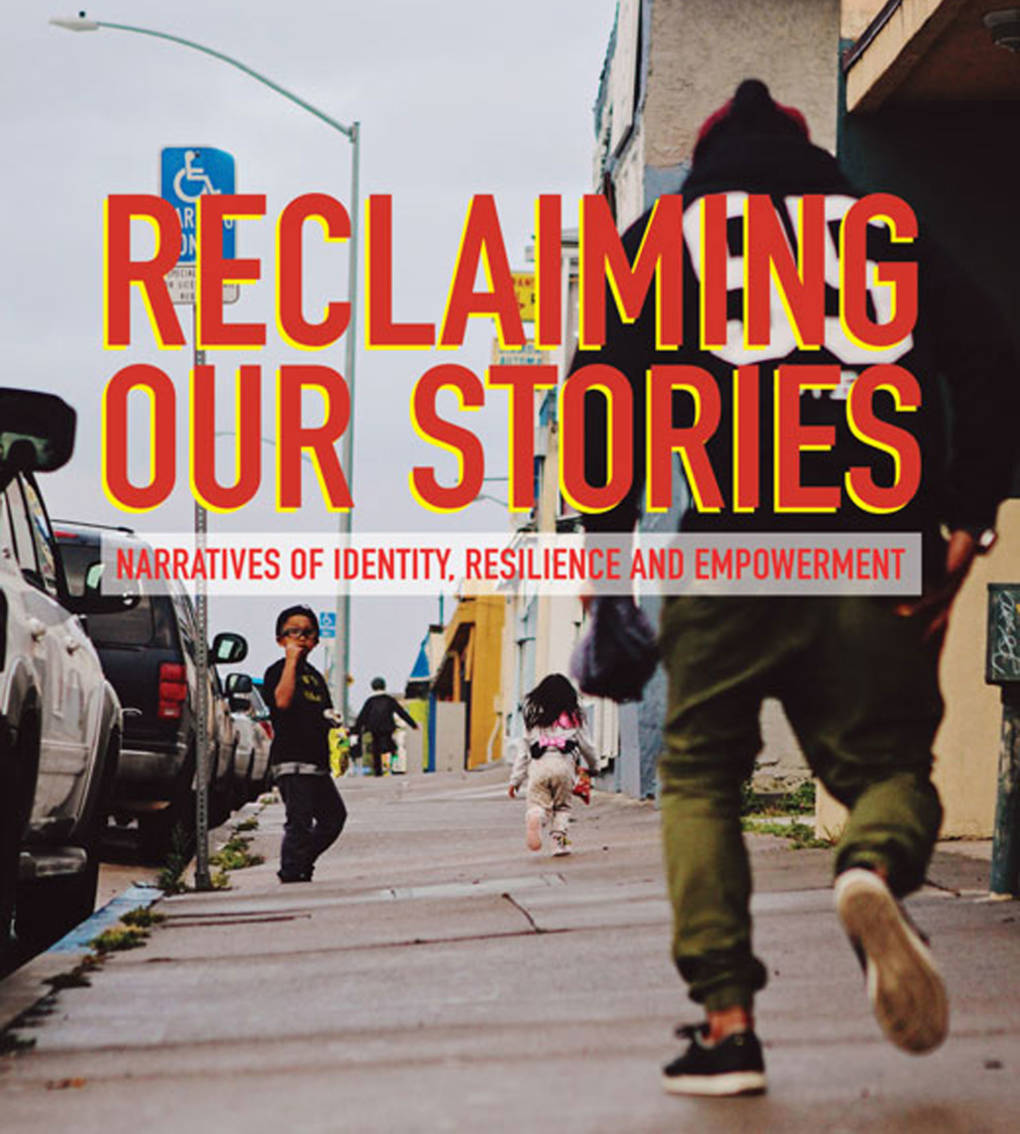
"caption": "The 'Reclaiming Our Stories' collection features first-person narratives from 19 authors in San Diego.",
"description": "The 'Reclaiming Our Stories' collection features first-person narratives from 19 authors in San Diego.",
"title": "reclaimingstories",
"credit": null,
"status": "inherit",
"isLoading": false,
"fetchFailed": false
},
"news_11265188": {
"type": "attachments",
"id": "news_11265188",
"meta": {
"index": "attachments_1716263798",
"site": "news",
"id": "11265188",
"found": true
},
"parent": 11265129,
"imgSizes": {
"small": {
"file": "https://ww2.kqed.org/app/uploads/sites/10/2017/01/ElCajonOlango-520x314.jpg",
"width": 520,
"mimeType": "image/jpeg",
"height": 314
},
"twentyfourteen-full-width": {
"file": "https://ww2.kqed.org/app/uploads/sites/10/2017/01/ElCajonOlango-1038x576.jpg",
"width": 1038,
"mimeType": "image/jpeg",
"height": 576
},
"thumbnail": {
"file": "https://ww2.kqed.org/app/uploads/sites/10/2017/01/ElCajonOlango-160x97.jpg",
"width": 160,
"mimeType": "image/jpeg",
"height": 97
},
"fd-sm": {
"file": "https://ww2.kqed.org/app/uploads/sites/10/2017/01/ElCajonOlango-960x579.jpg",
"width": 960,
"mimeType": "image/jpeg",
"height": 579
},
"post-thumbnail": {
"file": "https://ww2.kqed.org/app/uploads/sites/10/2017/01/ElCajonOlango-672x372.jpg",
"width": 672,
"mimeType": "image/jpeg",
"height": 372
},
"xsmall": {
"file": "https://ww2.kqed.org/app/uploads/sites/10/2017/01/ElCajonOlango-375x226.jpg",
"width": 375,
"mimeType": "image/jpeg",
"height": 226
},
"kqedFullSize": {
"file": "https://ww2.kqed.org/app/uploads/sites/10/2017/01/ElCajonOlango.jpg",
"width": 1920,
"height": 1158
},
"large": {
"file": "https://ww2.kqed.org/app/uploads/sites/10/2017/01/ElCajonOlango-1020x615.jpg",
"width": 1020,
"mimeType": "image/jpeg",
"height": 615
},
"xlarge": {
"file": "https://ww2.kqed.org/app/uploads/sites/10/2017/01/ElCajonOlango-1180x712.jpg",
"width": 1180,
"mimeType": "image/jpeg",
"height": 712
},
"guest-author-50": {
"file": "https://ww2.kqed.org/app/uploads/sites/10/2017/01/ElCajonOlango-50x50.jpg",
"width": 50,
"mimeType": "image/jpeg",
"height": 50
},
"guest-author-96": {
"file": "https://ww2.kqed.org/app/uploads/sites/10/2017/01/ElCajonOlango-96x96.jpg",
"width": 96,
"mimeType": "image/jpeg",
"height": 96
},
"medium": {
"file": "https://ww2.kqed.org/app/uploads/sites/10/2017/01/ElCajonOlango-800x483.jpg",
"width": 800,
"mimeType": "image/jpeg",
"height": 483
},
"guest-author-64": {
"file": "https://ww2.kqed.org/app/uploads/sites/10/2017/01/ElCajonOlango-64x64.jpg",
"width": 64,
"mimeType": "image/jpeg",
"height": 64
},
"guest-author-32": {
"file": "https://ww2.kqed.org/app/uploads/sites/10/2017/01/ElCajonOlango-32x32.jpg",
"width": 32,
"mimeType": "image/jpeg",
"height": 32
},
"jmtc-small-thumb": {
"file": "https://ww2.kqed.org/app/uploads/sites/10/2017/01/ElCajonOlango-280x150.jpg",
"width": 280,
"mimeType": "image/jpeg",
"height": 150
},
"fd-lrg": {
"file": "https://ww2.kqed.org/app/uploads/sites/10/2017/01/ElCajonOlango-1920x1158.jpg",
"width": 1920,
"mimeType": "image/jpeg",
"height": 1158
},
"fd-med": {
"file": "https://ww2.kqed.org/app/uploads/sites/10/2017/01/ElCajonOlango-1180x712.jpg",
"width": 1180,
"mimeType": "image/jpeg",
"height": 712
},
"full-width": {
"file": "https://ww2.kqed.org/app/uploads/sites/10/2017/01/ElCajonOlango-1920x1158.jpg",
"width": 1920,
"mimeType": "image/jpeg",
"height": 1158
},
"detail": {
"file": "https://ww2.kqed.org/app/uploads/sites/10/2017/01/ElCajonOlango-150x150.jpg",
"width": 150,
"mimeType": "image/jpeg",
"height": 150
},
"guest-author-128": {
"file": "https://ww2.kqed.org/app/uploads/sites/10/2017/01/ElCajonOlango-128x128.jpg",
"width": 128,
"mimeType": "image/jpeg",
"height": 128
},
"xxsmall": {
"file": "https://ww2.kqed.org/app/uploads/sites/10/2017/01/ElCajonOlango-240x145.jpg",
"width": 240,
"mimeType": "image/jpeg",
"height": 145
}
},
"publishDate": 1484172439,
"modified": 1484175157,
"caption": "A cellphone video showed a deadly confrontation in September 2016 between El Cajon police officers and Ugandan immigrant Alfred Olango. His sister says she told officers he was mentally ill.",
"description": "A cellphone video showed a deadly confrontation in Sept, 2016 between El Cajon police officers and Ugandan immigrant Alfred Olango, whose sister says she told officers was mentally ill.",
"title": "elcajonolango",
"credit": "El Cajon Police Department",
"status": "inherit",
"isLoading": false,
"fetchFailed": false
},
"news_11107716": {
"type": "attachments",
"id": "news_11107716",
"meta": {
"index": "attachments_1716263798",
"site": "news",
"id": "11107716",
"found": true
},
"parent": 11107711,
"imgSizes": {
"twentyfourteen-full-width": {
"file": "https://ww2.kqed.org/app/uploads/sites/10/2016/09/ElCajon-1038x576.jpg",
"width": 1038,
"mimeType": "image/jpeg",
"height": 576
},
"thumbnail": {
"file": "https://ww2.kqed.org/app/uploads/sites/10/2016/09/ElCajon-400x225.jpg",
"width": 400,
"mimeType": "image/jpeg",
"height": 225
},
"fd-sm": {
"file": "https://ww2.kqed.org/app/uploads/sites/10/2016/09/ElCajon-960x540.jpg",
"width": 960,
"mimeType": "image/jpeg",
"height": 540
},
"post-thumbnail": {
"file": "https://ww2.kqed.org/app/uploads/sites/10/2016/09/ElCajon-672x372.jpg",
"width": 672,
"mimeType": "image/jpeg",
"height": 372
},
"kqedFullSize": {
"file": "https://ww2.kqed.org/app/uploads/sites/10/2016/09/ElCajon.jpg",
"width": 1920,
"height": 1080
},
"large": {
"file": "https://ww2.kqed.org/app/uploads/sites/10/2016/09/ElCajon-1920x1080.jpg",
"width": 1920,
"mimeType": "image/jpeg",
"height": 1080
},
"guest-author-50": {
"file": "https://ww2.kqed.org/app/uploads/sites/10/2016/09/ElCajon-50x50.jpg",
"width": 50,
"mimeType": "image/jpeg",
"height": 50
},
"guest-author-96": {
"file": "https://ww2.kqed.org/app/uploads/sites/10/2016/09/ElCajon-96x96.jpg",
"width": 96,
"mimeType": "image/jpeg",
"height": 96
},
"medium": {
"file": "https://ww2.kqed.org/app/uploads/sites/10/2016/09/ElCajon-800x450.jpg",
"width": 800,
"mimeType": "image/jpeg",
"height": 450
},
"guest-author-64": {
"file": "https://ww2.kqed.org/app/uploads/sites/10/2016/09/ElCajon-64x64.jpg",
"width": 64,
"mimeType": "image/jpeg",
"height": 64
},
"guest-author-32": {
"file": "https://ww2.kqed.org/app/uploads/sites/10/2016/09/ElCajon-32x32.jpg",
"width": 32,
"mimeType": "image/jpeg",
"height": 32
},
"jmtc-small-thumb": {
"file": "https://ww2.kqed.org/app/uploads/sites/10/2016/09/ElCajon-280x150.jpg",
"width": 280,
"mimeType": "image/jpeg",
"height": 150
},
"fd-lrg": {
"file": "https://ww2.kqed.org/app/uploads/sites/10/2016/09/ElCajon-1920x1080.jpg",
"width": 1920,
"mimeType": "image/jpeg",
"height": 1080
},
"fd-med": {
"file": "https://ww2.kqed.org/app/uploads/sites/10/2016/09/ElCajon-1180x664.jpg",
"width": 1180,
"mimeType": "image/jpeg",
"height": 664
},
"detail": {
"file": "https://ww2.kqed.org/app/uploads/sites/10/2016/09/ElCajon-150x150.jpg",
"width": 150,
"mimeType": "image/jpeg",
"height": 150
},
"guest-author-128": {
"file": "https://ww2.kqed.org/app/uploads/sites/10/2016/09/ElCajon-128x128.jpg",
"width": 128,
"mimeType": "image/jpeg",
"height": 128
}
},
"publishDate": 1475088554,
"modified": 1475088651,
"caption": "A cellphone video showed a deadly confrontation between El Cajon police officers and a man whose sister says she told officers was mentally ill.",
"description": "A cellphone video showed a deadly confrontation between El Cajon police officers and a man whose sister says she told officers was mentally ill.",
"title": "ElCajon",
"credit": "El Cajon Police Department",
"status": "inherit",
"isLoading": false,
"fetchFailed": false
}
},
"audioPlayerReducer": {
"postId": "stream_live",
"isPaused": true,
"isPlaying": false,
"pfsActive": false,
"pledgeModalIsOpen": true,
"playerDrawerIsOpen": false,
"liveAudioPlayStartedAt": 0,
"liveAudioPlayContext": ""
},
"authorsReducer": {
"byline_news_11418665": {
"type": "authors",
"id": "byline_news_11418665",
"meta": {
"override": true
},
"slug": "byline_news_11418665",
"name": "\u003cstrong>\u003ca href=\"http://www.kpbs.org/staff/jean-guerrero/\">Jean Guerrero\u003c/a>\u003cbr>\u003ca href=\"http://www.kpbs.org/\">KPBS\u003c/a>\u003c/strong>",
"isLoading": false
},
"byline_news_11401950": {
"type": "authors",
"id": "byline_news_11401950",
"meta": {
"override": true
},
"slug": "byline_news_11401950",
"name": "\u003cstrong>\u003ca href=\"http://www.kpbs.org/staff/erik-anderson/\">Erik Anderson\u003c/a>\u003cbr>\u003ca href=\"http://www.kpbs.org/\">KPBS\u003c/a>\u003c/strong>",
"isLoading": false
},
"byline_news_11385154": {
"type": "authors",
"id": "byline_news_11385154",
"meta": {
"override": true
},
"slug": "byline_news_11385154",
"name": "Camila Domonoske",
"isLoading": false
},
"byline_news_11383543": {
"type": "authors",
"id": "byline_news_11383543",
"meta": {
"override": true
},
"slug": "byline_news_11383543",
"name": "\u003cstrong>\u003ca href=\"http://www.kpbs.org/staff/jean-guerrero/\">Jean Guerrero\u003c/a>\u003cbr>\u003ca href=\"http://www.kpbs.org/\">KPBS\u003c/a>\u003c/strong>",
"isLoading": false
},
"byline_news_11383471": {
"type": "authors",
"id": "byline_news_11383471",
"meta": {
"override": true
},
"slug": "byline_news_11383471",
"name": "Bill Chappell",
"isLoading": false
},
"byline_news_11353197": {
"type": "authors",
"id": "byline_news_11353197",
"meta": {
"override": true
},
"slug": "byline_news_11353197",
"name": "\u003cstrong>\u003ca href=http://www.kpbs.org/staff/jean-guerrero/\">Jean Guerrero\u003c/a>\u003cbr>\u003ca href=\"http://www.kpbs.org/\">KPBS\u003c/a>\u003c/strong>",
"isLoading": false
},
"byline_news_11266499": {
"type": "authors",
"id": "byline_news_11266499",
"meta": {
"override": true
},
"slug": "byline_news_11266499",
"name": "Bernie Wilson \u003cbr> Associated Press ",
"isLoading": false
},
"byline_news_11265129": {
"type": "authors",
"id": "byline_news_11265129",
"meta": {
"override": true
},
"slug": "byline_news_11265129",
"name": "\u003cstrong>Elliot Spagat and Robert Jablon \u003cbr> Associated Press\u003c/strong>",
"isLoading": false
},
"byline_news_11107711": {
"type": "authors",
"id": "byline_news_11107711",
"meta": {
"override": true
},
"slug": "byline_news_11107711",
"name": "Julie Watson and Andrew Dalton\u003cbr>Associated Press",
"isLoading": false
},
"sasha-khokha": {
"type": "authors",
"id": "254",
"meta": {
"index": "authors_1716337520",
"id": "254",
"found": true
},
"name": "Sasha Khokha",
"firstName": "Sasha",
"lastName": "Khokha",
"slug": "sasha-khokha",
"email": "skhokha@kqed.org",
"display_author_email": true,
"staff_mastheads": [
"news"
],
"title": "Host, The California Report Magazine",
"bio": "Sasha Khokha is the host of \u003cem>The California Report's \u003c/em> weekly magazine program, which takes listeners on sound-rich excursions to meet the people that make the Golden State unique -- through audio documentaries and long-form stories. As \u003cem>The California Report's\u003c/em> Central Valley Bureau Chief based in Fresno for nearly a dozen years, Sasha brought the lives and concerns of rural Californians to listeners around the state. Her reporting helped expose the hidden price immigrant women janitors and farmworkers may pay to keep their jobs: sexual assault at work. It inspired two new California laws to protect them from sexual harassment. She was a key member of the reporting team for the Frontline film \u003cem>Rape on the Night Shift, \u003c/em>which was nominated for two national Emmys. Sasha has also won a national Edward R. Murrow and a national PRNDI award for investigative reporting, as well as multiple prizes from the Society for Professional Journalists. Sasha is a proud alum of the UC Berkeley Graduate School of Journalism and Brown University and a member of the South Asian Journalists Association.",
"avatar": "https://secure.gravatar.com/avatar/e4b5e1541aaeea2aa356aa1fb2a68950?s=600&d=blank&r=g",
"twitter": "KQEDSashaKhokha",
"facebook": null,
"instagram": null,
"linkedin": null,
"sites": [
{
"site": "news",
"roles": [
"editor"
]
},
{
"site": "stateofhealth",
"roles": [
"author"
]
},
{
"site": "science",
"roles": [
"author"
]
},
{
"site": "quest",
"roles": [
"subscriber"
]
}
],
"headData": {
"title": "Sasha Khokha | KQED",
"description": "Host, The California Report Magazine",
"ogImgSrc": "https://secure.gravatar.com/avatar/e4b5e1541aaeea2aa356aa1fb2a68950?s=600&d=blank&r=g",
"twImgSrc": "https://secure.gravatar.com/avatar/e4b5e1541aaeea2aa356aa1fb2a68950?s=600&d=blank&r=g"
},
"isLoading": false,
"link": "/author/sasha-khokha"
},
"jsepulvado": {
"type": "authors",
"id": "11298",
"meta": {
"index": "authors_1716337520",
"id": "11298",
"found": true
},
"name": "John Sepulvado",
"firstName": "John",
"lastName": "Sepulvado",
"slug": "jsepulvado",
"email": "jsepulvado@KQED.org",
"display_author_email": false,
"staff_mastheads": [],
"title": null,
"bio": "John Sepulvado is a former morning host of \u003cem>The California Report\u003c/em>. Prior to joining KQED in September 2016, John was the local host of NPR’s \u003cem>Weekend Edition\u003c/em> at Oregon Public Broadcasting (OPB). He has also served as a producer for America Public Media’s \u003cem>Marketplace Weekend\u003c/em> and worked as a national correspondent for CNN and as news director at WUSF in Tampa, Florida. John has earned prestigious RTDNA Murrow and PRNDI awards for investigative reporting, and helped CNN take home a Peabody Award for coverage of the 2010 Gulf oil spill. John attended Florida A&M in Tallahassee and is also a member of Phi Theta Kappa. He left KQED in 2019.",
"avatar": "https://secure.gravatar.com/avatar/b976d3c4cf11750a793b670e5acb7a1c?s=600&d=blank&r=g",
"twitter": null,
"facebook": null,
"instagram": null,
"linkedin": null,
"sites": [
{
"site": "news",
"roles": [
"author",
"edit_others_posts"
]
}
],
"headData": {
"title": "John Sepulvado | KQED",
"description": null,
"ogImgSrc": "https://secure.gravatar.com/avatar/b976d3c4cf11750a793b670e5acb7a1c?s=600&d=blank&r=g",
"twImgSrc": "https://secure.gravatar.com/avatar/b976d3c4cf11750a793b670e5acb7a1c?s=600&d=blank&r=g"
},
"isLoading": false,
"link": "/author/jsepulvado"
}
},
"pagesReducer": {
"news_tag_san-diego": {
"type": "terms",
"id": "news_4486",
"meta": {
"index": "terms_1716263798",
"site": "news",
"id": "4486",
"score": 9.103905
},
"featImg": null,
"name": "San Diego",
"description": null,
"taxonomy": "tag",
"headData": {
"twImgId": null,
"twTitle": null,
"ogTitle": null,
"ogImgId": null,
"twDescription": null,
"description": null,
"title": "San Diego Archives | KQED News",
"ogDescription": null
},
"ttid": 4505,
"slug": "san-diego",
"isLoading": false,
"title": "San Diego",
"pageMeta": {
"site": "news",
"WpPageTemplate": "page-topic-editorial",
"currentPage": 10
},
"blocks": [
{
"blockName": "kqed/post-list",
"attrs": {
"layout": "cardArticle2",
"query": "posts/news?tag=san-diego",
"seeMore": false,
"paginated": true,
"page": 10
}
},
{
"blockName": "kqed/ad"
}
]
}
},
"pfsSessionReducer": {},
"postsReducer": {
"stream_live": {
"type": "live",
"id": "stream_live",
"audioUrl": "https://streams.kqed.org/kqedradio",
"title": "Live Stream",
"excerpt": "Live Stream information currently unavailable.",
"link": "/radio",
"featImg": "",
"label": {
"name": "KQED Live",
"link": "/"
}
},
"stream_kqedNewscast": {
"type": "posts",
"id": "stream_kqedNewscast",
"audioUrl": "https://www.kqed.org/.stream/anon/radio/RDnews/newscast.mp3?_=1",
"title": "KQED Newscast",
"featImg": "",
"label": {
"name": "88.5 FM",
"link": "/"
}
},
"news_11418665": {
"type": "posts",
"id": "news_11418665",
"meta": {
"index": "posts_1716263798",
"site": "news",
"id": "11418665",
"score": null,
"sort": [
1492722141000
]
},
"parent": 0,
"labelTerm": {
"site": "news",
"term": 72
},
"blocks": [],
"publishDate": 1492722141,
"format": "standard",
"disqusTitle": "Missing San Diego Activist Recovering After Being Found Wounded in Mexico",
"title": "Missing San Diego Activist Recovering After Being Found Wounded in Mexico",
"headTitle": "The California Report | KQED News",
"content": "\u003cp>Border Angels Founder Enrique Morones is working with the U.S. Embassy in Mexico City to have his volunteer coordinator Hugo Castro transferred to a San Diego hospital from the Red Cross facility in the State of Mexico.\u003c/p>\n\u003cp>The San Diego activist is receiving medical attention and is stable after being found wounded Tuesday on an street called Avenida San Rafael in Tlalnepantla de Baz, a city in the State of Mexico, Mexico's attorney general said in a press release Tuesday. He had been missing for nearly five days.\u003c/p>\n\u003cp>Investigators at the office of the special prosecutor for disappeared persons received an anonymous phone call describing his location.\u003c/p>\n\u003cp>Details surrounding his disappearance are still unclear, but \u003ca href=\"http://www.gob.mx/pgr\">the office of Mexico's attorney general\u003c/a> said it has since launched an investigation into \"the illegal deprivation of freedom\" of Castro.\u003c/p>\n\u003cp>Castro's partner, Gaba Cortes, shared a few details on her Facebook page Tuesday night, saying representatives from the attorney general's office had been with her all day.\u003c/p>\n\u003cp>[ad fullwidth]\u003c/p>\n\u003cp>\"The health state of Hugo Castro is delicate, he is hospitalized, the medical prognosis is guarded,\" she wrote.\u003c/p>\n\u003cp>[audio src=\"http://www.kqed.org/.stream/anon/radio/tcr/2017/04/2017-04-20b-tcr.mp3\" Image=\"https://ww2.kqed.org/news/wp-content/uploads/sites/10/2017/04/HugoCastro.jpg\" Title=\"Missing San Diego Activist Recovering After Being Found Wounded in Mexico\" program=\"The California Report\"]\u003c/p>\n\u003cp>Morones said he was \"delighted\" to learn that his volunteer was found alive, although he is very worried about Castro's physical health and is also unaware of the circumstances.\u003c/p>\n\u003cp>\"He is so loved by so many people, I'm sure that positive energy and all the help from so many people played a key role,\" Morones said. \"There's been so many people helping us -- the U.S. government, the Mexican government, organizations, individuals, and we really want to thank everybody because it takes a team effort.\"\u003c/p>\n\u003cp>Castro, a U.S. citizen, went missing Thursday evening after posting a \u003ca href=\"https://www.facebook.com/BorderAngelsBaja/videos/vb.1313385868/10212363095375163/?type=2&theater\">Facebook Live video\u003c/a> from the shoulder of a highway near Mexico City, saying a group of criminals was \"hunting\" him.\u003c/p>\n\u003cp>\"Seriously, I was threatened, they want to kill me,\" he said in Spanish, asking for someone to pick him up, describing his location as Kilometer 37 of the highway to Puebla out of the Mexican capital.\u003c/p>\n\u003cp>https://www.youtube.com/watch?v=GpYX91GwXAE\u003c/p>\n\u003cp>Castro is a volunteer coordinator at Border Angels, a San Diego-based advocacy group. KPBS aired a story on Monday that followed Castro as he delivered \u003ca href=\"http://www.kpbs.org/news/2017/apr/10/san-diego-volunteers-try-help-haitians-survive-mex/\">donations to migrant shelters\u003c/a> in Tijuana.\u003c/p>\n\u003cp>His disappearance came while he was en route to Querétaro, Mexico to participate in a caravan that is following asylum seekers from Central America on their dangerous trek to the U.S.-Mexico border.\u003c/p>\n\u003cp>The caravan is meant to raise awareness about allegations that the U.S. has been turning away refugees without reviewing their cases, as well as human rights abuses they reportedly suffer in Mexico.\u003c/p>\n\u003cp>Castro said in his Facebook Live video, posted at 6:28 p.m. on Thursday, that a criminal organization had been following him for days and that they were now cornering him on the highway in freight vehicles. Castro had been traveling on buses and taxis.\u003c/p>\n\u003cp>He pointed the camera at an area of the highway where he said the drivers of freight vehicles were pulling over and watching him. The video is unclear but the tail lights of a vehicle are visible on the shoulder.\u003c/p>\n\u003cp>Castro, who appeared distressed, said he was almost out of money and that his phone's battery would soon die.\u003c/p>\n\u003cp>He added that the criminal organization that he believed was following him was from Tamaulipas and that he suspected the government and various transportation industries were involved.\u003c/p>\n\u003cp>\"I can't trust the police,\" he said.\u003c/p>\n\u003cp>[contextly_sidebar id=\"p60voug8mGsWHNlDE3D1JyOMahVuMjQC\"]\u003c/p>\n\u003cp>U.S. consular officials in Mexico have been aware of the disappearance of Castro and said they plan to assist in the search, a spokesman told KPBS on Monday.\u003c/p>\n\u003cp>\"The welfare of U.S. citizens is one of the Department's highest priorities,\" said Preeti Shah, a spokesman for the U.S. Consulate. \"We stand ready to provide all possible consular assistance. Due to privacy considerations, we have no further comment at this time.\"\u003c/p>\n\u003cp>Castro is one of the highest-profile American individuals to disappear in a country where officials estimate more than 10,000 people are missing. Mexico's attorney general is investigating. According to some estimates, only about 1 percent of those who go missing are ever found.\u003c/p>\n\u003cp>Border Angels founder Enrique Morones told KPBS that Castro had received multiple death threats in recent months due to his work to protect Haitian migrants.\u003c/p>\n\u003cp>“These people that threatened him were trying to take advantage of the Haitians and Hugo was defending them,\" Morones said.\u003c/p>\n\u003cp>In Mexico, drug cartels regularly profit off of migrants. They kidnap hundreds of them each month for human trafficking or ransom.\u003c/p>\n\u003cp>Castro, who regularly posted Facebook Live videos, \u003ca href=\"https://www.facebook.com/BorderAngelsBaja/videos/vb.1313385868/10212047170357235/?type=3&theater\">posted one\u003c/a> on March 10 from the Tijuana side of the San Ysidro Port of Entry, where he said he had just received a death threat. He recounted the incident in the dark, saying he had been advising a newly deported group of about 50 migrants on how to avoid being robbed, kidnapped and exploited.\u003c/p>\n\u003cp>A cab driver confronted Castro, saying he was going to kill him for interfering with his plans to pick up the deported migrants, Castro said. \u003c/p>\n\u003cp>He added that the angry driver -- from the Taxi Amarillo line in Tijuana -- called his friends and that several of them surrounded Castro, backing off only when they saw security cameras at the port of entry.\u003c/p>\n\u003cp>\u003c/p>\n\u003cp>\"If anything happens to me, I hold responsible the Taxi Amarillo line of cabs here in Tijuana,\" he said.\u003c/p>\n\n",
"disqusIdentifier": "11418665 https://ww2.kqed.org/news/?p=11418665",
"disqusUrl": "https://ww2.kqed.org/news/2017/04/20/missing-san-diego-activist-recovering-after-being-found-wounded-in-mexico/",
"stats": {
"hasVideo": true,
"hasChartOrMap": false,
"hasAudio": true,
"hasPolis": false,
"wordCount": 973,
"hasGoogleForm": false,
"hasGallery": false,
"hasHearkenModule": false,
"iframeSrcs": [],
"paragraphCount": 31
},
"modified": 1492722141,
"excerpt": "Hugo Castro had been missing for nearly five days after posting a Facebook Live video from the shoulder of a highway, saying a group of criminals was 'hunting' him.",
"headData": {
"twImgId": "",
"twTitle": "",
"ogTitle": "",
"ogImgId": "",
"twDescription": "",
"description": "Hugo Castro had been missing for nearly five days after posting a Facebook Live video from the shoulder of a highway, saying a group of criminals was 'hunting' him.",
"title": "Missing San Diego Activist Recovering After Being Found Wounded in Mexico | KQED",
"ogDescription": "",
"schema": {
"@context": "https://schema.org",
"@type": "NewsArticle",
"headline": "Missing San Diego Activist Recovering After Being Found Wounded in Mexico",
"datePublished": "2017-04-20T14:02:21-07:00",
"dateModified": "2017-04-20T14:02:21-07:00",
"image": "https://cdn.kqed.org/wp-content/uploads/2020/02/KQED-OG-Image@1x.png",
"isAccessibleForFree": "True",
"publisher": {
"@type": "NewsMediaOrganization",
"@id": "https://www.kqed.org/#organization",
"name": "KQED",
"logo": "https://cdn.kqed.org/wp-content/uploads/2020/02/KQED-OG-Image@1x.png",
"url": "https://www.kqed.org",
"sameAs": [
"https://www.facebook.com/KQED",
"https://twitter.com/KQED",
"https://www.instagram.com/kqed/",
"https://www.tiktok.com/@kqedofficial",
"https://www.linkedin.com/company/kqed",
"https://www.youtube.com/channel/UCeC0IOo7i1P_61zVUWbJ4nw"
]
}
}
},
"guestAuthors": [],
"slug": "missing-san-diego-activist-recovering-after-being-found-wounded-in-mexico",
"status": "publish",
"nprByline": "\u003cstrong>\u003ca href=\"http://www.kpbs.org/staff/jean-guerrero/\">Jean Guerrero\u003c/a>\u003cbr>\u003ca href=\"http://www.kpbs.org/\">KPBS\u003c/a>\u003c/strong>",
"path": "/news/11418665/missing-san-diego-activist-recovering-after-being-found-wounded-in-mexico",
"audioTrackLength": null,
"parsedContent": [
{
"type": "contentString",
"content": "\u003cdiv class=\"post-body\">\u003cp>\u003cp>Border Angels Founder Enrique Morones is working with the U.S. Embassy in Mexico City to have his volunteer coordinator Hugo Castro transferred to a San Diego hospital from the Red Cross facility in the State of Mexico.\u003c/p>\n\u003cp>The San Diego activist is receiving medical attention and is stable after being found wounded Tuesday on an street called Avenida San Rafael in Tlalnepantla de Baz, a city in the State of Mexico, Mexico's attorney general said in a press release Tuesday. He had been missing for nearly five days.\u003c/p>\n\u003cp>Investigators at the office of the special prosecutor for disappeared persons received an anonymous phone call describing his location.\u003c/p>\n\u003cp>Details surrounding his disappearance are still unclear, but \u003ca href=\"http://www.gob.mx/pgr\">the office of Mexico's attorney general\u003c/a> said it has since launched an investigation into \"the illegal deprivation of freedom\" of Castro.\u003c/p>\n\u003cp>Castro's partner, Gaba Cortes, shared a few details on her Facebook page Tuesday night, saying representatives from the attorney general's office had been with her all day.\u003c/p>\n\u003cp>\u003c/p>\u003c/div>",
"attributes": {
"named": {},
"numeric": []
}
},
{
"type": "component",
"content": "",
"name": "ad",
"attributes": {
"named": {
"label": "fullwidth"
},
"numeric": [
"fullwidth"
]
}
},
{
"type": "contentString",
"content": "\u003cdiv class=\"post-body\">\u003cp>\u003c/p>\n\u003cp>\"The health state of Hugo Castro is delicate, he is hospitalized, the medical prognosis is guarded,\" she wrote.\u003c/p>\n\u003cp>\u003c/p>\u003c/div>",
"attributes": {
"named": {},
"numeric": []
}
},
{
"type": "component",
"content": "",
"name": "audio",
"attributes": {
"named": {
"src": "http://www.kqed.org/.stream/anon/radio/tcr/2017/04/2017-04-20b-tcr.mp3",
"image": "https://ww2.kqed.org/news/wp-content/uploads/sites/10/2017/04/HugoCastro.jpg",
"title": "Missing San Diego Activist Recovering After Being Found Wounded in Mexico",
"program": "The California Report",
"label": ""
},
"numeric": []
}
},
{
"type": "contentString",
"content": "\u003cdiv class=\"post-body\">\u003cp>\u003c/p>\n\u003cp>Morones said he was \"delighted\" to learn that his volunteer was found alive, although he is very worried about Castro's physical health and is also unaware of the circumstances.\u003c/p>\n\u003cp>\"He is so loved by so many people, I'm sure that positive energy and all the help from so many people played a key role,\" Morones said. \"There's been so many people helping us -- the U.S. government, the Mexican government, organizations, individuals, and we really want to thank everybody because it takes a team effort.\"\u003c/p>\n\u003cp>Castro, a U.S. citizen, went missing Thursday evening after posting a \u003ca href=\"https://www.facebook.com/BorderAngelsBaja/videos/vb.1313385868/10212363095375163/?type=2&theater\">Facebook Live video\u003c/a> from the shoulder of a highway near Mexico City, saying a group of criminals was \"hunting\" him.\u003c/p>\n\u003cp>\"Seriously, I was threatened, they want to kill me,\" he said in Spanish, asking for someone to pick him up, describing his location as Kilometer 37 of the highway to Puebla out of the Mexican capital.\u003c/p>\u003c/p>\u003cp>\u003cspan class='utils-parseShortcode-shortcodes-__youtubeShortcode__embedYoutube'>\n \u003cspan class='utils-parseShortcode-shortcodes-__youtubeShortcode__embedYoutubeInside'>\n \u003ciframe\n loading='lazy'\n class='utils-parseShortcode-shortcodes-__youtubeShortcode__youtubePlayer'\n type='text/html'\n src='//www.youtube.com/embed/GpYX91GwXAE'\n title='//www.youtube.com/embed/GpYX91GwXAE'\n allowfullscreen='true'\n style='border:0;'>\u003c/iframe>\n \u003c/span>\n \u003c/span>\u003c/p>\u003cp>\u003cp>Castro is a volunteer coordinator at Border Angels, a San Diego-based advocacy group. KPBS aired a story on Monday that followed Castro as he delivered \u003ca href=\"http://www.kpbs.org/news/2017/apr/10/san-diego-volunteers-try-help-haitians-survive-mex/\">donations to migrant shelters\u003c/a> in Tijuana.\u003c/p>\n\u003cp>His disappearance came while he was en route to Querétaro, Mexico to participate in a caravan that is following asylum seekers from Central America on their dangerous trek to the U.S.-Mexico border.\u003c/p>\n\u003cp>The caravan is meant to raise awareness about allegations that the U.S. has been turning away refugees without reviewing their cases, as well as human rights abuses they reportedly suffer in Mexico.\u003c/p>\n\u003cp>Castro said in his Facebook Live video, posted at 6:28 p.m. on Thursday, that a criminal organization had been following him for days and that they were now cornering him on the highway in freight vehicles. Castro had been traveling on buses and taxis.\u003c/p>\n\u003cp>He pointed the camera at an area of the highway where he said the drivers of freight vehicles were pulling over and watching him. The video is unclear but the tail lights of a vehicle are visible on the shoulder.\u003c/p>\n\u003cp>Castro, who appeared distressed, said he was almost out of money and that his phone's battery would soon die.\u003c/p>\n\u003cp>He added that the criminal organization that he believed was following him was from Tamaulipas and that he suspected the government and various transportation industries were involved.\u003c/p>\n\u003cp>\"I can't trust the police,\" he said.\u003c/p>\n\u003cp>\u003c/p>\u003cp>\u003c/p>\u003cp>\u003c/p>\n\u003cp>U.S. consular officials in Mexico have been aware of the disappearance of Castro and said they plan to assist in the search, a spokesman told KPBS on Monday.\u003c/p>\n\u003cp>\"The welfare of U.S. citizens is one of the Department's highest priorities,\" said Preeti Shah, a spokesman for the U.S. Consulate. \"We stand ready to provide all possible consular assistance. Due to privacy considerations, we have no further comment at this time.\"\u003c/p>\n\u003cp>Castro is one of the highest-profile American individuals to disappear in a country where officials estimate more than 10,000 people are missing. Mexico's attorney general is investigating. According to some estimates, only about 1 percent of those who go missing are ever found.\u003c/p>\n\u003cp>Border Angels founder Enrique Morones told KPBS that Castro had received multiple death threats in recent months due to his work to protect Haitian migrants.\u003c/p>\n\u003cp>“These people that threatened him were trying to take advantage of the Haitians and Hugo was defending them,\" Morones said.\u003c/p>\n\u003cp>In Mexico, drug cartels regularly profit off of migrants. They kidnap hundreds of them each month for human trafficking or ransom.\u003c/p>\n\u003cp>Castro, who regularly posted Facebook Live videos, \u003ca href=\"https://www.facebook.com/BorderAngelsBaja/videos/vb.1313385868/10212047170357235/?type=3&theater\">posted one\u003c/a> on March 10 from the Tijuana side of the San Ysidro Port of Entry, where he said he had just received a death threat. He recounted the incident in the dark, saying he had been advising a newly deported group of about 50 migrants on how to avoid being robbed, kidnapped and exploited.\u003c/p>\n\u003cp>A cab driver confronted Castro, saying he was going to kill him for interfering with his plans to pick up the deported migrants, Castro said. \u003c/p>\n\u003cp>He added that the angry driver -- from the Taxi Amarillo line in Tijuana -- called his friends and that several of them surrounded Castro, backing off only when they saw security cameras at the port of entry.\u003c/p>\n\u003cp>\u003c/p>\n\u003cp>\"If anything happens to me, I hold responsible the Taxi Amarillo line of cabs here in Tijuana,\" he said.\u003c/p>\n\n\u003c/div>\u003c/p>",
"attributes": {
"named": {},
"numeric": []
}
}
],
"link": "/news/11418665/missing-san-diego-activist-recovering-after-being-found-wounded-in-mexico",
"authors": [
"byline_news_11418665"
],
"programs": [
"news_72"
],
"categories": [
"news_1169",
"news_6188",
"news_8"
],
"tags": [
"news_2403",
"news_4486",
"news_17286"
],
"affiliates": [
"news_7054"
],
"featImg": "news_11418670",
"label": "news_72"
},
"news_11401950": {
"type": "posts",
"id": "news_11401950",
"meta": {
"index": "posts_1716263798",
"site": "news",
"id": "11401950",
"score": null,
"sort": [
1491861336000
]
},
"parent": 0,
"labelTerm": {
"site": "news",
"term": 72
},
"blocks": [],
"publishDate": 1491861336,
"format": "standard",
"disqusTitle": "Rare Butterfly Returns to San Diego National Wildlife Refuge",
"title": "Rare Butterfly Returns to San Diego National Wildlife Refuge",
"headTitle": "The California Report | KQED News",
"content": "\u003cp>Biologist John Martin surveyed a plateau on a mountainside at the \u003ca href=\"https://www.fws.gov/refuge/san_diego/\">San Diego National Wildlife Refuge \u003c/a>on a recent spring morning. The landscape is covered with coastal sage scrub, once the dominant habitat in the Southern California region.\u003c/p>\n\u003cp>This green ribbon of natural habitat that wraps around Mount San Miguel is a sharp contrast to the urban environment that surrounds the refuge's 11,000 acres of protected lands.\u003c/p>\n\u003cp>Martin could see downtown San Diego from this hard-to-reach vantage spot, but that is not what he was there to look at.\u003c/p>\n\u003cp>\"This open area that I'm sitting in is high-quality habitat for Quino checkerspot butterfly,\" Martin said.\u003c/p>\n\u003cp>The endangered Quino checkerspots are flying on the San Diego National Wildlife Refuge this spring for the first time in years.\u003c/p>\n\u003cp>[ad fullwidth]\u003c/p>\n\u003cp>[audio src=\"http://www.kqed.org/.stream/anon/radio/tcr/2017/04/2017-04-10c-tcr.mp3\" Image=\"https://u.s.kqed.net/2017/04/10/LarvaofQuinoCheckerspotButterfly004LGtx700.jpg\" Title=\"Rare Butterfly Returns to San Diego National Wildlife Refuge\" program=\"The California Report\"]\u003c/p>\n\u003cp>Martin knelt in a patch of coastal sage scrub. The spaces between bigger plants were covered with algae, lichens and mosses that keep invasive weeds at bay.\u003c/p>\n\u003cp>\"But allow this plant, this tiny little grasslike plant — plantago erecta — to grow in profusion. And the caterpillars of the Quino checkerspot need this plant to survive,\" Martin said.\u003c/p>\n\u003cp>This habitat is considered prime territory for the Quino. In fact, the fragile butterfly lays eggs on or around plantago erecta, the scientific name for the California plantain, in the spring. The insect's eggs and the larvae spend most of their life on the plant, the ground or safely tucked in a weblike cocoon. Quinos have a specialized ability to hibernate when environmental conditions are not good.\u003c/p>\n\u003cp>\"When they emerge from summer dormancy, when the winter rains come out, they cause this plant to emerge and start growing caterpillars,\" Martin said, \"to emerge from dormancy and eat this, and grow and shed their skins, and grow some more until they're about 3 centimeters long.\"\u003c/p>\n\u003ch2>Quino Checkerspots Used to Be Quite Common\u003c/h2>\n\u003cp>For about three weeks in the spring, Quinos transform into adult butterflies. That is when they breed and propagate the next generation.\u003c/p>\n\u003cp>Their black, brown and white colored wings used to be a common sight. Millions flew from the Santa Monica mountains to Baja California, but the population crashed in the mid-1970s. Quinos finally got endangered species protection in 1997.\u003c/p>\n\u003cp>Sprawling suburbs stole a lot of the butterfly's habitat.\u003c/p>\n\u003cp>Fire and drought also took a toll on an increasingly isolated species.\u003c/p>\n\u003cp>\"It's kind of like a bouncing ball. This is a species that booms and busts,\" said Susan Wynn, a \u003ca href=\"https://www.fws.gov/carlsbad/\">U.S. Fish and Wildlife Service\u003c/a> biologist.\u003c/p>\n\u003cp>https://www.youtube.com/watch?v=J3jnotGpbhI\u003c/p>\n\u003cp>Wynn spent a lot of time and energy working to improve the butterfly's future.\u003c/p>\n\u003cp>\"But each time the ball bounces it's not bouncing quite as high. And some of these sites, it's just bounced so low that they don't have that resiliency or that adjacent population to rebound from, so we're hoping to get the techniques sort of figured out so that when we need to give it a little boost — bounce the ball a little higher — we'll have that ability, that we'll have that in our toolbox,\" Wynn said.\u003c/p>\n\u003cp>Biologists spent two unsuccessful years trying to capture local female Quinos on the San Diego refuge. They had no luck.\u003c/p>\n\u003cp>\"Yes, it was very concerning, but it was also reinforcing that we were on the right track, that this was something very important to do,\" Wynn said. \"And, so last year we did end up going up to Riverside because they had populations that were big enough to collect from.\"\u003c/p>\n\u003cp>Those genetically similar butterflies were collected and brought to a tiny trailer on the San Diego Zoo's grounds. Located near the elephant exhibit, the\u003ca href=\"http://zoo.sandiegozoo.org/\"> Butterfly Conservation Lab\u003c/a> served as home for the first-ever attempt to rear Quinos in the lab.\u003c/p>\n\u003cp>Entomologist Paige Howorth set up the program that ended up producing 1,513 larvae and caterpillars.\u003c/p>\n\u003cp>\"So the adult females that we receive from the wild and we set them up in these enclosures with the host plant, and so this is what they'll lay their eggs on,\" Howorth said.\u003c/p>\n\u003cp>Zoo staff nurtured the adults, fed the butterflies Gatorade and collected the eggs they deposited. By last December, the first group of larvae was ready to be released on the refuge. The 742 larvae were still hibernating, and while that is uncommon for a butterfly, it is typical for Quinos.\u003c/p>\n\u003cfigure id=\"attachment_11402116\" class=\"wp-caption aligncenter\" style=\"max-width: 800px\">\u003cimg class=\"size-medium wp-image-11402116\" src=\"https://ww2.kqed.org/news/wp-content/uploads/sites/10/2017/04/Biologists-800x463.jpg\" alt=\"Biologists Susan Wynn and John Martin inspect coastal sage scrub on the San Diego National Wildlife Refuge to find a rare wild butterfly, March 14, 2017.\" width=\"800\" height=\"463\" srcset=\"https://ww2.kqed.org/app/uploads/sites/10/2017/04/Biologists-800x463.jpg 800w, https://ww2.kqed.org/app/uploads/sites/10/2017/04/Biologists-160x93.jpg 160w, https://ww2.kqed.org/app/uploads/sites/10/2017/04/Biologists-1020x590.jpg 1020w, https://ww2.kqed.org/app/uploads/sites/10/2017/04/Biologists.jpg 1920w, https://ww2.kqed.org/app/uploads/sites/10/2017/04/Biologists-1180x683.jpg 1180w, https://ww2.kqed.org/app/uploads/sites/10/2017/04/Biologists-960x556.jpg 960w, https://ww2.kqed.org/app/uploads/sites/10/2017/04/Biologists-240x139.jpg 240w, https://ww2.kqed.org/app/uploads/sites/10/2017/04/Biologists-375x217.jpg 375w, https://ww2.kqed.org/app/uploads/sites/10/2017/04/Biologists-520x301.jpg 520w\" sizes=\"(max-width: 800px) 100vw, 800px\">\u003cfigcaption class=\"wp-caption-text\">Biologists Susan Wynn and John Martin inspect coastal sage scrub on the San Diego National Wildlife Refuge to find a rare wild butterfly, March 14, 2017. \u003ccite>(Matthew Bowler/KPBS)\u003c/cite>\u003c/figcaption>\u003c/figure>\n\u003cp>\"It is occurring at the same time that the host plant in the habitat is completely drying up and going away. So they just kind of shut everything down for several months — until the winter rains start again,\" Howorth said.\u003c/p>\n\u003cp>The larvae were released on the refuge inside modified brown Christmas-tree bulbs. The hope was that they would wake up as winter rain fell.\u003c/p>\n\u003cp>In January, about 800 caterpillars joined the larvae released just a month earlier.\u003c/p>\n\u003cp>Biologist Wynn hoped the Quinos would take their cues from nature.\u003c/p>\n\u003ch2>Quinos Were Flying in the Wild for the First Time in Years\u003c/h2>\n\u003cp>The butterflies got a huge boost from a wet winter, which allowed the plants they feed on to thrive, and the payoff for Susan Wynn and fellow biologist John Martin came this spring.\u003c/p>\n\u003cp>\"There is one right there,\" Wynn whispered in hushed tones.\u003c/p>\n\u003cp>\"We did it, John,\" she said as she clapped gently.\u003c/p>\n\u003cp>Martin answered the praise with a gentle laugh and then a reminder.\u003c/p>\n\u003cp>\"We'll have done it next year. If we don't augment here next year, I don't know, we'll see,\" Martin said.\u003c/p>\n\u003cp>Wynn and Martin were delighted to see about 20 Quinos flying in the refuge on that recent spring morning. It raised hope that the extraordinary captive rearing program could have a lasting impact on the small population of remaining Quinos.\u003c/p>\n\u003cp>\"It worked,\" Wynn said. \"They are right on track with the natural populations as far as, they are emerging the same week the natural populations are emerging.\"\u003c/p>\n\u003cp>The U.S. Fish and Wildlife Service has enough money set aside to do two more years of the captive rearing and releasing.\u003c/p>\n\u003cp>Biologists are optimistic that effort will boost the local population on the San Diego National Wildlife Refuge so that the rare butterflies spread to nearby suitable habitat on the refuge.\u003c/p>\n\u003cp>[ad floatright]\u003c/p>\n\u003cp>Eventually, biologists would like to see a self-sustaining population that no longer needs a human assist.\u003c/p>\n\n",
"disqusIdentifier": "11401950 https://ww2.kqed.org/news/?p=11401950",
"disqusUrl": "https://ww2.kqed.org/news/2017/04/10/rare-butterfly-returns-to-san-diego-national-wildlife-refuge/",
"stats": {
"hasVideo": true,
"hasChartOrMap": false,
"hasAudio": true,
"hasPolis": false,
"wordCount": 1145,
"hasGoogleForm": false,
"hasGallery": false,
"hasHearkenModule": false,
"iframeSrcs": [],
"paragraphCount": 38
},
"modified": 1491863251,
"excerpt": "Endangered Quino checkerspot butterflies are flying in the San Diego National Wildlife Refuge this spring for the first time in years.",
"headData": {
"twImgId": "",
"twTitle": "",
"ogTitle": "",
"ogImgId": "",
"twDescription": "",
"description": "Endangered Quino checkerspot butterflies are flying in the San Diego National Wildlife Refuge this spring for the first time in years.",
"title": "Rare Butterfly Returns to San Diego National Wildlife Refuge | KQED",
"ogDescription": "",
"schema": {
"@context": "https://schema.org",
"@type": "NewsArticle",
"headline": "Rare Butterfly Returns to San Diego National Wildlife Refuge",
"datePublished": "2017-04-10T14:55:36-07:00",
"dateModified": "2017-04-10T15:27:31-07:00",
"image": "https://cdn.kqed.org/wp-content/uploads/2020/02/KQED-OG-Image@1x.png",
"isAccessibleForFree": "True",
"publisher": {
"@type": "NewsMediaOrganization",
"@id": "https://www.kqed.org/#organization",
"name": "KQED",
"logo": "https://cdn.kqed.org/wp-content/uploads/2020/02/KQED-OG-Image@1x.png",
"url": "https://www.kqed.org",
"sameAs": [
"https://www.facebook.com/KQED",
"https://twitter.com/KQED",
"https://www.instagram.com/kqed/",
"https://www.tiktok.com/@kqedofficial",
"https://www.linkedin.com/company/kqed",
"https://www.youtube.com/channel/UCeC0IOo7i1P_61zVUWbJ4nw"
]
}
}
},
"guestAuthors": [],
"slug": "rare-butterfly-returns-to-san-diego-national-wildlife-refuge",
"status": "publish",
"nprByline": "\u003cstrong>\u003ca href=\"http://www.kpbs.org/staff/erik-anderson/\">Erik Anderson\u003c/a>\u003cbr>\u003ca href=\"http://www.kpbs.org/\">KPBS\u003c/a>\u003c/strong>",
"path": "/news/11401950/rare-butterfly-returns-to-san-diego-national-wildlife-refuge",
"audioTrackLength": null,
"parsedContent": [
{
"type": "contentString",
"content": "\u003cdiv class=\"post-body\">\u003cp>\u003cp>Biologist John Martin surveyed a plateau on a mountainside at the \u003ca href=\"https://www.fws.gov/refuge/san_diego/\">San Diego National Wildlife Refuge \u003c/a>on a recent spring morning. The landscape is covered with coastal sage scrub, once the dominant habitat in the Southern California region.\u003c/p>\n\u003cp>This green ribbon of natural habitat that wraps around Mount San Miguel is a sharp contrast to the urban environment that surrounds the refuge's 11,000 acres of protected lands.\u003c/p>\n\u003cp>Martin could see downtown San Diego from this hard-to-reach vantage spot, but that is not what he was there to look at.\u003c/p>\n\u003cp>\"This open area that I'm sitting in is high-quality habitat for Quino checkerspot butterfly,\" Martin said.\u003c/p>\n\u003cp>The endangered Quino checkerspots are flying on the San Diego National Wildlife Refuge this spring for the first time in years.\u003c/p>\n\u003cp>\u003c/p>\u003c/div>",
"attributes": {
"named": {},
"numeric": []
}
},
{
"type": "component",
"content": "",
"name": "ad",
"attributes": {
"named": {
"label": "fullwidth"
},
"numeric": [
"fullwidth"
]
}
},
{
"type": "contentString",
"content": "\u003cdiv class=\"post-body\">\u003cp>\u003c/p>\n\u003cp>\u003c/p>\u003c/div>",
"attributes": {
"named": {},
"numeric": []
}
},
{
"type": "component",
"content": "",
"name": "audio",
"attributes": {
"named": {
"src": "http://www.kqed.org/.stream/anon/radio/tcr/2017/04/2017-04-10c-tcr.mp3",
"image": "https://u.s.kqed.net/2017/04/10/LarvaofQuinoCheckerspotButterfly004LGtx700.jpg",
"title": "Rare Butterfly Returns to San Diego National Wildlife Refuge",
"program": "The California Report",
"label": ""
},
"numeric": []
}
},
{
"type": "contentString",
"content": "\u003cdiv class=\"post-body\">\u003cp>\u003c/p>\n\u003cp>Martin knelt in a patch of coastal sage scrub. The spaces between bigger plants were covered with algae, lichens and mosses that keep invasive weeds at bay.\u003c/p>\n\u003cp>\"But allow this plant, this tiny little grasslike plant — plantago erecta — to grow in profusion. And the caterpillars of the Quino checkerspot need this plant to survive,\" Martin said.\u003c/p>\n\u003cp>This habitat is considered prime territory for the Quino. In fact, the fragile butterfly lays eggs on or around plantago erecta, the scientific name for the California plantain, in the spring. The insect's eggs and the larvae spend most of their life on the plant, the ground or safely tucked in a weblike cocoon. Quinos have a specialized ability to hibernate when environmental conditions are not good.\u003c/p>\n\u003cp>\"When they emerge from summer dormancy, when the winter rains come out, they cause this plant to emerge and start growing caterpillars,\" Martin said, \"to emerge from dormancy and eat this, and grow and shed their skins, and grow some more until they're about 3 centimeters long.\"\u003c/p>\n\u003ch2>Quino Checkerspots Used to Be Quite Common\u003c/h2>\n\u003cp>For about three weeks in the spring, Quinos transform into adult butterflies. That is when they breed and propagate the next generation.\u003c/p>\n\u003cp>Their black, brown and white colored wings used to be a common sight. Millions flew from the Santa Monica mountains to Baja California, but the population crashed in the mid-1970s. Quinos finally got endangered species protection in 1997.\u003c/p>\n\u003cp>Sprawling suburbs stole a lot of the butterfly's habitat.\u003c/p>\n\u003cp>Fire and drought also took a toll on an increasingly isolated species.\u003c/p>\n\u003cp>\"It's kind of like a bouncing ball. This is a species that booms and busts,\" said Susan Wynn, a \u003ca href=\"https://www.fws.gov/carlsbad/\">U.S. Fish and Wildlife Service\u003c/a> biologist.\u003c/p>\u003c/p>\u003cp>\u003cspan class='utils-parseShortcode-shortcodes-__youtubeShortcode__embedYoutube'>\n \u003cspan class='utils-parseShortcode-shortcodes-__youtubeShortcode__embedYoutubeInside'>\n \u003ciframe\n loading='lazy'\n class='utils-parseShortcode-shortcodes-__youtubeShortcode__youtubePlayer'\n type='text/html'\n src='//www.youtube.com/embed/J3jnotGpbhI'\n title='//www.youtube.com/embed/J3jnotGpbhI'\n allowfullscreen='true'\n style='border:0;'>\u003c/iframe>\n \u003c/span>\n \u003c/span>\u003c/p>\u003cp>\u003cp>Wynn spent a lot of time and energy working to improve the butterfly's future.\u003c/p>\n\u003cp>\"But each time the ball bounces it's not bouncing quite as high. And some of these sites, it's just bounced so low that they don't have that resiliency or that adjacent population to rebound from, so we're hoping to get the techniques sort of figured out so that when we need to give it a little boost — bounce the ball a little higher — we'll have that ability, that we'll have that in our toolbox,\" Wynn said.\u003c/p>\n\u003cp>Biologists spent two unsuccessful years trying to capture local female Quinos on the San Diego refuge. They had no luck.\u003c/p>\n\u003cp>\"Yes, it was very concerning, but it was also reinforcing that we were on the right track, that this was something very important to do,\" Wynn said. \"And, so last year we did end up going up to Riverside because they had populations that were big enough to collect from.\"\u003c/p>\n\u003cp>Those genetically similar butterflies were collected and brought to a tiny trailer on the San Diego Zoo's grounds. Located near the elephant exhibit, the\u003ca href=\"http://zoo.sandiegozoo.org/\"> Butterfly Conservation Lab\u003c/a> served as home for the first-ever attempt to rear Quinos in the lab.\u003c/p>\n\u003cp>Entomologist Paige Howorth set up the program that ended up producing 1,513 larvae and caterpillars.\u003c/p>\n\u003cp>\"So the adult females that we receive from the wild and we set them up in these enclosures with the host plant, and so this is what they'll lay their eggs on,\" Howorth said.\u003c/p>\n\u003cp>Zoo staff nurtured the adults, fed the butterflies Gatorade and collected the eggs they deposited. By last December, the first group of larvae was ready to be released on the refuge. The 742 larvae were still hibernating, and while that is uncommon for a butterfly, it is typical for Quinos.\u003c/p>\n\u003cfigure id=\"attachment_11402116\" class=\"wp-caption aligncenter\" style=\"max-width: 800px\">\u003cimg class=\"size-medium wp-image-11402116\" src=\"https://ww2.kqed.org/news/wp-content/uploads/sites/10/2017/04/Biologists-800x463.jpg\" alt=\"Biologists Susan Wynn and John Martin inspect coastal sage scrub on the San Diego National Wildlife Refuge to find a rare wild butterfly, March 14, 2017.\" width=\"800\" height=\"463\" srcset=\"https://ww2.kqed.org/app/uploads/sites/10/2017/04/Biologists-800x463.jpg 800w, https://ww2.kqed.org/app/uploads/sites/10/2017/04/Biologists-160x93.jpg 160w, https://ww2.kqed.org/app/uploads/sites/10/2017/04/Biologists-1020x590.jpg 1020w, https://ww2.kqed.org/app/uploads/sites/10/2017/04/Biologists.jpg 1920w, https://ww2.kqed.org/app/uploads/sites/10/2017/04/Biologists-1180x683.jpg 1180w, https://ww2.kqed.org/app/uploads/sites/10/2017/04/Biologists-960x556.jpg 960w, https://ww2.kqed.org/app/uploads/sites/10/2017/04/Biologists-240x139.jpg 240w, https://ww2.kqed.org/app/uploads/sites/10/2017/04/Biologists-375x217.jpg 375w, https://ww2.kqed.org/app/uploads/sites/10/2017/04/Biologists-520x301.jpg 520w\" sizes=\"(max-width: 800px) 100vw, 800px\">\u003cfigcaption class=\"wp-caption-text\">Biologists Susan Wynn and John Martin inspect coastal sage scrub on the San Diego National Wildlife Refuge to find a rare wild butterfly, March 14, 2017. \u003ccite>(Matthew Bowler/KPBS)\u003c/cite>\u003c/figcaption>\u003c/figure>\n\u003cp>\"It is occurring at the same time that the host plant in the habitat is completely drying up and going away. So they just kind of shut everything down for several months — until the winter rains start again,\" Howorth said.\u003c/p>\n\u003cp>The larvae were released on the refuge inside modified brown Christmas-tree bulbs. The hope was that they would wake up as winter rain fell.\u003c/p>\n\u003cp>In January, about 800 caterpillars joined the larvae released just a month earlier.\u003c/p>\n\u003cp>Biologist Wynn hoped the Quinos would take their cues from nature.\u003c/p>\n\u003ch2>Quinos Were Flying in the Wild for the First Time in Years\u003c/h2>\n\u003cp>The butterflies got a huge boost from a wet winter, which allowed the plants they feed on to thrive, and the payoff for Susan Wynn and fellow biologist John Martin came this spring.\u003c/p>\n\u003cp>\"There is one right there,\" Wynn whispered in hushed tones.\u003c/p>\n\u003cp>\"We did it, John,\" she said as she clapped gently.\u003c/p>\n\u003cp>Martin answered the praise with a gentle laugh and then a reminder.\u003c/p>\n\u003cp>\"We'll have done it next year. If we don't augment here next year, I don't know, we'll see,\" Martin said.\u003c/p>\n\u003cp>Wynn and Martin were delighted to see about 20 Quinos flying in the refuge on that recent spring morning. It raised hope that the extraordinary captive rearing program could have a lasting impact on the small population of remaining Quinos.\u003c/p>\n\u003cp>\"It worked,\" Wynn said. \"They are right on track with the natural populations as far as, they are emerging the same week the natural populations are emerging.\"\u003c/p>\n\u003cp>The U.S. Fish and Wildlife Service has enough money set aside to do two more years of the captive rearing and releasing.\u003c/p>\n\u003cp>Biologists are optimistic that effort will boost the local population on the San Diego National Wildlife Refuge so that the rare butterflies spread to nearby suitable habitat on the refuge.\u003c/p>\n\u003cp>\u003c/p>\u003c/div>",
"attributes": {
"named": {},
"numeric": []
}
},
{
"type": "component",
"content": "",
"name": "ad",
"attributes": {
"named": {
"label": "floatright"
},
"numeric": [
"floatright"
]
}
},
{
"type": "contentString",
"content": "\u003cdiv class=\"post-body\">\u003cp>\u003c/p>\n\u003cp>Eventually, biologists would like to see a self-sustaining population that no longer needs a human assist.\u003c/p>\n\n\u003c/div>\u003c/p>",
"attributes": {
"named": {},
"numeric": []
}
}
],
"link": "/news/11401950/rare-butterfly-returns-to-san-diego-national-wildlife-refuge",
"authors": [
"byline_news_11401950"
],
"programs": [
"news_72"
],
"categories": [
"news_19906",
"news_8",
"news_356"
],
"tags": [
"news_18132",
"news_4486",
"news_17286",
"news_1421"
],
"affiliates": [
"news_7054"
],
"featImg": "news_11401952",
"label": "news_72"
},
"news_11385154": {
"type": "posts",
"id": "news_11385154",
"meta": {
"index": "posts_1716263798",
"site": "news",
"id": "11385154",
"score": null,
"sort": [
1490984737000
]
},
"guestAuthors": [],
"slug": "judge-oks-25-million-settlement-of-trump-university-lawsuit",
"title": "Judge OKs $25 Million Settlement of Trump University Lawsuit",
"publishDate": 1490984737,
"format": "standard",
"headTitle": "Judge OKs $25 Million Settlement of Trump University Lawsuit | KQED",
"labelTerm": {},
"content": "\u003cp>A federal judge has approved a $25 million settlement deal between President Trump and students who paid for Trump University real estate seminars, bringing lengthy litigation to a close.\u003c/p>\n\u003cp>The deal, which calls for Trump to reimburse the students who say they were defrauded, was struck in November but needed approval from U.S. District Judge Gonzalo Curiel. He signed off on the settlement Friday in San Diego.\u003c/p>\n\u003cp>Trump doesn’t admit any wrongdoing under the terms of the settlement.\u003c/p>\n\u003cp>The settlement applies to three separate lawsuits — two class-actions and a fraud case. The $25 million deal includes payouts to more than 6,000 Trump U students who paid thousands of dollars for courses they describe as worthless.\u003c/p>\n\u003cp>[contextly_sidebar id=”xbXDV1VUnLZGdABXYV4AKkwZjQ5qQUxF”]\u003c/p>\n\u003cp>One student had pushed against the deal, as The Associated Press reports:\u003c/p>\n\u003cblockquote>\n\u003cp>“The only holdup appeared to be a Florida woman’s claim that she should be allowed to opt out of the settlement and sue the president on her own — a move that would likely scuttle the entire agreement.\u003c/p>\n\u003cp>“Attorneys for former customers said that their clients would get at least 90 percent of their money back under the deal, based on the roughly 3,730 claims submitted. …\u003c/p>\n\u003cp>“Curiel said the high payments weighed in favor of approval, and he noted that only two of about 7,000 eligible class-action members objected to the terms.”\u003c/p>\n\u003c/blockquote>\n\u003cp>You may recall that on the campaign trail, Trump accused Curiel of being biased because he is “Mexican.” That claim was false — Curiel was born in Indiana — and even House Speaker Paul Ryan acknowledged that it was “sort of like the textbook definition of racism.”\u003c/p>\n\u003cp>[ad fullwidth]\u003c/p>\n\u003cp>Trump \u003ca href=\"http://www.npr.org/2016/06/04/480714972/trump-presses-case-that-mexican-judge-curiel-is-biased-against-him\">doubled down on the comments\u003c/a> before saying he \u003ca href=\"http://www.npr.org/2016/06/07/481013560/ryan-trumps-criticism-of-judge-textbook-definition-of-a-racist-comment\">wouldn’t talk about Curiel any more.\u003c/a>\u003c/p>\n\u003cp>[contextly_sidebar id=”d3rGpuqT4Ne0dnF61ExTO0a5pFqoXvvY”]\u003c/p>\n\u003cp>Curiel had urged both sides to settle.\u003c/p>\n\u003cp>And what about the fraud allegations that underpin these lawsuits?\u003c/p>\n\u003cp>NPR’s Ina Jaffe reported last year that students paid $1,500 to $35,000 for courses on “real estate investment secrets” ostensibly taught by instructors hand-picked by Trump.\u003c/p>\n\u003cp>“They claim that the promised Donald Trump investment techniques were mostly stuff that you could find on the internet, some of which was illegal in some of the states where the seminars took place,” \u003ca href=\"http://www.npr.org/2016/11/18/502624539/donald-trump-reaches-25-million-settlement-in-trump-university-case\">she said\u003c/a>. “They say that the promised mentoring was worthless or non-existent, that the instructors were unqualified and that they were definitely not handpicked by Donald Trump, as he claimed.\u003c/p>\n\u003cp>“And transcripts of Donald Trump’s deposition … confirm that he was relatively unengaged with what went on in Trump University.”\u003c/p>\n\u003cp>Trump’s lawyers said the allegations are false.\u003c/p>\n\u003cp>NPR’s Jim Zarroli \u003ca href=\"http://www.npr.org/2016/06/06/480948631/trump-university-customer-gold-elite-program-nothing-but-fools-gold\">spoke with an unhappy Trump University customer\u003c/a> who said he paid $35,000 for “secrets” such as the fact that he could go to the IRS website to learn about federal tax deductions.\u003c/p>\n\u003cp>“The more and more I got involved in Trump University, the more and more I found out that I had truly been scammed,” Bob Guillo, 76, told NPR.\u003c/p>\n\u003cp>\u003c/p>\n\u003cp>“At first it was embarrassing,” Guillo said. “Then I became very, very angry that the man that scammed me out of all that money had the audacity to run for president. And I’m still angry.” \u003c/p>\n\u003cdiv class=\"fullattribution\">Copyright 2017 NPR. To see more, visit http://www.npr.org/.\u003cimg decoding=\"async\" src=\"https://www.google-analytics.com/__utm.gif?utmac=UA-5828686-4&utmdt=Judge+Approves+%2425+Million+Settlement+Of+Trump+University+Lawsuit+&utme=8(APIKey)9(MDAxOTAwOTE4MDEyMTkxMDAzNjczZDljZA004)\">\u003c/div>\n\n",
"blocks": [],
"excerpt": "The deal was reached in November, but needed the approval of Judge Gonzalo Curiel, whom Trump previously accused of being biased because he is 'Mexican.'",
"status": "publish",
"parent": 0,
"modified": 1721109349,
"stats": {
"hasAudio": false,
"hasVideo": false,
"hasChartOrMap": false,
"iframeSrcs": [],
"hasGoogleForm": false,
"hasGallery": false,
"hasHearkenModule": false,
"hasPolis": false,
"paragraphCount": 23,
"wordCount": 588
},
"headData": {
"title": "Judge OKs $25 Million Settlement of Trump University Lawsuit | KQED",
"description": "The deal was reached in November, but needed the approval of Judge Gonzalo Curiel, whom Trump previously accused of being biased because he is 'Mexican.'",
"ogTitle": "",
"ogDescription": "",
"ogImgId": "",
"twTitle": "",
"twDescription": "",
"twImgId": "",
"schema": {
"@context": "https://schema.org",
"@type": "NewsArticle",
"headline": "Judge OKs $25 Million Settlement of Trump University Lawsuit",
"datePublished": "2017-03-31T11:25:37-07:00",
"dateModified": "2024-07-15T22:55:49-07:00",
"image": "https://cdn.kqed.org/wp-content/uploads/2020/02/KQED-OG-Image@1x.png",
"isAccessibleForFree": "True",
"publisher": {
"@type": "NewsMediaOrganization",
"@id": "https://www.kqed.org/#organization",
"name": "KQED",
"logo": "https://cdn.kqed.org/wp-content/uploads/2020/02/KQED-OG-Image@1x.png",
"url": "https://www.kqed.org",
"sameAs": [
"https://www.facebook.com/KQED",
"https://twitter.com/KQED",
"https://www.instagram.com/kqed/",
"https://www.tiktok.com/@kqedofficial",
"https://www.linkedin.com/company/kqed",
"https://www.youtube.com/channel/UCeC0IOo7i1P_61zVUWbJ4nw"
]
}
}
},
"source": "NPR",
"sourceUrl": "http://www.npr.org/",
"sticky": false,
"nprImageCredit": "Scott Gries",
"nprByline": "Camila Domonoske",
"nprImageAgency": "Getty Images",
"nprStoryId": "522199535",
"nprApiLink": "http://api.npr.org/query?id=522199535&apiKey=MDAxOTAwOTE4MDEyMTkxMDAzNjczZDljZA004",
"nprHtmlLink": "http://www.npr.org/sections/thetwo-way/2017/03/31/522199535/judge-approves-25-million-settlement-of-trump-university-lawsuit?ft=nprml&f=522199535",
"nprRetrievedStory": "1",
"nprPubDate": "Fri, 31 Mar 2017 13:55:00 -0400",
"nprStoryDate": "Fri, 31 Mar 2017 13:51:00 -0400",
"nprLastModifiedDate": "Fri, 31 Mar 2017 13:55:39 -0400",
"path": "/news/11385154/judge-oks-25-million-settlement-of-trump-university-lawsuit",
"audioTrackLength": null,
"parsedContent": [
{
"type": "contentString",
"content": "\u003cdiv class=\"post-body\">\u003cp>\u003cp>A federal judge has approved a $25 million settlement deal between President Trump and students who paid for Trump University real estate seminars, bringing lengthy litigation to a close.\u003c/p>\n\u003cp>The deal, which calls for Trump to reimburse the students who say they were defrauded, was struck in November but needed approval from U.S. District Judge Gonzalo Curiel. He signed off on the settlement Friday in San Diego.\u003c/p>\n\u003cp>Trump doesn’t admit any wrongdoing under the terms of the settlement.\u003c/p>\n\u003cp>The settlement applies to three separate lawsuits — two class-actions and a fraud case. The $25 million deal includes payouts to more than 6,000 Trump U students who paid thousands of dollars for courses they describe as worthless.\u003c/p>\n\u003cp>\u003c/p>\u003cp>\u003c/p>\u003cp>\u003c/p>\n\u003cp>One student had pushed against the deal, as The Associated Press reports:\u003c/p>\n\u003cblockquote>\n\u003cp>“The only holdup appeared to be a Florida woman’s claim that she should be allowed to opt out of the settlement and sue the president on her own — a move that would likely scuttle the entire agreement.\u003c/p>\n\u003cp>“Attorneys for former customers said that their clients would get at least 90 percent of their money back under the deal, based on the roughly 3,730 claims submitted. …\u003c/p>\n\u003cp>“Curiel said the high payments weighed in favor of approval, and he noted that only two of about 7,000 eligible class-action members objected to the terms.”\u003c/p>\n\u003c/blockquote>\n\u003cp>You may recall that on the campaign trail, Trump accused Curiel of being biased because he is “Mexican.” That claim was false — Curiel was born in Indiana — and even House Speaker Paul Ryan acknowledged that it was “sort of like the textbook definition of racism.”\u003c/p>\n\u003cp>\u003c/p>\u003c/div>",
"attributes": {
"named": {},
"numeric": []
}
},
{
"type": "component",
"content": "",
"name": "ad",
"attributes": {
"named": {
"label": "fullwidth"
},
"numeric": [
"fullwidth"
]
}
},
{
"type": "contentString",
"content": "\u003cdiv class=\"post-body\">\u003cp>\u003c/p>\n\u003cp>Trump \u003ca href=\"http://www.npr.org/2016/06/04/480714972/trump-presses-case-that-mexican-judge-curiel-is-biased-against-him\">doubled down on the comments\u003c/a> before saying he \u003ca href=\"http://www.npr.org/2016/06/07/481013560/ryan-trumps-criticism-of-judge-textbook-definition-of-a-racist-comment\">wouldn’t talk about Curiel any more.\u003c/a>\u003c/p>\n\u003cp>\u003c/p>\u003cp>\u003c/p>\u003cp>\u003c/p>\n\u003cp>Curiel had urged both sides to settle.\u003c/p>\n\u003cp>And what about the fraud allegations that underpin these lawsuits?\u003c/p>\n\u003cp>NPR’s Ina Jaffe reported last year that students paid $1,500 to $35,000 for courses on “real estate investment secrets” ostensibly taught by instructors hand-picked by Trump.\u003c/p>\n\u003cp>“They claim that the promised Donald Trump investment techniques were mostly stuff that you could find on the internet, some of which was illegal in some of the states where the seminars took place,” \u003ca href=\"http://www.npr.org/2016/11/18/502624539/donald-trump-reaches-25-million-settlement-in-trump-university-case\">she said\u003c/a>. “They say that the promised mentoring was worthless or non-existent, that the instructors were unqualified and that they were definitely not handpicked by Donald Trump, as he claimed.\u003c/p>\n\u003cp>“And transcripts of Donald Trump’s deposition … confirm that he was relatively unengaged with what went on in Trump University.”\u003c/p>\n\u003cp>Trump’s lawyers said the allegations are false.\u003c/p>\n\u003cp>NPR’s Jim Zarroli \u003ca href=\"http://www.npr.org/2016/06/06/480948631/trump-university-customer-gold-elite-program-nothing-but-fools-gold\">spoke with an unhappy Trump University customer\u003c/a> who said he paid $35,000 for “secrets” such as the fact that he could go to the IRS website to learn about federal tax deductions.\u003c/p>\n\u003cp>“The more and more I got involved in Trump University, the more and more I found out that I had truly been scammed,” Bob Guillo, 76, told NPR.\u003c/p>\n\u003cp>\u003c/p>\n\u003cp>“At first it was embarrassing,” Guillo said. “Then I became very, very angry that the man that scammed me out of all that money had the audacity to run for president. And I’m still angry.” \u003c/p>\n\u003cdiv class=\"fullattribution\">Copyright 2017 NPR. To see more, visit http://www.npr.org/.\u003cimg decoding=\"async\" src=\"https://www.google-analytics.com/__utm.gif?utmac=UA-5828686-4&utmdt=Judge+Approves+%2425+Million+Settlement+Of+Trump+University+Lawsuit+&utme=8(APIKey)9(MDAxOTAwOTE4MDEyMTkxMDAzNjczZDljZA004)\">\u003c/div>\n\n\u003c/div>\u003c/p>",
"attributes": {
"named": {},
"numeric": []
}
}
],
"link": "/news/11385154/judge-oks-25-million-settlement-of-trump-university-lawsuit",
"authors": [
"byline_news_11385154"
],
"programs": [
"news_72"
],
"categories": [
"news_6188",
"news_8",
"news_13"
],
"tags": [
"news_1323",
"news_4486",
"news_17286",
"news_17041"
],
"affiliates": [
"news_253"
],
"featImg": "news_11385155",
"label": "source_news_11385154"
},
"news_11383543": {
"type": "posts",
"id": "news_11383543",
"meta": {
"index": "posts_1716263798",
"site": "news",
"id": "11383543",
"score": null,
"sort": [
1490900367000
]
},
"parent": 0,
"labelTerm": {
"site": "news",
"term": 72
},
"blocks": [],
"publishDate": 1490900367,
"format": "standard",
"disqusTitle": "San Diego Signs Historic Memorandum, Gaining Role in Mexico’s Legislative Process",
"title": "San Diego Signs Historic Memorandum, Gaining Role in Mexico’s Legislative Process",
"headTitle": "The California Report | KQED News",
"content": "\u003cp>The \u003ca href=\"http://www.sdchamber.org/\">San Diego Regional Chamber of Commerce\u003c/a> signed a historic memorandum of understanding with Mexico’s Senate on Tuesday, expanding the influence of San Diego and northern Baja California leaders on Mexican legislation related to ports of entry, trade and immigration.\u003c/p>\n\u003cp>The agreement establishes a working group made up of business leaders and politicians from the San Diego-Tijuana region, as well as members of the Mexican Senate.\u003c/p>\n\u003cp>The working group will meet twice a year through 2018, alternating between Mexico City and San Diego or Tijuana, to collaborate on legislation related to those key issues.\u003c/p>\n\u003cp>\"This agreement serves as a model that others can use to establish their own agreements with Senate representatives,\" said Chamber President Jerry Sanders.\u003c/p>\n\u003cp>[audio src=\"http://www.kqed.org/.stream/anon/radio/tcr/2017/03/2017-03-30d-tcr.mp3\" Image=\"https://ww2.kqed.org/news/wp-content/uploads/sites/10/2017/01/burnett-border-fence-3-edit-53a12bb5e7f1df0c1b67302a182c97372400f3ec-1920x1440.jpg\" Title=\"San Diego Business Leaders Visit Mexico City\" program=\"The California Report\"]\u003c/p>\n\u003cp>Sanders promised to share the memorandum of understanding with other business associations, economic development organizations and academic institutions promoting cross-border trade and the U.S.-Mexico relationship.\u003c/p>\n\u003cp>[ad fullwidth]\u003c/p>\n\u003cp>Paola Avila, vice president of international business affairs for the chamber, said the agreement to meet at least twice in the San Diego-Tijuana region instead of the Mexican capital is significant because \"they'll be able to see first-hand our thriving economy.\"\u003c/p>\n\u003cp>She said the memorandum of understanding helps overcome misconceptions about the border region, noting that both Washington, D.C. and Mexico City are far away from San Diego and Tijuana, so federal officials are sometimes out of touch with border realities.\u003c/p>\n\u003cp>The chamber is in Mexico City this week\u003ca href=\"http://www.kpbs.org/news/2017/mar/27/san-diego-and-tijuana-leaders-push-regional-issues/\"> leading an annual delegation\u003c/a> of nearly 90 business leaders and politicians from the San Diego-Tijuana region. They are pushing for port of entry improvements and the preservation of key elements of NAFTA, which they argue benefits both cities.\u003c/p>\n\u003cfigure id=\"attachment_11383548\" class=\"wp-caption aligncenter\" style=\"max-width: 800px\">\u003cimg src=\"https://ww2.kqed.org/news/wp-content/uploads/sites/10/2017/03/SandersSigns-800x472.jpg\" alt=\"San Diego Regional Chamber of Commerce President Jerry Sanders signs a memorandum of understanding with the Mexican Senate on March 28, 2017.\" width=\"800\" height=\"472\" class=\"size-medium wp-image-11383548\" srcset=\"https://ww2.kqed.org/app/uploads/sites/10/2017/03/SandersSigns-800x472.jpg 800w, https://ww2.kqed.org/app/uploads/sites/10/2017/03/SandersSigns-160x94.jpg 160w, https://ww2.kqed.org/app/uploads/sites/10/2017/03/SandersSigns-1020x602.jpg 1020w, https://ww2.kqed.org/app/uploads/sites/10/2017/03/SandersSigns.jpg 1920w, https://ww2.kqed.org/app/uploads/sites/10/2017/03/SandersSigns-1180x696.jpg 1180w, https://ww2.kqed.org/app/uploads/sites/10/2017/03/SandersSigns-960x567.jpg 960w, https://ww2.kqed.org/app/uploads/sites/10/2017/03/SandersSigns-240x142.jpg 240w, https://ww2.kqed.org/app/uploads/sites/10/2017/03/SandersSigns-375x221.jpg 375w, https://ww2.kqed.org/app/uploads/sites/10/2017/03/SandersSigns-520x307.jpg 520w\" sizes=\"(max-width: 800px) 100vw, 800px\">\u003cfigcaption class=\"wp-caption-text\">San Diego Regional Chamber of Commerce President Jerry Sanders signs a memorandum of understanding with the Mexican Senate on March 28, 2017. \u003ccite>(Jean Guerrero/KPBS)\u003c/cite>\u003c/figcaption>\u003c/figure>\n\u003cp>On Monday evening, a few members of the delegation met privately with Mexico's Foreign Relations Minister Luis Videgaray, the equivalent of the U.S. secretary of state south of the border, who was \"very responsive\" to the delegation's requests, Avila said. Videgaray is Mexico's point person for upcoming NAFTA renegotiations with the U.S.\u003c/p>\n\u003cp>Videgaray promised to take a leadership role in advancing Otay II, a toll-operated port of entry planned for 2020 or 2021 in Otay Mesa, as well as to issue a diplomatic note necessary to allow a binational railroad to move forward through Tecate.\u003c/p>\n\u003cp>In exchange for that commitment, Avila said the delegation members promised to increase awareness in the U.S. about Mexico's importance as a trade partner. San Diego exports about $5.5 billion in goods and services to Mexico each year, and nationally, trade between the two countries was at $583.6 billion in 2015.\u003c/p>\n\u003cp>\"We wanted to make sure he knew we were a partner,\" Avila said. \"While there is a very negative message that has been received in Mexico, that is not shared by everyone. Our region is working every day to advocate in support and promotion of that relationship.\"\u003c/p>\n\u003cp>Videgaray has become a legendary figure in Mexico, leading sweeping structural reforms in Mexico's energy and telecommunications sectors as economy minister, then triggering a public outcry after inviting Trump to Mexico City during his campaign for president -- a scandal that \u003ca href=\"https://www.nytimes.com/2016/09/08/world/americas/mexico-finance-minister-luis-videgaray-resigns.html?_r=0\">forced Videgaray to resign\u003c/a> as economy minister.\u003c/p>\n\u003cp>\u003c/p>\n\u003cp>He told the delegation members that in preliminary conversations with U.S. officials regarding NAFTA, \"there is a willingness and an interest in working together on these infrastructure projects.\"\u003c/p>\n\n",
"disqusIdentifier": "11383543 https://ww2.kqed.org/news/?p=11383543",
"disqusUrl": "https://ww2.kqed.org/news/2017/03/30/san-diego-signs-historic-memorandum-gaining-role-in-mexicos-legislative-process/",
"stats": {
"hasVideo": false,
"hasChartOrMap": false,
"hasAudio": true,
"hasPolis": false,
"wordCount": 637,
"hasGoogleForm": false,
"hasGallery": false,
"hasHearkenModule": false,
"iframeSrcs": [],
"paragraphCount": 16
},
"modified": 1490911593,
"excerpt": "It expands the influence of San Diego and northern Baja California leaders on Mexican legislation related to ports of entry, trade and immigration.",
"headData": {
"twImgId": "",
"twTitle": "",
"ogTitle": "",
"ogImgId": "",
"twDescription": "",
"description": "It expands the influence of San Diego and northern Baja California leaders on Mexican legislation related to ports of entry, trade and immigration.",
"title": "San Diego Signs Historic Memorandum, Gaining Role in Mexico’s Legislative Process | KQED",
"ogDescription": "",
"schema": {
"@context": "https://schema.org",
"@type": "NewsArticle",
"headline": "San Diego Signs Historic Memorandum, Gaining Role in Mexico’s Legislative Process",
"datePublished": "2017-03-30T11:59:27-07:00",
"dateModified": "2017-03-30T15:06:33-07:00",
"image": "https://cdn.kqed.org/wp-content/uploads/2020/02/KQED-OG-Image@1x.png",
"isAccessibleForFree": "True",
"publisher": {
"@type": "NewsMediaOrganization",
"@id": "https://www.kqed.org/#organization",
"name": "KQED",
"logo": "https://cdn.kqed.org/wp-content/uploads/2020/02/KQED-OG-Image@1x.png",
"url": "https://www.kqed.org",
"sameAs": [
"https://www.facebook.com/KQED",
"https://twitter.com/KQED",
"https://www.instagram.com/kqed/",
"https://www.tiktok.com/@kqedofficial",
"https://www.linkedin.com/company/kqed",
"https://www.youtube.com/channel/UCeC0IOo7i1P_61zVUWbJ4nw"
]
}
}
},
"guestAuthors": [],
"slug": "san-diego-signs-historic-memorandum-gaining-role-in-mexicos-legislative-process",
"status": "publish",
"nprByline": "\u003cstrong>\u003ca href=\"http://www.kpbs.org/staff/jean-guerrero/\">Jean Guerrero\u003c/a>\u003cbr>\u003ca href=\"http://www.kpbs.org/\">KPBS\u003c/a>\u003c/strong>",
"path": "/news/11383543/san-diego-signs-historic-memorandum-gaining-role-in-mexicos-legislative-process",
"audioTrackLength": null,
"parsedContent": [
{
"type": "contentString",
"content": "\u003cdiv class=\"post-body\">\u003cp>\u003cp>The \u003ca href=\"http://www.sdchamber.org/\">San Diego Regional Chamber of Commerce\u003c/a> signed a historic memorandum of understanding with Mexico’s Senate on Tuesday, expanding the influence of San Diego and northern Baja California leaders on Mexican legislation related to ports of entry, trade and immigration.\u003c/p>\n\u003cp>The agreement establishes a working group made up of business leaders and politicians from the San Diego-Tijuana region, as well as members of the Mexican Senate.\u003c/p>\n\u003cp>The working group will meet twice a year through 2018, alternating between Mexico City and San Diego or Tijuana, to collaborate on legislation related to those key issues.\u003c/p>\n\u003cp>\"This agreement serves as a model that others can use to establish their own agreements with Senate representatives,\" said Chamber President Jerry Sanders.\u003c/p>\n\u003cp>\u003c/p>\u003c/div>",
"attributes": {
"named": {},
"numeric": []
}
},
{
"type": "component",
"content": "",
"name": "audio",
"attributes": {
"named": {
"src": "http://www.kqed.org/.stream/anon/radio/tcr/2017/03/2017-03-30d-tcr.mp3",
"image": "https://ww2.kqed.org/news/wp-content/uploads/sites/10/2017/01/burnett-border-fence-3-edit-53a12bb5e7f1df0c1b67302a182c97372400f3ec-1920x1440.jpg",
"title": "San Diego Business Leaders Visit Mexico City",
"program": "The California Report",
"label": ""
},
"numeric": []
}
},
{
"type": "contentString",
"content": "\u003cdiv class=\"post-body\">\u003cp>\u003c/p>\n\u003cp>Sanders promised to share the memorandum of understanding with other business associations, economic development organizations and academic institutions promoting cross-border trade and the U.S.-Mexico relationship.\u003c/p>\n\u003cp>\u003c/p>\u003c/div>",
"attributes": {
"named": {},
"numeric": []
}
},
{
"type": "component",
"content": "",
"name": "ad",
"attributes": {
"named": {
"label": "fullwidth"
},
"numeric": [
"fullwidth"
]
}
},
{
"type": "contentString",
"content": "\u003cdiv class=\"post-body\">\u003cp>\u003c/p>\n\u003cp>Paola Avila, vice president of international business affairs for the chamber, said the agreement to meet at least twice in the San Diego-Tijuana region instead of the Mexican capital is significant because \"they'll be able to see first-hand our thriving economy.\"\u003c/p>\n\u003cp>She said the memorandum of understanding helps overcome misconceptions about the border region, noting that both Washington, D.C. and Mexico City are far away from San Diego and Tijuana, so federal officials are sometimes out of touch with border realities.\u003c/p>\n\u003cp>The chamber is in Mexico City this week\u003ca href=\"http://www.kpbs.org/news/2017/mar/27/san-diego-and-tijuana-leaders-push-regional-issues/\"> leading an annual delegation\u003c/a> of nearly 90 business leaders and politicians from the San Diego-Tijuana region. They are pushing for port of entry improvements and the preservation of key elements of NAFTA, which they argue benefits both cities.\u003c/p>\n\u003cfigure id=\"attachment_11383548\" class=\"wp-caption aligncenter\" style=\"max-width: 800px\">\u003cimg src=\"https://ww2.kqed.org/news/wp-content/uploads/sites/10/2017/03/SandersSigns-800x472.jpg\" alt=\"San Diego Regional Chamber of Commerce President Jerry Sanders signs a memorandum of understanding with the Mexican Senate on March 28, 2017.\" width=\"800\" height=\"472\" class=\"size-medium wp-image-11383548\" srcset=\"https://ww2.kqed.org/app/uploads/sites/10/2017/03/SandersSigns-800x472.jpg 800w, https://ww2.kqed.org/app/uploads/sites/10/2017/03/SandersSigns-160x94.jpg 160w, https://ww2.kqed.org/app/uploads/sites/10/2017/03/SandersSigns-1020x602.jpg 1020w, https://ww2.kqed.org/app/uploads/sites/10/2017/03/SandersSigns.jpg 1920w, https://ww2.kqed.org/app/uploads/sites/10/2017/03/SandersSigns-1180x696.jpg 1180w, https://ww2.kqed.org/app/uploads/sites/10/2017/03/SandersSigns-960x567.jpg 960w, https://ww2.kqed.org/app/uploads/sites/10/2017/03/SandersSigns-240x142.jpg 240w, https://ww2.kqed.org/app/uploads/sites/10/2017/03/SandersSigns-375x221.jpg 375w, https://ww2.kqed.org/app/uploads/sites/10/2017/03/SandersSigns-520x307.jpg 520w\" sizes=\"(max-width: 800px) 100vw, 800px\">\u003cfigcaption class=\"wp-caption-text\">San Diego Regional Chamber of Commerce President Jerry Sanders signs a memorandum of understanding with the Mexican Senate on March 28, 2017. \u003ccite>(Jean Guerrero/KPBS)\u003c/cite>\u003c/figcaption>\u003c/figure>\n\u003cp>On Monday evening, a few members of the delegation met privately with Mexico's Foreign Relations Minister Luis Videgaray, the equivalent of the U.S. secretary of state south of the border, who was \"very responsive\" to the delegation's requests, Avila said. Videgaray is Mexico's point person for upcoming NAFTA renegotiations with the U.S.\u003c/p>\n\u003cp>Videgaray promised to take a leadership role in advancing Otay II, a toll-operated port of entry planned for 2020 or 2021 in Otay Mesa, as well as to issue a diplomatic note necessary to allow a binational railroad to move forward through Tecate.\u003c/p>\n\u003cp>In exchange for that commitment, Avila said the delegation members promised to increase awareness in the U.S. about Mexico's importance as a trade partner. San Diego exports about $5.5 billion in goods and services to Mexico each year, and nationally, trade between the two countries was at $583.6 billion in 2015.\u003c/p>\n\u003cp>\"We wanted to make sure he knew we were a partner,\" Avila said. \"While there is a very negative message that has been received in Mexico, that is not shared by everyone. Our region is working every day to advocate in support and promotion of that relationship.\"\u003c/p>\n\u003cp>Videgaray has become a legendary figure in Mexico, leading sweeping structural reforms in Mexico's energy and telecommunications sectors as economy minister, then triggering a public outcry after inviting Trump to Mexico City during his campaign for president -- a scandal that \u003ca href=\"https://www.nytimes.com/2016/09/08/world/americas/mexico-finance-minister-luis-videgaray-resigns.html?_r=0\">forced Videgaray to resign\u003c/a> as economy minister.\u003c/p>\n\u003cp>\u003c/p>\n\u003cp>He told the delegation members that in preliminary conversations with U.S. officials regarding NAFTA, \"there is a willingness and an interest in working together on these infrastructure projects.\"\u003c/p>\n\n\u003c/div>\u003c/p>",
"attributes": {
"named": {},
"numeric": []
}
}
],
"link": "/news/11383543/san-diego-signs-historic-memorandum-gaining-role-in-mexicos-legislative-process",
"authors": [
"byline_news_11383543"
],
"programs": [
"news_72"
],
"categories": [
"news_1758",
"news_8",
"news_13"
],
"tags": [
"news_2403",
"news_4486",
"news_17286",
"news_18121"
],
"affiliates": [
"news_7054"
],
"featImg": "news_11383546",
"label": "news_72"
},
"news_11383471": {
"type": "posts",
"id": "news_11383471",
"meta": {
"index": "posts_1716263798",
"site": "news",
"id": "11383471",
"score": null,
"sort": [
1490896639000
]
},
"parent": 0,
"labelTerm": {},
"blocks": [],
"publishDate": 1490896639,
"format": "standard",
"disqusTitle": "U.S. Arrests Mexican State Prosecutor, Says He's Also a Drug Smuggler Named 'Diablo'",
"title": "U.S. Arrests Mexican State Prosecutor, Says He's Also a Drug Smuggler Named 'Diablo'",
"headTitle": "The California Report | KQED News",
"content": "\u003cp>A Mexican state's top law enforcement official has been accused of conspiring to smuggle and sell heroin, cocaine and other drugs, after he was arrested by U.S. agents this week in San Diego. According to an arrest warrant, Nayarit state Attorney General Edgar Veytia used the name \"Diablo\" and other aliases.\u003c/p>\n\u003cp>U.S. prosecutors say they'll seek to compel Veytia to forfeit some $250 million if he's convicted.\u003c/p>\n\u003cp>U.S. Customs and Border Protection officers arrested Veytia at the Cross Border Xpress airport terminal, a transit point that links San Diego to the Tijuana airport. A warrant for his arrest was issued March 2 on the basis of a sealed indictment.\u003c/p>\n\u003cp>In that now-unsealed indictment, the U.S. says Veytia used aliases such as \"Diablo,\" \"Eepp\" and \"Lic veytia\" as he worked with a criminal enterprise to manufacture and distribute heroin, cocaine, methamphetamine and marijuana. The document accuses Veytia of crimes dating from January 2013 to last month.\u003c/p>\n\u003cp>From Mexico City, NPR's Carrie Kahn reports:\u003c/p>\n\u003cblockquote>\n\u003cp>\"Veytia has been the top law enforcement official of the Pacific Mexican state of Nayarit since 2013. Allegations of the attorney general's ties to the rising Jalisco New Generation cartel have long been raised in the Mexican press.\u003c/p>\n\u003cp>\"Nayarit's governor told the national Milenio newspaper he was surprised at the arrest, given the low crime rate in the state.\"\u003c/p>\n\u003c/blockquote>\n\u003cp>The FBI says the arrest stems from a joint investigation that also involved the Drug Enforcement Administration and Homeland Security Investigations.\u003c/p>\n\u003cp>[ad fullwidth]\u003c/p>\n\u003cp>Here are the minimum amounts of each drug the indictment accuses Veytia of dealing with:\u003c/p>\n\u003cul>\n\u003cli>1 kilogram of heroin\u003c/li>\n\u003cli>5 kilograms of cocaine\u003c/li>\n\u003cli>500 grams of methamphetamine\u003c/li>\n\u003cli>1,000 kilograms of marijuana\u003c/li>\n\u003c/ul>\n\u003cp>We'll remind you that a kilogram is equivalent to roughly 2.2 pounds.\u003c/p>\n\u003cp>Veytia is named in at least two federal court documents, including one in New York, where he was indicted on three counts of conspiracy to sell, import or export, and distribute narcotics, and another in California, where he was arraigned this week.\u003c/p>\n\u003cp>The state attorney general's case is drawing international attention at a time when Mexico's state executives have been targeted by corruption probes. Two former governors who recently left office are currently considered to be fugitives.\u003c/p>\n\u003cp>Earlier this week, the governor of Chihuahua \u003ca href=\"http://diario.mx/El_Paso/2017-03-28_4f662629/huyo-cesar-duarte-a-el-paso-corral/\">said an arrest warrant had been issued\u003c/a> for his predecessor as part of an embezzlement inquiry. The state is reportedly asking both the U.S. and Interpol for help in apprehending \u003ca href=\"http://diario.mx/El_Paso/2017-03-28_4f662629/huyo-cesar-duarte-a-el-paso-corral/\">César Duarte\u003c/a>, whom they believe fled to El Paso, Texas.\u003c/p>\n\u003cp>And since last October, the former governor of Veracruz, \u003ca href=\"http://www.npr.org/sections/thetwo-way/2017/03/14/520147509/mass-secret-grave-in-mexico-could-be-countrys-largest-official-says\">Javier Duarte\u003c/a>, has been on the run, accused of racketeering and money laundering. His oil-rich state is also where more than 250 bodies were found in a mass grave that has been linked to drug cartels. \u003c/p>\n\u003cp>\u003c/p>\n\u003cp>Copyright 2017 NPR. To see more, visit http://www.npr.org/.\u003c/p>\n\n",
"disqusIdentifier": "11383471 https://ww2.kqed.org/news/?p=11383471",
"disqusUrl": "https://ww2.kqed.org/news/2017/03/30/u-s-arrests-mexican-state-prosecutor-says-hes-also-a-drug-smuggler-named-diablo/",
"stats": {
"hasVideo": false,
"hasChartOrMap": false,
"hasAudio": false,
"hasPolis": false,
"wordCount": 487,
"hasGoogleForm": false,
"hasGallery": false,
"hasHearkenModule": false,
"iframeSrcs": [],
"paragraphCount": 17
},
"modified": 1490910430,
"excerpt": "U.S. prosecutors say they'll seek to compel Edgar Veytia to forfeit some $250 million if he's convicted. The attorney general of Nayarit state was arrested this week in San Diego.",
"headData": {
"twImgId": "",
"twTitle": "",
"ogTitle": "",
"ogImgId": "",
"twDescription": "",
"description": "U.S. prosecutors say they'll seek to compel Edgar Veytia to forfeit some $250 million if he's convicted. The attorney general of Nayarit state was arrested this week in San Diego.",
"title": "U.S. Arrests Mexican State Prosecutor, Says He's Also a Drug Smuggler Named 'Diablo' | KQED",
"ogDescription": "",
"schema": {
"@context": "https://schema.org",
"@type": "NewsArticle",
"headline": "U.S. Arrests Mexican State Prosecutor, Says He's Also a Drug Smuggler Named 'Diablo'",
"datePublished": "2017-03-30T10:57:19-07:00",
"dateModified": "2017-03-30T14:47:10-07:00",
"image": "https://cdn.kqed.org/wp-content/uploads/2020/02/KQED-OG-Image@1x.png",
"isAccessibleForFree": "True",
"publisher": {
"@type": "NewsMediaOrganization",
"@id": "https://www.kqed.org/#organization",
"name": "KQED",
"logo": "https://cdn.kqed.org/wp-content/uploads/2020/02/KQED-OG-Image@1x.png",
"url": "https://www.kqed.org",
"sameAs": [
"https://www.facebook.com/KQED",
"https://twitter.com/KQED",
"https://www.instagram.com/kqed/",
"https://www.tiktok.com/@kqedofficial",
"https://www.linkedin.com/company/kqed",
"https://www.youtube.com/channel/UCeC0IOo7i1P_61zVUWbJ4nw"
]
}
}
},
"guestAuthors": [],
"slug": "u-s-arrests-mexican-state-prosecutor-says-hes-also-a-drug-smuggler-named-diablo",
"status": "publish",
"sourceUrl": "http://www.npr.org/",
"nprApiLink": "http://api.npr.org/query?id=522050475&apiKey=MDAxOTAwOTE4MDEyMTkxMDAzNjczZDljZA004",
"nprByline": "Bill Chappell",
"nprStoryDate": "Thu, 30 Mar 2017 12:10:00 -0400",
"nprLastModifiedDate": "Thu, 30 Mar 2017 13:45:05 -0400",
"nprHtmlLink": "http://www.npr.org/sections/thetwo-way/2017/03/30/522050475/u-s-arrests-mexican-state-prosecutor-says-hes-also-a-drug-smuggler-named-diablo?ft=nprml&f=522050475",
"nprImageAgency": "Bloomberg via Getty Images",
"nprImageCredit": " Cesar Rodriguez",
"source": "NPR",
"nprStoryId": "522050475",
"nprRetrievedStory": "1",
"nprPubDate": "Thu, 30 Mar 2017 13:45:00 -0400",
"path": "/news/11383471/u-s-arrests-mexican-state-prosecutor-says-hes-also-a-drug-smuggler-named-diablo",
"audioTrackLength": null,
"parsedContent": [
{
"type": "contentString",
"content": "\u003cdiv class=\"post-body\">\u003cp>\u003cp>A Mexican state's top law enforcement official has been accused of conspiring to smuggle and sell heroin, cocaine and other drugs, after he was arrested by U.S. agents this week in San Diego. According to an arrest warrant, Nayarit state Attorney General Edgar Veytia used the name \"Diablo\" and other aliases.\u003c/p>\n\u003cp>U.S. prosecutors say they'll seek to compel Veytia to forfeit some $250 million if he's convicted.\u003c/p>\n\u003cp>U.S. Customs and Border Protection officers arrested Veytia at the Cross Border Xpress airport terminal, a transit point that links San Diego to the Tijuana airport. A warrant for his arrest was issued March 2 on the basis of a sealed indictment.\u003c/p>\n\u003cp>In that now-unsealed indictment, the U.S. says Veytia used aliases such as \"Diablo,\" \"Eepp\" and \"Lic veytia\" as he worked with a criminal enterprise to manufacture and distribute heroin, cocaine, methamphetamine and marijuana. The document accuses Veytia of crimes dating from January 2013 to last month.\u003c/p>\n\u003cp>From Mexico City, NPR's Carrie Kahn reports:\u003c/p>\n\u003cblockquote>\n\u003cp>\"Veytia has been the top law enforcement official of the Pacific Mexican state of Nayarit since 2013. Allegations of the attorney general's ties to the rising Jalisco New Generation cartel have long been raised in the Mexican press.\u003c/p>\n\u003cp>\"Nayarit's governor told the national Milenio newspaper he was surprised at the arrest, given the low crime rate in the state.\"\u003c/p>\n\u003c/blockquote>\n\u003cp>The FBI says the arrest stems from a joint investigation that also involved the Drug Enforcement Administration and Homeland Security Investigations.\u003c/p>\n\u003cp>\u003c/p>\u003c/div>",
"attributes": {
"named": {},
"numeric": []
}
},
{
"type": "component",
"content": "",
"name": "ad",
"attributes": {
"named": {
"label": "fullwidth"
},
"numeric": [
"fullwidth"
]
}
},
{
"type": "contentString",
"content": "\u003cdiv class=\"post-body\">\u003cp>\u003c/p>\n\u003cp>Here are the minimum amounts of each drug the indictment accuses Veytia of dealing with:\u003c/p>\n\u003cul>\n\u003cli>1 kilogram of heroin\u003c/li>\n\u003cli>5 kilograms of cocaine\u003c/li>\n\u003cli>500 grams of methamphetamine\u003c/li>\n\u003cli>1,000 kilograms of marijuana\u003c/li>\n\u003c/ul>\n\u003cp>We'll remind you that a kilogram is equivalent to roughly 2.2 pounds.\u003c/p>\n\u003cp>Veytia is named in at least two federal court documents, including one in New York, where he was indicted on three counts of conspiracy to sell, import or export, and distribute narcotics, and another in California, where he was arraigned this week.\u003c/p>\n\u003cp>The state attorney general's case is drawing international attention at a time when Mexico's state executives have been targeted by corruption probes. Two former governors who recently left office are currently considered to be fugitives.\u003c/p>\n\u003cp>Earlier this week, the governor of Chihuahua \u003ca href=\"http://diario.mx/El_Paso/2017-03-28_4f662629/huyo-cesar-duarte-a-el-paso-corral/\">said an arrest warrant had been issued\u003c/a> for his predecessor as part of an embezzlement inquiry. The state is reportedly asking both the U.S. and Interpol for help in apprehending \u003ca href=\"http://diario.mx/El_Paso/2017-03-28_4f662629/huyo-cesar-duarte-a-el-paso-corral/\">César Duarte\u003c/a>, whom they believe fled to El Paso, Texas.\u003c/p>\n\u003cp>And since last October, the former governor of Veracruz, \u003ca href=\"http://www.npr.org/sections/thetwo-way/2017/03/14/520147509/mass-secret-grave-in-mexico-could-be-countrys-largest-official-says\">Javier Duarte\u003c/a>, has been on the run, accused of racketeering and money laundering. His oil-rich state is also where more than 250 bodies were found in a mass grave that has been linked to drug cartels. \u003c/p>\n\u003cp>\u003c/p>\n\u003cp>Copyright 2017 NPR. To see more, visit http://www.npr.org/.\u003c/p>\n\n\u003c/div>\u003c/p>",
"attributes": {
"named": {},
"numeric": []
}
}
],
"link": "/news/11383471/u-s-arrests-mexican-state-prosecutor-says-hes-also-a-drug-smuggler-named-diablo",
"authors": [
"byline_news_11383471"
],
"programs": [
"news_72"
],
"categories": [
"news_6188",
"news_8",
"news_13"
],
"tags": [
"news_2587",
"news_2403",
"news_4486",
"news_17286"
],
"featImg": "news_11383472",
"label": "source_news_11383471"
},
"news_11353197": {
"type": "posts",
"id": "news_11353197",
"meta": {
"index": "posts_1716263798",
"site": "news",
"id": "11353197",
"score": null,
"sort": [
1489176596000
]
},
"parent": 0,
"labelTerm": {
"site": "news",
"term": 72
},
"blocks": [],
"publishDate": 1489176596,
"format": "audio",
"disqusTitle": "San Diego Companies Wait to Bid on Trump's Border Wall",
"title": "San Diego Companies Wait to Bid on Trump's Border Wall",
"headTitle": "The California Report | KQED News",
"content": "\u003cp>At least three San Diego companies plan to bid on President Trump's \u003ca href=\"https://ww2.kqed.org/news/2017/01/25/trump-moves-to-build-border-wall-cut-sanctuary-city-funds/\" target=\"_blank\">border wall\u003c/a> when the Department of Homeland Security issues a formal request for proposals.\u003c/p>\n\u003cp>The government published \u003ca href=\"https://www.fbo.gov/index?s=opportunity&mode=form&tab=core&id=e0473479ed9cd913f4aef4bf8dc20175&_cview=0\">a preliminary notice\u003c/a> of the request on Feb. 24 and said it would make its official, detailed request on Monday, later updated to Wednesday. As of Wednesday afternoon, the 200 interested companies across the country are still waiting.\u003c/p>\n\u003cp>The preliminary notice asked for a concrete wall that was \"30 feet tall, that will meet requirements for aesthetics, anti-climbing, and resistance to tampering or damage.\"\u003c/p>\n\u003cp>[contextly_sidebar id=\"JG7bpseVe06xflZ77xzwkCS9Xv6MaLWL\"]\u003c/p>\n\u003cp>One of the San Diego-based companies hoping to bid on the wall is \u003ca href=\"http://www.restaite.com/\">R.E. Staite Engineering Inc.\u003c/a>, a small engineering firm on San Diego Bay right next to the naval base.\u003c/p>\n\u003cp>[ad fullwidth]\u003c/p>\n\u003cp>It has led major construction and environmental restoration projects along the Pacific seaboard since 1938, from Alaska to Panama. It also built the nuclear carrier wharves on San Diego Bay, helped clean the ocean after the Exxon Valdez oil spill and has dredged channels in the sea and the desert.\u003c/p>\n\u003cp>\"We're attracted to very complex, difficult projects in harsh environments -- that's what we do best,\" said Ralph Hicks, vice president of governmental affairs for R.E. Staite Engineering.\u003c/p>\n\u003cp>He said the company believes in border security, but isn't politically motivated.\u003c/p>\n\u003cp>\"We're focused on the work, we're not a political body, left or right or what have you,\" he said. \"We go after the job and provide high-paying jobs for our workforce and great opportunities for our company.\"\u003c/p>\n\u003cp>https://www.youtube.com/watch?v=YwqrPVoje6E\u003c/p>\n\u003cp>Currently, about 700 miles of fencing exist along the 2,000-mile U.S.-Mexico border, with gaps in between due to geographical obstacles. Hicks said his company would be able to overcome those obstacles and seal off the entire land border.\u003c/p>\n\u003cp>Companies have less than two weeks to submit preliminary proposals. A select few will then have about a month to file full proposals. Hicks said he's not worried about the short time frame.\u003c/p>\n\u003cp>\"It's quick, but that's OK, that's the whole advantage that we have -- we're not a big megabureaucracy,\" Hicks said.\u003c/p>\n\u003cp>The company has about 50 employees and $30 million in equipment, with the capacity to scale up quickly for massive projects by hiring more workers. Hicks said its location in San Diego means it is familiar with the difficult border terrain and can work around it while preserving environmentally sensitive areas.\u003c/p>\n\u003cp>Another San Diego-based company interested in bidding is AC Lopez Construction Inc., which has worked almost exclusively on federal government projects, including port of entry infrastructure.\u003c/p>\n\u003cp>The company's senior project manager, James Ballow, said the company doesn't have political leanings and that the short time frame for submitting proposals is \"not uncommon.\"\u003c/p>\n\u003cp>\u003c/p>\n\u003cp>The San Diego-based building services company \u003ca href=\"http://www.vscenario.com/\">vScenario\u003c/a> is also interested in helping build the wall by offering technology applications, building management expertise and more.\u003c/p>\n\n",
"disqusIdentifier": "11353197 https://ww2.kqed.org/news/?p=11353197",
"disqusUrl": "https://ww2.kqed.org/news/2017/03/10/san-diego-companies-wait-to-bid-on-trumps-border-wall/",
"stats": {
"hasVideo": true,
"hasChartOrMap": false,
"hasAudio": false,
"hasPolis": false,
"wordCount": 503,
"hasGoogleForm": false,
"hasGallery": false,
"hasHearkenModule": false,
"iframeSrcs": [],
"paragraphCount": 18
},
"modified": 1489185597,
"excerpt": "At least three companies plan to submit bids, just as soon as the Department of Homeland Security issues a formal request for proposals.",
"headData": {
"twImgId": "",
"twTitle": "",
"ogTitle": "",
"ogImgId": "",
"twDescription": "",
"description": "At least three companies plan to submit bids, just as soon as the Department of Homeland Security issues a formal request for proposals.",
"title": "San Diego Companies Wait to Bid on Trump's Border Wall | KQED",
"ogDescription": "",
"schema": {
"@context": "https://schema.org",
"@type": "NewsArticle",
"headline": "San Diego Companies Wait to Bid on Trump's Border Wall",
"datePublished": "2017-03-10T12:09:56-08:00",
"dateModified": "2017-03-10T14:39:57-08:00",
"image": "https://cdn.kqed.org/wp-content/uploads/2020/02/KQED-OG-Image@1x.png",
"isAccessibleForFree": "True",
"publisher": {
"@type": "NewsMediaOrganization",
"@id": "https://www.kqed.org/#organization",
"name": "KQED",
"logo": "https://cdn.kqed.org/wp-content/uploads/2020/02/KQED-OG-Image@1x.png",
"url": "https://www.kqed.org",
"sameAs": [
"https://www.facebook.com/KQED",
"https://twitter.com/KQED",
"https://www.instagram.com/kqed/",
"https://www.tiktok.com/@kqedofficial",
"https://www.linkedin.com/company/kqed",
"https://www.youtube.com/channel/UCeC0IOo7i1P_61zVUWbJ4nw"
]
}
}
},
"guestAuthors": [],
"slug": "san-diego-companies-wait-to-bid-on-trumps-border-wall",
"status": "publish",
"audioUrl": "http://www.kqed.org/.stream/anon/radio/tcr/2017/03/2017-03-10a-tcr.mp3",
"nprByline": "\u003cstrong>\u003ca href=http://www.kpbs.org/staff/jean-guerrero/\">Jean Guerrero\u003c/a>\u003cbr>\u003ca href=\"http://www.kpbs.org/\">KPBS\u003c/a>\u003c/strong>",
"guestFields": "0",
"path": "/news/11353197/san-diego-companies-wait-to-bid-on-trumps-border-wall",
"audioTrackLength": null,
"parsedContent": [
{
"type": "contentString",
"content": "\u003cdiv class=\"post-body\">\u003cp>\u003cp>At least three San Diego companies plan to bid on President Trump's \u003ca href=\"https://ww2.kqed.org/news/2017/01/25/trump-moves-to-build-border-wall-cut-sanctuary-city-funds/\" target=\"_blank\">border wall\u003c/a> when the Department of Homeland Security issues a formal request for proposals.\u003c/p>\n\u003cp>The government published \u003ca href=\"https://www.fbo.gov/index?s=opportunity&mode=form&tab=core&id=e0473479ed9cd913f4aef4bf8dc20175&_cview=0\">a preliminary notice\u003c/a> of the request on Feb. 24 and said it would make its official, detailed request on Monday, later updated to Wednesday. As of Wednesday afternoon, the 200 interested companies across the country are still waiting.\u003c/p>\n\u003cp>The preliminary notice asked for a concrete wall that was \"30 feet tall, that will meet requirements for aesthetics, anti-climbing, and resistance to tampering or damage.\"\u003c/p>\n\u003cp>\u003c/p>\u003cp>\u003c/p>\u003cp>\u003c/p>\n\u003cp>One of the San Diego-based companies hoping to bid on the wall is \u003ca href=\"http://www.restaite.com/\">R.E. Staite Engineering Inc.\u003c/a>, a small engineering firm on San Diego Bay right next to the naval base.\u003c/p>\n\u003cp>\u003c/p>\u003c/div>",
"attributes": {
"named": {},
"numeric": []
}
},
{
"type": "component",
"content": "",
"name": "ad",
"attributes": {
"named": {
"label": "fullwidth"
},
"numeric": [
"fullwidth"
]
}
},
{
"type": "contentString",
"content": "\u003cdiv class=\"post-body\">\u003cp>\u003c/p>\n\u003cp>It has led major construction and environmental restoration projects along the Pacific seaboard since 1938, from Alaska to Panama. It also built the nuclear carrier wharves on San Diego Bay, helped clean the ocean after the Exxon Valdez oil spill and has dredged channels in the sea and the desert.\u003c/p>\n\u003cp>\"We're attracted to very complex, difficult projects in harsh environments -- that's what we do best,\" said Ralph Hicks, vice president of governmental affairs for R.E. Staite Engineering.\u003c/p>\n\u003cp>He said the company believes in border security, but isn't politically motivated.\u003c/p>\n\u003cp>\"We're focused on the work, we're not a political body, left or right or what have you,\" he said. \"We go after the job and provide high-paying jobs for our workforce and great opportunities for our company.\"\u003c/p>\u003c/p>\u003cp>\u003cspan class='utils-parseShortcode-shortcodes-__youtubeShortcode__embedYoutube'>\n \u003cspan class='utils-parseShortcode-shortcodes-__youtubeShortcode__embedYoutubeInside'>\n \u003ciframe\n loading='lazy'\n class='utils-parseShortcode-shortcodes-__youtubeShortcode__youtubePlayer'\n type='text/html'\n src='//www.youtube.com/embed/YwqrPVoje6E'\n title='//www.youtube.com/embed/YwqrPVoje6E'\n allowfullscreen='true'\n style='border:0;'>\u003c/iframe>\n \u003c/span>\n \u003c/span>\u003c/p>\u003cp>\u003cp>Currently, about 700 miles of fencing exist along the 2,000-mile U.S.-Mexico border, with gaps in between due to geographical obstacles. Hicks said his company would be able to overcome those obstacles and seal off the entire land border.\u003c/p>\n\u003cp>Companies have less than two weeks to submit preliminary proposals. A select few will then have about a month to file full proposals. Hicks said he's not worried about the short time frame.\u003c/p>\n\u003cp>\"It's quick, but that's OK, that's the whole advantage that we have -- we're not a big megabureaucracy,\" Hicks said.\u003c/p>\n\u003cp>The company has about 50 employees and $30 million in equipment, with the capacity to scale up quickly for massive projects by hiring more workers. Hicks said its location in San Diego means it is familiar with the difficult border terrain and can work around it while preserving environmentally sensitive areas.\u003c/p>\n\u003cp>Another San Diego-based company interested in bidding is AC Lopez Construction Inc., which has worked almost exclusively on federal government projects, including port of entry infrastructure.\u003c/p>\n\u003cp>The company's senior project manager, James Ballow, said the company doesn't have political leanings and that the short time frame for submitting proposals is \"not uncommon.\"\u003c/p>\n\u003cp>\u003c/p>\n\u003cp>The San Diego-based building services company \u003ca href=\"http://www.vscenario.com/\">vScenario\u003c/a> is also interested in helping build the wall by offering technology applications, building management expertise and more.\u003c/p>\n\n\u003c/div>\u003c/p>",
"attributes": {
"named": {},
"numeric": []
}
}
],
"link": "/news/11353197/san-diego-companies-wait-to-bid-on-trumps-border-wall",
"authors": [
"byline_news_11353197"
],
"programs": [
"news_72"
],
"categories": [
"news_1169",
"news_8",
"news_13"
],
"tags": [
"news_20446",
"news_1323",
"news_4486",
"news_17286"
],
"affiliates": [
"news_7054"
],
"featImg": "news_11353199",
"label": "news_72"
},
"news_11294149": {
"type": "posts",
"id": "news_11294149",
"meta": {
"index": "posts_1716263798",
"site": "news",
"id": "11294149",
"score": null,
"sort": [
1485880026000
]
},
"parent": 0,
"labelTerm": {
"site": "news",
"term": 72
},
"blocks": [],
"publishDate": 1485880026,
"format": "standard",
"disqusTitle": "TCR on the Road: Scenes From San Diego's Airport",
"title": "TCR on the Road: Scenes From San Diego's Airport",
"headTitle": "The California Report | KQED News",
"content": "\u003cp>\u003cem>John Sepulvado, host of KQED's The California Report each weekday, is reporting from the U.S.-Mexico border in Southern California this week. He filed this journal entry after watching a San Diego International Airport crowd protesting President Trump's immigration order on Sunday night.\u003c/em>\u003c/p>\n\u003cp>[dropcap]M[/dropcap]y mom got divorced in the early 1990s and soon after started working six days a week to support me and my three siblings. My grandpa – the son of Irish immigrants – watched the four of us on many Saturdays during my middle school years. A kind, funny and gentle man from a poor family, my grandpa was a master at entertaining us four kids using the least amount of money possible. On many afternoons, that meant loading the four of us into his 1975 Chrysler Cordoba and driving us to Lindbergh Field to watch the planes take off.\u003c/p>\n\u003cp>My family was not born to the jet-set class, but my grandfather wanted us to know that we could aspire to it should we want more than our bus-stop beginnings. And at Lindbergh Field, in between watching the planes land and take off while we ate Cracker Jacks, we would imagine the places we would go when we were older. We would take turns guessing where the planes were off to. We would try to picture how the food tasted, what the clothes looked like and what kind of music the people listened to.\u003c/p>\n\u003cp>My grandpa would also tell us stories about Charles Lindbergh, the namesake of San Diego’s airport. Drawing on the great Irish tradition of exaggerating already impressive feats, he painted Lindbergh as a hero of the U.S. who single-handedly flew across the world in a rickety old airplane. The Lindbergh of my grandpa’s telling drank from coconuts in the tropics. He parked his single prop airplane to scale the Himalayas wearing nothing more than his pilot's outfit. He did loop-the-loops over the Great Wall of China, he lassoed the Eiffel Tower. These tall tales did what they were supposed to do -- they captured the attention of his space-age grandchildren and created a hero. He helped us see that the world was bigger than the neighborhood we grew up in, without ever spending a penny on a plane ticket.\u003c/p>\n\u003cp>Years later, I would be blessed enough to travel the world for peaceful purposes, a luxury my grandfather never had. He had left the country once to fight in Europe. A janitor and taxi driver, he would never be able to afford to leave his two daughters -- one of them special needs – alone, never mind travel overseas. And just as I came to learn that the Eiffel Tower could not be lassoed, and the Himalayas could not be so flippantly scaled, I would read that Charles Lindbergh was not the clear-cut hero my grandfather made him out to be.\u003c/p>\n\u003cp>[ad fullwidth]\u003c/p>\n\u003cp>Lindbergh was a daring pioneer aviator who found ways to fly even when he couldn't find the money to do so. Indeed, Lindbergh’s feat of crossing the Atlantic by himself, nonstop, undoubtedly belongs as one of the most important stories of human flight, somewhere between Icarus and John Glenn. And it was that act that prompted San Diego to name its airport after him, in the city where the aircraft he flew was built.\u003c/p>\n\u003cp>But it wasn't just his aviation skills that put Lindbergh in the U.S. history books. Most notably, in the 1930s, Lindbergh praised Hitler's Nazi regime for what he saw as its creation of an orderly society.\u003c/p>\n\u003cp>\"The organized vitality of Germany was what most impressed me,\" Lindbergh wrote in 1938. \"The unceasing activity of the people, and the convinced dictatorial direction to create the new factories, airfields, and research laboratories.\"\u003c/p>\n\u003cp>He would be \u003ca href=\"http://www.pbs.org/wgbh/amex/lindbergh/sfeature/fallen.html\" target=\"_blank\">honored by the Third Reich\u003c/a> with one of its highest honors, the Service Cross of the German Eagle. The sight of the medal on the American hero, with its bold cross and four swastikas, repulsed many -- and inspired others.\u003c/p>\n\u003cp>Lindbergh also joined \u003ca href=\"http://www.npr.org/2016/07/23/487097111/america-first-invoked-by-trump-has-a-complicated-history\" target=\"_blank\">the America First Committee\u003c/a>, a nationalist group founded on the idea that the Third Reich was not a threat to America, and indeed, was likely to dominate Europe.\u003c/p>\n\u003cfigure id=\"attachment_11295068\" class=\"wp-caption aligncenter\" style=\"max-width: 800px\">\u003cimg class=\"size-medium wp-image-11295068\" src=\"https://ww2.kqed.org/news/wp-content/uploads/sites/10/2017/01/LindberghNazis-800x620.jpg\" alt=\"Hermann Goering, a Nazi Party leader, presents a medal to Charles Lindbergh in 1936.\" width=\"800\" height=\"620\" srcset=\"https://ww2.kqed.org/app/uploads/sites/10/2017/01/LindberghNazis-800x620.jpg 800w, https://ww2.kqed.org/app/uploads/sites/10/2017/01/LindberghNazis-160x124.jpg 160w, https://ww2.kqed.org/app/uploads/sites/10/2017/01/LindberghNazis-1020x790.jpg 1020w, https://ww2.kqed.org/app/uploads/sites/10/2017/01/LindberghNazis.jpg 1920w, https://ww2.kqed.org/app/uploads/sites/10/2017/01/LindberghNazis-1180x914.jpg 1180w, https://ww2.kqed.org/app/uploads/sites/10/2017/01/LindberghNazis-960x744.jpg 960w, https://ww2.kqed.org/app/uploads/sites/10/2017/01/LindberghNazis-240x186.jpg 240w, https://ww2.kqed.org/app/uploads/sites/10/2017/01/LindberghNazis-375x290.jpg 375w, https://ww2.kqed.org/app/uploads/sites/10/2017/01/LindberghNazis-520x403.jpg 520w\" sizes=\"(max-width: 800px) 100vw, 800px\">\u003cfigcaption class=\"wp-caption-text\">Hermann Goering, a Nazi Party leader, presents a medal to Charles Lindbergh in 1936. \u003ccite>(Wikimedia Commons)\u003c/cite>\u003c/figcaption>\u003c/figure>\n\u003cp>In 1941, speaking in Des Moines, Iowa, Lindbergh went further, accusing Jewish Americans of trying to drive the United States into war with Germany.\u003c/p>\n\u003cp>\"Instead of agitating for war, Jews in this country should be opposing it in every way, for they will be the first to feel its consequences,\" Lindbergh said. \"Their greatest danger to this country lies in their large ownership and influence in our motion pictures, our press, our radio and our government.\"\u003c/p>\n\u003cp>The speech was widely seen as anti-Semitic, and Lindbergh fell from national hero status.\u003c/p>\n\u003cp>It would be easy today to dismiss the Charles Lindbergh of history as different from the Lindbergh my grandfather made up during those Saturday afternoons at the San Diego airport. But that too would disregard the truth, as Lindbergh did hold some heroic qualities while simultaneously holding despicable beliefs.\u003c/p>\n\u003cp>Unlike the stories we tell our children, truth is complicated. A person can be brave and bold and still hold horrendously racist beliefs. A person who helped connect the world through aviation could take a hard-line isolationist stand and urge his nation to turn its back on people at their time of greatest need.\u003c/p>\n\u003cp>These truths seem hard to reconcile as an adult, and suddenly I realize why my grandfather skipped them.\u003c/p>\n\u003cp>The truth seems difficult to suss out, as I sit in the baggage claim watching protesters demand that immigrants be let into the country.\u003c/p>\n\u003cp>They have shattered the sterility of the departure terminal.\u003c/p>\n\u003cp>\u003c/p>\n\u003cp>\u003cem>Join John as he travels along the border from San Diego to Yuma, documenting what “America First” means at the geographic end of America. Listen to The California Report, follow him on Twitter, and read his journal posts here. \u003c/em>\u003c/p>\n\n",
"disqusIdentifier": "11294149 https://ww2.kqed.org/news/?p=11294149",
"disqusUrl": "https://ww2.kqed.org/news/2017/01/31/tcr-on-the-road-scenes-from-san-diegos-airport/",
"stats": {
"hasVideo": false,
"hasChartOrMap": false,
"hasAudio": false,
"hasPolis": false,
"wordCount": 1023,
"hasGoogleForm": false,
"hasGallery": false,
"hasHearkenModule": false,
"iframeSrcs": [],
"paragraphCount": 21
},
"modified": 1485904430,
"excerpt": "Remembering the truth about Charles Lindbergh, a mythic hero and namesake of city's airfield, amid a new crisis of national conscience.",
"headData": {
"twImgId": "",
"twTitle": "",
"ogTitle": "",
"ogImgId": "",
"twDescription": "",
"description": "Remembering the truth about Charles Lindbergh, a mythic hero and namesake of city's airfield, amid a new crisis of national conscience.",
"title": "TCR on the Road: Scenes From San Diego's Airport | KQED",
"ogDescription": "",
"schema": {
"@context": "https://schema.org",
"@type": "NewsArticle",
"headline": "TCR on the Road: Scenes From San Diego's Airport",
"datePublished": "2017-01-31T08:27:06-08:00",
"dateModified": "2017-01-31T15:13:50-08:00",
"image": "https://cdn.kqed.org/wp-content/uploads/2020/02/KQED-OG-Image@1x.png",
"isAccessibleForFree": "True",
"publisher": {
"@type": "NewsMediaOrganization",
"@id": "https://www.kqed.org/#organization",
"name": "KQED",
"logo": "https://cdn.kqed.org/wp-content/uploads/2020/02/KQED-OG-Image@1x.png",
"url": "https://www.kqed.org",
"sameAs": [
"https://www.facebook.com/KQED",
"https://twitter.com/KQED",
"https://www.instagram.com/kqed/",
"https://www.tiktok.com/@kqedofficial",
"https://www.linkedin.com/company/kqed",
"https://www.youtube.com/channel/UCeC0IOo7i1P_61zVUWbJ4nw"
]
}
}
},
"guestAuthors": [],
"slug": "tcr-on-the-road-scenes-from-san-diegos-airport",
"status": "publish",
"path": "/news/11294149/tcr-on-the-road-scenes-from-san-diegos-airport",
"audioTrackLength": null,
"parsedContent": [
{
"type": "contentString",
"content": "\u003cdiv class=\"post-body\">\u003cp>\u003cp>\u003cem>John Sepulvado, host of KQED's The California Report each weekday, is reporting from the U.S.-Mexico border in Southern California this week. He filed this journal entry after watching a San Diego International Airport crowd protesting President Trump's immigration order on Sunday night.\u003c/em>\u003c/p>\n\u003cp>\u003c/p>\u003cp>\u003cspan class=\"utils-parseShortcode-shortcodes-__dropcapShortcode__dropcap\">M\u003c/span>\u003c/p>\u003cp>y mom got divorced in the early 1990s and soon after started working six days a week to support me and my three siblings. My grandpa – the son of Irish immigrants – watched the four of us on many Saturdays during my middle school years. A kind, funny and gentle man from a poor family, my grandpa was a master at entertaining us four kids using the least amount of money possible. On many afternoons, that meant loading the four of us into his 1975 Chrysler Cordoba and driving us to Lindbergh Field to watch the planes take off.\u003c/p>\n\u003cp>My family was not born to the jet-set class, but my grandfather wanted us to know that we could aspire to it should we want more than our bus-stop beginnings. And at Lindbergh Field, in between watching the planes land and take off while we ate Cracker Jacks, we would imagine the places we would go when we were older. We would take turns guessing where the planes were off to. We would try to picture how the food tasted, what the clothes looked like and what kind of music the people listened to.\u003c/p>\n\u003cp>My grandpa would also tell us stories about Charles Lindbergh, the namesake of San Diego’s airport. Drawing on the great Irish tradition of exaggerating already impressive feats, he painted Lindbergh as a hero of the U.S. who single-handedly flew across the world in a rickety old airplane. The Lindbergh of my grandpa’s telling drank from coconuts in the tropics. He parked his single prop airplane to scale the Himalayas wearing nothing more than his pilot's outfit. He did loop-the-loops over the Great Wall of China, he lassoed the Eiffel Tower. These tall tales did what they were supposed to do -- they captured the attention of his space-age grandchildren and created a hero. He helped us see that the world was bigger than the neighborhood we grew up in, without ever spending a penny on a plane ticket.\u003c/p>\n\u003cp>Years later, I would be blessed enough to travel the world for peaceful purposes, a luxury my grandfather never had. He had left the country once to fight in Europe. A janitor and taxi driver, he would never be able to afford to leave his two daughters -- one of them special needs – alone, never mind travel overseas. And just as I came to learn that the Eiffel Tower could not be lassoed, and the Himalayas could not be so flippantly scaled, I would read that Charles Lindbergh was not the clear-cut hero my grandfather made him out to be.\u003c/p>\n\u003cp>\u003c/p>\u003c/div>",
"attributes": {
"named": {},
"numeric": []
}
},
{
"type": "component",
"content": "",
"name": "ad",
"attributes": {
"named": {
"label": "fullwidth"
},
"numeric": [
"fullwidth"
]
}
},
{
"type": "contentString",
"content": "\u003cdiv class=\"post-body\">\u003cp>\u003c/p>\n\u003cp>Lindbergh was a daring pioneer aviator who found ways to fly even when he couldn't find the money to do so. Indeed, Lindbergh’s feat of crossing the Atlantic by himself, nonstop, undoubtedly belongs as one of the most important stories of human flight, somewhere between Icarus and John Glenn. And it was that act that prompted San Diego to name its airport after him, in the city where the aircraft he flew was built.\u003c/p>\n\u003cp>But it wasn't just his aviation skills that put Lindbergh in the U.S. history books. Most notably, in the 1930s, Lindbergh praised Hitler's Nazi regime for what he saw as its creation of an orderly society.\u003c/p>\n\u003cp>\"The organized vitality of Germany was what most impressed me,\" Lindbergh wrote in 1938. \"The unceasing activity of the people, and the convinced dictatorial direction to create the new factories, airfields, and research laboratories.\"\u003c/p>\n\u003cp>He would be \u003ca href=\"http://www.pbs.org/wgbh/amex/lindbergh/sfeature/fallen.html\" target=\"_blank\">honored by the Third Reich\u003c/a> with one of its highest honors, the Service Cross of the German Eagle. The sight of the medal on the American hero, with its bold cross and four swastikas, repulsed many -- and inspired others.\u003c/p>\n\u003cp>Lindbergh also joined \u003ca href=\"http://www.npr.org/2016/07/23/487097111/america-first-invoked-by-trump-has-a-complicated-history\" target=\"_blank\">the America First Committee\u003c/a>, a nationalist group founded on the idea that the Third Reich was not a threat to America, and indeed, was likely to dominate Europe.\u003c/p>\n\u003cfigure id=\"attachment_11295068\" class=\"wp-caption aligncenter\" style=\"max-width: 800px\">\u003cimg class=\"size-medium wp-image-11295068\" src=\"https://ww2.kqed.org/news/wp-content/uploads/sites/10/2017/01/LindberghNazis-800x620.jpg\" alt=\"Hermann Goering, a Nazi Party leader, presents a medal to Charles Lindbergh in 1936.\" width=\"800\" height=\"620\" srcset=\"https://ww2.kqed.org/app/uploads/sites/10/2017/01/LindberghNazis-800x620.jpg 800w, https://ww2.kqed.org/app/uploads/sites/10/2017/01/LindberghNazis-160x124.jpg 160w, https://ww2.kqed.org/app/uploads/sites/10/2017/01/LindberghNazis-1020x790.jpg 1020w, https://ww2.kqed.org/app/uploads/sites/10/2017/01/LindberghNazis.jpg 1920w, https://ww2.kqed.org/app/uploads/sites/10/2017/01/LindberghNazis-1180x914.jpg 1180w, https://ww2.kqed.org/app/uploads/sites/10/2017/01/LindberghNazis-960x744.jpg 960w, https://ww2.kqed.org/app/uploads/sites/10/2017/01/LindberghNazis-240x186.jpg 240w, https://ww2.kqed.org/app/uploads/sites/10/2017/01/LindberghNazis-375x290.jpg 375w, https://ww2.kqed.org/app/uploads/sites/10/2017/01/LindberghNazis-520x403.jpg 520w\" sizes=\"(max-width: 800px) 100vw, 800px\">\u003cfigcaption class=\"wp-caption-text\">Hermann Goering, a Nazi Party leader, presents a medal to Charles Lindbergh in 1936. \u003ccite>(Wikimedia Commons)\u003c/cite>\u003c/figcaption>\u003c/figure>\n\u003cp>In 1941, speaking in Des Moines, Iowa, Lindbergh went further, accusing Jewish Americans of trying to drive the United States into war with Germany.\u003c/p>\n\u003cp>\"Instead of agitating for war, Jews in this country should be opposing it in every way, for they will be the first to feel its consequences,\" Lindbergh said. \"Their greatest danger to this country lies in their large ownership and influence in our motion pictures, our press, our radio and our government.\"\u003c/p>\n\u003cp>The speech was widely seen as anti-Semitic, and Lindbergh fell from national hero status.\u003c/p>\n\u003cp>It would be easy today to dismiss the Charles Lindbergh of history as different from the Lindbergh my grandfather made up during those Saturday afternoons at the San Diego airport. But that too would disregard the truth, as Lindbergh did hold some heroic qualities while simultaneously holding despicable beliefs.\u003c/p>\n\u003cp>Unlike the stories we tell our children, truth is complicated. A person can be brave and bold and still hold horrendously racist beliefs. A person who helped connect the world through aviation could take a hard-line isolationist stand and urge his nation to turn its back on people at their time of greatest need.\u003c/p>\n\u003cp>These truths seem hard to reconcile as an adult, and suddenly I realize why my grandfather skipped them.\u003c/p>\n\u003cp>The truth seems difficult to suss out, as I sit in the baggage claim watching protesters demand that immigrants be let into the country.\u003c/p>\n\u003cp>They have shattered the sterility of the departure terminal.\u003c/p>\n\u003cp>\u003c/p>\n\u003cp>\u003cem>Join John as he travels along the border from San Diego to Yuma, documenting what “America First” means at the geographic end of America. Listen to The California Report, follow him on Twitter, and read his journal posts here. \u003c/em>\u003c/p>\n\n\u003c/div>\u003c/p>",
"attributes": {
"named": {},
"numeric": []
}
}
],
"link": "/news/11294149/tcr-on-the-road-scenes-from-san-diegos-airport",
"authors": [
"11298"
],
"programs": [
"news_72"
],
"categories": [
"news_1169",
"news_8",
"news_13"
],
"tags": [
"news_4486",
"news_17286",
"news_17041"
],
"featImg": "news_11292300",
"label": "news_72"
},
"news_11273882": {
"type": "posts",
"id": "news_11273882",
"meta": {
"index": "posts_1716263798",
"site": "news",
"id": "11273882",
"score": null,
"sort": [
1484762442000
]
},
"parent": 0,
"labelTerm": {
"site": "news",
"term": 72
},
"blocks": [],
"publishDate": 1484762442,
"format": "standard",
"disqusTitle": "San Diego High Schoolers Bring California Sounds to Washington",
"title": "San Diego High Schoolers Bring California Sounds to Washington",
"headTitle": "The California Report | KQED News",
"content": "\u003cp>\u003cem>A group of high school musicians, singers and dancers from San Diego are performing at a special inauguration luncheon put on by the \u003ca href=\"http://www.californiastatesociety.com/\">California State Society\u003c/a> this week. It’s a nonpartisan event to highlight California culture and celebrate its role on the national stage. We dropped in at a jazz band rehearsal with kids from the San Diego School of Creative and Performing Arts (SCPA), who are playing two Duke Ellington songs: “I Didn’t Know about You” and “Play the Blues and Go.\"\u003c/em>\u003c/p>\n\u003cp>[soundcloud url=\"https://api.soundcloud.com/tracks/302609776\" params=\"color=ff5500&auto_play=false&hide_related=false&show_comments=true&show_user=true&show_reposts=false\" width=\"100%\" height=\"166\" iframe=\"true\" /]\u003c/p>\n\u003cp>\u003cstrong>Emma Christie Foster, vocals\u003c/strong>:\u003cbr>\nWe're going there and we're trying to convey a message of love, and compassion and kindness for everyone. We’re not going in anger. We just want to bring music and dance and happiness to the table at a time when things like that are kind of iffy.\u003c/p>\n\u003cp>\u003cstrong>Johncarlo Grady, drums\u003c/strong>:\u003cbr>\nWe're just trying to show how unique and diverse California is, and say we are still here.\u003c/p>\n\u003cfigure id=\"attachment_11274163\" class=\"wp-caption aligncenter\" style=\"max-width: 800px\">\u003cimg class=\"size-medium wp-image-11274163\" src=\"http://ww2.kqed.org/news/wp-content/uploads/sites/10/2017/01/JCGrady-800x548.jpg\" alt=\"Johncarlo Grady plays drums in the SCPA jazz band.\" width=\"800\" height=\"548\" srcset=\"https://ww2.kqed.org/app/uploads/sites/10/2017/01/JCGrady-800x548.jpg 800w, https://ww2.kqed.org/app/uploads/sites/10/2017/01/JCGrady-160x110.jpg 160w, https://ww2.kqed.org/app/uploads/sites/10/2017/01/JCGrady-1020x699.jpg 1020w, https://ww2.kqed.org/app/uploads/sites/10/2017/01/JCGrady.jpg 1920w, https://ww2.kqed.org/app/uploads/sites/10/2017/01/JCGrady-1180x808.jpg 1180w, https://ww2.kqed.org/app/uploads/sites/10/2017/01/JCGrady-960x658.jpg 960w, https://ww2.kqed.org/app/uploads/sites/10/2017/01/JCGrady-240x164.jpg 240w, https://ww2.kqed.org/app/uploads/sites/10/2017/01/JCGrady-375x257.jpg 375w, https://ww2.kqed.org/app/uploads/sites/10/2017/01/JCGrady-520x356.jpg 520w\" sizes=\"(max-width: 800px) 100vw, 800px\">\u003cfigcaption class=\"wp-caption-text\">Johncarlo Grady plays drums in the SCPA jazz band. \u003ccite>(Erin Siegal McIntyre/KQED)\u003c/cite>\u003c/figcaption>\u003c/figure>\n\u003cp>\u003cstrong>Alvin Paige, saxophone\u003c/strong>:\u003cbr>\nDue to the controversy surrounding the president-elect, we want to show how California does it culturally. And show that we’re still here, we’re strong, and support all the people that need support at this time, all the different communities. It’s a difficult time for a lot of people, so we’re there to help and support.\u003c/p>\n\u003cfigure id=\"attachment_11274228\" class=\"wp-caption aligncenter\" style=\"max-width: 800px\">\u003cimg class=\"size-medium wp-image-11274228\" src=\"http://ww2.kqed.org/news/wp-content/uploads/sites/10/2017/01/AlvinSax-800x1019.jpg\" alt=\"Alvin Paige plays saxophone in the SCPA jazz band.\" width=\"800\" height=\"1019\" srcset=\"https://ww2.kqed.org/app/uploads/sites/10/2017/01/AlvinSax-800x1019.jpg 800w, https://ww2.kqed.org/app/uploads/sites/10/2017/01/AlvinSax-160x204.jpg 160w, https://ww2.kqed.org/app/uploads/sites/10/2017/01/AlvinSax-1020x1299.jpg 1020w, https://ww2.kqed.org/app/uploads/sites/10/2017/01/AlvinSax.jpg 1920w, https://ww2.kqed.org/app/uploads/sites/10/2017/01/AlvinSax-1180x1503.jpg 1180w, https://ww2.kqed.org/app/uploads/sites/10/2017/01/AlvinSax-960x1223.jpg 960w, https://ww2.kqed.org/app/uploads/sites/10/2017/01/AlvinSax-240x306.jpg 240w, https://ww2.kqed.org/app/uploads/sites/10/2017/01/AlvinSax-375x478.jpg 375w, https://ww2.kqed.org/app/uploads/sites/10/2017/01/AlvinSax-520x662.jpg 520w\" sizes=\"(max-width: 800px) 100vw, 800px\">\u003cfigcaption class=\"wp-caption-text\">Alvin Paige plays saxophone in the SCPA jazz band. \u003ccite>(Erin Siegal McIntyre/KQED)\u003c/cite>\u003c/figcaption>\u003c/figure>\n\u003cp>\u003cstrong>Tate McKay, guitar \u003c/strong>:\u003cbr>\nWe're representing that California's still here, that we still have a voice.\u003c/p>\n\u003cfigure id=\"attachment_11274231\" class=\"wp-caption aligncenter\" style=\"max-width: 800px\">\u003cimg class=\"size-medium wp-image-11274231\" src=\"http://ww2.kqed.org/news/wp-content/uploads/sites/10/2017/01/TateGuitar-800x555.jpg\" alt=\"Tate McKay, guitarist in the SCPA jazz band. \" width=\"800\" height=\"555\" srcset=\"https://ww2.kqed.org/app/uploads/sites/10/2017/01/TateGuitar-800x555.jpg 800w, https://ww2.kqed.org/app/uploads/sites/10/2017/01/TateGuitar-160x111.jpg 160w, https://ww2.kqed.org/app/uploads/sites/10/2017/01/TateGuitar-1020x708.jpg 1020w, https://ww2.kqed.org/app/uploads/sites/10/2017/01/TateGuitar.jpg 1920w, https://ww2.kqed.org/app/uploads/sites/10/2017/01/TateGuitar-1180x819.jpg 1180w, https://ww2.kqed.org/app/uploads/sites/10/2017/01/TateGuitar-960x666.jpg 960w, https://ww2.kqed.org/app/uploads/sites/10/2017/01/TateGuitar-240x167.jpg 240w, https://ww2.kqed.org/app/uploads/sites/10/2017/01/TateGuitar-375x260.jpg 375w, https://ww2.kqed.org/app/uploads/sites/10/2017/01/TateGuitar-520x361.jpg 520w\" sizes=\"(max-width: 800px) 100vw, 800px\">\u003cfigcaption class=\"wp-caption-text\">Tate McKay, guitarist in the SCPA jazz band. \u003ccite>(Erin Siegal McIntyre/KQED)\u003c/cite>\u003c/figcaption>\u003c/figure>\n\u003cp>\u003cstrong>Ashley Del Castillo, bass\u003c/strong>:\u003cbr>\nI just want to go and prove to D.C. and everyone else there from California that SCPA can swing, and we can still preserve through at time of conflict.\u003c/p>\n\u003cfigure id=\"attachment_11274233\" class=\"wp-caption aligncenter\" style=\"max-width: 800px\">\u003cimg class=\"size-medium wp-image-11274233\" src=\"http://ww2.kqed.org/news/wp-content/uploads/sites/10/2017/01/AshleyBass-800x620.jpg\" alt=\"Ashley Del Castillo, bassist in the SCPA jazz band. \" width=\"800\" height=\"620\" srcset=\"https://ww2.kqed.org/app/uploads/sites/10/2017/01/AshleyBass-800x620.jpg 800w, https://ww2.kqed.org/app/uploads/sites/10/2017/01/AshleyBass-160x124.jpg 160w, https://ww2.kqed.org/app/uploads/sites/10/2017/01/AshleyBass-1020x790.jpg 1020w, https://ww2.kqed.org/app/uploads/sites/10/2017/01/AshleyBass.jpg 1920w, https://ww2.kqed.org/app/uploads/sites/10/2017/01/AshleyBass-1180x914.jpg 1180w, https://ww2.kqed.org/app/uploads/sites/10/2017/01/AshleyBass-960x744.jpg 960w, https://ww2.kqed.org/app/uploads/sites/10/2017/01/AshleyBass-240x186.jpg 240w, https://ww2.kqed.org/app/uploads/sites/10/2017/01/AshleyBass-375x290.jpg 375w, https://ww2.kqed.org/app/uploads/sites/10/2017/01/AshleyBass-520x403.jpg 520w\" sizes=\"(max-width: 800px) 100vw, 800px\">\u003cfigcaption class=\"wp-caption-text\">Ashley Del Castillo, bassist in the SCPA jazz band. \u003ccite>(Erin Siegal McIntyre/KQED)\u003c/cite>\u003c/figcaption>\u003c/figure>\n\u003cp>\u003cstrong>Dalina Canton, dancer\u003c/strong>:\u003cbr>\nThe arts are a vital portion in someone’s life, and can be a great outlet to show sadness or love or happiness or great feelings in the world. What we have to bring for SCPA and California is, we are still here. Regardless of who is in the White House, as long as you have something in your life, as long as you have a musical portion in your life, it’s always going to be OK.\u003c/p>\n\u003cp>[ad fullwidth]\u003c/p>\n\u003cp>\u003c/p>\n\u003cp>\u003cstrong>Eliana Krasner, dancer\u003c/strong>:\u003cbr>\nWe’re showing a message that California is here to represent and celebrate all the culture and diversity. I think it’s important for the rest of the country to realize that culture and diversity is what brings us together. That’s what America is.\u003c/p>\n\n",
"disqusIdentifier": "11273882 http://ww2.kqed.org/news/?p=11273882",
"disqusUrl": "https://ww2.kqed.org/news/2017/01/18/san-diego-high-schoolers-bring-california-sounds-to-washington/",
"stats": {
"hasVideo": false,
"hasChartOrMap": false,
"hasAudio": false,
"hasPolis": false,
"wordCount": 504,
"hasGoogleForm": false,
"hasGallery": false,
"hasHearkenModule": false,
"iframeSrcs": [],
"paragraphCount": 11
},
"modified": 1484780594,
"excerpt": "Student jazz musicians look forward to performing at a nonpartisan inaugural luncheon to celebrate California's role on the national stage.",
"headData": {
"twImgId": "",
"twTitle": "",
"ogTitle": "",
"ogImgId": "",
"twDescription": "",
"description": "Student jazz musicians look forward to performing at a nonpartisan inaugural luncheon to celebrate California's role on the national stage.",
"title": "San Diego High Schoolers Bring California Sounds to Washington | KQED",
"ogDescription": "",
"schema": {
"@context": "https://schema.org",
"@type": "NewsArticle",
"headline": "San Diego High Schoolers Bring California Sounds to Washington",
"datePublished": "2017-01-18T10:00:42-08:00",
"dateModified": "2017-01-18T15:03:14-08:00",
"image": "https://cdn.kqed.org/wp-content/uploads/2020/02/KQED-OG-Image@1x.png",
"isAccessibleForFree": "True",
"publisher": {
"@type": "NewsMediaOrganization",
"@id": "https://www.kqed.org/#organization",
"name": "KQED",
"logo": "https://cdn.kqed.org/wp-content/uploads/2020/02/KQED-OG-Image@1x.png",
"url": "https://www.kqed.org",
"sameAs": [
"https://www.facebook.com/KQED",
"https://twitter.com/KQED",
"https://www.instagram.com/kqed/",
"https://www.tiktok.com/@kqedofficial",
"https://www.linkedin.com/company/kqed",
"https://www.youtube.com/channel/UCeC0IOo7i1P_61zVUWbJ4nw"
]
}
}
},
"guestAuthors": [],
"slug": "san-diego-high-schoolers-bring-california-sounds-to-washington",
"status": "publish",
"path": "/news/11273882/san-diego-high-schoolers-bring-california-sounds-to-washington",
"audioTrackLength": null,
"parsedContent": [
{
"type": "contentString",
"content": "\u003cdiv class=\"post-body\">\u003cp>\u003cp>\u003cem>A group of high school musicians, singers and dancers from San Diego are performing at a special inauguration luncheon put on by the \u003ca href=\"http://www.californiastatesociety.com/\">California State Society\u003c/a> this week. It’s a nonpartisan event to highlight California culture and celebrate its role on the national stage. We dropped in at a jazz band rehearsal with kids from the San Diego School of Creative and Performing Arts (SCPA), who are playing two Duke Ellington songs: “I Didn’t Know about You” and “Play the Blues and Go.\"\u003c/em>\u003c/p>\n\u003cp>\u003c/p>\u003cp>\u003cdiv class='utils-parseShortcode-shortcodes-__shortcodes__shortcodeWrapper'>\n \u003ciframe width='100%' height='166'\n scrolling='no' frameborder='no'\n src='https://w.soundcloud.com/player/?url=https://api.soundcloud.com/tracks/302609776&visual=true&color=ff5500&auto_play=false&hide_related=false&show_comments=true&show_user=true&show_reposts=false'\n title='https://api.soundcloud.com/tracks/302609776'>\n \u003c/iframe>\n \u003c/div>\u003c/p>\u003cp>\u003c/p>\n\u003cp>\u003cstrong>Emma Christie Foster, vocals\u003c/strong>:\u003cbr>\nWe're going there and we're trying to convey a message of love, and compassion and kindness for everyone. We’re not going in anger. We just want to bring music and dance and happiness to the table at a time when things like that are kind of iffy.\u003c/p>\n\u003cp>\u003cstrong>Johncarlo Grady, drums\u003c/strong>:\u003cbr>\nWe're just trying to show how unique and diverse California is, and say we are still here.\u003c/p>\n\u003cfigure id=\"attachment_11274163\" class=\"wp-caption aligncenter\" style=\"max-width: 800px\">\u003cimg class=\"size-medium wp-image-11274163\" src=\"http://ww2.kqed.org/news/wp-content/uploads/sites/10/2017/01/JCGrady-800x548.jpg\" alt=\"Johncarlo Grady plays drums in the SCPA jazz band.\" width=\"800\" height=\"548\" srcset=\"https://ww2.kqed.org/app/uploads/sites/10/2017/01/JCGrady-800x548.jpg 800w, https://ww2.kqed.org/app/uploads/sites/10/2017/01/JCGrady-160x110.jpg 160w, https://ww2.kqed.org/app/uploads/sites/10/2017/01/JCGrady-1020x699.jpg 1020w, https://ww2.kqed.org/app/uploads/sites/10/2017/01/JCGrady.jpg 1920w, https://ww2.kqed.org/app/uploads/sites/10/2017/01/JCGrady-1180x808.jpg 1180w, https://ww2.kqed.org/app/uploads/sites/10/2017/01/JCGrady-960x658.jpg 960w, https://ww2.kqed.org/app/uploads/sites/10/2017/01/JCGrady-240x164.jpg 240w, https://ww2.kqed.org/app/uploads/sites/10/2017/01/JCGrady-375x257.jpg 375w, https://ww2.kqed.org/app/uploads/sites/10/2017/01/JCGrady-520x356.jpg 520w\" sizes=\"(max-width: 800px) 100vw, 800px\">\u003cfigcaption class=\"wp-caption-text\">Johncarlo Grady plays drums in the SCPA jazz band. \u003ccite>(Erin Siegal McIntyre/KQED)\u003c/cite>\u003c/figcaption>\u003c/figure>\n\u003cp>\u003cstrong>Alvin Paige, saxophone\u003c/strong>:\u003cbr>\nDue to the controversy surrounding the president-elect, we want to show how California does it culturally. And show that we’re still here, we’re strong, and support all the people that need support at this time, all the different communities. It’s a difficult time for a lot of people, so we’re there to help and support.\u003c/p>\n\u003cfigure id=\"attachment_11274228\" class=\"wp-caption aligncenter\" style=\"max-width: 800px\">\u003cimg class=\"size-medium wp-image-11274228\" src=\"http://ww2.kqed.org/news/wp-content/uploads/sites/10/2017/01/AlvinSax-800x1019.jpg\" alt=\"Alvin Paige plays saxophone in the SCPA jazz band.\" width=\"800\" height=\"1019\" srcset=\"https://ww2.kqed.org/app/uploads/sites/10/2017/01/AlvinSax-800x1019.jpg 800w, https://ww2.kqed.org/app/uploads/sites/10/2017/01/AlvinSax-160x204.jpg 160w, https://ww2.kqed.org/app/uploads/sites/10/2017/01/AlvinSax-1020x1299.jpg 1020w, https://ww2.kqed.org/app/uploads/sites/10/2017/01/AlvinSax.jpg 1920w, https://ww2.kqed.org/app/uploads/sites/10/2017/01/AlvinSax-1180x1503.jpg 1180w, https://ww2.kqed.org/app/uploads/sites/10/2017/01/AlvinSax-960x1223.jpg 960w, https://ww2.kqed.org/app/uploads/sites/10/2017/01/AlvinSax-240x306.jpg 240w, https://ww2.kqed.org/app/uploads/sites/10/2017/01/AlvinSax-375x478.jpg 375w, https://ww2.kqed.org/app/uploads/sites/10/2017/01/AlvinSax-520x662.jpg 520w\" sizes=\"(max-width: 800px) 100vw, 800px\">\u003cfigcaption class=\"wp-caption-text\">Alvin Paige plays saxophone in the SCPA jazz band. \u003ccite>(Erin Siegal McIntyre/KQED)\u003c/cite>\u003c/figcaption>\u003c/figure>\n\u003cp>\u003cstrong>Tate McKay, guitar \u003c/strong>:\u003cbr>\nWe're representing that California's still here, that we still have a voice.\u003c/p>\n\u003cfigure id=\"attachment_11274231\" class=\"wp-caption aligncenter\" style=\"max-width: 800px\">\u003cimg class=\"size-medium wp-image-11274231\" src=\"http://ww2.kqed.org/news/wp-content/uploads/sites/10/2017/01/TateGuitar-800x555.jpg\" alt=\"Tate McKay, guitarist in the SCPA jazz band. \" width=\"800\" height=\"555\" srcset=\"https://ww2.kqed.org/app/uploads/sites/10/2017/01/TateGuitar-800x555.jpg 800w, https://ww2.kqed.org/app/uploads/sites/10/2017/01/TateGuitar-160x111.jpg 160w, https://ww2.kqed.org/app/uploads/sites/10/2017/01/TateGuitar-1020x708.jpg 1020w, https://ww2.kqed.org/app/uploads/sites/10/2017/01/TateGuitar.jpg 1920w, https://ww2.kqed.org/app/uploads/sites/10/2017/01/TateGuitar-1180x819.jpg 1180w, https://ww2.kqed.org/app/uploads/sites/10/2017/01/TateGuitar-960x666.jpg 960w, https://ww2.kqed.org/app/uploads/sites/10/2017/01/TateGuitar-240x167.jpg 240w, https://ww2.kqed.org/app/uploads/sites/10/2017/01/TateGuitar-375x260.jpg 375w, https://ww2.kqed.org/app/uploads/sites/10/2017/01/TateGuitar-520x361.jpg 520w\" sizes=\"(max-width: 800px) 100vw, 800px\">\u003cfigcaption class=\"wp-caption-text\">Tate McKay, guitarist in the SCPA jazz band. \u003ccite>(Erin Siegal McIntyre/KQED)\u003c/cite>\u003c/figcaption>\u003c/figure>\n\u003cp>\u003cstrong>Ashley Del Castillo, bass\u003c/strong>:\u003cbr>\nI just want to go and prove to D.C. and everyone else there from California that SCPA can swing, and we can still preserve through at time of conflict.\u003c/p>\n\u003cfigure id=\"attachment_11274233\" class=\"wp-caption aligncenter\" style=\"max-width: 800px\">\u003cimg class=\"size-medium wp-image-11274233\" src=\"http://ww2.kqed.org/news/wp-content/uploads/sites/10/2017/01/AshleyBass-800x620.jpg\" alt=\"Ashley Del Castillo, bassist in the SCPA jazz band. \" width=\"800\" height=\"620\" srcset=\"https://ww2.kqed.org/app/uploads/sites/10/2017/01/AshleyBass-800x620.jpg 800w, https://ww2.kqed.org/app/uploads/sites/10/2017/01/AshleyBass-160x124.jpg 160w, https://ww2.kqed.org/app/uploads/sites/10/2017/01/AshleyBass-1020x790.jpg 1020w, https://ww2.kqed.org/app/uploads/sites/10/2017/01/AshleyBass.jpg 1920w, https://ww2.kqed.org/app/uploads/sites/10/2017/01/AshleyBass-1180x914.jpg 1180w, https://ww2.kqed.org/app/uploads/sites/10/2017/01/AshleyBass-960x744.jpg 960w, https://ww2.kqed.org/app/uploads/sites/10/2017/01/AshleyBass-240x186.jpg 240w, https://ww2.kqed.org/app/uploads/sites/10/2017/01/AshleyBass-375x290.jpg 375w, https://ww2.kqed.org/app/uploads/sites/10/2017/01/AshleyBass-520x403.jpg 520w\" sizes=\"(max-width: 800px) 100vw, 800px\">\u003cfigcaption class=\"wp-caption-text\">Ashley Del Castillo, bassist in the SCPA jazz band. \u003ccite>(Erin Siegal McIntyre/KQED)\u003c/cite>\u003c/figcaption>\u003c/figure>\n\u003cp>\u003cstrong>Dalina Canton, dancer\u003c/strong>:\u003cbr>\nThe arts are a vital portion in someone’s life, and can be a great outlet to show sadness or love or happiness or great feelings in the world. What we have to bring for SCPA and California is, we are still here. Regardless of who is in the White House, as long as you have something in your life, as long as you have a musical portion in your life, it’s always going to be OK.\u003c/p>\n\u003cp>\u003c/p>\u003c/div>",
"attributes": {
"named": {},
"numeric": []
}
},
{
"type": "component",
"content": "",
"name": "ad",
"attributes": {
"named": {
"label": "fullwidth"
},
"numeric": [
"fullwidth"
]
}
},
{
"type": "contentString",
"content": "\u003cdiv class=\"post-body\">\u003cp>\u003c/p>\n\u003cp>\u003c/p>\n\u003cp>\u003cstrong>Eliana Krasner, dancer\u003c/strong>:\u003cbr>\nWe’re showing a message that California is here to represent and celebrate all the culture and diversity. I think it’s important for the rest of the country to realize that culture and diversity is what brings us together. That’s what America is.\u003c/p>\n\n\u003c/div>\u003c/p>",
"attributes": {
"named": {},
"numeric": []
}
}
],
"link": "/news/11273882/san-diego-high-schoolers-bring-california-sounds-to-washington",
"authors": [
"254"
],
"programs": [
"news_72"
],
"categories": [
"news_223",
"news_8"
],
"tags": [
"news_20222",
"news_3771",
"news_1425",
"news_4486",
"news_17286",
"news_98"
],
"featImg": "news_11273893",
"label": "news_72"
},
"news_11266499": {
"type": "posts",
"id": "news_11266499",
"meta": {
"index": "posts_1716263798",
"site": "news",
"id": "11266499",
"score": null,
"sort": [
1484251815000
]
},
"parent": 0,
"labelTerm": {
"site": "news",
"term": 72
},
"blocks": [],
"publishDate": 1484251815,
"format": "image",
"disqusTitle": "Chargers Leaving San Diego for Los Angeles",
"title": "Chargers Leaving San Diego for Los Angeles",
"headTitle": "The California Report | KQED News",
"content": "\u003cp>SAN DIEGO — The San Diego Chargers are moving to Los Angeles, where they will join the recently relocated Rams in giving the nation's second-largest media market two NFL teams for the first time in decades.\u003c/p>\n\u003cp>Team chairman Dean Spanos made the announcement that the Chargers will relocate to L.A. for the 2017 season in a letter posted Thursday on the Chargers' Twitter account, which was rebranded as the Los Angeles Chargers.\u003c/p>\n\u003cp>\"San Diego has been our home for 56 years. It will always be part of our identity, and my family and I have nothing but gratitude and appreciation for the support and passion our fans have shared with us over the years. But today, we turn the page and begin an exciting new era as the Los Angeles Chargers,\" Spanos said in the letter.\u003c/p>\n\u003cp>https://twitter.com/Chargers/status/819575906196824065\u003c/p>\n\u003cp>The Chargers' decision to move comes less than three months after San Diego voters resoundingly rejected a team-sponsored measure asking for $1.15 billion in increased hotel occupancy taxes to help fund a $1.8 billion downtown stadium and convention center.\u003c/p>\n\u003cp>[ad fullwidth]\u003c/p>\n\u003cp>They're leaving behind a loyal fan base that cheered for Dan Fouts, Charlie Joiner and Kellen Winslow during the Air Coryell years in the 1970s and early 1980s, and for Junior Seau, Stan Humphries and Natrone Means on the Chargers' only Super Bowl team in 1994.\u003c/p>\n\u003cp>\"For more than a decade, the San Diego Chargers have worked diligently toward finding a local stadium solution, which all sides agreed was required,\" NFL Commissioner Roger Goodell said in a statement Thursday, pointing out that the Chargers delayed exercising the option to move to L.A. that was granted a year ago. \"The Chargers worked tirelessly this past year with local officials and community leaders on a ballot initiative that fell short on election day. That work -- and the years of effort that preceded it -- reflects our strongly held belief we always should do everything we can to keep a franchise in its community. That's why we have a deliberate and thoughtful process for making these decisions.\u003c/p>\n\u003cp>\"Relocation is painful for teams and communities. It is especially painful for fans, and the fans in San Diego have given the Chargers strong and loyal support for more than 50 years, which makes it even more disappointing that we could not solve the stadium issue. As difficult as the news is for Charger fans, I know Dean Spanos and his family did everything they could to try to find a viable solution in San Diego.\"\u003c/p>\n\u003cfigure id=\"attachment_11266521\" class=\"wp-caption aligncenter\" style=\"max-width: 800px\">\u003cimg class=\"size-medium wp-image-11266521\" src=\"http://ww2.kqed.org/news/wp-content/uploads/sites/10/2017/01/ChargersFan-800x1054.jpg\" alt=\"A young fan of the San Diego Chargers holds a sign en route to the Charger's 37-27 loss to the Kansas City Chiefs at Qualcomm Stadium on January 1, 2017.\" width=\"800\" height=\"1054\" srcset=\"https://ww2.kqed.org/app/uploads/sites/10/2017/01/ChargersFan-800x1054.jpg 800w, https://ww2.kqed.org/app/uploads/sites/10/2017/01/ChargersFan-160x211.jpg 160w, https://ww2.kqed.org/app/uploads/sites/10/2017/01/ChargersFan-1020x1344.jpg 1020w, https://ww2.kqed.org/app/uploads/sites/10/2017/01/ChargersFan.jpg 1920w, https://ww2.kqed.org/app/uploads/sites/10/2017/01/ChargersFan-1180x1554.jpg 1180w, https://ww2.kqed.org/app/uploads/sites/10/2017/01/ChargersFan-960x1265.jpg 960w, https://ww2.kqed.org/app/uploads/sites/10/2017/01/ChargersFan-240x316.jpg 240w, https://ww2.kqed.org/app/uploads/sites/10/2017/01/ChargersFan-375x494.jpg 375w, https://ww2.kqed.org/app/uploads/sites/10/2017/01/ChargersFan-520x685.jpg 520w\" sizes=\"(max-width: 800px) 100vw, 800px\">\u003cfigcaption class=\"wp-caption-text\">A young fan of the San Diego Chargers holds a sign en route to the Charger's 37-27 loss to the Kansas City Chiefs at Qualcomm Stadium on Jan. 1, 2017. \u003ccite>(Donald Miralle/Getty Images)\u003c/cite>\u003c/figcaption>\u003c/figure>\n\u003cp>San Diego would become a tenant in the stadium being built in Inglewood for the Rams. Before then, the Chargers will make their temporary home at the 27,000-seat StubHub! Center in Carson.\u003c/p>\n\u003cp>\"The experience for our fans at StubHub Center will be fun and entertaining, and every seat will feel close to the action,\" said A.G. Spanos, president of business operations for the Chargers. \"This is a unique opportunity to see NFL action in such an intimate setting.\"\u003c/p>\n\u003cp>Relations have been strained for years between the Chargers, who've sought a big public subsidy to replace aging Qualcomm Stadium, and City Hall, which has been beset by scandals and various economic crises.\u003c/p>\n\u003cp>Mayor Kevin Faulconer formed a task force in 2015 to try to find a stadium solution, but the Chargers didn't like its recommendation and walked away from negotiations with the city and county. Faulconer recently met with Spanos, and helped cobble together a $375 million package from the city, county and San Diego State, which also plays football at Qualcomm Stadium.\u003c/p>\n\u003cp>San Diego was given the option to move to L.A. after NFL owners rejected a proposed shared stadium for the Chargers and the Oakland Raiders in Carson, and accepted the Rams' plans for Inglewood. The owners gave the Chargers and Raiders each an additional $100 million to try to make stadium deals in their home markets.\u003c/p>\n\u003cp>\u003c/p>\n\u003cp>The NFL's stadium and finance committees met Wednesday for about 3½ hours to discuss relocation of the Chargers and Raiders. The fact-finding meetings mostly centered on the Raiders' plan for a potential move to Las Vegas. No filings for relocation were made; Oakland has until Feb. 15.\u003c/p>\n\n",
"disqusIdentifier": "11266499 http://ww2.kqed.org/news/?p=11266499",
"disqusUrl": "https://ww2.kqed.org/news/2017/01/12/chargers-leaving-san-diego-for-los-angeles/",
"stats": {
"hasVideo": false,
"hasChartOrMap": false,
"hasAudio": false,
"hasPolis": false,
"wordCount": 751,
"hasGoogleForm": false,
"hasGallery": false,
"hasHearkenModule": false,
"iframeSrcs": [],
"paragraphCount": 15
},
"modified": 1484262365,
"excerpt": "The team will join the recently relocated Rams in giving the nation's second-largest media market two NFL teams for the first time in decades.\r\n",
"headData": {
"twImgId": "",
"twTitle": "",
"ogTitle": "",
"ogImgId": "",
"twDescription": "",
"description": "The team will join the recently relocated Rams in giving the nation's second-largest media market two NFL teams for the first time in decades.\r\n",
"title": "Chargers Leaving San Diego for Los Angeles | KQED",
"ogDescription": "",
"schema": {
"@context": "https://schema.org",
"@type": "NewsArticle",
"headline": "Chargers Leaving San Diego for Los Angeles",
"datePublished": "2017-01-12T12:10:15-08:00",
"dateModified": "2017-01-12T15:06:05-08:00",
"image": "https://cdn.kqed.org/wp-content/uploads/2020/02/KQED-OG-Image@1x.png",
"isAccessibleForFree": "True",
"publisher": {
"@type": "NewsMediaOrganization",
"@id": "https://www.kqed.org/#organization",
"name": "KQED",
"logo": "https://cdn.kqed.org/wp-content/uploads/2020/02/KQED-OG-Image@1x.png",
"url": "https://www.kqed.org",
"sameAs": [
"https://www.facebook.com/KQED",
"https://twitter.com/KQED",
"https://www.instagram.com/kqed/",
"https://www.tiktok.com/@kqedofficial",
"https://www.linkedin.com/company/kqed",
"https://www.youtube.com/channel/UCeC0IOo7i1P_61zVUWbJ4nw"
]
}
}
},
"guestAuthors": [],
"slug": "chargers-leaving-san-diego-for-los-angeles",
"status": "publish",
"nprByline": "Bernie Wilson \u003cbr> Associated Press ",
"path": "/news/11266499/chargers-leaving-san-diego-for-los-angeles",
"audioTrackLength": null,
"parsedContent": [
{
"type": "contentString",
"content": "\u003cdiv class=\"post-body\">\u003cp>\u003cp>SAN DIEGO — The San Diego Chargers are moving to Los Angeles, where they will join the recently relocated Rams in giving the nation's second-largest media market two NFL teams for the first time in decades.\u003c/p>\n\u003cp>Team chairman Dean Spanos made the announcement that the Chargers will relocate to L.A. for the 2017 season in a letter posted Thursday on the Chargers' Twitter account, which was rebranded as the Los Angeles Chargers.\u003c/p>\n\u003cp>\"San Diego has been our home for 56 years. It will always be part of our identity, and my family and I have nothing but gratitude and appreciation for the support and passion our fans have shared with us over the years. But today, we turn the page and begin an exciting new era as the Los Angeles Chargers,\" Spanos said in the letter.\u003c/p>\u003c/p>\u003c/div>",
"attributes": {
"named": {},
"numeric": []
}
},
{
"type": "component",
"content": "",
"name": "singleTwitterStatus",
"attributes": {
"named": {
"id": "819575906196824065"
},
"numeric": []
}
},
{
"type": "contentString",
"content": "\u003cdiv class=\"post-body\">\u003cp>\n\u003cp>The Chargers' decision to move comes less than three months after San Diego voters resoundingly rejected a team-sponsored measure asking for $1.15 billion in increased hotel occupancy taxes to help fund a $1.8 billion downtown stadium and convention center.\u003c/p>\n\u003cp>\u003c/p>\u003c/div>",
"attributes": {
"named": {},
"numeric": []
}
},
{
"type": "component",
"content": "",
"name": "ad",
"attributes": {
"named": {
"label": "fullwidth"
},
"numeric": [
"fullwidth"
]
}
},
{
"type": "contentString",
"content": "\u003cdiv class=\"post-body\">\u003cp>\u003c/p>\n\u003cp>They're leaving behind a loyal fan base that cheered for Dan Fouts, Charlie Joiner and Kellen Winslow during the Air Coryell years in the 1970s and early 1980s, and for Junior Seau, Stan Humphries and Natrone Means on the Chargers' only Super Bowl team in 1994.\u003c/p>\n\u003cp>\"For more than a decade, the San Diego Chargers have worked diligently toward finding a local stadium solution, which all sides agreed was required,\" NFL Commissioner Roger Goodell said in a statement Thursday, pointing out that the Chargers delayed exercising the option to move to L.A. that was granted a year ago. \"The Chargers worked tirelessly this past year with local officials and community leaders on a ballot initiative that fell short on election day. That work -- and the years of effort that preceded it -- reflects our strongly held belief we always should do everything we can to keep a franchise in its community. That's why we have a deliberate and thoughtful process for making these decisions.\u003c/p>\n\u003cp>\"Relocation is painful for teams and communities. It is especially painful for fans, and the fans in San Diego have given the Chargers strong and loyal support for more than 50 years, which makes it even more disappointing that we could not solve the stadium issue. As difficult as the news is for Charger fans, I know Dean Spanos and his family did everything they could to try to find a viable solution in San Diego.\"\u003c/p>\n\u003cfigure id=\"attachment_11266521\" class=\"wp-caption aligncenter\" style=\"max-width: 800px\">\u003cimg class=\"size-medium wp-image-11266521\" src=\"http://ww2.kqed.org/news/wp-content/uploads/sites/10/2017/01/ChargersFan-800x1054.jpg\" alt=\"A young fan of the San Diego Chargers holds a sign en route to the Charger's 37-27 loss to the Kansas City Chiefs at Qualcomm Stadium on January 1, 2017.\" width=\"800\" height=\"1054\" srcset=\"https://ww2.kqed.org/app/uploads/sites/10/2017/01/ChargersFan-800x1054.jpg 800w, https://ww2.kqed.org/app/uploads/sites/10/2017/01/ChargersFan-160x211.jpg 160w, https://ww2.kqed.org/app/uploads/sites/10/2017/01/ChargersFan-1020x1344.jpg 1020w, https://ww2.kqed.org/app/uploads/sites/10/2017/01/ChargersFan.jpg 1920w, https://ww2.kqed.org/app/uploads/sites/10/2017/01/ChargersFan-1180x1554.jpg 1180w, https://ww2.kqed.org/app/uploads/sites/10/2017/01/ChargersFan-960x1265.jpg 960w, https://ww2.kqed.org/app/uploads/sites/10/2017/01/ChargersFan-240x316.jpg 240w, https://ww2.kqed.org/app/uploads/sites/10/2017/01/ChargersFan-375x494.jpg 375w, https://ww2.kqed.org/app/uploads/sites/10/2017/01/ChargersFan-520x685.jpg 520w\" sizes=\"(max-width: 800px) 100vw, 800px\">\u003cfigcaption class=\"wp-caption-text\">A young fan of the San Diego Chargers holds a sign en route to the Charger's 37-27 loss to the Kansas City Chiefs at Qualcomm Stadium on Jan. 1, 2017. \u003ccite>(Donald Miralle/Getty Images)\u003c/cite>\u003c/figcaption>\u003c/figure>\n\u003cp>San Diego would become a tenant in the stadium being built in Inglewood for the Rams. Before then, the Chargers will make their temporary home at the 27,000-seat StubHub! Center in Carson.\u003c/p>\n\u003cp>\"The experience for our fans at StubHub Center will be fun and entertaining, and every seat will feel close to the action,\" said A.G. Spanos, president of business operations for the Chargers. \"This is a unique opportunity to see NFL action in such an intimate setting.\"\u003c/p>\n\u003cp>Relations have been strained for years between the Chargers, who've sought a big public subsidy to replace aging Qualcomm Stadium, and City Hall, which has been beset by scandals and various economic crises.\u003c/p>\n\u003cp>Mayor Kevin Faulconer formed a task force in 2015 to try to find a stadium solution, but the Chargers didn't like its recommendation and walked away from negotiations with the city and county. Faulconer recently met with Spanos, and helped cobble together a $375 million package from the city, county and San Diego State, which also plays football at Qualcomm Stadium.\u003c/p>\n\u003cp>San Diego was given the option to move to L.A. after NFL owners rejected a proposed shared stadium for the Chargers and the Oakland Raiders in Carson, and accepted the Rams' plans for Inglewood. The owners gave the Chargers and Raiders each an additional $100 million to try to make stadium deals in their home markets.\u003c/p>\n\u003cp>\u003c/p>\n\u003cp>The NFL's stadium and finance committees met Wednesday for about 3½ hours to discuss relocation of the Chargers and Raiders. The fact-finding meetings mostly centered on the Raiders' plan for a potential move to Las Vegas. No filings for relocation were made; Oakland has until Feb. 15.\u003c/p>\n\n\u003c/div>\u003c/p>",
"attributes": {
"named": {},
"numeric": []
}
}
],
"link": "/news/11266499/chargers-leaving-san-diego-for-los-angeles",
"authors": [
"byline_news_11266499"
],
"programs": [
"news_72"
],
"categories": [
"news_8",
"news_10"
],
"tags": [
"news_2231",
"news_4",
"news_499",
"news_4486",
"news_17286"
],
"featImg": "news_11266506",
"label": "news_72"
},
"news_11262174": {
"type": "posts",
"id": "news_11262174",
"meta": {
"index": "posts_1716263798",
"site": "news",
"id": "11262174",
"score": null,
"sort": [
1484177451000
]
},
"guestAuthors": [],
"slug": "emerging-san-diego-writers-reclaim-personal-stories-in-new-collection",
"title": "Emerging San Diego Writers ‘Reclaim’ Personal Stories in New Collection",
"publishDate": 1484177451,
"format": "audio",
"headTitle": "Emerging San Diego Writers ‘Reclaim’ Personal Stories in New Collection | KQED",
"labelTerm": {
"term": 72,
"site": "news"
},
"content": "\u003cp>\u003cem>A community writing workshop in San Diego has just published the new collection \u003ca href=\"http://www.cityworkspress.org/books.html\">“Reclaiming our Stories.”\u003c/a> It features first-person narratives from 19 emerging writers, many of them current or former community college students who have struggled with homelessness, gangs or childhood trauma. The project grew out of an effort at Pillars of the Community, an organization dedicated to helping those affected by the criminal justice system. The California Report’s Sasha Khokha spoke with two of the book’s contributors, who also read from their work.\u003c/em>\u003c/p>\n\u003cp>[soundcloud url=”https://api.soundcloud.com/tracks/301966017″ params=”auto_play=false&hide_related=false&show_comments=true&show_user=true&show_reposts=false&visual=true” width=”100%” height=”450″ iframe=”true” /]\u003c/p>\n\u003cp>Beto Vasquez was once a high school dropout, and has overcome homelessness, incarceration and addiction, and managed to change the trajectory of his life. Beto recently graduated from UCSD, obtaining a master’s degree in biology. He ultimately plans to fulfill a doctoral degree and pursue a career as a community college administrator. He says his life has been a journey “from cells to cells,” that is, from living in them to studying them. He is an educational advocate for marginalized groups and a great proponent of diversity in STEM fields.\u003c/p>\n\u003cp>[soundcloud url=”https://api.soundcloud.com/tracks/301970997″ params=”auto_play=false&hide_related=false&show_comments=true&show_user=true&show_reposts=false&visual=true” width=”100%” height=”450″ iframe=”true” /]\u003c/p>\n\u003cp>Wilnisha “Tru7h” Sutton was raised in San Diego and is currently focused on her music career and activism. She’s paid a high price for her past misdemeanor charges: She recently lost a job as a teacher’s aide because her background check didn’t clear within the three-day time frame.\u003c/p>\n\u003cp>[ad fullwidth]\u003c/p>\n\u003cp>\u003cstrong>Beto, you were one of the first to join the community storytelling workshops about a year and a half ago. What drew you to the idea of learning to write your own story?\u003c/strong>\u003c/p>\n\u003cp>Being a lifelong learner and trying so many things that didn’t work out, I’ve just been on this trend of challenging myself. Learning how to be comfortable being uncomfortable. The writing group really provided me an opportunity to step out of my comfort zone, and ended up being really therapeutic for me.\u003c/p>\n\u003cp>\u003cstrong>You spent most of your life incarcerated, and now, you’ve pursued your master’s in biology at UC San Diego. The story you wrote explores how you turned your life around, and includes an encounter you had in the research lab. What does it mean to you to put this kind of story down on the page, to see it in print?\u003c/strong>\u003c/p>\n\u003cp>Being able to share such a minute instance in my life, such a small detail, with other folks, is huge. Sometimes it’s just our own insecurities, those few small moments that we’ve had that can make or break us. Overcoming the obstacles that I’ve overcome, being able to totally change the trajectory of my life, can hopefully serve as an example to people who already doubt themselves, who’ve been told they’re never going to be anything.\u003c/p>\n\u003cp>\u003cstrong>Tru7h, as a teenager in San Diego, you got caught up with a man who was a pimp. What was it like to revisit those painful moments and share them in a writing workshop with people you didn’t know?\u003c/strong>\u003c/p>\n\u003cp>It was very tough, to see my mistakes right in front of me. Actually, I’ve changed a lot, but at the same time, I guess I had to really deal with it head-on. To search myself, and to forgive myself, and that I love myself. It was tough, but at the same time, it was beautiful.\u003c/p>\n\u003cp>\u003cstrong>When I think of San Diego, I think beaches, SeaWorld, the U.S.-Mexico border. How do you think these ideas challenge the idea most Californians have of your city?\u003c/strong>\u003c/p>\n\u003cp>\u003cstrong>Tru7h\u003c/strong>: People think we’re just living the life out here because of our weather. But it’s a struggle. The cost of living is very high. In Southeast San Diego, a lot of us are struggling just to make ends meet.\u003c/p>\n\u003cp>\u003cstrong>Beto\u003c/strong>: For people who just have this image of San Diego as being 70 degrees all year round and everything’s perfect, we need to put a little more humanity into that. We have a large homeless population here because of that great weather, but they’re not being served. We have pockets of gentrification, where people are being displaced. But we also have our fair share of folks who care, who have the resilience and tenacity to take it a step forward to do something about it. This book is just the beginning.\u003c/p>\n\u003cp>\u003cstrong>What’s the most surprising thing you learned from listening to or reading the other stories in this book? There’s a big range, from a Muslim woman who was homeless as a child in San Diego, to a teen who watched his brother get arrested by a SWAT team\u003c/strong>.\u003c/p>\n\u003cp>\u003cstrong>Tru7h\u003c/strong>: For me, it was just the struggle for what a lot of people are dealing with in our community. Southeast San Diego, the area we live in, our people have been through a lot. But they’re survivors. They’re willing to put it on paper, and be free.\u003c/p>\n\u003cp>\u003cstrong>Beto\u003c/strong>: Growing up in a rough neighborhood, growing up as a male, growing up with privilege that you’re sometimes not aware of. It’s really tricky being able to step outside of that, taking in what the hardships are that other people that don’t look like you, or perhaps that even grew up in the same neighborhoods as you. That’s really what this book is doing: allowing us the opportunity to crack that open, normalizing situations, normalizing lifestyles, normalizing making mistakes.\u003c/p>\n\u003cp>\u003cstrong>Tru7h\u003c/strong>: It also brought us closer as a community. When we see each other now, it’s like, OK, now, it’s my brother, my sister. I know a little bit of your story, your struggle. I could trust these people with my story, my secrets, and yet you still love me, you’re still here for me.\u003c/p>\n\u003cp>[ad floatright]\u003c/p>\n\u003cp>\u003cem>This interview has been edited for brevity and clarity. \u003c/em>\u003c/p>\n\n",
"blocks": [],
"excerpt": "We talk with writers who contributed to the collection ‘Reclaiming Our Stories,’ including a former sex worker and a formerly incarcerated man who went on to study biology.",
"status": "publish",
"parent": 0,
"modified": 1738778427,
"stats": {
"hasAudio": false,
"hasVideo": false,
"hasChartOrMap": false,
"iframeSrcs": [],
"hasGoogleForm": false,
"hasGallery": false,
"hasHearkenModule": false,
"hasPolis": false,
"paragraphCount": 21,
"wordCount": 1113
},
"headData": {
"title": "Emerging San Diego Writers ‘Reclaim’ Personal Stories in New Collection | KQED",
"description": "We talk with writers who contributed to the collection ‘Reclaiming Our Stories,’ including a former sex worker and a formerly incarcerated man who went on to study biology.",
"ogTitle": "",
"ogDescription": "",
"ogImgId": "",
"twTitle": "",
"twDescription": "",
"twImgId": "",
"schema": {
"@context": "https://schema.org",
"@type": "NewsArticle",
"headline": "Emerging San Diego Writers ‘Reclaim’ Personal Stories in New Collection",
"datePublished": "2017-01-11T15:30:51-08:00",
"dateModified": "2025-02-05T10:00:27-08:00",
"image": "https://cdn.kqed.org/wp-content/uploads/2020/02/KQED-OG-Image@1x.png",
"isAccessibleForFree": "True",
"publisher": {
"@type": "NewsMediaOrganization",
"@id": "https://www.kqed.org/#organization",
"name": "KQED",
"logo": "https://cdn.kqed.org/wp-content/uploads/2020/02/KQED-OG-Image@1x.png",
"url": "https://www.kqed.org",
"sameAs": [
"https://www.facebook.com/KQED",
"https://twitter.com/KQED",
"https://www.instagram.com/kqed/",
"https://www.tiktok.com/@kqedofficial",
"https://www.linkedin.com/company/kqed",
"https://www.youtube.com/channel/UCeC0IOo7i1P_61zVUWbJ4nw"
]
}
}
},
"audioUrl": "http://www.kqed.org/.stream/anon/radio/tcrmag/2017/01/2017-01-06d-tcrmag.mp3",
"guestFields": "0",
"sticky": false,
"path": "/news/11262174/emerging-san-diego-writers-reclaim-personal-stories-in-new-collection",
"audioTrackLength": null,
"parsedContent": [
{
"type": "contentString",
"content": "\u003cdiv class=\"post-body\">\u003cp>\u003cp>\u003cem>A community writing workshop in San Diego has just published the new collection \u003ca href=\"http://www.cityworkspress.org/books.html\">“Reclaiming our Stories.”\u003c/a> It features first-person narratives from 19 emerging writers, many of them current or former community college students who have struggled with homelessness, gangs or childhood trauma. The project grew out of an effort at Pillars of the Community, an organization dedicated to helping those affected by the criminal justice system. The California Report’s Sasha Khokha spoke with two of the book’s contributors, who also read from their work.\u003c/em>\u003c/p>\n\u003cp>\u003c/p>\u003cp>\u003cdiv class='utils-parseShortcode-shortcodes-__shortcodes__shortcodeWrapper'>\n \u003ciframe width='”100%”' height='”450″'\n scrolling='no' frameborder='no'\n src='https://w.soundcloud.com/player/?url=”https://api.soundcloud.com/tracks/301966017″&visual=true&”auto_play=false&hide_related=false&show_comments=true&show_user=true&show_reposts=false&visual=true”'\n title='”https://api.soundcloud.com/tracks/301966017″'>\n \u003c/iframe>\n \u003c/div>\u003c/p>\u003cp>\u003c/p>\n\u003cp>Beto Vasquez was once a high school dropout, and has overcome homelessness, incarceration and addiction, and managed to change the trajectory of his life. Beto recently graduated from UCSD, obtaining a master’s degree in biology. He ultimately plans to fulfill a doctoral degree and pursue a career as a community college administrator. He says his life has been a journey “from cells to cells,” that is, from living in them to studying them. He is an educational advocate for marginalized groups and a great proponent of diversity in STEM fields.\u003c/p>\n\u003cp>\u003c/p>\u003cp>\u003cdiv class='utils-parseShortcode-shortcodes-__shortcodes__shortcodeWrapper'>\n \u003ciframe width='”100%”' height='”450″'\n scrolling='no' frameborder='no'\n src='https://w.soundcloud.com/player/?url=”https://api.soundcloud.com/tracks/301970997″&visual=true&”auto_play=false&hide_related=false&show_comments=true&show_user=true&show_reposts=false&visual=true”'\n title='”https://api.soundcloud.com/tracks/301970997″'>\n \u003c/iframe>\n \u003c/div>\u003c/p>\u003cp>\u003c/p>\n\u003cp>Wilnisha “Tru7h” Sutton was raised in San Diego and is currently focused on her music career and activism. She’s paid a high price for her past misdemeanor charges: She recently lost a job as a teacher’s aide because her background check didn’t clear within the three-day time frame.\u003c/p>\n\u003cp>\u003c/p>\u003c/div>",
"attributes": {
"named": {},
"numeric": []
}
},
{
"type": "component",
"content": "",
"name": "ad",
"attributes": {
"named": {
"label": "fullwidth"
},
"numeric": [
"fullwidth"
]
}
},
{
"type": "contentString",
"content": "\u003cdiv class=\"post-body\">\u003cp>\u003c/p>\n\u003cp>\u003cstrong>Beto, you were one of the first to join the community storytelling workshops about a year and a half ago. What drew you to the idea of learning to write your own story?\u003c/strong>\u003c/p>\n\u003cp>Being a lifelong learner and trying so many things that didn’t work out, I’ve just been on this trend of challenging myself. Learning how to be comfortable being uncomfortable. The writing group really provided me an opportunity to step out of my comfort zone, and ended up being really therapeutic for me.\u003c/p>\n\u003cp>\u003cstrong>You spent most of your life incarcerated, and now, you’ve pursued your master’s in biology at UC San Diego. The story you wrote explores how you turned your life around, and includes an encounter you had in the research lab. What does it mean to you to put this kind of story down on the page, to see it in print?\u003c/strong>\u003c/p>\n\u003cp>Being able to share such a minute instance in my life, such a small detail, with other folks, is huge. Sometimes it’s just our own insecurities, those few small moments that we’ve had that can make or break us. Overcoming the obstacles that I’ve overcome, being able to totally change the trajectory of my life, can hopefully serve as an example to people who already doubt themselves, who’ve been told they’re never going to be anything.\u003c/p>\n\u003cp>\u003cstrong>Tru7h, as a teenager in San Diego, you got caught up with a man who was a pimp. What was it like to revisit those painful moments and share them in a writing workshop with people you didn’t know?\u003c/strong>\u003c/p>\n\u003cp>It was very tough, to see my mistakes right in front of me. Actually, I’ve changed a lot, but at the same time, I guess I had to really deal with it head-on. To search myself, and to forgive myself, and that I love myself. It was tough, but at the same time, it was beautiful.\u003c/p>\n\u003cp>\u003cstrong>When I think of San Diego, I think beaches, SeaWorld, the U.S.-Mexico border. How do you think these ideas challenge the idea most Californians have of your city?\u003c/strong>\u003c/p>\n\u003cp>\u003cstrong>Tru7h\u003c/strong>: People think we’re just living the life out here because of our weather. But it’s a struggle. The cost of living is very high. In Southeast San Diego, a lot of us are struggling just to make ends meet.\u003c/p>\n\u003cp>\u003cstrong>Beto\u003c/strong>: For people who just have this image of San Diego as being 70 degrees all year round and everything’s perfect, we need to put a little more humanity into that. We have a large homeless population here because of that great weather, but they’re not being served. We have pockets of gentrification, where people are being displaced. But we also have our fair share of folks who care, who have the resilience and tenacity to take it a step forward to do something about it. This book is just the beginning.\u003c/p>\n\u003cp>\u003cstrong>What’s the most surprising thing you learned from listening to or reading the other stories in this book? There’s a big range, from a Muslim woman who was homeless as a child in San Diego, to a teen who watched his brother get arrested by a SWAT team\u003c/strong>.\u003c/p>\n\u003cp>\u003cstrong>Tru7h\u003c/strong>: For me, it was just the struggle for what a lot of people are dealing with in our community. Southeast San Diego, the area we live in, our people have been through a lot. But they’re survivors. They’re willing to put it on paper, and be free.\u003c/p>\n\u003cp>\u003cstrong>Beto\u003c/strong>: Growing up in a rough neighborhood, growing up as a male, growing up with privilege that you’re sometimes not aware of. It’s really tricky being able to step outside of that, taking in what the hardships are that other people that don’t look like you, or perhaps that even grew up in the same neighborhoods as you. That’s really what this book is doing: allowing us the opportunity to crack that open, normalizing situations, normalizing lifestyles, normalizing making mistakes.\u003c/p>\n\u003cp>\u003cstrong>Tru7h\u003c/strong>: It also brought us closer as a community. When we see each other now, it’s like, OK, now, it’s my brother, my sister. I know a little bit of your story, your struggle. I could trust these people with my story, my secrets, and yet you still love me, you’re still here for me.\u003c/p>\n\u003cp>\u003c/p>\u003c/div>",
"attributes": {
"named": {},
"numeric": []
}
},
{
"type": "component",
"content": "",
"name": "ad",
"attributes": {
"named": {
"label": "floatright"
},
"numeric": [
"floatright"
]
}
},
{
"type": "contentString",
"content": "\u003cdiv class=\"post-body\">\u003cp>\u003c/p>\n\u003cp>\u003cem>This interview has been edited for brevity and clarity. \u003c/em>\u003c/p>\n\n\u003c/div>\u003c/p>",
"attributes": {
"named": {},
"numeric": []
}
}
],
"link": "/news/11262174/emerging-san-diego-writers-reclaim-personal-stories-in-new-collection",
"authors": [
"254"
],
"programs": [
"news_72"
],
"categories": [
"news_223",
"news_33520"
],
"tags": [
"news_1471",
"news_4486",
"news_17286"
],
"featImg": "news_11263702",
"label": "news_72"
},
"news_11265129": {
"type": "posts",
"id": "news_11265129",
"meta": {
"index": "posts_1716263798",
"site": "news",
"id": "11265129",
"score": null,
"sort": [
1484173513000
]
},
"guestAuthors": [],
"slug": "san-diego-d-a-says-police-were-justified-in-shooting-unarmed-black-man",
"title": "San Diego DA Says Police Were Justified in Shooting Unarmed Black Man",
"publishDate": 1484173513,
"format": "standard",
"headTitle": "San Diego DA Says Police Were Justified in Shooting Unarmed Black Man | KQED",
"labelTerm": {
"term": 72,
"site": "news"
},
"content": "\u003cp>SAN DIEGO — No criminal charges will be filed against a police officer in a San Diego suburb in the shooting death of a mentally distressed black man that prosecutors found was justified, but the man’s family says they won’t be swayed in their search for justice.\u003c/p>\n\u003cp>The El Cajon officer had reason to believe he was in danger when 38-year-old Alfred Olango suddenly raised both hands and pointed what appeared to be a weapon but actually was an e-cigarette device at him, San Diego County District Attorney Bonnie Dumanis said Tuesday. Her office determined “the only reasonable conclusion was the officer’s actions were justified,” she said.\u003c/p>\n\u003cp>Olango’s father and others have said they doubted that the district attorney’s office could conduct an impartial investigation.\u003c/p>\n\u003cp>[contextly_sidebar id=”wdmuMHmL7TIkPSEHqA6g0i8JUkvO5eWe”]\u003c/p>\n\u003cp>At his own news conference after the district attorney’s, Richard Olango said he would continue to pursue legal action over his son’s shooting.\u003c/p>\n\u003cp>[ad fullwidth]\u003c/p>\n\u003cp>“Nobody should think we are against the police,” he said. “We need police, but what we are against is the wrong way they are doing things.”\u003c/p>\n\u003cp>The Rev. Shane Harris of the civil rights group National Action Network called for a special prosecutor to investigate the killing.\u003c/p>\n\u003cp>“The family’s going to get payback but we don’t just want payback, we want justice,” Harris said. “We will continue to put this front and center.”\u003c/p>\n\u003cp>https://www.youtube.com/watch?v=M4C8pvL-yUM\u003c/p>\n\u003cp>Olango’s shooting in September prompted days of protests and his relatives filed wrongful death claims with the city, which usually precede lawsuits. They said Olango, a native of Uganda, had a breakdown after the death of a close friend.\u003c/p>\n\u003cp>At her earlier news conference, Dumanis acknowledged that the shooting had drawn international attention and protests.\u003c/p>\n\u003cp>“We are living in a time where the actions of police officers are under scrutiny more than ever, especially when it comes to police shootings,” Dumanis said.\u003c/p>\n\u003cp>Olango was shot on Sept. 27 in the parking lot of a taco shop after police received 911 calls from his sister and others saying he was acting erratically and walking in traffic.\u003c/p>\n\u003cp>[contextly_sidebar id=”A4dsM8imnqBnAfqyb10p91CPpErLb9mX”]\u003c/p>\n\u003cp>Dumanis said Olango repeatedly refused demands by an officer and pleas by his sister to take his hand out of his pocket.\u003c/p>\n\u003cp>When he finally did, cellphone and surveillance camera video released by authorities showed him in a shooting stance, with both hands around a metallic, cylindrical object that turned out to be a bulky e-cigarette vaping device.\u003c/p>\n\u003cp>Olango extended both arms “simulating the firing of a weapon directly at the officer,” who ducked and fired four shots, Dumanis said. The officer who was investigated and another officer armed with a Taser both fired within a minute of confronting Olango.\u003c/p>\n\u003cp>Olango’s sister had described her brother as unbalanced in multiple 911 calls and asked that he be taken to a mental health facility.\u003c/p>\n\u003cp>An attorney who announced the family’s wrongful death claim filings in November said they want to send a message that police across the nation must do better when dealing with people in mental crisis.\u003c/p>\n\u003cp>\u003c/p>\n\u003cp>The El Cajon Police Department has specially trained officers to help defuse sometimes volatile situations that involve people in the throes of mental illness. However, officials said none were available to go to the call involving Olango.\u003c/p>\n\n",
"blocks": [],
"excerpt": "No criminal charges will be filed against a police officer in the San Diego suburb of El Cajon in the shooting death of a mentally distressed black man.",
"status": "publish",
"parent": 0,
"modified": 1721151411,
"stats": {
"hasAudio": false,
"hasVideo": true,
"hasChartOrMap": false,
"iframeSrcs": [],
"hasGoogleForm": false,
"hasGallery": false,
"hasHearkenModule": false,
"hasPolis": false,
"paragraphCount": 21,
"wordCount": 592
},
"headData": {
"title": "San Diego DA Says Police Were Justified in Shooting Unarmed Black Man | KQED",
"description": "No criminal charges will be filed against a police officer in the San Diego suburb of El Cajon in the shooting death of a mentally distressed black man.",
"ogTitle": "",
"ogDescription": "",
"ogImgId": "",
"twTitle": "",
"twDescription": "",
"twImgId": "",
"schema": {
"@context": "https://schema.org",
"@type": "NewsArticle",
"headline": "San Diego DA Says Police Were Justified in Shooting Unarmed Black Man",
"datePublished": "2017-01-11T14:25:13-08:00",
"dateModified": "2024-07-16T10:36:51-07:00",
"image": "https://cdn.kqed.org/wp-content/uploads/2020/02/KQED-OG-Image@1x.png",
"isAccessibleForFree": "True",
"publisher": {
"@type": "NewsMediaOrganization",
"@id": "https://www.kqed.org/#organization",
"name": "KQED",
"logo": "https://cdn.kqed.org/wp-content/uploads/2020/02/KQED-OG-Image@1x.png",
"url": "https://www.kqed.org",
"sameAs": [
"https://www.facebook.com/KQED",
"https://twitter.com/KQED",
"https://www.instagram.com/kqed/",
"https://www.tiktok.com/@kqedofficial",
"https://www.linkedin.com/company/kqed",
"https://www.youtube.com/channel/UCeC0IOo7i1P_61zVUWbJ4nw"
]
}
}
},
"sticky": false,
"nprByline": "\u003cstrong>Elliot Spagat and Robert Jablon \u003cbr> Associated Press\u003c/strong>",
"path": "/news/11265129/san-diego-d-a-says-police-were-justified-in-shooting-unarmed-black-man",
"audioTrackLength": null,
"parsedContent": [
{
"type": "contentString",
"content": "\u003cdiv class=\"post-body\">\u003cp>\u003cp>SAN DIEGO — No criminal charges will be filed against a police officer in a San Diego suburb in the shooting death of a mentally distressed black man that prosecutors found was justified, but the man’s family says they won’t be swayed in their search for justice.\u003c/p>\n\u003cp>The El Cajon officer had reason to believe he was in danger when 38-year-old Alfred Olango suddenly raised both hands and pointed what appeared to be a weapon but actually was an e-cigarette device at him, San Diego County District Attorney Bonnie Dumanis said Tuesday. Her office determined “the only reasonable conclusion was the officer’s actions were justified,” she said.\u003c/p>\n\u003cp>Olango’s father and others have said they doubted that the district attorney’s office could conduct an impartial investigation.\u003c/p>\n\u003cp>\u003c/p>\u003cp>\u003c/p>\u003cp>\u003c/p>\n\u003cp>At his own news conference after the district attorney’s, Richard Olango said he would continue to pursue legal action over his son’s shooting.\u003c/p>\n\u003cp>\u003c/p>\u003c/div>",
"attributes": {
"named": {},
"numeric": []
}
},
{
"type": "component",
"content": "",
"name": "ad",
"attributes": {
"named": {
"label": "fullwidth"
},
"numeric": [
"fullwidth"
]
}
},
{
"type": "contentString",
"content": "\u003cdiv class=\"post-body\">\u003cp>\u003c/p>\n\u003cp>“Nobody should think we are against the police,” he said. “We need police, but what we are against is the wrong way they are doing things.”\u003c/p>\n\u003cp>The Rev. Shane Harris of the civil rights group National Action Network called for a special prosecutor to investigate the killing.\u003c/p>\n\u003cp>“The family’s going to get payback but we don’t just want payback, we want justice,” Harris said. “We will continue to put this front and center.”\u003c/p>\u003c/p>\u003cp>\u003cspan class='utils-parseShortcode-shortcodes-__youtubeShortcode__embedYoutube'>\n \u003cspan class='utils-parseShortcode-shortcodes-__youtubeShortcode__embedYoutubeInside'>\n \u003ciframe\n loading='lazy'\n class='utils-parseShortcode-shortcodes-__youtubeShortcode__youtubePlayer'\n type='text/html'\n src='//www.youtube.com/embed/M4C8pvL-yUM'\n title='//www.youtube.com/embed/M4C8pvL-yUM'\n allowfullscreen='true'\n style='border:0;'>\u003c/iframe>\n \u003c/span>\n \u003c/span>\u003c/p>\u003cp>\u003cp>Olango’s shooting in September prompted days of protests and his relatives filed wrongful death claims with the city, which usually precede lawsuits. They said Olango, a native of Uganda, had a breakdown after the death of a close friend.\u003c/p>\n\u003cp>At her earlier news conference, Dumanis acknowledged that the shooting had drawn international attention and protests.\u003c/p>\n\u003cp>“We are living in a time where the actions of police officers are under scrutiny more than ever, especially when it comes to police shootings,” Dumanis said.\u003c/p>\n\u003cp>Olango was shot on Sept. 27 in the parking lot of a taco shop after police received 911 calls from his sister and others saying he was acting erratically and walking in traffic.\u003c/p>\n\u003cp>\u003c/p>\u003cp>\u003c/p>\u003cp>\u003c/p>\n\u003cp>Dumanis said Olango repeatedly refused demands by an officer and pleas by his sister to take his hand out of his pocket.\u003c/p>\n\u003cp>When he finally did, cellphone and surveillance camera video released by authorities showed him in a shooting stance, with both hands around a metallic, cylindrical object that turned out to be a bulky e-cigarette vaping device.\u003c/p>\n\u003cp>Olango extended both arms “simulating the firing of a weapon directly at the officer,” who ducked and fired four shots, Dumanis said. The officer who was investigated and another officer armed with a Taser both fired within a minute of confronting Olango.\u003c/p>\n\u003cp>Olango’s sister had described her brother as unbalanced in multiple 911 calls and asked that he be taken to a mental health facility.\u003c/p>\n\u003cp>An attorney who announced the family’s wrongful death claim filings in November said they want to send a message that police across the nation must do better when dealing with people in mental crisis.\u003c/p>\n\u003cp>\u003c/p>\n\u003cp>The El Cajon Police Department has specially trained officers to help defuse sometimes volatile situations that involve people in the throes of mental illness. However, officials said none were available to go to the call involving Olango.\u003c/p>\n\n\u003c/div>\u003c/p>",
"attributes": {
"named": {},
"numeric": []
}
}
],
"link": "/news/11265129/san-diego-d-a-says-police-were-justified-in-shooting-unarmed-black-man",
"authors": [
"byline_news_11265129"
],
"programs": [
"news_6944",
"news_72"
],
"categories": [
"news_6188",
"news_8"
],
"tags": [
"news_4379",
"news_4486",
"news_17286",
"news_17041"
],
"featImg": "news_11265188",
"label": "news_72"
},
"news_11107711": {
"type": "posts",
"id": "news_11107711",
"meta": {
"index": "posts_1716263798",
"site": "news",
"id": "11107711",
"score": null,
"sort": [
1475090085000
]
},
"parent": 0,
"labelTerm": {
"site": "news",
"term": 72
},
"blocks": [],
"publishDate": 1475090085,
"format": "standard",
"disqusTitle": "Police Shoot and Kill Black Man Near San Diego, Probe Underway",
"title": "Police Shoot and Kill Black Man Near San Diego, Probe Underway",
"headTitle": "The California Report | KQED News",
"content": "\u003cp>EL CAJON — A black man reportedly acting erratically at a strip mall in suburban San Diego was shot and killed by police after pulling an object from his pocket, pointing it at officers and assuming a \"shooting stance,\" authorities said.\u003c/p>\n\u003cp>One officer fired an electronic stun gun and another officer simultaneously fired his firearm several times, El Cajon Police Chief Jeff Davis told reporters at a news conference late Tuesday night. Davis would not say what the object was, but acknowledged it was not a weapon.\u003c/p>\n\u003cp>Before police announced the death, dozens of protesters gathered at the shooting scene, with some claiming the man was shot with his hands raised. Police disputed that and produced a frame from cellphone video taken by a witness that appeared to show the man in the \"shooting stance\" as two officers approached with weapons drawn.\u003c/p>\n\u003cp>[contextly_sidebar id=\"KJ70JfeoP0Fz08ePvgrrELwyHhidGg4X\"]\u003c/p>\n\u003cp>The fatal shooting happened just weeks after black men were shot and killed by police in \u003ca href=\"https://ww2.kqed.org/news/2016/09/22/tulsa-police-officer-will-face-manslaughter-charge-in-unarmed-mans-death/\" target=\"_blank\">Tulsa, Oklahoma\u003c/a>, and in \u003ca href=\"http://www.npr.org/sections/thetwo-way/2016/09/26/495445117/curfew-lifted-in-charlotte-after-days-of-peaceful-protests\" target=\"_blank\">Charlotte, North Carolina\u003c/a>, where violent protests broke out.\u003c/p>\n\u003cp>[ad fullwidth]\u003c/p>\n\u003cp>Candles and flowers were left Wednesday at the scene of the Tuesday afternoon shooting, near bloodstains on the pavement.\u003c/p>\n\u003cp>The man officers shot often hung around the strip mall and frequently seemed \"agitated but he was never aggressive toward me,\" said Victor Hauer, who works at a nearby convenience store and sometimes bought the man food or gave him a few dollars.\u003c/p>\n\u003cp>The protest in El Cajon Tuesday was angry but peaceful. Several dozen people, most of them black, gathered and some cursed at officers guarding the scene. Protesters chanted \"black lives matter!\" and \"hands up, don't shoot!\"\u003c/p>\n\u003cp>Davis urged the community to remain calm and said the investigation will be thorough.\u003c/p>\n\u003cp>\"This will be transparent,\" he said. \"This will be looked at by multiple sets of eyes, and not just ours.\"\u003c/p>\n\u003cp>https://twitter.com/KPBSnews/status/781123113719242753\u003c/p>\n\u003cp>Police said they were called to the mall shortly after 2 p.m. by the sister of a man in his 30s who said he was \"not acting like himself\" and walking in traffic. They say the man refused \"multiple\" orders to take his hand from his pocket, then was shot after pulling out the object.\u003c/p>\n\u003cp>When detectives arrived, police say a female witness came forward and voluntarily provided cellphone video of the incident. Authorities released the single frame from it but not the video. El Cajon officers do not wear body cameras.\u003c/p>\n\u003cp>Other videos quickly surfaced showing the aftermath. In one posted to Facebook, an unidentified woman is heard telling police at the scene that the man was ordered to take his hand out of his pocket.\u003c/p>\n\u003cp>\"I said: 'Take your hand out your pocket, baby, or they're going to shoot you.' He said 'no, no, no,' \" the woman said. \"When he lifted his hand out ... he did have something in his hand but it wasn't no gun, and that's when they shot him.\"\u003c/p>\n\u003cp>Another woman on the video wearing hospital-style work clothing identified herself as the man's sister. She shrieked and cried, telling officers that she had called them to help her brother, who she described as mentally ill.\u003c/p>\n\u003cp>\"I just called for help, and you came and killed him,\" she said.\u003c/p>\n\u003cp>Michael Ray Rodriguez was among witnesses who said the man had his hands in the air. He said that he was driving from his apartment complex past the shooting scene and saw a shirtless black man with his hands raised.\u003c/p>\n\u003cp>The officer \"let go of the trigger and shot him again and again,\" Rodriguez told the San Diego Union-Tribune.\u003c/p>\n\u003cp>El Cajon is about 15 miles northeast of San Diego and has a population of about 100,000.\u003c/p>\n\u003cp>\u003c/p>\n\u003cp>It is 69 percent white and 6 percent black, according to 2010 census figures, and has become a home for many refugees fleeing Iraq and, more recently, Syria.\u003c/p>\n\n",
"disqusIdentifier": "11107711 http://ww2.kqed.org/news/?p=11107711",
"disqusUrl": "https://ww2.kqed.org/news/2016/09/28/police-shoot-and-kill-black-man-near-san-diego-probe-underway/",
"stats": {
"hasVideo": false,
"hasChartOrMap": false,
"hasAudio": false,
"hasPolis": false,
"wordCount": 650,
"hasGoogleForm": false,
"hasGallery": false,
"hasHearkenModule": false,
"iframeSrcs": [],
"paragraphCount": 22
},
"modified": 1475101864,
"excerpt": "The man's sister told police she called them to help her mentally ill brother. Officers say the man refused orders to take his hand from his pocket, and was shot after pulling out an object.\r\n",
"headData": {
"twImgId": "",
"twTitle": "",
"ogTitle": "",
"ogImgId": "",
"twDescription": "",
"description": "The man's sister told police she called them to help her mentally ill brother. Officers say the man refused orders to take his hand from his pocket, and was shot after pulling out an object.\r\n",
"title": "Police Shoot and Kill Black Man Near San Diego, Probe Underway | KQED",
"ogDescription": "",
"schema": {
"@context": "https://schema.org",
"@type": "NewsArticle",
"headline": "Police Shoot and Kill Black Man Near San Diego, Probe Underway",
"datePublished": "2016-09-28T12:14:45-07:00",
"dateModified": "2016-09-28T15:31:04-07:00",
"image": "https://cdn.kqed.org/wp-content/uploads/2020/02/KQED-OG-Image@1x.png",
"isAccessibleForFree": "True",
"publisher": {
"@type": "NewsMediaOrganization",
"@id": "https://www.kqed.org/#organization",
"name": "KQED",
"logo": "https://cdn.kqed.org/wp-content/uploads/2020/02/KQED-OG-Image@1x.png",
"url": "https://www.kqed.org",
"sameAs": [
"https://www.facebook.com/KQED",
"https://twitter.com/KQED",
"https://www.instagram.com/kqed/",
"https://www.tiktok.com/@kqedofficial",
"https://www.linkedin.com/company/kqed",
"https://www.youtube.com/channel/UCeC0IOo7i1P_61zVUWbJ4nw"
]
}
}
},
"guestAuthors": [],
"slug": "police-shoot-and-kill-black-man-near-san-diego-probe-underway",
"status": "publish",
"nprByline": "Julie Watson and Andrew Dalton\u003cbr>Associated Press",
"nprStoryId": "495811122",
"path": "/news/11107711/police-shoot-and-kill-black-man-near-san-diego-probe-underway",
"audioTrackLength": null,
"parsedContent": [
{
"type": "contentString",
"content": "\u003cdiv class=\"post-body\">\u003cp>\u003cp>EL CAJON — A black man reportedly acting erratically at a strip mall in suburban San Diego was shot and killed by police after pulling an object from his pocket, pointing it at officers and assuming a \"shooting stance,\" authorities said.\u003c/p>\n\u003cp>One officer fired an electronic stun gun and another officer simultaneously fired his firearm several times, El Cajon Police Chief Jeff Davis told reporters at a news conference late Tuesday night. Davis would not say what the object was, but acknowledged it was not a weapon.\u003c/p>\n\u003cp>Before police announced the death, dozens of protesters gathered at the shooting scene, with some claiming the man was shot with his hands raised. Police disputed that and produced a frame from cellphone video taken by a witness that appeared to show the man in the \"shooting stance\" as two officers approached with weapons drawn.\u003c/p>\n\u003cp>\u003c/p>\u003cp>\u003c/p>\u003cp>\u003c/p>\n\u003cp>The fatal shooting happened just weeks after black men were shot and killed by police in \u003ca href=\"https://ww2.kqed.org/news/2016/09/22/tulsa-police-officer-will-face-manslaughter-charge-in-unarmed-mans-death/\" target=\"_blank\">Tulsa, Oklahoma\u003c/a>, and in \u003ca href=\"http://www.npr.org/sections/thetwo-way/2016/09/26/495445117/curfew-lifted-in-charlotte-after-days-of-peaceful-protests\" target=\"_blank\">Charlotte, North Carolina\u003c/a>, where violent protests broke out.\u003c/p>\n\u003cp>\u003c/p>\u003c/div>",
"attributes": {
"named": {},
"numeric": []
}
},
{
"type": "component",
"content": "",
"name": "ad",
"attributes": {
"named": {
"label": "fullwidth"
},
"numeric": [
"fullwidth"
]
}
},
{
"type": "contentString",
"content": "\u003cdiv class=\"post-body\">\u003cp>\u003c/p>\n\u003cp>Candles and flowers were left Wednesday at the scene of the Tuesday afternoon shooting, near bloodstains on the pavement.\u003c/p>\n\u003cp>The man officers shot often hung around the strip mall and frequently seemed \"agitated but he was never aggressive toward me,\" said Victor Hauer, who works at a nearby convenience store and sometimes bought the man food or gave him a few dollars.\u003c/p>\n\u003cp>The protest in El Cajon Tuesday was angry but peaceful. Several dozen people, most of them black, gathered and some cursed at officers guarding the scene. Protesters chanted \"black lives matter!\" and \"hands up, don't shoot!\"\u003c/p>\n\u003cp>Davis urged the community to remain calm and said the investigation will be thorough.\u003c/p>\n\u003cp>\"This will be transparent,\" he said. \"This will be looked at by multiple sets of eyes, and not just ours.\"\u003c/p>\u003c/p>\u003c/div>",
"attributes": {
"named": {},
"numeric": []
}
},
{
"type": "component",
"content": "",
"name": "singleTwitterStatus",
"attributes": {
"named": {
"id": "781123113719242753"
},
"numeric": []
}
},
{
"type": "contentString",
"content": "\u003cdiv class=\"post-body\">\u003cp>\n\u003cp>Police said they were called to the mall shortly after 2 p.m. by the sister of a man in his 30s who said he was \"not acting like himself\" and walking in traffic. They say the man refused \"multiple\" orders to take his hand from his pocket, then was shot after pulling out the object.\u003c/p>\n\u003cp>When detectives arrived, police say a female witness came forward and voluntarily provided cellphone video of the incident. Authorities released the single frame from it but not the video. El Cajon officers do not wear body cameras.\u003c/p>\n\u003cp>Other videos quickly surfaced showing the aftermath. In one posted to Facebook, an unidentified woman is heard telling police at the scene that the man was ordered to take his hand out of his pocket.\u003c/p>\n\u003cp>\"I said: 'Take your hand out your pocket, baby, or they're going to shoot you.' He said 'no, no, no,' \" the woman said. \"When he lifted his hand out ... he did have something in his hand but it wasn't no gun, and that's when they shot him.\"\u003c/p>\n\u003cp>Another woman on the video wearing hospital-style work clothing identified herself as the man's sister. She shrieked and cried, telling officers that she had called them to help her brother, who she described as mentally ill.\u003c/p>\n\u003cp>\"I just called for help, and you came and killed him,\" she said.\u003c/p>\n\u003cp>Michael Ray Rodriguez was among witnesses who said the man had his hands in the air. He said that he was driving from his apartment complex past the shooting scene and saw a shirtless black man with his hands raised.\u003c/p>\n\u003cp>The officer \"let go of the trigger and shot him again and again,\" Rodriguez told the San Diego Union-Tribune.\u003c/p>\n\u003cp>El Cajon is about 15 miles northeast of San Diego and has a population of about 100,000.\u003c/p>\n\u003cp>\u003c/p>\n\u003cp>It is 69 percent white and 6 percent black, according to 2010 census figures, and has become a home for many refugees fleeing Iraq and, more recently, Syria.\u003c/p>\n\n\u003c/div>\u003c/p>",
"attributes": {
"named": {},
"numeric": []
}
}
],
"link": "/news/11107711/police-shoot-and-kill-black-man-near-san-diego-probe-underway",
"authors": [
"byline_news_11107711"
],
"programs": [
"news_72"
],
"categories": [
"news_6188",
"news_8"
],
"tags": [
"news_19971",
"news_4379",
"news_4486",
"news_17286",
"news_17041"
],
"featImg": "news_11107716",
"label": "news_72"
}
},
"podcastsReducer": {
"isFetching": false,
"fetchFailed": false,
"hasFetched": false,
"podcasts": {}
},
"radioProgramsReducer": {
"isFetching": false,
"fetchFailed": false,
"hasFetched": false,
"radioPrograms": {}
},
"radioSearchSegmentsReducer": {},
"programsReducer": {
"all-things-considered": {
"id": "all-things-considered",
"title": "All Things Considered",
"info": "Every weekday, \u003cem>All Things Considered\u003c/em> hosts Robert Siegel, Audie Cornish, Ari Shapiro, and Kelly McEvers present the program's trademark mix of news, interviews, commentaries, reviews, and offbeat features. Michel Martin hosts on the weekends.",
"airtime": "MON-FRI 1pm-2pm, 4:30pm-6:30pm\u003cbr />SAT-SUN 5pm-6pm",
"imageSrc": "https://cdn.kqed.org/wp-content/uploads/2024/04/All-Things-Considered-Podcast-Tile-360x360-1.jpg",
"officialWebsiteLink": "https://www.npr.org/programs/all-things-considered/",
"meta": {
"site": "news",
"source": "npr"
},
"link": "/radio/program/all-things-considered"
},
"american-suburb-podcast": {
"id": "american-suburb-podcast",
"title": "American Suburb: The Podcast",
"tagline": "The flip side of gentrification, told through one town",
"info": "Gentrification is changing cities across America, forcing people from neighborhoods they have long called home. Call them the displaced. Now those priced out of the Bay Area are looking for a better life in an unlikely place. American Suburb follows this migration to one California town along the Delta, 45 miles from San Francisco. But is this once sleepy suburb ready for them?",
"imageSrc": "https://cdn.kqed.org/wp-content/uploads/2024/04/American-Suburb-Podcast-Tile-703x703-1.jpg",
"officialWebsiteLink": "/news/series/american-suburb-podcast",
"meta": {
"site": "news",
"source": "kqed",
"order": 19
},
"link": "/news/series/american-suburb-podcast/",
"subscribe": {
"npr": "https://rpb3r.app.goo.gl/RBrW",
"apple": "https://itunes.apple.com/WebObjects/MZStore.woa/wa/viewPodcast?mt=2&id=1287748328",
"tuneIn": "https://tunein.com/radio/American-Suburb-p1086805/",
"rss": "https://ww2.kqed.org/news/series/american-suburb-podcast/feed/podcast",
"google": "https://podcasts.google.com/feed/aHR0cHM6Ly9mZWVkcy5tZWdhcGhvbmUuZm0vS1FJTkMzMDExODgxNjA5"
}
},
"baycurious": {
"id": "baycurious",
"title": "Bay Curious",
"tagline": "Exploring the Bay Area, one question at a time",
"info": "KQED’s new podcast, Bay Curious, gets to the bottom of the mysteries — both profound and peculiar — that give the Bay Area its unique identity. And we’ll do it with your help! You ask the questions. You decide what Bay Curious investigates. And you join us on the journey to find the answers.",
"imageSrc": "https://cdn.kqed.org/wp-content/uploads/2024/04/Bay-Curious-Podcast-Tile-703x703-1.jpg",
"imageAlt": "KQED Bay Curious",
"officialWebsiteLink": "/news/series/baycurious",
"meta": {
"site": "news",
"source": "kqed",
"order": 3
},
"link": "/podcasts/baycurious",
"subscribe": {
"apple": "https://podcasts.apple.com/us/podcast/bay-curious/id1172473406",
"npr": "https://www.npr.org/podcasts/500557090/bay-curious",
"rss": "https://ww2.kqed.org/news/category/bay-curious-podcast/feed/podcast",
"amazon": "https://music.amazon.com/podcasts/9a90d476-aa04-455d-9a4c-0871ed6216d4/bay-curious",
"stitcher": "https://www.stitcher.com/podcast/kqed/bay-curious",
"spotify": "https://open.spotify.com/show/6O76IdmhixfijmhTZLIJ8k"
}
},
"bbc-world-service": {
"id": "bbc-world-service",
"title": "BBC World Service",
"info": "The day's top stories from BBC News compiled twice daily in the week, once at weekends.",
"airtime": "MON-FRI 9pm-10pm, TUE-FRI 1am-2am",
"imageSrc": "https://cdn.kqed.org/wp-content/uploads/2024/04/BBC-World-Service-Podcast-Tile-360x360-1.jpg",
"officialWebsiteLink": "https://www.bbc.co.uk/sounds/play/live:bbc_world_service",
"meta": {
"site": "news",
"source": "BBC World Service"
},
"link": "/radio/program/bbc-world-service",
"subscribe": {
"apple": "https://itunes.apple.com/us/podcast/global-news-podcast/id135067274?mt=2",
"tuneIn": "https://tunein.com/radio/BBC-World-Service-p455581/",
"rss": "https://podcasts.files.bbci.co.uk/p02nq0gn.rss"
}
},
"californiareport": {
"id": "californiareport",
"title": "The California Report",
"tagline": "California, day by day",
"info": "KQED’s statewide radio news program providing daily coverage of issues, trends and public policy decisions.",
"imageSrc": "https://cdn.kqed.org/wp-content/uploads/2024/04/The-California-Report-Podcast-Tile-703x703-1.jpg",
"imageAlt": "KQED The California Report",
"officialWebsiteLink": "/californiareport",
"meta": {
"site": "news",
"source": "kqed",
"order": 8
},
"link": "/californiareport",
"subscribe": {
"apple": "https://podcasts.apple.com/us/podcast/kqeds-the-california-report/id79681292",
"amazon": "https://music.amazon.com/podcasts/26099305-72af-4542-9dde-ac1807fe36d5/kqed-s-the-california-report",
"npr": "https://www.npr.org/podcasts/432285393/the-california-report",
"stitcher": "https://www.stitcher.com/podcast/kqedfm-kqeds-the-california-report-podcast-8838",
"rss": "https://ww2.kqed.org/news/tag/tcram/feed/podcast"
}
},
"californiareportmagazine": {
"id": "californiareportmagazine",
"title": "The California Report Magazine",
"tagline": "Your state, your stories",
"info": "Every week, The California Report Magazine takes you on a road trip for the ears: to visit the places and meet the people who make California unique. The in-depth storytelling podcast from the California Report.",
"airtime": "FRI 4:30pm-5pm, 6:30pm-7pm, 11pm-11:30pm",
"imageSrc": "https://cdn.kqed.org/wp-content/uploads/2024/04/The-California-Report-Magazine-Podcast-Tile-703x703-1.jpg",
"imageAlt": "KQED The California Report Magazine",
"officialWebsiteLink": "/californiareportmagazine",
"meta": {
"site": "news",
"source": "kqed",
"order": 10
},
"link": "/californiareportmagazine",
"subscribe": {
"apple": "https://podcasts.apple.com/us/podcast/the-california-report-magazine/id1314750545",
"google": "https://podcasts.google.com/feed/aHR0cHM6Ly9mZWVkcy5tZWdhcGhvbmUuZm0vS1FJTkM3NjkwNjk1OTAz",
"npr": "https://www.npr.org/podcasts/564733126/the-california-report-magazine",
"stitcher": "https://www.stitcher.com/podcast/kqed/the-california-report-magazine",
"rss": "https://ww2.kqed.org/news/tag/tcrmag/feed/podcast"
}
},
"city-arts": {
"id": "city-arts",
"title": "City Arts & Lectures",
"info": "A one-hour radio program to hear celebrated writers, artists and thinkers address contemporary ideas and values, often discussing the creative process. Please note: tapes or transcripts are not available",
"imageSrc": "https://ww2.kqed.org/radio/wp-content/uploads/sites/50/2018/05/cityartsandlecture-300x300.jpg",
"officialWebsiteLink": "https://www.cityarts.net/",
"airtime": "SUN 1pm-2pm, TUE 10pm, WED 1am",
"meta": {
"site": "news",
"source": "City Arts & Lectures"
},
"link": "https://www.cityarts.net",
"subscribe": {
"tuneIn": "https://tunein.com/radio/City-Arts-and-Lectures-p692/",
"rss": "https://www.cityarts.net/feed/"
}
},
"closealltabs": {
"id": "closealltabs",
"title": "Close All Tabs",
"tagline": "Your irreverent guide to the trends redefining our world",
"info": "Close All Tabs breaks down how digital culture shapes our world through thoughtful insights and irreverent humor.",
"imageSrc": "https://cdn.kqed.org/wp-content/uploads/2025/02/CAT_2_Tile-scaled.jpg",
"imageAlt": "KQED Close All Tabs",
"officialWebsiteLink": "/podcasts/closealltabs",
"meta": {
"site": "news",
"source": "kqed",
"order": 1
},
"link": "/podcasts/closealltabs",
"subscribe": {
"apple": "https://podcasts.apple.com/us/podcast/close-all-tabs/id214663465",
"rss": "https://feeds.megaphone.fm/KQINC6993880386",
"amazon": "https://music.amazon.com/podcasts/92d9d4ac-67a3-4eed-b10a-fb45d45b1ef2/close-all-tabs",
"spotify": "https://open.spotify.com/show/6LAJFHnGK1pYXYzv6SIol6?si=deb0cae19813417c"
}
},
"code-switch-life-kit": {
"id": "code-switch-life-kit",
"title": "Code Switch / Life Kit",
"info": "\u003cem>Code Switch\u003c/em>, which listeners will hear in the first part of the hour, has fearless and much-needed conversations about race. Hosted by journalists of color, the show tackles the subject of race head-on, exploring how it impacts every part of society — from politics and pop culture to history, sports and more.\u003cbr />\u003cbr />\u003cem>Life Kit\u003c/em>, which will be in the second part of the hour, guides you through spaces and feelings no one prepares you for — from finances to mental health, from workplace microaggressions to imposter syndrome, from relationships to parenting. The show features experts with real world experience and shares their knowledge. Because everyone needs a little help being human.\u003cbr />\u003cbr />\u003ca href=\"https://www.npr.org/podcasts/510312/codeswitch\">\u003cem>Code Switch\u003c/em> offical site and podcast\u003c/a>\u003cbr />\u003ca href=\"https://www.npr.org/lifekit\">\u003cem>Life Kit\u003c/em> offical site and podcast\u003c/a>\u003cbr />",
"airtime": "SUN 9pm-10pm",
"imageSrc": "https://cdn.kqed.org/wp-content/uploads/2024/04/Code-Switch-Life-Kit-Podcast-Tile-360x360-1.jpg",
"meta": {
"site": "radio",
"source": "npr"
},
"link": "/radio/program/code-switch-life-kit",
"subscribe": {
"apple": "https://podcasts.apple.com/podcast/1112190608?mt=2&at=11l79Y&ct=nprdirectory",
"google": "https://podcasts.google.com/feed/aHR0cHM6Ly93d3cubnByLm9yZy9yc3MvcG9kY2FzdC5waHA_aWQ9NTEwMzEy",
"spotify": "https://open.spotify.com/show/3bExJ9JQpkwNhoHvaIIuyV",
"rss": "https://feeds.npr.org/510312/podcast.xml"
}
},
"commonwealth-club": {
"id": "commonwealth-club",
"title": "Commonwealth Club of California Podcast",
"info": "The Commonwealth Club of California is the nation's oldest and largest public affairs forum. As a non-partisan forum, The Club brings to the public airwaves diverse viewpoints on important topics. The Club's weekly radio broadcast - the oldest in the U.S., dating back to 1924 - is carried across the nation on public radio stations and is now podcasting. Our website archive features audio of our recent programs, as well as selected speeches from our long and distinguished history. This podcast feed is usually updated twice a week and is always un-edited.",
"airtime": "THU 10pm, FRI 1am",
"imageSrc": "https://cdn.kqed.org/wp-content/uploads/2024/04/Commonwealth-Club-Podcast-Tile-360x360-1.jpg",
"officialWebsiteLink": "https://www.commonwealthclub.org/podcasts",
"meta": {
"site": "news",
"source": "Commonwealth Club of California"
},
"link": "/radio/program/commonwealth-club",
"subscribe": {
"apple": "https://itunes.apple.com/us/podcast/commonwealth-club-of-california-podcast/id976334034?mt=2",
"google": "https://podcasts.google.com/feed/aHR0cDovL3d3dy5jb21tb253ZWFsdGhjbHViLm9yZy9hdWRpby9wb2RjYXN0L3dlZWtseS54bWw",
"tuneIn": "https://tunein.com/radio/Commonwealth-Club-of-California-p1060/"
}
},
"forum": {
"id": "forum",
"title": "Forum",
"tagline": "The conversation starts here",
"info": "KQED’s live call-in program discussing local, state, national and international issues, as well as in-depth interviews.",
"airtime": "MON-FRI 9am-11am, 10pm-11pm",
"imageSrc": "https://cdn.kqed.org/wp-content/uploads/2024/04/Forum-Podcast-Tile-703x703-1.jpg",
"imageAlt": "KQED Forum with Mina Kim and Alexis Madrigal",
"officialWebsiteLink": "/forum",
"meta": {
"site": "news",
"source": "kqed",
"order": 9
},
"link": "/forum",
"subscribe": {
"apple": "https://podcasts.apple.com/us/podcast/kqeds-forum/id73329719",
"google": "https://podcasts.google.com/feed/aHR0cHM6Ly9mZWVkcy5tZWdhcGhvbmUuZm0vS1FJTkM5NTU3MzgxNjMz",
"npr": "https://www.npr.org/podcasts/432307980/forum",
"stitcher": "https://www.stitcher.com/podcast/kqedfm-kqeds-forum-podcast",
"rss": "https://feeds.megaphone.fm/KQINC9557381633"
}
},
"freakonomics-radio": {
"id": "freakonomics-radio",
"title": "Freakonomics Radio",
"info": "Freakonomics Radio is a one-hour award-winning podcast and public-radio project hosted by Stephen Dubner, with co-author Steve Levitt as a regular guest. It is produced in partnership with WNYC.",
"imageSrc": "https://ww2.kqed.org/news/wp-content/uploads/sites/10/2018/05/freakonomicsRadio.png",
"officialWebsiteLink": "http://freakonomics.com/",
"airtime": "SUN 1am-2am, SAT 3pm-4pm",
"meta": {
"site": "radio",
"source": "WNYC"
},
"link": "/radio/program/freakonomics-radio",
"subscribe": {
"npr": "https://rpb3r.app.goo.gl/4s8b",
"apple": "https://itunes.apple.com/us/podcast/freakonomics-radio/id354668519",
"tuneIn": "https://tunein.com/podcasts/WNYC-Podcasts/Freakonomics-Radio-p272293/",
"rss": "https://feeds.feedburner.com/freakonomicsradio"
}
},
"fresh-air": {
"id": "fresh-air",
"title": "Fresh Air",
"info": "Hosted by Terry Gross, \u003cem>Fresh Air from WHYY\u003c/em> is the Peabody Award-winning weekday magazine of contemporary arts and issues. One of public radio's most popular programs, Fresh Air features intimate conversations with today's biggest luminaries.",
"airtime": "MON-FRI 7pm-8pm",
"imageSrc": "https://cdn.kqed.org/wp-content/uploads/2024/04/Fresh-Air-Podcast-Tile-360x360-1.jpg",
"officialWebsiteLink": "https://www.npr.org/programs/fresh-air/",
"meta": {
"site": "radio",
"source": "npr"
},
"link": "/radio/program/fresh-air",
"subscribe": {
"npr": "https://rpb3r.app.goo.gl/4s8b",
"apple": "https://itunes.apple.com/WebObjects/MZStore.woa/wa/viewPodcast?s=143441&mt=2&id=214089682&at=11l79Y&ct=nprdirectory",
"tuneIn": "https://tunein.com/radio/Fresh-Air-p17/",
"rss": "https://feeds.npr.org/381444908/podcast.xml"
}
},
"here-and-now": {
"id": "here-and-now",
"title": "Here & Now",
"info": "A live production of NPR and WBUR Boston, in collaboration with stations across the country, Here & Now reflects the fluid world of news as it's happening in the middle of the day, with timely, in-depth news, interviews and conversation. Hosted by Robin Young, Jeremy Hobson and Tonya Mosley.",
"airtime": "MON-THU 11am-12pm",
"imageSrc": "https://cdn.kqed.org/wp-content/uploads/2024/04/Here-And-Now-Podcast-Tile-360x360-1.jpg",
"officialWebsiteLink": "http://www.wbur.org/hereandnow",
"meta": {
"site": "news",
"source": "npr"
},
"link": "/radio/program/here-and-now",
"subsdcribe": {
"apple": "https://itunes.apple.com/WebObjects/MZStore.woa/wa/viewPodcast?mt=2&id=426698661",
"tuneIn": "https://tunein.com/radio/Here--Now-p211/",
"rss": "https://feeds.npr.org/510051/podcast.xml"
}
},
"hidden-brain": {
"id": "hidden-brain",
"title": "Hidden Brain",
"info": "Shankar Vedantam uses science and storytelling to reveal the unconscious patterns that drive human behavior, shape our choices and direct our relationships.",
"imageSrc": "https://ww2.kqed.org/radio/wp-content/uploads/sites/50/2018/05/hiddenbrain.jpg",
"officialWebsiteLink": "https://www.npr.org/series/423302056/hidden-brain",
"airtime": "SUN 7pm-8pm",
"meta": {
"site": "news",
"source": "NPR"
},
"link": "/radio/program/hidden-brain",
"subscribe": {
"apple": "https://itunes.apple.com/us/podcast/hidden-brain/id1028908750?mt=2",
"tuneIn": "https://tunein.com/podcasts/Science-Podcasts/Hidden-Brain-p787503/",
"rss": "https://feeds.npr.org/510308/podcast.xml"
}
},
"how-i-built-this": {
"id": "how-i-built-this",
"title": "How I Built This with Guy Raz",
"info": "Guy Raz dives into the stories behind some of the world's best known companies. How I Built This weaves a narrative journey about innovators, entrepreneurs and idealists—and the movements they built.",
"imageSrc": "https://ww2.kqed.org/news/wp-content/uploads/sites/10/2018/05/howIBuiltThis.png",
"officialWebsiteLink": "https://www.npr.org/podcasts/510313/how-i-built-this",
"airtime": "SUN 7:30pm-8pm",
"meta": {
"site": "news",
"source": "npr"
},
"link": "/radio/program/how-i-built-this",
"subscribe": {
"npr": "https://rpb3r.app.goo.gl/3zxy",
"apple": "https://itunes.apple.com/us/podcast/how-i-built-this-with-guy-raz/id1150510297?mt=2",
"tuneIn": "https://tunein.com/podcasts/Arts--Culture-Podcasts/How-I-Built-This-p910896/",
"rss": "https://feeds.npr.org/510313/podcast.xml"
}
},
"hyphenacion": {
"id": "hyphenacion",
"title": "Hyphenación",
"tagline": "Where conversation and cultura meet",
"info": "What kind of no sabo word is Hyphenación? For us, it’s about living within a hyphenation. Like being a third-gen Mexican-American from the Texas border now living that Bay Area Chicano life. Like Xorje! Each week we bring together a couple of hyphenated Latinos to talk all about personal life choices: family, careers, relationships, belonging … everything is on the table. ",
"imageSrc": "https://cdn.kqed.org/wp-content/uploads/2025/03/Hyphenacion_FinalAssets_PodcastTile.png",
"imageAlt": "KQED Hyphenación",
"officialWebsiteLink": "/podcasts/hyphenacion",
"meta": {
"site": "news",
"source": "kqed",
"order": 15
},
"link": "/podcasts/hyphenacion",
"subscribe": {
"apple": "https://podcasts.apple.com/us/podcast/hyphenaci%C3%B3n/id1191591838",
"spotify": "https://open.spotify.com/show/2p3Fifq96nw9BPcmFdIq0o?si=39209f7b25774f38",
"youtube": "https://www.youtube.com/c/kqedarts",
"amazon": "https://music.amazon.com/podcasts/6c3dd23c-93fb-4aab-97ba-1725fa6315f1/hyphenaci%C3%B3n",
"rss": "https://feeds.megaphone.fm/KQINC2275451163"
}
},
"jerrybrown": {
"id": "jerrybrown",
"title": "The Political Mind of Jerry Brown",
"tagline": "Lessons from a lifetime in politics",
"info": "The Political Mind of Jerry Brown brings listeners the wisdom of the former Governor, Mayor, and presidential candidate. Scott Shafer interviewed Brown for more than 40 hours, covering the former governor's life and half-century in the political game – and Brown has some lessons he'd like to share. ",
"imageSrc": "https://cdn.kqed.org/wp-content/uploads/2024/04/The-Political-Mind-of-Jerry-Brown-Podcast-Tile-703x703-1.jpg",
"imageAlt": "KQED The Political Mind of Jerry Brown",
"officialWebsiteLink": "/podcasts/jerrybrown",
"meta": {
"site": "news",
"source": "kqed",
"order": 18
},
"link": "/podcasts/jerrybrown",
"subscribe": {
"npr": "https://www.npr.org/podcasts/790253322/the-political-mind-of-jerry-brown",
"apple": "https://itunes.apple.com/us/podcast/id1492194549",
"rss": "https://ww2.kqed.org/news/series/jerrybrown/feed/podcast/",
"tuneIn": "http://tun.in/pjGcK",
"stitcher": "https://www.stitcher.com/podcast/kqed/the-political-mind-of-jerry-brown",
"spotify": "https://open.spotify.com/show/54C1dmuyFyKMFttY6X2j6r?si=K8SgRCoISNK6ZbjpXrX5-w",
"amazon": "https://music.amazon.com/podcasts/44420f75-3b0e-4301-ab3b-16da6b09e543/the-political-mind-of-jerry-brown"
}
},
"latino-usa": {
"id": "latino-usa",
"title": "Latino USA",
"airtime": "MON 1am-2am, SUN 6pm-7pm",
"info": "Latino USA, the radio journal of news and culture, is the only national, English-language radio program produced from a Latino perspective.",
"imageSrc": "https://ww2.kqed.org/radio/wp-content/uploads/sites/50/2018/04/latinoUsa.jpg",
"officialWebsiteLink": "http://latinousa.org/",
"meta": {
"site": "news",
"source": "npr"
},
"link": "/radio/program/latino-usa",
"subscribe": {
"npr": "https://rpb3r.app.goo.gl/xtTd",
"apple": "https://itunes.apple.com/WebObjects/MZStore.woa/wa/viewPodcast?s=143441&mt=2&id=79681317&at=11l79Y&ct=nprdirectory",
"tuneIn": "https://tunein.com/radio/Latino-USA-p621/",
"rss": "https://feeds.npr.org/510016/podcast.xml"
}
},
"marketplace": {
"id": "marketplace",
"title": "Marketplace",
"info": "Our flagship program, helmed by Kai Ryssdal, examines what the day in money delivered, through stories, conversations, newsworthy numbers and more. Updated Monday through Friday at about 3:30 p.m. PT.",
"airtime": "MON-FRI 4pm-4:30pm, MON-WED 6:30pm-7pm",
"imageSrc": "https://cdn.kqed.org/wp-content/uploads/2024/04/Marketplace-Podcast-Tile-360x360-1.jpg",
"officialWebsiteLink": "https://www.marketplace.org/",
"meta": {
"site": "news",
"source": "American Public Media"
},
"link": "/radio/program/marketplace",
"subscribe": {
"apple": "https://itunes.apple.com/WebObjects/MZStore.woa/wa/viewPodcast?s=143441&mt=2&id=201853034&at=11l79Y&ct=nprdirectory",
"tuneIn": "https://tunein.com/radio/APM-Marketplace-p88/",
"rss": "https://feeds.publicradio.org/public_feeds/marketplace-pm/rss/rss"
}
},
"masters-of-scale": {
"id": "masters-of-scale",
"title": "Masters of Scale",
"info": "Masters of Scale is an original podcast in which LinkedIn co-founder and Greylock Partner Reid Hoffman sets out to describe and prove theories that explain how great entrepreneurs take their companies from zero to a gazillion in ingenious fashion.",
"airtime": "Every other Wednesday June 12 through October 16 at 8pm (repeats Thursdays at 2am)",
"imageSrc": "https://cdn.kqed.org/wp-content/uploads/2024/04/Masters-of-Scale-Podcast-Tile-360x360-1.jpg",
"officialWebsiteLink": "https://mastersofscale.com/",
"meta": {
"site": "radio",
"source": "WaitWhat"
},
"link": "/radio/program/masters-of-scale",
"subscribe": {
"apple": "http://mastersofscale.app.link/",
"rss": "https://rss.art19.com/masters-of-scale"
}
},
"mindshift": {
"id": "mindshift",
"title": "MindShift",
"tagline": "A podcast about the future of learning and how we raise our kids",
"info": "The MindShift podcast explores the innovations in education that are shaping how kids learn. Hosts Ki Sung and Katrina Schwartz introduce listeners to educators, researchers, parents and students who are developing effective ways to improve how kids learn. We cover topics like how fed-up administrators are developing surprising tactics to deal with classroom disruptions; how listening to podcasts are helping kids develop reading skills; the consequences of overparenting; and why interdisciplinary learning can engage students on all ends of the traditional achievement spectrum. This podcast is part of the MindShift education site, a division of KQED News. KQED is an NPR/PBS member station based in San Francisco. You can also visit the MindShift website for episodes and supplemental blog posts or tweet us \u003ca href=\"https://twitter.com/MindShiftKQED\">@MindShiftKQED\u003c/a> or visit us at \u003ca href=\"/mindshift\">MindShift.KQED.org\u003c/a>",
"imageSrc": "https://cdn.kqed.org/wp-content/uploads/2024/04/Mindshift-Podcast-Tile-703x703-1.jpg",
"imageAlt": "KQED MindShift: How We Will Learn",
"officialWebsiteLink": "/mindshift/",
"meta": {
"site": "news",
"source": "kqed",
"order": 12
},
"link": "/podcasts/mindshift",
"subscribe": {
"apple": "https://podcasts.apple.com/us/podcast/mindshift-podcast/id1078765985",
"google": "https://podcasts.google.com/feed/aHR0cHM6Ly9mZWVkcy5tZWdhcGhvbmUuZm0vS1FJTkM1NzY0NjAwNDI5",
"npr": "https://www.npr.org/podcasts/464615685/mind-shift-podcast",
"stitcher": "https://www.stitcher.com/podcast/kqed/stories-teachers-share",
"spotify": "https://open.spotify.com/show/0MxSpNYZKNprFLCl7eEtyx"
}
},
"morning-edition": {
"id": "morning-edition",
"title": "Morning Edition",
"info": "\u003cem>Morning Edition\u003c/em> takes listeners around the country and the world with multi-faceted stories and commentaries every weekday. Hosts Steve Inskeep, David Greene and Rachel Martin bring you the latest breaking news and features to prepare you for the day.",
"airtime": "MON-FRI 3am-9am",
"imageSrc": "https://cdn.kqed.org/wp-content/uploads/2024/04/Morning-Edition-Podcast-Tile-360x360-1.jpg",
"officialWebsiteLink": "https://www.npr.org/programs/morning-edition/",
"meta": {
"site": "news",
"source": "npr"
},
"link": "/radio/program/morning-edition"
},
"onourwatch": {
"id": "onourwatch",
"title": "On Our Watch",
"tagline": "Deeply-reported investigative journalism",
"info": "For decades, the process for how police police themselves has been inconsistent – if not opaque. In some states, like California, these proceedings were completely hidden. After a new police transparency law unsealed scores of internal affairs files, our reporters set out to examine these cases and the shadow world of police discipline. On Our Watch brings listeners into the rooms where officers are questioned and witnesses are interrogated to find out who this system is really protecting. Is it the officers, or the public they've sworn to serve?",
"imageSrc": "https://cdn.kqed.org/wp-content/uploads/2024/04/On-Our-Watch-Podcast-Tile-703x703-1.jpg",
"imageAlt": "On Our Watch from NPR and KQED",
"officialWebsiteLink": "/podcasts/onourwatch",
"meta": {
"site": "news",
"source": "kqed",
"order": 11
},
"link": "/podcasts/onourwatch",
"subscribe": {
"apple": "https://podcasts.apple.com/podcast/id1567098962",
"google": "https://podcasts.google.com/feed/aHR0cHM6Ly9mZWVkcy5ucHIub3JnLzUxMDM2MC9wb2RjYXN0LnhtbD9zYz1nb29nbGVwb2RjYXN0cw",
"npr": "https://rpb3r.app.goo.gl/onourwatch",
"spotify": "https://open.spotify.com/show/0OLWoyizopu6tY1XiuX70x",
"tuneIn": "https://tunein.com/radio/On-Our-Watch-p1436229/",
"stitcher": "https://www.stitcher.com/show/on-our-watch",
"rss": "https://feeds.npr.org/510360/podcast.xml"
}
},
"on-the-media": {
"id": "on-the-media",
"title": "On The Media",
"info": "Our weekly podcast explores how the media 'sausage' is made, casts an incisive eye on fluctuations in the marketplace of ideas, and examines threats to the freedom of information and expression in America and abroad. For one hour a week, the show tries to lift the veil from the process of \"making media,\" especially news media, because it's through that lens that we see the world and the world sees us",
"airtime": "SUN 2pm-3pm, MON 12am-1am",
"imageSrc": "https://ww2.kqed.org/radio/wp-content/uploads/sites/50/2018/04/onTheMedia.png",
"officialWebsiteLink": "https://www.wnycstudios.org/shows/otm",
"meta": {
"site": "news",
"source": "wnyc"
},
"link": "/radio/program/on-the-media",
"subscribe": {
"apple": "https://itunes.apple.com/us/podcast/on-the-media/id73330715?mt=2",
"tuneIn": "https://tunein.com/radio/On-the-Media-p69/",
"rss": "http://feeds.wnyc.org/onthemedia"
}
},
"pbs-newshour": {
"id": "pbs-newshour",
"title": "PBS NewsHour",
"info": "Analysis, background reports and updates from the PBS NewsHour putting today's news in context.",
"airtime": "MON-FRI 3pm-4pm",
"imageSrc": "https://cdn.kqed.org/wp-content/uploads/2024/04/PBS-News-Hour-Podcast-Tile-360x360-1.jpg",
"officialWebsiteLink": "https://www.pbs.org/newshour/",
"meta": {
"site": "news",
"source": "pbs"
},
"link": "/radio/program/pbs-newshour",
"subscribe": {
"apple": "https://itunes.apple.com/us/podcast/pbs-newshour-full-show/id394432287?mt=2",
"tuneIn": "https://tunein.com/radio/PBS-NewsHour---Full-Show-p425698/",
"rss": "https://www.pbs.org/newshour/feeds/rss/podcasts/show"
}
},
"perspectives": {
"id": "perspectives",
"title": "Perspectives",
"tagline": "KQED's series of daily listener commentaries since 1991",
"info": "KQED's series of daily listener commentaries since 1991.",
"imageSrc": "https://cdn.kqed.org/wp-content/uploads/2025/01/Perspectives_Tile_Final.jpg",
"imageAlt": "KQED Perspectives",
"officialWebsiteLink": "/perspectives/",
"meta": {
"site": "radio",
"source": "kqed",
"order": 14
},
"link": "/perspectives",
"subscribe": {
"apple": "https://podcasts.apple.com/us/podcast/id73801135",
"npr": "https://www.npr.org/podcasts/432309616/perspectives",
"rss": "https://ww2.kqed.org/perspectives/category/perspectives/feed/",
"google": "https://podcasts.google.com/feed/aHR0cHM6Ly93dzIua3FlZC5vcmcvcGVyc3BlY3RpdmVzL2NhdGVnb3J5L3BlcnNwZWN0aXZlcy9mZWVkLw"
}
},
"planet-money": {
"id": "planet-money",
"title": "Planet Money",
"info": "The economy explained. Imagine you could call up a friend and say, Meet me at the bar and tell me what's going on with the economy. Now imagine that's actually a fun evening.",
"airtime": "SUN 3pm-4pm",
"imageSrc": "https://ww2.kqed.org/radio/wp-content/uploads/sites/50/2018/04/planetmoney.jpg",
"officialWebsiteLink": "https://www.npr.org/sections/money/",
"meta": {
"site": "news",
"source": "npr"
},
"link": "/radio/program/planet-money",
"subscribe": {
"npr": "https://rpb3r.app.goo.gl/M4f5",
"apple": "https://itunes.apple.com/us/podcast/planet-money/id290783428?mt=2",
"tuneIn": "https://tunein.com/podcasts/Business--Economics-Podcasts/Planet-Money-p164680/",
"rss": "https://feeds.npr.org/510289/podcast.xml"
}
},
"politicalbreakdown": {
"id": "politicalbreakdown",
"title": "Political Breakdown",
"tagline": "Politics from a personal perspective",
"info": "Political Breakdown is a new series that explores the political intersection of California and the nation. Each week hosts Scott Shafer and Marisa Lagos are joined with a new special guest to unpack politics -- with personality — and offer an insider’s glimpse at how politics happens.",
"airtime": "THU 6:30pm-7pm",
"imageSrc": "https://cdn.kqed.org/wp-content/uploads/2024/04/Political-Breakdown-2024-Podcast-Tile-703x703-1.jpg",
"imageAlt": "KQED Political Breakdown",
"officialWebsiteLink": "/podcasts/politicalbreakdown",
"meta": {
"site": "radio",
"source": "kqed",
"order": 5
},
"link": "/podcasts/politicalbreakdown",
"subscribe": {
"apple": "https://podcasts.apple.com/us/podcast/political-breakdown/id1327641087",
"amazon": "https://music.amazon.com/podcasts/e0c2d153-ad36-4c8d-901d-f1da6a724824/political-breakdown",
"npr": "https://www.npr.org/podcasts/572155894/political-breakdown",
"stitcher": "https://www.stitcher.com/podcast/kqed/political-breakdown",
"spotify": "https://open.spotify.com/show/07RVyIjIdk2WDuVehvBMoN",
"rss": "https://ww2.kqed.org/news/tag/political-breakdown/feed/podcast"
}
},
"possible": {
"id": "possible",
"title": "Possible",
"info": "Possible is hosted by entrepreneur Reid Hoffman and writer Aria Finger. Together in Possible, Hoffman and Finger lead enlightening discussions about building a brighter collective future. The show features interviews with visionary guests like Trevor Noah, Sam Altman and Janette Sadik-Khan. Possible paints an optimistic portrait of the world we can create through science, policy, business, art and our shared humanity. It asks: What if everything goes right for once? How can we get there? Each episode also includes a short fiction story generated by advanced AI GPT-4, serving as a thought-provoking springboard to speculate how humanity could leverage technology for good.",
"airtime": "SUN 2pm",
"imageSrc": "https://cdn.kqed.org/wp-content/uploads/2024/04/Possible-Podcast-Tile-360x360-1.jpg",
"officialWebsiteLink": "https://www.possible.fm/",
"meta": {
"site": "news",
"source": "Possible"
},
"link": "/radio/program/possible",
"subscribe": {
"apple": "https://podcasts.apple.com/us/podcast/possible/id1677184070",
"spotify": "https://open.spotify.com/show/730YpdUSNlMyPQwNnyjp4k"
}
},
"pri-the-world": {
"id": "pri-the-world",
"title": "PRI's The World: Latest Edition",
"info": "Each weekday, host Marco Werman and his team of producers bring you the world's most interesting stories in an hour of radio that reminds us just how small our planet really is.",
"airtime": "MON-FRI 2pm-3pm",
"imageSrc": "https://cdn.kqed.org/wp-content/uploads/2024/04/The-World-Podcast-Tile-360x360-1.jpg",
"officialWebsiteLink": "https://www.pri.org/programs/the-world",
"meta": {
"site": "news",
"source": "PRI"
},
"link": "/radio/program/pri-the-world",
"subscribe": {
"apple": "https://itunes.apple.com/us/podcast/pris-the-world-latest-edition/id278196007?mt=2",
"tuneIn": "https://tunein.com/podcasts/News--Politics-Podcasts/PRIs-The-World-p24/",
"rss": "http://feeds.feedburner.com/pri/theworld"
}
},
"radiolab": {
"id": "radiolab",
"title": "Radiolab",
"info": "A two-time Peabody Award-winner, Radiolab is an investigation told through sounds and stories, and centered around one big idea. In the Radiolab world, information sounds like music and science and culture collide. Hosted by Jad Abumrad and Robert Krulwich, the show is designed for listeners who demand skepticism, but appreciate wonder. WNYC Studios is the producer of other leading podcasts including Freakonomics Radio, Death, Sex & Money, On the Media and many more.",
"airtime": "SUN 12am-1am, SAT 2pm-3pm",
"imageSrc": "https://ww2.kqed.org/radio/wp-content/uploads/sites/50/2018/04/radiolab1400.png",
"officialWebsiteLink": "https://www.wnycstudios.org/shows/radiolab/",
"meta": {
"site": "science",
"source": "WNYC"
},
"link": "/radio/program/radiolab",
"subscribe": {
"apple": "https://itunes.apple.com/us/podcast/radiolab/id152249110?mt=2",
"tuneIn": "https://tunein.com/radio/RadioLab-p68032/",
"rss": "https://feeds.wnyc.org/radiolab"
}
},
"reveal": {
"id": "reveal",
"title": "Reveal",
"info": "Created by The Center for Investigative Reporting and PRX, Reveal is public radios first one-hour weekly radio show and podcast dedicated to investigative reporting. Credible, fact based and without a partisan agenda, Reveal combines the power and artistry of driveway moment storytelling with data-rich reporting on critically important issues. The result is stories that inform and inspire, arming our listeners with information to right injustices, hold the powerful accountable and improve lives.Reveal is hosted by Al Letson and showcases the award-winning work of CIR and newsrooms large and small across the nation. In a radio and podcast market crowded with choices, Reveal focuses on important and often surprising stories that illuminate the world for our listeners.",
"airtime": "SAT 4pm-5pm",
"imageSrc": "https://ww2.kqed.org/radio/wp-content/uploads/sites/50/2018/04/reveal300px.png",
"officialWebsiteLink": "https://www.revealnews.org/episodes/",
"meta": {
"site": "news",
"source": "npr"
},
"link": "/radio/program/reveal",
"subscribe": {
"apple": "https://itunes.apple.com/us/podcast/reveal/id886009669",
"tuneIn": "https://tunein.com/radio/Reveal-p679597/",
"rss": "http://feeds.revealradio.org/revealpodcast"
}
},
"rightnowish": {
"id": "rightnowish",
"title": "Rightnowish",
"tagline": "Art is where you find it",
"info": "Rightnowish digs into life in the Bay Area right now… ish. Journalist Pendarvis Harshaw takes us to galleries painted on the sides of liquor stores in West Oakland. We'll dance in warehouses in the Bayview, make smoothies with kids in South Berkeley, and listen to classical music in a 1984 Cutlass Supreme in Richmond. Every week, Pen talks to movers and shakers about how the Bay Area shapes what they create, and how they shape the place we call home.",
"imageSrc": "https://cdn.kqed.org/wp-content/uploads/2024/04/Rightnowish-Podcast-Tile-500x500-1.jpg",
"imageAlt": "KQED Rightnowish with Pendarvis Harshaw",
"officialWebsiteLink": "/podcasts/rightnowish",
"meta": {
"site": "arts",
"source": "kqed",
"order": 16
},
"link": "/podcasts/rightnowish",
"subscribe": {
"npr": "https://www.npr.org/podcasts/721590300/rightnowish",
"rss": "https://ww2.kqed.org/arts/programs/rightnowish/feed/podcast",
"apple": "https://podcasts.apple.com/us/podcast/rightnowish/id1482187648",
"stitcher": "https://www.stitcher.com/podcast/kqed/rightnowish",
"google": "https://podcasts.google.com/feed/aHR0cHM6Ly9mZWVkcy5tZWdhcGhvbmUuZm0vS1FJTkMxMjU5MTY3NDc4",
"spotify": "https://open.spotify.com/show/7kEJuafTzTVan7B78ttz1I"
}
},
"science-friday": {
"id": "science-friday",
"title": "Science Friday",
"info": "Science Friday is a weekly science talk show, broadcast live over public radio stations nationwide. Each week, the show focuses on science topics that are in the news and tries to bring an educated, balanced discussion to bear on the scientific issues at hand. Panels of expert guests join host Ira Flatow, a veteran science journalist, to discuss science and to take questions from listeners during the call-in portion of the program.",
"airtime": "FRI 11am-1pm",
"imageSrc": "https://cdn.kqed.org/wp-content/uploads/2024/04/Science-Friday-Podcast-Tile-360x360-1.jpg",
"officialWebsiteLink": "https://www.wnycstudios.org/shows/science-friday",
"meta": {
"site": "news",
"source": "npr"
},
"link": "/radio/program/science-friday",
"subscribe": {
"apple": "https://itunes.apple.com/WebObjects/MZStore.woa/wa/viewPodcast?s=143441&mt=2&id=73329284&at=11l79Y&ct=nprdirectory",
"tuneIn": "https://tunein.com/radio/Science-Friday-p394/",
"rss": "http://feeds.wnyc.org/science-friday"
}
},
"snap-judgment": {
"id": "snap-judgment",
"title": "Snap Judgment",
"tagline": "Real stories with killer beats",
"info": "The Snap Judgment radio show and podcast mixes real stories with killer beats to produce cinematic, dramatic radio. Snap's musical brand of storytelling dares listeners to see the world through the eyes of another. This is storytelling... with a BEAT!! Snap first aired on public radio stations nationwide in July 2010. Today, Snap Judgment airs on over 450 public radio stations and is brought to the airwaves by KQED & PRX.",
"airtime": "SAT 1pm-2pm, 9pm-10pm",
"imageSrc": "https://cdn.kqed.org/wp-content/uploads/2024/05/Snap-Judgment-Podcast-Tile-703x703-1.jpg",
"imageAlt": "KQED Snap Judgment",
"officialWebsiteLink": "https://snapjudgment.org",
"meta": {
"site": "arts",
"source": "kqed",
"order": 4
},
"link": "https://snapjudgment.org",
"subscribe": {
"apple": "https://podcasts.apple.com/us/podcast/snap-judgment/id283657561",
"npr": "https://www.npr.org/podcasts/449018144/snap-judgment",
"stitcher": "https://www.pandora.com/podcast/snap-judgment/PC:241?source=stitcher-sunset",
"spotify": "https://open.spotify.com/show/3Cct7ZWmxHNAtLgBTqjC5v",
"rss": "https://snap.feed.snapjudgment.org/"
}
},
"soldout": {
"id": "soldout",
"title": "SOLD OUT: Rethinking Housing in America",
"tagline": "A new future for housing",
"info": "Sold Out: Rethinking Housing in America",
"imageSrc": "https://cdn.kqed.org/wp-content/uploads/2024/04/Sold-Out-Podcast-Tile-703x703-1.jpg",
"imageAlt": "KQED Sold Out: Rethinking Housing in America",
"officialWebsiteLink": "/podcasts/soldout",
"meta": {
"site": "news",
"source": "kqed",
"order": 13
},
"link": "/podcasts/soldout",
"subscribe": {
"npr": "https://www.npr.org/podcasts/911586047/s-o-l-d-o-u-t-a-new-future-for-housing",
"apple": "https://podcasts.apple.com/us/podcast/introducing-sold-out-rethinking-housing-in-america/id1531354937",
"rss": "https://feeds.megaphone.fm/soldout",
"spotify": "https://open.spotify.com/show/38dTBSk2ISFoPiyYNoKn1X",
"stitcher": "https://www.stitcher.com/podcast/kqed/sold-out-rethinking-housing-in-america",
"tunein": "https://tunein.com/radio/SOLD-OUT-Rethinking-Housing-in-America-p1365871/"
}
},
"spooked": {
"id": "spooked",
"title": "Spooked",
"tagline": "True-life supernatural stories",
"info": "",
"imageSrc": "https://cdn.kqed.org/wp-content/uploads/2024/10/Spooked-Podcast-Tile-703x703-1.jpg",
"imageAlt": "KQED Spooked",
"officialWebsiteLink": "https://spookedpodcast.org/",
"meta": {
"site": "news",
"source": "kqed",
"order": 7
},
"link": "https://spookedpodcast.org/",
"subscribe": {
"apple": "https://podcasts.apple.com/us/podcast/spooked/id1279361017",
"npr": "https://www.npr.org/podcasts/549547848/snap-judgment-presents-spooked",
"spotify": "https://open.spotify.com/show/76571Rfl3m7PLJQZKQIGCT",
"rss": "https://feeds.simplecast.com/TBotaapn"
}
},
"tech-nation": {
"id": "tech-nation",
"title": "Tech Nation Radio Podcast",
"info": "Tech Nation is a weekly public radio program, hosted by Dr. Moira Gunn. Founded in 1993, it has grown from a simple interview show to a multi-faceted production, featuring conversations with noted technology and science leaders, and a weekly science and technology-related commentary.",
"airtime": "FRI 10pm",
"imageSrc": "https://cdn.kqed.org/wp-content/uploads/2024/04/Tech-Nation-Radio-Podcast-Tile-360x360-1.jpg",
"officialWebsiteLink": "http://technation.podomatic.com/",
"meta": {
"site": "science",
"source": "Tech Nation Media"
},
"link": "/radio/program/tech-nation",
"subscribe": {
"rss": "https://technation.podomatic.com/rss2.xml"
}
},
"ted-radio-hour": {
"id": "ted-radio-hour",
"title": "TED Radio Hour",
"info": "The TED Radio Hour is a journey through fascinating ideas, astonishing inventions, fresh approaches to old problems, and new ways to think and create.",
"airtime": "SUN 3pm-4pm, SAT 10pm-11pm",
"imageSrc": "https://ww2.kqed.org/radio/wp-content/uploads/sites/50/2018/04/tedRadioHour.jpg",
"officialWebsiteLink": "https://www.npr.org/programs/ted-radio-hour/?showDate=2018-06-22",
"meta": {
"site": "news",
"source": "npr"
},
"link": "/radio/program/ted-radio-hour",
"subscribe": {
"npr": "https://rpb3r.app.goo.gl/8vsS",
"apple": "https://itunes.apple.com/WebObjects/MZStore.woa/wa/viewPodcast?s=143441&mt=2&id=523121474&at=11l79Y&ct=nprdirectory",
"tuneIn": "https://tunein.com/radio/TED-Radio-Hour-p418021/",
"rss": "https://feeds.npr.org/510298/podcast.xml"
}
},
"thebay": {
"id": "thebay",
"title": "The Bay",
"tagline": "Local news to keep you rooted",
"info": "Host Devin Katayama walks you through the biggest story of the day with reporters and newsmakers.",
"imageSrc": "https://cdn.kqed.org/wp-content/uploads/2024/04/The-Bay-Podcast-Tile-703x703-1.jpg",
"imageAlt": "KQED The Bay",
"officialWebsiteLink": "/podcasts/thebay",
"meta": {
"site": "radio",
"source": "kqed",
"order": 2
},
"link": "/podcasts/thebay",
"subscribe": {
"apple": "https://podcasts.apple.com/us/podcast/the-bay/id1350043452",
"amazon": "https://music.amazon.com/podcasts/d800ea4c-7a2c-42f2-b861-edaf78a5db0b/the-bay",
"npr": "https://www.npr.org/podcasts/586725995/the-bay",
"stitcher": "https://www.stitcher.com/podcast/kqed/the-bay",
"spotify": "https://open.spotify.com/show/4BIKBKIujizLHlIlBNaAqQ",
"rss": "https://feeds.megaphone.fm/KQINC8259786327"
}
},
"thelatest": {
"id": "thelatest",
"title": "The Latest",
"tagline": "Trusted local news in real time",
"info": "",
"imageSrc": "https://cdn.kqed.org/wp-content/uploads/2025/05/The-Latest-2025-Podcast-Tile-703x703-1.jpg",
"imageAlt": "KQED The Latest",
"officialWebsiteLink": "/thelatest",
"meta": {
"site": "news",
"source": "kqed",
"order": 6
},
"link": "/thelatest",
"subscribe": {
"apple": "https://podcasts.apple.com/us/podcast/the-latest-from-kqed/id1197721799",
"npr": "https://www.npr.org/podcasts/1257949365/the-latest-from-k-q-e-d",
"spotify": "https://open.spotify.com/show/5KIIXMgM9GTi5AepwOYvIZ?si=bd3053fec7244dba",
"rss": "https://feeds.megaphone.fm/KQINC9137121918"
}
},
"theleap": {
"id": "theleap",
"title": "The Leap",
"tagline": "What if you closed your eyes, and jumped?",
"info": "Stories about people making dramatic, risky changes, told by award-winning public radio reporter Judy Campbell.",
"imageSrc": "https://cdn.kqed.org/wp-content/uploads/2024/04/The-Leap-Podcast-Tile-703x703-1.jpg",
"imageAlt": "KQED The Leap",
"officialWebsiteLink": "/podcasts/theleap",
"meta": {
"site": "news",
"source": "kqed",
"order": 17
},
"link": "/podcasts/theleap",
"subscribe": {
"apple": "https://podcasts.apple.com/us/podcast/the-leap/id1046668171",
"npr": "https://www.npr.org/podcasts/447248267/the-leap",
"stitcher": "https://www.stitcher.com/podcast/kqed/the-leap",
"spotify": "https://open.spotify.com/show/3sSlVHHzU0ytLwuGs1SD1U",
"rss": "https://ww2.kqed.org/news/programs/the-leap/feed/podcast"
}
},
"the-moth-radio-hour": {
"id": "the-moth-radio-hour",
"title": "The Moth Radio Hour",
"info": "Since its launch in 1997, The Moth has presented thousands of true stories, told live and without notes, to standing-room-only crowds worldwide. Moth storytellers stand alone, under a spotlight, with only a microphone and a roomful of strangers. The storyteller and the audience embark on a high-wire act of shared experience which is both terrifying and exhilarating. Since 2008, The Moth podcast has featured many of our favorite stories told live on Moth stages around the country. For information on all of our programs and live events, visit themoth.org.",
"airtime": "SAT 8pm-9pm and SUN 11am-12pm",
"imageSrc": "https://ww2.kqed.org/radio/wp-content/uploads/sites/50/2018/04/theMoth.jpg",
"officialWebsiteLink": "https://themoth.org/",
"meta": {
"site": "arts",
"source": "prx"
},
"link": "/radio/program/the-moth-radio-hour",
"subscribe": {
"apple": "https://itunes.apple.com/us/podcast/the-moth-podcast/id275699983?mt=2",
"tuneIn": "https://tunein.com/radio/The-Moth-p273888/",
"rss": "http://feeds.themoth.org/themothpodcast"
}
},
"the-new-yorker-radio-hour": {
"id": "the-new-yorker-radio-hour",
"title": "The New Yorker Radio Hour",
"info": "The New Yorker Radio Hour is a weekly program presented by the magazine's editor, David Remnick, and produced by WNYC Studios and The New Yorker. Each episode features a diverse mix of interviews, profiles, storytelling, and an occasional burst of humor inspired by the magazine, and shaped by its writers, artists, and editors. This isn't a radio version of a magazine, but something all its own, reflecting the rich possibilities of audio storytelling and conversation. Theme music for the show was composed and performed by Merrill Garbus of tUnE-YArDs.",
"airtime": "SAT 10am-11am",
"imageSrc": "https://cdn.kqed.org/wp-content/uploads/2024/04/The-New-Yorker-Podcast-Tile-360x360-1.jpg",
"officialWebsiteLink": "https://www.wnycstudios.org/shows/tnyradiohour",
"meta": {
"site": "arts",
"source": "WNYC"
},
"link": "/radio/program/the-new-yorker-radio-hour",
"subscribe": {
"apple": "https://itunes.apple.com/us/podcast/id1050430296",
"tuneIn": "https://tunein.com/podcasts/WNYC-Podcasts/New-Yorker-Radio-Hour-p803804/",
"rss": "https://feeds.feedburner.com/newyorkerradiohour"
}
},
"the-sam-sanders-show": {
"id": "the-sam-sanders-show",
"title": "The Sam Sanders Show",
"info": "One of public radio's most dynamic voices, Sam Sanders helped launch The NPR Politics Podcast and hosted NPR's hit show It's Been A Minute. Now, the award-winning host returns with something brand new, The Sam Sanders Show. Every week, Sam Sanders and friends dig into the culture that shapes our lives: what's driving the biggest trends, how artists really think, and even the memes you can't stop scrolling past. Sam is beloved for his way of unpacking the world and bringing you up close to fresh currents and engaging conversations. The Sam Sanders Show is smart, funny and always a good time.",
"airtime": "FRI 12-1pm AND SAT 11am-12pm",
"imageSrc": "https://cdn.kqed.org/wp-content/uploads/2025/11/The-Sam-Sanders-Show-Podcast-Tile-400x400-1.jpg",
"officialWebsiteLink": "https://www.kcrw.com/shows/the-sam-sanders-show/latest",
"meta": {
"site": "arts",
"source": "KCRW"
},
"link": "https://www.kcrw.com/shows/the-sam-sanders-show/latest",
"subscribe": {
"rss": "https://feed.cdnstream1.com/zjb/feed/download/ac/28/59/ac28594c-e1d0-4231-8728-61865cdc80e8.xml"
}
},
"the-splendid-table": {
"id": "the-splendid-table",
"title": "The Splendid Table",
"info": "\u003cem>The Splendid Table\u003c/em> hosts our nation's conversations about cooking, sustainability and food culture.",
"imageSrc": "https://cdn.kqed.org/wp-content/uploads/2024/04/The-Splendid-Table-Podcast-Tile-360x360-1.jpg",
"officialWebsiteLink": "https://www.splendidtable.org/",
"airtime": "SUN 10-11 pm",
"meta": {
"site": "radio",
"source": "npr"
},
"link": "/radio/program/the-splendid-table"
},
"this-american-life": {
"id": "this-american-life",
"title": "This American Life",
"info": "This American Life is a weekly public radio show, heard by 2.2 million people on more than 500 stations. Another 2.5 million people download the weekly podcast. It is hosted by Ira Glass, produced in collaboration with Chicago Public Media, delivered to stations by PRX The Public Radio Exchange, and has won all of the major broadcasting awards.",
"airtime": "SAT 12pm-1pm, 7pm-8pm",
"imageSrc": "https://ww2.kqed.org/radio/wp-content/uploads/sites/50/2018/04/thisAmericanLife.png",
"officialWebsiteLink": "https://www.thisamericanlife.org/",
"meta": {
"site": "news",
"source": "wbez"
},
"link": "/radio/program/this-american-life",
"subscribe": {
"apple": "https://itunes.apple.com/WebObjects/MZStore.woa/wa/viewPodcast?s=143441&mt=2&id=201671138&at=11l79Y&ct=nprdirectory",
"rss": "https://www.thisamericanlife.org/podcast/rss.xml"
}
},
"tinydeskradio": {
"id": "tinydeskradio",
"title": "Tiny Desk Radio",
"info": "We're bringing the best of Tiny Desk to the airwaves, only on public radio.",
"airtime": "SUN 8pm and SAT 9pm",
"imageSrc": "https://cdn.kqed.org/wp-content/uploads/2025/04/300x300-For-Member-Station-Logo-Tiny-Desk-Radio-@2x.png",
"officialWebsiteLink": "https://www.npr.org/series/g-s1-52030/tiny-desk-radio",
"meta": {
"site": "news",
"source": "npr"
},
"link": "/radio/program/tinydeskradio",
"subscribe": {
"rss": "https://feeds.npr.org/g-s1-52030/rss.xml"
}
},
"wait-wait-dont-tell-me": {
"id": "wait-wait-dont-tell-me",
"title": "Wait Wait... Don't Tell Me!",
"info": "Peter Sagal and Bill Kurtis host the weekly NPR News quiz show alongside some of the best and brightest news and entertainment personalities.",
"airtime": "SUN 10am-11am, SAT 11am-12pm, SAT 6pm-7pm",
"imageSrc": "https://cdn.kqed.org/wp-content/uploads/2024/04/Wait-Wait-Podcast-Tile-300x300-1.jpg",
"officialWebsiteLink": "https://www.npr.org/programs/wait-wait-dont-tell-me/",
"meta": {
"site": "news",
"source": "npr"
},
"link": "/radio/program/wait-wait-dont-tell-me",
"subscribe": {
"npr": "https://rpb3r.app.goo.gl/Xogv",
"apple": "https://itunes.apple.com/WebObjects/MZStore.woa/wa/viewPodcast?s=143441&mt=2&id=121493804&at=11l79Y&ct=nprdirectory",
"tuneIn": "https://tunein.com/radio/Wait-Wait-Dont-Tell-Me-p46/",
"rss": "https://feeds.npr.org/344098539/podcast.xml"
}
},
"weekend-edition-saturday": {
"id": "weekend-edition-saturday",
"title": "Weekend Edition Saturday",
"info": "Weekend Edition Saturday wraps up the week's news and offers a mix of analysis and features on a wide range of topics, including arts, sports, entertainment, and human interest stories. The two-hour program is hosted by NPR's Peabody Award-winning Scott Simon.",
"airtime": "SAT 5am-10am",
"imageSrc": "https://cdn.kqed.org/wp-content/uploads/2024/04/Weekend-Edition-Podcast-Tile-360x360-1.jpg",
"officialWebsiteLink": "https://www.npr.org/programs/weekend-edition-saturday/",
"meta": {
"site": "news",
"source": "npr"
},
"link": "/radio/program/weekend-edition-saturday"
},
"weekend-edition-sunday": {
"id": "weekend-edition-sunday",
"title": "Weekend Edition Sunday",
"info": "Weekend Edition Sunday features interviews with newsmakers, artists, scientists, politicians, musicians, writers, theologians and historians. The program has covered news events from Nelson Mandela's 1990 release from a South African prison to the capture of Saddam Hussein.",
"airtime": "SUN 5am-10am",
"imageSrc": "https://cdn.kqed.org/wp-content/uploads/2024/04/Weekend-Edition-Podcast-Tile-360x360-1.jpg",
"officialWebsiteLink": "https://www.npr.org/programs/weekend-edition-sunday/",
"meta": {
"site": "news",
"source": "npr"
},
"link": "/radio/program/weekend-edition-sunday"
}
},
"racesReducer": {},
"racesGenElectionReducer": {},
"racesGenElection2026Reducer": {},
"radioSchedulesReducer": {},
"listsReducer": {
"posts/news?tag=san-diego": {
"isFetching": false,
"latestQuery": {
"from": 108,
"size": 12
},
"vitalsOnly": false,
"totalRequested": 12,
"isLoading": false,
"isLoadingMore": true,
"total": {
"value": 146,
"relation": "eq"
},
"items": [
"news_11418665",
"news_11401950",
"news_11385154",
"news_11383543",
"news_11383471",
"news_11353197",
"news_11294149",
"news_11273882",
"news_11266499",
"news_11262174",
"news_11265129",
"news_11107711"
],
"complete": true
}
},
"recallGuideReducer": {
"intros": {},
"policy": {},
"candidates": {}
},
"savedArticleReducer": {
"articles": [],
"status": {}
},
"newslettersReducer": {
"isFetching": false,
"fetchFailed": false,
"hasFetched": false,
"newsletters": {},
"isSubscribing": false,
"isUnsubscribing": false,
"subscribedNewsletters": {}
},
"termsReducer": {
"about": {
"name": "About",
"type": "terms",
"id": "about",
"slug": "about",
"link": "/about",
"taxonomy": "site"
},
"arts": {
"name": "Arts & Culture",
"grouping": [
"arts",
"pop",
"trulyca"
],
"description": "KQED Arts provides daily in-depth coverage of the Bay Area's music, art, film, performing arts, literature and arts news, as well as cultural commentary and criticism.",
"type": "terms",
"id": "arts",
"slug": "arts",
"link": "/arts",
"taxonomy": "site"
},
"artschool": {
"name": "Art School",
"parent": "arts",
"type": "terms",
"id": "artschool",
"slug": "artschool",
"link": "/artschool",
"taxonomy": "site"
},
"bayareabites": {
"name": "KQED food",
"grouping": [
"food",
"bayareabites",
"checkplease"
],
"parent": "food",
"type": "terms",
"id": "bayareabites",
"slug": "bayareabites",
"link": "/food",
"taxonomy": "site"
},
"bayareahiphop": {
"name": "Bay Area Hiphop",
"type": "terms",
"id": "bayareahiphop",
"slug": "bayareahiphop",
"link": "/bayareahiphop",
"taxonomy": "site"
},
"campaign21": {
"name": "Campaign 21",
"type": "terms",
"id": "campaign21",
"slug": "campaign21",
"link": "/campaign21",
"taxonomy": "site"
},
"careers": {
"name": "Careers",
"type": "terms",
"id": "careers",
"slug": "careers",
"link": "/careers",
"taxonomy": "site"
},
"checkplease": {
"name": "KQED food",
"grouping": [
"food",
"bayareabites",
"checkplease"
],
"parent": "food",
"type": "terms",
"id": "checkplease",
"slug": "checkplease",
"link": "/food",
"taxonomy": "site"
},
"education": {
"name": "Education",
"grouping": [
"education"
],
"type": "terms",
"id": "education",
"slug": "education",
"link": "/education",
"taxonomy": "site"
},
"elections": {
"name": "Elections",
"type": "terms",
"id": "elections",
"slug": "elections",
"link": "/elections",
"taxonomy": "site"
},
"events": {
"name": "Events",
"type": "terms",
"id": "events",
"slug": "events",
"link": "/events",
"taxonomy": "site"
},
"event": {
"name": "Event",
"alias": "events",
"type": "terms",
"id": "event",
"slug": "event",
"link": "/event",
"taxonomy": "site"
},
"filmschoolshorts": {
"name": "Film School Shorts",
"type": "terms",
"id": "filmschoolshorts",
"slug": "filmschoolshorts",
"link": "/filmschoolshorts",
"taxonomy": "site"
},
"food": {
"name": "KQED food",
"grouping": [
"food",
"bayareabites",
"checkplease"
],
"type": "terms",
"id": "food",
"slug": "food",
"link": "/food",
"taxonomy": "site"
},
"forum": {
"name": "Forum",
"relatedContentQuery": "posts/forum?",
"parent": "news",
"type": "terms",
"id": "forum",
"slug": "forum",
"link": "/forum",
"taxonomy": "site"
},
"futureofyou": {
"name": "Future of You",
"grouping": [
"science",
"futureofyou"
],
"parent": "science",
"type": "terms",
"id": "futureofyou",
"slug": "futureofyou",
"link": "/futureofyou",
"taxonomy": "site"
},
"jpepinheart": {
"name": "KQED food",
"relatedContentQuery": "posts/food,bayareabites,checkplease",
"parent": "food",
"type": "terms",
"id": "jpepinheart",
"slug": "jpepinheart",
"link": "/food",
"taxonomy": "site"
},
"liveblog": {
"name": "Live Blog",
"type": "terms",
"id": "liveblog",
"slug": "liveblog",
"link": "/liveblog",
"taxonomy": "site"
},
"livetv": {
"name": "Live TV",
"parent": "tv",
"type": "terms",
"id": "livetv",
"slug": "livetv",
"link": "/livetv",
"taxonomy": "site"
},
"lowdown": {
"name": "The Lowdown",
"relatedContentQuery": "posts/lowdown?",
"parent": "news",
"type": "terms",
"id": "lowdown",
"slug": "lowdown",
"link": "/lowdown",
"taxonomy": "site"
},
"mindshift": {
"name": "Mindshift",
"parent": "news",
"description": "MindShift explores the future of education by highlighting the innovative – and sometimes counterintuitive – ways educators and parents are helping all children succeed.",
"type": "terms",
"id": "mindshift",
"slug": "mindshift",
"link": "/mindshift",
"taxonomy": "site"
},
"news": {
"name": "News",
"grouping": [
"news",
"forum"
],
"type": "terms",
"id": "news",
"slug": "news",
"link": "/news",
"taxonomy": "site"
},
"newsletters": {
"name": "newsletters",
"type": "terms",
"id": "newsletters",
"slug": "newsletters",
"link": "/newsletters",
"taxonomy": "site"
},
"perspectives": {
"name": "Perspectives",
"parent": "radio",
"type": "terms",
"id": "perspectives",
"slug": "perspectives",
"link": "/perspectives",
"taxonomy": "site"
},
"podcasts": {
"name": "Podcasts",
"type": "terms",
"id": "podcasts",
"slug": "podcasts",
"link": "/podcasts",
"taxonomy": "site"
},
"pop": {
"name": "Pop",
"parent": "arts",
"type": "terms",
"id": "pop",
"slug": "pop",
"link": "/pop",
"taxonomy": "site"
},
"pressroom": {
"name": "Pressroom",
"type": "terms",
"id": "pressroom",
"slug": "pressroom",
"link": "/pressroom",
"taxonomy": "site"
},
"quest": {
"name": "Quest",
"parent": "science",
"type": "terms",
"id": "quest",
"slug": "quest",
"link": "/quest",
"taxonomy": "site"
},
"radio": {
"name": "Radio",
"grouping": [
"forum",
"perspectives"
],
"description": "Listen to KQED Public Radio – home of Forum and The California Report – on 88.5 FM in San Francisco, 89.3 FM in Sacramento, 88.3 FM in Santa Rosa and 88.1 FM in Martinez.",
"type": "terms",
"id": "radio",
"slug": "radio",
"link": "/radio",
"taxonomy": "site"
},
"root": {
"name": "KQED",
"image": "https://ww2.kqed.org/app/uploads/2020/02/KQED-OG-Image@1x.png",
"imageWidth": 1200,
"imageHeight": 630,
"headData": {
"title": "KQED | News, Radio, Podcasts, TV | Public Media for Northern California",
"description": "KQED provides public radio, television, and independent reporting on issues that matter to the Bay Area. We’re the NPR and PBS member station for Northern California."
},
"type": "terms",
"id": "root",
"slug": "root",
"link": "/root",
"taxonomy": "site"
},
"science": {
"name": "Science",
"grouping": [
"science",
"futureofyou"
],
"description": "KQED Science brings you award-winning science and environment coverage from the Bay Area and beyond.",
"type": "terms",
"id": "science",
"slug": "science",
"link": "/science",
"taxonomy": "site"
},
"stateofhealth": {
"name": "State of Health",
"parent": "science",
"type": "terms",
"id": "stateofhealth",
"slug": "stateofhealth",
"link": "/stateofhealth",
"taxonomy": "site"
},
"support": {
"name": "Support",
"type": "terms",
"id": "support",
"slug": "support",
"link": "/support",
"taxonomy": "site"
},
"thedolist": {
"name": "The Do List",
"parent": "arts",
"type": "terms",
"id": "thedolist",
"slug": "thedolist",
"link": "/thedolist",
"taxonomy": "site"
},
"trulyca": {
"name": "Truly CA",
"grouping": [
"arts",
"pop",
"trulyca"
],
"parent": "arts",
"type": "terms",
"id": "trulyca",
"slug": "trulyca",
"link": "/trulyca",
"taxonomy": "site"
},
"tv": {
"name": "TV",
"type": "terms",
"id": "tv",
"slug": "tv",
"link": "/tv",
"taxonomy": "site"
},
"voterguide": {
"name": "Voter Guide",
"parent": "elections",
"alias": "elections",
"type": "terms",
"id": "voterguide",
"slug": "voterguide",
"link": "/voterguide",
"taxonomy": "site"
},
"guiaelectoral": {
"name": "Guia Electoral",
"parent": "elections",
"alias": "elections",
"type": "terms",
"id": "guiaelectoral",
"slug": "guiaelectoral",
"link": "/guiaelectoral",
"taxonomy": "site"
},
"news_tag_san-diego": {
"isLoading": true
},
"news_4486": {
"type": "terms",
"id": "news_4486",
"meta": {
"index": "terms_1716263798",
"site": "news",
"id": "4486",
"found": true
},
"relationships": {},
"featImg": null,
"name": "San Diego",
"description": null,
"taxonomy": "tag",
"headData": {
"twImgId": null,
"twTitle": null,
"ogTitle": null,
"ogImgId": null,
"twDescription": null,
"description": null,
"title": "San Diego Archives | KQED News",
"ogDescription": null
},
"ttid": 4505,
"slug": "san-diego",
"isLoading": false,
"link": "/news/tag/san-diego"
},
"source_news_11385154": {
"type": "terms",
"id": "source_news_11385154",
"meta": {
"override": true
},
"name": "NPR",
"link": "http://www.npr.org/",
"isLoading": false
},
"source_news_11383471": {
"type": "terms",
"id": "source_news_11383471",
"meta": {
"override": true
},
"name": "NPR",
"link": "http://www.npr.org/",
"isLoading": false
},
"news_72": {
"type": "terms",
"id": "news_72",
"meta": {
"index": "terms_1716263798",
"site": "news",
"id": "72",
"found": true
},
"relationships": {},
"featImg": "https://ww2.kqed.org/app/uploads/sites/10/2014/10/TCR-2-Logo-Web-Banners-03.png",
"name": "The California Report",
"description": null,
"taxonomy": "program",
"headData": {
"twImgId": null,
"twTitle": null,
"ogTitle": null,
"ogImgId": null,
"twDescription": null,
"description": null,
"title": "The California Report Archives | KQED News",
"ogDescription": null
},
"ttid": 6969,
"slug": "the-california-report",
"isLoading": false,
"link": "/news/program/the-california-report"
},
"news_1169": {
"type": "terms",
"id": "news_1169",
"meta": {
"index": "terms_1716263798",
"site": "news",
"id": "1169",
"found": true
},
"relationships": {},
"featImg": null,
"name": "Immigration",
"description": null,
"taxonomy": "category",
"headData": {
"twImgId": null,
"twTitle": null,
"ogTitle": null,
"ogImgId": null,
"twDescription": null,
"description": null,
"title": "Immigration Archives | KQED News",
"ogDescription": null
},
"ttid": 1180,
"slug": "immigration",
"isLoading": false,
"link": "/news/category/immigration"
},
"news_6188": {
"type": "terms",
"id": "news_6188",
"meta": {
"index": "terms_1716263798",
"site": "news",
"id": "6188",
"found": true
},
"relationships": {},
"featImg": null,
"name": "Law and Justice",
"description": null,
"taxonomy": "category",
"headData": {
"twImgId": null,
"twTitle": null,
"ogTitle": null,
"ogImgId": null,
"twDescription": null,
"description": null,
"title": "Law and Justice Archives | KQED News",
"ogDescription": null
},
"ttid": 6212,
"slug": "law-and-justice",
"isLoading": false,
"link": "/news/category/law-and-justice"
},
"news_8": {
"type": "terms",
"id": "news_8",
"meta": {
"index": "terms_1716263798",
"site": "news",
"id": "8",
"found": true
},
"relationships": {},
"featImg": null,
"name": "News",
"description": null,
"taxonomy": "category",
"headData": {
"twImgId": null,
"twTitle": null,
"ogTitle": null,
"ogImgId": null,
"twDescription": null,
"description": null,
"title": "News Archives | KQED News",
"ogDescription": null
},
"ttid": 8,
"slug": "news",
"isLoading": false,
"link": "/news/category/news"
},
"news_2403": {
"type": "terms",
"id": "news_2403",
"meta": {
"index": "terms_1716263798",
"site": "news",
"id": "2403",
"found": true
},
"relationships": {},
"featImg": null,
"name": "Mexico",
"description": null,
"taxonomy": "tag",
"headData": {
"twImgId": null,
"twTitle": null,
"ogTitle": null,
"ogImgId": null,
"twDescription": null,
"description": null,
"title": "Mexico Archives | KQED News",
"ogDescription": null
},
"ttid": 2418,
"slug": "mexico",
"isLoading": false,
"link": "/news/tag/mexico"
},
"news_17286": {
"type": "terms",
"id": "news_17286",
"meta": {
"index": "terms_1716263798",
"site": "news",
"id": "17286",
"found": true
},
"relationships": {},
"featImg": null,
"name": "tcr",
"description": null,
"taxonomy": "tag",
"headData": {
"twImgId": null,
"twTitle": null,
"ogTitle": null,
"ogImgId": null,
"twDescription": null,
"description": null,
"title": "tcr Archives | KQED News",
"ogDescription": null
},
"ttid": 17318,
"slug": "tcr",
"isLoading": false,
"link": "/news/tag/tcr"
},
"news_7054": {
"type": "terms",
"id": "news_7054",
"meta": {
"index": "terms_1716263798",
"site": "news",
"id": "7054",
"found": true
},
"relationships": {},
"featImg": null,
"name": "KPBS",
"description": null,
"taxonomy": "affiliate",
"headData": {
"twImgId": null,
"twTitle": null,
"ogTitle": null,
"ogImgId": null,
"twDescription": null,
"description": null,
"title": "KPBS Archives | KQED Arts",
"ogDescription": null
},
"ttid": 7081,
"slug": "kpbs",
"isLoading": false,
"link": "/news/affiliate/kpbs"
},
"news_19906": {
"type": "terms",
"id": "news_19906",
"meta": {
"index": "terms_1716263798",
"site": "news",
"id": "19906",
"found": true
},
"relationships": {},
"featImg": null,
"name": "Environment",
"description": null,
"taxonomy": "category",
"headData": {
"twImgId": null,
"twTitle": null,
"ogTitle": null,
"ogImgId": null,
"twDescription": null,
"description": null,
"title": "Environment Archives | KQED News",
"ogDescription": null
},
"ttid": 19923,
"slug": "environment",
"isLoading": false,
"link": "/news/category/environment"
},
"news_356": {
"type": "terms",
"id": "news_356",
"meta": {
"index": "terms_1716263798",
"site": "news",
"id": "356",
"found": true
},
"relationships": {},
"featImg": null,
"name": "Science",
"description": null,
"taxonomy": "category",
"headData": {
"twImgId": null,
"twTitle": null,
"ogTitle": null,
"ogImgId": null,
"twDescription": null,
"description": null,
"title": "Science Archives | KQED News",
"ogDescription": null
},
"ttid": 364,
"slug": "science",
"isLoading": false,
"link": "/news/category/science"
},
"news_18132": {
"type": "terms",
"id": "news_18132",
"meta": {
"index": "terms_1716263798",
"site": "news",
"id": "18132",
"found": true
},
"relationships": {},
"featImg": null,
"name": "animals",
"description": null,
"taxonomy": "tag",
"headData": {
"twImgId": null,
"twTitle": null,
"ogTitle": null,
"ogImgId": null,
"twDescription": null,
"description": null,
"title": "animals Archives | KQED News",
"ogDescription": null
},
"ttid": 18166,
"slug": "animals",
"isLoading": false,
"link": "/news/tag/animals"
},
"news_1421": {
"type": "terms",
"id": "news_1421",
"meta": {
"index": "terms_1716263798",
"site": "news",
"id": "1421",
"found": true
},
"relationships": {},
"featImg": null,
"name": "wildlife",
"description": null,
"taxonomy": "tag",
"headData": {
"twImgId": null,
"twTitle": null,
"ogTitle": null,
"ogImgId": null,
"twDescription": null,
"description": null,
"title": "wildlife Archives | KQED News",
"ogDescription": null
},
"ttid": 1433,
"slug": "wildlife",
"isLoading": false,
"link": "/news/tag/wildlife"
},
"news_13": {
"type": "terms",
"id": "news_13",
"meta": {
"index": "terms_1716263798",
"site": "news",
"id": "13",
"found": true
},
"relationships": {},
"name": "Politics",
"slug": "politics",
"taxonomy": "category",
"description": null,
"featImg": null,
"headData": {
"title": "Politics | KQED News",
"description": null,
"ogTitle": null,
"ogDescription": null,
"ogImgId": null,
"twTitle": null,
"twDescription": null,
"twImgId": null
},
"ttid": 13,
"isLoading": false,
"link": "/news/category/politics"
},
"news_1323": {
"type": "terms",
"id": "news_1323",
"meta": {
"index": "terms_1716263798",
"site": "news",
"id": "1323",
"found": true
},
"relationships": {},
"featImg": null,
"name": "Donald Trump",
"description": null,
"taxonomy": "tag",
"headData": {
"twImgId": null,
"twTitle": null,
"ogTitle": null,
"ogImgId": null,
"twDescription": null,
"description": null,
"title": "Donald Trump Archives | KQED News",
"ogDescription": null
},
"ttid": 1335,
"slug": "donald-trump",
"isLoading": false,
"link": "/news/tag/donald-trump"
},
"news_17041": {
"type": "terms",
"id": "news_17041",
"meta": {
"index": "terms_1716263798",
"site": "news",
"id": "17041",
"found": true
},
"relationships": {},
"featImg": null,
"name": "the-california-report-featured",
"description": null,
"taxonomy": "tag",
"headData": {
"twImgId": null,
"twTitle": null,
"ogTitle": null,
"ogImgId": null,
"twDescription": null,
"description": null,
"title": "the-california-report-featured Archives | KQED News",
"ogDescription": null
},
"ttid": 17067,
"slug": "the-california-report-featured",
"isLoading": false,
"link": "/news/tag/the-california-report-featured"
},
"news_253": {
"type": "terms",
"id": "news_253",
"meta": {
"index": "terms_1716263798",
"site": "news",
"id": "253",
"found": true
},
"relationships": {},
"featImg": null,
"name": "NPR",
"description": null,
"taxonomy": "affiliate",
"headData": {
"twImgId": null,
"twTitle": null,
"ogTitle": null,
"ogImgId": null,
"twDescription": null,
"description": "KQED is the NPR station for the Bay Area, providing award-winning news, programming, and community engagement.",
"title": "NPR Archives - Get the Latest News and Reports from California | KQED",
"ogDescription": null
},
"ttid": 7083,
"slug": "npr",
"isLoading": false,
"link": "/news/affiliate/npr"
},
"news_1758": {
"type": "terms",
"id": "news_1758",
"meta": {
"index": "terms_1716263798",
"site": "news",
"id": "1758",
"found": true
},
"relationships": {},
"featImg": null,
"name": "Economy",
"description": null,
"taxonomy": "category",
"headData": {
"twImgId": null,
"twTitle": null,
"ogTitle": null,
"ogImgId": null,
"twDescription": null,
"description": "Full coverage of the economy",
"title": "Economy Archives | KQED News",
"ogDescription": null
},
"ttid": 2648,
"slug": "economy",
"isLoading": false,
"link": "/news/category/economy"
},
"news_18121": {
"type": "terms",
"id": "news_18121",
"meta": {
"index": "terms_1716263798",
"site": "news",
"id": "18121",
"found": true
},
"relationships": {},
"featImg": null,
"name": "Tijuana",
"description": null,
"taxonomy": "tag",
"headData": {
"twImgId": null,
"twTitle": null,
"ogTitle": null,
"ogImgId": null,
"twDescription": null,
"description": null,
"title": "Tijuana Archives | KQED News",
"ogDescription": null
},
"ttid": 18155,
"slug": "tijuana",
"isLoading": false,
"link": "/news/tag/tijuana"
},
"news_2587": {
"type": "terms",
"id": "news_2587",
"meta": {
"index": "terms_1716263798",
"site": "news",
"id": "2587",
"found": true
},
"relationships": {},
"featImg": null,
"name": "drugs",
"description": null,
"taxonomy": "tag",
"headData": {
"twImgId": null,
"twTitle": null,
"ogTitle": null,
"ogImgId": null,
"twDescription": null,
"description": null,
"title": "drugs Archives | KQED News",
"ogDescription": null
},
"ttid": 2603,
"slug": "drugs",
"isLoading": false,
"link": "/news/tag/drugs"
},
"news_20446": {
"type": "terms",
"id": "news_20446",
"meta": {
"index": "terms_1716263798",
"site": "news",
"id": "20446",
"found": true
},
"relationships": {},
"featImg": null,
"name": "Border Wall",
"description": null,
"taxonomy": "tag",
"headData": {
"twImgId": null,
"twTitle": null,
"ogTitle": null,
"ogImgId": null,
"twDescription": null,
"description": null,
"title": "Border Wall Archives | KQED News",
"ogDescription": null
},
"ttid": 20463,
"slug": "border-wall",
"isLoading": false,
"link": "/news/tag/border-wall"
},
"news_223": {
"type": "terms",
"id": "news_223",
"meta": {
"index": "terms_1716263798",
"site": "news",
"id": "223",
"found": true
},
"relationships": {},
"featImg": null,
"name": "Arts and Culture",
"description": null,
"taxonomy": "category",
"headData": {
"twImgId": null,
"twTitle": null,
"ogTitle": null,
"ogImgId": null,
"twDescription": null,
"description": null,
"title": "Arts and Culture Archives | KQED News",
"ogDescription": null
},
"ttid": 231,
"slug": "arts-and-culture",
"isLoading": false,
"link": "/news/category/arts-and-culture"
},
"news_20222": {
"type": "terms",
"id": "news_20222",
"meta": {
"index": "terms_1716263798",
"site": "news",
"id": "20222",
"found": true
},
"relationships": {},
"featImg": null,
"name": "inauguration",
"description": null,
"taxonomy": "tag",
"headData": {
"twImgId": null,
"twTitle": null,
"ogTitle": null,
"ogImgId": null,
"twDescription": null,
"description": null,
"title": "inauguration Archives | KQED News",
"ogDescription": null
},
"ttid": 20239,
"slug": "inauguration",
"isLoading": false,
"link": "/news/tag/inauguration"
},
"news_3771": {
"type": "terms",
"id": "news_3771",
"meta": {
"index": "terms_1716263798",
"site": "news",
"id": "3771",
"found": true
},
"relationships": {},
"featImg": null,
"name": "jazz",
"description": null,
"taxonomy": "tag",
"headData": {
"twImgId": null,
"twTitle": null,
"ogTitle": null,
"ogImgId": null,
"twDescription": null,
"description": null,
"title": "jazz Archives | KQED News",
"ogDescription": null
},
"ttid": 3789,
"slug": "jazz",
"isLoading": false,
"link": "/news/tag/jazz"
},
"news_1425": {
"type": "terms",
"id": "news_1425",
"meta": {
"index": "terms_1716263798",
"site": "news",
"id": "1425",
"found": true
},
"relationships": {},
"featImg": null,
"name": "music",
"description": null,
"taxonomy": "tag",
"headData": {
"twImgId": null,
"twTitle": null,
"ogTitle": null,
"ogImgId": null,
"twDescription": null,
"description": null,
"title": "music Archives | KQED News",
"ogDescription": null
},
"ttid": 1437,
"slug": "music",
"isLoading": false,
"link": "/news/tag/music"
},
"news_98": {
"type": "terms",
"id": "news_98",
"meta": {
"index": "terms_1716263798",
"site": "news",
"id": "98",
"found": true
},
"relationships": {},
"featImg": null,
"name": "Youth",
"description": null,
"taxonomy": "tag",
"headData": {
"twImgId": null,
"twTitle": null,
"ogTitle": null,
"ogImgId": null,
"twDescription": null,
"description": null,
"title": "Youth Archives | KQED News",
"ogDescription": null
},
"ttid": 101,
"slug": "youth",
"isLoading": false,
"link": "/news/tag/youth"
},
"news_10": {
"type": "terms",
"id": "news_10",
"meta": {
"index": "terms_1716263798",
"site": "news",
"id": "10",
"found": true
},
"relationships": {},
"featImg": null,
"name": "Sports",
"description": null,
"taxonomy": "category",
"headData": {
"twImgId": null,
"twTitle": null,
"ogTitle": null,
"ogImgId": null,
"twDescription": null,
"description": null,
"title": "Sports Archives | KQED News",
"ogDescription": null
},
"ttid": 10,
"slug": "sports",
"isLoading": false,
"link": "/news/category/sports"
},
"news_2231": {
"type": "terms",
"id": "news_2231",
"meta": {
"index": "terms_1716263798",
"site": "news",
"id": "2231",
"found": true
},
"relationships": {},
"featImg": null,
"name": "Football",
"description": null,
"taxonomy": "tag",
"headData": {
"twImgId": null,
"twTitle": null,
"ogTitle": null,
"ogImgId": null,
"twDescription": null,
"description": null,
"title": "Football Archives | KQED News",
"ogDescription": null
},
"ttid": 2246,
"slug": "football",
"isLoading": false,
"link": "/news/tag/football"
},
"news_4": {
"type": "terms",
"id": "news_4",
"meta": {
"index": "terms_1716263798",
"site": "news",
"id": "4",
"found": true
},
"relationships": {},
"featImg": null,
"name": "los angeles",
"description": null,
"taxonomy": "tag",
"headData": {
"twImgId": null,
"twTitle": null,
"ogTitle": null,
"ogImgId": null,
"twDescription": null,
"description": null,
"title": "los angeles Archives | KQED News",
"ogDescription": null
},
"ttid": 4,
"slug": "los-angeles",
"isLoading": false,
"link": "/news/tag/los-angeles"
},
"news_499": {
"type": "terms",
"id": "news_499",
"meta": {
"index": "terms_1716263798",
"site": "news",
"id": "499",
"found": true
},
"relationships": {},
"featImg": null,
"name": "NFL",
"description": null,
"taxonomy": "tag",
"headData": {
"twImgId": null,
"twTitle": null,
"ogTitle": null,
"ogImgId": null,
"twDescription": null,
"description": null,
"title": "NFL Archives | KQED News",
"ogDescription": null
},
"ttid": 508,
"slug": "nfl",
"isLoading": false,
"link": "/news/tag/nfl"
},
"news_33520": {
"type": "terms",
"id": "news_33520",
"meta": {
"index": "terms_1716263798",
"site": "news",
"id": "33520",
"found": true
},
"relationships": {},
"featImg": null,
"name": "Podcast",
"description": null,
"taxonomy": "category",
"headData": {
"twImgId": null,
"twTitle": null,
"ogTitle": null,
"ogImgId": null,
"twDescription": null,
"description": null,
"title": "Podcast Archives | KQED News",
"ogDescription": null
},
"ttid": 33537,
"slug": "podcast",
"isLoading": false,
"link": "/news/category/podcast"
},
"news_1471": {
"type": "terms",
"id": "news_1471",
"meta": {
"index": "terms_1716263798",
"site": "news",
"id": "1471",
"found": true
},
"relationships": {},
"featImg": null,
"name": "prisons",
"description": null,
"taxonomy": "tag",
"headData": {
"twImgId": null,
"twTitle": null,
"ogTitle": null,
"ogImgId": null,
"twDescription": null,
"description": null,
"title": "prisons Archives | KQED News",
"ogDescription": null
},
"ttid": 1483,
"slug": "prisons",
"isLoading": false,
"link": "/news/tag/prisons"
},
"news_6944": {
"type": "terms",
"id": "news_6944",
"meta": {
"index": "terms_1716263798",
"site": "news",
"id": "6944",
"found": true
},
"relationships": {},
"featImg": "https://ww2.kqed.org/app/uploads/sites/10/2014/10/News-Fix-Logo-Web-Banners-04.png",
"name": "News Fix",
"description": null,
"taxonomy": "program",
"headData": {
"twImgId": null,
"twTitle": null,
"ogTitle": null,
"ogImgId": null,
"twDescription": null,
"description": "The News Fix is a daily news podcast from KQED that breaks down the latest headlines and provides in-depth analysis of the stories that matter to the Bay Area.",
"title": "News Fix - Daily Dose of Bay Area News | KQED",
"ogDescription": null
},
"ttid": 6968,
"slug": "news-fix",
"isLoading": false,
"link": "/news/program/news-fix"
},
"news_4379": {
"type": "terms",
"id": "news_4379",
"meta": {
"index": "terms_1716263798",
"site": "news",
"id": "4379",
"found": true
},
"relationships": {},
"featImg": null,
"name": "police shootings",
"description": null,
"taxonomy": "tag",
"headData": {
"twImgId": null,
"twTitle": null,
"ogTitle": null,
"ogImgId": null,
"twDescription": null,
"description": null,
"title": "police shootings Archives | KQED News",
"ogDescription": null
},
"ttid": 4398,
"slug": "police-shootings",
"isLoading": false,
"link": "/news/tag/police-shootings"
},
"news_19971": {
"type": "terms",
"id": "news_19971",
"meta": {
"index": "terms_1716263798",
"site": "news",
"id": "19971",
"found": true
},
"relationships": {},
"featImg": null,
"name": "black lives matter",
"description": null,
"taxonomy": "tag",
"headData": {
"twImgId": null,
"twTitle": null,
"ogTitle": null,
"ogImgId": null,
"twDescription": null,
"description": null,
"title": "black lives matter Archives | KQED News",
"ogDescription": null
},
"ttid": 19988,
"slug": "black-lives-matter",
"isLoading": false,
"link": "/news/tag/black-lives-matter"
}
},
"userPermissionsReducer": {
"wpLoggedIn": false
},
"eventsReducer": {},
"fssReducer": {},
"tvDailyScheduleReducer": {},
"tvWeeklyScheduleReducer": {},
"tvPrimetimeScheduleReducer": {},
"tvMonthlyScheduleReducer": {},
"userAccountReducer": {
"user": {
"email": null,
"emailStatus": "EMAIL_UNVALIDATED",
"loggedStatus": "LOGGED_OUT",
"loggingChecked": false,
"articles": [],
"firstName": null,
"lastName": null,
"phoneNumber": null,
"fetchingMembership": false,
"membershipError": false,
"memberships": [
{
"id": null,
"startDate": null,
"firstName": null,
"lastName": null,
"familyNumber": null,
"memberNumber": null,
"memberSince": null,
"expirationDate": null,
"pfsEligible": false,
"isSustaining": false,
"membershipLevel": "Prospect",
"membershipStatus": "Non Member",
"lastGiftDate": null,
"renewalDate": null,
"lastDonationAmount": null
}
]
},
"authModal": {
"isOpen": false,
"view": "LANDING_VIEW"
},
"error": null
},
"youthMediaReducer": {},
"checkPleaseReducer": {
"filterData": {
"region": {
"key": "Restaurant Region",
"filters": [
"Any Region"
]
},
"cuisine": {
"key": "Restaurant Cuisine",
"filters": [
"Any Cuisine"
]
}
},
"restaurantDataById": {},
"restaurantIdsSorted": [],
"error": null
},
"userAgentReducer": {
"userAgent": "Mozilla/5.0 AppleWebKit/537.36 (KHTML, like Gecko; compatible; ClaudeBot/1.0; +claudebot@anthropic.com)",
"isBot": true
},
"requestOutcomesReducer": {
"notFound": []
}
}