window.__IS_SSR__=true
window.__INITIAL_STATE__={
"attachmentsReducer": {
"audio_0": {
"type": "attachments",
"id": "audio_0",
"imgSizes": {
"kqedFullSize": {
"file": "https://ww2.kqed.org/news/wp-content/themes/KQED-unified/img/audio_bgs/background0.jpg"
}
}
},
"audio_1": {
"type": "attachments",
"id": "audio_1",
"imgSizes": {
"kqedFullSize": {
"file": "https://ww2.kqed.org/news/wp-content/themes/KQED-unified/img/audio_bgs/background1.jpg"
}
}
},
"audio_2": {
"type": "attachments",
"id": "audio_2",
"imgSizes": {
"kqedFullSize": {
"file": "https://ww2.kqed.org/news/wp-content/themes/KQED-unified/img/audio_bgs/background2.jpg"
}
}
},
"audio_3": {
"type": "attachments",
"id": "audio_3",
"imgSizes": {
"kqedFullSize": {
"file": "https://ww2.kqed.org/news/wp-content/themes/KQED-unified/img/audio_bgs/background3.jpg"
}
}
},
"audio_4": {
"type": "attachments",
"id": "audio_4",
"imgSizes": {
"kqedFullSize": {
"file": "https://ww2.kqed.org/news/wp-content/themes/KQED-unified/img/audio_bgs/background4.jpg"
}
}
},
"placeholder": {
"type": "attachments",
"id": "placeholder",
"imgSizes": {
"thumbnail": {
"file": "https://cdn.kqed.org/wp-content/uploads/2024/12/KQED-Default-Image-816638274-2000x1333-1-160x107.jpg",
"width": 160,
"height": 107,
"mimeType": "image/jpeg"
},
"medium": {
"file": "https://cdn.kqed.org/wp-content/uploads/2024/12/KQED-Default-Image-816638274-2000x1333-1-800x533.jpg",
"width": 800,
"height": 533,
"mimeType": "image/jpeg"
},
"medium_large": {
"file": "https://cdn.kqed.org/wp-content/uploads/2024/12/KQED-Default-Image-816638274-2000x1333-1-768x512.jpg",
"width": 768,
"height": 512,
"mimeType": "image/jpeg"
},
"large": {
"file": "https://cdn.kqed.org/wp-content/uploads/2024/12/KQED-Default-Image-816638274-2000x1333-1-1020x680.jpg",
"width": 1020,
"height": 680,
"mimeType": "image/jpeg"
},
"1536x1536": {
"file": "https://cdn.kqed.org/wp-content/uploads/2024/12/KQED-Default-Image-816638274-2000x1333-1-1536x1024.jpg",
"width": 1536,
"height": 1024,
"mimeType": "image/jpeg"
},
"fd-lrg": {
"file": "https://cdn.kqed.org/wp-content/uploads/2024/12/KQED-Default-Image-816638274-2000x1333-1-1536x1024.jpg",
"width": 1536,
"height": 1024,
"mimeType": "image/jpeg"
},
"fd-med": {
"file": "https://cdn.kqed.org/wp-content/uploads/2024/12/KQED-Default-Image-816638274-2000x1333-1-1020x680.jpg",
"width": 1020,
"height": 680,
"mimeType": "image/jpeg"
},
"fd-sm": {
"file": "https://cdn.kqed.org/wp-content/uploads/2024/12/KQED-Default-Image-816638274-2000x1333-1-800x533.jpg",
"width": 800,
"height": 533,
"mimeType": "image/jpeg"
},
"post-thumbnail": {
"file": "https://cdn.kqed.org/wp-content/uploads/2024/12/KQED-Default-Image-816638274-2000x1333-1-672x372.jpg",
"width": 672,
"height": 372,
"mimeType": "image/jpeg"
},
"twentyfourteen-full-width": {
"file": "https://cdn.kqed.org/wp-content/uploads/2024/12/KQED-Default-Image-816638274-2000x1333-1-1038x576.jpg",
"width": 1038,
"height": 576,
"mimeType": "image/jpeg"
},
"xxsmall": {
"file": "https://cdn.kqed.org/wp-content/uploads/2024/12/KQED-Default-Image-816638274-2000x1333-1-160x107.jpg",
"width": 160,
"height": 107,
"mimeType": "image/jpeg"
},
"xsmall": {
"file": "https://cdn.kqed.org/wp-content/uploads/2024/12/KQED-Default-Image-816638274-2000x1333-1-672x372.jpg",
"width": 672,
"height": 372,
"mimeType": "image/jpeg"
},
"small": {
"file": "https://cdn.kqed.org/wp-content/uploads/2024/12/KQED-Default-Image-816638274-2000x1333-1-672x372.jpg",
"width": 672,
"height": 372,
"mimeType": "image/jpeg"
},
"xlarge": {
"file": "https://cdn.kqed.org/wp-content/uploads/2024/12/KQED-Default-Image-816638274-2000x1333-1-1020x680.jpg",
"width": 1020,
"height": 680,
"mimeType": "image/jpeg"
},
"full-width": {
"file": "https://cdn.kqed.org/wp-content/uploads/2024/12/KQED-Default-Image-816638274-2000x1333-1-1920x1280.jpg",
"width": 1920,
"height": 1280,
"mimeType": "image/jpeg"
},
"guest-author-32": {
"file": "https://cdn.kqed.org/wp-content/uploads/2025/01/KQED-Default-Image-816638274-1333x1333-1-160x160.jpg",
"width": 32,
"height": 32,
"mimeType": "image/jpeg"
},
"guest-author-50": {
"file": "https://cdn.kqed.org/wp-content/uploads/2025/01/KQED-Default-Image-816638274-1333x1333-1-160x160.jpg",
"width": 50,
"height": 50,
"mimeType": "image/jpeg"
},
"guest-author-64": {
"file": "https://cdn.kqed.org/wp-content/uploads/2025/01/KQED-Default-Image-816638274-1333x1333-1-160x160.jpg",
"width": 64,
"height": 64,
"mimeType": "image/jpeg"
},
"guest-author-96": {
"file": "https://cdn.kqed.org/wp-content/uploads/2025/01/KQED-Default-Image-816638274-1333x1333-1-160x160.jpg",
"width": 96,
"height": 96,
"mimeType": "image/jpeg"
},
"guest-author-128": {
"file": "https://cdn.kqed.org/wp-content/uploads/2025/01/KQED-Default-Image-816638274-1333x1333-1-160x160.jpg",
"width": 128,
"height": 128,
"mimeType": "image/jpeg"
},
"detail": {
"file": "https://cdn.kqed.org/wp-content/uploads/2025/01/KQED-Default-Image-816638274-1333x1333-1-160x160.jpg",
"width": 160,
"height": 160,
"mimeType": "image/jpeg"
},
"kqedFullSize": {
"file": "https://cdn.kqed.org/wp-content/uploads/2024/12/KQED-Default-Image-816638274-2000x1333-1.jpg",
"width": 2000,
"height": 1333
}
}
},
"news_11983228": {
"type": "attachments",
"id": "news_11983228",
"meta": {
"index": "attachments_1716263798",
"site": "news",
"id": "11983228",
"found": true
},
"parent": 11983224,
"imgSizes": {
"twentyfourteen-full-width": {
"file": "https://cdn.kqed.org/wp-content/uploads/sites/10/2024/04/GettyImages-1486127435-1024x576.jpg",
"width": 1024,
"mimeType": "image/jpeg",
"height": 576
},
"thumbnail": {
"file": "https://cdn.kqed.org/wp-content/uploads/sites/10/2024/04/GettyImages-1486127435-160x107.jpg",
"width": 160,
"mimeType": "image/jpeg",
"height": 107
},
"post-thumbnail": {
"file": "https://cdn.kqed.org/wp-content/uploads/sites/10/2024/04/GettyImages-1486127435-672x372.jpg",
"width": 672,
"mimeType": "image/jpeg",
"height": 372
},
"kqedFullSize": {
"file": "https://cdn.kqed.org/wp-content/uploads/sites/10/2024/04/GettyImages-1486127435.jpg",
"width": 1024,
"height": 683
},
"large": {
"file": "https://cdn.kqed.org/wp-content/uploads/sites/10/2024/04/GettyImages-1486127435-1020x680.jpg",
"width": 1020,
"mimeType": "image/jpeg",
"height": 680
},
"medium": {
"file": "https://cdn.kqed.org/wp-content/uploads/sites/10/2024/04/GettyImages-1486127435-800x534.jpg",
"width": 800,
"mimeType": "image/jpeg",
"height": 534
}
},
"publishDate": 1713377449,
"modified": 1713381191,
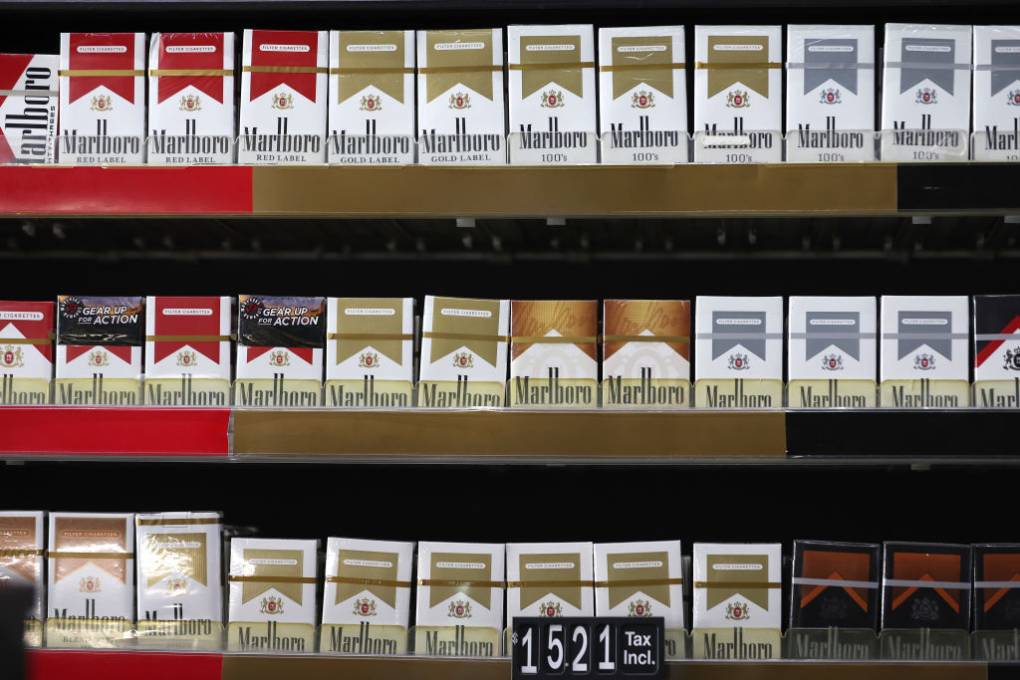
"caption": "Packs of Marlboro cigarettes are displayed at a smoke shop on April 28, 2023, in San Francisco.",
"description": null,
"title": "Marlboro Cigarette Altria Group Inc. Reports Quarterly Earnings That Miss Expectations",
"credit": "Justin Sullivan/Getty Images",
"status": "inherit",
"altTag": null,
"isLoading": false,
"fetchFailed": false
},
"news_11981785": {
"type": "attachments",
"id": "news_11981785",
"meta": {
"index": "attachments_1716263798",
"site": "news",
"id": "11981785",
"found": true
},
"parent": 11981762,
"imgSizes": {
"twentyfourteen-full-width": {
"file": "https://cdn.kqed.org/wp-content/uploads/sites/10/2024/04/231027-CHEVRON-RICHMOND-REFINERY-MD-03_qut-1038x576.jpg",
"width": 1038,
"mimeType": "image/jpeg",
"height": 576
},
"thumbnail": {
"file": "https://cdn.kqed.org/wp-content/uploads/sites/10/2024/04/231027-CHEVRON-RICHMOND-REFINERY-MD-03_qut-160x107.jpg",
"width": 160,
"mimeType": "image/jpeg",
"height": 107
},
"post-thumbnail": {
"file": "https://cdn.kqed.org/wp-content/uploads/sites/10/2024/04/231027-CHEVRON-RICHMOND-REFINERY-MD-03_qut-672x372.jpg",
"width": 672,
"mimeType": "image/jpeg",
"height": 372
},
"kqedFullSize": {
"file": "https://cdn.kqed.org/wp-content/uploads/sites/10/2024/04/231027-CHEVRON-RICHMOND-REFINERY-MD-03_qut.jpg",
"width": 1920,
"height": 1280
},
"large": {
"file": "https://cdn.kqed.org/wp-content/uploads/sites/10/2024/04/231027-CHEVRON-RICHMOND-REFINERY-MD-03_qut-1020x680.jpg",
"width": 1020,
"mimeType": "image/jpeg",
"height": 680
},
"1536x1536": {
"file": "https://cdn.kqed.org/wp-content/uploads/sites/10/2024/04/231027-CHEVRON-RICHMOND-REFINERY-MD-03_qut-1536x1024.jpg",
"width": 1536,
"mimeType": "image/jpeg",
"height": 1024
},
"medium": {
"file": "https://cdn.kqed.org/wp-content/uploads/sites/10/2024/04/231027-CHEVRON-RICHMOND-REFINERY-MD-03_qut-800x533.jpg",
"width": 800,
"mimeType": "image/jpeg",
"height": 533
}
},
"publishDate": 1712173150,
"modified": 1712192972,
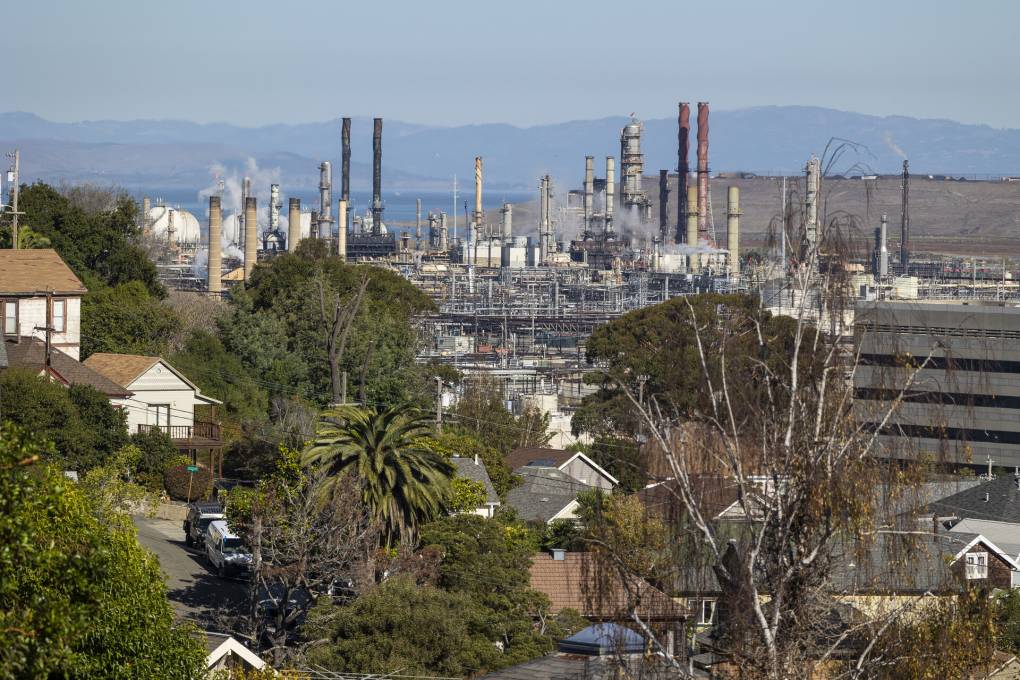
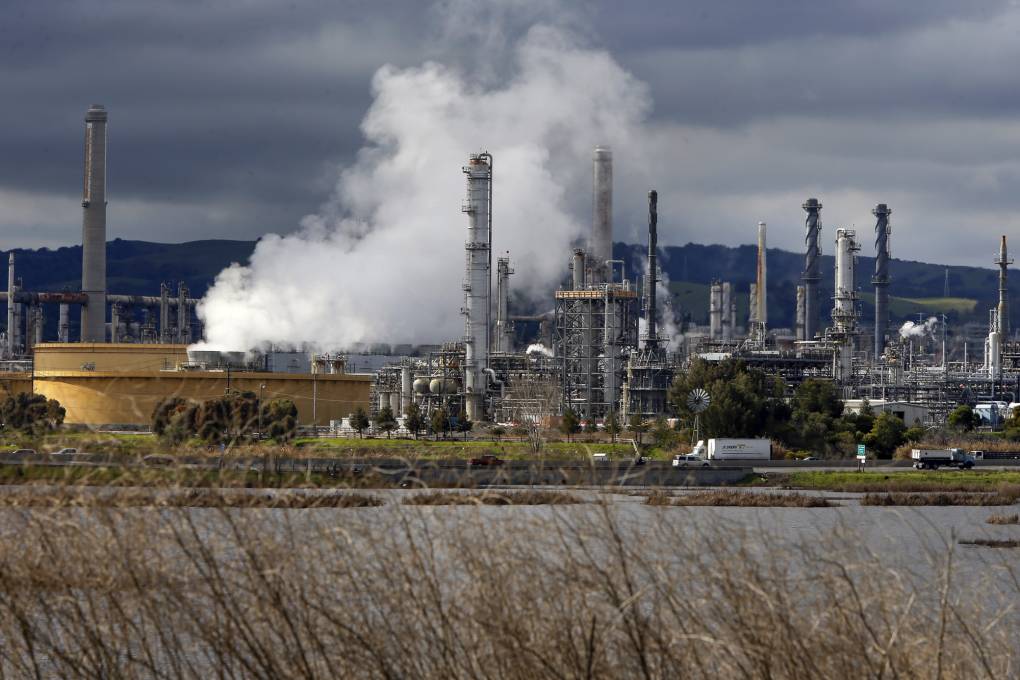
"caption": "A view of Chevron's Richmond refinery on Oct. 27, 2023. More than 100 of the violations Chevron recently settled as part of a deal with air regulators are tied to eight major incidents at the refinery over the last five years.",
"description": null,
"title": "The Chevron Richmond Refinery on Oct. 27, 2023.",
"credit": "Martin do Nascimento/KQED",
"status": "inherit",
"altTag": null,
"isLoading": false,
"fetchFailed": false
},
"news_11981096": {
"type": "attachments",
"id": "news_11981096",
"meta": {
"index": "attachments_1716263798",
"site": "news",
"id": "11981096",
"found": true
},
"parent": 11981095,
"imgSizes": {
"twentyfourteen-full-width": {
"file": "https://cdn.kqed.org/wp-content/uploads/sites/10/2024/03/richmond_031924_tl_wide-c31b646cb570a73962108833f87bb61b780081e5-1038x576.jpg",
"width": 1038,
"mimeType": "image/jpeg",
"height": 576
},
"thumbnail": {
"file": "https://cdn.kqed.org/wp-content/uploads/sites/10/2024/03/richmond_031924_tl_wide-c31b646cb570a73962108833f87bb61b780081e5-160x90.jpg",
"width": 160,
"mimeType": "image/jpeg",
"height": 90
},
"post-thumbnail": {
"file": "https://cdn.kqed.org/wp-content/uploads/sites/10/2024/03/richmond_031924_tl_wide-c31b646cb570a73962108833f87bb61b780081e5-672x372.jpg",
"width": 672,
"mimeType": "image/jpeg",
"height": 372
},
"kqedFullSize": {
"file": "https://cdn.kqed.org/wp-content/uploads/sites/10/2024/03/richmond_031924_tl_wide-c31b646cb570a73962108833f87bb61b780081e5-scaled.jpg",
"width": 2560,
"height": 1440
},
"2048x2048": {
"file": "https://cdn.kqed.org/wp-content/uploads/sites/10/2024/03/richmond_031924_tl_wide-c31b646cb570a73962108833f87bb61b780081e5-2048x1152.jpg",
"width": 2048,
"mimeType": "image/jpeg",
"height": 1152
},
"large": {
"file": "https://cdn.kqed.org/wp-content/uploads/sites/10/2024/03/richmond_031924_tl_wide-c31b646cb570a73962108833f87bb61b780081e5-1020x574.jpg",
"width": 1020,
"mimeType": "image/jpeg",
"height": 574
},
"1536x1536": {
"file": "https://cdn.kqed.org/wp-content/uploads/sites/10/2024/03/richmond_031924_tl_wide-c31b646cb570a73962108833f87bb61b780081e5-1536x864.jpg",
"width": 1536,
"mimeType": "image/jpeg",
"height": 864
},
"full-width": {
"file": "https://cdn.kqed.org/wp-content/uploads/sites/10/2024/03/richmond_031924_tl_wide-c31b646cb570a73962108833f87bb61b780081e5-1920x1080.jpg",
"width": 1920,
"mimeType": "image/jpeg",
"height": 1080
},
"medium": {
"file": "https://cdn.kqed.org/wp-content/uploads/sites/10/2024/03/richmond_031924_tl_wide-c31b646cb570a73962108833f87bb61b780081e5-800x450.jpg",
"width": 800,
"mimeType": "image/jpeg",
"height": 450
}
},
"publishDate": 1711644543,
"modified": 1711646341,
"caption": "Chevron operates a major refinery in Richmond, a community with high childhood asthma rates. It also owns the city's dominant news site, putting its own spin on events, and runs similar websites in Texas and Ecuador.",
"description": null,
"title": "Chevron operates a major refinery in Richmond, Calif., a community with high childhood asthma rates. It also owns the city's dominant news site, putting its own spin on events, and runs similar websites in Texas and Ecuador.",
"credit": "Tracy J. Lee/NPR",
"status": "inherit",
"altTag": "An illustration of people walking toward large buildings with smoke coming out of the top and green screens on both sides.",
"isLoading": false,
"fetchFailed": false
},
"news_11560608": {
"type": "attachments",
"id": "news_11560608",
"meta": {
"index": "attachments_1716263798",
"site": "news",
"id": "11560608",
"found": true
},
"parent": 11560541,
"imgSizes": {
"small": {
"file": "https://ww2.kqed.org/app/uploads/sites/10/2017/07/RS5931_006-sfi-520x347.jpg",
"width": 520,
"mimeType": "image/jpeg",
"height": 347
},
"thumbnail": {
"file": "https://ww2.kqed.org/app/uploads/sites/10/2017/07/RS5931_006-sfi-160x107.jpg",
"width": 160,
"mimeType": "image/jpeg",
"height": 107
},
"xsmall": {
"file": "https://ww2.kqed.org/app/uploads/sites/10/2017/07/RS5931_006-sfi-375x250.jpg",
"width": 375,
"mimeType": "image/jpeg",
"height": 250
},
"kqedFullSize": {
"file": "https://ww2.kqed.org/app/uploads/sites/10/2017/07/RS5931_006-sfi.jpg",
"width": 540,
"height": 360
},
"guest-author-50": {
"file": "https://ww2.kqed.org/app/uploads/sites/10/2017/07/RS5931_006-sfi-50x50.jpg",
"width": 50,
"mimeType": "image/jpeg",
"height": 50
},
"guest-author-96": {
"file": "https://ww2.kqed.org/app/uploads/sites/10/2017/07/RS5931_006-sfi-96x96.jpg",
"width": 96,
"mimeType": "image/jpeg",
"height": 96
},
"guest-author-64": {
"file": "https://ww2.kqed.org/app/uploads/sites/10/2017/07/RS5931_006-sfi-64x64.jpg",
"width": 64,
"mimeType": "image/jpeg",
"height": 64
},
"detail": {
"file": "https://ww2.kqed.org/app/uploads/sites/10/2017/07/RS5931_006-sfi-150x150.jpg",
"width": 150,
"mimeType": "image/jpeg",
"height": 150
},
"guest-author-32": {
"file": "https://ww2.kqed.org/app/uploads/sites/10/2017/07/RS5931_006-sfi-32x32.jpg",
"width": 32,
"mimeType": "image/jpeg",
"height": 32
},
"guest-author-128": {
"file": "https://ww2.kqed.org/app/uploads/sites/10/2017/07/RS5931_006-sfi-128x128.jpg",
"width": 128,
"mimeType": "image/jpeg",
"height": 128
},
"xxsmall": {
"file": "https://ww2.kqed.org/app/uploads/sites/10/2017/07/RS5931_006-sfi-240x160.jpg",
"width": 240,
"mimeType": "image/jpeg",
"height": 160
}
},
"publishDate": 1499744667,
"modified": 1499820828,
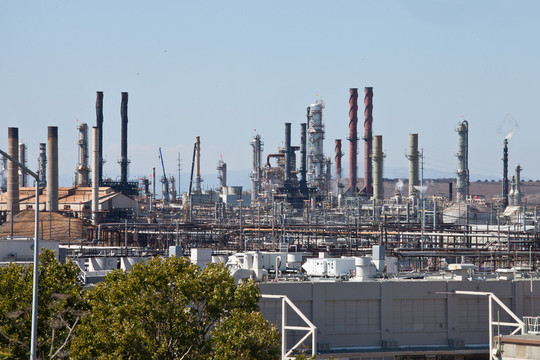
"caption": "The Chevron Richmond oil refinery. ",
"description": null,
"title": "RS5931_006-sfi",
"credit": "Deborah Svoboda/KQED",
"status": "inherit",
"isLoading": false,
"fetchFailed": false
},
"news_11971911": {
"type": "attachments",
"id": "news_11971911",
"meta": {
"index": "attachments_1716263798",
"site": "news",
"id": "11971911",
"found": true
},
"parent": 0,
"imgSizes": {
"twentyfourteen-full-width": {
"file": "https://cdn.kqed.org/wp-content/uploads/sites/10/2024/01/240108-RSR-BIKE-LANE-MD-09-KQED-1038x576.jpg",
"width": 1038,
"mimeType": "image/jpeg",
"height": 576
},
"thumbnail": {
"file": "https://cdn.kqed.org/wp-content/uploads/sites/10/2024/01/240108-RSR-BIKE-LANE-MD-09-KQED-160x107.jpg",
"width": 160,
"mimeType": "image/jpeg",
"height": 107
},
"post-thumbnail": {
"file": "https://cdn.kqed.org/wp-content/uploads/sites/10/2024/01/240108-RSR-BIKE-LANE-MD-09-KQED-672x372.jpg",
"width": 672,
"mimeType": "image/jpeg",
"height": 372
},
"kqedFullSize": {
"file": "https://cdn.kqed.org/wp-content/uploads/sites/10/2024/01/240108-RSR-BIKE-LANE-MD-09-KQED.jpg",
"width": 2000,
"height": 1333
},
"large": {
"file": "https://cdn.kqed.org/wp-content/uploads/sites/10/2024/01/240108-RSR-BIKE-LANE-MD-09-KQED-1020x680.jpg",
"width": 1020,
"mimeType": "image/jpeg",
"height": 680
},
"1536x1536": {
"file": "https://cdn.kqed.org/wp-content/uploads/sites/10/2024/01/240108-RSR-BIKE-LANE-MD-09-KQED-1536x1024.jpg",
"width": 1536,
"mimeType": "image/jpeg",
"height": 1024
},
"full-width": {
"file": "https://cdn.kqed.org/wp-content/uploads/sites/10/2024/01/240108-RSR-BIKE-LANE-MD-09-KQED-1920x1280.jpg",
"width": 1920,
"mimeType": "image/jpeg",
"height": 1280
},
"medium": {
"file": "https://cdn.kqed.org/wp-content/uploads/sites/10/2024/01/240108-RSR-BIKE-LANE-MD-09-KQED-800x533.jpg",
"width": 800,
"mimeType": "image/jpeg",
"height": 533
}
},
"publishDate": 1704741462,
"modified": 1704825598,
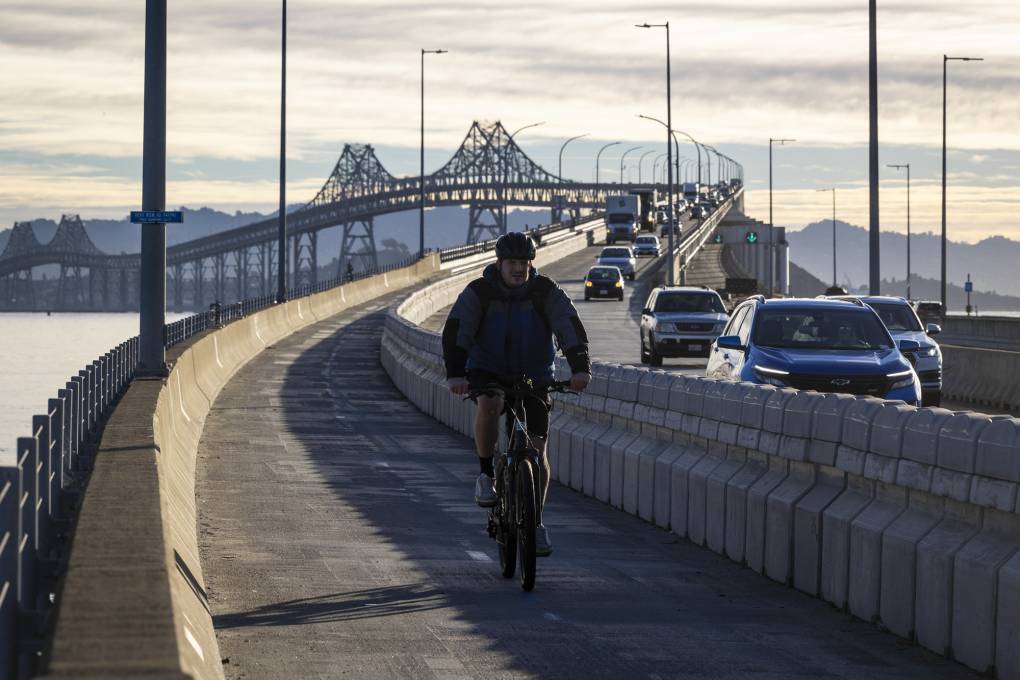
"caption": "A biker uses the bike lane on the Richmond-San Rafael Bridge on Jan. 8, 2024.",
"description": null,
"title": "A biker uses the bike lane on the Richmond-San Rafael Bridge on Jan. 8, 2024.",
"credit": "Martin do Nascimento/KQED",
"status": "inherit",
"altTag": "A person bikes on a road.",
"isLoading": false,
"fetchFailed": false
},
"news_11962789": {
"type": "attachments",
"id": "news_11962789",
"meta": {
"index": "attachments_1716263798",
"site": "news",
"id": "11962789",
"found": true
},
"parent": 11962776,
"imgSizes": {
"thumbnail": {
"file": "https://ww2.kqed.org/app/uploads/sites/10/2023/09/KQED_Podcast_tiles_-_NPR_network_The_Bay-1-160x160.png",
"width": 160,
"mimeType": "image/png",
"height": 160
},
"kqedFullSize": {
"file": "https://ww2.kqed.org/app/uploads/sites/10/2023/09/KQED_Podcast_tiles_-_NPR_network_The_Bay-1.png",
"width": 300,
"height": 300
}
},
"publishDate": 1695936674,
"modified": 1695936674,
"caption": null,
"description": null,
"title": "KQED_Podcast_tiles_-_NPR_network_The_Bay",
"credit": null,
"status": "inherit",
"altTag": null,
"isLoading": false,
"fetchFailed": false
},
"news_11960719": {
"type": "attachments",
"id": "news_11960719",
"meta": {
"index": "attachments_1716263798",
"site": "news",
"id": "11960719",
"found": true
},
"parent": 0,
"imgSizes": {
"twentyfourteen-full-width": {
"file": "https://ww2.kqed.org/app/uploads/sites/10/2023/09/230911-MARTINEZ-REFINERY-Getty-MM-KQED-1038x576.jpg",
"width": 1038,
"mimeType": "image/jpeg",
"height": 576
},
"thumbnail": {
"file": "https://ww2.kqed.org/app/uploads/sites/10/2023/09/230911-MARTINEZ-REFINERY-Getty-MM-KQED-160x107.jpg",
"width": 160,
"mimeType": "image/jpeg",
"height": 107
},
"post-thumbnail": {
"file": "https://ww2.kqed.org/app/uploads/sites/10/2023/09/230911-MARTINEZ-REFINERY-Getty-MM-KQED-672x372.jpg",
"width": 672,
"mimeType": "image/jpeg",
"height": 372
},
"kqedFullSize": {
"file": "https://ww2.kqed.org/app/uploads/sites/10/2023/09/230911-MARTINEZ-REFINERY-Getty-MM-KQED.jpg",
"width": 2000,
"height": 1333
},
"large": {
"file": "https://ww2.kqed.org/app/uploads/sites/10/2023/09/230911-MARTINEZ-REFINERY-Getty-MM-KQED-1020x680.jpg",
"width": 1020,
"mimeType": "image/jpeg",
"height": 680
},
"1536x1536": {
"file": "https://ww2.kqed.org/app/uploads/sites/10/2023/09/230911-MARTINEZ-REFINERY-Getty-MM-KQED-1536x1024.jpg",
"width": 1536,
"mimeType": "image/jpeg",
"height": 1024
},
"full-width": {
"file": "https://ww2.kqed.org/app/uploads/sites/10/2023/09/230911-MARTINEZ-REFINERY-Getty-MM-KQED-1920x1280.jpg",
"width": 1920,
"mimeType": "image/jpeg",
"height": 1280
},
"medium": {
"file": "https://ww2.kqed.org/app/uploads/sites/10/2023/09/230911-MARTINEZ-REFINERY-Getty-MM-KQED-800x533.jpg",
"width": 800,
"mimeType": "image/jpeg",
"height": 533
}
},
"publishDate": 1694475541,
"modified": 1694475819,
"caption": "The PBF Energy refinery in Martinez on Jan. 24, 2017.",
"description": null,
"title": "The Shell refinery in seen on Tuesday Jan. 24, 2017, in Martinez, Ca.",
"credit": "Michael Macor/The San Francisco Chronicle via Getty Images",
"status": "inherit",
"altTag": "A large industrial facility set alongside a body of water with emissions emanating from it.",
"isLoading": false,
"fetchFailed": false
},
"news_11956784": {
"type": "attachments",
"id": "news_11956784",
"meta": {
"index": "attachments_1716263798",
"site": "news",
"id": "11956784",
"found": true
},
"parent": 11957801,
"imgSizes": {
"twentyfourteen-full-width": {
"file": "https://ww2.kqed.org/app/uploads/sites/10/2023/07/230727-Oakland-Diocese-Sexual-Abuse-MHN-05-KQED-1038x576.jpg",
"width": 1038,
"mimeType": "image/jpeg",
"height": 576
},
"thumbnail": {
"file": "https://ww2.kqed.org/app/uploads/sites/10/2023/07/230727-Oakland-Diocese-Sexual-Abuse-MHN-05-KQED-160x107.jpg",
"width": 160,
"mimeType": "image/jpeg",
"height": 107
},
"post-thumbnail": {
"file": "https://ww2.kqed.org/app/uploads/sites/10/2023/07/230727-Oakland-Diocese-Sexual-Abuse-MHN-05-KQED-672x372.jpg",
"width": 672,
"mimeType": "image/jpeg",
"height": 372
},
"kqedFullSize": {
"file": "https://ww2.kqed.org/app/uploads/sites/10/2023/07/230727-Oakland-Diocese-Sexual-Abuse-MHN-05-KQED.jpg",
"width": 2000,
"height": 1333
},
"large": {
"file": "https://ww2.kqed.org/app/uploads/sites/10/2023/07/230727-Oakland-Diocese-Sexual-Abuse-MHN-05-KQED-1020x680.jpg",
"width": 1020,
"mimeType": "image/jpeg",
"height": 680
},
"1536x1536": {
"file": "https://ww2.kqed.org/app/uploads/sites/10/2023/07/230727-Oakland-Diocese-Sexual-Abuse-MHN-05-KQED-1536x1024.jpg",
"width": 1536,
"mimeType": "image/jpeg",
"height": 1024
},
"full-width": {
"file": "https://ww2.kqed.org/app/uploads/sites/10/2023/07/230727-Oakland-Diocese-Sexual-Abuse-MHN-05-KQED-1920x1280.jpg",
"width": 1920,
"mimeType": "image/jpeg",
"height": 1280
},
"medium": {
"file": "https://ww2.kqed.org/app/uploads/sites/10/2023/07/230727-Oakland-Diocese-Sexual-Abuse-MHN-05-KQED-800x533.jpg",
"width": 800,
"mimeType": "image/jpeg",
"height": 533
}
},
"publishDate": 1690565331,
"modified": 1691625614,
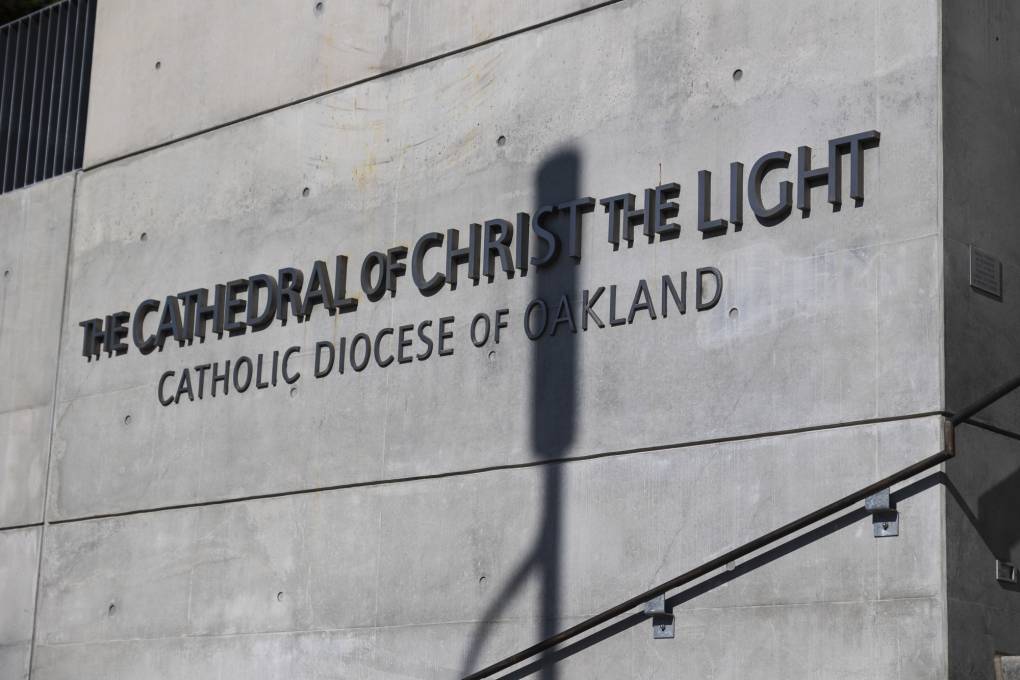
"caption": "The Cathedral of Christ the Light and Catholic Diocese of Oakland in Oakland on July 28, 2023.",
"description": null,
"title": "230727-Oakland Diocese Sexual Abuse-MHN-05-KQED",
"credit": "Martin do Nascimento/KQED",
"status": "inherit",
"altTag": "Modern lettering on a concrete wall reading The Cathedral of Christ the Light: Catholic Diocese of Oakland.\"",
"isLoading": false,
"fetchFailed": false
},
"news_11954036": {
"type": "attachments",
"id": "news_11954036",
"meta": {
"index": "attachments_1716263798",
"site": "news",
"id": "11954036",
"found": true
},
"parent": 11953944,
"imgSizes": {
"twentyfourteen-full-width": {
"file": "https://ww2.kqed.org/app/uploads/sites/10/2023/06/RS16478_iStock_000062678534_Full-qut-1038x576.jpg",
"width": 1038,
"mimeType": "image/jpeg",
"height": 576
},
"thumbnail": {
"file": "https://ww2.kqed.org/app/uploads/sites/10/2023/06/RS16478_iStock_000062678534_Full-qut-160x107.jpg",
"width": 160,
"mimeType": "image/jpeg",
"height": 107
},
"post-thumbnail": {
"file": "https://ww2.kqed.org/app/uploads/sites/10/2023/06/RS16478_iStock_000062678534_Full-qut-672x372.jpg",
"width": 672,
"mimeType": "image/jpeg",
"height": 372
},
"kqedFullSize": {
"file": "https://ww2.kqed.org/app/uploads/sites/10/2023/06/RS16478_iStock_000062678534_Full-qut.jpg",
"width": 1920,
"height": 1280
},
"large": {
"file": "https://ww2.kqed.org/app/uploads/sites/10/2023/06/RS16478_iStock_000062678534_Full-qut-1020x680.jpg",
"width": 1020,
"mimeType": "image/jpeg",
"height": 680
},
"1536x1536": {
"file": "https://ww2.kqed.org/app/uploads/sites/10/2023/06/RS16478_iStock_000062678534_Full-qut-1536x1024.jpg",
"width": 1536,
"mimeType": "image/jpeg",
"height": 1024
},
"medium": {
"file": "https://ww2.kqed.org/app/uploads/sites/10/2023/06/RS16478_iStock_000062678534_Full-qut-800x533.jpg",
"width": 800,
"mimeType": "image/jpeg",
"height": 533
}
},
"publishDate": 1687748261,
"modified": 1687748333,
"caption": "More than 80% of the documented gunshots fired in the city of Richmond in the past decade happened within a half mile of an elementary school, according to police data. ",
"description": null,
"title": "RS16478_iStock_000062678534_Full-qut",
"credit": "Getty Images",
"status": "inherit",
"altTag": null,
"isLoading": false,
"fetchFailed": false
},
"news_11950578": {
"type": "attachments",
"id": "news_11950578",
"meta": {
"index": "attachments_1716263798",
"site": "news",
"id": "11950578",
"found": true
},
"parent": 11950566,
"imgSizes": {
"twentyfourteen-full-width": {
"file": "https://ww2.kqed.org/app/uploads/sites/10/2023/05/RS65770_062_KQED_JFKHighSchoolRichmond_05182023-qut-1038x576.jpg",
"width": 1038,
"mimeType": "image/jpeg",
"height": 576
},
"thumbnail": {
"file": "https://ww2.kqed.org/app/uploads/sites/10/2023/05/RS65770_062_KQED_JFKHighSchoolRichmond_05182023-qut-160x107.jpg",
"width": 160,
"mimeType": "image/jpeg",
"height": 107
},
"post-thumbnail": {
"file": "https://ww2.kqed.org/app/uploads/sites/10/2023/05/RS65770_062_KQED_JFKHighSchoolRichmond_05182023-qut-672x372.jpg",
"width": 672,
"mimeType": "image/jpeg",
"height": 372
},
"kqedFullSize": {
"file": "https://ww2.kqed.org/app/uploads/sites/10/2023/05/RS65770_062_KQED_JFKHighSchoolRichmond_05182023-qut.jpg",
"width": 1920,
"height": 1280
},
"large": {
"file": "https://ww2.kqed.org/app/uploads/sites/10/2023/05/RS65770_062_KQED_JFKHighSchoolRichmond_05182023-qut-1020x680.jpg",
"width": 1020,
"mimeType": "image/jpeg",
"height": 680
},
"1536x1536": {
"file": "https://ww2.kqed.org/app/uploads/sites/10/2023/05/RS65770_062_KQED_JFKHighSchoolRichmond_05182023-qut-1536x1024.jpg",
"width": 1536,
"mimeType": "image/jpeg",
"height": 1024
},
"medium": {
"file": "https://ww2.kqed.org/app/uploads/sites/10/2023/05/RS65770_062_KQED_JFKHighSchoolRichmond_05182023-qut-800x533.jpg",
"width": 800,
"mimeType": "image/jpeg",
"height": 533
}
},
"publishDate": 1684964417,
"modified": 1684975467,
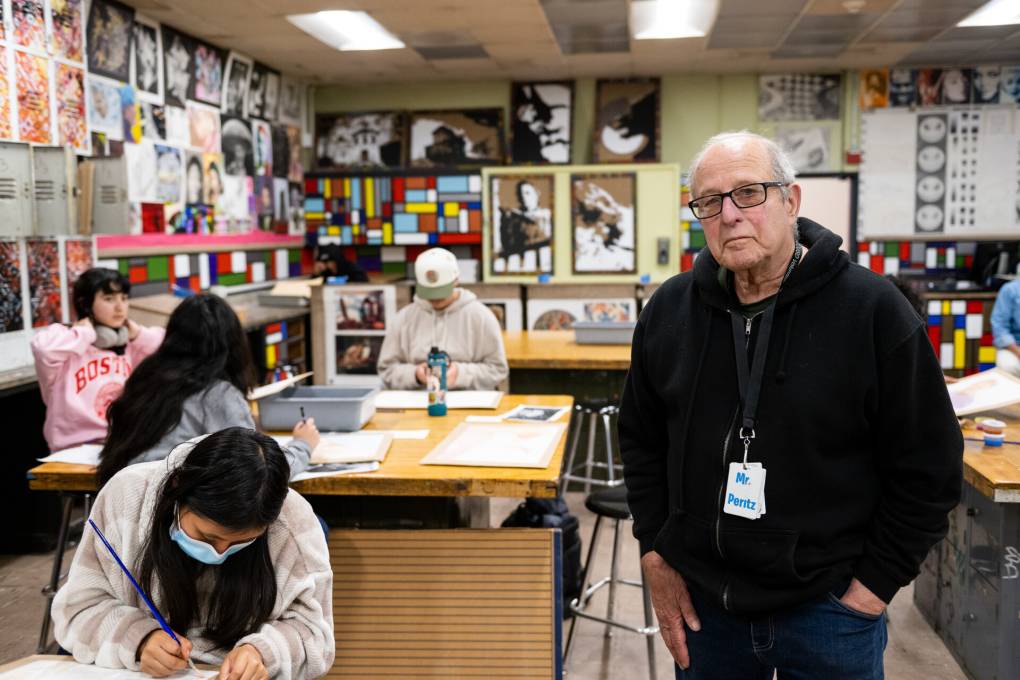
"caption": "Retired teacher Mike Peritz stands in Steve Mainini's art classroom at John F. Kennedy High School in Richmond on May 18, 2023.",
"description": null,
"title": "RS65770_062_KQED_JFKHighSchoolRichmond_05182023-qut",
"credit": "Beth LaBerge/KQED",
"status": "inherit",
"altTag": "A white man with glasses in a black hoodie stands in a classroom with students seated at desk writing on pieces of paper.",
"isLoading": false,
"fetchFailed": false
},
"news_11945648": {
"type": "attachments",
"id": "news_11945648",
"meta": {
"index": "attachments_1716263798",
"site": "news",
"id": "11945648",
"found": true
},
"parent": 11945533,
"imgSizes": {
"twentyfourteen-full-width": {
"file": "https://ww2.kqed.org/app/uploads/sites/10/2023/04/RS64115_012_KQED_InternetArchiveOffices_03242023-qut-1038x576.jpg",
"width": 1038,
"mimeType": "image/jpeg",
"height": 576
},
"thumbnail": {
"file": "https://ww2.kqed.org/app/uploads/sites/10/2023/04/RS64115_012_KQED_InternetArchiveOffices_03242023-qut-160x107.jpg",
"width": 160,
"mimeType": "image/jpeg",
"height": 107
},
"post-thumbnail": {
"file": "https://ww2.kqed.org/app/uploads/sites/10/2023/04/RS64115_012_KQED_InternetArchiveOffices_03242023-qut-672x372.jpg",
"width": 672,
"mimeType": "image/jpeg",
"height": 372
},
"kqedFullSize": {
"file": "https://ww2.kqed.org/app/uploads/sites/10/2023/04/RS64115_012_KQED_InternetArchiveOffices_03242023-qut.jpg",
"width": 1920,
"height": 1280
},
"large": {
"file": "https://ww2.kqed.org/app/uploads/sites/10/2023/04/RS64115_012_KQED_InternetArchiveOffices_03242023-qut-1020x680.jpg",
"width": 1020,
"mimeType": "image/jpeg",
"height": 680
},
"1536x1536": {
"file": "https://ww2.kqed.org/app/uploads/sites/10/2023/04/RS64115_012_KQED_InternetArchiveOffices_03242023-qut-1536x1024.jpg",
"width": 1536,
"mimeType": "image/jpeg",
"height": 1024
},
"medium": {
"file": "https://ww2.kqed.org/app/uploads/sites/10/2023/04/RS64115_012_KQED_InternetArchiveOffices_03242023-qut-800x533.jpg",
"width": 800,
"mimeType": "image/jpeg",
"height": 533
}
},
"publishDate": 1680635149,
"modified": 1680636124,
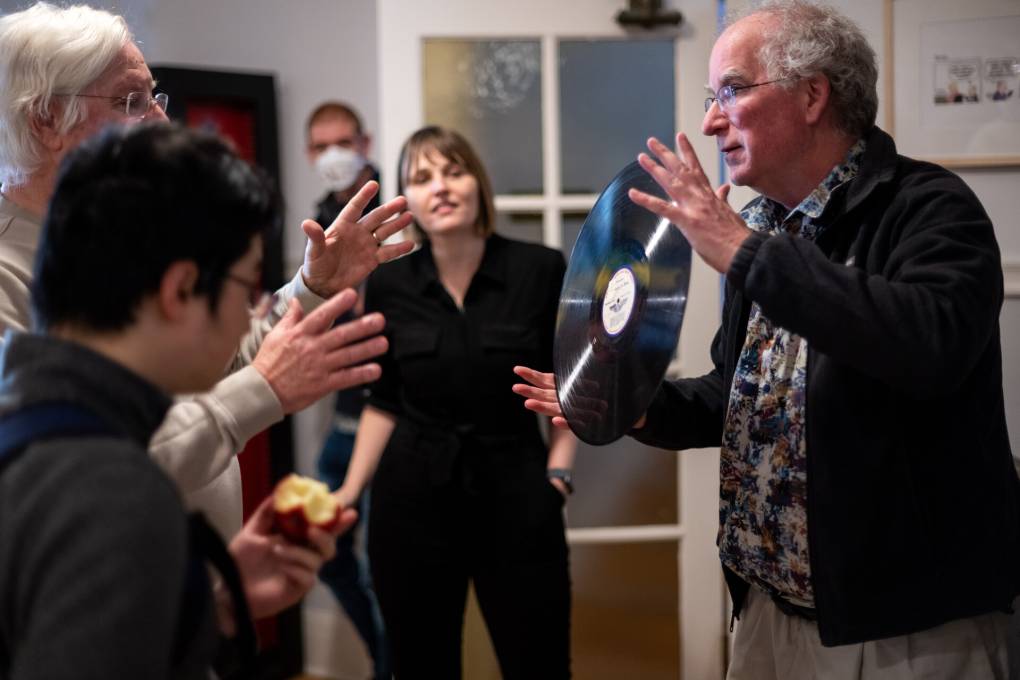
"caption": "Internet Archive founder Brewster Kahle (right) speaks to guests, volunteers and staff at one of the Archive's public lunches at its location in San Francisco's Richmond District on March 24.",
"description": null,
"title": "RS64115_012_KQED_InternetArchiveOffices_03242023-qut",
"credit": "Beth LaBerge/KQED",
"status": "inherit",
"altTag": "A middle-aged white man wearing glasses and an intense expression holds up a vinyl record while engaging in what appears to be an intense conversation with another man who is gesturing with his hands, while in the distance a white woman wearing a black dress looks on - others whose faces aren't visible are gathered around",
"isLoading": false,
"fetchFailed": false
},
"news_11940126": {
"type": "attachments",
"id": "news_11940126",
"meta": {
"index": "attachments_1716263798",
"site": "news",
"id": "11940126",
"found": true
},
"parent": 11940114,
"imgSizes": {
"twentyfourteen-full-width": {
"file": "https://ww2.kqed.org/app/uploads/sites/10/2023/02/GettyImages-1386907574-1024x576.jpg",
"width": 1024,
"mimeType": "image/jpeg",
"height": 576
},
"thumbnail": {
"file": "https://ww2.kqed.org/app/uploads/sites/10/2023/02/GettyImages-1386907574-160x107.jpg",
"width": 160,
"mimeType": "image/jpeg",
"height": 107
},
"post-thumbnail": {
"file": "https://ww2.kqed.org/app/uploads/sites/10/2023/02/GettyImages-1386907574-672x372.jpg",
"width": 672,
"mimeType": "image/jpeg",
"height": 372
},
"kqedFullSize": {
"file": "https://ww2.kqed.org/app/uploads/sites/10/2023/02/GettyImages-1386907574.jpg",
"width": 1024,
"height": 683
},
"large": {
"file": "https://ww2.kqed.org/app/uploads/sites/10/2023/02/GettyImages-1386907574-1020x680.jpg",
"width": 1020,
"mimeType": "image/jpeg",
"height": 680
},
"medium": {
"file": "https://ww2.kqed.org/app/uploads/sites/10/2023/02/GettyImages-1386907574-800x534.jpg",
"width": 800,
"mimeType": "image/jpeg",
"height": 534
}
},
"publishDate": 1675465560,
"modified": 1675465648,
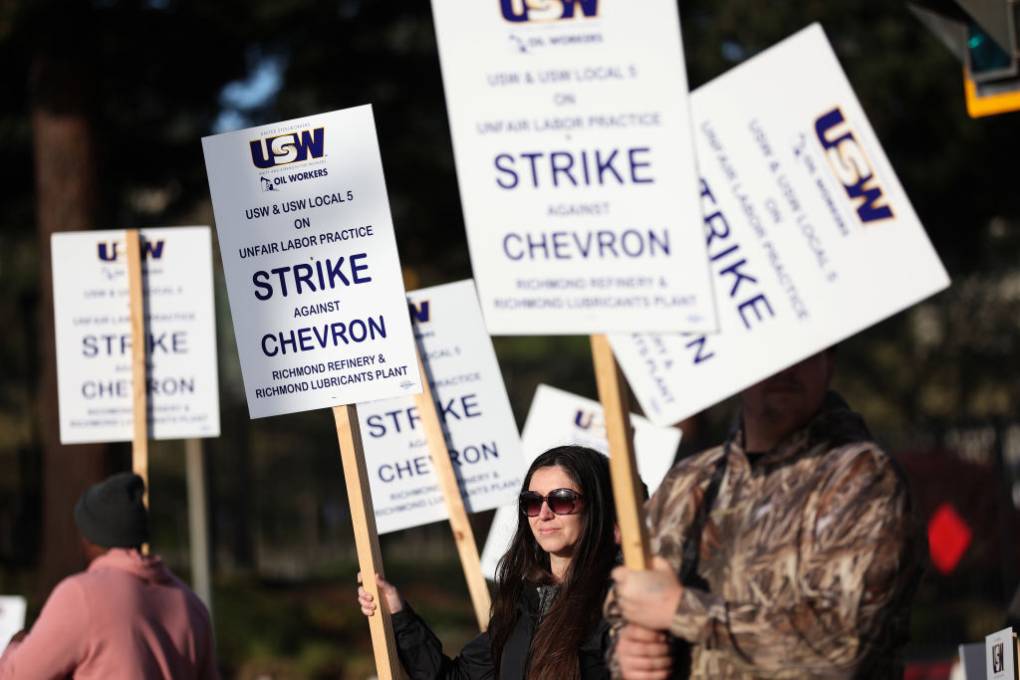
"caption": "Striking Chevron refinery union workers hold signs as they picket outside of the Chevron refinery on March 21, 2022 in Richmond.",
"description": null,
"title": "Chevron Refinery Workers Go On Strike",
"credit": "Justin Sullivan/Getty Images",
"status": "inherit",
"altTag": null,
"isLoading": false,
"fetchFailed": false
}
},
"audioPlayerReducer": {
"postId": "stream_live",
"isPaused": true,
"isPlaying": false,
"pfsActive": false,
"pledgeModalIsOpen": true,
"playerDrawerIsOpen": false,
"liveAudioPlayStartedAt": 0,
"liveAudioPlayContext": ""
},
"authorsReducer": {
"byline_news_11981095": {
"type": "authors",
"id": "byline_news_11981095",
"meta": {
"override": true
},
"slug": "byline_news_11981095",
"name": "Miranda Green, David Folkenflik",
"isLoading": false
},
"byline_news_11950566": {
"type": "authors",
"id": "byline_news_11950566",
"meta": {
"override": true
},
"slug": "byline_news_11950566",
"name": "Richard Gonzales",
"isLoading": false
},
"tgoldberg": {
"type": "authors",
"id": "258",
"meta": {
"index": "authors_1716337520",
"id": "258",
"found": true
},
"name": "Ted Goldberg",
"firstName": "Ted",
"lastName": "Goldberg",
"slug": "tgoldberg",
"email": "tgoldberg@kqed.org",
"display_author_email": true,
"staff_mastheads": [
"news"
],
"title": "KQED Managing Editor, News and Newscasts",
"bio": "Ted Goldberg is Managing Editor of News and Newscasts at KQED. His main reporting beat is the Bay Area's oil refining industry.\r\n\r\nPrior to joining KQED in 2014, Ted worked at CBS News and WCBS AM in New York and Bay City News and KCBS Radio in San Francisco. He graduated from Oberlin College in Ohio in 1998.",
"avatar": "https://secure.gravatar.com/avatar/30ce2e4fe89135e104f89be2394d16225b9d36c121b5b3cb7651ce642978b96f?s=600&d=blank&r=g",
"twitter": "TedrickG",
"bluesky": null,
"facebook": null,
"instagram": null,
"linkedin": null,
"sites": [
{
"site": "news",
"roles": [
"editor"
]
},
{
"site": "science",
"roles": [
"editor"
]
}
],
"headData": {
"title": "Ted Goldberg | KQED",
"description": "KQED Managing Editor, News and Newscasts",
"ogImgSrc": "https://secure.gravatar.com/avatar/30ce2e4fe89135e104f89be2394d16225b9d36c121b5b3cb7651ce642978b96f?s=600&d=blank&r=g",
"twImgSrc": "https://secure.gravatar.com/avatar/30ce2e4fe89135e104f89be2394d16225b9d36c121b5b3cb7651ce642978b96f?s=600&d=blank&r=g"
},
"isLoading": false,
"link": "/author/tgoldberg"
},
"ecruzguevarra": {
"type": "authors",
"id": "8654",
"meta": {
"index": "authors_1716337520",
"id": "8654",
"found": true
},
"name": "Ericka Cruz Guevarra",
"firstName": "Ericka",
"lastName": "Cruz Guevarra",
"slug": "ecruzguevarra",
"email": "ecruzguevarra@kqed.org",
"display_author_email": true,
"staff_mastheads": [
"news"
],
"title": "Producer, The Bay Podcast",
"bio": "Ericka Cruz Guevarra is host of \u003ca href=\"https://www.kqed.org/podcasts/thebay\">\u003cem>The Bay\u003c/em>\u003c/a> podcast at KQED. Before host, she was the show’s producer. Her work in that capacity includes a three-part reported series on policing in Vallejo, which won a 2020 excellence in journalism award from the Society of Professional Journalists. Ericka has worked as a breaking news reporter at Oregon Public Broadcasting, helped produce the Code Switch podcast, and was KQED’s inaugural Raul Ramirez Diversity Fund intern. She’s also an alumna of NPR’s Next Generation Radio program. Send her an email if you have strong feelings about whether Fairfield and Suisun City are the Bay. Ericka is represented by SAG-AFTRA.",
"avatar": "https://secure.gravatar.com/avatar/accefc1de4bafc7e234b69bcb9b6f6536c130fd84709bc3069ef11a78787e1bb?s=600&d=blank&r=g",
"twitter": "NotoriousECG",
"bluesky": null,
"facebook": null,
"instagram": null,
"linkedin": null,
"sites": [
{
"site": "arts",
"roles": [
"subscriber"
]
},
{
"site": "news",
"roles": [
"editor",
"manage_categories"
]
},
{
"site": "futureofyou",
"roles": [
"subscriber"
]
},
{
"site": "stateofhealth",
"roles": [
"subscriber"
]
},
{
"site": "science",
"roles": [
"editor"
]
},
{
"site": "forum",
"roles": [
"subscriber"
]
}
],
"headData": {
"title": "Ericka Cruz Guevarra | KQED",
"description": "Producer, The Bay Podcast",
"ogImgSrc": "https://secure.gravatar.com/avatar/accefc1de4bafc7e234b69bcb9b6f6536c130fd84709bc3069ef11a78787e1bb?s=600&d=blank&r=g",
"twImgSrc": "https://secure.gravatar.com/avatar/accefc1de4bafc7e234b69bcb9b6f6536c130fd84709bc3069ef11a78787e1bb?s=600&d=blank&r=g"
},
"isLoading": false,
"link": "/author/ecruzguevarra"
},
"ahall": {
"type": "authors",
"id": "11490",
"meta": {
"index": "authors_1716337520",
"id": "11490",
"found": true
},
"name": "Alex Hall",
"firstName": "Alex",
"lastName": "Hall",
"slug": "ahall",
"email": "ahall@kqed.org",
"display_author_email": false,
"staff_mastheads": [
"news"
],
"title": "KQED Enterprise & Accountability Reporter",
"bio": "Alex Hall is KQED's Enterprise and Accountability Reporter. She previously covered the Central Valley for five years from KQED's bureau in Fresno. Before joining KQED, Alex was an investigative reporting fellow at Wisconsin Public Radio and the Wisconsin Center for Investigative Journalism. She has also worked as a bilingual producer for NPR's investigative unit and freelance video producer for Reuters TV on the Latin America desk. She got her start in journalism in South America, where she worked as a radio producer and Spanish-English translator for CNN Chile. Her documentary and investigation into the series of deadly COVID-19 outbreaks at Foster Farms won a national Edward R. Murrow award and was named an Investigative Reporters & Editors award finalist. Alex's reporting for Reveal on the Wisconsin dairy industry's reliance on undocumented immigrant labor was made into a film, Los Lecheros, which won a regional Edward R. Murrow award for best news documentary.",
"avatar": "https://secure.gravatar.com/avatar/defcbeb88b0bf591ff9af41f22644051?s=600&d=blank&r=g",
"twitter": "@chalexhall",
"facebook": null,
"instagram": null,
"linkedin": null,
"sites": [
{
"site": "news",
"roles": [
"editor"
]
},
{
"site": "liveblog",
"roles": [
"author"
]
}
],
"headData": {
"title": "Alex Hall | KQED",
"description": "KQED Enterprise & Accountability Reporter",
"ogImgSrc": "https://secure.gravatar.com/avatar/defcbeb88b0bf591ff9af41f22644051?s=600&d=blank&r=g",
"twImgSrc": "https://secure.gravatar.com/avatar/defcbeb88b0bf591ff9af41f22644051?s=600&d=blank&r=g"
},
"isLoading": false,
"link": "/author/ahall"
},
"amontecillo": {
"type": "authors",
"id": "11649",
"meta": {
"index": "authors_1716337520",
"id": "11649",
"found": true
},
"name": "Alan Montecillo",
"firstName": "Alan",
"lastName": "Montecillo",
"slug": "amontecillo",
"email": "amontecillo@kqed.org",
"display_author_email": false,
"staff_mastheads": [
"news"
],
"title": "KQED Contributor",
"bio": "Alan Montecillo is the senior editor of \u003cem>\u003ca href=\"http://kqed.org/thebay\">The Bay\u003c/a>, \u003c/em> KQED's local news podcast. Before moving to the Bay Area, he worked as a senior talk show producer for WILL in Champaign-Urbana, Illinois and at Oregon Public Broadcasting in Portland, Oregon. He has won journalism awards from the Society of Professional Journalists Northern California, the Public Media Journalists Association, The Signal Awards, and has also received a regional Edward R. Murrow award. Alan is a Filipino American from Hong Kong and a graduate of Reed College.",
"avatar": "https://secure.gravatar.com/avatar/268f53a2066899ea9efdd8a5900218b17c822d9862cbc9326cccec53ef41d349?s=600&d=blank&r=g",
"twitter": "alanmontecillo",
"bluesky": null,
"facebook": null,
"instagram": null,
"linkedin": null,
"sites": [
{
"site": "",
"roles": [
"editor"
]
},
{
"site": "news",
"roles": [
"editor",
"manage_categories"
]
}
],
"headData": {
"title": "Alan Montecillo | KQED",
"description": "KQED Contributor",
"ogImgSrc": "https://secure.gravatar.com/avatar/268f53a2066899ea9efdd8a5900218b17c822d9862cbc9326cccec53ef41d349?s=600&d=blank&r=g",
"twImgSrc": "https://secure.gravatar.com/avatar/268f53a2066899ea9efdd8a5900218b17c822d9862cbc9326cccec53ef41d349?s=600&d=blank&r=g"
},
"isLoading": false,
"link": "/author/amontecillo"
},
"adahlstromeckman": {
"type": "authors",
"id": "11785",
"meta": {
"index": "authors_1716337520",
"id": "11785",
"found": true
},
"name": "Azul Dahlstrom-Eckman",
"firstName": "Azul",
"lastName": "Dahlstrom-Eckman",
"slug": "adahlstromeckman",
"email": "adahlstrom-eckman@kqed.org",
"display_author_email": true,
"staff_mastheads": [],
"title": "Reporter",
"bio": "Azul is a reporter for KQED focusing on transportation and features. He joined KQED in 2021 as an alumna of KALW's Audio Academy radio journalism training program.",
"avatar": "https://secure.gravatar.com/avatar/9cb750298435add7815a777f55bf1f46845c1386bb8452555c60a7b820b5aba3?s=600&d=blank&r=g",
"twitter": "@zuliemann",
"bluesky": "@azul415.bsky.social",
"facebook": null,
"instagram": null,
"linkedin": null,
"sites": [
{
"site": "arts",
"roles": [
"editor"
]
},
{
"site": "news",
"roles": [
"editor"
]
},
{
"site": "science",
"roles": [
"editor"
]
},
{
"site": "liveblog",
"roles": [
"author"
]
}
],
"headData": {
"title": "Azul Dahlstrom-Eckman | KQED",
"description": "Reporter",
"ogImgSrc": "https://secure.gravatar.com/avatar/9cb750298435add7815a777f55bf1f46845c1386bb8452555c60a7b820b5aba3?s=600&d=blank&r=g",
"twImgSrc": "https://secure.gravatar.com/avatar/9cb750298435add7815a777f55bf1f46845c1386bb8452555c60a7b820b5aba3?s=600&d=blank&r=g"
},
"isLoading": false,
"link": "/author/adahlstromeckman"
},
"mesquinca": {
"type": "authors",
"id": "11802",
"meta": {
"index": "authors_1716337520",
"id": "11802",
"found": true
},
"name": "Maria Esquinca",
"firstName": "Maria",
"lastName": "Esquinca",
"slug": "mesquinca",
"email": "mesquinca@kqed.org",
"display_author_email": false,
"staff_mastheads": [],
"title": "Producer, The Bay",
"bio": "María Esquinca is a producer of The Bay. Before that, she was a New York Women’s Foundation IGNITE Fellow at Latino USA. She worked at Radio Bilingue where she covered the San Joaquin Valley. Maria has interned at WLRN, News 21, The New York Times Student Journalism Institute and at Crain’s Detroit Business as a Dow Jones News Fund Business Reporting Intern. She is an MFA graduate from the University of Miami. In 2017, she graduated from the Walter Cronkite School of Journalism and Mass Communication with a Master of Mass Communication. A fronteriza, she was born in Ciudad Juárez, Chihuahua, Mexico and grew up in El Paso, Texas.",
"avatar": "https://secure.gravatar.com/avatar/77cedba18aae91da775038ba06dcd8d0?s=600&d=blank&r=g",
"twitter": "@m_esquinca",
"facebook": null,
"instagram": null,
"linkedin": null,
"sites": [
{
"site": "news",
"roles": []
}
],
"headData": {
"title": "Maria Esquinca | KQED",
"description": "Producer, The Bay",
"ogImgSrc": "https://secure.gravatar.com/avatar/77cedba18aae91da775038ba06dcd8d0?s=600&d=blank&r=g",
"twImgSrc": "https://secure.gravatar.com/avatar/77cedba18aae91da775038ba06dcd8d0?s=600&d=blank&r=g"
},
"isLoading": false,
"link": "/author/mesquinca"
},
"sjohnson": {
"type": "authors",
"id": "11840",
"meta": {
"index": "authors_1716337520",
"id": "11840",
"found": true
},
"name": "Sydney Johnson",
"firstName": "Sydney",
"lastName": "Johnson",
"slug": "sjohnson",
"email": "sjohnson@kqed.org",
"display_author_email": false,
"staff_mastheads": [
"news"
],
"title": "KQED Reporter",
"bio": "Sydney Johnson is a general assignment reporter at KQED. She previously reported on public health and city government at the San Francisco Examiner, and before that, she covered statewide education policy for EdSource. Her reporting has won multiple local, state and national awards. Sydney is a graduate of the University of California, Berkeley and lives in San Francisco.",
"avatar": "https://secure.gravatar.com/avatar/97855f2719b72ad6190b7c535fe642c8?s=600&d=blank&r=g",
"twitter": "sydneyfjohnson",
"facebook": null,
"instagram": null,
"linkedin": null,
"sites": [
{
"site": "news",
"roles": [
"editor"
]
}
],
"headData": {
"title": "Sydney Johnson | KQED",
"description": "KQED Reporter",
"ogImgSrc": "https://secure.gravatar.com/avatar/97855f2719b72ad6190b7c535fe642c8?s=600&d=blank&r=g",
"twImgSrc": "https://secure.gravatar.com/avatar/97855f2719b72ad6190b7c535fe642c8?s=600&d=blank&r=g"
},
"isLoading": false,
"link": "/author/sjohnson"
},
"slim": {
"type": "authors",
"id": "11920",
"meta": {
"index": "authors_1716337520",
"id": "11920",
"found": true
},
"name": "Samantha Lim",
"firstName": "Samantha",
"lastName": "Lim",
"slug": "slim",
"email": "slim@KQED.org",
"display_author_email": false,
"staff_mastheads": [],
"title": "KQED Contributor",
"bio": null,
"avatar": "https://secure.gravatar.com/avatar/82e592e6c15fe1a04d385e8ad0fb0b4e?s=600&d=blank&r=g",
"twitter": null,
"facebook": null,
"instagram": null,
"linkedin": null,
"sites": [
{
"site": "news",
"roles": []
}
],
"headData": {
"title": "Samantha Lim | KQED",
"description": "KQED Contributor",
"ogImgSrc": "https://secure.gravatar.com/avatar/82e592e6c15fe1a04d385e8ad0fb0b4e?s=600&d=blank&r=g",
"twImgSrc": "https://secure.gravatar.com/avatar/82e592e6c15fe1a04d385e8ad0fb0b4e?s=600&d=blank&r=g"
},
"isLoading": false,
"link": "/author/slim"
}
},
"pagesReducer": {
"news_tag_richmond": {
"type": "terms",
"id": "news_579",
"meta": {
"index": "terms_1716263798",
"site": "news",
"id": "579",
"score": 8.366936
},
"featImg": null,
"name": "Richmond",
"description": null,
"taxonomy": "tag",
"headData": {
"twImgId": null,
"twTitle": null,
"ogTitle": null,
"ogImgId": null,
"twDescription": null,
"description": null,
"title": "Richmond Archives | KQED News",
"ogDescription": null
},
"ttid": 2717,
"slug": "richmond",
"isLoading": false,
"title": "Richmond",
"pageMeta": {
"site": "news",
"WpPageTemplate": "page-topic-editorial",
"currentPage": 6
},
"blocks": [
{
"blockName": "kqed/post-list",
"attrs": {
"layout": "cardArticle2",
"query": "posts/news?tag=richmond",
"seeMore": false,
"paginated": true,
"page": 6
}
},
{
"blockName": "kqed/ad"
}
]
}
},
"pfsSessionReducer": {},
"postsReducer": {
"stream_live": {
"type": "live",
"id": "stream_live",
"audioUrl": "https://streams.kqed.org/kqedradio",
"title": "Live Stream",
"excerpt": "Live Stream information currently unavailable.",
"link": "/radio",
"featImg": "",
"label": {
"name": "KQED Live",
"link": "/"
}
},
"stream_kqedNewscast": {
"type": "posts",
"id": "stream_kqedNewscast",
"audioUrl": "https://www.kqed.org/.stream/anon/radio/RDnews/newscast.mp3?_=1",
"title": "KQED Newscast",
"featImg": "",
"label": {
"name": "88.5 FM",
"link": "/"
}
},
"news_11983224": {
"type": "posts",
"id": "news_11983224",
"meta": {
"index": "posts_1716263798",
"site": "news",
"id": "11983224",
"score": null,
"sort": [
1713380456000
]
},
"guestAuthors": [],
"slug": "richmond-passes-45-day-retail-moratorium-on-tobacco-to-deal-with-excessive-smoke-shops",
"title": "Richmond Passes 45-Day Retail Moratorium on Tobacco to Deal With 'Excessive Smoke Shops'",
"publishDate": 1713380456,
"format": "standard",
"headTitle": "Richmond Passes 45-Day Retail Moratorium on Tobacco to Deal With ‘Excessive Smoke Shops’ | KQED",
"labelTerm": {
"site": "news"
},
"content": "\u003cp>Amid community concerns regarding an over-proliferation of tobacco and smoke shops in the city, the Richmond City Council voted on Tuesday to unanimously approve a \u003ca href=\"https://pub-richmond.escribemeetings.com/filestream.ashx?DocumentId=53437\">tobacco retail moratorium\u003c/a> that will place a 45-day hold on granting new licenses.\u003c/p>\n\u003cp>“[The moratorium is] at the request of many Richmond residents,” said Mayor Eduardo Martinez, one of the ordinance’s original proponents. “We’ve gotten a lot of complaints of excessive smoke shops, and they seem to take issue with the sort of traffic that comes through.”\u003c/p>\n\u003cp>Other co-sponsors of the ordinance include Vice Mayor Claudia Jimenez and City Councilmember Melvin Willis.\u003c/p>\n\u003cp>In Richmond, there are currently 78 licensed tobacco retailers, according to a press release from the Mayor’s Office. Martinez noted, however, that there are also smoke shops within the city currently operating without licenses or violating existing tobacco regulations.\u003c/p>\n\u003cp>[ad fullwidth]\u003c/p>\n\u003cp>Martinez said the moratorium on new tobacco licenses will allow the city to allocate more resources toward supporting code enforcement efforts on existing businesses.\u003c/p>\n\u003cp>“I think it highlights to the city that we need to hire more people for code enforcement, thereby being able to regulate code compliance,” Martinez said.\u003c/p>\n\u003cp>As for the moratorium itself, Martinez noted that the proposal is part of a larger effort to address additional issues with tobacco retail in Richmond. He added that future plans may include stricter regulations overseeing which tobacco products can be sold and which should be banned. The ordinance advises the city, for example, to consider greater restrictions on vaping products and vapor smoking devices.\u003c/p>\n\u003cp>[aside label=\"Related Stories\" postID=\"news_11972039,news_11955931,futureofyou_442372\"]Jimenez said the moratorium represents the city’s desire to prioritize businesses that provide residents with healthier options for food and recreation.\u003c/p>\n\u003cp>“What are the options that we want for the community?” she said. “We don’t have many stores where people can have access to fresh fruits and vegetables in the city, and so I think what it will benefit is that the city is putting efforts to try and bring healthy options instead of just a smoke shop or liquor store.”\u003c/p>\n\u003cp>The ordinance is the most recent of several anti-tobacco and anti-drug paraphernalia laws that have made headlines in the Bay Area over the past year. In San Francisco, for example, the Board of Supervisors earlier this month passed \u003ca href=\"https://sfgov.legistar.com/LegislationDetail.aspx?ID=6437696&GUID=A6996F8C-3D78-43DD-AAA5-A7C2A3D9A7E7&Options=&Search=\">an ordinance\u003c/a> prohibiting new smoke shops from opening North of Market and in the Lower Polk Street commercial district.\u003c/p>\n\u003cp>Richmond’s City Council has the option of extending the moratorium for more than 10 months following a public hearing.\u003c/p>\n\u003cp>\u003c/p>\n",
"blocks": [],
"excerpt": "Richmond Mayor Eduardo Martinez said the measure was approved ‘at the request of Richmond residents’ to enforce codes and tackle unlicensed tobacco shops.\r\n",
"status": "publish",
"parent": 0,
"modified": 1722535603,
"stats": {
"hasAudio": false,
"hasVideo": false,
"hasChartOrMap": false,
"iframeSrcs": [],
"hasGoogleForm": false,
"hasGallery": false,
"hasHearkenModule": false,
"hasPolis": false,
"paragraphCount": 13,
"wordCount": 444
},
"headData": {
"title": "Richmond Passes 45-Day Retail Moratorium on Tobacco to Deal With 'Excessive Smoke Shops' | KQED",
"description": "Richmond Mayor Eduardo Martinez said the measure was approved ‘at the request of Richmond residents’ to enforce codes and tackle unlicensed tobacco shops.\r\n",
"ogTitle": "",
"ogDescription": "",
"ogImgId": "",
"twTitle": "",
"twDescription": "",
"twImgId": "",
"schema": {
"@context": "https://schema.org",
"@type": "NewsArticle",
"headline": "Richmond Passes 45-Day Retail Moratorium on Tobacco to Deal With 'Excessive Smoke Shops'",
"datePublished": "2024-04-17T12:00:56-07:00",
"dateModified": "2024-08-01T11:06:43-07:00",
"image": "https://cdn.kqed.org/wp-content/uploads/2020/02/KQED-OG-Image@1x.png",
"isAccessibleForFree": "True",
"publisher": {
"@type": "NewsMediaOrganization",
"@id": "https://www.kqed.org/#organization",
"name": "KQED",
"logo": "https://cdn.kqed.org/wp-content/uploads/2020/02/KQED-OG-Image@1x.png",
"url": "https://www.kqed.org",
"sameAs": [
"https://www.facebook.com/KQED",
"https://twitter.com/KQED",
"https://www.instagram.com/kqed/",
"https://www.tiktok.com/@kqedofficial",
"https://www.linkedin.com/company/kqed",
"https://www.youtube.com/channel/UCeC0IOo7i1P_61zVUWbJ4nw"
]
}
}
},
"sticky": false,
"excludeFromSiteSearch": "Include",
"showOnAuthorArchivePages": "No",
"articleAge": "0",
"path": "/news/11983224/richmond-passes-45-day-retail-moratorium-on-tobacco-to-deal-with-excessive-smoke-shops",
"audioTrackLength": null,
"parsedContent": [
{
"type": "contentString",
"content": "\u003cdiv class=\"post-body\">\u003cp>\u003cp>Amid community concerns regarding an over-proliferation of tobacco and smoke shops in the city, the Richmond City Council voted on Tuesday to unanimously approve a \u003ca href=\"https://pub-richmond.escribemeetings.com/filestream.ashx?DocumentId=53437\">tobacco retail moratorium\u003c/a> that will place a 45-day hold on granting new licenses.\u003c/p>\n\u003cp>“[The moratorium is] at the request of many Richmond residents,” said Mayor Eduardo Martinez, one of the ordinance’s original proponents. “We’ve gotten a lot of complaints of excessive smoke shops, and they seem to take issue with the sort of traffic that comes through.”\u003c/p>\n\u003cp>Other co-sponsors of the ordinance include Vice Mayor Claudia Jimenez and City Councilmember Melvin Willis.\u003c/p>\n\u003cp>In Richmond, there are currently 78 licensed tobacco retailers, according to a press release from the Mayor’s Office. Martinez noted, however, that there are also smoke shops within the city currently operating without licenses or violating existing tobacco regulations.\u003c/p>\n\u003cp>\u003c/p>\u003c/div>",
"attributes": {
"named": {},
"numeric": []
}
},
{
"type": "component",
"content": "",
"name": "ad",
"attributes": {
"named": {
"label": "fullwidth"
},
"numeric": [
"fullwidth"
]
}
},
{
"type": "contentString",
"content": "\u003cdiv class=\"post-body\">\u003cp>\u003c/p>\n\u003cp>Martinez said the moratorium on new tobacco licenses will allow the city to allocate more resources toward supporting code enforcement efforts on existing businesses.\u003c/p>\n\u003cp>“I think it highlights to the city that we need to hire more people for code enforcement, thereby being able to regulate code compliance,” Martinez said.\u003c/p>\n\u003cp>As for the moratorium itself, Martinez noted that the proposal is part of a larger effort to address additional issues with tobacco retail in Richmond. He added that future plans may include stricter regulations overseeing which tobacco products can be sold and which should be banned. The ordinance advises the city, for example, to consider greater restrictions on vaping products and vapor smoking devices.\u003c/p>\n\u003cp>\u003c/p>\u003c/div>",
"attributes": {
"named": {},
"numeric": []
}
},
{
"type": "component",
"content": "",
"name": "aside",
"attributes": {
"named": {
"label": "Related Stories ",
"postid": "news_11972039,news_11955931,futureofyou_442372"
},
"numeric": []
}
},
{
"type": "contentString",
"content": "\u003cdiv class=\"post-body\">\u003cp>Jimenez said the moratorium represents the city’s desire to prioritize businesses that provide residents with healthier options for food and recreation.\u003c/p>\n\u003cp>“What are the options that we want for the community?” she said. “We don’t have many stores where people can have access to fresh fruits and vegetables in the city, and so I think what it will benefit is that the city is putting efforts to try and bring healthy options instead of just a smoke shop or liquor store.”\u003c/p>\n\u003cp>The ordinance is the most recent of several anti-tobacco and anti-drug paraphernalia laws that have made headlines in the Bay Area over the past year. In San Francisco, for example, the Board of Supervisors earlier this month passed \u003ca href=\"https://sfgov.legistar.com/LegislationDetail.aspx?ID=6437696&GUID=A6996F8C-3D78-43DD-AAA5-A7C2A3D9A7E7&Options=&Search=\">an ordinance\u003c/a> prohibiting new smoke shops from opening North of Market and in the Lower Polk Street commercial district.\u003c/p>\n\u003cp>Richmond’s City Council has the option of extending the moratorium for more than 10 months following a public hearing.\u003c/p>\n\u003cp>\u003c/p>\n\u003c/div>\u003c/p>",
"attributes": {
"named": {},
"numeric": []
}
}
],
"link": "/news/11983224/richmond-passes-45-day-retail-moratorium-on-tobacco-to-deal-with-excessive-smoke-shops",
"authors": [
"11920"
],
"categories": [
"news_8"
],
"tags": [
"news_27626",
"news_579",
"news_458",
"news_2629",
"news_22857"
],
"featImg": "news_11983228",
"label": "news"
},
"news_11981762": {
"type": "posts",
"id": "news_11981762",
"meta": {
"index": "posts_1716263798",
"site": "news",
"id": "11981762",
"score": null,
"sort": [
1712228432000
]
},
"parent": 0,
"labelTerm": {
"site": "news"
},
"blocks": [],
"publishDate": 1712228432,
"format": "standard",
"title": "Major Richmond Refinery Accidents Settled as Part of Chevron Deal",
"headTitle": "Major Richmond Refinery Accidents Settled as Part of Chevron Deal | KQED",
"content": "\u003cp>An agreement local air regulators made with Chevron earlier this year includes the settling of dozens of violations tied to some of the largest accidents at the company’s Richmond refinery over the last five years.\u003c/p>\n\u003cp>The Bay Area Air Quality Management District \u003ca href=\"https://www.kqed.org/news/11975650/bay-air-district-hails-decisive-victory-in-battle-to-cut-refinery-pollution\">announced in February that it had reached deals with Chevron and the Martinez Refining Company\u003c/a>, ending a legal war over a rule intended to reduce a harmful form of pollution emitted by the energy companies’ local refineries.\u003c/p>\n\u003cp>Under the agreement, Chevron is also paying $20 million to settle 678 separate violations related to its Richmond refinery. That marks the highest penalty agreement the energy giant has ever made with the air district, according to Philip Fine, the agency’s executive officer.\u003c/p>\n\u003cp>“This a new era of enforcement and holding facilities accountable,” Fine told the Richmond City Council on Feb. 27. “They need to feel these penalties in order to incentivize them to stay in compliance.”\u003c/p>\n\u003cp>The deal resolves all of the air district’s open enforcement actions with Chevron that took place between 2019 and June 30, 2023.\u003c/p>\n\u003cp>[aside postID=news_11975650]“We believe this resolution will allow us to turn our full focus on the future safe and reliable operation of our facility,” Chevron said in a statement sent by company spokesperson Caitlin Powell.\u003c/p>\n\u003cp>Air district officials told KQED 105 of the violations Chevron settled are tied to eight major incidents at the refinery over the last five years. They include several cases in which refinery components malfunctioned, leading to flaring.\u003c/p>\n\u003cp>\u003ca href=\"https://www.baaqmd.gov/plans-and-climate/emission-tracking-and-monitoring/flare-minimization-plans\">Flaring operations\u003c/a> take place when refineries send gasses to their flares to reduce pressure inside the facilities during malfunctions as well as start-up and shutdown operations. Oil industry officials have emphasized that the practice is a way to prevent more serious and possibly dangerous accidents.\u003c/p>\n\u003cp>Some of the flaring operations involved in the settlement released significant amounts of toxic gas into the air above the Richmond area. In several of these incidents, nearby residents could see black smoke and fire bursting into the sky, with some calling the air district to complain. Those cases garnered a significant amount of news coverage and social media posts.\u003c/p>\n\u003cp>[ad fullwidth]\u003c/p>\n\u003cp>Regulators say 71 of the violations are connected to \u003ca href=\"https://www.kqed.org/news/11894150/chevron-refinery-malfunction-during-storm-shut-down-processing-units-causing-fire-and-toxic-flaring\">several days of pollution releases from the Richmond refinery that began Oct. 24, 2021\u003c/a>, when one of the Bay Area’s strongest storms in recent years brought significant rain to the region. The refinery sustained a series of malfunctions that led to three days of flaring and significant concerns by Richmond area residents.\u003c/p>\n\u003cp>Two weeks after the releases started, the City Council asked Chevron executives to explain what happened in a public hearing. \u003ca href=\"https://www.kqed.org/news/11895438/richmond-to-chevron-listen-to-our-residents-concerns-about-your-problems\">Residents who showed up to the virtual meeting left upset\u003c/a>. They complained that company representatives did not have an explanation for what caused the major refinery malfunction. One of them, Randy Joseph, told the council and the company that he learned nothing from the hearing.\u003c/p>\n\u003cp>[aside postID=news_11895438]Reached two and a half years later, on the heels of the deal that essentially closes the book on that accident, Joseph said his dissatisfaction with Chevron has not subsided.\u003c/p>\n\u003cp>“Chevron always has the answers,” Joseph said in an interview. “They just refuse to share with us. They know they’re polluting. They also know they can come and say nothing and get away with it,” he said.\u003c/p>\n\u003cp>A few months after the October 2021 incident, \u003ca href=\"https://www.kqed.org/news/11901875/chevron-richmond-refinery-roof-leak-october-2021-flaring-incident\">KQED reported that problems started when an atmospheric river storm poured rain through a leaky roof into a key part of the refinery\u003c/a>, triggering significant power and steam loss. That, in turn, knocked half a dozen petroleum processing units offline, caused a small fire, and resulted in several days in which the refinery flared off toxic gases.\u003c/p>\n\u003cp>“They never came back to City Council. They never came back and explained. They never came back to apologize,” said Joseph, who is a community organizer with the group Reimagine Richmond and said he only learned of the cause of that accident from KQED’s reporting.\u003c/p>\n\u003cp>[aside label='Related Coverage' tag='chevron']Chevron says it informs the public and the air district about its releases. The company points out that residents can check real-time air quality data through \u003ca href=\"https://richmondairmonitoring.org/\">the refinery’s fenceline monitoring system\u003c/a>. The causes of many flaring events are posted several months later on \u003ca href=\"https://www.baaqmd.gov/about-air-quality/research-and-data/flare-data/flare-causal-reports\">the air district’s website\u003c/a>.\u003c/p>\n\u003cp>“Chevron Richmond also will be implementing various improvements to our flare monitoring and sampling systems and setting up ways to discuss flaring events and other air quality issues directly with our community,” the company said through its representative.\u003c/p>\n\u003cp>The 71 violations for the October 2021 incident involve times in which Chevron broke public nuisance, permit condition, visible emission and flare monitoring regulations, according to Kristine Roselius, an air district spokesperson. But the settlement essentially obscures the fine amount for each penalty.\u003c/p>\n\u003cp>“We accounted for the seriousness of these violations in determining an appropriate overall penalty amount for all the covered violations, but there is no allocation of specific dollar amounts to each individual violation, Roselius said in an email.\u003c/p>\n\u003cp>In the last decade, the oil industry \u003ca href=\"https://www.kqed.org/news/11960699/oil-industry-sets-back-efforts-to-increase-fines-against-polluting-california-refineries-yet-again\">has successfully killed or delayed legislative attempts to increase penalties on refineries\u003c/a> that violate air quality laws in California. The most recent bill, proposed by Assemblymember Buffy Wicks (D-Oakland), would increase the ceiling of many of those penalties to $30,000 per violation. That bill, \u003ca href=\"https://legiscan.com/CA/bill/AB1465/2023\">AB 1465\u003c/a>, is on hold.\u003c/p>\n\u003cp>Air district officials say 13 of Chevron’s violations settled in the recent deal were tied to an \u003ca href=\"https://www.kqed.org/news/11860389/chevron-says-flawed-electrical-diagram-triggered-major-flaring-incident\">incident on Nov. 2, 2020,\u003c/a> when an incorrectly labeled electrical diagram caused a power outage leading to the flaring of more than 100,000 pounds of sulfur dioxide and other chemicals.\u003c/p>\n\u003cp>The agency says 11 other violations were connected to a \u003ca href=\"https://www.cchealth.org/home/showpublisheddocument/28612/638337601986530000\">malfunction at the Richmond refinery on March 9, 2023,\u003c/a> when a hydrogen-producing plant tripped offline thanks to an electrical equipment malfunction. On the same day, a fire broke out thanks to a pump seal leak.\u003c/p>\n\u003cp>For years, Chevron’s Richmond refinery has flared more than the Bay Area’s other refineries.\u003c/p>\n\u003cp>The company argues that its “flaring performance has been steadily improving over the past few years.”\u003c/p>\n\u003cp>“To supplement these efforts, we will be formalizing an operator training program related to flare reduction and conducting a comprehensive assessment of previous flaring events to identify if any additional corrective actions are warranted,” the company said.\u003c/p>\n\u003cp>[ad floatright]\u003c/p>\n",
"stats": {
"hasVideo": false,
"hasChartOrMap": false,
"hasAudio": false,
"hasPolis": false,
"wordCount": 1101,
"hasGoogleForm": false,
"hasGallery": false,
"hasHearkenModule": false,
"iframeSrcs": [],
"paragraphCount": 27
},
"modified": 1712189495,
"excerpt": "An agreement air regulators made with Chevron earlier this year includes settling dozens of violations tied to some of the largest accidents at the company’s Richmond refinery over the last five years.",
"headData": {
"twImgId": "",
"twTitle": "",
"ogTitle": "",
"ogImgId": "",
"twDescription": "",
"description": "An agreement air regulators made with Chevron earlier this year includes settling dozens of violations tied to some of the largest accidents at the company’s Richmond refinery over the last five years.",
"title": "Major Richmond Refinery Accidents Settled as Part of Chevron Deal | KQED",
"ogDescription": "",
"schema": {
"@context": "https://schema.org",
"@type": "NewsArticle",
"headline": "Major Richmond Refinery Accidents Settled as Part of Chevron Deal",
"datePublished": "2024-04-04T04:00:32-07:00",
"dateModified": "2024-04-03T17:11:35-07:00",
"image": "https://cdn.kqed.org/wp-content/uploads/2020/02/KQED-OG-Image@1x.png",
"isAccessibleForFree": "True",
"publisher": {
"@type": "NewsMediaOrganization",
"@id": "https://www.kqed.org/#organization",
"name": "KQED",
"logo": "https://cdn.kqed.org/wp-content/uploads/2020/02/KQED-OG-Image@1x.png",
"url": "https://www.kqed.org",
"sameAs": [
"https://www.facebook.com/KQED",
"https://twitter.com/KQED",
"https://www.instagram.com/kqed/",
"https://www.tiktok.com/@kqedofficial",
"https://www.linkedin.com/company/kqed",
"https://www.youtube.com/channel/UCeC0IOo7i1P_61zVUWbJ4nw"
]
}
}
},
"guestAuthors": [],
"slug": "major-richmond-refinery-accidents-settled-as-part-of-chevron-deal",
"status": "publish",
"excludeFromSiteSearch": "Include",
"sticky": false,
"articleAge": "0",
"path": "/news/11981762/major-richmond-refinery-accidents-settled-as-part-of-chevron-deal",
"audioTrackLength": null,
"parsedContent": [
{
"type": "contentString",
"content": "\u003cdiv class=\"post-body\">\u003cp>\u003cp>An agreement local air regulators made with Chevron earlier this year includes the settling of dozens of violations tied to some of the largest accidents at the company’s Richmond refinery over the last five years.\u003c/p>\n\u003cp>The Bay Area Air Quality Management District \u003ca href=\"https://www.kqed.org/news/11975650/bay-air-district-hails-decisive-victory-in-battle-to-cut-refinery-pollution\">announced in February that it had reached deals with Chevron and the Martinez Refining Company\u003c/a>, ending a legal war over a rule intended to reduce a harmful form of pollution emitted by the energy companies’ local refineries.\u003c/p>\n\u003cp>Under the agreement, Chevron is also paying $20 million to settle 678 separate violations related to its Richmond refinery. That marks the highest penalty agreement the energy giant has ever made with the air district, according to Philip Fine, the agency’s executive officer.\u003c/p>\n\u003cp>“This a new era of enforcement and holding facilities accountable,” Fine told the Richmond City Council on Feb. 27. “They need to feel these penalties in order to incentivize them to stay in compliance.”\u003c/p>\n\u003cp>The deal resolves all of the air district’s open enforcement actions with Chevron that took place between 2019 and June 30, 2023.\u003c/p>\n\u003cp>\u003c/p>\u003c/div>",
"attributes": {
"named": {},
"numeric": []
}
},
{
"type": "component",
"content": "",
"name": "aside",
"attributes": {
"named": {
"postid": "news_11975650",
"label": ""
},
"numeric": []
}
},
{
"type": "contentString",
"content": "\u003cdiv class=\"post-body\">\u003cp>“We believe this resolution will allow us to turn our full focus on the future safe and reliable operation of our facility,” Chevron said in a statement sent by company spokesperson Caitlin Powell.\u003c/p>\n\u003cp>Air district officials told KQED 105 of the violations Chevron settled are tied to eight major incidents at the refinery over the last five years. They include several cases in which refinery components malfunctioned, leading to flaring.\u003c/p>\n\u003cp>\u003ca href=\"https://www.baaqmd.gov/plans-and-climate/emission-tracking-and-monitoring/flare-minimization-plans\">Flaring operations\u003c/a> take place when refineries send gasses to their flares to reduce pressure inside the facilities during malfunctions as well as start-up and shutdown operations. Oil industry officials have emphasized that the practice is a way to prevent more serious and possibly dangerous accidents.\u003c/p>\n\u003cp>Some of the flaring operations involved in the settlement released significant amounts of toxic gas into the air above the Richmond area. In several of these incidents, nearby residents could see black smoke and fire bursting into the sky, with some calling the air district to complain. Those cases garnered a significant amount of news coverage and social media posts.\u003c/p>\n\u003cp>\u003c/p>\u003c/div>",
"attributes": {
"named": {},
"numeric": []
}
},
{
"type": "component",
"content": "",
"name": "ad",
"attributes": {
"named": {
"label": "fullwidth"
},
"numeric": [
"fullwidth"
]
}
},
{
"type": "contentString",
"content": "\u003cdiv class=\"post-body\">\u003cp>\u003c/p>\n\u003cp>Regulators say 71 of the violations are connected to \u003ca href=\"https://www.kqed.org/news/11894150/chevron-refinery-malfunction-during-storm-shut-down-processing-units-causing-fire-and-toxic-flaring\">several days of pollution releases from the Richmond refinery that began Oct. 24, 2021\u003c/a>, when one of the Bay Area’s strongest storms in recent years brought significant rain to the region. The refinery sustained a series of malfunctions that led to three days of flaring and significant concerns by Richmond area residents.\u003c/p>\n\u003cp>Two weeks after the releases started, the City Council asked Chevron executives to explain what happened in a public hearing. \u003ca href=\"https://www.kqed.org/news/11895438/richmond-to-chevron-listen-to-our-residents-concerns-about-your-problems\">Residents who showed up to the virtual meeting left upset\u003c/a>. They complained that company representatives did not have an explanation for what caused the major refinery malfunction. One of them, Randy Joseph, told the council and the company that he learned nothing from the hearing.\u003c/p>\n\u003cp>\u003c/p>\u003c/div>",
"attributes": {
"named": {},
"numeric": []
}
},
{
"type": "component",
"content": "",
"name": "aside",
"attributes": {
"named": {
"postid": "news_11895438",
"label": ""
},
"numeric": []
}
},
{
"type": "contentString",
"content": "\u003cdiv class=\"post-body\">\u003cp>Reached two and a half years later, on the heels of the deal that essentially closes the book on that accident, Joseph said his dissatisfaction with Chevron has not subsided.\u003c/p>\n\u003cp>“Chevron always has the answers,” Joseph said in an interview. “They just refuse to share with us. They know they’re polluting. They also know they can come and say nothing and get away with it,” he said.\u003c/p>\n\u003cp>A few months after the October 2021 incident, \u003ca href=\"https://www.kqed.org/news/11901875/chevron-richmond-refinery-roof-leak-october-2021-flaring-incident\">KQED reported that problems started when an atmospheric river storm poured rain through a leaky roof into a key part of the refinery\u003c/a>, triggering significant power and steam loss. That, in turn, knocked half a dozen petroleum processing units offline, caused a small fire, and resulted in several days in which the refinery flared off toxic gases.\u003c/p>\n\u003cp>“They never came back to City Council. They never came back and explained. They never came back to apologize,” said Joseph, who is a community organizer with the group Reimagine Richmond and said he only learned of the cause of that accident from KQED’s reporting.\u003c/p>\n\u003cp>\u003c/p>\u003c/div>",
"attributes": {
"named": {},
"numeric": []
}
},
{
"type": "component",
"content": "",
"name": "aside",
"attributes": {
"named": {
"label": "Related Coverage ",
"tag": "chevron"
},
"numeric": []
}
},
{
"type": "contentString",
"content": "\u003cdiv class=\"post-body\">\u003cp>Chevron says it informs the public and the air district about its releases. The company points out that residents can check real-time air quality data through \u003ca href=\"https://richmondairmonitoring.org/\">the refinery’s fenceline monitoring system\u003c/a>. The causes of many flaring events are posted several months later on \u003ca href=\"https://www.baaqmd.gov/about-air-quality/research-and-data/flare-data/flare-causal-reports\">the air district’s website\u003c/a>.\u003c/p>\n\u003cp>“Chevron Richmond also will be implementing various improvements to our flare monitoring and sampling systems and setting up ways to discuss flaring events and other air quality issues directly with our community,” the company said through its representative.\u003c/p>\n\u003cp>The 71 violations for the October 2021 incident involve times in which Chevron broke public nuisance, permit condition, visible emission and flare monitoring regulations, according to Kristine Roselius, an air district spokesperson. But the settlement essentially obscures the fine amount for each penalty.\u003c/p>\n\u003cp>“We accounted for the seriousness of these violations in determining an appropriate overall penalty amount for all the covered violations, but there is no allocation of specific dollar amounts to each individual violation, Roselius said in an email.\u003c/p>\n\u003cp>In the last decade, the oil industry \u003ca href=\"https://www.kqed.org/news/11960699/oil-industry-sets-back-efforts-to-increase-fines-against-polluting-california-refineries-yet-again\">has successfully killed or delayed legislative attempts to increase penalties on refineries\u003c/a> that violate air quality laws in California. The most recent bill, proposed by Assemblymember Buffy Wicks (D-Oakland), would increase the ceiling of many of those penalties to $30,000 per violation. That bill, \u003ca href=\"https://legiscan.com/CA/bill/AB1465/2023\">AB 1465\u003c/a>, is on hold.\u003c/p>\n\u003cp>Air district officials say 13 of Chevron’s violations settled in the recent deal were tied to an \u003ca href=\"https://www.kqed.org/news/11860389/chevron-says-flawed-electrical-diagram-triggered-major-flaring-incident\">incident on Nov. 2, 2020,\u003c/a> when an incorrectly labeled electrical diagram caused a power outage leading to the flaring of more than 100,000 pounds of sulfur dioxide and other chemicals.\u003c/p>\n\u003cp>The agency says 11 other violations were connected to a \u003ca href=\"https://www.cchealth.org/home/showpublisheddocument/28612/638337601986530000\">malfunction at the Richmond refinery on March 9, 2023,\u003c/a> when a hydrogen-producing plant tripped offline thanks to an electrical equipment malfunction. On the same day, a fire broke out thanks to a pump seal leak.\u003c/p>\n\u003cp>For years, Chevron’s Richmond refinery has flared more than the Bay Area’s other refineries.\u003c/p>\n\u003cp>The company argues that its “flaring performance has been steadily improving over the past few years.”\u003c/p>\n\u003cp>“To supplement these efforts, we will be formalizing an operator training program related to flare reduction and conducting a comprehensive assessment of previous flaring events to identify if any additional corrective actions are warranted,” the company said.\u003c/p>\n\u003cp>\u003c/p>\u003c/div>",
"attributes": {
"named": {},
"numeric": []
}
},
{
"type": "component",
"content": "",
"name": "ad",
"attributes": {
"named": {
"label": "floatright"
},
"numeric": [
"floatright"
]
}
},
{
"type": "contentString",
"content": "\u003cdiv class=\"post-body\">\u003cp>\u003c/p>\n\u003c/div>\u003c/p>",
"attributes": {
"named": {},
"numeric": []
}
}
],
"link": "/news/11981762/major-richmond-refinery-accidents-settled-as-part-of-chevron-deal",
"authors": [
"258"
],
"categories": [
"news_19906",
"news_457",
"news_8",
"news_356"
],
"tags": [
"news_20628",
"news_424",
"news_20023",
"news_27626",
"news_18543",
"news_3111",
"news_21107",
"news_579"
],
"featImg": "news_11981785",
"label": "news"
},
"news_11981095": {
"type": "posts",
"id": "news_11981095",
"meta": {
"index": "posts_1716263798",
"site": "news",
"id": "11981095",
"score": null,
"sort": [
1711659622000
]
},
"guestAuthors": [],
"slug": "chevron-owns-this-citys-news-site-many-stories-arent-told",
"title": "Chevron Owns Richmond's Main Local News Source — and Many Refinery-Related Stories Go Untold",
"publishDate": 1711659622,
"format": "standard",
"headTitle": "Chevron Owns Richmond’s Main Local News Source — and Many Refinery-Related Stories Go Untold | KQED",
"labelTerm": {
"term": 253,
"site": "news"
},
"content": "\u003cp>\u003cem>NPR’s David Folkenflik reported this story with Miranda Green of\u003c/em>\u003ca href=\"https://www.floodlightnews.org/\">\u003cem> Floodlight\u003c/em>\u003c/a>\u003cem>, a nonprofit newsroom that investigates the powerful interests stalling climate action.\u003c/em>\u003c/p>\n\u003cp>RICHMOND, Calif. — Open flames shot upward from four smokestacks at the Chevron refinery on the western edge of Richmond, California Soon, black smoke blanketed the sky.\u003c/p>\n\u003cp>News spread quickly that day last November, but by word of mouth, says Denny Khamphanthong, a 29-year-old Richmond resident. “We don’t know the full story, but we know that you shouldn’t breathe in the air or be outside, for that matter,” Khamphanthong says now. “It would be nice to have an actual news outlet that would actually go out there and figure it out themselves.”[pullquote size=\"medium\" align=\"right\" citation=\" Gayle McLaughlin, former mayor, Richmond\"]‘\u003cem>The Richmond Standard\u003c/em> will never, ever print anything that is critical of Chevron, and it will never print anything that upholds the community’s victories against Chevron.’[/pullquote]\u003c/p>\n\u003cp>The city’s primary local news source, \u003ca href=\"https://richmondstandard.com/\">\u003cem>The Richmond Standard\u003c/em>\u003c/a>, didn’t cover the flare. Nor had it reported on a 2021 Chevron refinery pipeline rupture that dumped nearly 800 gallons of diesel fuel into San Francisco Bay.\u003c/p>\n\u003cp>Chevron is the city’s largest employer, largest taxpayer and largest polluter. Yet when it comes to writing about Chevron, \u003cem>The Richmond Standard\u003c/em> consistently toes the company line.\u003c/p>\n\u003cp>And there’s a reason for that: Chevron owns \u003cem>The Richmond Standard\u003c/em>.\u003c/p>\n\u003cp>“If you look at Chevron’s website and you look at \u003cem>The Richmond Standard\u003c/em>, a lot of the information is copy and paste,” says Katt Ramos, a local climate activist. “They present a very skewed viewpoint that is bought and paid for by Chevron.”\u003c/p>\n\u003cfigure id=\"attachment_11981097\" class=\"wp-caption aligncenter\" style=\"max-width: 2560px\">\u003ca href=\"https://cdn.kqed.org/wp-content/uploads/sites/10/2024/03/z62_5693_custom-2a426eb8dde45252963199495680bc4bb9d327d0-scaled.jpg\">\u003cimg loading=\"lazy\" decoding=\"async\" class=\"size-full wp-image-11981097\" src=\"https://cdn.kqed.org/wp-content/uploads/sites/10/2024/03/z62_5693_custom-2a426eb8dde45252963199495680bc4bb9d327d0-scaled.jpg\" alt=\"A view of a city landscape with trees and a refinery in the background.\" width=\"2560\" height=\"1703\" srcset=\"https://cdn.kqed.org/wp-content/uploads/sites/10/2024/03/z62_5693_custom-2a426eb8dde45252963199495680bc4bb9d327d0-scaled.jpg 2560w, https://cdn.kqed.org/wp-content/uploads/sites/10/2024/03/z62_5693_custom-2a426eb8dde45252963199495680bc4bb9d327d0-800x532.jpg 800w, https://cdn.kqed.org/wp-content/uploads/sites/10/2024/03/z62_5693_custom-2a426eb8dde45252963199495680bc4bb9d327d0-1020x679.jpg 1020w, https://cdn.kqed.org/wp-content/uploads/sites/10/2024/03/z62_5693_custom-2a426eb8dde45252963199495680bc4bb9d327d0-160x106.jpg 160w, https://cdn.kqed.org/wp-content/uploads/sites/10/2024/03/z62_5693_custom-2a426eb8dde45252963199495680bc4bb9d327d0-1536x1022.jpg 1536w, https://cdn.kqed.org/wp-content/uploads/sites/10/2024/03/z62_5693_custom-2a426eb8dde45252963199495680bc4bb9d327d0-2048x1362.jpg 2048w, https://cdn.kqed.org/wp-content/uploads/sites/10/2024/03/z62_5693_custom-2a426eb8dde45252963199495680bc4bb9d327d0-1920x1277.jpg 1920w\" sizes=\"(max-width: 2560px) 100vw, 2560px\">\u003c/a>\u003cfigcaption class=\"wp-caption-text\">The city of Richmond exists in the shadow of the nearby Chevron refinery, which has been connected to poor air quality and health issues in the nearby community. \u003ccite>(Brian L. Frank/NPR)\u003c/cite>\u003c/figcaption>\u003c/figure>\n\u003cp>The site’s very name evokes the history of Chevron, which was created when John D. Rockefeller’s Standard Oil was broken up by federal trust-busters more than a century ago. \u003cem>The Richmond Standard\u003c/em> prides itself on being the “number one source for local, community-driven news” about the city.\u003c/p>\n\u003cp>Around town, in coffee shops, an architect’s office, at a Mexican restaurant, even at a waterside National Park Service site, the Standard is recognized as the main source of news about the city. It carries stories about \u003ca href=\"https://richmondstandard.com/richmond/2023/03/27/rich-city-rides-launches-capital-campaign-to-purchase-home-base/\">charity drives\u003c/a> and \u003ca href=\"https://richmondstandard.com/richmond/2023/09/19/emergency-rail-replacement-prompts-closure-on-s-garrard-blvd/\">street closings\u003c/a>. \u003ca href=\"https://richmondstandard.com/lifestyle/entertainment-and-food/2020/07/13/the-factory-bar-sets-opening-date/\">New bars\u003c/a> and \u003ca href=\"https://richmondstandard.com/richmond/2023/09/20/art-exhibition-celebrates-latinx-heritage-month-in-richmond/\">art exhibits\u003c/a>. \u003ca href=\"https://richmondstandard.com/richmond/2023/07/17/girl-power-coming-to-soccer-field-in-richmond/\">Youth soccer events\u003c/a> and \u003ca href=\"https://richmondstandard.com/richmond/2023/05/15/point-richmond-music-announces-lineup-for-summer-concert-series/\">local concerts\u003c/a> and \u003ca href=\"https://richmondstandard.com/community/2024/02/06/richmonds-ons-loves-on-at-risk-people-to-end-gun-violence/\">safety initiatives\u003c/a>.\u003c/p>\n\u003cp>[ad fullwidth]\u003c/p>\n\u003cp>Decades ago, the city relied on the Richmond \u003cem>Independent \u003c/em>and the \u003cem>San Francisco Chronicle\u003c/em> to report on the community. And then a pattern familiar across the U.S. unfolded. The \u003cem>Chronicle\u003c/em> pulled back. The \u003cem>Independent\u003c/em> got folded into a newspaper in nearby Berkeley, which itself shut down in 1984. Papers in other East Bay cities shriveled up. Now, the city’s news landscape is dominated by its major corporate force. Markets where news outlets shut down are often called news deserts. The Standard has created something of a news mirage: Stories are told — but with an agenda. Facts displeasing to Chevron are omitted; hard truths softened. The company is seeking to get its point of view across and to convey that it can be trusted.\u003c/p>\n\u003cp>On a recent February night, a city council meeting repeatedly focused on developments involving Chevron. Other than journalists for NPR and Floodlight, not a single journalist attended in person.\u003c/p>\n\u003cp>The same San Francisco public relations firm that operates the Standard for Chevron runs a similar site about developments in the Permian Basin in West Texas and New Mexico, where Chevron has major business interests. It also runs one of the company’s sites in Ecuador, where the energy giant has fought back decades of litigation.\u003c/p>\n\u003cfigure id=\"attachment_11981098\" class=\"wp-caption aligncenter\" style=\"max-width: 2560px\">\u003ca href=\"https://cdn.kqed.org/wp-content/uploads/sites/10/2024/03/z62_5591_custom-714680c19940b1fb0af95746d3b95944f8dcc85b-scaled.jpg\">\u003cimg loading=\"lazy\" decoding=\"async\" class=\"size-full wp-image-11981098\" src=\"https://cdn.kqed.org/wp-content/uploads/sites/10/2024/03/z62_5591_custom-714680c19940b1fb0af95746d3b95944f8dcc85b-scaled.jpg\" alt=\"A person rides a bike through an intersection with cars waiting at a stoplight.\" width=\"2560\" height=\"1703\" srcset=\"https://cdn.kqed.org/wp-content/uploads/sites/10/2024/03/z62_5591_custom-714680c19940b1fb0af95746d3b95944f8dcc85b-scaled.jpg 2560w, https://cdn.kqed.org/wp-content/uploads/sites/10/2024/03/z62_5591_custom-714680c19940b1fb0af95746d3b95944f8dcc85b-800x532.jpg 800w, https://cdn.kqed.org/wp-content/uploads/sites/10/2024/03/z62_5591_custom-714680c19940b1fb0af95746d3b95944f8dcc85b-1020x679.jpg 1020w, https://cdn.kqed.org/wp-content/uploads/sites/10/2024/03/z62_5591_custom-714680c19940b1fb0af95746d3b95944f8dcc85b-160x106.jpg 160w, https://cdn.kqed.org/wp-content/uploads/sites/10/2024/03/z62_5591_custom-714680c19940b1fb0af95746d3b95944f8dcc85b-1536x1022.jpg 1536w, https://cdn.kqed.org/wp-content/uploads/sites/10/2024/03/z62_5591_custom-714680c19940b1fb0af95746d3b95944f8dcc85b-2048x1362.jpg 2048w, https://cdn.kqed.org/wp-content/uploads/sites/10/2024/03/z62_5591_custom-714680c19940b1fb0af95746d3b95944f8dcc85b-1920x1277.jpg 1920w\" sizes=\"(max-width: 2560px) 100vw, 2560px\">\u003c/a>\u003cfigcaption class=\"wp-caption-text\">The Richmond Standard is a local news site funded by Chevron, which runs a large refinery in town. \u003ccite>(Brian L. Frank/NPR)\u003c/cite>\u003c/figcaption>\u003c/figure>\n\u003cp>Chevron’s bid to control the public discourse comes as efforts to combat climate change threaten the fossil fuel industry, especially in California. State regulators would effectively \u003ca href=\"https://www.cnbc.com/2022/08/25/california-bans-the-sale-of-new-gas-powered-cars-by-2035.html\">ban\u003c/a> the sales of gas-powered cars by 2035. They released the world’s \u003ca href=\"https://www.gov.ca.gov/2022/11/16/california-releases-worlds-first-plan-to-achieve-net-zero-carbon-pollution/\">first plan\u003c/a> to achieve net-zero carbon pollution. Other states and countries have adopted similar goals.\u003c/p>\n\u003cp>[aside postID=\"news_11975650,news_11856920\" hero=\"https://cdn.kqed.org/wp-content/uploads/sites/10/2024/02/231027-CHEVRON-RICHMOND-REFINERY-MD-01-KQED.jpg\" label=\"Related Stories\"]In February, Chevron revealed that it was \u003ca href=\"https://www.sec.gov/ixviewer/ix.html?doc=/Archives/edgar/data/93410/000009341024000013/cvx-20231231.htm#ib7903ee4cd7540d8ab5b70d4bf454edd_121\">losing about $1.8 billion \u003c/a>on assets, mainly in California, because of the state’s tougher regulatory climate. Chevron’s corporate headquarters is in San Ramon, about a 35-mile drive southeast of Richmond, though the company has moved the bulk of its workforce to Texas.\u003c/p>\n\u003cp>“The company saw a need to offer the community more news coverage of Richmond, which had been largely ignored by traditional media with the exception of crime stories,” says Braden Reddall, a manager of external affairs at Chevron. “Most people in Richmond will tell you there is a lot more to the community than what is known and reported by traditional media outlets. It’s a proud community, filled with interesting people who are doing interesting things.”\u003c/p>\n\u003cp>Reddall, who earlier covered the company for the international news service \u003cem>Reuters\u003c/em>, added that other outlets more than adequately cover Chevron.\u003c/p>\n\u003cfigure id=\"attachment_11981099\" class=\"wp-caption aligncenter\" style=\"max-width: 2560px\">\u003ca href=\"https://cdn.kqed.org/wp-content/uploads/sites/10/2024/03/l1000858_custom-e488c363fd777c761cf9a17ccd50d608a8e57480-scaled.jpg\">\u003cimg loading=\"lazy\" decoding=\"async\" class=\"size-full wp-image-11981099\" src=\"https://cdn.kqed.org/wp-content/uploads/sites/10/2024/03/l1000858_custom-e488c363fd777c761cf9a17ccd50d608a8e57480-scaled.jpg\" alt=\"A woman wearing a green shirt with orange design patterns leans against the side of a building outside.\" width=\"2560\" height=\"1705\" srcset=\"https://cdn.kqed.org/wp-content/uploads/sites/10/2024/03/l1000858_custom-e488c363fd777c761cf9a17ccd50d608a8e57480-scaled.jpg 2560w, https://cdn.kqed.org/wp-content/uploads/sites/10/2024/03/l1000858_custom-e488c363fd777c761cf9a17ccd50d608a8e57480-800x533.jpg 800w, https://cdn.kqed.org/wp-content/uploads/sites/10/2024/03/l1000858_custom-e488c363fd777c761cf9a17ccd50d608a8e57480-1020x679.jpg 1020w, https://cdn.kqed.org/wp-content/uploads/sites/10/2024/03/l1000858_custom-e488c363fd777c761cf9a17ccd50d608a8e57480-160x107.jpg 160w, https://cdn.kqed.org/wp-content/uploads/sites/10/2024/03/l1000858_custom-e488c363fd777c761cf9a17ccd50d608a8e57480-1536x1023.jpg 1536w, https://cdn.kqed.org/wp-content/uploads/sites/10/2024/03/l1000858_custom-e488c363fd777c761cf9a17ccd50d608a8e57480-2048x1364.jpg 2048w, https://cdn.kqed.org/wp-content/uploads/sites/10/2024/03/l1000858_custom-e488c363fd777c761cf9a17ccd50d608a8e57480-1920x1279.jpg 1920w\" sizes=\"(max-width: 2560px) 100vw, 2560px\">\u003c/a>\u003cfigcaption class=\"wp-caption-text\">Former schoolteacher Patricia Dornan says she reads The Richmond Standard but skips the stories about Chevron. “I don’t read any of the articles about how wonderful their company is,” she says. \u003ccite>(Brian L. Frank/NPR)\u003c/cite>\u003c/figcaption>\u003c/figure>\n\u003cp>Lifelong Richmond resident Patricia Dornan says she cherry-picks which stories she reads in the \u003cem>Standard\u003c/em>.\u003c/p>\n\u003cp>“If you understand that it’s going to have a Chevron-Standard Oil point of view, it’s fine because most of the stuff that they’re putting out has nothing to do with them,” says Dornan, a retired middle school teacher. “And so long as it doesn’t have to do with Chevron, it’s fine. I don’t read any of the articles about how wonderful their company is.”\u003c/p>\n\u003cp>Dornan volunteers at the \u003ca href=\"https://www.nps.gov/rori/index.htm\">Rosie the Riveter World War II Home Front National Historical Park\u003c/a>. She tells visitors about the marvels of American manufacturing in a time of war and about the women welders of Richmond who were able to turn out warships in 51 days rather than two years.\u003c/p>\n\u003cfigure id=\"attachment_11981121\" class=\"wp-caption aligncenter\" style=\"max-width: 1444px\">\u003ca href=\"https://cdn.kqed.org/wp-content/uploads/sites/10/2024/03/Screenshot-2024-03-28-at-10.14.03-AM.png\">\u003cimg loading=\"lazy\" decoding=\"async\" class=\"size-full wp-image-11981121\" src=\"https://cdn.kqed.org/wp-content/uploads/sites/10/2024/03/Screenshot-2024-03-28-at-10.14.03-AM.png\" alt=\"A map showing Richmond with red and blue lines outlining pipelines in the area.\" width=\"1444\" height=\"1432\" srcset=\"https://cdn.kqed.org/wp-content/uploads/sites/10/2024/03/Screenshot-2024-03-28-at-10.14.03-AM.png 1444w, https://cdn.kqed.org/wp-content/uploads/sites/10/2024/03/Screenshot-2024-03-28-at-10.14.03-AM-800x793.png 800w, https://cdn.kqed.org/wp-content/uploads/sites/10/2024/03/Screenshot-2024-03-28-at-10.14.03-AM-1020x1012.png 1020w, https://cdn.kqed.org/wp-content/uploads/sites/10/2024/03/Screenshot-2024-03-28-at-10.14.03-AM-160x159.png 160w\" sizes=\"(max-width: 1444px) 100vw, 1444px\">\u003c/a>\u003cfigcaption class=\"wp-caption-text\">Pipeline locations are approximate. Source: Google Earth, US Pipeline and Hazardous Materials Safety Administration, California Department of Technology, OpenStreetMap contributors \u003ccite>(Hilary Fung/NPR)\u003c/cite>\u003c/figcaption>\u003c/figure>\n\u003cp>Her grandmother moved to town in 1905 — just three years after the refinery first opened — and her family has been there ever since. One of the streets in town is named after her father. She says Richmond can’t function without Chevron, but a true local news outlet would help hold it accountable to the community.\u003c/p>\n\u003cp>When she wants to know what Chevron is up to, Dornan says, “I usually ask my friends who are retirees from the refinery — what’s going on?”\u003c/p>\n\u003ch2>‘Richmond deserves more news coverage’\u003c/h2>\n\u003cp>When the Standard launched in 2014, it proclaimed: “Richmond deserves more news coverage.”\u003c/p>\n\u003cp>“For the first time in more than 30 years, Richmond will have a community-driven daily news source dedicated to shining a light on the positive things that are going on in the community,” the \u003ca href=\"https://richmondstandard.com/chevron-speaks/2013/01/23/richmond-deserves-more-news-coverage/\">site announced.\u003c/a>\u003c/p>\n\u003cp>Chevron presents the Standard as an investment in the Richmond community. \u003ca href=\"https://www.congress.gov/117/meeting/house/115094/documents/HHRG-117-II15-20220914-SD007.pdf\">The public relations firm operating the Standard wrote (PDF)\u003c/a>, “This site would tell the stories other outlets had lost the resources to tell.”\u003c/p>\n\u003cp>[aside postID=\"news_11940114\" hero=\"https://cdn.kqed.org/wp-content/uploads/sites/10/2023/02/RS55021_004_KQED_ChevronRefineryStrike_04072022-qut.jpg\" label=\"Related Stories\"]But not all of the stories.\u003c/p>\n\u003cp>A recent review found\u003cem> The Richmond Standard\u003c/em> had published 434 stories that touch on its owner, Chevron, since the site’s inception. Eight articles refer to flaring incidents. None cite oil spills. The majority of the stories that mention Chevron focus on profiles, \u003ca href=\"https://richmondstandard.com/uncategorized/2024/02/16/chevron-richmond-recognized-for-helping-red-cross-sound-the-alarm-on-fire-safety/\">awards\u003c/a> ceremonies, community projects and \u003ca href=\"https://richmondstandard.com/richmond/2023/10/20/chevron-richmond-celebrates-hispanic-heritage-month-with-classic-cars-and-much-more/\">celebrations\u003c/a> it throws on such occasions as \u003ca href=\"https://richmondstandard.com/richmond/2024/02/26/chevron-richmond-marks-milestone-with-25th-black-history-awareness-celebration/\">Black History\u003c/a> and Hispanic Heritage months.\u003c/p>\n\u003cp>When Bay Area air pollution regulators secured landmark concessions from Chevron in February to settle a lawsuit, \u003ca href=\"https://www.kqed.org/news/11975650/bay-air-district-hails-decisive-victory-in-battle-to-cut-refinery-pollution\">they called it a “decisive victory\u003c/a>.” The \u003cem>San Jose Mercury News\u003c/em> headline cited “\u003ca href=\"https://www.mercurynews.com/2024/02/13/east-bay-refineries-settle-with-bay-area-air-quality-agency-agree-to-20-million-in-fines-for-hundreds-of-violations/\">$20 million in fines for hundreds of air-quality violations\u003c/a>.”\u003c/p>\n\u003cp>[aside postID=\"news_11901875\" hero=\"https://cdn.kqed.org/wp-content/uploads/sites/10/2022/02/RS53159_013_Richmond_ChevronRefinery_01132022-qut.jpg\"]\u003cem>The \u003ca href=\"https://richmondstandard.com/richmond/2024/02/13/chevron-agreement-with-air-district-called-win-for-environment-and-energy/\">Richmond Standard\u003c/a> \u003c/em>was more reserved: “Chevron agreement with Air District called win for environment and energy.”\u003c/p>\n\u003cp>The article did not clearly lay out the core of the litigation. The words “fine” and “penalty” did not appear. Careful readers might have been able to piece together what transpired: The news outlet described an agreement involving $20 million that “solidifies the future of energy production at the Richmond Refinery.”\u003c/p>\n\u003cp>“There are a whole host of news outlets around the Bay Area that cover the refinery,” says Reddall, the Chevron spokesperson. “The Standard seeks to fill in the gaps. From where I’m sitting, I don’t think that it’s a refinery that’s not written about.”\u003c/p>\n\u003cfigure id=\"attachment_11981100\" class=\"wp-caption aligncenter\" style=\"max-width: 2560px\">\u003ca href=\"https://cdn.kqed.org/wp-content/uploads/sites/10/2024/03/l1001528_custom-8f3c0ecaa5280f513873a046609f97a67b508583-scaled.jpg\">\u003cimg loading=\"lazy\" decoding=\"async\" class=\"size-full wp-image-11981100\" src=\"https://cdn.kqed.org/wp-content/uploads/sites/10/2024/03/l1001528_custom-8f3c0ecaa5280f513873a046609f97a67b508583-scaled.jpg\" alt=\"A person rides a bike down a street with a mural in the background.\" width=\"2560\" height=\"1705\" srcset=\"https://cdn.kqed.org/wp-content/uploads/sites/10/2024/03/l1001528_custom-8f3c0ecaa5280f513873a046609f97a67b508583-scaled.jpg 2560w, https://cdn.kqed.org/wp-content/uploads/sites/10/2024/03/l1001528_custom-8f3c0ecaa5280f513873a046609f97a67b508583-800x533.jpg 800w, https://cdn.kqed.org/wp-content/uploads/sites/10/2024/03/l1001528_custom-8f3c0ecaa5280f513873a046609f97a67b508583-1020x679.jpg 1020w, https://cdn.kqed.org/wp-content/uploads/sites/10/2024/03/l1001528_custom-8f3c0ecaa5280f513873a046609f97a67b508583-160x107.jpg 160w, https://cdn.kqed.org/wp-content/uploads/sites/10/2024/03/l1001528_custom-8f3c0ecaa5280f513873a046609f97a67b508583-1536x1023.jpg 1536w, https://cdn.kqed.org/wp-content/uploads/sites/10/2024/03/l1001528_custom-8f3c0ecaa5280f513873a046609f97a67b508583-2048x1364.jpg 2048w, https://cdn.kqed.org/wp-content/uploads/sites/10/2024/03/l1001528_custom-8f3c0ecaa5280f513873a046609f97a67b508583-1920x1279.jpg 1920w\" sizes=\"(max-width: 2560px) 100vw, 2560px\">\u003c/a>\u003cfigcaption class=\"wp-caption-text\">Richmond is a working-class city of 115,000 — nearly half of whom are Latino. Most people working at the Chevron refinery live outside the city. \u003ccite>(Brian L. Frank/NPR)\u003c/cite>\u003c/figcaption>\u003c/figure>\n\u003ch2>A news mirage\u003c/h2>\n\u003cp>Boundaries blur between city and corporation in this largely working-class city of 115,000 people, almost half of whom are Latino. The tech boom of nearby Silicon Valley and the opulence of neighboring Marin County feel like universes away.\u003c/p>\n\u003cp>[aside postID=\"news_11912101\" hero=\"https://cdn.kqed.org/wp-content/uploads/sites/10/2022/04/RS55033_019_KQED_ChevronRefineryStrike_04072022-qut.jpg\"]The public high school’s mascot is the Oilers. Streets are named Ammonia and Petrolite and Xylene. Chevron’s network of pipes, low-lying cooling ponds and even sulfuric stench have become defining parts of the town’s character. A nature park where tufted egrets and hummingbirds frolic abuts the nearly 3,000-acre refinery itself — an expansive preserve of smokestacks, pipelines and tanks.\u003c/p>\n\u003cp>Chevron, which recorded $21.3 billion in profits last year, has played an outsized role in Richmond for decades. It supplies the city with jobs — yet most Chevron employees live elsewhere. It pays roughly $50 million a year to Richmond — more than a sixth of the town’s annual revenue.\u003c/p>\n\u003cp>The company’s relationship with Richmond turned sour rather abruptly in 2012. An explosion at the refinery injured \u003ca href=\"https://abc7news.com/chevron-refinery-fire-cal-osha-fine-calosha-fined/2247343/\">19 employees.\u003c/a> The air pollution from the resulting industrial fire could be seen from miles away. In the ensuing days, 15,000 Bay Area residents went to medical centers for respiratory complications.\u003c/p>\n\u003cfigure id=\"attachment_11981101\" class=\"wp-caption aligncenter\" style=\"max-width: 2560px\">\u003ca href=\"https://cdn.kqed.org/wp-content/uploads/sites/10/2024/03/z62_5002_custom-7b06acdc68e74ea0931de6c640522261dd48c5d1-scaled.jpg\">\u003cimg loading=\"lazy\" decoding=\"async\" class=\"size-full wp-image-11981101\" src=\"https://cdn.kqed.org/wp-content/uploads/sites/10/2024/03/z62_5002_custom-7b06acdc68e74ea0931de6c640522261dd48c5d1-scaled.jpg\" alt='A sign with red lettering on the side of a building that reads \"Richmond Oilers.\"' width=\"2560\" height=\"1703\" srcset=\"https://cdn.kqed.org/wp-content/uploads/sites/10/2024/03/z62_5002_custom-7b06acdc68e74ea0931de6c640522261dd48c5d1-scaled.jpg 2560w, https://cdn.kqed.org/wp-content/uploads/sites/10/2024/03/z62_5002_custom-7b06acdc68e74ea0931de6c640522261dd48c5d1-800x532.jpg 800w, https://cdn.kqed.org/wp-content/uploads/sites/10/2024/03/z62_5002_custom-7b06acdc68e74ea0931de6c640522261dd48c5d1-1020x679.jpg 1020w, https://cdn.kqed.org/wp-content/uploads/sites/10/2024/03/z62_5002_custom-7b06acdc68e74ea0931de6c640522261dd48c5d1-160x106.jpg 160w, https://cdn.kqed.org/wp-content/uploads/sites/10/2024/03/z62_5002_custom-7b06acdc68e74ea0931de6c640522261dd48c5d1-1536x1022.jpg 1536w, https://cdn.kqed.org/wp-content/uploads/sites/10/2024/03/z62_5002_custom-7b06acdc68e74ea0931de6c640522261dd48c5d1-2048x1362.jpg 2048w, https://cdn.kqed.org/wp-content/uploads/sites/10/2024/03/z62_5002_custom-7b06acdc68e74ea0931de6c640522261dd48c5d1-1920x1277.jpg 1920w\" sizes=\"(max-width: 2560px) 100vw, 2560px\">\u003c/a>\u003cfigcaption class=\"wp-caption-text\">The Richmond High School mascot is the Oilers. \u003ccite>(Brian L. Frank/NPR)\u003c/cite>\u003c/figcaption>\u003c/figure>\n\u003cp>State and local prosecutors charged Chevron with \u003ca href=\"https://www.nbcbayarea.com/news/local/chevron-convicted-of-labor-codes-pays-2m-after-refinery-fire/1951195/\">criminal negligence\u003c/a> and \u003ca href=\"https://www.usatoday.com/story/money/business/2013/08/05/chevron-2m-fire/2620303/\">other crimes. T\u003c/a>he company settled by pleading no contest to six charges, paying out roughly $10 million to affected local residents, agencies and hospitals. Chevron also paid $5 million directly to the city of Richmond to settle a separate civil lawsuit.\u003c/p>\n\u003cp>By the time of the incident, political sentiment in Richmond had started to swing away from the company. As the months passed, progressives threatened to take control of the city government. They promoted a future without the refinery — just as Chevron sought approval from city officials for a sweeping project to overhaul and modernize it.\u003c/p>\n\u003cp>As the 2014 election cycle dawned, Chevron took action to ensure its voice was heard. It promised a huge investment in scholarships and public health programs.\u003c/p>\n\u003cp>Chevron also spent $3 million to help propel pro-industry candidates. They all lost. “The election became a referendum on Chevron,” says Tom Butt, at the time a city council member who won election as mayor.\u003c/p>\n\u003cp>Chevron also launched\u003cem> The Richmond Standard\u003c/em> that year.\u003c/p>\n\u003cp>From the outset, the company disclosed its involvement. In small letters at the top of its homepage, the site reads, “Funded by Chevron.”\u003c/p>\n\u003cfigure id=\"attachment_11981102\" class=\"wp-caption aligncenter\" style=\"max-width: 1703px\">\u003ca href=\"https://cdn.kqed.org/wp-content/uploads/sites/10/2024/03/z62_5353_custom-70d0b60670307735f71cb85a8507b0f4ce42ab21-scaled.jpg\">\u003cimg loading=\"lazy\" decoding=\"async\" class=\"size-full wp-image-11981102\" src=\"https://cdn.kqed.org/wp-content/uploads/sites/10/2024/03/z62_5353_custom-70d0b60670307735f71cb85a8507b0f4ce42ab21-scaled.jpg\" alt=\"An elderly white man wearing a tan jacket sits down outside.\" width=\"1703\" height=\"2560\" srcset=\"https://cdn.kqed.org/wp-content/uploads/sites/10/2024/03/z62_5353_custom-70d0b60670307735f71cb85a8507b0f4ce42ab21-scaled.jpg 1703w, https://cdn.kqed.org/wp-content/uploads/sites/10/2024/03/z62_5353_custom-70d0b60670307735f71cb85a8507b0f4ce42ab21-800x1203.jpg 800w, https://cdn.kqed.org/wp-content/uploads/sites/10/2024/03/z62_5353_custom-70d0b60670307735f71cb85a8507b0f4ce42ab21-1020x1533.jpg 1020w, https://cdn.kqed.org/wp-content/uploads/sites/10/2024/03/z62_5353_custom-70d0b60670307735f71cb85a8507b0f4ce42ab21-160x241.jpg 160w, https://cdn.kqed.org/wp-content/uploads/sites/10/2024/03/z62_5353_custom-70d0b60670307735f71cb85a8507b0f4ce42ab21-1022x1536.jpg 1022w, https://cdn.kqed.org/wp-content/uploads/sites/10/2024/03/z62_5353_custom-70d0b60670307735f71cb85a8507b0f4ce42ab21-1362x2048.jpg 1362w, https://cdn.kqed.org/wp-content/uploads/sites/10/2024/03/z62_5353_custom-70d0b60670307735f71cb85a8507b0f4ce42ab21-1920x2886.jpg 1920w\" sizes=\"(max-width: 1703px) 100vw, 1703px\">\u003c/a>\u003cfigcaption class=\"wp-caption-text\">Tom Butt was elected mayor of Richmond in 2014. He says that election was a referendum on Chevron. \u003ccite>(Brian L. Frank/NPR)\u003c/cite>\u003c/figcaption>\u003c/figure>\n\u003cp>In the aftermath of the election, the Standard published a 428-word statement from \u003ca href=\"https://richmondstandard.com/chevron-speaks/2014/11/19/election-mattered/\">Chevron\u003c/a> in its entirety that defended the company’s actions and criticized the city’s new leaders. “The question for Richmond is: Will local leaders recognize that business is integral to the city’s success?” the Chevron statement read. “Or, will city leaders continue to oppose efforts to create growth, preferring instead to watch the business climate — and the prosperity that business helps generate — decline?”\u003c/p>\n\u003ch2>‘We should be outraged’\u003c/h2>\n\u003cp>Katt Ramos, who helps lead Communities for a Better Environment’s Richmond chapter, stages tours to demonstrate what she says is Chevron’s destructive legacy. It also illustrates what happens when independent local news disappears.\u003c/p>\n\u003cp>She stops by Peres K–8 School in the Iron Triangle, a nickname derived from the three train tracks that intersect here. Older kids play soccer on a field with a coach while younger ones cavort on a playground. Beyond the school fence, the Chevron plant stands less than a mile away. A sign next to the school’s entrance warns of a shallow hazardous liquid pipeline from the refinery, a warning not to dig there.\u003c/p>\n\u003cp>“Nothing that is normalized about childhood is normalized in Richmond,” Ramos says. Adults have to tell kids they can’t play outdoors due to a high number of bad air days, she says.\u003c/p>\n\u003cfigure id=\"attachment_11981103\" class=\"wp-caption aligncenter\" style=\"max-width: 1703px\">\u003ca href=\"https://cdn.kqed.org/wp-content/uploads/sites/10/2024/03/z62_4959_custom-9ae1328aaedb9053674e149d6ad183dc5bf607a9-scaled.jpg\">\u003cimg loading=\"lazy\" decoding=\"async\" class=\"size-full wp-image-11981103\" src=\"https://cdn.kqed.org/wp-content/uploads/sites/10/2024/03/z62_4959_custom-9ae1328aaedb9053674e149d6ad183dc5bf607a9-scaled.jpg\" alt=\"A close up image of woman with black hair and a greenish scarf outside.\" width=\"1703\" height=\"2560\" srcset=\"https://cdn.kqed.org/wp-content/uploads/sites/10/2024/03/z62_4959_custom-9ae1328aaedb9053674e149d6ad183dc5bf607a9-scaled.jpg 1703w, https://cdn.kqed.org/wp-content/uploads/sites/10/2024/03/z62_4959_custom-9ae1328aaedb9053674e149d6ad183dc5bf607a9-800x1203.jpg 800w, https://cdn.kqed.org/wp-content/uploads/sites/10/2024/03/z62_4959_custom-9ae1328aaedb9053674e149d6ad183dc5bf607a9-1020x1533.jpg 1020w, https://cdn.kqed.org/wp-content/uploads/sites/10/2024/03/z62_4959_custom-9ae1328aaedb9053674e149d6ad183dc5bf607a9-160x241.jpg 160w, https://cdn.kqed.org/wp-content/uploads/sites/10/2024/03/z62_4959_custom-9ae1328aaedb9053674e149d6ad183dc5bf607a9-1022x1536.jpg 1022w, https://cdn.kqed.org/wp-content/uploads/sites/10/2024/03/z62_4959_custom-9ae1328aaedb9053674e149d6ad183dc5bf607a9-1362x2048.jpg 1362w, https://cdn.kqed.org/wp-content/uploads/sites/10/2024/03/z62_4959_custom-9ae1328aaedb9053674e149d6ad183dc5bf607a9-1920x2886.jpg 1920w\" sizes=\"(max-width: 1703px) 100vw, 1703px\">\u003c/a>\u003cfigcaption class=\"wp-caption-text\">‘Nothing that is normalized about childhood is normalized in Richmond,’ says Katt Ramos, a local climate activist. She says the city’s air pollution problems and residents’ health issues are rarely covered in the news. \u003ccite>(Brian L. Frank/NPR)\u003c/cite>\u003c/figcaption>\u003c/figure>\n\u003cp>Perhaps the best way of gauging the seriousness of such concerns is to look at child admissions to emergency rooms for asthma, says Anne Kelsey Lamb, who oversees asthma research for the Oakland-based Public Health Institute. Children in the ZIP code of the Iron Triangle — which includes the refinery as well as the neighborhoods surrounding the Peres school — are admitted for emergency care for asthma at triple the rate for California at large. (The institute provided an analysis of the most recent available state statistics at the request of NPR and Floodlight.)\u003c/p>\n\u003cp>Parceling out responsibility for air pollution is complicated, given Richmond’s many highways and railroads, along with the refinery. The regional board that regulates air quality found that Chevron accounts for 63% of all particle pollution in Richmond and two neighboring towns.\u003c/p>\n\u003cp>These issues rarely get covered, Ramos says. She starts to weep gently when talking about the city’s future.\u003c/p>\n\u003cp>“I think, at best, we should be outraged, you know?” she says. “Everyone should be concerned about the conditions that our community has to face.”\u003c/p>\n\u003ch2>The PR firm running the Standard\u003c/h2>\n\u003cp>While Chevron owns the \u003cem>Standard\u003c/em>, San Francisco-based Singer Associates runs it from across the bay. The consulting firm is known for handling PR crises. Founder Sam Singer is no stranger to Richmond; he grew up in Berkeley and briefly worked at the Richmond \u003cem>Independent\u003c/em> and a sister paper before moving on.\u003c/p>\n\u003cp>Singer Associates has written that the news outlet came about after Chevron developed a “fractured relationship with many stakeholders, including city government leaders.” The site was part of an effort “to provide the company with greater freedom to operate by increasing awareness for the positive role it plays in Richmond,” \u003ca href=\"https://www.congress.gov/117/meeting/house/115094/documents/HHRG-117-II15-20220914-SD007.pdf\">according to Singer’s application for an industry award\u003c/a>, as cited in a U.S. House Natural Resources Committee staff report.\u003c/p>\n\u003cfigure id=\"attachment_11981104\" class=\"wp-caption aligncenter\" style=\"max-width: 2560px\">\u003ca href=\"https://cdn.kqed.org/wp-content/uploads/sites/10/2024/03/l1001474_custom-1539e2b09a55fba135d92ed538aee324aa2fdedb-scaled.jpg\">\u003cimg loading=\"lazy\" decoding=\"async\" class=\"size-full wp-image-11981104\" src=\"https://cdn.kqed.org/wp-content/uploads/sites/10/2024/03/l1001474_custom-1539e2b09a55fba135d92ed538aee324aa2fdedb-scaled.jpg\" alt=\"A man swings a fishing pole over his head by a body of water.\" width=\"2560\" height=\"1705\" srcset=\"https://cdn.kqed.org/wp-content/uploads/sites/10/2024/03/l1001474_custom-1539e2b09a55fba135d92ed538aee324aa2fdedb-scaled.jpg 2560w, https://cdn.kqed.org/wp-content/uploads/sites/10/2024/03/l1001474_custom-1539e2b09a55fba135d92ed538aee324aa2fdedb-800x533.jpg 800w, https://cdn.kqed.org/wp-content/uploads/sites/10/2024/03/l1001474_custom-1539e2b09a55fba135d92ed538aee324aa2fdedb-1020x679.jpg 1020w, https://cdn.kqed.org/wp-content/uploads/sites/10/2024/03/l1001474_custom-1539e2b09a55fba135d92ed538aee324aa2fdedb-160x107.jpg 160w, https://cdn.kqed.org/wp-content/uploads/sites/10/2024/03/l1001474_custom-1539e2b09a55fba135d92ed538aee324aa2fdedb-1536x1023.jpg 1536w, https://cdn.kqed.org/wp-content/uploads/sites/10/2024/03/l1001474_custom-1539e2b09a55fba135d92ed538aee324aa2fdedb-2048x1364.jpg 2048w, https://cdn.kqed.org/wp-content/uploads/sites/10/2024/03/l1001474_custom-1539e2b09a55fba135d92ed538aee324aa2fdedb-1920x1279.jpg 1920w\" sizes=\"(max-width: 2560px) 100vw, 2560px\">\u003c/a>\u003cfigcaption class=\"wp-caption-text\">A man fishes for leopard sharks in the waterways along Point Richmond, a thoroughfare for petroleum that has been the site of several oil and chemical spills. \u003ccite>(Brian L. Frank/NPR)\u003c/cite>\u003c/figcaption>\u003c/figure>\n\u003cp>Singer Associates employee Mike Aldax, a former reporter for the defunct \u003cem>San Francisco Examiner\u003c/em> and the Bay City News Service, writes most Standard articles. (Aldax did not return messages seeking comment.) The site also hired two journalists who live in Richmond to write for the site.\u003c/p>\n\u003cp>“Our team has worked hard to build relationships with the community, which is why people trust us, and turn to us, to cover community stories,” Singer wrote in an email for this story.\u003c/p>\n\u003cp>The pace of reporting ebbs and flows. Some featured videos on the \u003cem>Standard\u003c/em>‘s homepage are several years old. The metabolism of fresh posts stepped up in early March, shortly after NPR and Floodlight first sent a series of queries about the Standard to Chevron and Singer for this story.\u003c/p>\n\u003ch2>Chevron newsrooms begin in South America\u003c/h2>\n\u003cp>In launching the \u003cem>Standard\u003c/em>, Chevron followed a path the fossil fuel giant had first forged thousands of miles to the south.\u003c/p>\n\u003cp>Since 2009, Singer has run The Amazon Post in Ecuador at Chevron’s direction. The English-language site emerged as Chevron confronted lengthy multibillion-dollar litigation seeking to hold it liable for the pollution from oil drilling there. (Chevron had acquired Texaco in 2001, which was responsible for the oil extraction.) Chevron’s legal battle spread to other nations, including the U.S. and Brazil. The American attorney who led the suits against Chevron for Ecuadorian farmers and Indigenous peoples was a frequent target of the site. He was ultimately disbarred in New York for his actions in the case.\u003c/p>\n\u003cfigure id=\"attachment_11981105\" class=\"wp-caption aligncenter\" style=\"max-width: 2560px\">\u003ca href=\"https://cdn.kqed.org/wp-content/uploads/sites/10/2024/03/gettyimages-1247205074_custom-4333df7acdf33ebf2db696a0a6694986214e004c-scaled.jpg\">\u003cimg loading=\"lazy\" decoding=\"async\" class=\"size-full wp-image-11981105\" src=\"https://cdn.kqed.org/wp-content/uploads/sites/10/2024/03/gettyimages-1247205074_custom-4333df7acdf33ebf2db696a0a6694986214e004c-scaled.jpg\" alt=\"Flames flicker from a refinery surrounded by trees.\" width=\"2560\" height=\"1705\" srcset=\"https://cdn.kqed.org/wp-content/uploads/sites/10/2024/03/gettyimages-1247205074_custom-4333df7acdf33ebf2db696a0a6694986214e004c-scaled.jpg 2560w, https://cdn.kqed.org/wp-content/uploads/sites/10/2024/03/gettyimages-1247205074_custom-4333df7acdf33ebf2db696a0a6694986214e004c-800x533.jpg 800w, https://cdn.kqed.org/wp-content/uploads/sites/10/2024/03/gettyimages-1247205074_custom-4333df7acdf33ebf2db696a0a6694986214e004c-1020x679.jpg 1020w, https://cdn.kqed.org/wp-content/uploads/sites/10/2024/03/gettyimages-1247205074_custom-4333df7acdf33ebf2db696a0a6694986214e004c-160x107.jpg 160w, https://cdn.kqed.org/wp-content/uploads/sites/10/2024/03/gettyimages-1247205074_custom-4333df7acdf33ebf2db696a0a6694986214e004c-1536x1023.jpg 1536w, https://cdn.kqed.org/wp-content/uploads/sites/10/2024/03/gettyimages-1247205074_custom-4333df7acdf33ebf2db696a0a6694986214e004c-2048x1364.jpg 2048w, https://cdn.kqed.org/wp-content/uploads/sites/10/2024/03/gettyimages-1247205074_custom-4333df7acdf33ebf2db696a0a6694986214e004c-1920x1279.jpg 1920w\" sizes=\"(max-width: 2560px) 100vw, 2560px\">\u003c/a>\u003cfigcaption class=\"wp-caption-text\">Flames flicker through the thick green trees of the Ecuadorian Amazon rainforest — where gas flares, oil wells and refineries darken the landscape and poison the environment — shown in Shushufindi, Ecuador, in 2023. The legacy there of Texaco, which Chevron acquired, has inspired lengthy legal battles in several countries. \u003ccite>(Pedro Pardo/AFP via Getty Images)\u003c/cite>\u003c/figcaption>\u003c/figure>\n\u003cp>\u003ca href=\"https://theamazonpost.com/\">The Amazon Post\u003c/a> caters to English-speaking audiences and clearly discloses that it reflects “Chevron’s Views & Opinions on the Ecuador Lawsuit.”\u003c/p>\n\u003cp>A subsequent Spanish-language site called Juicio Crudo (an allusion to crude oil) focuses\u003ca href=\"https://www.juiciocrudo.com/\"> squarely\u003c/a> on a damning legal judgment against Chevron that a U.S. court later \u003ca href=\"https://www.nytimes.com/2014/03/05/business/federal-judge-rules-for-chevron-in-ecuadorean-pollution-case.html\">found to be fraudulent\u003c/a>. It reprints text directly from Chevron’s Spanish-language \u003ca href=\"https://www.juiciocrudo.com/documentos/f8eda1d720.pdf\">press releases\u003c/a>.\u003c/p>\n\u003cp>By contrast, \u003ca href=\"https://www.eloriente.com/\">El Oriente\u003c/a>, a Spanish-language digital outlet launched in 2019, presents as a news site aimed at audiences residing in the Ecuadorian Amazon.\u003c/p>\n\u003cp>Until recently, it noted at the bottom of its page that it was “sponsored by Chevron.” Days after NPR and Floodlight started posing questions about Chevron’s sites, the affiliation was moved to the top, just beneath the site’s name.\u003c/p>\n\u003cp>The sites link to one another. Chevron says those sites are managed separately, not by Singer.\u003c/p>\n\u003cp>In at least one instance, the controversies surrounding Chevron in Ecuador inspired fodder for the Standard back in Richmond.\u003c/p>\n\u003cp>In 2014, Richmond’s then-mayor, \u003ca href=\"https://ci.richmond.ca.us/directory.aspx?EID=1070\">Gayle McLaughlin\u003c/a>, traveled to see Ecuador’s environmental degradation at a time when her party sought to force Chevron to pay more to the city.\u003c/p>\n\u003cp>Shortly after she returned home, the \u003cem>Standard\u003c/em>‘s Aldax reported: “The mayor’s six-day trip to Ecuador was in support [of] the South American nation in its ongoing battle against Chevron, which it falsely blames for polluting the rain forest.”\u003c/p>\n\u003cp>\u003ca href=\"https://richmondstandard.com/richmond/2014/06/11/richmond-mayor-gayle-mclaughlins-association-with-ecuadors-u-s-pr-firm-raises-questions/\">Aldax wrote\u003c/a> that McLaughlin was late filing $4,499 in expenses for the trip, which the Ecuadorian government had paid for. The article embedded a \u003ca href=\"https://youtu.be/ugtMBkqmXbQ\">video \u003c/a>produced by The Amazon Post.\u003c/p>\n\u003cfigure id=\"attachment_11981106\" class=\"wp-caption aligncenter\" style=\"max-width: 2560px\">\u003ca href=\"https://cdn.kqed.org/wp-content/uploads/sites/10/2024/03/gettyimages-467523155_custom-62bb18a46688cf4f9983ca4f55478a33127b602c-scaled.jpg\">\u003cimg loading=\"lazy\" decoding=\"async\" class=\"size-full wp-image-11981106\" src=\"https://cdn.kqed.org/wp-content/uploads/sites/10/2024/03/gettyimages-467523155_custom-62bb18a46688cf4f9983ca4f55478a33127b602c-scaled.jpg\" alt=\"A white woman wearing glasses and a purple shirt with design speaks and gestures with her hands next to a Black woman with locs and glasses.\" width=\"2560\" height=\"1705\" srcset=\"https://cdn.kqed.org/wp-content/uploads/sites/10/2024/03/gettyimages-467523155_custom-62bb18a46688cf4f9983ca4f55478a33127b602c-scaled.jpg 2560w, https://cdn.kqed.org/wp-content/uploads/sites/10/2024/03/gettyimages-467523155_custom-62bb18a46688cf4f9983ca4f55478a33127b602c-800x533.jpg 800w, https://cdn.kqed.org/wp-content/uploads/sites/10/2024/03/gettyimages-467523155_custom-62bb18a46688cf4f9983ca4f55478a33127b602c-1020x679.jpg 1020w, https://cdn.kqed.org/wp-content/uploads/sites/10/2024/03/gettyimages-467523155_custom-62bb18a46688cf4f9983ca4f55478a33127b602c-160x107.jpg 160w, https://cdn.kqed.org/wp-content/uploads/sites/10/2024/03/gettyimages-467523155_custom-62bb18a46688cf4f9983ca4f55478a33127b602c-1536x1023.jpg 1536w, https://cdn.kqed.org/wp-content/uploads/sites/10/2024/03/gettyimages-467523155_custom-62bb18a46688cf4f9983ca4f55478a33127b602c-2048x1364.jpg 2048w, https://cdn.kqed.org/wp-content/uploads/sites/10/2024/03/gettyimages-467523155_custom-62bb18a46688cf4f9983ca4f55478a33127b602c-1920x1279.jpg 1920w\" sizes=\"(max-width: 2560px) 100vw, 2560px\">\u003c/a>\u003cfigcaption class=\"wp-caption-text\">Gayle McLaughlin, then Richmond’s mayor, speaks onstage during a 2014 event in Los Angeles. \u003ccite>(Mike Windle/Getty Images)\u003c/cite>\u003c/figcaption>\u003c/figure>\n\u003cp>It was a rare instance of the Standard producing anything other than benign community news. She had to pay a $200 fine.\u003c/p>\n\u003cp>Today, McLaughlin calls her misstep minor. She tells NPR and Floodlight she believes the story was intended to warn Chevron’s critics that it could embarrass them or just ignore them altogether.\u003c/p>\n\u003cp>“\u003cem>The Richmond Standard\u003c/em> will never, ever print anything that is critical of Chevron,” McLaughlin says, “and it will never print anything that upholds the community’s victories against Chevron. And we need to spread the word about those victories.”\u003c/p>\n\u003ch2>Expanding to Texas\u003c/h2>\n\u003cp>Chevron launched its latest newsroom, called Permian Proud, in the Permian Basin in August 2022.\u003c/p>\n\u003cp>The site posts stories about West Texas and New Mexico, which are home to the nation’s highest-producing oil fields, where Chevron has substantial drilling interests — and where \u003ca href=\"https://localnewsinitiative.northwestern.edu/projects/state-of-local-news/explore/#/state-localnewslandscape?state=TX&stateCode=48\">local news has been hard hit\u003c/a>. Permian Proud explained its mission this way: “We aim to complement the important work of existing local media by providing hyper-local news you won’t find anywhere else.”\u003c/p>\n\u003cp>Unlike California, Texas is a deeply red state with a broader support base for the oil and gas industry. Even so, Chevron’s future there is similarly deeply reliant on the goodwill of residents and regulators.\u003c/p>\n\u003cp>“Over the past year and a half, Permian Proud has put a spotlight on national spelling bee contestants, the local arts community, nonprofit organizations, community events, high school sports, industry accomplishments, and much more,” Chevron spokesperson Catie Matthews wrote in a statement for this story. “Additionally, the platform has amplified coverage of local stories by other news outlets and provided a digital arm to some of our rural communities and smaller nonprofit organizations who would otherwise not have one.”\u003c/p>\n\u003cp>Permian Proud also promotes Chevron’s perspective.\u003c/p>\n\u003cp>Many of the articles on the site are rewritten press releases. For example, Permian Proud’s article “\u003ca href=\"https://permianproud.com/chevrons-permian-basin-operations-to-tap-into-more-recycled-water/\">Chevron’s Permian Basin operations to tap into more recycled water\u003c/a>” is almost identical to Chevron’s \u003ca href=\"https://www.chevron.com/newsroom/2022/q3/permian-basin-operations-to-tap-into-more-recycled-water#:~:text=We%20reached%20an%20agreement%20with,by%20the%20end%20of%202023.\">press release\u003c/a>. The original text read, “By using recycled water in our fracking operations, we help preserve fresh water and groundwater in drought-prone areas.” Permian Proud swapped “Chevron helps” for “we help.”\u003c/p>\n\u003cp>Among the few listed bylines: Mike Aldax of Singer and \u003cem>The Richmond Standard\u003c/em>.\u003c/p>\n\u003cfigure id=\"attachment_11981107\" class=\"wp-caption aligncenter\" style=\"max-width: 2560px\">\u003ca href=\"https://cdn.kqed.org/wp-content/uploads/sites/10/2024/03/z62_4979_custom-b783932e7783d65df058ad8dc7ca9e7cb07cd0a7-scaled.jpg\">\u003cimg loading=\"lazy\" decoding=\"async\" class=\"size-full wp-image-11981107\" src=\"https://cdn.kqed.org/wp-content/uploads/sites/10/2024/03/z62_4979_custom-b783932e7783d65df058ad8dc7ca9e7cb07cd0a7-scaled.jpg\" alt=\"A woman with black hair and a greenish scarf outside stands in front of a mural with a microphone painted.\" width=\"2560\" height=\"1703\" srcset=\"https://cdn.kqed.org/wp-content/uploads/sites/10/2024/03/z62_4979_custom-b783932e7783d65df058ad8dc7ca9e7cb07cd0a7-scaled.jpg 2560w, https://cdn.kqed.org/wp-content/uploads/sites/10/2024/03/z62_4979_custom-b783932e7783d65df058ad8dc7ca9e7cb07cd0a7-800x532.jpg 800w, https://cdn.kqed.org/wp-content/uploads/sites/10/2024/03/z62_4979_custom-b783932e7783d65df058ad8dc7ca9e7cb07cd0a7-1020x679.jpg 1020w, https://cdn.kqed.org/wp-content/uploads/sites/10/2024/03/z62_4979_custom-b783932e7783d65df058ad8dc7ca9e7cb07cd0a7-160x106.jpg 160w, https://cdn.kqed.org/wp-content/uploads/sites/10/2024/03/z62_4979_custom-b783932e7783d65df058ad8dc7ca9e7cb07cd0a7-1536x1022.jpg 1536w, https://cdn.kqed.org/wp-content/uploads/sites/10/2024/03/z62_4979_custom-b783932e7783d65df058ad8dc7ca9e7cb07cd0a7-2048x1362.jpg 2048w, https://cdn.kqed.org/wp-content/uploads/sites/10/2024/03/z62_4979_custom-b783932e7783d65df058ad8dc7ca9e7cb07cd0a7-1920x1277.jpg 1920w\" sizes=\"(max-width: 2560px) 100vw, 2560px\">\u003c/a>\u003cfigcaption class=\"wp-caption-text\">Ramos says locals share news about Chevron by word of mouth because The Richmond Standard is ‘giving us the opposite of the truth.’ \u003ccite>(Brian L. Frank/NPR)\u003c/cite>\u003c/figcaption>\u003c/figure>\n\u003ch2>Relying on word of mouth\u003c/h2>\n\u003cp>In the absence of independent local news sources, Richmond residents say they rely on each other for accurate information.\u003c/p>\n\u003cp>A husband-and-wife team started a small news site last year. A former mayor shares his thoughts about local politics in a newsletter. When school is in session, journalism students at the nearby University of California, Berkeley, cover Richmond as part of their studies. A nonprofit group has held listening sessions about plans to extend a hyperlocal site to the area. And sometimes — when the news is big enough — San Francisco TV stations cross the bay to cover it.\u003c/p>\n\u003cp>But mostly, there’s word of mouth. Activist Katt Ramos points to the February 2021 pipeline rupture. As Chevron publicly conceded, a \u003ca href=\"https://www.kqed.org/news/11931168/chevron-agrees-to-pay-200000-for-2021-bay-fuel-spill-at-richmond-refinery\">resident spotted the tainted water\u003c/a> long before Chevron or any news outlet alerted the community.\u003c/p>\n\u003cp>“A lot of our news is really from me, gathered by our local kind of independent folks that go around covering things for us,” Ramos says. “Because we have to deal with publications like \u003cem>The Richmond Standard\u003c/em> that are giving us the opposite of the truth.”\u003c/p>\n\u003cp>\u003cem>Felicia Alvarez, Maria Fernanda Bernal and Richard Tzul of the University of California at Berkeley’s Graduate School of Journalism contributed to this report.\u003c/em>\u003c/p>\n\u003cdiv class=\"fullattribution\">\u003cem>Copyright 2024 NPR. To see more, visit https://www.npr.org.\u003cimg decoding=\"async\" src=\"https://www.google-analytics.com/__utm.gif?utmac=UA-5828686-4&utmdt=Chevron+owns+this+city%27s+news+site.+Many+stories+aren%27t+told&utme=8(APIKey)9(MDAxOTAwOTE4MDEyMTkxMDAzNjczZDljZA004)\">\u003c/em>\u003c/div>\n\u003cp>[ad floatright]\u003c/p>\n",
"blocks": [],
"excerpt": "Chevron operates a major refinery in Richmond. It also owns the city's dominant news site, putting its own spin on events, and runs similar sites in Texas and Ecuador.",
"status": "publish",
"parent": 0,
"modified": 1711673330,
"stats": {
"hasAudio": false,
"hasVideo": false,
"hasChartOrMap": false,
"iframeSrcs": [],
"hasGoogleForm": false,
"hasGallery": false,
"hasHearkenModule": false,
"hasPolis": false,
"paragraphCount": 81,
"wordCount": 4033
},
"headData": {
"title": "Chevron Owns Richmond's Main Local News Source — and Many Refinery-Related Stories Go Untold | KQED",
"description": "Chevron operates a major refinery in Richmond. It also owns the city's dominant news site, putting its own spin on events, and runs similar sites in Texas and Ecuador.",
"ogTitle": "",
"ogDescription": "",
"ogImgId": "",
"twTitle": "",
"twDescription": "",
"twImgId": "",
"schema": {
"@context": "https://schema.org",
"@type": "NewsArticle",
"headline": "Chevron Owns Richmond's Main Local News Source — and Many Refinery-Related Stories Go Untold",
"datePublished": "2024-03-28T14:00:22-07:00",
"dateModified": "2024-03-28T17:48:50-07:00",
"image": "https://cdn.kqed.org/wp-content/uploads/2020/02/KQED-OG-Image@1x.png",
"isAccessibleForFree": "True",
"publisher": {
"@type": "NewsMediaOrganization",
"@id": "https://www.kqed.org/#organization",
"name": "KQED",
"logo": "https://cdn.kqed.org/wp-content/uploads/2020/02/KQED-OG-Image@1x.png",
"url": "https://www.kqed.org",
"sameAs": [
"https://www.facebook.com/KQED",
"https://twitter.com/KQED",
"https://www.instagram.com/kqed/",
"https://www.tiktok.com/@kqedofficial",
"https://www.linkedin.com/company/kqed",
"https://www.youtube.com/channel/UCeC0IOo7i1P_61zVUWbJ4nw"
]
}
}
},
"sticky": false,
"nprByline": "Miranda Green, David Folkenflik",
"nprImageAgency": "Tracy J. Lee for NPR",
"nprStoryId": "1239650727",
"nprApiLink": "http://api.npr.org/query?id=1239650727&apiKey=MDAxOTAwOTE4MDEyMTkxMDAzNjczZDljZA004",
"nprHtmlLink": "https://www.npr.org/2024/03/28/1239650727/chevron-fossil-fuel-richmond-standard-california-news?ft=nprml&f=1239650727",
"nprRetrievedStory": "1",
"nprPubDate": "Thu, 28 Mar 2024 05:58:00 -0400",
"nprStoryDate": "Thu, 28 Mar 2024 05:59:00 -0400",
"nprLastModifiedDate": "Thu, 28 Mar 2024 05:58:38 -0400",
"excludeFromSiteSearch": "Include",
"showOnAuthorArchivePages": "No",
"articleAge": "0",
"path": "/news/11981095/chevron-owns-this-citys-news-site-many-stories-arent-told",
"audioTrackLength": null,
"parsedContent": [
{
"type": "contentString",
"content": "\u003cdiv class=\"post-body\">\u003cp>\u003cp>\u003cem>NPR’s David Folkenflik reported this story with Miranda Green of\u003c/em>\u003ca href=\"https://www.floodlightnews.org/\">\u003cem> Floodlight\u003c/em>\u003c/a>\u003cem>, a nonprofit newsroom that investigates the powerful interests stalling climate action.\u003c/em>\u003c/p>\n\u003cp>RICHMOND, Calif. — Open flames shot upward from four smokestacks at the Chevron refinery on the western edge of Richmond, California Soon, black smoke blanketed the sky.\u003c/p>\n\u003cp>News spread quickly that day last November, but by word of mouth, says Denny Khamphanthong, a 29-year-old Richmond resident. “We don’t know the full story, but we know that you shouldn’t breathe in the air or be outside, for that matter,” Khamphanthong says now. “It would be nice to have an actual news outlet that would actually go out there and figure it out themselves.”\u003c/p>\u003c/div>",
"attributes": {
"named": {},
"numeric": []
}
},
{
"type": "component",
"content": "‘\u003cem>The Richmond Standard\u003c/em> will never, ever print anything that is critical of Chevron, and it will never print anything that upholds the community’s victories against Chevron.’",
"name": "pullquote",
"attributes": {
"named": {
"size": "medium",
"align": "right",
"citation": " Gayle McLaughlin, former mayor, Richmond",
"label": ""
},
"numeric": []
}
},
{
"type": "contentString",
"content": "\u003cdiv class=\"post-body\">\u003cp>\u003c/p>\n\u003cp>The city’s primary local news source, \u003ca href=\"https://richmondstandard.com/\">\u003cem>The Richmond Standard\u003c/em>\u003c/a>, didn’t cover the flare. Nor had it reported on a 2021 Chevron refinery pipeline rupture that dumped nearly 800 gallons of diesel fuel into San Francisco Bay.\u003c/p>\n\u003cp>Chevron is the city’s largest employer, largest taxpayer and largest polluter. Yet when it comes to writing about Chevron, \u003cem>The Richmond Standard\u003c/em> consistently toes the company line.\u003c/p>\n\u003cp>And there’s a reason for that: Chevron owns \u003cem>The Richmond Standard\u003c/em>.\u003c/p>\n\u003cp>“If you look at Chevron’s website and you look at \u003cem>The Richmond Standard\u003c/em>, a lot of the information is copy and paste,” says Katt Ramos, a local climate activist. “They present a very skewed viewpoint that is bought and paid for by Chevron.”\u003c/p>\n\u003cfigure id=\"attachment_11981097\" class=\"wp-caption aligncenter\" style=\"max-width: 2560px\">\u003ca href=\"https://cdn.kqed.org/wp-content/uploads/sites/10/2024/03/z62_5693_custom-2a426eb8dde45252963199495680bc4bb9d327d0-scaled.jpg\">\u003cimg loading=\"lazy\" decoding=\"async\" class=\"size-full wp-image-11981097\" src=\"https://cdn.kqed.org/wp-content/uploads/sites/10/2024/03/z62_5693_custom-2a426eb8dde45252963199495680bc4bb9d327d0-scaled.jpg\" alt=\"A view of a city landscape with trees and a refinery in the background.\" width=\"2560\" height=\"1703\" srcset=\"https://cdn.kqed.org/wp-content/uploads/sites/10/2024/03/z62_5693_custom-2a426eb8dde45252963199495680bc4bb9d327d0-scaled.jpg 2560w, https://cdn.kqed.org/wp-content/uploads/sites/10/2024/03/z62_5693_custom-2a426eb8dde45252963199495680bc4bb9d327d0-800x532.jpg 800w, https://cdn.kqed.org/wp-content/uploads/sites/10/2024/03/z62_5693_custom-2a426eb8dde45252963199495680bc4bb9d327d0-1020x679.jpg 1020w, https://cdn.kqed.org/wp-content/uploads/sites/10/2024/03/z62_5693_custom-2a426eb8dde45252963199495680bc4bb9d327d0-160x106.jpg 160w, https://cdn.kqed.org/wp-content/uploads/sites/10/2024/03/z62_5693_custom-2a426eb8dde45252963199495680bc4bb9d327d0-1536x1022.jpg 1536w, https://cdn.kqed.org/wp-content/uploads/sites/10/2024/03/z62_5693_custom-2a426eb8dde45252963199495680bc4bb9d327d0-2048x1362.jpg 2048w, https://cdn.kqed.org/wp-content/uploads/sites/10/2024/03/z62_5693_custom-2a426eb8dde45252963199495680bc4bb9d327d0-1920x1277.jpg 1920w\" sizes=\"(max-width: 2560px) 100vw, 2560px\">\u003c/a>\u003cfigcaption class=\"wp-caption-text\">The city of Richmond exists in the shadow of the nearby Chevron refinery, which has been connected to poor air quality and health issues in the nearby community. \u003ccite>(Brian L. Frank/NPR)\u003c/cite>\u003c/figcaption>\u003c/figure>\n\u003cp>The site’s very name evokes the history of Chevron, which was created when John D. Rockefeller’s Standard Oil was broken up by federal trust-busters more than a century ago. \u003cem>The Richmond Standard\u003c/em> prides itself on being the “number one source for local, community-driven news” about the city.\u003c/p>\n\u003cp>Around town, in coffee shops, an architect’s office, at a Mexican restaurant, even at a waterside National Park Service site, the Standard is recognized as the main source of news about the city. It carries stories about \u003ca href=\"https://richmondstandard.com/richmond/2023/03/27/rich-city-rides-launches-capital-campaign-to-purchase-home-base/\">charity drives\u003c/a> and \u003ca href=\"https://richmondstandard.com/richmond/2023/09/19/emergency-rail-replacement-prompts-closure-on-s-garrard-blvd/\">street closings\u003c/a>. \u003ca href=\"https://richmondstandard.com/lifestyle/entertainment-and-food/2020/07/13/the-factory-bar-sets-opening-date/\">New bars\u003c/a> and \u003ca href=\"https://richmondstandard.com/richmond/2023/09/20/art-exhibition-celebrates-latinx-heritage-month-in-richmond/\">art exhibits\u003c/a>. \u003ca href=\"https://richmondstandard.com/richmond/2023/07/17/girl-power-coming-to-soccer-field-in-richmond/\">Youth soccer events\u003c/a> and \u003ca href=\"https://richmondstandard.com/richmond/2023/05/15/point-richmond-music-announces-lineup-for-summer-concert-series/\">local concerts\u003c/a> and \u003ca href=\"https://richmondstandard.com/community/2024/02/06/richmonds-ons-loves-on-at-risk-people-to-end-gun-violence/\">safety initiatives\u003c/a>.\u003c/p>\n\u003cp>\u003c/p>\u003c/div>",
"attributes": {
"named": {},
"numeric": []
}
},
{
"type": "component",
"content": "",
"name": "ad",
"attributes": {
"named": {
"label": "fullwidth"
},
"numeric": [
"fullwidth"
]
}
},
{
"type": "contentString",
"content": "\u003cdiv class=\"post-body\">\u003cp>\u003c/p>\n\u003cp>Decades ago, the city relied on the Richmond \u003cem>Independent \u003c/em>and the \u003cem>San Francisco Chronicle\u003c/em> to report on the community. And then a pattern familiar across the U.S. unfolded. The \u003cem>Chronicle\u003c/em> pulled back. The \u003cem>Independent\u003c/em> got folded into a newspaper in nearby Berkeley, which itself shut down in 1984. Papers in other East Bay cities shriveled up. Now, the city’s news landscape is dominated by its major corporate force. Markets where news outlets shut down are often called news deserts. The Standard has created something of a news mirage: Stories are told — but with an agenda. Facts displeasing to Chevron are omitted; hard truths softened. The company is seeking to get its point of view across and to convey that it can be trusted.\u003c/p>\n\u003cp>On a recent February night, a city council meeting repeatedly focused on developments involving Chevron. Other than journalists for NPR and Floodlight, not a single journalist attended in person.\u003c/p>\n\u003cp>The same San Francisco public relations firm that operates the Standard for Chevron runs a similar site about developments in the Permian Basin in West Texas and New Mexico, where Chevron has major business interests. It also runs one of the company’s sites in Ecuador, where the energy giant has fought back decades of litigation.\u003c/p>\n\u003cfigure id=\"attachment_11981098\" class=\"wp-caption aligncenter\" style=\"max-width: 2560px\">\u003ca href=\"https://cdn.kqed.org/wp-content/uploads/sites/10/2024/03/z62_5591_custom-714680c19940b1fb0af95746d3b95944f8dcc85b-scaled.jpg\">\u003cimg loading=\"lazy\" decoding=\"async\" class=\"size-full wp-image-11981098\" src=\"https://cdn.kqed.org/wp-content/uploads/sites/10/2024/03/z62_5591_custom-714680c19940b1fb0af95746d3b95944f8dcc85b-scaled.jpg\" alt=\"A person rides a bike through an intersection with cars waiting at a stoplight.\" width=\"2560\" height=\"1703\" srcset=\"https://cdn.kqed.org/wp-content/uploads/sites/10/2024/03/z62_5591_custom-714680c19940b1fb0af95746d3b95944f8dcc85b-scaled.jpg 2560w, https://cdn.kqed.org/wp-content/uploads/sites/10/2024/03/z62_5591_custom-714680c19940b1fb0af95746d3b95944f8dcc85b-800x532.jpg 800w, https://cdn.kqed.org/wp-content/uploads/sites/10/2024/03/z62_5591_custom-714680c19940b1fb0af95746d3b95944f8dcc85b-1020x679.jpg 1020w, https://cdn.kqed.org/wp-content/uploads/sites/10/2024/03/z62_5591_custom-714680c19940b1fb0af95746d3b95944f8dcc85b-160x106.jpg 160w, https://cdn.kqed.org/wp-content/uploads/sites/10/2024/03/z62_5591_custom-714680c19940b1fb0af95746d3b95944f8dcc85b-1536x1022.jpg 1536w, https://cdn.kqed.org/wp-content/uploads/sites/10/2024/03/z62_5591_custom-714680c19940b1fb0af95746d3b95944f8dcc85b-2048x1362.jpg 2048w, https://cdn.kqed.org/wp-content/uploads/sites/10/2024/03/z62_5591_custom-714680c19940b1fb0af95746d3b95944f8dcc85b-1920x1277.jpg 1920w\" sizes=\"(max-width: 2560px) 100vw, 2560px\">\u003c/a>\u003cfigcaption class=\"wp-caption-text\">The Richmond Standard is a local news site funded by Chevron, which runs a large refinery in town. \u003ccite>(Brian L. Frank/NPR)\u003c/cite>\u003c/figcaption>\u003c/figure>\n\u003cp>Chevron’s bid to control the public discourse comes as efforts to combat climate change threaten the fossil fuel industry, especially in California. State regulators would effectively \u003ca href=\"https://www.cnbc.com/2022/08/25/california-bans-the-sale-of-new-gas-powered-cars-by-2035.html\">ban\u003c/a> the sales of gas-powered cars by 2035. They released the world’s \u003ca href=\"https://www.gov.ca.gov/2022/11/16/california-releases-worlds-first-plan-to-achieve-net-zero-carbon-pollution/\">first plan\u003c/a> to achieve net-zero carbon pollution. Other states and countries have adopted similar goals.\u003c/p>\n\u003cp>\u003c/p>\u003c/div>",
"attributes": {
"named": {},
"numeric": []
}
},
{
"type": "component",
"content": "",
"name": "aside",
"attributes": {
"named": {
"postid": "news_11975650,news_11856920",
"hero": "https://cdn.kqed.org/wp-content/uploads/sites/10/2024/02/231027-CHEVRON-RICHMOND-REFINERY-MD-01-KQED.jpg",
"label": "Related Stories "
},
"numeric": []
}
},
{
"type": "contentString",
"content": "\u003cdiv class=\"post-body\">\u003cp>In February, Chevron revealed that it was \u003ca href=\"https://www.sec.gov/ixviewer/ix.html?doc=/Archives/edgar/data/93410/000009341024000013/cvx-20231231.htm#ib7903ee4cd7540d8ab5b70d4bf454edd_121\">losing about $1.8 billion \u003c/a>on assets, mainly in California, because of the state’s tougher regulatory climate. Chevron’s corporate headquarters is in San Ramon, about a 35-mile drive southeast of Richmond, though the company has moved the bulk of its workforce to Texas.\u003c/p>\n\u003cp>“The company saw a need to offer the community more news coverage of Richmond, which had been largely ignored by traditional media with the exception of crime stories,” says Braden Reddall, a manager of external affairs at Chevron. “Most people in Richmond will tell you there is a lot more to the community than what is known and reported by traditional media outlets. It’s a proud community, filled with interesting people who are doing interesting things.”\u003c/p>\n\u003cp>Reddall, who earlier covered the company for the international news service \u003cem>Reuters\u003c/em>, added that other outlets more than adequately cover Chevron.\u003c/p>\n\u003cfigure id=\"attachment_11981099\" class=\"wp-caption aligncenter\" style=\"max-width: 2560px\">\u003ca href=\"https://cdn.kqed.org/wp-content/uploads/sites/10/2024/03/l1000858_custom-e488c363fd777c761cf9a17ccd50d608a8e57480-scaled.jpg\">\u003cimg loading=\"lazy\" decoding=\"async\" class=\"size-full wp-image-11981099\" src=\"https://cdn.kqed.org/wp-content/uploads/sites/10/2024/03/l1000858_custom-e488c363fd777c761cf9a17ccd50d608a8e57480-scaled.jpg\" alt=\"A woman wearing a green shirt with orange design patterns leans against the side of a building outside.\" width=\"2560\" height=\"1705\" srcset=\"https://cdn.kqed.org/wp-content/uploads/sites/10/2024/03/l1000858_custom-e488c363fd777c761cf9a17ccd50d608a8e57480-scaled.jpg 2560w, https://cdn.kqed.org/wp-content/uploads/sites/10/2024/03/l1000858_custom-e488c363fd777c761cf9a17ccd50d608a8e57480-800x533.jpg 800w, https://cdn.kqed.org/wp-content/uploads/sites/10/2024/03/l1000858_custom-e488c363fd777c761cf9a17ccd50d608a8e57480-1020x679.jpg 1020w, https://cdn.kqed.org/wp-content/uploads/sites/10/2024/03/l1000858_custom-e488c363fd777c761cf9a17ccd50d608a8e57480-160x107.jpg 160w, https://cdn.kqed.org/wp-content/uploads/sites/10/2024/03/l1000858_custom-e488c363fd777c761cf9a17ccd50d608a8e57480-1536x1023.jpg 1536w, https://cdn.kqed.org/wp-content/uploads/sites/10/2024/03/l1000858_custom-e488c363fd777c761cf9a17ccd50d608a8e57480-2048x1364.jpg 2048w, https://cdn.kqed.org/wp-content/uploads/sites/10/2024/03/l1000858_custom-e488c363fd777c761cf9a17ccd50d608a8e57480-1920x1279.jpg 1920w\" sizes=\"(max-width: 2560px) 100vw, 2560px\">\u003c/a>\u003cfigcaption class=\"wp-caption-text\">Former schoolteacher Patricia Dornan says she reads The Richmond Standard but skips the stories about Chevron. “I don’t read any of the articles about how wonderful their company is,” she says. \u003ccite>(Brian L. Frank/NPR)\u003c/cite>\u003c/figcaption>\u003c/figure>\n\u003cp>Lifelong Richmond resident Patricia Dornan says she cherry-picks which stories she reads in the \u003cem>Standard\u003c/em>.\u003c/p>\n\u003cp>“If you understand that it’s going to have a Chevron-Standard Oil point of view, it’s fine because most of the stuff that they’re putting out has nothing to do with them,” says Dornan, a retired middle school teacher. “And so long as it doesn’t have to do with Chevron, it’s fine. I don’t read any of the articles about how wonderful their company is.”\u003c/p>\n\u003cp>Dornan volunteers at the \u003ca href=\"https://www.nps.gov/rori/index.htm\">Rosie the Riveter World War II Home Front National Historical Park\u003c/a>. She tells visitors about the marvels of American manufacturing in a time of war and about the women welders of Richmond who were able to turn out warships in 51 days rather than two years.\u003c/p>\n\u003cfigure id=\"attachment_11981121\" class=\"wp-caption aligncenter\" style=\"max-width: 1444px\">\u003ca href=\"https://cdn.kqed.org/wp-content/uploads/sites/10/2024/03/Screenshot-2024-03-28-at-10.14.03-AM.png\">\u003cimg loading=\"lazy\" decoding=\"async\" class=\"size-full wp-image-11981121\" src=\"https://cdn.kqed.org/wp-content/uploads/sites/10/2024/03/Screenshot-2024-03-28-at-10.14.03-AM.png\" alt=\"A map showing Richmond with red and blue lines outlining pipelines in the area.\" width=\"1444\" height=\"1432\" srcset=\"https://cdn.kqed.org/wp-content/uploads/sites/10/2024/03/Screenshot-2024-03-28-at-10.14.03-AM.png 1444w, https://cdn.kqed.org/wp-content/uploads/sites/10/2024/03/Screenshot-2024-03-28-at-10.14.03-AM-800x793.png 800w, https://cdn.kqed.org/wp-content/uploads/sites/10/2024/03/Screenshot-2024-03-28-at-10.14.03-AM-1020x1012.png 1020w, https://cdn.kqed.org/wp-content/uploads/sites/10/2024/03/Screenshot-2024-03-28-at-10.14.03-AM-160x159.png 160w\" sizes=\"(max-width: 1444px) 100vw, 1444px\">\u003c/a>\u003cfigcaption class=\"wp-caption-text\">Pipeline locations are approximate. Source: Google Earth, US Pipeline and Hazardous Materials Safety Administration, California Department of Technology, OpenStreetMap contributors \u003ccite>(Hilary Fung/NPR)\u003c/cite>\u003c/figcaption>\u003c/figure>\n\u003cp>Her grandmother moved to town in 1905 — just three years after the refinery first opened — and her family has been there ever since. One of the streets in town is named after her father. She says Richmond can’t function without Chevron, but a true local news outlet would help hold it accountable to the community.\u003c/p>\n\u003cp>When she wants to know what Chevron is up to, Dornan says, “I usually ask my friends who are retirees from the refinery — what’s going on?”\u003c/p>\n\u003ch2>‘Richmond deserves more news coverage’\u003c/h2>\n\u003cp>When the Standard launched in 2014, it proclaimed: “Richmond deserves more news coverage.”\u003c/p>\n\u003cp>“For the first time in more than 30 years, Richmond will have a community-driven daily news source dedicated to shining a light on the positive things that are going on in the community,” the \u003ca href=\"https://richmondstandard.com/chevron-speaks/2013/01/23/richmond-deserves-more-news-coverage/\">site announced.\u003c/a>\u003c/p>\n\u003cp>Chevron presents the Standard as an investment in the Richmond community. \u003ca href=\"https://www.congress.gov/117/meeting/house/115094/documents/HHRG-117-II15-20220914-SD007.pdf\">The public relations firm operating the Standard wrote (PDF)\u003c/a>, “This site would tell the stories other outlets had lost the resources to tell.”\u003c/p>\n\u003cp>\u003c/p>\u003c/div>",
"attributes": {
"named": {},
"numeric": []
}
},
{
"type": "component",
"content": "",
"name": "aside",
"attributes": {
"named": {
"postid": "news_11940114",
"hero": "https://cdn.kqed.org/wp-content/uploads/sites/10/2023/02/RS55021_004_KQED_ChevronRefineryStrike_04072022-qut.jpg",
"label": "Related Stories "
},
"numeric": []
}
},
{
"type": "contentString",
"content": "\u003cdiv class=\"post-body\">\u003cp>But not all of the stories.\u003c/p>\n\u003cp>A recent review found\u003cem> The Richmond Standard\u003c/em> had published 434 stories that touch on its owner, Chevron, since the site’s inception. Eight articles refer to flaring incidents. None cite oil spills. The majority of the stories that mention Chevron focus on profiles, \u003ca href=\"https://richmondstandard.com/uncategorized/2024/02/16/chevron-richmond-recognized-for-helping-red-cross-sound-the-alarm-on-fire-safety/\">awards\u003c/a> ceremonies, community projects and \u003ca href=\"https://richmondstandard.com/richmond/2023/10/20/chevron-richmond-celebrates-hispanic-heritage-month-with-classic-cars-and-much-more/\">celebrations\u003c/a> it throws on such occasions as \u003ca href=\"https://richmondstandard.com/richmond/2024/02/26/chevron-richmond-marks-milestone-with-25th-black-history-awareness-celebration/\">Black History\u003c/a> and Hispanic Heritage months.\u003c/p>\n\u003cp>When Bay Area air pollution regulators secured landmark concessions from Chevron in February to settle a lawsuit, \u003ca href=\"https://www.kqed.org/news/11975650/bay-air-district-hails-decisive-victory-in-battle-to-cut-refinery-pollution\">they called it a “decisive victory\u003c/a>.” The \u003cem>San Jose Mercury News\u003c/em> headline cited “\u003ca href=\"https://www.mercurynews.com/2024/02/13/east-bay-refineries-settle-with-bay-area-air-quality-agency-agree-to-20-million-in-fines-for-hundreds-of-violations/\">$20 million in fines for hundreds of air-quality violations\u003c/a>.”\u003c/p>\n\u003cp>\u003c/p>\u003c/div>",
"attributes": {
"named": {},
"numeric": []
}
},
{
"type": "component",
"content": "",
"name": "aside",
"attributes": {
"named": {
"postid": "news_11901875",
"hero": "https://cdn.kqed.org/wp-content/uploads/sites/10/2022/02/RS53159_013_Richmond_ChevronRefinery_01132022-qut.jpg",
"label": ""
},
"numeric": []
}
},
{
"type": "contentString",
"content": "\u003cdiv class=\"post-body\">\u003cp>\u003cem>The \u003ca href=\"https://richmondstandard.com/richmond/2024/02/13/chevron-agreement-with-air-district-called-win-for-environment-and-energy/\">Richmond Standard\u003c/a> \u003c/em>was more reserved: “Chevron agreement with Air District called win for environment and energy.”\u003c/p>\n\u003cp>The article did not clearly lay out the core of the litigation. The words “fine” and “penalty” did not appear. Careful readers might have been able to piece together what transpired: The news outlet described an agreement involving $20 million that “solidifies the future of energy production at the Richmond Refinery.”\u003c/p>\n\u003cp>“There are a whole host of news outlets around the Bay Area that cover the refinery,” says Reddall, the Chevron spokesperson. “The Standard seeks to fill in the gaps. From where I’m sitting, I don’t think that it’s a refinery that’s not written about.”\u003c/p>\n\u003cfigure id=\"attachment_11981100\" class=\"wp-caption aligncenter\" style=\"max-width: 2560px\">\u003ca href=\"https://cdn.kqed.org/wp-content/uploads/sites/10/2024/03/l1001528_custom-8f3c0ecaa5280f513873a046609f97a67b508583-scaled.jpg\">\u003cimg loading=\"lazy\" decoding=\"async\" class=\"size-full wp-image-11981100\" src=\"https://cdn.kqed.org/wp-content/uploads/sites/10/2024/03/l1001528_custom-8f3c0ecaa5280f513873a046609f97a67b508583-scaled.jpg\" alt=\"A person rides a bike down a street with a mural in the background.\" width=\"2560\" height=\"1705\" srcset=\"https://cdn.kqed.org/wp-content/uploads/sites/10/2024/03/l1001528_custom-8f3c0ecaa5280f513873a046609f97a67b508583-scaled.jpg 2560w, https://cdn.kqed.org/wp-content/uploads/sites/10/2024/03/l1001528_custom-8f3c0ecaa5280f513873a046609f97a67b508583-800x533.jpg 800w, https://cdn.kqed.org/wp-content/uploads/sites/10/2024/03/l1001528_custom-8f3c0ecaa5280f513873a046609f97a67b508583-1020x679.jpg 1020w, https://cdn.kqed.org/wp-content/uploads/sites/10/2024/03/l1001528_custom-8f3c0ecaa5280f513873a046609f97a67b508583-160x107.jpg 160w, https://cdn.kqed.org/wp-content/uploads/sites/10/2024/03/l1001528_custom-8f3c0ecaa5280f513873a046609f97a67b508583-1536x1023.jpg 1536w, https://cdn.kqed.org/wp-content/uploads/sites/10/2024/03/l1001528_custom-8f3c0ecaa5280f513873a046609f97a67b508583-2048x1364.jpg 2048w, https://cdn.kqed.org/wp-content/uploads/sites/10/2024/03/l1001528_custom-8f3c0ecaa5280f513873a046609f97a67b508583-1920x1279.jpg 1920w\" sizes=\"(max-width: 2560px) 100vw, 2560px\">\u003c/a>\u003cfigcaption class=\"wp-caption-text\">Richmond is a working-class city of 115,000 — nearly half of whom are Latino. Most people working at the Chevron refinery live outside the city. \u003ccite>(Brian L. Frank/NPR)\u003c/cite>\u003c/figcaption>\u003c/figure>\n\u003ch2>A news mirage\u003c/h2>\n\u003cp>Boundaries blur between city and corporation in this largely working-class city of 115,000 people, almost half of whom are Latino. The tech boom of nearby Silicon Valley and the opulence of neighboring Marin County feel like universes away.\u003c/p>\n\u003cp>\u003c/p>\u003c/div>",
"attributes": {
"named": {},
"numeric": []
}
},
{
"type": "component",
"content": "",
"name": "aside",
"attributes": {
"named": {
"postid": "news_11912101",
"hero": "https://cdn.kqed.org/wp-content/uploads/sites/10/2022/04/RS55033_019_KQED_ChevronRefineryStrike_04072022-qut.jpg",
"label": ""
},
"numeric": []
}
},
{
"type": "contentString",
"content": "\u003cdiv class=\"post-body\">\u003cp>The public high school’s mascot is the Oilers. Streets are named Ammonia and Petrolite and Xylene. Chevron’s network of pipes, low-lying cooling ponds and even sulfuric stench have become defining parts of the town’s character. A nature park where tufted egrets and hummingbirds frolic abuts the nearly 3,000-acre refinery itself — an expansive preserve of smokestacks, pipelines and tanks.\u003c/p>\n\u003cp>Chevron, which recorded $21.3 billion in profits last year, has played an outsized role in Richmond for decades. It supplies the city with jobs — yet most Chevron employees live elsewhere. It pays roughly $50 million a year to Richmond — more than a sixth of the town’s annual revenue.\u003c/p>\n\u003cp>The company’s relationship with Richmond turned sour rather abruptly in 2012. An explosion at the refinery injured \u003ca href=\"https://abc7news.com/chevron-refinery-fire-cal-osha-fine-calosha-fined/2247343/\">19 employees.\u003c/a> The air pollution from the resulting industrial fire could be seen from miles away. In the ensuing days, 15,000 Bay Area residents went to medical centers for respiratory complications.\u003c/p>\n\u003cfigure id=\"attachment_11981101\" class=\"wp-caption aligncenter\" style=\"max-width: 2560px\">\u003ca href=\"https://cdn.kqed.org/wp-content/uploads/sites/10/2024/03/z62_5002_custom-7b06acdc68e74ea0931de6c640522261dd48c5d1-scaled.jpg\">\u003cimg loading=\"lazy\" decoding=\"async\" class=\"size-full wp-image-11981101\" src=\"https://cdn.kqed.org/wp-content/uploads/sites/10/2024/03/z62_5002_custom-7b06acdc68e74ea0931de6c640522261dd48c5d1-scaled.jpg\" alt='A sign with red lettering on the side of a building that reads \"Richmond Oilers.\"' width=\"2560\" height=\"1703\" srcset=\"https://cdn.kqed.org/wp-content/uploads/sites/10/2024/03/z62_5002_custom-7b06acdc68e74ea0931de6c640522261dd48c5d1-scaled.jpg 2560w, https://cdn.kqed.org/wp-content/uploads/sites/10/2024/03/z62_5002_custom-7b06acdc68e74ea0931de6c640522261dd48c5d1-800x532.jpg 800w, https://cdn.kqed.org/wp-content/uploads/sites/10/2024/03/z62_5002_custom-7b06acdc68e74ea0931de6c640522261dd48c5d1-1020x679.jpg 1020w, https://cdn.kqed.org/wp-content/uploads/sites/10/2024/03/z62_5002_custom-7b06acdc68e74ea0931de6c640522261dd48c5d1-160x106.jpg 160w, https://cdn.kqed.org/wp-content/uploads/sites/10/2024/03/z62_5002_custom-7b06acdc68e74ea0931de6c640522261dd48c5d1-1536x1022.jpg 1536w, https://cdn.kqed.org/wp-content/uploads/sites/10/2024/03/z62_5002_custom-7b06acdc68e74ea0931de6c640522261dd48c5d1-2048x1362.jpg 2048w, https://cdn.kqed.org/wp-content/uploads/sites/10/2024/03/z62_5002_custom-7b06acdc68e74ea0931de6c640522261dd48c5d1-1920x1277.jpg 1920w\" sizes=\"(max-width: 2560px) 100vw, 2560px\">\u003c/a>\u003cfigcaption class=\"wp-caption-text\">The Richmond High School mascot is the Oilers. \u003ccite>(Brian L. Frank/NPR)\u003c/cite>\u003c/figcaption>\u003c/figure>\n\u003cp>State and local prosecutors charged Chevron with \u003ca href=\"https://www.nbcbayarea.com/news/local/chevron-convicted-of-labor-codes-pays-2m-after-refinery-fire/1951195/\">criminal negligence\u003c/a> and \u003ca href=\"https://www.usatoday.com/story/money/business/2013/08/05/chevron-2m-fire/2620303/\">other crimes. T\u003c/a>he company settled by pleading no contest to six charges, paying out roughly $10 million to affected local residents, agencies and hospitals. Chevron also paid $5 million directly to the city of Richmond to settle a separate civil lawsuit.\u003c/p>\n\u003cp>By the time of the incident, political sentiment in Richmond had started to swing away from the company. As the months passed, progressives threatened to take control of the city government. They promoted a future without the refinery — just as Chevron sought approval from city officials for a sweeping project to overhaul and modernize it.\u003c/p>\n\u003cp>As the 2014 election cycle dawned, Chevron took action to ensure its voice was heard. It promised a huge investment in scholarships and public health programs.\u003c/p>\n\u003cp>Chevron also spent $3 million to help propel pro-industry candidates. They all lost. “The election became a referendum on Chevron,” says Tom Butt, at the time a city council member who won election as mayor.\u003c/p>\n\u003cp>Chevron also launched\u003cem> The Richmond Standard\u003c/em> that year.\u003c/p>\n\u003cp>From the outset, the company disclosed its involvement. In small letters at the top of its homepage, the site reads, “Funded by Chevron.”\u003c/p>\n\u003cfigure id=\"attachment_11981102\" class=\"wp-caption aligncenter\" style=\"max-width: 1703px\">\u003ca href=\"https://cdn.kqed.org/wp-content/uploads/sites/10/2024/03/z62_5353_custom-70d0b60670307735f71cb85a8507b0f4ce42ab21-scaled.jpg\">\u003cimg loading=\"lazy\" decoding=\"async\" class=\"size-full wp-image-11981102\" src=\"https://cdn.kqed.org/wp-content/uploads/sites/10/2024/03/z62_5353_custom-70d0b60670307735f71cb85a8507b0f4ce42ab21-scaled.jpg\" alt=\"An elderly white man wearing a tan jacket sits down outside.\" width=\"1703\" height=\"2560\" srcset=\"https://cdn.kqed.org/wp-content/uploads/sites/10/2024/03/z62_5353_custom-70d0b60670307735f71cb85a8507b0f4ce42ab21-scaled.jpg 1703w, https://cdn.kqed.org/wp-content/uploads/sites/10/2024/03/z62_5353_custom-70d0b60670307735f71cb85a8507b0f4ce42ab21-800x1203.jpg 800w, https://cdn.kqed.org/wp-content/uploads/sites/10/2024/03/z62_5353_custom-70d0b60670307735f71cb85a8507b0f4ce42ab21-1020x1533.jpg 1020w, https://cdn.kqed.org/wp-content/uploads/sites/10/2024/03/z62_5353_custom-70d0b60670307735f71cb85a8507b0f4ce42ab21-160x241.jpg 160w, https://cdn.kqed.org/wp-content/uploads/sites/10/2024/03/z62_5353_custom-70d0b60670307735f71cb85a8507b0f4ce42ab21-1022x1536.jpg 1022w, https://cdn.kqed.org/wp-content/uploads/sites/10/2024/03/z62_5353_custom-70d0b60670307735f71cb85a8507b0f4ce42ab21-1362x2048.jpg 1362w, https://cdn.kqed.org/wp-content/uploads/sites/10/2024/03/z62_5353_custom-70d0b60670307735f71cb85a8507b0f4ce42ab21-1920x2886.jpg 1920w\" sizes=\"(max-width: 1703px) 100vw, 1703px\">\u003c/a>\u003cfigcaption class=\"wp-caption-text\">Tom Butt was elected mayor of Richmond in 2014. He says that election was a referendum on Chevron. \u003ccite>(Brian L. Frank/NPR)\u003c/cite>\u003c/figcaption>\u003c/figure>\n\u003cp>In the aftermath of the election, the Standard published a 428-word statement from \u003ca href=\"https://richmondstandard.com/chevron-speaks/2014/11/19/election-mattered/\">Chevron\u003c/a> in its entirety that defended the company’s actions and criticized the city’s new leaders. “The question for Richmond is: Will local leaders recognize that business is integral to the city’s success?” the Chevron statement read. “Or, will city leaders continue to oppose efforts to create growth, preferring instead to watch the business climate — and the prosperity that business helps generate — decline?”\u003c/p>\n\u003ch2>‘We should be outraged’\u003c/h2>\n\u003cp>Katt Ramos, who helps lead Communities for a Better Environment’s Richmond chapter, stages tours to demonstrate what she says is Chevron’s destructive legacy. It also illustrates what happens when independent local news disappears.\u003c/p>\n\u003cp>She stops by Peres K–8 School in the Iron Triangle, a nickname derived from the three train tracks that intersect here. Older kids play soccer on a field with a coach while younger ones cavort on a playground. Beyond the school fence, the Chevron plant stands less than a mile away. A sign next to the school’s entrance warns of a shallow hazardous liquid pipeline from the refinery, a warning not to dig there.\u003c/p>\n\u003cp>“Nothing that is normalized about childhood is normalized in Richmond,” Ramos says. Adults have to tell kids they can’t play outdoors due to a high number of bad air days, she says.\u003c/p>\n\u003cfigure id=\"attachment_11981103\" class=\"wp-caption aligncenter\" style=\"max-width: 1703px\">\u003ca href=\"https://cdn.kqed.org/wp-content/uploads/sites/10/2024/03/z62_4959_custom-9ae1328aaedb9053674e149d6ad183dc5bf607a9-scaled.jpg\">\u003cimg loading=\"lazy\" decoding=\"async\" class=\"size-full wp-image-11981103\" src=\"https://cdn.kqed.org/wp-content/uploads/sites/10/2024/03/z62_4959_custom-9ae1328aaedb9053674e149d6ad183dc5bf607a9-scaled.jpg\" alt=\"A close up image of woman with black hair and a greenish scarf outside.\" width=\"1703\" height=\"2560\" srcset=\"https://cdn.kqed.org/wp-content/uploads/sites/10/2024/03/z62_4959_custom-9ae1328aaedb9053674e149d6ad183dc5bf607a9-scaled.jpg 1703w, https://cdn.kqed.org/wp-content/uploads/sites/10/2024/03/z62_4959_custom-9ae1328aaedb9053674e149d6ad183dc5bf607a9-800x1203.jpg 800w, https://cdn.kqed.org/wp-content/uploads/sites/10/2024/03/z62_4959_custom-9ae1328aaedb9053674e149d6ad183dc5bf607a9-1020x1533.jpg 1020w, https://cdn.kqed.org/wp-content/uploads/sites/10/2024/03/z62_4959_custom-9ae1328aaedb9053674e149d6ad183dc5bf607a9-160x241.jpg 160w, https://cdn.kqed.org/wp-content/uploads/sites/10/2024/03/z62_4959_custom-9ae1328aaedb9053674e149d6ad183dc5bf607a9-1022x1536.jpg 1022w, https://cdn.kqed.org/wp-content/uploads/sites/10/2024/03/z62_4959_custom-9ae1328aaedb9053674e149d6ad183dc5bf607a9-1362x2048.jpg 1362w, https://cdn.kqed.org/wp-content/uploads/sites/10/2024/03/z62_4959_custom-9ae1328aaedb9053674e149d6ad183dc5bf607a9-1920x2886.jpg 1920w\" sizes=\"(max-width: 1703px) 100vw, 1703px\">\u003c/a>\u003cfigcaption class=\"wp-caption-text\">‘Nothing that is normalized about childhood is normalized in Richmond,’ says Katt Ramos, a local climate activist. She says the city’s air pollution problems and residents’ health issues are rarely covered in the news. \u003ccite>(Brian L. Frank/NPR)\u003c/cite>\u003c/figcaption>\u003c/figure>\n\u003cp>Perhaps the best way of gauging the seriousness of such concerns is to look at child admissions to emergency rooms for asthma, says Anne Kelsey Lamb, who oversees asthma research for the Oakland-based Public Health Institute. Children in the ZIP code of the Iron Triangle — which includes the refinery as well as the neighborhoods surrounding the Peres school — are admitted for emergency care for asthma at triple the rate for California at large. (The institute provided an analysis of the most recent available state statistics at the request of NPR and Floodlight.)\u003c/p>\n\u003cp>Parceling out responsibility for air pollution is complicated, given Richmond’s many highways and railroads, along with the refinery. The regional board that regulates air quality found that Chevron accounts for 63% of all particle pollution in Richmond and two neighboring towns.\u003c/p>\n\u003cp>These issues rarely get covered, Ramos says. She starts to weep gently when talking about the city’s future.\u003c/p>\n\u003cp>“I think, at best, we should be outraged, you know?” she says. “Everyone should be concerned about the conditions that our community has to face.”\u003c/p>\n\u003ch2>The PR firm running the Standard\u003c/h2>\n\u003cp>While Chevron owns the \u003cem>Standard\u003c/em>, San Francisco-based Singer Associates runs it from across the bay. The consulting firm is known for handling PR crises. Founder Sam Singer is no stranger to Richmond; he grew up in Berkeley and briefly worked at the Richmond \u003cem>Independent\u003c/em> and a sister paper before moving on.\u003c/p>\n\u003cp>Singer Associates has written that the news outlet came about after Chevron developed a “fractured relationship with many stakeholders, including city government leaders.” The site was part of an effort “to provide the company with greater freedom to operate by increasing awareness for the positive role it plays in Richmond,” \u003ca href=\"https://www.congress.gov/117/meeting/house/115094/documents/HHRG-117-II15-20220914-SD007.pdf\">according to Singer’s application for an industry award\u003c/a>, as cited in a U.S. House Natural Resources Committee staff report.\u003c/p>\n\u003cfigure id=\"attachment_11981104\" class=\"wp-caption aligncenter\" style=\"max-width: 2560px\">\u003ca href=\"https://cdn.kqed.org/wp-content/uploads/sites/10/2024/03/l1001474_custom-1539e2b09a55fba135d92ed538aee324aa2fdedb-scaled.jpg\">\u003cimg loading=\"lazy\" decoding=\"async\" class=\"size-full wp-image-11981104\" src=\"https://cdn.kqed.org/wp-content/uploads/sites/10/2024/03/l1001474_custom-1539e2b09a55fba135d92ed538aee324aa2fdedb-scaled.jpg\" alt=\"A man swings a fishing pole over his head by a body of water.\" width=\"2560\" height=\"1705\" srcset=\"https://cdn.kqed.org/wp-content/uploads/sites/10/2024/03/l1001474_custom-1539e2b09a55fba135d92ed538aee324aa2fdedb-scaled.jpg 2560w, https://cdn.kqed.org/wp-content/uploads/sites/10/2024/03/l1001474_custom-1539e2b09a55fba135d92ed538aee324aa2fdedb-800x533.jpg 800w, https://cdn.kqed.org/wp-content/uploads/sites/10/2024/03/l1001474_custom-1539e2b09a55fba135d92ed538aee324aa2fdedb-1020x679.jpg 1020w, https://cdn.kqed.org/wp-content/uploads/sites/10/2024/03/l1001474_custom-1539e2b09a55fba135d92ed538aee324aa2fdedb-160x107.jpg 160w, https://cdn.kqed.org/wp-content/uploads/sites/10/2024/03/l1001474_custom-1539e2b09a55fba135d92ed538aee324aa2fdedb-1536x1023.jpg 1536w, https://cdn.kqed.org/wp-content/uploads/sites/10/2024/03/l1001474_custom-1539e2b09a55fba135d92ed538aee324aa2fdedb-2048x1364.jpg 2048w, https://cdn.kqed.org/wp-content/uploads/sites/10/2024/03/l1001474_custom-1539e2b09a55fba135d92ed538aee324aa2fdedb-1920x1279.jpg 1920w\" sizes=\"(max-width: 2560px) 100vw, 2560px\">\u003c/a>\u003cfigcaption class=\"wp-caption-text\">A man fishes for leopard sharks in the waterways along Point Richmond, a thoroughfare for petroleum that has been the site of several oil and chemical spills. \u003ccite>(Brian L. Frank/NPR)\u003c/cite>\u003c/figcaption>\u003c/figure>\n\u003cp>Singer Associates employee Mike Aldax, a former reporter for the defunct \u003cem>San Francisco Examiner\u003c/em> and the Bay City News Service, writes most Standard articles. (Aldax did not return messages seeking comment.) The site also hired two journalists who live in Richmond to write for the site.\u003c/p>\n\u003cp>“Our team has worked hard to build relationships with the community, which is why people trust us, and turn to us, to cover community stories,” Singer wrote in an email for this story.\u003c/p>\n\u003cp>The pace of reporting ebbs and flows. Some featured videos on the \u003cem>Standard\u003c/em>‘s homepage are several years old. The metabolism of fresh posts stepped up in early March, shortly after NPR and Floodlight first sent a series of queries about the Standard to Chevron and Singer for this story.\u003c/p>\n\u003ch2>Chevron newsrooms begin in South America\u003c/h2>\n\u003cp>In launching the \u003cem>Standard\u003c/em>, Chevron followed a path the fossil fuel giant had first forged thousands of miles to the south.\u003c/p>\n\u003cp>Since 2009, Singer has run The Amazon Post in Ecuador at Chevron’s direction. The English-language site emerged as Chevron confronted lengthy multibillion-dollar litigation seeking to hold it liable for the pollution from oil drilling there. (Chevron had acquired Texaco in 2001, which was responsible for the oil extraction.) Chevron’s legal battle spread to other nations, including the U.S. and Brazil. The American attorney who led the suits against Chevron for Ecuadorian farmers and Indigenous peoples was a frequent target of the site. He was ultimately disbarred in New York for his actions in the case.\u003c/p>\n\u003cfigure id=\"attachment_11981105\" class=\"wp-caption aligncenter\" style=\"max-width: 2560px\">\u003ca href=\"https://cdn.kqed.org/wp-content/uploads/sites/10/2024/03/gettyimages-1247205074_custom-4333df7acdf33ebf2db696a0a6694986214e004c-scaled.jpg\">\u003cimg loading=\"lazy\" decoding=\"async\" class=\"size-full wp-image-11981105\" src=\"https://cdn.kqed.org/wp-content/uploads/sites/10/2024/03/gettyimages-1247205074_custom-4333df7acdf33ebf2db696a0a6694986214e004c-scaled.jpg\" alt=\"Flames flicker from a refinery surrounded by trees.\" width=\"2560\" height=\"1705\" srcset=\"https://cdn.kqed.org/wp-content/uploads/sites/10/2024/03/gettyimages-1247205074_custom-4333df7acdf33ebf2db696a0a6694986214e004c-scaled.jpg 2560w, https://cdn.kqed.org/wp-content/uploads/sites/10/2024/03/gettyimages-1247205074_custom-4333df7acdf33ebf2db696a0a6694986214e004c-800x533.jpg 800w, https://cdn.kqed.org/wp-content/uploads/sites/10/2024/03/gettyimages-1247205074_custom-4333df7acdf33ebf2db696a0a6694986214e004c-1020x679.jpg 1020w, https://cdn.kqed.org/wp-content/uploads/sites/10/2024/03/gettyimages-1247205074_custom-4333df7acdf33ebf2db696a0a6694986214e004c-160x107.jpg 160w, https://cdn.kqed.org/wp-content/uploads/sites/10/2024/03/gettyimages-1247205074_custom-4333df7acdf33ebf2db696a0a6694986214e004c-1536x1023.jpg 1536w, https://cdn.kqed.org/wp-content/uploads/sites/10/2024/03/gettyimages-1247205074_custom-4333df7acdf33ebf2db696a0a6694986214e004c-2048x1364.jpg 2048w, https://cdn.kqed.org/wp-content/uploads/sites/10/2024/03/gettyimages-1247205074_custom-4333df7acdf33ebf2db696a0a6694986214e004c-1920x1279.jpg 1920w\" sizes=\"(max-width: 2560px) 100vw, 2560px\">\u003c/a>\u003cfigcaption class=\"wp-caption-text\">Flames flicker through the thick green trees of the Ecuadorian Amazon rainforest — where gas flares, oil wells and refineries darken the landscape and poison the environment — shown in Shushufindi, Ecuador, in 2023. The legacy there of Texaco, which Chevron acquired, has inspired lengthy legal battles in several countries. \u003ccite>(Pedro Pardo/AFP via Getty Images)\u003c/cite>\u003c/figcaption>\u003c/figure>\n\u003cp>\u003ca href=\"https://theamazonpost.com/\">The Amazon Post\u003c/a> caters to English-speaking audiences and clearly discloses that it reflects “Chevron’s Views & Opinions on the Ecuador Lawsuit.”\u003c/p>\n\u003cp>A subsequent Spanish-language site called Juicio Crudo (an allusion to crude oil) focuses\u003ca href=\"https://www.juiciocrudo.com/\"> squarely\u003c/a> on a damning legal judgment against Chevron that a U.S. court later \u003ca href=\"https://www.nytimes.com/2014/03/05/business/federal-judge-rules-for-chevron-in-ecuadorean-pollution-case.html\">found to be fraudulent\u003c/a>. It reprints text directly from Chevron’s Spanish-language \u003ca href=\"https://www.juiciocrudo.com/documentos/f8eda1d720.pdf\">press releases\u003c/a>.\u003c/p>\n\u003cp>By contrast, \u003ca href=\"https://www.eloriente.com/\">El Oriente\u003c/a>, a Spanish-language digital outlet launched in 2019, presents as a news site aimed at audiences residing in the Ecuadorian Amazon.\u003c/p>\n\u003cp>Until recently, it noted at the bottom of its page that it was “sponsored by Chevron.” Days after NPR and Floodlight started posing questions about Chevron’s sites, the affiliation was moved to the top, just beneath the site’s name.\u003c/p>\n\u003cp>The sites link to one another. Chevron says those sites are managed separately, not by Singer.\u003c/p>\n\u003cp>In at least one instance, the controversies surrounding Chevron in Ecuador inspired fodder for the Standard back in Richmond.\u003c/p>\n\u003cp>In 2014, Richmond’s then-mayor, \u003ca href=\"https://ci.richmond.ca.us/directory.aspx?EID=1070\">Gayle McLaughlin\u003c/a>, traveled to see Ecuador’s environmental degradation at a time when her party sought to force Chevron to pay more to the city.\u003c/p>\n\u003cp>Shortly after she returned home, the \u003cem>Standard\u003c/em>‘s Aldax reported: “The mayor’s six-day trip to Ecuador was in support [of] the South American nation in its ongoing battle against Chevron, which it falsely blames for polluting the rain forest.”\u003c/p>\n\u003cp>\u003ca href=\"https://richmondstandard.com/richmond/2014/06/11/richmond-mayor-gayle-mclaughlins-association-with-ecuadors-u-s-pr-firm-raises-questions/\">Aldax wrote\u003c/a> that McLaughlin was late filing $4,499 in expenses for the trip, which the Ecuadorian government had paid for. The article embedded a \u003ca href=\"https://youtu.be/ugtMBkqmXbQ\">video \u003c/a>produced by The Amazon Post.\u003c/p>\n\u003cfigure id=\"attachment_11981106\" class=\"wp-caption aligncenter\" style=\"max-width: 2560px\">\u003ca href=\"https://cdn.kqed.org/wp-content/uploads/sites/10/2024/03/gettyimages-467523155_custom-62bb18a46688cf4f9983ca4f55478a33127b602c-scaled.jpg\">\u003cimg loading=\"lazy\" decoding=\"async\" class=\"size-full wp-image-11981106\" src=\"https://cdn.kqed.org/wp-content/uploads/sites/10/2024/03/gettyimages-467523155_custom-62bb18a46688cf4f9983ca4f55478a33127b602c-scaled.jpg\" alt=\"A white woman wearing glasses and a purple shirt with design speaks and gestures with her hands next to a Black woman with locs and glasses.\" width=\"2560\" height=\"1705\" srcset=\"https://cdn.kqed.org/wp-content/uploads/sites/10/2024/03/gettyimages-467523155_custom-62bb18a46688cf4f9983ca4f55478a33127b602c-scaled.jpg 2560w, https://cdn.kqed.org/wp-content/uploads/sites/10/2024/03/gettyimages-467523155_custom-62bb18a46688cf4f9983ca4f55478a33127b602c-800x533.jpg 800w, https://cdn.kqed.org/wp-content/uploads/sites/10/2024/03/gettyimages-467523155_custom-62bb18a46688cf4f9983ca4f55478a33127b602c-1020x679.jpg 1020w, https://cdn.kqed.org/wp-content/uploads/sites/10/2024/03/gettyimages-467523155_custom-62bb18a46688cf4f9983ca4f55478a33127b602c-160x107.jpg 160w, https://cdn.kqed.org/wp-content/uploads/sites/10/2024/03/gettyimages-467523155_custom-62bb18a46688cf4f9983ca4f55478a33127b602c-1536x1023.jpg 1536w, https://cdn.kqed.org/wp-content/uploads/sites/10/2024/03/gettyimages-467523155_custom-62bb18a46688cf4f9983ca4f55478a33127b602c-2048x1364.jpg 2048w, https://cdn.kqed.org/wp-content/uploads/sites/10/2024/03/gettyimages-467523155_custom-62bb18a46688cf4f9983ca4f55478a33127b602c-1920x1279.jpg 1920w\" sizes=\"(max-width: 2560px) 100vw, 2560px\">\u003c/a>\u003cfigcaption class=\"wp-caption-text\">Gayle McLaughlin, then Richmond’s mayor, speaks onstage during a 2014 event in Los Angeles. \u003ccite>(Mike Windle/Getty Images)\u003c/cite>\u003c/figcaption>\u003c/figure>\n\u003cp>It was a rare instance of the Standard producing anything other than benign community news. She had to pay a $200 fine.\u003c/p>\n\u003cp>Today, McLaughlin calls her misstep minor. She tells NPR and Floodlight she believes the story was intended to warn Chevron’s critics that it could embarrass them or just ignore them altogether.\u003c/p>\n\u003cp>“\u003cem>The Richmond Standard\u003c/em> will never, ever print anything that is critical of Chevron,” McLaughlin says, “and it will never print anything that upholds the community’s victories against Chevron. And we need to spread the word about those victories.”\u003c/p>\n\u003ch2>Expanding to Texas\u003c/h2>\n\u003cp>Chevron launched its latest newsroom, called Permian Proud, in the Permian Basin in August 2022.\u003c/p>\n\u003cp>The site posts stories about West Texas and New Mexico, which are home to the nation’s highest-producing oil fields, where Chevron has substantial drilling interests — and where \u003ca href=\"https://localnewsinitiative.northwestern.edu/projects/state-of-local-news/explore/#/state-localnewslandscape?state=TX&stateCode=48\">local news has been hard hit\u003c/a>. Permian Proud explained its mission this way: “We aim to complement the important work of existing local media by providing hyper-local news you won’t find anywhere else.”\u003c/p>\n\u003cp>Unlike California, Texas is a deeply red state with a broader support base for the oil and gas industry. Even so, Chevron’s future there is similarly deeply reliant on the goodwill of residents and regulators.\u003c/p>\n\u003cp>“Over the past year and a half, Permian Proud has put a spotlight on national spelling bee contestants, the local arts community, nonprofit organizations, community events, high school sports, industry accomplishments, and much more,” Chevron spokesperson Catie Matthews wrote in a statement for this story. “Additionally, the platform has amplified coverage of local stories by other news outlets and provided a digital arm to some of our rural communities and smaller nonprofit organizations who would otherwise not have one.”\u003c/p>\n\u003cp>Permian Proud also promotes Chevron’s perspective.\u003c/p>\n\u003cp>Many of the articles on the site are rewritten press releases. For example, Permian Proud’s article “\u003ca href=\"https://permianproud.com/chevrons-permian-basin-operations-to-tap-into-more-recycled-water/\">Chevron’s Permian Basin operations to tap into more recycled water\u003c/a>” is almost identical to Chevron’s \u003ca href=\"https://www.chevron.com/newsroom/2022/q3/permian-basin-operations-to-tap-into-more-recycled-water#:~:text=We%20reached%20an%20agreement%20with,by%20the%20end%20of%202023.\">press release\u003c/a>. The original text read, “By using recycled water in our fracking operations, we help preserve fresh water and groundwater in drought-prone areas.” Permian Proud swapped “Chevron helps” for “we help.”\u003c/p>\n\u003cp>Among the few listed bylines: Mike Aldax of Singer and \u003cem>The Richmond Standard\u003c/em>.\u003c/p>\n\u003cfigure id=\"attachment_11981107\" class=\"wp-caption aligncenter\" style=\"max-width: 2560px\">\u003ca href=\"https://cdn.kqed.org/wp-content/uploads/sites/10/2024/03/z62_4979_custom-b783932e7783d65df058ad8dc7ca9e7cb07cd0a7-scaled.jpg\">\u003cimg loading=\"lazy\" decoding=\"async\" class=\"size-full wp-image-11981107\" src=\"https://cdn.kqed.org/wp-content/uploads/sites/10/2024/03/z62_4979_custom-b783932e7783d65df058ad8dc7ca9e7cb07cd0a7-scaled.jpg\" alt=\"A woman with black hair and a greenish scarf outside stands in front of a mural with a microphone painted.\" width=\"2560\" height=\"1703\" srcset=\"https://cdn.kqed.org/wp-content/uploads/sites/10/2024/03/z62_4979_custom-b783932e7783d65df058ad8dc7ca9e7cb07cd0a7-scaled.jpg 2560w, https://cdn.kqed.org/wp-content/uploads/sites/10/2024/03/z62_4979_custom-b783932e7783d65df058ad8dc7ca9e7cb07cd0a7-800x532.jpg 800w, https://cdn.kqed.org/wp-content/uploads/sites/10/2024/03/z62_4979_custom-b783932e7783d65df058ad8dc7ca9e7cb07cd0a7-1020x679.jpg 1020w, https://cdn.kqed.org/wp-content/uploads/sites/10/2024/03/z62_4979_custom-b783932e7783d65df058ad8dc7ca9e7cb07cd0a7-160x106.jpg 160w, https://cdn.kqed.org/wp-content/uploads/sites/10/2024/03/z62_4979_custom-b783932e7783d65df058ad8dc7ca9e7cb07cd0a7-1536x1022.jpg 1536w, https://cdn.kqed.org/wp-content/uploads/sites/10/2024/03/z62_4979_custom-b783932e7783d65df058ad8dc7ca9e7cb07cd0a7-2048x1362.jpg 2048w, https://cdn.kqed.org/wp-content/uploads/sites/10/2024/03/z62_4979_custom-b783932e7783d65df058ad8dc7ca9e7cb07cd0a7-1920x1277.jpg 1920w\" sizes=\"(max-width: 2560px) 100vw, 2560px\">\u003c/a>\u003cfigcaption class=\"wp-caption-text\">Ramos says locals share news about Chevron by word of mouth because The Richmond Standard is ‘giving us the opposite of the truth.’ \u003ccite>(Brian L. Frank/NPR)\u003c/cite>\u003c/figcaption>\u003c/figure>\n\u003ch2>Relying on word of mouth\u003c/h2>\n\u003cp>In the absence of independent local news sources, Richmond residents say they rely on each other for accurate information.\u003c/p>\n\u003cp>A husband-and-wife team started a small news site last year. A former mayor shares his thoughts about local politics in a newsletter. When school is in session, journalism students at the nearby University of California, Berkeley, cover Richmond as part of their studies. A nonprofit group has held listening sessions about plans to extend a hyperlocal site to the area. And sometimes — when the news is big enough — San Francisco TV stations cross the bay to cover it.\u003c/p>\n\u003cp>But mostly, there’s word of mouth. Activist Katt Ramos points to the February 2021 pipeline rupture. As Chevron publicly conceded, a \u003ca href=\"https://www.kqed.org/news/11931168/chevron-agrees-to-pay-200000-for-2021-bay-fuel-spill-at-richmond-refinery\">resident spotted the tainted water\u003c/a> long before Chevron or any news outlet alerted the community.\u003c/p>\n\u003cp>“A lot of our news is really from me, gathered by our local kind of independent folks that go around covering things for us,” Ramos says. “Because we have to deal with publications like \u003cem>The Richmond Standard\u003c/em> that are giving us the opposite of the truth.”\u003c/p>\n\u003cp>\u003cem>Felicia Alvarez, Maria Fernanda Bernal and Richard Tzul of the University of California at Berkeley’s Graduate School of Journalism contributed to this report.\u003c/em>\u003c/p>\n\u003cdiv class=\"fullattribution\">\u003cem>Copyright 2024 NPR. To see more, visit https://www.npr.org.\u003cimg decoding=\"async\" src=\"https://www.google-analytics.com/__utm.gif?utmac=UA-5828686-4&utmdt=Chevron+owns+this+city%27s+news+site.+Many+stories+aren%27t+told&utme=8(APIKey)9(MDAxOTAwOTE4MDEyMTkxMDAzNjczZDljZA004)\">\u003c/em>\u003c/div>\n\u003cp>\u003c/p>\u003c/div>",
"attributes": {
"named": {},
"numeric": []
}
},
{
"type": "component",
"content": "",
"name": "ad",
"attributes": {
"named": {
"label": "floatright"
},
"numeric": [
"floatright"
]
}
},
{
"type": "contentString",
"content": "\u003cdiv class=\"post-body\">\u003cp>\u003c/p>\n\u003c/div>\u003c/p>",
"attributes": {
"named": {},
"numeric": []
}
}
],
"link": "/news/11981095/chevron-owns-this-citys-news-site-many-stories-arent-told",
"authors": [
"byline_news_11981095"
],
"categories": [
"news_8"
],
"tags": [
"news_2036",
"news_424",
"news_579"
],
"affiliates": [
"news_253"
],
"featImg": "news_11981096",
"label": "news_253"
},
"news_11976076": {
"type": "posts",
"id": "news_11976076",
"meta": {
"index": "posts_1716263798",
"site": "news",
"id": "11976076",
"score": null,
"sort": [
1708081205000
]
},
"parent": 0,
"labelTerm": {},
"blocks": [],
"publishDate": 1708081205,
"format": "audio",
"title": "Bay Area Regulators Claim Big Win Against Richmond, Martinez Oil Refinery Pollution",
"headTitle": "Bay Area Regulators Claim Big Win Against Richmond, Martinez Oil Refinery Pollution | KQED",
"content": "\u003cp class=\"p1\">\u003ca href=\"#episode-transcript\">\u003ci>View the full episode transcript.\u003c/i>\u003c/a>\u003c/p>\n\u003cp>\u003cspan style=\"font-weight: 400\">The people who regulate air quality in the Bay Area say they’ve scored a “decisive victory” in a legal fight with Big Oil. On Tuesday, the Bay Area Air Quality Management District announced that Chevron, \u003c/span>\u003cspan style=\"font-weight: 400\">which runs a 120-year-old refinery in Richmond, and the Martinez Refining Company have dropped lawsuits against a rule that will require them to drastically cut air pollution from their facilities. \u003c/span>\u003c/p>\n\u003cp>\u003c!-- iframe plugin v.4.3 wordpress.org/plugins/iframe/ -->\u003cbr>\n\u003ciframe loading=\"lazy\" frameborder=\"0\" height=\"200\" scrolling=\"no\" src=\"https://playlist.megaphone.fm/?e=KQINC6808231882\" width=\"100%\" class=\"iframe-class\">\u003c/iframe>\u003c/p>\n\u003cp>\u003cb>Links:\u003c/b>\u003c/p>\n\u003cul>\n\u003cli style=\"font-weight: 400\">\u003ca href=\"https://www.kqed.org/news/11975650/bay-air-district-hails-decisive-victory-in-battle-to-cut-refinery-pollution\">\u003cspan style=\"font-weight: 400\">Bay Air District Hails ‘Decisive Victory’ in Battle to Cut Refinery Pollution\u003c/span>\u003c/a>\u003c/li>\n\u003c/ul>\n\u003ch2 id=\"episode-transcript\">Episode Transcript\u003c/h2>\n\u003cp>\u003ci>This is a computer-generated transcript. While our team has reviewed it, there may be errors.\u003c/i>\u003c/p>\n\u003cp>[ad fullwidth]\u003c/p>\n\u003cp>\u003cstrong>Ericka Cruz Guevarra: \u003c/strong>I’m Ericka Cruz Guevarra and welcome to the Bay. Local news to keep you rooted. Regulating big oil can be hard. They’ve got hella money and lawyers to throw around. But this week, the local agency responsible for regulating air quality in the bay announced an agreement that requires the Chevron refinery in Richmond and the Martinez Refining Company to drastically reduce the bad stuff they let into the air, making it one of the strictest air pollution regulations in the country.\u003c/p>\n\u003cp>\u003cstrong>Ted Goldberg: \u003c/strong>This is a pretty significant win that, you know, I think could easily be a national headline. You know, a local regulatory agency fought back Big Oil and won.\u003c/p>\n\u003cp>\u003cstrong>Ericka Cruz Guevarra: \u003c/strong>Today I talked to KQED, Ted Goldberg, about why regulators are calling this a decisive victory in the battle to cut pollution in the bay.\u003c/p>\n\u003cp>\u003cstrong>Ted Goldberg: \u003c/strong>By July of 2026, Chevron and the Martinez Refining Company will have to reduce by a significant amount the amount of particulate matter their refineries emit into the air. At the headquarters for the Air District in San Francisco on Beale Street. Several high ranking members of the Air District brought reporters into room, basically to make this announcement and to talk about it at length.\u003c/p>\n\u003cp>\u003cstrong>Davina Hurt: \u003c/strong>The Air District has secured historic penalties and successfully defended our ground breaking rule six-five.\u003c/p>\n\u003cp>\u003cstrong>Ted Goldberg: \u003c/strong>Board member Davina Hurt, who is a member of the Belmont City Council, led the news conference announcing this historical change.\u003c/p>\n\u003cp>\u003cstrong>Davina Hurt: \u003c/strong>Pay unprecedented penalties and other payments of up to 138 million, agreed to measures to reduce flaring and establish a community air Quality fund that supports projects that reduce particulate matter emissions and exposures throughout the Richmond area.\u003c/p>\n\u003cp>\u003cstrong>Ted Goldberg: \u003c/strong>You know, health officials and advocates have really described this as dirty air. The air District, four years before the board voted on this rule, looked into how much particulate matter both of these refineries put up into the air on a regular basis. They’ve done some calculations that says around 70% of the amount of particulate matter, once this rule is complied by would be reduced. And they say that could save lives.\u003c/p>\n\u003cp>\u003cstrong>Ericka Cruz Guevarra: \u003c/strong>And there are also fees associated with this new announcement too, right.\u003c/p>\n\u003cp>\u003cstrong>Ted Goldberg: \u003c/strong>Yeah. So you’re supposed to comply by July of 2026 a specifically for Chevron. If we don’t by this particular date, they’re going to have to pay millions of dollars in fines. And then on top of that, as part of this larger sort of agreement, Chevron is paying to resolve hundreds of notices of violation going back years.\u003c/p>\n\u003cp>\u003cstrong>Ted Goldberg: \u003c/strong>They’re also going to pay into a community fund that’s supposed to improve the lives of people who live near refineries, is focusing on air quality and health. And then they’re also going to pay, along with the Martinez Refinery Company, the lawyers fees for the legal battle that’s been going on since 2021.\u003c/p>\n\u003cp>\u003cstrong>Ericka Cruz Guevarra: \u003c/strong>Was this surprising to you, Ted?\u003c/p>\n\u003cp>\u003cstrong>Ted Goldberg: \u003c/strong>Yes it was. Both of the companies filed lawsuits to challenge this rule that was voted on by the board of directors in 2021, and we were gearing up for a years long fight that abruptly ended. I’ve been trying to track the court hearings. When will we have the big trial over this major pollution rule? And they kept on getting delayed over and over again. And the next one was supposed to be late this month. And so I had it on my calendar.\u003c/p>\n\u003cp>\u003cstrong>Ted Goldberg: \u003c/strong>Okay, we’re going to reach out to the lawyers and maybe even send a reporter to the court hearing, because this is this big dramatic moment. They’re waiting. I had no idea. And basically, you know, here we have this huge oil company, Chevron Global, you know, one of the largest energy companies on the face of the earth deciding, you know, what? We might want to just give up on this lawsuit and end this legal battle and eventually comply with this anti-pollution rule.\u003c/p>\n\u003cp>\u003cstrong>Ericka Cruz Guevarra: \u003c/strong>Well, let’s talk a little bit more about the backstory here, Ted, because I know many folks may have seen these refineries in Martina’s enrichment in the news because of accidents like these flaring or white ash falling from the sky in Martinez. But this isn’t what we’re talking about, right?\u003c/p>\n\u003cp>\u003cstrong>Ted Goldberg: \u003c/strong>No, this is a part of everyday operations for these two particular refineries. So as part of the refining process, crude oil eventually needs to turn into things like gasoline and jet fuel. There’s a lot of chemical processes that take place. One of those has to do with a major refinery component called the fluidized catalytic cracking unit. And basically, this is a part of the refinery that breaks down heavy crude oil into things like gasoline material that is sort of a byproduct of that process eventually has to be burned off. And when that is burned off, that’s when particulate matter gets sent into the air.\u003c/p>\n\u003cp>\u003cstrong>Davina Hurt: \u003c/strong>Greg Nudd, deputy executive officer of science and policy of the Air District.\u003c/p>\n\u003cp>\u003cstrong>Greg Nudd: \u003c/strong>Particulate matter causes a number of health problems, from asthma to cognitive decline to poor birth outcomes.\u003c/p>\n\u003cp>\u003cstrong>Ted Goldberg: \u003c/strong>And a number of other people at the district have emphasized for years that particulate matter can lodge itself into people’s lungs and contribute to significant health problems, and can lead to premature deaths.\u003c/p>\n\u003cp>\u003cstrong>Greg Nudd: \u003c/strong>It passes through the blood barrier and actually gets into your blood, gets into your brain. It’s definitely the most harmful air pollutant that we have. And the plume extend for miles and miles and impact over a million people. So we’re talking about people dying years before their time ticking away. Grandmas and grandpas from their families.\u003c/p>\n\u003cp>\u003cstrong>Ted Goldberg: \u003c/strong>In many of those communities, there are larger numbers of low income folks, larger numbers of people of color, and larger numbers of cases like asthma.\u003c/p>\n\u003cp>\u003cstrong>Ericka Cruz Guevarra: \u003c/strong>Well, I want to talk a little bit more about this rule and how exactly it’s supposed to, I guess, reduce these pollutions. Ted, what do Chevron and the Martinez Refinery Company have to do exactly in order to comply with this rule?\u003c/p>\n\u003cp>\u003cstrong>Ted Goldberg: \u003c/strong>Initially, the refineries were supposed to bring in a different device that they don’t have in their refinery, called a wet gas scrubber. I believe there are other refineries that have this, and that is aimed at reducing the particulate emissions that come from the refinery. That is a very expensive piece of equipment. Martina’s refining company said it was so expensive before the board voted yes on this years ago that they might have to, you know, reduce the number of jobs they have and possibly shut down.\u003c/p>\n\u003cp>\u003cstrong>Ted Goldberg: \u003c/strong>Now, the two refineries are working on a number of different strategies that they’ve been in. Communication with the Air District about that is essentially convince the Air District that says, okay, we can see that they’re lining out these plans, particularly in the Martinez Refining Company, and we can see that they’re reducing emissions, and they’re on their road to eventually complying with the law by mid 2026. The idea here is they’ve created some technology or installed some technology into their refineries.\u003c/p>\n\u003cp>\u003cstrong>Ted Goldberg: \u003c/strong>And at least at the Martinez Refining Company, they’re showing the air district, hey, look, see the numbers? They’re changing. And we think by this time we’ll be able to comply and we’ll keep showing you, you know, this data as we move forward. That was part of the agreement, especially with the Martinez Refining Company, that they will they will monitor this and that they will show the district, hey, we’re doing a great job. See how we’re complying with this law.\u003c/p>\n\u003cp>\u003cstrong>Ericka Cruz Guevarra: \u003c/strong>Coming up, what health advocates and the oil companies have to say about the new air pollution rule. Stay with us.\u003c/p>\n\u003cp>\u003cstrong>Ericka Cruz Guevarra: \u003c/strong>What was the reaction from folks who have been fighting these refineries on this and were expecting to have a big public debate about it?\u003c/p>\n\u003cp>\u003cstrong>Ted Goldberg: \u003c/strong>My colleague Danielle Venton spoke to one of them.\u003c/p>\n\u003cp>\u003cstrong>Danielle Venton: \u003c/strong>I’m shocked, and I don’t fully understand their motives, but I’m really glad. It’s hard to believe that. I’m not sure what the reasons are, but this couldn’t be better news.\u003c/p>\n\u003cp>\u003cstrong>Ted Goldberg: \u003c/strong>Doctor Ashley McClure is a primary care doctor and is the co-founder of Climate Health Now, which is a nonprofit, and she is extremely happy about it.\u003c/p>\n\u003cp>\u003cstrong>Danielle Venton: \u003c/strong>The fact that they’re, dropping that and they’re settling this kind of I know it’s like a return to some semblance of sanity.\u003c/p>\n\u003cp>\u003cstrong>Ted Goldberg: \u003c/strong>Danielle also interviewed Heidi Taylor, who is a member of a new group based in Martinez that came about after an accident at the refinery in late 2022. They sort of activated and became politically active. And what Heidi said was, yeah, this is great, this is good, but we’re not going to give up and trying to keep the refinery accountable.\u003c/p>\n\u003cp>\u003cstrong>Heidi Taylor: \u003c/strong>You know, we do not trust the refinery. And so we want all measurements and all monitoring verified and we want it public. We want to be able to verify for ourselves what they are reporting.\u003c/p>\n\u003cp>\u003cstrong>Ericka Cruz Guevarra: \u003c/strong>And what about the refineries? Ted, Chevron and the PBF owned refinery in Martinez? How have they responded?\u003c/p>\n\u003cp>\u003cstrong>Ted Goldberg: \u003c/strong>Chevron said, yes, we’ve agreed to this settlement, but they also came out and took a couple of shots at the air District in a similar fashion that they did in 2021. They said, hey, we still have problems with the way that the Air District makes rules. We find these regulations, which are the most strict in our country, to make it hard to do business here. PBF energy, which owns the Martinez Refining Company, said.\u003c/p>\n\u003cp>\u003cstrong>Ted Goldberg: \u003c/strong>We’ve been working on this. The district has now looked at what we’re doing. We’re all in agreement that we’re eventually going to get there, and they’re not having to pay millions of dollars in the same way that Chevron is the only monetary thing that they’re going to have to pay to the Air district is the lawyers fees. They’ve dropped their suit, and they say, we’re looking forward to complying with the law.\u003c/p>\n\u003cp>\u003cstrong>Ericka Cruz Guevarra: \u003c/strong>I know much of this seems to have happened in in the background and out of the public eye. Ted but do we know anything about why Chevron and Martinez Refining Company decided to drop their legal challenges to this rule, instead of continuing to fight back?\u003c/p>\n\u003cp>\u003cstrong>Ted Goldberg: \u003c/strong>When reporters and editors like myself reached out to Chevron and PBF, we asked these questions. They’re issuing the same statement to different news organizations, and I’ve sort of just regurgitated what they’ve said. So I can only surmise why I think they might have given up on the legal effort. You know, I could guess that they thought, well, maybe this is going to last a really long time and maybe we’ll lose, and maybe that’ll be worse than, you know, just giving up our lawsuit and creating sort of a roadmap to eventually get to compliance. I don’t know. I don’t know.\u003c/p>\n\u003cp>\u003cstrong>Ericka Cruz Guevarra: \u003c/strong>Do you think, Ted, that this unprecedented win maybe lays the groundwork for more regulation of these refineries from here on out? Like, what do you think this means moving forward?\u003c/p>\n\u003cp>\u003cstrong>Ted Goldberg: \u003c/strong>I got the sense from the Air District news conference at Danielle Vinton attended that, you know, they feel that this is part of their mandate, you know, and it’s on their about a portion of their website that they are in charge of, of keeping the air clean. And I remember when before the board voted on this rule, many health advocates had said, you need to stay true to your mission. What I heard at the news conference on Tuesday morning was officials saying, this is our job. Y.\u003c/p>\n\u003cp>\u003cstrong>Ted Goldberg: \u003c/strong>Ou know, I know that board members like Davina Hurt: and others that, you know, focusing on this kind of stuff is is why they joined the board. And it’s definitely part of their rhetoric. And I don’t see them, you know, slowing down. So I would say the leaders of it certainly talk that way. I don’t know what’s coming down the pike for like, you know, the next refinery pollution rule. This is a pretty significant win that, you know, I think could easily be a national headline because a local regulatory agency fought back big oil and one.\u003c/p>\n\u003cp>\u003cstrong>Ericka Cruz Guevarra: \u003c/strong>Well, Ted, thank you so much for breaking this down. I really appreciate it.\u003c/p>\n\u003cp>\u003cstrong>Ted Goldberg: \u003c/strong>Any time. It’s always fun.\u003c/p>\n\u003cp>\u003cstrong>Ericka Cruz Guevarra: \u003c/strong>That was Ted Goldberg, managing editor of news and newscasts at KQED. This 30 minute conversation with Ted was cut down and edited by senior editor Alan Montecillo. Maria Esquinca is our producer. She scored this episode and added all the tape. Thanks as well to KQED climate reporter Danielle Venton for some of the tape that you heard in this episode. Music courtesy of the Audio Network.\u003c/p>\n\u003cp>[ad floatright]\u003c/p>\n\u003cp>\u003cstrong>Ericka Cruz Guevarra: \u003c/strong>The rest of our podcast team here at KQED includes Jen Chien, our director of podcasts, Katie Sprenger, our podcast operations manager, Cesar Saldana, our podcast engagement producer, and Maha Sanad, our podcast engagement intern. The Bay is a production of listener supported KQED in San Francisco. I’m Ericka Cruz Guevarra. Thanks for listening. Peace.\u003c/p>\n\n",
"stats": {
"hasVideo": false,
"hasChartOrMap": false,
"hasAudio": true,
"hasPolis": false,
"wordCount": 2538,
"hasGoogleForm": false,
"hasGallery": false,
"hasHearkenModule": false,
"iframeSrcs": [],
"paragraphCount": 51
},
"modified": 1709590758,
"excerpt": "The people who regulate air quality in the Bay Area say they’ve scored a “decisive victory” in a legal fight with Big Oil.",
"headData": {
"twImgId": "",
"twTitle": "",
"ogTitle": "",
"ogImgId": "",
"twDescription": "",
"description": "The people who regulate air quality in the Bay Area say they’ve scored a “decisive victory” in a legal fight with Big Oil.",
"title": "Bay Area Regulators Claim Big Win Against Richmond, Martinez Oil Refinery Pollution | KQED",
"ogDescription": "",
"schema": {
"@context": "https://schema.org",
"@type": "NewsArticle",
"headline": "Bay Area Regulators Claim Big Win Against Richmond, Martinez Oil Refinery Pollution",
"datePublished": "2024-02-16T03:00:05-08:00",
"dateModified": "2024-03-04T14:19:18-08:00",
"image": "https://cdn.kqed.org/wp-content/uploads/2020/02/KQED-OG-Image@1x.png",
"isAccessibleForFree": "True",
"publisher": {
"@type": "NewsMediaOrganization",
"@id": "https://www.kqed.org/#organization",
"name": "KQED",
"logo": "https://cdn.kqed.org/wp-content/uploads/2020/02/KQED-OG-Image@1x.png",
"url": "https://www.kqed.org",
"sameAs": [
"https://www.facebook.com/KQED",
"https://twitter.com/KQED",
"https://www.instagram.com/kqed/",
"https://www.tiktok.com/@kqedofficial",
"https://www.linkedin.com/company/kqed",
"https://www.youtube.com/channel/UCeC0IOo7i1P_61zVUWbJ4nw"
]
}
}
},
"guestAuthors": [],
"slug": "bay-area-regulators-claim-big-win-against-richmond-martinez-oil-refinery-pollution",
"status": "publish",
"sourceUrl": "https://www.kqed.org/podcasts/thebay",
"audioUrl": "https://www.podtrac.com/pts/redirect.mp3/chrt.fm/track/G6C7C3/traffic.megaphone.fm/KQINC6808231882.mp3?updated=1708036107",
"excludeFromSiteSearch": "Include",
"sticky": false,
"source": "The Bay",
"articleAge": "0",
"path": "/news/11976076/bay-area-regulators-claim-big-win-against-richmond-martinez-oil-refinery-pollution",
"audioTrackLength": null,
"parsedContent": [
{
"type": "contentString",
"content": "\u003cdiv class=\"post-body\">\u003cp>\u003cp class=\"p1\">\u003ca href=\"#episode-transcript\">\u003ci>View the full episode transcript.\u003c/i>\u003c/a>\u003c/p>\n\u003cp>\u003cspan style=\"font-weight: 400\">The people who regulate air quality in the Bay Area say they’ve scored a “decisive victory” in a legal fight with Big Oil. On Tuesday, the Bay Area Air Quality Management District announced that Chevron, \u003c/span>\u003cspan style=\"font-weight: 400\">which runs a 120-year-old refinery in Richmond, and the Martinez Refining Company have dropped lawsuits against a rule that will require them to drastically cut air pollution from their facilities. \u003c/span>\u003c/p>\n\u003cp>\u003c!-- iframe plugin v.4.3 wordpress.org/plugins/iframe/ -->\u003cbr>\n\u003ciframe loading=\"lazy\" frameborder=\"0\" height=\"200\" scrolling=\"no\" src=\"https://playlist.megaphone.fm/?e=KQINC6808231882\" width=\"100%\" class=\"iframe-class\">\u003c/iframe>\u003c/p>\n\u003cp>\u003cb>Links:\u003c/b>\u003c/p>\n\u003cul>\n\u003cli style=\"font-weight: 400\">\u003ca href=\"https://www.kqed.org/news/11975650/bay-air-district-hails-decisive-victory-in-battle-to-cut-refinery-pollution\">\u003cspan style=\"font-weight: 400\">Bay Air District Hails ‘Decisive Victory’ in Battle to Cut Refinery Pollution\u003c/span>\u003c/a>\u003c/li>\n\u003c/ul>\u003c/div>",
"attributes": {
"named": {},
"numeric": []
}
},
{
"type": "contentString",
"content": "\u003cdiv class=\"post-content post-body\">\u003ch2 id=\"episode-transcript\">Episode Transcript\u003c/h2>\n\u003cp>\u003ci>This is a computer-generated transcript. While our team has reviewed it, there may be errors.\u003c/i>\u003c/p>\n\u003cp>\u003c/p>\n\u003cp>\u003cstrong>Ericka Cruz Guevarra: \u003c/strong>I’m Ericka Cruz Guevarra and welcome to the Bay. Local news to keep you rooted. Regulating big oil can be hard. They’ve got hella money and lawyers to throw around. But this week, the local agency responsible for regulating air quality in the bay announced an agreement that requires the Chevron refinery in Richmond and the Martinez Refining Company to drastically reduce the bad stuff they let into the air, making it one of the strictest air pollution regulations in the country.\u003c/p>\n\u003cp>\u003cstrong>Ted Goldberg: \u003c/strong>This is a pretty significant win that, you know, I think could easily be a national headline. You know, a local regulatory agency fought back Big Oil and won.\u003c/p>\n\u003cp>\u003cstrong>Ericka Cruz Guevarra: \u003c/strong>Today I talked to KQED, Ted Goldberg, about why regulators are calling this a decisive victory in the battle to cut pollution in the bay.\u003c/p>\n\u003cp>\u003cstrong>Ted Goldberg: \u003c/strong>By July of 2026, Chevron and the Martinez Refining Company will have to reduce by a significant amount the amount of particulate matter their refineries emit into the air. At the headquarters for the Air District in San Francisco on Beale Street. Several high ranking members of the Air District brought reporters into room, basically to make this announcement and to talk about it at length.\u003c/p>\n\u003cp>\u003cstrong>Davina Hurt: \u003c/strong>The Air District has secured historic penalties and successfully defended our ground breaking rule six-five.\u003c/p>\n\u003cp>\u003cstrong>Ted Goldberg: \u003c/strong>Board member Davina Hurt, who is a member of the Belmont City Council, led the news conference announcing this historical change.\u003c/p>\n\u003cp>\u003cstrong>Davina Hurt: \u003c/strong>Pay unprecedented penalties and other payments of up to 138 million, agreed to measures to reduce flaring and establish a community air Quality fund that supports projects that reduce particulate matter emissions and exposures throughout the Richmond area.\u003c/p>\n\u003cp>\u003cstrong>Ted Goldberg: \u003c/strong>You know, health officials and advocates have really described this as dirty air. The air District, four years before the board voted on this rule, looked into how much particulate matter both of these refineries put up into the air on a regular basis. They’ve done some calculations that says around 70% of the amount of particulate matter, once this rule is complied by would be reduced. And they say that could save lives.\u003c/p>\n\u003cp>\u003cstrong>Ericka Cruz Guevarra: \u003c/strong>And there are also fees associated with this new announcement too, right.\u003c/p>\n\u003cp>\u003cstrong>Ted Goldberg: \u003c/strong>Yeah. So you’re supposed to comply by July of 2026 a specifically for Chevron. If we don’t by this particular date, they’re going to have to pay millions of dollars in fines. And then on top of that, as part of this larger sort of agreement, Chevron is paying to resolve hundreds of notices of violation going back years.\u003c/p>\n\u003cp>\u003cstrong>Ted Goldberg: \u003c/strong>They’re also going to pay into a community fund that’s supposed to improve the lives of people who live near refineries, is focusing on air quality and health. And then they’re also going to pay, along with the Martinez Refinery Company, the lawyers fees for the legal battle that’s been going on since 2021.\u003c/p>\n\u003cp>\u003cstrong>Ericka Cruz Guevarra: \u003c/strong>Was this surprising to you, Ted?\u003c/p>\n\u003cp>\u003cstrong>Ted Goldberg: \u003c/strong>Yes it was. Both of the companies filed lawsuits to challenge this rule that was voted on by the board of directors in 2021, and we were gearing up for a years long fight that abruptly ended. I’ve been trying to track the court hearings. When will we have the big trial over this major pollution rule? And they kept on getting delayed over and over again. And the next one was supposed to be late this month. And so I had it on my calendar.\u003c/p>\n\u003cp>\u003cstrong>Ted Goldberg: \u003c/strong>Okay, we’re going to reach out to the lawyers and maybe even send a reporter to the court hearing, because this is this big dramatic moment. They’re waiting. I had no idea. And basically, you know, here we have this huge oil company, Chevron Global, you know, one of the largest energy companies on the face of the earth deciding, you know, what? We might want to just give up on this lawsuit and end this legal battle and eventually comply with this anti-pollution rule.\u003c/p>\n\u003cp>\u003cstrong>Ericka Cruz Guevarra: \u003c/strong>Well, let’s talk a little bit more about the backstory here, Ted, because I know many folks may have seen these refineries in Martina’s enrichment in the news because of accidents like these flaring or white ash falling from the sky in Martinez. But this isn’t what we’re talking about, right?\u003c/p>\n\u003cp>\u003cstrong>Ted Goldberg: \u003c/strong>No, this is a part of everyday operations for these two particular refineries. So as part of the refining process, crude oil eventually needs to turn into things like gasoline and jet fuel. There’s a lot of chemical processes that take place. One of those has to do with a major refinery component called the fluidized catalytic cracking unit. And basically, this is a part of the refinery that breaks down heavy crude oil into things like gasoline material that is sort of a byproduct of that process eventually has to be burned off. And when that is burned off, that’s when particulate matter gets sent into the air.\u003c/p>\n\u003cp>\u003cstrong>Davina Hurt: \u003c/strong>Greg Nudd, deputy executive officer of science and policy of the Air District.\u003c/p>\n\u003cp>\u003cstrong>Greg Nudd: \u003c/strong>Particulate matter causes a number of health problems, from asthma to cognitive decline to poor birth outcomes.\u003c/p>\n\u003cp>\u003cstrong>Ted Goldberg: \u003c/strong>And a number of other people at the district have emphasized for years that particulate matter can lodge itself into people’s lungs and contribute to significant health problems, and can lead to premature deaths.\u003c/p>\n\u003cp>\u003cstrong>Greg Nudd: \u003c/strong>It passes through the blood barrier and actually gets into your blood, gets into your brain. It’s definitely the most harmful air pollutant that we have. And the plume extend for miles and miles and impact over a million people. So we’re talking about people dying years before their time ticking away. Grandmas and grandpas from their families.\u003c/p>\n\u003cp>\u003cstrong>Ted Goldberg: \u003c/strong>In many of those communities, there are larger numbers of low income folks, larger numbers of people of color, and larger numbers of cases like asthma.\u003c/p>\n\u003cp>\u003cstrong>Ericka Cruz Guevarra: \u003c/strong>Well, I want to talk a little bit more about this rule and how exactly it’s supposed to, I guess, reduce these pollutions. Ted, what do Chevron and the Martinez Refinery Company have to do exactly in order to comply with this rule?\u003c/p>\n\u003cp>\u003cstrong>Ted Goldberg: \u003c/strong>Initially, the refineries were supposed to bring in a different device that they don’t have in their refinery, called a wet gas scrubber. I believe there are other refineries that have this, and that is aimed at reducing the particulate emissions that come from the refinery. That is a very expensive piece of equipment. Martina’s refining company said it was so expensive before the board voted yes on this years ago that they might have to, you know, reduce the number of jobs they have and possibly shut down.\u003c/p>\n\u003cp>\u003cstrong>Ted Goldberg: \u003c/strong>Now, the two refineries are working on a number of different strategies that they’ve been in. Communication with the Air District about that is essentially convince the Air District that says, okay, we can see that they’re lining out these plans, particularly in the Martinez Refining Company, and we can see that they’re reducing emissions, and they’re on their road to eventually complying with the law by mid 2026. The idea here is they’ve created some technology or installed some technology into their refineries.\u003c/p>\n\u003cp>\u003cstrong>Ted Goldberg: \u003c/strong>And at least at the Martinez Refining Company, they’re showing the air district, hey, look, see the numbers? They’re changing. And we think by this time we’ll be able to comply and we’ll keep showing you, you know, this data as we move forward. That was part of the agreement, especially with the Martinez Refining Company, that they will they will monitor this and that they will show the district, hey, we’re doing a great job. See how we’re complying with this law.\u003c/p>\n\u003cp>\u003cstrong>Ericka Cruz Guevarra: \u003c/strong>Coming up, what health advocates and the oil companies have to say about the new air pollution rule. Stay with us.\u003c/p>\n\u003cp>\u003cstrong>Ericka Cruz Guevarra: \u003c/strong>What was the reaction from folks who have been fighting these refineries on this and were expecting to have a big public debate about it?\u003c/p>\n\u003cp>\u003cstrong>Ted Goldberg: \u003c/strong>My colleague Danielle Venton spoke to one of them.\u003c/p>\n\u003cp>\u003cstrong>Danielle Venton: \u003c/strong>I’m shocked, and I don’t fully understand their motives, but I’m really glad. It’s hard to believe that. I’m not sure what the reasons are, but this couldn’t be better news.\u003c/p>\n\u003cp>\u003cstrong>Ted Goldberg: \u003c/strong>Doctor Ashley McClure is a primary care doctor and is the co-founder of Climate Health Now, which is a nonprofit, and she is extremely happy about it.\u003c/p>\n\u003cp>\u003cstrong>Danielle Venton: \u003c/strong>The fact that they’re, dropping that and they’re settling this kind of I know it’s like a return to some semblance of sanity.\u003c/p>\n\u003cp>\u003cstrong>Ted Goldberg: \u003c/strong>Danielle also interviewed Heidi Taylor, who is a member of a new group based in Martinez that came about after an accident at the refinery in late 2022. They sort of activated and became politically active. And what Heidi said was, yeah, this is great, this is good, but we’re not going to give up and trying to keep the refinery accountable.\u003c/p>\n\u003cp>\u003cstrong>Heidi Taylor: \u003c/strong>You know, we do not trust the refinery. And so we want all measurements and all monitoring verified and we want it public. We want to be able to verify for ourselves what they are reporting.\u003c/p>\n\u003cp>\u003cstrong>Ericka Cruz Guevarra: \u003c/strong>And what about the refineries? Ted, Chevron and the PBF owned refinery in Martinez? How have they responded?\u003c/p>\n\u003cp>\u003cstrong>Ted Goldberg: \u003c/strong>Chevron said, yes, we’ve agreed to this settlement, but they also came out and took a couple of shots at the air District in a similar fashion that they did in 2021. They said, hey, we still have problems with the way that the Air District makes rules. We find these regulations, which are the most strict in our country, to make it hard to do business here. PBF energy, which owns the Martinez Refining Company, said.\u003c/p>\n\u003cp>\u003cstrong>Ted Goldberg: \u003c/strong>We’ve been working on this. The district has now looked at what we’re doing. We’re all in agreement that we’re eventually going to get there, and they’re not having to pay millions of dollars in the same way that Chevron is the only monetary thing that they’re going to have to pay to the Air district is the lawyers fees. They’ve dropped their suit, and they say, we’re looking forward to complying with the law.\u003c/p>\n\u003cp>\u003cstrong>Ericka Cruz Guevarra: \u003c/strong>I know much of this seems to have happened in in the background and out of the public eye. Ted but do we know anything about why Chevron and Martinez Refining Company decided to drop their legal challenges to this rule, instead of continuing to fight back?\u003c/p>\n\u003cp>\u003cstrong>Ted Goldberg: \u003c/strong>When reporters and editors like myself reached out to Chevron and PBF, we asked these questions. They’re issuing the same statement to different news organizations, and I’ve sort of just regurgitated what they’ve said. So I can only surmise why I think they might have given up on the legal effort. You know, I could guess that they thought, well, maybe this is going to last a really long time and maybe we’ll lose, and maybe that’ll be worse than, you know, just giving up our lawsuit and creating sort of a roadmap to eventually get to compliance. I don’t know. I don’t know.\u003c/p>\n\u003cp>\u003cstrong>Ericka Cruz Guevarra: \u003c/strong>Do you think, Ted, that this unprecedented win maybe lays the groundwork for more regulation of these refineries from here on out? Like, what do you think this means moving forward?\u003c/p>\n\u003cp>\u003cstrong>Ted Goldberg: \u003c/strong>I got the sense from the Air District news conference at Danielle Vinton attended that, you know, they feel that this is part of their mandate, you know, and it’s on their about a portion of their website that they are in charge of, of keeping the air clean. And I remember when before the board voted on this rule, many health advocates had said, you need to stay true to your mission. What I heard at the news conference on Tuesday morning was officials saying, this is our job. Y.\u003c/p>\n\u003cp>\u003cstrong>Ted Goldberg: \u003c/strong>Ou know, I know that board members like Davina Hurt: and others that, you know, focusing on this kind of stuff is is why they joined the board. And it’s definitely part of their rhetoric. And I don’t see them, you know, slowing down. So I would say the leaders of it certainly talk that way. I don’t know what’s coming down the pike for like, you know, the next refinery pollution rule. This is a pretty significant win that, you know, I think could easily be a national headline because a local regulatory agency fought back big oil and one.\u003c/p>\n\u003cp>\u003cstrong>Ericka Cruz Guevarra: \u003c/strong>Well, Ted, thank you so much for breaking this down. I really appreciate it.\u003c/p>\n\u003cp>\u003cstrong>Ted Goldberg: \u003c/strong>Any time. It’s always fun.\u003c/p>\n\u003cp>\u003cstrong>Ericka Cruz Guevarra: \u003c/strong>That was Ted Goldberg, managing editor of news and newscasts at KQED. This 30 minute conversation with Ted was cut down and edited by senior editor Alan Montecillo. Maria Esquinca is our producer. She scored this episode and added all the tape. Thanks as well to KQED climate reporter Danielle Venton for some of the tape that you heard in this episode. Music courtesy of the Audio Network.\u003c/p>\n\u003cp>\u003c/p>\n\u003cp>\u003cstrong>Ericka Cruz Guevarra: \u003c/strong>The rest of our podcast team here at KQED includes Jen Chien, our director of podcasts, Katie Sprenger, our podcast operations manager, Cesar Saldana, our podcast engagement producer, and Maha Sanad, our podcast engagement intern. The Bay is a production of listener supported KQED in San Francisco. I’m Ericka Cruz Guevarra. Thanks for listening. Peace.\u003c/p>\n\n\u003c/div>"
}
],
"link": "/news/11976076/bay-area-regulators-claim-big-win-against-richmond-martinez-oil-refinery-pollution",
"authors": [
"8654",
"258",
"11649",
"11802"
],
"categories": [
"news_8"
],
"tags": [
"news_32080",
"news_424",
"news_227",
"news_2920",
"news_579",
"news_22598"
],
"featImg": "news_11560608",
"label": "source_news_11976076"
},
"news_11971935": {
"type": "posts",
"id": "news_11971935",
"meta": {
"index": "posts_1716263798",
"site": "news",
"id": "11971935",
"score": null,
"sort": [
1704830426000
]
},
"parent": 0,
"labelTerm": {
"site": "news"
},
"blocks": [],
"publishDate": 1704830426,
"format": "standard",
"title": "Richmond Bridge Bike Path Has an Amazing View — and an Uncertain Future",
"headTitle": "Richmond Bridge Bike Path Has an Amazing View — and an Uncertain Future | KQED",
"content": "\u003cp>Regional transportation officials face a key deadline this year about the future of the Richmond-San Rafael Bridge — whose pedestrian-bike path is part of a four-year pilot. This pilot is now over, and Bay Area transportation officials must decide whether to keep, change, or scrap it amid long-standing concerns over a traffic bottleneck that some blame on the path.\u003c/p>\n\u003cp>The issue has ignited a debate between Bay Area business leaders, who have been lobbying aggressively to address traffic jams leading to the bridge, and many cyclists, like Najari Smith, who has led calls to make the bike path on the bridge’s upper deck of the bridge permanent. [pullquote size=\"medium\" align=\"right\" citation=\"Najari Smith, founder and executive director, Rich City Rides\"]‘I believe that everybody should have access to getting where they need to go without being dependent on a car to get there.’[/pullquote]“I believe that everybody should have access to getting where they need to go without being dependent on a car to get there,” said Smith, founder and executive director of Rich City Rides, a nonprofit that promotes biking in Richmond.\u003c/p>\n\u003cp>According to \u003ca href=\"https://reports.mysidewalk.com/3374a0ca74\">Metropolitan Transportation Committee data\u003c/a>, an average of 86 cyclists and 15 pedestrians use the path every weekday (that number rises to 237 cyclists and 23 pedestrians on the weekend), while during weekday morning rush hour, an average of 3,000 westbound drivers an hour cross the bridge. Studies led by a team of researchers at UC Berkeley show that backups happen often, beginning around 3 miles before the toll plaza in Richmond, slowing traffic to a crawl.\u003c/p>\n\u003cp>In response, the Bay Area Council, a coalition representing over 300 of the largest employers in the Bay Area, including private companies like Amazon and public agencies like the San Francisco Public Utilities Commission, is proposing adding a bike and pedestrian path to the bridge’s lower deck.\u003c/p>\n\u003cp>[ad fullwidth]\u003c/p>\n\u003cp>John Grubb, the council’s chief operating officer, said that change would relieve congestion for morning commuters on the westbound upper deck.\u003c/p>\n\u003cp>“If we’re able to do that, then the backup that happens in the Richmond side would go away,” he said.\u003c/p>\n\u003cp>The council’s proposal calls for moving the “zipper” barrier that separates the upper-deck bike lane from vehicle traffic on weekday mornings to create a third westbound traffic lane.\u003c/p>\n\u003cfigure id=\"attachment_11971764\" class=\"wp-caption aligncenter\" style=\"max-width: 2000px\">\u003cimg loading=\"lazy\" decoding=\"async\" class=\"size-full wp-image-11971764\" src=\"https://cdn.kqed.org/wp-content/uploads/sites/10/2024/01/240103-RSR-BIKE-LANE-MD-04-KQED.jpg\" alt=\"A bright yellow sign with the image of a bicycle on it.\" width=\"2000\" height=\"1333\" srcset=\"https://cdn.kqed.org/wp-content/uploads/sites/10/2024/01/240103-RSR-BIKE-LANE-MD-04-KQED.jpg 2000w, https://cdn.kqed.org/wp-content/uploads/sites/10/2024/01/240103-RSR-BIKE-LANE-MD-04-KQED-800x533.jpg 800w, https://cdn.kqed.org/wp-content/uploads/sites/10/2024/01/240103-RSR-BIKE-LANE-MD-04-KQED-1020x680.jpg 1020w, https://cdn.kqed.org/wp-content/uploads/sites/10/2024/01/240103-RSR-BIKE-LANE-MD-04-KQED-160x107.jpg 160w, https://cdn.kqed.org/wp-content/uploads/sites/10/2024/01/240103-RSR-BIKE-LANE-MD-04-KQED-1536x1024.jpg 1536w, https://cdn.kqed.org/wp-content/uploads/sites/10/2024/01/240103-RSR-BIKE-LANE-MD-04-KQED-1920x1280.jpg 1920w\" sizes=\"(max-width: 2000px) 100vw, 2000px\">\u003cfigcaption class=\"wp-caption-text\">A sign cautioning bikers of a steep decline on the upper deck of the Richmond-San Rafael Bridge on Jan. 3, 2024. \u003ccite>(Martin do Nascimento/KQED)\u003c/cite>\u003c/figcaption>\u003c/figure>\n\u003cp>A new zipper barrier on the lower deck would be deployed to allow cyclists and pedestrians to cross the bridge when the upper-deck path is closed, then moved aside to accommodate eastbound drivers during the afternoon and evening commute.\u003c/p>\n\u003cp>The council sees this configuration — in which one deck of the bridge would always be open to bicycles and pedestrians — as a grand compromise. Lanes would be devoted to vehicles when most drivers are on the road while maintaining 24/7 access for active transportation.\u003c/p>\n\u003cp>The council is emboldened by the results of another pilot project on the bridge. In April 2018, bridge officials opened the eastbound shoulder lane on the lower deck to vehicle traffic during the afternoon rush hour back to the East Bay from Marin County, increasing the number of lanes on that deck from two to three. Studies of the change found that travel times from northbound U.S. 101 in Marin to the toll plaza in Richmond decreased by 14 minutes.\u003c/p>\n\u003cp>Grubb sees this as clear evidence that opening a third lane to vehicle traffic on the upper deck during the morning rush hour would yield the same benefits.\u003c/p>\n\u003cp>Staff at the Metropolitan Transportation Commission warn that improvements to the freeway on the Marin side of the bridge would be needed for this plan to be feasible.\u003c/p>\n\u003cfigure id=\"attachment_11971909\" class=\"wp-caption aligncenter\" style=\"max-width: 2000px\">\u003cimg loading=\"lazy\" decoding=\"async\" class=\"size-full wp-image-11971909\" src=\"https://cdn.kqed.org/wp-content/uploads/sites/10/2024/01/240108-RSR-BIKE-LANE-MD-07-KQED.jpg\" alt=\"\" width=\"2000\" height=\"1333\" srcset=\"https://cdn.kqed.org/wp-content/uploads/sites/10/2024/01/240108-RSR-BIKE-LANE-MD-07-KQED.jpg 2000w, https://cdn.kqed.org/wp-content/uploads/sites/10/2024/01/240108-RSR-BIKE-LANE-MD-07-KQED-800x533.jpg 800w, https://cdn.kqed.org/wp-content/uploads/sites/10/2024/01/240108-RSR-BIKE-LANE-MD-07-KQED-1020x680.jpg 1020w, https://cdn.kqed.org/wp-content/uploads/sites/10/2024/01/240108-RSR-BIKE-LANE-MD-07-KQED-160x107.jpg 160w, https://cdn.kqed.org/wp-content/uploads/sites/10/2024/01/240108-RSR-BIKE-LANE-MD-07-KQED-1536x1024.jpg 1536w, https://cdn.kqed.org/wp-content/uploads/sites/10/2024/01/240108-RSR-BIKE-LANE-MD-07-KQED-1920x1280.jpg 1920w\" sizes=\"(max-width: 2000px) 100vw, 2000px\">\u003cfigcaption class=\"wp-caption-text\">The Richmond-San Rafael Bridge on Jan. 8, 2024. \u003ccite>(Martin do Nascimento/KQED)\u003c/cite>\u003c/figcaption>\u003c/figure>\n\u003cp>“If we convert a shoulder on the upper deck to a third lane, what we’re really doing is moving the choke point from the toll plaza [in Richmond] to the west end of the bridge,” said Lisa Klein, a staff member of the Metropolitan Transportation Commission during a November 2023 meeting of the Bay Area Toll Authority.\u003c/p>\n\u003cp>A 2020 study by the Transportation Authority of Marin estimated that if the third lane is opened, it would take $70 million to $90 million to address the new bottleneck and improve travel times for drivers headed to northbound U.S. 101. But the study notes this would do nothing to help drivers heading to southbound 101, towards San Francisco. To expedite travel times in both directions, the total price tag comes to as much as $310 million, according to a staff report by the Metropolitan Transportation Commission.\u003c/p>\n\u003cp>Opening the westbound upper deck to more traffic could also undo the travel time reductions currently being seen on the eastbound lower deck during the afternoon commute, when the shoulder lane is opened to traffic, according to Francois Dion, senior research engineer at the UC Berkeley PATH Program, which Caltrans commissioned to study the traffic impacts of the pilot. [pullquote size=\"medium\" align=\"right\" citation=\"Francois Dion, senior research engineer, UC Berkeley PATH Program\"]‘If you make travel going from Richmond to Marin easier, then it may increase traffic going that way, but it may increase traffic coming back, as well.’[/pullquote]Dion said it’s possible that opening a third lane to traffic on the upper deck could \u003ca href=\"https://dot.ca.gov/-/media/dot-media/programs/esta/images/sb-743-infographic.png\">induce demand\u003c/a>. If you widen a road, it will temporarily reduce congestion, which incentivizes more people to drive. Eventually, you’ll end up with the same or more congestion, only now with more cars on the road.\u003c/p>\n\u003cp>“If you make travel going from Richmond to Marin easier, then it may increase traffic going that way, but it may increase traffic coming back, as well,” Dion said.\u003c/p>\n\u003cp>There are several other issues regarding the council’s proposal. The bridge would likely need to be strengthened to accommodate the added load of shifting barriers on a two-path bridge, and state environmental laws would require an analysis to determine if the proposal would increase the total “vehicle miles traveled” on the bridge — a metric that measures the total amount of distance traveled by motor vehicles in an area over a period of time.\u003c/p>\n\u003cp>“If the lane were found to increase vehicle miles traveled, we would need to provide mitigation for that, and that would increase the cost for a third lane,” Klein said. “But a high occupancy vehicle lane is less likely to have an impact on VMT than a general purpose lane.”\u003c/p>\n\u003cp>The council also claims that their proposal will help alleviate the poor air quality that plagues residents of the city of Richmond — home to a coal terminal, an oil refinery, railroads and highways, as well as various other heavy industries.\u003c/p>\n\u003cfigure id=\"attachment_11971763\" class=\"wp-caption aligncenter\" style=\"max-width: 2000px\">\u003cimg loading=\"lazy\" decoding=\"async\" class=\"size-full wp-image-11971763\" src=\"https://cdn.kqed.org/wp-content/uploads/sites/10/2024/01/240103-RSR-BIKE-LANE-MD-03-KQED.jpg\" alt=\"A bike lane on a large bridge on which cars are also driving.\" width=\"2000\" height=\"1333\" srcset=\"https://cdn.kqed.org/wp-content/uploads/sites/10/2024/01/240103-RSR-BIKE-LANE-MD-03-KQED.jpg 2000w, https://cdn.kqed.org/wp-content/uploads/sites/10/2024/01/240103-RSR-BIKE-LANE-MD-03-KQED-800x533.jpg 800w, https://cdn.kqed.org/wp-content/uploads/sites/10/2024/01/240103-RSR-BIKE-LANE-MD-03-KQED-1020x680.jpg 1020w, https://cdn.kqed.org/wp-content/uploads/sites/10/2024/01/240103-RSR-BIKE-LANE-MD-03-KQED-160x107.jpg 160w, https://cdn.kqed.org/wp-content/uploads/sites/10/2024/01/240103-RSR-BIKE-LANE-MD-03-KQED-1536x1024.jpg 1536w, https://cdn.kqed.org/wp-content/uploads/sites/10/2024/01/240103-RSR-BIKE-LANE-MD-03-KQED-1920x1280.jpg 1920w\" sizes=\"(max-width: 2000px) 100vw, 2000px\">\u003cfigcaption class=\"wp-caption-text\">The upper deck of the Richmond-San Rafael Bridge on Jan. 3, 2024. \u003ccite>(Martin do Nascimento/KQED)\u003c/cite>\u003c/figcaption>\u003c/figure>\n\u003cp>According to a \u003ca href=\"https://www.psehealthyenergy.org/wp-content/uploads/2023/04/Richmond-Air-Monitoring-Network_Final-Report.pdf\">2022 study\u003c/a> by PSE Healthy Energy, fine particulate matter concentrations “were generally elevated and hovered around or exceeded the federal National Ambient Air Quality Standards 3-year annual average in many Richmond-San Pablo neighborhoods.”\u003c/p>\n\u003cp>Grubb said that a third lane would reduce congestion and, therefore, improve air quality and its associated health impacts on Richmond residents.\u003c/p>\n\u003cp>“Air pollution is a big concern everywhere, but in particular, it’s a big concern in Richmond,” he added. [pullquote size=\"medium\" align=\"right\" citation=\"John Grubb, chief operating officer, Bay Area Council\"]‘Air pollution is a big concern everywhere, but in particular, it’s a big concern in Richmond.’[/pullquote]But Metropolitan Transportation Commission staff have said congestion isn’t the biggest contributor to fine particulate air pollution — it’s the amount of cars on the road.\u003c/p>\n\u003cp>“The majority of particulate matter in the Richmond community as elsewhere in the Bay Area is from road dust, brake wear, and tire wear, these are non-exhaust emissions,” said Klein of the MTC during the November meeting of the Bay Area Toll Authority Oversight Committee. “Reducing congestion on 580 is not, in fact, likely to significantly reduce the vehicle emissions that most impact health in the community. If a third lane were to increase Vehicle Miles Traveled or truck traffic, harmful emissions could increase.”\u003c/p>\n\u003cp>Tproject’s high costect and the unknown outcomes raise doubts for cyclists like Najari Smith of Rich City Rides.\u003c/p>\n\u003cp>“I would need to see a study that shows that this thing that they want to do is actually going to create improvements that will impact people’s lives and that it connects with the price tag that’s placed on it in order to do that,” he said. [aside label='More on Cycling' tag='cycling']Both the Metropolitan Transportation Commission and Caltrans are working on a scope, schedule, and budget for studies and potential pilots of adding another path to the Richmond-San Rafael Bridge.\u003c/p>\n\u003cp>Other changes with the potential to reduce morning traffic are already underway on the westbound approach of the bridge. The Bay Area Toll Authority plans to remove the toll booths at the toll plaza and extend a high-occupancy vehicle/bus lane on the approach to the bridge.\u003c/p>\n\u003cp>In the long term, UC Berkeley is also studying the continued traffic impacts of the bridge’s bike path pilot. The Metropolitan Transportation Commission is expected to review that study sometime this summer. (According to Francois Dion with the UC Berkeley PATH Program, his research so far indicates that the creation of the path has not worsened congestion.)\u003c/p>\n\u003cp>Smith said more could be done to improve the existing path and encourage more people to use it. He points out there are no bathrooms, water fountains or lights on the path for evening travel.\u003c/p>\n\u003cp>Although cyclist numbers on the bridge pale in comparison to drivers, there is a passionate cohort of riders who support the bridge path. In November 2023, on the fourth anniversary of the path opening, over 1,300 cyclists rode on the bridge, some as part of a ride organized by Rich City.\u003c/p>\n\u003cp>“You know, how can we activate the bridge more? Because it really is a beautiful asset,” said Smith, noting the majestic views from the bridge.\u003c/p>\n\u003cp>[ad floatright]\u003c/p>\n",
"stats": {
"hasVideo": false,
"hasChartOrMap": false,
"hasAudio": false,
"hasPolis": false,
"wordCount": 1771,
"hasGoogleForm": false,
"hasGallery": false,
"hasHearkenModule": false,
"iframeSrcs": [],
"paragraphCount": 32
},
"modified": 1704994773,
"excerpt": "Cyclists and a business group are at odds over how to reduce traffic jams while keeping the Richmond-San Rafael Bridge bike-friendly.",
"headData": {
"twImgId": "",
"twTitle": "",
"ogTitle": "",
"ogImgId": "",
"twDescription": "",
"description": "Cyclists and a business group are at odds over how to reduce traffic jams while keeping the Richmond-San Rafael Bridge bike-friendly.",
"title": "Richmond Bridge Bike Path Has an Amazing View — and an Uncertain Future | KQED",
"ogDescription": "",
"schema": {
"@context": "https://schema.org",
"@type": "NewsArticle",
"headline": "Richmond Bridge Bike Path Has an Amazing View — and an Uncertain Future",
"datePublished": "2024-01-09T12:00:26-08:00",
"dateModified": "2024-01-11T09:39:33-08:00",
"image": "https://cdn.kqed.org/wp-content/uploads/2020/02/KQED-OG-Image@1x.png",
"isAccessibleForFree": "True",
"publisher": {
"@type": "NewsMediaOrganization",
"@id": "https://www.kqed.org/#organization",
"name": "KQED",
"logo": "https://cdn.kqed.org/wp-content/uploads/2020/02/KQED-OG-Image@1x.png",
"url": "https://www.kqed.org",
"sameAs": [
"https://www.facebook.com/KQED",
"https://twitter.com/KQED",
"https://www.instagram.com/kqed/",
"https://www.tiktok.com/@kqedofficial",
"https://www.linkedin.com/company/kqed",
"https://www.youtube.com/channel/UCeC0IOo7i1P_61zVUWbJ4nw"
]
}
}
},
"guestAuthors": [],
"slug": "richmond-bridge-bike-path-has-an-amazing-view-and-an-uncertain-future",
"status": "publish",
"audioUrl": "https://traffic.omny.fm/d/clips/0af137ef-751e-4b19-a055-aaef00d2d578/ffca7e9f-6831-41c5-bcaf-aaef00f5a073/0eae14f9-9b2d-4a81-81e7-b0f301156f4b/audio.mp3",
"excludeFromSiteSearch": "Include",
"sticky": false,
"articleAge": "0",
"path": "/news/11971935/richmond-bridge-bike-path-has-an-amazing-view-and-an-uncertain-future",
"audioTrackLength": null,
"parsedContent": [
{
"type": "contentString",
"content": "\u003cdiv class=\"post-body\">\u003cp>\u003cp>Regional transportation officials face a key deadline this year about the future of the Richmond-San Rafael Bridge — whose pedestrian-bike path is part of a four-year pilot. This pilot is now over, and Bay Area transportation officials must decide whether to keep, change, or scrap it amid long-standing concerns over a traffic bottleneck that some blame on the path.\u003c/p>\n\u003cp>The issue has ignited a debate between Bay Area business leaders, who have been lobbying aggressively to address traffic jams leading to the bridge, and many cyclists, like Najari Smith, who has led calls to make the bike path on the bridge’s upper deck of the bridge permanent. \u003c/p>\u003c/div>",
"attributes": {
"named": {},
"numeric": []
}
},
{
"type": "component",
"content": "‘I believe that everybody should have access to getting where they need to go without being dependent on a car to get there.’",
"name": "pullquote",
"attributes": {
"named": {
"size": "medium",
"align": "right",
"citation": "Najari Smith, founder and executive director, Rich City Rides",
"label": ""
},
"numeric": []
}
},
{
"type": "contentString",
"content": "\u003cdiv class=\"post-body\">\u003cp>“I believe that everybody should have access to getting where they need to go without being dependent on a car to get there,” said Smith, founder and executive director of Rich City Rides, a nonprofit that promotes biking in Richmond.\u003c/p>\n\u003cp>According to \u003ca href=\"https://reports.mysidewalk.com/3374a0ca74\">Metropolitan Transportation Committee data\u003c/a>, an average of 86 cyclists and 15 pedestrians use the path every weekday (that number rises to 237 cyclists and 23 pedestrians on the weekend), while during weekday morning rush hour, an average of 3,000 westbound drivers an hour cross the bridge. Studies led by a team of researchers at UC Berkeley show that backups happen often, beginning around 3 miles before the toll plaza in Richmond, slowing traffic to a crawl.\u003c/p>\n\u003cp>In response, the Bay Area Council, a coalition representing over 300 of the largest employers in the Bay Area, including private companies like Amazon and public agencies like the San Francisco Public Utilities Commission, is proposing adding a bike and pedestrian path to the bridge’s lower deck.\u003c/p>\n\u003cp>\u003c/p>\u003c/div>",
"attributes": {
"named": {},
"numeric": []
}
},
{
"type": "component",
"content": "",
"name": "ad",
"attributes": {
"named": {
"label": "fullwidth"
},
"numeric": [
"fullwidth"
]
}
},
{
"type": "contentString",
"content": "\u003cdiv class=\"post-body\">\u003cp>\u003c/p>\n\u003cp>John Grubb, the council’s chief operating officer, said that change would relieve congestion for morning commuters on the westbound upper deck.\u003c/p>\n\u003cp>“If we’re able to do that, then the backup that happens in the Richmond side would go away,” he said.\u003c/p>\n\u003cp>The council’s proposal calls for moving the “zipper” barrier that separates the upper-deck bike lane from vehicle traffic on weekday mornings to create a third westbound traffic lane.\u003c/p>\n\u003cfigure id=\"attachment_11971764\" class=\"wp-caption aligncenter\" style=\"max-width: 2000px\">\u003cimg loading=\"lazy\" decoding=\"async\" class=\"size-full wp-image-11971764\" src=\"https://cdn.kqed.org/wp-content/uploads/sites/10/2024/01/240103-RSR-BIKE-LANE-MD-04-KQED.jpg\" alt=\"A bright yellow sign with the image of a bicycle on it.\" width=\"2000\" height=\"1333\" srcset=\"https://cdn.kqed.org/wp-content/uploads/sites/10/2024/01/240103-RSR-BIKE-LANE-MD-04-KQED.jpg 2000w, https://cdn.kqed.org/wp-content/uploads/sites/10/2024/01/240103-RSR-BIKE-LANE-MD-04-KQED-800x533.jpg 800w, https://cdn.kqed.org/wp-content/uploads/sites/10/2024/01/240103-RSR-BIKE-LANE-MD-04-KQED-1020x680.jpg 1020w, https://cdn.kqed.org/wp-content/uploads/sites/10/2024/01/240103-RSR-BIKE-LANE-MD-04-KQED-160x107.jpg 160w, https://cdn.kqed.org/wp-content/uploads/sites/10/2024/01/240103-RSR-BIKE-LANE-MD-04-KQED-1536x1024.jpg 1536w, https://cdn.kqed.org/wp-content/uploads/sites/10/2024/01/240103-RSR-BIKE-LANE-MD-04-KQED-1920x1280.jpg 1920w\" sizes=\"(max-width: 2000px) 100vw, 2000px\">\u003cfigcaption class=\"wp-caption-text\">A sign cautioning bikers of a steep decline on the upper deck of the Richmond-San Rafael Bridge on Jan. 3, 2024. \u003ccite>(Martin do Nascimento/KQED)\u003c/cite>\u003c/figcaption>\u003c/figure>\n\u003cp>A new zipper barrier on the lower deck would be deployed to allow cyclists and pedestrians to cross the bridge when the upper-deck path is closed, then moved aside to accommodate eastbound drivers during the afternoon and evening commute.\u003c/p>\n\u003cp>The council sees this configuration — in which one deck of the bridge would always be open to bicycles and pedestrians — as a grand compromise. Lanes would be devoted to vehicles when most drivers are on the road while maintaining 24/7 access for active transportation.\u003c/p>\n\u003cp>The council is emboldened by the results of another pilot project on the bridge. In April 2018, bridge officials opened the eastbound shoulder lane on the lower deck to vehicle traffic during the afternoon rush hour back to the East Bay from Marin County, increasing the number of lanes on that deck from two to three. Studies of the change found that travel times from northbound U.S. 101 in Marin to the toll plaza in Richmond decreased by 14 minutes.\u003c/p>\n\u003cp>Grubb sees this as clear evidence that opening a third lane to vehicle traffic on the upper deck during the morning rush hour would yield the same benefits.\u003c/p>\n\u003cp>Staff at the Metropolitan Transportation Commission warn that improvements to the freeway on the Marin side of the bridge would be needed for this plan to be feasible.\u003c/p>\n\u003cfigure id=\"attachment_11971909\" class=\"wp-caption aligncenter\" style=\"max-width: 2000px\">\u003cimg loading=\"lazy\" decoding=\"async\" class=\"size-full wp-image-11971909\" src=\"https://cdn.kqed.org/wp-content/uploads/sites/10/2024/01/240108-RSR-BIKE-LANE-MD-07-KQED.jpg\" alt=\"\" width=\"2000\" height=\"1333\" srcset=\"https://cdn.kqed.org/wp-content/uploads/sites/10/2024/01/240108-RSR-BIKE-LANE-MD-07-KQED.jpg 2000w, https://cdn.kqed.org/wp-content/uploads/sites/10/2024/01/240108-RSR-BIKE-LANE-MD-07-KQED-800x533.jpg 800w, https://cdn.kqed.org/wp-content/uploads/sites/10/2024/01/240108-RSR-BIKE-LANE-MD-07-KQED-1020x680.jpg 1020w, https://cdn.kqed.org/wp-content/uploads/sites/10/2024/01/240108-RSR-BIKE-LANE-MD-07-KQED-160x107.jpg 160w, https://cdn.kqed.org/wp-content/uploads/sites/10/2024/01/240108-RSR-BIKE-LANE-MD-07-KQED-1536x1024.jpg 1536w, https://cdn.kqed.org/wp-content/uploads/sites/10/2024/01/240108-RSR-BIKE-LANE-MD-07-KQED-1920x1280.jpg 1920w\" sizes=\"(max-width: 2000px) 100vw, 2000px\">\u003cfigcaption class=\"wp-caption-text\">The Richmond-San Rafael Bridge on Jan. 8, 2024. \u003ccite>(Martin do Nascimento/KQED)\u003c/cite>\u003c/figcaption>\u003c/figure>\n\u003cp>“If we convert a shoulder on the upper deck to a third lane, what we’re really doing is moving the choke point from the toll plaza [in Richmond] to the west end of the bridge,” said Lisa Klein, a staff member of the Metropolitan Transportation Commission during a November 2023 meeting of the Bay Area Toll Authority.\u003c/p>\n\u003cp>A 2020 study by the Transportation Authority of Marin estimated that if the third lane is opened, it would take $70 million to $90 million to address the new bottleneck and improve travel times for drivers headed to northbound U.S. 101. But the study notes this would do nothing to help drivers heading to southbound 101, towards San Francisco. To expedite travel times in both directions, the total price tag comes to as much as $310 million, according to a staff report by the Metropolitan Transportation Commission.\u003c/p>\n\u003cp>Opening the westbound upper deck to more traffic could also undo the travel time reductions currently being seen on the eastbound lower deck during the afternoon commute, when the shoulder lane is opened to traffic, according to Francois Dion, senior research engineer at the UC Berkeley PATH Program, which Caltrans commissioned to study the traffic impacts of the pilot. \u003c/p>\u003c/div>",
"attributes": {
"named": {},
"numeric": []
}
},
{
"type": "component",
"content": "‘If you make travel going from Richmond to Marin easier, then it may increase traffic going that way, but it may increase traffic coming back, as well.’",
"name": "pullquote",
"attributes": {
"named": {
"size": "medium",
"align": "right",
"citation": "Francois Dion, senior research engineer, UC Berkeley PATH Program",
"label": ""
},
"numeric": []
}
},
{
"type": "contentString",
"content": "\u003cdiv class=\"post-body\">\u003cp>Dion said it’s possible that opening a third lane to traffic on the upper deck could \u003ca href=\"https://dot.ca.gov/-/media/dot-media/programs/esta/images/sb-743-infographic.png\">induce demand\u003c/a>. If you widen a road, it will temporarily reduce congestion, which incentivizes more people to drive. Eventually, you’ll end up with the same or more congestion, only now with more cars on the road.\u003c/p>\n\u003cp>“If you make travel going from Richmond to Marin easier, then it may increase traffic going that way, but it may increase traffic coming back, as well,” Dion said.\u003c/p>\n\u003cp>There are several other issues regarding the council’s proposal. The bridge would likely need to be strengthened to accommodate the added load of shifting barriers on a two-path bridge, and state environmental laws would require an analysis to determine if the proposal would increase the total “vehicle miles traveled” on the bridge — a metric that measures the total amount of distance traveled by motor vehicles in an area over a period of time.\u003c/p>\n\u003cp>“If the lane were found to increase vehicle miles traveled, we would need to provide mitigation for that, and that would increase the cost for a third lane,” Klein said. “But a high occupancy vehicle lane is less likely to have an impact on VMT than a general purpose lane.”\u003c/p>\n\u003cp>The council also claims that their proposal will help alleviate the poor air quality that plagues residents of the city of Richmond — home to a coal terminal, an oil refinery, railroads and highways, as well as various other heavy industries.\u003c/p>\n\u003cfigure id=\"attachment_11971763\" class=\"wp-caption aligncenter\" style=\"max-width: 2000px\">\u003cimg loading=\"lazy\" decoding=\"async\" class=\"size-full wp-image-11971763\" src=\"https://cdn.kqed.org/wp-content/uploads/sites/10/2024/01/240103-RSR-BIKE-LANE-MD-03-KQED.jpg\" alt=\"A bike lane on a large bridge on which cars are also driving.\" width=\"2000\" height=\"1333\" srcset=\"https://cdn.kqed.org/wp-content/uploads/sites/10/2024/01/240103-RSR-BIKE-LANE-MD-03-KQED.jpg 2000w, https://cdn.kqed.org/wp-content/uploads/sites/10/2024/01/240103-RSR-BIKE-LANE-MD-03-KQED-800x533.jpg 800w, https://cdn.kqed.org/wp-content/uploads/sites/10/2024/01/240103-RSR-BIKE-LANE-MD-03-KQED-1020x680.jpg 1020w, https://cdn.kqed.org/wp-content/uploads/sites/10/2024/01/240103-RSR-BIKE-LANE-MD-03-KQED-160x107.jpg 160w, https://cdn.kqed.org/wp-content/uploads/sites/10/2024/01/240103-RSR-BIKE-LANE-MD-03-KQED-1536x1024.jpg 1536w, https://cdn.kqed.org/wp-content/uploads/sites/10/2024/01/240103-RSR-BIKE-LANE-MD-03-KQED-1920x1280.jpg 1920w\" sizes=\"(max-width: 2000px) 100vw, 2000px\">\u003cfigcaption class=\"wp-caption-text\">The upper deck of the Richmond-San Rafael Bridge on Jan. 3, 2024. \u003ccite>(Martin do Nascimento/KQED)\u003c/cite>\u003c/figcaption>\u003c/figure>\n\u003cp>According to a \u003ca href=\"https://www.psehealthyenergy.org/wp-content/uploads/2023/04/Richmond-Air-Monitoring-Network_Final-Report.pdf\">2022 study\u003c/a> by PSE Healthy Energy, fine particulate matter concentrations “were generally elevated and hovered around or exceeded the federal National Ambient Air Quality Standards 3-year annual average in many Richmond-San Pablo neighborhoods.”\u003c/p>\n\u003cp>Grubb said that a third lane would reduce congestion and, therefore, improve air quality and its associated health impacts on Richmond residents.\u003c/p>\n\u003cp>“Air pollution is a big concern everywhere, but in particular, it’s a big concern in Richmond,” he added. \u003c/p>\u003c/div>",
"attributes": {
"named": {},
"numeric": []
}
},
{
"type": "component",
"content": "‘Air pollution is a big concern everywhere, but in particular, it’s a big concern in Richmond.’",
"name": "pullquote",
"attributes": {
"named": {
"size": "medium",
"align": "right",
"citation": "John Grubb, chief operating officer, Bay Area Council",
"label": ""
},
"numeric": []
}
},
{
"type": "contentString",
"content": "\u003cdiv class=\"post-body\">\u003cp>But Metropolitan Transportation Commission staff have said congestion isn’t the biggest contributor to fine particulate air pollution — it’s the amount of cars on the road.\u003c/p>\n\u003cp>“The majority of particulate matter in the Richmond community as elsewhere in the Bay Area is from road dust, brake wear, and tire wear, these are non-exhaust emissions,” said Klein of the MTC during the November meeting of the Bay Area Toll Authority Oversight Committee. “Reducing congestion on 580 is not, in fact, likely to significantly reduce the vehicle emissions that most impact health in the community. If a third lane were to increase Vehicle Miles Traveled or truck traffic, harmful emissions could increase.”\u003c/p>\n\u003cp>Tproject’s high costect and the unknown outcomes raise doubts for cyclists like Najari Smith of Rich City Rides.\u003c/p>\n\u003cp>“I would need to see a study that shows that this thing that they want to do is actually going to create improvements that will impact people’s lives and that it connects with the price tag that’s placed on it in order to do that,” he said. \u003c/p>\u003c/div>",
"attributes": {
"named": {},
"numeric": []
}
},
{
"type": "component",
"content": "",
"name": "aside",
"attributes": {
"named": {
"label": "More on Cycling ",
"tag": "cycling"
},
"numeric": []
}
},
{
"type": "contentString",
"content": "\u003cdiv class=\"post-body\">\u003cp>Both the Metropolitan Transportation Commission and Caltrans are working on a scope, schedule, and budget for studies and potential pilots of adding another path to the Richmond-San Rafael Bridge.\u003c/p>\n\u003cp>Other changes with the potential to reduce morning traffic are already underway on the westbound approach of the bridge. The Bay Area Toll Authority plans to remove the toll booths at the toll plaza and extend a high-occupancy vehicle/bus lane on the approach to the bridge.\u003c/p>\n\u003cp>In the long term, UC Berkeley is also studying the continued traffic impacts of the bridge’s bike path pilot. The Metropolitan Transportation Commission is expected to review that study sometime this summer. (According to Francois Dion with the UC Berkeley PATH Program, his research so far indicates that the creation of the path has not worsened congestion.)\u003c/p>\n\u003cp>Smith said more could be done to improve the existing path and encourage more people to use it. He points out there are no bathrooms, water fountains or lights on the path for evening travel.\u003c/p>\n\u003cp>Although cyclist numbers on the bridge pale in comparison to drivers, there is a passionate cohort of riders who support the bridge path. In November 2023, on the fourth anniversary of the path opening, over 1,300 cyclists rode on the bridge, some as part of a ride organized by Rich City.\u003c/p>\n\u003cp>“You know, how can we activate the bridge more? Because it really is a beautiful asset,” said Smith, noting the majestic views from the bridge.\u003c/p>\n\u003cp>\u003c/p>\u003c/div>",
"attributes": {
"named": {},
"numeric": []
}
},
{
"type": "component",
"content": "",
"name": "ad",
"attributes": {
"named": {
"label": "floatright"
},
"numeric": [
"floatright"
]
}
},
{
"type": "contentString",
"content": "\u003cdiv class=\"post-body\">\u003cp>\u003c/p>\n\u003c/div>\u003c/p>",
"attributes": {
"named": {},
"numeric": []
}
}
],
"link": "/news/11971935/richmond-bridge-bike-path-has-an-amazing-view-and-an-uncertain-future",
"authors": [
"11785"
],
"categories": [
"news_8"
],
"tags": [
"news_18555",
"news_27626",
"news_579",
"news_20477",
"news_23515",
"news_20517"
],
"featImg": "news_11971911",
"label": "news"
},
"news_11965698": {
"type": "posts",
"id": "news_11965698",
"meta": {
"index": "posts_1716263798",
"site": "news",
"id": "11965698",
"score": null,
"sort": [
1698400849000
]
},
"guestAuthors": [],
"slug": "the-bays-october-news-roundup-richmond-stands-with-palestine-cruise-suspended-in-sf-a-win-for-child-care-workers",
"title": "The Bay’s October News Roundup: Richmond Stands With Palestine, Cruise Suspended in SF, A Win For Child Care Workers",
"publishDate": 1698400849,
"format": "audio",
"headTitle": "The Bay’s October News Roundup: Richmond Stands With Palestine, Cruise Suspended in SF, A Win For Child Care Workers | KQED",
"labelTerm": {},
"content": "\u003cp>In this edition of The Bay’s monthly news roundup, Ericka, Maria and Alan talk about how Richmond became the first city in the country to pass a resolution in support of Palestinians in Gaza, the Department of Motor Vehicles decision to pull Cruise’s permit in San Francisco, and a big labor win for childcare workers in California.\u003c/p>\n\u003cp>\u003c!-- iframe plugin v.4.3 wordpress.org/plugins/iframe/ -->\u003cbr>\n\u003ciframe loading=\"lazy\" frameborder=\"0\" height=\"200\" scrolling=\"no\" src=\"https://playlist.megaphone.fm/?e=KQINC2019200695\" width=\"100%\" class=\"iframe-class\">\u003c/iframe>\u003c/p>\n\u003cp>\u003ca href=\"#episode-transcript\">\u003ci>\u003cspan style=\"font-weight: 400\">View the full episode transcript.\u003c/span>\u003c/i>\u003c/a>\u003c/p>\n\u003cp>Links:\u003c/p>\n\u003cul>\n\u003cli>\u003cem>LA Times: \u003c/em>\u003ca href=\"https://www.latimes.com/california/story/2023-10-25/california-city-first-in-nation-to-support-palestinians-in-gaza-with-resolution-accusing-israel-of-ethnic-cleansing\" target=\"_blank\" rel=\"noopener noreferrer\">California city first in U.S. to officially back Palestinians, accuses Israel of ‘ethnic cleansing’\u003c/a>\u003c/li>\n\u003cli>\u003cem>KQED: \u003c/em>\u003ca href=\"https://www.kqed.org/news/11964236/how-a-california-child-care-workers-union-fought-for-living-wages-and-won\" target=\"_blank\" rel=\"noopener noreferrer\"> How a California Child Care Workers’ Union Fought for Living Wages — and Won\u003c/a>\u003c/li>\n\u003cli>\u003cem>San Francisco Chronicle:\u003c/em>\u003ca href=\"https://www.sfchronicle.com/bayarea/article/s-f-cruise-driverless-taxis-suspended-18445110.php\" target=\"_blank\" rel=\"noopener noreferrer\"> California DMV suspends Cruise’s driverless taxis in S.F. after company allegedly withheld car crash footage\u003c/a>\u003c/li>\n\u003c/ul>\n\u003ch2 id=\"episode-transcript\">Episode Transcript\u003c/h2>\n\u003cp>\u003ci>\u003cspan style=\"font-weight: 400\">This is a computer-generated transcript. While our team has reviewed it, there may be errors.\u003c/span>\u003c/i>\u003c/p>\n\u003cp>[ad fullwidth]\u003c/p>\n\u003cp>\u003cstrong>Ericka Cruz Guevarra: \u003c/strong>I’m Ericka Cruz Guevarra and welcome to the bay. Local news to keep you rooted. And welcome to our October news roundup where the bay team talks about some of the other stories that we’ve been following this month. I’m here with our producer, Maria Esquinca. Hi, Maria.\u003c/p>\n\u003cp>\u003cstrong>Maria Esquinca: \u003c/strong>Hello. Hello. Hello.\u003c/p>\n\u003cp>\u003cstrong>Ericka Cruz Guevarra: \u003c/strong>And also our senior editor, Allan Montecillo.\u003c/p>\n\u003cp>\u003cstrong>Alan Montecillo: \u003c/strong>Hi.\u003c/p>\n\u003cp>\u003cstrong>Ericka Cruz Guevarra: \u003c/strong>And wow, you all this month has been a lot. It’s been a lot. It’s been a heavy news month.\u003c/p>\n\u003cp>\u003cstrong>Maria Esquinca: \u003c/strong>Yeah.\u003c/p>\n\u003cp>\u003cstrong>Alan Montecillo: \u003c/strong>Yeah. I mean, before we get to the stories we are all following. I mean, I think everyone knows this has been a just completely chaotic news month. We have a new senator Lafond, a butler. Obviously, all this drama in the house, it looks like we do have a new speaker of the House as of this taping. So, you know, there is that Governor Gavin Newsom passed and vetoed a bunch of bills. And then, of course, the biggest story in the world, obviously, is the war between Israel and Hamas. So there’s been so much going on this month.\u003c/p>\n\u003cp>\u003cstrong>Maria Esquinca: \u003c/strong>Yeah, it’s a difficult time to also work in the in the media. I think we’re in a position where we literally cannot turn the news off and that can be heavy. And I’m sure a lot of people that also don’t work in the media are really closely following what’s going on in Gaza right now. I find that it’s a time where I feel myself at a loss of words about how to talk about this moment and what to say to people. And so all I can do is like, acknowledge, acknowledge what we’re feeling right now.\u003c/p>\n\u003cp>\u003cstrong>Alan Montecillo: \u003c/strong>When there’s big news that breaks nationally or internationally. We’re sort of in a weird position as a local show. We can’t necessarily cover every single, say, rally or meeting. We don’t have reporters in Israel or Gaza. We’re always trying to find the local angle. But it’s hard, you know, I mean, I think we tried to do that with some of our recent episodes covering rallies and gatherings in the Bay Area these last few weeks, an episode about kind of big tech and misinformation. But there’s obviously so much more.\u003c/p>\n\u003cp>\u003cstrong>Ericka Cruz Guevarra: \u003c/strong>Well, the story that I actually brought to the table today is kind of at the sweet spot of some of the stuff we’re talking about on Tuesday night. The Richmond City Council voted 5 to 1 to pass a resolution affirming Richmond’s support and solidarity with the Palestinian people of Gaza. That’s what the resolution is called. It was sponsored by Richmond Mayor Eduardo Martinez and Vice Mayor Gayle McLaughlin.\u003c/p>\n\u003cp>\u003cstrong>Maria Esquinca: \u003c/strong>What does this resolution do?\u003c/p>\n\u003cp>\u003cstrong>Ericka Cruz Guevarra: \u003c/strong>One of the big things is that it calls for an immediate cease fire and safe passage of aid into Gaza. It calls for the end of Israeli apartheid and an end to the occupation and blockade of Palestinian land. And it also calls for an immediate release of Israeli hostages by Hamas. So it really is a big statement, really laying out Richmond’s position on what’s happening.\u003c/p>\n\u003cp>\u003cstrong>Maria Esquinca: \u003c/strong>Richmond is the only city in the country to have done this. Why did they do this?\u003c/p>\n\u003cp>\u003cstrong>Ericka Cruz Guevarra: \u003c/strong>Well, the co-sponsors of the resolution mentioned a couple of things. A vice mayor, Gail McLaughlin, told KPIX that she believes that, quote, Richmond is not an island and she and the mayor made a lot of reference to the fact that U.S. tax dollars, including the tax dollars of Richmond residents, is supporting Israel’s military and that she believes that as a public official, as a representative of the city of Richmond, she has a moral obligation to speak out against what is happening to the people of Palestine.\u003c/p>\n\u003cp>\u003cstrong>Alan Montecillo: \u003c/strong>I have to imagine that this resolution drew very, very strong reactions. What has been said so far about the resolution?\u003c/p>\n\u003cp>\u003cstrong>Ericka Cruz Guevarra: \u003c/strong>Yeah, there have been some groups in support of Israel who kind of came out ahead of the vote. You also saw some community groups like the Jewish Community Relations Council coming out strong in opposition to this resolution, calling it inflammatory and biased and urging people to speak up against it. You know, that city council meeting was completely packed. There was literally like an overflow room of both supporters and opponents of the resolution.\u003c/p>\n\u003cp>\u003cstrong>Ericka Cruz Guevarra: \u003c/strong>But honestly, there was a lot of support for this resolution. In fact, some local organizations say that they mobilized 6500 people to send letters. Encouraging the council to stand with the people of Palestine. You saw people at the council meeting with like huge Palestinian flags. I think the council is really felt very backed by the community and the constituents that this was the right thing to do.\u003c/p>\n\u003cp>\u003cstrong>Alan Montecillo: \u003c/strong>It seems like the value of the resolution to council members and residents is this sort of official symbolic statement that says this is what the city thinks about this issue?\u003c/p>\n\u003cp>\u003cstrong>Ericka Cruz Guevarra: \u003c/strong>Yeah, definitely. I think it’s it’s really a matter for them of taking a moral stance here. Council member Doria Robinson actually talks about that. She mentioned how the fight to end slavery in the U.S. and also the civil rights movement. The fight against apartheid in South Africa were all once very unpopular and controversial issues.\u003c/p>\n\u003cp>\u003cstrong>Alan Montecillo: \u003c/strong>But at some point somebody has to say, I love you and you’re wrong. What you’re doing is wrong. And I cannot not say it’s wrong anymore. I think we’re at that point in Richmond. I hope we’re at that point in Richmond. I hope other people find courage in our actions. I hope we find the right resolution tonight. Thank you.\u003c/p>\n\u003cp>\u003cstrong>Ericka Cruz Guevarra: \u003c/strong>So there’s my story. After the break, we will talk with Maria and Alan about what they’ve been following this October. Stay with us.\u003c/p>\n\u003cp>\u003cstrong>Maria Esquinca: \u003c/strong>So my story is about Cruise. The driverless car company just this week had its permit removed by the California Department of Motor Vehicles.\u003c/p>\n\u003cp>\u003cstrong>Alan Montecillo: \u003c/strong>These were, just to be clear, the self-driving taxis, right?\u003c/p>\n\u003cp>\u003cstrong>Maria Esquinca: \u003c/strong>Yeah. So what happened is basically they got permission by state authorities. And so when this happened back in August, it was quite a moment where people were, you know, either shocked or worried or excited about this. And at the time when it when this got approved, again, there was sort of hesitation that was raised by some groups whether this was safe. And the latest news is that they got their permits removed and it was a decision that was effective immediately. And we do not know when they will be allowed to roam the streets of San Francisco again.\u003c/p>\n\u003cp>\u003cstrong>Ericka Cruz Guevarra: \u003c/strong>Yeah, that’s kind of wild. I feel like the the rug was basically pulled out from under Cruz, who it seemed like was kind of on a roll. But why is this happening?\u003c/p>\n\u003cp>\u003cstrong>Maria Esquinca: \u003c/strong>So at the heart of this is an incident that happened early in the month, on October 2nd. This is according to the documents that were released by the Department of Motor Vehicles. This happened somewhere around Market Street in San Francisco. There was a pedestrian and this was a hit and run. So a real person driving a car hit her and threw her into the path of a Cruz car. The Cruz car came to a stop or braked, but then kept moving and did a pull what they’re calling a pull over maneuver while she was under the Cruz car and dragged her 20 feet before stopping.\u003c/p>\n\u003cp>\u003cstrong>Ericka Cruz Guevarra: \u003c/strong>Oh, my.\u003c/p>\n\u003cp>\u003cstrong>Maria Esquinca: \u003c/strong>And the next day, DMV officials met with Cruz officials, officials of the Cruz. The company had video footage of this incident. According to the DMV, they only showed camera footage up to the point of the Cruz car breaking. Mm hmm. And then they didn’t show any additional video footage to DMV officials. And according to the DMV, they later found out that Cruz had additional video video footage that showed the Cruz car dragging this woman underneath their car and had withheld the this video footage. And that is really at the heart of like the suspension. And according to DMV officials, they only found out about this like additional video footage through another government agency.\u003c/p>\n\u003cp>\u003cstrong>Alan Montecillo: \u003c/strong>Is the woman who was hit. Okay. Do we know?\u003c/p>\n\u003cp>\u003cstrong>Maria Esquinca: \u003c/strong>So according to media reports, the woman’s identity is unknown and she’s currently in the hospital.\u003c/p>\n\u003cp>\u003cstrong>Alan Montecillo: \u003c/strong>Okay. So these are serious allegations from the DMV. Obviously, having your permit suspended in San Francisco is a big deal. What has Cruz said about this?\u003c/p>\n\u003cp>\u003cstrong>Maria Esquinca: \u003c/strong>So Cruz is denying the allegations. And in their own statement, they said that they showed the complete video multiple times on October 3rd, the day after this incident happened, and they sent a copy to DMV officials. Omdia DMV officials in their own like statement had said that they received a copy of the whole footage, but that was way later on October 13th. And so Cruz is right now just denying.\u003c/p>\n\u003cp>\u003cstrong>Ericka Cruz Guevarra: \u003c/strong>And how have city officials responded to this? Because they know actually some of them were actually kind of hesitant about allowing these cars to just roam free.\u003c/p>\n\u003cp>\u003cstrong>Maria Esquinca: \u003c/strong>Yeah. So there are some city officials that are speaking out about this. And one of those is San Francisco’s city attorney, David Chiu.\u003c/p>\n\u003cp>\u003cstrong>Alan Montecillo: \u003c/strong>And our profound hope is that the California Public Utilities Commission, which regulates the ability of a ton of vehicles to carry passengers, that they will reconsider their recent decision. The CPC recently decided to allow for the unfettered, unlimited expansion of autonomous vehicles in San Francisco. We have formally requested that the CPC reconsider its decision.\u003c/p>\n\u003cp>\u003cstrong>Maria Esquinca: \u003c/strong>And so I think part of the things that he’s flagging is a concern about transparency and the information that these companies are providing to the to the city, which arguably they need to be able to make these sort of decisions.\u003c/p>\n\u003cp>\u003cstrong>Ericka Cruz Guevarra: \u003c/strong>Oh, Alan, I want to move on to you, and you’ve actually got a more positive story for us to end on. I know our listeners probably like to hear some good news. Yeah.\u003c/p>\n\u003cp>\u003cstrong>Alan Montecillo: \u003c/strong>So this is a story about childcare workers. It was a story reported by KQED Daisy, when this past month, childcare workers in California got $2 million from the state to provide about a 20% increase in wages. Wow. And to even create a first in the nation retirement fund for childcare workers.\u003c/p>\n\u003cp>\u003cstrong>Ericka Cruz Guevarra: \u003c/strong>As Daisy as reported on in the past. California has a child care crisis in large part because many of the people who do this work don’t get paid living wages, right?\u003c/p>\n\u003cp>\u003cstrong>Alan Montecillo: \u003c/strong>Yeah. I mean, America has a child care crisis. Childcare workers all across the nation report just terrible, terrible pay, generally feeling kind of undervalued, like people don’t understand or care about the work that they do. As most people probably know, childcare workers tend to be immigrants. They tend to be women of color. They’ve generally been left out of a lot of labor protections. And obviously, in California, this is an expensive state to live in.\u003c/p>\n\u003cp>\u003cstrong>Alan Montecillo: \u003c/strong>So a lot of those problems just get compounded. One person that Daisy talked to is a woman named Nancy Harvey. She runs a daycare out of her home in West Oakland. And she actually transitioned to daycare after working in the private sector, after working in schools. And she was she was just shocked at how much worse the pay is in child care, how much worse the benefits are.\u003c/p>\n\u003cp>\u003cstrong>Alan Montecillo: \u003c/strong>I had come out of corporate. I had also worked in the school system, and a retirement plan was essential for anyone that worked a job. And I couldn’t understand how this very valuable industry did not have that.\u003c/p>\n\u003cp>\u003cstrong>Ericka Cruz Guevarra: \u003c/strong>Well, I mean, Alan, what kind of work are we talking about when we when we talk about childcare workers? And why is it the state that is paying them?\u003c/p>\n\u003cp>\u003cstrong>Alan Montecillo: \u003c/strong>So in this case, we’re mostly talking about home based child care providers. So people who are operating childcare centers out of their homes, these home based providers are considered self-employed small business owners. But many of them, especially those who serve lower income families, have long argued that they should be classified as public employees because a lot of their salary actually depends on reimbursement from the state of California. It’s not uncommon for people who work in childcare, who receive money from the state to pay their salaries to themselves, also qualify for public assistance. I mean, it’s hard to overstate how much lower the wages are.\u003c/p>\n\u003cp>\u003cstrong>Maria Esquinca: \u003c/strong>How did they get this to happen? How did they organize?\u003c/p>\n\u003cp>\u003cstrong>Alan Montecillo: \u003c/strong>It actually took about two decades of organizing for workers to even win the right to collectively bargain. In 2019, the union, which is called Childcare Providers United, which represents about 40,000 workers, was finally able to unionize and gain the right to collectively bargain. They were actually on the verge of negotiating their first contract. And then COVID happened. And one thing that happened with COVID is many child care centers closed. You know, in 2021, they did negotiate their first contract. They got $100 million from the state. But this is much, much bigger. So, yeah, I think that, you know, decades of organizing is one big part of it. I think the sort of inadvertent effect of COVID really just emphasizing how important childcare services are to people. And another thing that Daisy flagged in her story is that more women in the legislature made a big difference. One of the people who Daisy talked to, a state senator, Nancy Skinner, and she talked about just how much the pandemic really affected childcare services.\u003c/p>\n\u003cp>\u003cstrong>Alan Montecillo: \u003c/strong>So we just saw this collapse that affected not only families, obviously, and the little kids that that really deserve good childcare, but also affected California’s employers and our economy.\u003c/p>\n\u003cp>\u003cstrong>Alan Montecillo: \u003c/strong>Many other workers who aren’t in the union will benefit, too. You know, they they got the state to change the way it pays providers so they’ll get a raise even if they’re not in the union. So this will supply apply to larger childcare centers that are subsidized by the state, not just home based ones. So this is a pretty big deal.\u003c/p>\n\u003cp>\u003cstrong>Ericka Cruz Guevarra: \u003c/strong>Well, thanks so much, Alan, for that bit of positive news. If you want to read more about Daisy’s reporting, we’ll leave a link to that story in our show notes, as well as coverage on the DMV’s decision on Cruz and some reporting on the Richmond City Council’s vote in solidarity with the people of Palestine. And meantime, Maria, Allan, thanks so much.\u003c/p>\n\u003cp>\u003cstrong>Alan Montecillo: \u003c/strong>Thank you.\u003c/p>\n\u003cp>\u003cstrong>Maria Esquinca: \u003c/strong>Thank you.\u003c/p>\n\u003cp>[ad floatright]\u003c/p>\n\u003cp>\u003cstrong>Ericka Cruz Guevarra: \u003c/strong>Thanks to KQED reporter Sidney Johnson for the tape of David Chu that you heard in this episode. Shout out as well to the rest of our podcast team here at KQED. That’s Jen Chien, our director of podcasts. Katie Sprenger, our podcast operations manager. Cesar Saldana, our podcast engagement producer. And Holly Kernan, our chief content officer. The Bay is a production of member supported KQED in San Francisco. I’m Ericka Cruz Guevarra. Thanks for listening. Talk to you next week.\u003c/p>\n\n",
"blocks": [],
"excerpt": null,
"status": "publish",
"parent": 0,
"modified": 1723499298,
"stats": {
"hasAudio": true,
"hasVideo": false,
"hasChartOrMap": false,
"iframeSrcs": [],
"hasGoogleForm": false,
"hasGallery": false,
"hasHearkenModule": false,
"hasPolis": false,
"paragraphCount": 59,
"wordCount": 2914
},
"headData": {
"title": "The Bay’s October News Roundup: Richmond Stands With Palestine, Cruise Suspended in SF, A Win For Child Care Workers | KQED",
"description": "In this edition of The Bay’s monthly news roundup, Ericka, Maria and Alan talk about how Richmond became the first city in the country to pass a resolution in support of Palestinians in Gaza, the Department of Motor Vehicles decision to pull Cruise’s permit in San Francisco, and a big labor win for childcare workers in California. View the full episode transcript. Links: LA Times: California city first in U.S. to officially back Palestinians, accuses Israel of ‘ethnic cleansing’ KQED: How a California Child Care Workers’ Union Fought for Living Wages — and Won San Francisco Chronicle: California DMV suspends",
"ogTitle": "",
"ogDescription": "",
"ogImgId": "",
"twTitle": "",
"twDescription": "",
"twImgId": "",
"schema": {
"@context": "https://schema.org",
"@type": "NewsArticle",
"headline": "The Bay’s October News Roundup: Richmond Stands With Palestine, Cruise Suspended in SF, A Win For Child Care Workers",
"datePublished": "2023-10-27T03:00:49-07:00",
"dateModified": "2024-08-12T14:48:18-07:00",
"image": "https://cdn.kqed.org/wp-content/uploads/2020/02/KQED-OG-Image@1x.png",
"isAccessibleForFree": "True",
"publisher": {
"@type": "NewsMediaOrganization",
"@id": "https://www.kqed.org/#organization",
"name": "KQED",
"logo": "https://cdn.kqed.org/wp-content/uploads/2020/02/KQED-OG-Image@1x.png",
"url": "https://www.kqed.org",
"sameAs": [
"https://www.facebook.com/KQED",
"https://twitter.com/KQED",
"https://www.instagram.com/kqed/",
"https://www.tiktok.com/@kqedofficial",
"https://www.linkedin.com/company/kqed",
"https://www.youtube.com/channel/UCeC0IOo7i1P_61zVUWbJ4nw"
]
}
}
},
"source": "The Bay",
"sourceUrl": "https://www.kqed.org/podcasts/thebay",
"audioUrl": "https://www.podtrac.com/pts/redirect.mp3/chrt.fm/track/G6C7C3/traffic.megaphone.fm/KQINC2019200695.mp3?updated=1698346987",
"sticky": false,
"excludeFromSiteSearch": "Include",
"articleAge": "0",
"path": "/news/11965698/the-bays-october-news-roundup-richmond-stands-with-palestine-cruise-suspended-in-sf-a-win-for-child-care-workers",
"audioTrackLength": null,
"parsedContent": [
{
"type": "contentString",
"content": "\u003cdiv class=\"post-body\">\u003cp>\u003cp>In this edition of The Bay’s monthly news roundup, Ericka, Maria and Alan talk about how Richmond became the first city in the country to pass a resolution in support of Palestinians in Gaza, the Department of Motor Vehicles decision to pull Cruise’s permit in San Francisco, and a big labor win for childcare workers in California.\u003c/p>\n\u003cp>\u003c!-- iframe plugin v.4.3 wordpress.org/plugins/iframe/ -->\u003cbr>\n\u003ciframe loading=\"lazy\" frameborder=\"0\" height=\"200\" scrolling=\"no\" src=\"https://playlist.megaphone.fm/?e=KQINC2019200695\" width=\"100%\" class=\"iframe-class\">\u003c/iframe>\u003c/p>\n\u003cp>\u003ca href=\"#episode-transcript\">\u003ci>\u003cspan style=\"font-weight: 400\">View the full episode transcript.\u003c/span>\u003c/i>\u003c/a>\u003c/p>\n\u003cp>Links:\u003c/p>\n\u003cul>\n\u003cli>\u003cem>LA Times: \u003c/em>\u003ca href=\"https://www.latimes.com/california/story/2023-10-25/california-city-first-in-nation-to-support-palestinians-in-gaza-with-resolution-accusing-israel-of-ethnic-cleansing\" target=\"_blank\" rel=\"noopener noreferrer\">California city first in U.S. to officially back Palestinians, accuses Israel of ‘ethnic cleansing’\u003c/a>\u003c/li>\n\u003cli>\u003cem>KQED: \u003c/em>\u003ca href=\"https://www.kqed.org/news/11964236/how-a-california-child-care-workers-union-fought-for-living-wages-and-won\" target=\"_blank\" rel=\"noopener noreferrer\"> How a California Child Care Workers’ Union Fought for Living Wages — and Won\u003c/a>\u003c/li>\n\u003cli>\u003cem>San Francisco Chronicle:\u003c/em>\u003ca href=\"https://www.sfchronicle.com/bayarea/article/s-f-cruise-driverless-taxis-suspended-18445110.php\" target=\"_blank\" rel=\"noopener noreferrer\"> California DMV suspends Cruise’s driverless taxis in S.F. after company allegedly withheld car crash footage\u003c/a>\u003c/li>\n\u003c/ul>\u003c/div>",
"attributes": {
"named": {},
"numeric": []
}
},
{
"type": "contentString",
"content": "\u003cdiv class=\"post-content post-body\">\u003ch2 id=\"episode-transcript\">Episode Transcript\u003c/h2>\n\u003cp>\u003ci>\u003cspan style=\"font-weight: 400\">This is a computer-generated transcript. While our team has reviewed it, there may be errors.\u003c/span>\u003c/i>\u003c/p>\n\u003cp>\u003c/p>\n\u003cp>\u003cstrong>Ericka Cruz Guevarra: \u003c/strong>I’m Ericka Cruz Guevarra and welcome to the bay. Local news to keep you rooted. And welcome to our October news roundup where the bay team talks about some of the other stories that we’ve been following this month. I’m here with our producer, Maria Esquinca. Hi, Maria.\u003c/p>\n\u003cp>\u003cstrong>Maria Esquinca: \u003c/strong>Hello. Hello. Hello.\u003c/p>\n\u003cp>\u003cstrong>Ericka Cruz Guevarra: \u003c/strong>And also our senior editor, Allan Montecillo.\u003c/p>\n\u003cp>\u003cstrong>Alan Montecillo: \u003c/strong>Hi.\u003c/p>\n\u003cp>\u003cstrong>Ericka Cruz Guevarra: \u003c/strong>And wow, you all this month has been a lot. It’s been a lot. It’s been a heavy news month.\u003c/p>\n\u003cp>\u003cstrong>Maria Esquinca: \u003c/strong>Yeah.\u003c/p>\n\u003cp>\u003cstrong>Alan Montecillo: \u003c/strong>Yeah. I mean, before we get to the stories we are all following. I mean, I think everyone knows this has been a just completely chaotic news month. We have a new senator Lafond, a butler. Obviously, all this drama in the house, it looks like we do have a new speaker of the House as of this taping. So, you know, there is that Governor Gavin Newsom passed and vetoed a bunch of bills. And then, of course, the biggest story in the world, obviously, is the war between Israel and Hamas. So there’s been so much going on this month.\u003c/p>\n\u003cp>\u003cstrong>Maria Esquinca: \u003c/strong>Yeah, it’s a difficult time to also work in the in the media. I think we’re in a position where we literally cannot turn the news off and that can be heavy. And I’m sure a lot of people that also don’t work in the media are really closely following what’s going on in Gaza right now. I find that it’s a time where I feel myself at a loss of words about how to talk about this moment and what to say to people. And so all I can do is like, acknowledge, acknowledge what we’re feeling right now.\u003c/p>\n\u003cp>\u003cstrong>Alan Montecillo: \u003c/strong>When there’s big news that breaks nationally or internationally. We’re sort of in a weird position as a local show. We can’t necessarily cover every single, say, rally or meeting. We don’t have reporters in Israel or Gaza. We’re always trying to find the local angle. But it’s hard, you know, I mean, I think we tried to do that with some of our recent episodes covering rallies and gatherings in the Bay Area these last few weeks, an episode about kind of big tech and misinformation. But there’s obviously so much more.\u003c/p>\n\u003cp>\u003cstrong>Ericka Cruz Guevarra: \u003c/strong>Well, the story that I actually brought to the table today is kind of at the sweet spot of some of the stuff we’re talking about on Tuesday night. The Richmond City Council voted 5 to 1 to pass a resolution affirming Richmond’s support and solidarity with the Palestinian people of Gaza. That’s what the resolution is called. It was sponsored by Richmond Mayor Eduardo Martinez and Vice Mayor Gayle McLaughlin.\u003c/p>\n\u003cp>\u003cstrong>Maria Esquinca: \u003c/strong>What does this resolution do?\u003c/p>\n\u003cp>\u003cstrong>Ericka Cruz Guevarra: \u003c/strong>One of the big things is that it calls for an immediate cease fire and safe passage of aid into Gaza. It calls for the end of Israeli apartheid and an end to the occupation and blockade of Palestinian land. And it also calls for an immediate release of Israeli hostages by Hamas. So it really is a big statement, really laying out Richmond’s position on what’s happening.\u003c/p>\n\u003cp>\u003cstrong>Maria Esquinca: \u003c/strong>Richmond is the only city in the country to have done this. Why did they do this?\u003c/p>\n\u003cp>\u003cstrong>Ericka Cruz Guevarra: \u003c/strong>Well, the co-sponsors of the resolution mentioned a couple of things. A vice mayor, Gail McLaughlin, told KPIX that she believes that, quote, Richmond is not an island and she and the mayor made a lot of reference to the fact that U.S. tax dollars, including the tax dollars of Richmond residents, is supporting Israel’s military and that she believes that as a public official, as a representative of the city of Richmond, she has a moral obligation to speak out against what is happening to the people of Palestine.\u003c/p>\n\u003cp>\u003cstrong>Alan Montecillo: \u003c/strong>I have to imagine that this resolution drew very, very strong reactions. What has been said so far about the resolution?\u003c/p>\n\u003cp>\u003cstrong>Ericka Cruz Guevarra: \u003c/strong>Yeah, there have been some groups in support of Israel who kind of came out ahead of the vote. You also saw some community groups like the Jewish Community Relations Council coming out strong in opposition to this resolution, calling it inflammatory and biased and urging people to speak up against it. You know, that city council meeting was completely packed. There was literally like an overflow room of both supporters and opponents of the resolution.\u003c/p>\n\u003cp>\u003cstrong>Ericka Cruz Guevarra: \u003c/strong>But honestly, there was a lot of support for this resolution. In fact, some local organizations say that they mobilized 6500 people to send letters. Encouraging the council to stand with the people of Palestine. You saw people at the council meeting with like huge Palestinian flags. I think the council is really felt very backed by the community and the constituents that this was the right thing to do.\u003c/p>\n\u003cp>\u003cstrong>Alan Montecillo: \u003c/strong>It seems like the value of the resolution to council members and residents is this sort of official symbolic statement that says this is what the city thinks about this issue?\u003c/p>\n\u003cp>\u003cstrong>Ericka Cruz Guevarra: \u003c/strong>Yeah, definitely. I think it’s it’s really a matter for them of taking a moral stance here. Council member Doria Robinson actually talks about that. She mentioned how the fight to end slavery in the U.S. and also the civil rights movement. The fight against apartheid in South Africa were all once very unpopular and controversial issues.\u003c/p>\n\u003cp>\u003cstrong>Alan Montecillo: \u003c/strong>But at some point somebody has to say, I love you and you’re wrong. What you’re doing is wrong. And I cannot not say it’s wrong anymore. I think we’re at that point in Richmond. I hope we’re at that point in Richmond. I hope other people find courage in our actions. I hope we find the right resolution tonight. Thank you.\u003c/p>\n\u003cp>\u003cstrong>Ericka Cruz Guevarra: \u003c/strong>So there’s my story. After the break, we will talk with Maria and Alan about what they’ve been following this October. Stay with us.\u003c/p>\n\u003cp>\u003cstrong>Maria Esquinca: \u003c/strong>So my story is about Cruise. The driverless car company just this week had its permit removed by the California Department of Motor Vehicles.\u003c/p>\n\u003cp>\u003cstrong>Alan Montecillo: \u003c/strong>These were, just to be clear, the self-driving taxis, right?\u003c/p>\n\u003cp>\u003cstrong>Maria Esquinca: \u003c/strong>Yeah. So what happened is basically they got permission by state authorities. And so when this happened back in August, it was quite a moment where people were, you know, either shocked or worried or excited about this. And at the time when it when this got approved, again, there was sort of hesitation that was raised by some groups whether this was safe. And the latest news is that they got their permits removed and it was a decision that was effective immediately. And we do not know when they will be allowed to roam the streets of San Francisco again.\u003c/p>\n\u003cp>\u003cstrong>Ericka Cruz Guevarra: \u003c/strong>Yeah, that’s kind of wild. I feel like the the rug was basically pulled out from under Cruz, who it seemed like was kind of on a roll. But why is this happening?\u003c/p>\n\u003cp>\u003cstrong>Maria Esquinca: \u003c/strong>So at the heart of this is an incident that happened early in the month, on October 2nd. This is according to the documents that were released by the Department of Motor Vehicles. This happened somewhere around Market Street in San Francisco. There was a pedestrian and this was a hit and run. So a real person driving a car hit her and threw her into the path of a Cruz car. The Cruz car came to a stop or braked, but then kept moving and did a pull what they’re calling a pull over maneuver while she was under the Cruz car and dragged her 20 feet before stopping.\u003c/p>\n\u003cp>\u003cstrong>Ericka Cruz Guevarra: \u003c/strong>Oh, my.\u003c/p>\n\u003cp>\u003cstrong>Maria Esquinca: \u003c/strong>And the next day, DMV officials met with Cruz officials, officials of the Cruz. The company had video footage of this incident. According to the DMV, they only showed camera footage up to the point of the Cruz car breaking. Mm hmm. And then they didn’t show any additional video footage to DMV officials. And according to the DMV, they later found out that Cruz had additional video video footage that showed the Cruz car dragging this woman underneath their car and had withheld the this video footage. And that is really at the heart of like the suspension. And according to DMV officials, they only found out about this like additional video footage through another government agency.\u003c/p>\n\u003cp>\u003cstrong>Alan Montecillo: \u003c/strong>Is the woman who was hit. Okay. Do we know?\u003c/p>\n\u003cp>\u003cstrong>Maria Esquinca: \u003c/strong>So according to media reports, the woman’s identity is unknown and she’s currently in the hospital.\u003c/p>\n\u003cp>\u003cstrong>Alan Montecillo: \u003c/strong>Okay. So these are serious allegations from the DMV. Obviously, having your permit suspended in San Francisco is a big deal. What has Cruz said about this?\u003c/p>\n\u003cp>\u003cstrong>Maria Esquinca: \u003c/strong>So Cruz is denying the allegations. And in their own statement, they said that they showed the complete video multiple times on October 3rd, the day after this incident happened, and they sent a copy to DMV officials. Omdia DMV officials in their own like statement had said that they received a copy of the whole footage, but that was way later on October 13th. And so Cruz is right now just denying.\u003c/p>\n\u003cp>\u003cstrong>Ericka Cruz Guevarra: \u003c/strong>And how have city officials responded to this? Because they know actually some of them were actually kind of hesitant about allowing these cars to just roam free.\u003c/p>\n\u003cp>\u003cstrong>Maria Esquinca: \u003c/strong>Yeah. So there are some city officials that are speaking out about this. And one of those is San Francisco’s city attorney, David Chiu.\u003c/p>\n\u003cp>\u003cstrong>Alan Montecillo: \u003c/strong>And our profound hope is that the California Public Utilities Commission, which regulates the ability of a ton of vehicles to carry passengers, that they will reconsider their recent decision. The CPC recently decided to allow for the unfettered, unlimited expansion of autonomous vehicles in San Francisco. We have formally requested that the CPC reconsider its decision.\u003c/p>\n\u003cp>\u003cstrong>Maria Esquinca: \u003c/strong>And so I think part of the things that he’s flagging is a concern about transparency and the information that these companies are providing to the to the city, which arguably they need to be able to make these sort of decisions.\u003c/p>\n\u003cp>\u003cstrong>Ericka Cruz Guevarra: \u003c/strong>Oh, Alan, I want to move on to you, and you’ve actually got a more positive story for us to end on. I know our listeners probably like to hear some good news. Yeah.\u003c/p>\n\u003cp>\u003cstrong>Alan Montecillo: \u003c/strong>So this is a story about childcare workers. It was a story reported by KQED Daisy, when this past month, childcare workers in California got $2 million from the state to provide about a 20% increase in wages. Wow. And to even create a first in the nation retirement fund for childcare workers.\u003c/p>\n\u003cp>\u003cstrong>Ericka Cruz Guevarra: \u003c/strong>As Daisy as reported on in the past. California has a child care crisis in large part because many of the people who do this work don’t get paid living wages, right?\u003c/p>\n\u003cp>\u003cstrong>Alan Montecillo: \u003c/strong>Yeah. I mean, America has a child care crisis. Childcare workers all across the nation report just terrible, terrible pay, generally feeling kind of undervalued, like people don’t understand or care about the work that they do. As most people probably know, childcare workers tend to be immigrants. They tend to be women of color. They’ve generally been left out of a lot of labor protections. And obviously, in California, this is an expensive state to live in.\u003c/p>\n\u003cp>\u003cstrong>Alan Montecillo: \u003c/strong>So a lot of those problems just get compounded. One person that Daisy talked to is a woman named Nancy Harvey. She runs a daycare out of her home in West Oakland. And she actually transitioned to daycare after working in the private sector, after working in schools. And she was she was just shocked at how much worse the pay is in child care, how much worse the benefits are.\u003c/p>\n\u003cp>\u003cstrong>Alan Montecillo: \u003c/strong>I had come out of corporate. I had also worked in the school system, and a retirement plan was essential for anyone that worked a job. And I couldn’t understand how this very valuable industry did not have that.\u003c/p>\n\u003cp>\u003cstrong>Ericka Cruz Guevarra: \u003c/strong>Well, I mean, Alan, what kind of work are we talking about when we when we talk about childcare workers? And why is it the state that is paying them?\u003c/p>\n\u003cp>\u003cstrong>Alan Montecillo: \u003c/strong>So in this case, we’re mostly talking about home based child care providers. So people who are operating childcare centers out of their homes, these home based providers are considered self-employed small business owners. But many of them, especially those who serve lower income families, have long argued that they should be classified as public employees because a lot of their salary actually depends on reimbursement from the state of California. It’s not uncommon for people who work in childcare, who receive money from the state to pay their salaries to themselves, also qualify for public assistance. I mean, it’s hard to overstate how much lower the wages are.\u003c/p>\n\u003cp>\u003cstrong>Maria Esquinca: \u003c/strong>How did they get this to happen? How did they organize?\u003c/p>\n\u003cp>\u003cstrong>Alan Montecillo: \u003c/strong>It actually took about two decades of organizing for workers to even win the right to collectively bargain. In 2019, the union, which is called Childcare Providers United, which represents about 40,000 workers, was finally able to unionize and gain the right to collectively bargain. They were actually on the verge of negotiating their first contract. And then COVID happened. And one thing that happened with COVID is many child care centers closed. You know, in 2021, they did negotiate their first contract. They got $100 million from the state. But this is much, much bigger. So, yeah, I think that, you know, decades of organizing is one big part of it. I think the sort of inadvertent effect of COVID really just emphasizing how important childcare services are to people. And another thing that Daisy flagged in her story is that more women in the legislature made a big difference. One of the people who Daisy talked to, a state senator, Nancy Skinner, and she talked about just how much the pandemic really affected childcare services.\u003c/p>\n\u003cp>\u003cstrong>Alan Montecillo: \u003c/strong>So we just saw this collapse that affected not only families, obviously, and the little kids that that really deserve good childcare, but also affected California’s employers and our economy.\u003c/p>\n\u003cp>\u003cstrong>Alan Montecillo: \u003c/strong>Many other workers who aren’t in the union will benefit, too. You know, they they got the state to change the way it pays providers so they’ll get a raise even if they’re not in the union. So this will supply apply to larger childcare centers that are subsidized by the state, not just home based ones. So this is a pretty big deal.\u003c/p>\n\u003cp>\u003cstrong>Ericka Cruz Guevarra: \u003c/strong>Well, thanks so much, Alan, for that bit of positive news. If you want to read more about Daisy’s reporting, we’ll leave a link to that story in our show notes, as well as coverage on the DMV’s decision on Cruz and some reporting on the Richmond City Council’s vote in solidarity with the people of Palestine. And meantime, Maria, Allan, thanks so much.\u003c/p>\n\u003cp>\u003cstrong>Alan Montecillo: \u003c/strong>Thank you.\u003c/p>\n\u003cp>\u003cstrong>Maria Esquinca: \u003c/strong>Thank you.\u003c/p>\n\u003cp>\u003c/p>\n\u003cp>\u003cstrong>Ericka Cruz Guevarra: \u003c/strong>Thanks to KQED reporter Sidney Johnson for the tape of David Chu that you heard in this episode. Shout out as well to the rest of our podcast team here at KQED. That’s Jen Chien, our director of podcasts. Katie Sprenger, our podcast operations manager. Cesar Saldana, our podcast engagement producer. And Holly Kernan, our chief content officer. The Bay is a production of member supported KQED in San Francisco. I’m Ericka Cruz Guevarra. Thanks for listening. Talk to you next week.\u003c/p>\n\n\u003c/div>"
}
],
"link": "/news/11965698/the-bays-october-news-roundup-richmond-stands-with-palestine-cruise-suspended-in-sf-a-win-for-child-care-workers",
"authors": [
"8654",
"11802",
"11649"
],
"programs": [
"news_28779"
],
"categories": [
"news_8",
"news_33520"
],
"tags": [
"news_33009",
"news_579",
"news_22598",
"news_20517"
],
"featImg": "news_11962789",
"label": "source_news_11965698"
},
"news_11960699": {
"type": "posts",
"id": "news_11960699",
"meta": {
"index": "posts_1716263798",
"site": "news",
"id": "11960699",
"score": null,
"sort": [
1694516429000
]
},
"guestAuthors": [],
"slug": "oil-industry-sets-back-efforts-to-increase-fines-against-polluting-california-refineries-yet-again",
"title": "Oil Industry Blocks Effort to Increase Fines Against Polluting California Refineries … Again",
"publishDate": 1694516429,
"format": "standard",
"headTitle": "Oil Industry Blocks Effort to Increase Fines Against Polluting California Refineries … Again | KQED",
"labelTerm": {
"site": "news"
},
"content": "\u003cp>California’s oil industry has once again quashed an attempt in the state Capitol to increase penalties on refineries that violate air quality laws.\u003c/p>\n\u003cp>It’s the fourth time in a decade that the industry has successfully killed or delayed such an endeavor.\u003c/p>\n\u003cp>The latest proposal was put on hold last week, just days before the Legislature finishes its work for the year on Sept. 14. Assemblymember Buffy Wicks (D-Oakland), who authored the \u003ca href=\"https://legiscan.com/CA/bill/AB1465/2023\">bill\u003c/a>, said the move was prompted by concerns some lawmakers would vote against it because it wasn’t weakened enough to satisfy California’s main oil industry group, the Western States Petroleum Association (WSPA).\u003c/p>\n\u003cp>“It became apparent that we were going to need more time to work on AB 1465 with our sponsor, the Bay Area Air Quality Management District, and with opposition groups who engaged us on the possibility of additional amendments,” Wicks said in an email on Friday.\u003c/p>\n\u003cp>WSPA represents the oil companies that own all of the Bay Area’s petroleum refineries. The region’s Chevron, Valero, PBF, Marathon and Phillips 66 plants have for decades produced gasoline and jet fuels that have powered major components of the region’s transportation sector. But they have also received \u003ca href=\"https://www.baaqmd.gov/rules-and-compliance/compliance-assistance/notices-of-violations/novs-issued\">hundreds of notices of violations\u003c/a> from local air regulators in recent years, stemming from minor flaring incidents to severe accidents that forced nearby residents to stay indoors.\u003c/p>\n\u003cp>Those incidents prompted Wicks to propose tripling the maximum penalty amounts oil companies would pay when their refineries violate air quality regulations.\u003c/p>\n\u003cp>[pullquote size=\"medium\" align=\"right\" citation=\"Asm. Buffy Wicks at a July 11 hearing\"]‘This morning in Martinez, which I drive through on my way here, there was a toxic dust release. This is happening in our communities all the time.’[/pullquote]There are a variety of fine amounts refineries can face, but the general limit on those fines is currently $10,000. Environmentalists and some Bay Area elected leaders have described those penalties as part of the mere cost of doing business for companies like \u003ca href=\"https://chevroncorp.gcs-web.com/static-files/359d5f9b-5519-476e-976c-8ace50143c49\">Chevron, which earned $6 billion in the second quarter of this year\u003c/a>.\u003c/p>\n\u003cp>Wicks’ bill would increase the ceiling on fines to $30,000 per violation.\u003c/p>\n\u003cp>But WSPA has opposed any attempts to crack down on air quality violations.\u003c/p>\n\u003cp>And even before Wicks sidelined the bill last week, the industry group had already convinced legislators to significantly change the proposal several months ago by expanding its scope. Under the changes, the fines would also apply to dozens of industrial facilities that release chemicals into the air, including refineries, that are covered by Title V of the federal Clean Air Act. In the Bay Area there are \u003ca href=\"https://www.baaqmd.gov/permits/major-facility-review-title-v/title-v-permits\">dozens of such sites\u003c/a>.\u003c/p>\n\u003cp>“There is no public policy rationale for singling out refineries,” wrote Shant Apekian, vice president of California policy and strategic affairs at WSPA, in a letter to Wicks in April.\u003c/p>\n\u003cp>[ad fullwidth]\u003c/p>\n\u003cp>While that complaint arose this spring, lawmakers did not amend the bill until June — and not everyone was happy with the change. Several industry and public agency associations, including the California Association of Sanitation Agencies, urged legislators to vote “no” on the bill.\u003c/p>\n\u003cp>“Unlike refineries, which are privately held for-profit corporations, public wastewater agencies provide an essential public service and all costs to the agency, including penalties, are borne by the rate-paying public,” the group wrote to legislators.\u003c/p>\n\u003cp>But even though lawmakers in the Senate approved the change, WSPA continued to fight against the bill. It’s a debate that has taken place behind closed doors — not in public committees.\u003c/p>\n\u003cp>In fact, the bill has \u003ca href=\"https://leginfo.legislature.ca.gov/faces/billVotesClient.xhtml?bill_id=202320240AB1465\">sailed through all of its legislative votes\u003c/a> and was headed for a full vote in the state Senate when, last week, Wicks abruptly asked that the proposal be moved to the “inactive file,” essentially scuttling any debate or votes until next year.\u003c/p>\n\u003cp>Those involved in conversations with Wicks and WSPA say that decision was driven by a push by the petroleum association to make the proposal effective only in rare cases — in WSPA’s words, only when “discharge results in a significant increase in hospitalizations, residential displacement, shelter in place, evacuation or destruction of property.”\u003c/p>\n\u003cp>But air district officials say that definition is too narrow, because refineries often violate air regulations in less extreme incidents that are still dangerous to human health. They argue the standard the industry is arguing for won’t actually provide a deterrent or change how refineries do business.\u003c/p>\n\u003cp>[aside label='Related Stories' tag='refineries']For example, last November the PBF refinery in Martinez \u003ca href=\"https://www.kqed.org/news/11952517/martinez-refinery-chemical-release-poses-no-long-term-hazard-tests-find\">released nearly 50,000 pounds of powdered, industrial chemicals, much of it landing on residential neighborhoods\u003c/a>. The accident led to investigations by the EPA, FBI, Contra Costa County regulators and the air district.\u003c/p>\n\u003cp>Under the changes the oil industry wants to make, that release would not be covered by the proposed fine increases, local air regulators said.\u003c/p>\n\u003cp>“In our view, the purpose of the bill is to strengthen penalties for those types of events, not to protect them,” said air district spokeswoman Kristine Roselius, adding that the changes proposed by WSPA “would have provided an economic incentive to large facilities such as refineries, to downplay events as they were happening if they felt they could avoid higher penalties.”\u003c/p>\n\u003cp>If this kind of successful pushback sounds similar, that’s because it has happened every time a refinery fine increase proposal has emerged in Sacramento over the last decade.\u003c/p>\n\u003cp>Last year, just as another Wicks bill to do something similar was about to get a vote in the state Senate, \u003ca href=\"https://www.kqed.org/news/11923242/watered-down-state-bill-to-punish-refinery-pollution-gets-scrapped-after-oil-industry-pushback\">she killed it because it was watered down so much\u003c/a> that even the industry dropped its opposition.\u003c/p>\n\u003cp>In 2018, Sen. Bill Dodd (D-Napa) proposed tripling some of the most serious penalties for refineries. Amid opposition from the oil industry — and, on the other side, pushback from environmentalists and the mayors of Richmond and Benicia, who said the proposal wasn’t strong enough — \u003ca href=\"https://www.kqed.org/news/11660005/facing-widespread-opposition-lawmaker-ends-effort-to-increase-refinery-penalties\">that bill never even got a hearing\u003c/a>.\u003c/p>\n\u003cp>In 2013, then state Sen. Loni Hancock (D-Berkeley) introduced legislation to raise such penalties on the heels of a major fire at Richmond’s Chevron refinery, the worst refinery accident in the Bay Area in the last few decades. That bill died on the Assembly floor, also after opposition from oil companies.\u003c/p>\n\u003cp>But even as the debate rages on in Sacramento, the problem for communities around these refineries persists. The day Wicks presented this year’s bill — at its final hearing before a Senate committee — the Contra Costa County refinery owned by PBF Energy released petroleum coke dust. Some residents described the dust as a “flaky ash.” The pollution came eight months after a \u003ca href=\"https://www.kqed.org/news/11952517/martinez-refinery-chemical-release-poses-no-long-term-hazard-tests-find\">much more severe chemical release from the same facility\u003c/a>.\u003c/p>\n\u003cp>“This morning in Martinez, which I drive through on my way here, there was a toxic dust release,” Wicks said at the July 11 hearing. “This is happening in our communities all the time.”\u003c/p>\n\u003cp>[ad floatright]\u003c/p>\n",
"blocks": [],
"excerpt": "It’s the 4th time in a decade that the industry has successfully killed or delayed an attempt in the state Capitol to increase penalties on refineries that violate air quality laws.",
"status": "publish",
"parent": 0,
"modified": 1726004866,
"stats": {
"hasAudio": false,
"hasVideo": false,
"hasChartOrMap": false,
"iframeSrcs": [],
"hasGoogleForm": false,
"hasGallery": false,
"hasHearkenModule": false,
"hasPolis": false,
"paragraphCount": 28,
"wordCount": 1199
},
"headData": {
"title": "Oil Industry Blocks Effort to Increase Fines Against Polluting California Refineries … Again | KQED",
"description": "It’s the 4th time in a decade that the industry has successfully killed or delayed an attempt in the state Capitol to increase penalties on refineries that violate air quality laws.",
"ogTitle": "",
"ogDescription": "",
"ogImgId": "",
"twTitle": "",
"twDescription": "",
"twImgId": "",
"schema": {
"@context": "https://schema.org",
"@type": "NewsArticle",
"headline": "Oil Industry Blocks Effort to Increase Fines Against Polluting California Refineries … Again",
"datePublished": "2023-09-12T04:00:29-07:00",
"dateModified": "2024-09-10T14:47:46-07:00",
"image": "https://cdn.kqed.org/wp-content/uploads/2020/02/KQED-OG-Image@1x.png",
"isAccessibleForFree": "True",
"publisher": {
"@type": "NewsMediaOrganization",
"@id": "https://www.kqed.org/#organization",
"name": "KQED",
"logo": "https://cdn.kqed.org/wp-content/uploads/2020/02/KQED-OG-Image@1x.png",
"url": "https://www.kqed.org",
"sameAs": [
"https://www.facebook.com/KQED",
"https://twitter.com/KQED",
"https://www.instagram.com/kqed/",
"https://www.tiktok.com/@kqedofficial",
"https://www.linkedin.com/company/kqed",
"https://www.youtube.com/channel/UCeC0IOo7i1P_61zVUWbJ4nw"
]
}
}
},
"sticky": false,
"excludeFromSiteSearch": "Include",
"articleAge": "0",
"path": "/news/11960699/oil-industry-sets-back-efforts-to-increase-fines-against-polluting-california-refineries-yet-again",
"audioTrackLength": null,
"parsedContent": [
{
"type": "contentString",
"content": "\u003cdiv class=\"post-body\">\u003cp>\u003cp>California’s oil industry has once again quashed an attempt in the state Capitol to increase penalties on refineries that violate air quality laws.\u003c/p>\n\u003cp>It’s the fourth time in a decade that the industry has successfully killed or delayed such an endeavor.\u003c/p>\n\u003cp>The latest proposal was put on hold last week, just days before the Legislature finishes its work for the year on Sept. 14. Assemblymember Buffy Wicks (D-Oakland), who authored the \u003ca href=\"https://legiscan.com/CA/bill/AB1465/2023\">bill\u003c/a>, said the move was prompted by concerns some lawmakers would vote against it because it wasn’t weakened enough to satisfy California’s main oil industry group, the Western States Petroleum Association (WSPA).\u003c/p>\n\u003cp>“It became apparent that we were going to need more time to work on AB 1465 with our sponsor, the Bay Area Air Quality Management District, and with opposition groups who engaged us on the possibility of additional amendments,” Wicks said in an email on Friday.\u003c/p>\n\u003cp>WSPA represents the oil companies that own all of the Bay Area’s petroleum refineries. The region’s Chevron, Valero, PBF, Marathon and Phillips 66 plants have for decades produced gasoline and jet fuels that have powered major components of the region’s transportation sector. But they have also received \u003ca href=\"https://www.baaqmd.gov/rules-and-compliance/compliance-assistance/notices-of-violations/novs-issued\">hundreds of notices of violations\u003c/a> from local air regulators in recent years, stemming from minor flaring incidents to severe accidents that forced nearby residents to stay indoors.\u003c/p>\n\u003cp>Those incidents prompted Wicks to propose tripling the maximum penalty amounts oil companies would pay when their refineries violate air quality regulations.\u003c/p>\n\u003cp>\u003c/p>\u003c/div>",
"attributes": {
"named": {},
"numeric": []
}
},
{
"type": "component",
"content": "‘This morning in Martinez, which I drive through on my way here, there was a toxic dust release. This is happening in our communities all the time.’",
"name": "pullquote",
"attributes": {
"named": {
"size": "medium",
"align": "right",
"citation": "Asm. Buffy Wicks at a July 11 hearing",
"label": ""
},
"numeric": []
}
},
{
"type": "contentString",
"content": "\u003cdiv class=\"post-body\">\u003cp>There are a variety of fine amounts refineries can face, but the general limit on those fines is currently $10,000. Environmentalists and some Bay Area elected leaders have described those penalties as part of the mere cost of doing business for companies like \u003ca href=\"https://chevroncorp.gcs-web.com/static-files/359d5f9b-5519-476e-976c-8ace50143c49\">Chevron, which earned $6 billion in the second quarter of this year\u003c/a>.\u003c/p>\n\u003cp>Wicks’ bill would increase the ceiling on fines to $30,000 per violation.\u003c/p>\n\u003cp>But WSPA has opposed any attempts to crack down on air quality violations.\u003c/p>\n\u003cp>And even before Wicks sidelined the bill last week, the industry group had already convinced legislators to significantly change the proposal several months ago by expanding its scope. Under the changes, the fines would also apply to dozens of industrial facilities that release chemicals into the air, including refineries, that are covered by Title V of the federal Clean Air Act. In the Bay Area there are \u003ca href=\"https://www.baaqmd.gov/permits/major-facility-review-title-v/title-v-permits\">dozens of such sites\u003c/a>.\u003c/p>\n\u003cp>“There is no public policy rationale for singling out refineries,” wrote Shant Apekian, vice president of California policy and strategic affairs at WSPA, in a letter to Wicks in April.\u003c/p>\n\u003cp>\u003c/p>\u003c/div>",
"attributes": {
"named": {},
"numeric": []
}
},
{
"type": "component",
"content": "",
"name": "ad",
"attributes": {
"named": {
"label": "fullwidth"
},
"numeric": [
"fullwidth"
]
}
},
{
"type": "contentString",
"content": "\u003cdiv class=\"post-body\">\u003cp>\u003c/p>\n\u003cp>While that complaint arose this spring, lawmakers did not amend the bill until June — and not everyone was happy with the change. Several industry and public agency associations, including the California Association of Sanitation Agencies, urged legislators to vote “no” on the bill.\u003c/p>\n\u003cp>“Unlike refineries, which are privately held for-profit corporations, public wastewater agencies provide an essential public service and all costs to the agency, including penalties, are borne by the rate-paying public,” the group wrote to legislators.\u003c/p>\n\u003cp>But even though lawmakers in the Senate approved the change, WSPA continued to fight against the bill. It’s a debate that has taken place behind closed doors — not in public committees.\u003c/p>\n\u003cp>In fact, the bill has \u003ca href=\"https://leginfo.legislature.ca.gov/faces/billVotesClient.xhtml?bill_id=202320240AB1465\">sailed through all of its legislative votes\u003c/a> and was headed for a full vote in the state Senate when, last week, Wicks abruptly asked that the proposal be moved to the “inactive file,” essentially scuttling any debate or votes until next year.\u003c/p>\n\u003cp>Those involved in conversations with Wicks and WSPA say that decision was driven by a push by the petroleum association to make the proposal effective only in rare cases — in WSPA’s words, only when “discharge results in a significant increase in hospitalizations, residential displacement, shelter in place, evacuation or destruction of property.”\u003c/p>\n\u003cp>But air district officials say that definition is too narrow, because refineries often violate air regulations in less extreme incidents that are still dangerous to human health. They argue the standard the industry is arguing for won’t actually provide a deterrent or change how refineries do business.\u003c/p>\n\u003cp>\u003c/p>\u003c/div>",
"attributes": {
"named": {},
"numeric": []
}
},
{
"type": "component",
"content": "",
"name": "aside",
"attributes": {
"named": {
"label": "Related Stories ",
"tag": "refineries"
},
"numeric": []
}
},
{
"type": "contentString",
"content": "\u003cdiv class=\"post-body\">\u003cp>For example, last November the PBF refinery in Martinez \u003ca href=\"https://www.kqed.org/news/11952517/martinez-refinery-chemical-release-poses-no-long-term-hazard-tests-find\">released nearly 50,000 pounds of powdered, industrial chemicals, much of it landing on residential neighborhoods\u003c/a>. The accident led to investigations by the EPA, FBI, Contra Costa County regulators and the air district.\u003c/p>\n\u003cp>Under the changes the oil industry wants to make, that release would not be covered by the proposed fine increases, local air regulators said.\u003c/p>\n\u003cp>“In our view, the purpose of the bill is to strengthen penalties for those types of events, not to protect them,” said air district spokeswoman Kristine Roselius, adding that the changes proposed by WSPA “would have provided an economic incentive to large facilities such as refineries, to downplay events as they were happening if they felt they could avoid higher penalties.”\u003c/p>\n\u003cp>If this kind of successful pushback sounds similar, that’s because it has happened every time a refinery fine increase proposal has emerged in Sacramento over the last decade.\u003c/p>\n\u003cp>Last year, just as another Wicks bill to do something similar was about to get a vote in the state Senate, \u003ca href=\"https://www.kqed.org/news/11923242/watered-down-state-bill-to-punish-refinery-pollution-gets-scrapped-after-oil-industry-pushback\">she killed it because it was watered down so much\u003c/a> that even the industry dropped its opposition.\u003c/p>\n\u003cp>In 2018, Sen. Bill Dodd (D-Napa) proposed tripling some of the most serious penalties for refineries. Amid opposition from the oil industry — and, on the other side, pushback from environmentalists and the mayors of Richmond and Benicia, who said the proposal wasn’t strong enough — \u003ca href=\"https://www.kqed.org/news/11660005/facing-widespread-opposition-lawmaker-ends-effort-to-increase-refinery-penalties\">that bill never even got a hearing\u003c/a>.\u003c/p>\n\u003cp>In 2013, then state Sen. Loni Hancock (D-Berkeley) introduced legislation to raise such penalties on the heels of a major fire at Richmond’s Chevron refinery, the worst refinery accident in the Bay Area in the last few decades. That bill died on the Assembly floor, also after opposition from oil companies.\u003c/p>\n\u003cp>But even as the debate rages on in Sacramento, the problem for communities around these refineries persists. The day Wicks presented this year’s bill — at its final hearing before a Senate committee — the Contra Costa County refinery owned by PBF Energy released petroleum coke dust. Some residents described the dust as a “flaky ash.” The pollution came eight months after a \u003ca href=\"https://www.kqed.org/news/11952517/martinez-refinery-chemical-release-poses-no-long-term-hazard-tests-find\">much more severe chemical release from the same facility\u003c/a>.\u003c/p>\n\u003cp>“This morning in Martinez, which I drive through on my way here, there was a toxic dust release,” Wicks said at the July 11 hearing. “This is happening in our communities all the time.”\u003c/p>\n\u003cp>\u003c/p>\u003c/div>",
"attributes": {
"named": {},
"numeric": []
}
},
{
"type": "component",
"content": "",
"name": "ad",
"attributes": {
"named": {
"label": "floatright"
},
"numeric": [
"floatright"
]
}
},
{
"type": "contentString",
"content": "\u003cdiv class=\"post-body\">\u003cp>\u003c/p>\n\u003c/div>\u003c/p>",
"attributes": {
"named": {},
"numeric": []
}
}
],
"link": "/news/11960699/oil-industry-sets-back-efforts-to-increase-fines-against-polluting-california-refineries-yet-again",
"authors": [
"258"
],
"categories": [
"news_19906",
"news_457",
"news_28250",
"news_8",
"news_13"
],
"tags": [
"news_2928",
"news_20628",
"news_20389",
"news_20179",
"news_20962",
"news_27626",
"news_18543",
"news_3111",
"news_21107",
"news_26179",
"news_579"
],
"featImg": "news_11960719",
"label": "news"
},
"news_11957801": {
"type": "posts",
"id": "news_11957801",
"meta": {
"index": "posts_1716263798",
"site": "news",
"id": "11957801",
"score": null,
"sort": [
1691665203000
]
},
"guestAuthors": [],
"slug": "east-bay-priests-accused-of-abuse-still-active",
"title": "Court Records Reveal Names of Active East Bay Priests Accused of Abuse",
"publishDate": 1691665203,
"format": "standard",
"headTitle": "Court Records Reveal Names of Active East Bay Priests Accused of Abuse | KQED",
"labelTerm": {
"site": "news"
},
"content": "\u003cp>A Catholic priest in Rodeo remains the active head of a church and parochial school while he faces accusations of molesting a child parishioner decades ago, KQED has learned.\u003c/p>\n\u003cp>A lawsuit filed in Alameda County in September alleges ongoing abuse in the mid-1980s, including that the priest secluded the unnamed plaintiff in an office and groped his genitals underneath his clothing when he was a parishioner at St. Raymond Catholic Church in Dublin. The plaintiff was around 6 and 7 years old at the time.\u003c/p>\n\u003cp>The priest is not named in the lawsuit. But documents filed in federal bankruptcy court and records from a special proceeding in state court reveal who the priest is: Father Larry Young.\u003c/p>\n\u003cp>[ad fullwidth]\u003c/p>\n\u003cp>Young was parochial vicar at St. Raymond’s from September 1984 to June 1987, according to the Oakland diocese.\u003c/p>\n\u003cp>He is the current pastor of St. Patrick Catholic Church in Rodeo.\u003c/p>\n\u003cp>Reached by phone on July 24, Young initially declined to comment. After he and his attorneys were presented with information identifying him as the unnamed defendant, Young sent an Aug. 8 emailed statement calling the accusation against him “absolutely false.”\u003c/p>\n\u003cp>“It is a defamation of my name and character for something I did not — and would not — do to any child of God,” Young said in his statement.\u003c/p>\n\u003cfigure id=\"attachment_11956782\" class=\"wp-caption aligncenter\" style=\"max-width: 2000px\">\u003cimg loading=\"lazy\" decoding=\"async\" class=\"size-full wp-image-11956782\" src=\"https://ww2.kqed.org/app/uploads/sites/10/2023/07/230727-Oakland-Diocese-Sexual-Abuse-MHN-01-KQED.jpg\" alt='A brightly colored sign hanging on a chain link fence that reads \"Saint Patrick School Now Enrolling.\"' width=\"2000\" height=\"1333\" srcset=\"https://cdn.kqed.org/wp-content/uploads/sites/10/2023/07/230727-Oakland-Diocese-Sexual-Abuse-MHN-01-KQED.jpg 2000w, https://cdn.kqed.org/wp-content/uploads/sites/10/2023/07/230727-Oakland-Diocese-Sexual-Abuse-MHN-01-KQED-800x533.jpg 800w, https://cdn.kqed.org/wp-content/uploads/sites/10/2023/07/230727-Oakland-Diocese-Sexual-Abuse-MHN-01-KQED-1020x680.jpg 1020w, https://cdn.kqed.org/wp-content/uploads/sites/10/2023/07/230727-Oakland-Diocese-Sexual-Abuse-MHN-01-KQED-160x107.jpg 160w, https://cdn.kqed.org/wp-content/uploads/sites/10/2023/07/230727-Oakland-Diocese-Sexual-Abuse-MHN-01-KQED-1536x1024.jpg 1536w, https://cdn.kqed.org/wp-content/uploads/sites/10/2023/07/230727-Oakland-Diocese-Sexual-Abuse-MHN-01-KQED-1920x1280.jpg 1920w\" sizes=\"(max-width: 2000px) 100vw, 2000px\">\u003cfigcaption class=\"wp-caption-text\">Signage outside the St. Patrick Catholic Church in Rodeo on July 27, 2023. \u003ccite>(Martin do Nascimento/KQED)\u003c/cite>\u003c/figcaption>\u003c/figure>\n\u003cp>The allegation in the lawsuit is not proven.\u003c/p>\n\u003cp>The lawsuit against Young is among over a thousand claims filed in Northern California courts on behalf of survivors of alleged childhood sexual abuse by clergy under a recent California law.\u003c/p>\n\u003cp>Attorneys defending the Roman Catholic Diocese of Oakland and two accused clergy who remain in active ministry — Young and another East Bay priest — have been fighting for several months to keep their identities sealed in court and out of public view.\u003c/p>\n\u003cp>They argue that the diocese’s internal investigation found the allegations are without merit and that the priests’ identities have been uncovered in violation of the law. [pullquote size=\"medium\" align=\"right\" citation=\"Rick Simons, attorney for victims’ cases against clergy in Northern California\"]‘The reason that the bishop and his lawyers want to keep names of alleged perpetrators confidential is they know that once the name gets out in the public, other potential victims will come forward.’[/pullquote] “This matter has not been deemed credible,” Oakland diocese spokesperson Helen Osman wrote in an email to KQED.\u003c/p>\n\u003cp>A former assistant U.S. attorney hired by the diocese found the allegations were not credible, Osman said. The diocese declined to identify the former prosecutor or provide documentation of their findings.\u003c/p>\n\u003cp>The bankruptcy proceedings effectively froze all the state court cases filed against the Oakland diocese, its facilities and its clergy. Advocates say the diocese is using the bankruptcy process to delay the lawsuits, and that the lack of transparency undermines the diocese’s public stance of compassion for survivors of abuse.\u003c/p>\n\u003cp>“This is absolutely abhorrent and irresponsible,” said Rick Simons, one of the lead attorneys managing victims’ cases against clergy in Northern California.\u003c/p>\n\u003cp>“The reason that the bishop and his lawyers want to keep names of alleged perpetrators confidential is they know that once the name gets out in the public, other potential victims will come forward,” Simons said. “It’s like the #MeToo movement.”\u003c/p>\n\u003cp>The Oakland diocese sought Chapter 11 protection in federal bankruptcy court in May as it faced more than 330 claims filed by the survivors of alleged child sexual abuse under a 2019 state law, the California Child Victims Act, or \u003ca href=\"https://leginfo.legislature.ca.gov/faces/billTextClient.xhtml?bill_id=201920200AB218\">Assembly Bill 218\u003c/a>.\u003c/p>\n\u003cp>The law waived all time limits for those claims from 2020 through the end of last year, and it permanently extended age limits to sue for childhood molestation — from age 26 to 40 years old, or within five years after the discovery of the abuse.\u003c/p>\n\u003cp>The Oakland diocese was the second California diocese to file for bankruptcy this year in the wake of lawsuits brought under AB 218. The Diocese of Santa Rosa sought Chapter 11 protection in March. The Archdiocese of San Francisco announced Friday it will “very likely” follow suit.\u003c/p>\n\u003cfigure id=\"attachment_11956783\" class=\"wp-caption aligncenter\" style=\"max-width: 2000px\">\u003cimg loading=\"lazy\" decoding=\"async\" class=\"size-full wp-image-11956783\" src=\"https://ww2.kqed.org/app/uploads/sites/10/2023/07/230727-Oakland-Diocese-Sexual-Abuse-MHN-03-KQED.jpg\" alt='A wooden sign outside a large building that reads \"Welcome: St. Patrick Catholic Church\" and listing the times of services.' width=\"2000\" height=\"1333\" srcset=\"https://cdn.kqed.org/wp-content/uploads/sites/10/2023/07/230727-Oakland-Diocese-Sexual-Abuse-MHN-03-KQED.jpg 2000w, https://cdn.kqed.org/wp-content/uploads/sites/10/2023/07/230727-Oakland-Diocese-Sexual-Abuse-MHN-03-KQED-800x533.jpg 800w, https://cdn.kqed.org/wp-content/uploads/sites/10/2023/07/230727-Oakland-Diocese-Sexual-Abuse-MHN-03-KQED-1020x680.jpg 1020w, https://cdn.kqed.org/wp-content/uploads/sites/10/2023/07/230727-Oakland-Diocese-Sexual-Abuse-MHN-03-KQED-160x107.jpg 160w, https://cdn.kqed.org/wp-content/uploads/sites/10/2023/07/230727-Oakland-Diocese-Sexual-Abuse-MHN-03-KQED-1536x1024.jpg 1536w, https://cdn.kqed.org/wp-content/uploads/sites/10/2023/07/230727-Oakland-Diocese-Sexual-Abuse-MHN-03-KQED-1920x1280.jpg 1920w\" sizes=\"(max-width: 2000px) 100vw, 2000px\">\u003cfigcaption class=\"wp-caption-text\">Signage outside the St. Patrick Catholic Church in Rodeo on July 27, 2023. \u003ccite>(Martin do Nascimento/KQED)\u003c/cite>\u003c/figcaption>\u003c/figure>\n\u003cp>Attorneys representing survivors of alleged molestation are “alarmed that two priests accused of sexual abuse remain currently employed by the [diocese],” according to a recent filing in federal court. “An immediate investigation is necessary with respect to the Accused Employees because they (i) remain in contact with children, and (ii) are continuing to collect a salary and benefits from assets of the [diocese’s] estate.”\u003c/p>\n\u003cp>A bankruptcy judge granted the diocese’s request last month to keep the names of the two current employees under seal in federal court.\u003c/p>\n\u003cp>Attorneys have also sought to keep the priests’ names out of state court filings — and the press.\u003c/p>\n\u003cp>“Referencing him in a story now is improper and would severely and recklessly harm Father Young and his reputation,” Young’s attorney, Dan Webb, wrote in a June 27 email to KQED.[pullquote size=\"medium\" align=\"right\" citation=\"Father George Mockel, pastor, Santa Maria Church in Orinda\"]‘I have never been involved in any disciplinary action, criminal case, or civil matter and have never been accused of assault or any such wrongdoing in my lifetime. I am deeply saddened and distressed by this maligning of my name and reputation.’[/pullquote] Webb, along with the diocese, argue that naming Young violates rules of civil proceedings created by the California Child Victims Act.\u003c/p>\n\u003cp>“These very issues are in litigation now,” Webb wrote.\u003c/p>\n\u003cp>The law prohibits accused abusers sued as defendants from being named in lawsuits until supporting evidence is presented. It does not apply to the press.\u003c/p>\n\u003cp>Father George Mockel, another active East Bay priest, has also been accused of sexually abusing a child in a civil case brought under AB 218.\u003c/p>\n\u003cp>In a lawsuit filed in December, a plaintiff alleges they were sexually abused by a priest in the mid-1970s. A filing in the case directly identifies Father George Mockel as the alleged perpetrator, as \u003ca href=\"https://www.nbcbayarea.com/investigations/east-bay-priests-accused-child-sex-abuse-suits/3263850/\">NBC Bay Area reported\u003c/a>.\u003c/p>\n\u003cp>Mockel is the pastor of Santa Maria Church in Orinda.\u003c/p>\n\u003cp>In \u003ca href=\"https://santamariaorinda.com/fr-george-statement\">a statement that was posted to the church’s website\u003c/a>, but has since been taken down, Mockel denied the allegations:\u003c/p>\n\u003cp>“I have never abused anyone in any way at any time. That is not who I am,” Mockel said. “I have never been involved in any disciplinary action, criminal case, or civil matter and have never been accused of assault or any such wrongdoing in my lifetime. I am deeply saddened and distressed by this maligning of my name and reputation.”\u003c/p>\n\u003cp>The plaintiffs’ attorneys in both cases either did not respond to a request for comment or declined to comment.\u003c/p>\n\u003cp>“This effort to leave them in ministry is an effort to intimidate other victims from coming forward,” said Dan McNevin, Oakland leader of the Survivors Network of those Abused by Priests, or SNAP.\u003c/p>\n\u003cp>“People are afraid of powerful priests. Larry Young is a very powerful man within the diocese,” he said.\u003c/p>\n\u003cp>Ordained in 1981, Young served at several parishes in the East Bay, including in San Leandro, Fremont and Richmond, according to church records, before becoming pastor of St. Patrick Catholic Church in Rodeo over 20 years ago.\u003c/p>\n\u003cfigure id=\"attachment_11956785\" class=\"wp-caption aligncenter\" style=\"max-width: 2000px\">\u003cimg loading=\"lazy\" decoding=\"async\" class=\"size-full wp-image-11956785\" src=\"https://ww2.kqed.org/app/uploads/sites/10/https://ww2.kqed.org/app/uploads/sites/10/2023/07/230727-Oakland-Diocese-Sexual-Abuse-MHN-06-KQED.jpg\" alt=\"A large and circular modern-looking building sitting beside a body of water.\" width=\"2000\" height=\"1333\" srcset=\"https://cdn.kqed.org/wp-content/uploads/sites/10/https://ww2.kqed.org/app/uploads/sites/10/2023/07/230727-Oakland-Diocese-Sexual-Abuse-MHN-06-KQED.jpg 2000w, https://cdn.kqed.org/wp-content/uploads/sites/10/https://ww2.kqed.org/app/uploads/sites/10/2023/07/230727-Oakland-Diocese-Sexual-Abuse-MHN-06-KQED-800x533.jpg 800w, https://cdn.kqed.org/wp-content/uploads/sites/10/https://ww2.kqed.org/app/uploads/sites/10/2023/07/230727-Oakland-Diocese-Sexual-Abuse-MHN-06-KQED-1020x680.jpg 1020w, https://cdn.kqed.org/wp-content/uploads/sites/10/https://ww2.kqed.org/app/uploads/sites/10/2023/07/230727-Oakland-Diocese-Sexual-Abuse-MHN-06-KQED-160x107.jpg 160w, https://cdn.kqed.org/wp-content/uploads/sites/10/https://ww2.kqed.org/app/uploads/sites/10/2023/07/230727-Oakland-Diocese-Sexual-Abuse-MHN-06-KQED-1536x1024.jpg 1536w, https://cdn.kqed.org/wp-content/uploads/sites/10/https://ww2.kqed.org/app/uploads/sites/10/2023/07/230727-Oakland-Diocese-Sexual-Abuse-MHN-06-KQED-1920x1280.jpg 1920w\" sizes=\"(max-width: 2000px) 100vw, 2000px\">\u003cfigcaption class=\"wp-caption-text\">The Cathedral of Christ the Light and Catholic Diocese of Oakland in Oakland on July 28, 2023. \u003ccite>(Martin do Nascimento/KQED)\u003c/cite>\u003c/figcaption>\u003c/figure>\n\u003cp>Mockel was previously the vicar general of the diocese, a role that directly supports the bishop in the governance of the diocese.\u003c/p>\n\u003cp>Both priests were listed among diocesan consultors in the 2021 Official Catholic Directory, meaning they are advisors to the bishop.\u003c/p>\n\u003cp>A \u003ca href=\"https://holyspiritfremont.org/wp-content/uploads/2019/05/July-2019-Appointments.pdf\">2019 memo (PDF)\u003c/a> includes Mockel and Young among members of the diocese’s Priests Personnel Board.\u003c/p>\n\u003cp>“I know them both, I know them fairly well,” said Tim Stier, a former priest with the Oakland diocese who was an associate pastor at St. Raymond in the early 1990s.[pullquote size=\"medium\" align=\"right\" citation=\"Tim Stier, former priest, outspoken critic, Oakland diocese\"]‘When a priest is accused, he’s supposed to be suspended by the bishop while an investigation takes place.’[/pullquote] “I like Larry. I’ve always found him somewhat peculiar and eccentric, but he’s always been nice to me. But then, priests are always nice to fellow priests, generally,” he said.\u003c/p>\n\u003cp>Stier has been an outspoken critic of the Oakland diocese’s handling of sexual abuse by its priests. Last year, the Vatican \u003ca href=\"https://www.mercurynews.com/2022/07/09/vatican-defrocks-priest-who-scolded-oakland-diocese-over-sex-abuse/?clearUserState=true\">officially removed\u003c/a> him from the priesthood.\u003c/p>\n\u003cp>“When a priest is accused, he’s supposed to be suspended by the bishop while an investigation takes place,” Stier said, referring to the Oakland diocese’s process for \u003ca href=\"https://oakdiocese.org/victims-assistance#:~:text=When%20the%20diocese%20receives%20an,temporary%20suspension%20of%20all%20ministry.\">responding to allegations of sexual abuse\u003c/a> by clergy.\u003c/p>\n\u003cp>The procedures also require the diocese to report any allegations that a priest is sexually abusing a child to law enforcement and the priest’s parish.\u003c/p>\n\u003cp>The diocese has not reported the allegation against Young to law enforcement. He has not been suspended and parishioners of St. Patrick Catholic Church have not been notified.\u003c/p>\n\u003cp>That’s because the diocese’s policies don’t apply to historical allegations brought through a lawsuit, according to spokesperson Helen Osman.\u003c/p>\n\u003cp>“The Diocese was not aware of the alleged abuse when it allegedly occurred,” Osman said in an email. “We have no records of being contacted. The Diocese also sought to speak with the plaintiff about the allegations after the filing of the complaint and the plaintiff refused.”\u003c/p>\n\u003cp>Young is also not included in the Oakland diocese’s \u003ca href=\"https://oakdiocese.org/credible-accusations\">list of credibly accused clergy\u003c/a> released in 2019, because, Osman said, he has not been credibly accused.\u003c/p>\n\u003cp>“The Bishop has expressed his support for me and has stated I deserve to maintain my good name,” Young said, adding that he has been advised not to speak about the case beyond his emailed statement.\u003c/p>\n\u003cp>“I appreciate your understanding, but especially your prayers, not just for me but for everyone involved,” he said.\u003c/p>\n\u003ch2>How the priests’ identities were revealed\u003c/h2>\n\u003cp>In a June 21 conference call in the bankruptcy case, a representative of the Oakland diocese said that two priests recently accused of child abuse in the East Bay remain in active ministry, without naming them.\u003c/p>\n\u003cp>The diocese initially requested that the names of all accused priests and anyone involved in a cover-up of abuse, along with the survivors of alleged abuse, be kept under seal or redacted from the bankruptcy proceedings. The diocese had argued its employees are entitled to protection from identity theft and harassment.[aside label='More on the Oakland Diocese' tag='oakland-diocese']Lawyers representing the survivors among other “unsecured creditors” in the case, opposed the request. The request for confidentiality was later narrowed to just the two priests in active ministry.\u003c/p>\n\u003cp>“The public should be aware. What we’re doing should not be done behind closed doors,” Jeff Prol, an attorney for the survivors and other creditors in the bankruptcy case, said in an interview with KQED on July 7.\u003c/p>\n\u003cp>“The public interest requires that the priests’ names be disclosed,” he said. “They’re potentially a danger to society.”\u003c/p>\n\u003cp>Bankruptcy Judge William J. Lafferty granted the diocese’s request last month, sealing the names of the two active priests in the bankruptcy case.\u003c/p>\n\u003cp>But cross-referencing filings by the diocese in bankruptcy court and documents filed in state court reveal the identities of the priests and the accusations against them.\u003c/p>\n\u003cp>A routine filing in bankruptcy court in early July disclosed that two active priests with the Oakland diocese hired an attorney to address potential violations of California privacy law. That document referenced two Alameda County Superior Court case numbers.\u003c/p>\n\u003cp>The case numbers relate to two lawsuits filed in state court alleging sexual abuse by priests. Mockel is identified as the alleged perpetrator in one of those cases, but Young is not named.\u003c/p>\n\u003cp>However, a statement filed monthly in state court includes a chart with information from over 1,500 lawsuits filed in the three-year window created by the California Child Victims Act. The chart displays case numbers, attorney names, time periods of the alleged abuse and the names of the alleged perpetrator in hundreds of the cases.\u003c/p>\n\u003cp>Young and Mockel are listed as alleged perpetrators in the chart, buried among the names of hundreds of other accused clergy. Searching by the two case numbers the diocese identified in bankruptcy court, however, highlights Mockel and Young as the two recently accused priests who remain actively leading parishioners.\u003c/p>\n\u003ch2>Pushing for secrecy\u003c/h2>\n\u003cp>Oakland diocese spokesperson Osman said attorneys for survivors “ignored the law” when they named Young in the chart.\u003c/p>\n\u003cp>“California law requires that certain criteria be met before an alleged childhood sexual abuser can be publicly named as a defendant in a lawsuit,” Osman wrote. “Those criteria have not been met in this case.”\u003c/p>\n\u003cp>But Simons, the plaintiffs’ attorney manager in the special proceeding, said lawyers are required by court order to provide information from their cases for use in the chart.[pullquote size=\"medium\" align=\"right\" citation=\"Dan McNevin, Oakland leader, Survivors Network of those Abused by Priests (SNAP)\"]‘I think it really defeats justice when these cases are not publicized and we have no visibility into the process that caused a priest to remain in ministry.’[/pullquote] Attorneys representing the priests have pushed to keep Young and Mockel’s names confidential in state court filings as well.\u003c/p>\n\u003cp>Dan Webb, the attorney representing the two priests, asked an Alameda County Superior Court clerk in late June to seal the chart, blocking public access, while he prepared a motion requesting the priests’ names be removed.\u003c/p>\n\u003cp>The court responded that no action would be taken based on Webb’s emailed request, but that the priests could file a motion to seal.\u003c/p>\n\u003cp>To date, no motion has been filed.\u003c/p>\n\u003cp>“I think it really defeats justice when these cases are not publicized and we have no visibility into the process that caused a priest to remain in ministry,” said McNevin of SNAP.\u003c/p>\n\u003cp>“[Young] should be suspended. His parish should be informed. All of the parishes where he worked should be informed, and survivors should be invited to come forward from all of those places. That would be the compassionate response to an accusation like this,” he said.\u003c/p>\n\u003cp>[ad floatright]\u003c/p>\n",
"blocks": [],
"excerpt": "Advocates say the Oakland diocese is using a bankruptcy bid to stall claims of alleged abuse. The diocese argues the allegations are not credible.",
"status": "publish",
"parent": 0,
"modified": 1728426532,
"stats": {
"hasAudio": false,
"hasVideo": false,
"hasChartOrMap": false,
"iframeSrcs": [],
"hasGoogleForm": false,
"hasGallery": false,
"hasHearkenModule": false,
"hasPolis": false,
"paragraphCount": 66,
"wordCount": 2499
},
"headData": {
"title": "Court Records Reveal Names of Active East Bay Priests Accused of Abuse | KQED",
"description": "Advocates say the Oakland diocese is using a bankruptcy bid to stall claims of alleged abuse. The diocese argues the allegations are not credible.",
"ogTitle": "",
"ogDescription": "",
"ogImgId": "",
"twTitle": "",
"twDescription": "",
"twImgId": "",
"schema": {
"@context": "https://schema.org",
"@type": "NewsArticle",
"headline": "Court Records Reveal Names of Active East Bay Priests Accused of Abuse",
"datePublished": "2023-08-10T04:00:03-07:00",
"dateModified": "2024-10-08T15:28:52-07:00",
"image": "https://cdn.kqed.org/wp-content/uploads/2020/02/KQED-OG-Image@1x.png",
"isAccessibleForFree": "True",
"publisher": {
"@type": "NewsMediaOrganization",
"@id": "https://www.kqed.org/#organization",
"name": "KQED",
"logo": "https://cdn.kqed.org/wp-content/uploads/2020/02/KQED-OG-Image@1x.png",
"url": "https://www.kqed.org",
"sameAs": [
"https://www.facebook.com/KQED",
"https://twitter.com/KQED",
"https://www.instagram.com/kqed/",
"https://www.tiktok.com/@kqedofficial",
"https://www.linkedin.com/company/kqed",
"https://www.youtube.com/channel/UCeC0IOo7i1P_61zVUWbJ4nw"
]
}
}
},
"audioUrl": "https://traffic.omny.fm/d/clips/0af137ef-751e-4b19-a055-aaef00d2d578/ffca7e9f-6831-41c5-bcaf-aaef00f5a073/6f40962c-4f63-4bca-9a38-b068010e28e5/audio.mp3?download=true",
"sticky": false,
"excludeFromSiteSearch": "Include",
"articleAge": "0",
"path": "/news/11957801/east-bay-priests-accused-of-abuse-still-active",
"audioTrackLength": null,
"parsedContent": [
{
"type": "contentString",
"content": "\u003cdiv class=\"post-body\">\u003cp>\u003cp>A Catholic priest in Rodeo remains the active head of a church and parochial school while he faces accusations of molesting a child parishioner decades ago, KQED has learned.\u003c/p>\n\u003cp>A lawsuit filed in Alameda County in September alleges ongoing abuse in the mid-1980s, including that the priest secluded the unnamed plaintiff in an office and groped his genitals underneath his clothing when he was a parishioner at St. Raymond Catholic Church in Dublin. The plaintiff was around 6 and 7 years old at the time.\u003c/p>\n\u003cp>The priest is not named in the lawsuit. But documents filed in federal bankruptcy court and records from a special proceeding in state court reveal who the priest is: Father Larry Young.\u003c/p>\n\u003cp>\u003c/p>\u003c/div>",
"attributes": {
"named": {},
"numeric": []
}
},
{
"type": "component",
"content": "",
"name": "ad",
"attributes": {
"named": {
"label": "fullwidth"
},
"numeric": [
"fullwidth"
]
}
},
{
"type": "contentString",
"content": "\u003cdiv class=\"post-body\">\u003cp>\u003c/p>\n\u003cp>Young was parochial vicar at St. Raymond’s from September 1984 to June 1987, according to the Oakland diocese.\u003c/p>\n\u003cp>He is the current pastor of St. Patrick Catholic Church in Rodeo.\u003c/p>\n\u003cp>Reached by phone on July 24, Young initially declined to comment. After he and his attorneys were presented with information identifying him as the unnamed defendant, Young sent an Aug. 8 emailed statement calling the accusation against him “absolutely false.”\u003c/p>\n\u003cp>“It is a defamation of my name and character for something I did not — and would not — do to any child of God,” Young said in his statement.\u003c/p>\n\u003cfigure id=\"attachment_11956782\" class=\"wp-caption aligncenter\" style=\"max-width: 2000px\">\u003cimg loading=\"lazy\" decoding=\"async\" class=\"size-full wp-image-11956782\" src=\"https://ww2.kqed.org/app/uploads/sites/10/2023/07/230727-Oakland-Diocese-Sexual-Abuse-MHN-01-KQED.jpg\" alt='A brightly colored sign hanging on a chain link fence that reads \"Saint Patrick School Now Enrolling.\"' width=\"2000\" height=\"1333\" srcset=\"https://cdn.kqed.org/wp-content/uploads/sites/10/2023/07/230727-Oakland-Diocese-Sexual-Abuse-MHN-01-KQED.jpg 2000w, https://cdn.kqed.org/wp-content/uploads/sites/10/2023/07/230727-Oakland-Diocese-Sexual-Abuse-MHN-01-KQED-800x533.jpg 800w, https://cdn.kqed.org/wp-content/uploads/sites/10/2023/07/230727-Oakland-Diocese-Sexual-Abuse-MHN-01-KQED-1020x680.jpg 1020w, https://cdn.kqed.org/wp-content/uploads/sites/10/2023/07/230727-Oakland-Diocese-Sexual-Abuse-MHN-01-KQED-160x107.jpg 160w, https://cdn.kqed.org/wp-content/uploads/sites/10/2023/07/230727-Oakland-Diocese-Sexual-Abuse-MHN-01-KQED-1536x1024.jpg 1536w, https://cdn.kqed.org/wp-content/uploads/sites/10/2023/07/230727-Oakland-Diocese-Sexual-Abuse-MHN-01-KQED-1920x1280.jpg 1920w\" sizes=\"(max-width: 2000px) 100vw, 2000px\">\u003cfigcaption class=\"wp-caption-text\">Signage outside the St. Patrick Catholic Church in Rodeo on July 27, 2023. \u003ccite>(Martin do Nascimento/KQED)\u003c/cite>\u003c/figcaption>\u003c/figure>\n\u003cp>The allegation in the lawsuit is not proven.\u003c/p>\n\u003cp>The lawsuit against Young is among over a thousand claims filed in Northern California courts on behalf of survivors of alleged childhood sexual abuse by clergy under a recent California law.\u003c/p>\n\u003cp>Attorneys defending the Roman Catholic Diocese of Oakland and two accused clergy who remain in active ministry — Young and another East Bay priest — have been fighting for several months to keep their identities sealed in court and out of public view.\u003c/p>\n\u003cp>They argue that the diocese’s internal investigation found the allegations are without merit and that the priests’ identities have been uncovered in violation of the law. \u003c/p>\u003c/div>",
"attributes": {
"named": {},
"numeric": []
}
},
{
"type": "component",
"content": "‘The reason that the bishop and his lawyers want to keep names of alleged perpetrators confidential is they know that once the name gets out in the public, other potential victims will come forward.’",
"name": "pullquote",
"attributes": {
"named": {
"size": "medium",
"align": "right",
"citation": "Rick Simons, attorney for victims’ cases against clergy in Northern California",
"label": ""
},
"numeric": []
}
},
{
"type": "contentString",
"content": "\u003cdiv class=\"post-body\">\u003cp> “This matter has not been deemed credible,” Oakland diocese spokesperson Helen Osman wrote in an email to KQED.\u003c/p>\n\u003cp>A former assistant U.S. attorney hired by the diocese found the allegations were not credible, Osman said. The diocese declined to identify the former prosecutor or provide documentation of their findings.\u003c/p>\n\u003cp>The bankruptcy proceedings effectively froze all the state court cases filed against the Oakland diocese, its facilities and its clergy. Advocates say the diocese is using the bankruptcy process to delay the lawsuits, and that the lack of transparency undermines the diocese’s public stance of compassion for survivors of abuse.\u003c/p>\n\u003cp>“This is absolutely abhorrent and irresponsible,” said Rick Simons, one of the lead attorneys managing victims’ cases against clergy in Northern California.\u003c/p>\n\u003cp>“The reason that the bishop and his lawyers want to keep names of alleged perpetrators confidential is they know that once the name gets out in the public, other potential victims will come forward,” Simons said. “It’s like the #MeToo movement.”\u003c/p>\n\u003cp>The Oakland diocese sought Chapter 11 protection in federal bankruptcy court in May as it faced more than 330 claims filed by the survivors of alleged child sexual abuse under a 2019 state law, the California Child Victims Act, or \u003ca href=\"https://leginfo.legislature.ca.gov/faces/billTextClient.xhtml?bill_id=201920200AB218\">Assembly Bill 218\u003c/a>.\u003c/p>\n\u003cp>The law waived all time limits for those claims from 2020 through the end of last year, and it permanently extended age limits to sue for childhood molestation — from age 26 to 40 years old, or within five years after the discovery of the abuse.\u003c/p>\n\u003cp>The Oakland diocese was the second California diocese to file for bankruptcy this year in the wake of lawsuits brought under AB 218. The Diocese of Santa Rosa sought Chapter 11 protection in March. The Archdiocese of San Francisco announced Friday it will “very likely” follow suit.\u003c/p>\n\u003cfigure id=\"attachment_11956783\" class=\"wp-caption aligncenter\" style=\"max-width: 2000px\">\u003cimg loading=\"lazy\" decoding=\"async\" class=\"size-full wp-image-11956783\" src=\"https://ww2.kqed.org/app/uploads/sites/10/2023/07/230727-Oakland-Diocese-Sexual-Abuse-MHN-03-KQED.jpg\" alt='A wooden sign outside a large building that reads \"Welcome: St. Patrick Catholic Church\" and listing the times of services.' width=\"2000\" height=\"1333\" srcset=\"https://cdn.kqed.org/wp-content/uploads/sites/10/2023/07/230727-Oakland-Diocese-Sexual-Abuse-MHN-03-KQED.jpg 2000w, https://cdn.kqed.org/wp-content/uploads/sites/10/2023/07/230727-Oakland-Diocese-Sexual-Abuse-MHN-03-KQED-800x533.jpg 800w, https://cdn.kqed.org/wp-content/uploads/sites/10/2023/07/230727-Oakland-Diocese-Sexual-Abuse-MHN-03-KQED-1020x680.jpg 1020w, https://cdn.kqed.org/wp-content/uploads/sites/10/2023/07/230727-Oakland-Diocese-Sexual-Abuse-MHN-03-KQED-160x107.jpg 160w, https://cdn.kqed.org/wp-content/uploads/sites/10/2023/07/230727-Oakland-Diocese-Sexual-Abuse-MHN-03-KQED-1536x1024.jpg 1536w, https://cdn.kqed.org/wp-content/uploads/sites/10/2023/07/230727-Oakland-Diocese-Sexual-Abuse-MHN-03-KQED-1920x1280.jpg 1920w\" sizes=\"(max-width: 2000px) 100vw, 2000px\">\u003cfigcaption class=\"wp-caption-text\">Signage outside the St. Patrick Catholic Church in Rodeo on July 27, 2023. \u003ccite>(Martin do Nascimento/KQED)\u003c/cite>\u003c/figcaption>\u003c/figure>\n\u003cp>Attorneys representing survivors of alleged molestation are “alarmed that two priests accused of sexual abuse remain currently employed by the [diocese],” according to a recent filing in federal court. “An immediate investigation is necessary with respect to the Accused Employees because they (i) remain in contact with children, and (ii) are continuing to collect a salary and benefits from assets of the [diocese’s] estate.”\u003c/p>\n\u003cp>A bankruptcy judge granted the diocese’s request last month to keep the names of the two current employees under seal in federal court.\u003c/p>\n\u003cp>Attorneys have also sought to keep the priests’ names out of state court filings — and the press.\u003c/p>\n\u003cp>“Referencing him in a story now is improper and would severely and recklessly harm Father Young and his reputation,” Young’s attorney, Dan Webb, wrote in a June 27 email to KQED.\u003c/p>\u003c/div>",
"attributes": {
"named": {},
"numeric": []
}
},
{
"type": "component",
"content": "‘I have never been involved in any disciplinary action, criminal case, or civil matter and have never been accused of assault or any such wrongdoing in my lifetime. I am deeply saddened and distressed by this maligning of my name and reputation.’",
"name": "pullquote",
"attributes": {
"named": {
"size": "medium",
"align": "right",
"citation": "Father George Mockel, pastor, Santa Maria Church in Orinda",
"label": ""
},
"numeric": []
}
},
{
"type": "contentString",
"content": "\u003cdiv class=\"post-body\">\u003cp> Webb, along with the diocese, argue that naming Young violates rules of civil proceedings created by the California Child Victims Act.\u003c/p>\n\u003cp>“These very issues are in litigation now,” Webb wrote.\u003c/p>\n\u003cp>The law prohibits accused abusers sued as defendants from being named in lawsuits until supporting evidence is presented. It does not apply to the press.\u003c/p>\n\u003cp>Father George Mockel, another active East Bay priest, has also been accused of sexually abusing a child in a civil case brought under AB 218.\u003c/p>\n\u003cp>In a lawsuit filed in December, a plaintiff alleges they were sexually abused by a priest in the mid-1970s. A filing in the case directly identifies Father George Mockel as the alleged perpetrator, as \u003ca href=\"https://www.nbcbayarea.com/investigations/east-bay-priests-accused-child-sex-abuse-suits/3263850/\">NBC Bay Area reported\u003c/a>.\u003c/p>\n\u003cp>Mockel is the pastor of Santa Maria Church in Orinda.\u003c/p>\n\u003cp>In \u003ca href=\"https://santamariaorinda.com/fr-george-statement\">a statement that was posted to the church’s website\u003c/a>, but has since been taken down, Mockel denied the allegations:\u003c/p>\n\u003cp>“I have never abused anyone in any way at any time. That is not who I am,” Mockel said. “I have never been involved in any disciplinary action, criminal case, or civil matter and have never been accused of assault or any such wrongdoing in my lifetime. I am deeply saddened and distressed by this maligning of my name and reputation.”\u003c/p>\n\u003cp>The plaintiffs’ attorneys in both cases either did not respond to a request for comment or declined to comment.\u003c/p>\n\u003cp>“This effort to leave them in ministry is an effort to intimidate other victims from coming forward,” said Dan McNevin, Oakland leader of the Survivors Network of those Abused by Priests, or SNAP.\u003c/p>\n\u003cp>“People are afraid of powerful priests. Larry Young is a very powerful man within the diocese,” he said.\u003c/p>\n\u003cp>Ordained in 1981, Young served at several parishes in the East Bay, including in San Leandro, Fremont and Richmond, according to church records, before becoming pastor of St. Patrick Catholic Church in Rodeo over 20 years ago.\u003c/p>\n\u003cfigure id=\"attachment_11956785\" class=\"wp-caption aligncenter\" style=\"max-width: 2000px\">\u003cimg loading=\"lazy\" decoding=\"async\" class=\"size-full wp-image-11956785\" src=\"https://ww2.kqed.org/app/uploads/sites/10/https://ww2.kqed.org/app/uploads/sites/10/2023/07/230727-Oakland-Diocese-Sexual-Abuse-MHN-06-KQED.jpg\" alt=\"A large and circular modern-looking building sitting beside a body of water.\" width=\"2000\" height=\"1333\" srcset=\"https://cdn.kqed.org/wp-content/uploads/sites/10/https://ww2.kqed.org/app/uploads/sites/10/2023/07/230727-Oakland-Diocese-Sexual-Abuse-MHN-06-KQED.jpg 2000w, https://cdn.kqed.org/wp-content/uploads/sites/10/https://ww2.kqed.org/app/uploads/sites/10/2023/07/230727-Oakland-Diocese-Sexual-Abuse-MHN-06-KQED-800x533.jpg 800w, https://cdn.kqed.org/wp-content/uploads/sites/10/https://ww2.kqed.org/app/uploads/sites/10/2023/07/230727-Oakland-Diocese-Sexual-Abuse-MHN-06-KQED-1020x680.jpg 1020w, https://cdn.kqed.org/wp-content/uploads/sites/10/https://ww2.kqed.org/app/uploads/sites/10/2023/07/230727-Oakland-Diocese-Sexual-Abuse-MHN-06-KQED-160x107.jpg 160w, https://cdn.kqed.org/wp-content/uploads/sites/10/https://ww2.kqed.org/app/uploads/sites/10/2023/07/230727-Oakland-Diocese-Sexual-Abuse-MHN-06-KQED-1536x1024.jpg 1536w, https://cdn.kqed.org/wp-content/uploads/sites/10/https://ww2.kqed.org/app/uploads/sites/10/2023/07/230727-Oakland-Diocese-Sexual-Abuse-MHN-06-KQED-1920x1280.jpg 1920w\" sizes=\"(max-width: 2000px) 100vw, 2000px\">\u003cfigcaption class=\"wp-caption-text\">The Cathedral of Christ the Light and Catholic Diocese of Oakland in Oakland on July 28, 2023. \u003ccite>(Martin do Nascimento/KQED)\u003c/cite>\u003c/figcaption>\u003c/figure>\n\u003cp>Mockel was previously the vicar general of the diocese, a role that directly supports the bishop in the governance of the diocese.\u003c/p>\n\u003cp>Both priests were listed among diocesan consultors in the 2021 Official Catholic Directory, meaning they are advisors to the bishop.\u003c/p>\n\u003cp>A \u003ca href=\"https://holyspiritfremont.org/wp-content/uploads/2019/05/July-2019-Appointments.pdf\">2019 memo (PDF)\u003c/a> includes Mockel and Young among members of the diocese’s Priests Personnel Board.\u003c/p>\n\u003cp>“I know them both, I know them fairly well,” said Tim Stier, a former priest with the Oakland diocese who was an associate pastor at St. Raymond in the early 1990s.\u003c/p>\u003c/div>",
"attributes": {
"named": {},
"numeric": []
}
},
{
"type": "component",
"content": "‘When a priest is accused, he’s supposed to be suspended by the bishop while an investigation takes place.’",
"name": "pullquote",
"attributes": {
"named": {
"size": "medium",
"align": "right",
"citation": "Tim Stier, former priest, outspoken critic, Oakland diocese",
"label": ""
},
"numeric": []
}
},
{
"type": "contentString",
"content": "\u003cdiv class=\"post-body\">\u003cp> “I like Larry. I’ve always found him somewhat peculiar and eccentric, but he’s always been nice to me. But then, priests are always nice to fellow priests, generally,” he said.\u003c/p>\n\u003cp>Stier has been an outspoken critic of the Oakland diocese’s handling of sexual abuse by its priests. Last year, the Vatican \u003ca href=\"https://www.mercurynews.com/2022/07/09/vatican-defrocks-priest-who-scolded-oakland-diocese-over-sex-abuse/?clearUserState=true\">officially removed\u003c/a> him from the priesthood.\u003c/p>\n\u003cp>“When a priest is accused, he’s supposed to be suspended by the bishop while an investigation takes place,” Stier said, referring to the Oakland diocese’s process for \u003ca href=\"https://oakdiocese.org/victims-assistance#:~:text=When%20the%20diocese%20receives%20an,temporary%20suspension%20of%20all%20ministry.\">responding to allegations of sexual abuse\u003c/a> by clergy.\u003c/p>\n\u003cp>The procedures also require the diocese to report any allegations that a priest is sexually abusing a child to law enforcement and the priest’s parish.\u003c/p>\n\u003cp>The diocese has not reported the allegation against Young to law enforcement. He has not been suspended and parishioners of St. Patrick Catholic Church have not been notified.\u003c/p>\n\u003cp>That’s because the diocese’s policies don’t apply to historical allegations brought through a lawsuit, according to spokesperson Helen Osman.\u003c/p>\n\u003cp>“The Diocese was not aware of the alleged abuse when it allegedly occurred,” Osman said in an email. “We have no records of being contacted. The Diocese also sought to speak with the plaintiff about the allegations after the filing of the complaint and the plaintiff refused.”\u003c/p>\n\u003cp>Young is also not included in the Oakland diocese’s \u003ca href=\"https://oakdiocese.org/credible-accusations\">list of credibly accused clergy\u003c/a> released in 2019, because, Osman said, he has not been credibly accused.\u003c/p>\n\u003cp>“The Bishop has expressed his support for me and has stated I deserve to maintain my good name,” Young said, adding that he has been advised not to speak about the case beyond his emailed statement.\u003c/p>\n\u003cp>“I appreciate your understanding, but especially your prayers, not just for me but for everyone involved,” he said.\u003c/p>\n\u003ch2>How the priests’ identities were revealed\u003c/h2>\n\u003cp>In a June 21 conference call in the bankruptcy case, a representative of the Oakland diocese said that two priests recently accused of child abuse in the East Bay remain in active ministry, without naming them.\u003c/p>\n\u003cp>The diocese initially requested that the names of all accused priests and anyone involved in a cover-up of abuse, along with the survivors of alleged abuse, be kept under seal or redacted from the bankruptcy proceedings. The diocese had argued its employees are entitled to protection from identity theft and harassment.\u003c/p>\u003c/div>",
"attributes": {
"named": {},
"numeric": []
}
},
{
"type": "component",
"content": "",
"name": "aside",
"attributes": {
"named": {
"label": "More on the Oakland Diocese ",
"tag": "oakland-diocese"
},
"numeric": []
}
},
{
"type": "contentString",
"content": "\u003cdiv class=\"post-body\">\u003cp>Lawyers representing the survivors among other “unsecured creditors” in the case, opposed the request. The request for confidentiality was later narrowed to just the two priests in active ministry.\u003c/p>\n\u003cp>“The public should be aware. What we’re doing should not be done behind closed doors,” Jeff Prol, an attorney for the survivors and other creditors in the bankruptcy case, said in an interview with KQED on July 7.\u003c/p>\n\u003cp>“The public interest requires that the priests’ names be disclosed,” he said. “They’re potentially a danger to society.”\u003c/p>\n\u003cp>Bankruptcy Judge William J. Lafferty granted the diocese’s request last month, sealing the names of the two active priests in the bankruptcy case.\u003c/p>\n\u003cp>But cross-referencing filings by the diocese in bankruptcy court and documents filed in state court reveal the identities of the priests and the accusations against them.\u003c/p>\n\u003cp>A routine filing in bankruptcy court in early July disclosed that two active priests with the Oakland diocese hired an attorney to address potential violations of California privacy law. That document referenced two Alameda County Superior Court case numbers.\u003c/p>\n\u003cp>The case numbers relate to two lawsuits filed in state court alleging sexual abuse by priests. Mockel is identified as the alleged perpetrator in one of those cases, but Young is not named.\u003c/p>\n\u003cp>However, a statement filed monthly in state court includes a chart with information from over 1,500 lawsuits filed in the three-year window created by the California Child Victims Act. The chart displays case numbers, attorney names, time periods of the alleged abuse and the names of the alleged perpetrator in hundreds of the cases.\u003c/p>\n\u003cp>Young and Mockel are listed as alleged perpetrators in the chart, buried among the names of hundreds of other accused clergy. Searching by the two case numbers the diocese identified in bankruptcy court, however, highlights Mockel and Young as the two recently accused priests who remain actively leading parishioners.\u003c/p>\n\u003ch2>Pushing for secrecy\u003c/h2>\n\u003cp>Oakland diocese spokesperson Osman said attorneys for survivors “ignored the law” when they named Young in the chart.\u003c/p>\n\u003cp>“California law requires that certain criteria be met before an alleged childhood sexual abuser can be publicly named as a defendant in a lawsuit,” Osman wrote. “Those criteria have not been met in this case.”\u003c/p>\n\u003cp>But Simons, the plaintiffs’ attorney manager in the special proceeding, said lawyers are required by court order to provide information from their cases for use in the chart.\u003c/p>\u003c/div>",
"attributes": {
"named": {},
"numeric": []
}
},
{
"type": "component",
"content": "‘I think it really defeats justice when these cases are not publicized and we have no visibility into the process that caused a priest to remain in ministry.’",
"name": "pullquote",
"attributes": {
"named": {
"size": "medium",
"align": "right",
"citation": "Dan McNevin, Oakland leader, Survivors Network of those Abused by Priests (SNAP)",
"label": ""
},
"numeric": []
}
},
{
"type": "contentString",
"content": "\u003cdiv class=\"post-body\">\u003cp> Attorneys representing the priests have pushed to keep Young and Mockel’s names confidential in state court filings as well.\u003c/p>\n\u003cp>Dan Webb, the attorney representing the two priests, asked an Alameda County Superior Court clerk in late June to seal the chart, blocking public access, while he prepared a motion requesting the priests’ names be removed.\u003c/p>\n\u003cp>The court responded that no action would be taken based on Webb’s emailed request, but that the priests could file a motion to seal.\u003c/p>\n\u003cp>To date, no motion has been filed.\u003c/p>\n\u003cp>“I think it really defeats justice when these cases are not publicized and we have no visibility into the process that caused a priest to remain in ministry,” said McNevin of SNAP.\u003c/p>\n\u003cp>“[Young] should be suspended. His parish should be informed. All of the parishes where he worked should be informed, and survivors should be invited to come forward from all of those places. That would be the compassionate response to an accusation like this,” he said.\u003c/p>\n\u003cp>\u003c/p>\u003c/div>",
"attributes": {
"named": {},
"numeric": []
}
},
{
"type": "component",
"content": "",
"name": "ad",
"attributes": {
"named": {
"label": "floatright"
},
"numeric": [
"floatright"
]
}
},
{
"type": "contentString",
"content": "\u003cdiv class=\"post-body\">\u003cp>\u003c/p>\n\u003c/div>\u003c/p>",
"attributes": {
"named": {},
"numeric": []
}
}
],
"link": "/news/11957801/east-bay-priests-accused-of-abuse-still-active",
"authors": [
"11490"
],
"categories": [
"news_6188",
"news_8"
],
"tags": [
"news_33003",
"news_32196",
"news_18538",
"news_30069",
"news_25609",
"news_3543",
"news_18352",
"news_27626",
"news_66",
"news_5930",
"news_4361",
"news_26944",
"news_2701",
"news_856",
"news_579",
"news_6032",
"news_23276",
"news_24079",
"news_1527",
"news_31616",
"news_33006"
],
"featImg": "news_11956784",
"label": "news"
},
"news_11953944": {
"type": "posts",
"id": "news_11953944",
"meta": {
"index": "posts_1716263798",
"site": "news",
"id": "11953944",
"score": null,
"sort": [
1687773632000
]
},
"parent": 0,
"labelTerm": {},
"blocks": [],
"publishDate": 1687773632,
"format": "audio",
"title": "Growing Up With Gun Violence",
"headTitle": "Growing Up With Gun Violence | KQED",
"content": "\u003cp>\u003cspan style=\"font-weight: 400\">A generation of young people has been traumatized by gun violence. Mass shootings year after year, especially at schools, draw international headlines.\u003c/span>\u003c/p>\n\u003cp>\u003cspan style=\"font-weight: 400\">But students, and even young children, are also being exposed to everyday gun violence hat an alarming rate. In the city of Richmond — which is seen as a national model for gun violence prevention efforts — 40% of shootings over the past 10 years have happened near a K-12 campus, and out of those shootings, around 80% happened within a half mile of an elementary school, according to police data. \u003c/span>\u003c/p>\n\u003cp>\u003cspan style=\"font-weight: 400\">Today, reporter Abené Clayton with The Guardian’s \u003c/span>\u003ci>\u003cspan style=\"font-weight: 400\">Guns and Lies in America\u003c/span>\u003c/i>\u003cspan style=\"font-weight: 400\"> project joins us to talk about her hometown, how kids are being affected by violence, and why Richmond isn’t an outlier.\u003c/span>\u003c/p>\n\u003cp>\u003ca href=\"https://bit.ly/3QkhSXi\">\u003cem>Episode transcript\u003c/em>\u003c/a>\u003c/p>\n\u003cdiv class=\"card card--enclosed grey\">\n\u003cp id=\"embed-code\" class=\"inconsolata\">\n\u003c!-- iframe plugin v.4.3 wordpress.org/plugins/iframe/ -->\u003cbr>\n\u003ciframe loading=\"lazy\" frameborder=\"0\" height=\"200\" scrolling=\"no\" src=\"https://playlist.megaphone.fm/?e=KQINC6629701631&light=true\" width=\"100%\" class=\"iframe-class\">\u003c/iframe>\n\u003c/p>\n\u003c/div>\n\u003cp>[ad fullwidth]\u003c/p>\u003cp>\u003c/p>\n",
"stats": {
"hasVideo": false,
"hasChartOrMap": false,
"hasAudio": true,
"hasPolis": false,
"wordCount": 137,
"hasGoogleForm": false,
"hasGallery": false,
"hasHearkenModule": false,
"iframeSrcs": [],
"paragraphCount": 6
},
"modified": 1700689256,
"excerpt": "A generation of young kids have been exposed to gun violence, and they need support.",
"headData": {
"twImgId": "",
"twTitle": "",
"ogTitle": "",
"ogImgId": "",
"twDescription": "",
"description": "A generation of young kids have been exposed to gun violence, and they need support.",
"title": "Growing Up With Gun Violence | KQED",
"ogDescription": "",
"schema": {
"@context": "https://schema.org",
"@type": "NewsArticle",
"headline": "Growing Up With Gun Violence",
"datePublished": "2023-06-26T03:00:32-07:00",
"dateModified": "2023-11-22T13:40:56-08:00",
"image": "https://cdn.kqed.org/wp-content/uploads/2020/02/KQED-OG-Image@1x.png",
"isAccessibleForFree": "True",
"publisher": {
"@type": "NewsMediaOrganization",
"@id": "https://www.kqed.org/#organization",
"name": "KQED",
"logo": "https://cdn.kqed.org/wp-content/uploads/2020/02/KQED-OG-Image@1x.png",
"url": "https://www.kqed.org",
"sameAs": [
"https://www.facebook.com/KQED",
"https://twitter.com/KQED",
"https://www.instagram.com/kqed/",
"https://www.tiktok.com/@kqedofficial",
"https://www.linkedin.com/company/kqed",
"https://www.youtube.com/channel/UCeC0IOo7i1P_61zVUWbJ4nw"
]
}
}
},
"guestAuthors": [],
"slug": "growing-up-with-gun-violence",
"status": "publish",
"sourceUrl": "https://www.kqed.org/podcasts/thebay",
"audioUrl": "https://www.podtrac.com/pts/redirect.mp3/chrt.fm/track/G6C7C3/traffic.megaphone.fm/KQINC6629701631.mp3?updated=1687558591",
"excludeFromSiteSearch": "Include",
"source": "The Bay",
"articleAge": "0",
"path": "/news/11953944/growing-up-with-gun-violence",
"audioTrackLength": null,
"parsedContent": [
{
"type": "contentString",
"content": "\u003cdiv class=\"post-body\">\u003cp>\u003cp>\u003cspan style=\"font-weight: 400\">A generation of young people has been traumatized by gun violence. Mass shootings year after year, especially at schools, draw international headlines.\u003c/span>\u003c/p>\n\u003cp>\u003cspan style=\"font-weight: 400\">But students, and even young children, are also being exposed to everyday gun violence hat an alarming rate. In the city of Richmond — which is seen as a national model for gun violence prevention efforts — 40% of shootings over the past 10 years have happened near a K-12 campus, and out of those shootings, around 80% happened within a half mile of an elementary school, according to police data. \u003c/span>\u003c/p>\n\u003cp>\u003cspan style=\"font-weight: 400\">Today, reporter Abené Clayton with The Guardian’s \u003c/span>\u003ci>\u003cspan style=\"font-weight: 400\">Guns and Lies in America\u003c/span>\u003c/i>\u003cspan style=\"font-weight: 400\"> project joins us to talk about her hometown, how kids are being affected by violence, and why Richmond isn’t an outlier.\u003c/span>\u003c/p>\n\u003cp>\u003ca href=\"https://bit.ly/3QkhSXi\">\u003cem>Episode transcript\u003c/em>\u003c/a>\u003c/p>\n\u003cdiv class=\"card card--enclosed grey\">\n\u003cp id=\"embed-code\" class=\"inconsolata\">\n\u003c!-- iframe plugin v.4.3 wordpress.org/plugins/iframe/ -->\u003cbr>\n\u003ciframe loading=\"lazy\" frameborder=\"0\" height=\"200\" scrolling=\"no\" src=\"https://playlist.megaphone.fm/?e=KQINC6629701631&light=true\" width=\"100%\" class=\"iframe-class\">\u003c/iframe>\n\u003c/p>\n\u003c/div>\n\u003cp>\u003c/p>\u003c/div>",
"attributes": {
"named": {},
"numeric": []
}
},
{
"type": "component",
"content": "",
"name": "ad",
"attributes": {
"named": {
"label": "fullwidth"
},
"numeric": [
"fullwidth"
]
}
},
{
"type": "contentString",
"content": "\u003cdiv class=\"post-body\">\u003cp>\u003c/p>\u003cp>\u003c/p>\n\u003c/div>\u003c/p>",
"attributes": {
"named": {},
"numeric": []
}
}
],
"link": "/news/11953944/growing-up-with-gun-violence",
"authors": [
"8654",
"11802",
"11844",
"11649"
],
"programs": [
"news_28779"
],
"categories": [
"news_8",
"news_33520"
],
"tags": [
"news_18246",
"news_579",
"news_22598"
],
"featImg": "news_11954036",
"label": "source_news_11953944"
},
"news_11950566": {
"type": "posts",
"id": "news_11950566",
"meta": {
"index": "posts_1716263798",
"site": "news",
"id": "11950566",
"score": null,
"sort": [
1685019619000
]
},
"parent": 0,
"labelTerm": {
"site": "news",
"term": 26731
},
"blocks": [],
"publishDate": 1685019619,
"format": "standard",
"title": "'We Had a Mission': Longtime Richmond Teacher Reflects on Once-Stellar High School",
"headTitle": "‘We Had a Mission’: Longtime Richmond Teacher Reflects on Once-Stellar High School | KQED",
"content": "\u003cp>[dropcap]O[/dropcap]n any given day of the week, you can find retired teacher Mike Peritz on the campus of John F. Kennedy High School in Richmond. Peritz is 79 years old now, and he still speaks with the enthusiasm and optimism he had when he was a 24-year-old rookie on the founding faculty of the school back in 1967.\u003c/p>\n\u003cp>“I have to say that in my 35 years of teaching, I don’t think I ever had a bad day,” said Peritz. “I always had a good time and I tried to make sure everyone else had a good time. I still believe that enhances learning.”\u003c/p>\n\u003cp>[pullquote size=\"medium\" align=\"right\" citation=\"Mike Peritz, retired teacher, John F. Kennedy High School\"]‘Everything that was there had a certain creativity, a certain flexibility, a certain intention.’[/pullquote]More than two decades after he officially retired, Peritz is still on a mission to lift the sagging fortunes of a once stellar inner city high school where he taught English, social sciences and a pioneering food services training program. He isn’t paid anymore, but Peritz is still at Kennedy High as a volunteer, mentor, advocate, educational guru and fundraiser.\u003c/p>\n\u003cfigure id=\"attachment_11950576\" class=\"wp-caption aligncenter\" style=\"max-width: 800px\">\u003ca href=\"https://ww2.kqed.org/app/uploads/sites/10/2023/05/079_KQED_JFKHighSchoolRichmond_05182023.jpg\">\u003cimg decoding=\"async\" loading=\"lazy\" class=\"size-medium wp-image-11950576\" src=\"https://ww2.kqed.org/app/uploads/sites/10/2023/05/079_KQED_JFKHighSchoolRichmond_05182023-800x533.jpg\" alt=\"A white man with glasses in a black hoodie talks to a teenager wearing a gray hoodie with wired ear buds in his ear in a classroom.\" width=\"800\" height=\"533\" srcset=\"https://ww2.kqed.org/app/uploads/sites/10/2023/05/079_KQED_JFKHighSchoolRichmond_05182023-800x533.jpg 800w, https://ww2.kqed.org/app/uploads/sites/10/2023/05/079_KQED_JFKHighSchoolRichmond_05182023-1020x680.jpg 1020w, https://ww2.kqed.org/app/uploads/sites/10/2023/05/079_KQED_JFKHighSchoolRichmond_05182023-160x107.jpg 160w, https://ww2.kqed.org/app/uploads/sites/10/2023/05/079_KQED_JFKHighSchoolRichmond_05182023-1536x1024.jpg 1536w, https://ww2.kqed.org/app/uploads/sites/10/2023/05/079_KQED_JFKHighSchoolRichmond_05182023.jpg 1920w\" sizes=\"(max-width: 800px) 100vw, 800px\">\u003c/a>\u003cfigcaption class=\"wp-caption-text\">Retired teacher Mike Peritz speaks with Jeffrey Lopez, one of the student shop assistants, in Benjamin Carpenter’s welding class at John F. Kennedy High School in Richmond on May 18, 2023. \u003ccite>(Beth LaBerge/KQED)\u003c/cite>\u003c/figcaption>\u003c/figure>\n\u003cp>“Mike Peritz is Mr. Kennedy,” said Kibby Kleiman, the principal at Pinole Valley High School, who spent nearly 20 years of his own career previously at Kennedy High. “If anyone deserves credit for keeping the heartbeat and legacy of Kennedy High alive, then it’s him.”\u003c/p>\n\u003cp>So, what is that legacy?\u003c/p>\n\u003ch2>A legacy of innovation and integration\u003c/h2>\n\u003cp>Back in 1967, what was then called the Richmond Unified School District opened a brand-new campus designed as a model of innovation. They called it John F. Kennedy High to honor the young president who was assassinated four years earlier.\u003c/p>\n\u003cp>[ad fullwidth]\u003c/p>\n\u003cp>Kennedy High was built like a college campus — each department had its own building and opened out to the fresh air. The school was designed for flexible scheduling, team-teaching and big chunks of unstructured time that students could use to work on projects. It was a model that encouraged students to use their non-classroom time wisely and to take responsibility for their own learning.\u003c/p>\n\u003cfigure id=\"attachment_11950572\" class=\"wp-caption aligncenter\" style=\"max-width: 800px\">\u003ca href=\"https://ww2.kqed.org/app/uploads/sites/10/2023/05/039_KQED_JFKHighSchoolRichmond_05182023.jpg\">\u003cimg decoding=\"async\" loading=\"lazy\" class=\"size-medium wp-image-11950572\" src=\"https://ww2.kqed.org/app/uploads/sites/10/2023/05/039_KQED_JFKHighSchoolRichmond_05182023-800x533.jpg\" alt=\"A look down a hallway with person accessing a locker in the distance.\" width=\"800\" height=\"533\" srcset=\"https://ww2.kqed.org/app/uploads/sites/10/2023/05/039_KQED_JFKHighSchoolRichmond_05182023-800x533.jpg 800w, https://ww2.kqed.org/app/uploads/sites/10/2023/05/039_KQED_JFKHighSchoolRichmond_05182023-1020x680.jpg 1020w, https://ww2.kqed.org/app/uploads/sites/10/2023/05/039_KQED_JFKHighSchoolRichmond_05182023-160x107.jpg 160w, https://ww2.kqed.org/app/uploads/sites/10/2023/05/039_KQED_JFKHighSchoolRichmond_05182023-1536x1024.jpg 1536w, https://ww2.kqed.org/app/uploads/sites/10/2023/05/039_KQED_JFKHighSchoolRichmond_05182023.jpg 1920w\" sizes=\"(max-width: 800px) 100vw, 800px\">\u003c/a>\u003cfigcaption class=\"wp-caption-text\">Letters covering windows in a hallway spell out ‘Respect’ at John F. Kennedy High School in Richmond, on May 18, 2023. On the other side of the hall, a school employee removes graffiti. \u003ccite>(Beth LaBerge/KQED)\u003c/cite>\u003c/figcaption>\u003c/figure>\n\u003cp>“Everything that was there had a certain creativity, a certain flexibility, a certain intention,” recalls Peritz.\u003c/p>\n\u003cp>Something else was happening too. In what might be considered a special moment in history, \u003ca href=\"https://publishing.cdlib.org/ucpressebooks/view?docId=ft9h4nb6db&chunk.id=d0e132&toc.depth=1&toc.id=d0e132&brand=ucpress\">Kennedy High was fully integrated by race and class\u003c/a> after a vote by the RUSD school board in 1968. A voluntary bussing program brought kids from all over the district to attend Kennedy. The children of professors went to school with the kids of pipefitters.\u003c/p>\n\u003cp>“We might have been the only school in the country where affluent white parents schemed of ways to get their kids into a school that had lots of minorities because we had some great programs and very good teachers,” said another retired teacher, \u003ca href=\"http://www.chssa.org/wp-content/uploads/2016/02/David-Dansk.pdf\">David Dansky (PDF)\u003c/a>.\u003c/p>\n\u003cp>Dansky led Kennedy High’s \u003ca href=\"https://www.speechanddebate.org/hall-of-fame/\">nationally ranked speech and debate program\u003c/a>. His graduating seniors were routinely admitted to some of the top colleges and universities in the country, including Harvard, Stanford, MIT and the UC campuses.\u003c/p>\n\u003cfigure id=\"attachment_11950690\" class=\"wp-caption aligncenter\" style=\"max-width: 800px\">\u003ca href=\"https://ww2.kqed.org/app/uploads/sites/10/2023/05/002_KQED_JFKHSYearbook_05242023.jpg\">\u003cimg decoding=\"async\" loading=\"lazy\" class=\"size-medium wp-image-11950690\" src=\"https://ww2.kqed.org/app/uploads/sites/10/2023/05/002_KQED_JFKHSYearbook_05242023-800x533.jpg\" alt=\"A vintage photo from a page in a yearbook of a white man with glasses wearing a tie, white shirt and vest. \" width=\"800\" height=\"533\" srcset=\"https://ww2.kqed.org/app/uploads/sites/10/2023/05/002_KQED_JFKHSYearbook_05242023-800x533.jpg 800w, https://ww2.kqed.org/app/uploads/sites/10/2023/05/002_KQED_JFKHSYearbook_05242023-1020x680.jpg 1020w, https://ww2.kqed.org/app/uploads/sites/10/2023/05/002_KQED_JFKHSYearbook_05242023-160x107.jpg 160w, https://ww2.kqed.org/app/uploads/sites/10/2023/05/002_KQED_JFKHSYearbook_05242023-1536x1024.jpg 1536w, https://ww2.kqed.org/app/uploads/sites/10/2023/05/002_KQED_JFKHSYearbook_05242023.jpg 1920w\" sizes=\"(max-width: 800px) 100vw, 800px\">\u003c/a>\u003cfigcaption class=\"wp-caption-text\">A photo of teacher Mike Peritz in a John F. Kennedy High School yearbook from the 1970s. \u003ccite>(Beth LaBerge/KQED)\u003c/cite>\u003c/figcaption>\u003c/figure>\n\u003cp>Meanwhile, Peritz, a champion of \u003ca href=\"https://nces.ed.gov/pubs/web/95024-2.asp\">vocational education\u003c/a>, led the school’s Food Education and Service Training program known as FEAST. It was supported by federal and local grants, as well as the \u003ca href=\"https://ggra.org/our-mission/\">Golden Gate Restaurant Association\u003c/a>.\u003c/p>\n\u003cp>To support the FEAST program, the school building’s architect designed Kennedy with a 24-seat restaurant laid out in a classroom with a specially designed kitchen. The FEAST program taught students the details of planning, cooking and serving meals, preparing and writing menus, shopping, shipping, sanitation, business English as well as accounting.\u003c/p>\n\u003cp>“We were so successful with our training program that by 1975, 100% of my senior students had some kind of job before they went out into the world,” said Peritz.\u003c/p>\n\u003cp>Kennedy High’s FEAST program became a national model, attracting visitors from around the country seeking to replicate its success.\u003c/p>\n\u003cfigure id=\"attachment_11950573\" class=\"wp-caption aligncenter\" style=\"max-width: 800px\">\u003ca href=\"https://ww2.kqed.org/app/uploads/sites/10/2023/05/045_KQED_JFKHighSchoolRichmond_05182023.jpg\">\u003cimg decoding=\"async\" loading=\"lazy\" class=\"size-medium wp-image-11950573\" src=\"https://ww2.kqed.org/app/uploads/sites/10/2023/05/045_KQED_JFKHighSchoolRichmond_05182023-800x533.jpg\" alt='A display of awards and trophies. One award in particular reads \"Scholastic Journalist Award.\"' width=\"800\" height=\"533\" srcset=\"https://ww2.kqed.org/app/uploads/sites/10/2023/05/045_KQED_JFKHighSchoolRichmond_05182023-800x533.jpg 800w, https://ww2.kqed.org/app/uploads/sites/10/2023/05/045_KQED_JFKHighSchoolRichmond_05182023-1020x680.jpg 1020w, https://ww2.kqed.org/app/uploads/sites/10/2023/05/045_KQED_JFKHighSchoolRichmond_05182023-160x107.jpg 160w, https://ww2.kqed.org/app/uploads/sites/10/2023/05/045_KQED_JFKHighSchoolRichmond_05182023-1536x1024.jpg 1536w, https://ww2.kqed.org/app/uploads/sites/10/2023/05/045_KQED_JFKHighSchoolRichmond_05182023.jpg 1920w\" sizes=\"(max-width: 800px) 100vw, 800px\">\u003c/a>\u003cfigcaption class=\"wp-caption-text\">School trophies sit in a glass case in the office at John F. Kennedy High School. \u003ccite>(Beth LaBerge/KQED)\u003c/cite>\u003c/figcaption>\u003c/figure>\n\u003cp>Overall, Kennedy High proved that a racially integrated inner city high school with superb academics, athletics and vocational education could succeed. The school had sufficient funding and plenty of support from parents in the community.\u003c/p>\n\u003cp>There is a word that Peritz and his teaching peers at Kennedy High use to describe that period when everything seemed possible at the school. They invoke the myth surrounding President John F. Kennedy: \u003ca href=\"https://politicaldictionary.com/words/camelot/\">Camelot\u003c/a>. It refers to the mythical court of King Arthur as compared to the young President Kennedy’s administration, both periods of optimism and opportunity.\u003c/p>\n\u003cp>“Camelot is really a metaphor for perfection or idealism,” said Peritz. “The students who came together and weren’t supposed to get along, well, everybody was uplifted by each other. So that was our Camelot.”\u003c/p>\n\u003cp>But anyone familiar with the history of public education in California knows that that period of optimism and innovation would not last.\u003c/p>\n\u003ch2>A challenging decade\u003c/h2>\n\u003cp>Starting in the late 1970s, a series of cascading events over a decade slowly changed Kennedy High and not for the better.\u003c/p>\n\u003cp>In 1978, California voters approved Proposition 13, which cut property taxes thereby \u003ca href=\"https://projects.scpr.org/prop-13/stories/education/\">decimating a main funding source for public schools\u003c/a>. As local property tax revenues dried up, a long series of teacher and staff cutbacks began. The school district also eliminated the voluntary bussing program that brought students in from affluent neighborhoods.\u003c/p>\n\u003cp>Another economic earthquake occurred between 1980 and 1983: \u003ca href=\"https://www.forbes.com/sites/michaelbernick/2018/08/28/after-plant-closings-a-labor-day-story/?sh=25b7a34725b3\">a loss of manufacturing jobs\u003c/a> that sustained working class African American and Latino families. In conjunction, the \u003ca href=\"https://www.governor.nh.gov/sites/g/files/ehbemt336/files/documents/20200819-gilles-bissonnette-new-jim-crow-exerpt.pdf\">crack epidemic swept through neighborhoods (PDF)\u003c/a> like South Richmond. President Ronald Reagan called it “an uncontrolled fire.”\u003c/p>\n\u003cp>By the late 1980s, student enrollment in Richmond public schools declined as the baby boom kids graduated. And many more affluent parents, often white, stopped sending their kids to Kennedy High, instead using their privilege and knowledge of the system to transfer their children to El Cerrito High. Waking up to the fact that everything they had built was in jeopardy, Peritz and other teachers wrote an open letter to parents residing within Kennedy High’s boundaries in hopes of staunching the exodus. The letter, written in 1987, told parents:\u003c/p>\n\u003cblockquote>\u003cp>This year we are delighted that five students have been accepted to Stanford, three to Harvard, three to M.I.T., many to Cal and others to Princeton, Cornell, Yale, UCLA, et al…If positive learning were not taking place at JFK right now, these successes in educating our college bound would not have happened. Stanford and Harvard demand performance, not myth.\u003c/p>\u003c/blockquote>\n\u003cp>But their plea didn’t work. A few years later, the district, now known as West Contra Costa County Unified School District, \u003ca href=\"https://www.washingtonpost.com/archive/politics/1991/04/20/california-school-district-files-bankruptcy/3bca06c5-998c-4d6a-b0e3-7d993973412b/\">fell into bankruptcy\u003c/a>. The state stepped in to manage the district. Kennedy High never really recovered. By the end of the 1990s, budget cutbacks, bureaucratic meddling and a demoralized faculty led to the end of the speech and debate and FEAST programs.\u003c/p>\n\u003ch2>Peritz refuses to give up on Kennedy High\u003c/h2>\n\u003cp>After his retirement in 2001, Mike Peritz shifted into another gear as a champion for Kennedy High and its feeder schools, many of which serve a population that often could use more support than the district provides. Many students are English-language learners, many families are struggling to make ends meet and test scores are often some of the lowest in the district.\u003c/p>\n\u003cp>Peritz co-founded the \u003ca href=\"https://eastbayexpress.com/champion-of-richmond-education-1/\">Eagle Foundation\u003c/a> to raise money for Kennedy High. The foundation later folded into a college scholarship program for needy students all over Richmond.\u003c/p>\n\u003cp>In 2010, when \u003ca href=\"https://www.eastbaytimes.com/2010/09/08/city-pays-to-keep-three-richmond-schools-open/\">the district threatened to close Kennedy High\u003c/a> due to declining enrollment, Peritz led a community campaign to keep the school open, arguing that it was still a vital institution in South Richmond. (The school remained open after the city of Richmond agreed to give the district approximately $7 million over five years.)\u003c/p>\n\u003cp>It is sometimes difficult to keep up with all of Peritz’s projects. In 2013, he \u003ca href=\"https://richmondconfidential.org/2013/11/22/music-is-back-at-kennedy-high-school/\">co-created “the Music at Kennedy Committee”\u003c/a> to revive musical instruction at the school. He conducts semi-regular tours of the school, especially for city leaders, to make sure the community understands what is happening on campus. He also arranges tours for elementary school students to familiarize them with the high school they hopefully will attend. Peritz is also a fierce opponent of charter schools, which he says are expanding within the district at the expense of students in schools like Kennedy High.\u003c/p>\n\u003cp>“We love Mike around here,” said Principal Jarod Scott. “Sometimes you have to be concerned about somebody’s agenda [working inside the school], but with Mike he’s always transparent. He comes to me and says, ‘Here’s what I’d like to do; let me know if it conflicts with what you want.’”\u003c/p>\n\u003cfigure id=\"attachment_11950574\" class=\"wp-caption aligncenter\" style=\"max-width: 800px\">\u003ca href=\"https://ww2.kqed.org/app/uploads/sites/10/2023/05/054_KQED_JFKHighSchoolRichmond_05182023.jpg\">\u003cimg decoding=\"async\" loading=\"lazy\" class=\"size-medium wp-image-11950574\" src=\"https://ww2.kqed.org/app/uploads/sites/10/2023/05/054_KQED_JFKHighSchoolRichmond_05182023-800x533.jpg\" alt=\"A white man with glasses in a black hoodie talks with a Black man in a collared shirt at a desk with trophies behind them.\" width=\"800\" height=\"533\" srcset=\"https://ww2.kqed.org/app/uploads/sites/10/2023/05/054_KQED_JFKHighSchoolRichmond_05182023-800x533.jpg 800w, https://ww2.kqed.org/app/uploads/sites/10/2023/05/054_KQED_JFKHighSchoolRichmond_05182023-1020x680.jpg 1020w, https://ww2.kqed.org/app/uploads/sites/10/2023/05/054_KQED_JFKHighSchoolRichmond_05182023-160x107.jpg 160w, https://ww2.kqed.org/app/uploads/sites/10/2023/05/054_KQED_JFKHighSchoolRichmond_05182023-1536x1024.jpg 1536w, https://ww2.kqed.org/app/uploads/sites/10/2023/05/054_KQED_JFKHighSchoolRichmond_05182023.jpg 1920w\" sizes=\"(max-width: 800px) 100vw, 800px\">\u003c/a>\u003cfigcaption class=\"wp-caption-text\">Retired teacher Mike Peritz speaks with Principal Jarod Scott in the office at John F. Kennedy High School in Richmond on May 18, 2023. \u003ccite>(Beth LaBerge/KQED)\u003c/cite>\u003c/figcaption>\u003c/figure>\n\u003cp>For the past four years, Peritz has devoted much of his attention to Kennedy High’s welding classes, a key component of \u003ca href=\"https://www.wccusd.net/domain/3066\">the school’s Career Technical Education program\u003c/a>. When a former welding instructor passed away, Peritz led an effort to recruit his replacement. The new teacher, Ben Carpenter, had never taught in public schools before. He said of Peritz, “This guy comes up to me and says, ‘Hey, I’m taking this math class so that I can help your students with the math.’ And I kind of looked at him and was tilting my head like a dog, like what?! What?!”\u003c/p>\n\u003cp>Carpenter says Peritz has been a mentor and huge source of support as he’s learned the ropes of teaching at Kennedy.\u003c/p>\n\u003cfigure id=\"attachment_11950575\" class=\"wp-caption aligncenter\" style=\"max-width: 800px\">\u003ca href=\"https://ww2.kqed.org/app/uploads/sites/10/2023/05/065_KQED_JFKHighSchoolRichmond_05182023.jpg\">\u003cimg decoding=\"async\" loading=\"lazy\" class=\"size-medium wp-image-11950575\" src=\"https://ww2.kqed.org/app/uploads/sites/10/2023/05/065_KQED_JFKHighSchoolRichmond_05182023-800x533.jpg\" alt=\"A white man with glasses in a black hoodie talks to another white man in a black beanie hat and black hoodie in a welding classroom.\" width=\"800\" height=\"533\" srcset=\"https://ww2.kqed.org/app/uploads/sites/10/2023/05/065_KQED_JFKHighSchoolRichmond_05182023-800x533.jpg 800w, https://ww2.kqed.org/app/uploads/sites/10/2023/05/065_KQED_JFKHighSchoolRichmond_05182023-1020x680.jpg 1020w, https://ww2.kqed.org/app/uploads/sites/10/2023/05/065_KQED_JFKHighSchoolRichmond_05182023-160x107.jpg 160w, https://ww2.kqed.org/app/uploads/sites/10/2023/05/065_KQED_JFKHighSchoolRichmond_05182023-1536x1024.jpg 1536w, https://ww2.kqed.org/app/uploads/sites/10/2023/05/065_KQED_JFKHighSchoolRichmond_05182023.jpg 1920w\" sizes=\"(max-width: 800px) 100vw, 800px\">\u003c/a>\u003cfigcaption class=\"wp-caption-text\">Welding teacher Benjamin Carpenter talks with retired teacher Mike Peritz in the welding classroom at John F. Kennedy High School. \u003ccite>(Beth LaBerge/KQED)\u003c/cite>\u003c/figcaption>\u003c/figure>\n\u003cp>“He said, basically, ‘I’m working for you. You tell me what you need,’” said Carpenter, shaking his head at the memory. “Mike is a character. I don’t think I’ve ever seen anyone as dedicated to anything as this guy is to this school in this community and these students. It’s incredible.”\u003c/p>\n\u003cp>As for what keeps him going long after all of his peers have settled into retirement, Peritz slaps his forearms.\u003c/p>\n\u003cp>“I have a thicker skin than most people,” he said. “You know, same house, same woman, same kids, same car. I try to maintain things and hang with it.”\u003c/p>\n\u003cp>He pauses, then adds: “No, seriously speaking. I hang with it because we had a mission when I came here and I’m still flying that mission.”\u003c/p>\n\u003cp>[ad floatright]\u003c/p>\n\u003cp>\u003cem>Richard Gonzales is a member of the JFK High Class of 1972 and a retired NPR correspondent.\u003c/em>\u003c/p>\n\n",
"stats": {
"hasVideo": false,
"hasChartOrMap": false,
"hasAudio": false,
"hasPolis": false,
"wordCount": 1968,
"hasGoogleForm": false,
"hasGallery": false,
"hasHearkenModule": false,
"iframeSrcs": [],
"paragraphCount": 39
},
"modified": 1685474345,
"excerpt": "Retired teacher Mike Peritz reflects on the legacy of John F. Kennedy High School in Richmond. Peritz is 79 years old now and still speaks with the enthusiasm and optimism he had when he was a 24-year-old rookie on the founding faculty of the school back in 1967.",
"headData": {
"twImgId": "",
"twTitle": "",
"ogTitle": "",
"ogImgId": "",
"twDescription": "",
"description": "Retired teacher Mike Peritz reflects on the legacy of John F. Kennedy High School in Richmond. Peritz is 79 years old now and still speaks with the enthusiasm and optimism he had when he was a 24-year-old rookie on the founding faculty of the school back in 1967.",
"title": "'We Had a Mission': Longtime Richmond Teacher Reflects on Once-Stellar High School | KQED",
"ogDescription": "",
"schema": {
"@context": "https://schema.org",
"@type": "NewsArticle",
"headline": "'We Had a Mission': Longtime Richmond Teacher Reflects on Once-Stellar High School",
"datePublished": "2023-05-25T06:00:19-07:00",
"dateModified": "2023-05-30T12:19:05-07:00",
"image": "https://cdn.kqed.org/wp-content/uploads/2020/02/KQED-OG-Image@1x.png",
"isAccessibleForFree": "True",
"publisher": {
"@type": "NewsMediaOrganization",
"@id": "https://www.kqed.org/#organization",
"name": "KQED",
"logo": "https://cdn.kqed.org/wp-content/uploads/2020/02/KQED-OG-Image@1x.png",
"url": "https://www.kqed.org",
"sameAs": [
"https://www.facebook.com/KQED",
"https://twitter.com/KQED",
"https://www.instagram.com/kqed/",
"https://www.tiktok.com/@kqedofficial",
"https://www.linkedin.com/company/kqed",
"https://www.youtube.com/channel/UCeC0IOo7i1P_61zVUWbJ4nw"
]
}
}
},
"guestAuthors": [],
"slug": "we-had-a-mission-longtime-richmond-teacher-reflects-on-once-stellar-high-school",
"status": "publish",
"audioUrl": "https://traffic.omny.fm/d/clips/0af137ef-751e-4b19-a055-aaef00d2d578/ffca7e9f-6831-41c5-bcaf-aaef00f5a073/dfc20132-f103-4347-862b-b00c0146b159/audio.mp3",
"nprByline": "Richard Gonzales",
"excludeFromSiteSearch": "Include",
"showOnAuthorArchivePages": "No",
"articleAge": "0",
"path": "/news/11950566/we-had-a-mission-longtime-richmond-teacher-reflects-on-once-stellar-high-school",
"audioTrackLength": null,
"parsedContent": [
{
"type": "contentString",
"content": "\u003cdiv class=\"post-body\">\u003cp>\u003cp>\u003c/p>\u003cp>\u003cspan class=\"utils-parseShortcode-shortcodes-__dropcapShortcode__dropcap\">O\u003c/span>\u003c/p>\u003cp>n any given day of the week, you can find retired teacher Mike Peritz on the campus of John F. Kennedy High School in Richmond. Peritz is 79 years old now, and he still speaks with the enthusiasm and optimism he had when he was a 24-year-old rookie on the founding faculty of the school back in 1967.\u003c/p>\n\u003cp>“I have to say that in my 35 years of teaching, I don’t think I ever had a bad day,” said Peritz. “I always had a good time and I tried to make sure everyone else had a good time. I still believe that enhances learning.”\u003c/p>\n\u003cp>\u003c/p>\u003c/div>",
"attributes": {
"named": {},
"numeric": []
}
},
{
"type": "component",
"content": "‘Everything that was there had a certain creativity, a certain flexibility, a certain intention.’",
"name": "pullquote",
"attributes": {
"named": {
"size": "medium",
"align": "right",
"citation": "Mike Peritz, retired teacher, John F. Kennedy High School",
"label": ""
},
"numeric": []
}
},
{
"type": "contentString",
"content": "\u003cdiv class=\"post-body\">\u003cp>More than two decades after he officially retired, Peritz is still on a mission to lift the sagging fortunes of a once stellar inner city high school where he taught English, social sciences and a pioneering food services training program. He isn’t paid anymore, but Peritz is still at Kennedy High as a volunteer, mentor, advocate, educational guru and fundraiser.\u003c/p>\n\u003cfigure id=\"attachment_11950576\" class=\"wp-caption aligncenter\" style=\"max-width: 800px\">\u003ca href=\"https://ww2.kqed.org/app/uploads/sites/10/2023/05/079_KQED_JFKHighSchoolRichmond_05182023.jpg\">\u003cimg decoding=\"async\" loading=\"lazy\" class=\"size-medium wp-image-11950576\" src=\"https://ww2.kqed.org/app/uploads/sites/10/2023/05/079_KQED_JFKHighSchoolRichmond_05182023-800x533.jpg\" alt=\"A white man with glasses in a black hoodie talks to a teenager wearing a gray hoodie with wired ear buds in his ear in a classroom.\" width=\"800\" height=\"533\" srcset=\"https://ww2.kqed.org/app/uploads/sites/10/2023/05/079_KQED_JFKHighSchoolRichmond_05182023-800x533.jpg 800w, https://ww2.kqed.org/app/uploads/sites/10/2023/05/079_KQED_JFKHighSchoolRichmond_05182023-1020x680.jpg 1020w, https://ww2.kqed.org/app/uploads/sites/10/2023/05/079_KQED_JFKHighSchoolRichmond_05182023-160x107.jpg 160w, https://ww2.kqed.org/app/uploads/sites/10/2023/05/079_KQED_JFKHighSchoolRichmond_05182023-1536x1024.jpg 1536w, https://ww2.kqed.org/app/uploads/sites/10/2023/05/079_KQED_JFKHighSchoolRichmond_05182023.jpg 1920w\" sizes=\"(max-width: 800px) 100vw, 800px\">\u003c/a>\u003cfigcaption class=\"wp-caption-text\">Retired teacher Mike Peritz speaks with Jeffrey Lopez, one of the student shop assistants, in Benjamin Carpenter’s welding class at John F. Kennedy High School in Richmond on May 18, 2023. \u003ccite>(Beth LaBerge/KQED)\u003c/cite>\u003c/figcaption>\u003c/figure>\n\u003cp>“Mike Peritz is Mr. Kennedy,” said Kibby Kleiman, the principal at Pinole Valley High School, who spent nearly 20 years of his own career previously at Kennedy High. “If anyone deserves credit for keeping the heartbeat and legacy of Kennedy High alive, then it’s him.”\u003c/p>\n\u003cp>So, what is that legacy?\u003c/p>\n\u003ch2>A legacy of innovation and integration\u003c/h2>\n\u003cp>Back in 1967, what was then called the Richmond Unified School District opened a brand-new campus designed as a model of innovation. They called it John F. Kennedy High to honor the young president who was assassinated four years earlier.\u003c/p>\n\u003cp>\u003c/p>\u003c/div>",
"attributes": {
"named": {},
"numeric": []
}
},
{
"type": "component",
"content": "",
"name": "ad",
"attributes": {
"named": {
"label": "fullwidth"
},
"numeric": [
"fullwidth"
]
}
},
{
"type": "contentString",
"content": "\u003cdiv class=\"post-body\">\u003cp>\u003c/p>\n\u003cp>Kennedy High was built like a college campus — each department had its own building and opened out to the fresh air. The school was designed for flexible scheduling, team-teaching and big chunks of unstructured time that students could use to work on projects. It was a model that encouraged students to use their non-classroom time wisely and to take responsibility for their own learning.\u003c/p>\n\u003cfigure id=\"attachment_11950572\" class=\"wp-caption aligncenter\" style=\"max-width: 800px\">\u003ca href=\"https://ww2.kqed.org/app/uploads/sites/10/2023/05/039_KQED_JFKHighSchoolRichmond_05182023.jpg\">\u003cimg decoding=\"async\" loading=\"lazy\" class=\"size-medium wp-image-11950572\" src=\"https://ww2.kqed.org/app/uploads/sites/10/2023/05/039_KQED_JFKHighSchoolRichmond_05182023-800x533.jpg\" alt=\"A look down a hallway with person accessing a locker in the distance.\" width=\"800\" height=\"533\" srcset=\"https://ww2.kqed.org/app/uploads/sites/10/2023/05/039_KQED_JFKHighSchoolRichmond_05182023-800x533.jpg 800w, https://ww2.kqed.org/app/uploads/sites/10/2023/05/039_KQED_JFKHighSchoolRichmond_05182023-1020x680.jpg 1020w, https://ww2.kqed.org/app/uploads/sites/10/2023/05/039_KQED_JFKHighSchoolRichmond_05182023-160x107.jpg 160w, https://ww2.kqed.org/app/uploads/sites/10/2023/05/039_KQED_JFKHighSchoolRichmond_05182023-1536x1024.jpg 1536w, https://ww2.kqed.org/app/uploads/sites/10/2023/05/039_KQED_JFKHighSchoolRichmond_05182023.jpg 1920w\" sizes=\"(max-width: 800px) 100vw, 800px\">\u003c/a>\u003cfigcaption class=\"wp-caption-text\">Letters covering windows in a hallway spell out ‘Respect’ at John F. Kennedy High School in Richmond, on May 18, 2023. On the other side of the hall, a school employee removes graffiti. \u003ccite>(Beth LaBerge/KQED)\u003c/cite>\u003c/figcaption>\u003c/figure>\n\u003cp>“Everything that was there had a certain creativity, a certain flexibility, a certain intention,” recalls Peritz.\u003c/p>\n\u003cp>Something else was happening too. In what might be considered a special moment in history, \u003ca href=\"https://publishing.cdlib.org/ucpressebooks/view?docId=ft9h4nb6db&chunk.id=d0e132&toc.depth=1&toc.id=d0e132&brand=ucpress\">Kennedy High was fully integrated by race and class\u003c/a> after a vote by the RUSD school board in 1968. A voluntary bussing program brought kids from all over the district to attend Kennedy. The children of professors went to school with the kids of pipefitters.\u003c/p>\n\u003cp>“We might have been the only school in the country where affluent white parents schemed of ways to get their kids into a school that had lots of minorities because we had some great programs and very good teachers,” said another retired teacher, \u003ca href=\"http://www.chssa.org/wp-content/uploads/2016/02/David-Dansk.pdf\">David Dansky (PDF)\u003c/a>.\u003c/p>\n\u003cp>Dansky led Kennedy High’s \u003ca href=\"https://www.speechanddebate.org/hall-of-fame/\">nationally ranked speech and debate program\u003c/a>. His graduating seniors were routinely admitted to some of the top colleges and universities in the country, including Harvard, Stanford, MIT and the UC campuses.\u003c/p>\n\u003cfigure id=\"attachment_11950690\" class=\"wp-caption aligncenter\" style=\"max-width: 800px\">\u003ca href=\"https://ww2.kqed.org/app/uploads/sites/10/2023/05/002_KQED_JFKHSYearbook_05242023.jpg\">\u003cimg decoding=\"async\" loading=\"lazy\" class=\"size-medium wp-image-11950690\" src=\"https://ww2.kqed.org/app/uploads/sites/10/2023/05/002_KQED_JFKHSYearbook_05242023-800x533.jpg\" alt=\"A vintage photo from a page in a yearbook of a white man with glasses wearing a tie, white shirt and vest. \" width=\"800\" height=\"533\" srcset=\"https://ww2.kqed.org/app/uploads/sites/10/2023/05/002_KQED_JFKHSYearbook_05242023-800x533.jpg 800w, https://ww2.kqed.org/app/uploads/sites/10/2023/05/002_KQED_JFKHSYearbook_05242023-1020x680.jpg 1020w, https://ww2.kqed.org/app/uploads/sites/10/2023/05/002_KQED_JFKHSYearbook_05242023-160x107.jpg 160w, https://ww2.kqed.org/app/uploads/sites/10/2023/05/002_KQED_JFKHSYearbook_05242023-1536x1024.jpg 1536w, https://ww2.kqed.org/app/uploads/sites/10/2023/05/002_KQED_JFKHSYearbook_05242023.jpg 1920w\" sizes=\"(max-width: 800px) 100vw, 800px\">\u003c/a>\u003cfigcaption class=\"wp-caption-text\">A photo of teacher Mike Peritz in a John F. Kennedy High School yearbook from the 1970s. \u003ccite>(Beth LaBerge/KQED)\u003c/cite>\u003c/figcaption>\u003c/figure>\n\u003cp>Meanwhile, Peritz, a champion of \u003ca href=\"https://nces.ed.gov/pubs/web/95024-2.asp\">vocational education\u003c/a>, led the school’s Food Education and Service Training program known as FEAST. It was supported by federal and local grants, as well as the \u003ca href=\"https://ggra.org/our-mission/\">Golden Gate Restaurant Association\u003c/a>.\u003c/p>\n\u003cp>To support the FEAST program, the school building’s architect designed Kennedy with a 24-seat restaurant laid out in a classroom with a specially designed kitchen. The FEAST program taught students the details of planning, cooking and serving meals, preparing and writing menus, shopping, shipping, sanitation, business English as well as accounting.\u003c/p>\n\u003cp>“We were so successful with our training program that by 1975, 100% of my senior students had some kind of job before they went out into the world,” said Peritz.\u003c/p>\n\u003cp>Kennedy High’s FEAST program became a national model, attracting visitors from around the country seeking to replicate its success.\u003c/p>\n\u003cfigure id=\"attachment_11950573\" class=\"wp-caption aligncenter\" style=\"max-width: 800px\">\u003ca href=\"https://ww2.kqed.org/app/uploads/sites/10/2023/05/045_KQED_JFKHighSchoolRichmond_05182023.jpg\">\u003cimg decoding=\"async\" loading=\"lazy\" class=\"size-medium wp-image-11950573\" src=\"https://ww2.kqed.org/app/uploads/sites/10/2023/05/045_KQED_JFKHighSchoolRichmond_05182023-800x533.jpg\" alt='A display of awards and trophies. One award in particular reads \"Scholastic Journalist Award.\"' width=\"800\" height=\"533\" srcset=\"https://ww2.kqed.org/app/uploads/sites/10/2023/05/045_KQED_JFKHighSchoolRichmond_05182023-800x533.jpg 800w, https://ww2.kqed.org/app/uploads/sites/10/2023/05/045_KQED_JFKHighSchoolRichmond_05182023-1020x680.jpg 1020w, https://ww2.kqed.org/app/uploads/sites/10/2023/05/045_KQED_JFKHighSchoolRichmond_05182023-160x107.jpg 160w, https://ww2.kqed.org/app/uploads/sites/10/2023/05/045_KQED_JFKHighSchoolRichmond_05182023-1536x1024.jpg 1536w, https://ww2.kqed.org/app/uploads/sites/10/2023/05/045_KQED_JFKHighSchoolRichmond_05182023.jpg 1920w\" sizes=\"(max-width: 800px) 100vw, 800px\">\u003c/a>\u003cfigcaption class=\"wp-caption-text\">School trophies sit in a glass case in the office at John F. Kennedy High School. \u003ccite>(Beth LaBerge/KQED)\u003c/cite>\u003c/figcaption>\u003c/figure>\n\u003cp>Overall, Kennedy High proved that a racially integrated inner city high school with superb academics, athletics and vocational education could succeed. The school had sufficient funding and plenty of support from parents in the community.\u003c/p>\n\u003cp>There is a word that Peritz and his teaching peers at Kennedy High use to describe that period when everything seemed possible at the school. They invoke the myth surrounding President John F. Kennedy: \u003ca href=\"https://politicaldictionary.com/words/camelot/\">Camelot\u003c/a>. It refers to the mythical court of King Arthur as compared to the young President Kennedy’s administration, both periods of optimism and opportunity.\u003c/p>\n\u003cp>“Camelot is really a metaphor for perfection or idealism,” said Peritz. “The students who came together and weren’t supposed to get along, well, everybody was uplifted by each other. So that was our Camelot.”\u003c/p>\n\u003cp>But anyone familiar with the history of public education in California knows that that period of optimism and innovation would not last.\u003c/p>\n\u003ch2>A challenging decade\u003c/h2>\n\u003cp>Starting in the late 1970s, a series of cascading events over a decade slowly changed Kennedy High and not for the better.\u003c/p>\n\u003cp>In 1978, California voters approved Proposition 13, which cut property taxes thereby \u003ca href=\"https://projects.scpr.org/prop-13/stories/education/\">decimating a main funding source for public schools\u003c/a>. As local property tax revenues dried up, a long series of teacher and staff cutbacks began. The school district also eliminated the voluntary bussing program that brought students in from affluent neighborhoods.\u003c/p>\n\u003cp>Another economic earthquake occurred between 1980 and 1983: \u003ca href=\"https://www.forbes.com/sites/michaelbernick/2018/08/28/after-plant-closings-a-labor-day-story/?sh=25b7a34725b3\">a loss of manufacturing jobs\u003c/a> that sustained working class African American and Latino families. In conjunction, the \u003ca href=\"https://www.governor.nh.gov/sites/g/files/ehbemt336/files/documents/20200819-gilles-bissonnette-new-jim-crow-exerpt.pdf\">crack epidemic swept through neighborhoods (PDF)\u003c/a> like South Richmond. President Ronald Reagan called it “an uncontrolled fire.”\u003c/p>\n\u003cp>By the late 1980s, student enrollment in Richmond public schools declined as the baby boom kids graduated. And many more affluent parents, often white, stopped sending their kids to Kennedy High, instead using their privilege and knowledge of the system to transfer their children to El Cerrito High. Waking up to the fact that everything they had built was in jeopardy, Peritz and other teachers wrote an open letter to parents residing within Kennedy High’s boundaries in hopes of staunching the exodus. The letter, written in 1987, told parents:\u003c/p>\n\u003cblockquote>\u003cp>This year we are delighted that five students have been accepted to Stanford, three to Harvard, three to M.I.T., many to Cal and others to Princeton, Cornell, Yale, UCLA, et al…If positive learning were not taking place at JFK right now, these successes in educating our college bound would not have happened. Stanford and Harvard demand performance, not myth.\u003c/p>\u003c/blockquote>\n\u003cp>But their plea didn’t work. A few years later, the district, now known as West Contra Costa County Unified School District, \u003ca href=\"https://www.washingtonpost.com/archive/politics/1991/04/20/california-school-district-files-bankruptcy/3bca06c5-998c-4d6a-b0e3-7d993973412b/\">fell into bankruptcy\u003c/a>. The state stepped in to manage the district. Kennedy High never really recovered. By the end of the 1990s, budget cutbacks, bureaucratic meddling and a demoralized faculty led to the end of the speech and debate and FEAST programs.\u003c/p>\n\u003ch2>Peritz refuses to give up on Kennedy High\u003c/h2>\n\u003cp>After his retirement in 2001, Mike Peritz shifted into another gear as a champion for Kennedy High and its feeder schools, many of which serve a population that often could use more support than the district provides. Many students are English-language learners, many families are struggling to make ends meet and test scores are often some of the lowest in the district.\u003c/p>\n\u003cp>Peritz co-founded the \u003ca href=\"https://eastbayexpress.com/champion-of-richmond-education-1/\">Eagle Foundation\u003c/a> to raise money for Kennedy High. The foundation later folded into a college scholarship program for needy students all over Richmond.\u003c/p>\n\u003cp>In 2010, when \u003ca href=\"https://www.eastbaytimes.com/2010/09/08/city-pays-to-keep-three-richmond-schools-open/\">the district threatened to close Kennedy High\u003c/a> due to declining enrollment, Peritz led a community campaign to keep the school open, arguing that it was still a vital institution in South Richmond. (The school remained open after the city of Richmond agreed to give the district approximately $7 million over five years.)\u003c/p>\n\u003cp>It is sometimes difficult to keep up with all of Peritz’s projects. In 2013, he \u003ca href=\"https://richmondconfidential.org/2013/11/22/music-is-back-at-kennedy-high-school/\">co-created “the Music at Kennedy Committee”\u003c/a> to revive musical instruction at the school. He conducts semi-regular tours of the school, especially for city leaders, to make sure the community understands what is happening on campus. He also arranges tours for elementary school students to familiarize them with the high school they hopefully will attend. Peritz is also a fierce opponent of charter schools, which he says are expanding within the district at the expense of students in schools like Kennedy High.\u003c/p>\n\u003cp>“We love Mike around here,” said Principal Jarod Scott. “Sometimes you have to be concerned about somebody’s agenda [working inside the school], but with Mike he’s always transparent. He comes to me and says, ‘Here’s what I’d like to do; let me know if it conflicts with what you want.’”\u003c/p>\n\u003cfigure id=\"attachment_11950574\" class=\"wp-caption aligncenter\" style=\"max-width: 800px\">\u003ca href=\"https://ww2.kqed.org/app/uploads/sites/10/2023/05/054_KQED_JFKHighSchoolRichmond_05182023.jpg\">\u003cimg decoding=\"async\" loading=\"lazy\" class=\"size-medium wp-image-11950574\" src=\"https://ww2.kqed.org/app/uploads/sites/10/2023/05/054_KQED_JFKHighSchoolRichmond_05182023-800x533.jpg\" alt=\"A white man with glasses in a black hoodie talks with a Black man in a collared shirt at a desk with trophies behind them.\" width=\"800\" height=\"533\" srcset=\"https://ww2.kqed.org/app/uploads/sites/10/2023/05/054_KQED_JFKHighSchoolRichmond_05182023-800x533.jpg 800w, https://ww2.kqed.org/app/uploads/sites/10/2023/05/054_KQED_JFKHighSchoolRichmond_05182023-1020x680.jpg 1020w, https://ww2.kqed.org/app/uploads/sites/10/2023/05/054_KQED_JFKHighSchoolRichmond_05182023-160x107.jpg 160w, https://ww2.kqed.org/app/uploads/sites/10/2023/05/054_KQED_JFKHighSchoolRichmond_05182023-1536x1024.jpg 1536w, https://ww2.kqed.org/app/uploads/sites/10/2023/05/054_KQED_JFKHighSchoolRichmond_05182023.jpg 1920w\" sizes=\"(max-width: 800px) 100vw, 800px\">\u003c/a>\u003cfigcaption class=\"wp-caption-text\">Retired teacher Mike Peritz speaks with Principal Jarod Scott in the office at John F. Kennedy High School in Richmond on May 18, 2023. \u003ccite>(Beth LaBerge/KQED)\u003c/cite>\u003c/figcaption>\u003c/figure>\n\u003cp>For the past four years, Peritz has devoted much of his attention to Kennedy High’s welding classes, a key component of \u003ca href=\"https://www.wccusd.net/domain/3066\">the school’s Career Technical Education program\u003c/a>. When a former welding instructor passed away, Peritz led an effort to recruit his replacement. The new teacher, Ben Carpenter, had never taught in public schools before. He said of Peritz, “This guy comes up to me and says, ‘Hey, I’m taking this math class so that I can help your students with the math.’ And I kind of looked at him and was tilting my head like a dog, like what?! What?!”\u003c/p>\n\u003cp>Carpenter says Peritz has been a mentor and huge source of support as he’s learned the ropes of teaching at Kennedy.\u003c/p>\n\u003cfigure id=\"attachment_11950575\" class=\"wp-caption aligncenter\" style=\"max-width: 800px\">\u003ca href=\"https://ww2.kqed.org/app/uploads/sites/10/2023/05/065_KQED_JFKHighSchoolRichmond_05182023.jpg\">\u003cimg decoding=\"async\" loading=\"lazy\" class=\"size-medium wp-image-11950575\" src=\"https://ww2.kqed.org/app/uploads/sites/10/2023/05/065_KQED_JFKHighSchoolRichmond_05182023-800x533.jpg\" alt=\"A white man with glasses in a black hoodie talks to another white man in a black beanie hat and black hoodie in a welding classroom.\" width=\"800\" height=\"533\" srcset=\"https://ww2.kqed.org/app/uploads/sites/10/2023/05/065_KQED_JFKHighSchoolRichmond_05182023-800x533.jpg 800w, https://ww2.kqed.org/app/uploads/sites/10/2023/05/065_KQED_JFKHighSchoolRichmond_05182023-1020x680.jpg 1020w, https://ww2.kqed.org/app/uploads/sites/10/2023/05/065_KQED_JFKHighSchoolRichmond_05182023-160x107.jpg 160w, https://ww2.kqed.org/app/uploads/sites/10/2023/05/065_KQED_JFKHighSchoolRichmond_05182023-1536x1024.jpg 1536w, https://ww2.kqed.org/app/uploads/sites/10/2023/05/065_KQED_JFKHighSchoolRichmond_05182023.jpg 1920w\" sizes=\"(max-width: 800px) 100vw, 800px\">\u003c/a>\u003cfigcaption class=\"wp-caption-text\">Welding teacher Benjamin Carpenter talks with retired teacher Mike Peritz in the welding classroom at John F. Kennedy High School. \u003ccite>(Beth LaBerge/KQED)\u003c/cite>\u003c/figcaption>\u003c/figure>\n\u003cp>“He said, basically, ‘I’m working for you. You tell me what you need,’” said Carpenter, shaking his head at the memory. “Mike is a character. I don’t think I’ve ever seen anyone as dedicated to anything as this guy is to this school in this community and these students. It’s incredible.”\u003c/p>\n\u003cp>As for what keeps him going long after all of his peers have settled into retirement, Peritz slaps his forearms.\u003c/p>\n\u003cp>“I have a thicker skin than most people,” he said. “You know, same house, same woman, same kids, same car. I try to maintain things and hang with it.”\u003c/p>\n\u003cp>He pauses, then adds: “No, seriously speaking. I hang with it because we had a mission when I came here and I’m still flying that mission.”\u003c/p>\n\u003cp>\u003c/p>\u003c/div>",
"attributes": {
"named": {},
"numeric": []
}
},
{
"type": "component",
"content": "",
"name": "ad",
"attributes": {
"named": {
"label": "floatright"
},
"numeric": [
"floatright"
]
}
},
{
"type": "contentString",
"content": "\u003cdiv class=\"post-body\">\u003cp>\u003c/p>\n\u003cp>\u003cem>Richard Gonzales is a member of the JFK High Class of 1972 and a retired NPR correspondent.\u003c/em>\u003c/p>\n\n\u003c/div>\u003c/p>",
"attributes": {
"named": {},
"numeric": []
}
}
],
"link": "/news/11950566/we-had-a-mission-longtime-richmond-teacher-reflects-on-once-stellar-high-school",
"authors": [
"byline_news_11950566"
],
"programs": [
"news_72",
"news_26731"
],
"categories": [
"news_18540",
"news_8"
],
"tags": [
"news_20013",
"news_27626",
"news_32763",
"news_32761",
"news_579",
"news_30162",
"news_32764",
"news_32762"
],
"featImg": "news_11950578",
"label": "news_26731"
},
"news_11945533": {
"type": "posts",
"id": "news_11945533",
"meta": {
"index": "posts_1716263798",
"site": "news",
"id": "11945533",
"score": null,
"sort": [
1680699710000
]
},
"guestAuthors": [],
"slug": "sf-based-internet-archive-is-fighting-a-ruling-that-could-change-the-future-of-digital-libraries",
"title": "SF-Based Internet Archive Is Fighting a Ruling That Could Change the Future of Digital Libraries",
"publishDate": 1680699710,
"format": "standard",
"headTitle": "SF-Based Internet Archive Is Fighting a Ruling That Could Change the Future of Digital Libraries | KQED",
"labelTerm": {
"site": "news"
},
"content": "\u003cp>[dropcap]F[/dropcap]or 26 years, a San Francisco-based digital library has stood in stark opposition to today’s commercial information ecosystem, hallmarked by paywalled periodicals, pricey books and advertisement-driven media.\u003c/p>\n\u003cp>Inside the Internet Archive’s massive warehouse, with towers of books new and old, it begins to sink in just how ambitious the nonprofit organization’s mission is: to preserve millions of texts and lend them freely online.\u003c/p>\n\u003cp>But the library’s philosophy is now being tried in court, as a \u003ca href=\"https://arstechnica.com/tech-policy/2023/03/publishers-beat-internet-archive-as-judge-rules-e-book-lending-violates-copyright/\">ruling in a major lawsuit against the Internet Archive\u003c/a> not only threatens to remove many of the free books from the Internet Archive’s website, but also could set the tone for digital libraries across the country.\u003c/p>\n\u003cp>“The idea was to try to fulfill the dream of the internet, of a universal library, and of universal access to all knowledge. A digital Library of Alexandria,” Brewster Kahle, founder and digital librarian for the Internet Archive, told KQED, referencing one of the world’s \u003ca href=\"https://time.com/5912689/library-of-alexandria-burning/\">earliest and most storied libraries\u003c/a>. “The San Francisco Public Library, the Burlingame Public Library and many libraries around the Bay Area donate books when they don’t need them anymore to the Internet Archive rather than, say, landfill.”\u003c/p>\n\u003cp>[ad fullwidth]\u003c/p>\n\u003cp>E-book lending is used across libraries and publishing houses, and often libraries will license those digital books from publishers. Through its \u003ca href=\"https://archive.org/details/ol_data\">Open Library\u003c/a>, the Internet Archive maintains that it uses a model known as “controlled digital lending,” where a library owns a book, scans it digitally and loans the digital copy to one user at a time.\u003c/p>\n\u003cp>But in March 2020, when physical libraries were closed due to the pandemic and students were learning from home, the Internet Archive temporarily removed waitlists so anyone could access the books online, calling the initiative the National Emergency Library.\u003c/p>\n\u003cfigure id=\"attachment_11945692\" class=\"wp-caption aligncenter\" style=\"max-width: 1920px\">\u003cimg loading=\"lazy\" decoding=\"async\" class=\"size-full wp-image-11945692\" src=\"https://ww2.kqed.org/app/uploads/sites/10/2023/04/021_KQED_InternetArchiveWarehouse_03302023.jpg\" alt=\"An older white man with grey-white hair wearing a dark sweater reaches out to close a grey metallic door as huge cardboard boxes labeled as containing books sit in the background\" width=\"1920\" height=\"1280\" srcset=\"https://cdn.kqed.org/wp-content/uploads/sites/10/2023/04/021_KQED_InternetArchiveWarehouse_03302023.jpg 1920w, https://cdn.kqed.org/wp-content/uploads/sites/10/2023/04/021_KQED_InternetArchiveWarehouse_03302023-800x533.jpg 800w, https://cdn.kqed.org/wp-content/uploads/sites/10/2023/04/021_KQED_InternetArchiveWarehouse_03302023-1020x680.jpg 1020w, https://cdn.kqed.org/wp-content/uploads/sites/10/2023/04/021_KQED_InternetArchiveWarehouse_03302023-160x107.jpg 160w, https://cdn.kqed.org/wp-content/uploads/sites/10/2023/04/021_KQED_InternetArchiveWarehouse_03302023-1536x1024.jpg 1536w\" sizes=\"(max-width: 1920px) 100vw, 1920px\">\u003cfigcaption class=\"wp-caption-text\">Brewster Kahle closes a storage container with books labeled from “Allen County Public Library’’ at an Internet Archive storage facility in Richmond on March 30. \u003ccite>(Beth LaBerge/KQED)\u003c/cite>\u003c/figcaption>\u003c/figure>\n\u003cp>The Archive stopped the program and returned to its regular lending practices in June 2020, the same month that Hachette Book Group and other major publishers hit the Internet Archive with a multimillion-dollar lawsuit alleging copyright infringement.\u003c/p>\n\u003cp>This month, a federal judge in New York sided with the publishers, which include Penguin Random House, Wiley and HarperCollins, ruling that the Internet Archive violated copyright infringement laws through both the Open Library and the National Emergency Library.\u003c/p>\n\u003cp>[pullquote size=\"medium\" align=\"right\" citation=\"Brewster Kahle, Internet Archive founder\"]‘The publishers demanded that we destroy millions of digitized books and stop lending, and they sued us for tens of millions of dollars. That was the publishers’ response when libraries closed, was to sue libraries.’[/pullquote]In its \u003ca href=\"https://www.eff.org/document/complaint-50\">lawsuit\u003c/a>, Hachette Group argued that the Internet Archive “badly misleads the public and boldly misappropriates the goodwill that libraries enjoy and have legitimately earned.”\u003c/p>\n\u003cp>The publishers specifically complained about \u003ca href=\"https://storage.courtlistener.com/recap/gov.uscourts.nysd.537900/gov.uscourts.nysd.537900.1.1.pdf\">127 books not under public domain (PDF)\u003c/a> that are stored and offered freely on the Archive, by authors such as Sylvia Plath, Jon Krakauer, Toni Morrison, Malcolm Gladwell, C.S. Lewis and J.D. Salinger.\u003c/p>\n\u003cp>Publishers say Open Library flouts licensing fees libraries are supposed to pay them. But because libraries already paid licensing fees for the print books that the Internet Archive scans as part of the Open Library project, the nonprofit asserts that their one-to-one lending system constitutes fair use.\u003c/p>\n\u003cp>“IA’s fair use defense rests on the notion that lawfully acquiring a copyrighted print book entitles the recipient to make an unauthorized copy and distribute it in place of the print book, so long as it does not simultaneously lend the print book,” the Southern District of New York Judge John Koeltl \u003ca href=\"https://storage.courtlistener.com/recap/gov.uscourts.nysd.537900/gov.uscourts.nysd.537900.188.0.pdf\">stated in his ruling (PDF)\u003c/a>. “But no case or legal principle supports that notion. Every authority points the other direction.”\u003c/p>\n\u003cfigure id=\"attachment_11945701\" class=\"wp-caption aligncenter\" style=\"max-width: 1920px\">\u003cimg loading=\"lazy\" decoding=\"async\" class=\"size-full wp-image-11945701\" src=\"https://ww2.kqed.org/app/uploads/sites/10/2023/04/018_KQED_InternetArchiveWarehouse_03302023.jpg\" alt=\"A man in the distance stands in a walkway between two huge walls of grey storage containers stacked on top of each other inside what appears to be a massive warehouse\" width=\"1920\" height=\"1280\" srcset=\"https://cdn.kqed.org/wp-content/uploads/sites/10/2023/04/018_KQED_InternetArchiveWarehouse_03302023.jpg 1920w, https://cdn.kqed.org/wp-content/uploads/sites/10/2023/04/018_KQED_InternetArchiveWarehouse_03302023-800x533.jpg 800w, https://cdn.kqed.org/wp-content/uploads/sites/10/2023/04/018_KQED_InternetArchiveWarehouse_03302023-1020x680.jpg 1020w, https://cdn.kqed.org/wp-content/uploads/sites/10/2023/04/018_KQED_InternetArchiveWarehouse_03302023-160x107.jpg 160w, https://cdn.kqed.org/wp-content/uploads/sites/10/2023/04/018_KQED_InternetArchiveWarehouse_03302023-1536x1024.jpg 1536w\" sizes=\"(max-width: 1920px) 100vw, 1920px\">\u003cfigcaption class=\"wp-caption-text\">Matthew Soper, physical warehouse manager and archivist, walks alongside storage containers at the Internet Archive storage facility in Richmond on March 30. \u003ccite>(Beth LaBerge/KQED)\u003c/cite>\u003c/figcaption>\u003c/figure>\n\u003cp>The fight is not over, though. The Archive, with support from its fandom of technologists, librarians, researchers, authors and digital rights activists, \u003ca href=\"http://blog.archive.org/2023/03/25/the-fight-continues/\">plans to appeal the ruling\u003c/a>.\u003c/p>\n\u003cp>“The publishers demanded that we destroy millions of digitized books and stop lending, and they sued us for tens of millions of dollars. That was the publishers’ response when libraries closed, was to sue libraries,” said Kahle. “I don’t think it was very good behavior. In fact, it’s horrendous.”\u003c/p>\n\u003ch2>Built in the Bay\u003c/h2>\n\u003cp>The Archive is rooted in the Bay Area, spiritually with its high-tech-meets-open-access ethos, and physically, in the form of a Greek-columned, former Christian Science church-turned media museum in San Francisco’s Richmond District.\u003c/p>\n\u003cfigure id=\"attachment_11945689\" class=\"wp-caption aligncenter\" style=\"max-width: 1920px\">\u003cimg loading=\"lazy\" decoding=\"async\" class=\"size-full wp-image-11945689\" src=\"https://ww2.kqed.org/app/uploads/sites/10/2023/04/054_KQED_InternetArchiveOffices_03242023.jpg\" alt=\"Close-up photo of a shiny metallic plaque with text on it below a columned icon which is the symbol of the Internet Archive\" width=\"1920\" height=\"1280\" srcset=\"https://cdn.kqed.org/wp-content/uploads/sites/10/2023/04/054_KQED_InternetArchiveOffices_03242023.jpg 1920w, https://cdn.kqed.org/wp-content/uploads/sites/10/2023/04/054_KQED_InternetArchiveOffices_03242023-800x533.jpg 800w, https://cdn.kqed.org/wp-content/uploads/sites/10/2023/04/054_KQED_InternetArchiveOffices_03242023-1020x680.jpg 1020w, https://cdn.kqed.org/wp-content/uploads/sites/10/2023/04/054_KQED_InternetArchiveOffices_03242023-160x107.jpg 160w, https://cdn.kqed.org/wp-content/uploads/sites/10/2023/04/054_KQED_InternetArchiveOffices_03242023-1536x1024.jpg 1536w\" sizes=\"(max-width: 1920px) 100vw, 1920px\">\u003cfigcaption class=\"wp-caption-text\">A sign at the Internet Archive’s offices in San Francisco reads, ‘Universal access to all knowledge.’ \u003ccite>(Beth LaBerge/KQED)\u003c/cite>\u003c/figcaption>\u003c/figure>\n\u003cp>Inside its warehouse in the city of Richmond, just across the bay, rows of shipping containers hold meticulously organized boxes of books donated from places like the California State Library, the University of Florida, UC Riverside, the San Francisco Public Library and many other institutions the Archive helps to digitize books for.\u003c/p>\n\u003cp>The collection also includes an entire section of books that are banned, as well as books that legislators across the U.S. are actively attempting to ban. Nationwide, attempts to ban books nearly doubled from 2021 to 2022, reaching the highest point ever recorded at \u003ca href=\"https://www.ala.org/news/press-releases/2023/03/record-book-bans-2022\">1,269 demands to censor library books and resources in 2022\u003c/a>, according to an analysis by the American Library Association, which began tracking the data nearly 20 years ago.\u003c/p>\n\u003cfigure id=\"attachment_11945707\" class=\"wp-caption aligncenter\" style=\"max-width: 1920px\">\u003cimg loading=\"lazy\" decoding=\"async\" class=\"size-full wp-image-11945707\" src=\"https://ww2.kqed.org/app/uploads/sites/10/2023/04/016_KQED_InternetArchiveOffices_03242023.jpg\" alt=\"Someone wearing a bright orange hoodie sits at an archiving station holding an open book and facing a computer screen\" width=\"1920\" height=\"1280\" srcset=\"https://cdn.kqed.org/wp-content/uploads/sites/10/2023/04/016_KQED_InternetArchiveOffices_03242023.jpg 1920w, https://cdn.kqed.org/wp-content/uploads/sites/10/2023/04/016_KQED_InternetArchiveOffices_03242023-800x533.jpg 800w, https://cdn.kqed.org/wp-content/uploads/sites/10/2023/04/016_KQED_InternetArchiveOffices_03242023-1020x680.jpg 1020w, https://cdn.kqed.org/wp-content/uploads/sites/10/2023/04/016_KQED_InternetArchiveOffices_03242023-160x107.jpg 160w, https://cdn.kqed.org/wp-content/uploads/sites/10/2023/04/016_KQED_InternetArchiveOffices_03242023-1536x1024.jpg 1536w\" sizes=\"(max-width: 1920px) 100vw, 1920px\">\u003cfigcaption class=\"wp-caption-text\">Eliza Zhang scans books at the Internet Archive offices in San Francisco. \u003ccite>(Beth LaBerge/KQED)\u003c/cite>\u003c/figcaption>\u003c/figure>\n\u003cp>On any given day, staff with the Archive can be found tucked away at its San Francisco-based library scanning physical books, many of which are donated by local public libraries and university libraries, as well as individuals.\u003c/p>\n\u003cp>Amsterdam-based novelist Bette Adriaanse has used the Internet Archive for her work and was a fan from afar until she visited the Archive’s Richmond District location on a recent sunny Friday afternoon, when it hosts lunches open to the community.\u003c/p>\n\u003cp>“I was looking for this very obscure book on art and I couldn’t find it anywhere, not in libraries or bookstores. And then I found it on the Archive and I read it online and borrowed it,” said Adriaanse. “Since then I’ve been borrowing books from them that I can’t find in the library. And if I want to buy a book to support a book, I buy it.”\u003c/p>\n\u003cfigure id=\"attachment_11945695\" class=\"wp-caption aligncenter\" style=\"max-width: 1920px\">\u003cimg loading=\"lazy\" decoding=\"async\" class=\"size-full wp-image-11945695\" src=\"https://ww2.kqed.org/app/uploads/sites/10/2023/04/021_KQED_InternetArchiveOffices_03242023.jpg\" alt=\"A white woman with short brown hair stands facing a middle-aged white man, both smiling and engaged in conversation, with an old time record player in the background within a corridor which appears to be lined with vinyl records\" width=\"1920\" height=\"1280\" srcset=\"https://cdn.kqed.org/wp-content/uploads/sites/10/2023/04/021_KQED_InternetArchiveOffices_03242023.jpg 1920w, https://cdn.kqed.org/wp-content/uploads/sites/10/2023/04/021_KQED_InternetArchiveOffices_03242023-800x533.jpg 800w, https://cdn.kqed.org/wp-content/uploads/sites/10/2023/04/021_KQED_InternetArchiveOffices_03242023-1020x680.jpg 1020w, https://cdn.kqed.org/wp-content/uploads/sites/10/2023/04/021_KQED_InternetArchiveOffices_03242023-160x107.jpg 160w, https://cdn.kqed.org/wp-content/uploads/sites/10/2023/04/021_KQED_InternetArchiveOffices_03242023-1536x1024.jpg 1536w\" sizes=\"(max-width: 1920px) 100vw, 1920px\">\u003cfigcaption class=\"wp-caption-text\">Brewster Kahle shows Amsterdam-based novelist Bette Adriaanse an early record player at the Internet Archive offices in San Francisco. \u003ccite>(Beth LaBerge/KQED)\u003c/cite>\u003c/figcaption>\u003c/figure>\n\u003cp>She was among about two dozen people who stopped by the Archive recently for its Friday lunches, during which Kahle is often around providing tours. On this particular Friday, the tour group was made up of fans visiting from out of the country, filmmakers, academics, archival vigilantes who scan the internet for websites to save, and video game designers in town for a conference.\u003c/p>\n\u003cp>In black socks with no shoes, Kahle dazzled the group with stories of the early internet days in the Archive’s common space. Then he laced up for a tour to the main attraction, a stained-glass chapel bordered with 3-foot-tall figures of people who are part of the Archive’s history and present.\u003c/p>\n\u003cfigure id=\"attachment_11945697\" class=\"wp-caption aligncenter\" style=\"max-width: 1920px\">\u003cimg loading=\"lazy\" decoding=\"async\" class=\"size-full wp-image-11945697\" src=\"https://ww2.kqed.org/app/uploads/sites/10/2023/04/042_KQED_InternetArchiveOffices_03242023.jpg\" alt=\"A photo of what appear to be dozens of clay figurines which are delicately painted and apparently standing near church pews\" width=\"1920\" height=\"1280\" srcset=\"https://cdn.kqed.org/wp-content/uploads/sites/10/2023/04/042_KQED_InternetArchiveOffices_03242023.jpg 1920w, https://cdn.kqed.org/wp-content/uploads/sites/10/2023/04/042_KQED_InternetArchiveOffices_03242023-800x533.jpg 800w, https://cdn.kqed.org/wp-content/uploads/sites/10/2023/04/042_KQED_InternetArchiveOffices_03242023-1020x680.jpg 1020w, https://cdn.kqed.org/wp-content/uploads/sites/10/2023/04/042_KQED_InternetArchiveOffices_03242023-160x107.jpg 160w, https://cdn.kqed.org/wp-content/uploads/sites/10/2023/04/042_KQED_InternetArchiveOffices_03242023-1536x1024.jpg 1536w\" sizes=\"(max-width: 1920px) 100vw, 1920px\">\u003cfigcaption class=\"wp-caption-text\">Statues of the Internet Archive staff, including founder Brewster Kahle, line church pews at the former church-turned-offices in San Francisco. Kahle explained that his idea was to create Terracotta Archivists after he saw the Terracotta Army in China. If you work for the Internet Archive for three years, a statue of you is made. \u003ccite>(Beth LaBerge/KQED)\u003c/cite>\u003c/figcaption>\u003c/figure>\n\u003cp>At the pulpit there’s a tower of computer screens scrolling through bygone pages of the earliest days of the internet. The Internet Archive also runs the \u003ca href=\"https://archive.org/web/\">Wayback Machine\u003c/a>, a digital archive of more than 800 billion webpages and counting, ranging from early ’90s blogs to news websites and Donald Trump’s tweets.\u003c/p>\n\u003cp>Behind the rows of pews, a giant server studded with lights that flash every time something is uploaded to the Archive twinkles like a technologic starry sky.\u003c/p>\n\u003cp>Local musician and filmmaker Rohit Rao regularly works out of the space, which offers free public Wi-Fi.\u003c/p>\n\u003cp>“I was drawn to it for nostalgia at first. But more recently, I’ve been uploading my films to the Archive. I had a bunch of these hard drives with films on there and I wanted to store them online,” said Rao, hunched over a keyboard in the Archive’s living room. “Lately, they’ve been giving me space to work. I might track my entire record here if they’re cool with it.”\u003c/p>\n\u003ch2>The future of digital libraries\u003c/h2>\n\u003cp>Whichever way the Archive’s appeal in the publishers’ lawsuit ultimately goes, some librarians and authors say it could set the stage for what book lending looks like in an increasingly digital era.\u003c/p>\n\u003cp>Some books could altogether disappear, advocates of the Archive say.\u003c/p>\n\u003cp>Laura Gibbs, who taught folklore and mythology online for the University of Oklahoma for more than 20 years, frequently used the Archive with her students. In more recent years, she has been dedicated to uploading and preserving some of the rare texts she works with, which are often hard to access elsewhere.\u003c/p>\n\u003cp>“This completely changed my research, and I do all my reading via the Internet Archive now,” said Gibbs, who was on the tour. “It just feels like the most important thing I’ve ever done. This is the future of education.”\u003c/p>\n\u003cfigure id=\"attachment_11945699\" class=\"wp-caption aligncenter\" style=\"max-width: 1920px\">\u003cimg loading=\"lazy\" decoding=\"async\" class=\"size-full wp-image-11945699\" src=\"https://ww2.kqed.org/app/uploads/sites/10/2023/04/031_KQED_InternetArchiveOffices_03242023.jpg\" alt=\"A middle-aged white woman with glasses and grey hair stands in front of what appears to be a large shelving unit full of memorabilia in a large, clean, well lit room\" width=\"1920\" height=\"1280\" srcset=\"https://cdn.kqed.org/wp-content/uploads/sites/10/2023/04/031_KQED_InternetArchiveOffices_03242023.jpg 1920w, https://cdn.kqed.org/wp-content/uploads/sites/10/2023/04/031_KQED_InternetArchiveOffices_03242023-800x533.jpg 800w, https://cdn.kqed.org/wp-content/uploads/sites/10/2023/04/031_KQED_InternetArchiveOffices_03242023-1020x680.jpg 1020w, https://cdn.kqed.org/wp-content/uploads/sites/10/2023/04/031_KQED_InternetArchiveOffices_03242023-160x107.jpg 160w, https://cdn.kqed.org/wp-content/uploads/sites/10/2023/04/031_KQED_InternetArchiveOffices_03242023-1536x1024.jpg 1536w\" sizes=\"(max-width: 1920px) 100vw, 1920px\">\u003cfigcaption class=\"wp-caption-text\">Laura Gibbs looks at memorabilia at the Internet Archive offices in San Francisco. \u003ccite>(Beth LaBerge/KQED)\u003c/cite>\u003c/figcaption>\u003c/figure>\n\u003cp>Controlled digital lending “enables many authors to reach more readers than they could otherwise, and authors like our members who write to be read would not be served if fewer readers could access their books,” the \u003ca href=\"https://www.authorsalliance.org/about/\">Authors Alliance\u003c/a> wrote in response to the recent ruling. The Alliance is a broad coalition of librarians, writers, academics and copyright attorneys who advocate for wider public access to books and knowledge.\u003c/p>\n\u003cp>The Internet Archive case also arrives as more libraries are digitizing their books to meet new customer demands and technological shifts.\u003c/p>\n\u003cp>“The argument that the Internet Archive isn’t a library is wrong. If this argument is accepted, the results would jeopardize the future development of digital libraries nationwide. The Internet Archive is the most significant specialized library to emerge in decades,” \u003ca href=\"https://www.insidehighered.com/views/2023/03/17/librarians-should-stand-internet-archive-opinion\">a group of eight librarians from MIT, UC Berkeley and other prominent institutions recently wrote in an op-ed for Inside Higher Education\u003c/a>.\u003c/p>\n\u003cfigure id=\"attachment_11945709\" class=\"wp-caption aligncenter\" style=\"max-width: 1920px\">\u003cimg loading=\"lazy\" decoding=\"async\" class=\"size-full wp-image-11945709\" src=\"https://ww2.kqed.org/app/uploads/sites/10/2023/04/004_KQED_InternetArchiveOffices_03242023.jpg\" alt=\"A middle aged white man standing up gestures intensely as he speaks with the backs of audience members listening blurred in the foreground\" width=\"1920\" height=\"1280\" srcset=\"https://cdn.kqed.org/wp-content/uploads/sites/10/2023/04/004_KQED_InternetArchiveOffices_03242023.jpg 1920w, https://cdn.kqed.org/wp-content/uploads/sites/10/2023/04/004_KQED_InternetArchiveOffices_03242023-800x533.jpg 800w, https://cdn.kqed.org/wp-content/uploads/sites/10/2023/04/004_KQED_InternetArchiveOffices_03242023-1020x680.jpg 1020w, https://cdn.kqed.org/wp-content/uploads/sites/10/2023/04/004_KQED_InternetArchiveOffices_03242023-160x107.jpg 160w, https://cdn.kqed.org/wp-content/uploads/sites/10/2023/04/004_KQED_InternetArchiveOffices_03242023-1536x1024.jpg 1536w\" sizes=\"(max-width: 1920px) 100vw, 1920px\">\u003cfigcaption class=\"wp-caption-text\">Brewster Kahle speaks to guests, volunteers and staff at the Internet Archive offices in San Francisco on March 24. \u003ccite>(Beth LaBerge/KQED)\u003c/cite>\u003c/figcaption>\u003c/figure>\n\u003cp>The Internet Archive says that it is, in fact, a modern-day library, pointing out that it has received government dollars earmarked for libraries, including from \u003ca href=\"https://www.fcc.gov/consumers/guides/universal-service-program-schools-and-libraries-e-rate\">the federal E-Rate program\u003c/a>, which provides funds and discounts on internet connection for schools and libraries.\u003c/p>\n\u003cp>Authors like Adriaanse understand the tough reality of making it financially as a writer, and that publishers need to make money to stay afloat.\u003c/p>\n\u003cp>But she was pleasantly surprised to find her own books on the Archive, as well as other free digital lending services at her local Dutch library system during the pandemic for people who didn’t have a library card.\u003c/p>\n\u003cp>“I got a lot more readers, so that tells you there are a lot of people out there who want to read but don’t have a library card or money to buy books,” Adriaanse said. “It is inspiring. It makes me think we can have universal access to knowledge.”\u003c/p>\n\u003cp>[ad floatright]\u003c/p>\n",
"blocks": [],
"excerpt": "A judge recently ruled in favor of publishers in a lawsuit against San Francisco-based Internet Archive, demanding the nonprofit's online library remove e-books. The Archive will appeal.",
"status": "publish",
"parent": 0,
"modified": 1729027534,
"stats": {
"hasAudio": false,
"hasVideo": false,
"hasChartOrMap": false,
"iframeSrcs": [],
"hasGoogleForm": false,
"hasGallery": false,
"hasHearkenModule": false,
"hasPolis": false,
"paragraphCount": 39,
"wordCount": 2043
},
"headData": {
"title": "SF-Based Internet Archive Is Fighting a Ruling That Could Change the Future of Digital Libraries | KQED",
"description": "A judge recently ruled in favor of publishers in a lawsuit against San Francisco-based Internet Archive, demanding the nonprofit's online library remove e-books. The Archive will appeal.",
"ogTitle": "",
"ogDescription": "",
"ogImgId": "",
"twTitle": "",
"twDescription": "",
"twImgId": "",
"schema": {
"@context": "https://schema.org",
"@type": "NewsArticle",
"headline": "SF-Based Internet Archive Is Fighting a Ruling That Could Change the Future of Digital Libraries",
"datePublished": "2023-04-05T06:01:50-07:00",
"dateModified": "2024-10-15T14:25:34-07:00",
"image": "https://cdn.kqed.org/wp-content/uploads/2020/02/KQED-OG-Image@1x.png",
"isAccessibleForFree": "True",
"publisher": {
"@type": "NewsMediaOrganization",
"@id": "https://www.kqed.org/#organization",
"name": "KQED",
"logo": "https://cdn.kqed.org/wp-content/uploads/2020/02/KQED-OG-Image@1x.png",
"url": "https://www.kqed.org",
"sameAs": [
"https://www.facebook.com/KQED",
"https://twitter.com/KQED",
"https://www.instagram.com/kqed/",
"https://www.tiktok.com/@kqedofficial",
"https://www.linkedin.com/company/kqed",
"https://www.youtube.com/channel/UCeC0IOo7i1P_61zVUWbJ4nw"
]
}
}
},
"sticky": false,
"excludeFromSiteSearch": "Include",
"articleAge": "0",
"path": "/news/11945533/sf-based-internet-archive-is-fighting-a-ruling-that-could-change-the-future-of-digital-libraries",
"audioTrackLength": null,
"parsedContent": [
{
"type": "contentString",
"content": "\u003cdiv class=\"post-body\">\u003cp>\u003cp>\u003c/p>\u003cp>\u003cspan class=\"utils-parseShortcode-shortcodes-__dropcapShortcode__dropcap\">F\u003c/span>\u003c/p>\u003cp>or 26 years, a San Francisco-based digital library has stood in stark opposition to today’s commercial information ecosystem, hallmarked by paywalled periodicals, pricey books and advertisement-driven media.\u003c/p>\n\u003cp>Inside the Internet Archive’s massive warehouse, with towers of books new and old, it begins to sink in just how ambitious the nonprofit organization’s mission is: to preserve millions of texts and lend them freely online.\u003c/p>\n\u003cp>But the library’s philosophy is now being tried in court, as a \u003ca href=\"https://arstechnica.com/tech-policy/2023/03/publishers-beat-internet-archive-as-judge-rules-e-book-lending-violates-copyright/\">ruling in a major lawsuit against the Internet Archive\u003c/a> not only threatens to remove many of the free books from the Internet Archive’s website, but also could set the tone for digital libraries across the country.\u003c/p>\n\u003cp>“The idea was to try to fulfill the dream of the internet, of a universal library, and of universal access to all knowledge. A digital Library of Alexandria,” Brewster Kahle, founder and digital librarian for the Internet Archive, told KQED, referencing one of the world’s \u003ca href=\"https://time.com/5912689/library-of-alexandria-burning/\">earliest and most storied libraries\u003c/a>. “The San Francisco Public Library, the Burlingame Public Library and many libraries around the Bay Area donate books when they don’t need them anymore to the Internet Archive rather than, say, landfill.”\u003c/p>\n\u003cp>\u003c/p>\u003c/div>",
"attributes": {
"named": {},
"numeric": []
}
},
{
"type": "component",
"content": "",
"name": "ad",
"attributes": {
"named": {
"label": "fullwidth"
},
"numeric": [
"fullwidth"
]
}
},
{
"type": "contentString",
"content": "\u003cdiv class=\"post-body\">\u003cp>\u003c/p>\n\u003cp>E-book lending is used across libraries and publishing houses, and often libraries will license those digital books from publishers. Through its \u003ca href=\"https://archive.org/details/ol_data\">Open Library\u003c/a>, the Internet Archive maintains that it uses a model known as “controlled digital lending,” where a library owns a book, scans it digitally and loans the digital copy to one user at a time.\u003c/p>\n\u003cp>But in March 2020, when physical libraries were closed due to the pandemic and students were learning from home, the Internet Archive temporarily removed waitlists so anyone could access the books online, calling the initiative the National Emergency Library.\u003c/p>\n\u003cfigure id=\"attachment_11945692\" class=\"wp-caption aligncenter\" style=\"max-width: 1920px\">\u003cimg loading=\"lazy\" decoding=\"async\" class=\"size-full wp-image-11945692\" src=\"https://ww2.kqed.org/app/uploads/sites/10/2023/04/021_KQED_InternetArchiveWarehouse_03302023.jpg\" alt=\"An older white man with grey-white hair wearing a dark sweater reaches out to close a grey metallic door as huge cardboard boxes labeled as containing books sit in the background\" width=\"1920\" height=\"1280\" srcset=\"https://cdn.kqed.org/wp-content/uploads/sites/10/2023/04/021_KQED_InternetArchiveWarehouse_03302023.jpg 1920w, https://cdn.kqed.org/wp-content/uploads/sites/10/2023/04/021_KQED_InternetArchiveWarehouse_03302023-800x533.jpg 800w, https://cdn.kqed.org/wp-content/uploads/sites/10/2023/04/021_KQED_InternetArchiveWarehouse_03302023-1020x680.jpg 1020w, https://cdn.kqed.org/wp-content/uploads/sites/10/2023/04/021_KQED_InternetArchiveWarehouse_03302023-160x107.jpg 160w, https://cdn.kqed.org/wp-content/uploads/sites/10/2023/04/021_KQED_InternetArchiveWarehouse_03302023-1536x1024.jpg 1536w\" sizes=\"(max-width: 1920px) 100vw, 1920px\">\u003cfigcaption class=\"wp-caption-text\">Brewster Kahle closes a storage container with books labeled from “Allen County Public Library’’ at an Internet Archive storage facility in Richmond on March 30. \u003ccite>(Beth LaBerge/KQED)\u003c/cite>\u003c/figcaption>\u003c/figure>\n\u003cp>The Archive stopped the program and returned to its regular lending practices in June 2020, the same month that Hachette Book Group and other major publishers hit the Internet Archive with a multimillion-dollar lawsuit alleging copyright infringement.\u003c/p>\n\u003cp>This month, a federal judge in New York sided with the publishers, which include Penguin Random House, Wiley and HarperCollins, ruling that the Internet Archive violated copyright infringement laws through both the Open Library and the National Emergency Library.\u003c/p>\n\u003cp>\u003c/p>\u003c/div>",
"attributes": {
"named": {},
"numeric": []
}
},
{
"type": "component",
"content": "‘The publishers demanded that we destroy millions of digitized books and stop lending, and they sued us for tens of millions of dollars. That was the publishers’ response when libraries closed, was to sue libraries.’",
"name": "pullquote",
"attributes": {
"named": {
"size": "medium",
"align": "right",
"citation": "Brewster Kahle, Internet Archive founder",
"label": ""
},
"numeric": []
}
},
{
"type": "contentString",
"content": "\u003cdiv class=\"post-body\">\u003cp>In its \u003ca href=\"https://www.eff.org/document/complaint-50\">lawsuit\u003c/a>, Hachette Group argued that the Internet Archive “badly misleads the public and boldly misappropriates the goodwill that libraries enjoy and have legitimately earned.”\u003c/p>\n\u003cp>The publishers specifically complained about \u003ca href=\"https://storage.courtlistener.com/recap/gov.uscourts.nysd.537900/gov.uscourts.nysd.537900.1.1.pdf\">127 books not under public domain (PDF)\u003c/a> that are stored and offered freely on the Archive, by authors such as Sylvia Plath, Jon Krakauer, Toni Morrison, Malcolm Gladwell, C.S. Lewis and J.D. Salinger.\u003c/p>\n\u003cp>Publishers say Open Library flouts licensing fees libraries are supposed to pay them. But because libraries already paid licensing fees for the print books that the Internet Archive scans as part of the Open Library project, the nonprofit asserts that their one-to-one lending system constitutes fair use.\u003c/p>\n\u003cp>“IA’s fair use defense rests on the notion that lawfully acquiring a copyrighted print book entitles the recipient to make an unauthorized copy and distribute it in place of the print book, so long as it does not simultaneously lend the print book,” the Southern District of New York Judge John Koeltl \u003ca href=\"https://storage.courtlistener.com/recap/gov.uscourts.nysd.537900/gov.uscourts.nysd.537900.188.0.pdf\">stated in his ruling (PDF)\u003c/a>. “But no case or legal principle supports that notion. Every authority points the other direction.”\u003c/p>\n\u003cfigure id=\"attachment_11945701\" class=\"wp-caption aligncenter\" style=\"max-width: 1920px\">\u003cimg loading=\"lazy\" decoding=\"async\" class=\"size-full wp-image-11945701\" src=\"https://ww2.kqed.org/app/uploads/sites/10/2023/04/018_KQED_InternetArchiveWarehouse_03302023.jpg\" alt=\"A man in the distance stands in a walkway between two huge walls of grey storage containers stacked on top of each other inside what appears to be a massive warehouse\" width=\"1920\" height=\"1280\" srcset=\"https://cdn.kqed.org/wp-content/uploads/sites/10/2023/04/018_KQED_InternetArchiveWarehouse_03302023.jpg 1920w, https://cdn.kqed.org/wp-content/uploads/sites/10/2023/04/018_KQED_InternetArchiveWarehouse_03302023-800x533.jpg 800w, https://cdn.kqed.org/wp-content/uploads/sites/10/2023/04/018_KQED_InternetArchiveWarehouse_03302023-1020x680.jpg 1020w, https://cdn.kqed.org/wp-content/uploads/sites/10/2023/04/018_KQED_InternetArchiveWarehouse_03302023-160x107.jpg 160w, https://cdn.kqed.org/wp-content/uploads/sites/10/2023/04/018_KQED_InternetArchiveWarehouse_03302023-1536x1024.jpg 1536w\" sizes=\"(max-width: 1920px) 100vw, 1920px\">\u003cfigcaption class=\"wp-caption-text\">Matthew Soper, physical warehouse manager and archivist, walks alongside storage containers at the Internet Archive storage facility in Richmond on March 30. \u003ccite>(Beth LaBerge/KQED)\u003c/cite>\u003c/figcaption>\u003c/figure>\n\u003cp>The fight is not over, though. The Archive, with support from its fandom of technologists, librarians, researchers, authors and digital rights activists, \u003ca href=\"http://blog.archive.org/2023/03/25/the-fight-continues/\">plans to appeal the ruling\u003c/a>.\u003c/p>\n\u003cp>“The publishers demanded that we destroy millions of digitized books and stop lending, and they sued us for tens of millions of dollars. That was the publishers’ response when libraries closed, was to sue libraries,” said Kahle. “I don’t think it was very good behavior. In fact, it’s horrendous.”\u003c/p>\n\u003ch2>Built in the Bay\u003c/h2>\n\u003cp>The Archive is rooted in the Bay Area, spiritually with its high-tech-meets-open-access ethos, and physically, in the form of a Greek-columned, former Christian Science church-turned media museum in San Francisco’s Richmond District.\u003c/p>\n\u003cfigure id=\"attachment_11945689\" class=\"wp-caption aligncenter\" style=\"max-width: 1920px\">\u003cimg loading=\"lazy\" decoding=\"async\" class=\"size-full wp-image-11945689\" src=\"https://ww2.kqed.org/app/uploads/sites/10/2023/04/054_KQED_InternetArchiveOffices_03242023.jpg\" alt=\"Close-up photo of a shiny metallic plaque with text on it below a columned icon which is the symbol of the Internet Archive\" width=\"1920\" height=\"1280\" srcset=\"https://cdn.kqed.org/wp-content/uploads/sites/10/2023/04/054_KQED_InternetArchiveOffices_03242023.jpg 1920w, https://cdn.kqed.org/wp-content/uploads/sites/10/2023/04/054_KQED_InternetArchiveOffices_03242023-800x533.jpg 800w, https://cdn.kqed.org/wp-content/uploads/sites/10/2023/04/054_KQED_InternetArchiveOffices_03242023-1020x680.jpg 1020w, https://cdn.kqed.org/wp-content/uploads/sites/10/2023/04/054_KQED_InternetArchiveOffices_03242023-160x107.jpg 160w, https://cdn.kqed.org/wp-content/uploads/sites/10/2023/04/054_KQED_InternetArchiveOffices_03242023-1536x1024.jpg 1536w\" sizes=\"(max-width: 1920px) 100vw, 1920px\">\u003cfigcaption class=\"wp-caption-text\">A sign at the Internet Archive’s offices in San Francisco reads, ‘Universal access to all knowledge.’ \u003ccite>(Beth LaBerge/KQED)\u003c/cite>\u003c/figcaption>\u003c/figure>\n\u003cp>Inside its warehouse in the city of Richmond, just across the bay, rows of shipping containers hold meticulously organized boxes of books donated from places like the California State Library, the University of Florida, UC Riverside, the San Francisco Public Library and many other institutions the Archive helps to digitize books for.\u003c/p>\n\u003cp>The collection also includes an entire section of books that are banned, as well as books that legislators across the U.S. are actively attempting to ban. Nationwide, attempts to ban books nearly doubled from 2021 to 2022, reaching the highest point ever recorded at \u003ca href=\"https://www.ala.org/news/press-releases/2023/03/record-book-bans-2022\">1,269 demands to censor library books and resources in 2022\u003c/a>, according to an analysis by the American Library Association, which began tracking the data nearly 20 years ago.\u003c/p>\n\u003cfigure id=\"attachment_11945707\" class=\"wp-caption aligncenter\" style=\"max-width: 1920px\">\u003cimg loading=\"lazy\" decoding=\"async\" class=\"size-full wp-image-11945707\" src=\"https://ww2.kqed.org/app/uploads/sites/10/2023/04/016_KQED_InternetArchiveOffices_03242023.jpg\" alt=\"Someone wearing a bright orange hoodie sits at an archiving station holding an open book and facing a computer screen\" width=\"1920\" height=\"1280\" srcset=\"https://cdn.kqed.org/wp-content/uploads/sites/10/2023/04/016_KQED_InternetArchiveOffices_03242023.jpg 1920w, https://cdn.kqed.org/wp-content/uploads/sites/10/2023/04/016_KQED_InternetArchiveOffices_03242023-800x533.jpg 800w, https://cdn.kqed.org/wp-content/uploads/sites/10/2023/04/016_KQED_InternetArchiveOffices_03242023-1020x680.jpg 1020w, https://cdn.kqed.org/wp-content/uploads/sites/10/2023/04/016_KQED_InternetArchiveOffices_03242023-160x107.jpg 160w, https://cdn.kqed.org/wp-content/uploads/sites/10/2023/04/016_KQED_InternetArchiveOffices_03242023-1536x1024.jpg 1536w\" sizes=\"(max-width: 1920px) 100vw, 1920px\">\u003cfigcaption class=\"wp-caption-text\">Eliza Zhang scans books at the Internet Archive offices in San Francisco. \u003ccite>(Beth LaBerge/KQED)\u003c/cite>\u003c/figcaption>\u003c/figure>\n\u003cp>On any given day, staff with the Archive can be found tucked away at its San Francisco-based library scanning physical books, many of which are donated by local public libraries and university libraries, as well as individuals.\u003c/p>\n\u003cp>Amsterdam-based novelist Bette Adriaanse has used the Internet Archive for her work and was a fan from afar until she visited the Archive’s Richmond District location on a recent sunny Friday afternoon, when it hosts lunches open to the community.\u003c/p>\n\u003cp>“I was looking for this very obscure book on art and I couldn’t find it anywhere, not in libraries or bookstores. And then I found it on the Archive and I read it online and borrowed it,” said Adriaanse. “Since then I’ve been borrowing books from them that I can’t find in the library. And if I want to buy a book to support a book, I buy it.”\u003c/p>\n\u003cfigure id=\"attachment_11945695\" class=\"wp-caption aligncenter\" style=\"max-width: 1920px\">\u003cimg loading=\"lazy\" decoding=\"async\" class=\"size-full wp-image-11945695\" src=\"https://ww2.kqed.org/app/uploads/sites/10/2023/04/021_KQED_InternetArchiveOffices_03242023.jpg\" alt=\"A white woman with short brown hair stands facing a middle-aged white man, both smiling and engaged in conversation, with an old time record player in the background within a corridor which appears to be lined with vinyl records\" width=\"1920\" height=\"1280\" srcset=\"https://cdn.kqed.org/wp-content/uploads/sites/10/2023/04/021_KQED_InternetArchiveOffices_03242023.jpg 1920w, https://cdn.kqed.org/wp-content/uploads/sites/10/2023/04/021_KQED_InternetArchiveOffices_03242023-800x533.jpg 800w, https://cdn.kqed.org/wp-content/uploads/sites/10/2023/04/021_KQED_InternetArchiveOffices_03242023-1020x680.jpg 1020w, https://cdn.kqed.org/wp-content/uploads/sites/10/2023/04/021_KQED_InternetArchiveOffices_03242023-160x107.jpg 160w, https://cdn.kqed.org/wp-content/uploads/sites/10/2023/04/021_KQED_InternetArchiveOffices_03242023-1536x1024.jpg 1536w\" sizes=\"(max-width: 1920px) 100vw, 1920px\">\u003cfigcaption class=\"wp-caption-text\">Brewster Kahle shows Amsterdam-based novelist Bette Adriaanse an early record player at the Internet Archive offices in San Francisco. \u003ccite>(Beth LaBerge/KQED)\u003c/cite>\u003c/figcaption>\u003c/figure>\n\u003cp>She was among about two dozen people who stopped by the Archive recently for its Friday lunches, during which Kahle is often around providing tours. On this particular Friday, the tour group was made up of fans visiting from out of the country, filmmakers, academics, archival vigilantes who scan the internet for websites to save, and video game designers in town for a conference.\u003c/p>\n\u003cp>In black socks with no shoes, Kahle dazzled the group with stories of the early internet days in the Archive’s common space. Then he laced up for a tour to the main attraction, a stained-glass chapel bordered with 3-foot-tall figures of people who are part of the Archive’s history and present.\u003c/p>\n\u003cfigure id=\"attachment_11945697\" class=\"wp-caption aligncenter\" style=\"max-width: 1920px\">\u003cimg loading=\"lazy\" decoding=\"async\" class=\"size-full wp-image-11945697\" src=\"https://ww2.kqed.org/app/uploads/sites/10/2023/04/042_KQED_InternetArchiveOffices_03242023.jpg\" alt=\"A photo of what appear to be dozens of clay figurines which are delicately painted and apparently standing near church pews\" width=\"1920\" height=\"1280\" srcset=\"https://cdn.kqed.org/wp-content/uploads/sites/10/2023/04/042_KQED_InternetArchiveOffices_03242023.jpg 1920w, https://cdn.kqed.org/wp-content/uploads/sites/10/2023/04/042_KQED_InternetArchiveOffices_03242023-800x533.jpg 800w, https://cdn.kqed.org/wp-content/uploads/sites/10/2023/04/042_KQED_InternetArchiveOffices_03242023-1020x680.jpg 1020w, https://cdn.kqed.org/wp-content/uploads/sites/10/2023/04/042_KQED_InternetArchiveOffices_03242023-160x107.jpg 160w, https://cdn.kqed.org/wp-content/uploads/sites/10/2023/04/042_KQED_InternetArchiveOffices_03242023-1536x1024.jpg 1536w\" sizes=\"(max-width: 1920px) 100vw, 1920px\">\u003cfigcaption class=\"wp-caption-text\">Statues of the Internet Archive staff, including founder Brewster Kahle, line church pews at the former church-turned-offices in San Francisco. Kahle explained that his idea was to create Terracotta Archivists after he saw the Terracotta Army in China. If you work for the Internet Archive for three years, a statue of you is made. \u003ccite>(Beth LaBerge/KQED)\u003c/cite>\u003c/figcaption>\u003c/figure>\n\u003cp>At the pulpit there’s a tower of computer screens scrolling through bygone pages of the earliest days of the internet. The Internet Archive also runs the \u003ca href=\"https://archive.org/web/\">Wayback Machine\u003c/a>, a digital archive of more than 800 billion webpages and counting, ranging from early ’90s blogs to news websites and Donald Trump’s tweets.\u003c/p>\n\u003cp>Behind the rows of pews, a giant server studded with lights that flash every time something is uploaded to the Archive twinkles like a technologic starry sky.\u003c/p>\n\u003cp>Local musician and filmmaker Rohit Rao regularly works out of the space, which offers free public Wi-Fi.\u003c/p>\n\u003cp>“I was drawn to it for nostalgia at first. But more recently, I’ve been uploading my films to the Archive. I had a bunch of these hard drives with films on there and I wanted to store them online,” said Rao, hunched over a keyboard in the Archive’s living room. “Lately, they’ve been giving me space to work. I might track my entire record here if they’re cool with it.”\u003c/p>\n\u003ch2>The future of digital libraries\u003c/h2>\n\u003cp>Whichever way the Archive’s appeal in the publishers’ lawsuit ultimately goes, some librarians and authors say it could set the stage for what book lending looks like in an increasingly digital era.\u003c/p>\n\u003cp>Some books could altogether disappear, advocates of the Archive say.\u003c/p>\n\u003cp>Laura Gibbs, who taught folklore and mythology online for the University of Oklahoma for more than 20 years, frequently used the Archive with her students. In more recent years, she has been dedicated to uploading and preserving some of the rare texts she works with, which are often hard to access elsewhere.\u003c/p>\n\u003cp>“This completely changed my research, and I do all my reading via the Internet Archive now,” said Gibbs, who was on the tour. “It just feels like the most important thing I’ve ever done. This is the future of education.”\u003c/p>\n\u003cfigure id=\"attachment_11945699\" class=\"wp-caption aligncenter\" style=\"max-width: 1920px\">\u003cimg loading=\"lazy\" decoding=\"async\" class=\"size-full wp-image-11945699\" src=\"https://ww2.kqed.org/app/uploads/sites/10/2023/04/031_KQED_InternetArchiveOffices_03242023.jpg\" alt=\"A middle-aged white woman with glasses and grey hair stands in front of what appears to be a large shelving unit full of memorabilia in a large, clean, well lit room\" width=\"1920\" height=\"1280\" srcset=\"https://cdn.kqed.org/wp-content/uploads/sites/10/2023/04/031_KQED_InternetArchiveOffices_03242023.jpg 1920w, https://cdn.kqed.org/wp-content/uploads/sites/10/2023/04/031_KQED_InternetArchiveOffices_03242023-800x533.jpg 800w, https://cdn.kqed.org/wp-content/uploads/sites/10/2023/04/031_KQED_InternetArchiveOffices_03242023-1020x680.jpg 1020w, https://cdn.kqed.org/wp-content/uploads/sites/10/2023/04/031_KQED_InternetArchiveOffices_03242023-160x107.jpg 160w, https://cdn.kqed.org/wp-content/uploads/sites/10/2023/04/031_KQED_InternetArchiveOffices_03242023-1536x1024.jpg 1536w\" sizes=\"(max-width: 1920px) 100vw, 1920px\">\u003cfigcaption class=\"wp-caption-text\">Laura Gibbs looks at memorabilia at the Internet Archive offices in San Francisco. \u003ccite>(Beth LaBerge/KQED)\u003c/cite>\u003c/figcaption>\u003c/figure>\n\u003cp>Controlled digital lending “enables many authors to reach more readers than they could otherwise, and authors like our members who write to be read would not be served if fewer readers could access their books,” the \u003ca href=\"https://www.authorsalliance.org/about/\">Authors Alliance\u003c/a> wrote in response to the recent ruling. The Alliance is a broad coalition of librarians, writers, academics and copyright attorneys who advocate for wider public access to books and knowledge.\u003c/p>\n\u003cp>The Internet Archive case also arrives as more libraries are digitizing their books to meet new customer demands and technological shifts.\u003c/p>\n\u003cp>“The argument that the Internet Archive isn’t a library is wrong. If this argument is accepted, the results would jeopardize the future development of digital libraries nationwide. The Internet Archive is the most significant specialized library to emerge in decades,” \u003ca href=\"https://www.insidehighered.com/views/2023/03/17/librarians-should-stand-internet-archive-opinion\">a group of eight librarians from MIT, UC Berkeley and other prominent institutions recently wrote in an op-ed for Inside Higher Education\u003c/a>.\u003c/p>\n\u003cfigure id=\"attachment_11945709\" class=\"wp-caption aligncenter\" style=\"max-width: 1920px\">\u003cimg loading=\"lazy\" decoding=\"async\" class=\"size-full wp-image-11945709\" src=\"https://ww2.kqed.org/app/uploads/sites/10/2023/04/004_KQED_InternetArchiveOffices_03242023.jpg\" alt=\"A middle aged white man standing up gestures intensely as he speaks with the backs of audience members listening blurred in the foreground\" width=\"1920\" height=\"1280\" srcset=\"https://cdn.kqed.org/wp-content/uploads/sites/10/2023/04/004_KQED_InternetArchiveOffices_03242023.jpg 1920w, https://cdn.kqed.org/wp-content/uploads/sites/10/2023/04/004_KQED_InternetArchiveOffices_03242023-800x533.jpg 800w, https://cdn.kqed.org/wp-content/uploads/sites/10/2023/04/004_KQED_InternetArchiveOffices_03242023-1020x680.jpg 1020w, https://cdn.kqed.org/wp-content/uploads/sites/10/2023/04/004_KQED_InternetArchiveOffices_03242023-160x107.jpg 160w, https://cdn.kqed.org/wp-content/uploads/sites/10/2023/04/004_KQED_InternetArchiveOffices_03242023-1536x1024.jpg 1536w\" sizes=\"(max-width: 1920px) 100vw, 1920px\">\u003cfigcaption class=\"wp-caption-text\">Brewster Kahle speaks to guests, volunteers and staff at the Internet Archive offices in San Francisco on March 24. \u003ccite>(Beth LaBerge/KQED)\u003c/cite>\u003c/figcaption>\u003c/figure>\n\u003cp>The Internet Archive says that it is, in fact, a modern-day library, pointing out that it has received government dollars earmarked for libraries, including from \u003ca href=\"https://www.fcc.gov/consumers/guides/universal-service-program-schools-and-libraries-e-rate\">the federal E-Rate program\u003c/a>, which provides funds and discounts on internet connection for schools and libraries.\u003c/p>\n\u003cp>Authors like Adriaanse understand the tough reality of making it financially as a writer, and that publishers need to make money to stay afloat.\u003c/p>\n\u003cp>But she was pleasantly surprised to find her own books on the Archive, as well as other free digital lending services at her local Dutch library system during the pandemic for people who didn’t have a library card.\u003c/p>\n\u003cp>“I got a lot more readers, so that tells you there are a lot of people out there who want to read but don’t have a library card or money to buy books,” Adriaanse said. “It is inspiring. It makes me think we can have universal access to knowledge.”\u003c/p>\n\u003cp>\u003c/p>\u003c/div>",
"attributes": {
"named": {},
"numeric": []
}
},
{
"type": "component",
"content": "",
"name": "ad",
"attributes": {
"named": {
"label": "floatright"
},
"numeric": [
"floatright"
]
}
},
{
"type": "contentString",
"content": "\u003cdiv class=\"post-body\">\u003cp>\u003c/p>\n\u003c/div>\u003c/p>",
"attributes": {
"named": {},
"numeric": []
}
}
],
"link": "/news/11945533/sf-based-internet-archive-is-fighting-a-ruling-that-could-change-the-future-of-digital-libraries",
"authors": [
"11840"
],
"categories": [
"news_223",
"news_8",
"news_248"
],
"tags": [
"news_18880",
"news_27626",
"news_18179",
"news_28147",
"news_579",
"news_38",
"news_1631"
],
"featImg": "news_11945648",
"label": "news"
},
"news_11940683": {
"type": "posts",
"id": "news_11940683",
"meta": {
"index": "posts_1716263798",
"site": "news",
"id": "11940683",
"score": null,
"sort": [
1676286047000
]
},
"guestAuthors": [],
"slug": "chevron-workers-richmond-strike-aftermath",
"title": "Did Chevron Fire Workers in Richmond for Going on Strike?",
"publishDate": 1676286047,
"format": "audio",
"headTitle": "Did Chevron Fire Workers in Richmond for Going on Strike? | KQED",
"labelTerm": {},
"content": "\u003cp>\u003cspan style=\"font-weight: 400\">Last spring, workers at Chevron’s Richmond refinery went on strike for 10 weeks, demanding higher pay, better health benefits, and safer working conditions. When the strike ended, union leaders say that Chevron initially encouraged managers and workers to put the strike behind them.\u003c/span>\u003c/p>\n\u003cp>\u003cspan style=\"font-weight: 400\">But now, USW Local 5, the union representing Richmond refinery workers, alleges Chevron has fired at least\u003c/span>\u003ca href=\"https://www.kqed.org/news/11940114/union-says-chevron-fired-several-richmond-refinery-workers-who-went-on-strike\">\u003cspan style=\"font-weight: 400\"> 5 workers for their \u003c/span>\u003c/a>\u003cspan style=\"font-weight: 400\">role in the strikes, a claim that Chevron denies.\u003c/span>\u003c/p>\n\u003cp>\u003cb>Guest: \u003c/b>\u003cspan style=\"font-weight: 400\">\u003ca href=\"https://twitter.com/TedrickG\">Ted Goldberg\u003c/a>, KQED supervising senior editor for news\u003c/span>\u003c/p>\n\u003cp>\u003cb>Links:\u003c/b>\u003c/p>\n\u003cul>\n\u003cli style=\"font-weight: 400\">\u003cb>‘\u003c/b>\u003ca href=\"https://www.kqed.org/news/11940114/union-says-chevron-fired-several-richmond-refinery-workers-who-went-on-strike\">\u003cspan style=\"font-weight: 400\">Union Says Chevron Fired Several Richmond Refinery Workers Who Went on Strike\u003c/span>\u003c/a>\u003cspan style=\"font-weight: 400\">,’ by Ted Goldberg, Feb. 5, 2023.\u003c/span>\u003c/li>\n\u003cli style=\"font-weight: 400\">\u003ca href=\"https://www.kqed.org/about/17653/help-make-the-bay-even-better\">\u003cspan style=\"font-weight: 400\">The Bay Survey\u003c/span>\u003c/a>\u003c/li>\n\u003c/ul>\n\u003cdiv class=\"card card--enclosed grey\">\n\u003cp id=\"embed-code\" class=\"inconsolata\">\n\u003c!-- iframe plugin v.4.3 wordpress.org/plugins/iframe/ -->\u003cbr>\n\u003ciframe loading=\"lazy\" frameborder=\"0\" height=\"200\" scrolling=\"no\" src=\"https://playlist.megaphone.fm/?e=KQINC4497538450&light=true\" width=\"100%\" class=\"iframe-class\">\u003c/iframe>\n\u003c/p>\n\u003c/div>\n\u003cp>[ad fullwidth]\u003c/p>\u003cp>\u003c/p>\n",
"blocks": [],
"excerpt": null,
"status": "publish",
"parent": 0,
"modified": 1740699857,
"stats": {
"hasAudio": true,
"hasVideo": false,
"hasChartOrMap": false,
"iframeSrcs": [],
"hasGoogleForm": false,
"hasGallery": false,
"hasHearkenModule": false,
"hasPolis": false,
"paragraphCount": 6,
"wordCount": 110
},
"headData": {
"title": "Did Chevron Fire Workers in Richmond for Going on Strike? | KQED",
"description": "Last spring, workers at Chevron’s Richmond refinery went on strike for 10 weeks, demanding higher pay, better health benefits, and safer working conditions. When the strike ended, union leaders say that Chevron initially encouraged managers and workers to put the strike behind them. But now, USW Local 5, the union representing Richmond refinery workers, alleges Chevron has fired at least 5 workers for their role in the strikes, a claim that Chevron denies. Guest: Ted Goldberg, KQED supervising senior editor for news Links: ‘Union Says Chevron Fired Several Richmond Refinery Workers Who Went on Strike,’ by Ted Goldberg, Feb. 5,",
"ogTitle": "",
"ogDescription": "",
"ogImgId": "",
"twTitle": "",
"twDescription": "",
"twImgId": "",
"schema": {
"@context": "https://schema.org",
"@type": "NewsArticle",
"headline": "Did Chevron Fire Workers in Richmond for Going on Strike?",
"datePublished": "2023-02-13T03:00:47-08:00",
"dateModified": "2025-02-27T15:44:17-08:00",
"image": "https://cdn.kqed.org/wp-content/uploads/2020/02/KQED-OG-Image@1x.png",
"isAccessibleForFree": "True",
"publisher": {
"@type": "NewsMediaOrganization",
"@id": "https://www.kqed.org/#organization",
"name": "KQED",
"logo": "https://cdn.kqed.org/wp-content/uploads/2020/02/KQED-OG-Image@1x.png",
"url": "https://www.kqed.org",
"sameAs": [
"https://www.facebook.com/KQED",
"https://twitter.com/KQED",
"https://www.instagram.com/kqed/",
"https://www.tiktok.com/@kqedofficial",
"https://www.linkedin.com/company/kqed",
"https://www.youtube.com/channel/UCeC0IOo7i1P_61zVUWbJ4nw"
]
}
}
},
"source": "The Bay",
"sourceUrl": "https://www.kqed.org/podcasts/thebay",
"audioUrl": "https://www.podtrac.com/pts/redirect.mp3/chrt.fm/track/A511B8/traffic.megaphone.fm/KQINC4497538450.mp3?updated=1676061810",
"sticky": false,
"excludeFromSiteSearch": "Include",
"articleAge": "0",
"path": "/news/11940683/chevron-workers-richmond-strike-aftermath",
"audioTrackLength": null,
"parsedContent": [
{
"type": "contentString",
"content": "\u003cdiv class=\"post-body\">\u003cp>\u003cp>\u003cspan style=\"font-weight: 400\">Last spring, workers at Chevron’s Richmond refinery went on strike for 10 weeks, demanding higher pay, better health benefits, and safer working conditions. When the strike ended, union leaders say that Chevron initially encouraged managers and workers to put the strike behind them.\u003c/span>\u003c/p>\n\u003cp>\u003cspan style=\"font-weight: 400\">But now, USW Local 5, the union representing Richmond refinery workers, alleges Chevron has fired at least\u003c/span>\u003ca href=\"https://www.kqed.org/news/11940114/union-says-chevron-fired-several-richmond-refinery-workers-who-went-on-strike\">\u003cspan style=\"font-weight: 400\"> 5 workers for their \u003c/span>\u003c/a>\u003cspan style=\"font-weight: 400\">role in the strikes, a claim that Chevron denies.\u003c/span>\u003c/p>\n\u003cp>\u003cb>Guest: \u003c/b>\u003cspan style=\"font-weight: 400\">\u003ca href=\"https://twitter.com/TedrickG\">Ted Goldberg\u003c/a>, KQED supervising senior editor for news\u003c/span>\u003c/p>\n\u003cp>\u003cb>Links:\u003c/b>\u003c/p>\n\u003cul>\n\u003cli style=\"font-weight: 400\">\u003cb>‘\u003c/b>\u003ca href=\"https://www.kqed.org/news/11940114/union-says-chevron-fired-several-richmond-refinery-workers-who-went-on-strike\">\u003cspan style=\"font-weight: 400\">Union Says Chevron Fired Several Richmond Refinery Workers Who Went on Strike\u003c/span>\u003c/a>\u003cspan style=\"font-weight: 400\">,’ by Ted Goldberg, Feb. 5, 2023.\u003c/span>\u003c/li>\n\u003cli style=\"font-weight: 400\">\u003ca href=\"https://www.kqed.org/about/17653/help-make-the-bay-even-better\">\u003cspan style=\"font-weight: 400\">The Bay Survey\u003c/span>\u003c/a>\u003c/li>\n\u003c/ul>\n\u003cdiv class=\"card card--enclosed grey\">\n\u003cp id=\"embed-code\" class=\"inconsolata\">\n\u003c!-- iframe plugin v.4.3 wordpress.org/plugins/iframe/ -->\u003cbr>\n\u003ciframe loading=\"lazy\" frameborder=\"0\" height=\"200\" scrolling=\"no\" src=\"https://playlist.megaphone.fm/?e=KQINC4497538450&light=true\" width=\"100%\" class=\"iframe-class\">\u003c/iframe>\n\u003c/p>\n\u003c/div>\n\u003cp>\u003c/p>\u003c/div>",
"attributes": {
"named": {},
"numeric": []
}
},
{
"type": "component",
"content": "",
"name": "ad",
"attributes": {
"named": {
"label": "fullwidth"
},
"numeric": [
"fullwidth"
]
}
},
{
"type": "contentString",
"content": "\u003cdiv class=\"post-body\">\u003cp>\u003c/p>\u003cp>\u003c/p>\n\u003c/div>\u003c/p>",
"attributes": {
"named": {},
"numeric": []
}
}
],
"link": "/news/11940683/chevron-workers-richmond-strike-aftermath",
"authors": [
"8654",
"258",
"11802",
"11649"
],
"programs": [
"news_28779"
],
"categories": [
"news_34551",
"news_8",
"news_33520"
],
"tags": [
"news_424",
"news_19904",
"news_579",
"news_2759",
"news_22598",
"news_794"
],
"featImg": "news_11940126",
"label": "source_news_11940683"
}
},
"podcastsReducer": {
"isFetching": false,
"fetchFailed": false,
"hasFetched": false,
"podcasts": {}
},
"radioProgramsReducer": {
"isFetching": false,
"fetchFailed": false,
"hasFetched": false,
"radioPrograms": {}
},
"radioSearchSegmentsReducer": {},
"programsReducer": {
"all-things-considered": {
"id": "all-things-considered",
"title": "All Things Considered",
"info": "Every weekday, \u003cem>All Things Considered\u003c/em> hosts Robert Siegel, Audie Cornish, Ari Shapiro, and Kelly McEvers present the program's trademark mix of news, interviews, commentaries, reviews, and offbeat features. Michel Martin hosts on the weekends.",
"airtime": "MON-FRI 1pm-2pm, 4:30pm-6:30pm\u003cbr />SAT-SUN 5pm-6pm",
"imageSrc": "https://cdn.kqed.org/wp-content/uploads/2024/04/All-Things-Considered-Podcast-Tile-360x360-1.jpg",
"officialWebsiteLink": "https://www.npr.org/programs/all-things-considered/",
"meta": {
"site": "news",
"source": "npr"
},
"link": "/radio/program/all-things-considered"
},
"american-suburb-podcast": {
"id": "american-suburb-podcast",
"title": "American Suburb: The Podcast",
"tagline": "The flip side of gentrification, told through one town",
"info": "Gentrification is changing cities across America, forcing people from neighborhoods they have long called home. Call them the displaced. Now those priced out of the Bay Area are looking for a better life in an unlikely place. American Suburb follows this migration to one California town along the Delta, 45 miles from San Francisco. But is this once sleepy suburb ready for them?",
"imageSrc": "https://cdn.kqed.org/wp-content/uploads/2024/04/American-Suburb-Podcast-Tile-703x703-1.jpg",
"officialWebsiteLink": "/news/series/american-suburb-podcast",
"meta": {
"site": "news",
"source": "kqed",
"order": 19
},
"link": "/news/series/american-suburb-podcast/",
"subscribe": {
"npr": "https://rpb3r.app.goo.gl/RBrW",
"apple": "https://itunes.apple.com/WebObjects/MZStore.woa/wa/viewPodcast?mt=2&id=1287748328",
"tuneIn": "https://tunein.com/radio/American-Suburb-p1086805/",
"rss": "https://ww2.kqed.org/news/series/american-suburb-podcast/feed/podcast",
"google": "https://podcasts.google.com/feed/aHR0cHM6Ly9mZWVkcy5tZWdhcGhvbmUuZm0vS1FJTkMzMDExODgxNjA5"
}
},
"baycurious": {
"id": "baycurious",
"title": "Bay Curious",
"tagline": "Exploring the Bay Area, one question at a time",
"info": "KQED’s new podcast, Bay Curious, gets to the bottom of the mysteries — both profound and peculiar — that give the Bay Area its unique identity. And we’ll do it with your help! You ask the questions. You decide what Bay Curious investigates. And you join us on the journey to find the answers.",
"imageSrc": "https://cdn.kqed.org/wp-content/uploads/2024/04/Bay-Curious-Podcast-Tile-703x703-1.jpg",
"imageAlt": "KQED Bay Curious",
"officialWebsiteLink": "/news/series/baycurious",
"meta": {
"site": "news",
"source": "kqed",
"order": 3
},
"link": "/podcasts/baycurious",
"subscribe": {
"apple": "https://podcasts.apple.com/us/podcast/bay-curious/id1172473406",
"npr": "https://www.npr.org/podcasts/500557090/bay-curious",
"rss": "https://ww2.kqed.org/news/category/bay-curious-podcast/feed/podcast",
"amazon": "https://music.amazon.com/podcasts/9a90d476-aa04-455d-9a4c-0871ed6216d4/bay-curious",
"stitcher": "https://www.stitcher.com/podcast/kqed/bay-curious",
"spotify": "https://open.spotify.com/show/6O76IdmhixfijmhTZLIJ8k"
}
},
"bbc-world-service": {
"id": "bbc-world-service",
"title": "BBC World Service",
"info": "The day's top stories from BBC News compiled twice daily in the week, once at weekends.",
"airtime": "MON-FRI 9pm-10pm, TUE-FRI 1am-2am",
"imageSrc": "https://cdn.kqed.org/wp-content/uploads/2024/04/BBC-World-Service-Podcast-Tile-360x360-1.jpg",
"officialWebsiteLink": "https://www.bbc.co.uk/sounds/play/live:bbc_world_service",
"meta": {
"site": "news",
"source": "BBC World Service"
},
"link": "/radio/program/bbc-world-service",
"subscribe": {
"apple": "https://itunes.apple.com/us/podcast/global-news-podcast/id135067274?mt=2",
"tuneIn": "https://tunein.com/radio/BBC-World-Service-p455581/",
"rss": "https://podcasts.files.bbci.co.uk/p02nq0gn.rss"
}
},
"californiareport": {
"id": "californiareport",
"title": "The California Report",
"tagline": "California, day by day",
"info": "KQED’s statewide radio news program providing daily coverage of issues, trends and public policy decisions.",
"imageSrc": "https://cdn.kqed.org/wp-content/uploads/2024/04/The-California-Report-Podcast-Tile-703x703-1.jpg",
"imageAlt": "KQED The California Report",
"officialWebsiteLink": "/californiareport",
"meta": {
"site": "news",
"source": "kqed",
"order": 8
},
"link": "/californiareport",
"subscribe": {
"apple": "https://podcasts.apple.com/us/podcast/kqeds-the-california-report/id79681292",
"amazon": "https://music.amazon.com/podcasts/26099305-72af-4542-9dde-ac1807fe36d5/kqed-s-the-california-report",
"npr": "https://www.npr.org/podcasts/432285393/the-california-report",
"stitcher": "https://www.stitcher.com/podcast/kqedfm-kqeds-the-california-report-podcast-8838",
"rss": "https://ww2.kqed.org/news/tag/tcram/feed/podcast"
}
},
"californiareportmagazine": {
"id": "californiareportmagazine",
"title": "The California Report Magazine",
"tagline": "Your state, your stories",
"info": "Every week, The California Report Magazine takes you on a road trip for the ears: to visit the places and meet the people who make California unique. The in-depth storytelling podcast from the California Report.",
"airtime": "FRI 4:30pm-5pm, 6:30pm-7pm, 11pm-11:30pm",
"imageSrc": "https://cdn.kqed.org/wp-content/uploads/2024/04/The-California-Report-Magazine-Podcast-Tile-703x703-1.jpg",
"imageAlt": "KQED The California Report Magazine",
"officialWebsiteLink": "/californiareportmagazine",
"meta": {
"site": "news",
"source": "kqed",
"order": 10
},
"link": "/californiareportmagazine",
"subscribe": {
"apple": "https://podcasts.apple.com/us/podcast/the-california-report-magazine/id1314750545",
"google": "https://podcasts.google.com/feed/aHR0cHM6Ly9mZWVkcy5tZWdhcGhvbmUuZm0vS1FJTkM3NjkwNjk1OTAz",
"npr": "https://www.npr.org/podcasts/564733126/the-california-report-magazine",
"stitcher": "https://www.stitcher.com/podcast/kqed/the-california-report-magazine",
"rss": "https://ww2.kqed.org/news/tag/tcrmag/feed/podcast"
}
},
"city-arts": {
"id": "city-arts",
"title": "City Arts & Lectures",
"info": "A one-hour radio program to hear celebrated writers, artists and thinkers address contemporary ideas and values, often discussing the creative process. Please note: tapes or transcripts are not available",
"imageSrc": "https://ww2.kqed.org/radio/wp-content/uploads/sites/50/2018/05/cityartsandlecture-300x300.jpg",
"officialWebsiteLink": "https://www.cityarts.net/",
"airtime": "SUN 1pm-2pm, TUE 10pm, WED 1am",
"meta": {
"site": "news",
"source": "City Arts & Lectures"
},
"link": "https://www.cityarts.net",
"subscribe": {
"tuneIn": "https://tunein.com/radio/City-Arts-and-Lectures-p692/",
"rss": "https://www.cityarts.net/feed/"
}
},
"closealltabs": {
"id": "closealltabs",
"title": "Close All Tabs",
"tagline": "Your irreverent guide to the trends redefining our world",
"info": "Close All Tabs breaks down how digital culture shapes our world through thoughtful insights and irreverent humor.",
"imageSrc": "https://cdn.kqed.org/wp-content/uploads/2025/02/CAT_2_Tile-scaled.jpg",
"imageAlt": "KQED Close All Tabs",
"officialWebsiteLink": "/podcasts/closealltabs",
"meta": {
"site": "news",
"source": "kqed",
"order": 1
},
"link": "/podcasts/closealltabs",
"subscribe": {
"apple": "https://podcasts.apple.com/us/podcast/close-all-tabs/id214663465",
"rss": "https://feeds.megaphone.fm/KQINC6993880386",
"amazon": "https://music.amazon.com/podcasts/92d9d4ac-67a3-4eed-b10a-fb45d45b1ef2/close-all-tabs",
"spotify": "https://open.spotify.com/show/6LAJFHnGK1pYXYzv6SIol6?si=deb0cae19813417c"
}
},
"code-switch-life-kit": {
"id": "code-switch-life-kit",
"title": "Code Switch / Life Kit",
"info": "\u003cem>Code Switch\u003c/em>, which listeners will hear in the first part of the hour, has fearless and much-needed conversations about race. Hosted by journalists of color, the show tackles the subject of race head-on, exploring how it impacts every part of society — from politics and pop culture to history, sports and more.\u003cbr />\u003cbr />\u003cem>Life Kit\u003c/em>, which will be in the second part of the hour, guides you through spaces and feelings no one prepares you for — from finances to mental health, from workplace microaggressions to imposter syndrome, from relationships to parenting. The show features experts with real world experience and shares their knowledge. Because everyone needs a little help being human.\u003cbr />\u003cbr />\u003ca href=\"https://www.npr.org/podcasts/510312/codeswitch\">\u003cem>Code Switch\u003c/em> offical site and podcast\u003c/a>\u003cbr />\u003ca href=\"https://www.npr.org/lifekit\">\u003cem>Life Kit\u003c/em> offical site and podcast\u003c/a>\u003cbr />",
"airtime": "SUN 9pm-10pm",
"imageSrc": "https://cdn.kqed.org/wp-content/uploads/2024/04/Code-Switch-Life-Kit-Podcast-Tile-360x360-1.jpg",
"meta": {
"site": "radio",
"source": "npr"
},
"link": "/radio/program/code-switch-life-kit",
"subscribe": {
"apple": "https://podcasts.apple.com/podcast/1112190608?mt=2&at=11l79Y&ct=nprdirectory",
"google": "https://podcasts.google.com/feed/aHR0cHM6Ly93d3cubnByLm9yZy9yc3MvcG9kY2FzdC5waHA_aWQ9NTEwMzEy",
"spotify": "https://open.spotify.com/show/3bExJ9JQpkwNhoHvaIIuyV",
"rss": "https://feeds.npr.org/510312/podcast.xml"
}
},
"commonwealth-club": {
"id": "commonwealth-club",
"title": "Commonwealth Club of California Podcast",
"info": "The Commonwealth Club of California is the nation's oldest and largest public affairs forum. As a non-partisan forum, The Club brings to the public airwaves diverse viewpoints on important topics. The Club's weekly radio broadcast - the oldest in the U.S., dating back to 1924 - is carried across the nation on public radio stations and is now podcasting. Our website archive features audio of our recent programs, as well as selected speeches from our long and distinguished history. This podcast feed is usually updated twice a week and is always un-edited.",
"airtime": "THU 10pm, FRI 1am",
"imageSrc": "https://cdn.kqed.org/wp-content/uploads/2024/04/Commonwealth-Club-Podcast-Tile-360x360-1.jpg",
"officialWebsiteLink": "https://www.commonwealthclub.org/podcasts",
"meta": {
"site": "news",
"source": "Commonwealth Club of California"
},
"link": "/radio/program/commonwealth-club",
"subscribe": {
"apple": "https://itunes.apple.com/us/podcast/commonwealth-club-of-california-podcast/id976334034?mt=2",
"google": "https://podcasts.google.com/feed/aHR0cDovL3d3dy5jb21tb253ZWFsdGhjbHViLm9yZy9hdWRpby9wb2RjYXN0L3dlZWtseS54bWw",
"tuneIn": "https://tunein.com/radio/Commonwealth-Club-of-California-p1060/"
}
},
"forum": {
"id": "forum",
"title": "Forum",
"tagline": "The conversation starts here",
"info": "KQED’s live call-in program discussing local, state, national and international issues, as well as in-depth interviews.",
"airtime": "MON-FRI 9am-11am, 10pm-11pm",
"imageSrc": "https://cdn.kqed.org/wp-content/uploads/2024/04/Forum-Podcast-Tile-703x703-1.jpg",
"imageAlt": "KQED Forum with Mina Kim and Alexis Madrigal",
"officialWebsiteLink": "/forum",
"meta": {
"site": "news",
"source": "kqed",
"order": 9
},
"link": "/forum",
"subscribe": {
"apple": "https://podcasts.apple.com/us/podcast/kqeds-forum/id73329719",
"google": "https://podcasts.google.com/feed/aHR0cHM6Ly9mZWVkcy5tZWdhcGhvbmUuZm0vS1FJTkM5NTU3MzgxNjMz",
"npr": "https://www.npr.org/podcasts/432307980/forum",
"stitcher": "https://www.stitcher.com/podcast/kqedfm-kqeds-forum-podcast",
"rss": "https://feeds.megaphone.fm/KQINC9557381633"
}
},
"freakonomics-radio": {
"id": "freakonomics-radio",
"title": "Freakonomics Radio",
"info": "Freakonomics Radio is a one-hour award-winning podcast and public-radio project hosted by Stephen Dubner, with co-author Steve Levitt as a regular guest. It is produced in partnership with WNYC.",
"imageSrc": "https://ww2.kqed.org/news/wp-content/uploads/sites/10/2018/05/freakonomicsRadio.png",
"officialWebsiteLink": "http://freakonomics.com/",
"airtime": "SUN 1am-2am, SAT 3pm-4pm",
"meta": {
"site": "radio",
"source": "WNYC"
},
"link": "/radio/program/freakonomics-radio",
"subscribe": {
"npr": "https://rpb3r.app.goo.gl/4s8b",
"apple": "https://itunes.apple.com/us/podcast/freakonomics-radio/id354668519",
"tuneIn": "https://tunein.com/podcasts/WNYC-Podcasts/Freakonomics-Radio-p272293/",
"rss": "https://feeds.feedburner.com/freakonomicsradio"
}
},
"fresh-air": {
"id": "fresh-air",
"title": "Fresh Air",
"info": "Hosted by Terry Gross, \u003cem>Fresh Air from WHYY\u003c/em> is the Peabody Award-winning weekday magazine of contemporary arts and issues. One of public radio's most popular programs, Fresh Air features intimate conversations with today's biggest luminaries.",
"airtime": "MON-FRI 7pm-8pm",
"imageSrc": "https://cdn.kqed.org/wp-content/uploads/2024/04/Fresh-Air-Podcast-Tile-360x360-1.jpg",
"officialWebsiteLink": "https://www.npr.org/programs/fresh-air/",
"meta": {
"site": "radio",
"source": "npr"
},
"link": "/radio/program/fresh-air",
"subscribe": {
"npr": "https://rpb3r.app.goo.gl/4s8b",
"apple": "https://itunes.apple.com/WebObjects/MZStore.woa/wa/viewPodcast?s=143441&mt=2&id=214089682&at=11l79Y&ct=nprdirectory",
"tuneIn": "https://tunein.com/radio/Fresh-Air-p17/",
"rss": "https://feeds.npr.org/381444908/podcast.xml"
}
},
"here-and-now": {
"id": "here-and-now",
"title": "Here & Now",
"info": "A live production of NPR and WBUR Boston, in collaboration with stations across the country, Here & Now reflects the fluid world of news as it's happening in the middle of the day, with timely, in-depth news, interviews and conversation. Hosted by Robin Young, Jeremy Hobson and Tonya Mosley.",
"airtime": "MON-THU 11am-12pm",
"imageSrc": "https://cdn.kqed.org/wp-content/uploads/2024/04/Here-And-Now-Podcast-Tile-360x360-1.jpg",
"officialWebsiteLink": "http://www.wbur.org/hereandnow",
"meta": {
"site": "news",
"source": "npr"
},
"link": "/radio/program/here-and-now",
"subsdcribe": {
"apple": "https://itunes.apple.com/WebObjects/MZStore.woa/wa/viewPodcast?mt=2&id=426698661",
"tuneIn": "https://tunein.com/radio/Here--Now-p211/",
"rss": "https://feeds.npr.org/510051/podcast.xml"
}
},
"hidden-brain": {
"id": "hidden-brain",
"title": "Hidden Brain",
"info": "Shankar Vedantam uses science and storytelling to reveal the unconscious patterns that drive human behavior, shape our choices and direct our relationships.",
"imageSrc": "https://ww2.kqed.org/radio/wp-content/uploads/sites/50/2018/05/hiddenbrain.jpg",
"officialWebsiteLink": "https://www.npr.org/series/423302056/hidden-brain",
"airtime": "SUN 7pm-8pm",
"meta": {
"site": "news",
"source": "NPR"
},
"link": "/radio/program/hidden-brain",
"subscribe": {
"apple": "https://itunes.apple.com/us/podcast/hidden-brain/id1028908750?mt=2",
"tuneIn": "https://tunein.com/podcasts/Science-Podcasts/Hidden-Brain-p787503/",
"rss": "https://feeds.npr.org/510308/podcast.xml"
}
},
"how-i-built-this": {
"id": "how-i-built-this",
"title": "How I Built This with Guy Raz",
"info": "Guy Raz dives into the stories behind some of the world's best known companies. How I Built This weaves a narrative journey about innovators, entrepreneurs and idealists—and the movements they built.",
"imageSrc": "https://ww2.kqed.org/news/wp-content/uploads/sites/10/2018/05/howIBuiltThis.png",
"officialWebsiteLink": "https://www.npr.org/podcasts/510313/how-i-built-this",
"airtime": "SUN 7:30pm-8pm",
"meta": {
"site": "news",
"source": "npr"
},
"link": "/radio/program/how-i-built-this",
"subscribe": {
"npr": "https://rpb3r.app.goo.gl/3zxy",
"apple": "https://itunes.apple.com/us/podcast/how-i-built-this-with-guy-raz/id1150510297?mt=2",
"tuneIn": "https://tunein.com/podcasts/Arts--Culture-Podcasts/How-I-Built-This-p910896/",
"rss": "https://feeds.npr.org/510313/podcast.xml"
}
},
"hyphenacion": {
"id": "hyphenacion",
"title": "Hyphenación",
"tagline": "Where conversation and cultura meet",
"info": "What kind of no sabo word is Hyphenación? For us, it’s about living within a hyphenation. Like being a third-gen Mexican-American from the Texas border now living that Bay Area Chicano life. Like Xorje! Each week we bring together a couple of hyphenated Latinos to talk all about personal life choices: family, careers, relationships, belonging … everything is on the table. ",
"imageSrc": "https://cdn.kqed.org/wp-content/uploads/2025/03/Hyphenacion_FinalAssets_PodcastTile.png",
"imageAlt": "KQED Hyphenación",
"officialWebsiteLink": "/podcasts/hyphenacion",
"meta": {
"site": "news",
"source": "kqed",
"order": 15
},
"link": "/podcasts/hyphenacion",
"subscribe": {
"apple": "https://podcasts.apple.com/us/podcast/hyphenaci%C3%B3n/id1191591838",
"spotify": "https://open.spotify.com/show/2p3Fifq96nw9BPcmFdIq0o?si=39209f7b25774f38",
"youtube": "https://www.youtube.com/c/kqedarts",
"amazon": "https://music.amazon.com/podcasts/6c3dd23c-93fb-4aab-97ba-1725fa6315f1/hyphenaci%C3%B3n",
"rss": "https://feeds.megaphone.fm/KQINC2275451163"
}
},
"jerrybrown": {
"id": "jerrybrown",
"title": "The Political Mind of Jerry Brown",
"tagline": "Lessons from a lifetime in politics",
"info": "The Political Mind of Jerry Brown brings listeners the wisdom of the former Governor, Mayor, and presidential candidate. Scott Shafer interviewed Brown for more than 40 hours, covering the former governor's life and half-century in the political game – and Brown has some lessons he'd like to share. ",
"imageSrc": "https://cdn.kqed.org/wp-content/uploads/2024/04/The-Political-Mind-of-Jerry-Brown-Podcast-Tile-703x703-1.jpg",
"imageAlt": "KQED The Political Mind of Jerry Brown",
"officialWebsiteLink": "/podcasts/jerrybrown",
"meta": {
"site": "news",
"source": "kqed",
"order": 18
},
"link": "/podcasts/jerrybrown",
"subscribe": {
"npr": "https://www.npr.org/podcasts/790253322/the-political-mind-of-jerry-brown",
"apple": "https://itunes.apple.com/us/podcast/id1492194549",
"rss": "https://ww2.kqed.org/news/series/jerrybrown/feed/podcast/",
"tuneIn": "http://tun.in/pjGcK",
"stitcher": "https://www.stitcher.com/podcast/kqed/the-political-mind-of-jerry-brown",
"spotify": "https://open.spotify.com/show/54C1dmuyFyKMFttY6X2j6r?si=K8SgRCoISNK6ZbjpXrX5-w",
"amazon": "https://music.amazon.com/podcasts/44420f75-3b0e-4301-ab3b-16da6b09e543/the-political-mind-of-jerry-brown"
}
},
"latino-usa": {
"id": "latino-usa",
"title": "Latino USA",
"airtime": "MON 1am-2am, SUN 6pm-7pm",
"info": "Latino USA, the radio journal of news and culture, is the only national, English-language radio program produced from a Latino perspective.",
"imageSrc": "https://ww2.kqed.org/radio/wp-content/uploads/sites/50/2018/04/latinoUsa.jpg",
"officialWebsiteLink": "http://latinousa.org/",
"meta": {
"site": "news",
"source": "npr"
},
"link": "/radio/program/latino-usa",
"subscribe": {
"npr": "https://rpb3r.app.goo.gl/xtTd",
"apple": "https://itunes.apple.com/WebObjects/MZStore.woa/wa/viewPodcast?s=143441&mt=2&id=79681317&at=11l79Y&ct=nprdirectory",
"tuneIn": "https://tunein.com/radio/Latino-USA-p621/",
"rss": "https://feeds.npr.org/510016/podcast.xml"
}
},
"marketplace": {
"id": "marketplace",
"title": "Marketplace",
"info": "Our flagship program, helmed by Kai Ryssdal, examines what the day in money delivered, through stories, conversations, newsworthy numbers and more. Updated Monday through Friday at about 3:30 p.m. PT.",
"airtime": "MON-FRI 4pm-4:30pm, MON-WED 6:30pm-7pm",
"imageSrc": "https://cdn.kqed.org/wp-content/uploads/2024/04/Marketplace-Podcast-Tile-360x360-1.jpg",
"officialWebsiteLink": "https://www.marketplace.org/",
"meta": {
"site": "news",
"source": "American Public Media"
},
"link": "/radio/program/marketplace",
"subscribe": {
"apple": "https://itunes.apple.com/WebObjects/MZStore.woa/wa/viewPodcast?s=143441&mt=2&id=201853034&at=11l79Y&ct=nprdirectory",
"tuneIn": "https://tunein.com/radio/APM-Marketplace-p88/",
"rss": "https://feeds.publicradio.org/public_feeds/marketplace-pm/rss/rss"
}
},
"masters-of-scale": {
"id": "masters-of-scale",
"title": "Masters of Scale",
"info": "Masters of Scale is an original podcast in which LinkedIn co-founder and Greylock Partner Reid Hoffman sets out to describe and prove theories that explain how great entrepreneurs take their companies from zero to a gazillion in ingenious fashion.",
"airtime": "Every other Wednesday June 12 through October 16 at 8pm (repeats Thursdays at 2am)",
"imageSrc": "https://cdn.kqed.org/wp-content/uploads/2024/04/Masters-of-Scale-Podcast-Tile-360x360-1.jpg",
"officialWebsiteLink": "https://mastersofscale.com/",
"meta": {
"site": "radio",
"source": "WaitWhat"
},
"link": "/radio/program/masters-of-scale",
"subscribe": {
"apple": "http://mastersofscale.app.link/",
"rss": "https://rss.art19.com/masters-of-scale"
}
},
"mindshift": {
"id": "mindshift",
"title": "MindShift",
"tagline": "A podcast about the future of learning and how we raise our kids",
"info": "The MindShift podcast explores the innovations in education that are shaping how kids learn. Hosts Ki Sung and Katrina Schwartz introduce listeners to educators, researchers, parents and students who are developing effective ways to improve how kids learn. We cover topics like how fed-up administrators are developing surprising tactics to deal with classroom disruptions; how listening to podcasts are helping kids develop reading skills; the consequences of overparenting; and why interdisciplinary learning can engage students on all ends of the traditional achievement spectrum. This podcast is part of the MindShift education site, a division of KQED News. KQED is an NPR/PBS member station based in San Francisco. You can also visit the MindShift website for episodes and supplemental blog posts or tweet us \u003ca href=\"https://twitter.com/MindShiftKQED\">@MindShiftKQED\u003c/a> or visit us at \u003ca href=\"/mindshift\">MindShift.KQED.org\u003c/a>",
"imageSrc": "https://cdn.kqed.org/wp-content/uploads/2024/04/Mindshift-Podcast-Tile-703x703-1.jpg",
"imageAlt": "KQED MindShift: How We Will Learn",
"officialWebsiteLink": "/mindshift/",
"meta": {
"site": "news",
"source": "kqed",
"order": 12
},
"link": "/podcasts/mindshift",
"subscribe": {
"apple": "https://podcasts.apple.com/us/podcast/mindshift-podcast/id1078765985",
"google": "https://podcasts.google.com/feed/aHR0cHM6Ly9mZWVkcy5tZWdhcGhvbmUuZm0vS1FJTkM1NzY0NjAwNDI5",
"npr": "https://www.npr.org/podcasts/464615685/mind-shift-podcast",
"stitcher": "https://www.stitcher.com/podcast/kqed/stories-teachers-share",
"spotify": "https://open.spotify.com/show/0MxSpNYZKNprFLCl7eEtyx"
}
},
"morning-edition": {
"id": "morning-edition",
"title": "Morning Edition",
"info": "\u003cem>Morning Edition\u003c/em> takes listeners around the country and the world with multi-faceted stories and commentaries every weekday. Hosts Steve Inskeep, David Greene and Rachel Martin bring you the latest breaking news and features to prepare you for the day.",
"airtime": "MON-FRI 3am-9am",
"imageSrc": "https://cdn.kqed.org/wp-content/uploads/2024/04/Morning-Edition-Podcast-Tile-360x360-1.jpg",
"officialWebsiteLink": "https://www.npr.org/programs/morning-edition/",
"meta": {
"site": "news",
"source": "npr"
},
"link": "/radio/program/morning-edition"
},
"onourwatch": {
"id": "onourwatch",
"title": "On Our Watch",
"tagline": "Deeply-reported investigative journalism",
"info": "For decades, the process for how police police themselves has been inconsistent – if not opaque. In some states, like California, these proceedings were completely hidden. After a new police transparency law unsealed scores of internal affairs files, our reporters set out to examine these cases and the shadow world of police discipline. On Our Watch brings listeners into the rooms where officers are questioned and witnesses are interrogated to find out who this system is really protecting. Is it the officers, or the public they've sworn to serve?",
"imageSrc": "https://cdn.kqed.org/wp-content/uploads/2024/04/On-Our-Watch-Podcast-Tile-703x703-1.jpg",
"imageAlt": "On Our Watch from NPR and KQED",
"officialWebsiteLink": "/podcasts/onourwatch",
"meta": {
"site": "news",
"source": "kqed",
"order": 11
},
"link": "/podcasts/onourwatch",
"subscribe": {
"apple": "https://podcasts.apple.com/podcast/id1567098962",
"google": "https://podcasts.google.com/feed/aHR0cHM6Ly9mZWVkcy5ucHIub3JnLzUxMDM2MC9wb2RjYXN0LnhtbD9zYz1nb29nbGVwb2RjYXN0cw",
"npr": "https://rpb3r.app.goo.gl/onourwatch",
"spotify": "https://open.spotify.com/show/0OLWoyizopu6tY1XiuX70x",
"tuneIn": "https://tunein.com/radio/On-Our-Watch-p1436229/",
"stitcher": "https://www.stitcher.com/show/on-our-watch",
"rss": "https://feeds.npr.org/510360/podcast.xml"
}
},
"on-the-media": {
"id": "on-the-media",
"title": "On The Media",
"info": "Our weekly podcast explores how the media 'sausage' is made, casts an incisive eye on fluctuations in the marketplace of ideas, and examines threats to the freedom of information and expression in America and abroad. For one hour a week, the show tries to lift the veil from the process of \"making media,\" especially news media, because it's through that lens that we see the world and the world sees us",
"airtime": "SUN 2pm-3pm, MON 12am-1am",
"imageSrc": "https://ww2.kqed.org/radio/wp-content/uploads/sites/50/2018/04/onTheMedia.png",
"officialWebsiteLink": "https://www.wnycstudios.org/shows/otm",
"meta": {
"site": "news",
"source": "wnyc"
},
"link": "/radio/program/on-the-media",
"subscribe": {
"apple": "https://itunes.apple.com/us/podcast/on-the-media/id73330715?mt=2",
"tuneIn": "https://tunein.com/radio/On-the-Media-p69/",
"rss": "http://feeds.wnyc.org/onthemedia"
}
},
"pbs-newshour": {
"id": "pbs-newshour",
"title": "PBS NewsHour",
"info": "Analysis, background reports and updates from the PBS NewsHour putting today's news in context.",
"airtime": "MON-FRI 3pm-4pm",
"imageSrc": "https://cdn.kqed.org/wp-content/uploads/2024/04/PBS-News-Hour-Podcast-Tile-360x360-1.jpg",
"officialWebsiteLink": "https://www.pbs.org/newshour/",
"meta": {
"site": "news",
"source": "pbs"
},
"link": "/radio/program/pbs-newshour",
"subscribe": {
"apple": "https://itunes.apple.com/us/podcast/pbs-newshour-full-show/id394432287?mt=2",
"tuneIn": "https://tunein.com/radio/PBS-NewsHour---Full-Show-p425698/",
"rss": "https://www.pbs.org/newshour/feeds/rss/podcasts/show"
}
},
"perspectives": {
"id": "perspectives",
"title": "Perspectives",
"tagline": "KQED's series of daily listener commentaries since 1991",
"info": "KQED's series of daily listener commentaries since 1991.",
"imageSrc": "https://cdn.kqed.org/wp-content/uploads/2025/01/Perspectives_Tile_Final.jpg",
"imageAlt": "KQED Perspectives",
"officialWebsiteLink": "/perspectives/",
"meta": {
"site": "radio",
"source": "kqed",
"order": 14
},
"link": "/perspectives",
"subscribe": {
"apple": "https://podcasts.apple.com/us/podcast/id73801135",
"npr": "https://www.npr.org/podcasts/432309616/perspectives",
"rss": "https://ww2.kqed.org/perspectives/category/perspectives/feed/",
"google": "https://podcasts.google.com/feed/aHR0cHM6Ly93dzIua3FlZC5vcmcvcGVyc3BlY3RpdmVzL2NhdGVnb3J5L3BlcnNwZWN0aXZlcy9mZWVkLw"
}
},
"planet-money": {
"id": "planet-money",
"title": "Planet Money",
"info": "The economy explained. Imagine you could call up a friend and say, Meet me at the bar and tell me what's going on with the economy. Now imagine that's actually a fun evening.",
"airtime": "SUN 3pm-4pm",
"imageSrc": "https://ww2.kqed.org/radio/wp-content/uploads/sites/50/2018/04/planetmoney.jpg",
"officialWebsiteLink": "https://www.npr.org/sections/money/",
"meta": {
"site": "news",
"source": "npr"
},
"link": "/radio/program/planet-money",
"subscribe": {
"npr": "https://rpb3r.app.goo.gl/M4f5",
"apple": "https://itunes.apple.com/us/podcast/planet-money/id290783428?mt=2",
"tuneIn": "https://tunein.com/podcasts/Business--Economics-Podcasts/Planet-Money-p164680/",
"rss": "https://feeds.npr.org/510289/podcast.xml"
}
},
"politicalbreakdown": {
"id": "politicalbreakdown",
"title": "Political Breakdown",
"tagline": "Politics from a personal perspective",
"info": "Political Breakdown is a new series that explores the political intersection of California and the nation. Each week hosts Scott Shafer and Marisa Lagos are joined with a new special guest to unpack politics -- with personality — and offer an insider’s glimpse at how politics happens.",
"airtime": "THU 6:30pm-7pm",
"imageSrc": "https://cdn.kqed.org/wp-content/uploads/2024/04/Political-Breakdown-2024-Podcast-Tile-703x703-1.jpg",
"imageAlt": "KQED Political Breakdown",
"officialWebsiteLink": "/podcasts/politicalbreakdown",
"meta": {
"site": "radio",
"source": "kqed",
"order": 5
},
"link": "/podcasts/politicalbreakdown",
"subscribe": {
"apple": "https://podcasts.apple.com/us/podcast/political-breakdown/id1327641087",
"amazon": "https://music.amazon.com/podcasts/e0c2d153-ad36-4c8d-901d-f1da6a724824/political-breakdown",
"npr": "https://www.npr.org/podcasts/572155894/political-breakdown",
"stitcher": "https://www.stitcher.com/podcast/kqed/political-breakdown",
"spotify": "https://open.spotify.com/show/07RVyIjIdk2WDuVehvBMoN",
"rss": "https://ww2.kqed.org/news/tag/political-breakdown/feed/podcast"
}
},
"possible": {
"id": "possible",
"title": "Possible",
"info": "Possible is hosted by entrepreneur Reid Hoffman and writer Aria Finger. Together in Possible, Hoffman and Finger lead enlightening discussions about building a brighter collective future. The show features interviews with visionary guests like Trevor Noah, Sam Altman and Janette Sadik-Khan. Possible paints an optimistic portrait of the world we can create through science, policy, business, art and our shared humanity. It asks: What if everything goes right for once? How can we get there? Each episode also includes a short fiction story generated by advanced AI GPT-4, serving as a thought-provoking springboard to speculate how humanity could leverage technology for good.",
"airtime": "SUN 2pm",
"imageSrc": "https://cdn.kqed.org/wp-content/uploads/2024/04/Possible-Podcast-Tile-360x360-1.jpg",
"officialWebsiteLink": "https://www.possible.fm/",
"meta": {
"site": "news",
"source": "Possible"
},
"link": "/radio/program/possible",
"subscribe": {
"apple": "https://podcasts.apple.com/us/podcast/possible/id1677184070",
"spotify": "https://open.spotify.com/show/730YpdUSNlMyPQwNnyjp4k"
}
},
"pri-the-world": {
"id": "pri-the-world",
"title": "PRI's The World: Latest Edition",
"info": "Each weekday, host Marco Werman and his team of producers bring you the world's most interesting stories in an hour of radio that reminds us just how small our planet really is.",
"airtime": "MON-FRI 2pm-3pm",
"imageSrc": "https://cdn.kqed.org/wp-content/uploads/2024/04/The-World-Podcast-Tile-360x360-1.jpg",
"officialWebsiteLink": "https://www.pri.org/programs/the-world",
"meta": {
"site": "news",
"source": "PRI"
},
"link": "/radio/program/pri-the-world",
"subscribe": {
"apple": "https://itunes.apple.com/us/podcast/pris-the-world-latest-edition/id278196007?mt=2",
"tuneIn": "https://tunein.com/podcasts/News--Politics-Podcasts/PRIs-The-World-p24/",
"rss": "http://feeds.feedburner.com/pri/theworld"
}
},
"radiolab": {
"id": "radiolab",
"title": "Radiolab",
"info": "A two-time Peabody Award-winner, Radiolab is an investigation told through sounds and stories, and centered around one big idea. In the Radiolab world, information sounds like music and science and culture collide. Hosted by Jad Abumrad and Robert Krulwich, the show is designed for listeners who demand skepticism, but appreciate wonder. WNYC Studios is the producer of other leading podcasts including Freakonomics Radio, Death, Sex & Money, On the Media and many more.",
"airtime": "SUN 12am-1am, SAT 2pm-3pm",
"imageSrc": "https://ww2.kqed.org/radio/wp-content/uploads/sites/50/2018/04/radiolab1400.png",
"officialWebsiteLink": "https://www.wnycstudios.org/shows/radiolab/",
"meta": {
"site": "science",
"source": "WNYC"
},
"link": "/radio/program/radiolab",
"subscribe": {
"apple": "https://itunes.apple.com/us/podcast/radiolab/id152249110?mt=2",
"tuneIn": "https://tunein.com/radio/RadioLab-p68032/",
"rss": "https://feeds.wnyc.org/radiolab"
}
},
"reveal": {
"id": "reveal",
"title": "Reveal",
"info": "Created by The Center for Investigative Reporting and PRX, Reveal is public radios first one-hour weekly radio show and podcast dedicated to investigative reporting. Credible, fact based and without a partisan agenda, Reveal combines the power and artistry of driveway moment storytelling with data-rich reporting on critically important issues. The result is stories that inform and inspire, arming our listeners with information to right injustices, hold the powerful accountable and improve lives.Reveal is hosted by Al Letson and showcases the award-winning work of CIR and newsrooms large and small across the nation. In a radio and podcast market crowded with choices, Reveal focuses on important and often surprising stories that illuminate the world for our listeners.",
"airtime": "SAT 4pm-5pm",
"imageSrc": "https://ww2.kqed.org/radio/wp-content/uploads/sites/50/2018/04/reveal300px.png",
"officialWebsiteLink": "https://www.revealnews.org/episodes/",
"meta": {
"site": "news",
"source": "npr"
},
"link": "/radio/program/reveal",
"subscribe": {
"apple": "https://itunes.apple.com/us/podcast/reveal/id886009669",
"tuneIn": "https://tunein.com/radio/Reveal-p679597/",
"rss": "http://feeds.revealradio.org/revealpodcast"
}
},
"rightnowish": {
"id": "rightnowish",
"title": "Rightnowish",
"tagline": "Art is where you find it",
"info": "Rightnowish digs into life in the Bay Area right now… ish. Journalist Pendarvis Harshaw takes us to galleries painted on the sides of liquor stores in West Oakland. We'll dance in warehouses in the Bayview, make smoothies with kids in South Berkeley, and listen to classical music in a 1984 Cutlass Supreme in Richmond. Every week, Pen talks to movers and shakers about how the Bay Area shapes what they create, and how they shape the place we call home.",
"imageSrc": "https://cdn.kqed.org/wp-content/uploads/2024/04/Rightnowish-Podcast-Tile-500x500-1.jpg",
"imageAlt": "KQED Rightnowish with Pendarvis Harshaw",
"officialWebsiteLink": "/podcasts/rightnowish",
"meta": {
"site": "arts",
"source": "kqed",
"order": 16
},
"link": "/podcasts/rightnowish",
"subscribe": {
"npr": "https://www.npr.org/podcasts/721590300/rightnowish",
"rss": "https://ww2.kqed.org/arts/programs/rightnowish/feed/podcast",
"apple": "https://podcasts.apple.com/us/podcast/rightnowish/id1482187648",
"stitcher": "https://www.stitcher.com/podcast/kqed/rightnowish",
"google": "https://podcasts.google.com/feed/aHR0cHM6Ly9mZWVkcy5tZWdhcGhvbmUuZm0vS1FJTkMxMjU5MTY3NDc4",
"spotify": "https://open.spotify.com/show/7kEJuafTzTVan7B78ttz1I"
}
},
"science-friday": {
"id": "science-friday",
"title": "Science Friday",
"info": "Science Friday is a weekly science talk show, broadcast live over public radio stations nationwide. Each week, the show focuses on science topics that are in the news and tries to bring an educated, balanced discussion to bear on the scientific issues at hand. Panels of expert guests join host Ira Flatow, a veteran science journalist, to discuss science and to take questions from listeners during the call-in portion of the program.",
"airtime": "FRI 11am-1pm",
"imageSrc": "https://cdn.kqed.org/wp-content/uploads/2024/04/Science-Friday-Podcast-Tile-360x360-1.jpg",
"officialWebsiteLink": "https://www.wnycstudios.org/shows/science-friday",
"meta": {
"site": "news",
"source": "npr"
},
"link": "/radio/program/science-friday",
"subscribe": {
"apple": "https://itunes.apple.com/WebObjects/MZStore.woa/wa/viewPodcast?s=143441&mt=2&id=73329284&at=11l79Y&ct=nprdirectory",
"tuneIn": "https://tunein.com/radio/Science-Friday-p394/",
"rss": "http://feeds.wnyc.org/science-friday"
}
},
"snap-judgment": {
"id": "snap-judgment",
"title": "Snap Judgment",
"tagline": "Real stories with killer beats",
"info": "The Snap Judgment radio show and podcast mixes real stories with killer beats to produce cinematic, dramatic radio. Snap's musical brand of storytelling dares listeners to see the world through the eyes of another. This is storytelling... with a BEAT!! Snap first aired on public radio stations nationwide in July 2010. Today, Snap Judgment airs on over 450 public radio stations and is brought to the airwaves by KQED & PRX.",
"airtime": "SAT 1pm-2pm, 9pm-10pm",
"imageSrc": "https://cdn.kqed.org/wp-content/uploads/2024/05/Snap-Judgment-Podcast-Tile-703x703-1.jpg",
"imageAlt": "KQED Snap Judgment",
"officialWebsiteLink": "https://snapjudgment.org",
"meta": {
"site": "arts",
"source": "kqed",
"order": 4
},
"link": "https://snapjudgment.org",
"subscribe": {
"apple": "https://podcasts.apple.com/us/podcast/snap-judgment/id283657561",
"npr": "https://www.npr.org/podcasts/449018144/snap-judgment",
"stitcher": "https://www.pandora.com/podcast/snap-judgment/PC:241?source=stitcher-sunset",
"spotify": "https://open.spotify.com/show/3Cct7ZWmxHNAtLgBTqjC5v",
"rss": "https://snap.feed.snapjudgment.org/"
}
},
"soldout": {
"id": "soldout",
"title": "SOLD OUT: Rethinking Housing in America",
"tagline": "A new future for housing",
"info": "Sold Out: Rethinking Housing in America",
"imageSrc": "https://cdn.kqed.org/wp-content/uploads/2024/04/Sold-Out-Podcast-Tile-703x703-1.jpg",
"imageAlt": "KQED Sold Out: Rethinking Housing in America",
"officialWebsiteLink": "/podcasts/soldout",
"meta": {
"site": "news",
"source": "kqed",
"order": 13
},
"link": "/podcasts/soldout",
"subscribe": {
"npr": "https://www.npr.org/podcasts/911586047/s-o-l-d-o-u-t-a-new-future-for-housing",
"apple": "https://podcasts.apple.com/us/podcast/introducing-sold-out-rethinking-housing-in-america/id1531354937",
"rss": "https://feeds.megaphone.fm/soldout",
"spotify": "https://open.spotify.com/show/38dTBSk2ISFoPiyYNoKn1X",
"stitcher": "https://www.stitcher.com/podcast/kqed/sold-out-rethinking-housing-in-america",
"tunein": "https://tunein.com/radio/SOLD-OUT-Rethinking-Housing-in-America-p1365871/"
}
},
"spooked": {
"id": "spooked",
"title": "Spooked",
"tagline": "True-life supernatural stories",
"info": "",
"imageSrc": "https://cdn.kqed.org/wp-content/uploads/2024/10/Spooked-Podcast-Tile-703x703-1.jpg",
"imageAlt": "KQED Spooked",
"officialWebsiteLink": "https://spookedpodcast.org/",
"meta": {
"site": "news",
"source": "kqed",
"order": 7
},
"link": "https://spookedpodcast.org/",
"subscribe": {
"apple": "https://podcasts.apple.com/us/podcast/spooked/id1279361017",
"npr": "https://www.npr.org/podcasts/549547848/snap-judgment-presents-spooked",
"spotify": "https://open.spotify.com/show/76571Rfl3m7PLJQZKQIGCT",
"rss": "https://feeds.simplecast.com/TBotaapn"
}
},
"tech-nation": {
"id": "tech-nation",
"title": "Tech Nation Radio Podcast",
"info": "Tech Nation is a weekly public radio program, hosted by Dr. Moira Gunn. Founded in 1993, it has grown from a simple interview show to a multi-faceted production, featuring conversations with noted technology and science leaders, and a weekly science and technology-related commentary.",
"airtime": "FRI 10pm",
"imageSrc": "https://cdn.kqed.org/wp-content/uploads/2024/04/Tech-Nation-Radio-Podcast-Tile-360x360-1.jpg",
"officialWebsiteLink": "http://technation.podomatic.com/",
"meta": {
"site": "science",
"source": "Tech Nation Media"
},
"link": "/radio/program/tech-nation",
"subscribe": {
"rss": "https://technation.podomatic.com/rss2.xml"
}
},
"ted-radio-hour": {
"id": "ted-radio-hour",
"title": "TED Radio Hour",
"info": "The TED Radio Hour is a journey through fascinating ideas, astonishing inventions, fresh approaches to old problems, and new ways to think and create.",
"airtime": "SUN 3pm-4pm, SAT 10pm-11pm",
"imageSrc": "https://ww2.kqed.org/radio/wp-content/uploads/sites/50/2018/04/tedRadioHour.jpg",
"officialWebsiteLink": "https://www.npr.org/programs/ted-radio-hour/?showDate=2018-06-22",
"meta": {
"site": "news",
"source": "npr"
},
"link": "/radio/program/ted-radio-hour",
"subscribe": {
"npr": "https://rpb3r.app.goo.gl/8vsS",
"apple": "https://itunes.apple.com/WebObjects/MZStore.woa/wa/viewPodcast?s=143441&mt=2&id=523121474&at=11l79Y&ct=nprdirectory",
"tuneIn": "https://tunein.com/radio/TED-Radio-Hour-p418021/",
"rss": "https://feeds.npr.org/510298/podcast.xml"
}
},
"thebay": {
"id": "thebay",
"title": "The Bay",
"tagline": "Local news to keep you rooted",
"info": "Host Devin Katayama walks you through the biggest story of the day with reporters and newsmakers.",
"imageSrc": "https://cdn.kqed.org/wp-content/uploads/2024/04/The-Bay-Podcast-Tile-703x703-1.jpg",
"imageAlt": "KQED The Bay",
"officialWebsiteLink": "/podcasts/thebay",
"meta": {
"site": "radio",
"source": "kqed",
"order": 2
},
"link": "/podcasts/thebay",
"subscribe": {
"apple": "https://podcasts.apple.com/us/podcast/the-bay/id1350043452",
"amazon": "https://music.amazon.com/podcasts/d800ea4c-7a2c-42f2-b861-edaf78a5db0b/the-bay",
"npr": "https://www.npr.org/podcasts/586725995/the-bay",
"stitcher": "https://www.stitcher.com/podcast/kqed/the-bay",
"spotify": "https://open.spotify.com/show/4BIKBKIujizLHlIlBNaAqQ",
"rss": "https://feeds.megaphone.fm/KQINC8259786327"
}
},
"thelatest": {
"id": "thelatest",
"title": "The Latest",
"tagline": "Trusted local news in real time",
"info": "",
"imageSrc": "https://cdn.kqed.org/wp-content/uploads/2025/05/The-Latest-2025-Podcast-Tile-703x703-1.jpg",
"imageAlt": "KQED The Latest",
"officialWebsiteLink": "/thelatest",
"meta": {
"site": "news",
"source": "kqed",
"order": 6
},
"link": "/thelatest",
"subscribe": {
"apple": "https://podcasts.apple.com/us/podcast/the-latest-from-kqed/id1197721799",
"npr": "https://www.npr.org/podcasts/1257949365/the-latest-from-k-q-e-d",
"spotify": "https://open.spotify.com/show/5KIIXMgM9GTi5AepwOYvIZ?si=bd3053fec7244dba",
"rss": "https://feeds.megaphone.fm/KQINC9137121918"
}
},
"theleap": {
"id": "theleap",
"title": "The Leap",
"tagline": "What if you closed your eyes, and jumped?",
"info": "Stories about people making dramatic, risky changes, told by award-winning public radio reporter Judy Campbell.",
"imageSrc": "https://cdn.kqed.org/wp-content/uploads/2024/04/The-Leap-Podcast-Tile-703x703-1.jpg",
"imageAlt": "KQED The Leap",
"officialWebsiteLink": "/podcasts/theleap",
"meta": {
"site": "news",
"source": "kqed",
"order": 17
},
"link": "/podcasts/theleap",
"subscribe": {
"apple": "https://podcasts.apple.com/us/podcast/the-leap/id1046668171",
"npr": "https://www.npr.org/podcasts/447248267/the-leap",
"stitcher": "https://www.stitcher.com/podcast/kqed/the-leap",
"spotify": "https://open.spotify.com/show/3sSlVHHzU0ytLwuGs1SD1U",
"rss": "https://ww2.kqed.org/news/programs/the-leap/feed/podcast"
}
},
"the-moth-radio-hour": {
"id": "the-moth-radio-hour",
"title": "The Moth Radio Hour",
"info": "Since its launch in 1997, The Moth has presented thousands of true stories, told live and without notes, to standing-room-only crowds worldwide. Moth storytellers stand alone, under a spotlight, with only a microphone and a roomful of strangers. The storyteller and the audience embark on a high-wire act of shared experience which is both terrifying and exhilarating. Since 2008, The Moth podcast has featured many of our favorite stories told live on Moth stages around the country. For information on all of our programs and live events, visit themoth.org.",
"airtime": "SAT 8pm-9pm and SUN 11am-12pm",
"imageSrc": "https://ww2.kqed.org/radio/wp-content/uploads/sites/50/2018/04/theMoth.jpg",
"officialWebsiteLink": "https://themoth.org/",
"meta": {
"site": "arts",
"source": "prx"
},
"link": "/radio/program/the-moth-radio-hour",
"subscribe": {
"apple": "https://itunes.apple.com/us/podcast/the-moth-podcast/id275699983?mt=2",
"tuneIn": "https://tunein.com/radio/The-Moth-p273888/",
"rss": "http://feeds.themoth.org/themothpodcast"
}
},
"the-new-yorker-radio-hour": {
"id": "the-new-yorker-radio-hour",
"title": "The New Yorker Radio Hour",
"info": "The New Yorker Radio Hour is a weekly program presented by the magazine's editor, David Remnick, and produced by WNYC Studios and The New Yorker. Each episode features a diverse mix of interviews, profiles, storytelling, and an occasional burst of humor inspired by the magazine, and shaped by its writers, artists, and editors. This isn't a radio version of a magazine, but something all its own, reflecting the rich possibilities of audio storytelling and conversation. Theme music for the show was composed and performed by Merrill Garbus of tUnE-YArDs.",
"airtime": "SAT 10am-11am",
"imageSrc": "https://cdn.kqed.org/wp-content/uploads/2024/04/The-New-Yorker-Podcast-Tile-360x360-1.jpg",
"officialWebsiteLink": "https://www.wnycstudios.org/shows/tnyradiohour",
"meta": {
"site": "arts",
"source": "WNYC"
},
"link": "/radio/program/the-new-yorker-radio-hour",
"subscribe": {
"apple": "https://itunes.apple.com/us/podcast/id1050430296",
"tuneIn": "https://tunein.com/podcasts/WNYC-Podcasts/New-Yorker-Radio-Hour-p803804/",
"rss": "https://feeds.feedburner.com/newyorkerradiohour"
}
},
"the-sam-sanders-show": {
"id": "the-sam-sanders-show",
"title": "The Sam Sanders Show",
"info": "One of public radio's most dynamic voices, Sam Sanders helped launch The NPR Politics Podcast and hosted NPR's hit show It's Been A Minute. Now, the award-winning host returns with something brand new, The Sam Sanders Show. Every week, Sam Sanders and friends dig into the culture that shapes our lives: what's driving the biggest trends, how artists really think, and even the memes you can't stop scrolling past. Sam is beloved for his way of unpacking the world and bringing you up close to fresh currents and engaging conversations. The Sam Sanders Show is smart, funny and always a good time.",
"airtime": "FRI 12-1pm AND SAT 11am-12pm",
"imageSrc": "https://cdn.kqed.org/wp-content/uploads/2025/11/The-Sam-Sanders-Show-Podcast-Tile-400x400-1.jpg",
"officialWebsiteLink": "https://www.kcrw.com/shows/the-sam-sanders-show/latest",
"meta": {
"site": "arts",
"source": "KCRW"
},
"link": "https://www.kcrw.com/shows/the-sam-sanders-show/latest",
"subscribe": {
"rss": "https://feed.cdnstream1.com/zjb/feed/download/ac/28/59/ac28594c-e1d0-4231-8728-61865cdc80e8.xml"
}
},
"the-splendid-table": {
"id": "the-splendid-table",
"title": "The Splendid Table",
"info": "\u003cem>The Splendid Table\u003c/em> hosts our nation's conversations about cooking, sustainability and food culture.",
"imageSrc": "https://cdn.kqed.org/wp-content/uploads/2024/04/The-Splendid-Table-Podcast-Tile-360x360-1.jpg",
"officialWebsiteLink": "https://www.splendidtable.org/",
"airtime": "SUN 10-11 pm",
"meta": {
"site": "radio",
"source": "npr"
},
"link": "/radio/program/the-splendid-table"
},
"this-american-life": {
"id": "this-american-life",
"title": "This American Life",
"info": "This American Life is a weekly public radio show, heard by 2.2 million people on more than 500 stations. Another 2.5 million people download the weekly podcast. It is hosted by Ira Glass, produced in collaboration with Chicago Public Media, delivered to stations by PRX The Public Radio Exchange, and has won all of the major broadcasting awards.",
"airtime": "SAT 12pm-1pm, 7pm-8pm",
"imageSrc": "https://ww2.kqed.org/radio/wp-content/uploads/sites/50/2018/04/thisAmericanLife.png",
"officialWebsiteLink": "https://www.thisamericanlife.org/",
"meta": {
"site": "news",
"source": "wbez"
},
"link": "/radio/program/this-american-life",
"subscribe": {
"apple": "https://itunes.apple.com/WebObjects/MZStore.woa/wa/viewPodcast?s=143441&mt=2&id=201671138&at=11l79Y&ct=nprdirectory",
"rss": "https://www.thisamericanlife.org/podcast/rss.xml"
}
},
"tinydeskradio": {
"id": "tinydeskradio",
"title": "Tiny Desk Radio",
"info": "We're bringing the best of Tiny Desk to the airwaves, only on public radio.",
"airtime": "SUN 8pm and SAT 9pm",
"imageSrc": "https://cdn.kqed.org/wp-content/uploads/2025/04/300x300-For-Member-Station-Logo-Tiny-Desk-Radio-@2x.png",
"officialWebsiteLink": "https://www.npr.org/series/g-s1-52030/tiny-desk-radio",
"meta": {
"site": "news",
"source": "npr"
},
"link": "/radio/program/tinydeskradio",
"subscribe": {
"rss": "https://feeds.npr.org/g-s1-52030/rss.xml"
}
},
"wait-wait-dont-tell-me": {
"id": "wait-wait-dont-tell-me",
"title": "Wait Wait... Don't Tell Me!",
"info": "Peter Sagal and Bill Kurtis host the weekly NPR News quiz show alongside some of the best and brightest news and entertainment personalities.",
"airtime": "SUN 10am-11am, SAT 11am-12pm, SAT 6pm-7pm",
"imageSrc": "https://cdn.kqed.org/wp-content/uploads/2024/04/Wait-Wait-Podcast-Tile-300x300-1.jpg",
"officialWebsiteLink": "https://www.npr.org/programs/wait-wait-dont-tell-me/",
"meta": {
"site": "news",
"source": "npr"
},
"link": "/radio/program/wait-wait-dont-tell-me",
"subscribe": {
"npr": "https://rpb3r.app.goo.gl/Xogv",
"apple": "https://itunes.apple.com/WebObjects/MZStore.woa/wa/viewPodcast?s=143441&mt=2&id=121493804&at=11l79Y&ct=nprdirectory",
"tuneIn": "https://tunein.com/radio/Wait-Wait-Dont-Tell-Me-p46/",
"rss": "https://feeds.npr.org/344098539/podcast.xml"
}
},
"weekend-edition-saturday": {
"id": "weekend-edition-saturday",
"title": "Weekend Edition Saturday",
"info": "Weekend Edition Saturday wraps up the week's news and offers a mix of analysis and features on a wide range of topics, including arts, sports, entertainment, and human interest stories. The two-hour program is hosted by NPR's Peabody Award-winning Scott Simon.",
"airtime": "SAT 5am-10am",
"imageSrc": "https://cdn.kqed.org/wp-content/uploads/2024/04/Weekend-Edition-Podcast-Tile-360x360-1.jpg",
"officialWebsiteLink": "https://www.npr.org/programs/weekend-edition-saturday/",
"meta": {
"site": "news",
"source": "npr"
},
"link": "/radio/program/weekend-edition-saturday"
},
"weekend-edition-sunday": {
"id": "weekend-edition-sunday",
"title": "Weekend Edition Sunday",
"info": "Weekend Edition Sunday features interviews with newsmakers, artists, scientists, politicians, musicians, writers, theologians and historians. The program has covered news events from Nelson Mandela's 1990 release from a South African prison to the capture of Saddam Hussein.",
"airtime": "SUN 5am-10am",
"imageSrc": "https://cdn.kqed.org/wp-content/uploads/2024/04/Weekend-Edition-Podcast-Tile-360x360-1.jpg",
"officialWebsiteLink": "https://www.npr.org/programs/weekend-edition-sunday/",
"meta": {
"site": "news",
"source": "npr"
},
"link": "/radio/program/weekend-edition-sunday"
}
},
"racesReducer": {},
"racesGenElectionReducer": {},
"racesGenElection2026Reducer": {},
"radioSchedulesReducer": {},
"listsReducer": {
"posts/news?tag=richmond": {
"isFetching": false,
"latestQuery": {
"from": 60,
"size": 12
},
"vitalsOnly": false,
"totalRequested": 12,
"isLoading": false,
"isLoadingMore": true,
"total": {
"value": 287,
"relation": "eq"
},
"items": [
"news_11983224",
"news_11981762",
"news_11981095",
"news_11976076",
"news_11971935",
"news_11965698",
"news_11960699",
"news_11957801",
"news_11953944",
"news_11950566",
"news_11945533",
"news_11940683"
],
"complete": true
}
},
"recallGuideReducer": {
"intros": {},
"policy": {},
"candidates": {}
},
"savedArticleReducer": {
"articles": [],
"status": {}
},
"newslettersReducer": {
"isFetching": false,
"fetchFailed": false,
"hasFetched": false,
"newsletters": {},
"isSubscribing": false,
"isUnsubscribing": false,
"subscribedNewsletters": {}
},
"termsReducer": {
"about": {
"name": "About",
"type": "terms",
"id": "about",
"slug": "about",
"link": "/about",
"taxonomy": "site"
},
"arts": {
"name": "Arts & Culture",
"grouping": [
"arts",
"pop",
"trulyca"
],
"description": "KQED Arts provides daily in-depth coverage of the Bay Area's music, art, film, performing arts, literature and arts news, as well as cultural commentary and criticism.",
"type": "terms",
"id": "arts",
"slug": "arts",
"link": "/arts",
"taxonomy": "site"
},
"artschool": {
"name": "Art School",
"parent": "arts",
"type": "terms",
"id": "artschool",
"slug": "artschool",
"link": "/artschool",
"taxonomy": "site"
},
"bayareabites": {
"name": "KQED food",
"grouping": [
"food",
"bayareabites",
"checkplease"
],
"parent": "food",
"type": "terms",
"id": "bayareabites",
"slug": "bayareabites",
"link": "/food",
"taxonomy": "site"
},
"bayareahiphop": {
"name": "Bay Area Hiphop",
"type": "terms",
"id": "bayareahiphop",
"slug": "bayareahiphop",
"link": "/bayareahiphop",
"taxonomy": "site"
},
"campaign21": {
"name": "Campaign 21",
"type": "terms",
"id": "campaign21",
"slug": "campaign21",
"link": "/campaign21",
"taxonomy": "site"
},
"careers": {
"name": "Careers",
"type": "terms",
"id": "careers",
"slug": "careers",
"link": "/careers",
"taxonomy": "site"
},
"checkplease": {
"name": "KQED food",
"grouping": [
"food",
"bayareabites",
"checkplease"
],
"parent": "food",
"type": "terms",
"id": "checkplease",
"slug": "checkplease",
"link": "/food",
"taxonomy": "site"
},
"education": {
"name": "Education",
"grouping": [
"education"
],
"type": "terms",
"id": "education",
"slug": "education",
"link": "/education",
"taxonomy": "site"
},
"elections": {
"name": "Elections",
"type": "terms",
"id": "elections",
"slug": "elections",
"link": "/elections",
"taxonomy": "site"
},
"events": {
"name": "Events",
"type": "terms",
"id": "events",
"slug": "events",
"link": "/events",
"taxonomy": "site"
},
"event": {
"name": "Event",
"alias": "events",
"type": "terms",
"id": "event",
"slug": "event",
"link": "/event",
"taxonomy": "site"
},
"filmschoolshorts": {
"name": "Film School Shorts",
"type": "terms",
"id": "filmschoolshorts",
"slug": "filmschoolshorts",
"link": "/filmschoolshorts",
"taxonomy": "site"
},
"food": {
"name": "KQED food",
"grouping": [
"food",
"bayareabites",
"checkplease"
],
"type": "terms",
"id": "food",
"slug": "food",
"link": "/food",
"taxonomy": "site"
},
"forum": {
"name": "Forum",
"relatedContentQuery": "posts/forum?",
"parent": "news",
"type": "terms",
"id": "forum",
"slug": "forum",
"link": "/forum",
"taxonomy": "site"
},
"futureofyou": {
"name": "Future of You",
"grouping": [
"science",
"futureofyou"
],
"parent": "science",
"type": "terms",
"id": "futureofyou",
"slug": "futureofyou",
"link": "/futureofyou",
"taxonomy": "site"
},
"jpepinheart": {
"name": "KQED food",
"relatedContentQuery": "posts/food,bayareabites,checkplease",
"parent": "food",
"type": "terms",
"id": "jpepinheart",
"slug": "jpepinheart",
"link": "/food",
"taxonomy": "site"
},
"liveblog": {
"name": "Live Blog",
"type": "terms",
"id": "liveblog",
"slug": "liveblog",
"link": "/liveblog",
"taxonomy": "site"
},
"livetv": {
"name": "Live TV",
"parent": "tv",
"type": "terms",
"id": "livetv",
"slug": "livetv",
"link": "/livetv",
"taxonomy": "site"
},
"lowdown": {
"name": "The Lowdown",
"relatedContentQuery": "posts/lowdown?",
"parent": "news",
"type": "terms",
"id": "lowdown",
"slug": "lowdown",
"link": "/lowdown",
"taxonomy": "site"
},
"mindshift": {
"name": "Mindshift",
"parent": "news",
"description": "MindShift explores the future of education by highlighting the innovative – and sometimes counterintuitive – ways educators and parents are helping all children succeed.",
"type": "terms",
"id": "mindshift",
"slug": "mindshift",
"link": "/mindshift",
"taxonomy": "site"
},
"news": {
"name": "News",
"grouping": [
"news",
"forum"
],
"type": "terms",
"id": "news",
"slug": "news",
"link": "/news",
"taxonomy": "site"
},
"newsletters": {
"name": "newsletters",
"type": "terms",
"id": "newsletters",
"slug": "newsletters",
"link": "/newsletters",
"taxonomy": "site"
},
"perspectives": {
"name": "Perspectives",
"parent": "radio",
"type": "terms",
"id": "perspectives",
"slug": "perspectives",
"link": "/perspectives",
"taxonomy": "site"
},
"podcasts": {
"name": "Podcasts",
"type": "terms",
"id": "podcasts",
"slug": "podcasts",
"link": "/podcasts",
"taxonomy": "site"
},
"pop": {
"name": "Pop",
"parent": "arts",
"type": "terms",
"id": "pop",
"slug": "pop",
"link": "/pop",
"taxonomy": "site"
},
"pressroom": {
"name": "Pressroom",
"type": "terms",
"id": "pressroom",
"slug": "pressroom",
"link": "/pressroom",
"taxonomy": "site"
},
"quest": {
"name": "Quest",
"parent": "science",
"type": "terms",
"id": "quest",
"slug": "quest",
"link": "/quest",
"taxonomy": "site"
},
"radio": {
"name": "Radio",
"grouping": [
"forum",
"perspectives"
],
"description": "Listen to KQED Public Radio – home of Forum and The California Report – on 88.5 FM in San Francisco, 89.3 FM in Sacramento, 88.3 FM in Santa Rosa and 88.1 FM in Martinez.",
"type": "terms",
"id": "radio",
"slug": "radio",
"link": "/radio",
"taxonomy": "site"
},
"root": {
"name": "KQED",
"image": "https://ww2.kqed.org/app/uploads/2020/02/KQED-OG-Image@1x.png",
"imageWidth": 1200,
"imageHeight": 630,
"headData": {
"title": "KQED | News, Radio, Podcasts, TV | Public Media for Northern California",
"description": "KQED provides public radio, television, and independent reporting on issues that matter to the Bay Area. We’re the NPR and PBS member station for Northern California."
},
"type": "terms",
"id": "root",
"slug": "root",
"link": "/root",
"taxonomy": "site"
},
"science": {
"name": "Science",
"grouping": [
"science",
"futureofyou"
],
"description": "KQED Science brings you award-winning science and environment coverage from the Bay Area and beyond.",
"type": "terms",
"id": "science",
"slug": "science",
"link": "/science",
"taxonomy": "site"
},
"stateofhealth": {
"name": "State of Health",
"parent": "science",
"type": "terms",
"id": "stateofhealth",
"slug": "stateofhealth",
"link": "/stateofhealth",
"taxonomy": "site"
},
"support": {
"name": "Support",
"type": "terms",
"id": "support",
"slug": "support",
"link": "/support",
"taxonomy": "site"
},
"thedolist": {
"name": "The Do List",
"parent": "arts",
"type": "terms",
"id": "thedolist",
"slug": "thedolist",
"link": "/thedolist",
"taxonomy": "site"
},
"trulyca": {
"name": "Truly CA",
"grouping": [
"arts",
"pop",
"trulyca"
],
"parent": "arts",
"type": "terms",
"id": "trulyca",
"slug": "trulyca",
"link": "/trulyca",
"taxonomy": "site"
},
"tv": {
"name": "TV",
"type": "terms",
"id": "tv",
"slug": "tv",
"link": "/tv",
"taxonomy": "site"
},
"voterguide": {
"name": "Voter Guide",
"parent": "elections",
"alias": "elections",
"type": "terms",
"id": "voterguide",
"slug": "voterguide",
"link": "/voterguide",
"taxonomy": "site"
},
"guiaelectoral": {
"name": "Guia Electoral",
"parent": "elections",
"alias": "elections",
"type": "terms",
"id": "guiaelectoral",
"slug": "guiaelectoral",
"link": "/guiaelectoral",
"taxonomy": "site"
},
"news_tag_richmond": {
"isLoading": true
},
"news_579": {
"type": "terms",
"id": "news_579",
"meta": {
"index": "terms_1716263798",
"site": "news",
"id": "579",
"found": true
},
"relationships": {},
"featImg": null,
"name": "Richmond",
"description": null,
"taxonomy": "tag",
"headData": {
"twImgId": null,
"twTitle": null,
"ogTitle": null,
"ogImgId": null,
"twDescription": null,
"description": null,
"title": "Richmond Archives | KQED News",
"ogDescription": null
},
"ttid": 2717,
"slug": "richmond",
"isLoading": false,
"link": "/news/tag/richmond"
},
"source_news_11976076": {
"type": "terms",
"id": "source_news_11976076",
"meta": {
"override": true
},
"name": "The Bay",
"link": "https://www.kqed.org/podcasts/thebay",
"isLoading": false
},
"source_news_11965698": {
"type": "terms",
"id": "source_news_11965698",
"meta": {
"override": true
},
"name": "The Bay",
"link": "https://www.kqed.org/podcasts/thebay",
"isLoading": false
},
"source_news_11953944": {
"type": "terms",
"id": "source_news_11953944",
"meta": {
"override": true
},
"name": "The Bay",
"link": "https://www.kqed.org/podcasts/thebay",
"isLoading": false
},
"source_news_11940683": {
"type": "terms",
"id": "source_news_11940683",
"meta": {
"override": true
},
"name": "The Bay",
"link": "https://www.kqed.org/podcasts/thebay",
"isLoading": false
},
"news_8": {
"type": "terms",
"id": "news_8",
"meta": {
"index": "terms_1716263798",
"site": "news",
"id": "8",
"found": true
},
"relationships": {},
"featImg": null,
"name": "News",
"description": null,
"taxonomy": "category",
"headData": {
"twImgId": null,
"twTitle": null,
"ogTitle": null,
"ogImgId": null,
"twDescription": null,
"description": null,
"title": "News Archives | KQED News",
"ogDescription": null
},
"ttid": 8,
"slug": "news",
"isLoading": false,
"link": "/news/category/news"
},
"news_27626": {
"type": "terms",
"id": "news_27626",
"meta": {
"index": "terms_1716263798",
"site": "news",
"id": "27626",
"found": true
},
"relationships": {},
"featImg": null,
"name": "featured-news",
"description": null,
"taxonomy": "tag",
"headData": {
"twImgId": null,
"twTitle": null,
"ogTitle": null,
"ogImgId": null,
"twDescription": null,
"description": null,
"title": "featured-news Archives | KQED News",
"ogDescription": null
},
"ttid": 27643,
"slug": "featured-news",
"isLoading": false,
"link": "/news/tag/featured-news"
},
"news_458": {
"type": "terms",
"id": "news_458",
"meta": {
"index": "terms_1716263798",
"site": "news",
"id": "458",
"found": true
},
"relationships": {},
"featImg": null,
"name": "smoking",
"description": null,
"taxonomy": "tag",
"headData": {
"twImgId": null,
"twTitle": null,
"ogTitle": null,
"ogImgId": null,
"twDescription": null,
"description": null,
"title": "smoking Archives | KQED News",
"ogDescription": null
},
"ttid": 467,
"slug": "smoking",
"isLoading": false,
"link": "/news/tag/smoking"
},
"news_2629": {
"type": "terms",
"id": "news_2629",
"meta": {
"index": "terms_1716263798",
"site": "news",
"id": "2629",
"found": true
},
"relationships": {},
"featImg": null,
"name": "tobacco",
"description": null,
"taxonomy": "tag",
"headData": {
"twImgId": null,
"twTitle": null,
"ogTitle": null,
"ogImgId": null,
"twDescription": null,
"description": null,
"title": "tobacco Archives | KQED News",
"ogDescription": null
},
"ttid": 2645,
"slug": "tobacco",
"isLoading": false,
"link": "/news/tag/tobacco"
},
"news_22857": {
"type": "terms",
"id": "news_22857",
"meta": {
"index": "terms_1716263798",
"site": "news",
"id": "22857",
"found": true
},
"relationships": {},
"featImg": null,
"name": "vaping",
"description": null,
"taxonomy": "tag",
"headData": {
"twImgId": null,
"twTitle": null,
"ogTitle": null,
"ogImgId": null,
"twDescription": null,
"description": null,
"title": "vaping Archives | KQED News",
"ogDescription": null
},
"ttid": 22874,
"slug": "vaping",
"isLoading": false,
"link": "/news/tag/vaping"
},
"news_33741": {
"type": "terms",
"id": "news_33741",
"meta": {
"index": "terms_1716263798",
"site": "news",
"id": "33741",
"found": true
},
"relationships": {},
"featImg": null,
"name": "East Bay",
"description": null,
"taxonomy": "interest",
"headData": {
"twImgId": null,
"twTitle": null,
"ogTitle": null,
"ogImgId": null,
"twDescription": null,
"description": null,
"title": "East Bay Archives | KQED News",
"ogDescription": null
},
"ttid": 33758,
"slug": "east-bay",
"isLoading": false,
"link": "/news/interest/east-bay"
},
"news_33733": {
"type": "terms",
"id": "news_33733",
"meta": {
"index": "terms_1716263798",
"site": "news",
"id": "33733",
"found": true
},
"relationships": {},
"featImg": null,
"name": "News",
"description": null,
"taxonomy": "interest",
"headData": {
"twImgId": null,
"twTitle": null,
"ogTitle": null,
"ogImgId": null,
"twDescription": null,
"description": null,
"title": "News Archives | KQED News",
"ogDescription": null
},
"ttid": 33750,
"slug": "news",
"isLoading": false,
"link": "/news/interest/news"
},
"news_19906": {
"type": "terms",
"id": "news_19906",
"meta": {
"index": "terms_1716263798",
"site": "news",
"id": "19906",
"found": true
},
"relationships": {},
"featImg": null,
"name": "Environment",
"description": null,
"taxonomy": "category",
"headData": {
"twImgId": null,
"twTitle": null,
"ogTitle": null,
"ogImgId": null,
"twDescription": null,
"description": null,
"title": "Environment Archives | KQED News",
"ogDescription": null
},
"ttid": 19923,
"slug": "environment",
"isLoading": false,
"link": "/news/category/environment"
},
"news_457": {
"type": "terms",
"id": "news_457",
"meta": {
"index": "terms_1716263798",
"site": "news",
"id": "457",
"found": true
},
"relationships": {},
"featImg": null,
"name": "Health",
"description": null,
"taxonomy": "category",
"headData": {
"twImgId": null,
"twTitle": null,
"ogTitle": null,
"ogImgId": null,
"twDescription": null,
"description": null,
"title": "Health Archives | KQED News",
"ogDescription": null
},
"ttid": 16998,
"slug": "health",
"isLoading": false,
"link": "/news/category/health"
},
"news_356": {
"type": "terms",
"id": "news_356",
"meta": {
"index": "terms_1716263798",
"site": "news",
"id": "356",
"found": true
},
"relationships": {},
"featImg": null,
"name": "Science",
"description": null,
"taxonomy": "category",
"headData": {
"twImgId": null,
"twTitle": null,
"ogTitle": null,
"ogImgId": null,
"twDescription": null,
"description": null,
"title": "Science Archives | KQED News",
"ogDescription": null
},
"ttid": 364,
"slug": "science",
"isLoading": false,
"link": "/news/category/science"
},
"news_20628": {
"type": "terms",
"id": "news_20628",
"meta": {
"index": "terms_1716263798",
"site": "news",
"id": "20628",
"found": true
},
"relationships": {},
"featImg": null,
"name": "Bay Area Air Quality Management District",
"description": null,
"taxonomy": "tag",
"headData": {
"twImgId": null,
"twTitle": null,
"ogTitle": null,
"ogImgId": null,
"twDescription": null,
"description": null,
"title": "Bay Area Air Quality Management District Archives | KQED News",
"ogDescription": null
},
"ttid": 20645,
"slug": "bay-area-air-quality-management-district",
"isLoading": false,
"link": "/news/tag/bay-area-air-quality-management-district"
},
"news_424": {
"type": "terms",
"id": "news_424",
"meta": {
"index": "terms_1716263798",
"site": "news",
"id": "424",
"found": true
},
"relationships": {},
"featImg": null,
"name": "Chevron",
"description": null,
"taxonomy": "tag",
"headData": {
"twImgId": null,
"twTitle": null,
"ogTitle": null,
"ogImgId": null,
"twDescription": null,
"description": null,
"title": "Chevron Archives | KQED News",
"ogDescription": null
},
"ttid": 433,
"slug": "chevron",
"isLoading": false,
"link": "/news/tag/chevron"
},
"news_20023": {
"type": "terms",
"id": "news_20023",
"meta": {
"index": "terms_1716263798",
"site": "news",
"id": "20023",
"found": true
},
"relationships": {},
"featImg": null,
"name": "environment",
"description": null,
"taxonomy": "tag",
"headData": {
"twImgId": null,
"twTitle": null,
"ogTitle": null,
"ogImgId": null,
"twDescription": null,
"description": null,
"title": "environment Archives | KQED News",
"ogDescription": null
},
"ttid": 20040,
"slug": "environment",
"isLoading": false,
"link": "/news/tag/environment"
},
"news_18543": {
"type": "terms",
"id": "news_18543",
"meta": {
"index": "terms_1716263798",
"site": "news",
"id": "18543",
"found": true
},
"relationships": {},
"featImg": null,
"name": "Health",
"description": null,
"taxonomy": "tag",
"headData": {
"twImgId": null,
"twTitle": null,
"ogTitle": null,
"ogImgId": null,
"twDescription": null,
"description": null,
"title": "Health Archives | KQED News",
"ogDescription": null
},
"ttid": 466,
"slug": "health",
"isLoading": false,
"link": "/news/tag/health"
},
"news_3111": {
"type": "terms",
"id": "news_3111",
"meta": {
"index": "terms_1716263798",
"site": "news",
"id": "3111",
"found": true
},
"relationships": {},
"featImg": null,
"name": "oil",
"description": null,
"taxonomy": "tag",
"headData": {
"twImgId": null,
"twTitle": null,
"ogTitle": null,
"ogImgId": null,
"twDescription": null,
"description": null,
"title": "oil Archives | KQED News",
"ogDescription": null
},
"ttid": 3129,
"slug": "oil",
"isLoading": false,
"link": "/news/tag/oil"
},
"news_21107": {
"type": "terms",
"id": "news_21107",
"meta": {
"index": "terms_1716263798",
"site": "news",
"id": "21107",
"found": true
},
"relationships": {},
"featImg": null,
"name": "oil refineries",
"description": null,
"taxonomy": "tag",
"headData": {
"twImgId": null,
"twTitle": null,
"ogTitle": null,
"ogImgId": null,
"twDescription": null,
"description": null,
"title": "oil refineries Archives | KQED News",
"ogDescription": null
},
"ttid": 21124,
"slug": "oil-refineries",
"isLoading": false,
"link": "/news/tag/oil-refineries"
},
"news_33750": {
"type": "terms",
"id": "news_33750",
"meta": {
"index": "terms_1716263798",
"site": "news",
"id": "33750",
"found": true
},
"relationships": {},
"featImg": null,
"name": "Climate",
"description": null,
"taxonomy": "interest",
"headData": {
"twImgId": null,
"twTitle": null,
"ogTitle": null,
"ogImgId": null,
"twDescription": null,
"description": null,
"title": "Climate Archives | KQED News",
"ogDescription": null
},
"ttid": 33767,
"slug": "climate",
"isLoading": false,
"link": "/news/interest/climate"
},
"news_33747": {
"type": "terms",
"id": "news_33747",
"meta": {
"index": "terms_1716263798",
"site": "news",
"id": "33747",
"found": true
},
"relationships": {},
"featImg": null,
"name": "Health",
"description": null,
"taxonomy": "interest",
"headData": {
"twImgId": null,
"twTitle": null,
"ogTitle": null,
"ogImgId": null,
"twDescription": null,
"description": null,
"title": "Health Archives | KQED News",
"ogDescription": null
},
"ttid": 33764,
"slug": "health",
"isLoading": false,
"link": "/news/interest/health"
},
"news_33737": {
"type": "terms",
"id": "news_33737",
"meta": {
"index": "terms_1716263798",
"site": "news",
"id": "33737",
"found": true
},
"relationships": {},
"featImg": null,
"name": "Science",
"description": null,
"taxonomy": "interest",
"headData": {
"twImgId": null,
"twTitle": null,
"ogTitle": null,
"ogImgId": null,
"twDescription": null,
"description": null,
"title": "Science Archives | KQED News",
"ogDescription": null
},
"ttid": 33754,
"slug": "science",
"isLoading": false,
"link": "/news/interest/science"
},
"news_2036": {
"type": "terms",
"id": "news_2036",
"meta": {
"index": "terms_1716263798",
"site": "news",
"id": "2036",
"found": true
},
"relationships": {},
"featImg": null,
"name": "air pollution",
"description": null,
"taxonomy": "tag",
"headData": {
"twImgId": null,
"twTitle": null,
"ogTitle": null,
"ogImgId": null,
"twDescription": null,
"description": null,
"title": "air pollution Archives | KQED News",
"ogDescription": null
},
"ttid": 2051,
"slug": "air-pollution",
"isLoading": false,
"link": "/news/tag/air-pollution"
},
"news_253": {
"type": "terms",
"id": "news_253",
"meta": {
"index": "terms_1716263798",
"site": "news",
"id": "253",
"found": true
},
"relationships": {},
"featImg": null,
"name": "NPR",
"description": null,
"taxonomy": "affiliate",
"headData": {
"twImgId": null,
"twTitle": null,
"ogTitle": null,
"ogImgId": null,
"twDescription": null,
"description": "KQED is the NPR station for the Bay Area, providing award-winning news, programming, and community engagement.",
"title": "NPR Archives - Get the Latest News and Reports from California | KQED",
"ogDescription": null
},
"ttid": 7083,
"slug": "npr",
"isLoading": false,
"link": "/news/affiliate/npr"
},
"news_32080": {
"type": "terms",
"id": "news_32080",
"meta": {
"index": "terms_1716263798",
"site": "news",
"id": "32080",
"found": true
},
"relationships": {},
"name": "air district",
"slug": "air-district",
"taxonomy": "tag",
"description": null,
"featImg": null,
"headData": {
"title": "air district | KQED News",
"description": null,
"ogTitle": null,
"ogDescription": null,
"ogImgId": null,
"twTitle": null,
"twDescription": null,
"twImgId": null,
"metaRobotsNoIndex": "noindex"
},
"ttid": 32097,
"isLoading": false,
"link": "/news/tag/air-district"
},
"news_227": {
"type": "terms",
"id": "news_227",
"meta": {
"index": "terms_1716263798",
"site": "news",
"id": "227",
"found": true
},
"relationships": {},
"featImg": null,
"name": "Martinez",
"description": null,
"taxonomy": "tag",
"headData": {
"twImgId": null,
"twTitle": null,
"ogTitle": null,
"ogImgId": null,
"twDescription": null,
"description": null,
"title": "Martinez Archives | KQED News",
"ogDescription": null
},
"ttid": 235,
"slug": "martinez",
"isLoading": false,
"link": "/news/tag/martinez"
},
"news_2920": {
"type": "terms",
"id": "news_2920",
"meta": {
"index": "terms_1716263798",
"site": "news",
"id": "2920",
"found": true
},
"relationships": {},
"featImg": null,
"name": "pollution",
"description": null,
"taxonomy": "tag",
"headData": {
"twImgId": null,
"twTitle": null,
"ogTitle": null,
"ogImgId": null,
"twDescription": null,
"description": null,
"title": "pollution Archives | KQED News",
"ogDescription": null
},
"ttid": 2938,
"slug": "pollution",
"isLoading": false,
"link": "/news/tag/pollution"
},
"news_22598": {
"type": "terms",
"id": "news_22598",
"meta": {
"index": "terms_1716263798",
"site": "news",
"id": "22598",
"found": true
},
"relationships": {},
"featImg": null,
"name": "The Bay",
"description": "\u003cimg class=\"alignnone size-medium wp-image-11638190\" src=\"https://ww2.kqed.org/news/wp-content/uploads/sites/10/2018/02/TheBay_1200x6301.png\" alt=\"\" />\r\n\u003cbr/>\r\n\r\nEvery good story starts local. So that’s where we start. \u003ci>The Bay\u003c/i> is storytelling for daily news. KQED host Devin Katayama talks with reporters to help us make sense of what’s happening in the Bay Area. One story. One conversation. One idea.\r\n\r\n\u003cstrong>Subscribe to The Bay:\u003c/strong>\r\n\r\n\u003ca href=\"https://itunes.apple.com/us/podcast/the-bay/id1350043452?mt=2\">\u003cimg src=\"https://ww2.kqed.org/news/wp-content/uploads/sites/10/2018/01/Listen_on_Apple_Podcasts_sRGB_US-e1515635079510.png\" />\u003c/a>",
"taxonomy": "tag",
"headData": {
"twImgId": null,
"twTitle": null,
"ogTitle": null,
"ogImgId": null,
"twDescription": null,
"description": "Every good story starts local. So that’s where we start. The Bay is storytelling for daily news. KQED host Devin Katayama talks with reporters to help us make sense of what’s happening in the Bay Area. One story. One conversation. One idea. Subscribe to The Bay:",
"title": "The Bay Archives | KQED News",
"ogDescription": null
},
"ttid": 22615,
"slug": "the-bay",
"isLoading": false,
"link": "/news/tag/the-bay"
},
"news_18555": {
"type": "terms",
"id": "news_18555",
"meta": {
"index": "terms_1716263798",
"site": "news",
"id": "18555",
"found": true
},
"relationships": {},
"featImg": null,
"name": "cycling",
"description": null,
"taxonomy": "tag",
"headData": {
"twImgId": null,
"twTitle": null,
"ogTitle": null,
"ogImgId": null,
"twDescription": null,
"description": null,
"title": "cycling Archives | KQED News",
"ogDescription": null
},
"ttid": 18572,
"slug": "cycling",
"isLoading": false,
"link": "/news/tag/cycling"
},
"news_20477": {
"type": "terms",
"id": "news_20477",
"meta": {
"index": "terms_1716263798",
"site": "news",
"id": "20477",
"found": true
},
"relationships": {},
"featImg": null,
"name": "Richmond-San Rafael Bridge",
"description": null,
"taxonomy": "tag",
"headData": {
"twImgId": null,
"twTitle": null,
"ogTitle": null,
"ogImgId": null,
"twDescription": null,
"description": null,
"title": "Richmond-San Rafael Bridge Archives | KQED News",
"ogDescription": null
},
"ttid": 20494,
"slug": "richmond-san-rafael-bridge",
"isLoading": false,
"link": "/news/tag/richmond-san-rafael-bridge"
},
"news_23515": {
"type": "terms",
"id": "news_23515",
"meta": {
"index": "terms_1716263798",
"site": "news",
"id": "23515",
"found": true
},
"relationships": {},
"featImg": null,
"name": "San Rafael",
"description": null,
"taxonomy": "tag",
"headData": {
"twImgId": null,
"twTitle": null,
"ogTitle": null,
"ogImgId": null,
"twDescription": null,
"description": null,
"title": "San Rafael Archives | KQED News",
"ogDescription": null
},
"ttid": 23532,
"slug": "san-rafael",
"isLoading": false,
"link": "/news/tag/san-rafael"
},
"news_20517": {
"type": "terms",
"id": "news_20517",
"meta": {
"index": "terms_1716263798",
"site": "news",
"id": "20517",
"found": true
},
"relationships": {},
"featImg": null,
"name": "transportation",
"description": null,
"taxonomy": "tag",
"headData": {
"twImgId": null,
"twTitle": null,
"ogTitle": null,
"ogImgId": null,
"twDescription": null,
"description": null,
"title": "transportation Archives | KQED News",
"ogDescription": null
},
"ttid": 20534,
"slug": "transportation",
"isLoading": false,
"link": "/news/tag/transportation"
},
"news_28779": {
"type": "terms",
"id": "news_28779",
"meta": {
"index": "terms_1716263798",
"site": "news",
"id": "28779",
"found": true
},
"relationships": {},
"featImg": null,
"name": "The Bay",
"description": null,
"taxonomy": "program",
"headData": {
"twImgId": null,
"twTitle": null,
"ogTitle": null,
"ogImgId": null,
"twDescription": null,
"description": "The Bay is a daily news and culture program from KQED that covers the latest headlines, trends, and stories that matter to the Bay Area.",
"title": "The Bay Area Archives | KQED",
"ogDescription": null
},
"ttid": 28796,
"slug": "the-bay",
"isLoading": false,
"link": "/news/program/the-bay"
},
"news_33520": {
"type": "terms",
"id": "news_33520",
"meta": {
"index": "terms_1716263798",
"site": "news",
"id": "33520",
"found": true
},
"relationships": {},
"featImg": null,
"name": "Podcast",
"description": null,
"taxonomy": "category",
"headData": {
"twImgId": null,
"twTitle": null,
"ogTitle": null,
"ogImgId": null,
"twDescription": null,
"description": null,
"title": "Podcast Archives | KQED News",
"ogDescription": null
},
"ttid": 33537,
"slug": "podcast",
"isLoading": false,
"link": "/news/category/podcast"
},
"news_33009": {
"type": "terms",
"id": "news_33009",
"meta": {
"index": "terms_1716263798",
"site": "news",
"id": "33009",
"found": true
},
"relationships": {},
"featImg": null,
"name": "cruise",
"description": null,
"taxonomy": "tag",
"headData": {
"twImgId": null,
"twTitle": null,
"ogTitle": null,
"ogImgId": null,
"twDescription": null,
"description": null,
"title": "cruise Archives | KQED News",
"ogDescription": null
},
"ttid": 33026,
"slug": "cruise",
"isLoading": false,
"link": "/news/tag/cruise"
},
"news_28250": {
"type": "terms",
"id": "news_28250",
"meta": {
"index": "terms_1716263798",
"site": "news",
"id": "28250",
"found": true
},
"relationships": {},
"featImg": null,
"name": "Local",
"description": null,
"taxonomy": "category",
"headData": {
"twImgId": null,
"twTitle": null,
"ogTitle": null,
"ogImgId": null,
"twDescription": null,
"description": null,
"title": "Local Archives | KQED News",
"ogDescription": null
},
"ttid": 28267,
"slug": "local",
"isLoading": false,
"link": "/news/category/local"
},
"news_13": {
"type": "terms",
"id": "news_13",
"meta": {
"index": "terms_1716263798",
"site": "news",
"id": "13",
"found": true
},
"relationships": {},
"name": "Politics",
"slug": "politics",
"taxonomy": "category",
"description": null,
"featImg": null,
"headData": {
"title": "Politics | KQED News",
"description": null,
"ogTitle": null,
"ogDescription": null,
"ogImgId": null,
"twTitle": null,
"twDescription": null,
"twImgId": null
},
"ttid": 13,
"isLoading": false,
"link": "/news/category/politics"
},
"news_2928": {
"type": "terms",
"id": "news_2928",
"meta": {
"index": "terms_1716263798",
"site": "news",
"id": "2928",
"found": true
},
"relationships": {},
"featImg": null,
"name": "air quality",
"description": null,
"taxonomy": "tag",
"headData": {
"twImgId": null,
"twTitle": null,
"ogTitle": null,
"ogImgId": null,
"twDescription": null,
"description": null,
"title": "air quality Archives | KQED News",
"ogDescription": null
},
"ttid": 2946,
"slug": "air-quality",
"isLoading": false,
"link": "/news/tag/air-quality"
},
"news_20389": {
"type": "terms",
"id": "news_20389",
"meta": {
"index": "terms_1716263798",
"site": "news",
"id": "20389",
"found": true
},
"relationships": {},
"featImg": null,
"name": "Bay Area refineries",
"description": null,
"taxonomy": "tag",
"headData": {
"twImgId": null,
"twTitle": null,
"ogTitle": null,
"ogImgId": null,
"twDescription": null,
"description": null,
"title": "Bay Area refineries Archives | KQED News",
"ogDescription": null
},
"ttid": 20406,
"slug": "bay-area-refineries",
"isLoading": false,
"link": "/news/tag/bay-area-refineries"
},
"news_20179": {
"type": "terms",
"id": "news_20179",
"meta": {
"index": "terms_1716263798",
"site": "news",
"id": "20179",
"found": true
},
"relationships": {},
"featImg": null,
"name": "Buffy Wicks",
"description": null,
"taxonomy": "tag",
"headData": {
"twImgId": null,
"twTitle": null,
"ogTitle": null,
"ogImgId": null,
"twDescription": null,
"description": null,
"title": "Buffy Wicks Archives | KQED News",
"ogDescription": null
},
"ttid": 20196,
"slug": "buffy-wicks",
"isLoading": false,
"link": "/news/tag/buffy-wicks"
},
"news_20962": {
"type": "terms",
"id": "news_20962",
"meta": {
"index": "terms_1716263798",
"site": "news",
"id": "20962",
"found": true
},
"relationships": {},
"featImg": null,
"name": "Clean Air Act",
"description": null,
"taxonomy": "tag",
"headData": {
"twImgId": null,
"twTitle": null,
"ogTitle": null,
"ogImgId": null,
"twDescription": null,
"description": null,
"title": "Clean Air Act Archives | KQED News",
"ogDescription": null
},
"ttid": 20979,
"slug": "clean-air-act",
"isLoading": false,
"link": "/news/tag/clean-air-act"
},
"news_26179": {
"type": "terms",
"id": "news_26179",
"meta": {
"index": "terms_1716263798",
"site": "news",
"id": "26179",
"found": true
},
"relationships": {},
"featImg": null,
"name": "refineries",
"description": null,
"taxonomy": "tag",
"headData": {
"twImgId": null,
"twTitle": null,
"ogTitle": null,
"ogImgId": null,
"twDescription": null,
"description": null,
"title": "refineries Archives | KQED News",
"ogDescription": null
},
"ttid": 26196,
"slug": "refineries",
"isLoading": false,
"link": "/news/tag/refineries"
},
"news_6188": {
"type": "terms",
"id": "news_6188",
"meta": {
"index": "terms_1716263798",
"site": "news",
"id": "6188",
"found": true
},
"relationships": {},
"featImg": null,
"name": "Law and Justice",
"description": null,
"taxonomy": "category",
"headData": {
"twImgId": null,
"twTitle": null,
"ogTitle": null,
"ogImgId": null,
"twDescription": null,
"description": null,
"title": "Law and Justice Archives | KQED News",
"ogDescription": null
},
"ttid": 6212,
"slug": "law-and-justice",
"isLoading": false,
"link": "/news/category/law-and-justice"
},
"news_33003": {
"type": "terms",
"id": "news_33003",
"meta": {
"index": "terms_1716263798",
"site": "news",
"id": "33003",
"found": true
},
"relationships": {},
"featImg": null,
"name": "Archdiocese of San Francisco",
"description": null,
"taxonomy": "tag",
"headData": {
"twImgId": null,
"twTitle": null,
"ogTitle": null,
"ogImgId": null,
"twDescription": null,
"description": null,
"title": "Archdiocese of San Francisco Archives | KQED News",
"ogDescription": null
},
"ttid": 33020,
"slug": "archdiocese-of-san-francisco",
"isLoading": false,
"link": "/news/tag/archdiocese-of-san-francisco"
},
"news_32196": {
"type": "terms",
"id": "news_32196",
"meta": {
"index": "terms_1716263798",
"site": "news",
"id": "32196",
"found": true
},
"relationships": {},
"name": "Assembly Bill 218",
"slug": "assembly-bill-218",
"taxonomy": "tag",
"description": null,
"featImg": null,
"headData": {
"title": "Assembly Bill 218 | KQED News",
"description": null,
"ogTitle": null,
"ogDescription": null,
"ogImgId": null,
"twTitle": null,
"twDescription": null,
"twImgId": null,
"metaRobotsNoIndex": "noindex"
},
"ttid": 32213,
"isLoading": false,
"link": "/news/tag/assembly-bill-218"
},
"news_18538": {
"type": "terms",
"id": "news_18538",
"meta": {
"index": "terms_1716263798",
"site": "news",
"id": "18538",
"found": true
},
"relationships": {},
"featImg": null,
"name": "California",
"description": null,
"taxonomy": "tag",
"headData": {
"twImgId": null,
"twTitle": null,
"ogTitle": null,
"ogImgId": null,
"twDescription": null,
"description": null,
"title": "California Archives | KQED News",
"ogDescription": null
},
"ttid": 31,
"slug": "california",
"isLoading": false,
"link": "/news/tag/california"
},
"news_30069": {
"type": "terms",
"id": "news_30069",
"meta": {
"index": "terms_1716263798",
"site": "news",
"id": "30069",
"found": true
},
"relationships": {},
"featImg": null,
"name": "california law",
"description": null,
"taxonomy": "tag",
"headData": {
"twImgId": null,
"twTitle": null,
"ogTitle": null,
"ogImgId": null,
"twDescription": null,
"description": null,
"title": "california law Archives | KQED News",
"ogDescription": null
},
"ttid": 30086,
"slug": "california-law",
"isLoading": false,
"link": "/news/tag/california-law"
},
"news_25609": {
"type": "terms",
"id": "news_25609",
"meta": {
"index": "terms_1716263798",
"site": "news",
"id": "25609",
"found": true
},
"relationships": {},
"featImg": null,
"name": "Catholic Church sexual abuse",
"description": null,
"taxonomy": "tag",
"headData": {
"twImgId": null,
"twTitle": null,
"ogTitle": null,
"ogImgId": null,
"twDescription": null,
"description": null,
"title": "Catholic Church sexual abuse Archives | KQED News",
"ogDescription": null
},
"ttid": 25626,
"slug": "catholic-church-sexual-abuse",
"isLoading": false,
"link": "/news/tag/catholic-church-sexual-abuse"
},
"news_3543": {
"type": "terms",
"id": "news_3543",
"meta": {
"index": "terms_1716263798",
"site": "news",
"id": "3543",
"found": true
},
"relationships": {},
"featImg": null,
"name": "Dublin",
"description": null,
"taxonomy": "tag",
"headData": {
"twImgId": null,
"twTitle": null,
"ogTitle": null,
"ogImgId": null,
"twDescription": null,
"description": null,
"title": "Dublin Archives | KQED News",
"ogDescription": null
},
"ttid": 3561,
"slug": "dublin",
"isLoading": false,
"link": "/news/tag/dublin"
},
"news_18352": {
"type": "terms",
"id": "news_18352",
"meta": {
"index": "terms_1716263798",
"site": "news",
"id": "18352",
"found": true
},
"relationships": {},
"featImg": null,
"name": "East Bay",
"description": null,
"taxonomy": "tag",
"headData": {
"twImgId": null,
"twTitle": null,
"ogTitle": null,
"ogImgId": null,
"twDescription": null,
"description": null,
"title": "East Bay Archives | KQED News",
"ogDescription": null
},
"ttid": 18386,
"slug": "east-bay",
"isLoading": false,
"link": "/news/tag/east-bay"
},
"news_66": {
"type": "terms",
"id": "news_66",
"meta": {
"index": "terms_1716263798",
"site": "news",
"id": "66",
"found": true
},
"relationships": {},
"featImg": null,
"name": "Fremont",
"description": null,
"taxonomy": "tag",
"headData": {
"twImgId": null,
"twTitle": null,
"ogTitle": null,
"ogImgId": null,
"twDescription": null,
"description": null,
"title": "Fremont Archives | KQED News",
"ogDescription": null
},
"ttid": 67,
"slug": "fremont",
"isLoading": false,
"link": "/news/tag/fremont"
},
"news_5930": {
"type": "terms",
"id": "news_5930",
"meta": {
"index": "terms_1716263798",
"site": "news",
"id": "5930",
"found": true
},
"relationships": {},
"featImg": null,
"name": "Northern California",
"description": null,
"taxonomy": "tag",
"headData": {
"twImgId": null,
"twTitle": null,
"ogTitle": null,
"ogImgId": null,
"twDescription": null,
"description": null,
"title": "Northern California Archives | KQED News",
"ogDescription": null
},
"ttid": 5954,
"slug": "northern-california",
"isLoading": false,
"link": "/news/tag/northern-california"
},
"news_4361": {
"type": "terms",
"id": "news_4361",
"meta": {
"index": "terms_1716263798",
"site": "news",
"id": "4361",
"found": true
},
"relationships": {},
"featImg": null,
"name": "Oakland diocese",
"description": null,
"taxonomy": "tag",
"headData": {
"twImgId": null,
"twTitle": null,
"ogTitle": null,
"ogImgId": null,
"twDescription": null,
"description": null,
"title": "Oakland diocese Archives | KQED News",
"ogDescription": null
},
"ttid": 4380,
"slug": "oakland-diocese",
"isLoading": false,
"link": "/news/tag/oakland-diocese"
},
"news_26944": {
"type": "terms",
"id": "news_26944",
"meta": {
"index": "terms_1716263798",
"site": "news",
"id": "26944",
"found": true
},
"relationships": {},
"featImg": null,
"name": "Orinda",
"description": null,
"taxonomy": "tag",
"headData": {
"twImgId": null,
"twTitle": null,
"ogTitle": null,
"ogImgId": null,
"twDescription": null,
"description": null,
"title": "Orinda Archives | KQED News",
"ogDescription": null
},
"ttid": 26961,
"slug": "orinda",
"isLoading": false,
"link": "/news/tag/orinda"
},
"news_2701": {
"type": "terms",
"id": "news_2701",
"meta": {
"index": "terms_1716263798",
"site": "news",
"id": "2701",
"found": true
},
"relationships": {},
"name": "priests",
"slug": "priests",
"taxonomy": "tag",
"description": null,
"featImg": null,
"headData": {
"title": "priests | KQED News",
"description": null,
"ogTitle": null,
"ogDescription": null,
"ogImgId": null,
"twTitle": null,
"twDescription": null,
"twImgId": null,
"metaRobotsNoIndex": "noindex"
},
"ttid": 2719,
"isLoading": false,
"link": "/news/tag/priests"
},
"news_856": {
"type": "terms",
"id": "news_856",
"meta": {
"index": "terms_1716263798",
"site": "news",
"id": "856",
"found": true
},
"relationships": {},
"featImg": null,
"name": "Religion",
"description": null,
"taxonomy": "tag",
"headData": {
"twImgId": null,
"twTitle": null,
"ogTitle": null,
"ogImgId": null,
"twDescription": null,
"description": null,
"title": "Religion Archives | KQED News",
"ogDescription": null
},
"ttid": 866,
"slug": "religion",
"isLoading": false,
"link": "/news/tag/religion"
},
"news_6032": {
"type": "terms",
"id": "news_6032",
"meta": {
"index": "terms_1716263798",
"site": "news",
"id": "6032",
"found": true
},
"relationships": {},
"featImg": null,
"name": "rodeo",
"description": null,
"taxonomy": "tag",
"headData": {
"twImgId": null,
"twTitle": null,
"ogTitle": null,
"ogImgId": null,
"twDescription": null,
"description": null,
"title": "rodeo Archives | KQED News",
"ogDescription": null
},
"ttid": 6056,
"slug": "rodeo",
"isLoading": false,
"link": "/news/tag/rodeo"
},
"news_23276": {
"type": "terms",
"id": "news_23276",
"meta": {
"index": "terms_1716263798",
"site": "news",
"id": "23276",
"found": true
},
"relationships": {},
"featImg": null,
"name": "San Leandro",
"description": null,
"taxonomy": "tag",
"headData": {
"twImgId": null,
"twTitle": null,
"ogTitle": null,
"ogImgId": null,
"twDescription": null,
"description": null,
"title": "San Leandro Archives | KQED News",
"ogDescription": null
},
"ttid": 23293,
"slug": "san-leandro",
"isLoading": false,
"link": "/news/tag/san-leandro"
},
"news_24079": {
"type": "terms",
"id": "news_24079",
"meta": {
"index": "terms_1716263798",
"site": "news",
"id": "24079",
"found": true
},
"relationships": {},
"featImg": null,
"name": "sexual abuse by priests",
"description": null,
"taxonomy": "tag",
"headData": {
"twImgId": null,
"twTitle": null,
"ogTitle": null,
"ogImgId": null,
"twDescription": null,
"description": null,
"title": "sexual abuse by priests Archives | KQED News",
"ogDescription": null
},
"ttid": 24096,
"slug": "sexual-abuse-by-priests",
"isLoading": false,
"link": "/news/tag/sexual-abuse-by-priests"
},
"news_1527": {
"type": "terms",
"id": "news_1527",
"meta": {
"index": "terms_1716263798",
"site": "news",
"id": "1527",
"found": true
},
"relationships": {},
"featImg": null,
"name": "sexual assault",
"description": null,
"taxonomy": "tag",
"headData": {
"twImgId": null,
"twTitle": null,
"ogTitle": null,
"ogImgId": null,
"twDescription": null,
"description": null,
"title": "sexual assault Archives | KQED News",
"ogDescription": null
},
"ttid": 1539,
"slug": "sexual-assault",
"isLoading": false,
"link": "/news/tag/sexual-assault"
},
"news_31616": {
"type": "terms",
"id": "news_31616",
"meta": {
"index": "terms_1716263798",
"site": "news",
"id": "31616",
"found": true
},
"relationships": {},
"name": "sexual assault case",
"slug": "sexual-assault-case",
"taxonomy": "tag",
"description": null,
"featImg": null,
"headData": {
"title": "sexual assault case | KQED News",
"description": null,
"ogTitle": null,
"ogDescription": null,
"ogImgId": null,
"twTitle": null,
"twDescription": null,
"twImgId": null,
"metaRobotsNoIndex": "noindex"
},
"ttid": 31633,
"isLoading": false,
"link": "/news/tag/sexual-assault-case"
},
"news_33006": {
"type": "terms",
"id": "news_33006",
"meta": {
"index": "terms_1716263798",
"site": "news",
"id": "33006",
"found": true
},
"relationships": {},
"name": "Survivors Network of those Abused by Priests",
"slug": "survivors-network-of-those-abused-by-priests",
"taxonomy": "tag",
"description": null,
"featImg": null,
"headData": {
"title": "Survivors Network of those Abused by Priests | KQED News",
"description": null,
"ogTitle": null,
"ogDescription": null,
"ogImgId": null,
"twTitle": null,
"twDescription": null,
"twImgId": null,
"metaRobotsNoIndex": "noindex"
},
"ttid": 33023,
"isLoading": false,
"link": "/news/tag/survivors-network-of-those-abused-by-priests"
},
"news_72": {
"type": "terms",
"id": "news_72",
"meta": {
"index": "terms_1716263798",
"site": "news",
"id": "72",
"found": true
},
"relationships": {},
"featImg": "https://ww2.kqed.org/app/uploads/sites/10/2014/10/TCR-2-Logo-Web-Banners-03.png",
"name": "The California Report",
"description": null,
"taxonomy": "program",
"headData": {
"twImgId": null,
"twTitle": null,
"ogTitle": null,
"ogImgId": null,
"twDescription": null,
"description": null,
"title": "The California Report Archives | KQED News",
"ogDescription": null
},
"ttid": 6969,
"slug": "the-california-report",
"isLoading": false,
"link": "/news/program/the-california-report"
},
"news_26731": {
"type": "terms",
"id": "news_26731",
"meta": {
"index": "terms_1716263798",
"site": "news",
"id": "26731",
"found": true
},
"relationships": {},
"featImg": null,
"name": "The California Report Magazine",
"description": null,
"taxonomy": "program",
"headData": {
"twImgId": null,
"twTitle": null,
"ogTitle": null,
"ogImgId": null,
"twDescription": null,
"description": null,
"title": "The California Report Magazine Archives | KQED News",
"ogDescription": null
},
"ttid": 26748,
"slug": "the-california-report-magazine",
"isLoading": false,
"link": "/news/program/the-california-report-magazine"
},
"news_18540": {
"type": "terms",
"id": "news_18540",
"meta": {
"index": "terms_1716263798",
"site": "news",
"id": "18540",
"found": true
},
"relationships": {},
"featImg": null,
"name": "Education",
"description": null,
"taxonomy": "category",
"headData": {
"twImgId": null,
"twTitle": null,
"ogTitle": null,
"ogImgId": null,
"twDescription": null,
"description": null,
"title": "Education Archives | KQED News",
"ogDescription": null
},
"ttid": 2595,
"slug": "education",
"isLoading": false,
"link": "/news/category/education"
},
"news_20013": {
"type": "terms",
"id": "news_20013",
"meta": {
"index": "terms_1716263798",
"site": "news",
"id": "20013",
"found": true
},
"relationships": {},
"featImg": null,
"name": "education",
"description": null,
"taxonomy": "tag",
"headData": {
"twImgId": null,
"twTitle": null,
"ogTitle": null,
"ogImgId": null,
"twDescription": null,
"description": null,
"title": "education Archives | KQED News",
"ogDescription": null
},
"ttid": 20030,
"slug": "education",
"isLoading": false,
"link": "/news/tag/education"
},
"news_30162": {
"type": "terms",
"id": "news_30162",
"meta": {
"index": "terms_1716263798",
"site": "news",
"id": "30162",
"found": true
},
"relationships": {},
"featImg": null,
"name": "The California Report Magazine",
"description": null,
"taxonomy": "tag",
"headData": {
"twImgId": null,
"twTitle": null,
"ogTitle": null,
"ogImgId": null,
"twDescription": null,
"description": null,
"title": "The California Report Magazine Archives | KQED News",
"ogDescription": null
},
"ttid": 30179,
"slug": "the-california-report-magazine",
"isLoading": false,
"link": "/news/tag/the-california-report-magazine"
},
"news_223": {
"type": "terms",
"id": "news_223",
"meta": {
"index": "terms_1716263798",
"site": "news",
"id": "223",
"found": true
},
"relationships": {},
"featImg": null,
"name": "Arts and Culture",
"description": null,
"taxonomy": "category",
"headData": {
"twImgId": null,
"twTitle": null,
"ogTitle": null,
"ogImgId": null,
"twDescription": null,
"description": null,
"title": "Arts and Culture Archives | KQED News",
"ogDescription": null
},
"ttid": 231,
"slug": "arts-and-culture",
"isLoading": false,
"link": "/news/category/arts-and-culture"
},
"news_248": {
"type": "terms",
"id": "news_248",
"meta": {
"index": "terms_1716263798",
"site": "news",
"id": "248",
"found": true
},
"relationships": {},
"featImg": null,
"name": "Technology",
"description": null,
"taxonomy": "category",
"headData": {
"twImgId": null,
"twTitle": null,
"ogTitle": null,
"ogImgId": null,
"twDescription": null,
"description": null,
"title": "Technology Archives | KQED News",
"ogDescription": null
},
"ttid": 256,
"slug": "technology",
"isLoading": false,
"link": "/news/category/technology"
},
"news_18880": {
"type": "terms",
"id": "news_18880",
"meta": {
"index": "terms_1716263798",
"site": "news",
"id": "18880",
"found": true
},
"relationships": {},
"featImg": null,
"name": "books",
"description": null,
"taxonomy": "tag",
"headData": {
"twImgId": null,
"twTitle": null,
"ogTitle": null,
"ogImgId": null,
"twDescription": null,
"description": null,
"title": "books Archives | KQED News",
"ogDescription": null
},
"ttid": 18897,
"slug": "books",
"isLoading": false,
"link": "/news/tag/books"
},
"news_18179": {
"type": "terms",
"id": "news_18179",
"meta": {
"index": "terms_1716263798",
"site": "news",
"id": "18179",
"found": true
},
"relationships": {},
"featImg": null,
"name": "libraries",
"description": null,
"taxonomy": "tag",
"headData": {
"twImgId": null,
"twTitle": null,
"ogTitle": null,
"ogImgId": null,
"twDescription": null,
"description": null,
"title": "libraries Archives | KQED News",
"ogDescription": null
},
"ttid": 18213,
"slug": "libraries",
"isLoading": false,
"link": "/news/tag/libraries"
},
"news_28147": {
"type": "terms",
"id": "news_28147",
"meta": {
"index": "terms_1716263798",
"site": "news",
"id": "28147",
"found": true
},
"relationships": {},
"featImg": null,
"name": "library",
"description": null,
"taxonomy": "tag",
"headData": {
"twImgId": null,
"twTitle": null,
"ogTitle": null,
"ogImgId": null,
"twDescription": null,
"description": null,
"title": "library Archives | KQED News",
"ogDescription": null
},
"ttid": 28164,
"slug": "library",
"isLoading": false,
"link": "/news/tag/library"
},
"news_38": {
"type": "terms",
"id": "news_38",
"meta": {
"index": "terms_1716263798",
"site": "news",
"id": "38",
"found": true
},
"relationships": {},
"featImg": null,
"name": "San Francisco",
"description": null,
"taxonomy": "tag",
"headData": {
"twImgId": null,
"twTitle": null,
"ogTitle": null,
"ogImgId": null,
"twDescription": null,
"description": null,
"title": "San Francisco Archives | KQED News",
"ogDescription": null
},
"ttid": 58,
"slug": "san-francisco",
"isLoading": false,
"link": "/news/tag/san-francisco"
},
"news_1631": {
"type": "terms",
"id": "news_1631",
"meta": {
"index": "terms_1716263798",
"site": "news",
"id": "1631",
"found": true
},
"relationships": {},
"name": "Technology",
"slug": "technology",
"taxonomy": "tag",
"description": null,
"featImg": null,
"headData": {
"title": "Technology | KQED News",
"description": null,
"ogTitle": null,
"ogDescription": null,
"ogImgId": null,
"twTitle": null,
"twDescription": null,
"twImgId": null
},
"ttid": 1643,
"isLoading": false,
"link": "/news/tag/technology"
},
"news_34551": {
"type": "terms",
"id": "news_34551",
"meta": {
"index": "terms_1716263798",
"site": "news",
"id": "34551",
"found": true
},
"relationships": {},
"name": "Labor",
"slug": "labor",
"taxonomy": "category",
"description": "We examine worker safety, workplace regulation, employment trends and union organizing.",
"featImg": null,
"headData": {
"title": "Labor | KQED News",
"description": "We examine worker safety, workplace regulation, employment trends and union organizing.",
"ogTitle": null,
"ogDescription": null,
"ogImgId": null,
"twTitle": null,
"twDescription": null,
"twImgId": null
},
"ttid": 34568,
"isLoading": false,
"link": "/news/category/labor"
},
"news_19904": {
"type": "terms",
"id": "news_19904",
"meta": {
"index": "terms_1716263798",
"site": "news",
"id": "19904",
"found": true
},
"relationships": {},
"name": "Labor",
"slug": "labor",
"taxonomy": "tag",
"description": null,
"featImg": null,
"headData": {
"title": "Labor | KQED News",
"description": null,
"ogTitle": null,
"ogDescription": null,
"ogImgId": null,
"twTitle": null,
"twDescription": null,
"twImgId": null
},
"ttid": 19921,
"isLoading": false,
"link": "/news/tag/labor"
},
"news_2759": {
"type": "terms",
"id": "news_2759",
"meta": {
"index": "terms_1716263798",
"site": "news",
"id": "2759",
"found": true
},
"relationships": {},
"featImg": null,
"name": "Strike",
"description": null,
"taxonomy": "tag",
"headData": {
"twImgId": null,
"twTitle": null,
"ogTitle": null,
"ogImgId": null,
"twDescription": null,
"description": null,
"title": "Strike Archives | KQED News",
"ogDescription": null
},
"ttid": 2777,
"slug": "strike",
"isLoading": false,
"link": "/news/tag/strike"
},
"news_794": {
"type": "terms",
"id": "news_794",
"meta": {
"index": "terms_1716263798",
"site": "news",
"id": "794",
"found": true
},
"relationships": {},
"name": "Unions",
"slug": "unions",
"taxonomy": "tag",
"description": null,
"featImg": null,
"headData": {
"title": "Unions | KQED News",
"description": null,
"ogTitle": null,
"ogDescription": null,
"ogImgId": null,
"twTitle": null,
"twDescription": null,
"twImgId": null
},
"ttid": 804,
"isLoading": false,
"link": "/news/tag/unions"
}
},
"userPermissionsReducer": {
"wpLoggedIn": false
},
"eventsReducer": {},
"fssReducer": {},
"tvDailyScheduleReducer": {},
"tvWeeklyScheduleReducer": {},
"tvPrimetimeScheduleReducer": {},
"tvMonthlyScheduleReducer": {},
"userAccountReducer": {
"user": {
"email": null,
"emailStatus": "EMAIL_UNVALIDATED",
"loggedStatus": "LOGGED_OUT",
"loggingChecked": false,
"articles": [],
"firstName": null,
"lastName": null,
"phoneNumber": null,
"fetchingMembership": false,
"membershipError": false,
"memberships": [
{
"id": null,
"startDate": null,
"firstName": null,
"lastName": null,
"familyNumber": null,
"memberNumber": null,
"memberSince": null,
"expirationDate": null,
"pfsEligible": false,
"isSustaining": false,
"membershipLevel": "Prospect",
"membershipStatus": "Non Member",
"lastGiftDate": null,
"renewalDate": null,
"lastDonationAmount": null
}
]
},
"authModal": {
"isOpen": false,
"view": "LANDING_VIEW"
},
"error": null
},
"youthMediaReducer": {},
"checkPleaseReducer": {
"filterData": {
"region": {
"key": "Restaurant Region",
"filters": [
"Any Region"
]
},
"cuisine": {
"key": "Restaurant Cuisine",
"filters": [
"Any Cuisine"
]
}
},
"restaurantDataById": {},
"restaurantIdsSorted": [],
"error": null
},
"userAgentReducer": {
"userAgent": "Mozilla/5.0 AppleWebKit/537.36 (KHTML, like Gecko; compatible; ClaudeBot/1.0; +claudebot@anthropic.com)",
"isBot": true
},
"requestOutcomesReducer": {
"notFound": []
}
}